window.__IS_SSR__=true
window.__INITIAL_STATE__={
"attachmentsReducer": {
"audio_0": {
"type": "attachments",
"id": "audio_0",
"imgSizes": {
"kqedFullSize": {
"file": "https://ww2.kqed.org/news/wp-content/themes/KQED-unified/img/audio_bgs/background0.jpg"
}
}
},
"audio_1": {
"type": "attachments",
"id": "audio_1",
"imgSizes": {
"kqedFullSize": {
"file": "https://ww2.kqed.org/news/wp-content/themes/KQED-unified/img/audio_bgs/background1.jpg"
}
}
},
"audio_2": {
"type": "attachments",
"id": "audio_2",
"imgSizes": {
"kqedFullSize": {
"file": "https://ww2.kqed.org/news/wp-content/themes/KQED-unified/img/audio_bgs/background2.jpg"
}
}
},
"audio_3": {
"type": "attachments",
"id": "audio_3",
"imgSizes": {
"kqedFullSize": {
"file": "https://ww2.kqed.org/news/wp-content/themes/KQED-unified/img/audio_bgs/background3.jpg"
}
}
},
"audio_4": {
"type": "attachments",
"id": "audio_4",
"imgSizes": {
"kqedFullSize": {
"file": "https://ww2.kqed.org/news/wp-content/themes/KQED-unified/img/audio_bgs/background4.jpg"
}
}
},
"placeholder": {
"type": "attachments",
"id": "placeholder",
"imgSizes": {
"thumbnail": {
"file": "https://cdn.kqed.org/wp-content/uploads/2024/12/KQED-Default-Image-816638274-2000x1333-1-160x107.jpg",
"width": 160,
"height": 107,
"mimeType": "image/jpeg"
},
"medium": {
"file": "https://cdn.kqed.org/wp-content/uploads/2024/12/KQED-Default-Image-816638274-2000x1333-1-800x533.jpg",
"width": 800,
"height": 533,
"mimeType": "image/jpeg"
},
"medium_large": {
"file": "https://cdn.kqed.org/wp-content/uploads/2024/12/KQED-Default-Image-816638274-2000x1333-1-768x512.jpg",
"width": 768,
"height": 512,
"mimeType": "image/jpeg"
},
"large": {
"file": "https://cdn.kqed.org/wp-content/uploads/2024/12/KQED-Default-Image-816638274-2000x1333-1-1020x680.jpg",
"width": 1020,
"height": 680,
"mimeType": "image/jpeg"
},
"1536x1536": {
"file": "https://cdn.kqed.org/wp-content/uploads/2024/12/KQED-Default-Image-816638274-2000x1333-1-1536x1024.jpg",
"width": 1536,
"height": 1024,
"mimeType": "image/jpeg"
},
"fd-lrg": {
"file": "https://cdn.kqed.org/wp-content/uploads/2024/12/KQED-Default-Image-816638274-2000x1333-1-1536x1024.jpg",
"width": 1536,
"height": 1024,
"mimeType": "image/jpeg"
},
"fd-med": {
"file": "https://cdn.kqed.org/wp-content/uploads/2024/12/KQED-Default-Image-816638274-2000x1333-1-1020x680.jpg",
"width": 1020,
"height": 680,
"mimeType": "image/jpeg"
},
"fd-sm": {
"file": "https://cdn.kqed.org/wp-content/uploads/2024/12/KQED-Default-Image-816638274-2000x1333-1-800x533.jpg",
"width": 800,
"height": 533,
"mimeType": "image/jpeg"
},
"post-thumbnail": {
"file": "https://cdn.kqed.org/wp-content/uploads/2024/12/KQED-Default-Image-816638274-2000x1333-1-672x372.jpg",
"width": 672,
"height": 372,
"mimeType": "image/jpeg"
},
"twentyfourteen-full-width": {
"file": "https://cdn.kqed.org/wp-content/uploads/2024/12/KQED-Default-Image-816638274-2000x1333-1-1038x576.jpg",
"width": 1038,
"height": 576,
"mimeType": "image/jpeg"
},
"xxsmall": {
"file": "https://cdn.kqed.org/wp-content/uploads/2024/12/KQED-Default-Image-816638274-2000x1333-1-160x107.jpg",
"width": 160,
"height": 107,
"mimeType": "image/jpeg"
},
"xsmall": {
"file": "https://cdn.kqed.org/wp-content/uploads/2024/12/KQED-Default-Image-816638274-2000x1333-1-672x372.jpg",
"width": 672,
"height": 372,
"mimeType": "image/jpeg"
},
"small": {
"file": "https://cdn.kqed.org/wp-content/uploads/2024/12/KQED-Default-Image-816638274-2000x1333-1-672x372.jpg",
"width": 672,
"height": 372,
"mimeType": "image/jpeg"
},
"xlarge": {
"file": "https://cdn.kqed.org/wp-content/uploads/2024/12/KQED-Default-Image-816638274-2000x1333-1-1020x680.jpg",
"width": 1020,
"height": 680,
"mimeType": "image/jpeg"
},
"full-width": {
"file": "https://cdn.kqed.org/wp-content/uploads/2024/12/KQED-Default-Image-816638274-2000x1333-1-1920x1280.jpg",
"width": 1920,
"height": 1280,
"mimeType": "image/jpeg"
},
"guest-author-32": {
"file": "https://cdn.kqed.org/wp-content/uploads/2025/01/KQED-Default-Image-816638274-1333x1333-1-160x160.jpg",
"width": 32,
"height": 32,
"mimeType": "image/jpeg"
},
"guest-author-50": {
"file": "https://cdn.kqed.org/wp-content/uploads/2025/01/KQED-Default-Image-816638274-1333x1333-1-160x160.jpg",
"width": 50,
"height": 50,
"mimeType": "image/jpeg"
},
"guest-author-64": {
"file": "https://cdn.kqed.org/wp-content/uploads/2025/01/KQED-Default-Image-816638274-1333x1333-1-160x160.jpg",
"width": 64,
"height": 64,
"mimeType": "image/jpeg"
},
"guest-author-96": {
"file": "https://cdn.kqed.org/wp-content/uploads/2025/01/KQED-Default-Image-816638274-1333x1333-1-160x160.jpg",
"width": 96,
"height": 96,
"mimeType": "image/jpeg"
},
"guest-author-128": {
"file": "https://cdn.kqed.org/wp-content/uploads/2025/01/KQED-Default-Image-816638274-1333x1333-1-160x160.jpg",
"width": 128,
"height": 128,
"mimeType": "image/jpeg"
},
"detail": {
"file": "https://cdn.kqed.org/wp-content/uploads/2025/01/KQED-Default-Image-816638274-1333x1333-1-160x160.jpg",
"width": 160,
"height": 160,
"mimeType": "image/jpeg"
},
"kqedFullSize": {
"file": "https://cdn.kqed.org/wp-content/uploads/2024/12/KQED-Default-Image-816638274-2000x1333-1.jpg",
"width": 2000,
"height": 1333
}
}
},
"arts_13983597": {
"type": "attachments",
"id": "arts_13983597",
"meta": {
"index": "attachments_1716263798",
"site": "arts",
"id": "13983597",
"found": true
},
"title": "GraceCathedralPianoRain by Adrian Saenz",
"publishDate": 1762558445,
"status": "inherit",
"parent": 13983595,
"modified": 1762558966,
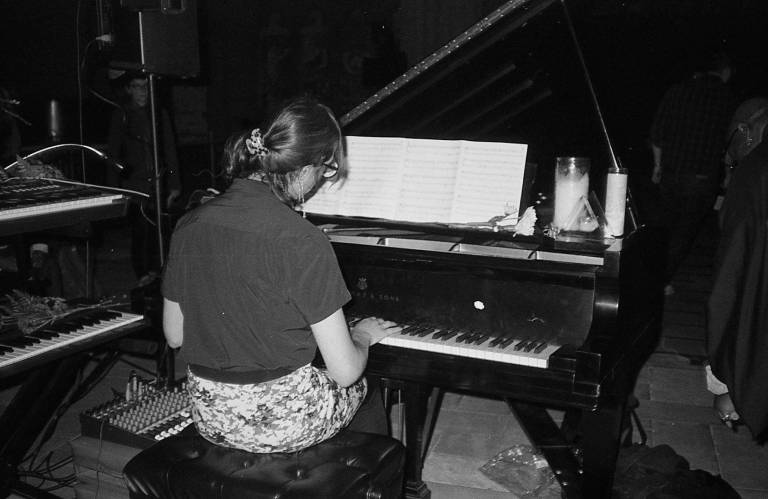
"caption": "Musician Alexandrea Archuleta, a survivor of the 2016 Ghost Ship warehouse fire, wants to bring healing and catharsis with her new symphonic work, 'Symphony No. 1 …And No One Died and We Began to See in the Dark.'",
"credit": "Adrian Saenz",
"altTag": "A woman plays the piano with her back turned.",
"description": null,
"imgSizes": {
"thumbnail": {
"file": "https://cdn.kqed.org/wp-content/uploads/sites/2/2025/11/GraceCathedralPianoRain-by-Adrian-Saenz-160x104.jpg",
"width": 160,
"height": 104,
"mimeType": "image/jpeg"
},
"medium_large": {
"file": "https://cdn.kqed.org/wp-content/uploads/sites/2/2025/11/GraceCathedralPianoRain-by-Adrian-Saenz-768x499.jpg",
"width": 768,
"height": 499,
"mimeType": "image/jpeg"
},
"1536x1536": {
"file": "https://cdn.kqed.org/wp-content/uploads/sites/2/2025/11/GraceCathedralPianoRain-by-Adrian-Saenz-1536x999.jpg",
"width": 1536,
"height": 999,
"mimeType": "image/jpeg"
},
"post-thumbnail": {
"file": "https://cdn.kqed.org/wp-content/uploads/sites/2/2025/11/GraceCathedralPianoRain-by-Adrian-Saenz-672x372.jpg",
"width": 672,
"height": 372,
"mimeType": "image/jpeg"
},
"twentyfourteen-full-width": {
"file": "https://cdn.kqed.org/wp-content/uploads/sites/2/2025/11/GraceCathedralPianoRain-by-Adrian-Saenz-1038x576.jpg",
"width": 1038,
"height": 576,
"mimeType": "image/jpeg"
},
"npr-cds-wide": {
"file": "https://cdn.kqed.org/wp-content/uploads/sites/2/2025/11/GraceCathedralPianoRain-by-Adrian-Saenz-1200x675.jpg",
"width": 1200,
"height": 675,
"mimeType": "image/jpeg"
},
"kqedFullSize": {
"file": "https://cdn.kqed.org/wp-content/uploads/sites/2/2025/11/GraceCathedralPianoRain-by-Adrian-Saenz.jpg",
"width": 1655,
"height": 1076
}
},
"isLoading": false,
"fetchFailed": false
},
"arts_13977162": {
"type": "attachments",
"id": "arts_13977162",
"meta": {
"index": "attachments_1716263798",
"site": "arts",
"id": "13977162",
"found": true
},
"title": "240207-JensIbsen-42-BL_qut",
"publishDate": 1749162439,
"status": "inherit",
"parent": 0,
"modified": 1749238669,
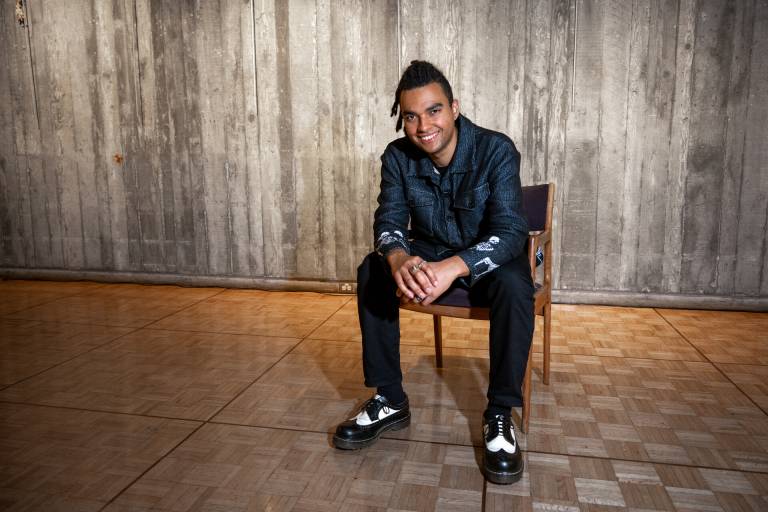
"caption": "Composer Jens Ibsen poses for a portrait at the First Unitarian Church in San Francisco on Feb. 7, 2024. Ibsen was the 2022 recipient of $15,000 and a commission from the San Francisco Symphony as part of the Emerging Black Composers Project, a program now on hold as the Trump administration targets DEI programs nationwide. ",
"credit": "Beth LaBerge/KQED",
"altTag": "A young Black man in a blue shirt and black slacks sits on a wooden chair against a concrete wall, looking into the camera and smiling",
"description": null,
"imgSizes": {
"thumbnail": {
"file": "https://cdn.kqed.org/wp-content/uploads/sites/2/2025/06/240207-JensIbsen-42-BL_qut-160x107.jpg",
"width": 160,
"height": 107,
"mimeType": "image/jpeg"
},
"medium_large": {
"file": "https://cdn.kqed.org/wp-content/uploads/sites/2/2025/06/240207-JensIbsen-42-BL_qut-768x512.jpg",
"width": 768,
"height": 512,
"mimeType": "image/jpeg"
},
"1536x1536": {
"file": "https://cdn.kqed.org/wp-content/uploads/sites/2/2025/06/240207-JensIbsen-42-BL_qut-1536x1024.jpg",
"width": 1536,
"height": 1024,
"mimeType": "image/jpeg"
},
"post-thumbnail": {
"file": "https://cdn.kqed.org/wp-content/uploads/sites/2/2025/06/240207-JensIbsen-42-BL_qut-672x372.jpg",
"width": 672,
"height": 372,
"mimeType": "image/jpeg"
},
"twentyfourteen-full-width": {
"file": "https://cdn.kqed.org/wp-content/uploads/sites/2/2025/06/240207-JensIbsen-42-BL_qut-1038x576.jpg",
"width": 1038,
"height": 576,
"mimeType": "image/jpeg"
},
"kqedFullSize": {
"file": "https://cdn.kqed.org/wp-content/uploads/sites/2/2025/06/240207-JensIbsen-42-BL_qut.jpg",
"width": 1920,
"height": 1280
}
},
"isLoading": false,
"fetchFailed": false
},
"arts_13980481": {
"type": "attachments",
"id": "arts_13980481",
"meta": {
"index": "attachments_1716263798",
"site": "arts",
"id": "13980481",
"found": true
},
"title": "Brandee-Younger-CRED-Erin-Patrice-OBrien",
"publishDate": 1755762015,
"status": "inherit",
"parent": 0,
"modified": 1756183596,
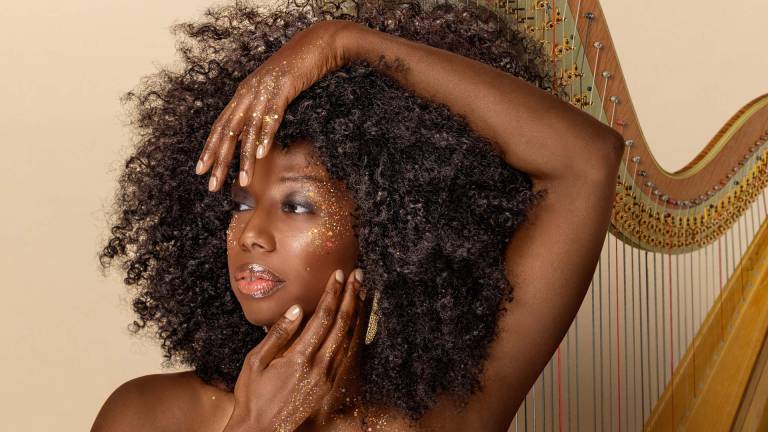
"caption": "Brandee Younger.",
"credit": "Erin Patrice O'Brien",
"altTag": null,
"description": null,
"imgSizes": {
"thumbnail": {
"file": "https://cdn.kqed.org/wp-content/uploads/sites/2/2025/08/Brandee-Younger-CRED-Erin-Patrice-OBrien-160x90.jpg",
"width": 160,
"height": 90,
"mimeType": "image/jpeg"
},
"medium_large": {
"file": "https://cdn.kqed.org/wp-content/uploads/sites/2/2025/08/Brandee-Younger-CRED-Erin-Patrice-OBrien-768x432.jpg",
"width": 768,
"height": 432,
"mimeType": "image/jpeg"
},
"1536x1536": {
"file": "https://cdn.kqed.org/wp-content/uploads/sites/2/2025/08/Brandee-Younger-CRED-Erin-Patrice-OBrien-1536x864.jpg",
"width": 1536,
"height": 864,
"mimeType": "image/jpeg"
},
"post-thumbnail": {
"file": "https://cdn.kqed.org/wp-content/uploads/sites/2/2025/08/Brandee-Younger-CRED-Erin-Patrice-OBrien-672x372.jpg",
"width": 672,
"height": 372,
"mimeType": "image/jpeg"
},
"twentyfourteen-full-width": {
"file": "https://cdn.kqed.org/wp-content/uploads/sites/2/2025/08/Brandee-Younger-CRED-Erin-Patrice-OBrien-1038x576.jpg",
"width": 1038,
"height": 576,
"mimeType": "image/jpeg"
},
"kqedFullSize": {
"file": "https://cdn.kqed.org/wp-content/uploads/sites/2/2025/08/Brandee-Younger-CRED-Erin-Patrice-OBrien.jpg",
"width": 1920,
"height": 1080
}
},
"isLoading": false,
"fetchFailed": false
},
"arts_13977306": {
"type": "attachments",
"id": "arts_13977306",
"meta": {
"index": "attachments_1716263798",
"site": "arts",
"id": "13977306",
"found": true
},
"title": "_74A0947",
"publishDate": 1749480812,
"status": "inherit",
"parent": 0,
"modified": 1749481113,
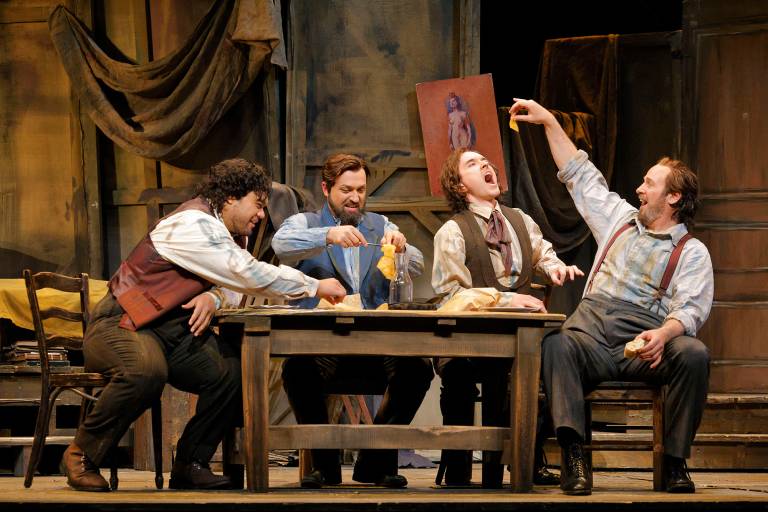
"caption": "Pene Pati as Rodolfo, Bogdan Talos as Colline, Samuel Kidd as Schaunard, and Lucas Meachem as Marcello in Puccini’s ‘La bohème.’",
"credit": "Cory Weaver/San Francisco Opera",
"altTag": "Four men in 1800s clothes frolic and laugh at an old wooden table",
"description": null,
"imgSizes": {
"thumbnail": {
"file": "https://cdn.kqed.org/wp-content/uploads/sites/2/2025/06/74A0947-160x107.jpg",
"width": 160,
"height": 107,
"mimeType": "image/jpeg"
},
"medium_large": {
"file": "https://cdn.kqed.org/wp-content/uploads/sites/2/2025/06/74A0947-768x512.jpg",
"width": 768,
"height": 512,
"mimeType": "image/jpeg"
},
"1536x1536": {
"file": "https://cdn.kqed.org/wp-content/uploads/sites/2/2025/06/74A0947-1536x1025.jpg",
"width": 1536,
"height": 1025,
"mimeType": "image/jpeg"
},
"post-thumbnail": {
"file": "https://cdn.kqed.org/wp-content/uploads/sites/2/2025/06/74A0947-672x372.jpg",
"width": 672,
"height": 372,
"mimeType": "image/jpeg"
},
"twentyfourteen-full-width": {
"file": "https://cdn.kqed.org/wp-content/uploads/sites/2/2025/06/74A0947-1038x576.jpg",
"width": 1038,
"height": 576,
"mimeType": "image/jpeg"
},
"kqedFullSize": {
"file": "https://cdn.kqed.org/wp-content/uploads/sites/2/2025/06/74A0947.jpg",
"width": 2000,
"height": 1334
}
},
"isLoading": false,
"fetchFailed": false
},
"arts_13976755": {
"type": "attachments",
"id": "arts_13976755",
"meta": {
"index": "attachments_1716263798",
"site": "arts",
"id": "13976755",
"found": true
},
"title": "strauss space",
"publishDate": 1748364617,
"status": "inherit",
"parent": 13976754,
"modified": 1748364708,
"caption": "‘Blue Danube’ is launching into space, just as Stanley Kubrick would have wanted.",
"credit": "Costfoto/Future Publishing via Getty Images",
"altTag": "An image of a night sky at an observatory, in the middle of a meteor shower.",
"description": null,
"imgSizes": {
"medium": {
"file": "https://cdn.kqed.org/wp-content/uploads/sites/2/2025/05/strauss-space-800x533.png",
"width": 800,
"height": 533,
"mimeType": "image/png"
},
"large": {
"file": "https://cdn.kqed.org/wp-content/uploads/sites/2/2025/05/strauss-space-1020x680.png",
"width": 1020,
"height": 680,
"mimeType": "image/png"
},
"thumbnail": {
"file": "https://cdn.kqed.org/wp-content/uploads/sites/2/2025/05/strauss-space-160x107.png",
"width": 160,
"height": 107,
"mimeType": "image/png"
},
"medium_large": {
"file": "https://cdn.kqed.org/wp-content/uploads/sites/2/2025/05/strauss-space-768x512.png",
"width": 768,
"height": 512,
"mimeType": "image/png"
},
"1536x1536": {
"file": "https://cdn.kqed.org/wp-content/uploads/sites/2/2025/05/strauss-space-1536x1024.png",
"width": 1536,
"height": 1024,
"mimeType": "image/png"
},
"post-thumbnail": {
"file": "https://cdn.kqed.org/wp-content/uploads/sites/2/2025/05/strauss-space-672x372.png",
"width": 672,
"height": 372,
"mimeType": "image/png"
},
"twentyfourteen-full-width": {
"file": "https://cdn.kqed.org/wp-content/uploads/sites/2/2025/05/strauss-space-1038x576.png",
"width": 1038,
"height": 576,
"mimeType": "image/png"
},
"full-width": {
"file": "https://cdn.kqed.org/wp-content/uploads/sites/2/2025/05/strauss-space-1920x1280.png",
"width": 1920,
"height": 1280,
"mimeType": "image/png"
},
"kqedFullSize": {
"file": "https://cdn.kqed.org/wp-content/uploads/sites/2/2025/05/strauss-space.png",
"width": 2000,
"height": 1333
}
},
"isLoading": false,
"fetchFailed": false
},
"arts_13976642": {
"type": "attachments",
"id": "arts_13976642",
"meta": {
"index": "attachments_1716263798",
"site": "arts",
"id": "13976642",
"found": true
},
"title": "_37A1674",
"publishDate": 1747932159,
"status": "inherit",
"parent": 13976634,
"modified": 1747935363,
"caption": "‘La bohème’ comes to San Francisco Opera in June.",
"credit": "Cory Weaver/SF Opera",
"altTag": "A man in a scarf and ragged clothing holds the hand of a woman, similarly dressed, both kneeling on the ground",
"description": null,
"imgSizes": {
"medium": {
"file": "https://cdn.kqed.org/wp-content/uploads/sites/2/2025/05/37A1674-800x558.jpg",
"width": 800,
"height": 558,
"mimeType": "image/jpeg"
},
"large": {
"file": "https://cdn.kqed.org/wp-content/uploads/sites/2/2025/05/37A1674-1020x711.jpg",
"width": 1020,
"height": 711,
"mimeType": "image/jpeg"
},
"thumbnail": {
"file": "https://cdn.kqed.org/wp-content/uploads/sites/2/2025/05/37A1674-160x112.jpg",
"width": 160,
"height": 112,
"mimeType": "image/jpeg"
},
"medium_large": {
"file": "https://cdn.kqed.org/wp-content/uploads/sites/2/2025/05/37A1674-768x536.jpg",
"width": 768,
"height": 536,
"mimeType": "image/jpeg"
},
"1536x1536": {
"file": "https://cdn.kqed.org/wp-content/uploads/sites/2/2025/05/37A1674-1536x1071.jpg",
"width": 1536,
"height": 1071,
"mimeType": "image/jpeg"
},
"post-thumbnail": {
"file": "https://cdn.kqed.org/wp-content/uploads/sites/2/2025/05/37A1674-672x372.jpg",
"width": 672,
"height": 372,
"mimeType": "image/jpeg"
},
"twentyfourteen-full-width": {
"file": "https://cdn.kqed.org/wp-content/uploads/sites/2/2025/05/37A1674-1038x576.jpg",
"width": 1038,
"height": 576,
"mimeType": "image/jpeg"
},
"full-width": {
"file": "https://cdn.kqed.org/wp-content/uploads/sites/2/2025/05/37A1674-1920x1339.jpg",
"width": 1920,
"height": 1339,
"mimeType": "image/jpeg"
},
"kqedFullSize": {
"file": "https://cdn.kqed.org/wp-content/uploads/sites/2/2025/05/37A1674.jpg",
"width": 2000,
"height": 1395
}
},
"isLoading": false,
"fetchFailed": false
},
"arts_13974443": {
"type": "attachments",
"id": "arts_13974443",
"meta": {
"index": "attachments_1716263798",
"site": "arts",
"id": "13974443",
"found": true
},
"title": "2425-Concerts-MarinAlsop-Brandon-Patoc_0051",
"publishDate": 1744399803,
"status": "inherit",
"parent": 0,
"modified": 1744400922,
"caption": "Marin Alsop, center, conducts the San Francisco Symphony on April 10, 2025 at Davies Symphony Hall in San Francisco. ",
"credit": "Brandon Patoc",
"altTag": "A woman in a dark suit and short hair moves her arms while conducting an orchestra, with the audience seen in the background",
"description": null,
"imgSizes": {
"medium": {
"file": "https://cdn.kqed.org/wp-content/uploads/sites/2/2025/04/2425-Concerts-MarinAlsop-Brandon-Patoc_0051-800x533.jpg",
"width": 800,
"height": 533,
"mimeType": "image/jpeg"
},
"large": {
"file": "https://cdn.kqed.org/wp-content/uploads/sites/2/2025/04/2425-Concerts-MarinAlsop-Brandon-Patoc_0051-1020x679.jpg",
"width": 1020,
"height": 679,
"mimeType": "image/jpeg"
},
"thumbnail": {
"file": "https://cdn.kqed.org/wp-content/uploads/sites/2/2025/04/2425-Concerts-MarinAlsop-Brandon-Patoc_0051-160x107.jpg",
"width": 160,
"height": 107,
"mimeType": "image/jpeg"
},
"medium_large": {
"file": "https://cdn.kqed.org/wp-content/uploads/sites/2/2025/04/2425-Concerts-MarinAlsop-Brandon-Patoc_0051-768x511.jpg",
"width": 768,
"height": 511,
"mimeType": "image/jpeg"
},
"1536x1536": {
"file": "https://cdn.kqed.org/wp-content/uploads/sites/2/2025/04/2425-Concerts-MarinAlsop-Brandon-Patoc_0051-1536x1023.jpg",
"width": 1536,
"height": 1023,
"mimeType": "image/jpeg"
},
"post-thumbnail": {
"file": "https://cdn.kqed.org/wp-content/uploads/sites/2/2025/04/2425-Concerts-MarinAlsop-Brandon-Patoc_0051-672x372.jpg",
"width": 672,
"height": 372,
"mimeType": "image/jpeg"
},
"twentyfourteen-full-width": {
"file": "https://cdn.kqed.org/wp-content/uploads/sites/2/2025/04/2425-Concerts-MarinAlsop-Brandon-Patoc_0051-1038x576.jpg",
"width": 1038,
"height": 576,
"mimeType": "image/jpeg"
},
"full-width": {
"file": "https://cdn.kqed.org/wp-content/uploads/sites/2/2025/04/2425-Concerts-MarinAlsop-Brandon-Patoc_0051-1920x1279.jpg",
"width": 1920,
"height": 1279,
"mimeType": "image/jpeg"
},
"kqedFullSize": {
"file": "https://cdn.kqed.org/wp-content/uploads/sites/2/2025/04/2425-Concerts-MarinAlsop-Brandon-Patoc_0051.jpg",
"width": 2000,
"height": 1332
}
},
"isLoading": false,
"fetchFailed": false
},
"arts_13965240": {
"type": "attachments",
"id": "arts_13965240",
"meta": {
"index": "attachments_1716263798",
"site": "arts",
"id": "13965240",
"found": true
},
"title": "3895-Symphony-180905-(c)-Drew-Altizer",
"publishDate": 1726791813,
"status": "inherit",
"parent": 0,
"modified": 1726791926,
"caption": "Davies Symphony Hall in San Francisco. ",
"credit": "Drew Alitzer Photography / Courtesy San Francisco Symphony",
"altTag": null,
"description": null,
"imgSizes": {
"medium": {
"file": "https://cdn.kqed.org/wp-content/uploads/sites/2/2024/09/3895-Symphony-180905-c-Drew-Altizer-800x532.jpg",
"width": 800,
"height": 532,
"mimeType": "image/jpeg"
},
"large": {
"file": "https://cdn.kqed.org/wp-content/uploads/sites/2/2024/09/3895-Symphony-180905-c-Drew-Altizer-1020x679.jpg",
"width": 1020,
"height": 679,
"mimeType": "image/jpeg"
},
"thumbnail": {
"file": "https://cdn.kqed.org/wp-content/uploads/sites/2/2024/09/3895-Symphony-180905-c-Drew-Altizer-160x106.jpg",
"width": 160,
"height": 106,
"mimeType": "image/jpeg"
},
"medium_large": {
"file": "https://cdn.kqed.org/wp-content/uploads/sites/2/2024/09/3895-Symphony-180905-c-Drew-Altizer-768x511.jpg",
"width": 768,
"height": 511,
"mimeType": "image/jpeg"
},
"1536x1536": {
"file": "https://cdn.kqed.org/wp-content/uploads/sites/2/2024/09/3895-Symphony-180905-c-Drew-Altizer-1536x1022.jpg",
"width": 1536,
"height": 1022,
"mimeType": "image/jpeg"
},
"post-thumbnail": {
"file": "https://cdn.kqed.org/wp-content/uploads/sites/2/2024/09/3895-Symphony-180905-c-Drew-Altizer-672x372.jpg",
"width": 672,
"height": 372,
"mimeType": "image/jpeg"
},
"twentyfourteen-full-width": {
"file": "https://cdn.kqed.org/wp-content/uploads/sites/2/2024/09/3895-Symphony-180905-c-Drew-Altizer-1038x576.jpg",
"width": 1038,
"height": 576,
"mimeType": "image/jpeg"
},
"full-width": {
"file": "https://cdn.kqed.org/wp-content/uploads/sites/2/2024/09/3895-Symphony-180905-c-Drew-Altizer-1920x1278.jpg",
"width": 1920,
"height": 1278,
"mimeType": "image/jpeg"
},
"kqedFullSize": {
"file": "https://cdn.kqed.org/wp-content/uploads/sites/2/2024/09/3895-Symphony-180905-c-Drew-Altizer.jpg",
"width": 2000,
"height": 1331
}
},
"isLoading": false,
"fetchFailed": false
},
"arts_13972552": {
"type": "attachments",
"id": "arts_13972552",
"meta": {
"index": "attachments_1716263798",
"site": "arts",
"id": "13972552",
"found": true
},
"title": "3.2.25_KL-1338-Enhanced-NR",
"publishDate": 1741031819,
"status": "inherit",
"parent": 13972538,
"modified": 1741032004,
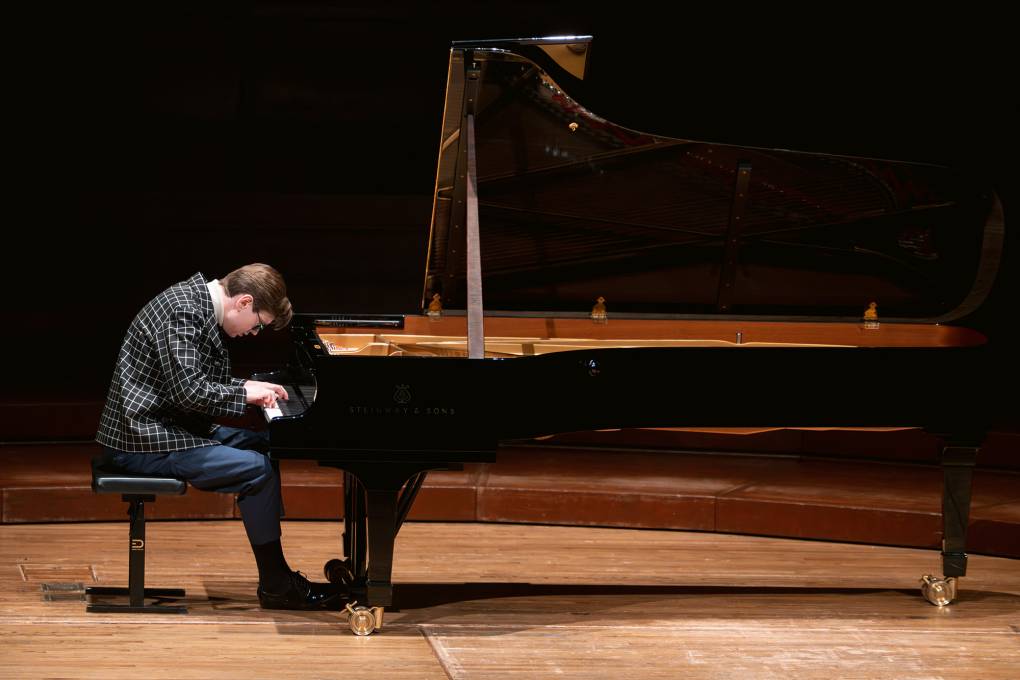
"caption": "Pianist Vikingur Ólaffsson performs Bach's ‘Goldberg Variations’ after a last-minute cancelation by Yuja Wang on March 2, 2025 at Davies Symphony Hall. ",
"credit": "Kristen Loken/San Francisco Symphony",
"altTag": "A man in blue slacks and patterned jacket leans over a grand piano keyboard on a sparsely lit stage",
"description": null,
"imgSizes": {
"medium": {
"file": "https://cdn.kqed.org/wp-content/uploads/sites/2/2025/03/3.2.25_KL-1338-Enhanced-NR-800x533.jpg",
"width": 800,
"height": 533,
"mimeType": "image/jpeg"
},
"large": {
"file": "https://cdn.kqed.org/wp-content/uploads/sites/2/2025/03/3.2.25_KL-1338-Enhanced-NR-1020x680.jpg",
"width": 1020,
"height": 680,
"mimeType": "image/jpeg"
},
"thumbnail": {
"file": "https://cdn.kqed.org/wp-content/uploads/sites/2/2025/03/3.2.25_KL-1338-Enhanced-NR-160x107.jpg",
"width": 160,
"height": 107,
"mimeType": "image/jpeg"
},
"medium_large": {
"file": "https://cdn.kqed.org/wp-content/uploads/sites/2/2025/03/3.2.25_KL-1338-Enhanced-NR-768x512.jpg",
"width": 768,
"height": 512,
"mimeType": "image/jpeg"
},
"1536x1536": {
"file": "https://cdn.kqed.org/wp-content/uploads/sites/2/2025/03/3.2.25_KL-1338-Enhanced-NR-1536x1024.jpg",
"width": 1536,
"height": 1024,
"mimeType": "image/jpeg"
},
"post-thumbnail": {
"file": "https://cdn.kqed.org/wp-content/uploads/sites/2/2025/03/3.2.25_KL-1338-Enhanced-NR-672x372.jpg",
"width": 672,
"height": 372,
"mimeType": "image/jpeg"
},
"twentyfourteen-full-width": {
"file": "https://cdn.kqed.org/wp-content/uploads/sites/2/2025/03/3.2.25_KL-1338-Enhanced-NR-1038x576.jpg",
"width": 1038,
"height": 576,
"mimeType": "image/jpeg"
},
"full-width": {
"file": "https://cdn.kqed.org/wp-content/uploads/sites/2/2025/03/3.2.25_KL-1338-Enhanced-NR-1920x1280.jpg",
"width": 1920,
"height": 1280,
"mimeType": "image/jpeg"
},
"kqedFullSize": {
"file": "https://cdn.kqed.org/wp-content/uploads/sites/2/2025/03/3.2.25_KL-1338-Enhanced-NR.jpg",
"width": 2000,
"height": 1333
}
},
"isLoading": false,
"fetchFailed": false
},
"arts_13972428": {
"type": "attachments",
"id": "arts_13972428",
"meta": {
"index": "attachments_1716263798",
"site": "arts",
"id": "13972428",
"found": true
},
"title": "CWO 40th Anniversary 10.03.24",
"publishDate": 1740695731,
"status": "inherit",
"parent": 13972426,
"modified": 1740695840,
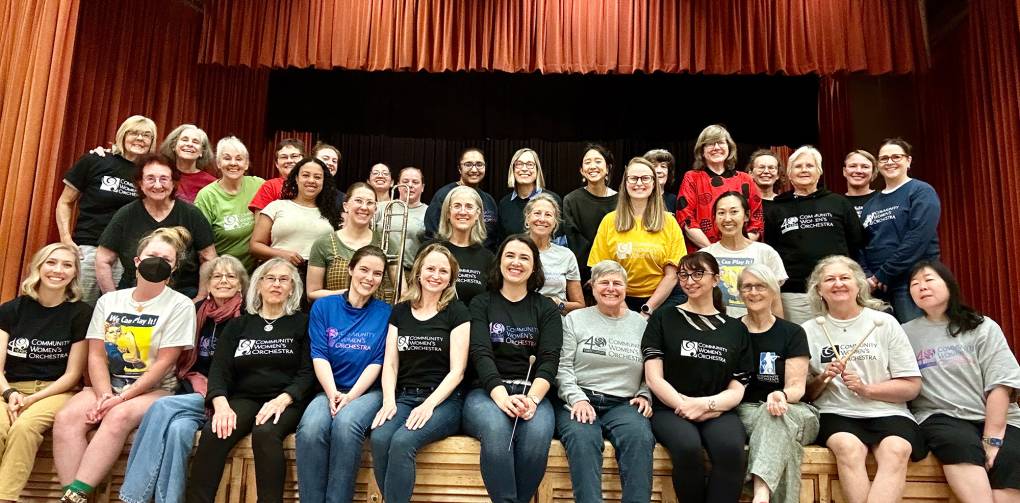
"caption": "Oakland's Community Women's Orchestra is one of a small number of all-female orchestras left in the United States.",
"credit": "Courtesy of Wendy Shiraki",
"altTag": "Women in casual T-shirts and jeans, some holding musical instruments, pose for a group photo.",
"description": null,
"imgSizes": {
"medium": {
"file": "https://cdn.kqed.org/wp-content/uploads/sites/2/2025/02/CWO-40th-Anniversary-10.03.24-800x394.jpg",
"width": 800,
"height": 394,
"mimeType": "image/jpeg"
},
"large": {
"file": "https://cdn.kqed.org/wp-content/uploads/sites/2/2025/02/CWO-40th-Anniversary-10.03.24-1020x503.jpg",
"width": 1020,
"height": 503,
"mimeType": "image/jpeg"
},
"thumbnail": {
"file": "https://cdn.kqed.org/wp-content/uploads/sites/2/2025/02/CWO-40th-Anniversary-10.03.24-160x79.jpg",
"width": 160,
"height": 79,
"mimeType": "image/jpeg"
},
"medium_large": {
"file": "https://cdn.kqed.org/wp-content/uploads/sites/2/2025/02/CWO-40th-Anniversary-10.03.24-768x379.jpg",
"width": 768,
"height": 379,
"mimeType": "image/jpeg"
},
"1536x1536": {
"file": "https://cdn.kqed.org/wp-content/uploads/sites/2/2025/02/CWO-40th-Anniversary-10.03.24-1536x757.jpg",
"width": 1536,
"height": 757,
"mimeType": "image/jpeg"
},
"post-thumbnail": {
"file": "https://cdn.kqed.org/wp-content/uploads/sites/2/2025/02/CWO-40th-Anniversary-10.03.24-672x372.jpg",
"width": 672,
"height": 372,
"mimeType": "image/jpeg"
},
"twentyfourteen-full-width": {
"file": "https://cdn.kqed.org/wp-content/uploads/sites/2/2025/02/CWO-40th-Anniversary-10.03.24-1038x576.jpg",
"width": 1038,
"height": 576,
"mimeType": "image/jpeg"
},
"full-width": {
"file": "https://cdn.kqed.org/wp-content/uploads/sites/2/2025/02/CWO-40th-Anniversary-10.03.24-1920x947.jpg",
"width": 1920,
"height": 947,
"mimeType": "image/jpeg"
},
"kqedFullSize": {
"file": "https://cdn.kqed.org/wp-content/uploads/sites/2/2025/02/CWO-40th-Anniversary-10.03.24.jpg",
"width": 2000,
"height": 986
}
},
"isLoading": false,
"fetchFailed": false
},
"arts_13970486": {
"type": "attachments",
"id": "arts_13970486",
"meta": {
"index": "attachments_1716263798",
"site": "arts",
"id": "13970486",
"found": true
},
"title": "2425-Concerts-JohnAdamsCarminaBurana-Brandon-Patoc_0020",
"publishDate": 1737143333,
"status": "inherit",
"parent": 13970454,
"modified": 1737143613,
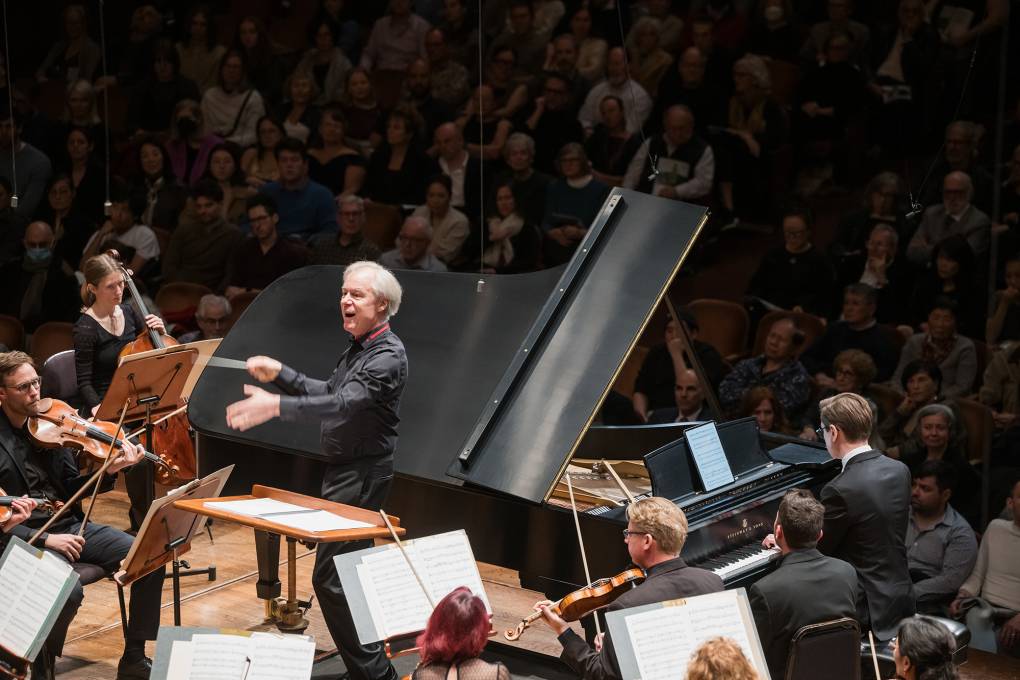
"caption": "David Robertson conducts the San Francisco Symphony with Víkingur Ólafsson at the piano during the world premiere of John Adams' piano concerto 'After the Fall' at Davies Symphony Hall in San Francisco on Jan. 16, 2025.",
"credit": "Brandon Patoc/San Francisco Symphony",
"altTag": "A man in a black shirt gesturing to an orchestra next to a piano and violins, with a seated audience in the background",
"description": null,
"imgSizes": {
"medium": {
"file": "https://cdn.kqed.org/wp-content/uploads/sites/2/2025/01/2425-Concerts-JohnAdamsCarminaBurana-Brandon-Patoc_0020-800x533.jpg",
"width": 800,
"height": 533,
"mimeType": "image/jpeg"
},
"large": {
"file": "https://cdn.kqed.org/wp-content/uploads/sites/2/2025/01/2425-Concerts-JohnAdamsCarminaBurana-Brandon-Patoc_0020-1020x680.jpg",
"width": 1020,
"height": 680,
"mimeType": "image/jpeg"
},
"thumbnail": {
"file": "https://cdn.kqed.org/wp-content/uploads/sites/2/2025/01/2425-Concerts-JohnAdamsCarminaBurana-Brandon-Patoc_0020-160x107.jpg",
"width": 160,
"height": 107,
"mimeType": "image/jpeg"
},
"medium_large": {
"file": "https://cdn.kqed.org/wp-content/uploads/sites/2/2025/01/2425-Concerts-JohnAdamsCarminaBurana-Brandon-Patoc_0020-768x512.jpg",
"width": 768,
"height": 512,
"mimeType": "image/jpeg"
},
"1536x1536": {
"file": "https://cdn.kqed.org/wp-content/uploads/sites/2/2025/01/2425-Concerts-JohnAdamsCarminaBurana-Brandon-Patoc_0020-1536x1024.jpg",
"width": 1536,
"height": 1024,
"mimeType": "image/jpeg"
},
"post-thumbnail": {
"file": "https://cdn.kqed.org/wp-content/uploads/sites/2/2025/01/2425-Concerts-JohnAdamsCarminaBurana-Brandon-Patoc_0020-672x372.jpg",
"width": 672,
"height": 372,
"mimeType": "image/jpeg"
},
"twentyfourteen-full-width": {
"file": "https://cdn.kqed.org/wp-content/uploads/sites/2/2025/01/2425-Concerts-JohnAdamsCarminaBurana-Brandon-Patoc_0020-1038x576.jpg",
"width": 1038,
"height": 576,
"mimeType": "image/jpeg"
},
"full-width": {
"file": "https://cdn.kqed.org/wp-content/uploads/sites/2/2025/01/2425-Concerts-JohnAdamsCarminaBurana-Brandon-Patoc_0020-1920x1280.jpg",
"width": 1920,
"height": 1280,
"mimeType": "image/jpeg"
},
"kqedFullSize": {
"file": "https://cdn.kqed.org/wp-content/uploads/sites/2/2025/01/2425-Concerts-JohnAdamsCarminaBurana-Brandon-Patoc_0020.jpg",
"width": 2000,
"height": 1333
}
},
"isLoading": false,
"fetchFailed": false
},
"arts_13969243": {
"type": "attachments",
"id": "arts_13969243",
"meta": {
"index": "attachments_1716263798",
"site": "arts",
"id": "13969243",
"found": true
},
"title": "PL-Raul-Urias_GabrielaOrtiz-RevolucionDiamantina-NoCopy-crop-fix.jpg",
"publishDate": 1733805259,
"status": "inherit",
"parent": 13969242,
"modified": 1733806930,
"caption": "The album ‘Revolución Diamantina,’ with Gustavo Dudamel conducting the Los Angeles Philharmonic, is devoted to the music of Mexican composer Gabriela Ortiz.",
"credit": "Cover art by Raul Urias/Platoon",
"altTag": "A psychedelic multi-colored illustration featuring stationary figures and the faces of performers.",
"description": null,
"imgSizes": {
"medium": {
"file": "https://cdn.kqed.org/wp-content/uploads/sites/2/2024/12/pl-raul-urias-gabrielaortiz-revoluciondiamantina-nocopy-crop-fix-800x592.jpeg",
"width": 800,
"height": 592,
"mimeType": "image/jpeg"
},
"large": {
"file": "https://cdn.kqed.org/wp-content/uploads/sites/2/2024/12/pl-raul-urias-gabrielaortiz-revoluciondiamantina-nocopy-crop-fix-1020x755.jpeg",
"width": 1020,
"height": 755,
"mimeType": "image/jpeg"
},
"thumbnail": {
"file": "https://cdn.kqed.org/wp-content/uploads/sites/2/2024/12/pl-raul-urias-gabrielaortiz-revoluciondiamantina-nocopy-crop-fix-160x118.jpeg",
"width": 160,
"height": 118,
"mimeType": "image/jpeg"
},
"medium_large": {
"file": "https://cdn.kqed.org/wp-content/uploads/sites/2/2024/12/pl-raul-urias-gabrielaortiz-revoluciondiamantina-nocopy-crop-fix-768x568.jpeg",
"width": 768,
"height": 568,
"mimeType": "image/jpeg"
},
"1536x1536": {
"file": "https://cdn.kqed.org/wp-content/uploads/sites/2/2024/12/pl-raul-urias-gabrielaortiz-revoluciondiamantina-nocopy-crop-fix-1536x1137.jpeg",
"width": 1536,
"height": 1137,
"mimeType": "image/jpeg"
},
"2048x2048": {
"file": "https://cdn.kqed.org/wp-content/uploads/sites/2/2024/12/pl-raul-urias-gabrielaortiz-revoluciondiamantina-nocopy-crop-fix-2048x1515.jpeg",
"width": 2048,
"height": 1515,
"mimeType": "image/jpeg"
},
"post-thumbnail": {
"file": "https://cdn.kqed.org/wp-content/uploads/sites/2/2024/12/pl-raul-urias-gabrielaortiz-revoluciondiamantina-nocopy-crop-fix-672x372.jpeg",
"width": 672,
"height": 372,
"mimeType": "image/jpeg"
},
"twentyfourteen-full-width": {
"file": "https://cdn.kqed.org/wp-content/uploads/sites/2/2024/12/pl-raul-urias-gabrielaortiz-revoluciondiamantina-nocopy-crop-fix-1038x576.jpeg",
"width": 1038,
"height": 576,
"mimeType": "image/jpeg"
},
"full-width": {
"file": "https://cdn.kqed.org/wp-content/uploads/sites/2/2024/12/pl-raul-urias-gabrielaortiz-revoluciondiamantina-nocopy-crop-fix-1920x1421.jpeg",
"width": 1920,
"height": 1421,
"mimeType": "image/jpeg"
},
"kqedFullSize": {
"file": "https://cdn.kqed.org/wp-content/uploads/sites/2/2024/12/pl-raul-urias-gabrielaortiz-revoluciondiamantina-nocopy-crop-fix-scaled-e1733806832789.jpeg",
"width": 1920,
"height": 1421
}
},
"isLoading": false,
"fetchFailed": false
}
},
"audioPlayerReducer": {
"postId": "stream_live",
"isPaused": true,
"isPlaying": false,
"pfsActive": false,
"pledgeModalIsOpen": true,
"playerDrawerIsOpen": false,
"liveAudioPlayStartedAt": 0,
"liveAudioPlayContext": ""
},
"authorsReducer": {
"byline_arts_13969242": {
"type": "authors",
"id": "byline_arts_13969242",
"meta": {
"override": true
},
"slug": "byline_arts_13969242",
"name": "Tom Huizenga, NPR",
"isLoading": false
},
"shotchkiss": {
"type": "authors",
"id": "61",
"meta": {
"index": "authors_1716337520",
"id": "61",
"found": true
},
"name": "Sarah Hotchkiss",
"firstName": "Sarah",
"lastName": "Hotchkiss",
"slug": "shotchkiss",
"email": "shotchkiss@kqed.org",
"display_author_email": true,
"staff_mastheads": [
"arts"
],
"title": "Senior Editor",
"bio": "Sarah Hotchkiss is a San Francisco \u003ca href=\"http://www.sarahhotchkiss.com\">artist\u003c/a> and arts writer. In 2019, she received the Dorothea & Leo Rabkin Foundation grant for visual art journalism and in 2020 she received a Society of Professional Journalists, Northern California award for excellence in arts and culture reporting.",
"avatar": "https://secure.gravatar.com/avatar/bc662df144b3d27fd8b1b6f1c2a420d34e91e53154d411bb7ad353cc8b6cea8d?s=600&d=blank&r=g",
"twitter": null,
"bluesky": null,
"facebook": null,
"instagram": null,
"linkedin": null,
"sites": [
{
"site": "",
"roles": [
"editor"
]
},
{
"site": "arts",
"roles": [
"Contributor",
"administrator"
]
},
{
"site": "artschool",
"roles": [
"administrator"
]
},
{
"site": "news",
"roles": [
"editor"
]
},
{
"site": "pop",
"roles": [
"administrator"
]
},
{
"site": "bayareabites",
"roles": [
"editor"
]
},
{
"site": "spark",
"roles": [
"editor"
]
},
{
"site": "checkplease",
"roles": [
"editor"
]
}
],
"headData": {
"title": "Sarah Hotchkiss | KQED",
"description": "Senior Editor",
"ogImgSrc": "https://secure.gravatar.com/avatar/bc662df144b3d27fd8b1b6f1c2a420d34e91e53154d411bb7ad353cc8b6cea8d?s=600&d=blank&r=g",
"twImgSrc": "https://secure.gravatar.com/avatar/bc662df144b3d27fd8b1b6f1c2a420d34e91e53154d411bb7ad353cc8b6cea8d?s=600&d=blank&r=g"
},
"isLoading": false,
"link": "/author/shotchkiss"
},
"kqedarts": {
"type": "authors",
"id": "92",
"meta": {
"index": "authors_1716337520",
"id": "92",
"found": true
},
"name": "KQED Arts",
"firstName": "KQED",
"lastName": "Arts",
"slug": "kqedarts",
"email": "arts@kqed.org",
"display_author_email": false,
"staff_mastheads": [],
"title": "KQED Staff",
"bio": null,
"avatar": "https://secure.gravatar.com/avatar/321c9ebfeb7736f9e55366a6d3399ab0?s=600&d=blank&r=g",
"twitter": null,
"facebook": null,
"instagram": "https://www.instagram.com/kqed_arts/",
"linkedin": null,
"sites": [
{
"site": "arts",
"roles": [
"contributor"
]
},
{
"site": "pop",
"roles": [
"contributor"
]
},
{
"site": "science",
"roles": [
"author"
]
},
{
"site": "food",
"roles": [
"contributor"
]
}
],
"headData": {
"title": "KQED Arts | KQED",
"description": "KQED Staff",
"ogImgSrc": "https://secure.gravatar.com/avatar/321c9ebfeb7736f9e55366a6d3399ab0?s=600&d=blank&r=g",
"twImgSrc": "https://secure.gravatar.com/avatar/321c9ebfeb7736f9e55366a6d3399ab0?s=600&d=blank&r=g"
},
"isLoading": false,
"link": "/author/kqedarts"
},
"gmeline": {
"type": "authors",
"id": "185",
"meta": {
"index": "authors_1716337520",
"id": "185",
"found": true
},
"name": "Gabe Meline",
"firstName": "Gabe",
"lastName": "Meline",
"slug": "gmeline",
"email": "gmeline@kqed.org",
"display_author_email": true,
"staff_mastheads": [
"arts"
],
"title": "Senior Editor, KQED Arts & Culture",
"bio": "Gabe Meline entered journalism at age 15 making photocopied zines, and has since earned awards from the Edward R. Murrow Awards, the Society for Professional Journalists, the Online Journalism Awards, the Association of Alternative Newsweeklies and the California Newspaper Publishers Association. Prior to KQED, he was the editor of the \u003cem>North Bay Bohemian\u003c/em> and a touring musician. He lives with his wife and daughter in his hometown of Santa Rosa, CA.",
"avatar": "https://secure.gravatar.com/avatar/5bebe57be0d8bc2dd318934feb47299e2d2d10cba28d09d8d7afb389a2ce2bdd?s=600&d=blank&r=g",
"twitter": null,
"bluesky": null,
"facebook": null,
"instagram": null,
"linkedin": null,
"sites": [
{
"site": "",
"roles": [
"editor"
]
},
{
"site": "arts",
"roles": [
"administrator"
]
},
{
"site": "artschool",
"roles": [
"editor"
]
},
{
"site": "news",
"roles": [
"author"
]
},
{
"site": "pop",
"roles": [
"editor"
]
},
{
"site": "bayareabites",
"roles": [
"editor"
]
},
{
"site": "food",
"roles": [
"editor"
]
},
{
"site": "forum",
"roles": [
"administrator"
]
},
{
"site": "liveblog",
"roles": [
"editor"
]
},
{
"site": "hiphop",
"roles": [
"editor"
]
}
],
"headData": {
"title": "Gabe Meline | KQED",
"description": "Senior Editor, KQED Arts & Culture",
"ogImgSrc": "https://secure.gravatar.com/avatar/5bebe57be0d8bc2dd318934feb47299e2d2d10cba28d09d8d7afb389a2ce2bdd?s=600&d=blank&r=g",
"twImgSrc": "https://secure.gravatar.com/avatar/5bebe57be0d8bc2dd318934feb47299e2d2d10cba28d09d8d7afb389a2ce2bdd?s=600&d=blank&r=g"
},
"isLoading": false,
"link": "/author/gmeline"
},
"nvoynovskaya": {
"type": "authors",
"id": "11387",
"meta": {
"index": "authors_1716337520",
"id": "11387",
"found": true
},
"name": "Nastia Voynovskaya",
"firstName": "Nastia",
"lastName": "Voynovskaya",
"slug": "nvoynovskaya",
"email": "nvoynovskaya@kqed.org",
"display_author_email": false,
"staff_mastheads": [
"arts"
],
"title": "Editor and reporter",
"bio": "Nastia Voynovskaya is a reporter, editor and host at KQED Arts & Culture. She's been covering the arts in the Bay Area for over a decade, with a focus on music, queer culture, labor issues and grassroots organizing. She has edited KQED story series such as Trans Bay: A History of San Francisco's Gender-Diverse Community, and co-created KQED's Bay Area hip-hop history project, That's My Word. Nastia's work has been recognized by the Society of Professional Journalists and San Francisco Press Club. She regularly appears on podcasts and radio programs, including NPR's All Songs Considered, and hosts live events where music, culture and conversation meet.",
"avatar": "https://secure.gravatar.com/avatar/5025ee460e5a85d69ca20ea6c6f2f80d7e17795c828f61ea3aecfcd924e9042e?s=600&d=blank&r=g",
"twitter": null,
"bluesky": null,
"facebook": null,
"instagram": "https://www.instagram.com/nananastia/",
"linkedin": null,
"sites": [
{
"site": "",
"roles": [
"editor"
]
},
{
"site": "arts",
"roles": [
"administrator"
]
},
{
"site": "news",
"roles": [
"editor"
]
},
{
"site": "pop",
"roles": [
"administrator"
]
},
{
"site": "bayareabites",
"roles": [
"editor"
]
},
{
"site": "podcasts",
"roles": [
"editor"
]
},
{
"site": "hiphop",
"roles": [
"editor"
]
}
],
"headData": {
"title": "Nastia Voynovskaya | KQED",
"description": "Editor and reporter",
"ogImgSrc": "https://secure.gravatar.com/avatar/5025ee460e5a85d69ca20ea6c6f2f80d7e17795c828f61ea3aecfcd924e9042e?s=600&d=blank&r=g",
"twImgSrc": "https://secure.gravatar.com/avatar/5025ee460e5a85d69ca20ea6c6f2f80d7e17795c828f61ea3aecfcd924e9042e?s=600&d=blank&r=g"
},
"isLoading": false,
"link": "/author/nvoynovskaya"
},
"sfaulise": {
"type": "authors",
"id": "11919",
"meta": {
"index": "authors_1716337520",
"id": "11919",
"found": true
},
"name": "Shannon Faulise",
"firstName": "Shannon",
"lastName": "Faulise",
"slug": "sfaulise",
"email": "sfaulise@kqed.org",
"display_author_email": false,
"staff_mastheads": [],
"title": "Contributor, KQED Arts & Culture",
"bio": "Shannon Faulise is a graduate of the UC Berkeley Graduate School of Journalism, where she concentrated on photojournalism and feature writing. Shannon's photos, audio pieces and written stories have appeared in The Oaklandside, The Redwood City Pulse and KALX. Outside of reporting, Shannon loves kpop, women's sports and concerts. She served as an intern for KQED Arts & Culture in 2024–25.",
"avatar": "https://secure.gravatar.com/avatar/76449df2627a603d6b02f0534ec3c913007029bff4f1c0572071401f9a293a02?s=600&d=blank&r=g",
"twitter": null,
"bluesky": null,
"facebook": null,
"instagram": null,
"linkedin": null,
"sites": [
{
"site": "arts",
"roles": [
"subscriber"
]
}
],
"headData": {
"title": "Shannon Faulise | KQED",
"description": "Contributor, KQED Arts & Culture",
"ogImgSrc": "https://secure.gravatar.com/avatar/76449df2627a603d6b02f0534ec3c913007029bff4f1c0572071401f9a293a02?s=600&d=blank&r=g",
"twImgSrc": "https://secure.gravatar.com/avatar/76449df2627a603d6b02f0534ec3c913007029bff4f1c0572071401f9a293a02?s=600&d=blank&r=g"
},
"isLoading": false,
"link": "/author/sfaulise"
}
},
"pagesReducer": {
"arts_tag_classical-music": {
"type": "terms",
"id": "arts_1312",
"meta": {
"index": "terms_1716263798",
"site": "arts",
"id": "1312",
"score": 9.892711
},
"featImg": null,
"name": "classical music",
"description": null,
"taxonomy": "tag",
"headData": {
"twImgId": null,
"twTitle": null,
"socialTitle": "From Symphony Hall to Hidden Gems: Bay Area's Classical Music Stories",
"ogTitle": null,
"ogImgId": null,
"twDescription": null,
"description": "Immerse yourself in the Bay Area's rich classical music world! KQED brings you news, educational resources, and event listings.",
"metaRobotsNoIndex": "index",
"title": "From Symphony Hall to Hidden Gems: Bay Area's Classical Music Stories",
"ogDescription": null
},
"ttid": 1324,
"slug": "classical-music",
"isLoading": false,
"title": "classical music",
"pageMeta": {
"site": "arts",
"WpPageTemplate": "page-topic-editorial",
"currentPage": 2
},
"blocks": [
{
"blockName": "kqed/post-list",
"attrs": {
"layout": "cardArticle2",
"query": "posts/arts?tag=classical-music",
"seeMore": false,
"paginated": true,
"page": 2
}
},
{
"blockName": "kqed/ad"
}
]
}
},
"pfsSessionReducer": {},
"postsReducer": {
"stream_live": {
"type": "live",
"id": "stream_live",
"audioUrl": "https://streams.kqed.org/kqedradio",
"title": "Live Stream",
"excerpt": "Live Stream information currently unavailable.",
"link": "/radio",
"featImg": "",
"label": {
"name": "KQED Live",
"link": "/"
}
},
"stream_kqedNewscast": {
"type": "posts",
"id": "stream_kqedNewscast",
"audioUrl": "https://www.kqed.org/.stream/anon/radio/RDnews/newscast.mp3?_=1",
"title": "KQED Newscast",
"featImg": "",
"label": {
"name": "88.5 FM",
"link": "/"
}
},
"arts_13983595": {
"type": "posts",
"id": "arts_13983595",
"meta": {
"index": "posts_1716263798",
"site": "arts",
"id": "13983595",
"score": null,
"sort": [
1762794015000
]
},
"guestAuthors": [],
"slug": "ghost-ship-symphony-alexandrea-archuleta-vital-arts-oakland",
"title": "Ghost Ship Symphony Honors 36 Artists Who Died in 2016 Warehouse Fire",
"publishDate": 1762794015,
"format": "standard",
"headTitle": "Ghost Ship Symphony Honors 36 Artists Who Died in 2016 Warehouse Fire | KQED",
"labelTerm": {},
"content": "\u003cp>The impacts of the \u003ca href=\"https://www.kqed.org/arts/tag/ghost-ship\">Ghost Ship\u003c/a> fire on Dec. 2, 2016, when an East Oakland warehouse went up in flames during an electronic music show, continue to reverberate through the Bay Area’s creative scenes. The fire claimed the lives of \u003ca href=\"https://www.kqed.org/ghostshipmemorial\">36 people, aged 20 to 61, most of whom were artists and musicians\u003c/a>.\u003c/p>\n\u003cp>Alexandrea Archuleta was slated to perform that night. Working the door when the fire broke out, she managed to escape with her life. Now, she’s uplifting the memories of friends she lost and creating a space for healing with a new symphonic work, \u003cem>Symphony No. 1 …And No One Died, Thus We Began to See in the Dark\u003c/em>, which she’ll perform with a new ensemble called Ghost Ship Symphony on \u003ca href=\"https://www.eventbrite.com/e/art-in-movements-a-community-gathering-with-ghost-ship-symphony-rupture-tickets-1744402467739?aff=oddtdtcreator\">Nov. 15 at Bandaloop in West Oakland\u003c/a>. [aside postid='arts_13816362,arts_13908910']\u003c/p>\n\u003cp>Archuleta conceptualized the uplifting, cathartic piece as a love letter, not only to the 36 victims but to the many friends who worked together to support her and other survivors, whether through meals, medicinal herbs, fundraising or just some friendly company.\u003c/p>\n\u003cp>“The radical love of people in the Bay Area is the other side of this,” she says.\u003c/p>\n\u003cp>After the fire, the house she shared with roommate and fellow musician Sharmi Basu became a hub for mutual aid during the depths of the community’s mourning. “We needed to get people money because people were too sick from grief to work,” Basu says, noting that many artists also lost housing as the City of Oakland cracked down on unpermitted live-work warehouses.\u003c/p>\n\u003cp>[ad fullwidth]\u003c/p>\n\u003cp>Basu is now the executive director of the organization for \u003ca href=\"https://www.vitalarts.org/\">Vital Arts\u003c/a>, an artist advocacy organization founded by Edwin Bernbaum, whose son, visual projection artist Jonathan, was killed in the fire.\u003c/p>\n\u003cp>Building on the spirit of DIY mutual aid, Vital Arts leads several programs, including a paid fellowship and free legal cafes, that work to address artists’ material needs in the expensive Bay Area. As many advocates have pointed out over the years, the untenable cost of living and lack of available creative spaces is what pushed people to live and perform in unsafe venues like Ghost Ship.\u003c/p>\n\u003cp>At the Ghost Ship Symphony concert, which includes a performance from dance collective RUPTURE, Vital Arts will announce its new cohort of \u003ca href=\"https://www.kqed.org/arts/13977921/bay-area-artist-census-fellowship-vital-arts\">Bay Area Artist Census fellows\u003c/a>, who over the next 18 months will survey the creative community about its needs for housing, healthcare and fair wages, and advocate for solutions. The organization also just opened applications for the latest round of its \u003ca href=\"https://www.vitalarts.org/adpg\">Artist Displacement Prevention Grant\u003c/a>, which pays $3,000 to support artists facing housing insecurity.\u003c/p>\n\u003cp>“I think as artists, our job is to remind each other of life and give each other hope,” Basu says.\u003c/p>\n\u003cfigure id=\"attachment_13983598\" class=\"wp-caption aligncenter\" style=\"max-width: 2560px\">\u003cimg loading=\"lazy\" decoding=\"async\" class=\"size-full wp-image-13983598\" src=\"https://cdn.kqed.org/wp-content/uploads/sites/2/2025/11/CFTA-Regional-Conversation_Oakland_July-11-2025_Sharmi-Basu_Photo-by-Paul-Kuroda-2-scaled.jpg\" alt=\"A person speaks into a microphone at a conference. \" width=\"2560\" height=\"1545\" srcset=\"https://cdn.kqed.org/wp-content/uploads/sites/2/2025/11/CFTA-Regional-Conversation_Oakland_July-11-2025_Sharmi-Basu_Photo-by-Paul-Kuroda-2-scaled.jpg 2560w, https://cdn.kqed.org/wp-content/uploads/sites/2/2025/11/CFTA-Regional-Conversation_Oakland_July-11-2025_Sharmi-Basu_Photo-by-Paul-Kuroda-2-2000x1207.jpg 2000w, https://cdn.kqed.org/wp-content/uploads/sites/2/2025/11/CFTA-Regional-Conversation_Oakland_July-11-2025_Sharmi-Basu_Photo-by-Paul-Kuroda-2-160x97.jpg 160w, https://cdn.kqed.org/wp-content/uploads/sites/2/2025/11/CFTA-Regional-Conversation_Oakland_July-11-2025_Sharmi-Basu_Photo-by-Paul-Kuroda-2-768x463.jpg 768w, https://cdn.kqed.org/wp-content/uploads/sites/2/2025/11/CFTA-Regional-Conversation_Oakland_July-11-2025_Sharmi-Basu_Photo-by-Paul-Kuroda-2-1536x927.jpg 1536w, https://cdn.kqed.org/wp-content/uploads/sites/2/2025/11/CFTA-Regional-Conversation_Oakland_July-11-2025_Sharmi-Basu_Photo-by-Paul-Kuroda-2-2048x1236.jpg 2048w\" sizes=\"auto, (max-width: 2560px) 100vw, 2560px\">\u003cfigcaption class=\"wp-caption-text\">Sharmi Basu is the executive director of Vital Arts, an organization that supports artists with grants and legal advice. \u003ccite>(Paul Kuroda)\u003c/cite>\u003c/figcaption>\u003c/figure>\n\u003cp>To that end, Basu has been working with Archuleta to find classical musicians to complete the Ghost Ship Symphony ensemble. The Nov. 15 show will serve as a work-in-progress preview of a large-scale orchestral performance next year, to mark the 10th anniversary of the tragedy on Dec. 4, 2026 at Grace Cathedral in San Francisco.\u003c/p>\n\u003cp>Archuleta came up as an electronic musician. As she processed her grief over the past nine years, the works of Italian film composer Ennio Morricone and minimalist Estonian composer Arvo Pärt became a balm and a guiding light. She’s collaborating with arranger Franklin Cole, who’s based in her hometown of Denver, Colorado, to translate her composition into a sweeping epic propelled by horns and timpani.\u003c/p>\n\u003cp>The piece is part of a growing canon of contemporary classical works dedicated to the Ghost Ship victims, including \u003ca href=\"https://www.kqed.org/arts/13845021/a-symphonic-requiem-for-ghost-ship-fire-victims\">Richard Marriott’s \u003cem>Ghost Ship Concerto\u003c/em>\u003c/a>, which debuted in 2018 with the Oakland Symphony, and \u003ca href=\"https://www.kqed.org/arts/13922065/requiem-sinfonica-honors-ghost-ship-victims-with-music-and-hope\">Arturo Rodriguez’ \u003cem>Requiem Sinfónica\u003c/em>\u003c/a>, performed in full with members of Awesöme Orchestra in 2022.\u003c/p>\n\u003cp>Archuleta’s \u003cem>Symphony No. 1 …And No One Died and We Began to See in the Dark \u003c/em>will be the first time such a project has been led by a survivor. She envisions the music not as a “bummer or downer,” but as a greeting to her friends in the afterlife. Over the years, she says, she’s arrived at a more accepting attitude towards death.\u003c/p>\n\u003cp>“It’s this long eternal forever, and it’s this beautiful place, and it’s this comforting place,” she says. “It’s not as heart-wrenching or as darksided as I think the West kind of tends to view it.”\u003c/p>\n\u003chr>\n\u003cp>\u003c/p>\n\u003cp>\u003cem>Alexandrea Archuleta and Ghost Ship Symphony perform a \u003ca href=\"https://www.eventbrite.com/e/art-in-movements-a-community-gathering-with-ghost-ship-symphony-rupture-tickets-1744402467739?aff=oddtdtcreator\">preview of ‘Symphony No. 1 …And No One Died and We Began to See in the Dark’\u003c/a> at Bandaloop (1601 18th St., Oakland) on Nov. 15 at 7 p.m. The evening will feature a dance performance by the collective RUPTURE.\u003c/em>\u003c/p>\n\n",
"blocks": [],
"excerpt": "Composer Alexandrea Archuleta dedicates her new piece to friends she lost, and the community that helped her heal.",
"status": "publish",
"parent": 0,
"modified": 1763149175,
"stats": {
"hasAudio": false,
"hasVideo": false,
"hasChartOrMap": false,
"iframeSrcs": [],
"hasGoogleForm": false,
"hasGallery": false,
"hasHearkenModule": false,
"hasPolis": false,
"paragraphCount": 17,
"wordCount": 845
},
"headData": {
"title": "Ghost Ship Symphony Honors 36 Artists Who Died in 2016 Warehouse Fire | KQED",
"description": "Composer Alexandrea Archuleta dedicates her new piece to friends she lost, and the community that helped her heal.",
"ogTitle": "",
"ogDescription": "",
"ogImgId": "",
"twTitle": "",
"twDescription": "",
"twImgId": "",
"schema": {
"@context": "https://schema.org",
"@type": "Article",
"headline": "Ghost Ship Symphony Honors 36 Artists Who Died in 2016 Warehouse Fire",
"datePublished": "2025-11-10T09:00:15-08:00",
"dateModified": "2025-11-14T11:39:35-08:00",
"image": "https://cdn.kqed.org/wp-content/uploads/2020/02/KQED-OG-Image@1x.png"
}
},
"primaryCategory": {
"termId": 1,
"slug": "arts",
"name": "Arts"
},
"source": "The Do List",
"sourceUrl": "https://www.kqed.org/thedolist",
"sticky": false,
"nprStoryId": "kqed-13983595",
"templateType": "standard",
"featuredImageType": "standard",
"excludeFromSiteSearch": "Include",
"articleAge": "0",
"path": "/arts/13983595/ghost-ship-symphony-alexandrea-archuleta-vital-arts-oakland",
"audioTrackLength": null,
"parsedContent": [
{
"type": "contentString",
"content": "\u003cdiv class=\"post-body\">\u003cp>\u003cp>The impacts of the \u003ca href=\"https://www.kqed.org/arts/tag/ghost-ship\">Ghost Ship\u003c/a> fire on Dec. 2, 2016, when an East Oakland warehouse went up in flames during an electronic music show, continue to reverberate through the Bay Area’s creative scenes. The fire claimed the lives of \u003ca href=\"https://www.kqed.org/ghostshipmemorial\">36 people, aged 20 to 61, most of whom were artists and musicians\u003c/a>.\u003c/p>\n\u003cp>Alexandrea Archuleta was slated to perform that night. Working the door when the fire broke out, she managed to escape with her life. Now, she’s uplifting the memories of friends she lost and creating a space for healing with a new symphonic work, \u003cem>Symphony No. 1 …And No One Died, Thus We Began to See in the Dark\u003c/em>, which she’ll perform with a new ensemble called Ghost Ship Symphony on \u003ca href=\"https://www.eventbrite.com/e/art-in-movements-a-community-gathering-with-ghost-ship-symphony-rupture-tickets-1744402467739?aff=oddtdtcreator\">Nov. 15 at Bandaloop in West Oakland\u003c/a>. \u003c/p>\u003c/div>",
"attributes": {
"named": {},
"numeric": []
}
},
{
"type": "component",
"content": "",
"name": "aside",
"attributes": {
"named": {
"postid": "arts_13816362,arts_13908910",
"label": ""
},
"numeric": []
}
},
{
"type": "contentString",
"content": "\u003cdiv class=\"post-body\">\u003cp>\u003c/p>\n\u003cp>Archuleta conceptualized the uplifting, cathartic piece as a love letter, not only to the 36 victims but to the many friends who worked together to support her and other survivors, whether through meals, medicinal herbs, fundraising or just some friendly company.\u003c/p>\n\u003cp>“The radical love of people in the Bay Area is the other side of this,” she says.\u003c/p>\n\u003cp>After the fire, the house she shared with roommate and fellow musician Sharmi Basu became a hub for mutual aid during the depths of the community’s mourning. “We needed to get people money because people were too sick from grief to work,” Basu says, noting that many artists also lost housing as the City of Oakland cracked down on unpermitted live-work warehouses.\u003c/p>\n\u003cp>\u003c/p>\u003c/div>",
"attributes": {
"named": {},
"numeric": []
}
},
{
"type": "component",
"content": "",
"name": "ad",
"attributes": {
"named": {
"label": "fullwidth"
},
"numeric": [
"fullwidth"
]
}
},
{
"type": "contentString",
"content": "\u003cdiv class=\"post-body\">\u003cp>\u003c/p>\n\u003cp>Basu is now the executive director of the organization for \u003ca href=\"https://www.vitalarts.org/\">Vital Arts\u003c/a>, an artist advocacy organization founded by Edwin Bernbaum, whose son, visual projection artist Jonathan, was killed in the fire.\u003c/p>\n\u003cp>Building on the spirit of DIY mutual aid, Vital Arts leads several programs, including a paid fellowship and free legal cafes, that work to address artists’ material needs in the expensive Bay Area. As many advocates have pointed out over the years, the untenable cost of living and lack of available creative spaces is what pushed people to live and perform in unsafe venues like Ghost Ship.\u003c/p>\n\u003cp>At the Ghost Ship Symphony concert, which includes a performance from dance collective RUPTURE, Vital Arts will announce its new cohort of \u003ca href=\"https://www.kqed.org/arts/13977921/bay-area-artist-census-fellowship-vital-arts\">Bay Area Artist Census fellows\u003c/a>, who over the next 18 months will survey the creative community about its needs for housing, healthcare and fair wages, and advocate for solutions. The organization also just opened applications for the latest round of its \u003ca href=\"https://www.vitalarts.org/adpg\">Artist Displacement Prevention Grant\u003c/a>, which pays $3,000 to support artists facing housing insecurity.\u003c/p>\n\u003cp>“I think as artists, our job is to remind each other of life and give each other hope,” Basu says.\u003c/p>\n\u003cfigure id=\"attachment_13983598\" class=\"wp-caption aligncenter\" style=\"max-width: 2560px\">\u003cimg loading=\"lazy\" decoding=\"async\" class=\"size-full wp-image-13983598\" src=\"https://cdn.kqed.org/wp-content/uploads/sites/2/2025/11/CFTA-Regional-Conversation_Oakland_July-11-2025_Sharmi-Basu_Photo-by-Paul-Kuroda-2-scaled.jpg\" alt=\"A person speaks into a microphone at a conference. \" width=\"2560\" height=\"1545\" srcset=\"https://cdn.kqed.org/wp-content/uploads/sites/2/2025/11/CFTA-Regional-Conversation_Oakland_July-11-2025_Sharmi-Basu_Photo-by-Paul-Kuroda-2-scaled.jpg 2560w, https://cdn.kqed.org/wp-content/uploads/sites/2/2025/11/CFTA-Regional-Conversation_Oakland_July-11-2025_Sharmi-Basu_Photo-by-Paul-Kuroda-2-2000x1207.jpg 2000w, https://cdn.kqed.org/wp-content/uploads/sites/2/2025/11/CFTA-Regional-Conversation_Oakland_July-11-2025_Sharmi-Basu_Photo-by-Paul-Kuroda-2-160x97.jpg 160w, https://cdn.kqed.org/wp-content/uploads/sites/2/2025/11/CFTA-Regional-Conversation_Oakland_July-11-2025_Sharmi-Basu_Photo-by-Paul-Kuroda-2-768x463.jpg 768w, https://cdn.kqed.org/wp-content/uploads/sites/2/2025/11/CFTA-Regional-Conversation_Oakland_July-11-2025_Sharmi-Basu_Photo-by-Paul-Kuroda-2-1536x927.jpg 1536w, https://cdn.kqed.org/wp-content/uploads/sites/2/2025/11/CFTA-Regional-Conversation_Oakland_July-11-2025_Sharmi-Basu_Photo-by-Paul-Kuroda-2-2048x1236.jpg 2048w\" sizes=\"auto, (max-width: 2560px) 100vw, 2560px\">\u003cfigcaption class=\"wp-caption-text\">Sharmi Basu is the executive director of Vital Arts, an organization that supports artists with grants and legal advice. \u003ccite>(Paul Kuroda)\u003c/cite>\u003c/figcaption>\u003c/figure>\n\u003cp>To that end, Basu has been working with Archuleta to find classical musicians to complete the Ghost Ship Symphony ensemble. The Nov. 15 show will serve as a work-in-progress preview of a large-scale orchestral performance next year, to mark the 10th anniversary of the tragedy on Dec. 4, 2026 at Grace Cathedral in San Francisco.\u003c/p>\n\u003cp>Archuleta came up as an electronic musician. As she processed her grief over the past nine years, the works of Italian film composer Ennio Morricone and minimalist Estonian composer Arvo Pärt became a balm and a guiding light. She’s collaborating with arranger Franklin Cole, who’s based in her hometown of Denver, Colorado, to translate her composition into a sweeping epic propelled by horns and timpani.\u003c/p>\n\u003cp>The piece is part of a growing canon of contemporary classical works dedicated to the Ghost Ship victims, including \u003ca href=\"https://www.kqed.org/arts/13845021/a-symphonic-requiem-for-ghost-ship-fire-victims\">Richard Marriott’s \u003cem>Ghost Ship Concerto\u003c/em>\u003c/a>, which debuted in 2018 with the Oakland Symphony, and \u003ca href=\"https://www.kqed.org/arts/13922065/requiem-sinfonica-honors-ghost-ship-victims-with-music-and-hope\">Arturo Rodriguez’ \u003cem>Requiem Sinfónica\u003c/em>\u003c/a>, performed in full with members of Awesöme Orchestra in 2022.\u003c/p>\n\u003cp>Archuleta’s \u003cem>Symphony No. 1 …And No One Died and We Began to See in the Dark \u003c/em>will be the first time such a project has been led by a survivor. She envisions the music not as a “bummer or downer,” but as a greeting to her friends in the afterlife. Over the years, she says, she’s arrived at a more accepting attitude towards death.\u003c/p>\n\u003cp>“It’s this long eternal forever, and it’s this beautiful place, and it’s this comforting place,” she says. “It’s not as heart-wrenching or as darksided as I think the West kind of tends to view it.”\u003c/p>\n\u003chr>\n\u003cp>\u003c/p>\n\u003cp>\u003cem>Alexandrea Archuleta and Ghost Ship Symphony perform a \u003ca href=\"https://www.eventbrite.com/e/art-in-movements-a-community-gathering-with-ghost-ship-symphony-rupture-tickets-1744402467739?aff=oddtdtcreator\">preview of ‘Symphony No. 1 …And No One Died and We Began to See in the Dark’\u003c/a> at Bandaloop (1601 18th St., Oakland) on Nov. 15 at 7 p.m. The evening will feature a dance performance by the collective RUPTURE.\u003c/em>\u003c/p>\n\n\u003c/div>\u003c/p>",
"attributes": {
"named": {},
"numeric": []
}
}
],
"link": "/arts/13983595/ghost-ship-symphony-alexandrea-archuleta-vital-arts-oakland",
"authors": [
"11387"
],
"programs": [
"arts_140"
],
"categories": [
"arts_1",
"arts_69",
"arts_22313"
],
"tags": [
"arts_1312",
"arts_10278",
"arts_1559",
"arts_1143"
],
"featImg": "arts_13983597",
"label": "source_arts_13983595"
},
"arts_13980628": {
"type": "posts",
"id": "arts_13980628",
"meta": {
"index": "posts_1716263798",
"site": "arts",
"id": "13980628",
"score": null,
"sort": [
1756159756000
]
},
"guestAuthors": [],
"slug": "emerging-black-composers-project-san-francisco-symphony-conservatory-of-music",
"title": "The Emerging Black Composers Project Returns in San Francisco",
"publishDate": 1756159756,
"format": "standard",
"headTitle": "The Emerging Black Composers Project Returns in San Francisco | KQED",
"labelTerm": {
"site": "arts"
},
"content": "\u003cp>After months of uncertainty, the \u003ca href=\"https://www.kqed.org/arts/13909289/emerging-black-composers-project-san-francisco-symphony-conservatory-music-trevor-weston\">Emerging Black Composers Project\u003c/a> (EBCP), launched in 2020 by the San Francisco Conservatory of Music and the San Francisco Symphony, is back on track.\u003c/p>\n\u003cp>[aside postID='arts_13977200,arts_13909289']In early March 2025, SFCM and the SF Symphony announced the program was paused, citing a memo from the Department of Education’s Office for Civil Rights that instructed schools to eliminate diversity, equity and inclusion efforts or face the possibility of losing their federal funding.\u003c/p>\n\u003cp>Side-stepping that memo, the SF Symphony — not an educational institution — is now the sole administrator of the project, with the SFCM in a supporting role. \u003c/p>\n\u003cp>Created in the wake of the George Floyd protests, the \u003ca href=\"https://www.kqed.org/arts/13884821/a-new-grant-and-mentorship-program-seeks-to-elevate-black-composers\">EBCP was established\u003c/a> as a 10-year commissioning project meant to lower some of the barriers Black composers face in the field of classical music. The program awards $15,000 to early-career Black composers, gives them a premiere with the SF Symphony, and provides them with mentorship from music directors at local partner organizations.\u003c/p>\n\u003cp>“I am thrilled that the Emerging Black Composers Project will continue finding and funding some of the best musical talent in the country,” Daniel Bartholomew-Poyser, chair of the EBCP said in a \u003ca href=\"https://www.sfsymphony.org/About-SFS/Press-Room/Press-Releases/EBCP-August-2025-Update\">statement\u003c/a> released by the SF Symphony on Friday. “It’s been very gratifying to see our past laureates continue to create and enjoy success, which speaks to the importance of not only our program, but all that celebrate and support early-stage artists.”\u003c/p>\n\u003cp>[ad fullwidth]\u003c/p>\n\u003cp>The winner of the fifth annual EBCP Michael Morgan Prize will be announced in the fall, and a call for the 2026 award will go out in November. (The prize was renamed in 2023 to honor the late Oakland Symphony conductor and co-founder of the EBCP, \u003ca href=\"https://www.kqed.org/arts/13901635/michael-morgan-visionary-oakland-symphony-conductor-dies-at-age-63\">who died in 2021\u003c/a>.)\u003c/p>\n\u003cp>So far, the program has commissioned 11 pieces. Past prize winners include Jens Ibsen, Xavier Muzik, Tyler Taylor and Trevor Weston, with additional monetary awards going to composers Jonathan Bingham, Shawn Okpebholo and Sumi Tonooka.\u003c/p>\n\u003cp>\u003c/p>\n\u003cp>Tyler Taylor, the winner of the 2024 Michael Morgan Prize, will have a premiere of his new work in May 2026, performed by the SF Symphony and conductor Cristian Măcelaru.\u003c/p>\n\n",
"blocks": [],
"excerpt": "The program was temporarily paused in response to the Trump administration’s attacks on DEI.",
"status": "publish",
"parent": 0,
"modified": 1756161062,
"stats": {
"hasAudio": false,
"hasVideo": false,
"hasChartOrMap": false,
"iframeSrcs": [],
"hasGoogleForm": false,
"hasGallery": false,
"hasHearkenModule": false,
"hasPolis": false,
"paragraphCount": 10,
"wordCount": 374
},
"headData": {
"title": "The Emerging Black Composers Project Returns | KQED",
"description": "The program was temporarily paused in response to the Trump administration’s attacks on DEI.",
"ogTitle": "The Emerging Black Composers Project Returns in San Francisco",
"ogDescription": "",
"ogImgId": "",
"twTitle": "The Emerging Black Composers Project Returns in San Francisco",
"twDescription": "",
"twImgId": "",
"socialTitle": "The Emerging Black Composers Project Returns %%page%% %%sep%% KQED",
"schema": {
"@context": "https://schema.org",
"@type": "Article",
"headline": "The Emerging Black Composers Project Returns in San Francisco",
"datePublished": "2025-08-25T15:09:16-07:00",
"dateModified": "2025-08-25T15:31:02-07:00",
"image": "https://cdn.kqed.org/wp-content/uploads/2020/02/KQED-OG-Image@1x.png"
}
},
"primaryCategory": {
"termId": 1,
"slug": "arts",
"name": "Arts"
},
"sticky": false,
"nprStoryId": "kqed-13980628",
"templateType": "standard",
"featuredImageType": "standard",
"excludeFromSiteSearch": "Include",
"articleAge": "0",
"path": "/arts/13980628/emerging-black-composers-project-san-francisco-symphony-conservatory-of-music",
"audioTrackLength": null,
"parsedContent": [
{
"type": "contentString",
"content": "\u003cdiv class=\"post-body\">\u003cp>\u003cp>After months of uncertainty, the \u003ca href=\"https://www.kqed.org/arts/13909289/emerging-black-composers-project-san-francisco-symphony-conservatory-music-trevor-weston\">Emerging Black Composers Project\u003c/a> (EBCP), launched in 2020 by the San Francisco Conservatory of Music and the San Francisco Symphony, is back on track.\u003c/p>\n\u003cp>\u003c/p>\u003c/div>",
"attributes": {
"named": {},
"numeric": []
}
},
{
"type": "component",
"content": "",
"name": "aside",
"attributes": {
"named": {
"postid": "arts_13977200,arts_13909289",
"label": ""
},
"numeric": []
}
},
{
"type": "contentString",
"content": "\u003cdiv class=\"post-body\">\u003cp>In early March 2025, SFCM and the SF Symphony announced the program was paused, citing a memo from the Department of Education’s Office for Civil Rights that instructed schools to eliminate diversity, equity and inclusion efforts or face the possibility of losing their federal funding.\u003c/p>\n\u003cp>Side-stepping that memo, the SF Symphony — not an educational institution — is now the sole administrator of the project, with the SFCM in a supporting role. \u003c/p>\n\u003cp>Created in the wake of the George Floyd protests, the \u003ca href=\"https://www.kqed.org/arts/13884821/a-new-grant-and-mentorship-program-seeks-to-elevate-black-composers\">EBCP was established\u003c/a> as a 10-year commissioning project meant to lower some of the barriers Black composers face in the field of classical music. The program awards $15,000 to early-career Black composers, gives them a premiere with the SF Symphony, and provides them with mentorship from music directors at local partner organizations.\u003c/p>\n\u003cp>“I am thrilled that the Emerging Black Composers Project will continue finding and funding some of the best musical talent in the country,” Daniel Bartholomew-Poyser, chair of the EBCP said in a \u003ca href=\"https://www.sfsymphony.org/About-SFS/Press-Room/Press-Releases/EBCP-August-2025-Update\">statement\u003c/a> released by the SF Symphony on Friday. “It’s been very gratifying to see our past laureates continue to create and enjoy success, which speaks to the importance of not only our program, but all that celebrate and support early-stage artists.”\u003c/p>\n\u003cp>\u003c/p>\u003c/div>",
"attributes": {
"named": {},
"numeric": []
}
},
{
"type": "component",
"content": "",
"name": "ad",
"attributes": {
"named": {
"label": "fullwidth"
},
"numeric": [
"fullwidth"
]
}
},
{
"type": "contentString",
"content": "\u003cdiv class=\"post-body\">\u003cp>\u003c/p>\n\u003cp>The winner of the fifth annual EBCP Michael Morgan Prize will be announced in the fall, and a call for the 2026 award will go out in November. (The prize was renamed in 2023 to honor the late Oakland Symphony conductor and co-founder of the EBCP, \u003ca href=\"https://www.kqed.org/arts/13901635/michael-morgan-visionary-oakland-symphony-conductor-dies-at-age-63\">who died in 2021\u003c/a>.)\u003c/p>\n\u003cp>So far, the program has commissioned 11 pieces. Past prize winners include Jens Ibsen, Xavier Muzik, Tyler Taylor and Trevor Weston, with additional monetary awards going to composers Jonathan Bingham, Shawn Okpebholo and Sumi Tonooka.\u003c/p>\n\u003cp>\u003c/p>\n\u003cp>Tyler Taylor, the winner of the 2024 Michael Morgan Prize, will have a premiere of his new work in May 2026, performed by the SF Symphony and conductor Cristian Măcelaru.\u003c/p>\n\n\u003c/div>\u003c/p>",
"attributes": {
"named": {},
"numeric": []
}
}
],
"link": "/arts/13980628/emerging-black-composers-project-san-francisco-symphony-conservatory-of-music",
"authors": [
"61"
],
"categories": [
"arts_1",
"arts_69",
"arts_235"
],
"tags": [
"arts_1312",
"arts_21836",
"arts_1367"
],
"featImg": "arts_13977162",
"label": "arts"
},
"arts_13980534": {
"type": "posts",
"id": "arts_13980534",
"meta": {
"index": "posts_1716263798",
"site": "arts",
"id": "13980534",
"score": null,
"sort": [
1755867624000
]
},
"guestAuthors": [],
"slug": "jazz-classical-concerts-san-francisco-oakland-bay-area-2025",
"title": "8 Great Jazz and Classical Concerts in the Bay Area This Fall",
"publishDate": 1755867624,
"format": "aside",
"headTitle": "8 Great Jazz and Classical Concerts in the Bay Area This Fall | KQED",
"labelTerm": {},
"content": "\u003cp>\u003cem>\u003cstrong>Be sure to check out our full \u003ca href=\"https://www.kqed.org/arts/tag/fall-guide-2025\">2025 Fall Arts Guide\u003c/a> to live music, movies, art, theater, festivals and more in the Bay Area.\u003c/strong>\u003c/em>\u003c/p>\n\u003cp>This fall, everything you know is wrong. Rock venues are selling out concerts by \u003ca href=\"https://apeconcerts.com/events/ludovico-einaudi-251022/\">quasi-classical relaxing piano guys\u003c/a>. Jazz clubs are home to \u003ca href=\"https://yoshis.com/events/buy-tickets/too-hort-with-live-band/detail\">Bay Area rappers\u003c/a>. Folk venues are \u003ca href=\"https://secure.thefreight.org/15095/15096-keyon-harrold-250925\">booking jazz artists\u003c/a>. Classical concert halls are \u003ca href=\"https://www.livenation.com/event/G5vYZbc1JtNxu/live-105-presents-queens-of-the-stone-age-the-catacombs-tour\">hosting rock bands\u003c/a>. It’s anarchy! \u003c/p>\n\u003cp>The upshot of all this havoc: there’s a wealth of great jazz and classical performances in the Bay Area this fall. Here’s a small sampling.\u003c/p>\n\u003cfigure id=\"attachment_10137118\" class=\"wp-caption aligncenter\" style=\"max-width: 800px\">\u003cimg loading=\"lazy\" decoding=\"async\" src=\"https://cdn.kqed.org/wp-content/uploads/sites/2/2014/06/Carter11.jpg\" alt=\"\" width=\"800\" height=\"450\" class=\"size-full wp-image-10137118\" srcset=\"https://cdn.kqed.org/wp-content/uploads/sites/2/2014/06/Carter11.jpg 800w, https://cdn.kqed.org/wp-content/uploads/sites/2/2014/06/Carter11-400x225.jpg 400w, https://cdn.kqed.org/wp-content/uploads/sites/2/2014/06/Carter11-300x168.jpg 300w\" sizes=\"auto, (max-width: 800px) 100vw, 800px\">\u003cfigcaption class=\"wp-caption-text\">Ron Carter. \u003ccite>(Fortuna Sung)\u003c/cite>\u003c/figcaption>\u003c/figure>\n\u003ch2>\u003ca href=\"https://www.sfjazz.org/tickets/productions/25-26/ron-carter-quartet-matinee/\">Ron Carter Quartet\u003c/a>\u003c/h2>\n\u003cp>\u003cem>Sept. 18–20, 2025\u003c/em>\u003cbr>\n\u003cem>SFJAZZ Center, San Francisco \u003c/em>\u003c/p>\n\u003cp>If you think you’ve never heard Ron Carter, believe me: you’ve heard Ron Carter. The \u003ca href=\"https://www.kqed.org/arts/10137113/ron-carter-and-the-low-end-theory\">most-recorded bassist of all time\u003c/a> has played on more than 2,200 albums. Still best-known for his years with Miles Davis, the bassist’s current group boasts drummer Payton Crossley, saxophonist Jimmy Green and the excellent pianist Renee Rosnes.\u003c/p>\n\u003cfigure id=\"attachment_13980482\" class=\"wp-caption aligncenter\" style=\"max-width: 2560px\">\u003cimg loading=\"lazy\" decoding=\"async\" src=\"https://cdn.kqed.org/wp-content/uploads/sites/2/2025/08/Runnicles_CRED.ChrisLee-02-scaled.jpg\" alt=\"\" width=\"2560\" height=\"1707\" class=\"size-full wp-image-13980482\" srcset=\"https://cdn.kqed.org/wp-content/uploads/sites/2/2025/08/Runnicles_CRED.ChrisLee-02-scaled.jpg 2560w, https://cdn.kqed.org/wp-content/uploads/sites/2/2025/08/Runnicles_CRED.ChrisLee-02-2000x1333.jpg 2000w, https://cdn.kqed.org/wp-content/uploads/sites/2/2025/08/Runnicles_CRED.ChrisLee-02-160x107.jpg 160w, https://cdn.kqed.org/wp-content/uploads/sites/2/2025/08/Runnicles_CRED.ChrisLee-02-768x512.jpg 768w, https://cdn.kqed.org/wp-content/uploads/sites/2/2025/08/Runnicles_CRED.ChrisLee-02-1536x1024.jpg 1536w, https://cdn.kqed.org/wp-content/uploads/sites/2/2025/08/Runnicles_CRED.ChrisLee-02-2048x1365.jpg 2048w\" sizes=\"auto, (max-width: 2560px) 100vw, 2560px\">\u003cfigcaption class=\"wp-caption-text\">Donald Runnicles. \u003ccite>(Chris Lee)\u003c/cite>\u003c/figcaption>\u003c/figure>\n\u003ch2>\u003ca href=\"https://www.sfsymphony.org/Buy-Tickets/2025-26/RUNNICLES-CONDUCTS-MAHLER-1\">Donald Runnicles conducts Mahler 1\u003c/a>\u003c/h2>\n\u003cp>\u003cem>Sept. 26–28, 2025\u003c/em>\u003cbr>\n\u003cem>Davies Symphony Hall, San Francisco\u003c/em>\u003c/p>\n\u003cp>[ad fullwidth]\u003c/p>\n\u003cp>The San Francisco Symphony’s upcoming season of \u003ca href=\"https://www.kqed.org/arts/13973375/san-francisco-symphony-new-season-2025-2026\">tried-and-true classics\u003c/a> has a bright spot in this appearance by well-loved conductor Donald Runnicles, who for 17 years occupied the podium across the street from Davies at the Opera House. In San Francisco, \u003ca href=\"https://www.kqed.org/arts/13951043/review-michael-tilson-thomas-mahler-5-san-francisco-symphony\">Mahler is its own hue of tried-and-true\u003c/a>, but expect Runnicles to pull surprising textures out of the composer’s first symphony, paired here with Berg’s \u003ci>Seven Early Songs\u003c/i>.\u003c/p>\n\u003cfigure id=\"attachment_13980483\" class=\"wp-caption aligncenter\" style=\"max-width: 800px\">\u003cimg loading=\"lazy\" decoding=\"async\" src=\"https://cdn.kqed.org/wp-content/uploads/sites/2/2025/08/SaulCarlos2025.jpg\" alt=\"\" width=\"800\" height=\"501\" class=\"size-full wp-image-13980483\" srcset=\"https://cdn.kqed.org/wp-content/uploads/sites/2/2025/08/SaulCarlos2025.jpg 800w, https://cdn.kqed.org/wp-content/uploads/sites/2/2025/08/SaulCarlos2025-160x100.jpg 160w, https://cdn.kqed.org/wp-content/uploads/sites/2/2025/08/SaulCarlos2025-768x481.jpg 768w\" sizes=\"auto, (max-width: 800px) 100vw, 800px\">\u003cfigcaption class=\"wp-caption-text\">Carlos Niño and Saul Williams. \u003ccite>(Artist photo)\u003c/cite>\u003c/figcaption>\u003c/figure>\n\u003ch2>\u003ca href=\"https://yoshis.com/events/buy-tickets/saul-williams/detail\">Saul Williams with Carlos Niño & Friends\u003c/a>\u003c/h2>\n\u003cp>\u003cem>Sept. 30–Oct. 1, 2025\u003c/em>\u003cbr>\n\u003cem>Yoshi’s, Oakland \u003c/em>\u003c/p>\n\u003cp>The trend of rap artists performing at the venerable jazz club Yoshi’s started five or six years ago, with rappers like \u003ca href=\"https://www.instagram.com/p/B7sSGFTFuCm/\">Scarface\u003c/a> and \u003ca href=\"https://www.instagram.com/p/CgaEoJVFQBA/\">DJ Quik\u003c/a>, and has recently included Bay Area rappers Richie Rich, Mac Mall and, upcoming, B-Legit (Sept. 14). Semi-adjacent to all this is Saul Williams, the gifted poet, rapper and actor (seen in this year’s \u003ci>\u003ca href=\"https://www.kqed.org/arts/13974810/ryan-coogler-sinners-grand-lake-theatre-interview\">Sinners\u003c/a>\u003c/i>), who performs at the club with Latin percussionist Carlos Niño and his combo.\u003c/p>\n\u003cfigure id=\"attachment_13963175\" class=\"wp-caption aligncenter\" style=\"max-width: 2000px\">\u003cimg loading=\"lazy\" decoding=\"async\" src=\"https://cdn.kqed.org/wp-content/uploads/sites/2/2024/08/mike.clark_.jpg\" alt=\"\" width=\"2000\" height=\"1331\" class=\"size-full wp-image-13963175\" srcset=\"https://cdn.kqed.org/wp-content/uploads/sites/2/2024/08/mike.clark_.jpg 2000w, https://cdn.kqed.org/wp-content/uploads/sites/2/2024/08/mike.clark_-800x532.jpg 800w, https://cdn.kqed.org/wp-content/uploads/sites/2/2024/08/mike.clark_-1020x679.jpg 1020w, https://cdn.kqed.org/wp-content/uploads/sites/2/2024/08/mike.clark_-160x106.jpg 160w, https://cdn.kqed.org/wp-content/uploads/sites/2/2024/08/mike.clark_-768x511.jpg 768w, https://cdn.kqed.org/wp-content/uploads/sites/2/2024/08/mike.clark_-1536x1022.jpg 1536w, https://cdn.kqed.org/wp-content/uploads/sites/2/2024/08/mike.clark_-1920x1278.jpg 1920w\" sizes=\"auto, (max-width: 2000px) 100vw, 2000px\">\u003cfigcaption class=\"wp-caption-text\">Mike Clark. \u003ccite>(Artist Photo)\u003c/cite>\u003c/figcaption>\u003c/figure>\n\u003ch2>\u003ca href=\"https://www.sfjazz.org/tickets/productions/25-26/mike-clark-quintet/\">Mike Clark Quintet\u003c/a>\u003c/h2>\n\u003cp>\u003cem>Oct. 4 and 5, 2025/em>\u003cbr>\n\u003cem>SFJAZZ Center, San Francisco\u003c/em>\u003c/em>\u003c/p>\n\u003cp>As if a performance by this \u003ca href=\"https://www.kqed.org/arts/13963945/wide-hive-records-berkeley-mike-clark-henry-franklin\">legendary drummer\u003c/a> from Herbie Hancock’s Headhunters band weren’t enough, check his cohort of heavyweights for these shows, which includes pianist Patrice Rushen, saxophonist Craig Handy and trumpeter Eddie Henderson. The fact that it’s in SFJAZZ’s tiny side room, the Joe Henderson Lab, seals these as shows for the history books. \u003c/p>\n\u003cfigure id=\"attachment_13980485\" class=\"wp-caption aligncenter\" style=\"max-width: 1440px\">\u003cimg loading=\"lazy\" decoding=\"async\" src=\"https://cdn.kqed.org/wp-content/uploads/sites/2/2025/08/Ledisi.Dinah_.jpg\" alt=\"\" width=\"1440\" height=\"810\" class=\"size-full wp-image-13980485\" srcset=\"https://cdn.kqed.org/wp-content/uploads/sites/2/2025/08/Ledisi.Dinah_.jpg 1440w, https://cdn.kqed.org/wp-content/uploads/sites/2/2025/08/Ledisi.Dinah_-160x90.jpg 160w, https://cdn.kqed.org/wp-content/uploads/sites/2/2025/08/Ledisi.Dinah_-768x432.jpg 768w\" sizes=\"auto, (max-width: 1440px) 100vw, 1440px\">\u003cfigcaption class=\"wp-caption-text\">Ledisi. \u003ccite>(Courtesy SFJAZZ)\u003c/cite>\u003c/figcaption>\u003c/figure>\n\u003ch2>\u003ca href=\"https://www.sfjazz.org/tickets/productions/25-26/ledisi/\">Ledisi sings Dinah Washington\u003c/a>\u003c/h2>\n\u003cp>\u003cem>Oct. 6, 2025\u003c/em>\u003cbr>\n\u003cem>Davies Symphony Hall, San Francisco\u003c/em>\u003c/p>\n\u003cp>Is there a more invigorating jazz singer that crossed over into pop than Dinah Washington? While “What a Difference a Day Makes” paid her bills, Washington recorded dozens of extended sides with jazz greats; her seven-minute “\u003ca href=\"https://youtu.be/MT1t8XHAiVc?si=XuPNB7WKce6wOoO7\">Bye Bye Blues\u003c/a>” is a guaranteed depression cure. At Davies, the Bay Area’s own Ledisi pays special tribute to Washington and her natural exuberance.\u003c/p>\n\u003cfigure id=\"attachment_13980484\" class=\"wp-caption aligncenter\" style=\"max-width: 960px\">\u003cimg loading=\"lazy\" decoding=\"async\" src=\"https://cdn.kqed.org/wp-content/uploads/sites/2/2025/08/gala-performance-A-960.jpg\" alt=\"\" width=\"960\" height=\"576\" class=\"size-full wp-image-13980484\" srcset=\"https://cdn.kqed.org/wp-content/uploads/sites/2/2025/08/gala-performance-A-960.jpg 960w, https://cdn.kqed.org/wp-content/uploads/sites/2/2025/08/gala-performance-A-960-160x96.jpg 160w, https://cdn.kqed.org/wp-content/uploads/sites/2/2025/08/gala-performance-A-960-768x461.jpg 768w\" sizes=\"auto, (max-width: 960px) 100vw, 960px\">\u003cfigcaption class=\"wp-caption-text\">Jeffrey and Gabriel Kahane. \u003ccite>(Courtesy San Francisco Performances)\u003c/cite>\u003c/figcaption>\u003c/figure>\n\u003ch2>\u003ca href=\"https://sfperformances.org/performances/2526/gala-performance.html\">Jeffrey Kahane and Gabriel Kahane\u003c/a>\u003c/h2>\n\u003cp>\u003cem>Oct. 10, 2025\u003c/em>\u003cbr>\n\u003cem>Herbst Theatre, San Francisco\u003c/em> \u003c/p>\n\u003cp>This father-and-son duo should be familiar to the Bay Area — Jeffrey Kahane conducted the Santa Rosa Symphony for 10 seasons, and Gabriel, now a musician of national renown, was raised here. The two have not often appeared onstage together, however. On this night at Herbst, they team up to perform \u003ci>Heirloom\u003c/i>, a concerto written by Gabriel for his father, along with other works for two pianos. \u003c/p>\n\u003cfigure id=\"attachment_13980481\" class=\"wp-caption aligncenter\" style=\"max-width: 1920px\">\u003cimg loading=\"lazy\" decoding=\"async\" src=\"https://cdn.kqed.org/wp-content/uploads/sites/2/2025/08/Brandee-Younger-CRED-Erin-Patrice-OBrien.jpg\" alt=\"\" width=\"1920\" height=\"1080\" class=\"size-full wp-image-13980481\" srcset=\"https://cdn.kqed.org/wp-content/uploads/sites/2/2025/08/Brandee-Younger-CRED-Erin-Patrice-OBrien.jpg 1920w, https://cdn.kqed.org/wp-content/uploads/sites/2/2025/08/Brandee-Younger-CRED-Erin-Patrice-OBrien-160x90.jpg 160w, https://cdn.kqed.org/wp-content/uploads/sites/2/2025/08/Brandee-Younger-CRED-Erin-Patrice-OBrien-768x432.jpg 768w, https://cdn.kqed.org/wp-content/uploads/sites/2/2025/08/Brandee-Younger-CRED-Erin-Patrice-OBrien-1536x864.jpg 1536w\" sizes=\"auto, (max-width: 1920px) 100vw, 1920px\">\u003cfigcaption class=\"wp-caption-text\">Brandee Younger. \u003ccite>(Erin Patrice O'Brien)\u003c/cite>\u003c/figcaption>\u003c/figure>\n\u003ch2>\u003ca href=\"https://secure.thefreight.org/15049/15050-brandee-younger-trio-251023\">Brandee Younger Trio\u003c/a>\u003c/h2>\n\u003cp>\u003cem>Oct. 23, 2025\u003c/em>\u003cbr>\n\u003cem>The Freight, Berkeley\u003c/em>\u003c/p>\n\u003cp>The folk-and-fancy-fiddle featurin’ Freight & Salvage has slowly stepped into the 21st century with a new name (“The Freight”) and an expansion into the occasional rap show (Talib Kweli, recently, and KRS-One on Oct. 24). Jazz is in the mix too, with trumpeter Keyon Harrold (Sept. 25) and \u003ca href=\"https://www.kqed.org/arts/13953845/review-brandee-younger-alice-coltrane-san-francisco-sfjazz\">the most prominent torchbearer of the music of Alice Coltrane, Brandee Younger\u003c/a>, who can virtually stop time whenever she wants.\u003c/p>\n\u003cfigure id=\"attachment_13980480\" class=\"wp-caption aligncenter\" style=\"max-width: 970px\">\u003cimg loading=\"lazy\" decoding=\"async\" src=\"https://cdn.kqed.org/wp-content/uploads/sites/2/2025/08/2.-Huang-Ruo-and-David-Henry-Hwang-Photo-by-Matthew-Murphy.jpg\" alt=\"\" width=\"970\" height=\"546\" class=\"size-full wp-image-13980480\" srcset=\"https://cdn.kqed.org/wp-content/uploads/sites/2/2025/08/2.-Huang-Ruo-and-David-Henry-Hwang-Photo-by-Matthew-Murphy.jpg 970w, https://cdn.kqed.org/wp-content/uploads/sites/2/2025/08/2.-Huang-Ruo-and-David-Henry-Hwang-Photo-by-Matthew-Murphy-160x90.jpg 160w, https://cdn.kqed.org/wp-content/uploads/sites/2/2025/08/2.-Huang-Ruo-and-David-Henry-Hwang-Photo-by-Matthew-Murphy-768x432.jpg 768w\" sizes=\"auto, (max-width: 970px) 100vw, 970px\">\u003cfigcaption class=\"wp-caption-text\">Huang Ruo and David Henry Hwang. \u003ccite>(Matthew Murphy)\u003c/cite>\u003c/figcaption>\u003c/figure>\n\u003ch2>‘\u003ca href=\"https://www.sfopera.com/operas/the-monkey-king/\">The Monkey King\u003c/a>’ \u003c/h2>\n\u003cp>\u003cem>Nov. 14–30, 2025\u003c/em>\u003cbr>\n\u003cem>War Memorial Opera House, San Francisco\u003c/em> \u003c/p>\n\u003cp>While the house is sure to be packed in September for San Francisco Opera’s revival of the modern classic \u003ci>\u003ca href=\"https://www.sfopera.com/operas/dead-man-walking/\">Dead Man Walking\u003c/a>\u003c/i> (which premiered here 25 years ago), this world premiere has its own frenzied anticipation. Huang Ruo and David Henry Hwang’s work, based on the 16th century Chinese novel \u003ci>Journey to the West\u003c/i>, is augmented with colorful costumes, choreography, Buddhist sutras and advanced puppetry. \u003c/p>\n\u003cp>\u003cstrong>Briefly Noted\u003c/strong>\u003c/p>\n\u003cp>\u003cstrong>\u003ca href=\"https://blackcatsf.turntabletickets.com/r/caelan-cardello-trio-ft-jonathon-muir-cotton-domo-branch\">Caelean Cardello Trio\u003c/a>\u003c/strong>\u003cbr>\n\u003cem>Sept. 18–20; Black Cat, San Francisco\u003c/em>\u003c/p>\n\u003cp>\u003cstrong>\u003ca href=\"https://www.laufeymusic.com/tour/\">Laufey\u003c/a>\u003c/strong>\u003cbr>\n\u003cem>Sept. 29 (Oakland Arena, Oakland) and Sept. 30 (Chase Center, San Francisco)\u003c/em>\u003c/p>\n\u003cp>\u003cstrong>\u003ca href=\"https://www.paulcornishmusic.com/live/\">Paul Cornish\u003c/a>\u003c/strong>\u003cbr>\n\u003cem>Oct. 3 (The Break Room, San Jose) and Oct. 4 (Piedmont Piano Co., Oakland)\u003c/em>\u003c/p>\n\u003cp>\u003cstrong>\u003ca href=\"https://www.symphonysanjose.org/attend/2025-2026-season/concerts/masquerade/\">Berlioz / Rachmaninoff / Clyne with Symphony San Jose\u003c/a>\u003c/strong>\u003cbr>\n\u003cem>Oct. 4 and 5; California Theatre, San Jose\u003c/em>\u003c/p>\n\u003cp>\u003cstrong>\u003ca href=\"https://wl.eventim.us/event/makaya-mccraven/650319?afflky=GreatAmericanMusicHall\">Makaya McCraven\u003c/a>\u003c/strong>\u003cbr>\n\u003cem>Oct. 21; Great American Music Hall, San Francisco\u003c/em>\u003c/p>\n\u003cp>\u003cstrong>\u003ca href=\"https://www.srsymphony.org/event/spanish-fiesta/\">Rodrigo / de Falla / Assad with the Santa Rosa Symphony\u003c/a>\u003c/strong>\u003cbr>\n\u003cem>Nov. 8–10; Green Music Center, Rohnert Park\u003c/em>\u003c/p>\n\u003cp>\u003cstrong>\u003ca href=\"https://www.oaklandsymphony.org/25-26-season-subscription/\">Verdi’s Requiem with the Oakland Symphony\u003c/a>\u003c/strong>\u003cbr>\n\u003cem>Nov. 14; Paramount Theatre, Oakland\u003c/em>\u003c/p>\n\u003cp>\u003c/p>\n\u003cp>\u003ca href=\"https://www.californiasymphony.org/shows/beethovens-eroica/\">\u003cstrong>Montgomery / Mozart / Beethoven with the California Symphony\u003c/strong>\u003c/a>\u003cbr>\n\u003cem>Nov. 15 and 16; Lesher Center, Walnut Creek\u003c/em>\u003c/p>\n\n",
"blocks": [],
"excerpt": "Enriching musical experiences outside the confines of the jazz club or concert hall are abundant this fall.",
"status": "publish",
"parent": 0,
"modified": 1756132448,
"stats": {
"hasAudio": false,
"hasVideo": false,
"hasChartOrMap": false,
"iframeSrcs": [],
"hasGoogleForm": false,
"hasGallery": false,
"hasHearkenModule": false,
"hasPolis": false,
"paragraphCount": 30,
"wordCount": 930
},
"headData": {
"title": "Your Guide to Jazz and Classical Concerts This Fall | KQED",
"description": "Enriching musical experiences outside the confines of the jazz club or concert hall are abundant this fall.",
"ogTitle": "8 Great Jazz and Classical Concerts in the Bay Area This Fall",
"ogDescription": "",
"ogImgId": "",
"twTitle": "8 Great Jazz and Classical Concerts in the Bay Area This Fall",
"twDescription": "",
"twImgId": "",
"socialTitle": "Your Guide to Jazz and Classical Concerts This Fall %%page%% %%sep%% KQED",
"schema": {
"@context": "https://schema.org",
"@type": "Article",
"headline": "8 Great Jazz and Classical Concerts in the Bay Area This Fall",
"datePublished": "2025-08-22T06:00:24-07:00",
"dateModified": "2025-08-25T07:34:08-07:00",
"image": "https://cdn.kqed.org/wp-content/uploads/2020/02/KQED-OG-Image@1x.png"
}
},
"primaryCategory": {
"termId": 1,
"slug": "arts",
"name": "Arts"
},
"source": "Fall Guide 2025 ",
"sourceUrl": "https://www.kqed.org/arts/tag/fall-guide-2025",
"sticky": false,
"nprStoryId": "kqed-13980534",
"templateType": "standard",
"featuredImageType": "standard",
"excludeFromSiteSearch": "Include",
"articleAge": "0",
"path": "/arts/13980534/jazz-classical-concerts-san-francisco-oakland-bay-area-2025",
"audioTrackLength": null,
"parsedContent": [
{
"type": "contentString",
"content": "\u003cdiv class=\"post-body\">\u003cp>\u003cp>\u003cem>\u003cstrong>Be sure to check out our full \u003ca href=\"https://www.kqed.org/arts/tag/fall-guide-2025\">2025 Fall Arts Guide\u003c/a> to live music, movies, art, theater, festivals and more in the Bay Area.\u003c/strong>\u003c/em>\u003c/p>\n\u003cp>This fall, everything you know is wrong. Rock venues are selling out concerts by \u003ca href=\"https://apeconcerts.com/events/ludovico-einaudi-251022/\">quasi-classical relaxing piano guys\u003c/a>. Jazz clubs are home to \u003ca href=\"https://yoshis.com/events/buy-tickets/too-hort-with-live-band/detail\">Bay Area rappers\u003c/a>. Folk venues are \u003ca href=\"https://secure.thefreight.org/15095/15096-keyon-harrold-250925\">booking jazz artists\u003c/a>. Classical concert halls are \u003ca href=\"https://www.livenation.com/event/G5vYZbc1JtNxu/live-105-presents-queens-of-the-stone-age-the-catacombs-tour\">hosting rock bands\u003c/a>. It’s anarchy! \u003c/p>\n\u003cp>The upshot of all this havoc: there’s a wealth of great jazz and classical performances in the Bay Area this fall. Here’s a small sampling.\u003c/p>\n\u003cfigure id=\"attachment_10137118\" class=\"wp-caption aligncenter\" style=\"max-width: 800px\">\u003cimg loading=\"lazy\" decoding=\"async\" src=\"https://cdn.kqed.org/wp-content/uploads/sites/2/2014/06/Carter11.jpg\" alt=\"\" width=\"800\" height=\"450\" class=\"size-full wp-image-10137118\" srcset=\"https://cdn.kqed.org/wp-content/uploads/sites/2/2014/06/Carter11.jpg 800w, https://cdn.kqed.org/wp-content/uploads/sites/2/2014/06/Carter11-400x225.jpg 400w, https://cdn.kqed.org/wp-content/uploads/sites/2/2014/06/Carter11-300x168.jpg 300w\" sizes=\"auto, (max-width: 800px) 100vw, 800px\">\u003cfigcaption class=\"wp-caption-text\">Ron Carter. \u003ccite>(Fortuna Sung)\u003c/cite>\u003c/figcaption>\u003c/figure>\n\u003ch2>\u003ca href=\"https://www.sfjazz.org/tickets/productions/25-26/ron-carter-quartet-matinee/\">Ron Carter Quartet\u003c/a>\u003c/h2>\n\u003cp>\u003cem>Sept. 18–20, 2025\u003c/em>\u003cbr>\n\u003cem>SFJAZZ Center, San Francisco \u003c/em>\u003c/p>\n\u003cp>If you think you’ve never heard Ron Carter, believe me: you’ve heard Ron Carter. The \u003ca href=\"https://www.kqed.org/arts/10137113/ron-carter-and-the-low-end-theory\">most-recorded bassist of all time\u003c/a> has played on more than 2,200 albums. Still best-known for his years with Miles Davis, the bassist’s current group boasts drummer Payton Crossley, saxophonist Jimmy Green and the excellent pianist Renee Rosnes.\u003c/p>\n\u003cfigure id=\"attachment_13980482\" class=\"wp-caption aligncenter\" style=\"max-width: 2560px\">\u003cimg loading=\"lazy\" decoding=\"async\" src=\"https://cdn.kqed.org/wp-content/uploads/sites/2/2025/08/Runnicles_CRED.ChrisLee-02-scaled.jpg\" alt=\"\" width=\"2560\" height=\"1707\" class=\"size-full wp-image-13980482\" srcset=\"https://cdn.kqed.org/wp-content/uploads/sites/2/2025/08/Runnicles_CRED.ChrisLee-02-scaled.jpg 2560w, https://cdn.kqed.org/wp-content/uploads/sites/2/2025/08/Runnicles_CRED.ChrisLee-02-2000x1333.jpg 2000w, https://cdn.kqed.org/wp-content/uploads/sites/2/2025/08/Runnicles_CRED.ChrisLee-02-160x107.jpg 160w, https://cdn.kqed.org/wp-content/uploads/sites/2/2025/08/Runnicles_CRED.ChrisLee-02-768x512.jpg 768w, https://cdn.kqed.org/wp-content/uploads/sites/2/2025/08/Runnicles_CRED.ChrisLee-02-1536x1024.jpg 1536w, https://cdn.kqed.org/wp-content/uploads/sites/2/2025/08/Runnicles_CRED.ChrisLee-02-2048x1365.jpg 2048w\" sizes=\"auto, (max-width: 2560px) 100vw, 2560px\">\u003cfigcaption class=\"wp-caption-text\">Donald Runnicles. \u003ccite>(Chris Lee)\u003c/cite>\u003c/figcaption>\u003c/figure>\n\u003ch2>\u003ca href=\"https://www.sfsymphony.org/Buy-Tickets/2025-26/RUNNICLES-CONDUCTS-MAHLER-1\">Donald Runnicles conducts Mahler 1\u003c/a>\u003c/h2>\n\u003cp>\u003cem>Sept. 26–28, 2025\u003c/em>\u003cbr>\n\u003cem>Davies Symphony Hall, San Francisco\u003c/em>\u003c/p>\n\u003cp>\u003c/p>\u003c/div>",
"attributes": {
"named": {},
"numeric": []
}
},
{
"type": "component",
"content": "",
"name": "ad",
"attributes": {
"named": {
"label": "fullwidth"
},
"numeric": [
"fullwidth"
]
}
},
{
"type": "contentString",
"content": "\u003cdiv class=\"post-body\">\u003cp>\u003c/p>\n\u003cp>The San Francisco Symphony’s upcoming season of \u003ca href=\"https://www.kqed.org/arts/13973375/san-francisco-symphony-new-season-2025-2026\">tried-and-true classics\u003c/a> has a bright spot in this appearance by well-loved conductor Donald Runnicles, who for 17 years occupied the podium across the street from Davies at the Opera House. In San Francisco, \u003ca href=\"https://www.kqed.org/arts/13951043/review-michael-tilson-thomas-mahler-5-san-francisco-symphony\">Mahler is its own hue of tried-and-true\u003c/a>, but expect Runnicles to pull surprising textures out of the composer’s first symphony, paired here with Berg’s \u003ci>Seven Early Songs\u003c/i>.\u003c/p>\n\u003cfigure id=\"attachment_13980483\" class=\"wp-caption aligncenter\" style=\"max-width: 800px\">\u003cimg loading=\"lazy\" decoding=\"async\" src=\"https://cdn.kqed.org/wp-content/uploads/sites/2/2025/08/SaulCarlos2025.jpg\" alt=\"\" width=\"800\" height=\"501\" class=\"size-full wp-image-13980483\" srcset=\"https://cdn.kqed.org/wp-content/uploads/sites/2/2025/08/SaulCarlos2025.jpg 800w, https://cdn.kqed.org/wp-content/uploads/sites/2/2025/08/SaulCarlos2025-160x100.jpg 160w, https://cdn.kqed.org/wp-content/uploads/sites/2/2025/08/SaulCarlos2025-768x481.jpg 768w\" sizes=\"auto, (max-width: 800px) 100vw, 800px\">\u003cfigcaption class=\"wp-caption-text\">Carlos Niño and Saul Williams. \u003ccite>(Artist photo)\u003c/cite>\u003c/figcaption>\u003c/figure>\n\u003ch2>\u003ca href=\"https://yoshis.com/events/buy-tickets/saul-williams/detail\">Saul Williams with Carlos Niño & Friends\u003c/a>\u003c/h2>\n\u003cp>\u003cem>Sept. 30–Oct. 1, 2025\u003c/em>\u003cbr>\n\u003cem>Yoshi’s, Oakland \u003c/em>\u003c/p>\n\u003cp>The trend of rap artists performing at the venerable jazz club Yoshi’s started five or six years ago, with rappers like \u003ca href=\"https://www.instagram.com/p/B7sSGFTFuCm/\">Scarface\u003c/a> and \u003ca href=\"https://www.instagram.com/p/CgaEoJVFQBA/\">DJ Quik\u003c/a>, and has recently included Bay Area rappers Richie Rich, Mac Mall and, upcoming, B-Legit (Sept. 14). Semi-adjacent to all this is Saul Williams, the gifted poet, rapper and actor (seen in this year’s \u003ci>\u003ca href=\"https://www.kqed.org/arts/13974810/ryan-coogler-sinners-grand-lake-theatre-interview\">Sinners\u003c/a>\u003c/i>), who performs at the club with Latin percussionist Carlos Niño and his combo.\u003c/p>\n\u003cfigure id=\"attachment_13963175\" class=\"wp-caption aligncenter\" style=\"max-width: 2000px\">\u003cimg loading=\"lazy\" decoding=\"async\" src=\"https://cdn.kqed.org/wp-content/uploads/sites/2/2024/08/mike.clark_.jpg\" alt=\"\" width=\"2000\" height=\"1331\" class=\"size-full wp-image-13963175\" srcset=\"https://cdn.kqed.org/wp-content/uploads/sites/2/2024/08/mike.clark_.jpg 2000w, https://cdn.kqed.org/wp-content/uploads/sites/2/2024/08/mike.clark_-800x532.jpg 800w, https://cdn.kqed.org/wp-content/uploads/sites/2/2024/08/mike.clark_-1020x679.jpg 1020w, https://cdn.kqed.org/wp-content/uploads/sites/2/2024/08/mike.clark_-160x106.jpg 160w, https://cdn.kqed.org/wp-content/uploads/sites/2/2024/08/mike.clark_-768x511.jpg 768w, https://cdn.kqed.org/wp-content/uploads/sites/2/2024/08/mike.clark_-1536x1022.jpg 1536w, https://cdn.kqed.org/wp-content/uploads/sites/2/2024/08/mike.clark_-1920x1278.jpg 1920w\" sizes=\"auto, (max-width: 2000px) 100vw, 2000px\">\u003cfigcaption class=\"wp-caption-text\">Mike Clark. \u003ccite>(Artist Photo)\u003c/cite>\u003c/figcaption>\u003c/figure>\n\u003ch2>\u003ca href=\"https://www.sfjazz.org/tickets/productions/25-26/mike-clark-quintet/\">Mike Clark Quintet\u003c/a>\u003c/h2>\n\u003cp>\u003cem>Oct. 4 and 5, 2025/em>\u003cbr>\n\u003cem>SFJAZZ Center, San Francisco\u003c/em>\u003c/em>\u003c/p>\n\u003cp>As if a performance by this \u003ca href=\"https://www.kqed.org/arts/13963945/wide-hive-records-berkeley-mike-clark-henry-franklin\">legendary drummer\u003c/a> from Herbie Hancock’s Headhunters band weren’t enough, check his cohort of heavyweights for these shows, which includes pianist Patrice Rushen, saxophonist Craig Handy and trumpeter Eddie Henderson. The fact that it’s in SFJAZZ’s tiny side room, the Joe Henderson Lab, seals these as shows for the history books. \u003c/p>\n\u003cfigure id=\"attachment_13980485\" class=\"wp-caption aligncenter\" style=\"max-width: 1440px\">\u003cimg loading=\"lazy\" decoding=\"async\" src=\"https://cdn.kqed.org/wp-content/uploads/sites/2/2025/08/Ledisi.Dinah_.jpg\" alt=\"\" width=\"1440\" height=\"810\" class=\"size-full wp-image-13980485\" srcset=\"https://cdn.kqed.org/wp-content/uploads/sites/2/2025/08/Ledisi.Dinah_.jpg 1440w, https://cdn.kqed.org/wp-content/uploads/sites/2/2025/08/Ledisi.Dinah_-160x90.jpg 160w, https://cdn.kqed.org/wp-content/uploads/sites/2/2025/08/Ledisi.Dinah_-768x432.jpg 768w\" sizes=\"auto, (max-width: 1440px) 100vw, 1440px\">\u003cfigcaption class=\"wp-caption-text\">Ledisi. \u003ccite>(Courtesy SFJAZZ)\u003c/cite>\u003c/figcaption>\u003c/figure>\n\u003ch2>\u003ca href=\"https://www.sfjazz.org/tickets/productions/25-26/ledisi/\">Ledisi sings Dinah Washington\u003c/a>\u003c/h2>\n\u003cp>\u003cem>Oct. 6, 2025\u003c/em>\u003cbr>\n\u003cem>Davies Symphony Hall, San Francisco\u003c/em>\u003c/p>\n\u003cp>Is there a more invigorating jazz singer that crossed over into pop than Dinah Washington? While “What a Difference a Day Makes” paid her bills, Washington recorded dozens of extended sides with jazz greats; her seven-minute “\u003ca href=\"https://youtu.be/MT1t8XHAiVc?si=XuPNB7WKce6wOoO7\">Bye Bye Blues\u003c/a>” is a guaranteed depression cure. At Davies, the Bay Area’s own Ledisi pays special tribute to Washington and her natural exuberance.\u003c/p>\n\u003cfigure id=\"attachment_13980484\" class=\"wp-caption aligncenter\" style=\"max-width: 960px\">\u003cimg loading=\"lazy\" decoding=\"async\" src=\"https://cdn.kqed.org/wp-content/uploads/sites/2/2025/08/gala-performance-A-960.jpg\" alt=\"\" width=\"960\" height=\"576\" class=\"size-full wp-image-13980484\" srcset=\"https://cdn.kqed.org/wp-content/uploads/sites/2/2025/08/gala-performance-A-960.jpg 960w, https://cdn.kqed.org/wp-content/uploads/sites/2/2025/08/gala-performance-A-960-160x96.jpg 160w, https://cdn.kqed.org/wp-content/uploads/sites/2/2025/08/gala-performance-A-960-768x461.jpg 768w\" sizes=\"auto, (max-width: 960px) 100vw, 960px\">\u003cfigcaption class=\"wp-caption-text\">Jeffrey and Gabriel Kahane. \u003ccite>(Courtesy San Francisco Performances)\u003c/cite>\u003c/figcaption>\u003c/figure>\n\u003ch2>\u003ca href=\"https://sfperformances.org/performances/2526/gala-performance.html\">Jeffrey Kahane and Gabriel Kahane\u003c/a>\u003c/h2>\n\u003cp>\u003cem>Oct. 10, 2025\u003c/em>\u003cbr>\n\u003cem>Herbst Theatre, San Francisco\u003c/em> \u003c/p>\n\u003cp>This father-and-son duo should be familiar to the Bay Area — Jeffrey Kahane conducted the Santa Rosa Symphony for 10 seasons, and Gabriel, now a musician of national renown, was raised here. The two have not often appeared onstage together, however. On this night at Herbst, they team up to perform \u003ci>Heirloom\u003c/i>, a concerto written by Gabriel for his father, along with other works for two pianos. \u003c/p>\n\u003cfigure id=\"attachment_13980481\" class=\"wp-caption aligncenter\" style=\"max-width: 1920px\">\u003cimg loading=\"lazy\" decoding=\"async\" src=\"https://cdn.kqed.org/wp-content/uploads/sites/2/2025/08/Brandee-Younger-CRED-Erin-Patrice-OBrien.jpg\" alt=\"\" width=\"1920\" height=\"1080\" class=\"size-full wp-image-13980481\" srcset=\"https://cdn.kqed.org/wp-content/uploads/sites/2/2025/08/Brandee-Younger-CRED-Erin-Patrice-OBrien.jpg 1920w, https://cdn.kqed.org/wp-content/uploads/sites/2/2025/08/Brandee-Younger-CRED-Erin-Patrice-OBrien-160x90.jpg 160w, https://cdn.kqed.org/wp-content/uploads/sites/2/2025/08/Brandee-Younger-CRED-Erin-Patrice-OBrien-768x432.jpg 768w, https://cdn.kqed.org/wp-content/uploads/sites/2/2025/08/Brandee-Younger-CRED-Erin-Patrice-OBrien-1536x864.jpg 1536w\" sizes=\"auto, (max-width: 1920px) 100vw, 1920px\">\u003cfigcaption class=\"wp-caption-text\">Brandee Younger. \u003ccite>(Erin Patrice O'Brien)\u003c/cite>\u003c/figcaption>\u003c/figure>\n\u003ch2>\u003ca href=\"https://secure.thefreight.org/15049/15050-brandee-younger-trio-251023\">Brandee Younger Trio\u003c/a>\u003c/h2>\n\u003cp>\u003cem>Oct. 23, 2025\u003c/em>\u003cbr>\n\u003cem>The Freight, Berkeley\u003c/em>\u003c/p>\n\u003cp>The folk-and-fancy-fiddle featurin’ Freight & Salvage has slowly stepped into the 21st century with a new name (“The Freight”) and an expansion into the occasional rap show (Talib Kweli, recently, and KRS-One on Oct. 24). Jazz is in the mix too, with trumpeter Keyon Harrold (Sept. 25) and \u003ca href=\"https://www.kqed.org/arts/13953845/review-brandee-younger-alice-coltrane-san-francisco-sfjazz\">the most prominent torchbearer of the music of Alice Coltrane, Brandee Younger\u003c/a>, who can virtually stop time whenever she wants.\u003c/p>\n\u003cfigure id=\"attachment_13980480\" class=\"wp-caption aligncenter\" style=\"max-width: 970px\">\u003cimg loading=\"lazy\" decoding=\"async\" src=\"https://cdn.kqed.org/wp-content/uploads/sites/2/2025/08/2.-Huang-Ruo-and-David-Henry-Hwang-Photo-by-Matthew-Murphy.jpg\" alt=\"\" width=\"970\" height=\"546\" class=\"size-full wp-image-13980480\" srcset=\"https://cdn.kqed.org/wp-content/uploads/sites/2/2025/08/2.-Huang-Ruo-and-David-Henry-Hwang-Photo-by-Matthew-Murphy.jpg 970w, https://cdn.kqed.org/wp-content/uploads/sites/2/2025/08/2.-Huang-Ruo-and-David-Henry-Hwang-Photo-by-Matthew-Murphy-160x90.jpg 160w, https://cdn.kqed.org/wp-content/uploads/sites/2/2025/08/2.-Huang-Ruo-and-David-Henry-Hwang-Photo-by-Matthew-Murphy-768x432.jpg 768w\" sizes=\"auto, (max-width: 970px) 100vw, 970px\">\u003cfigcaption class=\"wp-caption-text\">Huang Ruo and David Henry Hwang. \u003ccite>(Matthew Murphy)\u003c/cite>\u003c/figcaption>\u003c/figure>\n\u003ch2>‘\u003ca href=\"https://www.sfopera.com/operas/the-monkey-king/\">The Monkey King\u003c/a>’ \u003c/h2>\n\u003cp>\u003cem>Nov. 14–30, 2025\u003c/em>\u003cbr>\n\u003cem>War Memorial Opera House, San Francisco\u003c/em> \u003c/p>\n\u003cp>While the house is sure to be packed in September for San Francisco Opera’s revival of the modern classic \u003ci>\u003ca href=\"https://www.sfopera.com/operas/dead-man-walking/\">Dead Man Walking\u003c/a>\u003c/i> (which premiered here 25 years ago), this world premiere has its own frenzied anticipation. Huang Ruo and David Henry Hwang’s work, based on the 16th century Chinese novel \u003ci>Journey to the West\u003c/i>, is augmented with colorful costumes, choreography, Buddhist sutras and advanced puppetry. \u003c/p>\n\u003cp>\u003cstrong>Briefly Noted\u003c/strong>\u003c/p>\n\u003cp>\u003cstrong>\u003ca href=\"https://blackcatsf.turntabletickets.com/r/caelan-cardello-trio-ft-jonathon-muir-cotton-domo-branch\">Caelean Cardello Trio\u003c/a>\u003c/strong>\u003cbr>\n\u003cem>Sept. 18–20; Black Cat, San Francisco\u003c/em>\u003c/p>\n\u003cp>\u003cstrong>\u003ca href=\"https://www.laufeymusic.com/tour/\">Laufey\u003c/a>\u003c/strong>\u003cbr>\n\u003cem>Sept. 29 (Oakland Arena, Oakland) and Sept. 30 (Chase Center, San Francisco)\u003c/em>\u003c/p>\n\u003cp>\u003cstrong>\u003ca href=\"https://www.paulcornishmusic.com/live/\">Paul Cornish\u003c/a>\u003c/strong>\u003cbr>\n\u003cem>Oct. 3 (The Break Room, San Jose) and Oct. 4 (Piedmont Piano Co., Oakland)\u003c/em>\u003c/p>\n\u003cp>\u003cstrong>\u003ca href=\"https://www.symphonysanjose.org/attend/2025-2026-season/concerts/masquerade/\">Berlioz / Rachmaninoff / Clyne with Symphony San Jose\u003c/a>\u003c/strong>\u003cbr>\n\u003cem>Oct. 4 and 5; California Theatre, San Jose\u003c/em>\u003c/p>\n\u003cp>\u003cstrong>\u003ca href=\"https://wl.eventim.us/event/makaya-mccraven/650319?afflky=GreatAmericanMusicHall\">Makaya McCraven\u003c/a>\u003c/strong>\u003cbr>\n\u003cem>Oct. 21; Great American Music Hall, San Francisco\u003c/em>\u003c/p>\n\u003cp>\u003cstrong>\u003ca href=\"https://www.srsymphony.org/event/spanish-fiesta/\">Rodrigo / de Falla / Assad with the Santa Rosa Symphony\u003c/a>\u003c/strong>\u003cbr>\n\u003cem>Nov. 8–10; Green Music Center, Rohnert Park\u003c/em>\u003c/p>\n\u003cp>\u003cstrong>\u003ca href=\"https://www.oaklandsymphony.org/25-26-season-subscription/\">Verdi’s Requiem with the Oakland Symphony\u003c/a>\u003c/strong>\u003cbr>\n\u003cem>Nov. 14; Paramount Theatre, Oakland\u003c/em>\u003c/p>\n\u003cp>\u003c/p>\n\u003cp>\u003ca href=\"https://www.californiasymphony.org/shows/beethovens-eroica/\">\u003cstrong>Montgomery / Mozart / Beethoven with the California Symphony\u003c/strong>\u003c/a>\u003cbr>\n\u003cem>Nov. 15 and 16; Lesher Center, Walnut Creek\u003c/em>\u003c/p>\n\n\u003c/div>\u003c/p>",
"attributes": {
"named": {},
"numeric": []
}
}
],
"link": "/arts/13980534/jazz-classical-concerts-san-francisco-oakland-bay-area-2025",
"authors": [
"185"
],
"programs": [
"arts_140"
],
"categories": [
"arts_1",
"arts_69"
],
"tags": [
"arts_1312",
"arts_4058",
"arts_22551",
"arts_10278",
"arts_1420",
"arts_1071",
"arts_2048",
"arts_585",
"arts_4107"
],
"featImg": "arts_13980481",
"label": "source_arts_13980534"
},
"arts_13977294": {
"type": "posts",
"id": "arts_13977294",
"meta": {
"index": "posts_1716263798",
"site": "arts",
"id": "13977294",
"score": null,
"sort": [
1749491174000
]
},
"guestAuthors": [],
"slug": "review-la-boheme-san-francisco-opera",
"title": "At the Opera House, Summer’s Here and the Time Is Right for ‘La bohème’",
"publishDate": 1749491174,
"format": "standard",
"headTitle": "At the Opera House, Summer’s Here and the Time Is Right for ‘La bohème’ | KQED",
"labelTerm": {},
"content": "\u003cp>It’s officially summer blockbuster season, and for the War Memorial Opera House, that means \u003cem>La bohème\u003c/em>. So popular is Puccini’s timeless tale of Parisian bohemian life that San Francisco Opera has staged it more frequently than than any other opera. (\u003cem>Madama Butterfly\u003c/em> and \u003cem>Tosca\u003c/em> run a close second and third; Giacomo, watch him go.)\u003c/p>\n\u003cp>Confession time: I have never truly loved \u003cem>La bohème\u003c/em>. Like nearly any major commercial work of art that purports to chronicle the broke-artist substratum, it feels written from a place of easy contentment. Tonally, it’s not desperate and insane enough to me, and to my own years of living in unheated attics, laundry rooms and garages. \u003c/p>\n\u003cfigure id=\"attachment_13977305\" class=\"wp-caption aligncenter\" style=\"max-width: 2000px\">\u003cimg loading=\"lazy\" decoding=\"async\" src=\"https://cdn.kqed.org/wp-content/uploads/sites/2/2025/06/75A2776.jpg\" alt=\"\" width=\"2000\" height=\"1334\" class=\"size-full wp-image-13977305\" srcset=\"https://cdn.kqed.org/wp-content/uploads/sites/2/2025/06/75A2776.jpg 2000w, https://cdn.kqed.org/wp-content/uploads/sites/2/2025/06/75A2776-160x107.jpg 160w, https://cdn.kqed.org/wp-content/uploads/sites/2/2025/06/75A2776-768x512.jpg 768w, https://cdn.kqed.org/wp-content/uploads/sites/2/2025/06/75A2776-1536x1025.jpg 1536w\" sizes=\"auto, (max-width: 2000px) 100vw, 2000px\">\u003cfigcaption class=\"wp-caption-text\">Andrea Carroll as Musetta and Dale Travis as Alcindoro in Puccini’s ‘La bohème.’ \u003ccite>(Cory Weaver/San Francisco Opera)\u003c/cite>\u003c/figcaption>\u003c/figure>\n\u003cp>The challenge for a director, then, is to make its characters believably destitute, instead of Parisians playacting as starving artists before returning to the bourgeoisie. The current production at San Francisco Opera does not succeed in this, but no matter — that’s a me problem. Most audiences will assuredly find it enjoyable, and find it a faithful presentation of one of the most loved operas of all time. \u003c/p>\n\u003cp>San Francisco Opera leans into this populism with acrobats, jugglers and unicyclists performing in the opera house lobby, among set pieces evoking the Latin Quarter of the 1830s. John Caird’s staging draws inspiration from the absinthe-hued work of Toulouse-Lautrec; the set of the four main male characters’ apartment is full of haphazardly strewn canvases (\u003cem>they! are! artists!\u003c/em>). \u003c/p>\n\u003cfigure id=\"attachment_13977308\" class=\"wp-caption aligncenter\" style=\"max-width: 1334px\">\u003cimg loading=\"lazy\" decoding=\"async\" src=\"https://cdn.kqed.org/wp-content/uploads/sites/2/2025/06/75A2309-crop.jpg\" alt=\"\" width=\"1334\" height=\"2000\" class=\"size-full wp-image-13977308\" srcset=\"https://cdn.kqed.org/wp-content/uploads/sites/2/2025/06/75A2309-crop.jpg 1334w, https://cdn.kqed.org/wp-content/uploads/sites/2/2025/06/75A2309-crop-160x240.jpg 160w, https://cdn.kqed.org/wp-content/uploads/sites/2/2025/06/75A2309-crop-768x1151.jpg 768w, https://cdn.kqed.org/wp-content/uploads/sites/2/2025/06/75A2309-crop-1025x1536.jpg 1025w\" sizes=\"auto, (max-width: 1334px) 100vw, 1334px\">\u003cfigcaption class=\"wp-caption-text\">Karen Chia-ling Ho as Mimì and Pene Pati as Rodolfo in Puccini’s ‘La bohème.’ \u003ccite>(Cory Weaver/San Francisco Opera)\u003c/cite>\u003c/figcaption>\u003c/figure>\n\u003cp>The run is double-cast; on Saturday, it was Pene Pati as Rodolfo and Karen Chia-ling Ho as Mimì, both remarkable, and who share a welcome, natural chemistry on the stage. (On the page, these are characters who fall in love only because Puccini says they did.) Pati, especially, comes into his own in the third act, when Rodolfo becomes wracked with guilt over his inability to help the woman he loves. As for Ho, her Mimì plays wonderfully with apprehension, coyness and ardor — and, eventually, capitulation to her failing health.\u003c/p>\n\u003cp>[ad fullwidth]\u003c/p>\n\u003cp>The café scene of Act II comes alive with members of the San Francisco Boys and Girls Choruses, an onstage marching band and well-played humor. Conductor Ramón Tebar keeps the score lively for this scene, and for flirtatious teasing between Marcello (Lucas Meachem) and Musetta (Andrea Carroll), while noticeably milking it for all available emotion in others — one of few tinkerings in an otherwise standard-issue production. \u003c/p>\n\u003cfigure id=\"attachment_13977307\" class=\"wp-caption aligncenter\" style=\"max-width: 2000px\">\u003cimg loading=\"lazy\" decoding=\"async\" src=\"https://cdn.kqed.org/wp-content/uploads/sites/2/2025/06/74A4057_edit.jpg\" alt=\"\" width=\"2000\" height=\"1211\" class=\"size-full wp-image-13977307\" srcset=\"https://cdn.kqed.org/wp-content/uploads/sites/2/2025/06/74A4057_edit.jpg 2000w, https://cdn.kqed.org/wp-content/uploads/sites/2/2025/06/74A4057_edit-160x97.jpg 160w, https://cdn.kqed.org/wp-content/uploads/sites/2/2025/06/74A4057_edit-768x465.jpg 768w, https://cdn.kqed.org/wp-content/uploads/sites/2/2025/06/74A4057_edit-1536x930.jpg 1536w\" sizes=\"auto, (max-width: 2000px) 100vw, 2000px\">\u003cfigcaption class=\"wp-caption-text\">The set for the café scene in Act II of Puccini’s ‘La bohème‘ at San Francisco Opera. \u003ccite>(Cory Weaver/San Francisco Opera)\u003c/cite>\u003c/figcaption>\u003c/figure>\n\u003cp>With an opera like this, sometimes “standard issue” is what’s called for. And what does it matter? School’s out, love is in the air, and to the extent that there are any starving artists left in San Francisco, \u003cem>La bohème\u003c/em> is still the star attraction. \u003c/p>\n\u003chr>\n\u003cp>\u003c/p>\n\u003cp>\u003cem>‘\u003ca href=\"https://www.sfopera.com/operas/la-boheme/\">La bohème\u003c/a>’ runs through June 21 at the War Memorial Opera House in San Francisco. An abridged version of ‘La bohème,’ directed by Jose Maria Condemi and titled ‘\u003ca href=\"https://www.sfopera.com/seasons/opera-out-of-the-box/\">Bohème Out of the Box\u003c/a>,’ features San Francisco Opera Adler Fellows performing from a shipping container for two remaining performances, June 28 and 29, at Heritage Plaza in Hayward.\u003c/em>\u003c/p>\n\n",
"blocks": [],
"excerpt": "The timeless and popular tale of Mimì and Rodolfo is in good hands at San Francisco Opera.",
"status": "publish",
"parent": 0,
"modified": 1749495147,
"stats": {
"hasAudio": false,
"hasVideo": false,
"hasChartOrMap": false,
"iframeSrcs": [],
"hasGoogleForm": false,
"hasGallery": false,
"hasHearkenModule": false,
"hasPolis": false,
"paragraphCount": 10,
"wordCount": 624
},
"headData": {
"title": "Review: SF Opera’s ‘La bohème’ Is Full of Popular Delights | KQED",
"description": "The timeless and popular tale of Mimì and Rodolfo is in good hands at San Francisco Opera.",
"ogTitle": "At the Opera House, Summer’s Here and the Time Is Right for ‘La bohème’",
"ogDescription": "",
"ogImgId": "",
"twTitle": "At the Opera House, Summer’s Here and the Time Is Right for ‘La bohème’",
"twDescription": "",
"twImgId": "",
"socialTitle": "Review: SF Opera’s ‘La bohème’ Is Full of Popular Delights %%sep%% KQED",
"schema": {
"@context": "https://schema.org",
"@type": "Article",
"headline": "At the Opera House, Summer’s Here and the Time Is Right for ‘La bohème’",
"datePublished": "2025-06-09T10:46:14-07:00",
"dateModified": "2025-06-09T11:52:27-07:00",
"image": "https://cdn.kqed.org/wp-content/uploads/2020/02/KQED-OG-Image@1x.png"
}
},
"source": "The Do List",
"sourceUrl": "https://www.kqed.org/thedolist",
"sticky": false,
"nprStoryId": "kqed-13977294",
"templateType": "standard",
"featuredImageType": "standard",
"excludeFromSiteSearch": "Include",
"articleAge": "0",
"path": "/arts/13977294/review-la-boheme-san-francisco-opera",
"audioTrackLength": null,
"parsedContent": [
{
"type": "contentString",
"content": "\u003cdiv class=\"post-body\">\u003cp>\u003cp>It’s officially summer blockbuster season, and for the War Memorial Opera House, that means \u003cem>La bohème\u003c/em>. So popular is Puccini’s timeless tale of Parisian bohemian life that San Francisco Opera has staged it more frequently than than any other opera. (\u003cem>Madama Butterfly\u003c/em> and \u003cem>Tosca\u003c/em> run a close second and third; Giacomo, watch him go.)\u003c/p>\n\u003cp>Confession time: I have never truly loved \u003cem>La bohème\u003c/em>. Like nearly any major commercial work of art that purports to chronicle the broke-artist substratum, it feels written from a place of easy contentment. Tonally, it’s not desperate and insane enough to me, and to my own years of living in unheated attics, laundry rooms and garages. \u003c/p>\n\u003cfigure id=\"attachment_13977305\" class=\"wp-caption aligncenter\" style=\"max-width: 2000px\">\u003cimg loading=\"lazy\" decoding=\"async\" src=\"https://cdn.kqed.org/wp-content/uploads/sites/2/2025/06/75A2776.jpg\" alt=\"\" width=\"2000\" height=\"1334\" class=\"size-full wp-image-13977305\" srcset=\"https://cdn.kqed.org/wp-content/uploads/sites/2/2025/06/75A2776.jpg 2000w, https://cdn.kqed.org/wp-content/uploads/sites/2/2025/06/75A2776-160x107.jpg 160w, https://cdn.kqed.org/wp-content/uploads/sites/2/2025/06/75A2776-768x512.jpg 768w, https://cdn.kqed.org/wp-content/uploads/sites/2/2025/06/75A2776-1536x1025.jpg 1536w\" sizes=\"auto, (max-width: 2000px) 100vw, 2000px\">\u003cfigcaption class=\"wp-caption-text\">Andrea Carroll as Musetta and Dale Travis as Alcindoro in Puccini’s ‘La bohème.’ \u003ccite>(Cory Weaver/San Francisco Opera)\u003c/cite>\u003c/figcaption>\u003c/figure>\n\u003cp>The challenge for a director, then, is to make its characters believably destitute, instead of Parisians playacting as starving artists before returning to the bourgeoisie. The current production at San Francisco Opera does not succeed in this, but no matter — that’s a me problem. Most audiences will assuredly find it enjoyable, and find it a faithful presentation of one of the most loved operas of all time. \u003c/p>\n\u003cp>San Francisco Opera leans into this populism with acrobats, jugglers and unicyclists performing in the opera house lobby, among set pieces evoking the Latin Quarter of the 1830s. John Caird’s staging draws inspiration from the absinthe-hued work of Toulouse-Lautrec; the set of the four main male characters’ apartment is full of haphazardly strewn canvases (\u003cem>they! are! artists!\u003c/em>). \u003c/p>\n\u003cfigure id=\"attachment_13977308\" class=\"wp-caption aligncenter\" style=\"max-width: 1334px\">\u003cimg loading=\"lazy\" decoding=\"async\" src=\"https://cdn.kqed.org/wp-content/uploads/sites/2/2025/06/75A2309-crop.jpg\" alt=\"\" width=\"1334\" height=\"2000\" class=\"size-full wp-image-13977308\" srcset=\"https://cdn.kqed.org/wp-content/uploads/sites/2/2025/06/75A2309-crop.jpg 1334w, https://cdn.kqed.org/wp-content/uploads/sites/2/2025/06/75A2309-crop-160x240.jpg 160w, https://cdn.kqed.org/wp-content/uploads/sites/2/2025/06/75A2309-crop-768x1151.jpg 768w, https://cdn.kqed.org/wp-content/uploads/sites/2/2025/06/75A2309-crop-1025x1536.jpg 1025w\" sizes=\"auto, (max-width: 1334px) 100vw, 1334px\">\u003cfigcaption class=\"wp-caption-text\">Karen Chia-ling Ho as Mimì and Pene Pati as Rodolfo in Puccini’s ‘La bohème.’ \u003ccite>(Cory Weaver/San Francisco Opera)\u003c/cite>\u003c/figcaption>\u003c/figure>\n\u003cp>The run is double-cast; on Saturday, it was Pene Pati as Rodolfo and Karen Chia-ling Ho as Mimì, both remarkable, and who share a welcome, natural chemistry on the stage. (On the page, these are characters who fall in love only because Puccini says they did.) Pati, especially, comes into his own in the third act, when Rodolfo becomes wracked with guilt over his inability to help the woman he loves. As for Ho, her Mimì plays wonderfully with apprehension, coyness and ardor — and, eventually, capitulation to her failing health.\u003c/p>\n\u003cp>\u003c/p>\u003c/div>",
"attributes": {
"named": {},
"numeric": []
}
},
{
"type": "component",
"content": "",
"name": "ad",
"attributes": {
"named": {
"label": "fullwidth"
},
"numeric": [
"fullwidth"
]
}
},
{
"type": "contentString",
"content": "\u003cdiv class=\"post-body\">\u003cp>\u003c/p>\n\u003cp>The café scene of Act II comes alive with members of the San Francisco Boys and Girls Choruses, an onstage marching band and well-played humor. Conductor Ramón Tebar keeps the score lively for this scene, and for flirtatious teasing between Marcello (Lucas Meachem) and Musetta (Andrea Carroll), while noticeably milking it for all available emotion in others — one of few tinkerings in an otherwise standard-issue production. \u003c/p>\n\u003cfigure id=\"attachment_13977307\" class=\"wp-caption aligncenter\" style=\"max-width: 2000px\">\u003cimg loading=\"lazy\" decoding=\"async\" src=\"https://cdn.kqed.org/wp-content/uploads/sites/2/2025/06/74A4057_edit.jpg\" alt=\"\" width=\"2000\" height=\"1211\" class=\"size-full wp-image-13977307\" srcset=\"https://cdn.kqed.org/wp-content/uploads/sites/2/2025/06/74A4057_edit.jpg 2000w, https://cdn.kqed.org/wp-content/uploads/sites/2/2025/06/74A4057_edit-160x97.jpg 160w, https://cdn.kqed.org/wp-content/uploads/sites/2/2025/06/74A4057_edit-768x465.jpg 768w, https://cdn.kqed.org/wp-content/uploads/sites/2/2025/06/74A4057_edit-1536x930.jpg 1536w\" sizes=\"auto, (max-width: 2000px) 100vw, 2000px\">\u003cfigcaption class=\"wp-caption-text\">The set for the café scene in Act II of Puccini’s ‘La bohème‘ at San Francisco Opera. \u003ccite>(Cory Weaver/San Francisco Opera)\u003c/cite>\u003c/figcaption>\u003c/figure>\n\u003cp>With an opera like this, sometimes “standard issue” is what’s called for. And what does it matter? School’s out, love is in the air, and to the extent that there are any starving artists left in San Francisco, \u003cem>La bohème\u003c/em> is still the star attraction. \u003c/p>\n\u003chr>\n\u003cp>\u003c/p>\n\u003cp>\u003cem>‘\u003ca href=\"https://www.sfopera.com/operas/la-boheme/\">La bohème\u003c/a>’ runs through June 21 at the War Memorial Opera House in San Francisco. An abridged version of ‘La bohème,’ directed by Jose Maria Condemi and titled ‘\u003ca href=\"https://www.sfopera.com/seasons/opera-out-of-the-box/\">Bohème Out of the Box\u003c/a>,’ features San Francisco Opera Adler Fellows performing from a shipping container for two remaining performances, June 28 and 29, at Heritage Plaza in Hayward.\u003c/em>\u003c/p>\n\n\u003c/div>\u003c/p>",
"attributes": {
"named": {},
"numeric": []
}
}
],
"link": "/arts/13977294/review-la-boheme-san-francisco-opera",
"authors": [
"185"
],
"programs": [
"arts_140"
],
"categories": [
"arts_1",
"arts_69",
"arts_22313"
],
"tags": [
"arts_1312",
"arts_763",
"arts_769",
"arts_1146",
"arts_1071",
"arts_22171"
],
"featImg": "arts_13977306",
"label": "source_arts_13977294"
},
"arts_13976754": {
"type": "posts",
"id": "arts_13976754",
"meta": {
"index": "posts_1716263798",
"site": "arts",
"id": "13976754",
"score": null,
"sort": [
1748365188000
]
},
"guestAuthors": [],
"slug": "strauss-blue-danube-launch-outer-space-vienna-symphony-orchestra-european-space-agency",
"title": "Strauss’ ‘Blue Danube’ Is Launching Into Space to Mark His 200th Birthday",
"publishDate": 1748365188,
"format": "standard",
"headTitle": "Strauss’ ‘Blue Danube’ Is Launching Into Space to Mark His 200th Birthday | KQED",
"labelTerm": {
"site": "arts"
},
"content": "\u003cp>Strauss’ “Blue Danube” is heading into space this month to mark the 200th anniversary of the waltz king’s birth.\u003c/p>\n\u003cp>The classical piece will be beamed into the cosmos as it’s performed by the Vienna Symphony Orchestra. The celestial send-off on May 31 — livestreamed with free public screenings in Vienna, Madrid and New York — also will celebrate the European Space Agency’s founding 50 years ago.\u003c/p>\n\u003cp>[aside postid='pop_102906']Although the music could be converted into radio signals in real time, according to officials, ESA will relay a pre-recorded version from the orchestra’s rehearsal the day before to avoid any technical issues. The live performance will provide the accompaniment.\u003c/p>\n\u003cp>The radio signals will hurtle away at the speed of light, or a mind-blowing 670 million mph (more than 1 billion kph).\u003c/p>\n\u003cp>That will put the music past the moon in 1 ½ seconds, past Mars in 4 ½ minutes, past Jupiter in 37 minutes and past Neptune in four hours. Within 23 hours, the signals will be as far from Earth as NASA’s Voyager 1, the world’s most distant spacecraft at more than 15 billion miles (24 billion kilometers) in interstellar space.\u003c/p>\n\u003cp>[ad fullwidth]\u003c/p>\n\u003cp>NASA also celebrated its 50th anniversary in 2008 by transmitting a song directly into deep space: the Beatles’ “Across the Universe.” And last year, NASA beamed up Missy Elliott’s “The Rain (Supa Dupa Fly)” toward Venus.\u003c/p>\n\u003cp>Music has even flowed from another planet to Earth — courtesy of a NASA Mars rover. Flight controllers at California’s Jet Propulsion Laboratory sent a recording of will.i.am’s “Reach for the Stars” to Curiosity in 2012 and the rover relayed it back.\u003c/p>\n\u003cp>These are all deep-space transmissions as opposed to the melodies streaming between NASA’s Mission Control and orbiting crews since the mid-1960s.\u003c/p>\n\u003cp>[aside postid='arts_13976634']Now it’s Strauss’ turn, after getting passed over for the Voyager Golden Records nearly a half-century ago.\u003c/p>\n\u003cp>Launched in 1977, NASA’s twin Voyagers 1 and 2 each carry a gold-plated copper phonograph record, along with a stylus and playing instructions for anyone or anything out there.\u003c/p>\n\u003cp>The records contain sounds and images of Earth as well as 90 minutes of music. The late astronomer Carl Sagan led the committee that chose Bach, Beethoven, Mozart and Stravinsky pieces, along with modern and Indigenous selections.\u003c/p>\n\u003cp>Among those skipped was Johann Strauss II, whose “Blue Danube” graced Stanley Kubrick’s 1968 sci-fi opus \u003cem>2001: A Space Odyssey\u003c/em>.\u003c/p>\n\u003cp>https://www.youtube.com/watch?v=0ZoSYsNADtY\u003c/p>\n\u003cp>The tourist board in Vienna, where Strauss was born on Oct. 25, 1825, said it aims to correct this “cosmic mistake” by sending the “the most famous of all waltzes” to its destined home among the stars.\u003c/p>\n\u003cp>[aside postid='arts_13976567']ESA’s big radio antenna in Spain, part of the space agency’s deep-space network, will do the honors. The dish will be pointed in the direction of Voyager 1 so the “Blue Danube” heads that way.\u003c/p>\n\u003cp>\u003c/p>\n\u003cp>“Music connects us all through time and space in a very particular way,” ESA’s director general Josef Aschbacher said in a statement. “The European Space Agency is pleased to share the stage with Johann Strauss II and open the imaginations of future space scientists and explorers who may one day journey to the anthem of space.”\u003c/p>\n\n",
"blocks": [],
"excerpt": "The famous waltz will travel 670 million mph, sending it past the moon in 1 ½ seconds.",
"status": "publish",
"parent": 0,
"modified": 1748365188,
"stats": {
"hasAudio": false,
"hasVideo": true,
"hasChartOrMap": false,
"iframeSrcs": [],
"hasGoogleForm": false,
"hasGallery": false,
"hasHearkenModule": false,
"hasPolis": false,
"paragraphCount": 17,
"wordCount": 603
},
"headData": {
"title": "‘Blue Danube’ Is Launching Into Space for Strauss’ Birthday | KQED",
"description": "The famous waltz will travel 670 million mph, sending it past the moon in 1 ½ seconds.",
"ogTitle": "Strauss’ ‘Blue Danube’ Is Launching Into Space to Mark His 200th Birthday",
"ogDescription": "",
"ogImgId": "",
"twTitle": "Strauss’ ‘Blue Danube’ Is Launching Into Space to Mark His 200th Birthday",
"twDescription": "",
"twImgId": "",
"socialTitle": "‘Blue Danube’ Is Launching Into Space for Strauss’ Birthday %%page%% %%sep%% KQED",
"schema": {
"@context": "https://schema.org",
"@type": "Article",
"headline": "Strauss’ ‘Blue Danube’ Is Launching Into Space to Mark His 200th Birthday",
"datePublished": "2025-05-27T09:59:48-07:00",
"dateModified": "2025-05-27T09:59:48-07:00",
"image": "https://cdn.kqed.org/wp-content/uploads/2020/02/KQED-OG-Image@1x.png"
}
},
"sticky": false,
"nprStoryId": "kqed-13976754",
"templateType": "standard",
"featuredImageType": "standard",
"excludeFromSiteSearch": "Include",
"articleAge": "0",
"path": "/arts/13976754/strauss-blue-danube-launch-outer-space-vienna-symphony-orchestra-european-space-agency",
"audioTrackLength": null,
"parsedContent": [
{
"type": "contentString",
"content": "\u003cdiv class=\"post-body\">\u003cp>\u003cp>Strauss’ “Blue Danube” is heading into space this month to mark the 200th anniversary of the waltz king’s birth.\u003c/p>\n\u003cp>The classical piece will be beamed into the cosmos as it’s performed by the Vienna Symphony Orchestra. The celestial send-off on May 31 — livestreamed with free public screenings in Vienna, Madrid and New York — also will celebrate the European Space Agency’s founding 50 years ago.\u003c/p>\n\u003cp>\u003c/p>\u003c/div>",
"attributes": {
"named": {},
"numeric": []
}
},
{
"type": "component",
"content": "",
"name": "aside",
"attributes": {
"named": {
"postid": "pop_102906",
"label": ""
},
"numeric": []
}
},
{
"type": "contentString",
"content": "\u003cdiv class=\"post-body\">\u003cp>Although the music could be converted into radio signals in real time, according to officials, ESA will relay a pre-recorded version from the orchestra’s rehearsal the day before to avoid any technical issues. The live performance will provide the accompaniment.\u003c/p>\n\u003cp>The radio signals will hurtle away at the speed of light, or a mind-blowing 670 million mph (more than 1 billion kph).\u003c/p>\n\u003cp>That will put the music past the moon in 1 ½ seconds, past Mars in 4 ½ minutes, past Jupiter in 37 minutes and past Neptune in four hours. Within 23 hours, the signals will be as far from Earth as NASA’s Voyager 1, the world’s most distant spacecraft at more than 15 billion miles (24 billion kilometers) in interstellar space.\u003c/p>\n\u003cp>\u003c/p>\u003c/div>",
"attributes": {
"named": {},
"numeric": []
}
},
{
"type": "component",
"content": "",
"name": "ad",
"attributes": {
"named": {
"label": "fullwidth"
},
"numeric": [
"fullwidth"
]
}
},
{
"type": "contentString",
"content": "\u003cdiv class=\"post-body\">\u003cp>\u003c/p>\n\u003cp>NASA also celebrated its 50th anniversary in 2008 by transmitting a song directly into deep space: the Beatles’ “Across the Universe.” And last year, NASA beamed up Missy Elliott’s “The Rain (Supa Dupa Fly)” toward Venus.\u003c/p>\n\u003cp>Music has even flowed from another planet to Earth — courtesy of a NASA Mars rover. Flight controllers at California’s Jet Propulsion Laboratory sent a recording of will.i.am’s “Reach for the Stars” to Curiosity in 2012 and the rover relayed it back.\u003c/p>\n\u003cp>These are all deep-space transmissions as opposed to the melodies streaming between NASA’s Mission Control and orbiting crews since the mid-1960s.\u003c/p>\n\u003cp>\u003c/p>\u003c/div>",
"attributes": {
"named": {},
"numeric": []
}
},
{
"type": "component",
"content": "",
"name": "aside",
"attributes": {
"named": {
"postid": "arts_13976634",
"label": ""
},
"numeric": []
}
},
{
"type": "contentString",
"content": "\u003cdiv class=\"post-body\">\u003cp>Now it’s Strauss’ turn, after getting passed over for the Voyager Golden Records nearly a half-century ago.\u003c/p>\n\u003cp>Launched in 1977, NASA’s twin Voyagers 1 and 2 each carry a gold-plated copper phonograph record, along with a stylus and playing instructions for anyone or anything out there.\u003c/p>\n\u003cp>The records contain sounds and images of Earth as well as 90 minutes of music. The late astronomer Carl Sagan led the committee that chose Bach, Beethoven, Mozart and Stravinsky pieces, along with modern and Indigenous selections.\u003c/p>\n\u003cp>Among those skipped was Johann Strauss II, whose “Blue Danube” graced Stanley Kubrick’s 1968 sci-fi opus \u003cem>2001: A Space Odyssey\u003c/em>.\u003c/p>\u003c/p>\u003cp>\u003cspan class='utils-parseShortcode-shortcodes-__youtubeShortcode__embedYoutube'>\n \u003cspan class='utils-parseShortcode-shortcodes-__youtubeShortcode__embedYoutubeInside'>\n \u003ciframe\n loading='lazy'\n class='utils-parseShortcode-shortcodes-__youtubeShortcode__youtubePlayer'\n type='text/html'\n src='//www.youtube.com/embed/0ZoSYsNADtY'\n title='//www.youtube.com/embed/0ZoSYsNADtY'\n allowfullscreen='true'\n style='border:0;'>\u003c/iframe>\n \u003c/span>\n \u003c/span>\u003c/p>\u003cp>\u003cp>The tourist board in Vienna, where Strauss was born on Oct. 25, 1825, said it aims to correct this “cosmic mistake” by sending the “the most famous of all waltzes” to its destined home among the stars.\u003c/p>\n\u003cp>\u003c/p>\u003c/div>",
"attributes": {
"named": {},
"numeric": []
}
},
{
"type": "component",
"content": "",
"name": "aside",
"attributes": {
"named": {
"postid": "arts_13976567",
"label": ""
},
"numeric": []
}
},
{
"type": "contentString",
"content": "\u003cdiv class=\"post-body\">\u003cp>ESA’s big radio antenna in Spain, part of the space agency’s deep-space network, will do the honors. The dish will be pointed in the direction of Voyager 1 so the “Blue Danube” heads that way.\u003c/p>\n\u003cp>\u003c/p>\n\u003cp>“Music connects us all through time and space in a very particular way,” ESA’s director general Josef Aschbacher said in a statement. “The European Space Agency is pleased to share the stage with Johann Strauss II and open the imaginations of future space scientists and explorers who may one day journey to the anthem of space.”\u003c/p>\n\n\u003c/div>\u003c/p>",
"attributes": {
"named": {},
"numeric": []
}
}
],
"link": "/arts/13976754/strauss-blue-danube-launch-outer-space-vienna-symphony-orchestra-european-space-agency",
"authors": [
"92"
],
"categories": [
"arts_1",
"arts_69",
"arts_75"
],
"tags": [
"arts_15393",
"arts_1312",
"arts_7776"
],
"featImg": "arts_13976755",
"label": "arts"
},
"arts_13976634": {
"type": "posts",
"id": "arts_13976634",
"meta": {
"index": "posts_1716263798",
"site": "arts",
"id": "13976634",
"score": null,
"sort": [
1747937149000
]
},
"guestAuthors": [],
"slug": "best-classical-music-concerts-opera-bay-area-summer-2025",
"title": "8 Great Classical Music Experiences in the Bay Area This Summer",
"publishDate": 1747937149,
"format": "aside",
"headTitle": "8 Great Classical Music Experiences in the Bay Area This Summer | KQED",
"labelTerm": {},
"content": "\u003cp>\u003cstrong>\u003cem>Be sure to check out our full \u003ca href=\"https://www.kqed.org/arts/tag/summer-guide-2025\">2025 Summer Arts Guide to live music, movies, art, theater, festivals and more\u003c/a> in the Bay Area.\u003c/em>\u003c/strong>\u003c/p>\n\u003cp>When it comes to \u003ca href=\"https://www.kqed.org/arts/tag/classical-music\">classical music\u003c/a>, for most of the year, I tend to be a champion of new works and rarely performed obscurities. But in the summertime, something about the season invites popular chestnuts of the repertoire — and helps my ear hear them in new ways. Luckily, this summer in the Bay Area, there’s a healthy mix of both. \u003c/p>\n\u003cfigure id=\"attachment_13976640\" class=\"wp-caption aligncenter\" style=\"max-width: 800px\">\u003cimg loading=\"lazy\" decoding=\"async\" src=\"https://cdn.kqed.org/wp-content/uploads/sites/2/2025/05/HarveyMilkReimagined.jpg\" alt=\"\" width=\"800\" height=\"600\" class=\"size-full wp-image-13976640\" srcset=\"https://cdn.kqed.org/wp-content/uploads/sites/2/2025/05/HarveyMilkReimagined.jpg 800w, https://cdn.kqed.org/wp-content/uploads/sites/2/2025/05/HarveyMilkReimagined-160x120.jpg 160w, https://cdn.kqed.org/wp-content/uploads/sites/2/2025/05/HarveyMilkReimagined-768x576.jpg 768w\" sizes=\"auto, (max-width: 800px) 100vw, 800px\">\u003cfigcaption class=\"wp-caption-text\">Michael Kelly is Harvey Milk in ‘Harvey Milk Reimagined.’ \u003ccite>(Matt Simpkins Photography)\u003c/cite>\u003c/figcaption>\u003c/figure>\n\u003ch2>‘\u003ca href=\"https://ybca.org/event/harvey-milk-reimagined/\">Harvey Milk Reimagined\u003c/a>’\u003c/h2>\n\u003cp>\u003cem>May 31–June 7, 2025\u003c/em>\u003cbr>\n\u003cem>YBCA Theater, San Francisco\u003c/em>\u003c/p>\n\u003cp>Thirty years after its debut, the opera \u003cem>Harvey Milk\u003c/em> has been “reimagined” by Stewart Wallace and Michael Korie, its original composer and librettist. In this anticipated production by Opera Parallèle, it’s now two acts instead of three, but the emotional core of Milk’s inspiring life and tragic assassination remains. In St. Louis, this reworked, two-hour version was \u003ca href=\"https://www.riverfronttimes.com/arts/review-harvey-milk-at-opera-theatre-of-saint-louis-is-a-triumph-37902678\">hailed\u003c/a> as “nothing short of a triumph.”\u003c/p>\n\u003cfigure id=\"attachment_13976641\" class=\"wp-caption aligncenter\" style=\"max-width: 2000px\">\u003cimg loading=\"lazy\" decoding=\"async\" src=\"https://cdn.kqed.org/wp-content/uploads/sites/2/2025/05/MarcOlivierLeBlanc-3606.jpg\" alt=\"\" width=\"2000\" height=\"1334\" class=\"size-full wp-image-13976641\" srcset=\"https://cdn.kqed.org/wp-content/uploads/sites/2/2025/05/MarcOlivierLeBlanc-3606.jpg 2000w, https://cdn.kqed.org/wp-content/uploads/sites/2/2025/05/MarcOlivierLeBlanc-3606-800x534.jpg 800w, https://cdn.kqed.org/wp-content/uploads/sites/2/2025/05/MarcOlivierLeBlanc-3606-1020x680.jpg 1020w, https://cdn.kqed.org/wp-content/uploads/sites/2/2025/05/MarcOlivierLeBlanc-3606-160x107.jpg 160w, https://cdn.kqed.org/wp-content/uploads/sites/2/2025/05/MarcOlivierLeBlanc-3606-768x512.jpg 768w, https://cdn.kqed.org/wp-content/uploads/sites/2/2025/05/MarcOlivierLeBlanc-3606-1536x1025.jpg 1536w, https://cdn.kqed.org/wp-content/uploads/sites/2/2025/05/MarcOlivierLeBlanc-3606-1920x1281.jpg 1920w\" sizes=\"auto, (max-width: 2000px) 100vw, 2000px\">\u003cfigcaption class=\"wp-caption-text\">Heidi Moss Erickson. \u003ccite>(Marc Olivier LeBlanc)\u003c/cite>\u003c/figcaption>\u003c/figure>\n\u003ch2>‘\u003ca href=\"https://www.livermoreamadorsymphony.org/nextconcert.html\">Celestial Sounds\u003c/a>’\u003c/h2>\n\u003cp>\u003cem>May 31, 2025\u003c/em>\u003cbr>\n\u003cem>Bankhead Theater, Livermore\u003c/em>\u003c/p>\n\u003cp>[ad fullwidth]\u003c/p>\n\u003cp>We all have that friend who’s trepidatious about classical music, or even downright positive that they hate it. The cure? This outer space–themed program at the Livermore-Amador Symphony, with works they’ll recognize (Debussy’s \u003cem>Clair de Lune\u003c/em>; Richard Strauss’ \u003cem>Also Sprach Zarathustra\u003c/em> opening, used in the film \u003cem>2001\u003c/em>) alongside pieces featuring soprano (and \u003ca href=\"https://www.heidimosserickson.com/scientist\">scientist\u003c/a>) Heidi Moss Erickson. Holst’s \u003cem>The Planets\u003c/em> and John Williams’ rugged \u003cem>Star Wars\u003c/em> Suite, perfect for kids, round out the evening. \u003c/p>\n\u003cfigure id=\"attachment_13976642\" class=\"wp-caption aligncenter\" style=\"max-width: 2000px\">\u003cimg loading=\"lazy\" decoding=\"async\" src=\"https://cdn.kqed.org/wp-content/uploads/sites/2/2025/05/37A1674.jpg\" alt=\"A man in a scarf and ragged clothing holds the hand of a woman, similarly dressed, both kneeling on the ground\" width=\"2000\" height=\"1395\" class=\"size-full wp-image-13976642\" srcset=\"https://cdn.kqed.org/wp-content/uploads/sites/2/2025/05/37A1674.jpg 2000w, https://cdn.kqed.org/wp-content/uploads/sites/2/2025/05/37A1674-800x558.jpg 800w, https://cdn.kqed.org/wp-content/uploads/sites/2/2025/05/37A1674-1020x711.jpg 1020w, https://cdn.kqed.org/wp-content/uploads/sites/2/2025/05/37A1674-160x112.jpg 160w, https://cdn.kqed.org/wp-content/uploads/sites/2/2025/05/37A1674-768x536.jpg 768w, https://cdn.kqed.org/wp-content/uploads/sites/2/2025/05/37A1674-1536x1071.jpg 1536w, https://cdn.kqed.org/wp-content/uploads/sites/2/2025/05/37A1674-1920x1339.jpg 1920w\" sizes=\"auto, (max-width: 2000px) 100vw, 2000px\">\u003cfigcaption class=\"wp-caption-text\">‘La bohème’ comes to San Francisco Opera in June. \u003ccite>(Cory Weaver/SF Opera)\u003c/cite>\u003c/figcaption>\u003c/figure>\n\u003ch2>‘\u003ca href=\"https://www.sfopera.com/operas/la-boheme/\">La bohème\u003c/a>’\u003c/h2>\n\u003cp>\u003cem>June 3–21, 2025\u003c/em>\u003cbr>\n\u003cem>War Memorial Opera House, San Francisco\u003c/em>\u003c/p>\n\u003cp>I’ll grant you this: Once upon a time, this tale of starving artists in 19th-century Paris might have felt more relevant in San Francisco, now wealthy with tech money. But as the city’s few remaining artists get \u003ca href=\"https://www.kqed.org/arts/13975661/national-endowment-for-the-arts-grants-canceled-nonprofits\">defunded\u003c/a> by forces of fascism, it’s time to watch Puccini’s masterpiece in a new light. If you want just a taste, SF Opera’s “\u003ca href=\"https://www.sfopera.com/press/press-releases/Boheme-Out-of-the-Box-2025/\">Bohème Out of the Box\u003c/a>” mini-tour concludes in Hayward on June 28 and 29.\u003c/p>\n\u003cfigure id=\"attachment_13976644\" class=\"wp-caption aligncenter\" style=\"max-width: 2000px\">\u003cimg loading=\"lazy\" decoding=\"async\" src=\"https://cdn.kqed.org/wp-content/uploads/sites/2/2025/05/hannahkendall.jpg\" alt=\"\" width=\"2000\" height=\"1112\" class=\"size-full wp-image-13976644\" srcset=\"https://cdn.kqed.org/wp-content/uploads/sites/2/2025/05/hannahkendall.jpg 2000w, https://cdn.kqed.org/wp-content/uploads/sites/2/2025/05/hannahkendall-800x445.jpg 800w, https://cdn.kqed.org/wp-content/uploads/sites/2/2025/05/hannahkendall-1020x567.jpg 1020w, https://cdn.kqed.org/wp-content/uploads/sites/2/2025/05/hannahkendall-160x89.jpg 160w, https://cdn.kqed.org/wp-content/uploads/sites/2/2025/05/hannahkendall-768x427.jpg 768w, https://cdn.kqed.org/wp-content/uploads/sites/2/2025/05/hannahkendall-1536x854.jpg 1536w, https://cdn.kqed.org/wp-content/uploads/sites/2/2025/05/hannahkendall-1038x576.jpg 1038w, https://cdn.kqed.org/wp-content/uploads/sites/2/2025/05/hannahkendall-1920x1068.jpg 1920w\" sizes=\"auto, (max-width: 2000px) 100vw, 2000px\">\u003cfigcaption class=\"wp-caption-text\">Hannah Kendall. \u003ccite>(Artist photo)\u003c/cite>\u003c/figcaption>\u003c/figure>\n\u003ch2>‘\u003ca href=\"https://www.leftcoastensemble.org/spring-contrasts\">Spring Contrasts\u003c/a>’\u003c/h2>\n\u003cp>\u003cem>June 7, 2025, Piedmont Center for the Arts, Piedmont\u003c/em>\u003cbr>\n\u003cem>June 9, 2025, Noe Valley Ministry, San Francisco\u003c/em>\u003c/p>\n\u003cp>In this inspired program for piano, clarinet and violin, the sturdy Left Coast Chamber Ensemble performs newer works by two Black composers: Kevin Day’s thrilling \u003cem>\u003ca href=\"https://www.youtube.com/watch?v=xVSGnN3Gf_8\">Unquiet Waters\u003c/a>\u003c/em> and Hannah Kendall’s magnificent \u003cem>Processional\u003c/em>. Pieces by Puerto Rico’s Roberto Sierra and 19th-century Parisian Mel Bonis provide contrasts, thematically threaded by Bartók’s \u003ca href=\"https://www.youtube.com/watch?v=lg_Ss2tmhFw\">1938 composition\u003c/a> of the same name.\u003c/p>\n\u003cfigure id=\"attachment_13918983\" class=\"wp-caption aligncenter\" style=\"max-width: 1994px\">\u003cimg loading=\"lazy\" decoding=\"async\" src=\"https://cdn.kqed.org/wp-content/uploads/sites/2/2022/09/Screen-Shot-2022-09-09-at-1.54.12-PM.png\" alt=\"A conductor in action, arm flexed out before him, before a black background. He is wearing a casual black t-shirt, rather than a suit.\" width=\"1994\" height=\"1398\" class=\"size-full wp-image-13918983\" srcset=\"https://cdn.kqed.org/wp-content/uploads/sites/2/2022/09/Screen-Shot-2022-09-09-at-1.54.12-PM.png 1994w, https://cdn.kqed.org/wp-content/uploads/sites/2/2022/09/Screen-Shot-2022-09-09-at-1.54.12-PM-800x561.png 800w, https://cdn.kqed.org/wp-content/uploads/sites/2/2022/09/Screen-Shot-2022-09-09-at-1.54.12-PM-1020x715.png 1020w, https://cdn.kqed.org/wp-content/uploads/sites/2/2022/09/Screen-Shot-2022-09-09-at-1.54.12-PM-160x112.png 160w, https://cdn.kqed.org/wp-content/uploads/sites/2/2022/09/Screen-Shot-2022-09-09-at-1.54.12-PM-768x538.png 768w, https://cdn.kqed.org/wp-content/uploads/sites/2/2022/09/Screen-Shot-2022-09-09-at-1.54.12-PM-1536x1077.png 1536w, https://cdn.kqed.org/wp-content/uploads/sites/2/2022/09/Screen-Shot-2022-09-09-at-1.54.12-PM-1920x1346.png 1920w\" sizes=\"auto, (max-width: 1994px) 100vw, 1994px\">\u003cfigcaption class=\"wp-caption-text\">San Francisco Symphony’s music director Esa-Pekka Salonen, in action. \u003ccite>(Minna Hatinen)\u003c/cite>\u003c/figcaption>\u003c/figure>\n\u003ch2>\u003ca href=\"https://www.sfsymphony.org/Buy-Tickets/2024-25/salonen-mahler2\">Salonen conducts Mahler’s second\u003c/a>\u003c/h2>\n\u003cp>\u003cem>June 12–14, 2025\u003c/em>\u003cbr>\n\u003cem>Davies Symphony Hall, San Francisco\u003c/em> \u003c/p>\n\u003cp>And so Esa-Pekka Salonen’s time in San Francisco comes to an end. (Did he ever \u003ca href=\"https://www.kqed.org/arts/13846535/its-esa-pekkas-city-eventually\">go to a Giants game or get a Mission burrito\u003c/a>?) The maestro’s final concerts as the San Francisco Symphony’s Music Director seem pretty dang final — he didn’t appear at \u003ca href=\"https://www.kqed.org/arts/13975328/michael-tilson-thomas-80th-birthday-concert-symphony-review\">Michael Tilson Thomas’ 80th birthday concert\u003c/a>, nor is he part of the symphony’s \u003ca href=\"https://www.kqed.org/arts/13973375/san-francisco-symphony-new-season-2025-2026\">upcoming season\u003c/a>. Catch him conducting Mahler’s second — with Heidi Stober, Sasha Cooke and the symphony chorus — before he shoves off. \u003c/p>\n\u003cfigure id=\"attachment_13955628\" class=\"wp-caption aligncenter\" style=\"max-width: 2560px\">\u003cimg loading=\"lazy\" decoding=\"async\" src=\"https://cdn.kqed.org/wp-content/uploads/sites/2/2024/04/Kedrick-Armstrong-conducts-Oakland-Symphony-credit-Scott-Chernis-scaled.jpg\" alt=\"A conductor waves his baton as orchestra musicians look on,\" width=\"2560\" height=\"1707\" class=\"size-full wp-image-13955628\" srcset=\"https://cdn.kqed.org/wp-content/uploads/sites/2/2024/04/Kedrick-Armstrong-conducts-Oakland-Symphony-credit-Scott-Chernis-scaled.jpg 2560w, https://cdn.kqed.org/wp-content/uploads/sites/2/2024/04/Kedrick-Armstrong-conducts-Oakland-Symphony-credit-Scott-Chernis-800x533.jpg 800w, https://cdn.kqed.org/wp-content/uploads/sites/2/2024/04/Kedrick-Armstrong-conducts-Oakland-Symphony-credit-Scott-Chernis-1020x680.jpg 1020w, https://cdn.kqed.org/wp-content/uploads/sites/2/2024/04/Kedrick-Armstrong-conducts-Oakland-Symphony-credit-Scott-Chernis-160x107.jpg 160w, https://cdn.kqed.org/wp-content/uploads/sites/2/2024/04/Kedrick-Armstrong-conducts-Oakland-Symphony-credit-Scott-Chernis-768x512.jpg 768w, https://cdn.kqed.org/wp-content/uploads/sites/2/2024/04/Kedrick-Armstrong-conducts-Oakland-Symphony-credit-Scott-Chernis-1536x1024.jpg 1536w, https://cdn.kqed.org/wp-content/uploads/sites/2/2024/04/Kedrick-Armstrong-conducts-Oakland-Symphony-credit-Scott-Chernis-2048x1365.jpg 2048w, https://cdn.kqed.org/wp-content/uploads/sites/2/2024/04/Kedrick-Armstrong-conducts-Oakland-Symphony-credit-Scott-Chernis-1920x1280.jpg 1920w\" sizes=\"auto, (max-width: 2560px) 100vw, 2560px\">\u003cfigcaption class=\"wp-caption-text\">Kedrick Armstrong conducts the Oakland Symphony in February 2024. \u003ccite>(Scott Chernis)\u003c/cite>\u003c/figcaption>\u003c/figure>\n\u003ch2>\u003ca href=\"https://www.oaklandsymphony.org/event-category/tickets-available/\">Kedrick Armstrong conducts Beethoven’s ninth\u003c/a>\u003c/h2>\n\u003cp>\u003cem>June 13, 2025\u003c/em>\u003cbr>\n\u003cem>Paramount Theatre, Oakland\u003c/em>\u003c/p>\n\u003cp>Beethoven’s warhorse, complete with the Oakland Symphony Chorus and vocalists Hope Briggs, Zoie Reams, Ashley Faatoalia and Adam Lau, will be the main draw here. But \u003cem>Mighty River\u003c/em>, by Belize-born composer Errollyn Wallen, is sure to be a highlight of not only this program but the entire summer season. Interweaving musical themes from spirituals and gospel, the piece meditates on the British slave trade, delivering a deeply poignant listening experience. \u003c/p>\n\u003cfigure id=\"attachment_13961162\" class=\"wp-caption aligncenter\" style=\"max-width: 1920px\">\u003cimg loading=\"lazy\" decoding=\"async\" src=\"https://cdn.kqed.org/wp-content/uploads/sites/2/2024/07/9400-fnv-opening-240712.jpg\" alt=\"\" width=\"1920\" height=\"1280\" class=\"size-full wp-image-13961162\" srcset=\"https://cdn.kqed.org/wp-content/uploads/sites/2/2024/07/9400-fnv-opening-240712.jpg 1920w, https://cdn.kqed.org/wp-content/uploads/sites/2/2024/07/9400-fnv-opening-240712-800x533.jpg 800w, https://cdn.kqed.org/wp-content/uploads/sites/2/2024/07/9400-fnv-opening-240712-1020x680.jpg 1020w, https://cdn.kqed.org/wp-content/uploads/sites/2/2024/07/9400-fnv-opening-240712-160x107.jpg 160w, https://cdn.kqed.org/wp-content/uploads/sites/2/2024/07/9400-fnv-opening-240712-768x512.jpg 768w, https://cdn.kqed.org/wp-content/uploads/sites/2/2024/07/9400-fnv-opening-240712-1536x1024.jpg 1536w\" sizes=\"auto, (max-width: 1920px) 100vw, 1920px\">\u003cfigcaption class=\"wp-caption-text\">Soprano Pretty Yende sings at Charles Krug Winery in St. Helena for the opening night of Festival Napa Valley, July 12, 2024. \u003ccite>(Drew Alitzer Photography)\u003c/cite>\u003c/figcaption>\u003c/figure>\n\u003ch2>\u003ca href=\"https://festivalnapavalley.org/\">Festival Napa Valley\u003c/a>\u003c/h2>\n\u003cp>\u003cem>July 5–20, 2025\u003c/em>\u003cbr>\n\u003cem>Various venues, Napa County\u003c/em>\u003c/p>\n\u003cp>You could try to pigeonhole this wine country festival as a hotbed of wealth — opening night at Charles Krug Winery features songs by Gordon Getty and a tribute to the late venture capitalist Richard Kramlich. But you’d be overlooking its many free and choose-your-own-price events accessible to locals, including the U.S. debut of the Versailles Royal Opera performing Donizetti’s \u003cem>La fille du régiment\u003c/em>. \u003c/p>\n\u003cfigure id=\"attachment_13976646\" class=\"wp-caption aligncenter\" style=\"max-width: 2000px\">\u003cimg loading=\"lazy\" decoding=\"async\" src=\"https://cdn.kqed.org/wp-content/uploads/sites/2/2025/05/RafaelAguirre.jpg\" alt=\"\" width=\"2000\" height=\"1239\" class=\"size-full wp-image-13976646\" srcset=\"https://cdn.kqed.org/wp-content/uploads/sites/2/2025/05/RafaelAguirre.jpg 2000w, https://cdn.kqed.org/wp-content/uploads/sites/2/2025/05/RafaelAguirre-800x496.jpg 800w, https://cdn.kqed.org/wp-content/uploads/sites/2/2025/05/RafaelAguirre-1020x632.jpg 1020w, https://cdn.kqed.org/wp-content/uploads/sites/2/2025/05/RafaelAguirre-160x99.jpg 160w, https://cdn.kqed.org/wp-content/uploads/sites/2/2025/05/RafaelAguirre-768x476.jpg 768w, https://cdn.kqed.org/wp-content/uploads/sites/2/2025/05/RafaelAguirre-1536x952.jpg 1536w, https://cdn.kqed.org/wp-content/uploads/sites/2/2025/05/RafaelAguirre-1920x1189.jpg 1920w\" sizes=\"auto, (max-width: 2000px) 100vw, 2000px\">\u003cfigcaption class=\"wp-caption-text\">Rafael Aguirre. \u003ccite>(Liz Isles)\u003c/cite>\u003c/figcaption>\u003c/figure>\n\u003ch2>\u003ca href=\"https://www.symphonysanjose.org/attend/2024-2025-season/concerts/espana/\">España\u003c/a>\u003c/h2>\n\u003cp>\u003cem>June 7 and 8, 2025\u003c/em>\u003cbr>\n\u003cem>California Theatre, San Jose\u003c/em>\u003c/p>\n\u003cp>\u003c/p>\n\u003cp>The Latin American-tinged \u003cem>Escaramuza\u003c/em> by Berkeley-born composer Gabriela Lena Frank kicks off this program, which includes pieces by Ravel and Rimsky-Korsakov that explore the rhythms and influence of Spain. But the centerpiece here, with guitarist Rafael Aguirre, is Rodrigo’s \u003cem>Concierto de Aranjuez\u003c/em>, the very definition of an oft-performed classic that deserves the renewed ear of summertime.\u003c/p>\n\n",
"blocks": [],
"excerpt": "With new works and reappraised classics, this summer’s opera and orchestral offerings are rich. ",
"status": "publish",
"parent": 0,
"modified": 1747967056,
"stats": {
"hasAudio": false,
"hasVideo": false,
"hasChartOrMap": false,
"iframeSrcs": [],
"hasGoogleForm": false,
"hasGallery": false,
"hasHearkenModule": false,
"hasPolis": false,
"paragraphCount": 20,
"wordCount": 921
},
"headData": {
"title": "Your Guide to Classical Music in the Bay Area This Summer | KQED",
"description": "With new works and reappraised classics, this summer’s opera and orchestral offerings are rich. ",
"ogTitle": "8 Great Classical Music Experiences in the Bay Area This Summer",
"ogDescription": "",
"ogImgId": "",
"twTitle": "8 Great Classical Music Experiences in the Bay Area This Summer",
"twDescription": "",
"twImgId": "",
"socialTitle": "Your Guide to Classical Music in the Bay Area This Summer %%page%% %%sep%% KQED",
"schema": {
"@context": "https://schema.org",
"@type": "Article",
"headline": "8 Great Classical Music Experiences in the Bay Area This Summer",
"datePublished": "2025-05-22T11:05:49-07:00",
"dateModified": "2025-05-22T19:24:16-07:00",
"image": "https://cdn.kqed.org/wp-content/uploads/2020/02/KQED-OG-Image@1x.png"
}
},
"source": "Summer Guide 2025",
"sourceUrl": "https://www.kqed.org/arts/tag/summer-guide-2025",
"sticky": false,
"nprStoryId": "kqed-13976634",
"templateType": "standard",
"featuredImageType": "standard",
"excludeFromSiteSearch": "Include",
"articleAge": "0",
"path": "/arts/13976634/best-classical-music-concerts-opera-bay-area-summer-2025",
"audioTrackLength": null,
"parsedContent": [
{
"type": "contentString",
"content": "\u003cdiv class=\"post-body\">\u003cp>\u003cp>\u003cstrong>\u003cem>Be sure to check out our full \u003ca href=\"https://www.kqed.org/arts/tag/summer-guide-2025\">2025 Summer Arts Guide to live music, movies, art, theater, festivals and more\u003c/a> in the Bay Area.\u003c/em>\u003c/strong>\u003c/p>\n\u003cp>When it comes to \u003ca href=\"https://www.kqed.org/arts/tag/classical-music\">classical music\u003c/a>, for most of the year, I tend to be a champion of new works and rarely performed obscurities. But in the summertime, something about the season invites popular chestnuts of the repertoire — and helps my ear hear them in new ways. Luckily, this summer in the Bay Area, there’s a healthy mix of both. \u003c/p>\n\u003cfigure id=\"attachment_13976640\" class=\"wp-caption aligncenter\" style=\"max-width: 800px\">\u003cimg loading=\"lazy\" decoding=\"async\" src=\"https://cdn.kqed.org/wp-content/uploads/sites/2/2025/05/HarveyMilkReimagined.jpg\" alt=\"\" width=\"800\" height=\"600\" class=\"size-full wp-image-13976640\" srcset=\"https://cdn.kqed.org/wp-content/uploads/sites/2/2025/05/HarveyMilkReimagined.jpg 800w, https://cdn.kqed.org/wp-content/uploads/sites/2/2025/05/HarveyMilkReimagined-160x120.jpg 160w, https://cdn.kqed.org/wp-content/uploads/sites/2/2025/05/HarveyMilkReimagined-768x576.jpg 768w\" sizes=\"auto, (max-width: 800px) 100vw, 800px\">\u003cfigcaption class=\"wp-caption-text\">Michael Kelly is Harvey Milk in ‘Harvey Milk Reimagined.’ \u003ccite>(Matt Simpkins Photography)\u003c/cite>\u003c/figcaption>\u003c/figure>\n\u003ch2>‘\u003ca href=\"https://ybca.org/event/harvey-milk-reimagined/\">Harvey Milk Reimagined\u003c/a>’\u003c/h2>\n\u003cp>\u003cem>May 31–June 7, 2025\u003c/em>\u003cbr>\n\u003cem>YBCA Theater, San Francisco\u003c/em>\u003c/p>\n\u003cp>Thirty years after its debut, the opera \u003cem>Harvey Milk\u003c/em> has been “reimagined” by Stewart Wallace and Michael Korie, its original composer and librettist. In this anticipated production by Opera Parallèle, it’s now two acts instead of three, but the emotional core of Milk’s inspiring life and tragic assassination remains. In St. Louis, this reworked, two-hour version was \u003ca href=\"https://www.riverfronttimes.com/arts/review-harvey-milk-at-opera-theatre-of-saint-louis-is-a-triumph-37902678\">hailed\u003c/a> as “nothing short of a triumph.”\u003c/p>\n\u003cfigure id=\"attachment_13976641\" class=\"wp-caption aligncenter\" style=\"max-width: 2000px\">\u003cimg loading=\"lazy\" decoding=\"async\" src=\"https://cdn.kqed.org/wp-content/uploads/sites/2/2025/05/MarcOlivierLeBlanc-3606.jpg\" alt=\"\" width=\"2000\" height=\"1334\" class=\"size-full wp-image-13976641\" srcset=\"https://cdn.kqed.org/wp-content/uploads/sites/2/2025/05/MarcOlivierLeBlanc-3606.jpg 2000w, https://cdn.kqed.org/wp-content/uploads/sites/2/2025/05/MarcOlivierLeBlanc-3606-800x534.jpg 800w, https://cdn.kqed.org/wp-content/uploads/sites/2/2025/05/MarcOlivierLeBlanc-3606-1020x680.jpg 1020w, https://cdn.kqed.org/wp-content/uploads/sites/2/2025/05/MarcOlivierLeBlanc-3606-160x107.jpg 160w, https://cdn.kqed.org/wp-content/uploads/sites/2/2025/05/MarcOlivierLeBlanc-3606-768x512.jpg 768w, https://cdn.kqed.org/wp-content/uploads/sites/2/2025/05/MarcOlivierLeBlanc-3606-1536x1025.jpg 1536w, https://cdn.kqed.org/wp-content/uploads/sites/2/2025/05/MarcOlivierLeBlanc-3606-1920x1281.jpg 1920w\" sizes=\"auto, (max-width: 2000px) 100vw, 2000px\">\u003cfigcaption class=\"wp-caption-text\">Heidi Moss Erickson. \u003ccite>(Marc Olivier LeBlanc)\u003c/cite>\u003c/figcaption>\u003c/figure>\n\u003ch2>‘\u003ca href=\"https://www.livermoreamadorsymphony.org/nextconcert.html\">Celestial Sounds\u003c/a>’\u003c/h2>\n\u003cp>\u003cem>May 31, 2025\u003c/em>\u003cbr>\n\u003cem>Bankhead Theater, Livermore\u003c/em>\u003c/p>\n\u003cp>\u003c/p>\u003c/div>",
"attributes": {
"named": {},
"numeric": []
}
},
{
"type": "component",
"content": "",
"name": "ad",
"attributes": {
"named": {
"label": "fullwidth"
},
"numeric": [
"fullwidth"
]
}
},
{
"type": "contentString",
"content": "\u003cdiv class=\"post-body\">\u003cp>\u003c/p>\n\u003cp>We all have that friend who’s trepidatious about classical music, or even downright positive that they hate it. The cure? This outer space–themed program at the Livermore-Amador Symphony, with works they’ll recognize (Debussy’s \u003cem>Clair de Lune\u003c/em>; Richard Strauss’ \u003cem>Also Sprach Zarathustra\u003c/em> opening, used in the film \u003cem>2001\u003c/em>) alongside pieces featuring soprano (and \u003ca href=\"https://www.heidimosserickson.com/scientist\">scientist\u003c/a>) Heidi Moss Erickson. Holst’s \u003cem>The Planets\u003c/em> and John Williams’ rugged \u003cem>Star Wars\u003c/em> Suite, perfect for kids, round out the evening. \u003c/p>\n\u003cfigure id=\"attachment_13976642\" class=\"wp-caption aligncenter\" style=\"max-width: 2000px\">\u003cimg loading=\"lazy\" decoding=\"async\" src=\"https://cdn.kqed.org/wp-content/uploads/sites/2/2025/05/37A1674.jpg\" alt=\"A man in a scarf and ragged clothing holds the hand of a woman, similarly dressed, both kneeling on the ground\" width=\"2000\" height=\"1395\" class=\"size-full wp-image-13976642\" srcset=\"https://cdn.kqed.org/wp-content/uploads/sites/2/2025/05/37A1674.jpg 2000w, https://cdn.kqed.org/wp-content/uploads/sites/2/2025/05/37A1674-800x558.jpg 800w, https://cdn.kqed.org/wp-content/uploads/sites/2/2025/05/37A1674-1020x711.jpg 1020w, https://cdn.kqed.org/wp-content/uploads/sites/2/2025/05/37A1674-160x112.jpg 160w, https://cdn.kqed.org/wp-content/uploads/sites/2/2025/05/37A1674-768x536.jpg 768w, https://cdn.kqed.org/wp-content/uploads/sites/2/2025/05/37A1674-1536x1071.jpg 1536w, https://cdn.kqed.org/wp-content/uploads/sites/2/2025/05/37A1674-1920x1339.jpg 1920w\" sizes=\"auto, (max-width: 2000px) 100vw, 2000px\">\u003cfigcaption class=\"wp-caption-text\">‘La bohème’ comes to San Francisco Opera in June. \u003ccite>(Cory Weaver/SF Opera)\u003c/cite>\u003c/figcaption>\u003c/figure>\n\u003ch2>‘\u003ca href=\"https://www.sfopera.com/operas/la-boheme/\">La bohème\u003c/a>’\u003c/h2>\n\u003cp>\u003cem>June 3–21, 2025\u003c/em>\u003cbr>\n\u003cem>War Memorial Opera House, San Francisco\u003c/em>\u003c/p>\n\u003cp>I’ll grant you this: Once upon a time, this tale of starving artists in 19th-century Paris might have felt more relevant in San Francisco, now wealthy with tech money. But as the city’s few remaining artists get \u003ca href=\"https://www.kqed.org/arts/13975661/national-endowment-for-the-arts-grants-canceled-nonprofits\">defunded\u003c/a> by forces of fascism, it’s time to watch Puccini’s masterpiece in a new light. If you want just a taste, SF Opera’s “\u003ca href=\"https://www.sfopera.com/press/press-releases/Boheme-Out-of-the-Box-2025/\">Bohème Out of the Box\u003c/a>” mini-tour concludes in Hayward on June 28 and 29.\u003c/p>\n\u003cfigure id=\"attachment_13976644\" class=\"wp-caption aligncenter\" style=\"max-width: 2000px\">\u003cimg loading=\"lazy\" decoding=\"async\" src=\"https://cdn.kqed.org/wp-content/uploads/sites/2/2025/05/hannahkendall.jpg\" alt=\"\" width=\"2000\" height=\"1112\" class=\"size-full wp-image-13976644\" srcset=\"https://cdn.kqed.org/wp-content/uploads/sites/2/2025/05/hannahkendall.jpg 2000w, https://cdn.kqed.org/wp-content/uploads/sites/2/2025/05/hannahkendall-800x445.jpg 800w, https://cdn.kqed.org/wp-content/uploads/sites/2/2025/05/hannahkendall-1020x567.jpg 1020w, https://cdn.kqed.org/wp-content/uploads/sites/2/2025/05/hannahkendall-160x89.jpg 160w, https://cdn.kqed.org/wp-content/uploads/sites/2/2025/05/hannahkendall-768x427.jpg 768w, https://cdn.kqed.org/wp-content/uploads/sites/2/2025/05/hannahkendall-1536x854.jpg 1536w, https://cdn.kqed.org/wp-content/uploads/sites/2/2025/05/hannahkendall-1038x576.jpg 1038w, https://cdn.kqed.org/wp-content/uploads/sites/2/2025/05/hannahkendall-1920x1068.jpg 1920w\" sizes=\"auto, (max-width: 2000px) 100vw, 2000px\">\u003cfigcaption class=\"wp-caption-text\">Hannah Kendall. \u003ccite>(Artist photo)\u003c/cite>\u003c/figcaption>\u003c/figure>\n\u003ch2>‘\u003ca href=\"https://www.leftcoastensemble.org/spring-contrasts\">Spring Contrasts\u003c/a>’\u003c/h2>\n\u003cp>\u003cem>June 7, 2025, Piedmont Center for the Arts, Piedmont\u003c/em>\u003cbr>\n\u003cem>June 9, 2025, Noe Valley Ministry, San Francisco\u003c/em>\u003c/p>\n\u003cp>In this inspired program for piano, clarinet and violin, the sturdy Left Coast Chamber Ensemble performs newer works by two Black composers: Kevin Day’s thrilling \u003cem>\u003ca href=\"https://www.youtube.com/watch?v=xVSGnN3Gf_8\">Unquiet Waters\u003c/a>\u003c/em> and Hannah Kendall’s magnificent \u003cem>Processional\u003c/em>. Pieces by Puerto Rico’s Roberto Sierra and 19th-century Parisian Mel Bonis provide contrasts, thematically threaded by Bartók’s \u003ca href=\"https://www.youtube.com/watch?v=lg_Ss2tmhFw\">1938 composition\u003c/a> of the same name.\u003c/p>\n\u003cfigure id=\"attachment_13918983\" class=\"wp-caption aligncenter\" style=\"max-width: 1994px\">\u003cimg loading=\"lazy\" decoding=\"async\" src=\"https://cdn.kqed.org/wp-content/uploads/sites/2/2022/09/Screen-Shot-2022-09-09-at-1.54.12-PM.png\" alt=\"A conductor in action, arm flexed out before him, before a black background. He is wearing a casual black t-shirt, rather than a suit.\" width=\"1994\" height=\"1398\" class=\"size-full wp-image-13918983\" srcset=\"https://cdn.kqed.org/wp-content/uploads/sites/2/2022/09/Screen-Shot-2022-09-09-at-1.54.12-PM.png 1994w, https://cdn.kqed.org/wp-content/uploads/sites/2/2022/09/Screen-Shot-2022-09-09-at-1.54.12-PM-800x561.png 800w, https://cdn.kqed.org/wp-content/uploads/sites/2/2022/09/Screen-Shot-2022-09-09-at-1.54.12-PM-1020x715.png 1020w, https://cdn.kqed.org/wp-content/uploads/sites/2/2022/09/Screen-Shot-2022-09-09-at-1.54.12-PM-160x112.png 160w, https://cdn.kqed.org/wp-content/uploads/sites/2/2022/09/Screen-Shot-2022-09-09-at-1.54.12-PM-768x538.png 768w, https://cdn.kqed.org/wp-content/uploads/sites/2/2022/09/Screen-Shot-2022-09-09-at-1.54.12-PM-1536x1077.png 1536w, https://cdn.kqed.org/wp-content/uploads/sites/2/2022/09/Screen-Shot-2022-09-09-at-1.54.12-PM-1920x1346.png 1920w\" sizes=\"auto, (max-width: 1994px) 100vw, 1994px\">\u003cfigcaption class=\"wp-caption-text\">San Francisco Symphony’s music director Esa-Pekka Salonen, in action. \u003ccite>(Minna Hatinen)\u003c/cite>\u003c/figcaption>\u003c/figure>\n\u003ch2>\u003ca href=\"https://www.sfsymphony.org/Buy-Tickets/2024-25/salonen-mahler2\">Salonen conducts Mahler’s second\u003c/a>\u003c/h2>\n\u003cp>\u003cem>June 12–14, 2025\u003c/em>\u003cbr>\n\u003cem>Davies Symphony Hall, San Francisco\u003c/em> \u003c/p>\n\u003cp>And so Esa-Pekka Salonen’s time in San Francisco comes to an end. (Did he ever \u003ca href=\"https://www.kqed.org/arts/13846535/its-esa-pekkas-city-eventually\">go to a Giants game or get a Mission burrito\u003c/a>?) The maestro’s final concerts as the San Francisco Symphony’s Music Director seem pretty dang final — he didn’t appear at \u003ca href=\"https://www.kqed.org/arts/13975328/michael-tilson-thomas-80th-birthday-concert-symphony-review\">Michael Tilson Thomas’ 80th birthday concert\u003c/a>, nor is he part of the symphony’s \u003ca href=\"https://www.kqed.org/arts/13973375/san-francisco-symphony-new-season-2025-2026\">upcoming season\u003c/a>. Catch him conducting Mahler’s second — with Heidi Stober, Sasha Cooke and the symphony chorus — before he shoves off. \u003c/p>\n\u003cfigure id=\"attachment_13955628\" class=\"wp-caption aligncenter\" style=\"max-width: 2560px\">\u003cimg loading=\"lazy\" decoding=\"async\" src=\"https://cdn.kqed.org/wp-content/uploads/sites/2/2024/04/Kedrick-Armstrong-conducts-Oakland-Symphony-credit-Scott-Chernis-scaled.jpg\" alt=\"A conductor waves his baton as orchestra musicians look on,\" width=\"2560\" height=\"1707\" class=\"size-full wp-image-13955628\" srcset=\"https://cdn.kqed.org/wp-content/uploads/sites/2/2024/04/Kedrick-Armstrong-conducts-Oakland-Symphony-credit-Scott-Chernis-scaled.jpg 2560w, https://cdn.kqed.org/wp-content/uploads/sites/2/2024/04/Kedrick-Armstrong-conducts-Oakland-Symphony-credit-Scott-Chernis-800x533.jpg 800w, https://cdn.kqed.org/wp-content/uploads/sites/2/2024/04/Kedrick-Armstrong-conducts-Oakland-Symphony-credit-Scott-Chernis-1020x680.jpg 1020w, https://cdn.kqed.org/wp-content/uploads/sites/2/2024/04/Kedrick-Armstrong-conducts-Oakland-Symphony-credit-Scott-Chernis-160x107.jpg 160w, https://cdn.kqed.org/wp-content/uploads/sites/2/2024/04/Kedrick-Armstrong-conducts-Oakland-Symphony-credit-Scott-Chernis-768x512.jpg 768w, https://cdn.kqed.org/wp-content/uploads/sites/2/2024/04/Kedrick-Armstrong-conducts-Oakland-Symphony-credit-Scott-Chernis-1536x1024.jpg 1536w, https://cdn.kqed.org/wp-content/uploads/sites/2/2024/04/Kedrick-Armstrong-conducts-Oakland-Symphony-credit-Scott-Chernis-2048x1365.jpg 2048w, https://cdn.kqed.org/wp-content/uploads/sites/2/2024/04/Kedrick-Armstrong-conducts-Oakland-Symphony-credit-Scott-Chernis-1920x1280.jpg 1920w\" sizes=\"auto, (max-width: 2560px) 100vw, 2560px\">\u003cfigcaption class=\"wp-caption-text\">Kedrick Armstrong conducts the Oakland Symphony in February 2024. \u003ccite>(Scott Chernis)\u003c/cite>\u003c/figcaption>\u003c/figure>\n\u003ch2>\u003ca href=\"https://www.oaklandsymphony.org/event-category/tickets-available/\">Kedrick Armstrong conducts Beethoven’s ninth\u003c/a>\u003c/h2>\n\u003cp>\u003cem>June 13, 2025\u003c/em>\u003cbr>\n\u003cem>Paramount Theatre, Oakland\u003c/em>\u003c/p>\n\u003cp>Beethoven’s warhorse, complete with the Oakland Symphony Chorus and vocalists Hope Briggs, Zoie Reams, Ashley Faatoalia and Adam Lau, will be the main draw here. But \u003cem>Mighty River\u003c/em>, by Belize-born composer Errollyn Wallen, is sure to be a highlight of not only this program but the entire summer season. Interweaving musical themes from spirituals and gospel, the piece meditates on the British slave trade, delivering a deeply poignant listening experience. \u003c/p>\n\u003cfigure id=\"attachment_13961162\" class=\"wp-caption aligncenter\" style=\"max-width: 1920px\">\u003cimg loading=\"lazy\" decoding=\"async\" src=\"https://cdn.kqed.org/wp-content/uploads/sites/2/2024/07/9400-fnv-opening-240712.jpg\" alt=\"\" width=\"1920\" height=\"1280\" class=\"size-full wp-image-13961162\" srcset=\"https://cdn.kqed.org/wp-content/uploads/sites/2/2024/07/9400-fnv-opening-240712.jpg 1920w, https://cdn.kqed.org/wp-content/uploads/sites/2/2024/07/9400-fnv-opening-240712-800x533.jpg 800w, https://cdn.kqed.org/wp-content/uploads/sites/2/2024/07/9400-fnv-opening-240712-1020x680.jpg 1020w, https://cdn.kqed.org/wp-content/uploads/sites/2/2024/07/9400-fnv-opening-240712-160x107.jpg 160w, https://cdn.kqed.org/wp-content/uploads/sites/2/2024/07/9400-fnv-opening-240712-768x512.jpg 768w, https://cdn.kqed.org/wp-content/uploads/sites/2/2024/07/9400-fnv-opening-240712-1536x1024.jpg 1536w\" sizes=\"auto, (max-width: 1920px) 100vw, 1920px\">\u003cfigcaption class=\"wp-caption-text\">Soprano Pretty Yende sings at Charles Krug Winery in St. Helena for the opening night of Festival Napa Valley, July 12, 2024. \u003ccite>(Drew Alitzer Photography)\u003c/cite>\u003c/figcaption>\u003c/figure>\n\u003ch2>\u003ca href=\"https://festivalnapavalley.org/\">Festival Napa Valley\u003c/a>\u003c/h2>\n\u003cp>\u003cem>July 5–20, 2025\u003c/em>\u003cbr>\n\u003cem>Various venues, Napa County\u003c/em>\u003c/p>\n\u003cp>You could try to pigeonhole this wine country festival as a hotbed of wealth — opening night at Charles Krug Winery features songs by Gordon Getty and a tribute to the late venture capitalist Richard Kramlich. But you’d be overlooking its many free and choose-your-own-price events accessible to locals, including the U.S. debut of the Versailles Royal Opera performing Donizetti’s \u003cem>La fille du régiment\u003c/em>. \u003c/p>\n\u003cfigure id=\"attachment_13976646\" class=\"wp-caption aligncenter\" style=\"max-width: 2000px\">\u003cimg loading=\"lazy\" decoding=\"async\" src=\"https://cdn.kqed.org/wp-content/uploads/sites/2/2025/05/RafaelAguirre.jpg\" alt=\"\" width=\"2000\" height=\"1239\" class=\"size-full wp-image-13976646\" srcset=\"https://cdn.kqed.org/wp-content/uploads/sites/2/2025/05/RafaelAguirre.jpg 2000w, https://cdn.kqed.org/wp-content/uploads/sites/2/2025/05/RafaelAguirre-800x496.jpg 800w, https://cdn.kqed.org/wp-content/uploads/sites/2/2025/05/RafaelAguirre-1020x632.jpg 1020w, https://cdn.kqed.org/wp-content/uploads/sites/2/2025/05/RafaelAguirre-160x99.jpg 160w, https://cdn.kqed.org/wp-content/uploads/sites/2/2025/05/RafaelAguirre-768x476.jpg 768w, https://cdn.kqed.org/wp-content/uploads/sites/2/2025/05/RafaelAguirre-1536x952.jpg 1536w, https://cdn.kqed.org/wp-content/uploads/sites/2/2025/05/RafaelAguirre-1920x1189.jpg 1920w\" sizes=\"auto, (max-width: 2000px) 100vw, 2000px\">\u003cfigcaption class=\"wp-caption-text\">Rafael Aguirre. \u003ccite>(Liz Isles)\u003c/cite>\u003c/figcaption>\u003c/figure>\n\u003ch2>\u003ca href=\"https://www.symphonysanjose.org/attend/2024-2025-season/concerts/espana/\">España\u003c/a>\u003c/h2>\n\u003cp>\u003cem>June 7 and 8, 2025\u003c/em>\u003cbr>\n\u003cem>California Theatre, San Jose\u003c/em>\u003c/p>\n\u003cp>\u003c/p>\n\u003cp>The Latin American-tinged \u003cem>Escaramuza\u003c/em> by Berkeley-born composer Gabriela Lena Frank kicks off this program, which includes pieces by Ravel and Rimsky-Korsakov that explore the rhythms and influence of Spain. But the centerpiece here, with guitarist Rafael Aguirre, is Rodrigo’s \u003cem>Concierto de Aranjuez\u003c/em>, the very definition of an oft-performed classic that deserves the renewed ear of summertime.\u003c/p>\n\n\u003c/div>\u003c/p>",
"attributes": {
"named": {},
"numeric": []
}
}
],
"link": "/arts/13976634/best-classical-music-concerts-opera-bay-area-summer-2025",
"authors": [
"185"
],
"programs": [
"arts_140"
],
"categories": [
"arts_1",
"arts_69",
"arts_235"
],
"tags": [
"arts_1312",
"arts_6180",
"arts_10278",
"arts_22076",
"arts_22490",
"arts_1071",
"arts_1367",
"arts_1084",
"arts_22483",
"arts_585",
"arts_1040"
],
"featImg": "arts_13976642",
"label": "source_arts_13976634"
},
"arts_13974420": {
"type": "posts",
"id": "arts_13974420",
"meta": {
"index": "posts_1716263798",
"site": "arts",
"id": "13974420",
"score": null,
"sort": [
1744401154000
]
},
"guestAuthors": [],
"slug": "review-marin-alsop-gabriela-montero-san-francisco-symphony",
"title": "Montero and Marin Are a Hit at Davies Symphony Hall",
"publishDate": 1744401154,
"format": "standard",
"headTitle": "Montero and Marin Are a Hit at Davies Symphony Hall | KQED",
"labelTerm": {
"site": "arts"
},
"content": "\u003cp>In the 1990s, the freestyle rapper \u003ca href=\"https://youtu.be/zoUsLm_Kf6Q?feature=shared&t=39\">Supernatural\u003c/a> had a routine that always won over the club. He’d solicit suggestions for words or phrases from the audience, or even items from rap fans’ pockets or purses, and then tell the DJ to drop the beat. Three minutes of complex wordplay would follow, all tightly in rhythm, involving the crowd’s suggestions. It \u003cem>killed\u003c/em>.\u003c/p>\n\u003cp>On Thursday night, the pianist Gabriela Montero brought this approach into the classical concert hall. As an encore to her piano concerto, she asked patrons at Davies Symphony Hall for a melody upon which she could improvise. A few loudly sung suggestions followed: Beethoven’s \u003cem>Missa solemnis\u003c/em>, Burt Bacharach and Hal David’s “What the World Needs Now Is Love.”\u003c/p>\n\u003cp>I didn’t recognize the winning melody, but Montero plunked it out on the piano a few times, thought it over for a few seconds, and then launched into a dazzling improvisation — something like Louis Moreau Gottschalk, with more meat on its bones — that lasted several minutes and inspired the crowd to its feet.\u003c/p>\n\u003cfigure id=\"attachment_13974440\" class=\"wp-caption aligncenter\" style=\"max-width: 2000px\">\u003cimg loading=\"lazy\" decoding=\"async\" src=\"https://cdn.kqed.org/wp-content/uploads/sites/2/2025/04/2425-Concerts-MarinAlsop-Brandon-Patoc_0040.jpg\" alt=\"\" width=\"2000\" height=\"1332\" class=\"size-full wp-image-13974440\" srcset=\"https://cdn.kqed.org/wp-content/uploads/sites/2/2025/04/2425-Concerts-MarinAlsop-Brandon-Patoc_0040.jpg 2000w, https://cdn.kqed.org/wp-content/uploads/sites/2/2025/04/2425-Concerts-MarinAlsop-Brandon-Patoc_0040-800x533.jpg 800w, https://cdn.kqed.org/wp-content/uploads/sites/2/2025/04/2425-Concerts-MarinAlsop-Brandon-Patoc_0040-1020x679.jpg 1020w, https://cdn.kqed.org/wp-content/uploads/sites/2/2025/04/2425-Concerts-MarinAlsop-Brandon-Patoc_0040-160x107.jpg 160w, https://cdn.kqed.org/wp-content/uploads/sites/2/2025/04/2425-Concerts-MarinAlsop-Brandon-Patoc_0040-768x511.jpg 768w, https://cdn.kqed.org/wp-content/uploads/sites/2/2025/04/2425-Concerts-MarinAlsop-Brandon-Patoc_0040-1536x1023.jpg 1536w, https://cdn.kqed.org/wp-content/uploads/sites/2/2025/04/2425-Concerts-MarinAlsop-Brandon-Patoc_0040-1920x1279.jpg 1920w\" sizes=\"auto, (max-width: 2000px) 100vw, 2000px\">\u003cfigcaption class=\"wp-caption-text\">Pianist Gabriela Montero and conductor Marin Alsop take a bow with the San Francisco Symphony on April 10, 2025 at Davies Symphony Hall in San Francisco. \u003ccite>(Brandon Patoc)\u003c/cite>\u003c/figcaption>\u003c/figure>\n\u003cp>Improvisation in music is a gooey concept. What, really, is pre-written, and what is the performer’s input? Is some improvisation planned beforehand? Isn’t soloing in jazz, as the saxophonist Gary Bartz once told me, “composing all the time” rather than “improvising”? Is a singer’s particular phrasing of a lyric improvisation?\u003c/p>\n\u003cp>Within the relative rigidity of classical music, Montero is an outlier. I’ve heard other improvisations-as-encores (speaking of gooey, Jeffrey Kahane’s “America the Beautiful,” played just after 9/11, comes to mind), but they’ve been preordained to some degree. With Monerto, her style, filigree and technique may all be prepared tools of construction, but I have to believe the blueprint was spontaneous.\u003c/p>\n\u003cp>[ad fullwidth]\u003c/p>\n\u003cp>It was a highlight of a program of music from Mexico, Venezuela and the United States, conducted by Marin Alsop. Highly decorated worldwide, Alsop is especially loved in the Bay Area for her 25 years as director of the Cabrillo Festival of Contemporary Music in Santa Cruz. Understandably, then, the best moments of Thursday’s concert involved new works.\u003c/p>\n\u003cfigure id=\"attachment_13974441\" class=\"wp-caption aligncenter\" style=\"max-width: 2000px\">\u003cimg loading=\"lazy\" decoding=\"async\" src=\"https://cdn.kqed.org/wp-content/uploads/sites/2/2025/04/2425-Concerts-MarinAlsop-Brandon-Patoc_0027.jpg\" alt=\"\" width=\"2000\" height=\"1332\" class=\"size-full wp-image-13974441\" srcset=\"https://cdn.kqed.org/wp-content/uploads/sites/2/2025/04/2425-Concerts-MarinAlsop-Brandon-Patoc_0027.jpg 2000w, https://cdn.kqed.org/wp-content/uploads/sites/2/2025/04/2425-Concerts-MarinAlsop-Brandon-Patoc_0027-800x533.jpg 800w, https://cdn.kqed.org/wp-content/uploads/sites/2/2025/04/2425-Concerts-MarinAlsop-Brandon-Patoc_0027-1020x679.jpg 1020w, https://cdn.kqed.org/wp-content/uploads/sites/2/2025/04/2425-Concerts-MarinAlsop-Brandon-Patoc_0027-160x107.jpg 160w, https://cdn.kqed.org/wp-content/uploads/sites/2/2025/04/2425-Concerts-MarinAlsop-Brandon-Patoc_0027-768x511.jpg 768w, https://cdn.kqed.org/wp-content/uploads/sites/2/2025/04/2425-Concerts-MarinAlsop-Brandon-Patoc_0027-1536x1023.jpg 1536w, https://cdn.kqed.org/wp-content/uploads/sites/2/2025/04/2425-Concerts-MarinAlsop-Brandon-Patoc_0027-1920x1279.jpg 1920w\" sizes=\"auto, (max-width: 2000px) 100vw, 2000px\">\u003cfigcaption class=\"wp-caption-text\">Pianist Gabriela Montero performs with the San Francisco Symphony, conducted by Marin Alsop, on April 10, 2025 at Davies Symphony Hall in San Francisco. \u003ccite>(Brandon Patoc)\u003c/cite>\u003c/figcaption>\u003c/figure>\n\u003cp>Gabriela Ortiz’s \u003cem>Antrópolis\u003c/em> led things off, sounding like a Martin Denny album from the late 1950s: a repetitive bass line, triplets on the wood block, vibraphone, a wooden fish güiro. Upon this Polynesian foundation, the strings and brass rose and collapsed, not as batty as Juan García Esquivel, but tilting in that direction. The brass had some timing issues in the faster sections (this is not music of most of the musicians’ native land), but the crowd ate it up.\u003c/p>\n\u003cp>Speaking before Montero performed her own Piano Concerto No. 1, Alsop quipped of Montero that “she’s always complaining that the composer wrote too many notes.” I may have to agree. To the extent that there is a melody in the first movement, a mambo, it was hidden beneath a constant thrum of fingers-as-pistons, churning the engine along. A second movement replaced the pistons with arpeggios, but the third brought back the busywork on the keys. For all its impressive technique, I could barely notice the congas and maracas, let alone Montero’s intention to show the malevolence and corruption of her home country of Venezuela. Is it possible for a piano concerto to \u003ca href=\"https://www.nytimes.com/2025/01/28/us/politics/trump-policy-blitz.html\">flood the zone\u003c/a>?\u003c/p>\n\u003cp>Levity was found in the second half opener, a pairing of Aaron Copland’s \u003cem>Fanfare for the Common Man\u003c/em> with, hilariously, Joan Tower’s \u003cem>Fanfare for the Uncommon Woman\u003c/em> — the latter dedicated to and conducted by Alsop. Whereas Copland’s Olympic games staple trumpets mankind’s entrance and loudly announces his importance, the “uncommon woman” in Tower’s fanfare furtively sidles her way into the proceedings and usurps them from within. The pairing was welcome.\u003c/p>\n\u003cfigure id=\"attachment_13974444\" class=\"wp-caption aligncenter\" style=\"max-width: 2000px\">\u003cimg loading=\"lazy\" decoding=\"async\" src=\"https://cdn.kqed.org/wp-content/uploads/sites/2/2025/04/2425-Concerts-MarinAlsop-Brandon-Patoc_0068.jpg\" alt=\"\" width=\"2000\" height=\"1332\" class=\"size-full wp-image-13974444\" srcset=\"https://cdn.kqed.org/wp-content/uploads/sites/2/2025/04/2425-Concerts-MarinAlsop-Brandon-Patoc_0068.jpg 2000w, https://cdn.kqed.org/wp-content/uploads/sites/2/2025/04/2425-Concerts-MarinAlsop-Brandon-Patoc_0068-800x533.jpg 800w, https://cdn.kqed.org/wp-content/uploads/sites/2/2025/04/2425-Concerts-MarinAlsop-Brandon-Patoc_0068-1020x679.jpg 1020w, https://cdn.kqed.org/wp-content/uploads/sites/2/2025/04/2425-Concerts-MarinAlsop-Brandon-Patoc_0068-160x107.jpg 160w, https://cdn.kqed.org/wp-content/uploads/sites/2/2025/04/2425-Concerts-MarinAlsop-Brandon-Patoc_0068-768x511.jpg 768w, https://cdn.kqed.org/wp-content/uploads/sites/2/2025/04/2425-Concerts-MarinAlsop-Brandon-Patoc_0068-1536x1023.jpg 1536w, https://cdn.kqed.org/wp-content/uploads/sites/2/2025/04/2425-Concerts-MarinAlsop-Brandon-Patoc_0068-1920x1279.jpg 1920w\" sizes=\"auto, (max-width: 2000px) 100vw, 2000px\">\u003cfigcaption class=\"wp-caption-text\">Marin Alsop, center, appears with the San Francisco Symphony on April 10, 2025 at Davies Symphony Hall in San Francisco. \u003ccite>(Brandon Patoc)\u003c/cite>\u003c/figcaption>\u003c/figure>\n\u003cp>It was also the moment I realized that this program was alive with things we don’t ordinarily get at the symphony: audience participation, Latin rhythms, improvisation, humor. (I also couldn’t help but hear it in contrast to \u003ca href=\"https://www.kqed.org/arts/13973375/san-francisco-symphony-new-season-2025-2026\">the San Francisco Symphony’s upcoming season\u003c/a>, disappointingly heavy on \u003ca href=\"https://www.amazon.com/s?k=Classical+Music+for+People+Who+Hate+Classical+Music&i=popular&crid=3AUZSAD3I8KSR&sprefix=classical+music+for+people+who+hate+classical+music%2Cpopular%2C143&ref=nb_sb_noss_1\">tried-and-true repertoire\u003c/a>.)\u003c/p>\n\u003cp>And at its peaks, the night contained one more element. In the Andante tranquillo section of Samuel Barber’s Symphony No. 1, the oboe solo led to a moving climax, during which Alsop ceased her demands from the orchestra and allowed herself to become engulfed in that simple, unexplainable thing: beauty.\u003c/p>\n\u003chr>\n\u003cp>\u003c/p>\n\u003cp>\u003cem>‘Alsop Conducts Music of the Americas’ with the San Francisco Symphony repeats on Friday, April 11 and Saturday, April 12 at Davies Symphony Hall. \u003ca href=\"https://www.sfsymphony.org/Buy-Tickets/2024-25/marin-alsop-americas\">Details here\u003c/a>. \u003c/em>\u003c/p>\n\n",
"blocks": [],
"excerpt": "Audience participation, Latin rhythms, improvisation and humor were peppered throughout the concert.",
"status": "publish",
"parent": 0,
"modified": 1744401319,
"stats": {
"hasAudio": false,
"hasVideo": false,
"hasChartOrMap": false,
"iframeSrcs": [],
"hasGoogleForm": false,
"hasGallery": false,
"hasHearkenModule": false,
"hasPolis": false,
"paragraphCount": 14,
"wordCount": 888
},
"headData": {
"title": "Review: Montero and Marin Are a Hit at the San Francisco Symphony | KQED",
"description": "Audience participation, Latin rhythms, improvisation and humor were peppered throughout the concert.",
"ogTitle": "",
"ogDescription": "",
"ogImgId": "",
"twTitle": "",
"twDescription": "",
"twImgId": "",
"socialTitle": "Review: Montero and Marin Are a Hit at the San Francisco Symphony %%page%% %%sep%% KQED",
"socialDescription": "Audience participation, Latin rhythms, improvisation and humor were peppered throughout the concert.",
"schema": {
"@context": "https://schema.org",
"@type": "Article",
"headline": "Montero and Marin Are a Hit at Davies Symphony Hall",
"datePublished": "2025-04-11T12:52:34-07:00",
"dateModified": "2025-04-11T12:55:19-07:00",
"image": "https://cdn.kqed.org/wp-content/uploads/2020/02/KQED-OG-Image@1x.png"
}
},
"sticky": false,
"nprStoryId": "kqed-13974420",
"templateType": "standard",
"featuredImageType": "standard",
"excludeFromSiteSearch": "Include",
"articleAge": "0",
"path": "/arts/13974420/review-marin-alsop-gabriela-montero-san-francisco-symphony",
"audioTrackLength": null,
"parsedContent": [
{
"type": "contentString",
"content": "\u003cdiv class=\"post-body\">\u003cp>\u003cp>In the 1990s, the freestyle rapper \u003ca href=\"https://youtu.be/zoUsLm_Kf6Q?feature=shared&t=39\">Supernatural\u003c/a> had a routine that always won over the club. He’d solicit suggestions for words or phrases from the audience, or even items from rap fans’ pockets or purses, and then tell the DJ to drop the beat. Three minutes of complex wordplay would follow, all tightly in rhythm, involving the crowd’s suggestions. It \u003cem>killed\u003c/em>.\u003c/p>\n\u003cp>On Thursday night, the pianist Gabriela Montero brought this approach into the classical concert hall. As an encore to her piano concerto, she asked patrons at Davies Symphony Hall for a melody upon which she could improvise. A few loudly sung suggestions followed: Beethoven’s \u003cem>Missa solemnis\u003c/em>, Burt Bacharach and Hal David’s “What the World Needs Now Is Love.”\u003c/p>\n\u003cp>I didn’t recognize the winning melody, but Montero plunked it out on the piano a few times, thought it over for a few seconds, and then launched into a dazzling improvisation — something like Louis Moreau Gottschalk, with more meat on its bones — that lasted several minutes and inspired the crowd to its feet.\u003c/p>\n\u003cfigure id=\"attachment_13974440\" class=\"wp-caption aligncenter\" style=\"max-width: 2000px\">\u003cimg loading=\"lazy\" decoding=\"async\" src=\"https://cdn.kqed.org/wp-content/uploads/sites/2/2025/04/2425-Concerts-MarinAlsop-Brandon-Patoc_0040.jpg\" alt=\"\" width=\"2000\" height=\"1332\" class=\"size-full wp-image-13974440\" srcset=\"https://cdn.kqed.org/wp-content/uploads/sites/2/2025/04/2425-Concerts-MarinAlsop-Brandon-Patoc_0040.jpg 2000w, https://cdn.kqed.org/wp-content/uploads/sites/2/2025/04/2425-Concerts-MarinAlsop-Brandon-Patoc_0040-800x533.jpg 800w, https://cdn.kqed.org/wp-content/uploads/sites/2/2025/04/2425-Concerts-MarinAlsop-Brandon-Patoc_0040-1020x679.jpg 1020w, https://cdn.kqed.org/wp-content/uploads/sites/2/2025/04/2425-Concerts-MarinAlsop-Brandon-Patoc_0040-160x107.jpg 160w, https://cdn.kqed.org/wp-content/uploads/sites/2/2025/04/2425-Concerts-MarinAlsop-Brandon-Patoc_0040-768x511.jpg 768w, https://cdn.kqed.org/wp-content/uploads/sites/2/2025/04/2425-Concerts-MarinAlsop-Brandon-Patoc_0040-1536x1023.jpg 1536w, https://cdn.kqed.org/wp-content/uploads/sites/2/2025/04/2425-Concerts-MarinAlsop-Brandon-Patoc_0040-1920x1279.jpg 1920w\" sizes=\"auto, (max-width: 2000px) 100vw, 2000px\">\u003cfigcaption class=\"wp-caption-text\">Pianist Gabriela Montero and conductor Marin Alsop take a bow with the San Francisco Symphony on April 10, 2025 at Davies Symphony Hall in San Francisco. \u003ccite>(Brandon Patoc)\u003c/cite>\u003c/figcaption>\u003c/figure>\n\u003cp>Improvisation in music is a gooey concept. What, really, is pre-written, and what is the performer’s input? Is some improvisation planned beforehand? Isn’t soloing in jazz, as the saxophonist Gary Bartz once told me, “composing all the time” rather than “improvising”? Is a singer’s particular phrasing of a lyric improvisation?\u003c/p>\n\u003cp>Within the relative rigidity of classical music, Montero is an outlier. I’ve heard other improvisations-as-encores (speaking of gooey, Jeffrey Kahane’s “America the Beautiful,” played just after 9/11, comes to mind), but they’ve been preordained to some degree. With Monerto, her style, filigree and technique may all be prepared tools of construction, but I have to believe the blueprint was spontaneous.\u003c/p>\n\u003cp>\u003c/p>\u003c/div>",
"attributes": {
"named": {},
"numeric": []
}
},
{
"type": "component",
"content": "",
"name": "ad",
"attributes": {
"named": {
"label": "fullwidth"
},
"numeric": [
"fullwidth"
]
}
},
{
"type": "contentString",
"content": "\u003cdiv class=\"post-body\">\u003cp>\u003c/p>\n\u003cp>It was a highlight of a program of music from Mexico, Venezuela and the United States, conducted by Marin Alsop. Highly decorated worldwide, Alsop is especially loved in the Bay Area for her 25 years as director of the Cabrillo Festival of Contemporary Music in Santa Cruz. Understandably, then, the best moments of Thursday’s concert involved new works.\u003c/p>\n\u003cfigure id=\"attachment_13974441\" class=\"wp-caption aligncenter\" style=\"max-width: 2000px\">\u003cimg loading=\"lazy\" decoding=\"async\" src=\"https://cdn.kqed.org/wp-content/uploads/sites/2/2025/04/2425-Concerts-MarinAlsop-Brandon-Patoc_0027.jpg\" alt=\"\" width=\"2000\" height=\"1332\" class=\"size-full wp-image-13974441\" srcset=\"https://cdn.kqed.org/wp-content/uploads/sites/2/2025/04/2425-Concerts-MarinAlsop-Brandon-Patoc_0027.jpg 2000w, https://cdn.kqed.org/wp-content/uploads/sites/2/2025/04/2425-Concerts-MarinAlsop-Brandon-Patoc_0027-800x533.jpg 800w, https://cdn.kqed.org/wp-content/uploads/sites/2/2025/04/2425-Concerts-MarinAlsop-Brandon-Patoc_0027-1020x679.jpg 1020w, https://cdn.kqed.org/wp-content/uploads/sites/2/2025/04/2425-Concerts-MarinAlsop-Brandon-Patoc_0027-160x107.jpg 160w, https://cdn.kqed.org/wp-content/uploads/sites/2/2025/04/2425-Concerts-MarinAlsop-Brandon-Patoc_0027-768x511.jpg 768w, https://cdn.kqed.org/wp-content/uploads/sites/2/2025/04/2425-Concerts-MarinAlsop-Brandon-Patoc_0027-1536x1023.jpg 1536w, https://cdn.kqed.org/wp-content/uploads/sites/2/2025/04/2425-Concerts-MarinAlsop-Brandon-Patoc_0027-1920x1279.jpg 1920w\" sizes=\"auto, (max-width: 2000px) 100vw, 2000px\">\u003cfigcaption class=\"wp-caption-text\">Pianist Gabriela Montero performs with the San Francisco Symphony, conducted by Marin Alsop, on April 10, 2025 at Davies Symphony Hall in San Francisco. \u003ccite>(Brandon Patoc)\u003c/cite>\u003c/figcaption>\u003c/figure>\n\u003cp>Gabriela Ortiz’s \u003cem>Antrópolis\u003c/em> led things off, sounding like a Martin Denny album from the late 1950s: a repetitive bass line, triplets on the wood block, vibraphone, a wooden fish güiro. Upon this Polynesian foundation, the strings and brass rose and collapsed, not as batty as Juan García Esquivel, but tilting in that direction. The brass had some timing issues in the faster sections (this is not music of most of the musicians’ native land), but the crowd ate it up.\u003c/p>\n\u003cp>Speaking before Montero performed her own Piano Concerto No. 1, Alsop quipped of Montero that “she’s always complaining that the composer wrote too many notes.” I may have to agree. To the extent that there is a melody in the first movement, a mambo, it was hidden beneath a constant thrum of fingers-as-pistons, churning the engine along. A second movement replaced the pistons with arpeggios, but the third brought back the busywork on the keys. For all its impressive technique, I could barely notice the congas and maracas, let alone Montero’s intention to show the malevolence and corruption of her home country of Venezuela. Is it possible for a piano concerto to \u003ca href=\"https://www.nytimes.com/2025/01/28/us/politics/trump-policy-blitz.html\">flood the zone\u003c/a>?\u003c/p>\n\u003cp>Levity was found in the second half opener, a pairing of Aaron Copland’s \u003cem>Fanfare for the Common Man\u003c/em> with, hilariously, Joan Tower’s \u003cem>Fanfare for the Uncommon Woman\u003c/em> — the latter dedicated to and conducted by Alsop. Whereas Copland’s Olympic games staple trumpets mankind’s entrance and loudly announces his importance, the “uncommon woman” in Tower’s fanfare furtively sidles her way into the proceedings and usurps them from within. The pairing was welcome.\u003c/p>\n\u003cfigure id=\"attachment_13974444\" class=\"wp-caption aligncenter\" style=\"max-width: 2000px\">\u003cimg loading=\"lazy\" decoding=\"async\" src=\"https://cdn.kqed.org/wp-content/uploads/sites/2/2025/04/2425-Concerts-MarinAlsop-Brandon-Patoc_0068.jpg\" alt=\"\" width=\"2000\" height=\"1332\" class=\"size-full wp-image-13974444\" srcset=\"https://cdn.kqed.org/wp-content/uploads/sites/2/2025/04/2425-Concerts-MarinAlsop-Brandon-Patoc_0068.jpg 2000w, https://cdn.kqed.org/wp-content/uploads/sites/2/2025/04/2425-Concerts-MarinAlsop-Brandon-Patoc_0068-800x533.jpg 800w, https://cdn.kqed.org/wp-content/uploads/sites/2/2025/04/2425-Concerts-MarinAlsop-Brandon-Patoc_0068-1020x679.jpg 1020w, https://cdn.kqed.org/wp-content/uploads/sites/2/2025/04/2425-Concerts-MarinAlsop-Brandon-Patoc_0068-160x107.jpg 160w, https://cdn.kqed.org/wp-content/uploads/sites/2/2025/04/2425-Concerts-MarinAlsop-Brandon-Patoc_0068-768x511.jpg 768w, https://cdn.kqed.org/wp-content/uploads/sites/2/2025/04/2425-Concerts-MarinAlsop-Brandon-Patoc_0068-1536x1023.jpg 1536w, https://cdn.kqed.org/wp-content/uploads/sites/2/2025/04/2425-Concerts-MarinAlsop-Brandon-Patoc_0068-1920x1279.jpg 1920w\" sizes=\"auto, (max-width: 2000px) 100vw, 2000px\">\u003cfigcaption class=\"wp-caption-text\">Marin Alsop, center, appears with the San Francisco Symphony on April 10, 2025 at Davies Symphony Hall in San Francisco. \u003ccite>(Brandon Patoc)\u003c/cite>\u003c/figcaption>\u003c/figure>\n\u003cp>It was also the moment I realized that this program was alive with things we don’t ordinarily get at the symphony: audience participation, Latin rhythms, improvisation, humor. (I also couldn’t help but hear it in contrast to \u003ca href=\"https://www.kqed.org/arts/13973375/san-francisco-symphony-new-season-2025-2026\">the San Francisco Symphony’s upcoming season\u003c/a>, disappointingly heavy on \u003ca href=\"https://www.amazon.com/s?k=Classical+Music+for+People+Who+Hate+Classical+Music&i=popular&crid=3AUZSAD3I8KSR&sprefix=classical+music+for+people+who+hate+classical+music%2Cpopular%2C143&ref=nb_sb_noss_1\">tried-and-true repertoire\u003c/a>.)\u003c/p>\n\u003cp>And at its peaks, the night contained one more element. In the Andante tranquillo section of Samuel Barber’s Symphony No. 1, the oboe solo led to a moving climax, during which Alsop ceased her demands from the orchestra and allowed herself to become engulfed in that simple, unexplainable thing: beauty.\u003c/p>\n\u003chr>\n\u003cp>\u003c/p>\n\u003cp>\u003cem>‘Alsop Conducts Music of the Americas’ with the San Francisco Symphony repeats on Friday, April 11 and Saturday, April 12 at Davies Symphony Hall. \u003ca href=\"https://www.sfsymphony.org/Buy-Tickets/2024-25/marin-alsop-americas\">Details here\u003c/a>. \u003c/em>\u003c/p>\n\n\u003c/div>\u003c/p>",
"attributes": {
"named": {},
"numeric": []
}
}
],
"link": "/arts/13974420/review-marin-alsop-gabriela-montero-san-francisco-symphony",
"authors": [
"185"
],
"categories": [
"arts_1",
"arts_69"
],
"tags": [
"arts_1312",
"arts_4058",
"arts_769",
"arts_1367"
],
"featImg": "arts_13974443",
"label": "arts"
},
"arts_13972700": {
"type": "posts",
"id": "arts_13972700",
"meta": {
"index": "posts_1716263798",
"site": "arts",
"id": "13972700",
"score": null,
"sort": [
1741224949000
]
},
"guestAuthors": [],
"slug": "los-angeles-fires-benefit-concert-davies-symphony-hall",
"title": "Concert at Davies Symphony Hall to Benefit Musicians Affected by LA Wildfires",
"publishDate": 1741224949,
"format": "standard",
"headTitle": "Concert at Davies Symphony Hall to Benefit Musicians Affected by LA Wildfires | KQED",
"labelTerm": {
"term": 140,
"site": "arts"
},
"content": "\u003cp>The wildfires that ravaged Los Angeles burned for four weeks, but Angelenos will spend far longer rebuilding their livelihoods and homes. Clearing toxic ash, assessing damage and dealing with insurance all take an immense amount of time and energy, as does maintaining access to necessities like clean water, shelter and clothing.\u003c/p>\n\u003cp>For musicians, getting back to work comes with the additional costly challenge of replacing instruments, cases, mouthpieces, reeds and bows, among other music-related essentials. \u003c/p>\n\u003cp>To raise funds for musicians affected by the wildfires, a benefit concert will being held on Saturday, March 8, at Davies Symphony Hall. Presented by the San Francisco Symphony, Musicians of the San Francisco Symphony and the San Francisco Conservatory of Music, the benefit’s proceeds will be split evenly between two vital organizations: Habitat for Humanity of Greater Los Angeles’ ReBUILD LA campaign and the Entertainment Community Fund.\u003c/p>\n\u003cp>[aside postID='arts_13972538']Both organizations offer critical services to wildfire survivors; the ReBUILD LA campaign helps wildfire survivors relocate and provides essential goods, while the Entertainment Community Fund’s emergency financial assistance funds go toward providing health care and covering other basic living expenses. \u003c/p>\n\u003cp>The concert, featuring pianist Garrick Ohlsson and conducted by Edwin Outwater, will feature Aaron Copland’s “The Promise of Living” (from \u003cem>The Tender Land\u003c/em>), Rachmaninoff’s Piano Concerto No. 2 and Dvořák’s “New World” Symphony. Special guest soloists include mezzo-soprano Nikola Printz and tenor Christopher Oglesby. Ticket prices for the event range between $50 and $200; donations of all amounts will be accepted. \u003c/p>\n\u003chr>\n\u003cp>\u003cem>‘SF Musicians for LA: A Benefit for Fire Relief’ takes place Saturday, March 8, at Davies Symphony Hall. \u003ca href=\"https://www.sfsymphony.org/Buy-Tickets/2024-25/SF-for-LA-Fire-Benefit\">Details here\u003c/a>.\u003c/em>\u003c/p>\n\u003cp>[ad fullwidth]\u003c/p>\u003cp>\u003c/p>\n",
"blocks": [],
"excerpt": "The benefit’s proceeds will be split evenly between two organizations assisting with fire relief.",
"status": "publish",
"parent": 0,
"modified": 1741224949,
"stats": {
"hasAudio": false,
"hasVideo": false,
"hasChartOrMap": false,
"iframeSrcs": [],
"hasGoogleForm": false,
"hasGallery": false,
"hasHearkenModule": false,
"hasPolis": false,
"paragraphCount": 8,
"wordCount": 291
},
"headData": {
"title": "Concert at Davies Symphony Hall to Benefit Musicians Affected by LA Wildfires | KQED",
"description": "The benefit’s proceeds will be split evenly between two organizations assisting with fire relief.",
"ogTitle": "",
"ogDescription": "",
"ogImgId": "",
"twTitle": "",
"twDescription": "",
"twImgId": "",
"schema": {
"@context": "https://schema.org",
"@type": "Article",
"headline": "Concert at Davies Symphony Hall to Benefit Musicians Affected by LA Wildfires",
"datePublished": "2025-03-05T17:35:49-08:00",
"dateModified": "2025-03-05T17:35:49-08:00",
"image": "https://cdn.kqed.org/wp-content/uploads/2020/02/KQED-OG-Image@1x.png"
}
},
"sticky": false,
"nprStoryId": "kqed-13972700",
"templateType": "standard",
"featuredImageType": "standard",
"excludeFromSiteSearch": "Include",
"articleAge": "0",
"path": "/arts/13972700/los-angeles-fires-benefit-concert-davies-symphony-hall",
"audioTrackLength": null,
"parsedContent": [
{
"type": "contentString",
"content": "\u003cdiv class=\"post-body\">\u003cp>\u003cp>The wildfires that ravaged Los Angeles burned for four weeks, but Angelenos will spend far longer rebuilding their livelihoods and homes. Clearing toxic ash, assessing damage and dealing with insurance all take an immense amount of time and energy, as does maintaining access to necessities like clean water, shelter and clothing.\u003c/p>\n\u003cp>For musicians, getting back to work comes with the additional costly challenge of replacing instruments, cases, mouthpieces, reeds and bows, among other music-related essentials. \u003c/p>\n\u003cp>To raise funds for musicians affected by the wildfires, a benefit concert will being held on Saturday, March 8, at Davies Symphony Hall. Presented by the San Francisco Symphony, Musicians of the San Francisco Symphony and the San Francisco Conservatory of Music, the benefit’s proceeds will be split evenly between two vital organizations: Habitat for Humanity of Greater Los Angeles’ ReBUILD LA campaign and the Entertainment Community Fund.\u003c/p>\n\u003cp>\u003c/p>\u003c/div>",
"attributes": {
"named": {},
"numeric": []
}
},
{
"type": "component",
"content": "",
"name": "aside",
"attributes": {
"named": {
"postid": "arts_13972538",
"label": ""
},
"numeric": []
}
},
{
"type": "contentString",
"content": "\u003cdiv class=\"post-body\">\u003cp>Both organizations offer critical services to wildfire survivors; the ReBUILD LA campaign helps wildfire survivors relocate and provides essential goods, while the Entertainment Community Fund’s emergency financial assistance funds go toward providing health care and covering other basic living expenses. \u003c/p>\n\u003cp>The concert, featuring pianist Garrick Ohlsson and conducted by Edwin Outwater, will feature Aaron Copland’s “The Promise of Living” (from \u003cem>The Tender Land\u003c/em>), Rachmaninoff’s Piano Concerto No. 2 and Dvořák’s “New World” Symphony. Special guest soloists include mezzo-soprano Nikola Printz and tenor Christopher Oglesby. Ticket prices for the event range between $50 and $200; donations of all amounts will be accepted. \u003c/p>\n\u003chr>\n\u003cp>\u003cem>‘SF Musicians for LA: A Benefit for Fire Relief’ takes place Saturday, March 8, at Davies Symphony Hall. \u003ca href=\"https://www.sfsymphony.org/Buy-Tickets/2024-25/SF-for-LA-Fire-Benefit\">Details here\u003c/a>.\u003c/em>\u003c/p>\n\u003cp>\u003c/p>\u003c/div>",
"attributes": {
"named": {},
"numeric": []
}
},
{
"type": "component",
"content": "",
"name": "ad",
"attributes": {
"named": {
"label": "fullwidth"
},
"numeric": [
"fullwidth"
]
}
},
{
"type": "contentString",
"content": "\u003cdiv class=\"post-body\">\u003cp>\u003c/p>\u003cp>\u003c/p>\n\u003c/div>\u003c/p>",
"attributes": {
"named": {},
"numeric": []
}
}
],
"link": "/arts/13972700/los-angeles-fires-benefit-concert-davies-symphony-hall",
"authors": [
"11919"
],
"programs": [
"arts_140"
],
"categories": [
"arts_1",
"arts_69",
"arts_22313"
],
"tags": [
"arts_1312",
"arts_2841",
"arts_21836",
"arts_1367",
"arts_585"
],
"featImg": "arts_13965240",
"label": "arts_140"
},
"arts_13972538": {
"type": "posts",
"id": "arts_13972538",
"meta": {
"index": "posts_1716263798",
"site": "arts",
"id": "13972538",
"score": null,
"sort": [
1741036485000
]
},
"guestAuthors": [],
"slug": "review-vikingur-olafsson-goldberg-variations-davies-yuja-wang-canceled",
"title": "With Yuja Wang Out, Víkingur Ólafsson Performs a ‘Goldberg Variations’ Full of Life",
"publishDate": 1741036485,
"format": "standard",
"headTitle": "With Yuja Wang Out, Víkingur Ólafsson Performs a ‘Goldberg Variations’ Full of Life | KQED",
"labelTerm": {
"site": "arts"
},
"content": "\u003cp>Mutterings filled Davies Symphony Hall. Some people gasped. Still others, at least 11 that I counted, rose from their seats and left.\u003c/p>\n\u003cp>And all before a note was played. \u003c/p>\n\u003cp>Such was the reaction to the stage announcement before Sunday’s concert that Yuja Wang had come down with an affliction, and canceled her appearance with Víkingur Ólafsson of a highly anticipated program for two pianos. The man on stage with the night’s most unenviable job reported that instead, Ólafsson had prepared, on just two hours’ notice, to perform Bach’s complete \u003cem>Goldberg Variations\u003c/em>. \u003c/p>\n\u003cp>Wang has a large, diehard fanbase here in the Bay Area, where an appetite coexists for modern composers like Luciano Berio, John Cage and Conlon Nancarrow, all who had works in the jettisoned program. Stylistically, Bach was a 180-degree turn. And no Wang? In the moment, the disappointment was obvious. \u003c/p>\n\u003cp>Ólafsson, then, entering quickly thereafter, had the night’s hardest job: turning that disappointment around. At least from my perspective, and against the odds, he did.\u003c/p>\n\u003cfigure id=\"attachment_13972553\" class=\"wp-caption aligncenter\" style=\"max-width: 1333px\">\u003cimg loading=\"lazy\" decoding=\"async\" src=\"https://cdn.kqed.org/wp-content/uploads/sites/2/2025/03/3.2.25_KL-1045-Enhanced-NR.jpg\" alt=\"A man in blue slacks and patterned jacket plays the grand piano on a sparsely lit stage\" width=\"1333\" height=\"2000\" class=\"size-full wp-image-13972553\" srcset=\"https://cdn.kqed.org/wp-content/uploads/sites/2/2025/03/3.2.25_KL-1045-Enhanced-NR.jpg 1333w, https://cdn.kqed.org/wp-content/uploads/sites/2/2025/03/3.2.25_KL-1045-Enhanced-NR-800x1200.jpg 800w, https://cdn.kqed.org/wp-content/uploads/sites/2/2025/03/3.2.25_KL-1045-Enhanced-NR-1020x1530.jpg 1020w, https://cdn.kqed.org/wp-content/uploads/sites/2/2025/03/3.2.25_KL-1045-Enhanced-NR-160x240.jpg 160w, https://cdn.kqed.org/wp-content/uploads/sites/2/2025/03/3.2.25_KL-1045-Enhanced-NR-768x1152.jpg 768w, https://cdn.kqed.org/wp-content/uploads/sites/2/2025/03/3.2.25_KL-1045-Enhanced-NR-1024x1536.jpg 1024w\" sizes=\"auto, (max-width: 1333px) 100vw, 1333px\">\u003cfigcaption class=\"wp-caption-text\">Pianist Víkingur Ólafsson performs Bach’s ‘Goldberg Variations’ on March 2, 2025 at Davies Symphony Hall.\u003c/figcaption>\u003c/figure>\n\u003cp>Over the course of the 30 variations, Ólafsson upended the reputation of Bach as mathematical. Through tempo, dynamics and a precise command of touch, he made what on paper appears as a musical crossword puzzle into something porous, elastic and alive. At multiple points, he raised his right hand to “conduct” the playing of his left, as if it were a separate organism from the rest of his body. \u003c/p>\n\u003cp>[ad fullwidth]\u003c/p>\n\u003cp>The Icelandic pianist knows this material well. He released a \u003ca href=\"https://www.deutschegrammophon.com/en/artists/vikingur-olafsson/news/vkingur-olafsson-wins-his-first-grammy-275053\">Grammy-winning\u003c/a> recording of the \u003cem>Goldberg Variations\u003c/em> on Deutsche Grammophon in 2023, and in the following year toured it across six continents, including a performance at Zellerbach Hall in Berkeley. On Sunday, across its 75-minute run time, he used no sheet music. \u003c/p>\n\u003cp>[aside postID='arts_13970454']That familiarity has bred a facility in Ólafsson that was alternately sublime and thrilling to witness. In variation No. 5, his hands performed like electrocuted spiders, jumping over each other with twittering fingers as legs. On challenging variations like No. 14, those fingers competed for real estate on the piano keys with the cutthroat determination of someone trying to rent a place in North Beach. \u003c/p>\n\u003cp>By about 45 minutes in, my furrowed brow had turned into a ridiculous grin. \u003cem>Can humans really do this?\u003c/em> \u003c/p>\n\u003cp>But this was more than pyrotechnics. These rapid-fire passages could easily be played rote, and flat. If you want to hear a computer play them, \u003ca href=\"https://www.youtube.com/watch?v=n-_SNlOHMEQ\">go ahead\u003c/a>. Then check in on Ólafsson’s renditions and get back to me. \u003c/p>\n\u003cfigure id=\"attachment_13972554\" class=\"wp-caption aligncenter\" style=\"max-width: 1333px\">\u003cimg loading=\"lazy\" decoding=\"async\" src=\"https://cdn.kqed.org/wp-content/uploads/sites/2/2025/03/3.2.25_KL-1268-Enhanced-NR.jpg\" alt=\"\" width=\"1333\" height=\"2000\" class=\"size-full wp-image-13972554\" srcset=\"https://cdn.kqed.org/wp-content/uploads/sites/2/2025/03/3.2.25_KL-1268-Enhanced-NR.jpg 1333w, https://cdn.kqed.org/wp-content/uploads/sites/2/2025/03/3.2.25_KL-1268-Enhanced-NR-800x1200.jpg 800w, https://cdn.kqed.org/wp-content/uploads/sites/2/2025/03/3.2.25_KL-1268-Enhanced-NR-1020x1530.jpg 1020w, https://cdn.kqed.org/wp-content/uploads/sites/2/2025/03/3.2.25_KL-1268-Enhanced-NR-160x240.jpg 160w, https://cdn.kqed.org/wp-content/uploads/sites/2/2025/03/3.2.25_KL-1268-Enhanced-NR-768x1152.jpg 768w, https://cdn.kqed.org/wp-content/uploads/sites/2/2025/03/3.2.25_KL-1268-Enhanced-NR-1024x1536.jpg 1024w\" sizes=\"auto, (max-width: 1333px) 100vw, 1333px\">\u003cfigcaption class=\"wp-caption-text\">Pianist Víkingur Ólafsson performs Bach’s ‘Goldberg Variations’ on March 2, 2025 at Davies Symphony Hall. \u003ccite>(Kristen Loken/San Francisco Symphony)\u003c/cite>\u003c/figcaption>\u003c/figure>\n\u003cp>Some additional audience members did leave at periodic times throughout the performance — a half hour in, an hour in, or near the end. The \u003cem>Goldberg Variations\u003c/em> are, to be fair, stylistically similar, and mostly in the same key. \u003c/p>\n\u003cp>Perhaps Ólafsson had those people on his mind when he addressed the audience after his standing ovation, remarking that “one should never apologize for the \u003cem>Goldberg Variations\u003c/em>, or Johann Sebastian Bach.”\u003c/p>\n\u003cp>Ólafsson also explained that Wang had to bow out due to a “crazy infection to her finger,” and that the sudden change in program caused him no small amount of anxiety. He specifically thanked the backstage staff at the San Francisco Symphony for “calming me down.”\u003c/p>\n\u003cp>Ideally, he calmed the audience, as well, who were expecting something completely different, and who didn’t receive emails regarding the change; this was due to the last-minute timing of the cancellation, according to the symphony. (A symphony representative confirmed that refunds were given to those who requested them.) \u003c/p>\n\u003cp>\u003c/p>\n\u003cp>The San Francisco date would have been the two star pianists’ final tour date together after a string of acclaimed performances. Wang’s next scheduled dates are next week, with Gustavo Dudamel conducting the New York Philharmonic. Ólafsson, meanwhile, heads to his home country this week for performances in Reykjavik.\u003c/p>\n\n",
"blocks": [],
"excerpt": "At Davies Symphony Hall, the duo billing became solo after Wang contracted a ‘crazy infection to her finger.’",
"status": "publish",
"parent": 0,
"modified": 1777396615,
"stats": {
"hasAudio": false,
"hasVideo": false,
"hasChartOrMap": false,
"iframeSrcs": [],
"hasGoogleForm": false,
"hasGallery": false,
"hasHearkenModule": false,
"hasPolis": false,
"paragraphCount": 17,
"wordCount": 715
},
"headData": {
"title": "Review: With Yuja Wang Out, Víkingur Ólafsson Performs Lively ‘Goldberg Variations’ | KQED",
"description": "At Davies Symphony Hall, the duo billing became solo after Wang contracted a ‘crazy infection to her finger.’",
"ogTitle": "With Yuja Wang Out, Vikingur Ólafsson Performs Lively ‘Goldberg Variations’",
"ogDescription": "",
"ogImgId": "",
"twTitle": "With Yuja Wang Out, Vikingur Ólafsson Performs Lively ‘Goldberg Variations’",
"twDescription": "",
"twImgId": "",
"socialTitle": "Review: With Yuja Wang Out, Víkingur Ólafsson Performs Lively ‘Goldberg Variations’ %%page%% %%sep%% KQED",
"schema": {
"@context": "https://schema.org",
"@type": "Article",
"headline": "With Yuja Wang Out, Víkingur Ólafsson Performs a ‘Goldberg Variations’ Full of Life",
"datePublished": "2025-03-03T13:14:45-08:00",
"dateModified": "2026-04-28T10:16:55-07:00",
"image": "https://cdn.kqed.org/wp-content/uploads/2020/02/KQED-OG-Image@1x.png"
}
},
"primaryCategory": {
"termId": 1,
"slug": "arts",
"name": "Arts"
},
"sticky": false,
"nprStoryId": "kqed-13972538",
"templateType": "standard",
"featuredImageType": "standard",
"excludeFromSiteSearch": "Include",
"articleAge": "0",
"path": "/arts/13972538/review-vikingur-olafsson-goldberg-variations-davies-yuja-wang-canceled",
"audioTrackLength": null,
"parsedContent": [
{
"type": "contentString",
"content": "\u003cdiv class=\"post-body\">\u003cp>\u003cp>Mutterings filled Davies Symphony Hall. Some people gasped. Still others, at least 11 that I counted, rose from their seats and left.\u003c/p>\n\u003cp>And all before a note was played. \u003c/p>\n\u003cp>Such was the reaction to the stage announcement before Sunday’s concert that Yuja Wang had come down with an affliction, and canceled her appearance with Víkingur Ólafsson of a highly anticipated program for two pianos. The man on stage with the night’s most unenviable job reported that instead, Ólafsson had prepared, on just two hours’ notice, to perform Bach’s complete \u003cem>Goldberg Variations\u003c/em>. \u003c/p>\n\u003cp>Wang has a large, diehard fanbase here in the Bay Area, where an appetite coexists for modern composers like Luciano Berio, John Cage and Conlon Nancarrow, all who had works in the jettisoned program. Stylistically, Bach was a 180-degree turn. And no Wang? In the moment, the disappointment was obvious. \u003c/p>\n\u003cp>Ólafsson, then, entering quickly thereafter, had the night’s hardest job: turning that disappointment around. At least from my perspective, and against the odds, he did.\u003c/p>\n\u003cfigure id=\"attachment_13972553\" class=\"wp-caption aligncenter\" style=\"max-width: 1333px\">\u003cimg loading=\"lazy\" decoding=\"async\" src=\"https://cdn.kqed.org/wp-content/uploads/sites/2/2025/03/3.2.25_KL-1045-Enhanced-NR.jpg\" alt=\"A man in blue slacks and patterned jacket plays the grand piano on a sparsely lit stage\" width=\"1333\" height=\"2000\" class=\"size-full wp-image-13972553\" srcset=\"https://cdn.kqed.org/wp-content/uploads/sites/2/2025/03/3.2.25_KL-1045-Enhanced-NR.jpg 1333w, https://cdn.kqed.org/wp-content/uploads/sites/2/2025/03/3.2.25_KL-1045-Enhanced-NR-800x1200.jpg 800w, https://cdn.kqed.org/wp-content/uploads/sites/2/2025/03/3.2.25_KL-1045-Enhanced-NR-1020x1530.jpg 1020w, https://cdn.kqed.org/wp-content/uploads/sites/2/2025/03/3.2.25_KL-1045-Enhanced-NR-160x240.jpg 160w, https://cdn.kqed.org/wp-content/uploads/sites/2/2025/03/3.2.25_KL-1045-Enhanced-NR-768x1152.jpg 768w, https://cdn.kqed.org/wp-content/uploads/sites/2/2025/03/3.2.25_KL-1045-Enhanced-NR-1024x1536.jpg 1024w\" sizes=\"auto, (max-width: 1333px) 100vw, 1333px\">\u003cfigcaption class=\"wp-caption-text\">Pianist Víkingur Ólafsson performs Bach’s ‘Goldberg Variations’ on March 2, 2025 at Davies Symphony Hall.\u003c/figcaption>\u003c/figure>\n\u003cp>Over the course of the 30 variations, Ólafsson upended the reputation of Bach as mathematical. Through tempo, dynamics and a precise command of touch, he made what on paper appears as a musical crossword puzzle into something porous, elastic and alive. At multiple points, he raised his right hand to “conduct” the playing of his left, as if it were a separate organism from the rest of his body. \u003c/p>\n\u003cp>\u003c/p>\u003c/div>",
"attributes": {
"named": {},
"numeric": []
}
},
{
"type": "component",
"content": "",
"name": "ad",
"attributes": {
"named": {
"label": "fullwidth"
},
"numeric": [
"fullwidth"
]
}
},
{
"type": "contentString",
"content": "\u003cdiv class=\"post-body\">\u003cp>\u003c/p>\n\u003cp>The Icelandic pianist knows this material well. He released a \u003ca href=\"https://www.deutschegrammophon.com/en/artists/vikingur-olafsson/news/vkingur-olafsson-wins-his-first-grammy-275053\">Grammy-winning\u003c/a> recording of the \u003cem>Goldberg Variations\u003c/em> on Deutsche Grammophon in 2023, and in the following year toured it across six continents, including a performance at Zellerbach Hall in Berkeley. On Sunday, across its 75-minute run time, he used no sheet music. \u003c/p>\n\u003cp>\u003c/p>\u003c/div>",
"attributes": {
"named": {},
"numeric": []
}
},
{
"type": "component",
"content": "",
"name": "aside",
"attributes": {
"named": {
"postid": "arts_13970454",
"label": ""
},
"numeric": []
}
},
{
"type": "contentString",
"content": "\u003cdiv class=\"post-body\">\u003cp>That familiarity has bred a facility in Ólafsson that was alternately sublime and thrilling to witness. In variation No. 5, his hands performed like electrocuted spiders, jumping over each other with twittering fingers as legs. On challenging variations like No. 14, those fingers competed for real estate on the piano keys with the cutthroat determination of someone trying to rent a place in North Beach. \u003c/p>\n\u003cp>By about 45 minutes in, my furrowed brow had turned into a ridiculous grin. \u003cem>Can humans really do this?\u003c/em> \u003c/p>\n\u003cp>But this was more than pyrotechnics. These rapid-fire passages could easily be played rote, and flat. If you want to hear a computer play them, \u003ca href=\"https://www.youtube.com/watch?v=n-_SNlOHMEQ\">go ahead\u003c/a>. Then check in on Ólafsson’s renditions and get back to me. \u003c/p>\n\u003cfigure id=\"attachment_13972554\" class=\"wp-caption aligncenter\" style=\"max-width: 1333px\">\u003cimg loading=\"lazy\" decoding=\"async\" src=\"https://cdn.kqed.org/wp-content/uploads/sites/2/2025/03/3.2.25_KL-1268-Enhanced-NR.jpg\" alt=\"\" width=\"1333\" height=\"2000\" class=\"size-full wp-image-13972554\" srcset=\"https://cdn.kqed.org/wp-content/uploads/sites/2/2025/03/3.2.25_KL-1268-Enhanced-NR.jpg 1333w, https://cdn.kqed.org/wp-content/uploads/sites/2/2025/03/3.2.25_KL-1268-Enhanced-NR-800x1200.jpg 800w, https://cdn.kqed.org/wp-content/uploads/sites/2/2025/03/3.2.25_KL-1268-Enhanced-NR-1020x1530.jpg 1020w, https://cdn.kqed.org/wp-content/uploads/sites/2/2025/03/3.2.25_KL-1268-Enhanced-NR-160x240.jpg 160w, https://cdn.kqed.org/wp-content/uploads/sites/2/2025/03/3.2.25_KL-1268-Enhanced-NR-768x1152.jpg 768w, https://cdn.kqed.org/wp-content/uploads/sites/2/2025/03/3.2.25_KL-1268-Enhanced-NR-1024x1536.jpg 1024w\" sizes=\"auto, (max-width: 1333px) 100vw, 1333px\">\u003cfigcaption class=\"wp-caption-text\">Pianist Víkingur Ólafsson performs Bach’s ‘Goldberg Variations’ on March 2, 2025 at Davies Symphony Hall. \u003ccite>(Kristen Loken/San Francisco Symphony)\u003c/cite>\u003c/figcaption>\u003c/figure>\n\u003cp>Some additional audience members did leave at periodic times throughout the performance — a half hour in, an hour in, or near the end. The \u003cem>Goldberg Variations\u003c/em> are, to be fair, stylistically similar, and mostly in the same key. \u003c/p>\n\u003cp>Perhaps Ólafsson had those people on his mind when he addressed the audience after his standing ovation, remarking that “one should never apologize for the \u003cem>Goldberg Variations\u003c/em>, or Johann Sebastian Bach.”\u003c/p>\n\u003cp>Ólafsson also explained that Wang had to bow out due to a “crazy infection to her finger,” and that the sudden change in program caused him no small amount of anxiety. He specifically thanked the backstage staff at the San Francisco Symphony for “calming me down.”\u003c/p>\n\u003cp>Ideally, he calmed the audience, as well, who were expecting something completely different, and who didn’t receive emails regarding the change; this was due to the last-minute timing of the cancellation, according to the symphony. (A symphony representative confirmed that refunds were given to those who requested them.) \u003c/p>\n\u003cp>\u003c/p>\n\u003cp>The San Francisco date would have been the two star pianists’ final tour date together after a string of acclaimed performances. Wang’s next scheduled dates are next week, with Gustavo Dudamel conducting the New York Philharmonic. Ólafsson, meanwhile, heads to his home country this week for performances in Reykjavik.\u003c/p>\n\n\u003c/div>\u003c/p>",
"attributes": {
"named": {},
"numeric": []
}
}
],
"link": "/arts/13972538/review-vikingur-olafsson-goldberg-variations-davies-yuja-wang-canceled",
"authors": [
"185"
],
"categories": [
"arts_1",
"arts_69"
],
"tags": [
"arts_1312",
"arts_4058",
"arts_769",
"arts_1367",
"arts_11738"
],
"featImg": "arts_13972552",
"label": "arts"
},
"arts_13972426": {
"type": "posts",
"id": "arts_13972426",
"meta": {
"index": "posts_1716263798",
"site": "arts",
"id": "13972426",
"score": null,
"sort": [
1740696096000
]
},
"guestAuthors": [],
"slug": "womens-orchestra-oakland-40-year-anniversary-concert",
"title": "One of the Last Remaining All-Women’s Orchestras Celebrates 40 Years in Oakland",
"publishDate": 1740696096,
"format": "standard",
"headTitle": "One of the Last Remaining All-Women’s Orchestras Celebrates 40 Years in Oakland | KQED",
"labelTerm": {
"term": 140,
"site": "arts"
},
"content": "\u003cp>Sue Leonardi’s trumpet lay dormant in its case for 14 years until one day in 1997, when one of her neighbors came by to welcome her to her new neighborhood in \u003ca href=\"https://www.kqed.org/arts/tag/oakland\">Oakland\u003c/a>. He had heard she was a trumpet player and wanted her to join his band. To her own surprise, she said yes.\u003c/p>\n\u003cp>The neighbor’s gig turned out to be a mariachi band, a style of music Leonardi had never played before. But it got her to pick up her horn again and helped erase her regret of having ever set it down in the first place. Leonardi moved on from mariachi to playing with the San Francisco Pride Band, where, at a rehearsal in 2000, a colleague told her there was a women’s orchestra in dire need of a trumpet player. She went to one of their rehearsals, and the rest was history: Twenty-five years later, Leonardi is still playing with that all-women’s group — the \u003ca href=\"https://www.communitywomensorchestra.org/\">Community Women’s Orchestra\u003c/a> in Oakland.\u003c/p>\n\u003cp>“I feel like a women’s orchestra is such an underdog,” said Leonardi. “And I’m a really big fan of underdogs.”\u003c/p>\n\u003cp>The orchestra, founded in 1985, was originally created to be a supplementary group to the professional, San Francisco-based Women’s Philharmonic. The two coexisted until 2004, when the Philharmonic shuttered, but the Community Women’s Orchestra carried on. Now, the CWO is one of just a handful of all-women’s orchestras left in the country. “There’s only three that I’m aware of,” says the orchestra’s conductor, Samantha Burgess.\u003c/p>\n\u003cp>This year, the CWO is celebrating its 40th anniversary and gearing up for two concerts to commemorate the season. The first of the two is happening Sunday, March 2, ahead of International Women’s Day, and will feature women composers like Louise Farrenc.\u003c/p>\n\u003cp>[ad fullwidth]\u003c/p>\n\u003cp>“What I love about Louise Farrenc is that she was one of the first female professors at the Paris Conservatory of Music,” Burgess says, noting that Farrenc managed to use her success as a composer to demand and win equal pay to her male colleagues in the 1800s. “It’s such a great story,” Burgess says. “I thought it fit really well with the program.”\u003c/p>\n\u003cp>Sunday’s concert will be in-person, but for a few years, like so many other organizations, the orchestra had to choose between pausing or moving online when COVID-19 hit. The orchestra opted to go virtual. Leonardi says it’s miraculous that the orchestra made it through the pandemic, especially as an amateur orchestra, considering how badly the live music scene was hit at the time. In the early pandemic years, the CWO was still able to put on three online concerts. Leonardi explains that with the help of a click track (a digital audio track that acts as a metronome), every musician individually recorded their own part, then sent it in to oboe and English horn player Wendy Shiraki, who compiled all of the recordings and turned them into one unified orchestral piece.\u003c/p>\n\u003cp>“It wasn’t easy,” says Leonardi. “But it kept us together.”\u003c/p>\n\u003cp>\u003cspan style=\"font-weight: 400\">\u003cspan style=\"color: #2b2b2b;font-weight: 400\">[aside postID='arts_13970454,arts_13969242,arts_13967421']\u003c/span>\u003c/span>Throughout its 40 years of existence, the Community Women’s Orchestra has been a home and community for countless musicians and conductors. Leonardi says it’s wonderful to see women of all ages, from their 20s into their 70s, come and go over the years — and to see them gain experience not just with playing instruments, but with composing and conducting too. CWO’s composer-in-residence June Bonacich, for example, once had the orchestra perform a piece she created called “The Visit with Grandpa” in which the tuba part was “grandpa,” and two flutes and a piccolo took on the role of the grandkids.\u003c/p>\n\u003cp>Burgess feels similarly to Leonardi. “It’s hard to find opportunities as a young female conductor that really allow you to develop and have an outlet for your artistic voice,” she says. “So I feel very lucky to have this group that I can do that with.”\u003c/p>\n\u003cp>When asked what sets the CWO apart in being able to keep its doors open after so many years, Leonardi says she wishes she knew. Maybe it’s because the orchestra isn’t professional level, because it’s based in Oakland, because it doesn’t require auditions. Maybe it’s just that there are so many women interested in celebrating and uplifting other women in music.\u003c/p>\n\u003cp>“I really don’t know what the key is,” she says. “I just think it’s miraculous that we’re still here.”\u003c/p>\n\u003chr>\n\u003cp>\u003c/p>\n\u003cp>\u003ci>The Community Women’s Orchestra concert “La Femme Francaise” will be on Sunday, March 2 at 4 p.m. at the First Presbyterian Church of Oakland (2619 Broadway). Get tickets \u003c/i>\u003ca href=\"https://www.communitywomensorchestra.org/concert-tickets\">\u003ci>here\u003c/i>\u003c/a>\u003ci>.\u003c/i>\u003c/p>\n\n",
"blocks": [],
"excerpt": "The Community Women's Orchestra will perform work by female composers ahead of International Women's Day.",
"status": "publish",
"parent": 0,
"modified": 1740699421,
"stats": {
"hasAudio": false,
"hasVideo": false,
"hasChartOrMap": false,
"iframeSrcs": [],
"hasGoogleForm": false,
"hasGallery": false,
"hasHearkenModule": false,
"hasPolis": false,
"paragraphCount": 15,
"wordCount": 859
},
"headData": {
"title": "One of the Last Remaining All-Women’s Orchestras Celebrates 40 Years in Oakland | KQED",
"description": "The Community Women's Orchestra will perform work by female composers ahead of International Women's Day.",
"ogTitle": "",
"ogDescription": "",
"ogImgId": "",
"twTitle": "",
"twDescription": "",
"twImgId": "",
"schema": {
"@context": "https://schema.org",
"@type": "Article",
"headline": "One of the Last Remaining All-Women’s Orchestras Celebrates 40 Years in Oakland",
"datePublished": "2025-02-27T14:41:36-08:00",
"dateModified": "2025-02-27T15:37:01-08:00",
"image": "https://cdn.kqed.org/wp-content/uploads/2020/02/KQED-OG-Image@1x.png"
}
},
"sticky": false,
"nprStoryId": "kqed-13972426",
"templateType": "standard",
"featuredImageType": "standard",
"excludeFromSiteSearch": "Include",
"articleAge": "0",
"path": "/arts/13972426/womens-orchestra-oakland-40-year-anniversary-concert",
"audioTrackLength": null,
"parsedContent": [
{
"type": "contentString",
"content": "\u003cdiv class=\"post-body\">\u003cp>\u003cp>Sue Leonardi’s trumpet lay dormant in its case for 14 years until one day in 1997, when one of her neighbors came by to welcome her to her new neighborhood in \u003ca href=\"https://www.kqed.org/arts/tag/oakland\">Oakland\u003c/a>. He had heard she was a trumpet player and wanted her to join his band. To her own surprise, she said yes.\u003c/p>\n\u003cp>The neighbor’s gig turned out to be a mariachi band, a style of music Leonardi had never played before. But it got her to pick up her horn again and helped erase her regret of having ever set it down in the first place. Leonardi moved on from mariachi to playing with the San Francisco Pride Band, where, at a rehearsal in 2000, a colleague told her there was a women’s orchestra in dire need of a trumpet player. She went to one of their rehearsals, and the rest was history: Twenty-five years later, Leonardi is still playing with that all-women’s group — the \u003ca href=\"https://www.communitywomensorchestra.org/\">Community Women’s Orchestra\u003c/a> in Oakland.\u003c/p>\n\u003cp>“I feel like a women’s orchestra is such an underdog,” said Leonardi. “And I’m a really big fan of underdogs.”\u003c/p>\n\u003cp>The orchestra, founded in 1985, was originally created to be a supplementary group to the professional, San Francisco-based Women’s Philharmonic. The two coexisted until 2004, when the Philharmonic shuttered, but the Community Women’s Orchestra carried on. Now, the CWO is one of just a handful of all-women’s orchestras left in the country. “There’s only three that I’m aware of,” says the orchestra’s conductor, Samantha Burgess.\u003c/p>\n\u003cp>This year, the CWO is celebrating its 40th anniversary and gearing up for two concerts to commemorate the season. The first of the two is happening Sunday, March 2, ahead of International Women’s Day, and will feature women composers like Louise Farrenc.\u003c/p>\n\u003cp>\u003c/p>\u003c/div>",
"attributes": {
"named": {},
"numeric": []
}
},
{
"type": "component",
"content": "",
"name": "ad",
"attributes": {
"named": {
"label": "fullwidth"
},
"numeric": [
"fullwidth"
]
}
},
{
"type": "contentString",
"content": "\u003cdiv class=\"post-body\">\u003cp>\u003c/p>\n\u003cp>“What I love about Louise Farrenc is that she was one of the first female professors at the Paris Conservatory of Music,” Burgess says, noting that Farrenc managed to use her success as a composer to demand and win equal pay to her male colleagues in the 1800s. “It’s such a great story,” Burgess says. “I thought it fit really well with the program.”\u003c/p>\n\u003cp>Sunday’s concert will be in-person, but for a few years, like so many other organizations, the orchestra had to choose between pausing or moving online when COVID-19 hit. The orchestra opted to go virtual. Leonardi says it’s miraculous that the orchestra made it through the pandemic, especially as an amateur orchestra, considering how badly the live music scene was hit at the time. In the early pandemic years, the CWO was still able to put on three online concerts. Leonardi explains that with the help of a click track (a digital audio track that acts as a metronome), every musician individually recorded their own part, then sent it in to oboe and English horn player Wendy Shiraki, who compiled all of the recordings and turned them into one unified orchestral piece.\u003c/p>\n\u003cp>“It wasn’t easy,” says Leonardi. “But it kept us together.”\u003c/p>\n\u003cp>\u003cspan style=\"font-weight: 400\">\u003cspan style=\"color: #2b2b2b;font-weight: 400\">\u003c/p>\u003c/div>",
"attributes": {
"named": {},
"numeric": []
}
},
{
"type": "component",
"content": "",
"name": "aside",
"attributes": {
"named": {
"postid": "arts_13970454,arts_13969242,arts_13967421",
"label": ""
},
"numeric": []
}
},
{
"type": "contentString",
"content": "\u003cdiv class=\"post-body\">\u003cp>\u003c/span>\u003c/span>Throughout its 40 years of existence, the Community Women’s Orchestra has been a home and community for countless musicians and conductors. Leonardi says it’s wonderful to see women of all ages, from their 20s into their 70s, come and go over the years — and to see them gain experience not just with playing instruments, but with composing and conducting too. CWO’s composer-in-residence June Bonacich, for example, once had the orchestra perform a piece she created called “The Visit with Grandpa” in which the tuba part was “grandpa,” and two flutes and a piccolo took on the role of the grandkids.\u003c/p>\n\u003cp>Burgess feels similarly to Leonardi. “It’s hard to find opportunities as a young female conductor that really allow you to develop and have an outlet for your artistic voice,” she says. “So I feel very lucky to have this group that I can do that with.”\u003c/p>\n\u003cp>When asked what sets the CWO apart in being able to keep its doors open after so many years, Leonardi says she wishes she knew. Maybe it’s because the orchestra isn’t professional level, because it’s based in Oakland, because it doesn’t require auditions. Maybe it’s just that there are so many women interested in celebrating and uplifting other women in music.\u003c/p>\n\u003cp>“I really don’t know what the key is,” she says. “I just think it’s miraculous that we’re still here.”\u003c/p>\n\u003chr>\n\u003cp>\u003c/p>\n\u003cp>\u003ci>The Community Women’s Orchestra concert “La Femme Francaise” will be on Sunday, March 2 at 4 p.m. at the First Presbyterian Church of Oakland (2619 Broadway). Get tickets \u003c/i>\u003ca href=\"https://www.communitywomensorchestra.org/concert-tickets\">\u003ci>here\u003c/i>\u003c/a>\u003ci>.\u003c/i>\u003c/p>\n\n\u003c/div>\u003c/p>",
"attributes": {
"named": {},
"numeric": []
}
}
],
"link": "/arts/13972426/womens-orchestra-oakland-40-year-anniversary-concert",
"authors": [
"11919"
],
"programs": [
"arts_140"
],
"categories": [
"arts_1",
"arts_69",
"arts_22313"
],
"tags": [
"arts_1312",
"arts_10278",
"arts_1143",
"arts_585"
],
"featImg": "arts_13972428",
"label": "arts_140"
},
"arts_13970454": {
"type": "posts",
"id": "arts_13970454",
"meta": {
"index": "posts_1716263798",
"site": "arts",
"id": "13970454",
"score": null,
"sort": [
1737140701000
]
},
"guestAuthors": [],
"slug": "john-adams-piano-concerto-vikingur-olafsson-san-francisco-symphony-review",
"title": "John Adams’ New Piano Concerto Is a Dreamlike Thrill Ride at Davies",
"publishDate": 1737140701,
"format": "standard",
"headTitle": "John Adams’ New Piano Concerto Is a Dreamlike Thrill Ride at Davies | KQED",
"labelTerm": {
"term": 140,
"site": "arts"
},
"content": "\u003cp>One of my favorite moments in John Adams’ 2008 autobiography \u003cem>Hallelujah Junction\u003c/em> comes when Adams, as a teenager on the East Coast, decides to sit next to Duke Ellington on his piano bench — \u003cem>while Ellington is in the middle of a concert\u003c/em>. I love the brashness of this act; it is borne not of rudeness but a pure, unfiltered enthusiasm, with which I am very familiar. Adams studies Ellington’s fingers on the keys, and his subtle communication signals to the rest of the band, getting a close-up of a master at work. \u003c/p>\n\u003cp>During Thursday night’s world premiere with the San Francisco Symphony of Adams’ extraordinary new piano concerto, \u003cem>After the Fall\u003c/em>, I kept returning to that image, of a young Adams soaking up game from an American genius, fascinated with jazz and its possibilities. Adams has unlocked those possibilities time and time again, incorporating syncopation from swing-era dance bands into his works, alongside ingredients from Nancarrow, Webern and others.\u003c/p>\n\u003cp>With \u003cem>After the Fall\u003c/em>, performed Thursday night with David Robertson conducting and Víkingur Ólafsson at the piano, that melding becomes so natural as to almost be imperceptible, fully assimilated into Adams’ singular musical language. It’s a remarkable composition, one which unties all the knots of his previous piano concerto (2020’s beautiful and dense \u003cem>Must the Devil Have All the Good Tunes?\u003c/em>). A recording of it cannot come soon enough. \u003c/p>\n\u003cfigure id=\"attachment_13970487\" class=\"wp-caption aligncenter\" style=\"max-width: 2000px\">\u003cimg loading=\"lazy\" decoding=\"async\" src=\"https://cdn.kqed.org/wp-content/uploads/sites/2/2025/01/2425-Concerts-JohnAdamsCarminaBurana-Brandon-Patoc_0046.jpg\" alt=\"A young man in glasses and black suit sitting at a grand piano, playing\" width=\"2000\" height=\"1333\" class=\"size-full wp-image-13970487\" srcset=\"https://cdn.kqed.org/wp-content/uploads/sites/2/2025/01/2425-Concerts-JohnAdamsCarminaBurana-Brandon-Patoc_0046.jpg 2000w, https://cdn.kqed.org/wp-content/uploads/sites/2/2025/01/2425-Concerts-JohnAdamsCarminaBurana-Brandon-Patoc_0046-800x533.jpg 800w, https://cdn.kqed.org/wp-content/uploads/sites/2/2025/01/2425-Concerts-JohnAdamsCarminaBurana-Brandon-Patoc_0046-1020x680.jpg 1020w, https://cdn.kqed.org/wp-content/uploads/sites/2/2025/01/2425-Concerts-JohnAdamsCarminaBurana-Brandon-Patoc_0046-160x107.jpg 160w, https://cdn.kqed.org/wp-content/uploads/sites/2/2025/01/2425-Concerts-JohnAdamsCarminaBurana-Brandon-Patoc_0046-768x512.jpg 768w, https://cdn.kqed.org/wp-content/uploads/sites/2/2025/01/2425-Concerts-JohnAdamsCarminaBurana-Brandon-Patoc_0046-1536x1024.jpg 1536w, https://cdn.kqed.org/wp-content/uploads/sites/2/2025/01/2425-Concerts-JohnAdamsCarminaBurana-Brandon-Patoc_0046-1920x1280.jpg 1920w\" sizes=\"auto, (max-width: 2000px) 100vw, 2000px\">\u003cfigcaption class=\"wp-caption-text\">Icelandic pianist Víkingur Ólafsson performs with the San Francisco Symphony during the world premiere of John Adams’ piano concerto ‘After the Fall’ at Davies Symphony Hall in San Francisco on Jan. 16, 2025. \u003ccite>(Brandon Patoc/San Francisco Symphony)\u003c/cite>\u003c/figcaption>\u003c/figure>\n\u003cp>After opening with cascading notes on harp and celeste reminiscent of Bernard Herrmann’s \u003cem>Vertigo\u003c/em> score, Thursday’s world premiere at Davies Symphony Hall of \u003cem>After the Fall\u003c/em> presented blissful, clustered melodies on the piano, and the type of sharp jabs that Ellington once delivered on his piano from the brass and woodwinds. \u003c/p>\n\u003cp>I’ve never thought of Adams’ music as film soundtrack fodder, but \u003cem>After the Fall\u003c/em> is laden with imagery — fields, flight, turbulence, pursuit, heartbeat. The serene second movement is a slow float through mild gales of wind. To my liking, it could have been even more quiet, and Ólafsson’s touch lighter, leading up to a pivot in which the orchestra thunders in. More pianissimo beforehand would add contrast, instead of the passages Silly-Puttying into each other. \u003c/p>\n\u003cp>[ad fullwidth]\u003c/p>\n\u003cp>[aside postID='arts_13919101']But oh! That third movement! Jazz soloists \u003ca href=\"https://peterspitzer.blogspot.com/2011/12/charlie-parkers-musical-quotes.html\">“quote” from other standards\u003c/a> as a tradition, but it’s less common in classical music. I swear I heard a bit of the 1940s standard “\u003ca href=\"https://www.youtube.com/watch?v=O_POsNlkeYo\">Undecided\u003c/a>” in the third movement, but then came an interpolation of Bach’s “The Well-Tempered Clavier,” recontextualized in Adams’ landscape, like a skilled DJ blend that makes you ask, “Why hasn’t it been this way all along?”\u003c/p>\n\u003cp>If Ólafsson was having fun in the final minutes, a thrill ride increasing in intensity, his science-teacher demeanor didn’t betray it. But Robertson turned to Ólafsson multiple times with the joy of creation written upon his face. At the end, as a few harp notes faded, Ólafsson recoiled, leaning backward on the piano bench, like he’d just slayed something exquisite. It took three curtain calls, with Adams himself eventually joining, to quell the sustained standing ovation that followed.\u003c/p>\n\u003cfigure id=\"attachment_13970485\" class=\"wp-caption aligncenter\" style=\"max-width: 2000px\">\u003cimg loading=\"lazy\" decoding=\"async\" src=\"https://cdn.kqed.org/wp-content/uploads/sites/2/2025/01/2425-Concerts-JohnAdamsCarminaBurana-Brandon-Patoc_0053.jpg\" alt=\"\" width=\"2000\" height=\"1333\" class=\"size-full wp-image-13970485\" srcset=\"https://cdn.kqed.org/wp-content/uploads/sites/2/2025/01/2425-Concerts-JohnAdamsCarminaBurana-Brandon-Patoc_0053.jpg 2000w, https://cdn.kqed.org/wp-content/uploads/sites/2/2025/01/2425-Concerts-JohnAdamsCarminaBurana-Brandon-Patoc_0053-800x533.jpg 800w, https://cdn.kqed.org/wp-content/uploads/sites/2/2025/01/2425-Concerts-JohnAdamsCarminaBurana-Brandon-Patoc_0053-1020x680.jpg 1020w, https://cdn.kqed.org/wp-content/uploads/sites/2/2025/01/2425-Concerts-JohnAdamsCarminaBurana-Brandon-Patoc_0053-160x107.jpg 160w, https://cdn.kqed.org/wp-content/uploads/sites/2/2025/01/2425-Concerts-JohnAdamsCarminaBurana-Brandon-Patoc_0053-768x512.jpg 768w, https://cdn.kqed.org/wp-content/uploads/sites/2/2025/01/2425-Concerts-JohnAdamsCarminaBurana-Brandon-Patoc_0053-1536x1024.jpg 1536w, https://cdn.kqed.org/wp-content/uploads/sites/2/2025/01/2425-Concerts-JohnAdamsCarminaBurana-Brandon-Patoc_0053-1920x1280.jpg 1920w\" sizes=\"auto, (max-width: 2000px) 100vw, 2000px\">\u003cfigcaption class=\"wp-caption-text\">Composer John Adams, onstage with conductor David Robertson (at left) and pianist Víkingur Ólafsson (at right), after the world premiere with the San Francisco Symphony of Adams’ piano concerto ‘After the Fall’ at Davies Symphony Hall on Jan. 16, 2025. \u003ccite>(Brandon Patoc/San Francisco Symphony)\u003c/cite>\u003c/figcaption>\u003c/figure>\n\u003cp>Preceding \u003cem>After the Fall\u003c/em> in Thursday’s program was Charles Ives’ \u003cem>The Unanswered Question\u003c/em>, a piece as delicate as damp tissue paper. This pairing with Adams made sense. What came after the intermission did not. \u003c/p>\n\u003cp>People either love or hate Carl Orff’s \u003cem>Carmina Burana\u003c/em>. I am in the latter camp, but had never before heard it live. It was performed very well, and I now dislike it more. Forever associated with Nazis, to my ear, it’s essentially overpuffed emo poetry set to gaudy, ostentatious music ripped off to profitable effect in Hollywood. Bereft of ambiguity or nuance, it is the orchestral equivalent of a Hawk Tuah podcast episode. Lyrically, its primary message seems to be “sex is cool.” \u003c/p>\n\u003cfigure id=\"attachment_13970488\" class=\"wp-caption aligncenter\" style=\"max-width: 2000px\">\u003cimg loading=\"lazy\" decoding=\"async\" src=\"https://cdn.kqed.org/wp-content/uploads/sites/2/2025/01/2425-Concerts-JohnAdamsCarminaBurana-Brandon-Patoc_0075.jpg\" alt=\"\" width=\"2000\" height=\"1333\" class=\"size-full wp-image-13970488\" srcset=\"https://cdn.kqed.org/wp-content/uploads/sites/2/2025/01/2425-Concerts-JohnAdamsCarminaBurana-Brandon-Patoc_0075.jpg 2000w, https://cdn.kqed.org/wp-content/uploads/sites/2/2025/01/2425-Concerts-JohnAdamsCarminaBurana-Brandon-Patoc_0075-800x533.jpg 800w, https://cdn.kqed.org/wp-content/uploads/sites/2/2025/01/2425-Concerts-JohnAdamsCarminaBurana-Brandon-Patoc_0075-1020x680.jpg 1020w, https://cdn.kqed.org/wp-content/uploads/sites/2/2025/01/2425-Concerts-JohnAdamsCarminaBurana-Brandon-Patoc_0075-160x107.jpg 160w, https://cdn.kqed.org/wp-content/uploads/sites/2/2025/01/2425-Concerts-JohnAdamsCarminaBurana-Brandon-Patoc_0075-768x512.jpg 768w, https://cdn.kqed.org/wp-content/uploads/sites/2/2025/01/2425-Concerts-JohnAdamsCarminaBurana-Brandon-Patoc_0075-1536x1024.jpg 1536w, https://cdn.kqed.org/wp-content/uploads/sites/2/2025/01/2425-Concerts-JohnAdamsCarminaBurana-Brandon-Patoc_0075-1920x1280.jpg 1920w\" sizes=\"auto, (max-width: 2000px) 100vw, 2000px\">\u003cfigcaption class=\"wp-caption-text\">The San Francisco Symphony Chorus joins the orchestra, with soloists Will Liverman and Susanna Phillips seated, for a performace of Carl Orff’s ‘Carmina Burana’ at Davies Symphony Hall on Jan. 16, 2025. \u003ccite>(Brandon Patoc/San Francisco Symphony)\u003c/cite>\u003c/figcaption>\u003c/figure>\n\u003cp>With apologies to the \u003ca href=\"https://www.kqed.org/arts/13969387/san-francisco-symphony-chorus-agreement\">symphony chorus\u003c/a> led by Jenny Wong, the wonderful soloists (Will Liverman, Susanna Phillips and Arnold Livingston Geis) and the San Francisco Girls Chorus — and acknowledging the enthusiasm of my fellow concertgoers throughout the hall — it moved me not a bit.\u003c/p>\n\u003chr>\n\u003cp>\u003c/p>\n\u003cp>\u003cem>\u003ca href=\"https://www.sfsymphony.org/Buy-Tickets/2024-25/carmina-burana\">John Adams’ ‘After the Fall’ and Carl Orff’s ‘Carmina Burana’\u003c/a> repeat on Saturday and Sunday, Jan. 18 and 19, at Davies Symphony Hall in San Francisco. \u003ca href=\"https://www.sfsymphony.org/Buy-Tickets/2024-25/carmina-burana\">Details here\u003c/a>.\u003c/em>\u003c/p>\n\n",
"blocks": [],
"excerpt": "At the SF Symphony, ‘After the Fall’ cohered brilliant elements of Adams’ musical language — plus a little Bach.",
"status": "publish",
"parent": 0,
"modified": 1737145761,
"stats": {
"hasAudio": false,
"hasVideo": false,
"hasChartOrMap": false,
"iframeSrcs": [],
"hasGoogleForm": false,
"hasGallery": false,
"hasHearkenModule": false,
"hasPolis": false,
"paragraphCount": 13,
"wordCount": 900
},
"headData": {
"title": "Review: John Adams’ New Piano Concerto Is a Dreamlike Thrill Ride | KQED",
"description": "At the SF Symphony, ‘After the Fall’ cohered brilliant elements of Adams’ musical language — plus a little Bach.",
"ogTitle": "",
"ogDescription": "",
"ogImgId": "",
"twTitle": "",
"twDescription": "",
"twImgId": "",
"socialTitle": "Review: John Adams’ New Piano Concerto Is a Dreamlike Thrill Ride %%page%% %%sep%% KQED",
"schema": {
"@context": "https://schema.org",
"@type": "Article",
"headline": "John Adams’ New Piano Concerto Is a Dreamlike Thrill Ride at Davies",
"datePublished": "2025-01-17T11:05:01-08:00",
"dateModified": "2025-01-17T12:29:21-08:00",
"image": "https://cdn.kqed.org/wp-content/uploads/2020/02/KQED-OG-Image@1x.png"
}
},
"sticky": false,
"nprStoryId": "kqed-13970454",
"templateType": "standard",
"featuredImageType": "standard",
"excludeFromSiteSearch": "Include",
"articleAge": "0",
"path": "/arts/13970454/john-adams-piano-concerto-vikingur-olafsson-san-francisco-symphony-review",
"audioTrackLength": null,
"parsedContent": [
{
"type": "contentString",
"content": "\u003cdiv class=\"post-body\">\u003cp>\u003cp>One of my favorite moments in John Adams’ 2008 autobiography \u003cem>Hallelujah Junction\u003c/em> comes when Adams, as a teenager on the East Coast, decides to sit next to Duke Ellington on his piano bench — \u003cem>while Ellington is in the middle of a concert\u003c/em>. I love the brashness of this act; it is borne not of rudeness but a pure, unfiltered enthusiasm, with which I am very familiar. Adams studies Ellington’s fingers on the keys, and his subtle communication signals to the rest of the band, getting a close-up of a master at work. \u003c/p>\n\u003cp>During Thursday night’s world premiere with the San Francisco Symphony of Adams’ extraordinary new piano concerto, \u003cem>After the Fall\u003c/em>, I kept returning to that image, of a young Adams soaking up game from an American genius, fascinated with jazz and its possibilities. Adams has unlocked those possibilities time and time again, incorporating syncopation from swing-era dance bands into his works, alongside ingredients from Nancarrow, Webern and others.\u003c/p>\n\u003cp>With \u003cem>After the Fall\u003c/em>, performed Thursday night with David Robertson conducting and Víkingur Ólafsson at the piano, that melding becomes so natural as to almost be imperceptible, fully assimilated into Adams’ singular musical language. It’s a remarkable composition, one which unties all the knots of his previous piano concerto (2020’s beautiful and dense \u003cem>Must the Devil Have All the Good Tunes?\u003c/em>). A recording of it cannot come soon enough. \u003c/p>\n\u003cfigure id=\"attachment_13970487\" class=\"wp-caption aligncenter\" style=\"max-width: 2000px\">\u003cimg loading=\"lazy\" decoding=\"async\" src=\"https://cdn.kqed.org/wp-content/uploads/sites/2/2025/01/2425-Concerts-JohnAdamsCarminaBurana-Brandon-Patoc_0046.jpg\" alt=\"A young man in glasses and black suit sitting at a grand piano, playing\" width=\"2000\" height=\"1333\" class=\"size-full wp-image-13970487\" srcset=\"https://cdn.kqed.org/wp-content/uploads/sites/2/2025/01/2425-Concerts-JohnAdamsCarminaBurana-Brandon-Patoc_0046.jpg 2000w, https://cdn.kqed.org/wp-content/uploads/sites/2/2025/01/2425-Concerts-JohnAdamsCarminaBurana-Brandon-Patoc_0046-800x533.jpg 800w, https://cdn.kqed.org/wp-content/uploads/sites/2/2025/01/2425-Concerts-JohnAdamsCarminaBurana-Brandon-Patoc_0046-1020x680.jpg 1020w, https://cdn.kqed.org/wp-content/uploads/sites/2/2025/01/2425-Concerts-JohnAdamsCarminaBurana-Brandon-Patoc_0046-160x107.jpg 160w, https://cdn.kqed.org/wp-content/uploads/sites/2/2025/01/2425-Concerts-JohnAdamsCarminaBurana-Brandon-Patoc_0046-768x512.jpg 768w, https://cdn.kqed.org/wp-content/uploads/sites/2/2025/01/2425-Concerts-JohnAdamsCarminaBurana-Brandon-Patoc_0046-1536x1024.jpg 1536w, https://cdn.kqed.org/wp-content/uploads/sites/2/2025/01/2425-Concerts-JohnAdamsCarminaBurana-Brandon-Patoc_0046-1920x1280.jpg 1920w\" sizes=\"auto, (max-width: 2000px) 100vw, 2000px\">\u003cfigcaption class=\"wp-caption-text\">Icelandic pianist Víkingur Ólafsson performs with the San Francisco Symphony during the world premiere of John Adams’ piano concerto ‘After the Fall’ at Davies Symphony Hall in San Francisco on Jan. 16, 2025. \u003ccite>(Brandon Patoc/San Francisco Symphony)\u003c/cite>\u003c/figcaption>\u003c/figure>\n\u003cp>After opening with cascading notes on harp and celeste reminiscent of Bernard Herrmann’s \u003cem>Vertigo\u003c/em> score, Thursday’s world premiere at Davies Symphony Hall of \u003cem>After the Fall\u003c/em> presented blissful, clustered melodies on the piano, and the type of sharp jabs that Ellington once delivered on his piano from the brass and woodwinds. \u003c/p>\n\u003cp>I’ve never thought of Adams’ music as film soundtrack fodder, but \u003cem>After the Fall\u003c/em> is laden with imagery — fields, flight, turbulence, pursuit, heartbeat. The serene second movement is a slow float through mild gales of wind. To my liking, it could have been even more quiet, and Ólafsson’s touch lighter, leading up to a pivot in which the orchestra thunders in. More pianissimo beforehand would add contrast, instead of the passages Silly-Puttying into each other. \u003c/p>\n\u003cp>\u003c/p>\u003c/div>",
"attributes": {
"named": {},
"numeric": []
}
},
{
"type": "component",
"content": "",
"name": "ad",
"attributes": {
"named": {
"label": "fullwidth"
},
"numeric": [
"fullwidth"
]
}
},
{
"type": "contentString",
"content": "\u003cdiv class=\"post-body\">\u003cp>\u003c/p>\n\u003cp>\u003c/p>\u003c/div>",
"attributes": {
"named": {},
"numeric": []
}
},
{
"type": "component",
"content": "",
"name": "aside",
"attributes": {
"named": {
"postid": "arts_13919101",
"label": ""
},
"numeric": []
}
},
{
"type": "contentString",
"content": "\u003cdiv class=\"post-body\">\u003cp>But oh! That third movement! Jazz soloists \u003ca href=\"https://peterspitzer.blogspot.com/2011/12/charlie-parkers-musical-quotes.html\">“quote” from other standards\u003c/a> as a tradition, but it’s less common in classical music. I swear I heard a bit of the 1940s standard “\u003ca href=\"https://www.youtube.com/watch?v=O_POsNlkeYo\">Undecided\u003c/a>” in the third movement, but then came an interpolation of Bach’s “The Well-Tempered Clavier,” recontextualized in Adams’ landscape, like a skilled DJ blend that makes you ask, “Why hasn’t it been this way all along?”\u003c/p>\n\u003cp>If Ólafsson was having fun in the final minutes, a thrill ride increasing in intensity, his science-teacher demeanor didn’t betray it. But Robertson turned to Ólafsson multiple times with the joy of creation written upon his face. At the end, as a few harp notes faded, Ólafsson recoiled, leaning backward on the piano bench, like he’d just slayed something exquisite. It took three curtain calls, with Adams himself eventually joining, to quell the sustained standing ovation that followed.\u003c/p>\n\u003cfigure id=\"attachment_13970485\" class=\"wp-caption aligncenter\" style=\"max-width: 2000px\">\u003cimg loading=\"lazy\" decoding=\"async\" src=\"https://cdn.kqed.org/wp-content/uploads/sites/2/2025/01/2425-Concerts-JohnAdamsCarminaBurana-Brandon-Patoc_0053.jpg\" alt=\"\" width=\"2000\" height=\"1333\" class=\"size-full wp-image-13970485\" srcset=\"https://cdn.kqed.org/wp-content/uploads/sites/2/2025/01/2425-Concerts-JohnAdamsCarminaBurana-Brandon-Patoc_0053.jpg 2000w, https://cdn.kqed.org/wp-content/uploads/sites/2/2025/01/2425-Concerts-JohnAdamsCarminaBurana-Brandon-Patoc_0053-800x533.jpg 800w, https://cdn.kqed.org/wp-content/uploads/sites/2/2025/01/2425-Concerts-JohnAdamsCarminaBurana-Brandon-Patoc_0053-1020x680.jpg 1020w, https://cdn.kqed.org/wp-content/uploads/sites/2/2025/01/2425-Concerts-JohnAdamsCarminaBurana-Brandon-Patoc_0053-160x107.jpg 160w, https://cdn.kqed.org/wp-content/uploads/sites/2/2025/01/2425-Concerts-JohnAdamsCarminaBurana-Brandon-Patoc_0053-768x512.jpg 768w, https://cdn.kqed.org/wp-content/uploads/sites/2/2025/01/2425-Concerts-JohnAdamsCarminaBurana-Brandon-Patoc_0053-1536x1024.jpg 1536w, https://cdn.kqed.org/wp-content/uploads/sites/2/2025/01/2425-Concerts-JohnAdamsCarminaBurana-Brandon-Patoc_0053-1920x1280.jpg 1920w\" sizes=\"auto, (max-width: 2000px) 100vw, 2000px\">\u003cfigcaption class=\"wp-caption-text\">Composer John Adams, onstage with conductor David Robertson (at left) and pianist Víkingur Ólafsson (at right), after the world premiere with the San Francisco Symphony of Adams’ piano concerto ‘After the Fall’ at Davies Symphony Hall on Jan. 16, 2025. \u003ccite>(Brandon Patoc/San Francisco Symphony)\u003c/cite>\u003c/figcaption>\u003c/figure>\n\u003cp>Preceding \u003cem>After the Fall\u003c/em> in Thursday’s program was Charles Ives’ \u003cem>The Unanswered Question\u003c/em>, a piece as delicate as damp tissue paper. This pairing with Adams made sense. What came after the intermission did not. \u003c/p>\n\u003cp>People either love or hate Carl Orff’s \u003cem>Carmina Burana\u003c/em>. I am in the latter camp, but had never before heard it live. It was performed very well, and I now dislike it more. Forever associated with Nazis, to my ear, it’s essentially overpuffed emo poetry set to gaudy, ostentatious music ripped off to profitable effect in Hollywood. Bereft of ambiguity or nuance, it is the orchestral equivalent of a Hawk Tuah podcast episode. Lyrically, its primary message seems to be “sex is cool.” \u003c/p>\n\u003cfigure id=\"attachment_13970488\" class=\"wp-caption aligncenter\" style=\"max-width: 2000px\">\u003cimg loading=\"lazy\" decoding=\"async\" src=\"https://cdn.kqed.org/wp-content/uploads/sites/2/2025/01/2425-Concerts-JohnAdamsCarminaBurana-Brandon-Patoc_0075.jpg\" alt=\"\" width=\"2000\" height=\"1333\" class=\"size-full wp-image-13970488\" srcset=\"https://cdn.kqed.org/wp-content/uploads/sites/2/2025/01/2425-Concerts-JohnAdamsCarminaBurana-Brandon-Patoc_0075.jpg 2000w, https://cdn.kqed.org/wp-content/uploads/sites/2/2025/01/2425-Concerts-JohnAdamsCarminaBurana-Brandon-Patoc_0075-800x533.jpg 800w, https://cdn.kqed.org/wp-content/uploads/sites/2/2025/01/2425-Concerts-JohnAdamsCarminaBurana-Brandon-Patoc_0075-1020x680.jpg 1020w, https://cdn.kqed.org/wp-content/uploads/sites/2/2025/01/2425-Concerts-JohnAdamsCarminaBurana-Brandon-Patoc_0075-160x107.jpg 160w, https://cdn.kqed.org/wp-content/uploads/sites/2/2025/01/2425-Concerts-JohnAdamsCarminaBurana-Brandon-Patoc_0075-768x512.jpg 768w, https://cdn.kqed.org/wp-content/uploads/sites/2/2025/01/2425-Concerts-JohnAdamsCarminaBurana-Brandon-Patoc_0075-1536x1024.jpg 1536w, https://cdn.kqed.org/wp-content/uploads/sites/2/2025/01/2425-Concerts-JohnAdamsCarminaBurana-Brandon-Patoc_0075-1920x1280.jpg 1920w\" sizes=\"auto, (max-width: 2000px) 100vw, 2000px\">\u003cfigcaption class=\"wp-caption-text\">The San Francisco Symphony Chorus joins the orchestra, with soloists Will Liverman and Susanna Phillips seated, for a performace of Carl Orff’s ‘Carmina Burana’ at Davies Symphony Hall on Jan. 16, 2025. \u003ccite>(Brandon Patoc/San Francisco Symphony)\u003c/cite>\u003c/figcaption>\u003c/figure>\n\u003cp>With apologies to the \u003ca href=\"https://www.kqed.org/arts/13969387/san-francisco-symphony-chorus-agreement\">symphony chorus\u003c/a> led by Jenny Wong, the wonderful soloists (Will Liverman, Susanna Phillips and Arnold Livingston Geis) and the San Francisco Girls Chorus — and acknowledging the enthusiasm of my fellow concertgoers throughout the hall — it moved me not a bit.\u003c/p>\n\u003chr>\n\u003cp>\u003c/p>\n\u003cp>\u003cem>\u003ca href=\"https://www.sfsymphony.org/Buy-Tickets/2024-25/carmina-burana\">John Adams’ ‘After the Fall’ and Carl Orff’s ‘Carmina Burana’\u003c/a> repeat on Saturday and Sunday, Jan. 18 and 19, at Davies Symphony Hall in San Francisco. \u003ca href=\"https://www.sfsymphony.org/Buy-Tickets/2024-25/carmina-burana\">Details here\u003c/a>.\u003c/em>\u003c/p>\n\n\u003c/div>\u003c/p>",
"attributes": {
"named": {},
"numeric": []
}
}
],
"link": "/arts/13970454/john-adams-piano-concerto-vikingur-olafsson-san-francisco-symphony-review",
"authors": [
"185"
],
"programs": [
"arts_140"
],
"categories": [
"arts_1",
"arts_69",
"arts_22313"
],
"tags": [
"arts_1312",
"arts_4058",
"arts_10278",
"arts_1677",
"arts_1367",
"arts_585"
],
"featImg": "arts_13970486",
"label": "arts_140"
},
"arts_13969242": {
"type": "posts",
"id": "arts_13969242",
"meta": {
"index": "posts_1716263798",
"site": "arts",
"id": "13969242",
"score": null,
"sort": [
1733862935000
]
},
"guestAuthors": [],
"slug": "the-10-best-classical-albums-of-2024",
"title": "The 10 Best Classical Albums of 2024",
"publishDate": 1733862935,
"format": "standard",
"headTitle": "The 10 Best Classical Albums of 2024 | KQED",
"labelTerm": {
"term": 137,
"site": "arts"
},
"content": "\u003cp>The year 2024 was an emotional roller coaster. Wars kept rampaging, a tortured election season further divided an already polarized nation and climate change served up the most scorching summer on record. Still, in the midst of the chaos, I found astonishing beauty in many places: Simone Biles’ performances at the Paris Olympics, the kaleidoscopic late-night aurora borealis light shows and in much soul-nourishing music that helped mitigate those low points in what remains a wild ride.\u003c/p>\n\u003cp>I witnessed astounding performances this year, too many to describe in total. The \u003ca href=\"https://www.npr.org/artists/16354188/berlin-philharmonic-orchestra\">Berlin Philharmonic\u003c/a> proved that \u003ca href=\"https://www.npr.org/artists/15033227/antonin-dvorak\">Dvorak\u003c/a>‘s Seventh Symphony is the jewel in his crown, while the Royal Concertgebouw Orchestra luxuriated in \u003ca href=\"https://www.npr.org/artists/15438778/sergey-rachmaninov\">Rachmaninoff\u003c/a>‘s Second. Pianist \u003ca href=\"https://www.npr.org/artists/112055562/marc-andre-hamelin\">Marc-André Hamelin\u003c/a> paid homage to the \u003ca href=\"https://www.npr.org/artists/90901153/charles-ives\">Charles Ives\u003c/a> sesquicentennial with an uncanny performance of the knuckle-twisting “Concord” Sonata, and the redoubtable Evgeny Kissin offered electrifying \u003ca href=\"https://www.npr.org/artists/15866095/sergey-prokofiev\">Prokofiev\u003c/a> and \u003ca href=\"https://www.npr.org/artists/15379968/frederic-chopin\">Chopin\u003c/a>. \u003ca href=\"https://www.npr.org/artists/89532661/meredith-monk\">Meredith Monk\u003c/a>, still spry in her 80s, danced and sang in her restorative theatre work \u003cem>Indra’s Net\u003c/em>. Soprano \u003ca href=\"https://www.npr.org/artists/940390176/julia-bullock\">Julia Bullock\u003c/a> delivered a diverse range of songs from \u003ca href=\"https://www.npr.org/artists/15193203/bob-dylan\">Bob Dylan\u003c/a> to \u003ca href=\"https://www.npr.org/artists/89529197/francis-poulenc\">Francis Poulenc\u003c/a> in recital, and took the lead in a colorful version of \u003ca href=\"https://www.npr.org/artists/14996733/john-adams\">John Adams\u003c/a>‘ \u003cem>El Niño\u003c/em> at the \u003ca href=\"https://www.npr.org/artists/869938581/metropolitan-opera\">Metropolitan Opera\u003c/a>. \u003ca href=\"https://www.npr.org/artists/15189623/sigur-r-s\">Sigur Rós\u003c/a> toured with a full orchestra. And then, there was the seamless blend of the \u003ca href=\"https://www.npr.org/artists/570269172/estonian-philharmonic-chamber-choir\">Estonian Philharmonic Chamber Choir\u003c/a>, pairing \u003ca href=\"https://www.npr.org/artists/91476506/giovanni-pierluigi-da-palestrina\">Palestrina\u003c/a> with \u003ca href=\"https://www.npr.org/artists/16070552/arvo-part\">Arvo Pärt\u003c/a> in an unforgettable evening in a small church.\u003c/p>\n\u003cp>[aside postid='arts_13967712']Naturally, not all of my favorite artists were touring this year, but many were in the studio, making terrific albums. The 10 recordings below, plus a few honorable mentions, kept my ears focused and delighted throughout the year. Opera singers Aigul Akhmetshina and \u003ca href=\"https://www.npr.org/artists/1050164280/emily-dangelo\">Emily D’Angelo\u003c/a> submitted two satisfying approaches — Akhmetshina releasing a standard arias album while D’Angelo filled hers mostly with folk and pop songs, imaginatively arranged.\u003c/p>\n\u003cp>Women composers, still too often overlooked in concert halls, have released amazing albums this year — a glittering symphonic tour-de-force from Mexico’s \u003ca href=\"https://www.npr.org/2024/10/04/nx-s1-5081260/the-borderless-music-of-gabriela-ortiz\">Gabriela Ortiz\u003c/a>, ethereal choral works by Lithuania’s Žibuoklė Martinaitytė and warm-hearted melodies for soloists and chamber orchestra from the Brit \u003ca href=\"https://www.npr.org/artists/884906471/anna-clyne\">Anna Clyne\u003c/a>. Lutenist Jakob Lindberg lowered my stubbornly high blood pressure, as did a shimmering ambient adventure from Christopher Rountree.\u003c/p>\n\u003cp>The albums below were sources of joy, introspection and hope for me this year. Perhaps they’ll do the same for you.\u003c/p>\n\u003cp>[ad fullwidth]\u003c/p>\n\u003cp>https://www.youtube.com/watch?v=rmnH7iFEYLk\u003c/p>\n\u003cp>\u003cspan style=\"font-size: 22px;font-weight: bold\">Gabriela Ortiz, \u003c/span>\u003cem style=\"font-size: 22px;font-weight: bold\">Revolución Diamantina\u003c/em>\u003c/p>\n\u003cp>\u003cstrong>For Those Who Like: \u003c/strong>Stravinsky, social justice, Mexico\u003c/p>\n\u003cp>\u003cstrong>The Story:\u003c/strong> With a colorful family history in her native Mexico — including a grandfather who worked as Pancho Villa’s physician and parents who founded a popular Latin American folk group — Gabriela Ortiz has slowly emerged as one of today’s must-hear composers. Luckily, hearing her is easier than ever, as she’s in residence this season at Carnegie Hall. Her luminous orchestral works have been championed by star conductor Gustavo Dudamel, who calls her one of the most talented composers in the world and leads the Los Angeles Philharmonic on this dazzling album.\u003c/p>\n\u003cp>\u003cstrong>The Music: \u003c/strong>Ortiz says \u003ca href=\"https://www.npr.org/2024/10/04/nx-s1-5081260/the-borderless-music-of-gabriela-ortiz\">music has no borders\u003c/a>, and she practices what she preaches. Her compositional voice is singular, but the jagged rhythms in Act IV of this politically charged ballet almost out-Stravinsky Stravinsky, just moments after oscillating figures in the winds channel John Adams. A Huichol folk melody from Mexico’s western Sierra Madres inspires the colorful symphonic showpiece \u003cem>Kauyumari\u003c/em>, and in \u003cem>Altar de Cuerda\u003c/em>, an atmospheric violin concerto played with precision and passion by Maria Dueñas, you might hear the ghosts of 20th century modernists György Ligeti and Olivier Messiaen. With this album, the distinctive, hardworking composer finally relishes the spotlight she has deserved for years.\u003c/p>\n\u003cp>https://www.youtube.com/watch?v=F3e0Nim9XuM\u003c/p>\n\u003ch3>Maya Beiser, \u003cem>Maya Beiser x Terry Riley: In C\u003c/em>\u003c/h3>\n\u003cp>\u003cstrong>For Those Who Like: \u003c/strong>Steve Reich, cellos, magic mushrooms\u003c/p>\n\u003cp>\u003cstrong>The Story:\u003c/strong> It’s pretty gutsy to take on a revered, pioneering piece of minimalism designed for a couple dozen people to play and reduce it to only a stack of cello loops and a pair of percussionists. But cellist Maya Beiser has triumphed, releasing one of the most groove-laden and listenable renditions of \u003ca href=\"https://www.kqed.org/arts/13967712/in-c-terry-riley-minimalism-music-history-maya-beiser\">\u003cem>In C\u003c/em>, Terry Riley\u003c/a>‘s enduring 60-year-old score. And it’s fitting that Beiser deploys loops for her version, given that the seeds of \u003cem>In C\u003c/em> were sown in Riley’s earlier experiments in cutting and looping tape.\u003c/p>\n\u003cp>\u003cstrong>The Music: \u003c/strong>Beiser’s vision is all about pulses, drones and the low C string of her instrument, which tends to ricochet off drummers Shane Shanahan and Matt Kilmer. She likes to unfurl long, singing cello lines over oscillating beats, creating grooves with the power to intoxicate or get you wired for an all-night road trip. In one section, she interleaves her voice with cello in a nod to the medieval vocal technique of hocketing. In another, she distorts her instrument and amps up the beat, creating a kind of headbanging grunge moment. Along the way, Beiser cuts the engine to provide a couple of calming rest stops.\u003c/p>\n\u003cp>https://www.youtube.com/watch?v=MBqsViTL1G8\u003c/p>\n\u003ch3>Emily D’Angelo, \u003cem>Freezing\u003c/em>\u003c/h3>\n\u003cp>\u003cstrong>For Those Who Like: \u003c/strong>June Tabor, Kathleen Ferrier, voluptuous voices\u003c/p>\n\u003cp>\u003cstrong>The Story: \u003c/strong>Emerging opera stars aren’t supposed to release albums stuffed with folk and pop songs, but the velvet-voiced Canadian mezzo-soprano has done just that, tossing off old British ballads and a Randy Newman number with supreme beauty and homespun confidence. She can sing Mozart and Rossini as well as anyone today, and never mind at all that she opened the Metropolitan Opera season this fall — her curious mind, smart curation and inherently gorgeous instrument are enough to render this decidedly non-operatic album essential listening.\u003c/p>\n\u003cp>\u003cstrong>The Music: \u003c/strong>Spanning five centuries, D’Angelo’s eclectic vocal mixtape ranges from \u003cem>Grounded\u003c/em>, the brand new opera written for her by Jeanine Tesori, to a song by Elizabethan gloom master John Dowland, to a synth-laden arrangement of the English ballad “Cold Blows the Wind,” inspired by \u003ca href=\"https://www.npr.org/artists/16518232/ween\">Ween\u003c/a>. The title track is a fresh take of a Philip Glass/Suzanne Vega collaboration that unleashes a molten electric guitar. The mood of \u003cem>Freezing\u003c/em> is wistful, lovelorn and a little chilly, but D’Angelo’s buttery, burgundy-colored voice, concise diction and luxurious phrasing is your warm fire to keep away the cold.\u003c/p>\n\u003cp>https://www.youtube.com/watch?v=4MkoTjjs1jg\u003c/p>\n\u003ch3>Christopher Rountree, \u003cem>3 BPM\u003c/em>\u003c/h3>\n\u003cp>\u003cstrong>For Those Who Like: \u003c/strong>Brian Eno, Julius Eastman, chill rooms\u003c/p>\n\u003cp>\u003cstrong>The Story:\u003c/strong> Composer-conductor Christopher Rountree is perhaps best known as the founder and leader of Wild Up, the Los Angeles-based new music outfit responsible for resuscitating (on four extraordinary albums) the lost music of Julius Eastman. This year, with help from his band, the piano duo Hocket and intrepid violist Nadia Sirota, Rountree released \u003cem>3 BPM\u003c/em>, a 28-minute safe haven for calming reflection. The music also serves as a lasting tribute to pianist and composer Sarah Gibson (one half of Hocket), \u003ca href=\"https://www.washingtonpost.com/obituaries/2024/07/19/sarah-gibson-composer-dead-obituary/\">who died\u003c/a> in July at 38 — a cruel gut punch to the new music community.\u003c/p>\n\u003cp>\u003cstrong>The Music: \u003c/strong>\u003cem>3 BPM \u003c/em>(three beats per minute) is a flight through tranquil spaces marked with little episodes of euphoria. Brian Eno’s ambient music may come to mind, and Eastman’s jubilance. But Rountree has crafted his own musical language here, one he’s called a musical framework for togetherness. A tolling piano and a whoosh of air usher us into the piece; by the time we reach our final stop with “Almanac,” a wheezy viola emerges and gently rolled piano chords bloom like a celestial portal opening, calling you to travel beyond yourself.\u003c/p>\n\u003cp>https://www.youtube.com/watch?v=8RkhxEiXLtw\u003c/p>\n\u003ch3>Experiential Orchestra, \u003cem>American Counterpoints\u003c/em>\u003c/h3>\n\u003cp>\u003cstrong>For those Who Like: \u003c/strong>Bartók, violin concertos, musical archeology\u003c/p>\n\u003cp>\u003cstrong>The Story: \u003c/strong>This long overdue release spotlights two singular Black American composers whose music had fallen into neglect. Julia Perry found success in the 1950s after her \u003cem>Stabat Mater\u003c/em> debuted and a Guggenheim Fellowship funded her study with Nadia Boulanger in Paris. But the 1960s brought health and financial problems, and when she died in 1979 her music was all but forgotten. Coleridge-Taylor Perkinson’s music was also overlooked until after his death in 2004. A versatile pianist who collaborated with Marvin Gaye and Max Roach, Perkinson composed in a variety of idioms for television, film and the concert hall. He co-founded an orchestra and was a key figure at the Center for Black Music Research at Chicago’s Columbia College.\u003c/p>\n\u003cp>\u003cstrong>The Music:\u003c/strong> The album is anchored by Perry’s austere, sometimes Bartók-leaning Violin Concerto from 1968, whose score was left in disarray. This newly reconstructed version receives a probing performance by soloist Curtis Stewart and the Experiential Orchestra. Perry’s experimental style emerges in the darkly hued \u003cem>Symphony in One Movement for Violas and Basses\u003c/em>, while an almost Copland-like freshness pervades her Prelude for Strings. Perkinson proves a formidable presence in his Sinfonietta No. 1, composed when he was all of 22, the opening movement of which elegantly weaves strands of baroque counterpoint that would make Handel jealous. Stewart gets down and gritty for Perkinson’s \u003cem>Louisiana Blues Strut: A Cakewalk\u003c/em>, which, in its slurred and syncopated lines, conjures Black music from before the Civil War.\u003c/p>\n\u003cp>https://www.youtube.com/watch?v=PiZftXoSL3o\u003c/p>\n\u003ch3>Žibuoklė Martinaitytė, \u003cem>Aletheia\u003c/em>\u003c/h3>\n\u003cp>\u003cstrong>For Those Who Like: \u003c/strong>Björk, Tanya Tagaq, choirs\u003c/p>\n\u003cp>\u003cstrong>The Story:\u003c/strong> Žibuoklė Martinaitytė, raised in Soviet-era Lithuania and now a denizen of New York, has emerged as a composer poised for maximum visibility. Those following her career understand her command of a symphony orchestra, via recordings released on the Finnish Ondine label. Her latest proves she may also be one of the leading choral composers of our time — a sonically shimmering album for unaccompanied chorus featuring magnificent performances by the Latvian Radio Choir, which continues to assert itself as perhaps the finest chorus singing today.\u003c/p>\n\u003cp>\u003cstrong>The Music:\u003c/strong> No actual words are sung on \u003cem>Aletheia\u003c/em>. Martinaitytė trusts in styles of vocalizing that communicate beyond language, not unlike Meredith Monk. The title track, composed during the onset of the war in Ukraine, gives voice to resilient people under siege in passages of bottled claustrophobia and joyous “whooping.” \u003cem>Chant des Voyelles\u003c/em>, where only vowels are sung, evokes clouds of heavenly synthesizers, radiant and breathtaking when the choir is in full cry. \u003cem>Ululations\u003c/em> is at once beautiful and terrifying, a symphonic weave of vocalizing that is halfway between howling and yodeling. In this complex music, the choir offers its signature unified blend of sounds, transparent and seemingly limitless in color and lighting.\u003c/p>\n\u003cp>https://www.youtube.com/watch?v=pNPYRprKQ6Q\u003c/p>\n\u003ch3>Anna Clyne, \u003cem>Shorthand\u003c/em>\u003c/h3>\n\u003cp>\u003cstrong>For Those Who Like: \u003c/strong>Yo-Yo Ma, strings, mandolins\u003c/p>\n\u003cp>\u003cstrong>The Story: \u003c/strong>In college, British composer Anna Clyne made a last-minute pivot from literature to music. She was already 20 when she took up her first formal composition lessons, and after she moved to New York in 2002, she spent time as a florist and even contemplated investment banking. It was a glowing email from Steve Reich, telling her she was “the real deal” after looking over one of her pieces, that helped Clyne’s career to fully blossom. Today, she’s one of the most commissioned composers, writing music that can be experimental — she’s developed software to shapeshift the sounds of individual instruments in live symphonic performances — but always unapologetically melodic.\u003c/p>\n\u003cp>\u003cstrong>The Music: \u003c/strong>Yo-Yo Ma’s burnished cello tone caresses the lachrymose theme of the title track, a miniature cello concerto inspired by Tolstoy’s quote that “Music is the shorthand of emotion.” Clyne isn’t afraid to spin opulent, wistful melodies, nowhere more so than in the album’s impassioned centerpiece, \u003cem>Within Her Arms\u003c/em>, an elegy for strings written in response to the death of her mother. Mandolinist Avi Avital twinkles, shreds and sweetly serenades in the concerto \u003cem>Three Sisters\u003c/em>, inspired by the stars in Orion’s belt. \u003cem>Prince of Clouds\u003c/em>, a sensuous double concerto for two violins, finds committed soloists in Colin Jacobsen and Pekka Kuusisto. And throughout, the New York-based orchestra The Knights plays the music like it was written just for them.\u003c/p>\n\u003cp>https://www.youtube.com/watch?v=Q3MFRRF189Q\u003c/p>\n\u003ch3>Aigul Akhmetshina, \u003cem>Aigul\u003c/em>\u003c/h3>\n\u003cp>\u003cstrong>For Those Who Like: \u003c/strong>Bizet’s \u003cem>Carmen\u003c/em>, the Republic of Bashkortostan, fresh opera stars\u003c/p>\n\u003cp>\u003cstrong>The Story: \u003c/strong>Mezzo-soprano Aigul Akhmetshina’s rise to fame reads like a fairy tale. Raised by a single mom in a rural village in Bashkortostan, she learned music on her grandfather’s accordion because space and finances precluded a piano in their small apartment. At just 14, she moved away to study, supporting herself by entertaining as a stilt walker and waiting tables. After being denied admission to a Moscow conservatory, and then suffering a debilitating car accident, she tossed all her singing awards in a box she labeled “Aigul’s Bulls***” and called it quits. But her teacher was persuasive. Akhmetshina rehabilitated her voice, landed in a young artists program in London (without speaking English) and, at 21, got her big break singing \u003cem>Carmen\u003c/em> at London’s storied Covent Garden.\u003c/p>\n\u003cp>\u003cstrong>The Music: \u003c/strong>Naturally, scenes from \u003cem>Carmen\u003c/em> dominate this debut album. Hearing her plush, aubergine-colored voice, coquettish and confident in the drama, one understands why she’s in top demand for the role. Better still are two arias from Massenet’s emotionally fraught \u003cem>Werther\u003c/em>. In the “Letter Scene,” where the character nervously reads letters from her troubled lover, you can hear a complex swirl of regret, fear and guilt in Akhmetshina’s voice. Selections from Bellini’s \u003cem>I Capuleti e I Montecchi\u003c/em> and Rossini’s \u003cem>La Cenerentola\u003c/em> and \u003cem>The Barber of Seville\u003c/em> show off her seamless agility throughout the registers, with ringing top notes and smoldering low ones. At 28, the young mezzo has a full career ahead, and opera fans will want to keep their ears open.\u003c/p>\n\u003cp>https://www.youtube.com/watch?v=spaekeaBiVE\u003c/p>\n\u003ch3>Jakob Lindberg, \u003cem>Robert De Visée: Theorbo Solos\u003c/em>\u003c/h3>\n\u003cp>\u003cstrong>For Those Who Like: \u003c/strong>guitars, Baroque elegance, quiet cups of tea\u003c/p>\n\u003cp>\u003cstrong>The Story:\u003c/strong> The French lutenist and composer Robert de Visée could often be found serenading his boss, Louis XIV, at his bedside. He also taught the monarch how to play the guitar. Fast forward about 300 years to the Swedish musician Jakob Lindberg, who as a teen picked up the guitar after hearing The Beatles, then turned to early music and studied in London. Now, in his early 70s, Lindberg is a lute magus who performs on his various instruments around the world.\u003c/p>\n\u003cp>\u003cstrong>The Music: \u003c/strong>In this collection of suites and pieces by de Visée, Lindberg deploys a particularly large theorbo — a member of the lute family, in this case a spectacular five-footer that boasts a kaleidoscope of colors and luxurious low bass strings. The “Musette” from the G-major suite offers a sparkling melody, steady bass line and strumming to imitate a bagpipe. But not all is delicate and rosy; deep pain is found in the low, thrumming strings in the “Tombeau” that de Visée wrote to mourn the deaths of his two daughters. This is an exquisite, quiet album for our very loud world.\u003c/p>\n\u003cp>https://www.youtube.com/watch?v=ZCbFcAG0jJY\u003c/p>\n\u003ch3>Timo Andres, \u003cem>The Blind Banister\u003c/em>\u003c/h3>\n\u003cp>\u003cstrong>For Those Who Like: \u003c/strong>Nico Muhly, piano concertos, Pulitzer finalists\u003c/p>\n\u003cp>\u003cstrong>The Story:\u003c/strong> Timo Andres, a thoughtful pianist-composer who turns 40 next year, has his agile fingers in many pies. Last year, he edited \u003cem>Philip Glass Piano Etudes\u003c/em>, a new edition of the music, which he performed in various venues. Earlier this year, his orchestrations graced the Sufjan Stevens-inspired Broadway show \u003cem>Illinoise\u003c/em>. And the title work of his third album, a piano concerto called \u003cem>The Blind Banister\u003c/em>, earned much-deserved street cred after it became a Pulitzer Prize finalist in 2016. This is the work’s recorded debut, with the composer as soloist and tailor-made accompaniment by the Metropolis Ensemble.\u003c/p>\n\u003cp>\u003cstrong>The Music: \u003c/strong>What goes up must come down in \u003cem>The Blind Banister\u003c/em>. The 20-minute concerto, inspired by Beethoven, presents a series of variations on a descending scale, which gets built up again, only to fall even harder — and lower on the keyboard — by the time warm string figures emerge in the coda. Often mesmerizing, \u003cem>Banister\u003c/em> is a beautiful journey that concludes with a satisfying jolt of release. \u003cem>Colorful History\u003c/em> is a darkly textured, cyclically driven solo piano work played by Andres, while \u003cem>Upstate Obscura\u003c/em>, a cello concerto, offers the attentive soloist Inbal Segev opportunities to soar at the top of her instrument’s register, chase themes in strings and winds and, finally, guide us through open spaces, pensive yet filled with promise.\u003c/p>\n\u003chr>\n\u003ch2>10 (Very) Honorable Mentions:\u003c/h2>\n\u003cp>\u003cstrong>Patricia Kopatchinskaja, Reto Bieri, Polina Leschenko:\u003c/strong> \u003cem>Take 3\u003c/em>\u003c/p>\n\u003cp>\u003cstrong>John Luther Adams:\u003c/strong> \u003cem>An Atlas of Deep Time\u003c/em> (South Dakota Symphony)\u003c/p>\n\u003cp>\u003cstrong>Yuja Wang:\u003c/strong> \u003cem>The\u003c/em> \u003cem>Vienna Recital\u003c/em>\u003c/p>\n\u003cp>\u003cstrong>Yunchan Lim:\u003c/strong> \u003cem>Chopin Etudes\u003c/em>\u003c/p>\n\u003cp>\u003cstrong>Christopher Cerrone:\u003c/strong> \u003cem>Beaufort Scales \u003c/em>(Lorelei Ensemble)\u003c/p>\n\u003cp>\u003cstrong>C.P.E. Bach:\u003c/strong> \u003cem>Symphonies — From Berlin to Hamburg\u003c/em> (Akademie fur Alte Musik Berlin)\u003c/p>\n\u003cp>\u003cstrong>Valentin Silvestrov:\u003c/strong> \u003cem>Postludium & Dedication\u003c/em> (Lithuanian National Symphony Orchestra)\u003c/p>\n\u003cp>\u003cstrong>Kurt Weill:\u003c/strong> \u003cem>The Kurt Weill Album\u003c/em> (Konzerthausorchester Berlin)\u003c/p>\n\u003cp>\u003cstrong>Danish String Quartet:\u003c/strong> \u003cem>Keel Road\u003c/em>\u003c/p>\n\u003cp>[ad floatright]\u003c/p>\n\u003cp>\u003cstrong>John Zorn:\u003c/strong> \u003cem>Hannigan Sings Zorn, Volume One\u003c/em> (Barbara Hannigan)\u003c/p>\n\n",
"blocks": [],
"excerpt": "Discover a wide range of this year’s most compelling classical music — delicate baroque suites and ambient adventures included.",
"status": "publish",
"parent": 0,
"modified": 1733807207,
"stats": {
"hasAudio": false,
"hasVideo": true,
"hasChartOrMap": false,
"iframeSrcs": [],
"hasGoogleForm": false,
"hasGallery": false,
"hasHearkenModule": false,
"hasPolis": false,
"paragraphCount": 48,
"wordCount": 2973
},
"headData": {
"title": "The 10 Best Classical Albums of 2024 | KQED",
"description": "Discover a wide range of this year’s most compelling classical music — delicate baroque suites and ambient adventures included.",
"ogTitle": "",
"ogDescription": "",
"ogImgId": "",
"twTitle": "",
"twDescription": "",
"twImgId": "",
"schema": {
"@context": "https://schema.org",
"@type": "Article",
"headline": "The 10 Best Classical Albums of 2024",
"datePublished": "2024-12-10T12:35:35-08:00",
"dateModified": "2024-12-09T21:06:47-08:00",
"image": "https://cdn.kqed.org/wp-content/uploads/2020/02/KQED-OG-Image@1x.png"
}
},
"sticky": false,
"nprByline": "Tom Huizenga, NPR",
"nprStoryId": "nx-s1-5220085",
"nprHtmlLink": "https://www.npr.org/2024/12/06/nx-s1-5220085/npr-best-classical-albums-2024",
"nprRetrievedStory": "1",
"nprPubDate": "2024-12-09T05:00:00-05:00",
"nprStoryDate": "2024-12-09T05:00:00-05:00",
"nprLastModifiedDate": "2024-12-09T10:46:58.447-05:00",
"templateType": "standard",
"featuredImageType": "standard",
"excludeFromSiteSearch": "Include",
"showOnAuthorArchivePages": "No",
"articleAge": "0",
"path": "/arts/13969242/the-10-best-classical-albums-of-2024",
"audioTrackLength": null,
"parsedContent": [
{
"type": "contentString",
"content": "\u003cdiv class=\"post-body\">\u003cp>\u003cp>The year 2024 was an emotional roller coaster. Wars kept rampaging, a tortured election season further divided an already polarized nation and climate change served up the most scorching summer on record. Still, in the midst of the chaos, I found astonishing beauty in many places: Simone Biles’ performances at the Paris Olympics, the kaleidoscopic late-night aurora borealis light shows and in much soul-nourishing music that helped mitigate those low points in what remains a wild ride.\u003c/p>\n\u003cp>I witnessed astounding performances this year, too many to describe in total. The \u003ca href=\"https://www.npr.org/artists/16354188/berlin-philharmonic-orchestra\">Berlin Philharmonic\u003c/a> proved that \u003ca href=\"https://www.npr.org/artists/15033227/antonin-dvorak\">Dvorak\u003c/a>‘s Seventh Symphony is the jewel in his crown, while the Royal Concertgebouw Orchestra luxuriated in \u003ca href=\"https://www.npr.org/artists/15438778/sergey-rachmaninov\">Rachmaninoff\u003c/a>‘s Second. Pianist \u003ca href=\"https://www.npr.org/artists/112055562/marc-andre-hamelin\">Marc-André Hamelin\u003c/a> paid homage to the \u003ca href=\"https://www.npr.org/artists/90901153/charles-ives\">Charles Ives\u003c/a> sesquicentennial with an uncanny performance of the knuckle-twisting “Concord” Sonata, and the redoubtable Evgeny Kissin offered electrifying \u003ca href=\"https://www.npr.org/artists/15866095/sergey-prokofiev\">Prokofiev\u003c/a> and \u003ca href=\"https://www.npr.org/artists/15379968/frederic-chopin\">Chopin\u003c/a>. \u003ca href=\"https://www.npr.org/artists/89532661/meredith-monk\">Meredith Monk\u003c/a>, still spry in her 80s, danced and sang in her restorative theatre work \u003cem>Indra’s Net\u003c/em>. Soprano \u003ca href=\"https://www.npr.org/artists/940390176/julia-bullock\">Julia Bullock\u003c/a> delivered a diverse range of songs from \u003ca href=\"https://www.npr.org/artists/15193203/bob-dylan\">Bob Dylan\u003c/a> to \u003ca href=\"https://www.npr.org/artists/89529197/francis-poulenc\">Francis Poulenc\u003c/a> in recital, and took the lead in a colorful version of \u003ca href=\"https://www.npr.org/artists/14996733/john-adams\">John Adams\u003c/a>‘ \u003cem>El Niño\u003c/em> at the \u003ca href=\"https://www.npr.org/artists/869938581/metropolitan-opera\">Metropolitan Opera\u003c/a>. \u003ca href=\"https://www.npr.org/artists/15189623/sigur-r-s\">Sigur Rós\u003c/a> toured with a full orchestra. And then, there was the seamless blend of the \u003ca href=\"https://www.npr.org/artists/570269172/estonian-philharmonic-chamber-choir\">Estonian Philharmonic Chamber Choir\u003c/a>, pairing \u003ca href=\"https://www.npr.org/artists/91476506/giovanni-pierluigi-da-palestrina\">Palestrina\u003c/a> with \u003ca href=\"https://www.npr.org/artists/16070552/arvo-part\">Arvo Pärt\u003c/a> in an unforgettable evening in a small church.\u003c/p>\n\u003cp>\u003c/p>\u003c/div>",
"attributes": {
"named": {},
"numeric": []
}
},
{
"type": "component",
"content": "",
"name": "aside",
"attributes": {
"named": {
"postid": "arts_13967712",
"label": ""
},
"numeric": []
}
},
{
"type": "contentString",
"content": "\u003cdiv class=\"post-body\">\u003cp>Naturally, not all of my favorite artists were touring this year, but many were in the studio, making terrific albums. The 10 recordings below, plus a few honorable mentions, kept my ears focused and delighted throughout the year. Opera singers Aigul Akhmetshina and \u003ca href=\"https://www.npr.org/artists/1050164280/emily-dangelo\">Emily D’Angelo\u003c/a> submitted two satisfying approaches — Akhmetshina releasing a standard arias album while D’Angelo filled hers mostly with folk and pop songs, imaginatively arranged.\u003c/p>\n\u003cp>Women composers, still too often overlooked in concert halls, have released amazing albums this year — a glittering symphonic tour-de-force from Mexico’s \u003ca href=\"https://www.npr.org/2024/10/04/nx-s1-5081260/the-borderless-music-of-gabriela-ortiz\">Gabriela Ortiz\u003c/a>, ethereal choral works by Lithuania’s Žibuoklė Martinaitytė and warm-hearted melodies for soloists and chamber orchestra from the Brit \u003ca href=\"https://www.npr.org/artists/884906471/anna-clyne\">Anna Clyne\u003c/a>. Lutenist Jakob Lindberg lowered my stubbornly high blood pressure, as did a shimmering ambient adventure from Christopher Rountree.\u003c/p>\n\u003cp>The albums below were sources of joy, introspection and hope for me this year. Perhaps they’ll do the same for you.\u003c/p>\n\u003cp>\u003c/p>\u003c/div>",
"attributes": {
"named": {},
"numeric": []
}
},
{
"type": "component",
"content": "",
"name": "ad",
"attributes": {
"named": {
"label": "fullwidth"
},
"numeric": [
"fullwidth"
]
}
},
{
"type": "contentString",
"content": "\u003cdiv class=\"post-body\">\u003cp>\u003c/p>\u003c/p>\u003cp>\u003cspan class='utils-parseShortcode-shortcodes-__youtubeShortcode__embedYoutube'>\n \u003cspan class='utils-parseShortcode-shortcodes-__youtubeShortcode__embedYoutubeInside'>\n \u003ciframe\n loading='lazy'\n class='utils-parseShortcode-shortcodes-__youtubeShortcode__youtubePlayer'\n type='text/html'\n src='//www.youtube.com/embed/rmnH7iFEYLk'\n title='//www.youtube.com/embed/rmnH7iFEYLk'\n allowfullscreen='true'\n style='border:0;'>\u003c/iframe>\n \u003c/span>\n \u003c/span>\u003c/p>\u003cp>\u003cp>\u003cspan style=\"font-size: 22px;font-weight: bold\">Gabriela Ortiz, \u003c/span>\u003cem style=\"font-size: 22px;font-weight: bold\">Revolución Diamantina\u003c/em>\u003c/p>\n\u003cp>\u003cstrong>For Those Who Like: \u003c/strong>Stravinsky, social justice, Mexico\u003c/p>\n\u003cp>\u003cstrong>The Story:\u003c/strong> With a colorful family history in her native Mexico — including a grandfather who worked as Pancho Villa’s physician and parents who founded a popular Latin American folk group — Gabriela Ortiz has slowly emerged as one of today’s must-hear composers. Luckily, hearing her is easier than ever, as she’s in residence this season at Carnegie Hall. Her luminous orchestral works have been championed by star conductor Gustavo Dudamel, who calls her one of the most talented composers in the world and leads the Los Angeles Philharmonic on this dazzling album.\u003c/p>\n\u003cp>\u003cstrong>The Music: \u003c/strong>Ortiz says \u003ca href=\"https://www.npr.org/2024/10/04/nx-s1-5081260/the-borderless-music-of-gabriela-ortiz\">music has no borders\u003c/a>, and she practices what she preaches. Her compositional voice is singular, but the jagged rhythms in Act IV of this politically charged ballet almost out-Stravinsky Stravinsky, just moments after oscillating figures in the winds channel John Adams. A Huichol folk melody from Mexico’s western Sierra Madres inspires the colorful symphonic showpiece \u003cem>Kauyumari\u003c/em>, and in \u003cem>Altar de Cuerda\u003c/em>, an atmospheric violin concerto played with precision and passion by Maria Dueñas, you might hear the ghosts of 20th century modernists György Ligeti and Olivier Messiaen. With this album, the distinctive, hardworking composer finally relishes the spotlight she has deserved for years.\u003c/p>\u003c/p>\u003cp>\u003cspan class='utils-parseShortcode-shortcodes-__youtubeShortcode__embedYoutube'>\n \u003cspan class='utils-parseShortcode-shortcodes-__youtubeShortcode__embedYoutubeInside'>\n \u003ciframe\n loading='lazy'\n class='utils-parseShortcode-shortcodes-__youtubeShortcode__youtubePlayer'\n type='text/html'\n src='//www.youtube.com/embed/F3e0Nim9XuM'\n title='//www.youtube.com/embed/F3e0Nim9XuM'\n allowfullscreen='true'\n style='border:0;'>\u003c/iframe>\n \u003c/span>\n \u003c/span>\u003c/p>\u003cp>\u003ch3>Maya Beiser, \u003cem>Maya Beiser x Terry Riley: In C\u003c/em>\u003c/h3>\n\u003cp>\u003cstrong>For Those Who Like: \u003c/strong>Steve Reich, cellos, magic mushrooms\u003c/p>\n\u003cp>\u003cstrong>The Story:\u003c/strong> It’s pretty gutsy to take on a revered, pioneering piece of minimalism designed for a couple dozen people to play and reduce it to only a stack of cello loops and a pair of percussionists. But cellist Maya Beiser has triumphed, releasing one of the most groove-laden and listenable renditions of \u003ca href=\"https://www.kqed.org/arts/13967712/in-c-terry-riley-minimalism-music-history-maya-beiser\">\u003cem>In C\u003c/em>, Terry Riley\u003c/a>‘s enduring 60-year-old score. And it’s fitting that Beiser deploys loops for her version, given that the seeds of \u003cem>In C\u003c/em> were sown in Riley’s earlier experiments in cutting and looping tape.\u003c/p>\n\u003cp>\u003cstrong>The Music: \u003c/strong>Beiser’s vision is all about pulses, drones and the low C string of her instrument, which tends to ricochet off drummers Shane Shanahan and Matt Kilmer. She likes to unfurl long, singing cello lines over oscillating beats, creating grooves with the power to intoxicate or get you wired for an all-night road trip. In one section, she interleaves her voice with cello in a nod to the medieval vocal technique of hocketing. In another, she distorts her instrument and amps up the beat, creating a kind of headbanging grunge moment. Along the way, Beiser cuts the engine to provide a couple of calming rest stops.\u003c/p>\u003c/p>\u003cp>\u003cspan class='utils-parseShortcode-shortcodes-__youtubeShortcode__embedYoutube'>\n \u003cspan class='utils-parseShortcode-shortcodes-__youtubeShortcode__embedYoutubeInside'>\n \u003ciframe\n loading='lazy'\n class='utils-parseShortcode-shortcodes-__youtubeShortcode__youtubePlayer'\n type='text/html'\n src='//www.youtube.com/embed/MBqsViTL1G8'\n title='//www.youtube.com/embed/MBqsViTL1G8'\n allowfullscreen='true'\n style='border:0;'>\u003c/iframe>\n \u003c/span>\n \u003c/span>\u003c/p>\u003cp>\u003ch3>Emily D’Angelo, \u003cem>Freezing\u003c/em>\u003c/h3>\n\u003cp>\u003cstrong>For Those Who Like: \u003c/strong>June Tabor, Kathleen Ferrier, voluptuous voices\u003c/p>\n\u003cp>\u003cstrong>The Story: \u003c/strong>Emerging opera stars aren’t supposed to release albums stuffed with folk and pop songs, but the velvet-voiced Canadian mezzo-soprano has done just that, tossing off old British ballads and a Randy Newman number with supreme beauty and homespun confidence. She can sing Mozart and Rossini as well as anyone today, and never mind at all that she opened the Metropolitan Opera season this fall — her curious mind, smart curation and inherently gorgeous instrument are enough to render this decidedly non-operatic album essential listening.\u003c/p>\n\u003cp>\u003cstrong>The Music: \u003c/strong>Spanning five centuries, D’Angelo’s eclectic vocal mixtape ranges from \u003cem>Grounded\u003c/em>, the brand new opera written for her by Jeanine Tesori, to a song by Elizabethan gloom master John Dowland, to a synth-laden arrangement of the English ballad “Cold Blows the Wind,” inspired by \u003ca href=\"https://www.npr.org/artists/16518232/ween\">Ween\u003c/a>. The title track is a fresh take of a Philip Glass/Suzanne Vega collaboration that unleashes a molten electric guitar. The mood of \u003cem>Freezing\u003c/em> is wistful, lovelorn and a little chilly, but D’Angelo’s buttery, burgundy-colored voice, concise diction and luxurious phrasing is your warm fire to keep away the cold.\u003c/p>\u003c/p>\u003cp>\u003cspan class='utils-parseShortcode-shortcodes-__youtubeShortcode__embedYoutube'>\n \u003cspan class='utils-parseShortcode-shortcodes-__youtubeShortcode__embedYoutubeInside'>\n \u003ciframe\n loading='lazy'\n class='utils-parseShortcode-shortcodes-__youtubeShortcode__youtubePlayer'\n type='text/html'\n src='//www.youtube.com/embed/4MkoTjjs1jg'\n title='//www.youtube.com/embed/4MkoTjjs1jg'\n allowfullscreen='true'\n style='border:0;'>\u003c/iframe>\n \u003c/span>\n \u003c/span>\u003c/p>\u003cp>\u003ch3>Christopher Rountree, \u003cem>3 BPM\u003c/em>\u003c/h3>\n\u003cp>\u003cstrong>For Those Who Like: \u003c/strong>Brian Eno, Julius Eastman, chill rooms\u003c/p>\n\u003cp>\u003cstrong>The Story:\u003c/strong> Composer-conductor Christopher Rountree is perhaps best known as the founder and leader of Wild Up, the Los Angeles-based new music outfit responsible for resuscitating (on four extraordinary albums) the lost music of Julius Eastman. This year, with help from his band, the piano duo Hocket and intrepid violist Nadia Sirota, Rountree released \u003cem>3 BPM\u003c/em>, a 28-minute safe haven for calming reflection. The music also serves as a lasting tribute to pianist and composer Sarah Gibson (one half of Hocket), \u003ca href=\"https://www.washingtonpost.com/obituaries/2024/07/19/sarah-gibson-composer-dead-obituary/\">who died\u003c/a> in July at 38 — a cruel gut punch to the new music community.\u003c/p>\n\u003cp>\u003cstrong>The Music: \u003c/strong>\u003cem>3 BPM \u003c/em>(three beats per minute) is a flight through tranquil spaces marked with little episodes of euphoria. Brian Eno’s ambient music may come to mind, and Eastman’s jubilance. But Rountree has crafted his own musical language here, one he’s called a musical framework for togetherness. A tolling piano and a whoosh of air usher us into the piece; by the time we reach our final stop with “Almanac,” a wheezy viola emerges and gently rolled piano chords bloom like a celestial portal opening, calling you to travel beyond yourself.\u003c/p>\u003c/p>\u003cp>\u003cspan class='utils-parseShortcode-shortcodes-__youtubeShortcode__embedYoutube'>\n \u003cspan class='utils-parseShortcode-shortcodes-__youtubeShortcode__embedYoutubeInside'>\n \u003ciframe\n loading='lazy'\n class='utils-parseShortcode-shortcodes-__youtubeShortcode__youtubePlayer'\n type='text/html'\n src='//www.youtube.com/embed/8RkhxEiXLtw'\n title='//www.youtube.com/embed/8RkhxEiXLtw'\n allowfullscreen='true'\n style='border:0;'>\u003c/iframe>\n \u003c/span>\n \u003c/span>\u003c/p>\u003cp>\u003ch3>Experiential Orchestra, \u003cem>American Counterpoints\u003c/em>\u003c/h3>\n\u003cp>\u003cstrong>For those Who Like: \u003c/strong>Bartók, violin concertos, musical archeology\u003c/p>\n\u003cp>\u003cstrong>The Story: \u003c/strong>This long overdue release spotlights two singular Black American composers whose music had fallen into neglect. Julia Perry found success in the 1950s after her \u003cem>Stabat Mater\u003c/em> debuted and a Guggenheim Fellowship funded her study with Nadia Boulanger in Paris. But the 1960s brought health and financial problems, and when she died in 1979 her music was all but forgotten. Coleridge-Taylor Perkinson’s music was also overlooked until after his death in 2004. A versatile pianist who collaborated with Marvin Gaye and Max Roach, Perkinson composed in a variety of idioms for television, film and the concert hall. He co-founded an orchestra and was a key figure at the Center for Black Music Research at Chicago’s Columbia College.\u003c/p>\n\u003cp>\u003cstrong>The Music:\u003c/strong> The album is anchored by Perry’s austere, sometimes Bartók-leaning Violin Concerto from 1968, whose score was left in disarray. This newly reconstructed version receives a probing performance by soloist Curtis Stewart and the Experiential Orchestra. Perry’s experimental style emerges in the darkly hued \u003cem>Symphony in One Movement for Violas and Basses\u003c/em>, while an almost Copland-like freshness pervades her Prelude for Strings. Perkinson proves a formidable presence in his Sinfonietta No. 1, composed when he was all of 22, the opening movement of which elegantly weaves strands of baroque counterpoint that would make Handel jealous. Stewart gets down and gritty for Perkinson’s \u003cem>Louisiana Blues Strut: A Cakewalk\u003c/em>, which, in its slurred and syncopated lines, conjures Black music from before the Civil War.\u003c/p>\u003c/p>\u003cp>\u003cspan class='utils-parseShortcode-shortcodes-__youtubeShortcode__embedYoutube'>\n \u003cspan class='utils-parseShortcode-shortcodes-__youtubeShortcode__embedYoutubeInside'>\n \u003ciframe\n loading='lazy'\n class='utils-parseShortcode-shortcodes-__youtubeShortcode__youtubePlayer'\n type='text/html'\n src='//www.youtube.com/embed/PiZftXoSL3o'\n title='//www.youtube.com/embed/PiZftXoSL3o'\n allowfullscreen='true'\n style='border:0;'>\u003c/iframe>\n \u003c/span>\n \u003c/span>\u003c/p>\u003cp>\u003ch3>Žibuoklė Martinaitytė, \u003cem>Aletheia\u003c/em>\u003c/h3>\n\u003cp>\u003cstrong>For Those Who Like: \u003c/strong>Björk, Tanya Tagaq, choirs\u003c/p>\n\u003cp>\u003cstrong>The Story:\u003c/strong> Žibuoklė Martinaitytė, raised in Soviet-era Lithuania and now a denizen of New York, has emerged as a composer poised for maximum visibility. Those following her career understand her command of a symphony orchestra, via recordings released on the Finnish Ondine label. Her latest proves she may also be one of the leading choral composers of our time — a sonically shimmering album for unaccompanied chorus featuring magnificent performances by the Latvian Radio Choir, which continues to assert itself as perhaps the finest chorus singing today.\u003c/p>\n\u003cp>\u003cstrong>The Music:\u003c/strong> No actual words are sung on \u003cem>Aletheia\u003c/em>. Martinaitytė trusts in styles of vocalizing that communicate beyond language, not unlike Meredith Monk. The title track, composed during the onset of the war in Ukraine, gives voice to resilient people under siege in passages of bottled claustrophobia and joyous “whooping.” \u003cem>Chant des Voyelles\u003c/em>, where only vowels are sung, evokes clouds of heavenly synthesizers, radiant and breathtaking when the choir is in full cry. \u003cem>Ululations\u003c/em> is at once beautiful and terrifying, a symphonic weave of vocalizing that is halfway between howling and yodeling. In this complex music, the choir offers its signature unified blend of sounds, transparent and seemingly limitless in color and lighting.\u003c/p>\u003c/p>\u003cp>\u003cspan class='utils-parseShortcode-shortcodes-__youtubeShortcode__embedYoutube'>\n \u003cspan class='utils-parseShortcode-shortcodes-__youtubeShortcode__embedYoutubeInside'>\n \u003ciframe\n loading='lazy'\n class='utils-parseShortcode-shortcodes-__youtubeShortcode__youtubePlayer'\n type='text/html'\n src='//www.youtube.com/embed/pNPYRprKQ6Q'\n title='//www.youtube.com/embed/pNPYRprKQ6Q'\n allowfullscreen='true'\n style='border:0;'>\u003c/iframe>\n \u003c/span>\n \u003c/span>\u003c/p>\u003cp>\u003ch3>Anna Clyne, \u003cem>Shorthand\u003c/em>\u003c/h3>\n\u003cp>\u003cstrong>For Those Who Like: \u003c/strong>Yo-Yo Ma, strings, mandolins\u003c/p>\n\u003cp>\u003cstrong>The Story: \u003c/strong>In college, British composer Anna Clyne made a last-minute pivot from literature to music. She was already 20 when she took up her first formal composition lessons, and after she moved to New York in 2002, she spent time as a florist and even contemplated investment banking. It was a glowing email from Steve Reich, telling her she was “the real deal” after looking over one of her pieces, that helped Clyne’s career to fully blossom. Today, she’s one of the most commissioned composers, writing music that can be experimental — she’s developed software to shapeshift the sounds of individual instruments in live symphonic performances — but always unapologetically melodic.\u003c/p>\n\u003cp>\u003cstrong>The Music: \u003c/strong>Yo-Yo Ma’s burnished cello tone caresses the lachrymose theme of the title track, a miniature cello concerto inspired by Tolstoy’s quote that “Music is the shorthand of emotion.” Clyne isn’t afraid to spin opulent, wistful melodies, nowhere more so than in the album’s impassioned centerpiece, \u003cem>Within Her Arms\u003c/em>, an elegy for strings written in response to the death of her mother. Mandolinist Avi Avital twinkles, shreds and sweetly serenades in the concerto \u003cem>Three Sisters\u003c/em>, inspired by the stars in Orion’s belt. \u003cem>Prince of Clouds\u003c/em>, a sensuous double concerto for two violins, finds committed soloists in Colin Jacobsen and Pekka Kuusisto. And throughout, the New York-based orchestra The Knights plays the music like it was written just for them.\u003c/p>\u003c/p>\u003cp>\u003cspan class='utils-parseShortcode-shortcodes-__youtubeShortcode__embedYoutube'>\n \u003cspan class='utils-parseShortcode-shortcodes-__youtubeShortcode__embedYoutubeInside'>\n \u003ciframe\n loading='lazy'\n class='utils-parseShortcode-shortcodes-__youtubeShortcode__youtubePlayer'\n type='text/html'\n src='//www.youtube.com/embed/Q3MFRRF189Q'\n title='//www.youtube.com/embed/Q3MFRRF189Q'\n allowfullscreen='true'\n style='border:0;'>\u003c/iframe>\n \u003c/span>\n \u003c/span>\u003c/p>\u003cp>\u003ch3>Aigul Akhmetshina, \u003cem>Aigul\u003c/em>\u003c/h3>\n\u003cp>\u003cstrong>For Those Who Like: \u003c/strong>Bizet’s \u003cem>Carmen\u003c/em>, the Republic of Bashkortostan, fresh opera stars\u003c/p>\n\u003cp>\u003cstrong>The Story: \u003c/strong>Mezzo-soprano Aigul Akhmetshina’s rise to fame reads like a fairy tale. Raised by a single mom in a rural village in Bashkortostan, she learned music on her grandfather’s accordion because space and finances precluded a piano in their small apartment. At just 14, she moved away to study, supporting herself by entertaining as a stilt walker and waiting tables. After being denied admission to a Moscow conservatory, and then suffering a debilitating car accident, she tossed all her singing awards in a box she labeled “Aigul’s Bulls***” and called it quits. But her teacher was persuasive. Akhmetshina rehabilitated her voice, landed in a young artists program in London (without speaking English) and, at 21, got her big break singing \u003cem>Carmen\u003c/em> at London’s storied Covent Garden.\u003c/p>\n\u003cp>\u003cstrong>The Music: \u003c/strong>Naturally, scenes from \u003cem>Carmen\u003c/em> dominate this debut album. Hearing her plush, aubergine-colored voice, coquettish and confident in the drama, one understands why she’s in top demand for the role. Better still are two arias from Massenet’s emotionally fraught \u003cem>Werther\u003c/em>. In the “Letter Scene,” where the character nervously reads letters from her troubled lover, you can hear a complex swirl of regret, fear and guilt in Akhmetshina’s voice. Selections from Bellini’s \u003cem>I Capuleti e I Montecchi\u003c/em> and Rossini’s \u003cem>La Cenerentola\u003c/em> and \u003cem>The Barber of Seville\u003c/em> show off her seamless agility throughout the registers, with ringing top notes and smoldering low ones. At 28, the young mezzo has a full career ahead, and opera fans will want to keep their ears open.\u003c/p>\u003c/p>\u003cp>\u003cspan class='utils-parseShortcode-shortcodes-__youtubeShortcode__embedYoutube'>\n \u003cspan class='utils-parseShortcode-shortcodes-__youtubeShortcode__embedYoutubeInside'>\n \u003ciframe\n loading='lazy'\n class='utils-parseShortcode-shortcodes-__youtubeShortcode__youtubePlayer'\n type='text/html'\n src='//www.youtube.com/embed/spaekeaBiVE'\n title='//www.youtube.com/embed/spaekeaBiVE'\n allowfullscreen='true'\n style='border:0;'>\u003c/iframe>\n \u003c/span>\n \u003c/span>\u003c/p>\u003cp>\u003ch3>Jakob Lindberg, \u003cem>Robert De Visée: Theorbo Solos\u003c/em>\u003c/h3>\n\u003cp>\u003cstrong>For Those Who Like: \u003c/strong>guitars, Baroque elegance, quiet cups of tea\u003c/p>\n\u003cp>\u003cstrong>The Story:\u003c/strong> The French lutenist and composer Robert de Visée could often be found serenading his boss, Louis XIV, at his bedside. He also taught the monarch how to play the guitar. Fast forward about 300 years to the Swedish musician Jakob Lindberg, who as a teen picked up the guitar after hearing The Beatles, then turned to early music and studied in London. Now, in his early 70s, Lindberg is a lute magus who performs on his various instruments around the world.\u003c/p>\n\u003cp>\u003cstrong>The Music: \u003c/strong>In this collection of suites and pieces by de Visée, Lindberg deploys a particularly large theorbo — a member of the lute family, in this case a spectacular five-footer that boasts a kaleidoscope of colors and luxurious low bass strings. The “Musette” from the G-major suite offers a sparkling melody, steady bass line and strumming to imitate a bagpipe. But not all is delicate and rosy; deep pain is found in the low, thrumming strings in the “Tombeau” that de Visée wrote to mourn the deaths of his two daughters. This is an exquisite, quiet album for our very loud world.\u003c/p>\u003c/p>\u003cp>\u003cspan class='utils-parseShortcode-shortcodes-__youtubeShortcode__embedYoutube'>\n \u003cspan class='utils-parseShortcode-shortcodes-__youtubeShortcode__embedYoutubeInside'>\n \u003ciframe\n loading='lazy'\n class='utils-parseShortcode-shortcodes-__youtubeShortcode__youtubePlayer'\n type='text/html'\n src='//www.youtube.com/embed/ZCbFcAG0jJY'\n title='//www.youtube.com/embed/ZCbFcAG0jJY'\n allowfullscreen='true'\n style='border:0;'>\u003c/iframe>\n \u003c/span>\n \u003c/span>\u003c/p>\u003cp>\u003ch3>Timo Andres, \u003cem>The Blind Banister\u003c/em>\u003c/h3>\n\u003cp>\u003cstrong>For Those Who Like: \u003c/strong>Nico Muhly, piano concertos, Pulitzer finalists\u003c/p>\n\u003cp>\u003cstrong>The Story:\u003c/strong> Timo Andres, a thoughtful pianist-composer who turns 40 next year, has his agile fingers in many pies. Last year, he edited \u003cem>Philip Glass Piano Etudes\u003c/em>, a new edition of the music, which he performed in various venues. Earlier this year, his orchestrations graced the Sufjan Stevens-inspired Broadway show \u003cem>Illinoise\u003c/em>. And the title work of his third album, a piano concerto called \u003cem>The Blind Banister\u003c/em>, earned much-deserved street cred after it became a Pulitzer Prize finalist in 2016. This is the work’s recorded debut, with the composer as soloist and tailor-made accompaniment by the Metropolis Ensemble.\u003c/p>\n\u003cp>\u003cstrong>The Music: \u003c/strong>What goes up must come down in \u003cem>The Blind Banister\u003c/em>. The 20-minute concerto, inspired by Beethoven, presents a series of variations on a descending scale, which gets built up again, only to fall even harder — and lower on the keyboard — by the time warm string figures emerge in the coda. Often mesmerizing, \u003cem>Banister\u003c/em> is a beautiful journey that concludes with a satisfying jolt of release. \u003cem>Colorful History\u003c/em> is a darkly textured, cyclically driven solo piano work played by Andres, while \u003cem>Upstate Obscura\u003c/em>, a cello concerto, offers the attentive soloist Inbal Segev opportunities to soar at the top of her instrument’s register, chase themes in strings and winds and, finally, guide us through open spaces, pensive yet filled with promise.\u003c/p>\n\u003chr>\n\u003ch2>10 (Very) Honorable Mentions:\u003c/h2>\n\u003cp>\u003cstrong>Patricia Kopatchinskaja, Reto Bieri, Polina Leschenko:\u003c/strong> \u003cem>Take 3\u003c/em>\u003c/p>\n\u003cp>\u003cstrong>John Luther Adams:\u003c/strong> \u003cem>An Atlas of Deep Time\u003c/em> (South Dakota Symphony)\u003c/p>\n\u003cp>\u003cstrong>Yuja Wang:\u003c/strong> \u003cem>The\u003c/em> \u003cem>Vienna Recital\u003c/em>\u003c/p>\n\u003cp>\u003cstrong>Yunchan Lim:\u003c/strong> \u003cem>Chopin Etudes\u003c/em>\u003c/p>\n\u003cp>\u003cstrong>Christopher Cerrone:\u003c/strong> \u003cem>Beaufort Scales \u003c/em>(Lorelei Ensemble)\u003c/p>\n\u003cp>\u003cstrong>C.P.E. Bach:\u003c/strong> \u003cem>Symphonies — From Berlin to Hamburg\u003c/em> (Akademie fur Alte Musik Berlin)\u003c/p>\n\u003cp>\u003cstrong>Valentin Silvestrov:\u003c/strong> \u003cem>Postludium & Dedication\u003c/em> (Lithuanian National Symphony Orchestra)\u003c/p>\n\u003cp>\u003cstrong>Kurt Weill:\u003c/strong> \u003cem>The Kurt Weill Album\u003c/em> (Konzerthausorchester Berlin)\u003c/p>\n\u003cp>\u003cstrong>Danish String Quartet:\u003c/strong> \u003cem>Keel Road\u003c/em>\u003c/p>\n\u003cp>\u003c/p>\u003c/div>",
"attributes": {
"named": {},
"numeric": []
}
},
{
"type": "component",
"content": "",
"name": "ad",
"attributes": {
"named": {
"label": "floatright"
},
"numeric": [
"floatright"
]
}
},
{
"type": "contentString",
"content": "\u003cdiv class=\"post-body\">\u003cp>\u003c/p>\n\u003cp>\u003cstrong>John Zorn:\u003c/strong> \u003cem>Hannigan Sings Zorn, Volume One\u003c/em> (Barbara Hannigan)\u003c/p>\n\n\u003c/div>\u003c/p>",
"attributes": {
"named": {},
"numeric": []
}
}
],
"link": "/arts/13969242/the-10-best-classical-albums-of-2024",
"authors": [
"byline_arts_13969242"
],
"categories": [
"arts_1",
"arts_69",
"arts_22313"
],
"tags": [
"arts_22377",
"arts_1312",
"arts_1006",
"arts_769",
"arts_585"
],
"affiliates": [
"arts_137"
],
"featImg": "arts_13969243",
"label": "arts_137"
}
},
"podcastsReducer": {
"isFetching": false,
"fetchFailed": false,
"hasFetched": false,
"podcasts": {}
},
"radioProgramsReducer": {
"isFetching": false,
"fetchFailed": false,
"hasFetched": false,
"radioPrograms": {}
},
"radioSearchSegmentsReducer": {},
"programsReducer": {
"all-things-considered": {
"id": "all-things-considered",
"title": "All Things Considered",
"info": "Every weekday, \u003cem>All Things Considered\u003c/em> hosts Robert Siegel, Audie Cornish, Ari Shapiro, and Kelly McEvers present the program's trademark mix of news, interviews, commentaries, reviews, and offbeat features. Michel Martin hosts on the weekends.",
"airtime": "MON-FRI 1pm-2pm, 4:30pm-6:30pm\u003cbr />SAT-SUN 5pm-6pm",
"imageSrc": "https://cdn.kqed.org/wp-content/uploads/2024/04/All-Things-Considered-Podcast-Tile-360x360-1.jpg",
"officialWebsiteLink": "https://www.npr.org/programs/all-things-considered/",
"meta": {
"site": "news",
"source": "npr"
},
"link": "/radio/program/all-things-considered"
},
"american-suburb-podcast": {
"id": "american-suburb-podcast",
"title": "American Suburb: The Podcast",
"tagline": "The flip side of gentrification, told through one town",
"info": "Gentrification is changing cities across America, forcing people from neighborhoods they have long called home. Call them the displaced. Now those priced out of the Bay Area are looking for a better life in an unlikely place. American Suburb follows this migration to one California town along the Delta, 45 miles from San Francisco. But is this once sleepy suburb ready for them?",
"imageSrc": "https://cdn.kqed.org/wp-content/uploads/2024/04/American-Suburb-Podcast-Tile-703x703-1.jpg",
"officialWebsiteLink": "/news/series/american-suburb-podcast",
"meta": {
"site": "news",
"source": "kqed",
"order": 19
},
"link": "/news/series/american-suburb-podcast/",
"subscribe": {
"npr": "https://rpb3r.app.goo.gl/RBrW",
"apple": "https://itunes.apple.com/WebObjects/MZStore.woa/wa/viewPodcast?mt=2&id=1287748328",
"tuneIn": "https://tunein.com/radio/American-Suburb-p1086805/",
"rss": "https://ww2.kqed.org/news/series/american-suburb-podcast/feed/podcast",
"google": "https://podcasts.google.com/feed/aHR0cHM6Ly9mZWVkcy5tZWdhcGhvbmUuZm0vS1FJTkMzMDExODgxNjA5"
}
},
"baycurious": {
"id": "baycurious",
"title": "Bay Curious",
"tagline": "Exploring the Bay Area, one question at a time",
"info": "KQED’s new podcast, Bay Curious, gets to the bottom of the mysteries — both profound and peculiar — that give the Bay Area its unique identity. And we’ll do it with your help! You ask the questions. You decide what Bay Curious investigates. And you join us on the journey to find the answers.",
"imageSrc": "https://cdn.kqed.org/wp-content/uploads/2024/04/Bay-Curious-Podcast-Tile-703x703-1.jpg",
"imageAlt": "KQED Bay Curious",
"officialWebsiteLink": "/news/series/baycurious",
"meta": {
"site": "news",
"source": "kqed",
"order": 3
},
"link": "/podcasts/baycurious",
"subscribe": {
"apple": "https://podcasts.apple.com/us/podcast/bay-curious/id1172473406",
"npr": "https://www.npr.org/podcasts/500557090/bay-curious",
"rss": "https://ww2.kqed.org/news/category/bay-curious-podcast/feed/podcast",
"amazon": "https://music.amazon.com/podcasts/9a90d476-aa04-455d-9a4c-0871ed6216d4/bay-curious",
"stitcher": "https://www.stitcher.com/podcast/kqed/bay-curious",
"spotify": "https://open.spotify.com/show/6O76IdmhixfijmhTZLIJ8k"
}
},
"bbc-world-service": {
"id": "bbc-world-service",
"title": "BBC World Service",
"info": "The day's top stories from BBC News compiled twice daily in the week, once at weekends.",
"airtime": "MON-FRI 9pm-10pm, TUE-FRI 1am-2am",
"imageSrc": "https://cdn.kqed.org/wp-content/uploads/2024/04/BBC-World-Service-Podcast-Tile-360x360-1.jpg",
"officialWebsiteLink": "https://www.bbc.co.uk/sounds/play/live:bbc_world_service",
"meta": {
"site": "news",
"source": "BBC World Service"
},
"link": "/radio/program/bbc-world-service",
"subscribe": {
"apple": "https://itunes.apple.com/us/podcast/global-news-podcast/id135067274?mt=2",
"tuneIn": "https://tunein.com/radio/BBC-World-Service-p455581/",
"rss": "https://podcasts.files.bbci.co.uk/p02nq0gn.rss"
}
},
"californiareport": {
"id": "californiareport",
"title": "The California Report",
"tagline": "California, day by day",
"info": "KQED’s statewide radio news program providing daily coverage of issues, trends and public policy decisions.",
"imageSrc": "https://cdn.kqed.org/wp-content/uploads/2024/04/The-California-Report-Podcast-Tile-703x703-1.jpg",
"imageAlt": "KQED The California Report",
"officialWebsiteLink": "/californiareport",
"meta": {
"site": "news",
"source": "kqed",
"order": 8
},
"link": "/californiareport",
"subscribe": {
"apple": "https://podcasts.apple.com/us/podcast/kqeds-the-california-report/id79681292",
"amazon": "https://music.amazon.com/podcasts/26099305-72af-4542-9dde-ac1807fe36d5/kqed-s-the-california-report",
"npr": "https://www.npr.org/podcasts/432285393/the-california-report",
"stitcher": "https://www.stitcher.com/podcast/kqedfm-kqeds-the-california-report-podcast-8838",
"rss": "https://ww2.kqed.org/news/tag/tcram/feed/podcast"
}
},
"californiareportmagazine": {
"id": "californiareportmagazine",
"title": "The California Report Magazine",
"tagline": "Your state, your stories",
"info": "Every week, The California Report Magazine takes you on a road trip for the ears: to visit the places and meet the people who make California unique. The in-depth storytelling podcast from the California Report.",
"airtime": "FRI 4:30pm-5pm, 6:30pm-7pm, 11pm-11:30pm",
"imageSrc": "https://cdn.kqed.org/wp-content/uploads/2024/04/The-California-Report-Magazine-Podcast-Tile-703x703-1.jpg",
"imageAlt": "KQED The California Report Magazine",
"officialWebsiteLink": "/californiareportmagazine",
"meta": {
"site": "news",
"source": "kqed",
"order": 10
},
"link": "/californiareportmagazine",
"subscribe": {
"apple": "https://podcasts.apple.com/us/podcast/the-california-report-magazine/id1314750545",
"google": "https://podcasts.google.com/feed/aHR0cHM6Ly9mZWVkcy5tZWdhcGhvbmUuZm0vS1FJTkM3NjkwNjk1OTAz",
"npr": "https://www.npr.org/podcasts/564733126/the-california-report-magazine",
"stitcher": "https://www.stitcher.com/podcast/kqed/the-california-report-magazine",
"rss": "https://ww2.kqed.org/news/tag/tcrmag/feed/podcast"
}
},
"city-arts": {
"id": "city-arts",
"title": "City Arts & Lectures",
"info": "A one-hour radio program to hear celebrated writers, artists and thinkers address contemporary ideas and values, often discussing the creative process. Please note: tapes or transcripts are not available",
"imageSrc": "https://ww2.kqed.org/radio/wp-content/uploads/sites/50/2018/05/cityartsandlecture-300x300.jpg",
"officialWebsiteLink": "https://www.cityarts.net/",
"airtime": "SUN 1pm-2pm, TUE 10pm, WED 1am",
"meta": {
"site": "news",
"source": "City Arts & Lectures"
},
"link": "https://www.cityarts.net",
"subscribe": {
"tuneIn": "https://tunein.com/radio/City-Arts-and-Lectures-p692/",
"rss": "https://www.cityarts.net/feed/"
}
},
"closealltabs": {
"id": "closealltabs",
"title": "Close All Tabs",
"tagline": "Your irreverent guide to the trends redefining our world",
"info": "Close All Tabs breaks down how digital culture shapes our world through thoughtful insights and irreverent humor.",
"imageSrc": "https://cdn.kqed.org/wp-content/uploads/2025/02/CAT_2_Tile-scaled.jpg",
"imageAlt": "KQED Close All Tabs",
"officialWebsiteLink": "/podcasts/closealltabs",
"meta": {
"site": "news",
"source": "kqed",
"order": 1
},
"link": "/podcasts/closealltabs",
"subscribe": {
"apple": "https://podcasts.apple.com/us/podcast/close-all-tabs/id214663465",
"rss": "https://feeds.megaphone.fm/KQINC6993880386",
"amazon": "https://music.amazon.com/podcasts/92d9d4ac-67a3-4eed-b10a-fb45d45b1ef2/close-all-tabs",
"spotify": "https://open.spotify.com/show/6LAJFHnGK1pYXYzv6SIol6?si=deb0cae19813417c"
}
},
"code-switch-life-kit": {
"id": "code-switch-life-kit",
"title": "Code Switch / Life Kit",
"info": "\u003cem>Code Switch\u003c/em>, which listeners will hear in the first part of the hour, has fearless and much-needed conversations about race. Hosted by journalists of color, the show tackles the subject of race head-on, exploring how it impacts every part of society — from politics and pop culture to history, sports and more.\u003cbr />\u003cbr />\u003cem>Life Kit\u003c/em>, which will be in the second part of the hour, guides you through spaces and feelings no one prepares you for — from finances to mental health, from workplace microaggressions to imposter syndrome, from relationships to parenting. The show features experts with real world experience and shares their knowledge. Because everyone needs a little help being human.\u003cbr />\u003cbr />\u003ca href=\"https://www.npr.org/podcasts/510312/codeswitch\">\u003cem>Code Switch\u003c/em> offical site and podcast\u003c/a>\u003cbr />\u003ca href=\"https://www.npr.org/lifekit\">\u003cem>Life Kit\u003c/em> offical site and podcast\u003c/a>\u003cbr />",
"airtime": "SUN 9pm-10pm",
"imageSrc": "https://cdn.kqed.org/wp-content/uploads/2024/04/Code-Switch-Life-Kit-Podcast-Tile-360x360-1.jpg",
"meta": {
"site": "radio",
"source": "npr"
},
"link": "/radio/program/code-switch-life-kit",
"subscribe": {
"apple": "https://podcasts.apple.com/podcast/1112190608?mt=2&at=11l79Y&ct=nprdirectory",
"google": "https://podcasts.google.com/feed/aHR0cHM6Ly93d3cubnByLm9yZy9yc3MvcG9kY2FzdC5waHA_aWQ9NTEwMzEy",
"spotify": "https://open.spotify.com/show/3bExJ9JQpkwNhoHvaIIuyV",
"rss": "https://feeds.npr.org/510312/podcast.xml"
}
},
"commonwealth-club": {
"id": "commonwealth-club",
"title": "Commonwealth Club of California Podcast",
"info": "The Commonwealth Club of California is the nation's oldest and largest public affairs forum. As a non-partisan forum, The Club brings to the public airwaves diverse viewpoints on important topics. The Club's weekly radio broadcast - the oldest in the U.S., dating back to 1924 - is carried across the nation on public radio stations and is now podcasting. Our website archive features audio of our recent programs, as well as selected speeches from our long and distinguished history. This podcast feed is usually updated twice a week and is always un-edited.",
"airtime": "THU 10pm, FRI 1am",
"imageSrc": "https://cdn.kqed.org/wp-content/uploads/2024/04/Commonwealth-Club-Podcast-Tile-360x360-1.jpg",
"officialWebsiteLink": "https://www.commonwealthclub.org/podcasts",
"meta": {
"site": "news",
"source": "Commonwealth Club of California"
},
"link": "/radio/program/commonwealth-club",
"subscribe": {
"apple": "https://itunes.apple.com/us/podcast/commonwealth-club-of-california-podcast/id976334034?mt=2",
"google": "https://podcasts.google.com/feed/aHR0cDovL3d3dy5jb21tb253ZWFsdGhjbHViLm9yZy9hdWRpby9wb2RjYXN0L3dlZWtseS54bWw",
"tuneIn": "https://tunein.com/radio/Commonwealth-Club-of-California-p1060/"
}
},
"forum": {
"id": "forum",
"title": "Forum",
"tagline": "The conversation starts here",
"info": "KQED’s live call-in program discussing local, state, national and international issues, as well as in-depth interviews.",
"airtime": "MON-FRI 9am-11am, 10pm-11pm",
"imageSrc": "https://cdn.kqed.org/wp-content/uploads/2024/04/Forum-Podcast-Tile-703x703-1.jpg",
"imageAlt": "KQED Forum with Mina Kim and Alexis Madrigal",
"officialWebsiteLink": "/forum",
"meta": {
"site": "news",
"source": "kqed",
"order": 9
},
"link": "/forum",
"subscribe": {
"apple": "https://podcasts.apple.com/us/podcast/kqeds-forum/id73329719",
"google": "https://podcasts.google.com/feed/aHR0cHM6Ly9mZWVkcy5tZWdhcGhvbmUuZm0vS1FJTkM5NTU3MzgxNjMz",
"npr": "https://www.npr.org/podcasts/432307980/forum",
"stitcher": "https://www.stitcher.com/podcast/kqedfm-kqeds-forum-podcast",
"rss": "https://feeds.megaphone.fm/KQINC9557381633"
}
},
"freakonomics-radio": {
"id": "freakonomics-radio",
"title": "Freakonomics Radio",
"info": "Freakonomics Radio is a one-hour award-winning podcast and public-radio project hosted by Stephen Dubner, with co-author Steve Levitt as a regular guest. It is produced in partnership with WNYC.",
"imageSrc": "https://ww2.kqed.org/news/wp-content/uploads/sites/10/2018/05/freakonomicsRadio.png",
"officialWebsiteLink": "http://freakonomics.com/",
"airtime": "SUN 1am-2am, SAT 3pm-4pm",
"meta": {
"site": "radio",
"source": "WNYC"
},
"link": "/radio/program/freakonomics-radio",
"subscribe": {
"npr": "https://rpb3r.app.goo.gl/4s8b",
"apple": "https://itunes.apple.com/us/podcast/freakonomics-radio/id354668519",
"tuneIn": "https://tunein.com/podcasts/WNYC-Podcasts/Freakonomics-Radio-p272293/",
"rss": "https://feeds.feedburner.com/freakonomicsradio"
}
},
"fresh-air": {
"id": "fresh-air",
"title": "Fresh Air",
"info": "Hosted by Terry Gross, \u003cem>Fresh Air from WHYY\u003c/em> is the Peabody Award-winning weekday magazine of contemporary arts and issues. One of public radio's most popular programs, Fresh Air features intimate conversations with today's biggest luminaries.",
"airtime": "MON-FRI 7pm-8pm",
"imageSrc": "https://cdn.kqed.org/wp-content/uploads/2024/04/Fresh-Air-Podcast-Tile-360x360-1.jpg",
"officialWebsiteLink": "https://www.npr.org/programs/fresh-air/",
"meta": {
"site": "radio",
"source": "npr"
},
"link": "/radio/program/fresh-air",
"subscribe": {
"npr": "https://rpb3r.app.goo.gl/4s8b",
"apple": "https://itunes.apple.com/WebObjects/MZStore.woa/wa/viewPodcast?s=143441&mt=2&id=214089682&at=11l79Y&ct=nprdirectory",
"tuneIn": "https://tunein.com/radio/Fresh-Air-p17/",
"rss": "https://feeds.npr.org/381444908/podcast.xml"
}
},
"here-and-now": {
"id": "here-and-now",
"title": "Here & Now",
"info": "A live production of NPR and WBUR Boston, in collaboration with stations across the country, Here & Now reflects the fluid world of news as it's happening in the middle of the day, with timely, in-depth news, interviews and conversation. Hosted by Robin Young, Jeremy Hobson and Tonya Mosley.",
"airtime": "MON-THU 11am-12pm",
"imageSrc": "https://cdn.kqed.org/wp-content/uploads/2024/04/Here-And-Now-Podcast-Tile-360x360-1.jpg",
"officialWebsiteLink": "http://www.wbur.org/hereandnow",
"meta": {
"site": "news",
"source": "npr"
},
"link": "/radio/program/here-and-now",
"subsdcribe": {
"apple": "https://itunes.apple.com/WebObjects/MZStore.woa/wa/viewPodcast?mt=2&id=426698661",
"tuneIn": "https://tunein.com/radio/Here--Now-p211/",
"rss": "https://feeds.npr.org/510051/podcast.xml"
}
},
"hidden-brain": {
"id": "hidden-brain",
"title": "Hidden Brain",
"info": "Shankar Vedantam uses science and storytelling to reveal the unconscious patterns that drive human behavior, shape our choices and direct our relationships.",
"imageSrc": "https://ww2.kqed.org/radio/wp-content/uploads/sites/50/2018/05/hiddenbrain.jpg",
"officialWebsiteLink": "https://www.npr.org/series/423302056/hidden-brain",
"airtime": "SUN 7pm-8pm",
"meta": {
"site": "news",
"source": "NPR"
},
"link": "/radio/program/hidden-brain",
"subscribe": {
"apple": "https://itunes.apple.com/us/podcast/hidden-brain/id1028908750?mt=2",
"tuneIn": "https://tunein.com/podcasts/Science-Podcasts/Hidden-Brain-p787503/",
"rss": "https://feeds.npr.org/510308/podcast.xml"
}
},
"how-i-built-this": {
"id": "how-i-built-this",
"title": "How I Built This with Guy Raz",
"info": "Guy Raz dives into the stories behind some of the world's best known companies. How I Built This weaves a narrative journey about innovators, entrepreneurs and idealists—and the movements they built.",
"imageSrc": "https://ww2.kqed.org/news/wp-content/uploads/sites/10/2018/05/howIBuiltThis.png",
"officialWebsiteLink": "https://www.npr.org/podcasts/510313/how-i-built-this",
"airtime": "SUN 7:30pm-8pm",
"meta": {
"site": "news",
"source": "npr"
},
"link": "/radio/program/how-i-built-this",
"subscribe": {
"npr": "https://rpb3r.app.goo.gl/3zxy",
"apple": "https://itunes.apple.com/us/podcast/how-i-built-this-with-guy-raz/id1150510297?mt=2",
"tuneIn": "https://tunein.com/podcasts/Arts--Culture-Podcasts/How-I-Built-This-p910896/",
"rss": "https://feeds.npr.org/510313/podcast.xml"
}
},
"hyphenacion": {
"id": "hyphenacion",
"title": "Hyphenación",
"tagline": "Where conversation and cultura meet",
"info": "What kind of no sabo word is Hyphenación? For us, it’s about living within a hyphenation. Like being a third-gen Mexican-American from the Texas border now living that Bay Area Chicano life. Like Xorje! Each week we bring together a couple of hyphenated Latinos to talk all about personal life choices: family, careers, relationships, belonging … everything is on the table. ",
"imageSrc": "https://cdn.kqed.org/wp-content/uploads/2025/03/Hyphenacion_FinalAssets_PodcastTile.png",
"imageAlt": "KQED Hyphenación",
"officialWebsiteLink": "/podcasts/hyphenacion",
"meta": {
"site": "news",
"source": "kqed",
"order": 15
},
"link": "/podcasts/hyphenacion",
"subscribe": {
"apple": "https://podcasts.apple.com/us/podcast/hyphenaci%C3%B3n/id1191591838",
"spotify": "https://open.spotify.com/show/2p3Fifq96nw9BPcmFdIq0o?si=39209f7b25774f38",
"youtube": "https://www.youtube.com/c/kqedarts",
"amazon": "https://music.amazon.com/podcasts/6c3dd23c-93fb-4aab-97ba-1725fa6315f1/hyphenaci%C3%B3n",
"rss": "https://feeds.megaphone.fm/KQINC2275451163"
}
},
"jerrybrown": {
"id": "jerrybrown",
"title": "The Political Mind of Jerry Brown",
"tagline": "Lessons from a lifetime in politics",
"info": "The Political Mind of Jerry Brown brings listeners the wisdom of the former Governor, Mayor, and presidential candidate. Scott Shafer interviewed Brown for more than 40 hours, covering the former governor's life and half-century in the political game – and Brown has some lessons he'd like to share. ",
"imageSrc": "https://cdn.kqed.org/wp-content/uploads/2024/04/The-Political-Mind-of-Jerry-Brown-Podcast-Tile-703x703-1.jpg",
"imageAlt": "KQED The Political Mind of Jerry Brown",
"officialWebsiteLink": "/podcasts/jerrybrown",
"meta": {
"site": "news",
"source": "kqed",
"order": 18
},
"link": "/podcasts/jerrybrown",
"subscribe": {
"npr": "https://www.npr.org/podcasts/790253322/the-political-mind-of-jerry-brown",
"apple": "https://itunes.apple.com/us/podcast/id1492194549",
"rss": "https://ww2.kqed.org/news/series/jerrybrown/feed/podcast/",
"tuneIn": "http://tun.in/pjGcK",
"stitcher": "https://www.stitcher.com/podcast/kqed/the-political-mind-of-jerry-brown",
"spotify": "https://open.spotify.com/show/54C1dmuyFyKMFttY6X2j6r?si=K8SgRCoISNK6ZbjpXrX5-w",
"amazon": "https://music.amazon.com/podcasts/44420f75-3b0e-4301-ab3b-16da6b09e543/the-political-mind-of-jerry-brown"
}
},
"latino-usa": {
"id": "latino-usa",
"title": "Latino USA",
"airtime": "MON 1am-2am, SUN 6pm-7pm",
"info": "Latino USA, the radio journal of news and culture, is the only national, English-language radio program produced from a Latino perspective.",
"imageSrc": "https://ww2.kqed.org/radio/wp-content/uploads/sites/50/2018/04/latinoUsa.jpg",
"officialWebsiteLink": "http://latinousa.org/",
"meta": {
"site": "news",
"source": "npr"
},
"link": "/radio/program/latino-usa",
"subscribe": {
"npr": "https://rpb3r.app.goo.gl/xtTd",
"apple": "https://itunes.apple.com/WebObjects/MZStore.woa/wa/viewPodcast?s=143441&mt=2&id=79681317&at=11l79Y&ct=nprdirectory",
"tuneIn": "https://tunein.com/radio/Latino-USA-p621/",
"rss": "https://feeds.npr.org/510016/podcast.xml"
}
},
"marketplace": {
"id": "marketplace",
"title": "Marketplace",
"info": "Our flagship program, helmed by Kai Ryssdal, examines what the day in money delivered, through stories, conversations, newsworthy numbers and more. Updated Monday through Friday at about 3:30 p.m. PT.",
"airtime": "MON-FRI 4pm-4:30pm, MON-WED 6:30pm-7pm",
"imageSrc": "https://cdn.kqed.org/wp-content/uploads/2024/04/Marketplace-Podcast-Tile-360x360-1.jpg",
"officialWebsiteLink": "https://www.marketplace.org/",
"meta": {
"site": "news",
"source": "American Public Media"
},
"link": "/radio/program/marketplace",
"subscribe": {
"apple": "https://itunes.apple.com/WebObjects/MZStore.woa/wa/viewPodcast?s=143441&mt=2&id=201853034&at=11l79Y&ct=nprdirectory",
"tuneIn": "https://tunein.com/radio/APM-Marketplace-p88/",
"rss": "https://feeds.publicradio.org/public_feeds/marketplace-pm/rss/rss"
}
},
"masters-of-scale": {
"id": "masters-of-scale",
"title": "Masters of Scale",
"info": "Masters of Scale is an original podcast in which LinkedIn co-founder and Greylock Partner Reid Hoffman sets out to describe and prove theories that explain how great entrepreneurs take their companies from zero to a gazillion in ingenious fashion.",
"airtime": "Every other Wednesday June 12 through October 16 at 8pm (repeats Thursdays at 2am)",
"imageSrc": "https://cdn.kqed.org/wp-content/uploads/2024/04/Masters-of-Scale-Podcast-Tile-360x360-1.jpg",
"officialWebsiteLink": "https://mastersofscale.com/",
"meta": {
"site": "radio",
"source": "WaitWhat"
},
"link": "/radio/program/masters-of-scale",
"subscribe": {
"apple": "http://mastersofscale.app.link/",
"rss": "https://rss.art19.com/masters-of-scale"
}
},
"mindshift": {
"id": "mindshift",
"title": "MindShift",
"tagline": "A podcast about the future of learning and how we raise our kids",
"info": "The MindShift podcast explores the innovations in education that are shaping how kids learn. Hosts Ki Sung and Katrina Schwartz introduce listeners to educators, researchers, parents and students who are developing effective ways to improve how kids learn. We cover topics like how fed-up administrators are developing surprising tactics to deal with classroom disruptions; how listening to podcasts are helping kids develop reading skills; the consequences of overparenting; and why interdisciplinary learning can engage students on all ends of the traditional achievement spectrum. This podcast is part of the MindShift education site, a division of KQED News. KQED is an NPR/PBS member station based in San Francisco. You can also visit the MindShift website for episodes and supplemental blog posts or tweet us \u003ca href=\"https://twitter.com/MindShiftKQED\">@MindShiftKQED\u003c/a> or visit us at \u003ca href=\"/mindshift\">MindShift.KQED.org\u003c/a>",
"imageSrc": "https://cdn.kqed.org/wp-content/uploads/2024/04/Mindshift-Podcast-Tile-703x703-1.jpg",
"imageAlt": "KQED MindShift: How We Will Learn",
"officialWebsiteLink": "/mindshift/",
"meta": {
"site": "news",
"source": "kqed",
"order": 12
},
"link": "/podcasts/mindshift",
"subscribe": {
"apple": "https://podcasts.apple.com/us/podcast/mindshift-podcast/id1078765985",
"google": "https://podcasts.google.com/feed/aHR0cHM6Ly9mZWVkcy5tZWdhcGhvbmUuZm0vS1FJTkM1NzY0NjAwNDI5",
"npr": "https://www.npr.org/podcasts/464615685/mind-shift-podcast",
"stitcher": "https://www.stitcher.com/podcast/kqed/stories-teachers-share",
"spotify": "https://open.spotify.com/show/0MxSpNYZKNprFLCl7eEtyx"
}
},
"morning-edition": {
"id": "morning-edition",
"title": "Morning Edition",
"info": "\u003cem>Morning Edition\u003c/em> takes listeners around the country and the world with multi-faceted stories and commentaries every weekday. Hosts Steve Inskeep, David Greene and Rachel Martin bring you the latest breaking news and features to prepare you for the day.",
"airtime": "MON-FRI 3am-9am",
"imageSrc": "https://cdn.kqed.org/wp-content/uploads/2024/04/Morning-Edition-Podcast-Tile-360x360-1.jpg",
"officialWebsiteLink": "https://www.npr.org/programs/morning-edition/",
"meta": {
"site": "news",
"source": "npr"
},
"link": "/radio/program/morning-edition"
},
"onourwatch": {
"id": "onourwatch",
"title": "On Our Watch",
"tagline": "Deeply-reported investigative journalism",
"info": "For decades, the process for how police police themselves has been inconsistent – if not opaque. In some states, like California, these proceedings were completely hidden. After a new police transparency law unsealed scores of internal affairs files, our reporters set out to examine these cases and the shadow world of police discipline. On Our Watch brings listeners into the rooms where officers are questioned and witnesses are interrogated to find out who this system is really protecting. Is it the officers, or the public they've sworn to serve?",
"imageSrc": "https://cdn.kqed.org/wp-content/uploads/2024/04/On-Our-Watch-Podcast-Tile-703x703-1.jpg",
"imageAlt": "On Our Watch from NPR and KQED",
"officialWebsiteLink": "/podcasts/onourwatch",
"meta": {
"site": "news",
"source": "kqed",
"order": 11
},
"link": "/podcasts/onourwatch",
"subscribe": {
"apple": "https://podcasts.apple.com/podcast/id1567098962",
"google": "https://podcasts.google.com/feed/aHR0cHM6Ly9mZWVkcy5ucHIub3JnLzUxMDM2MC9wb2RjYXN0LnhtbD9zYz1nb29nbGVwb2RjYXN0cw",
"npr": "https://rpb3r.app.goo.gl/onourwatch",
"spotify": "https://open.spotify.com/show/0OLWoyizopu6tY1XiuX70x",
"tuneIn": "https://tunein.com/radio/On-Our-Watch-p1436229/",
"stitcher": "https://www.stitcher.com/show/on-our-watch",
"rss": "https://feeds.npr.org/510360/podcast.xml"
}
},
"on-the-media": {
"id": "on-the-media",
"title": "On The Media",
"info": "Our weekly podcast explores how the media 'sausage' is made, casts an incisive eye on fluctuations in the marketplace of ideas, and examines threats to the freedom of information and expression in America and abroad. For one hour a week, the show tries to lift the veil from the process of \"making media,\" especially news media, because it's through that lens that we see the world and the world sees us",
"airtime": "SUN 2pm-3pm, MON 12am-1am",
"imageSrc": "https://ww2.kqed.org/radio/wp-content/uploads/sites/50/2018/04/onTheMedia.png",
"officialWebsiteLink": "https://www.wnycstudios.org/shows/otm",
"meta": {
"site": "news",
"source": "wnyc"
},
"link": "/radio/program/on-the-media",
"subscribe": {
"apple": "https://itunes.apple.com/us/podcast/on-the-media/id73330715?mt=2",
"tuneIn": "https://tunein.com/radio/On-the-Media-p69/",
"rss": "http://feeds.wnyc.org/onthemedia"
}
},
"pbs-newshour": {
"id": "pbs-newshour",
"title": "PBS NewsHour",
"info": "Analysis, background reports and updates from the PBS NewsHour putting today's news in context.",
"airtime": "MON-FRI 3pm-4pm",
"imageSrc": "https://cdn.kqed.org/wp-content/uploads/2024/04/PBS-News-Hour-Podcast-Tile-360x360-1.jpg",
"officialWebsiteLink": "https://www.pbs.org/newshour/",
"meta": {
"site": "news",
"source": "pbs"
},
"link": "/radio/program/pbs-newshour",
"subscribe": {
"apple": "https://itunes.apple.com/us/podcast/pbs-newshour-full-show/id394432287?mt=2",
"tuneIn": "https://tunein.com/radio/PBS-NewsHour---Full-Show-p425698/",
"rss": "https://www.pbs.org/newshour/feeds/rss/podcasts/show"
}
},
"perspectives": {
"id": "perspectives",
"title": "Perspectives",
"tagline": "KQED's series of daily listener commentaries since 1991",
"info": "KQED's series of daily listener commentaries since 1991.",
"imageSrc": "https://cdn.kqed.org/wp-content/uploads/2025/01/Perspectives_Tile_Final.jpg",
"imageAlt": "KQED Perspectives",
"officialWebsiteLink": "/perspectives/",
"meta": {
"site": "radio",
"source": "kqed",
"order": 14
},
"link": "/perspectives",
"subscribe": {
"apple": "https://podcasts.apple.com/us/podcast/id73801135",
"npr": "https://www.npr.org/podcasts/432309616/perspectives",
"rss": "https://ww2.kqed.org/perspectives/category/perspectives/feed/",
"google": "https://podcasts.google.com/feed/aHR0cHM6Ly93dzIua3FlZC5vcmcvcGVyc3BlY3RpdmVzL2NhdGVnb3J5L3BlcnNwZWN0aXZlcy9mZWVkLw"
}
},
"planet-money": {
"id": "planet-money",
"title": "Planet Money",
"info": "The economy explained. Imagine you could call up a friend and say, Meet me at the bar and tell me what's going on with the economy. Now imagine that's actually a fun evening.",
"airtime": "SUN 3pm-4pm",
"imageSrc": "https://ww2.kqed.org/radio/wp-content/uploads/sites/50/2018/04/planetmoney.jpg",
"officialWebsiteLink": "https://www.npr.org/sections/money/",
"meta": {
"site": "news",
"source": "npr"
},
"link": "/radio/program/planet-money",
"subscribe": {
"npr": "https://rpb3r.app.goo.gl/M4f5",
"apple": "https://itunes.apple.com/us/podcast/planet-money/id290783428?mt=2",
"tuneIn": "https://tunein.com/podcasts/Business--Economics-Podcasts/Planet-Money-p164680/",
"rss": "https://feeds.npr.org/510289/podcast.xml"
}
},
"politicalbreakdown": {
"id": "politicalbreakdown",
"title": "Political Breakdown",
"tagline": "Politics from a personal perspective",
"info": "Political Breakdown is a new series that explores the political intersection of California and the nation. Each week hosts Scott Shafer and Marisa Lagos are joined with a new special guest to unpack politics -- with personality — and offer an insider’s glimpse at how politics happens.",
"airtime": "THU 6:30pm-7pm",
"imageSrc": "https://cdn.kqed.org/wp-content/uploads/2024/04/Political-Breakdown-2024-Podcast-Tile-703x703-1.jpg",
"imageAlt": "KQED Political Breakdown",
"officialWebsiteLink": "/podcasts/politicalbreakdown",
"meta": {
"site": "radio",
"source": "kqed",
"order": 5
},
"link": "/podcasts/politicalbreakdown",
"subscribe": {
"apple": "https://podcasts.apple.com/us/podcast/political-breakdown/id1327641087",
"amazon": "https://music.amazon.com/podcasts/e0c2d153-ad36-4c8d-901d-f1da6a724824/political-breakdown",
"npr": "https://www.npr.org/podcasts/572155894/political-breakdown",
"stitcher": "https://www.stitcher.com/podcast/kqed/political-breakdown",
"spotify": "https://open.spotify.com/show/07RVyIjIdk2WDuVehvBMoN",
"rss": "https://ww2.kqed.org/news/tag/political-breakdown/feed/podcast"
}
},
"possible": {
"id": "possible",
"title": "Possible",
"info": "Possible is hosted by entrepreneur Reid Hoffman and writer Aria Finger. Together in Possible, Hoffman and Finger lead enlightening discussions about building a brighter collective future. The show features interviews with visionary guests like Trevor Noah, Sam Altman and Janette Sadik-Khan. Possible paints an optimistic portrait of the world we can create through science, policy, business, art and our shared humanity. It asks: What if everything goes right for once? How can we get there? Each episode also includes a short fiction story generated by advanced AI GPT-4, serving as a thought-provoking springboard to speculate how humanity could leverage technology for good.",
"airtime": "SUN 2pm",
"imageSrc": "https://cdn.kqed.org/wp-content/uploads/2024/04/Possible-Podcast-Tile-360x360-1.jpg",
"officialWebsiteLink": "https://www.possible.fm/",
"meta": {
"site": "news",
"source": "Possible"
},
"link": "/radio/program/possible",
"subscribe": {
"apple": "https://podcasts.apple.com/us/podcast/possible/id1677184070",
"spotify": "https://open.spotify.com/show/730YpdUSNlMyPQwNnyjp4k"
}
},
"pri-the-world": {
"id": "pri-the-world",
"title": "PRI's The World: Latest Edition",
"info": "Each weekday, host Marco Werman and his team of producers bring you the world's most interesting stories in an hour of radio that reminds us just how small our planet really is.",
"airtime": "MON-FRI 2pm-3pm",
"imageSrc": "https://cdn.kqed.org/wp-content/uploads/2024/04/The-World-Podcast-Tile-360x360-1.jpg",
"officialWebsiteLink": "https://www.pri.org/programs/the-world",
"meta": {
"site": "news",
"source": "PRI"
},
"link": "/radio/program/pri-the-world",
"subscribe": {
"apple": "https://itunes.apple.com/us/podcast/pris-the-world-latest-edition/id278196007?mt=2",
"tuneIn": "https://tunein.com/podcasts/News--Politics-Podcasts/PRIs-The-World-p24/",
"rss": "http://feeds.feedburner.com/pri/theworld"
}
},
"radiolab": {
"id": "radiolab",
"title": "Radiolab",
"info": "A two-time Peabody Award-winner, Radiolab is an investigation told through sounds and stories, and centered around one big idea. In the Radiolab world, information sounds like music and science and culture collide. Hosted by Jad Abumrad and Robert Krulwich, the show is designed for listeners who demand skepticism, but appreciate wonder. WNYC Studios is the producer of other leading podcasts including Freakonomics Radio, Death, Sex & Money, On the Media and many more.",
"airtime": "SUN 12am-1am, SAT 2pm-3pm",
"imageSrc": "https://ww2.kqed.org/radio/wp-content/uploads/sites/50/2018/04/radiolab1400.png",
"officialWebsiteLink": "https://www.wnycstudios.org/shows/radiolab/",
"meta": {
"site": "science",
"source": "WNYC"
},
"link": "/radio/program/radiolab",
"subscribe": {
"apple": "https://itunes.apple.com/us/podcast/radiolab/id152249110?mt=2",
"tuneIn": "https://tunein.com/radio/RadioLab-p68032/",
"rss": "https://feeds.wnyc.org/radiolab"
}
},
"reveal": {
"id": "reveal",
"title": "Reveal",
"info": "Created by The Center for Investigative Reporting and PRX, Reveal is public radios first one-hour weekly radio show and podcast dedicated to investigative reporting. Credible, fact based and without a partisan agenda, Reveal combines the power and artistry of driveway moment storytelling with data-rich reporting on critically important issues. The result is stories that inform and inspire, arming our listeners with information to right injustices, hold the powerful accountable and improve lives.Reveal is hosted by Al Letson and showcases the award-winning work of CIR and newsrooms large and small across the nation. In a radio and podcast market crowded with choices, Reveal focuses on important and often surprising stories that illuminate the world for our listeners.",
"airtime": "SAT 4pm-5pm",
"imageSrc": "https://ww2.kqed.org/radio/wp-content/uploads/sites/50/2018/04/reveal300px.png",
"officialWebsiteLink": "https://www.revealnews.org/episodes/",
"meta": {
"site": "news",
"source": "npr"
},
"link": "/radio/program/reveal",
"subscribe": {
"apple": "https://itunes.apple.com/us/podcast/reveal/id886009669",
"tuneIn": "https://tunein.com/radio/Reveal-p679597/",
"rss": "http://feeds.revealradio.org/revealpodcast"
}
},
"rightnowish": {
"id": "rightnowish",
"title": "Rightnowish",
"tagline": "Art is where you find it",
"info": "Rightnowish digs into life in the Bay Area right now… ish. Journalist Pendarvis Harshaw takes us to galleries painted on the sides of liquor stores in West Oakland. We'll dance in warehouses in the Bayview, make smoothies with kids in South Berkeley, and listen to classical music in a 1984 Cutlass Supreme in Richmond. Every week, Pen talks to movers and shakers about how the Bay Area shapes what they create, and how they shape the place we call home.",
"imageSrc": "https://cdn.kqed.org/wp-content/uploads/2024/04/Rightnowish-Podcast-Tile-500x500-1.jpg",
"imageAlt": "KQED Rightnowish with Pendarvis Harshaw",
"officialWebsiteLink": "/podcasts/rightnowish",
"meta": {
"site": "arts",
"source": "kqed",
"order": 16
},
"link": "/podcasts/rightnowish",
"subscribe": {
"npr": "https://www.npr.org/podcasts/721590300/rightnowish",
"rss": "https://ww2.kqed.org/arts/programs/rightnowish/feed/podcast",
"apple": "https://podcasts.apple.com/us/podcast/rightnowish/id1482187648",
"stitcher": "https://www.stitcher.com/podcast/kqed/rightnowish",
"google": "https://podcasts.google.com/feed/aHR0cHM6Ly9mZWVkcy5tZWdhcGhvbmUuZm0vS1FJTkMxMjU5MTY3NDc4",
"spotify": "https://open.spotify.com/show/7kEJuafTzTVan7B78ttz1I"
}
},
"science-friday": {
"id": "science-friday",
"title": "Science Friday",
"info": "Science Friday is a weekly science talk show, broadcast live over public radio stations nationwide. Each week, the show focuses on science topics that are in the news and tries to bring an educated, balanced discussion to bear on the scientific issues at hand. Panels of expert guests join host Ira Flatow, a veteran science journalist, to discuss science and to take questions from listeners during the call-in portion of the program.",
"airtime": "FRI 11am-1pm",
"imageSrc": "https://cdn.kqed.org/wp-content/uploads/2024/04/Science-Friday-Podcast-Tile-360x360-1.jpg",
"officialWebsiteLink": "https://www.wnycstudios.org/shows/science-friday",
"meta": {
"site": "news",
"source": "npr"
},
"link": "/radio/program/science-friday",
"subscribe": {
"apple": "https://itunes.apple.com/WebObjects/MZStore.woa/wa/viewPodcast?s=143441&mt=2&id=73329284&at=11l79Y&ct=nprdirectory",
"tuneIn": "https://tunein.com/radio/Science-Friday-p394/",
"rss": "http://feeds.wnyc.org/science-friday"
}
},
"snap-judgment": {
"id": "snap-judgment",
"title": "Snap Judgment",
"tagline": "Real stories with killer beats",
"info": "The Snap Judgment radio show and podcast mixes real stories with killer beats to produce cinematic, dramatic radio. Snap's musical brand of storytelling dares listeners to see the world through the eyes of another. This is storytelling... with a BEAT!! Snap first aired on public radio stations nationwide in July 2010. Today, Snap Judgment airs on over 450 public radio stations and is brought to the airwaves by KQED & PRX.",
"airtime": "SAT 1pm-2pm, 9pm-10pm",
"imageSrc": "https://cdn.kqed.org/wp-content/uploads/2024/05/Snap-Judgment-Podcast-Tile-703x703-1.jpg",
"imageAlt": "KQED Snap Judgment",
"officialWebsiteLink": "https://snapjudgment.org",
"meta": {
"site": "arts",
"source": "kqed",
"order": 4
},
"link": "https://snapjudgment.org",
"subscribe": {
"apple": "https://podcasts.apple.com/us/podcast/snap-judgment/id283657561",
"npr": "https://www.npr.org/podcasts/449018144/snap-judgment",
"stitcher": "https://www.pandora.com/podcast/snap-judgment/PC:241?source=stitcher-sunset",
"spotify": "https://open.spotify.com/show/3Cct7ZWmxHNAtLgBTqjC5v",
"rss": "https://snap.feed.snapjudgment.org/"
}
},
"soldout": {
"id": "soldout",
"title": "SOLD OUT: Rethinking Housing in America",
"tagline": "A new future for housing",
"info": "Sold Out: Rethinking Housing in America",
"imageSrc": "https://cdn.kqed.org/wp-content/uploads/2024/04/Sold-Out-Podcast-Tile-703x703-1.jpg",
"imageAlt": "KQED Sold Out: Rethinking Housing in America",
"officialWebsiteLink": "/podcasts/soldout",
"meta": {
"site": "news",
"source": "kqed",
"order": 13
},
"link": "/podcasts/soldout",
"subscribe": {
"npr": "https://www.npr.org/podcasts/911586047/s-o-l-d-o-u-t-a-new-future-for-housing",
"apple": "https://podcasts.apple.com/us/podcast/introducing-sold-out-rethinking-housing-in-america/id1531354937",
"rss": "https://feeds.megaphone.fm/soldout",
"spotify": "https://open.spotify.com/show/38dTBSk2ISFoPiyYNoKn1X",
"stitcher": "https://www.stitcher.com/podcast/kqed/sold-out-rethinking-housing-in-america",
"tunein": "https://tunein.com/radio/SOLD-OUT-Rethinking-Housing-in-America-p1365871/"
}
},
"spooked": {
"id": "spooked",
"title": "Spooked",
"tagline": "True-life supernatural stories",
"info": "",
"imageSrc": "https://cdn.kqed.org/wp-content/uploads/2024/10/Spooked-Podcast-Tile-703x703-1.jpg",
"imageAlt": "KQED Spooked",
"officialWebsiteLink": "https://spookedpodcast.org/",
"meta": {
"site": "news",
"source": "kqed",
"order": 7
},
"link": "https://spookedpodcast.org/",
"subscribe": {
"apple": "https://podcasts.apple.com/us/podcast/spooked/id1279361017",
"npr": "https://www.npr.org/podcasts/549547848/snap-judgment-presents-spooked",
"spotify": "https://open.spotify.com/show/76571Rfl3m7PLJQZKQIGCT",
"rss": "https://feeds.simplecast.com/TBotaapn"
}
},
"tech-nation": {
"id": "tech-nation",
"title": "Tech Nation Radio Podcast",
"info": "Tech Nation is a weekly public radio program, hosted by Dr. Moira Gunn. Founded in 1993, it has grown from a simple interview show to a multi-faceted production, featuring conversations with noted technology and science leaders, and a weekly science and technology-related commentary.",
"airtime": "FRI 10pm",
"imageSrc": "https://cdn.kqed.org/wp-content/uploads/2024/04/Tech-Nation-Radio-Podcast-Tile-360x360-1.jpg",
"officialWebsiteLink": "http://technation.podomatic.com/",
"meta": {
"site": "science",
"source": "Tech Nation Media"
},
"link": "/radio/program/tech-nation",
"subscribe": {
"rss": "https://technation.podomatic.com/rss2.xml"
}
},
"ted-radio-hour": {
"id": "ted-radio-hour",
"title": "TED Radio Hour",
"info": "The TED Radio Hour is a journey through fascinating ideas, astonishing inventions, fresh approaches to old problems, and new ways to think and create.",
"airtime": "SUN 3pm-4pm, SAT 10pm-11pm",
"imageSrc": "https://ww2.kqed.org/radio/wp-content/uploads/sites/50/2018/04/tedRadioHour.jpg",
"officialWebsiteLink": "https://www.npr.org/programs/ted-radio-hour/?showDate=2018-06-22",
"meta": {
"site": "news",
"source": "npr"
},
"link": "/radio/program/ted-radio-hour",
"subscribe": {
"npr": "https://rpb3r.app.goo.gl/8vsS",
"apple": "https://itunes.apple.com/WebObjects/MZStore.woa/wa/viewPodcast?s=143441&mt=2&id=523121474&at=11l79Y&ct=nprdirectory",
"tuneIn": "https://tunein.com/radio/TED-Radio-Hour-p418021/",
"rss": "https://feeds.npr.org/510298/podcast.xml"
}
},
"thebay": {
"id": "thebay",
"title": "The Bay",
"tagline": "Local news to keep you rooted",
"info": "Host Devin Katayama walks you through the biggest story of the day with reporters and newsmakers.",
"imageSrc": "https://cdn.kqed.org/wp-content/uploads/2024/04/The-Bay-Podcast-Tile-703x703-1.jpg",
"imageAlt": "KQED The Bay",
"officialWebsiteLink": "/podcasts/thebay",
"meta": {
"site": "radio",
"source": "kqed",
"order": 2
},
"link": "/podcasts/thebay",
"subscribe": {
"apple": "https://podcasts.apple.com/us/podcast/the-bay/id1350043452",
"amazon": "https://music.amazon.com/podcasts/d800ea4c-7a2c-42f2-b861-edaf78a5db0b/the-bay",
"npr": "https://www.npr.org/podcasts/586725995/the-bay",
"stitcher": "https://www.stitcher.com/podcast/kqed/the-bay",
"spotify": "https://open.spotify.com/show/4BIKBKIujizLHlIlBNaAqQ",
"rss": "https://feeds.megaphone.fm/KQINC8259786327"
}
},
"thelatest": {
"id": "thelatest",
"title": "The Latest",
"tagline": "Trusted local news in real time",
"info": "",
"imageSrc": "https://cdn.kqed.org/wp-content/uploads/2025/05/The-Latest-2025-Podcast-Tile-703x703-1.jpg",
"imageAlt": "KQED The Latest",
"officialWebsiteLink": "/thelatest",
"meta": {
"site": "news",
"source": "kqed",
"order": 6
},
"link": "/thelatest",
"subscribe": {
"apple": "https://podcasts.apple.com/us/podcast/the-latest-from-kqed/id1197721799",
"npr": "https://www.npr.org/podcasts/1257949365/the-latest-from-k-q-e-d",
"spotify": "https://open.spotify.com/show/5KIIXMgM9GTi5AepwOYvIZ?si=bd3053fec7244dba",
"rss": "https://feeds.megaphone.fm/KQINC9137121918"
}
},
"theleap": {
"id": "theleap",
"title": "The Leap",
"tagline": "What if you closed your eyes, and jumped?",
"info": "Stories about people making dramatic, risky changes, told by award-winning public radio reporter Judy Campbell.",
"imageSrc": "https://cdn.kqed.org/wp-content/uploads/2024/04/The-Leap-Podcast-Tile-703x703-1.jpg",
"imageAlt": "KQED The Leap",
"officialWebsiteLink": "/podcasts/theleap",
"meta": {
"site": "news",
"source": "kqed",
"order": 17
},
"link": "/podcasts/theleap",
"subscribe": {
"apple": "https://podcasts.apple.com/us/podcast/the-leap/id1046668171",
"npr": "https://www.npr.org/podcasts/447248267/the-leap",
"stitcher": "https://www.stitcher.com/podcast/kqed/the-leap",
"spotify": "https://open.spotify.com/show/3sSlVHHzU0ytLwuGs1SD1U",
"rss": "https://ww2.kqed.org/news/programs/the-leap/feed/podcast"
}
},
"the-moth-radio-hour": {
"id": "the-moth-radio-hour",
"title": "The Moth Radio Hour",
"info": "Since its launch in 1997, The Moth has presented thousands of true stories, told live and without notes, to standing-room-only crowds worldwide. Moth storytellers stand alone, under a spotlight, with only a microphone and a roomful of strangers. The storyteller and the audience embark on a high-wire act of shared experience which is both terrifying and exhilarating. Since 2008, The Moth podcast has featured many of our favorite stories told live on Moth stages around the country. For information on all of our programs and live events, visit themoth.org.",
"airtime": "SAT 8pm-9pm and SUN 11am-12pm",
"imageSrc": "https://ww2.kqed.org/radio/wp-content/uploads/sites/50/2018/04/theMoth.jpg",
"officialWebsiteLink": "https://themoth.org/",
"meta": {
"site": "arts",
"source": "prx"
},
"link": "/radio/program/the-moth-radio-hour",
"subscribe": {
"apple": "https://itunes.apple.com/us/podcast/the-moth-podcast/id275699983?mt=2",
"tuneIn": "https://tunein.com/radio/The-Moth-p273888/",
"rss": "http://feeds.themoth.org/themothpodcast"
}
},
"the-new-yorker-radio-hour": {
"id": "the-new-yorker-radio-hour",
"title": "The New Yorker Radio Hour",
"info": "The New Yorker Radio Hour is a weekly program presented by the magazine's editor, David Remnick, and produced by WNYC Studios and The New Yorker. Each episode features a diverse mix of interviews, profiles, storytelling, and an occasional burst of humor inspired by the magazine, and shaped by its writers, artists, and editors. This isn't a radio version of a magazine, but something all its own, reflecting the rich possibilities of audio storytelling and conversation. Theme music for the show was composed and performed by Merrill Garbus of tUnE-YArDs.",
"airtime": "SAT 10am-11am",
"imageSrc": "https://cdn.kqed.org/wp-content/uploads/2024/04/The-New-Yorker-Podcast-Tile-360x360-1.jpg",
"officialWebsiteLink": "https://www.wnycstudios.org/shows/tnyradiohour",
"meta": {
"site": "arts",
"source": "WNYC"
},
"link": "/radio/program/the-new-yorker-radio-hour",
"subscribe": {
"apple": "https://itunes.apple.com/us/podcast/id1050430296",
"tuneIn": "https://tunein.com/podcasts/WNYC-Podcasts/New-Yorker-Radio-Hour-p803804/",
"rss": "https://feeds.feedburner.com/newyorkerradiohour"
}
},
"the-sam-sanders-show": {
"id": "the-sam-sanders-show",
"title": "The Sam Sanders Show",
"info": "One of public radio's most dynamic voices, Sam Sanders helped launch The NPR Politics Podcast and hosted NPR's hit show It's Been A Minute. Now, the award-winning host returns with something brand new, The Sam Sanders Show. Every week, Sam Sanders and friends dig into the culture that shapes our lives: what's driving the biggest trends, how artists really think, and even the memes you can't stop scrolling past. Sam is beloved for his way of unpacking the world and bringing you up close to fresh currents and engaging conversations. The Sam Sanders Show is smart, funny and always a good time.",
"airtime": "FRI 12-1pm AND SAT 11am-12pm",
"imageSrc": "https://cdn.kqed.org/wp-content/uploads/2025/11/The-Sam-Sanders-Show-Podcast-Tile-400x400-1.jpg",
"officialWebsiteLink": "https://www.kcrw.com/shows/the-sam-sanders-show/latest",
"meta": {
"site": "arts",
"source": "KCRW"
},
"link": "https://www.kcrw.com/shows/the-sam-sanders-show/latest",
"subscribe": {
"rss": "https://feed.cdnstream1.com/zjb/feed/download/ac/28/59/ac28594c-e1d0-4231-8728-61865cdc80e8.xml"
}
},
"the-splendid-table": {
"id": "the-splendid-table",
"title": "The Splendid Table",
"info": "\u003cem>The Splendid Table\u003c/em> hosts our nation's conversations about cooking, sustainability and food culture.",
"imageSrc": "https://cdn.kqed.org/wp-content/uploads/2024/04/The-Splendid-Table-Podcast-Tile-360x360-1.jpg",
"officialWebsiteLink": "https://www.splendidtable.org/",
"airtime": "SUN 10-11 pm",
"meta": {
"site": "radio",
"source": "npr"
},
"link": "/radio/program/the-splendid-table"
},
"this-american-life": {
"id": "this-american-life",
"title": "This American Life",
"info": "This American Life is a weekly public radio show, heard by 2.2 million people on more than 500 stations. Another 2.5 million people download the weekly podcast. It is hosted by Ira Glass, produced in collaboration with Chicago Public Media, delivered to stations by PRX The Public Radio Exchange, and has won all of the major broadcasting awards.",
"airtime": "SAT 12pm-1pm, 7pm-8pm",
"imageSrc": "https://ww2.kqed.org/radio/wp-content/uploads/sites/50/2018/04/thisAmericanLife.png",
"officialWebsiteLink": "https://www.thisamericanlife.org/",
"meta": {
"site": "news",
"source": "wbez"
},
"link": "/radio/program/this-american-life",
"subscribe": {
"apple": "https://itunes.apple.com/WebObjects/MZStore.woa/wa/viewPodcast?s=143441&mt=2&id=201671138&at=11l79Y&ct=nprdirectory",
"rss": "https://www.thisamericanlife.org/podcast/rss.xml"
}
},
"tinydeskradio": {
"id": "tinydeskradio",
"title": "Tiny Desk Radio",
"info": "We're bringing the best of Tiny Desk to the airwaves, only on public radio.",
"airtime": "SUN 8pm and SAT 9pm",
"imageSrc": "https://cdn.kqed.org/wp-content/uploads/2025/04/300x300-For-Member-Station-Logo-Tiny-Desk-Radio-@2x.png",
"officialWebsiteLink": "https://www.npr.org/series/g-s1-52030/tiny-desk-radio",
"meta": {
"site": "news",
"source": "npr"
},
"link": "/radio/program/tinydeskradio",
"subscribe": {
"rss": "https://feeds.npr.org/g-s1-52030/rss.xml"
}
},
"wait-wait-dont-tell-me": {
"id": "wait-wait-dont-tell-me",
"title": "Wait Wait... Don't Tell Me!",
"info": "Peter Sagal and Bill Kurtis host the weekly NPR News quiz show alongside some of the best and brightest news and entertainment personalities.",
"airtime": "SUN 10am-11am, SAT 11am-12pm, SAT 6pm-7pm",
"imageSrc": "https://cdn.kqed.org/wp-content/uploads/2024/04/Wait-Wait-Podcast-Tile-300x300-1.jpg",
"officialWebsiteLink": "https://www.npr.org/programs/wait-wait-dont-tell-me/",
"meta": {
"site": "news",
"source": "npr"
},
"link": "/radio/program/wait-wait-dont-tell-me",
"subscribe": {
"npr": "https://rpb3r.app.goo.gl/Xogv",
"apple": "https://itunes.apple.com/WebObjects/MZStore.woa/wa/viewPodcast?s=143441&mt=2&id=121493804&at=11l79Y&ct=nprdirectory",
"tuneIn": "https://tunein.com/radio/Wait-Wait-Dont-Tell-Me-p46/",
"rss": "https://feeds.npr.org/344098539/podcast.xml"
}
},
"weekend-edition-saturday": {
"id": "weekend-edition-saturday",
"title": "Weekend Edition Saturday",
"info": "Weekend Edition Saturday wraps up the week's news and offers a mix of analysis and features on a wide range of topics, including arts, sports, entertainment, and human interest stories. The two-hour program is hosted by NPR's Peabody Award-winning Scott Simon.",
"airtime": "SAT 5am-10am",
"imageSrc": "https://cdn.kqed.org/wp-content/uploads/2024/04/Weekend-Edition-Podcast-Tile-360x360-1.jpg",
"officialWebsiteLink": "https://www.npr.org/programs/weekend-edition-saturday/",
"meta": {
"site": "news",
"source": "npr"
},
"link": "/radio/program/weekend-edition-saturday"
},
"weekend-edition-sunday": {
"id": "weekend-edition-sunday",
"title": "Weekend Edition Sunday",
"info": "Weekend Edition Sunday features interviews with newsmakers, artists, scientists, politicians, musicians, writers, theologians and historians. The program has covered news events from Nelson Mandela's 1990 release from a South African prison to the capture of Saddam Hussein.",
"airtime": "SUN 5am-10am",
"imageSrc": "https://cdn.kqed.org/wp-content/uploads/2024/04/Weekend-Edition-Podcast-Tile-360x360-1.jpg",
"officialWebsiteLink": "https://www.npr.org/programs/weekend-edition-sunday/",
"meta": {
"site": "news",
"source": "npr"
},
"link": "/radio/program/weekend-edition-sunday"
}
},
"racesReducer": {},
"racesGenElectionReducer": {},
"racesGenElection2026Reducer": {},
"radioSchedulesReducer": {},
"listsReducer": {
"posts/arts?tag=classical-music": {
"isFetching": false,
"latestQuery": {
"from": 12,
"size": 12
},
"vitalsOnly": false,
"totalRequested": 12,
"isLoading": false,
"isLoadingMore": true,
"total": {
"value": 69,
"relation": "eq"
},
"items": [
"arts_13983595",
"arts_13980628",
"arts_13980534",
"arts_13977294",
"arts_13976754",
"arts_13976634",
"arts_13974420",
"arts_13972700",
"arts_13972538",
"arts_13972426",
"arts_13970454",
"arts_13969242"
],
"complete": true
}
},
"recallGuideReducer": {
"intros": {},
"policy": {},
"candidates": {}
},
"savedArticleReducer": {
"articles": [],
"status": {}
},
"newslettersReducer": {
"isFetching": false,
"fetchFailed": false,
"hasFetched": false,
"newsletters": {},
"isSubscribing": false,
"isUnsubscribing": false,
"subscribedNewsletters": {}
},
"termsReducer": {
"about": {
"name": "About",
"type": "terms",
"id": "about",
"slug": "about",
"link": "/about",
"taxonomy": "site"
},
"arts": {
"name": "Arts & Culture",
"grouping": [
"arts",
"pop",
"trulyca"
],
"description": "KQED Arts provides daily in-depth coverage of the Bay Area's music, art, film, performing arts, literature and arts news, as well as cultural commentary and criticism.",
"type": "terms",
"id": "arts",
"slug": "arts",
"link": "/arts",
"taxonomy": "site"
},
"artschool": {
"name": "Art School",
"parent": "arts",
"type": "terms",
"id": "artschool",
"slug": "artschool",
"link": "/artschool",
"taxonomy": "site"
},
"bayareabites": {
"name": "KQED food",
"grouping": [
"food",
"bayareabites",
"checkplease"
],
"parent": "food",
"type": "terms",
"id": "bayareabites",
"slug": "bayareabites",
"link": "/food",
"taxonomy": "site"
},
"bayareahiphop": {
"name": "Bay Area Hiphop",
"type": "terms",
"id": "bayareahiphop",
"slug": "bayareahiphop",
"link": "/bayareahiphop",
"taxonomy": "site"
},
"campaign21": {
"name": "Campaign 21",
"type": "terms",
"id": "campaign21",
"slug": "campaign21",
"link": "/campaign21",
"taxonomy": "site"
},
"careers": {
"name": "Careers",
"type": "terms",
"id": "careers",
"slug": "careers",
"link": "/careers",
"taxonomy": "site"
},
"checkplease": {
"name": "KQED food",
"grouping": [
"food",
"bayareabites",
"checkplease"
],
"parent": "food",
"type": "terms",
"id": "checkplease",
"slug": "checkplease",
"link": "/food",
"taxonomy": "site"
},
"education": {
"name": "Education",
"grouping": [
"education"
],
"type": "terms",
"id": "education",
"slug": "education",
"link": "/education",
"taxonomy": "site"
},
"elections": {
"name": "Elections",
"type": "terms",
"id": "elections",
"slug": "elections",
"link": "/elections",
"taxonomy": "site"
},
"events": {
"name": "Events",
"type": "terms",
"id": "events",
"slug": "events",
"link": "/events",
"taxonomy": "site"
},
"event": {
"name": "Event",
"alias": "events",
"type": "terms",
"id": "event",
"slug": "event",
"link": "/event",
"taxonomy": "site"
},
"filmschoolshorts": {
"name": "Film School Shorts",
"type": "terms",
"id": "filmschoolshorts",
"slug": "filmschoolshorts",
"link": "/filmschoolshorts",
"taxonomy": "site"
},
"food": {
"name": "KQED food",
"grouping": [
"food",
"bayareabites",
"checkplease"
],
"type": "terms",
"id": "food",
"slug": "food",
"link": "/food",
"taxonomy": "site"
},
"forum": {
"name": "Forum",
"relatedContentQuery": "posts/forum?",
"parent": "news",
"type": "terms",
"id": "forum",
"slug": "forum",
"link": "/forum",
"taxonomy": "site"
},
"futureofyou": {
"name": "Future of You",
"grouping": [
"science",
"futureofyou"
],
"parent": "science",
"type": "terms",
"id": "futureofyou",
"slug": "futureofyou",
"link": "/futureofyou",
"taxonomy": "site"
},
"jpepinheart": {
"name": "KQED food",
"relatedContentQuery": "posts/food,bayareabites,checkplease",
"parent": "food",
"type": "terms",
"id": "jpepinheart",
"slug": "jpepinheart",
"link": "/food",
"taxonomy": "site"
},
"liveblog": {
"name": "Live Blog",
"type": "terms",
"id": "liveblog",
"slug": "liveblog",
"link": "/liveblog",
"taxonomy": "site"
},
"livetv": {
"name": "Live TV",
"parent": "tv",
"type": "terms",
"id": "livetv",
"slug": "livetv",
"link": "/livetv",
"taxonomy": "site"
},
"lowdown": {
"name": "The Lowdown",
"relatedContentQuery": "posts/lowdown?",
"parent": "news",
"type": "terms",
"id": "lowdown",
"slug": "lowdown",
"link": "/lowdown",
"taxonomy": "site"
},
"mindshift": {
"name": "Mindshift",
"parent": "news",
"description": "MindShift explores the future of education by highlighting the innovative – and sometimes counterintuitive – ways educators and parents are helping all children succeed.",
"type": "terms",
"id": "mindshift",
"slug": "mindshift",
"link": "/mindshift",
"taxonomy": "site"
},
"news": {
"name": "News",
"grouping": [
"news",
"forum"
],
"type": "terms",
"id": "news",
"slug": "news",
"link": "/news",
"taxonomy": "site"
},
"newsletters": {
"name": "newsletters",
"type": "terms",
"id": "newsletters",
"slug": "newsletters",
"link": "/newsletters",
"taxonomy": "site"
},
"perspectives": {
"name": "Perspectives",
"parent": "radio",
"type": "terms",
"id": "perspectives",
"slug": "perspectives",
"link": "/perspectives",
"taxonomy": "site"
},
"podcasts": {
"name": "Podcasts",
"type": "terms",
"id": "podcasts",
"slug": "podcasts",
"link": "/podcasts",
"taxonomy": "site"
},
"pop": {
"name": "Pop",
"parent": "arts",
"type": "terms",
"id": "pop",
"slug": "pop",
"link": "/pop",
"taxonomy": "site"
},
"pressroom": {
"name": "Pressroom",
"type": "terms",
"id": "pressroom",
"slug": "pressroom",
"link": "/pressroom",
"taxonomy": "site"
},
"quest": {
"name": "Quest",
"parent": "science",
"type": "terms",
"id": "quest",
"slug": "quest",
"link": "/quest",
"taxonomy": "site"
},
"radio": {
"name": "Radio",
"grouping": [
"forum",
"perspectives"
],
"description": "Listen to KQED Public Radio – home of Forum and The California Report – on 88.5 FM in San Francisco, 89.3 FM in Sacramento, 88.3 FM in Santa Rosa and 88.1 FM in Martinez.",
"type": "terms",
"id": "radio",
"slug": "radio",
"link": "/radio",
"taxonomy": "site"
},
"root": {
"name": "KQED",
"image": "https://ww2.kqed.org/app/uploads/2020/02/KQED-OG-Image@1x.png",
"imageWidth": 1200,
"imageHeight": 630,
"headData": {
"title": "KQED | News, Radio, Podcasts, TV | Public Media for Northern California",
"description": "KQED provides public radio, television, and independent reporting on issues that matter to the Bay Area. We’re the NPR and PBS member station for Northern California."
},
"type": "terms",
"id": "root",
"slug": "root",
"link": "/root",
"taxonomy": "site"
},
"science": {
"name": "Science",
"grouping": [
"science",
"futureofyou"
],
"description": "KQED Science brings you award-winning science and environment coverage from the Bay Area and beyond.",
"type": "terms",
"id": "science",
"slug": "science",
"link": "/science",
"taxonomy": "site"
},
"stateofhealth": {
"name": "State of Health",
"parent": "science",
"type": "terms",
"id": "stateofhealth",
"slug": "stateofhealth",
"link": "/stateofhealth",
"taxonomy": "site"
},
"support": {
"name": "Support",
"type": "terms",
"id": "support",
"slug": "support",
"link": "/support",
"taxonomy": "site"
},
"thedolist": {
"name": "The Do List",
"parent": "arts",
"type": "terms",
"id": "thedolist",
"slug": "thedolist",
"link": "/thedolist",
"taxonomy": "site"
},
"trulyca": {
"name": "Truly CA",
"grouping": [
"arts",
"pop",
"trulyca"
],
"parent": "arts",
"type": "terms",
"id": "trulyca",
"slug": "trulyca",
"link": "/trulyca",
"taxonomy": "site"
},
"tv": {
"name": "TV",
"type": "terms",
"id": "tv",
"slug": "tv",
"link": "/tv",
"taxonomy": "site"
},
"voterguide": {
"name": "Voter Guide",
"parent": "elections",
"alias": "elections",
"type": "terms",
"id": "voterguide",
"slug": "voterguide",
"link": "/voterguide",
"taxonomy": "site"
},
"guiaelectoral": {
"name": "Guia Electoral",
"parent": "elections",
"alias": "elections",
"type": "terms",
"id": "guiaelectoral",
"slug": "guiaelectoral",
"link": "/guiaelectoral",
"taxonomy": "site"
},
"arts_tag_classical-music": {
"isLoading": true
},
"arts_1312": {
"type": "terms",
"id": "arts_1312",
"meta": {
"index": "terms_1716263798",
"site": "arts",
"id": "1312",
"found": true
},
"relationships": {},
"featImg": null,
"name": "classical music",
"description": null,
"taxonomy": "tag",
"headData": {
"twImgId": null,
"twTitle": null,
"socialTitle": "From Symphony Hall to Hidden Gems: Bay Area's Classical Music Stories",
"ogTitle": null,
"ogImgId": null,
"twDescription": null,
"description": "Immerse yourself in the Bay Area's rich classical music world! KQED brings you news, educational resources, and event listings.",
"metaRobotsNoIndex": "index",
"title": "From Symphony Hall to Hidden Gems: Bay Area's Classical Music Stories",
"ogDescription": null
},
"ttid": 1324,
"slug": "classical-music",
"isLoading": false,
"link": "/arts/tag/classical-music"
},
"source_arts_13983595": {
"type": "terms",
"id": "source_arts_13983595",
"meta": {
"override": true
},
"name": "The Do List",
"link": "https://www.kqed.org/thedolist",
"isLoading": false
},
"source_arts_13980534": {
"type": "terms",
"id": "source_arts_13980534",
"meta": {
"override": true
},
"name": "Fall Guide 2025 ",
"link": "https://www.kqed.org/arts/tag/fall-guide-2025",
"isLoading": false
},
"source_arts_13977294": {
"type": "terms",
"id": "source_arts_13977294",
"meta": {
"override": true
},
"name": "The Do List",
"link": "https://www.kqed.org/thedolist",
"isLoading": false
},
"source_arts_13976634": {
"type": "terms",
"id": "source_arts_13976634",
"meta": {
"override": true
},
"name": "Summer Guide 2025",
"link": "https://www.kqed.org/arts/tag/summer-guide-2025",
"isLoading": false
},
"arts_140": {
"type": "terms",
"id": "arts_140",
"meta": {
"index": "terms_1716263798",
"site": "arts",
"id": "140",
"found": true
},
"relationships": {},
"name": "The Do List",
"slug": "the-do-list",
"taxonomy": "program",
"description": null,
"featImg": "https://cdn.kqed.org/wp-content/uploads/sites/2/2015/11/The-Do-LIst-logo-2014-horizontal-015.png",
"headData": {
"title": "The Do List Archives | KQED Arts",
"description": null,
"ogTitle": null,
"ogDescription": null,
"ogImgId": null,
"twTitle": null,
"twDescription": null,
"twImgId": null
},
"ttid": 141,
"isLoading": false,
"link": "/arts/program/the-do-list"
},
"arts_1": {
"type": "terms",
"id": "arts_1",
"meta": {
"index": "terms_1716263798",
"site": "arts",
"id": "1",
"found": true
},
"relationships": {},
"featImg": null,
"name": "Arts",
"description": null,
"taxonomy": "category",
"headData": {
"twImgId": null,
"twTitle": null,
"ogTitle": null,
"ogImgId": null,
"twDescription": null,
"description": null,
"title": "Arts Archives | KQED Arts",
"ogDescription": null
},
"ttid": 1,
"slug": "arts",
"isLoading": false,
"link": "/arts/category/arts"
},
"arts_69": {
"type": "terms",
"id": "arts_69",
"meta": {
"index": "terms_1716263798",
"site": "arts",
"id": "69",
"found": true
},
"relationships": {},
"featImg": null,
"name": "Music",
"description": null,
"taxonomy": "category",
"headData": {
"twImgId": null,
"twTitle": null,
"ogTitle": null,
"ogImgId": null,
"twDescription": null,
"description": null,
"title": "Music Archives | KQED Arts",
"ogDescription": null
},
"ttid": 70,
"slug": "music",
"isLoading": false,
"link": "/arts/category/music"
},
"arts_22313": {
"type": "terms",
"id": "arts_22313",
"meta": {
"index": "terms_1716263798",
"site": "arts",
"id": "22313",
"found": true
},
"relationships": {},
"name": "The Do List",
"slug": "the-do-list",
"taxonomy": "category",
"description": null,
"featImg": null,
"headData": {
"title": "The Do List | KQED Arts",
"description": null,
"ogTitle": null,
"ogDescription": null,
"ogImgId": null,
"twTitle": null,
"twDescription": null,
"twImgId": null
},
"ttid": 22325,
"isLoading": false,
"link": "/arts/category/the-do-list"
},
"arts_10278": {
"type": "terms",
"id": "arts_10278",
"meta": {
"index": "terms_1716263798",
"site": "arts",
"id": "10278",
"found": true
},
"relationships": {},
"featImg": null,
"name": "featured-arts",
"description": null,
"taxonomy": "tag",
"headData": {
"twImgId": null,
"twTitle": null,
"ogTitle": null,
"ogImgId": null,
"twDescription": null,
"description": null,
"title": "featured-arts Archives | KQED Arts",
"ogDescription": null
},
"ttid": 10290,
"slug": "featured-arts",
"isLoading": false,
"link": "/arts/tag/featured-arts"
},
"arts_1559": {
"type": "terms",
"id": "arts_1559",
"meta": {
"index": "terms_1716263798",
"site": "arts",
"id": "1559",
"found": true
},
"relationships": {},
"featImg": null,
"name": "ghost ship",
"description": null,
"taxonomy": "tag",
"headData": {
"twImgId": null,
"twTitle": null,
"ogTitle": null,
"ogImgId": null,
"twDescription": null,
"description": null,
"title": "ghost ship Archives | KQED Arts",
"ogDescription": null
},
"ttid": 1571,
"slug": "ghost-ship",
"isLoading": false,
"link": "/arts/tag/ghost-ship"
},
"arts_1143": {
"type": "terms",
"id": "arts_1143",
"meta": {
"index": "terms_1716263798",
"site": "arts",
"id": "1143",
"found": true
},
"relationships": {},
"featImg": null,
"name": "Oakland",
"description": null,
"taxonomy": "tag",
"headData": {
"twImgId": null,
"twTitle": null,
"ogTitle": null,
"ogImgId": null,
"twDescription": null,
"description": null,
"title": "Oakland Archives | KQED Arts",
"ogDescription": null
},
"ttid": 692,
"slug": "oakland",
"isLoading": false,
"link": "/arts/tag/oakland"
},
"arts_21866": {
"type": "terms",
"id": "arts_21866",
"meta": {
"index": "terms_1716263798",
"site": "arts",
"id": "21866",
"found": true
},
"relationships": {},
"featImg": null,
"name": "Arts and Culture",
"description": null,
"taxonomy": "interest",
"headData": {
"twImgId": null,
"twTitle": null,
"ogTitle": null,
"ogImgId": null,
"twDescription": null,
"description": null,
"title": "Arts and Culture Archives | KQED Arts",
"ogDescription": null
},
"ttid": 21878,
"slug": "arts-and-culture",
"isLoading": false,
"link": "/arts/interest/arts-and-culture"
},
"arts_21879": {
"type": "terms",
"id": "arts_21879",
"meta": {
"index": "terms_1716263798",
"site": "arts",
"id": "21879",
"found": true
},
"relationships": {},
"featImg": null,
"name": "Entertainment",
"description": null,
"taxonomy": "interest",
"headData": {
"twImgId": null,
"twTitle": null,
"ogTitle": null,
"ogImgId": null,
"twDescription": null,
"description": null,
"title": "Entertainment Archives | KQED Arts",
"ogDescription": null
},
"ttid": 21891,
"slug": "entertainment",
"isLoading": false,
"link": "/arts/interest/entertainment"
},
"arts_21870": {
"type": "terms",
"id": "arts_21870",
"meta": {
"index": "terms_1716263798",
"site": "arts",
"id": "21870",
"found": true
},
"relationships": {},
"featImg": null,
"name": "Events",
"description": null,
"taxonomy": "interest",
"headData": {
"twImgId": null,
"twTitle": null,
"ogTitle": null,
"ogImgId": null,
"twDescription": null,
"description": null,
"title": "Events Archives | KQED Arts",
"ogDescription": null
},
"ttid": 21882,
"slug": "events",
"isLoading": false,
"link": "/arts/interest/events"
},
"arts_21860": {
"type": "terms",
"id": "arts_21860",
"meta": {
"index": "terms_1716263798",
"site": "arts",
"id": "21860",
"found": true
},
"relationships": {},
"featImg": null,
"name": "Oakland",
"description": null,
"taxonomy": "interest",
"headData": {
"twImgId": null,
"twTitle": null,
"ogTitle": null,
"ogImgId": null,
"twDescription": null,
"description": null,
"title": "Oakland Archives | KQED Arts",
"ogDescription": null
},
"ttid": 21872,
"slug": "oakland",
"isLoading": false,
"link": "/arts/interest/oakland"
},
"arts_235": {
"type": "terms",
"id": "arts_235",
"meta": {
"index": "terms_1716263798",
"site": "arts",
"id": "235",
"found": true
},
"relationships": {},
"featImg": null,
"name": "News",
"description": null,
"taxonomy": "category",
"headData": {
"twImgId": null,
"twTitle": null,
"ogTitle": null,
"ogImgId": null,
"twDescription": null,
"description": null,
"title": "News Archives | KQED Arts",
"ogDescription": null
},
"ttid": 236,
"slug": "news",
"isLoading": false,
"link": "/arts/category/news"
},
"arts_21836": {
"type": "terms",
"id": "arts_21836",
"meta": {
"index": "terms_1716263798",
"site": "arts",
"id": "21836",
"found": true
},
"relationships": {},
"featImg": null,
"name": "San Francisco Conservatory of Music",
"description": null,
"taxonomy": "tag",
"headData": {
"twImgId": null,
"twTitle": null,
"ogTitle": null,
"ogImgId": null,
"twDescription": null,
"description": null,
"title": "San Francisco Conservatory of Music Archives | KQED Arts",
"ogDescription": null
},
"ttid": 21848,
"slug": "san-francisco-conservatory-of-music",
"isLoading": false,
"link": "/arts/tag/san-francisco-conservatory-of-music"
},
"arts_1367": {
"type": "terms",
"id": "arts_1367",
"meta": {
"index": "terms_1716263798",
"site": "arts",
"id": "1367",
"found": true
},
"relationships": {},
"featImg": null,
"name": "San Francisco Symphony",
"description": null,
"taxonomy": "tag",
"headData": {
"twImgId": null,
"twTitle": null,
"ogTitle": null,
"ogImgId": null,
"twDescription": null,
"description": null,
"title": "San Francisco Symphony Archives | KQED Arts",
"ogDescription": null
},
"ttid": 1379,
"slug": "san-francisco-symphony",
"isLoading": false,
"link": "/arts/tag/san-francisco-symphony"
},
"arts_21863": {
"type": "terms",
"id": "arts_21863",
"meta": {
"index": "terms_1716263798",
"site": "arts",
"id": "21863",
"found": true
},
"relationships": {},
"featImg": null,
"name": "News",
"description": null,
"taxonomy": "interest",
"headData": {
"twImgId": null,
"twTitle": null,
"ogTitle": null,
"ogImgId": null,
"twDescription": null,
"description": null,
"title": "News Archives | KQED Arts",
"ogDescription": null
},
"ttid": 21875,
"slug": "news",
"isLoading": false,
"link": "/arts/interest/news"
},
"arts_21859": {
"type": "terms",
"id": "arts_21859",
"meta": {
"index": "terms_1716263798",
"site": "arts",
"id": "21859",
"found": true
},
"relationships": {},
"featImg": null,
"name": "San Francisco",
"description": null,
"taxonomy": "interest",
"headData": {
"twImgId": null,
"twTitle": null,
"ogTitle": null,
"ogImgId": null,
"twDescription": null,
"description": null,
"title": "San Francisco Archives | KQED Arts",
"ogDescription": null
},
"ttid": 21871,
"slug": "san-francisco",
"isLoading": false,
"link": "/arts/interest/san-francisco"
},
"arts_4058": {
"type": "terms",
"id": "arts_4058",
"meta": {
"index": "terms_1716263798",
"site": "arts",
"id": "4058",
"found": true
},
"relationships": {},
"featImg": null,
"name": "davies symphony hall",
"description": null,
"taxonomy": "tag",
"headData": {
"twImgId": null,
"twTitle": null,
"ogTitle": null,
"ogImgId": null,
"twDescription": null,
"description": null,
"title": "davies symphony hall Archives | KQED Arts",
"ogDescription": null
},
"ttid": 4070,
"slug": "davies-symphony-hall",
"isLoading": false,
"link": "/arts/tag/davies-symphony-hall"
},
"arts_22551": {
"type": "terms",
"id": "arts_22551",
"meta": {
"index": "terms_1716263798",
"site": "arts",
"id": "22551",
"found": true
},
"relationships": {},
"name": "Fall Guide 2025",
"slug": "fall-guide-2025",
"taxonomy": "tag",
"description": null,
"featImg": null,
"headData": {
"title": "Fall Guide 2025 | KQED Arts",
"description": null,
"ogTitle": null,
"ogDescription": null,
"ogImgId": null,
"twTitle": null,
"twDescription": null,
"twImgId": null
},
"ttid": 22563,
"isLoading": false,
"link": "/arts/tag/fall-guide-2025"
},
"arts_1420": {
"type": "terms",
"id": "arts_1420",
"meta": {
"index": "terms_1716263798",
"site": "arts",
"id": "1420",
"found": true
},
"relationships": {},
"featImg": null,
"name": "jazz",
"description": null,
"taxonomy": "tag",
"headData": {
"twImgId": null,
"twTitle": null,
"ogTitle": null,
"ogImgId": null,
"twDescription": null,
"description": null,
"title": "jazz Archives | KQED Arts",
"ogDescription": null
},
"ttid": 1432,
"slug": "jazz",
"isLoading": false,
"link": "/arts/tag/jazz"
},
"arts_1071": {
"type": "terms",
"id": "arts_1071",
"meta": {
"index": "terms_1716263798",
"site": "arts",
"id": "1071",
"found": true
},
"relationships": {},
"featImg": null,
"name": "San Francisco Opera",
"description": null,
"taxonomy": "tag",
"headData": {
"twImgId": null,
"twTitle": null,
"ogTitle": null,
"ogImgId": null,
"twDescription": null,
"description": null,
"title": "San Francisco Opera Archives | KQED Arts",
"ogDescription": null
},
"ttid": 1088,
"slug": "san-francisco-opera",
"isLoading": false,
"link": "/arts/tag/san-francisco-opera"
},
"arts_2048": {
"type": "terms",
"id": "arts_2048",
"meta": {
"index": "terms_1716263798",
"site": "arts",
"id": "2048",
"found": true
},
"relationships": {},
"featImg": null,
"name": "SFJAZZ",
"description": null,
"taxonomy": "tag",
"headData": {
"twImgId": null,
"twTitle": null,
"ogTitle": null,
"ogImgId": null,
"twDescription": null,
"description": null,
"title": "SFJAZZ Archives | KQED Arts",
"ogDescription": null
},
"ttid": 2060,
"slug": "sfjazz",
"isLoading": false,
"link": "/arts/tag/sfjazz"
},
"arts_585": {
"type": "terms",
"id": "arts_585",
"meta": {
"index": "terms_1716263798",
"site": "arts",
"id": "585",
"found": true
},
"relationships": {},
"featImg": null,
"name": "thedolist",
"description": null,
"taxonomy": "tag",
"headData": {
"twImgId": null,
"twTitle": null,
"ogTitle": null,
"ogImgId": null,
"twDescription": null,
"description": null,
"title": "thedolist Archives | KQED Arts",
"ogDescription": null
},
"ttid": 590,
"slug": "thedolist",
"isLoading": false,
"link": "/arts/tag/thedolist"
},
"arts_4107": {
"type": "terms",
"id": "arts_4107",
"meta": {
"index": "terms_1716263798",
"site": "arts",
"id": "4107",
"found": true
},
"relationships": {},
"featImg": null,
"name": "Yoshis",
"description": null,
"taxonomy": "tag",
"headData": {
"twImgId": null,
"twTitle": null,
"ogTitle": null,
"ogImgId": null,
"twDescription": null,
"description": null,
"title": "Yoshis Archives | KQED Arts",
"ogDescription": null
},
"ttid": 4119,
"slug": "yoshis",
"isLoading": false,
"link": "/arts/tag/yoshis"
},
"arts_763": {
"type": "terms",
"id": "arts_763",
"meta": {
"index": "terms_1716263798",
"site": "arts",
"id": "763",
"found": true
},
"relationships": {},
"featImg": null,
"name": "Opera",
"description": null,
"taxonomy": "tag",
"headData": {
"twImgId": null,
"twTitle": null,
"ogTitle": null,
"ogImgId": null,
"twDescription": null,
"description": null,
"title": "Opera Archives | KQED Arts",
"ogDescription": null
},
"ttid": 781,
"slug": "opera",
"isLoading": false,
"link": "/arts/tag/opera"
},
"arts_769": {
"type": "terms",
"id": "arts_769",
"meta": {
"index": "terms_1716263798",
"site": "arts",
"id": "769",
"found": true
},
"relationships": {},
"featImg": null,
"name": "review",
"description": null,
"taxonomy": "tag",
"headData": {
"twImgId": null,
"twTitle": null,
"ogTitle": null,
"ogImgId": null,
"twDescription": null,
"description": null,
"title": "review Archives | KQED Arts",
"ogDescription": null
},
"ttid": 787,
"slug": "review",
"isLoading": false,
"link": "/arts/tag/review"
},
"arts_1146": {
"type": "terms",
"id": "arts_1146",
"meta": {
"index": "terms_1716263798",
"site": "arts",
"id": "1146",
"found": true
},
"relationships": {},
"featImg": null,
"name": "San Francisco",
"description": null,
"taxonomy": "tag",
"headData": {
"twImgId": null,
"twTitle": null,
"ogTitle": null,
"ogImgId": null,
"twDescription": null,
"description": null,
"title": "San Francisco Archives | KQED Arts",
"ogDescription": null
},
"ttid": 701,
"slug": "san-francisco",
"isLoading": false,
"link": "/arts/tag/san-francisco"
},
"arts_22171": {
"type": "terms",
"id": "arts_22171",
"meta": {
"index": "terms_1716263798",
"site": "arts",
"id": "22171",
"found": true
},
"relationships": {},
"name": "war memorial opera house",
"slug": "war-memorial-opera-house",
"taxonomy": "tag",
"description": null,
"featImg": null,
"headData": {
"title": "war memorial opera house Archives | KQED Arts",
"description": null,
"ogTitle": null,
"ogDescription": null,
"ogImgId": null,
"twTitle": null,
"twDescription": null,
"twImgId": null
},
"ttid": 22183,
"isLoading": false,
"link": "/arts/tag/war-memorial-opera-house"
},
"arts_75": {
"type": "terms",
"id": "arts_75",
"meta": {
"index": "terms_1716263798",
"site": "arts",
"id": "75",
"found": true
},
"relationships": {},
"featImg": null,
"name": "Pop Culture",
"description": null,
"taxonomy": "category",
"headData": {
"twImgId": null,
"twTitle": null,
"ogTitle": null,
"ogImgId": null,
"twDescription": null,
"description": null,
"title": "Pop Culture Archives | KQED Arts",
"ogDescription": null
},
"ttid": 76,
"slug": "popculture",
"isLoading": false,
"link": "/arts/category/popculture"
},
"arts_15393": {
"type": "terms",
"id": "arts_15393",
"meta": {
"index": "terms_1716263798",
"site": "arts",
"id": "15393",
"found": true
},
"relationships": {},
"featImg": null,
"name": "classical",
"description": null,
"taxonomy": "tag",
"headData": {
"twImgId": null,
"twTitle": null,
"ogTitle": null,
"ogImgId": null,
"twDescription": null,
"description": null,
"title": "classical Archives | KQED Arts",
"ogDescription": null
},
"ttid": 15405,
"slug": "classical",
"isLoading": false,
"link": "/arts/tag/classical"
},
"arts_7776": {
"type": "terms",
"id": "arts_7776",
"meta": {
"index": "terms_1716263798",
"site": "arts",
"id": "7776",
"found": true
},
"relationships": {},
"featImg": null,
"name": "space",
"description": null,
"taxonomy": "tag",
"headData": {
"twImgId": null,
"twTitle": null,
"ogTitle": null,
"ogImgId": null,
"twDescription": null,
"description": null,
"title": "space Archives | KQED Arts",
"ogDescription": null
},
"ttid": 7788,
"slug": "space",
"isLoading": false,
"link": "/arts/tag/space"
},
"arts_21862": {
"type": "terms",
"id": "arts_21862",
"meta": {
"index": "terms_1716263798",
"site": "arts",
"id": "21862",
"found": true
},
"relationships": {},
"featImg": null,
"name": "Technology",
"description": null,
"taxonomy": "interest",
"headData": {
"twImgId": null,
"twTitle": null,
"ogTitle": null,
"ogImgId": null,
"twDescription": null,
"description": null,
"title": "Technology Archives | KQED Arts",
"ogDescription": null
},
"ttid": 21874,
"slug": "technology",
"isLoading": false,
"link": "/arts/interest/technology"
},
"arts_6180": {
"type": "terms",
"id": "arts_6180",
"meta": {
"index": "terms_1716263798",
"site": "arts",
"id": "6180",
"found": true
},
"relationships": {},
"featImg": null,
"name": "esa-pekka salonen",
"description": null,
"taxonomy": "tag",
"headData": {
"twImgId": null,
"twTitle": null,
"ogTitle": null,
"ogImgId": null,
"twDescription": null,
"description": null,
"title": "esa-pekka salonen Archives | KQED Arts",
"ogDescription": null
},
"ttid": 6192,
"slug": "esa-pekka-salonen",
"isLoading": false,
"link": "/arts/tag/esa-pekka-salonen"
},
"arts_22076": {
"type": "terms",
"id": "arts_22076",
"meta": {
"index": "terms_1716263798",
"site": "arts",
"id": "22076",
"found": true
},
"relationships": {},
"featImg": null,
"name": "napa county",
"description": null,
"taxonomy": "tag",
"headData": {
"twImgId": null,
"twTitle": null,
"ogTitle": null,
"ogImgId": null,
"twDescription": null,
"description": null,
"title": "napa county Archives | KQED Arts",
"ogDescription": null
},
"ttid": 22088,
"slug": "napa-county",
"isLoading": false,
"link": "/arts/tag/napa-county"
},
"arts_22490": {
"type": "terms",
"id": "arts_22490",
"meta": {
"index": "terms_1716263798",
"site": "arts",
"id": "22490",
"found": true
},
"relationships": {},
"name": "opera parallele",
"slug": "opera-parallele",
"taxonomy": "tag",
"description": null,
"featImg": null,
"headData": {
"title": "opera parallele | KQED Arts",
"description": null,
"ogTitle": null,
"ogDescription": null,
"ogImgId": null,
"twTitle": null,
"twDescription": null,
"twImgId": null
},
"ttid": 22502,
"isLoading": false,
"link": "/arts/tag/opera-parallele"
},
"arts_1084": {
"type": "terms",
"id": "arts_1084",
"meta": {
"index": "terms_1716263798",
"site": "arts",
"id": "1084",
"found": true
},
"relationships": {},
"featImg": null,
"name": "San Jose",
"description": null,
"taxonomy": "tag",
"headData": {
"twImgId": null,
"twTitle": null,
"ogTitle": null,
"ogImgId": null,
"twDescription": null,
"description": null,
"title": "San Jose Archives | KQED Arts",
"ogDescription": null
},
"ttid": 1101,
"slug": "san-jose",
"isLoading": false,
"link": "/arts/tag/san-jose"
},
"arts_22483": {
"type": "terms",
"id": "arts_22483",
"meta": {
"index": "terms_1716263798",
"site": "arts",
"id": "22483",
"found": true
},
"relationships": {},
"name": "Bay Area Summer Guide 2025",
"slug": "summer-guide-2025",
"taxonomy": "tag",
"description": "Browse our 2025 Bay Area summer guides, including:\r\n\u003cul>\r\n \t\u003cli>\u003ca href=\"https://www.kqed.org/arts/13975778/summer-concerts-music-festivals-bay-area-san-francisco-napa-oakland\">Concerts and music festivals\u003c/a>\u003c/li>\r\n \t\u003cli>\u003ca href=\"https://www.kqed.org/arts/13976029/summer-movie-guide-2025-film-festivals\">Film festivals and the best movies\u003c/a>\u003c/li>\r\n \t\u003cli>\u003ca href=\"https://www.kqed.org/arts/13976079/best-plays-musicals-summer-bay-area\">Best plays and musicals\u003c/a>\u003c/li>\r\n \t\u003cli>\u003ca href=\"https://www.kqed.org/arts/13976229/visual-art-summer-2025-guide-museums-galleries-shows\">Museum and gallery shows\u003c/a>\u003c/li>\r\n \t\u003cli>\u003ca href=\"https://www.kqed.org/arts/13963258/best-bay-area-night-markets-summer-2025\">Night markets\u003c/a>\u003c/li>\r\n\u003c/ul>\r\nSee below for even more ways to enjoy and enrich your summer.",
"featImg": null,
"headData": {
"title": "Bay Area Summer Guide 2025 | KQED Arts",
"description": "Browse our 2025 Bay Area summer guides, including: summer concerts and music festivals, film festivals and the best movies, plays and musicals & night markets",
"ogTitle": null,
"ogDescription": null,
"ogImgId": null,
"twTitle": null,
"twDescription": null,
"twImgId": null
},
"ttid": 22495,
"isLoading": false,
"link": "/arts/tag/summer-guide-2025"
},
"arts_1040": {
"type": "terms",
"id": "arts_1040",
"meta": {
"index": "terms_1716263798",
"site": "arts",
"id": "1040",
"found": true
},
"relationships": {},
"featImg": null,
"name": "YBCA",
"description": null,
"taxonomy": "tag",
"headData": {
"twImgId": null,
"twTitle": null,
"ogTitle": null,
"ogImgId": null,
"twDescription": null,
"description": null,
"title": "YBCA Archives | KQED Arts",
"ogDescription": null
},
"ttid": 1057,
"slug": "ybca",
"isLoading": false,
"link": "/arts/tag/ybca"
},
"arts_21873": {
"type": "terms",
"id": "arts_21873",
"meta": {
"index": "terms_1716263798",
"site": "arts",
"id": "21873",
"found": true
},
"relationships": {},
"featImg": null,
"name": "North Bay",
"description": null,
"taxonomy": "interest",
"headData": {
"twImgId": null,
"twTitle": null,
"ogTitle": null,
"ogImgId": null,
"twDescription": null,
"description": null,
"title": "North Bay Archives | KQED Arts",
"ogDescription": null
},
"ttid": 21885,
"slug": "north-bay",
"isLoading": false,
"link": "/arts/interest/north-bay"
},
"arts_21861": {
"type": "terms",
"id": "arts_21861",
"meta": {
"index": "terms_1716263798",
"site": "arts",
"id": "21861",
"found": true
},
"relationships": {},
"featImg": null,
"name": "South Bay",
"description": null,
"taxonomy": "interest",
"headData": {
"twImgId": null,
"twTitle": null,
"ogTitle": null,
"ogImgId": null,
"twDescription": null,
"description": null,
"title": "South Bay Archives | KQED Arts",
"ogDescription": null
},
"ttid": 21873,
"slug": "south-bay",
"isLoading": false,
"link": "/arts/interest/south-bay"
},
"arts_2841": {
"type": "terms",
"id": "arts_2841",
"meta": {
"index": "terms_1716263798",
"site": "arts",
"id": "2841",
"found": true
},
"relationships": {},
"featImg": null,
"name": "fires",
"description": null,
"taxonomy": "tag",
"headData": {
"twImgId": null,
"twTitle": null,
"ogTitle": null,
"ogImgId": null,
"twDescription": null,
"description": null,
"title": "fires Archives | KQED Arts",
"ogDescription": null
},
"ttid": 2853,
"slug": "fires",
"isLoading": false,
"link": "/arts/tag/fires"
},
"arts_11738": {
"type": "terms",
"id": "arts_11738",
"meta": {
"index": "terms_1716263798",
"site": "arts",
"id": "11738",
"found": true
},
"relationships": {},
"featImg": null,
"name": "Yuja Wang",
"description": null,
"taxonomy": "tag",
"headData": {
"twImgId": null,
"twTitle": null,
"ogTitle": null,
"ogImgId": null,
"twDescription": null,
"description": null,
"title": "Yuja Wang Archives | KQED Arts",
"ogDescription": null
},
"ttid": 11750,
"slug": "yuja-wang",
"isLoading": false,
"link": "/arts/tag/yuja-wang"
},
"arts_21871": {
"type": "terms",
"id": "arts_21871",
"meta": {
"index": "terms_1716263798",
"site": "arts",
"id": "21871",
"found": true
},
"relationships": {},
"featImg": null,
"name": "East Bay",
"description": null,
"taxonomy": "interest",
"headData": {
"twImgId": null,
"twTitle": null,
"ogTitle": null,
"ogImgId": null,
"twDescription": null,
"description": null,
"title": "East Bay Archives | KQED Arts",
"ogDescription": null
},
"ttid": 21883,
"slug": "east-bay",
"isLoading": false,
"link": "/arts/interest/east-bay"
},
"arts_1677": {
"type": "terms",
"id": "arts_1677",
"meta": {
"index": "terms_1716263798",
"site": "arts",
"id": "1677",
"found": true
},
"relationships": {},
"featImg": null,
"name": "john adams",
"description": null,
"taxonomy": "tag",
"headData": {
"twImgId": null,
"twTitle": null,
"ogTitle": null,
"ogImgId": null,
"twDescription": null,
"description": null,
"title": "john adams Archives | KQED Arts",
"ogDescription": null
},
"ttid": 1689,
"slug": "john-adams",
"isLoading": false,
"link": "/arts/tag/john-adams"
},
"arts_21872": {
"type": "terms",
"id": "arts_21872",
"meta": {
"index": "terms_1716263798",
"site": "arts",
"id": "21872",
"found": true
},
"relationships": {},
"featImg": null,
"name": "Berkeley",
"description": null,
"taxonomy": "interest",
"headData": {
"twImgId": null,
"twTitle": null,
"ogTitle": null,
"ogImgId": null,
"twDescription": null,
"description": null,
"title": "Berkeley Archives | KQED Arts",
"ogDescription": null
},
"ttid": 21884,
"slug": "berkeley",
"isLoading": false,
"link": "/arts/interest/berkeley"
},
"arts_21868": {
"type": "terms",
"id": "arts_21868",
"meta": {
"index": "terms_1716263798",
"site": "arts",
"id": "21868",
"found": true
},
"relationships": {},
"featImg": null,
"name": "California",
"description": null,
"taxonomy": "interest",
"headData": {
"twImgId": null,
"twTitle": null,
"ogTitle": null,
"ogImgId": null,
"twDescription": null,
"description": null,
"title": "California Archives | KQED Arts",
"ogDescription": null
},
"ttid": 21880,
"slug": "california",
"isLoading": false,
"link": "/arts/interest/california"
},
"arts_22377": {
"type": "terms",
"id": "arts_22377",
"meta": {
"index": "terms_1716263798",
"site": "arts",
"id": "22377",
"found": true
},
"relationships": {},
"name": "Best of 2024",
"slug": "best-of-2024",
"taxonomy": "tag",
"description": null,
"featImg": null,
"headData": {
"title": "Best of 2024 | KQED Arts",
"description": null,
"ogTitle": null,
"ogDescription": null,
"ogImgId": null,
"twTitle": null,
"twDescription": null,
"twImgId": null
},
"ttid": 22389,
"isLoading": false,
"link": "/arts/tag/best-of-2024"
},
"arts_1006": {
"type": "terms",
"id": "arts_1006",
"meta": {
"index": "terms_1716263798",
"site": "arts",
"id": "1006",
"found": true
},
"relationships": {},
"featImg": null,
"name": "guide",
"description": null,
"taxonomy": "tag",
"headData": {
"twImgId": null,
"twTitle": null,
"ogTitle": null,
"ogImgId": null,
"twDescription": null,
"description": null,
"title": "guide Archives | KQED Arts",
"ogDescription": null
},
"ttid": 1023,
"slug": "guide",
"isLoading": false,
"link": "/arts/tag/guide"
},
"arts_137": {
"type": "terms",
"id": "arts_137",
"meta": {
"index": "terms_1716263798",
"site": "arts",
"id": "137",
"found": true
},
"relationships": {},
"featImg": "https://ww2.kqed.org/app/uploads/sites/2/2014/04/logo-npr-lg1.png",
"name": "NPR",
"description": null,
"taxonomy": "affiliate",
"headData": {
"twImgId": null,
"twTitle": null,
"ogTitle": null,
"ogImgId": null,
"twDescription": null,
"description": null,
"title": "NPR Archives | KQED Arts",
"ogDescription": null
},
"ttid": 138,
"slug": "npr",
"isLoading": false,
"link": "/arts/affiliate/npr"
}
},
"userPermissionsReducer": {
"wpLoggedIn": false
},
"eventsReducer": {},
"fssReducer": {},
"tvDailyScheduleReducer": {},
"tvWeeklyScheduleReducer": {},
"tvPrimetimeScheduleReducer": {},
"tvMonthlyScheduleReducer": {},
"userAccountReducer": {
"user": {
"email": null,
"emailStatus": "EMAIL_UNVALIDATED",
"loggedStatus": "LOGGED_OUT",
"loggingChecked": false,
"articles": [],
"firstName": null,
"lastName": null,
"phoneNumber": null,
"fetchingMembership": false,
"membershipError": false,
"memberships": [
{
"id": null,
"startDate": null,
"firstName": null,
"lastName": null,
"familyNumber": null,
"memberNumber": null,
"memberSince": null,
"expirationDate": null,
"pfsEligible": false,
"isSustaining": false,
"membershipLevel": "Prospect",
"membershipStatus": "Non Member",
"lastGiftDate": null,
"renewalDate": null,
"lastDonationAmount": null
}
]
},
"authModal": {
"isOpen": false,
"view": "LANDING_VIEW"
},
"error": null
},
"youthMediaReducer": {},
"checkPleaseReducer": {
"filterData": {
"region": {
"key": "Restaurant Region",
"filters": [
"Any Region"
]
},
"cuisine": {
"key": "Restaurant Cuisine",
"filters": [
"Any Cuisine"
]
}
},
"restaurantDataById": {},
"restaurantIdsSorted": [],
"error": null
},
"userAgentReducer": {
"userAgent": "Mozilla/5.0 AppleWebKit/537.36 (KHTML, like Gecko; compatible; ClaudeBot/1.0; +claudebot@anthropic.com)",
"isBot": true
},
"requestOutcomesReducer": {
"notFound": []
}
}