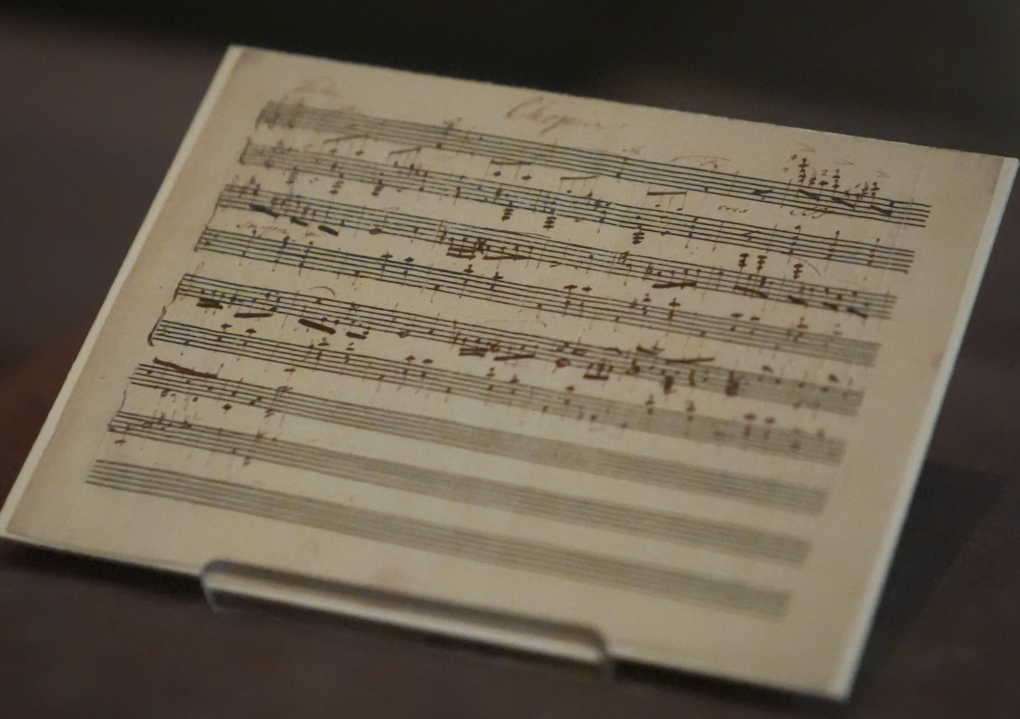
window.__IS_SSR__=true
window.__INITIAL_STATE__={
"attachmentsReducer": {
"audio_0": {
"type": "attachments",
"id": "audio_0",
"imgSizes": {
"kqedFullSize": {
"file": "https://ww2.kqed.org/news/wp-content/themes/KQED-unified/img/audio_bgs/background0.jpg"
}
}
},
"audio_1": {
"type": "attachments",
"id": "audio_1",
"imgSizes": {
"kqedFullSize": {
"file": "https://ww2.kqed.org/news/wp-content/themes/KQED-unified/img/audio_bgs/background1.jpg"
}
}
},
"audio_2": {
"type": "attachments",
"id": "audio_2",
"imgSizes": {
"kqedFullSize": {
"file": "https://ww2.kqed.org/news/wp-content/themes/KQED-unified/img/audio_bgs/background2.jpg"
}
}
},
"audio_3": {
"type": "attachments",
"id": "audio_3",
"imgSizes": {
"kqedFullSize": {
"file": "https://ww2.kqed.org/news/wp-content/themes/KQED-unified/img/audio_bgs/background3.jpg"
}
}
},
"audio_4": {
"type": "attachments",
"id": "audio_4",
"imgSizes": {
"kqedFullSize": {
"file": "https://ww2.kqed.org/news/wp-content/themes/KQED-unified/img/audio_bgs/background4.jpg"
}
}
},
"placeholder": {
"type": "attachments",
"id": "placeholder",
"imgSizes": {
"thumbnail": {
"file": "https://cdn.kqed.org/wp-content/uploads/2024/12/KQED-Default-Image-816638274-2000x1333-1-160x107.jpg",
"width": 160,
"height": 107,
"mimeType": "image/jpeg"
},
"medium": {
"file": "https://cdn.kqed.org/wp-content/uploads/2024/12/KQED-Default-Image-816638274-2000x1333-1-800x533.jpg",
"width": 800,
"height": 533,
"mimeType": "image/jpeg"
},
"medium_large": {
"file": "https://cdn.kqed.org/wp-content/uploads/2024/12/KQED-Default-Image-816638274-2000x1333-1-768x512.jpg",
"width": 768,
"height": 512,
"mimeType": "image/jpeg"
},
"large": {
"file": "https://cdn.kqed.org/wp-content/uploads/2024/12/KQED-Default-Image-816638274-2000x1333-1-1020x680.jpg",
"width": 1020,
"height": 680,
"mimeType": "image/jpeg"
},
"1536x1536": {
"file": "https://cdn.kqed.org/wp-content/uploads/2024/12/KQED-Default-Image-816638274-2000x1333-1-1536x1024.jpg",
"width": 1536,
"height": 1024,
"mimeType": "image/jpeg"
},
"fd-lrg": {
"file": "https://cdn.kqed.org/wp-content/uploads/2024/12/KQED-Default-Image-816638274-2000x1333-1-1536x1024.jpg",
"width": 1536,
"height": 1024,
"mimeType": "image/jpeg"
},
"fd-med": {
"file": "https://cdn.kqed.org/wp-content/uploads/2024/12/KQED-Default-Image-816638274-2000x1333-1-1020x680.jpg",
"width": 1020,
"height": 680,
"mimeType": "image/jpeg"
},
"fd-sm": {
"file": "https://cdn.kqed.org/wp-content/uploads/2024/12/KQED-Default-Image-816638274-2000x1333-1-800x533.jpg",
"width": 800,
"height": 533,
"mimeType": "image/jpeg"
},
"post-thumbnail": {
"file": "https://cdn.kqed.org/wp-content/uploads/2024/12/KQED-Default-Image-816638274-2000x1333-1-672x372.jpg",
"width": 672,
"height": 372,
"mimeType": "image/jpeg"
},
"twentyfourteen-full-width": {
"file": "https://cdn.kqed.org/wp-content/uploads/2024/12/KQED-Default-Image-816638274-2000x1333-1-1038x576.jpg",
"width": 1038,
"height": 576,
"mimeType": "image/jpeg"
},
"xxsmall": {
"file": "https://cdn.kqed.org/wp-content/uploads/2024/12/KQED-Default-Image-816638274-2000x1333-1-160x107.jpg",
"width": 160,
"height": 107,
"mimeType": "image/jpeg"
},
"xsmall": {
"file": "https://cdn.kqed.org/wp-content/uploads/2024/12/KQED-Default-Image-816638274-2000x1333-1-672x372.jpg",
"width": 672,
"height": 372,
"mimeType": "image/jpeg"
},
"small": {
"file": "https://cdn.kqed.org/wp-content/uploads/2024/12/KQED-Default-Image-816638274-2000x1333-1-672x372.jpg",
"width": 672,
"height": 372,
"mimeType": "image/jpeg"
},
"xlarge": {
"file": "https://cdn.kqed.org/wp-content/uploads/2024/12/KQED-Default-Image-816638274-2000x1333-1-1020x680.jpg",
"width": 1020,
"height": 680,
"mimeType": "image/jpeg"
},
"full-width": {
"file": "https://cdn.kqed.org/wp-content/uploads/2024/12/KQED-Default-Image-816638274-2000x1333-1-1920x1280.jpg",
"width": 1920,
"height": 1280,
"mimeType": "image/jpeg"
},
"guest-author-32": {
"file": "https://cdn.kqed.org/wp-content/uploads/2025/01/KQED-Default-Image-816638274-1333x1333-1-160x160.jpg",
"width": 32,
"height": 32,
"mimeType": "image/jpeg"
},
"guest-author-50": {
"file": "https://cdn.kqed.org/wp-content/uploads/2025/01/KQED-Default-Image-816638274-1333x1333-1-160x160.jpg",
"width": 50,
"height": 50,
"mimeType": "image/jpeg"
},
"guest-author-64": {
"file": "https://cdn.kqed.org/wp-content/uploads/2025/01/KQED-Default-Image-816638274-1333x1333-1-160x160.jpg",
"width": 64,
"height": 64,
"mimeType": "image/jpeg"
},
"guest-author-96": {
"file": "https://cdn.kqed.org/wp-content/uploads/2025/01/KQED-Default-Image-816638274-1333x1333-1-160x160.jpg",
"width": 96,
"height": 96,
"mimeType": "image/jpeg"
},
"guest-author-128": {
"file": "https://cdn.kqed.org/wp-content/uploads/2025/01/KQED-Default-Image-816638274-1333x1333-1-160x160.jpg",
"width": 128,
"height": 128,
"mimeType": "image/jpeg"
},
"detail": {
"file": "https://cdn.kqed.org/wp-content/uploads/2025/01/KQED-Default-Image-816638274-1333x1333-1-160x160.jpg",
"width": 160,
"height": 160,
"mimeType": "image/jpeg"
},
"kqedFullSize": {
"file": "https://cdn.kqed.org/wp-content/uploads/2024/12/KQED-Default-Image-816638274-2000x1333-1.jpg",
"width": 2000,
"height": 1333
}
}
},
"arts_13968461": {
"type": "attachments",
"id": "arts_13968461",
"meta": {
"index": "attachments_1716263798",
"site": "arts",
"id": "13968461",
"found": true
},
"title": "chopin",
"publishDate": 1732225574,
"status": "inherit",
"parent": 13968460,
"modified": 1732225678,
"caption": "A previously unknown musical manuscript, possibly by Frederic Chopin.",
"credit": "AP Photo/John Minchillo",
"altTag": "A piece of sheet music.",
"description": null,
"imgSizes": {
"medium": {
"file": "https://cdn.kqed.org/wp-content/uploads/sites/2/2024/11/chopin-800x564.png",
"width": 800,
"height": 564,
"mimeType": "image/png"
},
"large": {
"file": "https://cdn.kqed.org/wp-content/uploads/sites/2/2024/11/chopin-1020x719.png",
"width": 1020,
"height": 719,
"mimeType": "image/png"
},
"thumbnail": {
"file": "https://cdn.kqed.org/wp-content/uploads/sites/2/2024/11/chopin-160x113.png",
"width": 160,
"height": 113,
"mimeType": "image/png"
},
"medium_large": {
"file": "https://cdn.kqed.org/wp-content/uploads/sites/2/2024/11/chopin-768x541.png",
"width": 768,
"height": 541,
"mimeType": "image/png"
},
"1536x1536": {
"file": "https://cdn.kqed.org/wp-content/uploads/sites/2/2024/11/chopin-1536x1083.png",
"width": 1536,
"height": 1083,
"mimeType": "image/png"
},
"post-thumbnail": {
"file": "https://cdn.kqed.org/wp-content/uploads/sites/2/2024/11/chopin-672x372.png",
"width": 672,
"height": 372,
"mimeType": "image/png"
},
"twentyfourteen-full-width": {
"file": "https://cdn.kqed.org/wp-content/uploads/sites/2/2024/11/chopin-1038x576.png",
"width": 1038,
"height": 576,
"mimeType": "image/png"
},
"full-width": {
"file": "https://cdn.kqed.org/wp-content/uploads/sites/2/2024/11/chopin-1920x1354.png",
"width": 1920,
"height": 1354,
"mimeType": "image/png"
},
"kqedFullSize": {
"file": "https://cdn.kqed.org/wp-content/uploads/sites/2/2024/11/chopin.png",
"width": 2000,
"height": 1410
}
},
"isLoading": false,
"fetchFailed": false
},
"arts_13967444": {
"type": "attachments",
"id": "arts_13967444",
"meta": {
"index": "attachments_1716263798",
"site": "arts",
"id": "13967444",
"found": true
},
"title": "Allison-and-Urs-photo-by-Kate-Stilley-Steiner",
"publishDate": 1730244188,
"status": "inherit",
"parent": 0,
"modified": 1730244233,
"caption": "Composer and pianist Allison Lovejoy discusses the score of ‘Elijah’s Call’ with Urs Leonhardt Steiner, music director and conductor of the Golden Gate Symphony Orchestra and Chorus. ",
"credit": "Kate Stilley Steiner",
"altTag": null,
"description": null,
"imgSizes": {
"medium": {
"file": "https://cdn.kqed.org/wp-content/uploads/sites/2/2024/10/Allison-and-Urs-photo-by-Kate-Stilley-Steiner-800x600.jpg",
"width": 800,
"height": 600,
"mimeType": "image/jpeg"
},
"large": {
"file": "https://cdn.kqed.org/wp-content/uploads/sites/2/2024/10/Allison-and-Urs-photo-by-Kate-Stilley-Steiner-1020x765.jpg",
"width": 1020,
"height": 765,
"mimeType": "image/jpeg"
},
"thumbnail": {
"file": "https://cdn.kqed.org/wp-content/uploads/sites/2/2024/10/Allison-and-Urs-photo-by-Kate-Stilley-Steiner-160x120.jpg",
"width": 160,
"height": 120,
"mimeType": "image/jpeg"
},
"medium_large": {
"file": "https://cdn.kqed.org/wp-content/uploads/sites/2/2024/10/Allison-and-Urs-photo-by-Kate-Stilley-Steiner-768x576.jpg",
"width": 768,
"height": 576,
"mimeType": "image/jpeg"
},
"1536x1536": {
"file": "https://cdn.kqed.org/wp-content/uploads/sites/2/2024/10/Allison-and-Urs-photo-by-Kate-Stilley-Steiner-1536x1152.jpg",
"width": 1536,
"height": 1152,
"mimeType": "image/jpeg"
},
"post-thumbnail": {
"file": "https://cdn.kqed.org/wp-content/uploads/sites/2/2024/10/Allison-and-Urs-photo-by-Kate-Stilley-Steiner-672x372.jpg",
"width": 672,
"height": 372,
"mimeType": "image/jpeg"
},
"twentyfourteen-full-width": {
"file": "https://cdn.kqed.org/wp-content/uploads/sites/2/2024/10/Allison-and-Urs-photo-by-Kate-Stilley-Steiner-1038x576.jpg",
"width": 1038,
"height": 576,
"mimeType": "image/jpeg"
},
"full-width": {
"file": "https://cdn.kqed.org/wp-content/uploads/sites/2/2024/10/Allison-and-Urs-photo-by-Kate-Stilley-Steiner-1920x1440.jpg",
"width": 1920,
"height": 1440,
"mimeType": "image/jpeg"
},
"kqedFullSize": {
"file": "https://cdn.kqed.org/wp-content/uploads/sites/2/2024/10/Allison-and-Urs-photo-by-Kate-Stilley-Steiner.jpg",
"width": 2000,
"height": 1500
}
},
"isLoading": false,
"fetchFailed": false
},
"arts_13964408": {
"type": "attachments",
"id": "arts_13964408",
"meta": {
"index": "attachments_1716263798",
"site": "arts",
"id": "13964408",
"found": true
},
"title": "SF-Symphony-Chorus-(c)-Brandon-Patoc",
"publishDate": 1726594248,
"status": "inherit",
"parent": 13964392,
"modified": 1726594296,
"caption": "The San Francisco Symphony with the San Francisco Symphony Chorus at Davies Symphony Hall.",
"credit": "Brandon Patoc/San Francisco Symphony",
"altTag": null,
"description": null,
"imgSizes": {
"medium": {
"file": "https://cdn.kqed.org/wp-content/uploads/sites/2/2024/09/SF-Symphony-Chorus-c-Brandon-Patoc-800x534.jpg",
"width": 800,
"height": 534,
"mimeType": "image/jpeg"
},
"large": {
"file": "https://cdn.kqed.org/wp-content/uploads/sites/2/2024/09/SF-Symphony-Chorus-c-Brandon-Patoc-1020x681.jpg",
"width": 1020,
"height": 681,
"mimeType": "image/jpeg"
},
"thumbnail": {
"file": "https://cdn.kqed.org/wp-content/uploads/sites/2/2024/09/SF-Symphony-Chorus-c-Brandon-Patoc-160x107.jpg",
"width": 160,
"height": 107,
"mimeType": "image/jpeg"
},
"medium_large": {
"file": "https://cdn.kqed.org/wp-content/uploads/sites/2/2024/09/SF-Symphony-Chorus-c-Brandon-Patoc-768x512.jpg",
"width": 768,
"height": 512,
"mimeType": "image/jpeg"
},
"1536x1536": {
"file": "https://cdn.kqed.org/wp-content/uploads/sites/2/2024/09/SF-Symphony-Chorus-c-Brandon-Patoc-1536x1025.jpg",
"width": 1536,
"height": 1025,
"mimeType": "image/jpeg"
},
"post-thumbnail": {
"file": "https://cdn.kqed.org/wp-content/uploads/sites/2/2024/09/SF-Symphony-Chorus-c-Brandon-Patoc-672x372.jpg",
"width": 672,
"height": 372,
"mimeType": "image/jpeg"
},
"twentyfourteen-full-width": {
"file": "https://cdn.kqed.org/wp-content/uploads/sites/2/2024/09/SF-Symphony-Chorus-c-Brandon-Patoc-1038x576.jpg",
"width": 1038,
"height": 576,
"mimeType": "image/jpeg"
},
"kqedFullSize": {
"file": "https://cdn.kqed.org/wp-content/uploads/sites/2/2024/09/SF-Symphony-Chorus-c-Brandon-Patoc.jpg",
"width": 1920,
"height": 1281
}
},
"isLoading": false,
"fetchFailed": false
},
"arts_13955628": {
"type": "attachments",
"id": "arts_13955628",
"meta": {
"index": "attachments_1716263798",
"site": "arts",
"id": "13955628",
"found": true
},
"parent": 13955606,
"imgSizes": {
"twentyfourteen-full-width": {
"file": "https://cdn.kqed.org/wp-content/uploads/sites/2/2024/04/Kedrick-Armstrong-conducts-Oakland-Symphony-credit-Scott-Chernis-1038x576.jpg",
"width": 1038,
"mimeType": "image/jpeg",
"height": 576
},
"thumbnail": {
"file": "https://cdn.kqed.org/wp-content/uploads/sites/2/2024/04/Kedrick-Armstrong-conducts-Oakland-Symphony-credit-Scott-Chernis-160x107.jpg",
"width": 160,
"mimeType": "image/jpeg",
"height": 107
},
"post-thumbnail": {
"file": "https://cdn.kqed.org/wp-content/uploads/sites/2/2024/04/Kedrick-Armstrong-conducts-Oakland-Symphony-credit-Scott-Chernis-672x372.jpg",
"width": 672,
"mimeType": "image/jpeg",
"height": 372
},
"kqedFullSize": {
"file": "https://cdn.kqed.org/wp-content/uploads/sites/2/2024/04/Kedrick-Armstrong-conducts-Oakland-Symphony-credit-Scott-Chernis-scaled.jpg",
"width": 2560,
"height": 1707
},
"2048x2048": {
"file": "https://cdn.kqed.org/wp-content/uploads/sites/2/2024/04/Kedrick-Armstrong-conducts-Oakland-Symphony-credit-Scott-Chernis-2048x1365.jpg",
"width": 2048,
"mimeType": "image/jpeg",
"height": 1365
},
"large": {
"file": "https://cdn.kqed.org/wp-content/uploads/sites/2/2024/04/Kedrick-Armstrong-conducts-Oakland-Symphony-credit-Scott-Chernis-1020x680.jpg",
"width": 1020,
"mimeType": "image/jpeg",
"height": 680
},
"1536x1536": {
"file": "https://cdn.kqed.org/wp-content/uploads/sites/2/2024/04/Kedrick-Armstrong-conducts-Oakland-Symphony-credit-Scott-Chernis-1536x1024.jpg",
"width": 1536,
"mimeType": "image/jpeg",
"height": 1024
},
"full-width": {
"file": "https://cdn.kqed.org/wp-content/uploads/sites/2/2024/04/Kedrick-Armstrong-conducts-Oakland-Symphony-credit-Scott-Chernis-1920x1280.jpg",
"width": 1920,
"mimeType": "image/jpeg",
"height": 1280
},
"medium": {
"file": "https://cdn.kqed.org/wp-content/uploads/sites/2/2024/04/Kedrick-Armstrong-conducts-Oakland-Symphony-credit-Scott-Chernis-800x533.jpg",
"width": 800,
"mimeType": "image/jpeg",
"height": 533
},
"medium_large": {
"file": "https://cdn.kqed.org/wp-content/uploads/sites/2/2024/04/Kedrick-Armstrong-conducts-Oakland-Symphony-credit-Scott-Chernis-768x512.jpg",
"width": 768,
"mimeType": "image/jpeg",
"height": 512
}
},
"publishDate": 1712680423,
"modified": 1712680485,
"caption": "Kedrick Armstrong conducts the Oakland Symphony in February 2024. ",
"description": null,
"title": "Kedrick Armstrong conducts Oakland Symphony credit Scott Chernis",
"credit": "Scott Chernis",
"status": "inherit",
"altTag": "A conductor waves his baton as orchestra musicians look on,",
"isLoading": false,
"fetchFailed": false
},
"arts_13961164": {
"type": "attachments",
"id": "arts_13961164",
"meta": {
"index": "attachments_1716263798",
"site": "arts",
"id": "13961164",
"found": true
},
"title": "9115-fnv-opening-240712",
"publishDate": 1721075235,
"status": "inherit",
"parent": 13961151,
"modified": 1721075293,
"caption": "Soprano Pretty Yende sings at Charles Krug Winery in St. Helena for the opening night of Festival Napa Valley, July 12, 2024. ",
"credit": "Drew Alitzer Photography",
"altTag": null,
"description": null,
"imgSizes": {
"medium": {
"file": "https://cdn.kqed.org/wp-content/uploads/sites/2/2024/07/9115-fnv-opening-240712-800x450.jpg",
"width": 800,
"height": 450,
"mimeType": "image/jpeg"
},
"large": {
"file": "https://cdn.kqed.org/wp-content/uploads/sites/2/2024/07/9115-fnv-opening-240712-1020x574.jpg",
"width": 1020,
"height": 574,
"mimeType": "image/jpeg"
},
"thumbnail": {
"file": "https://cdn.kqed.org/wp-content/uploads/sites/2/2024/07/9115-fnv-opening-240712-160x90.jpg",
"width": 160,
"height": 90,
"mimeType": "image/jpeg"
},
"medium_large": {
"file": "https://cdn.kqed.org/wp-content/uploads/sites/2/2024/07/9115-fnv-opening-240712-768x432.jpg",
"width": 768,
"height": 432,
"mimeType": "image/jpeg"
},
"1536x1536": {
"file": "https://cdn.kqed.org/wp-content/uploads/sites/2/2024/07/9115-fnv-opening-240712-1536x864.jpg",
"width": 1536,
"height": 864,
"mimeType": "image/jpeg"
},
"post-thumbnail": {
"file": "https://cdn.kqed.org/wp-content/uploads/sites/2/2024/07/9115-fnv-opening-240712-672x372.jpg",
"width": 672,
"height": 372,
"mimeType": "image/jpeg"
},
"twentyfourteen-full-width": {
"file": "https://cdn.kqed.org/wp-content/uploads/sites/2/2024/07/9115-fnv-opening-240712-1038x576.jpg",
"width": 1038,
"height": 576,
"mimeType": "image/jpeg"
},
"kqedFullSize": {
"file": "https://cdn.kqed.org/wp-content/uploads/sites/2/2024/07/9115-fnv-opening-240712.jpg",
"width": 1920,
"height": 1080
}
},
"isLoading": false,
"fetchFailed": false
},
"arts_13959906": {
"type": "attachments",
"id": "arts_13959906",
"meta": {
"index": "attachments_1716263798",
"site": "arts",
"id": "13959906",
"found": true
},
"title": "SunRa.London.16x9",
"publishDate": 1718645421,
"status": "inherit",
"parent": 13959879,
"modified": 1718645633,
"caption": "Sun Ra performing at The Venue in London on July 27, 1982. ",
"credit": "David Corio/Redferns",
"altTag": "A Black man in a glittery headpiece and shoulder sash tilts his head back, facing right, seen in profile",
"description": null,
"imgSizes": {
"medium": {
"file": "https://cdn.kqed.org/wp-content/uploads/sites/2/2024/06/SunRa.London.16x9-800x450.jpg",
"width": 800,
"height": 450,
"mimeType": "image/jpeg"
},
"large": {
"file": "https://cdn.kqed.org/wp-content/uploads/sites/2/2024/06/SunRa.London.16x9-1020x574.jpg",
"width": 1020,
"height": 574,
"mimeType": "image/jpeg"
},
"thumbnail": {
"file": "https://cdn.kqed.org/wp-content/uploads/sites/2/2024/06/SunRa.London.16x9-160x90.jpg",
"width": 160,
"height": 90,
"mimeType": "image/jpeg"
},
"medium_large": {
"file": "https://cdn.kqed.org/wp-content/uploads/sites/2/2024/06/SunRa.London.16x9-768x432.jpg",
"width": 768,
"height": 432,
"mimeType": "image/jpeg"
},
"1536x1536": {
"file": "https://cdn.kqed.org/wp-content/uploads/sites/2/2024/06/SunRa.London.16x9-1536x864.jpg",
"width": 1536,
"height": 864,
"mimeType": "image/jpeg"
},
"post-thumbnail": {
"file": "https://cdn.kqed.org/wp-content/uploads/sites/2/2024/06/SunRa.London.16x9-672x372.jpg",
"width": 672,
"height": 372,
"mimeType": "image/jpeg"
},
"twentyfourteen-full-width": {
"file": "https://cdn.kqed.org/wp-content/uploads/sites/2/2024/06/SunRa.London.16x9-1038x576.jpg",
"width": 1038,
"height": 576,
"mimeType": "image/jpeg"
},
"kqedFullSize": {
"file": "https://cdn.kqed.org/wp-content/uploads/sites/2/2024/06/SunRa.London.16x9.jpg",
"width": 1920,
"height": 1080
}
},
"isLoading": false,
"fetchFailed": false
},
"arts_13959110": {
"type": "attachments",
"id": "arts_13959110",
"meta": {
"index": "attachments_1716263798",
"site": "arts",
"id": "13959110",
"found": true
},
"title": "_74A1662",
"publishDate": 1717440079,
"status": "inherit",
"parent": 13959026,
"modified": 1717442217,
"caption": "Rowan Kievits as Student #4 (Anton), Beate Mordal as Student #2 (Lilly), Lucy Shelton as the Teacher, Marina Dumont as Student #6 (Alexia), Vilma Jää as Student #1 (Markéta), Camilo Delgado Díaz as Student #5 (Jerónimo), and Julie Hega as Student #3 (Iris) in 'Innocence' at SF Opera.",
"credit": "Cory Weaver/San Francisco Opera",
"altTag": null,
"description": null,
"imgSizes": {
"medium": {
"file": "https://cdn.kqed.org/wp-content/uploads/sites/2/2024/06/74A1662-800x534.jpg",
"width": 800,
"height": 534,
"mimeType": "image/jpeg"
},
"large": {
"file": "https://cdn.kqed.org/wp-content/uploads/sites/2/2024/06/74A1662-1020x681.jpg",
"width": 1020,
"height": 681,
"mimeType": "image/jpeg"
},
"thumbnail": {
"file": "https://cdn.kqed.org/wp-content/uploads/sites/2/2024/06/74A1662-160x107.jpg",
"width": 160,
"height": 107,
"mimeType": "image/jpeg"
},
"medium_large": {
"file": "https://cdn.kqed.org/wp-content/uploads/sites/2/2024/06/74A1662-768x512.jpg",
"width": 768,
"height": 512,
"mimeType": "image/jpeg"
},
"1536x1536": {
"file": "https://cdn.kqed.org/wp-content/uploads/sites/2/2024/06/74A1662-1536x1025.jpg",
"width": 1536,
"height": 1025,
"mimeType": "image/jpeg"
},
"post-thumbnail": {
"file": "https://cdn.kqed.org/wp-content/uploads/sites/2/2024/06/74A1662-672x372.jpg",
"width": 672,
"height": 372,
"mimeType": "image/jpeg"
},
"twentyfourteen-full-width": {
"file": "https://cdn.kqed.org/wp-content/uploads/sites/2/2024/06/74A1662-1038x576.jpg",
"width": 1038,
"height": 576,
"mimeType": "image/jpeg"
},
"kqedFullSize": {
"file": "https://cdn.kqed.org/wp-content/uploads/sites/2/2024/06/74A1662.jpg",
"width": 1920,
"height": 1281
}
},
"isLoading": false,
"fetchFailed": false
},
"arts_13958055": {
"type": "attachments",
"id": "arts_13958055",
"meta": {
"index": "attachments_1716263798",
"site": "arts",
"id": "13958055",
"found": true
},
"parent": 13957999,
"imgSizes": {
"twentyfourteen-full-width": {
"file": "https://cdn.kqed.org/wp-content/uploads/sites/2/2024/05/557-914x576.jpg",
"width": 914,
"mimeType": "image/jpeg",
"height": 576
},
"thumbnail": {
"file": "https://cdn.kqed.org/wp-content/uploads/sites/2/2024/05/557-160x108.jpg",
"width": 160,
"mimeType": "image/jpeg",
"height": 108
},
"post-thumbnail": {
"file": "https://cdn.kqed.org/wp-content/uploads/sites/2/2024/05/557-672x372.jpg",
"width": 672,
"mimeType": "image/jpeg",
"height": 372
},
"kqedFullSize": {
"file": "https://cdn.kqed.org/wp-content/uploads/sites/2/2024/05/557.jpg",
"width": 914,
"height": 615
},
"medium": {
"file": "https://cdn.kqed.org/wp-content/uploads/sites/2/2024/05/557-800x538.jpg",
"width": 800,
"mimeType": "image/jpeg",
"height": 538
},
"medium_large": {
"file": "https://cdn.kqed.org/wp-content/uploads/sites/2/2024/05/557-768x517.jpg",
"width": 768,
"mimeType": "image/jpeg",
"height": 517
}
},
"publishDate": 1715905868,
"modified": 1715916421,
"caption": "David Murray and Kahil El’Zabar.",
"description": null,
"title": "557",
"credit": "Delmark Records",
"status": "inherit",
"altTag": null,
"isLoading": false,
"fetchFailed": false
},
"arts_13957209": {
"type": "attachments",
"id": "arts_13957209",
"meta": {
"index": "attachments_1716263798",
"site": "arts",
"id": "13957209",
"found": true
},
"parent": 13957201,
"imgSizes": {
"twentyfourteen-full-width": {
"file": "https://cdn.kqed.org/wp-content/uploads/sites/2/2024/05/pratt14_print-Robert-Reck-1038x576.jpg",
"width": 1038,
"mimeType": "image/jpeg",
"height": 576
},
"thumbnail": {
"file": "https://cdn.kqed.org/wp-content/uploads/sites/2/2024/05/pratt14_print-Robert-Reck-160x110.jpg",
"width": 160,
"mimeType": "image/jpeg",
"height": 110
},
"post-thumbnail": {
"file": "https://cdn.kqed.org/wp-content/uploads/sites/2/2024/05/pratt14_print-Robert-Reck-672x372.jpg",
"width": 672,
"mimeType": "image/jpeg",
"height": 372
},
"kqedFullSize": {
"file": "https://cdn.kqed.org/wp-content/uploads/sites/2/2024/05/pratt14_print-Robert-Reck.jpg",
"width": 1920,
"height": 1321
},
"large": {
"file": "https://cdn.kqed.org/wp-content/uploads/sites/2/2024/05/pratt14_print-Robert-Reck-1020x702.jpg",
"width": 1020,
"mimeType": "image/jpeg",
"height": 702
},
"1536x1536": {
"file": "https://cdn.kqed.org/wp-content/uploads/sites/2/2024/05/pratt14_print-Robert-Reck-1536x1057.jpg",
"width": 1536,
"mimeType": "image/jpeg",
"height": 1057
},
"medium": {
"file": "https://cdn.kqed.org/wp-content/uploads/sites/2/2024/05/pratt14_print-Robert-Reck-800x550.jpg",
"width": 800,
"mimeType": "image/jpeg",
"height": 550
},
"medium_large": {
"file": "https://cdn.kqed.org/wp-content/uploads/sites/2/2024/05/pratt14_print-Robert-Reck-768x528.jpg",
"width": 768,
"mimeType": "image/jpeg",
"height": 528
}
},
"publishDate": 1714762123,
"modified": 1714778174,
"caption": "Awadagin Pratt at the piano. Having recently joined the San Francisco Conservatory of Music, Pratt performs Jessie Montgomery's 'Rounds' this weekend with the New Century Chamber Orchestra. ",
"description": null,
"title": "pratt14_print-Robert-Reck",
"credit": "Robert Reck",
"status": "inherit",
"altTag": "A Black man with a beard in a black and red jacket plays a grand piano.",
"isLoading": false,
"fetchFailed": false
},
"arts_13954798": {
"type": "attachments",
"id": "arts_13954798",
"meta": {
"index": "attachments_1716263798",
"site": "arts",
"id": "13954798",
"found": true
},
"parent": 13954764,
"imgSizes": {
"twentyfourteen-full-width": {
"file": "https://cdn.kqed.org/wp-content/uploads/sites/2/2024/03/Salonen.Scriabin-1038x576.jpg",
"width": 1038,
"mimeType": "image/jpeg",
"height": 576
},
"thumbnail": {
"file": "https://cdn.kqed.org/wp-content/uploads/sites/2/2024/03/Salonen.Scriabin-160x90.jpg",
"width": 160,
"mimeType": "image/jpeg",
"height": 90
},
"post-thumbnail": {
"file": "https://cdn.kqed.org/wp-content/uploads/sites/2/2024/03/Salonen.Scriabin-672x372.jpg",
"width": 672,
"mimeType": "image/jpeg",
"height": 372
},
"kqedFullSize": {
"file": "https://cdn.kqed.org/wp-content/uploads/sites/2/2024/03/Salonen.Scriabin.jpg",
"width": 1920,
"height": 1080
},
"large": {
"file": "https://cdn.kqed.org/wp-content/uploads/sites/2/2024/03/Salonen.Scriabin-1020x574.jpg",
"width": 1020,
"mimeType": "image/jpeg",
"height": 574
},
"1536x1536": {
"file": "https://cdn.kqed.org/wp-content/uploads/sites/2/2024/03/Salonen.Scriabin-1536x864.jpg",
"width": 1536,
"mimeType": "image/jpeg",
"height": 864
},
"medium": {
"file": "https://cdn.kqed.org/wp-content/uploads/sites/2/2024/03/Salonen.Scriabin-800x450.jpg",
"width": 800,
"mimeType": "image/jpeg",
"height": 450
},
"medium_large": {
"file": "https://cdn.kqed.org/wp-content/uploads/sites/2/2024/03/Salonen.Scriabin-768x432.jpg",
"width": 768,
"mimeType": "image/jpeg",
"height": 432
}
},
"publishDate": 1711493233,
"modified": 1711493272,
"caption": "Esa-Pekka Salonen conducts the orchestra with pianist Jean-Yves Thibaudet as the San Francisco Symphony performs Alexander Scriabin's 'Prometheus, The Poem of Fire' at Davies Symphony Hall on March 1, 2024.",
"description": null,
"title": "Salonen.Scriabin",
"credit": "Brandon Patoc",
"status": "inherit",
"altTag": "A man conducts an orchestra aside a pianist at a grand piano, on stage, bathed in purple light",
"isLoading": false,
"fetchFailed": false
},
"arts_13849055": {
"type": "attachments",
"id": "arts_13849055",
"meta": {
"index": "attachments_1716263798",
"site": "arts",
"id": "13849055",
"found": true
},
"parent": 13849044,
"imgSizes": {
"twentyfourteen-full-width": {
"file": "https://ww2.kqed.org/app/uploads/sites/2/2019/01/EsaPekkaSalonenSymphonyDebu-1038x576.jpg",
"width": 1038,
"mimeType": "image/jpeg",
"height": 576
},
"thumbnail": {
"file": "https://ww2.kqed.org/app/uploads/sites/2/2019/01/EsaPekkaSalonenSymphonyDebu-160x90.jpg",
"width": 160,
"mimeType": "image/jpeg",
"height": 90
},
"post-thumbnail": {
"file": "https://ww2.kqed.org/app/uploads/sites/2/2019/01/EsaPekkaSalonenSymphonyDebu-672x372.jpg",
"width": 672,
"mimeType": "image/jpeg",
"height": 372
},
"kqedFullSize": {
"file": "https://ww2.kqed.org/app/uploads/sites/2/2019/01/EsaPekkaSalonenSymphonyDebu.jpg",
"width": 1920,
"height": 1080
},
"large": {
"file": "https://ww2.kqed.org/app/uploads/sites/2/2019/01/EsaPekkaSalonenSymphonyDebu-1020x574.jpg",
"width": 1020,
"mimeType": "image/jpeg",
"height": 574
},
"complete_open_graph": {
"file": "https://ww2.kqed.org/app/uploads/sites/2/2019/01/EsaPekkaSalonenSymphonyDebu-1200x675.jpg",
"width": 1200,
"mimeType": "image/jpeg",
"height": 675
},
"guest-author-50": {
"file": "https://ww2.kqed.org/app/uploads/sites/2/2019/01/EsaPekkaSalonenSymphonyDebu-50x50.jpg",
"width": 50,
"mimeType": "image/jpeg",
"height": 50
},
"guest-author-96": {
"file": "https://ww2.kqed.org/app/uploads/sites/2/2019/01/EsaPekkaSalonenSymphonyDebu-96x96.jpg",
"width": 96,
"mimeType": "image/jpeg",
"height": 96
},
"medium": {
"file": "https://ww2.kqed.org/app/uploads/sites/2/2019/01/EsaPekkaSalonenSymphonyDebu-800x450.jpg",
"width": 800,
"mimeType": "image/jpeg",
"height": 450
},
"guest-author-64": {
"file": "https://ww2.kqed.org/app/uploads/sites/2/2019/01/EsaPekkaSalonenSymphonyDebu-64x64.jpg",
"width": 64,
"mimeType": "image/jpeg",
"height": 64
},
"guest-author-32": {
"file": "https://ww2.kqed.org/app/uploads/sites/2/2019/01/EsaPekkaSalonenSymphonyDebu-32x32.jpg",
"width": 32,
"mimeType": "image/jpeg",
"height": 32
},
"full-width": {
"file": "https://ww2.kqed.org/app/uploads/sites/2/2019/01/EsaPekkaSalonenSymphonyDebu-1920x1080.jpg",
"width": 1920,
"mimeType": "image/jpeg",
"height": 1080
},
"detail": {
"file": "https://ww2.kqed.org/app/uploads/sites/2/2019/01/EsaPekkaSalonenSymphonyDebu-150x150.jpg",
"width": 150,
"mimeType": "image/jpeg",
"height": 150
},
"medium_large": {
"file": "https://ww2.kqed.org/app/uploads/sites/2/2019/01/EsaPekkaSalonenSymphonyDebu-768x432.jpg",
"width": 768,
"mimeType": "image/jpeg",
"height": 432
},
"guest-author-128": {
"file": "https://ww2.kqed.org/app/uploads/sites/2/2019/01/EsaPekkaSalonenSymphonyDebu-128x128.jpg",
"width": 128,
"mimeType": "image/jpeg",
"height": 128
}
},
"publishDate": 1547922692,
"modified": 1582057428,
"caption": "Esa-Pekka Salonen conducts the San Francisco Symphony on Jan. 18, 2019.\n",
"description": "Esa-Pekka Salonen conducts the San Francisco Symphony on Jan. 18, 2019.\n",
"title": "EsaPekkaSalonenSymphonyDebu",
"credit": "Brandon Patoc/San Francisco Symphony",
"status": "inherit",
"isLoading": false,
"fetchFailed": false
},
"arts_13954087": {
"type": "attachments",
"id": "arts_13954087",
"meta": {
"index": "attachments_1716263798",
"site": "arts",
"id": "13954087",
"found": true
},
"parent": 13954083,
"imgSizes": {
"twentyfourteen-full-width": {
"file": "https://cdn.kqed.org/wp-content/uploads/sites/2/2024/03/Salonen.Thumb_.16x9-1038x576.jpg",
"width": 1038,
"mimeType": "image/jpeg",
"height": 576
},
"thumbnail": {
"file": "https://cdn.kqed.org/wp-content/uploads/sites/2/2024/03/Salonen.Thumb_.16x9-160x90.jpg",
"width": 160,
"mimeType": "image/jpeg",
"height": 90
},
"post-thumbnail": {
"file": "https://cdn.kqed.org/wp-content/uploads/sites/2/2024/03/Salonen.Thumb_.16x9-672x372.jpg",
"width": 672,
"mimeType": "image/jpeg",
"height": 372
},
"kqedFullSize": {
"file": "https://cdn.kqed.org/wp-content/uploads/sites/2/2024/03/Salonen.Thumb_.16x9.jpg",
"width": 1920,
"height": 1080
},
"large": {
"file": "https://cdn.kqed.org/wp-content/uploads/sites/2/2024/03/Salonen.Thumb_.16x9-1020x574.jpg",
"width": 1020,
"mimeType": "image/jpeg",
"height": 574
},
"1536x1536": {
"file": "https://cdn.kqed.org/wp-content/uploads/sites/2/2024/03/Salonen.Thumb_.16x9-1536x864.jpg",
"width": 1536,
"mimeType": "image/jpeg",
"height": 864
},
"medium": {
"file": "https://cdn.kqed.org/wp-content/uploads/sites/2/2024/03/Salonen.Thumb_.16x9-800x450.jpg",
"width": 800,
"mimeType": "image/jpeg",
"height": 450
},
"medium_large": {
"file": "https://cdn.kqed.org/wp-content/uploads/sites/2/2024/03/Salonen.Thumb_.16x9-768x432.jpg",
"width": 768,
"mimeType": "image/jpeg",
"height": 432
}
},
"publishDate": 1710433521,
"modified": 1710433552,
"caption": "Esa-Pekka Salonen, Music Director of the San Francisco Symphony, will exit his position in June 2025 at the end of his five-year contract.",
"description": null,
"title": "Salonen.Thumb.16x9",
"credit": "Cody Pickens",
"status": "inherit",
"altTag": "A middle-aged white man in black clothing stands against a black background, hands clasped at front.",
"isLoading": false,
"fetchFailed": false
}
},
"audioPlayerReducer": {
"postId": "stream_live",
"isPaused": true,
"isPlaying": false,
"pfsActive": false,
"pledgeModalIsOpen": true,
"playerDrawerIsOpen": false,
"liveAudioPlayStartedAt": 0,
"liveAudioPlayContext": ""
},
"authorsReducer": {
"byline_arts_13968460": {
"type": "authors",
"id": "byline_arts_13968460",
"meta": {
"override": true
},
"slug": "byline_arts_13968460",
"name": "Philip Marcelo, Associated Press",
"isLoading": false
},
"byline_arts_13959879": {
"type": "authors",
"id": "byline_arts_13959879",
"meta": {
"override": true
},
"slug": "byline_arts_13959879",
"name": "Daniel Bromfield",
"isLoading": false
},
"gmeline": {
"type": "authors",
"id": "185",
"meta": {
"index": "authors_1716337520",
"id": "185",
"found": true
},
"name": "Gabe Meline",
"firstName": "Gabe",
"lastName": "Meline",
"slug": "gmeline",
"email": "gmeline@kqed.org",
"display_author_email": true,
"staff_mastheads": [
"arts"
],
"title": "Senior Editor, KQED Arts & Culture",
"bio": "Gabe Meline entered journalism at age 15 making photocopied zines, and has since earned awards from the Edward R. Murrow Awards, the Society for Professional Journalists, the Online Journalism Awards, the Association of Alternative Newsweeklies and the California Newspaper Publishers Association. Prior to KQED, he was the editor of the \u003cem>North Bay Bohemian\u003c/em> and a touring musician. He lives with his wife and daughter in his hometown of Santa Rosa, CA.",
"avatar": "https://secure.gravatar.com/avatar/5bebe57be0d8bc2dd318934feb47299e2d2d10cba28d09d8d7afb389a2ce2bdd?s=600&d=blank&r=g",
"twitter": null,
"bluesky": null,
"facebook": null,
"instagram": null,
"linkedin": null,
"sites": [
{
"site": "",
"roles": [
"editor"
]
},
{
"site": "arts",
"roles": [
"administrator"
]
},
{
"site": "artschool",
"roles": [
"editor"
]
},
{
"site": "news",
"roles": [
"author"
]
},
{
"site": "pop",
"roles": [
"editor"
]
},
{
"site": "bayareabites",
"roles": [
"editor"
]
},
{
"site": "food",
"roles": [
"editor"
]
},
{
"site": "forum",
"roles": [
"administrator"
]
},
{
"site": "liveblog",
"roles": [
"editor"
]
},
{
"site": "hiphop",
"roles": [
"editor"
]
}
],
"headData": {
"title": "Gabe Meline | KQED",
"description": "Senior Editor, KQED Arts & Culture",
"ogImgSrc": "https://secure.gravatar.com/avatar/5bebe57be0d8bc2dd318934feb47299e2d2d10cba28d09d8d7afb389a2ce2bdd?s=600&d=blank&r=g",
"twImgSrc": "https://secure.gravatar.com/avatar/5bebe57be0d8bc2dd318934feb47299e2d2d10cba28d09d8d7afb389a2ce2bdd?s=600&d=blank&r=g"
},
"isLoading": false,
"link": "/author/gmeline"
},
"nvoynovskaya": {
"type": "authors",
"id": "11387",
"meta": {
"index": "authors_1716337520",
"id": "11387",
"found": true
},
"name": "Nastia Voynovskaya",
"firstName": "Nastia",
"lastName": "Voynovskaya",
"slug": "nvoynovskaya",
"email": "nvoynovskaya@kqed.org",
"display_author_email": false,
"staff_mastheads": [
"arts"
],
"title": "Editor and reporter",
"bio": "Nastia Voynovskaya is a reporter, editor and host at KQED Arts & Culture. She's been covering the arts in the Bay Area for over a decade, with a focus on music, queer culture, labor issues and grassroots organizing. She has edited KQED story series such as Trans Bay: A History of San Francisco's Gender-Diverse Community, and co-created KQED's Bay Area hip-hop history project, That's My Word. Nastia's work has been recognized by the Society of Professional Journalists and San Francisco Press Club. She regularly appears on podcasts and radio programs, including NPR's All Songs Considered, and hosts live events where music, culture and conversation meet.",
"avatar": "https://secure.gravatar.com/avatar/5025ee460e5a85d69ca20ea6c6f2f80d7e17795c828f61ea3aecfcd924e9042e?s=600&d=blank&r=g",
"twitter": null,
"bluesky": null,
"facebook": null,
"instagram": "https://www.instagram.com/nananastia/",
"linkedin": null,
"sites": [
{
"site": "",
"roles": [
"editor"
]
},
{
"site": "arts",
"roles": [
"administrator"
]
},
{
"site": "news",
"roles": [
"editor"
]
},
{
"site": "pop",
"roles": [
"administrator"
]
},
{
"site": "bayareabites",
"roles": [
"editor"
]
},
{
"site": "podcasts",
"roles": [
"editor"
]
},
{
"site": "hiphop",
"roles": [
"editor"
]
}
],
"headData": {
"title": "Nastia Voynovskaya | KQED",
"description": "Editor and reporter",
"ogImgSrc": "https://secure.gravatar.com/avatar/5025ee460e5a85d69ca20ea6c6f2f80d7e17795c828f61ea3aecfcd924e9042e?s=600&d=blank&r=g",
"twImgSrc": "https://secure.gravatar.com/avatar/5025ee460e5a85d69ca20ea6c6f2f80d7e17795c828f61ea3aecfcd924e9042e?s=600&d=blank&r=g"
},
"isLoading": false,
"link": "/author/nvoynovskaya"
},
"sfaulise": {
"type": "authors",
"id": "11919",
"meta": {
"index": "authors_1716337520",
"id": "11919",
"found": true
},
"name": "Shannon Faulise",
"firstName": "Shannon",
"lastName": "Faulise",
"slug": "sfaulise",
"email": "sfaulise@kqed.org",
"display_author_email": false,
"staff_mastheads": [],
"title": "Contributor, KQED Arts & Culture",
"bio": "Shannon Faulise is a graduate of the UC Berkeley Graduate School of Journalism, where she concentrated on photojournalism and feature writing. Shannon's photos, audio pieces and written stories have appeared in The Oaklandside, The Redwood City Pulse and KALX. Outside of reporting, Shannon loves kpop, women's sports and concerts. She served as an intern for KQED Arts & Culture in 2024–25.",
"avatar": "https://secure.gravatar.com/avatar/76449df2627a603d6b02f0534ec3c913007029bff4f1c0572071401f9a293a02?s=600&d=blank&r=g",
"twitter": null,
"bluesky": null,
"facebook": null,
"instagram": null,
"linkedin": null,
"sites": [
{
"site": "arts",
"roles": [
"subscriber"
]
}
],
"headData": {
"title": "Shannon Faulise | KQED",
"description": "Contributor, KQED Arts & Culture",
"ogImgSrc": "https://secure.gravatar.com/avatar/76449df2627a603d6b02f0534ec3c913007029bff4f1c0572071401f9a293a02?s=600&d=blank&r=g",
"twImgSrc": "https://secure.gravatar.com/avatar/76449df2627a603d6b02f0534ec3c913007029bff4f1c0572071401f9a293a02?s=600&d=blank&r=g"
},
"isLoading": false,
"link": "/author/sfaulise"
}
},
"pagesReducer": {
"arts_tag_classical-music": {
"type": "terms",
"id": "arts_1312",
"meta": {
"index": "terms_1716263798",
"site": "arts",
"id": "1312",
"score": 9.892691
},
"featImg": null,
"name": "classical music",
"description": null,
"taxonomy": "tag",
"headData": {
"twImgId": null,
"twTitle": null,
"socialTitle": "From Symphony Hall to Hidden Gems: Bay Area's Classical Music Stories",
"ogTitle": null,
"ogImgId": null,
"twDescription": null,
"description": "Immerse yourself in the Bay Area's rich classical music world! KQED brings you news, educational resources, and event listings.",
"metaRobotsNoIndex": "index",
"title": "From Symphony Hall to Hidden Gems: Bay Area's Classical Music Stories",
"ogDescription": null
},
"ttid": 1324,
"slug": "classical-music",
"isLoading": false,
"title": "classical music",
"pageMeta": {
"site": "arts",
"WpPageTemplate": "page-topic-editorial",
"currentPage": 3
},
"blocks": [
{
"blockName": "kqed/post-list",
"attrs": {
"layout": "cardArticle2",
"query": "posts/arts?tag=classical-music",
"seeMore": false,
"paginated": true,
"page": 3
}
},
{
"blockName": "kqed/ad"
}
]
}
},
"pfsSessionReducer": {},
"postsReducer": {
"stream_live": {
"type": "live",
"id": "stream_live",
"audioUrl": "https://streams.kqed.org/kqedradio",
"title": "Live Stream",
"excerpt": "Live Stream information currently unavailable.",
"link": "/radio",
"featImg": "",
"label": {
"name": "KQED Live",
"link": "/"
}
},
"stream_kqedNewscast": {
"type": "posts",
"id": "stream_kqedNewscast",
"audioUrl": "https://www.kqed.org/.stream/anon/radio/RDnews/newscast.mp3?_=1",
"title": "KQED Newscast",
"featImg": "",
"label": {
"name": "88.5 FM",
"link": "/"
}
},
"arts_13968460": {
"type": "posts",
"id": "arts_13968460",
"meta": {
"index": "posts_1716263798",
"site": "arts",
"id": "13968460",
"score": null,
"sort": [
1732226248000
]
},
"guestAuthors": [],
"slug": "new-frederic-chopin-waltz-sheet-music",
"title": "Has a Waltz Written by Frederic Chopin Been Discovered in an NYC Museum?",
"publishDate": 1732226248,
"format": "standard",
"headTitle": "Has a Waltz Written by Frederic Chopin Been Discovered in an NYC Museum? | KQED",
"labelTerm": {
"site": "arts"
},
"content": "\u003cp>The brooding waltz was carefully composed on a sheet of music roughly the size of an index card. The brief, moody number also bore an intriguing name, written at the top in cursive: “Chopin.”\u003c/p>\n\u003cp>A previously unknown work of music penned by the European master Frederic Chopin appears to have been found at the Morgan Library & Museum in Manhattan.\u003c/p>\n\u003cp>[aside postid='arts_13967421']The untitled and unsigned piece is on display this month at the opulently appointed institution, which had once been the private library of financier J. P. Morgan.\u003c/p>\n\u003cp>Robinson McClellan, the museum curator who uncovered the manuscript, said it’s the first new work associated with the Romantic era composer to be discovered in nearly a century.\u003c/p>\n\u003cp>But McClellan concedes that it may never be known whether it is an original Chopin work or merely one written in his hand.\u003c/p>\n\u003cp>[ad fullwidth]\u003c/p>\n\u003cp>The piece, set in the key of A minor, stands out for its “very stormy, brooding opening section” before transitioning to a melancholy melody more characteristic of Chopin, McClellan explained.\u003c/p>\n\u003cp>“This is his style. This is his essence,” he said during a recent visit to the museum. “It really feels like him.”\u003c/p>\n\u003cp>McClellan said he came across the work in May as he was going through a collection from the late Arthur Satz, a former president of the New York School of Interior Design. Satz had acquired it from A. Sherrill Whiton Jr., an avid autograph collector who had been director of the school.\u003c/p>\n\u003cp>McClellan then worked with experts to verify its authenticity.\u003c/p>\n\u003cp>The paper was found to be consistent with what Chopin favored for manuscripts, and the ink matched a kind typical in the early 19th century when Chopin lived, according to the museum. But a handwriting analysis determined the name “Chopin” written at the top of the sheet was penned by someone else.\u003c/p>\n\u003cp>Born in Poland, Chopin was considered a musical genius from an early age. He lived in Warsaw and Vienna before settling in Paris, where he died in 1849 at the age of 39, likely of tuberculosis.\u003c/p>\n\u003cp>He’s buried among a pantheon of artists at the city’s famed Père Lachaise Cemetery, but his heart, pickled in a jar of alcohol, is housed in a church in Warsaw, in keeping with his deathbed wish for the organ to return to his homeland.\u003c/p>\n\u003cp>[aside postid='arts_13968348']Artur Szklener, director of the Fryderyk Chopin Institute in Warsaw, the Polish capital city where the composer grew up, agreed that the document is consistent with the kinds of ink and paper Chopin used during his early years in Paris.\u003c/p>\n\u003cp>Musically, the piece evokes the “brilliant style” that made Chopin a luminary in his time, but it also has features unusual for his compositions, Szklener said.\u003c/p>\n\u003cp>“First of all, it is not a complete work, but rather a certain musical gesture, a theme laced with rather simple piano tricks alluding to a virtuoso style,” Szklener explained in a lengthy statement released after the document was revealed last month.\u003c/p>\n\u003cp>He and other experts conjecture the piece could have been a work in progress. It may have also been a copy of another’s work, or even co-written with someone else, perhaps a student for a musical exercise.\u003c/p>\n\u003cp>Jeffrey Kallberg, a University of Pennsylvania music professor and Chopin expert who helped authenticate the document, called the piece a “little gem” that Chopin likely intended as a gift for a friend or wealthy acquaintance.\u003c/p>\n\u003cp>“Many of the pieces that he gave as gifts were short — kind of like ‘appetizers’ to a full-blown work,” Kallberg said in an email. “And we don’t know for sure whether he intended the piece to see the light of day because he often wrote out the same waltz more than once as a gift.”\u003c/p>\n\u003cp>David Ludwig, dean of music at The Juilliard School, a performing arts conservatory in Manhattan, agreed the piece has many of the hallmarks of the composer’s style.\u003c/p>\n\u003cp>“It has the Chopin character of something very lyrical and it has a little bit of darkness as well,” said Ludwig, who was not involved in authenticating the document.\u003c/p>\n\u003cp>But Ludwig noted that, if it’s authentic, the tightly composed score would be one of Chopin’s shortest known pieces. The waltz clocks in at under a minute long when played on piano, as many of Chopin’s works were intended.\u003c/p>\n\u003cp>[aside postid='arts_13968322']“In terms of the authenticity of it, in a way it doesn’t matter because it sparks our imaginations,” Ludwig said. “A discovery like this highlights the fact that classical music is very much a living art form.”\u003c/p>\n\u003cp>The Chopin reveal comes after the Leipzig Municipal Libraries in Germany announced in September that it had uncovered a previously unknown piece likely composed by a young Wolfgang Amadeus Mozart in its collections.\u003c/p>\n\u003cp>\u003c/p>\n\u003cp>\u003cem>Associated Press video journalist John Minchillo in New York contributed to this story.\u003c/em>\u003c/p>\n\n",
"blocks": [],
"excerpt": "A previously unknown work of music penned by the European master appears to have been found at the Morgan Library & Museum.",
"status": "publish",
"parent": 0,
"modified": 1732226248,
"stats": {
"hasAudio": false,
"hasVideo": false,
"hasChartOrMap": false,
"iframeSrcs": [],
"hasGoogleForm": false,
"hasGallery": false,
"hasHearkenModule": false,
"hasPolis": false,
"paragraphCount": 26,
"wordCount": 860
},
"headData": {
"title": "Suspected New Chopin Waltz Discovered in New York | KQED",
"description": "A previously unknown work of music penned by the European master appears to have been found at the Morgan Library & Museum.",
"ogTitle": "Has a Waltz Written by Frederic Chopin Been Discovered in an NYC Museum?",
"ogDescription": "",
"ogImgId": "",
"twTitle": "Has a Waltz Written by Frederic Chopin Been Discovered in an NYC Museum?",
"twDescription": "",
"twImgId": "",
"socialTitle": "Suspected New Chopin Waltz Discovered in New York %%page%% %%sep%% KQED",
"schema": {
"@context": "https://schema.org",
"@type": "Article",
"headline": "Has a Waltz Written by Frederic Chopin Been Discovered in an NYC Museum?",
"datePublished": "2024-11-21T13:57:28-08:00",
"dateModified": "2024-11-21T13:57:28-08:00",
"image": "https://cdn.kqed.org/wp-content/uploads/2020/02/KQED-OG-Image@1x.png"
}
},
"sticky": false,
"nprByline": "Philip Marcelo, Associated Press",
"nprStoryId": "kqed-13968460",
"templateType": "standard",
"featuredImageType": "standard",
"excludeFromSiteSearch": "Include",
"showOnAuthorArchivePages": "No",
"articleAge": "0",
"path": "/arts/13968460/new-frederic-chopin-waltz-sheet-music",
"audioTrackLength": null,
"parsedContent": [
{
"type": "contentString",
"content": "\u003cdiv class=\"post-body\">\u003cp>\u003cp>The brooding waltz was carefully composed on a sheet of music roughly the size of an index card. The brief, moody number also bore an intriguing name, written at the top in cursive: “Chopin.”\u003c/p>\n\u003cp>A previously unknown work of music penned by the European master Frederic Chopin appears to have been found at the Morgan Library & Museum in Manhattan.\u003c/p>\n\u003cp>\u003c/p>\u003c/div>",
"attributes": {
"named": {},
"numeric": []
}
},
{
"type": "component",
"content": "",
"name": "aside",
"attributes": {
"named": {
"postid": "arts_13967421",
"label": ""
},
"numeric": []
}
},
{
"type": "contentString",
"content": "\u003cdiv class=\"post-body\">\u003cp>The untitled and unsigned piece is on display this month at the opulently appointed institution, which had once been the private library of financier J. P. Morgan.\u003c/p>\n\u003cp>Robinson McClellan, the museum curator who uncovered the manuscript, said it’s the first new work associated with the Romantic era composer to be discovered in nearly a century.\u003c/p>\n\u003cp>But McClellan concedes that it may never be known whether it is an original Chopin work or merely one written in his hand.\u003c/p>\n\u003cp>\u003c/p>\u003c/div>",
"attributes": {
"named": {},
"numeric": []
}
},
{
"type": "component",
"content": "",
"name": "ad",
"attributes": {
"named": {
"label": "fullwidth"
},
"numeric": [
"fullwidth"
]
}
},
{
"type": "contentString",
"content": "\u003cdiv class=\"post-body\">\u003cp>\u003c/p>\n\u003cp>The piece, set in the key of A minor, stands out for its “very stormy, brooding opening section” before transitioning to a melancholy melody more characteristic of Chopin, McClellan explained.\u003c/p>\n\u003cp>“This is his style. This is his essence,” he said during a recent visit to the museum. “It really feels like him.”\u003c/p>\n\u003cp>McClellan said he came across the work in May as he was going through a collection from the late Arthur Satz, a former president of the New York School of Interior Design. Satz had acquired it from A. Sherrill Whiton Jr., an avid autograph collector who had been director of the school.\u003c/p>\n\u003cp>McClellan then worked with experts to verify its authenticity.\u003c/p>\n\u003cp>The paper was found to be consistent with what Chopin favored for manuscripts, and the ink matched a kind typical in the early 19th century when Chopin lived, according to the museum. But a handwriting analysis determined the name “Chopin” written at the top of the sheet was penned by someone else.\u003c/p>\n\u003cp>Born in Poland, Chopin was considered a musical genius from an early age. He lived in Warsaw and Vienna before settling in Paris, where he died in 1849 at the age of 39, likely of tuberculosis.\u003c/p>\n\u003cp>He’s buried among a pantheon of artists at the city’s famed Père Lachaise Cemetery, but his heart, pickled in a jar of alcohol, is housed in a church in Warsaw, in keeping with his deathbed wish for the organ to return to his homeland.\u003c/p>\n\u003cp>\u003c/p>\u003c/div>",
"attributes": {
"named": {},
"numeric": []
}
},
{
"type": "component",
"content": "",
"name": "aside",
"attributes": {
"named": {
"postid": "arts_13968348",
"label": ""
},
"numeric": []
}
},
{
"type": "contentString",
"content": "\u003cdiv class=\"post-body\">\u003cp>Artur Szklener, director of the Fryderyk Chopin Institute in Warsaw, the Polish capital city where the composer grew up, agreed that the document is consistent with the kinds of ink and paper Chopin used during his early years in Paris.\u003c/p>\n\u003cp>Musically, the piece evokes the “brilliant style” that made Chopin a luminary in his time, but it also has features unusual for his compositions, Szklener said.\u003c/p>\n\u003cp>“First of all, it is not a complete work, but rather a certain musical gesture, a theme laced with rather simple piano tricks alluding to a virtuoso style,” Szklener explained in a lengthy statement released after the document was revealed last month.\u003c/p>\n\u003cp>He and other experts conjecture the piece could have been a work in progress. It may have also been a copy of another’s work, or even co-written with someone else, perhaps a student for a musical exercise.\u003c/p>\n\u003cp>Jeffrey Kallberg, a University of Pennsylvania music professor and Chopin expert who helped authenticate the document, called the piece a “little gem” that Chopin likely intended as a gift for a friend or wealthy acquaintance.\u003c/p>\n\u003cp>“Many of the pieces that he gave as gifts were short — kind of like ‘appetizers’ to a full-blown work,” Kallberg said in an email. “And we don’t know for sure whether he intended the piece to see the light of day because he often wrote out the same waltz more than once as a gift.”\u003c/p>\n\u003cp>David Ludwig, dean of music at The Juilliard School, a performing arts conservatory in Manhattan, agreed the piece has many of the hallmarks of the composer’s style.\u003c/p>\n\u003cp>“It has the Chopin character of something very lyrical and it has a little bit of darkness as well,” said Ludwig, who was not involved in authenticating the document.\u003c/p>\n\u003cp>But Ludwig noted that, if it’s authentic, the tightly composed score would be one of Chopin’s shortest known pieces. The waltz clocks in at under a minute long when played on piano, as many of Chopin’s works were intended.\u003c/p>\n\u003cp>\u003c/p>\u003c/div>",
"attributes": {
"named": {},
"numeric": []
}
},
{
"type": "component",
"content": "",
"name": "aside",
"attributes": {
"named": {
"postid": "arts_13968322",
"label": ""
},
"numeric": []
}
},
{
"type": "contentString",
"content": "\u003cdiv class=\"post-body\">\u003cp>“In terms of the authenticity of it, in a way it doesn’t matter because it sparks our imaginations,” Ludwig said. “A discovery like this highlights the fact that classical music is very much a living art form.”\u003c/p>\n\u003cp>The Chopin reveal comes after the Leipzig Municipal Libraries in Germany announced in September that it had uncovered a previously unknown piece likely composed by a young Wolfgang Amadeus Mozart in its collections.\u003c/p>\n\u003cp>\u003c/p>\n\u003cp>\u003cem>Associated Press video journalist John Minchillo in New York contributed to this story.\u003c/em>\u003c/p>\n\n\u003c/div>\u003c/p>",
"attributes": {
"named": {},
"numeric": []
}
}
],
"link": "/arts/13968460/new-frederic-chopin-waltz-sheet-music",
"authors": [
"byline_arts_13968460"
],
"categories": [
"arts_1",
"arts_69"
],
"tags": [
"arts_1312"
],
"featImg": "arts_13968461",
"label": "arts"
},
"arts_13967421": {
"type": "posts",
"id": "arts_13967421",
"meta": {
"index": "posts_1716263798",
"site": "arts",
"id": "13967421",
"score": null,
"sort": [
1730246019000
]
},
"guestAuthors": [],
"slug": "elijah-lovejoy-allison-oratorio-elijahs-call-premiere",
"title": "A World-Premiere Oratorio for a Anti-Slavery Abolitionist",
"publishDate": 1730246019,
"format": "standard",
"headTitle": "A World-Premiere Oratorio for a Anti-Slavery Abolitionist | KQED",
"labelTerm": {
"term": 140,
"site": "arts"
},
"content": "\u003cp>A few years ago, the pianist and composer Allison Lovejoy was looking into her family history when a name of a distant relative caught her attention.\u003c/p>\n\u003cp>Elijah Parish Lovejoy, born in 1802 to a deeply spiritual family, was a newspaper editor and devout abolitionist. Decades before the Civil War, Lovejoy received what he referred to as a calling from God to fight for an end to slavery.\u003c/p>\n\u003cp>In Missouri, Lovejoy was warned to stop printing and distributing his anti-slavery materials, and his printing presses were destroyed multiple times. Lovejoy kept replacing them, and continued his work until a pro-slavery mob murdered him in 1837. \u003c/p>\n\u003cp>Allison Lovejoy shared her findings with longtime friend and former San Francisco Poet Laureate Jack Hirschman. Hirschman recognized the Lovejoy name, and asked if she knew about Elijah’s legacy.\u003c/p>\n\u003cp>“I said Jack, yes, I was just reading about him the other night,” Lovejoy tells me today. “I was thinking of writing an opera.”\u003c/p>\n\u003cp>[ad fullwidth]\u003c/p>\n\u003cp>This week, Lovejoy is in rehearsals with the with the Golden Gate Symphony Orchestra and Chorus to premiere her oratorio dedicated to Lovejoy, \u003cem>Elijah’s Call\u003c/em>, on Sunday, Nov. 3 at the Palace of Fine Arts in San Francisco. It’s the culmination of years of work, sparked by a single family discovery, and a desire to honor a fearless ancestor.\u003c/p>\n\u003cfigure id=\"attachment_13967445\" class=\"wp-caption aligncenter\" style=\"max-width: 2000px\">\u003cimg loading=\"lazy\" decoding=\"async\" src=\"https://cdn.kqed.org/wp-content/uploads/sites/2/2024/10/Allison-Lovejoy_Composer_Elijahs-Call_2024_usedforPressRelease.jpg\" alt=\"\" width=\"2000\" height=\"2015\" class=\"size-full wp-image-13967445\" srcset=\"https://cdn.kqed.org/wp-content/uploads/sites/2/2024/10/Allison-Lovejoy_Composer_Elijahs-Call_2024_usedforPressRelease.jpg 2000w, https://cdn.kqed.org/wp-content/uploads/sites/2/2024/10/Allison-Lovejoy_Composer_Elijahs-Call_2024_usedforPressRelease-800x806.jpg 800w, https://cdn.kqed.org/wp-content/uploads/sites/2/2024/10/Allison-Lovejoy_Composer_Elijahs-Call_2024_usedforPressRelease-1020x1028.jpg 1020w, https://cdn.kqed.org/wp-content/uploads/sites/2/2024/10/Allison-Lovejoy_Composer_Elijahs-Call_2024_usedforPressRelease-160x161.jpg 160w, https://cdn.kqed.org/wp-content/uploads/sites/2/2024/10/Allison-Lovejoy_Composer_Elijahs-Call_2024_usedforPressRelease-768x774.jpg 768w, https://cdn.kqed.org/wp-content/uploads/sites/2/2024/10/Allison-Lovejoy_Composer_Elijahs-Call_2024_usedforPressRelease-1525x1536.jpg 1525w, https://cdn.kqed.org/wp-content/uploads/sites/2/2024/10/Allison-Lovejoy_Composer_Elijahs-Call_2024_usedforPressRelease-1920x1934.jpg 1920w\" sizes=\"(max-width: 2000px) 100vw, 2000px\">\u003cfigcaption class=\"wp-caption-text\">Allison Lovejoy. \u003ccite>(Artist Photo)\u003c/cite>\u003c/figcaption>\u003c/figure>\n\u003ch2>An Internal Conflict\u003c/h2>\n\u003cp>Elijah Lovejoy’s mother taught her children to read the Bible. But in early adulthood, Elijah felt lost, waiting for God to show him his life’s calling. Restless, he set out on an incredible journey on foot, walking from his hometown in Maine to what was then the edge of the country: St. Louis, Missouri.\u003c/p>\n\u003cp>It was this internal conflict, Lovejoy says, that would become the starting point for Lovejoy’s work. \u003c/p>\n\u003cp>Needing a librettist, Lovejoy brought in San Francisco writer and historian Gary Kamiya. Together, the two dove head-first into Elijah Lovejoy’s life and career. Kamiya helped select the most significant events of Lovejoy’s life to include; he also wrote lyrics, using Elijah Lovejoy’s words as a guide. \u003c/p>\n\u003cp>“We interpolated quite a few of Elijah Lovejoy’s own writings, as well as statements made by his enemies — political defenders of slavery,” Kamiya tells me. He studied books for added context, as well as family histories written by other relatives.\u003c/p>\n\u003cp>“[There was] a book written by his brothers, Joseph and Owen Lovejoy, called Memoir of the Reverend Elijah P. Lovejoy that has a lot of lengthy quotations, including poems that he wrote,” Kamiya says. \u003c/p>\n\u003cp>Allison Lovejoy, meanwhile, researched the language of the time to better understand Elijah Lovejoy’s rhetoric, and its influences from the era’s church preachers. She also read up on music of the 1820s. “I didn’t want to write in that style,” she says, “but I wanted to understand that sound.” \u003c/p>\n\u003cp>Ultimately, Lovejoy felt that an oratorio, not an opera or a cantata, would best tell Elijah Lovejoy’s story. She was worried, though.\u003c/p>\n\u003cp>“Oratorios sound scary because it sounds very biblical, very intimidating, like Handel’s \u003cem>Messiah\u003c/em>,” she says. “And I said, well then, I can’t call it ‘Elijah.’”\u003c/p>\n\u003cp>She kept thinking about Lovejoy on his long trek to St. Louis, waiting for his life’s calling, and about the moment he’d found that calling in abolition work. The oratorio’s title came to her: \u003cem>Elijah’s Call\u003c/em>.\u003c/p>\n\u003cfigure id=\"attachment_13967443\" class=\"wp-caption aligncenter\" style=\"max-width: 2000px\">\u003cimg loading=\"lazy\" decoding=\"async\" src=\"https://cdn.kqed.org/wp-content/uploads/sites/2/2024/10/Gary-and-Allison-phto-by-Kate-Stilley-Steiner.jpg\" alt=\"\" width=\"2000\" height=\"1500\" class=\"size-full wp-image-13967443\" srcset=\"https://cdn.kqed.org/wp-content/uploads/sites/2/2024/10/Gary-and-Allison-phto-by-Kate-Stilley-Steiner.jpg 2000w, https://cdn.kqed.org/wp-content/uploads/sites/2/2024/10/Gary-and-Allison-phto-by-Kate-Stilley-Steiner-800x600.jpg 800w, https://cdn.kqed.org/wp-content/uploads/sites/2/2024/10/Gary-and-Allison-phto-by-Kate-Stilley-Steiner-1020x765.jpg 1020w, https://cdn.kqed.org/wp-content/uploads/sites/2/2024/10/Gary-and-Allison-phto-by-Kate-Stilley-Steiner-160x120.jpg 160w, https://cdn.kqed.org/wp-content/uploads/sites/2/2024/10/Gary-and-Allison-phto-by-Kate-Stilley-Steiner-768x576.jpg 768w, https://cdn.kqed.org/wp-content/uploads/sites/2/2024/10/Gary-and-Allison-phto-by-Kate-Stilley-Steiner-1536x1152.jpg 1536w, https://cdn.kqed.org/wp-content/uploads/sites/2/2024/10/Gary-and-Allison-phto-by-Kate-Stilley-Steiner-1920x1440.jpg 1920w\" sizes=\"(max-width: 2000px) 100vw, 2000px\">\u003cfigcaption class=\"wp-caption-text\">Gary Kamiya and Allison Lovejoy in rehearsal for ‘Elijah’s Call.’ \u003ccite>(Kate Stilley Steiner)\u003c/cite>\u003c/figcaption>\u003c/figure>\n\u003ch2>A Life Cut Short By a Violent Mob\u003c/h2>\n\u003cp>“The whole thing about ‘the call’ is someone walking, step, step,” Lovejoy says. “A tired person, walking with this constant motor with this ostinato rhythm underneath, so you have a feeling of movement, but then you also have the voices of the chorus like a Greek choir, calling his conscience. ‘What are you going to do? Where are you going?’ And they give him the courage to move forward.” \u003c/p>\n\u003cp>Courage was certainly a necessity for an abolitionist in the slave state of Missouri. As the editor of the \u003cem>St. Louis Observer\u003c/em> in the early to mid-1830s, Elijah Lovejoy published editorials that began as anti-slavery pieces, but over time grew more radical, eventually calling for universal emancipation.\u003c/p>\n\u003cp>As his writings spread, Lovejoy’s enemies grew larger in rank, destroying his presses. Eventually Lovejoy left Missouri for the free state of Illinois and his family’s safety. \u003c/p>\n\u003cp>Settling across the Mississippi River in the town of Alton, Lovejoy ordered a new printing press to begin his work again. When it arrived in 1837, a violent mob formed and stormed the warehouse where the printing press was stored. While trying to stop the mob, Lovejoy was shot and killed. \u003c/p>\n\u003cp>Reviewing the tragic events of Lovejoy’s life and death, Allison Lovejoy thought long and hard on how to best evoke emotion through the oratorio. Lovejoy’s choices of tempo and key are one piece of it.\u003c/p>\n\u003cp>“But in addition to that, it’s dynamic layering and buildup,” she says. To that end, Lovejoy opted to tap a variety of influences for \u003cem>Elijah’s Call\u003c/em>, including Black gospel music. \u003c/p>\n\u003cfigure id=\"attachment_13967430\" class=\"wp-caption aligncenter\" style=\"max-width: 2000px\">\u003cimg loading=\"lazy\" decoding=\"async\" src=\"https://cdn.kqed.org/wp-content/uploads/sites/2/2024/10/ratio3x2_1920_.jpg\" alt=\"\" width=\"2000\" height=\"1333\" class=\"size-full wp-image-13967430\" srcset=\"https://cdn.kqed.org/wp-content/uploads/sites/2/2024/10/ratio3x2_1920_.jpg 2000w, https://cdn.kqed.org/wp-content/uploads/sites/2/2024/10/ratio3x2_1920_-800x533.jpg 800w, https://cdn.kqed.org/wp-content/uploads/sites/2/2024/10/ratio3x2_1920_-1020x680.jpg 1020w, https://cdn.kqed.org/wp-content/uploads/sites/2/2024/10/ratio3x2_1920_-160x107.jpg 160w, https://cdn.kqed.org/wp-content/uploads/sites/2/2024/10/ratio3x2_1920_-768x512.jpg 768w, https://cdn.kqed.org/wp-content/uploads/sites/2/2024/10/ratio3x2_1920_-1536x1024.jpg 1536w, https://cdn.kqed.org/wp-content/uploads/sites/2/2024/10/ratio3x2_1920_-1920x1280.jpg 1920w\" sizes=\"(max-width: 2000px) 100vw, 2000px\">\u003cfigcaption class=\"wp-caption-text\">Walter Riley. \u003ccite>(Courtesy photo)\u003c/cite>\u003c/figcaption>\u003c/figure>\n\u003ch2>The Civil Rights Attorney Joins\u003c/h2>\n\u003cp>Lovejoy’s initial dive into her family history began around 2020, when George Floyd was murdered. Lovejoy saw parallels between Elijah Lovejoy and Floyd — how their murders are part of a larger, intersectional fight for justice and safekeeping of Black lives and those who advocate for them.\u003c/p>\n\u003cp>In choosing the narrator of \u003cem>Elijah’s Call\u003c/em>, then, Lovejoy found a perfect fit in Oakland-based civil rights activist and lawyer Walter Riley. The father of musician and filmmaker Boots Riley and a longtime friend of Lovejoy, Riley was immediately drawn to Elijah Lovejoy’s story. \u003c/p>\n\u003cp>“The idea of fighting slavery … and the history of those folks who were building a movement resonates with me,” he says. “It’s the kind of work I do now: civil rights activism, social justice issues.”\u003c/p>\n\u003cp>When I ask Lovejoy what it’s like working with Riley, she smiles warmly. “It’s wonderful,” she says. “I’ve always admired his insights. His wisdom brings something to the piece that elevates it.” \u003c/p>\n\u003cfigure id=\"attachment_13967446\" class=\"wp-caption aligncenter\" style=\"max-width: 2000px\">\u003cimg loading=\"lazy\" decoding=\"async\" src=\"https://cdn.kqed.org/wp-content/uploads/sites/2/2024/10/Walter-Urs-Allison-and-Mike-_photo-by-Kate-Stilley-Steiner.jpg\" alt=\"\" width=\"2000\" height=\"1500\" class=\"size-full wp-image-13967446\" srcset=\"https://cdn.kqed.org/wp-content/uploads/sites/2/2024/10/Walter-Urs-Allison-and-Mike-_photo-by-Kate-Stilley-Steiner.jpg 2000w, https://cdn.kqed.org/wp-content/uploads/sites/2/2024/10/Walter-Urs-Allison-and-Mike-_photo-by-Kate-Stilley-Steiner-800x600.jpg 800w, https://cdn.kqed.org/wp-content/uploads/sites/2/2024/10/Walter-Urs-Allison-and-Mike-_photo-by-Kate-Stilley-Steiner-1020x765.jpg 1020w, https://cdn.kqed.org/wp-content/uploads/sites/2/2024/10/Walter-Urs-Allison-and-Mike-_photo-by-Kate-Stilley-Steiner-160x120.jpg 160w, https://cdn.kqed.org/wp-content/uploads/sites/2/2024/10/Walter-Urs-Allison-and-Mike-_photo-by-Kate-Stilley-Steiner-768x576.jpg 768w, https://cdn.kqed.org/wp-content/uploads/sites/2/2024/10/Walter-Urs-Allison-and-Mike-_photo-by-Kate-Stilley-Steiner-1536x1152.jpg 1536w, https://cdn.kqed.org/wp-content/uploads/sites/2/2024/10/Walter-Urs-Allison-and-Mike-_photo-by-Kate-Stilley-Steiner-1920x1440.jpg 1920w\" sizes=\"(max-width: 2000px) 100vw, 2000px\">\u003cfigcaption class=\"wp-caption-text\">(L–R, from behind) Walter Riley, Urs Leonhardt Steiner, Michael Desnoyers, Gary Kamiya and Allison Lovejoy in rehearsal with members of the Golden Gate Symphony Orchestra and Chorus for ‘Elijah’s Call.’ \u003ccite>(Kate Stilley Steiner)\u003c/cite>\u003c/figcaption>\u003c/figure>\n\u003ch2>Connecting the Past to the Present\u003c/h2>\n\u003cp>Elijah Lovejoy may not be widely known today, but Lovejoy hopes the oratorio will help change that. For both Lovejoy and Riley, Elijah Lovejoy’s story is directly connected to modern social movements, present-day civil rights efforts, and the language thereof. The phrase “I lit a lamp,” for example, which appears more than once in the oratorio, holds multiple meanings. \u003c/p>\n\u003cp>“I didn’t know that that [phrase] was a symbolic line — the lighting of the lamp of the Underground Railroad,” Lovejoy says. “I use that throughout the oratorio to say, light your lamp, keep it shining.” \u003c/p>\n\u003cp>For Riley, the connection between Elijah Lovejoy and today’s fight for racial justice was instantaneous.\u003c/p>\n\u003cp>“It’s the exact kind of story we see today,” he tells me. “It’s part of the struggle we face. And every time we see an example from history from… the folks who came before us, it’s useful to pay attention to that, and celebrate that, and then maybe we become a more…enlightened society.” He points a finger as he speaks. “That’s what Elijah learned in this story. He learned about and accepted the humanity of these Black folks…but they attacked him and killed him for it.” \u003c/p>\n\u003cp>Before Lovejoy has to head back into dress rehearsal for the oratorio, I ask what she hopes audiences will take away from \u003cem>Elijah’s Call\u003c/em>.\u003c/p>\n\u003cp>“Mainly,” she says, “Inspiration to do the right thing, and inspiration to stand together.” \u003c/p>\n\u003chr>\n\u003cp>[ad floatright]\u003c/p>\n\u003cp>\u003cem>‘Elijah’s Call’ premieres Sunday, Nov. 3, at the Palace of Fine Arts Theatre in San Francisco. Details here. \u003c/em>\u003c/p>\n\n",
"blocks": [],
"excerpt": "A classical piece premiering in San Francisco honors Elijah P. Lovejoy, who was killed for his anti-slavery beliefs.",
"status": "publish",
"parent": 0,
"modified": 1730246019,
"stats": {
"hasAudio": false,
"hasVideo": false,
"hasChartOrMap": false,
"iframeSrcs": [],
"hasGoogleForm": false,
"hasGallery": false,
"hasHearkenModule": false,
"hasPolis": false,
"paragraphCount": 34,
"wordCount": 1450
},
"headData": {
"title": "Allison Lovejoy Premieres New Oratorio ‘Elijah’s Call’ | KQED",
"description": "A classical piece premiering in San Francisco honors Elijah P. Lovejoy, who was killed for his anti-slavery beliefs.",
"ogTitle": "",
"ogDescription": "",
"ogImgId": "",
"twTitle": "",
"twDescription": "",
"twImgId": "",
"socialTitle": "Allison Lovejoy Premieres New Oratorio ‘Elijah’s Call’ %%page%% %%sep%% KQED",
"schema": {
"@context": "https://schema.org",
"@type": "Article",
"headline": "A World-Premiere Oratorio for a Anti-Slavery Abolitionist",
"datePublished": "2024-10-29T16:53:39-07:00",
"dateModified": "2024-10-29T16:53:39-07:00",
"image": "https://cdn.kqed.org/wp-content/uploads/2020/02/KQED-OG-Image@1x.png"
}
},
"sticky": false,
"nprStoryId": "kqed-13967421",
"templateType": "standard",
"featuredImageType": "standard",
"excludeFromSiteSearch": "Include",
"articleAge": "0",
"path": "/arts/13967421/elijah-lovejoy-allison-oratorio-elijahs-call-premiere",
"audioTrackLength": null,
"parsedContent": [
{
"type": "contentString",
"content": "\u003cdiv class=\"post-body\">\u003cp>\u003cp>A few years ago, the pianist and composer Allison Lovejoy was looking into her family history when a name of a distant relative caught her attention.\u003c/p>\n\u003cp>Elijah Parish Lovejoy, born in 1802 to a deeply spiritual family, was a newspaper editor and devout abolitionist. Decades before the Civil War, Lovejoy received what he referred to as a calling from God to fight for an end to slavery.\u003c/p>\n\u003cp>In Missouri, Lovejoy was warned to stop printing and distributing his anti-slavery materials, and his printing presses were destroyed multiple times. Lovejoy kept replacing them, and continued his work until a pro-slavery mob murdered him in 1837. \u003c/p>\n\u003cp>Allison Lovejoy shared her findings with longtime friend and former San Francisco Poet Laureate Jack Hirschman. Hirschman recognized the Lovejoy name, and asked if she knew about Elijah’s legacy.\u003c/p>\n\u003cp>“I said Jack, yes, I was just reading about him the other night,” Lovejoy tells me today. “I was thinking of writing an opera.”\u003c/p>\n\u003cp>\u003c/p>\u003c/div>",
"attributes": {
"named": {},
"numeric": []
}
},
{
"type": "component",
"content": "",
"name": "ad",
"attributes": {
"named": {
"label": "fullwidth"
},
"numeric": [
"fullwidth"
]
}
},
{
"type": "contentString",
"content": "\u003cdiv class=\"post-body\">\u003cp>\u003c/p>\n\u003cp>This week, Lovejoy is in rehearsals with the with the Golden Gate Symphony Orchestra and Chorus to premiere her oratorio dedicated to Lovejoy, \u003cem>Elijah’s Call\u003c/em>, on Sunday, Nov. 3 at the Palace of Fine Arts in San Francisco. It’s the culmination of years of work, sparked by a single family discovery, and a desire to honor a fearless ancestor.\u003c/p>\n\u003cfigure id=\"attachment_13967445\" class=\"wp-caption aligncenter\" style=\"max-width: 2000px\">\u003cimg loading=\"lazy\" decoding=\"async\" src=\"https://cdn.kqed.org/wp-content/uploads/sites/2/2024/10/Allison-Lovejoy_Composer_Elijahs-Call_2024_usedforPressRelease.jpg\" alt=\"\" width=\"2000\" height=\"2015\" class=\"size-full wp-image-13967445\" srcset=\"https://cdn.kqed.org/wp-content/uploads/sites/2/2024/10/Allison-Lovejoy_Composer_Elijahs-Call_2024_usedforPressRelease.jpg 2000w, https://cdn.kqed.org/wp-content/uploads/sites/2/2024/10/Allison-Lovejoy_Composer_Elijahs-Call_2024_usedforPressRelease-800x806.jpg 800w, https://cdn.kqed.org/wp-content/uploads/sites/2/2024/10/Allison-Lovejoy_Composer_Elijahs-Call_2024_usedforPressRelease-1020x1028.jpg 1020w, https://cdn.kqed.org/wp-content/uploads/sites/2/2024/10/Allison-Lovejoy_Composer_Elijahs-Call_2024_usedforPressRelease-160x161.jpg 160w, https://cdn.kqed.org/wp-content/uploads/sites/2/2024/10/Allison-Lovejoy_Composer_Elijahs-Call_2024_usedforPressRelease-768x774.jpg 768w, https://cdn.kqed.org/wp-content/uploads/sites/2/2024/10/Allison-Lovejoy_Composer_Elijahs-Call_2024_usedforPressRelease-1525x1536.jpg 1525w, https://cdn.kqed.org/wp-content/uploads/sites/2/2024/10/Allison-Lovejoy_Composer_Elijahs-Call_2024_usedforPressRelease-1920x1934.jpg 1920w\" sizes=\"(max-width: 2000px) 100vw, 2000px\">\u003cfigcaption class=\"wp-caption-text\">Allison Lovejoy. \u003ccite>(Artist Photo)\u003c/cite>\u003c/figcaption>\u003c/figure>\n\u003ch2>An Internal Conflict\u003c/h2>\n\u003cp>Elijah Lovejoy’s mother taught her children to read the Bible. But in early adulthood, Elijah felt lost, waiting for God to show him his life’s calling. Restless, he set out on an incredible journey on foot, walking from his hometown in Maine to what was then the edge of the country: St. Louis, Missouri.\u003c/p>\n\u003cp>It was this internal conflict, Lovejoy says, that would become the starting point for Lovejoy’s work. \u003c/p>\n\u003cp>Needing a librettist, Lovejoy brought in San Francisco writer and historian Gary Kamiya. Together, the two dove head-first into Elijah Lovejoy’s life and career. Kamiya helped select the most significant events of Lovejoy’s life to include; he also wrote lyrics, using Elijah Lovejoy’s words as a guide. \u003c/p>\n\u003cp>“We interpolated quite a few of Elijah Lovejoy’s own writings, as well as statements made by his enemies — political defenders of slavery,” Kamiya tells me. He studied books for added context, as well as family histories written by other relatives.\u003c/p>\n\u003cp>“[There was] a book written by his brothers, Joseph and Owen Lovejoy, called Memoir of the Reverend Elijah P. Lovejoy that has a lot of lengthy quotations, including poems that he wrote,” Kamiya says. \u003c/p>\n\u003cp>Allison Lovejoy, meanwhile, researched the language of the time to better understand Elijah Lovejoy’s rhetoric, and its influences from the era’s church preachers. She also read up on music of the 1820s. “I didn’t want to write in that style,” she says, “but I wanted to understand that sound.” \u003c/p>\n\u003cp>Ultimately, Lovejoy felt that an oratorio, not an opera or a cantata, would best tell Elijah Lovejoy’s story. She was worried, though.\u003c/p>\n\u003cp>“Oratorios sound scary because it sounds very biblical, very intimidating, like Handel’s \u003cem>Messiah\u003c/em>,” she says. “And I said, well then, I can’t call it ‘Elijah.’”\u003c/p>\n\u003cp>She kept thinking about Lovejoy on his long trek to St. Louis, waiting for his life’s calling, and about the moment he’d found that calling in abolition work. The oratorio’s title came to her: \u003cem>Elijah’s Call\u003c/em>.\u003c/p>\n\u003cfigure id=\"attachment_13967443\" class=\"wp-caption aligncenter\" style=\"max-width: 2000px\">\u003cimg loading=\"lazy\" decoding=\"async\" src=\"https://cdn.kqed.org/wp-content/uploads/sites/2/2024/10/Gary-and-Allison-phto-by-Kate-Stilley-Steiner.jpg\" alt=\"\" width=\"2000\" height=\"1500\" class=\"size-full wp-image-13967443\" srcset=\"https://cdn.kqed.org/wp-content/uploads/sites/2/2024/10/Gary-and-Allison-phto-by-Kate-Stilley-Steiner.jpg 2000w, https://cdn.kqed.org/wp-content/uploads/sites/2/2024/10/Gary-and-Allison-phto-by-Kate-Stilley-Steiner-800x600.jpg 800w, https://cdn.kqed.org/wp-content/uploads/sites/2/2024/10/Gary-and-Allison-phto-by-Kate-Stilley-Steiner-1020x765.jpg 1020w, https://cdn.kqed.org/wp-content/uploads/sites/2/2024/10/Gary-and-Allison-phto-by-Kate-Stilley-Steiner-160x120.jpg 160w, https://cdn.kqed.org/wp-content/uploads/sites/2/2024/10/Gary-and-Allison-phto-by-Kate-Stilley-Steiner-768x576.jpg 768w, https://cdn.kqed.org/wp-content/uploads/sites/2/2024/10/Gary-and-Allison-phto-by-Kate-Stilley-Steiner-1536x1152.jpg 1536w, https://cdn.kqed.org/wp-content/uploads/sites/2/2024/10/Gary-and-Allison-phto-by-Kate-Stilley-Steiner-1920x1440.jpg 1920w\" sizes=\"(max-width: 2000px) 100vw, 2000px\">\u003cfigcaption class=\"wp-caption-text\">Gary Kamiya and Allison Lovejoy in rehearsal for ‘Elijah’s Call.’ \u003ccite>(Kate Stilley Steiner)\u003c/cite>\u003c/figcaption>\u003c/figure>\n\u003ch2>A Life Cut Short By a Violent Mob\u003c/h2>\n\u003cp>“The whole thing about ‘the call’ is someone walking, step, step,” Lovejoy says. “A tired person, walking with this constant motor with this ostinato rhythm underneath, so you have a feeling of movement, but then you also have the voices of the chorus like a Greek choir, calling his conscience. ‘What are you going to do? Where are you going?’ And they give him the courage to move forward.” \u003c/p>\n\u003cp>Courage was certainly a necessity for an abolitionist in the slave state of Missouri. As the editor of the \u003cem>St. Louis Observer\u003c/em> in the early to mid-1830s, Elijah Lovejoy published editorials that began as anti-slavery pieces, but over time grew more radical, eventually calling for universal emancipation.\u003c/p>\n\u003cp>As his writings spread, Lovejoy’s enemies grew larger in rank, destroying his presses. Eventually Lovejoy left Missouri for the free state of Illinois and his family’s safety. \u003c/p>\n\u003cp>Settling across the Mississippi River in the town of Alton, Lovejoy ordered a new printing press to begin his work again. When it arrived in 1837, a violent mob formed and stormed the warehouse where the printing press was stored. While trying to stop the mob, Lovejoy was shot and killed. \u003c/p>\n\u003cp>Reviewing the tragic events of Lovejoy’s life and death, Allison Lovejoy thought long and hard on how to best evoke emotion through the oratorio. Lovejoy’s choices of tempo and key are one piece of it.\u003c/p>\n\u003cp>“But in addition to that, it’s dynamic layering and buildup,” she says. To that end, Lovejoy opted to tap a variety of influences for \u003cem>Elijah’s Call\u003c/em>, including Black gospel music. \u003c/p>\n\u003cfigure id=\"attachment_13967430\" class=\"wp-caption aligncenter\" style=\"max-width: 2000px\">\u003cimg loading=\"lazy\" decoding=\"async\" src=\"https://cdn.kqed.org/wp-content/uploads/sites/2/2024/10/ratio3x2_1920_.jpg\" alt=\"\" width=\"2000\" height=\"1333\" class=\"size-full wp-image-13967430\" srcset=\"https://cdn.kqed.org/wp-content/uploads/sites/2/2024/10/ratio3x2_1920_.jpg 2000w, https://cdn.kqed.org/wp-content/uploads/sites/2/2024/10/ratio3x2_1920_-800x533.jpg 800w, https://cdn.kqed.org/wp-content/uploads/sites/2/2024/10/ratio3x2_1920_-1020x680.jpg 1020w, https://cdn.kqed.org/wp-content/uploads/sites/2/2024/10/ratio3x2_1920_-160x107.jpg 160w, https://cdn.kqed.org/wp-content/uploads/sites/2/2024/10/ratio3x2_1920_-768x512.jpg 768w, https://cdn.kqed.org/wp-content/uploads/sites/2/2024/10/ratio3x2_1920_-1536x1024.jpg 1536w, https://cdn.kqed.org/wp-content/uploads/sites/2/2024/10/ratio3x2_1920_-1920x1280.jpg 1920w\" sizes=\"(max-width: 2000px) 100vw, 2000px\">\u003cfigcaption class=\"wp-caption-text\">Walter Riley. \u003ccite>(Courtesy photo)\u003c/cite>\u003c/figcaption>\u003c/figure>\n\u003ch2>The Civil Rights Attorney Joins\u003c/h2>\n\u003cp>Lovejoy’s initial dive into her family history began around 2020, when George Floyd was murdered. Lovejoy saw parallels between Elijah Lovejoy and Floyd — how their murders are part of a larger, intersectional fight for justice and safekeeping of Black lives and those who advocate for them.\u003c/p>\n\u003cp>In choosing the narrator of \u003cem>Elijah’s Call\u003c/em>, then, Lovejoy found a perfect fit in Oakland-based civil rights activist and lawyer Walter Riley. The father of musician and filmmaker Boots Riley and a longtime friend of Lovejoy, Riley was immediately drawn to Elijah Lovejoy’s story. \u003c/p>\n\u003cp>“The idea of fighting slavery … and the history of those folks who were building a movement resonates with me,” he says. “It’s the kind of work I do now: civil rights activism, social justice issues.”\u003c/p>\n\u003cp>When I ask Lovejoy what it’s like working with Riley, she smiles warmly. “It’s wonderful,” she says. “I’ve always admired his insights. His wisdom brings something to the piece that elevates it.” \u003c/p>\n\u003cfigure id=\"attachment_13967446\" class=\"wp-caption aligncenter\" style=\"max-width: 2000px\">\u003cimg loading=\"lazy\" decoding=\"async\" src=\"https://cdn.kqed.org/wp-content/uploads/sites/2/2024/10/Walter-Urs-Allison-and-Mike-_photo-by-Kate-Stilley-Steiner.jpg\" alt=\"\" width=\"2000\" height=\"1500\" class=\"size-full wp-image-13967446\" srcset=\"https://cdn.kqed.org/wp-content/uploads/sites/2/2024/10/Walter-Urs-Allison-and-Mike-_photo-by-Kate-Stilley-Steiner.jpg 2000w, https://cdn.kqed.org/wp-content/uploads/sites/2/2024/10/Walter-Urs-Allison-and-Mike-_photo-by-Kate-Stilley-Steiner-800x600.jpg 800w, https://cdn.kqed.org/wp-content/uploads/sites/2/2024/10/Walter-Urs-Allison-and-Mike-_photo-by-Kate-Stilley-Steiner-1020x765.jpg 1020w, https://cdn.kqed.org/wp-content/uploads/sites/2/2024/10/Walter-Urs-Allison-and-Mike-_photo-by-Kate-Stilley-Steiner-160x120.jpg 160w, https://cdn.kqed.org/wp-content/uploads/sites/2/2024/10/Walter-Urs-Allison-and-Mike-_photo-by-Kate-Stilley-Steiner-768x576.jpg 768w, https://cdn.kqed.org/wp-content/uploads/sites/2/2024/10/Walter-Urs-Allison-and-Mike-_photo-by-Kate-Stilley-Steiner-1536x1152.jpg 1536w, https://cdn.kqed.org/wp-content/uploads/sites/2/2024/10/Walter-Urs-Allison-and-Mike-_photo-by-Kate-Stilley-Steiner-1920x1440.jpg 1920w\" sizes=\"(max-width: 2000px) 100vw, 2000px\">\u003cfigcaption class=\"wp-caption-text\">(L–R, from behind) Walter Riley, Urs Leonhardt Steiner, Michael Desnoyers, Gary Kamiya and Allison Lovejoy in rehearsal with members of the Golden Gate Symphony Orchestra and Chorus for ‘Elijah’s Call.’ \u003ccite>(Kate Stilley Steiner)\u003c/cite>\u003c/figcaption>\u003c/figure>\n\u003ch2>Connecting the Past to the Present\u003c/h2>\n\u003cp>Elijah Lovejoy may not be widely known today, but Lovejoy hopes the oratorio will help change that. For both Lovejoy and Riley, Elijah Lovejoy’s story is directly connected to modern social movements, present-day civil rights efforts, and the language thereof. The phrase “I lit a lamp,” for example, which appears more than once in the oratorio, holds multiple meanings. \u003c/p>\n\u003cp>“I didn’t know that that [phrase] was a symbolic line — the lighting of the lamp of the Underground Railroad,” Lovejoy says. “I use that throughout the oratorio to say, light your lamp, keep it shining.” \u003c/p>\n\u003cp>For Riley, the connection between Elijah Lovejoy and today’s fight for racial justice was instantaneous.\u003c/p>\n\u003cp>“It’s the exact kind of story we see today,” he tells me. “It’s part of the struggle we face. And every time we see an example from history from… the folks who came before us, it’s useful to pay attention to that, and celebrate that, and then maybe we become a more…enlightened society.” He points a finger as he speaks. “That’s what Elijah learned in this story. He learned about and accepted the humanity of these Black folks…but they attacked him and killed him for it.” \u003c/p>\n\u003cp>Before Lovejoy has to head back into dress rehearsal for the oratorio, I ask what she hopes audiences will take away from \u003cem>Elijah’s Call\u003c/em>.\u003c/p>\n\u003cp>“Mainly,” she says, “Inspiration to do the right thing, and inspiration to stand together.” \u003c/p>\n\u003chr>\n\u003cp>\u003c/p>\u003c/div>",
"attributes": {
"named": {},
"numeric": []
}
},
{
"type": "component",
"content": "",
"name": "ad",
"attributes": {
"named": {
"label": "floatright"
},
"numeric": [
"floatright"
]
}
},
{
"type": "contentString",
"content": "\u003cdiv class=\"post-body\">\u003cp>\u003c/p>\n\u003cp>\u003cem>‘Elijah’s Call’ premieres Sunday, Nov. 3, at the Palace of Fine Arts Theatre in San Francisco. Details here. \u003c/em>\u003c/p>\n\n\u003c/div>\u003c/p>",
"attributes": {
"named": {},
"numeric": []
}
}
],
"link": "/arts/13967421/elijah-lovejoy-allison-oratorio-elijahs-call-premiere",
"authors": [
"11919"
],
"programs": [
"arts_140"
],
"categories": [
"arts_1",
"arts_7862",
"arts_69",
"arts_22313"
],
"tags": [
"arts_1312",
"arts_10278",
"arts_7723",
"arts_585"
],
"featImg": "arts_13967444",
"label": "arts_140"
},
"arts_13964392": {
"type": "posts",
"id": "arts_13964392",
"meta": {
"index": "posts_1716263798",
"site": "arts",
"id": "13964392",
"score": null,
"sort": [
1726595653000
]
},
"guestAuthors": [],
"slug": "san-francisco-symphony-chorus-authorizes-strike-verdi-requiem",
"title": "SF Symphony Chorus Authorizes Strike, Jeopardizing Opening Concert",
"publishDate": 1726595653,
"format": "audio",
"headTitle": "SF Symphony Chorus Authorizes Strike, Jeopardizing Opening Concert | KQED",
"labelTerm": {
"site": "arts"
},
"content": "\u003cp>The San Francisco Symphony Chorus has voted to authorize a strike amid contentious negotiations with San Francisco Symphony management, according to the American Guild of Musical Artists (AGMA), the union representing the choristers.\u003c/p>\n\u003cp>The announcement comes just days ahead of the 2024–25 season opener on Sept. 19, when outgoing Music Director \u003ca href=\"https://www.kqed.org/arts/tag/esa-pekka-salonen\">Esa-Pekka Salonen\u003c/a> is set to conduct the orchestra in a performance of Giuseppe Verdi’s \u003cem>Requiem\u003c/em>, which prominently features the chorus.\u003c/p>\n\u003cp>Although a strike has not officially begun, the AGMA board of governors has granted Interim National Executive Director Allison Beck and the negotiation committee the authority to call a strike as a “last resort,” according to a union statement.\u003c/p>\n\u003cp>The chorus singers’ union contract expired on July 31. In negotiations, San Francisco Symphony management has proposed to cut their compensation by 65%, and to reduce choral programs by nearly half, from 8-11 per year to just five per year.\u003c/p>\n\u003cp>[aside postID='arts_13962857']Only 32 of the San Francisco Symphony Chorus’ 152 singers currently receive compensation. Choristers voted unanimously to authorize the strike, with 98% of eligible members participating in the vote. Of the unpaid singers scheduled to perform Verdi’s \u003cem>Requiem\u003c/em>, 81% said they would not cross the picket line, putting the concert in jeopardy if an agreement is not reached.\u003c/p>\n\u003cp>[ad fullwidth]\u003c/p>\n\u003cp>“To target the Chorus with these dubious cuts suggests an unconscionable lack of respect, and frankly understanding of the treasure this ensemble is or how to steward it responsibly,” said Elliott Encarnación, an AGMA Governor on the Executive Council and SFSC negotiating committee member, in a statement.\u003c/p>\n\u003cp>San Francisco Symphony leadership told KQED in a statement that they’ve engaged in good-faith negotiations with the Chorus, and will continue to do so.\u003c/p>\n\u003cp>“During those meetings, and prior, we’ve been transparent about the challenging financial pressures we face — like many other arts organizations since the pandemic,” reads the statement. “We’re working with union representatives to collectively address those realities. Above all, we’re very optimistic about our future. Out of respect for the negotiating process, we won’t be providing specifics about the details of talks at this time.”\u003c/p>\n\u003cp>[aside postID='forum_2010101907072']The strike authorization is not the first dispute the San Francisco Symphony has had with musicians this year. This season will be Salonen’s last as music director; \u003ca href=\"https://www.kqed.org/arts/13954297/san-francisco-symphony-musicians-urge-leadership-to-keep-esa-pekka-salonen\">Salonen said\u003c/a> that he and the board “do not share the same goals for the future of the institution” after the board had decided on budget cuts would significantly affect the organization’s “artistic profile.”\u003c/p>\n\u003cp>Orchestra musicians protested as a result, handing out flyers after performances that asked patrons to email the board and urge them to do what it takes to keep the maestro, restore musician salaries to “competitive levels” and avoid cuts to overseas touring, children’s programming, the SoundBox concert series and other initiatives.\u003c/p>\n\u003cp>\u003c/p>\n\u003cp>In a \u003ca href=\"https://www.sfsymphony.org/SanFrancisco/media/SanFrancisco/Press%20Room/Statement-on-San-Francisco-Symphony-organizational-context.pdf\">four-page, public statement\u003c/a> issued in May, Symphony leadership described the organization’s financial troubles. It said it had incurred a cumulative $116 million operating deficit over the past decade, and that donor restrictions and California law prevent it from covering the shortfall with its endowment. The San Francisco Symphony’s $324.5 million endowment is one of the largest of any orchestra in the nation.\u003c/p>\n\n",
"blocks": [],
"excerpt": "Symphony leadership has proposed cutting choristers' pay by 65%. ",
"status": "publish",
"parent": 0,
"modified": 1726604390,
"stats": {
"hasAudio": false,
"hasVideo": false,
"hasChartOrMap": false,
"iframeSrcs": [],
"hasGoogleForm": false,
"hasGallery": false,
"hasHearkenModule": false,
"hasPolis": false,
"paragraphCount": 13,
"wordCount": 577
},
"headData": {
"title": "SF Symphony Chorus Authorizes Strike, Jeopardizing Opening Concert | KQED",
"description": "Symphony leadership has proposed cutting choristers' pay by 65%. ",
"ogTitle": "",
"ogDescription": "",
"ogImgId": "",
"twTitle": "",
"twDescription": "",
"twImgId": "",
"schema": {
"@context": "https://schema.org",
"@type": "Article",
"headline": "SF Symphony Chorus Authorizes Strike, Jeopardizing Opening Concert",
"datePublished": "2024-09-17T10:54:13-07:00",
"dateModified": "2024-09-17T13:19:50-07:00",
"image": "https://cdn.kqed.org/wp-content/uploads/2020/02/KQED-OG-Image@1x.png"
}
},
"audioUrl": "https://traffic.omny.fm/d/clips/0af137ef-751e-4b19-a055-aaef00d2d578/ffca7e9f-6831-41c5-bcaf-aaef00f5a073/0c98269f-8b61-4a8f-818d-b1ee014cf764/audio.mp3",
"sticky": false,
"nprStoryId": "kqed-13964392",
"templateType": "standard",
"featuredImageType": "standard",
"excludeFromSiteSearch": "Include",
"articleAge": "0",
"path": "/arts/13964392/san-francisco-symphony-chorus-authorizes-strike-verdi-requiem",
"audioTrackLength": null,
"parsedContent": [
{
"type": "contentString",
"content": "\u003cdiv class=\"post-body\">\u003cp>\u003cp>The San Francisco Symphony Chorus has voted to authorize a strike amid contentious negotiations with San Francisco Symphony management, according to the American Guild of Musical Artists (AGMA), the union representing the choristers.\u003c/p>\n\u003cp>The announcement comes just days ahead of the 2024–25 season opener on Sept. 19, when outgoing Music Director \u003ca href=\"https://www.kqed.org/arts/tag/esa-pekka-salonen\">Esa-Pekka Salonen\u003c/a> is set to conduct the orchestra in a performance of Giuseppe Verdi’s \u003cem>Requiem\u003c/em>, which prominently features the chorus.\u003c/p>\n\u003cp>Although a strike has not officially begun, the AGMA board of governors has granted Interim National Executive Director Allison Beck and the negotiation committee the authority to call a strike as a “last resort,” according to a union statement.\u003c/p>\n\u003cp>The chorus singers’ union contract expired on July 31. In negotiations, San Francisco Symphony management has proposed to cut their compensation by 65%, and to reduce choral programs by nearly half, from 8-11 per year to just five per year.\u003c/p>\n\u003cp>\u003c/p>\u003c/div>",
"attributes": {
"named": {},
"numeric": []
}
},
{
"type": "component",
"content": "",
"name": "aside",
"attributes": {
"named": {
"postid": "arts_13962857",
"label": ""
},
"numeric": []
}
},
{
"type": "contentString",
"content": "\u003cdiv class=\"post-body\">\u003cp>Only 32 of the San Francisco Symphony Chorus’ 152 singers currently receive compensation. Choristers voted unanimously to authorize the strike, with 98% of eligible members participating in the vote. Of the unpaid singers scheduled to perform Verdi’s \u003cem>Requiem\u003c/em>, 81% said they would not cross the picket line, putting the concert in jeopardy if an agreement is not reached.\u003c/p>\n\u003cp>\u003c/p>\u003c/div>",
"attributes": {
"named": {},
"numeric": []
}
},
{
"type": "component",
"content": "",
"name": "ad",
"attributes": {
"named": {
"label": "fullwidth"
},
"numeric": [
"fullwidth"
]
}
},
{
"type": "contentString",
"content": "\u003cdiv class=\"post-body\">\u003cp>\u003c/p>\n\u003cp>“To target the Chorus with these dubious cuts suggests an unconscionable lack of respect, and frankly understanding of the treasure this ensemble is or how to steward it responsibly,” said Elliott Encarnación, an AGMA Governor on the Executive Council and SFSC negotiating committee member, in a statement.\u003c/p>\n\u003cp>San Francisco Symphony leadership told KQED in a statement that they’ve engaged in good-faith negotiations with the Chorus, and will continue to do so.\u003c/p>\n\u003cp>“During those meetings, and prior, we’ve been transparent about the challenging financial pressures we face — like many other arts organizations since the pandemic,” reads the statement. “We’re working with union representatives to collectively address those realities. Above all, we’re very optimistic about our future. Out of respect for the negotiating process, we won’t be providing specifics about the details of talks at this time.”\u003c/p>\n\u003cp>\u003c/p>\u003c/div>",
"attributes": {
"named": {},
"numeric": []
}
},
{
"type": "component",
"content": "",
"name": "aside",
"attributes": {
"named": {
"postid": "forum_2010101907072",
"label": ""
},
"numeric": []
}
},
{
"type": "contentString",
"content": "\u003cdiv class=\"post-body\">\u003cp>The strike authorization is not the first dispute the San Francisco Symphony has had with musicians this year. This season will be Salonen’s last as music director; \u003ca href=\"https://www.kqed.org/arts/13954297/san-francisco-symphony-musicians-urge-leadership-to-keep-esa-pekka-salonen\">Salonen said\u003c/a> that he and the board “do not share the same goals for the future of the institution” after the board had decided on budget cuts would significantly affect the organization’s “artistic profile.”\u003c/p>\n\u003cp>Orchestra musicians protested as a result, handing out flyers after performances that asked patrons to email the board and urge them to do what it takes to keep the maestro, restore musician salaries to “competitive levels” and avoid cuts to overseas touring, children’s programming, the SoundBox concert series and other initiatives.\u003c/p>\n\u003cp>\u003c/p>\n\u003cp>In a \u003ca href=\"https://www.sfsymphony.org/SanFrancisco/media/SanFrancisco/Press%20Room/Statement-on-San-Francisco-Symphony-organizational-context.pdf\">four-page, public statement\u003c/a> issued in May, Symphony leadership described the organization’s financial troubles. It said it had incurred a cumulative $116 million operating deficit over the past decade, and that donor restrictions and California law prevent it from covering the shortfall with its endowment. The San Francisco Symphony’s $324.5 million endowment is one of the largest of any orchestra in the nation.\u003c/p>\n\n\u003c/div>\u003c/p>",
"attributes": {
"named": {},
"numeric": []
}
}
],
"link": "/arts/13964392/san-francisco-symphony-chorus-authorizes-strike-verdi-requiem",
"authors": [
"11387"
],
"categories": [
"arts_1",
"arts_69",
"arts_235"
],
"tags": [
"arts_1312",
"arts_10278",
"arts_10422",
"arts_2639",
"arts_1367"
],
"featImg": "arts_13964408",
"label": "arts"
},
"arts_13962857": {
"type": "posts",
"id": "arts_13962857",
"meta": {
"index": "posts_1716263798",
"site": "arts",
"id": "13962857",
"score": null,
"sort": [
1725026410000
]
},
"guestAuthors": [],
"slug": "best-classical-music-concerts-bay-area-fall-2024",
"title": "The Best Classical Music Concerts in the Bay Area This Fall",
"publishDate": 1725026410,
"format": "aside",
"headTitle": "The Best Classical Music Concerts in the Bay Area This Fall | KQED",
"labelTerm": {},
"content": "\u003cp>If “\u003ca href=\"https://www.youtube.com/watch?v=u5-SvGAWbVw\">Morgenstemning\u003c/a>” from Grieg’s \u003cem>Peer Gynt Suite\u003c/em> is the eternal soundtrack to spring, then autumn is \u003ca href=\"https://www.youtube.com/watch?v=bYm3tT59qoE\">one long Adagio\u003c/a>. Summertime flings fade, leaves dry out and hot nights of excitement transform into something more reflective.\u003c/p>\n\u003cp>It is, in other words, a perfect season for classical music. Here are 10 exceptional performances coming up in the Bay Area this fall.\u003c/p>\n\u003cfigure id=\"attachment_13953076\" class=\"wp-caption aligncenter\" style=\"max-width: 1920px\">\u003cimg loading=\"lazy\" decoding=\"async\" class=\"size-full wp-image-13953076\" src=\"https://cdn.kqed.org/wp-content/uploads/sites/2/2024/02/TheHandmaidsTale22_06.jpg\" alt=\"\" width=\"1920\" height=\"1281\" srcset=\"https://cdn.kqed.org/wp-content/uploads/sites/2/2024/02/TheHandmaidsTale22_06.jpg 1920w, https://cdn.kqed.org/wp-content/uploads/sites/2/2024/02/TheHandmaidsTale22_06-800x534.jpg 800w, https://cdn.kqed.org/wp-content/uploads/sites/2/2024/02/TheHandmaidsTale22_06-1020x681.jpg 1020w, https://cdn.kqed.org/wp-content/uploads/sites/2/2024/02/TheHandmaidsTale22_06-160x107.jpg 160w, https://cdn.kqed.org/wp-content/uploads/sites/2/2024/02/TheHandmaidsTale22_06-768x512.jpg 768w, https://cdn.kqed.org/wp-content/uploads/sites/2/2024/02/TheHandmaidsTale22_06-1536x1025.jpg 1536w\" sizes=\"(max-width: 1920px) 100vw, 1920px\">\u003cfigcaption class=\"wp-caption-text\">A scene from Poul Ruders’ ‘The Handmaid’s Tale.’ \u003ccite>(Camilla Winther/Royal Danish Opera)\u003c/cite>\u003c/figcaption>\u003c/figure>\n\u003ch2>\u003ca href=\"https://www.sfopera.com/operas/handmaids-tale/\">‘The Handmaid’s Tale’\u003c/a>\u003c/h2>\n\u003cp>\u003cem>Sept. 14–Oct. 1, 2024\u003cbr>\nWar Memorial Opera House, San Francisco\u003c/em>\u003c/p>\n\u003cp>In a post-\u003cem>Roe v. Wade\u003c/em> America, Margaret Atwood’s story of women living under forced insemination by a far-right theocracy is more relevant than ever. Now, in addition to a film, a radio series, a stage play, a graphic novel and a hit series on Hulu, \u003cem>The Handmaid’s Tale\u003c/em> has been adapted to the opera stage. The haunting, minimalist work by composer Poul Ruders makes its West Coast premiere in San Francisco just a week after San Francisco Opera’s free outdoor event \u003ca href=\"https://www.sfopera.com/seasons/opera-in-the-park/#performances\">Opera in the Park\u003c/a> on Sept. 8.\u003c/p>\n\u003cfigure id=\"attachment_13963213\" class=\"wp-caption aligncenter\" style=\"max-width: 1920px\">\u003cimg loading=\"lazy\" decoding=\"async\" class=\"size-full wp-image-13963213\" src=\"https://cdn.kqed.org/wp-content/uploads/sites/2/2024/08/YARNWIRE.Mark_.Sommerfeld.jpg\" alt=\"\" width=\"1920\" height=\"1440\" srcset=\"https://cdn.kqed.org/wp-content/uploads/sites/2/2024/08/YARNWIRE.Mark_.Sommerfeld.jpg 1920w, https://cdn.kqed.org/wp-content/uploads/sites/2/2024/08/YARNWIRE.Mark_.Sommerfeld-800x600.jpg 800w, https://cdn.kqed.org/wp-content/uploads/sites/2/2024/08/YARNWIRE.Mark_.Sommerfeld-1020x765.jpg 1020w, https://cdn.kqed.org/wp-content/uploads/sites/2/2024/08/YARNWIRE.Mark_.Sommerfeld-160x120.jpg 160w, https://cdn.kqed.org/wp-content/uploads/sites/2/2024/08/YARNWIRE.Mark_.Sommerfeld-768x576.jpg 768w, https://cdn.kqed.org/wp-content/uploads/sites/2/2024/08/YARNWIRE.Mark_.Sommerfeld-1536x1152.jpg 1536w\" sizes=\"(max-width: 1920px) 100vw, 1920px\">\u003cfigcaption class=\"wp-caption-text\">Piano and percussion quartet Yarn/Wire (above) performs work by composers Annea Lockwood and Jan Martin Smørdal at this year’s Other Minds Festival. \u003ccite>(Mark Sommerfeld)\u003c/cite>\u003c/figcaption>\u003c/figure>\n\u003ch2>\u003ca href=\"https://www.otherminds.org/other-minds-festival-28/\">Other Minds Festival\u003c/a>\u003c/h2>\n\u003cp>\u003cem>Sept. 25-28, 2024\u003cbr>\nBrava Theater, San Francisco\u003c/em>\u003c/p>\n\u003cp>[ad fullwidth]\u003c/p>\n\u003cp>For adventurous listeners in the Bay Area, the annual festival from the organization Other Minds is a gift of new and experimental sounds. This year’s festival has a new home in the Brava Theater, with a flagship premiere by the Washington-based sound artist Trimpin. Titled \u003cem>The Cello Quartet\u003c/em>, the 70-minute piece involves robot cellos, floating lamp shades, a mechanical piano and a group of dancers choreographed by Margaret Fisher. The inimitable New York quartet Yarn/Wire also performs, along with local favorites like pianist Sarah Cahill and percussionist Marshall Trammell.\u003c/p>\n\u003cfigure id=\"attachment_13954087\" class=\"wp-caption aligncenter\" style=\"max-width: 1920px\">\u003cimg loading=\"lazy\" decoding=\"async\" class=\"size-full wp-image-13954087\" src=\"https://cdn.kqed.org/wp-content/uploads/sites/2/2024/03/Salonen.Thumb_.16x9.jpg\" alt=\"A middle-aged white man in black clothing stands against a black background, hands clasped at front.\" width=\"1920\" height=\"1080\" srcset=\"https://cdn.kqed.org/wp-content/uploads/sites/2/2024/03/Salonen.Thumb_.16x9.jpg 1920w, https://cdn.kqed.org/wp-content/uploads/sites/2/2024/03/Salonen.Thumb_.16x9-800x450.jpg 800w, https://cdn.kqed.org/wp-content/uploads/sites/2/2024/03/Salonen.Thumb_.16x9-1020x574.jpg 1020w, https://cdn.kqed.org/wp-content/uploads/sites/2/2024/03/Salonen.Thumb_.16x9-160x90.jpg 160w, https://cdn.kqed.org/wp-content/uploads/sites/2/2024/03/Salonen.Thumb_.16x9-768x432.jpg 768w, https://cdn.kqed.org/wp-content/uploads/sites/2/2024/03/Salonen.Thumb_.16x9-1536x864.jpg 1536w\" sizes=\"(max-width: 1920px) 100vw, 1920px\">\u003cfigcaption class=\"wp-caption-text\">Esa-Pekka Salonen, Music Director of the San Francisco Symphony, will exit his position in June 2025 at the end of his five-year contract. \u003ccite>(Cody Pickens)\u003c/cite>\u003c/figcaption>\u003c/figure>\n\u003ch2>\u003ca href=\"https://www.sfsymphony.org/\">Salonen’s Last Season\u003c/a>\u003c/h2>\n\u003cp>\u003cem>Davies Symphony Hall, San Francisco\u003c/em>\u003c/p>\n\u003cp>By now, you’ve surely heard the news: this is Esa-Pekka Salonen’s \u003ca href=\"https://www.kqed.org/arts/13954083/esa-pekka-salonen-steps-down-sf-symphony\">final season as Music Director\u003c/a> for the San Francisco Symphony. This September and October offers several chances to witness Salonen at the podium before he leaves: A \u003ca href=\"https://www.sfsymphony.org/Buy-Tickets/2024-25/salonen-nico-muhly\">Nico Muhly world premiere\u003c/a> (Sept. 27 and 28), a concert of \u003ca href=\"https://www.sfsymphony.org/Buy-Tickets/2024-25/salonen-brahms4\">Brahms’ Symphony No. 4 and Shostakovich’s Violin Concerto No. 1\u003c/a> (Oct. 4–6), and \u003ca href=\"https://www.sfsymphony.org/Buy-Tickets/2024-25/salonen-beethoven-pastoral\">Beethoven’s Symphony No. 6 paired with Salonen’s own Cello Concerto\u003c/a> (Oct. 18–20) are among the highlights.\u003c/p>\n\u003cfigure id=\"attachment_13963244\" class=\"wp-caption aligncenter\" style=\"max-width: 1920px\">\u003cimg loading=\"lazy\" decoding=\"async\" class=\"size-full wp-image-13963244\" src=\"https://cdn.kqed.org/wp-content/uploads/sites/2/2024/08/cal-performances-harawi-by-hanne-engwald1-1.jpg\" alt=\"\" width=\"1920\" height=\"1280\" srcset=\"https://cdn.kqed.org/wp-content/uploads/sites/2/2024/08/cal-performances-harawi-by-hanne-engwald1-1.jpg 1920w, https://cdn.kqed.org/wp-content/uploads/sites/2/2024/08/cal-performances-harawi-by-hanne-engwald1-1-800x533.jpg 800w, https://cdn.kqed.org/wp-content/uploads/sites/2/2024/08/cal-performances-harawi-by-hanne-engwald1-1-1020x680.jpg 1020w, https://cdn.kqed.org/wp-content/uploads/sites/2/2024/08/cal-performances-harawi-by-hanne-engwald1-1-160x107.jpg 160w, https://cdn.kqed.org/wp-content/uploads/sites/2/2024/08/cal-performances-harawi-by-hanne-engwald1-1-768x512.jpg 768w, https://cdn.kqed.org/wp-content/uploads/sites/2/2024/08/cal-performances-harawi-by-hanne-engwald1-1-1536x1024.jpg 1536w\" sizes=\"(max-width: 1920px) 100vw, 1920px\">\u003cfigcaption class=\"wp-caption-text\">Julia Bullock (at upper left) in Olivier Messiaen’s ‘Harawi,’ with (L–R) Or Schraiber, Bobbi Jene Smith and Conor Hanick. \u003ccite>(Hanne Engwald)\u003c/cite>\u003c/figcaption>\u003c/figure>\n\u003ch2>\u003ca href=\"https://calperformances.org/events/2024-25/illuminations-fractured-history/olivier-messiaens-harawi-american-modern-opera-company/\">Olivier Messiaen’s ‘Harawi’\u003c/a>\u003c/h2>\n\u003cp>\u003cem>Sept. 27, 2024\u003cbr>\nZellerbach Hall, Berkeley\u003c/em>\u003c/p>\n\u003cp>The star soprano \u003ca href=\"https://www.kqed.org/arts/13889101/julia-bullocks-empathy-is-her-superpower-in-the-classical-music-world\">Julia Bullock\u003c/a> leads this dynamic reinterpretation of Olivier Messiaen’s song cycle. Composed in 1945 with a libretto peppered by surrealism, its performance in Berkeley is augmented by choreography from the dancers Bobbi Jene Smith and Or Schraiber in order to dramatize its themes of inherent loss. (Messiaen wrote \u003cem>Harawi\u003c/em> inspired by the tragedy of Tristan and Isolde.) With Conor Hanick at the piano and directed by Zack Winokur, the production should easily reveal new textures of the music.\u003c/p>\n\u003cfigure id=\"attachment_13963254\" class=\"wp-caption aligncenter\" style=\"max-width: 1920px\">\u003cimg loading=\"lazy\" decoding=\"async\" class=\"size-full wp-image-13963254\" src=\"https://cdn.kqed.org/wp-content/uploads/sites/2/2024/08/alissa-voice.jpg\" alt=\"\" width=\"1920\" height=\"1080\" srcset=\"https://cdn.kqed.org/wp-content/uploads/sites/2/2024/08/alissa-voice.jpg 1920w, https://cdn.kqed.org/wp-content/uploads/sites/2/2024/08/alissa-voice-800x450.jpg 800w, https://cdn.kqed.org/wp-content/uploads/sites/2/2024/08/alissa-voice-1020x574.jpg 1020w, https://cdn.kqed.org/wp-content/uploads/sites/2/2024/08/alissa-voice-160x90.jpg 160w, https://cdn.kqed.org/wp-content/uploads/sites/2/2024/08/alissa-voice-768x432.jpg 768w, https://cdn.kqed.org/wp-content/uploads/sites/2/2024/08/alissa-voice-1536x864.jpg 1536w\" sizes=\"(max-width: 1920px) 100vw, 1920px\">\u003cfigcaption class=\"wp-caption-text\">Alissa Goretsky. \u003ccite>(Courtesy SFCM)\u003c/cite>\u003c/figcaption>\u003c/figure>\n\u003ch2>\u003ca href=\"https://sfcm.edu/experience/performances/sfcm-orchestra-1/20240928\">Strauss Meets Coltrane\u003c/a>\u003c/h2>\n\u003cp>\u003cem>Sept. 28, 2024\u003cbr>\nHume Concert Hall, San Francisco\u003c/em>\u003c/p>\n\u003cp>A decade since the genesis of the Black Lives Matter movement, John Coltrane’s short composition “Alabama” continues to resonate. Written as a memorial to four young Black girls who died in a 1963 Baptist church bombing in Birmingham, it’s now received a new arrangement by Carlos Simon, performed here on tenor saxophone by Jason Hainsworth. Preceding it is the soprano Alissa Goretsky singing Richard Strauss’ \u003cem>Vier Lieder\u003c/em>, while Stravinsky’s \u003cem>Petrushka\u003c/em> and Strauss’ \u003cem>Don Juan\u003c/em> round out the program.\u003c/p>\n\u003cfigure id=\"attachment_13963246\" class=\"wp-caption aligncenter\" style=\"max-width: 1920px\">\u003cimg loading=\"lazy\" decoding=\"async\" class=\"size-full wp-image-13963246\" src=\"https://cdn.kqed.org/wp-content/uploads/sites/2/2024/08/Jon-Nakamatsu-2_Niles-Singer.jpg\" alt=\"\" width=\"1920\" height=\"1371\" srcset=\"https://cdn.kqed.org/wp-content/uploads/sites/2/2024/08/Jon-Nakamatsu-2_Niles-Singer.jpg 1920w, https://cdn.kqed.org/wp-content/uploads/sites/2/2024/08/Jon-Nakamatsu-2_Niles-Singer-800x571.jpg 800w, https://cdn.kqed.org/wp-content/uploads/sites/2/2024/08/Jon-Nakamatsu-2_Niles-Singer-1020x728.jpg 1020w, https://cdn.kqed.org/wp-content/uploads/sites/2/2024/08/Jon-Nakamatsu-2_Niles-Singer-160x114.jpg 160w, https://cdn.kqed.org/wp-content/uploads/sites/2/2024/08/Jon-Nakamatsu-2_Niles-Singer-768x548.jpg 768w, https://cdn.kqed.org/wp-content/uploads/sites/2/2024/08/Jon-Nakamatsu-2_Niles-Singer-1536x1097.jpg 1536w\" sizes=\"(max-width: 1920px) 100vw, 1920px\">\u003cfigcaption class=\"wp-caption-text\">Jon Nakamatsu. \u003ccite>(Niles Singer)\u003c/cite>\u003c/figcaption>\u003c/figure>\n\u003ch2>\u003ca href=\"https://www.symphonysanjose.org/attend/2024-2025-season/concerts/jon-nakamatsu-and-the-jazz-age/\">‘Jon Nakamatsu and the Jazz Age’\u003c/a>\u003c/h2>\n\u003cp>\u003cem>Oct. 5 and 6, 2024\u003cbr>\nCalifornia Theatre, San Jose\u003c/em>\u003c/p>\n\u003cp>I have admittedly taken for granted certain chestnuts of the canon until hearing them performed in the concert hall. Rossini’s William Tell Overture blew my mind at the Royal Albert Hall 15 years ago, and recently, I finally saw a performance of Gershwin’s old standby, \u003cem>Rhapsody in Blue\u003c/em>. Would you believe it — it was thrilling! As part of its centennial that’s seen it added to concert programs nationwide, Symphony San Jose gets Jon Nakamatsu at the piano for a program that also includes Ravel and Copland.\u003c/p>\n\u003cfigure id=\"attachment_13955628\" class=\"wp-caption aligncenter\" style=\"max-width: 2560px\">\u003cimg loading=\"lazy\" decoding=\"async\" src=\"https://cdn.kqed.org/wp-content/uploads/sites/2/2024/04/Kedrick-Armstrong-conducts-Oakland-Symphony-credit-Scott-Chernis-scaled.jpg\" alt=\"A conductor waves his baton as orchestra musicians look on,\" width=\"2560\" height=\"1707\" class=\"size-full wp-image-13955628\" srcset=\"https://cdn.kqed.org/wp-content/uploads/sites/2/2024/04/Kedrick-Armstrong-conducts-Oakland-Symphony-credit-Scott-Chernis-scaled.jpg 2560w, https://cdn.kqed.org/wp-content/uploads/sites/2/2024/04/Kedrick-Armstrong-conducts-Oakland-Symphony-credit-Scott-Chernis-800x533.jpg 800w, https://cdn.kqed.org/wp-content/uploads/sites/2/2024/04/Kedrick-Armstrong-conducts-Oakland-Symphony-credit-Scott-Chernis-1020x680.jpg 1020w, https://cdn.kqed.org/wp-content/uploads/sites/2/2024/04/Kedrick-Armstrong-conducts-Oakland-Symphony-credit-Scott-Chernis-160x107.jpg 160w, https://cdn.kqed.org/wp-content/uploads/sites/2/2024/04/Kedrick-Armstrong-conducts-Oakland-Symphony-credit-Scott-Chernis-768x512.jpg 768w, https://cdn.kqed.org/wp-content/uploads/sites/2/2024/04/Kedrick-Armstrong-conducts-Oakland-Symphony-credit-Scott-Chernis-1536x1024.jpg 1536w, https://cdn.kqed.org/wp-content/uploads/sites/2/2024/04/Kedrick-Armstrong-conducts-Oakland-Symphony-credit-Scott-Chernis-2048x1365.jpg 2048w, https://cdn.kqed.org/wp-content/uploads/sites/2/2024/04/Kedrick-Armstrong-conducts-Oakland-Symphony-credit-Scott-Chernis-1920x1280.jpg 1920w\" sizes=\"(max-width: 2560px) 100vw, 2560px\">\u003cfigcaption class=\"wp-caption-text\">Kedrick Armstrong conducts the Oakland Symphony in February 2024. \u003ccite>(Scott Chernis)\u003c/cite>\u003c/figcaption>\u003c/figure>\n\u003ch2>\u003ca href=\"https://www.oaklandsymphony.org/event/kedrick-armstrong-inaugural/\">Armstrong Arrives at the Oakland Symphony\u003c/a>\u003c/h2>\n\u003cp>\u003cem>Oct. 18, 2024\u003cbr>\nParamount Theatre, Oakland\u003c/em>\u003c/p>\n\u003cp>When beloved Oakland Symphony music director Michael Morgan died in 2021, he left very large shoes to fill — and \u003ca href=\"https://www.kqed.org/arts/13955606/kedrick-armstrong-oakland-symphony-new-music-director\">Kedrick Armstrong is entirely up to the challenge\u003c/a>. Born in South Carolina, the orchestra’s new 30-year-old director makes his debut in an inaugural concert of Carl Nielsen’s Symphony No. 4, paired with African American composer Julia Perry’s 1952 work \u003cem>A Short Piece for Orchestra\u003c/em>. Ever community-minded, Armstrong also conducts works by Allison Miller, John Santos and Meklit to celebrate the 40th anniversary of Oakland jazz education nonprofit \u003ca href=\"https://www.livingjazz.org/\">Living Jazz\u003c/a>.\u003c/p>\n\u003cfigure id=\"attachment_13963248\" class=\"wp-caption aligncenter\" style=\"max-width: 1920px\">\u003cimg loading=\"lazy\" decoding=\"async\" class=\"size-full wp-image-13963248\" src=\"https://cdn.kqed.org/wp-content/uploads/sites/2/2024/08/Kai-Ryssdal-Photo-Credit-American-Public-Media.jpg\" alt=\"\" width=\"1920\" height=\"1280\" srcset=\"https://cdn.kqed.org/wp-content/uploads/sites/2/2024/08/Kai-Ryssdal-Photo-Credit-American-Public-Media.jpg 1920w, https://cdn.kqed.org/wp-content/uploads/sites/2/2024/08/Kai-Ryssdal-Photo-Credit-American-Public-Media-800x533.jpg 800w, https://cdn.kqed.org/wp-content/uploads/sites/2/2024/08/Kai-Ryssdal-Photo-Credit-American-Public-Media-1020x680.jpg 1020w, https://cdn.kqed.org/wp-content/uploads/sites/2/2024/08/Kai-Ryssdal-Photo-Credit-American-Public-Media-160x107.jpg 160w, https://cdn.kqed.org/wp-content/uploads/sites/2/2024/08/Kai-Ryssdal-Photo-Credit-American-Public-Media-768x512.jpg 768w, https://cdn.kqed.org/wp-content/uploads/sites/2/2024/08/Kai-Ryssdal-Photo-Credit-American-Public-Media-1536x1024.jpg 1536w\" sizes=\"(max-width: 1920px) 100vw, 1920px\">\u003cfigcaption class=\"wp-caption-text\">‘Marketplace’ host Kai Ryssdal: appearing with a symphony orchestra near you. \u003ccite>(American Public Media)\u003c/cite>\u003c/figcaption>\u003c/figure>\n\u003ch2>\u003ca href=\"https://www.srsymphony.org/event/beethoven-copland/\">‘Beethoven & Copland’\u003c/a>\u003c/h2>\n\u003cp>\u003cem>Oct. 19-21, 2024\u003cbr>\nGreen Music Center, Rohnert Park\u003c/em>\u003c/p>\n\u003cp>On public radio stations like KQED, you’ve heard \u003cem>Marketplace\u003c/em> host Kai Ryssdal analyzing the stock market — but did you know you can also see him live, in person, narrating Aaron Copland’s ‘Lincoln Portrait’ with a full symphony orchestra? Friends, dreams do come true. Ryssdal and his famous voice appear with the Santa Rosa Symphony on this program, which also includes Beethoven’s violin concerto and a West Coast premiere of Katherine Balch’s \u003cem>musica pyralis\u003c/em>.\u003c/p>\n\u003cfigure id=\"attachment_13963249\" class=\"wp-caption aligncenter\" style=\"max-width: 1920px\">\u003cimg loading=\"lazy\" decoding=\"async\" class=\"size-full wp-image-13963249\" src=\"https://cdn.kqed.org/wp-content/uploads/sites/2/2024/08/Ax_2022cNigelParry-02-scaled-1.jpg\" alt=\"\" width=\"1920\" height=\"1372\" srcset=\"https://cdn.kqed.org/wp-content/uploads/sites/2/2024/08/Ax_2022cNigelParry-02-scaled-1.jpg 1920w, https://cdn.kqed.org/wp-content/uploads/sites/2/2024/08/Ax_2022cNigelParry-02-scaled-1-800x572.jpg 800w, https://cdn.kqed.org/wp-content/uploads/sites/2/2024/08/Ax_2022cNigelParry-02-scaled-1-1020x729.jpg 1020w, https://cdn.kqed.org/wp-content/uploads/sites/2/2024/08/Ax_2022cNigelParry-02-scaled-1-160x114.jpg 160w, https://cdn.kqed.org/wp-content/uploads/sites/2/2024/08/Ax_2022cNigelParry-02-scaled-1-768x549.jpg 768w, https://cdn.kqed.org/wp-content/uploads/sites/2/2024/08/Ax_2022cNigelParry-02-scaled-1-1536x1098.jpg 1536w\" sizes=\"(max-width: 1920px) 100vw, 1920px\">\u003cfigcaption class=\"wp-caption-text\">Emmanuel Ax. \u003ccite>(Nigel Parry)\u003c/cite>\u003c/figcaption>\u003c/figure>\n\u003ch2>\u003ca href=\"https://gmc.sonoma.edu/emanuel-ax/\">Emmanuel Ax: Beethoven, Schumann, Corigliano\u003c/a>\u003c/h2>\n\u003cp>\u003cem>\u003ca href=\"https://gmc.sonoma.edu/emanuel-ax/\">Oct. 24 at Green Music Center\u003c/a>, Rohnert Park\u003cbr>\n\u003ca href=\"https://www.sfsymphony.org/Buy-Tickets/2024-25/emanuel-ax-recital\">Oct. 27 at Davies Symphony Hall\u003c/a>, San Francisco\u003c/em>\u003c/p>\n\u003cp>Just about everyone who ever took piano lessons has learned Beethoven’s \u003cem>Moonlight Sonata\u003c/em> — and the parents of those kids learn just how clunky and inelegant it can sound. Want to hear it in the hands of a professional? The pianist Emmanuel Ax is no stranger to contemporary composers like Krzysztof Penderecki and John Adams, but his gossamer touch is unparalleled when performing Beethoven and Schumann, as he does in this program at both Davies and the Green Music Center.\u003c/p>\n\u003cfigure id=\"attachment_13963386\" class=\"wp-caption aligncenter\" style=\"max-width: 1600px\">\u003cimg loading=\"lazy\" decoding=\"async\" class=\"size-full wp-image-13963386\" src=\"https://cdn.kqed.org/wp-content/uploads/sites/2/2024/08/Carmen.diptych.jpg\" alt=\"\" width=\"1600\" height=\"1129\" srcset=\"https://cdn.kqed.org/wp-content/uploads/sites/2/2024/08/Carmen.diptych.jpg 1600w, https://cdn.kqed.org/wp-content/uploads/sites/2/2024/08/Carmen.diptych-800x565.jpg 800w, https://cdn.kqed.org/wp-content/uploads/sites/2/2024/08/Carmen.diptych-1020x720.jpg 1020w, https://cdn.kqed.org/wp-content/uploads/sites/2/2024/08/Carmen.diptych-160x113.jpg 160w, https://cdn.kqed.org/wp-content/uploads/sites/2/2024/08/Carmen.diptych-768x542.jpg 768w, https://cdn.kqed.org/wp-content/uploads/sites/2/2024/08/Carmen.diptych-1536x1084.jpg 1536w\" sizes=\"(max-width: 1600px) 100vw, 1600px\">\u003cfigcaption class=\"wp-caption-text\">(L–R) Jonathan Tetelman and Eve-Maud Hubeaux play Don José and Carmen, respectively, in San Francisco Opera’s ‘Carmen.’ \u003ccite>(Ben Wolf / Artist Photo)\u003c/cite>\u003c/figcaption>\u003c/figure>\n\u003ch2>\u003ca href=\"https://www.sfopera.com/operas/carmen/\">‘Carmen’\u003c/a>\u003c/h2>\n\u003cp>\u003cem>Nov. 13–Dec. 1\u003cbr>\nWar Memorial Opera House, San Francisco\u003c/em>\u003c/p>\n\u003cp>There’s a reason \u003cem>Carmen\u003c/em> has returned to San Francisco Opera more than 30 times: It’s accessible and action-packed, with songs most people don’t realize they know from movies and cartoons. This interpretation by Francesco Zambello was here in 2019, and it \u003ca href=\"https://www.kqed.org/arts/13860265/jnai-bridges-shines-as-carmen-at-san-francisco-opera\">leaned into the story’s indictment of toxic masculinity\u003c/a>. With Eve-Maud Hubeaux as Carmen and Jonathan Tetelman as Don José, this is a perfect “bring a friend who’s never been to the opera” opportunity.\u003c/p>\n\u003cfigure id=\"attachment_13963273\" class=\"wp-caption aligncenter\" style=\"max-width: 960px\">\u003cimg loading=\"lazy\" decoding=\"async\" class=\"size-full wp-image-13963273\" src=\"https://cdn.kqed.org/wp-content/uploads/sites/2/2024/08/shaw-kahane.jpg\" alt=\"\" width=\"960\" height=\"576\" srcset=\"https://cdn.kqed.org/wp-content/uploads/sites/2/2024/08/shaw-kahane.jpg 960w, https://cdn.kqed.org/wp-content/uploads/sites/2/2024/08/shaw-kahane-800x480.jpg 800w, https://cdn.kqed.org/wp-content/uploads/sites/2/2024/08/shaw-kahane-160x96.jpg 160w, https://cdn.kqed.org/wp-content/uploads/sites/2/2024/08/shaw-kahane-768x461.jpg 768w\" sizes=\"(max-width: 960px) 100vw, 960px\">\u003cfigcaption class=\"wp-caption-text\">(L–R) Caroline Shaw and Gabriel Kahane. \u003ccite>(SF Performances)\u003c/cite>\u003c/figcaption>\u003c/figure>\n\u003ch2>\u003ca href=\"https://sfperformances.org/performances/2425/shaw-kahane.html\">Gabriel Kahane and Caroline Shaw\u003c/a>\u003c/h2>\n\u003cp>\u003cem>Nov. 14, 2024\u003cbr>\nHerbst Theatre, San Francisco\u003c/em>\u003c/p>\n\u003cp>[ad floatright]\u003c/p>\n\u003cp>I’ll never forget the sight of Caroline Shaw, just after President Obama spoke, performing onstage with Kanye West at the Warfield in San Francisco in 2015. These days, the contemporary classical artist has a more restrained musical collaborator in Gabriel Kahane, the son of Santa Rosa Symphony Conductor Emeritus Jeffrey Kahane. Here, they premiere new works inspired by Argentine author Jorge Luis Borges’ short story \u003cem>The Library of Babel\u003c/em>.\u003c/p>\n\n",
"blocks": [],
"excerpt": "From an opera of ‘The Handmaid’s Tale’ to a computer-controlled floating piano, this fall’s classical concerts expand and enrich the canon.",
"status": "publish",
"parent": 0,
"modified": 1725053259,
"stats": {
"hasAudio": false,
"hasVideo": false,
"hasChartOrMap": false,
"iframeSrcs": [],
"hasGoogleForm": false,
"hasGallery": false,
"hasHearkenModule": false,
"hasPolis": false,
"paragraphCount": 26,
"wordCount": 1373
},
"headData": {
"title": "The Best Classical Music Concerts in the Bay Area This Fall | KQED",
"description": "From an opera of ‘The Handmaid’s Tale’ to a computer-controlled floating piano, this fall’s classical concerts expand and enrich the canon.",
"ogTitle": "",
"ogDescription": "",
"ogImgId": "",
"twTitle": "",
"twDescription": "",
"twImgId": "",
"schema": {
"@context": "https://schema.org",
"@type": "Article",
"headline": "The Best Classical Music Concerts in the Bay Area This Fall",
"datePublished": "2024-08-30T07:00:10-07:00",
"dateModified": "2024-08-30T14:27:39-07:00",
"image": "https://cdn.kqed.org/wp-content/uploads/2020/02/KQED-OG-Image@1x.png"
}
},
"source": "Fall Guide 2024",
"sourceUrl": "https://www.kqed.org/arts/tag/fall-guide-2024",
"sticky": false,
"nprStoryId": "kqed-13962857",
"templateType": "standard",
"featuredImageType": "standard",
"excludeFromSiteSearch": "Include",
"articleAge": "0",
"path": "/arts/13962857/best-classical-music-concerts-bay-area-fall-2024",
"audioTrackLength": null,
"parsedContent": [
{
"type": "contentString",
"content": "\u003cdiv class=\"post-body\">\u003cp>\u003cp>If “\u003ca href=\"https://www.youtube.com/watch?v=u5-SvGAWbVw\">Morgenstemning\u003c/a>” from Grieg’s \u003cem>Peer Gynt Suite\u003c/em> is the eternal soundtrack to spring, then autumn is \u003ca href=\"https://www.youtube.com/watch?v=bYm3tT59qoE\">one long Adagio\u003c/a>. Summertime flings fade, leaves dry out and hot nights of excitement transform into something more reflective.\u003c/p>\n\u003cp>It is, in other words, a perfect season for classical music. Here are 10 exceptional performances coming up in the Bay Area this fall.\u003c/p>\n\u003cfigure id=\"attachment_13953076\" class=\"wp-caption aligncenter\" style=\"max-width: 1920px\">\u003cimg loading=\"lazy\" decoding=\"async\" class=\"size-full wp-image-13953076\" src=\"https://cdn.kqed.org/wp-content/uploads/sites/2/2024/02/TheHandmaidsTale22_06.jpg\" alt=\"\" width=\"1920\" height=\"1281\" srcset=\"https://cdn.kqed.org/wp-content/uploads/sites/2/2024/02/TheHandmaidsTale22_06.jpg 1920w, https://cdn.kqed.org/wp-content/uploads/sites/2/2024/02/TheHandmaidsTale22_06-800x534.jpg 800w, https://cdn.kqed.org/wp-content/uploads/sites/2/2024/02/TheHandmaidsTale22_06-1020x681.jpg 1020w, https://cdn.kqed.org/wp-content/uploads/sites/2/2024/02/TheHandmaidsTale22_06-160x107.jpg 160w, https://cdn.kqed.org/wp-content/uploads/sites/2/2024/02/TheHandmaidsTale22_06-768x512.jpg 768w, https://cdn.kqed.org/wp-content/uploads/sites/2/2024/02/TheHandmaidsTale22_06-1536x1025.jpg 1536w\" sizes=\"(max-width: 1920px) 100vw, 1920px\">\u003cfigcaption class=\"wp-caption-text\">A scene from Poul Ruders’ ‘The Handmaid’s Tale.’ \u003ccite>(Camilla Winther/Royal Danish Opera)\u003c/cite>\u003c/figcaption>\u003c/figure>\n\u003ch2>\u003ca href=\"https://www.sfopera.com/operas/handmaids-tale/\">‘The Handmaid’s Tale’\u003c/a>\u003c/h2>\n\u003cp>\u003cem>Sept. 14–Oct. 1, 2024\u003cbr>\nWar Memorial Opera House, San Francisco\u003c/em>\u003c/p>\n\u003cp>In a post-\u003cem>Roe v. Wade\u003c/em> America, Margaret Atwood’s story of women living under forced insemination by a far-right theocracy is more relevant than ever. Now, in addition to a film, a radio series, a stage play, a graphic novel and a hit series on Hulu, \u003cem>The Handmaid’s Tale\u003c/em> has been adapted to the opera stage. The haunting, minimalist work by composer Poul Ruders makes its West Coast premiere in San Francisco just a week after San Francisco Opera’s free outdoor event \u003ca href=\"https://www.sfopera.com/seasons/opera-in-the-park/#performances\">Opera in the Park\u003c/a> on Sept. 8.\u003c/p>\n\u003cfigure id=\"attachment_13963213\" class=\"wp-caption aligncenter\" style=\"max-width: 1920px\">\u003cimg loading=\"lazy\" decoding=\"async\" class=\"size-full wp-image-13963213\" src=\"https://cdn.kqed.org/wp-content/uploads/sites/2/2024/08/YARNWIRE.Mark_.Sommerfeld.jpg\" alt=\"\" width=\"1920\" height=\"1440\" srcset=\"https://cdn.kqed.org/wp-content/uploads/sites/2/2024/08/YARNWIRE.Mark_.Sommerfeld.jpg 1920w, https://cdn.kqed.org/wp-content/uploads/sites/2/2024/08/YARNWIRE.Mark_.Sommerfeld-800x600.jpg 800w, https://cdn.kqed.org/wp-content/uploads/sites/2/2024/08/YARNWIRE.Mark_.Sommerfeld-1020x765.jpg 1020w, https://cdn.kqed.org/wp-content/uploads/sites/2/2024/08/YARNWIRE.Mark_.Sommerfeld-160x120.jpg 160w, https://cdn.kqed.org/wp-content/uploads/sites/2/2024/08/YARNWIRE.Mark_.Sommerfeld-768x576.jpg 768w, https://cdn.kqed.org/wp-content/uploads/sites/2/2024/08/YARNWIRE.Mark_.Sommerfeld-1536x1152.jpg 1536w\" sizes=\"(max-width: 1920px) 100vw, 1920px\">\u003cfigcaption class=\"wp-caption-text\">Piano and percussion quartet Yarn/Wire (above) performs work by composers Annea Lockwood and Jan Martin Smørdal at this year’s Other Minds Festival. \u003ccite>(Mark Sommerfeld)\u003c/cite>\u003c/figcaption>\u003c/figure>\n\u003ch2>\u003ca href=\"https://www.otherminds.org/other-minds-festival-28/\">Other Minds Festival\u003c/a>\u003c/h2>\n\u003cp>\u003cem>Sept. 25-28, 2024\u003cbr>\nBrava Theater, San Francisco\u003c/em>\u003c/p>\n\u003cp>\u003c/p>\u003c/div>",
"attributes": {
"named": {},
"numeric": []
}
},
{
"type": "component",
"content": "",
"name": "ad",
"attributes": {
"named": {
"label": "fullwidth"
},
"numeric": [
"fullwidth"
]
}
},
{
"type": "contentString",
"content": "\u003cdiv class=\"post-body\">\u003cp>\u003c/p>\n\u003cp>For adventurous listeners in the Bay Area, the annual festival from the organization Other Minds is a gift of new and experimental sounds. This year’s festival has a new home in the Brava Theater, with a flagship premiere by the Washington-based sound artist Trimpin. Titled \u003cem>The Cello Quartet\u003c/em>, the 70-minute piece involves robot cellos, floating lamp shades, a mechanical piano and a group of dancers choreographed by Margaret Fisher. The inimitable New York quartet Yarn/Wire also performs, along with local favorites like pianist Sarah Cahill and percussionist Marshall Trammell.\u003c/p>\n\u003cfigure id=\"attachment_13954087\" class=\"wp-caption aligncenter\" style=\"max-width: 1920px\">\u003cimg loading=\"lazy\" decoding=\"async\" class=\"size-full wp-image-13954087\" src=\"https://cdn.kqed.org/wp-content/uploads/sites/2/2024/03/Salonen.Thumb_.16x9.jpg\" alt=\"A middle-aged white man in black clothing stands against a black background, hands clasped at front.\" width=\"1920\" height=\"1080\" srcset=\"https://cdn.kqed.org/wp-content/uploads/sites/2/2024/03/Salonen.Thumb_.16x9.jpg 1920w, https://cdn.kqed.org/wp-content/uploads/sites/2/2024/03/Salonen.Thumb_.16x9-800x450.jpg 800w, https://cdn.kqed.org/wp-content/uploads/sites/2/2024/03/Salonen.Thumb_.16x9-1020x574.jpg 1020w, https://cdn.kqed.org/wp-content/uploads/sites/2/2024/03/Salonen.Thumb_.16x9-160x90.jpg 160w, https://cdn.kqed.org/wp-content/uploads/sites/2/2024/03/Salonen.Thumb_.16x9-768x432.jpg 768w, https://cdn.kqed.org/wp-content/uploads/sites/2/2024/03/Salonen.Thumb_.16x9-1536x864.jpg 1536w\" sizes=\"(max-width: 1920px) 100vw, 1920px\">\u003cfigcaption class=\"wp-caption-text\">Esa-Pekka Salonen, Music Director of the San Francisco Symphony, will exit his position in June 2025 at the end of his five-year contract. \u003ccite>(Cody Pickens)\u003c/cite>\u003c/figcaption>\u003c/figure>\n\u003ch2>\u003ca href=\"https://www.sfsymphony.org/\">Salonen’s Last Season\u003c/a>\u003c/h2>\n\u003cp>\u003cem>Davies Symphony Hall, San Francisco\u003c/em>\u003c/p>\n\u003cp>By now, you’ve surely heard the news: this is Esa-Pekka Salonen’s \u003ca href=\"https://www.kqed.org/arts/13954083/esa-pekka-salonen-steps-down-sf-symphony\">final season as Music Director\u003c/a> for the San Francisco Symphony. This September and October offers several chances to witness Salonen at the podium before he leaves: A \u003ca href=\"https://www.sfsymphony.org/Buy-Tickets/2024-25/salonen-nico-muhly\">Nico Muhly world premiere\u003c/a> (Sept. 27 and 28), a concert of \u003ca href=\"https://www.sfsymphony.org/Buy-Tickets/2024-25/salonen-brahms4\">Brahms’ Symphony No. 4 and Shostakovich’s Violin Concerto No. 1\u003c/a> (Oct. 4–6), and \u003ca href=\"https://www.sfsymphony.org/Buy-Tickets/2024-25/salonen-beethoven-pastoral\">Beethoven’s Symphony No. 6 paired with Salonen’s own Cello Concerto\u003c/a> (Oct. 18–20) are among the highlights.\u003c/p>\n\u003cfigure id=\"attachment_13963244\" class=\"wp-caption aligncenter\" style=\"max-width: 1920px\">\u003cimg loading=\"lazy\" decoding=\"async\" class=\"size-full wp-image-13963244\" src=\"https://cdn.kqed.org/wp-content/uploads/sites/2/2024/08/cal-performances-harawi-by-hanne-engwald1-1.jpg\" alt=\"\" width=\"1920\" height=\"1280\" srcset=\"https://cdn.kqed.org/wp-content/uploads/sites/2/2024/08/cal-performances-harawi-by-hanne-engwald1-1.jpg 1920w, https://cdn.kqed.org/wp-content/uploads/sites/2/2024/08/cal-performances-harawi-by-hanne-engwald1-1-800x533.jpg 800w, https://cdn.kqed.org/wp-content/uploads/sites/2/2024/08/cal-performances-harawi-by-hanne-engwald1-1-1020x680.jpg 1020w, https://cdn.kqed.org/wp-content/uploads/sites/2/2024/08/cal-performances-harawi-by-hanne-engwald1-1-160x107.jpg 160w, https://cdn.kqed.org/wp-content/uploads/sites/2/2024/08/cal-performances-harawi-by-hanne-engwald1-1-768x512.jpg 768w, https://cdn.kqed.org/wp-content/uploads/sites/2/2024/08/cal-performances-harawi-by-hanne-engwald1-1-1536x1024.jpg 1536w\" sizes=\"(max-width: 1920px) 100vw, 1920px\">\u003cfigcaption class=\"wp-caption-text\">Julia Bullock (at upper left) in Olivier Messiaen’s ‘Harawi,’ with (L–R) Or Schraiber, Bobbi Jene Smith and Conor Hanick. \u003ccite>(Hanne Engwald)\u003c/cite>\u003c/figcaption>\u003c/figure>\n\u003ch2>\u003ca href=\"https://calperformances.org/events/2024-25/illuminations-fractured-history/olivier-messiaens-harawi-american-modern-opera-company/\">Olivier Messiaen’s ‘Harawi’\u003c/a>\u003c/h2>\n\u003cp>\u003cem>Sept. 27, 2024\u003cbr>\nZellerbach Hall, Berkeley\u003c/em>\u003c/p>\n\u003cp>The star soprano \u003ca href=\"https://www.kqed.org/arts/13889101/julia-bullocks-empathy-is-her-superpower-in-the-classical-music-world\">Julia Bullock\u003c/a> leads this dynamic reinterpretation of Olivier Messiaen’s song cycle. Composed in 1945 with a libretto peppered by surrealism, its performance in Berkeley is augmented by choreography from the dancers Bobbi Jene Smith and Or Schraiber in order to dramatize its themes of inherent loss. (Messiaen wrote \u003cem>Harawi\u003c/em> inspired by the tragedy of Tristan and Isolde.) With Conor Hanick at the piano and directed by Zack Winokur, the production should easily reveal new textures of the music.\u003c/p>\n\u003cfigure id=\"attachment_13963254\" class=\"wp-caption aligncenter\" style=\"max-width: 1920px\">\u003cimg loading=\"lazy\" decoding=\"async\" class=\"size-full wp-image-13963254\" src=\"https://cdn.kqed.org/wp-content/uploads/sites/2/2024/08/alissa-voice.jpg\" alt=\"\" width=\"1920\" height=\"1080\" srcset=\"https://cdn.kqed.org/wp-content/uploads/sites/2/2024/08/alissa-voice.jpg 1920w, https://cdn.kqed.org/wp-content/uploads/sites/2/2024/08/alissa-voice-800x450.jpg 800w, https://cdn.kqed.org/wp-content/uploads/sites/2/2024/08/alissa-voice-1020x574.jpg 1020w, https://cdn.kqed.org/wp-content/uploads/sites/2/2024/08/alissa-voice-160x90.jpg 160w, https://cdn.kqed.org/wp-content/uploads/sites/2/2024/08/alissa-voice-768x432.jpg 768w, https://cdn.kqed.org/wp-content/uploads/sites/2/2024/08/alissa-voice-1536x864.jpg 1536w\" sizes=\"(max-width: 1920px) 100vw, 1920px\">\u003cfigcaption class=\"wp-caption-text\">Alissa Goretsky. \u003ccite>(Courtesy SFCM)\u003c/cite>\u003c/figcaption>\u003c/figure>\n\u003ch2>\u003ca href=\"https://sfcm.edu/experience/performances/sfcm-orchestra-1/20240928\">Strauss Meets Coltrane\u003c/a>\u003c/h2>\n\u003cp>\u003cem>Sept. 28, 2024\u003cbr>\nHume Concert Hall, San Francisco\u003c/em>\u003c/p>\n\u003cp>A decade since the genesis of the Black Lives Matter movement, John Coltrane’s short composition “Alabama” continues to resonate. Written as a memorial to four young Black girls who died in a 1963 Baptist church bombing in Birmingham, it’s now received a new arrangement by Carlos Simon, performed here on tenor saxophone by Jason Hainsworth. Preceding it is the soprano Alissa Goretsky singing Richard Strauss’ \u003cem>Vier Lieder\u003c/em>, while Stravinsky’s \u003cem>Petrushka\u003c/em> and Strauss’ \u003cem>Don Juan\u003c/em> round out the program.\u003c/p>\n\u003cfigure id=\"attachment_13963246\" class=\"wp-caption aligncenter\" style=\"max-width: 1920px\">\u003cimg loading=\"lazy\" decoding=\"async\" class=\"size-full wp-image-13963246\" src=\"https://cdn.kqed.org/wp-content/uploads/sites/2/2024/08/Jon-Nakamatsu-2_Niles-Singer.jpg\" alt=\"\" width=\"1920\" height=\"1371\" srcset=\"https://cdn.kqed.org/wp-content/uploads/sites/2/2024/08/Jon-Nakamatsu-2_Niles-Singer.jpg 1920w, https://cdn.kqed.org/wp-content/uploads/sites/2/2024/08/Jon-Nakamatsu-2_Niles-Singer-800x571.jpg 800w, https://cdn.kqed.org/wp-content/uploads/sites/2/2024/08/Jon-Nakamatsu-2_Niles-Singer-1020x728.jpg 1020w, https://cdn.kqed.org/wp-content/uploads/sites/2/2024/08/Jon-Nakamatsu-2_Niles-Singer-160x114.jpg 160w, https://cdn.kqed.org/wp-content/uploads/sites/2/2024/08/Jon-Nakamatsu-2_Niles-Singer-768x548.jpg 768w, https://cdn.kqed.org/wp-content/uploads/sites/2/2024/08/Jon-Nakamatsu-2_Niles-Singer-1536x1097.jpg 1536w\" sizes=\"(max-width: 1920px) 100vw, 1920px\">\u003cfigcaption class=\"wp-caption-text\">Jon Nakamatsu. \u003ccite>(Niles Singer)\u003c/cite>\u003c/figcaption>\u003c/figure>\n\u003ch2>\u003ca href=\"https://www.symphonysanjose.org/attend/2024-2025-season/concerts/jon-nakamatsu-and-the-jazz-age/\">‘Jon Nakamatsu and the Jazz Age’\u003c/a>\u003c/h2>\n\u003cp>\u003cem>Oct. 5 and 6, 2024\u003cbr>\nCalifornia Theatre, San Jose\u003c/em>\u003c/p>\n\u003cp>I have admittedly taken for granted certain chestnuts of the canon until hearing them performed in the concert hall. Rossini’s William Tell Overture blew my mind at the Royal Albert Hall 15 years ago, and recently, I finally saw a performance of Gershwin’s old standby, \u003cem>Rhapsody in Blue\u003c/em>. Would you believe it — it was thrilling! As part of its centennial that’s seen it added to concert programs nationwide, Symphony San Jose gets Jon Nakamatsu at the piano for a program that also includes Ravel and Copland.\u003c/p>\n\u003cfigure id=\"attachment_13955628\" class=\"wp-caption aligncenter\" style=\"max-width: 2560px\">\u003cimg loading=\"lazy\" decoding=\"async\" src=\"https://cdn.kqed.org/wp-content/uploads/sites/2/2024/04/Kedrick-Armstrong-conducts-Oakland-Symphony-credit-Scott-Chernis-scaled.jpg\" alt=\"A conductor waves his baton as orchestra musicians look on,\" width=\"2560\" height=\"1707\" class=\"size-full wp-image-13955628\" srcset=\"https://cdn.kqed.org/wp-content/uploads/sites/2/2024/04/Kedrick-Armstrong-conducts-Oakland-Symphony-credit-Scott-Chernis-scaled.jpg 2560w, https://cdn.kqed.org/wp-content/uploads/sites/2/2024/04/Kedrick-Armstrong-conducts-Oakland-Symphony-credit-Scott-Chernis-800x533.jpg 800w, https://cdn.kqed.org/wp-content/uploads/sites/2/2024/04/Kedrick-Armstrong-conducts-Oakland-Symphony-credit-Scott-Chernis-1020x680.jpg 1020w, https://cdn.kqed.org/wp-content/uploads/sites/2/2024/04/Kedrick-Armstrong-conducts-Oakland-Symphony-credit-Scott-Chernis-160x107.jpg 160w, https://cdn.kqed.org/wp-content/uploads/sites/2/2024/04/Kedrick-Armstrong-conducts-Oakland-Symphony-credit-Scott-Chernis-768x512.jpg 768w, https://cdn.kqed.org/wp-content/uploads/sites/2/2024/04/Kedrick-Armstrong-conducts-Oakland-Symphony-credit-Scott-Chernis-1536x1024.jpg 1536w, https://cdn.kqed.org/wp-content/uploads/sites/2/2024/04/Kedrick-Armstrong-conducts-Oakland-Symphony-credit-Scott-Chernis-2048x1365.jpg 2048w, https://cdn.kqed.org/wp-content/uploads/sites/2/2024/04/Kedrick-Armstrong-conducts-Oakland-Symphony-credit-Scott-Chernis-1920x1280.jpg 1920w\" sizes=\"(max-width: 2560px) 100vw, 2560px\">\u003cfigcaption class=\"wp-caption-text\">Kedrick Armstrong conducts the Oakland Symphony in February 2024. \u003ccite>(Scott Chernis)\u003c/cite>\u003c/figcaption>\u003c/figure>\n\u003ch2>\u003ca href=\"https://www.oaklandsymphony.org/event/kedrick-armstrong-inaugural/\">Armstrong Arrives at the Oakland Symphony\u003c/a>\u003c/h2>\n\u003cp>\u003cem>Oct. 18, 2024\u003cbr>\nParamount Theatre, Oakland\u003c/em>\u003c/p>\n\u003cp>When beloved Oakland Symphony music director Michael Morgan died in 2021, he left very large shoes to fill — and \u003ca href=\"https://www.kqed.org/arts/13955606/kedrick-armstrong-oakland-symphony-new-music-director\">Kedrick Armstrong is entirely up to the challenge\u003c/a>. Born in South Carolina, the orchestra’s new 30-year-old director makes his debut in an inaugural concert of Carl Nielsen’s Symphony No. 4, paired with African American composer Julia Perry’s 1952 work \u003cem>A Short Piece for Orchestra\u003c/em>. Ever community-minded, Armstrong also conducts works by Allison Miller, John Santos and Meklit to celebrate the 40th anniversary of Oakland jazz education nonprofit \u003ca href=\"https://www.livingjazz.org/\">Living Jazz\u003c/a>.\u003c/p>\n\u003cfigure id=\"attachment_13963248\" class=\"wp-caption aligncenter\" style=\"max-width: 1920px\">\u003cimg loading=\"lazy\" decoding=\"async\" class=\"size-full wp-image-13963248\" src=\"https://cdn.kqed.org/wp-content/uploads/sites/2/2024/08/Kai-Ryssdal-Photo-Credit-American-Public-Media.jpg\" alt=\"\" width=\"1920\" height=\"1280\" srcset=\"https://cdn.kqed.org/wp-content/uploads/sites/2/2024/08/Kai-Ryssdal-Photo-Credit-American-Public-Media.jpg 1920w, https://cdn.kqed.org/wp-content/uploads/sites/2/2024/08/Kai-Ryssdal-Photo-Credit-American-Public-Media-800x533.jpg 800w, https://cdn.kqed.org/wp-content/uploads/sites/2/2024/08/Kai-Ryssdal-Photo-Credit-American-Public-Media-1020x680.jpg 1020w, https://cdn.kqed.org/wp-content/uploads/sites/2/2024/08/Kai-Ryssdal-Photo-Credit-American-Public-Media-160x107.jpg 160w, https://cdn.kqed.org/wp-content/uploads/sites/2/2024/08/Kai-Ryssdal-Photo-Credit-American-Public-Media-768x512.jpg 768w, https://cdn.kqed.org/wp-content/uploads/sites/2/2024/08/Kai-Ryssdal-Photo-Credit-American-Public-Media-1536x1024.jpg 1536w\" sizes=\"(max-width: 1920px) 100vw, 1920px\">\u003cfigcaption class=\"wp-caption-text\">‘Marketplace’ host Kai Ryssdal: appearing with a symphony orchestra near you. \u003ccite>(American Public Media)\u003c/cite>\u003c/figcaption>\u003c/figure>\n\u003ch2>\u003ca href=\"https://www.srsymphony.org/event/beethoven-copland/\">‘Beethoven & Copland’\u003c/a>\u003c/h2>\n\u003cp>\u003cem>Oct. 19-21, 2024\u003cbr>\nGreen Music Center, Rohnert Park\u003c/em>\u003c/p>\n\u003cp>On public radio stations like KQED, you’ve heard \u003cem>Marketplace\u003c/em> host Kai Ryssdal analyzing the stock market — but did you know you can also see him live, in person, narrating Aaron Copland’s ‘Lincoln Portrait’ with a full symphony orchestra? Friends, dreams do come true. Ryssdal and his famous voice appear with the Santa Rosa Symphony on this program, which also includes Beethoven’s violin concerto and a West Coast premiere of Katherine Balch’s \u003cem>musica pyralis\u003c/em>.\u003c/p>\n\u003cfigure id=\"attachment_13963249\" class=\"wp-caption aligncenter\" style=\"max-width: 1920px\">\u003cimg loading=\"lazy\" decoding=\"async\" class=\"size-full wp-image-13963249\" src=\"https://cdn.kqed.org/wp-content/uploads/sites/2/2024/08/Ax_2022cNigelParry-02-scaled-1.jpg\" alt=\"\" width=\"1920\" height=\"1372\" srcset=\"https://cdn.kqed.org/wp-content/uploads/sites/2/2024/08/Ax_2022cNigelParry-02-scaled-1.jpg 1920w, https://cdn.kqed.org/wp-content/uploads/sites/2/2024/08/Ax_2022cNigelParry-02-scaled-1-800x572.jpg 800w, https://cdn.kqed.org/wp-content/uploads/sites/2/2024/08/Ax_2022cNigelParry-02-scaled-1-1020x729.jpg 1020w, https://cdn.kqed.org/wp-content/uploads/sites/2/2024/08/Ax_2022cNigelParry-02-scaled-1-160x114.jpg 160w, https://cdn.kqed.org/wp-content/uploads/sites/2/2024/08/Ax_2022cNigelParry-02-scaled-1-768x549.jpg 768w, https://cdn.kqed.org/wp-content/uploads/sites/2/2024/08/Ax_2022cNigelParry-02-scaled-1-1536x1098.jpg 1536w\" sizes=\"(max-width: 1920px) 100vw, 1920px\">\u003cfigcaption class=\"wp-caption-text\">Emmanuel Ax. \u003ccite>(Nigel Parry)\u003c/cite>\u003c/figcaption>\u003c/figure>\n\u003ch2>\u003ca href=\"https://gmc.sonoma.edu/emanuel-ax/\">Emmanuel Ax: Beethoven, Schumann, Corigliano\u003c/a>\u003c/h2>\n\u003cp>\u003cem>\u003ca href=\"https://gmc.sonoma.edu/emanuel-ax/\">Oct. 24 at Green Music Center\u003c/a>, Rohnert Park\u003cbr>\n\u003ca href=\"https://www.sfsymphony.org/Buy-Tickets/2024-25/emanuel-ax-recital\">Oct. 27 at Davies Symphony Hall\u003c/a>, San Francisco\u003c/em>\u003c/p>\n\u003cp>Just about everyone who ever took piano lessons has learned Beethoven’s \u003cem>Moonlight Sonata\u003c/em> — and the parents of those kids learn just how clunky and inelegant it can sound. Want to hear it in the hands of a professional? The pianist Emmanuel Ax is no stranger to contemporary composers like Krzysztof Penderecki and John Adams, but his gossamer touch is unparalleled when performing Beethoven and Schumann, as he does in this program at both Davies and the Green Music Center.\u003c/p>\n\u003cfigure id=\"attachment_13963386\" class=\"wp-caption aligncenter\" style=\"max-width: 1600px\">\u003cimg loading=\"lazy\" decoding=\"async\" class=\"size-full wp-image-13963386\" src=\"https://cdn.kqed.org/wp-content/uploads/sites/2/2024/08/Carmen.diptych.jpg\" alt=\"\" width=\"1600\" height=\"1129\" srcset=\"https://cdn.kqed.org/wp-content/uploads/sites/2/2024/08/Carmen.diptych.jpg 1600w, https://cdn.kqed.org/wp-content/uploads/sites/2/2024/08/Carmen.diptych-800x565.jpg 800w, https://cdn.kqed.org/wp-content/uploads/sites/2/2024/08/Carmen.diptych-1020x720.jpg 1020w, https://cdn.kqed.org/wp-content/uploads/sites/2/2024/08/Carmen.diptych-160x113.jpg 160w, https://cdn.kqed.org/wp-content/uploads/sites/2/2024/08/Carmen.diptych-768x542.jpg 768w, https://cdn.kqed.org/wp-content/uploads/sites/2/2024/08/Carmen.diptych-1536x1084.jpg 1536w\" sizes=\"(max-width: 1600px) 100vw, 1600px\">\u003cfigcaption class=\"wp-caption-text\">(L–R) Jonathan Tetelman and Eve-Maud Hubeaux play Don José and Carmen, respectively, in San Francisco Opera’s ‘Carmen.’ \u003ccite>(Ben Wolf / Artist Photo)\u003c/cite>\u003c/figcaption>\u003c/figure>\n\u003ch2>\u003ca href=\"https://www.sfopera.com/operas/carmen/\">‘Carmen’\u003c/a>\u003c/h2>\n\u003cp>\u003cem>Nov. 13–Dec. 1\u003cbr>\nWar Memorial Opera House, San Francisco\u003c/em>\u003c/p>\n\u003cp>There’s a reason \u003cem>Carmen\u003c/em> has returned to San Francisco Opera more than 30 times: It’s accessible and action-packed, with songs most people don’t realize they know from movies and cartoons. This interpretation by Francesco Zambello was here in 2019, and it \u003ca href=\"https://www.kqed.org/arts/13860265/jnai-bridges-shines-as-carmen-at-san-francisco-opera\">leaned into the story’s indictment of toxic masculinity\u003c/a>. With Eve-Maud Hubeaux as Carmen and Jonathan Tetelman as Don José, this is a perfect “bring a friend who’s never been to the opera” opportunity.\u003c/p>\n\u003cfigure id=\"attachment_13963273\" class=\"wp-caption aligncenter\" style=\"max-width: 960px\">\u003cimg loading=\"lazy\" decoding=\"async\" class=\"size-full wp-image-13963273\" src=\"https://cdn.kqed.org/wp-content/uploads/sites/2/2024/08/shaw-kahane.jpg\" alt=\"\" width=\"960\" height=\"576\" srcset=\"https://cdn.kqed.org/wp-content/uploads/sites/2/2024/08/shaw-kahane.jpg 960w, https://cdn.kqed.org/wp-content/uploads/sites/2/2024/08/shaw-kahane-800x480.jpg 800w, https://cdn.kqed.org/wp-content/uploads/sites/2/2024/08/shaw-kahane-160x96.jpg 160w, https://cdn.kqed.org/wp-content/uploads/sites/2/2024/08/shaw-kahane-768x461.jpg 768w\" sizes=\"(max-width: 960px) 100vw, 960px\">\u003cfigcaption class=\"wp-caption-text\">(L–R) Caroline Shaw and Gabriel Kahane. \u003ccite>(SF Performances)\u003c/cite>\u003c/figcaption>\u003c/figure>\n\u003ch2>\u003ca href=\"https://sfperformances.org/performances/2425/shaw-kahane.html\">Gabriel Kahane and Caroline Shaw\u003c/a>\u003c/h2>\n\u003cp>\u003cem>Nov. 14, 2024\u003cbr>\nHerbst Theatre, San Francisco\u003c/em>\u003c/p>\n\u003cp>\u003c/p>\u003c/div>",
"attributes": {
"named": {},
"numeric": []
}
},
{
"type": "component",
"content": "",
"name": "ad",
"attributes": {
"named": {
"label": "floatright"
},
"numeric": [
"floatright"
]
}
},
{
"type": "contentString",
"content": "\u003cdiv class=\"post-body\">\u003cp>\u003c/p>\n\u003cp>I’ll never forget the sight of Caroline Shaw, just after President Obama spoke, performing onstage with Kanye West at the Warfield in San Francisco in 2015. These days, the contemporary classical artist has a more restrained musical collaborator in Gabriel Kahane, the son of Santa Rosa Symphony Conductor Emeritus Jeffrey Kahane. Here, they premiere new works inspired by Argentine author Jorge Luis Borges’ short story \u003cem>The Library of Babel\u003c/em>.\u003c/p>\n\n\u003c/div>\u003c/p>",
"attributes": {
"named": {},
"numeric": []
}
}
],
"link": "/arts/13962857/best-classical-music-concerts-bay-area-fall-2024",
"authors": [
"185"
],
"programs": [
"arts_140"
],
"categories": [
"arts_1",
"arts_69",
"arts_235"
],
"tags": [
"arts_1312",
"arts_6180",
"arts_22281",
"arts_10278",
"arts_3281",
"arts_763",
"arts_1367",
"arts_2960",
"arts_22276",
"arts_585"
],
"featImg": "arts_13955628",
"label": "source_arts_13962857"
},
"arts_13961151": {
"type": "posts",
"id": "arts_13961151",
"meta": {
"index": "posts_1716263798",
"site": "arts",
"id": "13961151",
"score": null,
"sort": [
1721080917000
]
},
"guestAuthors": [],
"slug": "review-festival-napa-valley-pretty-yende-jonathan-tetelman-yang-bao-charles-krug",
"title": "Review: Festival Napa Valley Opens With a Recital Among the Vineyards",
"publishDate": 1721080917,
"format": "standard",
"headTitle": "Review: Festival Napa Valley Opens With a Recital Among the Vineyards | KQED",
"labelTerm": {
"term": 140,
"site": "arts"
},
"content": "\u003cp>On Friday evening, in a mercifully shaded meadow at Charles Krug Winery in St. Helena, the South African soprano Pretty Yende was finishing the final notes of “É Strano,” from \u003cem>La traviata\u003c/em>. If you know the aria, you know its demanding final runs and challenging final notes. And, if you were present on Friday, you also know that Yende \u003cem>nailed\u003c/em> it, immediately winning over the crowd and sparking the first standing ovation of the night. \u003c/p>\n\u003cp>Such world-class talent in a casual, accessible environment is what Festival Napa Valley, now in its 19th year, seems to do best. \u003c/p>\n\u003cp>For this reviewer, it was also a welcome contrast. The \u003ca href=\"https://bohemian.com/festival-del-sole-joshua-bell-at-castello-di-amorosa/\">last time I’d visited the festival\u003c/a> was for a handful of high-ticket concerts at Castello di Amorosa, the ornate $42 million castle north of St. Helena, with Reneé Fleming and Joshua Bell. Friday’s opening night performance, meanwhile, took place in a grassy field with food trucks, and general admission tickets were just $35. \u003c/p>\n\u003cfigure id=\"attachment_13961162\" class=\"wp-caption aligncenter\" style=\"max-width: 1920px\">\u003cimg loading=\"lazy\" decoding=\"async\" src=\"https://cdn.kqed.org/wp-content/uploads/sites/2/2024/07/9400-fnv-opening-240712.jpg\" alt=\"\" width=\"1920\" height=\"1280\" class=\"size-full wp-image-13961162\" srcset=\"https://cdn.kqed.org/wp-content/uploads/sites/2/2024/07/9400-fnv-opening-240712.jpg 1920w, https://cdn.kqed.org/wp-content/uploads/sites/2/2024/07/9400-fnv-opening-240712-800x533.jpg 800w, https://cdn.kqed.org/wp-content/uploads/sites/2/2024/07/9400-fnv-opening-240712-1020x680.jpg 1020w, https://cdn.kqed.org/wp-content/uploads/sites/2/2024/07/9400-fnv-opening-240712-160x107.jpg 160w, https://cdn.kqed.org/wp-content/uploads/sites/2/2024/07/9400-fnv-opening-240712-768x512.jpg 768w, https://cdn.kqed.org/wp-content/uploads/sites/2/2024/07/9400-fnv-opening-240712-1536x1024.jpg 1536w\" sizes=\"(max-width: 1920px) 100vw, 1920px\">\u003cfigcaption class=\"wp-caption-text\">Soprano Pretty Yende sings at Charles Krug Winery in St. Helena for the opening night of Festival Napa Valley, July 12, 2024. \u003ccite>(Drew Alitzer Photography)\u003c/cite>\u003c/figcaption>\u003c/figure>\n\u003cp>Worth just about any ticket price was Yende, whose timbre and control of dynamics is matched only by her ability to inhabit a song’s lyrics and convey its emotional weight. In a lavish white and purple floral gown, she opened Friday’s set with a stunning “Regnava nel silenzio” from \u003cem>Lucia di Lammermoor\u003c/em> and kept the quality high throughout. (Personal highlight: her “O mio babbino caro,” from \u003cem>Gianni Schicchi\u003c/em>.)\u003c/p>\n\u003cp>The Chilean-born tenor Jonathan Tetelman, more outwardly theatrical, routinely gestured with his hands to rizz up the crowd with a round, confident tone. In duets with Yende, this made for incredible chemistry between the two. I couldn’t have been the only one that anticipated, as they drew near at several points, that they’d actually kiss each other. \u003c/p>\n\u003cfigure id=\"attachment_13961161\" class=\"wp-caption aligncenter\" style=\"max-width: 1920px\">\u003cimg loading=\"lazy\" decoding=\"async\" src=\"https://cdn.kqed.org/wp-content/uploads/sites/2/2024/07/9239-fnv-opening-240712.jpg\" alt=\"\" width=\"1920\" height=\"1280\" class=\"size-full wp-image-13961161\" srcset=\"https://cdn.kqed.org/wp-content/uploads/sites/2/2024/07/9239-fnv-opening-240712.jpg 1920w, https://cdn.kqed.org/wp-content/uploads/sites/2/2024/07/9239-fnv-opening-240712-800x533.jpg 800w, https://cdn.kqed.org/wp-content/uploads/sites/2/2024/07/9239-fnv-opening-240712-1020x680.jpg 1020w, https://cdn.kqed.org/wp-content/uploads/sites/2/2024/07/9239-fnv-opening-240712-160x107.jpg 160w, https://cdn.kqed.org/wp-content/uploads/sites/2/2024/07/9239-fnv-opening-240712-768x512.jpg 768w, https://cdn.kqed.org/wp-content/uploads/sites/2/2024/07/9239-fnv-opening-240712-1536x1024.jpg 1536w\" sizes=\"(max-width: 1920px) 100vw, 1920px\">\u003cfigcaption class=\"wp-caption-text\">Tenor Jonathan Tetelman sings at Charles Krug Winery in St. Helena for the opening night of Festival Napa Valley, July 12, 2024. \u003ccite>(Drew Alitzer Photography)\u003c/cite>\u003c/figcaption>\u003c/figure>\n\u003cp>Before its thrilling finale, Tetelman led a sing-along during “Nessun dorma” from \u003cem>Turandot\u003c/em>, in keeping with the casual, fun ambiance. (Earlier, he’d appeared off-stage, and off-mic, singing in the grass.) A series of duets brought the night to a close just as the sun dipped behind the hills, capping a day that had earlier reached a high of 104 degrees. \u003c/p>\n\u003cp>[ad fullwidth]\u003c/p>\n\u003cp>Opening the evening was a world premiere by Yang Bao, the New York-based composer. With the thirtysomething Bao at the piano, and with animated conductor Carlo Montanaro leading Festival Orchestra Napa, \u003cem>Sol\u003c/em> introduced simple chord progressions while layers of melodies cyclically stacked on top of each other. With arpeggios galore and commercial appeal, \u003cem>Sol\u003c/em> felt like a film soundtrack, perhaps for a scene where two lovers separate — and then one, seized with guilt over what could have been, races through crowds of people to reunite and make amends. \u003c/p>\n\u003cfigure id=\"attachment_13961163\" class=\"wp-caption aligncenter\" style=\"max-width: 1920px\">\u003cimg loading=\"lazy\" decoding=\"async\" src=\"https://cdn.kqed.org/wp-content/uploads/sites/2/2024/07/9019-fnv-opening-240712.jpg\" alt=\"\" width=\"1920\" height=\"1080\" class=\"size-full wp-image-13961163\" srcset=\"https://cdn.kqed.org/wp-content/uploads/sites/2/2024/07/9019-fnv-opening-240712.jpg 1920w, https://cdn.kqed.org/wp-content/uploads/sites/2/2024/07/9019-fnv-opening-240712-800x450.jpg 800w, https://cdn.kqed.org/wp-content/uploads/sites/2/2024/07/9019-fnv-opening-240712-1020x574.jpg 1020w, https://cdn.kqed.org/wp-content/uploads/sites/2/2024/07/9019-fnv-opening-240712-160x90.jpg 160w, https://cdn.kqed.org/wp-content/uploads/sites/2/2024/07/9019-fnv-opening-240712-768x432.jpg 768w, https://cdn.kqed.org/wp-content/uploads/sites/2/2024/07/9019-fnv-opening-240712-1536x864.jpg 1536w\" sizes=\"(max-width: 1920px) 100vw, 1920px\">\u003cfigcaption class=\"wp-caption-text\">Composer and pianist Yang Bao and conductor Carlo Montanaro premiere Bao’s ‘Sol’ with the Festival Orchestra Napa at Charles Krug Winery in St. Helena for the opening night of Festival Napa Valley, July 12, 2024. \u003ccite>(Drew Alitzer Photography)\u003c/cite>\u003c/figcaption>\u003c/figure>\n\u003cp>At its conclusion, Maria Manetti Shrem approached the stage to offer Bao her appreciation; minutes later, she was onstage presenting Yende and Tetelman with the 2024 Manetti Shrem Opera Prize. Manetti Shrem, a donor to institutions including KQED, was not the only high-profile philanthropist at the performance: shortly afterward, festival cofounder Charles Letourneau pointed out Gordon Getty, sitting in the ninth row. (Getty, who like Manetti Shrem is a major donor to the festival, appears as a \u003ca href=\"https://festivalnapavalley.org/calendar/book-launch-gordon-gettys-upon-a-day/\">poet\u003c/a> and a \u003ca href=\"https://festivalnapavalley.org/calendar/vocal-fantastique-opera-and-chorale/\">composer\u003c/a> in this year’s schedule.)\u003c/p>\n\u003cp>And yet I felt that, had I arrived in cutoffs, sneakers and a T-shirt, I wouldn’t be out of place. This commingling between the two worlds – a bridge, even? – continues with upscale \u003ca href=\"https://festivalnapavalley.org/calendar/patron-dinner-at-castello-di-amorosa1/\">patron events at Castello di Amorosa\u003c/a> alongside \u003ca href=\"https://festivalnapavalley.org/calendar/?categoryid=2DC9B35E-F44E-8DBB-38C14CD147B9B950\">numerous free performances\u003c/a>, \u003ca href=\"https://festivalnapavalley.org/calendar/novack-concert-for-kids-daniela-liebman/\">concerts for young people\u003c/a> and an inexpensive \u003ca href=\"https://festivalnapavalley.org/about-us/past-events-listing/films-of-sophia-loren-0709/\">Sophia Loren film series\u003c/a>. \u003c/p>\n\u003cfigure id=\"attachment_13961160\" class=\"wp-caption aligncenter\" style=\"max-width: 1920px\">\u003cimg loading=\"lazy\" decoding=\"async\" src=\"https://cdn.kqed.org/wp-content/uploads/sites/2/2024/07/9065-fnv-opening-240712.jpg\" alt=\"\" width=\"1920\" height=\"1280\" class=\"size-full wp-image-13961160\" srcset=\"https://cdn.kqed.org/wp-content/uploads/sites/2/2024/07/9065-fnv-opening-240712.jpg 1920w, https://cdn.kqed.org/wp-content/uploads/sites/2/2024/07/9065-fnv-opening-240712-800x533.jpg 800w, https://cdn.kqed.org/wp-content/uploads/sites/2/2024/07/9065-fnv-opening-240712-1020x680.jpg 1020w, https://cdn.kqed.org/wp-content/uploads/sites/2/2024/07/9065-fnv-opening-240712-160x107.jpg 160w, https://cdn.kqed.org/wp-content/uploads/sites/2/2024/07/9065-fnv-opening-240712-768x512.jpg 768w, https://cdn.kqed.org/wp-content/uploads/sites/2/2024/07/9065-fnv-opening-240712-1536x1024.jpg 1536w\" sizes=\"(max-width: 1920px) 100vw, 1920px\">\u003cfigcaption class=\"wp-caption-text\">Soprano Pretty Yende at Charles Krug Winery in St. Helena for the opening night of Festival Napa Valley, July 12, 2024. \u003ccite>(Drew Alitzer Photography)\u003c/cite>\u003c/figcaption>\u003c/figure>\n\u003cp>Before Friday’s performance, cofounder Richard Walker quipped that before a name change, when the festival used to be called Festival del Sole, “People thought we were a fish festival.” But I’ve actually been to \u003ca href=\"https://www.bbfishfest.org/\">a fish festival\u003c/a>, and on Friday, you know what? The vibes, as they say, weren’t too far off.\u003c/p>\n\u003chr>\n\u003cp>\u003c/p>\n\u003cp>\u003cem>Festival Napa Valley continues through Sunday, July 21, at various venues around Napa County. \u003ca href=\"https://festivalnapavalley.org/attend/upcoming-events/\">Full festival schedule and information here\u003c/a>. \u003c/em>\u003c/p>\n\n",
"blocks": [],
"excerpt": "Soprano Pretty Yende, tenor Jonathan Tetelman and composer Yang Bao opened the festival in a remarkably casual, accessible setting. ",
"status": "publish",
"parent": 0,
"modified": 1721231576,
"stats": {
"hasAudio": false,
"hasVideo": false,
"hasChartOrMap": false,
"iframeSrcs": [],
"hasGoogleForm": false,
"hasGallery": false,
"hasHearkenModule": false,
"hasPolis": false,
"paragraphCount": 13,
"wordCount": 808
},
"headData": {
"title": "Review: Festival Napa Valley Opens With a Recital Among the Vineyards | KQED",
"description": "Soprano Pretty Yende, tenor Jonathan Tetelman and composer Yang Bao opened the festival in a remarkably casual, accessible setting. ",
"ogTitle": "",
"ogDescription": "",
"ogImgId": "",
"twTitle": "",
"twDescription": "",
"twImgId": "",
"schema": {
"@context": "https://schema.org",
"@type": "Article",
"headline": "Review: Festival Napa Valley Opens With a Recital Among the Vineyards",
"datePublished": "2024-07-15T15:01:57-07:00",
"dateModified": "2024-07-17T08:52:56-07:00",
"image": "https://cdn.kqed.org/wp-content/uploads/2020/02/KQED-OG-Image@1x.png"
}
},
"sticky": false,
"nprStoryId": "kqed-13961151",
"templateType": "standard",
"featuredImageType": "standard",
"excludeFromSiteSearch": "Include",
"articleAge": "0",
"path": "/arts/13961151/review-festival-napa-valley-pretty-yende-jonathan-tetelman-yang-bao-charles-krug",
"audioTrackLength": null,
"parsedContent": [
{
"type": "contentString",
"content": "\u003cdiv class=\"post-body\">\u003cp>\u003cp>On Friday evening, in a mercifully shaded meadow at Charles Krug Winery in St. Helena, the South African soprano Pretty Yende was finishing the final notes of “É Strano,” from \u003cem>La traviata\u003c/em>. If you know the aria, you know its demanding final runs and challenging final notes. And, if you were present on Friday, you also know that Yende \u003cem>nailed\u003c/em> it, immediately winning over the crowd and sparking the first standing ovation of the night. \u003c/p>\n\u003cp>Such world-class talent in a casual, accessible environment is what Festival Napa Valley, now in its 19th year, seems to do best. \u003c/p>\n\u003cp>For this reviewer, it was also a welcome contrast. The \u003ca href=\"https://bohemian.com/festival-del-sole-joshua-bell-at-castello-di-amorosa/\">last time I’d visited the festival\u003c/a> was for a handful of high-ticket concerts at Castello di Amorosa, the ornate $42 million castle north of St. Helena, with Reneé Fleming and Joshua Bell. Friday’s opening night performance, meanwhile, took place in a grassy field with food trucks, and general admission tickets were just $35. \u003c/p>\n\u003cfigure id=\"attachment_13961162\" class=\"wp-caption aligncenter\" style=\"max-width: 1920px\">\u003cimg loading=\"lazy\" decoding=\"async\" src=\"https://cdn.kqed.org/wp-content/uploads/sites/2/2024/07/9400-fnv-opening-240712.jpg\" alt=\"\" width=\"1920\" height=\"1280\" class=\"size-full wp-image-13961162\" srcset=\"https://cdn.kqed.org/wp-content/uploads/sites/2/2024/07/9400-fnv-opening-240712.jpg 1920w, https://cdn.kqed.org/wp-content/uploads/sites/2/2024/07/9400-fnv-opening-240712-800x533.jpg 800w, https://cdn.kqed.org/wp-content/uploads/sites/2/2024/07/9400-fnv-opening-240712-1020x680.jpg 1020w, https://cdn.kqed.org/wp-content/uploads/sites/2/2024/07/9400-fnv-opening-240712-160x107.jpg 160w, https://cdn.kqed.org/wp-content/uploads/sites/2/2024/07/9400-fnv-opening-240712-768x512.jpg 768w, https://cdn.kqed.org/wp-content/uploads/sites/2/2024/07/9400-fnv-opening-240712-1536x1024.jpg 1536w\" sizes=\"(max-width: 1920px) 100vw, 1920px\">\u003cfigcaption class=\"wp-caption-text\">Soprano Pretty Yende sings at Charles Krug Winery in St. Helena for the opening night of Festival Napa Valley, July 12, 2024. \u003ccite>(Drew Alitzer Photography)\u003c/cite>\u003c/figcaption>\u003c/figure>\n\u003cp>Worth just about any ticket price was Yende, whose timbre and control of dynamics is matched only by her ability to inhabit a song’s lyrics and convey its emotional weight. In a lavish white and purple floral gown, she opened Friday’s set with a stunning “Regnava nel silenzio” from \u003cem>Lucia di Lammermoor\u003c/em> and kept the quality high throughout. (Personal highlight: her “O mio babbino caro,” from \u003cem>Gianni Schicchi\u003c/em>.)\u003c/p>\n\u003cp>The Chilean-born tenor Jonathan Tetelman, more outwardly theatrical, routinely gestured with his hands to rizz up the crowd with a round, confident tone. In duets with Yende, this made for incredible chemistry between the two. I couldn’t have been the only one that anticipated, as they drew near at several points, that they’d actually kiss each other. \u003c/p>\n\u003cfigure id=\"attachment_13961161\" class=\"wp-caption aligncenter\" style=\"max-width: 1920px\">\u003cimg loading=\"lazy\" decoding=\"async\" src=\"https://cdn.kqed.org/wp-content/uploads/sites/2/2024/07/9239-fnv-opening-240712.jpg\" alt=\"\" width=\"1920\" height=\"1280\" class=\"size-full wp-image-13961161\" srcset=\"https://cdn.kqed.org/wp-content/uploads/sites/2/2024/07/9239-fnv-opening-240712.jpg 1920w, https://cdn.kqed.org/wp-content/uploads/sites/2/2024/07/9239-fnv-opening-240712-800x533.jpg 800w, https://cdn.kqed.org/wp-content/uploads/sites/2/2024/07/9239-fnv-opening-240712-1020x680.jpg 1020w, https://cdn.kqed.org/wp-content/uploads/sites/2/2024/07/9239-fnv-opening-240712-160x107.jpg 160w, https://cdn.kqed.org/wp-content/uploads/sites/2/2024/07/9239-fnv-opening-240712-768x512.jpg 768w, https://cdn.kqed.org/wp-content/uploads/sites/2/2024/07/9239-fnv-opening-240712-1536x1024.jpg 1536w\" sizes=\"(max-width: 1920px) 100vw, 1920px\">\u003cfigcaption class=\"wp-caption-text\">Tenor Jonathan Tetelman sings at Charles Krug Winery in St. Helena for the opening night of Festival Napa Valley, July 12, 2024. \u003ccite>(Drew Alitzer Photography)\u003c/cite>\u003c/figcaption>\u003c/figure>\n\u003cp>Before its thrilling finale, Tetelman led a sing-along during “Nessun dorma” from \u003cem>Turandot\u003c/em>, in keeping with the casual, fun ambiance. (Earlier, he’d appeared off-stage, and off-mic, singing in the grass.) A series of duets brought the night to a close just as the sun dipped behind the hills, capping a day that had earlier reached a high of 104 degrees. \u003c/p>\n\u003cp>\u003c/p>\u003c/div>",
"attributes": {
"named": {},
"numeric": []
}
},
{
"type": "component",
"content": "",
"name": "ad",
"attributes": {
"named": {
"label": "fullwidth"
},
"numeric": [
"fullwidth"
]
}
},
{
"type": "contentString",
"content": "\u003cdiv class=\"post-body\">\u003cp>\u003c/p>\n\u003cp>Opening the evening was a world premiere by Yang Bao, the New York-based composer. With the thirtysomething Bao at the piano, and with animated conductor Carlo Montanaro leading Festival Orchestra Napa, \u003cem>Sol\u003c/em> introduced simple chord progressions while layers of melodies cyclically stacked on top of each other. With arpeggios galore and commercial appeal, \u003cem>Sol\u003c/em> felt like a film soundtrack, perhaps for a scene where two lovers separate — and then one, seized with guilt over what could have been, races through crowds of people to reunite and make amends. \u003c/p>\n\u003cfigure id=\"attachment_13961163\" class=\"wp-caption aligncenter\" style=\"max-width: 1920px\">\u003cimg loading=\"lazy\" decoding=\"async\" src=\"https://cdn.kqed.org/wp-content/uploads/sites/2/2024/07/9019-fnv-opening-240712.jpg\" alt=\"\" width=\"1920\" height=\"1080\" class=\"size-full wp-image-13961163\" srcset=\"https://cdn.kqed.org/wp-content/uploads/sites/2/2024/07/9019-fnv-opening-240712.jpg 1920w, https://cdn.kqed.org/wp-content/uploads/sites/2/2024/07/9019-fnv-opening-240712-800x450.jpg 800w, https://cdn.kqed.org/wp-content/uploads/sites/2/2024/07/9019-fnv-opening-240712-1020x574.jpg 1020w, https://cdn.kqed.org/wp-content/uploads/sites/2/2024/07/9019-fnv-opening-240712-160x90.jpg 160w, https://cdn.kqed.org/wp-content/uploads/sites/2/2024/07/9019-fnv-opening-240712-768x432.jpg 768w, https://cdn.kqed.org/wp-content/uploads/sites/2/2024/07/9019-fnv-opening-240712-1536x864.jpg 1536w\" sizes=\"(max-width: 1920px) 100vw, 1920px\">\u003cfigcaption class=\"wp-caption-text\">Composer and pianist Yang Bao and conductor Carlo Montanaro premiere Bao’s ‘Sol’ with the Festival Orchestra Napa at Charles Krug Winery in St. Helena for the opening night of Festival Napa Valley, July 12, 2024. \u003ccite>(Drew Alitzer Photography)\u003c/cite>\u003c/figcaption>\u003c/figure>\n\u003cp>At its conclusion, Maria Manetti Shrem approached the stage to offer Bao her appreciation; minutes later, she was onstage presenting Yende and Tetelman with the 2024 Manetti Shrem Opera Prize. Manetti Shrem, a donor to institutions including KQED, was not the only high-profile philanthropist at the performance: shortly afterward, festival cofounder Charles Letourneau pointed out Gordon Getty, sitting in the ninth row. (Getty, who like Manetti Shrem is a major donor to the festival, appears as a \u003ca href=\"https://festivalnapavalley.org/calendar/book-launch-gordon-gettys-upon-a-day/\">poet\u003c/a> and a \u003ca href=\"https://festivalnapavalley.org/calendar/vocal-fantastique-opera-and-chorale/\">composer\u003c/a> in this year’s schedule.)\u003c/p>\n\u003cp>And yet I felt that, had I arrived in cutoffs, sneakers and a T-shirt, I wouldn’t be out of place. This commingling between the two worlds – a bridge, even? – continues with upscale \u003ca href=\"https://festivalnapavalley.org/calendar/patron-dinner-at-castello-di-amorosa1/\">patron events at Castello di Amorosa\u003c/a> alongside \u003ca href=\"https://festivalnapavalley.org/calendar/?categoryid=2DC9B35E-F44E-8DBB-38C14CD147B9B950\">numerous free performances\u003c/a>, \u003ca href=\"https://festivalnapavalley.org/calendar/novack-concert-for-kids-daniela-liebman/\">concerts for young people\u003c/a> and an inexpensive \u003ca href=\"https://festivalnapavalley.org/about-us/past-events-listing/films-of-sophia-loren-0709/\">Sophia Loren film series\u003c/a>. \u003c/p>\n\u003cfigure id=\"attachment_13961160\" class=\"wp-caption aligncenter\" style=\"max-width: 1920px\">\u003cimg loading=\"lazy\" decoding=\"async\" src=\"https://cdn.kqed.org/wp-content/uploads/sites/2/2024/07/9065-fnv-opening-240712.jpg\" alt=\"\" width=\"1920\" height=\"1280\" class=\"size-full wp-image-13961160\" srcset=\"https://cdn.kqed.org/wp-content/uploads/sites/2/2024/07/9065-fnv-opening-240712.jpg 1920w, https://cdn.kqed.org/wp-content/uploads/sites/2/2024/07/9065-fnv-opening-240712-800x533.jpg 800w, https://cdn.kqed.org/wp-content/uploads/sites/2/2024/07/9065-fnv-opening-240712-1020x680.jpg 1020w, https://cdn.kqed.org/wp-content/uploads/sites/2/2024/07/9065-fnv-opening-240712-160x107.jpg 160w, https://cdn.kqed.org/wp-content/uploads/sites/2/2024/07/9065-fnv-opening-240712-768x512.jpg 768w, https://cdn.kqed.org/wp-content/uploads/sites/2/2024/07/9065-fnv-opening-240712-1536x1024.jpg 1536w\" sizes=\"(max-width: 1920px) 100vw, 1920px\">\u003cfigcaption class=\"wp-caption-text\">Soprano Pretty Yende at Charles Krug Winery in St. Helena for the opening night of Festival Napa Valley, July 12, 2024. \u003ccite>(Drew Alitzer Photography)\u003c/cite>\u003c/figcaption>\u003c/figure>\n\u003cp>Before Friday’s performance, cofounder Richard Walker quipped that before a name change, when the festival used to be called Festival del Sole, “People thought we were a fish festival.” But I’ve actually been to \u003ca href=\"https://www.bbfishfest.org/\">a fish festival\u003c/a>, and on Friday, you know what? The vibes, as they say, weren’t too far off.\u003c/p>\n\u003chr>\n\u003cp>\u003c/p>\n\u003cp>\u003cem>Festival Napa Valley continues through Sunday, July 21, at various venues around Napa County. \u003ca href=\"https://festivalnapavalley.org/attend/upcoming-events/\">Full festival schedule and information here\u003c/a>. \u003c/em>\u003c/p>\n\n\u003c/div>\u003c/p>",
"attributes": {
"named": {},
"numeric": []
}
}
],
"link": "/arts/13961151/review-festival-napa-valley-pretty-yende-jonathan-tetelman-yang-bao-charles-krug",
"authors": [
"185"
],
"programs": [
"arts_140"
],
"categories": [
"arts_1",
"arts_69"
],
"tags": [
"arts_1312",
"arts_10278",
"arts_22076",
"arts_763",
"arts_769"
],
"featImg": "arts_13961164",
"label": "arts_140"
},
"arts_13959879": {
"type": "posts",
"id": "arts_13959879",
"meta": {
"index": "posts_1716263798",
"site": "arts",
"id": "13959879",
"score": null,
"sort": [
1718645755000
]
},
"guestAuthors": [],
"slug": "sun-ra-kronos-quartet-outer-spaceways-incorporated-festival",
"title": "Sun Ra and Kronos Quartet Collide in the Spaceways",
"publishDate": 1718645755,
"format": "standard",
"headTitle": "Sun Ra and Kronos Quartet Collide in the Spaceways | KQED",
"labelTerm": {
"term": 140,
"site": "arts"
},
"content": "\u003cp>“The outer space beings are my brothers. They sent me here.”\u003c/p>\n\u003cp>So spoke the composer and pianist Sun Ra, who famously claimed to have traveled from Saturn to bring a message of peace and love to Earth. Having first emerged in the Chicago jazz scene of the 1940s, Ra swiftly gained notoriety for his self-created sci-fi mythology, theatrical live shows and experimental musical instincts. Often in resplendent headgear suggestive of an Egyptian god, Ra was as gifted at writing indelible melodies (“Outer Spaceways Incorporated,” “Space is the Place”) as leading his “Arkestra” in freakouts like “Atlantis” and “The Magic City.”\u003c/p>\n\u003cp>Sooner or later, a composer with such an illustrious and eccentric career will cross paths with the \u003ca href=\"https://www.kqed.org/arts/tag/kronos-quartet\">Kronos Quartet\u003c/a>. Ra died in 1993, and never collaborated with the quartet during his lifetime. But his music fits perfectly with the avant-garde repertoire of the long-running San Francisco ensemble.\u003c/p>\n\u003cfigure id=\"attachment_13959893\" class=\"wp-caption aligncenter\" style=\"max-width: 1920px\">\u003cimg loading=\"lazy\" decoding=\"async\" src=\"https://cdn.kqed.org/wp-content/uploads/sites/2/2024/06/Kronos-Quartet-04-Guadalajara-Mexico-credit-Nacio%CC%81n-Imago-1.jpg\" alt=\"\" width=\"1920\" height=\"1280\" class=\"size-full wp-image-13959893\" srcset=\"https://cdn.kqed.org/wp-content/uploads/sites/2/2024/06/Kronos-Quartet-04-Guadalajara-Mexico-credit-Nación-Imago-1.jpg 1920w, https://cdn.kqed.org/wp-content/uploads/sites/2/2024/06/Kronos-Quartet-04-Guadalajara-Mexico-credit-Nación-Imago-1-800x533.jpg 800w, https://cdn.kqed.org/wp-content/uploads/sites/2/2024/06/Kronos-Quartet-04-Guadalajara-Mexico-credit-Nación-Imago-1-1020x680.jpg 1020w, https://cdn.kqed.org/wp-content/uploads/sites/2/2024/06/Kronos-Quartet-04-Guadalajara-Mexico-credit-Nación-Imago-1-160x107.jpg 160w, https://cdn.kqed.org/wp-content/uploads/sites/2/2024/06/Kronos-Quartet-04-Guadalajara-Mexico-credit-Nación-Imago-1-768x512.jpg 768w, https://cdn.kqed.org/wp-content/uploads/sites/2/2024/06/Kronos-Quartet-04-Guadalajara-Mexico-credit-Nación-Imago-1-1536x1024.jpg 1536w\" sizes=\"(max-width: 1920px) 100vw, 1920px\">\u003cfigcaption class=\"wp-caption-text\">A Kronos Quartet performance in Guadalajara, Mexico. \u003ccite>(Nación Imago)\u003c/cite>\u003c/figcaption>\u003c/figure>\n\u003cp>“He feels like part of our posse of composers,” says founding Kronos member and first violinist David Harrington. “It feels very natural to be a part of his music and to create new limbs in the tree of our work. If he were around today, he would be in a Kronos rehearsal without any question, or we would be in a Sun Ra rehearsal without question.”\u003c/p>\n\u003cp>Ra’s compositions and Kronos’s strings form the core of \u003cem>Outer Spaceways Incorporated: Kronos Quartet & Friends Meet Sun Ra\u003c/em>, a collaboration with a host of guests from throughout the spectra of jazz, new music, and even EDM. The album includes interpretations of Ra’s compositions, pieces inspired by Ra written by other composers, and new works that use samples of Ra’s original recordings provided by Ra’s archivist, the outré-music scholar Irwin Chusid. \u003c/p>\n\u003cp>[ad fullwidth]\u003c/p>\n\u003cp>[aside postID='news_11941785']The project was organized by John Carlin, founder of Red Hot, a New York-based nonprofit founded in 1990 known for organizing high-profile tribute albums to raise awareness of issues such as AIDS and climate change. This is Carlin’s fourth album honoring Ra, and the only one entirely in collaboration with Kronos, who first worked with Red Hot on the 2009 compilation \u003cem>Dark Was the Night\u003c/em>.\u003c/p>\n\u003cp>“David [Harrington] and I had a very particular agenda, which was to make sure that Sun Ra was thought of as a significant 20th century American composer,” says Carlin.\u003c/p>\n\u003cp>Carlin believes Ra’s emphasis on “the collective” rather than individual ego is one of the most important qualities in his work. As such, Carlin and the Quartet tapped a vast swath of collaborators from across the left-field music world to appear on the album.\u003c/p>\n\u003cfigure id=\"attachment_13959897\" class=\"wp-caption aligncenter\" style=\"max-width: 1200px\">\u003cimg loading=\"lazy\" decoding=\"async\" src=\"https://cdn.kqed.org/wp-content/uploads/sites/2/2024/06/Kronos.OuterSpaceways.jpg\" alt=\"A composite image of a man, seen from behind, walking into the galaxy of stars and nebulae\" width=\"1200\" height=\"1200\" class=\"size-full wp-image-13959897\" srcset=\"https://cdn.kqed.org/wp-content/uploads/sites/2/2024/06/Kronos.OuterSpaceways.jpg 1200w, https://cdn.kqed.org/wp-content/uploads/sites/2/2024/06/Kronos.OuterSpaceways-800x800.jpg 800w, https://cdn.kqed.org/wp-content/uploads/sites/2/2024/06/Kronos.OuterSpaceways-1020x1020.jpg 1020w, https://cdn.kqed.org/wp-content/uploads/sites/2/2024/06/Kronos.OuterSpaceways-160x160.jpg 160w, https://cdn.kqed.org/wp-content/uploads/sites/2/2024/06/Kronos.OuterSpaceways-768x768.jpg 768w\" sizes=\"(max-width: 1200px) 100vw, 1200px\">\u003cfigcaption class=\"wp-caption-text\">Cover art for ‘Outer Spaceways Incorporated: Kronos Quartet & Friends Meet Sun Ra.’ \u003ccite>(Red Hot)\u003c/cite>\u003c/figcaption>\u003c/figure>\n\u003cp>Marshall Allen, the saxophonist who at the age of 100 continues to lead Ra’s Arkestra with vigor and enthusiasm, appears. So do art-music legends Laurie Anderson and Terry Riley; electronic producers Jlin and RP Boo from the Chicago area’s highly experimental footwork scene; and Laraaji, who released some of the earliest ambient recordings in the 1970s and early 1980s both solo and in collaboration with Brian Eno.\u003c/p>\n\u003cp>Laraaji, who shared a bill with the Arkestra at Children’s Fairyland in Oakland last year, had the chance to see Sun Ra perform twice in the early 1980s. \u003c/p>\n\u003cp>“The dancers and the musicians all wore very bright, resplendent, cosmic-centric outfits,” the New York-based composer recalls. “And the music was nothing I could hum. It relaxed me from the rather straight, rigid Western compositional space that I had been educated in.”\u003c/p>\n\u003cp>\u003ciframe style=\"border: 0; width: 100%; height: 42px;\" src=\"https://bandcamp.com/EmbeddedPlayer/album=1852828604/size=small/bgcol=ffffff/linkcol=0687f5/track=1836229666/transparent=true/\" seamless>\u003ca href=\"https://redhot.bandcamp.com/album/outer-spaceways-incorporated-kronos-quartet-friends-meet-sun-ra\">Outer Spaceways Incorporated : Kronos Quartet & Friends Meet Sun Ra by Georgia Anne Muldrow, Jacob Garchik\u003c/a>\u003c/iframe>\u003c/p>\n\u003cp>Laraaji, like most of the album’s participants, did not work directly in person with the quartet. Rather, he sent his own remix of the Sun Ra track “Daddy’s Gonna Tell You No Lie” to Red Hot, who then sent it to the Quartet for further overdubbing. \u003c/p>\n\u003cp>The release, which also features Bay Area-based experimentalists Victoria Shen and Zachary James Watkins, comes at a transitional time for the quartet. Violinist John Sherba and violist Hank Dutt, the two other original members besides Harrington, will retire at the end of this month. The quartet has more albums recorded featuring the two departing members, so \u003cem>Outer Spaceways Incorporated\u003c/em> is not their final album together.\u003c/p>\n\u003cp>This year’s installment of the quartet’s annual Kronos Festival will, however, represent Sherba and Dutt’s final performances with the group. In addition to several pieces from \u003cem>Outer Spaceways Incorporated\u003c/em>, the program features works from new-music royalty like Riley, Philip Glass and Yoko Ono, plus collaborations with artists like Chinese pipa player Wu Man and Inuit throat singer Tanya Tagaq.\u003c/p>\n\u003cfigure id=\"attachment_13959896\" class=\"wp-caption aligncenter\" style=\"max-width: 1920px\">\u003cimg loading=\"lazy\" decoding=\"async\" src=\"https://cdn.kqed.org/wp-content/uploads/sites/2/2024/06/Kronos-Quartet-03-Musical-Instrument-Museum-credit-Musical-Instrument-Museum-1.jpg\" alt=\"\" width=\"1920\" height=\"1282\" class=\"size-full wp-image-13959896\" srcset=\"https://cdn.kqed.org/wp-content/uploads/sites/2/2024/06/Kronos-Quartet-03-Musical-Instrument-Museum-credit-Musical-Instrument-Museum-1.jpg 1920w, https://cdn.kqed.org/wp-content/uploads/sites/2/2024/06/Kronos-Quartet-03-Musical-Instrument-Museum-credit-Musical-Instrument-Museum-1-800x534.jpg 800w, https://cdn.kqed.org/wp-content/uploads/sites/2/2024/06/Kronos-Quartet-03-Musical-Instrument-Museum-credit-Musical-Instrument-Museum-1-1020x681.jpg 1020w, https://cdn.kqed.org/wp-content/uploads/sites/2/2024/06/Kronos-Quartet-03-Musical-Instrument-Museum-credit-Musical-Instrument-Museum-1-160x107.jpg 160w, https://cdn.kqed.org/wp-content/uploads/sites/2/2024/06/Kronos-Quartet-03-Musical-Instrument-Museum-credit-Musical-Instrument-Museum-1-768x513.jpg 768w, https://cdn.kqed.org/wp-content/uploads/sites/2/2024/06/Kronos-Quartet-03-Musical-Instrument-Museum-credit-Musical-Instrument-Museum-1-1536x1026.jpg 1536w\" sizes=\"(max-width: 1920px) 100vw, 1920px\">\u003cfigcaption class=\"wp-caption-text\">Kronos Quartet perform at the Musical instrument Museum in Phoenix, Ariz. in 2020. \u003ccite>(Musical Instrument Museum)\u003c/cite>\u003c/figcaption>\u003c/figure>\n\u003cp>Meanwhile, Harrington and cellist Paul Wiancko have been hard at work bringing the two new members, violinist Gabriela Díaz and violist Ayane Kozasa, on board. Rehearsals will continue through the summer and into the fall before the quartet resumes performing.\u003c/p>\n\u003cp>While a gig with one of America’s most prestigious musical ensembles is no easy task, Harrington says the two new recruits are more than a match for the challenge.\u003c/p>\n\u003cp>“It’s not a matter of bringing them up to speed,” says Harrington. “It’s a matter of keeping up with \u003cem>them\u003c/em>.”\u003c/p>\n\u003chr>\n\u003cp>\u003cem>‘Outer Spaceways Incorporated: Kronos Quartet & Friends Meet Sun Ra’ will be released on June 21. \u003ca href=\"https://redhot.bandcamp.com/album/outer-spaceways-incorporated-kronos-quartet-friends-meet-sun-ra\">Details here\u003c/a>.\u003c/em>\u003c/p>\n\u003cp>\u003c/p>\n\u003cp>\u003cem>This year’s Kronos Festival runs four nights, June 20–23, at SFJAZZ in San Francisco. \u003ca href=\"https://kronosquartet.org/kronos-festival-2024/\">Details here\u003c/a>.\u003c/em>\u003c/p>\n\n",
"blocks": [],
"excerpt": "With guests Terry Riley, Laraaji, RP Boo and others, Kronos Quartet honor the afrofuturist jazz visionary. ",
"status": "publish",
"parent": 0,
"modified": 1718737818,
"stats": {
"hasAudio": false,
"hasVideo": false,
"hasChartOrMap": true,
"iframeSrcs": [
"https://bandcamp.com/EmbeddedPlayer/album=1852828604/size=small/bgcol=ffffff/linkcol=0687f5/track=1836229666/transparent=true/"
],
"hasGoogleForm": false,
"hasGallery": false,
"hasHearkenModule": false,
"hasPolis": false,
"paragraphCount": 22,
"wordCount": 1005
},
"headData": {
"title": "Sun Ra and Kronos Quartet Collide in the Spaceways | KQED",
"description": "With guests Terry Riley, Laraaji, RP Boo and others, Kronos Quartet honor the afrofuturist jazz visionary. ",
"ogTitle": "",
"ogDescription": "",
"ogImgId": "",
"twTitle": "",
"twDescription": "",
"twImgId": "",
"schema": {
"@context": "https://schema.org",
"@type": "Article",
"headline": "Sun Ra and Kronos Quartet Collide in the Spaceways",
"datePublished": "2024-06-17T10:35:55-07:00",
"dateModified": "2024-06-18T12:10:18-07:00",
"image": "https://cdn.kqed.org/wp-content/uploads/2020/02/KQED-OG-Image@1x.png"
}
},
"sticky": false,
"nprByline": "Daniel Bromfield",
"nprStoryId": "kqed-13959879",
"templateType": "standard",
"featuredImageType": "standard",
"excludeFromSiteSearch": "Include",
"showOnAuthorArchivePages": "No",
"articleAge": "0",
"path": "/arts/13959879/sun-ra-kronos-quartet-outer-spaceways-incorporated-festival",
"audioTrackLength": null,
"parsedContent": [
{
"type": "contentString",
"content": "\u003cdiv class=\"post-body\">\u003cp>\u003cp>“The outer space beings are my brothers. They sent me here.”\u003c/p>\n\u003cp>So spoke the composer and pianist Sun Ra, who famously claimed to have traveled from Saturn to bring a message of peace and love to Earth. Having first emerged in the Chicago jazz scene of the 1940s, Ra swiftly gained notoriety for his self-created sci-fi mythology, theatrical live shows and experimental musical instincts. Often in resplendent headgear suggestive of an Egyptian god, Ra was as gifted at writing indelible melodies (“Outer Spaceways Incorporated,” “Space is the Place”) as leading his “Arkestra” in freakouts like “Atlantis” and “The Magic City.”\u003c/p>\n\u003cp>Sooner or later, a composer with such an illustrious and eccentric career will cross paths with the \u003ca href=\"https://www.kqed.org/arts/tag/kronos-quartet\">Kronos Quartet\u003c/a>. Ra died in 1993, and never collaborated with the quartet during his lifetime. But his music fits perfectly with the avant-garde repertoire of the long-running San Francisco ensemble.\u003c/p>\n\u003cfigure id=\"attachment_13959893\" class=\"wp-caption aligncenter\" style=\"max-width: 1920px\">\u003cimg loading=\"lazy\" decoding=\"async\" src=\"https://cdn.kqed.org/wp-content/uploads/sites/2/2024/06/Kronos-Quartet-04-Guadalajara-Mexico-credit-Nacio%CC%81n-Imago-1.jpg\" alt=\"\" width=\"1920\" height=\"1280\" class=\"size-full wp-image-13959893\" srcset=\"https://cdn.kqed.org/wp-content/uploads/sites/2/2024/06/Kronos-Quartet-04-Guadalajara-Mexico-credit-Nación-Imago-1.jpg 1920w, https://cdn.kqed.org/wp-content/uploads/sites/2/2024/06/Kronos-Quartet-04-Guadalajara-Mexico-credit-Nación-Imago-1-800x533.jpg 800w, https://cdn.kqed.org/wp-content/uploads/sites/2/2024/06/Kronos-Quartet-04-Guadalajara-Mexico-credit-Nación-Imago-1-1020x680.jpg 1020w, https://cdn.kqed.org/wp-content/uploads/sites/2/2024/06/Kronos-Quartet-04-Guadalajara-Mexico-credit-Nación-Imago-1-160x107.jpg 160w, https://cdn.kqed.org/wp-content/uploads/sites/2/2024/06/Kronos-Quartet-04-Guadalajara-Mexico-credit-Nación-Imago-1-768x512.jpg 768w, https://cdn.kqed.org/wp-content/uploads/sites/2/2024/06/Kronos-Quartet-04-Guadalajara-Mexico-credit-Nación-Imago-1-1536x1024.jpg 1536w\" sizes=\"(max-width: 1920px) 100vw, 1920px\">\u003cfigcaption class=\"wp-caption-text\">A Kronos Quartet performance in Guadalajara, Mexico. \u003ccite>(Nación Imago)\u003c/cite>\u003c/figcaption>\u003c/figure>\n\u003cp>“He feels like part of our posse of composers,” says founding Kronos member and first violinist David Harrington. “It feels very natural to be a part of his music and to create new limbs in the tree of our work. If he were around today, he would be in a Kronos rehearsal without any question, or we would be in a Sun Ra rehearsal without question.”\u003c/p>\n\u003cp>Ra’s compositions and Kronos’s strings form the core of \u003cem>Outer Spaceways Incorporated: Kronos Quartet & Friends Meet Sun Ra\u003c/em>, a collaboration with a host of guests from throughout the spectra of jazz, new music, and even EDM. The album includes interpretations of Ra’s compositions, pieces inspired by Ra written by other composers, and new works that use samples of Ra’s original recordings provided by Ra’s archivist, the outré-music scholar Irwin Chusid. \u003c/p>\n\u003cp>\u003c/p>\u003c/div>",
"attributes": {
"named": {},
"numeric": []
}
},
{
"type": "component",
"content": "",
"name": "ad",
"attributes": {
"named": {
"label": "fullwidth"
},
"numeric": [
"fullwidth"
]
}
},
{
"type": "contentString",
"content": "\u003cdiv class=\"post-body\">\u003cp>\u003c/p>\n\u003cp>\u003c/p>\u003c/div>",
"attributes": {
"named": {},
"numeric": []
}
},
{
"type": "component",
"content": "",
"name": "aside",
"attributes": {
"named": {
"postid": "news_11941785",
"label": ""
},
"numeric": []
}
},
{
"type": "contentString",
"content": "\u003cdiv class=\"post-body\">\u003cp>The project was organized by John Carlin, founder of Red Hot, a New York-based nonprofit founded in 1990 known for organizing high-profile tribute albums to raise awareness of issues such as AIDS and climate change. This is Carlin’s fourth album honoring Ra, and the only one entirely in collaboration with Kronos, who first worked with Red Hot on the 2009 compilation \u003cem>Dark Was the Night\u003c/em>.\u003c/p>\n\u003cp>“David [Harrington] and I had a very particular agenda, which was to make sure that Sun Ra was thought of as a significant 20th century American composer,” says Carlin.\u003c/p>\n\u003cp>Carlin believes Ra’s emphasis on “the collective” rather than individual ego is one of the most important qualities in his work. As such, Carlin and the Quartet tapped a vast swath of collaborators from across the left-field music world to appear on the album.\u003c/p>\n\u003cfigure id=\"attachment_13959897\" class=\"wp-caption aligncenter\" style=\"max-width: 1200px\">\u003cimg loading=\"lazy\" decoding=\"async\" src=\"https://cdn.kqed.org/wp-content/uploads/sites/2/2024/06/Kronos.OuterSpaceways.jpg\" alt=\"A composite image of a man, seen from behind, walking into the galaxy of stars and nebulae\" width=\"1200\" height=\"1200\" class=\"size-full wp-image-13959897\" srcset=\"https://cdn.kqed.org/wp-content/uploads/sites/2/2024/06/Kronos.OuterSpaceways.jpg 1200w, https://cdn.kqed.org/wp-content/uploads/sites/2/2024/06/Kronos.OuterSpaceways-800x800.jpg 800w, https://cdn.kqed.org/wp-content/uploads/sites/2/2024/06/Kronos.OuterSpaceways-1020x1020.jpg 1020w, https://cdn.kqed.org/wp-content/uploads/sites/2/2024/06/Kronos.OuterSpaceways-160x160.jpg 160w, https://cdn.kqed.org/wp-content/uploads/sites/2/2024/06/Kronos.OuterSpaceways-768x768.jpg 768w\" sizes=\"(max-width: 1200px) 100vw, 1200px\">\u003cfigcaption class=\"wp-caption-text\">Cover art for ‘Outer Spaceways Incorporated: Kronos Quartet & Friends Meet Sun Ra.’ \u003ccite>(Red Hot)\u003c/cite>\u003c/figcaption>\u003c/figure>\n\u003cp>Marshall Allen, the saxophonist who at the age of 100 continues to lead Ra’s Arkestra with vigor and enthusiasm, appears. So do art-music legends Laurie Anderson and Terry Riley; electronic producers Jlin and RP Boo from the Chicago area’s highly experimental footwork scene; and Laraaji, who released some of the earliest ambient recordings in the 1970s and early 1980s both solo and in collaboration with Brian Eno.\u003c/p>\n\u003cp>Laraaji, who shared a bill with the Arkestra at Children’s Fairyland in Oakland last year, had the chance to see Sun Ra perform twice in the early 1980s. \u003c/p>\n\u003cp>“The dancers and the musicians all wore very bright, resplendent, cosmic-centric outfits,” the New York-based composer recalls. “And the music was nothing I could hum. It relaxed me from the rather straight, rigid Western compositional space that I had been educated in.”\u003c/p>\n\u003cp>\u003ciframe style=\"border: 0; width: 100%; height: 42px;\" src=\"https://bandcamp.com/EmbeddedPlayer/album=1852828604/size=small/bgcol=ffffff/linkcol=0687f5/track=1836229666/transparent=true/\" seamless>\u003ca href=\"https://redhot.bandcamp.com/album/outer-spaceways-incorporated-kronos-quartet-friends-meet-sun-ra\">Outer Spaceways Incorporated : Kronos Quartet & Friends Meet Sun Ra by Georgia Anne Muldrow, Jacob Garchik\u003c/a>\u003c/iframe>\u003c/p>\n\u003cp>Laraaji, like most of the album’s participants, did not work directly in person with the quartet. Rather, he sent his own remix of the Sun Ra track “Daddy’s Gonna Tell You No Lie” to Red Hot, who then sent it to the Quartet for further overdubbing. \u003c/p>\n\u003cp>The release, which also features Bay Area-based experimentalists Victoria Shen and Zachary James Watkins, comes at a transitional time for the quartet. Violinist John Sherba and violist Hank Dutt, the two other original members besides Harrington, will retire at the end of this month. The quartet has more albums recorded featuring the two departing members, so \u003cem>Outer Spaceways Incorporated\u003c/em> is not their final album together.\u003c/p>\n\u003cp>This year’s installment of the quartet’s annual Kronos Festival will, however, represent Sherba and Dutt’s final performances with the group. In addition to several pieces from \u003cem>Outer Spaceways Incorporated\u003c/em>, the program features works from new-music royalty like Riley, Philip Glass and Yoko Ono, plus collaborations with artists like Chinese pipa player Wu Man and Inuit throat singer Tanya Tagaq.\u003c/p>\n\u003cfigure id=\"attachment_13959896\" class=\"wp-caption aligncenter\" style=\"max-width: 1920px\">\u003cimg loading=\"lazy\" decoding=\"async\" src=\"https://cdn.kqed.org/wp-content/uploads/sites/2/2024/06/Kronos-Quartet-03-Musical-Instrument-Museum-credit-Musical-Instrument-Museum-1.jpg\" alt=\"\" width=\"1920\" height=\"1282\" class=\"size-full wp-image-13959896\" srcset=\"https://cdn.kqed.org/wp-content/uploads/sites/2/2024/06/Kronos-Quartet-03-Musical-Instrument-Museum-credit-Musical-Instrument-Museum-1.jpg 1920w, https://cdn.kqed.org/wp-content/uploads/sites/2/2024/06/Kronos-Quartet-03-Musical-Instrument-Museum-credit-Musical-Instrument-Museum-1-800x534.jpg 800w, https://cdn.kqed.org/wp-content/uploads/sites/2/2024/06/Kronos-Quartet-03-Musical-Instrument-Museum-credit-Musical-Instrument-Museum-1-1020x681.jpg 1020w, https://cdn.kqed.org/wp-content/uploads/sites/2/2024/06/Kronos-Quartet-03-Musical-Instrument-Museum-credit-Musical-Instrument-Museum-1-160x107.jpg 160w, https://cdn.kqed.org/wp-content/uploads/sites/2/2024/06/Kronos-Quartet-03-Musical-Instrument-Museum-credit-Musical-Instrument-Museum-1-768x513.jpg 768w, https://cdn.kqed.org/wp-content/uploads/sites/2/2024/06/Kronos-Quartet-03-Musical-Instrument-Museum-credit-Musical-Instrument-Museum-1-1536x1026.jpg 1536w\" sizes=\"(max-width: 1920px) 100vw, 1920px\">\u003cfigcaption class=\"wp-caption-text\">Kronos Quartet perform at the Musical instrument Museum in Phoenix, Ariz. in 2020. \u003ccite>(Musical Instrument Museum)\u003c/cite>\u003c/figcaption>\u003c/figure>\n\u003cp>Meanwhile, Harrington and cellist Paul Wiancko have been hard at work bringing the two new members, violinist Gabriela Díaz and violist Ayane Kozasa, on board. Rehearsals will continue through the summer and into the fall before the quartet resumes performing.\u003c/p>\n\u003cp>While a gig with one of America’s most prestigious musical ensembles is no easy task, Harrington says the two new recruits are more than a match for the challenge.\u003c/p>\n\u003cp>“It’s not a matter of bringing them up to speed,” says Harrington. “It’s a matter of keeping up with \u003cem>them\u003c/em>.”\u003c/p>\n\u003chr>\n\u003cp>\u003cem>‘Outer Spaceways Incorporated: Kronos Quartet & Friends Meet Sun Ra’ will be released on June 21. \u003ca href=\"https://redhot.bandcamp.com/album/outer-spaceways-incorporated-kronos-quartet-friends-meet-sun-ra\">Details here\u003c/a>.\u003c/em>\u003c/p>\n\u003cp>\u003c/p>\n\u003cp>\u003cem>This year’s Kronos Festival runs four nights, June 20–23, at SFJAZZ in San Francisco. \u003ca href=\"https://kronosquartet.org/kronos-festival-2024/\">Details here\u003c/a>.\u003c/em>\u003c/p>\n\n\u003c/div>\u003c/p>",
"attributes": {
"named": {},
"numeric": []
}
}
],
"link": "/arts/13959879/sun-ra-kronos-quartet-outer-spaceways-incorporated-festival",
"authors": [
"byline_arts_13959879"
],
"programs": [
"arts_140"
],
"categories": [
"arts_1",
"arts_69"
],
"tags": [
"arts_4003",
"arts_1312",
"arts_10278",
"arts_1420",
"arts_2244",
"arts_22188",
"arts_585"
],
"featImg": "arts_13959906",
"label": "arts_140"
},
"arts_13959026": {
"type": "posts",
"id": "arts_13959026",
"meta": {
"index": "posts_1716263798",
"site": "arts",
"id": "13959026",
"score": null,
"sort": [
1717444131000
]
},
"guestAuthors": [],
"slug": "innocence-sf-opera-review-san-francisco-school-shooting-kaija-saariaho",
"title": "‘Innocence’ at SF Opera: An Astonishing Masterwork About a School Shooting",
"publishDate": 1717444131,
"format": "standard",
"headTitle": "‘Innocence’ at SF Opera: An Astonishing Masterwork About a School Shooting | KQED",
"labelTerm": {
"term": 140,
"site": "arts"
},
"content": "\u003cp>The thing is, I’d started to get desensitized to school shootings. Where once I devoured every detail in the news reports, trying to make sense of the senseless, lately I have scrolled right past. Maybe this has happened to you, too. If so, you know the strange guilt of it. The \u003cem>I care, but I cannot care right now\u003c/em> of it.\u003c/p>\n\u003cp>Is this how “normalization” works? \u003c/p>\n\u003cp>\u003cem>\u003ca href=\"https://www.sfopera.com/operas/innocence/\">Innocence\u003c/a>\u003c/em>, an opera about a school shooting that made its U.S. premiere on Saturday at San Francisco Opera, does not let you look away from the horror that has, yes, become normalized in America. It does so without being preachy, or didactic. Written by the Finnish composer Kaija Saariaho, who died before its San Francisco opening, it is, hands down, the most moving contemporary opera I’ve ever seen.\u003c/p>\n\u003cfigure id=\"attachment_13959106\" class=\"wp-caption aligncenter\" style=\"max-width: 1920px\">\u003cimg loading=\"lazy\" decoding=\"async\" src=\"https://cdn.kqed.org/wp-content/uploads/sites/2/2024/06/74A0991.1920.jpg\" alt=\"\" width=\"1920\" height=\"1281\" class=\"size-full wp-image-13959106\" srcset=\"https://cdn.kqed.org/wp-content/uploads/sites/2/2024/06/74A0991.1920.jpg 1920w, https://cdn.kqed.org/wp-content/uploads/sites/2/2024/06/74A0991.1920-800x534.jpg 800w, https://cdn.kqed.org/wp-content/uploads/sites/2/2024/06/74A0991.1920-1020x681.jpg 1020w, https://cdn.kqed.org/wp-content/uploads/sites/2/2024/06/74A0991.1920-160x107.jpg 160w, https://cdn.kqed.org/wp-content/uploads/sites/2/2024/06/74A0991.1920-768x512.jpg 768w, https://cdn.kqed.org/wp-content/uploads/sites/2/2024/06/74A0991.1920-1536x1025.jpg 1536w\" sizes=\"(max-width: 1920px) 100vw, 1920px\" />\u003cfigcaption class=\"wp-caption-text\">Claire de Sévigné as the Mother-in-Law (Patricia), Miles Mykkanen as the Bridegroom (Tuomas), Lilian Farahani as the Bride (Stela), Ruxandra Donose as the Waitress (Tereza), and Rod Gilfry as the Father-in-Law (Henrik) in ‘Innocence’ at SF Opera. \u003ccite>(Cory Weaver/San Francisco Opera)\u003c/cite>\u003c/figcaption>\u003c/figure>\n\u003cp>The story opens at a wedding rehearsal dinner, where the bride, Stela (played by Lilian Farahani) is thrilled to soon be married to Tuomas (Miles Mykkanen). Meanwhile, a catering waitress, Tereza (Ruxandra Donose), recognizes Tuomas as the brother of the man who committed a mass shooting at her daughter’s school, 10 years prior.\u003c/p>\n\u003cp>While Tereza, as well as the groom’s parents, wrestle with what to tell the bride, seven figures haunt the wedding. Six are students. One is a teacher. In a series of soliloquies and flashbacks, on a revolving two-story turntable set that morphs between wedding venue and school, the students and teacher contrast the joy of the upcoming nuptials with the terror of the shooting.\u003c/p>\n\u003cfigure id=\"attachment_13959124\" class=\"wp-caption aligncenter\" style=\"max-width: 1920px\">\u003cimg loading=\"lazy\" decoding=\"async\" src=\"https://cdn.kqed.org/wp-content/uploads/sites/2/2024/06/74A1047.jpg\" alt=\"\" width=\"1920\" height=\"1425\" class=\"size-full wp-image-13959124\" srcset=\"https://cdn.kqed.org/wp-content/uploads/sites/2/2024/06/74A1047.jpg 1920w, https://cdn.kqed.org/wp-content/uploads/sites/2/2024/06/74A1047-800x594.jpg 800w, https://cdn.kqed.org/wp-content/uploads/sites/2/2024/06/74A1047-1020x757.jpg 1020w, https://cdn.kqed.org/wp-content/uploads/sites/2/2024/06/74A1047-160x119.jpg 160w, https://cdn.kqed.org/wp-content/uploads/sites/2/2024/06/74A1047-768x570.jpg 768w, https://cdn.kqed.org/wp-content/uploads/sites/2/2024/06/74A1047-1536x1140.jpg 1536w\" sizes=\"(max-width: 1920px) 100vw, 1920px\" />\u003cfigcaption class=\"wp-caption-text\">At left, Claire de Sévigné as the Mother-in-Law (Patricia) and Rod Gilfry as the Father-in-Law (Henrik); at right, Vilma Jää as Student #1 (Markéta) and Ruxandra Donose as the Waitress (Tereza) in ‘Innocence’ at SF Opera. \u003ccite>(Cory Weaver/San Francisco Opera)\u003c/cite>\u003c/figcaption>\u003c/figure>\n\u003cp>Director Louise Bakker spares us the shooting itself. You will, to be sure, see red streaks of blood. You will see panic, and lifeless young bodies slumped against a classroom wall. (On opening night, as these visuals multiplied, I noticed only three people walk out; the rest, rapt, couldn’t look away.)\u003c/p>\n\u003cp>Nearly as agonizing is the characters’ ongoing trauma, its complex layers fearlessly probed by librettist Sofi Oksanen. The waitress resents the shooter’s family for the audacity to carry on with a future that they don’t deserve, while the parents of the groom, and of his brother the shooter, fight incessantly.\u003c/p>\n\u003cfigure id=\"attachment_13959101\" class=\"wp-caption aligncenter\" style=\"max-width: 1920px\">\u003cimg loading=\"lazy\" decoding=\"async\" src=\"https://cdn.kqed.org/wp-content/uploads/sites/2/2024/06/74A9204.jpg\" alt=\"\" width=\"1920\" height=\"1280\" class=\"size-full wp-image-13959101\" srcset=\"https://cdn.kqed.org/wp-content/uploads/sites/2/2024/06/74A9204.jpg 1920w, https://cdn.kqed.org/wp-content/uploads/sites/2/2024/06/74A9204-800x533.jpg 800w, https://cdn.kqed.org/wp-content/uploads/sites/2/2024/06/74A9204-1020x680.jpg 1020w, https://cdn.kqed.org/wp-content/uploads/sites/2/2024/06/74A9204-160x107.jpg 160w, https://cdn.kqed.org/wp-content/uploads/sites/2/2024/06/74A9204-768x512.jpg 768w, https://cdn.kqed.org/wp-content/uploads/sites/2/2024/06/74A9204-1536x1024.jpg 1536w\" sizes=\"(max-width: 1920px) 100vw, 1920px\" />\u003cfigcaption class=\"wp-caption-text\">Lilian Farahani as the Bride (Stela), Miles Mykkanen as the Bridegroom (Tuomas), Claire de Sévigné as the Mother-in-Law (Patricia), and Rod Gilfry as the Father-in-Law (Henrik) in ‘Innocence’ at SF Opera. \u003ccite>(Cory Weaver/San Francisco Opera)\u003c/cite>\u003c/figcaption>\u003c/figure>\n\u003cp>The students who survived the shooting can’t stand to be in large crowds now, or sit with their back to a door. They teach themselves to stop talking about the shooting, even though it is the only thing they can think about. For the teacher (Lucy Shelton), her very purpose has evaporated. All knowledge feels useless after the shooting, she sings, in an anguished voice: “Each textbook, stupid. Each exam, superfluous.”\u003c/p>\n\u003cp>\u003cem>Innocence\u003c/em> is about this loss. Not just a loss of innocence but a loss of sense or meaning. A loss, caused by guns, of our common bonds. \u003c/p>\n\u003cfigure id=\"attachment_13959118\" class=\"wp-caption aligncenter\" style=\"max-width: 1920px\">\u003cimg loading=\"lazy\" decoding=\"async\" src=\"https://cdn.kqed.org/wp-content/uploads/sites/2/2024/06/74A1022.dip_.jpg\" alt=\"\" width=\"1920\" height=\"1427\" class=\"size-full wp-image-13959118\" srcset=\"https://cdn.kqed.org/wp-content/uploads/sites/2/2024/06/74A1022.dip_.jpg 1920w, https://cdn.kqed.org/wp-content/uploads/sites/2/2024/06/74A1022.dip_-800x595.jpg 800w, https://cdn.kqed.org/wp-content/uploads/sites/2/2024/06/74A1022.dip_-1020x758.jpg 1020w, https://cdn.kqed.org/wp-content/uploads/sites/2/2024/06/74A1022.dip_-160x119.jpg 160w, https://cdn.kqed.org/wp-content/uploads/sites/2/2024/06/74A1022.dip_-768x571.jpg 768w, https://cdn.kqed.org/wp-content/uploads/sites/2/2024/06/74A1022.dip_-1536x1142.jpg 1536w\" sizes=\"(max-width: 1920px) 100vw, 1920px\" />\u003cfigcaption class=\"wp-caption-text\">At left, Camilo Delgado Díaz as Student #5 (Jerónimo); at right, Julie Hega as Student #3 (Iris) in ‘Innocence’ at SF Opera. \u003ccite>(Cory Weaver/San Francisco Opera)\u003c/cite>\u003c/figcaption>\u003c/figure>\n\u003cp>All of this would be powerful enough on its own. But in the fourth act, we are forced to ask: who is really innocent? As new, shocking twists are revealed by students Iris and Markéta (Julie Hega and Vilma Jää, both mesmerizing talents), and as further context is added by the groom, his parents and even a priest (Kristinn Sigmundsson), the pain of the shooting becomes more entrenched. \u003c/p>\n\u003cp>Elevating all of this is Saariaho’s angular, modern-sounding score, matching the mood and timeliness of its subject perfectly. Jää’s usage of Finnish folk singing adds to the story’s realism, while an off-stage chorus and surround-sound effects lend further gravitas to the tension, discomfort and sorrow. Over time, the revolving set designed by Chloe Lamford transforms entirely. All together, it’s an opera that feels like a movie, both in style and length; the whole thing runs just an hour and 48 minutes. \u003c/p>\n\u003cfigure id=\"attachment_13959097\" class=\"wp-caption aligncenter\" style=\"max-width: 1920px\">\u003cimg loading=\"lazy\" decoding=\"async\" src=\"https://cdn.kqed.org/wp-content/uploads/sites/2/2024/06/75A8850.jpg\" alt=\"\" width=\"1920\" height=\"1280\" class=\"size-full wp-image-13959097\" srcset=\"https://cdn.kqed.org/wp-content/uploads/sites/2/2024/06/75A8850.jpg 1920w, https://cdn.kqed.org/wp-content/uploads/sites/2/2024/06/75A8850-800x533.jpg 800w, https://cdn.kqed.org/wp-content/uploads/sites/2/2024/06/75A8850-1020x680.jpg 1020w, https://cdn.kqed.org/wp-content/uploads/sites/2/2024/06/75A8850-160x107.jpg 160w, https://cdn.kqed.org/wp-content/uploads/sites/2/2024/06/75A8850-768x512.jpg 768w, https://cdn.kqed.org/wp-content/uploads/sites/2/2024/06/75A8850-1536x1024.jpg 1536w\" sizes=\"(max-width: 1920px) 100vw, 1920px\" />\u003cfigcaption class=\"wp-caption-text\">Vilma Jää as Student #1 (Markéta) (center) with Lucy Shelton as the Teacher, and Rowan Kievits as Student #4 (Anton) in ‘Innocence’ at SF Opera. \u003ccite>(Cory Weaver / San Francisco Opera)\u003c/cite>\u003c/figcaption>\u003c/figure>\n\u003cp>\u003cem>Innocence\u003c/em> is based on a 2008 school shooting that occurred in Saariaho’s native Finland. At the time, this was a rarity for the country, but two months ago, just outside Helsinki, a \u003ca href=\"https://www.bbc.com/news/world-europe-68724991\">12 year-old brought a gun to school and shot a classmate dead\u003c/a>. \u003c/p>\n\u003cp>Meanwhile, I can’t count the number of school shootings in America. Can you? Since Columbine in 1999, there have been \u003ca href=\"https://www.security.org/blog/a-timeline-of-school-shootings-since-columbine/\">118 active shooter incidents reported at K–12 schools in the United States\u003c/a>. A total of 1,243 have been injured, and 440 people killed. Teachers, children, all with futures. All shot down dead.\u003c/p>\n\u003cp>This was supposed to be an opera review, I know. But as a work of art, \u003cem>Innocence\u003c/em> is just that masterful, to shake you out of your complacency, to keep you thinking about it for days afterward. And to never take a school shooting for granted again. \u003c/p>\n\u003chr>\n\u003cp>\u003cem>‘\u003ca href=\"https://www.sfopera.com/operas/innocence/\">Innocence\u003c/a>’ runs through June 21 at the War Memorial Opera House in San Francisco. \u003ca href=\"https://www.sfopera.com/operas/innocence/\">Details here\u003c/a>. SF Opera has also convened \u003ca href=\"https://www.sfopera.com/beyond-innocence\">Beyond Innocence\u003c/a>, a series of panel discussions on gun violence and its effects. \u003ca href=\"https://www.sfopera.com/beyond-innocence\">Details here\u003c/a>.\u003c/em>\u003c/p>\n",
"blocks": [],
"excerpt": "Probing the lasting agony caused by a school shooting, ‘Innocence’ is an unforgettable triumph.",
"status": "publish",
"parent": 0,
"modified": 1717539906,
"stats": {
"hasAudio": false,
"hasVideo": false,
"hasChartOrMap": false,
"iframeSrcs": [],
"hasGoogleForm": false,
"hasGallery": false,
"hasHearkenModule": false,
"hasPolis": false,
"paragraphCount": 15,
"wordCount": 1010
},
"headData": {
"title": "‘Innocence’ at SF Opera: A Masterwork About a School Shooting | KQED",
"description": "Probing the lasting agony caused by a school shooting, ‘Innocence’ is an unforgettable triumph.",
"ogTitle": "‘Innocence’ at SF Opera: An Astonishing Masterwork About a School Shooting",
"ogDescription": "",
"ogImgId": "",
"twTitle": "‘Innocence’ at SF Opera: An Astonishing Masterwork About a School Shooting",
"twDescription": "",
"twImgId": "",
"socialTitle": "‘Innocence’ at SF Opera: A Masterwork About a School Shooting %%page%% %%sep%% KQED",
"schema": {
"@context": "https://schema.org",
"@type": "Article",
"headline": "‘Innocence’ at SF Opera: An Astonishing Masterwork About a School Shooting",
"datePublished": "2024-06-03T12:48:51-07:00",
"dateModified": "2024-06-04T15:25:06-07:00",
"image": "https://cdn.kqed.org/wp-content/uploads/2020/02/KQED-OG-Image@1x.png"
}
},
"sticky": false,
"nprStoryId": "kqed-13959026",
"templateType": "standard",
"featuredImageType": "standard",
"excludeFromSiteSearch": "Include",
"articleAge": "0",
"path": "/arts/13959026/innocence-sf-opera-review-san-francisco-school-shooting-kaija-saariaho",
"audioTrackLength": null,
"parsedContent": [
{
"type": "contentString",
"content": "\u003cdiv class=\"post-body\">\u003cp>\u003cp>The thing is, I’d started to get desensitized to school shootings. Where once I devoured every detail in the news reports, trying to make sense of the senseless, lately I have scrolled right past. Maybe this has happened to you, too. If so, you know the strange guilt of it. The \u003cem>I care, but I cannot care right now\u003c/em> of it.\u003c/p>\n\u003cp>Is this how “normalization” works? \u003c/p>\n\u003cp>\u003cem>\u003ca href=\"https://www.sfopera.com/operas/innocence/\">Innocence\u003c/a>\u003c/em>, an opera about a school shooting that made its U.S. premiere on Saturday at San Francisco Opera, does not let you look away from the horror that has, yes, become normalized in America. It does so without being preachy, or didactic. Written by the Finnish composer Kaija Saariaho, who died before its San Francisco opening, it is, hands down, the most moving contemporary opera I’ve ever seen.\u003c/p>\n\u003cfigure id=\"attachment_13959106\" class=\"wp-caption aligncenter\" style=\"max-width: 1920px\">\u003cimg loading=\"lazy\" decoding=\"async\" src=\"https://cdn.kqed.org/wp-content/uploads/sites/2/2024/06/74A0991.1920.jpg\" alt=\"\" width=\"1920\" height=\"1281\" class=\"size-full wp-image-13959106\" srcset=\"https://cdn.kqed.org/wp-content/uploads/sites/2/2024/06/74A0991.1920.jpg 1920w, https://cdn.kqed.org/wp-content/uploads/sites/2/2024/06/74A0991.1920-800x534.jpg 800w, https://cdn.kqed.org/wp-content/uploads/sites/2/2024/06/74A0991.1920-1020x681.jpg 1020w, https://cdn.kqed.org/wp-content/uploads/sites/2/2024/06/74A0991.1920-160x107.jpg 160w, https://cdn.kqed.org/wp-content/uploads/sites/2/2024/06/74A0991.1920-768x512.jpg 768w, https://cdn.kqed.org/wp-content/uploads/sites/2/2024/06/74A0991.1920-1536x1025.jpg 1536w\" sizes=\"(max-width: 1920px) 100vw, 1920px\" />\u003cfigcaption class=\"wp-caption-text\">Claire de Sévigné as the Mother-in-Law (Patricia), Miles Mykkanen as the Bridegroom (Tuomas), Lilian Farahani as the Bride (Stela), Ruxandra Donose as the Waitress (Tereza), and Rod Gilfry as the Father-in-Law (Henrik) in ‘Innocence’ at SF Opera. \u003ccite>(Cory Weaver/San Francisco Opera)\u003c/cite>\u003c/figcaption>\u003c/figure>\n\u003cp>The story opens at a wedding rehearsal dinner, where the bride, Stela (played by Lilian Farahani) is thrilled to soon be married to Tuomas (Miles Mykkanen). Meanwhile, a catering waitress, Tereza (Ruxandra Donose), recognizes Tuomas as the brother of the man who committed a mass shooting at her daughter’s school, 10 years prior.\u003c/p>\n\u003cp>While Tereza, as well as the groom’s parents, wrestle with what to tell the bride, seven figures haunt the wedding. Six are students. One is a teacher. In a series of soliloquies and flashbacks, on a revolving two-story turntable set that morphs between wedding venue and school, the students and teacher contrast the joy of the upcoming nuptials with the terror of the shooting.\u003c/p>\n\u003cfigure id=\"attachment_13959124\" class=\"wp-caption aligncenter\" style=\"max-width: 1920px\">\u003cimg loading=\"lazy\" decoding=\"async\" src=\"https://cdn.kqed.org/wp-content/uploads/sites/2/2024/06/74A1047.jpg\" alt=\"\" width=\"1920\" height=\"1425\" class=\"size-full wp-image-13959124\" srcset=\"https://cdn.kqed.org/wp-content/uploads/sites/2/2024/06/74A1047.jpg 1920w, https://cdn.kqed.org/wp-content/uploads/sites/2/2024/06/74A1047-800x594.jpg 800w, https://cdn.kqed.org/wp-content/uploads/sites/2/2024/06/74A1047-1020x757.jpg 1020w, https://cdn.kqed.org/wp-content/uploads/sites/2/2024/06/74A1047-160x119.jpg 160w, https://cdn.kqed.org/wp-content/uploads/sites/2/2024/06/74A1047-768x570.jpg 768w, https://cdn.kqed.org/wp-content/uploads/sites/2/2024/06/74A1047-1536x1140.jpg 1536w\" sizes=\"(max-width: 1920px) 100vw, 1920px\" />\u003cfigcaption class=\"wp-caption-text\">At left, Claire de Sévigné as the Mother-in-Law (Patricia) and Rod Gilfry as the Father-in-Law (Henrik); at right, Vilma Jää as Student #1 (Markéta) and Ruxandra Donose as the Waitress (Tereza) in ‘Innocence’ at SF Opera. \u003ccite>(Cory Weaver/San Francisco Opera)\u003c/cite>\u003c/figcaption>\u003c/figure>\n\u003cp>Director Louise Bakker spares us the shooting itself. You will, to be sure, see red streaks of blood. You will see panic, and lifeless young bodies slumped against a classroom wall. (On opening night, as these visuals multiplied, I noticed only three people walk out; the rest, rapt, couldn’t look away.)\u003c/p>\n\u003cp>Nearly as agonizing is the characters’ ongoing trauma, its complex layers fearlessly probed by librettist Sofi Oksanen. The waitress resents the shooter’s family for the audacity to carry on with a future that they don’t deserve, while the parents of the groom, and of his brother the shooter, fight incessantly.\u003c/p>\n\u003cfigure id=\"attachment_13959101\" class=\"wp-caption aligncenter\" style=\"max-width: 1920px\">\u003cimg loading=\"lazy\" decoding=\"async\" src=\"https://cdn.kqed.org/wp-content/uploads/sites/2/2024/06/74A9204.jpg\" alt=\"\" width=\"1920\" height=\"1280\" class=\"size-full wp-image-13959101\" srcset=\"https://cdn.kqed.org/wp-content/uploads/sites/2/2024/06/74A9204.jpg 1920w, https://cdn.kqed.org/wp-content/uploads/sites/2/2024/06/74A9204-800x533.jpg 800w, https://cdn.kqed.org/wp-content/uploads/sites/2/2024/06/74A9204-1020x680.jpg 1020w, https://cdn.kqed.org/wp-content/uploads/sites/2/2024/06/74A9204-160x107.jpg 160w, https://cdn.kqed.org/wp-content/uploads/sites/2/2024/06/74A9204-768x512.jpg 768w, https://cdn.kqed.org/wp-content/uploads/sites/2/2024/06/74A9204-1536x1024.jpg 1536w\" sizes=\"(max-width: 1920px) 100vw, 1920px\" />\u003cfigcaption class=\"wp-caption-text\">Lilian Farahani as the Bride (Stela), Miles Mykkanen as the Bridegroom (Tuomas), Claire de Sévigné as the Mother-in-Law (Patricia), and Rod Gilfry as the Father-in-Law (Henrik) in ‘Innocence’ at SF Opera. \u003ccite>(Cory Weaver/San Francisco Opera)\u003c/cite>\u003c/figcaption>\u003c/figure>\n\u003cp>The students who survived the shooting can’t stand to be in large crowds now, or sit with their back to a door. They teach themselves to stop talking about the shooting, even though it is the only thing they can think about. For the teacher (Lucy Shelton), her very purpose has evaporated. All knowledge feels useless after the shooting, she sings, in an anguished voice: “Each textbook, stupid. Each exam, superfluous.”\u003c/p>\n\u003cp>\u003cem>Innocence\u003c/em> is about this loss. Not just a loss of innocence but a loss of sense or meaning. A loss, caused by guns, of our common bonds. \u003c/p>\n\u003cfigure id=\"attachment_13959118\" class=\"wp-caption aligncenter\" style=\"max-width: 1920px\">\u003cimg loading=\"lazy\" decoding=\"async\" src=\"https://cdn.kqed.org/wp-content/uploads/sites/2/2024/06/74A1022.dip_.jpg\" alt=\"\" width=\"1920\" height=\"1427\" class=\"size-full wp-image-13959118\" srcset=\"https://cdn.kqed.org/wp-content/uploads/sites/2/2024/06/74A1022.dip_.jpg 1920w, https://cdn.kqed.org/wp-content/uploads/sites/2/2024/06/74A1022.dip_-800x595.jpg 800w, https://cdn.kqed.org/wp-content/uploads/sites/2/2024/06/74A1022.dip_-1020x758.jpg 1020w, https://cdn.kqed.org/wp-content/uploads/sites/2/2024/06/74A1022.dip_-160x119.jpg 160w, https://cdn.kqed.org/wp-content/uploads/sites/2/2024/06/74A1022.dip_-768x571.jpg 768w, https://cdn.kqed.org/wp-content/uploads/sites/2/2024/06/74A1022.dip_-1536x1142.jpg 1536w\" sizes=\"(max-width: 1920px) 100vw, 1920px\" />\u003cfigcaption class=\"wp-caption-text\">At left, Camilo Delgado Díaz as Student #5 (Jerónimo); at right, Julie Hega as Student #3 (Iris) in ‘Innocence’ at SF Opera. \u003ccite>(Cory Weaver/San Francisco Opera)\u003c/cite>\u003c/figcaption>\u003c/figure>\n\u003cp>All of this would be powerful enough on its own. But in the fourth act, we are forced to ask: who is really innocent? As new, shocking twists are revealed by students Iris and Markéta (Julie Hega and Vilma Jää, both mesmerizing talents), and as further context is added by the groom, his parents and even a priest (Kristinn Sigmundsson), the pain of the shooting becomes more entrenched. \u003c/p>\n\u003cp>Elevating all of this is Saariaho’s angular, modern-sounding score, matching the mood and timeliness of its subject perfectly. Jää’s usage of Finnish folk singing adds to the story’s realism, while an off-stage chorus and surround-sound effects lend further gravitas to the tension, discomfort and sorrow. Over time, the revolving set designed by Chloe Lamford transforms entirely. All together, it’s an opera that feels like a movie, both in style and length; the whole thing runs just an hour and 48 minutes. \u003c/p>\n\u003cfigure id=\"attachment_13959097\" class=\"wp-caption aligncenter\" style=\"max-width: 1920px\">\u003cimg loading=\"lazy\" decoding=\"async\" src=\"https://cdn.kqed.org/wp-content/uploads/sites/2/2024/06/75A8850.jpg\" alt=\"\" width=\"1920\" height=\"1280\" class=\"size-full wp-image-13959097\" srcset=\"https://cdn.kqed.org/wp-content/uploads/sites/2/2024/06/75A8850.jpg 1920w, https://cdn.kqed.org/wp-content/uploads/sites/2/2024/06/75A8850-800x533.jpg 800w, https://cdn.kqed.org/wp-content/uploads/sites/2/2024/06/75A8850-1020x680.jpg 1020w, https://cdn.kqed.org/wp-content/uploads/sites/2/2024/06/75A8850-160x107.jpg 160w, https://cdn.kqed.org/wp-content/uploads/sites/2/2024/06/75A8850-768x512.jpg 768w, https://cdn.kqed.org/wp-content/uploads/sites/2/2024/06/75A8850-1536x1024.jpg 1536w\" sizes=\"(max-width: 1920px) 100vw, 1920px\" />\u003cfigcaption class=\"wp-caption-text\">Vilma Jää as Student #1 (Markéta) (center) with Lucy Shelton as the Teacher, and Rowan Kievits as Student #4 (Anton) in ‘Innocence’ at SF Opera. \u003ccite>(Cory Weaver / San Francisco Opera)\u003c/cite>\u003c/figcaption>\u003c/figure>\n\u003cp>\u003cem>Innocence\u003c/em> is based on a 2008 school shooting that occurred in Saariaho’s native Finland. At the time, this was a rarity for the country, but two months ago, just outside Helsinki, a \u003ca href=\"https://www.bbc.com/news/world-europe-68724991\">12 year-old brought a gun to school and shot a classmate dead\u003c/a>. \u003c/p>\n\u003cp>Meanwhile, I can’t count the number of school shootings in America. Can you? Since Columbine in 1999, there have been \u003ca href=\"https://www.security.org/blog/a-timeline-of-school-shootings-since-columbine/\">118 active shooter incidents reported at K–12 schools in the United States\u003c/a>. A total of 1,243 have been injured, and 440 people killed. Teachers, children, all with futures. All shot down dead.\u003c/p>\n\u003cp>This was supposed to be an opera review, I know. But as a work of art, \u003cem>Innocence\u003c/em> is just that masterful, to shake you out of your complacency, to keep you thinking about it for days afterward. And to never take a school shooting for granted again. \u003c/p>\n\u003chr>\n\u003cp>\u003cem>‘\u003ca href=\"https://www.sfopera.com/operas/innocence/\">Innocence\u003c/a>’ runs through June 21 at the War Memorial Opera House in San Francisco. \u003ca href=\"https://www.sfopera.com/operas/innocence/\">Details here\u003c/a>. SF Opera has also convened \u003ca href=\"https://www.sfopera.com/beyond-innocence\">Beyond Innocence\u003c/a>, a series of panel discussions on gun violence and its effects. \u003ca href=\"https://www.sfopera.com/beyond-innocence\">Details here\u003c/a>.\u003c/em>\u003c/p>\n\u003c/div>\u003c/p>",
"attributes": {
"named": {},
"numeric": []
}
}
],
"link": "/arts/13959026/innocence-sf-opera-review-san-francisco-school-shooting-kaija-saariaho",
"authors": [
"185"
],
"programs": [
"arts_140"
],
"categories": [
"arts_1",
"arts_69",
"arts_967"
],
"tags": [
"arts_1312",
"arts_10278",
"arts_3081",
"arts_1146",
"arts_22172",
"arts_3316",
"arts_585",
"arts_22171"
],
"featImg": "arts_13959110",
"label": "arts_140"
},
"arts_13957999": {
"type": "posts",
"id": "arts_13957999",
"meta": {
"index": "posts_1716263798",
"site": "arts",
"id": "13957999",
"score": null,
"sort": [
1715958028000
]
},
"parent": 0,
"labelTerm": {},
"blocks": [],
"publishDate": 1715958028,
"format": "aside",
"title": "10 Great Jazz and Classical Shows in the Bay Area This Summer",
"headTitle": "10 Great Jazz and Classical Shows in the Bay Area This Summer | KQED",
"content": "\u003cp>I know, I know — summertime is for staying out ’til 2 a.m., losing your mind to ear-splitting bass and dancing for hours. Not exactly the realm of classical music or jazz.\u003c/p>\n\u003cp>But there’s balance in all things, and this summer offers some exciting, not-to-be-missed jazz and classical performances in the Bay Area’s community centers, nightclubs and concert halls. Here are just 10 of them.\u003c/p>\n\u003cfigure id=\"attachment_13933558\" class=\"wp-caption aligncenter\" style=\"max-width: 2000px\">\u003cimg loading=\"lazy\" decoding=\"async\" src=\"https://cdn.kqed.org/wp-content/uploads/sites/2/2023/08/RS68119_20230818-GaryBartz-04-JY-KQED.jpg\" alt=\"Gary Bartz poses for a portrait with his saxophone\" width=\"2000\" height=\"1333\" class=\"size-full wp-image-13933558\" srcset=\"https://cdn.kqed.org/wp-content/uploads/sites/2/2023/08/RS68119_20230818-GaryBartz-04-JY-KQED.jpg 2000w, https://cdn.kqed.org/wp-content/uploads/sites/2/2023/08/RS68119_20230818-GaryBartz-04-JY-KQED-800x533.jpg 800w, https://cdn.kqed.org/wp-content/uploads/sites/2/2023/08/RS68119_20230818-GaryBartz-04-JY-KQED-1020x680.jpg 1020w, https://cdn.kqed.org/wp-content/uploads/sites/2/2023/08/RS68119_20230818-GaryBartz-04-JY-KQED-160x107.jpg 160w, https://cdn.kqed.org/wp-content/uploads/sites/2/2023/08/RS68119_20230818-GaryBartz-04-JY-KQED-768x512.jpg 768w, https://cdn.kqed.org/wp-content/uploads/sites/2/2023/08/RS68119_20230818-GaryBartz-04-JY-KQED-1536x1024.jpg 1536w, https://cdn.kqed.org/wp-content/uploads/sites/2/2023/08/RS68119_20230818-GaryBartz-04-JY-KQED-1920x1280.jpg 1920w\" sizes=\"(max-width: 2000px) 100vw, 2000px\">\u003cfigcaption class=\"wp-caption-text\">Gary Bartz poses for a portrait with his saxophone at KQED in San Francisco, Calif., on Friday, Aug. 18, 2023. \u003ccite>(Juliana Yamada/KQED)\u003c/cite>\u003c/figcaption>\u003c/figure>\n\u003ch2>\u003ca href=\"https://www.sfjazz.org/tickets/productions/41st-san-francisco-jazz-festival/gary-bartz/\">Gary Bartz Ntu Troop Revisited\u003c/a>\u003c/h2>\n\u003cp>\u003cem>June 9, 2024\u003cbr>\nSFJAZZ Center, San Francisco\u003c/em>\u003c/p>\n\u003cp>Saxophonist Gary Bartz may be 83 years old, but each time I’ve seen him, he’s played with more imagination and spirit than many musicians half his age. For this show, Bartz reassembles his Ntu Troop project, responsible for classics like “Celestial Blues,” and the Langston Hughes poem set to music, “I’ve Known Rivers,” which he performed earlier this month \u003ca href=\"https://www.npr.org/2024/05/13/1250054477/tiny-desk-concert-gary-bartz\">at NPR’s Tiny Desk\u003c/a>. (He was \u003ca href=\"https://www.kqed.org/arts/13935159/8-over-80-gary-bartz\">also part of KQED’s 8 Over 80 cohort\u003c/a> last year.) Bartz is joined on this show by fellow East Bay resident Ambrose Akinmusire, a phenomenal trumpet talent.\u003c/p>\n\u003cfigure id=\"attachment_13958057\" class=\"wp-caption aligncenter\" style=\"max-width: 940px\">\u003cimg loading=\"lazy\" decoding=\"async\" src=\"https://cdn.kqed.org/wp-content/uploads/sites/2/2024/05/GardenofMemory.jpg\" alt=\"\" width=\"940\" height=\"470\" class=\"size-full wp-image-13958057\" srcset=\"https://cdn.kqed.org/wp-content/uploads/sites/2/2024/05/GardenofMemory.jpg 940w, https://cdn.kqed.org/wp-content/uploads/sites/2/2024/05/GardenofMemory-800x400.jpg 800w, https://cdn.kqed.org/wp-content/uploads/sites/2/2024/05/GardenofMemory-160x80.jpg 160w, https://cdn.kqed.org/wp-content/uploads/sites/2/2024/05/GardenofMemory-768x384.jpg 768w\" sizes=\"(max-width: 940px) 100vw, 940px\">\u003cfigcaption class=\"wp-caption-text\">‘Garden of Memory’ at Chapel of the Chimes presents new music soloists and groups throughout the century-old columbarium once a year. \u003ccite>(Garden of Memory )\u003c/cite>\u003c/figcaption>\u003c/figure>\n\u003ch2>\u003ca href=\"https://www.gardenofmemory.com/\">Garden of Memory\u003c/a>\u003c/h2>\n\u003cp>\u003cem>June 21, 2024\u003cbr>\nChapel of the Chimes, Piedmont\u003c/em>\u003c/p>\n\u003cp>[ad fullwidth]\u003c/p>\n\u003cp>This annual event is one of the Bay Area’s best hidden gems. The idea is simple: place over 50 musicians throughout the Julia Morgan-designed columbarium, and let the public walk through to hear new sounds in jazz, classical and experimental music. The day includes Bay Area legends like ROVA, Sarah Cahill, Paul Dresher, Lisa Mezzacappa and Will Bernard, but the experience is less about marquee names and more about discovery. Surrounded by beautiful urns and receptacles for the dead, it’s also a meditation on existence itself.\u003c/p>\n\u003cfigure id=\"attachment_13958051\" class=\"wp-caption aligncenter\" style=\"max-width: 1131px\">\u003cimg loading=\"lazy\" decoding=\"async\" src=\"https://cdn.kqed.org/wp-content/uploads/sites/2/2024/05/LilianFarahani.MauriceLammertsvanBueren.jpg\" alt=\"\" width=\"1131\" height=\"731\" class=\"size-full wp-image-13958051\" srcset=\"https://cdn.kqed.org/wp-content/uploads/sites/2/2024/05/LilianFarahani.MauriceLammertsvanBueren.jpg 1131w, https://cdn.kqed.org/wp-content/uploads/sites/2/2024/05/LilianFarahani.MauriceLammertsvanBueren-800x517.jpg 800w, https://cdn.kqed.org/wp-content/uploads/sites/2/2024/05/LilianFarahani.MauriceLammertsvanBueren-1020x659.jpg 1020w, https://cdn.kqed.org/wp-content/uploads/sites/2/2024/05/LilianFarahani.MauriceLammertsvanBueren-160x103.jpg 160w, https://cdn.kqed.org/wp-content/uploads/sites/2/2024/05/LilianFarahani.MauriceLammertsvanBueren-768x496.jpg 768w\" sizes=\"(max-width: 1131px) 100vw, 1131px\">\u003cfigcaption class=\"wp-caption-text\">Lilian Farahani, who plays the role of the bride in ‘Innocence’ at San Francisco Opera. \u003ccite>(Maurice Lammerts van Bueren)\u003c/cite>\u003c/figcaption>\u003c/figure>\n\u003ch2>\u003ca href=\"https://www.sfopera.com/operas/innocence/\">‘Innocence’\u003c/a>\u003c/h2>\n\u003cp>\u003cem>June 1–21, 2024\u003c/em>\u003cbr>\n\u003cem>War Memorial Opera House\u003c/em>\u003c/p>\n\u003cp>An opera about… a \u003cem>school shooting\u003c/em>? Believe it. San Francisco Opera hosts the U.S. premiere of this contemporary opera, about a wedding thrown into turmoil when the bride suddenly learns that her husband-to-be is the brother of the gunman from a school shooting from 10 years prior. Exploring themes of love and betrayal, and interweaving teachers and students — and ghosts — with the events of the wedding, \u003cem>Innocence\u003c/em> has been \u003ca href=\"https://www.nytimes.com/2021/07/07/arts/music/innocence-saariaho-opera-aix.html\">hailed as a masterpiece\u003c/a>. (A supplemental event, \u003ca href=\"https://www.sfopera.com/operas/innocence/beyond-innocence/\">Beyond Innocence\u003c/a>, brings the discussion of gun violence in focus with a variety of local figures from the church, public policy, television, public media and hip-hop.)\u003c/p>\n\u003cfigure id=\"attachment_13958053\" class=\"wp-caption aligncenter\" style=\"max-width: 1920px\">\u003cimg loading=\"lazy\" decoding=\"async\" src=\"https://cdn.kqed.org/wp-content/uploads/sites/2/2024/05/Lawrence-Azar.jpg\" alt=\"\" width=\"1920\" height=\"1373\" class=\"size-full wp-image-13958053\" srcset=\"https://cdn.kqed.org/wp-content/uploads/sites/2/2024/05/Lawrence-Azar.jpg 1920w, https://cdn.kqed.org/wp-content/uploads/sites/2/2024/05/Lawrence-Azar-800x572.jpg 800w, https://cdn.kqed.org/wp-content/uploads/sites/2/2024/05/Lawrence-Azar-1020x729.jpg 1020w, https://cdn.kqed.org/wp-content/uploads/sites/2/2024/05/Lawrence-Azar-160x114.jpg 160w, https://cdn.kqed.org/wp-content/uploads/sites/2/2024/05/Lawrence-Azar-768x549.jpg 768w, https://cdn.kqed.org/wp-content/uploads/sites/2/2024/05/Lawrence-Azar-1536x1098.jpg 1536w\" sizes=\"(max-width: 1920px) 100vw, 1920px\">\u003cfigcaption class=\"wp-caption-text\">Azar Lawrence. \u003ccite>(Artist photo)\u003c/cite>\u003c/figcaption>\u003c/figure>\n\u003ch2>\u003ca href=\"https://yoshis.com/events/buy-tickets/azar-lawrence-1/detail\">The Azar Lawrence Experience\u003c/a>\u003c/h2>\n\u003cp>\u003cem>June 19, 2024\u003cbr>\nYoshi’s, Oakland\u003c/em>\u003c/p>\n\u003cp>A saxophonist of compelling power, Azar Lawrence may be the only musician who can say he’s collaborated with Marvin Gaye, Busta Rhymes, Tina Turner \u003cem>and\u003c/em> famed John Coltrane drummer Elvin Jones. A Coltrane acolyte, Lawrence has played nearly every style of music and returned home to searing, exploratory jazz; when I saw him at a Pharoah Sanders tribute last year, his playing was crisp and emotive. (Pro tip: If, like me, you make a tradition of going to \u003ca href=\"https://www.homeofchickenandwaffles.com/\">Home of Chicken and Waffles\u003c/a> after shows at Yoshi’s, know that they \u003ca href=\"https://www.instagram.com/the_homeofchickenandwaffles/\">recently closed\u003c/a> and plan to reopen soon, six blocks away.)\u003c/p>\n\u003cfigure id=\"attachment_13958055\" class=\"wp-caption aligncenter\" style=\"max-width: 914px\">\u003cimg loading=\"lazy\" decoding=\"async\" src=\"https://cdn.kqed.org/wp-content/uploads/sites/2/2024/05/557.jpg\" alt=\"\" width=\"914\" height=\"615\" class=\"size-full wp-image-13958055\" srcset=\"https://cdn.kqed.org/wp-content/uploads/sites/2/2024/05/557.jpg 914w, https://cdn.kqed.org/wp-content/uploads/sites/2/2024/05/557-800x538.jpg 800w, https://cdn.kqed.org/wp-content/uploads/sites/2/2024/05/557-160x108.jpg 160w, https://cdn.kqed.org/wp-content/uploads/sites/2/2024/05/557-768x517.jpg 768w\" sizes=\"(max-width: 914px) 100vw, 914px\">\u003cfigcaption class=\"wp-caption-text\">David Murray and Kahil El’Zabar. \u003ccite>(Delmark Records)\u003c/cite>\u003c/figcaption>\u003c/figure>\n\u003ch2>\u003ca href=\"https://www.instagram.com/p/C6-WGmdL8V9/\">Kahil El’Zabar and David Murray\u003c/a>\u003c/h2>\n\u003cp>\u003cem>June 15, 2024\u003cbr>\nEastside Cultural Center, Oakland\u003c/em>\u003c/p>\n\u003cp>The \u003ca href=\"https://www.eastsideartsalliance.org/\">Eastside Cultural Center\u003c/a> is a small community space doing important work in the neighborhood; it’s also an excellent, intimate place for a jazz show. This exciting evening features two legends in a duo setting: multi-instrumentalist Kahil El’Zabar, who just released the 18th album with his Ethnic Heritage Ensemble, and tenor titan David Murray, who brought down the sold-out house when his quartet appeared at Eastside last year. While they could easily perform at the Bay Area’s more traditional jazz clubs, it’s a testament to Eastside’s mission that Murray and El’Zabar chose the grassroots option in East Oakland.\u003c/p>\n\u003cfigure id=\"attachment_13958056\" class=\"wp-caption aligncenter\" style=\"max-width: 1920px\">\u003cimg loading=\"lazy\" decoding=\"async\" src=\"https://cdn.kqed.org/wp-content/uploads/sites/2/2024/05/FrancescoLecceChong.SusanandNeilSilvermanPhotography.jpg\" alt=\"\" width=\"1920\" height=\"1486\" class=\"size-full wp-image-13958056\" srcset=\"https://cdn.kqed.org/wp-content/uploads/sites/2/2024/05/FrancescoLecceChong.SusanandNeilSilvermanPhotography.jpg 1920w, https://cdn.kqed.org/wp-content/uploads/sites/2/2024/05/FrancescoLecceChong.SusanandNeilSilvermanPhotography-800x619.jpg 800w, https://cdn.kqed.org/wp-content/uploads/sites/2/2024/05/FrancescoLecceChong.SusanandNeilSilvermanPhotography-1020x789.jpg 1020w, https://cdn.kqed.org/wp-content/uploads/sites/2/2024/05/FrancescoLecceChong.SusanandNeilSilvermanPhotography-160x124.jpg 160w, https://cdn.kqed.org/wp-content/uploads/sites/2/2024/05/FrancescoLecceChong.SusanandNeilSilvermanPhotography-768x594.jpg 768w, https://cdn.kqed.org/wp-content/uploads/sites/2/2024/05/FrancescoLecceChong.SusanandNeilSilvermanPhotography-1536x1189.jpg 1536w\" sizes=\"(max-width: 1920px) 100vw, 1920px\">\u003cfigcaption class=\"wp-caption-text\">Santa Rosa Symphony Music Director Francesco Lecce-Chong. \u003ccite>(Susan and Neil Silverman Photography)\u003c/cite>\u003c/figcaption>\u003c/figure>\n\u003ch2>\u003ca href=\"https://www.srsymphony.org/event/road-to-100-the-complete-beethoven-symphonies-year-1/\">Road to 100: The Complete Beethoven Symphonies, Year 1\u003c/a>\u003c/h2>\n\u003cp>\u003cem>June 9, 2024\u003cbr>\nGreen Music Center, Rohnert Park\u003c/em>\u003c/p>\n\u003cp>The Santa Rosa Symphony didn’t exactly have auspicious beginnings: its first performance, in 1928, was at an Elks Club. Now, nearly 100 years later, the orchestra performs at a world-class music hall, led by the inventive, energetic director Francesco Lecce-Chong. To celebrate its upcoming centennial, the Santa Rosa Symphony plans to perform all of Beethoven’s symphonies over the next five years, starting with Nos. 1 and 3. And who said classical music is stuffy? Afterward, Lecce-Chong and the musicians will join a “Beethoven BBQ” on the lawn outside, chowing down on chicken drumsticks and chillin’ with the audience.\u003c/p>\n\u003cfigure id=\"attachment_13958058\" class=\"wp-caption aligncenter\" style=\"max-width: 1067px\">\u003cimg loading=\"lazy\" decoding=\"async\" src=\"https://cdn.kqed.org/wp-content/uploads/sites/2/2024/05/64c031e9d67135e187def3a1_Price.jpg\" alt=\"\" width=\"1067\" height=\"720\" class=\"size-full wp-image-13958058\" srcset=\"https://cdn.kqed.org/wp-content/uploads/sites/2/2024/05/64c031e9d67135e187def3a1_Price.jpg 1067w, https://cdn.kqed.org/wp-content/uploads/sites/2/2024/05/64c031e9d67135e187def3a1_Price-800x540.jpg 800w, https://cdn.kqed.org/wp-content/uploads/sites/2/2024/05/64c031e9d67135e187def3a1_Price-1020x688.jpg 1020w, https://cdn.kqed.org/wp-content/uploads/sites/2/2024/05/64c031e9d67135e187def3a1_Price-160x108.jpg 160w, https://cdn.kqed.org/wp-content/uploads/sites/2/2024/05/64c031e9d67135e187def3a1_Price-768x518.jpg 768w\" sizes=\"(max-width: 1067px) 100vw, 1067px\">\u003cfigcaption class=\"wp-caption-text\">Florence Price.\u003c/figcaption>\u003c/figure>\n\u003ch2>\u003ca href=\"https://www.leftcoastensemble.org/pathways\">‘Pathways: Florence Price Piano Quintet’\u003c/a>\u003c/h2>\n\u003cp>\u003cem>June 8 and 9, 2024\u003cbr>\nRuth Williams Opera House, Bayview, San Francisco\u003cbr>\nPiedmont Center for the Arts, Piedmont\u003c/em>\u003c/p>\n\u003cp>In 2009, the new owners of a house in Illinois stumbled upon reams of music manuscripts. They turned out to be the works of the late Black composer Florence Price, sparking a renaissance for Price’s music once the newly discovered pieces were performed and recorded. One of them, the Piano Quintet in A Minor, forms the centerpiece of these two shows by the Left Coast Chamber Ensemble. Pairing Price’s quintet with a piece by American composer David Sanford, as well as new works seeing their world premieres, the performances should open new possibilities in classical music, both past and future.\u003c/p>\n\u003cfigure id=\"attachment_13958050\" class=\"wp-caption aligncenter\" style=\"max-width: 1200px\">\u003cimg loading=\"lazy\" decoding=\"async\" src=\"https://cdn.kqed.org/wp-content/uploads/sites/2/2024/05/KronosQuartet2_creditLennyGonzalez.jpg\" alt=\"\" width=\"1200\" height=\"689\" class=\"size-full wp-image-13958050\" srcset=\"https://cdn.kqed.org/wp-content/uploads/sites/2/2024/05/KronosQuartet2_creditLennyGonzalez.jpg 1200w, https://cdn.kqed.org/wp-content/uploads/sites/2/2024/05/KronosQuartet2_creditLennyGonzalez-800x459.jpg 800w, https://cdn.kqed.org/wp-content/uploads/sites/2/2024/05/KronosQuartet2_creditLennyGonzalez-1020x586.jpg 1020w, https://cdn.kqed.org/wp-content/uploads/sites/2/2024/05/KronosQuartet2_creditLennyGonzalez-160x92.jpg 160w, https://cdn.kqed.org/wp-content/uploads/sites/2/2024/05/KronosQuartet2_creditLennyGonzalez-768x441.jpg 768w\" sizes=\"(max-width: 1200px) 100vw, 1200px\">\u003cfigcaption class=\"wp-caption-text\">Kronos Quartet. \u003ccite>(Lenny Gonzalez)\u003c/cite>\u003c/figcaption>\u003c/figure>\n\u003ch2>\u003ca href=\"https://kronosquartet.org/kronos-festival-2024/\">Kronos Festival 2024\u003c/a>\u003c/h2>\n\u003cp>\u003cem>June 20–23, 2024\u003cbr>\nSFJAZZ Center, San Francisco\u003c/em>\u003c/p>\n\u003cp>It’s a new era for the venerable, ever-searching Kronos Quartet: violinist John Sherba and violist Hank Dutt are retiring after 46 years with the group. This year’s annual Kronos Festival is their send-off, and what a party it is. Over four days, pieces by Terry Riley, Mahsa Vahdat, Sun Ra, Nicole Lizée, Zachary James Watkins and many others will get the full Kronos treatment. The festivities conclude with a performance of the “live documentary” \u003cem>A Thousand Thoughts\u003c/em>, and a farewell to Sherba and Dutt. Expect a long standing ovation; they deserve it.\u003c/p>\n\u003cfigure id=\"attachment_13958052\" class=\"wp-caption aligncenter\" style=\"max-width: 1920px\">\u003cimg loading=\"lazy\" decoding=\"async\" src=\"https://cdn.kqed.org/wp-content/uploads/sites/2/2024/05/Sheku-Song-Photo-5-Credit_-Ollie-Ali.jpg\" alt=\"\" width=\"1920\" height=\"1920\" class=\"size-full wp-image-13958052\" srcset=\"https://cdn.kqed.org/wp-content/uploads/sites/2/2024/05/Sheku-Song-Photo-5-Credit_-Ollie-Ali.jpg 1920w, https://cdn.kqed.org/wp-content/uploads/sites/2/2024/05/Sheku-Song-Photo-5-Credit_-Ollie-Ali-800x800.jpg 800w, https://cdn.kqed.org/wp-content/uploads/sites/2/2024/05/Sheku-Song-Photo-5-Credit_-Ollie-Ali-1020x1020.jpg 1020w, https://cdn.kqed.org/wp-content/uploads/sites/2/2024/05/Sheku-Song-Photo-5-Credit_-Ollie-Ali-160x160.jpg 160w, https://cdn.kqed.org/wp-content/uploads/sites/2/2024/05/Sheku-Song-Photo-5-Credit_-Ollie-Ali-768x768.jpg 768w, https://cdn.kqed.org/wp-content/uploads/sites/2/2024/05/Sheku-Song-Photo-5-Credit_-Ollie-Ali-1536x1536.jpg 1536w\" sizes=\"(max-width: 1920px) 100vw, 1920px\">\u003cfigcaption class=\"wp-caption-text\">Sheku Kanneh-Mason. \u003ccite>(Ollie Ali)\u003c/cite>\u003c/figcaption>\u003c/figure>\n\u003ch2>\u003ca href=\"https://www.sfsymphony.org/Buy-Tickets/2023-24/SALONEN-KANNEH-MASON\">Esa-Pekka Salonen & Sheku Kanneh-Mason\u003c/a>\u003c/h2>\n\u003cp>\u003cem>June 13–15, 2024\u003c/em>\u003cbr>\n\u003cem>Davies Symphony Hall, San Francisco\u003c/em>\u003c/p>\n\u003cp>What with Esa-Pekka Salonen’s impending departure — \u003ca href=\"https://www.kqed.org/arts/13954297/san-francisco-symphony-musicians-urge-leadership-to-keep-esa-pekka-salonen\">not without controversy\u003c/a> — from the San Francisco Symphony, I can’t be the only one making plans to catch him on the podium as much as possible in the coming year. An attractive option comes with Salonen conducting Shostakovich’s Cello Concerto No. 1, with the British cellist Sheku Kanneh-Mason. Shortly afterward in June, Salonen conducts \u003ca href=\"https://www.sfsymphony.org/Buy-Tickets/2023-24/SALONEN-BRONFMAN\">Schumann’s Piano Concerto\u003c/a> as well as \u003ca href=\"https://www.sfsymphony.org/Buy-Tickets/2023-24/SALONEN-CONDUCTS-MAHLER-3\">Mahler’s Third\u003c/a>, but my money’s on Shostakovich, and the cellist who, yes, \u003ca href=\"https://www.youtube.com/watch?v=TeDB27cq3fE\">performed at the wedding of Prince Harry and Meghan Markle\u003c/a>.\u003c/p>\n\u003cfigure id=\"attachment_13958054\" class=\"wp-caption aligncenter\" style=\"max-width: 1600px\">\u003cimg loading=\"lazy\" decoding=\"async\" src=\"https://cdn.kqed.org/wp-content/uploads/sites/2/2024/05/Arturo-Marquez-1600x900-1-e1651870192402.jpg\" alt=\"\" width=\"1600\" height=\"900\" class=\"size-full wp-image-13958054\" srcset=\"https://cdn.kqed.org/wp-content/uploads/sites/2/2024/05/Arturo-Marquez-1600x900-1-e1651870192402.jpg 1600w, https://cdn.kqed.org/wp-content/uploads/sites/2/2024/05/Arturo-Marquez-1600x900-1-e1651870192402-800x450.jpg 800w, https://cdn.kqed.org/wp-content/uploads/sites/2/2024/05/Arturo-Marquez-1600x900-1-e1651870192402-1020x574.jpg 1020w, https://cdn.kqed.org/wp-content/uploads/sites/2/2024/05/Arturo-Marquez-1600x900-1-e1651870192402-160x90.jpg 160w, https://cdn.kqed.org/wp-content/uploads/sites/2/2024/05/Arturo-Marquez-1600x900-1-e1651870192402-768x432.jpg 768w, https://cdn.kqed.org/wp-content/uploads/sites/2/2024/05/Arturo-Marquez-1600x900-1-e1651870192402-1536x864.jpg 1536w\" sizes=\"(max-width: 1600px) 100vw, 1600px\">\u003cfigcaption class=\"wp-caption-text\">Mexican composer Arturo Márquez.\u003c/figcaption>\u003c/figure>\n\u003ch2>\u003ca href=\"https://www.symphonysanjose.org/attend/current-season/classics-at-the-california/remember-the-titans/\">Remember the Titans: Mahler, Mozart and Márquez\u003c/a>\u003c/h2>\n\u003cp>\u003cem>June 1 and 2, 2024\u003c/em>\u003cbr>\n\u003cem>California Theatre, San Jos\u003c/em>e\u003c/p>\n\u003cp>[ad floatright]\u003c/p>\n\u003cp>San Francisco can’t have a \u003cem>complete\u003c/em> lock on Mahler, now, can it? In this cheekily titled program, Symphony San Jose performs Mahler’s First — the “Titan” symphony — a tone poem–esque work that marked the beginning of a legendary run. In another shade of the harmonic spectrum is Mozart’s Piano Concerto No. 21, used to great effect in the film \u003cem>Elvira Madigan\u003c/em>. Rounding out the program is \u003cem>Danzon No. 2\u003c/em>, by the living Mexican composer Arturo Márquez, which captures the lively rhythms and flavors of mariachi.\u003c/p>\n\n",
"stats": {
"hasVideo": false,
"hasChartOrMap": false,
"hasAudio": false,
"hasPolis": false,
"wordCount": 1380,
"hasGoogleForm": false,
"hasGallery": false,
"hasHearkenModule": false,
"iframeSrcs": [],
"paragraphCount": 24
},
"modified": 1716221723,
"excerpt": "From the community center to the concert hall, this summer brings exciting jazz and classical performances.",
"headData": {
"twImgId": "",
"twTitle": "",
"ogTitle": "",
"ogImgId": "",
"twDescription": "",
"description": "From the community center to the concert hall, this summer brings exciting jazz and classical performances.",
"title": "10 Great Jazz and Classical Shows in the Bay Area This Summer | KQED",
"ogDescription": "",
"schema": {
"@context": "https://schema.org",
"@type": "Article",
"headline": "10 Great Jazz and Classical Shows in the Bay Area This Summer",
"datePublished": "2024-05-17T08:00:28-07:00",
"dateModified": "2024-05-20T09:15:23-07:00",
"image": "https://cdn.kqed.org/wp-content/uploads/2020/02/KQED-OG-Image@1x.png"
}
},
"guestAuthors": [],
"slug": "best-jazz-and-classical-shows-bay-area-summer",
"status": "publish",
"sourceUrl": "https://www.kqed.org/arts/tag/summer-guide-2024",
"templateType": "standard",
"excludeFromSiteSearch": "Include",
"featuredImageType": "standard",
"sticky": false,
"source": "Summer Guide 2024",
"articleAge": "0",
"nprStoryId": "kqed-13957999",
"path": "/arts/13957999/best-jazz-and-classical-shows-bay-area-summer",
"audioTrackLength": null,
"parsedContent": [
{
"type": "contentString",
"content": "\u003cdiv class=\"post-body\">\u003cp>\u003cp>I know, I know — summertime is for staying out ’til 2 a.m., losing your mind to ear-splitting bass and dancing for hours. Not exactly the realm of classical music or jazz.\u003c/p>\n\u003cp>But there’s balance in all things, and this summer offers some exciting, not-to-be-missed jazz and classical performances in the Bay Area’s community centers, nightclubs and concert halls. Here are just 10 of them.\u003c/p>\n\u003cfigure id=\"attachment_13933558\" class=\"wp-caption aligncenter\" style=\"max-width: 2000px\">\u003cimg loading=\"lazy\" decoding=\"async\" src=\"https://cdn.kqed.org/wp-content/uploads/sites/2/2023/08/RS68119_20230818-GaryBartz-04-JY-KQED.jpg\" alt=\"Gary Bartz poses for a portrait with his saxophone\" width=\"2000\" height=\"1333\" class=\"size-full wp-image-13933558\" srcset=\"https://cdn.kqed.org/wp-content/uploads/sites/2/2023/08/RS68119_20230818-GaryBartz-04-JY-KQED.jpg 2000w, https://cdn.kqed.org/wp-content/uploads/sites/2/2023/08/RS68119_20230818-GaryBartz-04-JY-KQED-800x533.jpg 800w, https://cdn.kqed.org/wp-content/uploads/sites/2/2023/08/RS68119_20230818-GaryBartz-04-JY-KQED-1020x680.jpg 1020w, https://cdn.kqed.org/wp-content/uploads/sites/2/2023/08/RS68119_20230818-GaryBartz-04-JY-KQED-160x107.jpg 160w, https://cdn.kqed.org/wp-content/uploads/sites/2/2023/08/RS68119_20230818-GaryBartz-04-JY-KQED-768x512.jpg 768w, https://cdn.kqed.org/wp-content/uploads/sites/2/2023/08/RS68119_20230818-GaryBartz-04-JY-KQED-1536x1024.jpg 1536w, https://cdn.kqed.org/wp-content/uploads/sites/2/2023/08/RS68119_20230818-GaryBartz-04-JY-KQED-1920x1280.jpg 1920w\" sizes=\"(max-width: 2000px) 100vw, 2000px\">\u003cfigcaption class=\"wp-caption-text\">Gary Bartz poses for a portrait with his saxophone at KQED in San Francisco, Calif., on Friday, Aug. 18, 2023. \u003ccite>(Juliana Yamada/KQED)\u003c/cite>\u003c/figcaption>\u003c/figure>\n\u003ch2>\u003ca href=\"https://www.sfjazz.org/tickets/productions/41st-san-francisco-jazz-festival/gary-bartz/\">Gary Bartz Ntu Troop Revisited\u003c/a>\u003c/h2>\n\u003cp>\u003cem>June 9, 2024\u003cbr>\nSFJAZZ Center, San Francisco\u003c/em>\u003c/p>\n\u003cp>Saxophonist Gary Bartz may be 83 years old, but each time I’ve seen him, he’s played with more imagination and spirit than many musicians half his age. For this show, Bartz reassembles his Ntu Troop project, responsible for classics like “Celestial Blues,” and the Langston Hughes poem set to music, “I’ve Known Rivers,” which he performed earlier this month \u003ca href=\"https://www.npr.org/2024/05/13/1250054477/tiny-desk-concert-gary-bartz\">at NPR’s Tiny Desk\u003c/a>. (He was \u003ca href=\"https://www.kqed.org/arts/13935159/8-over-80-gary-bartz\">also part of KQED’s 8 Over 80 cohort\u003c/a> last year.) Bartz is joined on this show by fellow East Bay resident Ambrose Akinmusire, a phenomenal trumpet talent.\u003c/p>\n\u003cfigure id=\"attachment_13958057\" class=\"wp-caption aligncenter\" style=\"max-width: 940px\">\u003cimg loading=\"lazy\" decoding=\"async\" src=\"https://cdn.kqed.org/wp-content/uploads/sites/2/2024/05/GardenofMemory.jpg\" alt=\"\" width=\"940\" height=\"470\" class=\"size-full wp-image-13958057\" srcset=\"https://cdn.kqed.org/wp-content/uploads/sites/2/2024/05/GardenofMemory.jpg 940w, https://cdn.kqed.org/wp-content/uploads/sites/2/2024/05/GardenofMemory-800x400.jpg 800w, https://cdn.kqed.org/wp-content/uploads/sites/2/2024/05/GardenofMemory-160x80.jpg 160w, https://cdn.kqed.org/wp-content/uploads/sites/2/2024/05/GardenofMemory-768x384.jpg 768w\" sizes=\"(max-width: 940px) 100vw, 940px\">\u003cfigcaption class=\"wp-caption-text\">‘Garden of Memory’ at Chapel of the Chimes presents new music soloists and groups throughout the century-old columbarium once a year. \u003ccite>(Garden of Memory )\u003c/cite>\u003c/figcaption>\u003c/figure>\n\u003ch2>\u003ca href=\"https://www.gardenofmemory.com/\">Garden of Memory\u003c/a>\u003c/h2>\n\u003cp>\u003cem>June 21, 2024\u003cbr>\nChapel of the Chimes, Piedmont\u003c/em>\u003c/p>\n\u003cp>\u003c/p>\u003c/div>",
"attributes": {
"named": {},
"numeric": []
}
},
{
"type": "component",
"content": "",
"name": "ad",
"attributes": {
"named": {
"label": "fullwidth"
},
"numeric": [
"fullwidth"
]
}
},
{
"type": "contentString",
"content": "\u003cdiv class=\"post-body\">\u003cp>\u003c/p>\n\u003cp>This annual event is one of the Bay Area’s best hidden gems. The idea is simple: place over 50 musicians throughout the Julia Morgan-designed columbarium, and let the public walk through to hear new sounds in jazz, classical and experimental music. The day includes Bay Area legends like ROVA, Sarah Cahill, Paul Dresher, Lisa Mezzacappa and Will Bernard, but the experience is less about marquee names and more about discovery. Surrounded by beautiful urns and receptacles for the dead, it’s also a meditation on existence itself.\u003c/p>\n\u003cfigure id=\"attachment_13958051\" class=\"wp-caption aligncenter\" style=\"max-width: 1131px\">\u003cimg loading=\"lazy\" decoding=\"async\" src=\"https://cdn.kqed.org/wp-content/uploads/sites/2/2024/05/LilianFarahani.MauriceLammertsvanBueren.jpg\" alt=\"\" width=\"1131\" height=\"731\" class=\"size-full wp-image-13958051\" srcset=\"https://cdn.kqed.org/wp-content/uploads/sites/2/2024/05/LilianFarahani.MauriceLammertsvanBueren.jpg 1131w, https://cdn.kqed.org/wp-content/uploads/sites/2/2024/05/LilianFarahani.MauriceLammertsvanBueren-800x517.jpg 800w, https://cdn.kqed.org/wp-content/uploads/sites/2/2024/05/LilianFarahani.MauriceLammertsvanBueren-1020x659.jpg 1020w, https://cdn.kqed.org/wp-content/uploads/sites/2/2024/05/LilianFarahani.MauriceLammertsvanBueren-160x103.jpg 160w, https://cdn.kqed.org/wp-content/uploads/sites/2/2024/05/LilianFarahani.MauriceLammertsvanBueren-768x496.jpg 768w\" sizes=\"(max-width: 1131px) 100vw, 1131px\">\u003cfigcaption class=\"wp-caption-text\">Lilian Farahani, who plays the role of the bride in ‘Innocence’ at San Francisco Opera. \u003ccite>(Maurice Lammerts van Bueren)\u003c/cite>\u003c/figcaption>\u003c/figure>\n\u003ch2>\u003ca href=\"https://www.sfopera.com/operas/innocence/\">‘Innocence’\u003c/a>\u003c/h2>\n\u003cp>\u003cem>June 1–21, 2024\u003c/em>\u003cbr>\n\u003cem>War Memorial Opera House\u003c/em>\u003c/p>\n\u003cp>An opera about… a \u003cem>school shooting\u003c/em>? Believe it. San Francisco Opera hosts the U.S. premiere of this contemporary opera, about a wedding thrown into turmoil when the bride suddenly learns that her husband-to-be is the brother of the gunman from a school shooting from 10 years prior. Exploring themes of love and betrayal, and interweaving teachers and students — and ghosts — with the events of the wedding, \u003cem>Innocence\u003c/em> has been \u003ca href=\"https://www.nytimes.com/2021/07/07/arts/music/innocence-saariaho-opera-aix.html\">hailed as a masterpiece\u003c/a>. (A supplemental event, \u003ca href=\"https://www.sfopera.com/operas/innocence/beyond-innocence/\">Beyond Innocence\u003c/a>, brings the discussion of gun violence in focus with a variety of local figures from the church, public policy, television, public media and hip-hop.)\u003c/p>\n\u003cfigure id=\"attachment_13958053\" class=\"wp-caption aligncenter\" style=\"max-width: 1920px\">\u003cimg loading=\"lazy\" decoding=\"async\" src=\"https://cdn.kqed.org/wp-content/uploads/sites/2/2024/05/Lawrence-Azar.jpg\" alt=\"\" width=\"1920\" height=\"1373\" class=\"size-full wp-image-13958053\" srcset=\"https://cdn.kqed.org/wp-content/uploads/sites/2/2024/05/Lawrence-Azar.jpg 1920w, https://cdn.kqed.org/wp-content/uploads/sites/2/2024/05/Lawrence-Azar-800x572.jpg 800w, https://cdn.kqed.org/wp-content/uploads/sites/2/2024/05/Lawrence-Azar-1020x729.jpg 1020w, https://cdn.kqed.org/wp-content/uploads/sites/2/2024/05/Lawrence-Azar-160x114.jpg 160w, https://cdn.kqed.org/wp-content/uploads/sites/2/2024/05/Lawrence-Azar-768x549.jpg 768w, https://cdn.kqed.org/wp-content/uploads/sites/2/2024/05/Lawrence-Azar-1536x1098.jpg 1536w\" sizes=\"(max-width: 1920px) 100vw, 1920px\">\u003cfigcaption class=\"wp-caption-text\">Azar Lawrence. \u003ccite>(Artist photo)\u003c/cite>\u003c/figcaption>\u003c/figure>\n\u003ch2>\u003ca href=\"https://yoshis.com/events/buy-tickets/azar-lawrence-1/detail\">The Azar Lawrence Experience\u003c/a>\u003c/h2>\n\u003cp>\u003cem>June 19, 2024\u003cbr>\nYoshi’s, Oakland\u003c/em>\u003c/p>\n\u003cp>A saxophonist of compelling power, Azar Lawrence may be the only musician who can say he’s collaborated with Marvin Gaye, Busta Rhymes, Tina Turner \u003cem>and\u003c/em> famed John Coltrane drummer Elvin Jones. A Coltrane acolyte, Lawrence has played nearly every style of music and returned home to searing, exploratory jazz; when I saw him at a Pharoah Sanders tribute last year, his playing was crisp and emotive. (Pro tip: If, like me, you make a tradition of going to \u003ca href=\"https://www.homeofchickenandwaffles.com/\">Home of Chicken and Waffles\u003c/a> after shows at Yoshi’s, know that they \u003ca href=\"https://www.instagram.com/the_homeofchickenandwaffles/\">recently closed\u003c/a> and plan to reopen soon, six blocks away.)\u003c/p>\n\u003cfigure id=\"attachment_13958055\" class=\"wp-caption aligncenter\" style=\"max-width: 914px\">\u003cimg loading=\"lazy\" decoding=\"async\" src=\"https://cdn.kqed.org/wp-content/uploads/sites/2/2024/05/557.jpg\" alt=\"\" width=\"914\" height=\"615\" class=\"size-full wp-image-13958055\" srcset=\"https://cdn.kqed.org/wp-content/uploads/sites/2/2024/05/557.jpg 914w, https://cdn.kqed.org/wp-content/uploads/sites/2/2024/05/557-800x538.jpg 800w, https://cdn.kqed.org/wp-content/uploads/sites/2/2024/05/557-160x108.jpg 160w, https://cdn.kqed.org/wp-content/uploads/sites/2/2024/05/557-768x517.jpg 768w\" sizes=\"(max-width: 914px) 100vw, 914px\">\u003cfigcaption class=\"wp-caption-text\">David Murray and Kahil El’Zabar. \u003ccite>(Delmark Records)\u003c/cite>\u003c/figcaption>\u003c/figure>\n\u003ch2>\u003ca href=\"https://www.instagram.com/p/C6-WGmdL8V9/\">Kahil El’Zabar and David Murray\u003c/a>\u003c/h2>\n\u003cp>\u003cem>June 15, 2024\u003cbr>\nEastside Cultural Center, Oakland\u003c/em>\u003c/p>\n\u003cp>The \u003ca href=\"https://www.eastsideartsalliance.org/\">Eastside Cultural Center\u003c/a> is a small community space doing important work in the neighborhood; it’s also an excellent, intimate place for a jazz show. This exciting evening features two legends in a duo setting: multi-instrumentalist Kahil El’Zabar, who just released the 18th album with his Ethnic Heritage Ensemble, and tenor titan David Murray, who brought down the sold-out house when his quartet appeared at Eastside last year. While they could easily perform at the Bay Area’s more traditional jazz clubs, it’s a testament to Eastside’s mission that Murray and El’Zabar chose the grassroots option in East Oakland.\u003c/p>\n\u003cfigure id=\"attachment_13958056\" class=\"wp-caption aligncenter\" style=\"max-width: 1920px\">\u003cimg loading=\"lazy\" decoding=\"async\" src=\"https://cdn.kqed.org/wp-content/uploads/sites/2/2024/05/FrancescoLecceChong.SusanandNeilSilvermanPhotography.jpg\" alt=\"\" width=\"1920\" height=\"1486\" class=\"size-full wp-image-13958056\" srcset=\"https://cdn.kqed.org/wp-content/uploads/sites/2/2024/05/FrancescoLecceChong.SusanandNeilSilvermanPhotography.jpg 1920w, https://cdn.kqed.org/wp-content/uploads/sites/2/2024/05/FrancescoLecceChong.SusanandNeilSilvermanPhotography-800x619.jpg 800w, https://cdn.kqed.org/wp-content/uploads/sites/2/2024/05/FrancescoLecceChong.SusanandNeilSilvermanPhotography-1020x789.jpg 1020w, https://cdn.kqed.org/wp-content/uploads/sites/2/2024/05/FrancescoLecceChong.SusanandNeilSilvermanPhotography-160x124.jpg 160w, https://cdn.kqed.org/wp-content/uploads/sites/2/2024/05/FrancescoLecceChong.SusanandNeilSilvermanPhotography-768x594.jpg 768w, https://cdn.kqed.org/wp-content/uploads/sites/2/2024/05/FrancescoLecceChong.SusanandNeilSilvermanPhotography-1536x1189.jpg 1536w\" sizes=\"(max-width: 1920px) 100vw, 1920px\">\u003cfigcaption class=\"wp-caption-text\">Santa Rosa Symphony Music Director Francesco Lecce-Chong. \u003ccite>(Susan and Neil Silverman Photography)\u003c/cite>\u003c/figcaption>\u003c/figure>\n\u003ch2>\u003ca href=\"https://www.srsymphony.org/event/road-to-100-the-complete-beethoven-symphonies-year-1/\">Road to 100: The Complete Beethoven Symphonies, Year 1\u003c/a>\u003c/h2>\n\u003cp>\u003cem>June 9, 2024\u003cbr>\nGreen Music Center, Rohnert Park\u003c/em>\u003c/p>\n\u003cp>The Santa Rosa Symphony didn’t exactly have auspicious beginnings: its first performance, in 1928, was at an Elks Club. Now, nearly 100 years later, the orchestra performs at a world-class music hall, led by the inventive, energetic director Francesco Lecce-Chong. To celebrate its upcoming centennial, the Santa Rosa Symphony plans to perform all of Beethoven’s symphonies over the next five years, starting with Nos. 1 and 3. And who said classical music is stuffy? Afterward, Lecce-Chong and the musicians will join a “Beethoven BBQ” on the lawn outside, chowing down on chicken drumsticks and chillin’ with the audience.\u003c/p>\n\u003cfigure id=\"attachment_13958058\" class=\"wp-caption aligncenter\" style=\"max-width: 1067px\">\u003cimg loading=\"lazy\" decoding=\"async\" src=\"https://cdn.kqed.org/wp-content/uploads/sites/2/2024/05/64c031e9d67135e187def3a1_Price.jpg\" alt=\"\" width=\"1067\" height=\"720\" class=\"size-full wp-image-13958058\" srcset=\"https://cdn.kqed.org/wp-content/uploads/sites/2/2024/05/64c031e9d67135e187def3a1_Price.jpg 1067w, https://cdn.kqed.org/wp-content/uploads/sites/2/2024/05/64c031e9d67135e187def3a1_Price-800x540.jpg 800w, https://cdn.kqed.org/wp-content/uploads/sites/2/2024/05/64c031e9d67135e187def3a1_Price-1020x688.jpg 1020w, https://cdn.kqed.org/wp-content/uploads/sites/2/2024/05/64c031e9d67135e187def3a1_Price-160x108.jpg 160w, https://cdn.kqed.org/wp-content/uploads/sites/2/2024/05/64c031e9d67135e187def3a1_Price-768x518.jpg 768w\" sizes=\"(max-width: 1067px) 100vw, 1067px\">\u003cfigcaption class=\"wp-caption-text\">Florence Price.\u003c/figcaption>\u003c/figure>\n\u003ch2>\u003ca href=\"https://www.leftcoastensemble.org/pathways\">‘Pathways: Florence Price Piano Quintet’\u003c/a>\u003c/h2>\n\u003cp>\u003cem>June 8 and 9, 2024\u003cbr>\nRuth Williams Opera House, Bayview, San Francisco\u003cbr>\nPiedmont Center for the Arts, Piedmont\u003c/em>\u003c/p>\n\u003cp>In 2009, the new owners of a house in Illinois stumbled upon reams of music manuscripts. They turned out to be the works of the late Black composer Florence Price, sparking a renaissance for Price’s music once the newly discovered pieces were performed and recorded. One of them, the Piano Quintet in A Minor, forms the centerpiece of these two shows by the Left Coast Chamber Ensemble. Pairing Price’s quintet with a piece by American composer David Sanford, as well as new works seeing their world premieres, the performances should open new possibilities in classical music, both past and future.\u003c/p>\n\u003cfigure id=\"attachment_13958050\" class=\"wp-caption aligncenter\" style=\"max-width: 1200px\">\u003cimg loading=\"lazy\" decoding=\"async\" src=\"https://cdn.kqed.org/wp-content/uploads/sites/2/2024/05/KronosQuartet2_creditLennyGonzalez.jpg\" alt=\"\" width=\"1200\" height=\"689\" class=\"size-full wp-image-13958050\" srcset=\"https://cdn.kqed.org/wp-content/uploads/sites/2/2024/05/KronosQuartet2_creditLennyGonzalez.jpg 1200w, https://cdn.kqed.org/wp-content/uploads/sites/2/2024/05/KronosQuartet2_creditLennyGonzalez-800x459.jpg 800w, https://cdn.kqed.org/wp-content/uploads/sites/2/2024/05/KronosQuartet2_creditLennyGonzalez-1020x586.jpg 1020w, https://cdn.kqed.org/wp-content/uploads/sites/2/2024/05/KronosQuartet2_creditLennyGonzalez-160x92.jpg 160w, https://cdn.kqed.org/wp-content/uploads/sites/2/2024/05/KronosQuartet2_creditLennyGonzalez-768x441.jpg 768w\" sizes=\"(max-width: 1200px) 100vw, 1200px\">\u003cfigcaption class=\"wp-caption-text\">Kronos Quartet. \u003ccite>(Lenny Gonzalez)\u003c/cite>\u003c/figcaption>\u003c/figure>\n\u003ch2>\u003ca href=\"https://kronosquartet.org/kronos-festival-2024/\">Kronos Festival 2024\u003c/a>\u003c/h2>\n\u003cp>\u003cem>June 20–23, 2024\u003cbr>\nSFJAZZ Center, San Francisco\u003c/em>\u003c/p>\n\u003cp>It’s a new era for the venerable, ever-searching Kronos Quartet: violinist John Sherba and violist Hank Dutt are retiring after 46 years with the group. This year’s annual Kronos Festival is their send-off, and what a party it is. Over four days, pieces by Terry Riley, Mahsa Vahdat, Sun Ra, Nicole Lizée, Zachary James Watkins and many others will get the full Kronos treatment. The festivities conclude with a performance of the “live documentary” \u003cem>A Thousand Thoughts\u003c/em>, and a farewell to Sherba and Dutt. Expect a long standing ovation; they deserve it.\u003c/p>\n\u003cfigure id=\"attachment_13958052\" class=\"wp-caption aligncenter\" style=\"max-width: 1920px\">\u003cimg loading=\"lazy\" decoding=\"async\" src=\"https://cdn.kqed.org/wp-content/uploads/sites/2/2024/05/Sheku-Song-Photo-5-Credit_-Ollie-Ali.jpg\" alt=\"\" width=\"1920\" height=\"1920\" class=\"size-full wp-image-13958052\" srcset=\"https://cdn.kqed.org/wp-content/uploads/sites/2/2024/05/Sheku-Song-Photo-5-Credit_-Ollie-Ali.jpg 1920w, https://cdn.kqed.org/wp-content/uploads/sites/2/2024/05/Sheku-Song-Photo-5-Credit_-Ollie-Ali-800x800.jpg 800w, https://cdn.kqed.org/wp-content/uploads/sites/2/2024/05/Sheku-Song-Photo-5-Credit_-Ollie-Ali-1020x1020.jpg 1020w, https://cdn.kqed.org/wp-content/uploads/sites/2/2024/05/Sheku-Song-Photo-5-Credit_-Ollie-Ali-160x160.jpg 160w, https://cdn.kqed.org/wp-content/uploads/sites/2/2024/05/Sheku-Song-Photo-5-Credit_-Ollie-Ali-768x768.jpg 768w, https://cdn.kqed.org/wp-content/uploads/sites/2/2024/05/Sheku-Song-Photo-5-Credit_-Ollie-Ali-1536x1536.jpg 1536w\" sizes=\"(max-width: 1920px) 100vw, 1920px\">\u003cfigcaption class=\"wp-caption-text\">Sheku Kanneh-Mason. \u003ccite>(Ollie Ali)\u003c/cite>\u003c/figcaption>\u003c/figure>\n\u003ch2>\u003ca href=\"https://www.sfsymphony.org/Buy-Tickets/2023-24/SALONEN-KANNEH-MASON\">Esa-Pekka Salonen & Sheku Kanneh-Mason\u003c/a>\u003c/h2>\n\u003cp>\u003cem>June 13–15, 2024\u003c/em>\u003cbr>\n\u003cem>Davies Symphony Hall, San Francisco\u003c/em>\u003c/p>\n\u003cp>What with Esa-Pekka Salonen’s impending departure — \u003ca href=\"https://www.kqed.org/arts/13954297/san-francisco-symphony-musicians-urge-leadership-to-keep-esa-pekka-salonen\">not without controversy\u003c/a> — from the San Francisco Symphony, I can’t be the only one making plans to catch him on the podium as much as possible in the coming year. An attractive option comes with Salonen conducting Shostakovich’s Cello Concerto No. 1, with the British cellist Sheku Kanneh-Mason. Shortly afterward in June, Salonen conducts \u003ca href=\"https://www.sfsymphony.org/Buy-Tickets/2023-24/SALONEN-BRONFMAN\">Schumann’s Piano Concerto\u003c/a> as well as \u003ca href=\"https://www.sfsymphony.org/Buy-Tickets/2023-24/SALONEN-CONDUCTS-MAHLER-3\">Mahler’s Third\u003c/a>, but my money’s on Shostakovich, and the cellist who, yes, \u003ca href=\"https://www.youtube.com/watch?v=TeDB27cq3fE\">performed at the wedding of Prince Harry and Meghan Markle\u003c/a>.\u003c/p>\n\u003cfigure id=\"attachment_13958054\" class=\"wp-caption aligncenter\" style=\"max-width: 1600px\">\u003cimg loading=\"lazy\" decoding=\"async\" src=\"https://cdn.kqed.org/wp-content/uploads/sites/2/2024/05/Arturo-Marquez-1600x900-1-e1651870192402.jpg\" alt=\"\" width=\"1600\" height=\"900\" class=\"size-full wp-image-13958054\" srcset=\"https://cdn.kqed.org/wp-content/uploads/sites/2/2024/05/Arturo-Marquez-1600x900-1-e1651870192402.jpg 1600w, https://cdn.kqed.org/wp-content/uploads/sites/2/2024/05/Arturo-Marquez-1600x900-1-e1651870192402-800x450.jpg 800w, https://cdn.kqed.org/wp-content/uploads/sites/2/2024/05/Arturo-Marquez-1600x900-1-e1651870192402-1020x574.jpg 1020w, https://cdn.kqed.org/wp-content/uploads/sites/2/2024/05/Arturo-Marquez-1600x900-1-e1651870192402-160x90.jpg 160w, https://cdn.kqed.org/wp-content/uploads/sites/2/2024/05/Arturo-Marquez-1600x900-1-e1651870192402-768x432.jpg 768w, https://cdn.kqed.org/wp-content/uploads/sites/2/2024/05/Arturo-Marquez-1600x900-1-e1651870192402-1536x864.jpg 1536w\" sizes=\"(max-width: 1600px) 100vw, 1600px\">\u003cfigcaption class=\"wp-caption-text\">Mexican composer Arturo Márquez.\u003c/figcaption>\u003c/figure>\n\u003ch2>\u003ca href=\"https://www.symphonysanjose.org/attend/current-season/classics-at-the-california/remember-the-titans/\">Remember the Titans: Mahler, Mozart and Márquez\u003c/a>\u003c/h2>\n\u003cp>\u003cem>June 1 and 2, 2024\u003c/em>\u003cbr>\n\u003cem>California Theatre, San Jos\u003c/em>e\u003c/p>\n\u003cp>\u003c/p>\u003c/div>",
"attributes": {
"named": {},
"numeric": []
}
},
{
"type": "component",
"content": "",
"name": "ad",
"attributes": {
"named": {
"label": "floatright"
},
"numeric": [
"floatright"
]
}
},
{
"type": "contentString",
"content": "\u003cdiv class=\"post-body\">\u003cp>\u003c/p>\n\u003cp>San Francisco can’t have a \u003cem>complete\u003c/em> lock on Mahler, now, can it? In this cheekily titled program, Symphony San Jose performs Mahler’s First — the “Titan” symphony — a tone poem–esque work that marked the beginning of a legendary run. In another shade of the harmonic spectrum is Mozart’s Piano Concerto No. 21, used to great effect in the film \u003cem>Elvira Madigan\u003c/em>. Rounding out the program is \u003cem>Danzon No. 2\u003c/em>, by the living Mexican composer Arturo Márquez, which captures the lively rhythms and flavors of mariachi.\u003c/p>\n\n\u003c/div>\u003c/p>",
"attributes": {
"named": {},
"numeric": []
}
}
],
"link": "/arts/13957999/best-jazz-and-classical-shows-bay-area-summer",
"authors": [
"185"
],
"programs": [
"arts_140"
],
"categories": [
"arts_1",
"arts_69"
],
"tags": [
"arts_1312",
"arts_10278",
"arts_1420",
"arts_1367",
"arts_2960",
"arts_3316",
"arts_2048",
"arts_22150",
"arts_585",
"arts_4107"
],
"featImg": "arts_13958055",
"label": "source_arts_13957999"
},
"arts_13957201": {
"type": "posts",
"id": "arts_13957201",
"meta": {
"index": "posts_1716263798",
"site": "arts",
"id": "13957201",
"score": null,
"sort": [
1714763926000
]
},
"parent": 0,
"labelTerm": {
"site": "arts",
"term": 140
},
"blocks": [],
"publishDate": 1714763926,
"format": "standard",
"title": "See Awadagin Pratt’s Incredible ‘Rounds’ While You Can",
"headTitle": "See Awadagin Pratt’s Incredible ‘Rounds’ While You Can | KQED",
"content": "\u003cp>In attending live music, one must always be open to the element of surprise.\u003c/p>\n\u003cp>Case in point: I’d gone to the New Century Chamber Orchestra’s performance in Berkeley Thursday night to see a short piece by the composer Florence Price, whose \u003ca href=\"https://www.nytimes.com/2023/04/07/arts/music/florence-price-music.html\">discovered trove of manuscripts in 2009\u003c/a> has led to a recent renaissance. Another draw of the concert was Leonard Bernstein’s \u003cem>Serenade\u003c/em>, what with the biopic \u003cem>Maestro\u003c/em> still fresh on my mind.\u003c/p>\n\u003cp>But the jaw-dropping highlight of the program, which repeats Friday at the Green Music Center and Saturday at the Presidio Theatre, was pianist Awadagin Pratt’s performance of Jessie Montgomery’s \u003cem>Rounds\u003c/em>. Re-reading my notebook, I see that while Pratt commanded the piano keys, I scrawled things like “holy shit,” “D E L I C A T E ~then~ \u003cem>thundering\u003c/em>,” and “this is what classical music needs in 2024.”\u003c/p>\n\u003cp>Opening with precise string pizzicatos and weaving piano arpeggios, \u003cem>Rounds\u003c/em> soon transformed into a beautiful discordance that pushed and pulled over the course of 15 minutes. At times, Pratt threw his head back, eyes closed, letting the unusual combinations of notes hang in the air. And the solo cadenza? It was one of the most beautiful sounds I’ve heard come out of a grand piano in years.\u003c/p>\n\u003cfigure id=\"attachment_13957208\" class=\"wp-caption aligncenter\" style=\"max-width: 1920px\">\u003cimg loading=\"lazy\" decoding=\"async\" src=\"https://cdn.kqed.org/wp-content/uploads/sites/2/2024/05/Pratt.Hope_.jpg\" alt=\"\" width=\"1920\" height=\"1155\" class=\"size-full wp-image-13957208\" srcset=\"https://cdn.kqed.org/wp-content/uploads/sites/2/2024/05/Pratt.Hope_.jpg 1920w, https://cdn.kqed.org/wp-content/uploads/sites/2/2024/05/Pratt.Hope_-800x481.jpg 800w, https://cdn.kqed.org/wp-content/uploads/sites/2/2024/05/Pratt.Hope_-1020x614.jpg 1020w, https://cdn.kqed.org/wp-content/uploads/sites/2/2024/05/Pratt.Hope_-160x96.jpg 160w, https://cdn.kqed.org/wp-content/uploads/sites/2/2024/05/Pratt.Hope_-768x462.jpg 768w, https://cdn.kqed.org/wp-content/uploads/sites/2/2024/05/Pratt.Hope_-1536x924.jpg 1536w\" sizes=\"(max-width: 1920px) 100vw, 1920px\">\u003cfigcaption class=\"wp-caption-text\">Pianist Awadagin Pratt and New Century Chamber Orchestra Director Daniel Hope at the First Congregational Church in Berkeley on May 2, 2024. \u003ccite>(Gabe Meline/KQED)\u003c/cite>\u003c/figcaption>\u003c/figure>\n\u003cp>David Diamond’s identically titled \u003cem>Rounds\u003c/em> opened the program, evoking the Midwestern plains with humor and verve; a lively conversation between the upper and lower registers of the orchestra propelled the third movement. Florence Price’s short “Adoration” gave director and violinist Daniel Hope the spotlight, showing off a tender touch, and the chance to breathe amidst the rapid bowing required of the other pieces. \u003c/p>\n\u003cp>[ad fullwidth]\u003c/p>\n\u003cp>Closing the program was Bernstein’s \u003cem>Serenade\u003c/em>, a five-part rumination on love that zig-zagged from manic to sorrowful. Without a formal conductor at a podium, the orchestra got a bit off in a few moments, but Bernstein’s fast-tempo sense of fun justified it, like a few apples bouncing overboard in a bumpy wagon race. The fifth movement, an early evocation of jazz in classical music, still sounded very modern, and ridiculously fast playing by Hope brought everything to a final halt.\u003c/p>\n\u003cp>But yes, it was Awadagin Pratt’s night. There’s a reason \u003ca href=\"https://www.jessiemontgomery.com/jessie-montgomerys-rounds-wins-2024-grammy-award-for-best-contemporary-classical-composition/\">his recording of \u003cem>Rounds\u003c/em> won a Grammy Award\u003c/a>, and here in the Bay Area, we can count ourselves lucky that he recently joined the San Francisco Conservatory of Music as a professor of piano.\u003c/p>\n\u003cp>Saturday marks Pratt’s first performance in San Francisco since joining the faculty — may there be many more here to come. \u003c/p>\n\u003chr>\n\u003cp>\u003c/p>\n\u003cp>\u003cem>Awadagin Pratt and the New Century Chamber Orchestra perform on Friday, May 3 at the \u003ca href=\"https://gmc.sonoma.edu/ncco/\">Green Music Center\u003c/a> in Rohnert Park, and on Saturday, May 4 at the \u003ca href=\"https://www.presidiotheatre.org/show/2024loveandwar/\">Presidio Theatre\u003c/a> in San Francisco. \u003ca href=\"https://www.ncco.org/23-24-season/love-war\">Find tickets and details here\u003c/a>.\u003c/em> \u003c/p>\n\n",
"stats": {
"hasVideo": false,
"hasChartOrMap": false,
"hasAudio": false,
"hasPolis": false,
"wordCount": 519,
"hasGoogleForm": false,
"hasGallery": false,
"hasHearkenModule": false,
"iframeSrcs": [],
"paragraphCount": 11
},
"modified": 1714778927,
"excerpt": "The pianist's live performance of Jessie Montgomery's Grammy-winning ‘Rounds’ is a thing of rare beauty.",
"headData": {
"twImgId": "",
"twTitle": "",
"ogTitle": "",
"ogImgId": "",
"twDescription": "",
"description": "The pianist's live performance of Jessie Montgomery's Grammy-winning ‘Rounds’ is a thing of rare beauty.",
"title": "See Awadagin Pratt’s Incredible ‘Rounds’ While You Can | KQED",
"ogDescription": "",
"schema": {
"@context": "https://schema.org",
"@type": "Article",
"headline": "See Awadagin Pratt’s Incredible ‘Rounds’ While You Can",
"datePublished": "2024-05-03T12:18:46-07:00",
"dateModified": "2024-05-03T16:28:47-07:00",
"image": "https://cdn.kqed.org/wp-content/uploads/2020/02/KQED-OG-Image@1x.png"
}
},
"guestAuthors": [],
"slug": "awadagin-pratt-rounds-new-century-chamber-orchestra",
"status": "publish",
"templateType": "standard",
"excludeFromSiteSearch": "Include",
"featuredImageType": "standard",
"sticky": false,
"articleAge": "0",
"nprStoryId": "kqed-13957201",
"path": "/arts/13957201/awadagin-pratt-rounds-new-century-chamber-orchestra",
"audioTrackLength": null,
"parsedContent": [
{
"type": "contentString",
"content": "\u003cdiv class=\"post-body\">\u003cp>\u003cp>In attending live music, one must always be open to the element of surprise.\u003c/p>\n\u003cp>Case in point: I’d gone to the New Century Chamber Orchestra’s performance in Berkeley Thursday night to see a short piece by the composer Florence Price, whose \u003ca href=\"https://www.nytimes.com/2023/04/07/arts/music/florence-price-music.html\">discovered trove of manuscripts in 2009\u003c/a> has led to a recent renaissance. Another draw of the concert was Leonard Bernstein’s \u003cem>Serenade\u003c/em>, what with the biopic \u003cem>Maestro\u003c/em> still fresh on my mind.\u003c/p>\n\u003cp>But the jaw-dropping highlight of the program, which repeats Friday at the Green Music Center and Saturday at the Presidio Theatre, was pianist Awadagin Pratt’s performance of Jessie Montgomery’s \u003cem>Rounds\u003c/em>. Re-reading my notebook, I see that while Pratt commanded the piano keys, I scrawled things like “holy shit,” “D E L I C A T E ~then~ \u003cem>thundering\u003c/em>,” and “this is what classical music needs in 2024.”\u003c/p>\n\u003cp>Opening with precise string pizzicatos and weaving piano arpeggios, \u003cem>Rounds\u003c/em> soon transformed into a beautiful discordance that pushed and pulled over the course of 15 minutes. At times, Pratt threw his head back, eyes closed, letting the unusual combinations of notes hang in the air. And the solo cadenza? It was one of the most beautiful sounds I’ve heard come out of a grand piano in years.\u003c/p>\n\u003cfigure id=\"attachment_13957208\" class=\"wp-caption aligncenter\" style=\"max-width: 1920px\">\u003cimg loading=\"lazy\" decoding=\"async\" src=\"https://cdn.kqed.org/wp-content/uploads/sites/2/2024/05/Pratt.Hope_.jpg\" alt=\"\" width=\"1920\" height=\"1155\" class=\"size-full wp-image-13957208\" srcset=\"https://cdn.kqed.org/wp-content/uploads/sites/2/2024/05/Pratt.Hope_.jpg 1920w, https://cdn.kqed.org/wp-content/uploads/sites/2/2024/05/Pratt.Hope_-800x481.jpg 800w, https://cdn.kqed.org/wp-content/uploads/sites/2/2024/05/Pratt.Hope_-1020x614.jpg 1020w, https://cdn.kqed.org/wp-content/uploads/sites/2/2024/05/Pratt.Hope_-160x96.jpg 160w, https://cdn.kqed.org/wp-content/uploads/sites/2/2024/05/Pratt.Hope_-768x462.jpg 768w, https://cdn.kqed.org/wp-content/uploads/sites/2/2024/05/Pratt.Hope_-1536x924.jpg 1536w\" sizes=\"(max-width: 1920px) 100vw, 1920px\">\u003cfigcaption class=\"wp-caption-text\">Pianist Awadagin Pratt and New Century Chamber Orchestra Director Daniel Hope at the First Congregational Church in Berkeley on May 2, 2024. \u003ccite>(Gabe Meline/KQED)\u003c/cite>\u003c/figcaption>\u003c/figure>\n\u003cp>David Diamond’s identically titled \u003cem>Rounds\u003c/em> opened the program, evoking the Midwestern plains with humor and verve; a lively conversation between the upper and lower registers of the orchestra propelled the third movement. Florence Price’s short “Adoration” gave director and violinist Daniel Hope the spotlight, showing off a tender touch, and the chance to breathe amidst the rapid bowing required of the other pieces. \u003c/p>\n\u003cp>\u003c/p>\u003c/div>",
"attributes": {
"named": {},
"numeric": []
}
},
{
"type": "component",
"content": "",
"name": "ad",
"attributes": {
"named": {
"label": "fullwidth"
},
"numeric": [
"fullwidth"
]
}
},
{
"type": "contentString",
"content": "\u003cdiv class=\"post-body\">\u003cp>\u003c/p>\n\u003cp>Closing the program was Bernstein’s \u003cem>Serenade\u003c/em>, a five-part rumination on love that zig-zagged from manic to sorrowful. Without a formal conductor at a podium, the orchestra got a bit off in a few moments, but Bernstein’s fast-tempo sense of fun justified it, like a few apples bouncing overboard in a bumpy wagon race. The fifth movement, an early evocation of jazz in classical music, still sounded very modern, and ridiculously fast playing by Hope brought everything to a final halt.\u003c/p>\n\u003cp>But yes, it was Awadagin Pratt’s night. There’s a reason \u003ca href=\"https://www.jessiemontgomery.com/jessie-montgomerys-rounds-wins-2024-grammy-award-for-best-contemporary-classical-composition/\">his recording of \u003cem>Rounds\u003c/em> won a Grammy Award\u003c/a>, and here in the Bay Area, we can count ourselves lucky that he recently joined the San Francisco Conservatory of Music as a professor of piano.\u003c/p>\n\u003cp>Saturday marks Pratt’s first performance in San Francisco since joining the faculty — may there be many more here to come. \u003c/p>\n\u003chr>\n\u003cp>\u003c/p>\n\u003cp>\u003cem>Awadagin Pratt and the New Century Chamber Orchestra perform on Friday, May 3 at the \u003ca href=\"https://gmc.sonoma.edu/ncco/\">Green Music Center\u003c/a> in Rohnert Park, and on Saturday, May 4 at the \u003ca href=\"https://www.presidiotheatre.org/show/2024loveandwar/\">Presidio Theatre\u003c/a> in San Francisco. \u003ca href=\"https://www.ncco.org/23-24-season/love-war\">Find tickets and details here\u003c/a>.\u003c/em> \u003c/p>\n\n\u003c/div>\u003c/p>",
"attributes": {
"named": {},
"numeric": []
}
}
],
"link": "/arts/13957201/awadagin-pratt-rounds-new-century-chamber-orchestra",
"authors": [
"185"
],
"programs": [
"arts_140"
],
"categories": [
"arts_1",
"arts_69"
],
"tags": [
"arts_1270",
"arts_1312",
"arts_10278",
"arts_2520",
"arts_22132",
"arts_1146",
"arts_585"
],
"featImg": "arts_13957209",
"label": "arts_140"
},
"arts_13954764": {
"type": "posts",
"id": "arts_13954764",
"meta": {
"index": "posts_1716263798",
"site": "arts",
"id": "13954764",
"score": null,
"sort": [
1711495560000
]
},
"parent": 0,
"labelTerm": {
"site": "arts"
},
"blocks": [],
"publishDate": 1711495560,
"format": "standard",
"title": "SF Symphony Leadership Addresses Financial Issues After Musicians’ Protest",
"headTitle": "SF Symphony Leadership Addresses Financial Issues After Musicians’ Protest | KQED",
"content": "\u003cp>The leadership of the San Francisco Symphony has attempted to offer more transparency into its financial challenges after Esa-Pekka Salonen’s decision to step down as music director. Over the past two weeks, \u003ca href=\"https://www.kqed.org/arts/13954297/san-francisco-symphony-musicians-urge-leadership-to-keep-esa-pekka-salonen\">orchestra musicians have protested\u003c/a> both Salonen’s impending departure and the Symphony’s cuts to programs. \u003c/p>\n\u003cp>In \u003ca href=\"https://www.sfsymphony.org/SanFrancisco/media/SanFrancisco/Press%20Room/Statement-on-San-Francisco-Symphony-organizational-context.pdf\">a four-page statement\u003c/a> issued Monday, the Symphony said that it “deeply values” the musicians of the orchestra, as well as its relationship with Salonen, who on March 14 said he was stepping down from the Symphony “because I do not share the same goals for the future of the institution as the Board of Governors.”\u003c/p>\n\u003cp>Those goals are widely understood to be about Salonen’s creative vision for the Symphony, which includes international tours, special concerts, commissions and community programs, which the Symphony has either canceled or postponed. (As \u003ca href=\"https://www-hs-fi.translate.goog/kulttuuri/art-2000010292468.html?_x_tr_sl=auto&_x_tr_tl=en&_x_tr_hl=en&_x_tr_pto=wapp&_x_tr_hist=true&fbclid=IwAR3lLiC1drjtCx-DzU9k_ZYznsmIFuVXpQKVRwMRruugzjNels8ilQxGEi4\">Salonen explained to the Finnish newspaper \u003cem>Helsingin Sanomat\u003c/em>\u003c/a>, “The board has decided on big and dramatic cuts that affect the orchestra’s artistic profile so deeply that I don’t consider it possible to continue my contract.”)\u003c/p>\n\u003cp>“We would love nothing more than to be able to immediately restore the number of SoundBox performances, semi-staged productions, and new commissions; to resume touring; and to reinstate Concerts for Kids,” the Symphony’s statement reads. “The limiting factor prohibiting us from doing so is not a lack of desire, drive, or ambition. It is solely a lack of immediate financial resources.” \u003c/p>\n\u003cp>[aside postID='arts_13954297']The unsigned statement goes into additional detail about the Symphony’s declarations that its expenses exceed its revenue, asserting that in 2022–23, “the Symphony’s operating expenses totaled $78.6 million, while operating revenues, exclusive of extraordinary one-time contributions, totaled just $67.4 million.”\u003c/p>\n\u003cp>[ad fullwidth]\u003c/p>\n\u003cp>Without taking action or receiving additional funding, “we anticipate that our cumulative cash losses could grow by an additional $80 million over the next five years,” the statement reads.\u003c/p>\n\u003cp>Andy Lynch, a spokesperson for the musicians, said the orchestra is still disappointed. \u003c/p>\n\u003cp>“While we are glad that the administration is responding to the overwhelming outpouring of concern regarding the departure of Esa-Pekka Salonen due to cuts to programming, education, and touring, there is still no plan nor timeline for the reinstatement of these supposedly temporary cuts. The administration claims they are committed to transparency and ensuring the Symphony remains a world-class organization, but their recent actions have driven away a world-class Music Director and left more questions than answers related to Symphony finances and endowment,” Lynch said in a statement.\u003c/p>\n\u003cp>“Despite our requests, the administration has still not provided us with audited financial statements to support their claims, which we are now only hearing about through a press release.”\u003c/p>\n\u003cp>Orchestra musicians \u003ca href=\"https://www.kqed.org/arts/13954297/san-francisco-symphony-musicians-urge-leadership-to-keep-esa-pekka-salonen\">have argued\u003c/a> that the symphony should draw on its $325 million endowment — the second-largest of the country’s symphony orchestras — to keep programs afloat and, by extension, retain Salonen on the podium. \u003c/p>\n\u003cp>On this, the Symphony claims its hands are tied. \u003c/p>\n\u003cp>“There is a common misconception that endowments can be accessed like a savings account and used to support operating expenses at any time. In reality, our flexibility in spending from the endowment is limited by California law, as well as by legally binding donor applied restrictions,” the statement reads. (Restrictions on a nonprofit’s endowment can also be self-applied by the board.)\u003c/p>\n\u003cp>[aside postID='arts_13954083']Draws from the endowment provide an annual source of revenue for the organization. Musicians had provided figures to KQED showing a 4.4% draw on the endowment in 2022. The Symphony’s statement says the board has now authorized a larger draw of 6.45% for the 2024–25 season. \u003c/p>\n\u003cp>Another sticking point for the musicians has been their salaries, which have not been restored to pre-pandemic levels like those of their counterparts in other orchestras. (According to \u003ca href=\"https://cdn.kqed.org/wp-content/uploads/sites/2/2024/03/SFS.Flyer_.jpg\">a flyer distributed by musicians to patrons at Davies Symphony Hall\u003c/a> on March 16, Salonen has personally argued for musicians’ pay to be restored.) The Symphony statement, however, did not mention nor address musicians’ pay. \u003c/p>\n\u003cp>\u003c/p>\n\u003cp>Meanwhile, a \u003ca href=\"https://www.change.org/p/sf-symphony-board-retain-esa-pekka-salonen-invest-in-the-symphony\">Change.org petition addressed to the Symphony board\u003c/a>, calling to retain Salonen and reinvest in Symphony programs, has received over 5,000 signatures.\u003c/p>\n\n",
"stats": {
"hasVideo": false,
"hasChartOrMap": false,
"hasAudio": false,
"hasPolis": false,
"wordCount": 741,
"hasGoogleForm": false,
"hasGallery": false,
"hasHearkenModule": false,
"iframeSrcs": [],
"paragraphCount": 17
},
"modified": 1711554662,
"excerpt": "News of Esa-Pekka Salonen’s departure as music director has brought scrutiny on the Symphony’s finances.",
"headData": {
"twImgId": "",
"twTitle": "",
"ogTitle": "",
"ogImgId": "",
"twDescription": "",
"description": "News of Esa-Pekka Salonen’s departure as music director has brought scrutiny on the Symphony’s finances.",
"title": "SF Symphony Leadership Addresses Financial Issues After Musicians’ Protest | KQED",
"ogDescription": "",
"schema": {
"@context": "https://schema.org",
"@type": "Article",
"headline": "SF Symphony Leadership Addresses Financial Issues After Musicians’ Protest",
"datePublished": "2024-03-26T16:26:00-07:00",
"dateModified": "2024-03-27T08:51:02-07:00",
"image": "https://cdn.kqed.org/wp-content/uploads/2020/02/KQED-OG-Image@1x.png"
}
},
"guestAuthors": [],
"slug": "sf-symphony-leadership-esa-pekka-salonen-musicians-protest",
"status": "publish",
"templateType": "standard",
"excludeFromSiteSearch": "Include",
"featuredImageType": "standard",
"sticky": false,
"articleAge": "0",
"path": "/arts/13954764/sf-symphony-leadership-esa-pekka-salonen-musicians-protest",
"audioTrackLength": null,
"parsedContent": [
{
"type": "contentString",
"content": "\u003cdiv class=\"post-body\">\u003cp>\u003cp>The leadership of the San Francisco Symphony has attempted to offer more transparency into its financial challenges after Esa-Pekka Salonen’s decision to step down as music director. Over the past two weeks, \u003ca href=\"https://www.kqed.org/arts/13954297/san-francisco-symphony-musicians-urge-leadership-to-keep-esa-pekka-salonen\">orchestra musicians have protested\u003c/a> both Salonen’s impending departure and the Symphony’s cuts to programs. \u003c/p>\n\u003cp>In \u003ca href=\"https://www.sfsymphony.org/SanFrancisco/media/SanFrancisco/Press%20Room/Statement-on-San-Francisco-Symphony-organizational-context.pdf\">a four-page statement\u003c/a> issued Monday, the Symphony said that it “deeply values” the musicians of the orchestra, as well as its relationship with Salonen, who on March 14 said he was stepping down from the Symphony “because I do not share the same goals for the future of the institution as the Board of Governors.”\u003c/p>\n\u003cp>Those goals are widely understood to be about Salonen’s creative vision for the Symphony, which includes international tours, special concerts, commissions and community programs, which the Symphony has either canceled or postponed. (As \u003ca href=\"https://www-hs-fi.translate.goog/kulttuuri/art-2000010292468.html?_x_tr_sl=auto&_x_tr_tl=en&_x_tr_hl=en&_x_tr_pto=wapp&_x_tr_hist=true&fbclid=IwAR3lLiC1drjtCx-DzU9k_ZYznsmIFuVXpQKVRwMRruugzjNels8ilQxGEi4\">Salonen explained to the Finnish newspaper \u003cem>Helsingin Sanomat\u003c/em>\u003c/a>, “The board has decided on big and dramatic cuts that affect the orchestra’s artistic profile so deeply that I don’t consider it possible to continue my contract.”)\u003c/p>\n\u003cp>“We would love nothing more than to be able to immediately restore the number of SoundBox performances, semi-staged productions, and new commissions; to resume touring; and to reinstate Concerts for Kids,” the Symphony’s statement reads. “The limiting factor prohibiting us from doing so is not a lack of desire, drive, or ambition. It is solely a lack of immediate financial resources.” \u003c/p>\n\u003cp>\u003c/p>\u003c/div>",
"attributes": {
"named": {},
"numeric": []
}
},
{
"type": "component",
"content": "",
"name": "aside",
"attributes": {
"named": {
"postid": "arts_13954297",
"label": ""
},
"numeric": []
}
},
{
"type": "contentString",
"content": "\u003cdiv class=\"post-body\">\u003cp>The unsigned statement goes into additional detail about the Symphony’s declarations that its expenses exceed its revenue, asserting that in 2022–23, “the Symphony’s operating expenses totaled $78.6 million, while operating revenues, exclusive of extraordinary one-time contributions, totaled just $67.4 million.”\u003c/p>\n\u003cp>\u003c/p>\u003c/div>",
"attributes": {
"named": {},
"numeric": []
}
},
{
"type": "component",
"content": "",
"name": "ad",
"attributes": {
"named": {
"label": "fullwidth"
},
"numeric": [
"fullwidth"
]
}
},
{
"type": "contentString",
"content": "\u003cdiv class=\"post-body\">\u003cp>\u003c/p>\n\u003cp>Without taking action or receiving additional funding, “we anticipate that our cumulative cash losses could grow by an additional $80 million over the next five years,” the statement reads.\u003c/p>\n\u003cp>Andy Lynch, a spokesperson for the musicians, said the orchestra is still disappointed. \u003c/p>\n\u003cp>“While we are glad that the administration is responding to the overwhelming outpouring of concern regarding the departure of Esa-Pekka Salonen due to cuts to programming, education, and touring, there is still no plan nor timeline for the reinstatement of these supposedly temporary cuts. The administration claims they are committed to transparency and ensuring the Symphony remains a world-class organization, but their recent actions have driven away a world-class Music Director and left more questions than answers related to Symphony finances and endowment,” Lynch said in a statement.\u003c/p>\n\u003cp>“Despite our requests, the administration has still not provided us with audited financial statements to support their claims, which we are now only hearing about through a press release.”\u003c/p>\n\u003cp>Orchestra musicians \u003ca href=\"https://www.kqed.org/arts/13954297/san-francisco-symphony-musicians-urge-leadership-to-keep-esa-pekka-salonen\">have argued\u003c/a> that the symphony should draw on its $325 million endowment — the second-largest of the country’s symphony orchestras — to keep programs afloat and, by extension, retain Salonen on the podium. \u003c/p>\n\u003cp>On this, the Symphony claims its hands are tied. \u003c/p>\n\u003cp>“There is a common misconception that endowments can be accessed like a savings account and used to support operating expenses at any time. In reality, our flexibility in spending from the endowment is limited by California law, as well as by legally binding donor applied restrictions,” the statement reads. (Restrictions on a nonprofit’s endowment can also be self-applied by the board.)\u003c/p>\n\u003cp>\u003c/p>\u003c/div>",
"attributes": {
"named": {},
"numeric": []
}
},
{
"type": "component",
"content": "",
"name": "aside",
"attributes": {
"named": {
"postid": "arts_13954083",
"label": ""
},
"numeric": []
}
},
{
"type": "contentString",
"content": "\u003cdiv class=\"post-body\">\u003cp>Draws from the endowment provide an annual source of revenue for the organization. Musicians had provided figures to KQED showing a 4.4% draw on the endowment in 2022. The Symphony’s statement says the board has now authorized a larger draw of 6.45% for the 2024–25 season. \u003c/p>\n\u003cp>Another sticking point for the musicians has been their salaries, which have not been restored to pre-pandemic levels like those of their counterparts in other orchestras. (According to \u003ca href=\"https://cdn.kqed.org/wp-content/uploads/sites/2/2024/03/SFS.Flyer_.jpg\">a flyer distributed by musicians to patrons at Davies Symphony Hall\u003c/a> on March 16, Salonen has personally argued for musicians’ pay to be restored.) The Symphony statement, however, did not mention nor address musicians’ pay. \u003c/p>\n\u003cp>\u003c/p>\n\u003cp>Meanwhile, a \u003ca href=\"https://www.change.org/p/sf-symphony-board-retain-esa-pekka-salonen-invest-in-the-symphony\">Change.org petition addressed to the Symphony board\u003c/a>, calling to retain Salonen and reinvest in Symphony programs, has received over 5,000 signatures.\u003c/p>\n\n\u003c/div>\u003c/p>",
"attributes": {
"named": {},
"numeric": []
}
}
],
"link": "/arts/13954764/sf-symphony-leadership-esa-pekka-salonen-musicians-protest",
"authors": [
"185"
],
"categories": [
"arts_1",
"arts_69",
"arts_235"
],
"tags": [
"arts_1312",
"arts_6180",
"arts_10278",
"arts_1367"
],
"featImg": "arts_13954798",
"label": "arts"
},
"arts_13954297": {
"type": "posts",
"id": "arts_13954297",
"meta": {
"index": "posts_1716263798",
"site": "arts",
"id": "13954297",
"score": null,
"sort": [
1710981176000
]
},
"parent": 0,
"labelTerm": {
"site": "arts"
},
"blocks": [],
"publishDate": 1710981176,
"format": "standard",
"title": "San Francisco Symphony Musicians Urge Leadership to Keep Esa-Pekka Salonen",
"headTitle": "San Francisco Symphony Musicians Urge Leadership to Keep Esa-Pekka Salonen | KQED",
"content": "\u003cp>The musicians of the San Francisco Symphony are calling for the Symphony’s board to retain Esa-Pekka Salonen as music director.\u003c/p>\n\u003cp>The Symphony announced on March 14 that \u003ca href=\"https://www.kqed.org/arts/13954083/esa-pekka-salonen-steps-down-sf-symphony\">the upcoming 2024–25 season will be Salonen’s last as music director\u003c/a>, framing the departure as a simple contract expiration.\u003c/p>\n\u003cp>But in a statement shared with KQED, Salonen said, “I do not share the same goals for the future of the institution as the Board of Governors,” without elaborating.\u003c/p>\n\u003cp>Later that day, the orchestra delivered a bouquet of flowers onstage to Salonen. After a performance on Saturday, musicians stationed outside Davies Symphony Hall distributed flyers to patrons, asking them to email Symphony leadership and “urge them to do what it takes to retain our world-class Maestro.”\u003c/p>\n\u003cfigure id=\"attachment_13954507\" class=\"wp-caption aligncenter\" style=\"max-width: 688px\">\u003cimg loading=\"lazy\" decoding=\"async\" src=\"https://cdn.kqed.org/wp-content/uploads/sites/2/2024/03/SFS.Flyer_.jpg\" alt=\"\" width=\"688\" height=\"912\" class=\"size-full wp-image-13954507\" srcset=\"https://cdn.kqed.org/wp-content/uploads/sites/2/2024/03/SFS.Flyer_.jpg 688w, https://cdn.kqed.org/wp-content/uploads/sites/2/2024/03/SFS.Flyer_-160x212.jpg 160w\" sizes=\"(max-width: 688px) 100vw, 688px\">\u003cfigcaption class=\"wp-caption-text\">A flyer distributed outside Davies Symphony Hall on Saturday, March 16, 2024, calling on patrons to urge the Symphony to keep Esa-Pekka Salonen as music director.\u003c/figcaption>\u003c/figure>\n\u003cp>The dispute is widely understood to be about cost-cutting measures. \u003c/p>\n\u003cp>[ad fullwidth]\u003c/p>\n\u003cp>In the flyer and a press release distributed on Monday, orchestra musicians criticized the board’s decision to cancel the orchestra’s European tour and make cuts to its digital projects, educational initiatives and its nightclub-environment series, SoundBox. They added that the cancellations and cuts raise “serious questions about the future of the Symphony.”\u003c/p>\n\u003cp>Through a representative, Salonen declined comment to KQED. \u003c/p>\n\u003cp>[aside postID='arts_13954083']“Esa-Pekka is a force for innovation and experimentation in classical music, and that kind of innovation requires investment,” said Catherine Payne, the Symphony’s piccolo player and a representative from the musicians’ artistic and action committees. \u003c/p>\n\u003cp>Payne believes it’s still feasible for the Symphony board to reverse course and keep Salonen, who, at least to the orchestra, appears to want to stay, should certain conditions be met. According to the musicians’ flyer, Salonen had also personally argued for the Symphony to restore musicians’ salaries to pre-pandemic levels, like other major orchestras have done. \u003c/p>\n\u003cp>The Symphony provided no immediate comment for this story. \u003c/p>\n\u003cp>Musicians argue that the Symphony’s endowment — currently among the largest of American orchestras, at $324.5 million — should be utilized to pay for restoring programs, touring and Salonen’s salary. \u003c/p>\n\u003cp>According to publicly available records that the Symphony is required to file as a nonprofit, Salonen’s total compensation for the fiscal year ending in August of 2021 was $2,065,642, comparable to that of his predecessor, Michael Tilson Thomas. \u003c/p>\n\u003cfigure id=\"attachment_13954086\" class=\"wp-caption aligncenter\" style=\"max-width: 1920px\">\u003cimg loading=\"lazy\" decoding=\"async\" src=\"https://cdn.kqed.org/wp-content/uploads/sites/2/2024/03/03_ESA_PEKKA_II_SF_SYMPHONY_0557.jpg\" alt=\"A middle-aged white man in black clothing stands against a black background, hands clasped at front.\" width=\"1920\" height=\"1440\" class=\"size-full wp-image-13954086\" srcset=\"https://cdn.kqed.org/wp-content/uploads/sites/2/2024/03/03_ESA_PEKKA_II_SF_SYMPHONY_0557.jpg 1920w, https://cdn.kqed.org/wp-content/uploads/sites/2/2024/03/03_ESA_PEKKA_II_SF_SYMPHONY_0557-800x600.jpg 800w, https://cdn.kqed.org/wp-content/uploads/sites/2/2024/03/03_ESA_PEKKA_II_SF_SYMPHONY_0557-1020x765.jpg 1020w, https://cdn.kqed.org/wp-content/uploads/sites/2/2024/03/03_ESA_PEKKA_II_SF_SYMPHONY_0557-160x120.jpg 160w, https://cdn.kqed.org/wp-content/uploads/sites/2/2024/03/03_ESA_PEKKA_II_SF_SYMPHONY_0557-768x576.jpg 768w, https://cdn.kqed.org/wp-content/uploads/sites/2/2024/03/03_ESA_PEKKA_II_SF_SYMPHONY_0557-1536x1152.jpg 1536w\" sizes=\"(max-width: 1920px) 100vw, 1920px\">\u003cfigcaption class=\"wp-caption-text\">Esa-Pekka Salonen, Music Director of the San Francisco Symphony, will exit his position in June 2025. \u003ccite>(Cody Pickens)\u003c/cite>\u003c/figcaption>\u003c/figure>\n\u003cp>Large nonprofits are typically hesitant to dip into endowment funds to cover deficits. \u003c/p>\n\u003cp>“But what is the endowment for?” asked Payne. “Is it to fund the music director’s artistic vision, or is it to just sit there and be added to, and grown and grown? The money in the endowment is to fund programing and the kind of projects that the orchestra is known for.”\u003c/p>\n\u003cp>As \u003ca href=\"https://www.yahoo.com/entertainment/esa-pekka-salonens-resignation-san-180044875.html\">classical music critic Mark Swed of the \u003cem>Los Angeles Times\u003c/em> wrote\u003c/a>, “Boards tend to be composed of highly successful individuals who are not always in the habit of listening to others, especially others who want to risk their money.”\u003c/p>\n\u003cp>Matthew Spivey, the Symphony’s CEO, told other outlets last week that he understood Salonen’s decision to leave in the wake of the cuts to programming, and that the organization faced “significant financial pressures” that had become “impossible to ignore.”\u003c/p>\n\u003cp>[aside postID='arts_13953312']Salonen’s tenure began in 2020, during the pandemic, which worsened what Spivey characterized as already existing budget problems. Spivey announced the canceled European tour and other programming cuts to the orchestra in January of this year. \u003c/p>\n\u003cp>Payne said that the musicians have been “deeply troubled” by the board’s decisions, adding that Salonen, who had been attracted to the creative possibilities of the Bay Area’s technology sector, had plans for new digital projects with Apple and Google on the horizon.\u003c/p>\n\u003cp>\u003c/p>\n\u003cp>“We’re really a flagship institution that constantly pushes the boundaries of classical music, and is doing cutting-edge things,” said Payne, who has been with the orchestra for nearly 30 years. “It’s so sad to see all the progress that we’ve made over the decades, and how quickly that is going away.”\u003c/p>\n\n",
"stats": {
"hasVideo": false,
"hasChartOrMap": false,
"hasAudio": false,
"hasPolis": false,
"wordCount": 764,
"hasGoogleForm": false,
"hasGallery": false,
"hasHearkenModule": false,
"iframeSrcs": [],
"paragraphCount": 21
},
"modified": 1711124200,
"excerpt": "Orchestra members say the cost-cutting decision raises ‘serious questions about the future of the Symphony.’",
"headData": {
"twImgId": "",
"twTitle": "",
"ogTitle": "",
"ogImgId": "",
"twDescription": "",
"description": "Orchestra members say the cost-cutting decision raises ‘serious questions about the future of the Symphony.’",
"title": "San Francisco Symphony Musicians Urge Leadership to Keep Esa-Pekka Salonen | KQED",
"ogDescription": "",
"schema": {
"@context": "https://schema.org",
"@type": "Article",
"headline": "San Francisco Symphony Musicians Urge Leadership to Keep Esa-Pekka Salonen",
"datePublished": "2024-03-20T17:32:56-07:00",
"dateModified": "2024-03-22T09:16:40-07:00",
"image": "https://cdn.kqed.org/wp-content/uploads/2020/02/KQED-OG-Image@1x.png"
}
},
"guestAuthors": [],
"slug": "san-francisco-symphony-musicians-urge-leadership-to-keep-esa-pekka-salonen",
"status": "publish",
"templateType": "standard",
"excludeFromSiteSearch": "Include",
"featuredImageType": "standard",
"sticky": false,
"articleAge": "0",
"path": "/arts/13954297/san-francisco-symphony-musicians-urge-leadership-to-keep-esa-pekka-salonen",
"audioTrackLength": null,
"parsedContent": [
{
"type": "contentString",
"content": "\u003cdiv class=\"post-body\">\u003cp>\u003cp>The musicians of the San Francisco Symphony are calling for the Symphony’s board to retain Esa-Pekka Salonen as music director.\u003c/p>\n\u003cp>The Symphony announced on March 14 that \u003ca href=\"https://www.kqed.org/arts/13954083/esa-pekka-salonen-steps-down-sf-symphony\">the upcoming 2024–25 season will be Salonen’s last as music director\u003c/a>, framing the departure as a simple contract expiration.\u003c/p>\n\u003cp>But in a statement shared with KQED, Salonen said, “I do not share the same goals for the future of the institution as the Board of Governors,” without elaborating.\u003c/p>\n\u003cp>Later that day, the orchestra delivered a bouquet of flowers onstage to Salonen. After a performance on Saturday, musicians stationed outside Davies Symphony Hall distributed flyers to patrons, asking them to email Symphony leadership and “urge them to do what it takes to retain our world-class Maestro.”\u003c/p>\n\u003cfigure id=\"attachment_13954507\" class=\"wp-caption aligncenter\" style=\"max-width: 688px\">\u003cimg loading=\"lazy\" decoding=\"async\" src=\"https://cdn.kqed.org/wp-content/uploads/sites/2/2024/03/SFS.Flyer_.jpg\" alt=\"\" width=\"688\" height=\"912\" class=\"size-full wp-image-13954507\" srcset=\"https://cdn.kqed.org/wp-content/uploads/sites/2/2024/03/SFS.Flyer_.jpg 688w, https://cdn.kqed.org/wp-content/uploads/sites/2/2024/03/SFS.Flyer_-160x212.jpg 160w\" sizes=\"(max-width: 688px) 100vw, 688px\">\u003cfigcaption class=\"wp-caption-text\">A flyer distributed outside Davies Symphony Hall on Saturday, March 16, 2024, calling on patrons to urge the Symphony to keep Esa-Pekka Salonen as music director.\u003c/figcaption>\u003c/figure>\n\u003cp>The dispute is widely understood to be about cost-cutting measures. \u003c/p>\n\u003cp>\u003c/p>\u003c/div>",
"attributes": {
"named": {},
"numeric": []
}
},
{
"type": "component",
"content": "",
"name": "ad",
"attributes": {
"named": {
"label": "fullwidth"
},
"numeric": [
"fullwidth"
]
}
},
{
"type": "contentString",
"content": "\u003cdiv class=\"post-body\">\u003cp>\u003c/p>\n\u003cp>In the flyer and a press release distributed on Monday, orchestra musicians criticized the board’s decision to cancel the orchestra’s European tour and make cuts to its digital projects, educational initiatives and its nightclub-environment series, SoundBox. They added that the cancellations and cuts raise “serious questions about the future of the Symphony.”\u003c/p>\n\u003cp>Through a representative, Salonen declined comment to KQED. \u003c/p>\n\u003cp>\u003c/p>\u003c/div>",
"attributes": {
"named": {},
"numeric": []
}
},
{
"type": "component",
"content": "",
"name": "aside",
"attributes": {
"named": {
"postid": "arts_13954083",
"label": ""
},
"numeric": []
}
},
{
"type": "contentString",
"content": "\u003cdiv class=\"post-body\">\u003cp>“Esa-Pekka is a force for innovation and experimentation in classical music, and that kind of innovation requires investment,” said Catherine Payne, the Symphony’s piccolo player and a representative from the musicians’ artistic and action committees. \u003c/p>\n\u003cp>Payne believes it’s still feasible for the Symphony board to reverse course and keep Salonen, who, at least to the orchestra, appears to want to stay, should certain conditions be met. According to the musicians’ flyer, Salonen had also personally argued for the Symphony to restore musicians’ salaries to pre-pandemic levels, like other major orchestras have done. \u003c/p>\n\u003cp>The Symphony provided no immediate comment for this story. \u003c/p>\n\u003cp>Musicians argue that the Symphony’s endowment — currently among the largest of American orchestras, at $324.5 million — should be utilized to pay for restoring programs, touring and Salonen’s salary. \u003c/p>\n\u003cp>According to publicly available records that the Symphony is required to file as a nonprofit, Salonen’s total compensation for the fiscal year ending in August of 2021 was $2,065,642, comparable to that of his predecessor, Michael Tilson Thomas. \u003c/p>\n\u003cfigure id=\"attachment_13954086\" class=\"wp-caption aligncenter\" style=\"max-width: 1920px\">\u003cimg loading=\"lazy\" decoding=\"async\" src=\"https://cdn.kqed.org/wp-content/uploads/sites/2/2024/03/03_ESA_PEKKA_II_SF_SYMPHONY_0557.jpg\" alt=\"A middle-aged white man in black clothing stands against a black background, hands clasped at front.\" width=\"1920\" height=\"1440\" class=\"size-full wp-image-13954086\" srcset=\"https://cdn.kqed.org/wp-content/uploads/sites/2/2024/03/03_ESA_PEKKA_II_SF_SYMPHONY_0557.jpg 1920w, https://cdn.kqed.org/wp-content/uploads/sites/2/2024/03/03_ESA_PEKKA_II_SF_SYMPHONY_0557-800x600.jpg 800w, https://cdn.kqed.org/wp-content/uploads/sites/2/2024/03/03_ESA_PEKKA_II_SF_SYMPHONY_0557-1020x765.jpg 1020w, https://cdn.kqed.org/wp-content/uploads/sites/2/2024/03/03_ESA_PEKKA_II_SF_SYMPHONY_0557-160x120.jpg 160w, https://cdn.kqed.org/wp-content/uploads/sites/2/2024/03/03_ESA_PEKKA_II_SF_SYMPHONY_0557-768x576.jpg 768w, https://cdn.kqed.org/wp-content/uploads/sites/2/2024/03/03_ESA_PEKKA_II_SF_SYMPHONY_0557-1536x1152.jpg 1536w\" sizes=\"(max-width: 1920px) 100vw, 1920px\">\u003cfigcaption class=\"wp-caption-text\">Esa-Pekka Salonen, Music Director of the San Francisco Symphony, will exit his position in June 2025. \u003ccite>(Cody Pickens)\u003c/cite>\u003c/figcaption>\u003c/figure>\n\u003cp>Large nonprofits are typically hesitant to dip into endowment funds to cover deficits. \u003c/p>\n\u003cp>“But what is the endowment for?” asked Payne. “Is it to fund the music director’s artistic vision, or is it to just sit there and be added to, and grown and grown? The money in the endowment is to fund programing and the kind of projects that the orchestra is known for.”\u003c/p>\n\u003cp>As \u003ca href=\"https://www.yahoo.com/entertainment/esa-pekka-salonens-resignation-san-180044875.html\">classical music critic Mark Swed of the \u003cem>Los Angeles Times\u003c/em> wrote\u003c/a>, “Boards tend to be composed of highly successful individuals who are not always in the habit of listening to others, especially others who want to risk their money.”\u003c/p>\n\u003cp>Matthew Spivey, the Symphony’s CEO, told other outlets last week that he understood Salonen’s decision to leave in the wake of the cuts to programming, and that the organization faced “significant financial pressures” that had become “impossible to ignore.”\u003c/p>\n\u003cp>\u003c/p>\u003c/div>",
"attributes": {
"named": {},
"numeric": []
}
},
{
"type": "component",
"content": "",
"name": "aside",
"attributes": {
"named": {
"postid": "arts_13953312",
"label": ""
},
"numeric": []
}
},
{
"type": "contentString",
"content": "\u003cdiv class=\"post-body\">\u003cp>Salonen’s tenure began in 2020, during the pandemic, which worsened what Spivey characterized as already existing budget problems. Spivey announced the canceled European tour and other programming cuts to the orchestra in January of this year. \u003c/p>\n\u003cp>Payne said that the musicians have been “deeply troubled” by the board’s decisions, adding that Salonen, who had been attracted to the creative possibilities of the Bay Area’s technology sector, had plans for new digital projects with Apple and Google on the horizon.\u003c/p>\n\u003cp>\u003c/p>\n\u003cp>“We’re really a flagship institution that constantly pushes the boundaries of classical music, and is doing cutting-edge things,” said Payne, who has been with the orchestra for nearly 30 years. “It’s so sad to see all the progress that we’ve made over the decades, and how quickly that is going away.”\u003c/p>\n\n\u003c/div>\u003c/p>",
"attributes": {
"named": {},
"numeric": []
}
}
],
"link": "/arts/13954297/san-francisco-symphony-musicians-urge-leadership-to-keep-esa-pekka-salonen",
"authors": [
"185"
],
"categories": [
"arts_1",
"arts_69",
"arts_235"
],
"tags": [
"arts_1312",
"arts_10342",
"arts_6180",
"arts_10278",
"arts_1146",
"arts_1367"
],
"featImg": "arts_13849055",
"label": "arts"
},
"arts_13954083": {
"type": "posts",
"id": "arts_13954083",
"meta": {
"index": "posts_1716263798",
"site": "arts",
"id": "13954083",
"score": null,
"sort": [
1710435588000
]
},
"parent": 0,
"labelTerm": {
"site": "arts"
},
"blocks": [],
"publishDate": 1710435588,
"format": "aside",
"title": "Esa-Pekka Salonen to Step Down as SF Symphony Music Director in 2025",
"headTitle": "Esa-Pekka Salonen to Step Down as SF Symphony Music Director in 2025 | KQED",
"content": "\u003cfigure id=\"attachment_13954086\" class=\"wp-caption aligncenter\" style=\"max-width: 1920px\">\u003cimg loading=\"lazy\" decoding=\"async\" src=\"https://cdn.kqed.org/wp-content/uploads/sites/2/2024/03/03_ESA_PEKKA_II_SF_SYMPHONY_0557.jpg\" alt=\"A middle-aged white man in black clothing stands against a black background, hands clasped at front.\" width=\"1920\" height=\"1440\" class=\"size-full wp-image-13954086\" srcset=\"https://cdn.kqed.org/wp-content/uploads/sites/2/2024/03/03_ESA_PEKKA_II_SF_SYMPHONY_0557.jpg 1920w, https://cdn.kqed.org/wp-content/uploads/sites/2/2024/03/03_ESA_PEKKA_II_SF_SYMPHONY_0557-800x600.jpg 800w, https://cdn.kqed.org/wp-content/uploads/sites/2/2024/03/03_ESA_PEKKA_II_SF_SYMPHONY_0557-1020x765.jpg 1020w, https://cdn.kqed.org/wp-content/uploads/sites/2/2024/03/03_ESA_PEKKA_II_SF_SYMPHONY_0557-160x120.jpg 160w, https://cdn.kqed.org/wp-content/uploads/sites/2/2024/03/03_ESA_PEKKA_II_SF_SYMPHONY_0557-768x576.jpg 768w, https://cdn.kqed.org/wp-content/uploads/sites/2/2024/03/03_ESA_PEKKA_II_SF_SYMPHONY_0557-1536x1152.jpg 1536w\" sizes=\"(max-width: 1920px) 100vw, 1920px\">\u003cfigcaption class=\"wp-caption-text\">Esa-Pekka Salonen, Music Director of the San Francisco Symphony. \u003ccite>(Cody Pickens)\u003c/cite>\u003c/figcaption>\u003c/figure>\n\u003cp>Esa-Pekka Salonen will step down as the San Francisco Symphony’s music director in June of 2025, at the end of his five-year contract, the symphony announced today.\u003c/p>\n\u003cp>Salonen, a major figure in the classical music world, surprised many when he joined the symphony in 2020. After 17 years as Music Director of the Los Angeles Philharmonic, he had repeatedly said he was uninterested in leading another major orchestra.\u003c/p>\n\u003cp>But Salonen’s creative vision and tech-friendly approach made a fit for San Francisco, where he presented innovative programs at Davies Symphony Hall and assembled an eight-member “brain trust” of younger artists to steer the orchestra into the future.\u003c/p>\n\u003cp>In a \u003ca href=\"https://www.sfchronicle.com/entertainment/article/esa-pekka-salonen-sf-symphony-18941145.php\">statement\u003c/a> to KQED, Salonen explained that he was leaving the symphony because “I do not share the same goals for the future of the institution as the Board of Governors,” without elaborating.\u003c/p>\n\u003cp>“I am sincerely looking forward to the many exciting programs we have planned for my final season as Music Director,” Salonen continued, “and am proud to continue working with the world-class musicians of the San Francisco Symphony.”\u003c/p>\n\u003cp>[ad fullwidth]\u003c/p>\n\u003cp>The symphony has not yet named a replacement. \u003c/p>\n\u003cfigure id=\"attachment_13846588\" class=\"wp-caption aligncenter\" style=\"max-width: 1920px\">\u003cimg loading=\"lazy\" decoding=\"async\" src=\"https://cdn.kqed.org/wp-content/uploads/sites/2/2018/12/EsaPekka.MAINREV.jpg\" alt=\"Esa-Pekka Salonen accepts his appointment as new Music Director of the San Francisco Symphony at a welcome party, Dec. 5, 2018.\" width=\"1920\" height=\"1080\" class=\"size-full wp-image-13846588\" srcset=\"https://cdn.kqed.org/wp-content/uploads/sites/2/2018/12/EsaPekka.MAINREV.jpg 1920w, https://cdn.kqed.org/wp-content/uploads/sites/2/2018/12/EsaPekka.MAINREV-160x90.jpg 160w, https://cdn.kqed.org/wp-content/uploads/sites/2/2018/12/EsaPekka.MAINREV-800x450.jpg 800w, https://cdn.kqed.org/wp-content/uploads/sites/2/2018/12/EsaPekka.MAINREV-768x432.jpg 768w, https://cdn.kqed.org/wp-content/uploads/sites/2/2018/12/EsaPekka.MAINREV-1020x574.jpg 1020w, https://cdn.kqed.org/wp-content/uploads/sites/2/2018/12/EsaPekka.MAINREV-1200x675.jpg 1200w, https://cdn.kqed.org/wp-content/uploads/sites/2/2018/12/EsaPekka.MAINREV-1180x664.jpg 1180w, https://cdn.kqed.org/wp-content/uploads/sites/2/2018/12/EsaPekka.MAINREV-960x540.jpg 960w, https://cdn.kqed.org/wp-content/uploads/sites/2/2018/12/EsaPekka.MAINREV-240x135.jpg 240w, https://cdn.kqed.org/wp-content/uploads/sites/2/2018/12/EsaPekka.MAINREV-375x211.jpg 375w, https://cdn.kqed.org/wp-content/uploads/sites/2/2018/12/EsaPekka.MAINREV-520x293.jpg 520w\" sizes=\"(max-width: 1920px) 100vw, 1920px\">\u003cfigcaption class=\"wp-caption-text\">Esa-Pekka Salonen accepts his appointment as new Music Director of the San Francisco Symphony at a welcome party, Dec. 5, 2018. \u003ccite>(Gabe Meline/KQED)\u003c/cite>\u003c/figcaption>\u003c/figure>\n\u003cp>In a statement, San Francisco Symphony CEO Matthew Spivey praised Salonen’s creative vision and hard work to address the challenges of the pandemic in the fall of 2020, when his tenure began. \u003c/p>\n\u003cp>“Over his time as Music Director, Esa-Pekka has brought with him a palpable spirit of collaboration and adventure to the San Francisco Symphony that has inspired our musicians, staff, board, and audiences to think more expansively about the possibilities of the orchestral experience,” Spivey said.\u003c/p>\n\u003cp>[aside postID='arts_13953312']Salonen, who was part of a 2014 iPad campaign for Apple, notably engaged with the tech sector following his appointment; a \u003cem>New York Times\u003c/em> headline called him a “disrupter” in the classical world. An \u003ca href=\"https://www.sfsymphony.org/Buy-Tickets/2023-24/SoundBox-CAROL-REILEY\">upcoming SoundBox program\u003c/a> at the symphony in April curated by Carol Reiley, a roboticist and member of Salonen’s creative partner team, will feature music made with the help of robots and AI.\u003c/p>\n\u003cp>Earlier this month, Salonen conducted Scriabin’s \u003cem>Prometheus, The Poem of Fire\u003c/em> \u003ca href=\"https://www.kqed.org/arts/13953312/scriabin-prometheus-san-francisco-symphony-review\">augmented by colorful lights, smoke cannons and piped-in scents\u003c/a>. \u003c/p>\n\u003cfigure id=\"attachment_13953338\" class=\"wp-caption aligncenter\" style=\"max-width: 1920px\">\u003cimg loading=\"lazy\" decoding=\"async\" src=\"https://cdn.kqed.org/wp-content/uploads/sites/2/2024/03/2324-Concerts-Prometheus-Bluebeard-Brandon-Patoc_0005.jpg\" alt=\"\" width=\"1920\" height=\"1280\" class=\"size-full wp-image-13953338\" srcset=\"https://cdn.kqed.org/wp-content/uploads/sites/2/2024/03/2324-Concerts-Prometheus-Bluebeard-Brandon-Patoc_0005.jpg 1920w, https://cdn.kqed.org/wp-content/uploads/sites/2/2024/03/2324-Concerts-Prometheus-Bluebeard-Brandon-Patoc_0005-800x533.jpg 800w, https://cdn.kqed.org/wp-content/uploads/sites/2/2024/03/2324-Concerts-Prometheus-Bluebeard-Brandon-Patoc_0005-1020x680.jpg 1020w, https://cdn.kqed.org/wp-content/uploads/sites/2/2024/03/2324-Concerts-Prometheus-Bluebeard-Brandon-Patoc_0005-160x107.jpg 160w, https://cdn.kqed.org/wp-content/uploads/sites/2/2024/03/2324-Concerts-Prometheus-Bluebeard-Brandon-Patoc_0005-768x512.jpg 768w, https://cdn.kqed.org/wp-content/uploads/sites/2/2024/03/2324-Concerts-Prometheus-Bluebeard-Brandon-Patoc_0005-1536x1024.jpg 1536w\" sizes=\"(max-width: 1920px) 100vw, 1920px\">\u003cfigcaption class=\"wp-caption-text\">Esa-Pekka Salonen conducts the orchestra with pianist Jean-Yves Thibaudet as the San Francisco Symphony performs Alexander Scriabin’s ‘Prometheus, The Poem of Fire’ at Davies Symphony Hall on March 1, 2024. \u003ccite>(Brandon Patoc)\u003c/cite>\u003c/figcaption>\u003c/figure>\n\u003cp>And yet Salonen has kept one foot in classical music’s traditions. In his final concert as Music Director next June, he will conduct Gustav Mahler, a favorite composer of Salonen’s predecessor Michael Tilson-Thomas and of Thomas’ mentor Leonard Bernstein.\u003c/p>\n\u003cp>“Esa-Pekka’s time as Music Director has been artistically rewarding and exciting for our whole organization, and though this moment is bittersweet, I’m looking forward to experiencing his creativity and artistry through his final programs in this role during the 2024–25 season,” said San Francisco Symphony Board Chair Priscilla Geeslin in a statement.\u003c/p>\n\u003cp>The news of Salonen’s exit, made public Thursday, coincided with \u003ca href=\"https://www.kqed.org/arts/13954039/studio-ghibli-music-joe-hisaishi-san-francisco-symphony\">the symphony’s 2024–25 season announcement\u003c/a>. In his final season, Salonen will conduct 12 programs, starting with Verdi’s Requiem in September. He will also conduct several world premieres, by Gabriella Smith, Nico Muhly and Xavier Muzik, as well as his own cello concerto.\u003c/p>\n\u003cp>The season includes six commissions, five world premieres, 14 works by living composers and 14 artist debuts, along with classic repertoire from Beethoven, Brahms, Debussy, Sibelius and Strauss.\u003c/p>\n\u003cfigure id=\"attachment_13849049\" class=\"wp-caption aligncenter\" style=\"max-width: 2048px\">\u003cimg loading=\"lazy\" decoding=\"async\" src=\"https://cdn.kqed.org/wp-content/uploads/sites/2/2019/01/SFS_Esa-Pekka_Concert_Preview_Brandon_Patoc_0010-1.jpg\" alt=\"Esa-Pekka Salonen conducts the San Francisco Symphony on Jan. 18.\" width=\"2048\" height=\"1366\" class=\"size-full wp-image-13849049\" srcset=\"https://cdn.kqed.org/wp-content/uploads/sites/2/2019/01/SFS_Esa-Pekka_Concert_Preview_Brandon_Patoc_0010-1.jpg 2048w, https://cdn.kqed.org/wp-content/uploads/sites/2/2019/01/SFS_Esa-Pekka_Concert_Preview_Brandon_Patoc_0010-1-160x107.jpg 160w, https://cdn.kqed.org/wp-content/uploads/sites/2/2019/01/SFS_Esa-Pekka_Concert_Preview_Brandon_Patoc_0010-1-800x534.jpg 800w, https://cdn.kqed.org/wp-content/uploads/sites/2/2019/01/SFS_Esa-Pekka_Concert_Preview_Brandon_Patoc_0010-1-768x512.jpg 768w, https://cdn.kqed.org/wp-content/uploads/sites/2/2019/01/SFS_Esa-Pekka_Concert_Preview_Brandon_Patoc_0010-1-1020x680.jpg 1020w, https://cdn.kqed.org/wp-content/uploads/sites/2/2019/01/SFS_Esa-Pekka_Concert_Preview_Brandon_Patoc_0010-1-1200x800.jpg 1200w, https://cdn.kqed.org/wp-content/uploads/sites/2/2019/01/SFS_Esa-Pekka_Concert_Preview_Brandon_Patoc_0010-1-1920x1281.jpg 1920w\" sizes=\"(max-width: 2048px) 100vw, 2048px\">\u003cfigcaption class=\"wp-caption-text\">Esa-Pekka Salonen leading the San Francisco Symphony on Jan. 18, 2019. \u003ccite>(Brandon Patoc/San Francisco Symphony)\u003c/cite>\u003c/figcaption>\u003c/figure>\n\u003cp>Salonen’s tenure in San Francisco has been marked, perhaps more than anything else, by a sense of wonder. At a party announcing his appointment in 2018, he addressed the crowd about the task of leading an orchestra. \u003c/p>\n\u003cp>“I’ve been doing this for a long time, and I still don’t understand how it works,” he said.\u003c/p>\n\u003cp>\u003c/p>\n\u003cp>Salonen is expected to continue collaborating with the symphony as a guest conductor after his tenure ends. His final season as music director commences in September, and concludes with a program of Mahler’s Symphony No. 2 on June 12–14, 2025.\u003c/p>\n\n",
"stats": {
"hasVideo": false,
"hasChartOrMap": false,
"hasAudio": false,
"hasPolis": false,
"wordCount": 775,
"hasGoogleForm": false,
"hasGallery": false,
"hasHearkenModule": false,
"iframeSrcs": [],
"paragraphCount": 19
},
"modified": 1710523175,
"excerpt": "\"I do not share the same goals for the future of the institution,\" Esa-Pekka Salonen stated.",
"headData": {
"twImgId": "",
"twTitle": "",
"ogTitle": "",
"ogImgId": "",
"twDescription": "",
"description": ""I do not share the same goals for the future of the institution," Esa-Pekka Salonen stated.",
"title": "Esa-Pekka Salonen to Step Down as SF Symphony Music Director in 2025 | KQED",
"ogDescription": "",
"schema": {
"@context": "https://schema.org",
"@type": "Article",
"headline": "Esa-Pekka Salonen to Step Down as SF Symphony Music Director in 2025",
"datePublished": "2024-03-14T09:59:48-07:00",
"dateModified": "2024-03-15T10:19:35-07:00",
"image": "https://cdn.kqed.org/wp-content/uploads/2020/02/KQED-OG-Image@1x.png"
}
},
"guestAuthors": [],
"slug": "esa-pekka-salonen-steps-down-sf-symphony",
"status": "publish",
"templateType": "standard",
"excludeFromSiteSearch": "Include",
"featuredImageType": "standard",
"sticky": false,
"articleAge": "0",
"path": "/arts/13954083/esa-pekka-salonen-steps-down-sf-symphony",
"audioTrackLength": null,
"parsedContent": [
{
"type": "contentString",
"content": "\u003cdiv class=\"post-body\">\u003cp>\u003cfigure id=\"attachment_13954086\" class=\"wp-caption aligncenter\" style=\"max-width: 1920px\">\u003cimg loading=\"lazy\" decoding=\"async\" src=\"https://cdn.kqed.org/wp-content/uploads/sites/2/2024/03/03_ESA_PEKKA_II_SF_SYMPHONY_0557.jpg\" alt=\"A middle-aged white man in black clothing stands against a black background, hands clasped at front.\" width=\"1920\" height=\"1440\" class=\"size-full wp-image-13954086\" srcset=\"https://cdn.kqed.org/wp-content/uploads/sites/2/2024/03/03_ESA_PEKKA_II_SF_SYMPHONY_0557.jpg 1920w, https://cdn.kqed.org/wp-content/uploads/sites/2/2024/03/03_ESA_PEKKA_II_SF_SYMPHONY_0557-800x600.jpg 800w, https://cdn.kqed.org/wp-content/uploads/sites/2/2024/03/03_ESA_PEKKA_II_SF_SYMPHONY_0557-1020x765.jpg 1020w, https://cdn.kqed.org/wp-content/uploads/sites/2/2024/03/03_ESA_PEKKA_II_SF_SYMPHONY_0557-160x120.jpg 160w, https://cdn.kqed.org/wp-content/uploads/sites/2/2024/03/03_ESA_PEKKA_II_SF_SYMPHONY_0557-768x576.jpg 768w, https://cdn.kqed.org/wp-content/uploads/sites/2/2024/03/03_ESA_PEKKA_II_SF_SYMPHONY_0557-1536x1152.jpg 1536w\" sizes=\"(max-width: 1920px) 100vw, 1920px\">\u003cfigcaption class=\"wp-caption-text\">Esa-Pekka Salonen, Music Director of the San Francisco Symphony. \u003ccite>(Cody Pickens)\u003c/cite>\u003c/figcaption>\u003c/figure>\n\u003cp>Esa-Pekka Salonen will step down as the San Francisco Symphony’s music director in June of 2025, at the end of his five-year contract, the symphony announced today.\u003c/p>\n\u003cp>Salonen, a major figure in the classical music world, surprised many when he joined the symphony in 2020. After 17 years as Music Director of the Los Angeles Philharmonic, he had repeatedly said he was uninterested in leading another major orchestra.\u003c/p>\n\u003cp>But Salonen’s creative vision and tech-friendly approach made a fit for San Francisco, where he presented innovative programs at Davies Symphony Hall and assembled an eight-member “brain trust” of younger artists to steer the orchestra into the future.\u003c/p>\n\u003cp>In a \u003ca href=\"https://www.sfchronicle.com/entertainment/article/esa-pekka-salonen-sf-symphony-18941145.php\">statement\u003c/a> to KQED, Salonen explained that he was leaving the symphony because “I do not share the same goals for the future of the institution as the Board of Governors,” without elaborating.\u003c/p>\n\u003cp>“I am sincerely looking forward to the many exciting programs we have planned for my final season as Music Director,” Salonen continued, “and am proud to continue working with the world-class musicians of the San Francisco Symphony.”\u003c/p>\n\u003cp>\u003c/p>\u003c/div>",
"attributes": {
"named": {},
"numeric": []
}
},
{
"type": "component",
"content": "",
"name": "ad",
"attributes": {
"named": {
"label": "fullwidth"
},
"numeric": [
"fullwidth"
]
}
},
{
"type": "contentString",
"content": "\u003cdiv class=\"post-body\">\u003cp>\u003c/p>\n\u003cp>The symphony has not yet named a replacement. \u003c/p>\n\u003cfigure id=\"attachment_13846588\" class=\"wp-caption aligncenter\" style=\"max-width: 1920px\">\u003cimg loading=\"lazy\" decoding=\"async\" src=\"https://cdn.kqed.org/wp-content/uploads/sites/2/2018/12/EsaPekka.MAINREV.jpg\" alt=\"Esa-Pekka Salonen accepts his appointment as new Music Director of the San Francisco Symphony at a welcome party, Dec. 5, 2018.\" width=\"1920\" height=\"1080\" class=\"size-full wp-image-13846588\" srcset=\"https://cdn.kqed.org/wp-content/uploads/sites/2/2018/12/EsaPekka.MAINREV.jpg 1920w, https://cdn.kqed.org/wp-content/uploads/sites/2/2018/12/EsaPekka.MAINREV-160x90.jpg 160w, https://cdn.kqed.org/wp-content/uploads/sites/2/2018/12/EsaPekka.MAINREV-800x450.jpg 800w, https://cdn.kqed.org/wp-content/uploads/sites/2/2018/12/EsaPekka.MAINREV-768x432.jpg 768w, https://cdn.kqed.org/wp-content/uploads/sites/2/2018/12/EsaPekka.MAINREV-1020x574.jpg 1020w, https://cdn.kqed.org/wp-content/uploads/sites/2/2018/12/EsaPekka.MAINREV-1200x675.jpg 1200w, https://cdn.kqed.org/wp-content/uploads/sites/2/2018/12/EsaPekka.MAINREV-1180x664.jpg 1180w, https://cdn.kqed.org/wp-content/uploads/sites/2/2018/12/EsaPekka.MAINREV-960x540.jpg 960w, https://cdn.kqed.org/wp-content/uploads/sites/2/2018/12/EsaPekka.MAINREV-240x135.jpg 240w, https://cdn.kqed.org/wp-content/uploads/sites/2/2018/12/EsaPekka.MAINREV-375x211.jpg 375w, https://cdn.kqed.org/wp-content/uploads/sites/2/2018/12/EsaPekka.MAINREV-520x293.jpg 520w\" sizes=\"(max-width: 1920px) 100vw, 1920px\">\u003cfigcaption class=\"wp-caption-text\">Esa-Pekka Salonen accepts his appointment as new Music Director of the San Francisco Symphony at a welcome party, Dec. 5, 2018. \u003ccite>(Gabe Meline/KQED)\u003c/cite>\u003c/figcaption>\u003c/figure>\n\u003cp>In a statement, San Francisco Symphony CEO Matthew Spivey praised Salonen’s creative vision and hard work to address the challenges of the pandemic in the fall of 2020, when his tenure began. \u003c/p>\n\u003cp>“Over his time as Music Director, Esa-Pekka has brought with him a palpable spirit of collaboration and adventure to the San Francisco Symphony that has inspired our musicians, staff, board, and audiences to think more expansively about the possibilities of the orchestral experience,” Spivey said.\u003c/p>\n\u003cp>\u003c/p>\u003c/div>",
"attributes": {
"named": {},
"numeric": []
}
},
{
"type": "component",
"content": "",
"name": "aside",
"attributes": {
"named": {
"postid": "arts_13953312",
"label": ""
},
"numeric": []
}
},
{
"type": "contentString",
"content": "\u003cdiv class=\"post-body\">\u003cp>Salonen, who was part of a 2014 iPad campaign for Apple, notably engaged with the tech sector following his appointment; a \u003cem>New York Times\u003c/em> headline called him a “disrupter” in the classical world. An \u003ca href=\"https://www.sfsymphony.org/Buy-Tickets/2023-24/SoundBox-CAROL-REILEY\">upcoming SoundBox program\u003c/a> at the symphony in April curated by Carol Reiley, a roboticist and member of Salonen’s creative partner team, will feature music made with the help of robots and AI.\u003c/p>\n\u003cp>Earlier this month, Salonen conducted Scriabin’s \u003cem>Prometheus, The Poem of Fire\u003c/em> \u003ca href=\"https://www.kqed.org/arts/13953312/scriabin-prometheus-san-francisco-symphony-review\">augmented by colorful lights, smoke cannons and piped-in scents\u003c/a>. \u003c/p>\n\u003cfigure id=\"attachment_13953338\" class=\"wp-caption aligncenter\" style=\"max-width: 1920px\">\u003cimg loading=\"lazy\" decoding=\"async\" src=\"https://cdn.kqed.org/wp-content/uploads/sites/2/2024/03/2324-Concerts-Prometheus-Bluebeard-Brandon-Patoc_0005.jpg\" alt=\"\" width=\"1920\" height=\"1280\" class=\"size-full wp-image-13953338\" srcset=\"https://cdn.kqed.org/wp-content/uploads/sites/2/2024/03/2324-Concerts-Prometheus-Bluebeard-Brandon-Patoc_0005.jpg 1920w, https://cdn.kqed.org/wp-content/uploads/sites/2/2024/03/2324-Concerts-Prometheus-Bluebeard-Brandon-Patoc_0005-800x533.jpg 800w, https://cdn.kqed.org/wp-content/uploads/sites/2/2024/03/2324-Concerts-Prometheus-Bluebeard-Brandon-Patoc_0005-1020x680.jpg 1020w, https://cdn.kqed.org/wp-content/uploads/sites/2/2024/03/2324-Concerts-Prometheus-Bluebeard-Brandon-Patoc_0005-160x107.jpg 160w, https://cdn.kqed.org/wp-content/uploads/sites/2/2024/03/2324-Concerts-Prometheus-Bluebeard-Brandon-Patoc_0005-768x512.jpg 768w, https://cdn.kqed.org/wp-content/uploads/sites/2/2024/03/2324-Concerts-Prometheus-Bluebeard-Brandon-Patoc_0005-1536x1024.jpg 1536w\" sizes=\"(max-width: 1920px) 100vw, 1920px\">\u003cfigcaption class=\"wp-caption-text\">Esa-Pekka Salonen conducts the orchestra with pianist Jean-Yves Thibaudet as the San Francisco Symphony performs Alexander Scriabin’s ‘Prometheus, The Poem of Fire’ at Davies Symphony Hall on March 1, 2024. \u003ccite>(Brandon Patoc)\u003c/cite>\u003c/figcaption>\u003c/figure>\n\u003cp>And yet Salonen has kept one foot in classical music’s traditions. In his final concert as Music Director next June, he will conduct Gustav Mahler, a favorite composer of Salonen’s predecessor Michael Tilson-Thomas and of Thomas’ mentor Leonard Bernstein.\u003c/p>\n\u003cp>“Esa-Pekka’s time as Music Director has been artistically rewarding and exciting for our whole organization, and though this moment is bittersweet, I’m looking forward to experiencing his creativity and artistry through his final programs in this role during the 2024–25 season,” said San Francisco Symphony Board Chair Priscilla Geeslin in a statement.\u003c/p>\n\u003cp>The news of Salonen’s exit, made public Thursday, coincided with \u003ca href=\"https://www.kqed.org/arts/13954039/studio-ghibli-music-joe-hisaishi-san-francisco-symphony\">the symphony’s 2024–25 season announcement\u003c/a>. In his final season, Salonen will conduct 12 programs, starting with Verdi’s Requiem in September. He will also conduct several world premieres, by Gabriella Smith, Nico Muhly and Xavier Muzik, as well as his own cello concerto.\u003c/p>\n\u003cp>The season includes six commissions, five world premieres, 14 works by living composers and 14 artist debuts, along with classic repertoire from Beethoven, Brahms, Debussy, Sibelius and Strauss.\u003c/p>\n\u003cfigure id=\"attachment_13849049\" class=\"wp-caption aligncenter\" style=\"max-width: 2048px\">\u003cimg loading=\"lazy\" decoding=\"async\" src=\"https://cdn.kqed.org/wp-content/uploads/sites/2/2019/01/SFS_Esa-Pekka_Concert_Preview_Brandon_Patoc_0010-1.jpg\" alt=\"Esa-Pekka Salonen conducts the San Francisco Symphony on Jan. 18.\" width=\"2048\" height=\"1366\" class=\"size-full wp-image-13849049\" srcset=\"https://cdn.kqed.org/wp-content/uploads/sites/2/2019/01/SFS_Esa-Pekka_Concert_Preview_Brandon_Patoc_0010-1.jpg 2048w, https://cdn.kqed.org/wp-content/uploads/sites/2/2019/01/SFS_Esa-Pekka_Concert_Preview_Brandon_Patoc_0010-1-160x107.jpg 160w, https://cdn.kqed.org/wp-content/uploads/sites/2/2019/01/SFS_Esa-Pekka_Concert_Preview_Brandon_Patoc_0010-1-800x534.jpg 800w, https://cdn.kqed.org/wp-content/uploads/sites/2/2019/01/SFS_Esa-Pekka_Concert_Preview_Brandon_Patoc_0010-1-768x512.jpg 768w, https://cdn.kqed.org/wp-content/uploads/sites/2/2019/01/SFS_Esa-Pekka_Concert_Preview_Brandon_Patoc_0010-1-1020x680.jpg 1020w, https://cdn.kqed.org/wp-content/uploads/sites/2/2019/01/SFS_Esa-Pekka_Concert_Preview_Brandon_Patoc_0010-1-1200x800.jpg 1200w, https://cdn.kqed.org/wp-content/uploads/sites/2/2019/01/SFS_Esa-Pekka_Concert_Preview_Brandon_Patoc_0010-1-1920x1281.jpg 1920w\" sizes=\"(max-width: 2048px) 100vw, 2048px\">\u003cfigcaption class=\"wp-caption-text\">Esa-Pekka Salonen leading the San Francisco Symphony on Jan. 18, 2019. \u003ccite>(Brandon Patoc/San Francisco Symphony)\u003c/cite>\u003c/figcaption>\u003c/figure>\n\u003cp>Salonen’s tenure in San Francisco has been marked, perhaps more than anything else, by a sense of wonder. At a party announcing his appointment in 2018, he addressed the crowd about the task of leading an orchestra. \u003c/p>\n\u003cp>“I’ve been doing this for a long time, and I still don’t understand how it works,” he said.\u003c/p>\n\u003cp>\u003c/p>\n\u003cp>Salonen is expected to continue collaborating with the symphony as a guest conductor after his tenure ends. His final season as music director commences in September, and concludes with a program of Mahler’s Symphony No. 2 on June 12–14, 2025.\u003c/p>\n\n\u003c/div>\u003c/p>",
"attributes": {
"named": {},
"numeric": []
}
}
],
"link": "/arts/13954083/esa-pekka-salonen-steps-down-sf-symphony",
"authors": [
"185"
],
"categories": [
"arts_1",
"arts_69",
"arts_235"
],
"tags": [
"arts_1312",
"arts_4058",
"arts_6180",
"arts_10278",
"arts_1146",
"arts_1367"
],
"featImg": "arts_13954087",
"label": "arts"
}
},
"podcastsReducer": {
"isFetching": false,
"fetchFailed": false,
"hasFetched": false,
"podcasts": {}
},
"radioProgramsReducer": {
"isFetching": false,
"fetchFailed": false,
"hasFetched": false,
"radioPrograms": {}
},
"radioSearchSegmentsReducer": {},
"programsReducer": {
"all-things-considered": {
"id": "all-things-considered",
"title": "All Things Considered",
"info": "Every weekday, \u003cem>All Things Considered\u003c/em> hosts Robert Siegel, Audie Cornish, Ari Shapiro, and Kelly McEvers present the program's trademark mix of news, interviews, commentaries, reviews, and offbeat features. Michel Martin hosts on the weekends.",
"airtime": "MON-FRI 1pm-2pm, 4:30pm-6:30pm\u003cbr />SAT-SUN 5pm-6pm",
"imageSrc": "https://cdn.kqed.org/wp-content/uploads/2024/04/All-Things-Considered-Podcast-Tile-360x360-1.jpg",
"officialWebsiteLink": "https://www.npr.org/programs/all-things-considered/",
"meta": {
"site": "news",
"source": "npr"
},
"link": "/radio/program/all-things-considered"
},
"american-suburb-podcast": {
"id": "american-suburb-podcast",
"title": "American Suburb: The Podcast",
"tagline": "The flip side of gentrification, told through one town",
"info": "Gentrification is changing cities across America, forcing people from neighborhoods they have long called home. Call them the displaced. Now those priced out of the Bay Area are looking for a better life in an unlikely place. American Suburb follows this migration to one California town along the Delta, 45 miles from San Francisco. But is this once sleepy suburb ready for them?",
"imageSrc": "https://cdn.kqed.org/wp-content/uploads/2024/04/American-Suburb-Podcast-Tile-703x703-1.jpg",
"officialWebsiteLink": "/news/series/american-suburb-podcast",
"meta": {
"site": "news",
"source": "kqed",
"order": 19
},
"link": "/news/series/american-suburb-podcast/",
"subscribe": {
"npr": "https://rpb3r.app.goo.gl/RBrW",
"apple": "https://itunes.apple.com/WebObjects/MZStore.woa/wa/viewPodcast?mt=2&id=1287748328",
"tuneIn": "https://tunein.com/radio/American-Suburb-p1086805/",
"rss": "https://ww2.kqed.org/news/series/american-suburb-podcast/feed/podcast",
"google": "https://podcasts.google.com/feed/aHR0cHM6Ly9mZWVkcy5tZWdhcGhvbmUuZm0vS1FJTkMzMDExODgxNjA5"
}
},
"baycurious": {
"id": "baycurious",
"title": "Bay Curious",
"tagline": "Exploring the Bay Area, one question at a time",
"info": "KQED’s new podcast, Bay Curious, gets to the bottom of the mysteries — both profound and peculiar — that give the Bay Area its unique identity. And we’ll do it with your help! You ask the questions. You decide what Bay Curious investigates. And you join us on the journey to find the answers.",
"imageSrc": "https://cdn.kqed.org/wp-content/uploads/2024/04/Bay-Curious-Podcast-Tile-703x703-1.jpg",
"imageAlt": "KQED Bay Curious",
"officialWebsiteLink": "/news/series/baycurious",
"meta": {
"site": "news",
"source": "kqed",
"order": 3
},
"link": "/podcasts/baycurious",
"subscribe": {
"apple": "https://podcasts.apple.com/us/podcast/bay-curious/id1172473406",
"npr": "https://www.npr.org/podcasts/500557090/bay-curious",
"rss": "https://ww2.kqed.org/news/category/bay-curious-podcast/feed/podcast",
"amazon": "https://music.amazon.com/podcasts/9a90d476-aa04-455d-9a4c-0871ed6216d4/bay-curious",
"stitcher": "https://www.stitcher.com/podcast/kqed/bay-curious",
"spotify": "https://open.spotify.com/show/6O76IdmhixfijmhTZLIJ8k"
}
},
"bbc-world-service": {
"id": "bbc-world-service",
"title": "BBC World Service",
"info": "The day's top stories from BBC News compiled twice daily in the week, once at weekends.",
"airtime": "MON-FRI 9pm-10pm, TUE-FRI 1am-2am",
"imageSrc": "https://cdn.kqed.org/wp-content/uploads/2024/04/BBC-World-Service-Podcast-Tile-360x360-1.jpg",
"officialWebsiteLink": "https://www.bbc.co.uk/sounds/play/live:bbc_world_service",
"meta": {
"site": "news",
"source": "BBC World Service"
},
"link": "/radio/program/bbc-world-service",
"subscribe": {
"apple": "https://itunes.apple.com/us/podcast/global-news-podcast/id135067274?mt=2",
"tuneIn": "https://tunein.com/radio/BBC-World-Service-p455581/",
"rss": "https://podcasts.files.bbci.co.uk/p02nq0gn.rss"
}
},
"californiareport": {
"id": "californiareport",
"title": "The California Report",
"tagline": "California, day by day",
"info": "KQED’s statewide radio news program providing daily coverage of issues, trends and public policy decisions.",
"imageSrc": "https://cdn.kqed.org/wp-content/uploads/2024/04/The-California-Report-Podcast-Tile-703x703-1.jpg",
"imageAlt": "KQED The California Report",
"officialWebsiteLink": "/californiareport",
"meta": {
"site": "news",
"source": "kqed",
"order": 8
},
"link": "/californiareport",
"subscribe": {
"apple": "https://podcasts.apple.com/us/podcast/kqeds-the-california-report/id79681292",
"amazon": "https://music.amazon.com/podcasts/26099305-72af-4542-9dde-ac1807fe36d5/kqed-s-the-california-report",
"npr": "https://www.npr.org/podcasts/432285393/the-california-report",
"stitcher": "https://www.stitcher.com/podcast/kqedfm-kqeds-the-california-report-podcast-8838",
"rss": "https://ww2.kqed.org/news/tag/tcram/feed/podcast"
}
},
"californiareportmagazine": {
"id": "californiareportmagazine",
"title": "The California Report Magazine",
"tagline": "Your state, your stories",
"info": "Every week, The California Report Magazine takes you on a road trip for the ears: to visit the places and meet the people who make California unique. The in-depth storytelling podcast from the California Report.",
"airtime": "FRI 4:30pm-5pm, 6:30pm-7pm, 11pm-11:30pm",
"imageSrc": "https://cdn.kqed.org/wp-content/uploads/2024/04/The-California-Report-Magazine-Podcast-Tile-703x703-1.jpg",
"imageAlt": "KQED The California Report Magazine",
"officialWebsiteLink": "/californiareportmagazine",
"meta": {
"site": "news",
"source": "kqed",
"order": 10
},
"link": "/californiareportmagazine",
"subscribe": {
"apple": "https://podcasts.apple.com/us/podcast/the-california-report-magazine/id1314750545",
"google": "https://podcasts.google.com/feed/aHR0cHM6Ly9mZWVkcy5tZWdhcGhvbmUuZm0vS1FJTkM3NjkwNjk1OTAz",
"npr": "https://www.npr.org/podcasts/564733126/the-california-report-magazine",
"stitcher": "https://www.stitcher.com/podcast/kqed/the-california-report-magazine",
"rss": "https://ww2.kqed.org/news/tag/tcrmag/feed/podcast"
}
},
"city-arts": {
"id": "city-arts",
"title": "City Arts & Lectures",
"info": "A one-hour radio program to hear celebrated writers, artists and thinkers address contemporary ideas and values, often discussing the creative process. Please note: tapes or transcripts are not available",
"imageSrc": "https://ww2.kqed.org/radio/wp-content/uploads/sites/50/2018/05/cityartsandlecture-300x300.jpg",
"officialWebsiteLink": "https://www.cityarts.net/",
"airtime": "SUN 1pm-2pm, TUE 10pm, WED 1am",
"meta": {
"site": "news",
"source": "City Arts & Lectures"
},
"link": "https://www.cityarts.net",
"subscribe": {
"tuneIn": "https://tunein.com/radio/City-Arts-and-Lectures-p692/",
"rss": "https://www.cityarts.net/feed/"
}
},
"closealltabs": {
"id": "closealltabs",
"title": "Close All Tabs",
"tagline": "Your irreverent guide to the trends redefining our world",
"info": "Close All Tabs breaks down how digital culture shapes our world through thoughtful insights and irreverent humor.",
"imageSrc": "https://cdn.kqed.org/wp-content/uploads/2025/02/CAT_2_Tile-scaled.jpg",
"imageAlt": "KQED Close All Tabs",
"officialWebsiteLink": "/podcasts/closealltabs",
"meta": {
"site": "news",
"source": "kqed",
"order": 1
},
"link": "/podcasts/closealltabs",
"subscribe": {
"apple": "https://podcasts.apple.com/us/podcast/close-all-tabs/id214663465",
"rss": "https://feeds.megaphone.fm/KQINC6993880386",
"amazon": "https://music.amazon.com/podcasts/92d9d4ac-67a3-4eed-b10a-fb45d45b1ef2/close-all-tabs",
"spotify": "https://open.spotify.com/show/6LAJFHnGK1pYXYzv6SIol6?si=deb0cae19813417c"
}
},
"code-switch-life-kit": {
"id": "code-switch-life-kit",
"title": "Code Switch / Life Kit",
"info": "\u003cem>Code Switch\u003c/em>, which listeners will hear in the first part of the hour, has fearless and much-needed conversations about race. Hosted by journalists of color, the show tackles the subject of race head-on, exploring how it impacts every part of society — from politics and pop culture to history, sports and more.\u003cbr />\u003cbr />\u003cem>Life Kit\u003c/em>, which will be in the second part of the hour, guides you through spaces and feelings no one prepares you for — from finances to mental health, from workplace microaggressions to imposter syndrome, from relationships to parenting. The show features experts with real world experience and shares their knowledge. Because everyone needs a little help being human.\u003cbr />\u003cbr />\u003ca href=\"https://www.npr.org/podcasts/510312/codeswitch\">\u003cem>Code Switch\u003c/em> offical site and podcast\u003c/a>\u003cbr />\u003ca href=\"https://www.npr.org/lifekit\">\u003cem>Life Kit\u003c/em> offical site and podcast\u003c/a>\u003cbr />",
"airtime": "SUN 9pm-10pm",
"imageSrc": "https://cdn.kqed.org/wp-content/uploads/2024/04/Code-Switch-Life-Kit-Podcast-Tile-360x360-1.jpg",
"meta": {
"site": "radio",
"source": "npr"
},
"link": "/radio/program/code-switch-life-kit",
"subscribe": {
"apple": "https://podcasts.apple.com/podcast/1112190608?mt=2&at=11l79Y&ct=nprdirectory",
"google": "https://podcasts.google.com/feed/aHR0cHM6Ly93d3cubnByLm9yZy9yc3MvcG9kY2FzdC5waHA_aWQ9NTEwMzEy",
"spotify": "https://open.spotify.com/show/3bExJ9JQpkwNhoHvaIIuyV",
"rss": "https://feeds.npr.org/510312/podcast.xml"
}
},
"commonwealth-club": {
"id": "commonwealth-club",
"title": "Commonwealth Club of California Podcast",
"info": "The Commonwealth Club of California is the nation's oldest and largest public affairs forum. As a non-partisan forum, The Club brings to the public airwaves diverse viewpoints on important topics. The Club's weekly radio broadcast - the oldest in the U.S., dating back to 1924 - is carried across the nation on public radio stations and is now podcasting. Our website archive features audio of our recent programs, as well as selected speeches from our long and distinguished history. This podcast feed is usually updated twice a week and is always un-edited.",
"airtime": "THU 10pm, FRI 1am",
"imageSrc": "https://cdn.kqed.org/wp-content/uploads/2024/04/Commonwealth-Club-Podcast-Tile-360x360-1.jpg",
"officialWebsiteLink": "https://www.commonwealthclub.org/podcasts",
"meta": {
"site": "news",
"source": "Commonwealth Club of California"
},
"link": "/radio/program/commonwealth-club",
"subscribe": {
"apple": "https://itunes.apple.com/us/podcast/commonwealth-club-of-california-podcast/id976334034?mt=2",
"google": "https://podcasts.google.com/feed/aHR0cDovL3d3dy5jb21tb253ZWFsdGhjbHViLm9yZy9hdWRpby9wb2RjYXN0L3dlZWtseS54bWw",
"tuneIn": "https://tunein.com/radio/Commonwealth-Club-of-California-p1060/"
}
},
"forum": {
"id": "forum",
"title": "Forum",
"tagline": "The conversation starts here",
"info": "KQED’s live call-in program discussing local, state, national and international issues, as well as in-depth interviews.",
"airtime": "MON-FRI 9am-11am, 10pm-11pm",
"imageSrc": "https://cdn.kqed.org/wp-content/uploads/2024/04/Forum-Podcast-Tile-703x703-1.jpg",
"imageAlt": "KQED Forum with Mina Kim and Alexis Madrigal",
"officialWebsiteLink": "/forum",
"meta": {
"site": "news",
"source": "kqed",
"order": 9
},
"link": "/forum",
"subscribe": {
"apple": "https://podcasts.apple.com/us/podcast/kqeds-forum/id73329719",
"google": "https://podcasts.google.com/feed/aHR0cHM6Ly9mZWVkcy5tZWdhcGhvbmUuZm0vS1FJTkM5NTU3MzgxNjMz",
"npr": "https://www.npr.org/podcasts/432307980/forum",
"stitcher": "https://www.stitcher.com/podcast/kqedfm-kqeds-forum-podcast",
"rss": "https://feeds.megaphone.fm/KQINC9557381633"
}
},
"freakonomics-radio": {
"id": "freakonomics-radio",
"title": "Freakonomics Radio",
"info": "Freakonomics Radio is a one-hour award-winning podcast and public-radio project hosted by Stephen Dubner, with co-author Steve Levitt as a regular guest. It is produced in partnership with WNYC.",
"imageSrc": "https://ww2.kqed.org/news/wp-content/uploads/sites/10/2018/05/freakonomicsRadio.png",
"officialWebsiteLink": "http://freakonomics.com/",
"airtime": "SUN 1am-2am, SAT 3pm-4pm",
"meta": {
"site": "radio",
"source": "WNYC"
},
"link": "/radio/program/freakonomics-radio",
"subscribe": {
"npr": "https://rpb3r.app.goo.gl/4s8b",
"apple": "https://itunes.apple.com/us/podcast/freakonomics-radio/id354668519",
"tuneIn": "https://tunein.com/podcasts/WNYC-Podcasts/Freakonomics-Radio-p272293/",
"rss": "https://feeds.feedburner.com/freakonomicsradio"
}
},
"fresh-air": {
"id": "fresh-air",
"title": "Fresh Air",
"info": "Hosted by Terry Gross, \u003cem>Fresh Air from WHYY\u003c/em> is the Peabody Award-winning weekday magazine of contemporary arts and issues. One of public radio's most popular programs, Fresh Air features intimate conversations with today's biggest luminaries.",
"airtime": "MON-FRI 7pm-8pm",
"imageSrc": "https://cdn.kqed.org/wp-content/uploads/2024/04/Fresh-Air-Podcast-Tile-360x360-1.jpg",
"officialWebsiteLink": "https://www.npr.org/programs/fresh-air/",
"meta": {
"site": "radio",
"source": "npr"
},
"link": "/radio/program/fresh-air",
"subscribe": {
"npr": "https://rpb3r.app.goo.gl/4s8b",
"apple": "https://itunes.apple.com/WebObjects/MZStore.woa/wa/viewPodcast?s=143441&mt=2&id=214089682&at=11l79Y&ct=nprdirectory",
"tuneIn": "https://tunein.com/radio/Fresh-Air-p17/",
"rss": "https://feeds.npr.org/381444908/podcast.xml"
}
},
"here-and-now": {
"id": "here-and-now",
"title": "Here & Now",
"info": "A live production of NPR and WBUR Boston, in collaboration with stations across the country, Here & Now reflects the fluid world of news as it's happening in the middle of the day, with timely, in-depth news, interviews and conversation. Hosted by Robin Young, Jeremy Hobson and Tonya Mosley.",
"airtime": "MON-THU 11am-12pm",
"imageSrc": "https://cdn.kqed.org/wp-content/uploads/2024/04/Here-And-Now-Podcast-Tile-360x360-1.jpg",
"officialWebsiteLink": "http://www.wbur.org/hereandnow",
"meta": {
"site": "news",
"source": "npr"
},
"link": "/radio/program/here-and-now",
"subsdcribe": {
"apple": "https://itunes.apple.com/WebObjects/MZStore.woa/wa/viewPodcast?mt=2&id=426698661",
"tuneIn": "https://tunein.com/radio/Here--Now-p211/",
"rss": "https://feeds.npr.org/510051/podcast.xml"
}
},
"hidden-brain": {
"id": "hidden-brain",
"title": "Hidden Brain",
"info": "Shankar Vedantam uses science and storytelling to reveal the unconscious patterns that drive human behavior, shape our choices and direct our relationships.",
"imageSrc": "https://ww2.kqed.org/radio/wp-content/uploads/sites/50/2018/05/hiddenbrain.jpg",
"officialWebsiteLink": "https://www.npr.org/series/423302056/hidden-brain",
"airtime": "SUN 7pm-8pm",
"meta": {
"site": "news",
"source": "NPR"
},
"link": "/radio/program/hidden-brain",
"subscribe": {
"apple": "https://itunes.apple.com/us/podcast/hidden-brain/id1028908750?mt=2",
"tuneIn": "https://tunein.com/podcasts/Science-Podcasts/Hidden-Brain-p787503/",
"rss": "https://feeds.npr.org/510308/podcast.xml"
}
},
"how-i-built-this": {
"id": "how-i-built-this",
"title": "How I Built This with Guy Raz",
"info": "Guy Raz dives into the stories behind some of the world's best known companies. How I Built This weaves a narrative journey about innovators, entrepreneurs and idealists—and the movements they built.",
"imageSrc": "https://ww2.kqed.org/news/wp-content/uploads/sites/10/2018/05/howIBuiltThis.png",
"officialWebsiteLink": "https://www.npr.org/podcasts/510313/how-i-built-this",
"airtime": "SUN 7:30pm-8pm",
"meta": {
"site": "news",
"source": "npr"
},
"link": "/radio/program/how-i-built-this",
"subscribe": {
"npr": "https://rpb3r.app.goo.gl/3zxy",
"apple": "https://itunes.apple.com/us/podcast/how-i-built-this-with-guy-raz/id1150510297?mt=2",
"tuneIn": "https://tunein.com/podcasts/Arts--Culture-Podcasts/How-I-Built-This-p910896/",
"rss": "https://feeds.npr.org/510313/podcast.xml"
}
},
"hyphenacion": {
"id": "hyphenacion",
"title": "Hyphenación",
"tagline": "Where conversation and cultura meet",
"info": "What kind of no sabo word is Hyphenación? For us, it’s about living within a hyphenation. Like being a third-gen Mexican-American from the Texas border now living that Bay Area Chicano life. Like Xorje! Each week we bring together a couple of hyphenated Latinos to talk all about personal life choices: family, careers, relationships, belonging … everything is on the table. ",
"imageSrc": "https://cdn.kqed.org/wp-content/uploads/2025/03/Hyphenacion_FinalAssets_PodcastTile.png",
"imageAlt": "KQED Hyphenación",
"officialWebsiteLink": "/podcasts/hyphenacion",
"meta": {
"site": "news",
"source": "kqed",
"order": 15
},
"link": "/podcasts/hyphenacion",
"subscribe": {
"apple": "https://podcasts.apple.com/us/podcast/hyphenaci%C3%B3n/id1191591838",
"spotify": "https://open.spotify.com/show/2p3Fifq96nw9BPcmFdIq0o?si=39209f7b25774f38",
"youtube": "https://www.youtube.com/c/kqedarts",
"amazon": "https://music.amazon.com/podcasts/6c3dd23c-93fb-4aab-97ba-1725fa6315f1/hyphenaci%C3%B3n",
"rss": "https://feeds.megaphone.fm/KQINC2275451163"
}
},
"jerrybrown": {
"id": "jerrybrown",
"title": "The Political Mind of Jerry Brown",
"tagline": "Lessons from a lifetime in politics",
"info": "The Political Mind of Jerry Brown brings listeners the wisdom of the former Governor, Mayor, and presidential candidate. Scott Shafer interviewed Brown for more than 40 hours, covering the former governor's life and half-century in the political game – and Brown has some lessons he'd like to share. ",
"imageSrc": "https://cdn.kqed.org/wp-content/uploads/2024/04/The-Political-Mind-of-Jerry-Brown-Podcast-Tile-703x703-1.jpg",
"imageAlt": "KQED The Political Mind of Jerry Brown",
"officialWebsiteLink": "/podcasts/jerrybrown",
"meta": {
"site": "news",
"source": "kqed",
"order": 18
},
"link": "/podcasts/jerrybrown",
"subscribe": {
"npr": "https://www.npr.org/podcasts/790253322/the-political-mind-of-jerry-brown",
"apple": "https://itunes.apple.com/us/podcast/id1492194549",
"rss": "https://ww2.kqed.org/news/series/jerrybrown/feed/podcast/",
"tuneIn": "http://tun.in/pjGcK",
"stitcher": "https://www.stitcher.com/podcast/kqed/the-political-mind-of-jerry-brown",
"spotify": "https://open.spotify.com/show/54C1dmuyFyKMFttY6X2j6r?si=K8SgRCoISNK6ZbjpXrX5-w",
"amazon": "https://music.amazon.com/podcasts/44420f75-3b0e-4301-ab3b-16da6b09e543/the-political-mind-of-jerry-brown"
}
},
"latino-usa": {
"id": "latino-usa",
"title": "Latino USA",
"airtime": "MON 1am-2am, SUN 6pm-7pm",
"info": "Latino USA, the radio journal of news and culture, is the only national, English-language radio program produced from a Latino perspective.",
"imageSrc": "https://ww2.kqed.org/radio/wp-content/uploads/sites/50/2018/04/latinoUsa.jpg",
"officialWebsiteLink": "http://latinousa.org/",
"meta": {
"site": "news",
"source": "npr"
},
"link": "/radio/program/latino-usa",
"subscribe": {
"npr": "https://rpb3r.app.goo.gl/xtTd",
"apple": "https://itunes.apple.com/WebObjects/MZStore.woa/wa/viewPodcast?s=143441&mt=2&id=79681317&at=11l79Y&ct=nprdirectory",
"tuneIn": "https://tunein.com/radio/Latino-USA-p621/",
"rss": "https://feeds.npr.org/510016/podcast.xml"
}
},
"marketplace": {
"id": "marketplace",
"title": "Marketplace",
"info": "Our flagship program, helmed by Kai Ryssdal, examines what the day in money delivered, through stories, conversations, newsworthy numbers and more. Updated Monday through Friday at about 3:30 p.m. PT.",
"airtime": "MON-FRI 4pm-4:30pm, MON-WED 6:30pm-7pm",
"imageSrc": "https://cdn.kqed.org/wp-content/uploads/2024/04/Marketplace-Podcast-Tile-360x360-1.jpg",
"officialWebsiteLink": "https://www.marketplace.org/",
"meta": {
"site": "news",
"source": "American Public Media"
},
"link": "/radio/program/marketplace",
"subscribe": {
"apple": "https://itunes.apple.com/WebObjects/MZStore.woa/wa/viewPodcast?s=143441&mt=2&id=201853034&at=11l79Y&ct=nprdirectory",
"tuneIn": "https://tunein.com/radio/APM-Marketplace-p88/",
"rss": "https://feeds.publicradio.org/public_feeds/marketplace-pm/rss/rss"
}
},
"masters-of-scale": {
"id": "masters-of-scale",
"title": "Masters of Scale",
"info": "Masters of Scale is an original podcast in which LinkedIn co-founder and Greylock Partner Reid Hoffman sets out to describe and prove theories that explain how great entrepreneurs take their companies from zero to a gazillion in ingenious fashion.",
"airtime": "Every other Wednesday June 12 through October 16 at 8pm (repeats Thursdays at 2am)",
"imageSrc": "https://cdn.kqed.org/wp-content/uploads/2024/04/Masters-of-Scale-Podcast-Tile-360x360-1.jpg",
"officialWebsiteLink": "https://mastersofscale.com/",
"meta": {
"site": "radio",
"source": "WaitWhat"
},
"link": "/radio/program/masters-of-scale",
"subscribe": {
"apple": "http://mastersofscale.app.link/",
"rss": "https://rss.art19.com/masters-of-scale"
}
},
"mindshift": {
"id": "mindshift",
"title": "MindShift",
"tagline": "A podcast about the future of learning and how we raise our kids",
"info": "The MindShift podcast explores the innovations in education that are shaping how kids learn. Hosts Ki Sung and Katrina Schwartz introduce listeners to educators, researchers, parents and students who are developing effective ways to improve how kids learn. We cover topics like how fed-up administrators are developing surprising tactics to deal with classroom disruptions; how listening to podcasts are helping kids develop reading skills; the consequences of overparenting; and why interdisciplinary learning can engage students on all ends of the traditional achievement spectrum. This podcast is part of the MindShift education site, a division of KQED News. KQED is an NPR/PBS member station based in San Francisco. You can also visit the MindShift website for episodes and supplemental blog posts or tweet us \u003ca href=\"https://twitter.com/MindShiftKQED\">@MindShiftKQED\u003c/a> or visit us at \u003ca href=\"/mindshift\">MindShift.KQED.org\u003c/a>",
"imageSrc": "https://cdn.kqed.org/wp-content/uploads/2024/04/Mindshift-Podcast-Tile-703x703-1.jpg",
"imageAlt": "KQED MindShift: How We Will Learn",
"officialWebsiteLink": "/mindshift/",
"meta": {
"site": "news",
"source": "kqed",
"order": 12
},
"link": "/podcasts/mindshift",
"subscribe": {
"apple": "https://podcasts.apple.com/us/podcast/mindshift-podcast/id1078765985",
"google": "https://podcasts.google.com/feed/aHR0cHM6Ly9mZWVkcy5tZWdhcGhvbmUuZm0vS1FJTkM1NzY0NjAwNDI5",
"npr": "https://www.npr.org/podcasts/464615685/mind-shift-podcast",
"stitcher": "https://www.stitcher.com/podcast/kqed/stories-teachers-share",
"spotify": "https://open.spotify.com/show/0MxSpNYZKNprFLCl7eEtyx"
}
},
"morning-edition": {
"id": "morning-edition",
"title": "Morning Edition",
"info": "\u003cem>Morning Edition\u003c/em> takes listeners around the country and the world with multi-faceted stories and commentaries every weekday. Hosts Steve Inskeep, David Greene and Rachel Martin bring you the latest breaking news and features to prepare you for the day.",
"airtime": "MON-FRI 3am-9am",
"imageSrc": "https://cdn.kqed.org/wp-content/uploads/2024/04/Morning-Edition-Podcast-Tile-360x360-1.jpg",
"officialWebsiteLink": "https://www.npr.org/programs/morning-edition/",
"meta": {
"site": "news",
"source": "npr"
},
"link": "/radio/program/morning-edition"
},
"onourwatch": {
"id": "onourwatch",
"title": "On Our Watch",
"tagline": "Deeply-reported investigative journalism",
"info": "For decades, the process for how police police themselves has been inconsistent – if not opaque. In some states, like California, these proceedings were completely hidden. After a new police transparency law unsealed scores of internal affairs files, our reporters set out to examine these cases and the shadow world of police discipline. On Our Watch brings listeners into the rooms where officers are questioned and witnesses are interrogated to find out who this system is really protecting. Is it the officers, or the public they've sworn to serve?",
"imageSrc": "https://cdn.kqed.org/wp-content/uploads/2024/04/On-Our-Watch-Podcast-Tile-703x703-1.jpg",
"imageAlt": "On Our Watch from NPR and KQED",
"officialWebsiteLink": "/podcasts/onourwatch",
"meta": {
"site": "news",
"source": "kqed",
"order": 11
},
"link": "/podcasts/onourwatch",
"subscribe": {
"apple": "https://podcasts.apple.com/podcast/id1567098962",
"google": "https://podcasts.google.com/feed/aHR0cHM6Ly9mZWVkcy5ucHIub3JnLzUxMDM2MC9wb2RjYXN0LnhtbD9zYz1nb29nbGVwb2RjYXN0cw",
"npr": "https://rpb3r.app.goo.gl/onourwatch",
"spotify": "https://open.spotify.com/show/0OLWoyizopu6tY1XiuX70x",
"tuneIn": "https://tunein.com/radio/On-Our-Watch-p1436229/",
"stitcher": "https://www.stitcher.com/show/on-our-watch",
"rss": "https://feeds.npr.org/510360/podcast.xml"
}
},
"on-the-media": {
"id": "on-the-media",
"title": "On The Media",
"info": "Our weekly podcast explores how the media 'sausage' is made, casts an incisive eye on fluctuations in the marketplace of ideas, and examines threats to the freedom of information and expression in America and abroad. For one hour a week, the show tries to lift the veil from the process of \"making media,\" especially news media, because it's through that lens that we see the world and the world sees us",
"airtime": "SUN 2pm-3pm, MON 12am-1am",
"imageSrc": "https://ww2.kqed.org/radio/wp-content/uploads/sites/50/2018/04/onTheMedia.png",
"officialWebsiteLink": "https://www.wnycstudios.org/shows/otm",
"meta": {
"site": "news",
"source": "wnyc"
},
"link": "/radio/program/on-the-media",
"subscribe": {
"apple": "https://itunes.apple.com/us/podcast/on-the-media/id73330715?mt=2",
"tuneIn": "https://tunein.com/radio/On-the-Media-p69/",
"rss": "http://feeds.wnyc.org/onthemedia"
}
},
"pbs-newshour": {
"id": "pbs-newshour",
"title": "PBS NewsHour",
"info": "Analysis, background reports and updates from the PBS NewsHour putting today's news in context.",
"airtime": "MON-FRI 3pm-4pm",
"imageSrc": "https://cdn.kqed.org/wp-content/uploads/2024/04/PBS-News-Hour-Podcast-Tile-360x360-1.jpg",
"officialWebsiteLink": "https://www.pbs.org/newshour/",
"meta": {
"site": "news",
"source": "pbs"
},
"link": "/radio/program/pbs-newshour",
"subscribe": {
"apple": "https://itunes.apple.com/us/podcast/pbs-newshour-full-show/id394432287?mt=2",
"tuneIn": "https://tunein.com/radio/PBS-NewsHour---Full-Show-p425698/",
"rss": "https://www.pbs.org/newshour/feeds/rss/podcasts/show"
}
},
"perspectives": {
"id": "perspectives",
"title": "Perspectives",
"tagline": "KQED's series of daily listener commentaries since 1991",
"info": "KQED's series of daily listener commentaries since 1991.",
"imageSrc": "https://cdn.kqed.org/wp-content/uploads/2025/01/Perspectives_Tile_Final.jpg",
"imageAlt": "KQED Perspectives",
"officialWebsiteLink": "/perspectives/",
"meta": {
"site": "radio",
"source": "kqed",
"order": 14
},
"link": "/perspectives",
"subscribe": {
"apple": "https://podcasts.apple.com/us/podcast/id73801135",
"npr": "https://www.npr.org/podcasts/432309616/perspectives",
"rss": "https://ww2.kqed.org/perspectives/category/perspectives/feed/",
"google": "https://podcasts.google.com/feed/aHR0cHM6Ly93dzIua3FlZC5vcmcvcGVyc3BlY3RpdmVzL2NhdGVnb3J5L3BlcnNwZWN0aXZlcy9mZWVkLw"
}
},
"planet-money": {
"id": "planet-money",
"title": "Planet Money",
"info": "The economy explained. Imagine you could call up a friend and say, Meet me at the bar and tell me what's going on with the economy. Now imagine that's actually a fun evening.",
"airtime": "SUN 3pm-4pm",
"imageSrc": "https://ww2.kqed.org/radio/wp-content/uploads/sites/50/2018/04/planetmoney.jpg",
"officialWebsiteLink": "https://www.npr.org/sections/money/",
"meta": {
"site": "news",
"source": "npr"
},
"link": "/radio/program/planet-money",
"subscribe": {
"npr": "https://rpb3r.app.goo.gl/M4f5",
"apple": "https://itunes.apple.com/us/podcast/planet-money/id290783428?mt=2",
"tuneIn": "https://tunein.com/podcasts/Business--Economics-Podcasts/Planet-Money-p164680/",
"rss": "https://feeds.npr.org/510289/podcast.xml"
}
},
"politicalbreakdown": {
"id": "politicalbreakdown",
"title": "Political Breakdown",
"tagline": "Politics from a personal perspective",
"info": "Political Breakdown is a new series that explores the political intersection of California and the nation. Each week hosts Scott Shafer and Marisa Lagos are joined with a new special guest to unpack politics -- with personality — and offer an insider’s glimpse at how politics happens.",
"airtime": "THU 6:30pm-7pm",
"imageSrc": "https://cdn.kqed.org/wp-content/uploads/2024/04/Political-Breakdown-2024-Podcast-Tile-703x703-1.jpg",
"imageAlt": "KQED Political Breakdown",
"officialWebsiteLink": "/podcasts/politicalbreakdown",
"meta": {
"site": "radio",
"source": "kqed",
"order": 5
},
"link": "/podcasts/politicalbreakdown",
"subscribe": {
"apple": "https://podcasts.apple.com/us/podcast/political-breakdown/id1327641087",
"amazon": "https://music.amazon.com/podcasts/e0c2d153-ad36-4c8d-901d-f1da6a724824/political-breakdown",
"npr": "https://www.npr.org/podcasts/572155894/political-breakdown",
"stitcher": "https://www.stitcher.com/podcast/kqed/political-breakdown",
"spotify": "https://open.spotify.com/show/07RVyIjIdk2WDuVehvBMoN",
"rss": "https://ww2.kqed.org/news/tag/political-breakdown/feed/podcast"
}
},
"possible": {
"id": "possible",
"title": "Possible",
"info": "Possible is hosted by entrepreneur Reid Hoffman and writer Aria Finger. Together in Possible, Hoffman and Finger lead enlightening discussions about building a brighter collective future. The show features interviews with visionary guests like Trevor Noah, Sam Altman and Janette Sadik-Khan. Possible paints an optimistic portrait of the world we can create through science, policy, business, art and our shared humanity. It asks: What if everything goes right for once? How can we get there? Each episode also includes a short fiction story generated by advanced AI GPT-4, serving as a thought-provoking springboard to speculate how humanity could leverage technology for good.",
"airtime": "SUN 2pm",
"imageSrc": "https://cdn.kqed.org/wp-content/uploads/2024/04/Possible-Podcast-Tile-360x360-1.jpg",
"officialWebsiteLink": "https://www.possible.fm/",
"meta": {
"site": "news",
"source": "Possible"
},
"link": "/radio/program/possible",
"subscribe": {
"apple": "https://podcasts.apple.com/us/podcast/possible/id1677184070",
"spotify": "https://open.spotify.com/show/730YpdUSNlMyPQwNnyjp4k"
}
},
"pri-the-world": {
"id": "pri-the-world",
"title": "PRI's The World: Latest Edition",
"info": "Each weekday, host Marco Werman and his team of producers bring you the world's most interesting stories in an hour of radio that reminds us just how small our planet really is.",
"airtime": "MON-FRI 2pm-3pm",
"imageSrc": "https://cdn.kqed.org/wp-content/uploads/2024/04/The-World-Podcast-Tile-360x360-1.jpg",
"officialWebsiteLink": "https://www.pri.org/programs/the-world",
"meta": {
"site": "news",
"source": "PRI"
},
"link": "/radio/program/pri-the-world",
"subscribe": {
"apple": "https://itunes.apple.com/us/podcast/pris-the-world-latest-edition/id278196007?mt=2",
"tuneIn": "https://tunein.com/podcasts/News--Politics-Podcasts/PRIs-The-World-p24/",
"rss": "http://feeds.feedburner.com/pri/theworld"
}
},
"radiolab": {
"id": "radiolab",
"title": "Radiolab",
"info": "A two-time Peabody Award-winner, Radiolab is an investigation told through sounds and stories, and centered around one big idea. In the Radiolab world, information sounds like music and science and culture collide. Hosted by Jad Abumrad and Robert Krulwich, the show is designed for listeners who demand skepticism, but appreciate wonder. WNYC Studios is the producer of other leading podcasts including Freakonomics Radio, Death, Sex & Money, On the Media and many more.",
"airtime": "SUN 12am-1am, SAT 2pm-3pm",
"imageSrc": "https://ww2.kqed.org/radio/wp-content/uploads/sites/50/2018/04/radiolab1400.png",
"officialWebsiteLink": "https://www.wnycstudios.org/shows/radiolab/",
"meta": {
"site": "science",
"source": "WNYC"
},
"link": "/radio/program/radiolab",
"subscribe": {
"apple": "https://itunes.apple.com/us/podcast/radiolab/id152249110?mt=2",
"tuneIn": "https://tunein.com/radio/RadioLab-p68032/",
"rss": "https://feeds.wnyc.org/radiolab"
}
},
"reveal": {
"id": "reveal",
"title": "Reveal",
"info": "Created by The Center for Investigative Reporting and PRX, Reveal is public radios first one-hour weekly radio show and podcast dedicated to investigative reporting. Credible, fact based and without a partisan agenda, Reveal combines the power and artistry of driveway moment storytelling with data-rich reporting on critically important issues. The result is stories that inform and inspire, arming our listeners with information to right injustices, hold the powerful accountable and improve lives.Reveal is hosted by Al Letson and showcases the award-winning work of CIR and newsrooms large and small across the nation. In a radio and podcast market crowded with choices, Reveal focuses on important and often surprising stories that illuminate the world for our listeners.",
"airtime": "SAT 4pm-5pm",
"imageSrc": "https://ww2.kqed.org/radio/wp-content/uploads/sites/50/2018/04/reveal300px.png",
"officialWebsiteLink": "https://www.revealnews.org/episodes/",
"meta": {
"site": "news",
"source": "npr"
},
"link": "/radio/program/reveal",
"subscribe": {
"apple": "https://itunes.apple.com/us/podcast/reveal/id886009669",
"tuneIn": "https://tunein.com/radio/Reveal-p679597/",
"rss": "http://feeds.revealradio.org/revealpodcast"
}
},
"rightnowish": {
"id": "rightnowish",
"title": "Rightnowish",
"tagline": "Art is where you find it",
"info": "Rightnowish digs into life in the Bay Area right now… ish. Journalist Pendarvis Harshaw takes us to galleries painted on the sides of liquor stores in West Oakland. We'll dance in warehouses in the Bayview, make smoothies with kids in South Berkeley, and listen to classical music in a 1984 Cutlass Supreme in Richmond. Every week, Pen talks to movers and shakers about how the Bay Area shapes what they create, and how they shape the place we call home.",
"imageSrc": "https://cdn.kqed.org/wp-content/uploads/2024/04/Rightnowish-Podcast-Tile-500x500-1.jpg",
"imageAlt": "KQED Rightnowish with Pendarvis Harshaw",
"officialWebsiteLink": "/podcasts/rightnowish",
"meta": {
"site": "arts",
"source": "kqed",
"order": 16
},
"link": "/podcasts/rightnowish",
"subscribe": {
"npr": "https://www.npr.org/podcasts/721590300/rightnowish",
"rss": "https://ww2.kqed.org/arts/programs/rightnowish/feed/podcast",
"apple": "https://podcasts.apple.com/us/podcast/rightnowish/id1482187648",
"stitcher": "https://www.stitcher.com/podcast/kqed/rightnowish",
"google": "https://podcasts.google.com/feed/aHR0cHM6Ly9mZWVkcy5tZWdhcGhvbmUuZm0vS1FJTkMxMjU5MTY3NDc4",
"spotify": "https://open.spotify.com/show/7kEJuafTzTVan7B78ttz1I"
}
},
"science-friday": {
"id": "science-friday",
"title": "Science Friday",
"info": "Science Friday is a weekly science talk show, broadcast live over public radio stations nationwide. Each week, the show focuses on science topics that are in the news and tries to bring an educated, balanced discussion to bear on the scientific issues at hand. Panels of expert guests join host Ira Flatow, a veteran science journalist, to discuss science and to take questions from listeners during the call-in portion of the program.",
"airtime": "FRI 11am-1pm",
"imageSrc": "https://cdn.kqed.org/wp-content/uploads/2024/04/Science-Friday-Podcast-Tile-360x360-1.jpg",
"officialWebsiteLink": "https://www.wnycstudios.org/shows/science-friday",
"meta": {
"site": "news",
"source": "npr"
},
"link": "/radio/program/science-friday",
"subscribe": {
"apple": "https://itunes.apple.com/WebObjects/MZStore.woa/wa/viewPodcast?s=143441&mt=2&id=73329284&at=11l79Y&ct=nprdirectory",
"tuneIn": "https://tunein.com/radio/Science-Friday-p394/",
"rss": "http://feeds.wnyc.org/science-friday"
}
},
"snap-judgment": {
"id": "snap-judgment",
"title": "Snap Judgment",
"tagline": "Real stories with killer beats",
"info": "The Snap Judgment radio show and podcast mixes real stories with killer beats to produce cinematic, dramatic radio. Snap's musical brand of storytelling dares listeners to see the world through the eyes of another. This is storytelling... with a BEAT!! Snap first aired on public radio stations nationwide in July 2010. Today, Snap Judgment airs on over 450 public radio stations and is brought to the airwaves by KQED & PRX.",
"airtime": "SAT 1pm-2pm, 9pm-10pm",
"imageSrc": "https://cdn.kqed.org/wp-content/uploads/2024/05/Snap-Judgment-Podcast-Tile-703x703-1.jpg",
"imageAlt": "KQED Snap Judgment",
"officialWebsiteLink": "https://snapjudgment.org",
"meta": {
"site": "arts",
"source": "kqed",
"order": 4
},
"link": "https://snapjudgment.org",
"subscribe": {
"apple": "https://podcasts.apple.com/us/podcast/snap-judgment/id283657561",
"npr": "https://www.npr.org/podcasts/449018144/snap-judgment",
"stitcher": "https://www.pandora.com/podcast/snap-judgment/PC:241?source=stitcher-sunset",
"spotify": "https://open.spotify.com/show/3Cct7ZWmxHNAtLgBTqjC5v",
"rss": "https://snap.feed.snapjudgment.org/"
}
},
"soldout": {
"id": "soldout",
"title": "SOLD OUT: Rethinking Housing in America",
"tagline": "A new future for housing",
"info": "Sold Out: Rethinking Housing in America",
"imageSrc": "https://cdn.kqed.org/wp-content/uploads/2024/04/Sold-Out-Podcast-Tile-703x703-1.jpg",
"imageAlt": "KQED Sold Out: Rethinking Housing in America",
"officialWebsiteLink": "/podcasts/soldout",
"meta": {
"site": "news",
"source": "kqed",
"order": 13
},
"link": "/podcasts/soldout",
"subscribe": {
"npr": "https://www.npr.org/podcasts/911586047/s-o-l-d-o-u-t-a-new-future-for-housing",
"apple": "https://podcasts.apple.com/us/podcast/introducing-sold-out-rethinking-housing-in-america/id1531354937",
"rss": "https://feeds.megaphone.fm/soldout",
"spotify": "https://open.spotify.com/show/38dTBSk2ISFoPiyYNoKn1X",
"stitcher": "https://www.stitcher.com/podcast/kqed/sold-out-rethinking-housing-in-america",
"tunein": "https://tunein.com/radio/SOLD-OUT-Rethinking-Housing-in-America-p1365871/"
}
},
"spooked": {
"id": "spooked",
"title": "Spooked",
"tagline": "True-life supernatural stories",
"info": "",
"imageSrc": "https://cdn.kqed.org/wp-content/uploads/2024/10/Spooked-Podcast-Tile-703x703-1.jpg",
"imageAlt": "KQED Spooked",
"officialWebsiteLink": "https://spookedpodcast.org/",
"meta": {
"site": "news",
"source": "kqed",
"order": 7
},
"link": "https://spookedpodcast.org/",
"subscribe": {
"apple": "https://podcasts.apple.com/us/podcast/spooked/id1279361017",
"npr": "https://www.npr.org/podcasts/549547848/snap-judgment-presents-spooked",
"spotify": "https://open.spotify.com/show/76571Rfl3m7PLJQZKQIGCT",
"rss": "https://feeds.simplecast.com/TBotaapn"
}
},
"tech-nation": {
"id": "tech-nation",
"title": "Tech Nation Radio Podcast",
"info": "Tech Nation is a weekly public radio program, hosted by Dr. Moira Gunn. Founded in 1993, it has grown from a simple interview show to a multi-faceted production, featuring conversations with noted technology and science leaders, and a weekly science and technology-related commentary.",
"airtime": "FRI 10pm",
"imageSrc": "https://cdn.kqed.org/wp-content/uploads/2024/04/Tech-Nation-Radio-Podcast-Tile-360x360-1.jpg",
"officialWebsiteLink": "http://technation.podomatic.com/",
"meta": {
"site": "science",
"source": "Tech Nation Media"
},
"link": "/radio/program/tech-nation",
"subscribe": {
"rss": "https://technation.podomatic.com/rss2.xml"
}
},
"ted-radio-hour": {
"id": "ted-radio-hour",
"title": "TED Radio Hour",
"info": "The TED Radio Hour is a journey through fascinating ideas, astonishing inventions, fresh approaches to old problems, and new ways to think and create.",
"airtime": "SUN 3pm-4pm, SAT 10pm-11pm",
"imageSrc": "https://ww2.kqed.org/radio/wp-content/uploads/sites/50/2018/04/tedRadioHour.jpg",
"officialWebsiteLink": "https://www.npr.org/programs/ted-radio-hour/?showDate=2018-06-22",
"meta": {
"site": "news",
"source": "npr"
},
"link": "/radio/program/ted-radio-hour",
"subscribe": {
"npr": "https://rpb3r.app.goo.gl/8vsS",
"apple": "https://itunes.apple.com/WebObjects/MZStore.woa/wa/viewPodcast?s=143441&mt=2&id=523121474&at=11l79Y&ct=nprdirectory",
"tuneIn": "https://tunein.com/radio/TED-Radio-Hour-p418021/",
"rss": "https://feeds.npr.org/510298/podcast.xml"
}
},
"thebay": {
"id": "thebay",
"title": "The Bay",
"tagline": "Local news to keep you rooted",
"info": "Host Devin Katayama walks you through the biggest story of the day with reporters and newsmakers.",
"imageSrc": "https://cdn.kqed.org/wp-content/uploads/2024/04/The-Bay-Podcast-Tile-703x703-1.jpg",
"imageAlt": "KQED The Bay",
"officialWebsiteLink": "/podcasts/thebay",
"meta": {
"site": "radio",
"source": "kqed",
"order": 2
},
"link": "/podcasts/thebay",
"subscribe": {
"apple": "https://podcasts.apple.com/us/podcast/the-bay/id1350043452",
"amazon": "https://music.amazon.com/podcasts/d800ea4c-7a2c-42f2-b861-edaf78a5db0b/the-bay",
"npr": "https://www.npr.org/podcasts/586725995/the-bay",
"stitcher": "https://www.stitcher.com/podcast/kqed/the-bay",
"spotify": "https://open.spotify.com/show/4BIKBKIujizLHlIlBNaAqQ",
"rss": "https://feeds.megaphone.fm/KQINC8259786327"
}
},
"thelatest": {
"id": "thelatest",
"title": "The Latest",
"tagline": "Trusted local news in real time",
"info": "",
"imageSrc": "https://cdn.kqed.org/wp-content/uploads/2025/05/The-Latest-2025-Podcast-Tile-703x703-1.jpg",
"imageAlt": "KQED The Latest",
"officialWebsiteLink": "/thelatest",
"meta": {
"site": "news",
"source": "kqed",
"order": 6
},
"link": "/thelatest",
"subscribe": {
"apple": "https://podcasts.apple.com/us/podcast/the-latest-from-kqed/id1197721799",
"npr": "https://www.npr.org/podcasts/1257949365/the-latest-from-k-q-e-d",
"spotify": "https://open.spotify.com/show/5KIIXMgM9GTi5AepwOYvIZ?si=bd3053fec7244dba",
"rss": "https://feeds.megaphone.fm/KQINC9137121918"
}
},
"theleap": {
"id": "theleap",
"title": "The Leap",
"tagline": "What if you closed your eyes, and jumped?",
"info": "Stories about people making dramatic, risky changes, told by award-winning public radio reporter Judy Campbell.",
"imageSrc": "https://cdn.kqed.org/wp-content/uploads/2024/04/The-Leap-Podcast-Tile-703x703-1.jpg",
"imageAlt": "KQED The Leap",
"officialWebsiteLink": "/podcasts/theleap",
"meta": {
"site": "news",
"source": "kqed",
"order": 17
},
"link": "/podcasts/theleap",
"subscribe": {
"apple": "https://podcasts.apple.com/us/podcast/the-leap/id1046668171",
"npr": "https://www.npr.org/podcasts/447248267/the-leap",
"stitcher": "https://www.stitcher.com/podcast/kqed/the-leap",
"spotify": "https://open.spotify.com/show/3sSlVHHzU0ytLwuGs1SD1U",
"rss": "https://ww2.kqed.org/news/programs/the-leap/feed/podcast"
}
},
"the-moth-radio-hour": {
"id": "the-moth-radio-hour",
"title": "The Moth Radio Hour",
"info": "Since its launch in 1997, The Moth has presented thousands of true stories, told live and without notes, to standing-room-only crowds worldwide. Moth storytellers stand alone, under a spotlight, with only a microphone and a roomful of strangers. The storyteller and the audience embark on a high-wire act of shared experience which is both terrifying and exhilarating. Since 2008, The Moth podcast has featured many of our favorite stories told live on Moth stages around the country. For information on all of our programs and live events, visit themoth.org.",
"airtime": "SAT 8pm-9pm and SUN 11am-12pm",
"imageSrc": "https://ww2.kqed.org/radio/wp-content/uploads/sites/50/2018/04/theMoth.jpg",
"officialWebsiteLink": "https://themoth.org/",
"meta": {
"site": "arts",
"source": "prx"
},
"link": "/radio/program/the-moth-radio-hour",
"subscribe": {
"apple": "https://itunes.apple.com/us/podcast/the-moth-podcast/id275699983?mt=2",
"tuneIn": "https://tunein.com/radio/The-Moth-p273888/",
"rss": "http://feeds.themoth.org/themothpodcast"
}
},
"the-new-yorker-radio-hour": {
"id": "the-new-yorker-radio-hour",
"title": "The New Yorker Radio Hour",
"info": "The New Yorker Radio Hour is a weekly program presented by the magazine's editor, David Remnick, and produced by WNYC Studios and The New Yorker. Each episode features a diverse mix of interviews, profiles, storytelling, and an occasional burst of humor inspired by the magazine, and shaped by its writers, artists, and editors. This isn't a radio version of a magazine, but something all its own, reflecting the rich possibilities of audio storytelling and conversation. Theme music for the show was composed and performed by Merrill Garbus of tUnE-YArDs.",
"airtime": "SAT 10am-11am",
"imageSrc": "https://cdn.kqed.org/wp-content/uploads/2024/04/The-New-Yorker-Podcast-Tile-360x360-1.jpg",
"officialWebsiteLink": "https://www.wnycstudios.org/shows/tnyradiohour",
"meta": {
"site": "arts",
"source": "WNYC"
},
"link": "/radio/program/the-new-yorker-radio-hour",
"subscribe": {
"apple": "https://itunes.apple.com/us/podcast/id1050430296",
"tuneIn": "https://tunein.com/podcasts/WNYC-Podcasts/New-Yorker-Radio-Hour-p803804/",
"rss": "https://feeds.feedburner.com/newyorkerradiohour"
}
},
"the-sam-sanders-show": {
"id": "the-sam-sanders-show",
"title": "The Sam Sanders Show",
"info": "One of public radio's most dynamic voices, Sam Sanders helped launch The NPR Politics Podcast and hosted NPR's hit show It's Been A Minute. Now, the award-winning host returns with something brand new, The Sam Sanders Show. Every week, Sam Sanders and friends dig into the culture that shapes our lives: what's driving the biggest trends, how artists really think, and even the memes you can't stop scrolling past. Sam is beloved for his way of unpacking the world and bringing you up close to fresh currents and engaging conversations. The Sam Sanders Show is smart, funny and always a good time.",
"airtime": "FRI 12-1pm AND SAT 11am-12pm",
"imageSrc": "https://cdn.kqed.org/wp-content/uploads/2025/11/The-Sam-Sanders-Show-Podcast-Tile-400x400-1.jpg",
"officialWebsiteLink": "https://www.kcrw.com/shows/the-sam-sanders-show/latest",
"meta": {
"site": "arts",
"source": "KCRW"
},
"link": "https://www.kcrw.com/shows/the-sam-sanders-show/latest",
"subscribe": {
"rss": "https://feed.cdnstream1.com/zjb/feed/download/ac/28/59/ac28594c-e1d0-4231-8728-61865cdc80e8.xml"
}
},
"the-splendid-table": {
"id": "the-splendid-table",
"title": "The Splendid Table",
"info": "\u003cem>The Splendid Table\u003c/em> hosts our nation's conversations about cooking, sustainability and food culture.",
"imageSrc": "https://cdn.kqed.org/wp-content/uploads/2024/04/The-Splendid-Table-Podcast-Tile-360x360-1.jpg",
"officialWebsiteLink": "https://www.splendidtable.org/",
"airtime": "SUN 10-11 pm",
"meta": {
"site": "radio",
"source": "npr"
},
"link": "/radio/program/the-splendid-table"
},
"this-american-life": {
"id": "this-american-life",
"title": "This American Life",
"info": "This American Life is a weekly public radio show, heard by 2.2 million people on more than 500 stations. Another 2.5 million people download the weekly podcast. It is hosted by Ira Glass, produced in collaboration with Chicago Public Media, delivered to stations by PRX The Public Radio Exchange, and has won all of the major broadcasting awards.",
"airtime": "SAT 12pm-1pm, 7pm-8pm",
"imageSrc": "https://ww2.kqed.org/radio/wp-content/uploads/sites/50/2018/04/thisAmericanLife.png",
"officialWebsiteLink": "https://www.thisamericanlife.org/",
"meta": {
"site": "news",
"source": "wbez"
},
"link": "/radio/program/this-american-life",
"subscribe": {
"apple": "https://itunes.apple.com/WebObjects/MZStore.woa/wa/viewPodcast?s=143441&mt=2&id=201671138&at=11l79Y&ct=nprdirectory",
"rss": "https://www.thisamericanlife.org/podcast/rss.xml"
}
},
"tinydeskradio": {
"id": "tinydeskradio",
"title": "Tiny Desk Radio",
"info": "We're bringing the best of Tiny Desk to the airwaves, only on public radio.",
"airtime": "SUN 8pm and SAT 9pm",
"imageSrc": "https://cdn.kqed.org/wp-content/uploads/2025/04/300x300-For-Member-Station-Logo-Tiny-Desk-Radio-@2x.png",
"officialWebsiteLink": "https://www.npr.org/series/g-s1-52030/tiny-desk-radio",
"meta": {
"site": "news",
"source": "npr"
},
"link": "/radio/program/tinydeskradio",
"subscribe": {
"rss": "https://feeds.npr.org/g-s1-52030/rss.xml"
}
},
"wait-wait-dont-tell-me": {
"id": "wait-wait-dont-tell-me",
"title": "Wait Wait... Don't Tell Me!",
"info": "Peter Sagal and Bill Kurtis host the weekly NPR News quiz show alongside some of the best and brightest news and entertainment personalities.",
"airtime": "SUN 10am-11am, SAT 11am-12pm, SAT 6pm-7pm",
"imageSrc": "https://cdn.kqed.org/wp-content/uploads/2024/04/Wait-Wait-Podcast-Tile-300x300-1.jpg",
"officialWebsiteLink": "https://www.npr.org/programs/wait-wait-dont-tell-me/",
"meta": {
"site": "news",
"source": "npr"
},
"link": "/radio/program/wait-wait-dont-tell-me",
"subscribe": {
"npr": "https://rpb3r.app.goo.gl/Xogv",
"apple": "https://itunes.apple.com/WebObjects/MZStore.woa/wa/viewPodcast?s=143441&mt=2&id=121493804&at=11l79Y&ct=nprdirectory",
"tuneIn": "https://tunein.com/radio/Wait-Wait-Dont-Tell-Me-p46/",
"rss": "https://feeds.npr.org/344098539/podcast.xml"
}
},
"weekend-edition-saturday": {
"id": "weekend-edition-saturday",
"title": "Weekend Edition Saturday",
"info": "Weekend Edition Saturday wraps up the week's news and offers a mix of analysis and features on a wide range of topics, including arts, sports, entertainment, and human interest stories. The two-hour program is hosted by NPR's Peabody Award-winning Scott Simon.",
"airtime": "SAT 5am-10am",
"imageSrc": "https://cdn.kqed.org/wp-content/uploads/2024/04/Weekend-Edition-Podcast-Tile-360x360-1.jpg",
"officialWebsiteLink": "https://www.npr.org/programs/weekend-edition-saturday/",
"meta": {
"site": "news",
"source": "npr"
},
"link": "/radio/program/weekend-edition-saturday"
},
"weekend-edition-sunday": {
"id": "weekend-edition-sunday",
"title": "Weekend Edition Sunday",
"info": "Weekend Edition Sunday features interviews with newsmakers, artists, scientists, politicians, musicians, writers, theologians and historians. The program has covered news events from Nelson Mandela's 1990 release from a South African prison to the capture of Saddam Hussein.",
"airtime": "SUN 5am-10am",
"imageSrc": "https://cdn.kqed.org/wp-content/uploads/2024/04/Weekend-Edition-Podcast-Tile-360x360-1.jpg",
"officialWebsiteLink": "https://www.npr.org/programs/weekend-edition-sunday/",
"meta": {
"site": "news",
"source": "npr"
},
"link": "/radio/program/weekend-edition-sunday"
}
},
"racesReducer": {},
"racesGenElectionReducer": {},
"racesGenElection2026Reducer": {},
"radioSchedulesReducer": {},
"listsReducer": {
"posts/arts?tag=classical-music": {
"isFetching": false,
"latestQuery": {
"from": 24,
"size": 12
},
"vitalsOnly": false,
"totalRequested": 12,
"isLoading": false,
"isLoadingMore": true,
"total": {
"value": 69,
"relation": "eq"
},
"items": [
"arts_13968460",
"arts_13967421",
"arts_13964392",
"arts_13962857",
"arts_13961151",
"arts_13959879",
"arts_13959026",
"arts_13957999",
"arts_13957201",
"arts_13954764",
"arts_13954297",
"arts_13954083"
],
"complete": true
}
},
"recallGuideReducer": {
"intros": {},
"policy": {},
"candidates": {}
},
"savedArticleReducer": {
"articles": [],
"status": {}
},
"newslettersReducer": {
"isFetching": false,
"fetchFailed": false,
"hasFetched": false,
"newsletters": {},
"isSubscribing": false,
"isUnsubscribing": false,
"subscribedNewsletters": {}
},
"termsReducer": {
"about": {
"name": "About",
"type": "terms",
"id": "about",
"slug": "about",
"link": "/about",
"taxonomy": "site"
},
"arts": {
"name": "Arts & Culture",
"grouping": [
"arts",
"pop",
"trulyca"
],
"description": "KQED Arts provides daily in-depth coverage of the Bay Area's music, art, film, performing arts, literature and arts news, as well as cultural commentary and criticism.",
"type": "terms",
"id": "arts",
"slug": "arts",
"link": "/arts",
"taxonomy": "site"
},
"artschool": {
"name": "Art School",
"parent": "arts",
"type": "terms",
"id": "artschool",
"slug": "artschool",
"link": "/artschool",
"taxonomy": "site"
},
"bayareabites": {
"name": "KQED food",
"grouping": [
"food",
"bayareabites",
"checkplease"
],
"parent": "food",
"type": "terms",
"id": "bayareabites",
"slug": "bayareabites",
"link": "/food",
"taxonomy": "site"
},
"bayareahiphop": {
"name": "Bay Area Hiphop",
"type": "terms",
"id": "bayareahiphop",
"slug": "bayareahiphop",
"link": "/bayareahiphop",
"taxonomy": "site"
},
"campaign21": {
"name": "Campaign 21",
"type": "terms",
"id": "campaign21",
"slug": "campaign21",
"link": "/campaign21",
"taxonomy": "site"
},
"careers": {
"name": "Careers",
"type": "terms",
"id": "careers",
"slug": "careers",
"link": "/careers",
"taxonomy": "site"
},
"checkplease": {
"name": "KQED food",
"grouping": [
"food",
"bayareabites",
"checkplease"
],
"parent": "food",
"type": "terms",
"id": "checkplease",
"slug": "checkplease",
"link": "/food",
"taxonomy": "site"
},
"education": {
"name": "Education",
"grouping": [
"education"
],
"type": "terms",
"id": "education",
"slug": "education",
"link": "/education",
"taxonomy": "site"
},
"elections": {
"name": "Elections",
"type": "terms",
"id": "elections",
"slug": "elections",
"link": "/elections",
"taxonomy": "site"
},
"events": {
"name": "Events",
"type": "terms",
"id": "events",
"slug": "events",
"link": "/events",
"taxonomy": "site"
},
"event": {
"name": "Event",
"alias": "events",
"type": "terms",
"id": "event",
"slug": "event",
"link": "/event",
"taxonomy": "site"
},
"filmschoolshorts": {
"name": "Film School Shorts",
"type": "terms",
"id": "filmschoolshorts",
"slug": "filmschoolshorts",
"link": "/filmschoolshorts",
"taxonomy": "site"
},
"food": {
"name": "KQED food",
"grouping": [
"food",
"bayareabites",
"checkplease"
],
"type": "terms",
"id": "food",
"slug": "food",
"link": "/food",
"taxonomy": "site"
},
"forum": {
"name": "Forum",
"relatedContentQuery": "posts/forum?",
"parent": "news",
"type": "terms",
"id": "forum",
"slug": "forum",
"link": "/forum",
"taxonomy": "site"
},
"futureofyou": {
"name": "Future of You",
"grouping": [
"science",
"futureofyou"
],
"parent": "science",
"type": "terms",
"id": "futureofyou",
"slug": "futureofyou",
"link": "/futureofyou",
"taxonomy": "site"
},
"jpepinheart": {
"name": "KQED food",
"relatedContentQuery": "posts/food,bayareabites,checkplease",
"parent": "food",
"type": "terms",
"id": "jpepinheart",
"slug": "jpepinheart",
"link": "/food",
"taxonomy": "site"
},
"liveblog": {
"name": "Live Blog",
"type": "terms",
"id": "liveblog",
"slug": "liveblog",
"link": "/liveblog",
"taxonomy": "site"
},
"livetv": {
"name": "Live TV",
"parent": "tv",
"type": "terms",
"id": "livetv",
"slug": "livetv",
"link": "/livetv",
"taxonomy": "site"
},
"lowdown": {
"name": "The Lowdown",
"relatedContentQuery": "posts/lowdown?",
"parent": "news",
"type": "terms",
"id": "lowdown",
"slug": "lowdown",
"link": "/lowdown",
"taxonomy": "site"
},
"mindshift": {
"name": "Mindshift",
"parent": "news",
"description": "MindShift explores the future of education by highlighting the innovative – and sometimes counterintuitive – ways educators and parents are helping all children succeed.",
"type": "terms",
"id": "mindshift",
"slug": "mindshift",
"link": "/mindshift",
"taxonomy": "site"
},
"news": {
"name": "News",
"grouping": [
"news",
"forum"
],
"type": "terms",
"id": "news",
"slug": "news",
"link": "/news",
"taxonomy": "site"
},
"newsletters": {
"name": "newsletters",
"type": "terms",
"id": "newsletters",
"slug": "newsletters",
"link": "/newsletters",
"taxonomy": "site"
},
"perspectives": {
"name": "Perspectives",
"parent": "radio",
"type": "terms",
"id": "perspectives",
"slug": "perspectives",
"link": "/perspectives",
"taxonomy": "site"
},
"podcasts": {
"name": "Podcasts",
"type": "terms",
"id": "podcasts",
"slug": "podcasts",
"link": "/podcasts",
"taxonomy": "site"
},
"pop": {
"name": "Pop",
"parent": "arts",
"type": "terms",
"id": "pop",
"slug": "pop",
"link": "/pop",
"taxonomy": "site"
},
"pressroom": {
"name": "Pressroom",
"type": "terms",
"id": "pressroom",
"slug": "pressroom",
"link": "/pressroom",
"taxonomy": "site"
},
"quest": {
"name": "Quest",
"parent": "science",
"type": "terms",
"id": "quest",
"slug": "quest",
"link": "/quest",
"taxonomy": "site"
},
"radio": {
"name": "Radio",
"grouping": [
"forum",
"perspectives"
],
"description": "Listen to KQED Public Radio – home of Forum and The California Report – on 88.5 FM in San Francisco, 89.3 FM in Sacramento, 88.3 FM in Santa Rosa and 88.1 FM in Martinez.",
"type": "terms",
"id": "radio",
"slug": "radio",
"link": "/radio",
"taxonomy": "site"
},
"root": {
"name": "KQED",
"image": "https://ww2.kqed.org/app/uploads/2020/02/KQED-OG-Image@1x.png",
"imageWidth": 1200,
"imageHeight": 630,
"headData": {
"title": "KQED | News, Radio, Podcasts, TV | Public Media for Northern California",
"description": "KQED provides public radio, television, and independent reporting on issues that matter to the Bay Area. We’re the NPR and PBS member station for Northern California."
},
"type": "terms",
"id": "root",
"slug": "root",
"link": "/root",
"taxonomy": "site"
},
"science": {
"name": "Science",
"grouping": [
"science",
"futureofyou"
],
"description": "KQED Science brings you award-winning science and environment coverage from the Bay Area and beyond.",
"type": "terms",
"id": "science",
"slug": "science",
"link": "/science",
"taxonomy": "site"
},
"stateofhealth": {
"name": "State of Health",
"parent": "science",
"type": "terms",
"id": "stateofhealth",
"slug": "stateofhealth",
"link": "/stateofhealth",
"taxonomy": "site"
},
"support": {
"name": "Support",
"type": "terms",
"id": "support",
"slug": "support",
"link": "/support",
"taxonomy": "site"
},
"thedolist": {
"name": "The Do List",
"parent": "arts",
"type": "terms",
"id": "thedolist",
"slug": "thedolist",
"link": "/thedolist",
"taxonomy": "site"
},
"trulyca": {
"name": "Truly CA",
"grouping": [
"arts",
"pop",
"trulyca"
],
"parent": "arts",
"type": "terms",
"id": "trulyca",
"slug": "trulyca",
"link": "/trulyca",
"taxonomy": "site"
},
"tv": {
"name": "TV",
"type": "terms",
"id": "tv",
"slug": "tv",
"link": "/tv",
"taxonomy": "site"
},
"voterguide": {
"name": "Voter Guide",
"parent": "elections",
"alias": "elections",
"type": "terms",
"id": "voterguide",
"slug": "voterguide",
"link": "/voterguide",
"taxonomy": "site"
},
"guiaelectoral": {
"name": "Guia Electoral",
"parent": "elections",
"alias": "elections",
"type": "terms",
"id": "guiaelectoral",
"slug": "guiaelectoral",
"link": "/guiaelectoral",
"taxonomy": "site"
},
"arts_tag_classical-music": {
"isLoading": true
},
"arts_1312": {
"type": "terms",
"id": "arts_1312",
"meta": {
"index": "terms_1716263798",
"site": "arts",
"id": "1312",
"found": true
},
"relationships": {},
"featImg": null,
"name": "classical music",
"description": null,
"taxonomy": "tag",
"headData": {
"twImgId": null,
"twTitle": null,
"socialTitle": "From Symphony Hall to Hidden Gems: Bay Area's Classical Music Stories",
"ogTitle": null,
"ogImgId": null,
"twDescription": null,
"description": "Immerse yourself in the Bay Area's rich classical music world! KQED brings you news, educational resources, and event listings.",
"metaRobotsNoIndex": "index",
"title": "From Symphony Hall to Hidden Gems: Bay Area's Classical Music Stories",
"ogDescription": null
},
"ttid": 1324,
"slug": "classical-music",
"isLoading": false,
"link": "/arts/tag/classical-music"
},
"source_arts_13962857": {
"type": "terms",
"id": "source_arts_13962857",
"meta": {
"override": true
},
"name": "Fall Guide 2024",
"link": "https://www.kqed.org/arts/tag/fall-guide-2024",
"isLoading": false
},
"source_arts_13957999": {
"type": "terms",
"id": "source_arts_13957999",
"meta": {
"override": true
},
"name": "Summer Guide 2024",
"link": "https://www.kqed.org/arts/tag/summer-guide-2024",
"isLoading": false
},
"arts_1": {
"type": "terms",
"id": "arts_1",
"meta": {
"index": "terms_1716263798",
"site": "arts",
"id": "1",
"found": true
},
"relationships": {},
"featImg": null,
"name": "Arts",
"description": null,
"taxonomy": "category",
"headData": {
"twImgId": null,
"twTitle": null,
"ogTitle": null,
"ogImgId": null,
"twDescription": null,
"description": null,
"title": "Arts Archives | KQED Arts",
"ogDescription": null
},
"ttid": 1,
"slug": "arts",
"isLoading": false,
"link": "/arts/category/arts"
},
"arts_69": {
"type": "terms",
"id": "arts_69",
"meta": {
"index": "terms_1716263798",
"site": "arts",
"id": "69",
"found": true
},
"relationships": {},
"featImg": null,
"name": "Music",
"description": null,
"taxonomy": "category",
"headData": {
"twImgId": null,
"twTitle": null,
"ogTitle": null,
"ogImgId": null,
"twDescription": null,
"description": null,
"title": "Music Archives | KQED Arts",
"ogDescription": null
},
"ttid": 70,
"slug": "music",
"isLoading": false,
"link": "/arts/category/music"
},
"arts_21866": {
"type": "terms",
"id": "arts_21866",
"meta": {
"index": "terms_1716263798",
"site": "arts",
"id": "21866",
"found": true
},
"relationships": {},
"featImg": null,
"name": "Arts and Culture",
"description": null,
"taxonomy": "interest",
"headData": {
"twImgId": null,
"twTitle": null,
"ogTitle": null,
"ogImgId": null,
"twDescription": null,
"description": null,
"title": "Arts and Culture Archives | KQED Arts",
"ogDescription": null
},
"ttid": 21878,
"slug": "arts-and-culture",
"isLoading": false,
"link": "/arts/interest/arts-and-culture"
},
"arts_21879": {
"type": "terms",
"id": "arts_21879",
"meta": {
"index": "terms_1716263798",
"site": "arts",
"id": "21879",
"found": true
},
"relationships": {},
"featImg": null,
"name": "Entertainment",
"description": null,
"taxonomy": "interest",
"headData": {
"twImgId": null,
"twTitle": null,
"ogTitle": null,
"ogImgId": null,
"twDescription": null,
"description": null,
"title": "Entertainment Archives | KQED Arts",
"ogDescription": null
},
"ttid": 21891,
"slug": "entertainment",
"isLoading": false,
"link": "/arts/interest/entertainment"
},
"arts_140": {
"type": "terms",
"id": "arts_140",
"meta": {
"index": "terms_1716263798",
"site": "arts",
"id": "140",
"found": true
},
"relationships": {},
"name": "The Do List",
"slug": "the-do-list",
"taxonomy": "program",
"description": null,
"featImg": "https://cdn.kqed.org/wp-content/uploads/sites/2/2015/11/The-Do-LIst-logo-2014-horizontal-015.png",
"headData": {
"title": "The Do List Archives | KQED Arts",
"description": null,
"ogTitle": null,
"ogDescription": null,
"ogImgId": null,
"twTitle": null,
"twDescription": null,
"twImgId": null
},
"ttid": 141,
"isLoading": false,
"link": "/arts/program/the-do-list"
},
"arts_7862": {
"type": "terms",
"id": "arts_7862",
"meta": {
"index": "terms_1716263798",
"site": "arts",
"id": "7862",
"found": true
},
"relationships": {},
"featImg": null,
"name": "History",
"description": null,
"taxonomy": "category",
"headData": {
"twImgId": null,
"twTitle": null,
"ogTitle": null,
"ogImgId": null,
"twDescription": null,
"description": null,
"title": "History Archives | KQED Arts",
"ogDescription": null
},
"ttid": 7874,
"slug": "history",
"isLoading": false,
"link": "/arts/category/history"
},
"arts_22313": {
"type": "terms",
"id": "arts_22313",
"meta": {
"index": "terms_1716263798",
"site": "arts",
"id": "22313",
"found": true
},
"relationships": {},
"name": "The Do List",
"slug": "the-do-list",
"taxonomy": "category",
"description": null,
"featImg": null,
"headData": {
"title": "The Do List | KQED Arts",
"description": null,
"ogTitle": null,
"ogDescription": null,
"ogImgId": null,
"twTitle": null,
"twDescription": null,
"twImgId": null
},
"ttid": 22325,
"isLoading": false,
"link": "/arts/category/the-do-list"
},
"arts_10278": {
"type": "terms",
"id": "arts_10278",
"meta": {
"index": "terms_1716263798",
"site": "arts",
"id": "10278",
"found": true
},
"relationships": {},
"featImg": null,
"name": "featured-arts",
"description": null,
"taxonomy": "tag",
"headData": {
"twImgId": null,
"twTitle": null,
"ogTitle": null,
"ogImgId": null,
"twDescription": null,
"description": null,
"title": "featured-arts Archives | KQED Arts",
"ogDescription": null
},
"ttid": 10290,
"slug": "featured-arts",
"isLoading": false,
"link": "/arts/tag/featured-arts"
},
"arts_7723": {
"type": "terms",
"id": "arts_7723",
"meta": {
"index": "terms_1716263798",
"site": "arts",
"id": "7723",
"found": true
},
"relationships": {},
"featImg": null,
"name": "slavery",
"description": null,
"taxonomy": "tag",
"headData": {
"twImgId": null,
"twTitle": null,
"ogTitle": null,
"ogImgId": null,
"twDescription": null,
"description": null,
"title": "slavery Archives | KQED Arts",
"ogDescription": null
},
"ttid": 7735,
"slug": "slavery",
"isLoading": false,
"link": "/arts/tag/slavery"
},
"arts_585": {
"type": "terms",
"id": "arts_585",
"meta": {
"index": "terms_1716263798",
"site": "arts",
"id": "585",
"found": true
},
"relationships": {},
"featImg": null,
"name": "thedolist",
"description": null,
"taxonomy": "tag",
"headData": {
"twImgId": null,
"twTitle": null,
"ogTitle": null,
"ogImgId": null,
"twDescription": null,
"description": null,
"title": "thedolist Archives | KQED Arts",
"ogDescription": null
},
"ttid": 590,
"slug": "thedolist",
"isLoading": false,
"link": "/arts/tag/thedolist"
},
"arts_21870": {
"type": "terms",
"id": "arts_21870",
"meta": {
"index": "terms_1716263798",
"site": "arts",
"id": "21870",
"found": true
},
"relationships": {},
"featImg": null,
"name": "Events",
"description": null,
"taxonomy": "interest",
"headData": {
"twImgId": null,
"twTitle": null,
"ogTitle": null,
"ogImgId": null,
"twDescription": null,
"description": null,
"title": "Events Archives | KQED Arts",
"ogDescription": null
},
"ttid": 21882,
"slug": "events",
"isLoading": false,
"link": "/arts/interest/events"
},
"arts_21859": {
"type": "terms",
"id": "arts_21859",
"meta": {
"index": "terms_1716263798",
"site": "arts",
"id": "21859",
"found": true
},
"relationships": {},
"featImg": null,
"name": "San Francisco",
"description": null,
"taxonomy": "interest",
"headData": {
"twImgId": null,
"twTitle": null,
"ogTitle": null,
"ogImgId": null,
"twDescription": null,
"description": null,
"title": "San Francisco Archives | KQED Arts",
"ogDescription": null
},
"ttid": 21871,
"slug": "san-francisco",
"isLoading": false,
"link": "/arts/interest/san-francisco"
},
"arts_235": {
"type": "terms",
"id": "arts_235",
"meta": {
"index": "terms_1716263798",
"site": "arts",
"id": "235",
"found": true
},
"relationships": {},
"featImg": null,
"name": "News",
"description": null,
"taxonomy": "category",
"headData": {
"twImgId": null,
"twTitle": null,
"ogTitle": null,
"ogImgId": null,
"twDescription": null,
"description": null,
"title": "News Archives | KQED Arts",
"ogDescription": null
},
"ttid": 236,
"slug": "news",
"isLoading": false,
"link": "/arts/category/news"
},
"arts_10422": {
"type": "terms",
"id": "arts_10422",
"meta": {
"index": "terms_1716263798",
"site": "arts",
"id": "10422",
"found": true
},
"relationships": {},
"featImg": null,
"name": "featured-news",
"description": null,
"taxonomy": "tag",
"headData": {
"twImgId": null,
"twTitle": null,
"ogTitle": null,
"ogImgId": null,
"twDescription": null,
"description": null,
"title": "featured-news Archives | KQED Arts",
"ogDescription": null
},
"ttid": 10434,
"slug": "featured-news",
"isLoading": false,
"link": "/arts/tag/featured-news"
},
"arts_2639": {
"type": "terms",
"id": "arts_2639",
"meta": {
"index": "terms_1716263798",
"site": "arts",
"id": "2639",
"found": true
},
"relationships": {},
"featImg": null,
"name": "labor",
"description": null,
"taxonomy": "tag",
"headData": {
"twImgId": null,
"twTitle": null,
"ogTitle": null,
"ogImgId": null,
"twDescription": null,
"description": null,
"title": "labor Archives | KQED Arts",
"ogDescription": null
},
"ttid": 2651,
"slug": "labor",
"isLoading": false,
"link": "/arts/tag/labor"
},
"arts_1367": {
"type": "terms",
"id": "arts_1367",
"meta": {
"index": "terms_1716263798",
"site": "arts",
"id": "1367",
"found": true
},
"relationships": {},
"featImg": null,
"name": "San Francisco Symphony",
"description": null,
"taxonomy": "tag",
"headData": {
"twImgId": null,
"twTitle": null,
"ogTitle": null,
"ogImgId": null,
"twDescription": null,
"description": null,
"title": "San Francisco Symphony Archives | KQED Arts",
"ogDescription": null
},
"ttid": 1379,
"slug": "san-francisco-symphony",
"isLoading": false,
"link": "/arts/tag/san-francisco-symphony"
},
"arts_6180": {
"type": "terms",
"id": "arts_6180",
"meta": {
"index": "terms_1716263798",
"site": "arts",
"id": "6180",
"found": true
},
"relationships": {},
"featImg": null,
"name": "esa-pekka salonen",
"description": null,
"taxonomy": "tag",
"headData": {
"twImgId": null,
"twTitle": null,
"ogTitle": null,
"ogImgId": null,
"twDescription": null,
"description": null,
"title": "esa-pekka salonen Archives | KQED Arts",
"ogDescription": null
},
"ttid": 6192,
"slug": "esa-pekka-salonen",
"isLoading": false,
"link": "/arts/tag/esa-pekka-salonen"
},
"arts_22281": {
"type": "terms",
"id": "arts_22281",
"meta": {
"index": "terms_1716263798",
"site": "arts",
"id": "22281",
"found": true
},
"relationships": {
"ogImgId": {
"data": {
"type": "attachments",
"id": "arts_13963291"
}
},
"twImgId": {
"data": {
"type": "attachments",
"id": "arts_13963291"
}
}
},
"name": "Fall Guide 2024",
"slug": "fall-guide-2024",
"taxonomy": "tag",
"description": "Your guide to the best concerts, exhibits, plays and movies in the Bay Area this fall.",
"featImg": null,
"headData": {
"title": "Fall Guide 2024 | KQED Arts",
"description": "Your guide to the best concerts, exhibits, plays and movies in the Bay Area this fall.",
"ogTitle": null,
"ogDescription": null,
"ogImgId": "arts_13963291",
"twTitle": null,
"twDescription": null,
"twImgId": "arts_13963291"
},
"ttid": 22293,
"isLoading": false,
"link": "/arts/tag/fall-guide-2024"
},
"arts_3281": {
"type": "terms",
"id": "arts_3281",
"meta": {
"index": "terms_1716263798",
"site": "arts",
"id": "3281",
"found": true
},
"relationships": {},
"featImg": null,
"name": "Oakland Symphony",
"description": null,
"taxonomy": "tag",
"headData": {
"twImgId": null,
"twTitle": null,
"ogTitle": null,
"ogImgId": null,
"twDescription": null,
"description": null,
"title": "Oakland Symphony Archives | KQED Arts",
"ogDescription": null
},
"ttid": 3293,
"slug": "oakland-symphony",
"isLoading": false,
"link": "/arts/tag/oakland-symphony"
},
"arts_763": {
"type": "terms",
"id": "arts_763",
"meta": {
"index": "terms_1716263798",
"site": "arts",
"id": "763",
"found": true
},
"relationships": {},
"featImg": null,
"name": "Opera",
"description": null,
"taxonomy": "tag",
"headData": {
"twImgId": null,
"twTitle": null,
"ogTitle": null,
"ogImgId": null,
"twDescription": null,
"description": null,
"title": "Opera Archives | KQED Arts",
"ogDescription": null
},
"ttid": 781,
"slug": "opera",
"isLoading": false,
"link": "/arts/tag/opera"
},
"arts_2960": {
"type": "terms",
"id": "arts_2960",
"meta": {
"index": "terms_1716263798",
"site": "arts",
"id": "2960",
"found": true
},
"relationships": {},
"featImg": null,
"name": "Santa Rosa Symphony",
"description": null,
"taxonomy": "tag",
"headData": {
"twImgId": null,
"twTitle": null,
"ogTitle": null,
"ogImgId": null,
"twDescription": null,
"description": null,
"title": "Santa Rosa Symphony Archives | KQED Arts",
"ogDescription": null
},
"ttid": 2972,
"slug": "santa-rosa-symphony",
"isLoading": false,
"link": "/arts/tag/santa-rosa-symphony"
},
"arts_22276": {
"type": "terms",
"id": "arts_22276",
"meta": {
"index": "terms_1716263798",
"site": "arts",
"id": "22276",
"found": true
},
"relationships": {},
"name": "sfopera",
"slug": "sfopera",
"taxonomy": "tag",
"description": null,
"featImg": null,
"headData": {
"title": "sfopera | KQED Arts",
"description": null,
"ogTitle": null,
"ogDescription": null,
"ogImgId": null,
"twTitle": null,
"twDescription": null,
"twImgId": null
},
"ttid": 22288,
"isLoading": false,
"link": "/arts/tag/sfopera"
},
"arts_21872": {
"type": "terms",
"id": "arts_21872",
"meta": {
"index": "terms_1716263798",
"site": "arts",
"id": "21872",
"found": true
},
"relationships": {},
"featImg": null,
"name": "Berkeley",
"description": null,
"taxonomy": "interest",
"headData": {
"twImgId": null,
"twTitle": null,
"ogTitle": null,
"ogImgId": null,
"twDescription": null,
"description": null,
"title": "Berkeley Archives | KQED Arts",
"ogDescription": null
},
"ttid": 21884,
"slug": "berkeley",
"isLoading": false,
"link": "/arts/interest/berkeley"
},
"arts_21873": {
"type": "terms",
"id": "arts_21873",
"meta": {
"index": "terms_1716263798",
"site": "arts",
"id": "21873",
"found": true
},
"relationships": {},
"featImg": null,
"name": "North Bay",
"description": null,
"taxonomy": "interest",
"headData": {
"twImgId": null,
"twTitle": null,
"ogTitle": null,
"ogImgId": null,
"twDescription": null,
"description": null,
"title": "North Bay Archives | KQED Arts",
"ogDescription": null
},
"ttid": 21885,
"slug": "north-bay",
"isLoading": false,
"link": "/arts/interest/north-bay"
},
"arts_21874": {
"type": "terms",
"id": "arts_21874",
"meta": {
"index": "terms_1716263798",
"site": "arts",
"id": "21874",
"found": true
},
"relationships": {},
"featImg": null,
"name": "Peninsula",
"description": null,
"taxonomy": "interest",
"headData": {
"twImgId": null,
"twTitle": null,
"ogTitle": null,
"ogImgId": null,
"twDescription": null,
"description": null,
"title": "Peninsula Archives | KQED Arts",
"ogDescription": null
},
"ttid": 21886,
"slug": "peninsula",
"isLoading": false,
"link": "/arts/interest/peninsula"
},
"arts_21861": {
"type": "terms",
"id": "arts_21861",
"meta": {
"index": "terms_1716263798",
"site": "arts",
"id": "21861",
"found": true
},
"relationships": {},
"featImg": null,
"name": "South Bay",
"description": null,
"taxonomy": "interest",
"headData": {
"twImgId": null,
"twTitle": null,
"ogTitle": null,
"ogImgId": null,
"twDescription": null,
"description": null,
"title": "South Bay Archives | KQED Arts",
"ogDescription": null
},
"ttid": 21873,
"slug": "south-bay",
"isLoading": false,
"link": "/arts/interest/south-bay"
},
"arts_22076": {
"type": "terms",
"id": "arts_22076",
"meta": {
"index": "terms_1716263798",
"site": "arts",
"id": "22076",
"found": true
},
"relationships": {},
"featImg": null,
"name": "napa county",
"description": null,
"taxonomy": "tag",
"headData": {
"twImgId": null,
"twTitle": null,
"ogTitle": null,
"ogImgId": null,
"twDescription": null,
"description": null,
"title": "napa county Archives | KQED Arts",
"ogDescription": null
},
"ttid": 22088,
"slug": "napa-county",
"isLoading": false,
"link": "/arts/tag/napa-county"
},
"arts_769": {
"type": "terms",
"id": "arts_769",
"meta": {
"index": "terms_1716263798",
"site": "arts",
"id": "769",
"found": true
},
"relationships": {},
"featImg": null,
"name": "review",
"description": null,
"taxonomy": "tag",
"headData": {
"twImgId": null,
"twTitle": null,
"ogTitle": null,
"ogImgId": null,
"twDescription": null,
"description": null,
"title": "review Archives | KQED Arts",
"ogDescription": null
},
"ttid": 787,
"slug": "review",
"isLoading": false,
"link": "/arts/tag/review"
},
"arts_4003": {
"type": "terms",
"id": "arts_4003",
"meta": {
"index": "terms_1716263798",
"site": "arts",
"id": "4003",
"found": true
},
"relationships": {},
"featImg": null,
"name": "afrofuturism",
"description": null,
"taxonomy": "tag",
"headData": {
"twImgId": null,
"twTitle": null,
"ogTitle": null,
"ogImgId": null,
"twDescription": null,
"description": null,
"title": "afrofuturism Archives | KQED Arts",
"ogDescription": null
},
"ttid": 4015,
"slug": "afrofuturism",
"isLoading": false,
"link": "/arts/tag/afrofuturism"
},
"arts_1420": {
"type": "terms",
"id": "arts_1420",
"meta": {
"index": "terms_1716263798",
"site": "arts",
"id": "1420",
"found": true
},
"relationships": {},
"featImg": null,
"name": "jazz",
"description": null,
"taxonomy": "tag",
"headData": {
"twImgId": null,
"twTitle": null,
"ogTitle": null,
"ogImgId": null,
"twDescription": null,
"description": null,
"title": "jazz Archives | KQED Arts",
"ogDescription": null
},
"ttid": 1432,
"slug": "jazz",
"isLoading": false,
"link": "/arts/tag/jazz"
},
"arts_2244": {
"type": "terms",
"id": "arts_2244",
"meta": {
"index": "terms_1716263798",
"site": "arts",
"id": "2244",
"found": true
},
"relationships": {},
"featImg": null,
"name": "Kronos Quartet",
"description": null,
"taxonomy": "tag",
"headData": {
"twImgId": null,
"twTitle": null,
"ogTitle": null,
"ogImgId": null,
"twDescription": null,
"description": null,
"title": "Kronos Quartet Archives | KQED Arts",
"ogDescription": null
},
"ttid": 2256,
"slug": "kronos-quartet",
"isLoading": false,
"link": "/arts/tag/kronos-quartet"
},
"arts_22188": {
"type": "terms",
"id": "arts_22188",
"meta": {
"index": "terms_1716263798",
"site": "arts",
"id": "22188",
"found": true
},
"relationships": {},
"name": "sun ra",
"slug": "sun-ra",
"taxonomy": "tag",
"description": null,
"featImg": null,
"headData": {
"title": "sun ra Archives | KQED Arts",
"description": null,
"ogTitle": null,
"ogDescription": null,
"ogImgId": null,
"twTitle": null,
"twDescription": null,
"twImgId": null
},
"ttid": 22200,
"isLoading": false,
"link": "/arts/tag/sun-ra"
},
"arts_967": {
"type": "terms",
"id": "arts_967",
"meta": {
"index": "terms_1716263798",
"site": "arts",
"id": "967",
"found": true
},
"relationships": {},
"featImg": null,
"name": "Theater",
"description": null,
"taxonomy": "category",
"headData": {
"twImgId": null,
"twTitle": null,
"ogTitle": null,
"ogImgId": null,
"twDescription": null,
"description": null,
"title": "Theater Archives | KQED Arts",
"ogDescription": null
},
"ttid": 985,
"slug": "theater",
"isLoading": false,
"link": "/arts/category/theater"
},
"arts_3081": {
"type": "terms",
"id": "arts_3081",
"meta": {
"index": "terms_1716263798",
"site": "arts",
"id": "3081",
"found": true
},
"relationships": {},
"featImg": null,
"name": "gun violence",
"description": null,
"taxonomy": "tag",
"headData": {
"twImgId": null,
"twTitle": null,
"ogTitle": null,
"ogImgId": null,
"twDescription": null,
"description": null,
"title": "gun violence Archives | KQED Arts",
"ogDescription": null
},
"ttid": 3093,
"slug": "gun-violence",
"isLoading": false,
"link": "/arts/tag/gun-violence"
},
"arts_1146": {
"type": "terms",
"id": "arts_1146",
"meta": {
"index": "terms_1716263798",
"site": "arts",
"id": "1146",
"found": true
},
"relationships": {},
"featImg": null,
"name": "San Francisco",
"description": null,
"taxonomy": "tag",
"headData": {
"twImgId": null,
"twTitle": null,
"ogTitle": null,
"ogImgId": null,
"twDescription": null,
"description": null,
"title": "San Francisco Archives | KQED Arts",
"ogDescription": null
},
"ttid": 701,
"slug": "san-francisco",
"isLoading": false,
"link": "/arts/tag/san-francisco"
},
"arts_22172": {
"type": "terms",
"id": "arts_22172",
"meta": {
"index": "terms_1716263798",
"site": "arts",
"id": "22172",
"found": true
},
"relationships": {},
"name": "school shootings",
"slug": "school-shootings",
"taxonomy": "tag",
"description": null,
"featImg": null,
"headData": {
"title": "school shootings Archives | KQED Arts",
"description": null,
"ogTitle": null,
"ogDescription": null,
"ogImgId": null,
"twTitle": null,
"twDescription": null,
"twImgId": null
},
"ttid": 22184,
"isLoading": false,
"link": "/arts/tag/school-shootings"
},
"arts_3316": {
"type": "terms",
"id": "arts_3316",
"meta": {
"index": "terms_1716263798",
"site": "arts",
"id": "3316",
"found": true
},
"relationships": {},
"featImg": null,
"name": "SF Opera",
"description": null,
"taxonomy": "tag",
"headData": {
"twImgId": null,
"twTitle": null,
"ogTitle": null,
"ogImgId": null,
"twDescription": null,
"description": null,
"title": "SF Opera Archives | KQED Arts",
"ogDescription": null
},
"ttid": 3328,
"slug": "sf-opera",
"isLoading": false,
"link": "/arts/tag/sf-opera"
},
"arts_22171": {
"type": "terms",
"id": "arts_22171",
"meta": {
"index": "terms_1716263798",
"site": "arts",
"id": "22171",
"found": true
},
"relationships": {},
"name": "war memorial opera house",
"slug": "war-memorial-opera-house",
"taxonomy": "tag",
"description": null,
"featImg": null,
"headData": {
"title": "war memorial opera house Archives | KQED Arts",
"description": null,
"ogTitle": null,
"ogDescription": null,
"ogImgId": null,
"twTitle": null,
"twDescription": null,
"twImgId": null
},
"ttid": 22183,
"isLoading": false,
"link": "/arts/tag/war-memorial-opera-house"
},
"arts_2048": {
"type": "terms",
"id": "arts_2048",
"meta": {
"index": "terms_1716263798",
"site": "arts",
"id": "2048",
"found": true
},
"relationships": {},
"featImg": null,
"name": "SFJAZZ",
"description": null,
"taxonomy": "tag",
"headData": {
"twImgId": null,
"twTitle": null,
"ogTitle": null,
"ogImgId": null,
"twDescription": null,
"description": null,
"title": "SFJAZZ Archives | KQED Arts",
"ogDescription": null
},
"ttid": 2060,
"slug": "sfjazz",
"isLoading": false,
"link": "/arts/tag/sfjazz"
},
"arts_22150": {
"type": "terms",
"id": "arts_22150",
"meta": {
"index": "terms_1716263798",
"site": "arts",
"id": "22150",
"found": true
},
"relationships": {},
"featImg": null,
"name": "Summer Guide 2024",
"description": null,
"taxonomy": "tag",
"headData": {
"twImgId": null,
"twTitle": null,
"ogTitle": null,
"ogImgId": null,
"twDescription": null,
"description": null,
"title": "Summer Guide 2024 Archives | KQED Arts",
"ogDescription": null
},
"ttid": 22162,
"slug": "summer-guide-2024",
"isLoading": false,
"link": "/arts/tag/summer-guide-2024"
},
"arts_4107": {
"type": "terms",
"id": "arts_4107",
"meta": {
"index": "terms_1716263798",
"site": "arts",
"id": "4107",
"found": true
},
"relationships": {},
"featImg": null,
"name": "Yoshis",
"description": null,
"taxonomy": "tag",
"headData": {
"twImgId": null,
"twTitle": null,
"ogTitle": null,
"ogImgId": null,
"twDescription": null,
"description": null,
"title": "Yoshis Archives | KQED Arts",
"ogDescription": null
},
"ttid": 4119,
"slug": "yoshis",
"isLoading": false,
"link": "/arts/tag/yoshis"
},
"arts_21871": {
"type": "terms",
"id": "arts_21871",
"meta": {
"index": "terms_1716263798",
"site": "arts",
"id": "21871",
"found": true
},
"relationships": {},
"featImg": null,
"name": "East Bay",
"description": null,
"taxonomy": "interest",
"headData": {
"twImgId": null,
"twTitle": null,
"ogTitle": null,
"ogImgId": null,
"twDescription": null,
"description": null,
"title": "East Bay Archives | KQED Arts",
"ogDescription": null
},
"ttid": 21883,
"slug": "east-bay",
"isLoading": false,
"link": "/arts/interest/east-bay"
},
"arts_21860": {
"type": "terms",
"id": "arts_21860",
"meta": {
"index": "terms_1716263798",
"site": "arts",
"id": "21860",
"found": true
},
"relationships": {},
"featImg": null,
"name": "Oakland",
"description": null,
"taxonomy": "interest",
"headData": {
"twImgId": null,
"twTitle": null,
"ogTitle": null,
"ogImgId": null,
"twDescription": null,
"description": null,
"title": "Oakland Archives | KQED Arts",
"ogDescription": null
},
"ttid": 21872,
"slug": "oakland",
"isLoading": false,
"link": "/arts/interest/oakland"
},
"arts_1270": {
"type": "terms",
"id": "arts_1270",
"meta": {
"index": "terms_1716263798",
"site": "arts",
"id": "1270",
"found": true
},
"relationships": {},
"featImg": null,
"name": "Berkeley",
"description": null,
"taxonomy": "tag",
"headData": {
"twImgId": null,
"twTitle": null,
"ogTitle": null,
"ogImgId": null,
"twDescription": null,
"description": null,
"title": "Berkeley Archives | KQED Arts",
"ogDescription": null
},
"ttid": 1282,
"slug": "berkeley",
"isLoading": false,
"link": "/arts/tag/berkeley"
},
"arts_2520": {
"type": "terms",
"id": "arts_2520",
"meta": {
"index": "terms_1716263798",
"site": "arts",
"id": "2520",
"found": true
},
"relationships": {},
"featImg": null,
"name": "green music center",
"description": null,
"taxonomy": "tag",
"headData": {
"twImgId": null,
"twTitle": null,
"ogTitle": null,
"ogImgId": null,
"twDescription": null,
"description": null,
"title": "green music center Archives | KQED Arts",
"ogDescription": null
},
"ttid": 2532,
"slug": "green-music-center",
"isLoading": false,
"link": "/arts/tag/green-music-center"
},
"arts_22132": {
"type": "terms",
"id": "arts_22132",
"meta": {
"index": "terms_1716263798",
"site": "arts",
"id": "22132",
"found": true
},
"relationships": {},
"featImg": null,
"name": "presidio theatre",
"description": null,
"taxonomy": "tag",
"headData": {
"twImgId": null,
"twTitle": null,
"ogTitle": null,
"ogImgId": null,
"twDescription": null,
"description": null,
"title": "presidio theatre Archives | KQED Arts",
"ogDescription": null
},
"ttid": 22144,
"slug": "presidio-theatre",
"isLoading": false,
"link": "/arts/tag/presidio-theatre"
},
"arts_10342": {
"type": "terms",
"id": "arts_10342",
"meta": {
"index": "terms_1716263798",
"site": "arts",
"id": "10342",
"found": true
},
"relationships": {},
"featImg": null,
"name": "editorspick",
"description": null,
"taxonomy": "tag",
"headData": {
"twImgId": null,
"twTitle": null,
"ogTitle": null,
"ogImgId": null,
"twDescription": null,
"description": null,
"title": "editorspick Archives | KQED Arts",
"ogDescription": null
},
"ttid": 10354,
"slug": "editorspick",
"isLoading": false,
"link": "/arts/tag/editorspick"
},
"arts_4058": {
"type": "terms",
"id": "arts_4058",
"meta": {
"index": "terms_1716263798",
"site": "arts",
"id": "4058",
"found": true
},
"relationships": {},
"featImg": null,
"name": "davies symphony hall",
"description": null,
"taxonomy": "tag",
"headData": {
"twImgId": null,
"twTitle": null,
"ogTitle": null,
"ogImgId": null,
"twDescription": null,
"description": null,
"title": "davies symphony hall Archives | KQED Arts",
"ogDescription": null
},
"ttid": 4070,
"slug": "davies-symphony-hall",
"isLoading": false,
"link": "/arts/tag/davies-symphony-hall"
}
},
"userPermissionsReducer": {
"wpLoggedIn": false
},
"eventsReducer": {},
"fssReducer": {},
"tvDailyScheduleReducer": {},
"tvWeeklyScheduleReducer": {},
"tvPrimetimeScheduleReducer": {},
"tvMonthlyScheduleReducer": {},
"userAccountReducer": {
"user": {
"email": null,
"emailStatus": "EMAIL_UNVALIDATED",
"loggedStatus": "LOGGED_OUT",
"loggingChecked": false,
"articles": [],
"firstName": null,
"lastName": null,
"phoneNumber": null,
"fetchingMembership": false,
"membershipError": false,
"memberships": [
{
"id": null,
"startDate": null,
"firstName": null,
"lastName": null,
"familyNumber": null,
"memberNumber": null,
"memberSince": null,
"expirationDate": null,
"pfsEligible": false,
"isSustaining": false,
"membershipLevel": "Prospect",
"membershipStatus": "Non Member",
"lastGiftDate": null,
"renewalDate": null,
"lastDonationAmount": null
}
]
},
"authModal": {
"isOpen": false,
"view": "LANDING_VIEW"
},
"error": null
},
"youthMediaReducer": {},
"checkPleaseReducer": {
"filterData": {
"region": {
"key": "Restaurant Region",
"filters": [
"Any Region"
]
},
"cuisine": {
"key": "Restaurant Cuisine",
"filters": [
"Any Cuisine"
]
}
},
"restaurantDataById": {},
"restaurantIdsSorted": [],
"error": null
},
"userAgentReducer": {
"userAgent": "Mozilla/5.0 AppleWebKit/537.36 (KHTML, like Gecko; compatible; ClaudeBot/1.0; +claudebot@anthropic.com)",
"isBot": true
},
"requestOutcomesReducer": {
"notFound": []
}
}