
Here's today's roundup of science, nature and environment news from the Bay Area and beyond.
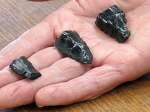 Evidence of 2nd founding culture in U.S.The new research, based on the recent discovery of the artifacts and more refined radiocarbon dating tests, established that the cave dwellers who made the Western Stemmed points overlapped or possibly preceded the Clovis artisans elsewhere, the scientists reported in a paper published online Thursday by the journal Science.
via Sfgate
 Rising Sea Levels Threaten Toxic SitesRising Sea Levels Threaten Toxic Sites Contaminated areas along the San Francisco Bay could be inundated As water levels rise, old landfills, shipyards and industrial sites that line the San Francisco Bay are at risk of being submerged, exposed to higher storm surges and inundated by groundwater.
via Kqed
 UCLA study of Japan's bullet train raises questions about California projectA new UCLA economic analysis of Japan's Shinkansen bullet train and its impact on the growth of cities along its route calls into question claims by state officials that California's high-speed rail project will create up to 400,000 permanent jobs.
via Latimes
 Branson Company to Enter Satellite-Launching BusinessFARNBOROUGH, England - Virgin Galactic, the space venture founded by Richard Branson, the British billionaire, said Wednesday that it planned to develop a rocket that would carry small satellites into orbit at a fraction of the current cost.
via Nytimes
 At Lake Tahoe, Commercial Fishing Is Approved"Hard right - back up," said his nephew, Justin Pulliam, standing on the edge of the boat and peering at a shadow at the bottom of the lake. "You got it?" Mr. Jackson asked. Soon his nephew was pulling up a trap containing a couple of dozen crayfish, the day's first harvest.
via Nytimes
 Growers Fret Over a New Apple That Won't Turn BrownThe company, Okanagan Specialty Fruits, says the nonbrowning apple will prove popular with consumers and food service companies and help increase sales of apples, in part by making sliced apples more attractive to serve or sell.
via Nytimes
 The Humble Banana Gets Its Genome DecodedBananas are a staple food around the world. But the humble yellow fruit faces pests and diseases that threaten to wipe it out across the globe, from convenience stores in Iowa to rural markets in Uganda.
via Livescience
 New Evidence of Flame Retardant's Role In Autism. | Politics and Breaking News | Oakland, Berkeley, Bay Area & California | 92510For the first time, scientists have reported that the environment and genetics can work together to create autism-like symptoms in mice exposed in the womb to a flame retardant.
via Eastbayexpress
 Army Funds New Bay Area Institute to Research PTSD Treatment | KQEDJoshua Johnson: Veterans returning from the wars in Iraq and Afghanistan often suffer from post- traumatic stress disorder, sometimes turning to drugs and alcohol to try and deal with stress. Researchers at University of California, San Francisco are working on ways to treat substance abuse in vets with PTSD.
via Kqed