window.__IS_SSR__=true
window.__INITIAL_STATE__={
"attachmentsReducer": {
"audio_0": {
"type": "attachments",
"id": "audio_0",
"imgSizes": {
"kqedFullSize": {
"file": "https://ww2.kqed.org/news/wp-content/themes/KQED-unified/img/audio_bgs/background0.jpg"
}
}
},
"audio_1": {
"type": "attachments",
"id": "audio_1",
"imgSizes": {
"kqedFullSize": {
"file": "https://ww2.kqed.org/news/wp-content/themes/KQED-unified/img/audio_bgs/background1.jpg"
}
}
},
"audio_2": {
"type": "attachments",
"id": "audio_2",
"imgSizes": {
"kqedFullSize": {
"file": "https://ww2.kqed.org/news/wp-content/themes/KQED-unified/img/audio_bgs/background2.jpg"
}
}
},
"audio_3": {
"type": "attachments",
"id": "audio_3",
"imgSizes": {
"kqedFullSize": {
"file": "https://ww2.kqed.org/news/wp-content/themes/KQED-unified/img/audio_bgs/background3.jpg"
}
}
},
"audio_4": {
"type": "attachments",
"id": "audio_4",
"imgSizes": {
"kqedFullSize": {
"file": "https://ww2.kqed.org/news/wp-content/themes/KQED-unified/img/audio_bgs/background4.jpg"
}
}
},
"placeholder": {
"type": "attachments",
"id": "placeholder",
"imgSizes": {
"thumbnail": {
"file": "https://cdn.kqed.org/wp-content/uploads/2024/12/KQED-Default-Image-816638274-2000x1333-1-160x107.jpg",
"width": 160,
"height": 107,
"mimeType": "image/jpeg"
},
"medium": {
"file": "https://cdn.kqed.org/wp-content/uploads/2024/12/KQED-Default-Image-816638274-2000x1333-1-800x533.jpg",
"width": 800,
"height": 533,
"mimeType": "image/jpeg"
},
"medium_large": {
"file": "https://cdn.kqed.org/wp-content/uploads/2024/12/KQED-Default-Image-816638274-2000x1333-1-768x512.jpg",
"width": 768,
"height": 512,
"mimeType": "image/jpeg"
},
"large": {
"file": "https://cdn.kqed.org/wp-content/uploads/2024/12/KQED-Default-Image-816638274-2000x1333-1-1020x680.jpg",
"width": 1020,
"height": 680,
"mimeType": "image/jpeg"
},
"1536x1536": {
"file": "https://cdn.kqed.org/wp-content/uploads/2024/12/KQED-Default-Image-816638274-2000x1333-1-1536x1024.jpg",
"width": 1536,
"height": 1024,
"mimeType": "image/jpeg"
},
"fd-lrg": {
"file": "https://cdn.kqed.org/wp-content/uploads/2024/12/KQED-Default-Image-816638274-2000x1333-1-1536x1024.jpg",
"width": 1536,
"height": 1024,
"mimeType": "image/jpeg"
},
"fd-med": {
"file": "https://cdn.kqed.org/wp-content/uploads/2024/12/KQED-Default-Image-816638274-2000x1333-1-1020x680.jpg",
"width": 1020,
"height": 680,
"mimeType": "image/jpeg"
},
"fd-sm": {
"file": "https://cdn.kqed.org/wp-content/uploads/2024/12/KQED-Default-Image-816638274-2000x1333-1-800x533.jpg",
"width": 800,
"height": 533,
"mimeType": "image/jpeg"
},
"post-thumbnail": {
"file": "https://cdn.kqed.org/wp-content/uploads/2024/12/KQED-Default-Image-816638274-2000x1333-1-672x372.jpg",
"width": 672,
"height": 372,
"mimeType": "image/jpeg"
},
"twentyfourteen-full-width": {
"file": "https://cdn.kqed.org/wp-content/uploads/2024/12/KQED-Default-Image-816638274-2000x1333-1-1038x576.jpg",
"width": 1038,
"height": 576,
"mimeType": "image/jpeg"
},
"xxsmall": {
"file": "https://cdn.kqed.org/wp-content/uploads/2024/12/KQED-Default-Image-816638274-2000x1333-1-160x107.jpg",
"width": 160,
"height": 107,
"mimeType": "image/jpeg"
},
"xsmall": {
"file": "https://cdn.kqed.org/wp-content/uploads/2024/12/KQED-Default-Image-816638274-2000x1333-1-672x372.jpg",
"width": 672,
"height": 372,
"mimeType": "image/jpeg"
},
"small": {
"file": "https://cdn.kqed.org/wp-content/uploads/2024/12/KQED-Default-Image-816638274-2000x1333-1-672x372.jpg",
"width": 672,
"height": 372,
"mimeType": "image/jpeg"
},
"xlarge": {
"file": "https://cdn.kqed.org/wp-content/uploads/2024/12/KQED-Default-Image-816638274-2000x1333-1-1020x680.jpg",
"width": 1020,
"height": 680,
"mimeType": "image/jpeg"
},
"full-width": {
"file": "https://cdn.kqed.org/wp-content/uploads/2024/12/KQED-Default-Image-816638274-2000x1333-1-1920x1280.jpg",
"width": 1920,
"height": 1280,
"mimeType": "image/jpeg"
},
"guest-author-32": {
"file": "https://cdn.kqed.org/wp-content/uploads/2025/01/KQED-Default-Image-816638274-1333x1333-1-160x160.jpg",
"width": 32,
"height": 32,
"mimeType": "image/jpeg"
},
"guest-author-50": {
"file": "https://cdn.kqed.org/wp-content/uploads/2025/01/KQED-Default-Image-816638274-1333x1333-1-160x160.jpg",
"width": 50,
"height": 50,
"mimeType": "image/jpeg"
},
"guest-author-64": {
"file": "https://cdn.kqed.org/wp-content/uploads/2025/01/KQED-Default-Image-816638274-1333x1333-1-160x160.jpg",
"width": 64,
"height": 64,
"mimeType": "image/jpeg"
},
"guest-author-96": {
"file": "https://cdn.kqed.org/wp-content/uploads/2025/01/KQED-Default-Image-816638274-1333x1333-1-160x160.jpg",
"width": 96,
"height": 96,
"mimeType": "image/jpeg"
},
"guest-author-128": {
"file": "https://cdn.kqed.org/wp-content/uploads/2025/01/KQED-Default-Image-816638274-1333x1333-1-160x160.jpg",
"width": 128,
"height": 128,
"mimeType": "image/jpeg"
},
"detail": {
"file": "https://cdn.kqed.org/wp-content/uploads/2025/01/KQED-Default-Image-816638274-1333x1333-1-160x160.jpg",
"width": 160,
"height": 160,
"mimeType": "image/jpeg"
},
"kqedFullSize": {
"file": "https://cdn.kqed.org/wp-content/uploads/2024/12/KQED-Default-Image-816638274-2000x1333-1.jpg",
"width": 2000,
"height": 1333
}
}
},
"news_12083046": {
"type": "attachments",
"id": "news_12083046",
"meta": {
"index": "attachments_1716263798",
"site": "news",
"id": "12083046",
"found": true
},
"title": "260508-EXPANSIONCONSEQUENCE-TV-05194-KQED",
"publishDate": 1778333954,
"status": "inherit",
"parent": 12096390,
"modified": 1787354746,
"caption": "Heather Posner (center), executive director of Carquinez Garden School, does arts and crafts with children in the school yard of Carquinez Garden School in Crockett on May 8, 2026.",
"credit": "Tâm Vũ/KQED",
"altTag": null,
"description": null,
"imgSizes": {
"thumbnail": {
"file": "https://cdn.kqed.org/wp-content/uploads/sites/10/2026/05/260508-EXPANSIONCONSEQUENCE-TV-05194-KQED-160x107.jpg",
"width": 160,
"height": 107,
"mimeType": "image/jpeg"
},
"1536x1536": {
"file": "https://cdn.kqed.org/wp-content/uploads/sites/10/2026/05/260508-EXPANSIONCONSEQUENCE-TV-05194-KQED-1536x1024.jpg",
"width": 1536,
"height": 1024,
"mimeType": "image/jpeg"
},
"post-thumbnail": {
"file": "https://cdn.kqed.org/wp-content/uploads/sites/10/2026/05/260508-EXPANSIONCONSEQUENCE-TV-05194-KQED-672x372.jpg",
"width": 672,
"height": 372,
"mimeType": "image/jpeg"
},
"twentyfourteen-full-width": {
"file": "https://cdn.kqed.org/wp-content/uploads/sites/10/2026/05/260508-EXPANSIONCONSEQUENCE-TV-05194-KQED-1038x576.jpg",
"width": 1038,
"height": 576,
"mimeType": "image/jpeg"
},
"npr-cds-wide": {
"file": "https://cdn.kqed.org/wp-content/uploads/sites/10/2026/05/260508-EXPANSIONCONSEQUENCE-TV-05194-KQED-1200x675.jpg",
"width": 1200,
"height": 675,
"mimeType": "image/jpeg"
},
"npr-cds-square": {
"file": "https://cdn.kqed.org/wp-content/uploads/sites/10/2026/05/260508-EXPANSIONCONSEQUENCE-TV-05194-KQED-600x600.jpg",
"width": 600,
"height": 600,
"mimeType": "image/jpeg"
},
"kqedFullSize": {
"file": "https://cdn.kqed.org/wp-content/uploads/sites/10/2026/05/260508-EXPANSIONCONSEQUENCE-TV-05194-KQED.jpg",
"width": 2000,
"height": 1333
}
},
"isLoading": false,
"fetchFailed": false
},
"news_12083049": {
"type": "attachments",
"id": "news_12083049",
"meta": {
"index": "attachments_1716263798",
"site": "news",
"id": "12083049",
"found": true
},
"title": "260508-EXPANSIONCONSEQUENCE-TV-05214-KQED",
"publishDate": 1778333970,
"status": "inherit",
"parent": 0,
"modified": 1778334035,
"caption": "Children’s toys scatter across the school yard of Carquinez Garden School in Crockett on May 8, 2026.",
"credit": "Tâm Vũ/KQED",
"altTag": null,
"description": null,
"imgSizes": {
"thumbnail": {
"file": "https://cdn.kqed.org/wp-content/uploads/sites/10/2026/05/260508-EXPANSIONCONSEQUENCE-TV-05214-KQED-160x107.jpg",
"width": 160,
"height": 107,
"mimeType": "image/jpeg"
},
"1536x1536": {
"file": "https://cdn.kqed.org/wp-content/uploads/sites/10/2026/05/260508-EXPANSIONCONSEQUENCE-TV-05214-KQED-1536x1024.jpg",
"width": 1536,
"height": 1024,
"mimeType": "image/jpeg"
},
"post-thumbnail": {
"file": "https://cdn.kqed.org/wp-content/uploads/sites/10/2026/05/260508-EXPANSIONCONSEQUENCE-TV-05214-KQED-672x372.jpg",
"width": 672,
"height": 372,
"mimeType": "image/jpeg"
},
"twentyfourteen-full-width": {
"file": "https://cdn.kqed.org/wp-content/uploads/sites/10/2026/05/260508-EXPANSIONCONSEQUENCE-TV-05214-KQED-1038x576.jpg",
"width": 1038,
"height": 576,
"mimeType": "image/jpeg"
},
"npr-cds-wide": {
"file": "https://cdn.kqed.org/wp-content/uploads/sites/10/2026/05/260508-EXPANSIONCONSEQUENCE-TV-05214-KQED-1200x675.jpg",
"width": 1200,
"height": 675,
"mimeType": "image/jpeg"
},
"npr-cds-square": {
"file": "https://cdn.kqed.org/wp-content/uploads/sites/10/2026/05/260508-EXPANSIONCONSEQUENCE-TV-05214-KQED-600x600.jpg",
"width": 600,
"height": 600,
"mimeType": "image/jpeg"
},
"kqedFullSize": {
"file": "https://cdn.kqed.org/wp-content/uploads/sites/10/2026/05/260508-EXPANSIONCONSEQUENCE-TV-05214-KQED.jpg",
"width": 2000,
"height": 1333
}
},
"isLoading": false,
"fetchFailed": false
},
"news_12083052": {
"type": "attachments",
"id": "news_12083052",
"meta": {
"index": "attachments_1716263798",
"site": "news",
"id": "12083052",
"found": true
},
"title": "260508-EXPANSIONCONSEQUENCE-TV-05235-KQED",
"publishDate": 1778333981,
"status": "inherit",
"parent": 12089316,
"modified": 1782932769,
"caption": "The interior of a classroom at Carquinez Garden School in Crockett on May 8, 2026.",
"credit": "Tâm Vũ/KQED",
"altTag": null,
"description": null,
"imgSizes": {
"thumbnail": {
"file": "https://cdn.kqed.org/wp-content/uploads/sites/10/2026/05/260508-EXPANSIONCONSEQUENCE-TV-05235-KQED-160x107.jpg",
"width": 160,
"height": 107,
"mimeType": "image/jpeg"
},
"1536x1536": {
"file": "https://cdn.kqed.org/wp-content/uploads/sites/10/2026/05/260508-EXPANSIONCONSEQUENCE-TV-05235-KQED-1536x1024.jpg",
"width": 1536,
"height": 1024,
"mimeType": "image/jpeg"
},
"post-thumbnail": {
"file": "https://cdn.kqed.org/wp-content/uploads/sites/10/2026/05/260508-EXPANSIONCONSEQUENCE-TV-05235-KQED-672x372.jpg",
"width": 672,
"height": 372,
"mimeType": "image/jpeg"
},
"twentyfourteen-full-width": {
"file": "https://cdn.kqed.org/wp-content/uploads/sites/10/2026/05/260508-EXPANSIONCONSEQUENCE-TV-05235-KQED-1038x576.jpg",
"width": 1038,
"height": 576,
"mimeType": "image/jpeg"
},
"npr-cds-wide": {
"file": "https://cdn.kqed.org/wp-content/uploads/sites/10/2026/05/260508-EXPANSIONCONSEQUENCE-TV-05235-KQED-1200x675.jpg",
"width": 1200,
"height": 675,
"mimeType": "image/jpeg"
},
"npr-cds-square": {
"file": "https://cdn.kqed.org/wp-content/uploads/sites/10/2026/05/260508-EXPANSIONCONSEQUENCE-TV-05235-KQED-600x600.jpg",
"width": 600,
"height": 600,
"mimeType": "image/jpeg"
},
"kqedFullSize": {
"file": "https://cdn.kqed.org/wp-content/uploads/sites/10/2026/05/260508-EXPANSIONCONSEQUENCE-TV-05235-KQED.jpg",
"width": 2000,
"height": 1333
}
},
"isLoading": false,
"fetchFailed": false
},
"news_11999284": {
"type": "attachments",
"id": "news_11999284",
"meta": {
"index": "attachments_1716263798",
"site": "news",
"id": "11999284",
"found": true
},
"title": "Immigrant Laborers Harvest California's Produce",
"publishDate": 1723066592,
"status": "inherit",
"parent": 11999237,
"modified": 1723067098,
"caption": "Farmworkers harvest strawberries at a farm in Carlsbad, California, on April 28, 2006.",
"credit": "Sandy Huffaker/Getty Images",
"altTag": null,
"description": null,
"imgSizes": {
"medium": {
"file": "https://cdn.kqed.org/wp-content/uploads/sites/10/2024/08/farmlabor20120427_qed-800x438.jpg",
"width": 800,
"height": 438,
"mimeType": "image/jpeg"
},
"large": {
"file": "https://cdn.kqed.org/wp-content/uploads/sites/10/2024/08/farmlabor20120427_qed-1020x558.jpg",
"width": 1020,
"height": 558,
"mimeType": "image/jpeg"
},
"thumbnail": {
"file": "https://cdn.kqed.org/wp-content/uploads/sites/10/2024/08/farmlabor20120427_qed-160x88.jpg",
"width": 160,
"height": 88,
"mimeType": "image/jpeg"
},
"1536x1536": {
"file": "https://cdn.kqed.org/wp-content/uploads/sites/10/2024/08/farmlabor20120427_qed-1536x840.jpg",
"width": 1536,
"height": 840,
"mimeType": "image/jpeg"
},
"post-thumbnail": {
"file": "https://cdn.kqed.org/wp-content/uploads/sites/10/2024/08/farmlabor20120427_qed-672x372.jpg",
"width": 672,
"height": 372,
"mimeType": "image/jpeg"
},
"twentyfourteen-full-width": {
"file": "https://cdn.kqed.org/wp-content/uploads/sites/10/2024/08/farmlabor20120427_qed-1038x576.jpg",
"width": 1038,
"height": 576,
"mimeType": "image/jpeg"
},
"full-width": {
"file": "https://cdn.kqed.org/wp-content/uploads/sites/10/2024/08/farmlabor20120427_qed-1920x1050.jpg",
"width": 1920,
"height": 1050,
"mimeType": "image/jpeg"
},
"kqedFullSize": {
"file": "https://cdn.kqed.org/wp-content/uploads/sites/10/2024/08/farmlabor20120427_qed.jpg",
"width": 2000,
"height": 1094
}
},
"isLoading": false,
"fetchFailed": false
},
"news_12076151": {
"type": "attachments",
"id": "news_12076151",
"meta": {
"index": "attachments_1716263798",
"site": "news",
"id": "12076151",
"found": true
},
"title": "260106-PREVENTINGPRESCHOOLFADEOUT-10-BL-KQED",
"publishDate": 1773264544,
"status": "inherit",
"parent": 12076468,
"modified": 1773440059,
"caption": "Principal Dana Milani speaks with second-grade students about a math question in their class at Yokayo Elementary School in Ukiah on Jan. 6, 2026.",
"credit": "Beth LaBerge/KQED",
"altTag": null,
"description": null,
"imgSizes": {
"thumbnail": {
"file": "https://cdn.kqed.org/wp-content/uploads/sites/10/2026/03/260106-PREVENTINGPRESCHOOLFADEOUT-10-BL-KQED-160x107.jpg",
"width": 160,
"height": 107,
"mimeType": "image/jpeg"
},
"1536x1536": {
"file": "https://cdn.kqed.org/wp-content/uploads/sites/10/2026/03/260106-PREVENTINGPRESCHOOLFADEOUT-10-BL-KQED-1536x1024.jpg",
"width": 1536,
"height": 1024,
"mimeType": "image/jpeg"
},
"post-thumbnail": {
"file": "https://cdn.kqed.org/wp-content/uploads/sites/10/2026/03/260106-PREVENTINGPRESCHOOLFADEOUT-10-BL-KQED-672x372.jpg",
"width": 672,
"height": 372,
"mimeType": "image/jpeg"
},
"twentyfourteen-full-width": {
"file": "https://cdn.kqed.org/wp-content/uploads/sites/10/2026/03/260106-PREVENTINGPRESCHOOLFADEOUT-10-BL-KQED-1038x576.jpg",
"width": 1038,
"height": 576,
"mimeType": "image/jpeg"
},
"npr-cds-wide": {
"file": "https://cdn.kqed.org/wp-content/uploads/sites/10/2026/03/260106-PREVENTINGPRESCHOOLFADEOUT-10-BL-KQED-1200x675.jpg",
"width": 1200,
"height": 675,
"mimeType": "image/jpeg"
},
"kqedFullSize": {
"file": "https://cdn.kqed.org/wp-content/uploads/sites/10/2026/03/260106-PREVENTINGPRESCHOOLFADEOUT-10-BL-KQED.jpg",
"width": 2000,
"height": 1333
}
},
"isLoading": false,
"fetchFailed": false
},
"news_12076153": {
"type": "attachments",
"id": "news_12076153",
"meta": {
"index": "attachments_1716263798",
"site": "news",
"id": "12076153",
"found": true
},
"title": "260106-PREVENTINGPRESCHOOLFADEOUT-14-BL-KQED",
"publishDate": 1773264551,
"status": "inherit",
"parent": 0,
"modified": 1773264564,
"caption": "Transitional kindergarten teacher Kristi Fowler teaches class at Yokayo Elementary School in Ukiah on Jan. 6, 2026.",
"credit": "Beth LaBerge/KQED",
"altTag": null,
"description": null,
"imgSizes": {
"thumbnail": {
"file": "https://cdn.kqed.org/wp-content/uploads/sites/10/2026/03/260106-PREVENTINGPRESCHOOLFADEOUT-14-BL-KQED-160x107.jpg",
"width": 160,
"height": 107,
"mimeType": "image/jpeg"
},
"1536x1536": {
"file": "https://cdn.kqed.org/wp-content/uploads/sites/10/2026/03/260106-PREVENTINGPRESCHOOLFADEOUT-14-BL-KQED-1536x1024.jpg",
"width": 1536,
"height": 1024,
"mimeType": "image/jpeg"
},
"post-thumbnail": {
"file": "https://cdn.kqed.org/wp-content/uploads/sites/10/2026/03/260106-PREVENTINGPRESCHOOLFADEOUT-14-BL-KQED-672x372.jpg",
"width": 672,
"height": 372,
"mimeType": "image/jpeg"
},
"twentyfourteen-full-width": {
"file": "https://cdn.kqed.org/wp-content/uploads/sites/10/2026/03/260106-PREVENTINGPRESCHOOLFADEOUT-14-BL-KQED-1038x576.jpg",
"width": 1038,
"height": 576,
"mimeType": "image/jpeg"
},
"npr-cds-wide": {
"file": "https://cdn.kqed.org/wp-content/uploads/sites/10/2026/03/260106-PREVENTINGPRESCHOOLFADEOUT-14-BL-KQED-1200x675.jpg",
"width": 1200,
"height": 675,
"mimeType": "image/jpeg"
},
"kqedFullSize": {
"file": "https://cdn.kqed.org/wp-content/uploads/sites/10/2026/03/260106-PREVENTINGPRESCHOOLFADEOUT-14-BL-KQED.jpg",
"width": 2000,
"height": 1333
}
},
"isLoading": false,
"fetchFailed": false
},
"news_11980571": {
"type": "attachments",
"id": "news_11980571",
"meta": {
"index": "attachments_1716263798",
"site": "news",
"id": "11980571",
"found": true
},
"title": "US-ECONOMY-HOUSING-RENT",
"publishDate": 1711152822,
"status": "inherit",
"parent": 11980565,
"modified": 1754519584,
"caption": "An apartment for rent sign is posted in South Pasadena, California. Giving cash directly to renters is one policy tool that takes out the bureaucracy of renters needing to apply for federal vouchers and then find a landlord who will accept the voucher.",
"credit": "Frederic J. Brown/AFP via Getty Images",
"altTag": "A man walks by a 'for rent' sign.",
"description": null,
"imgSizes": {
"medium": {
"file": "https://cdn.kqed.org/wp-content/uploads/sites/10/2024/03/GettyImages-1244095544-800x485.jpg",
"width": 800,
"height": 485,
"mimeType": "image/jpeg"
},
"large": {
"file": "https://cdn.kqed.org/wp-content/uploads/sites/10/2024/03/GettyImages-1244095544-1020x619.jpg",
"width": 1020,
"height": 619,
"mimeType": "image/jpeg"
},
"thumbnail": {
"file": "https://cdn.kqed.org/wp-content/uploads/sites/10/2024/03/GettyImages-1244095544-160x97.jpg",
"width": 160,
"height": 97,
"mimeType": "image/jpeg"
},
"1536x1536": {
"file": "https://cdn.kqed.org/wp-content/uploads/sites/10/2024/03/GettyImages-1244095544-1536x932.jpg",
"width": 1536,
"height": 932,
"mimeType": "image/jpeg"
},
"2048x2048": {
"file": "https://cdn.kqed.org/wp-content/uploads/sites/10/2024/03/GettyImages-1244095544-2048x1242.jpg",
"width": 2048,
"height": 1242,
"mimeType": "image/jpeg"
},
"post-thumbnail": {
"file": "https://cdn.kqed.org/wp-content/uploads/sites/10/2024/03/GettyImages-1244095544-672x372.jpg",
"width": 672,
"height": 372,
"mimeType": "image/jpeg"
},
"twentyfourteen-full-width": {
"file": "https://cdn.kqed.org/wp-content/uploads/sites/10/2024/03/GettyImages-1244095544-1038x576.jpg",
"width": 1038,
"height": 576,
"mimeType": "image/jpeg"
},
"full-width": {
"file": "https://cdn.kqed.org/wp-content/uploads/sites/10/2024/03/GettyImages-1244095544-1920x1164.jpg",
"width": 1920,
"height": 1164,
"mimeType": "image/jpeg"
},
"kqedFullSize": {
"file": "https://cdn.kqed.org/wp-content/uploads/sites/10/2024/03/GettyImages-1244095544-scaled.jpg",
"width": 2560,
"height": 1553
}
},
"isLoading": false,
"fetchFailed": false
},
"news_12068501": {
"type": "attachments",
"id": "news_12068501",
"meta": {
"index": "attachments_1716263798",
"site": "news",
"id": "12068501",
"found": true
},
"title": "tk-teachers-6954429abe464",
"publishDate": 1767129853,
"status": "inherit",
"parent": 12068500,
"modified": 1767129881,
"caption": "Susana Alvarez, left, leads the class in singing happy birthday and feliz cumpleaños to TK student Melrose at Lucille J. Smith Elementary in Lawndale.",
"credit": "Mariana Dale/LAist",
"altTag": null,
"description": null,
"imgSizes": {
"thumbnail": {
"file": "https://cdn.kqed.org/wp-content/uploads/sites/10/2025/12/tk-teachers-6954429abe464-160x107.jpg",
"width": 160,
"height": 107,
"mimeType": "image/jpeg"
},
"1536x1536": {
"file": "https://cdn.kqed.org/wp-content/uploads/sites/10/2025/12/tk-teachers-6954429abe464-1536x1025.jpg",
"width": 1536,
"height": 1025,
"mimeType": "image/jpeg"
},
"post-thumbnail": {
"file": "https://cdn.kqed.org/wp-content/uploads/sites/10/2025/12/tk-teachers-6954429abe464-672x372.jpg",
"width": 672,
"height": 372,
"mimeType": "image/jpeg"
},
"twentyfourteen-full-width": {
"file": "https://cdn.kqed.org/wp-content/uploads/sites/10/2025/12/tk-teachers-6954429abe464-1038x576.jpg",
"width": 1038,
"height": 576,
"mimeType": "image/jpeg"
},
"npr-cds-wide": {
"file": "https://cdn.kqed.org/wp-content/uploads/sites/10/2025/12/tk-teachers-6954429abe464-1200x675.jpg",
"width": 1200,
"height": 675,
"mimeType": "image/jpeg"
},
"kqedFullSize": {
"file": "https://cdn.kqed.org/wp-content/uploads/sites/10/2025/12/tk-teachers-6954429abe464.jpg",
"width": 1760,
"height": 1174
}
},
"isLoading": false,
"fetchFailed": false
},
"news_12052582": {
"type": "attachments",
"id": "news_12052582",
"meta": {
"index": "attachments_1716263798",
"site": "news",
"id": "12052582",
"found": true
},
"title": "teacher with a little girl with glasses",
"publishDate": 1755470966,
"status": "inherit",
"parent": 12052579,
"modified": 1755470987,
"caption": "Gina Viggiano imparte una clase de transición al kínder en la Holbrook Language Academy de\nConcord el 20 de mayo de 2024.",
"credit": "Beth LaBerge/KQED",
"altTag": null,
"description": null,
"imgSizes": {
"thumbnail": {
"file": "https://cdn.kqed.org/wp-content/uploads/sites/10/2025/08/teacher-with-a-little-girl-with-glasses-160x107.jpg",
"width": 160,
"height": 107,
"mimeType": "image/jpeg"
},
"1536x1536": {
"file": "https://cdn.kqed.org/wp-content/uploads/sites/10/2025/08/teacher-with-a-little-girl-with-glasses-1536x1024.jpg",
"width": 1536,
"height": 1024,
"mimeType": "image/jpeg"
},
"post-thumbnail": {
"file": "https://cdn.kqed.org/wp-content/uploads/sites/10/2025/08/teacher-with-a-little-girl-with-glasses-672x372.jpg",
"width": 672,
"height": 372,
"mimeType": "image/jpeg"
},
"twentyfourteen-full-width": {
"file": "https://cdn.kqed.org/wp-content/uploads/sites/10/2025/08/teacher-with-a-little-girl-with-glasses-1038x576.jpg",
"width": 1038,
"height": 576,
"mimeType": "image/jpeg"
},
"kqedFullSize": {
"file": "https://cdn.kqed.org/wp-content/uploads/sites/10/2025/08/teacher-with-a-little-girl-with-glasses.jpg",
"width": 2000,
"height": 1333
}
},
"isLoading": false,
"fetchFailed": false
},
"news_12052484": {
"type": "attachments",
"id": "news_12052484",
"meta": {
"index": "attachments_1716263798",
"site": "news",
"id": "12052484",
"found": true
},
"title": "240520-TKParentsDilemma-32-BL_qed",
"publishDate": 1755299415,
"status": "inherit",
"parent": 0,
"modified": 1755299436,
"caption": "Galilea (right), 5, reads alongside classmates in a transitional kindergarten class at Holbrook Language Academy in Concord on May 20, 2024.",
"credit": "Beth LaBerge/KQED",
"altTag": null,
"description": null,
"imgSizes": {
"thumbnail": {
"file": "https://cdn.kqed.org/wp-content/uploads/sites/10/2025/08/240520-TKParentsDilemma-32-BL_qed-160x107.jpg",
"width": 160,
"height": 107,
"mimeType": "image/jpeg"
},
"1536x1536": {
"file": "https://cdn.kqed.org/wp-content/uploads/sites/10/2025/08/240520-TKParentsDilemma-32-BL_qed-1536x1024.jpg",
"width": 1536,
"height": 1024,
"mimeType": "image/jpeg"
},
"post-thumbnail": {
"file": "https://cdn.kqed.org/wp-content/uploads/sites/10/2025/08/240520-TKParentsDilemma-32-BL_qed-672x372.jpg",
"width": 672,
"height": 372,
"mimeType": "image/jpeg"
},
"twentyfourteen-full-width": {
"file": "https://cdn.kqed.org/wp-content/uploads/sites/10/2025/08/240520-TKParentsDilemma-32-BL_qed-1038x576.jpg",
"width": 1038,
"height": 576,
"mimeType": "image/jpeg"
},
"kqedFullSize": {
"file": "https://cdn.kqed.org/wp-content/uploads/sites/10/2025/08/240520-TKParentsDilemma-32-BL_qed.jpg",
"width": 2000,
"height": 1333
}
},
"isLoading": false,
"fetchFailed": false
},
"news_11988704": {
"type": "attachments",
"id": "news_11988704",
"meta": {
"index": "attachments_1716263798",
"site": "news",
"id": "11988704",
"found": true
},
"title": "240520-TKPARENTSDILEMMA-07-BL-KQED",
"publishDate": 1717439637,
"status": "inherit",
"parent": 11989789,
"modified": 1718138364,
"caption": "Students listen to teacher Gina Viggiano in a transitional kindergarten class at Holbrook Language Academy in Concord on May 20, 2024.",
"credit": "Beth LaBerge/KQED",
"altTag": null,
"description": null,
"imgSizes": {
"medium": {
"file": "https://cdn.kqed.org/wp-content/uploads/sites/10/2024/06/240520-TKPARENTSDILEMMA-07-BL-KQED-800x533.jpg",
"width": 800,
"height": 533,
"mimeType": "image/jpeg"
},
"large": {
"file": "https://cdn.kqed.org/wp-content/uploads/sites/10/2024/06/240520-TKPARENTSDILEMMA-07-BL-KQED-1020x680.jpg",
"width": 1020,
"height": 680,
"mimeType": "image/jpeg"
},
"thumbnail": {
"file": "https://cdn.kqed.org/wp-content/uploads/sites/10/2024/06/240520-TKPARENTSDILEMMA-07-BL-KQED-160x107.jpg",
"width": 160,
"height": 107,
"mimeType": "image/jpeg"
},
"1536x1536": {
"file": "https://cdn.kqed.org/wp-content/uploads/sites/10/2024/06/240520-TKPARENTSDILEMMA-07-BL-KQED-1536x1024.jpg",
"width": 1536,
"height": 1024,
"mimeType": "image/jpeg"
},
"post-thumbnail": {
"file": "https://cdn.kqed.org/wp-content/uploads/sites/10/2024/06/240520-TKPARENTSDILEMMA-07-BL-KQED-672x372.jpg",
"width": 672,
"height": 372,
"mimeType": "image/jpeg"
},
"twentyfourteen-full-width": {
"file": "https://cdn.kqed.org/wp-content/uploads/sites/10/2024/06/240520-TKPARENTSDILEMMA-07-BL-KQED-1038x576.jpg",
"width": 1038,
"height": 576,
"mimeType": "image/jpeg"
},
"full-width": {
"file": "https://cdn.kqed.org/wp-content/uploads/sites/10/2024/06/240520-TKPARENTSDILEMMA-07-BL-KQED-1920x1280.jpg",
"width": 1920,
"height": 1280,
"mimeType": "image/jpeg"
},
"kqedFullSize": {
"file": "https://cdn.kqed.org/wp-content/uploads/sites/10/2024/06/240520-TKPARENTSDILEMMA-07-BL-KQED.jpg",
"width": 2000,
"height": 1333
}
},
"isLoading": false,
"fetchFailed": false
},
"news_12033001": {
"type": "attachments",
"id": "news_12033001",
"meta": {
"index": "attachments_1716263798",
"site": "news",
"id": "12033001",
"found": true
},
"title": "20250325_TEACHERS-FOR-TK_DMB_00048-KQED",
"publishDate": 1742939381,
"status": "inherit",
"parent": 0,
"modified": 1744242147,
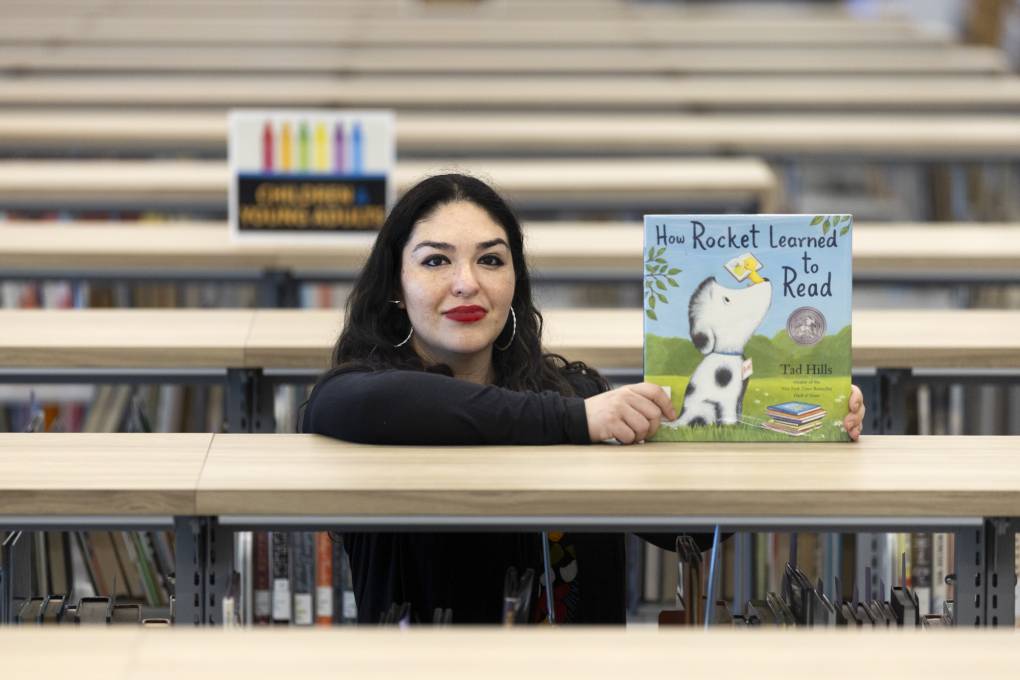
"caption": "Angelica Cardenas, of Hayward, poses for a portrait with one of her favorite children's books in the library on the Cal State University East Bay campus in Hayward on March 25, 2025. Cardenas received her Master's degree in Early Childhood Education from Cal State East Bay.",
"credit": "David M. Barreda/KQED",
"altTag": null,
"description": null,
"imgSizes": {
"medium": {
"file": "https://cdn.kqed.org/wp-content/uploads/sites/10/2025/03/20250325_TEACHERS-FOR-TK_DMB_00048-KQED-800x533.jpg",
"width": 800,
"height": 533,
"mimeType": "image/jpeg"
},
"large": {
"file": "https://cdn.kqed.org/wp-content/uploads/sites/10/2025/03/20250325_TEACHERS-FOR-TK_DMB_00048-KQED-1020x680.jpg",
"width": 1020,
"height": 680,
"mimeType": "image/jpeg"
},
"thumbnail": {
"file": "https://cdn.kqed.org/wp-content/uploads/sites/10/2025/03/20250325_TEACHERS-FOR-TK_DMB_00048-KQED-160x107.jpg",
"width": 160,
"height": 107,
"mimeType": "image/jpeg"
},
"1536x1536": {
"file": "https://cdn.kqed.org/wp-content/uploads/sites/10/2025/03/20250325_TEACHERS-FOR-TK_DMB_00048-KQED-1536x1024.jpg",
"width": 1536,
"height": 1024,
"mimeType": "image/jpeg"
},
"post-thumbnail": {
"file": "https://cdn.kqed.org/wp-content/uploads/sites/10/2025/03/20250325_TEACHERS-FOR-TK_DMB_00048-KQED-672x372.jpg",
"width": 672,
"height": 372,
"mimeType": "image/jpeg"
},
"twentyfourteen-full-width": {
"file": "https://cdn.kqed.org/wp-content/uploads/sites/10/2025/03/20250325_TEACHERS-FOR-TK_DMB_00048-KQED-1038x576.jpg",
"width": 1038,
"height": 576,
"mimeType": "image/jpeg"
},
"full-width": {
"file": "https://cdn.kqed.org/wp-content/uploads/sites/10/2025/03/20250325_TEACHERS-FOR-TK_DMB_00048-KQED-1920x1280.jpg",
"width": 1920,
"height": 1280,
"mimeType": "image/jpeg"
},
"kqedFullSize": {
"file": "https://cdn.kqed.org/wp-content/uploads/sites/10/2025/03/20250325_TEACHERS-FOR-TK_DMB_00048-KQED.jpg",
"width": 2000,
"height": 1333
}
},
"isLoading": false,
"fetchFailed": false
}
},
"audioPlayerReducer": {
"postId": "stream_live",
"isPaused": true,
"isPlaying": false,
"pfsActive": false,
"pledgeModalIsOpen": true,
"playerDrawerIsOpen": false,
"liveAudioPlayStartedAt": 0,
"liveAudioPlayContext": ""
},
"authorsReducer": {
"byline_news_11989955": {
"type": "authors",
"id": "byline_news_11989955",
"meta": {
"override": true
},
"slug": "byline_news_11989955",
"name": "Daisy Nguyen, Blanca Torres and Elly Yu",
"isLoading": false
},
"byline_news_12033209": {
"type": "authors",
"id": "byline_news_12033209",
"meta": {
"override": true
},
"slug": "byline_news_12033209",
"name": "\u003ca href=\"https://www.kqed.org/author/daisynguyen\" target=\"_blank\" rel=\"noopener noreferrer\">Daisy Nguyen\u003c/a> and \u003ca href=\"https://www.kqed.org/author/ellyyu\" target=\"_blank\" rel=\"noopener noreferrer\">Elly Yu\u003c/a>",
"isLoading": false
},
"kqed": {
"type": "authors",
"id": "236",
"meta": {
"index": "authors_1716337520",
"id": "236",
"found": true
},
"name": "KQED News Staff",
"firstName": "KQED News Staff",
"lastName": null,
"slug": "kqed",
"email": "faq@kqed.org",
"display_author_email": false,
"staff_mastheads": [],
"title": null,
"bio": null,
"avatar": "https://secure.gravatar.com/avatar/ef0e801a68c4c54afa9180db14084167?s=600&d=blank&r=g",
"twitter": null,
"facebook": null,
"instagram": null,
"linkedin": null,
"sites": [
{
"site": "arts",
"roles": [
"contributor"
]
},
{
"site": "news",
"roles": [
"editor"
]
},
{
"site": "futureofyou",
"roles": [
"author"
]
}
],
"headData": {
"title": "KQED News Staff | KQED",
"description": null,
"ogImgSrc": "https://secure.gravatar.com/avatar/ef0e801a68c4c54afa9180db14084167?s=600&d=blank&r=g",
"twImgSrc": "https://secure.gravatar.com/avatar/ef0e801a68c4c54afa9180db14084167?s=600&d=blank&r=g"
},
"isLoading": false,
"link": "/author/kqed"
},
"ecruzguevarra": {
"type": "authors",
"id": "8654",
"meta": {
"index": "authors_1716337520",
"id": "8654",
"found": true
},
"name": "Ericka Cruz Guevarra",
"firstName": "Ericka",
"lastName": "Cruz Guevarra",
"slug": "ecruzguevarra",
"email": "ecruzguevarra@kqed.org",
"display_author_email": true,
"staff_mastheads": [
"news"
],
"title": "Producer, The Bay Podcast",
"bio": "Ericka Cruz Guevarra is host of \u003ca href=\"https://www.kqed.org/podcasts/thebay\">\u003cem>The Bay\u003c/em>\u003c/a> podcast at KQED. Before host, she was the show’s producer. Her work in that capacity includes a three-part reported series on policing in Vallejo, which won a 2020 excellence in journalism award from the Society of Professional Journalists. Ericka has worked as a breaking news reporter at Oregon Public Broadcasting, helped produce the Code Switch podcast, and was KQED’s inaugural Raul Ramirez Diversity Fund intern. She’s also an alumna of NPR’s Next Generation Radio program. Send her an email if you have strong feelings about whether Fairfield and Suisun City are the Bay. Ericka is represented by SAG-AFTRA.",
"avatar": "https://secure.gravatar.com/avatar/accefc1de4bafc7e234b69bcb9b6f6536c130fd84709bc3069ef11a78787e1bb?s=600&d=blank&r=g",
"twitter": "NotoriousECG",
"bluesky": null,
"facebook": null,
"instagram": null,
"linkedin": null,
"sites": [
{
"site": "arts",
"roles": [
"subscriber"
]
},
{
"site": "news",
"roles": [
"editor",
"manage_categories"
]
},
{
"site": "futureofyou",
"roles": [
"subscriber"
]
},
{
"site": "stateofhealth",
"roles": [
"subscriber"
]
},
{
"site": "science",
"roles": [
"editor"
]
},
{
"site": "forum",
"roles": [
"subscriber"
]
}
],
"headData": {
"title": "Ericka Cruz Guevarra | KQED",
"description": "Producer, The Bay Podcast",
"ogImgSrc": "https://secure.gravatar.com/avatar/accefc1de4bafc7e234b69bcb9b6f6536c130fd84709bc3069ef11a78787e1bb?s=600&d=blank&r=g",
"twImgSrc": "https://secure.gravatar.com/avatar/accefc1de4bafc7e234b69bcb9b6f6536c130fd84709bc3069ef11a78787e1bb?s=600&d=blank&r=g"
},
"isLoading": false,
"link": "/author/ecruzguevarra"
},
"btorres": {
"type": "authors",
"id": "11666",
"meta": {
"index": "authors_1716337520",
"id": "11666",
"found": true
},
"name": "Blanca Torres",
"firstName": "Blanca",
"lastName": "Torres",
"slug": "btorres",
"email": "btorres@kqed.org",
"display_author_email": true,
"staff_mastheads": [
"news"
],
"title": "Producer, Forum",
"bio": "Blanca Torres brings sharp news judgement and keen sense of lively conversation to her work as producer for Forum. She loves producing shows that leave listeners feeling like they heard distinctive voices, learned something new and gained a fresh perspective.\r\n\r\nShe joined KQED in January of 2020 after 16 years of working as a newspaper reporter most recently at the \u003cem>San Francisco Business Times,\u003c/em> where she wrote about real estate and economic development. Before that, she covered a variety of beats including crime, education, retail, workplace, the economy, consumer issues, and small business for the \u003cem>Contra Costa Times, Baltimore Sun\u003c/em> and\u003cem> The Seattle Times\u003c/em>. In addition to reporting, she worked as an editorial writer and columnist for the \u003cem>Seattle Times\u003c/em>. From 2017 to 2020, Blanca won a total of ten awards from the National Association of Real Estate Editors and won first place for land use reporting from the California News Publishers Association two years in a row. She is also a member and former board member for the National Association of Hispanic Journalists.\r\n\r\nA native of the Pacific Northwest, Blanca earned her bachelor's degree from Vanderbilt University in Nashville and a master's in fine arts in creative writing at Mills College. She lives in the East Bay with her family.",
"avatar": "https://secure.gravatar.com/avatar/50b49d19b14a1eed34f26ebf4681152cdd81574ed21851100871ccd29e578cdc?s=600&d=blank&r=g",
"twitter": "@blancawrites",
"bluesky": null,
"facebook": null,
"instagram": null,
"linkedin": null,
"sites": [
{
"site": "arts",
"roles": [
"editor"
]
},
{
"site": "news",
"roles": [
"editor"
]
},
{
"site": "forum",
"roles": [
"editor"
]
}
],
"headData": {
"title": "Blanca Torres | KQED",
"description": "Producer, Forum",
"ogImgSrc": "https://secure.gravatar.com/avatar/50b49d19b14a1eed34f26ebf4681152cdd81574ed21851100871ccd29e578cdc?s=600&d=blank&r=g",
"twImgSrc": "https://secure.gravatar.com/avatar/50b49d19b14a1eed34f26ebf4681152cdd81574ed21851100871ccd29e578cdc?s=600&d=blank&r=g"
},
"isLoading": false,
"link": "/author/btorres"
},
"kmizuguchi": {
"type": "authors",
"id": "11739",
"meta": {
"index": "authors_1716337520",
"id": "11739",
"found": true
},
"name": "Keith Mizuguchi",
"firstName": "Keith",
"lastName": "Mizuguchi",
"slug": "kmizuguchi",
"email": "kmizuguchi@kqed.org",
"display_author_email": false,
"staff_mastheads": [],
"title": "KQED Contributor",
"bio": null,
"avatar": "https://secure.gravatar.com/avatar/64d8a7de0723d4099b9fe4e915136103febcc20809abce228ee4415bcb237023?s=600&d=blank&r=g",
"twitter": null,
"bluesky": null,
"facebook": null,
"instagram": null,
"linkedin": null,
"sites": [
{
"site": "news",
"roles": [
"editor"
]
},
{
"site": "science",
"roles": [
"editor"
]
}
],
"headData": {
"title": "Keith Mizuguchi | KQED",
"description": "KQED Contributor",
"ogImgSrc": "https://secure.gravatar.com/avatar/64d8a7de0723d4099b9fe4e915136103febcc20809abce228ee4415bcb237023?s=600&d=blank&r=g",
"twImgSrc": "https://secure.gravatar.com/avatar/64d8a7de0723d4099b9fe4e915136103febcc20809abce228ee4415bcb237023?s=600&d=blank&r=g"
},
"isLoading": false,
"link": "/author/kmizuguchi"
},
"daisynguyen": {
"type": "authors",
"id": "11829",
"meta": {
"index": "authors_1716337520",
"id": "11829",
"found": true
},
"name": "Daisy Nguyen",
"firstName": "Daisy",
"lastName": "Nguyen",
"slug": "daisynguyen",
"email": "daisynguyen@kqed.org",
"display_author_email": true,
"staff_mastheads": [
"news"
],
"title": "KQED Contributor",
"bio": "I have covered early childhood education and child care for KQED since 2022. I focus on policies aimed at increasing access to early care and education and how they shape individual lives. I've been a journalist for more than two decades, with most of that time devoted to covering breaking news throughout California for The Associated Press. I grew up in San Francisco and studied at UC Davis and Columbia University's Graduate School of Journalism. I live in Oakland with my husband and two kids.",
"avatar": "https://secure.gravatar.com/avatar/2da2127c27f7143b53ebd419800fd55f?s=600&d=blank&r=g",
"twitter": null,
"facebook": null,
"instagram": null,
"linkedin": "https://www.linkedin.com/in/daisynguyen/",
"sites": [
{
"site": "news",
"roles": [
"author"
]
},
{
"site": "liveblog",
"roles": [
"author"
]
}
],
"headData": {
"title": "Daisy Nguyen | KQED",
"description": "KQED Contributor",
"ogImgSrc": "https://secure.gravatar.com/avatar/2da2127c27f7143b53ebd419800fd55f?s=600&d=blank&r=g",
"twImgSrc": "https://secure.gravatar.com/avatar/2da2127c27f7143b53ebd419800fd55f?s=600&d=blank&r=g"
},
"isLoading": false,
"link": "/author/daisynguyen"
},
"jessicakariisa": {
"type": "authors",
"id": "11831",
"meta": {
"index": "authors_1716337520",
"id": "11831",
"found": true
},
"name": "Jessica Kariisa",
"firstName": "Jessica",
"lastName": "Kariisa",
"slug": "jessicakariisa",
"email": "jkariisa@kqed.org",
"display_author_email": false,
"staff_mastheads": [],
"title": "Producer, The Bay",
"bio": "Jessica Kariisa is the producer of The Bay. She first joined KQED as an intern for The California Report Magazine, after which she became an on-call producer. She reported a Bay Curious episode on the use of rap lyrics in criminal trials which won a Society of Professional Journalists award in 2023 for Excellence in Features Journalism and the 2023 Signal Award for Best Conversation Starter. She’s worked on podcasts for Snap Judgment and American Public Media. Before embarking on her audio career, she was a music journalist.\r\n\r\nJessica Kariisa is represented by SAG-AFTRA.",
"avatar": "https://secure.gravatar.com/avatar/522e97b28ac0b3d411621c0fde8f3419c7b71ea2c5c262c57c4bb600963f328c?s=600&d=blank&r=g",
"twitter": null,
"bluesky": null,
"facebook": null,
"instagram": null,
"linkedin": null,
"sites": [
{
"site": "arts",
"roles": [
"author"
]
},
{
"site": "news",
"roles": [
"editor",
"manage_categories"
]
}
],
"headData": {
"title": "Jessica Kariisa | KQED",
"description": "Producer, The Bay",
"ogImgSrc": "https://secure.gravatar.com/avatar/522e97b28ac0b3d411621c0fde8f3419c7b71ea2c5c262c57c4bb600963f328c?s=600&d=blank&r=g",
"twImgSrc": "https://secure.gravatar.com/avatar/522e97b28ac0b3d411621c0fde8f3419c7b71ea2c5c262c57c4bb600963f328c?s=600&d=blank&r=g"
},
"isLoading": false,
"link": "/author/jessicakariisa"
},
"pbartolone": {
"type": "authors",
"id": "11879",
"meta": {
"index": "authors_1716337520",
"id": "11879",
"found": true
},
"name": "Pauline Bartolone",
"firstName": "Pauline",
"lastName": "Bartolone",
"slug": "pbartolone",
"email": "pbartolone@kqed.org",
"display_author_email": false,
"staff_mastheads": [],
"title": "KQED Contributor",
"bio": "Pauline Bartolone has been a journalist for two decades, specializing in longform audio storytelling. Before editing and producing for podcasts like Bay Curious, she was a health care journalist for public radio and print outlets such as CalMatters and Kaiser Health News. Her reporting has won several regional Edward R. Murrow awards, national recognition from the Society of Professional Journalists and a first-place prize from the Association of Health Care Journalists.\r\n\r\nPauline’s work has aired frequently on National Public Radio, and bylines have appeared in The Los Angeles Times, CNN.com, Washingtonpost.com, USA Today and Scientific American.\r\n\r\nPauline has lived in Northern California for 20 years. Her other passions are crafts (now done in collaboration with her daughter) and the Brazilian martial art of capoeira.",
"avatar": "https://secure.gravatar.com/avatar/95001c30374b0d3878007af9cf1e120a?s=600&d=blank&r=g",
"twitter": "pbartolone",
"facebook": null,
"instagram": null,
"linkedin": null,
"sites": [
{
"site": "news",
"roles": [
"editor"
]
},
{
"site": "podcasts",
"roles": [
"subscriber"
]
}
],
"headData": {
"title": "Pauline Bartolone | KQED",
"description": "KQED Contributor",
"ogImgSrc": "https://secure.gravatar.com/avatar/95001c30374b0d3878007af9cf1e120a?s=600&d=blank&r=g",
"twImgSrc": "https://secure.gravatar.com/avatar/95001c30374b0d3878007af9cf1e120a?s=600&d=blank&r=g"
},
"isLoading": false,
"link": "/author/pbartolone"
}
},
"pagesReducer": {
"news_tag_transitional-kindergarten": {
"type": "terms",
"id": "news_2252",
"meta": {
"index": "terms_1716263798",
"site": "news",
"id": "2252",
"score": 10.404828
},
"featImg": null,
"name": "transitional kindergarten",
"description": null,
"taxonomy": "tag",
"headData": {
"twImgId": null,
"twTitle": null,
"ogTitle": null,
"ogImgId": null,
"twDescription": null,
"description": null,
"title": "transitional kindergarten Archives | KQED News",
"ogDescription": null
},
"ttid": 2267,
"slug": "transitional-kindergarten",
"isLoading": false,
"title": "transitional kindergarten",
"pageMeta": {
"site": "news",
"WpPageTemplate": "page-topic-editorial",
"currentPage": 1
},
"blocks": [
{
"blockName": "kqed/post-list",
"attrs": {
"layout": "cardArticle2",
"query": "posts/news?tag=transitional-kindergarten",
"seeMore": false,
"paginated": true,
"page": 1
}
},
{
"blockName": "kqed/ad"
}
]
}
},
"pfsSessionReducer": {},
"postsReducer": {
"stream_live": {
"type": "live",
"id": "stream_live",
"audioUrl": "https://streams.kqed.org/kqedradio",
"title": "Live Stream",
"excerpt": "Live Stream information currently unavailable.",
"link": "/radio",
"featImg": "",
"label": {
"name": "KQED Live",
"link": "/"
}
},
"stream_kqedNewscast": {
"type": "posts",
"id": "stream_kqedNewscast",
"audioUrl": "https://www.kqed.org/.stream/anon/radio/RDnews/newscast.mp3?_=1",
"title": "KQED Newscast",
"featImg": "",
"label": {
"name": "88.5 FM",
"link": "/"
}
},
"news_12083754": {
"type": "posts",
"id": "news_12083754",
"meta": {
"index": "posts_1716263798",
"site": "news",
"id": "12083754",
"score": null,
"sort": [
1778839212000
]
},
"guestAuthors": [],
"slug": "community-childcare-centers-on-shaky-ground-after-transitional-kindergarten-expansion",
"title": "Community Child Care Centers on Shaky Ground After Transitional Kindergarten Expansion",
"publishDate": 1778839212,
"format": "audio",
"headTitle": "Community Child Care Centers on Shaky Ground After Transitional Kindergarten Expansion | KQED",
"labelTerm": {},
"content": "\u003cp>\u003cspan style=\"font-weight: 400\">Community-based preschools across the state have struggled to compete with California’s free, universal transitional-kindergarten program, where enrollment grew from nearly 117,000 students in the 2022-23 school year to 213,000 students this year. Now, hundreds of preschools have shuttered — worsening the shortage of licensed child care spaces for children younger than 4 years old. \u003c/span>\u003cspan style=\"font-weight: 400\"> \u003c/span>\u003c/p>\n\u003cp>\u003cstrong>Links:\u003c/strong>\u003c/p>\n\u003cul>\n\u003cli style=\"font-weight: 400\">\u003ca href=\"https://www.kqed.org/news/12082904/as-transitional-kindergarten-grows-hundreds-of-child-care-centers-close\">\u003cspan style=\"font-weight: 400\">As Transitional Kindergarten Grows, Hundreds of Child Care Centers Close\u003c/span>\u003c/a>\u003c/li>\n\u003c/ul>\n\u003cp>\u003ci>\u003cspan style=\"font-weight: 400\">Some members of the KQED podcast team are represented by The Screen Actors Guild, American Federation of Television and Radio Artists, San Francisco-Northern California Local.\u003c/span>\u003c/i>\u003c/p>\n\u003cp>\u003c!-- iframe plugin v.4.3 wordpress.org/plugins/iframe/ -->\u003cbr>\n\u003ciframe loading=\"lazy\" frameborder=\"0\" height=\"200\" scrolling=\"no\" src=\"https://playlist.megaphone.fm?e=KQINC2483915281&light=true\" width=\"100%\" class=\"iframe-class\">\u003c/iframe>\u003c/p>\n\u003ch3>\u003cstrong>Episode Transcript\u003c/strong>\u003c/h3>\n\u003cp>\u003cem>This is a computer-generated transcript. While our team has reviewed it, there may be errors.\u003c/em>\u003c/p>\n\u003cp>[ad fullwidth]\u003c/p>\n\u003cp>\u003cstrong>Ericka Cruz Guevarra \u003c/strong>[00:00:00] I’m Ericka Cruz-Guevarra, and welcome to The Bay. Local news to keep you rooted. This school year, the state of California finished expanding transitional kindergarten to public schools around the state. And it’s been a godsend for families who now have the option of free childcare for their four-year-olds in a state where childcare can cost thousands. And this week, Governor Gavin Newsom described the rollout as a win for families.\u003c/p>\n\u003cp>\u003cstrong>Gavin Newsom \u003c/strong>[00:00:36] TK for all didn’t exist a few years ago, fully funded it, saving upwards of $17,000, $18,000 a year for families. You talk about an affordability agenda.\u003c/p>\n\u003cp>\u003cstrong>Ericka Cruz Guevarra \u003c/strong>[00:00:47] But one unintended consequence of this expansion is that hundreds of preschools around the state have closed since TK came on the scene. And that means fewer childcare options for California’s younger kids. Today, KQED reporter Daisy Nguyen explains why preschools are struggling and the ripple effects it could have on the entire child care ecosystem. Tell me about this preschool that you visited in Crockett. Where’d you go exactly and what does it look like?\u003c/p>\n\u003cp>\u003cstrong>Daisy Nguyen \u003c/strong>[00:01:32] I visited Carquinez Garden School in Crockett. It’s a tiny little community in Contra Costa County just across the bridge, the Carquinez Bridge from Vallejo.\u003c/p>\n\u003cp>\u003cstrong>Ericka Cruz Guevarra \u003c/strong>[00:01:45] Where the C&H Sugar Factory is, right?\u003c/p>\n\u003cp>\u003cstrong>Daisy Nguyen \u003c/strong>[00:01:48] That’s right. That’s what propelled that town. This school is right next to a regional park.\u003c/p>\n\u003cp>\u003cstrong>Children \u003c/strong>[00:02:00] I’m Cally and Julia and I’m Micah. That’s all you need to know about them.\u003c/p>\n\u003cp>\u003cstrong>Daisy Nguyen \u003c/strong>[00:02:07] I visited the classroom where there were kids, a range of ages, I would say somewhere between two and four, who were playing with kinetic sand.\u003c/p>\n\u003cp>\u003cstrong>Children \u003c/strong>[00:02:20] Did anybody take a nap today? Not me.\u003c/p>\n\u003cp>\u003cstrong>Daisy Nguyen \u003c/strong>[00:02:28] They were very chatty children.\u003c/p>\n\u003cp>\u003cstrong>Children \u003c/strong>[00:02:33] I’m doing dinosaur cookies. Yum, that looks delicious. Are you gonna put it in the oven? Yeah.\u003c/p>\n\u003cp>\u003cstrong>Ericka Cruz Guevarra \u003c/strong>[00:02:46] And what exactly is this place, the Carquinez Garden School, Daisy, who does it serve and why did you want to visit this school in particular?\u003c/p>\n\u003cp>\u003cstrong>Daisy Nguyen \u003c/strong>[00:02:57] This is a preschool that serves children of a variety of age and they come from not only Crockett but just surrounding communities such as Benicia and Vallejo. It’s located in what’s called a child care desert where there are just too few options for child care to meet demand. It’s the only preschool in Crockett, first of all. And I heard that it was closing in June, so I wanted to go visit and see what it was all about and speak with the director of this school. Her name is Heather Posner.\u003c/p>\n\u003cp>\u003cstrong>Heather Posner \u003c/strong>[00:03:38] I go home tired every day, but I’m never bored. And there’s at least one time during the day where I will laugh hysterically at something that has happened.\u003c/p>\n\u003cp>\u003cstrong>Daisy Nguyen \u003c/strong>[00:03:47] Her philosophy is very much play-based. She has an extensive background in early childhood education. She founded the first preschool in a museum, the Bay Children’s Discovery Museum in Marin County.\u003c/p>\n\u003cp>\u003cstrong>Heather Posner \u003c/strong>[00:04:02] You know, we would take the kids for these huge epic hikes and like see coyotes and like seeing the children just be able to kind of unfold when they’re in nature and having that real deep play just was so special.\u003c/p>\n\u003cp>\u003cstrong>Daisy Nguyen \u003c/strong>[00:04:20] Is child-led learning, so whatever they’re curious about, that’s what the instructor will help guide them in their curiosity.\u003c/p>\n\u003cp>\u003cstrong>Ericka Cruz Guevarra \u003c/strong>[00:04:30] So this school is what’s known as a community-based preschool. And as you mentioned, it’s one of the only ones sort of in its surrounding area. But what is exactly a community based preschool?\u003c/p>\n\u003cp>\u003cstrong>Daisy Nguyen \u003c/strong>[00:04:44] Community-based preschools are run by private tuition-charging businesses or nonprofit organizations that get some public funding to provide subsidized child care. They could be based out of a church or a child care center or, yeah, you know, a physical school. They offer early learning and child care for kids who are under the age of five who aren’t old enough yet for school. They could serving both families who are able to pay tuition and families who receive subsidies and choose this type of setting for their children. Families in California have so many choices when it comes to childcare. I think for working families who want their children to be in a licensed setting, these types of preschools play an important role in the larger childcare ecosystem.\u003c/p>\n\u003cp>\u003cstrong>Ericka Cruz Guevarra \u003c/strong>[00:05:47] It sounds like this one school is serving quite a few different cities in this area of the Bay. But as you mentioned, it’s closing this summer and actually more and more preschools like the Carquinez Garden School are closing, right? Why is that?\u003c/p>\n\u003cp>\u003cstrong>Daisy Nguyen \u003c/strong>[00:06:09] There’s a new UC Berkeley study that’s found that in the years that California was expanding access to transitional kindergarten, a little less than 10% of these community-based preschools have closed. So TK is offered in public schools and it’s a free preschool program, essentially for four-year-olds. It’s something that for the first time this year, California offers it statewide for any child who turns four by September 1st, they’re eligible for a free year of pre-kindergarten. This past year, enrollment in TK increased by 20% statewide. It’s really been transformative, not only for school districts, but for families because it means they don’t have to pay thousands and thousands of dollars in preschool. As transitional kindergarten expanded across California, it’s offering a lot of opportunities for four-year-olds to go to enroll in public schools. But that means many of them are leaving these community-based centers. And as many of the leave, these community based centers are struggling financially to stay afloat.\u003c/p>\n\u003cp>\u003cstrong>Heather Posner \u003c/strong>[00:07:35] I mean, we went from 30 kids two years ago to 20 kids last year to 10 this year. And that’s not viable.\u003c/p>\n\u003cp>\u003cstrong>Daisy Nguyen \u003c/strong>[00:07:46] For Heather, she said that each year, she just saw fewer and fewer students enrolling in her program because they depend on older children to help them offset the cost of the more expensive care of younger children.\u003c/p>\n\u003cp>\u003cstrong>Heather Posner \u003c/strong>[00:08:06] It just is a relentless churn of trying to keep your ratios where they’re supposed to be and the learning and the experience of the children and families where you want it to be.\u003c/p>\n\u003cp>\u003cstrong>Ericka Cruz Guevarra \u003c/strong>[00:08:51] Well, Daisy, I wanna talk about why this matters because I have to imagine for a lot of parents, it’s actually a huge relief to know that they now have this option to send their four-year-old to childcare, essentially for free. So why do these closures of these preschools matter, especially now that there’s this free, much less expensive option?\u003c/p>\n\u003cp>\u003cstrong>Daisy Nguyen \u003c/strong>[00:09:16] So in California, what the UC Berkeley researchers found was that about 1,100 community-based preschools have closed their doors. And the closures of those 1,100 preschools, they were licensed to serve around 32,000 young kids. And, you know, the experts say that these closures will likely increase prices in California where California has some of the highest child care prices in the nation.\u003c/p>\n\u003cp>\u003cstrong>Ericka Cruz Guevarra \u003c/strong>[00:09:46] Because TK is only for four-year-olds. So that means all these other kids potentially still need childcare somewhere else outside of TK.\u003c/p>\n\u003cp>\u003cstrong>Daisy Nguyen \u003c/strong>[00:09:59] That’s right. Community-based preschools that are losing four-year-olds to, whether it’s transitional kindergarten or any public programs for four- year-olds, like if they’re in a wealthier neighborhood, they’re able to raise their price and there will be families willing to pay that. But that may not be the case in lower income neighborhoods.\u003c/p>\n\u003cp>\u003cstrong>Jessica Brown \u003c/strong>[00:10:19] So in New York City, they instituted Universal Pre-K. They did it very quickly, and I found that the whole decline in infant and toddler care at centers was in poorer areas of the city.\u003c/p>\n\u003cp>\u003cstrong>Daisy Nguyen \u003c/strong>[00:10:36] Jessica Brown is an economist at the University of South Carolina, and she has studied the child care market.\u003c/p>\n\u003cp>\u003cstrong>Jessica Brown \u003c/strong>[00:10:44] In poorer areas of the city, they are not able to raise prices and stay open because the parents can’t afford those higher rates and so therefore they close or they choose not to open.\u003c/p>\n\u003cp>\u003cstrong>Daisy Nguyen \u003c/strong>[00:10:54] In other states or municipalities that have experimented with offering universal preschool for four-year-olds, it causes a ripple effect in the child care industry.\u003c/p>\n\u003cp>\u003cstrong>Jessica Brown \u003c/strong>[00:11:13] There’s costs and benefits to all programs and we have to weigh those when deciding when to do them. The introduction of public pre-K for four-year-olds and TK in California, we do think that this is having an impact on the private child care market. That doesn’t mean that we shouldn’t do those programs.\u003c/p>\n\u003cp>\u003cstrong>Ericka Cruz Guevarra \u003c/strong>[00:11:36] So what other options then do families have, especially families of younger kids?\u003c/p>\n\u003cp>\u003cstrong>Daisy Nguyen \u003c/strong>[00:11:43] Lower-income families now are increasingly choosing unlicensed care. So they’re taking their vouchers, and they’re giving it to a family, friend, or neighbor to care for their children. Parents who, you know, they have the right to choose the form of care they want their children to be in. And with unlicensed care, what families gain is just a lot of flexibility. For licensed care, the reason why it’s considered high quality is because the provider has to follow a lot of rules. There is highly regulated industry, for example, in a community-based preschool or a child care center, you have to have at least one adult to supervise up to four babies. For example, there are high safety standards. They have to learn CPR, you know, all these things that the provider and educator are required to have to care for children.\u003c/p>\n\u003cp>\u003cstrong>Ericka Cruz Guevarra \u003c/strong>[00:12:51] It sounds like it’s not necessarily that parents no longer have any options at all as a result of more and more of these preschools closing, but it sounds like the idea is that, one, the options that remain are getting more expensive, and that because we just have this childcare system that is so patchwork, and where universal childcare is still not a thing. That families really just need all the options that they can get. Yeah, absolutely.\u003c/p>\n\u003cp>\u003cstrong>Daisy Nguyen \u003c/strong>[00:13:27] I think the concern is that once these centers close, they probably will never reopen because it’s, as I mentioned, it’s such a regulated industry and that means for families, fewer options for licensed center bays or community preschool in their community.\u003c/p>\n\u003cp>\u003cstrong>Ericka Cruz Guevarra \u003c/strong>[00:13:48] That’s a perfect segue back to the Carquinez Garden School in Crockett, which, as you mentioned, is closing in June. It’s gotta be hitting her hard. What does she say about what it means for a community like Crockett to lose a school like the Carquinez Garden school?\u003c/p>\n\u003cp>\u003cstrong>Daisy Nguyen \u003c/strong>[00:14:08] Some of the families with the younger children obviously have had to find another place for their children. That is disruptive for the kids who were really attached to this place and their teachers.\u003c/p>\n\u003cp>\u003cstrong>Heather Posner \u003c/strong>[00:14:20] Like, I feel more disappointed about closing the school than sad.\u003c/p>\n\u003cp>\u003cstrong>Daisy Nguyen \u003c/strong>[00:14:25] For Heather, she’s just sad for what the community is losing.\u003c/p>\n\u003cp>\u003cstrong>Heather Posner \u003c/strong>[00:14:30] I think that the thing that we lose beyond just the spots and the dollars and the jobs, right, there’s a lot of economic impact there. I just think the thing we lose is really the place where children can have that essential childhood. I’m sad for the children, but I’m disappointed in the systems that we have.\u003c/p>\n\u003cp>\u003cstrong>Ericka Cruz Guevarra \u003c/strong>[00:15:04] Is there any help at all coming for these preschools, Daisy, especially at the state level?\u003c/p>\n\u003cp>\u003cstrong>Daisy Nguyen \u003c/strong>[00:15:12] Lawmakers are aware that this is happening. Policymakers were hoping that as more four-year-olds shift to TK, that would open up space in preschools for three-year olds, and that some of these child care centers would pivot to serving infants and toddlers. And that hasn’t really borne out. A lot of these providers say it’s very difficult to shift to providing care for younger children because of the cost. And so now there’s talk in Sacramento about shifting some funding from Prop 98, which is a guarantees funding for public schools, shifting some of that to community-based organizations that provide subsidized preschool for younger kids.\u003c/p>\n\u003cp>\u003cstrong>Ericka Cruz Guevarra \u003c/strong>[00:16:06] My last question for you here, Daisy, it seems like the closure of these preschools is sort of an unintended consequence. But overall, I have to imagine that free childcare of any kind is needed, including the expansion of TK in California, and that a lot of parents really appreciate having that option. So what do you say to parents who are hearing this who love their TK?\u003c/p>\n\u003cp>\u003cstrong>Daisy Nguyen \u003c/strong>[00:16:38] I think it’s a great opportunity. I’ve done a story a couple months ago in Mendocino County where I just saw what a difference it was making for the students in the classroom and how it transformed the culture even of the elementary school. So for families who chose TK, it’s relief. I think it’s just that we have to think about the larger child care ecosystem and for families with children who are younger than four, who are not yet eligible for TK, they got to be able to have options too.\u003c/p>\n\u003cp>[ad floatright]\u003c/p>\n\u003cp>\u003cstrong>Ericka Cruz Guevarra \u003c/strong>[00:17:18] Daisy, thank you so much for sharing your reporting with us. I appreciate it.\u003c/p>\n\n",
"blocks": [],
"excerpt": "Community-based preschools across the state have struggled to compete with California’s free, universal transitional-kindergarten program",
"status": "publish",
"parent": 0,
"modified": 1779146533,
"stats": {
"hasAudio": true,
"hasVideo": false,
"hasChartOrMap": false,
"iframeSrcs": [],
"hasGoogleForm": false,
"hasGallery": false,
"hasHearkenModule": false,
"hasPolis": false,
"paragraphCount": 54,
"wordCount": 2639
},
"headData": {
"title": "Community Child Care Centers on Shaky Ground After Transitional Kindergarten Expansion | KQED",
"description": "Community-based preschools across the state have struggled to compete with California’s free, universal transitional-kindergarten program",
"ogTitle": "",
"ogDescription": "",
"ogImgId": "",
"twTitle": "",
"twDescription": "",
"twImgId": "",
"schema": {
"@context": "https://schema.org",
"@type": "NewsArticle",
"headline": "Community Child Care Centers on Shaky Ground After Transitional Kindergarten Expansion",
"datePublished": "2026-05-15T03:00:12-07:00",
"dateModified": "2026-05-18T16:22:13-07:00",
"image": "https://cdn.kqed.org/wp-content/uploads/2020/02/KQED-OG-Image@1x.png",
"isAccessibleForFree": "True",
"publisher": {
"@type": "NewsMediaOrganization",
"@id": "https://www.kqed.org/#organization",
"name": "KQED",
"logo": "https://cdn.kqed.org/wp-content/uploads/2020/02/KQED-OG-Image@1x.png",
"url": "https://www.kqed.org",
"sameAs": [
"https://www.facebook.com/KQED",
"https://twitter.com/KQED",
"https://www.instagram.com/kqed/",
"https://www.tiktok.com/@kqedofficial",
"https://www.linkedin.com/company/kqed",
"https://www.youtube.com/channel/UCeC0IOo7i1P_61zVUWbJ4nw"
]
}
}
},
"primaryCategory": {
"termId": 8,
"slug": "news",
"name": "News"
},
"source": "The Bay",
"sourceUrl": "https://www.kqed.org/podcasts/thebay",
"audioUrl": "https://www.podtrac.com/pts/redirect.mp3/traffic.megaphone.fm/KQINC2483915281.mp3",
"sticky": false,
"nprStoryId": "kqed-12083754",
"templateType": "standard",
"featuredImageType": "standard",
"excludeFromSiteSearch": "Include",
"articleAge": "0",
"path": "/news/12083754/community-childcare-centers-on-shaky-ground-after-transitional-kindergarten-expansion",
"audioTrackLength": null,
"parsedContent": [
{
"type": "contentString",
"content": "\u003cdiv class=\"post-body\">\u003cp>\u003cp>\u003cspan style=\"font-weight: 400\">Community-based preschools across the state have struggled to compete with California’s free, universal transitional-kindergarten program, where enrollment grew from nearly 117,000 students in the 2022-23 school year to 213,000 students this year. Now, hundreds of preschools have shuttered — worsening the shortage of licensed child care spaces for children younger than 4 years old. \u003c/span>\u003cspan style=\"font-weight: 400\"> \u003c/span>\u003c/p>\n\u003cp>\u003cstrong>Links:\u003c/strong>\u003c/p>\n\u003cul>\n\u003cli style=\"font-weight: 400\">\u003ca href=\"https://www.kqed.org/news/12082904/as-transitional-kindergarten-grows-hundreds-of-child-care-centers-close\">\u003cspan style=\"font-weight: 400\">As Transitional Kindergarten Grows, Hundreds of Child Care Centers Close\u003c/span>\u003c/a>\u003c/li>\n\u003c/ul>\n\u003cp>\u003ci>\u003cspan style=\"font-weight: 400\">Some members of the KQED podcast team are represented by The Screen Actors Guild, American Federation of Television and Radio Artists, San Francisco-Northern California Local.\u003c/span>\u003c/i>\u003c/p>\n\u003cp>\u003c!-- iframe plugin v.4.3 wordpress.org/plugins/iframe/ -->\u003cbr>\n\u003ciframe loading=\"lazy\" frameborder=\"0\" height=\"200\" scrolling=\"no\" src=\"https://playlist.megaphone.fm?e=KQINC2483915281&light=true\" width=\"100%\" class=\"iframe-class\">\u003c/iframe>\u003c/p>\n\u003ch3>\u003cstrong>Episode Transcript\u003c/strong>\u003c/h3>\n\u003cp>\u003cem>This is a computer-generated transcript. While our team has reviewed it, there may be errors.\u003c/em>\u003c/p>\n\u003cp>\u003c/p>\u003c/div>",
"attributes": {
"named": {},
"numeric": []
}
},
{
"type": "component",
"content": "",
"name": "ad",
"attributes": {
"named": {
"label": "fullwidth"
},
"numeric": [
"fullwidth"
]
}
},
{
"type": "contentString",
"content": "\u003cdiv class=\"post-body\">\u003cp>\u003c/p>\n\u003cp>\u003cstrong>Ericka Cruz Guevarra \u003c/strong>[00:00:00] I’m Ericka Cruz-Guevarra, and welcome to The Bay. Local news to keep you rooted. This school year, the state of California finished expanding transitional kindergarten to public schools around the state. And it’s been a godsend for families who now have the option of free childcare for their four-year-olds in a state where childcare can cost thousands. And this week, Governor Gavin Newsom described the rollout as a win for families.\u003c/p>\n\u003cp>\u003cstrong>Gavin Newsom \u003c/strong>[00:00:36] TK for all didn’t exist a few years ago, fully funded it, saving upwards of $17,000, $18,000 a year for families. You talk about an affordability agenda.\u003c/p>\n\u003cp>\u003cstrong>Ericka Cruz Guevarra \u003c/strong>[00:00:47] But one unintended consequence of this expansion is that hundreds of preschools around the state have closed since TK came on the scene. And that means fewer childcare options for California’s younger kids. Today, KQED reporter Daisy Nguyen explains why preschools are struggling and the ripple effects it could have on the entire child care ecosystem. Tell me about this preschool that you visited in Crockett. Where’d you go exactly and what does it look like?\u003c/p>\n\u003cp>\u003cstrong>Daisy Nguyen \u003c/strong>[00:01:32] I visited Carquinez Garden School in Crockett. It’s a tiny little community in Contra Costa County just across the bridge, the Carquinez Bridge from Vallejo.\u003c/p>\n\u003cp>\u003cstrong>Ericka Cruz Guevarra \u003c/strong>[00:01:45] Where the C&H Sugar Factory is, right?\u003c/p>\n\u003cp>\u003cstrong>Daisy Nguyen \u003c/strong>[00:01:48] That’s right. That’s what propelled that town. This school is right next to a regional park.\u003c/p>\n\u003cp>\u003cstrong>Children \u003c/strong>[00:02:00] I’m Cally and Julia and I’m Micah. That’s all you need to know about them.\u003c/p>\n\u003cp>\u003cstrong>Daisy Nguyen \u003c/strong>[00:02:07] I visited the classroom where there were kids, a range of ages, I would say somewhere between two and four, who were playing with kinetic sand.\u003c/p>\n\u003cp>\u003cstrong>Children \u003c/strong>[00:02:20] Did anybody take a nap today? Not me.\u003c/p>\n\u003cp>\u003cstrong>Daisy Nguyen \u003c/strong>[00:02:28] They were very chatty children.\u003c/p>\n\u003cp>\u003cstrong>Children \u003c/strong>[00:02:33] I’m doing dinosaur cookies. Yum, that looks delicious. Are you gonna put it in the oven? Yeah.\u003c/p>\n\u003cp>\u003cstrong>Ericka Cruz Guevarra \u003c/strong>[00:02:46] And what exactly is this place, the Carquinez Garden School, Daisy, who does it serve and why did you want to visit this school in particular?\u003c/p>\n\u003cp>\u003cstrong>Daisy Nguyen \u003c/strong>[00:02:57] This is a preschool that serves children of a variety of age and they come from not only Crockett but just surrounding communities such as Benicia and Vallejo. It’s located in what’s called a child care desert where there are just too few options for child care to meet demand. It’s the only preschool in Crockett, first of all. And I heard that it was closing in June, so I wanted to go visit and see what it was all about and speak with the director of this school. Her name is Heather Posner.\u003c/p>\n\u003cp>\u003cstrong>Heather Posner \u003c/strong>[00:03:38] I go home tired every day, but I’m never bored. And there’s at least one time during the day where I will laugh hysterically at something that has happened.\u003c/p>\n\u003cp>\u003cstrong>Daisy Nguyen \u003c/strong>[00:03:47] Her philosophy is very much play-based. She has an extensive background in early childhood education. She founded the first preschool in a museum, the Bay Children’s Discovery Museum in Marin County.\u003c/p>\n\u003cp>\u003cstrong>Heather Posner \u003c/strong>[00:04:02] You know, we would take the kids for these huge epic hikes and like see coyotes and like seeing the children just be able to kind of unfold when they’re in nature and having that real deep play just was so special.\u003c/p>\n\u003cp>\u003cstrong>Daisy Nguyen \u003c/strong>[00:04:20] Is child-led learning, so whatever they’re curious about, that’s what the instructor will help guide them in their curiosity.\u003c/p>\n\u003cp>\u003cstrong>Ericka Cruz Guevarra \u003c/strong>[00:04:30] So this school is what’s known as a community-based preschool. And as you mentioned, it’s one of the only ones sort of in its surrounding area. But what is exactly a community based preschool?\u003c/p>\n\u003cp>\u003cstrong>Daisy Nguyen \u003c/strong>[00:04:44] Community-based preschools are run by private tuition-charging businesses or nonprofit organizations that get some public funding to provide subsidized child care. They could be based out of a church or a child care center or, yeah, you know, a physical school. They offer early learning and child care for kids who are under the age of five who aren’t old enough yet for school. They could serving both families who are able to pay tuition and families who receive subsidies and choose this type of setting for their children. Families in California have so many choices when it comes to childcare. I think for working families who want their children to be in a licensed setting, these types of preschools play an important role in the larger childcare ecosystem.\u003c/p>\n\u003cp>\u003cstrong>Ericka Cruz Guevarra \u003c/strong>[00:05:47] It sounds like this one school is serving quite a few different cities in this area of the Bay. But as you mentioned, it’s closing this summer and actually more and more preschools like the Carquinez Garden School are closing, right? Why is that?\u003c/p>\n\u003cp>\u003cstrong>Daisy Nguyen \u003c/strong>[00:06:09] There’s a new UC Berkeley study that’s found that in the years that California was expanding access to transitional kindergarten, a little less than 10% of these community-based preschools have closed. So TK is offered in public schools and it’s a free preschool program, essentially for four-year-olds. It’s something that for the first time this year, California offers it statewide for any child who turns four by September 1st, they’re eligible for a free year of pre-kindergarten. This past year, enrollment in TK increased by 20% statewide. It’s really been transformative, not only for school districts, but for families because it means they don’t have to pay thousands and thousands of dollars in preschool. As transitional kindergarten expanded across California, it’s offering a lot of opportunities for four-year-olds to go to enroll in public schools. But that means many of them are leaving these community-based centers. And as many of the leave, these community based centers are struggling financially to stay afloat.\u003c/p>\n\u003cp>\u003cstrong>Heather Posner \u003c/strong>[00:07:35] I mean, we went from 30 kids two years ago to 20 kids last year to 10 this year. And that’s not viable.\u003c/p>\n\u003cp>\u003cstrong>Daisy Nguyen \u003c/strong>[00:07:46] For Heather, she said that each year, she just saw fewer and fewer students enrolling in her program because they depend on older children to help them offset the cost of the more expensive care of younger children.\u003c/p>\n\u003cp>\u003cstrong>Heather Posner \u003c/strong>[00:08:06] It just is a relentless churn of trying to keep your ratios where they’re supposed to be and the learning and the experience of the children and families where you want it to be.\u003c/p>\n\u003cp>\u003cstrong>Ericka Cruz Guevarra \u003c/strong>[00:08:51] Well, Daisy, I wanna talk about why this matters because I have to imagine for a lot of parents, it’s actually a huge relief to know that they now have this option to send their four-year-old to childcare, essentially for free. So why do these closures of these preschools matter, especially now that there’s this free, much less expensive option?\u003c/p>\n\u003cp>\u003cstrong>Daisy Nguyen \u003c/strong>[00:09:16] So in California, what the UC Berkeley researchers found was that about 1,100 community-based preschools have closed their doors. And the closures of those 1,100 preschools, they were licensed to serve around 32,000 young kids. And, you know, the experts say that these closures will likely increase prices in California where California has some of the highest child care prices in the nation.\u003c/p>\n\u003cp>\u003cstrong>Ericka Cruz Guevarra \u003c/strong>[00:09:46] Because TK is only for four-year-olds. So that means all these other kids potentially still need childcare somewhere else outside of TK.\u003c/p>\n\u003cp>\u003cstrong>Daisy Nguyen \u003c/strong>[00:09:59] That’s right. Community-based preschools that are losing four-year-olds to, whether it’s transitional kindergarten or any public programs for four- year-olds, like if they’re in a wealthier neighborhood, they’re able to raise their price and there will be families willing to pay that. But that may not be the case in lower income neighborhoods.\u003c/p>\n\u003cp>\u003cstrong>Jessica Brown \u003c/strong>[00:10:19] So in New York City, they instituted Universal Pre-K. They did it very quickly, and I found that the whole decline in infant and toddler care at centers was in poorer areas of the city.\u003c/p>\n\u003cp>\u003cstrong>Daisy Nguyen \u003c/strong>[00:10:36] Jessica Brown is an economist at the University of South Carolina, and she has studied the child care market.\u003c/p>\n\u003cp>\u003cstrong>Jessica Brown \u003c/strong>[00:10:44] In poorer areas of the city, they are not able to raise prices and stay open because the parents can’t afford those higher rates and so therefore they close or they choose not to open.\u003c/p>\n\u003cp>\u003cstrong>Daisy Nguyen \u003c/strong>[00:10:54] In other states or municipalities that have experimented with offering universal preschool for four-year-olds, it causes a ripple effect in the child care industry.\u003c/p>\n\u003cp>\u003cstrong>Jessica Brown \u003c/strong>[00:11:13] There’s costs and benefits to all programs and we have to weigh those when deciding when to do them. The introduction of public pre-K for four-year-olds and TK in California, we do think that this is having an impact on the private child care market. That doesn’t mean that we shouldn’t do those programs.\u003c/p>\n\u003cp>\u003cstrong>Ericka Cruz Guevarra \u003c/strong>[00:11:36] So what other options then do families have, especially families of younger kids?\u003c/p>\n\u003cp>\u003cstrong>Daisy Nguyen \u003c/strong>[00:11:43] Lower-income families now are increasingly choosing unlicensed care. So they’re taking their vouchers, and they’re giving it to a family, friend, or neighbor to care for their children. Parents who, you know, they have the right to choose the form of care they want their children to be in. And with unlicensed care, what families gain is just a lot of flexibility. For licensed care, the reason why it’s considered high quality is because the provider has to follow a lot of rules. There is highly regulated industry, for example, in a community-based preschool or a child care center, you have to have at least one adult to supervise up to four babies. For example, there are high safety standards. They have to learn CPR, you know, all these things that the provider and educator are required to have to care for children.\u003c/p>\n\u003cp>\u003cstrong>Ericka Cruz Guevarra \u003c/strong>[00:12:51] It sounds like it’s not necessarily that parents no longer have any options at all as a result of more and more of these preschools closing, but it sounds like the idea is that, one, the options that remain are getting more expensive, and that because we just have this childcare system that is so patchwork, and where universal childcare is still not a thing. That families really just need all the options that they can get. Yeah, absolutely.\u003c/p>\n\u003cp>\u003cstrong>Daisy Nguyen \u003c/strong>[00:13:27] I think the concern is that once these centers close, they probably will never reopen because it’s, as I mentioned, it’s such a regulated industry and that means for families, fewer options for licensed center bays or community preschool in their community.\u003c/p>\n\u003cp>\u003cstrong>Ericka Cruz Guevarra \u003c/strong>[00:13:48] That’s a perfect segue back to the Carquinez Garden School in Crockett, which, as you mentioned, is closing in June. It’s gotta be hitting her hard. What does she say about what it means for a community like Crockett to lose a school like the Carquinez Garden school?\u003c/p>\n\u003cp>\u003cstrong>Daisy Nguyen \u003c/strong>[00:14:08] Some of the families with the younger children obviously have had to find another place for their children. That is disruptive for the kids who were really attached to this place and their teachers.\u003c/p>\n\u003cp>\u003cstrong>Heather Posner \u003c/strong>[00:14:20] Like, I feel more disappointed about closing the school than sad.\u003c/p>\n\u003cp>\u003cstrong>Daisy Nguyen \u003c/strong>[00:14:25] For Heather, she’s just sad for what the community is losing.\u003c/p>\n\u003cp>\u003cstrong>Heather Posner \u003c/strong>[00:14:30] I think that the thing that we lose beyond just the spots and the dollars and the jobs, right, there’s a lot of economic impact there. I just think the thing we lose is really the place where children can have that essential childhood. I’m sad for the children, but I’m disappointed in the systems that we have.\u003c/p>\n\u003cp>\u003cstrong>Ericka Cruz Guevarra \u003c/strong>[00:15:04] Is there any help at all coming for these preschools, Daisy, especially at the state level?\u003c/p>\n\u003cp>\u003cstrong>Daisy Nguyen \u003c/strong>[00:15:12] Lawmakers are aware that this is happening. Policymakers were hoping that as more four-year-olds shift to TK, that would open up space in preschools for three-year olds, and that some of these child care centers would pivot to serving infants and toddlers. And that hasn’t really borne out. A lot of these providers say it’s very difficult to shift to providing care for younger children because of the cost. And so now there’s talk in Sacramento about shifting some funding from Prop 98, which is a guarantees funding for public schools, shifting some of that to community-based organizations that provide subsidized preschool for younger kids.\u003c/p>\n\u003cp>\u003cstrong>Ericka Cruz Guevarra \u003c/strong>[00:16:06] My last question for you here, Daisy, it seems like the closure of these preschools is sort of an unintended consequence. But overall, I have to imagine that free childcare of any kind is needed, including the expansion of TK in California, and that a lot of parents really appreciate having that option. So what do you say to parents who are hearing this who love their TK?\u003c/p>\n\u003cp>\u003cstrong>Daisy Nguyen \u003c/strong>[00:16:38] I think it’s a great opportunity. I’ve done a story a couple months ago in Mendocino County where I just saw what a difference it was making for the students in the classroom and how it transformed the culture even of the elementary school. So for families who chose TK, it’s relief. I think it’s just that we have to think about the larger child care ecosystem and for families with children who are younger than four, who are not yet eligible for TK, they got to be able to have options too.\u003c/p>\n\u003cp>\u003c/p>\u003c/div>",
"attributes": {
"named": {},
"numeric": []
}
},
{
"type": "component",
"content": "",
"name": "ad",
"attributes": {
"named": {
"label": "floatright"
},
"numeric": [
"floatright"
]
}
},
{
"type": "contentString",
"content": "\u003cdiv class=\"post-body\">\u003cp>\u003c/p>\n\u003cp>\u003cstrong>Ericka Cruz Guevarra \u003c/strong>[00:17:18] Daisy, thank you so much for sharing your reporting with us. I appreciate it.\u003c/p>\n\n\u003c/div>\u003c/p>",
"attributes": {
"named": {},
"numeric": []
}
}
],
"link": "/news/12083754/community-childcare-centers-on-shaky-ground-after-transitional-kindergarten-expansion",
"authors": [
"8654",
"11829",
"11831",
"11879"
],
"categories": [
"news_8"
],
"tags": [
"news_26598",
"news_35160",
"news_33812",
"news_17762",
"news_22598",
"news_2252"
],
"featImg": "news_12083046",
"label": "source_news_12083754"
},
"news_12082904": {
"type": "posts",
"id": "news_12082904",
"meta": {
"index": "posts_1716263798",
"site": "news",
"id": "12082904",
"score": null,
"sort": [
1778540638000
]
},
"guestAuthors": [],
"slug": "as-transitional-kindergarten-grows-hundreds-of-child-care-centers-close",
"title": "As Transitional Kindergarten Grows, Hundreds of Child Care Centers Close",
"publishDate": 1778540638,
"format": "standard",
"headTitle": "As Transitional Kindergarten Grows, Hundreds of Child Care Centers Close | KQED",
"labelTerm": {
"site": "news"
},
"content": "\u003cp>As public school enrollment \u003ca href=\"https://edsource.org/2026/declining-school-enrollment-california/756174\">continues\u003c/a> to \u003ca href=\"https://www.kqed.org/news/12041122/california-public-school-enrollment-continues-post-pandemic-decline\">decline across California\u003c/a>, a remarkable thing is happening in districts: More \u003ca href=\"https://www.kqed.org/news/12052609/as-transitional-kindergarten-opens-to-all-4-year-olds-sf-parents-compete-for-seats\">students are entering\u003c/a> transitional kindergarten. But that growth has come at a cost.\u003c/p>\n\u003cp>Community-based preschools across the state have struggled to compete with free TK, and many have shuttered — worsening the shortage of licensed child care spaces for children younger than 4 years old.\u003c/p>\n\u003cp>Between 2019 and 2025, around 1,100 preschools have closed their doors across California, representing just under 10% of the total, according to research published Monday by UC Berkeley’s Equity and Excellence in Early Childhood. They were licensed to serve around 32,000 young children, and experts say their closures will likely increase prices in a \u003ca href=\"https://www.kqed.org/news/12075761/when-child-care-costs-half-a-paycheck-bay-area-parents-must-choose-kids-or-career\">state where the average annual cost of infant care surpasses $20,000\u003c/a>.\u003c/p>\n\u003cp>“These centers are not coming back. We’re going to lose these places forever,” said Bruce Fuller, an education professor at UC Berkeley and co-author of the report.\u003c/p>\n\u003cp>[ad fullwidth]\u003c/p>\n\u003cp>The closures were not what policymakers had in mind in 2021, when they decided to implement a four-year, multibillion-dollar plan to roll out the largest universal pre-kindergarten program in the nation. Enrollment grew from nearly 117,000 students in the 2022-23 school year to 213,000 students this year. State leaders had hoped the move would free up space in preschools for 3-year-olds and that centers would pivot to caring for more infants and toddlers.\u003c/p>\n\u003cp>The state is making progress, \u003ca href=\"https://learningpolicyinstitute.org/product/ca-universal-prek-expansion-enroll-brief\">though at a slower pace than TK\u003c/a>, in enrolling 3-year-olds into the California State Preschool Program, a subsidized program that can either be provided by school districts or community-based organizations for \u003ca href=\"https://www.cde.ca.gov/sp/cd/ci/mb2603.asp\">income-eligible families\u003c/a>.\u003c/p>\n\u003cp>But Fuller said fewer than one-third of 3-year-olds are enrolled in preschool of any kind, and he’s worried about their shrinking access to early education. Research shows that \u003ca href=\"https://nieer.org/research-library/new-jersey-abbott-preschool-program-longitudinal-effects-study-through-grade-10\">two years of high-quality preschool\u003c/a> is especially beneficial to children from low-income households.\u003c/p>\n\u003cfigure id=\"attachment_12083046\" class=\"wp-caption aligncenter\" style=\"max-width: 2000px\">\u003cimg loading=\"lazy\" decoding=\"async\" class=\"wp-image-12083046 size-full\" src=\"https://cdn.kqed.org/wp-content/uploads/sites/10/2026/05/260508-EXPANSIONCONSEQUENCE-TV-05194-KQED.jpg\" alt=\"\" width=\"2000\" height=\"1333\" srcset=\"https://cdn.kqed.org/wp-content/uploads/sites/10/2026/05/260508-EXPANSIONCONSEQUENCE-TV-05194-KQED.jpg 2000w, https://cdn.kqed.org/wp-content/uploads/sites/10/2026/05/260508-EXPANSIONCONSEQUENCE-TV-05194-KQED-160x107.jpg 160w, https://cdn.kqed.org/wp-content/uploads/sites/10/2026/05/260508-EXPANSIONCONSEQUENCE-TV-05194-KQED-1536x1024.jpg 1536w\" sizes=\"auto, (max-width: 2000px) 100vw, 2000px\">\u003cfigcaption class=\"wp-caption-text\">Heather Posner (center), executive director of Carquinez Garden School, does arts and crafts with children in the school yard of Carquinez Garden School in Crockett on May 8, 2026. \u003ccite>(Tâm Vũ/KQED)\u003c/cite>\u003c/figcaption>\u003c/figure>\n\u003cp>Assemblymember Corey Jackson, a Democrat from Riverside County who chairs a state subcommittee on human services, said legislators are aware that TK pulled children from community-based programs and are trying to address the issue as they negotiate next year’s state budget.\u003c/p>\n\u003cp>“We have to recognize and learn from the lessons of the pandemic,” he said. “There may come a time where we might have to close our schools down again, so what happens when we have decimated our community infrastructure, when we still may need places for our children to go safely?”\u003c/p>\n\u003cp>Community-based preschools \u003ca href=\"https://www.kqed.org/news/11893791/why-californias-universal-transitional-kindergarten-plan-poses-a-threat-to-some-early-childhood-ed-providers\">had long warned they might not be able to survive financially\u003c/a> if they lose 4-year-olds to TK. Their business models are shaped by laws that mandate a ratio of one teacher for every four infants or toddlers, and one teacher for every dozen 4-year-olds. Tuition from the older children helps offset the more expensive care of children under 2.\u003c/p>\n\u003cp>A similar scenario bore out more than a dozen years ago in New York City, when it provided free preschool for 4-year-olds in a “mixed delivery system” that included public schools, private or community-based preschools. Many providers shifted to serving the older kids for the stable income it provided and \u003ca href=\"https://ideas.repec.org/p/pri/indrel/626.html\">cut back on infant and toddler care\u003c/a>.[aside postID=news_12070762 hero='https://cdn.kqed.org/wp-content/uploads/sites/10/2026/01/240911-CHILDCARE-REAX-MD-01_qed.jpg']“We have seen such large benefits of public pre-K that I think it should be a good investment, but you want to be aware of the unintended consequences on the ability to find care for those younger kids, and trying to make sure that the market can still sustain that and that it’s affordable for parents,” said Jessica H. Brown, an economist at the University of South Carolina who studied the impact of New York’s “Pre-K For All” initiative.\u003c/p>\n\u003cp>In California, community-based preschools or child care centers must reconfigure classrooms and meet higher fire safety standards, for example, to serve children younger than 2 years old. These \u003ca href=\"https://www.kqed.org/news/12017819/huge-lack-of-communication-how-a-building-code-update-disrupted-child-care-centers-in-california\">regulatory and financial hurdles\u003c/a> often hinder their ability to shift to infant care, or even shift to providing after-school care, because the cost of transportation and insurance is often prohibitively expensive, said Erin Freschi, director of resource and referral at CoCo Kids, an agency that connects families to child care providers in Contra Costa County.\u003c/p>\n\u003cp>“A lot of the response has been, ‘Oh, just serve infants and toddlers or just do after-school care,’ and it’s not that easy,” she said.\u003c/p>\n\u003cp>Researchers at UC Berkeley found that community-based preschools most vulnerable to closure were based in churches, were small programs serving 30 to 50 children, or ones that relied on state and federal funds to provide subsidized care to lower-income families. Only about 15% made the transition lawmakers had initially envisioned and switched to serving infants and toddlers.\u003c/p>\n\u003cp>“We had expected that a lot of the closures were tuition-charging places in middle or upper middle-class communities, and that is true. Three in five of the places that closed were charging tuition, but two in five were actually publicly financed,” Fuller said.\u003c/p>\n\u003cfigure id=\"attachment_12083053\" class=\"wp-caption aligncenter\" style=\"max-width: 2000px\">\u003cimg loading=\"lazy\" decoding=\"async\" class=\"wp-image-12083053 size-full\" src=\"https://cdn.kqed.org/wp-content/uploads/sites/10/2026/05/260508-EXPANSIONCONSEQUENCE-TV-05237-KQED.jpg\" alt=\"\" width=\"2000\" height=\"1333\" srcset=\"https://cdn.kqed.org/wp-content/uploads/sites/10/2026/05/260508-EXPANSIONCONSEQUENCE-TV-05237-KQED.jpg 2000w, https://cdn.kqed.org/wp-content/uploads/sites/10/2026/05/260508-EXPANSIONCONSEQUENCE-TV-05237-KQED-160x107.jpg 160w, https://cdn.kqed.org/wp-content/uploads/sites/10/2026/05/260508-EXPANSIONCONSEQUENCE-TV-05237-KQED-1536x1024.jpg 1536w\" sizes=\"auto, (max-width: 2000px) 100vw, 2000px\">\u003cfigcaption class=\"wp-caption-text\">A class schedule written on a white board at Carquinez Garden School in Crockett on May 8, 2026. \u003ccite>(Tâm Vũ/KQED)\u003c/cite>\u003c/figcaption>\u003c/figure>\n\u003cp>Transitional kindergarten isn’t the only contributor to these programs’ demise. The pandemic, followed by rising costs of living, destabilized their operations. Centers that provide subsidized care are competing with increased state funding for vouchers, which allow low-income families to choose between licensed care or unlicensed care at home by a family, friend or neighbor.\u003c/p>\n\u003cp>An analysis by the California Budget & Policy Center found that between 2021 and 2024, families increasingly chose unlicensed care, which grew by 110%.\u003c/p>\n\u003cp>“No single program tells the whole story,” said Patricia Lozano, director of the advocacy group Early Edge California.\u003c/p>\n\u003cp>She suggested giving public funds to help more community-based programs pivot to serving babies and toddlers “to make sure no one is left behind.”\u003c/p>\n\u003cp>As budget negotiations get underway in Sacramento, there’s talk of moving some $120 million in funding from Prop 98, which guarantees a minimum funding level for public schools each year, to support community-based organizations in the California State Preschool Program and permanently fund seats for 2-year-olds in that program.[aside postID=news_12069711 hero='https://cdn.kqed.org/wp-content/uploads/sites/10/2026/01/260115-SFCHILDCARESUBSIDIES00057_TV-KQED.jpg']“We are serious about child care, and we know it’s expensive, but that also means that more and more families need relief, and it’s a part of making California affordable again,” Jackson said. “We have to provide these services in order to be able to make sure families are able to make it here and thrive here in California.”\u003c/p>\n\u003cp>A combination of these forces are playing out in preschools like Carquinez Garden School, the only licensed child care center in Crockett, a Bay Area community of 3,600. The school will close on June 12 after enrollment dwindled from more than 30 children two years ago to just 10 this year.\u003c/p>\n\u003cp>“We’ve lost essentially a class of kids every year to TK,” said Heather Posner, the school’s director.\u003c/p>\n\u003cp>She said she expected to serve fewer 4-year-olds as TK rolled out, and that more 2-year-olds would take their spots. The preschool was in a so-called \u003ca href=\"https://www.americanprogress.org/feature/child-care-deserts/\">child care desert\u003c/a> with an insufficient supply of licensed care. The monthly cost for full-time care — $1,870 — didn’t seem to deter demand; the school had a waitlist and enrolled families who qualified for subsidies.\u003c/p>\n\u003cp>“But it seems like the low birth rate is causing a lot of schools to be underenrolled on both ends,” she said. “You’re not getting a lot of 2-year-olds and then you’re not getting any 4-year-olds … so with 10 kids, there’s just no way to really cover the overhead.”\u003c/p>\n\u003cp>Trying to keep the school open felt like performing CPR on a patient, she said, and she barely broke even.\u003c/p>\n\u003cp>“I basically have not paid myself in two years. Literally, I cannot pay my own salary,” she said.\u003c/p>\n\u003cp>Fuller said researchers took California’s declining child population into account when they calculated the effect of TK expansion on thousands of communities. They concluded that for every 200 students who enrolled in public TK, there would be a reduction of 38 seats at community-based programs.\u003c/p>\n\u003cfigure id=\"attachment_12083048\" class=\"wp-caption aligncenter\" style=\"max-width: 2000px\">\u003cimg loading=\"lazy\" decoding=\"async\" class=\"wp-image-12083048 size-full\" src=\"https://cdn.kqed.org/wp-content/uploads/sites/10/2026/05/260508-EXPANSIONCONSEQUENCE-TV-05201-KQED.jpg\" alt=\"\" width=\"2000\" height=\"1333\" srcset=\"https://cdn.kqed.org/wp-content/uploads/sites/10/2026/05/260508-EXPANSIONCONSEQUENCE-TV-05201-KQED.jpg 2000w, https://cdn.kqed.org/wp-content/uploads/sites/10/2026/05/260508-EXPANSIONCONSEQUENCE-TV-05201-KQED-160x107.jpg 160w, https://cdn.kqed.org/wp-content/uploads/sites/10/2026/05/260508-EXPANSIONCONSEQUENCE-TV-05201-KQED-1536x1024.jpg 1536w\" sizes=\"auto, (max-width: 2000px) 100vw, 2000px\">\u003cfigcaption class=\"wp-caption-text\">Grace Dare (center) supervises children digging in the dirt of a planter in the school yard of Carquinez Garden School in Crockett on May 8, 2026. \u003ccite>(Tâm Vũ/KQED)\u003c/cite>\u003c/figcaption>\u003c/figure>\n\u003cp>In Berkeley, a surge in public TK enrollment during the last four years caused The Berkeley School’s early childhood program to lose more than two-thirds of its students, dropping from 90 to about 25. It will close in July after serving local children for more than six decades.\u003c/p>\n\u003cp>“It’s a loss for our community, it’s a loss for our school as a whole,” said Mitch Bostian, head of the private school, which serves kids aged 4 to 14 and practices the Montessori philosophy of mixing children of different ages in the classroom so that younger children learn from observing older peers, and older students develop leadership skills by mentoring younger peers.\u003c/p>\n\u003cp>That model unraveled when the local school district added more TK classrooms.\u003c/p>\n\u003cp>“Really what we saw was the bottom dropped out of our 4- and 5-year-olds,” Bostian said.\u003c/p>\n\u003cp>He said the school began enrolling younger children, including 2-year-olds, added year-round options and extended its hours to attract working families, but couldn’t bring enrollment up to a sustainable level.\u003c/p>\n\u003cfigure id=\"attachment_12083052\" class=\"wp-caption aligncenter\" style=\"max-width: 2000px\">\u003cimg loading=\"lazy\" decoding=\"async\" class=\"wp-image-12083052 size-full\" src=\"https://cdn.kqed.org/wp-content/uploads/sites/10/2026/05/260508-EXPANSIONCONSEQUENCE-TV-05235-KQED.jpg\" alt=\"\" width=\"2000\" height=\"1333\" srcset=\"https://cdn.kqed.org/wp-content/uploads/sites/10/2026/05/260508-EXPANSIONCONSEQUENCE-TV-05235-KQED.jpg 2000w, https://cdn.kqed.org/wp-content/uploads/sites/10/2026/05/260508-EXPANSIONCONSEQUENCE-TV-05235-KQED-160x107.jpg 160w, https://cdn.kqed.org/wp-content/uploads/sites/10/2026/05/260508-EXPANSIONCONSEQUENCE-TV-05235-KQED-1536x1024.jpg 1536w\" sizes=\"auto, (max-width: 2000px) 100vw, 2000px\">\u003cfigcaption class=\"wp-caption-text\">The interior of a classroom at Carquinez Garden School in Crockett on May 8, 2026. \u003ccite>(Tâm Vũ/KQED)\u003c/cite>\u003c/figcaption>\u003c/figure>\n\u003cp>For Posner, the shuttering of Carquinez Garden School represents the loss of a tight-knit community she formed with families. Every Friday, parents hang out in the yard when they come to pick up their children. Once a month, they gather for a potluck.\u003c/p>\n\u003cp>The school takes advantage of being right next to a regional park and lets children learn through playing outdoors.\u003c/p>\n\u003cp>“They’re running, they’re digging, they’re riding bikes, they’re hanging from the climbing structure, they’re being active, they’re using their brains and bodies and they’re with their friends,” she said.\u003c/p>\n\u003cp>Posner fears that when the kids enter TK, they’ll have less time to play outside and develop friendships.\u003c/p>\n\u003cp>“Everything’s truncated,” she said. “And I feel the gift that I can give them is just that languishing outside in the sunshine\u003cem>.\u003c/em>”\u003c/p>\n\u003cp>\u003cem>\u003cstrong>Correction:\u003c/strong> An earlier version of this story misstated the date Carquinez Garden School will close. It is June 12, not July. The story has been updated.\u003c/em>\u003c/p>\n\u003cp>[ad floatright]\u003c/p>\n",
"blocks": [],
"excerpt": "Experts say their closures worsened the shortage of licensed child care space in California for kids younger than 4 years old and will likely increase prices.",
"status": "publish",
"parent": 0,
"modified": 1778540619,
"stats": {
"hasAudio": false,
"hasVideo": false,
"hasChartOrMap": false,
"iframeSrcs": [],
"hasGoogleForm": false,
"hasGallery": false,
"hasHearkenModule": false,
"hasPolis": false,
"paragraphCount": 40,
"wordCount": 1948
},
"headData": {
"title": "As Transitional Kindergarten Grows, Hundreds of Child Care Centers Close | KQED",
"description": "Experts say their closures worsened the shortage of licensed child care space in California for kids younger than 4 years old and will likely increase prices.",
"ogTitle": "",
"ogDescription": "",
"ogImgId": "",
"twTitle": "",
"twDescription": "",
"twImgId": "",
"schema": {
"@context": "https://schema.org",
"@type": "NewsArticle",
"headline": "As Transitional Kindergarten Grows, Hundreds of Child Care Centers Close",
"datePublished": "2026-05-11T16:03:58-07:00",
"dateModified": "2026-05-11T16:03:39-07:00",
"image": "https://cdn.kqed.org/wp-content/uploads/2020/02/KQED-OG-Image@1x.png",
"isAccessibleForFree": "True",
"publisher": {
"@type": "NewsMediaOrganization",
"@id": "https://www.kqed.org/#organization",
"name": "KQED",
"logo": "https://cdn.kqed.org/wp-content/uploads/2020/02/KQED-OG-Image@1x.png",
"url": "https://www.kqed.org",
"sameAs": [
"https://www.facebook.com/KQED",
"https://twitter.com/KQED",
"https://www.instagram.com/kqed/",
"https://www.tiktok.com/@kqedofficial",
"https://www.linkedin.com/company/kqed",
"https://www.youtube.com/channel/UCeC0IOo7i1P_61zVUWbJ4nw"
]
}
}
},
"primaryCategory": {
"termId": 18540,
"slug": "education",
"name": "Education"
},
"audioUrl": "https://traffic.omny.fm/d/clips/0af137ef-751e-4b19-a055-aaef00d2d578/ffca7e9f-6831-41c5-bcaf-aaef00f5a073/f6a2d001-7964-4dac-94cc-b447011b4736/audio.mp3",
"sticky": false,
"nprStoryId": "kqed-12082904",
"templateType": "standard",
"featuredImageType": "standard",
"excludeFromSiteSearch": "Include",
"articleAge": "0",
"path": "/news/12082904/as-transitional-kindergarten-grows-hundreds-of-child-care-centers-close",
"audioTrackLength": null,
"parsedContent": [
{
"type": "contentString",
"content": "\u003cdiv class=\"post-body\">\u003cp>\u003cp>As public school enrollment \u003ca href=\"https://edsource.org/2026/declining-school-enrollment-california/756174\">continues\u003c/a> to \u003ca href=\"https://www.kqed.org/news/12041122/california-public-school-enrollment-continues-post-pandemic-decline\">decline across California\u003c/a>, a remarkable thing is happening in districts: More \u003ca href=\"https://www.kqed.org/news/12052609/as-transitional-kindergarten-opens-to-all-4-year-olds-sf-parents-compete-for-seats\">students are entering\u003c/a> transitional kindergarten. But that growth has come at a cost.\u003c/p>\n\u003cp>Community-based preschools across the state have struggled to compete with free TK, and many have shuttered — worsening the shortage of licensed child care spaces for children younger than 4 years old.\u003c/p>\n\u003cp>Between 2019 and 2025, around 1,100 preschools have closed their doors across California, representing just under 10% of the total, according to research published Monday by UC Berkeley’s Equity and Excellence in Early Childhood. They were licensed to serve around 32,000 young children, and experts say their closures will likely increase prices in a \u003ca href=\"https://www.kqed.org/news/12075761/when-child-care-costs-half-a-paycheck-bay-area-parents-must-choose-kids-or-career\">state where the average annual cost of infant care surpasses $20,000\u003c/a>.\u003c/p>\n\u003cp>“These centers are not coming back. We’re going to lose these places forever,” said Bruce Fuller, an education professor at UC Berkeley and co-author of the report.\u003c/p>\n\u003cp>\u003c/p>\u003c/div>",
"attributes": {
"named": {},
"numeric": []
}
},
{
"type": "component",
"content": "",
"name": "ad",
"attributes": {
"named": {
"label": "fullwidth"
},
"numeric": [
"fullwidth"
]
}
},
{
"type": "contentString",
"content": "\u003cdiv class=\"post-body\">\u003cp>\u003c/p>\n\u003cp>The closures were not what policymakers had in mind in 2021, when they decided to implement a four-year, multibillion-dollar plan to roll out the largest universal pre-kindergarten program in the nation. Enrollment grew from nearly 117,000 students in the 2022-23 school year to 213,000 students this year. State leaders had hoped the move would free up space in preschools for 3-year-olds and that centers would pivot to caring for more infants and toddlers.\u003c/p>\n\u003cp>The state is making progress, \u003ca href=\"https://learningpolicyinstitute.org/product/ca-universal-prek-expansion-enroll-brief\">though at a slower pace than TK\u003c/a>, in enrolling 3-year-olds into the California State Preschool Program, a subsidized program that can either be provided by school districts or community-based organizations for \u003ca href=\"https://www.cde.ca.gov/sp/cd/ci/mb2603.asp\">income-eligible families\u003c/a>.\u003c/p>\n\u003cp>But Fuller said fewer than one-third of 3-year-olds are enrolled in preschool of any kind, and he’s worried about their shrinking access to early education. Research shows that \u003ca href=\"https://nieer.org/research-library/new-jersey-abbott-preschool-program-longitudinal-effects-study-through-grade-10\">two years of high-quality preschool\u003c/a> is especially beneficial to children from low-income households.\u003c/p>\n\u003cfigure id=\"attachment_12083046\" class=\"wp-caption aligncenter\" style=\"max-width: 2000px\">\u003cimg loading=\"lazy\" decoding=\"async\" class=\"wp-image-12083046 size-full\" src=\"https://cdn.kqed.org/wp-content/uploads/sites/10/2026/05/260508-EXPANSIONCONSEQUENCE-TV-05194-KQED.jpg\" alt=\"\" width=\"2000\" height=\"1333\" srcset=\"https://cdn.kqed.org/wp-content/uploads/sites/10/2026/05/260508-EXPANSIONCONSEQUENCE-TV-05194-KQED.jpg 2000w, https://cdn.kqed.org/wp-content/uploads/sites/10/2026/05/260508-EXPANSIONCONSEQUENCE-TV-05194-KQED-160x107.jpg 160w, https://cdn.kqed.org/wp-content/uploads/sites/10/2026/05/260508-EXPANSIONCONSEQUENCE-TV-05194-KQED-1536x1024.jpg 1536w\" sizes=\"auto, (max-width: 2000px) 100vw, 2000px\">\u003cfigcaption class=\"wp-caption-text\">Heather Posner (center), executive director of Carquinez Garden School, does arts and crafts with children in the school yard of Carquinez Garden School in Crockett on May 8, 2026. \u003ccite>(Tâm Vũ/KQED)\u003c/cite>\u003c/figcaption>\u003c/figure>\n\u003cp>Assemblymember Corey Jackson, a Democrat from Riverside County who chairs a state subcommittee on human services, said legislators are aware that TK pulled children from community-based programs and are trying to address the issue as they negotiate next year’s state budget.\u003c/p>\n\u003cp>“We have to recognize and learn from the lessons of the pandemic,” he said. “There may come a time where we might have to close our schools down again, so what happens when we have decimated our community infrastructure, when we still may need places for our children to go safely?”\u003c/p>\n\u003cp>Community-based preschools \u003ca href=\"https://www.kqed.org/news/11893791/why-californias-universal-transitional-kindergarten-plan-poses-a-threat-to-some-early-childhood-ed-providers\">had long warned they might not be able to survive financially\u003c/a> if they lose 4-year-olds to TK. Their business models are shaped by laws that mandate a ratio of one teacher for every four infants or toddlers, and one teacher for every dozen 4-year-olds. Tuition from the older children helps offset the more expensive care of children under 2.\u003c/p>\n\u003cp>A similar scenario bore out more than a dozen years ago in New York City, when it provided free preschool for 4-year-olds in a “mixed delivery system” that included public schools, private or community-based preschools. Many providers shifted to serving the older kids for the stable income it provided and \u003ca href=\"https://ideas.repec.org/p/pri/indrel/626.html\">cut back on infant and toddler care\u003c/a>.\u003c/p>\u003c/div>",
"attributes": {
"named": {},
"numeric": []
}
},
{
"type": "component",
"content": "",
"name": "aside",
"attributes": {
"named": {
"postid": "news_12070762",
"hero": "https://cdn.kqed.org/wp-content/uploads/sites/10/2026/01/240911-CHILDCARE-REAX-MD-01_qed.jpg",
"label": ""
},
"numeric": []
}
},
{
"type": "contentString",
"content": "\u003cdiv class=\"post-body\">\u003cp>“We have seen such large benefits of public pre-K that I think it should be a good investment, but you want to be aware of the unintended consequences on the ability to find care for those younger kids, and trying to make sure that the market can still sustain that and that it’s affordable for parents,” said Jessica H. Brown, an economist at the University of South Carolina who studied the impact of New York’s “Pre-K For All” initiative.\u003c/p>\n\u003cp>In California, community-based preschools or child care centers must reconfigure classrooms and meet higher fire safety standards, for example, to serve children younger than 2 years old. These \u003ca href=\"https://www.kqed.org/news/12017819/huge-lack-of-communication-how-a-building-code-update-disrupted-child-care-centers-in-california\">regulatory and financial hurdles\u003c/a> often hinder their ability to shift to infant care, or even shift to providing after-school care, because the cost of transportation and insurance is often prohibitively expensive, said Erin Freschi, director of resource and referral at CoCo Kids, an agency that connects families to child care providers in Contra Costa County.\u003c/p>\n\u003cp>“A lot of the response has been, ‘Oh, just serve infants and toddlers or just do after-school care,’ and it’s not that easy,” she said.\u003c/p>\n\u003cp>Researchers at UC Berkeley found that community-based preschools most vulnerable to closure were based in churches, were small programs serving 30 to 50 children, or ones that relied on state and federal funds to provide subsidized care to lower-income families. Only about 15% made the transition lawmakers had initially envisioned and switched to serving infants and toddlers.\u003c/p>\n\u003cp>“We had expected that a lot of the closures were tuition-charging places in middle or upper middle-class communities, and that is true. Three in five of the places that closed were charging tuition, but two in five were actually publicly financed,” Fuller said.\u003c/p>\n\u003cfigure id=\"attachment_12083053\" class=\"wp-caption aligncenter\" style=\"max-width: 2000px\">\u003cimg loading=\"lazy\" decoding=\"async\" class=\"wp-image-12083053 size-full\" src=\"https://cdn.kqed.org/wp-content/uploads/sites/10/2026/05/260508-EXPANSIONCONSEQUENCE-TV-05237-KQED.jpg\" alt=\"\" width=\"2000\" height=\"1333\" srcset=\"https://cdn.kqed.org/wp-content/uploads/sites/10/2026/05/260508-EXPANSIONCONSEQUENCE-TV-05237-KQED.jpg 2000w, https://cdn.kqed.org/wp-content/uploads/sites/10/2026/05/260508-EXPANSIONCONSEQUENCE-TV-05237-KQED-160x107.jpg 160w, https://cdn.kqed.org/wp-content/uploads/sites/10/2026/05/260508-EXPANSIONCONSEQUENCE-TV-05237-KQED-1536x1024.jpg 1536w\" sizes=\"auto, (max-width: 2000px) 100vw, 2000px\">\u003cfigcaption class=\"wp-caption-text\">A class schedule written on a white board at Carquinez Garden School in Crockett on May 8, 2026. \u003ccite>(Tâm Vũ/KQED)\u003c/cite>\u003c/figcaption>\u003c/figure>\n\u003cp>Transitional kindergarten isn’t the only contributor to these programs’ demise. The pandemic, followed by rising costs of living, destabilized their operations. Centers that provide subsidized care are competing with increased state funding for vouchers, which allow low-income families to choose between licensed care or unlicensed care at home by a family, friend or neighbor.\u003c/p>\n\u003cp>An analysis by the California Budget & Policy Center found that between 2021 and 2024, families increasingly chose unlicensed care, which grew by 110%.\u003c/p>\n\u003cp>“No single program tells the whole story,” said Patricia Lozano, director of the advocacy group Early Edge California.\u003c/p>\n\u003cp>She suggested giving public funds to help more community-based programs pivot to serving babies and toddlers “to make sure no one is left behind.”\u003c/p>\n\u003cp>As budget negotiations get underway in Sacramento, there’s talk of moving some $120 million in funding from Prop 98, which guarantees a minimum funding level for public schools each year, to support community-based organizations in the California State Preschool Program and permanently fund seats for 2-year-olds in that program.\u003c/p>\u003c/div>",
"attributes": {
"named": {},
"numeric": []
}
},
{
"type": "component",
"content": "",
"name": "aside",
"attributes": {
"named": {
"postid": "news_12069711",
"hero": "https://cdn.kqed.org/wp-content/uploads/sites/10/2026/01/260115-SFCHILDCARESUBSIDIES00057_TV-KQED.jpg",
"label": ""
},
"numeric": []
}
},
{
"type": "contentString",
"content": "\u003cdiv class=\"post-body\">\u003cp>“We are serious about child care, and we know it’s expensive, but that also means that more and more families need relief, and it’s a part of making California affordable again,” Jackson said. “We have to provide these services in order to be able to make sure families are able to make it here and thrive here in California.”\u003c/p>\n\u003cp>A combination of these forces are playing out in preschools like Carquinez Garden School, the only licensed child care center in Crockett, a Bay Area community of 3,600. The school will close on June 12 after enrollment dwindled from more than 30 children two years ago to just 10 this year.\u003c/p>\n\u003cp>“We’ve lost essentially a class of kids every year to TK,” said Heather Posner, the school’s director.\u003c/p>\n\u003cp>She said she expected to serve fewer 4-year-olds as TK rolled out, and that more 2-year-olds would take their spots. The preschool was in a so-called \u003ca href=\"https://www.americanprogress.org/feature/child-care-deserts/\">child care desert\u003c/a> with an insufficient supply of licensed care. The monthly cost for full-time care — $1,870 — didn’t seem to deter demand; the school had a waitlist and enrolled families who qualified for subsidies.\u003c/p>\n\u003cp>“But it seems like the low birth rate is causing a lot of schools to be underenrolled on both ends,” she said. “You’re not getting a lot of 2-year-olds and then you’re not getting any 4-year-olds … so with 10 kids, there’s just no way to really cover the overhead.”\u003c/p>\n\u003cp>Trying to keep the school open felt like performing CPR on a patient, she said, and she barely broke even.\u003c/p>\n\u003cp>“I basically have not paid myself in two years. Literally, I cannot pay my own salary,” she said.\u003c/p>\n\u003cp>Fuller said researchers took California’s declining child population into account when they calculated the effect of TK expansion on thousands of communities. They concluded that for every 200 students who enrolled in public TK, there would be a reduction of 38 seats at community-based programs.\u003c/p>\n\u003cfigure id=\"attachment_12083048\" class=\"wp-caption aligncenter\" style=\"max-width: 2000px\">\u003cimg loading=\"lazy\" decoding=\"async\" class=\"wp-image-12083048 size-full\" src=\"https://cdn.kqed.org/wp-content/uploads/sites/10/2026/05/260508-EXPANSIONCONSEQUENCE-TV-05201-KQED.jpg\" alt=\"\" width=\"2000\" height=\"1333\" srcset=\"https://cdn.kqed.org/wp-content/uploads/sites/10/2026/05/260508-EXPANSIONCONSEQUENCE-TV-05201-KQED.jpg 2000w, https://cdn.kqed.org/wp-content/uploads/sites/10/2026/05/260508-EXPANSIONCONSEQUENCE-TV-05201-KQED-160x107.jpg 160w, https://cdn.kqed.org/wp-content/uploads/sites/10/2026/05/260508-EXPANSIONCONSEQUENCE-TV-05201-KQED-1536x1024.jpg 1536w\" sizes=\"auto, (max-width: 2000px) 100vw, 2000px\">\u003cfigcaption class=\"wp-caption-text\">Grace Dare (center) supervises children digging in the dirt of a planter in the school yard of Carquinez Garden School in Crockett on May 8, 2026. \u003ccite>(Tâm Vũ/KQED)\u003c/cite>\u003c/figcaption>\u003c/figure>\n\u003cp>In Berkeley, a surge in public TK enrollment during the last four years caused The Berkeley School’s early childhood program to lose more than two-thirds of its students, dropping from 90 to about 25. It will close in July after serving local children for more than six decades.\u003c/p>\n\u003cp>“It’s a loss for our community, it’s a loss for our school as a whole,” said Mitch Bostian, head of the private school, which serves kids aged 4 to 14 and practices the Montessori philosophy of mixing children of different ages in the classroom so that younger children learn from observing older peers, and older students develop leadership skills by mentoring younger peers.\u003c/p>\n\u003cp>That model unraveled when the local school district added more TK classrooms.\u003c/p>\n\u003cp>“Really what we saw was the bottom dropped out of our 4- and 5-year-olds,” Bostian said.\u003c/p>\n\u003cp>He said the school began enrolling younger children, including 2-year-olds, added year-round options and extended its hours to attract working families, but couldn’t bring enrollment up to a sustainable level.\u003c/p>\n\u003cfigure id=\"attachment_12083052\" class=\"wp-caption aligncenter\" style=\"max-width: 2000px\">\u003cimg loading=\"lazy\" decoding=\"async\" class=\"wp-image-12083052 size-full\" src=\"https://cdn.kqed.org/wp-content/uploads/sites/10/2026/05/260508-EXPANSIONCONSEQUENCE-TV-05235-KQED.jpg\" alt=\"\" width=\"2000\" height=\"1333\" srcset=\"https://cdn.kqed.org/wp-content/uploads/sites/10/2026/05/260508-EXPANSIONCONSEQUENCE-TV-05235-KQED.jpg 2000w, https://cdn.kqed.org/wp-content/uploads/sites/10/2026/05/260508-EXPANSIONCONSEQUENCE-TV-05235-KQED-160x107.jpg 160w, https://cdn.kqed.org/wp-content/uploads/sites/10/2026/05/260508-EXPANSIONCONSEQUENCE-TV-05235-KQED-1536x1024.jpg 1536w\" sizes=\"auto, (max-width: 2000px) 100vw, 2000px\">\u003cfigcaption class=\"wp-caption-text\">The interior of a classroom at Carquinez Garden School in Crockett on May 8, 2026. \u003ccite>(Tâm Vũ/KQED)\u003c/cite>\u003c/figcaption>\u003c/figure>\n\u003cp>For Posner, the shuttering of Carquinez Garden School represents the loss of a tight-knit community she formed with families. Every Friday, parents hang out in the yard when they come to pick up their children. Once a month, they gather for a potluck.\u003c/p>\n\u003cp>The school takes advantage of being right next to a regional park and lets children learn through playing outdoors.\u003c/p>\n\u003cp>“They’re running, they’re digging, they’re riding bikes, they’re hanging from the climbing structure, they’re being active, they’re using their brains and bodies and they’re with their friends,” she said.\u003c/p>\n\u003cp>Posner fears that when the kids enter TK, they’ll have less time to play outside and develop friendships.\u003c/p>\n\u003cp>“Everything’s truncated,” she said. “And I feel the gift that I can give them is just that languishing outside in the sunshine\u003cem>.\u003c/em>”\u003c/p>\n\u003cp>\u003cem>\u003cstrong>Correction:\u003c/strong> An earlier version of this story misstated the date Carquinez Garden School will close. It is June 12, not July. The story has been updated.\u003c/em>\u003c/p>\n\u003cp>\u003c/p>\u003c/div>",
"attributes": {
"named": {},
"numeric": []
}
},
{
"type": "component",
"content": "",
"name": "ad",
"attributes": {
"named": {
"label": "floatright"
},
"numeric": [
"floatright"
]
}
},
{
"type": "contentString",
"content": "\u003cdiv class=\"post-body\">\u003cp>\u003c/p>\n\u003c/div>\u003c/p>",
"attributes": {
"named": {},
"numeric": []
}
}
],
"link": "/news/12082904/as-transitional-kindergarten-grows-hundreds-of-child-care-centers-close",
"authors": [
"11829"
],
"categories": [
"news_18540",
"news_28250",
"news_8"
],
"tags": [
"news_1386",
"news_18538",
"news_20754",
"news_32768",
"news_32102",
"news_32928",
"news_29460",
"news_20013",
"news_27626",
"news_2252"
],
"featImg": "news_12083049",
"label": "news"
},
"news_12083068": {
"type": "posts",
"id": "news_12083068",
"meta": {
"index": "posts_1716263798",
"site": "news",
"id": "12083068",
"score": null,
"sort": [
1778513657000
]
},
"guestAuthors": [],
"slug": "preschools-struggle-as-transitional-kindergarten-grows",
"title": "Preschools Struggle As Transitional Kindergarten Grows",
"publishDate": 1778513657,
"format": "audio",
"headTitle": "Preschools Struggle As Transitional Kindergarten Grows | KQED",
"labelTerm": {},
"content": "\u003cp>\u003cb>Here are the morning’s top stories on Friday, May 10, 2024:\u003c/b>\u003c/p>\n\u003cul>\n\u003cli>Several state bills pending in Sacramento this week seek more guardrails on Artificial Intelligence in the workplace.\u003c/li>\n\u003cli>A proposed state budget change could stall the program that sends behavioral health workers — instead of police — to respond to mental health emergencies.\u003c/li>\n\u003cli>California’s newest grade — transitional kindergarten — has been lauded as a success, with enrollment doubling over the past few years. But that growth has come at a cost, as \u003ca href=\"https://www.kqed.org/news/12082904/as-transitional-kindergarten-grows-hundreds-of-child-care-centers-close\">community-based preschools struggle to compete\u003c/a>.\u003c/li>\n\u003c/ul>\n\u003ch2>A Make or Break Moment for AI Legislation\u003c/h2>\n\u003cp>Concern about AI replacing workers is leading labor unions and Democratic lawmakers to push for more protections. One bill demands humans remain the medical decision-makers in hospitals and clinics. Another bill would prevent employers from using workers’ data to train AI tools that end up replacing them. Industry groups are largely opposed, arguing the bills hinder innovation. Appropriations committees in the senate and assembly now decide which measures advance or die, in large part based on their fiscal impact.\u003c/p>\n\u003ch2>\u003ca href=\"https://calmatters.org/health/2026/05/mental-health-crisis-response-budget/\">CA Budget threatens funding for Mobile Crisis Services\u003c/a>\u003c/h2>\n\u003cp>Across California, demand for mobile crisis services – an alternative to badges and sirens for people in their darkest moments – is surging. But just as these services are proving their worth, federal funding that supercharged their growth is set to end. Lacking that boost, Gov. Gavin Newsom’s \u003ca href=\"https://www.dhcs.ca.gov/Budget/Documents/FY26-27/DHCS-FY-2026-27-Governors-Budget-Highlights.pdf\">budget blueprint\u003c/a> proposes changing the service from a required benefit to an optional one, meaning the state does not have to cover the funding gap.\u003c/p>\n\u003cp>Counties that choose to keep this service will have to pay for it themselves at a price tag of $150 million to $200 million a year. Where counties cannot afford it, crisis teams could decrease or disappear entirely, if the Legislature approves the governor’s budget proposal.\u003c/p>\n\u003cp>In 2023, California made mobile crisis response a statewide benefit when a federal law offered a financial incentive to do so: the federal government would temporarily cover 85% of the costs, up from the usual 50%. At the time, people with mental health and substance use disorder \u003ca href=\"https://www.dhcs.ca.gov/CalAIM/Documents/Mobile-Crisis-Fact-Sheet.pdf\">made up one-fifth of all emergency department visits\u003c/a> in California – a pressure point the state said mobile behavioral health teams could help address.\u003c/p>\n\u003cp>[ad fullwidth]\u003c/p>\n\u003cp>National research has shown that behavioral health professionals responding without police – like county crisis teams – do a better job than law enforcement of keeping people out of emergency rooms and connecting them to mental health care.\u003c/p>\n\u003ch2>\u003ca href=\"https://www.kqed.org/news/12082904/as-transitional-kindergarten-grows-hundreds-of-child-care-centers-close\">As TK Grows, Preschools Close\u003c/a>\u003c/h2>\n\u003cp>As public school enrollment \u003ca href=\"https://edsource.org/2026/declining-school-enrollment-california/756174\">continues\u003c/a> to \u003ca href=\"https://www.kqed.org/news/12041122/california-public-school-enrollment-continues-post-pandemic-decline\">decline across California\u003c/a>, a remarkable thing is happening in districts: More \u003ca href=\"https://www.kqed.org/news/12052609/as-transitional-kindergarten-opens-to-all-4-year-olds-sf-parents-compete-for-seats\">students are entering\u003c/a> transitional kindergarten. But that growth has come at a cost.\u003c/p>\n\u003cp>Community-based preschools across the state have struggled to compete with free TK, and many have shuttered — worsening the shortage of licensed child care spaces for children younger than 4 years old.\u003c/p>\n\u003cp>Between 2019 and 2025, around 1,100 preschools have closed their doors across California, representing just under 10% of the total, according to research published Monday by UC Berkeley’s Equity and Excellence in Early Childhood. They were licensed to serve around 32,000 young children, and experts say their closures will likely increase prices in a \u003ca href=\"https://www.kqed.org/news/12075761/when-child-care-costs-half-a-paycheck-bay-area-parents-must-choose-kids-or-career\">state where the average annual cost of infant care surpasses $20,000\u003c/a>.\u003c/p>\n\u003cp>\u003c/p>\n\u003cp>Transitional kindergarten isn’t the only contributor to these programs’ demise. The pandemic, followed by rising costs of living, destabilized their operations. Centers that provide subsidized care are competing with increased state funding for vouchers, which allow low-income families to choose between licensed care or unlicensed care at home by a family, friend or neighbor.\u003c/p>\n\n",
"blocks": [],
"excerpt": null,
"status": "publish",
"parent": 0,
"modified": 1778540364,
"stats": {
"hasAudio": false,
"hasVideo": false,
"hasChartOrMap": false,
"iframeSrcs": [],
"hasGoogleForm": false,
"hasGallery": false,
"hasHearkenModule": false,
"hasPolis": false,
"paragraphCount": 12,
"wordCount": 630
},
"headData": {
"title": "Preschools Struggle As Transitional Kindergarten Grows | KQED",
"description": "Here are the morning's top stories on Friday, May 10, 2024: Several state bills pending in Sacramento this week seek more guardrails on Artificial Intelligence in the workplace. A proposed state budget change could stall the program that sends behavioral health workers — instead of police — to respond to mental health emergencies. California’s newest grade — transitional kindergarten — has been lauded as a success, with enrollment doubling over the past few years. But that growth has come at a cost, as community-based preschools struggle to compete. A Make or Break Moment for AI Legislation Concern about AI replacing",
"ogTitle": "",
"ogDescription": "",
"ogImgId": "",
"twTitle": "",
"twDescription": "",
"twImgId": "",
"schema": {
"@context": "https://schema.org",
"@type": "NewsArticle",
"headline": "Preschools Struggle As Transitional Kindergarten Grows",
"datePublished": "2026-05-11T08:34:17-07:00",
"dateModified": "2026-05-11T15:59:24-07:00",
"image": "https://cdn.kqed.org/wp-content/uploads/2020/02/KQED-OG-Image@1x.png",
"isAccessibleForFree": "True",
"publisher": {
"@type": "NewsMediaOrganization",
"@id": "https://www.kqed.org/#organization",
"name": "KQED",
"logo": "https://cdn.kqed.org/wp-content/uploads/2020/02/KQED-OG-Image@1x.png",
"url": "https://www.kqed.org",
"sameAs": [
"https://www.facebook.com/KQED",
"https://twitter.com/KQED",
"https://www.instagram.com/kqed/",
"https://www.tiktok.com/@kqedofficial",
"https://www.linkedin.com/company/kqed",
"https://www.youtube.com/channel/UCeC0IOo7i1P_61zVUWbJ4nw"
]
}
}
},
"primaryCategory": {
"termId": 18540,
"slug": "education",
"name": "Education"
},
"source": "The California Report",
"sourceUrl": "https://www.kqed.org/news/tag/tcrarchive/",
"audioUrl": "https://www.podtrac.com/pts/redirect.mp3/traffic.megaphone.fm/KQINC3963128079.mp3?updated=1778506874",
"sticky": false,
"nprStoryId": "kqed-12083068",
"templateType": "standard",
"featuredImageType": "standard",
"excludeFromSiteSearch": "Include",
"articleAge": "0",
"path": "/news/12083068/preschools-struggle-as-transitional-kindergarten-grows",
"audioTrackLength": null,
"parsedContent": [
{
"type": "contentString",
"content": "\u003cdiv class=\"post-body\">\u003cp>\u003cp>\u003cb>Here are the morning’s top stories on Friday, May 10, 2024:\u003c/b>\u003c/p>\n\u003cul>\n\u003cli>Several state bills pending in Sacramento this week seek more guardrails on Artificial Intelligence in the workplace.\u003c/li>\n\u003cli>A proposed state budget change could stall the program that sends behavioral health workers — instead of police — to respond to mental health emergencies.\u003c/li>\n\u003cli>California’s newest grade — transitional kindergarten — has been lauded as a success, with enrollment doubling over the past few years. But that growth has come at a cost, as \u003ca href=\"https://www.kqed.org/news/12082904/as-transitional-kindergarten-grows-hundreds-of-child-care-centers-close\">community-based preschools struggle to compete\u003c/a>.\u003c/li>\n\u003c/ul>\n\u003ch2>A Make or Break Moment for AI Legislation\u003c/h2>\n\u003cp>Concern about AI replacing workers is leading labor unions and Democratic lawmakers to push for more protections. One bill demands humans remain the medical decision-makers in hospitals and clinics. Another bill would prevent employers from using workers’ data to train AI tools that end up replacing them. Industry groups are largely opposed, arguing the bills hinder innovation. Appropriations committees in the senate and assembly now decide which measures advance or die, in large part based on their fiscal impact.\u003c/p>\n\u003ch2>\u003ca href=\"https://calmatters.org/health/2026/05/mental-health-crisis-response-budget/\">CA Budget threatens funding for Mobile Crisis Services\u003c/a>\u003c/h2>\n\u003cp>Across California, demand for mobile crisis services – an alternative to badges and sirens for people in their darkest moments – is surging. But just as these services are proving their worth, federal funding that supercharged their growth is set to end. Lacking that boost, Gov. Gavin Newsom’s \u003ca href=\"https://www.dhcs.ca.gov/Budget/Documents/FY26-27/DHCS-FY-2026-27-Governors-Budget-Highlights.pdf\">budget blueprint\u003c/a> proposes changing the service from a required benefit to an optional one, meaning the state does not have to cover the funding gap.\u003c/p>\n\u003cp>Counties that choose to keep this service will have to pay for it themselves at a price tag of $150 million to $200 million a year. Where counties cannot afford it, crisis teams could decrease or disappear entirely, if the Legislature approves the governor’s budget proposal.\u003c/p>\n\u003cp>In 2023, California made mobile crisis response a statewide benefit when a federal law offered a financial incentive to do so: the federal government would temporarily cover 85% of the costs, up from the usual 50%. At the time, people with mental health and substance use disorder \u003ca href=\"https://www.dhcs.ca.gov/CalAIM/Documents/Mobile-Crisis-Fact-Sheet.pdf\">made up one-fifth of all emergency department visits\u003c/a> in California – a pressure point the state said mobile behavioral health teams could help address.\u003c/p>\n\u003cp>\u003c/p>\u003c/div>",
"attributes": {
"named": {},
"numeric": []
}
},
{
"type": "component",
"content": "",
"name": "ad",
"attributes": {
"named": {
"label": "fullwidth"
},
"numeric": [
"fullwidth"
]
}
},
{
"type": "contentString",
"content": "\u003cdiv class=\"post-body\">\u003cp>\u003c/p>\n\u003cp>National research has shown that behavioral health professionals responding without police – like county crisis teams – do a better job than law enforcement of keeping people out of emergency rooms and connecting them to mental health care.\u003c/p>\n\u003ch2>\u003ca href=\"https://www.kqed.org/news/12082904/as-transitional-kindergarten-grows-hundreds-of-child-care-centers-close\">As TK Grows, Preschools Close\u003c/a>\u003c/h2>\n\u003cp>As public school enrollment \u003ca href=\"https://edsource.org/2026/declining-school-enrollment-california/756174\">continues\u003c/a> to \u003ca href=\"https://www.kqed.org/news/12041122/california-public-school-enrollment-continues-post-pandemic-decline\">decline across California\u003c/a>, a remarkable thing is happening in districts: More \u003ca href=\"https://www.kqed.org/news/12052609/as-transitional-kindergarten-opens-to-all-4-year-olds-sf-parents-compete-for-seats\">students are entering\u003c/a> transitional kindergarten. But that growth has come at a cost.\u003c/p>\n\u003cp>Community-based preschools across the state have struggled to compete with free TK, and many have shuttered — worsening the shortage of licensed child care spaces for children younger than 4 years old.\u003c/p>\n\u003cp>Between 2019 and 2025, around 1,100 preschools have closed their doors across California, representing just under 10% of the total, according to research published Monday by UC Berkeley’s Equity and Excellence in Early Childhood. They were licensed to serve around 32,000 young children, and experts say their closures will likely increase prices in a \u003ca href=\"https://www.kqed.org/news/12075761/when-child-care-costs-half-a-paycheck-bay-area-parents-must-choose-kids-or-career\">state where the average annual cost of infant care surpasses $20,000\u003c/a>.\u003c/p>\n\u003cp>\u003c/p>\n\u003cp>Transitional kindergarten isn’t the only contributor to these programs’ demise. The pandemic, followed by rising costs of living, destabilized their operations. Centers that provide subsidized care are competing with increased state funding for vouchers, which allow low-income families to choose between licensed care or unlicensed care at home by a family, friend or neighbor.\u003c/p>\n\n\u003c/div>\u003c/p>",
"attributes": {
"named": {},
"numeric": []
}
}
],
"link": "/news/12083068/preschools-struggle-as-transitional-kindergarten-grows",
"authors": [
"236"
],
"programs": [
"news_72"
],
"categories": [
"news_18540"
],
"tags": [
"news_25184",
"news_20754",
"news_20013",
"news_17763",
"news_21998",
"news_21268",
"news_34163",
"news_2252"
],
"featImg": "news_12083052",
"label": "source_news_12083068"
},
"news_12082367": {
"type": "posts",
"id": "news_12082367",
"meta": {
"index": "posts_1716263798",
"site": "news",
"id": "12082367",
"score": null,
"sort": [
1778008233000
]
},
"guestAuthors": [],
"slug": "h-2a-program-sparks-debate-in-californias-farming-communities",
"title": "H-2A Program Sparks Debate in California's Farming Communities",
"publishDate": 1778008233,
"format": "standard",
"headTitle": "H-2A Program Sparks Debate in California’s Farming Communities | KQED",
"labelTerm": {},
"content": "\u003cp>\u003cb>Here are the morning’s top stories on Tuesday, May 5, 2026\u003c/b>\u003c/p>\n\u003cul>\n\u003cli style=\"font-weight: 400\">\u003cspan style=\"font-weight: 400\">A major change to a federal farmworker visa program known as H-2A is sparking a heated debate across California. The program allows farms to bring in temporary workers from other countries, but a change from the Trump administration has altered how they are paid, sparking a lawsuit from the United Farm Workers union. Supporters say it’s a lifeline for farmers facing rising labor costs. Critics call it a wage cut that could push local workers out of the fields. \u003c/span>\u003c/li>\n\u003cli style=\"font-weight: 400\">\u003cspan style=\"font-weight: 400\">A man who was \u003ca href=\"https://apnews.com/article/carlos-ivan-mendoza-hernandez-ice-shooting-california-4c1e3dc426ac06a1498e295999f0827b\">shot multiple times by immigration agents\u003c/a> last month in the Central California community of Patterson pleaded not guilty Monday to federal charges. \u003c/span>\u003c/li>\n\u003cli style=\"font-weight: 400\">\u003cspan style=\"font-weight: 400\">San Francisco Assemblymember Matt Haney is trying again to \u003ca href=\"https://www.kqed.org/news/12082132/following-newsoms-veto-lawmaker-returns-with-drug-free-homeless-housing-bill\">expand drug-free housing for people leaving homelessness\u003c/a>, after Governor Gavin Newsom vetoed a similar bill last year. \u003c/span>\u003c/li>\n\u003cli style=\"font-weight: 400\">\u003cspan style=\"font-weight: 400\">A bill moving through the California legislature would \u003ca href=\"https://laist.com/news/education/early-childhood-education-pre-k/new-education-programs-transitional-kindergarten-evaluation-bill\">require independent evaluations\u003c/a> of new education programs, like transitional kindergarten.\u003c/span>\u003c/li>\n\u003c/ul>\n\u003ch2>\u003cstrong>Changes to H-2A visa program roil California farmworkers\u003c/strong>\u003c/h2>\n\u003cp>A major change to a federal farmworker visa program known as H-2A is sparking a heated debate across California. The program allows farms to bring in temporary workers from other countries, but a change from the Trump administration has altered how they are paid, sparking a lawsuit from the United Farm Workers union. Supporters said it’s a lifeline for farmers facing rising labor costs. Critics call it a wage cut that could push local workers out of the fields.\u003c/p>\n\u003cp>Cesar, a farmworker in Salinas, shares that fear. He’s tended plants in a greenhouse for nearly a decade. He’s 45, a father of two, and like many in the Salinas Valley, his job is the only thing keeping his family afloat. “My family, making sure they have everything they need,” he said.\u003c/p>\n\u003cp>But in the last couple years, that’s felt like a losing battle. After the pandemic, Cesar noticed more guest workers arriving under the H-2A program. At first, he hoped the extra hands would help. Instead, his hours were slashed, sometimes to just 16 a week. “It was a hard blow,” he said. “You still have bills, but don’t know where the money will come from.”\u003c/p>\n\u003cp>The new federal rule reclassifies many agricultural jobs into lower pay categories. Daniel Costa with the Economic Policy Institute said the losses could add up quickly. “Both migrant farm workers on H-2A visas and U.S. farm workers combined are probably going to lose between 4.4 and 5.4 billion,” Costa said. In recent years, many California farmworkers earned close to $20 an hour. Under the new rule, base wages could fall closer to about $16.90. Advocates said even small cuts will hit workers who are already struggling. That’s why the United Farm Workers is suing the Trump administration over these changes. UFW President Teresa Romero said even a few dollars can make a big difference. “If you cut their salary by $3 an hour, it is impossible for them to have a decent place to live, to support their families,” Romero said.\u003c/p>\n\u003cp>[ad fullwidth]\u003c/p>\n\u003cp>Farm industry advocates said it’s too early to know the full impact.\u003c/p>\n\u003ch2 class=\"Page-headline\">\u003ca href=\"https://apnews.com/article/carlos-ivan-mendoza-hernandez-ice-shooting-california-4c1e3dc426ac06a1498e295999f0827b\">\u003cstrong>A man shot by ICE in California pleads not guilty to federal charges\u003c/strong>\u003c/a>\u003c/h2>\n\u003cp>A man \u003cspan class=\"LinkEnhancement\">\u003ca class=\"Link AnClick-LinkEnhancement\" href=\"https://apnews.com/article/california-ice-shooting-carlos-ivan-mendoza-hernandez-71b60ba1007bd705454a4cef5293da6e\" data-gtm-enhancement-style=\"LinkEnhancementA\">who was shot\u003c/a>\u003c/span> multiple times during an arrest by immigration officers in the Central California community of Patterson in April pleaded not guilty on Monday to federal charges that he rammed his vehicle into two agents, prosecutors said.\u003c/p>\n\u003cp>A federal grand jury on Friday indicted Carlos Ivan Mendoza Hernandez, who has dual citizenship in El Salvador and Mexico, on two counts of assaulting a federal officer with a deadly weapon and one count of damaging government property.\u003c/p>\n\u003cp>Patrick Kolasinski, one of his lawyers, has said Mendoza panicked and tried to flee when Immigration and Customs Enforcement agents blocked his car and that he did not intend to run over anyone. Kolasinski also disputed claims by officials that his client was a suspected gang member wanted in El Salvador for questioning in relation to a murder. Salvadoran court documents show he was acquitted of murder in El Salvador and Mendoza has denied ever being in a gang, his lawyer has said. He came to the U.S. in 2019 and has no criminal record, Kolasinski has said.\u003c/p>\n\u003cp>The U.S. Attorney’s Office said Monday that Mendoza has requested a jury trial. A status conference was set for July 27. Mendoza is recovering after several surgeries for multiple gunshot wounds, including one to the jaw, his attorney said.\u003c/p>\n\u003ch2 class=\"routes-Site-routes-Post-Title-__Title__title\">\u003ca href=\"https://www.kqed.org/news/12082132/following-newsoms-veto-lawmaker-returns-with-drug-free-homeless-housing-bill\">\u003cstrong>Following Newsom’s veto, lawmaker returns with drug-free homeless housing bill\u003c/strong>\u003c/a>\u003c/h2>\n\u003cp>San Francisco Assemblymember Matt Haney is reviving a proposal to allow drug-free housing for people transitioning out of homelessness, months after Gov. Gavin Newsom vetoed a similar bill.\u003c/p>\n\u003cp>Haney’s new proposal, AB 1556, would set rules for how “recovery residences” can operate within California’s Housing First framework, the \u003ca href=\"https://legiscan.com/CA/text/AB1556/id/3425398\">state’s policy\u003c/a> of offering permanent housing without first requiring people to meet conditions like sobriety, mental health treatment or employment. “We should give people who are ready to take the steps to get to recovery and stability an opportunity to do so,” Haney said at a press conference in San Francisco on Monday. “People want to live in housing where they receive the support to be off of and away from drugs with people who will support them in that process.”\u003c/p>\n\u003cp>The legislation comes after Newsom \u003ca href=\"https://www.gov.ca.gov/wp-content/uploads/2025/10/AB-255-Veto.pdf\">rejected \u003c/a>Haney’s \u003ca href=\"https://www.kqed.org/news/12058779/newsoms-veto-of-sober-housing-bill-sparks-a-backlash-in-sf\">AB 255 last year\u003c/a>. That bill would have allowed some state homelessness dollars to support sober housing programs. In his veto message, Newsom said recovery-focused housing is already allowed under state law and argued the bill “wrongly suggests incompatibility with Housing First.” He also raised concerns about creating a separate certification and oversight process that could cost taxpayers money.\u003c/p>\n\u003cp>Housing First has been \u003ca href=\"https://www.kqed.org/news/12054270/trumps-tectonic-shift-on-homelessness-could-have-dire-impacts-in-california\">credited with reducing barriers\u003c/a> for people who might otherwise be denied housing because of substance use, mental health challenges or other issues. But some local officials and advocates argue the policy has also made it harder to fund housing where residents can live away from active drug use.\u003c/p>\n\u003ch2 class=\"ArticlePage-headline\">\u003ca href=\"https://laist.com/news/education/early-childhood-education-pre-k/new-education-programs-transitional-kindergarten-evaluation-bill\">\u003cstrong>After criticism of how California rolls out education programs, a new bill would trigger evaluations\u003c/strong>\u003c/a>\u003c/h2>\n\u003cp>A bill moving through the state legislature would require independent evaluations of any new education initiative that costs at least $500 million a year or $1 billion in one-time spending.\u003c/p>\n\u003cp>The proposed requirement is part of \u003ca class=\"Link\" href=\"https://leginfo.legislature.ca.gov/faces/billNavClient.xhtml?bill_id=202520260AB2117\" target=\"_blank\" rel=\"noopener\" data-cms-ai=\"0\">\u003cu>a larger bill\u003c/u>\u003c/a> that would \u003ca class=\"Link\" href=\"https://laist.com/news/education/schools-chief-was-caught-off-guard-by-newsoms-plan-to-pare-down-the-future-scope-of-his-job\" target=\"_blank\" rel=\"noopener\" data-cms-ai=\"0\">\u003cu>restructure the role of the state\u003c/u>\u003c/a> superintendent, an elected position that currently oversees the California Department of Education. “That means that as we make massive investments, as have occurred in the last several years, like universal transitional kindergarten, that there is a built-in independent check to tell us what is actually working,” Assemblymember David Alvarez, the bill’s author and chair of the assembly subcommittee on education, said at \u003ca class=\"Link\" href=\"https://aedn.assembly.ca.gov/hearings/2026-bill-hearings\" target=\"_blank\" rel=\"noopener\" data-cms-ai=\"0\">\u003cu>a hearing\u003c/u>\u003c/a> a few weeks ago.\u003c/p>\n\u003cp>While research shows a child’s early years are critical for learning, in February, reporting by LAist found the \u003ca class=\"Link\" href=\"https://laist.com/news/education/early-childhood-education-pre-k/california-legislature-newsom-transitional-kindergarten-budget-research\" data-cms-ai=\"0\">state had no formal plans to evaluate transitional kindergarten\u003c/a> — a new grade for \u003ca class=\"Link\" href=\"https://laist.com/news/education/transitional-kindergarten-california-preschool-classroom-learning-behavior\" data-cms-ai=\"0\">4-year-olds in the public school system\u003c/a> that was fully implemented this year. ”For TK, as you’ve covered well, you know, it’s nonexistent,” Alvarez told LAist. The state has spent billions on the program, including \u003ca class=\"Link\" href=\"https://lao.ca.gov/Education/EdBudget/Details/1076?_gl=1*161scwa*_gcl_au*MTI1NzgzMjM5My4xNzc3MzI2MDQz\" target=\"_blank\" rel=\"noopener\" data-cms-ai=\"0\">\u003cu>$3.9 billion\u003c/u>\u003c/a> to administer it this fiscal year.\u003c/p>\n\u003cp>[ad floatright]\u003c/p>\n\u003cp>The amendments to the bill also follow reports from the research group \u003ca class=\"Link\" href=\"https://edpolicyinca.org/publications/tk-12-education-governance-california\" target=\"_blank\" rel=\"noopener\" data-cms-ai=\"0\">\u003cu>Policy Analysis for California Education\u003c/u>\u003c/a>, as well as the \u003ca class=\"Link\" href=\"https://lao.ca.gov/Publications/Report/5165#Research\" target=\"_blank\" rel=\"noopener\" data-cms-ai=\"0\">\u003cu>Legislative Analyst’s Office\u003c/u>\u003c/a>, that recommend reshaping the role of an elected state superintendent to include evaluation duties. But Alvarez said he thought it was crucial to take the legislation a step further and include a fiscal trigger to make evaluations mandatory, and envisions the requirement to apply to new state spending.\u003c/p>\n\n",
"blocks": [],
"excerpt": "A change from the Trump administration has altered how temporary workers are paid.",
"status": "publish",
"parent": 0,
"modified": 1778008233,
"stats": {
"hasAudio": false,
"hasVideo": false,
"hasChartOrMap": false,
"iframeSrcs": [],
"hasGoogleForm": false,
"hasGallery": false,
"hasHearkenModule": false,
"hasPolis": false,
"paragraphCount": 20,
"wordCount": 1395
},
"headData": {
"title": "H-2A Program Sparks Debate in California's Farming Communities | KQED",
"description": "A change from the Trump administration has altered how temporary workers are paid.",
"ogTitle": "",
"ogDescription": "",
"ogImgId": "",
"twTitle": "",
"twDescription": "",
"twImgId": "",
"schema": {
"@context": "https://schema.org",
"@type": "NewsArticle",
"headline": "H-2A Program Sparks Debate in California's Farming Communities",
"datePublished": "2026-05-05T12:10:33-07:00",
"dateModified": "2026-05-05T12:10:33-07:00",
"image": "https://cdn.kqed.org/wp-content/uploads/2020/02/KQED-OG-Image@1x.png",
"isAccessibleForFree": "True",
"publisher": {
"@type": "NewsMediaOrganization",
"@id": "https://www.kqed.org/#organization",
"name": "KQED",
"logo": "https://cdn.kqed.org/wp-content/uploads/2020/02/KQED-OG-Image@1x.png",
"url": "https://www.kqed.org",
"sameAs": [
"https://www.facebook.com/KQED",
"https://twitter.com/KQED",
"https://www.instagram.com/kqed/",
"https://www.tiktok.com/@kqedofficial",
"https://www.linkedin.com/company/kqed",
"https://www.youtube.com/channel/UCeC0IOo7i1P_61zVUWbJ4nw"
]
}
}
},
"primaryCategory": {
"termId": 33520,
"slug": "podcast",
"name": "Podcast"
},
"source": "The California Report",
"sourceUrl": "https://www.kqed.org/news/tag/tcrarchive/",
"audioUrl": "https://www.podtrac.com/pts/redirect.mp3/traffic.megaphone.fm/KQINC9755637385.mp3?updated=1777990879",
"sticky": false,
"nprStoryId": "kqed-12082367",
"templateType": "standard",
"featuredImageType": "standard",
"excludeFromSiteSearch": "Include",
"articleAge": "0",
"path": "/news/12082367/h-2a-program-sparks-debate-in-californias-farming-communities",
"audioTrackLength": null,
"parsedContent": [
{
"type": "contentString",
"content": "\u003cdiv class=\"post-body\">\u003cp>\u003cp>\u003cb>Here are the morning’s top stories on Tuesday, May 5, 2026\u003c/b>\u003c/p>\n\u003cul>\n\u003cli style=\"font-weight: 400\">\u003cspan style=\"font-weight: 400\">A major change to a federal farmworker visa program known as H-2A is sparking a heated debate across California. The program allows farms to bring in temporary workers from other countries, but a change from the Trump administration has altered how they are paid, sparking a lawsuit from the United Farm Workers union. Supporters say it’s a lifeline for farmers facing rising labor costs. Critics call it a wage cut that could push local workers out of the fields. \u003c/span>\u003c/li>\n\u003cli style=\"font-weight: 400\">\u003cspan style=\"font-weight: 400\">A man who was \u003ca href=\"https://apnews.com/article/carlos-ivan-mendoza-hernandez-ice-shooting-california-4c1e3dc426ac06a1498e295999f0827b\">shot multiple times by immigration agents\u003c/a> last month in the Central California community of Patterson pleaded not guilty Monday to federal charges. \u003c/span>\u003c/li>\n\u003cli style=\"font-weight: 400\">\u003cspan style=\"font-weight: 400\">San Francisco Assemblymember Matt Haney is trying again to \u003ca href=\"https://www.kqed.org/news/12082132/following-newsoms-veto-lawmaker-returns-with-drug-free-homeless-housing-bill\">expand drug-free housing for people leaving homelessness\u003c/a>, after Governor Gavin Newsom vetoed a similar bill last year. \u003c/span>\u003c/li>\n\u003cli style=\"font-weight: 400\">\u003cspan style=\"font-weight: 400\">A bill moving through the California legislature would \u003ca href=\"https://laist.com/news/education/early-childhood-education-pre-k/new-education-programs-transitional-kindergarten-evaluation-bill\">require independent evaluations\u003c/a> of new education programs, like transitional kindergarten.\u003c/span>\u003c/li>\n\u003c/ul>\n\u003ch2>\u003cstrong>Changes to H-2A visa program roil California farmworkers\u003c/strong>\u003c/h2>\n\u003cp>A major change to a federal farmworker visa program known as H-2A is sparking a heated debate across California. The program allows farms to bring in temporary workers from other countries, but a change from the Trump administration has altered how they are paid, sparking a lawsuit from the United Farm Workers union. Supporters said it’s a lifeline for farmers facing rising labor costs. Critics call it a wage cut that could push local workers out of the fields.\u003c/p>\n\u003cp>Cesar, a farmworker in Salinas, shares that fear. He’s tended plants in a greenhouse for nearly a decade. He’s 45, a father of two, and like many in the Salinas Valley, his job is the only thing keeping his family afloat. “My family, making sure they have everything they need,” he said.\u003c/p>\n\u003cp>But in the last couple years, that’s felt like a losing battle. After the pandemic, Cesar noticed more guest workers arriving under the H-2A program. At first, he hoped the extra hands would help. Instead, his hours were slashed, sometimes to just 16 a week. “It was a hard blow,” he said. “You still have bills, but don’t know where the money will come from.”\u003c/p>\n\u003cp>The new federal rule reclassifies many agricultural jobs into lower pay categories. Daniel Costa with the Economic Policy Institute said the losses could add up quickly. “Both migrant farm workers on H-2A visas and U.S. farm workers combined are probably going to lose between 4.4 and 5.4 billion,” Costa said. In recent years, many California farmworkers earned close to $20 an hour. Under the new rule, base wages could fall closer to about $16.90. Advocates said even small cuts will hit workers who are already struggling. That’s why the United Farm Workers is suing the Trump administration over these changes. UFW President Teresa Romero said even a few dollars can make a big difference. “If you cut their salary by $3 an hour, it is impossible for them to have a decent place to live, to support their families,” Romero said.\u003c/p>\n\u003cp>\u003c/p>\u003c/div>",
"attributes": {
"named": {},
"numeric": []
}
},
{
"type": "component",
"content": "",
"name": "ad",
"attributes": {
"named": {
"label": "fullwidth"
},
"numeric": [
"fullwidth"
]
}
},
{
"type": "contentString",
"content": "\u003cdiv class=\"post-body\">\u003cp>\u003c/p>\n\u003cp>Farm industry advocates said it’s too early to know the full impact.\u003c/p>\n\u003ch2 class=\"Page-headline\">\u003ca href=\"https://apnews.com/article/carlos-ivan-mendoza-hernandez-ice-shooting-california-4c1e3dc426ac06a1498e295999f0827b\">\u003cstrong>A man shot by ICE in California pleads not guilty to federal charges\u003c/strong>\u003c/a>\u003c/h2>\n\u003cp>A man \u003cspan class=\"LinkEnhancement\">\u003ca class=\"Link AnClick-LinkEnhancement\" href=\"https://apnews.com/article/california-ice-shooting-carlos-ivan-mendoza-hernandez-71b60ba1007bd705454a4cef5293da6e\" data-gtm-enhancement-style=\"LinkEnhancementA\">who was shot\u003c/a>\u003c/span> multiple times during an arrest by immigration officers in the Central California community of Patterson in April pleaded not guilty on Monday to federal charges that he rammed his vehicle into two agents, prosecutors said.\u003c/p>\n\u003cp>A federal grand jury on Friday indicted Carlos Ivan Mendoza Hernandez, who has dual citizenship in El Salvador and Mexico, on two counts of assaulting a federal officer with a deadly weapon and one count of damaging government property.\u003c/p>\n\u003cp>Patrick Kolasinski, one of his lawyers, has said Mendoza panicked and tried to flee when Immigration and Customs Enforcement agents blocked his car and that he did not intend to run over anyone. Kolasinski also disputed claims by officials that his client was a suspected gang member wanted in El Salvador for questioning in relation to a murder. Salvadoran court documents show he was acquitted of murder in El Salvador and Mendoza has denied ever being in a gang, his lawyer has said. He came to the U.S. in 2019 and has no criminal record, Kolasinski has said.\u003c/p>\n\u003cp>The U.S. Attorney’s Office said Monday that Mendoza has requested a jury trial. A status conference was set for July 27. Mendoza is recovering after several surgeries for multiple gunshot wounds, including one to the jaw, his attorney said.\u003c/p>\n\u003ch2 class=\"routes-Site-routes-Post-Title-__Title__title\">\u003ca href=\"https://www.kqed.org/news/12082132/following-newsoms-veto-lawmaker-returns-with-drug-free-homeless-housing-bill\">\u003cstrong>Following Newsom’s veto, lawmaker returns with drug-free homeless housing bill\u003c/strong>\u003c/a>\u003c/h2>\n\u003cp>San Francisco Assemblymember Matt Haney is reviving a proposal to allow drug-free housing for people transitioning out of homelessness, months after Gov. Gavin Newsom vetoed a similar bill.\u003c/p>\n\u003cp>Haney’s new proposal, AB 1556, would set rules for how “recovery residences” can operate within California’s Housing First framework, the \u003ca href=\"https://legiscan.com/CA/text/AB1556/id/3425398\">state’s policy\u003c/a> of offering permanent housing without first requiring people to meet conditions like sobriety, mental health treatment or employment. “We should give people who are ready to take the steps to get to recovery and stability an opportunity to do so,” Haney said at a press conference in San Francisco on Monday. “People want to live in housing where they receive the support to be off of and away from drugs with people who will support them in that process.”\u003c/p>\n\u003cp>The legislation comes after Newsom \u003ca href=\"https://www.gov.ca.gov/wp-content/uploads/2025/10/AB-255-Veto.pdf\">rejected \u003c/a>Haney’s \u003ca href=\"https://www.kqed.org/news/12058779/newsoms-veto-of-sober-housing-bill-sparks-a-backlash-in-sf\">AB 255 last year\u003c/a>. That bill would have allowed some state homelessness dollars to support sober housing programs. In his veto message, Newsom said recovery-focused housing is already allowed under state law and argued the bill “wrongly suggests incompatibility with Housing First.” He also raised concerns about creating a separate certification and oversight process that could cost taxpayers money.\u003c/p>\n\u003cp>Housing First has been \u003ca href=\"https://www.kqed.org/news/12054270/trumps-tectonic-shift-on-homelessness-could-have-dire-impacts-in-california\">credited with reducing barriers\u003c/a> for people who might otherwise be denied housing because of substance use, mental health challenges or other issues. But some local officials and advocates argue the policy has also made it harder to fund housing where residents can live away from active drug use.\u003c/p>\n\u003ch2 class=\"ArticlePage-headline\">\u003ca href=\"https://laist.com/news/education/early-childhood-education-pre-k/new-education-programs-transitional-kindergarten-evaluation-bill\">\u003cstrong>After criticism of how California rolls out education programs, a new bill would trigger evaluations\u003c/strong>\u003c/a>\u003c/h2>\n\u003cp>A bill moving through the state legislature would require independent evaluations of any new education initiative that costs at least $500 million a year or $1 billion in one-time spending.\u003c/p>\n\u003cp>The proposed requirement is part of \u003ca class=\"Link\" href=\"https://leginfo.legislature.ca.gov/faces/billNavClient.xhtml?bill_id=202520260AB2117\" target=\"_blank\" rel=\"noopener\" data-cms-ai=\"0\">\u003cu>a larger bill\u003c/u>\u003c/a> that would \u003ca class=\"Link\" href=\"https://laist.com/news/education/schools-chief-was-caught-off-guard-by-newsoms-plan-to-pare-down-the-future-scope-of-his-job\" target=\"_blank\" rel=\"noopener\" data-cms-ai=\"0\">\u003cu>restructure the role of the state\u003c/u>\u003c/a> superintendent, an elected position that currently oversees the California Department of Education. “That means that as we make massive investments, as have occurred in the last several years, like universal transitional kindergarten, that there is a built-in independent check to tell us what is actually working,” Assemblymember David Alvarez, the bill’s author and chair of the assembly subcommittee on education, said at \u003ca class=\"Link\" href=\"https://aedn.assembly.ca.gov/hearings/2026-bill-hearings\" target=\"_blank\" rel=\"noopener\" data-cms-ai=\"0\">\u003cu>a hearing\u003c/u>\u003c/a> a few weeks ago.\u003c/p>\n\u003cp>While research shows a child’s early years are critical for learning, in February, reporting by LAist found the \u003ca class=\"Link\" href=\"https://laist.com/news/education/early-childhood-education-pre-k/california-legislature-newsom-transitional-kindergarten-budget-research\" data-cms-ai=\"0\">state had no formal plans to evaluate transitional kindergarten\u003c/a> — a new grade for \u003ca class=\"Link\" href=\"https://laist.com/news/education/transitional-kindergarten-california-preschool-classroom-learning-behavior\" data-cms-ai=\"0\">4-year-olds in the public school system\u003c/a> that was fully implemented this year. ”For TK, as you’ve covered well, you know, it’s nonexistent,” Alvarez told LAist. The state has spent billions on the program, including \u003ca class=\"Link\" href=\"https://lao.ca.gov/Education/EdBudget/Details/1076?_gl=1*161scwa*_gcl_au*MTI1NzgzMjM5My4xNzc3MzI2MDQz\" target=\"_blank\" rel=\"noopener\" data-cms-ai=\"0\">\u003cu>$3.9 billion\u003c/u>\u003c/a> to administer it this fiscal year.\u003c/p>\n\u003cp>\u003c/p>\u003c/div>",
"attributes": {
"named": {},
"numeric": []
}
},
{
"type": "component",
"content": "",
"name": "ad",
"attributes": {
"named": {
"label": "floatright"
},
"numeric": [
"floatright"
]
}
},
{
"type": "contentString",
"content": "\u003cdiv class=\"post-body\">\u003cp>\u003c/p>\n\u003cp>The amendments to the bill also follow reports from the research group \u003ca class=\"Link\" href=\"https://edpolicyinca.org/publications/tk-12-education-governance-california\" target=\"_blank\" rel=\"noopener\" data-cms-ai=\"0\">\u003cu>Policy Analysis for California Education\u003c/u>\u003c/a>, as well as the \u003ca class=\"Link\" href=\"https://lao.ca.gov/Publications/Report/5165#Research\" target=\"_blank\" rel=\"noopener\" data-cms-ai=\"0\">\u003cu>Legislative Analyst’s Office\u003c/u>\u003c/a>, that recommend reshaping the role of an elected state superintendent to include evaluation duties. But Alvarez said he thought it was crucial to take the legislation a step further and include a fiscal trigger to make evaluations mandatory, and envisions the requirement to apply to new state spending.\u003c/p>\n\n\u003c/div>\u003c/p>",
"attributes": {
"named": {},
"numeric": []
}
}
],
"link": "/news/12082367/h-2a-program-sparks-debate-in-californias-farming-communities",
"authors": [
"11739"
],
"programs": [
"news_72"
],
"categories": [
"news_33520",
"news_34018"
],
"tags": [
"news_36809",
"news_18269",
"news_36220",
"news_4020",
"news_35766",
"news_25468",
"news_20516",
"news_21998",
"news_21268",
"news_2252",
"news_20529",
"news_36808"
],
"featImg": "news_11999284",
"label": "source_news_12082367"
},
"news_12076555": {
"type": "posts",
"id": "news_12076555",
"meta": {
"index": "posts_1716263798",
"site": "news",
"id": "12076555",
"score": null,
"sort": [
1773689282000
]
},
"guestAuthors": [],
"slug": "ukiah-school-emphasizes-math-in-transitional-kindergarten-class",
"title": "Ukiah School Emphasizes Math in Transitional Kindergarten Class",
"publishDate": 1773689282,
"format": "standard",
"headTitle": "Ukiah School Emphasizes Math in Transitional Kindergarten Class | KQED",
"labelTerm": {},
"content": "\u003cp>\u003cb>Here are the morning’s top stories on Monday, March 16, 2026\u003c/b>\u003c/p>\n\u003cul>\n\u003cli style=\"font-weight: 400\">\u003cspan style=\"font-weight: 400\">This school year is the first in which transitional kindergarten is free and available for all 4-year-olds across California. \u003ca href=\"https://www.kqed.org/news/12076468/california-invested-big-in-transitional-kindergarten-how-one-school-is-making-the-most-of-it\">The state has spent more than $15 billion since 2021\u003c/a> to offer this new grade. But in order for that investment to pay off, the skills kids gain in TK need to last throughout elementary school. One district is trying to set their students up for success by focusing on one particular subject. \u003c/span>\u003c/li>\n\u003cli style=\"font-weight: 400\">\u003cspan style=\"font-weight: 400\">Protesters put on a concert at the Adelanto ICE Processing Center in the Mojave Desert on Saturday, to call attention to the plight of undocumented detainees.\u003c/span>\u003c/li>\n\u003c/ul>\n\u003ch2 class=\"routes-Site-routes-Post-Title-__Title__title\">\u003ca href=\"https://www.kqed.org/news/12076468/california-invested-big-in-transitional-kindergarten-how-one-school-is-making-the-most-of-it\">\u003cstrong>California invested big in transitional kindergarten. How 1 school is making the most of it\u003c/strong>\u003c/a>\u003c/h2>\n\u003cp>In Kristi Fowler’s \u003ca href=\"https://www.kqed.org/news/tag/transitional-kindergarten\">transitional kindergarten\u003c/a> classroom, 4-year-olds learn math by counting steps as they jump and by sorting objects by shape or color. They can skip-count by 10s to get up to 100 and recognize patterns in a numerical sequence.\u003c/p>\n\u003cp>\u003cem>“\u003c/em>I used to think that TK [students] were just babies, and they can’t do that kind of stuff,” Fowler said. “They can, and they love it, and they’re excited to do it, and they’re really good at it.” Getting these students to learn through play is one goal at Yokayo Elementary School, where Fowler works, in the North Coast city of Ukiah. Another is to ensure the skills they gain in TK will last throughout elementary school.\u003c/p>\n\u003cp>The district is one of dozens in California hoping to maximize the benefits of transitional kindergarten, which this year became \u003ca href=\"https://www.kqed.org/news/11989955/what-to-expect-when-enrolling-your-child-in-transitional-kindergarten\">free and available for all 4-year-olds across the state\u003c/a>. Gov. Gavin Newsom called the \u003ca href=\"https://calbudgetcenter.org/resources/how-california-is-expanding-transitional-kindergarten/\">$15 billion rollout\u003c/a> “a huge opportunity to invest in our kids and their future” and narrow the \u003ca href=\"https://www.ap.org/news-highlights/spotlights/2026/kindergarten-readiness-varies-widely-by-income-new-data-shows-cities-are-stepping-in-to-help/\">gap in kindergarten readiness\u003c/a> — such as the ability to socialize, pay attention and regulate emotions — between kids from lower-income and higher-income families. But the enthusiasm for TK is tempered by concerns that the investment won’t pay off if the program’s benefits fade over time. Studies have shown that children who attend preschool start kindergarten with a measurable advantage over classmates who didn’t participate, but those gains seem to disappear by roughly the third grade. In Tennessee, a multi-year study found that 4-year-olds who attended a public pre-kindergarten program fared worse academically by the time they reached sixth grade than those who didn’t participate.\u003c/p>\n\u003cp>California \u003ca href=\"https://laist.com/news/education/early-childhood-education-pre-k/california-legislature-newsom-transitional-kindergarten-budget-research\">doesn’t have a plan to evaluate\u003c/a> the effectiveness of universal TK. And while the California Department of Education has guidelines on \u003ca href=\"https://www.cde.ca.gov/sp/cd/re/psfoundations.asp\">what students should learn, \u003c/a>there is no mandated curriculum — leaving TK programs potentially vulnerable to repeating the pitfalls in Tennessee’s program. Some districts are seeking out best practices to avoid the same fate.\u003c/p>\n\u003cp>[ad fullwidth]\u003c/p>\n\u003cp>At Ukiah Unified, a high-poverty school district where a large percentage of its 5,800 students are in foster care or are English learners from Spanish-speaking households, administrators are determined to ensure the TK students are set up for success later on. They’re supporting an initiative at Yokayo Elementary, where teachers emphasize learning math skills in TK and building on what students know as they move to the next grade. The school is focusing on math because more than 60% of California students \u003ca href=\"https://edsource.org/2025/california-students-struggle-math-english/742613#:~:text=%E2%80%9CProficient%20is%20a%20pretty%20high,and%20transparency%20from%20the%20state.\">are not proficient in the subject\u003c/a>, and studies show that students’ early math skills predict their academic achievement in middle and even high school.\u003c/p>\n\u003cp>At Yokayo, teachers from TK to third grade get together to align their curriculum and standards to ensure students make academic progress from one grade to the next. It’s a type of collaboration that might seem intuitive, but that runs counter to the way schools are typically organized. Teachers usually talk to their colleagues from the same grade level and follow pre-designed lesson plans.\u003c/p>\n\u003cp>Steven Kellner, director of district leadership and state policy for the nonprofit California Education Partners, said that creates a “herky-jerky” learning experience for students. “‘Kindergarten’s this way and first grade’s that way,’ and they have nothing to do with each other,” he said of districts’ typical approach. “Transitional kindergarten is great, but if it’s not connected to the other grades, it’s not super helpful.”\u003c/p>\n\u003ch2>\u003ca href=\"https://www.kvcrnews.org/local-news/2026-03-16/activists-gather-for-protest-concert-at-adelanto-ice-detention-center\">\u003cstrong>Advocates call attention to plight of undocumented detainees at Adelanto facility\u003c/strong>\u003c/a>\u003c/h2>\n\u003cp>A caravan of immigrant rights activists and musicians drove to the Adelanto ICE Processing Center near Victorville on Saturday to stage a protest concert and caravan outside the detention center.\u003c/p>\n\u003cp>About 30 cars and three charter buses traveled roughly 70 miles from Pasadena to the Adelanto ICE facility and arrived around 3:30 p.m. The caravan was organized by the National Day Laborer Organizing Network (NDLON) and its affiliate organizations, whose representatives said the event was meant to draw attention to the \u003ca class=\"Link\" href=\"https://www.kvcrnews.org/local-news/2026-03-05/scngs-ryanne-mena-letters-describe-isolation-medical-concerns-inside-adelanto-ice-facility\" target=\"_blank\" rel=\"noopener\">\u003cu>conditions inside the facility\u003c/u>\u003c/a>, the \u003ca class=\"Link\" href=\"https://www.kvcrnews.org/local-news/2026-03-09/second-death-linked-to-adelanto-ice-facility-reported-in-two-weeks\" target=\"_blank\" rel=\"noopener\">\u003cu>deaths reported at the Adelanto detention facility\u003c/u>\u003c/a> over the past year, and to raise the spirits of the people inside.\u003c/p>\n\u003cp>When the caravan arrived, musicians from several bands — including headliners \u003ca class=\"Link\" href=\"https://www.instagram.com/losjornalerosdelnorte/\" target=\"_blank\" rel=\"noopener\">\u003cu>Los Jornaleros del Norte\u003c/u>\u003c/a> — jumped on a mobile stage truck and began performing. Protesters throughout the afternoon danced and chanted as the group performed songs calling for the closure of the facility and release of workers detained there. Halfway through the event, protesters marched down the block to the west end of the facility to make sure the music could be heard more clearly by the people being held inside. “We moved to this side because we got some calls from inside from people saying they couldn’t hear us,” said Pablo Alvarado, executive director of the National Day Laborer Organizing Network.\u003c/p>\n\u003cp>NDLON representatives later said some people with loved ones inside the facility confirmed they were able to hear the music after the group moved. Caleb Soto, an attorney with NDLON, said advocates believe the conditions inside the privately run detention center reflect DHS’ cruelty against immigrant communities. “The people who are being killed inside there aren’t being killed just because of neglect,” said Soto. “It’s because of what’s called organized abandonment. It’s on purpose.”\u003c/p>\n\u003cp>[ad floatright]\u003c/p>\n\u003cp>The Department of Homeland Security has disputed criticism of the facility and says detention centers operate according to federal standards.\u003c/p>\n\n",
"blocks": [],
"excerpt": "This school year is the first in which transitional kindergarten is free and available for all 4-year-olds.",
"status": "publish",
"parent": 0,
"modified": 1773689282,
"stats": {
"hasAudio": false,
"hasVideo": false,
"hasChartOrMap": false,
"iframeSrcs": [],
"hasGoogleForm": false,
"hasGallery": false,
"hasHearkenModule": false,
"hasPolis": false,
"paragraphCount": 15,
"wordCount": 1127
},
"headData": {
"title": "Ukiah School Emphasizes Math in Transitional Kindergarten Class | KQED",
"description": "This school year is the first in which transitional kindergarten is free and available for all 4-year-olds.",
"ogTitle": "",
"ogDescription": "",
"ogImgId": "",
"twTitle": "",
"twDescription": "",
"twImgId": "",
"schema": {
"@context": "https://schema.org",
"@type": "NewsArticle",
"headline": "Ukiah School Emphasizes Math in Transitional Kindergarten Class",
"datePublished": "2026-03-16T12:28:02-07:00",
"dateModified": "2026-03-16T12:28:02-07:00",
"image": "https://cdn.kqed.org/wp-content/uploads/2020/02/KQED-OG-Image@1x.png",
"isAccessibleForFree": "True",
"publisher": {
"@type": "NewsMediaOrganization",
"@id": "https://www.kqed.org/#organization",
"name": "KQED",
"logo": "https://cdn.kqed.org/wp-content/uploads/2020/02/KQED-OG-Image@1x.png",
"url": "https://www.kqed.org",
"sameAs": [
"https://www.facebook.com/KQED",
"https://twitter.com/KQED",
"https://www.instagram.com/kqed/",
"https://www.tiktok.com/@kqedofficial",
"https://www.linkedin.com/company/kqed",
"https://www.youtube.com/channel/UCeC0IOo7i1P_61zVUWbJ4nw"
]
}
}
},
"primaryCategory": {
"termId": 33520,
"slug": "podcast",
"name": "Podcast"
},
"source": "The California Report",
"sourceUrl": "https://www.kqed.org/news/tag/tcrarchive/",
"audioUrl": "https://www.podtrac.com/pts/redirect.mp3/traffic.megaphone.fm/KQINC3397057762.mp3?updated=1773669699",
"sticky": false,
"templateType": "standard",
"featuredImageType": "standard",
"excludeFromSiteSearch": "Include",
"articleAge": "0",
"path": "/news/12076555/ukiah-school-emphasizes-math-in-transitional-kindergarten-class",
"audioTrackLength": null,
"parsedContent": [
{
"type": "contentString",
"content": "\u003cdiv class=\"post-body\">\u003cp>\u003cp>\u003cb>Here are the morning’s top stories on Monday, March 16, 2026\u003c/b>\u003c/p>\n\u003cul>\n\u003cli style=\"font-weight: 400\">\u003cspan style=\"font-weight: 400\">This school year is the first in which transitional kindergarten is free and available for all 4-year-olds across California. \u003ca href=\"https://www.kqed.org/news/12076468/california-invested-big-in-transitional-kindergarten-how-one-school-is-making-the-most-of-it\">The state has spent more than $15 billion since 2021\u003c/a> to offer this new grade. But in order for that investment to pay off, the skills kids gain in TK need to last throughout elementary school. One district is trying to set their students up for success by focusing on one particular subject. \u003c/span>\u003c/li>\n\u003cli style=\"font-weight: 400\">\u003cspan style=\"font-weight: 400\">Protesters put on a concert at the Adelanto ICE Processing Center in the Mojave Desert on Saturday, to call attention to the plight of undocumented detainees.\u003c/span>\u003c/li>\n\u003c/ul>\n\u003ch2 class=\"routes-Site-routes-Post-Title-__Title__title\">\u003ca href=\"https://www.kqed.org/news/12076468/california-invested-big-in-transitional-kindergarten-how-one-school-is-making-the-most-of-it\">\u003cstrong>California invested big in transitional kindergarten. How 1 school is making the most of it\u003c/strong>\u003c/a>\u003c/h2>\n\u003cp>In Kristi Fowler’s \u003ca href=\"https://www.kqed.org/news/tag/transitional-kindergarten\">transitional kindergarten\u003c/a> classroom, 4-year-olds learn math by counting steps as they jump and by sorting objects by shape or color. They can skip-count by 10s to get up to 100 and recognize patterns in a numerical sequence.\u003c/p>\n\u003cp>\u003cem>“\u003c/em>I used to think that TK [students] were just babies, and they can’t do that kind of stuff,” Fowler said. “They can, and they love it, and they’re excited to do it, and they’re really good at it.” Getting these students to learn through play is one goal at Yokayo Elementary School, where Fowler works, in the North Coast city of Ukiah. Another is to ensure the skills they gain in TK will last throughout elementary school.\u003c/p>\n\u003cp>The district is one of dozens in California hoping to maximize the benefits of transitional kindergarten, which this year became \u003ca href=\"https://www.kqed.org/news/11989955/what-to-expect-when-enrolling-your-child-in-transitional-kindergarten\">free and available for all 4-year-olds across the state\u003c/a>. Gov. Gavin Newsom called the \u003ca href=\"https://calbudgetcenter.org/resources/how-california-is-expanding-transitional-kindergarten/\">$15 billion rollout\u003c/a> “a huge opportunity to invest in our kids and their future” and narrow the \u003ca href=\"https://www.ap.org/news-highlights/spotlights/2026/kindergarten-readiness-varies-widely-by-income-new-data-shows-cities-are-stepping-in-to-help/\">gap in kindergarten readiness\u003c/a> — such as the ability to socialize, pay attention and regulate emotions — between kids from lower-income and higher-income families. But the enthusiasm for TK is tempered by concerns that the investment won’t pay off if the program’s benefits fade over time. Studies have shown that children who attend preschool start kindergarten with a measurable advantage over classmates who didn’t participate, but those gains seem to disappear by roughly the third grade. In Tennessee, a multi-year study found that 4-year-olds who attended a public pre-kindergarten program fared worse academically by the time they reached sixth grade than those who didn’t participate.\u003c/p>\n\u003cp>California \u003ca href=\"https://laist.com/news/education/early-childhood-education-pre-k/california-legislature-newsom-transitional-kindergarten-budget-research\">doesn’t have a plan to evaluate\u003c/a> the effectiveness of universal TK. And while the California Department of Education has guidelines on \u003ca href=\"https://www.cde.ca.gov/sp/cd/re/psfoundations.asp\">what students should learn, \u003c/a>there is no mandated curriculum — leaving TK programs potentially vulnerable to repeating the pitfalls in Tennessee’s program. Some districts are seeking out best practices to avoid the same fate.\u003c/p>\n\u003cp>\u003c/p>\u003c/div>",
"attributes": {
"named": {},
"numeric": []
}
},
{
"type": "component",
"content": "",
"name": "ad",
"attributes": {
"named": {
"label": "fullwidth"
},
"numeric": [
"fullwidth"
]
}
},
{
"type": "contentString",
"content": "\u003cdiv class=\"post-body\">\u003cp>\u003c/p>\n\u003cp>At Ukiah Unified, a high-poverty school district where a large percentage of its 5,800 students are in foster care or are English learners from Spanish-speaking households, administrators are determined to ensure the TK students are set up for success later on. They’re supporting an initiative at Yokayo Elementary, where teachers emphasize learning math skills in TK and building on what students know as they move to the next grade. The school is focusing on math because more than 60% of California students \u003ca href=\"https://edsource.org/2025/california-students-struggle-math-english/742613#:~:text=%E2%80%9CProficient%20is%20a%20pretty%20high,and%20transparency%20from%20the%20state.\">are not proficient in the subject\u003c/a>, and studies show that students’ early math skills predict their academic achievement in middle and even high school.\u003c/p>\n\u003cp>At Yokayo, teachers from TK to third grade get together to align their curriculum and standards to ensure students make academic progress from one grade to the next. It’s a type of collaboration that might seem intuitive, but that runs counter to the way schools are typically organized. Teachers usually talk to their colleagues from the same grade level and follow pre-designed lesson plans.\u003c/p>\n\u003cp>Steven Kellner, director of district leadership and state policy for the nonprofit California Education Partners, said that creates a “herky-jerky” learning experience for students. “‘Kindergarten’s this way and first grade’s that way,’ and they have nothing to do with each other,” he said of districts’ typical approach. “Transitional kindergarten is great, but if it’s not connected to the other grades, it’s not super helpful.”\u003c/p>\n\u003ch2>\u003ca href=\"https://www.kvcrnews.org/local-news/2026-03-16/activists-gather-for-protest-concert-at-adelanto-ice-detention-center\">\u003cstrong>Advocates call attention to plight of undocumented detainees at Adelanto facility\u003c/strong>\u003c/a>\u003c/h2>\n\u003cp>A caravan of immigrant rights activists and musicians drove to the Adelanto ICE Processing Center near Victorville on Saturday to stage a protest concert and caravan outside the detention center.\u003c/p>\n\u003cp>About 30 cars and three charter buses traveled roughly 70 miles from Pasadena to the Adelanto ICE facility and arrived around 3:30 p.m. The caravan was organized by the National Day Laborer Organizing Network (NDLON) and its affiliate organizations, whose representatives said the event was meant to draw attention to the \u003ca class=\"Link\" href=\"https://www.kvcrnews.org/local-news/2026-03-05/scngs-ryanne-mena-letters-describe-isolation-medical-concerns-inside-adelanto-ice-facility\" target=\"_blank\" rel=\"noopener\">\u003cu>conditions inside the facility\u003c/u>\u003c/a>, the \u003ca class=\"Link\" href=\"https://www.kvcrnews.org/local-news/2026-03-09/second-death-linked-to-adelanto-ice-facility-reported-in-two-weeks\" target=\"_blank\" rel=\"noopener\">\u003cu>deaths reported at the Adelanto detention facility\u003c/u>\u003c/a> over the past year, and to raise the spirits of the people inside.\u003c/p>\n\u003cp>When the caravan arrived, musicians from several bands — including headliners \u003ca class=\"Link\" href=\"https://www.instagram.com/losjornalerosdelnorte/\" target=\"_blank\" rel=\"noopener\">\u003cu>Los Jornaleros del Norte\u003c/u>\u003c/a> — jumped on a mobile stage truck and began performing. Protesters throughout the afternoon danced and chanted as the group performed songs calling for the closure of the facility and release of workers detained there. Halfway through the event, protesters marched down the block to the west end of the facility to make sure the music could be heard more clearly by the people being held inside. “We moved to this side because we got some calls from inside from people saying they couldn’t hear us,” said Pablo Alvarado, executive director of the National Day Laborer Organizing Network.\u003c/p>\n\u003cp>NDLON representatives later said some people with loved ones inside the facility confirmed they were able to hear the music after the group moved. Caleb Soto, an attorney with NDLON, said advocates believe the conditions inside the privately run detention center reflect DHS’ cruelty against immigrant communities. “The people who are being killed inside there aren’t being killed just because of neglect,” said Soto. “It’s because of what’s called organized abandonment. It’s on purpose.”\u003c/p>\n\u003cp>\u003c/p>\u003c/div>",
"attributes": {
"named": {},
"numeric": []
}
},
{
"type": "component",
"content": "",
"name": "ad",
"attributes": {
"named": {
"label": "floatright"
},
"numeric": [
"floatright"
]
}
},
{
"type": "contentString",
"content": "\u003cdiv class=\"post-body\">\u003cp>\u003c/p>\n\u003cp>The Department of Homeland Security has disputed criticism of the facility and says detention centers operate according to federal standards.\u003c/p>\n\n\u003c/div>\u003c/p>",
"attributes": {
"named": {},
"numeric": []
}
}
],
"link": "/news/12076555/ukiah-school-emphasizes-math-in-transitional-kindergarten-class",
"authors": [
"11739"
],
"programs": [
"news_72"
],
"categories": [
"news_33520",
"news_34018"
],
"tags": [
"news_35559",
"news_36479",
"news_29460",
"news_36636",
"news_2998",
"news_21998",
"news_21268",
"news_34163",
"news_2252",
"news_20529",
"news_36637"
],
"featImg": "news_12076151",
"label": "source_news_12076555"
},
"news_12076468": {
"type": "posts",
"id": "news_12076468",
"meta": {
"index": "posts_1716263798",
"site": "news",
"id": "12076468",
"score": null,
"sort": [
1773669635000
]
},
"guestAuthors": [],
"slug": "california-invested-big-in-transitional-kindergarten-how-one-school-is-making-the-most-of-it",
"title": "California Invested Big in Transitional Kindergarten. How 1 School Is Making the Most of It",
"publishDate": 1773669635,
"format": "standard",
"headTitle": "California Invested Big in Transitional Kindergarten. How 1 School Is Making the Most of It | KQED",
"labelTerm": {
"site": "news"
},
"content": "\u003cp>In Kristi Fowler’s \u003ca href=\"https://www.kqed.org/news/tag/transitional-kindergarten\">transitional kindergarten\u003c/a> classroom, 4-year-olds learn math by counting steps as they jump and by sorting objects by shape or color.\u003c/p>\n\u003cp>They can skip-count by 10s to get up to 100 and recognize patterns in a numerical sequence.\u003c/p>\n\u003cp>\u003cem>“\u003c/em>I used to think that TK [students] were just babies, and they can’t do that kind of stuff,” Fowler said. “They can, and they love it, and they’re excited to do it, and they’re really good at it.”\u003c/p>\n\u003cp>Getting these students to learn through play is one goal at Yokayo Elementary School, where Fowler works, in the North Coast city of Ukiah. Another is to ensure the skills they gain in TK will last throughout elementary school.\u003c/p>\n\u003cp>[ad fullwidth]\u003c/p>\n\u003cp>The district is one of dozens in California hoping to maximize the benefits of transitional kindergarten, which this year became \u003ca href=\"https://www.kqed.org/news/11989955/what-to-expect-when-enrolling-your-child-in-transitional-kindergarten\">free and available for all 4-year-olds across the state\u003c/a>. Gov. Gavin Newsom called the \u003ca href=\"https://calbudgetcenter.org/resources/how-california-is-expanding-transitional-kindergarten/\">$15 billion rollout\u003c/a> “a huge opportunity to invest in our kids and their future” and narrow the \u003ca href=\"https://www.ap.org/news-highlights/spotlights/2026/kindergarten-readiness-varies-widely-by-income-new-data-shows-cities-are-stepping-in-to-help/\">gap in kindergarten readiness\u003c/a> — such as the ability to socialize, pay attention and regulate emotions — between kids from lower-income and higher-income families.\u003c/p>\n\u003cp>But the enthusiasm for TK is tempered by concerns that the investment won’t pay off if the program’s benefits fade over time. Studies have shown that children who attend preschool start kindergarten with a measurable advantage over classmates who didn’t participate, but those gains seem to disappear by roughly the third grade. In Tennessee, a multi-year study found that 4-year-olds who attended a public pre-kindergarten program fared worse academically by the time they reached sixth grade than those who didn’t participate.\u003c/p>\n\u003cfigure id=\"attachment_12076149\" class=\"wp-caption aligncenter\" style=\"max-width: 2000px\">\u003cimg loading=\"lazy\" decoding=\"async\" class=\"size-full wp-image-12076149\" src=\"https://cdn.kqed.org/wp-content/uploads/sites/10/2026/03/260106-PREVENTINGPRESCHOOLFADEOUT-04-BL-KQED.jpg\" alt=\"\" width=\"2000\" height=\"1333\" srcset=\"https://cdn.kqed.org/wp-content/uploads/sites/10/2026/03/260106-PREVENTINGPRESCHOOLFADEOUT-04-BL-KQED.jpg 2000w, https://cdn.kqed.org/wp-content/uploads/sites/10/2026/03/260106-PREVENTINGPRESCHOOLFADEOUT-04-BL-KQED-160x107.jpg 160w, https://cdn.kqed.org/wp-content/uploads/sites/10/2026/03/260106-PREVENTINGPRESCHOOLFADEOUT-04-BL-KQED-1536x1024.jpg 1536w\" sizes=\"auto, (max-width: 2000px) 100vw, 2000px\">\u003cfigcaption class=\"wp-caption-text\">Students work on a math question in their second grade class with teacher Yadira DeLuna at Yokayo Elementary School in Ukiah on Jan. 6, 2026. \u003ccite>(Beth LaBerge/KQED)\u003c/cite>\u003c/figcaption>\u003c/figure>\n\u003cp>California \u003ca href=\"https://laist.com/news/education/early-childhood-education-pre-k/california-legislature-newsom-transitional-kindergarten-budget-research\">doesn’t have a plan to evaluate\u003c/a> the effectiveness of universal TK. And while the California Department of Education has guidelines on \u003ca href=\"https://www.cde.ca.gov/sp/cd/re/psfoundations.asp\">what students should learn, \u003c/a>there is no mandated curriculum — leaving TK programs potentially vulnerable to repeating the pitfalls in Tennessee’s program.\u003c/p>\n\u003cp>Some districts are seeking out best practices to avoid the same fate.\u003c/p>\n\u003cp>At Ukiah Unified, a high-poverty school district where a large percentage of its 5,800 students are in foster care or are English learners from Spanish-speaking households, administrators are determined to ensure the TK students are set up for success later on. They’re supporting an initiative at Yokayo Elementary, where teachers emphasize learning math skills in TK and building on what students know as they move to the next grade.\u003c/p>\n\u003cp>The school is focusing on math because more than 60% of California students \u003ca href=\"https://edsource.org/2025/california-students-struggle-math-english/742613#:~:text=%E2%80%9CProficient%20is%20a%20pretty%20high,and%20transparency%20from%20the%20state.\">are not proficient in the subject\u003c/a>, and studies show that students’ early math skills predict their academic achievement in middle and even high school.[aside postID=news_12052609 hero='https://cdn.kqed.org/wp-content/uploads/sites/10/2025/08/240520-TKParentsDilemma-32-BL_qed.jpg']“If they don’t get that foundation, then it’s a house of cards,” said Deborah Stipek, an expert on early childhood and elementary education at Stanford’s Graduate School of Education. “And as they make an effort to learn more advanced math, it falls apart because they don’t really have that basic understanding.”\u003c/p>\n\u003cp>When students are forced to reach too high when they start a new grade, they can feel lost and frustrated. If they repeat something they already know, they can lose interest in learning, Stipek said.\u003c/p>\n\u003cp>At Yokayo, teachers from TK to third grade get together to align their curriculum and standards to ensure students make academic progress from one grade to the next.\u003c/p>\n\u003cp>It’s a type of collaboration that might seem intuitive, but that runs counter to the way schools are typically organized. Teachers usually talk to their colleagues from the same grade level and follow pre-designed lesson plans.\u003c/p>\n\u003cp>Steven Kellner, director of district leadership and state policy for the nonprofit California Education Partners, said that creates a “herky-jerky” learning experience for students.\u003c/p>\n\u003cp>“‘Kindergarten’s this way and first grade’s that way,’ and they have nothing to do with each other,” he said of districts’ typical approach. “Transitional kindergarten is great, but if it’s not connected to the other grades, it’s not super helpful.”\u003c/p>\n\u003cp>Ed Partners, which is dedicated to improving student outcomes in under-resourced districts, is helping dozens of school districts across the state develop what it calls “preschool through third grade coherence.”\u003c/p>\n\u003cfigure id=\"attachment_12076152\" class=\"wp-caption aligncenter\" style=\"max-width: 2000px\">\u003cimg loading=\"lazy\" decoding=\"async\" class=\"size-full wp-image-12076152\" src=\"https://cdn.kqed.org/wp-content/uploads/sites/10/2026/03/260106-PREVENTINGPRESCHOOLFADEOUT-13-BL-KQED.jpg\" alt=\"\" width=\"2000\" height=\"1333\" srcset=\"https://cdn.kqed.org/wp-content/uploads/sites/10/2026/03/260106-PREVENTINGPRESCHOOLFADEOUT-13-BL-KQED.jpg 2000w, https://cdn.kqed.org/wp-content/uploads/sites/10/2026/03/260106-PREVENTINGPRESCHOOLFADEOUT-13-BL-KQED-160x107.jpg 160w, https://cdn.kqed.org/wp-content/uploads/sites/10/2026/03/260106-PREVENTINGPRESCHOOLFADEOUT-13-BL-KQED-1536x1024.jpg 1536w\" sizes=\"auto, (max-width: 2000px) 100vw, 2000px\">\u003cfigcaption class=\"wp-caption-text\">Students run during gym class at Yokayo Elementary School in Ukiah on Jan. 6, 2026. \u003ccite>(Beth LaBerge/KQED)\u003c/cite>\u003c/figcaption>\u003c/figure>\n\u003cp>The nonprofit pairs \u003ca href=\"https://centerx.gseis.ucla.edu/math-project/\">university experts\u003c/a> with teams of teachers, principals and school district leaders to share math teaching strategies that work across the early elementary school years. The teams receive ongoing coaching to improve the way they teach math, based on how much progress students make between the beginning and end of each school year. Stipek is an advisor to the nonprofit.\u003c/p>\n\u003cp>Yokayo Elementary is in the third year of implementing this strategy. In Fowler’s classroom, for example, students play a game called “How many ways?” where they’re asked to represent the number 4 and share their reasoning with classmates. Some students drew four dots or four hearts, while others wrote their names four times on the whiteboard.\u003c/p>\n\u003cp>By the time they get to second grade, in teacher Yadira De Luna’s classroom, they’ll perform the same task but with increasing difficulty. One recent morning, she asked her students to show multiple ways to represent the number 175. Some drew 175 circles or bars, while others filled their sheet of paper with as many addition or subtraction formulas they could think of that end in 175.\u003c/p>\n\u003cp>This exercise lets students see that there is more than one way to get to the right answer. It also encourages them to articulate their reasoning in front of their peers.\u003c/p>\n\u003cfigure id=\"attachment_12076151\" class=\"wp-caption aligncenter\" style=\"max-width: 2000px\">\u003cimg loading=\"lazy\" decoding=\"async\" class=\"size-full wp-image-12076151\" src=\"https://cdn.kqed.org/wp-content/uploads/sites/10/2026/03/260106-PREVENTINGPRESCHOOLFADEOUT-10-BL-KQED.jpg\" alt=\"\" width=\"2000\" height=\"1333\" srcset=\"https://cdn.kqed.org/wp-content/uploads/sites/10/2026/03/260106-PREVENTINGPRESCHOOLFADEOUT-10-BL-KQED.jpg 2000w, https://cdn.kqed.org/wp-content/uploads/sites/10/2026/03/260106-PREVENTINGPRESCHOOLFADEOUT-10-BL-KQED-160x107.jpg 160w, https://cdn.kqed.org/wp-content/uploads/sites/10/2026/03/260106-PREVENTINGPRESCHOOLFADEOUT-10-BL-KQED-1536x1024.jpg 1536w\" sizes=\"auto, (max-width: 2000px) 100vw, 2000px\">\u003cfigcaption class=\"wp-caption-text\">Principal Dana Milani speaks with second grade students about a math question in their class at Yokayo Elementary School in Ukiah on Jan. 6, 2026. \u003ccite>(Beth LaBerge/KQED)\u003c/cite>\u003c/figcaption>\u003c/figure>\n\u003cp>“By allowing them to play with numbers and to look at patterns and to see what they look like in the real world, that’s where you’re going to get that love of math,” said Dana Milani, the school’s principal.\u003c/p>\n\u003cp>Milani spent 15 years teaching fifth grade at Yokayo Elementary before switching to administration. She said having transitional kindergarten at her school has made her appreciate the opportunity to nurture young children’s love of learning, while being careful not to stifle it.\u003c/p>\n\u003cp>“We’re not making [math lessons] too long, we’re not having them get to where they’re like, ‘Ugh, do we have to do math again?’” she said. “It’s this really fun time where they get to use problem-solving skills. When you’re 4, problem-solving is a big deal, and if they can figure out how to problem-solve socially, they can do it academically.”\u003c/p>\n\u003cp>Researchers say engaging in math activities early on teaches young kids cognitive skills (like memorizing and organizing) that can be applied to other areas of life.\u003c/p>\n\u003cfigure id=\"attachment_12076150\" class=\"wp-caption aligncenter\" style=\"max-width: 2000px\">\u003cimg loading=\"lazy\" decoding=\"async\" class=\"size-full wp-image-12076150\" src=\"https://cdn.kqed.org/wp-content/uploads/sites/10/2026/03/260106-PREVENTINGPRESCHOOLFADEOUT-05-BL-KQED.jpg\" alt=\"\" width=\"2000\" height=\"1333\" srcset=\"https://cdn.kqed.org/wp-content/uploads/sites/10/2026/03/260106-PREVENTINGPRESCHOOLFADEOUT-05-BL-KQED.jpg 2000w, https://cdn.kqed.org/wp-content/uploads/sites/10/2026/03/260106-PREVENTINGPRESCHOOLFADEOUT-05-BL-KQED-160x107.jpg 160w, https://cdn.kqed.org/wp-content/uploads/sites/10/2026/03/260106-PREVENTINGPRESCHOOLFADEOUT-05-BL-KQED-1536x1024.jpg 1536w\" sizes=\"auto, (max-width: 2000px) 100vw, 2000px\">\u003cfigcaption class=\"wp-caption-text\">Students work on a math question in their second grade class with teacher Yadira DeLuna at Yokayo Elementary School in Ukiah on Jan. 6, 2026. \u003ccite>(Beth LaBerge/KQED)\u003c/cite>\u003c/figcaption>\u003c/figure>\n\u003cp>Recently, \u003ca href=\"https://edsource.org/2026/clarifying-transitional-kindergartens-curriculum-keeps-kids-playing/751419\">the state proposed redefining transitional kindergarten\u003c/a> in official documents to clarify that, instead of using a “modified kindergarten curriculum,” TK instruction should prioritize play as a form of learning. The California Department of Education also encourages school districts to align \u003ca href=\"https://www.cde.ca.gov/ci/gs/p3/#:~:text=Successful%20P%2D3%20alignment%20requires%20cross%2Dsector,families%2C%20and%20continuity%20of%20pathways.\">preschool to third grade\u003c/a> teachings.\u003c/p>\n\u003cp>But with no standard statewide curriculum, Stipek said she’s heard a variety of stories about what goes on in TK classrooms — from a “drill and kill” approach, where “all the kids do is sit and do worksheets” to the “incredibly wonderful, playful learning that’s going on.”\u003c/p>\n\u003cp>She said one reason Tennessee’s Pre-K program failed kids was that it rigidly focused on knowing letters and numbers, instead of exploring learning through interaction and play.\u003c/p>\n\u003cp>An evaluation of the fully expanded program would help California state leaders and educators figure out how to fine-tune TK, Stipek said. So far, the Legislature has not committed funding for a study.[aside postID=news_11989955 hero='https://cdn.kqed.org/wp-content/uploads/sites/10/2024/06/240520-TKPARENTSDILEMMA-07-BL-KQED-1020x680.jpg']In the meantime, the Ukiah Unified School District plans to track its students’ progress from this first year of universal TK, and Ed Partners will evaluate the districts that implemented preschool through third grade alignment.\u003c/p>\n\u003cp>The district’s superintendent, Deborah Kubin, said so far, TK seems to be working. Ukiah Unified used its state funding to add a new building and playground just for 4-year-olds on Yokayo’s sprawling campus. Each of the two spacious classrooms has a teacher and a teacher’s aide, and classes are capped at no more than 20 students to ensure the kids get the attention that they need.\u003c/p>\n\u003cp>Students who attended the program when the district began offering it scored 7% higher on their third grade assessments last year than students who didn’t go to TK.\u003c/p>\n\u003cp>Launching the program “definitely has been a challenge, but as we’re seeing in our results, the students are doing better,” Kubin said.\u003c/p>\n\u003cp>Parent Katie Sims said at the beginning of the school year, her son, Sawyer, had a hard time transitioning from a small day care to Fowler’s classroom.\u003c/p>\n\u003cp>“But once he settled in, he did have a great experience with the teachers,” Sims said. “He absolutely loves going to school now.”\u003c/p>\n\u003cp>TK wasn’t an option when her older son, who’s in seventh grade, began his educational journey.\u003c/p>\n\u003cp>“My youngest son is going to have an easier transition into kindergarten and actual academics, versus my older son, who just got kind of thrown in and didn’t know what to expect,” Sims said.\u003c/p>\n\u003cp>[ad floatright]\u003c/p>\n",
"blocks": [],
"excerpt": "The enthusiasm for California’s free preschool program for 4-year-olds is tempered by concerns that its benefits may fade over time, and that the state doesn’t have a plan to evaluate it. ",
"status": "publish",
"parent": 0,
"modified": 1773692013,
"stats": {
"hasAudio": false,
"hasVideo": false,
"hasChartOrMap": false,
"iframeSrcs": [],
"hasGoogleForm": false,
"hasGallery": false,
"hasHearkenModule": false,
"hasPolis": false,
"paragraphCount": 37,
"wordCount": 1778
},
"headData": {
"title": "California Invested Big in Transitional Kindergarten. How 1 School Is Making the Most of It | KQED",
"description": "The enthusiasm for California’s free preschool program for 4-year-olds is tempered by concerns that its benefits may fade over time, and that the state doesn’t have a plan to evaluate it. ",
"ogTitle": "",
"ogDescription": "",
"ogImgId": "",
"twTitle": "",
"twDescription": "",
"twImgId": "",
"schema": {
"@context": "https://schema.org",
"@type": "NewsArticle",
"headline": "California Invested Big in Transitional Kindergarten. How 1 School Is Making the Most of It",
"datePublished": "2026-03-16T07:00:35-07:00",
"dateModified": "2026-03-16T13:13:33-07:00",
"image": "https://cdn.kqed.org/wp-content/uploads/2020/02/KQED-OG-Image@1x.png",
"isAccessibleForFree": "True",
"publisher": {
"@type": "NewsMediaOrganization",
"@id": "https://www.kqed.org/#organization",
"name": "KQED",
"logo": "https://cdn.kqed.org/wp-content/uploads/2020/02/KQED-OG-Image@1x.png",
"url": "https://www.kqed.org",
"sameAs": [
"https://www.facebook.com/KQED",
"https://twitter.com/KQED",
"https://www.instagram.com/kqed/",
"https://www.tiktok.com/@kqedofficial",
"https://www.linkedin.com/company/kqed",
"https://www.youtube.com/channel/UCeC0IOo7i1P_61zVUWbJ4nw"
]
}
}
},
"primaryCategory": {
"termId": 18540,
"slug": "education",
"name": "Education"
},
"audioUrl": "https://traffic.omny.fm/d/clips/0af137ef-751e-4b19-a055-aaef00d2d578/ffca7e9f-6831-41c5-bcaf-aaef00f5a073/5c47d84e-4864-4a22-b8b7-b40f01133626/audio.mp3",
"sticky": false,
"nprStoryId": "kqed-12076468",
"templateType": "standard",
"featuredImageType": "standard",
"excludeFromSiteSearch": "Include",
"articleAge": "0",
"path": "/news/12076468/california-invested-big-in-transitional-kindergarten-how-one-school-is-making-the-most-of-it",
"audioTrackLength": null,
"parsedContent": [
{
"type": "contentString",
"content": "\u003cdiv class=\"post-body\">\u003cp>\u003cp>In Kristi Fowler’s \u003ca href=\"https://www.kqed.org/news/tag/transitional-kindergarten\">transitional kindergarten\u003c/a> classroom, 4-year-olds learn math by counting steps as they jump and by sorting objects by shape or color.\u003c/p>\n\u003cp>They can skip-count by 10s to get up to 100 and recognize patterns in a numerical sequence.\u003c/p>\n\u003cp>\u003cem>“\u003c/em>I used to think that TK [students] were just babies, and they can’t do that kind of stuff,” Fowler said. “They can, and they love it, and they’re excited to do it, and they’re really good at it.”\u003c/p>\n\u003cp>Getting these students to learn through play is one goal at Yokayo Elementary School, where Fowler works, in the North Coast city of Ukiah. Another is to ensure the skills they gain in TK will last throughout elementary school.\u003c/p>\n\u003cp>\u003c/p>\u003c/div>",
"attributes": {
"named": {},
"numeric": []
}
},
{
"type": "component",
"content": "",
"name": "ad",
"attributes": {
"named": {
"label": "fullwidth"
},
"numeric": [
"fullwidth"
]
}
},
{
"type": "contentString",
"content": "\u003cdiv class=\"post-body\">\u003cp>\u003c/p>\n\u003cp>The district is one of dozens in California hoping to maximize the benefits of transitional kindergarten, which this year became \u003ca href=\"https://www.kqed.org/news/11989955/what-to-expect-when-enrolling-your-child-in-transitional-kindergarten\">free and available for all 4-year-olds across the state\u003c/a>. Gov. Gavin Newsom called the \u003ca href=\"https://calbudgetcenter.org/resources/how-california-is-expanding-transitional-kindergarten/\">$15 billion rollout\u003c/a> “a huge opportunity to invest in our kids and their future” and narrow the \u003ca href=\"https://www.ap.org/news-highlights/spotlights/2026/kindergarten-readiness-varies-widely-by-income-new-data-shows-cities-are-stepping-in-to-help/\">gap in kindergarten readiness\u003c/a> — such as the ability to socialize, pay attention and regulate emotions — between kids from lower-income and higher-income families.\u003c/p>\n\u003cp>But the enthusiasm for TK is tempered by concerns that the investment won’t pay off if the program’s benefits fade over time. Studies have shown that children who attend preschool start kindergarten with a measurable advantage over classmates who didn’t participate, but those gains seem to disappear by roughly the third grade. In Tennessee, a multi-year study found that 4-year-olds who attended a public pre-kindergarten program fared worse academically by the time they reached sixth grade than those who didn’t participate.\u003c/p>\n\u003cfigure id=\"attachment_12076149\" class=\"wp-caption aligncenter\" style=\"max-width: 2000px\">\u003cimg loading=\"lazy\" decoding=\"async\" class=\"size-full wp-image-12076149\" src=\"https://cdn.kqed.org/wp-content/uploads/sites/10/2026/03/260106-PREVENTINGPRESCHOOLFADEOUT-04-BL-KQED.jpg\" alt=\"\" width=\"2000\" height=\"1333\" srcset=\"https://cdn.kqed.org/wp-content/uploads/sites/10/2026/03/260106-PREVENTINGPRESCHOOLFADEOUT-04-BL-KQED.jpg 2000w, https://cdn.kqed.org/wp-content/uploads/sites/10/2026/03/260106-PREVENTINGPRESCHOOLFADEOUT-04-BL-KQED-160x107.jpg 160w, https://cdn.kqed.org/wp-content/uploads/sites/10/2026/03/260106-PREVENTINGPRESCHOOLFADEOUT-04-BL-KQED-1536x1024.jpg 1536w\" sizes=\"auto, (max-width: 2000px) 100vw, 2000px\">\u003cfigcaption class=\"wp-caption-text\">Students work on a math question in their second grade class with teacher Yadira DeLuna at Yokayo Elementary School in Ukiah on Jan. 6, 2026. \u003ccite>(Beth LaBerge/KQED)\u003c/cite>\u003c/figcaption>\u003c/figure>\n\u003cp>California \u003ca href=\"https://laist.com/news/education/early-childhood-education-pre-k/california-legislature-newsom-transitional-kindergarten-budget-research\">doesn’t have a plan to evaluate\u003c/a> the effectiveness of universal TK. And while the California Department of Education has guidelines on \u003ca href=\"https://www.cde.ca.gov/sp/cd/re/psfoundations.asp\">what students should learn, \u003c/a>there is no mandated curriculum — leaving TK programs potentially vulnerable to repeating the pitfalls in Tennessee’s program.\u003c/p>\n\u003cp>Some districts are seeking out best practices to avoid the same fate.\u003c/p>\n\u003cp>At Ukiah Unified, a high-poverty school district where a large percentage of its 5,800 students are in foster care or are English learners from Spanish-speaking households, administrators are determined to ensure the TK students are set up for success later on. They’re supporting an initiative at Yokayo Elementary, where teachers emphasize learning math skills in TK and building on what students know as they move to the next grade.\u003c/p>\n\u003cp>The school is focusing on math because more than 60% of California students \u003ca href=\"https://edsource.org/2025/california-students-struggle-math-english/742613#:~:text=%E2%80%9CProficient%20is%20a%20pretty%20high,and%20transparency%20from%20the%20state.\">are not proficient in the subject\u003c/a>, and studies show that students’ early math skills predict their academic achievement in middle and even high school.\u003c/p>\u003c/div>",
"attributes": {
"named": {},
"numeric": []
}
},
{
"type": "component",
"content": "",
"name": "aside",
"attributes": {
"named": {
"postid": "news_12052609",
"hero": "https://cdn.kqed.org/wp-content/uploads/sites/10/2025/08/240520-TKParentsDilemma-32-BL_qed.jpg",
"label": ""
},
"numeric": []
}
},
{
"type": "contentString",
"content": "\u003cdiv class=\"post-body\">\u003cp>“If they don’t get that foundation, then it’s a house of cards,” said Deborah Stipek, an expert on early childhood and elementary education at Stanford’s Graduate School of Education. “And as they make an effort to learn more advanced math, it falls apart because they don’t really have that basic understanding.”\u003c/p>\n\u003cp>When students are forced to reach too high when they start a new grade, they can feel lost and frustrated. If they repeat something they already know, they can lose interest in learning, Stipek said.\u003c/p>\n\u003cp>At Yokayo, teachers from TK to third grade get together to align their curriculum and standards to ensure students make academic progress from one grade to the next.\u003c/p>\n\u003cp>It’s a type of collaboration that might seem intuitive, but that runs counter to the way schools are typically organized. Teachers usually talk to their colleagues from the same grade level and follow pre-designed lesson plans.\u003c/p>\n\u003cp>Steven Kellner, director of district leadership and state policy for the nonprofit California Education Partners, said that creates a “herky-jerky” learning experience for students.\u003c/p>\n\u003cp>“‘Kindergarten’s this way and first grade’s that way,’ and they have nothing to do with each other,” he said of districts’ typical approach. “Transitional kindergarten is great, but if it’s not connected to the other grades, it’s not super helpful.”\u003c/p>\n\u003cp>Ed Partners, which is dedicated to improving student outcomes in under-resourced districts, is helping dozens of school districts across the state develop what it calls “preschool through third grade coherence.”\u003c/p>\n\u003cfigure id=\"attachment_12076152\" class=\"wp-caption aligncenter\" style=\"max-width: 2000px\">\u003cimg loading=\"lazy\" decoding=\"async\" class=\"size-full wp-image-12076152\" src=\"https://cdn.kqed.org/wp-content/uploads/sites/10/2026/03/260106-PREVENTINGPRESCHOOLFADEOUT-13-BL-KQED.jpg\" alt=\"\" width=\"2000\" height=\"1333\" srcset=\"https://cdn.kqed.org/wp-content/uploads/sites/10/2026/03/260106-PREVENTINGPRESCHOOLFADEOUT-13-BL-KQED.jpg 2000w, https://cdn.kqed.org/wp-content/uploads/sites/10/2026/03/260106-PREVENTINGPRESCHOOLFADEOUT-13-BL-KQED-160x107.jpg 160w, https://cdn.kqed.org/wp-content/uploads/sites/10/2026/03/260106-PREVENTINGPRESCHOOLFADEOUT-13-BL-KQED-1536x1024.jpg 1536w\" sizes=\"auto, (max-width: 2000px) 100vw, 2000px\">\u003cfigcaption class=\"wp-caption-text\">Students run during gym class at Yokayo Elementary School in Ukiah on Jan. 6, 2026. \u003ccite>(Beth LaBerge/KQED)\u003c/cite>\u003c/figcaption>\u003c/figure>\n\u003cp>The nonprofit pairs \u003ca href=\"https://centerx.gseis.ucla.edu/math-project/\">university experts\u003c/a> with teams of teachers, principals and school district leaders to share math teaching strategies that work across the early elementary school years. The teams receive ongoing coaching to improve the way they teach math, based on how much progress students make between the beginning and end of each school year. Stipek is an advisor to the nonprofit.\u003c/p>\n\u003cp>Yokayo Elementary is in the third year of implementing this strategy. In Fowler’s classroom, for example, students play a game called “How many ways?” where they’re asked to represent the number 4 and share their reasoning with classmates. Some students drew four dots or four hearts, while others wrote their names four times on the whiteboard.\u003c/p>\n\u003cp>By the time they get to second grade, in teacher Yadira De Luna’s classroom, they’ll perform the same task but with increasing difficulty. One recent morning, she asked her students to show multiple ways to represent the number 175. Some drew 175 circles or bars, while others filled their sheet of paper with as many addition or subtraction formulas they could think of that end in 175.\u003c/p>\n\u003cp>This exercise lets students see that there is more than one way to get to the right answer. It also encourages them to articulate their reasoning in front of their peers.\u003c/p>\n\u003cfigure id=\"attachment_12076151\" class=\"wp-caption aligncenter\" style=\"max-width: 2000px\">\u003cimg loading=\"lazy\" decoding=\"async\" class=\"size-full wp-image-12076151\" src=\"https://cdn.kqed.org/wp-content/uploads/sites/10/2026/03/260106-PREVENTINGPRESCHOOLFADEOUT-10-BL-KQED.jpg\" alt=\"\" width=\"2000\" height=\"1333\" srcset=\"https://cdn.kqed.org/wp-content/uploads/sites/10/2026/03/260106-PREVENTINGPRESCHOOLFADEOUT-10-BL-KQED.jpg 2000w, https://cdn.kqed.org/wp-content/uploads/sites/10/2026/03/260106-PREVENTINGPRESCHOOLFADEOUT-10-BL-KQED-160x107.jpg 160w, https://cdn.kqed.org/wp-content/uploads/sites/10/2026/03/260106-PREVENTINGPRESCHOOLFADEOUT-10-BL-KQED-1536x1024.jpg 1536w\" sizes=\"auto, (max-width: 2000px) 100vw, 2000px\">\u003cfigcaption class=\"wp-caption-text\">Principal Dana Milani speaks with second grade students about a math question in their class at Yokayo Elementary School in Ukiah on Jan. 6, 2026. \u003ccite>(Beth LaBerge/KQED)\u003c/cite>\u003c/figcaption>\u003c/figure>\n\u003cp>“By allowing them to play with numbers and to look at patterns and to see what they look like in the real world, that’s where you’re going to get that love of math,” said Dana Milani, the school’s principal.\u003c/p>\n\u003cp>Milani spent 15 years teaching fifth grade at Yokayo Elementary before switching to administration. She said having transitional kindergarten at her school has made her appreciate the opportunity to nurture young children’s love of learning, while being careful not to stifle it.\u003c/p>\n\u003cp>“We’re not making [math lessons] too long, we’re not having them get to where they’re like, ‘Ugh, do we have to do math again?’” she said. “It’s this really fun time where they get to use problem-solving skills. When you’re 4, problem-solving is a big deal, and if they can figure out how to problem-solve socially, they can do it academically.”\u003c/p>\n\u003cp>Researchers say engaging in math activities early on teaches young kids cognitive skills (like memorizing and organizing) that can be applied to other areas of life.\u003c/p>\n\u003cfigure id=\"attachment_12076150\" class=\"wp-caption aligncenter\" style=\"max-width: 2000px\">\u003cimg loading=\"lazy\" decoding=\"async\" class=\"size-full wp-image-12076150\" src=\"https://cdn.kqed.org/wp-content/uploads/sites/10/2026/03/260106-PREVENTINGPRESCHOOLFADEOUT-05-BL-KQED.jpg\" alt=\"\" width=\"2000\" height=\"1333\" srcset=\"https://cdn.kqed.org/wp-content/uploads/sites/10/2026/03/260106-PREVENTINGPRESCHOOLFADEOUT-05-BL-KQED.jpg 2000w, https://cdn.kqed.org/wp-content/uploads/sites/10/2026/03/260106-PREVENTINGPRESCHOOLFADEOUT-05-BL-KQED-160x107.jpg 160w, https://cdn.kqed.org/wp-content/uploads/sites/10/2026/03/260106-PREVENTINGPRESCHOOLFADEOUT-05-BL-KQED-1536x1024.jpg 1536w\" sizes=\"auto, (max-width: 2000px) 100vw, 2000px\">\u003cfigcaption class=\"wp-caption-text\">Students work on a math question in their second grade class with teacher Yadira DeLuna at Yokayo Elementary School in Ukiah on Jan. 6, 2026. \u003ccite>(Beth LaBerge/KQED)\u003c/cite>\u003c/figcaption>\u003c/figure>\n\u003cp>Recently, \u003ca href=\"https://edsource.org/2026/clarifying-transitional-kindergartens-curriculum-keeps-kids-playing/751419\">the state proposed redefining transitional kindergarten\u003c/a> in official documents to clarify that, instead of using a “modified kindergarten curriculum,” TK instruction should prioritize play as a form of learning. The California Department of Education also encourages school districts to align \u003ca href=\"https://www.cde.ca.gov/ci/gs/p3/#:~:text=Successful%20P%2D3%20alignment%20requires%20cross%2Dsector,families%2C%20and%20continuity%20of%20pathways.\">preschool to third grade\u003c/a> teachings.\u003c/p>\n\u003cp>But with no standard statewide curriculum, Stipek said she’s heard a variety of stories about what goes on in TK classrooms — from a “drill and kill” approach, where “all the kids do is sit and do worksheets” to the “incredibly wonderful, playful learning that’s going on.”\u003c/p>\n\u003cp>She said one reason Tennessee’s Pre-K program failed kids was that it rigidly focused on knowing letters and numbers, instead of exploring learning through interaction and play.\u003c/p>\n\u003cp>An evaluation of the fully expanded program would help California state leaders and educators figure out how to fine-tune TK, Stipek said. So far, the Legislature has not committed funding for a study.\u003c/p>\u003c/div>",
"attributes": {
"named": {},
"numeric": []
}
},
{
"type": "component",
"content": "",
"name": "aside",
"attributes": {
"named": {
"postid": "news_11989955",
"hero": "https://cdn.kqed.org/wp-content/uploads/sites/10/2024/06/240520-TKPARENTSDILEMMA-07-BL-KQED-1020x680.jpg",
"label": ""
},
"numeric": []
}
},
{
"type": "contentString",
"content": "\u003cdiv class=\"post-body\">\u003cp>In the meantime, the Ukiah Unified School District plans to track its students’ progress from this first year of universal TK, and Ed Partners will evaluate the districts that implemented preschool through third grade alignment.\u003c/p>\n\u003cp>The district’s superintendent, Deborah Kubin, said so far, TK seems to be working. Ukiah Unified used its state funding to add a new building and playground just for 4-year-olds on Yokayo’s sprawling campus. Each of the two spacious classrooms has a teacher and a teacher’s aide, and classes are capped at no more than 20 students to ensure the kids get the attention that they need.\u003c/p>\n\u003cp>Students who attended the program when the district began offering it scored 7% higher on their third grade assessments last year than students who didn’t go to TK.\u003c/p>\n\u003cp>Launching the program “definitely has been a challenge, but as we’re seeing in our results, the students are doing better,” Kubin said.\u003c/p>\n\u003cp>Parent Katie Sims said at the beginning of the school year, her son, Sawyer, had a hard time transitioning from a small day care to Fowler’s classroom.\u003c/p>\n\u003cp>“But once he settled in, he did have a great experience with the teachers,” Sims said. “He absolutely loves going to school now.”\u003c/p>\n\u003cp>TK wasn’t an option when her older son, who’s in seventh grade, began his educational journey.\u003c/p>\n\u003cp>“My youngest son is going to have an easier transition into kindergarten and actual academics, versus my older son, who just got kind of thrown in and didn’t know what to expect,” Sims said.\u003c/p>\n\u003cp>\u003c/p>\u003c/div>",
"attributes": {
"named": {},
"numeric": []
}
},
{
"type": "component",
"content": "",
"name": "ad",
"attributes": {
"named": {
"label": "floatright"
},
"numeric": [
"floatright"
]
}
},
{
"type": "contentString",
"content": "\u003cdiv class=\"post-body\">\u003cp>\u003c/p>\n\u003c/div>\u003c/p>",
"attributes": {
"named": {},
"numeric": []
}
}
],
"link": "/news/12076468/california-invested-big-in-transitional-kindergarten-how-one-school-is-making-the-most-of-it",
"authors": [
"11829"
],
"categories": [
"news_31795",
"news_18540",
"news_28250",
"news_8"
],
"tags": [
"news_1386",
"news_18538",
"news_2043",
"news_32102",
"news_32928",
"news_29460",
"news_20013",
"news_27626",
"news_17763",
"news_2252"
],
"featImg": "news_12076153",
"label": "news"
},
"news_12074537": {
"type": "posts",
"id": "news_12074537",
"meta": {
"index": "posts_1716263798",
"site": "news",
"id": "12074537",
"score": null,
"sort": [
1772051102000
]
},
"guestAuthors": [],
"slug": "ca-lawmaker-aims-to-protect-renters-who-rely-on-section-8-vouchers",
"title": "CA Lawmaker Aims to Protect Renters Who Rely on Section 8 Vouchers",
"publishDate": 1772051102,
"format": "standard",
"headTitle": "CA Lawmaker Aims to Protect Renters Who Rely on Section 8 Vouchers | KQED",
"labelTerm": {},
"content": "\u003cp>\u003cb>Here are the morning’s top stories on Wednesday, Feb. 25, 2026\u003c/b>\u003c/p>\n\u003cul>\n\u003cli style=\"font-weight: 400\">\u003cspan style=\"font-weight: 400\">Hundreds of thousands of California families rely on federal housing assistance programs to make rent- you might know it as Section 8 vouchers. Based on their income, they’ll pay a certain percentage of the rent and the government pays the rest. Recipients include seniors, veterans, people with disabilities and children. But the Trump administration is expected to introduce new rules to these programs in the coming months. Some lawmakers argue that could make assistance harder to access. \u003c/span>\u003c/li>\n\u003cli style=\"font-weight: 400\">\u003cspan style=\"font-weight: 400\">California’s \u003ca href=\"https://laist.com/news/education/early-childhood-education-pre-k/california-legislature-newsom-transitional-kindergarten-budget-research\">investing billions of dollars\u003c/a> into a new grade for 4-year-olds called transitional kindergarten. But the state hasn’t set aside any money to evaluate it.\u003c/span>\u003c/li>\n\u003cli style=\"font-weight: 400\">\u003cspan style=\"font-weight: 400\">On Wednesday, the city of Escondido in San Diego County will discuss \u003ca href=\"https://apnews.com/article/immigration-firing-range-ice-escondido-2b5eac653df205e1d208f877f15d792a\">a controversial contract\u003c/a> that its police department has with the Department of Homeland Security. The contract allows federal agents to use a local gun range for 20 days a year.\u003c/span>\u003c/li>\n\u003c/ul>\n\u003ch2>\u003cstrong>As Trump administration looks to restrict Section 8 programs, CA lawmaker looks to protect these renters\u003c/strong>\u003c/h2>\n\u003cp>The Department of Housing and Urban Development \u003ca href=\"https://www.npr.org/2026/02/19/nx-s1-5525859/hud-ban-undocumented-immigrants-families-housing-children\">wants to ban families with any member who is undocumented\u003c/a> from living in federally subsidized housing. \u003ca href=\"https://www.hud.gov/sites/default/files/PA/documents/HUD-QC-NPRM.pdf\" target=\"_blank\" rel=\"noopener\">A proposed rule\u003c/a> also would require local housing authorities to report any tenant not eligible for rental aid to U.S. Citizenship and Immigration Services.\u003c/p>\n\u003cp>Undocumented immigrants \u003ca href=\"https://www.congress.gov/crs-product/R46462\" target=\"_blank\" rel=\"noopener\">\u003cu>do not get federal rental aid\u003c/u>\u003c/a>, but they can live with family members who do, including many U.S.-born children. This is the latest effort by the Trump administration to reshape how Section 8 vouchers are distributed.\u003c/p>\n\u003cp>As part of the budget package, the president \u003ca href=\"https://www.npr.org/2025/06/04/nx-s1-5422410/housing-rent-assistance-time-limits-work-requirements-hud\">directed the Department of Housing and Urban Development\u003c/a> to limit the amount of time people can get federal rental subsidies and add work requirements as a condition of funding. Several housing experts told NPR a time limit alone could be considered an implied work requirement. But last year, Housing Secretary Scott Turner and three other Cabinet members wrote a \u003ca href=\"https://www.nytimes.com/2025/05/14/opinion/trump-welfare-medicaid-requirements.html\" target=\"_blank\" rel=\"noopener\">\u003cu>New York Times opinion piece\u003c/u>\u003c/a> calling on Congress to expand work requirements across safety net programs. They said an increasing share of public benefits are not going to the “truly needy,” but to able-bodied adults who don’t work.\u003c/p>\n\u003cp>In California, a bill introduced this month would provide protections for these Section 8 renters. \u003ca href=\"https://calmatters.digitaldemocracy.org/bills/ca_202520260ab2128\">AB 2128\u003c/a> was authored by Assemblywoman Sharon Quirk-Silva. “AB 2128 will prohibit housing authorities and other housing providers in California that use HUD subsidies or vouchers from imposing work requirements and time limits on tenants if the federal government does, in fact, move forward with new work requirements,” she said.\u003c/p>\n\u003ch2 class=\"LongFormPage-headline\">\u003ca href=\"https://laist.com/news/education/early-childhood-education-pre-k/california-legislature-newsom-transitional-kindergarten-budget-research\">\u003cstrong>California invested billions into a new grade for 4-year-olds — without a plan to evaluate it\u003c/strong>\u003c/a>\u003c/h2>\n\u003cp>In 2021, Gov. Gavin Newsom and state lawmakers set out a plan to create the largest universal preschool program in the country for 4-year-olds, through a massive ramp-up of an elementary grade known as transitional kindergarten, or TK. At a \u003ca class=\"Link\" href=\"https://www.youtube.com/watch?v=06TKLOg9Smw\" target=\"_blank\" rel=\"noopener\" data-cms-ai=\"0\">\u003cu>news conference\u003c/u>\u003c/a>, Newsom \u003ca class=\"Link\" href=\"https://laist.com/news/education/early-childhood-education-pre-k/newsom-proposes-making-transitional-kindergarten-available-to-all-4-year-olds\" data-cms-ai=\"0\">called it\u003c/a> “a commitment that all 4-year-olds will get high quality instructional education,” and said that the investment could close learning gaps. “People aren’t left behind, as often as they start behind,” he added.\u003c/p>\n\u003cp>[ad fullwidth]\u003c/p>\n\u003cp>The state set a deadline that every district offer transitional kindergarten to all eligible 4-year-olds by fall 2025, and in the intervening years, schools have enrolled more than 175,000 children in TK. They’ve also had \u003ca class=\"Link\" href=\"https://laist.com/news/education/california-transitional-kindergarten-teacher-credential-classroom-visit\" data-cms-ai=\"0\">to hire new teachers\u003c/a> and \u003ca class=\"Link\" href=\"https://laist.com/news/education/early-childhood-education-pre-k/california-transitional-kindergarten-tk-classroom-space-facilities-bonds\" data-cms-ai=\"0\">modify classrooms\u003c/a> so that kids have enough space and quick access to \u003ca class=\"Link\" href=\"https://laist.com/news/education/california-public-school-system-preschool-transitional-kindergarten-undertaking\" data-cms-ai=\"0\">smaller-sized bathrooms\u003c/a>.\u003c/p>\n\u003cp>LAist spoke to more than a half dozen early childhood researchers who say a key piece has been missing in the state’s implementation: California itself hasn’t evaluated the program as it’s expanded, nor does it have plans to going forward. This, despite studies showing how critical the early years are for a child’s learning, and research from another state’s public preschool program that found students tested lower on state assessments and had more behavioral problems compared to those who weren’t in that program. “ It is a huge mistake to not evaluate the implementation of TK and whether or not the classrooms are providing developmentally appropriate practice,” said Jade Jenkins, associate professor of education at the University of California, Irvine.\u003c/p>\n\u003cp>The criticism comes as California has invested \u003ca class=\"Link\" href=\"https://lao.ca.gov/Publications/Report/4968\" target=\"_blank\" rel=\"noopener\" data-cms-ai=\"0\">\u003cu>$1.2 billion to expand TK\u003c/u>\u003c/a>, and is paying about \u003ca class=\"Link\" href=\"https://lao.ca.gov/Education/EdBudget/Details/1076\" target=\"_blank\" rel=\"noopener\" data-cms-ai=\"0\">\u003cu>$3.9 billion this year\u003c/u>\u003c/a> to administer the new grade level. “ We need to know whether this investment is actually lifting kids. We know it’s a huge economic windfall for parents, and that’s a great boost for families. But is it lifting kids without government research?” said Bruce Fuller, a professor emeritus of education and public policy at UC Berkeley. A spokesperson for the California Department of Education said money for research has not been allocated in the state budget, and the department would “welcome a legislative appropriation” to “study the impacts of TK on students and families.”\u003c/p>\n\u003ch2>\u003ca href=\"https://apnews.com/article/immigration-firing-range-ice-escondido-2b5eac653df205e1d208f877f15d792a\">\u003cstrong>Escondido to meet over ICE contract\u003c/strong>\u003c/a>\u003c/h2>\n\u003cp>Immigration and Customs Enforcement officers training at a local gun range largely went unnoticed by residents of one Southern California city for more than a decade, until \u003cspan class=\"LinkEnhancement\">\u003ca class=\"Link AnClick-LinkEnhancement\" href=\"https://apnews.com/article/census-bureau-immigration-trump-us-population-7130f180e3d8c03185932e3e6f9974e8\" data-gtm-enhancement-style=\"LinkEnhancementA\">President Donald Trump’s immigration crackdown\u003c/a>\u003c/span> and the recent fatal shootings of U.S. citizens by federal agents.\u003c/p>\n\u003cp>The arrangement in Escondido, a city of about 150,000 people north of San Diego, has sparked weeks of demonstrations. That contract was \u003ca href=\"https://lataco.com/escondido-dhs-firing-range-contract\">first reported by LA Taco.\u003c/a> Residents are demanding that the city stop allowing ICE agents to train at the local police department range, reflecting growing discontent across the country with the administration’s immigration actions.\u003c/p>\n\u003cp>Escondido’s City Council is scheduled to discuss the contract with ICE at a meeting Wednesday.\u003c/p>\n\u003cp>[ad floatright]\u003c/p>\n\u003cp>Unlike many California cities, Escondido had an especially close alliance with ICE in the past that allowed immigration officers to work at police headquarters and coordinate on vehicle stops. That partnership ended after California passed a law in 2017 limiting such collaboration with immigration officials. Protesters in Escondido said they were unaware of the contract allowing ICE to train at the gun range in the city’s hillsides until advocates found the agreement online. They said they fear word of the deal will make immigrants afraid to report crimes to local police, weakening public safety in a city where Latinos make up about half the population.\u003c/p>\n\n",
"blocks": [],
"excerpt": "The Trump administration is looking to limit the amount of time and add work requirements for Section 8 funding.",
"status": "publish",
"parent": 0,
"modified": 1772051102,
"stats": {
"hasAudio": false,
"hasVideo": false,
"hasChartOrMap": false,
"iframeSrcs": [],
"hasGoogleForm": false,
"hasGallery": false,
"hasHearkenModule": false,
"hasPolis": false,
"paragraphCount": 15,
"wordCount": 1134
},
"headData": {
"title": "CA Lawmaker Aims to Protect Renters Who Rely on Section 8 Vouchers | KQED",
"description": "The Trump administration is looking to limit the amount of time and add work requirements for Section 8 funding.",
"ogTitle": "",
"ogDescription": "",
"ogImgId": "",
"twTitle": "",
"twDescription": "",
"twImgId": "",
"schema": {
"@context": "https://schema.org",
"@type": "NewsArticle",
"headline": "CA Lawmaker Aims to Protect Renters Who Rely on Section 8 Vouchers",
"datePublished": "2026-02-25T12:25:02-08:00",
"dateModified": "2026-02-25T12:25:02-08:00",
"image": "https://cdn.kqed.org/wp-content/uploads/2020/02/KQED-OG-Image@1x.png",
"isAccessibleForFree": "True",
"publisher": {
"@type": "NewsMediaOrganization",
"@id": "https://www.kqed.org/#organization",
"name": "KQED",
"logo": "https://cdn.kqed.org/wp-content/uploads/2020/02/KQED-OG-Image@1x.png",
"url": "https://www.kqed.org",
"sameAs": [
"https://www.facebook.com/KQED",
"https://twitter.com/KQED",
"https://www.instagram.com/kqed/",
"https://www.tiktok.com/@kqedofficial",
"https://www.linkedin.com/company/kqed",
"https://www.youtube.com/channel/UCeC0IOo7i1P_61zVUWbJ4nw"
]
}
}
},
"primaryCategory": {
"termId": 34018,
"slug": "tcr",
"name": "tcr"
},
"source": "The California Report",
"sourceUrl": "https://www.kqed.org/news/tag/tcrarchive/",
"audioUrl": "https://www.podtrac.com/pts/redirect.mp3/traffic.megaphone.fm/KQINC7876545380.mp3?updated=1772033240",
"sticky": false,
"nprStoryId": "kqed-12074537",
"templateType": "standard",
"featuredImageType": "standard",
"excludeFromSiteSearch": "Include",
"articleAge": "0",
"path": "/news/12074537/ca-lawmaker-aims-to-protect-renters-who-rely-on-section-8-vouchers",
"audioTrackLength": null,
"parsedContent": [
{
"type": "contentString",
"content": "\u003cdiv class=\"post-body\">\u003cp>\u003cp>\u003cb>Here are the morning’s top stories on Wednesday, Feb. 25, 2026\u003c/b>\u003c/p>\n\u003cul>\n\u003cli style=\"font-weight: 400\">\u003cspan style=\"font-weight: 400\">Hundreds of thousands of California families rely on federal housing assistance programs to make rent- you might know it as Section 8 vouchers. Based on their income, they’ll pay a certain percentage of the rent and the government pays the rest. Recipients include seniors, veterans, people with disabilities and children. But the Trump administration is expected to introduce new rules to these programs in the coming months. Some lawmakers argue that could make assistance harder to access. \u003c/span>\u003c/li>\n\u003cli style=\"font-weight: 400\">\u003cspan style=\"font-weight: 400\">California’s \u003ca href=\"https://laist.com/news/education/early-childhood-education-pre-k/california-legislature-newsom-transitional-kindergarten-budget-research\">investing billions of dollars\u003c/a> into a new grade for 4-year-olds called transitional kindergarten. But the state hasn’t set aside any money to evaluate it.\u003c/span>\u003c/li>\n\u003cli style=\"font-weight: 400\">\u003cspan style=\"font-weight: 400\">On Wednesday, the city of Escondido in San Diego County will discuss \u003ca href=\"https://apnews.com/article/immigration-firing-range-ice-escondido-2b5eac653df205e1d208f877f15d792a\">a controversial contract\u003c/a> that its police department has with the Department of Homeland Security. The contract allows federal agents to use a local gun range for 20 days a year.\u003c/span>\u003c/li>\n\u003c/ul>\n\u003ch2>\u003cstrong>As Trump administration looks to restrict Section 8 programs, CA lawmaker looks to protect these renters\u003c/strong>\u003c/h2>\n\u003cp>The Department of Housing and Urban Development \u003ca href=\"https://www.npr.org/2026/02/19/nx-s1-5525859/hud-ban-undocumented-immigrants-families-housing-children\">wants to ban families with any member who is undocumented\u003c/a> from living in federally subsidized housing. \u003ca href=\"https://www.hud.gov/sites/default/files/PA/documents/HUD-QC-NPRM.pdf\" target=\"_blank\" rel=\"noopener\">A proposed rule\u003c/a> also would require local housing authorities to report any tenant not eligible for rental aid to U.S. Citizenship and Immigration Services.\u003c/p>\n\u003cp>Undocumented immigrants \u003ca href=\"https://www.congress.gov/crs-product/R46462\" target=\"_blank\" rel=\"noopener\">\u003cu>do not get federal rental aid\u003c/u>\u003c/a>, but they can live with family members who do, including many U.S.-born children. This is the latest effort by the Trump administration to reshape how Section 8 vouchers are distributed.\u003c/p>\n\u003cp>As part of the budget package, the president \u003ca href=\"https://www.npr.org/2025/06/04/nx-s1-5422410/housing-rent-assistance-time-limits-work-requirements-hud\">directed the Department of Housing and Urban Development\u003c/a> to limit the amount of time people can get federal rental subsidies and add work requirements as a condition of funding. Several housing experts told NPR a time limit alone could be considered an implied work requirement. But last year, Housing Secretary Scott Turner and three other Cabinet members wrote a \u003ca href=\"https://www.nytimes.com/2025/05/14/opinion/trump-welfare-medicaid-requirements.html\" target=\"_blank\" rel=\"noopener\">\u003cu>New York Times opinion piece\u003c/u>\u003c/a> calling on Congress to expand work requirements across safety net programs. They said an increasing share of public benefits are not going to the “truly needy,” but to able-bodied adults who don’t work.\u003c/p>\n\u003cp>In California, a bill introduced this month would provide protections for these Section 8 renters. \u003ca href=\"https://calmatters.digitaldemocracy.org/bills/ca_202520260ab2128\">AB 2128\u003c/a> was authored by Assemblywoman Sharon Quirk-Silva. “AB 2128 will prohibit housing authorities and other housing providers in California that use HUD subsidies or vouchers from imposing work requirements and time limits on tenants if the federal government does, in fact, move forward with new work requirements,” she said.\u003c/p>\n\u003ch2 class=\"LongFormPage-headline\">\u003ca href=\"https://laist.com/news/education/early-childhood-education-pre-k/california-legislature-newsom-transitional-kindergarten-budget-research\">\u003cstrong>California invested billions into a new grade for 4-year-olds — without a plan to evaluate it\u003c/strong>\u003c/a>\u003c/h2>\n\u003cp>In 2021, Gov. Gavin Newsom and state lawmakers set out a plan to create the largest universal preschool program in the country for 4-year-olds, through a massive ramp-up of an elementary grade known as transitional kindergarten, or TK. At a \u003ca class=\"Link\" href=\"https://www.youtube.com/watch?v=06TKLOg9Smw\" target=\"_blank\" rel=\"noopener\" data-cms-ai=\"0\">\u003cu>news conference\u003c/u>\u003c/a>, Newsom \u003ca class=\"Link\" href=\"https://laist.com/news/education/early-childhood-education-pre-k/newsom-proposes-making-transitional-kindergarten-available-to-all-4-year-olds\" data-cms-ai=\"0\">called it\u003c/a> “a commitment that all 4-year-olds will get high quality instructional education,” and said that the investment could close learning gaps. “People aren’t left behind, as often as they start behind,” he added.\u003c/p>\n\u003cp>\u003c/p>\u003c/div>",
"attributes": {
"named": {},
"numeric": []
}
},
{
"type": "component",
"content": "",
"name": "ad",
"attributes": {
"named": {
"label": "fullwidth"
},
"numeric": [
"fullwidth"
]
}
},
{
"type": "contentString",
"content": "\u003cdiv class=\"post-body\">\u003cp>\u003c/p>\n\u003cp>The state set a deadline that every district offer transitional kindergarten to all eligible 4-year-olds by fall 2025, and in the intervening years, schools have enrolled more than 175,000 children in TK. They’ve also had \u003ca class=\"Link\" href=\"https://laist.com/news/education/california-transitional-kindergarten-teacher-credential-classroom-visit\" data-cms-ai=\"0\">to hire new teachers\u003c/a> and \u003ca class=\"Link\" href=\"https://laist.com/news/education/early-childhood-education-pre-k/california-transitional-kindergarten-tk-classroom-space-facilities-bonds\" data-cms-ai=\"0\">modify classrooms\u003c/a> so that kids have enough space and quick access to \u003ca class=\"Link\" href=\"https://laist.com/news/education/california-public-school-system-preschool-transitional-kindergarten-undertaking\" data-cms-ai=\"0\">smaller-sized bathrooms\u003c/a>.\u003c/p>\n\u003cp>LAist spoke to more than a half dozen early childhood researchers who say a key piece has been missing in the state’s implementation: California itself hasn’t evaluated the program as it’s expanded, nor does it have plans to going forward. This, despite studies showing how critical the early years are for a child’s learning, and research from another state’s public preschool program that found students tested lower on state assessments and had more behavioral problems compared to those who weren’t in that program. “ It is a huge mistake to not evaluate the implementation of TK and whether or not the classrooms are providing developmentally appropriate practice,” said Jade Jenkins, associate professor of education at the University of California, Irvine.\u003c/p>\n\u003cp>The criticism comes as California has invested \u003ca class=\"Link\" href=\"https://lao.ca.gov/Publications/Report/4968\" target=\"_blank\" rel=\"noopener\" data-cms-ai=\"0\">\u003cu>$1.2 billion to expand TK\u003c/u>\u003c/a>, and is paying about \u003ca class=\"Link\" href=\"https://lao.ca.gov/Education/EdBudget/Details/1076\" target=\"_blank\" rel=\"noopener\" data-cms-ai=\"0\">\u003cu>$3.9 billion this year\u003c/u>\u003c/a> to administer the new grade level. “ We need to know whether this investment is actually lifting kids. We know it’s a huge economic windfall for parents, and that’s a great boost for families. But is it lifting kids without government research?” said Bruce Fuller, a professor emeritus of education and public policy at UC Berkeley. A spokesperson for the California Department of Education said money for research has not been allocated in the state budget, and the department would “welcome a legislative appropriation” to “study the impacts of TK on students and families.”\u003c/p>\n\u003ch2>\u003ca href=\"https://apnews.com/article/immigration-firing-range-ice-escondido-2b5eac653df205e1d208f877f15d792a\">\u003cstrong>Escondido to meet over ICE contract\u003c/strong>\u003c/a>\u003c/h2>\n\u003cp>Immigration and Customs Enforcement officers training at a local gun range largely went unnoticed by residents of one Southern California city for more than a decade, until \u003cspan class=\"LinkEnhancement\">\u003ca class=\"Link AnClick-LinkEnhancement\" href=\"https://apnews.com/article/census-bureau-immigration-trump-us-population-7130f180e3d8c03185932e3e6f9974e8\" data-gtm-enhancement-style=\"LinkEnhancementA\">President Donald Trump’s immigration crackdown\u003c/a>\u003c/span> and the recent fatal shootings of U.S. citizens by federal agents.\u003c/p>\n\u003cp>The arrangement in Escondido, a city of about 150,000 people north of San Diego, has sparked weeks of demonstrations. That contract was \u003ca href=\"https://lataco.com/escondido-dhs-firing-range-contract\">first reported by LA Taco.\u003c/a> Residents are demanding that the city stop allowing ICE agents to train at the local police department range, reflecting growing discontent across the country with the administration’s immigration actions.\u003c/p>\n\u003cp>Escondido’s City Council is scheduled to discuss the contract with ICE at a meeting Wednesday.\u003c/p>\n\u003cp>\u003c/p>\u003c/div>",
"attributes": {
"named": {},
"numeric": []
}
},
{
"type": "component",
"content": "",
"name": "ad",
"attributes": {
"named": {
"label": "floatright"
},
"numeric": [
"floatright"
]
}
},
{
"type": "contentString",
"content": "\u003cdiv class=\"post-body\">\u003cp>\u003c/p>\n\u003cp>Unlike many California cities, Escondido had an especially close alliance with ICE in the past that allowed immigration officers to work at police headquarters and coordinate on vehicle stops. That partnership ended after California passed a law in 2017 limiting such collaboration with immigration officials. Protesters in Escondido said they were unaware of the contract allowing ICE to train at the gun range in the city’s hillsides until advocates found the agreement online. They said they fear word of the deal will make immigrants afraid to report crimes to local police, weakening public safety in a city where Latinos make up about half the population.\u003c/p>\n\n\u003c/div>\u003c/p>",
"attributes": {
"named": {},
"numeric": []
}
}
],
"link": "/news/12074537/ca-lawmaker-aims-to-protect-renters-who-rely-on-section-8-vouchers",
"authors": [
"11739"
],
"programs": [
"news_72"
],
"categories": [
"news_33520",
"news_34018"
],
"tags": [
"news_3716",
"news_36563",
"news_829",
"news_36562",
"news_20809",
"news_36561",
"news_21998",
"news_21268",
"news_2252"
],
"featImg": "news_11980571",
"label": "source_news_12074537"
},
"news_12068500": {
"type": "posts",
"id": "news_12068500",
"meta": {
"index": "posts_1716263798",
"site": "news",
"id": "12068500",
"score": null,
"sort": [
1767369608000
]
},
"guestAuthors": [],
"slug": "teachers-re-energized-by-new-transitional-kindergarten-classes",
"title": "Teachers Re-Energized By New Transitional Kindergarten Classes",
"publishDate": 1767369608,
"format": "audio",
"headTitle": "Teachers Re-Energized By New Transitional Kindergarten Classes | KQED",
"labelTerm": {},
"content": "\u003cp>\u003cb>Here are the morning’s top stories on Friday, January 2, 2026…\u003c/b>\u003c/p>\n\u003cul>\n\u003cli style=\"font-weight: 400\">\u003cspan style=\"font-weight: 400\">All 4-year olds in California can now go to school for free in a grade called transitional kindergarten, or TK. And to lead those classrooms, the state needs teachers with special training. A lot of teachers. \u003ca href=\"https://laist.com/news/education/california-transitional-kindergarten-preschool-teacher-joy\">So what does it take to do the job?\u003c/a>\u003c/span>\u003c/li>\n\u003cli style=\"font-weight: 400\">\u003cspan style=\"font-weight: 400\">A\u003ca href=\"https://www.kpbs.org/news/racial-justice-social-equity/2025/12/16/new-project-documents-government-persecution-of-lgbtq-san-diegans-past-and-present\"> new project in San Diego\u003c/a> is gathering stories of government persecution against the LGBTQ+ community. Photos of the Lavender Names Project will be shown after select performances at the San Diego Opera this year.\u003c/span>\u003c/li>\n\u003c/ul>\n\u003ch2 class=\"ArticlePage-headline\">\u003ca href=\"https://laist.com/news/education/california-transitional-kindergarten-preschool-teacher-joy\">\u003cstrong>California Created A New Grade For 4 Year-Olds, And It’s Re-Energizing Teachers\u003c/strong>\u003c/a>\u003c/h2>\n\u003cp>Marguerita Elementary School teacher Claudia Ralston spends most of her day on the floor, guiding her transitional kindergarten students through play. She said if it weren’t for TK, the Alhambra educator would be considering retirement. “Yes, I am exhausted,” Ralston said. “But just being here for the children and doing all the different activities … their curiosity, them wanting to learn just gives you that extra energy.”\u003c/p>\n\u003cp>This school year is the first where every 4-year-old in the state can enroll in the universal preschool program, also called TK, at their local public school. Schools need to hire \u003ca class=\"Link\" href=\"https://learningpolicyinstitute.org/media/3724/download?inline&file=California_Transitional_Kindergarten_Workforce_REPORT.pdf\" target=\"_blank\" rel=\"noopener\" data-cms-ai=\"0\">\u003cu>an estimated 12,000 teachers\u003c/u>\u003c/a> to staff the program. Some may come from child care settings and preschool programs, but others are veteran educators who’ve gone back to school to get \u003ca class=\"Link\" href=\"https://laist.com/news/education/california-transitional-kindergarten-teacher-credential-classroom-visit\" data-cms-ai=\"0\">the credential required to teach TK\u003c/a>. And once they get into the TK classroom, many educators told us, they’ve found new joy in the work.\u003c/p>\n\u003cp>Lauren Bush started teaching transitional kindergarten three years ago after more than two decades coaching other educators and teaching every grade from kindergarten through sixth. Her classroom at Lucille J. Smith Elementary in Lawndale is broken into different “centers,” where students can play with colorful magnetic tiles, practice painting their name or construct a ramp to roll a ball from one end of the room to the other. “It was just so joyful to be with the kids again,” Bush said. “That’s when I just, like, got back to myself as an educator, and now I’m gonna die here. That’s my plan. I love it here.”\u003c/p>\n\u003cp>Education research shows that teachers who like their jobs are more likely to stay, and that stability can be good for long-term learning outcomes.\u003c/p>\n\u003ch2 class=\"ArticlePage-headline\">\u003ca href=\"https://www.kpbs.org/news/racial-justice-social-equity/2025/12/16/new-project-documents-government-persecution-of-lgbtq-san-diegans-past-and-present\">\u003cstrong>New Project Documents Government Persecution Of LGBTQ+ San Diegans \u003c/strong>\u003c/a>\u003c/h2>\n\u003cp>The Lavender Names Project is collecting stories of government persecution against LGBTQ+ San Diegans.\u003c/p>\n\u003cp>[ad fullwidth]\u003c/p>\n\u003cp>Submitted photos will show after each performance of “Fellow Travelers” at the San Diego Opera this year. The gay love story is set against the Lavender Scare — the interrogation and mass firing of LGBT U.S. civil servants in the 1950s. “One of the ironies of this time period is that it was all about keeping records on people and keeping files, but those files have never been released,” said Kevin Newbury, director of the opera.\u003c/p>\n\u003cp>Newbury, along with the American LGBTQ+ Museum, the Up Until Now Collective, and local librarians and archivists, took it upon himself to create a record. “Sharing stories — I mean, in many ways, that’s all we have, right?” he said.\u003c/p>\n\u003cp>He first directed “Fellow Travelers” for its premiere in 2016 in Cincinnati. “In the lobby after, people are crying and sharing intergenerational stories and saying, ‘You know, this happened to me,’ or, ‘This happened to my grandfather, who never came out of the closet but he lost his job in 1953,’” he said. “We’ve extended this all the way through, ‘Don’t Ask, Don’t Tell’ in the United States military and sadly to today, because there are many people that are losing their jobs, especially in our trans and nonbinary community, in DC and beyond,” Newbury said. “I never thought that we would be including people that were getting fired today.”\u003c/p>\n\u003cp>\u003c/p>\n\u003cp>The submissions may eventually be exhibited at the American LGBTQ+ Museum in New York.\u003c/p>\n\n",
"blocks": [],
"excerpt": "Many educators say they’ve found new joy in the work they do.",
"status": "publish",
"parent": 0,
"modified": 1767131523,
"stats": {
"hasAudio": false,
"hasVideo": false,
"hasChartOrMap": false,
"iframeSrcs": [],
"hasGoogleForm": false,
"hasGallery": false,
"hasHearkenModule": false,
"hasPolis": false,
"paragraphCount": 12,
"wordCount": 725
},
"headData": {
"title": "Teachers Re-Energized By New Transitional Kindergarten Classes | KQED",
"description": "Many educators say they’ve found new joy in the work they do.",
"ogTitle": "",
"ogDescription": "",
"ogImgId": "",
"twTitle": "",
"twDescription": "",
"twImgId": "",
"schema": {
"@context": "https://schema.org",
"@type": "NewsArticle",
"headline": "Teachers Re-Energized By New Transitional Kindergarten Classes",
"datePublished": "2026-01-02T08:00:08-08:00",
"dateModified": "2025-12-30T13:52:03-08:00",
"image": "https://cdn.kqed.org/wp-content/uploads/2020/02/KQED-OG-Image@1x.png",
"isAccessibleForFree": "True",
"publisher": {
"@type": "NewsMediaOrganization",
"@id": "https://www.kqed.org/#organization",
"name": "KQED",
"logo": "https://cdn.kqed.org/wp-content/uploads/2020/02/KQED-OG-Image@1x.png",
"url": "https://www.kqed.org",
"sameAs": [
"https://www.facebook.com/KQED",
"https://twitter.com/KQED",
"https://www.instagram.com/kqed/",
"https://www.tiktok.com/@kqedofficial",
"https://www.linkedin.com/company/kqed",
"https://www.youtube.com/channel/UCeC0IOo7i1P_61zVUWbJ4nw"
]
}
}
},
"primaryCategory": {
"termId": 33520,
"slug": "podcast",
"name": "Podcast"
},
"source": "The California Report",
"sourceUrl": "https://www.kqed.org/news/tag/tcrarchive/",
"audioUrl": "https://www.podtrac.com/pts/redirect.mp3/traffic.megaphone.fm/KQINC2162866542.mp3?updated=1767130773",
"sticky": false,
"templateType": "standard",
"featuredImageType": "standard",
"excludeFromSiteSearch": "Include",
"articleAge": "0",
"path": "/news/12068500/teachers-re-energized-by-new-transitional-kindergarten-classes",
"audioTrackLength": null,
"parsedContent": [
{
"type": "contentString",
"content": "\u003cdiv class=\"post-body\">\u003cp>\u003cp>\u003cb>Here are the morning’s top stories on Friday, January 2, 2026…\u003c/b>\u003c/p>\n\u003cul>\n\u003cli style=\"font-weight: 400\">\u003cspan style=\"font-weight: 400\">All 4-year olds in California can now go to school for free in a grade called transitional kindergarten, or TK. And to lead those classrooms, the state needs teachers with special training. A lot of teachers. \u003ca href=\"https://laist.com/news/education/california-transitional-kindergarten-preschool-teacher-joy\">So what does it take to do the job?\u003c/a>\u003c/span>\u003c/li>\n\u003cli style=\"font-weight: 400\">\u003cspan style=\"font-weight: 400\">A\u003ca href=\"https://www.kpbs.org/news/racial-justice-social-equity/2025/12/16/new-project-documents-government-persecution-of-lgbtq-san-diegans-past-and-present\"> new project in San Diego\u003c/a> is gathering stories of government persecution against the LGBTQ+ community. Photos of the Lavender Names Project will be shown after select performances at the San Diego Opera this year.\u003c/span>\u003c/li>\n\u003c/ul>\n\u003ch2 class=\"ArticlePage-headline\">\u003ca href=\"https://laist.com/news/education/california-transitional-kindergarten-preschool-teacher-joy\">\u003cstrong>California Created A New Grade For 4 Year-Olds, And It’s Re-Energizing Teachers\u003c/strong>\u003c/a>\u003c/h2>\n\u003cp>Marguerita Elementary School teacher Claudia Ralston spends most of her day on the floor, guiding her transitional kindergarten students through play. She said if it weren’t for TK, the Alhambra educator would be considering retirement. “Yes, I am exhausted,” Ralston said. “But just being here for the children and doing all the different activities … their curiosity, them wanting to learn just gives you that extra energy.”\u003c/p>\n\u003cp>This school year is the first where every 4-year-old in the state can enroll in the universal preschool program, also called TK, at their local public school. Schools need to hire \u003ca class=\"Link\" href=\"https://learningpolicyinstitute.org/media/3724/download?inline&file=California_Transitional_Kindergarten_Workforce_REPORT.pdf\" target=\"_blank\" rel=\"noopener\" data-cms-ai=\"0\">\u003cu>an estimated 12,000 teachers\u003c/u>\u003c/a> to staff the program. Some may come from child care settings and preschool programs, but others are veteran educators who’ve gone back to school to get \u003ca class=\"Link\" href=\"https://laist.com/news/education/california-transitional-kindergarten-teacher-credential-classroom-visit\" data-cms-ai=\"0\">the credential required to teach TK\u003c/a>. And once they get into the TK classroom, many educators told us, they’ve found new joy in the work.\u003c/p>\n\u003cp>Lauren Bush started teaching transitional kindergarten three years ago after more than two decades coaching other educators and teaching every grade from kindergarten through sixth. Her classroom at Lucille J. Smith Elementary in Lawndale is broken into different “centers,” where students can play with colorful magnetic tiles, practice painting their name or construct a ramp to roll a ball from one end of the room to the other. “It was just so joyful to be with the kids again,” Bush said. “That’s when I just, like, got back to myself as an educator, and now I’m gonna die here. That’s my plan. I love it here.”\u003c/p>\n\u003cp>Education research shows that teachers who like their jobs are more likely to stay, and that stability can be good for long-term learning outcomes.\u003c/p>\n\u003ch2 class=\"ArticlePage-headline\">\u003ca href=\"https://www.kpbs.org/news/racial-justice-social-equity/2025/12/16/new-project-documents-government-persecution-of-lgbtq-san-diegans-past-and-present\">\u003cstrong>New Project Documents Government Persecution Of LGBTQ+ San Diegans \u003c/strong>\u003c/a>\u003c/h2>\n\u003cp>The Lavender Names Project is collecting stories of government persecution against LGBTQ+ San Diegans.\u003c/p>\n\u003cp>\u003c/p>\u003c/div>",
"attributes": {
"named": {},
"numeric": []
}
},
{
"type": "component",
"content": "",
"name": "ad",
"attributes": {
"named": {
"label": "fullwidth"
},
"numeric": [
"fullwidth"
]
}
},
{
"type": "contentString",
"content": "\u003cdiv class=\"post-body\">\u003cp>\u003c/p>\n\u003cp>Submitted photos will show after each performance of “Fellow Travelers” at the San Diego Opera this year. The gay love story is set against the Lavender Scare — the interrogation and mass firing of LGBT U.S. civil servants in the 1950s. “One of the ironies of this time period is that it was all about keeping records on people and keeping files, but those files have never been released,” said Kevin Newbury, director of the opera.\u003c/p>\n\u003cp>Newbury, along with the American LGBTQ+ Museum, the Up Until Now Collective, and local librarians and archivists, took it upon himself to create a record. “Sharing stories — I mean, in many ways, that’s all we have, right?” he said.\u003c/p>\n\u003cp>He first directed “Fellow Travelers” for its premiere in 2016 in Cincinnati. “In the lobby after, people are crying and sharing intergenerational stories and saying, ‘You know, this happened to me,’ or, ‘This happened to my grandfather, who never came out of the closet but he lost his job in 1953,’” he said. “We’ve extended this all the way through, ‘Don’t Ask, Don’t Tell’ in the United States military and sadly to today, because there are many people that are losing their jobs, especially in our trans and nonbinary community, in DC and beyond,” Newbury said. “I never thought that we would be including people that were getting fired today.”\u003c/p>\n\u003cp>\u003c/p>\n\u003cp>The submissions may eventually be exhibited at the American LGBTQ+ Museum in New York.\u003c/p>\n\n\u003c/div>\u003c/p>",
"attributes": {
"named": {},
"numeric": []
}
}
],
"link": "/news/12068500/teachers-re-energized-by-new-transitional-kindergarten-classes",
"authors": [
"11739"
],
"programs": [
"news_72"
],
"categories": [
"news_33520",
"news_34018"
],
"tags": [
"news_36315",
"news_20003",
"news_21998",
"news_21268",
"news_2044",
"news_34163",
"news_2252"
],
"featImg": "news_12068501",
"label": "source_news_12068500"
},
"news_12052579": {
"type": "posts",
"id": "news_12052579",
"meta": {
"index": "posts_1716263798",
"site": "news",
"id": "12052579",
"score": null,
"sort": [
1755709433000
]
},
"guestAuthors": [],
"slug": "que-es-kinder-de-transicion-tk-california",
"title": "¿Qué es el kínder de transición o \"TK\" en las escuelas de California?",
"publishDate": 1755709433,
"format": "standard",
"headTitle": "¿Qué es el kínder de transición o “TK” en las escuelas de California? | KQED",
"labelTerm": {},
"content": "\u003cp>\u003ca href=\"https://www.kqed.org/news/11989955/what-to-expect-when-enrolling-your-child-in-transitional-kindergarten\">\u003cem>Read in English\u003c/em>\u003c/a>\u003c/p>\n\u003cp>Este año, todos los niños de 4 años de edad en California pueden entrar a la escuela, ya que el estado requiere que cada distrito escolar ofrezcan lo que se conoce en inglés como “transitional kindergarten” o “TK”. En español, este programa educativo también se conoce como “kínder de transición” o “jardín de infancia transicional”.\u003c/p>\n\u003cp>Según \u003ca href=\"https://laist.com/news/education/early-childhood-education-pre-k/california-transitional-kindergarten-awareness-research-stanford\">una encuesta realizada por el Centro sobre la primera infancia de la universidad de Stanford\u003c/a>, son pocos los padres que conocen lo que es el kínder de transición y saben que puede ser una opción para su familia.\u003c/p>\n\u003cp>A continuación, respondemos algunas preguntas frecuentes sobre este nuevo grado en \u003ca href=\"https://www.kqed.org/news/11989465/california-teacher-shortage-hinders-transitional-kindergarten-and-bilingual-education-goals\">el sistema de escuelas públicas de California\u003c/a>.\u003c/p>\n\u003ch2>\u003cstrong>¿Qué es el kínder de transición?\u003c/strong>\u003c/h2>\n\u003cp>El kínder de transición \u003ca href=\"https://www.kqed.org/forum/2010101906814/can-californias-universal-transitional-kindergarten-plan-make-the-grade\">forma parte del ambicioso plan de California\u003c/a> para crear el programa de educación infantil gratuita más grande del país. Según funcionarios del estado, el TK es la primera parte de un programa de kínder que dura dos años para preparar a los niños para las exigencias de la escuela primaria.\u003c/p>\n\u003cp>Todo esto comenzó en 2012, cuando algunos distritos escolares formaron el TK para atender a niños que no aún no tenían la edad mínima para entrar al kínder regular.\u003c/p>\n\u003cfigure id=\"attachment_12052581\" class=\"wp-caption aligncenter\" style=\"max-width: 1920px\">\u003cimg loading=\"lazy\" decoding=\"async\" class=\"size-full wp-image-12052581\" src=\"https://cdn.kqed.org/wp-content/uploads/sites/10/2025/08/teacher-with-students.jpg\" alt=\"\" width=\"1920\" height=\"1280\" srcset=\"https://cdn.kqed.org/wp-content/uploads/sites/10/2025/08/teacher-with-students.jpg 1920w, https://cdn.kqed.org/wp-content/uploads/sites/10/2025/08/teacher-with-students-160x107.jpg 160w, https://cdn.kqed.org/wp-content/uploads/sites/10/2025/08/teacher-with-students-1536x1024.jpg 1536w\" sizes=\"auto, (max-width: 1920px) 100vw, 1920px\">\u003cfigcaption class=\"wp-caption-text\">La maestra Erika Vargas supervisa a los alumnos durante el recreo en una clase de transición bilingüe de preescolar en la escuela primaria Global Family Elementary School de Oakland, el 17 de mayo de 2024. \u003ccite>(Beth LaBerge/KQED)\u003c/cite>\u003c/figcaption>\u003c/figure>\n\u003cp>En 2021, comenzaron a aceptar a más niños de 4 años ampliando cada año los límites de edad. A partir de este año escolar, todos los distritos escolares deben ofrecer acceso universal al TK. También deben limitar el tamaño de las aulas a un adulto por cada diez alumnos.\u003c/p>\n\u003ch2>\u003cstrong>¿Cómo sé si mi hijo cumple los requisitos para acceder al TK?\u003c/strong>\u003c/h2>\n\u003cp>Pueden inscribirse los alumnos que cumplan 4 años antes del 1 de septiembre del año escolar.\u003cbr>\n[ad fullwidth]\u003c/p>\n\u003ch2>\u003cstrong>¿Qué aprenden los niños en el TK?\u003c/strong>\u003c/h2>\n\u003cp>El TK es un programa basado en el aprendizaje a través del juego, en el que los niños aprenden jugando e interactuando entre ellos. Se espera que las escuelas se ajusten al marco estatal, el \u003ca href=\"https://www.cde.ca.gov/sp/cd/re/psfoundations.asp\">Preschool/Transitional Kindergarten Learning Foundations\u003c/a> (Fundamentos del aprendizaje en preescolar y kínder de transición), a la hora de establecer el plan de estudios del TK.\u003c/p>\n\u003cp>El documento establece los conocimientos y habilidades que los niños de 3 a 5 años de edad pueden adquirir, como concentrar su attention y colaborar con los demás, si se les brinda los beneficios de una educación temprana de alta calidad.[aside label='Más en español' tag='kqed-en-espanol']Erika Vargas, maestra de kínder de transición en la escuela primaria Global Family de Oakland, afirma que un año en TK ofrece a los niños un “periodo de gracia” para aprender las rutinas y expectativas de la escuela y desarrollar las habilidades necesarias para el kínder.\u003c/p>\n\u003cp>“Nuestro objetivo es exponerlos a la literatura, desarrollar ese amor por los libros, la lectura, la escritura y el dibujo”, explica. “En el ámbito social, queremos que aprendan a hacer amigos y a resolver conflictos”.\u003c/p>\n\u003cp>Los niños también comienzan con habilidades básicas, tales como aprender el alfabeto y los números, pero el enfoque se centra más en el desarrollo socioemocional, según Tanya Harris, directora de educación primaria del distrito escolar unificado de Alameda.\u003c/p>\n\u003ch2>\u003cstrong>¿En qué se diferencia TK de otros tipos de preescolar?\u003c/strong>\u003c/h2>\n\u003cp>TK es la única opción escolar gratuita para todos los niños de 4 años en California. Otros dos programas preescolares financiados con fondos públicos, \u003ca href=\"https://headstart.gov/es\">Head Start\u003c/a> y el \u003ca href=\"https://www.ccrcca.org/es/headstart/programs/california-state-preschool-program-ages-3-5/\">Programa preescolar del estado de California\u003c/a> (CSPP por sus siglas en inglés), dan prioridad a los alumnos en función de determinados criterios, como los ingresos y la situación familiar.\u003c/p>\n\u003cp>Los centros preescolares privados son empresas o organizaciones sin ánimo de lucro que deben cumplir con la normativa local en materia de salud, seguridad y zonificación. Ellos establecen su propio plan de estudios.\u003c/p>\n\u003ch2>\u003cstrong>¿Por qué California quiere ofrecer el TK a todos los niños?\u003c/strong>\u003c/h2>\n\u003cp>El gobernador Gavin Newsom sostiene que el objetivo de hacer universal el TK es que “todos los niños de 4 años de California puedan, a partir de ahora, comenzar su trayectoria escolar por el buen camino, preparándolos para el éxito en el futuro”.\u003c/p>\n\u003cfigure id=\"attachment_12052583\" class=\"wp-caption aligncenter\" style=\"max-width: 2000px\">\u003cimg loading=\"lazy\" decoding=\"async\" class=\"size-full wp-image-12052583\" src=\"https://cdn.kqed.org/wp-content/uploads/sites/10/2025/08/teacher-with-a-little-girl-with-glasses-1.jpg\" alt=\"\" width=\"2000\" height=\"1333\" srcset=\"https://cdn.kqed.org/wp-content/uploads/sites/10/2025/08/teacher-with-a-little-girl-with-glasses-1.jpg 2000w, https://cdn.kqed.org/wp-content/uploads/sites/10/2025/08/teacher-with-a-little-girl-with-glasses-1-160x107.jpg 160w, https://cdn.kqed.org/wp-content/uploads/sites/10/2025/08/teacher-with-a-little-girl-with-glasses-1-1536x1024.jpg 1536w\" sizes=\"auto, (max-width: 2000px) 100vw, 2000px\">\u003cfigcaption class=\"wp-caption-text\">Gina Viggiano enseña a sus alumnos de kínder de transicion en la escuela Holbrook Language Academy en Concord, el 20 de mayo, 2024. \u003ccite>(Beth LaBerge/KQED)\u003c/cite>\u003c/figcaption>\u003c/figure>\n\u003cp>Los expertos también afirman que el TK permite a los alumnos incorporarse antes al sistema educativo K-12, de modo que pueden acostumbrarse a la escuela y sentirse cómodos en el aula, mientras que los padres se benefician de un año adicional de cuidado y educación gratuita para sus hijos.\u003c/p>\n\u003ch2>\u003cstrong>¿Mi hijo tiene que asistir al TK?\u003c/strong>\u003c/h2>\n\u003cp>No. El TK y el kínder son opcionales en California. Los niños no están obligados a matricularse en la escuela hasta el primer grado (en inglés conocido como “first grade”).\u003c/p>\n\u003ch2>\u003cstrong>¿Cuándo debo empezar a buscar opciones de kínder de transición para mi hijo?\u003c/strong>\u003c/h2>\n\u003cp>Muchos distritos escolares comienzan la inscripción en enero para el otoño y pueden dar prioridad a la asignación de plazas en la escuela a quienes se inscriban antes. Además, las escuelas suelen organizar visitas y sesiones informativas en primavera.\u003c/p>\n\u003cp>Pero no espere que su distrito escolar local se ponga en contacto con usted para recordarle que inscriba a su hijo. Muchos padres nos han dicho que se enteran del TK a través de otros padres y que ellos mismos buscan opciones y plazos.\u003c/p>\n\u003ch2>\u003cstrong>¿Qué pasa si espero hasta el último momento para inscribir a mi hijo al TK?\u003c/strong>\u003c/h2>\n\u003cp>Los niños pueden inscribirse en la escuela en cualquier momento, pero eso puede limitar sus opciones en cuanto a la escuela o el programa en el que puede inscribirse su hijo. Algunas escuelas pueden llenarse, lo que significa que tendrá que buscar otras opciones.\u003c/p>\n\u003ch2>\u003cstrong>¿Cómo sé si el kínder de transición es la mejor opción para mi hija o hijo?\u003c/strong>\u003c/h2>\n\u003cp>Dado que el TK puede no cubrir todas las horas de cuidado infantil que los padres necesitan para adaptarse a su horario de trabajo, las familias deben considerar si pueden cumplir con este compromiso y si su hijo puede adaptarse a ir a un servicio de cuidado después de la escuela (o “after school program”).\u003c/p>\n\u003cfigure id=\"attachment_12052584\" class=\"wp-caption aligncenter\" style=\"max-width: 1920px\">\u003cimg loading=\"lazy\" decoding=\"async\" class=\"size-full wp-image-12052584\" src=\"https://cdn.kqed.org/wp-content/uploads/sites/10/2025/08/boy-giving-high-five-to-teacher.jpg\" alt=\"\" width=\"1920\" height=\"1280\" srcset=\"https://cdn.kqed.org/wp-content/uploads/sites/10/2025/08/boy-giving-high-five-to-teacher.jpg 1920w, https://cdn.kqed.org/wp-content/uploads/sites/10/2025/08/boy-giving-high-five-to-teacher-160x107.jpg 160w, https://cdn.kqed.org/wp-content/uploads/sites/10/2025/08/boy-giving-high-five-to-teacher-1536x1024.jpg 1536w\" sizes=\"auto, (max-width: 1920px) 100vw, 1920px\">\u003cfigcaption class=\"wp-caption-text\">Bernadette Pilar Zermeño, una educadora multilingüe de primera infancia, se sienta con alumnos de kínder de transición durante la merienda en la Escuela comunitaria internacional de Oakland. \u003ccite>(Beth LaBerge/KQED)\u003c/cite>\u003c/figcaption>\u003c/figure>\n\u003cp>Algunas familias prefieren mantener a sus hijos en un programa que les proporcione cuidado durante todo el día, según Kym Johnson, directora ejecutiva de Bananas, una agencia que orienta a los padres sobre las opciones de cuidado infantil en el condado de Alameda.\u003c/p>\n\u003cp>Por otro lado, algunos padres quieren que sus hijos entren en un entorno escolar. “Los niños de cuatro años se encuentran en diferentes etapas y niveles de independencia”, afirma Johnson. “Creemos que las familias saben lo que es mejor para sus hijos”.\u003c/p>\n\u003ch2>\u003cstrong>¿Qué debo buscar en un programa de TK?\u003c/strong>\u003c/h2>\n\u003cp>Un aula TK de alta calidad debe tener un amplio espacio para actividades basadas en el juego, según Hanna Melnick, asesora sénior de políticas del Learning Policy Institute con sede en Palo Alto.\u003c/p>\n\u003cp>“Se debe ver en el aula actividades de alfabetización, matemáticas y ciencias que estén cuidadosamente planificadas”, dijo Melnick. “Y se quiere estar seguro de que el plan de estudios y las evaluaciones tengan en cuenta las necesidades del niño en su totalidad: sus necesidades socioemocionales, su desarrollo físico y lo que se considera un desarrollo académico más tradicional en matemáticas y lectura”.\u003c/p>\n\u003cp>Dale Farran, investigador en educación infantil y profesor emérito de la universidad de Vanderbilt, afirma que los padres deben buscar oportunidades de aprendizaje en el aula que vayan más allá de la enseñanza básica.\u003c/p>\n\u003cp>“Necesitan estar activos, necesitan explorar, necesitan interactuar entre ellos y con el profesor, y necesitan un entorno que facilite todo eso”, afirma Farran.\u003c/p>\n\u003ch2>\u003cstrong>¿Qué debo preguntar a la escuela sobre su programa de TK?\u003c/strong>\u003c/h2>\n\u003cul>\n\u003cli>¿Qué tipo de actividades al aire libre realizan los niños y qué ofrecen esos espacios?\u003c/li>\n\u003cli>¿Cómo se incorpora el juego en el plan de estudios?\\\u003c/li>\n\u003cli>¿Hay baños junto al aula?\u003c/li>\n\u003cli>Si no es así, ¿hay un baño dentro del aula? ¿Dónde están los baños más cercanos y cómo llegan los niños hasta ellos?\u003c/li>\n\u003cli>¿Dónde comerán el almuerzo y la merienda? ¿Será en el aula o en la cafetería?\u003c/li>\n\u003cli>¿Hay algún programa adicional especial para los alumnos de TK, por ejemplo, inmersión dual?\u003c/li>\n\u003cli>¿Qué tipo de servicio de guardería hay después del horario escolar?\u003c/li>\n\u003cli>¿Puedo visitar el aula?\u003c/li>\n\u003cli>¿Puedo hablar con el director y los profesores?\u003c/li>\n\u003c/ul>\n\u003ch2>\u003cstrong>¿Cuáles son los retos más comunes a los que se enfrentan los padres?\u003c/strong>\u003c/h2>\n\u003cp>Para muchos padres, el mayor reto es llevar y recoger a sus hijos, dependiendo de sus horarios de trabajo. Otro gran reto es encontrar servicios de cuidado antes y después de la escuela, ya que los horarios del TK varían en duración, desde tres hasta cinco horas al día.\u003c/p>\n\u003cp>El estado ha proporcionado fondos a las escuelas para que añadan servicios de cuidado después de la escuela y clases de enriquecimiento en arte, STEM (ciencia, tecnología, ingeniería y matemáticas) o deportes, pero la disponibilidad varía de una escuela a otra. Algunos programas cobran cuotas, mientras que otros son gratuitos.\u003c/p>\n\u003ch2>\u003cstrong>¿Hay algo más que deba considerar?\u003c/strong>\u003c/h2>\n\u003cp>La siesta y el aprender a ir al baño. Algunos niños de 4 años todavía duermen la siesta por la tarde, lo cual no forma parte de la mayoría de los programas del TK. Si eso es un problema, tal vez puede cambiar la rutina de su hija o hijo para que la siesta ocurra después de la escuela.\u003c/p>\n\u003cfigure id=\"attachment_12052585\" class=\"wp-caption aligncenter\" style=\"max-width: 1920px\">\u003cimg loading=\"lazy\" decoding=\"async\" class=\"size-full wp-image-12052585\" src=\"https://cdn.kqed.org/wp-content/uploads/sites/10/2025/08/kids-in-school-playground.jpg\" alt=\"\" width=\"1920\" height=\"1280\" srcset=\"https://cdn.kqed.org/wp-content/uploads/sites/10/2025/08/kids-in-school-playground.jpg 1920w, https://cdn.kqed.org/wp-content/uploads/sites/10/2025/08/kids-in-school-playground-160x107.jpg 160w, https://cdn.kqed.org/wp-content/uploads/sites/10/2025/08/kids-in-school-playground-1536x1024.jpg 1536w\" sizes=\"auto, (max-width: 1920px) 100vw, 1920px\">\u003cfigcaption class=\"wp-caption-text\">Alumnos de preescolar juegan al aire libre durante el recreo en la Escuela Comunitaria Internacional de Oakland el 17 de mayo de 2024. \u003ccite>(Beth LaBerge/KQED)\u003c/cite>\u003c/figcaption>\u003c/figure>\n\u003cp>Otra cuestión que preocupa a algunos padres es si sus hijos están preparados para ir al baño solos. Marji D. Calbeck, directora de apoyo a la educación primaria del distrito escolar unificado de Mount Diablo, recomienda a los padres que hablen con los profesores al comienzo del curso escolar sobre cualquier preocupación que tengan e incluso que preparen a sus hijos ropa de repuesto por si tienen algún accidente. Los accidentes al ir al baño ocurren en la escuela, afirma, y señala que es algo para lo que los educadores deben estar preparados.\u003c/p>\n\u003ch2>\u003cstrong>¿Qué pasa si mi hijo no está listo para el TK? ¿Qué otras opciones tengo?\u003c/strong>\u003c/h2>\n\u003cp>California ofrece varios programas de educación infantil financiados con fondos públicos para ayudar a satisfacer las diversas necesidades de cuidado infantil de las familias.\u003c/p>\n\u003cp>En el marco de la iniciativa estatal \u003ca href=\"https://cauniversalprek.org/\">Universal Pre-Kindergarten\u003c/a> (o UPK pos sus siglas en inglés), las familias que cumplen los requisitos de ingresos pueden inscribirse en los programas federales Head Start, el Programa preescolar del estado de California o programas de aprendizaje temprano subvencionados, como el “cuidado infantil familiar” en el hogar o los centros preescolares privados.\u003c/p>\n\u003cp>El Programa preescolar del estado de California ofrece opciones de medio día y día completo para niños de 2 a 4 años. \u003ca href=\"https://www.cde.ca.gov/sp/cd/ci/mb2306.asp\">Haga clic aquí\u003c/a> para averiguar si cumple los requisitos de ingresos para inscribir a su hijo en este servicio.\u003c/p>\n\u003ch2>\u003cstrong>¿Dónde puedo encontrar más información?\u003c/strong>\u003c/h2>\n\u003cp>El estado ha creado un \u003ca href=\"https://cauniversalprek.org/families/\">sitio web con información sobre UPK\u003c/a>. Para encontrar un programa en su área, comience por su distrito escolar local. También puede explorar foros o grupos de padres en las redes sociales.\u003c/p>\n\u003cp>Los padres también pueden buscar servicios de cuidado infantil que se adapten a sus necesidades específicas a través de \u003ca href=\"http://mychildcareplan.org/\">MyChildCarePlan.org\u003c/a>, una herramienta de búsqueda respaldada por la red de agencias de recursos y referencias de California.\u003c/p>\n\u003cp>Si tiene alguna pregunta que no hayamos incluido, no dude en ponerse en contacto con nosotros, \u003ca href=\"http://daisynguyen@kqed.org\">Daisy Nguyen\u003c/a> o \u003ca href=\"http://eyu@laist.com\">Elly Yu\u003c/a>, y haremos todo lo posible por encontrar una respuesta.\u003c/p>\n\u003chr>\n\u003cp>\u003cem>Este artículo fue traducido por la periodista \u003ca href=\"https://www.kqed.org/author/mpena/\">María Peña\u003c/a> y esa traducción fue editada por el periodista \u003ca href=\"https://www.kqed.org/author/ccabreralomeli\">Carlos Cabrera-Lomelí\u003c/a>.\u003c/em>\u003c/p>\n\u003cp>[ad fullwidth]\u003c/p>\n\u003cp>[ad floatright]\u003c/p>\n",
"blocks": [],
"excerpt": "Las escuelas de California ya ofrecen kínder de transición, también conocido como \"TK\", a todos los niños de 4 años. ¿Qué es y cómo saber si esto es lo mejor para su familia?",
"status": "publish",
"parent": 0,
"modified": 1755712394,
"stats": {
"hasAudio": false,
"hasVideo": false,
"hasChartOrMap": false,
"iframeSrcs": [],
"hasGoogleForm": false,
"hasGallery": false,
"hasHearkenModule": false,
"hasPolis": false,
"paragraphCount": 40,
"wordCount": 2477
},
"headData": {
"title": "¿Qué es el kínder de transición o \"TK\" en las escuelas de California? | KQED",
"description": "Las escuelas de California ya ofrecen kínder de transición, también conocido como "TK", a todos los niños de 4 años. ¿Qué es y cómo saber si esto es lo mejor para su familia?",
"ogTitle": "¿Qué es el kínder de transición o "TK" en las escuelas de California?",
"ogDescription": "",
"ogImgId": "",
"twTitle": "¿Qué es el kínder de transición o "TK" en las escuelas de California?",
"twDescription": "",
"twImgId": "",
"translatedArticles": [
{
"path": "/news/11989955/what-to-expect-when-enrolling-your-child-in-transitional-kindergarten",
"lang": "en"
},
{
"path": "/news/12052579/que-es-kinder-de-transicion-tk-california",
"lang": "es"
}
],
"schema": {
"@context": "https://schema.org",
"@type": "NewsArticle",
"headline": "¿Qué es el kínder de transición o \"TK\" en las escuelas de California?",
"datePublished": "2025-08-20T10:03:53-07:00",
"dateModified": "2025-08-20T10:53:14-07:00",
"image": "https://cdn.kqed.org/wp-content/uploads/2020/02/KQED-OG-Image@1x.png",
"isAccessibleForFree": "True",
"publisher": {
"@type": "NewsMediaOrganization",
"@id": "https://www.kqed.org/#organization",
"name": "KQED",
"logo": "https://cdn.kqed.org/wp-content/uploads/2020/02/KQED-OG-Image@1x.png",
"url": "https://www.kqed.org",
"sameAs": [
"https://www.facebook.com/KQED",
"https://twitter.com/KQED",
"https://www.instagram.com/kqed/",
"https://www.tiktok.com/@kqedofficial",
"https://www.linkedin.com/company/kqed",
"https://www.youtube.com/channel/UCeC0IOo7i1P_61zVUWbJ4nw"
]
}
}
},
"primaryCategory": {
"termId": 28523,
"slug": "kqed-en-espanol",
"name": "KQED en Español"
},
"source": "KQED en Español",
"sourceUrl": "https://www.kqed.org/kqedenespanol",
"sticky": false,
"nprStoryId": "kqed-12052579",
"templateType": "standard",
"featuredImageType": "standard",
"excludeFromSiteSearch": "Include",
"articleAge": "0",
"path": "/news/12052579/que-es-kinder-de-transicion-tk-california",
"audioTrackLength": null,
"parsedContent": [
{
"type": "contentString",
"content": "\u003cdiv class=\"post-body\">\u003cp>\u003cp>\u003ca href=\"https://www.kqed.org/news/11989955/what-to-expect-when-enrolling-your-child-in-transitional-kindergarten\">\u003cem>Read in English\u003c/em>\u003c/a>\u003c/p>\n\u003cp>Este año, todos los niños de 4 años de edad en California pueden entrar a la escuela, ya que el estado requiere que cada distrito escolar ofrezcan lo que se conoce en inglés como “transitional kindergarten” o “TK”. En español, este programa educativo también se conoce como “kínder de transición” o “jardín de infancia transicional”.\u003c/p>\n\u003cp>Según \u003ca href=\"https://laist.com/news/education/early-childhood-education-pre-k/california-transitional-kindergarten-awareness-research-stanford\">una encuesta realizada por el Centro sobre la primera infancia de la universidad de Stanford\u003c/a>, son pocos los padres que conocen lo que es el kínder de transición y saben que puede ser una opción para su familia.\u003c/p>\n\u003cp>A continuación, respondemos algunas preguntas frecuentes sobre este nuevo grado en \u003ca href=\"https://www.kqed.org/news/11989465/california-teacher-shortage-hinders-transitional-kindergarten-and-bilingual-education-goals\">el sistema de escuelas públicas de California\u003c/a>.\u003c/p>\n\u003ch2>\u003cstrong>¿Qué es el kínder de transición?\u003c/strong>\u003c/h2>\n\u003cp>El kínder de transición \u003ca href=\"https://www.kqed.org/forum/2010101906814/can-californias-universal-transitional-kindergarten-plan-make-the-grade\">forma parte del ambicioso plan de California\u003c/a> para crear el programa de educación infantil gratuita más grande del país. Según funcionarios del estado, el TK es la primera parte de un programa de kínder que dura dos años para preparar a los niños para las exigencias de la escuela primaria.\u003c/p>\n\u003cp>Todo esto comenzó en 2012, cuando algunos distritos escolares formaron el TK para atender a niños que no aún no tenían la edad mínima para entrar al kínder regular.\u003c/p>\n\u003cfigure id=\"attachment_12052581\" class=\"wp-caption aligncenter\" style=\"max-width: 1920px\">\u003cimg loading=\"lazy\" decoding=\"async\" class=\"size-full wp-image-12052581\" src=\"https://cdn.kqed.org/wp-content/uploads/sites/10/2025/08/teacher-with-students.jpg\" alt=\"\" width=\"1920\" height=\"1280\" srcset=\"https://cdn.kqed.org/wp-content/uploads/sites/10/2025/08/teacher-with-students.jpg 1920w, https://cdn.kqed.org/wp-content/uploads/sites/10/2025/08/teacher-with-students-160x107.jpg 160w, https://cdn.kqed.org/wp-content/uploads/sites/10/2025/08/teacher-with-students-1536x1024.jpg 1536w\" sizes=\"auto, (max-width: 1920px) 100vw, 1920px\">\u003cfigcaption class=\"wp-caption-text\">La maestra Erika Vargas supervisa a los alumnos durante el recreo en una clase de transición bilingüe de preescolar en la escuela primaria Global Family Elementary School de Oakland, el 17 de mayo de 2024. \u003ccite>(Beth LaBerge/KQED)\u003c/cite>\u003c/figcaption>\u003c/figure>\n\u003cp>En 2021, comenzaron a aceptar a más niños de 4 años ampliando cada año los límites de edad. A partir de este año escolar, todos los distritos escolares deben ofrecer acceso universal al TK. También deben limitar el tamaño de las aulas a un adulto por cada diez alumnos.\u003c/p>\n\u003ch2>\u003cstrong>¿Cómo sé si mi hijo cumple los requisitos para acceder al TK?\u003c/strong>\u003c/h2>\n\u003cp>Pueden inscribirse los alumnos que cumplan 4 años antes del 1 de septiembre del año escolar.\u003cbr>\n\u003c/p>\u003c/div>",
"attributes": {
"named": {},
"numeric": []
}
},
{
"type": "component",
"content": "",
"name": "ad",
"attributes": {
"named": {
"label": "fullwidth"
},
"numeric": [
"fullwidth"
]
}
},
{
"type": "contentString",
"content": "\u003cdiv class=\"post-body\">\u003cp>\u003c/p>\n\u003ch2>\u003cstrong>¿Qué aprenden los niños en el TK?\u003c/strong>\u003c/h2>\n\u003cp>El TK es un programa basado en el aprendizaje a través del juego, en el que los niños aprenden jugando e interactuando entre ellos. Se espera que las escuelas se ajusten al marco estatal, el \u003ca href=\"https://www.cde.ca.gov/sp/cd/re/psfoundations.asp\">Preschool/Transitional Kindergarten Learning Foundations\u003c/a> (Fundamentos del aprendizaje en preescolar y kínder de transición), a la hora de establecer el plan de estudios del TK.\u003c/p>\n\u003cp>El documento establece los conocimientos y habilidades que los niños de 3 a 5 años de edad pueden adquirir, como concentrar su attention y colaborar con los demás, si se les brinda los beneficios de una educación temprana de alta calidad.\u003c/p>\u003c/div>",
"attributes": {
"named": {},
"numeric": []
}
},
{
"type": "component",
"content": "",
"name": "aside",
"attributes": {
"named": {
"label": "Más en español ",
"tag": "kqed-en-espanol"
},
"numeric": []
}
},
{
"type": "contentString",
"content": "\u003cdiv class=\"post-body\">\u003cp>Erika Vargas, maestra de kínder de transición en la escuela primaria Global Family de Oakland, afirma que un año en TK ofrece a los niños un “periodo de gracia” para aprender las rutinas y expectativas de la escuela y desarrollar las habilidades necesarias para el kínder.\u003c/p>\n\u003cp>“Nuestro objetivo es exponerlos a la literatura, desarrollar ese amor por los libros, la lectura, la escritura y el dibujo”, explica. “En el ámbito social, queremos que aprendan a hacer amigos y a resolver conflictos”.\u003c/p>\n\u003cp>Los niños también comienzan con habilidades básicas, tales como aprender el alfabeto y los números, pero el enfoque se centra más en el desarrollo socioemocional, según Tanya Harris, directora de educación primaria del distrito escolar unificado de Alameda.\u003c/p>\n\u003ch2>\u003cstrong>¿En qué se diferencia TK de otros tipos de preescolar?\u003c/strong>\u003c/h2>\n\u003cp>TK es la única opción escolar gratuita para todos los niños de 4 años en California. Otros dos programas preescolares financiados con fondos públicos, \u003ca href=\"https://headstart.gov/es\">Head Start\u003c/a> y el \u003ca href=\"https://www.ccrcca.org/es/headstart/programs/california-state-preschool-program-ages-3-5/\">Programa preescolar del estado de California\u003c/a> (CSPP por sus siglas en inglés), dan prioridad a los alumnos en función de determinados criterios, como los ingresos y la situación familiar.\u003c/p>\n\u003cp>Los centros preescolares privados son empresas o organizaciones sin ánimo de lucro que deben cumplir con la normativa local en materia de salud, seguridad y zonificación. Ellos establecen su propio plan de estudios.\u003c/p>\n\u003ch2>\u003cstrong>¿Por qué California quiere ofrecer el TK a todos los niños?\u003c/strong>\u003c/h2>\n\u003cp>El gobernador Gavin Newsom sostiene que el objetivo de hacer universal el TK es que “todos los niños de 4 años de California puedan, a partir de ahora, comenzar su trayectoria escolar por el buen camino, preparándolos para el éxito en el futuro”.\u003c/p>\n\u003cfigure id=\"attachment_12052583\" class=\"wp-caption aligncenter\" style=\"max-width: 2000px\">\u003cimg loading=\"lazy\" decoding=\"async\" class=\"size-full wp-image-12052583\" src=\"https://cdn.kqed.org/wp-content/uploads/sites/10/2025/08/teacher-with-a-little-girl-with-glasses-1.jpg\" alt=\"\" width=\"2000\" height=\"1333\" srcset=\"https://cdn.kqed.org/wp-content/uploads/sites/10/2025/08/teacher-with-a-little-girl-with-glasses-1.jpg 2000w, https://cdn.kqed.org/wp-content/uploads/sites/10/2025/08/teacher-with-a-little-girl-with-glasses-1-160x107.jpg 160w, https://cdn.kqed.org/wp-content/uploads/sites/10/2025/08/teacher-with-a-little-girl-with-glasses-1-1536x1024.jpg 1536w\" sizes=\"auto, (max-width: 2000px) 100vw, 2000px\">\u003cfigcaption class=\"wp-caption-text\">Gina Viggiano enseña a sus alumnos de kínder de transicion en la escuela Holbrook Language Academy en Concord, el 20 de mayo, 2024. \u003ccite>(Beth LaBerge/KQED)\u003c/cite>\u003c/figcaption>\u003c/figure>\n\u003cp>Los expertos también afirman que el TK permite a los alumnos incorporarse antes al sistema educativo K-12, de modo que pueden acostumbrarse a la escuela y sentirse cómodos en el aula, mientras que los padres se benefician de un año adicional de cuidado y educación gratuita para sus hijos.\u003c/p>\n\u003ch2>\u003cstrong>¿Mi hijo tiene que asistir al TK?\u003c/strong>\u003c/h2>\n\u003cp>No. El TK y el kínder son opcionales en California. Los niños no están obligados a matricularse en la escuela hasta el primer grado (en inglés conocido como “first grade”).\u003c/p>\n\u003ch2>\u003cstrong>¿Cuándo debo empezar a buscar opciones de kínder de transición para mi hijo?\u003c/strong>\u003c/h2>\n\u003cp>Muchos distritos escolares comienzan la inscripción en enero para el otoño y pueden dar prioridad a la asignación de plazas en la escuela a quienes se inscriban antes. Además, las escuelas suelen organizar visitas y sesiones informativas en primavera.\u003c/p>\n\u003cp>Pero no espere que su distrito escolar local se ponga en contacto con usted para recordarle que inscriba a su hijo. Muchos padres nos han dicho que se enteran del TK a través de otros padres y que ellos mismos buscan opciones y plazos.\u003c/p>\n\u003ch2>\u003cstrong>¿Qué pasa si espero hasta el último momento para inscribir a mi hijo al TK?\u003c/strong>\u003c/h2>\n\u003cp>Los niños pueden inscribirse en la escuela en cualquier momento, pero eso puede limitar sus opciones en cuanto a la escuela o el programa en el que puede inscribirse su hijo. Algunas escuelas pueden llenarse, lo que significa que tendrá que buscar otras opciones.\u003c/p>\n\u003ch2>\u003cstrong>¿Cómo sé si el kínder de transición es la mejor opción para mi hija o hijo?\u003c/strong>\u003c/h2>\n\u003cp>Dado que el TK puede no cubrir todas las horas de cuidado infantil que los padres necesitan para adaptarse a su horario de trabajo, las familias deben considerar si pueden cumplir con este compromiso y si su hijo puede adaptarse a ir a un servicio de cuidado después de la escuela (o “after school program”).\u003c/p>\n\u003cfigure id=\"attachment_12052584\" class=\"wp-caption aligncenter\" style=\"max-width: 1920px\">\u003cimg loading=\"lazy\" decoding=\"async\" class=\"size-full wp-image-12052584\" src=\"https://cdn.kqed.org/wp-content/uploads/sites/10/2025/08/boy-giving-high-five-to-teacher.jpg\" alt=\"\" width=\"1920\" height=\"1280\" srcset=\"https://cdn.kqed.org/wp-content/uploads/sites/10/2025/08/boy-giving-high-five-to-teacher.jpg 1920w, https://cdn.kqed.org/wp-content/uploads/sites/10/2025/08/boy-giving-high-five-to-teacher-160x107.jpg 160w, https://cdn.kqed.org/wp-content/uploads/sites/10/2025/08/boy-giving-high-five-to-teacher-1536x1024.jpg 1536w\" sizes=\"auto, (max-width: 1920px) 100vw, 1920px\">\u003cfigcaption class=\"wp-caption-text\">Bernadette Pilar Zermeño, una educadora multilingüe de primera infancia, se sienta con alumnos de kínder de transición durante la merienda en la Escuela comunitaria internacional de Oakland. \u003ccite>(Beth LaBerge/KQED)\u003c/cite>\u003c/figcaption>\u003c/figure>\n\u003cp>Algunas familias prefieren mantener a sus hijos en un programa que les proporcione cuidado durante todo el día, según Kym Johnson, directora ejecutiva de Bananas, una agencia que orienta a los padres sobre las opciones de cuidado infantil en el condado de Alameda.\u003c/p>\n\u003cp>Por otro lado, algunos padres quieren que sus hijos entren en un entorno escolar. “Los niños de cuatro años se encuentran en diferentes etapas y niveles de independencia”, afirma Johnson. “Creemos que las familias saben lo que es mejor para sus hijos”.\u003c/p>\n\u003ch2>\u003cstrong>¿Qué debo buscar en un programa de TK?\u003c/strong>\u003c/h2>\n\u003cp>Un aula TK de alta calidad debe tener un amplio espacio para actividades basadas en el juego, según Hanna Melnick, asesora sénior de políticas del Learning Policy Institute con sede en Palo Alto.\u003c/p>\n\u003cp>“Se debe ver en el aula actividades de alfabetización, matemáticas y ciencias que estén cuidadosamente planificadas”, dijo Melnick. “Y se quiere estar seguro de que el plan de estudios y las evaluaciones tengan en cuenta las necesidades del niño en su totalidad: sus necesidades socioemocionales, su desarrollo físico y lo que se considera un desarrollo académico más tradicional en matemáticas y lectura”.\u003c/p>\n\u003cp>Dale Farran, investigador en educación infantil y profesor emérito de la universidad de Vanderbilt, afirma que los padres deben buscar oportunidades de aprendizaje en el aula que vayan más allá de la enseñanza básica.\u003c/p>\n\u003cp>“Necesitan estar activos, necesitan explorar, necesitan interactuar entre ellos y con el profesor, y necesitan un entorno que facilite todo eso”, afirma Farran.\u003c/p>\n\u003ch2>\u003cstrong>¿Qué debo preguntar a la escuela sobre su programa de TK?\u003c/strong>\u003c/h2>\n\u003cul>\n\u003cli>¿Qué tipo de actividades al aire libre realizan los niños y qué ofrecen esos espacios?\u003c/li>\n\u003cli>¿Cómo se incorpora el juego en el plan de estudios?\\\u003c/li>\n\u003cli>¿Hay baños junto al aula?\u003c/li>\n\u003cli>Si no es así, ¿hay un baño dentro del aula? ¿Dónde están los baños más cercanos y cómo llegan los niños hasta ellos?\u003c/li>\n\u003cli>¿Dónde comerán el almuerzo y la merienda? ¿Será en el aula o en la cafetería?\u003c/li>\n\u003cli>¿Hay algún programa adicional especial para los alumnos de TK, por ejemplo, inmersión dual?\u003c/li>\n\u003cli>¿Qué tipo de servicio de guardería hay después del horario escolar?\u003c/li>\n\u003cli>¿Puedo visitar el aula?\u003c/li>\n\u003cli>¿Puedo hablar con el director y los profesores?\u003c/li>\n\u003c/ul>\n\u003ch2>\u003cstrong>¿Cuáles son los retos más comunes a los que se enfrentan los padres?\u003c/strong>\u003c/h2>\n\u003cp>Para muchos padres, el mayor reto es llevar y recoger a sus hijos, dependiendo de sus horarios de trabajo. Otro gran reto es encontrar servicios de cuidado antes y después de la escuela, ya que los horarios del TK varían en duración, desde tres hasta cinco horas al día.\u003c/p>\n\u003cp>El estado ha proporcionado fondos a las escuelas para que añadan servicios de cuidado después de la escuela y clases de enriquecimiento en arte, STEM (ciencia, tecnología, ingeniería y matemáticas) o deportes, pero la disponibilidad varía de una escuela a otra. Algunos programas cobran cuotas, mientras que otros son gratuitos.\u003c/p>\n\u003ch2>\u003cstrong>¿Hay algo más que deba considerar?\u003c/strong>\u003c/h2>\n\u003cp>La siesta y el aprender a ir al baño. Algunos niños de 4 años todavía duermen la siesta por la tarde, lo cual no forma parte de la mayoría de los programas del TK. Si eso es un problema, tal vez puede cambiar la rutina de su hija o hijo para que la siesta ocurra después de la escuela.\u003c/p>\n\u003cfigure id=\"attachment_12052585\" class=\"wp-caption aligncenter\" style=\"max-width: 1920px\">\u003cimg loading=\"lazy\" decoding=\"async\" class=\"size-full wp-image-12052585\" src=\"https://cdn.kqed.org/wp-content/uploads/sites/10/2025/08/kids-in-school-playground.jpg\" alt=\"\" width=\"1920\" height=\"1280\" srcset=\"https://cdn.kqed.org/wp-content/uploads/sites/10/2025/08/kids-in-school-playground.jpg 1920w, https://cdn.kqed.org/wp-content/uploads/sites/10/2025/08/kids-in-school-playground-160x107.jpg 160w, https://cdn.kqed.org/wp-content/uploads/sites/10/2025/08/kids-in-school-playground-1536x1024.jpg 1536w\" sizes=\"auto, (max-width: 1920px) 100vw, 1920px\">\u003cfigcaption class=\"wp-caption-text\">Alumnos de preescolar juegan al aire libre durante el recreo en la Escuela Comunitaria Internacional de Oakland el 17 de mayo de 2024. \u003ccite>(Beth LaBerge/KQED)\u003c/cite>\u003c/figcaption>\u003c/figure>\n\u003cp>Otra cuestión que preocupa a algunos padres es si sus hijos están preparados para ir al baño solos. Marji D. Calbeck, directora de apoyo a la educación primaria del distrito escolar unificado de Mount Diablo, recomienda a los padres que hablen con los profesores al comienzo del curso escolar sobre cualquier preocupación que tengan e incluso que preparen a sus hijos ropa de repuesto por si tienen algún accidente. Los accidentes al ir al baño ocurren en la escuela, afirma, y señala que es algo para lo que los educadores deben estar preparados.\u003c/p>\n\u003ch2>\u003cstrong>¿Qué pasa si mi hijo no está listo para el TK? ¿Qué otras opciones tengo?\u003c/strong>\u003c/h2>\n\u003cp>California ofrece varios programas de educación infantil financiados con fondos públicos para ayudar a satisfacer las diversas necesidades de cuidado infantil de las familias.\u003c/p>\n\u003cp>En el marco de la iniciativa estatal \u003ca href=\"https://cauniversalprek.org/\">Universal Pre-Kindergarten\u003c/a> (o UPK pos sus siglas en inglés), las familias que cumplen los requisitos de ingresos pueden inscribirse en los programas federales Head Start, el Programa preescolar del estado de California o programas de aprendizaje temprano subvencionados, como el “cuidado infantil familiar” en el hogar o los centros preescolares privados.\u003c/p>\n\u003cp>El Programa preescolar del estado de California ofrece opciones de medio día y día completo para niños de 2 a 4 años. \u003ca href=\"https://www.cde.ca.gov/sp/cd/ci/mb2306.asp\">Haga clic aquí\u003c/a> para averiguar si cumple los requisitos de ingresos para inscribir a su hijo en este servicio.\u003c/p>\n\u003ch2>\u003cstrong>¿Dónde puedo encontrar más información?\u003c/strong>\u003c/h2>\n\u003cp>El estado ha creado un \u003ca href=\"https://cauniversalprek.org/families/\">sitio web con información sobre UPK\u003c/a>. Para encontrar un programa en su área, comience por su distrito escolar local. También puede explorar foros o grupos de padres en las redes sociales.\u003c/p>\n\u003cp>Los padres también pueden buscar servicios de cuidado infantil que se adapten a sus necesidades específicas a través de \u003ca href=\"http://mychildcareplan.org/\">MyChildCarePlan.org\u003c/a>, una herramienta de búsqueda respaldada por la red de agencias de recursos y referencias de California.\u003c/p>\n\u003cp>Si tiene alguna pregunta que no hayamos incluido, no dude en ponerse en contacto con nosotros, \u003ca href=\"http://daisynguyen@kqed.org\">Daisy Nguyen\u003c/a> o \u003ca href=\"http://eyu@laist.com\">Elly Yu\u003c/a>, y haremos todo lo posible por encontrar una respuesta.\u003c/p>\n\u003chr>\n\u003cp>\u003cem>Este artículo fue traducido por la periodista \u003ca href=\"https://www.kqed.org/author/mpena/\">María Peña\u003c/a> y esa traducción fue editada por el periodista \u003ca href=\"https://www.kqed.org/author/ccabreralomeli\">Carlos Cabrera-Lomelí\u003c/a>.\u003c/em>\u003c/p>\n\u003cp>\u003c/p>\u003c/div>",
"attributes": {
"named": {},
"numeric": []
}
},
{
"type": "component",
"content": "",
"name": "ad",
"attributes": {
"named": {
"label": "fullwidth"
},
"numeric": [
"fullwidth"
]
}
},
{
"type": "contentString",
"content": "\u003cdiv class=\"post-body\">\u003cp>\u003c/p>\n\u003cp>\u003c/p>\u003c/div>",
"attributes": {
"named": {},
"numeric": []
}
},
{
"type": "component",
"content": "",
"name": "ad",
"attributes": {
"named": {
"label": "floatright"
},
"numeric": [
"floatright"
]
}
},
{
"type": "contentString",
"content": "\u003cdiv class=\"post-body\">\u003cp>\u003c/p>\n\u003c/div>\u003c/p>",
"attributes": {
"named": {},
"numeric": []
}
}
],
"link": "/news/12052579/que-es-kinder-de-transicion-tk-california",
"authors": [
"11666",
"11829",
"11953"
],
"series": [
"news_28487"
],
"categories": [
"news_31795",
"news_18540",
"news_1169",
"news_28523",
"news_8"
],
"tags": [
"news_32707",
"news_20013",
"news_28586",
"news_30152",
"news_6904",
"news_20202",
"news_27775",
"news_28444",
"news_2252"
],
"featImg": "news_12052582",
"label": "source_news_12052579"
},
"news_12052609": {
"type": "posts",
"id": "news_12052609",
"meta": {
"index": "posts_1716263798",
"site": "news",
"id": "12052609",
"score": null,
"sort": [
1755540053000
]
},
"guestAuthors": [],
"slug": "as-transitional-kindergarten-opens-to-all-4-year-olds-sf-parents-compete-for-seats",
"title": "As Transitional Kindergarten Opens to All 4-Year-Olds, SF Parents Compete for Seats",
"publishDate": 1755540053,
"format": "standard",
"headTitle": "As Transitional Kindergarten Opens to All 4-Year-Olds, SF Parents Compete for Seats | KQED",
"labelTerm": {
"site": "news"
},
"content": "\u003cp>When Atticus Floc heard that \u003ca href=\"https://www.kqed.org/news/tag/california\">California\u003c/a> was allowing universal access to transitional kindergarten starting this school year, he enrolled his son in the San Francisco Unified School District.\u003c/p>\n\u003cp>Under new rules, any child in California who turns 4 by Sept. 1 is guaranteed a seat in a TK classroom. With a late August birthday, Floc said his little boy, Ryden, just barely made the cutoff, but he was ready.\u003c/p>\n\u003cp>“TK would be great because it’s like a head start on everything. Me and my wife both felt this would be wonderful for our son to have,” Floc said, adding that Ryden would benefit most from socializing with kids his age.\u003c/p>\n\u003cp>[ad fullwidth]\u003c/p>\n\u003cp>But the couple was dismayed to discover that the district’s complex student assignment system — known locally as “the lottery” — placed Ryden in a school across town instead of the one mere blocks from where they live in the Sunset District.\u003c/p>\n\u003cp>Now placed on long waitlists for several nearby schools, they’re wondering whether to keep Ryden home for another year under his grandparents’ care and miss out on TK.\u003c/p>\n\u003cp>“I don’t understand why it has to be like this. It’s so crazy,” he said.\u003c/p>\n\u003cfigure id=\"attachment_12052485\" class=\"wp-caption aligncenter\" style=\"max-width: 2000px\">\u003cimg loading=\"lazy\" decoding=\"async\" class=\"size-full wp-image-12052485\" src=\"https://cdn.kqed.org/wp-content/uploads/sites/10/2025/08/240520-TKParentsDilemma-60-BL_qed.jpg\" alt=\"\" width=\"2000\" height=\"1333\" srcset=\"https://cdn.kqed.org/wp-content/uploads/sites/10/2025/08/240520-TKParentsDilemma-60-BL_qed.jpg 2000w, https://cdn.kqed.org/wp-content/uploads/sites/10/2025/08/240520-TKParentsDilemma-60-BL_qed-160x107.jpg 160w, https://cdn.kqed.org/wp-content/uploads/sites/10/2025/08/240520-TKParentsDilemma-60-BL_qed-1536x1024.jpg 1536w\" sizes=\"auto, (max-width: 2000px) 100vw, 2000px\">\u003cfigcaption class=\"wp-caption-text\">Victor and Karina Buendia, along with their son Fabian, 3, pick up their daughter Galilea, 5, after a transitional kindergarten class at Holbrook Language Academy in Concord on May 20, 2024. \u003ccite>(Beth LaBerge/KQED)\u003c/cite>\u003c/figcaption>\u003c/figure>\n\u003cp>The competition, especially for a seat in a language immersion school or a school in a wealthy neighborhood, points to strong demand for TK in San Francisco. This year, SFUSD is opening 16 new transitional kindergarten classrooms to accommodate the incoming class.\u003c/p>\n\u003cp>While it’s too early to provide final enrollment data for 2025–26, the district reported in March that it received \u003ca href=\"https://www.kqed.org/news/12031802/san-francisco-public-schools-see-surge-applications-thanks-transitional-kindergarten-demand\">the largest number of applications in more than a decade\u003c/a>, and the biggest surge in applications was for TK.\u003c/p>\n\u003cp>While a recent\u003ca href=\"https://rapidsurveyproject.com/article/interest-in-using-transitional-kindergarten-is-linked-with-california-parents-awareness-of-the-program/\"> statewide survey found that fewer parents of young kids know about TK\u003c/a> than they did just a few years ago, experts say San Francisco parents are more aware of it because the city has been offering free or low-cost preschool for children since 2004. Four-year-olds in the city participate in preschool at a higher rate than their peers in other parts of the state.[aside postID=news_11989955 hero='https://cdn.kqed.org/wp-content/uploads/sites/10/2024/06/240520-TKPARENTSDILEMMA-07-BL-KQED-1020x680.jpg']\u003cstrong>“\u003c/strong>With the price of rent shooting through the sky, working families need those options,” said Henry Wong, principal of Dr. William Cobb Elementary School in Lower Pacific Heights, which has one TK classroom this year.\u003c/p>\n\u003cp>“A TK program is really wonderful in the sense [that] we’re preparing our kids for school, they’re gaining that foundation of being in a classroom and being around other children, which is very useful,” he said.\u003c/p>\n\u003cp>The district said 61% of students who applied for TK will be assigned to their first-choice school. After the main round of school assignments, the district uses waitlists to manage school enrollment, leaving many parents holding out for better options.\u003c/p>\n\u003cp>Floc said the enrollment office told him Ryden stood a better chance of getting into his neighborhood school for kindergarten than for TK, where there was only enough room for 20 students this year.\u003c/p>\n\u003cp>The district said that \u003ca href=\"https://www.kqed.org/news/11989615/california-struggles-with-classroom-space-for-transitional-kindergarten\">due to strict state standards\u003c/a> for TK that require adequate space to play indoors and outdoors, and a bathroom nearby for 4-year-olds, some schools don’t have the necessary facilities. That’s why some get assigned to a school outside of their neighborhood.\u003c/p>\n\u003cfigure id=\"attachment_12052481\" class=\"wp-caption aligncenter\" style=\"max-width: 2000px\">\u003cimg loading=\"lazy\" decoding=\"async\" class=\"size-full wp-image-12052481\" src=\"https://cdn.kqed.org/wp-content/uploads/sites/10/2025/08/250815-SF-TK-DN-02-KQED.jpg\" alt=\"\" width=\"2000\" height=\"1333\" srcset=\"https://cdn.kqed.org/wp-content/uploads/sites/10/2025/08/250815-SF-TK-DN-02-KQED.jpg 2000w, https://cdn.kqed.org/wp-content/uploads/sites/10/2025/08/250815-SF-TK-DN-02-KQED-160x107.jpg 160w, https://cdn.kqed.org/wp-content/uploads/sites/10/2025/08/250815-SF-TK-DN-02-KQED-1536x1024.jpg 1536w\" sizes=\"auto, (max-width: 2000px) 100vw, 2000px\">\u003cfigcaption class=\"wp-caption-text\">Joselyn Manigque prepares her transitional kindergarten classroom for the first day of school at Dr. William Cobb Elementary School in San Francisco on Aug. 15, 2025. \u003ccite>(Daisy Nguyen/KQED)\u003c/cite>\u003c/figcaption>\u003c/figure>\n\u003cp>As Floc and his wife consider their options, he said his top priority is ensuring his son experiences continuity.\u003c/p>\n\u003cp>“We don’t want to put our son in that position where he’s on the other side of town making friends, and then having to sever those friendships,” Floc said. “We’d rather have him start fresh, knowing that he’s going to stay in one school, and he’s going to make friends and that they’re going to be lasting friendships.”\u003c/p>\n\u003cp>The school district has long promised to \u003ca href=\"https://www.sfusd.edu/schools/enroll/student-assignment-policy/student-assignment-changes\">overhaul the current student assignment \u003c/a>system, which was intended to create racial and socioeconomic diversity at each school but hasn’t achieved that goal. The district said it will allow families to choose a school within their designated zone, but hasn’t said when it will introduce the new system.\u003c/p>\n\u003cp>It’s also \u003ca href=\"https://docs.google.com/presentation/d/1e1gbAcdJErRUKIeJ9-nP8GdZ5METxrvWo8ONivgz5Oc/edit?slide=id.g1fa15ff0a8_0_140#slide=id.g1fa15ff0a8_0_140\">proposing to create a “feeder system”\u003c/a> starting in the next school year, in which TK students who are grouped in the same classroom at a site with appropriate facilities for 4-year-olds would automatically move up to kindergarten at their neighborhood elementary school together.\u003c/p>\n\u003cfigure id=\"attachment_12052480\" class=\"wp-caption aligncenter\" style=\"max-width: 2000px\">\u003cimg loading=\"lazy\" decoding=\"async\" class=\"size-full wp-image-12052480\" src=\"https://cdn.kqed.org/wp-content/uploads/sites/10/2025/08/250815-SF-TK-DN-01-KQED.jpg\" alt=\"\" width=\"2000\" height=\"1500\" srcset=\"https://cdn.kqed.org/wp-content/uploads/sites/10/2025/08/250815-SF-TK-DN-01-KQED.jpg 2000w, https://cdn.kqed.org/wp-content/uploads/sites/10/2025/08/250815-SF-TK-DN-01-KQED-160x120.jpg 160w, https://cdn.kqed.org/wp-content/uploads/sites/10/2025/08/250815-SF-TK-DN-01-KQED-1536x1152.jpg 1536w\" sizes=\"auto, (max-width: 2000px) 100vw, 2000px\">\u003cfigcaption class=\"wp-caption-text\">Joselyn Manigque’s transitional kindergarten classroom at Dr. William Cobb Elementary School in San Francisco on Aug. 15, 2025. \u003ccite>(Daisy Nguyen/KQED)\u003c/cite>\u003c/figcaption>\u003c/figure>\n\u003cp>“I think we’re moving in that direction where we want our families to be within walking distance of their schools or closer, you know, so that they’re not traveling across the city on multiple buses to get there,” Wong said.\u003c/p>\n\u003cp>Besides the TK classroom, Cobb includes a separate wing for a part-day state preschool program for children under 4. Wong said having the program at the same school site helps ease the transition when young learners move to the next grade level, and allows parents to build their community.\u003c/p>\n\u003cp>“That continuity is very powerful in the sense that it’s good for the families and it’s good for this school,” he said. “You understand how schools work. You get to know the staff. We understand the needs of the family.”\u003c/p>\n\u003cp>The school’s new TK teacher, Joselyn Manigque, taught in the preschool classroom at Cobb last year. That means some of the incoming transitional kindergarteners will see a familiar face when they start on Monday.\u003c/p>\n\u003cp>“They’re excited,” Manigque said. “They know me, and I know them and where they’re at developmentally.”\u003c/p>\n\u003cp>\u003c/p>\n",
"blocks": [],
"excerpt": "SFUSD is opening 16 new TK classrooms to accommodate the incoming class. But waitlists, especially for language immersion schools or those in wealthy neighborhoods, point to strong demand.",
"status": "publish",
"parent": 0,
"modified": 1755714458,
"stats": {
"hasAudio": false,
"hasVideo": false,
"hasChartOrMap": false,
"iframeSrcs": [],
"hasGoogleForm": false,
"hasGallery": false,
"hasHearkenModule": false,
"hasPolis": false,
"paragraphCount": 24,
"wordCount": 1088
},
"headData": {
"title": "As Transitional Kindergarten Opens to All 4-Year-Olds, SF Parents Compete for Seats | KQED",
"description": "SFUSD is opening 16 new TK classrooms to accommodate the incoming class. But waitlists, especially for language immersion schools or those in wealthy neighborhoods, point to strong demand.",
"ogTitle": "",
"ogDescription": "",
"ogImgId": "",
"twTitle": "",
"twDescription": "",
"twImgId": "",
"schema": {
"@context": "https://schema.org",
"@type": "NewsArticle",
"headline": "As Transitional Kindergarten Opens to All 4-Year-Olds, SF Parents Compete for Seats",
"datePublished": "2025-08-18T11:00:53-07:00",
"dateModified": "2025-08-20T11:27:38-07:00",
"image": "https://cdn.kqed.org/wp-content/uploads/2020/02/KQED-OG-Image@1x.png",
"isAccessibleForFree": "True",
"publisher": {
"@type": "NewsMediaOrganization",
"@id": "https://www.kqed.org/#organization",
"name": "KQED",
"logo": "https://cdn.kqed.org/wp-content/uploads/2020/02/KQED-OG-Image@1x.png",
"url": "https://www.kqed.org",
"sameAs": [
"https://www.facebook.com/KQED",
"https://twitter.com/KQED",
"https://www.instagram.com/kqed/",
"https://www.tiktok.com/@kqedofficial",
"https://www.linkedin.com/company/kqed",
"https://www.youtube.com/channel/UCeC0IOo7i1P_61zVUWbJ4nw"
]
}
}
},
"primaryCategory": {
"termId": 8,
"slug": "news",
"name": "News"
},
"audioUrl": "https://traffic.omny.fm/d/clips/0af137ef-751e-4b19-a055-aaef00d2d578/ffca7e9f-6831-41c5-bcaf-aaef00f5a073/7185f179-3d94-475d-becf-b33f01101ee2/audio.mp3",
"sticky": false,
"nprStoryId": "kqed-12052609",
"templateType": "standard",
"featuredImageType": "standard",
"excludeFromSiteSearch": "Include",
"articleAge": "0",
"path": "/news/12052609/as-transitional-kindergarten-opens-to-all-4-year-olds-sf-parents-compete-for-seats",
"audioTrackLength": null,
"parsedContent": [
{
"type": "contentString",
"content": "\u003cdiv class=\"post-body\">\u003cp>\u003cp>When Atticus Floc heard that \u003ca href=\"https://www.kqed.org/news/tag/california\">California\u003c/a> was allowing universal access to transitional kindergarten starting this school year, he enrolled his son in the San Francisco Unified School District.\u003c/p>\n\u003cp>Under new rules, any child in California who turns 4 by Sept. 1 is guaranteed a seat in a TK classroom. With a late August birthday, Floc said his little boy, Ryden, just barely made the cutoff, but he was ready.\u003c/p>\n\u003cp>“TK would be great because it’s like a head start on everything. Me and my wife both felt this would be wonderful for our son to have,” Floc said, adding that Ryden would benefit most from socializing with kids his age.\u003c/p>\n\u003cp>\u003c/p>\u003c/div>",
"attributes": {
"named": {},
"numeric": []
}
},
{
"type": "component",
"content": "",
"name": "ad",
"attributes": {
"named": {
"label": "fullwidth"
},
"numeric": [
"fullwidth"
]
}
},
{
"type": "contentString",
"content": "\u003cdiv class=\"post-body\">\u003cp>\u003c/p>\n\u003cp>But the couple was dismayed to discover that the district’s complex student assignment system — known locally as “the lottery” — placed Ryden in a school across town instead of the one mere blocks from where they live in the Sunset District.\u003c/p>\n\u003cp>Now placed on long waitlists for several nearby schools, they’re wondering whether to keep Ryden home for another year under his grandparents’ care and miss out on TK.\u003c/p>\n\u003cp>“I don’t understand why it has to be like this. It’s so crazy,” he said.\u003c/p>\n\u003cfigure id=\"attachment_12052485\" class=\"wp-caption aligncenter\" style=\"max-width: 2000px\">\u003cimg loading=\"lazy\" decoding=\"async\" class=\"size-full wp-image-12052485\" src=\"https://cdn.kqed.org/wp-content/uploads/sites/10/2025/08/240520-TKParentsDilemma-60-BL_qed.jpg\" alt=\"\" width=\"2000\" height=\"1333\" srcset=\"https://cdn.kqed.org/wp-content/uploads/sites/10/2025/08/240520-TKParentsDilemma-60-BL_qed.jpg 2000w, https://cdn.kqed.org/wp-content/uploads/sites/10/2025/08/240520-TKParentsDilemma-60-BL_qed-160x107.jpg 160w, https://cdn.kqed.org/wp-content/uploads/sites/10/2025/08/240520-TKParentsDilemma-60-BL_qed-1536x1024.jpg 1536w\" sizes=\"auto, (max-width: 2000px) 100vw, 2000px\">\u003cfigcaption class=\"wp-caption-text\">Victor and Karina Buendia, along with their son Fabian, 3, pick up their daughter Galilea, 5, after a transitional kindergarten class at Holbrook Language Academy in Concord on May 20, 2024. \u003ccite>(Beth LaBerge/KQED)\u003c/cite>\u003c/figcaption>\u003c/figure>\n\u003cp>The competition, especially for a seat in a language immersion school or a school in a wealthy neighborhood, points to strong demand for TK in San Francisco. This year, SFUSD is opening 16 new transitional kindergarten classrooms to accommodate the incoming class.\u003c/p>\n\u003cp>While it’s too early to provide final enrollment data for 2025–26, the district reported in March that it received \u003ca href=\"https://www.kqed.org/news/12031802/san-francisco-public-schools-see-surge-applications-thanks-transitional-kindergarten-demand\">the largest number of applications in more than a decade\u003c/a>, and the biggest surge in applications was for TK.\u003c/p>\n\u003cp>While a recent\u003ca href=\"https://rapidsurveyproject.com/article/interest-in-using-transitional-kindergarten-is-linked-with-california-parents-awareness-of-the-program/\"> statewide survey found that fewer parents of young kids know about TK\u003c/a> than they did just a few years ago, experts say San Francisco parents are more aware of it because the city has been offering free or low-cost preschool for children since 2004. Four-year-olds in the city participate in preschool at a higher rate than their peers in other parts of the state.\u003c/p>\u003c/div>",
"attributes": {
"named": {},
"numeric": []
}
},
{
"type": "component",
"content": "",
"name": "aside",
"attributes": {
"named": {
"postid": "news_11989955",
"hero": "https://cdn.kqed.org/wp-content/uploads/sites/10/2024/06/240520-TKPARENTSDILEMMA-07-BL-KQED-1020x680.jpg",
"label": ""
},
"numeric": []
}
},
{
"type": "contentString",
"content": "\u003cdiv class=\"post-body\">\u003cp>\u003cstrong>“\u003c/strong>With the price of rent shooting through the sky, working families need those options,” said Henry Wong, principal of Dr. William Cobb Elementary School in Lower Pacific Heights, which has one TK classroom this year.\u003c/p>\n\u003cp>“A TK program is really wonderful in the sense [that] we’re preparing our kids for school, they’re gaining that foundation of being in a classroom and being around other children, which is very useful,” he said.\u003c/p>\n\u003cp>The district said 61% of students who applied for TK will be assigned to their first-choice school. After the main round of school assignments, the district uses waitlists to manage school enrollment, leaving many parents holding out for better options.\u003c/p>\n\u003cp>Floc said the enrollment office told him Ryden stood a better chance of getting into his neighborhood school for kindergarten than for TK, where there was only enough room for 20 students this year.\u003c/p>\n\u003cp>The district said that \u003ca href=\"https://www.kqed.org/news/11989615/california-struggles-with-classroom-space-for-transitional-kindergarten\">due to strict state standards\u003c/a> for TK that require adequate space to play indoors and outdoors, and a bathroom nearby for 4-year-olds, some schools don’t have the necessary facilities. That’s why some get assigned to a school outside of their neighborhood.\u003c/p>\n\u003cfigure id=\"attachment_12052481\" class=\"wp-caption aligncenter\" style=\"max-width: 2000px\">\u003cimg loading=\"lazy\" decoding=\"async\" class=\"size-full wp-image-12052481\" src=\"https://cdn.kqed.org/wp-content/uploads/sites/10/2025/08/250815-SF-TK-DN-02-KQED.jpg\" alt=\"\" width=\"2000\" height=\"1333\" srcset=\"https://cdn.kqed.org/wp-content/uploads/sites/10/2025/08/250815-SF-TK-DN-02-KQED.jpg 2000w, https://cdn.kqed.org/wp-content/uploads/sites/10/2025/08/250815-SF-TK-DN-02-KQED-160x107.jpg 160w, https://cdn.kqed.org/wp-content/uploads/sites/10/2025/08/250815-SF-TK-DN-02-KQED-1536x1024.jpg 1536w\" sizes=\"auto, (max-width: 2000px) 100vw, 2000px\">\u003cfigcaption class=\"wp-caption-text\">Joselyn Manigque prepares her transitional kindergarten classroom for the first day of school at Dr. William Cobb Elementary School in San Francisco on Aug. 15, 2025. \u003ccite>(Daisy Nguyen/KQED)\u003c/cite>\u003c/figcaption>\u003c/figure>\n\u003cp>As Floc and his wife consider their options, he said his top priority is ensuring his son experiences continuity.\u003c/p>\n\u003cp>“We don’t want to put our son in that position where he’s on the other side of town making friends, and then having to sever those friendships,” Floc said. “We’d rather have him start fresh, knowing that he’s going to stay in one school, and he’s going to make friends and that they’re going to be lasting friendships.”\u003c/p>\n\u003cp>The school district has long promised to \u003ca href=\"https://www.sfusd.edu/schools/enroll/student-assignment-policy/student-assignment-changes\">overhaul the current student assignment \u003c/a>system, which was intended to create racial and socioeconomic diversity at each school but hasn’t achieved that goal. The district said it will allow families to choose a school within their designated zone, but hasn’t said when it will introduce the new system.\u003c/p>\n\u003cp>It’s also \u003ca href=\"https://docs.google.com/presentation/d/1e1gbAcdJErRUKIeJ9-nP8GdZ5METxrvWo8ONivgz5Oc/edit?slide=id.g1fa15ff0a8_0_140#slide=id.g1fa15ff0a8_0_140\">proposing to create a “feeder system”\u003c/a> starting in the next school year, in which TK students who are grouped in the same classroom at a site with appropriate facilities for 4-year-olds would automatically move up to kindergarten at their neighborhood elementary school together.\u003c/p>\n\u003cfigure id=\"attachment_12052480\" class=\"wp-caption aligncenter\" style=\"max-width: 2000px\">\u003cimg loading=\"lazy\" decoding=\"async\" class=\"size-full wp-image-12052480\" src=\"https://cdn.kqed.org/wp-content/uploads/sites/10/2025/08/250815-SF-TK-DN-01-KQED.jpg\" alt=\"\" width=\"2000\" height=\"1500\" srcset=\"https://cdn.kqed.org/wp-content/uploads/sites/10/2025/08/250815-SF-TK-DN-01-KQED.jpg 2000w, https://cdn.kqed.org/wp-content/uploads/sites/10/2025/08/250815-SF-TK-DN-01-KQED-160x120.jpg 160w, https://cdn.kqed.org/wp-content/uploads/sites/10/2025/08/250815-SF-TK-DN-01-KQED-1536x1152.jpg 1536w\" sizes=\"auto, (max-width: 2000px) 100vw, 2000px\">\u003cfigcaption class=\"wp-caption-text\">Joselyn Manigque’s transitional kindergarten classroom at Dr. William Cobb Elementary School in San Francisco on Aug. 15, 2025. \u003ccite>(Daisy Nguyen/KQED)\u003c/cite>\u003c/figcaption>\u003c/figure>\n\u003cp>“I think we’re moving in that direction where we want our families to be within walking distance of their schools or closer, you know, so that they’re not traveling across the city on multiple buses to get there,” Wong said.\u003c/p>\n\u003cp>Besides the TK classroom, Cobb includes a separate wing for a part-day state preschool program for children under 4. Wong said having the program at the same school site helps ease the transition when young learners move to the next grade level, and allows parents to build their community.\u003c/p>\n\u003cp>“That continuity is very powerful in the sense that it’s good for the families and it’s good for this school,” he said. “You understand how schools work. You get to know the staff. We understand the needs of the family.”\u003c/p>\n\u003cp>The school’s new TK teacher, Joselyn Manigque, taught in the preschool classroom at Cobb last year. That means some of the incoming transitional kindergarteners will see a familiar face when they start on Monday.\u003c/p>\n\u003cp>“They’re excited,” Manigque said. “They know me, and I know them and where they’re at developmentally.”\u003c/p>\n\u003cp>\u003c/p>\n\u003c/div>\u003c/p>",
"attributes": {
"named": {},
"numeric": []
}
}
],
"link": "/news/12052609/as-transitional-kindergarten-opens-to-all-4-year-olds-sf-parents-compete-for-seats",
"authors": [
"11829"
],
"categories": [
"news_31795",
"news_18540",
"news_28250",
"news_8"
],
"tags": [
"news_1386",
"news_18538",
"news_2043",
"news_32102",
"news_32928",
"news_29460",
"news_20013",
"news_38",
"news_2252"
],
"featImg": "news_12052484",
"label": "news"
},
"news_11989955": {
"type": "posts",
"id": "news_11989955",
"meta": {
"index": "posts_1716263798",
"site": "news",
"id": "11989955",
"score": null,
"sort": [
1755018079000
]
},
"guestAuthors": [],
"slug": "what-to-expect-when-enrolling-your-child-in-transitional-kindergarten",
"title": "What to Expect When Enrolling Your Child in Transitional Kindergarten",
"publishDate": 1755018079,
"format": "standard",
"headTitle": "What to Expect When Enrolling Your Child in Transitional Kindergarten | KQED",
"labelTerm": {
"term": 72,
"site": "news"
},
"content": "\u003cp>\u003cem>Updated 10 a.m. Tuesday — \u003ca href=\"https://www.kqed.org/news/12052579/que-es-kinder-de-transicion-tk-california\">\u003cstrong>Leer en español\u003c/strong>\u003c/a>\u003c/em>\u003c/p>\n\u003cp>This year, every 4-year-old in California can enter transitional kindergarten at their local school district. But fewer parents know about TK, and that it can be an option for their family, than they did just a few years ago, according to \u003ca href=\"https://laist.com/news/education/early-childhood-education-pre-k/california-transitional-kindergarten-awareness-research-stanford\">a survey by the Stanford Center on Early Childhood\u003c/a>.\u003c/p>\n\u003cp>Here are some frequently asked questions about this new grade in \u003ca href=\"https://www.kqed.org/news/11989465/california-teacher-shortage-hinders-transitional-kindergarten-and-bilingual-education-goals\">California’s public school system\u003c/a>.\u003c/p>\n\u003cp>[ad fullwidth]\u003c/p>\n\u003ch2>What is transitional kindergarten?\u003c/h2>\n\u003cp>\u003ca href=\"https://www.kqed.org/forum/2010101906814/can-californias-universal-transitional-kindergarten-plan-make-the-grade\">Transitional kindergarten is part of California’s ambitious plan\u003c/a> to create the nation’s largest free early education program. The state describes TK as the first of a two-year kindergarten program to prepare children for the rigors of elementary school.\u003c/p>\n\u003cp>Starting in 2012, some school districts introduced TK on a limited basis to serve a group of children who narrowly missed the cutoff date to enter kindergarten.\u003c/p>\n\u003cfigure id=\"attachment_11988070\" class=\"wp-caption aligncenter\" style=\"max-width: 1920px\">\u003cimg loading=\"lazy\" decoding=\"async\" class=\"size-full wp-image-11988070\" src=\"https://cdn.kqed.org/wp-content/uploads/sites/10/2024/05/240517-TKBilingualLearners-135-BL_qut.jpg\" alt=\"A woman teacher leans over and smiles at two young students in a classroom\" width=\"1920\" height=\"1280\" srcset=\"https://cdn.kqed.org/wp-content/uploads/sites/10/2024/05/240517-TKBilingualLearners-135-BL_qut.jpg 1920w, https://cdn.kqed.org/wp-content/uploads/sites/10/2024/05/240517-TKBilingualLearners-135-BL_qut-800x533.jpg 800w, https://cdn.kqed.org/wp-content/uploads/sites/10/2024/05/240517-TKBilingualLearners-135-BL_qut-1020x680.jpg 1020w, https://cdn.kqed.org/wp-content/uploads/sites/10/2024/05/240517-TKBilingualLearners-135-BL_qut-160x107.jpg 160w, https://cdn.kqed.org/wp-content/uploads/sites/10/2024/05/240517-TKBilingualLearners-135-BL_qut-1536x1024.jpg 1536w\" sizes=\"auto, (max-width: 1920px) 100vw, 1920px\">\u003cfigcaption class=\"wp-caption-text\">Teacher Erika Vargas checks in on students during playtime during a bilingual transitional kindergarten class at Global Family Elementary School in Oakland on May 17, 2024. \u003ccite>(Beth LaBerge/KQED)\u003c/cite>\u003c/figcaption>\u003c/figure>\n\u003cp>In 2021, they began accepting more 4-year-olds by expanding the birthday cutoffs each year. Starting this school year, all school districts are required to offer universal access to TK. They must also limit classroom sizes to one adult for every ten students.\u003c/p>\n\u003ch2>How do I know if my kid is eligible for TK?\u003c/h2>\n\u003cp>Students who will turn 4 by Sept. 1 of the school year can enroll.\u003c/p>\n\u003ch2>What do kids learn in TK?\u003c/h2>\n\u003cp>TK is a play-based program where children learn through play and interaction with each other. Schools are expected to align with the state’s framework, the \u003ca href=\"https://www.cde.ca.gov/sp/cd/re/psfoundations.asp\">Preschool/Transitional Kindergarten Learning Foundations\u003c/a>, when they set the curriculum for TK.[aside postID=news_11989789 hero='https://cdn.kqed.org/wp-content/uploads/sites/10/2024/06/240610-TKParentsDilemma-24-BL_qut-1020x680.jpg']The document lays out the knowledge and skills that 3- to 5-year-old children can acquire, such as focusing attention and collaborating with others, if given the benefits of a high-quality early education.\u003c/p>\n\u003cp>Erika Vargas, a transitional kindergarten teacher at Global Family Elementary School in Oakland, said a year in TK gives children a “grace period” to learn the routines and expectations of being in school and develop the skills necessary for kindergarten.\u003c/p>\n\u003cp>“Our goal is to expose them to literature, to develop that love of books, reading, writing and drawing,” she said. “Socially, we want them to learn how to make friends and resolve conflicts.”\u003c/p>\n\u003cp>Kids also start on basic skills such as learning the alphabet and numbers, but the focus is more on social and emotional development, said Tanya Harris, director of elementary education for the Alameda Unified School District.\u003c/p>\n\u003ch2>How is TK different from other types of preschool?\u003c/h2>\n\u003cp>TK is the only free school option for all 4-year-olds in California. Two other publicly funded preschool programs — Head Start and the California State Preschool Program — prioritize students based on certain criteria, like income and living situation.\u003c/p>\n\u003cp>Private preschools are businesses or nonprofits that are required to comply with local zoning and health and safety codes. They set their own curriculum.\u003c/p>\n\u003ch2>Why does California want to make TK universal?\u003c/h2>\n\u003cp>Gov. Gavin Newsom said the goal of making TK universal is so that “every 4-year-old in California from here on out can start their schooling on the right track, setting them up for success further down the road.”\u003c/p>\n\u003cfigure id=\"attachment_11988706\" class=\"wp-caption aligncenter\" style=\"max-width: 2000px\">\u003cimg loading=\"lazy\" decoding=\"async\" class=\"size-full wp-image-11988706\" src=\"https://cdn.kqed.org/wp-content/uploads/sites/10/2024/06/240520-TKPARENTSDILEMMA-23-BL-KQED.jpg\" alt=\"\" width=\"2000\" height=\"1333\" srcset=\"https://cdn.kqed.org/wp-content/uploads/sites/10/2024/06/240520-TKPARENTSDILEMMA-23-BL-KQED.jpg 2000w, https://cdn.kqed.org/wp-content/uploads/sites/10/2024/06/240520-TKPARENTSDILEMMA-23-BL-KQED-800x533.jpg 800w, https://cdn.kqed.org/wp-content/uploads/sites/10/2024/06/240520-TKPARENTSDILEMMA-23-BL-KQED-1020x680.jpg 1020w, https://cdn.kqed.org/wp-content/uploads/sites/10/2024/06/240520-TKPARENTSDILEMMA-23-BL-KQED-160x107.jpg 160w, https://cdn.kqed.org/wp-content/uploads/sites/10/2024/06/240520-TKPARENTSDILEMMA-23-BL-KQED-1536x1024.jpg 1536w, https://cdn.kqed.org/wp-content/uploads/sites/10/2024/06/240520-TKPARENTSDILEMMA-23-BL-KQED-1920x1280.jpg 1920w\" sizes=\"auto, (max-width: 2000px) 100vw, 2000px\">\u003cfigcaption class=\"wp-caption-text\">Gina Viggiano teaches a transitional kindergarten class at Holbrook Language Academy in Concord on May 20, 2024. \u003ccite>(Beth LaBerge/KQED)\u003c/cite>\u003c/figcaption>\u003c/figure>\n\u003cp>Experts also say that TK brings students into the K–12 system sooner so that they can acclimate to going to school and feel comfortable in a classroom, while parents benefit from an extra year of free care and education for their children.\u003c/p>\n\u003ch2>Does my child have to attend TK?\u003c/h2>\n\u003cp>No. TK and kindergarten are considered optional in California. Children are not mandated to enroll in school until first grade.\u003c/p>\n\u003ch2>When should I start researching transitional kindergarten options for my child?\u003c/h2>\n\u003cp>Many school districts start enrollment in January for the fall and may give priority to school placement for those who enroll early. Also, schools often hold tours and information sessions in the spring.\u003c/p>\n\u003cp>But don’t expect your local school district to reach out to you with a reminder to sign up for your child. Many parents have told us they find out about TK from other parents and do their research into options and deadlines.\u003c/p>\n\u003ch2>What happens if I wait to enroll my child until right before school starts?\u003c/h2>\n\u003cp>Children can enroll in school at any time, but that may limit your options for which school or program your child can enroll in. Some schools may fill up, which means you will have to look at other options.\u003c/p>\n\u003ch2>How can I assess if transitional kindergarten is right for my child?\u003c/h2>\n\u003cp>Since TK may not cover all the child care hours parents need to fit their work schedule, families must consider if they can make it work logistically and if their child can handle switching from school to an aftercare arrangement.\u003c/p>\n\u003cfigure id=\"attachment_11988053\" class=\"wp-caption aligncenter\" style=\"max-width: 1920px\">\u003cimg loading=\"lazy\" decoding=\"async\" class=\"size-full wp-image-11988053\" src=\"https://cdn.kqed.org/wp-content/uploads/sites/10/2024/05/240517-TKBilingualLearners-15-BL_qut.jpg\" alt=\"A teacher wearing a facemask high-fives a young student at a classroom table\" width=\"1920\" height=\"1280\" srcset=\"https://cdn.kqed.org/wp-content/uploads/sites/10/2024/05/240517-TKBilingualLearners-15-BL_qut.jpg 1920w, https://cdn.kqed.org/wp-content/uploads/sites/10/2024/05/240517-TKBilingualLearners-15-BL_qut-800x533.jpg 800w, https://cdn.kqed.org/wp-content/uploads/sites/10/2024/05/240517-TKBilingualLearners-15-BL_qut-1020x680.jpg 1020w, https://cdn.kqed.org/wp-content/uploads/sites/10/2024/05/240517-TKBilingualLearners-15-BL_qut-160x107.jpg 160w, https://cdn.kqed.org/wp-content/uploads/sites/10/2024/05/240517-TKBilingualLearners-15-BL_qut-1536x1024.jpg 1536w\" sizes=\"auto, (max-width: 1920px) 100vw, 1920px\">\u003cfigcaption class=\"wp-caption-text\">Bernadette Pilar Zermeño, a multilingual early childhood educator, sits with transitional kindergarten students during snack time at the International Community School in Oakland. \u003ccite>(Beth LaBerge/KQED)\u003c/cite>\u003c/figcaption>\u003c/figure>\n\u003cp>Some families prefer to keep their child in a program that can provide full-day care, said Kym Johnson, CEO of Bananas, an agency that refers parents to child care options in Alameda County.\u003c/p>\n\u003cp>On the other hand, some parents want their kids to enter a school environment. “Four-year-olds are at different stages and levels of independence,” Johnson said. “We believe families know what’s best for their kids.”\u003c/p>\n\u003ch2>What should I look for in a TK program?\u003c/h2>\n\u003cp>A high-quality TK classroom ought to have ample space for play-based activities, said Hanna Melnick, senior policy adviser for the Learning Policy Institute based in Palo Alto.[aside postID=news_11989615 hero='https://cdn.kqed.org/wp-content/uploads/sites/10/2024/06/TKBackPack-1020x647.jpg']“You want to see literacy, math and science activities in the classroom that are thoughtfully planned,” Melnick said. “And you want to make sure that the curriculum and assessments are taking into account the needs of the whole child — their social and emotional needs, their physical development as well as what’s more considered traditional academic development in math and reading.”\u003c/p>\n\u003cp>Dale Farran, an early childhood education researcher and emeritus professor at Vanderbilt University, said parents need to look for learning opportunities in the classroom that go beyond basic instruction.\u003c/p>\n\u003cp>“They need to be up, they need to be exploring, they need to be interacting with each other and with the teacher, and they need to have an environment that facilitates all of that happening,” Farran said.\u003c/p>\n\u003ch2>What should I ask the school about how TK is run?\u003c/h2>\n\u003cul>\n\u003cli>What kind of outdoor time do children get, and what do those spaces offer?\u003c/li>\n\u003cli>How do you incorporate play into the curriculum?\u003c/li>\n\u003cli>Are there bathrooms attached to the classroom?\u003c/li>\n\u003cli>If not, is there a bathroom inside the classroom? Where are the closest bathrooms, and how do the children get there?\u003c/li>\n\u003cli>Where will they eat their lunch and snacks? Will it be in the classroom or the cafeteria?\u003c/li>\n\u003cli>Do you have any special additional programs for TK students, e.g., dual immersion?\u003c/li>\n\u003cli>What kind of after-school care do you offer?\u003c/li>\n\u003cli>Can I take a tour?\u003c/li>\n\u003cli>Can I talk to the principal and teacher?\u003c/li>\n\u003c/ul>\n\u003ch2>What are common challenges parents encounter?\u003c/h2>\n\u003cp>Many parents find that arranging pick-up and drop-off can be a huge challenge, depending on their work schedules. The other big challenge is finding before- and after-school care since TK schedules vary in length, anywhere from three to five hours a day.\u003c/p>\n\u003cp>The state has provided funding for schools to add after-school care and enrichment classes in art, STEM or sports, but availability varies from school to school. Some programs charge fees while others are free.\u003c/p>\n\u003ch2>Anything else I should consider?\u003c/h2>\n\u003cp>Napping and toilet training. Some 4-year-olds still nap in the afternoon, which is not part of most TK programs. If that’s a problem, then perhaps you could consider how your child could still nap after school or phase out napping.\u003c/p>\n\u003cfigure id=\"attachment_11988060\" class=\"wp-caption aligncenter\" style=\"max-width: 1920px\">\u003cimg loading=\"lazy\" decoding=\"async\" class=\"size-full wp-image-11988060\" src=\"https://cdn.kqed.org/wp-content/uploads/sites/10/2024/05/240517-TKBilingualLearners-80-BL_qut.jpg\" alt=\"Three young students hold hands outside as they walk away from the camera towards a play gym structure during recess\" width=\"1920\" height=\"1280\" srcset=\"https://cdn.kqed.org/wp-content/uploads/sites/10/2024/05/240517-TKBilingualLearners-80-BL_qut.jpg 1920w, https://cdn.kqed.org/wp-content/uploads/sites/10/2024/05/240517-TKBilingualLearners-80-BL_qut-800x533.jpg 800w, https://cdn.kqed.org/wp-content/uploads/sites/10/2024/05/240517-TKBilingualLearners-80-BL_qut-1020x680.jpg 1020w, https://cdn.kqed.org/wp-content/uploads/sites/10/2024/05/240517-TKBilingualLearners-80-BL_qut-160x107.jpg 160w, https://cdn.kqed.org/wp-content/uploads/sites/10/2024/05/240517-TKBilingualLearners-80-BL_qut-1536x1024.jpg 1536w\" sizes=\"auto, (max-width: 1920px) 100vw, 1920px\">\u003cfigcaption class=\"wp-caption-text\">Transitional kindergarten students play outside during recess at the International Community School in Oakland on May 17, 2024. \u003ccite>(Beth LaBerge/KQED)\u003c/cite>\u003c/figcaption>\u003c/figure>\n\u003cp>Another issue some parents worry about is how prepared their child is to use the bathroom on their own. Marji D. Calbeck, director of elementary support for the Mount Diablo Unified School District, recommends that parents talk with teachers at the start of the school year about any concerns and even pack their kids an extra change of clothes in case they have an accident. Potty accidents happen in school, she said, noting it’s something educators should be equipped to deal with.\u003c/p>\n\u003ch2>What if my child isn’t ready for TK? What are my other options?\u003c/h2>\n\u003cp>California offers several publicly funded early childhood education programs to help meet families’ diverse child care needs.\u003c/p>\n\u003cp>Under the state’s \u003ca href=\"https://cauniversalprek.org/\">Universal Pre-Kindergarten (UPK)\u003c/a> initiative, income-eligible families can enroll in federal Head Start programs, the California State Preschool Program or subsidized early learning programs such as home-based “family child care” or private preschools.\u003c/p>\n\u003cp>CSPP offers part-day and full-day options for 2- to 4-year-olds.\u003c/p>\n\u003cp>\u003ca href=\"https://www.cde.ca.gov/sp/cd/ci/mb2306.asp\">Click here to\u003c/a> find out whether you meet the income requirement to enroll your child in CSPP.\u003c/p>\n\u003ch2>Where can I find more information?\u003c/h2>\n\u003cp>The state has set up a \u003ca href=\"https://cauniversalprek.org/families/\">website with information about UPK\u003c/a>. To find a program in your area, start with your local school district. You can also explore parent forums or groups on social media.\u003c/p>\n\u003cp>Parents can also search for child care that meets their specific needs via \u003ca href=\"http://mychildcareplan.org\">MyChildCarePlan.org\u003c/a>, a search tool supported by California’s network of resource and referral agencies.\u003c/p>\n\u003cp>If there’s a question you have we didn’t include, feel free to reach out to us — \u003ca href=\"mailto:daisynguyen@kqed.org\">Daisy Nguyen \u003c/a>or \u003ca href=\"mailto:eyu@laist.com\">Elly Yu\u003c/a> — and we’ll do our best to find answers.\u003c/p>\n\u003cp>[ad floatright]\u003c/p>\n",
"blocks": [],
"excerpt": "California is offering transitional kindergarten to all 4-year-olds starting this school year. So what is it, and how do you know if it’s right for your child and your family? ",
"status": "publish",
"parent": 0,
"modified": 1755796357,
"stats": {
"hasAudio": false,
"hasVideo": false,
"hasChartOrMap": false,
"iframeSrcs": [],
"hasGoogleForm": false,
"hasGallery": false,
"hasHearkenModule": false,
"hasPolis": false,
"paragraphCount": 38,
"wordCount": 1743
},
"headData": {
"title": "What to Expect When Enrolling Your Child in Transitional Kindergarten | KQED",
"description": "California is offering transitional kindergarten to all 4-year-olds starting this school year. So what is it, and how do you know if it’s right for your child and your family? ",
"ogTitle": "",
"ogDescription": "",
"ogImgId": "",
"twTitle": "",
"twDescription": "",
"twImgId": "",
"translatedArticles": [
{
"path": "/news/11989955/what-to-expect-when-enrolling-your-child-in-transitional-kindergarten",
"lang": "en"
},
{
"path": "/news/12052579/que-es-kinder-de-transicion-tk-california",
"lang": "es"
}
],
"schema": {
"@context": "https://schema.org",
"@type": "NewsArticle",
"headline": "What to Expect When Enrolling Your Child in Transitional Kindergarten",
"datePublished": "2025-08-12T10:01:19-07:00",
"dateModified": "2025-08-21T10:12:37-07:00",
"image": "https://cdn.kqed.org/wp-content/uploads/2020/02/KQED-OG-Image@1x.png",
"isAccessibleForFree": "True",
"publisher": {
"@type": "NewsMediaOrganization",
"@id": "https://www.kqed.org/#organization",
"name": "KQED",
"logo": "https://cdn.kqed.org/wp-content/uploads/2020/02/KQED-OG-Image@1x.png",
"url": "https://www.kqed.org",
"sameAs": [
"https://www.facebook.com/KQED",
"https://twitter.com/KQED",
"https://www.instagram.com/kqed/",
"https://www.tiktok.com/@kqedofficial",
"https://www.linkedin.com/company/kqed",
"https://www.youtube.com/channel/UCeC0IOo7i1P_61zVUWbJ4nw"
]
}
}
},
"primaryCategory": {
"termId": 8,
"slug": "news",
"name": "News"
},
"sticky": false,
"nprByline": "Daisy Nguyen, Blanca Torres and Elly Yu",
"nprStoryId": "kqed-11989955",
"templateType": "standard",
"featuredImageType": "standard",
"excludeFromSiteSearch": "Include",
"showOnAuthorArchivePages": "No",
"articleAge": "0",
"path": "/news/11989955/what-to-expect-when-enrolling-your-child-in-transitional-kindergarten",
"audioTrackLength": null,
"parsedContent": [
{
"type": "contentString",
"content": "\u003cdiv class=\"post-body\">\u003cp>\u003cp>\u003cem>Updated 10 a.m. Tuesday — \u003ca href=\"https://www.kqed.org/news/12052579/que-es-kinder-de-transicion-tk-california\">\u003cstrong>Leer en español\u003c/strong>\u003c/a>\u003c/em>\u003c/p>\n\u003cp>This year, every 4-year-old in California can enter transitional kindergarten at their local school district. But fewer parents know about TK, and that it can be an option for their family, than they did just a few years ago, according to \u003ca href=\"https://laist.com/news/education/early-childhood-education-pre-k/california-transitional-kindergarten-awareness-research-stanford\">a survey by the Stanford Center on Early Childhood\u003c/a>.\u003c/p>\n\u003cp>Here are some frequently asked questions about this new grade in \u003ca href=\"https://www.kqed.org/news/11989465/california-teacher-shortage-hinders-transitional-kindergarten-and-bilingual-education-goals\">California’s public school system\u003c/a>.\u003c/p>\n\u003cp>\u003c/p>\u003c/div>",
"attributes": {
"named": {},
"numeric": []
}
},
{
"type": "component",
"content": "",
"name": "ad",
"attributes": {
"named": {
"label": "fullwidth"
},
"numeric": [
"fullwidth"
]
}
},
{
"type": "contentString",
"content": "\u003cdiv class=\"post-body\">\u003cp>\u003c/p>\n\u003ch2>What is transitional kindergarten?\u003c/h2>\n\u003cp>\u003ca href=\"https://www.kqed.org/forum/2010101906814/can-californias-universal-transitional-kindergarten-plan-make-the-grade\">Transitional kindergarten is part of California’s ambitious plan\u003c/a> to create the nation’s largest free early education program. The state describes TK as the first of a two-year kindergarten program to prepare children for the rigors of elementary school.\u003c/p>\n\u003cp>Starting in 2012, some school districts introduced TK on a limited basis to serve a group of children who narrowly missed the cutoff date to enter kindergarten.\u003c/p>\n\u003cfigure id=\"attachment_11988070\" class=\"wp-caption aligncenter\" style=\"max-width: 1920px\">\u003cimg loading=\"lazy\" decoding=\"async\" class=\"size-full wp-image-11988070\" src=\"https://cdn.kqed.org/wp-content/uploads/sites/10/2024/05/240517-TKBilingualLearners-135-BL_qut.jpg\" alt=\"A woman teacher leans over and smiles at two young students in a classroom\" width=\"1920\" height=\"1280\" srcset=\"https://cdn.kqed.org/wp-content/uploads/sites/10/2024/05/240517-TKBilingualLearners-135-BL_qut.jpg 1920w, https://cdn.kqed.org/wp-content/uploads/sites/10/2024/05/240517-TKBilingualLearners-135-BL_qut-800x533.jpg 800w, https://cdn.kqed.org/wp-content/uploads/sites/10/2024/05/240517-TKBilingualLearners-135-BL_qut-1020x680.jpg 1020w, https://cdn.kqed.org/wp-content/uploads/sites/10/2024/05/240517-TKBilingualLearners-135-BL_qut-160x107.jpg 160w, https://cdn.kqed.org/wp-content/uploads/sites/10/2024/05/240517-TKBilingualLearners-135-BL_qut-1536x1024.jpg 1536w\" sizes=\"auto, (max-width: 1920px) 100vw, 1920px\">\u003cfigcaption class=\"wp-caption-text\">Teacher Erika Vargas checks in on students during playtime during a bilingual transitional kindergarten class at Global Family Elementary School in Oakland on May 17, 2024. \u003ccite>(Beth LaBerge/KQED)\u003c/cite>\u003c/figcaption>\u003c/figure>\n\u003cp>In 2021, they began accepting more 4-year-olds by expanding the birthday cutoffs each year. Starting this school year, all school districts are required to offer universal access to TK. They must also limit classroom sizes to one adult for every ten students.\u003c/p>\n\u003ch2>How do I know if my kid is eligible for TK?\u003c/h2>\n\u003cp>Students who will turn 4 by Sept. 1 of the school year can enroll.\u003c/p>\n\u003ch2>What do kids learn in TK?\u003c/h2>\n\u003cp>TK is a play-based program where children learn through play and interaction with each other. Schools are expected to align with the state’s framework, the \u003ca href=\"https://www.cde.ca.gov/sp/cd/re/psfoundations.asp\">Preschool/Transitional Kindergarten Learning Foundations\u003c/a>, when they set the curriculum for TK.\u003c/p>\u003c/div>",
"attributes": {
"named": {},
"numeric": []
}
},
{
"type": "component",
"content": "",
"name": "aside",
"attributes": {
"named": {
"postid": "news_11989789",
"hero": "https://cdn.kqed.org/wp-content/uploads/sites/10/2024/06/240610-TKParentsDilemma-24-BL_qut-1020x680.jpg",
"label": ""
},
"numeric": []
}
},
{
"type": "contentString",
"content": "\u003cdiv class=\"post-body\">\u003cp>The document lays out the knowledge and skills that 3- to 5-year-old children can acquire, such as focusing attention and collaborating with others, if given the benefits of a high-quality early education.\u003c/p>\n\u003cp>Erika Vargas, a transitional kindergarten teacher at Global Family Elementary School in Oakland, said a year in TK gives children a “grace period” to learn the routines and expectations of being in school and develop the skills necessary for kindergarten.\u003c/p>\n\u003cp>“Our goal is to expose them to literature, to develop that love of books, reading, writing and drawing,” she said. “Socially, we want them to learn how to make friends and resolve conflicts.”\u003c/p>\n\u003cp>Kids also start on basic skills such as learning the alphabet and numbers, but the focus is more on social and emotional development, said Tanya Harris, director of elementary education for the Alameda Unified School District.\u003c/p>\n\u003ch2>How is TK different from other types of preschool?\u003c/h2>\n\u003cp>TK is the only free school option for all 4-year-olds in California. Two other publicly funded preschool programs — Head Start and the California State Preschool Program — prioritize students based on certain criteria, like income and living situation.\u003c/p>\n\u003cp>Private preschools are businesses or nonprofits that are required to comply with local zoning and health and safety codes. They set their own curriculum.\u003c/p>\n\u003ch2>Why does California want to make TK universal?\u003c/h2>\n\u003cp>Gov. Gavin Newsom said the goal of making TK universal is so that “every 4-year-old in California from here on out can start their schooling on the right track, setting them up for success further down the road.”\u003c/p>\n\u003cfigure id=\"attachment_11988706\" class=\"wp-caption aligncenter\" style=\"max-width: 2000px\">\u003cimg loading=\"lazy\" decoding=\"async\" class=\"size-full wp-image-11988706\" src=\"https://cdn.kqed.org/wp-content/uploads/sites/10/2024/06/240520-TKPARENTSDILEMMA-23-BL-KQED.jpg\" alt=\"\" width=\"2000\" height=\"1333\" srcset=\"https://cdn.kqed.org/wp-content/uploads/sites/10/2024/06/240520-TKPARENTSDILEMMA-23-BL-KQED.jpg 2000w, https://cdn.kqed.org/wp-content/uploads/sites/10/2024/06/240520-TKPARENTSDILEMMA-23-BL-KQED-800x533.jpg 800w, https://cdn.kqed.org/wp-content/uploads/sites/10/2024/06/240520-TKPARENTSDILEMMA-23-BL-KQED-1020x680.jpg 1020w, https://cdn.kqed.org/wp-content/uploads/sites/10/2024/06/240520-TKPARENTSDILEMMA-23-BL-KQED-160x107.jpg 160w, https://cdn.kqed.org/wp-content/uploads/sites/10/2024/06/240520-TKPARENTSDILEMMA-23-BL-KQED-1536x1024.jpg 1536w, https://cdn.kqed.org/wp-content/uploads/sites/10/2024/06/240520-TKPARENTSDILEMMA-23-BL-KQED-1920x1280.jpg 1920w\" sizes=\"auto, (max-width: 2000px) 100vw, 2000px\">\u003cfigcaption class=\"wp-caption-text\">Gina Viggiano teaches a transitional kindergarten class at Holbrook Language Academy in Concord on May 20, 2024. \u003ccite>(Beth LaBerge/KQED)\u003c/cite>\u003c/figcaption>\u003c/figure>\n\u003cp>Experts also say that TK brings students into the K–12 system sooner so that they can acclimate to going to school and feel comfortable in a classroom, while parents benefit from an extra year of free care and education for their children.\u003c/p>\n\u003ch2>Does my child have to attend TK?\u003c/h2>\n\u003cp>No. TK and kindergarten are considered optional in California. Children are not mandated to enroll in school until first grade.\u003c/p>\n\u003ch2>When should I start researching transitional kindergarten options for my child?\u003c/h2>\n\u003cp>Many school districts start enrollment in January for the fall and may give priority to school placement for those who enroll early. Also, schools often hold tours and information sessions in the spring.\u003c/p>\n\u003cp>But don’t expect your local school district to reach out to you with a reminder to sign up for your child. Many parents have told us they find out about TK from other parents and do their research into options and deadlines.\u003c/p>\n\u003ch2>What happens if I wait to enroll my child until right before school starts?\u003c/h2>\n\u003cp>Children can enroll in school at any time, but that may limit your options for which school or program your child can enroll in. Some schools may fill up, which means you will have to look at other options.\u003c/p>\n\u003ch2>How can I assess if transitional kindergarten is right for my child?\u003c/h2>\n\u003cp>Since TK may not cover all the child care hours parents need to fit their work schedule, families must consider if they can make it work logistically and if their child can handle switching from school to an aftercare arrangement.\u003c/p>\n\u003cfigure id=\"attachment_11988053\" class=\"wp-caption aligncenter\" style=\"max-width: 1920px\">\u003cimg loading=\"lazy\" decoding=\"async\" class=\"size-full wp-image-11988053\" src=\"https://cdn.kqed.org/wp-content/uploads/sites/10/2024/05/240517-TKBilingualLearners-15-BL_qut.jpg\" alt=\"A teacher wearing a facemask high-fives a young student at a classroom table\" width=\"1920\" height=\"1280\" srcset=\"https://cdn.kqed.org/wp-content/uploads/sites/10/2024/05/240517-TKBilingualLearners-15-BL_qut.jpg 1920w, https://cdn.kqed.org/wp-content/uploads/sites/10/2024/05/240517-TKBilingualLearners-15-BL_qut-800x533.jpg 800w, https://cdn.kqed.org/wp-content/uploads/sites/10/2024/05/240517-TKBilingualLearners-15-BL_qut-1020x680.jpg 1020w, https://cdn.kqed.org/wp-content/uploads/sites/10/2024/05/240517-TKBilingualLearners-15-BL_qut-160x107.jpg 160w, https://cdn.kqed.org/wp-content/uploads/sites/10/2024/05/240517-TKBilingualLearners-15-BL_qut-1536x1024.jpg 1536w\" sizes=\"auto, (max-width: 1920px) 100vw, 1920px\">\u003cfigcaption class=\"wp-caption-text\">Bernadette Pilar Zermeño, a multilingual early childhood educator, sits with transitional kindergarten students during snack time at the International Community School in Oakland. \u003ccite>(Beth LaBerge/KQED)\u003c/cite>\u003c/figcaption>\u003c/figure>\n\u003cp>Some families prefer to keep their child in a program that can provide full-day care, said Kym Johnson, CEO of Bananas, an agency that refers parents to child care options in Alameda County.\u003c/p>\n\u003cp>On the other hand, some parents want their kids to enter a school environment. “Four-year-olds are at different stages and levels of independence,” Johnson said. “We believe families know what’s best for their kids.”\u003c/p>\n\u003ch2>What should I look for in a TK program?\u003c/h2>\n\u003cp>A high-quality TK classroom ought to have ample space for play-based activities, said Hanna Melnick, senior policy adviser for the Learning Policy Institute based in Palo Alto.\u003c/p>\u003c/div>",
"attributes": {
"named": {},
"numeric": []
}
},
{
"type": "component",
"content": "",
"name": "aside",
"attributes": {
"named": {
"postid": "news_11989615",
"hero": "https://cdn.kqed.org/wp-content/uploads/sites/10/2024/06/TKBackPack-1020x647.jpg",
"label": ""
},
"numeric": []
}
},
{
"type": "contentString",
"content": "\u003cdiv class=\"post-body\">\u003cp>“You want to see literacy, math and science activities in the classroom that are thoughtfully planned,” Melnick said. “And you want to make sure that the curriculum and assessments are taking into account the needs of the whole child — their social and emotional needs, their physical development as well as what’s more considered traditional academic development in math and reading.”\u003c/p>\n\u003cp>Dale Farran, an early childhood education researcher and emeritus professor at Vanderbilt University, said parents need to look for learning opportunities in the classroom that go beyond basic instruction.\u003c/p>\n\u003cp>“They need to be up, they need to be exploring, they need to be interacting with each other and with the teacher, and they need to have an environment that facilitates all of that happening,” Farran said.\u003c/p>\n\u003ch2>What should I ask the school about how TK is run?\u003c/h2>\n\u003cul>\n\u003cli>What kind of outdoor time do children get, and what do those spaces offer?\u003c/li>\n\u003cli>How do you incorporate play into the curriculum?\u003c/li>\n\u003cli>Are there bathrooms attached to the classroom?\u003c/li>\n\u003cli>If not, is there a bathroom inside the classroom? Where are the closest bathrooms, and how do the children get there?\u003c/li>\n\u003cli>Where will they eat their lunch and snacks? Will it be in the classroom or the cafeteria?\u003c/li>\n\u003cli>Do you have any special additional programs for TK students, e.g., dual immersion?\u003c/li>\n\u003cli>What kind of after-school care do you offer?\u003c/li>\n\u003cli>Can I take a tour?\u003c/li>\n\u003cli>Can I talk to the principal and teacher?\u003c/li>\n\u003c/ul>\n\u003ch2>What are common challenges parents encounter?\u003c/h2>\n\u003cp>Many parents find that arranging pick-up and drop-off can be a huge challenge, depending on their work schedules. The other big challenge is finding before- and after-school care since TK schedules vary in length, anywhere from three to five hours a day.\u003c/p>\n\u003cp>The state has provided funding for schools to add after-school care and enrichment classes in art, STEM or sports, but availability varies from school to school. Some programs charge fees while others are free.\u003c/p>\n\u003ch2>Anything else I should consider?\u003c/h2>\n\u003cp>Napping and toilet training. Some 4-year-olds still nap in the afternoon, which is not part of most TK programs. If that’s a problem, then perhaps you could consider how your child could still nap after school or phase out napping.\u003c/p>\n\u003cfigure id=\"attachment_11988060\" class=\"wp-caption aligncenter\" style=\"max-width: 1920px\">\u003cimg loading=\"lazy\" decoding=\"async\" class=\"size-full wp-image-11988060\" src=\"https://cdn.kqed.org/wp-content/uploads/sites/10/2024/05/240517-TKBilingualLearners-80-BL_qut.jpg\" alt=\"Three young students hold hands outside as they walk away from the camera towards a play gym structure during recess\" width=\"1920\" height=\"1280\" srcset=\"https://cdn.kqed.org/wp-content/uploads/sites/10/2024/05/240517-TKBilingualLearners-80-BL_qut.jpg 1920w, https://cdn.kqed.org/wp-content/uploads/sites/10/2024/05/240517-TKBilingualLearners-80-BL_qut-800x533.jpg 800w, https://cdn.kqed.org/wp-content/uploads/sites/10/2024/05/240517-TKBilingualLearners-80-BL_qut-1020x680.jpg 1020w, https://cdn.kqed.org/wp-content/uploads/sites/10/2024/05/240517-TKBilingualLearners-80-BL_qut-160x107.jpg 160w, https://cdn.kqed.org/wp-content/uploads/sites/10/2024/05/240517-TKBilingualLearners-80-BL_qut-1536x1024.jpg 1536w\" sizes=\"auto, (max-width: 1920px) 100vw, 1920px\">\u003cfigcaption class=\"wp-caption-text\">Transitional kindergarten students play outside during recess at the International Community School in Oakland on May 17, 2024. \u003ccite>(Beth LaBerge/KQED)\u003c/cite>\u003c/figcaption>\u003c/figure>\n\u003cp>Another issue some parents worry about is how prepared their child is to use the bathroom on their own. Marji D. Calbeck, director of elementary support for the Mount Diablo Unified School District, recommends that parents talk with teachers at the start of the school year about any concerns and even pack their kids an extra change of clothes in case they have an accident. Potty accidents happen in school, she said, noting it’s something educators should be equipped to deal with.\u003c/p>\n\u003ch2>What if my child isn’t ready for TK? What are my other options?\u003c/h2>\n\u003cp>California offers several publicly funded early childhood education programs to help meet families’ diverse child care needs.\u003c/p>\n\u003cp>Under the state’s \u003ca href=\"https://cauniversalprek.org/\">Universal Pre-Kindergarten (UPK)\u003c/a> initiative, income-eligible families can enroll in federal Head Start programs, the California State Preschool Program or subsidized early learning programs such as home-based “family child care” or private preschools.\u003c/p>\n\u003cp>CSPP offers part-day and full-day options for 2- to 4-year-olds.\u003c/p>\n\u003cp>\u003ca href=\"https://www.cde.ca.gov/sp/cd/ci/mb2306.asp\">Click here to\u003c/a> find out whether you meet the income requirement to enroll your child in CSPP.\u003c/p>\n\u003ch2>Where can I find more information?\u003c/h2>\n\u003cp>The state has set up a \u003ca href=\"https://cauniversalprek.org/families/\">website with information about UPK\u003c/a>. To find a program in your area, start with your local school district. You can also explore parent forums or groups on social media.\u003c/p>\n\u003cp>Parents can also search for child care that meets their specific needs via \u003ca href=\"http://mychildcareplan.org\">MyChildCarePlan.org\u003c/a>, a search tool supported by California’s network of resource and referral agencies.\u003c/p>\n\u003cp>If there’s a question you have we didn’t include, feel free to reach out to us — \u003ca href=\"mailto:daisynguyen@kqed.org\">Daisy Nguyen \u003c/a>or \u003ca href=\"mailto:eyu@laist.com\">Elly Yu\u003c/a> — and we’ll do our best to find answers.\u003c/p>\n\u003cp>\u003c/p>\u003c/div>",
"attributes": {
"named": {},
"numeric": []
}
},
{
"type": "component",
"content": "",
"name": "ad",
"attributes": {
"named": {
"label": "floatright"
},
"numeric": [
"floatright"
]
}
},
{
"type": "contentString",
"content": "\u003cdiv class=\"post-body\">\u003cp>\u003c/p>\n\u003c/div>\u003c/p>",
"attributes": {
"named": {},
"numeric": []
}
}
],
"link": "/news/11989955/what-to-expect-when-enrolling-your-child-in-transitional-kindergarten",
"authors": [
"byline_news_11989955"
],
"programs": [
"news_72"
],
"categories": [
"news_18540",
"news_34168",
"news_1169",
"news_8",
"news_33520"
],
"tags": [
"news_32707",
"news_18538",
"news_32102",
"news_20013",
"news_27626",
"news_6904",
"news_20202",
"news_25409",
"news_2252"
],
"featImg": "news_11988704",
"label": "news_72"
},
"news_12033209": {
"type": "posts",
"id": "news_12033209",
"meta": {
"index": "posts_1716263798",
"site": "news",
"id": "12033209",
"score": null,
"sort": [
1744293651000
]
},
"guestAuthors": [],
"slug": "california-needs-transitional-kindergarten-teachers-preschool-teachers-want-in",
"title": "California Needs Transitional Kindergarten Teachers. Preschool Teachers Want in",
"publishDate": 1744293651,
"format": "standard",
"headTitle": "California Needs Transitional Kindergarten Teachers. Preschool Teachers Want in | KQED",
"labelTerm": {
"site": "news"
},
"content": "\u003cp>When Humberto Estratalán’s daughter started transitional kindergarten last fall in the Coachella Valley city of La Quinta, he was surprised to hear she’d be in a combination class with kindergartners — with only one teacher.\u003c/p>\n\u003cp>He said the classroom held about 30 kids but had no dedicated aide to help the teacher manage them. His daughter would come home, deflated.\u003c/p>\n\u003cp>“She was struggling emotionally. We could tell she was just a little, not herself, not as happy to be at school,” Estratalán said. “She said, ‘Who do I go to when [the teacher] is busy?’”\u003c/p>\n\u003cp>[ad fullwidth]\u003c/p>\n\u003cp>The most upsetting moment was when he picked her up from school one day and noticed her sweatpants were inside out. He said when he asked the school about it, he was told his daughter had an accident and had been sent to an office to change by herself.\u003c/p>\n\u003cp>“Here we have a 4-year-old in the office restroom, sitting on the floor, naked, changing herself,” he said. “That was the last straw.”\u003c/p>\n\u003cp>Estratalán, who is an education policy advocate for the nonprofit UNITE-LA, said he knew that state rules require an adult for every 12 transitional kindergarten students. He complained to the Desert Sands Unified School District, and within two months, the school reassigned teachers from other grades and hired more staff to open up a new transitional kindergarten class with a teacher and aide, where he said his daughter is thriving.\u003c/p>\n\u003cfigure id=\"attachment_12035275\" class=\"wp-caption aligncenter\" style=\"max-width: 1999px\">\u003cimg loading=\"lazy\" decoding=\"async\" class=\"wp-image-12035275 size-full\" src=\"https://cdn.kqed.org/wp-content/uploads/sites/10/2025/04/240517-TKBilingualLearners-125-BL_qed.jpg\" alt=\"\" width=\"1999\" height=\"1333\" srcset=\"https://cdn.kqed.org/wp-content/uploads/sites/10/2025/04/240517-TKBilingualLearners-125-BL_qed.jpg 1999w, https://cdn.kqed.org/wp-content/uploads/sites/10/2025/04/240517-TKBilingualLearners-125-BL_qed-800x533.jpg 800w, https://cdn.kqed.org/wp-content/uploads/sites/10/2025/04/240517-TKBilingualLearners-125-BL_qed-1020x680.jpg 1020w, https://cdn.kqed.org/wp-content/uploads/sites/10/2025/04/240517-TKBilingualLearners-125-BL_qed-160x107.jpg 160w, https://cdn.kqed.org/wp-content/uploads/sites/10/2025/04/240517-TKBilingualLearners-125-BL_qed-1536x1024.jpg 1536w, https://cdn.kqed.org/wp-content/uploads/sites/10/2025/04/240517-TKBilingualLearners-125-BL_qed-1920x1280.jpg 1920w\" sizes=\"auto, (max-width: 1999px) 100vw, 1999px\">\u003cfigcaption class=\"wp-caption-text\">Bilingual exercises hang on a wall in a transitional kindergarten classroom in Oakland, California, on May 17, 2024. Beginning this fall, all California children who turn 4 by Sept. 1 will be eligible for transitional kindergarten, marking the final phase of the state’s four-year rollout of the expanded grade level. \u003ccite>(Beth LaBerge/KQED)\u003c/cite>\u003c/figcaption>\u003c/figure>\n\u003cp>The rough start of the year, however, highlights the staffing challenges some school districts face as they try to keep up with California’s rapid expansion of transitional kindergarten. The state needs a lot more teachers and aides to fill TK classrooms, but advocates say early childhood educators who have the experience and desire to step into those jobs are being deterred by the state’s credentialing system.\u003c/p>\n\u003cp>Starting this fall, any child who turns 4 by Sept. 1 can enroll in TK, marking the final phase of California’s four-year rollout of the new grade. A lot is riding on the success of universal TK: supporters hope that a year of learning through play will \u003ca href=\"https://www.gov.ca.gov/2021/10/05/governor-newsom-signs-early-childhood-legislation-highlights-transformative-investments-in-early-learning/#:~:text=%E2%80%9CEvery%20child%20deserves%20access%20to,Rivas%2C%20author%20of%20AB%201363.\">help give a boost to young kids who may not otherwise have access to preschool.\u003c/a> Districts facing declining enrollment hope that a surge of new students will improve their financial outlook.\u003c/p>\n\u003cp>Gov. Gavin Newsom, who made universal TK a focus of his education policy, is proposing to spend \u003ca href=\"https://ebudget.ca.gov/2025-26/pdf/BudgetSummary/TK-12Education.pdf\">$3.9 billion in the 2025–26 budget \u003c/a>to fully implement the program. Part of that money would go toward lowering the student to teacher staffing ratio from 12-to-1 to 10-to-1. School districts that don’t comply could face a fine or risk losing funding.[aside postID=news_12031802 hero='https://cdn.kqed.org/wp-content/uploads/sites/10/2025/03/TKSF-1020x765.jpg']\u003ca href=\"https://learningpolicyinstitute.org/media/3724/download?inline&file=California_Transitional_Kindergarten_Workforce_REPORT.pdf\">Researchers estimate\u003c/a> that California schools will need 11,900 teachers and at least 16,000 aides to keep TK expansion on track. But amid a shortage of teachers at all levels of public education, some school districts struggle to hire or retain those who have the skills to support the physical, social-emotional, and cognitive development of 4-year-olds, said Naj Alikhan, a spokesman for the Association of California School Administrators.\u003c/p>\n\u003cp>Rural or smaller school districts have a hard time finding a qualified teacher from their local pool of candidates.\u003c/p>\n\u003cp>Desert Sands Unified, where Estratalán’s daughter is enrolled, has hosted job fairs and offered financial incentives to entice teachers.\u003c/p>\n\u003cp>“We don’t have, you know, five universities like the Bay Area right around all these school districts, and it’s difficult,” said Dennis Zink, senior director of certificated personnel at the district.\u003c/p>\n\u003cp>To grow the workforce, the state introduced a new credential for teachers who want to specialize in TK through third grade.\u003c/p>\n\u003cp>But Alikhan said he’s heard anecdotally that not enough people are pursuing the PK–3 credential, and one reason may be the credential’s \u003ca href=\"https://drive.google.com/file/d/17_-_qQGLGSU60cOR_RcZPPQrvEOc2Tk5/view\">stringent requirements\u003c/a>.\u003c/p>\n\u003cfigure id=\"attachment_12035266\" class=\"wp-caption aligncenter\" style=\"max-width: 2000px\">\u003cimg loading=\"lazy\" decoding=\"async\" class=\"size-full wp-image-12035266\" src=\"https://cdn.kqed.org/wp-content/uploads/sites/10/2025/04/ECED-CREDENTIALS-10.jpg\" alt=\"\" width=\"2000\" height=\"1333\" srcset=\"https://cdn.kqed.org/wp-content/uploads/sites/10/2025/04/ECED-CREDENTIALS-10.jpg 2000w, https://cdn.kqed.org/wp-content/uploads/sites/10/2025/04/ECED-CREDENTIALS-10-800x533.jpg 800w, https://cdn.kqed.org/wp-content/uploads/sites/10/2025/04/ECED-CREDENTIALS-10-1020x680.jpg 1020w, https://cdn.kqed.org/wp-content/uploads/sites/10/2025/04/ECED-CREDENTIALS-10-160x107.jpg 160w, https://cdn.kqed.org/wp-content/uploads/sites/10/2025/04/ECED-CREDENTIALS-10-1536x1024.jpg 1536w, https://cdn.kqed.org/wp-content/uploads/sites/10/2025/04/ECED-CREDENTIALS-10-1920x1280.jpg 1920w\" sizes=\"auto, (max-width: 2000px) 100vw, 2000px\">\u003cfigcaption class=\"wp-caption-text\">Students in the early education credential program make mini-lesson plans during their lecture at Cal State Dominguez Hills on April 8, 2025. \u003ccite>(Julie Leopo/LAist)\u003c/cite>\u003c/figcaption>\u003c/figure>\n\u003cp>\u003cstrong>“\u003c/strong>Teachers may want to do it, but it’s the investment of time and investment of money that’s preventing some from moving forward with it,” he said.\u003cstrong> \u003c/strong>\u003c/p>\n\u003cp>Candidates must hold a bachelor’s degree, complete coursework in child development or early childhood education, pass the state’s teacher performance assessment and undergo up to 600 hours of training in classrooms — typically without pay.\u003c/p>\n\u003cp>Critics say those are tough barriers for at least \u003ca href=\"https://cscce.berkeley.edu/publications/data-snapshot/double-or-nothing-potential-tk-wages-for-californias-early-educators/\">17,000 early educators who already teach young kids and have a bachelor’s degree \u003c/a>but aren’t part of the state’s K–12 school system.\u003c/p>\n\u003cp>Angelica Cardenas, who has a master’s degree in early childhood education and 13 years of experience teaching 2- to 5-year-olds in Head Start and state preschool programs in the Bay Area, would still need a credential to teach TK.\u003c/p>\n\u003cfigure id=\"attachment_12033002\" class=\"wp-caption aligncenter\" style=\"max-width: 2000px\">\u003cimg loading=\"lazy\" decoding=\"async\" class=\"wp-image-12033002 size-full\" src=\"https://cdn.kqed.org/wp-content/uploads/sites/10/2025/03/20250325_TEACHERS-FOR-TK_DMB_00058-KQED.jpg\" alt=\"\" width=\"2000\" height=\"1333\" srcset=\"https://cdn.kqed.org/wp-content/uploads/sites/10/2025/03/20250325_TEACHERS-FOR-TK_DMB_00058-KQED.jpg 2000w, https://cdn.kqed.org/wp-content/uploads/sites/10/2025/03/20250325_TEACHERS-FOR-TK_DMB_00058-KQED-800x533.jpg 800w, https://cdn.kqed.org/wp-content/uploads/sites/10/2025/03/20250325_TEACHERS-FOR-TK_DMB_00058-KQED-1020x680.jpg 1020w, https://cdn.kqed.org/wp-content/uploads/sites/10/2025/03/20250325_TEACHERS-FOR-TK_DMB_00058-KQED-160x107.jpg 160w, https://cdn.kqed.org/wp-content/uploads/sites/10/2025/03/20250325_TEACHERS-FOR-TK_DMB_00058-KQED-1536x1024.jpg 1536w, https://cdn.kqed.org/wp-content/uploads/sites/10/2025/03/20250325_TEACHERS-FOR-TK_DMB_00058-KQED-1920x1280.jpg 1920w\" sizes=\"auto, (max-width: 2000px) 100vw, 2000px\">\u003cfigcaption class=\"wp-caption-text\">Angelica Cardenas of Hayward poses for a portrait on the Cal State University East Bay campus in Hayward, March 25, 2025. \u003ccite>(David M. Barreda/KQED)\u003c/cite>\u003c/figcaption>\u003c/figure>\n\u003cp>“People tell me ‘I think you’d be a really good TK teacher,’ and I would love to, but right now, I don’t know if I have the energy to go back to school,” Cardenas said.\u003c/p>\n\u003cp>The state’s credentialing program would also require her to jump through more hoops than a K–12 teacher at a private or public school with no experience teaching 4-year-olds.\u003c/p>\n\u003cp>For example, a preschool teacher with a bachelor’s degree and five years of work experience would still have to undergo classroom training to earn the credential. Those 600 hours amount to at least $10,000 in lost wages, according to researchers at the Center for the Study of Child Care Employment (CSCCE) at UC Berkeley and the California Budget and Policy Center.\u003c/p>\n\u003cp>By comparison, \u003ca href=\"https://www.ctc.ca.gov/credentials/leaflets/Single-Multiple-Subject-Credentials-(CL-834)\">private school\u003c/a> teachers, who are not required to hold a state-issued credential, can shift to TK without additional training or any experience teaching 4-year-olds. State law only requires them and K–12 public school teachers to complete six to eight classes of early childhood education or development.\u003c/p>\n\u003cp>Lea Austin, executive director of the CSCCE, argues that the separate pathways are inequitable for early educators, the majority of whom are women of color. A preschool teacher earns on average $17.66 per hour, which is less than half the salary of an elementary school teacher, according to an analysis of the most recent labor data for California workers.\u003c/p>\n\u003cp>“You can’t use your existing experience and education as evidence that you are a qualified teacher in the same way that anybody teaching kindergarten or older has the opportunity to do that,” Austin said.\u003c/p>\n\u003cfigure id=\"attachment_12035265\" class=\"wp-caption aligncenter\" style=\"max-width: 2000px\">\u003cimg loading=\"lazy\" decoding=\"async\" class=\"size-full wp-image-12035265\" src=\"https://cdn.kqed.org/wp-content/uploads/sites/10/2025/04/ECED-CREDENTIALS-1.jpg\" alt=\"\" width=\"2000\" height=\"1333\" srcset=\"https://cdn.kqed.org/wp-content/uploads/sites/10/2025/04/ECED-CREDENTIALS-1.jpg 2000w, https://cdn.kqed.org/wp-content/uploads/sites/10/2025/04/ECED-CREDENTIALS-1-800x533.jpg 800w, https://cdn.kqed.org/wp-content/uploads/sites/10/2025/04/ECED-CREDENTIALS-1-1020x680.jpg 1020w, https://cdn.kqed.org/wp-content/uploads/sites/10/2025/04/ECED-CREDENTIALS-1-160x107.jpg 160w, https://cdn.kqed.org/wp-content/uploads/sites/10/2025/04/ECED-CREDENTIALS-1-1536x1024.jpg 1536w, https://cdn.kqed.org/wp-content/uploads/sites/10/2025/04/ECED-CREDENTIALS-1-1920x1280.jpg 1920w\" sizes=\"auto, (max-width: 2000px) 100vw, 2000px\">\u003cfigcaption class=\"wp-caption-text\">Assistant professor Yoonjin Esther Nam-Huh teaches early literacy and language trainings at Cal State Dominguez Hills on April 8, 2025. \u003ccite>(Julie Leopo/LAist)\u003c/cite>\u003c/figcaption>\u003c/figure>\n\u003cp>Austin and other advocates have called on the state’s Commission on Teacher Credentialing to offer early educators the same pathway to teaching TK as private school teachers. She said if the state doesn’t improve access, it risks losing a valuable workforce.\u003c/p>\n\u003cp>“It just feels sad and wrong to be losing such experienced educators when there’s a clear need for them and when there should be opportunities for them,” Austin said.\u003c/p>\n\u003cp>Mary Vixie Sandy, director of the Commission, said that policy for private school teachers existed long before the PK–3 credential came along. She urged patience as teacher preparation programs train the first cohorts of PK–3 credential candidates to figure out what worked and what didn’t and consider changes in the future.\u003c/p>\n\u003cp>“We’re not trying to keep a workforce out, not at all. We most certainly want the workforce in,” she said.[aside postID=news_12027906 hero='https://cdn.kqed.org/wp-content/uploads/sites/10/2025/02/250213-HEADSTARTFUNDINGINTERRUPTION-03-BL-KQED-1020x680.jpg']The CTC allows teacher training programs to waive up to 400 hours of training depending on a person’s preschool classroom experience, but requires 200 hours to prepare candidates to teach up to third grade.\u003c/p>\n\u003cp>“The knowledge of someone whose complete experience has been with 3- and 4-year-olds may not be sufficient to be assigned to a third-grade classroom,” she said. “And if they have a credential that authorizes them to serve in those places, we have a fundamental obligation to the public to make sure the people we credential are prepared to do so.”\u003c/p>\n\u003cp>Cardenas, 38, considers herself a lifelong learner and said she would be willing to undergo more professional training, but she can’t afford to take time off work to pursue a credential, at least not without a scholarship or grant.\u003c/p>\n\u003cp>It takes one to two years to complete a teacher preparation program, and the CTC is giving these programs some leeway to waive prior coursework in child development or early childhood education.\u003c/p>\n\u003cp>The state has awarded \u003ca href=\"https://www.lao.ca.gov/Publications/Report/5012#:~:text=Many%20Teacher%20Recruitment%20Grants%20Are%20Targeted%20to,are%20EL/LI%20is%2055%20percent%20or%20greater.\">millions of dollars in grants\u003c/a> to support aspiring TK teachers willing to work in classrooms as they earn their credential. California State University, Dominguez Hills, is \u003ca href=\"https://news.csudh.edu/ballmer-group-gift/\">offering up to $15,000 grants to students pursuing the credential\u003c/a> as part of an effort to increase the early childhood education workforce. It’s also trying to make returning to school easier for preschool teachers who have an associate’s degree by giving them three years to complete their bachelor’s degree and PK–3 credential if they attend full-time.\u003c/p>\n\u003cfigure id=\"attachment_12007557\" class=\"wp-caption aligncenter\" style=\"max-width: 2000px\">\u003cimg loading=\"lazy\" decoding=\"async\" class=\"size-full wp-image-12007557\" src=\"https://cdn.kqed.org/wp-content/uploads/sites/10/2024/10/SanJoseStateUniversityGetty1.jpg\" alt=\"\" width=\"2000\" height=\"1124\" srcset=\"https://cdn.kqed.org/wp-content/uploads/sites/10/2024/10/SanJoseStateUniversityGetty1.jpg 2000w, https://cdn.kqed.org/wp-content/uploads/sites/10/2024/10/SanJoseStateUniversityGetty1-800x450.jpg 800w, https://cdn.kqed.org/wp-content/uploads/sites/10/2024/10/SanJoseStateUniversityGetty1-1020x573.jpg 1020w, https://cdn.kqed.org/wp-content/uploads/sites/10/2024/10/SanJoseStateUniversityGetty1-160x90.jpg 160w, https://cdn.kqed.org/wp-content/uploads/sites/10/2024/10/SanJoseStateUniversityGetty1-1536x863.jpg 1536w, https://cdn.kqed.org/wp-content/uploads/sites/10/2024/10/SanJoseStateUniversityGetty1-1920x1079.jpg 1920w\" sizes=\"auto, (max-width: 2000px) 100vw, 2000px\">\u003cfigcaption class=\"wp-caption-text\">San José State University’s Washington Square Hall located in downtown San José. \u003ccite>(Sundry Photography via Getty Images)\u003c/cite>\u003c/figcaption>\u003c/figure>\n\u003cp>San Jose State University offered to cover the full cost of tuition for up to 28 early educators who enrolled in its PK-3 credentialing program by April 1st, according to Maria Fusaro, a child and adolescent development professor at the university.\u003c/p>\n\u003cp>Fusaro said going through the program takes “a big commitment,” but it’s up to early educators to decide whether the effort is worth the reward of working in a K–12 setting.\u003c/p>\n\u003cp>A single mom of two boys, Cardenas said she’s attracted to the good salary, benefits and summer breaks that come with teaching in public schools. She said she was excited by the prospect of teaching TK when the state began expanding the grade.\u003c/p>\n\u003cp>She knows she has what it takes to teach 4-year-olds — the patience to see them through the potty training and other foundational skills so they’re ready for the next stage of learning.\u003c/p>\n\u003cp>“It saddens me that after all the years of education that I have, all the years of experience, I wouldn’t be able to teach TK even though that’s my jam,” she said.\u003c/p>\n\u003cp>[ad floatright]\u003c/p>\n",
"blocks": [],
"excerpt": "California needs a lot more teachers and aides to fill transitional kindergarten classrooms, but advocates say early childhood educators who have the experience and desire to step into those jobs are deterred by the state’s credentialing system. ",
"status": "publish",
"parent": 0,
"modified": 1744911689,
"stats": {
"hasAudio": false,
"hasVideo": false,
"hasChartOrMap": false,
"iframeSrcs": [],
"hasGoogleForm": false,
"hasGallery": false,
"hasHearkenModule": false,
"hasPolis": false,
"paragraphCount": 39,
"wordCount": 1954
},
"headData": {
"title": "California Needs Transitional Kindergarten Teachers. Preschool Teachers Want in | KQED",
"description": "California needs a lot more teachers and aides to fill transitional kindergarten classrooms, but advocates say early childhood educators who have the experience and desire to step into those jobs are deterred by the state’s credentialing system. ",
"ogTitle": "",
"ogDescription": "",
"ogImgId": "",
"twTitle": "",
"twDescription": "",
"twImgId": "",
"schema": {
"@context": "https://schema.org",
"@type": "NewsArticle",
"headline": "California Needs Transitional Kindergarten Teachers. Preschool Teachers Want in",
"datePublished": "2025-04-10T07:00:51-07:00",
"dateModified": "2025-04-17T10:41:29-07:00",
"image": "https://cdn.kqed.org/wp-content/uploads/2020/02/KQED-OG-Image@1x.png",
"isAccessibleForFree": "True",
"publisher": {
"@type": "NewsMediaOrganization",
"@id": "https://www.kqed.org/#organization",
"name": "KQED",
"logo": "https://cdn.kqed.org/wp-content/uploads/2020/02/KQED-OG-Image@1x.png",
"url": "https://www.kqed.org",
"sameAs": [
"https://www.facebook.com/KQED",
"https://twitter.com/KQED",
"https://www.instagram.com/kqed/",
"https://www.tiktok.com/@kqedofficial",
"https://www.linkedin.com/company/kqed",
"https://www.youtube.com/channel/UCeC0IOo7i1P_61zVUWbJ4nw"
]
}
}
},
"sticky": false,
"nprByline": "\u003ca href=\"https://www.kqed.org/author/daisynguyen\" target=\"_blank\" rel=\"noopener noreferrer\">Daisy Nguyen\u003c/a> and \u003ca href=\"https://www.kqed.org/author/ellyyu\" target=\"_blank\" rel=\"noopener noreferrer\">Elly Yu\u003c/a>",
"nprStoryId": "kqed-12033209",
"templateType": "standard",
"featuredImageType": "standard",
"excludeFromSiteSearch": "Include",
"showOnAuthorArchivePages": "No",
"articleAge": "0",
"path": "/news/12033209/california-needs-transitional-kindergarten-teachers-preschool-teachers-want-in",
"audioTrackLength": null,
"parsedContent": [
{
"type": "contentString",
"content": "\u003cdiv class=\"post-body\">\u003cp>\u003cp>When Humberto Estratalán’s daughter started transitional kindergarten last fall in the Coachella Valley city of La Quinta, he was surprised to hear she’d be in a combination class with kindergartners — with only one teacher.\u003c/p>\n\u003cp>He said the classroom held about 30 kids but had no dedicated aide to help the teacher manage them. His daughter would come home, deflated.\u003c/p>\n\u003cp>“She was struggling emotionally. We could tell she was just a little, not herself, not as happy to be at school,” Estratalán said. “She said, ‘Who do I go to when [the teacher] is busy?’”\u003c/p>\n\u003cp>\u003c/p>\u003c/div>",
"attributes": {
"named": {},
"numeric": []
}
},
{
"type": "component",
"content": "",
"name": "ad",
"attributes": {
"named": {
"label": "fullwidth"
},
"numeric": [
"fullwidth"
]
}
},
{
"type": "contentString",
"content": "\u003cdiv class=\"post-body\">\u003cp>\u003c/p>\n\u003cp>The most upsetting moment was when he picked her up from school one day and noticed her sweatpants were inside out. He said when he asked the school about it, he was told his daughter had an accident and had been sent to an office to change by herself.\u003c/p>\n\u003cp>“Here we have a 4-year-old in the office restroom, sitting on the floor, naked, changing herself,” he said. “That was the last straw.”\u003c/p>\n\u003cp>Estratalán, who is an education policy advocate for the nonprofit UNITE-LA, said he knew that state rules require an adult for every 12 transitional kindergarten students. He complained to the Desert Sands Unified School District, and within two months, the school reassigned teachers from other grades and hired more staff to open up a new transitional kindergarten class with a teacher and aide, where he said his daughter is thriving.\u003c/p>\n\u003cfigure id=\"attachment_12035275\" class=\"wp-caption aligncenter\" style=\"max-width: 1999px\">\u003cimg loading=\"lazy\" decoding=\"async\" class=\"wp-image-12035275 size-full\" src=\"https://cdn.kqed.org/wp-content/uploads/sites/10/2025/04/240517-TKBilingualLearners-125-BL_qed.jpg\" alt=\"\" width=\"1999\" height=\"1333\" srcset=\"https://cdn.kqed.org/wp-content/uploads/sites/10/2025/04/240517-TKBilingualLearners-125-BL_qed.jpg 1999w, https://cdn.kqed.org/wp-content/uploads/sites/10/2025/04/240517-TKBilingualLearners-125-BL_qed-800x533.jpg 800w, https://cdn.kqed.org/wp-content/uploads/sites/10/2025/04/240517-TKBilingualLearners-125-BL_qed-1020x680.jpg 1020w, https://cdn.kqed.org/wp-content/uploads/sites/10/2025/04/240517-TKBilingualLearners-125-BL_qed-160x107.jpg 160w, https://cdn.kqed.org/wp-content/uploads/sites/10/2025/04/240517-TKBilingualLearners-125-BL_qed-1536x1024.jpg 1536w, https://cdn.kqed.org/wp-content/uploads/sites/10/2025/04/240517-TKBilingualLearners-125-BL_qed-1920x1280.jpg 1920w\" sizes=\"auto, (max-width: 1999px) 100vw, 1999px\">\u003cfigcaption class=\"wp-caption-text\">Bilingual exercises hang on a wall in a transitional kindergarten classroom in Oakland, California, on May 17, 2024. Beginning this fall, all California children who turn 4 by Sept. 1 will be eligible for transitional kindergarten, marking the final phase of the state’s four-year rollout of the expanded grade level. \u003ccite>(Beth LaBerge/KQED)\u003c/cite>\u003c/figcaption>\u003c/figure>\n\u003cp>The rough start of the year, however, highlights the staffing challenges some school districts face as they try to keep up with California’s rapid expansion of transitional kindergarten. The state needs a lot more teachers and aides to fill TK classrooms, but advocates say early childhood educators who have the experience and desire to step into those jobs are being deterred by the state’s credentialing system.\u003c/p>\n\u003cp>Starting this fall, any child who turns 4 by Sept. 1 can enroll in TK, marking the final phase of California’s four-year rollout of the new grade. A lot is riding on the success of universal TK: supporters hope that a year of learning through play will \u003ca href=\"https://www.gov.ca.gov/2021/10/05/governor-newsom-signs-early-childhood-legislation-highlights-transformative-investments-in-early-learning/#:~:text=%E2%80%9CEvery%20child%20deserves%20access%20to,Rivas%2C%20author%20of%20AB%201363.\">help give a boost to young kids who may not otherwise have access to preschool.\u003c/a> Districts facing declining enrollment hope that a surge of new students will improve their financial outlook.\u003c/p>\n\u003cp>Gov. Gavin Newsom, who made universal TK a focus of his education policy, is proposing to spend \u003ca href=\"https://ebudget.ca.gov/2025-26/pdf/BudgetSummary/TK-12Education.pdf\">$3.9 billion in the 2025–26 budget \u003c/a>to fully implement the program. Part of that money would go toward lowering the student to teacher staffing ratio from 12-to-1 to 10-to-1. School districts that don’t comply could face a fine or risk losing funding.\u003c/p>\u003c/div>",
"attributes": {
"named": {},
"numeric": []
}
},
{
"type": "component",
"content": "",
"name": "aside",
"attributes": {
"named": {
"postid": "news_12031802",
"hero": "https://cdn.kqed.org/wp-content/uploads/sites/10/2025/03/TKSF-1020x765.jpg",
"label": ""
},
"numeric": []
}
},
{
"type": "contentString",
"content": "\u003cdiv class=\"post-body\">\u003cp>\u003ca href=\"https://learningpolicyinstitute.org/media/3724/download?inline&file=California_Transitional_Kindergarten_Workforce_REPORT.pdf\">Researchers estimate\u003c/a> that California schools will need 11,900 teachers and at least 16,000 aides to keep TK expansion on track. But amid a shortage of teachers at all levels of public education, some school districts struggle to hire or retain those who have the skills to support the physical, social-emotional, and cognitive development of 4-year-olds, said Naj Alikhan, a spokesman for the Association of California School Administrators.\u003c/p>\n\u003cp>Rural or smaller school districts have a hard time finding a qualified teacher from their local pool of candidates.\u003c/p>\n\u003cp>Desert Sands Unified, where Estratalán’s daughter is enrolled, has hosted job fairs and offered financial incentives to entice teachers.\u003c/p>\n\u003cp>“We don’t have, you know, five universities like the Bay Area right around all these school districts, and it’s difficult,” said Dennis Zink, senior director of certificated personnel at the district.\u003c/p>\n\u003cp>To grow the workforce, the state introduced a new credential for teachers who want to specialize in TK through third grade.\u003c/p>\n\u003cp>But Alikhan said he’s heard anecdotally that not enough people are pursuing the PK–3 credential, and one reason may be the credential’s \u003ca href=\"https://drive.google.com/file/d/17_-_qQGLGSU60cOR_RcZPPQrvEOc2Tk5/view\">stringent requirements\u003c/a>.\u003c/p>\n\u003cfigure id=\"attachment_12035266\" class=\"wp-caption aligncenter\" style=\"max-width: 2000px\">\u003cimg loading=\"lazy\" decoding=\"async\" class=\"size-full wp-image-12035266\" src=\"https://cdn.kqed.org/wp-content/uploads/sites/10/2025/04/ECED-CREDENTIALS-10.jpg\" alt=\"\" width=\"2000\" height=\"1333\" srcset=\"https://cdn.kqed.org/wp-content/uploads/sites/10/2025/04/ECED-CREDENTIALS-10.jpg 2000w, https://cdn.kqed.org/wp-content/uploads/sites/10/2025/04/ECED-CREDENTIALS-10-800x533.jpg 800w, https://cdn.kqed.org/wp-content/uploads/sites/10/2025/04/ECED-CREDENTIALS-10-1020x680.jpg 1020w, https://cdn.kqed.org/wp-content/uploads/sites/10/2025/04/ECED-CREDENTIALS-10-160x107.jpg 160w, https://cdn.kqed.org/wp-content/uploads/sites/10/2025/04/ECED-CREDENTIALS-10-1536x1024.jpg 1536w, https://cdn.kqed.org/wp-content/uploads/sites/10/2025/04/ECED-CREDENTIALS-10-1920x1280.jpg 1920w\" sizes=\"auto, (max-width: 2000px) 100vw, 2000px\">\u003cfigcaption class=\"wp-caption-text\">Students in the early education credential program make mini-lesson plans during their lecture at Cal State Dominguez Hills on April 8, 2025. \u003ccite>(Julie Leopo/LAist)\u003c/cite>\u003c/figcaption>\u003c/figure>\n\u003cp>\u003cstrong>“\u003c/strong>Teachers may want to do it, but it’s the investment of time and investment of money that’s preventing some from moving forward with it,” he said.\u003cstrong> \u003c/strong>\u003c/p>\n\u003cp>Candidates must hold a bachelor’s degree, complete coursework in child development or early childhood education, pass the state’s teacher performance assessment and undergo up to 600 hours of training in classrooms — typically without pay.\u003c/p>\n\u003cp>Critics say those are tough barriers for at least \u003ca href=\"https://cscce.berkeley.edu/publications/data-snapshot/double-or-nothing-potential-tk-wages-for-californias-early-educators/\">17,000 early educators who already teach young kids and have a bachelor’s degree \u003c/a>but aren’t part of the state’s K–12 school system.\u003c/p>\n\u003cp>Angelica Cardenas, who has a master’s degree in early childhood education and 13 years of experience teaching 2- to 5-year-olds in Head Start and state preschool programs in the Bay Area, would still need a credential to teach TK.\u003c/p>\n\u003cfigure id=\"attachment_12033002\" class=\"wp-caption aligncenter\" style=\"max-width: 2000px\">\u003cimg loading=\"lazy\" decoding=\"async\" class=\"wp-image-12033002 size-full\" src=\"https://cdn.kqed.org/wp-content/uploads/sites/10/2025/03/20250325_TEACHERS-FOR-TK_DMB_00058-KQED.jpg\" alt=\"\" width=\"2000\" height=\"1333\" srcset=\"https://cdn.kqed.org/wp-content/uploads/sites/10/2025/03/20250325_TEACHERS-FOR-TK_DMB_00058-KQED.jpg 2000w, https://cdn.kqed.org/wp-content/uploads/sites/10/2025/03/20250325_TEACHERS-FOR-TK_DMB_00058-KQED-800x533.jpg 800w, https://cdn.kqed.org/wp-content/uploads/sites/10/2025/03/20250325_TEACHERS-FOR-TK_DMB_00058-KQED-1020x680.jpg 1020w, https://cdn.kqed.org/wp-content/uploads/sites/10/2025/03/20250325_TEACHERS-FOR-TK_DMB_00058-KQED-160x107.jpg 160w, https://cdn.kqed.org/wp-content/uploads/sites/10/2025/03/20250325_TEACHERS-FOR-TK_DMB_00058-KQED-1536x1024.jpg 1536w, https://cdn.kqed.org/wp-content/uploads/sites/10/2025/03/20250325_TEACHERS-FOR-TK_DMB_00058-KQED-1920x1280.jpg 1920w\" sizes=\"auto, (max-width: 2000px) 100vw, 2000px\">\u003cfigcaption class=\"wp-caption-text\">Angelica Cardenas of Hayward poses for a portrait on the Cal State University East Bay campus in Hayward, March 25, 2025. \u003ccite>(David M. Barreda/KQED)\u003c/cite>\u003c/figcaption>\u003c/figure>\n\u003cp>“People tell me ‘I think you’d be a really good TK teacher,’ and I would love to, but right now, I don’t know if I have the energy to go back to school,” Cardenas said.\u003c/p>\n\u003cp>The state’s credentialing program would also require her to jump through more hoops than a K–12 teacher at a private or public school with no experience teaching 4-year-olds.\u003c/p>\n\u003cp>For example, a preschool teacher with a bachelor’s degree and five years of work experience would still have to undergo classroom training to earn the credential. Those 600 hours amount to at least $10,000 in lost wages, according to researchers at the Center for the Study of Child Care Employment (CSCCE) at UC Berkeley and the California Budget and Policy Center.\u003c/p>\n\u003cp>By comparison, \u003ca href=\"https://www.ctc.ca.gov/credentials/leaflets/Single-Multiple-Subject-Credentials-(CL-834)\">private school\u003c/a> teachers, who are not required to hold a state-issued credential, can shift to TK without additional training or any experience teaching 4-year-olds. State law only requires them and K–12 public school teachers to complete six to eight classes of early childhood education or development.\u003c/p>\n\u003cp>Lea Austin, executive director of the CSCCE, argues that the separate pathways are inequitable for early educators, the majority of whom are women of color. A preschool teacher earns on average $17.66 per hour, which is less than half the salary of an elementary school teacher, according to an analysis of the most recent labor data for California workers.\u003c/p>\n\u003cp>“You can’t use your existing experience and education as evidence that you are a qualified teacher in the same way that anybody teaching kindergarten or older has the opportunity to do that,” Austin said.\u003c/p>\n\u003cfigure id=\"attachment_12035265\" class=\"wp-caption aligncenter\" style=\"max-width: 2000px\">\u003cimg loading=\"lazy\" decoding=\"async\" class=\"size-full wp-image-12035265\" src=\"https://cdn.kqed.org/wp-content/uploads/sites/10/2025/04/ECED-CREDENTIALS-1.jpg\" alt=\"\" width=\"2000\" height=\"1333\" srcset=\"https://cdn.kqed.org/wp-content/uploads/sites/10/2025/04/ECED-CREDENTIALS-1.jpg 2000w, https://cdn.kqed.org/wp-content/uploads/sites/10/2025/04/ECED-CREDENTIALS-1-800x533.jpg 800w, https://cdn.kqed.org/wp-content/uploads/sites/10/2025/04/ECED-CREDENTIALS-1-1020x680.jpg 1020w, https://cdn.kqed.org/wp-content/uploads/sites/10/2025/04/ECED-CREDENTIALS-1-160x107.jpg 160w, https://cdn.kqed.org/wp-content/uploads/sites/10/2025/04/ECED-CREDENTIALS-1-1536x1024.jpg 1536w, https://cdn.kqed.org/wp-content/uploads/sites/10/2025/04/ECED-CREDENTIALS-1-1920x1280.jpg 1920w\" sizes=\"auto, (max-width: 2000px) 100vw, 2000px\">\u003cfigcaption class=\"wp-caption-text\">Assistant professor Yoonjin Esther Nam-Huh teaches early literacy and language trainings at Cal State Dominguez Hills on April 8, 2025. \u003ccite>(Julie Leopo/LAist)\u003c/cite>\u003c/figcaption>\u003c/figure>\n\u003cp>Austin and other advocates have called on the state’s Commission on Teacher Credentialing to offer early educators the same pathway to teaching TK as private school teachers. She said if the state doesn’t improve access, it risks losing a valuable workforce.\u003c/p>\n\u003cp>“It just feels sad and wrong to be losing such experienced educators when there’s a clear need for them and when there should be opportunities for them,” Austin said.\u003c/p>\n\u003cp>Mary Vixie Sandy, director of the Commission, said that policy for private school teachers existed long before the PK–3 credential came along. She urged patience as teacher preparation programs train the first cohorts of PK–3 credential candidates to figure out what worked and what didn’t and consider changes in the future.\u003c/p>\n\u003cp>“We’re not trying to keep a workforce out, not at all. We most certainly want the workforce in,” she said.\u003c/p>\u003c/div>",
"attributes": {
"named": {},
"numeric": []
}
},
{
"type": "component",
"content": "",
"name": "aside",
"attributes": {
"named": {
"postid": "news_12027906",
"hero": "https://cdn.kqed.org/wp-content/uploads/sites/10/2025/02/250213-HEADSTARTFUNDINGINTERRUPTION-03-BL-KQED-1020x680.jpg",
"label": ""
},
"numeric": []
}
},
{
"type": "contentString",
"content": "\u003cdiv class=\"post-body\">\u003cp>The CTC allows teacher training programs to waive up to 400 hours of training depending on a person’s preschool classroom experience, but requires 200 hours to prepare candidates to teach up to third grade.\u003c/p>\n\u003cp>“The knowledge of someone whose complete experience has been with 3- and 4-year-olds may not be sufficient to be assigned to a third-grade classroom,” she said. “And if they have a credential that authorizes them to serve in those places, we have a fundamental obligation to the public to make sure the people we credential are prepared to do so.”\u003c/p>\n\u003cp>Cardenas, 38, considers herself a lifelong learner and said she would be willing to undergo more professional training, but she can’t afford to take time off work to pursue a credential, at least not without a scholarship or grant.\u003c/p>\n\u003cp>It takes one to two years to complete a teacher preparation program, and the CTC is giving these programs some leeway to waive prior coursework in child development or early childhood education.\u003c/p>\n\u003cp>The state has awarded \u003ca href=\"https://www.lao.ca.gov/Publications/Report/5012#:~:text=Many%20Teacher%20Recruitment%20Grants%20Are%20Targeted%20to,are%20EL/LI%20is%2055%20percent%20or%20greater.\">millions of dollars in grants\u003c/a> to support aspiring TK teachers willing to work in classrooms as they earn their credential. California State University, Dominguez Hills, is \u003ca href=\"https://news.csudh.edu/ballmer-group-gift/\">offering up to $15,000 grants to students pursuing the credential\u003c/a> as part of an effort to increase the early childhood education workforce. It’s also trying to make returning to school easier for preschool teachers who have an associate’s degree by giving them three years to complete their bachelor’s degree and PK–3 credential if they attend full-time.\u003c/p>\n\u003cfigure id=\"attachment_12007557\" class=\"wp-caption aligncenter\" style=\"max-width: 2000px\">\u003cimg loading=\"lazy\" decoding=\"async\" class=\"size-full wp-image-12007557\" src=\"https://cdn.kqed.org/wp-content/uploads/sites/10/2024/10/SanJoseStateUniversityGetty1.jpg\" alt=\"\" width=\"2000\" height=\"1124\" srcset=\"https://cdn.kqed.org/wp-content/uploads/sites/10/2024/10/SanJoseStateUniversityGetty1.jpg 2000w, https://cdn.kqed.org/wp-content/uploads/sites/10/2024/10/SanJoseStateUniversityGetty1-800x450.jpg 800w, https://cdn.kqed.org/wp-content/uploads/sites/10/2024/10/SanJoseStateUniversityGetty1-1020x573.jpg 1020w, https://cdn.kqed.org/wp-content/uploads/sites/10/2024/10/SanJoseStateUniversityGetty1-160x90.jpg 160w, https://cdn.kqed.org/wp-content/uploads/sites/10/2024/10/SanJoseStateUniversityGetty1-1536x863.jpg 1536w, https://cdn.kqed.org/wp-content/uploads/sites/10/2024/10/SanJoseStateUniversityGetty1-1920x1079.jpg 1920w\" sizes=\"auto, (max-width: 2000px) 100vw, 2000px\">\u003cfigcaption class=\"wp-caption-text\">San José State University’s Washington Square Hall located in downtown San José. \u003ccite>(Sundry Photography via Getty Images)\u003c/cite>\u003c/figcaption>\u003c/figure>\n\u003cp>San Jose State University offered to cover the full cost of tuition for up to 28 early educators who enrolled in its PK-3 credentialing program by April 1st, according to Maria Fusaro, a child and adolescent development professor at the university.\u003c/p>\n\u003cp>Fusaro said going through the program takes “a big commitment,” but it’s up to early educators to decide whether the effort is worth the reward of working in a K–12 setting.\u003c/p>\n\u003cp>A single mom of two boys, Cardenas said she’s attracted to the good salary, benefits and summer breaks that come with teaching in public schools. She said she was excited by the prospect of teaching TK when the state began expanding the grade.\u003c/p>\n\u003cp>She knows she has what it takes to teach 4-year-olds — the patience to see them through the potty training and other foundational skills so they’re ready for the next stage of learning.\u003c/p>\n\u003cp>“It saddens me that after all the years of education that I have, all the years of experience, I wouldn’t be able to teach TK even though that’s my jam,” she said.\u003c/p>\n\u003cp>\u003c/p>\u003c/div>",
"attributes": {
"named": {},
"numeric": []
}
},
{
"type": "component",
"content": "",
"name": "ad",
"attributes": {
"named": {
"label": "floatright"
},
"numeric": [
"floatright"
]
}
},
{
"type": "contentString",
"content": "\u003cdiv class=\"post-body\">\u003cp>\u003c/p>\n\u003c/div>\u003c/p>",
"attributes": {
"named": {},
"numeric": []
}
}
],
"link": "/news/12033209/california-needs-transitional-kindergarten-teachers-preschool-teachers-want-in",
"authors": [
"byline_news_12033209"
],
"categories": [
"news_31795",
"news_18540",
"news_8"
],
"tags": [
"news_18538",
"news_32102",
"news_32928",
"news_29460",
"news_20013",
"news_27626",
"news_16",
"news_19904",
"news_2044",
"news_2252"
],
"featImg": "news_12033001",
"label": "news"
}
},
"podcastsReducer": {
"isFetching": false,
"fetchFailed": false,
"hasFetched": false,
"podcasts": {}
},
"radioProgramsReducer": {
"isFetching": false,
"fetchFailed": false,
"hasFetched": false,
"radioPrograms": {}
},
"radioSearchSegmentsReducer": {},
"programsReducer": {
"all-things-considered": {
"id": "all-things-considered",
"title": "All Things Considered",
"info": "Every weekday, \u003cem>All Things Considered\u003c/em> hosts Robert Siegel, Audie Cornish, Ari Shapiro, and Kelly McEvers present the program's trademark mix of news, interviews, commentaries, reviews, and offbeat features. Michel Martin hosts on the weekends.",
"airtime": "MON-FRI 1pm-2pm, 4:30pm-6:30pm\u003cbr />SAT-SUN 5pm-6pm",
"imageSrc": "https://cdn.kqed.org/wp-content/uploads/2024/04/All-Things-Considered-Podcast-Tile-360x360-1.jpg",
"officialWebsiteLink": "https://www.npr.org/programs/all-things-considered/",
"meta": {
"site": "news",
"source": "npr"
},
"link": "/radio/program/all-things-considered"
},
"american-suburb-podcast": {
"id": "american-suburb-podcast",
"title": "American Suburb: The Podcast",
"tagline": "The flip side of gentrification, told through one town",
"info": "Gentrification is changing cities across America, forcing people from neighborhoods they have long called home. Call them the displaced. Now those priced out of the Bay Area are looking for a better life in an unlikely place. American Suburb follows this migration to one California town along the Delta, 45 miles from San Francisco. But is this once sleepy suburb ready for them?",
"imageSrc": "https://cdn.kqed.org/wp-content/uploads/2024/04/American-Suburb-Podcast-Tile-703x703-1.jpg",
"officialWebsiteLink": "/news/series/american-suburb-podcast",
"meta": {
"site": "news",
"source": "kqed",
"order": 19
},
"link": "/news/series/american-suburb-podcast/",
"subscribe": {
"npr": "https://rpb3r.app.goo.gl/RBrW",
"apple": "https://itunes.apple.com/WebObjects/MZStore.woa/wa/viewPodcast?mt=2&id=1287748328",
"tuneIn": "https://tunein.com/radio/American-Suburb-p1086805/",
"rss": "https://ww2.kqed.org/news/series/american-suburb-podcast/feed/podcast",
"google": "https://podcasts.google.com/feed/aHR0cHM6Ly9mZWVkcy5tZWdhcGhvbmUuZm0vS1FJTkMzMDExODgxNjA5"
}
},
"baycurious": {
"id": "baycurious",
"title": "Bay Curious",
"tagline": "Exploring the Bay Area, one question at a time",
"info": "KQED’s new podcast, Bay Curious, gets to the bottom of the mysteries — both profound and peculiar — that give the Bay Area its unique identity. And we’ll do it with your help! You ask the questions. You decide what Bay Curious investigates. And you join us on the journey to find the answers.",
"imageSrc": "https://cdn.kqed.org/wp-content/uploads/2024/04/Bay-Curious-Podcast-Tile-703x703-1.jpg",
"imageAlt": "KQED Bay Curious",
"officialWebsiteLink": "/news/series/baycurious",
"meta": {
"site": "news",
"source": "kqed",
"order": 3
},
"link": "/podcasts/baycurious",
"subscribe": {
"apple": "https://podcasts.apple.com/us/podcast/bay-curious/id1172473406",
"npr": "https://www.npr.org/podcasts/500557090/bay-curious",
"rss": "https://ww2.kqed.org/news/category/bay-curious-podcast/feed/podcast",
"amazon": "https://music.amazon.com/podcasts/9a90d476-aa04-455d-9a4c-0871ed6216d4/bay-curious",
"stitcher": "https://www.stitcher.com/podcast/kqed/bay-curious",
"spotify": "https://open.spotify.com/show/6O76IdmhixfijmhTZLIJ8k"
}
},
"bbc-world-service": {
"id": "bbc-world-service",
"title": "BBC World Service",
"info": "The day's top stories from BBC News compiled twice daily in the week, once at weekends.",
"airtime": "MON-FRI 9pm-10pm, TUE-FRI 1am-2am",
"imageSrc": "https://cdn.kqed.org/wp-content/uploads/2024/04/BBC-World-Service-Podcast-Tile-360x360-1.jpg",
"officialWebsiteLink": "https://www.bbc.co.uk/sounds/play/live:bbc_world_service",
"meta": {
"site": "news",
"source": "BBC World Service"
},
"link": "/radio/program/bbc-world-service",
"subscribe": {
"apple": "https://itunes.apple.com/us/podcast/global-news-podcast/id135067274?mt=2",
"tuneIn": "https://tunein.com/radio/BBC-World-Service-p455581/",
"rss": "https://podcasts.files.bbci.co.uk/p02nq0gn.rss"
}
},
"californiareport": {
"id": "californiareport",
"title": "The California Report",
"tagline": "California, day by day",
"info": "KQED’s statewide radio news program providing daily coverage of issues, trends and public policy decisions.",
"imageSrc": "https://cdn.kqed.org/wp-content/uploads/2024/04/The-California-Report-Podcast-Tile-703x703-1.jpg",
"imageAlt": "KQED The California Report",
"officialWebsiteLink": "/californiareport",
"meta": {
"site": "news",
"source": "kqed",
"order": 8
},
"link": "/californiareport",
"subscribe": {
"apple": "https://podcasts.apple.com/us/podcast/kqeds-the-california-report/id79681292",
"amazon": "https://music.amazon.com/podcasts/26099305-72af-4542-9dde-ac1807fe36d5/kqed-s-the-california-report",
"npr": "https://www.npr.org/podcasts/432285393/the-california-report",
"stitcher": "https://www.stitcher.com/podcast/kqedfm-kqeds-the-california-report-podcast-8838",
"rss": "https://ww2.kqed.org/news/tag/tcram/feed/podcast"
}
},
"californiareportmagazine": {
"id": "californiareportmagazine",
"title": "The California Report Magazine",
"tagline": "Your state, your stories",
"info": "Every week, The California Report Magazine takes you on a road trip for the ears: to visit the places and meet the people who make California unique. The in-depth storytelling podcast from the California Report.",
"airtime": "FRI 4:30pm-5pm, 6:30pm-7pm, 11pm-11:30pm",
"imageSrc": "https://cdn.kqed.org/wp-content/uploads/2024/04/The-California-Report-Magazine-Podcast-Tile-703x703-1.jpg",
"imageAlt": "KQED The California Report Magazine",
"officialWebsiteLink": "/californiareportmagazine",
"meta": {
"site": "news",
"source": "kqed",
"order": 10
},
"link": "/californiareportmagazine",
"subscribe": {
"apple": "https://podcasts.apple.com/us/podcast/the-california-report-magazine/id1314750545",
"google": "https://podcasts.google.com/feed/aHR0cHM6Ly9mZWVkcy5tZWdhcGhvbmUuZm0vS1FJTkM3NjkwNjk1OTAz",
"npr": "https://www.npr.org/podcasts/564733126/the-california-report-magazine",
"stitcher": "https://www.stitcher.com/podcast/kqed/the-california-report-magazine",
"rss": "https://ww2.kqed.org/news/tag/tcrmag/feed/podcast"
}
},
"city-arts": {
"id": "city-arts",
"title": "City Arts & Lectures",
"info": "A one-hour radio program to hear celebrated writers, artists and thinkers address contemporary ideas and values, often discussing the creative process. Please note: tapes or transcripts are not available",
"imageSrc": "https://ww2.kqed.org/radio/wp-content/uploads/sites/50/2018/05/cityartsandlecture-300x300.jpg",
"officialWebsiteLink": "https://www.cityarts.net/",
"airtime": "SUN 1pm-2pm, TUE 10pm, WED 1am",
"meta": {
"site": "news",
"source": "City Arts & Lectures"
},
"link": "https://www.cityarts.net",
"subscribe": {
"tuneIn": "https://tunein.com/radio/City-Arts-and-Lectures-p692/",
"rss": "https://www.cityarts.net/feed/"
}
},
"closealltabs": {
"id": "closealltabs",
"title": "Close All Tabs",
"tagline": "Your irreverent guide to the trends redefining our world",
"info": "Close All Tabs breaks down how digital culture shapes our world through thoughtful insights and irreverent humor.",
"imageSrc": "https://cdn.kqed.org/wp-content/uploads/2025/02/CAT_2_Tile-scaled.jpg",
"imageAlt": "KQED Close All Tabs",
"officialWebsiteLink": "/podcasts/closealltabs",
"meta": {
"site": "news",
"source": "kqed",
"order": 1
},
"link": "/podcasts/closealltabs",
"subscribe": {
"apple": "https://podcasts.apple.com/us/podcast/close-all-tabs/id214663465",
"rss": "https://feeds.megaphone.fm/KQINC6993880386",
"amazon": "https://music.amazon.com/podcasts/92d9d4ac-67a3-4eed-b10a-fb45d45b1ef2/close-all-tabs",
"spotify": "https://open.spotify.com/show/6LAJFHnGK1pYXYzv6SIol6?si=deb0cae19813417c"
}
},
"code-switch-life-kit": {
"id": "code-switch-life-kit",
"title": "Code Switch / Life Kit",
"info": "\u003cem>Code Switch\u003c/em>, which listeners will hear in the first part of the hour, has fearless and much-needed conversations about race. Hosted by journalists of color, the show tackles the subject of race head-on, exploring how it impacts every part of society — from politics and pop culture to history, sports and more.\u003cbr />\u003cbr />\u003cem>Life Kit\u003c/em>, which will be in the second part of the hour, guides you through spaces and feelings no one prepares you for — from finances to mental health, from workplace microaggressions to imposter syndrome, from relationships to parenting. The show features experts with real world experience and shares their knowledge. Because everyone needs a little help being human.\u003cbr />\u003cbr />\u003ca href=\"https://www.npr.org/podcasts/510312/codeswitch\">\u003cem>Code Switch\u003c/em> offical site and podcast\u003c/a>\u003cbr />\u003ca href=\"https://www.npr.org/lifekit\">\u003cem>Life Kit\u003c/em> offical site and podcast\u003c/a>\u003cbr />",
"airtime": "SUN 9pm-10pm",
"imageSrc": "https://cdn.kqed.org/wp-content/uploads/2024/04/Code-Switch-Life-Kit-Podcast-Tile-360x360-1.jpg",
"meta": {
"site": "radio",
"source": "npr"
},
"link": "/radio/program/code-switch-life-kit",
"subscribe": {
"apple": "https://podcasts.apple.com/podcast/1112190608?mt=2&at=11l79Y&ct=nprdirectory",
"google": "https://podcasts.google.com/feed/aHR0cHM6Ly93d3cubnByLm9yZy9yc3MvcG9kY2FzdC5waHA_aWQ9NTEwMzEy",
"spotify": "https://open.spotify.com/show/3bExJ9JQpkwNhoHvaIIuyV",
"rss": "https://feeds.npr.org/510312/podcast.xml"
}
},
"commonwealth-club": {
"id": "commonwealth-club",
"title": "Commonwealth Club of California Podcast",
"info": "The Commonwealth Club of California is the nation's oldest and largest public affairs forum. As a non-partisan forum, The Club brings to the public airwaves diverse viewpoints on important topics. The Club's weekly radio broadcast - the oldest in the U.S., dating back to 1924 - is carried across the nation on public radio stations and is now podcasting. Our website archive features audio of our recent programs, as well as selected speeches from our long and distinguished history. This podcast feed is usually updated twice a week and is always un-edited.",
"airtime": "THU 10pm, FRI 1am",
"imageSrc": "https://cdn.kqed.org/wp-content/uploads/2024/04/Commonwealth-Club-Podcast-Tile-360x360-1.jpg",
"officialWebsiteLink": "https://www.commonwealthclub.org/podcasts",
"meta": {
"site": "news",
"source": "Commonwealth Club of California"
},
"link": "/radio/program/commonwealth-club",
"subscribe": {
"apple": "https://itunes.apple.com/us/podcast/commonwealth-club-of-california-podcast/id976334034?mt=2",
"google": "https://podcasts.google.com/feed/aHR0cDovL3d3dy5jb21tb253ZWFsdGhjbHViLm9yZy9hdWRpby9wb2RjYXN0L3dlZWtseS54bWw",
"tuneIn": "https://tunein.com/radio/Commonwealth-Club-of-California-p1060/"
}
},
"forum": {
"id": "forum",
"title": "Forum",
"tagline": "The conversation starts here",
"info": "KQED’s live call-in program discussing local, state, national and international issues, as well as in-depth interviews.",
"airtime": "MON-FRI 9am-11am, 10pm-11pm",
"imageSrc": "https://cdn.kqed.org/wp-content/uploads/2024/04/Forum-Podcast-Tile-703x703-1.jpg",
"imageAlt": "KQED Forum with Mina Kim and Alexis Madrigal",
"officialWebsiteLink": "/forum",
"meta": {
"site": "news",
"source": "kqed",
"order": 9
},
"link": "/forum",
"subscribe": {
"apple": "https://podcasts.apple.com/us/podcast/kqeds-forum/id73329719",
"google": "https://podcasts.google.com/feed/aHR0cHM6Ly9mZWVkcy5tZWdhcGhvbmUuZm0vS1FJTkM5NTU3MzgxNjMz",
"npr": "https://www.npr.org/podcasts/432307980/forum",
"stitcher": "https://www.stitcher.com/podcast/kqedfm-kqeds-forum-podcast",
"rss": "https://feeds.megaphone.fm/KQINC9557381633"
}
},
"freakonomics-radio": {
"id": "freakonomics-radio",
"title": "Freakonomics Radio",
"info": "Freakonomics Radio is a one-hour award-winning podcast and public-radio project hosted by Stephen Dubner, with co-author Steve Levitt as a regular guest. It is produced in partnership with WNYC.",
"imageSrc": "https://ww2.kqed.org/news/wp-content/uploads/sites/10/2018/05/freakonomicsRadio.png",
"officialWebsiteLink": "http://freakonomics.com/",
"airtime": "SUN 1am-2am, SAT 3pm-4pm",
"meta": {
"site": "radio",
"source": "WNYC"
},
"link": "/radio/program/freakonomics-radio",
"subscribe": {
"npr": "https://rpb3r.app.goo.gl/4s8b",
"apple": "https://itunes.apple.com/us/podcast/freakonomics-radio/id354668519",
"tuneIn": "https://tunein.com/podcasts/WNYC-Podcasts/Freakonomics-Radio-p272293/",
"rss": "https://feeds.feedburner.com/freakonomicsradio"
}
},
"fresh-air": {
"id": "fresh-air",
"title": "Fresh Air",
"info": "Hosted by Terry Gross, \u003cem>Fresh Air from WHYY\u003c/em> is the Peabody Award-winning weekday magazine of contemporary arts and issues. One of public radio's most popular programs, Fresh Air features intimate conversations with today's biggest luminaries.",
"airtime": "MON-FRI 7pm-8pm",
"imageSrc": "https://cdn.kqed.org/wp-content/uploads/2024/04/Fresh-Air-Podcast-Tile-360x360-1.jpg",
"officialWebsiteLink": "https://www.npr.org/programs/fresh-air/",
"meta": {
"site": "radio",
"source": "npr"
},
"link": "/radio/program/fresh-air",
"subscribe": {
"npr": "https://rpb3r.app.goo.gl/4s8b",
"apple": "https://itunes.apple.com/WebObjects/MZStore.woa/wa/viewPodcast?s=143441&mt=2&id=214089682&at=11l79Y&ct=nprdirectory",
"tuneIn": "https://tunein.com/radio/Fresh-Air-p17/",
"rss": "https://feeds.npr.org/381444908/podcast.xml"
}
},
"here-and-now": {
"id": "here-and-now",
"title": "Here & Now",
"info": "A live production of NPR and WBUR Boston, in collaboration with stations across the country, Here & Now reflects the fluid world of news as it's happening in the middle of the day, with timely, in-depth news, interviews and conversation. Hosted by Robin Young, Jeremy Hobson and Tonya Mosley.",
"airtime": "MON-THU 11am-12pm",
"imageSrc": "https://cdn.kqed.org/wp-content/uploads/2024/04/Here-And-Now-Podcast-Tile-360x360-1.jpg",
"officialWebsiteLink": "http://www.wbur.org/hereandnow",
"meta": {
"site": "news",
"source": "npr"
},
"link": "/radio/program/here-and-now",
"subsdcribe": {
"apple": "https://itunes.apple.com/WebObjects/MZStore.woa/wa/viewPodcast?mt=2&id=426698661",
"tuneIn": "https://tunein.com/radio/Here--Now-p211/",
"rss": "https://feeds.npr.org/510051/podcast.xml"
}
},
"hidden-brain": {
"id": "hidden-brain",
"title": "Hidden Brain",
"info": "Shankar Vedantam uses science and storytelling to reveal the unconscious patterns that drive human behavior, shape our choices and direct our relationships.",
"imageSrc": "https://ww2.kqed.org/radio/wp-content/uploads/sites/50/2018/05/hiddenbrain.jpg",
"officialWebsiteLink": "https://www.npr.org/series/423302056/hidden-brain",
"airtime": "SUN 7pm-8pm",
"meta": {
"site": "news",
"source": "NPR"
},
"link": "/radio/program/hidden-brain",
"subscribe": {
"apple": "https://itunes.apple.com/us/podcast/hidden-brain/id1028908750?mt=2",
"tuneIn": "https://tunein.com/podcasts/Science-Podcasts/Hidden-Brain-p787503/",
"rss": "https://feeds.npr.org/510308/podcast.xml"
}
},
"how-i-built-this": {
"id": "how-i-built-this",
"title": "How I Built This with Guy Raz",
"info": "Guy Raz dives into the stories behind some of the world's best known companies. How I Built This weaves a narrative journey about innovators, entrepreneurs and idealists—and the movements they built.",
"imageSrc": "https://ww2.kqed.org/news/wp-content/uploads/sites/10/2018/05/howIBuiltThis.png",
"officialWebsiteLink": "https://www.npr.org/podcasts/510313/how-i-built-this",
"airtime": "SUN 7:30pm-8pm",
"meta": {
"site": "news",
"source": "npr"
},
"link": "/radio/program/how-i-built-this",
"subscribe": {
"npr": "https://rpb3r.app.goo.gl/3zxy",
"apple": "https://itunes.apple.com/us/podcast/how-i-built-this-with-guy-raz/id1150510297?mt=2",
"tuneIn": "https://tunein.com/podcasts/Arts--Culture-Podcasts/How-I-Built-This-p910896/",
"rss": "https://feeds.npr.org/510313/podcast.xml"
}
},
"hyphenacion": {
"id": "hyphenacion",
"title": "Hyphenación",
"tagline": "Where conversation and cultura meet",
"info": "What kind of no sabo word is Hyphenación? For us, it’s about living within a hyphenation. Like being a third-gen Mexican-American from the Texas border now living that Bay Area Chicano life. Like Xorje! Each week we bring together a couple of hyphenated Latinos to talk all about personal life choices: family, careers, relationships, belonging … everything is on the table. ",
"imageSrc": "https://cdn.kqed.org/wp-content/uploads/2025/03/Hyphenacion_FinalAssets_PodcastTile.png",
"imageAlt": "KQED Hyphenación",
"officialWebsiteLink": "/podcasts/hyphenacion",
"meta": {
"site": "news",
"source": "kqed",
"order": 15
},
"link": "/podcasts/hyphenacion",
"subscribe": {
"apple": "https://podcasts.apple.com/us/podcast/hyphenaci%C3%B3n/id1191591838",
"spotify": "https://open.spotify.com/show/2p3Fifq96nw9BPcmFdIq0o?si=39209f7b25774f38",
"youtube": "https://www.youtube.com/c/kqedarts",
"amazon": "https://music.amazon.com/podcasts/6c3dd23c-93fb-4aab-97ba-1725fa6315f1/hyphenaci%C3%B3n",
"rss": "https://feeds.megaphone.fm/KQINC2275451163"
}
},
"jerrybrown": {
"id": "jerrybrown",
"title": "The Political Mind of Jerry Brown",
"tagline": "Lessons from a lifetime in politics",
"info": "The Political Mind of Jerry Brown brings listeners the wisdom of the former Governor, Mayor, and presidential candidate. Scott Shafer interviewed Brown for more than 40 hours, covering the former governor's life and half-century in the political game – and Brown has some lessons he'd like to share. ",
"imageSrc": "https://cdn.kqed.org/wp-content/uploads/2024/04/The-Political-Mind-of-Jerry-Brown-Podcast-Tile-703x703-1.jpg",
"imageAlt": "KQED The Political Mind of Jerry Brown",
"officialWebsiteLink": "/podcasts/jerrybrown",
"meta": {
"site": "news",
"source": "kqed",
"order": 18
},
"link": "/podcasts/jerrybrown",
"subscribe": {
"npr": "https://www.npr.org/podcasts/790253322/the-political-mind-of-jerry-brown",
"apple": "https://itunes.apple.com/us/podcast/id1492194549",
"rss": "https://ww2.kqed.org/news/series/jerrybrown/feed/podcast/",
"tuneIn": "http://tun.in/pjGcK",
"stitcher": "https://www.stitcher.com/podcast/kqed/the-political-mind-of-jerry-brown",
"spotify": "https://open.spotify.com/show/54C1dmuyFyKMFttY6X2j6r?si=K8SgRCoISNK6ZbjpXrX5-w",
"amazon": "https://music.amazon.com/podcasts/44420f75-3b0e-4301-ab3b-16da6b09e543/the-political-mind-of-jerry-brown"
}
},
"latino-usa": {
"id": "latino-usa",
"title": "Latino USA",
"airtime": "MON 1am-2am, SUN 6pm-7pm",
"info": "Latino USA, the radio journal of news and culture, is the only national, English-language radio program produced from a Latino perspective.",
"imageSrc": "https://ww2.kqed.org/radio/wp-content/uploads/sites/50/2018/04/latinoUsa.jpg",
"officialWebsiteLink": "http://latinousa.org/",
"meta": {
"site": "news",
"source": "npr"
},
"link": "/radio/program/latino-usa",
"subscribe": {
"npr": "https://rpb3r.app.goo.gl/xtTd",
"apple": "https://itunes.apple.com/WebObjects/MZStore.woa/wa/viewPodcast?s=143441&mt=2&id=79681317&at=11l79Y&ct=nprdirectory",
"tuneIn": "https://tunein.com/radio/Latino-USA-p621/",
"rss": "https://feeds.npr.org/510016/podcast.xml"
}
},
"marketplace": {
"id": "marketplace",
"title": "Marketplace",
"info": "Our flagship program, helmed by Kai Ryssdal, examines what the day in money delivered, through stories, conversations, newsworthy numbers and more. Updated Monday through Friday at about 3:30 p.m. PT.",
"airtime": "MON-FRI 4pm-4:30pm, MON-WED 6:30pm-7pm",
"imageSrc": "https://cdn.kqed.org/wp-content/uploads/2024/04/Marketplace-Podcast-Tile-360x360-1.jpg",
"officialWebsiteLink": "https://www.marketplace.org/",
"meta": {
"site": "news",
"source": "American Public Media"
},
"link": "/radio/program/marketplace",
"subscribe": {
"apple": "https://itunes.apple.com/WebObjects/MZStore.woa/wa/viewPodcast?s=143441&mt=2&id=201853034&at=11l79Y&ct=nprdirectory",
"tuneIn": "https://tunein.com/radio/APM-Marketplace-p88/",
"rss": "https://feeds.publicradio.org/public_feeds/marketplace-pm/rss/rss"
}
},
"masters-of-scale": {
"id": "masters-of-scale",
"title": "Masters of Scale",
"info": "Masters of Scale is an original podcast in which LinkedIn co-founder and Greylock Partner Reid Hoffman sets out to describe and prove theories that explain how great entrepreneurs take their companies from zero to a gazillion in ingenious fashion.",
"airtime": "Every other Wednesday June 12 through October 16 at 8pm (repeats Thursdays at 2am)",
"imageSrc": "https://cdn.kqed.org/wp-content/uploads/2024/04/Masters-of-Scale-Podcast-Tile-360x360-1.jpg",
"officialWebsiteLink": "https://mastersofscale.com/",
"meta": {
"site": "radio",
"source": "WaitWhat"
},
"link": "/radio/program/masters-of-scale",
"subscribe": {
"apple": "http://mastersofscale.app.link/",
"rss": "https://rss.art19.com/masters-of-scale"
}
},
"mindshift": {
"id": "mindshift",
"title": "MindShift",
"tagline": "A podcast about the future of learning and how we raise our kids",
"info": "The MindShift podcast explores the innovations in education that are shaping how kids learn. Hosts Ki Sung and Katrina Schwartz introduce listeners to educators, researchers, parents and students who are developing effective ways to improve how kids learn. We cover topics like how fed-up administrators are developing surprising tactics to deal with classroom disruptions; how listening to podcasts are helping kids develop reading skills; the consequences of overparenting; and why interdisciplinary learning can engage students on all ends of the traditional achievement spectrum. This podcast is part of the MindShift education site, a division of KQED News. KQED is an NPR/PBS member station based in San Francisco. You can also visit the MindShift website for episodes and supplemental blog posts or tweet us \u003ca href=\"https://twitter.com/MindShiftKQED\">@MindShiftKQED\u003c/a> or visit us at \u003ca href=\"/mindshift\">MindShift.KQED.org\u003c/a>",
"imageSrc": "https://cdn.kqed.org/wp-content/uploads/2024/04/Mindshift-Podcast-Tile-703x703-1.jpg",
"imageAlt": "KQED MindShift: How We Will Learn",
"officialWebsiteLink": "/mindshift/",
"meta": {
"site": "news",
"source": "kqed",
"order": 12
},
"link": "/podcasts/mindshift",
"subscribe": {
"apple": "https://podcasts.apple.com/us/podcast/mindshift-podcast/id1078765985",
"google": "https://podcasts.google.com/feed/aHR0cHM6Ly9mZWVkcy5tZWdhcGhvbmUuZm0vS1FJTkM1NzY0NjAwNDI5",
"npr": "https://www.npr.org/podcasts/464615685/mind-shift-podcast",
"stitcher": "https://www.stitcher.com/podcast/kqed/stories-teachers-share",
"spotify": "https://open.spotify.com/show/0MxSpNYZKNprFLCl7eEtyx"
}
},
"morning-edition": {
"id": "morning-edition",
"title": "Morning Edition",
"info": "\u003cem>Morning Edition\u003c/em> takes listeners around the country and the world with multi-faceted stories and commentaries every weekday. Hosts Steve Inskeep, David Greene and Rachel Martin bring you the latest breaking news and features to prepare you for the day.",
"airtime": "MON-FRI 3am-9am",
"imageSrc": "https://cdn.kqed.org/wp-content/uploads/2024/04/Morning-Edition-Podcast-Tile-360x360-1.jpg",
"officialWebsiteLink": "https://www.npr.org/programs/morning-edition/",
"meta": {
"site": "news",
"source": "npr"
},
"link": "/radio/program/morning-edition"
},
"onourwatch": {
"id": "onourwatch",
"title": "On Our Watch",
"tagline": "Deeply-reported investigative journalism",
"info": "For decades, the process for how police police themselves has been inconsistent – if not opaque. In some states, like California, these proceedings were completely hidden. After a new police transparency law unsealed scores of internal affairs files, our reporters set out to examine these cases and the shadow world of police discipline. On Our Watch brings listeners into the rooms where officers are questioned and witnesses are interrogated to find out who this system is really protecting. Is it the officers, or the public they've sworn to serve?",
"imageSrc": "https://cdn.kqed.org/wp-content/uploads/2024/04/On-Our-Watch-Podcast-Tile-703x703-1.jpg",
"imageAlt": "On Our Watch from NPR and KQED",
"officialWebsiteLink": "/podcasts/onourwatch",
"meta": {
"site": "news",
"source": "kqed",
"order": 11
},
"link": "/podcasts/onourwatch",
"subscribe": {
"apple": "https://podcasts.apple.com/podcast/id1567098962",
"google": "https://podcasts.google.com/feed/aHR0cHM6Ly9mZWVkcy5ucHIub3JnLzUxMDM2MC9wb2RjYXN0LnhtbD9zYz1nb29nbGVwb2RjYXN0cw",
"npr": "https://rpb3r.app.goo.gl/onourwatch",
"spotify": "https://open.spotify.com/show/0OLWoyizopu6tY1XiuX70x",
"tuneIn": "https://tunein.com/radio/On-Our-Watch-p1436229/",
"stitcher": "https://www.stitcher.com/show/on-our-watch",
"rss": "https://feeds.npr.org/510360/podcast.xml"
}
},
"on-the-media": {
"id": "on-the-media",
"title": "On The Media",
"info": "Our weekly podcast explores how the media 'sausage' is made, casts an incisive eye on fluctuations in the marketplace of ideas, and examines threats to the freedom of information and expression in America and abroad. For one hour a week, the show tries to lift the veil from the process of \"making media,\" especially news media, because it's through that lens that we see the world and the world sees us",
"airtime": "SUN 2pm-3pm, MON 12am-1am",
"imageSrc": "https://ww2.kqed.org/radio/wp-content/uploads/sites/50/2018/04/onTheMedia.png",
"officialWebsiteLink": "https://www.wnycstudios.org/shows/otm",
"meta": {
"site": "news",
"source": "wnyc"
},
"link": "/radio/program/on-the-media",
"subscribe": {
"apple": "https://itunes.apple.com/us/podcast/on-the-media/id73330715?mt=2",
"tuneIn": "https://tunein.com/radio/On-the-Media-p69/",
"rss": "http://feeds.wnyc.org/onthemedia"
}
},
"pbs-newshour": {
"id": "pbs-newshour",
"title": "PBS NewsHour",
"info": "Analysis, background reports and updates from the PBS NewsHour putting today's news in context.",
"airtime": "MON-FRI 3pm-4pm",
"imageSrc": "https://cdn.kqed.org/wp-content/uploads/2024/04/PBS-News-Hour-Podcast-Tile-360x360-1.jpg",
"officialWebsiteLink": "https://www.pbs.org/newshour/",
"meta": {
"site": "news",
"source": "pbs"
},
"link": "/radio/program/pbs-newshour",
"subscribe": {
"apple": "https://itunes.apple.com/us/podcast/pbs-newshour-full-show/id394432287?mt=2",
"tuneIn": "https://tunein.com/radio/PBS-NewsHour---Full-Show-p425698/",
"rss": "https://www.pbs.org/newshour/feeds/rss/podcasts/show"
}
},
"perspectives": {
"id": "perspectives",
"title": "Perspectives",
"tagline": "KQED's series of daily listener commentaries since 1991",
"info": "KQED's series of daily listener commentaries since 1991.",
"imageSrc": "https://cdn.kqed.org/wp-content/uploads/2025/01/Perspectives_Tile_Final.jpg",
"imageAlt": "KQED Perspectives",
"officialWebsiteLink": "/perspectives/",
"meta": {
"site": "radio",
"source": "kqed",
"order": 14
},
"link": "/perspectives",
"subscribe": {
"apple": "https://podcasts.apple.com/us/podcast/id73801135",
"npr": "https://www.npr.org/podcasts/432309616/perspectives",
"rss": "https://ww2.kqed.org/perspectives/category/perspectives/feed/",
"google": "https://podcasts.google.com/feed/aHR0cHM6Ly93dzIua3FlZC5vcmcvcGVyc3BlY3RpdmVzL2NhdGVnb3J5L3BlcnNwZWN0aXZlcy9mZWVkLw"
}
},
"planet-money": {
"id": "planet-money",
"title": "Planet Money",
"info": "The economy explained. Imagine you could call up a friend and say, Meet me at the bar and tell me what's going on with the economy. Now imagine that's actually a fun evening.",
"airtime": "SUN 3pm-4pm",
"imageSrc": "https://ww2.kqed.org/radio/wp-content/uploads/sites/50/2018/04/planetmoney.jpg",
"officialWebsiteLink": "https://www.npr.org/sections/money/",
"meta": {
"site": "news",
"source": "npr"
},
"link": "/radio/program/planet-money",
"subscribe": {
"npr": "https://rpb3r.app.goo.gl/M4f5",
"apple": "https://itunes.apple.com/us/podcast/planet-money/id290783428?mt=2",
"tuneIn": "https://tunein.com/podcasts/Business--Economics-Podcasts/Planet-Money-p164680/",
"rss": "https://feeds.npr.org/510289/podcast.xml"
}
},
"politicalbreakdown": {
"id": "politicalbreakdown",
"title": "Political Breakdown",
"tagline": "Politics from a personal perspective",
"info": "Political Breakdown is a new series that explores the political intersection of California and the nation. Each week hosts Scott Shafer and Marisa Lagos are joined with a new special guest to unpack politics -- with personality — and offer an insider’s glimpse at how politics happens.",
"airtime": "THU 6:30pm-7pm",
"imageSrc": "https://cdn.kqed.org/wp-content/uploads/2024/04/Political-Breakdown-2024-Podcast-Tile-703x703-1.jpg",
"imageAlt": "KQED Political Breakdown",
"officialWebsiteLink": "/podcasts/politicalbreakdown",
"meta": {
"site": "radio",
"source": "kqed",
"order": 5
},
"link": "/podcasts/politicalbreakdown",
"subscribe": {
"apple": "https://podcasts.apple.com/us/podcast/political-breakdown/id1327641087",
"amazon": "https://music.amazon.com/podcasts/e0c2d153-ad36-4c8d-901d-f1da6a724824/political-breakdown",
"npr": "https://www.npr.org/podcasts/572155894/political-breakdown",
"stitcher": "https://www.stitcher.com/podcast/kqed/political-breakdown",
"spotify": "https://open.spotify.com/show/07RVyIjIdk2WDuVehvBMoN",
"rss": "https://ww2.kqed.org/news/tag/political-breakdown/feed/podcast"
}
},
"possible": {
"id": "possible",
"title": "Possible",
"info": "Possible is hosted by entrepreneur Reid Hoffman and writer Aria Finger. Together in Possible, Hoffman and Finger lead enlightening discussions about building a brighter collective future. The show features interviews with visionary guests like Trevor Noah, Sam Altman and Janette Sadik-Khan. Possible paints an optimistic portrait of the world we can create through science, policy, business, art and our shared humanity. It asks: What if everything goes right for once? How can we get there? Each episode also includes a short fiction story generated by advanced AI GPT-4, serving as a thought-provoking springboard to speculate how humanity could leverage technology for good.",
"airtime": "SUN 2pm",
"imageSrc": "https://cdn.kqed.org/wp-content/uploads/2024/04/Possible-Podcast-Tile-360x360-1.jpg",
"officialWebsiteLink": "https://www.possible.fm/",
"meta": {
"site": "news",
"source": "Possible"
},
"link": "/radio/program/possible",
"subscribe": {
"apple": "https://podcasts.apple.com/us/podcast/possible/id1677184070",
"spotify": "https://open.spotify.com/show/730YpdUSNlMyPQwNnyjp4k"
}
},
"pri-the-world": {
"id": "pri-the-world",
"title": "PRI's The World: Latest Edition",
"info": "Each weekday, host Marco Werman and his team of producers bring you the world's most interesting stories in an hour of radio that reminds us just how small our planet really is.",
"airtime": "MON-FRI 2pm-3pm",
"imageSrc": "https://cdn.kqed.org/wp-content/uploads/2024/04/The-World-Podcast-Tile-360x360-1.jpg",
"officialWebsiteLink": "https://www.pri.org/programs/the-world",
"meta": {
"site": "news",
"source": "PRI"
},
"link": "/radio/program/pri-the-world",
"subscribe": {
"apple": "https://itunes.apple.com/us/podcast/pris-the-world-latest-edition/id278196007?mt=2",
"tuneIn": "https://tunein.com/podcasts/News--Politics-Podcasts/PRIs-The-World-p24/",
"rss": "http://feeds.feedburner.com/pri/theworld"
}
},
"radiolab": {
"id": "radiolab",
"title": "Radiolab",
"info": "A two-time Peabody Award-winner, Radiolab is an investigation told through sounds and stories, and centered around one big idea. In the Radiolab world, information sounds like music and science and culture collide. Hosted by Jad Abumrad and Robert Krulwich, the show is designed for listeners who demand skepticism, but appreciate wonder. WNYC Studios is the producer of other leading podcasts including Freakonomics Radio, Death, Sex & Money, On the Media and many more.",
"airtime": "SUN 12am-1am, SAT 2pm-3pm",
"imageSrc": "https://ww2.kqed.org/radio/wp-content/uploads/sites/50/2018/04/radiolab1400.png",
"officialWebsiteLink": "https://www.wnycstudios.org/shows/radiolab/",
"meta": {
"site": "science",
"source": "WNYC"
},
"link": "/radio/program/radiolab",
"subscribe": {
"apple": "https://itunes.apple.com/us/podcast/radiolab/id152249110?mt=2",
"tuneIn": "https://tunein.com/radio/RadioLab-p68032/",
"rss": "https://feeds.wnyc.org/radiolab"
}
},
"reveal": {
"id": "reveal",
"title": "Reveal",
"info": "Created by The Center for Investigative Reporting and PRX, Reveal is public radios first one-hour weekly radio show and podcast dedicated to investigative reporting. Credible, fact based and without a partisan agenda, Reveal combines the power and artistry of driveway moment storytelling with data-rich reporting on critically important issues. The result is stories that inform and inspire, arming our listeners with information to right injustices, hold the powerful accountable and improve lives.Reveal is hosted by Al Letson and showcases the award-winning work of CIR and newsrooms large and small across the nation. In a radio and podcast market crowded with choices, Reveal focuses on important and often surprising stories that illuminate the world for our listeners.",
"airtime": "SAT 4pm-5pm",
"imageSrc": "https://ww2.kqed.org/radio/wp-content/uploads/sites/50/2018/04/reveal300px.png",
"officialWebsiteLink": "https://www.revealnews.org/episodes/",
"meta": {
"site": "news",
"source": "npr"
},
"link": "/radio/program/reveal",
"subscribe": {
"apple": "https://itunes.apple.com/us/podcast/reveal/id886009669",
"tuneIn": "https://tunein.com/radio/Reveal-p679597/",
"rss": "http://feeds.revealradio.org/revealpodcast"
}
},
"rightnowish": {
"id": "rightnowish",
"title": "Rightnowish",
"tagline": "Art is where you find it",
"info": "Rightnowish digs into life in the Bay Area right now… ish. Journalist Pendarvis Harshaw takes us to galleries painted on the sides of liquor stores in West Oakland. We'll dance in warehouses in the Bayview, make smoothies with kids in South Berkeley, and listen to classical music in a 1984 Cutlass Supreme in Richmond. Every week, Pen talks to movers and shakers about how the Bay Area shapes what they create, and how they shape the place we call home.",
"imageSrc": "https://cdn.kqed.org/wp-content/uploads/2024/04/Rightnowish-Podcast-Tile-500x500-1.jpg",
"imageAlt": "KQED Rightnowish with Pendarvis Harshaw",
"officialWebsiteLink": "/podcasts/rightnowish",
"meta": {
"site": "arts",
"source": "kqed",
"order": 16
},
"link": "/podcasts/rightnowish",
"subscribe": {
"npr": "https://www.npr.org/podcasts/721590300/rightnowish",
"rss": "https://ww2.kqed.org/arts/programs/rightnowish/feed/podcast",
"apple": "https://podcasts.apple.com/us/podcast/rightnowish/id1482187648",
"stitcher": "https://www.stitcher.com/podcast/kqed/rightnowish",
"google": "https://podcasts.google.com/feed/aHR0cHM6Ly9mZWVkcy5tZWdhcGhvbmUuZm0vS1FJTkMxMjU5MTY3NDc4",
"spotify": "https://open.spotify.com/show/7kEJuafTzTVan7B78ttz1I"
}
},
"science-friday": {
"id": "science-friday",
"title": "Science Friday",
"info": "Science Friday is a weekly science talk show, broadcast live over public radio stations nationwide. Each week, the show focuses on science topics that are in the news and tries to bring an educated, balanced discussion to bear on the scientific issues at hand. Panels of expert guests join host Ira Flatow, a veteran science journalist, to discuss science and to take questions from listeners during the call-in portion of the program.",
"airtime": "FRI 11am-1pm",
"imageSrc": "https://cdn.kqed.org/wp-content/uploads/2024/04/Science-Friday-Podcast-Tile-360x360-1.jpg",
"officialWebsiteLink": "https://www.wnycstudios.org/shows/science-friday",
"meta": {
"site": "news",
"source": "npr"
},
"link": "/radio/program/science-friday",
"subscribe": {
"apple": "https://itunes.apple.com/WebObjects/MZStore.woa/wa/viewPodcast?s=143441&mt=2&id=73329284&at=11l79Y&ct=nprdirectory",
"tuneIn": "https://tunein.com/radio/Science-Friday-p394/",
"rss": "http://feeds.wnyc.org/science-friday"
}
},
"snap-judgment": {
"id": "snap-judgment",
"title": "Snap Judgment",
"tagline": "Real stories with killer beats",
"info": "The Snap Judgment radio show and podcast mixes real stories with killer beats to produce cinematic, dramatic radio. Snap's musical brand of storytelling dares listeners to see the world through the eyes of another. This is storytelling... with a BEAT!! Snap first aired on public radio stations nationwide in July 2010. Today, Snap Judgment airs on over 450 public radio stations and is brought to the airwaves by KQED & PRX.",
"airtime": "SAT 1pm-2pm, 9pm-10pm",
"imageSrc": "https://cdn.kqed.org/wp-content/uploads/2024/05/Snap-Judgment-Podcast-Tile-703x703-1.jpg",
"imageAlt": "KQED Snap Judgment",
"officialWebsiteLink": "https://snapjudgment.org",
"meta": {
"site": "arts",
"source": "kqed",
"order": 4
},
"link": "https://snapjudgment.org",
"subscribe": {
"apple": "https://podcasts.apple.com/us/podcast/snap-judgment/id283657561",
"npr": "https://www.npr.org/podcasts/449018144/snap-judgment",
"stitcher": "https://www.pandora.com/podcast/snap-judgment/PC:241?source=stitcher-sunset",
"spotify": "https://open.spotify.com/show/3Cct7ZWmxHNAtLgBTqjC5v",
"rss": "https://snap.feed.snapjudgment.org/"
}
},
"soldout": {
"id": "soldout",
"title": "SOLD OUT: Rethinking Housing in America",
"tagline": "A new future for housing",
"info": "Sold Out: Rethinking Housing in America",
"imageSrc": "https://cdn.kqed.org/wp-content/uploads/2024/04/Sold-Out-Podcast-Tile-703x703-1.jpg",
"imageAlt": "KQED Sold Out: Rethinking Housing in America",
"officialWebsiteLink": "/podcasts/soldout",
"meta": {
"site": "news",
"source": "kqed",
"order": 13
},
"link": "/podcasts/soldout",
"subscribe": {
"npr": "https://www.npr.org/podcasts/911586047/s-o-l-d-o-u-t-a-new-future-for-housing",
"apple": "https://podcasts.apple.com/us/podcast/introducing-sold-out-rethinking-housing-in-america/id1531354937",
"rss": "https://feeds.megaphone.fm/soldout",
"spotify": "https://open.spotify.com/show/38dTBSk2ISFoPiyYNoKn1X",
"stitcher": "https://www.stitcher.com/podcast/kqed/sold-out-rethinking-housing-in-america",
"tunein": "https://tunein.com/radio/SOLD-OUT-Rethinking-Housing-in-America-p1365871/"
}
},
"spooked": {
"id": "spooked",
"title": "Spooked",
"tagline": "True-life supernatural stories",
"info": "",
"imageSrc": "https://cdn.kqed.org/wp-content/uploads/2024/10/Spooked-Podcast-Tile-703x703-1.jpg",
"imageAlt": "KQED Spooked",
"officialWebsiteLink": "https://spookedpodcast.org/",
"meta": {
"site": "news",
"source": "kqed",
"order": 7
},
"link": "https://spookedpodcast.org/",
"subscribe": {
"apple": "https://podcasts.apple.com/us/podcast/spooked/id1279361017",
"npr": "https://www.npr.org/podcasts/549547848/snap-judgment-presents-spooked",
"spotify": "https://open.spotify.com/show/76571Rfl3m7PLJQZKQIGCT",
"rss": "https://feeds.simplecast.com/TBotaapn"
}
},
"tech-nation": {
"id": "tech-nation",
"title": "Tech Nation Radio Podcast",
"info": "Tech Nation is a weekly public radio program, hosted by Dr. Moira Gunn. Founded in 1993, it has grown from a simple interview show to a multi-faceted production, featuring conversations with noted technology and science leaders, and a weekly science and technology-related commentary.",
"airtime": "FRI 10pm",
"imageSrc": "https://cdn.kqed.org/wp-content/uploads/2024/04/Tech-Nation-Radio-Podcast-Tile-360x360-1.jpg",
"officialWebsiteLink": "http://technation.podomatic.com/",
"meta": {
"site": "science",
"source": "Tech Nation Media"
},
"link": "/radio/program/tech-nation",
"subscribe": {
"rss": "https://technation.podomatic.com/rss2.xml"
}
},
"ted-radio-hour": {
"id": "ted-radio-hour",
"title": "TED Radio Hour",
"info": "The TED Radio Hour is a journey through fascinating ideas, astonishing inventions, fresh approaches to old problems, and new ways to think and create.",
"airtime": "SUN 3pm-4pm, SAT 10pm-11pm",
"imageSrc": "https://ww2.kqed.org/radio/wp-content/uploads/sites/50/2018/04/tedRadioHour.jpg",
"officialWebsiteLink": "https://www.npr.org/programs/ted-radio-hour/?showDate=2018-06-22",
"meta": {
"site": "news",
"source": "npr"
},
"link": "/radio/program/ted-radio-hour",
"subscribe": {
"npr": "https://rpb3r.app.goo.gl/8vsS",
"apple": "https://itunes.apple.com/WebObjects/MZStore.woa/wa/viewPodcast?s=143441&mt=2&id=523121474&at=11l79Y&ct=nprdirectory",
"tuneIn": "https://tunein.com/radio/TED-Radio-Hour-p418021/",
"rss": "https://feeds.npr.org/510298/podcast.xml"
}
},
"thebay": {
"id": "thebay",
"title": "The Bay",
"tagline": "Local news to keep you rooted",
"info": "Host Devin Katayama walks you through the biggest story of the day with reporters and newsmakers.",
"imageSrc": "https://cdn.kqed.org/wp-content/uploads/2024/04/The-Bay-Podcast-Tile-703x703-1.jpg",
"imageAlt": "KQED The Bay",
"officialWebsiteLink": "/podcasts/thebay",
"meta": {
"site": "radio",
"source": "kqed",
"order": 2
},
"link": "/podcasts/thebay",
"subscribe": {
"apple": "https://podcasts.apple.com/us/podcast/the-bay/id1350043452",
"amazon": "https://music.amazon.com/podcasts/d800ea4c-7a2c-42f2-b861-edaf78a5db0b/the-bay",
"npr": "https://www.npr.org/podcasts/586725995/the-bay",
"stitcher": "https://www.stitcher.com/podcast/kqed/the-bay",
"spotify": "https://open.spotify.com/show/4BIKBKIujizLHlIlBNaAqQ",
"rss": "https://feeds.megaphone.fm/KQINC8259786327"
}
},
"thelatest": {
"id": "thelatest",
"title": "The Latest",
"tagline": "Trusted local news in real time",
"info": "",
"imageSrc": "https://cdn.kqed.org/wp-content/uploads/2025/05/The-Latest-2025-Podcast-Tile-703x703-1.jpg",
"imageAlt": "KQED The Latest",
"officialWebsiteLink": "/thelatest",
"meta": {
"site": "news",
"source": "kqed",
"order": 6
},
"link": "/thelatest",
"subscribe": {
"apple": "https://podcasts.apple.com/us/podcast/the-latest-from-kqed/id1197721799",
"npr": "https://www.npr.org/podcasts/1257949365/the-latest-from-k-q-e-d",
"spotify": "https://open.spotify.com/show/5KIIXMgM9GTi5AepwOYvIZ?si=bd3053fec7244dba",
"rss": "https://feeds.megaphone.fm/KQINC9137121918"
}
},
"theleap": {
"id": "theleap",
"title": "The Leap",
"tagline": "What if you closed your eyes, and jumped?",
"info": "Stories about people making dramatic, risky changes, told by award-winning public radio reporter Judy Campbell.",
"imageSrc": "https://cdn.kqed.org/wp-content/uploads/2024/04/The-Leap-Podcast-Tile-703x703-1.jpg",
"imageAlt": "KQED The Leap",
"officialWebsiteLink": "/podcasts/theleap",
"meta": {
"site": "news",
"source": "kqed",
"order": 17
},
"link": "/podcasts/theleap",
"subscribe": {
"apple": "https://podcasts.apple.com/us/podcast/the-leap/id1046668171",
"npr": "https://www.npr.org/podcasts/447248267/the-leap",
"stitcher": "https://www.stitcher.com/podcast/kqed/the-leap",
"spotify": "https://open.spotify.com/show/3sSlVHHzU0ytLwuGs1SD1U",
"rss": "https://ww2.kqed.org/news/programs/the-leap/feed/podcast"
}
},
"the-moth-radio-hour": {
"id": "the-moth-radio-hour",
"title": "The Moth Radio Hour",
"info": "Since its launch in 1997, The Moth has presented thousands of true stories, told live and without notes, to standing-room-only crowds worldwide. Moth storytellers stand alone, under a spotlight, with only a microphone and a roomful of strangers. The storyteller and the audience embark on a high-wire act of shared experience which is both terrifying and exhilarating. Since 2008, The Moth podcast has featured many of our favorite stories told live on Moth stages around the country. For information on all of our programs and live events, visit themoth.org.",
"airtime": "SAT 8pm-9pm and SUN 11am-12pm",
"imageSrc": "https://ww2.kqed.org/radio/wp-content/uploads/sites/50/2018/04/theMoth.jpg",
"officialWebsiteLink": "https://themoth.org/",
"meta": {
"site": "arts",
"source": "prx"
},
"link": "/radio/program/the-moth-radio-hour",
"subscribe": {
"apple": "https://itunes.apple.com/us/podcast/the-moth-podcast/id275699983?mt=2",
"tuneIn": "https://tunein.com/radio/The-Moth-p273888/",
"rss": "http://feeds.themoth.org/themothpodcast"
}
},
"the-new-yorker-radio-hour": {
"id": "the-new-yorker-radio-hour",
"title": "The New Yorker Radio Hour",
"info": "The New Yorker Radio Hour is a weekly program presented by the magazine's editor, David Remnick, and produced by WNYC Studios and The New Yorker. Each episode features a diverse mix of interviews, profiles, storytelling, and an occasional burst of humor inspired by the magazine, and shaped by its writers, artists, and editors. This isn't a radio version of a magazine, but something all its own, reflecting the rich possibilities of audio storytelling and conversation. Theme music for the show was composed and performed by Merrill Garbus of tUnE-YArDs.",
"airtime": "SAT 10am-11am",
"imageSrc": "https://cdn.kqed.org/wp-content/uploads/2024/04/The-New-Yorker-Podcast-Tile-360x360-1.jpg",
"officialWebsiteLink": "https://www.wnycstudios.org/shows/tnyradiohour",
"meta": {
"site": "arts",
"source": "WNYC"
},
"link": "/radio/program/the-new-yorker-radio-hour",
"subscribe": {
"apple": "https://itunes.apple.com/us/podcast/id1050430296",
"tuneIn": "https://tunein.com/podcasts/WNYC-Podcasts/New-Yorker-Radio-Hour-p803804/",
"rss": "https://feeds.feedburner.com/newyorkerradiohour"
}
},
"the-sam-sanders-show": {
"id": "the-sam-sanders-show",
"title": "The Sam Sanders Show",
"info": "One of public radio's most dynamic voices, Sam Sanders helped launch The NPR Politics Podcast and hosted NPR's hit show It's Been A Minute. Now, the award-winning host returns with something brand new, The Sam Sanders Show. Every week, Sam Sanders and friends dig into the culture that shapes our lives: what's driving the biggest trends, how artists really think, and even the memes you can't stop scrolling past. Sam is beloved for his way of unpacking the world and bringing you up close to fresh currents and engaging conversations. The Sam Sanders Show is smart, funny and always a good time.",
"airtime": "FRI 12-1pm AND SAT 11am-12pm",
"imageSrc": "https://cdn.kqed.org/wp-content/uploads/2025/11/The-Sam-Sanders-Show-Podcast-Tile-400x400-1.jpg",
"officialWebsiteLink": "https://www.kcrw.com/shows/the-sam-sanders-show/latest",
"meta": {
"site": "arts",
"source": "KCRW"
},
"link": "https://www.kcrw.com/shows/the-sam-sanders-show/latest",
"subscribe": {
"rss": "https://feed.cdnstream1.com/zjb/feed/download/ac/28/59/ac28594c-e1d0-4231-8728-61865cdc80e8.xml"
}
},
"the-splendid-table": {
"id": "the-splendid-table",
"title": "The Splendid Table",
"info": "\u003cem>The Splendid Table\u003c/em> hosts our nation's conversations about cooking, sustainability and food culture.",
"imageSrc": "https://cdn.kqed.org/wp-content/uploads/2024/04/The-Splendid-Table-Podcast-Tile-360x360-1.jpg",
"officialWebsiteLink": "https://www.splendidtable.org/",
"airtime": "SUN 10-11 pm",
"meta": {
"site": "radio",
"source": "npr"
},
"link": "/radio/program/the-splendid-table"
},
"this-american-life": {
"id": "this-american-life",
"title": "This American Life",
"info": "This American Life is a weekly public radio show, heard by 2.2 million people on more than 500 stations. Another 2.5 million people download the weekly podcast. It is hosted by Ira Glass, produced in collaboration with Chicago Public Media, delivered to stations by PRX The Public Radio Exchange, and has won all of the major broadcasting awards.",
"airtime": "SAT 12pm-1pm, 7pm-8pm",
"imageSrc": "https://ww2.kqed.org/radio/wp-content/uploads/sites/50/2018/04/thisAmericanLife.png",
"officialWebsiteLink": "https://www.thisamericanlife.org/",
"meta": {
"site": "news",
"source": "wbez"
},
"link": "/radio/program/this-american-life",
"subscribe": {
"apple": "https://itunes.apple.com/WebObjects/MZStore.woa/wa/viewPodcast?s=143441&mt=2&id=201671138&at=11l79Y&ct=nprdirectory",
"rss": "https://www.thisamericanlife.org/podcast/rss.xml"
}
},
"tinydeskradio": {
"id": "tinydeskradio",
"title": "Tiny Desk Radio",
"info": "We're bringing the best of Tiny Desk to the airwaves, only on public radio.",
"airtime": "SUN 8pm and SAT 9pm",
"imageSrc": "https://cdn.kqed.org/wp-content/uploads/2025/04/300x300-For-Member-Station-Logo-Tiny-Desk-Radio-@2x.png",
"officialWebsiteLink": "https://www.npr.org/series/g-s1-52030/tiny-desk-radio",
"meta": {
"site": "news",
"source": "npr"
},
"link": "/radio/program/tinydeskradio",
"subscribe": {
"rss": "https://feeds.npr.org/g-s1-52030/rss.xml"
}
},
"wait-wait-dont-tell-me": {
"id": "wait-wait-dont-tell-me",
"title": "Wait Wait... Don't Tell Me!",
"info": "Peter Sagal and Bill Kurtis host the weekly NPR News quiz show alongside some of the best and brightest news and entertainment personalities.",
"airtime": "SUN 10am-11am, SAT 11am-12pm, SAT 6pm-7pm",
"imageSrc": "https://cdn.kqed.org/wp-content/uploads/2024/04/Wait-Wait-Podcast-Tile-300x300-1.jpg",
"officialWebsiteLink": "https://www.npr.org/programs/wait-wait-dont-tell-me/",
"meta": {
"site": "news",
"source": "npr"
},
"link": "/radio/program/wait-wait-dont-tell-me",
"subscribe": {
"npr": "https://rpb3r.app.goo.gl/Xogv",
"apple": "https://itunes.apple.com/WebObjects/MZStore.woa/wa/viewPodcast?s=143441&mt=2&id=121493804&at=11l79Y&ct=nprdirectory",
"tuneIn": "https://tunein.com/radio/Wait-Wait-Dont-Tell-Me-p46/",
"rss": "https://feeds.npr.org/344098539/podcast.xml"
}
},
"weekend-edition-saturday": {
"id": "weekend-edition-saturday",
"title": "Weekend Edition Saturday",
"info": "Weekend Edition Saturday wraps up the week's news and offers a mix of analysis and features on a wide range of topics, including arts, sports, entertainment, and human interest stories. The two-hour program is hosted by NPR's Peabody Award-winning Scott Simon.",
"airtime": "SAT 5am-10am",
"imageSrc": "https://cdn.kqed.org/wp-content/uploads/2024/04/Weekend-Edition-Podcast-Tile-360x360-1.jpg",
"officialWebsiteLink": "https://www.npr.org/programs/weekend-edition-saturday/",
"meta": {
"site": "news",
"source": "npr"
},
"link": "/radio/program/weekend-edition-saturday"
},
"weekend-edition-sunday": {
"id": "weekend-edition-sunday",
"title": "Weekend Edition Sunday",
"info": "Weekend Edition Sunday features interviews with newsmakers, artists, scientists, politicians, musicians, writers, theologians and historians. The program has covered news events from Nelson Mandela's 1990 release from a South African prison to the capture of Saddam Hussein.",
"airtime": "SUN 5am-10am",
"imageSrc": "https://cdn.kqed.org/wp-content/uploads/2024/04/Weekend-Edition-Podcast-Tile-360x360-1.jpg",
"officialWebsiteLink": "https://www.npr.org/programs/weekend-edition-sunday/",
"meta": {
"site": "news",
"source": "npr"
},
"link": "/radio/program/weekend-edition-sunday"
}
},
"racesReducer": {},
"racesGenElectionReducer": {},
"racesGenElection2026Reducer": {},
"racesGenElection2026PresidentialReducer": {},
"radioSchedulesReducer": {},
"listsReducer": {
"posts/news?tag=transitional-kindergarten": {
"isFetching": false,
"latestQuery": {
"from": 0,
"size": 12
},
"vitalsOnly": false,
"totalRequested": 12,
"isLoading": false,
"isLoadingMore": true,
"total": {
"value": 27,
"relation": "eq"
},
"items": [
"news_12083754",
"news_12082904",
"news_12083068",
"news_12082367",
"news_12076555",
"news_12076468",
"news_12074537",
"news_12068500",
"news_12052579",
"news_12052609",
"news_11989955",
"news_12033209"
],
"complete": true
}
},
"recallGuideReducer": {
"intros": {},
"policy": {},
"candidates": {}
},
"savedArticleReducer": {
"articles": [],
"status": {}
},
"newslettersReducer": {
"isFetching": false,
"fetchFailed": false,
"hasFetched": false,
"newsletters": {},
"isSubscribing": false,
"isUnsubscribing": false,
"subscribedNewsletters": {}
},
"termsReducer": {
"about": {
"name": "About",
"type": "terms",
"id": "about",
"slug": "about",
"link": "/about",
"taxonomy": "site"
},
"arts": {
"name": "Arts & Culture",
"grouping": [
"arts",
"pop",
"trulyca"
],
"description": "KQED Arts provides daily in-depth coverage of the Bay Area's music, art, film, performing arts, literature and arts news, as well as cultural commentary and criticism.",
"type": "terms",
"id": "arts",
"slug": "arts",
"link": "/arts",
"taxonomy": "site"
},
"artschool": {
"name": "Art School",
"parent": "arts",
"type": "terms",
"id": "artschool",
"slug": "artschool",
"link": "/artschool",
"taxonomy": "site"
},
"bayareabites": {
"name": "KQED food",
"grouping": [
"food",
"bayareabites",
"checkplease"
],
"parent": "food",
"type": "terms",
"id": "bayareabites",
"slug": "bayareabites",
"link": "/food",
"taxonomy": "site"
},
"bayareahiphop": {
"name": "Bay Area Hiphop",
"type": "terms",
"id": "bayareahiphop",
"slug": "bayareahiphop",
"link": "/bayareahiphop",
"taxonomy": "site"
},
"campaign21": {
"name": "Campaign 21",
"type": "terms",
"id": "campaign21",
"slug": "campaign21",
"link": "/campaign21",
"taxonomy": "site"
},
"careers": {
"name": "Careers",
"type": "terms",
"id": "careers",
"slug": "careers",
"link": "/careers",
"taxonomy": "site"
},
"checkplease": {
"name": "KQED food",
"grouping": [
"food",
"bayareabites",
"checkplease"
],
"parent": "food",
"type": "terms",
"id": "checkplease",
"slug": "checkplease",
"link": "/food",
"taxonomy": "site"
},
"education": {
"name": "Education",
"grouping": [
"education"
],
"type": "terms",
"id": "education",
"slug": "education",
"link": "/education",
"taxonomy": "site"
},
"elections": {
"name": "Elections",
"type": "terms",
"id": "elections",
"slug": "elections",
"link": "/elections",
"taxonomy": "site"
},
"events": {
"name": "Events",
"type": "terms",
"id": "events",
"slug": "events",
"link": "/events",
"taxonomy": "site"
},
"event": {
"name": "Event",
"alias": "events",
"type": "terms",
"id": "event",
"slug": "event",
"link": "/event",
"taxonomy": "site"
},
"filmschoolshorts": {
"name": "Film School Shorts",
"type": "terms",
"id": "filmschoolshorts",
"slug": "filmschoolshorts",
"link": "/filmschoolshorts",
"taxonomy": "site"
},
"food": {
"name": "KQED food",
"grouping": [
"food",
"bayareabites",
"checkplease"
],
"type": "terms",
"id": "food",
"slug": "food",
"link": "/food",
"taxonomy": "site"
},
"forum": {
"name": "Forum",
"relatedContentQuery": "posts/forum?",
"parent": "news",
"type": "terms",
"id": "forum",
"slug": "forum",
"link": "/forum",
"taxonomy": "site"
},
"futureofyou": {
"name": "Future of You",
"grouping": [
"science",
"futureofyou"
],
"parent": "science",
"type": "terms",
"id": "futureofyou",
"slug": "futureofyou",
"link": "/futureofyou",
"taxonomy": "site"
},
"jpepinheart": {
"name": "KQED food",
"relatedContentQuery": "posts/food,bayareabites,checkplease",
"parent": "food",
"type": "terms",
"id": "jpepinheart",
"slug": "jpepinheart",
"link": "/food",
"taxonomy": "site"
},
"liveblog": {
"name": "Live Blog",
"type": "terms",
"id": "liveblog",
"slug": "liveblog",
"link": "/liveblog",
"taxonomy": "site"
},
"livetv": {
"name": "Live TV",
"parent": "tv",
"type": "terms",
"id": "livetv",
"slug": "livetv",
"link": "/livetv",
"taxonomy": "site"
},
"lowdown": {
"name": "The Lowdown",
"relatedContentQuery": "posts/lowdown?",
"parent": "news",
"type": "terms",
"id": "lowdown",
"slug": "lowdown",
"link": "/lowdown",
"taxonomy": "site"
},
"mindshift": {
"name": "Mindshift",
"parent": "news",
"description": "MindShift explores the future of education by highlighting the innovative – and sometimes counterintuitive – ways educators and parents are helping all children succeed.",
"type": "terms",
"id": "mindshift",
"slug": "mindshift",
"link": "/mindshift",
"taxonomy": "site"
},
"news": {
"name": "News",
"grouping": [
"news",
"forum"
],
"type": "terms",
"id": "news",
"slug": "news",
"link": "/news",
"taxonomy": "site"
},
"newsletters": {
"name": "newsletters",
"type": "terms",
"id": "newsletters",
"slug": "newsletters",
"link": "/newsletters",
"taxonomy": "site"
},
"perspectives": {
"name": "Perspectives",
"parent": "radio",
"type": "terms",
"id": "perspectives",
"slug": "perspectives",
"link": "/perspectives",
"taxonomy": "site"
},
"podcasts": {
"name": "Podcasts",
"type": "terms",
"id": "podcasts",
"slug": "podcasts",
"link": "/podcasts",
"taxonomy": "site"
},
"pop": {
"name": "Pop",
"parent": "arts",
"type": "terms",
"id": "pop",
"slug": "pop",
"link": "/pop",
"taxonomy": "site"
},
"pressroom": {
"name": "Pressroom",
"type": "terms",
"id": "pressroom",
"slug": "pressroom",
"link": "/pressroom",
"taxonomy": "site"
},
"quest": {
"name": "Quest",
"parent": "science",
"type": "terms",
"id": "quest",
"slug": "quest",
"link": "/quest",
"taxonomy": "site"
},
"radio": {
"name": "Radio",
"grouping": [
"forum",
"perspectives"
],
"description": "Listen to KQED Public Radio – home of Forum and The California Report – on 88.5 FM in San Francisco, 89.3 FM in Sacramento, 88.3 FM in Santa Rosa and 88.1 FM in Martinez.",
"type": "terms",
"id": "radio",
"slug": "radio",
"link": "/radio",
"taxonomy": "site"
},
"root": {
"name": "KQED",
"image": "https://ww2.kqed.org/app/uploads/2020/02/KQED-OG-Image@1x.png",
"imageWidth": 1200,
"imageHeight": 630,
"headData": {
"title": "KQED | News, Radio, Podcasts, TV | Public Media for Northern California",
"description": "KQED provides public radio, television, and independent reporting on issues that matter to the Bay Area. We’re the NPR and PBS member station for Northern California."
},
"type": "terms",
"id": "root",
"slug": "root",
"link": "/root",
"taxonomy": "site"
},
"science": {
"name": "Science",
"grouping": [
"science",
"futureofyou"
],
"description": "KQED Science brings you award-winning science and environment coverage from the Bay Area and beyond.",
"type": "terms",
"id": "science",
"slug": "science",
"link": "/science",
"taxonomy": "site"
},
"stateofhealth": {
"name": "State of Health",
"parent": "science",
"type": "terms",
"id": "stateofhealth",
"slug": "stateofhealth",
"link": "/stateofhealth",
"taxonomy": "site"
},
"support": {
"name": "Support",
"type": "terms",
"id": "support",
"slug": "support",
"link": "/support",
"taxonomy": "site"
},
"thedolist": {
"name": "The Do List",
"parent": "arts",
"type": "terms",
"id": "thedolist",
"slug": "thedolist",
"link": "/thedolist",
"taxonomy": "site"
},
"trulyca": {
"name": "Truly CA",
"grouping": [
"arts",
"pop",
"trulyca"
],
"parent": "arts",
"type": "terms",
"id": "trulyca",
"slug": "trulyca",
"link": "/trulyca",
"taxonomy": "site"
},
"tv": {
"name": "TV",
"type": "terms",
"id": "tv",
"slug": "tv",
"link": "/tv",
"taxonomy": "site"
},
"voterguide": {
"name": "Voter Guide",
"parent": "elections",
"alias": "elections",
"type": "terms",
"id": "voterguide",
"slug": "voterguide",
"link": "/voterguide",
"taxonomy": "site"
},
"guiaelectoral": {
"name": "Guia Electoral",
"parent": "elections",
"alias": "elections",
"type": "terms",
"id": "guiaelectoral",
"slug": "guiaelectoral",
"link": "/guiaelectoral",
"taxonomy": "site"
},
"news_tag_transitional-kindergarten": {
"isLoading": true
},
"news_2252": {
"type": "terms",
"id": "news_2252",
"meta": {
"index": "terms_1716263798",
"site": "news",
"id": "2252",
"found": true
},
"relationships": {},
"featImg": null,
"name": "transitional kindergarten",
"description": null,
"taxonomy": "tag",
"headData": {
"twImgId": null,
"twTitle": null,
"ogTitle": null,
"ogImgId": null,
"twDescription": null,
"description": null,
"title": "transitional kindergarten Archives | KQED News",
"ogDescription": null
},
"ttid": 2267,
"slug": "transitional-kindergarten",
"isLoading": false,
"link": "/news/tag/transitional-kindergarten"
},
"source_news_12083754": {
"type": "terms",
"id": "source_news_12083754",
"meta": {
"override": true
},
"name": "The Bay",
"link": "https://www.kqed.org/podcasts/thebay",
"isLoading": false
},
"source_news_12083068": {
"type": "terms",
"id": "source_news_12083068",
"meta": {
"override": true
},
"name": "The California Report",
"link": "https://www.kqed.org/news/tag/tcrarchive/",
"isLoading": false
},
"source_news_12082367": {
"type": "terms",
"id": "source_news_12082367",
"meta": {
"override": true
},
"name": "The California Report",
"link": "https://www.kqed.org/news/tag/tcrarchive/",
"isLoading": false
},
"source_news_12076555": {
"type": "terms",
"id": "source_news_12076555",
"meta": {
"override": true
},
"name": "The California Report",
"link": "https://www.kqed.org/news/tag/tcrarchive/",
"isLoading": false
},
"source_news_12074537": {
"type": "terms",
"id": "source_news_12074537",
"meta": {
"override": true
},
"name": "The California Report",
"link": "https://www.kqed.org/news/tag/tcrarchive/",
"isLoading": false
},
"source_news_12068500": {
"type": "terms",
"id": "source_news_12068500",
"meta": {
"override": true
},
"name": "The California Report",
"link": "https://www.kqed.org/news/tag/tcrarchive/",
"isLoading": false
},
"source_news_12052579": {
"type": "terms",
"id": "source_news_12052579",
"meta": {
"override": true
},
"name": "KQED en Español",
"link": "https://www.kqed.org/kqedenespanol",
"isLoading": false
},
"news_8": {
"type": "terms",
"id": "news_8",
"meta": {
"index": "terms_1716263798",
"site": "news",
"id": "8",
"found": true
},
"relationships": {},
"featImg": null,
"name": "News",
"description": null,
"taxonomy": "category",
"headData": {
"twImgId": null,
"twTitle": null,
"ogTitle": null,
"ogImgId": null,
"twDescription": null,
"description": null,
"title": "News Archives | KQED News",
"ogDescription": null
},
"ttid": 8,
"slug": "news",
"isLoading": false,
"link": "/news/category/news"
},
"news_26598": {
"type": "terms",
"id": "news_26598",
"meta": {
"index": "terms_1716263798",
"site": "news",
"id": "26598",
"found": true
},
"relationships": {},
"name": "affordability",
"slug": "affordability",
"taxonomy": "tag",
"description": null,
"featImg": null,
"headData": {
"title": "affordability | KQED News",
"description": null,
"ogTitle": null,
"ogDescription": null,
"ogImgId": null,
"twTitle": null,
"twDescription": null,
"twImgId": null,
"metaRobotsNoIndex": "noindex"
},
"ttid": 26615,
"isLoading": false,
"link": "/news/tag/affordability"
},
"news_35160": {
"type": "terms",
"id": "news_35160",
"meta": {
"index": "terms_1716263798",
"site": "news",
"id": "35160",
"found": true
},
"relationships": {},
"name": "childcare providers",
"slug": "childcare-providers",
"taxonomy": "tag",
"description": null,
"featImg": null,
"headData": {
"title": "childcare providers | KQED News",
"description": null,
"ogTitle": null,
"ogDescription": null,
"ogImgId": null,
"twTitle": null,
"twDescription": null,
"twImgId": null
},
"ttid": 35177,
"isLoading": false,
"link": "/news/tag/childcare-providers"
},
"news_33812": {
"type": "terms",
"id": "news_33812",
"meta": {
"index": "terms_1716263798",
"site": "news",
"id": "33812",
"found": true
},
"relationships": {},
"featImg": null,
"name": "Interests",
"description": null,
"taxonomy": "tag",
"headData": {
"twImgId": null,
"twTitle": null,
"ogTitle": null,
"ogImgId": null,
"twDescription": null,
"description": null,
"title": "Interests Archives | KQED News",
"ogDescription": null
},
"ttid": 33829,
"slug": "interests",
"isLoading": false,
"link": "/news/tag/interests"
},
"news_17762": {
"type": "terms",
"id": "news_17762",
"meta": {
"index": "terms_1716263798",
"site": "news",
"id": "17762",
"found": true
},
"relationships": {},
"featImg": null,
"name": "kids",
"description": null,
"taxonomy": "tag",
"headData": {
"twImgId": null,
"twTitle": null,
"ogTitle": null,
"ogImgId": null,
"twDescription": null,
"description": null,
"title": "kids Archives | KQED News",
"ogDescription": null
},
"ttid": 17796,
"slug": "kids",
"isLoading": false,
"link": "/news/tag/kids"
},
"news_22598": {
"type": "terms",
"id": "news_22598",
"meta": {
"index": "terms_1716263798",
"site": "news",
"id": "22598",
"found": true
},
"relationships": {},
"featImg": null,
"name": "The Bay",
"description": "\u003cimg class=\"alignnone size-medium wp-image-11638190\" src=\"https://ww2.kqed.org/news/wp-content/uploads/sites/10/2018/02/TheBay_1200x6301.png\" alt=\"\" />\r\n\u003cbr/>\r\n\r\nEvery good story starts local. So that’s where we start. \u003ci>The Bay\u003c/i> is storytelling for daily news. KQED host Devin Katayama talks with reporters to help us make sense of what’s happening in the Bay Area. One story. One conversation. One idea.\r\n\r\n\u003cstrong>Subscribe to The Bay:\u003c/strong>\r\n\r\n\u003ca href=\"https://itunes.apple.com/us/podcast/the-bay/id1350043452?mt=2\">\u003cimg src=\"https://ww2.kqed.org/news/wp-content/uploads/sites/10/2018/01/Listen_on_Apple_Podcasts_sRGB_US-e1515635079510.png\" />\u003c/a>",
"taxonomy": "tag",
"headData": {
"twImgId": null,
"twTitle": null,
"ogTitle": null,
"ogImgId": null,
"twDescription": null,
"description": "Every good story starts local. So that’s where we start. The Bay is storytelling for daily news. KQED host Devin Katayama talks with reporters to help us make sense of what’s happening in the Bay Area. One story. One conversation. One idea. Subscribe to The Bay:",
"title": "The Bay Archives | KQED News",
"ogDescription": null
},
"ttid": 22615,
"slug": "the-bay",
"isLoading": false,
"link": "/news/tag/the-bay"
},
"news_18540": {
"type": "terms",
"id": "news_18540",
"meta": {
"index": "terms_1716263798",
"site": "news",
"id": "18540",
"found": true
},
"relationships": {},
"featImg": null,
"name": "Education",
"description": null,
"taxonomy": "category",
"headData": {
"twImgId": null,
"twTitle": null,
"ogTitle": null,
"ogImgId": null,
"twDescription": null,
"description": null,
"title": "Education Archives | KQED News",
"ogDescription": null
},
"ttid": 2595,
"slug": "education",
"isLoading": false,
"link": "/news/category/education"
},
"news_28250": {
"type": "terms",
"id": "news_28250",
"meta": {
"index": "terms_1716263798",
"site": "news",
"id": "28250",
"found": true
},
"relationships": {},
"featImg": null,
"name": "Local",
"description": null,
"taxonomy": "category",
"headData": {
"twImgId": null,
"twTitle": null,
"ogTitle": null,
"ogImgId": null,
"twDescription": null,
"description": null,
"title": "Local Archives | KQED News",
"ogDescription": null
},
"ttid": 28267,
"slug": "local",
"isLoading": false,
"link": "/news/category/local"
},
"news_1386": {
"type": "terms",
"id": "news_1386",
"meta": {
"index": "terms_1716263798",
"site": "news",
"id": "1386",
"found": true
},
"relationships": {},
"featImg": null,
"name": "Bay Area",
"description": null,
"taxonomy": "tag",
"headData": {
"twImgId": null,
"twTitle": null,
"ogTitle": null,
"ogImgId": null,
"twDescription": null,
"description": null,
"title": "Bay Area Archives | KQED News",
"ogDescription": null
},
"ttid": 1398,
"slug": "bay-area",
"isLoading": false,
"link": "/news/tag/bay-area"
},
"news_18538": {
"type": "terms",
"id": "news_18538",
"meta": {
"index": "terms_1716263798",
"site": "news",
"id": "18538",
"found": true
},
"relationships": {},
"featImg": null,
"name": "California",
"description": null,
"taxonomy": "tag",
"headData": {
"twImgId": null,
"twTitle": null,
"ogTitle": null,
"ogImgId": null,
"twDescription": null,
"description": null,
"title": "California Archives | KQED News",
"ogDescription": null
},
"ttid": 31,
"slug": "california",
"isLoading": false,
"link": "/news/tag/california"
},
"news_20754": {
"type": "terms",
"id": "news_20754",
"meta": {
"index": "terms_1716263798",
"site": "news",
"id": "20754",
"found": true
},
"relationships": {},
"featImg": null,
"name": "child care",
"description": null,
"taxonomy": "tag",
"headData": {
"twImgId": null,
"twTitle": null,
"ogTitle": null,
"ogImgId": null,
"twDescription": null,
"description": null,
"title": "child care Archives | KQED News",
"ogDescription": null
},
"ttid": 20771,
"slug": "child-care",
"isLoading": false,
"link": "/news/tag/child-care"
},
"news_32768": {
"type": "terms",
"id": "news_32768",
"meta": {
"index": "terms_1716263798",
"site": "news",
"id": "32768",
"found": true
},
"relationships": {},
"featImg": null,
"name": "child care centers",
"description": null,
"taxonomy": "tag",
"headData": {
"twImgId": null,
"twTitle": null,
"ogTitle": null,
"ogImgId": null,
"twDescription": null,
"description": null,
"title": "child care centers Archives | KQED News",
"ogDescription": null
},
"ttid": 32785,
"slug": "child-care-centers",
"isLoading": false,
"link": "/news/tag/child-care-centers"
},
"news_32102": {
"type": "terms",
"id": "news_32102",
"meta": {
"index": "terms_1716263798",
"site": "news",
"id": "32102",
"found": true
},
"relationships": {},
"featImg": null,
"name": "early childhood education and care",
"description": null,
"taxonomy": "tag",
"headData": {
"twImgId": null,
"twTitle": null,
"ogTitle": null,
"ogImgId": null,
"twDescription": null,
"description": null,
"title": "early childhood education and care Archives | KQED News",
"ogDescription": null
},
"ttid": 32119,
"slug": "early-childhood-education-and-care",
"isLoading": false,
"link": "/news/tag/early-childhood-education-and-care"
},
"news_32928": {
"type": "terms",
"id": "news_32928",
"meta": {
"index": "terms_1716263798",
"site": "news",
"id": "32928",
"found": true
},
"relationships": {},
"featImg": null,
"name": "early childhood services",
"description": null,
"taxonomy": "tag",
"headData": {
"twImgId": null,
"twTitle": null,
"ogTitle": null,
"ogImgId": null,
"twDescription": null,
"description": null,
"title": "early childhood services Archives | KQED News",
"ogDescription": null
},
"ttid": 32945,
"slug": "early-childhood-services",
"isLoading": false,
"link": "/news/tag/early-childhood-services"
},
"news_29460": {
"type": "terms",
"id": "news_29460",
"meta": {
"index": "terms_1716263798",
"site": "news",
"id": "29460",
"found": true
},
"relationships": {},
"featImg": null,
"name": "early education",
"description": null,
"taxonomy": "tag",
"headData": {
"twImgId": null,
"twTitle": null,
"ogTitle": null,
"ogImgId": null,
"twDescription": null,
"description": null,
"title": "early education Archives | KQED News",
"ogDescription": null
},
"ttid": 29477,
"slug": "early-education",
"isLoading": false,
"link": "/news/tag/early-education"
},
"news_20013": {
"type": "terms",
"id": "news_20013",
"meta": {
"index": "terms_1716263798",
"site": "news",
"id": "20013",
"found": true
},
"relationships": {},
"featImg": null,
"name": "education",
"description": null,
"taxonomy": "tag",
"headData": {
"twImgId": null,
"twTitle": null,
"ogTitle": null,
"ogImgId": null,
"twDescription": null,
"description": null,
"title": "education Archives | KQED News",
"ogDescription": null
},
"ttid": 20030,
"slug": "education",
"isLoading": false,
"link": "/news/tag/education"
},
"news_27626": {
"type": "terms",
"id": "news_27626",
"meta": {
"index": "terms_1716263798",
"site": "news",
"id": "27626",
"found": true
},
"relationships": {},
"featImg": null,
"name": "featured-news",
"description": null,
"taxonomy": "tag",
"headData": {
"twImgId": null,
"twTitle": null,
"ogTitle": null,
"ogImgId": null,
"twDescription": null,
"description": null,
"title": "featured-news Archives | KQED News",
"ogDescription": null
},
"ttid": 27643,
"slug": "featured-news",
"isLoading": false,
"link": "/news/tag/featured-news"
},
"news_33738": {
"type": "terms",
"id": "news_33738",
"meta": {
"index": "terms_1716263798",
"site": "news",
"id": "33738",
"found": true
},
"relationships": {},
"featImg": null,
"name": "California",
"description": null,
"taxonomy": "interest",
"headData": {
"twImgId": null,
"twTitle": null,
"ogTitle": null,
"ogImgId": null,
"twDescription": null,
"description": null,
"title": "California Archives | KQED News",
"ogDescription": null
},
"ttid": 33755,
"slug": "california",
"isLoading": false,
"link": "/news/interest/california"
},
"news_33746": {
"type": "terms",
"id": "news_33746",
"meta": {
"index": "terms_1716263798",
"site": "news",
"id": "33746",
"found": true
},
"relationships": {},
"featImg": null,
"name": "Education",
"description": null,
"taxonomy": "interest",
"headData": {
"twImgId": null,
"twTitle": null,
"ogTitle": null,
"ogImgId": null,
"twDescription": null,
"description": null,
"title": "Education Archives | KQED News",
"ogDescription": null
},
"ttid": 33763,
"slug": "education",
"isLoading": false,
"link": "/news/interest/education"
},
"news_33733": {
"type": "terms",
"id": "news_33733",
"meta": {
"index": "terms_1716263798",
"site": "news",
"id": "33733",
"found": true
},
"relationships": {},
"featImg": null,
"name": "News",
"description": null,
"taxonomy": "interest",
"headData": {
"twImgId": null,
"twTitle": null,
"ogTitle": null,
"ogImgId": null,
"twDescription": null,
"description": null,
"title": "News Archives | KQED News",
"ogDescription": null
},
"ttid": 33750,
"slug": "news",
"isLoading": false,
"link": "/news/interest/news"
},
"news_72": {
"type": "terms",
"id": "news_72",
"meta": {
"index": "terms_1716263798",
"site": "news",
"id": "72",
"found": true
},
"relationships": {},
"featImg": "https://ww2.kqed.org/app/uploads/sites/10/2014/10/TCR-2-Logo-Web-Banners-03.png",
"name": "The California Report",
"description": null,
"taxonomy": "program",
"headData": {
"twImgId": null,
"twTitle": null,
"ogTitle": null,
"ogImgId": null,
"twDescription": null,
"description": null,
"title": "The California Report Archives | KQED News",
"ogDescription": null
},
"ttid": 6969,
"slug": "the-california-report",
"isLoading": false,
"link": "/news/program/the-california-report"
},
"news_25184": {
"type": "terms",
"id": "news_25184",
"meta": {
"index": "terms_1716263798",
"site": "news",
"id": "25184",
"found": true
},
"relationships": {},
"featImg": null,
"name": "AI",
"description": null,
"taxonomy": "tag",
"headData": {
"twImgId": null,
"twTitle": null,
"ogTitle": null,
"ogImgId": null,
"twDescription": null,
"description": null,
"title": "AI Archives | KQED News",
"ogDescription": null
},
"ttid": 25201,
"slug": "ai",
"isLoading": false,
"link": "/news/tag/ai"
},
"news_17763": {
"type": "terms",
"id": "news_17763",
"meta": {
"index": "terms_1716263798",
"site": "news",
"id": "17763",
"found": true
},
"relationships": {},
"featImg": null,
"name": "preschool",
"description": null,
"taxonomy": "tag",
"headData": {
"twImgId": null,
"twTitle": null,
"ogTitle": null,
"ogImgId": null,
"twDescription": null,
"description": null,
"title": "preschool Archives | KQED News",
"ogDescription": null
},
"ttid": 17797,
"slug": "preschool",
"isLoading": false,
"link": "/news/tag/preschool"
},
"news_21998": {
"type": "terms",
"id": "news_21998",
"meta": {
"index": "terms_1716263798",
"site": "news",
"id": "21998",
"found": true
},
"relationships": {},
"featImg": null,
"name": "TCRAM",
"description": null,
"taxonomy": "tag",
"headData": {
"twImgId": null,
"twTitle": null,
"ogTitle": null,
"ogImgId": null,
"twDescription": null,
"description": null,
"title": "TCRAM Archives | KQED News",
"ogDescription": null
},
"ttid": 22015,
"slug": "tcram",
"isLoading": false,
"link": "/news/tag/tcram"
},
"news_21268": {
"type": "terms",
"id": "news_21268",
"meta": {
"index": "terms_1716263798",
"site": "news",
"id": "21268",
"found": true
},
"relationships": {},
"featImg": null,
"name": "tcrarchive",
"description": null,
"taxonomy": "tag",
"headData": {
"twImgId": null,
"twTitle": null,
"ogTitle": null,
"ogImgId": null,
"twDescription": null,
"description": null,
"title": "tcrarchive Archives | KQED News",
"ogDescription": null
},
"ttid": 21285,
"slug": "tcrarchive",
"isLoading": false,
"link": "/news/tag/tcrarchive"
},
"news_34163": {
"type": "terms",
"id": "news_34163",
"meta": {
"index": "terms_1716263798",
"site": "news",
"id": "34163",
"found": true
},
"relationships": {},
"name": "TK",
"slug": "tk",
"taxonomy": "tag",
"description": null,
"featImg": null,
"headData": {
"title": "TK Archives | KQED News",
"description": null,
"ogTitle": null,
"ogDescription": null,
"ogImgId": null,
"twTitle": null,
"twDescription": null,
"twImgId": null
},
"ttid": 34180,
"isLoading": false,
"link": "/news/tag/tk"
},
"news_33520": {
"type": "terms",
"id": "news_33520",
"meta": {
"index": "terms_1716263798",
"site": "news",
"id": "33520",
"found": true
},
"relationships": {},
"featImg": null,
"name": "Podcast",
"description": null,
"taxonomy": "category",
"headData": {
"twImgId": null,
"twTitle": null,
"ogTitle": null,
"ogImgId": null,
"twDescription": null,
"description": null,
"title": "Podcast Archives | KQED News",
"ogDescription": null
},
"ttid": 33537,
"slug": "podcast",
"isLoading": false,
"link": "/news/category/podcast"
},
"news_34018": {
"type": "terms",
"id": "news_34018",
"meta": {
"index": "terms_1716263798",
"site": "news",
"id": "34018",
"found": true
},
"relationships": {},
"featImg": null,
"name": "tcr",
"description": null,
"taxonomy": "category",
"headData": {
"twImgId": null,
"twTitle": null,
"ogTitle": null,
"ogImgId": null,
"twDescription": null,
"description": null,
"title": "tcr Archives | KQED News",
"ogDescription": null
},
"ttid": 34035,
"slug": "tcr",
"isLoading": false,
"link": "/news/category/tcr"
},
"news_36809": {
"type": "terms",
"id": "news_36809",
"meta": {
"index": "terms_1716263798",
"site": "news",
"id": "36809",
"found": true
},
"relationships": {},
"name": "drug-free housing",
"slug": "drug-free-housing",
"taxonomy": "tag",
"description": null,
"featImg": null,
"headData": {
"title": "drug-free housing | KQED News",
"description": null,
"ogTitle": null,
"ogDescription": null,
"ogImgId": null,
"twTitle": null,
"twDescription": null,
"twImgId": null
},
"ttid": 36826,
"isLoading": false,
"link": "/news/tag/drug-free-housing"
},
"news_18269": {
"type": "terms",
"id": "news_18269",
"meta": {
"index": "terms_1716263798",
"site": "news",
"id": "18269",
"found": true
},
"relationships": {},
"featImg": null,
"name": "farmworkers",
"description": null,
"taxonomy": "tag",
"headData": {
"twImgId": null,
"twTitle": null,
"ogTitle": null,
"ogImgId": null,
"twDescription": null,
"description": null,
"title": "farmworkers Archives | KQED News",
"ogDescription": null
},
"ttid": 18303,
"slug": "farmworkers",
"isLoading": false,
"link": "/news/tag/farmworkers"
},
"news_36220": {
"type": "terms",
"id": "news_36220",
"meta": {
"index": "terms_1716263798",
"site": "news",
"id": "36220",
"found": true
},
"relationships": {},
"name": "H-2A",
"slug": "h-2a",
"taxonomy": "tag",
"description": null,
"featImg": null,
"headData": {
"title": "H-2A | KQED News",
"description": null,
"ogTitle": null,
"ogDescription": null,
"ogImgId": null,
"twTitle": null,
"twDescription": null,
"twImgId": null
},
"ttid": 36237,
"isLoading": false,
"link": "/news/tag/h-2a"
},
"news_4020": {
"type": "terms",
"id": "news_4020",
"meta": {
"index": "terms_1716263798",
"site": "news",
"id": "4020",
"found": true
},
"relationships": {},
"name": "Homelessness",
"slug": "homelessness",
"taxonomy": "tag",
"description": null,
"featImg": null,
"headData": {
"title": "Homelessness | KQED News",
"description": null,
"ogTitle": null,
"ogDescription": null,
"ogImgId": null,
"twTitle": null,
"twDescription": null,
"twImgId": null,
"metaRobotsNoIndex": "index"
},
"ttid": 4039,
"isLoading": false,
"link": "/news/tag/homelessness"
},
"news_35766": {
"type": "terms",
"id": "news_35766",
"meta": {
"index": "terms_1716263798",
"site": "news",
"id": "35766",
"found": true
},
"relationships": {},
"name": "immigration arrest",
"slug": "immigration-arrest",
"taxonomy": "tag",
"description": null,
"featImg": null,
"headData": {
"title": "immigration arrest | KQED News",
"description": null,
"ogTitle": null,
"ogDescription": null,
"ogImgId": null,
"twTitle": null,
"twDescription": null,
"twImgId": null
},
"ttid": 35783,
"isLoading": false,
"link": "/news/tag/immigration-arrest"
},
"news_25468": {
"type": "terms",
"id": "news_25468",
"meta": {
"index": "terms_1716263798",
"site": "news",
"id": "25468",
"found": true
},
"relationships": {},
"featImg": null,
"name": "Matt Haney",
"description": null,
"taxonomy": "tag",
"headData": {
"twImgId": null,
"twTitle": null,
"ogTitle": null,
"ogImgId": null,
"twDescription": null,
"description": null,
"title": "Matt Haney Archives | KQED News",
"ogDescription": null
},
"ttid": 25485,
"slug": "matt-haney",
"isLoading": false,
"link": "/news/tag/matt-haney"
},
"news_20516": {
"type": "terms",
"id": "news_20516",
"meta": {
"index": "terms_1716263798",
"site": "news",
"id": "20516",
"found": true
},
"relationships": {},
"featImg": null,
"name": "public schools",
"description": null,
"taxonomy": "tag",
"headData": {
"twImgId": null,
"twTitle": null,
"ogTitle": null,
"ogImgId": null,
"twDescription": null,
"description": null,
"title": "public schools Archives | KQED News",
"ogDescription": null
},
"ttid": 20533,
"slug": "public-schools",
"isLoading": false,
"link": "/news/tag/public-schools"
},
"news_20529": {
"type": "terms",
"id": "news_20529",
"meta": {
"index": "terms_1716263798",
"site": "news",
"id": "20529",
"found": true
},
"relationships": {},
"featImg": null,
"name": "U.S. Immigration and Customs Enforcement",
"description": null,
"taxonomy": "tag",
"headData": {
"twImgId": null,
"twTitle": null,
"ogTitle": null,
"ogImgId": null,
"twDescription": null,
"description": null,
"title": "U.S. Immigration and Customs Enforcement Archives | KQED News",
"ogDescription": null
},
"ttid": 20546,
"slug": "u-s-immigration-and-customs-enforcement",
"isLoading": false,
"link": "/news/tag/u-s-immigration-and-customs-enforcement"
},
"news_36808": {
"type": "terms",
"id": "news_36808",
"meta": {
"index": "terms_1716263798",
"site": "news",
"id": "36808",
"found": true
},
"relationships": {},
"name": "visa program",
"slug": "visa-program",
"taxonomy": "tag",
"description": null,
"featImg": null,
"headData": {
"title": "visa program | KQED News",
"description": null,
"ogTitle": null,
"ogDescription": null,
"ogImgId": null,
"twTitle": null,
"twDescription": null,
"twImgId": null
},
"ttid": 36825,
"isLoading": false,
"link": "/news/tag/visa-program"
},
"news_35559": {
"type": "terms",
"id": "news_35559",
"meta": {
"index": "terms_1716263798",
"site": "news",
"id": "35559",
"found": true
},
"relationships": {},
"name": "Adelanto Detention Facility",
"slug": "adelanto-detention-facility",
"taxonomy": "tag",
"description": null,
"featImg": null,
"headData": {
"title": "Adelanto Detention Facility | KQED News",
"description": null,
"ogTitle": null,
"ogDescription": null,
"ogImgId": null,
"twTitle": null,
"twDescription": null,
"twImgId": null
},
"ttid": 35576,
"isLoading": false,
"link": "/news/tag/adelanto-detention-facility"
},
"news_36479": {
"type": "terms",
"id": "news_36479",
"meta": {
"index": "terms_1716263798",
"site": "news",
"id": "36479",
"found": true
},
"relationships": {},
"name": "detained immigrants",
"slug": "detained-immigrants",
"taxonomy": "tag",
"description": null,
"featImg": null,
"headData": {
"title": "detained immigrants | KQED News",
"description": null,
"ogTitle": null,
"ogDescription": null,
"ogImgId": null,
"twTitle": null,
"twDescription": null,
"twImgId": null
},
"ttid": 36496,
"isLoading": false,
"link": "/news/tag/detained-immigrants"
},
"news_36636": {
"type": "terms",
"id": "news_36636",
"meta": {
"index": "terms_1716263798",
"site": "news",
"id": "36636",
"found": true
},
"relationships": {},
"name": "math",
"slug": "math",
"taxonomy": "tag",
"description": null,
"featImg": null,
"headData": {
"title": "math | KQED News",
"description": null,
"ogTitle": null,
"ogDescription": null,
"ogImgId": null,
"twTitle": null,
"twDescription": null,
"twImgId": null
},
"ttid": 36653,
"isLoading": false,
"link": "/news/tag/math"
},
"news_2998": {
"type": "terms",
"id": "news_2998",
"meta": {
"index": "terms_1716263798",
"site": "news",
"id": "2998",
"found": true
},
"relationships": {},
"featImg": null,
"name": "schools",
"description": null,
"taxonomy": "tag",
"headData": {
"twImgId": null,
"twTitle": null,
"ogTitle": null,
"ogImgId": null,
"twDescription": null,
"description": null,
"title": "schools Archives | KQED News",
"ogDescription": null
},
"ttid": 3016,
"slug": "schools",
"isLoading": false,
"link": "/news/tag/schools"
},
"news_36637": {
"type": "terms",
"id": "news_36637",
"meta": {
"index": "terms_1716263798",
"site": "news",
"id": "36637",
"found": true
},
"relationships": {},
"name": "Ukiah",
"slug": "ukiah",
"taxonomy": "tag",
"description": null,
"featImg": null,
"headData": {
"title": "Ukiah | KQED News",
"description": null,
"ogTitle": null,
"ogDescription": null,
"ogImgId": null,
"twTitle": null,
"twDescription": null,
"twImgId": null
},
"ttid": 36654,
"isLoading": false,
"link": "/news/tag/ukiah"
},
"news_31795": {
"type": "terms",
"id": "news_31795",
"meta": {
"index": "terms_1716263798",
"site": "news",
"id": "31795",
"found": true
},
"relationships": {},
"featImg": null,
"name": "California",
"description": null,
"taxonomy": "category",
"headData": {
"twImgId": null,
"twTitle": null,
"ogTitle": null,
"ogImgId": null,
"twDescription": null,
"description": null,
"title": "California Archives | KQED News",
"ogDescription": null
},
"ttid": 31812,
"slug": "california",
"isLoading": false,
"link": "/news/category/california"
},
"news_2043": {
"type": "terms",
"id": "news_2043",
"meta": {
"index": "terms_1716263798",
"site": "news",
"id": "2043",
"found": true
},
"relationships": {},
"featImg": null,
"name": "children",
"description": null,
"taxonomy": "tag",
"headData": {
"twImgId": null,
"twTitle": null,
"ogTitle": null,
"ogImgId": null,
"twDescription": null,
"description": null,
"title": "children Archives | KQED News",
"ogDescription": null
},
"ttid": 2058,
"slug": "children",
"isLoading": false,
"link": "/news/tag/children"
},
"news_3716": {
"type": "terms",
"id": "news_3716",
"meta": {
"index": "terms_1716263798",
"site": "news",
"id": "3716",
"found": true
},
"relationships": {},
"featImg": null,
"name": "Department of Homeland Security",
"description": null,
"taxonomy": "tag",
"headData": {
"twImgId": null,
"twTitle": null,
"ogTitle": null,
"ogImgId": null,
"twDescription": null,
"description": null,
"title": "Department of Homeland Security Archives | KQED News",
"ogDescription": null
},
"ttid": 3734,
"slug": "department-of-homeland-security",
"isLoading": false,
"link": "/news/tag/department-of-homeland-security"
},
"news_36563": {
"type": "terms",
"id": "news_36563",
"meta": {
"index": "terms_1716263798",
"site": "news",
"id": "36563",
"found": true
},
"relationships": {},
"name": "Escondido",
"slug": "escondido",
"taxonomy": "tag",
"description": null,
"featImg": null,
"headData": {
"title": "Escondido | KQED News",
"description": null,
"ogTitle": null,
"ogDescription": null,
"ogImgId": null,
"twTitle": null,
"twDescription": null,
"twImgId": null
},
"ttid": 36580,
"isLoading": false,
"link": "/news/tag/escondido"
},
"news_829": {
"type": "terms",
"id": "news_829",
"meta": {
"index": "terms_1716263798",
"site": "news",
"id": "829",
"found": true
},
"relationships": {},
"featImg": null,
"name": "hud",
"description": null,
"taxonomy": "tag",
"headData": {
"twImgId": null,
"twTitle": null,
"ogTitle": null,
"ogImgId": null,
"twDescription": null,
"description": null,
"title": "hud Archives | KQED News",
"ogDescription": null
},
"ttid": 839,
"slug": "hud",
"isLoading": false,
"link": "/news/tag/hud"
},
"news_36562": {
"type": "terms",
"id": "news_36562",
"meta": {
"index": "terms_1716263798",
"site": "news",
"id": "36562",
"found": true
},
"relationships": {},
"name": "rent aid",
"slug": "rent-aid",
"taxonomy": "tag",
"description": null,
"featImg": null,
"headData": {
"title": "rent aid | KQED News",
"description": null,
"ogTitle": null,
"ogDescription": null,
"ogImgId": null,
"twTitle": null,
"twDescription": null,
"twImgId": null
},
"ttid": 36579,
"isLoading": false,
"link": "/news/tag/rent-aid"
},
"news_20809": {
"type": "terms",
"id": "news_20809",
"meta": {
"index": "terms_1716263798",
"site": "news",
"id": "20809",
"found": true
},
"relationships": {},
"featImg": null,
"name": "Section 8",
"description": null,
"taxonomy": "tag",
"headData": {
"twImgId": null,
"twTitle": null,
"ogTitle": null,
"ogImgId": null,
"twDescription": null,
"description": null,
"title": "Section 8 Archives | KQED News",
"ogDescription": null
},
"ttid": 20826,
"slug": "section-8",
"isLoading": false,
"link": "/news/tag/section-8"
},
"news_36561": {
"type": "terms",
"id": "news_36561",
"meta": {
"index": "terms_1716263798",
"site": "news",
"id": "36561",
"found": true
},
"relationships": {},
"name": "subsidized housing",
"slug": "subsidized-housing",
"taxonomy": "tag",
"description": null,
"featImg": null,
"headData": {
"title": "subsidized housing | KQED News",
"description": null,
"ogTitle": null,
"ogDescription": null,
"ogImgId": null,
"twTitle": null,
"twDescription": null,
"twImgId": null
},
"ttid": 36578,
"isLoading": false,
"link": "/news/tag/subsidized-housing"
},
"news_36315": {
"type": "terms",
"id": "news_36315",
"meta": {
"index": "terms_1716263798",
"site": "news",
"id": "36315",
"found": true
},
"relationships": {},
"name": "Lavender Names Project",
"slug": "lavender-names-project",
"taxonomy": "tag",
"description": null,
"featImg": null,
"headData": {
"title": "Lavender Names Project | KQED News",
"description": null,
"ogTitle": null,
"ogDescription": null,
"ogImgId": null,
"twTitle": null,
"twDescription": null,
"twImgId": null
},
"ttid": 36332,
"isLoading": false,
"link": "/news/tag/lavender-names-project"
},
"news_20003": {
"type": "terms",
"id": "news_20003",
"meta": {
"index": "terms_1716263798",
"site": "news",
"id": "20003",
"found": true
},
"relationships": {},
"featImg": null,
"name": "LGBTQ community",
"description": null,
"taxonomy": "tag",
"headData": {
"twImgId": null,
"twTitle": null,
"ogTitle": null,
"ogImgId": null,
"twDescription": null,
"description": null,
"title": "LGBTQ community Archives | KQED News",
"ogDescription": null
},
"ttid": 20020,
"slug": "lgbtq-community",
"isLoading": false,
"link": "/news/tag/lgbtq-community"
},
"news_2044": {
"type": "terms",
"id": "news_2044",
"meta": {
"index": "terms_1716263798",
"site": "news",
"id": "2044",
"found": true
},
"relationships": {},
"featImg": null,
"name": "teachers",
"description": null,
"taxonomy": "tag",
"headData": {
"twImgId": null,
"twTitle": null,
"ogTitle": null,
"ogImgId": null,
"twDescription": null,
"description": null,
"title": "teachers Archives | KQED News",
"ogDescription": null
},
"ttid": 2059,
"slug": "teachers",
"isLoading": false,
"link": "/news/tag/teachers"
},
"news_28487": {
"type": "terms",
"id": "news_28487",
"meta": {
"index": "terms_1716263798",
"site": "news",
"id": "28487",
"found": true
},
"relationships": {},
"featImg": null,
"name": "KQED en Espanol",
"description": null,
"taxonomy": "series",
"headData": {
"twImgId": null,
"twTitle": null,
"ogTitle": null,
"ogImgId": null,
"twDescription": null,
"description": null,
"title": "KQED en Espanol Archives | KQED News",
"ogDescription": null
},
"ttid": 28504,
"slug": "kqed-en-espanol",
"isLoading": false,
"link": "/news/series/kqed-en-espanol"
},
"news_1169": {
"type": "terms",
"id": "news_1169",
"meta": {
"index": "terms_1716263798",
"site": "news",
"id": "1169",
"found": true
},
"relationships": {},
"featImg": null,
"name": "Immigration",
"description": null,
"taxonomy": "category",
"headData": {
"twImgId": null,
"twTitle": null,
"ogTitle": null,
"ogImgId": null,
"twDescription": null,
"description": null,
"title": "Immigration Archives | KQED News",
"ogDescription": null
},
"ttid": 1180,
"slug": "immigration",
"isLoading": false,
"link": "/news/category/immigration"
},
"news_28523": {
"type": "terms",
"id": "news_28523",
"meta": {
"index": "terms_1716263798",
"site": "news",
"id": "28523",
"found": true
},
"relationships": {},
"featImg": null,
"name": "KQED en Español",
"description": null,
"taxonomy": "category",
"headData": {
"twImgId": null,
"twTitle": null,
"ogTitle": null,
"ogImgId": null,
"twDescription": null,
"description": null,
"title": "KQED en Español Archives | KQED News",
"ogDescription": null
},
"ttid": 28540,
"slug": "kqed-en-espanol",
"isLoading": false,
"link": "/news/category/kqed-en-espanol"
},
"news_32707": {
"type": "terms",
"id": "news_32707",
"meta": {
"index": "terms_1716263798",
"site": "news",
"id": "32707",
"found": true
},
"relationships": {},
"featImg": null,
"name": "audience-news",
"description": null,
"taxonomy": "tag",
"headData": {
"twImgId": null,
"twTitle": null,
"ogTitle": null,
"ogImgId": null,
"twDescription": null,
"description": null,
"title": "audience-news Archives | KQED News",
"ogDescription": null
},
"ttid": 32724,
"slug": "audience-news",
"isLoading": false,
"link": "/news/tag/audience-news"
},
"news_28586": {
"type": "terms",
"id": "news_28586",
"meta": {
"index": "terms_1716263798",
"site": "news",
"id": "28586",
"found": true
},
"relationships": {},
"featImg": null,
"name": "en español",
"description": null,
"taxonomy": "tag",
"headData": {
"twImgId": null,
"twTitle": null,
"ogTitle": null,
"ogImgId": null,
"twDescription": null,
"description": null,
"title": "en español Archives | KQED News",
"ogDescription": null
},
"ttid": 28603,
"slug": "en-espanol",
"isLoading": false,
"link": "/news/tag/en-espanol"
},
"news_30152": {
"type": "terms",
"id": "news_30152",
"meta": {
"index": "terms_1716263798",
"site": "news",
"id": "30152",
"found": true
},
"relationships": {},
"featImg": null,
"name": "guías de KQED",
"description": null,
"taxonomy": "tag",
"headData": {
"twImgId": null,
"twTitle": null,
"ogTitle": null,
"ogImgId": null,
"twDescription": null,
"description": null,
"title": "guías de KQED Archives | KQED News",
"ogDescription": null
},
"ttid": 30169,
"slug": "guias-de-kqed",
"isLoading": false,
"link": "/news/tag/guias-de-kqed"
},
"news_6904": {
"type": "terms",
"id": "news_6904",
"meta": {
"index": "terms_1716263798",
"site": "news",
"id": "6904",
"found": true
},
"relationships": {},
"featImg": null,
"name": "immigrant children",
"description": null,
"taxonomy": "tag",
"headData": {
"twImgId": null,
"twTitle": null,
"ogTitle": null,
"ogImgId": null,
"twDescription": null,
"description": null,
"title": "immigrant children Archives | KQED News",
"ogDescription": null
},
"ttid": 6928,
"slug": "immigrant-children",
"isLoading": false,
"link": "/news/tag/immigrant-children"
},
"news_20202": {
"type": "terms",
"id": "news_20202",
"meta": {
"index": "terms_1716263798",
"site": "news",
"id": "20202",
"found": true
},
"relationships": {},
"featImg": null,
"name": "immigration",
"description": null,
"taxonomy": "tag",
"headData": {
"twImgId": null,
"twTitle": null,
"ogTitle": null,
"ogImgId": null,
"twDescription": null,
"description": null,
"title": "immigration Archives | KQED News",
"ogDescription": null
},
"ttid": 20219,
"slug": "immigration",
"isLoading": false,
"link": "/news/tag/immigration"
},
"news_27775": {
"type": "terms",
"id": "news_27775",
"meta": {
"index": "terms_1716263798",
"site": "news",
"id": "27775",
"found": true
},
"relationships": {},
"featImg": null,
"name": "kqed en español",
"description": null,
"taxonomy": "tag",
"headData": {
"twImgId": null,
"twTitle": null,
"ogTitle": null,
"ogImgId": null,
"twDescription": null,
"description": null,
"title": "kqed en español Archives | KQED News",
"ogDescription": null
},
"ttid": 27792,
"slug": "kqed-en-espanol",
"isLoading": false,
"link": "/news/tag/kqed-en-espanol"
},
"news_28444": {
"type": "terms",
"id": "news_28444",
"meta": {
"index": "terms_1716263798",
"site": "news",
"id": "28444",
"found": true
},
"relationships": {},
"featImg": null,
"name": "kqedenespanol",
"description": null,
"taxonomy": "tag",
"headData": {
"twImgId": null,
"twTitle": null,
"ogTitle": null,
"ogImgId": null,
"twDescription": null,
"description": null,
"title": "kqedenespanol Archives | KQED News",
"ogDescription": null
},
"ttid": 28461,
"slug": "kqedenespanol",
"isLoading": false,
"link": "/news/tag/kqedenespanol"
},
"news_33748": {
"type": "terms",
"id": "news_33748",
"meta": {
"index": "terms_1716263798",
"site": "news",
"id": "33748",
"found": true
},
"relationships": {},
"featImg": null,
"name": "Immigration",
"description": null,
"taxonomy": "interest",
"headData": {
"twImgId": null,
"twTitle": null,
"ogTitle": null,
"ogImgId": null,
"twDescription": null,
"description": null,
"title": "Immigration Archives | KQED News",
"ogDescription": null
},
"ttid": 33765,
"slug": "immigration",
"isLoading": false,
"link": "/news/interest/immigration"
},
"news_38": {
"type": "terms",
"id": "news_38",
"meta": {
"index": "terms_1716263798",
"site": "news",
"id": "38",
"found": true
},
"relationships": {},
"featImg": null,
"name": "San Francisco",
"description": null,
"taxonomy": "tag",
"headData": {
"twImgId": null,
"twTitle": null,
"ogTitle": null,
"ogImgId": null,
"twDescription": null,
"description": null,
"title": "San Francisco Archives | KQED News",
"ogDescription": null
},
"ttid": 58,
"slug": "san-francisco",
"isLoading": false,
"link": "/news/tag/san-francisco"
},
"news_33729": {
"type": "terms",
"id": "news_33729",
"meta": {
"index": "terms_1716263798",
"site": "news",
"id": "33729",
"found": true
},
"relationships": {},
"featImg": null,
"name": "San Francisco",
"description": null,
"taxonomy": "interest",
"headData": {
"twImgId": null,
"twTitle": null,
"ogTitle": null,
"ogImgId": null,
"twDescription": null,
"description": null,
"title": "San Francisco Archives | KQED News",
"ogDescription": null
},
"ttid": 33746,
"slug": "san-francisco",
"isLoading": false,
"link": "/news/interest/san-francisco"
},
"news_34168": {
"type": "terms",
"id": "news_34168",
"meta": {
"index": "terms_1716263798",
"site": "news",
"id": "34168",
"found": true
},
"relationships": {},
"name": "Guides and Explainers",
"slug": "guides-and-explainers",
"taxonomy": "category",
"description": null,
"featImg": null,
"headData": {
"title": "Guides and Explainers Archives | KQED News",
"description": null,
"ogTitle": null,
"ogDescription": null,
"ogImgId": null,
"twTitle": null,
"twDescription": null,
"twImgId": null
},
"ttid": 34185,
"isLoading": false,
"link": "/news/category/guides-and-explainers"
},
"news_25409": {
"type": "terms",
"id": "news_25409",
"meta": {
"index": "terms_1716263798",
"site": "news",
"id": "25409",
"found": true
},
"relationships": {},
"featImg": null,
"name": "Latinx",
"description": null,
"taxonomy": "tag",
"headData": {
"twImgId": null,
"twTitle": null,
"ogTitle": null,
"ogImgId": null,
"twDescription": null,
"description": null,
"title": "Latinx Archives | KQED News",
"ogDescription": null
},
"ttid": 25426,
"slug": "latinx",
"isLoading": false,
"link": "/news/tag/latinx"
},
"news_16": {
"type": "terms",
"id": "news_16",
"meta": {
"index": "terms_1716263798",
"site": "news",
"id": "16",
"found": true
},
"relationships": {},
"featImg": null,
"name": "Gavin Newsom",
"description": null,
"taxonomy": "tag",
"headData": {
"twImgId": null,
"twTitle": null,
"ogTitle": null,
"ogImgId": null,
"twDescription": null,
"description": null,
"title": "Gavin Newsom Archives | KQED News",
"ogDescription": null
},
"ttid": 16,
"slug": "gavin-newsom",
"isLoading": false,
"link": "/news/tag/gavin-newsom"
},
"news_19904": {
"type": "terms",
"id": "news_19904",
"meta": {
"index": "terms_1716263798",
"site": "news",
"id": "19904",
"found": true
},
"relationships": {},
"name": "Labor",
"slug": "labor",
"taxonomy": "tag",
"description": null,
"featImg": null,
"headData": {
"title": "Labor | KQED News",
"description": null,
"ogTitle": null,
"ogDescription": null,
"ogImgId": null,
"twTitle": null,
"twDescription": null,
"twImgId": null
},
"ttid": 19921,
"isLoading": false,
"link": "/news/tag/labor"
}
},
"userPermissionsReducer": {
"wpLoggedIn": false
},
"eventsReducer": {},
"fssReducer": {},
"tvDailyScheduleReducer": {},
"tvWeeklyScheduleReducer": {},
"tvPrimetimeScheduleReducer": {},
"tvMonthlyScheduleReducer": {},
"userAccountReducer": {
"user": {
"email": null,
"emailStatus": "EMAIL_UNVALIDATED",
"loggedStatus": "LOGGED_OUT",
"loggingChecked": false,
"articles": [],
"firstName": null,
"lastName": null,
"phoneNumber": null,
"fetchingMembership": false,
"membershipError": false,
"memberships": [
{
"id": null,
"startDate": null,
"firstName": null,
"lastName": null,
"familyNumber": null,
"memberNumber": null,
"memberSince": null,
"expirationDate": null,
"pfsEligible": false,
"isSustaining": false,
"membershipLevel": "Prospect",
"membershipStatus": "Non Member",
"lastGiftDate": null,
"renewalDate": null,
"lastDonationAmount": null
}
]
},
"authModal": {
"isOpen": false,
"view": "LANDING_VIEW"
},
"error": null
},
"youthMediaReducer": {},
"checkPleaseReducer": {
"filterData": {
"region": {
"key": "Restaurant Region",
"filters": [
"Any Region"
]
},
"cuisine": {
"key": "Restaurant Cuisine",
"filters": [
"Any Cuisine"
]
}
},
"restaurantDataById": {},
"restaurantIdsSorted": [],
"error": null
},
"userAgentReducer": {
"userAgent": "Mozilla/5.0 AppleWebKit/537.36 (KHTML, like Gecko; compatible; ClaudeBot/1.0; +claudebot@anthropic.com)",
"isBot": true
},
"requestOutcomesReducer": {
"notFound": []
}
}