Sponsor MessageBecome a KQED sponsor
upper waypoint

Ukiah School Emphasizes Math in Transitional Kindergarten Class

Save ArticleSave Article
Failed to save article

Please try again

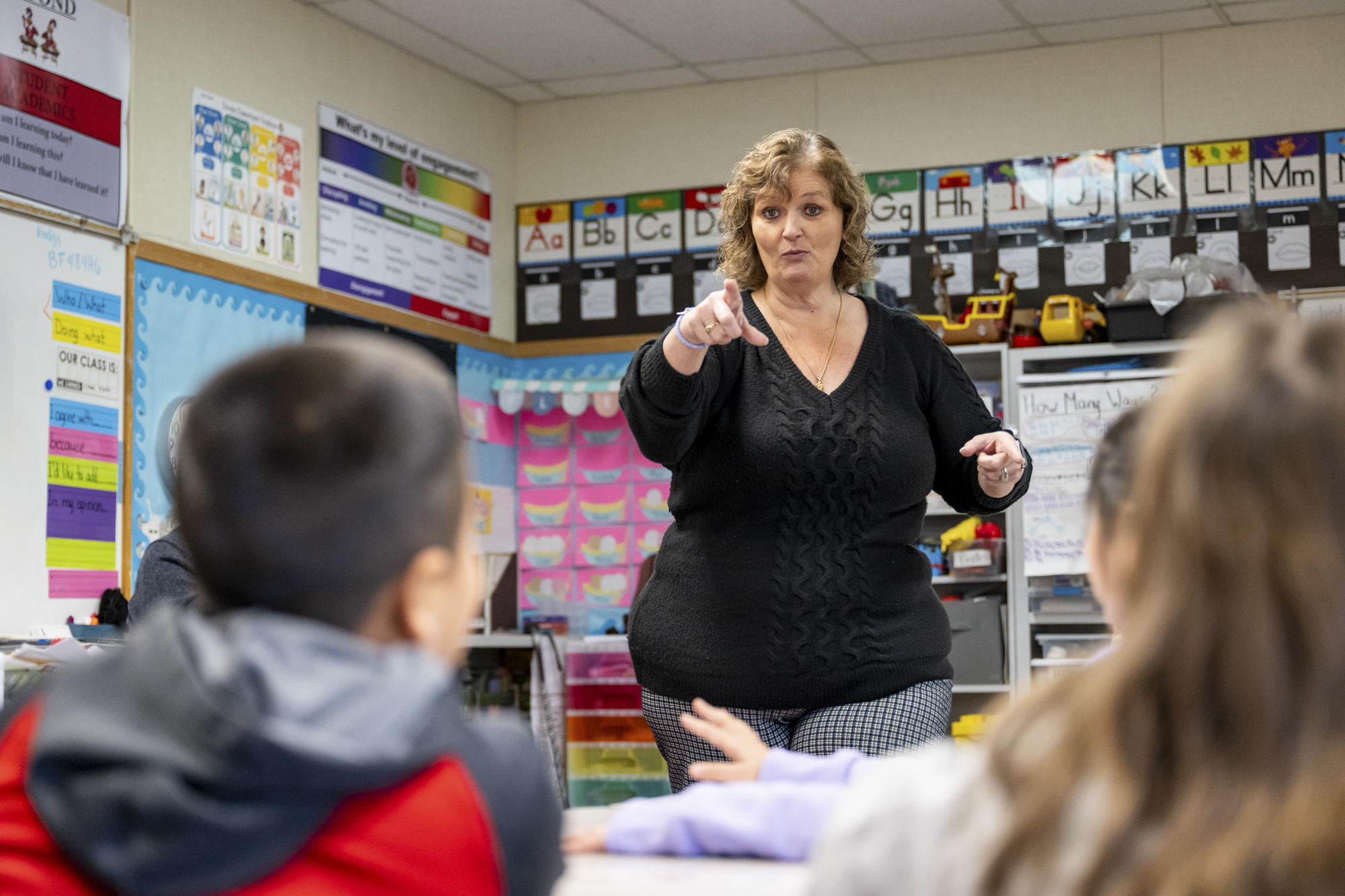
Principal Dana Milani speaks with second-grade students about a math question in their class at Yokayo Elementary School in Ukiah on Jan. 6, 2026. (Beth LaBerge/KQED)

Here are the morning’s top stories on Monday, March 16, 2026

  • This school year is the first in which transitional kindergarten is free and available for all 4-year-olds across California. The state has spent more than $15 billion since 2021 to offer this new grade. But in order for that investment to pay off, the skills kids gain in TK need to last throughout elementary school. One district is trying to set their students up for success by focusing on one particular subject. 
  • Protesters put on a concert at the Adelanto ICE Processing Center in the Mojave Desert on Saturday, to call attention to the plight of undocumented detainees.

California invested big in transitional kindergarten. How 1 school is making the most of it

In Kristi Fowler’s transitional kindergarten classroom, 4-year-olds learn math by counting steps as they jump and by sorting objects by shape or color. They can skip-count by 10s to get up to 100 and recognize patterns in a numerical sequence.

I used to think that TK [students] were just babies, and they can’t do that kind of stuff,” Fowler said. “They can, and they love it, and they’re excited to do it, and they’re really good at it.” Getting these students to learn through play is one goal at Yokayo Elementary School, where Fowler works, in the North Coast city of Ukiah. Another is to ensure the skills they gain in TK will last throughout elementary school.

The district is one of dozens in California hoping to maximize the benefits of transitional kindergarten, which this year became free and available for all 4-year-olds across the state. Gov. Gavin Newsom called the $15 billion rollout “a huge opportunity to invest in our kids and their future” and narrow the gap in kindergarten readiness — such as the ability to socialize, pay attention and regulate emotions — between kids from lower-income and higher-income families. But the enthusiasm for TK is tempered by concerns that the investment won’t pay off if the program’s benefits fade over time. Studies have shown that children who attend preschool start kindergarten with a measurable advantage over classmates who didn’t participate, but those gains seem to disappear by roughly the third grade. In Tennessee, a multi-year study found that 4-year-olds who attended a public pre-kindergarten program fared worse academically by the time they reached sixth grade than those who didn’t participate.

California doesn’t have a plan to evaluate the effectiveness of universal TK. And while the California Department of Education has guidelines on what students should learn, there is no mandated curriculum — leaving TK programs potentially vulnerable to repeating the pitfalls in Tennessee’s program. Some districts are seeking out best practices to avoid the same fate.

Sponsored

At Ukiah Unified, a high-poverty school district where a large percentage of its 5,800 students are in foster care or are English learners from Spanish-speaking households, administrators are determined to ensure the TK students are set up for success later on. They’re supporting an initiative at Yokayo Elementary, where teachers emphasize learning math skills in TK and building on what students know as they move to the next grade. The school is focusing on math because more than 60% of California students are not proficient in the subject, and studies show that students’ early math skills predict their academic achievement in middle and even high school.

At Yokayo, teachers from TK to third grade get together to align their curriculum and standards to ensure students make academic progress from one grade to the next. It’s a type of collaboration that might seem intuitive, but that runs counter to the way schools are typically organized. Teachers usually talk to their colleagues from the same grade level and follow pre-designed lesson plans.

Steven Kellner, director of district leadership and state policy for the nonprofit California Education Partners, said that creates a “herky-jerky” learning experience for students. “‘Kindergarten’s this way and first grade’s that way,’ and they have nothing to do with each other,” he said of districts’ typical approach. “Transitional kindergarten is great, but if it’s not connected to the other grades, it’s not super helpful.”

Advocates call attention to plight of undocumented detainees at Adelanto facility

A caravan of immigrant rights activists and musicians drove to the Adelanto ICE Processing Center near Victorville on Saturday to stage a protest concert and caravan outside the detention center.

About 30 cars and three charter buses traveled roughly 70 miles from Pasadena to the Adelanto ICE facility and arrived around 3:30 p.m. The caravan was organized by the National Day Laborer Organizing Network (NDLON) and its affiliate organizations, whose representatives said the event was meant to draw attention to the conditions inside the facility, the deaths reported at the Adelanto detention facility over the past year, and to raise the spirits of the people inside.

When the caravan arrived, musicians from several bands — including headliners Los Jornaleros del Norte — jumped on a mobile stage truck and began performing. Protesters throughout the afternoon danced and chanted as the group performed songs calling for the closure of the facility and release of workers detained there. Halfway through the event, protesters marched down the block to the west end of the facility to make sure the music could be heard more clearly by the people being held inside. “We moved to this side because we got some calls from inside from people saying they couldn’t hear us,” said Pablo Alvarado, executive director of the National Day Laborer Organizing Network.

NDLON representatives later said some people with loved ones inside the facility confirmed they were able to hear the music after the group moved. Caleb Soto, an attorney with NDLON, said advocates believe the conditions inside the privately run detention center reflect DHS’ cruelty against immigrant communities. “The people who are being killed inside there aren’t being killed just because of neglect,” said Soto. “It’s because of what’s called organized abandonment. It’s on purpose.”

The Department of Homeland Security has disputed criticism of the facility and says detention centers operate according to federal standards.

lower waypoint
next waypoint
Player sponsored by