Here are the morning’s top stories on Friday, January 2, 2026…
- All 4-year olds in California can now go to school for free in a grade called transitional kindergarten, or TK. And to lead those classrooms, the state needs teachers with special training. A lot of teachers. So what does it take to do the job?
- A new project in San Diego is gathering stories of government persecution against the LGBTQ+ community. Photos of the Lavender Names Project will be shown after select performances at the San Diego Opera this year.
California Created A New Grade For 4 Year-Olds, And It’s Re-Energizing Teachers
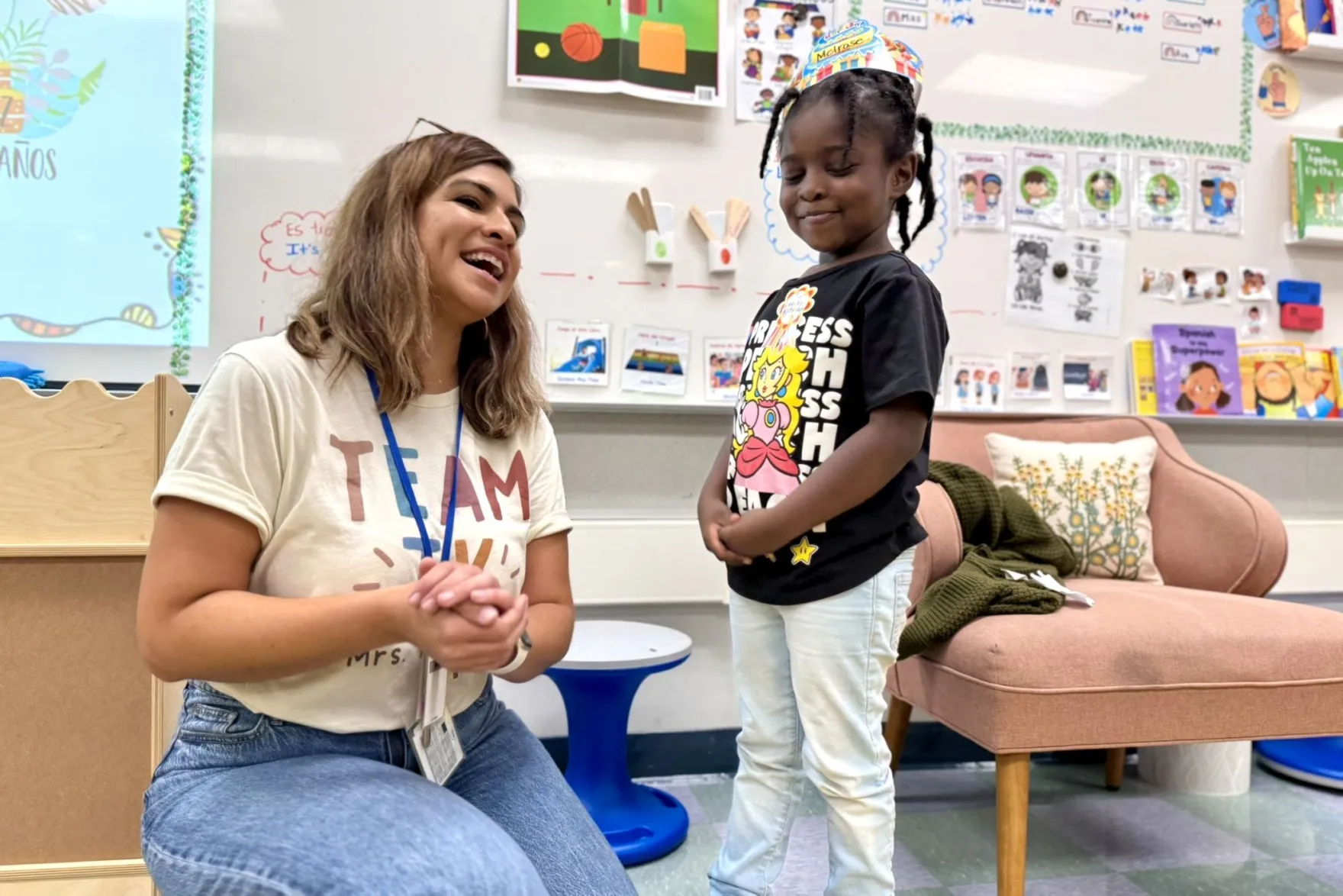
Marguerita Elementary School teacher Claudia Ralston spends most of her day on the floor, guiding her transitional kindergarten students through play. She said if it weren’t for TK, the Alhambra educator would be considering retirement. “Yes, I am exhausted,” Ralston said. “But just being here for the children and doing all the different activities … their curiosity, them wanting to learn just gives you that extra energy.”
This school year is the first where every 4-year-old in the state can enroll in the universal preschool program, also called TK, at their local public school. Schools need to hire an estimated 12,000 teachers to staff the program. Some may come from child care settings and preschool programs, but others are veteran educators who’ve gone back to school to get the credential required to teach TK. And once they get into the TK classroom, many educators told us, they’ve found new joy in the work.
Lauren Bush started teaching transitional kindergarten three years ago after more than two decades coaching other educators and teaching every grade from kindergarten through sixth. Her classroom at Lucille J. Smith Elementary in Lawndale is broken into different “centers,” where students can play with colorful magnetic tiles, practice painting their name or construct a ramp to roll a ball from one end of the room to the other. “It was just so joyful to be with the kids again,” Bush said. “That’s when I just, like, got back to myself as an educator, and now I’m gonna die here. That’s my plan. I love it here.”
Education research shows that teachers who like their jobs are more likely to stay, and that stability can be good for long-term learning outcomes.
New Project Documents Government Persecution Of LGBTQ+ San Diegans
The Lavender Names Project is collecting stories of government persecution against LGBTQ+ San Diegans.