Sponsor MessageBecome a KQED sponsor
upper waypoint

CA Lawmaker Aims to Protect Renters Who Rely on Section 8 Vouchers

Save ArticleSave Article
Failed to save article

Please try again

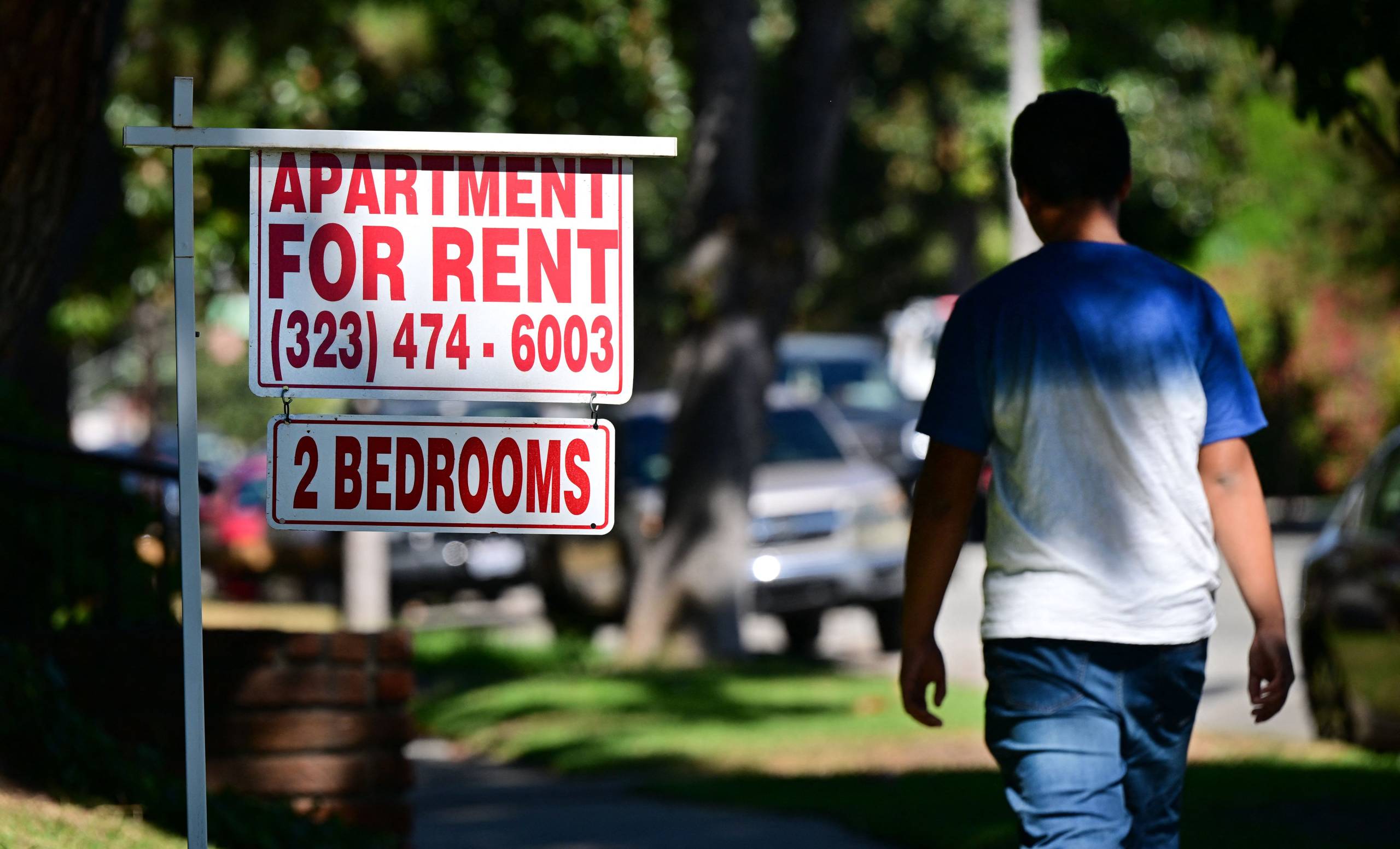
A man walks by a 'for rent' sign.
An apartment for rent sign is posted in South Pasadena, California. Giving cash directly to renters is one policy tool that takes out the bureaucracy of renters needing to apply for federal vouchers and then find a landlord who will accept the voucher. (Frederic J. Brown/AFP via Getty Images)

Here are the morning’s top stories on Wednesday, Feb. 25, 2026

  • Hundreds of thousands of California families rely on federal housing assistance programs to make rent- you might know it as Section 8 vouchers. Based on their income, they’ll pay a certain percentage of the rent and the government pays the rest. Recipients include seniors, veterans, people with disabilities and children. But the Trump administration is expected to introduce new rules to these programs in the coming months. Some lawmakers argue that could make assistance harder to access. 
  • California’s investing billions of dollars into a new grade for 4-year-olds called transitional kindergarten. But  the state hasn’t set aside any money to evaluate it.
  • On Wednesday, the city of Escondido in San Diego County will discuss a controversial contract that its police department has with the Department of Homeland Security. The contract allows federal agents to use a local gun range for 20 days a year.

As Trump administration looks to restrict Section 8 programs, CA lawmaker looks to protect these renters

The Department of Housing and Urban Development wants to ban families with any member who is undocumented from living in federally subsidized housing. A proposed rule also would require local housing authorities to report any tenant not eligible for rental aid to U.S. Citizenship and Immigration Services.

Undocumented immigrants do not get federal rental aid, but they can live with family members who do, including many U.S.-born children. This is the latest effort by the Trump administration to reshape how Section 8 vouchers are distributed.

As part of the budget package, the president directed the Department of Housing and Urban Development to limit the amount of time people can get federal rental subsidies and add work requirements as a condition of funding. Several housing experts told NPR a time limit alone could be considered an implied work requirement. But last year, Housing Secretary Scott Turner and three other Cabinet members wrote a New York Times opinion piece calling on Congress to expand work requirements across safety net programs. They said an increasing share of public benefits are not going to the “truly needy,” but to able-bodied adults who don’t work.

In California, a bill introduced this month would provide protections for these Section 8 renters. AB 2128 was authored by Assemblywoman Sharon Quirk-Silva. “AB 2128 will prohibit housing authorities and other housing providers in California that use HUD subsidies or vouchers from imposing work requirements and time limits on tenants if the federal government does, in fact, move forward with new work requirements,” she said.

California invested billions into a new grade for 4-year-olds — without a plan to evaluate it

In 2021, Gov. Gavin Newsom and state lawmakers set out a plan to create the largest universal preschool program in the country for 4-year-olds, through a massive ramp-up of an elementary grade known as transitional kindergarten, or TK. At a news conference, Newsom called it “a commitment that all 4-year-olds will get high quality instructional education,” and said that the investment could close learning gaps. “People aren’t left behind, as often as they start behind,” he added.

Sponsored

The state set a deadline that every district offer transitional kindergarten to all eligible 4-year-olds by fall 2025, and in the intervening years, schools have enrolled more than 175,000 children in TK. They’ve also had to hire new teachers and modify classrooms so that kids have enough space and quick access to smaller-sized bathrooms.

LAist spoke to more than a half dozen early childhood researchers who say a key piece has been missing in the state’s implementation: California itself hasn’t evaluated the program as it’s expanded, nor does it have plans to going forward. This, despite studies showing how critical the early years are for a child’s learning, and research from another state’s public preschool program that found students tested lower on state assessments and had more behavioral problems compared to those who weren’t in that program. “ It is a huge mistake to not evaluate the implementation of TK and whether or not the classrooms are providing developmentally appropriate practice,” said Jade Jenkins, associate professor of education at the University of California, Irvine.

The criticism comes as California has invested $1.2 billion to expand TK, and is paying about $3.9 billion this year to administer the new grade level. “ We need to know whether this investment is actually lifting kids. We know it’s a huge economic windfall for parents, and that’s a great boost for families. But is it lifting kids without government research?” said Bruce Fuller, a professor emeritus of education and public policy at UC Berkeley. A spokesperson for the California Department of Education said money for research has not been allocated in the state budget, and the department would “welcome a legislative appropriation” to “study the impacts of TK on students and families.”

Escondido to meet over ICE contract

Immigration and Customs Enforcement officers training at a local gun range largely went unnoticed by residents of one Southern California city for more than a decade, until President Donald Trump’s immigration crackdown and the recent fatal shootings of U.S. citizens by federal agents.

The arrangement in Escondido, a city of about 150,000 people north of San Diego, has sparked weeks of demonstrations. That contract was first reported by LA Taco. Residents are demanding that the city stop allowing ICE agents to train at the local police department range, reflecting growing discontent across the country with the administration’s immigration actions.

Escondido’s City Council is scheduled to discuss the contract with ICE at a meeting Wednesday.

Unlike many California cities, Escondido had an especially close alliance with ICE in the past that allowed immigration officers to work at police headquarters and coordinate on vehicle stops. That partnership ended after California passed a law in 2017 limiting such collaboration with immigration officials. Protesters in Escondido said they were unaware of the contract allowing ICE to train at the gun range in the city’s hillsides until advocates found the agreement online. They said they fear word of the deal will make immigrants afraid to report crimes to local police, weakening public safety in a city where Latinos make up about half the population.

lower waypoint
next waypoint
Player sponsored by