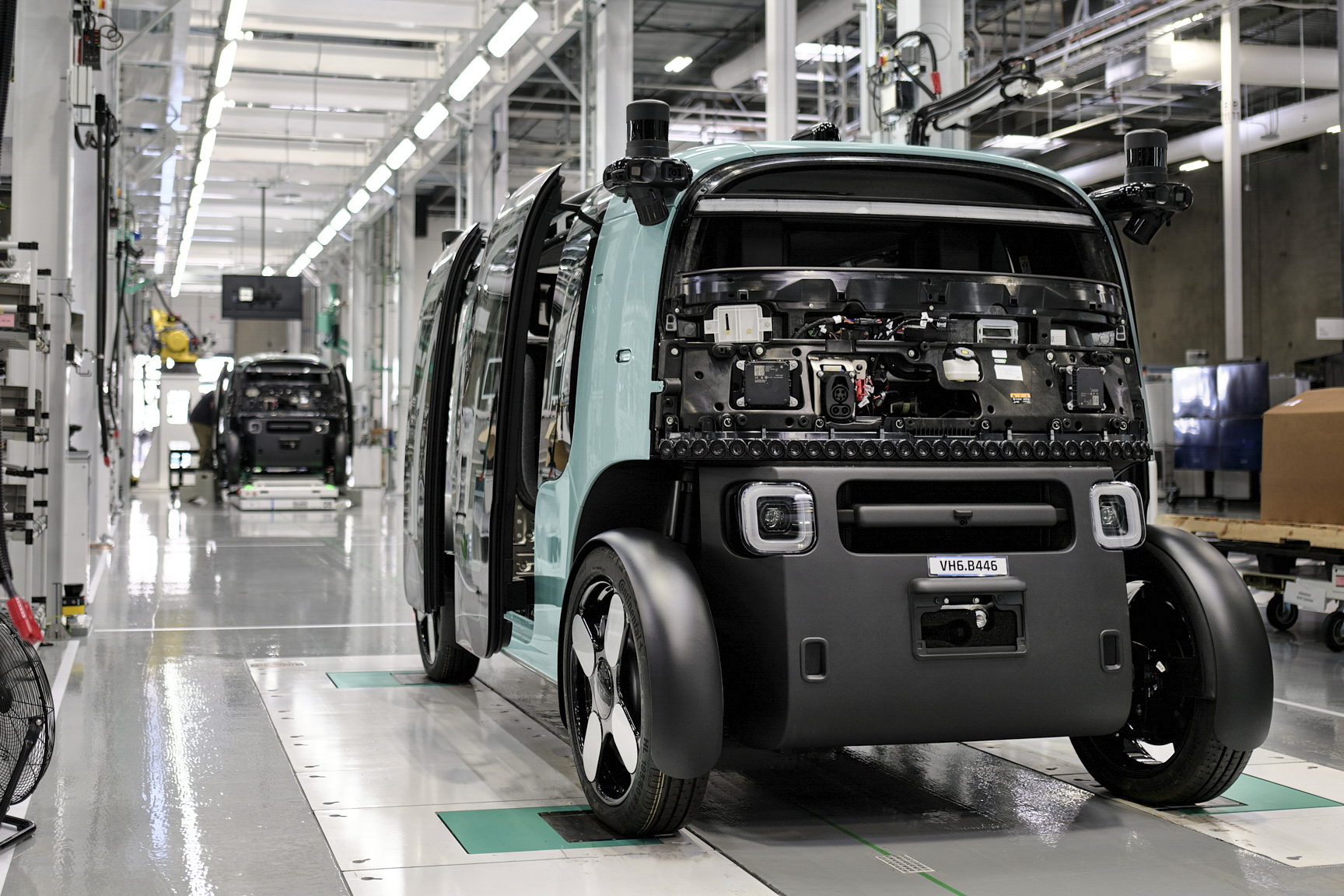
From Rust to Robots, the East Bay Bids for a High-Tech Revival
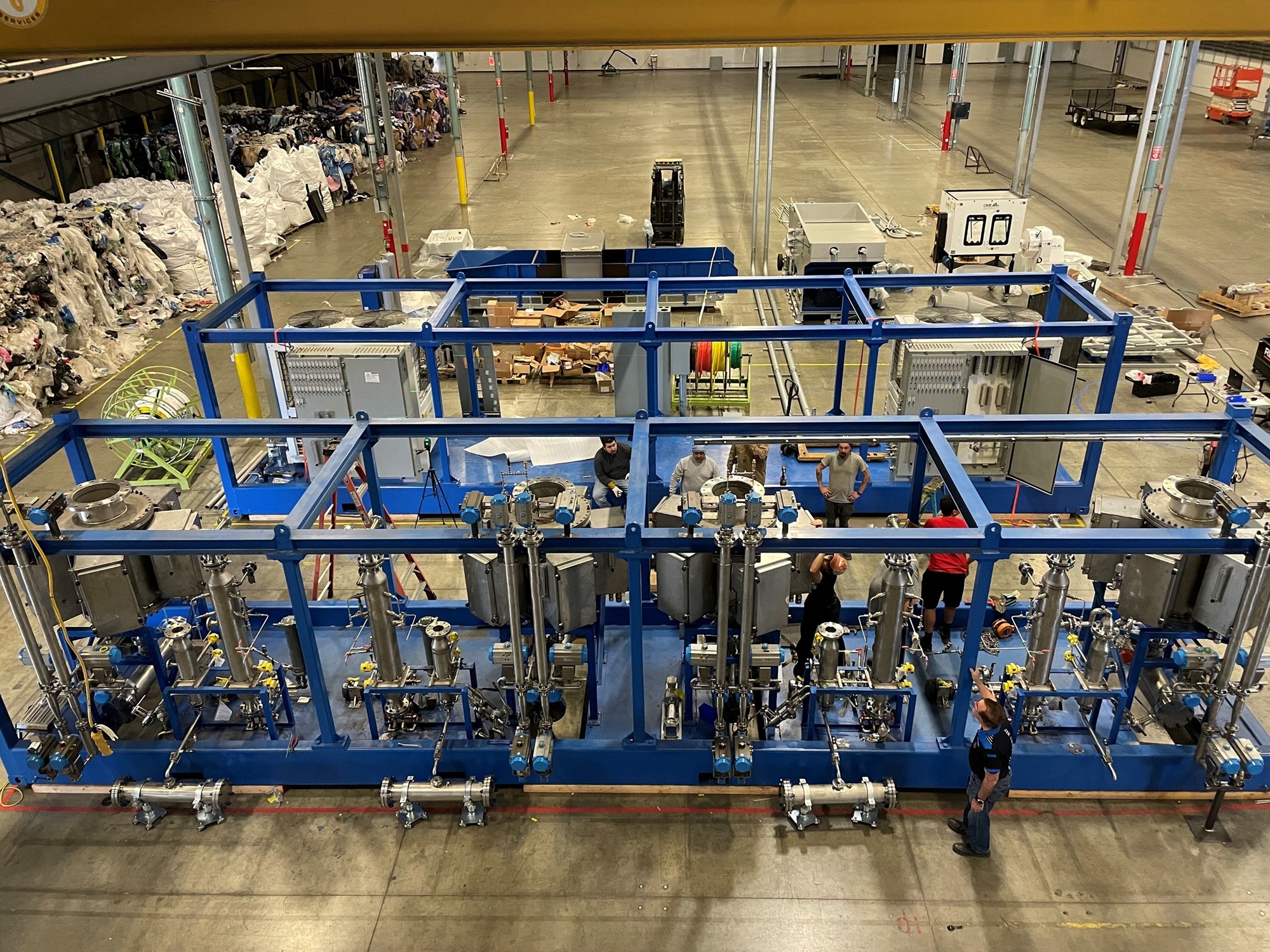
Sonoma County Plastics Recycler Resynergi Says It’s Leaving California
'Hold More Men Accountable': Ellen Pao on What Silicon Valley Should Learn from Elizabeth Holmes's Conviction
Should Venture Capital-Backed Startups Get Federal Stimulus Money?
From Grapes to Porn: The Growing Challenge of Landing an Original Brand Name
Concert Startup Sofar Sounds to Pay $460,000 to Uncompensated Workers
New San Francisco Office Could Curb 'Reckless' Rollouts of Emerging Tech
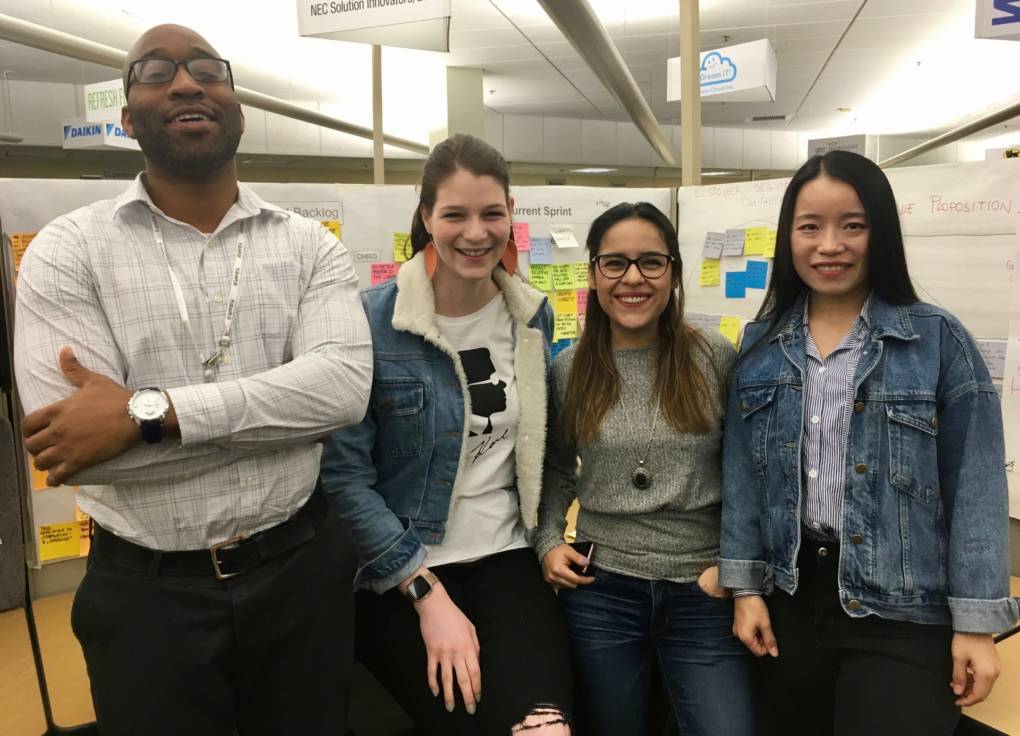
Something in the Silicon Valley Air: Why Multinational Firms Send Their Entrepreneurs Here
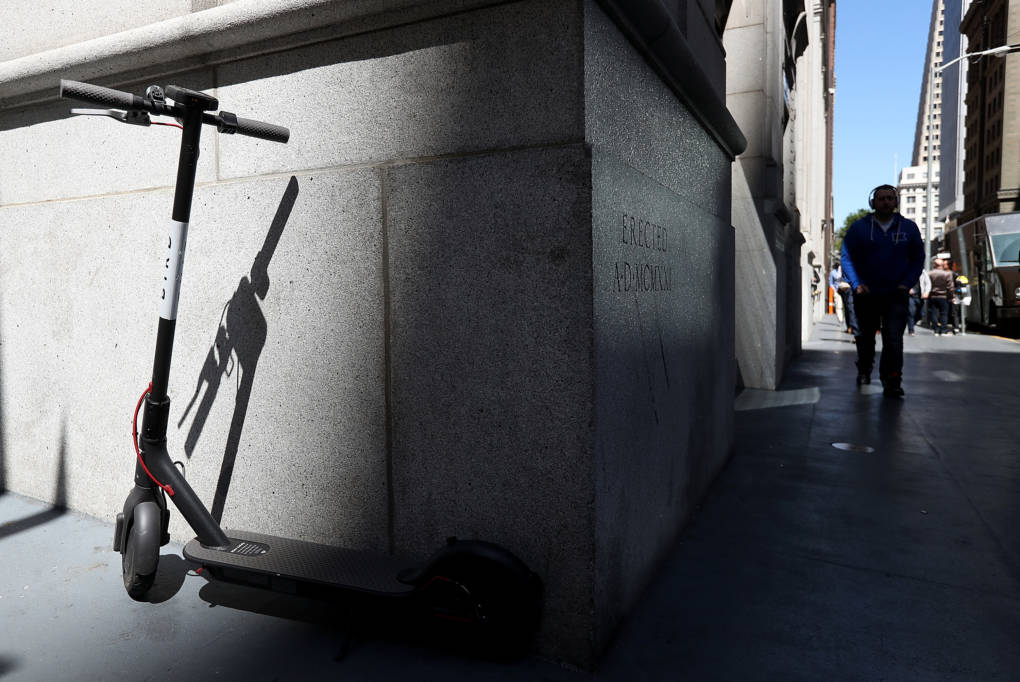
Dockless Dilemma
Sponsored
Player sponsored by
window.__IS_SSR__=true
window.__INITIAL_STATE__={
"attachmentsReducer": {
"audio_0": {
"type": "attachments",
"id": "audio_0",
"imgSizes": {
"kqedFullSize": {
"file": "https://ww2.kqed.org/news/wp-content/themes/KQED-unified/img/audio_bgs/background0.jpg"
}
}
},
"audio_1": {
"type": "attachments",
"id": "audio_1",
"imgSizes": {
"kqedFullSize": {
"file": "https://ww2.kqed.org/news/wp-content/themes/KQED-unified/img/audio_bgs/background1.jpg"
}
}
},
"audio_2": {
"type": "attachments",
"id": "audio_2",
"imgSizes": {
"kqedFullSize": {
"file": "https://ww2.kqed.org/news/wp-content/themes/KQED-unified/img/audio_bgs/background2.jpg"
}
}
},
"audio_3": {
"type": "attachments",
"id": "audio_3",
"imgSizes": {
"kqedFullSize": {
"file": "https://ww2.kqed.org/news/wp-content/themes/KQED-unified/img/audio_bgs/background3.jpg"
}
}
},
"audio_4": {
"type": "attachments",
"id": "audio_4",
"imgSizes": {
"kqedFullSize": {
"file": "https://ww2.kqed.org/news/wp-content/themes/KQED-unified/img/audio_bgs/background4.jpg"
}
}
},
"placeholder": {
"type": "attachments",
"id": "placeholder",
"imgSizes": {
"thumbnail": {
"file": "https://cdn.kqed.org/wp-content/uploads/2024/12/KQED-Default-Image-816638274-2000x1333-1-160x107.jpg",
"width": 160,
"height": 107,
"mimeType": "image/jpeg"
},
"medium": {
"file": "https://cdn.kqed.org/wp-content/uploads/2024/12/KQED-Default-Image-816638274-2000x1333-1-800x533.jpg",
"width": 800,
"height": 533,
"mimeType": "image/jpeg"
},
"medium_large": {
"file": "https://cdn.kqed.org/wp-content/uploads/2024/12/KQED-Default-Image-816638274-2000x1333-1-768x512.jpg",
"width": 768,
"height": 512,
"mimeType": "image/jpeg"
},
"large": {
"file": "https://cdn.kqed.org/wp-content/uploads/2024/12/KQED-Default-Image-816638274-2000x1333-1-1020x680.jpg",
"width": 1020,
"height": 680,
"mimeType": "image/jpeg"
},
"1536x1536": {
"file": "https://cdn.kqed.org/wp-content/uploads/2024/12/KQED-Default-Image-816638274-2000x1333-1-1536x1024.jpg",
"width": 1536,
"height": 1024,
"mimeType": "image/jpeg"
},
"fd-lrg": {
"file": "https://cdn.kqed.org/wp-content/uploads/2024/12/KQED-Default-Image-816638274-2000x1333-1-1536x1024.jpg",
"width": 1536,
"height": 1024,
"mimeType": "image/jpeg"
},
"fd-med": {
"file": "https://cdn.kqed.org/wp-content/uploads/2024/12/KQED-Default-Image-816638274-2000x1333-1-1020x680.jpg",
"width": 1020,
"height": 680,
"mimeType": "image/jpeg"
},
"fd-sm": {
"file": "https://cdn.kqed.org/wp-content/uploads/2024/12/KQED-Default-Image-816638274-2000x1333-1-800x533.jpg",
"width": 800,
"height": 533,
"mimeType": "image/jpeg"
},
"post-thumbnail": {
"file": "https://cdn.kqed.org/wp-content/uploads/2024/12/KQED-Default-Image-816638274-2000x1333-1-672x372.jpg",
"width": 672,
"height": 372,
"mimeType": "image/jpeg"
},
"twentyfourteen-full-width": {
"file": "https://cdn.kqed.org/wp-content/uploads/2024/12/KQED-Default-Image-816638274-2000x1333-1-1038x576.jpg",
"width": 1038,
"height": 576,
"mimeType": "image/jpeg"
},
"xxsmall": {
"file": "https://cdn.kqed.org/wp-content/uploads/2024/12/KQED-Default-Image-816638274-2000x1333-1-160x107.jpg",
"width": 160,
"height": 107,
"mimeType": "image/jpeg"
},
"xsmall": {
"file": "https://cdn.kqed.org/wp-content/uploads/2024/12/KQED-Default-Image-816638274-2000x1333-1-672x372.jpg",
"width": 672,
"height": 372,
"mimeType": "image/jpeg"
},
"small": {
"file": "https://cdn.kqed.org/wp-content/uploads/2024/12/KQED-Default-Image-816638274-2000x1333-1-672x372.jpg",
"width": 672,
"height": 372,
"mimeType": "image/jpeg"
},
"xlarge": {
"file": "https://cdn.kqed.org/wp-content/uploads/2024/12/KQED-Default-Image-816638274-2000x1333-1-1020x680.jpg",
"width": 1020,
"height": 680,
"mimeType": "image/jpeg"
},
"full-width": {
"file": "https://cdn.kqed.org/wp-content/uploads/2024/12/KQED-Default-Image-816638274-2000x1333-1-1920x1280.jpg",
"width": 1920,
"height": 1280,
"mimeType": "image/jpeg"
},
"guest-author-32": {
"file": "https://cdn.kqed.org/wp-content/uploads/2025/01/KQED-Default-Image-816638274-1333x1333-1-160x160.jpg",
"width": 32,
"height": 32,
"mimeType": "image/jpeg"
},
"guest-author-50": {
"file": "https://cdn.kqed.org/wp-content/uploads/2025/01/KQED-Default-Image-816638274-1333x1333-1-160x160.jpg",
"width": 50,
"height": 50,
"mimeType": "image/jpeg"
},
"guest-author-64": {
"file": "https://cdn.kqed.org/wp-content/uploads/2025/01/KQED-Default-Image-816638274-1333x1333-1-160x160.jpg",
"width": 64,
"height": 64,
"mimeType": "image/jpeg"
},
"guest-author-96": {
"file": "https://cdn.kqed.org/wp-content/uploads/2025/01/KQED-Default-Image-816638274-1333x1333-1-160x160.jpg",
"width": 96,
"height": 96,
"mimeType": "image/jpeg"
},
"guest-author-128": {
"file": "https://cdn.kqed.org/wp-content/uploads/2025/01/KQED-Default-Image-816638274-1333x1333-1-160x160.jpg",
"width": 128,
"height": 128,
"mimeType": "image/jpeg"
},
"detail": {
"file": "https://cdn.kqed.org/wp-content/uploads/2025/01/KQED-Default-Image-816638274-1333x1333-1-160x160.jpg",
"width": 160,
"height": 160,
"mimeType": "image/jpeg"
},
"kqedFullSize": {
"file": "https://cdn.kqed.org/wp-content/uploads/2024/12/KQED-Default-Image-816638274-2000x1333-1.jpg",
"width": 2000,
"height": 1333
}
}
},
"news_12064732": {
"type": "attachments",
"id": "news_12064732",
"meta": {
"index": "attachments_1716263798",
"site": "news",
"id": "12064732",
"found": true
},
"title": "251119-From Rust to Robots-01-KQED",
"publishDate": 1763580131,
"status": "inherit",
"parent": 0,
"modified": 1763580211,
"caption": "A Zoox robo taxi rolls down the assembly line at the company’s manufacturing facility in Hayward. Factories never vanished in the East Bay. They evolved. Now, with Zoox, biotech startups, and clean-tech firms reclaiming old industrial facilities, Alameda County is testing whether it can win a bigger piece of the Silicon Valley employment pie.\r\n",
"credit": "Courtesy of Zoox, Inc.",
"altTag": null,
"description": null,
"imgSizes": {
"thumbnail": {
"file": "https://cdn.kqed.org/wp-content/uploads/sites/10/2025/11/251119-From-Rust-to-Robots-01-KQED-160x107.jpg",
"width": 160,
"height": 107,
"mimeType": "image/jpeg"
},
"1536x1536": {
"file": "https://cdn.kqed.org/wp-content/uploads/sites/10/2025/11/251119-From-Rust-to-Robots-01-KQED-1536x1024.jpg",
"width": 1536,
"height": 1024,
"mimeType": "image/jpeg"
},
"post-thumbnail": {
"file": "https://cdn.kqed.org/wp-content/uploads/sites/10/2025/11/251119-From-Rust-to-Robots-01-KQED-672x372.jpg",
"width": 672,
"height": 372,
"mimeType": "image/jpeg"
},
"twentyfourteen-full-width": {
"file": "https://cdn.kqed.org/wp-content/uploads/sites/10/2025/11/251119-From-Rust-to-Robots-01-KQED-1038x576.jpg",
"width": 1038,
"height": 576,
"mimeType": "image/jpeg"
},
"npr-cds-wide": {
"file": "https://cdn.kqed.org/wp-content/uploads/sites/10/2025/11/251119-From-Rust-to-Robots-01-KQED-1200x675.jpg",
"width": 1200,
"height": 675,
"mimeType": "image/jpeg"
},
"kqedFullSize": {
"file": "https://cdn.kqed.org/wp-content/uploads/sites/10/2025/11/251119-From-Rust-to-Robots-01-KQED.jpg",
"width": 1728,
"height": 1152
}
},
"fetchFailed": false,
"isLoading": false
},
"news_12057682": {
"type": "attachments",
"id": "news_12057682",
"meta": {
"index": "attachments_1716263798",
"site": "news",
"id": "12057682",
"found": true
},
"title": "RohnertParkProcessingPlant1",
"publishDate": 1758842834,
"status": "inherit",
"parent": 12057678,
"modified": 1758842866,
"caption": "The Resynergi facility, located in Rohnert Park's SOMO Village, uses a process called pyrolysis in order to recycle plastic. Rohnert Park residents worry the new plastic recycling facility will degrade air quality and pose safety concerns.\n",
"credit": "Courtesy of Resynergi",
"altTag": null,
"description": null,
"imgSizes": {
"thumbnail": {
"file": "https://cdn.kqed.org/wp-content/uploads/sites/10/2025/09/RohnertParkProcessingPlant1-160x120.jpg",
"width": 160,
"height": 120,
"mimeType": "image/jpeg"
},
"1536x1536": {
"file": "https://cdn.kqed.org/wp-content/uploads/sites/10/2025/09/RohnertParkProcessingPlant1-1536x1152.jpg",
"width": 1536,
"height": 1152,
"mimeType": "image/jpeg"
},
"post-thumbnail": {
"file": "https://cdn.kqed.org/wp-content/uploads/sites/10/2025/09/RohnertParkProcessingPlant1-672x372.jpg",
"width": 672,
"height": 372,
"mimeType": "image/jpeg"
},
"twentyfourteen-full-width": {
"file": "https://cdn.kqed.org/wp-content/uploads/sites/10/2025/09/RohnertParkProcessingPlant1-1038x576.jpg",
"width": 1038,
"height": 576,
"mimeType": "image/jpeg"
},
"kqedFullSize": {
"file": "https://cdn.kqed.org/wp-content/uploads/sites/10/2025/09/RohnertParkProcessingPlant1.jpg",
"width": 2000,
"height": 1500
}
},
"fetchFailed": false,
"isLoading": false
},
"news_11900932": {
"type": "attachments",
"id": "news_11900932",
"meta": {
"index": "attachments_1716263798",
"site": "news",
"id": "11900932",
"found": true
},
"parent": 11900856,
"imgSizes": {
"twentyfourteen-full-width": {
"file": "https://ww2.kqed.org/app/uploads/sites/10/2022/01/PaoAndHolmesDiptych-1038x576.jpg",
"width": 1038,
"mimeType": "image/jpeg",
"height": 576
},
"thumbnail": {
"file": "https://ww2.kqed.org/app/uploads/sites/10/2022/01/PaoAndHolmesDiptych-160x87.jpg",
"width": 160,
"mimeType": "image/jpeg",
"height": 87
},
"post-thumbnail": {
"file": "https://ww2.kqed.org/app/uploads/sites/10/2022/01/PaoAndHolmesDiptych-672x372.jpg",
"width": 672,
"mimeType": "image/jpeg",
"height": 372
},
"kqedFullSize": {
"file": "https://ww2.kqed.org/app/uploads/sites/10/2022/01/PaoAndHolmesDiptych.jpg",
"width": 1920,
"height": 1048
},
"large": {
"file": "https://ww2.kqed.org/app/uploads/sites/10/2022/01/PaoAndHolmesDiptych-1020x557.jpg",
"width": 1020,
"mimeType": "image/jpeg",
"height": 557
},
"1536x1536": {
"file": "https://ww2.kqed.org/app/uploads/sites/10/2022/01/PaoAndHolmesDiptych-1536x838.jpg",
"width": 1536,
"mimeType": "image/jpeg",
"height": 838
},
"medium": {
"file": "https://ww2.kqed.org/app/uploads/sites/10/2022/01/PaoAndHolmesDiptych-800x437.jpg",
"width": 800,
"mimeType": "image/jpeg",
"height": 437
}
},
"publishDate": 1641431068,
"modified": 1641433146,
"caption": "Ellen Pao (left), co-founder and CEO of Project Include and former CEO of Reddit, said she was concerned that Elizabeth Holmes's fraud conviction would give investors 'an excuse to continue to avoid investing in women.' Holmes, the former CEO of Theranos (right), leaves a San José courthouse following her fraud conviction on Jan. 3, 2022. ",
"description": "Ellen Pao, co-founder and CEO of Project Include and former CEO of Reddit, said she was concerned that Elizabeth Holmes's fraud conviction would give investors 'an excuse to continue to avoid investing in women.' Holmes, the former CEO of Theranos (right), leaves a San Jose courthouse following her fraud conviction on Jan. 3. ",
"title": "PaoAndHolmesDiptych",
"credit": "Steve Jennings/Getty Images, David Odisho/Getty Images",
"status": "inherit",
"altTag": "side-by-side photos of Ellen Pao, left, speaking at a conference, and Elizabeth Holmes, right, leaving court after her conviction",
"fetchFailed": false,
"isLoading": false
},
"news_11818231": {
"type": "attachments",
"id": "news_11818231",
"meta": {
"index": "attachments_1716263798",
"site": "news",
"id": "11818231",
"found": true
},
"parent": 11818061,
"imgSizes": {
"apple_news_ca_landscape_5_5": {
"file": "https://ww2.kqed.org/app/uploads/sites/10/2020/05/iStock-1216157444-1044x783.jpg",
"width": 1044,
"mimeType": "image/jpeg",
"height": 783
},
"apple_news_ca_square_4_0": {
"file": "https://ww2.kqed.org/app/uploads/sites/10/2020/05/iStock-1216157444-470x470.jpg",
"width": 470,
"mimeType": "image/jpeg",
"height": 470
},
"twentyfourteen-full-width": {
"file": "https://ww2.kqed.org/app/uploads/sites/10/2020/05/iStock-1216157444-1038x576.jpg",
"width": 1038,
"mimeType": "image/jpeg",
"height": 576
},
"thumbnail": {
"file": "https://ww2.kqed.org/app/uploads/sites/10/2020/05/iStock-1216157444-160x107.jpg",
"width": 160,
"mimeType": "image/jpeg",
"height": 107
},
"post-thumbnail": {
"file": "https://ww2.kqed.org/app/uploads/sites/10/2020/05/iStock-1216157444-672x372.jpg",
"width": 672,
"mimeType": "image/jpeg",
"height": 372
},
"kqedFullSize": {
"file": "https://ww2.kqed.org/app/uploads/sites/10/2020/05/iStock-1216157444-e1589426586401.jpg",
"width": 1920,
"height": 1280
},
"apple_news_ca_landscape_4_7": {
"file": "https://ww2.kqed.org/app/uploads/sites/10/2020/05/iStock-1216157444-632x474.jpg",
"width": 632,
"mimeType": "image/jpeg",
"height": 474
},
"large": {
"file": "https://ww2.kqed.org/app/uploads/sites/10/2020/05/iStock-1216157444-1020x680.jpg",
"width": 1020,
"mimeType": "image/jpeg",
"height": 680
},
"apple_news_ca_landscape_4_0": {
"file": "https://ww2.kqed.org/app/uploads/sites/10/2020/05/iStock-1216157444-536x402.jpg",
"width": 536,
"mimeType": "image/jpeg",
"height": 402
},
"apple_news_ca_portrait_12_9": {
"file": "https://ww2.kqed.org/app/uploads/sites/10/2020/05/iStock-1216157444-1122x1496.jpg",
"width": 1122,
"mimeType": "image/jpeg",
"height": 1496
},
"medium": {
"file": "https://ww2.kqed.org/app/uploads/sites/10/2020/05/iStock-1216157444-800x533.jpg",
"width": 800,
"mimeType": "image/jpeg",
"height": 533
},
"apple_news_ca_portrait_4_0": {
"file": "https://ww2.kqed.org/app/uploads/sites/10/2020/05/iStock-1216157444-354x472.jpg",
"width": 354,
"mimeType": "image/jpeg",
"height": 472
},
"apple_news_ca_portrait_9_7": {
"file": "https://ww2.kqed.org/app/uploads/sites/10/2020/05/iStock-1216157444-840x1120.jpg",
"width": 840,
"mimeType": "image/jpeg",
"height": 1120
},
"apple_news_ca_landscape_12_9": {
"file": "https://ww2.kqed.org/app/uploads/sites/10/2020/05/iStock-1216157444-1832x1374.jpg",
"width": 1832,
"mimeType": "image/jpeg",
"height": 1374
},
"apple_news_ca_square_9_7": {
"file": "https://ww2.kqed.org/app/uploads/sites/10/2020/05/iStock-1216157444-1104x1104.jpg",
"width": 1104,
"mimeType": "image/jpeg",
"height": 1104
},
"apple_news_ca_portrait_4_7": {
"file": "https://ww2.kqed.org/app/uploads/sites/10/2020/05/iStock-1216157444-414x552.jpg",
"width": 414,
"mimeType": "image/jpeg",
"height": 552
},
"apple_news_ca_square_12_9": {
"file": "https://ww2.kqed.org/app/uploads/sites/10/2020/05/iStock-1216157444-1472x1472.jpg",
"width": 1472,
"mimeType": "image/jpeg",
"height": 1472
},
"apple_news_ca_portrait_5_5": {
"file": "https://ww2.kqed.org/app/uploads/sites/10/2020/05/iStock-1216157444-687x916.jpg",
"width": 687,
"mimeType": "image/jpeg",
"height": 916
},
"full-width": {
"file": "https://ww2.kqed.org/app/uploads/sites/10/2020/05/iStock-1216157444-1920x1280.jpg",
"width": 1920,
"mimeType": "image/jpeg",
"height": 1280
},
"apple_news_ca_square_4_7": {
"file": "https://ww2.kqed.org/app/uploads/sites/10/2020/05/iStock-1216157444-550x550.jpg",
"width": 550,
"mimeType": "image/jpeg",
"height": 550
},
"apple_news_ca_landscape_9_7": {
"file": "https://ww2.kqed.org/app/uploads/sites/10/2020/05/iStock-1216157444-1376x1032.jpg",
"width": 1376,
"mimeType": "image/jpeg",
"height": 1032
},
"apple_news_ca_square_5_5": {
"file": "https://ww2.kqed.org/app/uploads/sites/10/2020/05/iStock-1216157444-912x912.jpg",
"width": 912,
"mimeType": "image/jpeg",
"height": 912
}
},
"publishDate": 1589416150,
"modified": 1589426625,
"caption": "Many Silicon Valley startups are not currently eligible for federal stimulus loans, but that could change thanks to new legislation from Congresswoman Anna Eshoo and Congressman Ro Khanna.",
"description": "Many Silicon Valley start ups are not currently eligible for federal stimulus loans, but that could change thanks to new legislation from Congresswoman Anna Eshoo and Congressman Ro Khanna.",
"title": "Coronavirus crisis economic stimulus package, money helping policy government give money to people to stimulate economics concept, businessman running to hand give money banknote with pathogen.",
"credit": "Nuthawut Somsuk/iStock",
"status": "inherit",
"fetchFailed": false,
"isLoading": false
},
"news_11801820": {
"type": "attachments",
"id": "news_11801820",
"meta": {
"index": "attachments_1716263798",
"site": "news",
"id": "11801820",
"found": true
},
"parent": 11801126,
"imgSizes": {
"apple_news_ca_landscape_5_5": {
"file": "https://ww2.kqed.org/app/uploads/sites/10/2020/02/brandingpile_final01-1044x783.png",
"width": 1044,
"mimeType": "image/png",
"height": 783
},
"apple_news_ca_square_4_0": {
"file": "https://ww2.kqed.org/app/uploads/sites/10/2020/02/brandingpile_final01-470x470.png",
"width": 470,
"mimeType": "image/png",
"height": 470
},
"twentyfourteen-full-width": {
"file": "https://ww2.kqed.org/app/uploads/sites/10/2020/02/brandingpile_final01-1038x576.png",
"width": 1038,
"mimeType": "image/png",
"height": 576
},
"thumbnail": {
"file": "https://ww2.kqed.org/app/uploads/sites/10/2020/02/brandingpile_final01-160x86.png",
"width": 160,
"mimeType": "image/png",
"height": 86
},
"post-thumbnail": {
"file": "https://ww2.kqed.org/app/uploads/sites/10/2020/02/brandingpile_final01-672x372.png",
"width": 672,
"mimeType": "image/png",
"height": 372
},
"kqedFullSize": {
"file": "https://ww2.kqed.org/app/uploads/sites/10/2020/02/brandingpile_final01.png",
"width": 1920,
"height": 1027
},
"apple_news_ca_landscape_4_7": {
"file": "https://ww2.kqed.org/app/uploads/sites/10/2020/02/brandingpile_final01-632x474.png",
"width": 632,
"mimeType": "image/png",
"height": 474
},
"large": {
"file": "https://ww2.kqed.org/app/uploads/sites/10/2020/02/brandingpile_final01-1020x546.png",
"width": 1020,
"mimeType": "image/png",
"height": 546
},
"apple_news_ca_landscape_4_0": {
"file": "https://ww2.kqed.org/app/uploads/sites/10/2020/02/brandingpile_final01-536x402.png",
"width": 536,
"mimeType": "image/png",
"height": 402
},
"apple_news_ca_portrait_12_9": {
"file": "https://ww2.kqed.org/app/uploads/sites/10/2020/02/brandingpile_final01-1122x1027.png",
"width": 1122,
"mimeType": "image/png",
"height": 1027
},
"medium": {
"file": "https://ww2.kqed.org/app/uploads/sites/10/2020/02/brandingpile_final01-800x428.png",
"width": 800,
"mimeType": "image/png",
"height": 428
},
"apple_news_ca_portrait_4_0": {
"file": "https://ww2.kqed.org/app/uploads/sites/10/2020/02/brandingpile_final01-354x472.png",
"width": 354,
"mimeType": "image/png",
"height": 472
},
"apple_news_ca_portrait_9_7": {
"file": "https://ww2.kqed.org/app/uploads/sites/10/2020/02/brandingpile_final01-840x1027.png",
"width": 840,
"mimeType": "image/png",
"height": 1027
},
"apple_news_ca_landscape_12_9": {
"file": "https://ww2.kqed.org/app/uploads/sites/10/2020/02/brandingpile_final01-1832x1027.png",
"width": 1832,
"mimeType": "image/png",
"height": 1027
},
"apple_news_ca_square_9_7": {
"file": "https://ww2.kqed.org/app/uploads/sites/10/2020/02/brandingpile_final01-1104x1027.png",
"width": 1104,
"mimeType": "image/png",
"height": 1027
},
"apple_news_ca_portrait_4_7": {
"file": "https://ww2.kqed.org/app/uploads/sites/10/2020/02/brandingpile_final01-414x552.png",
"width": 414,
"mimeType": "image/png",
"height": 552
},
"apple_news_ca_square_12_9": {
"file": "https://ww2.kqed.org/app/uploads/sites/10/2020/02/brandingpile_final01-1472x1027.png",
"width": 1472,
"mimeType": "image/png",
"height": 1027
},
"apple_news_ca_portrait_5_5": {
"file": "https://ww2.kqed.org/app/uploads/sites/10/2020/02/brandingpile_final01-687x916.png",
"width": 687,
"mimeType": "image/png",
"height": 916
},
"full-width": {
"file": "https://ww2.kqed.org/app/uploads/sites/10/2020/02/brandingpile_final01-1920x1027.png",
"width": 1920,
"mimeType": "image/png",
"height": 1027
},
"apple_news_ca_square_4_7": {
"file": "https://ww2.kqed.org/app/uploads/sites/10/2020/02/brandingpile_final01-550x550.png",
"width": 550,
"mimeType": "image/png",
"height": 550
},
"apple_news_ca_landscape_9_7": {
"file": "https://ww2.kqed.org/app/uploads/sites/10/2020/02/brandingpile_final01-1376x1027.png",
"width": 1376,
"mimeType": "image/png",
"height": 1027
},
"apple_news_ca_square_5_5": {
"file": "https://ww2.kqed.org/app/uploads/sites/10/2020/02/brandingpile_final01-912x912.png",
"width": 912,
"mimeType": "image/png",
"height": 912
}
},
"publishDate": 1581721332,
"modified": 1581721367,
"caption": null,
"description": null,
"title": "brandingpile_final01",
"credit": null,
"status": "inherit",
"fetchFailed": false,
"isLoading": false
},
"arts_13121352": {
"type": "attachments",
"id": "arts_13121352",
"meta": {
"index": "attachments_1716263798",
"site": "arts",
"id": "13121352",
"found": true
},
"parent": 13114272,
"imgSizes": {
"small": {
"file": "https://ww2.kqed.org/app/uploads/sites/2/2017/04/sofar-middle-man-520x293.jpg",
"width": 520,
"mimeType": "image/jpeg",
"height": 293
},
"twentyfourteen-full-width": {
"file": "https://ww2.kqed.org/app/uploads/sites/2/2017/04/sofar-middle-man-1038x576.jpg",
"width": 1038,
"mimeType": "image/jpeg",
"height": 576
},
"thumbnail": {
"file": "https://ww2.kqed.org/app/uploads/sites/2/2017/04/sofar-middle-man-160x90.jpg",
"width": 160,
"mimeType": "image/jpeg",
"height": 90
},
"fd-sm": {
"file": "https://ww2.kqed.org/app/uploads/sites/2/2017/04/sofar-middle-man-960x540.jpg",
"width": 960,
"mimeType": "image/jpeg",
"height": 540
},
"post-thumbnail": {
"file": "https://ww2.kqed.org/app/uploads/sites/2/2017/04/sofar-middle-man-672x372.jpg",
"width": 672,
"mimeType": "image/jpeg",
"height": 372
},
"xsmall": {
"file": "https://ww2.kqed.org/app/uploads/sites/2/2017/04/sofar-middle-man-375x211.jpg",
"width": 375,
"mimeType": "image/jpeg",
"height": 211
},
"kqedFullSize": {
"file": "https://ww2.kqed.org/app/uploads/sites/2/2017/04/sofar-middle-man.jpg",
"width": 1920,
"height": 1080
},
"large": {
"file": "https://ww2.kqed.org/app/uploads/sites/2/2017/04/sofar-middle-man-1020x574.jpg",
"width": 1020,
"mimeType": "image/jpeg",
"height": 574
},
"xlarge": {
"file": "https://ww2.kqed.org/app/uploads/sites/2/2017/04/sofar-middle-man-1180x664.jpg",
"width": 1180,
"mimeType": "image/jpeg",
"height": 664
},
"guest-author-50": {
"file": "https://ww2.kqed.org/app/uploads/sites/2/2017/04/sofar-middle-man-50x50.jpg",
"width": 50,
"mimeType": "image/jpeg",
"height": 50
},
"guest-author-96": {
"file": "https://ww2.kqed.org/app/uploads/sites/2/2017/04/sofar-middle-man-96x96.jpg",
"width": 96,
"mimeType": "image/jpeg",
"height": 96
},
"medium": {
"file": "https://ww2.kqed.org/app/uploads/sites/2/2017/04/sofar-middle-man-800x450.jpg",
"width": 800,
"mimeType": "image/jpeg",
"height": 450
},
"guest-author-64": {
"file": "https://ww2.kqed.org/app/uploads/sites/2/2017/04/sofar-middle-man-64x64.jpg",
"width": 64,
"mimeType": "image/jpeg",
"height": 64
},
"guest-author-32": {
"file": "https://ww2.kqed.org/app/uploads/sites/2/2017/04/sofar-middle-man-32x32.jpg",
"width": 32,
"mimeType": "image/jpeg",
"height": 32
},
"fd-lrg": {
"file": "https://ww2.kqed.org/app/uploads/sites/2/2017/04/sofar-middle-man-1920x1080.jpg",
"width": 1920,
"mimeType": "image/jpeg",
"height": 1080
},
"fd-med": {
"file": "https://ww2.kqed.org/app/uploads/sites/2/2017/04/sofar-middle-man-1180x664.jpg",
"width": 1180,
"mimeType": "image/jpeg",
"height": 664
},
"full-width": {
"file": "https://ww2.kqed.org/app/uploads/sites/2/2017/04/sofar-middle-man-1920x1080.jpg",
"width": 1920,
"mimeType": "image/jpeg",
"height": 1080
},
"detail": {
"file": "https://ww2.kqed.org/app/uploads/sites/2/2017/04/sofar-middle-man-150x150.jpg",
"width": 150,
"mimeType": "image/jpeg",
"height": 150
},
"medium_large": {
"file": "https://ww2.kqed.org/app/uploads/sites/2/2017/04/sofar-middle-man-768x432.jpg",
"width": 768,
"mimeType": "image/jpeg",
"height": 432
},
"guest-author-128": {
"file": "https://ww2.kqed.org/app/uploads/sites/2/2017/04/sofar-middle-man-128x128.jpg",
"width": 128,
"mimeType": "image/jpeg",
"height": 128
},
"xxsmall": {
"file": "https://ww2.kqed.org/app/uploads/sites/2/2017/04/sofar-middle-man-240x135.jpg",
"width": 240,
"mimeType": "image/jpeg",
"height": 135
}
},
"publishDate": 1493364136,
"modified": 1493364193,
"caption": "Long part of a global network including folk, jazz, and punk musicians, house shows have now begun to be promoted by for-profit companies like Sofar Sounds. ",
"description": "Long part of a global network including folk, jazz, and punk musicians, house shows have now begun to be promoted by for-profit companies like Sofar Sounds. ",
"title": "sofar-middle-man",
"credit": "Sofar Sounds",
"status": "inherit",
"fetchFailed": false,
"isLoading": false
},
"news_11779437": {
"type": "attachments",
"id": "news_11779437",
"meta": {
"index": "attachments_1716263798",
"site": "news",
"id": "11779437",
"found": true
},
"title": "San Francisco Battles New Electric Scooters",
"publishDate": 1570753149,
"status": "inherit",
"parent": 11778738,
"modified": 1753225351,
"caption": "An e-scooter sits parked on a street corner in San Francisco on April 17, 2018.\n",
"credit": "Justin Sullivan/Getty Images",
"altTag": null,
"description": null,
"imgSizes": {
"thumbnail": {
"file": "https://cdn.kqed.org/wp-content/uploads/sites/10/2019/10/GettyImages-947735006-160x107.jpg",
"width": 160,
"height": 107,
"mimeType": "image/jpeg"
},
"medium": {
"file": "https://cdn.kqed.org/wp-content/uploads/sites/10/2019/10/GettyImages-947735006-800x535.jpg",
"width": 800,
"height": 535,
"mimeType": "image/jpeg"
},
"large": {
"file": "https://cdn.kqed.org/wp-content/uploads/sites/10/2019/10/GettyImages-947735006-1020x682.jpg",
"width": 1020,
"height": 682,
"mimeType": "image/jpeg"
},
"complete_open_graph": {
"file": "https://cdn.kqed.org/wp-content/uploads/sites/10/2019/10/GettyImages-947735006-1200x802.jpg",
"width": 1200,
"height": 802,
"mimeType": "image/jpeg"
},
"post-thumbnail": {
"file": "https://cdn.kqed.org/wp-content/uploads/sites/10/2019/10/GettyImages-947735006-672x372.jpg",
"width": 672,
"height": 372,
"mimeType": "image/jpeg"
},
"twentyfourteen-full-width": {
"file": "https://cdn.kqed.org/wp-content/uploads/sites/10/2019/10/GettyImages-947735006-1038x576.jpg",
"width": 1038,
"height": 576,
"mimeType": "image/jpeg"
},
"full-width": {
"file": "https://cdn.kqed.org/wp-content/uploads/sites/10/2019/10/GettyImages-947735006-1920x1283.jpg",
"width": 1920,
"height": 1283,
"mimeType": "image/jpeg"
},
"apple_news_ca_landscape_12_9": {
"file": "https://cdn.kqed.org/wp-content/uploads/sites/10/2019/10/GettyImages-947735006-1832x1374.jpg",
"width": 1832,
"height": 1374,
"mimeType": "image/jpeg"
},
"apple_news_ca_landscape_9_7": {
"file": "https://cdn.kqed.org/wp-content/uploads/sites/10/2019/10/GettyImages-947735006-1376x1032.jpg",
"width": 1376,
"height": 1032,
"mimeType": "image/jpeg"
},
"apple_news_ca_landscape_5_5": {
"file": "https://cdn.kqed.org/wp-content/uploads/sites/10/2019/10/GettyImages-947735006-1044x783.jpg",
"width": 1044,
"height": 783,
"mimeType": "image/jpeg"
},
"apple_news_ca_landscape_4_7": {
"file": "https://cdn.kqed.org/wp-content/uploads/sites/10/2019/10/GettyImages-947735006-632x474.jpg",
"width": 632,
"height": 474,
"mimeType": "image/jpeg"
},
"apple_news_ca_landscape_4_0": {
"file": "https://cdn.kqed.org/wp-content/uploads/sites/10/2019/10/GettyImages-947735006-536x402.jpg",
"width": 536,
"height": 402,
"mimeType": "image/jpeg"
},
"apple_news_ca_portrait_12_9": {
"file": "https://cdn.kqed.org/wp-content/uploads/sites/10/2019/10/GettyImages-947735006-1122x1496.jpg",
"width": 1122,
"height": 1496,
"mimeType": "image/jpeg"
},
"apple_news_ca_portrait_9_7": {
"file": "https://cdn.kqed.org/wp-content/uploads/sites/10/2019/10/GettyImages-947735006-840x1120.jpg",
"width": 840,
"height": 1120,
"mimeType": "image/jpeg"
},
"apple_news_ca_portrait_5_5": {
"file": "https://cdn.kqed.org/wp-content/uploads/sites/10/2019/10/GettyImages-947735006-687x916.jpg",
"width": 687,
"height": 916,
"mimeType": "image/jpeg"
},
"apple_news_ca_portrait_4_7": {
"file": "https://cdn.kqed.org/wp-content/uploads/sites/10/2019/10/GettyImages-947735006-414x552.jpg",
"width": 414,
"height": 552,
"mimeType": "image/jpeg"
},
"apple_news_ca_portrait_4_0": {
"file": "https://cdn.kqed.org/wp-content/uploads/sites/10/2019/10/GettyImages-947735006-354x472.jpg",
"width": 354,
"height": 472,
"mimeType": "image/jpeg"
},
"apple_news_ca_square_12_9": {
"file": "https://cdn.kqed.org/wp-content/uploads/sites/10/2019/10/GettyImages-947735006-1472x1472.jpg",
"width": 1472,
"height": 1472,
"mimeType": "image/jpeg"
},
"apple_news_ca_square_9_7": {
"file": "https://cdn.kqed.org/wp-content/uploads/sites/10/2019/10/GettyImages-947735006-1104x1104.jpg",
"width": 1104,
"height": 1104,
"mimeType": "image/jpeg"
},
"apple_news_ca_square_5_5": {
"file": "https://cdn.kqed.org/wp-content/uploads/sites/10/2019/10/GettyImages-947735006-912x912.jpg",
"width": 912,
"height": 912,
"mimeType": "image/jpeg"
},
"apple_news_ca_square_4_7": {
"file": "https://cdn.kqed.org/wp-content/uploads/sites/10/2019/10/GettyImages-947735006-550x550.jpg",
"width": 550,
"height": 550,
"mimeType": "image/jpeg"
},
"apple_news_ca_square_4_0": {
"file": "https://cdn.kqed.org/wp-content/uploads/sites/10/2019/10/GettyImages-947735006-470x470.jpg",
"width": 470,
"height": 470,
"mimeType": "image/jpeg"
},
"kqedFullSize": {
"file": "https://cdn.kqed.org/wp-content/uploads/sites/10/2019/10/GettyImages-947735006-e1570815142990.jpg",
"width": 1920,
"height": 1283
}
},
"fetchFailed": false,
"isLoading": false
},
"news_11739121": {
"type": "attachments",
"id": "news_11739121",
"meta": {
"index": "attachments_1716263798",
"site": "news",
"id": "11739121",
"found": true
},
"parent": 11738951,
"imgSizes": {
"post-thumbnail": {
"file": "https://ww2.kqed.org/app/uploads/sites/10/2019/04/RS36469_Photo-Mar-08-8-37-00-AM-qut-672x372.jpg",
"width": 672,
"mimeType": "image/jpeg",
"height": 372
},
"kqedFullSize": {
"file": "https://ww2.kqed.org/app/uploads/sites/10/2019/04/RS36469_Photo-Mar-08-8-37-00-AM-qut.jpg",
"width": 1920,
"height": 1386
},
"guest-author-50": {
"file": "https://ww2.kqed.org/app/uploads/sites/10/2019/04/RS36469_Photo-Mar-08-8-37-00-AM-qut-50x50.jpg",
"width": 50,
"mimeType": "image/jpeg",
"height": 50
},
"guest-author-96": {
"file": "https://ww2.kqed.org/app/uploads/sites/10/2019/04/RS36469_Photo-Mar-08-8-37-00-AM-qut-96x96.jpg",
"width": 96,
"mimeType": "image/jpeg",
"height": 96
},
"apple_news_ca_portrait_12_9": {
"file": "https://ww2.kqed.org/app/uploads/sites/10/2019/04/RS36469_Photo-Mar-08-8-37-00-AM-qut-1122x1386.jpg",
"width": 1122,
"mimeType": "image/jpeg",
"height": 1386
},
"medium": {
"file": "https://ww2.kqed.org/app/uploads/sites/10/2019/04/RS36469_Photo-Mar-08-8-37-00-AM-qut-800x578.jpg",
"width": 800,
"mimeType": "image/jpeg",
"height": 578
},
"guest-author-32": {
"file": "https://ww2.kqed.org/app/uploads/sites/10/2019/04/RS36469_Photo-Mar-08-8-37-00-AM-qut-32x32.jpg",
"width": 32,
"mimeType": "image/jpeg",
"height": 32
},
"apple_news_ca_portrait_9_7": {
"file": "https://ww2.kqed.org/app/uploads/sites/10/2019/04/RS36469_Photo-Mar-08-8-37-00-AM-qut-840x1120.jpg",
"width": 840,
"mimeType": "image/jpeg",
"height": 1120
},
"apple_news_ca_square_9_7": {
"file": "https://ww2.kqed.org/app/uploads/sites/10/2019/04/RS36469_Photo-Mar-08-8-37-00-AM-qut-1104x1104.jpg",
"width": 1104,
"mimeType": "image/jpeg",
"height": 1104
},
"apple_news_ca_portrait_4_7": {
"file": "https://ww2.kqed.org/app/uploads/sites/10/2019/04/RS36469_Photo-Mar-08-8-37-00-AM-qut-414x552.jpg",
"width": 414,
"mimeType": "image/jpeg",
"height": 552
},
"apple_news_ca_square_12_9": {
"file": "https://ww2.kqed.org/app/uploads/sites/10/2019/04/RS36469_Photo-Mar-08-8-37-00-AM-qut-1472x1386.jpg",
"width": 1472,
"mimeType": "image/jpeg",
"height": 1386
},
"apple_news_ca_portrait_5_5": {
"file": "https://ww2.kqed.org/app/uploads/sites/10/2019/04/RS36469_Photo-Mar-08-8-37-00-AM-qut-687x916.jpg",
"width": 687,
"mimeType": "image/jpeg",
"height": 916
},
"apple_news_ca_square_4_7": {
"file": "https://ww2.kqed.org/app/uploads/sites/10/2019/04/RS36469_Photo-Mar-08-8-37-00-AM-qut-550x550.jpg",
"width": 550,
"mimeType": "image/jpeg",
"height": 550
},
"apple_news_ca_square_5_5": {
"file": "https://ww2.kqed.org/app/uploads/sites/10/2019/04/RS36469_Photo-Mar-08-8-37-00-AM-qut-912x912.jpg",
"width": 912,
"mimeType": "image/jpeg",
"height": 912
},
"apple_news_ca_landscape_5_5": {
"file": "https://ww2.kqed.org/app/uploads/sites/10/2019/04/RS36469_Photo-Mar-08-8-37-00-AM-qut-1044x783.jpg",
"width": 1044,
"mimeType": "image/jpeg",
"height": 783
},
"apple_news_ca_square_4_0": {
"file": "https://ww2.kqed.org/app/uploads/sites/10/2019/04/RS36469_Photo-Mar-08-8-37-00-AM-qut-470x470.jpg",
"width": 470,
"mimeType": "image/jpeg",
"height": 470
},
"twentyfourteen-full-width": {
"file": "https://ww2.kqed.org/app/uploads/sites/10/2019/04/RS36469_Photo-Mar-08-8-37-00-AM-qut-1038x576.jpg",
"width": 1038,
"mimeType": "image/jpeg",
"height": 576
},
"thumbnail": {
"file": "https://ww2.kqed.org/app/uploads/sites/10/2019/04/RS36469_Photo-Mar-08-8-37-00-AM-qut-160x116.jpg",
"width": 160,
"mimeType": "image/jpeg",
"height": 116
},
"apple_news_ca_landscape_4_7": {
"file": "https://ww2.kqed.org/app/uploads/sites/10/2019/04/RS36469_Photo-Mar-08-8-37-00-AM-qut-632x474.jpg",
"width": 632,
"mimeType": "image/jpeg",
"height": 474
},
"large": {
"file": "https://ww2.kqed.org/app/uploads/sites/10/2019/04/RS36469_Photo-Mar-08-8-37-00-AM-qut-1020x736.jpg",
"width": 1020,
"mimeType": "image/jpeg",
"height": 736
},
"complete_open_graph": {
"file": "https://ww2.kqed.org/app/uploads/sites/10/2019/04/RS36469_Photo-Mar-08-8-37-00-AM-qut-1200x866.jpg",
"width": 1200,
"mimeType": "image/jpeg",
"height": 866
},
"apple_news_ca_landscape_4_0": {
"file": "https://ww2.kqed.org/app/uploads/sites/10/2019/04/RS36469_Photo-Mar-08-8-37-00-AM-qut-536x402.jpg",
"width": 536,
"mimeType": "image/jpeg",
"height": 402
},
"guest-author-64": {
"file": "https://ww2.kqed.org/app/uploads/sites/10/2019/04/RS36469_Photo-Mar-08-8-37-00-AM-qut-64x64.jpg",
"width": 64,
"mimeType": "image/jpeg",
"height": 64
},
"apple_news_ca_portrait_4_0": {
"file": "https://ww2.kqed.org/app/uploads/sites/10/2019/04/RS36469_Photo-Mar-08-8-37-00-AM-qut-354x472.jpg",
"width": 354,
"mimeType": "image/jpeg",
"height": 472
},
"apple_news_ca_landscape_12_9": {
"file": "https://ww2.kqed.org/app/uploads/sites/10/2019/04/RS36469_Photo-Mar-08-8-37-00-AM-qut-1832x1374.jpg",
"width": 1832,
"mimeType": "image/jpeg",
"height": 1374
},
"full-width": {
"file": "https://ww2.kqed.org/app/uploads/sites/10/2019/04/RS36469_Photo-Mar-08-8-37-00-AM-qut-1920x1386.jpg",
"width": 1920,
"mimeType": "image/jpeg",
"height": 1386
},
"guest-author-128": {
"file": "https://ww2.kqed.org/app/uploads/sites/10/2019/04/RS36469_Photo-Mar-08-8-37-00-AM-qut-128x128.jpg",
"width": 128,
"mimeType": "image/jpeg",
"height": 128
},
"apple_news_ca_landscape_9_7": {
"file": "https://ww2.kqed.org/app/uploads/sites/10/2019/04/RS36469_Photo-Mar-08-8-37-00-AM-qut-1376x1032.jpg",
"width": 1376,
"mimeType": "image/jpeg",
"height": 1032
}
},
"publishDate": 1554921186,
"modified": 1554949037,
"caption": "The Purar team, from left to right: Christian Awogbami, Isabell Kloess, Yuritzi Herrera and Xiaohua Meng.",
"description": "The Purar team, from left to right: Christian Awogbami, Isabell Kloess, Yuritzi Herrera and Xiaohua Meng.",
"title": "RS36469_Photo Mar 08, 8 37 00 AM-qut",
"credit": "Rachael Myrow/KQED",
"status": "inherit",
"fetchFailed": false,
"isLoading": false
},
"news_11662069": {
"type": "attachments",
"id": "news_11662069",
"meta": {
"index": "attachments_1716263798",
"site": "news",
"id": "11662069",
"found": true
},
"parent": 11662040,
"imgSizes": {
"small": {
"file": "https://ww2.kqed.org/app/uploads/sites/10/2018/04/dockless_041318_final-520x349.jpg",
"width": 520,
"mimeType": "image/jpeg",
"height": 349
},
"twentyfourteen-full-width": {
"file": "https://ww2.kqed.org/app/uploads/sites/10/2018/04/dockless_041318_final-1038x576.jpg",
"width": 1038,
"mimeType": "image/jpeg",
"height": 576
},
"thumbnail": {
"file": "https://ww2.kqed.org/app/uploads/sites/10/2018/04/dockless_041318_final-160x107.jpg",
"width": 160,
"mimeType": "image/jpeg",
"height": 107
},
"fd-sm": {
"file": "https://ww2.kqed.org/app/uploads/sites/10/2018/04/dockless_041318_final-960x644.jpg",
"width": 960,
"mimeType": "image/jpeg",
"height": 644
},
"post-thumbnail": {
"file": "https://ww2.kqed.org/app/uploads/sites/10/2018/04/dockless_041318_final-672x372.jpg",
"width": 672,
"mimeType": "image/jpeg",
"height": 372
},
"xsmall": {
"file": "https://ww2.kqed.org/app/uploads/sites/10/2018/04/dockless_041318_final-375x251.jpg",
"width": 375,
"mimeType": "image/jpeg",
"height": 251
},
"kqedFullSize": {
"file": "https://ww2.kqed.org/app/uploads/sites/10/2018/04/dockless_041318_final.jpg",
"width": 1920,
"height": 1287
},
"large": {
"file": "https://ww2.kqed.org/app/uploads/sites/10/2018/04/dockless_041318_final-1020x684.jpg",
"width": 1020,
"mimeType": "image/jpeg",
"height": 684
},
"xlarge": {
"file": "https://ww2.kqed.org/app/uploads/sites/10/2018/04/dockless_041318_final-1180x791.jpg",
"width": 1180,
"mimeType": "image/jpeg",
"height": 791
},
"complete_open_graph": {
"file": "https://ww2.kqed.org/app/uploads/sites/10/2018/04/dockless_041318_final-1200x804.jpg",
"width": 1200,
"mimeType": "image/jpeg",
"height": 804
},
"guest-author-50": {
"file": "https://ww2.kqed.org/app/uploads/sites/10/2018/04/dockless_041318_final-50x50.jpg",
"width": 50,
"mimeType": "image/jpeg",
"height": 50
},
"guest-author-96": {
"file": "https://ww2.kqed.org/app/uploads/sites/10/2018/04/dockless_041318_final-96x96.jpg",
"width": 96,
"mimeType": "image/jpeg",
"height": 96
},
"medium": {
"file": "https://ww2.kqed.org/app/uploads/sites/10/2018/04/dockless_041318_final-800x536.jpg",
"width": 800,
"mimeType": "image/jpeg",
"height": 536
},
"guest-author-64": {
"file": "https://ww2.kqed.org/app/uploads/sites/10/2018/04/dockless_041318_final-64x64.jpg",
"width": 64,
"mimeType": "image/jpeg",
"height": 64
},
"guest-author-32": {
"file": "https://ww2.kqed.org/app/uploads/sites/10/2018/04/dockless_041318_final-32x32.jpg",
"width": 32,
"mimeType": "image/jpeg",
"height": 32
},
"fd-lrg": {
"file": "https://ww2.kqed.org/app/uploads/sites/10/2018/04/dockless_041318_final-1920x1287.jpg",
"width": 1920,
"mimeType": "image/jpeg",
"height": 1287
},
"fd-med": {
"file": "https://ww2.kqed.org/app/uploads/sites/10/2018/04/dockless_041318_final-1180x791.jpg",
"width": 1180,
"mimeType": "image/jpeg",
"height": 791
},
"full-width": {
"file": "https://ww2.kqed.org/app/uploads/sites/10/2018/04/dockless_041318_final-1920x1287.jpg",
"width": 1920,
"mimeType": "image/jpeg",
"height": 1287
},
"detail": {
"file": "https://ww2.kqed.org/app/uploads/sites/10/2018/04/dockless_041318_final-150x150.jpg",
"width": 150,
"mimeType": "image/jpeg",
"height": 150
},
"guest-author-128": {
"file": "https://ww2.kqed.org/app/uploads/sites/10/2018/04/dockless_041318_final-128x128.jpg",
"width": 128,
"mimeType": "image/jpeg",
"height": 128
},
"xxsmall": {
"file": "https://ww2.kqed.org/app/uploads/sites/10/2018/04/dockless_041318_final-240x161.jpg",
"width": 240,
"mimeType": "image/jpeg",
"height": 161
}
},
"publishDate": 1523647604,
"modified": 1523647623,
"caption": null,
"description": null,
"title": "dockless_041318_final",
"credit": null,
"status": "inherit",
"fetchFailed": false,
"isLoading": false
}
},
"audioPlayerReducer": {
"postId": "stream_live",
"isPaused": true,
"isPlaying": false,
"pfsActive": false,
"pledgeModalIsOpen": true,
"playerDrawerIsOpen": false
},
"authorsReducer": {
"dmarks": {
"type": "authors",
"id": "182",
"meta": {
"index": "authors_1716337520",
"id": "182",
"found": true
},
"name": "David Marks",
"firstName": "David",
"lastName": "Marks",
"slug": "dmarks",
"email": "dmarks@kqed.org",
"display_author_email": false,
"staff_mastheads": [],
"title": "KQED Editor",
"bio": "David Marks is a senior digital editor for KQED News. \u003c/a>Reach him at dmarks@kqed.org.",
"avatar": "https://secure.gravatar.com/avatar/b88bd6227ce6cb96ae33fefaf42b2a29?s=600&d=mm&r=g",
"twitter": "divadskram",
"facebook": null,
"instagram": null,
"linkedin": null,
"sites": [
{
"site": "news",
"roles": []
},
{
"site": "science",
"roles": []
},
{
"site": "perspectives",
"roles": []
},
{
"site": "liveblog",
"roles": []
}
],
"headData": {
"title": "David Marks | KQED",
"description": "KQED Editor",
"ogImgSrc": "https://secure.gravatar.com/avatar/b88bd6227ce6cb96ae33fefaf42b2a29?s=600&d=mm&r=g",
"twImgSrc": "https://secure.gravatar.com/avatar/b88bd6227ce6cb96ae33fefaf42b2a29?s=600&d=mm&r=g"
},
"isLoading": false,
"link": "/author/dmarks"
},
"rachael-myrow": {
"type": "authors",
"id": "251",
"meta": {
"index": "authors_1716337520",
"id": "251",
"found": true
},
"name": "Rachael Myrow",
"firstName": "Rachael",
"lastName": "Myrow",
"slug": "rachael-myrow",
"email": "rmyrow@kqed.org",
"display_author_email": false,
"staff_mastheads": [
"news"
],
"title": "Senior Editor of KQED's Silicon Valley News Desk",
"bio": "Rachael Myrow is Senior Editor of KQED's Silicon Valley News Desk, reporting on topics like \u003ca href=\"https://www.kqed.org/news/12023367/what-big-tech-sees-in-donald-trump\">what Big Tech sees in President Trump\u003c/a>, \u003ca href=\"https://www.kqed.org/news/12020857/california-lawmaker-ready-revive-fight-regulating-ai\">California's many, many AI bills\u003c/a>, and the \u003ca href=\"https://www.kqed.org/news/12017713/lost-sounds-of-san-francisco\">lost sounds of San Francisco\u003c/a>. You can hear her work on \u003ca href=\"https://www.npr.org/search?query=Rachael%20Myrow&page=1\">NPR\u003c/a>, \u003ca href=\"https://theworld.org/people/rachael-myrow\">The World\u003c/a>, WBUR's \u003ca href=\"https://www.wbur.org/search?q=Rachael%20Myrow\">\u003ci>Here & Now\u003c/i>\u003c/a> and the BBC. \u003c/i>She also guest hosts for KQED's \u003ci>\u003ca href=\"https://www.kqed.org/forum/tag/rachael-myrow\">Forum\u003c/a>\u003c/i>. Over the years, she's talked with Kamau Bell, David Byrne, Kamala Harris, Tony Kushner, Armistead Maupin, Van Dyke Parks, Arnold Schwarzenegger and Tommie Smith, among others.\r\n\r\nBefore all this, she hosted \u003cem>The California Report\u003c/em> for 7+ years.\r\n\r\nAwards? Sure: Peabody, Edward R. Murrow, Regional Edward R. Murrow, RTNDA, Northern California RTNDA, SPJ Northern California Chapter, LA Press Club, Golden Mic. Prior to joining KQED, Rachael worked in Los Angeles at KPCC and Marketplace. She holds degrees in English and journalism from UC Berkeley (where she got her start in public radio on KALX-FM).\r\n\r\nOutside of the studio, you'll find Rachael hiking Bay Area trails and whipping up Instagram-ready meals in her kitchen. More recently, she's taken up native-forward gardening.",
"avatar": "https://secure.gravatar.com/avatar/87bf8cb5874e045cdff430523a6d48b1?s=600&d=blank&r=g",
"twitter": "rachaelmyrow",
"facebook": null,
"instagram": null,
"linkedin": "https://www.linkedin.com/in/rachaelmyrow/",
"sites": [
{
"site": "arts",
"roles": [
"administrator"
]
},
{
"site": "news",
"roles": [
"edit_others_posts",
"editor"
]
},
{
"site": "futureofyou",
"roles": [
"editor"
]
},
{
"site": "bayareabites",
"roles": [
"editor"
]
},
{
"site": "stateofhealth",
"roles": [
"editor"
]
},
{
"site": "science",
"roles": [
"editor"
]
},
{
"site": "food",
"roles": [
"editor"
]
},
{
"site": "forum",
"roles": [
"editor"
]
},
{
"site": "liveblog",
"roles": [
"author"
]
}
],
"headData": {
"title": "Rachael Myrow | KQED",
"description": "Senior Editor of KQED's Silicon Valley News Desk",
"ogImgSrc": "https://secure.gravatar.com/avatar/87bf8cb5874e045cdff430523a6d48b1?s=600&d=blank&r=g",
"twImgSrc": "https://secure.gravatar.com/avatar/87bf8cb5874e045cdff430523a6d48b1?s=600&d=blank&r=g"
},
"isLoading": false,
"link": "/author/rachael-myrow"
},
"samharnett": {
"type": "authors",
"id": "253",
"meta": {
"index": "authors_1716337520",
"id": "253",
"found": true
},
"name": "Sam Harnett",
"firstName": "Sam",
"lastName": "Harnett",
"slug": "samharnett",
"email": "samharnett@gmail.com",
"display_author_email": false,
"staff_mastheads": [],
"title": "KQED Contributor",
"bio": "Sam Harnett covered tech and work at KQED. He is the co-creator of \u003cem>\u003ca href=\"http://www.theworldaccordingtosound.org\">The World According to Sound\u003c/a>,\u003c/em> a 90-second podcast that features different sounds and the stories behind them.\r\n\r\nBefore coming to KQED, Sam worked as an independent reporter who contributed regularly to \u003cem>The California Report, Marketplace,\u003c/em> \u003cem>The World \u003c/em>and NPR.",
"avatar": "https://secure.gravatar.com/avatar/2538b972ac02f2b9546c7a6c59a0f3d0?s=600&d=blank&r=g",
"twitter": "Samwharnett",
"facebook": null,
"instagram": null,
"linkedin": null,
"sites": [
{
"site": "news",
"roles": [
"edit_others_posts",
"subscriber"
]
},
{
"site": "stateofhealth",
"roles": [
"author"
]
},
{
"site": "science",
"roles": [
"editor"
]
},
{
"site": "quest",
"roles": [
"subscriber"
]
}
],
"headData": {
"title": "Sam Harnett | KQED",
"description": "KQED Contributor",
"ogImgSrc": "https://secure.gravatar.com/avatar/2538b972ac02f2b9546c7a6c59a0f3d0?s=600&d=blank&r=g",
"twImgSrc": "https://secure.gravatar.com/avatar/2538b972ac02f2b9546c7a6c59a0f3d0?s=600&d=blank&r=g"
},
"isLoading": false,
"link": "/author/samharnett"
},
"markfiore": {
"type": "authors",
"id": "3236",
"meta": {
"index": "authors_1716337520",
"id": "3236",
"found": true
},
"name": "Mark Fiore",
"firstName": "Mark",
"lastName": "Fiore",
"slug": "markfiore",
"email": "mark@markfiore.com",
"display_author_email": false,
"staff_mastheads": [
"news"
],
"title": "KQED News Cartoonist",
"bio": "\u003ca href=\"http://www.MarkFiore.com\">MarkFiore.com\u003c/a> | \u003ca href=\"https://twitter.com/markfiore\">Follow on Twitter\u003c/a> | \u003ca href=\"https://www.facebook.com/pages/Mark-Fiore-Animated-Political-Cartoons/94451707396?ref=bookmarks\">Facebook\u003c/a> | \u003ca href=\"mailto:mark@markfiore.com\">email\u003c/a>\r\n\r\nPulitzer Prize-winner, Mark Fiore, who the Wall Street Journal has called “the undisputed guru of the form,” creates animated political cartoons in San Francisco, where his work has been featured regularly on the San Francisco Chronicle’s web site, SFGate.com. His work has appeared on Newsweek.com, Slate.com, CBSNews.com, MotherJones.com, DailyKos.com and NPR’s web site. Fiore’s political animation has appeared on CNN, Frontline, Bill Moyers Journal, Salon.com and cable and broadcast outlets across the globe.\r\n\r\nBeginning his professional life by drawing traditional political cartoons for newspapers, Fiore’s work appeared in publications ranging from the Washington Post to the Los Angeles Times. In the late 1990s, he began to experiment with animating political cartoons and, after a short stint at the San Jose Mercury News as their staff cartoonist, Fiore devoted all his energies to animation.\r\nGrowing up in California, Fiore also spent a good portion of his life in the backwoods of Idaho. It was this combination that shaped him politically. Mark majored in political science at Colorado College, where, in a perfect send-off for a cartoonist, he received his diploma in 1991 as commencement speaker Dick Cheney smiled approvingly.\r\nMark Fiore was awarded the Pulitzer Prize for political cartooning in 2010, a Robert F. Kennedy Journalism Award in 2004 and has twice received an Online Journalism Award for commentary from the Online News Association (2002, 2008). Fiore has received two awards for his work in new media from the National Cartoonists Society (2001, 2002), and in 2006 received The James Madison Freedom of Information Award from The Society of Professional Journalists.",
"avatar": "https://secure.gravatar.com/avatar/fc4e2a612b15b67bad0c6f0e1db4ca9b?s=600&d=blank&r=g",
"twitter": "MarkFiore",
"facebook": null,
"instagram": "https://www.instagram.com/markfiore/?hl=en",
"linkedin": null,
"sites": [
{
"site": "arts",
"roles": [
"contributor"
]
},
{
"site": "news",
"roles": [
"editor"
]
},
{
"site": "futureofyou",
"roles": [
"editor"
]
},
{
"site": "science",
"roles": [
"editor"
]
}
],
"headData": {
"title": "Mark Fiore | KQED",
"description": "KQED News Cartoonist",
"ogImgSrc": "https://secure.gravatar.com/avatar/fc4e2a612b15b67bad0c6f0e1db4ca9b?s=600&d=blank&r=g",
"twImgSrc": "https://secure.gravatar.com/avatar/fc4e2a612b15b67bad0c6f0e1db4ca9b?s=600&d=blank&r=g"
},
"isLoading": false,
"link": "/author/markfiore"
},
"sheraz-sadiq": {
"type": "authors",
"id": "6176",
"meta": {
"index": "authors_1716337520",
"id": "6176",
"found": true
},
"name": "Sheraz Sadiq",
"firstName": "Sheraz",
"lastName": "Sadiq",
"slug": "sheraz-sadiq",
"email": "ssadiq@kqed.org",
"display_author_email": false,
"staff_mastheads": [],
"title": "KQED Contributor",
"bio": "Sheraz Sadiq is an Emmy Award-winning producer at San Francisco PBS affiliate KQED. In 2012, he received the AAAS Kavli Science Journalism award for a story he produced about the seismic retrofit of the Hetch Hetchy water delivery system which serves the San Francisco Bay Area. In addition to producing television content for KQED Science, he has also created online features and written news articles on scientific subjects ranging from astronomy to synthetic biology.",
"avatar": "https://secure.gravatar.com/avatar/9731b29e144af1965b0b7eaa56555561?s=600&d=blank&r=g",
"twitter": null,
"facebook": null,
"instagram": null,
"linkedin": null,
"sites": [
{
"site": "arts",
"roles": []
},
{
"site": "news",
"roles": []
},
{
"site": "futureofyou",
"roles": []
},
{
"site": "science",
"roles": []
},
{
"site": "quest",
"roles": [
"leadcoordinator"
]
}
],
"headData": {
"title": "Sheraz Sadiq | KQED",
"description": "KQED Contributor",
"ogImgSrc": "https://secure.gravatar.com/avatar/9731b29e144af1965b0b7eaa56555561?s=600&d=blank&r=g",
"twImgSrc": "https://secure.gravatar.com/avatar/9731b29e144af1965b0b7eaa56555561?s=600&d=blank&r=g"
},
"isLoading": false,
"link": "/author/sheraz-sadiq"
},
"nvoynovskaya": {
"type": "authors",
"id": "11387",
"meta": {
"index": "authors_1716337520",
"id": "11387",
"found": true
},
"name": "Nastia Voynovskaya",
"firstName": "Nastia",
"lastName": "Voynovskaya",
"slug": "nvoynovskaya",
"email": "nvoynovskaya@kqed.org",
"display_author_email": false,
"staff_mastheads": [
"arts"
],
"title": "Editor and reporter",
"bio": "Nastia Voynovskaya is a reporter and editor at KQED Arts & Culture. She's been covering the arts in the Bay Area for over a decade, with a focus on music, queer culture, labor issues and grassroots organizing. She has edited KQED story series such as Trans Bay: A History of San Francisco's Gender-Diverse Community, and co-created KQED's Bay Area hip-hop history project, That's My Word. Nastia's work has been recognized by the Society of Professional Journalists and San Francisco Press Club. She holds a BA in comparative literature from UC Berkeley.",
"avatar": "https://secure.gravatar.com/avatar/310649817772dd2a98e5dfecb6b24842?s=600&d=blank&r=g",
"twitter": null,
"facebook": null,
"instagram": "https://www.instagram.com/nananastia/",
"linkedin": null,
"sites": [
{
"site": "arts",
"roles": [
"administrator"
]
},
{
"site": "news",
"roles": [
"editor"
]
},
{
"site": "pop",
"roles": [
"administrator"
]
},
{
"site": "bayareabites",
"roles": [
"editor"
]
},
{
"site": "podcasts",
"roles": [
"editor"
]
},
{
"site": "hiphop",
"roles": [
"editor"
]
}
],
"headData": {
"title": "Nastia Voynovskaya | KQED",
"description": "Editor and reporter",
"ogImgSrc": "https://secure.gravatar.com/avatar/310649817772dd2a98e5dfecb6b24842?s=600&d=blank&r=g",
"twImgSrc": "https://secure.gravatar.com/avatar/310649817772dd2a98e5dfecb6b24842?s=600&d=blank&r=g"
},
"isLoading": false,
"link": "/author/nvoynovskaya"
},
"nnavarro": {
"type": "authors",
"id": "11756",
"meta": {
"index": "authors_1716337520",
"id": "11756",
"found": true
},
"name": "Natalia Navarro",
"firstName": "Natalia",
"lastName": "Navarro",
"slug": "nnavarro",
"email": "nnavarro@kqed.org",
"display_author_email": true,
"staff_mastheads": [
"news"
],
"title": "Afternoon News Anchor",
"bio": "Natalia Navarro is KQED's afternoon radio news anchor. She came to KQED in 2021 from Colorado Public Radio, where she was a reporter and host. She has received several awards for her work covering daily and breaking news from professional organizations such as the San Francisco Press Club, Society of Professional Journalists and the Colorado Broadcasters Association. Natalia is originally from Tucson, Arizona, where she got her start in journalism writing for the Arizona Daily Star, Arizona Public Media and the Tucson Weekly. Natalia earned her bachelor's degree in journalism and economics, and her master's degree in journalism from the University of Arizona.",
"avatar": "https://secure.gravatar.com/avatar/45f866ea8b5c52bf1fa4c236dd0c03c2?s=600&d=blank&r=g",
"twitter": "@NataliaVNavarro",
"facebook": null,
"instagram": null,
"linkedin": null,
"sites": [
{
"site": "news",
"roles": [
"editor"
]
}
],
"headData": {
"title": "Natalia Navarro | KQED",
"description": "Afternoon News Anchor",
"ogImgSrc": "https://secure.gravatar.com/avatar/45f866ea8b5c52bf1fa4c236dd0c03c2?s=600&d=blank&r=g",
"twImgSrc": "https://secure.gravatar.com/avatar/45f866ea8b5c52bf1fa4c236dd0c03c2?s=600&d=blank&r=g"
},
"isLoading": false,
"link": "/author/nnavarro"
},
"jlara": {
"type": "authors",
"id": "11761",
"meta": {
"index": "authors_1716337520",
"id": "11761",
"found": true
},
"name": "Juan Carlos Lara",
"firstName": "Juan Carlos",
"lastName": "Lara",
"slug": "jlara",
"email": "jlara@kqed.org",
"display_author_email": false,
"staff_mastheads": [],
"title": "KQED Contributor",
"bio": null,
"avatar": "https://secure.gravatar.com/avatar/19e2052b9b05657c5ff2af2121846e9c?s=600&d=blank&r=g",
"twitter": null,
"facebook": null,
"instagram": null,
"linkedin": null,
"sites": [
{
"site": "arts",
"roles": [
"editor"
]
},
{
"site": "news",
"roles": [
"editor"
]
},
{
"site": "forum",
"roles": [
"editor"
]
},
{
"site": "liveblog",
"roles": [
"contributor"
]
}
],
"headData": {
"title": "Juan Carlos Lara | KQED",
"description": "KQED Contributor",
"ogImgSrc": "https://secure.gravatar.com/avatar/19e2052b9b05657c5ff2af2121846e9c?s=600&d=blank&r=g",
"twImgSrc": "https://secure.gravatar.com/avatar/19e2052b9b05657c5ff2af2121846e9c?s=600&d=blank&r=g"
},
"isLoading": false,
"link": "/author/jlara"
}
},
"breakingNewsReducer": {},
"pagesReducer": {},
"postsReducer": {
"stream_live": {
"type": "live",
"id": "stream_live",
"audioUrl": "https://streams.kqed.org/kqedradio",
"title": "Live Stream",
"excerpt": "Live Stream information currently unavailable.",
"link": "/radio",
"featImg": "",
"label": {
"name": "KQED Live",
"link": "/"
}
},
"stream_kqedNewscast": {
"type": "posts",
"id": "stream_kqedNewscast",
"audioUrl": "https://www.kqed.org/.stream/anon/radio/RDnews/newscast.mp3?_=1",
"title": "KQED Newscast",
"featImg": "",
"label": {
"name": "88.5 FM",
"link": "/"
}
},
"news_12064729": {
"type": "posts",
"id": "news_12064729",
"meta": {
"index": "posts_1716263798",
"site": "news",
"id": "12064729",
"score": null,
"sort": [
1763591999000
]
},
"guestAuthors": [],
"slug": "from-rust-to-robots-the-east-bay-bids-for-a-high-tech-revival",
"title": "From Rust to Robots, the East Bay Bids for a High-Tech Revival",
"publishDate": 1763591999,
"format": "standard",
"headTitle": "From Rust to Robots, the East Bay Bids for a High-Tech Revival | KQED",
"labelTerm": {
"site": "news"
},
"content": "\u003cp>After a year of testing and tooling around \u003ca href=\"https://www.kqed.org/news/tag/san-francisco\">San Francisco\u003c/a> city streets, Zoox announced it is making its robotaxis available to the public, starting with free rides for those who join a waitlist.\u003c/p>\n\u003cp>Zoox’s green vehicles are eye-catching. They aren’t built like cars. They have no steering wheel or pedals, all four seats face inward and some people refer to them as toasters on wheels.\u003c/p>\n\u003cp>They’re notable in another way, too. They’re \u003ca href=\"https://www.youtube.com/watch?v=lfAt803DQMw\">manufactured in Hayward\u003c/a>.\u003c/p>\n\u003cp>[ad fullwidth]\u003c/p>\n\u003cp>As factory jobs continue their decades-long decline across the country, the East Bay is doubling down on precision manufacturing, betting its proximity to Silicon Valley’s labs and talent pools will help lift a slumping industrial base into a new era. Alameda County’s manufacturing sector expanded by 10% over the same period, reaching nearly 94,000 jobs.\u003c/p>\n\u003cp>Old timers will recall that the East Bay has a storied history of building cars, most famously the \u003ca href=\"https://www.kqed.org/forum/201005210900/tesla-and-toyota-at-nummi\">NUMMI\u003c/a> plant in Fremont, taken over by \u003ca href=\"https://www.kqed.org/forum/2010101883541/the-unpredictable-volatile-world-of-elon-musk-and-tesla\">Tesla\u003c/a> in 2010, now operating the biggest auto plant in the United States.\u003c/p>\n\u003cp>But ask anyone at Zoox and they’ll tell you, they’re not building cars. They’re designing robots that happen to carry people.\u003c/p>\n\u003cfigure id=\"attachment_12064734\" class=\"wp-caption aligncenter\" style=\"max-width: 2000px\">\u003cimg loading=\"lazy\" decoding=\"async\" class=\"size-full wp-image-12064734\" src=\"https://cdn.kqed.org/wp-content/uploads/sites/10/2025/11/251119-From-Rust-to-Robots-02-KQED.jpg\" alt=\"\" width=\"2000\" height=\"1125\" srcset=\"https://cdn.kqed.org/wp-content/uploads/sites/10/2025/11/251119-From-Rust-to-Robots-02-KQED.jpg 2000w, https://cdn.kqed.org/wp-content/uploads/sites/10/2025/11/251119-From-Rust-to-Robots-02-KQED-160x90.jpg 160w, https://cdn.kqed.org/wp-content/uploads/sites/10/2025/11/251119-From-Rust-to-Robots-02-KQED-1536x864.jpg 1536w, https://cdn.kqed.org/wp-content/uploads/sites/10/2025/11/251119-From-Rust-to-Robots-02-KQED-1200x675.jpg 1200w\" sizes=\"auto, (max-width: 2000px) 100vw, 2000px\">\u003cfigcaption class=\"wp-caption-text\">A Zoox robo taxi is assembled at the company’s manufacturing facility in Hayward. \u003ccite>(Courtesy of Zoox, Inc.)\u003c/cite>\u003c/figcaption>\u003c/figure>\n\u003cp>“We do not classify ourselves as in the automotive sector. We are in the robotic sector,” said Corrado Lanzone, vice president of manufacturing operations at Zoox, acquired by \u003ca href=\"https://apnews.com/article/amazon-zoox-robotaxis-manufacturing-plant-8c34ae849ccb10eaa7e6e5266d6de8e8\">Amazon\u003c/a> in 2020.\u003c/p>\n\u003cp>Lanzone told KQED that one of Hayward’s biggest benefits is its proximity to Silicon Valley and its \u003ca href=\"https://www.kqed.org/news/11732182/is-the-future-of-automotive-engineering-in-silicon-valley-ask-this-german-auto-giant\">culture of innovation\u003c/a>.\u003c/p>\n\u003cp>That means the mechanical engineers in Hayward have an easier time collaborating with the software engineers at Zoox’s headquarters in Foster City.[aside postID=news_12064374 hero='https://cdn.kqed.org/wp-content/uploads/sites/10/2025/11/TeslaFremontGetty.jpg']Zoox launched its manufacturing operation in a 220,000-square-foot, repurposed \u003ca href=\"https://www.youtube.com/watch?v=-Ds6QiEp9yg\">Gillig bus \u003c/a>manufacturing facility last June, and ultimately hopes to produce up to 10,000 vehicles a year. While about 100 people work for Zoox in Hayward today, the company anticipates hiring more.\u003c/p>\n\u003cp>It’s not just Hayward driving the advanced manufacturing bus in Alameda County. Fremont and Newark are doing it, too, according to the \u003ca href=\"https://www.resilienteastbay.org\">East Bay Economic Development Alliance\u003c/a>, a public-private partnership covering Alameda and Contra Costa counties.\u003c/p>\n\u003cp>Together, the three cities have positioned themselves as an \u003ca href=\"https://www.resilienteastbay.org/map/\">emerging regional hub\u003c/a> for high‑value sectors like advanced transportation, biomedical, food and beverage, climate tech, and, yes, robotics. Fremont hosts Tesla, Applied Materials, and dozens of precision-hardware suppliers. Newark hosts Lucid Motors’ engineering and prototype plant.\u003c/p>\n\u003cp>By protecting industrial land, expediting permits, and modernizing infrastructure, the three cities have drawn a concentration of robotics, electric vehicle, biotech-hardware and clean-tech manufacturers that did not exist at this scale 15 years ago.\u003c/p>\n\u003cfigure id=\"attachment_12064736\" class=\"wp-caption aligncenter\" style=\"max-width: 2000px\">\u003cimg loading=\"lazy\" decoding=\"async\" class=\"size-full wp-image-12064736\" src=\"https://cdn.kqed.org/wp-content/uploads/sites/10/2025/11/250730-WAYMOFILE_00136_TV-KQED.jpg\" alt=\"\" width=\"2000\" height=\"1333\" srcset=\"https://cdn.kqed.org/wp-content/uploads/sites/10/2025/11/250730-WAYMOFILE_00136_TV-KQED.jpg 2000w, https://cdn.kqed.org/wp-content/uploads/sites/10/2025/11/250730-WAYMOFILE_00136_TV-KQED-160x107.jpg 160w, https://cdn.kqed.org/wp-content/uploads/sites/10/2025/11/250730-WAYMOFILE_00136_TV-KQED-1536x1024.jpg 1536w\" sizes=\"auto, (max-width: 2000px) 100vw, 2000px\">\u003cfigcaption class=\"wp-caption-text\">A Zoox autonomous vehicle drives through 16th Street and Potrero in San Francisco on July 22, 2025. \u003ccite>(Tâm Vũ/KQED)\u003c/cite>\u003c/figcaption>\u003c/figure>\n\u003cp>The Bay Area is too expensive to lure most manufacturing work, but because of its established base of technological talent, companies like Zoox find an attractive value proposition in building things close to headquarters, “especially in the early stages of trying to fine tune and commercialize a product that’s going to be made at scale,” said Stephen Baiter, executive director of the East Bay Economic Development Alliance.\u003c/p>\n\u003cp>Baiter calls what’s happening in the region a “convergence effect.” That is to say, companies like Tesla, Applied Materials and Zoox are capitalizing on the regional talent pool, its strong research and development ecosystem, availability of production space, and supportive local economic development policies as reasons why the region is an attractive place to scale operations.\u003c/p>\n\u003cp>While the East Bay’s biggest employers are education, health services, and professional/technical services, manufacturing is a major player, and one that’s growing.\u003c/p>\n\u003cp>“It’s anywhere between 20 to 30% of our gross regional product. Employment-wise, it’s closer to 10%. But still a substantial sector, however you want to slice it,” Baiter said.\u003c/p>\n\u003cp>\u003c/p>\n",
"blocks": [],
"excerpt": "Factories never vanished in the East Bay. They evolved. Now, with Zoox, biotech startups, and clean-tech firms reclaiming old industrial facilities, Alameda County is testing whether it can win a bigger piece of the Silicon Valley employment pie.",
"status": "publish",
"parent": 0,
"modified": 1764010434,
"stats": {
"hasAudio": false,
"hasVideo": false,
"hasChartOrMap": false,
"iframeSrcs": [],
"hasGoogleForm": false,
"hasGallery": false,
"hasHearkenModule": false,
"hasPolis": false,
"paragraphCount": 18,
"wordCount": 713
},
"headData": {
"title": "From Rust to Robots, the East Bay Bids for a High-Tech Revival | KQED",
"description": "Factories never vanished in the East Bay. They evolved. Now, with Zoox, biotech startups, and clean-tech firms reclaiming old industrial facilities, Alameda County is testing whether it can win a bigger piece of the Silicon Valley employment pie.",
"ogTitle": "",
"ogDescription": "",
"ogImgId": "",
"twTitle": "",
"twDescription": "",
"twImgId": "",
"schema": {
"@context": "https://schema.org",
"@type": "NewsArticle",
"headline": "From Rust to Robots, the East Bay Bids for a High-Tech Revival",
"datePublished": "2025-11-19T14:39:59-08:00",
"dateModified": "2025-11-24T10:53:54-08:00",
"image": "https://cdn.kqed.org/wp-content/uploads/2020/02/KQED-OG-Image@1x.png",
"isAccessibleForFree": "True",
"publisher": {
"@type": "NewsMediaOrganization",
"@id": "https://www.kqed.org/#organization",
"name": "KQED",
"logo": "https://cdn.kqed.org/wp-content/uploads/2020/02/KQED-OG-Image@1x.png",
"url": "https://www.kqed.org",
"sameAs": [
"https://www.facebook.com/KQED",
"https://twitter.com/KQED",
"https://www.instagram.com/kqed/",
"https://www.tiktok.com/@kqedofficial",
"https://www.linkedin.com/company/kqed",
"https://www.youtube.com/channel/UCeC0IOo7i1P_61zVUWbJ4nw"
]
}
}
},
"primaryCategory": {
"termId": 248,
"slug": "technology",
"name": "Technology"
},
"audioUrl": "https://traffic.omny.fm/d/clips/0af137ef-751e-4b19-a055-aaef00d2d578/ffca7e9f-6831-41c5-bcaf-aaef00f5a073/0f3bf7fe-2e39-49f8-9aaa-b39f011e3181/audio.mp3",
"sticky": false,
"nprStoryId": "kqed-12064729",
"templateType": "standard",
"featuredImageType": "standard",
"excludeFromSiteSearch": "Include",
"articleAge": "0",
"path": "/news/12064729/from-rust-to-robots-the-east-bay-bids-for-a-high-tech-revival",
"audioTrackLength": null,
"parsedContent": [
{
"type": "contentString",
"content": "\u003cdiv class=\"post-body\">\u003cp>\u003cp>After a year of testing and tooling around \u003ca href=\"https://www.kqed.org/news/tag/san-francisco\">San Francisco\u003c/a> city streets, Zoox announced it is making its robotaxis available to the public, starting with free rides for those who join a waitlist.\u003c/p>\n\u003cp>Zoox’s green vehicles are eye-catching. They aren’t built like cars. They have no steering wheel or pedals, all four seats face inward and some people refer to them as toasters on wheels.\u003c/p>\n\u003cp>They’re notable in another way, too. They’re \u003ca href=\"https://www.youtube.com/watch?v=lfAt803DQMw\">manufactured in Hayward\u003c/a>.\u003c/p>\n\u003cp>\u003c/p>\u003c/div>",
"attributes": {
"named": {},
"numeric": []
}
},
{
"type": "component",
"content": "",
"name": "ad",
"attributes": {
"named": {
"label": "fullwidth"
},
"numeric": [
"fullwidth"
]
}
},
{
"type": "contentString",
"content": "\u003cdiv class=\"post-body\">\u003cp>\u003c/p>\n\u003cp>As factory jobs continue their decades-long decline across the country, the East Bay is doubling down on precision manufacturing, betting its proximity to Silicon Valley’s labs and talent pools will help lift a slumping industrial base into a new era. Alameda County’s manufacturing sector expanded by 10% over the same period, reaching nearly 94,000 jobs.\u003c/p>\n\u003cp>Old timers will recall that the East Bay has a storied history of building cars, most famously the \u003ca href=\"https://www.kqed.org/forum/201005210900/tesla-and-toyota-at-nummi\">NUMMI\u003c/a> plant in Fremont, taken over by \u003ca href=\"https://www.kqed.org/forum/2010101883541/the-unpredictable-volatile-world-of-elon-musk-and-tesla\">Tesla\u003c/a> in 2010, now operating the biggest auto plant in the United States.\u003c/p>\n\u003cp>But ask anyone at Zoox and they’ll tell you, they’re not building cars. They’re designing robots that happen to carry people.\u003c/p>\n\u003cfigure id=\"attachment_12064734\" class=\"wp-caption aligncenter\" style=\"max-width: 2000px\">\u003cimg loading=\"lazy\" decoding=\"async\" class=\"size-full wp-image-12064734\" src=\"https://cdn.kqed.org/wp-content/uploads/sites/10/2025/11/251119-From-Rust-to-Robots-02-KQED.jpg\" alt=\"\" width=\"2000\" height=\"1125\" srcset=\"https://cdn.kqed.org/wp-content/uploads/sites/10/2025/11/251119-From-Rust-to-Robots-02-KQED.jpg 2000w, https://cdn.kqed.org/wp-content/uploads/sites/10/2025/11/251119-From-Rust-to-Robots-02-KQED-160x90.jpg 160w, https://cdn.kqed.org/wp-content/uploads/sites/10/2025/11/251119-From-Rust-to-Robots-02-KQED-1536x864.jpg 1536w, https://cdn.kqed.org/wp-content/uploads/sites/10/2025/11/251119-From-Rust-to-Robots-02-KQED-1200x675.jpg 1200w\" sizes=\"auto, (max-width: 2000px) 100vw, 2000px\">\u003cfigcaption class=\"wp-caption-text\">A Zoox robo taxi is assembled at the company’s manufacturing facility in Hayward. \u003ccite>(Courtesy of Zoox, Inc.)\u003c/cite>\u003c/figcaption>\u003c/figure>\n\u003cp>“We do not classify ourselves as in the automotive sector. We are in the robotic sector,” said Corrado Lanzone, vice president of manufacturing operations at Zoox, acquired by \u003ca href=\"https://apnews.com/article/amazon-zoox-robotaxis-manufacturing-plant-8c34ae849ccb10eaa7e6e5266d6de8e8\">Amazon\u003c/a> in 2020.\u003c/p>\n\u003cp>Lanzone told KQED that one of Hayward’s biggest benefits is its proximity to Silicon Valley and its \u003ca href=\"https://www.kqed.org/news/11732182/is-the-future-of-automotive-engineering-in-silicon-valley-ask-this-german-auto-giant\">culture of innovation\u003c/a>.\u003c/p>\n\u003cp>That means the mechanical engineers in Hayward have an easier time collaborating with the software engineers at Zoox’s headquarters in Foster City.\u003c/p>\u003c/div>",
"attributes": {
"named": {},
"numeric": []
}
},
{
"type": "component",
"content": "",
"name": "aside",
"attributes": {
"named": {
"postid": "news_12064374",
"hero": "https://cdn.kqed.org/wp-content/uploads/sites/10/2025/11/TeslaFremontGetty.jpg",
"label": ""
},
"numeric": []
}
},
{
"type": "contentString",
"content": "\u003cdiv class=\"post-body\">\u003cp>Zoox launched its manufacturing operation in a 220,000-square-foot, repurposed \u003ca href=\"https://www.youtube.com/watch?v=-Ds6QiEp9yg\">Gillig bus \u003c/a>manufacturing facility last June, and ultimately hopes to produce up to 10,000 vehicles a year. While about 100 people work for Zoox in Hayward today, the company anticipates hiring more.\u003c/p>\n\u003cp>It’s not just Hayward driving the advanced manufacturing bus in Alameda County. Fremont and Newark are doing it, too, according to the \u003ca href=\"https://www.resilienteastbay.org\">East Bay Economic Development Alliance\u003c/a>, a public-private partnership covering Alameda and Contra Costa counties.\u003c/p>\n\u003cp>Together, the three cities have positioned themselves as an \u003ca href=\"https://www.resilienteastbay.org/map/\">emerging regional hub\u003c/a> for high‑value sectors like advanced transportation, biomedical, food and beverage, climate tech, and, yes, robotics. Fremont hosts Tesla, Applied Materials, and dozens of precision-hardware suppliers. Newark hosts Lucid Motors’ engineering and prototype plant.\u003c/p>\n\u003cp>By protecting industrial land, expediting permits, and modernizing infrastructure, the three cities have drawn a concentration of robotics, electric vehicle, biotech-hardware and clean-tech manufacturers that did not exist at this scale 15 years ago.\u003c/p>\n\u003cfigure id=\"attachment_12064736\" class=\"wp-caption aligncenter\" style=\"max-width: 2000px\">\u003cimg loading=\"lazy\" decoding=\"async\" class=\"size-full wp-image-12064736\" src=\"https://cdn.kqed.org/wp-content/uploads/sites/10/2025/11/250730-WAYMOFILE_00136_TV-KQED.jpg\" alt=\"\" width=\"2000\" height=\"1333\" srcset=\"https://cdn.kqed.org/wp-content/uploads/sites/10/2025/11/250730-WAYMOFILE_00136_TV-KQED.jpg 2000w, https://cdn.kqed.org/wp-content/uploads/sites/10/2025/11/250730-WAYMOFILE_00136_TV-KQED-160x107.jpg 160w, https://cdn.kqed.org/wp-content/uploads/sites/10/2025/11/250730-WAYMOFILE_00136_TV-KQED-1536x1024.jpg 1536w\" sizes=\"auto, (max-width: 2000px) 100vw, 2000px\">\u003cfigcaption class=\"wp-caption-text\">A Zoox autonomous vehicle drives through 16th Street and Potrero in San Francisco on July 22, 2025. \u003ccite>(Tâm Vũ/KQED)\u003c/cite>\u003c/figcaption>\u003c/figure>\n\u003cp>The Bay Area is too expensive to lure most manufacturing work, but because of its established base of technological talent, companies like Zoox find an attractive value proposition in building things close to headquarters, “especially in the early stages of trying to fine tune and commercialize a product that’s going to be made at scale,” said Stephen Baiter, executive director of the East Bay Economic Development Alliance.\u003c/p>\n\u003cp>Baiter calls what’s happening in the region a “convergence effect.” That is to say, companies like Tesla, Applied Materials and Zoox are capitalizing on the regional talent pool, its strong research and development ecosystem, availability of production space, and supportive local economic development policies as reasons why the region is an attractive place to scale operations.\u003c/p>\n\u003cp>While the East Bay’s biggest employers are education, health services, and professional/technical services, manufacturing is a major player, and one that’s growing.\u003c/p>\n\u003cp>“It’s anywhere between 20 to 30% of our gross regional product. Employment-wise, it’s closer to 10%. But still a substantial sector, however you want to slice it,” Baiter said.\u003c/p>\n\u003cp>\u003c/p>\n\u003c/div>\u003c/p>",
"attributes": {
"named": {},
"numeric": []
}
}
],
"link": "/news/12064729/from-rust-to-robots-the-east-bay-bids-for-a-high-tech-revival",
"authors": [
"251"
],
"categories": [
"news_31795",
"news_34551",
"news_8",
"news_248",
"news_1397"
],
"tags": [
"news_260",
"news_18538",
"news_18352",
"news_18545",
"news_21749",
"news_1760",
"news_19904",
"news_33028",
"news_21278",
"news_34586",
"news_4849",
"news_35940",
"news_1631"
],
"featImg": "news_12064732",
"label": "news"
},
"news_12057678": {
"type": "posts",
"id": "news_12057678",
"meta": {
"index": "posts_1716263798",
"site": "news",
"id": "12057678",
"score": null,
"sort": [
1758845134000
]
},
"guestAuthors": [],
"slug": "sonoma-county-plastics-recycler-resynergi-says-its-leaving-california",
"title": "Sonoma County Plastics Recycler Resynergi Says It’s Leaving California",
"publishDate": 1758845134,
"format": "standard",
"headTitle": "Sonoma County Plastics Recycler Resynergi Says It’s Leaving California | KQED",
"labelTerm": {
"site": "news"
},
"content": "\u003cp>\u003ca href=\"https://www.kqed.org/science/1998274/a-new-sonoma-facility-wants-to-recycle-plastics-residents-are-pushing-back\">A Sonoma County plastic recycling startup\u003c/a> announced Thursday that it plans to move operations out of California following public opposition to a facility in \u003ca href=\"https://www.kqed.org/news/tag/rohnert-park\">Rohnert Park\u003c/a>.\u003c/p>\n\u003cp>Resynergi aims to recycle plastic waste that might otherwise end up in landfills. The startup was seeking permits to expand operations at a facility from SOMO Village, a new mixed-use development, until community members had loudly expressed their concern in recent months about the possible environmental and safety impacts.\u003c/p>\n\u003cp>“We will be moving our operations out of state, and it means that we can accelerate our growth,” Resynergi CEO Brian Bauer said. “We have plans to be in over 200 locations throughout North America, and this is our next step in that growth acceleration.”\u003c/p>\n\u003cp>[ad fullwidth]\u003c/p>\n\u003cp>An online petition opposing the facility was launched in early August and gathered over five thousand signatures. Residents also showed up at public meetings to share their discontent, particularly due to the fact that the facility is a few hundred feet away from a high school.\u003c/p>\n\u003cp>While Resynergi officials have described their work as an innovative process for breaking down and recycling plastics with minimal toxic byproducts, critics say the technology is not new and the facility is just an incinerator by another name.\u003c/p>\n\u003cp>“It’s not just an incinerator; it actually has parts of the facility that are explosive. Placing a facility like this next to a school, literally within hundreds of feet of a school, is very alarming,” said Jane Williams, executive director of California Communities Against Toxics.\u003c/p>\n\u003cfigure id=\"attachment_11848957\" class=\"wp-caption aligncenter\" style=\"max-width: 1920px\">\u003cimg loading=\"lazy\" decoding=\"async\" class=\"wp-image-11848957 size-full\" src=\"https://cdn.kqed.org/wp-content/uploads/sites/10/2020/11/iStock-1205247477_1920x.jpg\" alt=\"\" width=\"1920\" height=\"1281\" srcset=\"https://cdn.kqed.org/wp-content/uploads/sites/10/2020/11/iStock-1205247477_1920x.jpg 1920w, https://cdn.kqed.org/wp-content/uploads/sites/10/2020/11/iStock-1205247477_1920x-800x534.jpg 800w, https://cdn.kqed.org/wp-content/uploads/sites/10/2020/11/iStock-1205247477_1920x-1020x681.jpg 1020w, https://cdn.kqed.org/wp-content/uploads/sites/10/2020/11/iStock-1205247477_1920x-160x107.jpg 160w, https://cdn.kqed.org/wp-content/uploads/sites/10/2020/11/iStock-1205247477_1920x-1536x1025.jpg 1536w\" sizes=\"auto, (max-width: 1920px) 100vw, 1920px\">\u003cfigcaption class=\"wp-caption-text\">The Sonoma County startup announced plans to leave California after public opposition halted its proposed expansion at Rohnert Park’s SOMO Village. \u003ccite>(iStock)\u003c/cite>\u003c/figcaption>\u003c/figure>\n\u003cp>The group filed an intent to sue Resynergi over permit issues, claiming the company’s recycling operations violated the Clean Air Act.\u003c/p>\n\u003cp>Bauer rejected assertions that the facility would pose a health or safety risk to community members, but acknowledged that the public pushback played a role in the company’s decision.\u003c/p>\n\u003cp>Bauer did not share exactly where the new site will be, but the company’s announcement said the new site will be in an industrially zoned area, which will “provide the scale and infrastructure needed to keep pace with the urgent and ever-growing demand for plastics recycling.”[aside postID=science_1998274 hero='https://cdn.kqed.org/wp-content/uploads/sites/35/2025/08/250702-JosephHuffakerTrial-18-BL_qed-1536x1024.jpg']The company leader also didn’t definitively rule out operating in California in the future.\u003c/p>\n\u003cp>“We can definitely educate the communities better than we did in advance,” Bauer said. “We thought that they would study it and look at the [Bay Area Air Quality Management District] reports and that would be good enough for their education, but it clearly was not.”\u003c/p>\n\u003cp>Williams also said she’s not done campaigning against the facility.\u003c/p>\n\u003cp>“They haven’t left town yet, they haven’t withdrawn their application for the air permit, they haven’t applied for their solid waste facility permit, and they have been operating for years illegally at three different locations in Sonoma County,” Williams said, alluding to three notices of violation that air district officials issued to the company last month for unpermitted business at three sites.\u003c/p>\n\u003cp>Bauer agreed that there is no reason for the company to continue pursuing an air permit and insisted that the company worked with air regulators to acquire necessary permits in the past.\u003c/p>\n\u003cp>Williams said she plans to keep pushing regulators to hold the company accountable and didn’t rule out continuing to pursue a lawsuit.\u003c/p>\n\u003cp>“The regulatory agencies that regulate these types of facilities — these incinerators in California — need to follow through because if they don’t, then it sends a very clear message that you can construct and operate pieces of industrial equipment in California without any consequence,” Williams said.\u003c/p>\n\u003cp>\u003c/p>\n",
"blocks": [],
"excerpt": "Sonoma County residents claimed the facility could cause possible environmental and safety impacts.",
"status": "publish",
"parent": 0,
"modified": 1758846911,
"stats": {
"hasAudio": false,
"hasVideo": false,
"hasChartOrMap": false,
"iframeSrcs": [],
"hasGoogleForm": false,
"hasGallery": false,
"hasHearkenModule": false,
"hasPolis": false,
"paragraphCount": 17,
"wordCount": 665
},
"headData": {
"title": "Sonoma County Plastics Recycler Resynergi Says It’s Leaving California | KQED",
"description": "Sonoma County residents claimed the facility could cause possible environmental and safety impacts.",
"ogTitle": "",
"ogDescription": "",
"ogImgId": "",
"twTitle": "",
"twDescription": "",
"twImgId": "",
"schema": {
"@context": "https://schema.org",
"@type": "NewsArticle",
"headline": "Sonoma County Plastics Recycler Resynergi Says It’s Leaving California",
"datePublished": "2025-09-25T17:05:34-07:00",
"dateModified": "2025-09-25T17:35:11-07:00",
"image": "https://cdn.kqed.org/wp-content/uploads/2020/02/KQED-OG-Image@1x.png",
"isAccessibleForFree": "True",
"publisher": {
"@type": "NewsMediaOrganization",
"@id": "https://www.kqed.org/#organization",
"name": "KQED",
"logo": "https://cdn.kqed.org/wp-content/uploads/2020/02/KQED-OG-Image@1x.png",
"url": "https://www.kqed.org",
"sameAs": [
"https://www.facebook.com/KQED",
"https://twitter.com/KQED",
"https://www.instagram.com/kqed/",
"https://www.tiktok.com/@kqedofficial",
"https://www.linkedin.com/company/kqed",
"https://www.youtube.com/channel/UCeC0IOo7i1P_61zVUWbJ4nw"
]
}
}
},
"primaryCategory": {
"termId": 8,
"slug": "news",
"name": "News"
},
"sticky": false,
"nprStoryId": "kqed-12057678",
"templateType": "standard",
"featuredImageType": "standard",
"excludeFromSiteSearch": "Include",
"articleAge": "0",
"path": "/news/12057678/sonoma-county-plastics-recycler-resynergi-says-its-leaving-california",
"audioTrackLength": null,
"parsedContent": [
{
"type": "contentString",
"content": "\u003cdiv class=\"post-body\">\u003cp>\u003cp>\u003ca href=\"https://www.kqed.org/science/1998274/a-new-sonoma-facility-wants-to-recycle-plastics-residents-are-pushing-back\">A Sonoma County plastic recycling startup\u003c/a> announced Thursday that it plans to move operations out of California following public opposition to a facility in \u003ca href=\"https://www.kqed.org/news/tag/rohnert-park\">Rohnert Park\u003c/a>.\u003c/p>\n\u003cp>Resynergi aims to recycle plastic waste that might otherwise end up in landfills. The startup was seeking permits to expand operations at a facility from SOMO Village, a new mixed-use development, until community members had loudly expressed their concern in recent months about the possible environmental and safety impacts.\u003c/p>\n\u003cp>“We will be moving our operations out of state, and it means that we can accelerate our growth,” Resynergi CEO Brian Bauer said. “We have plans to be in over 200 locations throughout North America, and this is our next step in that growth acceleration.”\u003c/p>\n\u003cp>\u003c/p>\u003c/div>",
"attributes": {
"named": {},
"numeric": []
}
},
{
"type": "component",
"content": "",
"name": "ad",
"attributes": {
"named": {
"label": "fullwidth"
},
"numeric": [
"fullwidth"
]
}
},
{
"type": "contentString",
"content": "\u003cdiv class=\"post-body\">\u003cp>\u003c/p>\n\u003cp>An online petition opposing the facility was launched in early August and gathered over five thousand signatures. Residents also showed up at public meetings to share their discontent, particularly due to the fact that the facility is a few hundred feet away from a high school.\u003c/p>\n\u003cp>While Resynergi officials have described their work as an innovative process for breaking down and recycling plastics with minimal toxic byproducts, critics say the technology is not new and the facility is just an incinerator by another name.\u003c/p>\n\u003cp>“It’s not just an incinerator; it actually has parts of the facility that are explosive. Placing a facility like this next to a school, literally within hundreds of feet of a school, is very alarming,” said Jane Williams, executive director of California Communities Against Toxics.\u003c/p>\n\u003cfigure id=\"attachment_11848957\" class=\"wp-caption aligncenter\" style=\"max-width: 1920px\">\u003cimg loading=\"lazy\" decoding=\"async\" class=\"wp-image-11848957 size-full\" src=\"https://cdn.kqed.org/wp-content/uploads/sites/10/2020/11/iStock-1205247477_1920x.jpg\" alt=\"\" width=\"1920\" height=\"1281\" srcset=\"https://cdn.kqed.org/wp-content/uploads/sites/10/2020/11/iStock-1205247477_1920x.jpg 1920w, https://cdn.kqed.org/wp-content/uploads/sites/10/2020/11/iStock-1205247477_1920x-800x534.jpg 800w, https://cdn.kqed.org/wp-content/uploads/sites/10/2020/11/iStock-1205247477_1920x-1020x681.jpg 1020w, https://cdn.kqed.org/wp-content/uploads/sites/10/2020/11/iStock-1205247477_1920x-160x107.jpg 160w, https://cdn.kqed.org/wp-content/uploads/sites/10/2020/11/iStock-1205247477_1920x-1536x1025.jpg 1536w\" sizes=\"auto, (max-width: 1920px) 100vw, 1920px\">\u003cfigcaption class=\"wp-caption-text\">The Sonoma County startup announced plans to leave California after public opposition halted its proposed expansion at Rohnert Park’s SOMO Village. \u003ccite>(iStock)\u003c/cite>\u003c/figcaption>\u003c/figure>\n\u003cp>The group filed an intent to sue Resynergi over permit issues, claiming the company’s recycling operations violated the Clean Air Act.\u003c/p>\n\u003cp>Bauer rejected assertions that the facility would pose a health or safety risk to community members, but acknowledged that the public pushback played a role in the company’s decision.\u003c/p>\n\u003cp>Bauer did not share exactly where the new site will be, but the company’s announcement said the new site will be in an industrially zoned area, which will “provide the scale and infrastructure needed to keep pace with the urgent and ever-growing demand for plastics recycling.”\u003c/p>\u003c/div>",
"attributes": {
"named": {},
"numeric": []
}
},
{
"type": "component",
"content": "",
"name": "aside",
"attributes": {
"named": {
"postid": "science_1998274",
"hero": "https://cdn.kqed.org/wp-content/uploads/sites/35/2025/08/250702-JosephHuffakerTrial-18-BL_qed-1536x1024.jpg",
"label": ""
},
"numeric": []
}
},
{
"type": "contentString",
"content": "\u003cdiv class=\"post-body\">\u003cp>The company leader also didn’t definitively rule out operating in California in the future.\u003c/p>\n\u003cp>“We can definitely educate the communities better than we did in advance,” Bauer said. “We thought that they would study it and look at the [Bay Area Air Quality Management District] reports and that would be good enough for their education, but it clearly was not.”\u003c/p>\n\u003cp>Williams also said she’s not done campaigning against the facility.\u003c/p>\n\u003cp>“They haven’t left town yet, they haven’t withdrawn their application for the air permit, they haven’t applied for their solid waste facility permit, and they have been operating for years illegally at three different locations in Sonoma County,” Williams said, alluding to three notices of violation that air district officials issued to the company last month for unpermitted business at three sites.\u003c/p>\n\u003cp>Bauer agreed that there is no reason for the company to continue pursuing an air permit and insisted that the company worked with air regulators to acquire necessary permits in the past.\u003c/p>\n\u003cp>Williams said she plans to keep pushing regulators to hold the company accountable and didn’t rule out continuing to pursue a lawsuit.\u003c/p>\n\u003cp>“The regulatory agencies that regulate these types of facilities — these incinerators in California — need to follow through because if they don’t, then it sends a very clear message that you can construct and operate pieces of industrial equipment in California without any consequence,” Williams said.\u003c/p>\n\u003cp>\u003c/p>\n\u003c/div>\u003c/p>",
"attributes": {
"named": {},
"numeric": []
}
}
],
"link": "/news/12057678/sonoma-county-plastics-recycler-resynergi-says-its-leaving-california",
"authors": [
"11761"
],
"categories": [
"news_31795",
"news_34551",
"news_28250",
"news_8"
],
"tags": [
"news_382",
"news_4981",
"news_4849"
],
"featImg": "news_12057682",
"label": "news"
},
"news_11900856": {
"type": "posts",
"id": "news_11900856",
"meta": {
"index": "posts_1716263798",
"site": "news",
"id": "11900856",
"score": null,
"sort": [
1641463286000
]
},
"guestAuthors": [],
"slug": "hold-more-men-accountable-ellen-pao-on-what-silicon-valley-should-learn-from-elizabeth-holmess-conviction",
"title": "'Hold More Men Accountable': Ellen Pao on What Silicon Valley Should Learn from Elizabeth Holmes's Conviction",
"publishDate": 1641463286,
"format": "audio",
"headTitle": "‘Hold More Men Accountable’: Ellen Pao on What Silicon Valley Should Learn from Elizabeth Holmes’s Conviction | KQED",
"labelTerm": {
"site": "news"
},
"content": "\u003cp>Silicon Valley is full of charismatic, high-flying start-up founders like former Theranos CEO Elizabeth Holmes, but very few of them are women.\u003c/p>\n\u003cp>Shady dealings and even outright fraud also are not unknown in the tech industry, but high-profile prosecutions of executives — like the one that led to \u003ca href=\"https://www.kqed.org/science/1978159/former-theranos-ceo-elizabeth-holmes-is-found-guilty-on-4-counts-in-her-fraud-trial\">Holmes’s conviction on four counts of fraud this week\u003c/a> — are relatively rare.\u003c/p>\n\u003cp>Ellen Pao, a tech investor and former CEO of Reddit, who has fought sexism in the venture capital industry, now heads \u003ca href=\"https://projectinclude.org/\">Project Include\u003c/a>, a nonprofit focused on building lasting diversity and inclusion in the tech industry.\u003c/p>\n\u003cp>In September, Pao wrote a \u003ca href=\"https://www.nytimes.com/2021/09/15/opinion/elizabeth-holmes-trial-sexism.html\">New York Times opinion piece\u003c/a> questioning why Holmes in particular was being held accountable while many male executives in Silicon Valley tend to avoid accountability for the “questionable, unethical, even dangerous behavior [that] has run rampant in the male-dominated world of tech start-ups.” And some of the men who are made to answer for their actions often return to lucrative roles in the industry, she said.\u003c/p>\n\u003cp>KQED spoke with Pao this week about Holmes’s conviction, and whether she thinks it will affect the barriers of entry for women in the industry.\u003c/p>\n\u003cp>[ad fullwidth]\u003c/p>\n\u003cp>\u003cem>This interview has been edited for length and clarity.\u003c/em>\u003c/p>\n\u003cp>\u003cstrong>What did you think of this week’s verdict? Were you surprised by it? \u003c/strong>\u003c/p>\n\u003cp>Well, I was expecting a conviction. I’m glad that there was a conviction. I think it’s important to hold CEOs accountable for their actions, and my main problem with this prosecution is that it’s been one of the few prosecutions, and I wish more CEOs were held accountable for their actions as well.\u003c/p>\n\u003cp>\u003cstrong>In your opinion piece, you say Holmes should be held accountable for her actions, but that it’s also sexist to not do the same for prominent male tech leaders. Are there particular examples that you were thinking of when you wrote that? \u003c/strong>\u003c/p>\n\u003cp>I think it’s both in the broader context where we see it’s harder for women to get funding. It’s harder for especially women of color, Black women, Latinx women to get funding. So in that context, you see that women are often treated differently than men. And then all of a sudden you see a woman CEO being prosecuted.\u003c/p>\n\u003cp>But yet we look at all of the harm that’s been caused by companies like Facebook — the genocide incited in Myanmar — the scandals at Uber, where there’s accusations of harassment, of price gouging, of actual sexual assaults. And neither Mark Zuckerberg nor Travis Kalanick have faced any significant legal consequences, much less any kind of attempts to hold them personally accountable. The consequences, I believe, have only been to Facebook and to Uber as companies, and not to them as individuals for their leadership roles in these problems.\u003c/p>\n\u003cp>I’ve gotten so much flak for calling out Juul, which has caused so much harm in creating this youth nicotine epidemic. And it’s been called out for marketing its products as safe for children, for convincing kids to market to other kids, according to some of the information that came out in a congressional investigation. And … [w]e haven’t seen Kevin Burns, that [former] CEO who’s no longer there, be held accountable in any way. I hope we see other agencies really looking at this Theranos conviction as the start of holding many companies and many of their CEOs accountable.[pullquote size=\"medium\" align=\"right\" citation=\"Ellen Pao, tech investor and former Reddit CEO\"]‘It doesn’t mean that [Holmes] shouldn’t be held accountable. I just think we need to hold more men accountable. But the reaction where people felt so threatened by this callout of sexism in the industry, it makes me feel that for some, it’s going to be an excuse to continue to avoid investing in women. They already don’t invest in women, so that’s not going to be a big change.’[/pullquote]\u003c/p>\n\u003cp>\u003cstrong>Did you feel the coverage of the trial itself was different because Holmes was a woman? \u003c/strong>\u003c/p>\n\u003cp>I could not believe the number of articles about her appearance, about what she was wearing, about her hair and how she should change and what was her voice going to sound like. There was so much attention paid to her appearance and her demeanor that you don’t see and, you know, you don’t hear about or read about in other accounts of trials.\u003c/p>\n\u003cp>\u003cstrong>Why are women CEOs and start-up founders relatively rare in Silicon Valley? \u003c/strong>\u003c/p>\n\u003cp>I think there is a systemic sexism in the valley that comes from its origins — it was started by a group of white men who came out of the semiconductor industry. They hired a bunch of their friends who were white men, and all of a sudden that became the model. And even when I was in venture capital, the person that I worked for said, ‘Oh, we’re looking for men who are young and who have dropped out of school,’ and they wanted those men to be the people that we looked for and invested in.\u003c/p>\n\u003cp>And all of a sudden, you have this self-fulfilling prophecy where the only people that you’re investing in are these white 26-year-old men, and then they, lo and behold, are the only ones who are successful because they’re the only ones who are given the opportunities. And then for those venture capitalists, they feel like, ‘Oh, look, my pattern-matching held true. I’m going to double down on this theory I have that only white men who are 26-year-olds are going to be successful, and it keeps turning out to be true because that’s the only type of person that I invest in.’\u003c/p>\n\u003cp>So there’s a lot of this fixed mindset around who can be successful and who looks like a leader and who acts like a leader. [aside label='Theranos Coverage' tag='theranos']\u003cstrong>Do you think the Holmes trial and the high-profile conviction will affect the barriers of entry for women in the industry? \u003c/strong>\u003c/p>\n\u003cp>It’s been interesting to read the feedback from the column that I wrote. So many men were so angry with me, saying things like, “No, look, what she did was completely wrong, and she did something that was totally different from what these other people are doing. She is a terrible evil person!” Because they just don’t want to address the fact that actually we are holding her to a different standard.\u003c/p>\n\u003cp>It doesn’t mean that she shouldn’t be held accountable. I just think we need to hold more men accountable. But the reaction where people felt so threatened by this callout of sexism in the industry, it makes me feel that for some, it’s going to be an excuse to continue to avoid investing in women. They already don’t invest in women, so that’s not going to be a big change. But it’s just going to be slower to change these folks because they’ve just found another excuse to hold on to the past.\u003c/p>\n\u003cp>\u003cstrong>What can the tech and investment industry do to improve the situation for women and give them more of a chance to found and lead companies? \u003c/strong>\u003c/p>\n\u003cp>I have been pushing so hard, and through Project Include as well, for people to \u003cem>measure\u003c/em> — measure the demographics of who you are investing in. Not just by how many companies have a founder who is a woman or a founder who is Black. Really look at the percentage of founders, and also look at the percentage of dollars going in, because there are many venture capital firms that will invest in [some of these] companies, but not very much money. And the big dollars — you know, the $100 million investments — are still going to white men.\u003c/p>\n\u003cp>So let’s look for the distribution of dollars and the demographics of the founders and the demographics of the CEOs and really look for: Where are you today? Where do you want to be? And how are you going to get there?\u003c/p>\n\u003cp>There’s too much of these vanity metrics where you’re looking at … numbers that look better optically but aren’t actually showing the level of the lack of funding [to] different groups. We should be really looking at the real numbers, for venture capital firms, but also for companies. And investors should be looking at those numbers, too, not just in venture capital firms, but the limited partners that invest in venture capital firms. I wish they would hold the firms that they’re putting their money into more accountable.\u003c/p>\n\u003cp>[ad floatright]\u003c/p>\n",
"blocks": [],
"excerpt": "KQED spoke with the tech investor and former Reddit CEO about Elizabeth Holmes's conviction, and whether it will affect barriers of entry for women in the tech industry.",
"status": "publish",
"parent": 0,
"modified": 1740181007,
"stats": {
"hasAudio": false,
"hasVideo": false,
"hasChartOrMap": false,
"iframeSrcs": [],
"hasGoogleForm": false,
"hasGallery": false,
"hasHearkenModule": false,
"hasPolis": false,
"paragraphCount": 26,
"wordCount": 1523
},
"headData": {
"title": "'Hold More Men Accountable': Ellen Pao on What Silicon Valley Should Learn from Elizabeth Holmes's Conviction | KQED",
"description": "KQED spoke with the tech investor and former Reddit CEO about Elizabeth Holmes's conviction, and whether it will affect barriers of entry for women in the tech industry.",
"ogTitle": "",
"ogDescription": "",
"ogImgId": "",
"twTitle": "",
"twDescription": "",
"twImgId": "",
"schema": {
"@context": "https://schema.org",
"@type": "NewsArticle",
"headline": "'Hold More Men Accountable': Ellen Pao on What Silicon Valley Should Learn from Elizabeth Holmes's Conviction",
"datePublished": "2022-01-06T02:01:26-08:00",
"dateModified": "2025-02-21T15:36:47-08:00",
"image": "https://cdn.kqed.org/wp-content/uploads/2020/02/KQED-OG-Image@1x.png",
"isAccessibleForFree": "True",
"publisher": {
"@type": "NewsMediaOrganization",
"@id": "https://www.kqed.org/#organization",
"name": "KQED",
"logo": "https://cdn.kqed.org/wp-content/uploads/2020/02/KQED-OG-Image@1x.png",
"url": "https://www.kqed.org",
"sameAs": [
"https://www.facebook.com/KQED",
"https://twitter.com/KQED",
"https://www.instagram.com/kqed/",
"https://www.tiktok.com/@kqedofficial",
"https://www.linkedin.com/company/kqed",
"https://www.youtube.com/channel/UCeC0IOo7i1P_61zVUWbJ4nw"
]
}
}
},
"audioUrl": "https://www.kqed.org/.stream/anon/radio/RDnews/2022/01/430NewscastEllenPaoEXTENDED220104.mp3",
"sticky": false,
"excludeFromSiteSearch": "Include",
"path": "/news/11900856/hold-more-men-accountable-ellen-pao-on-what-silicon-valley-should-learn-from-elizabeth-holmess-conviction",
"audioTrackLength": null,
"parsedContent": [
{
"type": "contentString",
"content": "\u003cdiv class=\"post-body\">\u003cp>\u003cp>Silicon Valley is full of charismatic, high-flying start-up founders like former Theranos CEO Elizabeth Holmes, but very few of them are women.\u003c/p>\n\u003cp>Shady dealings and even outright fraud also are not unknown in the tech industry, but high-profile prosecutions of executives — like the one that led to \u003ca href=\"https://www.kqed.org/science/1978159/former-theranos-ceo-elizabeth-holmes-is-found-guilty-on-4-counts-in-her-fraud-trial\">Holmes’s conviction on four counts of fraud this week\u003c/a> — are relatively rare.\u003c/p>\n\u003cp>Ellen Pao, a tech investor and former CEO of Reddit, who has fought sexism in the venture capital industry, now heads \u003ca href=\"https://projectinclude.org/\">Project Include\u003c/a>, a nonprofit focused on building lasting diversity and inclusion in the tech industry.\u003c/p>\n\u003cp>In September, Pao wrote a \u003ca href=\"https://www.nytimes.com/2021/09/15/opinion/elizabeth-holmes-trial-sexism.html\">New York Times opinion piece\u003c/a> questioning why Holmes in particular was being held accountable while many male executives in Silicon Valley tend to avoid accountability for the “questionable, unethical, even dangerous behavior [that] has run rampant in the male-dominated world of tech start-ups.” And some of the men who are made to answer for their actions often return to lucrative roles in the industry, she said.\u003c/p>\n\u003cp>KQED spoke with Pao this week about Holmes’s conviction, and whether she thinks it will affect the barriers of entry for women in the industry.\u003c/p>\n\u003cp>\u003c/p>\u003c/div>",
"attributes": {
"named": {},
"numeric": []
}
},
{
"type": "component",
"content": "",
"name": "ad",
"attributes": {
"named": {
"label": "fullwidth"
},
"numeric": [
"fullwidth"
]
}
},
{
"type": "contentString",
"content": "\u003cdiv class=\"post-body\">\u003cp>\u003c/p>\n\u003cp>\u003cem>This interview has been edited for length and clarity.\u003c/em>\u003c/p>\n\u003cp>\u003cstrong>What did you think of this week’s verdict? Were you surprised by it? \u003c/strong>\u003c/p>\n\u003cp>Well, I was expecting a conviction. I’m glad that there was a conviction. I think it’s important to hold CEOs accountable for their actions, and my main problem with this prosecution is that it’s been one of the few prosecutions, and I wish more CEOs were held accountable for their actions as well.\u003c/p>\n\u003cp>\u003cstrong>In your opinion piece, you say Holmes should be held accountable for her actions, but that it’s also sexist to not do the same for prominent male tech leaders. Are there particular examples that you were thinking of when you wrote that? \u003c/strong>\u003c/p>\n\u003cp>I think it’s both in the broader context where we see it’s harder for women to get funding. It’s harder for especially women of color, Black women, Latinx women to get funding. So in that context, you see that women are often treated differently than men. And then all of a sudden you see a woman CEO being prosecuted.\u003c/p>\n\u003cp>But yet we look at all of the harm that’s been caused by companies like Facebook — the genocide incited in Myanmar — the scandals at Uber, where there’s accusations of harassment, of price gouging, of actual sexual assaults. And neither Mark Zuckerberg nor Travis Kalanick have faced any significant legal consequences, much less any kind of attempts to hold them personally accountable. The consequences, I believe, have only been to Facebook and to Uber as companies, and not to them as individuals for their leadership roles in these problems.\u003c/p>\n\u003cp>I’ve gotten so much flak for calling out Juul, which has caused so much harm in creating this youth nicotine epidemic. And it’s been called out for marketing its products as safe for children, for convincing kids to market to other kids, according to some of the information that came out in a congressional investigation. And … [w]e haven’t seen Kevin Burns, that [former] CEO who’s no longer there, be held accountable in any way. I hope we see other agencies really looking at this Theranos conviction as the start of holding many companies and many of their CEOs accountable.\u003c/p>\u003c/div>",
"attributes": {
"named": {},
"numeric": []
}
},
{
"type": "component",
"content": "‘It doesn’t mean that [Holmes] shouldn’t be held accountable. I just think we need to hold more men accountable. But the reaction where people felt so threatened by this callout of sexism in the industry, it makes me feel that for some, it’s going to be an excuse to continue to avoid investing in women. They already don’t invest in women, so that’s not going to be a big change.’",
"name": "pullquote",
"attributes": {
"named": {
"size": "medium",
"align": "right",
"citation": "Ellen Pao, tech investor and former Reddit CEO",
"label": ""
},
"numeric": []
}
},
{
"type": "contentString",
"content": "\u003cdiv class=\"post-body\">\u003cp>\u003c/p>\n\u003cp>\u003cstrong>Did you feel the coverage of the trial itself was different because Holmes was a woman? \u003c/strong>\u003c/p>\n\u003cp>I could not believe the number of articles about her appearance, about what she was wearing, about her hair and how she should change and what was her voice going to sound like. There was so much attention paid to her appearance and her demeanor that you don’t see and, you know, you don’t hear about or read about in other accounts of trials.\u003c/p>\n\u003cp>\u003cstrong>Why are women CEOs and start-up founders relatively rare in Silicon Valley? \u003c/strong>\u003c/p>\n\u003cp>I think there is a systemic sexism in the valley that comes from its origins — it was started by a group of white men who came out of the semiconductor industry. They hired a bunch of their friends who were white men, and all of a sudden that became the model. And even when I was in venture capital, the person that I worked for said, ‘Oh, we’re looking for men who are young and who have dropped out of school,’ and they wanted those men to be the people that we looked for and invested in.\u003c/p>\n\u003cp>And all of a sudden, you have this self-fulfilling prophecy where the only people that you’re investing in are these white 26-year-old men, and then they, lo and behold, are the only ones who are successful because they’re the only ones who are given the opportunities. And then for those venture capitalists, they feel like, ‘Oh, look, my pattern-matching held true. I’m going to double down on this theory I have that only white men who are 26-year-olds are going to be successful, and it keeps turning out to be true because that’s the only type of person that I invest in.’\u003c/p>\n\u003cp>So there’s a lot of this fixed mindset around who can be successful and who looks like a leader and who acts like a leader. \u003c/p>\u003c/div>",
"attributes": {
"named": {},
"numeric": []
}
},
{
"type": "component",
"content": "",
"name": "aside",
"attributes": {
"named": {
"label": "Theranos Coverage ",
"tag": "theranos"
},
"numeric": []
}
},
{
"type": "contentString",
"content": "\u003cdiv class=\"post-body\">\u003cp>\u003cstrong>Do you think the Holmes trial and the high-profile conviction will affect the barriers of entry for women in the industry? \u003c/strong>\u003c/p>\n\u003cp>It’s been interesting to read the feedback from the column that I wrote. So many men were so angry with me, saying things like, “No, look, what she did was completely wrong, and she did something that was totally different from what these other people are doing. She is a terrible evil person!” Because they just don’t want to address the fact that actually we are holding her to a different standard.\u003c/p>\n\u003cp>It doesn’t mean that she shouldn’t be held accountable. I just think we need to hold more men accountable. But the reaction where people felt so threatened by this callout of sexism in the industry, it makes me feel that for some, it’s going to be an excuse to continue to avoid investing in women. They already don’t invest in women, so that’s not going to be a big change. But it’s just going to be slower to change these folks because they’ve just found another excuse to hold on to the past.\u003c/p>\n\u003cp>\u003cstrong>What can the tech and investment industry do to improve the situation for women and give them more of a chance to found and lead companies? \u003c/strong>\u003c/p>\n\u003cp>I have been pushing so hard, and through Project Include as well, for people to \u003cem>measure\u003c/em> — measure the demographics of who you are investing in. Not just by how many companies have a founder who is a woman or a founder who is Black. Really look at the percentage of founders, and also look at the percentage of dollars going in, because there are many venture capital firms that will invest in [some of these] companies, but not very much money. And the big dollars — you know, the $100 million investments — are still going to white men.\u003c/p>\n\u003cp>So let’s look for the distribution of dollars and the demographics of the founders and the demographics of the CEOs and really look for: Where are you today? Where do you want to be? And how are you going to get there?\u003c/p>\n\u003cp>There’s too much of these vanity metrics where you’re looking at … numbers that look better optically but aren’t actually showing the level of the lack of funding [to] different groups. We should be really looking at the real numbers, for venture capital firms, but also for companies. And investors should be looking at those numbers, too, not just in venture capital firms, but the limited partners that invest in venture capital firms. I wish they would hold the firms that they’re putting their money into more accountable.\u003c/p>\n\u003cp>\u003c/p>\u003c/div>",
"attributes": {
"named": {},
"numeric": []
}
},
{
"type": "component",
"content": "",
"name": "ad",
"attributes": {
"named": {
"label": "floatright"
},
"numeric": [
"floatright"
]
}
},
{
"type": "contentString",
"content": "\u003cdiv class=\"post-body\">\u003cp>\u003c/p>\n\u003c/div>\u003c/p>",
"attributes": {
"named": {},
"numeric": []
}
}
],
"link": "/news/11900856/hold-more-men-accountable-ellen-pao-on-what-silicon-valley-should-learn-from-elizabeth-holmess-conviction",
"authors": [
"11756",
"182"
],
"categories": [
"news_457",
"news_6188",
"news_8",
"news_248"
],
"tags": [
"news_18538",
"news_23479",
"news_27626",
"news_20088",
"news_4849",
"news_1631",
"news_19239",
"news_2833"
],
"featImg": "news_11900932",
"label": "news"
},
"news_11818061": {
"type": "posts",
"id": "news_11818061",
"meta": {
"index": "posts_1716263798",
"site": "news",
"id": "11818061",
"score": null,
"sort": [
1589461203000
]
},
"guestAuthors": [],
"slug": "should-venture-capital-backed-silicon-valley-startups-get-federal-stimulus-money",
"title": "Should Venture Capital-Backed Startups Get Federal Stimulus Money?",
"publishDate": 1589461203,
"format": "audio",
"headTitle": "Should Venture Capital-Backed Startups Get Federal Stimulus Money? | KQED",
"labelTerm": {},
"content": "\u003cp>Like small companies all over the country, Silicon Valley startups have been letting tens of thousands of people go. But does that mean venture capital-backed startups should receive small-business loans paid for by taxpayers? It depends on who you ask.\u003c/p>\n\u003cp>A few weeks back, U.S. Rep. Anna Eshoo, D-Palo Alto, signed a \u003ca href=\"https://eshoo.house.gov/sites/eshoo.house.gov/files/documents/Congressional%20letter%20to%20SBA%20re%20affiliate%20rule%20-%203.27.20.pdf\" target=\"_blank\" rel=\"noopener noreferrer\">letter with other Congress members\u003c/a> to the U.S. Small Business Administration arguing for VC-backed startups to be treated like other small businesses.\u003c/p>\n\u003cp>As the letter states: “Because startups can sometimes have dozens of investors – including angel investors, venture capital firms, and the investing arms of corporations — even determining if any given startup is eligible could be prohibitively onerous for these companies to apply for SBA resources.”\u003c/p>\n\u003cp>That letter went nowhere, to the apparent surprise of congresswoman Eshoo, whose father owned a small business back when she was growing up in Connecticut.\u003c/p>\n\u003cp>“He was a jeweler and a watchmaker by trade. Business went up. It went down. It went sideways,” Eshoo said. “These startups are the definition of small, and we want them to succeed!”\u003c/p>\n\u003cp>[ad fullwidth]\u003c/p>\n\u003cp>This week, Eshoo and Rep. Ro Khanna, D-Santa Clara, co-sponsored \u003ca href=\"https://www.congress.gov/bill/116th-congress/house-bill/6751/text?r=4&s=1\" target=\"_blank\" rel=\"noopener noreferrer\">legislation\u003c/a> that argues tech startups face the same kind of economic risk Eshoo’s dad did. New businesses commonly fail at the rate of 20 percent a year, according to the \u003ca href=\"https://www.bls.gov/bdm/entrepreneurship/entrepreneurship.htm\" target=\"_blank\" rel=\"noopener noreferrer\">Bureau of Labor Statistics\u003c/a>. Silicon Valley startups fail at the rate of \u003ca href=\"https://indicators.kauffman.org\" target=\"_blank\" rel=\"noopener noreferrer\">80 percent\u003c/a> in 2019.\u003c/p>\n\u003cp>“There are going to be winners and losers. The startup environment has always been like that,” said Rachel Massaro, vice president and director of research of the nonprofit \u003ca href=\"https://jointventure.org/news-and-media/news-releases/1757-2019-silicon-valley-index-investment-pouring-in-to-megadeals-yet-fewer-early-stage-deals-for-startups-commercial-space-booming-challenges-mount\" target=\"_blank\" rel=\"noopener noreferrer\">Joint Venture Silicon Valley\u003c/a>.\u003c/p>\n\u003cp>Massaro reminds us that seed and early-stage VC funding in the region has been shrinking over the last decade, as has the popularity of filing for an IPO. What has been on the upswing: an “exit strategy” other businesses commonly can’t enjoy.\u003c/p>\n\u003cp>Large companies in Silicon Valley like to buy startups, for the people and the technology. If you have a lot of cash, and \u003ca href=\"https://www.kqed.org/news/11816098/silicon-valley-on-a-hiring-spree-during-coronavirus-pandemic-but-for-how-long\" target=\"_blank\" rel=\"noopener noreferrer\">many tech giants do right now\u003c/a>, a recession is what investors call a “buying opportunity.”\u003c/p>\n\u003cp>“They have more money. They have more ability to absorb the crisis and move past it. So they might very well pick out some of those small companies and integrate them into their own,” Massaro said.\u003c/p>\n\u003cfigure id=\"attachment_11816236\" class=\"wp-caption aligncenter\" style=\"max-width: 2138px\">\u003cimg loading=\"lazy\" decoding=\"async\" class=\"size-full wp-image-11816236\" src=\"https://ww2.kqed.org/app/uploads/sites/10/2020/05/Screen-Shot-2020-05-05-at-8.23.08-AM.png\" alt=\"In the market for a job in Silicon Valley. You might have better luck at a large company, compared to a start up, as this May 5, 2020 screen shot from Layoffs.fyi indicates.\" width=\"2138\" height=\"1136\" srcset=\"https://cdn.kqed.org/wp-content/uploads/sites/10/2020/05/Screen-Shot-2020-05-05-at-8.23.08-AM.png 2138w, https://cdn.kqed.org/wp-content/uploads/sites/10/2020/05/Screen-Shot-2020-05-05-at-8.23.08-AM-160x85.png 160w, https://cdn.kqed.org/wp-content/uploads/sites/10/2020/05/Screen-Shot-2020-05-05-at-8.23.08-AM-800x425.png 800w, https://cdn.kqed.org/wp-content/uploads/sites/10/2020/05/Screen-Shot-2020-05-05-at-8.23.08-AM-1020x542.png 1020w, https://cdn.kqed.org/wp-content/uploads/sites/10/2020/05/Screen-Shot-2020-05-05-at-8.23.08-AM-1920x1020.png 1920w\" sizes=\"(max-width: 2138px) 100vw, 2138px\">\u003cfigcaption class=\"wp-caption-text\">In the market for a job in Silicon Valley. You might have better luck at a large company, compared to a startup, as this May 5, 2020, screenshot from Layoffs.fyi indicates. \u003ccite>(Rachael Myrow/KQED)\u003c/cite>\u003c/figcaption>\u003c/figure>\n\u003cp>Tell that to someone whose employer hasn’t been snapped up yet. More than 400 U.S. startups have laid off more than 47,000 employees since early March, according to a pandemic-era startup tracker called \u003ca href=\"http://layoffs.fyi/tracker\" target=\"_blank\" rel=\"noopener noreferrer\">Layoffs.fyi\u003c/a>.\u003c/p>\n\u003cp>In a recent press call, congressman Ro Khanna said the legislation can help Silicon Valley rebound faster and better than it would otherwise. “The Valley has gone through this before. The biggest thing the federal government really can do is small business loans and continuing to make fundamental business investments in science and technology that could allow for that emergence.”\u003c/p>\n\u003cp>The stimulus packages haven’t explicitly excluded Silicon Valley startups. But the rules that govern who gets to apply exclude companies more or less controlled by wealthy investors, like venture capitalists. Acknowledging concern about wealthy investors bellying up to the public trough, the Caring for Startup Employees Act of 2020 would bar startups from using money they received under the new waiver to pay their investors.\u003c/p>\n\u003cp>Tech trade groups like the \u003ca href=\"https://nvca.org\" target=\"_blank\" rel=\"noopener noreferrer\">National Venture Capital Association\u003c/a> have lobbied for federal consideration. But many banks and lenders are still reluctant to accept applications from VC-backed startups without changes like the ones proposed in the legislation Congresswoman Eshoo has co-sponsored.\u003c/p>\n\u003cp>Fritz Morris is CEO and co-founder of \u003ca href=\"https://www.brightmind.io/brightmind-blog/2020/01/02/brightmind-and-your-career\" target=\"_blank\" rel=\"noopener noreferrer\">Brightmind Labs\u003c/a>, an online education platform focused on adults looking to beef up their career skills. “The idea is that there are a couple billion people in the world without access to good quality education, career skills training and mentorship,” he said. [aside tag=\"coronavirus\" label=\"More Related Stories\"]\u003c/p>\n\u003cp>Morris has backing from angel investors and has not applied for a PPP loan, but he says he’s sympathetic to the needs of other startups that feel the need to apply to stay afloat. “I know, though, that there are others who are really struggling. Especially at the early seed stage, or the founding stage, it can be quite scary to start a company in Silicon Valley.”\u003c/p>\n\u003cp>“Having an extra $25-50,000, as small as that might seem to some people, would actually be pretty helpful when we’re going through some of these pilots,” Morris said.\u003c/p>\n\u003cp>“But I do have sort of an ethical position on that where I feel like if the primary intention is to help people who really are struggling, then I do think probably the majority of those folks are outside of Silicon Valley. The mom-and-pop founders and the retailers and the folks who just otherwise would lose their business or lose their income completely,” Morris said.\u003c/p>\n\u003cp>\u003c/p>\n\u003cp>He added that it hasn’t escaped him how a number of well-capitalized companies and schools like \u003ca href=\"https://www.cnn.com/2020/04/20/business/shake-shack-ppp-loan-sba/index.html\" target=\"_blank\" rel=\"noopener noreferrer\">Shake Shack\u003c/a> and \u003ca href=\"https://www.latimes.com/california/story/2020-04-30/coronavirus-private-schools-ppp-loans\" target=\"_blank\" rel=\"noopener noreferrer\">Stanford\u003c/a> have been embarrassed by negative press into giving paycheck protection loan money back to the federal government.\u003c/p>\n\n",
"blocks": [],
"excerpt": "Should venture-capital-backed startups receive small-business loans paid for by taxpayers? It depends on who you ask.",
"status": "publish",
"parent": 0,
"modified": 1729028537,
"stats": {
"hasAudio": false,
"hasVideo": false,
"hasChartOrMap": false,
"iframeSrcs": [],
"hasGoogleForm": false,
"hasGallery": false,
"hasHearkenModule": false,
"hasPolis": false,
"paragraphCount": 21,
"wordCount": 932
},
"headData": {
"title": "Should Venture Capital-Backed Startups Get Federal Stimulus Money? | KQED",
"description": "Should venture-capital-backed startups receive small-business loans paid for by taxpayers? It depends on who you ask.",
"ogTitle": "",
"ogDescription": "",
"ogImgId": "",
"twTitle": "",
"twDescription": "",
"twImgId": "",
"schema": {
"@context": "https://schema.org",
"@type": "NewsArticle",
"headline": "Should Venture Capital-Backed Startups Get Federal Stimulus Money?",
"datePublished": "2020-05-14T06:00:03-07:00",
"dateModified": "2024-10-15T14:42:17-07:00",
"image": "https://cdn.kqed.org/wp-content/uploads/2020/02/KQED-OG-Image@1x.png",
"isAccessibleForFree": "True",
"publisher": {
"@type": "NewsMediaOrganization",
"@id": "https://www.kqed.org/#organization",
"name": "KQED",
"logo": "https://cdn.kqed.org/wp-content/uploads/2020/02/KQED-OG-Image@1x.png",
"url": "https://www.kqed.org",
"sameAs": [
"https://www.facebook.com/KQED",
"https://twitter.com/KQED",
"https://www.instagram.com/kqed/",
"https://www.tiktok.com/@kqedofficial",
"https://www.linkedin.com/company/kqed",
"https://www.youtube.com/channel/UCeC0IOo7i1P_61zVUWbJ4nw"
]
}
}
},
"source": "Coronavirus",
"sourceUrl": "https://www.kqed.org/coronavirus",
"audioUrl": "https://traffic.omny.fm/d/clips/0af137ef-751e-4b19-a055-aaef00d2d578/ffca7e9f-6831-41c5-bcaf-aaef00f5a073/34a62c78-8850-4074-a52d-abbb01259e9b/audio.mp3",
"sticky": false,
"path": "/news/11818061/should-venture-capital-backed-silicon-valley-startups-get-federal-stimulus-money",
"audioTrackLength": null,
"parsedContent": [
{
"type": "contentString",
"content": "\u003cdiv class=\"post-body\">\u003cp>\u003cp>Like small companies all over the country, Silicon Valley startups have been letting tens of thousands of people go. But does that mean venture capital-backed startups should receive small-business loans paid for by taxpayers? It depends on who you ask.\u003c/p>\n\u003cp>A few weeks back, U.S. Rep. Anna Eshoo, D-Palo Alto, signed a \u003ca href=\"https://eshoo.house.gov/sites/eshoo.house.gov/files/documents/Congressional%20letter%20to%20SBA%20re%20affiliate%20rule%20-%203.27.20.pdf\" target=\"_blank\" rel=\"noopener noreferrer\">letter with other Congress members\u003c/a> to the U.S. Small Business Administration arguing for VC-backed startups to be treated like other small businesses.\u003c/p>\n\u003cp>As the letter states: “Because startups can sometimes have dozens of investors – including angel investors, venture capital firms, and the investing arms of corporations — even determining if any given startup is eligible could be prohibitively onerous for these companies to apply for SBA resources.”\u003c/p>\n\u003cp>That letter went nowhere, to the apparent surprise of congresswoman Eshoo, whose father owned a small business back when she was growing up in Connecticut.\u003c/p>\n\u003cp>“He was a jeweler and a watchmaker by trade. Business went up. It went down. It went sideways,” Eshoo said. “These startups are the definition of small, and we want them to succeed!”\u003c/p>\n\u003cp>\u003c/p>\u003c/div>",
"attributes": {
"named": {},
"numeric": []
}
},
{
"type": "component",
"content": "",
"name": "ad",
"attributes": {
"named": {
"label": "fullwidth"
},
"numeric": [
"fullwidth"
]
}
},
{
"type": "contentString",
"content": "\u003cdiv class=\"post-body\">\u003cp>\u003c/p>\n\u003cp>This week, Eshoo and Rep. Ro Khanna, D-Santa Clara, co-sponsored \u003ca href=\"https://www.congress.gov/bill/116th-congress/house-bill/6751/text?r=4&s=1\" target=\"_blank\" rel=\"noopener noreferrer\">legislation\u003c/a> that argues tech startups face the same kind of economic risk Eshoo’s dad did. New businesses commonly fail at the rate of 20 percent a year, according to the \u003ca href=\"https://www.bls.gov/bdm/entrepreneurship/entrepreneurship.htm\" target=\"_blank\" rel=\"noopener noreferrer\">Bureau of Labor Statistics\u003c/a>. Silicon Valley startups fail at the rate of \u003ca href=\"https://indicators.kauffman.org\" target=\"_blank\" rel=\"noopener noreferrer\">80 percent\u003c/a> in 2019.\u003c/p>\n\u003cp>“There are going to be winners and losers. The startup environment has always been like that,” said Rachel Massaro, vice president and director of research of the nonprofit \u003ca href=\"https://jointventure.org/news-and-media/news-releases/1757-2019-silicon-valley-index-investment-pouring-in-to-megadeals-yet-fewer-early-stage-deals-for-startups-commercial-space-booming-challenges-mount\" target=\"_blank\" rel=\"noopener noreferrer\">Joint Venture Silicon Valley\u003c/a>.\u003c/p>\n\u003cp>Massaro reminds us that seed and early-stage VC funding in the region has been shrinking over the last decade, as has the popularity of filing for an IPO. What has been on the upswing: an “exit strategy” other businesses commonly can’t enjoy.\u003c/p>\n\u003cp>Large companies in Silicon Valley like to buy startups, for the people and the technology. If you have a lot of cash, and \u003ca href=\"https://www.kqed.org/news/11816098/silicon-valley-on-a-hiring-spree-during-coronavirus-pandemic-but-for-how-long\" target=\"_blank\" rel=\"noopener noreferrer\">many tech giants do right now\u003c/a>, a recession is what investors call a “buying opportunity.”\u003c/p>\n\u003cp>“They have more money. They have more ability to absorb the crisis and move past it. So they might very well pick out some of those small companies and integrate them into their own,” Massaro said.\u003c/p>\n\u003cfigure id=\"attachment_11816236\" class=\"wp-caption aligncenter\" style=\"max-width: 2138px\">\u003cimg loading=\"lazy\" decoding=\"async\" class=\"size-full wp-image-11816236\" src=\"https://ww2.kqed.org/app/uploads/sites/10/2020/05/Screen-Shot-2020-05-05-at-8.23.08-AM.png\" alt=\"In the market for a job in Silicon Valley. You might have better luck at a large company, compared to a start up, as this May 5, 2020 screen shot from Layoffs.fyi indicates.\" width=\"2138\" height=\"1136\" srcset=\"https://cdn.kqed.org/wp-content/uploads/sites/10/2020/05/Screen-Shot-2020-05-05-at-8.23.08-AM.png 2138w, https://cdn.kqed.org/wp-content/uploads/sites/10/2020/05/Screen-Shot-2020-05-05-at-8.23.08-AM-160x85.png 160w, https://cdn.kqed.org/wp-content/uploads/sites/10/2020/05/Screen-Shot-2020-05-05-at-8.23.08-AM-800x425.png 800w, https://cdn.kqed.org/wp-content/uploads/sites/10/2020/05/Screen-Shot-2020-05-05-at-8.23.08-AM-1020x542.png 1020w, https://cdn.kqed.org/wp-content/uploads/sites/10/2020/05/Screen-Shot-2020-05-05-at-8.23.08-AM-1920x1020.png 1920w\" sizes=\"(max-width: 2138px) 100vw, 2138px\">\u003cfigcaption class=\"wp-caption-text\">In the market for a job in Silicon Valley. You might have better luck at a large company, compared to a startup, as this May 5, 2020, screenshot from Layoffs.fyi indicates. \u003ccite>(Rachael Myrow/KQED)\u003c/cite>\u003c/figcaption>\u003c/figure>\n\u003cp>Tell that to someone whose employer hasn’t been snapped up yet. More than 400 U.S. startups have laid off more than 47,000 employees since early March, according to a pandemic-era startup tracker called \u003ca href=\"http://layoffs.fyi/tracker\" target=\"_blank\" rel=\"noopener noreferrer\">Layoffs.fyi\u003c/a>.\u003c/p>\n\u003cp>In a recent press call, congressman Ro Khanna said the legislation can help Silicon Valley rebound faster and better than it would otherwise. “The Valley has gone through this before. The biggest thing the federal government really can do is small business loans and continuing to make fundamental business investments in science and technology that could allow for that emergence.”\u003c/p>\n\u003cp>The stimulus packages haven’t explicitly excluded Silicon Valley startups. But the rules that govern who gets to apply exclude companies more or less controlled by wealthy investors, like venture capitalists. Acknowledging concern about wealthy investors bellying up to the public trough, the Caring for Startup Employees Act of 2020 would bar startups from using money they received under the new waiver to pay their investors.\u003c/p>\n\u003cp>Tech trade groups like the \u003ca href=\"https://nvca.org\" target=\"_blank\" rel=\"noopener noreferrer\">National Venture Capital Association\u003c/a> have lobbied for federal consideration. But many banks and lenders are still reluctant to accept applications from VC-backed startups without changes like the ones proposed in the legislation Congresswoman Eshoo has co-sponsored.\u003c/p>\n\u003cp>Fritz Morris is CEO and co-founder of \u003ca href=\"https://www.brightmind.io/brightmind-blog/2020/01/02/brightmind-and-your-career\" target=\"_blank\" rel=\"noopener noreferrer\">Brightmind Labs\u003c/a>, an online education platform focused on adults looking to beef up their career skills. “The idea is that there are a couple billion people in the world without access to good quality education, career skills training and mentorship,” he said. \u003c/p>\u003c/div>",
"attributes": {
"named": {},
"numeric": []
}
},
{
"type": "component",
"content": "",
"name": "aside",
"attributes": {
"named": {
"tag": "coronavirus",
"label": "More Related Stories "
},
"numeric": []
}
},
{
"type": "contentString",
"content": "\u003cdiv class=\"post-body\">\u003cp>\u003c/p>\n\u003cp>Morris has backing from angel investors and has not applied for a PPP loan, but he says he’s sympathetic to the needs of other startups that feel the need to apply to stay afloat. “I know, though, that there are others who are really struggling. Especially at the early seed stage, or the founding stage, it can be quite scary to start a company in Silicon Valley.”\u003c/p>\n\u003cp>“Having an extra $25-50,000, as small as that might seem to some people, would actually be pretty helpful when we’re going through some of these pilots,” Morris said.\u003c/p>\n\u003cp>“But I do have sort of an ethical position on that where I feel like if the primary intention is to help people who really are struggling, then I do think probably the majority of those folks are outside of Silicon Valley. The mom-and-pop founders and the retailers and the folks who just otherwise would lose their business or lose their income completely,” Morris said.\u003c/p>\n\u003cp>\u003c/p>\n\u003cp>He added that it hasn’t escaped him how a number of well-capitalized companies and schools like \u003ca href=\"https://www.cnn.com/2020/04/20/business/shake-shack-ppp-loan-sba/index.html\" target=\"_blank\" rel=\"noopener noreferrer\">Shake Shack\u003c/a> and \u003ca href=\"https://www.latimes.com/california/story/2020-04-30/coronavirus-private-schools-ppp-loans\" target=\"_blank\" rel=\"noopener noreferrer\">Stanford\u003c/a> have been embarrassed by negative press into giving paycheck protection loan money back to the federal government.\u003c/p>\n\n\u003c/div>\u003c/p>",
"attributes": {
"named": {},
"numeric": []
}
}
],
"link": "/news/11818061/should-venture-capital-backed-silicon-valley-startups-get-federal-stimulus-money",
"authors": [
"251"
],
"programs": [
"news_72",
"news_26731"
],
"categories": [
"news_1758",
"news_8",
"news_33520",
"news_248"
],
"tags": [
"news_21275",
"news_27350",
"news_2011",
"news_6238",
"news_4849",
"news_1631"
],
"featImg": "news_11818231",
"label": "source_news_11818061"
},
"news_11801126": {
"type": "posts",
"id": "news_11801126",
"meta": {
"index": "posts_1716263798",
"site": "news",
"id": "11801126",
"score": null,
"sort": [
1582034500000
]
},
"guestAuthors": [],
"slug": "from-grapes-to-porn-the-growing-challenge-of-landing-an-original-brand-name",
"title": "From Grapes to Porn: The Growing Challenge of Landing an Original Brand Name",
"publishDate": 1582034500,
"format": "audio",
"headTitle": "From Grapes to Porn: The Growing Challenge of Landing an Original Brand Name | KQED",
"labelTerm": {
"site": "news"
},
"content": "\u003cp>Porn stars are not business entities that Andy Higgins thought he’d ever have to compete with for a name.\u003c/p>\n\u003cp>Higgins is CEO of IFG, a Bakersfield company that develops new breeds of fruit, particularly table grapes, sweet cherries and raisins. For one of their new grape varieties, IFG wanted to use the name Candy Charms. But they had to abandon that plan after they discovered the name had already been claimed by a porn star with a large online presence and brand.\u003c/p>\n\u003cp>“So now we’re kind of googling the porn industry as well when we get into the naming process,” Higgins said. “It’s obviously a big industry and not one that would be on our radar.”\u003c/p>\n\u003cp>Porn stars aren’t the only source of name competition for this fruit company. They’ve also gone up against toy manufacturers, electronic cigarette companies and vitamin supplement makers, to name just a handful.\u003c/p>\n\u003cp>[pullquote size='medium' align='right' citation='Jay Jurisich, CEO of Zinzin']‘People are very creatively searching for an answer to this problem, which is, there are not enough unique combinations of letters in our lexicon.’[/pullquote]\u003c/p>\n\u003cp>Jay Jurisich runs Zinzin in Berkeley, one of the many companies trying to help businesses stand out in the sea of names.\u003c/p>\n\u003cp>The profusion of brands has gotten totally overwhelming, Jurisich said. “It’s the whole capitalist dystopia. Too many companies, products, brands. … You can’t keep track of it all.”\u003c/p>\n\u003cp>Businesses pay tens of thousands of dollars to companies like Zinzin for the increasingly challenging task of unearthing catchy, unclaimed brand names.\u003c/p>\n\u003cp>There are now over a million trademarks, just for tech companies and their products alone. That’s almost double the number of words in the entire English language — which, by the way, is about 470,000 — even including the archaic ones, like thee, thou and dost.\u003c/p>\n\u003cp>“People are very creatively searching for an answer to this problem, which is, there are not enough unique combinations of letters in our lexicon,” Jurisich said.\u003c/p>\n\u003cp>[ad fullwidth]\u003c/p>\n\u003cp>The internet started a wildfire in the world of names, he explained. Then, the proliferation of startups and all the related apps and products, many of which may never even make it to market, have fueled that blaze.\u003c/p>\n\u003cp>Today, a small business might end up having to compete with a giant company like Google or Juul for a good name, or might be thwarted by a new startup that has quickly trademarked a trove of good options.\u003c/p>\n\u003cp>“Now, not only is an auto body shop competing with an auto body shop two states over with the same real estate online, now they are [also] competing with tens of thousands of tech companies that are churning through names,” Jurisich said.\u003c/p>\n\u003cp>There are the misspelled names like Lyft with a Y instead of an I, and names with “ly” and “ify” tacked to the end, like Bitly or Shopify. Then there are names with words smashed together like DoorDash and Facebook, and names with dropped vowels like Flickr and Tumblr.\u003c/p>\n\u003cp>Jurisich jokes that you could have a drinking game where you take a word, any word, drop a vowel or two, and search for it online. If it’s a company, you take a drink. Chances are, you’re going to get drunk very quickly.\u003c/p>\n\u003cp>[aside label=\"related content\" tag=\"tech-startups\"]Of course, creative naming is nothing new, said David Placek, who heads Lexicon Branding, a company in Sausalito. Businesses like Flickr and Lyft, he noted, are actually copying older American brands who took creative license with spelling.\u003c/p>\n\u003cp>Think of Trix cereal, which started in the 1950s. Or Infiniti, a line of cars that’s spelled with an I at the end instead of a Y, that Nissan put on the market in 1989, two decades before anyone had even heard of Lyft.\u003c/p>\n\u003cp>Like it often does, Placek said, Silicon Valley is just amplifying a longstanding trend in capitalism. The more stuff that’s made, the more abstract companies have to get with their names to stand out from the crowd.\u003c/p>\n\u003cp>Names used to be a lot more literally connected to a company’s products and services, Placek said. “Long gone are the days of Craftsman tools or DieHard batteries.”\u003c/p>\n\u003cp>Now a name has to work as a website domain, in social media and in multiple languages. It needs to fit on a tweet and hold up in places as disparate as, say, Alabama and Algeria.\u003c/p>\n\u003cp>And, of course, you might even have to do a little googling to make sure your products aren’t competing for name recognition with any porn industry titles — although you might not want to do that search on your work computer.\u003c/p>\n\u003cp>\u003c/p>\n",
"blocks": [],
"excerpt": "Silicon Valley tech companies are making it a lot harder for other businesses to find a name.",
"status": "publish",
"parent": 0,
"modified": 1740179052,
"stats": {
"hasAudio": false,
"hasVideo": false,
"hasChartOrMap": false,
"iframeSrcs": [],
"hasGoogleForm": false,
"hasGallery": false,
"hasHearkenModule": false,
"hasPolis": false,
"paragraphCount": 23,
"wordCount": 818
},
"headData": {
"title": "From Grapes to Porn: The Growing Challenge of Landing an Original Brand Name | KQED",
"description": "Silicon Valley tech companies are making it a lot harder for other businesses to find a name.",
"ogTitle": "",
"ogDescription": "",
"ogImgId": "",
"twTitle": "",
"twDescription": "",
"twImgId": "",
"schema": {
"@context": "https://schema.org",
"@type": "NewsArticle",
"headline": "From Grapes to Porn: The Growing Challenge of Landing an Original Brand Name",
"datePublished": "2020-02-18T06:01:40-08:00",
"dateModified": "2025-02-21T15:04:12-08:00",
"image": "https://cdn.kqed.org/wp-content/uploads/2020/02/KQED-OG-Image@1x.png",
"isAccessibleForFree": "True",
"publisher": {
"@type": "NewsMediaOrganization",
"@id": "https://www.kqed.org/#organization",
"name": "KQED",
"logo": "https://cdn.kqed.org/wp-content/uploads/2020/02/KQED-OG-Image@1x.png",
"url": "https://www.kqed.org",
"sameAs": [
"https://www.facebook.com/KQED",
"https://twitter.com/KQED",
"https://www.instagram.com/kqed/",
"https://www.tiktok.com/@kqedofficial",
"https://www.linkedin.com/company/kqed",
"https://www.youtube.com/channel/UCeC0IOo7i1P_61zVUWbJ4nw"
]
}
}
},
"audioUrl": "https://traffic.omny.fm/d/clips/0af137ef-751e-4b19-a055-aaef00d2d578/ffca7e9f-6831-41c5-bcaf-aaef00f5a073/d5e97343-0388-4620-99e6-ab5f013518aa/audio.mp3",
"sticky": false,
"audioTrackLength": 275,
"path": "/news/11801126/from-grapes-to-porn-the-growing-challenge-of-landing-an-original-brand-name",
"parsedContent": [
{
"type": "contentString",
"content": "\u003cdiv class=\"post-body\">\u003cp>\u003cp>Porn stars are not business entities that Andy Higgins thought he’d ever have to compete with for a name.\u003c/p>\n\u003cp>Higgins is CEO of IFG, a Bakersfield company that develops new breeds of fruit, particularly table grapes, sweet cherries and raisins. For one of their new grape varieties, IFG wanted to use the name Candy Charms. But they had to abandon that plan after they discovered the name had already been claimed by a porn star with a large online presence and brand.\u003c/p>\n\u003cp>“So now we’re kind of googling the porn industry as well when we get into the naming process,” Higgins said. “It’s obviously a big industry and not one that would be on our radar.”\u003c/p>\n\u003cp>Porn stars aren’t the only source of name competition for this fruit company. They’ve also gone up against toy manufacturers, electronic cigarette companies and vitamin supplement makers, to name just a handful.\u003c/p>\n\u003cp>\u003c/p>\u003c/div>",
"attributes": {
"named": {},
"numeric": []
}
},
{
"type": "component",
"content": "‘People are very creatively searching for an answer to this problem, which is, there are not enough unique combinations of letters in our lexicon.’",
"name": "pullquote",
"attributes": {
"named": {
"size": "medium",
"align": "right",
"citation": "Jay Jurisich, CEO of Zinzin",
"label": ""
},
"numeric": []
}
},
{
"type": "contentString",
"content": "\u003cdiv class=\"post-body\">\u003cp>\u003c/p>\n\u003cp>Jay Jurisich runs Zinzin in Berkeley, one of the many companies trying to help businesses stand out in the sea of names.\u003c/p>\n\u003cp>The profusion of brands has gotten totally overwhelming, Jurisich said. “It’s the whole capitalist dystopia. Too many companies, products, brands. … You can’t keep track of it all.”\u003c/p>\n\u003cp>Businesses pay tens of thousands of dollars to companies like Zinzin for the increasingly challenging task of unearthing catchy, unclaimed brand names.\u003c/p>\n\u003cp>There are now over a million trademarks, just for tech companies and their products alone. That’s almost double the number of words in the entire English language — which, by the way, is about 470,000 — even including the archaic ones, like thee, thou and dost.\u003c/p>\n\u003cp>“People are very creatively searching for an answer to this problem, which is, there are not enough unique combinations of letters in our lexicon,” Jurisich said.\u003c/p>\n\u003cp>\u003c/p>\u003c/div>",
"attributes": {
"named": {},
"numeric": []
}
},
{
"type": "component",
"content": "",
"name": "ad",
"attributes": {
"named": {
"label": "fullwidth"
},
"numeric": [
"fullwidth"
]
}
},
{
"type": "contentString",
"content": "\u003cdiv class=\"post-body\">\u003cp>\u003c/p>\n\u003cp>The internet started a wildfire in the world of names, he explained. Then, the proliferation of startups and all the related apps and products, many of which may never even make it to market, have fueled that blaze.\u003c/p>\n\u003cp>Today, a small business might end up having to compete with a giant company like Google or Juul for a good name, or might be thwarted by a new startup that has quickly trademarked a trove of good options.\u003c/p>\n\u003cp>“Now, not only is an auto body shop competing with an auto body shop two states over with the same real estate online, now they are [also] competing with tens of thousands of tech companies that are churning through names,” Jurisich said.\u003c/p>\n\u003cp>There are the misspelled names like Lyft with a Y instead of an I, and names with “ly” and “ify” tacked to the end, like Bitly or Shopify. Then there are names with words smashed together like DoorDash and Facebook, and names with dropped vowels like Flickr and Tumblr.\u003c/p>\n\u003cp>Jurisich jokes that you could have a drinking game where you take a word, any word, drop a vowel or two, and search for it online. If it’s a company, you take a drink. Chances are, you’re going to get drunk very quickly.\u003c/p>\n\u003cp>\u003c/p>\u003c/div>",
"attributes": {
"named": {},
"numeric": []
}
},
{
"type": "component",
"content": "",
"name": "aside",
"attributes": {
"named": {
"label": "related content ",
"tag": "tech-startups"
},
"numeric": []
}
},
{
"type": "contentString",
"content": "\u003cdiv class=\"post-body\">\u003cp>Of course, creative naming is nothing new, said David Placek, who heads Lexicon Branding, a company in Sausalito. Businesses like Flickr and Lyft, he noted, are actually copying older American brands who took creative license with spelling.\u003c/p>\n\u003cp>Think of Trix cereal, which started in the 1950s. Or Infiniti, a line of cars that’s spelled with an I at the end instead of a Y, that Nissan put on the market in 1989, two decades before anyone had even heard of Lyft.\u003c/p>\n\u003cp>Like it often does, Placek said, Silicon Valley is just amplifying a longstanding trend in capitalism. The more stuff that’s made, the more abstract companies have to get with their names to stand out from the crowd.\u003c/p>\n\u003cp>Names used to be a lot more literally connected to a company’s products and services, Placek said. “Long gone are the days of Craftsman tools or DieHard batteries.”\u003c/p>\n\u003cp>Now a name has to work as a website domain, in social media and in multiple languages. It needs to fit on a tweet and hold up in places as disparate as, say, Alabama and Algeria.\u003c/p>\n\u003cp>And, of course, you might even have to do a little googling to make sure your products aren’t competing for name recognition with any porn industry titles — although you might not want to do that search on your work computer.\u003c/p>\n\u003cp>\u003c/p>\n\u003c/div>\u003c/p>",
"attributes": {
"named": {},
"numeric": []
}
}
],
"link": "/news/11801126/from-grapes-to-porn-the-growing-challenge-of-landing-an-original-brand-name",
"authors": [
"253"
],
"categories": [
"news_8",
"news_248"
],
"tags": [
"news_4849",
"news_1631"
],
"featImg": "news_11801820",
"label": "news"
},
"arts_13872608": {
"type": "posts",
"id": "arts_13872608",
"meta": {
"index": "posts_1716263798",
"site": "arts",
"id": "13872608",
"score": null,
"sort": [
1578445905000
]
},
"parent": 0,
"labelTerm": {
"site": "arts"
},
"blocks": [],
"publishDate": 1578445905,
"format": "standard",
"title": "Concert Startup Sofar Sounds to Pay $460,000 to Uncompensated Workers",
"headTitle": "Concert Startup Sofar Sounds to Pay $460,000 to Uncompensated Workers | KQED",
"content": "\u003cp>Sofar Sounds—a company that books small, acoustic concerts at houses, stores and office spaces—has reached a $460,357.50 settlement with the New York State Department of Labor, \u003ca href=\"https://variety.com/2019/biz/news/whats-next-for-sofar-sounds-and-its-genius-volunteer-based-business-model-1203325982/\" target=\"_blank\" rel=\"noopener noreferrer\">\u003cem>Variety\u003c/em> reports\u003c/a>. The money will be distributed among 654 unpaid workers, or, in Sofar parlance, “ambassadors,” who staffed concerts for the for-profit company between 2016 and 2019. [aside postid='arts_13857471']\u003c/p>\n\u003cp>The settlement comes after years of scrutiny of Sofar Sounds’ business model. Since its debut in London in 2009, the startup expanded to hundreds of cities across the globe, including San Francisco, Santa Cruz and San Jose, and became profitable by charging at the door for “secret shows” while using volunteer crews and paying musicians negligible stipends. When KQED’s Emma Silvers broke the story of \u003ca href=\"https://www.kqed.org/arts/13114272/sofar-sounds-house-shows-airbnb-middleman\" target=\"_blank\" rel=\"noopener noreferrer\">Sofar Sounds’ labor practices\u003c/a> in 2017, the company was valued at an estimated $22 million, with investment from Virgin’s Richard Branson. Meanwhile, bands were compensated with videos of their performances (and no cash), and then paid $50 per concert once they became “Sofar alums” and played additional shows.\u003c/p>\n\u003cp>“I think they talk a lot about supporting local artists, but what they’re actually doing is perpetuating the idea that it’s okay for musicians to get paid shit,” Oakland singer-songwriter Madeline Kinney told KQED at the time. [aside postid='arts_13114272']\u003c/p>\n\u003cp>In 2019, \u003ca href=\"https://techcrunch.com/2019/05/21/how-sofar-sounds-works/\" target=\"_blank\" rel=\"noopener noreferrer\">TechCrunch\u003c/a> reported that Sofar upped its fees to $100 per band for a 25 minute set (which can work out to less than minimum wage when factoring in musicians’ travel and rehearsal time). The hosts who volunteered their homes as venues weren’t paid, yet Sofar made at least $1,000 to $1,600 per show, according to the report. In a \u003ca href=\"https://www.sofarsounds.com/blog/articles/how-money-works-at-a-sofar-show\" target=\"_blank\" rel=\"noopener noreferrer\">recent blog post\u003c/a>, Sofar CEO Jim Lucchese promised to increase artist compensation for bigger shows in February 2020. In September 2019, the company also pledged to hire paid, part-time crews to staff its concerts.\u003c/p>\n\u003cp>“When the Department of Labor opened its investigation, Sofar cooperated fully and immediately changed its business model,” the New York State Department of Labor wrote in an announcement. “Sofar now staffs all its events with paid employees. The company also agreed to immediately compensate ambassadors who provided any unpaid work.” [aside postid='arts_13852882']\u003c/p>\n\u003cp>After the settlement was reached, a Sofar spokesperson told \u003cem>Variety\u003c/em>: “Today’s agreement with the New York State Department of Labor stipulates no admission of guilt or wrongdoing and confirms our operating model is fully compliant with New York state law. We thank them for working collaboratively with us in New York, Sofar’s biggest U.S. market. We are excited about resolving these issues and moving forward in 2020, with a continued focus on connecting local and independent musicians with passionate music fans.”\u003c/p>\n\u003cp>[ad fullwidth]\u003c/p>\n\u003cp>\u003c/p>\n",
"stats": {
"hasVideo": false,
"hasChartOrMap": false,
"hasAudio": false,
"hasPolis": false,
"wordCount": 483,
"hasGoogleForm": false,
"hasGallery": false,
"hasHearkenModule": false,
"iframeSrcs": [],
"paragraphCount": 8
},
"modified": 1705021548,
"excerpt": "The company built its business model on free labor while raising millions of dollars in investments. ",
"headData": {
"twImgId": "",
"twTitle": "",
"ogTitle": "",
"ogImgId": "",
"twDescription": "",
"description": "The company built its business model on free labor while raising millions of dollars in investments. ",
"title": "Concert Startup Sofar Sounds to Pay $460,000 to Uncompensated Workers | KQED",
"ogDescription": "",
"schema": {
"@context": "https://schema.org",
"@type": "Article",
"headline": "Concert Startup Sofar Sounds to Pay $460,000 to Uncompensated Workers",
"datePublished": "2020-01-07T17:11:45-08:00",
"dateModified": "2024-01-11T17:05:48-08:00",
"image": "https://cdn.kqed.org/wp-content/uploads/2020/02/KQED-OG-Image@1x.png"
}
},
"guestAuthors": [],
"slug": "concert-startup-sofar-sounds-to-pay-460000-to-uncompensated-workers",
"status": "publish",
"templateType": "standard",
"featuredImageType": "standard",
"sticky": false,
"path": "/arts/13872608/concert-startup-sofar-sounds-to-pay-460000-to-uncompensated-workers",
"audioTrackLength": null,
"parsedContent": [
{
"type": "contentString",
"content": "\u003cdiv class=\"post-body\">\u003cp>\u003cp>Sofar Sounds—a company that books small, acoustic concerts at houses, stores and office spaces—has reached a $460,357.50 settlement with the New York State Department of Labor, \u003ca href=\"https://variety.com/2019/biz/news/whats-next-for-sofar-sounds-and-its-genius-volunteer-based-business-model-1203325982/\" target=\"_blank\" rel=\"noopener noreferrer\">\u003cem>Variety\u003c/em> reports\u003c/a>. The money will be distributed among 654 unpaid workers, or, in Sofar parlance, “ambassadors,” who staffed concerts for the for-profit company between 2016 and 2019. \u003c/p>\u003c/div>",
"attributes": {
"named": {},
"numeric": []
}
},
{
"type": "component",
"content": "",
"name": "aside",
"attributes": {
"named": {
"postid": "arts_13857471",
"label": ""
},
"numeric": []
}
},
{
"type": "contentString",
"content": "\u003cdiv class=\"post-body\">\u003cp>\u003c/p>\n\u003cp>The settlement comes after years of scrutiny of Sofar Sounds’ business model. Since its debut in London in 2009, the startup expanded to hundreds of cities across the globe, including San Francisco, Santa Cruz and San Jose, and became profitable by charging at the door for “secret shows” while using volunteer crews and paying musicians negligible stipends. When KQED’s Emma Silvers broke the story of \u003ca href=\"https://www.kqed.org/arts/13114272/sofar-sounds-house-shows-airbnb-middleman\" target=\"_blank\" rel=\"noopener noreferrer\">Sofar Sounds’ labor practices\u003c/a> in 2017, the company was valued at an estimated $22 million, with investment from Virgin’s Richard Branson. Meanwhile, bands were compensated with videos of their performances (and no cash), and then paid $50 per concert once they became “Sofar alums” and played additional shows.\u003c/p>\n\u003cp>“I think they talk a lot about supporting local artists, but what they’re actually doing is perpetuating the idea that it’s okay for musicians to get paid shit,” Oakland singer-songwriter Madeline Kinney told KQED at the time. \u003c/p>\u003c/div>",
"attributes": {
"named": {},
"numeric": []
}
},
{
"type": "component",
"content": "",
"name": "aside",
"attributes": {
"named": {
"postid": "arts_13114272",
"label": ""
},
"numeric": []
}
},
{
"type": "contentString",
"content": "\u003cdiv class=\"post-body\">\u003cp>\u003c/p>\n\u003cp>In 2019, \u003ca href=\"https://techcrunch.com/2019/05/21/how-sofar-sounds-works/\" target=\"_blank\" rel=\"noopener noreferrer\">TechCrunch\u003c/a> reported that Sofar upped its fees to $100 per band for a 25 minute set (which can work out to less than minimum wage when factoring in musicians’ travel and rehearsal time). The hosts who volunteered their homes as venues weren’t paid, yet Sofar made at least $1,000 to $1,600 per show, according to the report. In a \u003ca href=\"https://www.sofarsounds.com/blog/articles/how-money-works-at-a-sofar-show\" target=\"_blank\" rel=\"noopener noreferrer\">recent blog post\u003c/a>, Sofar CEO Jim Lucchese promised to increase artist compensation for bigger shows in February 2020. In September 2019, the company also pledged to hire paid, part-time crews to staff its concerts.\u003c/p>\n\u003cp>“When the Department of Labor opened its investigation, Sofar cooperated fully and immediately changed its business model,” the New York State Department of Labor wrote in an announcement. “Sofar now staffs all its events with paid employees. The company also agreed to immediately compensate ambassadors who provided any unpaid work.” \u003c/p>\u003c/div>",
"attributes": {
"named": {},
"numeric": []
}
},
{
"type": "component",
"content": "",
"name": "aside",
"attributes": {
"named": {
"postid": "arts_13852882",
"label": ""
},
"numeric": []
}
},
{
"type": "contentString",
"content": "\u003cdiv class=\"post-body\">\u003cp>\u003c/p>\n\u003cp>After the settlement was reached, a Sofar spokesperson told \u003cem>Variety\u003c/em>: “Today’s agreement with the New York State Department of Labor stipulates no admission of guilt or wrongdoing and confirms our operating model is fully compliant with New York state law. We thank them for working collaboratively with us in New York, Sofar’s biggest U.S. market. We are excited about resolving these issues and moving forward in 2020, with a continued focus on connecting local and independent musicians with passionate music fans.”\u003c/p>\n\u003cp>\u003c/p>\u003c/div>",
"attributes": {
"named": {},
"numeric": []
}
},
{
"type": "component",
"content": "",
"name": "ad",
"attributes": {
"named": {
"label": "fullwidth"
},
"numeric": [
"fullwidth"
]
}
},
{
"type": "contentString",
"content": "\u003cdiv class=\"post-body\">\u003cp>\u003c/p>\n\u003cp>\u003c/p>\n\u003c/div>\u003c/p>",
"attributes": {
"named": {},
"numeric": []
}
}
],
"link": "/arts/13872608/concert-startup-sofar-sounds-to-pay-460000-to-uncompensated-workers",
"authors": [
"11387"
],
"categories": [
"arts_69",
"arts_235"
],
"tags": [
"arts_9604",
"arts_7469",
"arts_1118",
"arts_7471"
],
"featImg": "arts_13121352",
"label": "arts"
},
"news_11778738": {
"type": "posts",
"id": "news_11778738",
"meta": {
"index": "posts_1716263798",
"site": "news",
"id": "11778738",
"score": null,
"sort": [
1570798813000
]
},
"guestAuthors": [],
"slug": "new-s-f-office-could-curb-reckless-rollouts-of-emerging-tech",
"title": "New San Francisco Office Could Curb 'Reckless' Rollouts of Emerging Tech",
"publishDate": 1570798813,
"format": "standard",
"headTitle": "New San Francisco Office Could Curb ‘Reckless’ Rollouts of Emerging Tech | KQED",
"labelTerm": {
"site": "news"
},
"content": "\u003cp>San Francisco Board of Supervisors President Norman Yee unveiled this week a proposal to create an Office of Emerging Technology to help the city get ahead of the next wave of new devices and services taking off in the high-tech sphere.\u003c/p>\n\u003cp>The office would be one of the first of its kind in the country, said Yee, and it would help startups navigate city bureaucracy to obtain permits to operate on the city’s streets, sidewalks and other infrastructure.\u003c/p>\n\u003cp>“One of the major complaints of the tech companies is that when they wanted to do business in San Francisco, they didn’t actually know which department to go to to get a permit,” said Yee, who secured $250,000 to fund the new office within the city’s current fiscal year budget.\u003c/p>\n\u003cp>But the office will do more than just help eager tech firms obtain approvals and permits. It will also have the power to weigh the potential impact of a proposed technology on city infrastructure and public safety — as well as privacy and security — before giving a green light to a pilot project or product launch.\u003c/p>\n\u003cp>“It’s almost like we’re co-creating with some of these new technologies, saying, ‘This is more beneficial if you went a certain way with your technology than another way,’ ” Yee said.\u003c/p>\n\u003cp>[aside label=\"related coverage\" tag=\"scooters\"]\u003c/p>\n\u003cp>A startup could save valuable time and avoid bureaucratic dead ends if, say, it learned up front that its fleet of delivery robots would need not only a permit from the San Francisco Municipal Transportation Agency, but also from the departments of Public Works and Public Health when bringing food or medicine to customers.\u003c/p>\n\u003cp>The idea for the office grew out of an April 2018 working group that Yee convened with more than 200 representatives from the tech sector, the Teamsters union, advocacy groups like Walk San Francisco and other nonprofits to explore ways to foster innovation without undermining public safety, equity and labor protections.\u003c/p>\n\u003cp>“I appreciate the supervisor’s willingness to engage with the industry,” said Jennifer Stojkovic, executive director of sf.citi, a trade group that advocates on behalf of tech companies and who participated in the brainstorm meeting. “Oftentimes, there is legislation that comes out without industry being at the table, and I appreciate [Yee] involving us in the beginning.”\u003c/p>\n\u003cp>Last April, \u003ca href=\"https://www.kqed.org/news/11662829/s-f-scooter-regulations-are-coming-what-will-they-look-like\">San Francisco officials were forced to play regulatory catch-up\u003c/a> and send cease-and-desist letters to startups Lime, Bird and Spin after the companies suddenly flooded the streets with thousands of electric scooters, blocking sidewalks and sparking angry complaints from residents. Yee thinks the new office could curb future bumpy rollouts and anti-tech backlashes.\u003c/p>\n\u003cp>[ad fullwidth]\u003c/p>\n\u003cp>“This Office of Emerging Technology can actually cut down on some of the recklessness that we saw in the past where companies just came in and operated and didn’t bother asking the city whether or not they needed a permit,” Yee said.\u003c/p>\n\u003cp>Companion legislation could also authorize the office to even recommend fines for companies who act first and ask for permission later.\u003c/p>\n\u003cp>The office would also serve as the eyes and ears for city officials and others concerned about the wave of automation that’s reshaping swaths of the economy and displacing workers toiling in farms or hauling goods across state lines.\u003c/p>\n\u003cp>“So much of this technology in the mobility space is being driven in San Francisco or funded by San Francisco money,” said Doug Bloch, a political director with Teamsters Joint Council 7. “San Francisco is a city that we have seen repeatedly take on tech, take on employers, where others have been shy.”\u003c/p>\n\u003cp>The public will have 30 days to comment on and review the legislation establishing the Office of Emerging Technology. It will then be heard in committee before being voted on twice by the Board of Supervisors. If his proposal passes, Yee said the office could open in January 2020.\u003c/p>\n\u003cp>\u003c/p>\n",
"blocks": [],
"excerpt": "Supervisor Norman Yee wants to forestall bumpy rollouts — like that of electric scooters by startups Lime, Bird and Spin — through the creation of a new city agency to evaluate proposals for new tech or services.",
"status": "publish",
"parent": 0,
"modified": 1740179054,
"stats": {
"hasAudio": false,
"hasVideo": false,
"hasChartOrMap": false,
"iframeSrcs": [],
"hasGoogleForm": false,
"hasGallery": false,
"hasHearkenModule": false,
"hasPolis": false,
"paragraphCount": 17,
"wordCount": 682
},
"headData": {
"title": "New San Francisco Office Could Curb 'Reckless' Rollouts of Emerging Tech | KQED",
"description": "Supervisor Norman Yee wants to forestall bumpy rollouts — like that of electric scooters by startups Lime, Bird and Spin — through the creation of a new city agency to evaluate proposals for new tech or services.",
"ogTitle": "",
"ogDescription": "",
"ogImgId": "",
"twTitle": "",
"twDescription": "",
"twImgId": "",
"schema": {
"@context": "https://schema.org",
"@type": "NewsArticle",
"headline": "New San Francisco Office Could Curb 'Reckless' Rollouts of Emerging Tech",
"datePublished": "2019-10-11T06:00:13-07:00",
"dateModified": "2025-02-21T15:04:14-08:00",
"image": "https://cdn.kqed.org/wp-content/uploads/2020/02/KQED-OG-Image@1x.png",
"isAccessibleForFree": "True",
"publisher": {
"@type": "NewsMediaOrganization",
"@id": "https://www.kqed.org/#organization",
"name": "KQED",
"logo": "https://cdn.kqed.org/wp-content/uploads/2020/02/KQED-OG-Image@1x.png",
"url": "https://www.kqed.org",
"sameAs": [
"https://www.facebook.com/KQED",
"https://twitter.com/KQED",
"https://www.instagram.com/kqed/",
"https://www.tiktok.com/@kqedofficial",
"https://www.linkedin.com/company/kqed",
"https://www.youtube.com/channel/UCeC0IOo7i1P_61zVUWbJ4nw"
]
}
}
},
"sticky": false,
"path": "/news/11778738/new-s-f-office-could-curb-reckless-rollouts-of-emerging-tech",
"audioTrackLength": null,
"parsedContent": [
{
"type": "contentString",
"content": "\u003cdiv class=\"post-body\">\u003cp>\u003cp>San Francisco Board of Supervisors President Norman Yee unveiled this week a proposal to create an Office of Emerging Technology to help the city get ahead of the next wave of new devices and services taking off in the high-tech sphere.\u003c/p>\n\u003cp>The office would be one of the first of its kind in the country, said Yee, and it would help startups navigate city bureaucracy to obtain permits to operate on the city’s streets, sidewalks and other infrastructure.\u003c/p>\n\u003cp>“One of the major complaints of the tech companies is that when they wanted to do business in San Francisco, they didn’t actually know which department to go to to get a permit,” said Yee, who secured $250,000 to fund the new office within the city’s current fiscal year budget.\u003c/p>\n\u003cp>But the office will do more than just help eager tech firms obtain approvals and permits. It will also have the power to weigh the potential impact of a proposed technology on city infrastructure and public safety — as well as privacy and security — before giving a green light to a pilot project or product launch.\u003c/p>\n\u003cp>“It’s almost like we’re co-creating with some of these new technologies, saying, ‘This is more beneficial if you went a certain way with your technology than another way,’ ” Yee said.\u003c/p>\n\u003cp>\u003c/p>\u003c/div>",
"attributes": {
"named": {},
"numeric": []
}
},
{
"type": "component",
"content": "",
"name": "aside",
"attributes": {
"named": {
"label": "related coverage ",
"tag": "scooters"
},
"numeric": []
}
},
{
"type": "contentString",
"content": "\u003cdiv class=\"post-body\">\u003cp>\u003c/p>\n\u003cp>A startup could save valuable time and avoid bureaucratic dead ends if, say, it learned up front that its fleet of delivery robots would need not only a permit from the San Francisco Municipal Transportation Agency, but also from the departments of Public Works and Public Health when bringing food or medicine to customers.\u003c/p>\n\u003cp>The idea for the office grew out of an April 2018 working group that Yee convened with more than 200 representatives from the tech sector, the Teamsters union, advocacy groups like Walk San Francisco and other nonprofits to explore ways to foster innovation without undermining public safety, equity and labor protections.\u003c/p>\n\u003cp>“I appreciate the supervisor’s willingness to engage with the industry,” said Jennifer Stojkovic, executive director of sf.citi, a trade group that advocates on behalf of tech companies and who participated in the brainstorm meeting. “Oftentimes, there is legislation that comes out without industry being at the table, and I appreciate [Yee] involving us in the beginning.”\u003c/p>\n\u003cp>Last April, \u003ca href=\"https://www.kqed.org/news/11662829/s-f-scooter-regulations-are-coming-what-will-they-look-like\">San Francisco officials were forced to play regulatory catch-up\u003c/a> and send cease-and-desist letters to startups Lime, Bird and Spin after the companies suddenly flooded the streets with thousands of electric scooters, blocking sidewalks and sparking angry complaints from residents. Yee thinks the new office could curb future bumpy rollouts and anti-tech backlashes.\u003c/p>\n\u003cp>\u003c/p>\u003c/div>",
"attributes": {
"named": {},
"numeric": []
}
},
{
"type": "component",
"content": "",
"name": "ad",
"attributes": {
"named": {
"label": "fullwidth"
},
"numeric": [
"fullwidth"
]
}
},
{
"type": "contentString",
"content": "\u003cdiv class=\"post-body\">\u003cp>\u003c/p>\n\u003cp>“This Office of Emerging Technology can actually cut down on some of the recklessness that we saw in the past where companies just came in and operated and didn’t bother asking the city whether or not they needed a permit,” Yee said.\u003c/p>\n\u003cp>Companion legislation could also authorize the office to even recommend fines for companies who act first and ask for permission later.\u003c/p>\n\u003cp>The office would also serve as the eyes and ears for city officials and others concerned about the wave of automation that’s reshaping swaths of the economy and displacing workers toiling in farms or hauling goods across state lines.\u003c/p>\n\u003cp>“So much of this technology in the mobility space is being driven in San Francisco or funded by San Francisco money,” said Doug Bloch, a political director with Teamsters Joint Council 7. “San Francisco is a city that we have seen repeatedly take on tech, take on employers, where others have been shy.”\u003c/p>\n\u003cp>The public will have 30 days to comment on and review the legislation establishing the Office of Emerging Technology. It will then be heard in committee before being voted on twice by the Board of Supervisors. If his proposal passes, Yee said the office could open in January 2020.\u003c/p>\n\u003cp>\u003c/p>\n\u003c/div>\u003c/p>",
"attributes": {
"named": {},
"numeric": []
}
}
],
"link": "/news/11778738/new-s-f-office-could-curb-reckless-rollouts-of-emerging-tech",
"authors": [
"6176"
],
"categories": [
"news_8",
"news_248"
],
"tags": [
"news_38",
"news_196",
"news_22983",
"news_4849",
"news_1631"
],
"featImg": "news_11779437",
"label": "news"
},
"news_11738951": {
"type": "posts",
"id": "news_11738951",
"meta": {
"index": "posts_1716263798",
"site": "news",
"id": "11738951",
"score": null,
"sort": [
1554987613000
]
},
"guestAuthors": [],
"slug": "something-in-the-silicon-valley-air-why-multinational-firms-send-their-entrepreneurs-here",
"title": "Something in the Silicon Valley Air: Why Multinational Firms Send Their Entrepreneurs Here",
"publishDate": 1554987613,
"format": "standard",
"headTitle": "Something in the Silicon Valley Air: Why Multinational Firms Send Their Entrepreneurs Here | KQED",
"labelTerm": {
"site": "news"
},
"content": "\u003cp>“The first impression here, I’m thinking, ‘OMG, I’m really in Silicon Valley.” That is what you see on the TVs!'” gushed Jasmine Meng, 28, a materials engineer from Shanghai who is spending the first half of 2019 trying to launch a startup in Sunnyvale.\u003c/p>\n\u003cp>Fortunately for Meng, she has got the full backing of a giant German multinational, but more on that later. Let’s talk first about Meng’s winning startup idea.\u003c/p>\n\u003cp>In China’s big cities, horrendous air pollution is a regular thing, not just the occasional outgrowth of wildfires like those seen last fall in California. Air pollution is a top reason why you see so many Chinese people wearing face masks.\u003c/p>\n\u003cp>If you haven’t visited China recently, you can watch any number of news reports depicting the country’s struggle with air pollution:\u003cbr>\n[youtube https://www.youtube.com/watch?v=xaLuyS7yrIw]\u003c/p>\n\u003cp>“I am the potential customer of our products,” Meng said.\u003c/p>\n\u003cp>[ad fullwidth]\u003c/p>\n\u003cp>And that problem led Meng to come up with this pitch: a better face mask, one that is better fitting, better functioning, and frankly, less ugly. “It can protect your health and in the meantime, not compromise your style,” she said.\u003c/p>\n\u003cp>She delivered this pitch to her employer, \u003ca href=\"https://www.mann-hummel.com/en/\" target=\"_blank\" rel=\"noopener noreferrer\">Mann+Hummel\u003c/a>, which makes most of its billions annually from industrial air filter manufacturing; conventional car filters, to be specific.\u003c/p>\n\u003cp>Headquartered near Stuttgart, Germany, Mann+Hummel has been looking for alternative directions to pivot into, given that the conventional car market is changing dramatically, disrupted in large part by Silicon Valley.\u003c/p>\n\u003cp>[youtube https://www.youtube.com/watch?v=R17ZNvGofe4]\u003c/p>\n\u003cp>Germany has long been famous for its high quality engineering and manufacturing. But the future of both is all about software: automation and artificial intelligence. You want to be a player in that future? You’re going to have people working here, in the San Francisco Bay Area.\u003c/p>\n\u003cp>And, if Mann+Hummel is to survive, it needs new blockbuster products, too. So a few years ago, the company launched a startup contest called \u003ca href=\"https://blog.mann-hummel.com/en/part-innovative-start-scene/\" target=\"_blank\" rel=\"noopener noreferrer\">InCube\u003c/a>. The winning idea gets you six months at a startup incubator, \u003ca href=\"https://www.plugandplaytechcenter.com\" target=\"_blank\" rel=\"noopener noreferrer\">Plug and Play Tech Center\u003c/a>, in Sunnyvale.\u003c/p>\n\u003cp>That’s how Meng has come to be Chief Product Officer of \u003ca href=\"https://www.instagram.com/purar_us/\" target=\"_blank\" rel=\"noopener noreferrer\">Purar\u003c/a>, “fighting smog with fashion” for a little more than three months now.\u003c/p>\n\u003cp>Meng and her team members from Germany, England and Mexico are halfway through their time at \u003ca href=\"https://www.plugandplaytechcenter.com\" target=\"_blank\" rel=\"noopener noreferrer\">Plug and Play Tech Center\u003c/a>, a startup accelerator that partners with large companies like Mann+Hummel to — \u003ca href=\"https://www.kqed.org/news/11732182/is-the-future-of-automotive-engineering-in-silicon-valley-ask-this-german-auto-giant\" target=\"_blank\" rel=\"noopener noreferrer\">among other things\u003c/a> — launch startups on a test run basis.\u003c/p>\n\u003cp>Purar has six months to develop Meng’s concept, identify and ink partnerships, and ultimately, make the case to headquarters that its fashionable face masks should become a Mann+Hummel department, subsidiary or spinoff.\u003c/p>\n\u003cp>There have been three InCube cohorts so far, all connected to filtration: indoor, water and now wearables. The first team, focused on building filtration, landed a partnership with \u003ca href=\"http://www.shimizu-industry.co.jp\" target=\"_blank\" rel=\"noopener noreferrer\">Shimizu Industry\u003c/a> of Japan and has since become a spinoff company.\u003c/p>\n\u003cp>“Fail fast, is what they say,” said Candace Widdoes, Plug and Play’s Chief Operating Officer. Is six months enough time to get anything started? “Oh absolutely. We do three-month cohorts. Either you do something in three months or not! Six months is plenty of time.”\u003c/p>\n\u003cfigure id=\"attachment_11739123\" class=\"wp-caption aligncenter\" style=\"max-width: 800px\">\u003cimg loading=\"lazy\" decoding=\"async\" class=\"size-medium wp-image-11739123\" src=\"https://ww2.kqed.org/news/wp-content/uploads/sites/10/2019/04/RS36470_Photo-Mar-08-8-37-31-AM-qut-800x630.jpg\" alt=\"The Purar team is surrounded, of course, by the requisite walls of sticky notes. But team members say the atmosphere at Plug and Play Tech Center is invigorating and optimistic. The entrepreneurs and investors they meet here are as keen to talk about collaboration as they are competition.\" width=\"800\" height=\"630\" srcset=\"https://cdn.kqed.org/wp-content/uploads/sites/10/2019/04/RS36470_Photo-Mar-08-8-37-31-AM-qut-800x630.jpg 800w, https://cdn.kqed.org/wp-content/uploads/sites/10/2019/04/RS36470_Photo-Mar-08-8-37-31-AM-qut-160x126.jpg 160w, https://cdn.kqed.org/wp-content/uploads/sites/10/2019/04/RS36470_Photo-Mar-08-8-37-31-AM-qut-1020x803.jpg 1020w, https://cdn.kqed.org/wp-content/uploads/sites/10/2019/04/RS36470_Photo-Mar-08-8-37-31-AM-qut-1200x944.jpg 1200w, https://cdn.kqed.org/wp-content/uploads/sites/10/2019/04/RS36470_Photo-Mar-08-8-37-31-AM-qut.jpg 1920w\" sizes=\"(max-width: 800px) 100vw, 800px\">\u003cfigcaption class=\"wp-caption-text\">The Purar team is surrounded, of course, by the requisite walls of sticky notes. But team members say the atmosphere at Plug and Play Tech Center is invigorating and optimistic. The entrepreneurs and investors they meet here are as keen to talk about collaboration as they are competition. \u003ccite>(Rachael Myrow/KQED)\u003c/cite>\u003c/figcaption>\u003c/figure>\n\u003cp>“The fact that we operate outside rigid and fixed corporate structures, brings many advantages to it,” said Purar’s Chief Marketing Officer, Isabell Kloess.\u003c/p>\n\u003cp>How is Silicon Valley’s business culture different from that in Germany? For one thing, development projects often take three years, not three months.\u003c/p>\n\u003cp>Here in Silicon Valley, “everything’s happening fast. So we have to be fast. Everybody is so curious. Everybody is really smart. There’s more emphasis on the sort of cooperative model where it’s like maybe there’s a way we can both thrive by working together on the same project,” said Kloess.\u003c/p>\n\u003cp>In contrast, back in Germany, “a lot of things are standardized and planned out. One of my projects within the company prior [to Purar] was actually to standardize all of (the) processes worldwide,” she added.\u003c/p>\n\u003cfigure id=\"attachment_11739124\" class=\"wp-caption aligncenter\" style=\"max-width: 800px\">\u003cimg loading=\"lazy\" decoding=\"async\" class=\"size-medium wp-image-11739124\" src=\"https://ww2.kqed.org/news/wp-content/uploads/sites/10/2019/04/Intertextile20expo-800x552.jpeg\" alt=\"The Purar team recently visited the Intertextile expo in Shanghai, looking for potential suppliers.\" width=\"800\" height=\"552\" srcset=\"https://cdn.kqed.org/wp-content/uploads/sites/10/2019/04/Intertextile20expo-800x552.jpeg 800w, https://cdn.kqed.org/wp-content/uploads/sites/10/2019/04/Intertextile20expo-160x110.jpeg 160w, https://cdn.kqed.org/wp-content/uploads/sites/10/2019/04/Intertextile20expo.jpeg 1020w\" sizes=\"(max-width: 800px) 100vw, 800px\">\u003cfigcaption class=\"wp-caption-text\">The Purar team recently visited the Intertextile expo in Shanghai, looking for potential suppliers. \u003ccite>(Photo: Courtesy of Purar)\u003c/cite>\u003c/figcaption>\u003c/figure>\n\u003cp>Kloess doesn’t begrudge the steady, slow methodology of her employer back home. It’s typical, and often necessary, for a so-called “legacy company to operate.”\u003c/p>\n\u003cp>But that mindset often proves resistant to new ideas, killing them off — and driving out the people who generate them. Sending those people to Silicon Valley gives them a genuine chance to try something that ultimately rebounds to the benefit of the mother ship back home.\u003c/p>\n\u003cp>“It makes the corporate employee more entrepreneurial,” Widdoes said. “Even if they go back to Mann+Hummel, they bring this incredible experience back with them. No matter what, it’s a win-win.”\u003c/p>\n\u003cp>For all the talk about Purar being independent, the team’s pitch includes the backing and experience Mann+Hummel brings to the table.\u003c/p>\n\u003cp>So what happens if Purar fails?\u003c/p>\n\u003cp>\u003c/p>\n\u003cp>“Then the next team starts,” Kloess said.\u003c/p>\n\n",
"blocks": [],
"excerpt": "A Silicon Valley startup accelerator hosts employees from companies around the globe to — what else — launch startups on a test run basis.",
"status": "publish",
"parent": 0,
"modified": 1729028926,
"stats": {
"hasAudio": false,
"hasVideo": true,
"hasChartOrMap": false,
"iframeSrcs": [],
"hasGoogleForm": false,
"hasGallery": false,
"hasHearkenModule": false,
"hasPolis": false,
"paragraphCount": 28,
"wordCount": 962
},
"headData": {
"title": "Something in the Silicon Valley Air: Why Multinational Firms Send Their Entrepreneurs Here | KQED",
"description": "A Silicon Valley startup accelerator hosts employees from companies around the globe to — what else — launch startups on a test run basis.",
"ogTitle": "",
"ogDescription": "",
"ogImgId": "",
"twTitle": "",
"twDescription": "",
"twImgId": "",
"schema": {
"@context": "https://schema.org",
"@type": "NewsArticle",
"headline": "Something in the Silicon Valley Air: Why Multinational Firms Send Their Entrepreneurs Here",
"datePublished": "2019-04-11T06:00:13-07:00",
"dateModified": "2024-10-15T14:48:46-07:00",
"image": "https://cdn.kqed.org/wp-content/uploads/2020/02/KQED-OG-Image@1x.png",
"isAccessibleForFree": "True",
"publisher": {
"@type": "NewsMediaOrganization",
"@id": "https://www.kqed.org/#organization",
"name": "KQED",
"logo": "https://cdn.kqed.org/wp-content/uploads/2020/02/KQED-OG-Image@1x.png",
"url": "https://www.kqed.org",
"sameAs": [
"https://www.facebook.com/KQED",
"https://twitter.com/KQED",
"https://www.instagram.com/kqed/",
"https://www.tiktok.com/@kqedofficial",
"https://www.linkedin.com/company/kqed",
"https://www.youtube.com/channel/UCeC0IOo7i1P_61zVUWbJ4nw"
]
}
}
},
"audioUrl": "https://www.kqed.org/.stream/anon/radio/RDnews/2019/04/MyrowGermanyInSiliconValley.mp3",
"sticky": false,
"audioTrackLength": 257,
"path": "/news/11738951/something-in-the-silicon-valley-air-why-multinational-firms-send-their-entrepreneurs-here",
"parsedContent": [
{
"type": "contentString",
"content": "\u003cdiv class=\"post-body\">\u003cp>\u003cp>“The first impression here, I’m thinking, ‘OMG, I’m really in Silicon Valley.” That is what you see on the TVs!'” gushed Jasmine Meng, 28, a materials engineer from Shanghai who is spending the first half of 2019 trying to launch a startup in Sunnyvale.\u003c/p>\n\u003cp>Fortunately for Meng, she has got the full backing of a giant German multinational, but more on that later. Let’s talk first about Meng’s winning startup idea.\u003c/p>\n\u003cp>In China’s big cities, horrendous air pollution is a regular thing, not just the occasional outgrowth of wildfires like those seen last fall in California. Air pollution is a top reason why you see so many Chinese people wearing face masks.\u003c/p>\n\u003cp>If you haven’t visited China recently, you can watch any number of news reports depicting the country’s struggle with air pollution:\u003cbr>\n\u003c/p>\u003cp>\u003cspan class='utils-parseShortcode-shortcodes-__youtubeShortcode__embedYoutube'>\n \u003cspan class='utils-parseShortcode-shortcodes-__youtubeShortcode__embedYoutubeInside'>\n \u003ciframe\n loading='lazy'\n class='utils-parseShortcode-shortcodes-__youtubeShortcode__youtubePlayer'\n type='text/html'\n src='//www.youtube.com/embed/xaLuyS7yrIw'\n title='//www.youtube.com/embed/xaLuyS7yrIw'\n allowfullscreen='true'\n style='border:0;'>\u003c/iframe>\n \u003c/span>\n \u003c/span>\u003c/p>\u003cp>\u003c/p>\n\u003cp>“I am the potential customer of our products,” Meng said.\u003c/p>\n\u003cp>\u003c/p>\u003c/div>",
"attributes": {
"named": {},
"numeric": []
}
},
{
"type": "component",
"content": "",
"name": "ad",
"attributes": {
"named": {
"label": "fullwidth"
},
"numeric": [
"fullwidth"
]
}
},
{
"type": "contentString",
"content": "\u003cdiv class=\"post-body\">\u003cp>\u003c/p>\n\u003cp>And that problem led Meng to come up with this pitch: a better face mask, one that is better fitting, better functioning, and frankly, less ugly. “It can protect your health and in the meantime, not compromise your style,” she said.\u003c/p>\n\u003cp>She delivered this pitch to her employer, \u003ca href=\"https://www.mann-hummel.com/en/\" target=\"_blank\" rel=\"noopener noreferrer\">Mann+Hummel\u003c/a>, which makes most of its billions annually from industrial air filter manufacturing; conventional car filters, to be specific.\u003c/p>\n\u003cp>Headquartered near Stuttgart, Germany, Mann+Hummel has been looking for alternative directions to pivot into, given that the conventional car market is changing dramatically, disrupted in large part by Silicon Valley.\u003c/p>\n\u003cp>\u003c/p>\u003cp>\u003cspan class='utils-parseShortcode-shortcodes-__youtubeShortcode__embedYoutube'>\n \u003cspan class='utils-parseShortcode-shortcodes-__youtubeShortcode__embedYoutubeInside'>\n \u003ciframe\n loading='lazy'\n class='utils-parseShortcode-shortcodes-__youtubeShortcode__youtubePlayer'\n type='text/html'\n src='//www.youtube.com/embed/R17ZNvGofe4'\n title='//www.youtube.com/embed/R17ZNvGofe4'\n allowfullscreen='true'\n style='border:0;'>\u003c/iframe>\n \u003c/span>\n \u003c/span>\u003c/p>\u003cp>\u003c/p>\n\u003cp>Germany has long been famous for its high quality engineering and manufacturing. But the future of both is all about software: automation and artificial intelligence. You want to be a player in that future? You’re going to have people working here, in the San Francisco Bay Area.\u003c/p>\n\u003cp>And, if Mann+Hummel is to survive, it needs new blockbuster products, too. So a few years ago, the company launched a startup contest called \u003ca href=\"https://blog.mann-hummel.com/en/part-innovative-start-scene/\" target=\"_blank\" rel=\"noopener noreferrer\">InCube\u003c/a>. The winning idea gets you six months at a startup incubator, \u003ca href=\"https://www.plugandplaytechcenter.com\" target=\"_blank\" rel=\"noopener noreferrer\">Plug and Play Tech Center\u003c/a>, in Sunnyvale.\u003c/p>\n\u003cp>That’s how Meng has come to be Chief Product Officer of \u003ca href=\"https://www.instagram.com/purar_us/\" target=\"_blank\" rel=\"noopener noreferrer\">Purar\u003c/a>, “fighting smog with fashion” for a little more than three months now.\u003c/p>\n\u003cp>Meng and her team members from Germany, England and Mexico are halfway through their time at \u003ca href=\"https://www.plugandplaytechcenter.com\" target=\"_blank\" rel=\"noopener noreferrer\">Plug and Play Tech Center\u003c/a>, a startup accelerator that partners with large companies like Mann+Hummel to — \u003ca href=\"https://www.kqed.org/news/11732182/is-the-future-of-automotive-engineering-in-silicon-valley-ask-this-german-auto-giant\" target=\"_blank\" rel=\"noopener noreferrer\">among other things\u003c/a> — launch startups on a test run basis.\u003c/p>\n\u003cp>Purar has six months to develop Meng’s concept, identify and ink partnerships, and ultimately, make the case to headquarters that its fashionable face masks should become a Mann+Hummel department, subsidiary or spinoff.\u003c/p>\n\u003cp>There have been three InCube cohorts so far, all connected to filtration: indoor, water and now wearables. The first team, focused on building filtration, landed a partnership with \u003ca href=\"http://www.shimizu-industry.co.jp\" target=\"_blank\" rel=\"noopener noreferrer\">Shimizu Industry\u003c/a> of Japan and has since become a spinoff company.\u003c/p>\n\u003cp>“Fail fast, is what they say,” said Candace Widdoes, Plug and Play’s Chief Operating Officer. Is six months enough time to get anything started? “Oh absolutely. We do three-month cohorts. Either you do something in three months or not! Six months is plenty of time.”\u003c/p>\n\u003cfigure id=\"attachment_11739123\" class=\"wp-caption aligncenter\" style=\"max-width: 800px\">\u003cimg loading=\"lazy\" decoding=\"async\" class=\"size-medium wp-image-11739123\" src=\"https://ww2.kqed.org/news/wp-content/uploads/sites/10/2019/04/RS36470_Photo-Mar-08-8-37-31-AM-qut-800x630.jpg\" alt=\"The Purar team is surrounded, of course, by the requisite walls of sticky notes. But team members say the atmosphere at Plug and Play Tech Center is invigorating and optimistic. The entrepreneurs and investors they meet here are as keen to talk about collaboration as they are competition.\" width=\"800\" height=\"630\" srcset=\"https://cdn.kqed.org/wp-content/uploads/sites/10/2019/04/RS36470_Photo-Mar-08-8-37-31-AM-qut-800x630.jpg 800w, https://cdn.kqed.org/wp-content/uploads/sites/10/2019/04/RS36470_Photo-Mar-08-8-37-31-AM-qut-160x126.jpg 160w, https://cdn.kqed.org/wp-content/uploads/sites/10/2019/04/RS36470_Photo-Mar-08-8-37-31-AM-qut-1020x803.jpg 1020w, https://cdn.kqed.org/wp-content/uploads/sites/10/2019/04/RS36470_Photo-Mar-08-8-37-31-AM-qut-1200x944.jpg 1200w, https://cdn.kqed.org/wp-content/uploads/sites/10/2019/04/RS36470_Photo-Mar-08-8-37-31-AM-qut.jpg 1920w\" sizes=\"(max-width: 800px) 100vw, 800px\">\u003cfigcaption class=\"wp-caption-text\">The Purar team is surrounded, of course, by the requisite walls of sticky notes. But team members say the atmosphere at Plug and Play Tech Center is invigorating and optimistic. The entrepreneurs and investors they meet here are as keen to talk about collaboration as they are competition. \u003ccite>(Rachael Myrow/KQED)\u003c/cite>\u003c/figcaption>\u003c/figure>\n\u003cp>“The fact that we operate outside rigid and fixed corporate structures, brings many advantages to it,” said Purar’s Chief Marketing Officer, Isabell Kloess.\u003c/p>\n\u003cp>How is Silicon Valley’s business culture different from that in Germany? For one thing, development projects often take three years, not three months.\u003c/p>\n\u003cp>Here in Silicon Valley, “everything’s happening fast. So we have to be fast. Everybody is so curious. Everybody is really smart. There’s more emphasis on the sort of cooperative model where it’s like maybe there’s a way we can both thrive by working together on the same project,” said Kloess.\u003c/p>\n\u003cp>In contrast, back in Germany, “a lot of things are standardized and planned out. One of my projects within the company prior [to Purar] was actually to standardize all of (the) processes worldwide,” she added.\u003c/p>\n\u003cfigure id=\"attachment_11739124\" class=\"wp-caption aligncenter\" style=\"max-width: 800px\">\u003cimg loading=\"lazy\" decoding=\"async\" class=\"size-medium wp-image-11739124\" src=\"https://ww2.kqed.org/news/wp-content/uploads/sites/10/2019/04/Intertextile20expo-800x552.jpeg\" alt=\"The Purar team recently visited the Intertextile expo in Shanghai, looking for potential suppliers.\" width=\"800\" height=\"552\" srcset=\"https://cdn.kqed.org/wp-content/uploads/sites/10/2019/04/Intertextile20expo-800x552.jpeg 800w, https://cdn.kqed.org/wp-content/uploads/sites/10/2019/04/Intertextile20expo-160x110.jpeg 160w, https://cdn.kqed.org/wp-content/uploads/sites/10/2019/04/Intertextile20expo.jpeg 1020w\" sizes=\"(max-width: 800px) 100vw, 800px\">\u003cfigcaption class=\"wp-caption-text\">The Purar team recently visited the Intertextile expo in Shanghai, looking for potential suppliers. \u003ccite>(Photo: Courtesy of Purar)\u003c/cite>\u003c/figcaption>\u003c/figure>\n\u003cp>Kloess doesn’t begrudge the steady, slow methodology of her employer back home. It’s typical, and often necessary, for a so-called “legacy company to operate.”\u003c/p>\n\u003cp>But that mindset often proves resistant to new ideas, killing them off — and driving out the people who generate them. Sending those people to Silicon Valley gives them a genuine chance to try something that ultimately rebounds to the benefit of the mother ship back home.\u003c/p>\n\u003cp>“It makes the corporate employee more entrepreneurial,” Widdoes said. “Even if they go back to Mann+Hummel, they bring this incredible experience back with them. No matter what, it’s a win-win.”\u003c/p>\n\u003cp>For all the talk about Purar being independent, the team’s pitch includes the backing and experience Mann+Hummel brings to the table.\u003c/p>\n\u003cp>So what happens if Purar fails?\u003c/p>\n\u003cp>\u003c/p>\n\u003cp>“Then the next team starts,” Kloess said.\u003c/p>\n\n\u003c/div>\u003c/p>",
"attributes": {
"named": {},
"numeric": []
}
}
],
"link": "/news/11738951/something-in-the-silicon-valley-air-why-multinational-firms-send-their-entrepreneurs-here",
"authors": [
"251"
],
"categories": [
"news_1758",
"news_8",
"news_248"
],
"tags": [
"news_3167",
"news_2011",
"news_4849",
"news_1631"
],
"featImg": "news_11739121",
"label": "news"
},
"news_11662040": {
"type": "posts",
"id": "news_11662040",
"meta": {
"index": "posts_1716263798",
"site": "news",
"id": "11662040",
"score": null,
"sort": [
1523650516000
]
},
"guestAuthors": [],
"slug": "dockless-dilemma",
"title": "Dockless Dilemma",
"publishDate": 1523650516,
"format": "standard",
"headTitle": "Dockless Dilemma | KQED",
"labelTerm": {
"term": 18515,
"site": "news"
},
"content": "\u003cp>First came the bikes, now the scooters. (No, not \u003ca href=\"https://www.kqed.org/news/11661957/president-trump-pardons-scooter-libby-former-cheney-chief-of-staff\">this Scooter\u003c/a>.)\u003c/p>\n\u003cp>Have you noticed a \u003ca href=\"http://bit.ly/fioredockless\">proliferation of rental electric scooters\u003c/a> in your neighborhood?\u003c/p>\n\u003cp>Officials in San Francisco are considering ways to rein in rouge scooters that are being distributed around the city by a Southern California company and two Bay Area dockless bike startups.\u003c/p>\n\u003cp>City crews \u003ca href=\"https://www.kqed.org/news/11662092/s-f-scooter-battle-city-crews-seize-66-mini-vehicles-from-sidewalks\" rel=\"noopener\" target=\"_blank\">impounded 66 of the mini-vehicles\u003c/a> on Friday morning.\u003c/p>\n\u003cp>The companies placed the scooters throughout San Francisco without permits. Reports of people riding them dangerously or leaving them on sidewalks are proliferating.\u003c/p>\n\u003cp>[ad fullwidth]\u003c/p>\u003cp>\u003c/p>\n",
"blocks": [],
"excerpt": "First came the bikes, now the scooters. Have you noticed a proliferation of rental electric scooters in your neighborhood?",
"status": "publish",
"parent": 0,
"modified": 1721107466,
"stats": {
"hasAudio": false,
"hasVideo": false,
"hasChartOrMap": false,
"iframeSrcs": [],
"hasGoogleForm": false,
"hasGallery": false,
"hasHearkenModule": false,
"hasPolis": false,
"paragraphCount": 7,
"wordCount": 90
},
"headData": {
"title": "Dockless Dilemma | KQED",
"description": "First came the bikes, now the scooters. Have you noticed a proliferation of rental electric scooters in your neighborhood?",
"ogTitle": "",
"ogDescription": "",
"ogImgId": "",
"twTitle": "",
"twDescription": "",
"twImgId": "",
"schema": {
"@context": "https://schema.org",
"@type": "NewsArticle",
"headline": "Dockless Dilemma",
"datePublished": "2018-04-13T13:15:16-07:00",
"dateModified": "2024-07-15T22:24:26-07:00",
"image": "https://cdn.kqed.org/wp-content/uploads/2020/02/KQED-OG-Image@1x.png",
"isAccessibleForFree": "True",
"publisher": {
"@type": "NewsMediaOrganization",
"@id": "https://www.kqed.org/#organization",
"name": "KQED",
"logo": "https://cdn.kqed.org/wp-content/uploads/2020/02/KQED-OG-Image@1x.png",
"url": "https://www.kqed.org",
"sameAs": [
"https://www.facebook.com/KQED",
"https://twitter.com/KQED",
"https://www.instagram.com/kqed/",
"https://www.tiktok.com/@kqedofficial",
"https://www.linkedin.com/company/kqed",
"https://www.youtube.com/channel/UCeC0IOo7i1P_61zVUWbJ4nw"
]
}
}
},
"sticky": false,
"path": "/news/11662040/dockless-dilemma",
"audioTrackLength": null,
"parsedContent": [
{
"type": "contentString",
"content": "\u003cdiv class=\"post-body\">\u003cp>\u003cp>First came the bikes, now the scooters. (No, not \u003ca href=\"https://www.kqed.org/news/11661957/president-trump-pardons-scooter-libby-former-cheney-chief-of-staff\">this Scooter\u003c/a>.)\u003c/p>\n\u003cp>Have you noticed a \u003ca href=\"http://bit.ly/fioredockless\">proliferation of rental electric scooters\u003c/a> in your neighborhood?\u003c/p>\n\u003cp>Officials in San Francisco are considering ways to rein in rouge scooters that are being distributed around the city by a Southern California company and two Bay Area dockless bike startups.\u003c/p>\n\u003cp>City crews \u003ca href=\"https://www.kqed.org/news/11662092/s-f-scooter-battle-city-crews-seize-66-mini-vehicles-from-sidewalks\" rel=\"noopener\" target=\"_blank\">impounded 66 of the mini-vehicles\u003c/a> on Friday morning.\u003c/p>\n\u003cp>The companies placed the scooters throughout San Francisco without permits. Reports of people riding them dangerously or leaving them on sidewalks are proliferating.\u003c/p>\n\u003cp>\u003c/p>\u003c/div>",
"attributes": {
"named": {},
"numeric": []
}
},
{
"type": "component",
"content": "",
"name": "ad",
"attributes": {
"named": {
"label": "fullwidth"
},
"numeric": [
"fullwidth"
]
}
},
{
"type": "contentString",
"content": "\u003cdiv class=\"post-body\">\u003cp>\u003c/p>\u003cp>\u003c/p>\n\u003c/div>\u003c/p>",
"attributes": {
"named": {},
"numeric": []
}
}
],
"link": "/news/11662040/dockless-dilemma",
"authors": [
"3236"
],
"series": [
"news_18515"
],
"categories": [
"news_8",
"news_13",
"news_248",
"news_1397"
],
"tags": [
"news_22953",
"news_20150",
"news_20949",
"news_38",
"news_22983",
"news_4849"
],
"featImg": "news_11662069",
"label": "news_18515"
}
},
"programsReducer": {
"all-things-considered": {
"id": "all-things-considered",
"title": "All Things Considered",
"info": "Every weekday, \u003cem>All Things Considered\u003c/em> hosts Robert Siegel, Audie Cornish, Ari Shapiro, and Kelly McEvers present the program's trademark mix of news, interviews, commentaries, reviews, and offbeat features. Michel Martin hosts on the weekends.",
"airtime": "MON-FRI 1pm-2pm, 4:30pm-6:30pm\u003cbr />SAT-SUN 5pm-6pm",
"imageSrc": "https://cdn.kqed.org/wp-content/uploads/2024/04/All-Things-Considered-Podcast-Tile-360x360-1.jpg",
"officialWebsiteLink": "https://www.npr.org/programs/all-things-considered/",
"meta": {
"site": "news",
"source": "npr"
},
"link": "/radio/program/all-things-considered"
},
"american-suburb-podcast": {
"id": "american-suburb-podcast",
"title": "American Suburb: The Podcast",
"tagline": "The flip side of gentrification, told through one town",
"info": "Gentrification is changing cities across America, forcing people from neighborhoods they have long called home. Call them the displaced. Now those priced out of the Bay Area are looking for a better life in an unlikely place. American Suburb follows this migration to one California town along the Delta, 45 miles from San Francisco. But is this once sleepy suburb ready for them?",
"imageSrc": "https://cdn.kqed.org/wp-content/uploads/2024/04/American-Suburb-Podcast-Tile-703x703-1.jpg",
"officialWebsiteLink": "/news/series/american-suburb-podcast",
"meta": {
"site": "news",
"source": "kqed",
"order": 19
},
"link": "/news/series/american-suburb-podcast/",
"subscribe": {
"npr": "https://rpb3r.app.goo.gl/RBrW",
"apple": "https://itunes.apple.com/WebObjects/MZStore.woa/wa/viewPodcast?mt=2&id=1287748328",
"tuneIn": "https://tunein.com/radio/American-Suburb-p1086805/",
"rss": "https://ww2.kqed.org/news/series/american-suburb-podcast/feed/podcast",
"google": "https://podcasts.google.com/feed/aHR0cHM6Ly9mZWVkcy5tZWdhcGhvbmUuZm0vS1FJTkMzMDExODgxNjA5"
}
},
"baycurious": {
"id": "baycurious",
"title": "Bay Curious",
"tagline": "Exploring the Bay Area, one question at a time",
"info": "KQED’s new podcast, Bay Curious, gets to the bottom of the mysteries — both profound and peculiar — that give the Bay Area its unique identity. And we’ll do it with your help! You ask the questions. You decide what Bay Curious investigates. And you join us on the journey to find the answers.",
"imageSrc": "https://cdn.kqed.org/wp-content/uploads/2024/04/Bay-Curious-Podcast-Tile-703x703-1.jpg",
"imageAlt": "\"KQED Bay Curious",
"officialWebsiteLink": "/news/series/baycurious",
"meta": {
"site": "news",
"source": "kqed",
"order": 3
},
"link": "/podcasts/baycurious",
"subscribe": {
"apple": "https://podcasts.apple.com/us/podcast/bay-curious/id1172473406",
"npr": "https://www.npr.org/podcasts/500557090/bay-curious",
"rss": "https://ww2.kqed.org/news/category/bay-curious-podcast/feed/podcast",
"google": "https://podcasts.google.com/feed/aHR0cHM6Ly93dzIua3FlZC5vcmcvbmV3cy9jYXRlZ29yeS9iYXktY3VyaW91cy1wb2RjYXN0L2ZlZWQvcG9kY2FzdA",
"stitcher": "https://www.stitcher.com/podcast/kqed/bay-curious",
"spotify": "https://open.spotify.com/show/6O76IdmhixfijmhTZLIJ8k"
}
},
"bbc-world-service": {
"id": "bbc-world-service",
"title": "BBC World Service",
"info": "The day's top stories from BBC News compiled twice daily in the week, once at weekends.",
"airtime": "MON-FRI 9pm-10pm, TUE-FRI 1am-2am",
"imageSrc": "https://cdn.kqed.org/wp-content/uploads/2024/04/BBC-World-Service-Podcast-Tile-360x360-1.jpg",
"officialWebsiteLink": "https://www.bbc.co.uk/sounds/play/live:bbc_world_service",
"meta": {
"site": "news",
"source": "BBC World Service"
},
"link": "/radio/program/bbc-world-service",
"subscribe": {
"apple": "https://itunes.apple.com/us/podcast/global-news-podcast/id135067274?mt=2",
"tuneIn": "https://tunein.com/radio/BBC-World-Service-p455581/",
"rss": "https://podcasts.files.bbci.co.uk/p02nq0gn.rss"
}
},
"californiareport": {
"id": "californiareport",
"title": "The California Report",
"tagline": "California, day by day",
"info": "KQED’s statewide radio news program providing daily coverage of issues, trends and public policy decisions.",
"imageSrc": "https://cdn.kqed.org/wp-content/uploads/2024/04/The-California-Report-Podcast-Tile-703x703-1.jpg",
"imageAlt": "KQED The California Report",
"officialWebsiteLink": "/californiareport",
"meta": {
"site": "news",
"source": "kqed",
"order": 8
},
"link": "/californiareport",
"subscribe": {
"apple": "https://podcasts.apple.com/us/podcast/kqeds-the-california-report/id79681292",
"google": "https://podcasts.google.com/feed/aHR0cHM6Ly9mZWVkcy5tZWdhcGhvbmUuZm0vS1FJTkM1MDAyODE4NTgz",
"npr": "https://www.npr.org/podcasts/432285393/the-california-report",
"stitcher": "https://www.stitcher.com/podcast/kqedfm-kqeds-the-california-report-podcast-8838",
"rss": "https://ww2.kqed.org/news/tag/tcram/feed/podcast"
}
},
"californiareportmagazine": {
"id": "californiareportmagazine",
"title": "The California Report Magazine",
"tagline": "Your state, your stories",
"info": "Every week, The California Report Magazine takes you on a road trip for the ears: to visit the places and meet the people who make California unique. The in-depth storytelling podcast from the California Report.",
"airtime": "FRI 4:30pm-5pm, 6:30pm-7pm, 11pm-11:30pm",
"imageSrc": "https://cdn.kqed.org/wp-content/uploads/2024/04/The-California-Report-Magazine-Podcast-Tile-703x703-1.jpg",
"imageAlt": "KQED The California Report Magazine",
"officialWebsiteLink": "/californiareportmagazine",
"meta": {
"site": "news",
"source": "kqed",
"order": 10
},
"link": "/californiareportmagazine",
"subscribe": {
"apple": "https://podcasts.apple.com/us/podcast/the-california-report-magazine/id1314750545",
"google": "https://podcasts.google.com/feed/aHR0cHM6Ly9mZWVkcy5tZWdhcGhvbmUuZm0vS1FJTkM3NjkwNjk1OTAz",
"npr": "https://www.npr.org/podcasts/564733126/the-california-report-magazine",
"stitcher": "https://www.stitcher.com/podcast/kqed/the-california-report-magazine",
"rss": "https://ww2.kqed.org/news/tag/tcrmag/feed/podcast"
}
},
"city-arts": {
"id": "city-arts",
"title": "City Arts & Lectures",
"info": "A one-hour radio program to hear celebrated writers, artists and thinkers address contemporary ideas and values, often discussing the creative process. Please note: tapes or transcripts are not available",
"imageSrc": "https://ww2.kqed.org/radio/wp-content/uploads/sites/50/2018/05/cityartsandlecture-300x300.jpg",
"officialWebsiteLink": "https://www.cityarts.net/",
"airtime": "SUN 1pm-2pm, TUE 10pm, WED 1am",
"meta": {
"site": "news",
"source": "City Arts & Lectures"
},
"link": "https://www.cityarts.net",
"subscribe": {
"tuneIn": "https://tunein.com/radio/City-Arts-and-Lectures-p692/",
"rss": "https://www.cityarts.net/feed/"
}
},
"closealltabs": {
"id": "closealltabs",
"title": "Close All Tabs",
"tagline": "Your irreverent guide to the trends redefining our world",
"info": "Close All Tabs breaks down how digital culture shapes our world through thoughtful insights and irreverent humor.",
"imageSrc": "https://cdn.kqed.org/wp-content/uploads/2025/02/CAT_2_Tile-scaled.jpg",
"imageAlt": "\"KQED Close All Tabs",
"officialWebsiteLink": "/podcasts/closealltabs",
"meta": {
"site": "news",
"source": "kqed",
"order": 1
},
"link": "/podcasts/closealltabs",
"subscribe": {
"apple": "https://podcasts.apple.com/us/podcast/close-all-tabs/id214663465",
"rss": "https://feeds.megaphone.fm/KQINC6993880386",
"amazon": "https://music.amazon.com/podcasts/92d9d4ac-67a3-4eed-b10a-fb45d45b1ef2/close-all-tabs",
"spotify": "https://open.spotify.com/show/6LAJFHnGK1pYXYzv6SIol6?si=deb0cae19813417c"
}
},
"code-switch-life-kit": {
"id": "code-switch-life-kit",
"title": "Code Switch / Life Kit",
"info": "\u003cem>Code Switch\u003c/em>, which listeners will hear in the first part of the hour, has fearless and much-needed conversations about race. Hosted by journalists of color, the show tackles the subject of race head-on, exploring how it impacts every part of society — from politics and pop culture to history, sports and more.\u003cbr />\u003cbr />\u003cem>Life Kit\u003c/em>, which will be in the second part of the hour, guides you through spaces and feelings no one prepares you for — from finances to mental health, from workplace microaggressions to imposter syndrome, from relationships to parenting. The show features experts with real world experience and shares their knowledge. Because everyone needs a little help being human.\u003cbr />\u003cbr />\u003ca href=\"https://www.npr.org/podcasts/510312/codeswitch\">\u003cem>Code Switch\u003c/em> offical site and podcast\u003c/a>\u003cbr />\u003ca href=\"https://www.npr.org/lifekit\">\u003cem>Life Kit\u003c/em> offical site and podcast\u003c/a>\u003cbr />",
"airtime": "SUN 9pm-10pm",
"imageSrc": "https://cdn.kqed.org/wp-content/uploads/2024/04/Code-Switch-Life-Kit-Podcast-Tile-360x360-1.jpg",
"meta": {
"site": "radio",
"source": "npr"
},
"link": "/radio/program/code-switch-life-kit",
"subscribe": {
"apple": "https://podcasts.apple.com/podcast/1112190608?mt=2&at=11l79Y&ct=nprdirectory",
"google": "https://podcasts.google.com/feed/aHR0cHM6Ly93d3cubnByLm9yZy9yc3MvcG9kY2FzdC5waHA_aWQ9NTEwMzEy",
"spotify": "https://open.spotify.com/show/3bExJ9JQpkwNhoHvaIIuyV",
"rss": "https://feeds.npr.org/510312/podcast.xml"
}
},
"commonwealth-club": {
"id": "commonwealth-club",
"title": "Commonwealth Club of California Podcast",
"info": "The Commonwealth Club of California is the nation's oldest and largest public affairs forum. As a non-partisan forum, The Club brings to the public airwaves diverse viewpoints on important topics. The Club's weekly radio broadcast - the oldest in the U.S., dating back to 1924 - is carried across the nation on public radio stations and is now podcasting. Our website archive features audio of our recent programs, as well as selected speeches from our long and distinguished history. This podcast feed is usually updated twice a week and is always un-edited.",
"airtime": "THU 10pm, FRI 1am",
"imageSrc": "https://cdn.kqed.org/wp-content/uploads/2024/04/Commonwealth-Club-Podcast-Tile-360x360-1.jpg",
"officialWebsiteLink": "https://www.commonwealthclub.org/podcasts",
"meta": {
"site": "news",
"source": "Commonwealth Club of California"
},
"link": "/radio/program/commonwealth-club",
"subscribe": {
"apple": "https://itunes.apple.com/us/podcast/commonwealth-club-of-california-podcast/id976334034?mt=2",
"google": "https://podcasts.google.com/feed/aHR0cDovL3d3dy5jb21tb253ZWFsdGhjbHViLm9yZy9hdWRpby9wb2RjYXN0L3dlZWtseS54bWw",
"tuneIn": "https://tunein.com/radio/Commonwealth-Club-of-California-p1060/"
}
},
"forum": {
"id": "forum",
"title": "Forum",
"tagline": "The conversation starts here",
"info": "KQED’s live call-in program discussing local, state, national and international issues, as well as in-depth interviews.",
"airtime": "MON-FRI 9am-11am, 10pm-11pm",
"imageSrc": "https://cdn.kqed.org/wp-content/uploads/2024/04/Forum-Podcast-Tile-703x703-1.jpg",
"imageAlt": "KQED Forum with Mina Kim and Alexis Madrigal",
"officialWebsiteLink": "/forum",
"meta": {
"site": "news",
"source": "kqed",
"order": 9
},
"link": "/forum",
"subscribe": {
"apple": "https://podcasts.apple.com/us/podcast/kqeds-forum/id73329719",
"google": "https://podcasts.google.com/feed/aHR0cHM6Ly9mZWVkcy5tZWdhcGhvbmUuZm0vS1FJTkM5NTU3MzgxNjMz",
"npr": "https://www.npr.org/podcasts/432307980/forum",
"stitcher": "https://www.stitcher.com/podcast/kqedfm-kqeds-forum-podcast",
"rss": "https://feeds.megaphone.fm/KQINC9557381633"
}
},
"freakonomics-radio": {
"id": "freakonomics-radio",
"title": "Freakonomics Radio",
"info": "Freakonomics Radio is a one-hour award-winning podcast and public-radio project hosted by Stephen Dubner, with co-author Steve Levitt as a regular guest. It is produced in partnership with WNYC.",
"imageSrc": "https://ww2.kqed.org/news/wp-content/uploads/sites/10/2018/05/freakonomicsRadio.png",
"officialWebsiteLink": "http://freakonomics.com/",
"airtime": "SUN 1am-2am, SAT 3pm-4pm",
"meta": {
"site": "radio",
"source": "WNYC"
},
"link": "/radio/program/freakonomics-radio",
"subscribe": {
"npr": "https://rpb3r.app.goo.gl/4s8b",
"apple": "https://itunes.apple.com/us/podcast/freakonomics-radio/id354668519",
"tuneIn": "https://tunein.com/podcasts/WNYC-Podcasts/Freakonomics-Radio-p272293/",
"rss": "https://feeds.feedburner.com/freakonomicsradio"
}
},
"fresh-air": {
"id": "fresh-air",
"title": "Fresh Air",
"info": "Hosted by Terry Gross, \u003cem>Fresh Air from WHYY\u003c/em> is the Peabody Award-winning weekday magazine of contemporary arts and issues. One of public radio's most popular programs, Fresh Air features intimate conversations with today's biggest luminaries.",
"airtime": "MON-FRI 7pm-8pm",
"imageSrc": "https://cdn.kqed.org/wp-content/uploads/2024/04/Fresh-Air-Podcast-Tile-360x360-1.jpg",
"officialWebsiteLink": "https://www.npr.org/programs/fresh-air/",
"meta": {
"site": "radio",
"source": "npr"
},
"link": "/radio/program/fresh-air",
"subscribe": {
"npr": "https://rpb3r.app.goo.gl/4s8b",
"apple": "https://itunes.apple.com/WebObjects/MZStore.woa/wa/viewPodcast?s=143441&mt=2&id=214089682&at=11l79Y&ct=nprdirectory",
"tuneIn": "https://tunein.com/radio/Fresh-Air-p17/",
"rss": "https://feeds.npr.org/381444908/podcast.xml"
}
},
"here-and-now": {
"id": "here-and-now",
"title": "Here & Now",
"info": "A live production of NPR and WBUR Boston, in collaboration with stations across the country, Here & Now reflects the fluid world of news as it's happening in the middle of the day, with timely, in-depth news, interviews and conversation. Hosted by Robin Young, Jeremy Hobson and Tonya Mosley.",
"airtime": "MON-THU 11am-12pm",
"imageSrc": "https://cdn.kqed.org/wp-content/uploads/2024/04/Here-And-Now-Podcast-Tile-360x360-1.jpg",
"officialWebsiteLink": "http://www.wbur.org/hereandnow",
"meta": {
"site": "news",
"source": "npr"
},
"link": "/radio/program/here-and-now",
"subsdcribe": {
"apple": "https://itunes.apple.com/WebObjects/MZStore.woa/wa/viewPodcast?mt=2&id=426698661",
"tuneIn": "https://tunein.com/radio/Here--Now-p211/",
"rss": "https://feeds.npr.org/510051/podcast.xml"
}
},
"hidden-brain": {
"id": "hidden-brain",
"title": "Hidden Brain",
"info": "Shankar Vedantam uses science and storytelling to reveal the unconscious patterns that drive human behavior, shape our choices and direct our relationships.",
"imageSrc": "https://ww2.kqed.org/radio/wp-content/uploads/sites/50/2018/05/hiddenbrain.jpg",
"officialWebsiteLink": "https://www.npr.org/series/423302056/hidden-brain",
"airtime": "SUN 7pm-8pm",
"meta": {
"site": "news",
"source": "NPR"
},
"link": "/radio/program/hidden-brain",
"subscribe": {
"apple": "https://itunes.apple.com/us/podcast/hidden-brain/id1028908750?mt=2",
"tuneIn": "https://tunein.com/podcasts/Science-Podcasts/Hidden-Brain-p787503/",
"rss": "https://feeds.npr.org/510308/podcast.xml"
}
},
"how-i-built-this": {
"id": "how-i-built-this",
"title": "How I Built This with Guy Raz",
"info": "Guy Raz dives into the stories behind some of the world's best known companies. How I Built This weaves a narrative journey about innovators, entrepreneurs and idealists—and the movements they built.",
"imageSrc": "https://ww2.kqed.org/news/wp-content/uploads/sites/10/2018/05/howIBuiltThis.png",
"officialWebsiteLink": "https://www.npr.org/podcasts/510313/how-i-built-this",
"airtime": "SUN 7:30pm-8pm",
"meta": {
"site": "news",
"source": "npr"
},
"link": "/radio/program/how-i-built-this",
"subscribe": {
"npr": "https://rpb3r.app.goo.gl/3zxy",
"apple": "https://itunes.apple.com/us/podcast/how-i-built-this-with-guy-raz/id1150510297?mt=2",
"tuneIn": "https://tunein.com/podcasts/Arts--Culture-Podcasts/How-I-Built-This-p910896/",
"rss": "https://feeds.npr.org/510313/podcast.xml"
}
},
"hyphenacion": {
"id": "hyphenacion",
"title": "Hyphenación",
"tagline": "Where conversation and cultura meet",
"info": "What kind of no sabo word is Hyphenación? For us, it’s about living within a hyphenation. Like being a third-gen Mexican-American from the Texas border now living that Bay Area Chicano life. Like Xorje! Each week we bring together a couple of hyphenated Latinos to talk all about personal life choices: family, careers, relationships, belonging … everything is on the table. ",
"imageSrc": "https://cdn.kqed.org/wp-content/uploads/2025/03/Hyphenacion_FinalAssets_PodcastTile.png",
"imageAlt": "KQED Hyphenación",
"officialWebsiteLink": "/podcasts/hyphenacion",
"meta": {
"site": "news",
"source": "kqed",
"order": 15
},
"link": "/podcasts/hyphenacion",
"subscribe": {
"apple": "https://podcasts.apple.com/us/podcast/hyphenaci%C3%B3n/id1191591838",
"spotify": "https://open.spotify.com/show/2p3Fifq96nw9BPcmFdIq0o?si=39209f7b25774f38",
"youtube": "https://www.youtube.com/c/kqedarts",
"amazon": "https://music.amazon.com/podcasts/6c3dd23c-93fb-4aab-97ba-1725fa6315f1/hyphenaci%C3%B3n",
"rss": "https://feeds.megaphone.fm/KQINC2275451163"
}
},
"jerrybrown": {
"id": "jerrybrown",
"title": "The Political Mind of Jerry Brown",
"tagline": "Lessons from a lifetime in politics",
"info": "The Political Mind of Jerry Brown brings listeners the wisdom of the former Governor, Mayor, and presidential candidate. Scott Shafer interviewed Brown for more than 40 hours, covering the former governor's life and half-century in the political game – and Brown has some lessons he'd like to share. ",
"imageSrc": "https://cdn.kqed.org/wp-content/uploads/2024/04/The-Political-Mind-of-Jerry-Brown-Podcast-Tile-703x703-1.jpg",
"imageAlt": "KQED The Political Mind of Jerry Brown",
"officialWebsiteLink": "/podcasts/jerrybrown",
"meta": {
"site": "news",
"source": "kqed",
"order": 18
},
"link": "/podcasts/jerrybrown",
"subscribe": {
"npr": "https://www.npr.org/podcasts/790253322/the-political-mind-of-jerry-brown",
"apple": "https://itunes.apple.com/us/podcast/id1492194549",
"rss": "https://ww2.kqed.org/news/series/jerrybrown/feed/podcast/",
"tuneIn": "http://tun.in/pjGcK",
"stitcher": "https://www.stitcher.com/podcast/kqed/the-political-mind-of-jerry-brown",
"spotify": "https://open.spotify.com/show/54C1dmuyFyKMFttY6X2j6r?si=K8SgRCoISNK6ZbjpXrX5-w",
"google": "https://podcasts.google.com/feed/aHR0cHM6Ly93dzIua3FlZC5vcmcvbmV3cy9zZXJpZXMvamVycnlicm93bi9mZWVkL3BvZGNhc3Qv"
}
},
"latino-usa": {
"id": "latino-usa",
"title": "Latino USA",
"airtime": "MON 1am-2am, SUN 6pm-7pm",
"info": "Latino USA, the radio journal of news and culture, is the only national, English-language radio program produced from a Latino perspective.",
"imageSrc": "https://ww2.kqed.org/radio/wp-content/uploads/sites/50/2018/04/latinoUsa.jpg",
"officialWebsiteLink": "http://latinousa.org/",
"meta": {
"site": "news",
"source": "npr"
},
"link": "/radio/program/latino-usa",
"subscribe": {
"npr": "https://rpb3r.app.goo.gl/xtTd",
"apple": "https://itunes.apple.com/WebObjects/MZStore.woa/wa/viewPodcast?s=143441&mt=2&id=79681317&at=11l79Y&ct=nprdirectory",
"tuneIn": "https://tunein.com/radio/Latino-USA-p621/",
"rss": "https://feeds.npr.org/510016/podcast.xml"
}
},
"marketplace": {
"id": "marketplace",
"title": "Marketplace",
"info": "Our flagship program, helmed by Kai Ryssdal, examines what the day in money delivered, through stories, conversations, newsworthy numbers and more. Updated Monday through Friday at about 3:30 p.m. PT.",
"airtime": "MON-FRI 4pm-4:30pm, MON-WED 6:30pm-7pm",
"imageSrc": "https://cdn.kqed.org/wp-content/uploads/2024/04/Marketplace-Podcast-Tile-360x360-1.jpg",
"officialWebsiteLink": "https://www.marketplace.org/",
"meta": {
"site": "news",
"source": "American Public Media"
},
"link": "/radio/program/marketplace",
"subscribe": {
"apple": "https://itunes.apple.com/WebObjects/MZStore.woa/wa/viewPodcast?s=143441&mt=2&id=201853034&at=11l79Y&ct=nprdirectory",
"tuneIn": "https://tunein.com/radio/APM-Marketplace-p88/",
"rss": "https://feeds.publicradio.org/public_feeds/marketplace-pm/rss/rss"
}
},
"masters-of-scale": {
"id": "masters-of-scale",
"title": "Masters of Scale",
"info": "Masters of Scale is an original podcast in which LinkedIn co-founder and Greylock Partner Reid Hoffman sets out to describe and prove theories that explain how great entrepreneurs take their companies from zero to a gazillion in ingenious fashion.",
"airtime": "Every other Wednesday June 12 through October 16 at 8pm (repeats Thursdays at 2am)",
"imageSrc": "https://cdn.kqed.org/wp-content/uploads/2024/04/Masters-of-Scale-Podcast-Tile-360x360-1.jpg",
"officialWebsiteLink": "https://mastersofscale.com/",
"meta": {
"site": "radio",
"source": "WaitWhat"
},
"link": "/radio/program/masters-of-scale",
"subscribe": {
"apple": "http://mastersofscale.app.link/",
"rss": "https://rss.art19.com/masters-of-scale"
}
},
"mindshift": {
"id": "mindshift",
"title": "MindShift",
"tagline": "A podcast about the future of learning and how we raise our kids",
"info": "The MindShift podcast explores the innovations in education that are shaping how kids learn. Hosts Ki Sung and Katrina Schwartz introduce listeners to educators, researchers, parents and students who are developing effective ways to improve how kids learn. We cover topics like how fed-up administrators are developing surprising tactics to deal with classroom disruptions; how listening to podcasts are helping kids develop reading skills; the consequences of overparenting; and why interdisciplinary learning can engage students on all ends of the traditional achievement spectrum. This podcast is part of the MindShift education site, a division of KQED News. KQED is an NPR/PBS member station based in San Francisco. You can also visit the MindShift website for episodes and supplemental blog posts or tweet us \u003ca href=\"https://twitter.com/MindShiftKQED\">@MindShiftKQED\u003c/a> or visit us at \u003ca href=\"/mindshift\">MindShift.KQED.org\u003c/a>",
"imageSrc": "https://cdn.kqed.org/wp-content/uploads/2024/04/Mindshift-Podcast-Tile-703x703-1.jpg",
"imageAlt": "KQED MindShift: How We Will Learn",
"officialWebsiteLink": "/mindshift/",
"meta": {
"site": "news",
"source": "kqed",
"order": 12
},
"link": "/podcasts/mindshift",
"subscribe": {
"apple": "https://podcasts.apple.com/us/podcast/mindshift-podcast/id1078765985",
"google": "https://podcasts.google.com/feed/aHR0cHM6Ly9mZWVkcy5tZWdhcGhvbmUuZm0vS1FJTkM1NzY0NjAwNDI5",
"npr": "https://www.npr.org/podcasts/464615685/mind-shift-podcast",
"stitcher": "https://www.stitcher.com/podcast/kqed/stories-teachers-share",
"spotify": "https://open.spotify.com/show/0MxSpNYZKNprFLCl7eEtyx"
}
},
"morning-edition": {
"id": "morning-edition",
"title": "Morning Edition",
"info": "\u003cem>Morning Edition\u003c/em> takes listeners around the country and the world with multi-faceted stories and commentaries every weekday. Hosts Steve Inskeep, David Greene and Rachel Martin bring you the latest breaking news and features to prepare you for the day.",
"airtime": "MON-FRI 3am-9am",
"imageSrc": "https://cdn.kqed.org/wp-content/uploads/2024/04/Morning-Edition-Podcast-Tile-360x360-1.jpg",
"officialWebsiteLink": "https://www.npr.org/programs/morning-edition/",
"meta": {
"site": "news",
"source": "npr"
},
"link": "/radio/program/morning-edition"
},
"onourwatch": {
"id": "onourwatch",
"title": "On Our Watch",
"tagline": "Deeply-reported investigative journalism",
"info": "For decades, the process for how police police themselves has been inconsistent – if not opaque. In some states, like California, these proceedings were completely hidden. After a new police transparency law unsealed scores of internal affairs files, our reporters set out to examine these cases and the shadow world of police discipline. On Our Watch brings listeners into the rooms where officers are questioned and witnesses are interrogated to find out who this system is really protecting. Is it the officers, or the public they've sworn to serve?",
"imageSrc": "https://cdn.kqed.org/wp-content/uploads/2024/04/On-Our-Watch-Podcast-Tile-703x703-1.jpg",
"imageAlt": "On Our Watch from NPR and KQED",
"officialWebsiteLink": "/podcasts/onourwatch",
"meta": {
"site": "news",
"source": "kqed",
"order": 11
},
"link": "/podcasts/onourwatch",
"subscribe": {
"apple": "https://podcasts.apple.com/podcast/id1567098962",
"google": "https://podcasts.google.com/feed/aHR0cHM6Ly9mZWVkcy5ucHIub3JnLzUxMDM2MC9wb2RjYXN0LnhtbD9zYz1nb29nbGVwb2RjYXN0cw",
"npr": "https://rpb3r.app.goo.gl/onourwatch",
"spotify": "https://open.spotify.com/show/0OLWoyizopu6tY1XiuX70x",
"tuneIn": "https://tunein.com/radio/On-Our-Watch-p1436229/",
"stitcher": "https://www.stitcher.com/show/on-our-watch",
"rss": "https://feeds.npr.org/510360/podcast.xml"
}
},
"on-the-media": {
"id": "on-the-media",
"title": "On The Media",
"info": "Our weekly podcast explores how the media 'sausage' is made, casts an incisive eye on fluctuations in the marketplace of ideas, and examines threats to the freedom of information and expression in America and abroad. For one hour a week, the show tries to lift the veil from the process of \"making media,\" especially news media, because it's through that lens that we see the world and the world sees us",
"airtime": "SUN 2pm-3pm, MON 12am-1am",
"imageSrc": "https://ww2.kqed.org/radio/wp-content/uploads/sites/50/2018/04/onTheMedia.png",
"officialWebsiteLink": "https://www.wnycstudios.org/shows/otm",
"meta": {
"site": "news",
"source": "wnyc"
},
"link": "/radio/program/on-the-media",
"subscribe": {
"apple": "https://itunes.apple.com/us/podcast/on-the-media/id73330715?mt=2",
"tuneIn": "https://tunein.com/radio/On-the-Media-p69/",
"rss": "http://feeds.wnyc.org/onthemedia"
}
},
"pbs-newshour": {
"id": "pbs-newshour",
"title": "PBS NewsHour",
"info": "Analysis, background reports and updates from the PBS NewsHour putting today's news in context.",
"airtime": "MON-FRI 3pm-4pm",
"imageSrc": "https://cdn.kqed.org/wp-content/uploads/2024/04/PBS-News-Hour-Podcast-Tile-360x360-1.jpg",
"officialWebsiteLink": "https://www.pbs.org/newshour/",
"meta": {
"site": "news",
"source": "pbs"
},
"link": "/radio/program/pbs-newshour",
"subscribe": {
"apple": "https://itunes.apple.com/us/podcast/pbs-newshour-full-show/id394432287?mt=2",
"tuneIn": "https://tunein.com/radio/PBS-NewsHour---Full-Show-p425698/",
"rss": "https://www.pbs.org/newshour/feeds/rss/podcasts/show"
}
},
"perspectives": {
"id": "perspectives",
"title": "Perspectives",
"tagline": "KQED's series of daily listener commentaries since 1991",
"info": "KQED's series of daily listener commentaries since 1991.",
"imageSrc": "https://cdn.kqed.org/wp-content/uploads/2025/01/Perspectives_Tile_Final.jpg",
"officialWebsiteLink": "/perspectives/",
"meta": {
"site": "radio",
"source": "kqed",
"order": 14
},
"link": "/perspectives",
"subscribe": {
"apple": "https://podcasts.apple.com/us/podcast/id73801135",
"npr": "https://www.npr.org/podcasts/432309616/perspectives",
"rss": "https://ww2.kqed.org/perspectives/category/perspectives/feed/",
"google": "https://podcasts.google.com/feed/aHR0cHM6Ly93dzIua3FlZC5vcmcvcGVyc3BlY3RpdmVzL2NhdGVnb3J5L3BlcnNwZWN0aXZlcy9mZWVkLw"
}
},
"planet-money": {
"id": "planet-money",
"title": "Planet Money",
"info": "The economy explained. Imagine you could call up a friend and say, Meet me at the bar and tell me what's going on with the economy. Now imagine that's actually a fun evening.",
"airtime": "SUN 3pm-4pm",
"imageSrc": "https://ww2.kqed.org/radio/wp-content/uploads/sites/50/2018/04/planetmoney.jpg",
"officialWebsiteLink": "https://www.npr.org/sections/money/",
"meta": {
"site": "news",
"source": "npr"
},
"link": "/radio/program/planet-money",
"subscribe": {
"npr": "https://rpb3r.app.goo.gl/M4f5",
"apple": "https://itunes.apple.com/us/podcast/planet-money/id290783428?mt=2",
"tuneIn": "https://tunein.com/podcasts/Business--Economics-Podcasts/Planet-Money-p164680/",
"rss": "https://feeds.npr.org/510289/podcast.xml"
}
},
"politicalbreakdown": {
"id": "politicalbreakdown",
"title": "Political Breakdown",
"tagline": "Politics from a personal perspective",
"info": "Political Breakdown is a new series that explores the political intersection of California and the nation. Each week hosts Scott Shafer and Marisa Lagos are joined with a new special guest to unpack politics -- with personality — and offer an insider’s glimpse at how politics happens.",
"airtime": "THU 6:30pm-7pm",
"imageSrc": "https://cdn.kqed.org/wp-content/uploads/2024/04/Political-Breakdown-2024-Podcast-Tile-703x703-1.jpg",
"imageAlt": "KQED Political Breakdown",
"officialWebsiteLink": "/podcasts/politicalbreakdown",
"meta": {
"site": "radio",
"source": "kqed",
"order": 5
},
"link": "/podcasts/politicalbreakdown",
"subscribe": {
"apple": "https://podcasts.apple.com/us/podcast/political-breakdown/id1327641087",
"google": "https://podcasts.google.com/feed/aHR0cHM6Ly9mZWVkcy5tZWdhcGhvbmUuZm0vS1FJTkM5Nzk2MzI2MTEx",
"npr": "https://www.npr.org/podcasts/572155894/political-breakdown",
"stitcher": "https://www.stitcher.com/podcast/kqed/political-breakdown",
"spotify": "https://open.spotify.com/show/07RVyIjIdk2WDuVehvBMoN",
"rss": "https://ww2.kqed.org/news/tag/political-breakdown/feed/podcast"
}
},
"possible": {
"id": "possible",
"title": "Possible",
"info": "Possible is hosted by entrepreneur Reid Hoffman and writer Aria Finger. Together in Possible, Hoffman and Finger lead enlightening discussions about building a brighter collective future. The show features interviews with visionary guests like Trevor Noah, Sam Altman and Janette Sadik-Khan. Possible paints an optimistic portrait of the world we can create through science, policy, business, art and our shared humanity. It asks: What if everything goes right for once? How can we get there? Each episode also includes a short fiction story generated by advanced AI GPT-4, serving as a thought-provoking springboard to speculate how humanity could leverage technology for good.",
"airtime": "SUN 2pm",
"imageSrc": "https://cdn.kqed.org/wp-content/uploads/2024/04/Possible-Podcast-Tile-360x360-1.jpg",
"officialWebsiteLink": "https://www.possible.fm/",
"meta": {
"site": "news",
"source": "Possible"
},
"link": "/radio/program/possible",
"subscribe": {
"apple": "https://podcasts.apple.com/us/podcast/possible/id1677184070",
"spotify": "https://open.spotify.com/show/730YpdUSNlMyPQwNnyjp4k"
}
},
"pri-the-world": {
"id": "pri-the-world",
"title": "PRI's The World: Latest Edition",
"info": "Each weekday, host Marco Werman and his team of producers bring you the world's most interesting stories in an hour of radio that reminds us just how small our planet really is.",
"airtime": "MON-FRI 2pm-3pm",
"imageSrc": "https://cdn.kqed.org/wp-content/uploads/2024/04/The-World-Podcast-Tile-360x360-1.jpg",
"officialWebsiteLink": "https://www.pri.org/programs/the-world",
"meta": {
"site": "news",
"source": "PRI"
},
"link": "/radio/program/pri-the-world",
"subscribe": {
"apple": "https://itunes.apple.com/us/podcast/pris-the-world-latest-edition/id278196007?mt=2",
"tuneIn": "https://tunein.com/podcasts/News--Politics-Podcasts/PRIs-The-World-p24/",
"rss": "http://feeds.feedburner.com/pri/theworld"
}
},
"radiolab": {
"id": "radiolab",
"title": "Radiolab",
"info": "A two-time Peabody Award-winner, Radiolab is an investigation told through sounds and stories, and centered around one big idea. In the Radiolab world, information sounds like music and science and culture collide. Hosted by Jad Abumrad and Robert Krulwich, the show is designed for listeners who demand skepticism, but appreciate wonder. WNYC Studios is the producer of other leading podcasts including Freakonomics Radio, Death, Sex & Money, On the Media and many more.",
"airtime": "SUN 12am-1am, SAT 2pm-3pm",
"imageSrc": "https://ww2.kqed.org/radio/wp-content/uploads/sites/50/2018/04/radiolab1400.png",
"officialWebsiteLink": "https://www.wnycstudios.org/shows/radiolab/",
"meta": {
"site": "science",
"source": "WNYC"
},
"link": "/radio/program/radiolab",
"subscribe": {
"apple": "https://itunes.apple.com/us/podcast/radiolab/id152249110?mt=2",
"tuneIn": "https://tunein.com/radio/RadioLab-p68032/",
"rss": "https://feeds.wnyc.org/radiolab"
}
},
"reveal": {
"id": "reveal",
"title": "Reveal",
"info": "Created by The Center for Investigative Reporting and PRX, Reveal is public radios first one-hour weekly radio show and podcast dedicated to investigative reporting. Credible, fact based and without a partisan agenda, Reveal combines the power and artistry of driveway moment storytelling with data-rich reporting on critically important issues. The result is stories that inform and inspire, arming our listeners with information to right injustices, hold the powerful accountable and improve lives.Reveal is hosted by Al Letson and showcases the award-winning work of CIR and newsrooms large and small across the nation. In a radio and podcast market crowded with choices, Reveal focuses on important and often surprising stories that illuminate the world for our listeners.",
"airtime": "SAT 4pm-5pm",
"imageSrc": "https://ww2.kqed.org/radio/wp-content/uploads/sites/50/2018/04/reveal300px.png",
"officialWebsiteLink": "https://www.revealnews.org/episodes/",
"meta": {
"site": "news",
"source": "npr"
},
"link": "/radio/program/reveal",
"subscribe": {
"apple": "https://itunes.apple.com/us/podcast/reveal/id886009669",
"tuneIn": "https://tunein.com/radio/Reveal-p679597/",
"rss": "http://feeds.revealradio.org/revealpodcast"
}
},
"rightnowish": {
"id": "rightnowish",
"title": "Rightnowish",
"tagline": "Art is where you find it",
"info": "Rightnowish digs into life in the Bay Area right now… ish. Journalist Pendarvis Harshaw takes us to galleries painted on the sides of liquor stores in West Oakland. We'll dance in warehouses in the Bayview, make smoothies with kids in South Berkeley, and listen to classical music in a 1984 Cutlass Supreme in Richmond. Every week, Pen talks to movers and shakers about how the Bay Area shapes what they create, and how they shape the place we call home.",
"imageSrc": "https://cdn.kqed.org/wp-content/uploads/2024/04/Rightnowish-Podcast-Tile-500x500-1.jpg",
"imageAlt": "KQED Rightnowish with Pendarvis Harshaw",
"officialWebsiteLink": "/podcasts/rightnowish",
"meta": {
"site": "arts",
"source": "kqed",
"order": 16
},
"link": "/podcasts/rightnowish",
"subscribe": {
"npr": "https://www.npr.org/podcasts/721590300/rightnowish",
"rss": "https://ww2.kqed.org/arts/programs/rightnowish/feed/podcast",
"apple": "https://podcasts.apple.com/us/podcast/rightnowish/id1482187648",
"stitcher": "https://www.stitcher.com/podcast/kqed/rightnowish",
"google": "https://podcasts.google.com/feed/aHR0cHM6Ly9mZWVkcy5tZWdhcGhvbmUuZm0vS1FJTkMxMjU5MTY3NDc4",
"spotify": "https://open.spotify.com/show/7kEJuafTzTVan7B78ttz1I"
}
},
"science-friday": {
"id": "science-friday",
"title": "Science Friday",
"info": "Science Friday is a weekly science talk show, broadcast live over public radio stations nationwide. Each week, the show focuses on science topics that are in the news and tries to bring an educated, balanced discussion to bear on the scientific issues at hand. Panels of expert guests join host Ira Flatow, a veteran science journalist, to discuss science and to take questions from listeners during the call-in portion of the program.",
"airtime": "FRI 11am-1pm",
"imageSrc": "https://cdn.kqed.org/wp-content/uploads/2024/04/Science-Friday-Podcast-Tile-360x360-1.jpg",
"officialWebsiteLink": "https://www.wnycstudios.org/shows/science-friday",
"meta": {
"site": "news",
"source": "npr"
},
"link": "/radio/program/science-friday",
"subscribe": {
"apple": "https://itunes.apple.com/WebObjects/MZStore.woa/wa/viewPodcast?s=143441&mt=2&id=73329284&at=11l79Y&ct=nprdirectory",
"tuneIn": "https://tunein.com/radio/Science-Friday-p394/",
"rss": "http://feeds.wnyc.org/science-friday"
}
},
"snap-judgment": {
"id": "snap-judgment",
"title": "Snap Judgment",
"tagline": "Real stories with killer beats",
"info": "The Snap Judgment radio show and podcast mixes real stories with killer beats to produce cinematic, dramatic radio. Snap's musical brand of storytelling dares listeners to see the world through the eyes of another. This is storytelling... with a BEAT!! Snap first aired on public radio stations nationwide in July 2010. Today, Snap Judgment airs on over 450 public radio stations and is brought to the airwaves by KQED & PRX.",
"airtime": "SAT 1pm-2pm, 9pm-10pm",
"imageSrc": "https://cdn.kqed.org/wp-content/uploads/2024/05/Snap-Judgment-Podcast-Tile-703x703-1.jpg",
"officialWebsiteLink": "https://snapjudgment.org",
"meta": {
"site": "arts",
"source": "kqed",
"order": 4
},
"link": "https://snapjudgment.org",
"subscribe": {
"apple": "https://podcasts.apple.com/us/podcast/snap-judgment/id283657561",
"npr": "https://www.npr.org/podcasts/449018144/snap-judgment",
"stitcher": "https://www.pandora.com/podcast/snap-judgment/PC:241?source=stitcher-sunset",
"spotify": "https://open.spotify.com/show/3Cct7ZWmxHNAtLgBTqjC5v",
"rss": "https://snap.feed.snapjudgment.org/"
}
},
"soldout": {
"id": "soldout",
"title": "SOLD OUT: Rethinking Housing in America",
"tagline": "A new future for housing",
"info": "Sold Out: Rethinking Housing in America",
"imageSrc": "https://cdn.kqed.org/wp-content/uploads/2024/04/Sold-Out-Podcast-Tile-703x703-1.jpg",
"imageAlt": "KQED Sold Out: Rethinking Housing in America",
"officialWebsiteLink": "/podcasts/soldout",
"meta": {
"site": "news",
"source": "kqed",
"order": 13
},
"link": "/podcasts/soldout",
"subscribe": {
"npr": "https://www.npr.org/podcasts/911586047/s-o-l-d-o-u-t-a-new-future-for-housing",
"apple": "https://podcasts.apple.com/us/podcast/introducing-sold-out-rethinking-housing-in-america/id1531354937",
"rss": "https://feeds.megaphone.fm/soldout",
"spotify": "https://open.spotify.com/show/38dTBSk2ISFoPiyYNoKn1X",
"stitcher": "https://www.stitcher.com/podcast/kqed/sold-out-rethinking-housing-in-america",
"tunein": "https://tunein.com/radio/SOLD-OUT-Rethinking-Housing-in-America-p1365871/",
"google": "https://podcasts.google.com/feed/aHR0cHM6Ly9mZWVkcy5tZWdhcGhvbmUuZm0vc29sZG91dA"
}
},
"spooked": {
"id": "spooked",
"title": "Spooked",
"tagline": "True-life supernatural stories",
"info": "",
"imageSrc": "https://cdn.kqed.org/wp-content/uploads/2024/10/Spooked-Podcast-Tile-703x703-1.jpg",
"imageAlt": "",
"officialWebsiteLink": "https://spookedpodcast.org/",
"meta": {
"site": "news",
"source": "kqed",
"order": 7
},
"link": "https://spookedpodcast.org/",
"subscribe": {
"apple": "https://podcasts.apple.com/us/podcast/spooked/id1279361017",
"npr": "https://www.npr.org/podcasts/549547848/snap-judgment-presents-spooked",
"spotify": "https://open.spotify.com/show/76571Rfl3m7PLJQZKQIGCT",
"rss": "https://feeds.simplecast.com/TBotaapn"
}
},
"tech-nation": {
"id": "tech-nation",
"title": "Tech Nation Radio Podcast",
"info": "Tech Nation is a weekly public radio program, hosted by Dr. Moira Gunn. Founded in 1993, it has grown from a simple interview show to a multi-faceted production, featuring conversations with noted technology and science leaders, and a weekly science and technology-related commentary.",
"airtime": "FRI 10pm",
"imageSrc": "https://cdn.kqed.org/wp-content/uploads/2024/04/Tech-Nation-Radio-Podcast-Tile-360x360-1.jpg",
"officialWebsiteLink": "http://technation.podomatic.com/",
"meta": {
"site": "science",
"source": "Tech Nation Media"
},
"link": "/radio/program/tech-nation",
"subscribe": {
"rss": "https://technation.podomatic.com/rss2.xml"
}
},
"ted-radio-hour": {
"id": "ted-radio-hour",
"title": "TED Radio Hour",
"info": "The TED Radio Hour is a journey through fascinating ideas, astonishing inventions, fresh approaches to old problems, and new ways to think and create.",
"airtime": "SUN 3pm-4pm, SAT 10pm-11pm",
"imageSrc": "https://ww2.kqed.org/radio/wp-content/uploads/sites/50/2018/04/tedRadioHour.jpg",
"officialWebsiteLink": "https://www.npr.org/programs/ted-radio-hour/?showDate=2018-06-22",
"meta": {
"site": "news",
"source": "npr"
},
"link": "/radio/program/ted-radio-hour",
"subscribe": {
"npr": "https://rpb3r.app.goo.gl/8vsS",
"apple": "https://itunes.apple.com/WebObjects/MZStore.woa/wa/viewPodcast?s=143441&mt=2&id=523121474&at=11l79Y&ct=nprdirectory",
"tuneIn": "https://tunein.com/radio/TED-Radio-Hour-p418021/",
"rss": "https://feeds.npr.org/510298/podcast.xml"
}
},
"thebay": {
"id": "thebay",
"title": "The Bay",
"tagline": "Local news to keep you rooted",
"info": "Host Devin Katayama walks you through the biggest story of the day with reporters and newsmakers.",
"imageSrc": "https://cdn.kqed.org/wp-content/uploads/2024/04/The-Bay-Podcast-Tile-703x703-1.jpg",
"imageAlt": "KQED The Bay",
"officialWebsiteLink": "/podcasts/thebay",
"meta": {
"site": "radio",
"source": "kqed",
"order": 2
},
"link": "/podcasts/thebay",
"subscribe": {
"apple": "https://podcasts.apple.com/us/podcast/the-bay/id1350043452",
"google": "https://podcasts.google.com/feed/aHR0cHM6Ly9mZWVkcy5tZWdhcGhvbmUuZm0vS1FJTkM4MjU5Nzg2MzI3",
"npr": "https://www.npr.org/podcasts/586725995/the-bay",
"stitcher": "https://www.stitcher.com/podcast/kqed/the-bay",
"spotify": "https://open.spotify.com/show/4BIKBKIujizLHlIlBNaAqQ",
"rss": "https://feeds.megaphone.fm/KQINC8259786327"
}
},
"thelatest": {
"id": "thelatest",
"title": "The Latest",
"tagline": "Trusted local news in real time",
"info": "",
"imageSrc": "https://cdn.kqed.org/wp-content/uploads/2025/05/The-Latest-2025-Podcast-Tile-703x703-1.jpg",
"imageAlt": "KQED The Latest",
"officialWebsiteLink": "/thelatest",
"meta": {
"site": "news",
"source": "kqed",
"order": 6
},
"link": "/thelatest",
"subscribe": {
"apple": "https://podcasts.apple.com/us/podcast/the-latest-from-kqed/id1197721799",
"npr": "https://www.npr.org/podcasts/1257949365/the-latest-from-k-q-e-d",
"spotify": "https://open.spotify.com/show/5KIIXMgM9GTi5AepwOYvIZ?si=bd3053fec7244dba",
"rss": "https://feeds.megaphone.fm/KQINC9137121918"
}
},
"theleap": {
"id": "theleap",
"title": "The Leap",
"tagline": "What if you closed your eyes, and jumped?",
"info": "Stories about people making dramatic, risky changes, told by award-winning public radio reporter Judy Campbell.",
"imageSrc": "https://cdn.kqed.org/wp-content/uploads/2024/04/The-Leap-Podcast-Tile-703x703-1.jpg",
"imageAlt": "KQED The Leap",
"officialWebsiteLink": "/podcasts/theleap",
"meta": {
"site": "news",
"source": "kqed",
"order": 17
},
"link": "/podcasts/theleap",
"subscribe": {
"apple": "https://podcasts.apple.com/us/podcast/the-leap/id1046668171",
"google": "https://podcasts.google.com/feed/aHR0cHM6Ly9mZWVkcy5tZWdhcGhvbmUuZm0vS1FJTkM0NTcwODQ2MjY2",
"npr": "https://www.npr.org/podcasts/447248267/the-leap",
"stitcher": "https://www.stitcher.com/podcast/kqed/the-leap",
"spotify": "https://open.spotify.com/show/3sSlVHHzU0ytLwuGs1SD1U",
"rss": "https://ww2.kqed.org/news/programs/the-leap/feed/podcast"
}
},
"the-moth-radio-hour": {
"id": "the-moth-radio-hour",
"title": "The Moth Radio Hour",
"info": "Since its launch in 1997, The Moth has presented thousands of true stories, told live and without notes, to standing-room-only crowds worldwide. Moth storytellers stand alone, under a spotlight, with only a microphone and a roomful of strangers. The storyteller and the audience embark on a high-wire act of shared experience which is both terrifying and exhilarating. Since 2008, The Moth podcast has featured many of our favorite stories told live on Moth stages around the country. For information on all of our programs and live events, visit themoth.org.",
"airtime": "SAT 8pm-9pm and SUN 11am-12pm",
"imageSrc": "https://ww2.kqed.org/radio/wp-content/uploads/sites/50/2018/04/theMoth.jpg",
"officialWebsiteLink": "https://themoth.org/",
"meta": {
"site": "arts",
"source": "prx"
},
"link": "/radio/program/the-moth-radio-hour",
"subscribe": {
"apple": "https://itunes.apple.com/us/podcast/the-moth-podcast/id275699983?mt=2",
"tuneIn": "https://tunein.com/radio/The-Moth-p273888/",
"rss": "http://feeds.themoth.org/themothpodcast"
}
},
"the-new-yorker-radio-hour": {
"id": "the-new-yorker-radio-hour",
"title": "The New Yorker Radio Hour",
"info": "The New Yorker Radio Hour is a weekly program presented by the magazine's editor, David Remnick, and produced by WNYC Studios and The New Yorker. Each episode features a diverse mix of interviews, profiles, storytelling, and an occasional burst of humor inspired by the magazine, and shaped by its writers, artists, and editors. This isn't a radio version of a magazine, but something all its own, reflecting the rich possibilities of audio storytelling and conversation. Theme music for the show was composed and performed by Merrill Garbus of tUnE-YArDs.",
"airtime": "SAT 10am-11am",
"imageSrc": "https://cdn.kqed.org/wp-content/uploads/2024/04/The-New-Yorker-Podcast-Tile-360x360-1.jpg",
"officialWebsiteLink": "https://www.wnycstudios.org/shows/tnyradiohour",
"meta": {
"site": "arts",
"source": "WNYC"
},
"link": "/radio/program/the-new-yorker-radio-hour",
"subscribe": {
"apple": "https://itunes.apple.com/us/podcast/id1050430296",
"tuneIn": "https://tunein.com/podcasts/WNYC-Podcasts/New-Yorker-Radio-Hour-p803804/",
"rss": "https://feeds.feedburner.com/newyorkerradiohour"
}
},
"the-sam-sanders-show": {
"id": "the-sam-sanders-show",
"title": "The Sam Sanders Show",
"info": "One of public radio's most dynamic voices, Sam Sanders helped launch The NPR Politics Podcast and hosted NPR's hit show It's Been A Minute. Now, the award-winning host returns with something brand new, The Sam Sanders Show. Every week, Sam Sanders and friends dig into the culture that shapes our lives: what's driving the biggest trends, how artists really think, and even the memes you can't stop scrolling past. Sam is beloved for his way of unpacking the world and bringing you up close to fresh currents and engaging conversations. The Sam Sanders Show is smart, funny and always a good time.",
"airtime": "FRI 12-1pm AND SAT 11am-12pm",
"imageSrc": "https://cdn.kqed.org/wp-content/uploads/2025/11/The-Sam-Sanders-Show-Podcast-Tile-400x400-1.jpg",
"officialWebsiteLink": "https://www.kcrw.com/shows/the-sam-sanders-show/latest",
"meta": {
"site": "arts",
"source": "KCRW"
},
"link": "https://www.kcrw.com/shows/the-sam-sanders-show/latest",
"subscribe": {
"rss": "https://feed.cdnstream1.com/zjb/feed/download/ac/28/59/ac28594c-e1d0-4231-8728-61865cdc80e8.xml"
}
},
"the-splendid-table": {
"id": "the-splendid-table",
"title": "The Splendid Table",
"info": "\u003cem>The Splendid Table\u003c/em> hosts our nation's conversations about cooking, sustainability and food culture.",
"imageSrc": "https://cdn.kqed.org/wp-content/uploads/2024/04/The-Splendid-Table-Podcast-Tile-360x360-1.jpg",
"officialWebsiteLink": "https://www.splendidtable.org/",
"airtime": "SUN 10-11 pm",
"meta": {
"site": "radio",
"source": "npr"
},
"link": "/radio/program/the-splendid-table"
},
"this-american-life": {
"id": "this-american-life",
"title": "This American Life",
"info": "This American Life is a weekly public radio show, heard by 2.2 million people on more than 500 stations. Another 2.5 million people download the weekly podcast. It is hosted by Ira Glass, produced in collaboration with Chicago Public Media, delivered to stations by PRX The Public Radio Exchange, and has won all of the major broadcasting awards.",
"airtime": "SAT 12pm-1pm, 7pm-8pm",
"imageSrc": "https://ww2.kqed.org/radio/wp-content/uploads/sites/50/2018/04/thisAmericanLife.png",
"officialWebsiteLink": "https://www.thisamericanlife.org/",
"meta": {
"site": "news",
"source": "wbez"
},
"link": "/radio/program/this-american-life",
"subscribe": {
"apple": "https://itunes.apple.com/WebObjects/MZStore.woa/wa/viewPodcast?s=143441&mt=2&id=201671138&at=11l79Y&ct=nprdirectory",
"rss": "https://www.thisamericanlife.org/podcast/rss.xml"
}
},
"tinydeskradio": {
"id": "tinydeskradio",
"title": "Tiny Desk Radio",
"info": "We're bringing the best of Tiny Desk to the airwaves, only on public radio.",
"airtime": "SUN 8pm and SAT 9pm",
"imageSrc": "https://cdn.kqed.org/wp-content/uploads/2025/04/300x300-For-Member-Station-Logo-Tiny-Desk-Radio-@2x.png",
"officialWebsiteLink": "https://www.npr.org/series/g-s1-52030/tiny-desk-radio",
"meta": {
"site": "news",
"source": "npr"
},
"link": "/radio/program/tinydeskradio",
"subscribe": {
"rss": "https://feeds.npr.org/g-s1-52030/rss.xml"
}
},
"wait-wait-dont-tell-me": {
"id": "wait-wait-dont-tell-me",
"title": "Wait Wait... Don't Tell Me!",
"info": "Peter Sagal and Bill Kurtis host the weekly NPR News quiz show alongside some of the best and brightest news and entertainment personalities.",
"airtime": "SUN 10am-11am, SAT 11am-12pm, SAT 6pm-7pm",
"imageSrc": "https://cdn.kqed.org/wp-content/uploads/2024/04/Wait-Wait-Podcast-Tile-300x300-1.jpg",
"officialWebsiteLink": "https://www.npr.org/programs/wait-wait-dont-tell-me/",
"meta": {
"site": "news",
"source": "npr"
},
"link": "/radio/program/wait-wait-dont-tell-me",
"subscribe": {
"npr": "https://rpb3r.app.goo.gl/Xogv",
"apple": "https://itunes.apple.com/WebObjects/MZStore.woa/wa/viewPodcast?s=143441&mt=2&id=121493804&at=11l79Y&ct=nprdirectory",
"tuneIn": "https://tunein.com/radio/Wait-Wait-Dont-Tell-Me-p46/",
"rss": "https://feeds.npr.org/344098539/podcast.xml"
}
},
"weekend-edition-saturday": {
"id": "weekend-edition-saturday",
"title": "Weekend Edition Saturday",
"info": "Weekend Edition Saturday wraps up the week's news and offers a mix of analysis and features on a wide range of topics, including arts, sports, entertainment, and human interest stories. The two-hour program is hosted by NPR's Peabody Award-winning Scott Simon.",
"airtime": "SAT 5am-10am",
"imageSrc": "https://cdn.kqed.org/wp-content/uploads/2024/04/Weekend-Edition-Podcast-Tile-360x360-1.jpg",
"officialWebsiteLink": "https://www.npr.org/programs/weekend-edition-saturday/",
"meta": {
"site": "news",
"source": "npr"
},
"link": "/radio/program/weekend-edition-saturday"
},
"weekend-edition-sunday": {
"id": "weekend-edition-sunday",
"title": "Weekend Edition Sunday",
"info": "Weekend Edition Sunday features interviews with newsmakers, artists, scientists, politicians, musicians, writers, theologians and historians. The program has covered news events from Nelson Mandela's 1990 release from a South African prison to the capture of Saddam Hussein.",
"airtime": "SUN 5am-10am",
"imageSrc": "https://cdn.kqed.org/wp-content/uploads/2024/04/Weekend-Edition-Podcast-Tile-360x360-1.jpg",
"officialWebsiteLink": "https://www.npr.org/programs/weekend-edition-sunday/",
"meta": {
"site": "news",
"source": "npr"
},
"link": "/radio/program/weekend-edition-sunday"
}
},
"racesReducer": {},
"racesGenElectionReducer": {},
"radioSchedulesReducer": {},
"listsReducer": {
"posts/news?tag=startups": {
"isFetching": false,
"latestQuery": {
"from": 0,
"postsToRender": 9
},
"tag": null,
"vitalsOnly": true,
"totalRequested": 9,
"isLoading": false,
"isLoadingMore": true,
"total": {
"value": 17,
"relation": "eq"
},
"items": [
"news_12064729",
"news_12057678",
"news_11900856",
"news_11818061",
"news_11801126",
"arts_13872608",
"news_11778738",
"news_11738951",
"news_11662040"
]
}
},
"recallGuideReducer": {
"intros": {},
"policy": {},
"candidates": {}
},
"savedArticleReducer": {
"articles": [],
"status": {}
},
"pfsSessionReducer": {},
"subscriptionsReducer": {},
"termsReducer": {
"about": {
"name": "About",
"type": "terms",
"id": "about",
"slug": "about",
"link": "/about",
"taxonomy": "site"
},
"arts": {
"name": "Arts & Culture",
"grouping": [
"arts",
"pop",
"trulyca"
],
"description": "KQED Arts provides daily in-depth coverage of the Bay Area's music, art, film, performing arts, literature and arts news, as well as cultural commentary and criticism.",
"type": "terms",
"id": "arts",
"slug": "arts",
"link": "/arts",
"taxonomy": "site"
},
"artschool": {
"name": "Art School",
"parent": "arts",
"type": "terms",
"id": "artschool",
"slug": "artschool",
"link": "/artschool",
"taxonomy": "site"
},
"bayareabites": {
"name": "KQED food",
"grouping": [
"food",
"bayareabites",
"checkplease"
],
"parent": "food",
"type": "terms",
"id": "bayareabites",
"slug": "bayareabites",
"link": "/food",
"taxonomy": "site"
},
"bayareahiphop": {
"name": "Bay Area Hiphop",
"type": "terms",
"id": "bayareahiphop",
"slug": "bayareahiphop",
"link": "/bayareahiphop",
"taxonomy": "site"
},
"campaign21": {
"name": "Campaign 21",
"type": "terms",
"id": "campaign21",
"slug": "campaign21",
"link": "/campaign21",
"taxonomy": "site"
},
"checkplease": {
"name": "KQED food",
"grouping": [
"food",
"bayareabites",
"checkplease"
],
"parent": "food",
"type": "terms",
"id": "checkplease",
"slug": "checkplease",
"link": "/food",
"taxonomy": "site"
},
"education": {
"name": "Education",
"grouping": [
"education"
],
"type": "terms",
"id": "education",
"slug": "education",
"link": "/education",
"taxonomy": "site"
},
"elections": {
"name": "Elections",
"type": "terms",
"id": "elections",
"slug": "elections",
"link": "/elections",
"taxonomy": "site"
},
"events": {
"name": "Events",
"type": "terms",
"id": "events",
"slug": "events",
"link": "/events",
"taxonomy": "site"
},
"event": {
"name": "Event",
"alias": "events",
"type": "terms",
"id": "event",
"slug": "event",
"link": "/event",
"taxonomy": "site"
},
"filmschoolshorts": {
"name": "Film School Shorts",
"type": "terms",
"id": "filmschoolshorts",
"slug": "filmschoolshorts",
"link": "/filmschoolshorts",
"taxonomy": "site"
},
"food": {
"name": "KQED food",
"grouping": [
"food",
"bayareabites",
"checkplease"
],
"type": "terms",
"id": "food",
"slug": "food",
"link": "/food",
"taxonomy": "site"
},
"forum": {
"name": "Forum",
"relatedContentQuery": "posts/forum?",
"parent": "news",
"type": "terms",
"id": "forum",
"slug": "forum",
"link": "/forum",
"taxonomy": "site"
},
"futureofyou": {
"name": "Future of You",
"grouping": [
"science",
"futureofyou"
],
"parent": "science",
"type": "terms",
"id": "futureofyou",
"slug": "futureofyou",
"link": "/futureofyou",
"taxonomy": "site"
},
"jpepinheart": {
"name": "KQED food",
"relatedContentQuery": "posts/food,bayareabites,checkplease",
"parent": "food",
"type": "terms",
"id": "jpepinheart",
"slug": "jpepinheart",
"link": "/food",
"taxonomy": "site"
},
"liveblog": {
"name": "Live Blog",
"type": "terms",
"id": "liveblog",
"slug": "liveblog",
"link": "/liveblog",
"taxonomy": "site"
},
"livetv": {
"name": "Live TV",
"parent": "tv",
"type": "terms",
"id": "livetv",
"slug": "livetv",
"link": "/livetv",
"taxonomy": "site"
},
"lowdown": {
"name": "The Lowdown",
"relatedContentQuery": "posts/lowdown?",
"parent": "news",
"type": "terms",
"id": "lowdown",
"slug": "lowdown",
"link": "/lowdown",
"taxonomy": "site"
},
"mindshift": {
"name": "Mindshift",
"parent": "news",
"description": "MindShift explores the future of education by highlighting the innovative – and sometimes counterintuitive – ways educators and parents are helping all children succeed.",
"type": "terms",
"id": "mindshift",
"slug": "mindshift",
"link": "/mindshift",
"taxonomy": "site"
},
"news": {
"name": "News",
"grouping": [
"news",
"forum"
],
"type": "terms",
"id": "news",
"slug": "news",
"link": "/news",
"taxonomy": "site"
},
"perspectives": {
"name": "Perspectives",
"parent": "radio",
"type": "terms",
"id": "perspectives",
"slug": "perspectives",
"link": "/perspectives",
"taxonomy": "site"
},
"podcasts": {
"name": "Podcasts",
"type": "terms",
"id": "podcasts",
"slug": "podcasts",
"link": "/podcasts",
"taxonomy": "site"
},
"pop": {
"name": "Pop",
"parent": "arts",
"type": "terms",
"id": "pop",
"slug": "pop",
"link": "/pop",
"taxonomy": "site"
},
"pressroom": {
"name": "Pressroom",
"type": "terms",
"id": "pressroom",
"slug": "pressroom",
"link": "/pressroom",
"taxonomy": "site"
},
"quest": {
"name": "Quest",
"parent": "science",
"type": "terms",
"id": "quest",
"slug": "quest",
"link": "/quest",
"taxonomy": "site"
},
"radio": {
"name": "Radio",
"grouping": [
"forum",
"perspectives"
],
"description": "Listen to KQED Public Radio – home of Forum and The California Report – on 88.5 FM in San Francisco, 89.3 FM in Sacramento, 88.3 FM in Santa Rosa and 88.1 FM in Martinez.",
"type": "terms",
"id": "radio",
"slug": "radio",
"link": "/radio",
"taxonomy": "site"
},
"root": {
"name": "KQED",
"image": "https://ww2.kqed.org/app/uploads/2020/02/KQED-OG-Image@1x.png",
"imageWidth": 1200,
"imageHeight": 630,
"headData": {
"title": "KQED | News, Radio, Podcasts, TV | Public Media for Northern California",
"description": "KQED provides public radio, television, and independent reporting on issues that matter to the Bay Area. We’re the NPR and PBS member station for Northern California."
},
"type": "terms",
"id": "root",
"slug": "root",
"link": "/root",
"taxonomy": "site"
},
"science": {
"name": "Science",
"grouping": [
"science",
"futureofyou"
],
"description": "KQED Science brings you award-winning science and environment coverage from the Bay Area and beyond.",
"type": "terms",
"id": "science",
"slug": "science",
"link": "/science",
"taxonomy": "site"
},
"stateofhealth": {
"name": "State of Health",
"parent": "science",
"type": "terms",
"id": "stateofhealth",
"slug": "stateofhealth",
"link": "/stateofhealth",
"taxonomy": "site"
},
"support": {
"name": "Support",
"type": "terms",
"id": "support",
"slug": "support",
"link": "/support",
"taxonomy": "site"
},
"thedolist": {
"name": "The Do List",
"parent": "arts",
"type": "terms",
"id": "thedolist",
"slug": "thedolist",
"link": "/thedolist",
"taxonomy": "site"
},
"trulyca": {
"name": "Truly CA",
"grouping": [
"arts",
"pop",
"trulyca"
],
"parent": "arts",
"type": "terms",
"id": "trulyca",
"slug": "trulyca",
"link": "/trulyca",
"taxonomy": "site"
},
"tv": {
"name": "TV",
"type": "terms",
"id": "tv",
"slug": "tv",
"link": "/tv",
"taxonomy": "site"
},
"voterguide": {
"name": "Voter Guide",
"parent": "elections",
"alias": "elections",
"type": "terms",
"id": "voterguide",
"slug": "voterguide",
"link": "/voterguide",
"taxonomy": "site"
},
"guiaelectoral": {
"name": "Guia Electoral",
"parent": "elections",
"alias": "elections",
"type": "terms",
"id": "guiaelectoral",
"slug": "guiaelectoral",
"link": "/guiaelectoral",
"taxonomy": "site"
},
"news_4849": {
"type": "terms",
"id": "news_4849",
"meta": {
"index": "terms_1716263798",
"site": "news",
"id": "4849",
"found": true
},
"relationships": {},
"featImg": null,
"name": "startups",
"description": null,
"taxonomy": "tag",
"headData": {
"twImgId": null,
"twTitle": null,
"ogTitle": null,
"ogImgId": null,
"twDescription": null,
"description": null,
"title": "startups Archives | KQED News",
"ogDescription": null,
"imageData": {
"ogImageSize": {
"file": "https://cdn.kqed.org/wp-content/uploads/2020/02/KQED-OG-Image@1x.png",
"width": 1200,
"height": 630
},
"twImageSize": {
"file": "https://cdn.kqed.org/wp-content/uploads/2020/02/KQED-OG-Image@1x.png"
},
"twitterCard": "summary_large_image"
}
},
"ttid": 4868,
"slug": "startups",
"isLoading": false,
"link": "/news/tag/startups"
},
"source_news_11818061": {
"type": "terms",
"id": "source_news_11818061",
"meta": {
"override": true
},
"name": "Coronavirus",
"link": "https://www.kqed.org/coronavirus",
"isLoading": false
},
"news_31795": {
"type": "terms",
"id": "news_31795",
"meta": {
"index": "terms_1716263798",
"site": "news",
"id": "31795",
"found": true
},
"relationships": {},
"featImg": null,
"name": "California",
"description": null,
"taxonomy": "category",
"headData": {
"twImgId": null,
"twTitle": null,
"ogTitle": null,
"ogImgId": null,
"twDescription": null,
"description": null,
"title": "California Archives | KQED News",
"ogDescription": null
},
"ttid": 31812,
"slug": "california",
"isLoading": false,
"link": "/news/category/california"
},
"news_34551": {
"type": "terms",
"id": "news_34551",
"meta": {
"index": "terms_1716263798",
"site": "news",
"id": "34551",
"found": true
},
"relationships": {},
"name": "Labor",
"slug": "labor",
"taxonomy": "category",
"description": "We examine worker safety, workplace regulation, employment trends and union organizing.",
"featImg": null,
"headData": {
"title": "Labor | KQED News",
"description": "We examine worker safety, workplace regulation, employment trends and union organizing.",
"ogTitle": null,
"ogDescription": null,
"ogImgId": null,
"twTitle": null,
"twDescription": null,
"twImgId": null
},
"ttid": 34568,
"isLoading": false,
"link": "/news/category/labor"
},
"news_8": {
"type": "terms",
"id": "news_8",
"meta": {
"index": "terms_1716263798",
"site": "news",
"id": "8",
"found": true
},
"relationships": {},
"featImg": null,
"name": "News",
"description": null,
"taxonomy": "category",
"headData": {
"twImgId": null,
"twTitle": null,
"ogTitle": null,
"ogImgId": null,
"twDescription": null,
"description": null,
"title": "News Archives | KQED News",
"ogDescription": null
},
"ttid": 8,
"slug": "news",
"isLoading": false,
"link": "/news/category/news"
},
"news_248": {
"type": "terms",
"id": "news_248",
"meta": {
"index": "terms_1716263798",
"site": "news",
"id": "248",
"found": true
},
"relationships": {},
"featImg": null,
"name": "Technology",
"description": null,
"taxonomy": "category",
"headData": {
"twImgId": null,
"twTitle": null,
"ogTitle": null,
"ogImgId": null,
"twDescription": null,
"description": null,
"title": "Technology Archives | KQED News",
"ogDescription": null
},
"ttid": 256,
"slug": "technology",
"isLoading": false,
"link": "/news/category/technology"
},
"news_1397": {
"type": "terms",
"id": "news_1397",
"meta": {
"index": "terms_1716263798",
"site": "news",
"id": "1397",
"found": true
},
"relationships": {},
"featImg": null,
"name": "Transportation",
"description": null,
"taxonomy": "category",
"headData": {
"twImgId": null,
"twTitle": null,
"ogTitle": null,
"ogImgId": null,
"twDescription": null,
"description": null,
"title": "Transportation Archives | KQED News",
"ogDescription": null
},
"ttid": 1409,
"slug": "transportation",
"isLoading": false,
"link": "/news/category/transportation"
},
"news_260": {
"type": "terms",
"id": "news_260",
"meta": {
"index": "terms_1716263798",
"site": "news",
"id": "260",
"found": true
},
"relationships": {},
"featImg": null,
"name": "Alameda County",
"description": null,
"taxonomy": "tag",
"headData": {
"twImgId": null,
"twTitle": null,
"ogTitle": null,
"ogImgId": null,
"twDescription": null,
"description": null,
"title": "Alameda County Archives | KQED News",
"ogDescription": null
},
"ttid": 268,
"slug": "alameda-county",
"isLoading": false,
"link": "/news/tag/alameda-county"
},
"news_18538": {
"type": "terms",
"id": "news_18538",
"meta": {
"index": "terms_1716263798",
"site": "news",
"id": "18538",
"found": true
},
"relationships": {},
"featImg": null,
"name": "California",
"description": null,
"taxonomy": "tag",
"headData": {
"twImgId": null,
"twTitle": null,
"ogTitle": null,
"ogImgId": null,
"twDescription": null,
"description": null,
"title": "California Archives | KQED News",
"ogDescription": null
},
"ttid": 31,
"slug": "california",
"isLoading": false,
"link": "/news/tag/california"
},
"news_18352": {
"type": "terms",
"id": "news_18352",
"meta": {
"index": "terms_1716263798",
"site": "news",
"id": "18352",
"found": true
},
"relationships": {},
"featImg": null,
"name": "East Bay",
"description": null,
"taxonomy": "tag",
"headData": {
"twImgId": null,
"twTitle": null,
"ogTitle": null,
"ogImgId": null,
"twDescription": null,
"description": null,
"title": "East Bay Archives | KQED News",
"ogDescription": null
},
"ttid": 18386,
"slug": "east-bay",
"isLoading": false,
"link": "/news/tag/east-bay"
},
"news_18545": {
"type": "terms",
"id": "news_18545",
"meta": {
"index": "terms_1716263798",
"site": "news",
"id": "18545",
"found": true
},
"relationships": {},
"featImg": null,
"name": "Economy",
"description": null,
"taxonomy": "tag",
"headData": {
"twImgId": null,
"twTitle": null,
"ogTitle": null,
"ogImgId": null,
"twDescription": null,
"description": null,
"title": "Economy Archives | KQED News",
"ogDescription": null
},
"ttid": 1771,
"slug": "economy",
"isLoading": false,
"link": "/news/tag/economy"
},
"news_21749": {
"type": "terms",
"id": "news_21749",
"meta": {
"index": "terms_1716263798",
"site": "news",
"id": "21749",
"found": true
},
"relationships": {},
"featImg": null,
"name": "employment",
"description": null,
"taxonomy": "tag",
"headData": {
"twImgId": null,
"twTitle": null,
"ogTitle": null,
"ogImgId": null,
"twDescription": null,
"description": null,
"title": "employment Archives | KQED News",
"ogDescription": null
},
"ttid": 21766,
"slug": "employment",
"isLoading": false,
"link": "/news/tag/employment"
},
"news_1760": {
"type": "terms",
"id": "news_1760",
"meta": {
"index": "terms_1716263798",
"site": "news",
"id": "1760",
"found": true
},
"relationships": {},
"featImg": null,
"name": "Jobs",
"description": null,
"taxonomy": "tag",
"headData": {
"twImgId": null,
"twTitle": null,
"ogTitle": null,
"ogImgId": null,
"twDescription": null,
"description": null,
"title": "Jobs Archives | KQED News",
"ogDescription": null
},
"ttid": 1773,
"slug": "jobs",
"isLoading": false,
"link": "/news/tag/jobs"
},
"news_19904": {
"type": "terms",
"id": "news_19904",
"meta": {
"index": "terms_1716263798",
"site": "news",
"id": "19904",
"found": true
},
"relationships": {},
"name": "Labor",
"slug": "labor",
"taxonomy": "tag",
"description": null,
"featImg": null,
"headData": {
"title": "Labor | KQED News",
"description": null,
"ogTitle": null,
"ogDescription": null,
"ogImgId": null,
"twTitle": null,
"twDescription": null,
"twImgId": null
},
"ttid": 19921,
"isLoading": false,
"link": "/news/tag/labor"
},
"news_33028": {
"type": "terms",
"id": "news_33028",
"meta": {
"index": "terms_1716263798",
"site": "news",
"id": "33028",
"found": true
},
"relationships": {},
"featImg": null,
"name": "robotaxis",
"description": null,
"taxonomy": "tag",
"headData": {
"twImgId": null,
"twTitle": null,
"ogTitle": null,
"ogImgId": null,
"twDescription": null,
"description": null,
"title": "robotaxis Archives | KQED News",
"ogDescription": null
},
"ttid": 33045,
"slug": "robotaxis",
"isLoading": false,
"link": "/news/tag/robotaxis"
},
"news_21278": {
"type": "terms",
"id": "news_21278",
"meta": {
"index": "terms_1716263798",
"site": "news",
"id": "21278",
"found": true
},
"relationships": {},
"featImg": null,
"name": "Robots",
"description": null,
"taxonomy": "tag",
"headData": {
"twImgId": null,
"twTitle": null,
"ogTitle": null,
"ogImgId": null,
"twDescription": null,
"description": null,
"title": "Robots Archives | KQED News",
"ogDescription": null
},
"ttid": 21295,
"slug": "robots",
"isLoading": false,
"link": "/news/tag/robots"
},
"news_34586": {
"type": "terms",
"id": "news_34586",
"meta": {
"index": "terms_1716263798",
"site": "news",
"id": "34586",
"found": true
},
"relationships": {},
"name": "Silicon Valley",
"slug": "silicon-valley",
"taxonomy": "tag",
"description": null,
"featImg": null,
"headData": {
"title": "Silicon Valley | KQED News",
"description": null,
"ogTitle": null,
"ogDescription": null,
"ogImgId": null,
"twTitle": null,
"twDescription": null,
"twImgId": null
},
"ttid": 34603,
"isLoading": false,
"link": "/news/tag/silicon-valley"
},
"news_35940": {
"type": "terms",
"id": "news_35940",
"meta": {
"index": "terms_1716263798",
"site": "news",
"id": "35940",
"found": true
},
"relationships": {},
"name": "tech industry",
"slug": "tech-industry",
"taxonomy": "tag",
"description": null,
"featImg": null,
"headData": {
"title": "tech industry | KQED News",
"description": null,
"ogTitle": null,
"ogDescription": null,
"ogImgId": null,
"twTitle": null,
"twDescription": null,
"twImgId": null
},
"ttid": 35957,
"isLoading": false,
"link": "/news/tag/tech-industry"
},
"news_1631": {
"type": "terms",
"id": "news_1631",
"meta": {
"index": "terms_1716263798",
"site": "news",
"id": "1631",
"found": true
},
"relationships": {},
"name": "Technology",
"slug": "technology",
"taxonomy": "tag",
"description": null,
"featImg": null,
"headData": {
"title": "Technology | KQED News",
"description": null,
"ogTitle": null,
"ogDescription": null,
"ogImgId": null,
"twTitle": null,
"twDescription": null,
"twImgId": null
},
"ttid": 1643,
"isLoading": false,
"link": "/news/tag/technology"
},
"news_33741": {
"type": "terms",
"id": "news_33741",
"meta": {
"index": "terms_1716263798",
"site": "news",
"id": "33741",
"found": true
},
"relationships": {},
"featImg": null,
"name": "East Bay",
"description": null,
"taxonomy": "interest",
"headData": {
"twImgId": null,
"twTitle": null,
"ogTitle": null,
"ogImgId": null,
"twDescription": null,
"description": null,
"title": "East Bay Archives | KQED News",
"ogDescription": null
},
"ttid": 33758,
"slug": "east-bay",
"isLoading": false,
"link": "/news/interest/east-bay"
},
"news_33733": {
"type": "terms",
"id": "news_33733",
"meta": {
"index": "terms_1716263798",
"site": "news",
"id": "33733",
"found": true
},
"relationships": {},
"featImg": null,
"name": "News",
"description": null,
"taxonomy": "interest",
"headData": {
"twImgId": null,
"twTitle": null,
"ogTitle": null,
"ogImgId": null,
"twDescription": null,
"description": null,
"title": "News Archives | KQED News",
"ogDescription": null
},
"ttid": 33750,
"slug": "news",
"isLoading": false,
"link": "/news/interest/news"
},
"news_33732": {
"type": "terms",
"id": "news_33732",
"meta": {
"index": "terms_1716263798",
"site": "news",
"id": "33732",
"found": true
},
"relationships": {},
"featImg": null,
"name": "Technology",
"description": null,
"taxonomy": "interest",
"headData": {
"twImgId": null,
"twTitle": null,
"ogTitle": null,
"ogImgId": null,
"twDescription": null,
"description": null,
"title": "Technology Archives | KQED News",
"ogDescription": null
},
"ttid": 33749,
"slug": "technology",
"isLoading": false,
"link": "/news/interest/technology"
},
"news_28250": {
"type": "terms",
"id": "news_28250",
"meta": {
"index": "terms_1716263798",
"site": "news",
"id": "28250",
"found": true
},
"relationships": {},
"featImg": null,
"name": "Local",
"description": null,
"taxonomy": "category",
"headData": {
"twImgId": null,
"twTitle": null,
"ogTitle": null,
"ogImgId": null,
"twDescription": null,
"description": null,
"title": "Local Archives | KQED News",
"ogDescription": null
},
"ttid": 28267,
"slug": "local",
"isLoading": false,
"link": "/news/category/local"
},
"news_382": {
"type": "terms",
"id": "news_382",
"meta": {
"index": "terms_1716263798",
"site": "news",
"id": "382",
"found": true
},
"relationships": {},
"featImg": null,
"name": "recycling",
"description": null,
"taxonomy": "tag",
"headData": {
"twImgId": null,
"twTitle": null,
"ogTitle": null,
"ogImgId": null,
"twDescription": null,
"description": null,
"title": "recycling Archives | KQED News",
"ogDescription": null
},
"ttid": 390,
"slug": "recycling",
"isLoading": false,
"link": "/news/tag/recycling"
},
"news_4981": {
"type": "terms",
"id": "news_4981",
"meta": {
"index": "terms_1716263798",
"site": "news",
"id": "4981",
"found": true
},
"relationships": {},
"featImg": null,
"name": "Sonoma County",
"description": null,
"taxonomy": "tag",
"headData": {
"twImgId": null,
"twTitle": null,
"ogTitle": null,
"ogImgId": null,
"twDescription": null,
"description": null,
"title": "Sonoma County Archives | KQED News",
"ogDescription": null
},
"ttid": 5000,
"slug": "sonoma-county",
"isLoading": false,
"link": "/news/tag/sonoma-county"
},
"news_457": {
"type": "terms",
"id": "news_457",
"meta": {
"index": "terms_1716263798",
"site": "news",
"id": "457",
"found": true
},
"relationships": {},
"featImg": null,
"name": "Health",
"description": null,
"taxonomy": "category",
"headData": {
"twImgId": null,
"twTitle": null,
"ogTitle": null,
"ogImgId": null,
"twDescription": null,
"description": null,
"title": "Health Archives | KQED News",
"ogDescription": null
},
"ttid": 16998,
"slug": "health",
"isLoading": false,
"link": "/news/category/health"
},
"news_6188": {
"type": "terms",
"id": "news_6188",
"meta": {
"index": "terms_1716263798",
"site": "news",
"id": "6188",
"found": true
},
"relationships": {},
"featImg": null,
"name": "Law and Justice",
"description": null,
"taxonomy": "category",
"headData": {
"twImgId": null,
"twTitle": null,
"ogTitle": null,
"ogImgId": null,
"twDescription": null,
"description": null,
"title": "Law and Justice Archives | KQED News",
"ogDescription": null
},
"ttid": 6212,
"slug": "law-and-justice",
"isLoading": false,
"link": "/news/category/law-and-justice"
},
"news_23479": {
"type": "terms",
"id": "news_23479",
"meta": {
"index": "terms_1716263798",
"site": "news",
"id": "23479",
"found": true
},
"relationships": {},
"name": "elizabeth holmes",
"slug": "elizabeth-holmes",
"taxonomy": "tag",
"description": null,
"featImg": null,
"headData": {
"title": "elizabeth holmes | KQED News",
"description": null,
"ogTitle": null,
"ogDescription": null,
"ogImgId": null,
"twTitle": null,
"twDescription": null,
"twImgId": null,
"metaRobotsNoIndex": "noindex"
},
"ttid": 23496,
"isLoading": false,
"link": "/news/tag/elizabeth-holmes"
},
"news_27626": {
"type": "terms",
"id": "news_27626",
"meta": {
"index": "terms_1716263798",
"site": "news",
"id": "27626",
"found": true
},
"relationships": {},
"featImg": null,
"name": "featured-news",
"description": null,
"taxonomy": "tag",
"headData": {
"twImgId": null,
"twTitle": null,
"ogTitle": null,
"ogImgId": null,
"twDescription": null,
"description": null,
"title": "featured-news Archives | KQED News",
"ogDescription": null
},
"ttid": 27643,
"slug": "featured-news",
"isLoading": false,
"link": "/news/tag/featured-news"
},
"news_20088": {
"type": "terms",
"id": "news_20088",
"meta": {
"index": "terms_1716263798",
"site": "news",
"id": "20088",
"found": true
},
"relationships": {},
"featImg": null,
"name": "sexism",
"description": null,
"taxonomy": "tag",
"headData": {
"twImgId": null,
"twTitle": null,
"ogTitle": null,
"ogImgId": null,
"twDescription": null,
"description": null,
"title": "sexism Archives | KQED News",
"ogDescription": null
},
"ttid": 20105,
"slug": "sexism",
"isLoading": false,
"link": "/news/tag/sexism"
},
"news_19239": {
"type": "terms",
"id": "news_19239",
"meta": {
"index": "terms_1716263798",
"site": "news",
"id": "19239",
"found": true
},
"relationships": {},
"featImg": null,
"name": "Theranos",
"description": null,
"taxonomy": "tag",
"headData": {
"twImgId": null,
"twTitle": null,
"ogTitle": null,
"ogImgId": null,
"twDescription": null,
"description": null,
"title": "Theranos Archives | KQED News",
"ogDescription": null
},
"ttid": 19256,
"slug": "theranos",
"isLoading": false,
"link": "/news/tag/theranos"
},
"news_2833": {
"type": "terms",
"id": "news_2833",
"meta": {
"index": "terms_1716263798",
"site": "news",
"id": "2833",
"found": true
},
"relationships": {},
"featImg": null,
"name": "women",
"description": null,
"taxonomy": "tag",
"headData": {
"twImgId": null,
"twTitle": null,
"ogTitle": null,
"ogImgId": null,
"twDescription": null,
"description": null,
"title": "women Archives | KQED News",
"ogDescription": null
},
"ttid": 2851,
"slug": "women",
"isLoading": false,
"link": "/news/tag/women"
},
"news_72": {
"type": "terms",
"id": "news_72",
"meta": {
"index": "terms_1716263798",
"site": "news",
"id": "72",
"found": true
},
"relationships": {},
"featImg": "https://ww2.kqed.org/app/uploads/sites/10/2014/10/TCR-2-Logo-Web-Banners-03.png",
"name": "The California Report",
"description": null,
"taxonomy": "program",
"headData": {
"twImgId": null,
"twTitle": null,
"ogTitle": null,
"ogImgId": null,
"twDescription": null,
"description": null,
"title": "The California Report Archives | KQED News",
"ogDescription": null
},
"ttid": 6969,
"slug": "the-california-report",
"isLoading": false,
"link": "/news/program/the-california-report"
},
"news_26731": {
"type": "terms",
"id": "news_26731",
"meta": {
"index": "terms_1716263798",
"site": "news",
"id": "26731",
"found": true
},
"relationships": {},
"featImg": null,
"name": "The California Report Magazine",
"description": null,
"taxonomy": "program",
"headData": {
"twImgId": null,
"twTitle": null,
"ogTitle": null,
"ogImgId": null,
"twDescription": null,
"description": null,
"title": "The California Report Magazine Archives | KQED News",
"ogDescription": null
},
"ttid": 26748,
"slug": "the-california-report-magazine",
"isLoading": false,
"link": "/news/program/the-california-report-magazine"
},
"news_1758": {
"type": "terms",
"id": "news_1758",
"meta": {
"index": "terms_1716263798",
"site": "news",
"id": "1758",
"found": true
},
"relationships": {},
"featImg": null,
"name": "Economy",
"description": null,
"taxonomy": "category",
"headData": {
"twImgId": null,
"twTitle": null,
"ogTitle": null,
"ogImgId": null,
"twDescription": null,
"description": "Full coverage of the economy",
"title": "Economy Archives | KQED News",
"ogDescription": null
},
"ttid": 2648,
"slug": "economy",
"isLoading": false,
"link": "/news/category/economy"
},
"news_33520": {
"type": "terms",
"id": "news_33520",
"meta": {
"index": "terms_1716263798",
"site": "news",
"id": "33520",
"found": true
},
"relationships": {},
"featImg": null,
"name": "Podcast",
"description": null,
"taxonomy": "category",
"headData": {
"twImgId": null,
"twTitle": null,
"ogTitle": null,
"ogImgId": null,
"twDescription": null,
"description": null,
"title": "Podcast Archives | KQED News",
"ogDescription": null
},
"ttid": 33537,
"slug": "podcast",
"isLoading": false,
"link": "/news/category/podcast"
},
"news_21275": {
"type": "terms",
"id": "news_21275",
"meta": {
"index": "terms_1716263798",
"site": "news",
"id": "21275",
"found": true
},
"relationships": {},
"featImg": null,
"name": "anna eshoo",
"description": null,
"taxonomy": "tag",
"headData": {
"twImgId": null,
"twTitle": null,
"ogTitle": null,
"ogImgId": null,
"twDescription": null,
"description": null,
"title": "anna eshoo Archives | KQED News",
"ogDescription": null
},
"ttid": 21292,
"slug": "anna-eshoo",
"isLoading": false,
"link": "/news/tag/anna-eshoo"
},
"news_27350": {
"type": "terms",
"id": "news_27350",
"meta": {
"index": "terms_1716263798",
"site": "news",
"id": "27350",
"found": true
},
"relationships": {},
"featImg": null,
"name": "coronavirus",
"description": null,
"taxonomy": "tag",
"headData": {
"twImgId": null,
"twTitle": null,
"ogTitle": null,
"ogImgId": null,
"twDescription": null,
"description": null,
"title": "coronavirus Archives | KQED News",
"ogDescription": null
},
"ttid": 27367,
"slug": "coronavirus",
"isLoading": false,
"link": "/news/tag/coronavirus"
},
"news_2011": {
"type": "terms",
"id": "news_2011",
"meta": {
"index": "terms_1716263798",
"site": "news",
"id": "2011",
"found": true
},
"relationships": {},
"featImg": null,
"name": "Rachael Myrow",
"description": null,
"taxonomy": "tag",
"headData": {
"twImgId": null,
"twTitle": null,
"ogTitle": null,
"ogImgId": null,
"twDescription": null,
"description": null,
"title": "Rachael Myrow Archives | KQED News",
"ogDescription": null
},
"ttid": 2026,
"slug": "rachael-myrow-2",
"isLoading": false,
"link": "/news/tag/rachael-myrow-2"
},
"news_6238": {
"type": "terms",
"id": "news_6238",
"meta": {
"index": "terms_1716263798",
"site": "news",
"id": "6238",
"found": true
},
"relationships": {},
"featImg": null,
"name": "Ro Khanna",
"description": null,
"taxonomy": "tag",
"headData": {
"twImgId": null,
"twTitle": null,
"ogTitle": null,
"ogImgId": null,
"twDescription": null,
"description": null,
"title": "Ro Khanna Archives | KQED News",
"ogDescription": null
},
"ttid": 6262,
"slug": "ro-khanna",
"isLoading": false,
"link": "/news/tag/ro-khanna"
},
"arts_69": {
"type": "terms",
"id": "arts_69",
"meta": {
"index": "terms_1716263798",
"site": "arts",
"id": "69",
"found": true
},
"relationships": {},
"featImg": null,
"name": "Music",
"description": null,
"taxonomy": "category",
"headData": {
"twImgId": null,
"twTitle": null,
"ogTitle": null,
"ogImgId": null,
"twDescription": null,
"description": null,
"title": "Music Archives | KQED Arts",
"ogDescription": null
},
"ttid": 70,
"slug": "music",
"isLoading": false,
"link": "/arts/category/music"
},
"arts_235": {
"type": "terms",
"id": "arts_235",
"meta": {
"index": "terms_1716263798",
"site": "arts",
"id": "235",
"found": true
},
"relationships": {},
"featImg": null,
"name": "News",
"description": null,
"taxonomy": "category",
"headData": {
"twImgId": null,
"twTitle": null,
"ogTitle": null,
"ogImgId": null,
"twDescription": null,
"description": null,
"title": "News Archives | KQED Arts",
"ogDescription": null
},
"ttid": 236,
"slug": "news",
"isLoading": false,
"link": "/arts/category/news"
},
"arts_9604": {
"type": "terms",
"id": "arts_9604",
"meta": {
"index": "terms_1716263798",
"site": "arts",
"id": "9604",
"found": true
},
"relationships": {},
"featImg": null,
"name": "artist exploitation",
"description": null,
"taxonomy": "tag",
"headData": {
"twImgId": null,
"twTitle": null,
"ogTitle": null,
"ogImgId": null,
"twDescription": null,
"description": null,
"title": "artist exploitation Archives | KQED Arts",
"ogDescription": null
},
"ttid": 9616,
"slug": "artist-exploitation",
"isLoading": false,
"link": "/arts/tag/artist-exploitation"
},
"arts_7469": {
"type": "terms",
"id": "arts_7469",
"meta": {
"index": "terms_1716263798",
"site": "arts",
"id": "7469",
"found": true
},
"relationships": {},
"featImg": null,
"name": "fair pay",
"description": null,
"taxonomy": "tag",
"headData": {
"twImgId": null,
"twTitle": null,
"ogTitle": null,
"ogImgId": null,
"twDescription": null,
"description": null,
"title": "fair pay Archives | KQED Arts",
"ogDescription": null
},
"ttid": 7481,
"slug": "fair-pay",
"isLoading": false,
"link": "/arts/tag/fair-pay"
},
"arts_1118": {
"type": "terms",
"id": "arts_1118",
"meta": {
"index": "terms_1716263798",
"site": "arts",
"id": "1118",
"found": true
},
"relationships": {},
"featImg": null,
"name": "featured",
"description": null,
"taxonomy": "tag",
"headData": {
"twImgId": null,
"twTitle": null,
"ogTitle": null,
"ogImgId": null,
"twDescription": null,
"description": null,
"title": "featured Archives | KQED Arts",
"ogDescription": null
},
"ttid": 1135,
"slug": "featured",
"isLoading": false,
"link": "/arts/tag/featured"
},
"arts_7471": {
"type": "terms",
"id": "arts_7471",
"meta": {
"index": "terms_1716263798",
"site": "arts",
"id": "7471",
"found": true
},
"relationships": {},
"featImg": null,
"name": "passion exploitation",
"description": null,
"taxonomy": "tag",
"headData": {
"twImgId": null,
"twTitle": null,
"ogTitle": null,
"ogImgId": null,
"twDescription": null,
"description": null,
"title": "passion exploitation Archives | KQED Arts",
"ogDescription": null
},
"ttid": 7483,
"slug": "passion-exploitation",
"isLoading": false,
"link": "/arts/tag/passion-exploitation"
},
"news_38": {
"type": "terms",
"id": "news_38",
"meta": {
"index": "terms_1716263798",
"site": "news",
"id": "38",
"found": true
},
"relationships": {},
"featImg": null,
"name": "San Francisco",
"description": null,
"taxonomy": "tag",
"headData": {
"twImgId": null,
"twTitle": null,
"ogTitle": null,
"ogImgId": null,
"twDescription": null,
"description": null,
"title": "San Francisco Archives | KQED News",
"ogDescription": null
},
"ttid": 58,
"slug": "san-francisco",
"isLoading": false,
"link": "/news/tag/san-francisco"
},
"news_196": {
"type": "terms",
"id": "news_196",
"meta": {
"index": "terms_1716263798",
"site": "news",
"id": "196",
"found": true
},
"relationships": {},
"featImg": null,
"name": "San Francisco Board of Supervisors",
"description": null,
"taxonomy": "tag",
"headData": {
"twImgId": null,
"twTitle": null,
"ogTitle": null,
"ogImgId": null,
"twDescription": null,
"description": null,
"title": "San Francisco Board of Supervisors Archives | KQED News",
"ogDescription": null
},
"ttid": 204,
"slug": "san-francisco-board-of-supervisors",
"isLoading": false,
"link": "/news/tag/san-francisco-board-of-supervisors"
},
"news_22983": {
"type": "terms",
"id": "news_22983",
"meta": {
"index": "terms_1716263798",
"site": "news",
"id": "22983",
"found": true
},
"relationships": {},
"featImg": null,
"name": "scooters",
"description": null,
"taxonomy": "tag",
"headData": {
"twImgId": null,
"twTitle": null,
"ogTitle": null,
"ogImgId": null,
"twDescription": null,
"description": null,
"title": "scooters Archives | KQED News",
"ogDescription": null
},
"ttid": 23000,
"slug": "scooters",
"isLoading": false,
"link": "/news/tag/scooters"
},
"news_3167": {
"type": "terms",
"id": "news_3167",
"meta": {
"index": "terms_1716263798",
"site": "news",
"id": "3167",
"found": true
},
"relationships": {},
"featImg": null,
"name": "manufacturing",
"description": null,
"taxonomy": "tag",
"headData": {
"twImgId": null,
"twTitle": null,
"ogTitle": null,
"ogImgId": null,
"twDescription": null,
"description": null,
"title": "manufacturing Archives | KQED News",
"ogDescription": null
},
"ttid": 3185,
"slug": "manufacturing",
"isLoading": false,
"link": "/news/tag/manufacturing"
},
"news_18515": {
"type": "terms",
"id": "news_18515",
"meta": {
"index": "terms_1716263798",
"site": "news",
"id": "18515",
"found": true
},
"relationships": {},
"featImg": "https://ww2.kqed.org/app/uploads/sites/10/2015/09/DrawnBayHeader.jpg",
"name": "Mark Fiore: Drawn to the Bay",
"description": "\"Mark Fiore: Drawn to the Bay\" is a look at the Bay Area through the eyes of a longtime local cartoonist. Sometimes current, sometimes quirky, always interesting and engaging, you can find Drawn to the Bay here and on KQED’s Facebook, Twitter and Instagram feeds Monday through Friday. Mark Fiore is a Pulitzer Prize-winning political animator and cartoonist who hatched in California before the Intertubes were even invented.\r\n",
"taxonomy": "series",
"headData": {
"twImgId": null,
"twTitle": null,
"ogTitle": null,
"ogImgId": null,
"twDescription": null,
"description": "\"Mark Fiore: Drawn to the Bay\" is a look at the Bay Area through the eyes of a longtime local cartoonist. Sometimes current, sometimes quirky, always interesting and engaging, you can find Drawn to the Bay here and on KQED’s Facebook, Twitter and Instagram feeds Monday through Friday. Mark Fiore is a Pulitzer Prize-winning political animator and cartoonist who hatched in California before the Intertubes were even invented.",
"title": "Mark Fiore: Drawn to the Bay Archives | KQED News",
"ogDescription": null
},
"ttid": 18549,
"slug": "mark-fiore-drawn-to-the-bay",
"isLoading": false,
"link": "/news/series/mark-fiore-drawn-to-the-bay"
},
"news_13": {
"type": "terms",
"id": "news_13",
"meta": {
"index": "terms_1716263798",
"site": "news",
"id": "13",
"found": true
},
"relationships": {},
"name": "Politics",
"slug": "politics",
"taxonomy": "category",
"description": null,
"featImg": null,
"headData": {
"title": "Politics | KQED News",
"description": null,
"ogTitle": null,
"ogDescription": null,
"ogImgId": null,
"twTitle": null,
"twDescription": null,
"twImgId": null
},
"ttid": 13,
"isLoading": false,
"link": "/news/category/politics"
},
"news_22953": {
"type": "terms",
"id": "news_22953",
"meta": {
"index": "terms_1716263798",
"site": "news",
"id": "22953",
"found": true
},
"relationships": {},
"featImg": null,
"name": "dockless scooters",
"description": null,
"taxonomy": "tag",
"headData": {
"twImgId": null,
"twTitle": null,
"ogTitle": null,
"ogImgId": null,
"twDescription": null,
"description": null,
"title": "dockless scooters Archives | KQED News",
"ogDescription": null
},
"ttid": 22970,
"slug": "dockless-scooters",
"isLoading": false,
"link": "/news/tag/dockless-scooters"
},
"news_20150": {
"type": "terms",
"id": "news_20150",
"meta": {
"index": "terms_1716263798",
"site": "news",
"id": "20150",
"found": true
},
"relationships": {},
"featImg": null,
"name": "exclude",
"description": null,
"taxonomy": "tag",
"headData": {
"twImgId": null,
"twTitle": null,
"ogTitle": null,
"ogImgId": null,
"twDescription": null,
"description": null,
"title": "exclude Archives | KQED News",
"ogDescription": null
},
"ttid": 20167,
"slug": "exclude",
"isLoading": false,
"link": "/news/tag/exclude"
},
"news_20949": {
"type": "terms",
"id": "news_20949",
"meta": {
"index": "terms_1716263798",
"site": "news",
"id": "20949",
"found": true
},
"relationships": {},
"featImg": null,
"name": "mark-fiore-drawn-to-the-bay-featured",
"description": null,
"taxonomy": "tag",
"headData": {
"twImgId": null,
"twTitle": null,
"ogTitle": null,
"ogImgId": null,
"twDescription": null,
"description": null,
"title": "mark-fiore-drawn-to-the-bay-featured Archives | KQED News",
"ogDescription": null
},
"ttid": 20966,
"slug": "mark-fiore-drawn-to-the-bay-featured",
"isLoading": false,
"link": "/news/tag/mark-fiore-drawn-to-the-bay-featured"
}
},
"userAgentReducer": {
"userAgent": "Mozilla/5.0 AppleWebKit/537.36 (KHTML, like Gecko; compatible; ClaudeBot/1.0; +claudebot@anthropic.com)",
"isBot": true
},
"userPermissionsReducer": {
"wpLoggedIn": false
},
"localStorageReducer": {},
"browserHistoryReducer": [],
"eventsReducer": {},
"fssReducer": {},
"tvDailyScheduleReducer": {},
"tvWeeklyScheduleReducer": {},
"tvPrimetimeScheduleReducer": {},
"tvMonthlyScheduleReducer": {},
"userAccountReducer": {
"user": {
"email": null,
"emailStatus": "EMAIL_UNVALIDATED",
"loggedStatus": "LOGGED_OUT",
"loggingChecked": false,
"articles": [],
"firstName": null,
"lastName": null,
"phoneNumber": null,
"fetchingMembership": false,
"membershipError": false,
"memberships": [
{
"id": null,
"startDate": null,
"firstName": null,
"lastName": null,
"familyNumber": null,
"memberNumber": null,
"memberSince": null,
"expirationDate": null,
"pfsEligible": false,
"isSustaining": false,
"membershipLevel": "Prospect",
"membershipStatus": "Non Member",
"lastGiftDate": null,
"renewalDate": null,
"lastDonationAmount": null
}
]
},
"authModal": {
"isOpen": false,
"view": "LANDING_VIEW"
},
"error": null
},
"youthMediaReducer": {},
"checkPleaseReducer": {
"filterData": {},
"restaurantData": []
},
"location": {
"pathname": "/news/tag/startups",
"previousPathname": "/"
}
}