window.__IS_SSR__=true
window.__INITIAL_STATE__={
"attachmentsReducer": {
"audio_0": {
"type": "attachments",
"id": "audio_0",
"imgSizes": {
"kqedFullSize": {
"file": "https://ww2.kqed.org/news/wp-content/themes/KQED-unified/img/audio_bgs/background0.jpg"
}
}
},
"audio_1": {
"type": "attachments",
"id": "audio_1",
"imgSizes": {
"kqedFullSize": {
"file": "https://ww2.kqed.org/news/wp-content/themes/KQED-unified/img/audio_bgs/background1.jpg"
}
}
},
"audio_2": {
"type": "attachments",
"id": "audio_2",
"imgSizes": {
"kqedFullSize": {
"file": "https://ww2.kqed.org/news/wp-content/themes/KQED-unified/img/audio_bgs/background2.jpg"
}
}
},
"audio_3": {
"type": "attachments",
"id": "audio_3",
"imgSizes": {
"kqedFullSize": {
"file": "https://ww2.kqed.org/news/wp-content/themes/KQED-unified/img/audio_bgs/background3.jpg"
}
}
},
"audio_4": {
"type": "attachments",
"id": "audio_4",
"imgSizes": {
"kqedFullSize": {
"file": "https://ww2.kqed.org/news/wp-content/themes/KQED-unified/img/audio_bgs/background4.jpg"
}
}
},
"placeholder": {
"type": "attachments",
"id": "placeholder",
"imgSizes": {
"thumbnail": {
"file": "https://cdn.kqed.org/wp-content/uploads/2024/12/KQED-Default-Image-816638274-2000x1333-1-160x107.jpg",
"width": 160,
"height": 107,
"mimeType": "image/jpeg"
},
"medium": {
"file": "https://cdn.kqed.org/wp-content/uploads/2024/12/KQED-Default-Image-816638274-2000x1333-1-800x533.jpg",
"width": 800,
"height": 533,
"mimeType": "image/jpeg"
},
"medium_large": {
"file": "https://cdn.kqed.org/wp-content/uploads/2024/12/KQED-Default-Image-816638274-2000x1333-1-768x512.jpg",
"width": 768,
"height": 512,
"mimeType": "image/jpeg"
},
"large": {
"file": "https://cdn.kqed.org/wp-content/uploads/2024/12/KQED-Default-Image-816638274-2000x1333-1-1020x680.jpg",
"width": 1020,
"height": 680,
"mimeType": "image/jpeg"
},
"1536x1536": {
"file": "https://cdn.kqed.org/wp-content/uploads/2024/12/KQED-Default-Image-816638274-2000x1333-1-1536x1024.jpg",
"width": 1536,
"height": 1024,
"mimeType": "image/jpeg"
},
"fd-lrg": {
"file": "https://cdn.kqed.org/wp-content/uploads/2024/12/KQED-Default-Image-816638274-2000x1333-1-1536x1024.jpg",
"width": 1536,
"height": 1024,
"mimeType": "image/jpeg"
},
"fd-med": {
"file": "https://cdn.kqed.org/wp-content/uploads/2024/12/KQED-Default-Image-816638274-2000x1333-1-1020x680.jpg",
"width": 1020,
"height": 680,
"mimeType": "image/jpeg"
},
"fd-sm": {
"file": "https://cdn.kqed.org/wp-content/uploads/2024/12/KQED-Default-Image-816638274-2000x1333-1-800x533.jpg",
"width": 800,
"height": 533,
"mimeType": "image/jpeg"
},
"post-thumbnail": {
"file": "https://cdn.kqed.org/wp-content/uploads/2024/12/KQED-Default-Image-816638274-2000x1333-1-672x372.jpg",
"width": 672,
"height": 372,
"mimeType": "image/jpeg"
},
"twentyfourteen-full-width": {
"file": "https://cdn.kqed.org/wp-content/uploads/2024/12/KQED-Default-Image-816638274-2000x1333-1-1038x576.jpg",
"width": 1038,
"height": 576,
"mimeType": "image/jpeg"
},
"xxsmall": {
"file": "https://cdn.kqed.org/wp-content/uploads/2024/12/KQED-Default-Image-816638274-2000x1333-1-160x107.jpg",
"width": 160,
"height": 107,
"mimeType": "image/jpeg"
},
"xsmall": {
"file": "https://cdn.kqed.org/wp-content/uploads/2024/12/KQED-Default-Image-816638274-2000x1333-1-672x372.jpg",
"width": 672,
"height": 372,
"mimeType": "image/jpeg"
},
"small": {
"file": "https://cdn.kqed.org/wp-content/uploads/2024/12/KQED-Default-Image-816638274-2000x1333-1-672x372.jpg",
"width": 672,
"height": 372,
"mimeType": "image/jpeg"
},
"xlarge": {
"file": "https://cdn.kqed.org/wp-content/uploads/2024/12/KQED-Default-Image-816638274-2000x1333-1-1020x680.jpg",
"width": 1020,
"height": 680,
"mimeType": "image/jpeg"
},
"full-width": {
"file": "https://cdn.kqed.org/wp-content/uploads/2024/12/KQED-Default-Image-816638274-2000x1333-1-1920x1280.jpg",
"width": 1920,
"height": 1280,
"mimeType": "image/jpeg"
},
"guest-author-32": {
"file": "https://cdn.kqed.org/wp-content/uploads/2025/01/KQED-Default-Image-816638274-1333x1333-1-160x160.jpg",
"width": 32,
"height": 32,
"mimeType": "image/jpeg"
},
"guest-author-50": {
"file": "https://cdn.kqed.org/wp-content/uploads/2025/01/KQED-Default-Image-816638274-1333x1333-1-160x160.jpg",
"width": 50,
"height": 50,
"mimeType": "image/jpeg"
},
"guest-author-64": {
"file": "https://cdn.kqed.org/wp-content/uploads/2025/01/KQED-Default-Image-816638274-1333x1333-1-160x160.jpg",
"width": 64,
"height": 64,
"mimeType": "image/jpeg"
},
"guest-author-96": {
"file": "https://cdn.kqed.org/wp-content/uploads/2025/01/KQED-Default-Image-816638274-1333x1333-1-160x160.jpg",
"width": 96,
"height": 96,
"mimeType": "image/jpeg"
},
"guest-author-128": {
"file": "https://cdn.kqed.org/wp-content/uploads/2025/01/KQED-Default-Image-816638274-1333x1333-1-160x160.jpg",
"width": 128,
"height": 128,
"mimeType": "image/jpeg"
},
"detail": {
"file": "https://cdn.kqed.org/wp-content/uploads/2025/01/KQED-Default-Image-816638274-1333x1333-1-160x160.jpg",
"width": 160,
"height": 160,
"mimeType": "image/jpeg"
},
"kqedFullSize": {
"file": "https://cdn.kqed.org/wp-content/uploads/2024/12/KQED-Default-Image-816638274-2000x1333-1.jpg",
"width": 2000,
"height": 1333
}
}
},
"news_12067916": {
"type": "attachments",
"id": "news_12067916",
"meta": {
"index": "attachments_1716263798",
"site": "news",
"id": "12067916",
"found": true
},
"title": "MigrantDayKQED",
"publishDate": 1766104573,
"status": "inherit",
"parent": 12067803,
"modified": 1766107014,
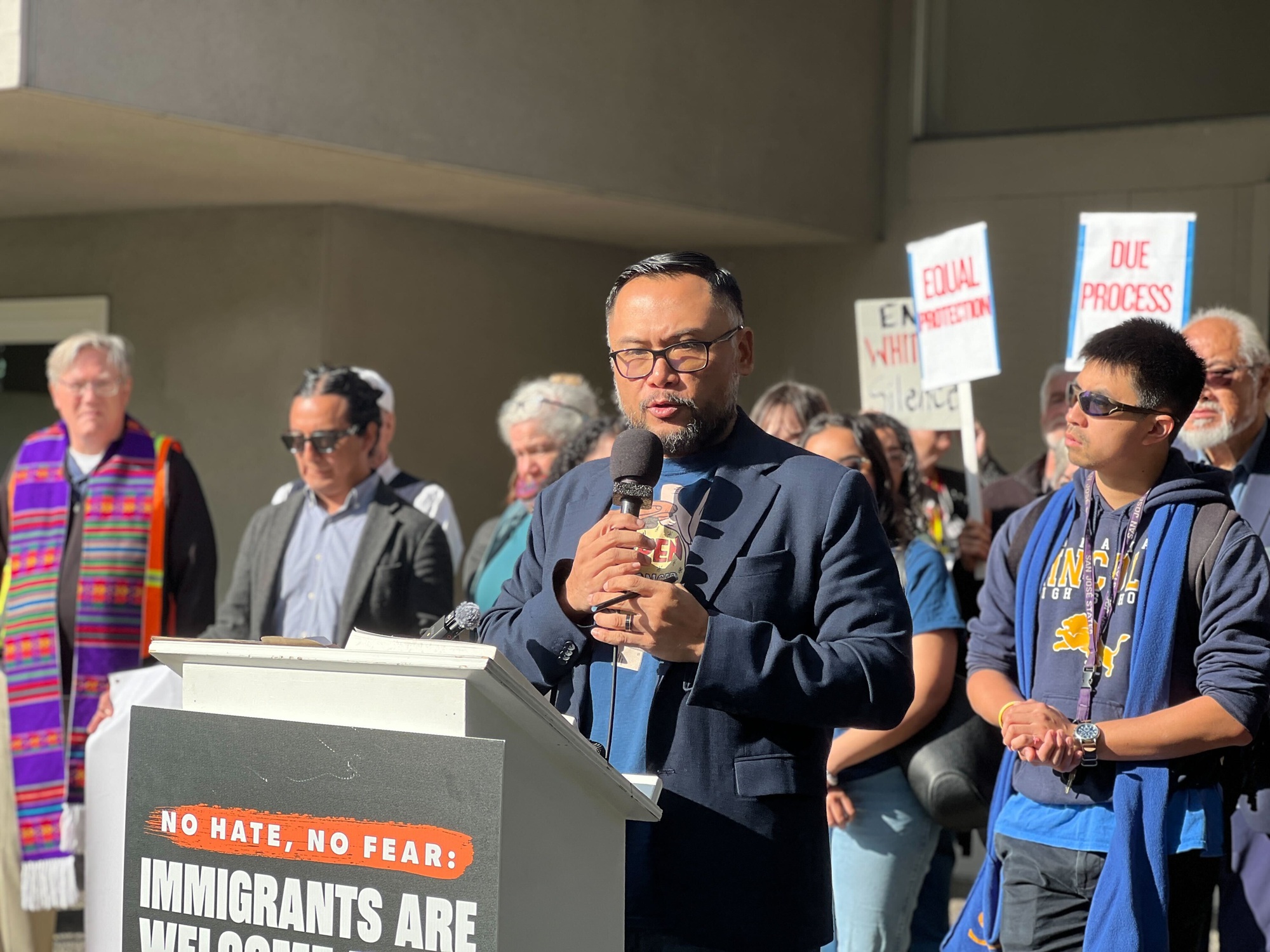
"caption": "Services, Immigrant Rights & Education Network’s Executive Director Huy Tran speaks during a International Migrants Day press conference on Dec. 18, 2025. ",
"credit": "Ayah Ali-Ahmad/KQED",
"altTag": null,
"description": null,
"imgSizes": {
"thumbnail": {
"file": "https://cdn.kqed.org/wp-content/uploads/sites/10/2025/12/MigrantDayKQED-160x120.jpg",
"width": 160,
"height": 120,
"mimeType": "image/jpeg"
},
"1536x1536": {
"file": "https://cdn.kqed.org/wp-content/uploads/sites/10/2025/12/MigrantDayKQED-1536x1152.jpg",
"width": 1536,
"height": 1152,
"mimeType": "image/jpeg"
},
"post-thumbnail": {
"file": "https://cdn.kqed.org/wp-content/uploads/sites/10/2025/12/MigrantDayKQED-672x372.jpg",
"width": 672,
"height": 372,
"mimeType": "image/jpeg"
},
"twentyfourteen-full-width": {
"file": "https://cdn.kqed.org/wp-content/uploads/sites/10/2025/12/MigrantDayKQED-1038x576.jpg",
"width": 1038,
"height": 576,
"mimeType": "image/jpeg"
},
"npr-cds-wide": {
"file": "https://cdn.kqed.org/wp-content/uploads/sites/10/2025/12/MigrantDayKQED-1200x675.jpg",
"width": 1200,
"height": 675,
"mimeType": "image/jpeg"
},
"kqedFullSize": {
"file": "https://cdn.kqed.org/wp-content/uploads/sites/10/2025/12/MigrantDayKQED.jpg",
"width": 2000,
"height": 1500
}
},
"isLoading": false,
"fetchFailed": false
},
"news_12067436": {
"type": "attachments",
"id": "news_12067436",
"meta": {
"index": "attachments_1716263798",
"site": "news",
"id": "12067436",
"found": true
},
"title": "Glide Memorial Church Christmas Dinner",
"publishDate": 1765914632,
"status": "inherit",
"parent": 12067415,
"modified": 1766539744,
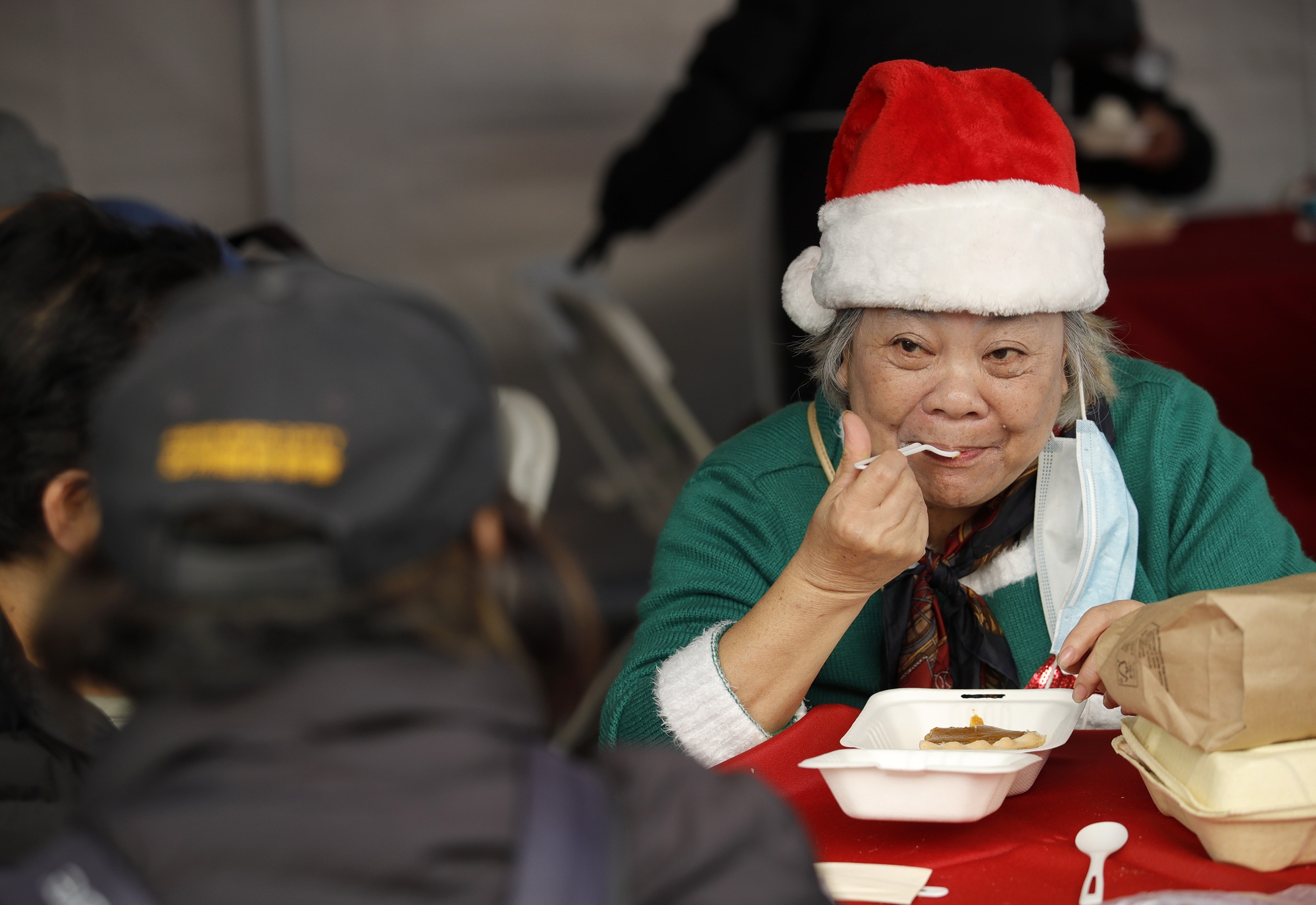
"caption": "A resident eats a holiday meal at Glide Memorial Church in San Francisco, California, on Sunday, Dec. 25, 2022.",
"credit": "Jane Tyska/Digital First Media/East Bay Times via Getty Images",
"altTag": null,
"description": null,
"imgSizes": {
"thumbnail": {
"file": "https://cdn.kqed.org/wp-content/uploads/sites/10/2025/12/GlideChurchSFGetty-160x110.jpg",
"width": 160,
"height": 110,
"mimeType": "image/jpeg"
},
"1536x1536": {
"file": "https://cdn.kqed.org/wp-content/uploads/sites/10/2025/12/GlideChurchSFGetty-1536x1057.jpg",
"width": 1536,
"height": 1057,
"mimeType": "image/jpeg"
},
"post-thumbnail": {
"file": "https://cdn.kqed.org/wp-content/uploads/sites/10/2025/12/GlideChurchSFGetty-672x372.jpg",
"width": 672,
"height": 372,
"mimeType": "image/jpeg"
},
"twentyfourteen-full-width": {
"file": "https://cdn.kqed.org/wp-content/uploads/sites/10/2025/12/GlideChurchSFGetty-1038x576.jpg",
"width": 1038,
"height": 576,
"mimeType": "image/jpeg"
},
"npr-cds-wide": {
"file": "https://cdn.kqed.org/wp-content/uploads/sites/10/2025/12/GlideChurchSFGetty-1200x675.jpg",
"width": 1200,
"height": 675,
"mimeType": "image/jpeg"
},
"kqedFullSize": {
"file": "https://cdn.kqed.org/wp-content/uploads/sites/10/2025/12/GlideChurchSFGetty.jpg",
"width": 2000,
"height": 1376
}
},
"isLoading": false,
"fetchFailed": false
},
"news_11979156": {
"type": "attachments",
"id": "news_11979156",
"meta": {
"index": "attachments_1716263798",
"site": "news",
"id": "11979156",
"found": true
},
"title": "240212-ImmigrationCourt-31-BL_qut",
"publishDate": 1710283094,
"status": "inherit",
"parent": 11979131,
"modified": 1748456121,
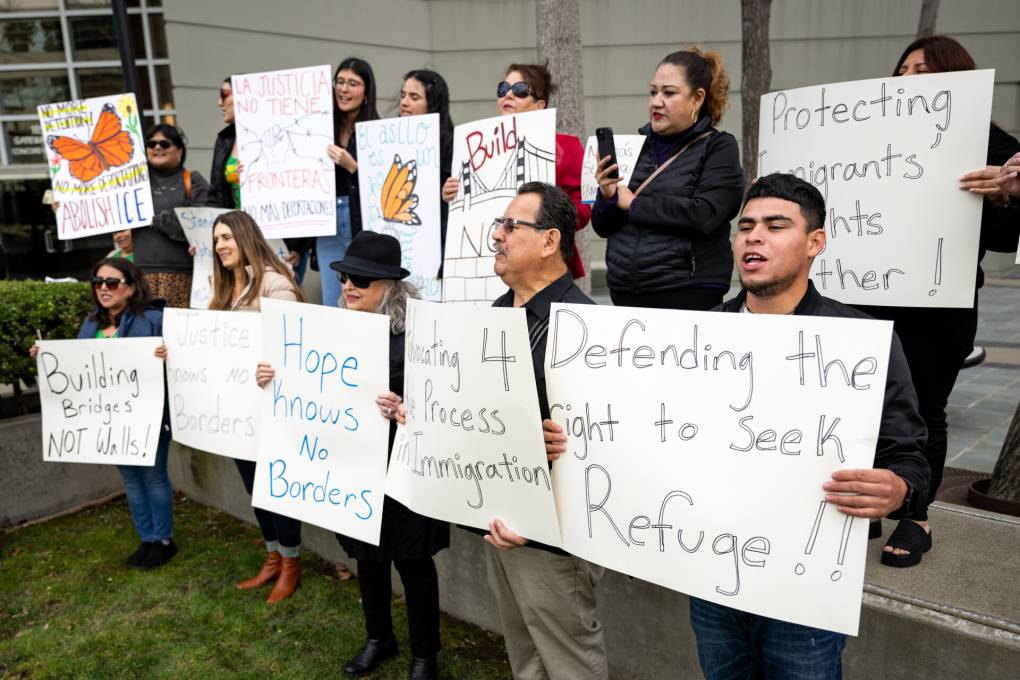
"caption": "Immigration rights supporters stand outside the new Concord Immigration Court in Concord during a press conference on Feb. 12, 2024.",
"credit": "Beth LaBerge/KQED",
"altTag": null,
"description": null,
"imgSizes": {
"medium": {
"file": "https://cdn.kqed.org/wp-content/uploads/sites/10/2024/03/240212-ImmigrationCourt-31-BL_qut-800x533.jpg",
"width": 800,
"height": 533,
"mimeType": "image/jpeg"
},
"large": {
"file": "https://cdn.kqed.org/wp-content/uploads/sites/10/2024/03/240212-ImmigrationCourt-31-BL_qut-1020x680.jpg",
"width": 1020,
"height": 680,
"mimeType": "image/jpeg"
},
"thumbnail": {
"file": "https://cdn.kqed.org/wp-content/uploads/sites/10/2024/03/240212-ImmigrationCourt-31-BL_qut-160x107.jpg",
"width": 160,
"height": 107,
"mimeType": "image/jpeg"
},
"1536x1536": {
"file": "https://cdn.kqed.org/wp-content/uploads/sites/10/2024/03/240212-ImmigrationCourt-31-BL_qut-1536x1024.jpg",
"width": 1536,
"height": 1024,
"mimeType": "image/jpeg"
},
"post-thumbnail": {
"file": "https://cdn.kqed.org/wp-content/uploads/sites/10/2024/03/240212-ImmigrationCourt-31-BL_qut-672x372.jpg",
"width": 672,
"height": 372,
"mimeType": "image/jpeg"
},
"twentyfourteen-full-width": {
"file": "https://cdn.kqed.org/wp-content/uploads/sites/10/2024/03/240212-ImmigrationCourt-31-BL_qut-1038x576.jpg",
"width": 1038,
"height": 576,
"mimeType": "image/jpeg"
},
"kqedFullSize": {
"file": "https://cdn.kqed.org/wp-content/uploads/sites/10/2024/03/240212-ImmigrationCourt-31-BL_qut.jpg",
"width": 1920,
"height": 1280
}
},
"isLoading": false,
"fetchFailed": false
},
"news_12066517": {
"type": "attachments",
"id": "news_12066517",
"meta": {
"index": "attachments_1716263798",
"site": "news",
"id": "12066517",
"found": true
},
"title": "BilalMahmoodKQED1",
"publishDate": 1765323538,
"status": "inherit",
"parent": 12066486,
"modified": 1765323820,
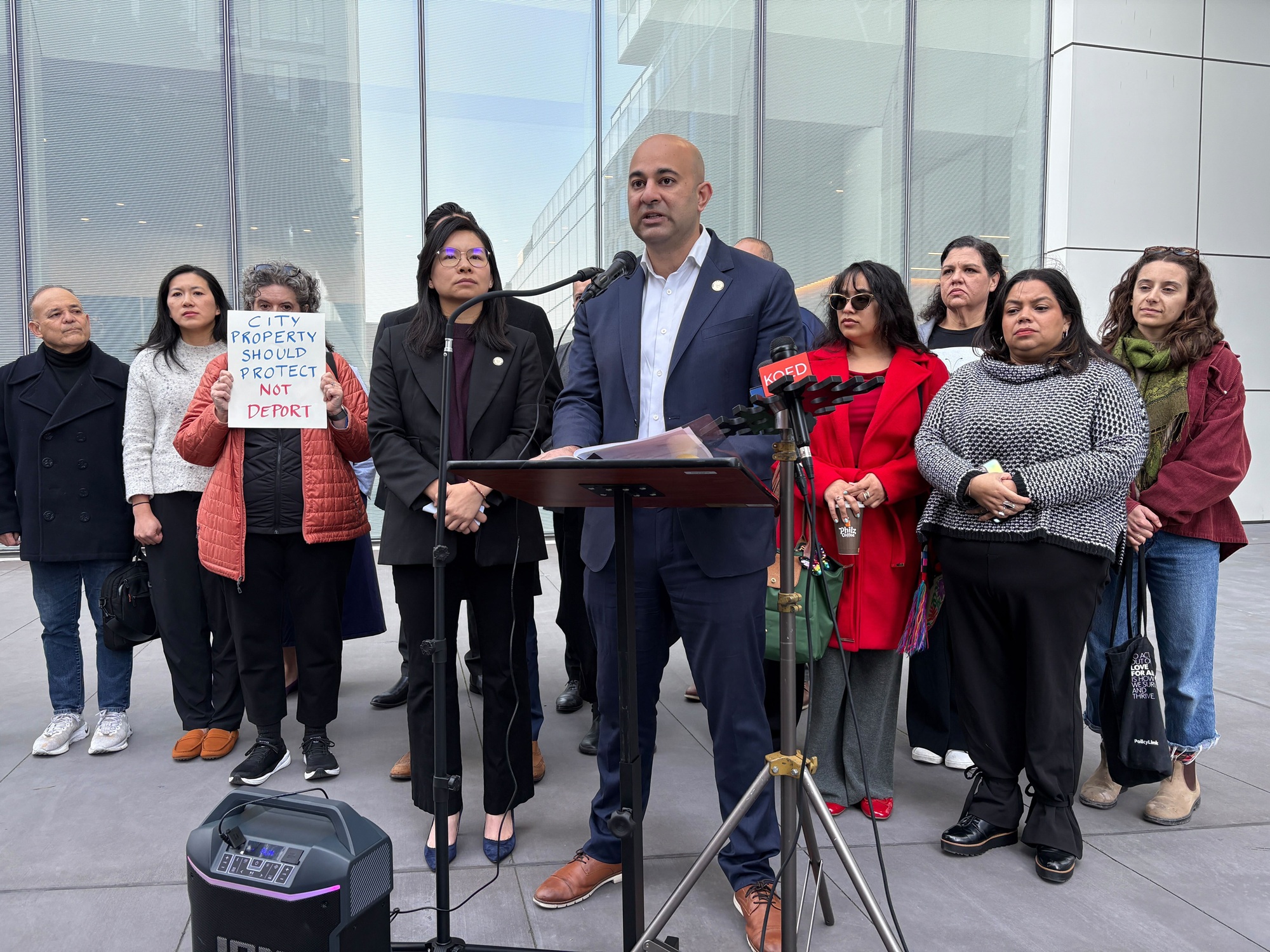
"caption": "Supervisors Bilal Mahmood and Chyanne Chen are proposing to block federal immigration activity from city-owned spaces.",
"credit": "Sydney Johnson/KQED",
"altTag": null,
"description": null,
"imgSizes": {
"thumbnail": {
"file": "https://cdn.kqed.org/wp-content/uploads/sites/10/2025/12/BilalMahmoodKQED1-160x120.jpg",
"width": 160,
"height": 120,
"mimeType": "image/jpeg"
},
"1536x1536": {
"file": "https://cdn.kqed.org/wp-content/uploads/sites/10/2025/12/BilalMahmoodKQED1-1536x1152.jpg",
"width": 1536,
"height": 1152,
"mimeType": "image/jpeg"
},
"post-thumbnail": {
"file": "https://cdn.kqed.org/wp-content/uploads/sites/10/2025/12/BilalMahmoodKQED1-672x372.jpg",
"width": 672,
"height": 372,
"mimeType": "image/jpeg"
},
"twentyfourteen-full-width": {
"file": "https://cdn.kqed.org/wp-content/uploads/sites/10/2025/12/BilalMahmoodKQED1-1038x576.jpg",
"width": 1038,
"height": 576,
"mimeType": "image/jpeg"
},
"npr-cds-wide": {
"file": "https://cdn.kqed.org/wp-content/uploads/sites/10/2025/12/BilalMahmoodKQED1-1200x675.jpg",
"width": 1200,
"height": 675,
"mimeType": "image/jpeg"
},
"kqedFullSize": {
"file": "https://cdn.kqed.org/wp-content/uploads/sites/10/2025/12/BilalMahmoodKQED1.jpg",
"width": 2000,
"height": 1500
}
},
"isLoading": false,
"fetchFailed": false
},
"news_12066052": {
"type": "attachments",
"id": "news_12066052",
"meta": {
"index": "attachments_1716263798",
"site": "news",
"id": "12066052",
"found": true
},
"title": "251203-SJPRIESTIMMIGRATION00043_TV-KQED",
"publishDate": 1764868088,
"status": "inherit",
"parent": 0,
"modified": 1764868163,
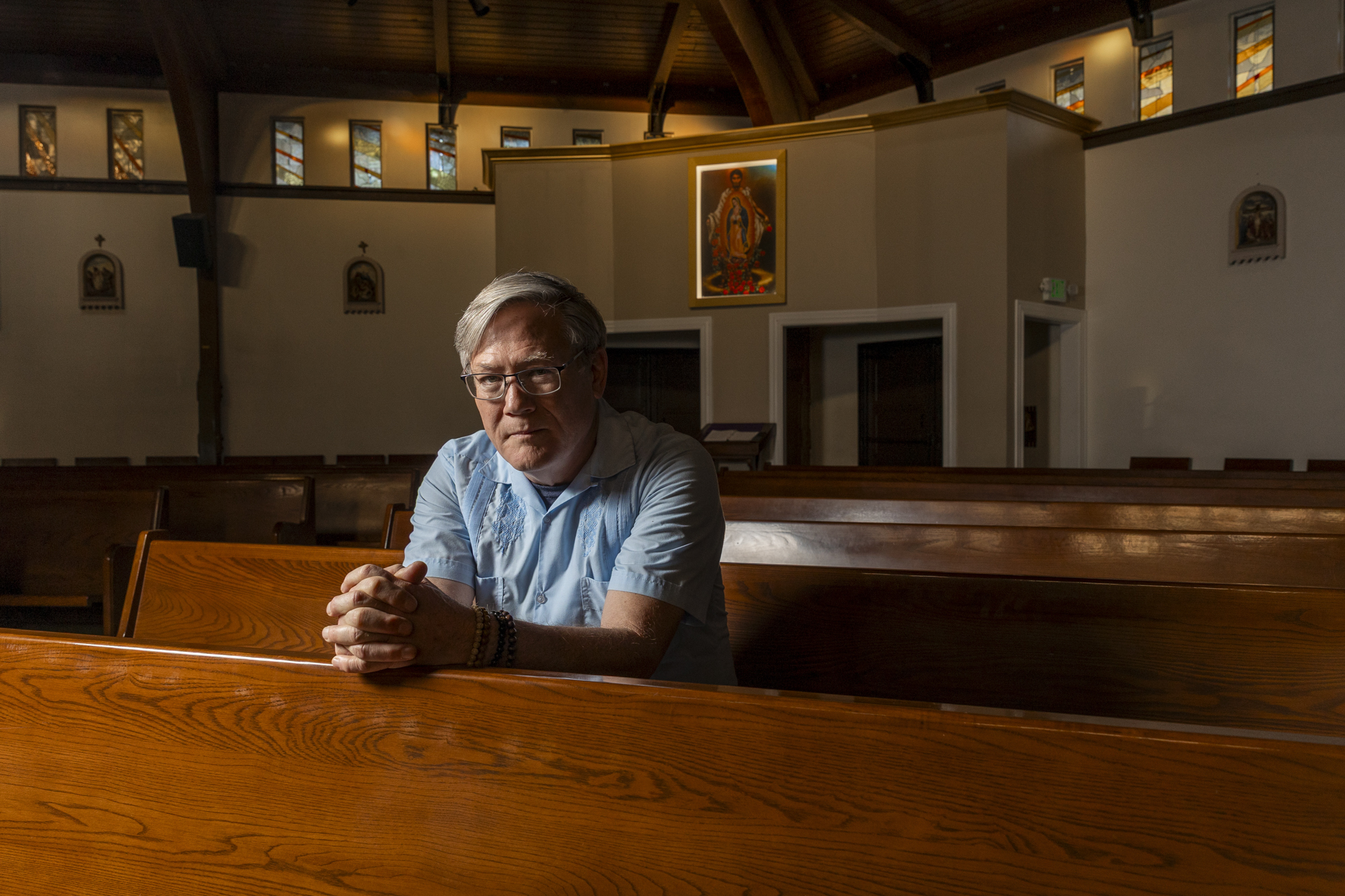
"caption": "Father Jon Pedigo poses for a portrait at Our Lady of Guadalupe Church where he has worked as a priest, at 2020 East San Antonio Street in San Jose on December 3, 2025. Father Jon Pedigo, a priest who has worked with immigrant communities affected by ICE raids and deportations, is leaving his full time job as a priest to be a full time organizer.",
"credit": "Tâm Vũ/KQED",
"altTag": null,
"description": null,
"imgSizes": {
"thumbnail": {
"file": "https://cdn.kqed.org/wp-content/uploads/sites/10/2025/12/251203-SJPRIESTIMMIGRATION00043_TV-KQED-160x107.jpg",
"width": 160,
"height": 107,
"mimeType": "image/jpeg"
},
"1536x1536": {
"file": "https://cdn.kqed.org/wp-content/uploads/sites/10/2025/12/251203-SJPRIESTIMMIGRATION00043_TV-KQED-1536x1024.jpg",
"width": 1536,
"height": 1024,
"mimeType": "image/jpeg"
},
"post-thumbnail": {
"file": "https://cdn.kqed.org/wp-content/uploads/sites/10/2025/12/251203-SJPRIESTIMMIGRATION00043_TV-KQED-672x372.jpg",
"width": 672,
"height": 372,
"mimeType": "image/jpeg"
},
"twentyfourteen-full-width": {
"file": "https://cdn.kqed.org/wp-content/uploads/sites/10/2025/12/251203-SJPRIESTIMMIGRATION00043_TV-KQED-1038x576.jpg",
"width": 1038,
"height": 576,
"mimeType": "image/jpeg"
},
"npr-cds-wide": {
"file": "https://cdn.kqed.org/wp-content/uploads/sites/10/2025/12/251203-SJPRIESTIMMIGRATION00043_TV-KQED-1200x675.jpg",
"width": 1200,
"height": 675,
"mimeType": "image/jpeg"
},
"kqedFullSize": {
"file": "https://cdn.kqed.org/wp-content/uploads/sites/10/2025/12/251203-SJPRIESTIMMIGRATION00043_TV-KQED.jpg",
"width": 2000,
"height": 1333
}
},
"isLoading": false,
"fetchFailed": false
},
"news_12065944": {
"type": "attachments",
"id": "news_12065944",
"meta": {
"index": "attachments_1716263798",
"site": "news",
"id": "12065944",
"found": true
},
"title": "251203-VALLEYFAIRCHARGE-JG-3_qed",
"publishDate": 1764798373,
"status": "inherit",
"parent": 12070759,
"modified": 1769122518,
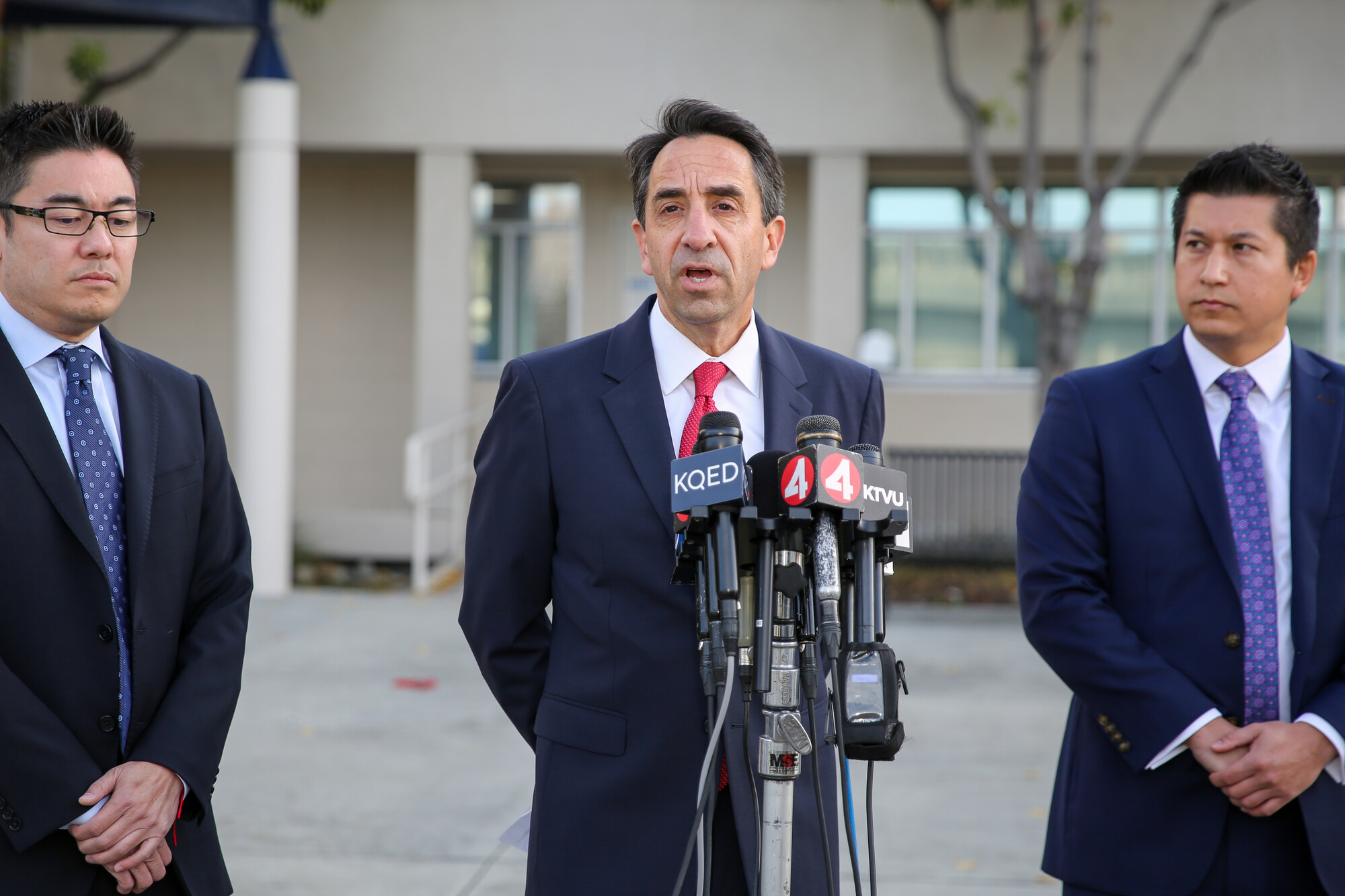
"caption": "Santa Clara County District Attorney Jeff Rosen (center) addresses the media outside the county’s Juvenile Center in San José on Dec. 3, 2025.",
"credit": "Joseph Geha/KQED",
"altTag": null,
"description": null,
"imgSizes": {
"thumbnail": {
"file": "https://cdn.kqed.org/wp-content/uploads/sites/10/2025/12/251203-VALLEYFAIRCHARGE-JG-3_qed-160x107.jpg",
"width": 160,
"height": 107,
"mimeType": "image/jpeg"
},
"1536x1536": {
"file": "https://cdn.kqed.org/wp-content/uploads/sites/10/2025/12/251203-VALLEYFAIRCHARGE-JG-3_qed-1536x1024.jpg",
"width": 1536,
"height": 1024,
"mimeType": "image/jpeg"
},
"post-thumbnail": {
"file": "https://cdn.kqed.org/wp-content/uploads/sites/10/2025/12/251203-VALLEYFAIRCHARGE-JG-3_qed-672x372.jpg",
"width": 672,
"height": 372,
"mimeType": "image/jpeg"
},
"twentyfourteen-full-width": {
"file": "https://cdn.kqed.org/wp-content/uploads/sites/10/2025/12/251203-VALLEYFAIRCHARGE-JG-3_qed-1038x576.jpg",
"width": 1038,
"height": 576,
"mimeType": "image/jpeg"
},
"npr-cds-wide": {
"file": "https://cdn.kqed.org/wp-content/uploads/sites/10/2025/12/251203-VALLEYFAIRCHARGE-JG-3_qed-1200x675.jpg",
"width": 1200,
"height": 675,
"mimeType": "image/jpeg"
},
"kqedFullSize": {
"file": "https://cdn.kqed.org/wp-content/uploads/sites/10/2025/12/251203-VALLEYFAIRCHARGE-JG-3_qed.jpg",
"width": 2000,
"height": 1333
}
},
"isLoading": false,
"fetchFailed": false
},
"news_12047902": {
"type": "attachments",
"id": "news_12047902",
"meta": {
"index": "attachments_1716263798",
"site": "news",
"id": "12047902",
"found": true
},
"title": "240418-SJPDFILE-JG-6_qed",
"publishDate": 1752514544,
"status": "inherit",
"parent": 12047900,
"modified": 1763510734,
"caption": "The exterior of the San José Police Department headquarters on April 18, 2024.",
"credit": "Joseph Geha/KQED",
"altTag": null,
"description": null,
"imgSizes": {
"thumbnail": {
"file": "https://cdn.kqed.org/wp-content/uploads/sites/10/2025/07/240418-SJPDFILE-JG-6_qed-160x107.jpg",
"width": 160,
"height": 107,
"mimeType": "image/jpeg"
},
"1536x1536": {
"file": "https://cdn.kqed.org/wp-content/uploads/sites/10/2025/07/240418-SJPDFILE-JG-6_qed-1536x1024.jpg",
"width": 1536,
"height": 1024,
"mimeType": "image/jpeg"
},
"post-thumbnail": {
"file": "https://cdn.kqed.org/wp-content/uploads/sites/10/2025/07/240418-SJPDFILE-JG-6_qed-672x372.jpg",
"width": 672,
"height": 372,
"mimeType": "image/jpeg"
},
"twentyfourteen-full-width": {
"file": "https://cdn.kqed.org/wp-content/uploads/sites/10/2025/07/240418-SJPDFILE-JG-6_qed-1038x576.jpg",
"width": 1038,
"height": 576,
"mimeType": "image/jpeg"
},
"kqedFullSize": {
"file": "https://cdn.kqed.org/wp-content/uploads/sites/10/2025/07/240418-SJPDFILE-JG-6_qed.jpg",
"width": 2000,
"height": 1333
}
},
"isLoading": false,
"fetchFailed": false
},
"news_12064595": {
"type": "attachments",
"id": "news_12064595",
"meta": {
"index": "attachments_1716263798",
"site": "news",
"id": "12064595",
"found": true
},
"title": "image (9)",
"publishDate": 1763494109,
"status": "inherit",
"parent": 12064587,
"modified": 1763494167,
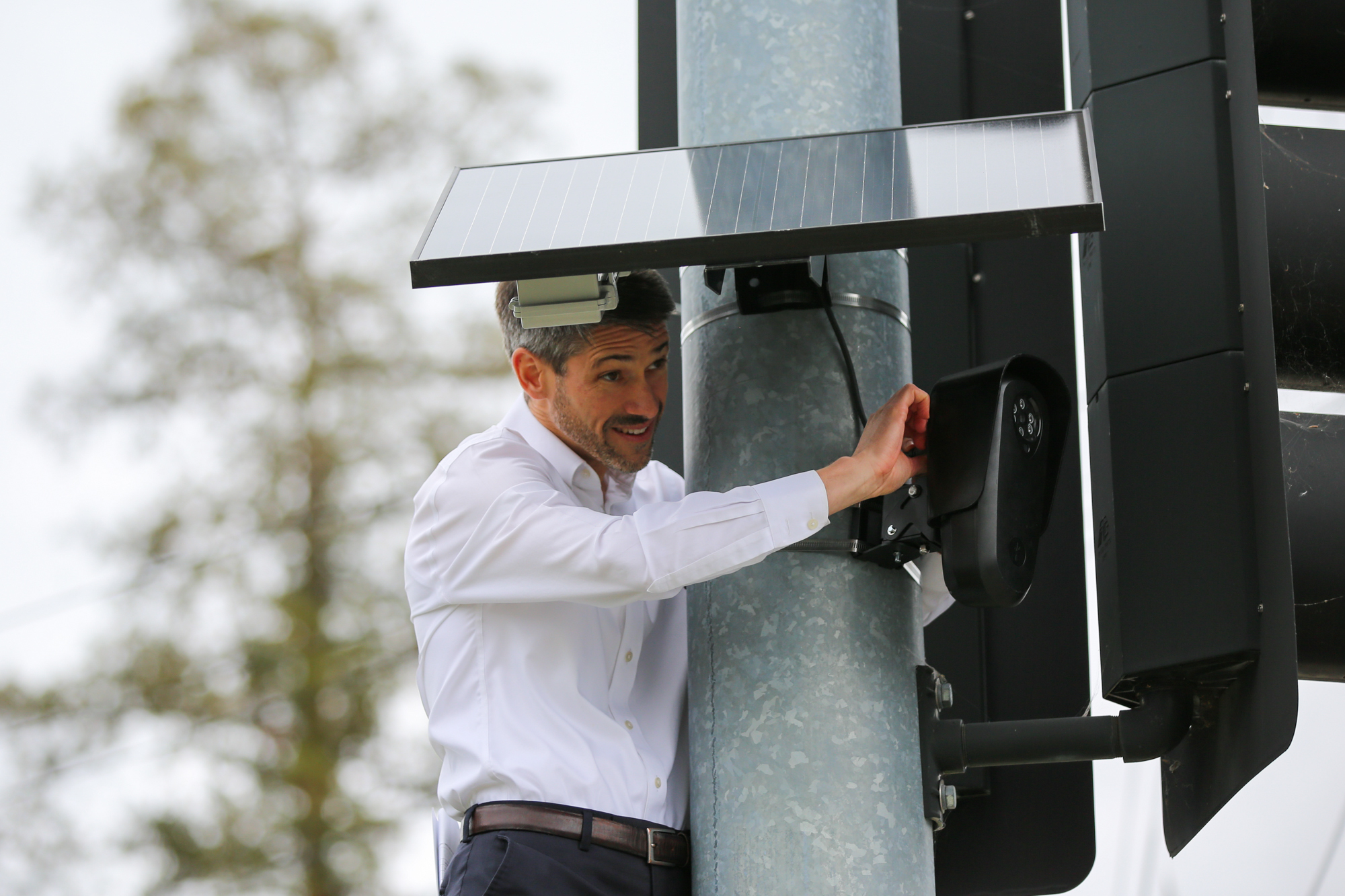
"caption": "San José Mayor Matt Mahan helps to install a Flock Safety brand automated license plate reader on April 23, 2024. The city and Mahan are now being sued by civil liberties groups over the technology's uses.",
"credit": "Joseph Geha/KQED",
"altTag": null,
"description": null,
"imgSizes": {
"thumbnail": {
"file": "https://cdn.kqed.org/wp-content/uploads/sites/10/2025/11/image-9-160x107.png",
"width": 160,
"height": 107,
"mimeType": "image/png"
},
"1536x1536": {
"file": "https://cdn.kqed.org/wp-content/uploads/sites/10/2025/11/image-9-1536x1024.png",
"width": 1536,
"height": 1024,
"mimeType": "image/png"
},
"post-thumbnail": {
"file": "https://cdn.kqed.org/wp-content/uploads/sites/10/2025/11/image-9-672x372.png",
"width": 672,
"height": 372,
"mimeType": "image/png"
},
"twentyfourteen-full-width": {
"file": "https://cdn.kqed.org/wp-content/uploads/sites/10/2025/11/image-9-1038x576.png",
"width": 1038,
"height": 576,
"mimeType": "image/png"
},
"npr-cds-wide": {
"file": "https://cdn.kqed.org/wp-content/uploads/sites/10/2025/11/image-9-1200x675.png",
"width": 1200,
"height": 675,
"mimeType": "image/png"
},
"kqedFullSize": {
"file": "https://cdn.kqed.org/wp-content/uploads/sites/10/2025/11/image-9.png",
"width": 2000,
"height": 1333
}
},
"isLoading": false,
"fetchFailed": false
},
"news_12026470": {
"type": "attachments",
"id": "news_12026470",
"meta": {
"index": "attachments_1716263798",
"site": "news",
"id": "12026470",
"found": true
},
"title": "240620-AffordableHousingPresser-16-BL_qed",
"publishDate": 1739218616,
"status": "inherit",
"parent": 12026437,
"modified": 1739218629,
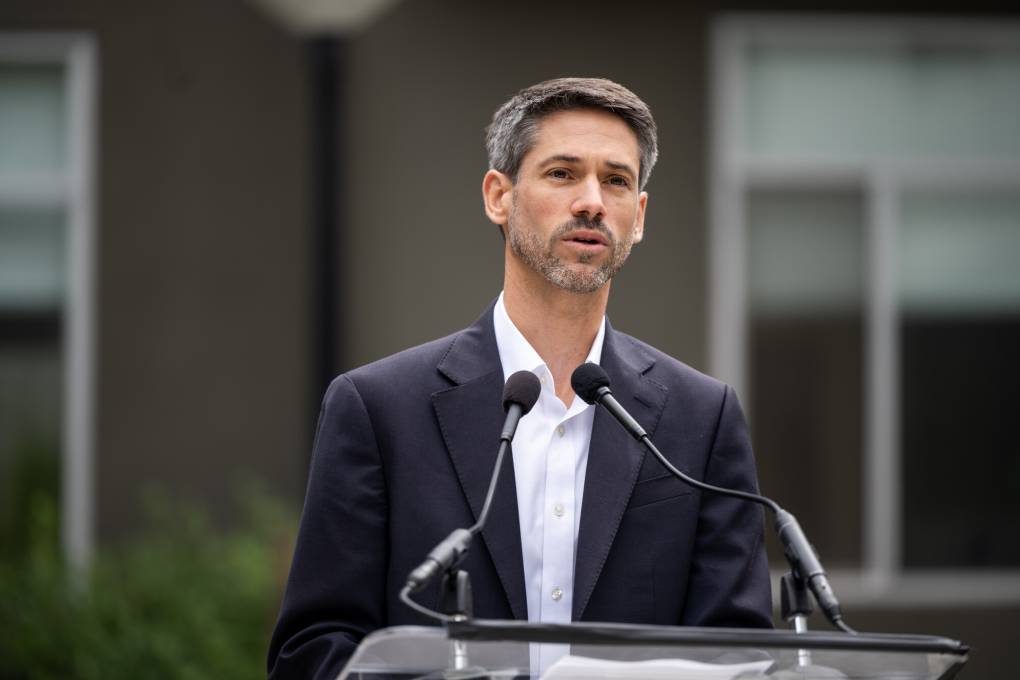
"caption": "San José Mayor Matt Mahan speaks during a press conference in support of a regional affordable housing measure at Five88, a mixed-use residential and retail property, in the Mission Bay neighborhood in San Francisco on June 20, 2024.",
"credit": "Beth LaBerge/KQED",
"altTag": null,
"description": null,
"imgSizes": {
"medium": {
"file": "https://cdn.kqed.org/wp-content/uploads/sites/10/2025/02/240620-AffordableHousingPresser-16-BL_qed-800x533.jpg",
"width": 800,
"height": 533,
"mimeType": "image/jpeg"
},
"large": {
"file": "https://cdn.kqed.org/wp-content/uploads/sites/10/2025/02/240620-AffordableHousingPresser-16-BL_qed-1020x680.jpg",
"width": 1020,
"height": 680,
"mimeType": "image/jpeg"
},
"thumbnail": {
"file": "https://cdn.kqed.org/wp-content/uploads/sites/10/2025/02/240620-AffordableHousingPresser-16-BL_qed-160x107.jpg",
"width": 160,
"height": 107,
"mimeType": "image/jpeg"
},
"1536x1536": {
"file": "https://cdn.kqed.org/wp-content/uploads/sites/10/2025/02/240620-AffordableHousingPresser-16-BL_qed-1536x1024.jpg",
"width": 1536,
"height": 1024,
"mimeType": "image/jpeg"
},
"post-thumbnail": {
"file": "https://cdn.kqed.org/wp-content/uploads/sites/10/2025/02/240620-AffordableHousingPresser-16-BL_qed-672x372.jpg",
"width": 672,
"height": 372,
"mimeType": "image/jpeg"
},
"twentyfourteen-full-width": {
"file": "https://cdn.kqed.org/wp-content/uploads/sites/10/2025/02/240620-AffordableHousingPresser-16-BL_qed-1038x576.jpg",
"width": 1038,
"height": 576,
"mimeType": "image/jpeg"
},
"full-width": {
"file": "https://cdn.kqed.org/wp-content/uploads/sites/10/2025/02/240620-AffordableHousingPresser-16-BL_qed-1920x1280.jpg",
"width": 1920,
"height": 1280,
"mimeType": "image/jpeg"
},
"kqedFullSize": {
"file": "https://cdn.kqed.org/wp-content/uploads/sites/10/2025/02/240620-AffordableHousingPresser-16-BL_qed.jpg",
"width": 2000,
"height": 1333
}
},
"isLoading": false,
"fetchFailed": false
},
"news_12058500": {
"type": "attachments",
"id": "news_12058500",
"meta": {
"index": "attachments_1716263798",
"site": "news",
"id": "12058500",
"found": true
},
"title": "251001_BAYAREASHELTER_-17-KQED",
"publishDate": 1759447814,
"status": "inherit",
"parent": 0,
"modified": 1759447933,
"caption": "Sarah Spillane, a resident of the DignityMoves tiny home cabins, outside the entrance in SoMa in San Francisco on Oct. 1, 2025.",
"credit": "Gustavo Hernandez/KQED",
"altTag": null,
"description": null,
"imgSizes": {
"thumbnail": {
"file": "https://cdn.kqed.org/wp-content/uploads/sites/10/2025/10/251001_BAYAREASHELTER_-17-KQED-160x107.jpg",
"width": 160,
"height": 107,
"mimeType": "image/jpeg"
},
"1536x1536": {
"file": "https://cdn.kqed.org/wp-content/uploads/sites/10/2025/10/251001_BAYAREASHELTER_-17-KQED-1536x1024.jpg",
"width": 1536,
"height": 1024,
"mimeType": "image/jpeg"
},
"post-thumbnail": {
"file": "https://cdn.kqed.org/wp-content/uploads/sites/10/2025/10/251001_BAYAREASHELTER_-17-KQED-672x372.jpg",
"width": 672,
"height": 372,
"mimeType": "image/jpeg"
},
"twentyfourteen-full-width": {
"file": "https://cdn.kqed.org/wp-content/uploads/sites/10/2025/10/251001_BAYAREASHELTER_-17-KQED-1038x576.jpg",
"width": 1038,
"height": 576,
"mimeType": "image/jpeg"
},
"kqedFullSize": {
"file": "https://cdn.kqed.org/wp-content/uploads/sites/10/2025/10/251001_BAYAREASHELTER_-17-KQED.jpg",
"width": 2000,
"height": 1333
}
},
"isLoading": false,
"fetchFailed": false
},
"news_12062943": {
"type": "attachments",
"id": "news_12062943",
"meta": {
"index": "attachments_1716263798",
"site": "news",
"id": "12062943",
"found": true
},
"title": "251104-BART SAN JOSE FUNDING CONCERNS-MD-04-KQED",
"publishDate": 1762301661,
"status": "inherit",
"parent": 0,
"modified": 1762391827,
"caption": "Construction crews work at the West Portal site as part of the project to bring BART through downtown San José on Nov. 4, 2025",
"credit": "Martin do Nascimento/KQED",
"altTag": null,
"description": null,
"imgSizes": {
"thumbnail": {
"file": "https://cdn.kqed.org/wp-content/uploads/sites/10/2025/11/251104-BART-SAN-JOSE-FUNDING-CONCERNS-MD-04-KQED-160x107.jpg",
"width": 160,
"height": 107,
"mimeType": "image/jpeg"
},
"1536x1536": {
"file": "https://cdn.kqed.org/wp-content/uploads/sites/10/2025/11/251104-BART-SAN-JOSE-FUNDING-CONCERNS-MD-04-KQED-1536x1024.jpg",
"width": 1536,
"height": 1024,
"mimeType": "image/jpeg"
},
"post-thumbnail": {
"file": "https://cdn.kqed.org/wp-content/uploads/sites/10/2025/11/251104-BART-SAN-JOSE-FUNDING-CONCERNS-MD-04-KQED-672x372.jpg",
"width": 672,
"height": 372,
"mimeType": "image/jpeg"
},
"twentyfourteen-full-width": {
"file": "https://cdn.kqed.org/wp-content/uploads/sites/10/2025/11/251104-BART-SAN-JOSE-FUNDING-CONCERNS-MD-04-KQED-1038x576.jpg",
"width": 1038,
"height": 576,
"mimeType": "image/jpeg"
},
"npr-cds-wide": {
"file": "https://cdn.kqed.org/wp-content/uploads/sites/10/2025/11/251104-BART-SAN-JOSE-FUNDING-CONCERNS-MD-04-KQED-1200x675.jpg",
"width": 1200,
"height": 675,
"mimeType": "image/jpeg"
},
"kqedFullSize": {
"file": "https://cdn.kqed.org/wp-content/uploads/sites/10/2025/11/251104-BART-SAN-JOSE-FUNDING-CONCERNS-MD-04-KQED.jpg",
"width": 2000,
"height": 1333
}
},
"isLoading": false,
"fetchFailed": false
},
"news_12063100": {
"type": "attachments",
"id": "news_12063100",
"meta": {
"index": "attachments_1716263798",
"site": "news",
"id": "12063100",
"found": true
},
"title": "Whip Its Drug",
"publishDate": 1762380008,
"status": "inherit",
"parent": 12063060,
"modified": 1762380073,
"caption": "Close-up of miniature cylinder of nitrous oxide, a drug of abuse referred to as \"Whip Its,\" \"Whipits\" or \"Whippets,\" discarded in a gutter in Walnut Creek, California, on March 13, 2020. ",
"credit": "Smith Collection/Gado via Getty Images",
"altTag": null,
"description": null,
"imgSizes": {
"thumbnail": {
"file": "https://cdn.kqed.org/wp-content/uploads/sites/10/2025/11/WhippetGetty-160x107.jpg",
"width": 160,
"height": 107,
"mimeType": "image/jpeg"
},
"1536x1536": {
"file": "https://cdn.kqed.org/wp-content/uploads/sites/10/2025/11/WhippetGetty-1536x1024.jpg",
"width": 1536,
"height": 1024,
"mimeType": "image/jpeg"
},
"post-thumbnail": {
"file": "https://cdn.kqed.org/wp-content/uploads/sites/10/2025/11/WhippetGetty-672x372.jpg",
"width": 672,
"height": 372,
"mimeType": "image/jpeg"
},
"twentyfourteen-full-width": {
"file": "https://cdn.kqed.org/wp-content/uploads/sites/10/2025/11/WhippetGetty-1038x576.jpg",
"width": 1038,
"height": 576,
"mimeType": "image/jpeg"
},
"npr-cds-wide": {
"file": "https://cdn.kqed.org/wp-content/uploads/sites/10/2025/11/WhippetGetty-1200x675.jpg",
"width": 1200,
"height": 675,
"mimeType": "image/jpeg"
},
"kqedFullSize": {
"file": "https://cdn.kqed.org/wp-content/uploads/sites/10/2025/11/WhippetGetty.jpg",
"width": 2000,
"height": 1333
}
},
"isLoading": false,
"fetchFailed": false
}
},
"audioPlayerReducer": {
"postId": "stream_live",
"isPaused": true,
"isPlaying": false,
"pfsActive": false,
"pledgeModalIsOpen": true,
"playerDrawerIsOpen": false,
"liveAudioPlayStartedAt": 0,
"liveAudioPlayContext": ""
},
"authorsReducer": {
"gmarzorati": {
"type": "authors",
"id": "227",
"meta": {
"index": "authors_1716337520",
"id": "227",
"found": true
},
"name": "Guy Marzorati",
"firstName": "Guy",
"lastName": "Marzorati",
"slug": "gmarzorati",
"email": "gmarzorati@KQED.org",
"display_author_email": true,
"staff_mastheads": [
"news"
],
"title": "Correspondent",
"bio": "Guy Marzorati is a correspondent on KQED's California Politics and Government Desk, based in San Jose. A graduate of Santa Clara University, Guy joined KQED in 2013. He reports on state and local politics and produces KQED's digital voter guide.",
"avatar": "https://secure.gravatar.com/avatar/e7038b8dbfd55b104369b76b1cd0b9de?s=600&d=blank&r=g",
"twitter": "guymarzorati",
"facebook": null,
"instagram": null,
"linkedin": null,
"sites": [
{
"site": "",
"roles": [
"editor"
]
},
{
"site": "news",
"roles": [
"editor"
]
},
{
"site": "science",
"roles": [
"editor"
]
},
{
"site": "forum",
"roles": [
"editor"
]
},
{
"site": "elections",
"roles": [
"editor"
]
},
{
"site": "liveblog",
"roles": [
"editor"
]
}
],
"headData": {
"title": "Guy Marzorati | KQED",
"description": "Correspondent",
"ogImgSrc": "https://secure.gravatar.com/avatar/e7038b8dbfd55b104369b76b1cd0b9de?s=600&d=blank&r=g",
"twImgSrc": "https://secure.gravatar.com/avatar/e7038b8dbfd55b104369b76b1cd0b9de?s=600&d=blank&r=g"
},
"isLoading": false,
"link": "/author/gmarzorati"
},
"tychehendricks": {
"type": "authors",
"id": "259",
"meta": {
"index": "authors_1716337520",
"id": "259",
"found": true
},
"name": "Tyche Hendricks",
"firstName": "Tyche",
"lastName": "Hendricks",
"slug": "tychehendricks",
"email": "thendricks@kqed.org",
"display_author_email": true,
"staff_mastheads": [
"news"
],
"title": "KQED Senior Editor, Immigration",
"bio": "\u003cspan style=\"font-weight: 400;\">Tyche Hendricks is KQED’s senior editor for immigration, leading coverage of the policy and politics that affect California’s immigrant communities. Her work for KQED’s radio and online audiences is also carried on NPR and other national outlets. She has been recognized with awards from the Radio and Television News Directors Association, the Society for Professional Journalists; the Education Writers Association; the Best of the West and the National Federation of Community Broadcasters. Before joining KQED in 2010, Tyche spent more than a dozen years as a newspaper reporter, notably at the \u003c/span>\u003ci>\u003cspan style=\"font-weight: 400;\">San Francisco Chronicle\u003c/span>\u003c/i>\u003cspan style=\"font-weight: 400;\">. At different times she has covered criminal justice, government and politics and urban planning. Tyche has taught in the MFA Creative Writing program at the University of San Francisco and at UC Berkeley’s Graduate School of Journalism, where she was co-director of a national immigration symposium for professional journalists. She is the author of \u003c/span>\u003ci>\u003cspan style=\"font-weight: 400;\">The Wind Doesn't Need a Passport: Stories from the U.S.-Mexico Borderlands\u003c/span>\u003c/i>\u003cspan style=\"font-weight: 400;\"> (University of California Press). \u003c/span>",
"avatar": "https://secure.gravatar.com/avatar/b8ee458e2731c2d43df86882ce17267e?s=600&d=blank&r=g",
"twitter": "tychehendricks",
"facebook": null,
"instagram": null,
"linkedin": null,
"sites": [
{
"site": "news",
"roles": [
"editor"
]
},
{
"site": "stateofhealth",
"roles": [
"editor"
]
}
],
"headData": {
"title": "Tyche Hendricks | KQED",
"description": "KQED Senior Editor, Immigration",
"ogImgSrc": "https://secure.gravatar.com/avatar/b8ee458e2731c2d43df86882ce17267e?s=600&d=blank&r=g",
"twImgSrc": "https://secure.gravatar.com/avatar/b8ee458e2731c2d43df86882ce17267e?s=600&d=blank&r=g"
},
"isLoading": false,
"link": "/author/tychehendricks"
},
"ecruzguevarra": {
"type": "authors",
"id": "8654",
"meta": {
"index": "authors_1716337520",
"id": "8654",
"found": true
},
"name": "Ericka Cruz Guevarra",
"firstName": "Ericka",
"lastName": "Cruz Guevarra",
"slug": "ecruzguevarra",
"email": "ecruzguevarra@kqed.org",
"display_author_email": true,
"staff_mastheads": [
"news"
],
"title": "Producer, The Bay Podcast",
"bio": "Ericka Cruz Guevarra is host of \u003ca href=\"https://www.kqed.org/podcasts/thebay\">\u003cem>The Bay\u003c/em>\u003c/a> podcast at KQED. Before host, she was the show’s producer. Her work in that capacity includes a three-part reported series on policing in Vallejo, which won a 2020 excellence in journalism award from the Society of Professional Journalists. Ericka has worked as a breaking news reporter at Oregon Public Broadcasting, helped produce the Code Switch podcast, and was KQED’s inaugural Raul Ramirez Diversity Fund intern. She’s also an alumna of NPR’s Next Generation Radio program. Send her an email if you have strong feelings about whether Fairfield and Suisun City are the Bay. Ericka is represented by SAG-AFTRA.",
"avatar": "https://secure.gravatar.com/avatar/accefc1de4bafc7e234b69bcb9b6f6536c130fd84709bc3069ef11a78787e1bb?s=600&d=blank&r=g",
"twitter": "NotoriousECG",
"bluesky": null,
"facebook": null,
"instagram": null,
"linkedin": null,
"sites": [
{
"site": "arts",
"roles": [
"subscriber"
]
},
{
"site": "news",
"roles": [
"editor",
"manage_categories"
]
},
{
"site": "futureofyou",
"roles": [
"subscriber"
]
},
{
"site": "stateofhealth",
"roles": [
"subscriber"
]
},
{
"site": "science",
"roles": [
"editor"
]
},
{
"site": "forum",
"roles": [
"subscriber"
]
}
],
"headData": {
"title": "Ericka Cruz Guevarra | KQED",
"description": "Producer, The Bay Podcast",
"ogImgSrc": "https://secure.gravatar.com/avatar/accefc1de4bafc7e234b69bcb9b6f6536c130fd84709bc3069ef11a78787e1bb?s=600&d=blank&r=g",
"twImgSrc": "https://secure.gravatar.com/avatar/accefc1de4bafc7e234b69bcb9b6f6536c130fd84709bc3069ef11a78787e1bb?s=600&d=blank&r=g"
},
"isLoading": false,
"link": "/author/ecruzguevarra"
},
"amontecillo": {
"type": "authors",
"id": "11649",
"meta": {
"index": "authors_1716337520",
"id": "11649",
"found": true
},
"name": "Alan Montecillo",
"firstName": "Alan",
"lastName": "Montecillo",
"slug": "amontecillo",
"email": "amontecillo@kqed.org",
"display_author_email": false,
"staff_mastheads": [
"news"
],
"title": "KQED Contributor",
"bio": "Alan Montecillo is the senior editor of \u003cem>\u003ca href=\"http://kqed.org/thebay\">The Bay\u003c/a>, \u003c/em> KQED's local news podcast. Before moving to the Bay Area, he worked as a senior talk show producer for WILL in Champaign-Urbana, Illinois and at Oregon Public Broadcasting in Portland, Oregon. He has won journalism awards from the Society of Professional Journalists Northern California, the Public Media Journalists Association, The Signal Awards, and has also received a regional Edward R. Murrow award. Alan is a Filipino American from Hong Kong and a graduate of Reed College.",
"avatar": "https://secure.gravatar.com/avatar/268f53a2066899ea9efdd8a5900218b17c822d9862cbc9326cccec53ef41d349?s=600&d=blank&r=g",
"twitter": "alanmontecillo",
"bluesky": null,
"facebook": null,
"instagram": null,
"linkedin": null,
"sites": [
{
"site": "",
"roles": [
"editor"
]
},
{
"site": "news",
"roles": [
"editor",
"manage_categories"
]
}
],
"headData": {
"title": "Alan Montecillo | KQED",
"description": "KQED Contributor",
"ogImgSrc": "https://secure.gravatar.com/avatar/268f53a2066899ea9efdd8a5900218b17c822d9862cbc9326cccec53ef41d349?s=600&d=blank&r=g",
"twImgSrc": "https://secure.gravatar.com/avatar/268f53a2066899ea9efdd8a5900218b17c822d9862cbc9326cccec53ef41d349?s=600&d=blank&r=g"
},
"isLoading": false,
"link": "/author/amontecillo"
},
"jessicakariisa": {
"type": "authors",
"id": "11831",
"meta": {
"index": "authors_1716337520",
"id": "11831",
"found": true
},
"name": "Jessica Kariisa",
"firstName": "Jessica",
"lastName": "Kariisa",
"slug": "jessicakariisa",
"email": "jkariisa@kqed.org",
"display_author_email": false,
"staff_mastheads": [],
"title": "Producer, The Bay",
"bio": "Jessica Kariisa is the producer of The Bay. She first joined KQED as an intern for The California Report Magazine, after which she became an on-call producer. She reported a Bay Curious episode on the use of rap lyrics in criminal trials which won a Society of Professional Journalists award in 2023 for Excellence in Features Journalism and the 2023 Signal Award for Best Conversation Starter. She’s worked on podcasts for Snap Judgment and American Public Media. Before embarking on her audio career, she was a music journalist.\r\n\r\nJessica Kariisa is represented by SAG-AFTRA.",
"avatar": "https://secure.gravatar.com/avatar/522e97b28ac0b3d411621c0fde8f3419c7b71ea2c5c262c57c4bb600963f328c?s=600&d=blank&r=g",
"twitter": null,
"bluesky": null,
"facebook": null,
"instagram": null,
"linkedin": null,
"sites": [
{
"site": "arts",
"roles": [
"author"
]
},
{
"site": "news",
"roles": [
"editor",
"manage_categories"
]
}
],
"headData": {
"title": "Jessica Kariisa | KQED",
"description": "Producer, The Bay",
"ogImgSrc": "https://secure.gravatar.com/avatar/522e97b28ac0b3d411621c0fde8f3419c7b71ea2c5c262c57c4bb600963f328c?s=600&d=blank&r=g",
"twImgSrc": "https://secure.gravatar.com/avatar/522e97b28ac0b3d411621c0fde8f3419c7b71ea2c5c262c57c4bb600963f328c?s=600&d=blank&r=g"
},
"isLoading": false,
"link": "/author/jessicakariisa"
},
"sjohnson": {
"type": "authors",
"id": "11840",
"meta": {
"index": "authors_1716337520",
"id": "11840",
"found": true
},
"name": "Sydney Johnson",
"firstName": "Sydney",
"lastName": "Johnson",
"slug": "sjohnson",
"email": "sjohnson@kqed.org",
"display_author_email": false,
"staff_mastheads": [
"news"
],
"title": "KQED Reporter",
"bio": "Sydney Johnson is a general assignment reporter at KQED. She previously reported on public health and city government at the San Francisco Examiner, and before that, she covered statewide education policy for EdSource. Her reporting has won multiple local, state and national awards. Sydney is a graduate of the University of California, Berkeley and lives in San Francisco.",
"avatar": "https://secure.gravatar.com/avatar/97855f2719b72ad6190b7c535fe642c8?s=600&d=blank&r=g",
"twitter": "sydneyfjohnson",
"facebook": null,
"instagram": null,
"linkedin": null,
"sites": [
{
"site": "news",
"roles": [
"editor"
]
}
],
"headData": {
"title": "Sydney Johnson | KQED",
"description": "KQED Reporter",
"ogImgSrc": "https://secure.gravatar.com/avatar/97855f2719b72ad6190b7c535fe642c8?s=600&d=blank&r=g",
"twImgSrc": "https://secure.gravatar.com/avatar/97855f2719b72ad6190b7c535fe642c8?s=600&d=blank&r=g"
},
"isLoading": false,
"link": "/author/sjohnson"
},
"jgeha": {
"type": "authors",
"id": "11906",
"meta": {
"index": "authors_1716337520",
"id": "11906",
"found": true
},
"name": "Joseph Geha",
"firstName": "Joseph",
"lastName": "Geha",
"slug": "jgeha",
"email": "jgeha@kqed.org",
"display_author_email": false,
"staff_mastheads": [
"news",
"science"
],
"title": "KQED Contributor",
"bio": null,
"avatar": "https://secure.gravatar.com/avatar/ea84d2b6dd93d6369d453edf19dd583f117cd1759d2d9c9c92f9de77017354fe?s=600&d=blank&r=g",
"twitter": null,
"bluesky": null,
"facebook": null,
"instagram": null,
"linkedin": null,
"sites": [
{
"site": "news",
"roles": [
"editor"
]
},
{
"site": "liveblog",
"roles": [
"author"
]
}
],
"headData": {
"title": "Joseph Geha | KQED",
"description": "KQED Contributor",
"ogImgSrc": "https://secure.gravatar.com/avatar/ea84d2b6dd93d6369d453edf19dd583f117cd1759d2d9c9c92f9de77017354fe?s=600&d=blank&r=g",
"twImgSrc": "https://secure.gravatar.com/avatar/ea84d2b6dd93d6369d453edf19dd583f117cd1759d2d9c9c92f9de77017354fe?s=600&d=blank&r=g"
},
"isLoading": false,
"link": "/author/jgeha"
},
"sarahwright": {
"type": "authors",
"id": "11956",
"meta": {
"index": "authors_1716337520",
"id": "11956",
"found": true
},
"name": "Sarah Wright",
"firstName": "Sarah",
"lastName": "Wright",
"slug": "sarahwright",
"email": "swright@kqed.org",
"display_author_email": true,
"staff_mastheads": [],
"title": "Outdoors Engagement Reporter",
"bio": "Sarah Wright is KQED's Outdoors Engagement Reporter. Originally from Lake Tahoe, she completed a thru-hike of the Pacific Crest Trail in 2019 and was a U.S. Fulbright Program grantee to Argentina in 2023. Her journalism has appeared in The Guardian, The San Francisco Standard, The Palo Alto Weekly and the Half Moon Bay Review.",
"avatar": "https://secure.gravatar.com/avatar/c161a3d6441865cba25e6db4fa561099ad665799e9432e34da2b84d7e371524c?s=600&d=blank&r=g",
"twitter": null,
"bluesky": null,
"facebook": null,
"instagram": null,
"linkedin": null,
"sites": [
{
"site": "arts",
"roles": [
"editor"
]
},
{
"site": "news",
"roles": [
"editor"
]
},
{
"site": "science",
"roles": [
"contributor",
"author"
]
},
{
"site": "forum",
"roles": [
"editor"
]
}
],
"headData": {
"title": "Sarah Wright | KQED",
"description": "Outdoors Engagement Reporter",
"ogImgSrc": "https://secure.gravatar.com/avatar/c161a3d6441865cba25e6db4fa561099ad665799e9432e34da2b84d7e371524c?s=600&d=blank&r=g",
"twImgSrc": "https://secure.gravatar.com/avatar/c161a3d6441865cba25e6db4fa561099ad665799e9432e34da2b84d7e371524c?s=600&d=blank&r=g"
},
"isLoading": false,
"link": "/author/sarahwright"
},
"aaliahmad": {
"type": "authors",
"id": "11986",
"meta": {
"index": "authors_1716337520",
"id": "11986",
"found": true
},
"name": "Ayah Ali-Ahmad",
"firstName": "Ayah",
"lastName": "Ali-Ahmad",
"slug": "aaliahmad",
"email": "aaliahmad@KQED.org",
"display_author_email": false,
"staff_mastheads": [],
"title": "KQED Contributor",
"bio": null,
"avatar": "https://secure.gravatar.com/avatar/1cf54f187a5e1064b2cfef3f3d2f1e4f93e453395d56912aca6382a6071ec3ed?s=600&d=blank&r=g",
"twitter": "ayahaliahmad",
"bluesky": null,
"facebook": null,
"instagram": null,
"linkedin": null,
"sites": [
{
"site": "news",
"roles": [
"subscriber"
]
}
],
"headData": {
"title": "Ayah Ali-Ahmad | KQED",
"description": "KQED Contributor",
"ogImgSrc": "https://secure.gravatar.com/avatar/1cf54f187a5e1064b2cfef3f3d2f1e4f93e453395d56912aca6382a6071ec3ed?s=600&d=blank&r=g",
"twImgSrc": "https://secure.gravatar.com/avatar/1cf54f187a5e1064b2cfef3f3d2f1e4f93e453395d56912aca6382a6071ec3ed?s=600&d=blank&r=g"
},
"isLoading": false,
"link": "/author/aaliahmad"
}
},
"pagesReducer": {
"news_tag_san-jose": {
"type": "terms",
"id": "news_18541",
"meta": {
"index": "terms_1716263798",
"site": "news",
"id": "18541",
"score": 8.005292
},
"featImg": null,
"name": "San Jose",
"description": null,
"taxonomy": "tag",
"headData": {
"twImgId": null,
"twTitle": null,
"ogTitle": null,
"ogImgId": null,
"twDescription": null,
"description": null,
"title": "San Jose Archives | KQED News",
"ogDescription": null
},
"ttid": 91,
"slug": "san-jose",
"isLoading": false,
"title": "San Jose",
"pageMeta": {
"site": "news",
"WpPageTemplate": "page-topic-editorial",
"currentPage": 8
},
"blocks": [
{
"blockName": "kqed/post-list",
"attrs": {
"layout": "cardArticle2",
"query": "posts/news?tag=san-jose",
"seeMore": false,
"paginated": true,
"page": 8
}
},
{
"blockName": "kqed/ad"
}
]
}
},
"pfsSessionReducer": {},
"postsReducer": {
"stream_live": {
"type": "live",
"id": "stream_live",
"audioUrl": "https://streams.kqed.org/kqedradio",
"title": "Live Stream",
"excerpt": "Live Stream information currently unavailable.",
"link": "/radio",
"featImg": "",
"label": {
"name": "KQED Live",
"link": "/"
}
},
"stream_kqedNewscast": {
"type": "posts",
"id": "stream_kqedNewscast",
"audioUrl": "https://www.kqed.org/.stream/anon/radio/RDnews/newscast.mp3?_=1",
"title": "KQED Newscast",
"featImg": "",
"label": {
"name": "88.5 FM",
"link": "/"
}
},
"news_12067803": {
"type": "posts",
"id": "news_12067803",
"meta": {
"index": "posts_1716263798",
"site": "news",
"id": "12067803",
"score": null,
"sort": [
1766160018000
]
},
"guestAuthors": [],
"slug": "san-jose-activists-march-on-international-migrants-day-at-a-time-of-unprecedented-threats",
"title": "San José Activists March on International Migrants Day, at a Time of Unprecedented Threats",
"publishDate": 1766160018,
"format": "standard",
"headTitle": "San José Activists March on International Migrants Day, at a Time of Unprecedented Threats | KQED",
"labelTerm": {
"site": "news"
},
"content": "\u003cp>In commemoration of International Migrants Day, dozens of faith leaders, activists and residents marched through \u003ca href=\"https://www.kqed.org/news/tag/san-jose\">San José\u003c/a> on Thursday to protest the Trump administration’s immigration policies and pressure the city to bolster investments in \u003ca href=\"https://www.kqed.org/news/tag/immigration\">immigration\u003c/a> legal services.\u003c/p>\n\u003cp>Participants from the nonprofit Services, Immigrant Rights & Education Network and the multi-faith group PACT reenacted “La Posada,” a Latin American tradition dramatizing a scene in the Bible where Mary and Joseph seek shelter but are repeatedly turned away — a metaphor for the U.S.’s treatment of asylum seekers today, advocates said.\u003c/p>\n\u003cp>Joanna Becerra, a community leader with Amigos de Guadalupe, spoke through an interpreter about the critical need for legal representation. She cited the administration’s expanded funding for enforcement — an estimated $\u003ca href=\"https://www.kqed.org/forum/2010101910650/ices-budget-just-tripled-whats-next\">170 billion federal budget for ICE\u003c/a> — as a direct threat to families in the South Bay.\u003c/p>\n\u003cp>[ad fullwidth]\u003c/p>\n\u003cp>“The Trump administration has put together a massive machine to deport millions of people,” Becerra said. “When people facing deportation have access to legal representation, they have a way better chance at a positive outcome.”\u003c/p>\n\u003cp>The coalition, which includes the South Bay Labor Council and Amigos de Guadalupe, is demanding that the San José City Council allocate an additional $500,000 toward the legal defense of immigrant communities. This would bring the city’s total commitment to roughly $1.5 million for legal services and rapid response networks.\u003c/p>\n\u003cfigure id=\"attachment_12060896\" class=\"wp-caption aligncenter\" style=\"max-width: 2000px\">\u003cimg loading=\"lazy\" decoding=\"async\" class=\"size-full wp-image-12060896\" src=\"https://cdn.kqed.org/wp-content/uploads/sites/10/2025/10/PeterOrtizKQED.jpg\" alt=\"\" width=\"2000\" height=\"1505\" srcset=\"https://cdn.kqed.org/wp-content/uploads/sites/10/2025/10/PeterOrtizKQED.jpg 2000w, https://cdn.kqed.org/wp-content/uploads/sites/10/2025/10/PeterOrtizKQED-160x120.jpg 160w, https://cdn.kqed.org/wp-content/uploads/sites/10/2025/10/PeterOrtizKQED-1536x1156.jpg 1536w\" sizes=\"auto, (max-width: 2000px) 100vw, 2000px\">\u003cfigcaption class=\"wp-caption-text\">District 5 San José City Councilmember Peter Ortiz speaks during a protest against ICE in South San José on June 6, 2025. \u003ccite>(Joseph Geha/KQED)\u003c/cite>\u003c/figcaption>\u003c/figure>\n\u003cp>The push follows similar moves in neighboring \u003ca href=\"https://www.kqed.org/news/12059894/alameda-county-approves-3-5-million-to-scale-up-immigrant-defense-amid-ice-surge\">Alameda County\u003c/a> and \u003ca href=\"https://www.kqed.org/news/12061844/after-trump-surge-scare-sf-supervisors-race-to-fund-immigrant-legal-defense\">San Francisco\u003c/a>, where officials recently increased their own funding for immigrant legal defense in anticipation of federal policy changes.\u003c/p>\n\u003cp>With President Donald Trump’s mass deportation program recently expanding to include attacks on naturalized citizens and challenges to birthright citizenship in the Supreme Court, San José leaders are racing to fortify local protections.\u003c/p>\n\u003cp>The council moved forward with measures to establish “\u003ca href=\"https://www.kqed.org/news/12060893/south-bay-leaders-aim-to-create-ice-free-zones\">ICE-free zones\u003c/a>” on city property—barring federal agents from using city parking lots or facilities for operations—and \u003ca href=\"https://www.kqed.org/news/12058155/san-jose-city-council-supports-ice-mask-ban-after-plainclothes-arrest\">banned federal immigration officers\u003c/a> from concealing their identities with \u003ca href=\"https://www.kqed.org/news/12059900/san-jose-could-soon-ban-ice-from-wearing-masks\">masks\u003c/a>.\u003c/p>\n\u003cp>“We’re on the offense,” said San José Councilmember Peter Ortiz, who led both of those initiatives, and who joined the march. “I was watching what happened in Chicago and Los Angeles … so I took those test cases and started doing what those legislators were doing.”[aside postID=news_12066314 hero='https://cdn.kqed.org/wp-content/uploads/sites/10/2025/12/251203-SJPRIESTIMMIGRATION00043_TV-KQED.jpg']Ortiz acknowledged that the city faces a budget shortfall, meaning difficult choices lie ahead during the mid-year budget review. He stressed that funding legal defense might require cuts to other programs or outreach to philanthropy, but argued inaction is not an option.\u003c/p>\n\u003cp>The threat of raids has already rippled through the local economy in East San José, Ortiz said. La Perla Taqueria, a small business in his district, recently announced it would close. He attributed the struggle, in part, to a drop in clientele as fear grips the neighborhood.\u003c/p>\n\u003cp>“I’ve spoken to businesses who have seen a 40%-50% decrease in their customers,” Ortiz said. “They’re scared to go to their local restaurants … and it’s impacting our entire ecosystem.”\u003c/p>\n\u003cp>The march made strategic stops to deliver their demands, including at the office of U.S. Rep. Zoe Lofgren (D-San José). While \u003ca href=\"https://www.kqed.org/news/12066314/as-immigration-enforcement-escalates-how-one-south-bay-priest-is-pushing-back\">Father Jon Pedigo\u003c/a>, executive director of PACT, praised Lofgren as a longstanding ally in Congress, the group asked federal lawmakers to act with greater urgency.\u003c/p>\n\u003cp>Pedigo noted that while the Posada is traditionally a celebration of hope, the mood this year has shifted toward vigilance against rising “intolerance” and “white Christian nationalism.”\u003c/p>\n\u003cp>“We see the light getting darker,” Pedigo said. “We’re knocking on doors. Not just asking, but demanding a response for justice for immigrants.”\u003c/p>\n\u003cfigure id=\"attachment_12066050\" class=\"wp-caption aligncenter\" style=\"max-width: 2000px\">\u003cimg loading=\"lazy\" decoding=\"async\" class=\"wp-image-12066050 size-full\" src=\"https://cdn.kqed.org/wp-content/uploads/sites/10/2025/12/251203-SJPRIESTIMMIGRATION00002_TV-KQED.jpg\" alt=\"\" width=\"2000\" height=\"1333\" srcset=\"https://cdn.kqed.org/wp-content/uploads/sites/10/2025/12/251203-SJPRIESTIMMIGRATION00002_TV-KQED.jpg 2000w, https://cdn.kqed.org/wp-content/uploads/sites/10/2025/12/251203-SJPRIESTIMMIGRATION00002_TV-KQED-160x107.jpg 160w, https://cdn.kqed.org/wp-content/uploads/sites/10/2025/12/251203-SJPRIESTIMMIGRATION00002_TV-KQED-1536x1024.jpg 1536w\" sizes=\"auto, (max-width: 2000px) 100vw, 2000px\">\u003cfigcaption class=\"wp-caption-text\">A mural decorates the exterior of Our Lady of Guadalupe Church, where Father Jon Pedigo has worked as a priest in San José on Dec. 3, 2025. Father Pedigo, who worked with immigrant communities affected by ICE raids and deportations, left his full-time job as a priest to be a full-time organizer. \u003ccite>(Tâm Vũ/KQED)\u003c/cite>\u003c/figcaption>\u003c/figure>\n\u003cp>The coalition’s demands also highlighted the intersection of immigration status and housing, calling for services that specifically include unhoused residents in their planning.\u003c/p>\n\u003cp>Paul Fong of the South Bay Labor Council emphasized that the fight for immigrant rights is inextricably linked to labor rights in the region.\u003c/p>\n\u003cp>“Our unions are negotiating right now for strong contracts, fair wages and safe working conditions,” Fong said. “The work succeeds when the broader community stands with us, especially as immigrant workers are targeted and exploited to weaken labor standards for everyone.”\u003c/p>\n\u003cp>Speaking to the crowd, Huy Tran, SIREN’s executive director, reflected on his own family’s journey as refugees from Vietnam.\u003c/p>\n\u003cp>“I knew that all of us came here for the same reasons: Safety. Security. Stability,” Tran said. “We are as American as anybody else in this country. No document or decree can take that from us.”\u003c/p>\n\u003cp>The demonstration in San José coincided with similar actions in Fresno and 25 other cities across the U.S. as part of a national mobilization by the Fair Immigration Reform Movement.\u003c/p>\n\u003cp>\u003c/p>\n",
"blocks": [],
"excerpt": "“Inaction” in the face of threats to the city’s immigrant community “is not an option,” San José city Councilmember Pete Ortiz said.",
"status": "publish",
"parent": 0,
"modified": 1766165270,
"stats": {
"hasAudio": false,
"hasVideo": false,
"hasChartOrMap": false,
"iframeSrcs": [],
"hasGoogleForm": false,
"hasGallery": false,
"hasHearkenModule": false,
"hasPolis": false,
"paragraphCount": 22,
"wordCount": 940
},
"headData": {
"title": "San José Activists March on International Migrants Day, at a Time of Unprecedented Threats | KQED",
"description": "“Inaction” in the face of threats to the city’s immigrant community “is not an option,” San José city Councilmember Pete Ortiz said.",
"ogTitle": "",
"ogDescription": "",
"ogImgId": "",
"twTitle": "",
"twDescription": "",
"twImgId": "",
"schema": {
"@context": "https://schema.org",
"@type": "NewsArticle",
"headline": "San José Activists March on International Migrants Day, at a Time of Unprecedented Threats",
"datePublished": "2025-12-19T08:00:18-08:00",
"dateModified": "2025-12-19T09:27:50-08:00",
"image": "https://cdn.kqed.org/wp-content/uploads/2020/02/KQED-OG-Image@1x.png",
"isAccessibleForFree": "True",
"publisher": {
"@type": "NewsMediaOrganization",
"@id": "https://www.kqed.org/#organization",
"name": "KQED",
"logo": "https://cdn.kqed.org/wp-content/uploads/2020/02/KQED-OG-Image@1x.png",
"url": "https://www.kqed.org",
"sameAs": [
"https://www.facebook.com/KQED",
"https://twitter.com/KQED",
"https://www.instagram.com/kqed/",
"https://www.tiktok.com/@kqedofficial",
"https://www.linkedin.com/company/kqed",
"https://www.youtube.com/channel/UCeC0IOo7i1P_61zVUWbJ4nw"
]
}
}
},
"primaryCategory": {
"termId": 1169,
"slug": "immigration",
"name": "Immigration"
},
"audioUrl": "https://traffic.omny.fm/d/clips/0af137ef-751e-4b19-a055-aaef00d2d578/ffca7e9f-6831-41c5-bcaf-aaef00f5a073/232caada-dc05-48e6-8699-b3b8011e204f/audio.mp3",
"sticky": false,
"nprStoryId": "kqed-12067803",
"templateType": "standard",
"featuredImageType": "standard",
"excludeFromSiteSearch": "Include",
"articleAge": "0",
"path": "/news/12067803/san-jose-activists-march-on-international-migrants-day-at-a-time-of-unprecedented-threats",
"audioTrackLength": null,
"parsedContent": [
{
"type": "contentString",
"content": "\u003cdiv class=\"post-body\">\u003cp>\u003cp>In commemoration of International Migrants Day, dozens of faith leaders, activists and residents marched through \u003ca href=\"https://www.kqed.org/news/tag/san-jose\">San José\u003c/a> on Thursday to protest the Trump administration’s immigration policies and pressure the city to bolster investments in \u003ca href=\"https://www.kqed.org/news/tag/immigration\">immigration\u003c/a> legal services.\u003c/p>\n\u003cp>Participants from the nonprofit Services, Immigrant Rights & Education Network and the multi-faith group PACT reenacted “La Posada,” a Latin American tradition dramatizing a scene in the Bible where Mary and Joseph seek shelter but are repeatedly turned away — a metaphor for the U.S.’s treatment of asylum seekers today, advocates said.\u003c/p>\n\u003cp>Joanna Becerra, a community leader with Amigos de Guadalupe, spoke through an interpreter about the critical need for legal representation. She cited the administration’s expanded funding for enforcement — an estimated $\u003ca href=\"https://www.kqed.org/forum/2010101910650/ices-budget-just-tripled-whats-next\">170 billion federal budget for ICE\u003c/a> — as a direct threat to families in the South Bay.\u003c/p>\n\u003cp>\u003c/p>\u003c/div>",
"attributes": {
"named": {},
"numeric": []
}
},
{
"type": "component",
"content": "",
"name": "ad",
"attributes": {
"named": {
"label": "fullwidth"
},
"numeric": [
"fullwidth"
]
}
},
{
"type": "contentString",
"content": "\u003cdiv class=\"post-body\">\u003cp>\u003c/p>\n\u003cp>“The Trump administration has put together a massive machine to deport millions of people,” Becerra said. “When people facing deportation have access to legal representation, they have a way better chance at a positive outcome.”\u003c/p>\n\u003cp>The coalition, which includes the South Bay Labor Council and Amigos de Guadalupe, is demanding that the San José City Council allocate an additional $500,000 toward the legal defense of immigrant communities. This would bring the city’s total commitment to roughly $1.5 million for legal services and rapid response networks.\u003c/p>\n\u003cfigure id=\"attachment_12060896\" class=\"wp-caption aligncenter\" style=\"max-width: 2000px\">\u003cimg loading=\"lazy\" decoding=\"async\" class=\"size-full wp-image-12060896\" src=\"https://cdn.kqed.org/wp-content/uploads/sites/10/2025/10/PeterOrtizKQED.jpg\" alt=\"\" width=\"2000\" height=\"1505\" srcset=\"https://cdn.kqed.org/wp-content/uploads/sites/10/2025/10/PeterOrtizKQED.jpg 2000w, https://cdn.kqed.org/wp-content/uploads/sites/10/2025/10/PeterOrtizKQED-160x120.jpg 160w, https://cdn.kqed.org/wp-content/uploads/sites/10/2025/10/PeterOrtizKQED-1536x1156.jpg 1536w\" sizes=\"auto, (max-width: 2000px) 100vw, 2000px\">\u003cfigcaption class=\"wp-caption-text\">District 5 San José City Councilmember Peter Ortiz speaks during a protest against ICE in South San José on June 6, 2025. \u003ccite>(Joseph Geha/KQED)\u003c/cite>\u003c/figcaption>\u003c/figure>\n\u003cp>The push follows similar moves in neighboring \u003ca href=\"https://www.kqed.org/news/12059894/alameda-county-approves-3-5-million-to-scale-up-immigrant-defense-amid-ice-surge\">Alameda County\u003c/a> and \u003ca href=\"https://www.kqed.org/news/12061844/after-trump-surge-scare-sf-supervisors-race-to-fund-immigrant-legal-defense\">San Francisco\u003c/a>, where officials recently increased their own funding for immigrant legal defense in anticipation of federal policy changes.\u003c/p>\n\u003cp>With President Donald Trump’s mass deportation program recently expanding to include attacks on naturalized citizens and challenges to birthright citizenship in the Supreme Court, San José leaders are racing to fortify local protections.\u003c/p>\n\u003cp>The council moved forward with measures to establish “\u003ca href=\"https://www.kqed.org/news/12060893/south-bay-leaders-aim-to-create-ice-free-zones\">ICE-free zones\u003c/a>” on city property—barring federal agents from using city parking lots or facilities for operations—and \u003ca href=\"https://www.kqed.org/news/12058155/san-jose-city-council-supports-ice-mask-ban-after-plainclothes-arrest\">banned federal immigration officers\u003c/a> from concealing their identities with \u003ca href=\"https://www.kqed.org/news/12059900/san-jose-could-soon-ban-ice-from-wearing-masks\">masks\u003c/a>.\u003c/p>\n\u003cp>“We’re on the offense,” said San José Councilmember Peter Ortiz, who led both of those initiatives, and who joined the march. “I was watching what happened in Chicago and Los Angeles … so I took those test cases and started doing what those legislators were doing.”\u003c/p>\u003c/div>",
"attributes": {
"named": {},
"numeric": []
}
},
{
"type": "component",
"content": "",
"name": "aside",
"attributes": {
"named": {
"postid": "news_12066314",
"hero": "https://cdn.kqed.org/wp-content/uploads/sites/10/2025/12/251203-SJPRIESTIMMIGRATION00043_TV-KQED.jpg",
"label": ""
},
"numeric": []
}
},
{
"type": "contentString",
"content": "\u003cdiv class=\"post-body\">\u003cp>Ortiz acknowledged that the city faces a budget shortfall, meaning difficult choices lie ahead during the mid-year budget review. He stressed that funding legal defense might require cuts to other programs or outreach to philanthropy, but argued inaction is not an option.\u003c/p>\n\u003cp>The threat of raids has already rippled through the local economy in East San José, Ortiz said. La Perla Taqueria, a small business in his district, recently announced it would close. He attributed the struggle, in part, to a drop in clientele as fear grips the neighborhood.\u003c/p>\n\u003cp>“I’ve spoken to businesses who have seen a 40%-50% decrease in their customers,” Ortiz said. “They’re scared to go to their local restaurants … and it’s impacting our entire ecosystem.”\u003c/p>\n\u003cp>The march made strategic stops to deliver their demands, including at the office of U.S. Rep. Zoe Lofgren (D-San José). While \u003ca href=\"https://www.kqed.org/news/12066314/as-immigration-enforcement-escalates-how-one-south-bay-priest-is-pushing-back\">Father Jon Pedigo\u003c/a>, executive director of PACT, praised Lofgren as a longstanding ally in Congress, the group asked federal lawmakers to act with greater urgency.\u003c/p>\n\u003cp>Pedigo noted that while the Posada is traditionally a celebration of hope, the mood this year has shifted toward vigilance against rising “intolerance” and “white Christian nationalism.”\u003c/p>\n\u003cp>“We see the light getting darker,” Pedigo said. “We’re knocking on doors. Not just asking, but demanding a response for justice for immigrants.”\u003c/p>\n\u003cfigure id=\"attachment_12066050\" class=\"wp-caption aligncenter\" style=\"max-width: 2000px\">\u003cimg loading=\"lazy\" decoding=\"async\" class=\"wp-image-12066050 size-full\" src=\"https://cdn.kqed.org/wp-content/uploads/sites/10/2025/12/251203-SJPRIESTIMMIGRATION00002_TV-KQED.jpg\" alt=\"\" width=\"2000\" height=\"1333\" srcset=\"https://cdn.kqed.org/wp-content/uploads/sites/10/2025/12/251203-SJPRIESTIMMIGRATION00002_TV-KQED.jpg 2000w, https://cdn.kqed.org/wp-content/uploads/sites/10/2025/12/251203-SJPRIESTIMMIGRATION00002_TV-KQED-160x107.jpg 160w, https://cdn.kqed.org/wp-content/uploads/sites/10/2025/12/251203-SJPRIESTIMMIGRATION00002_TV-KQED-1536x1024.jpg 1536w\" sizes=\"auto, (max-width: 2000px) 100vw, 2000px\">\u003cfigcaption class=\"wp-caption-text\">A mural decorates the exterior of Our Lady of Guadalupe Church, where Father Jon Pedigo has worked as a priest in San José on Dec. 3, 2025. Father Pedigo, who worked with immigrant communities affected by ICE raids and deportations, left his full-time job as a priest to be a full-time organizer. \u003ccite>(Tâm Vũ/KQED)\u003c/cite>\u003c/figcaption>\u003c/figure>\n\u003cp>The coalition’s demands also highlighted the intersection of immigration status and housing, calling for services that specifically include unhoused residents in their planning.\u003c/p>\n\u003cp>Paul Fong of the South Bay Labor Council emphasized that the fight for immigrant rights is inextricably linked to labor rights in the region.\u003c/p>\n\u003cp>“Our unions are negotiating right now for strong contracts, fair wages and safe working conditions,” Fong said. “The work succeeds when the broader community stands with us, especially as immigrant workers are targeted and exploited to weaken labor standards for everyone.”\u003c/p>\n\u003cp>Speaking to the crowd, Huy Tran, SIREN’s executive director, reflected on his own family’s journey as refugees from Vietnam.\u003c/p>\n\u003cp>“I knew that all of us came here for the same reasons: Safety. Security. Stability,” Tran said. “We are as American as anybody else in this country. No document or decree can take that from us.”\u003c/p>\n\u003cp>The demonstration in San José coincided with similar actions in Fresno and 25 other cities across the U.S. as part of a national mobilization by the Fair Immigration Reform Movement.\u003c/p>\n\u003cp>\u003c/p>\n\u003c/div>\u003c/p>",
"attributes": {
"named": {},
"numeric": []
}
}
],
"link": "/news/12067803/san-jose-activists-march-on-international-migrants-day-at-a-time-of-unprecedented-threats",
"authors": [
"11986"
],
"categories": [
"news_31795",
"news_1169",
"news_28250",
"news_8"
],
"tags": [
"news_1386",
"news_18538",
"news_1323",
"news_17708",
"news_20202",
"news_23978",
"news_17968",
"news_18541",
"news_21285",
"news_244"
],
"featImg": "news_12067916",
"label": "news"
},
"news_12067415": {
"type": "posts",
"id": "news_12067415",
"meta": {
"index": "posts_1716263798",
"site": "news",
"id": "12067415",
"score": null,
"sort": [
1765994405000
]
},
"guestAuthors": [],
"slug": "this-holiday-season-where-to-find-free-food-clothing-and-hot-meals-in-the-bay-area",
"title": "This Holiday Season, Where to Find Free Food, Clothing and Hot Meals in the Bay Area",
"publishDate": 1765994405,
"format": "standard",
"headTitle": "This Holiday Season, Where to Find Free Food, Clothing and Hot Meals in the Bay Area | KQED",
"labelTerm": {
"site": "news"
},
"content": "\u003cp>Between the Bay Area’s recent\u003ca href=\"https://www.kqed.org/news/12066736/bay-area-stuck-with-unusually-cold-weather-thanks-to-this-naturally-occurring-culprit\"> cold spell \u003c/a>and \u003ca href=\"https://www.kqed.org/news/12064126/snap-benefits-hung-in-limbo-for-weeks-it-was-a-peek-at-life-under-long-term-cuts\">delays in distributing\u003c/a> Supplemental Nutrition Assistance Program funds during the federal government shutdown, you or your neighbors may be in need of some extra help this holiday season.\u003c/p>\n\u003cp>The good news is that there are ample organizations working to get free pantry staples, warm clothes and even hot meals to Bay Area residents this time of year — and many of them offer volunteer opportunities if you’ve got a little extra time on your hands.\u003c/p>\n\u003cp>Read on for more information on how to access these and other resources this winter and how to lend a helping hand.\u003c/p>\n\u003cp>[ad fullwidth]\u003c/p>\n\u003cp>Jump straight to:\u003c/p>\n\u003cul>\n\u003cli>\u003ca href=\"#Wheretogetfreegroceries\">Where to get free groceries\u003c/a>\u003c/li>\n\u003cli>\u003ca href=\"#Wheretofindahotmealduringtheholidays\">Where to find a hot meal during the holidays\u003c/a>\u003c/li>\n\u003cli>\u003ca href=\"#Wheretogetclothesgiftsandothersupplies\">Where to get clothes, gifts and other supplies\u003c/a>\u003c/li>\n\u003c/ul>\n\u003ch2>\u003ca id=\"Wheretogetfreegroceries\">\u003c/a>Pantry food\u003c/h2>\n\u003cp>\u003ca href=\"https://www.alamedafoodbank.org/get-food/\">\u003cstrong>Alameda Food Bank\u003c/strong>\u003c/a>\u003cstrong>, 677 West Ranger Ave., Alameda\u003c/strong>\u003c/p>\n\u003cp>In-person shopping and online ordering for curbside pick up for clients with mobility needs are both available at this East Bay location.\u003c/p>\n\u003cp>Pick up is limited to those living, working or going to school in Alameda, but if you don’t qualify, you can call the helpline at (510) 635-3663 to find options elsewhere in the region.\u003c/p>\n\u003cfigure id=\"attachment_12064885\" class=\"wp-caption aligncenter\" style=\"max-width: 2000px\">\u003cimg loading=\"lazy\" decoding=\"async\" class=\"wp-image-12064885 size-full\" src=\"https://cdn.kqed.org/wp-content/uploads/sites/10/2025/11/251113-SNAPdelaysfeature00921_TV_qed.jpg\" alt=\"\" width=\"2000\" height=\"1333\" srcset=\"https://cdn.kqed.org/wp-content/uploads/sites/10/2025/11/251113-SNAPdelaysfeature00921_TV_qed.jpg 2000w, https://cdn.kqed.org/wp-content/uploads/sites/10/2025/11/251113-SNAPdelaysfeature00921_TV_qed-160x107.jpg 160w, https://cdn.kqed.org/wp-content/uploads/sites/10/2025/11/251113-SNAPdelaysfeature00921_TV_qed-1536x1024.jpg 1536w\" sizes=\"auto, (max-width: 2000px) 100vw, 2000px\">\u003cfigcaption class=\"wp-caption-text\">A person shops at the Alameda Food Bank on Nov. 14, 2025. \u003ccite>(Tâm Vũ/KQED)\u003c/cite>\u003c/figcaption>\u003c/figure>\n\u003cp>\u003cem>For volunteers: \u003c/em>\u003ca href=\"https://www.alamedafoodbank.org/volunteer/\">Sign up here\u003c/a> to make an ongoing commitment to the food bank.\u003c/p>\n\u003cp>\u003ca href=\"https://samaritanhousesanmateo.org/service/holiday-programs/\">\u003cstrong>Samaritan House of San Mateo\u003c/strong>\u003c/a>\u003cstrong>, 4031 Pacific Blvd., San Mateo\u003c/strong>\u003c/p>\n\u003cp>Sign up to receive donated food or for \u003ca href=\"https://samaritanhousesanmateo.org/family-sharing-program/\">Samaritan House’s Family Sharing\u003c/a> Program, where families from San Mateo County get matched with donors for the holiday season.[aside postID=news_12066120 hero='https://cdn.kqed.org/wp-content/uploads/sites/10/2025/12/CalFreshGetty.jpg']\u003cem>For volunteers: \u003c/em>You can \u003ca href=\"https://samaritanhousesanmateo.org/volunteer/\">sign up\u003c/a> to serve food or help with meal delivery here.\u003c/p>\n\u003cp>\u003ca href=\"https://www.marthas-kitchen.org/ourservices\">\u003cstrong>Martha’s Community Market\u003c/strong>\u003c/a>\u003cstrong>, 749 Story Road, San José\u003c/strong>\u003c/p>\n\u003cp>Open 10 a.m. to 2 p.m., you can swing by and shop for free groceries and dry goods, just make an \u003ca href=\"https://limiter.addonforge.com/limiter?formId=1FAIpQLSf3c40kWeqC8k-kKoayKg2GTtLMSeKXqDWgS6tI6UEEM-66RA\">appointment \u003c/a>and make sure you’re already signed up for services through the organization.\u003c/p>\n\u003cp>\u003cem>For volunteers: \u003c/em>Register to help out this holiday season \u003ca href=\"https://www.marthas-kitchen.org/volunteer\">here\u003c/a>.\u003c/p>\n\u003cp>\u003ca href=\"https://www.ccscc.org/free-food-distribution?locale=en\">\u003cstrong>Catholic Charities of Santa Clara County\u003c/strong>\u003c/a>\u003cstrong>, San José\u003c/strong>\u003c/p>\n\u003cp>Check the schedule for \u003ca href=\"https://www.ccscc.org/free-food-distribution?locale=en\">market times and locations\u003c/a> to get free groceries all across the South Bay, but be aware of some closures at the end of December.\u003c/p>\n\u003cp>\u003cem>For volunteers: \u003c/em>\u003ca href=\"https://www.ccscc.org/become-a-volunteer?locale=en\">Volunteers are needed\u003c/a> to help serve and organize food and groceries.\u003c/p>\n\u003cp>\u003ca href=\"https://www.kqed.org/news/12061440/calfresh-snap-ebt-shutdown-find-food-banks-near-me-san-francisco-bay-area-alameda-oakland-contra-costa-newsom-national-guard\">Find a more comprehensive list of food banks across the Bay Area here.\u003c/a>\u003c/p>\n\u003ch2>\u003ca id=\"Wheretofindahotmealduringtheholidays\">\u003c/a>Hot meals\u003c/h2>\n\u003cp>\u003ca href=\"https://www.glide.org/holidays-at-glide/\">\u003cstrong>GLIDE\u003c/strong>\u003c/a>\u003cstrong>, 330 Ellis St., San Francisco\u003c/strong>\u003c/p>\n\u003cp>The Christmas Eve Luncheon Celebration is scheduled for Dec. 24 from 11 a.m. to 1 p.m., with prime rib and sides provided by San Francisco’s House of Prime Rib.\u003c/p>\n\u003cp>On Christmas Day, ham, turkey and all the fixings will be served to nearly 2,500 people from 11 a.m. to 1 p.m.\u003c/p>\n\u003cp>\u003cem>For volunteers: \u003c/em>Shifts fill up quickly, so sign up \u003ca href=\"https://www.glide.org/volunteer/\">here\u003c/a>, and check back for openings often.\u003c/p>\n\u003cfigure id=\"attachment_12067444\" class=\"wp-caption aligncenter\" style=\"max-width: 2000px\">\u003cimg loading=\"lazy\" decoding=\"async\" class=\"size-full wp-image-12067444\" src=\"https://cdn.kqed.org/wp-content/uploads/sites/10/2025/12/GlideChurchSFGetty2.jpg\" alt=\"\" width=\"2000\" height=\"1357\" srcset=\"https://cdn.kqed.org/wp-content/uploads/sites/10/2025/12/GlideChurchSFGetty2.jpg 2000w, https://cdn.kqed.org/wp-content/uploads/sites/10/2025/12/GlideChurchSFGetty2-160x109.jpg 160w, https://cdn.kqed.org/wp-content/uploads/sites/10/2025/12/GlideChurchSFGetty2-1536x1042.jpg 1536w\" sizes=\"auto, (max-width: 2000px) 100vw, 2000px\">\u003cfigcaption class=\"wp-caption-text\">Volunteers serve holiday meals at Glide Memorial Church in San Francisco, California, on Sunday, Dec. 25, 2022. \u003ccite>(Jane Tyska/Digital First Media/East Bay Times via Getty Images)\u003c/cite>\u003c/figcaption>\u003c/figure>\n\u003cp>\u003ca href=\"https://martindeporres.org/\">\u003cstrong>Martin de Porres House of Hospitality\u003c/strong>\u003c/a>\u003cstrong>, 225 Potrero Ave., San Francisco\u003c/strong>\u003c/p>\n\u003cp>Christmas Eve lunch will include vegetarian turkey roasts, mashed potatoes and plenty of cookies.\u003c/p>\n\u003cp>\u003cem>For volunteers: \u003c/em>Sign up to help out using the form on this \u003ca href=\"https://martindeporres.org/\">page\u003c/a>.\u003c/p>\n\u003cp>\u003ca href=\"https://www.tenderlointessie.com/\">\u003cstrong>Tenderloin Tessie Holiday Dinners\u003c/strong>\u003c/a>\u003cstrong>, 1187 Franklin St., San Francisco\u003c/strong>\u003c/p>\n\u003cp>Christmas Dinner will be served from 1 p.m. to 4 p.m. at First Unitarian Universalist Church.\u003c/p>\n\u003cp>\u003cem>For volunteers: \u003c/em>Reach out by calling (415) 584-3252 or via email at \u003ca href=\"mailto:tenderlointessie@gmail.com\">tenderlointessie@gmail.com\u003c/a> to help with holiday meals.\u003c/p>\n\u003ch2>\u003ca id=\"Wheretogetclothesgiftsandothersupplies\">\u003c/a>Clothing and supplies\u003c/h2>\n\u003cp>\u003ca href=\"http://stanthonysf.org/services/clothing/\">\u003cstrong>St. Anthony’s\u003c/strong>\u003c/a>\u003cstrong>, 150 Golden Gate Ave., San Francisco\u003c/strong>\u003c/p>\n\u003cp>Sign up for an \u003ca href=\"https://www.stanthonysf.org/services/clothing/shop-for-clothes/\">appointment \u003c/a>to shop at the Free Clothing Store at 121 Golden Gate Ave. There are no eligibility requirements, but staff may request to see ID to confirm your enrollment status.\u003c/p>\n\u003cfigure id=\"attachment_12067453\" class=\"wp-caption aligncenter\" style=\"max-width: 1999px\">\u003cimg loading=\"lazy\" decoding=\"async\" class=\"size-full wp-image-12067453\" src=\"https://cdn.kqed.org/wp-content/uploads/sites/10/2025/12/111918_AW_SoupKitchen_19_qed.jpg\" alt=\"\" width=\"1999\" height=\"1333\" srcset=\"https://cdn.kqed.org/wp-content/uploads/sites/10/2025/12/111918_AW_SoupKitchen_19_qed.jpg 1999w, https://cdn.kqed.org/wp-content/uploads/sites/10/2025/12/111918_AW_SoupKitchen_19_qed-160x107.jpg 160w, https://cdn.kqed.org/wp-content/uploads/sites/10/2025/12/111918_AW_SoupKitchen_19_qed-1536x1024.jpg 1536w\" sizes=\"auto, (max-width: 1999px) 100vw, 1999px\">\u003cfigcaption class=\"wp-caption-text\">Rows of women’s clothing in the storage area of the St. Anthony’s free clothing program on Nov. 19, 2018. Clothing donations increase significantly around the holidays. \u003ccite>(Anne Wernikoff/KQED)\u003c/cite>\u003c/figcaption>\u003c/figure>\n\u003cp>\u003cem>For volunteers: \u003c/em>You can \u003ca href=\"https://www.stanthonysf.org/services/clothing/how-to-donate/\">donate\u003c/a> clean, new and gently used clothing or \u003ca href=\"https://www.stanthonysf.org/volunteer/\">give your time\u003c/a> to help with the program.\u003c/p>\n\u003cp>\u003ca href=\"https://www.sacredheartcs.org/programs-food-clothing\">\u003cstrong>Sacred Heart Community Service\u003c/strong>\u003c/a>\u003cstrong>, 1281 South First St., San José\u003c/strong>\u003c/p>\n\u003cp>The Clothes Closet is open weekdays starting at 9 a.m. Anyone in need of clothes can shop twice per month and take home up to five articles of clothing for free.\u003c/p>\n\u003cp>\u003cem>For volunteers: \u003c/em>New volunteers can learn about the process and apply \u003ca href=\"https://www.sacredheartcs.org/volunteer\">here\u003c/a>.\u003c/p>\n\u003cp>\u003c/p>\n",
"blocks": [],
"excerpt": "Volunteers are still needed to help with food and clothing distribution.",
"status": "publish",
"parent": 0,
"modified": 1765924825,
"stats": {
"hasAudio": false,
"hasVideo": false,
"hasChartOrMap": false,
"iframeSrcs": [],
"hasGoogleForm": false,
"hasGallery": false,
"hasHearkenModule": false,
"hasPolis": false,
"paragraphCount": 35,
"wordCount": 782
},
"headData": {
"title": "This Holiday Season, Where to Find Free Food, Clothing and Hot Meals in the Bay Area | KQED",
"description": "Volunteers are still needed to help with food and clothing distribution.",
"ogTitle": "",
"ogDescription": "",
"ogImgId": "",
"twTitle": "",
"twDescription": "",
"twImgId": "",
"schema": {
"@context": "https://schema.org",
"@type": "NewsArticle",
"headline": "This Holiday Season, Where to Find Free Food, Clothing and Hot Meals in the Bay Area",
"datePublished": "2025-12-17T10:00:05-08:00",
"dateModified": "2025-12-16T14:40:25-08:00",
"image": "https://cdn.kqed.org/wp-content/uploads/2020/02/KQED-OG-Image@1x.png",
"isAccessibleForFree": "True",
"publisher": {
"@type": "NewsMediaOrganization",
"@id": "https://www.kqed.org/#organization",
"name": "KQED",
"logo": "https://cdn.kqed.org/wp-content/uploads/2020/02/KQED-OG-Image@1x.png",
"url": "https://www.kqed.org",
"sameAs": [
"https://www.facebook.com/KQED",
"https://twitter.com/KQED",
"https://www.instagram.com/kqed/",
"https://www.tiktok.com/@kqedofficial",
"https://www.linkedin.com/company/kqed",
"https://www.youtube.com/channel/UCeC0IOo7i1P_61zVUWbJ4nw"
]
}
}
},
"primaryCategory": {
"termId": 34168,
"slug": "guides-and-explainers",
"name": "Guides and Explainers"
},
"sticky": false,
"templateType": "standard",
"featuredImageType": "standard",
"excludeFromSiteSearch": "Include",
"articleAge": "0",
"path": "/news/12067415/this-holiday-season-where-to-find-free-food-clothing-and-hot-meals-in-the-bay-area",
"audioTrackLength": null,
"parsedContent": [
{
"type": "contentString",
"content": "\u003cdiv class=\"post-body\">\u003cp>\u003cp>Between the Bay Area’s recent\u003ca href=\"https://www.kqed.org/news/12066736/bay-area-stuck-with-unusually-cold-weather-thanks-to-this-naturally-occurring-culprit\"> cold spell \u003c/a>and \u003ca href=\"https://www.kqed.org/news/12064126/snap-benefits-hung-in-limbo-for-weeks-it-was-a-peek-at-life-under-long-term-cuts\">delays in distributing\u003c/a> Supplemental Nutrition Assistance Program funds during the federal government shutdown, you or your neighbors may be in need of some extra help this holiday season.\u003c/p>\n\u003cp>The good news is that there are ample organizations working to get free pantry staples, warm clothes and even hot meals to Bay Area residents this time of year — and many of them offer volunteer opportunities if you’ve got a little extra time on your hands.\u003c/p>\n\u003cp>Read on for more information on how to access these and other resources this winter and how to lend a helping hand.\u003c/p>\n\u003cp>\u003c/p>\u003c/div>",
"attributes": {
"named": {},
"numeric": []
}
},
{
"type": "component",
"content": "",
"name": "ad",
"attributes": {
"named": {
"label": "fullwidth"
},
"numeric": [
"fullwidth"
]
}
},
{
"type": "contentString",
"content": "\u003cdiv class=\"post-body\">\u003cp>\u003c/p>\n\u003cp>Jump straight to:\u003c/p>\n\u003cul>\n\u003cli>\u003ca href=\"#Wheretogetfreegroceries\">Where to get free groceries\u003c/a>\u003c/li>\n\u003cli>\u003ca href=\"#Wheretofindahotmealduringtheholidays\">Where to find a hot meal during the holidays\u003c/a>\u003c/li>\n\u003cli>\u003ca href=\"#Wheretogetclothesgiftsandothersupplies\">Where to get clothes, gifts and other supplies\u003c/a>\u003c/li>\n\u003c/ul>\n\u003ch2>\u003ca id=\"Wheretogetfreegroceries\">\u003c/a>Pantry food\u003c/h2>\n\u003cp>\u003ca href=\"https://www.alamedafoodbank.org/get-food/\">\u003cstrong>Alameda Food Bank\u003c/strong>\u003c/a>\u003cstrong>, 677 West Ranger Ave., Alameda\u003c/strong>\u003c/p>\n\u003cp>In-person shopping and online ordering for curbside pick up for clients with mobility needs are both available at this East Bay location.\u003c/p>\n\u003cp>Pick up is limited to those living, working or going to school in Alameda, but if you don’t qualify, you can call the helpline at (510) 635-3663 to find options elsewhere in the region.\u003c/p>\n\u003cfigure id=\"attachment_12064885\" class=\"wp-caption aligncenter\" style=\"max-width: 2000px\">\u003cimg loading=\"lazy\" decoding=\"async\" class=\"wp-image-12064885 size-full\" src=\"https://cdn.kqed.org/wp-content/uploads/sites/10/2025/11/251113-SNAPdelaysfeature00921_TV_qed.jpg\" alt=\"\" width=\"2000\" height=\"1333\" srcset=\"https://cdn.kqed.org/wp-content/uploads/sites/10/2025/11/251113-SNAPdelaysfeature00921_TV_qed.jpg 2000w, https://cdn.kqed.org/wp-content/uploads/sites/10/2025/11/251113-SNAPdelaysfeature00921_TV_qed-160x107.jpg 160w, https://cdn.kqed.org/wp-content/uploads/sites/10/2025/11/251113-SNAPdelaysfeature00921_TV_qed-1536x1024.jpg 1536w\" sizes=\"auto, (max-width: 2000px) 100vw, 2000px\">\u003cfigcaption class=\"wp-caption-text\">A person shops at the Alameda Food Bank on Nov. 14, 2025. \u003ccite>(Tâm Vũ/KQED)\u003c/cite>\u003c/figcaption>\u003c/figure>\n\u003cp>\u003cem>For volunteers: \u003c/em>\u003ca href=\"https://www.alamedafoodbank.org/volunteer/\">Sign up here\u003c/a> to make an ongoing commitment to the food bank.\u003c/p>\n\u003cp>\u003ca href=\"https://samaritanhousesanmateo.org/service/holiday-programs/\">\u003cstrong>Samaritan House of San Mateo\u003c/strong>\u003c/a>\u003cstrong>, 4031 Pacific Blvd., San Mateo\u003c/strong>\u003c/p>\n\u003cp>Sign up to receive donated food or for \u003ca href=\"https://samaritanhousesanmateo.org/family-sharing-program/\">Samaritan House’s Family Sharing\u003c/a> Program, where families from San Mateo County get matched with donors for the holiday season.\u003c/p>\u003c/div>",
"attributes": {
"named": {},
"numeric": []
}
},
{
"type": "component",
"content": "",
"name": "aside",
"attributes": {
"named": {
"postid": "news_12066120",
"hero": "https://cdn.kqed.org/wp-content/uploads/sites/10/2025/12/CalFreshGetty.jpg",
"label": ""
},
"numeric": []
}
},
{
"type": "contentString",
"content": "\u003cdiv class=\"post-body\">\u003cp>\u003cem>For volunteers: \u003c/em>You can \u003ca href=\"https://samaritanhousesanmateo.org/volunteer/\">sign up\u003c/a> to serve food or help with meal delivery here.\u003c/p>\n\u003cp>\u003ca href=\"https://www.marthas-kitchen.org/ourservices\">\u003cstrong>Martha’s Community Market\u003c/strong>\u003c/a>\u003cstrong>, 749 Story Road, San José\u003c/strong>\u003c/p>\n\u003cp>Open 10 a.m. to 2 p.m., you can swing by and shop for free groceries and dry goods, just make an \u003ca href=\"https://limiter.addonforge.com/limiter?formId=1FAIpQLSf3c40kWeqC8k-kKoayKg2GTtLMSeKXqDWgS6tI6UEEM-66RA\">appointment \u003c/a>and make sure you’re already signed up for services through the organization.\u003c/p>\n\u003cp>\u003cem>For volunteers: \u003c/em>Register to help out this holiday season \u003ca href=\"https://www.marthas-kitchen.org/volunteer\">here\u003c/a>.\u003c/p>\n\u003cp>\u003ca href=\"https://www.ccscc.org/free-food-distribution?locale=en\">\u003cstrong>Catholic Charities of Santa Clara County\u003c/strong>\u003c/a>\u003cstrong>, San José\u003c/strong>\u003c/p>\n\u003cp>Check the schedule for \u003ca href=\"https://www.ccscc.org/free-food-distribution?locale=en\">market times and locations\u003c/a> to get free groceries all across the South Bay, but be aware of some closures at the end of December.\u003c/p>\n\u003cp>\u003cem>For volunteers: \u003c/em>\u003ca href=\"https://www.ccscc.org/become-a-volunteer?locale=en\">Volunteers are needed\u003c/a> to help serve and organize food and groceries.\u003c/p>\n\u003cp>\u003ca href=\"https://www.kqed.org/news/12061440/calfresh-snap-ebt-shutdown-find-food-banks-near-me-san-francisco-bay-area-alameda-oakland-contra-costa-newsom-national-guard\">Find a more comprehensive list of food banks across the Bay Area here.\u003c/a>\u003c/p>\n\u003ch2>\u003ca id=\"Wheretofindahotmealduringtheholidays\">\u003c/a>Hot meals\u003c/h2>\n\u003cp>\u003ca href=\"https://www.glide.org/holidays-at-glide/\">\u003cstrong>GLIDE\u003c/strong>\u003c/a>\u003cstrong>, 330 Ellis St., San Francisco\u003c/strong>\u003c/p>\n\u003cp>The Christmas Eve Luncheon Celebration is scheduled for Dec. 24 from 11 a.m. to 1 p.m., with prime rib and sides provided by San Francisco’s House of Prime Rib.\u003c/p>\n\u003cp>On Christmas Day, ham, turkey and all the fixings will be served to nearly 2,500 people from 11 a.m. to 1 p.m.\u003c/p>\n\u003cp>\u003cem>For volunteers: \u003c/em>Shifts fill up quickly, so sign up \u003ca href=\"https://www.glide.org/volunteer/\">here\u003c/a>, and check back for openings often.\u003c/p>\n\u003cfigure id=\"attachment_12067444\" class=\"wp-caption aligncenter\" style=\"max-width: 2000px\">\u003cimg loading=\"lazy\" decoding=\"async\" class=\"size-full wp-image-12067444\" src=\"https://cdn.kqed.org/wp-content/uploads/sites/10/2025/12/GlideChurchSFGetty2.jpg\" alt=\"\" width=\"2000\" height=\"1357\" srcset=\"https://cdn.kqed.org/wp-content/uploads/sites/10/2025/12/GlideChurchSFGetty2.jpg 2000w, https://cdn.kqed.org/wp-content/uploads/sites/10/2025/12/GlideChurchSFGetty2-160x109.jpg 160w, https://cdn.kqed.org/wp-content/uploads/sites/10/2025/12/GlideChurchSFGetty2-1536x1042.jpg 1536w\" sizes=\"auto, (max-width: 2000px) 100vw, 2000px\">\u003cfigcaption class=\"wp-caption-text\">Volunteers serve holiday meals at Glide Memorial Church in San Francisco, California, on Sunday, Dec. 25, 2022. \u003ccite>(Jane Tyska/Digital First Media/East Bay Times via Getty Images)\u003c/cite>\u003c/figcaption>\u003c/figure>\n\u003cp>\u003ca href=\"https://martindeporres.org/\">\u003cstrong>Martin de Porres House of Hospitality\u003c/strong>\u003c/a>\u003cstrong>, 225 Potrero Ave., San Francisco\u003c/strong>\u003c/p>\n\u003cp>Christmas Eve lunch will include vegetarian turkey roasts, mashed potatoes and plenty of cookies.\u003c/p>\n\u003cp>\u003cem>For volunteers: \u003c/em>Sign up to help out using the form on this \u003ca href=\"https://martindeporres.org/\">page\u003c/a>.\u003c/p>\n\u003cp>\u003ca href=\"https://www.tenderlointessie.com/\">\u003cstrong>Tenderloin Tessie Holiday Dinners\u003c/strong>\u003c/a>\u003cstrong>, 1187 Franklin St., San Francisco\u003c/strong>\u003c/p>\n\u003cp>Christmas Dinner will be served from 1 p.m. to 4 p.m. at First Unitarian Universalist Church.\u003c/p>\n\u003cp>\u003cem>For volunteers: \u003c/em>Reach out by calling (415) 584-3252 or via email at \u003ca href=\"mailto:tenderlointessie@gmail.com\">tenderlointessie@gmail.com\u003c/a> to help with holiday meals.\u003c/p>\n\u003ch2>\u003ca id=\"Wheretogetclothesgiftsandothersupplies\">\u003c/a>Clothing and supplies\u003c/h2>\n\u003cp>\u003ca href=\"http://stanthonysf.org/services/clothing/\">\u003cstrong>St. Anthony’s\u003c/strong>\u003c/a>\u003cstrong>, 150 Golden Gate Ave., San Francisco\u003c/strong>\u003c/p>\n\u003cp>Sign up for an \u003ca href=\"https://www.stanthonysf.org/services/clothing/shop-for-clothes/\">appointment \u003c/a>to shop at the Free Clothing Store at 121 Golden Gate Ave. There are no eligibility requirements, but staff may request to see ID to confirm your enrollment status.\u003c/p>\n\u003cfigure id=\"attachment_12067453\" class=\"wp-caption aligncenter\" style=\"max-width: 1999px\">\u003cimg loading=\"lazy\" decoding=\"async\" class=\"size-full wp-image-12067453\" src=\"https://cdn.kqed.org/wp-content/uploads/sites/10/2025/12/111918_AW_SoupKitchen_19_qed.jpg\" alt=\"\" width=\"1999\" height=\"1333\" srcset=\"https://cdn.kqed.org/wp-content/uploads/sites/10/2025/12/111918_AW_SoupKitchen_19_qed.jpg 1999w, https://cdn.kqed.org/wp-content/uploads/sites/10/2025/12/111918_AW_SoupKitchen_19_qed-160x107.jpg 160w, https://cdn.kqed.org/wp-content/uploads/sites/10/2025/12/111918_AW_SoupKitchen_19_qed-1536x1024.jpg 1536w\" sizes=\"auto, (max-width: 1999px) 100vw, 1999px\">\u003cfigcaption class=\"wp-caption-text\">Rows of women’s clothing in the storage area of the St. Anthony’s free clothing program on Nov. 19, 2018. Clothing donations increase significantly around the holidays. \u003ccite>(Anne Wernikoff/KQED)\u003c/cite>\u003c/figcaption>\u003c/figure>\n\u003cp>\u003cem>For volunteers: \u003c/em>You can \u003ca href=\"https://www.stanthonysf.org/services/clothing/how-to-donate/\">donate\u003c/a> clean, new and gently used clothing or \u003ca href=\"https://www.stanthonysf.org/volunteer/\">give your time\u003c/a> to help with the program.\u003c/p>\n\u003cp>\u003ca href=\"https://www.sacredheartcs.org/programs-food-clothing\">\u003cstrong>Sacred Heart Community Service\u003c/strong>\u003c/a>\u003cstrong>, 1281 South First St., San José\u003c/strong>\u003c/p>\n\u003cp>The Clothes Closet is open weekdays starting at 9 a.m. Anyone in need of clothes can shop twice per month and take home up to five articles of clothing for free.\u003c/p>\n\u003cp>\u003cem>For volunteers: \u003c/em>New volunteers can learn about the process and apply \u003ca href=\"https://www.sacredheartcs.org/volunteer\">here\u003c/a>.\u003c/p>\n\u003cp>\u003c/p>\n\u003c/div>\u003c/p>",
"attributes": {
"named": {},
"numeric": []
}
}
],
"link": "/news/12067415/this-holiday-season-where-to-find-free-food-clothing-and-hot-meals-in-the-bay-area",
"authors": [
"11956"
],
"categories": [
"news_1758",
"news_24114",
"news_34168",
"news_457",
"news_28250",
"news_8"
],
"tags": [
"news_18848",
"news_260",
"news_32707",
"news_1386",
"news_3651",
"news_18909",
"news_18545",
"news_35888",
"news_20337",
"news_20138",
"news_34054",
"news_38",
"news_18541",
"news_19192",
"news_21285"
],
"featImg": "news_12067436",
"label": "news"
},
"news_12066492": {
"type": "posts",
"id": "news_12066492",
"meta": {
"index": "posts_1716263798",
"site": "news",
"id": "12066492",
"score": null,
"sort": [
1765328716000
]
},
"guestAuthors": [],
"slug": "us-judge-hears-lawsuits-over-ice-arrests-at-courthouses-immigration-check-ins",
"title": "US Judge Hears Lawsuits Over ICE Arrests at Courthouses, Immigration Check-Ins",
"publishDate": 1765328716,
"format": "standard",
"headTitle": "US Judge Hears Lawsuits Over ICE Arrests at Courthouses, Immigration Check-Ins | KQED",
"labelTerm": {
"site": "news"
},
"content": "\u003cp>After hearings on Tuesday in two related cases, a federal judge in San José is set to decide whether to temporarily block Trump administration \u003ca href=\"https://www.kqed.org/news/12056762/bay-area-immigrant-advocates-sue-the-trump-administration-to-end-courthouse-arrests\">arrests at immigration courthouses\u003c/a> and check-in appointments.\u003c/p>\n\u003cp>U.S. District Judge P. Casey Pitts quizzed lawyers for the government, as well as for the Bay Area civil rights organizations that brought the lawsuits alleging U.S. Immigration and Customs Enforcement has essentially turned mandatory court hearings and ICE check-ins into traps — ensnaring people who are following the rules in hopes of winning a legal way to stay in the country.\u003c/p>\n\u003cp>The cases are \u003ca href=\"https://www.kqed.org/news/12060821/bay-area-advocates-head-to-court-to-halt-trump-administrations-immigration-policies\">part of a larger legal pushback\u003c/a> by immigrant advocacy groups across the country, challenging the Trump administration’s aggressive immigration enforcement tactics.\u003c/p>\n\u003cp>[ad fullwidth]\u003c/p>\n\u003cp>Since May, U.S. Immigration and Customs Enforcement has been handcuffing asylum seekers and others in the halls of immigration courthouses and at required check-ins with ICE, resulting in more than 100 arrests in Northern and Central California. Many of those arrested had previously been granted conditional release and allowed to remain out of custody, typically after border agents had determined they were not dangerous and would show up for their hearings.\u003c/p>\n\u003cp>Lawyers representing immigrants in the two cases argued that both the \u003ca href=\"https://www.google.com/url?q=https://lccrsf.org/wp-content/uploads/2025/10/2025-10-16-Dkt-No-94-705-Motion-Courthouse-Arrests.pdf&sa=D&source=docs&ust=1765332439579751&usg=AOvVaw2ilDpL-79bjt4YO7Bha2hI\" target=\"_blank\" rel=\"noopener\">courthouse arrests\u003c/a> and the \u003ca href=\"https://www.google.com/url?q=https://www.aclunc.org/sites/default/files/2025.10.16%2520%255B48%255D%2520Plts%2520705%2520Motion%2520to%2520Postpone%2520Effective%2520Date%2520of%2520Agency%2520Action%2520or%2520Preserve%2520Status%2520or%2520Rights.pdf&sa=D&source=docs&ust=1765332475568008&usg=AOvVaw1zmcS1lxWUxXtP8-mIRY04\" target=\"_blank\" rel=\"noopener\">rearrest of people\u003c/a> who had been previously released were unheard of before this year — and called the actions arbitrary and illegal.\u003c/p>\n\u003cp>“Just imagine if the government changed a [policy] and all of a sudden you could be thrown in jail at any time. Imagine how that would harm you. That’s how it harms our clients,” said Bree Bernwanger, a senior staff attorney for the ACLU of Northern California, who is representing plaintiffs in the lawsuit challenging rearrests.\u003c/p>\n\u003cfigure id=\"attachment_12063685\" class=\"wp-caption aligncenter\" style=\"max-width: 2000px\">\u003cimg loading=\"lazy\" decoding=\"async\" class=\"size-full wp-image-12063685\" src=\"https://cdn.kqed.org/wp-content/uploads/sites/10/2025/11/20251106_ICE-Vigil_GH-15_qed.jpg\" alt=\"\" width=\"2000\" height=\"1333\" srcset=\"https://cdn.kqed.org/wp-content/uploads/sites/10/2025/11/20251106_ICE-Vigil_GH-15_qed.jpg 2000w, https://cdn.kqed.org/wp-content/uploads/sites/10/2025/11/20251106_ICE-Vigil_GH-15_qed-160x107.jpg 160w, https://cdn.kqed.org/wp-content/uploads/sites/10/2025/11/20251106_ICE-Vigil_GH-15_qed-1536x1024.jpg 1536w\" sizes=\"auto, (max-width: 2000px) 100vw, 2000px\">\u003cfigcaption class=\"wp-caption-text\">A demonstrator holds a sign reading “Santuario: Manteniendo Familias Unidas” (“Sanctuary: Keeping Families United”) during the Faith in Action “Walking Our Faith” vigil outside the San Francisco Immigration Court on Nov. 6, 2025. The multi-faith gathering called for compassion and protection for immigrant families. \u003ccite>(Gustavo Hernandez/KQED)\u003c/cite>\u003c/figcaption>\u003c/figure>\n\u003cp>She said the courthouse arrests — challenged in the other case, which was argued by attorneys with the Lawyers’ Committee for Civil Rights of the San Francisco Bay Area — are also causing irreparable harm to people trying to defend themselves in immigration court.\u003c/p>\n\u003cp>If an immigrant fails to appear for a hearing, they automatically lose their case and are ordered deported in absentia.\u003c/p>\n\u003cp>The plaintiffs have asked Pitts, who was appointed to the bench by former President Joe Biden, to halt the arrests while the cases are decided.\u003c/p>\n\u003cp>Lawyers for the government argued that ICE has the authority to make arrests where and how the agency deems fit. They say new policies for\u003ca href=\"https://www.ice.gov/doclib/foia/policy/11072.4.pdf\"> ICE\u003c/a> and the \u003ca href=\"https://perma.cc/S9CB-FP96\">immigration courts \u003c/a>that now deem arrests in or near courthouses acceptable simply reflect the will of voters who elected President Donald Trump on a promise to crack down on illegal immigration.\u003c/p>\n\u003cp>In late May, ICE officials acknowledged the courthouse operations in a statement that read, in part: “Secretary Noem is reversing Biden’s catch and release policy that allowed millions of unvetted illegal aliens to be let loose on American streets. This Administration is once again implementing the rule of law.”[aside postID=news_12062774 hero='https://cdn.kqed.org/wp-content/uploads/sites/10/2025/06/CORECIVICCALCITY1-KQED.jpg']With regard to rearresting immigrants who are following the law and abiding by the terms of their release, the government lawyers deny there’s a new policy and say the Trump administration is simply reinterpreting the law.\u003c/p>\n\u003cp>But Bernwanger said the administration has radically reversed a four-decade-long policy of not redetaining immigrants unless there is a material change in their circumstances.\u003c/p>\n\u003cp>“Congress has never interpreted the detention statutes that way,” she said. “Immigration agencies, under every prior president since these immigration statutes were enacted, have never interpreted the laws that way. And that’s because that’s just not what they say.”\u003c/p>\n\u003cp>The cases are being heard at a time when California immigration lawyers say they are seeing another new and unprecedented trend: immigrants who are in the process of becoming legal U.S. residents being arrested when they attend their green card interviews.\u003c/p>\n\u003cp>Late last month, in a ruling on a separate part of the courthouse arrest case, Pitts ordered ICE to immediately improve the conditions in its short-term holding cells in downtown San Francisco, where the agency has begun detaining people for days at a time in a facility not meant for overnight use.\u003c/p>\n\u003cp>Detainees claimed the conditions were punishing and inhumane. Pitts agreed and ordered ICE to provide mattresses and clean bedding, hygiene supplies and medical care, and to dim the lights at night.\u003c/p>\n\u003cp>On the current question of halting the arrests while the cases play out, Pitts said he will rule “as quickly as possible.”\u003c/p>\n\u003cp>\u003c/p>\n",
"blocks": [],
"excerpt": "The lawsuits, brought by Bay Area civil rights groups, challenge the Trump administration’s aggressive immigration enforcement tactics. ",
"status": "publish",
"parent": 0,
"modified": 1765388487,
"stats": {
"hasAudio": false,
"hasVideo": false,
"hasChartOrMap": false,
"iframeSrcs": [],
"hasGoogleForm": false,
"hasGallery": false,
"hasHearkenModule": false,
"hasPolis": false,
"paragraphCount": 19,
"wordCount": 831
},
"headData": {
"title": "US Judge Hears Lawsuits Over ICE Arrests at Courthouses, Immigration Check-Ins | KQED",
"description": "The lawsuits, brought by Bay Area civil rights groups, challenge the Trump administration’s aggressive immigration enforcement tactics. ",
"ogTitle": "",
"ogDescription": "",
"ogImgId": "",
"twTitle": "",
"twDescription": "",
"twImgId": "",
"schema": {
"@context": "https://schema.org",
"@type": "NewsArticle",
"headline": "US Judge Hears Lawsuits Over ICE Arrests at Courthouses, Immigration Check-Ins",
"datePublished": "2025-12-09T17:05:16-08:00",
"dateModified": "2025-12-10T09:41:27-08:00",
"image": "https://cdn.kqed.org/wp-content/uploads/2020/02/KQED-OG-Image@1x.png",
"isAccessibleForFree": "True",
"publisher": {
"@type": "NewsMediaOrganization",
"@id": "https://www.kqed.org/#organization",
"name": "KQED",
"logo": "https://cdn.kqed.org/wp-content/uploads/2020/02/KQED-OG-Image@1x.png",
"url": "https://www.kqed.org",
"sameAs": [
"https://www.facebook.com/KQED",
"https://twitter.com/KQED",
"https://www.instagram.com/kqed/",
"https://www.tiktok.com/@kqedofficial",
"https://www.linkedin.com/company/kqed",
"https://www.youtube.com/channel/UCeC0IOo7i1P_61zVUWbJ4nw"
]
}
}
},
"primaryCategory": {
"termId": 1169,
"slug": "immigration",
"name": "Immigration"
},
"audioUrl": "https://traffic.omny.fm/d/clips/0af137ef-751e-4b19-a055-aaef00d2d578/ffca7e9f-6831-41c5-bcaf-aaef00f5a073/42cbb5bf-934a-4be8-8f1a-b3af011f4668/audio.mp3",
"sticky": false,
"nprStoryId": "kqed-12066492",
"templateType": "standard",
"featuredImageType": "standard",
"excludeFromSiteSearch": "Include",
"articleAge": "0",
"path": "/news/12066492/us-judge-hears-lawsuits-over-ice-arrests-at-courthouses-immigration-check-ins",
"audioTrackLength": null,
"parsedContent": [
{
"type": "contentString",
"content": "\u003cdiv class=\"post-body\">\u003cp>\u003cp>After hearings on Tuesday in two related cases, a federal judge in San José is set to decide whether to temporarily block Trump administration \u003ca href=\"https://www.kqed.org/news/12056762/bay-area-immigrant-advocates-sue-the-trump-administration-to-end-courthouse-arrests\">arrests at immigration courthouses\u003c/a> and check-in appointments.\u003c/p>\n\u003cp>U.S. District Judge P. Casey Pitts quizzed lawyers for the government, as well as for the Bay Area civil rights organizations that brought the lawsuits alleging U.S. Immigration and Customs Enforcement has essentially turned mandatory court hearings and ICE check-ins into traps — ensnaring people who are following the rules in hopes of winning a legal way to stay in the country.\u003c/p>\n\u003cp>The cases are \u003ca href=\"https://www.kqed.org/news/12060821/bay-area-advocates-head-to-court-to-halt-trump-administrations-immigration-policies\">part of a larger legal pushback\u003c/a> by immigrant advocacy groups across the country, challenging the Trump administration’s aggressive immigration enforcement tactics.\u003c/p>\n\u003cp>\u003c/p>\u003c/div>",
"attributes": {
"named": {},
"numeric": []
}
},
{
"type": "component",
"content": "",
"name": "ad",
"attributes": {
"named": {
"label": "fullwidth"
},
"numeric": [
"fullwidth"
]
}
},
{
"type": "contentString",
"content": "\u003cdiv class=\"post-body\">\u003cp>\u003c/p>\n\u003cp>Since May, U.S. Immigration and Customs Enforcement has been handcuffing asylum seekers and others in the halls of immigration courthouses and at required check-ins with ICE, resulting in more than 100 arrests in Northern and Central California. Many of those arrested had previously been granted conditional release and allowed to remain out of custody, typically after border agents had determined they were not dangerous and would show up for their hearings.\u003c/p>\n\u003cp>Lawyers representing immigrants in the two cases argued that both the \u003ca href=\"https://www.google.com/url?q=https://lccrsf.org/wp-content/uploads/2025/10/2025-10-16-Dkt-No-94-705-Motion-Courthouse-Arrests.pdf&sa=D&source=docs&ust=1765332439579751&usg=AOvVaw2ilDpL-79bjt4YO7Bha2hI\" target=\"_blank\" rel=\"noopener\">courthouse arrests\u003c/a> and the \u003ca href=\"https://www.google.com/url?q=https://www.aclunc.org/sites/default/files/2025.10.16%2520%255B48%255D%2520Plts%2520705%2520Motion%2520to%2520Postpone%2520Effective%2520Date%2520of%2520Agency%2520Action%2520or%2520Preserve%2520Status%2520or%2520Rights.pdf&sa=D&source=docs&ust=1765332475568008&usg=AOvVaw1zmcS1lxWUxXtP8-mIRY04\" target=\"_blank\" rel=\"noopener\">rearrest of people\u003c/a> who had been previously released were unheard of before this year — and called the actions arbitrary and illegal.\u003c/p>\n\u003cp>“Just imagine if the government changed a [policy] and all of a sudden you could be thrown in jail at any time. Imagine how that would harm you. That’s how it harms our clients,” said Bree Bernwanger, a senior staff attorney for the ACLU of Northern California, who is representing plaintiffs in the lawsuit challenging rearrests.\u003c/p>\n\u003cfigure id=\"attachment_12063685\" class=\"wp-caption aligncenter\" style=\"max-width: 2000px\">\u003cimg loading=\"lazy\" decoding=\"async\" class=\"size-full wp-image-12063685\" src=\"https://cdn.kqed.org/wp-content/uploads/sites/10/2025/11/20251106_ICE-Vigil_GH-15_qed.jpg\" alt=\"\" width=\"2000\" height=\"1333\" srcset=\"https://cdn.kqed.org/wp-content/uploads/sites/10/2025/11/20251106_ICE-Vigil_GH-15_qed.jpg 2000w, https://cdn.kqed.org/wp-content/uploads/sites/10/2025/11/20251106_ICE-Vigil_GH-15_qed-160x107.jpg 160w, https://cdn.kqed.org/wp-content/uploads/sites/10/2025/11/20251106_ICE-Vigil_GH-15_qed-1536x1024.jpg 1536w\" sizes=\"auto, (max-width: 2000px) 100vw, 2000px\">\u003cfigcaption class=\"wp-caption-text\">A demonstrator holds a sign reading “Santuario: Manteniendo Familias Unidas” (“Sanctuary: Keeping Families United”) during the Faith in Action “Walking Our Faith” vigil outside the San Francisco Immigration Court on Nov. 6, 2025. The multi-faith gathering called for compassion and protection for immigrant families. \u003ccite>(Gustavo Hernandez/KQED)\u003c/cite>\u003c/figcaption>\u003c/figure>\n\u003cp>She said the courthouse arrests — challenged in the other case, which was argued by attorneys with the Lawyers’ Committee for Civil Rights of the San Francisco Bay Area — are also causing irreparable harm to people trying to defend themselves in immigration court.\u003c/p>\n\u003cp>If an immigrant fails to appear for a hearing, they automatically lose their case and are ordered deported in absentia.\u003c/p>\n\u003cp>The plaintiffs have asked Pitts, who was appointed to the bench by former President Joe Biden, to halt the arrests while the cases are decided.\u003c/p>\n\u003cp>Lawyers for the government argued that ICE has the authority to make arrests where and how the agency deems fit. They say new policies for\u003ca href=\"https://www.ice.gov/doclib/foia/policy/11072.4.pdf\"> ICE\u003c/a> and the \u003ca href=\"https://perma.cc/S9CB-FP96\">immigration courts \u003c/a>that now deem arrests in or near courthouses acceptable simply reflect the will of voters who elected President Donald Trump on a promise to crack down on illegal immigration.\u003c/p>\n\u003cp>In late May, ICE officials acknowledged the courthouse operations in a statement that read, in part: “Secretary Noem is reversing Biden’s catch and release policy that allowed millions of unvetted illegal aliens to be let loose on American streets. This Administration is once again implementing the rule of law.”\u003c/p>\u003c/div>",
"attributes": {
"named": {},
"numeric": []
}
},
{
"type": "component",
"content": "",
"name": "aside",
"attributes": {
"named": {
"postid": "news_12062774",
"hero": "https://cdn.kqed.org/wp-content/uploads/sites/10/2025/06/CORECIVICCALCITY1-KQED.jpg",
"label": ""
},
"numeric": []
}
},
{
"type": "contentString",
"content": "\u003cdiv class=\"post-body\">\u003cp>With regard to rearresting immigrants who are following the law and abiding by the terms of their release, the government lawyers deny there’s a new policy and say the Trump administration is simply reinterpreting the law.\u003c/p>\n\u003cp>But Bernwanger said the administration has radically reversed a four-decade-long policy of not redetaining immigrants unless there is a material change in their circumstances.\u003c/p>\n\u003cp>“Congress has never interpreted the detention statutes that way,” she said. “Immigration agencies, under every prior president since these immigration statutes were enacted, have never interpreted the laws that way. And that’s because that’s just not what they say.”\u003c/p>\n\u003cp>The cases are being heard at a time when California immigration lawyers say they are seeing another new and unprecedented trend: immigrants who are in the process of becoming legal U.S. residents being arrested when they attend their green card interviews.\u003c/p>\n\u003cp>Late last month, in a ruling on a separate part of the courthouse arrest case, Pitts ordered ICE to immediately improve the conditions in its short-term holding cells in downtown San Francisco, where the agency has begun detaining people for days at a time in a facility not meant for overnight use.\u003c/p>\n\u003cp>Detainees claimed the conditions were punishing and inhumane. Pitts agreed and ordered ICE to provide mattresses and clean bedding, hygiene supplies and medical care, and to dim the lights at night.\u003c/p>\n\u003cp>On the current question of halting the arrests while the cases play out, Pitts said he will rule “as quickly as possible.”\u003c/p>\n\u003cp>\u003c/p>\n\u003c/div>\u003c/p>",
"attributes": {
"named": {},
"numeric": []
}
}
],
"link": "/news/12066492/us-judge-hears-lawsuits-over-ice-arrests-at-courthouses-immigration-check-ins",
"authors": [
"259"
],
"categories": [
"news_31795",
"news_34167",
"news_1169",
"news_6188",
"news_8",
"news_13"
],
"tags": [
"news_350",
"news_4750",
"news_17725",
"news_1323",
"news_27626",
"news_35606",
"news_17708",
"news_20202",
"news_19954",
"news_18541",
"news_21285",
"news_20529",
"news_244"
],
"featImg": "news_11979156",
"label": "news"
},
"news_12066486": {
"type": "posts",
"id": "news_12066486",
"meta": {
"index": "posts_1716263798",
"site": "news",
"id": "12066486",
"score": null,
"sort": [
1765324437000
]
},
"guestAuthors": [],
"slug": "san-francisco-supervisors-look-to-block-ice-from-city-property",
"title": "San Francisco Supervisors Look to Block ICE From City Property",
"publishDate": 1765324437,
"format": "standard",
"headTitle": "San Francisco Supervisors Look to Block ICE From City Property | KQED",
"labelTerm": {
"site": "news"
},
"content": "\u003cp>San Francisco is looking to strengthen its \u003ca href=\"https://www.kqed.org/news/12027607/sfs-long-history-as-sanctuary-city-faces-renewed-challenges-under-trump\">sanctuary city status\u003c/a> by prohibiting federal law enforcement agencies from using city-owned properties for immigration enforcement.\u003c/p>\n\u003cp>The new proposal from Supervisor Bilal Mahmood comes amid an uptick in U.S. Immigration and Customs Enforcement (ICE) activity both locally and around the country, and just weeks after San Francisco narrowly averted President Donald Trump’s call for a federal immigration surge in the city.\u003c/p>\n\u003cp>“We can’t blur the lines between local government and federal immigration enforcement,” Mahmood, who is the son of immigrants, said at a press conference on Tuesday. “It is our job to deliver services. It is our job to make residents feel they can trust us. And it is our job to make sure that this city works for everyone.”\u003c/p>\n\u003cp>[ad fullwidth]\u003c/p>\n\u003cp>The proposed legislation would block agencies like ICE from using city-owned buildings, parks and even parking lots for anything that could disrupt public services.\u003c/p>\n\u003cp>It would also amend San Francisco’s Administrative Code to clarify that federal immigration enforcement is not a city purpose, and allow the city attorney to take legal action for unauthorized use of city property.\u003c/p>\n\u003cp>Other cities with dense immigrant populations, like San José, have similarly sought to create so-called “\u003ca href=\"https://www.kqed.org/news/12060893/south-bay-leaders-aim-to-create-ice-free-zones\">ICE-free zones\u003c/a>” in the wake of rising deportations and increased immigration raids across the country.\u003c/p>\n\u003cfigure id=\"attachment_12066528\" class=\"wp-caption aligncenter\" style=\"max-width: 2000px\">\u003cimg loading=\"lazy\" decoding=\"async\" class=\"size-full wp-image-12066528\" src=\"https://cdn.kqed.org/wp-content/uploads/sites/10/2025/12/ChyanneChenKQED1.jpg\" alt=\"\" width=\"2000\" height=\"1500\" srcset=\"https://cdn.kqed.org/wp-content/uploads/sites/10/2025/12/ChyanneChenKQED1.jpg 2000w, https://cdn.kqed.org/wp-content/uploads/sites/10/2025/12/ChyanneChenKQED1-160x120.jpg 160w, https://cdn.kqed.org/wp-content/uploads/sites/10/2025/12/ChyanneChenKQED1-1536x1152.jpg 1536w\" sizes=\"auto, (max-width: 2000px) 100vw, 2000px\">\u003cfigcaption class=\"wp-caption-text\">A proposal co-sponsored by Supervisor Chyanne Chen and written by City Attorney David Chiu goes to the Board of Supervisors in January. It would let the city attorney take legal action if federal agents use city property for unauthorized purposes, including immigration enforcement. \u003ccite>(Sydney Johnson/KQED)\u003c/cite>\u003c/figcaption>\u003c/figure>\n\u003cp>San Francisco would be among the first cities in the nation to codify what federal law enforcement can and cannot do on city properties, which Mahmood said gives the proposal stronger teeth than some approaches other cities are taking.\u003c/p>\n\u003cp>“Other actions that we’ve heard about across the country that we learned from were non-binding resolutions, or they were executive orders by the respective mayor,” Mahmood said. “Here, as a legislative body, we are taking action to make this into law.”\u003c/p>\n\u003cp>California also recently moved to bar law enforcement, including ICE agents, from \u003ca href=\"https://www.kqed.org/news/12059088/masking-law-just-part-of-bigger-fight-over-immigration-enforcement\">wearing masks during operations\u003c/a>; however, the Trump administration is fighting the ban in court.\u003c/p>\n\u003cp>“Our immigration unit sees the human costs of detention and deportation every single day. People are taken from their families with little warning, held in remote facilities, and forced to navigate a system where due process is far from assured,” said San Francisco Public Defender Mano Raju, who is supporting the legislation.[aside postID=news_12065708 hero='https://cdn.kqed.org/wp-content/uploads/sites/10/2025/04/250325-ApartmentsonWestside-06-BL_qed-1020x680.jpg']Mayor Daniel Lurie, who has refrained from mentioning Trump by name, recently helped the city navigate the president’s threats to send in the National Guard and other federal agencies to carry out a large-scale federal immigration crackdown.\u003c/p>\n\u003cp>Lurie, along with wealthy billionaires like Salesforce CEO Marc Benioff and Nvidia CEO Jensen Huang, managed to convince the president to \u003ca href=\"https://www.kqed.org/news/12061209/lurie-trump-is-calling-off-plans-to-send-federal-troops-to-san-francisco\">hold off on sending troops\u003c/a> directly to the city.\u003c/p>\n\u003cp>But federal immigration enforcement has increased overall this year. Arrests outside the city’s immigration court and high-profile incidents, like when a \u003ca href=\"https://www.kqed.org/news/12047397/ice-officers-drive-through-protesters-trying-to-stop-arrest-at-sf-immigration-court\">van drove through a group\u003c/a> of anti-ICE protestors, have all led to rising tensions.\u003c/p>\n\u003cp>At Tuesday’s press conference, Mahmood and other immigrant advocates said many of the communities they serve are fearful of escalating ICE arrests and other demonstrations of force.\u003c/p>\n\u003cp>Mahmood, whose district includes the Tenderloin, where many immigrant families live, explained how undocumented families have stayed home from school, work, medical appointments or other public services to avoid encountering immigration officials.\u003c/p>\n\u003cfigure id=\"attachment_12028393\" class=\"wp-caption aligncenter\" style=\"max-width: 2000px\">\u003cimg loading=\"lazy\" decoding=\"async\" class=\"size-full wp-image-12028393\" src=\"https://cdn.kqed.org/wp-content/uploads/sites/10/2025/02/250224-SFPD-POLICE-COMMISSIONER-PROTEST-MD-23.jpg\" alt=\"\" width=\"2000\" height=\"1333\" srcset=\"https://cdn.kqed.org/wp-content/uploads/sites/10/2025/02/250224-SFPD-POLICE-COMMISSIONER-PROTEST-MD-23.jpg 2000w, https://cdn.kqed.org/wp-content/uploads/sites/10/2025/02/250224-SFPD-POLICE-COMMISSIONER-PROTEST-MD-23-800x533.jpg 800w, https://cdn.kqed.org/wp-content/uploads/sites/10/2025/02/250224-SFPD-POLICE-COMMISSIONER-PROTEST-MD-23-1020x680.jpg 1020w, https://cdn.kqed.org/wp-content/uploads/sites/10/2025/02/250224-SFPD-POLICE-COMMISSIONER-PROTEST-MD-23-160x107.jpg 160w, https://cdn.kqed.org/wp-content/uploads/sites/10/2025/02/250224-SFPD-POLICE-COMMISSIONER-PROTEST-MD-23-1536x1024.jpg 1536w, https://cdn.kqed.org/wp-content/uploads/sites/10/2025/02/250224-SFPD-POLICE-COMMISSIONER-PROTEST-MD-23-1920x1280.jpg 1920w\" sizes=\"auto, (max-width: 2000px) 100vw, 2000px\">\u003cfigcaption class=\"wp-caption-text\">San Francisco Public Defender Mano Raju speaks at a rally protesting Mayor Daniel Lurie’s attempt to remove Max Carter-Oberstone from the Police Commission on the steps of San Francisco City Hall, on Feb. 24, 2025. \u003ccite>(Martin do Nascimento/KQED)\u003c/cite>\u003c/figcaption>\u003c/figure>\n\u003cp>“San Francisco works best when people can move through our city without fear,” Raju said. “The ICE-free zones ordinance reinforces that vision by making clear that city property cannot be repurposed in ways that create fear or that undermine the trust our communities place in public institutions.”\u003c/p>\n\u003cp>Nearly four in five Chinatown residents are also immigrants, according to Annie Lee, managing director for policy at Chinese for Affirmative Action, which is based in the neighborhood.\u003c/p>\n\u003cp>“Immigrant safety must be paramount for San Francisco because immigrants are our neighbors, they are our friends, they are our students. They drive our buses, deliver mail, they open the shops and the restaurants that we love,” Lee said at the press conference. “They make up the very fabric of this city, which has long been a beacon around the world as a place of opportunity, freedom and inclusion.”\u003c/p>\n\u003cp>The proposal, which was co-sponsored by Supervisor Chyanne Chen and written by City Attorney David Chiu, is expected to go before the full Board of Supervisors for a vote in January.\u003c/p>\n\u003cp>\u003c/p>\n",
"blocks": [],
"excerpt": "The plan would allow the city attorney to take legal action if federal law enforcement uses city property for unauthorized means, including immigration enforcement.",
"status": "publish",
"parent": 0,
"modified": 1765403974,
"stats": {
"hasAudio": false,
"hasVideo": false,
"hasChartOrMap": false,
"iframeSrcs": [],
"hasGoogleForm": false,
"hasGallery": false,
"hasHearkenModule": false,
"hasPolis": false,
"paragraphCount": 20,
"wordCount": 867
},
"headData": {
"title": "San Francisco Supervisors Look to Block ICE From City Property | KQED",
"description": "The plan would allow the city attorney to take legal action if federal law enforcement uses city property for unauthorized means, including immigration enforcement.",
"ogTitle": "",
"ogDescription": "",
"ogImgId": "",
"twTitle": "",
"twDescription": "",
"twImgId": "",
"schema": {
"@context": "https://schema.org",
"@type": "NewsArticle",
"headline": "San Francisco Supervisors Look to Block ICE From City Property",
"datePublished": "2025-12-09T15:53:57-08:00",
"dateModified": "2025-12-10T13:59:34-08:00",
"image": "https://cdn.kqed.org/wp-content/uploads/2020/02/KQED-OG-Image@1x.png",
"isAccessibleForFree": "True",
"publisher": {
"@type": "NewsMediaOrganization",
"@id": "https://www.kqed.org/#organization",
"name": "KQED",
"logo": "https://cdn.kqed.org/wp-content/uploads/2020/02/KQED-OG-Image@1x.png",
"url": "https://www.kqed.org",
"sameAs": [
"https://www.facebook.com/KQED",
"https://twitter.com/KQED",
"https://www.instagram.com/kqed/",
"https://www.tiktok.com/@kqedofficial",
"https://www.linkedin.com/company/kqed",
"https://www.youtube.com/channel/UCeC0IOo7i1P_61zVUWbJ4nw"
]
}
}
},
"primaryCategory": {
"termId": 1169,
"slug": "immigration",
"name": "Immigration"
},
"sticky": false,
"nprStoryId": "kqed-12066486",
"templateType": "standard",
"featuredImageType": "standard",
"excludeFromSiteSearch": "Include",
"articleAge": "0",
"path": "/news/12066486/san-francisco-supervisors-look-to-block-ice-from-city-property",
"audioTrackLength": null,
"parsedContent": [
{
"type": "contentString",
"content": "\u003cdiv class=\"post-body\">\u003cp>\u003cp>San Francisco is looking to strengthen its \u003ca href=\"https://www.kqed.org/news/12027607/sfs-long-history-as-sanctuary-city-faces-renewed-challenges-under-trump\">sanctuary city status\u003c/a> by prohibiting federal law enforcement agencies from using city-owned properties for immigration enforcement.\u003c/p>\n\u003cp>The new proposal from Supervisor Bilal Mahmood comes amid an uptick in U.S. Immigration and Customs Enforcement (ICE) activity both locally and around the country, and just weeks after San Francisco narrowly averted President Donald Trump’s call for a federal immigration surge in the city.\u003c/p>\n\u003cp>“We can’t blur the lines between local government and federal immigration enforcement,” Mahmood, who is the son of immigrants, said at a press conference on Tuesday. “It is our job to deliver services. It is our job to make residents feel they can trust us. And it is our job to make sure that this city works for everyone.”\u003c/p>\n\u003cp>\u003c/p>\u003c/div>",
"attributes": {
"named": {},
"numeric": []
}
},
{
"type": "component",
"content": "",
"name": "ad",
"attributes": {
"named": {
"label": "fullwidth"
},
"numeric": [
"fullwidth"
]
}
},
{
"type": "contentString",
"content": "\u003cdiv class=\"post-body\">\u003cp>\u003c/p>\n\u003cp>The proposed legislation would block agencies like ICE from using city-owned buildings, parks and even parking lots for anything that could disrupt public services.\u003c/p>\n\u003cp>It would also amend San Francisco’s Administrative Code to clarify that federal immigration enforcement is not a city purpose, and allow the city attorney to take legal action for unauthorized use of city property.\u003c/p>\n\u003cp>Other cities with dense immigrant populations, like San José, have similarly sought to create so-called “\u003ca href=\"https://www.kqed.org/news/12060893/south-bay-leaders-aim-to-create-ice-free-zones\">ICE-free zones\u003c/a>” in the wake of rising deportations and increased immigration raids across the country.\u003c/p>\n\u003cfigure id=\"attachment_12066528\" class=\"wp-caption aligncenter\" style=\"max-width: 2000px\">\u003cimg loading=\"lazy\" decoding=\"async\" class=\"size-full wp-image-12066528\" src=\"https://cdn.kqed.org/wp-content/uploads/sites/10/2025/12/ChyanneChenKQED1.jpg\" alt=\"\" width=\"2000\" height=\"1500\" srcset=\"https://cdn.kqed.org/wp-content/uploads/sites/10/2025/12/ChyanneChenKQED1.jpg 2000w, https://cdn.kqed.org/wp-content/uploads/sites/10/2025/12/ChyanneChenKQED1-160x120.jpg 160w, https://cdn.kqed.org/wp-content/uploads/sites/10/2025/12/ChyanneChenKQED1-1536x1152.jpg 1536w\" sizes=\"auto, (max-width: 2000px) 100vw, 2000px\">\u003cfigcaption class=\"wp-caption-text\">A proposal co-sponsored by Supervisor Chyanne Chen and written by City Attorney David Chiu goes to the Board of Supervisors in January. It would let the city attorney take legal action if federal agents use city property for unauthorized purposes, including immigration enforcement. \u003ccite>(Sydney Johnson/KQED)\u003c/cite>\u003c/figcaption>\u003c/figure>\n\u003cp>San Francisco would be among the first cities in the nation to codify what federal law enforcement can and cannot do on city properties, which Mahmood said gives the proposal stronger teeth than some approaches other cities are taking.\u003c/p>\n\u003cp>“Other actions that we’ve heard about across the country that we learned from were non-binding resolutions, or they were executive orders by the respective mayor,” Mahmood said. “Here, as a legislative body, we are taking action to make this into law.”\u003c/p>\n\u003cp>California also recently moved to bar law enforcement, including ICE agents, from \u003ca href=\"https://www.kqed.org/news/12059088/masking-law-just-part-of-bigger-fight-over-immigration-enforcement\">wearing masks during operations\u003c/a>; however, the Trump administration is fighting the ban in court.\u003c/p>\n\u003cp>“Our immigration unit sees the human costs of detention and deportation every single day. People are taken from their families with little warning, held in remote facilities, and forced to navigate a system where due process is far from assured,” said San Francisco Public Defender Mano Raju, who is supporting the legislation.\u003c/p>\u003c/div>",
"attributes": {
"named": {},
"numeric": []
}
},
{
"type": "component",
"content": "",
"name": "aside",
"attributes": {
"named": {
"postid": "news_12065708",
"hero": "https://cdn.kqed.org/wp-content/uploads/sites/10/2025/04/250325-ApartmentsonWestside-06-BL_qed-1020x680.jpg",
"label": ""
},
"numeric": []
}
},
{
"type": "contentString",
"content": "\u003cdiv class=\"post-body\">\u003cp>Mayor Daniel Lurie, who has refrained from mentioning Trump by name, recently helped the city navigate the president’s threats to send in the National Guard and other federal agencies to carry out a large-scale federal immigration crackdown.\u003c/p>\n\u003cp>Lurie, along with wealthy billionaires like Salesforce CEO Marc Benioff and Nvidia CEO Jensen Huang, managed to convince the president to \u003ca href=\"https://www.kqed.org/news/12061209/lurie-trump-is-calling-off-plans-to-send-federal-troops-to-san-francisco\">hold off on sending troops\u003c/a> directly to the city.\u003c/p>\n\u003cp>But federal immigration enforcement has increased overall this year. Arrests outside the city’s immigration court and high-profile incidents, like when a \u003ca href=\"https://www.kqed.org/news/12047397/ice-officers-drive-through-protesters-trying-to-stop-arrest-at-sf-immigration-court\">van drove through a group\u003c/a> of anti-ICE protestors, have all led to rising tensions.\u003c/p>\n\u003cp>At Tuesday’s press conference, Mahmood and other immigrant advocates said many of the communities they serve are fearful of escalating ICE arrests and other demonstrations of force.\u003c/p>\n\u003cp>Mahmood, whose district includes the Tenderloin, where many immigrant families live, explained how undocumented families have stayed home from school, work, medical appointments or other public services to avoid encountering immigration officials.\u003c/p>\n\u003cfigure id=\"attachment_12028393\" class=\"wp-caption aligncenter\" style=\"max-width: 2000px\">\u003cimg loading=\"lazy\" decoding=\"async\" class=\"size-full wp-image-12028393\" src=\"https://cdn.kqed.org/wp-content/uploads/sites/10/2025/02/250224-SFPD-POLICE-COMMISSIONER-PROTEST-MD-23.jpg\" alt=\"\" width=\"2000\" height=\"1333\" srcset=\"https://cdn.kqed.org/wp-content/uploads/sites/10/2025/02/250224-SFPD-POLICE-COMMISSIONER-PROTEST-MD-23.jpg 2000w, https://cdn.kqed.org/wp-content/uploads/sites/10/2025/02/250224-SFPD-POLICE-COMMISSIONER-PROTEST-MD-23-800x533.jpg 800w, https://cdn.kqed.org/wp-content/uploads/sites/10/2025/02/250224-SFPD-POLICE-COMMISSIONER-PROTEST-MD-23-1020x680.jpg 1020w, https://cdn.kqed.org/wp-content/uploads/sites/10/2025/02/250224-SFPD-POLICE-COMMISSIONER-PROTEST-MD-23-160x107.jpg 160w, https://cdn.kqed.org/wp-content/uploads/sites/10/2025/02/250224-SFPD-POLICE-COMMISSIONER-PROTEST-MD-23-1536x1024.jpg 1536w, https://cdn.kqed.org/wp-content/uploads/sites/10/2025/02/250224-SFPD-POLICE-COMMISSIONER-PROTEST-MD-23-1920x1280.jpg 1920w\" sizes=\"auto, (max-width: 2000px) 100vw, 2000px\">\u003cfigcaption class=\"wp-caption-text\">San Francisco Public Defender Mano Raju speaks at a rally protesting Mayor Daniel Lurie’s attempt to remove Max Carter-Oberstone from the Police Commission on the steps of San Francisco City Hall, on Feb. 24, 2025. \u003ccite>(Martin do Nascimento/KQED)\u003c/cite>\u003c/figcaption>\u003c/figure>\n\u003cp>“San Francisco works best when people can move through our city without fear,” Raju said. “The ICE-free zones ordinance reinforces that vision by making clear that city property cannot be repurposed in ways that create fear or that undermine the trust our communities place in public institutions.”\u003c/p>\n\u003cp>Nearly four in five Chinatown residents are also immigrants, according to Annie Lee, managing director for policy at Chinese for Affirmative Action, which is based in the neighborhood.\u003c/p>\n\u003cp>“Immigrant safety must be paramount for San Francisco because immigrants are our neighbors, they are our friends, they are our students. They drive our buses, deliver mail, they open the shops and the restaurants that we love,” Lee said at the press conference. “They make up the very fabric of this city, which has long been a beacon around the world as a place of opportunity, freedom and inclusion.”\u003c/p>\n\u003cp>The proposal, which was co-sponsored by Supervisor Chyanne Chen and written by City Attorney David Chiu, is expected to go before the full Board of Supervisors for a vote in January.\u003c/p>\n\u003cp>\u003c/p>\n\u003c/div>\u003c/p>",
"attributes": {
"named": {},
"numeric": []
}
}
],
"link": "/news/12066486/san-francisco-supervisors-look-to-block-ice-from-city-property",
"authors": [
"11840"
],
"categories": [
"news_1169",
"news_28250",
"news_8",
"news_13"
],
"tags": [
"news_1386",
"news_35666",
"news_167",
"news_1323",
"news_35606",
"news_20202",
"news_17968",
"news_38",
"news_196",
"news_18541",
"news_18775",
"news_20529"
],
"featImg": "news_12066517",
"label": "news"
},
"news_12066314": {
"type": "posts",
"id": "news_12066314",
"meta": {
"index": "posts_1716263798",
"site": "news",
"id": "12066314",
"score": null,
"sort": [
1765191643000
]
},
"guestAuthors": [],
"slug": "as-immigration-enforcement-escalates-how-one-south-bay-priest-is-pushing-back",
"title": "As Immigration Enforcement Escalates, How One South Bay Priest Is Pushing Back",
"publishDate": 1765191643,
"format": "audio",
"headTitle": "As Immigration Enforcement Escalates, How One South Bay Priest Is Pushing Back | KQED",
"labelTerm": {},
"content": "\u003cp>\u003cspan data-slate-fragment=\"JTVCJTdCJTIydHlwZSUyMiUzQSUyMnBhcmFncmFwaCUyMiUyQyUyMmNoaWxkcmVuJTIyJTNBJTVCJTdCJTIydGV4dCUyMiUzQSUyMkluc2lkZSUyME91ciUyMExhZHklMjBvZiUyMEd1YWRhbHVwZSUyMFBhcmlzaCUyMCVFMiU4MCU5NCUyMGhvbWUlMjB0byUyMGhpc3RvcmljJTIwZmFybXdvcmtlciUyMG9yZ2FuaXppbmclMjBpbiUyMEVhc3QlMjBTYW4lMjBKb3NlJTIwJUUyJTgwJTk0JTIwd2UlMjBzaXQlMjBkb3duJTIwd2l0aCUyMEZhdGhlciUyMEpvbiUyMFBlZGlnbyUyQyUyMGElMjBDYXRob2xpYyUyMHByaWVzdCUyMGluJTIwdGhlJTIwU291dGglMjBCYXklMkMlMjB0byUyMHRhbGslMjBhYm91dCUyMHRoZSUyMHJvbGUlMjBvZiUyMGZhaXRoJTIwYW5kJTIwaG91c2VzJTIwb2YlMjB3b3JzaGlwJTIwdW5kZXIlMjB0aGUlMjBUcnVtcCUyMEFkbWluaXN0cmF0aW9uJTJDJTIwd2hhdCUyMGhlJUUyJTgwJTk5cyUyMHNlZW4lMjBpbiUyMGhpcyUyMHByaW1hcmlseSUyMFNwYW5pc2gtc3BlYWtpbmclMjBjb21tdW5pdGllcyUyQyUyMGFuZCUyMHdoeSUyMGhlJ3MlMjBsZWF2aW5nJTIwdGhlJTIwcHVscGl0JTIwdG8lMjBiZWNvbWUlMjBhJTIwZnVsbC10aW1lJTIwb3JnYW5pemVyLiVDMiVBMCUyMiU3RCU1RCU3RCU1RA==\">Inside Our Lady of Guadalupe Parish — home to historic farmworker organizing in East San Jose — we sit down with Father Jon Pedigo, a Catholic priest in the South Bay, to talk about the role of faith and houses of worship under the Trump Administration, what he’s seen in his primarily Spanish-speaking communities, and why he’s leaving the pulpit to become a full-time organizer. \u003c/span>\u003c/p>\n\u003cp>\u003ci>\u003cspan style=\"font-weight: 400\">Some members of the KQED podcast team are represented by The Screen Actors Guild, American Federation of Television and Radio Artists, San Francisco-Northern California Local.\u003c/span>\u003c/i>\u003c/p>\n\u003cp>\u003c!-- iframe plugin v.4.3 wordpress.org/plugins/iframe/ -->\u003cbr>\n\u003ciframe loading=\"lazy\" frameborder=\"0\" height=\"200\" scrolling=\"no\" src=\"https://playlist.megaphone.fm?e=KQINC6411062460&light=true\" width=\"100%\" class=\"iframe-class\">\u003c/iframe>\u003c/p>\n\u003cp>\u003cem>This is a computer-generated transcript. While our team has reviewed it, there may be errors.\u003c/em>\u003c/p>\n\u003cp>\u003cstrong>Ericka Cruz Guevarra \u003c/strong>[00:00:00] I’m Ericka Cruz Guevarra and welcome to the Bay, local news to keep you rooted.\u003c/p>\n\u003cp>[ad fullwidth]\u003c/p>\n\u003cp>\u003cstrong>Fr. Jon Pedigo \u003c/strong>[00:00:07] I was at St. Lucy’s and it was after Mass. And this lady, you know, comes up and says, I need a blessing, I need a blessing.\u003c/p>\n\u003cp>\u003cstrong>Ericka Cruz Guevarra \u003c/strong>[00:00:17] This is Father John Pedigo. He’s a Catholic priest who’s worked as a pastor in the South Bay for decades, primarily in Spanish-speaking communities in Campbell, Morgan Hill, and San Jose. Communities that have now been hit hard by President Donald Trump’s immigration policies.\u003c/p>\n\u003cp>\u003cstrong>Fr. Jon Pedigo \u003c/strong>[00:00:39] Her son has been taken from her.\u003c/p>\n\u003cp>\u003cstrong>Ericka Cruz Guevarra \u003c/strong>[00:00:42] Taken by immigration.\u003c/p>\n\u003cp>\u003cstrong>Fr. Jon Pedigo \u003c/strong>[00:00:43] Taken by immigration, deta detained. They’ve she’s given no information about it. She’s desperate. And so she’s wailing. But what do you say to her? You as a priest. Right. As a priest you say, I need to just h I need to hold the space with you. I need to cry with you. I need to just hold the space. And I ask people to come up and just kind of hold her in prayer. So they’re kind of h putting her hands on her shoulder and praying with her. I mean that’s all really you can kind of do.\u003c/p>\n\u003cp>\u003cstrong>Ericka Cruz Guevarra \u003c/strong>[00:01:10] Father John knows that faith leaders and houses of worship have an important role to play in moments like this. Moments of political and social chaos, where people are afraid, want to be consoled, and are seeking a sense of safety and community. He’s also someone who wrestles with the limits of his work at the church pulpit.\u003c/p>\n\u003cp>\u003cstrong>Fr. Jon Pedigo \u003c/strong>[00:01:39] For me, I found it I needed more than the sacramental and the pastoral dimension of holding a person who is inconsolable. There has to also be about getting people to think about how are we building power in our neighborhood.\u003c/p>\n\u003cp>\u003cstrong>Ericka Cruz Guevarra \u003c/strong>[00:01:59] When President Trump began his second term, Father John committed himself to do more, taking his faith and the stories from people in his ministry with him to step up his community organizing. So today we sit with Father John Pedigo and talk with him about the role of faith leaders when immigrants are under attack.\u003c/p>\n\u003cp>\u003cstrong>Fr. Jon Pedigo \u003c/strong>[00:02:33] My name’s Father John Pedigo. I’m the executive director of People Acting in Community Together, Pact. We’re at our Lady of Guadalupe Parish. It’s in the east side, the heart of East Side San Jose, in the former neighborhood called Sal Si Puedes, meaning “get out if you can” neighborhood. We call it now the Mayfair neighborhood.\u003c/p>\n\u003cp>\u003cstrong>Ericka Cruz Guevarra \u003c/strong>[00:02:51] What was it called?\u003c/p>\n\u003cp>\u003cstrong>Fr. Jon Pedigo \u003c/strong>[00:02:52] What is well Sal Si Puedes means that it was one of the last places in Santa Clara County to have pavement and sewage. It was former farm workers that are here and they didn’t really have the resources like other parts of San Jose. And so when it would rain, it would be this mud that you couldn’t get out. So they always say, Leave if you can, sal si puedes – get out if you can. When Dolores Huerta came here with Cesar Chavez – his organizing roots are here in San Jose East Side – that phrase Sal Si Puede they turn it around to say si se puede.\u003c/p>\n\u003cfigure id=\"attachment_12066648\" class=\"wp-caption alignnone\" style=\"max-width: 2000px\">\u003cimg loading=\"lazy\" decoding=\"async\" class=\"size-full wp-image-12066648\" src=\"https://cdn.kqed.org/wp-content/uploads/sites/10/2025/12/251203-sjpriestimmigration00002_TV_qed.jpg\" alt=\"\" width=\"2000\" height=\"1333\" srcset=\"https://cdn.kqed.org/wp-content/uploads/sites/10/2025/12/251203-sjpriestimmigration00002_TV_qed.jpg 2000w, https://cdn.kqed.org/wp-content/uploads/sites/10/2025/12/251203-sjpriestimmigration00002_TV_qed-160x107.jpg 160w, https://cdn.kqed.org/wp-content/uploads/sites/10/2025/12/251203-sjpriestimmigration00002_TV_qed-1536x1024.jpg 1536w\" sizes=\"auto, (max-width: 2000px) 100vw, 2000px\">\u003cfigcaption class=\"wp-caption-text\">A mural decorates the exterior of Our Lady of Guadalupe Church, where Father Jon Pedigo has worked as a priest, at 2020 East San Antonio Street in San Jose on December 3, 2025. Father Jon Pedigo, a priest who has worked with immigrant communities affected by ICE raids and deportations, is leaving his full time job as a priest to be a full time organizer. \u003ccite>(Tâm Vũ/KQED)\u003c/cite>\u003c/figcaption>\u003c/figure>\n\u003cp>\u003cstrong>Ericka Cruz Guevarra \u003c/strong>[00:03:46] I wanna step back and really like sort of help people to understand the particular community that we’re that we’re in, who you serve and and just like a little bit more about who you are. We’re in Mayfair.\u003c/p>\n\u003cp>\u003cstrong>Fr. Jon Pedigo \u003c/strong>[00:04:00] We’re in the Mayfair community, right.\u003c/p>\n\u003cp>\u003cstrong>Ericka Cruz Guevarra \u003c/strong>[00:04:01] Mayfair community in East San Jose, predominantly immigrant community.\u003c/p>\n\u003cp>\u003cstrong>Fr. Jon Pedigo \u003c/strong>[00:04:05] Primarily Spanish speaking monolingual community in East Side is a heart of the East Side and it has always been a place where Spanish speaking folks will come. So when I was a pastor here a few years ago, it was predominantly Mexican immigrants with a few Chicanos that were old farm worker families. So we have an English mass, but then we were getting at the Spanish Mass is a lot of new folks from Mexico. Then we started when I was here, we started to see more Central Americans. Now we’re seeing a lot more people from Colombia, Venezuela, Honduras, Salvador. So immigration reform has always been a huge issue here. Education of children has been a an another large issue in health. You know, public safety and health are our big issues of the people that are here.\u003c/p>\n\u003cp>\u003cstrong>Ericka Cruz Guevarra \u003c/strong>[00:04:55] How long have you been sort of rooted in this community?\u003c/p>\n\u003cp>\u003cstrong>Fr. Jon Pedigo \u003c/strong>[00:05:00] Late nineties maybe?\u003c/p>\n\u003cp>\u003cstrong>Ericka Cruz Guevarra \u003c/strong>[00:05:01] Okay, a long time.\u003c/p>\n\u003cp>\u003cstrong>Fr. Jon Pedigo \u003c/strong>[00:05:02] This has been a long time. It’s been a long time.\u003c/p>\n\u003cp>\u003cstrong>Ericka Cruz Guevarra \u003c/strong>[00:05:05] I I don’t imagine most priests come into this work because of an interest in immigration, but how did how did that sort of happen for you? Was that always the case that immigration has been part of your work as a priest or\u003c/p>\n\u003cp>\u003cstrong>Fr. Jon Pedigo \u003c/strong>[00:05:23] No, strangely no. When I first started, it was not an issue. So I was ordained in ninety-one. I was in Morgan Hill. We were just I was just working with the Spanish speaking community and it was English and English community and Spanish speaking community. And it was mostly just people wanting to just get along and be be part of the community. People were looking to integrate and not forget their roots. And over t just just a few short years, everything became really racialized. And it was like very anti-immigrant or anti-Mexican. And that just became more and more anti-immigrant as the years went on. So I was in it because I was working with the working partnerships, USA. I was one of the clergy members of their board and we did a lot of work with hotel workers, most were immigrants.\u003c/p>\n\u003cfigure id=\"attachment_12066649\" class=\"wp-caption alignnone\" style=\"max-width: 2000px\">\u003cimg loading=\"lazy\" decoding=\"async\" class=\"size-full wp-image-12066649\" src=\"https://cdn.kqed.org/wp-content/uploads/sites/10/2025/12/251203-sjpriestimmigration00063_TV_qed.jpg\" alt=\"\" width=\"2000\" height=\"1333\" srcset=\"https://cdn.kqed.org/wp-content/uploads/sites/10/2025/12/251203-sjpriestimmigration00063_TV_qed.jpg 2000w, https://cdn.kqed.org/wp-content/uploads/sites/10/2025/12/251203-sjpriestimmigration00063_TV_qed-160x107.jpg 160w, https://cdn.kqed.org/wp-content/uploads/sites/10/2025/12/251203-sjpriestimmigration00063_TV_qed-1536x1024.jpg 1536w\" sizes=\"auto, (max-width: 2000px) 100vw, 2000px\">\u003cfigcaption class=\"wp-caption-text\">The Our Lady of Guadalupe Church is located at 2020 East San Antonio Street in San Jose on December 3, 2025. Father Jon Pedigo, a priest who has worked with immigrant communities affected by ICE raids and deportations, is leaving his full time job as a priest to be a full time organizer. \u003ccite>(Tâm Vũ/KQED)\u003c/cite>\u003c/figcaption>\u003c/figure>\n\u003cp>\u003cstrong>Ericka Cruz Guevarra \u003c/strong>[00:06:12] But why? Was it just ’cause it was your community?\u003c/p>\n\u003cp>\u003cstrong>Fr. Jon Pedigo \u003c/strong>[00:06:16] Well, my mother asked the same question.\u003c/p>\n\u003cp>\u003cstrong>Ericka Cruz Guevarra \u003c/strong>[00:06:19] Like why do immigration work on top of being a priest or\u003c/p>\n\u003cp>\u003cstrong>Fr. Jon Pedigo \u003c/strong>[00:06:24] It’s you can’t really do at least when you’re working, at least as I was working, I didn’t really see a division between that, is because whatever the needs of the people are, that’s my needs. So whatever their worries are, those are my worries. Whatever their joys are, those are my joys. As a priest, we believe in the spiritual dimension of sacramental life, meaning that that it’s the divine is you disclose in ordinary, everyday things that we do. The the divine emerges from the hearts of the people. My first week at St. Catharine’s was I learned to do one-to-one. So first thing I did is like knock on doors and just get to know people. I I had a dinner and a dessert meeting with two different families. One was in Coyote Valley. There’s some farm labor camps that are in that area. And one of these small camps was a very wonderful, beautiful family that had tons of kids, they’re all super smart kids, wonderful kids, but they lived in this kind of farm worker house, which was like cardboard and plywood, and they had the most delicious food. They’re all laughing, they’re all talking, all the kids are present. It was really wonderful. Then I says, Okay, I gotta I gotta go to another one-to-one, which is up in the Holiday Lakes Estates. Which was in Morgan Hill. It’s a very nicey nice houses and go to this house. You had to walk over a bridge because they had a stream in front of their house. You go in, you take your shoes off, and you kind of meet the people. They had nice soft jazz playing. And then they their teenage and college age kids are sitting there very poised in nice shirts and you know, clothes, and they’re all sitting there around in a circle in the in the living room. So you gotta talk to the parents and they said, Oh, I want you to talk to young people. And it was it was very different experience because they had -.\u003c/p>\n\u003cp>\u003cstrong>Ericka Cruz Guevarra \u003c/strong>[00:08:16] Night and day.\u003c/p>\n\u003cp>\u003cstrong>Fr. Jon Pedigo \u003c/strong>[00:08:18] Night and day. And I realized that that was for me showing that a lot of the Spanish speaking people and the English speaking people, though they were at the same table at the church, they really were in different dimensions of realities. My mom grew up as a farm worker in Hawaii. So I’m half Asian. And so I ex experienced some other racial issues that my mom would speak about when she would work for the government. She worked for the government for a while, and and I don’t think she was thinking that she was kind of raising me to be radical. These are just regular t you know, talk story. You know, in Hawaii, you just hang around talk story. And and just kind of the vibe and the feeling of what happens when you’re having conversations with people, getting to know them and and talk to them and hearing what their stories are. And I brought that into ministry with me.\u003c/p>\n\u003cp>\u003cstrong>Ericka Cruz Guevarra \u003c/strong>[00:09:15] Was there a moment within this last year that you realized that this was gonna be a particularly chaotic, scary, frightening year for the community that you serve here in San Jose?\u003c/p>\n\u003cp>\u003cstrong>Fr. Jon Pedigo \u003c/strong>[00:09:35] I would after the election, lead and facilitate healing circles here in the neighborhood, here in the in the Mayfair.\u003c/p>\n\u003cp>\u003cstrong>Ericka Cruz Guevarra \u003c/strong>[00:09:43] What was that like?\u003c/p>\n\u003cp>\u003cstrong>Ericka Cruz Guevarra \u003c/strong>[00:09:46] It was humbling because people really, really, really fearful about what’s happening. So people in different organizations and different collectives, one of the schools, they asked if I would come in and just sort of work with the kids or work with the the staff or work with the population. So they can process some of their issues and what’s going on. What are you feeling? I had one small healing circle at Saint Lucy’s. It was requested by the teenagers because they’re they were concerned about their moms. And so what we did is we kind of sat everyone in a circle and then we just had people share briefly what’s going on. And then we broke into small groups and just said, All right, let’s pretend that we’re family. How are we having this conversation? Someone’s having to go, you know, back to wherever they’re coming from. How are you breaking the news?\u003c/p>\n\u003cp>\u003cstrong>Ericka Cruz Guevarra \u003c/strong>[00:10:36] Oh.\u003c/p>\n\u003cp>\u003cstrong>Fr. Jon Pedigo \u003c/strong>[00:10:37] To each other and what are you all feeling? And so they break broke into small groups. Like there was someone that was assigned the role of a mother, and then three were assigned the roles of of a of of kids. It’s intense. It was very yeah, it was intense. It was real sad.\u003c/p>\n\u003cfigure id=\"attachment_12066651\" class=\"wp-caption alignnone\" style=\"max-width: 2000px\">\u003cimg loading=\"lazy\" decoding=\"async\" class=\"size-full wp-image-12066651\" src=\"https://cdn.kqed.org/wp-content/uploads/sites/10/2025/12/251203-sjpriestimmigration00035_TV_qed.jpg\" alt=\"\" width=\"2000\" height=\"1333\" srcset=\"https://cdn.kqed.org/wp-content/uploads/sites/10/2025/12/251203-sjpriestimmigration00035_TV_qed.jpg 2000w, https://cdn.kqed.org/wp-content/uploads/sites/10/2025/12/251203-sjpriestimmigration00035_TV_qed-160x107.jpg 160w, https://cdn.kqed.org/wp-content/uploads/sites/10/2025/12/251203-sjpriestimmigration00035_TV_qed-1536x1024.jpg 1536w\" sizes=\"auto, (max-width: 2000px) 100vw, 2000px\">\u003cfigcaption class=\"wp-caption-text\">Father Jon Pedigo poses for a portrait at Our Lady of Guadalupe Church where he has worked as a priest, at 2020 East San Antonio Street in San Jose on December 3, 2025. Father Jon Pedigo, a priest who has worked with immigrant communities affected by ICE raids and deportations, is leaving his full time job as a priest to be a full time organizer. \u003ccite>(Tâm Vũ/KQED)\u003c/cite>\u003c/figcaption>\u003c/figure>\n\u003cp>\u003cstrong>Ericka Cruz Guevarra \u003c/strong>[00:10:51] But I’m getting the sense that in some ways you found your role as a priest a bit limiting, maybe in this for this moment that we’re in.\u003c/p>\n\u003cp>\u003cstrong>Fr. Jon Pedigo \u003c/strong>[00:11:02] Very limiting. I think there’s there’s very limiting. I think that some would say, No, that’s what you do as a priest. It’s all you and that is what is fully expected of you. For me, I found it I needed more than the sacramental and the pastoral dimension of holding a person who is inconsolable. And I said, God, I am right now working full-time in a parish. And I said, I there has to be something more to helping people make real decisions, to to to move them from, you know, isolation, desperation, and fear into realizing their own potential, their inner potential.\u003c/p>\n\u003cp>\u003cstrong>Ericka Cruz Guevarra \u003c/strong>[00:11:46] Did you did you not feel like you could do that at the pulpit, on church? I could\u003c/p>\n\u003cp>\u003cstrong>Fr. Jon Pedigo \u003c/strong>[00:11:52] I keep it I was I was getting push back from the English speaking community on it, and even the Spanish because it’s really difficult because people also want us to be comforted. I look at sacred text and I ask where is the liberation message here? What’s the where are people being freed? You know, listening and bringing people into community and that’s really important. But you need to also have a focus and an effort to take people to that next level.\u003c/p>\n\u003cp>\u003cstrong>Ericka Cruz Guevarra \u003c/strong>[00:12:27] In March of this year, Father Jon got permission to leave his job as a parochial vicar at St. Lucie Parish in Campbell to work instead as a full-time executive director at the multi-faith community organization called PACT, or People Acting in Community Together.\u003c/p>\n\u003cp>\u003cstrong>Ericka Cruz Guevarra \u003c/strong>[00:12:53] How different is what you’re what you’re doing now with PACT with these other community organizations and religious organizations? How is it different than the work that you were doing as a priest in terms of helping the immigrant community here in San Jose?\u003c/p>\n\u003cp>\u003cstrong>Fr. Jon Pedigo \u003c/strong>[00:13:09] So my work now is really focused on building power. That means that this craziness is gonna come to an end. And at the end of when it happens, are we gonna be in a position where we don’t repeat the same cycle to get us in this mess again? So the first thing is you gotta get people to kind of get to that place, to see themselves different. So that we do that in in our leadership development, and then we get them to start working with other people, to start organizing with other people.\u003c/p>\n\u003cp>\u003cstrong>Ericka Cruz Guevarra \u003c/strong>[00:13:41] Any specific issues that you’re you’re pushing?\u003c/p>\n\u003cp>\u003cstrong>Fr. Jon Pedigo \u003c/strong>[00:13:44] One of the big things is is universal legal representation. People without a lawyer are ten and a half times more likely to, you know, get out. And so all this illegality that’s going on, people not being presented with a warrant, there’s no way there to kind of bring this to the front. And so we’re working with members of the board of supervisors, working with members of the state senate, we’re looking with assembly members to you know look at this issue and how do we how do we structure it so it’s sustainable? The other piece is activating faith communities to be accompaniment teams. Accompaniment teams can do a bunch of different things, and we train different teams to handle different kinds of problems. And so there’s one team that works with a simple walking with people and helping them get connected to social services that they qualify for. Other forms of accompaniment can be going with somebody to court to an immigration check-in because you need to have people there showing that you have community support. It’s they’re less less likely to be taken away when you have a lot of people there. And so we’re now in the process of working with faith communities who have chosen to do one or more dimensions of accompaniment, and we’re opening that up even more. But it’s just basic organizing. And when you do that, with the belief that God wants you to do it, you’re you’re and there’s no stopping you because you’re already you’re already in a value based system where you believe the divine spark is the energy that’s moving you forward. Ain’t no one gonna stop you.\u003c/p>\n\u003cp>\u003cstrong>Ericka Cruz Guevarra \u003c/strong>[00:15:13] It is a lot more work than I’d ever expect a priest to do. But at the end of the day you’re still a priest. And i it seems like there is still a very important role that churches, houses of worship, faith leaders can play in this moment. How w what do you think is the role of a faith leader in times like these?\u003c/p>\n\u003cp>[ad floatright]\u003c/p>\n\u003cp>\u003cstrong>Fr. Jon Pedigo \u003c/strong>[00:15:39] As a minister, as a priest, as a rabbi, we all understand there is a power in community, that people need to connect to each other, and that we need to support the weaker link. We need to challenge the missing link. We need to invite and heal. I think that if faith communities are going to be relevant in the future, they need to be sure they’re damn well sure they’re they’re convening people, they’re facilitating conversations. They are not trying to create litmus tests on who belongs to my network, who doesn’t belong to my network. People aren’t asking that question. They’re saying, who is going to be ready to be with me and stand up with me and help me? Churches need to do that as well. Synagogues need to do that, and all the different temples need to do that. Songhas need to do that. We all need to figure out how do we get on board together. Believing that there is a divine spark in every human being, believing in the power of the divine to shape, change, and transform the person and society, knowing that with the divine, with God, all things are possible.\u003c/p>\n\n",
"blocks": [],
"excerpt": "Father Jon Pedigo, a Catholic priest in the South Bay, talks about the role of houses of worship under Trump and why he's leaving the pulpit to become a full-time organizer. ",
"status": "publish",
"parent": 0,
"modified": 1765395497,
"stats": {
"hasAudio": true,
"hasVideo": false,
"hasChartOrMap": false,
"iframeSrcs": [],
"hasGoogleForm": false,
"hasGallery": false,
"hasHearkenModule": false,
"hasPolis": false,
"paragraphCount": 51,
"wordCount": 3517
},
"headData": {
"title": "As Immigration Enforcement Escalates, How One South Bay Priest Is Pushing Back | KQED",
"description": "Father Jon Pedigo, a Catholic priest in the South Bay, talks about the role of houses of worship under Trump and why he's leaving the pulpit to become a full-time organizer. ",
"ogTitle": "",
"ogDescription": "",
"ogImgId": "",
"twTitle": "",
"twDescription": "",
"twImgId": "",
"schema": {
"@context": "https://schema.org",
"@type": "NewsArticle",
"headline": "As Immigration Enforcement Escalates, How One South Bay Priest Is Pushing Back",
"datePublished": "2025-12-08T03:00:43-08:00",
"dateModified": "2025-12-10T11:38:17-08:00",
"image": "https://cdn.kqed.org/wp-content/uploads/2020/02/KQED-OG-Image@1x.png",
"isAccessibleForFree": "True",
"publisher": {
"@type": "NewsMediaOrganization",
"@id": "https://www.kqed.org/#organization",
"name": "KQED",
"logo": "https://cdn.kqed.org/wp-content/uploads/2020/02/KQED-OG-Image@1x.png",
"url": "https://www.kqed.org",
"sameAs": [
"https://www.facebook.com/KQED",
"https://twitter.com/KQED",
"https://www.instagram.com/kqed/",
"https://www.tiktok.com/@kqedofficial",
"https://www.linkedin.com/company/kqed",
"https://www.youtube.com/channel/UCeC0IOo7i1P_61zVUWbJ4nw"
]
}
}
},
"primaryCategory": {
"termId": 8,
"slug": "news",
"name": "News"
},
"source": "The Bay",
"sourceUrl": "https://www.kqed.org/podcasts/thebay",
"audioUrl": "https://www.podtrac.com/pts/redirect.mp3/traffic.megaphone.fm/KQINC6411062460.mp3",
"sticky": false,
"nprStoryId": "kqed-12066314",
"templateType": "standard",
"featuredImageType": "standard",
"excludeFromSiteSearch": "Include",
"articleAge": "0",
"path": "/news/12066314/as-immigration-enforcement-escalates-how-one-south-bay-priest-is-pushing-back",
"audioTrackLength": null,
"parsedContent": [
{
"type": "contentString",
"content": "\u003cdiv class=\"post-body\">\u003cp>\u003cp>\u003cspan data-slate-fragment=\"JTVCJTdCJTIydHlwZSUyMiUzQSUyMnBhcmFncmFwaCUyMiUyQyUyMmNoaWxkcmVuJTIyJTNBJTVCJTdCJTIydGV4dCUyMiUzQSUyMkluc2lkZSUyME91ciUyMExhZHklMjBvZiUyMEd1YWRhbHVwZSUyMFBhcmlzaCUyMCVFMiU4MCU5NCUyMGhvbWUlMjB0byUyMGhpc3RvcmljJTIwZmFybXdvcmtlciUyMG9yZ2FuaXppbmclMjBpbiUyMEVhc3QlMjBTYW4lMjBKb3NlJTIwJUUyJTgwJTk0JTIwd2UlMjBzaXQlMjBkb3duJTIwd2l0aCUyMEZhdGhlciUyMEpvbiUyMFBlZGlnbyUyQyUyMGElMjBDYXRob2xpYyUyMHByaWVzdCUyMGluJTIwdGhlJTIwU291dGglMjBCYXklMkMlMjB0byUyMHRhbGslMjBhYm91dCUyMHRoZSUyMHJvbGUlMjBvZiUyMGZhaXRoJTIwYW5kJTIwaG91c2VzJTIwb2YlMjB3b3JzaGlwJTIwdW5kZXIlMjB0aGUlMjBUcnVtcCUyMEFkbWluaXN0cmF0aW9uJTJDJTIwd2hhdCUyMGhlJUUyJTgwJTk5cyUyMHNlZW4lMjBpbiUyMGhpcyUyMHByaW1hcmlseSUyMFNwYW5pc2gtc3BlYWtpbmclMjBjb21tdW5pdGllcyUyQyUyMGFuZCUyMHdoeSUyMGhlJ3MlMjBsZWF2aW5nJTIwdGhlJTIwcHVscGl0JTIwdG8lMjBiZWNvbWUlMjBhJTIwZnVsbC10aW1lJTIwb3JnYW5pemVyLiVDMiVBMCUyMiU3RCU1RCU3RCU1RA==\">Inside Our Lady of Guadalupe Parish — home to historic farmworker organizing in East San Jose — we sit down with Father Jon Pedigo, a Catholic priest in the South Bay, to talk about the role of faith and houses of worship under the Trump Administration, what he’s seen in his primarily Spanish-speaking communities, and why he’s leaving the pulpit to become a full-time organizer. \u003c/span>\u003c/p>\n\u003cp>\u003ci>\u003cspan style=\"font-weight: 400\">Some members of the KQED podcast team are represented by The Screen Actors Guild, American Federation of Television and Radio Artists, San Francisco-Northern California Local.\u003c/span>\u003c/i>\u003c/p>\n\u003cp>\u003c!-- iframe plugin v.4.3 wordpress.org/plugins/iframe/ -->\u003cbr>\n\u003ciframe loading=\"lazy\" frameborder=\"0\" height=\"200\" scrolling=\"no\" src=\"https://playlist.megaphone.fm?e=KQINC6411062460&light=true\" width=\"100%\" class=\"iframe-class\">\u003c/iframe>\u003c/p>\n\u003cp>\u003cem>This is a computer-generated transcript. While our team has reviewed it, there may be errors.\u003c/em>\u003c/p>\n\u003cp>\u003cstrong>Ericka Cruz Guevarra \u003c/strong>[00:00:00] I’m Ericka Cruz Guevarra and welcome to the Bay, local news to keep you rooted.\u003c/p>\n\u003cp>\u003c/p>\u003c/div>",
"attributes": {
"named": {},
"numeric": []
}
},
{
"type": "component",
"content": "",
"name": "ad",
"attributes": {
"named": {
"label": "fullwidth"
},
"numeric": [
"fullwidth"
]
}
},
{
"type": "contentString",
"content": "\u003cdiv class=\"post-body\">\u003cp>\u003c/p>\n\u003cp>\u003cstrong>Fr. Jon Pedigo \u003c/strong>[00:00:07] I was at St. Lucy’s and it was after Mass. And this lady, you know, comes up and says, I need a blessing, I need a blessing.\u003c/p>\n\u003cp>\u003cstrong>Ericka Cruz Guevarra \u003c/strong>[00:00:17] This is Father John Pedigo. He’s a Catholic priest who’s worked as a pastor in the South Bay for decades, primarily in Spanish-speaking communities in Campbell, Morgan Hill, and San Jose. Communities that have now been hit hard by President Donald Trump’s immigration policies.\u003c/p>\n\u003cp>\u003cstrong>Fr. Jon Pedigo \u003c/strong>[00:00:39] Her son has been taken from her.\u003c/p>\n\u003cp>\u003cstrong>Ericka Cruz Guevarra \u003c/strong>[00:00:42] Taken by immigration.\u003c/p>\n\u003cp>\u003cstrong>Fr. Jon Pedigo \u003c/strong>[00:00:43] Taken by immigration, deta detained. They’ve she’s given no information about it. She’s desperate. And so she’s wailing. But what do you say to her? You as a priest. Right. As a priest you say, I need to just h I need to hold the space with you. I need to cry with you. I need to just hold the space. And I ask people to come up and just kind of hold her in prayer. So they’re kind of h putting her hands on her shoulder and praying with her. I mean that’s all really you can kind of do.\u003c/p>\n\u003cp>\u003cstrong>Ericka Cruz Guevarra \u003c/strong>[00:01:10] Father John knows that faith leaders and houses of worship have an important role to play in moments like this. Moments of political and social chaos, where people are afraid, want to be consoled, and are seeking a sense of safety and community. He’s also someone who wrestles with the limits of his work at the church pulpit.\u003c/p>\n\u003cp>\u003cstrong>Fr. Jon Pedigo \u003c/strong>[00:01:39] For me, I found it I needed more than the sacramental and the pastoral dimension of holding a person who is inconsolable. There has to also be about getting people to think about how are we building power in our neighborhood.\u003c/p>\n\u003cp>\u003cstrong>Ericka Cruz Guevarra \u003c/strong>[00:01:59] When President Trump began his second term, Father John committed himself to do more, taking his faith and the stories from people in his ministry with him to step up his community organizing. So today we sit with Father John Pedigo and talk with him about the role of faith leaders when immigrants are under attack.\u003c/p>\n\u003cp>\u003cstrong>Fr. Jon Pedigo \u003c/strong>[00:02:33] My name’s Father John Pedigo. I’m the executive director of People Acting in Community Together, Pact. We’re at our Lady of Guadalupe Parish. It’s in the east side, the heart of East Side San Jose, in the former neighborhood called Sal Si Puedes, meaning “get out if you can” neighborhood. We call it now the Mayfair neighborhood.\u003c/p>\n\u003cp>\u003cstrong>Ericka Cruz Guevarra \u003c/strong>[00:02:51] What was it called?\u003c/p>\n\u003cp>\u003cstrong>Fr. Jon Pedigo \u003c/strong>[00:02:52] What is well Sal Si Puedes means that it was one of the last places in Santa Clara County to have pavement and sewage. It was former farm workers that are here and they didn’t really have the resources like other parts of San Jose. And so when it would rain, it would be this mud that you couldn’t get out. So they always say, Leave if you can, sal si puedes – get out if you can. When Dolores Huerta came here with Cesar Chavez – his organizing roots are here in San Jose East Side – that phrase Sal Si Puede they turn it around to say si se puede.\u003c/p>\n\u003cfigure id=\"attachment_12066648\" class=\"wp-caption alignnone\" style=\"max-width: 2000px\">\u003cimg loading=\"lazy\" decoding=\"async\" class=\"size-full wp-image-12066648\" src=\"https://cdn.kqed.org/wp-content/uploads/sites/10/2025/12/251203-sjpriestimmigration00002_TV_qed.jpg\" alt=\"\" width=\"2000\" height=\"1333\" srcset=\"https://cdn.kqed.org/wp-content/uploads/sites/10/2025/12/251203-sjpriestimmigration00002_TV_qed.jpg 2000w, https://cdn.kqed.org/wp-content/uploads/sites/10/2025/12/251203-sjpriestimmigration00002_TV_qed-160x107.jpg 160w, https://cdn.kqed.org/wp-content/uploads/sites/10/2025/12/251203-sjpriestimmigration00002_TV_qed-1536x1024.jpg 1536w\" sizes=\"auto, (max-width: 2000px) 100vw, 2000px\">\u003cfigcaption class=\"wp-caption-text\">A mural decorates the exterior of Our Lady of Guadalupe Church, where Father Jon Pedigo has worked as a priest, at 2020 East San Antonio Street in San Jose on December 3, 2025. Father Jon Pedigo, a priest who has worked with immigrant communities affected by ICE raids and deportations, is leaving his full time job as a priest to be a full time organizer. \u003ccite>(Tâm Vũ/KQED)\u003c/cite>\u003c/figcaption>\u003c/figure>\n\u003cp>\u003cstrong>Ericka Cruz Guevarra \u003c/strong>[00:03:46] I wanna step back and really like sort of help people to understand the particular community that we’re that we’re in, who you serve and and just like a little bit more about who you are. We’re in Mayfair.\u003c/p>\n\u003cp>\u003cstrong>Fr. Jon Pedigo \u003c/strong>[00:04:00] We’re in the Mayfair community, right.\u003c/p>\n\u003cp>\u003cstrong>Ericka Cruz Guevarra \u003c/strong>[00:04:01] Mayfair community in East San Jose, predominantly immigrant community.\u003c/p>\n\u003cp>\u003cstrong>Fr. Jon Pedigo \u003c/strong>[00:04:05] Primarily Spanish speaking monolingual community in East Side is a heart of the East Side and it has always been a place where Spanish speaking folks will come. So when I was a pastor here a few years ago, it was predominantly Mexican immigrants with a few Chicanos that were old farm worker families. So we have an English mass, but then we were getting at the Spanish Mass is a lot of new folks from Mexico. Then we started when I was here, we started to see more Central Americans. Now we’re seeing a lot more people from Colombia, Venezuela, Honduras, Salvador. So immigration reform has always been a huge issue here. Education of children has been a an another large issue in health. You know, public safety and health are our big issues of the people that are here.\u003c/p>\n\u003cp>\u003cstrong>Ericka Cruz Guevarra \u003c/strong>[00:04:55] How long have you been sort of rooted in this community?\u003c/p>\n\u003cp>\u003cstrong>Fr. Jon Pedigo \u003c/strong>[00:05:00] Late nineties maybe?\u003c/p>\n\u003cp>\u003cstrong>Ericka Cruz Guevarra \u003c/strong>[00:05:01] Okay, a long time.\u003c/p>\n\u003cp>\u003cstrong>Fr. Jon Pedigo \u003c/strong>[00:05:02] This has been a long time. It’s been a long time.\u003c/p>\n\u003cp>\u003cstrong>Ericka Cruz Guevarra \u003c/strong>[00:05:05] I I don’t imagine most priests come into this work because of an interest in immigration, but how did how did that sort of happen for you? Was that always the case that immigration has been part of your work as a priest or\u003c/p>\n\u003cp>\u003cstrong>Fr. Jon Pedigo \u003c/strong>[00:05:23] No, strangely no. When I first started, it was not an issue. So I was ordained in ninety-one. I was in Morgan Hill. We were just I was just working with the Spanish speaking community and it was English and English community and Spanish speaking community. And it was mostly just people wanting to just get along and be be part of the community. People were looking to integrate and not forget their roots. And over t just just a few short years, everything became really racialized. And it was like very anti-immigrant or anti-Mexican. And that just became more and more anti-immigrant as the years went on. So I was in it because I was working with the working partnerships, USA. I was one of the clergy members of their board and we did a lot of work with hotel workers, most were immigrants.\u003c/p>\n\u003cfigure id=\"attachment_12066649\" class=\"wp-caption alignnone\" style=\"max-width: 2000px\">\u003cimg loading=\"lazy\" decoding=\"async\" class=\"size-full wp-image-12066649\" src=\"https://cdn.kqed.org/wp-content/uploads/sites/10/2025/12/251203-sjpriestimmigration00063_TV_qed.jpg\" alt=\"\" width=\"2000\" height=\"1333\" srcset=\"https://cdn.kqed.org/wp-content/uploads/sites/10/2025/12/251203-sjpriestimmigration00063_TV_qed.jpg 2000w, https://cdn.kqed.org/wp-content/uploads/sites/10/2025/12/251203-sjpriestimmigration00063_TV_qed-160x107.jpg 160w, https://cdn.kqed.org/wp-content/uploads/sites/10/2025/12/251203-sjpriestimmigration00063_TV_qed-1536x1024.jpg 1536w\" sizes=\"auto, (max-width: 2000px) 100vw, 2000px\">\u003cfigcaption class=\"wp-caption-text\">The Our Lady of Guadalupe Church is located at 2020 East San Antonio Street in San Jose on December 3, 2025. Father Jon Pedigo, a priest who has worked with immigrant communities affected by ICE raids and deportations, is leaving his full time job as a priest to be a full time organizer. \u003ccite>(Tâm Vũ/KQED)\u003c/cite>\u003c/figcaption>\u003c/figure>\n\u003cp>\u003cstrong>Ericka Cruz Guevarra \u003c/strong>[00:06:12] But why? Was it just ’cause it was your community?\u003c/p>\n\u003cp>\u003cstrong>Fr. Jon Pedigo \u003c/strong>[00:06:16] Well, my mother asked the same question.\u003c/p>\n\u003cp>\u003cstrong>Ericka Cruz Guevarra \u003c/strong>[00:06:19] Like why do immigration work on top of being a priest or\u003c/p>\n\u003cp>\u003cstrong>Fr. Jon Pedigo \u003c/strong>[00:06:24] It’s you can’t really do at least when you’re working, at least as I was working, I didn’t really see a division between that, is because whatever the needs of the people are, that’s my needs. So whatever their worries are, those are my worries. Whatever their joys are, those are my joys. As a priest, we believe in the spiritual dimension of sacramental life, meaning that that it’s the divine is you disclose in ordinary, everyday things that we do. The the divine emerges from the hearts of the people. My first week at St. Catharine’s was I learned to do one-to-one. So first thing I did is like knock on doors and just get to know people. I I had a dinner and a dessert meeting with two different families. One was in Coyote Valley. There’s some farm labor camps that are in that area. And one of these small camps was a very wonderful, beautiful family that had tons of kids, they’re all super smart kids, wonderful kids, but they lived in this kind of farm worker house, which was like cardboard and plywood, and they had the most delicious food. They’re all laughing, they’re all talking, all the kids are present. It was really wonderful. Then I says, Okay, I gotta I gotta go to another one-to-one, which is up in the Holiday Lakes Estates. Which was in Morgan Hill. It’s a very nicey nice houses and go to this house. You had to walk over a bridge because they had a stream in front of their house. You go in, you take your shoes off, and you kind of meet the people. They had nice soft jazz playing. And then they their teenage and college age kids are sitting there very poised in nice shirts and you know, clothes, and they’re all sitting there around in a circle in the in the living room. So you gotta talk to the parents and they said, Oh, I want you to talk to young people. And it was it was very different experience because they had -.\u003c/p>\n\u003cp>\u003cstrong>Ericka Cruz Guevarra \u003c/strong>[00:08:16] Night and day.\u003c/p>\n\u003cp>\u003cstrong>Fr. Jon Pedigo \u003c/strong>[00:08:18] Night and day. And I realized that that was for me showing that a lot of the Spanish speaking people and the English speaking people, though they were at the same table at the church, they really were in different dimensions of realities. My mom grew up as a farm worker in Hawaii. So I’m half Asian. And so I ex experienced some other racial issues that my mom would speak about when she would work for the government. She worked for the government for a while, and and I don’t think she was thinking that she was kind of raising me to be radical. These are just regular t you know, talk story. You know, in Hawaii, you just hang around talk story. And and just kind of the vibe and the feeling of what happens when you’re having conversations with people, getting to know them and and talk to them and hearing what their stories are. And I brought that into ministry with me.\u003c/p>\n\u003cp>\u003cstrong>Ericka Cruz Guevarra \u003c/strong>[00:09:15] Was there a moment within this last year that you realized that this was gonna be a particularly chaotic, scary, frightening year for the community that you serve here in San Jose?\u003c/p>\n\u003cp>\u003cstrong>Fr. Jon Pedigo \u003c/strong>[00:09:35] I would after the election, lead and facilitate healing circles here in the neighborhood, here in the in the Mayfair.\u003c/p>\n\u003cp>\u003cstrong>Ericka Cruz Guevarra \u003c/strong>[00:09:43] What was that like?\u003c/p>\n\u003cp>\u003cstrong>Ericka Cruz Guevarra \u003c/strong>[00:09:46] It was humbling because people really, really, really fearful about what’s happening. So people in different organizations and different collectives, one of the schools, they asked if I would come in and just sort of work with the kids or work with the the staff or work with the population. So they can process some of their issues and what’s going on. What are you feeling? I had one small healing circle at Saint Lucy’s. It was requested by the teenagers because they’re they were concerned about their moms. And so what we did is we kind of sat everyone in a circle and then we just had people share briefly what’s going on. And then we broke into small groups and just said, All right, let’s pretend that we’re family. How are we having this conversation? Someone’s having to go, you know, back to wherever they’re coming from. How are you breaking the news?\u003c/p>\n\u003cp>\u003cstrong>Ericka Cruz Guevarra \u003c/strong>[00:10:36] Oh.\u003c/p>\n\u003cp>\u003cstrong>Fr. Jon Pedigo \u003c/strong>[00:10:37] To each other and what are you all feeling? And so they break broke into small groups. Like there was someone that was assigned the role of a mother, and then three were assigned the roles of of a of of kids. It’s intense. It was very yeah, it was intense. It was real sad.\u003c/p>\n\u003cfigure id=\"attachment_12066651\" class=\"wp-caption alignnone\" style=\"max-width: 2000px\">\u003cimg loading=\"lazy\" decoding=\"async\" class=\"size-full wp-image-12066651\" src=\"https://cdn.kqed.org/wp-content/uploads/sites/10/2025/12/251203-sjpriestimmigration00035_TV_qed.jpg\" alt=\"\" width=\"2000\" height=\"1333\" srcset=\"https://cdn.kqed.org/wp-content/uploads/sites/10/2025/12/251203-sjpriestimmigration00035_TV_qed.jpg 2000w, https://cdn.kqed.org/wp-content/uploads/sites/10/2025/12/251203-sjpriestimmigration00035_TV_qed-160x107.jpg 160w, https://cdn.kqed.org/wp-content/uploads/sites/10/2025/12/251203-sjpriestimmigration00035_TV_qed-1536x1024.jpg 1536w\" sizes=\"auto, (max-width: 2000px) 100vw, 2000px\">\u003cfigcaption class=\"wp-caption-text\">Father Jon Pedigo poses for a portrait at Our Lady of Guadalupe Church where he has worked as a priest, at 2020 East San Antonio Street in San Jose on December 3, 2025. Father Jon Pedigo, a priest who has worked with immigrant communities affected by ICE raids and deportations, is leaving his full time job as a priest to be a full time organizer. \u003ccite>(Tâm Vũ/KQED)\u003c/cite>\u003c/figcaption>\u003c/figure>\n\u003cp>\u003cstrong>Ericka Cruz Guevarra \u003c/strong>[00:10:51] But I’m getting the sense that in some ways you found your role as a priest a bit limiting, maybe in this for this moment that we’re in.\u003c/p>\n\u003cp>\u003cstrong>Fr. Jon Pedigo \u003c/strong>[00:11:02] Very limiting. I think there’s there’s very limiting. I think that some would say, No, that’s what you do as a priest. It’s all you and that is what is fully expected of you. For me, I found it I needed more than the sacramental and the pastoral dimension of holding a person who is inconsolable. And I said, God, I am right now working full-time in a parish. And I said, I there has to be something more to helping people make real decisions, to to to move them from, you know, isolation, desperation, and fear into realizing their own potential, their inner potential.\u003c/p>\n\u003cp>\u003cstrong>Ericka Cruz Guevarra \u003c/strong>[00:11:46] Did you did you not feel like you could do that at the pulpit, on church? I could\u003c/p>\n\u003cp>\u003cstrong>Fr. Jon Pedigo \u003c/strong>[00:11:52] I keep it I was I was getting push back from the English speaking community on it, and even the Spanish because it’s really difficult because people also want us to be comforted. I look at sacred text and I ask where is the liberation message here? What’s the where are people being freed? You know, listening and bringing people into community and that’s really important. But you need to also have a focus and an effort to take people to that next level.\u003c/p>\n\u003cp>\u003cstrong>Ericka Cruz Guevarra \u003c/strong>[00:12:27] In March of this year, Father Jon got permission to leave his job as a parochial vicar at St. Lucie Parish in Campbell to work instead as a full-time executive director at the multi-faith community organization called PACT, or People Acting in Community Together.\u003c/p>\n\u003cp>\u003cstrong>Ericka Cruz Guevarra \u003c/strong>[00:12:53] How different is what you’re what you’re doing now with PACT with these other community organizations and religious organizations? How is it different than the work that you were doing as a priest in terms of helping the immigrant community here in San Jose?\u003c/p>\n\u003cp>\u003cstrong>Fr. Jon Pedigo \u003c/strong>[00:13:09] So my work now is really focused on building power. That means that this craziness is gonna come to an end. And at the end of when it happens, are we gonna be in a position where we don’t repeat the same cycle to get us in this mess again? So the first thing is you gotta get people to kind of get to that place, to see themselves different. So that we do that in in our leadership development, and then we get them to start working with other people, to start organizing with other people.\u003c/p>\n\u003cp>\u003cstrong>Ericka Cruz Guevarra \u003c/strong>[00:13:41] Any specific issues that you’re you’re pushing?\u003c/p>\n\u003cp>\u003cstrong>Fr. Jon Pedigo \u003c/strong>[00:13:44] One of the big things is is universal legal representation. People without a lawyer are ten and a half times more likely to, you know, get out. And so all this illegality that’s going on, people not being presented with a warrant, there’s no way there to kind of bring this to the front. And so we’re working with members of the board of supervisors, working with members of the state senate, we’re looking with assembly members to you know look at this issue and how do we how do we structure it so it’s sustainable? The other piece is activating faith communities to be accompaniment teams. Accompaniment teams can do a bunch of different things, and we train different teams to handle different kinds of problems. And so there’s one team that works with a simple walking with people and helping them get connected to social services that they qualify for. Other forms of accompaniment can be going with somebody to court to an immigration check-in because you need to have people there showing that you have community support. It’s they’re less less likely to be taken away when you have a lot of people there. And so we’re now in the process of working with faith communities who have chosen to do one or more dimensions of accompaniment, and we’re opening that up even more. But it’s just basic organizing. And when you do that, with the belief that God wants you to do it, you’re you’re and there’s no stopping you because you’re already you’re already in a value based system where you believe the divine spark is the energy that’s moving you forward. Ain’t no one gonna stop you.\u003c/p>\n\u003cp>\u003cstrong>Ericka Cruz Guevarra \u003c/strong>[00:15:13] It is a lot more work than I’d ever expect a priest to do. But at the end of the day you’re still a priest. And i it seems like there is still a very important role that churches, houses of worship, faith leaders can play in this moment. How w what do you think is the role of a faith leader in times like these?\u003c/p>\n\u003cp>\u003c/p>\u003c/div>",
"attributes": {
"named": {},
"numeric": []
}
},
{
"type": "component",
"content": "",
"name": "ad",
"attributes": {
"named": {
"label": "floatright"
},
"numeric": [
"floatright"
]
}
},
{
"type": "contentString",
"content": "\u003cdiv class=\"post-body\">\u003cp>\u003c/p>\n\u003cp>\u003cstrong>Fr. Jon Pedigo \u003c/strong>[00:15:39] As a minister, as a priest, as a rabbi, we all understand there is a power in community, that people need to connect to each other, and that we need to support the weaker link. We need to challenge the missing link. We need to invite and heal. I think that if faith communities are going to be relevant in the future, they need to be sure they’re damn well sure they’re they’re convening people, they’re facilitating conversations. They are not trying to create litmus tests on who belongs to my network, who doesn’t belong to my network. People aren’t asking that question. They’re saying, who is going to be ready to be with me and stand up with me and help me? Churches need to do that as well. Synagogues need to do that, and all the different temples need to do that. Songhas need to do that. We all need to figure out how do we get on board together. Believing that there is a divine spark in every human being, believing in the power of the divine to shape, change, and transform the person and society, knowing that with the divine, with God, all things are possible.\u003c/p>\n\n\u003c/div>\u003c/p>",
"attributes": {
"named": {},
"numeric": []
}
}
],
"link": "/news/12066314/as-immigration-enforcement-escalates-how-one-south-bay-priest-is-pushing-back",
"authors": [
"8654",
"11831",
"11649"
],
"categories": [
"news_8"
],
"tags": [
"news_1177",
"news_20202",
"news_33812",
"news_856",
"news_18541",
"news_21285",
"news_22598"
],
"featImg": "news_12066052",
"label": "source_news_12066314"
},
"news_12065877": {
"type": "posts",
"id": "news_12065877",
"meta": {
"index": "posts_1716263798",
"site": "news",
"id": "12065877",
"score": null,
"sort": [
1764799826000
]
},
"guestAuthors": [],
"slug": "santa-clara-da-pushes-to-charge-teenage-valley-fair-shooting-suspect-as-adult",
"title": "Santa Clara DA Pushes to Charge Teenage Valley Fair Shooting Suspect as Adult",
"publishDate": 1764799826,
"format": "standard",
"headTitle": "Santa Clara DA Pushes to Charge Teenage Valley Fair Shooting Suspect as Adult | KQED",
"labelTerm": {
"site": "news"
},
"content": "\u003cp>\u003ca href=\"https://www.kqed.org/news/tag/south-bay\">South Bay\u003c/a> prosecutors are seeking to try a 17-year-old arrested on suspicion of a gang-motivated shooting that injured three in the Westfield Valley Fair mall on Black Friday as an adult, significantly increasing the severity of the potential penalties he would face if convicted.\u003c/p>\n\u003cp>Santa Clara County District Attorney Jeff Rosen announced Wednesday morning that he filed a series of charges against the teenager, including attempted murder for the benefit of a street gang, and two counts of assault with a deadly weapon causing great bodily harm.\u003c/p>\n\u003cp>Rosen said the charges are the most severe his office can bring in the shooting, and he has also asked a judge to transfer the case to adult court, to “reflect the seriousness and dangerousness” of the teenager’s alleged actions.\u003c/p>\n\u003cp>[ad fullwidth]\u003c/p>\n\u003cp>“If this case remains in juvenile court, the shooter will face at most three to five years in a secure juvenile facility. I don’t believe that is sufficient in this case,” Rosen said during a press conference on Wednesday morning outside the county’s Juvenile Center in San José.\u003c/p>\n\u003cp>He said a sentence of several years wouldn’t allow enough time for meaningful rehabilitation.\u003c/p>\n\u003cp>“Then you’re putting somebody back in the community who basically came within inches of murdering someone at the Valley Fair mall the day after Thanksgiving,” and narrowly missed causing a mass murder, Rosen said.\u003c/p>\n\u003cfigure id=\"attachment_11989256\" class=\"wp-caption aligncenter\" style=\"max-width: 2000px\">\u003cimg loading=\"lazy\" decoding=\"async\" class=\"size-full wp-image-11989256\" src=\"https://cdn.kqed.org/wp-content/uploads/sites/10/2024/06/240424-SJPD-MD-01-KQED.jpg\" alt=\"\" width=\"2000\" height=\"1333\" srcset=\"https://cdn.kqed.org/wp-content/uploads/sites/10/2024/06/240424-SJPD-MD-01-KQED.jpg 2000w, https://cdn.kqed.org/wp-content/uploads/sites/10/2024/06/240424-SJPD-MD-01-KQED-800x533.jpg 800w, https://cdn.kqed.org/wp-content/uploads/sites/10/2024/06/240424-SJPD-MD-01-KQED-1020x680.jpg 1020w, https://cdn.kqed.org/wp-content/uploads/sites/10/2024/06/240424-SJPD-MD-01-KQED-160x107.jpg 160w, https://cdn.kqed.org/wp-content/uploads/sites/10/2024/06/240424-SJPD-MD-01-KQED-1536x1024.jpg 1536w, https://cdn.kqed.org/wp-content/uploads/sites/10/2024/06/240424-SJPD-MD-01-KQED-1920x1280.jpg 1920w\" sizes=\"auto, (max-width: 2000px) 100vw, 2000px\">\u003cfigcaption class=\"wp-caption-text\">A San José Police Department squad car in San José on April 18, 2024. \u003ccite>(Martin do Nascimento/KQED)\u003c/cite>\u003c/figcaption>\u003c/figure>\n\u003cp>The teenager, who officials have not identified because he is a minor, could face at least 15 years in prison before becoming eligible for parole if a judge grants the transfer to adult court and he is convicted, Rosen said.\u003c/p>\n\u003cp>“I think that’s a more appropriate penalty that reflects the seriousness of the criminal conduct and also provides time for real rehabilitation,” he said.\u003c/p>\n\u003cp>The accused teenager was previously arrested in February for carrying a loaded and concealed gun, officials said. He was free on a probational program, called deferred entry of judgment, which allows a person to eventually have a charge dismissed if they do not commit crimes while free, and often includes rehabilitative requirements like counseling, community service and paying restitution.\u003c/p>\n\u003cp>The case has resurfaced debate over whether more punitive punishments for youth who commit violent acts would help prevent such crimes, and prompted some community leaders to call for harsher penalties even as juvenile justice experts and advocates say putting young people behind bars for longer will not increase safety.[aside postID=news_12065629 hero='https://cdn.kqed.org/wp-content/uploads/sites/10/2025/07/240418-SJPDFILE-JG-6_qed.jpg']Greg Woods, a senior lecturer in the Department of Justice Studies at San José State University, said reverting to “tough on crime” laws would only breed more crime in communities and that teenagers and children need to be treated as such.\u003c/p>\n\u003cp>“We don’t hold legally enforceable contracts between juveniles and adults when it comes to making payments for an apartment or a mortgage or a car. We don’t permit juveniles to purchase alcohol or firearms or to even vote, because we don’t presume that they have the capacity to truly understand the significance of their acts,” Woods said.\u003c/p>\n\u003cp>“But when it comes to their criminal responsibility, we somehow now have talked ourselves into something that we were entertaining way back in the 1980s and 1990s, that the way we can best preserve our public safety is to guarantee a harsh punishment,” he said.\u003c/p>\n\u003cp>Law enforcement officials said Monday the shooting in the early evening of Nov. 28 was motivated by gang affiliation. The suspected shooter went to the mall with a group of people while wearing gang-affiliated clothing, spotted an alleged rival gang member, and shot at him, police said.\u003c/p>\n\u003cp>He fired six bullets, hitting the man he perceived as a rival, narrowly missing a fatal injury, and also hit two bystanders, a woman and a 16-year-old girl, who were not involved in the conflict, authorities said. All three victims were hospitalized and were expected to recover and were released by Monday, officials said.\u003c/p>\n\u003cp>Rosen said he also plans to file accessory charges against three adults: the shooter’s brother, the brother’s girlfriend and another man, who are all alleged to have helped the teenager escape and hide after the shooting, before he was arrested on Sunday night. Those charges carry penalties of up to three years in prison if convicted.\u003c/p>\n\u003cfigure id=\"attachment_12016082\" class=\"wp-caption aligncenter\" style=\"max-width: 2000px\">\u003cimg loading=\"lazy\" decoding=\"async\" class=\"wp-image-12016082 size-full\" src=\"https://cdn.kqed.org/wp-content/uploads/sites/10/2024/11/GettyImages-1889004792.jpg\" alt=\"\" width=\"2000\" height=\"1333\" srcset=\"https://cdn.kqed.org/wp-content/uploads/sites/10/2024/11/GettyImages-1889004792.jpg 2000w, https://cdn.kqed.org/wp-content/uploads/sites/10/2024/11/GettyImages-1889004792-800x533.jpg 800w, https://cdn.kqed.org/wp-content/uploads/sites/10/2024/11/GettyImages-1889004792-1020x680.jpg 1020w, https://cdn.kqed.org/wp-content/uploads/sites/10/2024/11/GettyImages-1889004792-160x107.jpg 160w, https://cdn.kqed.org/wp-content/uploads/sites/10/2024/11/GettyImages-1889004792-1536x1024.jpg 1536w, https://cdn.kqed.org/wp-content/uploads/sites/10/2024/11/GettyImages-1889004792-1920x1280.jpg 1920w\" sizes=\"auto, (max-width: 2000px) 100vw, 2000px\">\u003cfigcaption class=\"wp-caption-text\">On Wednesday morning, Presiding Judge Julianne Sylva ruled during a juvenile court hearing that the suspect will remain in juvenile hall with no contact allowed with the three victims, and set the next hearing for Dec. 15. \u003ccite>(Ajax9/Getty Images)\u003c/cite>\u003c/figcaption>\u003c/figure>\n\u003cp>Officials said the process to request a transfer to adult court could take weeks or more, and would require probation officers to make a recommendation on whether the transfer should happen. The defense and prosecution can challenge that recommendation, and a judge will make a final ruling.\u003c/p>\n\u003cp>On Wednesday morning, during a juvenile court hearing, Presiding Judge Julianne Sylva ordered that the suspect remain detained in juvenile hall and have no contact with the three victims while the case progresses, and scheduled his next court hearing for Dec. 15.\u003c/p>\n\u003cp>The shooting, which caused chaos and sent shockwaves of fear through thousands in a crowded mall on an intensely busy day for shopping, garnered national headlines and eats away at the feeling of safety for people in the South Bay, officials said.\u003c/p>\n\u003cp>San José Mayor Matt Mahan and Police Chief Paul Joseph, earlier this week, called for changes to state laws to allow for harsher penalties against people who commit gun violence, including minors.\u003c/p>\n\u003cp>“In California, our laws do not treat gun violence with meaningful consequences. And if you’re a juvenile, the consequences are, quite frankly, almost nonexistent,” Joseph said during a press conference.[aside postID=news_12064587 hero='https://cdn.kqed.org/wp-content/uploads/sites/10/2025/11/image-9.png']Mahan said he’d like to “double down” on investments in programs that try to steer kids away from bad behavior and toward jobs and healthy lifestyles, including the San José Youth Empowerment Alliance. One of that program’s guiding principles is, “We cannot arrest our way out of this problem.”\u003c/p>\n\u003cp>However, Mahan also called for “enhancing penalties for those who commit or attempt murder and those who push our young people into a life of crime.”\u003c/p>\n\u003cp>Rosen said he understands and shares Mahan and Joseph’s frustrations.\u003c/p>\n\u003cp>“Has the pendulum gone so far that we’re endangering the public? I think that while the laws are much more lenient than I think perhaps they ought to be, I still think there are choices and options for judges to make that can protect this community,” Rosen said.\u003c/p>\n\u003cp>Damon Silver, Santa Clara County’s Public Defender, said he couldn’t comment about the Valley Fair shooting case in particular, but noted that the state’s gun laws include stiff penalties of up to a decade for having a gun illegally, and many years or decades more if the gun is fired, or if a fired gun hurts someone. He said youth are still allowed to be charged as adults when they commit serious crimes, including gun crimes.\u003c/p>\n\u003cp>Silver said the state is still “recovering from multiple decades of a mass incarceration mindset,” and reactionary calls to push California back toward a more punitive approach won’t work.\u003c/p>\n\u003cp>Those approaches led to “destabilizing some of the most vulnerable communities, in particular communities of color, locking up huge swaths of people from those communities for excessively long periods of time, and at excessive expense and with very little metrics to support that it was actually reducing crime,” Silver said.\u003c/p>\n\u003cp>“It makes people feel better that when you walk in front of them and tell them we just need to punish people more harshly, and they’ll quit doing things that we don’t approve of, rather than asking what are the root reasons, root causes as to why people are in the criminal legal system in the first place,” he said.\u003c/p>\n\u003cp>Silver said calls for harsher penalties based on rare and tragic outlier cases diminish the great work done by programs the county runs and programs like San José’s Youth Empowerment Alliance, in providing resources and support and alternative pathways for young people.\u003c/p>\n\u003cp>“Those are the solutions,” Silver said.\u003c/p>\n\u003cp>[ad floatright]\u003c/p>\n",
"blocks": [],
"excerpt": "A judge will need to approve Jeff Rosen’s request to move the case out of juvenile court.\r\n",
"status": "publish",
"parent": 0,
"modified": 1764806517,
"stats": {
"hasAudio": false,
"hasVideo": false,
"hasChartOrMap": false,
"iframeSrcs": [],
"hasGoogleForm": false,
"hasGallery": false,
"hasHearkenModule": false,
"hasPolis": false,
"paragraphCount": 31,
"wordCount": 1476
},
"headData": {
"title": "Santa Clara DA Pushes to Charge Teenage Valley Fair Shooting Suspect as Adult | KQED",
"description": "A judge will need to approve Jeff Rosen’s request to move the case out of juvenile court.\r\n",
"ogTitle": "",
"ogDescription": "",
"ogImgId": "",
"twTitle": "",
"twDescription": "",
"twImgId": "",
"schema": {
"@context": "https://schema.org",
"@type": "NewsArticle",
"headline": "Santa Clara DA Pushes to Charge Teenage Valley Fair Shooting Suspect as Adult",
"datePublished": "2025-12-03T14:10:26-08:00",
"dateModified": "2025-12-03T16:01:57-08:00",
"image": "https://cdn.kqed.org/wp-content/uploads/2020/02/KQED-OG-Image@1x.png",
"isAccessibleForFree": "True",
"publisher": {
"@type": "NewsMediaOrganization",
"@id": "https://www.kqed.org/#organization",
"name": "KQED",
"logo": "https://cdn.kqed.org/wp-content/uploads/2020/02/KQED-OG-Image@1x.png",
"url": "https://www.kqed.org",
"sameAs": [
"https://www.facebook.com/KQED",
"https://twitter.com/KQED",
"https://www.instagram.com/kqed/",
"https://www.tiktok.com/@kqedofficial",
"https://www.linkedin.com/company/kqed",
"https://www.youtube.com/channel/UCeC0IOo7i1P_61zVUWbJ4nw"
]
}
}
},
"primaryCategory": {
"termId": 34167,
"slug": "criminal-justice",
"name": "Criminal Justice"
},
"sticky": false,
"nprStoryId": "kqed-12065877",
"templateType": "standard",
"featuredImageType": "standard",
"excludeFromSiteSearch": "Include",
"articleAge": "0",
"path": "/news/12065877/santa-clara-da-pushes-to-charge-teenage-valley-fair-shooting-suspect-as-adult",
"audioTrackLength": null,
"parsedContent": [
{
"type": "contentString",
"content": "\u003cdiv class=\"post-body\">\u003cp>\u003cp>\u003ca href=\"https://www.kqed.org/news/tag/south-bay\">South Bay\u003c/a> prosecutors are seeking to try a 17-year-old arrested on suspicion of a gang-motivated shooting that injured three in the Westfield Valley Fair mall on Black Friday as an adult, significantly increasing the severity of the potential penalties he would face if convicted.\u003c/p>\n\u003cp>Santa Clara County District Attorney Jeff Rosen announced Wednesday morning that he filed a series of charges against the teenager, including attempted murder for the benefit of a street gang, and two counts of assault with a deadly weapon causing great bodily harm.\u003c/p>\n\u003cp>Rosen said the charges are the most severe his office can bring in the shooting, and he has also asked a judge to transfer the case to adult court, to “reflect the seriousness and dangerousness” of the teenager’s alleged actions.\u003c/p>\n\u003cp>\u003c/p>\u003c/div>",
"attributes": {
"named": {},
"numeric": []
}
},
{
"type": "component",
"content": "",
"name": "ad",
"attributes": {
"named": {
"label": "fullwidth"
},
"numeric": [
"fullwidth"
]
}
},
{
"type": "contentString",
"content": "\u003cdiv class=\"post-body\">\u003cp>\u003c/p>\n\u003cp>“If this case remains in juvenile court, the shooter will face at most three to five years in a secure juvenile facility. I don’t believe that is sufficient in this case,” Rosen said during a press conference on Wednesday morning outside the county’s Juvenile Center in San José.\u003c/p>\n\u003cp>He said a sentence of several years wouldn’t allow enough time for meaningful rehabilitation.\u003c/p>\n\u003cp>“Then you’re putting somebody back in the community who basically came within inches of murdering someone at the Valley Fair mall the day after Thanksgiving,” and narrowly missed causing a mass murder, Rosen said.\u003c/p>\n\u003cfigure id=\"attachment_11989256\" class=\"wp-caption aligncenter\" style=\"max-width: 2000px\">\u003cimg loading=\"lazy\" decoding=\"async\" class=\"size-full wp-image-11989256\" src=\"https://cdn.kqed.org/wp-content/uploads/sites/10/2024/06/240424-SJPD-MD-01-KQED.jpg\" alt=\"\" width=\"2000\" height=\"1333\" srcset=\"https://cdn.kqed.org/wp-content/uploads/sites/10/2024/06/240424-SJPD-MD-01-KQED.jpg 2000w, https://cdn.kqed.org/wp-content/uploads/sites/10/2024/06/240424-SJPD-MD-01-KQED-800x533.jpg 800w, https://cdn.kqed.org/wp-content/uploads/sites/10/2024/06/240424-SJPD-MD-01-KQED-1020x680.jpg 1020w, https://cdn.kqed.org/wp-content/uploads/sites/10/2024/06/240424-SJPD-MD-01-KQED-160x107.jpg 160w, https://cdn.kqed.org/wp-content/uploads/sites/10/2024/06/240424-SJPD-MD-01-KQED-1536x1024.jpg 1536w, https://cdn.kqed.org/wp-content/uploads/sites/10/2024/06/240424-SJPD-MD-01-KQED-1920x1280.jpg 1920w\" sizes=\"auto, (max-width: 2000px) 100vw, 2000px\">\u003cfigcaption class=\"wp-caption-text\">A San José Police Department squad car in San José on April 18, 2024. \u003ccite>(Martin do Nascimento/KQED)\u003c/cite>\u003c/figcaption>\u003c/figure>\n\u003cp>The teenager, who officials have not identified because he is a minor, could face at least 15 years in prison before becoming eligible for parole if a judge grants the transfer to adult court and he is convicted, Rosen said.\u003c/p>\n\u003cp>“I think that’s a more appropriate penalty that reflects the seriousness of the criminal conduct and also provides time for real rehabilitation,” he said.\u003c/p>\n\u003cp>The accused teenager was previously arrested in February for carrying a loaded and concealed gun, officials said. He was free on a probational program, called deferred entry of judgment, which allows a person to eventually have a charge dismissed if they do not commit crimes while free, and often includes rehabilitative requirements like counseling, community service and paying restitution.\u003c/p>\n\u003cp>The case has resurfaced debate over whether more punitive punishments for youth who commit violent acts would help prevent such crimes, and prompted some community leaders to call for harsher penalties even as juvenile justice experts and advocates say putting young people behind bars for longer will not increase safety.\u003c/p>\u003c/div>",
"attributes": {
"named": {},
"numeric": []
}
},
{
"type": "component",
"content": "",
"name": "aside",
"attributes": {
"named": {
"postid": "news_12065629",
"hero": "https://cdn.kqed.org/wp-content/uploads/sites/10/2025/07/240418-SJPDFILE-JG-6_qed.jpg",
"label": ""
},
"numeric": []
}
},
{
"type": "contentString",
"content": "\u003cdiv class=\"post-body\">\u003cp>Greg Woods, a senior lecturer in the Department of Justice Studies at San José State University, said reverting to “tough on crime” laws would only breed more crime in communities and that teenagers and children need to be treated as such.\u003c/p>\n\u003cp>“We don’t hold legally enforceable contracts between juveniles and adults when it comes to making payments for an apartment or a mortgage or a car. We don’t permit juveniles to purchase alcohol or firearms or to even vote, because we don’t presume that they have the capacity to truly understand the significance of their acts,” Woods said.\u003c/p>\n\u003cp>“But when it comes to their criminal responsibility, we somehow now have talked ourselves into something that we were entertaining way back in the 1980s and 1990s, that the way we can best preserve our public safety is to guarantee a harsh punishment,” he said.\u003c/p>\n\u003cp>Law enforcement officials said Monday the shooting in the early evening of Nov. 28 was motivated by gang affiliation. The suspected shooter went to the mall with a group of people while wearing gang-affiliated clothing, spotted an alleged rival gang member, and shot at him, police said.\u003c/p>\n\u003cp>He fired six bullets, hitting the man he perceived as a rival, narrowly missing a fatal injury, and also hit two bystanders, a woman and a 16-year-old girl, who were not involved in the conflict, authorities said. All three victims were hospitalized and were expected to recover and were released by Monday, officials said.\u003c/p>\n\u003cp>Rosen said he also plans to file accessory charges against three adults: the shooter’s brother, the brother’s girlfriend and another man, who are all alleged to have helped the teenager escape and hide after the shooting, before he was arrested on Sunday night. Those charges carry penalties of up to three years in prison if convicted.\u003c/p>\n\u003cfigure id=\"attachment_12016082\" class=\"wp-caption aligncenter\" style=\"max-width: 2000px\">\u003cimg loading=\"lazy\" decoding=\"async\" class=\"wp-image-12016082 size-full\" src=\"https://cdn.kqed.org/wp-content/uploads/sites/10/2024/11/GettyImages-1889004792.jpg\" alt=\"\" width=\"2000\" height=\"1333\" srcset=\"https://cdn.kqed.org/wp-content/uploads/sites/10/2024/11/GettyImages-1889004792.jpg 2000w, https://cdn.kqed.org/wp-content/uploads/sites/10/2024/11/GettyImages-1889004792-800x533.jpg 800w, https://cdn.kqed.org/wp-content/uploads/sites/10/2024/11/GettyImages-1889004792-1020x680.jpg 1020w, https://cdn.kqed.org/wp-content/uploads/sites/10/2024/11/GettyImages-1889004792-160x107.jpg 160w, https://cdn.kqed.org/wp-content/uploads/sites/10/2024/11/GettyImages-1889004792-1536x1024.jpg 1536w, https://cdn.kqed.org/wp-content/uploads/sites/10/2024/11/GettyImages-1889004792-1920x1280.jpg 1920w\" sizes=\"auto, (max-width: 2000px) 100vw, 2000px\">\u003cfigcaption class=\"wp-caption-text\">On Wednesday morning, Presiding Judge Julianne Sylva ruled during a juvenile court hearing that the suspect will remain in juvenile hall with no contact allowed with the three victims, and set the next hearing for Dec. 15. \u003ccite>(Ajax9/Getty Images)\u003c/cite>\u003c/figcaption>\u003c/figure>\n\u003cp>Officials said the process to request a transfer to adult court could take weeks or more, and would require probation officers to make a recommendation on whether the transfer should happen. The defense and prosecution can challenge that recommendation, and a judge will make a final ruling.\u003c/p>\n\u003cp>On Wednesday morning, during a juvenile court hearing, Presiding Judge Julianne Sylva ordered that the suspect remain detained in juvenile hall and have no contact with the three victims while the case progresses, and scheduled his next court hearing for Dec. 15.\u003c/p>\n\u003cp>The shooting, which caused chaos and sent shockwaves of fear through thousands in a crowded mall on an intensely busy day for shopping, garnered national headlines and eats away at the feeling of safety for people in the South Bay, officials said.\u003c/p>\n\u003cp>San José Mayor Matt Mahan and Police Chief Paul Joseph, earlier this week, called for changes to state laws to allow for harsher penalties against people who commit gun violence, including minors.\u003c/p>\n\u003cp>“In California, our laws do not treat gun violence with meaningful consequences. And if you’re a juvenile, the consequences are, quite frankly, almost nonexistent,” Joseph said during a press conference.\u003c/p>\u003c/div>",
"attributes": {
"named": {},
"numeric": []
}
},
{
"type": "component",
"content": "",
"name": "aside",
"attributes": {
"named": {
"postid": "news_12064587",
"hero": "https://cdn.kqed.org/wp-content/uploads/sites/10/2025/11/image-9.png",
"label": ""
},
"numeric": []
}
},
{
"type": "contentString",
"content": "\u003cdiv class=\"post-body\">\u003cp>Mahan said he’d like to “double down” on investments in programs that try to steer kids away from bad behavior and toward jobs and healthy lifestyles, including the San José Youth Empowerment Alliance. One of that program’s guiding principles is, “We cannot arrest our way out of this problem.”\u003c/p>\n\u003cp>However, Mahan also called for “enhancing penalties for those who commit or attempt murder and those who push our young people into a life of crime.”\u003c/p>\n\u003cp>Rosen said he understands and shares Mahan and Joseph’s frustrations.\u003c/p>\n\u003cp>“Has the pendulum gone so far that we’re endangering the public? I think that while the laws are much more lenient than I think perhaps they ought to be, I still think there are choices and options for judges to make that can protect this community,” Rosen said.\u003c/p>\n\u003cp>Damon Silver, Santa Clara County’s Public Defender, said he couldn’t comment about the Valley Fair shooting case in particular, but noted that the state’s gun laws include stiff penalties of up to a decade for having a gun illegally, and many years or decades more if the gun is fired, or if a fired gun hurts someone. He said youth are still allowed to be charged as adults when they commit serious crimes, including gun crimes.\u003c/p>\n\u003cp>Silver said the state is still “recovering from multiple decades of a mass incarceration mindset,” and reactionary calls to push California back toward a more punitive approach won’t work.\u003c/p>\n\u003cp>Those approaches led to “destabilizing some of the most vulnerable communities, in particular communities of color, locking up huge swaths of people from those communities for excessively long periods of time, and at excessive expense and with very little metrics to support that it was actually reducing crime,” Silver said.\u003c/p>\n\u003cp>“It makes people feel better that when you walk in front of them and tell them we just need to punish people more harshly, and they’ll quit doing things that we don’t approve of, rather than asking what are the root reasons, root causes as to why people are in the criminal legal system in the first place,” he said.\u003c/p>\n\u003cp>Silver said calls for harsher penalties based on rare and tragic outlier cases diminish the great work done by programs the county runs and programs like San José’s Youth Empowerment Alliance, in providing resources and support and alternative pathways for young people.\u003c/p>\n\u003cp>“Those are the solutions,” Silver said.\u003c/p>\n\u003cp>\u003c/p>\u003c/div>",
"attributes": {
"named": {},
"numeric": []
}
},
{
"type": "component",
"content": "",
"name": "ad",
"attributes": {
"named": {
"label": "floatright"
},
"numeric": [
"floatright"
]
}
},
{
"type": "contentString",
"content": "\u003cdiv class=\"post-body\">\u003cp>\u003c/p>\n\u003c/div>\u003c/p>",
"attributes": {
"named": {},
"numeric": []
}
}
],
"link": "/news/12065877/santa-clara-da-pushes-to-charge-teenage-valley-fair-shooting-suspect-as-adult",
"authors": [
"11906"
],
"categories": [
"news_34167",
"news_6188",
"news_28250",
"news_8"
],
"tags": [
"news_17725",
"news_35784",
"news_19954",
"news_18541",
"news_667",
"news_18188"
],
"featImg": "news_12065944",
"label": "news"
},
"news_12065629": {
"type": "posts",
"id": "news_12065629",
"meta": {
"index": "posts_1716263798",
"site": "news",
"id": "12065629",
"score": null,
"sort": [
1764625681000
]
},
"guestAuthors": [],
"slug": "san-jose-police-arrest-suspect-in-valley-fair-mall-shooting",
"title": "San José Police Arrest Suspect in Valley Fair Mall Shooting",
"publishDate": 1764625681,
"format": "standard",
"headTitle": "San José Police Arrest Suspect in Valley Fair Mall Shooting | KQED",
"labelTerm": {
"site": "news"
},
"content": "\u003cp>\u003ca href=\"https://www.kqed.org/news/tag/san-jose\">San José\u003c/a>\u003cspan style=\"font-weight: 400;\"> police arrested a 17-year-old boy suspected of shooting and injuring three people at the Westfield Valley Fair mall on Black Friday in what authorities described as a gang-motivated act.\u003c/span>\u003c/p>\n\u003cp>\u003cspan style=\"font-weight: 400;\">The arrest came Sunday night, a little more than two days after the shooting at the mall, which caused chaos and fear of a mass shooting among throngs of holiday shoppers who fled to parking lots en masse after hearing gunshots. \u003c/span>\u003c/p>\n\u003cp>\u003cspan style=\"font-weight: 400;\">While the teenager will not be identified publicly because he is a minor, Police Chief Paul Joseph said Monday afternoon the same suspect was arrested earlier this year for carrying a concealed and loaded gun, but was released as part of a probationary program. \u003c/span>\u003c/p>\n\u003cp>[ad fullwidth]\u003c/p>\n\u003cp>\u003cspan style=\"font-weight: 400;\">Joseph, along with San José Mayor Matt Mahan, condemned the violence and called for changes to state laws to allow for harsher penalties against people who commit gun violence, including minors. \u003c/span>\u003c/p>\n\u003cp>\u003cspan style=\"font-weight: 400;\">“In California, our laws do not treat gun violence with meaningful consequences. And if you’re a juvenile, the consequences are, quite frankly, almost nonexistent,” Joseph said during a press conference. “When there are little to no meaningful consequences for committing a gun crime, we should not be surprised when more gun crimes follow.”\u003c/span>\u003c/p>\n\u003cp>\u003cspan style=\"font-weight: 400;\">In statements issued over the weekend, San José police said their officers and other law enforcement agencies responded to the mall around 5:40 p.m. Friday after multiple reports of a shooting, and “determined the incident was isolated and not an active-shooter event.”\u003c/span>\u003c/p>\n\u003cfigure id=\"attachment_11998945\" class=\"wp-caption aligncenter\" style=\"max-width: 2000px\">\u003cimg loading=\"lazy\" decoding=\"async\" class=\"wp-image-11998945 size-full\" src=\"https://cdn.kqed.org/wp-content/uploads/sites/10/2024/08/240805-SJCSO-JG-7-KQED.jpg\" alt=\"\" width=\"2000\" height=\"1333\" srcset=\"https://cdn.kqed.org/wp-content/uploads/sites/10/2024/08/240805-SJCSO-JG-7-KQED.jpg 2000w, https://cdn.kqed.org/wp-content/uploads/sites/10/2024/08/240805-SJCSO-JG-7-KQED-800x533.jpg 800w, https://cdn.kqed.org/wp-content/uploads/sites/10/2024/08/240805-SJCSO-JG-7-KQED-1020x680.jpg 1020w, https://cdn.kqed.org/wp-content/uploads/sites/10/2024/08/240805-SJCSO-JG-7-KQED-160x107.jpg 160w, https://cdn.kqed.org/wp-content/uploads/sites/10/2024/08/240805-SJCSO-JG-7-KQED-1536x1024.jpg 1536w, https://cdn.kqed.org/wp-content/uploads/sites/10/2024/08/240805-SJCSO-JG-7-KQED-1920x1280.jpg 1920w\" sizes=\"auto, (max-width: 2000px) 100vw, 2000px\">\u003cfigcaption class=\"wp-caption-text\">San José Acting Police Chief Paul Joseph speaks during a news conference in San José on Aug. 5, 2025. \u003ccite>(Joseph Geha/KQED)\u003c/cite>\u003c/figcaption>\u003c/figure>\n\u003cp>\u003cspan style=\"font-weight: 400;\">Joseph said the teenager went to the mall with a group of people and was wearing gang-affiliated clothing when he spotted a man who was allegedly in a rival gang. \u003c/span>\u003c/p>\n\u003cp>\u003cspan style=\"font-weight: 400;\">After a short interaction, the teenager pulled a gun out and fired multiple rounds, hitting the man who was his intended target and also striking two bystanders, a woman and a 16-year-old girl who were not involved in the conflict, police said.\u003c/span>\u003c/p>\n\u003cp>\u003cspan style=\"font-weight: 400;\">“Sorting through a chaotic incident like this and tracking down a suspect who fled into a crowd of thousands is no small feat,” Joseph said. \u003c/span>\u003c/p>\n\u003cp>\u003cspan style=\"font-weight: 400;\">Santa Clara County District Attorney Jeff Rosen said his office will be filing “serious charges” against the teenager suspected of the shooting, as well as against a woman who was with him in the mall and allegedly helped him escape after the incident. Both people are in police custody, officials said.[aside postID=news_12064370 hero='https://cdn.kqed.org/wp-content/uploads/sites/10/2025/11/LaneyCollegeGetty4.jpg']\u003c/span>\u003cspan style=\"font-weight: 400;\">“This is a place where we bring our families and our children. But this minor brought a semi-automatic handgun with him,” Rosen said. “We’re thankful that no one was killed, miraculously.”\u003c/span>\u003c/p>\n\u003cp>\u003cspan style=\"font-weight: 400;\">The mall straddles the border of San José and Santa Clara, and police from both cities responded to the incident. San José police said agents from the California Highway Patrol, the Santa Clara County Sheriff’s Office and the Bureau of Alcohol, Tobacco and Firearms also responded to the mall. \u003c/span>\u003c/p>\n\u003cp>\u003cspan style=\"font-weight: 400;\">Joseph said the department increased patrols at the mall over the weekend. \u003c/span>\u003c/p>\n\u003cp>\u003cspan style=\"font-weight: 400;\">In an Instagram post on Saturday featuring an image of police officers smiling in the mall, Joseph and the police department wrote, “A single violent act won’t define this community or this city. Today, Valley Fair is alive again with families shopping, friends gathering, and officers standing watch to ensure everyone feels safe.” \u003c/span>\u003c/p>\n\u003cp>\u003cspan style=\"font-weight: 400;\">In social media videos posted by people at the mall during the shooting, large crowds of people can be seen running through the mall to get outside, while others were huddled in stores or backrooms before being evacuated with hands raised as officers monitored doors and exits. \u003c/span>\u003c/p>\n\u003cp>\u003cspan style=\"font-weight: 400;\">Mahan said he felt for the thousands of people who were just trying to enjoy a shopping trip during the incident. \u003c/span>\u003c/p>\n\u003cfigure id=\"attachment_12000577\" class=\"wp-caption aligncenter\" style=\"max-width: 1999px\">\u003cimg loading=\"lazy\" decoding=\"async\" class=\"wp-image-12000577 size-full\" src=\"https://cdn.kqed.org/wp-content/uploads/sites/10/2024/08/240409-MAHAN-HOMELESS-JG-01_qed.jpg\" alt=\"\" width=\"1999\" height=\"1333\" srcset=\"https://cdn.kqed.org/wp-content/uploads/sites/10/2024/08/240409-MAHAN-HOMELESS-JG-01_qed.jpg 1999w, https://cdn.kqed.org/wp-content/uploads/sites/10/2024/08/240409-MAHAN-HOMELESS-JG-01_qed-800x533.jpg 800w, https://cdn.kqed.org/wp-content/uploads/sites/10/2024/08/240409-MAHAN-HOMELESS-JG-01_qed-1020x680.jpg 1020w, https://cdn.kqed.org/wp-content/uploads/sites/10/2024/08/240409-MAHAN-HOMELESS-JG-01_qed-160x107.jpg 160w, https://cdn.kqed.org/wp-content/uploads/sites/10/2024/08/240409-MAHAN-HOMELESS-JG-01_qed-1536x1024.jpg 1536w, https://cdn.kqed.org/wp-content/uploads/sites/10/2024/08/240409-MAHAN-HOMELESS-JG-01_qed-1920x1280.jpg 1920w\" sizes=\"auto, (max-width: 1999px) 100vw, 1999px\">\u003cfigcaption class=\"wp-caption-text\">San José Mayor Matt Mahan speaking outside City Hall on April 9, 2024. \u003ccite>(Joseph Geha/KQED)\u003c/cite>\u003c/figcaption>\u003c/figure>\n\u003cp>\u003cspan style=\"font-weight: 400;\">“This arrest means a lot to our city because there were not just three victims on Friday. There were thousands. The suspect caused bodily harm to a few victims and emotional harm to many.”\u003c/span>\u003c/p>\n\u003cp>\u003cspan style=\"font-weight: 400;\">Mahan recalled a violent, allegedly gang-motivated stabbing in February in which a 13-year-old is alleged to have killed a 15-year-old at Santana Row, another very popular and upscale shopping center across the street from Valley Fair.\u003c/span>\u003c/p>\n\u003cp>\u003cspan style=\"font-weight: 400;\">“I’m afraid that if we don’t change the way our system holds young repeat offenders accountable, we may be providing a perverse incentive for gangs to recruit children at younger and younger ages,” Mahan said Monday. \u003c/span>\u003c/p>\n\u003cp>\u003cspan style=\"font-weight: 400;\">“In addition to enhancing penalties for those who commit or attempt murder and those who push our young people into a life of crime, we need to also double down on prevention and alternative pathways,” Mahan said, highlighting San Jose’s Youth Empowerment Alliance, previously called the Mayor’s Gang Prevention Task Force. \u003c/span>\u003c/p>\n\u003cp>\u003cspan style=\"font-weight: 400;\">“Clearly, there’s still a lot of work to do,” Mahan said. “This horrible tragedy is yet another reminder that protecting our children is one of the best investments we can make in creating a safer city.” \u003c/span>\u003c/p>\n\u003cp>\u003c/p>\n",
"blocks": [],
"excerpt": "San José police have arrested a person suspected of shooting three people at a popular South Bay mall on Black Friday. ",
"status": "publish",
"parent": 0,
"modified": 1764696879,
"stats": {
"hasAudio": false,
"hasVideo": false,
"hasChartOrMap": false,
"iframeSrcs": [],
"hasGoogleForm": false,
"hasGallery": false,
"hasHearkenModule": false,
"hasPolis": false,
"paragraphCount": 22,
"wordCount": 932
},
"headData": {
"title": "San José Police Arrest Suspect in Valley Fair Mall Shooting | KQED",
"description": "San José police have arrested a person suspected of shooting three people at a popular South Bay mall on Black Friday. ",
"ogTitle": "",
"ogDescription": "",
"ogImgId": "",
"twTitle": "",
"twDescription": "",
"twImgId": "",
"schema": {
"@context": "https://schema.org",
"@type": "NewsArticle",
"headline": "San José Police Arrest Suspect in Valley Fair Mall Shooting",
"datePublished": "2025-12-01T13:48:01-08:00",
"dateModified": "2025-12-02T09:34:39-08:00",
"image": "https://cdn.kqed.org/wp-content/uploads/2020/02/KQED-OG-Image@1x.png",
"isAccessibleForFree": "True",
"publisher": {
"@type": "NewsMediaOrganization",
"@id": "https://www.kqed.org/#organization",
"name": "KQED",
"logo": "https://cdn.kqed.org/wp-content/uploads/2020/02/KQED-OG-Image@1x.png",
"url": "https://www.kqed.org",
"sameAs": [
"https://www.facebook.com/KQED",
"https://twitter.com/KQED",
"https://www.instagram.com/kqed/",
"https://www.tiktok.com/@kqedofficial",
"https://www.linkedin.com/company/kqed",
"https://www.youtube.com/channel/UCeC0IOo7i1P_61zVUWbJ4nw"
]
}
}
},
"primaryCategory": {
"termId": 34167,
"slug": "criminal-justice",
"name": "Criminal Justice"
},
"sticky": false,
"nprStoryId": "kqed-12065629",
"templateType": "standard",
"featuredImageType": "standard",
"excludeFromSiteSearch": "Include",
"articleAge": "0",
"path": "/news/12065629/san-jose-police-arrest-suspect-in-valley-fair-mall-shooting",
"audioTrackLength": null,
"parsedContent": [
{
"type": "contentString",
"content": "\u003cdiv class=\"post-body\">\u003cp>\u003cp>\u003ca href=\"https://www.kqed.org/news/tag/san-jose\">San José\u003c/a>\u003cspan style=\"font-weight: 400;\"> police arrested a 17-year-old boy suspected of shooting and injuring three people at the Westfield Valley Fair mall on Black Friday in what authorities described as a gang-motivated act.\u003c/span>\u003c/p>\n\u003cp>\u003cspan style=\"font-weight: 400;\">The arrest came Sunday night, a little more than two days after the shooting at the mall, which caused chaos and fear of a mass shooting among throngs of holiday shoppers who fled to parking lots en masse after hearing gunshots. \u003c/span>\u003c/p>\n\u003cp>\u003cspan style=\"font-weight: 400;\">While the teenager will not be identified publicly because he is a minor, Police Chief Paul Joseph said Monday afternoon the same suspect was arrested earlier this year for carrying a concealed and loaded gun, but was released as part of a probationary program. \u003c/span>\u003c/p>\n\u003cp>\u003c/p>\u003c/div>",
"attributes": {
"named": {},
"numeric": []
}
},
{
"type": "component",
"content": "",
"name": "ad",
"attributes": {
"named": {
"label": "fullwidth"
},
"numeric": [
"fullwidth"
]
}
},
{
"type": "contentString",
"content": "\u003cdiv class=\"post-body\">\u003cp>\u003c/p>\n\u003cp>\u003cspan style=\"font-weight: 400;\">Joseph, along with San José Mayor Matt Mahan, condemned the violence and called for changes to state laws to allow for harsher penalties against people who commit gun violence, including minors. \u003c/span>\u003c/p>\n\u003cp>\u003cspan style=\"font-weight: 400;\">“In California, our laws do not treat gun violence with meaningful consequences. And if you’re a juvenile, the consequences are, quite frankly, almost nonexistent,” Joseph said during a press conference. “When there are little to no meaningful consequences for committing a gun crime, we should not be surprised when more gun crimes follow.”\u003c/span>\u003c/p>\n\u003cp>\u003cspan style=\"font-weight: 400;\">In statements issued over the weekend, San José police said their officers and other law enforcement agencies responded to the mall around 5:40 p.m. Friday after multiple reports of a shooting, and “determined the incident was isolated and not an active-shooter event.”\u003c/span>\u003c/p>\n\u003cfigure id=\"attachment_11998945\" class=\"wp-caption aligncenter\" style=\"max-width: 2000px\">\u003cimg loading=\"lazy\" decoding=\"async\" class=\"wp-image-11998945 size-full\" src=\"https://cdn.kqed.org/wp-content/uploads/sites/10/2024/08/240805-SJCSO-JG-7-KQED.jpg\" alt=\"\" width=\"2000\" height=\"1333\" srcset=\"https://cdn.kqed.org/wp-content/uploads/sites/10/2024/08/240805-SJCSO-JG-7-KQED.jpg 2000w, https://cdn.kqed.org/wp-content/uploads/sites/10/2024/08/240805-SJCSO-JG-7-KQED-800x533.jpg 800w, https://cdn.kqed.org/wp-content/uploads/sites/10/2024/08/240805-SJCSO-JG-7-KQED-1020x680.jpg 1020w, https://cdn.kqed.org/wp-content/uploads/sites/10/2024/08/240805-SJCSO-JG-7-KQED-160x107.jpg 160w, https://cdn.kqed.org/wp-content/uploads/sites/10/2024/08/240805-SJCSO-JG-7-KQED-1536x1024.jpg 1536w, https://cdn.kqed.org/wp-content/uploads/sites/10/2024/08/240805-SJCSO-JG-7-KQED-1920x1280.jpg 1920w\" sizes=\"auto, (max-width: 2000px) 100vw, 2000px\">\u003cfigcaption class=\"wp-caption-text\">San José Acting Police Chief Paul Joseph speaks during a news conference in San José on Aug. 5, 2025. \u003ccite>(Joseph Geha/KQED)\u003c/cite>\u003c/figcaption>\u003c/figure>\n\u003cp>\u003cspan style=\"font-weight: 400;\">Joseph said the teenager went to the mall with a group of people and was wearing gang-affiliated clothing when he spotted a man who was allegedly in a rival gang. \u003c/span>\u003c/p>\n\u003cp>\u003cspan style=\"font-weight: 400;\">After a short interaction, the teenager pulled a gun out and fired multiple rounds, hitting the man who was his intended target and also striking two bystanders, a woman and a 16-year-old girl who were not involved in the conflict, police said.\u003c/span>\u003c/p>\n\u003cp>\u003cspan style=\"font-weight: 400;\">“Sorting through a chaotic incident like this and tracking down a suspect who fled into a crowd of thousands is no small feat,” Joseph said. \u003c/span>\u003c/p>\n\u003cp>\u003cspan style=\"font-weight: 400;\">Santa Clara County District Attorney Jeff Rosen said his office will be filing “serious charges” against the teenager suspected of the shooting, as well as against a woman who was with him in the mall and allegedly helped him escape after the incident. Both people are in police custody, officials said.\u003c/p>\u003c/div>",
"attributes": {
"named": {},
"numeric": []
}
},
{
"type": "component",
"content": "",
"name": "aside",
"attributes": {
"named": {
"postid": "news_12064370",
"hero": "https://cdn.kqed.org/wp-content/uploads/sites/10/2025/11/LaneyCollegeGetty4.jpg",
"label": ""
},
"numeric": []
}
},
{
"type": "contentString",
"content": "\u003cdiv class=\"post-body\">\u003cp>\u003c/span>\u003cspan style=\"font-weight: 400;\">“This is a place where we bring our families and our children. But this minor brought a semi-automatic handgun with him,” Rosen said. “We’re thankful that no one was killed, miraculously.”\u003c/span>\u003c/p>\n\u003cp>\u003cspan style=\"font-weight: 400;\">The mall straddles the border of San José and Santa Clara, and police from both cities responded to the incident. San José police said agents from the California Highway Patrol, the Santa Clara County Sheriff’s Office and the Bureau of Alcohol, Tobacco and Firearms also responded to the mall. \u003c/span>\u003c/p>\n\u003cp>\u003cspan style=\"font-weight: 400;\">Joseph said the department increased patrols at the mall over the weekend. \u003c/span>\u003c/p>\n\u003cp>\u003cspan style=\"font-weight: 400;\">In an Instagram post on Saturday featuring an image of police officers smiling in the mall, Joseph and the police department wrote, “A single violent act won’t define this community or this city. Today, Valley Fair is alive again with families shopping, friends gathering, and officers standing watch to ensure everyone feels safe.” \u003c/span>\u003c/p>\n\u003cp>\u003cspan style=\"font-weight: 400;\">In social media videos posted by people at the mall during the shooting, large crowds of people can be seen running through the mall to get outside, while others were huddled in stores or backrooms before being evacuated with hands raised as officers monitored doors and exits. \u003c/span>\u003c/p>\n\u003cp>\u003cspan style=\"font-weight: 400;\">Mahan said he felt for the thousands of people who were just trying to enjoy a shopping trip during the incident. \u003c/span>\u003c/p>\n\u003cfigure id=\"attachment_12000577\" class=\"wp-caption aligncenter\" style=\"max-width: 1999px\">\u003cimg loading=\"lazy\" decoding=\"async\" class=\"wp-image-12000577 size-full\" src=\"https://cdn.kqed.org/wp-content/uploads/sites/10/2024/08/240409-MAHAN-HOMELESS-JG-01_qed.jpg\" alt=\"\" width=\"1999\" height=\"1333\" srcset=\"https://cdn.kqed.org/wp-content/uploads/sites/10/2024/08/240409-MAHAN-HOMELESS-JG-01_qed.jpg 1999w, https://cdn.kqed.org/wp-content/uploads/sites/10/2024/08/240409-MAHAN-HOMELESS-JG-01_qed-800x533.jpg 800w, https://cdn.kqed.org/wp-content/uploads/sites/10/2024/08/240409-MAHAN-HOMELESS-JG-01_qed-1020x680.jpg 1020w, https://cdn.kqed.org/wp-content/uploads/sites/10/2024/08/240409-MAHAN-HOMELESS-JG-01_qed-160x107.jpg 160w, https://cdn.kqed.org/wp-content/uploads/sites/10/2024/08/240409-MAHAN-HOMELESS-JG-01_qed-1536x1024.jpg 1536w, https://cdn.kqed.org/wp-content/uploads/sites/10/2024/08/240409-MAHAN-HOMELESS-JG-01_qed-1920x1280.jpg 1920w\" sizes=\"auto, (max-width: 1999px) 100vw, 1999px\">\u003cfigcaption class=\"wp-caption-text\">San José Mayor Matt Mahan speaking outside City Hall on April 9, 2024. \u003ccite>(Joseph Geha/KQED)\u003c/cite>\u003c/figcaption>\u003c/figure>\n\u003cp>\u003cspan style=\"font-weight: 400;\">“This arrest means a lot to our city because there were not just three victims on Friday. There were thousands. The suspect caused bodily harm to a few victims and emotional harm to many.”\u003c/span>\u003c/p>\n\u003cp>\u003cspan style=\"font-weight: 400;\">Mahan recalled a violent, allegedly gang-motivated stabbing in February in which a 13-year-old is alleged to have killed a 15-year-old at Santana Row, another very popular and upscale shopping center across the street from Valley Fair.\u003c/span>\u003c/p>\n\u003cp>\u003cspan style=\"font-weight: 400;\">“I’m afraid that if we don’t change the way our system holds young repeat offenders accountable, we may be providing a perverse incentive for gangs to recruit children at younger and younger ages,” Mahan said Monday. \u003c/span>\u003c/p>\n\u003cp>\u003cspan style=\"font-weight: 400;\">“In addition to enhancing penalties for those who commit or attempt murder and those who push our young people into a life of crime, we need to also double down on prevention and alternative pathways,” Mahan said, highlighting San Jose’s Youth Empowerment Alliance, previously called the Mayor’s Gang Prevention Task Force. \u003c/span>\u003c/p>\n\u003cp>\u003cspan style=\"font-weight: 400;\">“Clearly, there’s still a lot of work to do,” Mahan said. “This horrible tragedy is yet another reminder that protecting our children is one of the best investments we can make in creating a safer city.” \u003c/span>\u003c/p>\n\u003cp>\u003c/p>\n\u003c/div>\u003c/p>",
"attributes": {
"named": {},
"numeric": []
}
}
],
"link": "/news/12065629/san-jose-police-arrest-suspect-in-valley-fair-mall-shooting",
"authors": [
"11906"
],
"categories": [
"news_34167",
"news_28250",
"news_8"
],
"tags": [
"news_17725",
"news_35784",
"news_19954",
"news_18541",
"news_21285"
],
"featImg": "news_12047902",
"label": "news"
},
"news_12064587": {
"type": "posts",
"id": "news_12064587",
"meta": {
"index": "posts_1716263798",
"site": "news",
"id": "12064587",
"score": null,
"sort": [
1763511398000
]
},
"guestAuthors": [],
"slug": "civil-liberties-groups-sue-san-jose-over-license-plate-reader-use",
"title": "Civil Liberties Groups Sue San José Over License Plate Reader Use",
"publishDate": 1763511398,
"format": "standard",
"headTitle": "Civil Liberties Groups Sue San José Over License Plate Reader Use | KQED",
"labelTerm": {
"site": "news"
},
"content": "\u003cp>A group of civil liberties and immigrant support organizations is suing \u003ca href=\"https://www.kqed.org/news/tag/san-jose\">San José\u003c/a>, alleging the city’s widespread use of hundreds of automated license plate readers amounts to a “deeply invasive” mass surveillance system that violates residents’ rights to privacy in California.\u003c/p>\n\u003cp>The city’s \u003ca href=\"https://www.kqed.org/news/11983813/san-jose-adding-hundreds-of-license-plate-readers-amid-privacy-and-efficacy-concerns\">current arsenal of readers\u003c/a>, often mounted on streetlight poles, is approaching 500, following an aggressive expansion push last year headed up by San José’s Police Chief Paul Joseph and Mayor Matt Mahan, under the banner of improved safety for residents. The lawsuit said the cameras scanned more than 361 million license plates last year in the city.\u003c/p>\n\u003cp>San José is far from alone in relying heavily on mass surveillance technologies, and not the only city to be sued for its alleged misuse.\u003c/p>\n\u003cp>[ad fullwidth]\u003c/p>\n\u003cp>Many \u003ca href=\"https://www.kqed.org/news/11989977/san-franciscos-new-license-plate-readers-are-leading-to-arrests-and-concerns-about-privacy\">other cities\u003c/a> are also adding to their arrays of cameras, listening devices and scanners, and on Tuesday, the same day the lawsuit against San José was filed, Oakland was also sued, alleging that its police department has shared license plate reader data with federal agencies, going against state law.\u003c/p>\n\u003cp>California’s Attorney General Rob Bonta has also cracked down on similar violations, suing the city of El Cajon in October over its refusal to comply with the more than decade-old state law, SB 34, that bans such data from being shared with federal agencies or out-of-state law enforcement.\u003c/p>\n\u003cfigure id=\"attachment_12047902\" class=\"wp-caption aligncenter\" style=\"max-width: 2000px\">\u003cimg loading=\"lazy\" decoding=\"async\" class=\"size-full wp-image-12047902\" src=\"https://cdn.kqed.org/wp-content/uploads/sites/10/2025/07/240418-SJPDFILE-JG-6_qed.jpg\" alt=\"\" width=\"2000\" height=\"1333\" srcset=\"https://cdn.kqed.org/wp-content/uploads/sites/10/2025/07/240418-SJPDFILE-JG-6_qed.jpg 2000w, https://cdn.kqed.org/wp-content/uploads/sites/10/2025/07/240418-SJPDFILE-JG-6_qed-160x107.jpg 160w, https://cdn.kqed.org/wp-content/uploads/sites/10/2025/07/240418-SJPDFILE-JG-6_qed-1536x1024.jpg 1536w\" sizes=\"auto, (max-width: 2000px) 100vw, 2000px\">\u003cfigcaption class=\"wp-caption-text\">The exterior of the San José Police Department headquarters on April 18, 2024. \u003ccite>(Joseph Geha/KQED)\u003c/cite>\u003c/figcaption>\u003c/figure>\n\u003cp>In San José, attorneys with the American Civil Liberties Union of Northern California and the Electronic Frontier Foundation, the organizations that filed the suit, say that because the city has so many readers and retains the plate and car data for a year, its surveillance of residents “is especially pervasive in both time and space.”\u003c/p>\n\u003cp>The lawsuit was filed on behalf of the California chapter of the Council on American Islamic Relations, known as CAIR-CA, and the Services, Immigrant Rights and Education Network, known as SIREN.\u003c/p>\n\u003cp>“For Muslim, immigrant, and other marginalized communities that already live with profiling, the idea that police can map your trips to the mosque, your lawyer, or your doctor — without a warrant — is chilling,” Zahra Billoo, executive director of the San Francisco Bay Area office of CAIR, wrote in an email.\u003c/p>\n\u003cp>The city’s cameras, from surveillance company Flock Safety, capture license plates on cars, but also the car’s make and model and other characteristics like roof racks or bumper stickers, and those captures happen millions of times each month. Flock’s software pings police when a car matching a “hotlist” is scanned by the cameras.[aside postID=news_11983813 hero='https://cdn.kqed.org/wp-content/uploads/sites/10/2024/04/SAN-JOSE-LICENSE-PLATE-READERS-11-KQED-1020x680.jpg']However, the lawsuit filed Tuesday doesn’t attack the use of the systems for quickly comparing cars to any current hotlists, attorneys say. Rather, the alleged violations of privacy rights and rights to be free from unreasonable searches and seizures stem from the police department’s retrospective reviews of the millions of data points the city keeps for a year.\u003c/p>\n\u003cp>Nick Hidalgo, a staff attorney for the ACLU of Northern California, said the lawsuit asks a judge to require San José police officers and other law enforcement agencies to get a warrant when they want to search the vast troves of stored data.\u003c/p>\n\u003cp>“It would be one thing if San José retained information for three minutes to check a license plate against a hotlist to make sure it wasn’t actively involved in an ongoing crime or an investigation,” Hidalgo said. “But that’s not what they do. They keep them for an entire year, which means that they can go back and look and see where a driver went to obtain medical care, where they worked, whether they attended a protest, or where they take their kids to school. It’s a huge overall scope problem.”\u003c/p>\n\u003cp>In April 2024, following a promotional event where Mayor Mahan climbed a ladder to help install a Flock camera in an East Side neighborhood, the city’s own data privacy officer, Albert Gehami, told KQED that keeping data not related to an investigation for a year is “excessive” and out of line with what many other police departments do.\u003c/p>\n\u003cp>The city attorney’s office at the time said if the City Council wanted to change the city’s policy on how long data is retained, they could, but no such action has been proposed.\u003c/p>\n\u003cfigure id=\"attachment_12005552\" class=\"wp-caption aligncenter\" style=\"max-width: 2000px\">\u003cimg loading=\"lazy\" decoding=\"async\" class=\"size-full wp-image-12005552\" src=\"https://cdn.kqed.org/wp-content/uploads/sites/10/2024/09/SFLicensePlateReader.jpg\" alt=\"\" width=\"2000\" height=\"1323\" srcset=\"https://cdn.kqed.org/wp-content/uploads/sites/10/2024/09/SFLicensePlateReader.jpg 2000w, https://cdn.kqed.org/wp-content/uploads/sites/10/2024/09/SFLicensePlateReader-800x529.jpg 800w, https://cdn.kqed.org/wp-content/uploads/sites/10/2024/09/SFLicensePlateReader-1020x675.jpg 1020w, https://cdn.kqed.org/wp-content/uploads/sites/10/2024/09/SFLicensePlateReader-160x106.jpg 160w, https://cdn.kqed.org/wp-content/uploads/sites/10/2024/09/SFLicensePlateReader-1536x1016.jpg 1536w, https://cdn.kqed.org/wp-content/uploads/sites/10/2024/09/SFLicensePlateReader-1920x1270.jpg 1920w\" sizes=\"auto, (max-width: 2000px) 100vw, 2000px\">\u003cfigcaption class=\"wp-caption-text\">An automated license plate reader is seen mounted on a pole on June 13, 2024, in San Francisco, California. Just across the Bay Bridge, Oakland is installing new automated license plate readers from the state. \u003ccite>(Justin Sullivan/Getty Images)\u003c/cite>\u003c/figcaption>\u003c/figure>\n\u003cp>The city attorney’s office did not respond to a request for comment on Tuesday. The police department declined to comment due to the pending litigation.\u003c/p>\n\u003cp>Mahan, in a statement sent to KQED, said the city has “built in robust data privacy and security measures throughout our ALPR system, including regular deletion of collected data that is not being actively used in an investigation.”\u003c/p>\n\u003cp>“While we take seriously our responsibility for data privacy and security, we can’t let fear of new tools get in the way of the safety of our families, especially given that this system is a big part of the reason we’ve solved 100% of homicides over the past three years,” he said.\u003c/p>\n\u003cp>The lawsuit cites the city’s Flock Transparency Portal data, showing there were 923,159 hotlist hits out of the city’s 361,494,941 total scans in 2024, or roughly 0.2% of scans. “In other words, nearly everyone whose ALPR information is stored by San José were under no suspicion whatsoever at the time the ALPR system captured that information,” the lawsuit said.[aside postID=news_12058285 hero='https://cdn.kqed.org/wp-content/uploads/sites/10/2025/10/GettyImages-1073937084-2000x1333.jpg']Between June 5, 2024, and June 17, 2025, the lawsuit said San José police officers conducted 261,711 searches of its Flock database, averaging several hundred times per day.\u003c/p>\n\u003cp>But because the department also shares its data with law enforcement agencies up and down the state, the database was searched a total of 3,965,519 times during that same period.\u003c/p>\n\u003cp>“Short of choosing not to drive, there is no way for a person traveling within the city of San José to avoid having their location information caught up in the SJPD’s ALPR surveillance web,” the lawsuit said. “Yet many San José residents have no choice but to drive because the city is a car-dependent series of communities, too large to commute by foot and often lacking meaningful public transportation alternatives.”\u003c/p>\n\u003cp>While public safety officials have touted the use of the readers as a way to cut down crime and improve safety, the police department has previously refused to offer data points or metrics to show how the systems are a success.\u003c/p>\n\u003cp>“We like to measure our success in terms of usefulness in our pursuit of public safety by solving and reducing crime,” Sgt. Jorge Garibay, a department spokesperson, told KQED in 2024.\u003c/p>\n\u003cp>“Crime trends fluctuate, as do crime types. What most of these have in common is a mode of transportation to and from the scene of crime. When that mode is a vehicle, ALPR success is achieved when a hit has been broadcasted and officers have a tangible lead to follow up on.”\u003c/p>\n\u003cfigure id=\"attachment_11989256\" class=\"wp-caption aligncenter\" style=\"max-width: 2000px\">\u003cimg loading=\"lazy\" decoding=\"async\" class=\"size-full wp-image-11989256\" src=\"https://cdn.kqed.org/wp-content/uploads/sites/10/2024/06/240424-SJPD-MD-01-KQED.jpg\" alt=\"\" width=\"2000\" height=\"1333\" srcset=\"https://cdn.kqed.org/wp-content/uploads/sites/10/2024/06/240424-SJPD-MD-01-KQED.jpg 2000w, https://cdn.kqed.org/wp-content/uploads/sites/10/2024/06/240424-SJPD-MD-01-KQED-800x533.jpg 800w, https://cdn.kqed.org/wp-content/uploads/sites/10/2024/06/240424-SJPD-MD-01-KQED-1020x680.jpg 1020w, https://cdn.kqed.org/wp-content/uploads/sites/10/2024/06/240424-SJPD-MD-01-KQED-160x107.jpg 160w, https://cdn.kqed.org/wp-content/uploads/sites/10/2024/06/240424-SJPD-MD-01-KQED-1536x1024.jpg 1536w, https://cdn.kqed.org/wp-content/uploads/sites/10/2024/06/240424-SJPD-MD-01-KQED-1920x1280.jpg 1920w\" sizes=\"auto, (max-width: 2000px) 100vw, 2000px\">\u003cfigcaption class=\"wp-caption-text\">A San José Police Department squad car in San José on April 18, 2024. \u003ccite>(Martin do Nascimento/KQED)\u003c/cite>\u003c/figcaption>\u003c/figure>\n\u003cp>Hidalgo, from the ACLU, said the system vendors like Flock Safety or Vigilant will always point to a handful of cases where the technology was useful for law enforcement. The San José Police Department’s Flock Safety portal, for example, also has a list of about 30 past incidents in 2024 and 2023 where the technology was used to make an arrest.\u003c/p>\n\u003cp>“But when you compare how often they are actually useful to just how much information they’re collecting and how rare those hits are … it really shows you that these are not the right technologies to protect people,” Hidalgo said.\u003c/p>\n\u003cp>The attorneys could have brought a similar lawsuit in many cities or jurisdictions in the state, Hidalgo said, as dragnet surveillance has become more commonplace. But the privacy violations are even worse in San José, due to the size and scope of its system, he said.\u003c/p>\n\u003cp>“But we’re very hopeful that if we obtain a positive ruling in this case, that it will encourage other jurisdictions … to reconsider how they use their license plate reader data.”\u003c/p>\n\u003cp>[ad floatright]\u003c/p>\n",
"blocks": [],
"excerpt": "A group of civil liberties organizations is suing San José over its use of license plate reader data.",
"status": "publish",
"parent": 0,
"modified": 1763513121,
"stats": {
"hasAudio": false,
"hasVideo": false,
"hasChartOrMap": false,
"iframeSrcs": [],
"hasGoogleForm": false,
"hasGallery": false,
"hasHearkenModule": false,
"hasPolis": false,
"paragraphCount": 28,
"wordCount": 1529
},
"headData": {
"title": "Civil Liberties Groups Sue San José Over License Plate Reader Use | KQED",
"description": "A group of civil liberties organizations is suing San José over its use of license plate reader data.",
"ogTitle": "",
"ogDescription": "",
"ogImgId": "",
"twTitle": "",
"twDescription": "",
"twImgId": "",
"schema": {
"@context": "https://schema.org",
"@type": "NewsArticle",
"headline": "Civil Liberties Groups Sue San José Over License Plate Reader Use",
"datePublished": "2025-11-18T16:16:38-08:00",
"dateModified": "2025-11-18T16:45:21-08:00",
"image": "https://cdn.kqed.org/wp-content/uploads/2020/02/KQED-OG-Image@1x.png",
"isAccessibleForFree": "True",
"publisher": {
"@type": "NewsMediaOrganization",
"@id": "https://www.kqed.org/#organization",
"name": "KQED",
"logo": "https://cdn.kqed.org/wp-content/uploads/2020/02/KQED-OG-Image@1x.png",
"url": "https://www.kqed.org",
"sameAs": [
"https://www.facebook.com/KQED",
"https://twitter.com/KQED",
"https://www.instagram.com/kqed/",
"https://www.tiktok.com/@kqedofficial",
"https://www.linkedin.com/company/kqed",
"https://www.youtube.com/channel/UCeC0IOo7i1P_61zVUWbJ4nw"
]
}
}
},
"primaryCategory": {
"termId": 8,
"slug": "news",
"name": "News"
},
"sticky": false,
"nprStoryId": "kqed-12064587",
"templateType": "standard",
"featuredImageType": "standard",
"excludeFromSiteSearch": "Include",
"articleAge": "0",
"path": "/news/12064587/civil-liberties-groups-sue-san-jose-over-license-plate-reader-use",
"audioTrackLength": null,
"parsedContent": [
{
"type": "contentString",
"content": "\u003cdiv class=\"post-body\">\u003cp>\u003cp>A group of civil liberties and immigrant support organizations is suing \u003ca href=\"https://www.kqed.org/news/tag/san-jose\">San José\u003c/a>, alleging the city’s widespread use of hundreds of automated license plate readers amounts to a “deeply invasive” mass surveillance system that violates residents’ rights to privacy in California.\u003c/p>\n\u003cp>The city’s \u003ca href=\"https://www.kqed.org/news/11983813/san-jose-adding-hundreds-of-license-plate-readers-amid-privacy-and-efficacy-concerns\">current arsenal of readers\u003c/a>, often mounted on streetlight poles, is approaching 500, following an aggressive expansion push last year headed up by San José’s Police Chief Paul Joseph and Mayor Matt Mahan, under the banner of improved safety for residents. The lawsuit said the cameras scanned more than 361 million license plates last year in the city.\u003c/p>\n\u003cp>San José is far from alone in relying heavily on mass surveillance technologies, and not the only city to be sued for its alleged misuse.\u003c/p>\n\u003cp>\u003c/p>\u003c/div>",
"attributes": {
"named": {},
"numeric": []
}
},
{
"type": "component",
"content": "",
"name": "ad",
"attributes": {
"named": {
"label": "fullwidth"
},
"numeric": [
"fullwidth"
]
}
},
{
"type": "contentString",
"content": "\u003cdiv class=\"post-body\">\u003cp>\u003c/p>\n\u003cp>Many \u003ca href=\"https://www.kqed.org/news/11989977/san-franciscos-new-license-plate-readers-are-leading-to-arrests-and-concerns-about-privacy\">other cities\u003c/a> are also adding to their arrays of cameras, listening devices and scanners, and on Tuesday, the same day the lawsuit against San José was filed, Oakland was also sued, alleging that its police department has shared license plate reader data with federal agencies, going against state law.\u003c/p>\n\u003cp>California’s Attorney General Rob Bonta has also cracked down on similar violations, suing the city of El Cajon in October over its refusal to comply with the more than decade-old state law, SB 34, that bans such data from being shared with federal agencies or out-of-state law enforcement.\u003c/p>\n\u003cfigure id=\"attachment_12047902\" class=\"wp-caption aligncenter\" style=\"max-width: 2000px\">\u003cimg loading=\"lazy\" decoding=\"async\" class=\"size-full wp-image-12047902\" src=\"https://cdn.kqed.org/wp-content/uploads/sites/10/2025/07/240418-SJPDFILE-JG-6_qed.jpg\" alt=\"\" width=\"2000\" height=\"1333\" srcset=\"https://cdn.kqed.org/wp-content/uploads/sites/10/2025/07/240418-SJPDFILE-JG-6_qed.jpg 2000w, https://cdn.kqed.org/wp-content/uploads/sites/10/2025/07/240418-SJPDFILE-JG-6_qed-160x107.jpg 160w, https://cdn.kqed.org/wp-content/uploads/sites/10/2025/07/240418-SJPDFILE-JG-6_qed-1536x1024.jpg 1536w\" sizes=\"auto, (max-width: 2000px) 100vw, 2000px\">\u003cfigcaption class=\"wp-caption-text\">The exterior of the San José Police Department headquarters on April 18, 2024. \u003ccite>(Joseph Geha/KQED)\u003c/cite>\u003c/figcaption>\u003c/figure>\n\u003cp>In San José, attorneys with the American Civil Liberties Union of Northern California and the Electronic Frontier Foundation, the organizations that filed the suit, say that because the city has so many readers and retains the plate and car data for a year, its surveillance of residents “is especially pervasive in both time and space.”\u003c/p>\n\u003cp>The lawsuit was filed on behalf of the California chapter of the Council on American Islamic Relations, known as CAIR-CA, and the Services, Immigrant Rights and Education Network, known as SIREN.\u003c/p>\n\u003cp>“For Muslim, immigrant, and other marginalized communities that already live with profiling, the idea that police can map your trips to the mosque, your lawyer, or your doctor — without a warrant — is chilling,” Zahra Billoo, executive director of the San Francisco Bay Area office of CAIR, wrote in an email.\u003c/p>\n\u003cp>The city’s cameras, from surveillance company Flock Safety, capture license plates on cars, but also the car’s make and model and other characteristics like roof racks or bumper stickers, and those captures happen millions of times each month. Flock’s software pings police when a car matching a “hotlist” is scanned by the cameras.\u003c/p>\u003c/div>",
"attributes": {
"named": {},
"numeric": []
}
},
{
"type": "component",
"content": "",
"name": "aside",
"attributes": {
"named": {
"postid": "news_11983813",
"hero": "https://cdn.kqed.org/wp-content/uploads/sites/10/2024/04/SAN-JOSE-LICENSE-PLATE-READERS-11-KQED-1020x680.jpg",
"label": ""
},
"numeric": []
}
},
{
"type": "contentString",
"content": "\u003cdiv class=\"post-body\">\u003cp>However, the lawsuit filed Tuesday doesn’t attack the use of the systems for quickly comparing cars to any current hotlists, attorneys say. Rather, the alleged violations of privacy rights and rights to be free from unreasonable searches and seizures stem from the police department’s retrospective reviews of the millions of data points the city keeps for a year.\u003c/p>\n\u003cp>Nick Hidalgo, a staff attorney for the ACLU of Northern California, said the lawsuit asks a judge to require San José police officers and other law enforcement agencies to get a warrant when they want to search the vast troves of stored data.\u003c/p>\n\u003cp>“It would be one thing if San José retained information for three minutes to check a license plate against a hotlist to make sure it wasn’t actively involved in an ongoing crime or an investigation,” Hidalgo said. “But that’s not what they do. They keep them for an entire year, which means that they can go back and look and see where a driver went to obtain medical care, where they worked, whether they attended a protest, or where they take their kids to school. It’s a huge overall scope problem.”\u003c/p>\n\u003cp>In April 2024, following a promotional event where Mayor Mahan climbed a ladder to help install a Flock camera in an East Side neighborhood, the city’s own data privacy officer, Albert Gehami, told KQED that keeping data not related to an investigation for a year is “excessive” and out of line with what many other police departments do.\u003c/p>\n\u003cp>The city attorney’s office at the time said if the City Council wanted to change the city’s policy on how long data is retained, they could, but no such action has been proposed.\u003c/p>\n\u003cfigure id=\"attachment_12005552\" class=\"wp-caption aligncenter\" style=\"max-width: 2000px\">\u003cimg loading=\"lazy\" decoding=\"async\" class=\"size-full wp-image-12005552\" src=\"https://cdn.kqed.org/wp-content/uploads/sites/10/2024/09/SFLicensePlateReader.jpg\" alt=\"\" width=\"2000\" height=\"1323\" srcset=\"https://cdn.kqed.org/wp-content/uploads/sites/10/2024/09/SFLicensePlateReader.jpg 2000w, https://cdn.kqed.org/wp-content/uploads/sites/10/2024/09/SFLicensePlateReader-800x529.jpg 800w, https://cdn.kqed.org/wp-content/uploads/sites/10/2024/09/SFLicensePlateReader-1020x675.jpg 1020w, https://cdn.kqed.org/wp-content/uploads/sites/10/2024/09/SFLicensePlateReader-160x106.jpg 160w, https://cdn.kqed.org/wp-content/uploads/sites/10/2024/09/SFLicensePlateReader-1536x1016.jpg 1536w, https://cdn.kqed.org/wp-content/uploads/sites/10/2024/09/SFLicensePlateReader-1920x1270.jpg 1920w\" sizes=\"auto, (max-width: 2000px) 100vw, 2000px\">\u003cfigcaption class=\"wp-caption-text\">An automated license plate reader is seen mounted on a pole on June 13, 2024, in San Francisco, California. Just across the Bay Bridge, Oakland is installing new automated license plate readers from the state. \u003ccite>(Justin Sullivan/Getty Images)\u003c/cite>\u003c/figcaption>\u003c/figure>\n\u003cp>The city attorney’s office did not respond to a request for comment on Tuesday. The police department declined to comment due to the pending litigation.\u003c/p>\n\u003cp>Mahan, in a statement sent to KQED, said the city has “built in robust data privacy and security measures throughout our ALPR system, including regular deletion of collected data that is not being actively used in an investigation.”\u003c/p>\n\u003cp>“While we take seriously our responsibility for data privacy and security, we can’t let fear of new tools get in the way of the safety of our families, especially given that this system is a big part of the reason we’ve solved 100% of homicides over the past three years,” he said.\u003c/p>\n\u003cp>The lawsuit cites the city’s Flock Transparency Portal data, showing there were 923,159 hotlist hits out of the city’s 361,494,941 total scans in 2024, or roughly 0.2% of scans. “In other words, nearly everyone whose ALPR information is stored by San José were under no suspicion whatsoever at the time the ALPR system captured that information,” the lawsuit said.\u003c/p>\u003c/div>",
"attributes": {
"named": {},
"numeric": []
}
},
{
"type": "component",
"content": "",
"name": "aside",
"attributes": {
"named": {
"postid": "news_12058285",
"hero": "https://cdn.kqed.org/wp-content/uploads/sites/10/2025/10/GettyImages-1073937084-2000x1333.jpg",
"label": ""
},
"numeric": []
}
},
{
"type": "contentString",
"content": "\u003cdiv class=\"post-body\">\u003cp>Between June 5, 2024, and June 17, 2025, the lawsuit said San José police officers conducted 261,711 searches of its Flock database, averaging several hundred times per day.\u003c/p>\n\u003cp>But because the department also shares its data with law enforcement agencies up and down the state, the database was searched a total of 3,965,519 times during that same period.\u003c/p>\n\u003cp>“Short of choosing not to drive, there is no way for a person traveling within the city of San José to avoid having their location information caught up in the SJPD’s ALPR surveillance web,” the lawsuit said. “Yet many San José residents have no choice but to drive because the city is a car-dependent series of communities, too large to commute by foot and often lacking meaningful public transportation alternatives.”\u003c/p>\n\u003cp>While public safety officials have touted the use of the readers as a way to cut down crime and improve safety, the police department has previously refused to offer data points or metrics to show how the systems are a success.\u003c/p>\n\u003cp>“We like to measure our success in terms of usefulness in our pursuit of public safety by solving and reducing crime,” Sgt. Jorge Garibay, a department spokesperson, told KQED in 2024.\u003c/p>\n\u003cp>“Crime trends fluctuate, as do crime types. What most of these have in common is a mode of transportation to and from the scene of crime. When that mode is a vehicle, ALPR success is achieved when a hit has been broadcasted and officers have a tangible lead to follow up on.”\u003c/p>\n\u003cfigure id=\"attachment_11989256\" class=\"wp-caption aligncenter\" style=\"max-width: 2000px\">\u003cimg loading=\"lazy\" decoding=\"async\" class=\"size-full wp-image-11989256\" src=\"https://cdn.kqed.org/wp-content/uploads/sites/10/2024/06/240424-SJPD-MD-01-KQED.jpg\" alt=\"\" width=\"2000\" height=\"1333\" srcset=\"https://cdn.kqed.org/wp-content/uploads/sites/10/2024/06/240424-SJPD-MD-01-KQED.jpg 2000w, https://cdn.kqed.org/wp-content/uploads/sites/10/2024/06/240424-SJPD-MD-01-KQED-800x533.jpg 800w, https://cdn.kqed.org/wp-content/uploads/sites/10/2024/06/240424-SJPD-MD-01-KQED-1020x680.jpg 1020w, https://cdn.kqed.org/wp-content/uploads/sites/10/2024/06/240424-SJPD-MD-01-KQED-160x107.jpg 160w, https://cdn.kqed.org/wp-content/uploads/sites/10/2024/06/240424-SJPD-MD-01-KQED-1536x1024.jpg 1536w, https://cdn.kqed.org/wp-content/uploads/sites/10/2024/06/240424-SJPD-MD-01-KQED-1920x1280.jpg 1920w\" sizes=\"auto, (max-width: 2000px) 100vw, 2000px\">\u003cfigcaption class=\"wp-caption-text\">A San José Police Department squad car in San José on April 18, 2024. \u003ccite>(Martin do Nascimento/KQED)\u003c/cite>\u003c/figcaption>\u003c/figure>\n\u003cp>Hidalgo, from the ACLU, said the system vendors like Flock Safety or Vigilant will always point to a handful of cases where the technology was useful for law enforcement. The San José Police Department’s Flock Safety portal, for example, also has a list of about 30 past incidents in 2024 and 2023 where the technology was used to make an arrest.\u003c/p>\n\u003cp>“But when you compare how often they are actually useful to just how much information they’re collecting and how rare those hits are … it really shows you that these are not the right technologies to protect people,” Hidalgo said.\u003c/p>\n\u003cp>The attorneys could have brought a similar lawsuit in many cities or jurisdictions in the state, Hidalgo said, as dragnet surveillance has become more commonplace. But the privacy violations are even worse in San José, due to the size and scope of its system, he said.\u003c/p>\n\u003cp>“But we’re very hopeful that if we obtain a positive ruling in this case, that it will encourage other jurisdictions … to reconsider how they use their license plate reader data.”\u003c/p>\n\u003cp>\u003c/p>\u003c/div>",
"attributes": {
"named": {},
"numeric": []
}
},
{
"type": "component",
"content": "",
"name": "ad",
"attributes": {
"named": {
"label": "floatright"
},
"numeric": [
"floatright"
]
}
},
{
"type": "contentString",
"content": "\u003cdiv class=\"post-body\">\u003cp>\u003c/p>\n\u003c/div>\u003c/p>",
"attributes": {
"named": {},
"numeric": []
}
}
],
"link": "/news/12064587/civil-liberties-groups-sue-san-jose-over-license-plate-reader-use",
"authors": [
"11906"
],
"categories": [
"news_28250",
"news_8",
"news_248"
],
"tags": [
"news_1386",
"news_22844",
"news_31197",
"news_5535",
"news_22456",
"news_3674",
"news_18541",
"news_667",
"news_21285",
"news_4289",
"news_1631"
],
"featImg": "news_12064595",
"label": "news"
},
"news_12064380": {
"type": "posts",
"id": "news_12064380",
"meta": {
"index": "posts_1716263798",
"site": "news",
"id": "12064380",
"score": null,
"sort": [
1763417758000
]
},
"guestAuthors": [],
"slug": "new-san-jose-tiny-homes-for-unhoused-open-next-to-former-encampment",
"title": "New San José Tiny Homes for Unhoused Open Next to Former Encampment",
"publishDate": 1763417758,
"format": "standard",
"headTitle": "New San José Tiny Homes for Unhoused Open Next to Former Encampment | KQED",
"labelTerm": {
"site": "news"
},
"content": "\u003cp>A new village of tiny homes for people experiencing homelessness opened Monday along the Guadalupe River in San José, as city officials work to \u003ca href=\"https://www.kqed.org/news/12042370/in-san-jose-a-controversial-choice-for-unhoused-shelter-or-arrest\">clear encampments along the riverbed\u003c/a> and move unhoused residents into a \u003ca href=\"https://www.kqed.org/news/12026630/san-jose-has-an-idea-to-bring-street-homelessness-to-functional-zero-can-it-work\">growing system\u003c/a> of temporary housing.\u003c/p>\n\u003cp>The 136-bed development sits on land owned by the Santa Clara Valley Water District, adjacent to a \u003ca href=\"https://www.kqed.org/news/12042960/soon-refusing-shelter-in-san-jose-could-get-you-arrested\">recently cleared encampment\u003c/a> clustered underneath Highway 85. The ribbon-cutting for the Cherry Avenue Interim Housing Community marks the latest in the city’s ambitious program of \u003ca href=\"https://www.kqed.org/news/12059460/bay-area-cities-expand-homeless-shelters-winning-over-neighbors-is-the-hard-part\">shelter expansion\u003c/a>.\u003c/p>\n\u003cp>“In just 10 months, we’ve opened eleven communities like this one, that are helping people get off the streets and get on with their lives,” Mayor Matt Mahan said on Monday.\u003c/p>\n\u003cp>[ad fullwidth]\u003c/p>\n\u003cp>The city council is \u003ca href=\"https://www.kqed.org/news/12043418/san-jose-council-approves-mahans-shelter-enforcement-plan\">investing tens of millions\u003c/a> of dollars to build nearly two dozen interim housing sites, which include tiny homes, converted motels and parking lots for RVs. Mahan \u003ca href=\"https://www.kqed.org/news/12042688/mahan-unveils-final-san-jose-budget-plan\">has argued\u003c/a> that housing can be constructed more quickly than affordable apartment buildings, while providing more desirable living conditions than a congregate shelter.\u003c/p>\n\u003cp>The detached units at Cherry Avenue each contain a bed and an HVAC system. Residents will be able to access bathrooms, laundry, prepared food and social workers in separate buildings.\u003c/p>\n\u003cfigure id=\"attachment_12042506\" class=\"wp-caption aligncenter\" style=\"max-width: 2000px\">\u003cimg loading=\"lazy\" decoding=\"async\" class=\"size-full wp-image-12042506\" src=\"https://cdn.kqed.org/wp-content/uploads/sites/10/2025/06/250529-SJARRESTSHELTERVOTE-14-BL-KQED.jpg\" alt=\"\" width=\"2000\" height=\"1333\" srcset=\"https://cdn.kqed.org/wp-content/uploads/sites/10/2025/06/250529-SJARRESTSHELTERVOTE-14-BL-KQED.jpg 2000w, https://cdn.kqed.org/wp-content/uploads/sites/10/2025/06/250529-SJARRESTSHELTERVOTE-14-BL-KQED-800x533.jpg 800w, https://cdn.kqed.org/wp-content/uploads/sites/10/2025/06/250529-SJARRESTSHELTERVOTE-14-BL-KQED-1020x680.jpg 1020w, https://cdn.kqed.org/wp-content/uploads/sites/10/2025/06/250529-SJARRESTSHELTERVOTE-14-BL-KQED-160x107.jpg 160w, https://cdn.kqed.org/wp-content/uploads/sites/10/2025/06/250529-SJARRESTSHELTERVOTE-14-BL-KQED-1536x1024.jpg 1536w, https://cdn.kqed.org/wp-content/uploads/sites/10/2025/06/250529-SJARRESTSHELTERVOTE-14-BL-KQED-1920x1280.jpg 1920w\" sizes=\"auto, (max-width: 2000px) 100vw, 2000px\">\u003cfigcaption class=\"wp-caption-text\">An interim housing site is built near an unhoused community along the Guadalupe River in San José on May 29, 2025. \u003ccite>(Beth LaBerge/KQED)\u003c/cite>\u003c/figcaption>\u003c/figure>\n\u003cp>The project was approved by the city council in 2023 and was backed by city and state dollars, along with private contributions from developer John Sobrato and Good Samaritan Hospital. The city broke ground on the development in January and residents will begin moving in by the end of the month.\u003c/p>\n\u003cp>Unlike \u003ca href=\"https://www.kqed.org/news/11942734/emergency-calls-complaints-are-down-near-san-joses-temporary-housing-sites-so-why-are-they-still-so-politically-risky\">many shelter projects\u003c/a>, Councilmember Pam Foley said the Cherry Avenue development faced no opposition from the surrounding community, which includes residents of the Robertsville and Erikson neighborhoods and businesses in the Almaden Ranch shopping center.\u003c/p>\n\u003cp>“This is the first and only project that hasn’t had the community members push back in a negative way,” Foley said. “The Erikson neighbors have been fundraising and organizing to create welcome baskets for the new residents who will soon call this home.”[aside postID=news_12059557 hero='https://cdn.kqed.org/wp-content/uploads/sites/10/2025/11/250724_Visit-to-Esmeralda_-0009_GH_qed.jpg']Under city policy, people experiencing homelessness near a new interim housing site are given the first offer to move in. For years, dozens of tents lined the Guadalupe River roughly a hundred yards from the Cherry Avenue shelter.\u003c/p>\n\u003cp>On Monday, the riverbed was clear of tents, the result of a sweep that took place this summer. San José Housing Director Erik Soliván said the city logged the names and contact information for roughly 40 people who were living in the encampment.\u003c/p>\n\u003cp>“As the process moved forward of clearing the encampment, we maintained contact with those individuals,” Soliván said. “That set of individuals who were cleared … will be the first ones to move into this site, as they’ll get the first offers.”\u003c/p>\n\u003cp>Gail Osmer, an advocate for the unhoused, spent years bringing food, blankets and other necessities to people in the riverbank encampment. She said many of the people living in the encampment were moved into other temporary housing facilities after the abatement.\u003c/p>\n\u003cp>“People are happy, I talked to people at the other sites,” Osmer said. “I don’t know if anybody is going to be coming [back] here … but people were happy to go inside — they don’t want to live out in the elements.”\u003c/p>\n\u003cp>\u003c/p>\n",
"blocks": [],
"excerpt": "Unhoused people living along the Guadalupe River will be given priority placement at a new tiny home community on San José’s Cherry Avenue. ",
"status": "publish",
"parent": 0,
"modified": 1763419956,
"stats": {
"hasAudio": false,
"hasVideo": false,
"hasChartOrMap": false,
"iframeSrcs": [],
"hasGoogleForm": false,
"hasGallery": false,
"hasHearkenModule": false,
"hasPolis": false,
"paragraphCount": 14,
"wordCount": 615
},
"headData": {
"title": "New San José Tiny Homes for Unhoused Open Next to Former Encampment | KQED",
"description": "Unhoused people living along the Guadalupe River will be given priority placement at a new tiny home community on San José’s Cherry Avenue. ",
"ogTitle": "",
"ogDescription": "",
"ogImgId": "",
"twTitle": "",
"twDescription": "",
"twImgId": "",
"schema": {
"@context": "https://schema.org",
"@type": "NewsArticle",
"headline": "New San José Tiny Homes for Unhoused Open Next to Former Encampment",
"datePublished": "2025-11-17T14:15:58-08:00",
"dateModified": "2025-11-17T14:52:36-08:00",
"image": "https://cdn.kqed.org/wp-content/uploads/2020/02/KQED-OG-Image@1x.png",
"isAccessibleForFree": "True",
"publisher": {
"@type": "NewsMediaOrganization",
"@id": "https://www.kqed.org/#organization",
"name": "KQED",
"logo": "https://cdn.kqed.org/wp-content/uploads/2020/02/KQED-OG-Image@1x.png",
"url": "https://www.kqed.org",
"sameAs": [
"https://www.facebook.com/KQED",
"https://twitter.com/KQED",
"https://www.instagram.com/kqed/",
"https://www.tiktok.com/@kqedofficial",
"https://www.linkedin.com/company/kqed",
"https://www.youtube.com/channel/UCeC0IOo7i1P_61zVUWbJ4nw"
]
}
}
},
"primaryCategory": {
"termId": 6266,
"slug": "housing",
"name": "Housing"
},
"sticky": false,
"nprStoryId": "kqed-12064380",
"templateType": "standard",
"featuredImageType": "standard",
"excludeFromSiteSearch": "Include",
"articleAge": "0",
"path": "/news/12064380/new-san-jose-tiny-homes-for-unhoused-open-next-to-former-encampment",
"audioTrackLength": null,
"parsedContent": [
{
"type": "contentString",
"content": "\u003cdiv class=\"post-body\">\u003cp>\u003cp>A new village of tiny homes for people experiencing homelessness opened Monday along the Guadalupe River in San José, as city officials work to \u003ca href=\"https://www.kqed.org/news/12042370/in-san-jose-a-controversial-choice-for-unhoused-shelter-or-arrest\">clear encampments along the riverbed\u003c/a> and move unhoused residents into a \u003ca href=\"https://www.kqed.org/news/12026630/san-jose-has-an-idea-to-bring-street-homelessness-to-functional-zero-can-it-work\">growing system\u003c/a> of temporary housing.\u003c/p>\n\u003cp>The 136-bed development sits on land owned by the Santa Clara Valley Water District, adjacent to a \u003ca href=\"https://www.kqed.org/news/12042960/soon-refusing-shelter-in-san-jose-could-get-you-arrested\">recently cleared encampment\u003c/a> clustered underneath Highway 85. The ribbon-cutting for the Cherry Avenue Interim Housing Community marks the latest in the city’s ambitious program of \u003ca href=\"https://www.kqed.org/news/12059460/bay-area-cities-expand-homeless-shelters-winning-over-neighbors-is-the-hard-part\">shelter expansion\u003c/a>.\u003c/p>\n\u003cp>“In just 10 months, we’ve opened eleven communities like this one, that are helping people get off the streets and get on with their lives,” Mayor Matt Mahan said on Monday.\u003c/p>\n\u003cp>\u003c/p>\u003c/div>",
"attributes": {
"named": {},
"numeric": []
}
},
{
"type": "component",
"content": "",
"name": "ad",
"attributes": {
"named": {
"label": "fullwidth"
},
"numeric": [
"fullwidth"
]
}
},
{
"type": "contentString",
"content": "\u003cdiv class=\"post-body\">\u003cp>\u003c/p>\n\u003cp>The city council is \u003ca href=\"https://www.kqed.org/news/12043418/san-jose-council-approves-mahans-shelter-enforcement-plan\">investing tens of millions\u003c/a> of dollars to build nearly two dozen interim housing sites, which include tiny homes, converted motels and parking lots for RVs. Mahan \u003ca href=\"https://www.kqed.org/news/12042688/mahan-unveils-final-san-jose-budget-plan\">has argued\u003c/a> that housing can be constructed more quickly than affordable apartment buildings, while providing more desirable living conditions than a congregate shelter.\u003c/p>\n\u003cp>The detached units at Cherry Avenue each contain a bed and an HVAC system. Residents will be able to access bathrooms, laundry, prepared food and social workers in separate buildings.\u003c/p>\n\u003cfigure id=\"attachment_12042506\" class=\"wp-caption aligncenter\" style=\"max-width: 2000px\">\u003cimg loading=\"lazy\" decoding=\"async\" class=\"size-full wp-image-12042506\" src=\"https://cdn.kqed.org/wp-content/uploads/sites/10/2025/06/250529-SJARRESTSHELTERVOTE-14-BL-KQED.jpg\" alt=\"\" width=\"2000\" height=\"1333\" srcset=\"https://cdn.kqed.org/wp-content/uploads/sites/10/2025/06/250529-SJARRESTSHELTERVOTE-14-BL-KQED.jpg 2000w, https://cdn.kqed.org/wp-content/uploads/sites/10/2025/06/250529-SJARRESTSHELTERVOTE-14-BL-KQED-800x533.jpg 800w, https://cdn.kqed.org/wp-content/uploads/sites/10/2025/06/250529-SJARRESTSHELTERVOTE-14-BL-KQED-1020x680.jpg 1020w, https://cdn.kqed.org/wp-content/uploads/sites/10/2025/06/250529-SJARRESTSHELTERVOTE-14-BL-KQED-160x107.jpg 160w, https://cdn.kqed.org/wp-content/uploads/sites/10/2025/06/250529-SJARRESTSHELTERVOTE-14-BL-KQED-1536x1024.jpg 1536w, https://cdn.kqed.org/wp-content/uploads/sites/10/2025/06/250529-SJARRESTSHELTERVOTE-14-BL-KQED-1920x1280.jpg 1920w\" sizes=\"auto, (max-width: 2000px) 100vw, 2000px\">\u003cfigcaption class=\"wp-caption-text\">An interim housing site is built near an unhoused community along the Guadalupe River in San José on May 29, 2025. \u003ccite>(Beth LaBerge/KQED)\u003c/cite>\u003c/figcaption>\u003c/figure>\n\u003cp>The project was approved by the city council in 2023 and was backed by city and state dollars, along with private contributions from developer John Sobrato and Good Samaritan Hospital. The city broke ground on the development in January and residents will begin moving in by the end of the month.\u003c/p>\n\u003cp>Unlike \u003ca href=\"https://www.kqed.org/news/11942734/emergency-calls-complaints-are-down-near-san-joses-temporary-housing-sites-so-why-are-they-still-so-politically-risky\">many shelter projects\u003c/a>, Councilmember Pam Foley said the Cherry Avenue development faced no opposition from the surrounding community, which includes residents of the Robertsville and Erikson neighborhoods and businesses in the Almaden Ranch shopping center.\u003c/p>\n\u003cp>“This is the first and only project that hasn’t had the community members push back in a negative way,” Foley said. “The Erikson neighbors have been fundraising and organizing to create welcome baskets for the new residents who will soon call this home.”\u003c/p>\u003c/div>",
"attributes": {
"named": {},
"numeric": []
}
},
{
"type": "component",
"content": "",
"name": "aside",
"attributes": {
"named": {
"postid": "news_12059557",
"hero": "https://cdn.kqed.org/wp-content/uploads/sites/10/2025/11/250724_Visit-to-Esmeralda_-0009_GH_qed.jpg",
"label": ""
},
"numeric": []
}
},
{
"type": "contentString",
"content": "\u003cdiv class=\"post-body\">\u003cp>Under city policy, people experiencing homelessness near a new interim housing site are given the first offer to move in. For years, dozens of tents lined the Guadalupe River roughly a hundred yards from the Cherry Avenue shelter.\u003c/p>\n\u003cp>On Monday, the riverbed was clear of tents, the result of a sweep that took place this summer. San José Housing Director Erik Soliván said the city logged the names and contact information for roughly 40 people who were living in the encampment.\u003c/p>\n\u003cp>“As the process moved forward of clearing the encampment, we maintained contact with those individuals,” Soliván said. “That set of individuals who were cleared … will be the first ones to move into this site, as they’ll get the first offers.”\u003c/p>\n\u003cp>Gail Osmer, an advocate for the unhoused, spent years bringing food, blankets and other necessities to people in the riverbank encampment. She said many of the people living in the encampment were moved into other temporary housing facilities after the abatement.\u003c/p>\n\u003cp>“People are happy, I talked to people at the other sites,” Osmer said. “I don’t know if anybody is going to be coming [back] here … but people were happy to go inside — they don’t want to live out in the elements.”\u003c/p>\n\u003cp>\u003c/p>\n\u003c/div>\u003c/p>",
"attributes": {
"named": {},
"numeric": []
}
}
],
"link": "/news/12064380/new-san-jose-tiny-homes-for-unhoused-open-next-to-former-encampment",
"authors": [
"227"
],
"categories": [
"news_6266",
"news_28250",
"news_8"
],
"tags": [
"news_3921",
"news_35213",
"news_1775",
"news_35718",
"news_31197",
"news_18541",
"news_3327"
],
"featImg": "news_12026470",
"label": "news"
},
"news_12059460": {
"type": "posts",
"id": "news_12059460",
"meta": {
"index": "posts_1716263798",
"site": "news",
"id": "12059460",
"score": null,
"sort": [
1762862459000
]
},
"guestAuthors": [],
"slug": "bay-area-cities-expand-homeless-shelters-winning-over-neighbors-is-the-hard-part",
"title": "Bay Area Cities Expand Homeless Shelters. Winning Over Neighbors Is the Hard Part",
"publishDate": 1762862459,
"format": "standard",
"headTitle": "Bay Area Cities Expand Homeless Shelters. Winning Over Neighbors Is the Hard Part | KQED",
"labelTerm": {
"site": "news"
},
"content": "\u003cp>Sarah Spillane is a proud native of \u003ca href=\"https://www.kqed.org/news/tag/san-francisco\">San Francisco\u003c/a>’s Sunset District. “Born and raised, Sunset,” she said while standing outside of her current residence, a modest, tiny cabin near Mid-Market, several miles from the foggy avenues where she grew up.\u003c/p>\n\u003cp>Spillane has lived in this homeless shelter with 70 private cabins for nearly two years, since being picked up by the city’s Homeless Outreach Team nearly a decade after she lost her housing on the westside.\u003c/p>\n\u003cp>Before that, “I did primarily stay in the Sunset when I was homeless,” Spillane said.\u003c/p>\n\u003cp>[ad fullwidth]\u003c/p>\n\u003cp>While her tiny home offers some privacy in the form of her own unit with a lock and key, her goal is to move closer to the Sunset, where her son, who is about to enter high school, still lives. But Spillane can’t afford to live in the neighborhood and the city’s homeless services are primarily concentrated downtown.\u003c/p>\n\u003cp>“Even though I’m from the city, it can get really ugly down here,” she said.\u003c/p>\n\u003cp>As Bay Area cities like San Francisco, San José and Oakland look to curb homelessness, many are turning their focus to expanding transitional housing like this tiny home site, in order to move people off the street quicker.\u003c/p>\n\u003cfigure id=\"attachment_12058494\" class=\"wp-caption aligncenter\" style=\"max-width: 2000px\">\u003cimg loading=\"lazy\" decoding=\"async\" class=\"size-full wp-image-12058494\" src=\"https://cdn.kqed.org/wp-content/uploads/sites/10/2025/10/251001_BAYAREASHELTER_-2-KQED.jpg\" alt=\"\" width=\"2000\" height=\"1333\" srcset=\"https://cdn.kqed.org/wp-content/uploads/sites/10/2025/10/251001_BAYAREASHELTER_-2-KQED.jpg 2000w, https://cdn.kqed.org/wp-content/uploads/sites/10/2025/10/251001_BAYAREASHELTER_-2-KQED-160x107.jpg 160w, https://cdn.kqed.org/wp-content/uploads/sites/10/2025/10/251001_BAYAREASHELTER_-2-KQED-1536x1024.jpg 1536w\" sizes=\"auto, (max-width: 2000px) 100vw, 2000px\">\u003cfigcaption class=\"wp-caption-text\">RVs and trailers parked on Lake Merced Boulevard and State Drive near San Francisco State University in San Francisco on Oct. 1, 2025. \u003ccite>(Gustavo Hernandez/KQED)\u003c/cite>\u003c/figcaption>\u003c/figure>\n\u003cp>But as community and government leaders push to add shelter space in neighborhoods where it’s traditionally been absent, they are grappling with fresh resistance from residents concerned that placing services for homeless people nearby will upend their community.\u003c/p>\n\u003cp>The debate comes on the heels of a Supreme Court ruling in 2024, the \u003cem>City of Grants Pass v. Johnson\u003c/em>, that now allows cities to force unhoused people to move off sidewalks, regardless of whether shelter is available.\u003c/p>\n\u003cp>Cities can cite or arrest individuals who refuse offers of shelter, and instances of both have ramped up across the Bay Area since the ruling, particularly in \u003ca href=\"https://www.kqed.org/news/12051236/an-unhoused-san-francisco-resident-navigates-a-new-era-of-street-enforcement\">major cities like San Francisco\u003c/a> and \u003ca href=\"https://sanjosespotlight.com/san-jose-homeless-housing-wont-be-ready-ahead-of-big-sweep/\">San José\u003c/a>.\u003c/p>\n\u003ch2>San Francisco, San José look to put shelters in new neighborhoods\u003c/h2>\n\u003cp>In San Francisco, as elsewhere, political opposition and constraints on land and transportation have long kept shelters out of many neighborhoods, including single-family home communities like the Sunset. But that dynamic has angered many residents who live in areas like the Tenderloin, Bayview and Mission District, which have a higher concentration of shelters than other parts of the city.\u003c/p>\n\u003cp>The issue recently spurred some local elected leaders to \u003ca href=\"https://www.kqed.org/news/12059519/empty-tiny-homes-headed-to-the-bayview-ruffle-feathers-in-city-hall\">push for greater geographic equity\u003c/a> as more temporary housing is built.\u003c/p>\n\u003cfigure id=\"attachment_12051931\" class=\"wp-caption aligncenter\" style=\"max-width: 2000px\">\u003cimg loading=\"lazy\" decoding=\"async\" class=\"size-full wp-image-12051931\" src=\"https://cdn.kqed.org/wp-content/uploads/sites/10/2025/08/250812-TNDC-UNION-MD-07-KQED.jpg\" alt=\"\" width=\"2000\" height=\"1334\" srcset=\"https://cdn.kqed.org/wp-content/uploads/sites/10/2025/08/250812-TNDC-UNION-MD-07-KQED.jpg 2000w, https://cdn.kqed.org/wp-content/uploads/sites/10/2025/08/250812-TNDC-UNION-MD-07-KQED-160x107.jpg 160w, https://cdn.kqed.org/wp-content/uploads/sites/10/2025/08/250812-TNDC-UNION-MD-07-KQED-1536x1025.jpg 1536w\" sizes=\"auto, (max-width: 2000px) 100vw, 2000px\">\u003cfigcaption class=\"wp-caption-text\">Supervisor Bilal Mahmood speaks at an event celebrating the creation of a union by the workers at the Tenderloin Neighborhood Development Corporation at Boeddeker Park in San Francisco on Aug. 12, 2025. \u003ccite>(Martin do Nascimento/KQED)\u003c/cite>\u003c/figcaption>\u003c/figure>\n\u003cp>“Neighborhoods like the Tenderloin have more resources than unsheltered residents. Other parts of the city are unable to provide life-saving services to those that need it most,” said San Francisco Supervisor Bilal Mahmood, who represents the Tenderloin and recently sponsored an ordinance that requires the city to build shelter in areas where they are lacking.\u003c/p>\n\u003cp>A Budget and Legislative Office analysis shows which parts of the city have the greatest discrepancy between services and people who need them. The Sunset, for example, accounted for 3.8% of the total unhoused population according to 2024 federal data, but provides 0% of year-round shelter. That’s compared to the Tenderloin, which has 19.4% of the unsheltered population and 33.8% of the city’s shelters.\u003c/p>\n\u003cp>San Francisco Mayor Daniel Lurie signed Mahmood’s legislation this fall. Beginning in January, the city will be prohibited from opening new shelters or transitional housing facilities in neighborhoods where the number of existing beds and services exceeds the number of unhoused residents.[aside postID=news_12059519 hero='https://ww2.kqed.org/app/uploads/sites/10/2022/10/RS50006_047_SanFrancisco_JuneteenthKickoffRally_06172021-qut-1020x679.jpg']“Why should someone have to move across the city to access help?” said Edie Irons, director of communications at All Home, a nonprofit that works on regional approaches to solving homelessness. “They might turn down shelter for many reasons. One could be they are far away from where they became homeless.”\u003c/p>\n\u003cp>In San Francisco, proponents of the ordinance hope the legislation will help win over reluctant homeowners, which hasn’t proven easy.\u003c/p>\n\u003cp>Vera Genkin lives in the Sunset and said she “has a big heart for all these people,” but she worries unhoused people from other places will come to her quiet neighborhood looking for services, despite \u003ca href=\"https://www.sf.gov/reports--september-2024--2024-point-time-count\">evidence\u003c/a> showing people often live in the neighborhoods and cities where they became homeless.\u003c/p>\n\u003cp>“Why are we being expected to pick up problems of homelessness that did not start here?” she said. “Why is this county supposed to pay with city municipal funds for some other county’s homelessness? I don’t understand that either, so the same equation applies to me between districts.”\u003c/p>\n\u003cp>Efforts to expand shelters to new neighborhoods have been fraught across the Bay Area.\u003c/p>\n\u003cp>At a town hall meeting earlier this summer, San José’s housing director Erik Soliván presented a plan to open the first temporary housing site in the city’s sleepy Cambrian neighborhood: a converted motel that would provide shelter for senior women and mothers with children.\u003c/p>\n\u003cfigure id=\"attachment_12058493\" class=\"wp-caption aligncenter\" style=\"max-width: 2000px\">\u003cimg loading=\"lazy\" decoding=\"async\" class=\"size-full wp-image-12058493\" src=\"https://cdn.kqed.org/wp-content/uploads/sites/10/2025/10/251001_BAYAREASHELTER_-1-KQED.jpg\" alt=\"\" width=\"2000\" height=\"1333\" srcset=\"https://cdn.kqed.org/wp-content/uploads/sites/10/2025/10/251001_BAYAREASHELTER_-1-KQED.jpg 2000w, https://cdn.kqed.org/wp-content/uploads/sites/10/2025/10/251001_BAYAREASHELTER_-1-KQED-160x107.jpg 160w, https://cdn.kqed.org/wp-content/uploads/sites/10/2025/10/251001_BAYAREASHELTER_-1-KQED-1536x1024.jpg 1536w\" sizes=\"auto, (max-width: 2000px) 100vw, 2000px\">\u003cfigcaption class=\"wp-caption-text\">An RV trailer parked on Lake Merced Boulevard and State Drive near San Francisco State University in San Francisco on Oct. 1, 2025. \u003ccite>(Gustavo Hernandez/KQED)\u003c/cite>\u003c/figcaption>\u003c/figure>\n\u003cp>He was met with jeers.\u003c/p>\n\u003cp>“Put it in your backyard!” one man yelled, in a video \u003ca href=\"https://www.tiktok.com/@sanjosespotlight/video/7515232924657143082\">recorded by the San Jose Spotlight\u003c/a>.\u003c/p>\n\u003cp>“I live in downtown, and I have three of them,” Soliván replied.\u003c/p>\n\u003cp>San José Mayor Matt Mahan and the city council have embarked on an \u003ca href=\"https://www.kqed.org/news/12042688/mahan-unveils-final-san-jose-budget-plan\">aggressive expansion \u003c/a>of short-term shelter in recent years — building out a system of tiny home villages, RV parking lots and sanctioned encampments that have amounted to nearly 1,900 placements across 22 locations as of June.\u003c/p>\n\u003cp>As in San Francisco, most of them remain clustered in the city’s downtown core, or in South San José near Monterey Road. Meanwhile, more upscale neighborhoods such as West San José and Evergreen have no shelter sites.\u003c/p>\n\u003cfigure id=\"attachment_12063652\" class=\"wp-caption aligncenter\" style=\"max-width: 1999px\">\u003cimg loading=\"lazy\" decoding=\"async\" class=\"size-full wp-image-12063652\" src=\"https://cdn.kqed.org/wp-content/uploads/sites/10/2025/11/250512-DAY-WITHOUT-CHILDCARE-MD-06_qed.jpg\" alt=\"\" width=\"1999\" height=\"1333\" srcset=\"https://cdn.kqed.org/wp-content/uploads/sites/10/2025/11/250512-DAY-WITHOUT-CHILDCARE-MD-06_qed.jpg 1999w, https://cdn.kqed.org/wp-content/uploads/sites/10/2025/11/250512-DAY-WITHOUT-CHILDCARE-MD-06_qed-160x107.jpg 160w, https://cdn.kqed.org/wp-content/uploads/sites/10/2025/11/250512-DAY-WITHOUT-CHILDCARE-MD-06_qed-1536x1024.jpg 1536w\" sizes=\"auto, (max-width: 1999px) 100vw, 1999px\">\u003cfigcaption class=\"wp-caption-text\">San José City Councilmember Pamela Campos speaks the Day Without Childcare rally in front of the Federal Building in San José on May 12, 2025. \u003ccite>(Martin do Nascimento/KQED)\u003c/cite>\u003c/figcaption>\u003c/figure>\n\u003cp>“These emergency interim housing sites are one part of what is needed in the continuum of housing, and so we need to make sure that we are distributing them equitably throughout the city,” said Councilmember Pamela Campos, whose District 2 seat includes much of South San José. “Every district in San José is affected by homelessness; therefore, every district should be playing their part in addressing our homelessness crisis.”\u003c/p>\n\u003cp>Earlier this month, the Rue Ferrari interim housing site, in Campos’ district, was expanded from 122 to 266 beds, making it the largest tiny home community in the city. Campos celebrated the move but worried that her sprawling district lacks public transit for residents of Rue Ferrari to easily access jobs and services.\u003c/p>\n\u003cp>“If there’s a way to ensure that we are not putting more than the fair share of emergency interim housing in one district than others, that’s definitely a policy that is worth exploring,” she said. “It cannot continue to be the same neighborhoods and the same places, especially when we’re going into neighborhoods that are severely lacking in the resources and amenities that are needed to support people who are working hard to stabilize their lives and move forward in an upward trajectory.”\u003c/p>\n\u003ch2>Resistance isn’t the only barrier\u003c/h2>\n\u003cp>Mahan has said he would like to see shelters expand into every council district in the city. But he pointed to barriers beyond community pushback. In District 1, for example, which borders Sunnyvale and Cupertino, Mahan said available land is simply too scarce.\u003c/p>\n\u003cp>“That is one of the most densely built-out and expensive places in the city, where it is very hard to secure land. We just don’t have a good parcel that is city-owned to build a solution there,” he said. “And it can’t be a tiny parcel because we need enough scale to make it worth taxpayers’ investment in providing services. So there are just many factors.”\u003c/p>\n\u003cfigure id=\"attachment_12050503\" class=\"wp-caption aligncenter\" style=\"max-width: 2000px\">\u003cimg loading=\"lazy\" decoding=\"async\" class=\"wp-image-12050503 size-full\" src=\"https://cdn.kqed.org/wp-content/uploads/sites/10/2025/07/250731-DEPORTBILL-JG-3_qed.jpg\" alt=\"\" width=\"2000\" height=\"1333\" srcset=\"https://cdn.kqed.org/wp-content/uploads/sites/10/2025/07/250731-DEPORTBILL-JG-3_qed.jpg 2000w, https://cdn.kqed.org/wp-content/uploads/sites/10/2025/07/250731-DEPORTBILL-JG-3_qed-160x107.jpg 160w, https://cdn.kqed.org/wp-content/uploads/sites/10/2025/07/250731-DEPORTBILL-JG-3_qed-1536x1024.jpg 1536w\" sizes=\"auto, (max-width: 2000px) 100vw, 2000px\">\u003cfigcaption class=\"wp-caption-text\">San José Mayor Matt Mahan speaks during a press conference outside City Hall on July 31, 2025. \u003ccite>(Joseph Geha/KQED)\u003c/cite>\u003c/figcaption>\u003c/figure>\n\u003cp>And he said any ordinance governing shelter placement, such as the one passed in San Francisco, could limit opportunities to quickly move people off the street. Mahan pointed to another South San José tiny home site that opened earlier this year, on private land owned by developer John Sobrato, who leased it to the city at virtually no cost.\u003c/p>\n\u003cp>“If we had had a restriction on having a second site within half a mile, we would not have been able to move forward [with] that site,” Mahan said. “So if you create a straitjacket through policy, you start missing opportunities.”\u003c/p>\n\u003cp>Mahan and the council have instead sought to placate the concerns of residents living near existing shelters by instituting a no-encampment zone around each site, granting first preference for beds to people living in the immediate area, and starting community advisory groups to solicit feedback after a shelter opens.[aside postID=news_12058952 hero='https://cdn.kqed.org/wp-content/uploads/sites/10/2025/06/20250616_UNHOUSEDCREEKRESTORATION_GC-37-KQED.jpg']Still, there’s a danger to this approach of trying to convince residents to “share the burden” of homelessness, said Marlene Bennett, an adjunct professor of health law at Santa Clara University.\u003c/p>\n\u003cp>“That unfortunately just propels these negative stereotypes and misinformation about the housing crisis and folks who are experiencing homelessness or maybe living with mental illness or using substances or all three,” Bennett said.\u003c/p>\n\u003cp>There’s also the issue of funding. In San Francisco, Lurie shifted some of the city’s funding for permanent housing toward interim housing in the latest budget cycle, a move that was met with pushback from housing advocates and experts, pointing out that homelessness doesn’t end with shelter.\u003c/p>\n\u003cp>But supporters say the funding is needed to build out temporary options where people can move off the street.\u003c/p>\n\u003cp>“The reality is that they both have the same problem, which is there is not enough funding for shelter,” said Elizabeth Funk, CEO of Dignity Moves, which contracts with both San José and San Francisco to build tiny home shelters. “From HUD all the way down, they’ve decided shelter doesn’t work. We’re trying to change that form of shelter, what you think of as a big warehouse of bunk beds, and focus on interim housing. There needs to be funding for that.”\u003c/p>\n\u003cp>Oakland has not expanded shelter as aggressively because of funding challenges, even as Alameda County is increasing resources for homelessness services.\u003c/p>\n\u003cfigure id=\"attachment_11986458\" class=\"wp-caption aligncenter\" style=\"max-width: 2000px\">\u003cimg loading=\"lazy\" decoding=\"async\" class=\"size-full wp-image-11986458\" src=\"https://cdn.kqed.org/wp-content/uploads/sites/10/2024/05/GettyImages-1247572601-scaled-e1760372488675.jpg\" alt=\"Tents line a city street.\" width=\"2000\" height=\"1334\">\u003cfigcaption class=\"wp-caption-text\">A large tent encampment where people live in West Oakland in February 2023. \u003ccite>(Tayfun CoÅkun/Anadolu Agency via Getty Images)\u003c/cite>\u003c/figcaption>\u003c/figure>\n\u003cp>“We have observed that siting is often the most challenging part of the process of standing up new shelter, due to community pushback,” Irons, with All Home, said, pointing out that many smaller cities are not yet trying to build shelters in neighborhoods where they have historically been absent.\u003c/p>\n\u003cp>In Alameda County, millions of dollars from Measure W, a 2020 ballot measure that authorized a 10-year sales tax, will soon go to a variety of homeless resources across the county, including for transitional housing and shelter.\u003c/p>\n\u003cp>“We are really trying to have a county-wide approach and distribute these resources,” Supervisor Nikki Fortunato Bas said. As a councilmember in Oakland, Fortunato Bas oversaw a tiny home project in her district, which has since transformed into an affordable housing project. “We know that it’s largely African-American residents and more and more seniors.”\u003c/p>\n\u003cp>Oakland is facing cuts to shelter services in the short term before those Measure W funds become available, however.\u003c/p>\n\u003cfigure id=\"attachment_12024498\" class=\"wp-caption aligncenter\" style=\"max-width: 2000px\">\u003cimg loading=\"lazy\" decoding=\"async\" class=\"size-full wp-image-12024498\" src=\"https://cdn.kqed.org/wp-content/uploads/sites/10/2025/01/027_KQED_WoodStreetEncampment_07192022_qed.jpg\" alt=\"\" width=\"2000\" height=\"1333\" srcset=\"https://cdn.kqed.org/wp-content/uploads/sites/10/2025/01/027_KQED_WoodStreetEncampment_07192022_qed.jpg 2000w, https://cdn.kqed.org/wp-content/uploads/sites/10/2025/01/027_KQED_WoodStreetEncampment_07192022_qed-800x533.jpg 800w, https://cdn.kqed.org/wp-content/uploads/sites/10/2025/01/027_KQED_WoodStreetEncampment_07192022_qed-1020x680.jpg 1020w, https://cdn.kqed.org/wp-content/uploads/sites/10/2025/01/027_KQED_WoodStreetEncampment_07192022_qed-160x107.jpg 160w, https://cdn.kqed.org/wp-content/uploads/sites/10/2025/01/027_KQED_WoodStreetEncampment_07192022_qed-1536x1024.jpg 1536w, https://cdn.kqed.org/wp-content/uploads/sites/10/2025/01/027_KQED_WoodStreetEncampment_07192022_qed-1920x1280.jpg 1920w\" sizes=\"auto, (max-width: 2000px) 100vw, 2000px\">\u003cfigcaption class=\"wp-caption-text\">A sign says, “Housing is a Human Right” at the Cob on Wood Project at the Wood Street encampment in West Oakland on July 19, 2022. \u003ccite>(Beth LaBerge/KQED)\u003c/cite>\u003c/figcaption>\u003c/figure>\n\u003cp>Homelessness experts there say that the increased policing that stems from the Grants Pass ruling has not significantly decreased the unhoused population.\u003c/p>\n\u003cp>“We are seeing more and more of an attempt to solve homelessness through the enforcement-forward approach, and a belief that [unhoused] people who are in our community are not from here,” said Sasha Hauswald, interim chief homelessness solutions officer for Oakland. “Those two things actually are positively reinforcing of one another, because the more you have enforcement without real housing options for people to move into, the more people have to move.”\u003c/p>\n\u003cp>In Oakland, just as in San Francisco and Santa Clara counties, most unhoused residents became homeless in the city where they were living.\u003c/p>\n\u003cfigure id=\"attachment_12063655\" class=\"wp-caption aligncenter\" style=\"max-width: 2000px\">\u003cimg loading=\"lazy\" decoding=\"async\" class=\"size-full wp-image-12063655\" src=\"https://cdn.kqed.org/wp-content/uploads/sites/10/2025/11/251001_BayAreaShelter_-16_qed.jpg\" alt=\"\" width=\"2000\" height=\"1333\" srcset=\"https://cdn.kqed.org/wp-content/uploads/sites/10/2025/11/251001_BayAreaShelter_-16_qed.jpg 2000w, https://cdn.kqed.org/wp-content/uploads/sites/10/2025/11/251001_BayAreaShelter_-16_qed-160x107.jpg 160w, https://cdn.kqed.org/wp-content/uploads/sites/10/2025/11/251001_BayAreaShelter_-16_qed-1536x1024.jpg 1536w\" sizes=\"auto, (max-width: 2000px) 100vw, 2000px\">\u003cfigcaption class=\"wp-caption-text\">Sarah Spillane, a resident of the DignityMoves tiny home cabins, outside the entrance in SoMa on Oct. 1, 2025. \u003ccite>(Gustavo Hernandez/KQED)\u003c/cite>\u003c/figcaption>\u003c/figure>\n\u003cp>“Each person is someone’s child, sister, brother — often whole families who have nowhere to go and could use a helping hand,” Mahmood, the San Francisco supervisor, said.\u003c/p>\n\u003cp>Spillane, the Sunset native, hopes that as San Francisco expands shelter options across the city, she’ll be able to move to the neighborhood she considers home.\u003c/p>\n\u003cp>She said having a space like where she’s living now, but closer to her family in the Sunset, “would be an answer to my prayers, big time.”\u003c/p>\n\u003cp>She goes back to the neighborhood as often as she can. “That’s where my heart is.”\u003c/p>\n\u003cp>[ad floatright]\u003c/p>\n",
"blocks": [],
"excerpt": "San Francisco and San José are looking to expand shelters and transitional housing in new neighborhoods to move people off the street quicker, but resistance remains high. ",
"status": "publish",
"parent": 0,
"modified": 1764709520,
"stats": {
"hasAudio": false,
"hasVideo": false,
"hasChartOrMap": false,
"iframeSrcs": [],
"hasGoogleForm": false,
"hasGallery": false,
"hasHearkenModule": false,
"hasPolis": false,
"paragraphCount": 50,
"wordCount": 2401
},
"headData": {
"title": "Bay Area Cities Expand Homeless Shelters. Winning Over Neighbors Is the Hard Part | KQED",
"description": "San Francisco and San José are looking to expand shelters and transitional housing in new neighborhoods to move people off the street quicker, but resistance remains high. ",
"ogTitle": "",
"ogDescription": "",
"ogImgId": "",
"twTitle": "",
"twDescription": "",
"twImgId": "",
"schema": {
"@context": "https://schema.org",
"@type": "NewsArticle",
"headline": "Bay Area Cities Expand Homeless Shelters. Winning Over Neighbors Is the Hard Part",
"datePublished": "2025-11-11T04:00:59-08:00",
"dateModified": "2025-12-02T13:05:20-08:00",
"image": "https://cdn.kqed.org/wp-content/uploads/2020/02/KQED-OG-Image@1x.png",
"isAccessibleForFree": "True",
"publisher": {
"@type": "NewsMediaOrganization",
"@id": "https://www.kqed.org/#organization",
"name": "KQED",
"logo": "https://cdn.kqed.org/wp-content/uploads/2020/02/KQED-OG-Image@1x.png",
"url": "https://www.kqed.org",
"sameAs": [
"https://www.facebook.com/KQED",
"https://twitter.com/KQED",
"https://www.instagram.com/kqed/",
"https://www.tiktok.com/@kqedofficial",
"https://www.linkedin.com/company/kqed",
"https://www.youtube.com/channel/UCeC0IOo7i1P_61zVUWbJ4nw"
]
}
}
},
"primaryCategory": {
"termId": 6266,
"slug": "housing",
"name": "Housing"
},
"audioUrl": "https://traffic.omny.fm/d/clips/0af137ef-751e-4b19-a055-aaef00d2d578/ffca7e9f-6831-41c5-bcaf-aaef00f5a073/30aa3e27-b2da-4d99-beb4-b3a7011d3019/audio.mp3",
"sticky": false,
"nprStoryId": "kqed-12059460",
"templateType": "standard",
"featuredImageType": "standard",
"excludeFromSiteSearch": "Include",
"articleAge": "0",
"path": "/news/12059460/bay-area-cities-expand-homeless-shelters-winning-over-neighbors-is-the-hard-part",
"audioTrackLength": null,
"parsedContent": [
{
"type": "contentString",
"content": "\u003cdiv class=\"post-body\">\u003cp>\u003cp>Sarah Spillane is a proud native of \u003ca href=\"https://www.kqed.org/news/tag/san-francisco\">San Francisco\u003c/a>’s Sunset District. “Born and raised, Sunset,” she said while standing outside of her current residence, a modest, tiny cabin near Mid-Market, several miles from the foggy avenues where she grew up.\u003c/p>\n\u003cp>Spillane has lived in this homeless shelter with 70 private cabins for nearly two years, since being picked up by the city’s Homeless Outreach Team nearly a decade after she lost her housing on the westside.\u003c/p>\n\u003cp>Before that, “I did primarily stay in the Sunset when I was homeless,” Spillane said.\u003c/p>\n\u003cp>\u003c/p>\u003c/div>",
"attributes": {
"named": {},
"numeric": []
}
},
{
"type": "component",
"content": "",
"name": "ad",
"attributes": {
"named": {
"label": "fullwidth"
},
"numeric": [
"fullwidth"
]
}
},
{
"type": "contentString",
"content": "\u003cdiv class=\"post-body\">\u003cp>\u003c/p>\n\u003cp>While her tiny home offers some privacy in the form of her own unit with a lock and key, her goal is to move closer to the Sunset, where her son, who is about to enter high school, still lives. But Spillane can’t afford to live in the neighborhood and the city’s homeless services are primarily concentrated downtown.\u003c/p>\n\u003cp>“Even though I’m from the city, it can get really ugly down here,” she said.\u003c/p>\n\u003cp>As Bay Area cities like San Francisco, San José and Oakland look to curb homelessness, many are turning their focus to expanding transitional housing like this tiny home site, in order to move people off the street quicker.\u003c/p>\n\u003cfigure id=\"attachment_12058494\" class=\"wp-caption aligncenter\" style=\"max-width: 2000px\">\u003cimg loading=\"lazy\" decoding=\"async\" class=\"size-full wp-image-12058494\" src=\"https://cdn.kqed.org/wp-content/uploads/sites/10/2025/10/251001_BAYAREASHELTER_-2-KQED.jpg\" alt=\"\" width=\"2000\" height=\"1333\" srcset=\"https://cdn.kqed.org/wp-content/uploads/sites/10/2025/10/251001_BAYAREASHELTER_-2-KQED.jpg 2000w, https://cdn.kqed.org/wp-content/uploads/sites/10/2025/10/251001_BAYAREASHELTER_-2-KQED-160x107.jpg 160w, https://cdn.kqed.org/wp-content/uploads/sites/10/2025/10/251001_BAYAREASHELTER_-2-KQED-1536x1024.jpg 1536w\" sizes=\"auto, (max-width: 2000px) 100vw, 2000px\">\u003cfigcaption class=\"wp-caption-text\">RVs and trailers parked on Lake Merced Boulevard and State Drive near San Francisco State University in San Francisco on Oct. 1, 2025. \u003ccite>(Gustavo Hernandez/KQED)\u003c/cite>\u003c/figcaption>\u003c/figure>\n\u003cp>But as community and government leaders push to add shelter space in neighborhoods where it’s traditionally been absent, they are grappling with fresh resistance from residents concerned that placing services for homeless people nearby will upend their community.\u003c/p>\n\u003cp>The debate comes on the heels of a Supreme Court ruling in 2024, the \u003cem>City of Grants Pass v. Johnson\u003c/em>, that now allows cities to force unhoused people to move off sidewalks, regardless of whether shelter is available.\u003c/p>\n\u003cp>Cities can cite or arrest individuals who refuse offers of shelter, and instances of both have ramped up across the Bay Area since the ruling, particularly in \u003ca href=\"https://www.kqed.org/news/12051236/an-unhoused-san-francisco-resident-navigates-a-new-era-of-street-enforcement\">major cities like San Francisco\u003c/a> and \u003ca href=\"https://sanjosespotlight.com/san-jose-homeless-housing-wont-be-ready-ahead-of-big-sweep/\">San José\u003c/a>.\u003c/p>\n\u003ch2>San Francisco, San José look to put shelters in new neighborhoods\u003c/h2>\n\u003cp>In San Francisco, as elsewhere, political opposition and constraints on land and transportation have long kept shelters out of many neighborhoods, including single-family home communities like the Sunset. But that dynamic has angered many residents who live in areas like the Tenderloin, Bayview and Mission District, which have a higher concentration of shelters than other parts of the city.\u003c/p>\n\u003cp>The issue recently spurred some local elected leaders to \u003ca href=\"https://www.kqed.org/news/12059519/empty-tiny-homes-headed-to-the-bayview-ruffle-feathers-in-city-hall\">push for greater geographic equity\u003c/a> as more temporary housing is built.\u003c/p>\n\u003cfigure id=\"attachment_12051931\" class=\"wp-caption aligncenter\" style=\"max-width: 2000px\">\u003cimg loading=\"lazy\" decoding=\"async\" class=\"size-full wp-image-12051931\" src=\"https://cdn.kqed.org/wp-content/uploads/sites/10/2025/08/250812-TNDC-UNION-MD-07-KQED.jpg\" alt=\"\" width=\"2000\" height=\"1334\" srcset=\"https://cdn.kqed.org/wp-content/uploads/sites/10/2025/08/250812-TNDC-UNION-MD-07-KQED.jpg 2000w, https://cdn.kqed.org/wp-content/uploads/sites/10/2025/08/250812-TNDC-UNION-MD-07-KQED-160x107.jpg 160w, https://cdn.kqed.org/wp-content/uploads/sites/10/2025/08/250812-TNDC-UNION-MD-07-KQED-1536x1025.jpg 1536w\" sizes=\"auto, (max-width: 2000px) 100vw, 2000px\">\u003cfigcaption class=\"wp-caption-text\">Supervisor Bilal Mahmood speaks at an event celebrating the creation of a union by the workers at the Tenderloin Neighborhood Development Corporation at Boeddeker Park in San Francisco on Aug. 12, 2025. \u003ccite>(Martin do Nascimento/KQED)\u003c/cite>\u003c/figcaption>\u003c/figure>\n\u003cp>“Neighborhoods like the Tenderloin have more resources than unsheltered residents. Other parts of the city are unable to provide life-saving services to those that need it most,” said San Francisco Supervisor Bilal Mahmood, who represents the Tenderloin and recently sponsored an ordinance that requires the city to build shelter in areas where they are lacking.\u003c/p>\n\u003cp>A Budget and Legislative Office analysis shows which parts of the city have the greatest discrepancy between services and people who need them. The Sunset, for example, accounted for 3.8% of the total unhoused population according to 2024 federal data, but provides 0% of year-round shelter. That’s compared to the Tenderloin, which has 19.4% of the unsheltered population and 33.8% of the city’s shelters.\u003c/p>\n\u003cp>San Francisco Mayor Daniel Lurie signed Mahmood’s legislation this fall. Beginning in January, the city will be prohibited from opening new shelters or transitional housing facilities in neighborhoods where the number of existing beds and services exceeds the number of unhoused residents.\u003c/p>\u003c/div>",
"attributes": {
"named": {},
"numeric": []
}
},
{
"type": "component",
"content": "",
"name": "aside",
"attributes": {
"named": {
"postid": "news_12059519",
"hero": "https://ww2.kqed.org/app/uploads/sites/10/2022/10/RS50006_047_SanFrancisco_JuneteenthKickoffRally_06172021-qut-1020x679.jpg",
"label": ""
},
"numeric": []
}
},
{
"type": "contentString",
"content": "\u003cdiv class=\"post-body\">\u003cp>“Why should someone have to move across the city to access help?” said Edie Irons, director of communications at All Home, a nonprofit that works on regional approaches to solving homelessness. “They might turn down shelter for many reasons. One could be they are far away from where they became homeless.”\u003c/p>\n\u003cp>In San Francisco, proponents of the ordinance hope the legislation will help win over reluctant homeowners, which hasn’t proven easy.\u003c/p>\n\u003cp>Vera Genkin lives in the Sunset and said she “has a big heart for all these people,” but she worries unhoused people from other places will come to her quiet neighborhood looking for services, despite \u003ca href=\"https://www.sf.gov/reports--september-2024--2024-point-time-count\">evidence\u003c/a> showing people often live in the neighborhoods and cities where they became homeless.\u003c/p>\n\u003cp>“Why are we being expected to pick up problems of homelessness that did not start here?” she said. “Why is this county supposed to pay with city municipal funds for some other county’s homelessness? I don’t understand that either, so the same equation applies to me between districts.”\u003c/p>\n\u003cp>Efforts to expand shelters to new neighborhoods have been fraught across the Bay Area.\u003c/p>\n\u003cp>At a town hall meeting earlier this summer, San José’s housing director Erik Soliván presented a plan to open the first temporary housing site in the city’s sleepy Cambrian neighborhood: a converted motel that would provide shelter for senior women and mothers with children.\u003c/p>\n\u003cfigure id=\"attachment_12058493\" class=\"wp-caption aligncenter\" style=\"max-width: 2000px\">\u003cimg loading=\"lazy\" decoding=\"async\" class=\"size-full wp-image-12058493\" src=\"https://cdn.kqed.org/wp-content/uploads/sites/10/2025/10/251001_BAYAREASHELTER_-1-KQED.jpg\" alt=\"\" width=\"2000\" height=\"1333\" srcset=\"https://cdn.kqed.org/wp-content/uploads/sites/10/2025/10/251001_BAYAREASHELTER_-1-KQED.jpg 2000w, https://cdn.kqed.org/wp-content/uploads/sites/10/2025/10/251001_BAYAREASHELTER_-1-KQED-160x107.jpg 160w, https://cdn.kqed.org/wp-content/uploads/sites/10/2025/10/251001_BAYAREASHELTER_-1-KQED-1536x1024.jpg 1536w\" sizes=\"auto, (max-width: 2000px) 100vw, 2000px\">\u003cfigcaption class=\"wp-caption-text\">An RV trailer parked on Lake Merced Boulevard and State Drive near San Francisco State University in San Francisco on Oct. 1, 2025. \u003ccite>(Gustavo Hernandez/KQED)\u003c/cite>\u003c/figcaption>\u003c/figure>\n\u003cp>He was met with jeers.\u003c/p>\n\u003cp>“Put it in your backyard!” one man yelled, in a video \u003ca href=\"https://www.tiktok.com/@sanjosespotlight/video/7515232924657143082\">recorded by the San Jose Spotlight\u003c/a>.\u003c/p>\n\u003cp>“I live in downtown, and I have three of them,” Soliván replied.\u003c/p>\n\u003cp>San José Mayor Matt Mahan and the city council have embarked on an \u003ca href=\"https://www.kqed.org/news/12042688/mahan-unveils-final-san-jose-budget-plan\">aggressive expansion \u003c/a>of short-term shelter in recent years — building out a system of tiny home villages, RV parking lots and sanctioned encampments that have amounted to nearly 1,900 placements across 22 locations as of June.\u003c/p>\n\u003cp>As in San Francisco, most of them remain clustered in the city’s downtown core, or in South San José near Monterey Road. Meanwhile, more upscale neighborhoods such as West San José and Evergreen have no shelter sites.\u003c/p>\n\u003cfigure id=\"attachment_12063652\" class=\"wp-caption aligncenter\" style=\"max-width: 1999px\">\u003cimg loading=\"lazy\" decoding=\"async\" class=\"size-full wp-image-12063652\" src=\"https://cdn.kqed.org/wp-content/uploads/sites/10/2025/11/250512-DAY-WITHOUT-CHILDCARE-MD-06_qed.jpg\" alt=\"\" width=\"1999\" height=\"1333\" srcset=\"https://cdn.kqed.org/wp-content/uploads/sites/10/2025/11/250512-DAY-WITHOUT-CHILDCARE-MD-06_qed.jpg 1999w, https://cdn.kqed.org/wp-content/uploads/sites/10/2025/11/250512-DAY-WITHOUT-CHILDCARE-MD-06_qed-160x107.jpg 160w, https://cdn.kqed.org/wp-content/uploads/sites/10/2025/11/250512-DAY-WITHOUT-CHILDCARE-MD-06_qed-1536x1024.jpg 1536w\" sizes=\"auto, (max-width: 1999px) 100vw, 1999px\">\u003cfigcaption class=\"wp-caption-text\">San José City Councilmember Pamela Campos speaks the Day Without Childcare rally in front of the Federal Building in San José on May 12, 2025. \u003ccite>(Martin do Nascimento/KQED)\u003c/cite>\u003c/figcaption>\u003c/figure>\n\u003cp>“These emergency interim housing sites are one part of what is needed in the continuum of housing, and so we need to make sure that we are distributing them equitably throughout the city,” said Councilmember Pamela Campos, whose District 2 seat includes much of South San José. “Every district in San José is affected by homelessness; therefore, every district should be playing their part in addressing our homelessness crisis.”\u003c/p>\n\u003cp>Earlier this month, the Rue Ferrari interim housing site, in Campos’ district, was expanded from 122 to 266 beds, making it the largest tiny home community in the city. Campos celebrated the move but worried that her sprawling district lacks public transit for residents of Rue Ferrari to easily access jobs and services.\u003c/p>\n\u003cp>“If there’s a way to ensure that we are not putting more than the fair share of emergency interim housing in one district than others, that’s definitely a policy that is worth exploring,” she said. “It cannot continue to be the same neighborhoods and the same places, especially when we’re going into neighborhoods that are severely lacking in the resources and amenities that are needed to support people who are working hard to stabilize their lives and move forward in an upward trajectory.”\u003c/p>\n\u003ch2>Resistance isn’t the only barrier\u003c/h2>\n\u003cp>Mahan has said he would like to see shelters expand into every council district in the city. But he pointed to barriers beyond community pushback. In District 1, for example, which borders Sunnyvale and Cupertino, Mahan said available land is simply too scarce.\u003c/p>\n\u003cp>“That is one of the most densely built-out and expensive places in the city, where it is very hard to secure land. We just don’t have a good parcel that is city-owned to build a solution there,” he said. “And it can’t be a tiny parcel because we need enough scale to make it worth taxpayers’ investment in providing services. So there are just many factors.”\u003c/p>\n\u003cfigure id=\"attachment_12050503\" class=\"wp-caption aligncenter\" style=\"max-width: 2000px\">\u003cimg loading=\"lazy\" decoding=\"async\" class=\"wp-image-12050503 size-full\" src=\"https://cdn.kqed.org/wp-content/uploads/sites/10/2025/07/250731-DEPORTBILL-JG-3_qed.jpg\" alt=\"\" width=\"2000\" height=\"1333\" srcset=\"https://cdn.kqed.org/wp-content/uploads/sites/10/2025/07/250731-DEPORTBILL-JG-3_qed.jpg 2000w, https://cdn.kqed.org/wp-content/uploads/sites/10/2025/07/250731-DEPORTBILL-JG-3_qed-160x107.jpg 160w, https://cdn.kqed.org/wp-content/uploads/sites/10/2025/07/250731-DEPORTBILL-JG-3_qed-1536x1024.jpg 1536w\" sizes=\"auto, (max-width: 2000px) 100vw, 2000px\">\u003cfigcaption class=\"wp-caption-text\">San José Mayor Matt Mahan speaks during a press conference outside City Hall on July 31, 2025. \u003ccite>(Joseph Geha/KQED)\u003c/cite>\u003c/figcaption>\u003c/figure>\n\u003cp>And he said any ordinance governing shelter placement, such as the one passed in San Francisco, could limit opportunities to quickly move people off the street. Mahan pointed to another South San José tiny home site that opened earlier this year, on private land owned by developer John Sobrato, who leased it to the city at virtually no cost.\u003c/p>\n\u003cp>“If we had had a restriction on having a second site within half a mile, we would not have been able to move forward [with] that site,” Mahan said. “So if you create a straitjacket through policy, you start missing opportunities.”\u003c/p>\n\u003cp>Mahan and the council have instead sought to placate the concerns of residents living near existing shelters by instituting a no-encampment zone around each site, granting first preference for beds to people living in the immediate area, and starting community advisory groups to solicit feedback after a shelter opens.\u003c/p>\u003c/div>",
"attributes": {
"named": {},
"numeric": []
}
},
{
"type": "component",
"content": "",
"name": "aside",
"attributes": {
"named": {
"postid": "news_12058952",
"hero": "https://cdn.kqed.org/wp-content/uploads/sites/10/2025/06/20250616_UNHOUSEDCREEKRESTORATION_GC-37-KQED.jpg",
"label": ""
},
"numeric": []
}
},
{
"type": "contentString",
"content": "\u003cdiv class=\"post-body\">\u003cp>Still, there’s a danger to this approach of trying to convince residents to “share the burden” of homelessness, said Marlene Bennett, an adjunct professor of health law at Santa Clara University.\u003c/p>\n\u003cp>“That unfortunately just propels these negative stereotypes and misinformation about the housing crisis and folks who are experiencing homelessness or maybe living with mental illness or using substances or all three,” Bennett said.\u003c/p>\n\u003cp>There’s also the issue of funding. In San Francisco, Lurie shifted some of the city’s funding for permanent housing toward interim housing in the latest budget cycle, a move that was met with pushback from housing advocates and experts, pointing out that homelessness doesn’t end with shelter.\u003c/p>\n\u003cp>But supporters say the funding is needed to build out temporary options where people can move off the street.\u003c/p>\n\u003cp>“The reality is that they both have the same problem, which is there is not enough funding for shelter,” said Elizabeth Funk, CEO of Dignity Moves, which contracts with both San José and San Francisco to build tiny home shelters. “From HUD all the way down, they’ve decided shelter doesn’t work. We’re trying to change that form of shelter, what you think of as a big warehouse of bunk beds, and focus on interim housing. There needs to be funding for that.”\u003c/p>\n\u003cp>Oakland has not expanded shelter as aggressively because of funding challenges, even as Alameda County is increasing resources for homelessness services.\u003c/p>\n\u003cfigure id=\"attachment_11986458\" class=\"wp-caption aligncenter\" style=\"max-width: 2000px\">\u003cimg loading=\"lazy\" decoding=\"async\" class=\"size-full wp-image-11986458\" src=\"https://cdn.kqed.org/wp-content/uploads/sites/10/2024/05/GettyImages-1247572601-scaled-e1760372488675.jpg\" alt=\"Tents line a city street.\" width=\"2000\" height=\"1334\">\u003cfigcaption class=\"wp-caption-text\">A large tent encampment where people live in West Oakland in February 2023. \u003ccite>(Tayfun CoÅkun/Anadolu Agency via Getty Images)\u003c/cite>\u003c/figcaption>\u003c/figure>\n\u003cp>“We have observed that siting is often the most challenging part of the process of standing up new shelter, due to community pushback,” Irons, with All Home, said, pointing out that many smaller cities are not yet trying to build shelters in neighborhoods where they have historically been absent.\u003c/p>\n\u003cp>In Alameda County, millions of dollars from Measure W, a 2020 ballot measure that authorized a 10-year sales tax, will soon go to a variety of homeless resources across the county, including for transitional housing and shelter.\u003c/p>\n\u003cp>“We are really trying to have a county-wide approach and distribute these resources,” Supervisor Nikki Fortunato Bas said. As a councilmember in Oakland, Fortunato Bas oversaw a tiny home project in her district, which has since transformed into an affordable housing project. “We know that it’s largely African-American residents and more and more seniors.”\u003c/p>\n\u003cp>Oakland is facing cuts to shelter services in the short term before those Measure W funds become available, however.\u003c/p>\n\u003cfigure id=\"attachment_12024498\" class=\"wp-caption aligncenter\" style=\"max-width: 2000px\">\u003cimg loading=\"lazy\" decoding=\"async\" class=\"size-full wp-image-12024498\" src=\"https://cdn.kqed.org/wp-content/uploads/sites/10/2025/01/027_KQED_WoodStreetEncampment_07192022_qed.jpg\" alt=\"\" width=\"2000\" height=\"1333\" srcset=\"https://cdn.kqed.org/wp-content/uploads/sites/10/2025/01/027_KQED_WoodStreetEncampment_07192022_qed.jpg 2000w, https://cdn.kqed.org/wp-content/uploads/sites/10/2025/01/027_KQED_WoodStreetEncampment_07192022_qed-800x533.jpg 800w, https://cdn.kqed.org/wp-content/uploads/sites/10/2025/01/027_KQED_WoodStreetEncampment_07192022_qed-1020x680.jpg 1020w, https://cdn.kqed.org/wp-content/uploads/sites/10/2025/01/027_KQED_WoodStreetEncampment_07192022_qed-160x107.jpg 160w, https://cdn.kqed.org/wp-content/uploads/sites/10/2025/01/027_KQED_WoodStreetEncampment_07192022_qed-1536x1024.jpg 1536w, https://cdn.kqed.org/wp-content/uploads/sites/10/2025/01/027_KQED_WoodStreetEncampment_07192022_qed-1920x1280.jpg 1920w\" sizes=\"auto, (max-width: 2000px) 100vw, 2000px\">\u003cfigcaption class=\"wp-caption-text\">A sign says, “Housing is a Human Right” at the Cob on Wood Project at the Wood Street encampment in West Oakland on July 19, 2022. \u003ccite>(Beth LaBerge/KQED)\u003c/cite>\u003c/figcaption>\u003c/figure>\n\u003cp>Homelessness experts there say that the increased policing that stems from the Grants Pass ruling has not significantly decreased the unhoused population.\u003c/p>\n\u003cp>“We are seeing more and more of an attempt to solve homelessness through the enforcement-forward approach, and a belief that [unhoused] people who are in our community are not from here,” said Sasha Hauswald, interim chief homelessness solutions officer for Oakland. “Those two things actually are positively reinforcing of one another, because the more you have enforcement without real housing options for people to move into, the more people have to move.”\u003c/p>\n\u003cp>In Oakland, just as in San Francisco and Santa Clara counties, most unhoused residents became homeless in the city where they were living.\u003c/p>\n\u003cfigure id=\"attachment_12063655\" class=\"wp-caption aligncenter\" style=\"max-width: 2000px\">\u003cimg loading=\"lazy\" decoding=\"async\" class=\"size-full wp-image-12063655\" src=\"https://cdn.kqed.org/wp-content/uploads/sites/10/2025/11/251001_BayAreaShelter_-16_qed.jpg\" alt=\"\" width=\"2000\" height=\"1333\" srcset=\"https://cdn.kqed.org/wp-content/uploads/sites/10/2025/11/251001_BayAreaShelter_-16_qed.jpg 2000w, https://cdn.kqed.org/wp-content/uploads/sites/10/2025/11/251001_BayAreaShelter_-16_qed-160x107.jpg 160w, https://cdn.kqed.org/wp-content/uploads/sites/10/2025/11/251001_BayAreaShelter_-16_qed-1536x1024.jpg 1536w\" sizes=\"auto, (max-width: 2000px) 100vw, 2000px\">\u003cfigcaption class=\"wp-caption-text\">Sarah Spillane, a resident of the DignityMoves tiny home cabins, outside the entrance in SoMa on Oct. 1, 2025. \u003ccite>(Gustavo Hernandez/KQED)\u003c/cite>\u003c/figcaption>\u003c/figure>\n\u003cp>“Each person is someone’s child, sister, brother — often whole families who have nowhere to go and could use a helping hand,” Mahmood, the San Francisco supervisor, said.\u003c/p>\n\u003cp>Spillane, the Sunset native, hopes that as San Francisco expands shelter options across the city, she’ll be able to move to the neighborhood she considers home.\u003c/p>\n\u003cp>She said having a space like where she’s living now, but closer to her family in the Sunset, “would be an answer to my prayers, big time.”\u003c/p>\n\u003cp>She goes back to the neighborhood as often as she can. “That’s where my heart is.”\u003c/p>\n\u003cp>\u003c/p>\u003c/div>",
"attributes": {
"named": {},
"numeric": []
}
},
{
"type": "component",
"content": "",
"name": "ad",
"attributes": {
"named": {
"label": "floatright"
},
"numeric": [
"floatright"
]
}
},
{
"type": "contentString",
"content": "\u003cdiv class=\"post-body\">\u003cp>\u003c/p>\n\u003c/div>\u003c/p>",
"attributes": {
"named": {},
"numeric": []
}
}
],
"link": "/news/12059460/bay-area-cities-expand-homeless-shelters-winning-over-neighbors-is-the-hard-part",
"authors": [
"11840",
"227"
],
"categories": [
"news_31795",
"news_6266",
"news_28250",
"news_8",
"news_13"
],
"tags": [
"news_3921",
"news_1386",
"news_34055",
"news_18352",
"news_27626",
"news_34377",
"news_35213",
"news_4020",
"news_1775",
"news_31197",
"news_34054",
"news_17968",
"news_38",
"news_18541",
"news_21285",
"news_31584"
],
"featImg": "news_12058500",
"label": "news"
},
"news_12063022": {
"type": "posts",
"id": "news_12063022",
"meta": {
"index": "posts_1716263798",
"site": "news",
"id": "12063022",
"score": null,
"sort": [
1762546304000
]
},
"guestAuthors": [],
"slug": "south-bay-transit-officials-working-on-plan-b-in-case-trump-cuts-bart-funding",
"title": "Could Trump Funding Cuts Doom BART Extension?",
"publishDate": 1762546304,
"format": "standard",
"headTitle": "Could Trump Funding Cuts Doom BART Extension? | KQED",
"labelTerm": {
"site": "news"
},
"content": "\u003cp>As \u003ca href=\"https://www.kqed.org/news/tag/south-bay\">South Bay\u003c/a> transit officials work to bring the long-awaited BART extension through downtown San José to life, they’re also scrambling to form a “Plan B” for how to keep the project moving if President \u003ca href=\"https://www.kqed.org/news/tag/donald-trump\">Donald Trump\u003c/a> derails a massive chunk of pledged federal funding.\u003c/p>\n\u003cp>While the extension still faces many hurdles and financial uncertainties, it’s currently estimated to cost about $12.7 billion and open in 2037. Under President Joe Biden, the Federal Transit Administration last year promised $5.1 billion to support it, and local officials had secured another roughly $7 billion.\u003c/p>\n\u003cp>Officials from the Santa Clara Valley Transportation Authority, which is building the six-mile, four-station extension for BART, at the time celebrated the commitment from Washington and said it would be critical to making the project a reality.\u003c/p>\n\u003cp>[ad fullwidth]\u003c/p>\n\u003cp>But during Trump’s second term, local leaders have grown increasingly concerned about the potential for the federal funding to be cut off or delayed, and have pressed top project officials to put together a backup plan.\u003c/p>\n\u003cp>“I’ve asked it every month recently, and I’ll continue to ask, what the status of a plan B is,” San José Mayor Matt Mahan, who chairs a VTA subcommittee intended to more closely oversee the project, said at an October meeting.\u003c/p>\n\u003cp>“We’re in uncharted waters in Washington. If it becomes clear that the [federal funding] may not be in the works for us for many years, what’s our progress on having a more … radical Plan B so that we continue to have a project?”\u003c/p>\n\u003cfigure id=\"attachment_12063142\" class=\"wp-caption alignleft\" style=\"max-width: 938px\">\u003cimg loading=\"lazy\" decoding=\"async\" class=\"wp-image-12063142 size-full\" src=\"https://cdn.kqed.org/wp-content/uploads/sites/10/2025/11/VTA_Graphic-Board_Aerial-Alignment-Map_0.jpg\" alt=\"\" width=\"938\" height=\"565\" srcset=\"https://cdn.kqed.org/wp-content/uploads/sites/10/2025/11/VTA_Graphic-Board_Aerial-Alignment-Map_0.jpg 938w, https://cdn.kqed.org/wp-content/uploads/sites/10/2025/11/VTA_Graphic-Board_Aerial-Alignment-Map_0-160x96.jpg 160w\" sizes=\"auto, (max-width: 938px) 100vw, 938px\">\u003cfigcaption class=\"wp-caption-text\">The four-station South Bay BART extension is expected to extend the system through San José and up to Santa Clara. \u003ccite>(Courtesy of Valley Transportation Authority)\u003c/cite>\u003c/figcaption>\u003c/figure>\n\u003cp>Responses from top project officials at VTA have so far left a lot to the imagination.\u003c/p>\n\u003cp>Tom Maguire, the chief megaprojects delivery officer leading the effort, said in October that after hearing from board members about the concerns, he and his team are working on what the agency calls an “adaptive plan” and expect to deliver it to the board next year.\u003c/p>\n\u003cp>“The adaptive plan will address the specific risk of not knowing when the federal share will be available. We will explore what options best address this risk and report back early next year,” Maguire said in an email to KQED.\u003c/p>\n\u003cp>But in an interview with KQED in early October, Maguire said it is “hard to see” what the specifics of a Plan B might look like, noting that the primary focus for the agency has been figuring out the logistics of building the 53-foot-diameter tunnel the extension will run through.\u003c/p>\n\u003cp>The project, earlier this year, began its first heavy construction, with crews building a “launch structure” — essentially a massive, reinforced hole in the ground where a future $76 million tunnel-boring machine can be dropped into the earth to begin digging.\u003c/p>\n\u003cfigure id=\"attachment_12062941\" class=\"wp-caption aligncenter\" style=\"max-width: 2000px\">\u003cimg loading=\"lazy\" decoding=\"async\" class=\"wp-image-12062941 size-full\" src=\"https://cdn.kqed.org/wp-content/uploads/sites/10/2025/11/251104-BART-SAN-JOSE-FUNDING-CONCERNS-MD-01-KQED.jpg\" alt=\"\" width=\"2000\" height=\"1333\" srcset=\"https://cdn.kqed.org/wp-content/uploads/sites/10/2025/11/251104-BART-SAN-JOSE-FUNDING-CONCERNS-MD-01-KQED.jpg 2000w, https://cdn.kqed.org/wp-content/uploads/sites/10/2025/11/251104-BART-SAN-JOSE-FUNDING-CONCERNS-MD-01-KQED-160x107.jpg 160w, https://cdn.kqed.org/wp-content/uploads/sites/10/2025/11/251104-BART-SAN-JOSE-FUNDING-CONCERNS-MD-01-KQED-1536x1024.jpg 1536w\" sizes=\"auto, (max-width: 2000px) 100vw, 2000px\">\u003cfigcaption class=\"wp-caption-text\">Construction crews work at the West Portal site as part of the project to bring BART through downtown San José on Nov. 4, 2025 \u003ccite>(Martin do Nascimento/KQED)\u003c/cite>\u003c/figcaption>\u003c/figure>\n\u003cp>Even with the $5.1 billion commitment from the federal government, combined with county taxes and state funds totaling nearly $7 billion, the six-mile, four-station extension is still over budget by roughly $700 million to $1 billion, officials say.\u003c/p>\n\u003cp>VTA staff have been working for the last year to slash costs to bring the project in line with the $12.1 billion in what they hope will be the available pot of money, through trims such as axing a maintenance yard and parking garages and simplifying station designs.\u003c/p>\n\u003cp>Some board members have raised the potential of harsher cuts — especially if federal funding doesn’t materialize soon — including cutting some stations out of the extension altogether.\u003c/p>\n\u003cp>The VTA must prove that it can build the project within a timeline and cost that Federal Transit Administration overseers approve in order to formally apply for the funding, something Maguire said the agency plans on doing in late 2026 or early 2027.[aside postID=news_12053738 hero='https://cdn.kqed.org/wp-content/uploads/sites/10/2025/08/250623-VTAWESTPORTAL-JG-4_qed.jpg']But if Trump or his Transportation Secretary Sean Duffy were to unilaterally pull back the funding commitment before then, it could deal another blow to a project that has already faced significant challenges, including yearslong delays, harsh internal audits and billions of dollars in cost increases.\u003c/p>\n\u003cp>While the level of concern about Trump’s potential influence is mixed among officials and experts, he has already intruded on other big transit projects, banking on significant federal support.\u003c/p>\n\u003cp>Trump’s administration earlier this year clawed back $4 billion from California’s in-progress high-speed rail project, denigrating the long-delayed infrastructure work in the process.\u003c/p>\n\u003cp>And in mid-October, remarks to reporters, Trump said a $16 billion rail project in New York and New Jersey, known as the Gateway project, was “terminated,” in part, analysts said, to politically punish Democratic Senate Minority Leader Chuck Schumer, who has championed it.\u003c/p>\n\u003cp>Since those initial comments, mixed signals from the administration about its intentions for the Gateway have only sown more \u003ca href=\"https://prospect.org/2025/10/27/another-rail-headache-for-new-york-new-jersey-courtesy-of-trump/\">concern and consternation, and fueled anxiety in the Bay Area.\u003c/a>\u003c/p>\n\u003cp>“It’s dire,” Santa Clara City Councilmember Suds Jain, a member of the VTA board and oversight subcommittee, told KQED about the president’s potential to complicate the South Bay project.\u003c/p>\n\u003cfigure id=\"attachment_12062944\" class=\"wp-caption aligncenter\" style=\"max-width: 2000px\">\u003cimg loading=\"lazy\" decoding=\"async\" class=\"size-full wp-image-12062944\" src=\"https://cdn.kqed.org/wp-content/uploads/sites/10/2025/11/251104-BART-SAN-JOSE-FUNDING-CONCERNS-MD-05-KQED.jpg\" alt=\"\" width=\"2000\" height=\"1333\" srcset=\"https://cdn.kqed.org/wp-content/uploads/sites/10/2025/11/251104-BART-SAN-JOSE-FUNDING-CONCERNS-MD-05-KQED.jpg 2000w, https://cdn.kqed.org/wp-content/uploads/sites/10/2025/11/251104-BART-SAN-JOSE-FUNDING-CONCERNS-MD-05-KQED-160x107.jpg 160w, https://cdn.kqed.org/wp-content/uploads/sites/10/2025/11/251104-BART-SAN-JOSE-FUNDING-CONCERNS-MD-05-KQED-1536x1024.jpg 1536w\" sizes=\"auto, (max-width: 2000px) 100vw, 2000px\">\u003cfigcaption class=\"wp-caption-text\">Construction crews work at the West Portal site as part of the project to bring BART through downtown San José on Nov. 4, 2025 \u003ccite>(Martin do Nascimento/KQED)\u003c/cite>\u003c/figcaption>\u003c/figure>\n\u003cp>“The Trump administration has been trying to penalize blue states,” he said. “So it’s not a great situation for this project because of how much power they have and how much control they have.”\u003c/p>\n\u003cp>Jain said he thinks the VTA’s only viable “Plan B” options would be to lobby California leaders, already struggling with a budget deficit, to help backfill the funding, or to simply “outlast” Trump, by using existing local and state funds to build portions of the project until the president is out of office, and then apply for the federal money.\u003c/p>\n\u003cp>Stacey Hendler Ross, a VTA spokesperson, told KQED the agency believes the project has strong support, based on reports from the agency’s lobbyists in Washington, D.C.\u003c/p>\n\u003cp>“It’s not a matter of if [the project] will receive federal funding, but when,” Hendler Ross said in an email.[aside postID=news_12059533 hero='https://cdn.kqed.org/wp-content/uploads/sites/10/2025/06/002_KQED_Housing_Oakland_02212020_3417_qed-1020x680.jpg']The Federal Transit Administration, in an emailed statement, said its staff is working with VTA to meet the requirements for the federal funding. “This involves multiple steps completed over several years,” the statement said.\u003c/p>\n\u003cp>Jacob Wasserman, a research program manager at the UCLA Institute of Transportation Studies, agreed he doesn’t think projects like VTA’s BART extension would be cut off entirely by the federal government. But there could still be trouble caused by any meddling with the funding, he said, and political leadership could play a big role.\u003c/p>\n\u003cp>“I don’t think they’ll ultimately be totally canceled for lack of federal funding, but it certainly will engender delays, which add cost,” Wasserman said. “I think if the Republican administration, an administration hostile to California, is still in power at the time they apply for their funds, it could be a huge issue.”\u003c/p>\n\u003cp>All of the uncertainty comes while questions about the feasibility of the project linger. The Trump administration aside, some VTA board members and other critics have raised concerns about the potential for more delays and even higher costs.\u003c/p>\n\u003cp>“This is going to turn into California’s version of the Boston Big Dig, where you start digging, you run out of money, and you’re going to have major delays, major cost increases,” Barney Smits, a retired engineer who worked for BART for 25 years, said at a public meeting.\u003c/p>\n\u003cp>The VTA decided in June to ditch its primary contractor on the project, a joint venture called Kiewit Shea Traylor, because of a dispute over the cost of tunneling and trackwork. That decision could add 18 months to the timeline before tunneling begins, which is currently pegged for 2029.\u003c/p>\n\u003cfigure id=\"attachment_12051900\" class=\"wp-caption aligncenter\" style=\"max-width: 2000px\">\u003cimg loading=\"lazy\" decoding=\"async\" class=\"size-full wp-image-12051900\" src=\"https://cdn.kqed.org/wp-content/uploads/sites/10/2025/08/250623-VTAWESTPORTAL-JG-3_qed.jpg\" alt=\"\" width=\"2000\" height=\"1333\" srcset=\"https://cdn.kqed.org/wp-content/uploads/sites/10/2025/08/250623-VTAWESTPORTAL-JG-3_qed.jpg 2000w, https://cdn.kqed.org/wp-content/uploads/sites/10/2025/08/250623-VTAWESTPORTAL-JG-3_qed-160x107.jpg 160w, https://cdn.kqed.org/wp-content/uploads/sites/10/2025/08/250623-VTAWESTPORTAL-JG-3_qed-1536x1024.jpg 1536w\" sizes=\"auto, (max-width: 2000px) 100vw, 2000px\">\u003cfigcaption class=\"wp-caption-text\">Workers and machinery are seen at VTA’s West Portal construction site in San José on June 23, 2025. \u003ccite>(Joseph Geha/KQED)\u003c/cite>\u003c/figcaption>\u003c/figure>\n\u003cp>Other transit agency experts brought in to review VTA’s progress suggested the agency consider keeping the original contractor or “major components of that team” to take on a new tunneling contract because of their expertise.\u003c/p>\n\u003cp>It’s unclear if the agency plans to reconsider its contracting decision.\u003c/p>\n\u003cp>Jain, in an October meeting, said the project has been marred by “rookie mistakes” and mismanagement, and he has “little confidence” it can be completed for $12.7 billion, let alone $12.1 billion.\u003c/p>\n\u003cp>Morgan Hill Mayor Mark Turner, a VTA board member, asked Maguire during a joint BART and VTA meeting in October about the prospect of added costs.\u003c/p>\n\u003cp>“We have years to go on this project. Are we possibly looking at a price tag of $15 to $20 billion? Are you saying we can hold this to $12 billion throughout the rest of the project?” he asked.\u003c/p>\n\u003cp>“The answer to that is yes, but it’s a qualified yes,” Maguire said. “Yes, if we continue to make decisions, get contracts out there, get contractors locked in at prices that are valid today so that we don’t lose any more time.”\u003c/p>\n\u003cp>[ad floatright]\u003c/p>\n",
"blocks": [],
"excerpt": "Officials working on the BART extension through downtown San José are creating a backup plan in case federal funding is delayed or cut off. ",
"status": "publish",
"parent": 0,
"modified": 1763668956,
"stats": {
"hasAudio": false,
"hasVideo": false,
"hasChartOrMap": false,
"iframeSrcs": [],
"hasGoogleForm": false,
"hasGallery": false,
"hasHearkenModule": false,
"hasPolis": false,
"paragraphCount": 37,
"wordCount": 1675
},
"headData": {
"title": "Could Trump Funding Cuts Doom BART Extension? | KQED",
"description": "Officials working on the BART extension through downtown San José are creating a backup plan in case federal funding is delayed or cut off. ",
"ogTitle": "",
"ogDescription": "",
"ogImgId": "",
"twTitle": "",
"twDescription": "",
"twImgId": "",
"schema": {
"@context": "https://schema.org",
"@type": "NewsArticle",
"headline": "Could Trump Funding Cuts Doom BART Extension?",
"datePublished": "2025-11-07T12:11:44-08:00",
"dateModified": "2025-11-20T12:02:36-08:00",
"image": "https://cdn.kqed.org/wp-content/uploads/2020/02/KQED-OG-Image@1x.png",
"isAccessibleForFree": "True",
"publisher": {
"@type": "NewsMediaOrganization",
"@id": "https://www.kqed.org/#organization",
"name": "KQED",
"logo": "https://cdn.kqed.org/wp-content/uploads/2020/02/KQED-OG-Image@1x.png",
"url": "https://www.kqed.org",
"sameAs": [
"https://www.facebook.com/KQED",
"https://twitter.com/KQED",
"https://www.instagram.com/kqed/",
"https://www.tiktok.com/@kqedofficial",
"https://www.linkedin.com/company/kqed",
"https://www.youtube.com/channel/UCeC0IOo7i1P_61zVUWbJ4nw"
]
}
}
},
"primaryCategory": {
"termId": 1397,
"slug": "transportation",
"name": "Transportation"
},
"audioUrl": "https://traffic.omny.fm/d/clips/0af137ef-751e-4b19-a055-aaef00d2d578/ffca7e9f-6831-41c5-bcaf-aaef00f5a073/bc24c1c8-7e5c-40fe-aae7-b39b011c1376/audio.mp3",
"sticky": false,
"nprStoryId": "kqed-12063022",
"templateType": "standard",
"featuredImageType": "standard",
"excludeFromSiteSearch": "Include",
"articleAge": "0",
"path": "/news/12063022/south-bay-transit-officials-working-on-plan-b-in-case-trump-cuts-bart-funding",
"audioTrackLength": null,
"parsedContent": [
{
"type": "contentString",
"content": "\u003cdiv class=\"post-body\">\u003cp>\u003cp>As \u003ca href=\"https://www.kqed.org/news/tag/south-bay\">South Bay\u003c/a> transit officials work to bring the long-awaited BART extension through downtown San José to life, they’re also scrambling to form a “Plan B” for how to keep the project moving if President \u003ca href=\"https://www.kqed.org/news/tag/donald-trump\">Donald Trump\u003c/a> derails a massive chunk of pledged federal funding.\u003c/p>\n\u003cp>While the extension still faces many hurdles and financial uncertainties, it’s currently estimated to cost about $12.7 billion and open in 2037. Under President Joe Biden, the Federal Transit Administration last year promised $5.1 billion to support it, and local officials had secured another roughly $7 billion.\u003c/p>\n\u003cp>Officials from the Santa Clara Valley Transportation Authority, which is building the six-mile, four-station extension for BART, at the time celebrated the commitment from Washington and said it would be critical to making the project a reality.\u003c/p>\n\u003cp>\u003c/p>\u003c/div>",
"attributes": {
"named": {},
"numeric": []
}
},
{
"type": "component",
"content": "",
"name": "ad",
"attributes": {
"named": {
"label": "fullwidth"
},
"numeric": [
"fullwidth"
]
}
},
{
"type": "contentString",
"content": "\u003cdiv class=\"post-body\">\u003cp>\u003c/p>\n\u003cp>But during Trump’s second term, local leaders have grown increasingly concerned about the potential for the federal funding to be cut off or delayed, and have pressed top project officials to put together a backup plan.\u003c/p>\n\u003cp>“I’ve asked it every month recently, and I’ll continue to ask, what the status of a plan B is,” San José Mayor Matt Mahan, who chairs a VTA subcommittee intended to more closely oversee the project, said at an October meeting.\u003c/p>\n\u003cp>“We’re in uncharted waters in Washington. If it becomes clear that the [federal funding] may not be in the works for us for many years, what’s our progress on having a more … radical Plan B so that we continue to have a project?”\u003c/p>\n\u003cfigure id=\"attachment_12063142\" class=\"wp-caption alignleft\" style=\"max-width: 938px\">\u003cimg loading=\"lazy\" decoding=\"async\" class=\"wp-image-12063142 size-full\" src=\"https://cdn.kqed.org/wp-content/uploads/sites/10/2025/11/VTA_Graphic-Board_Aerial-Alignment-Map_0.jpg\" alt=\"\" width=\"938\" height=\"565\" srcset=\"https://cdn.kqed.org/wp-content/uploads/sites/10/2025/11/VTA_Graphic-Board_Aerial-Alignment-Map_0.jpg 938w, https://cdn.kqed.org/wp-content/uploads/sites/10/2025/11/VTA_Graphic-Board_Aerial-Alignment-Map_0-160x96.jpg 160w\" sizes=\"auto, (max-width: 938px) 100vw, 938px\">\u003cfigcaption class=\"wp-caption-text\">The four-station South Bay BART extension is expected to extend the system through San José and up to Santa Clara. \u003ccite>(Courtesy of Valley Transportation Authority)\u003c/cite>\u003c/figcaption>\u003c/figure>\n\u003cp>Responses from top project officials at VTA have so far left a lot to the imagination.\u003c/p>\n\u003cp>Tom Maguire, the chief megaprojects delivery officer leading the effort, said in October that after hearing from board members about the concerns, he and his team are working on what the agency calls an “adaptive plan” and expect to deliver it to the board next year.\u003c/p>\n\u003cp>“The adaptive plan will address the specific risk of not knowing when the federal share will be available. We will explore what options best address this risk and report back early next year,” Maguire said in an email to KQED.\u003c/p>\n\u003cp>But in an interview with KQED in early October, Maguire said it is “hard to see” what the specifics of a Plan B might look like, noting that the primary focus for the agency has been figuring out the logistics of building the 53-foot-diameter tunnel the extension will run through.\u003c/p>\n\u003cp>The project, earlier this year, began its first heavy construction, with crews building a “launch structure” — essentially a massive, reinforced hole in the ground where a future $76 million tunnel-boring machine can be dropped into the earth to begin digging.\u003c/p>\n\u003cfigure id=\"attachment_12062941\" class=\"wp-caption aligncenter\" style=\"max-width: 2000px\">\u003cimg loading=\"lazy\" decoding=\"async\" class=\"wp-image-12062941 size-full\" src=\"https://cdn.kqed.org/wp-content/uploads/sites/10/2025/11/251104-BART-SAN-JOSE-FUNDING-CONCERNS-MD-01-KQED.jpg\" alt=\"\" width=\"2000\" height=\"1333\" srcset=\"https://cdn.kqed.org/wp-content/uploads/sites/10/2025/11/251104-BART-SAN-JOSE-FUNDING-CONCERNS-MD-01-KQED.jpg 2000w, https://cdn.kqed.org/wp-content/uploads/sites/10/2025/11/251104-BART-SAN-JOSE-FUNDING-CONCERNS-MD-01-KQED-160x107.jpg 160w, https://cdn.kqed.org/wp-content/uploads/sites/10/2025/11/251104-BART-SAN-JOSE-FUNDING-CONCERNS-MD-01-KQED-1536x1024.jpg 1536w\" sizes=\"auto, (max-width: 2000px) 100vw, 2000px\">\u003cfigcaption class=\"wp-caption-text\">Construction crews work at the West Portal site as part of the project to bring BART through downtown San José on Nov. 4, 2025 \u003ccite>(Martin do Nascimento/KQED)\u003c/cite>\u003c/figcaption>\u003c/figure>\n\u003cp>Even with the $5.1 billion commitment from the federal government, combined with county taxes and state funds totaling nearly $7 billion, the six-mile, four-station extension is still over budget by roughly $700 million to $1 billion, officials say.\u003c/p>\n\u003cp>VTA staff have been working for the last year to slash costs to bring the project in line with the $12.1 billion in what they hope will be the available pot of money, through trims such as axing a maintenance yard and parking garages and simplifying station designs.\u003c/p>\n\u003cp>Some board members have raised the potential of harsher cuts — especially if federal funding doesn’t materialize soon — including cutting some stations out of the extension altogether.\u003c/p>\n\u003cp>The VTA must prove that it can build the project within a timeline and cost that Federal Transit Administration overseers approve in order to formally apply for the funding, something Maguire said the agency plans on doing in late 2026 or early 2027.\u003c/p>\u003c/div>",
"attributes": {
"named": {},
"numeric": []
}
},
{
"type": "component",
"content": "",
"name": "aside",
"attributes": {
"named": {
"postid": "news_12053738",
"hero": "https://cdn.kqed.org/wp-content/uploads/sites/10/2025/08/250623-VTAWESTPORTAL-JG-4_qed.jpg",
"label": ""
},
"numeric": []
}
},
{
"type": "contentString",
"content": "\u003cdiv class=\"post-body\">\u003cp>But if Trump or his Transportation Secretary Sean Duffy were to unilaterally pull back the funding commitment before then, it could deal another blow to a project that has already faced significant challenges, including yearslong delays, harsh internal audits and billions of dollars in cost increases.\u003c/p>\n\u003cp>While the level of concern about Trump’s potential influence is mixed among officials and experts, he has already intruded on other big transit projects, banking on significant federal support.\u003c/p>\n\u003cp>Trump’s administration earlier this year clawed back $4 billion from California’s in-progress high-speed rail project, denigrating the long-delayed infrastructure work in the process.\u003c/p>\n\u003cp>And in mid-October, remarks to reporters, Trump said a $16 billion rail project in New York and New Jersey, known as the Gateway project, was “terminated,” in part, analysts said, to politically punish Democratic Senate Minority Leader Chuck Schumer, who has championed it.\u003c/p>\n\u003cp>Since those initial comments, mixed signals from the administration about its intentions for the Gateway have only sown more \u003ca href=\"https://prospect.org/2025/10/27/another-rail-headache-for-new-york-new-jersey-courtesy-of-trump/\">concern and consternation, and fueled anxiety in the Bay Area.\u003c/a>\u003c/p>\n\u003cp>“It’s dire,” Santa Clara City Councilmember Suds Jain, a member of the VTA board and oversight subcommittee, told KQED about the president’s potential to complicate the South Bay project.\u003c/p>\n\u003cfigure id=\"attachment_12062944\" class=\"wp-caption aligncenter\" style=\"max-width: 2000px\">\u003cimg loading=\"lazy\" decoding=\"async\" class=\"size-full wp-image-12062944\" src=\"https://cdn.kqed.org/wp-content/uploads/sites/10/2025/11/251104-BART-SAN-JOSE-FUNDING-CONCERNS-MD-05-KQED.jpg\" alt=\"\" width=\"2000\" height=\"1333\" srcset=\"https://cdn.kqed.org/wp-content/uploads/sites/10/2025/11/251104-BART-SAN-JOSE-FUNDING-CONCERNS-MD-05-KQED.jpg 2000w, https://cdn.kqed.org/wp-content/uploads/sites/10/2025/11/251104-BART-SAN-JOSE-FUNDING-CONCERNS-MD-05-KQED-160x107.jpg 160w, https://cdn.kqed.org/wp-content/uploads/sites/10/2025/11/251104-BART-SAN-JOSE-FUNDING-CONCERNS-MD-05-KQED-1536x1024.jpg 1536w\" sizes=\"auto, (max-width: 2000px) 100vw, 2000px\">\u003cfigcaption class=\"wp-caption-text\">Construction crews work at the West Portal site as part of the project to bring BART through downtown San José on Nov. 4, 2025 \u003ccite>(Martin do Nascimento/KQED)\u003c/cite>\u003c/figcaption>\u003c/figure>\n\u003cp>“The Trump administration has been trying to penalize blue states,” he said. “So it’s not a great situation for this project because of how much power they have and how much control they have.”\u003c/p>\n\u003cp>Jain said he thinks the VTA’s only viable “Plan B” options would be to lobby California leaders, already struggling with a budget deficit, to help backfill the funding, or to simply “outlast” Trump, by using existing local and state funds to build portions of the project until the president is out of office, and then apply for the federal money.\u003c/p>\n\u003cp>Stacey Hendler Ross, a VTA spokesperson, told KQED the agency believes the project has strong support, based on reports from the agency’s lobbyists in Washington, D.C.\u003c/p>\n\u003cp>“It’s not a matter of if [the project] will receive federal funding, but when,” Hendler Ross said in an email.\u003c/p>\u003c/div>",
"attributes": {
"named": {},
"numeric": []
}
},
{
"type": "component",
"content": "",
"name": "aside",
"attributes": {
"named": {
"postid": "news_12059533",
"hero": "https://cdn.kqed.org/wp-content/uploads/sites/10/2025/06/002_KQED_Housing_Oakland_02212020_3417_qed-1020x680.jpg",
"label": ""
},
"numeric": []
}
},
{
"type": "contentString",
"content": "\u003cdiv class=\"post-body\">\u003cp>The Federal Transit Administration, in an emailed statement, said its staff is working with VTA to meet the requirements for the federal funding. “This involves multiple steps completed over several years,” the statement said.\u003c/p>\n\u003cp>Jacob Wasserman, a research program manager at the UCLA Institute of Transportation Studies, agreed he doesn’t think projects like VTA’s BART extension would be cut off entirely by the federal government. But there could still be trouble caused by any meddling with the funding, he said, and political leadership could play a big role.\u003c/p>\n\u003cp>“I don’t think they’ll ultimately be totally canceled for lack of federal funding, but it certainly will engender delays, which add cost,” Wasserman said. “I think if the Republican administration, an administration hostile to California, is still in power at the time they apply for their funds, it could be a huge issue.”\u003c/p>\n\u003cp>All of the uncertainty comes while questions about the feasibility of the project linger. The Trump administration aside, some VTA board members and other critics have raised concerns about the potential for more delays and even higher costs.\u003c/p>\n\u003cp>“This is going to turn into California’s version of the Boston Big Dig, where you start digging, you run out of money, and you’re going to have major delays, major cost increases,” Barney Smits, a retired engineer who worked for BART for 25 years, said at a public meeting.\u003c/p>\n\u003cp>The VTA decided in June to ditch its primary contractor on the project, a joint venture called Kiewit Shea Traylor, because of a dispute over the cost of tunneling and trackwork. That decision could add 18 months to the timeline before tunneling begins, which is currently pegged for 2029.\u003c/p>\n\u003cfigure id=\"attachment_12051900\" class=\"wp-caption aligncenter\" style=\"max-width: 2000px\">\u003cimg loading=\"lazy\" decoding=\"async\" class=\"size-full wp-image-12051900\" src=\"https://cdn.kqed.org/wp-content/uploads/sites/10/2025/08/250623-VTAWESTPORTAL-JG-3_qed.jpg\" alt=\"\" width=\"2000\" height=\"1333\" srcset=\"https://cdn.kqed.org/wp-content/uploads/sites/10/2025/08/250623-VTAWESTPORTAL-JG-3_qed.jpg 2000w, https://cdn.kqed.org/wp-content/uploads/sites/10/2025/08/250623-VTAWESTPORTAL-JG-3_qed-160x107.jpg 160w, https://cdn.kqed.org/wp-content/uploads/sites/10/2025/08/250623-VTAWESTPORTAL-JG-3_qed-1536x1024.jpg 1536w\" sizes=\"auto, (max-width: 2000px) 100vw, 2000px\">\u003cfigcaption class=\"wp-caption-text\">Workers and machinery are seen at VTA’s West Portal construction site in San José on June 23, 2025. \u003ccite>(Joseph Geha/KQED)\u003c/cite>\u003c/figcaption>\u003c/figure>\n\u003cp>Other transit agency experts brought in to review VTA’s progress suggested the agency consider keeping the original contractor or “major components of that team” to take on a new tunneling contract because of their expertise.\u003c/p>\n\u003cp>It’s unclear if the agency plans to reconsider its contracting decision.\u003c/p>\n\u003cp>Jain, in an October meeting, said the project has been marred by “rookie mistakes” and mismanagement, and he has “little confidence” it can be completed for $12.7 billion, let alone $12.1 billion.\u003c/p>\n\u003cp>Morgan Hill Mayor Mark Turner, a VTA board member, asked Maguire during a joint BART and VTA meeting in October about the prospect of added costs.\u003c/p>\n\u003cp>“We have years to go on this project. Are we possibly looking at a price tag of $15 to $20 billion? Are you saying we can hold this to $12 billion throughout the rest of the project?” he asked.\u003c/p>\n\u003cp>“The answer to that is yes, but it’s a qualified yes,” Maguire said. “Yes, if we continue to make decisions, get contracts out there, get contractors locked in at prices that are valid today so that we don’t lose any more time.”\u003c/p>\n\u003cp>\u003c/p>\u003c/div>",
"attributes": {
"named": {},
"numeric": []
}
},
{
"type": "component",
"content": "",
"name": "ad",
"attributes": {
"named": {
"label": "floatright"
},
"numeric": [
"floatright"
]
}
},
{
"type": "contentString",
"content": "\u003cdiv class=\"post-body\">\u003cp>\u003c/p>\n\u003c/div>\u003c/p>",
"attributes": {
"named": {},
"numeric": []
}
}
],
"link": "/news/12063022/south-bay-transit-officials-working-on-plan-b-in-case-trump-cuts-bart-funding",
"authors": [
"11906"
],
"categories": [
"news_28250",
"news_8",
"news_13",
"news_1397"
],
"tags": [
"news_269",
"news_1386",
"news_17768",
"news_1323",
"news_35063",
"news_34388",
"news_1204",
"news_17968",
"news_1764",
"news_1533",
"news_18541",
"news_21285",
"news_20517"
],
"featImg": "news_12062943",
"label": "news"
},
"news_12063060": {
"type": "posts",
"id": "news_12063060",
"meta": {
"index": "posts_1716263798",
"site": "news",
"id": "12063060",
"score": null,
"sort": [
1762383375000
]
},
"guestAuthors": [],
"slug": "san-jose-is-cracking-down-on-smoke-shops-and-sales-of-nitrous-oxide-whip-its",
"title": "San José Is Cracking Down on Smoke Shops and Sales of Nitrous Oxide ‘Whip-Its’",
"publishDate": 1762383375,
"format": "standard",
"headTitle": "San José Is Cracking Down on Smoke Shops and Sales of Nitrous Oxide ‘Whip-Its’ | KQED",
"labelTerm": {
"site": "news"
},
"content": "\u003cp>San José lawmakers are aiming to crack down on the \u003ca href=\"https://www.kqed.org/news/12041847/san-jose-could-temporarily-ban-smoke-shops-citing-health-inequities\">proliferation of smoke shops\u003c/a> and the sale of nitrous oxide canisters, or “whip-its.”\u003c/p>\n\u003cp>The City Council unanimously passed two ordinances on Tuesday to tackle the twin problems. The first immediately \u003ca href=\"https://sanjose.legistar.com/LegislationDetail.aspx?ID=7710369&GUID=99837F0E-6766-4114-ADAD-4510693D8A9E\">bans the sale\u003c/a> and distribution of nitrous oxide in smoke shops and similar retail businesses, and the second enacts a \u003ca href=\"https://sanjose.legistar.com/LegislationDetail.aspx?ID=7710370&GUID=772A1285-6294-494F-A977-634B599CC563\">45-day moratorium\u003c/a> on the new tobacco retail licenses, a move designed to give the city time to strengthen its regulations.\u003c/p>\n\u003cp>Nitrous oxide, also known as laughing gas, can often be found in smoke shops, sold in small metallic cartridges meant for whipped cream dispensers or larger canisters with colorful labels and brand names like Galaxy Gas and Miami Magic. Although selling nitrous oxide for recreational use is illegal in California, these products are typically labeled for “culinary use” only.\u003c/p>\n\u003cp>[ad fullwidth]\u003c/p>\n\u003cp>Officials are calling it a growing public health issue among youth, especially due to its easy accessibility. Inhaling nitrous oxide recreationally, which can deliver a short, euphoric high, poses “serious health risks, including neurological damage and in some cases, death,” Rachel Roberts, San José’s deputy director of code enforcement, said during Tuesday’s meeting.\u003c/p>\n\u003cp>Council members argued the ordinances were a critical response to a “dramatic rise” in unregulated smoke shops, particularly in working-class neighborhoods, and are intended to fix what city memos called “historically weak” enforcement.\u003c/p>\n\u003cfigure id=\"attachment_12054095\" class=\"wp-caption aligncenter\" style=\"max-width: 2000px\">\u003cimg loading=\"lazy\" decoding=\"async\" class=\"size-full wp-image-12054095\" src=\"https://cdn.kqed.org/wp-content/uploads/sites/10/2025/08/250528-SJSMOKESHOPS-JG-9-KQED.jpg\" alt=\"\" width=\"2000\" height=\"1333\" srcset=\"https://cdn.kqed.org/wp-content/uploads/sites/10/2025/08/250528-SJSMOKESHOPS-JG-9-KQED.jpg 2000w, https://cdn.kqed.org/wp-content/uploads/sites/10/2025/08/250528-SJSMOKESHOPS-JG-9-KQED-160x107.jpg 160w, https://cdn.kqed.org/wp-content/uploads/sites/10/2025/08/250528-SJSMOKESHOPS-JG-9-KQED-1536x1024.jpg 1536w\" sizes=\"auto, (max-width: 2000px) 100vw, 2000px\">\u003cfigcaption class=\"wp-caption-text\">San José District 5 City Councilmember Peter Ortiz, right, listens as Santa Clara County Supervisor Sylvia Arenas speaks during a press conference in support of a temporary ban on new smoke shops in San José outside City Hall on May 28, 2025. \u003ccite>(Joseph Geha/KQED)\u003c/cite>\u003c/figcaption>\u003c/figure>\n\u003cp>“These two actions … are deeply connected,” said Councilmember Peter Ortiz, whose district includes East San José, which has the highest concentration of smoke shops in Santa Clara County. “Nitrous oxide is directly connected to these smoke shops because that’s where they’re being sold.”\u003c/p>\n\u003cp>The problem of overconcentration is stark, particularly in East San José. Data from this year’s Santa Clara County Latino Health Assessment cited by Ortiz shows his district has 6.7 tobacco retail outlets per square mile, “more than double the countywide average.”\u003c/p>\n\u003cp>“You throw a rock in East San José, you’re going to hit a smoke shop,” Ortiz said during the meeting, noting these businesses are “targeting our Latino community.”\u003c/p>\n\u003cp>The moratorium on new tobacco licenses is intended to pause this growth while the city addresses loopholes. Roberts reported that of 101 smoke shop businesses with active complaints, 30 are operating without a tobacco license and 35 have neither a tobacco retail license nor a business tax certificate.[aside postID=news_12062794 hero='https://cdn.kqed.org/wp-content/uploads/sites/10/2025/11/251104-MEASUREA-JG-1_qed.jpg']A memo co-signed by Councilmember Anthony Tordillos and others argued that past enforcement has been ineffective, with “modest fines that fail to deter repeat offenses.”\u003c/p>\n\u003cp>“Part of the reason there was the disconnects between different levels of government,” Tordillos said in an interview.\u003c/p>\n\u003cp>He explained that the state law banning recreational sales of nitrous oxide was not strongly enforced in San José, a gap the new city-level ban is designed to close. “It becomes much easier for SJPD and the Code Enforcement department to follow up,” Tordillos said.\u003c/p>\n\u003cp>Councilmember Michael Mulcahy agreed, adding that the city must send a message. “We have to make it clear that there’s a much greater risk than getting a ticket,” he said.\u003c/p>\n\u003cp>The new ordinances lay out a “two-pronged approach” for enforcement, coordinated between Code Enforcement for civil remedies and the Police Department for criminal matters, Roberts said. Penalties now include revoking tobacco licenses and holding property owners jointly liable for violations, a change Mulcahy called “another bit of insurance.”\u003c/p>\n\u003cp>Several council members warned that the issue is broader than just tobacco and whip-its, describing many shops as “front businesses.”\u003c/p>\n\u003cfigure id=\"attachment_12030417\" class=\"wp-caption aligncenter\" style=\"max-width: 2000px\">\u003cimg loading=\"lazy\" decoding=\"async\" class=\"size-full wp-image-12030417\" src=\"https://cdn.kqed.org/wp-content/uploads/sites/10/2025/03/20250306_SANJOSEDISTRICT3_GC-10-KQED.jpg\" alt=\"\" width=\"2000\" height=\"1288\" srcset=\"https://cdn.kqed.org/wp-content/uploads/sites/10/2025/03/20250306_SANJOSEDISTRICT3_GC-10-KQED.jpg 2000w, https://cdn.kqed.org/wp-content/uploads/sites/10/2025/03/20250306_SANJOSEDISTRICT3_GC-10-KQED-800x515.jpg 800w, https://cdn.kqed.org/wp-content/uploads/sites/10/2025/03/20250306_SANJOSEDISTRICT3_GC-10-KQED-1020x657.jpg 1020w, https://cdn.kqed.org/wp-content/uploads/sites/10/2025/03/20250306_SANJOSEDISTRICT3_GC-10-KQED-160x103.jpg 160w, https://cdn.kqed.org/wp-content/uploads/sites/10/2025/03/20250306_SANJOSEDISTRICT3_GC-10-KQED-1536x989.jpg 1536w, https://cdn.kqed.org/wp-content/uploads/sites/10/2025/03/20250306_SANJOSEDISTRICT3_GC-10-KQED-1920x1236.jpg 1920w\" sizes=\"auto, (max-width: 2000px) 100vw, 2000px\">\u003cfigcaption class=\"wp-caption-text\">Anthony Tordillos, a then-San José City Council District 3 candidate, speaks at a candidates forum at the San José Women’s Club in San José on March 6, 2025. \u003ccite>(Gina Castro/KQED)\u003c/cite>\u003c/figcaption>\u003c/figure>\n\u003cp>“We’ve seen unpermitted cannabis sales, [and the] growing risk posed by synthetic cannabis products,” Tordillos said. An August police raid, cited in the council memo, seized hundreds of nitrous oxide canisters alongside an illegal firearm.\u003c/p>\n\u003cp>But for proponents, the focus now shifts entirely to execution.\u003c/p>\n\u003cp>“A temporary pause isn’t enough,” resident Erica Murphy said during public comment. “San José needs regular proactive enforcement…. Right now, San José lacks the staffing to monitor even licensed shops.”\u003c/p>\n\u003cp>Ortiz echoed this sentiment.\u003c/p>\n\u003cp>“We need to make sure that we hire more code enforcement officers that are assigned to these specific projects. We need to have a wave of enforcement across the city,” he said.\u003c/p>\n\u003cp>\u003c/p>\n",
"blocks": [],
"excerpt": "The City Council passed twin ordinances to put a moratorium on new tobacco retail licenses and ban the sale of nitrous oxide at smoke shops.",
"status": "publish",
"parent": 0,
"modified": 1763421666,
"stats": {
"hasAudio": false,
"hasVideo": false,
"hasChartOrMap": false,
"iframeSrcs": [],
"hasGoogleForm": false,
"hasGallery": false,
"hasHearkenModule": false,
"hasPolis": false,
"paragraphCount": 21,
"wordCount": 866
},
"headData": {
"title": "San José Is Cracking Down on Smoke Shops and Sales of Nitrous Oxide ‘Whip-Its’ | KQED",
"description": "The City Council passed twin ordinances to put a moratorium on new tobacco retail licenses and ban the sale of nitrous oxide at smoke shops.",
"ogTitle": "",
"ogDescription": "",
"ogImgId": "",
"twTitle": "",
"twDescription": "",
"twImgId": "",
"schema": {
"@context": "https://schema.org",
"@type": "NewsArticle",
"headline": "San José Is Cracking Down on Smoke Shops and Sales of Nitrous Oxide ‘Whip-Its’",
"datePublished": "2025-11-05T14:56:15-08:00",
"dateModified": "2025-11-17T15:21:06-08:00",
"image": "https://cdn.kqed.org/wp-content/uploads/2020/02/KQED-OG-Image@1x.png",
"isAccessibleForFree": "True",
"publisher": {
"@type": "NewsMediaOrganization",
"@id": "https://www.kqed.org/#organization",
"name": "KQED",
"logo": "https://cdn.kqed.org/wp-content/uploads/2020/02/KQED-OG-Image@1x.png",
"url": "https://www.kqed.org",
"sameAs": [
"https://www.facebook.com/KQED",
"https://twitter.com/KQED",
"https://www.instagram.com/kqed/",
"https://www.tiktok.com/@kqedofficial",
"https://www.linkedin.com/company/kqed",
"https://www.youtube.com/channel/UCeC0IOo7i1P_61zVUWbJ4nw"
]
}
}
},
"primaryCategory": {
"termId": 457,
"slug": "health",
"name": "Health"
},
"sticky": false,
"nprStoryId": "kqed-12063060",
"templateType": "standard",
"featuredImageType": "standard",
"excludeFromSiteSearch": "Include",
"showOnAuthorArchivePages": "No",
"articleAge": "0",
"path": "/news/12063060/san-jose-is-cracking-down-on-smoke-shops-and-sales-of-nitrous-oxide-whip-its",
"audioTrackLength": null,
"parsedContent": [
{
"type": "contentString",
"content": "\u003cdiv class=\"post-body\">\u003cp>\u003cp>San José lawmakers are aiming to crack down on the \u003ca href=\"https://www.kqed.org/news/12041847/san-jose-could-temporarily-ban-smoke-shops-citing-health-inequities\">proliferation of smoke shops\u003c/a> and the sale of nitrous oxide canisters, or “whip-its.”\u003c/p>\n\u003cp>The City Council unanimously passed two ordinances on Tuesday to tackle the twin problems. The first immediately \u003ca href=\"https://sanjose.legistar.com/LegislationDetail.aspx?ID=7710369&GUID=99837F0E-6766-4114-ADAD-4510693D8A9E\">bans the sale\u003c/a> and distribution of nitrous oxide in smoke shops and similar retail businesses, and the second enacts a \u003ca href=\"https://sanjose.legistar.com/LegislationDetail.aspx?ID=7710370&GUID=772A1285-6294-494F-A977-634B599CC563\">45-day moratorium\u003c/a> on the new tobacco retail licenses, a move designed to give the city time to strengthen its regulations.\u003c/p>\n\u003cp>Nitrous oxide, also known as laughing gas, can often be found in smoke shops, sold in small metallic cartridges meant for whipped cream dispensers or larger canisters with colorful labels and brand names like Galaxy Gas and Miami Magic. Although selling nitrous oxide for recreational use is illegal in California, these products are typically labeled for “culinary use” only.\u003c/p>\n\u003cp>\u003c/p>\u003c/div>",
"attributes": {
"named": {},
"numeric": []
}
},
{
"type": "component",
"content": "",
"name": "ad",
"attributes": {
"named": {
"label": "fullwidth"
},
"numeric": [
"fullwidth"
]
}
},
{
"type": "contentString",
"content": "\u003cdiv class=\"post-body\">\u003cp>\u003c/p>\n\u003cp>Officials are calling it a growing public health issue among youth, especially due to its easy accessibility. Inhaling nitrous oxide recreationally, which can deliver a short, euphoric high, poses “serious health risks, including neurological damage and in some cases, death,” Rachel Roberts, San José’s deputy director of code enforcement, said during Tuesday’s meeting.\u003c/p>\n\u003cp>Council members argued the ordinances were a critical response to a “dramatic rise” in unregulated smoke shops, particularly in working-class neighborhoods, and are intended to fix what city memos called “historically weak” enforcement.\u003c/p>\n\u003cfigure id=\"attachment_12054095\" class=\"wp-caption aligncenter\" style=\"max-width: 2000px\">\u003cimg loading=\"lazy\" decoding=\"async\" class=\"size-full wp-image-12054095\" src=\"https://cdn.kqed.org/wp-content/uploads/sites/10/2025/08/250528-SJSMOKESHOPS-JG-9-KQED.jpg\" alt=\"\" width=\"2000\" height=\"1333\" srcset=\"https://cdn.kqed.org/wp-content/uploads/sites/10/2025/08/250528-SJSMOKESHOPS-JG-9-KQED.jpg 2000w, https://cdn.kqed.org/wp-content/uploads/sites/10/2025/08/250528-SJSMOKESHOPS-JG-9-KQED-160x107.jpg 160w, https://cdn.kqed.org/wp-content/uploads/sites/10/2025/08/250528-SJSMOKESHOPS-JG-9-KQED-1536x1024.jpg 1536w\" sizes=\"auto, (max-width: 2000px) 100vw, 2000px\">\u003cfigcaption class=\"wp-caption-text\">San José District 5 City Councilmember Peter Ortiz, right, listens as Santa Clara County Supervisor Sylvia Arenas speaks during a press conference in support of a temporary ban on new smoke shops in San José outside City Hall on May 28, 2025. \u003ccite>(Joseph Geha/KQED)\u003c/cite>\u003c/figcaption>\u003c/figure>\n\u003cp>“These two actions … are deeply connected,” said Councilmember Peter Ortiz, whose district includes East San José, which has the highest concentration of smoke shops in Santa Clara County. “Nitrous oxide is directly connected to these smoke shops because that’s where they’re being sold.”\u003c/p>\n\u003cp>The problem of overconcentration is stark, particularly in East San José. Data from this year’s Santa Clara County Latino Health Assessment cited by Ortiz shows his district has 6.7 tobacco retail outlets per square mile, “more than double the countywide average.”\u003c/p>\n\u003cp>“You throw a rock in East San José, you’re going to hit a smoke shop,” Ortiz said during the meeting, noting these businesses are “targeting our Latino community.”\u003c/p>\n\u003cp>The moratorium on new tobacco licenses is intended to pause this growth while the city addresses loopholes. Roberts reported that of 101 smoke shop businesses with active complaints, 30 are operating without a tobacco license and 35 have neither a tobacco retail license nor a business tax certificate.\u003c/p>\u003c/div>",
"attributes": {
"named": {},
"numeric": []
}
},
{
"type": "component",
"content": "",
"name": "aside",
"attributes": {
"named": {
"postid": "news_12062794",
"hero": "https://cdn.kqed.org/wp-content/uploads/sites/10/2025/11/251104-MEASUREA-JG-1_qed.jpg",
"label": ""
},
"numeric": []
}
},
{
"type": "contentString",
"content": "\u003cdiv class=\"post-body\">\u003cp>A memo co-signed by Councilmember Anthony Tordillos and others argued that past enforcement has been ineffective, with “modest fines that fail to deter repeat offenses.”\u003c/p>\n\u003cp>“Part of the reason there was the disconnects between different levels of government,” Tordillos said in an interview.\u003c/p>\n\u003cp>He explained that the state law banning recreational sales of nitrous oxide was not strongly enforced in San José, a gap the new city-level ban is designed to close. “It becomes much easier for SJPD and the Code Enforcement department to follow up,” Tordillos said.\u003c/p>\n\u003cp>Councilmember Michael Mulcahy agreed, adding that the city must send a message. “We have to make it clear that there’s a much greater risk than getting a ticket,” he said.\u003c/p>\n\u003cp>The new ordinances lay out a “two-pronged approach” for enforcement, coordinated between Code Enforcement for civil remedies and the Police Department for criminal matters, Roberts said. Penalties now include revoking tobacco licenses and holding property owners jointly liable for violations, a change Mulcahy called “another bit of insurance.”\u003c/p>\n\u003cp>Several council members warned that the issue is broader than just tobacco and whip-its, describing many shops as “front businesses.”\u003c/p>\n\u003cfigure id=\"attachment_12030417\" class=\"wp-caption aligncenter\" style=\"max-width: 2000px\">\u003cimg loading=\"lazy\" decoding=\"async\" class=\"size-full wp-image-12030417\" src=\"https://cdn.kqed.org/wp-content/uploads/sites/10/2025/03/20250306_SANJOSEDISTRICT3_GC-10-KQED.jpg\" alt=\"\" width=\"2000\" height=\"1288\" srcset=\"https://cdn.kqed.org/wp-content/uploads/sites/10/2025/03/20250306_SANJOSEDISTRICT3_GC-10-KQED.jpg 2000w, https://cdn.kqed.org/wp-content/uploads/sites/10/2025/03/20250306_SANJOSEDISTRICT3_GC-10-KQED-800x515.jpg 800w, https://cdn.kqed.org/wp-content/uploads/sites/10/2025/03/20250306_SANJOSEDISTRICT3_GC-10-KQED-1020x657.jpg 1020w, https://cdn.kqed.org/wp-content/uploads/sites/10/2025/03/20250306_SANJOSEDISTRICT3_GC-10-KQED-160x103.jpg 160w, https://cdn.kqed.org/wp-content/uploads/sites/10/2025/03/20250306_SANJOSEDISTRICT3_GC-10-KQED-1536x989.jpg 1536w, https://cdn.kqed.org/wp-content/uploads/sites/10/2025/03/20250306_SANJOSEDISTRICT3_GC-10-KQED-1920x1236.jpg 1920w\" sizes=\"auto, (max-width: 2000px) 100vw, 2000px\">\u003cfigcaption class=\"wp-caption-text\">Anthony Tordillos, a then-San José City Council District 3 candidate, speaks at a candidates forum at the San José Women’s Club in San José on March 6, 2025. \u003ccite>(Gina Castro/KQED)\u003c/cite>\u003c/figcaption>\u003c/figure>\n\u003cp>“We’ve seen unpermitted cannabis sales, [and the] growing risk posed by synthetic cannabis products,” Tordillos said. An August police raid, cited in the council memo, seized hundreds of nitrous oxide canisters alongside an illegal firearm.\u003c/p>\n\u003cp>But for proponents, the focus now shifts entirely to execution.\u003c/p>\n\u003cp>“A temporary pause isn’t enough,” resident Erica Murphy said during public comment. “San José needs regular proactive enforcement…. Right now, San José lacks the staffing to monitor even licensed shops.”\u003c/p>\n\u003cp>Ortiz echoed this sentiment.\u003c/p>\n\u003cp>“We need to make sure that we hire more code enforcement officers that are assigned to these specific projects. We need to have a wave of enforcement across the city,” he said.\u003c/p>\n\u003cp>\u003c/p>\n\u003c/div>\u003c/p>",
"attributes": {
"named": {},
"numeric": []
}
}
],
"link": "/news/12063060/san-jose-is-cracking-down-on-smoke-shops-and-sales-of-nitrous-oxide-whip-its",
"authors": [
"11986"
],
"categories": [
"news_457",
"news_28250",
"news_8"
],
"tags": [
"news_1386",
"news_18538",
"news_2587",
"news_18543",
"news_19960",
"news_18541",
"news_21285"
],
"featImg": "news_12063100",
"label": "news"
}
},
"podcastsReducer": {
"isFetching": false,
"fetchFailed": false,
"hasFetched": false,
"podcasts": {}
},
"radioProgramsReducer": {
"isFetching": false,
"fetchFailed": false,
"hasFetched": false,
"radioPrograms": {}
},
"radioSearchSegmentsReducer": {},
"programsReducer": {
"all-things-considered": {
"id": "all-things-considered",
"title": "All Things Considered",
"info": "Every weekday, \u003cem>All Things Considered\u003c/em> hosts Robert Siegel, Audie Cornish, Ari Shapiro, and Kelly McEvers present the program's trademark mix of news, interviews, commentaries, reviews, and offbeat features. Michel Martin hosts on the weekends.",
"airtime": "MON-FRI 1pm-2pm, 4:30pm-6:30pm\u003cbr />SAT-SUN 5pm-6pm",
"imageSrc": "https://cdn.kqed.org/wp-content/uploads/2024/04/All-Things-Considered-Podcast-Tile-360x360-1.jpg",
"officialWebsiteLink": "https://www.npr.org/programs/all-things-considered/",
"meta": {
"site": "news",
"source": "npr"
},
"link": "/radio/program/all-things-considered"
},
"american-suburb-podcast": {
"id": "american-suburb-podcast",
"title": "American Suburb: The Podcast",
"tagline": "The flip side of gentrification, told through one town",
"info": "Gentrification is changing cities across America, forcing people from neighborhoods they have long called home. Call them the displaced. Now those priced out of the Bay Area are looking for a better life in an unlikely place. American Suburb follows this migration to one California town along the Delta, 45 miles from San Francisco. But is this once sleepy suburb ready for them?",
"imageSrc": "https://cdn.kqed.org/wp-content/uploads/2024/04/American-Suburb-Podcast-Tile-703x703-1.jpg",
"officialWebsiteLink": "/news/series/american-suburb-podcast",
"meta": {
"site": "news",
"source": "kqed",
"order": 19
},
"link": "/news/series/american-suburb-podcast/",
"subscribe": {
"npr": "https://rpb3r.app.goo.gl/RBrW",
"apple": "https://itunes.apple.com/WebObjects/MZStore.woa/wa/viewPodcast?mt=2&id=1287748328",
"tuneIn": "https://tunein.com/radio/American-Suburb-p1086805/",
"rss": "https://ww2.kqed.org/news/series/american-suburb-podcast/feed/podcast",
"google": "https://podcasts.google.com/feed/aHR0cHM6Ly9mZWVkcy5tZWdhcGhvbmUuZm0vS1FJTkMzMDExODgxNjA5"
}
},
"baycurious": {
"id": "baycurious",
"title": "Bay Curious",
"tagline": "Exploring the Bay Area, one question at a time",
"info": "KQED’s new podcast, Bay Curious, gets to the bottom of the mysteries — both profound and peculiar — that give the Bay Area its unique identity. And we’ll do it with your help! You ask the questions. You decide what Bay Curious investigates. And you join us on the journey to find the answers.",
"imageSrc": "https://cdn.kqed.org/wp-content/uploads/2024/04/Bay-Curious-Podcast-Tile-703x703-1.jpg",
"imageAlt": "KQED Bay Curious",
"officialWebsiteLink": "/news/series/baycurious",
"meta": {
"site": "news",
"source": "kqed",
"order": 3
},
"link": "/podcasts/baycurious",
"subscribe": {
"apple": "https://podcasts.apple.com/us/podcast/bay-curious/id1172473406",
"npr": "https://www.npr.org/podcasts/500557090/bay-curious",
"rss": "https://ww2.kqed.org/news/category/bay-curious-podcast/feed/podcast",
"amazon": "https://music.amazon.com/podcasts/9a90d476-aa04-455d-9a4c-0871ed6216d4/bay-curious",
"stitcher": "https://www.stitcher.com/podcast/kqed/bay-curious",
"spotify": "https://open.spotify.com/show/6O76IdmhixfijmhTZLIJ8k"
}
},
"bbc-world-service": {
"id": "bbc-world-service",
"title": "BBC World Service",
"info": "The day's top stories from BBC News compiled twice daily in the week, once at weekends.",
"airtime": "MON-FRI 9pm-10pm, TUE-FRI 1am-2am",
"imageSrc": "https://cdn.kqed.org/wp-content/uploads/2024/04/BBC-World-Service-Podcast-Tile-360x360-1.jpg",
"officialWebsiteLink": "https://www.bbc.co.uk/sounds/play/live:bbc_world_service",
"meta": {
"site": "news",
"source": "BBC World Service"
},
"link": "/radio/program/bbc-world-service",
"subscribe": {
"apple": "https://itunes.apple.com/us/podcast/global-news-podcast/id135067274?mt=2",
"tuneIn": "https://tunein.com/radio/BBC-World-Service-p455581/",
"rss": "https://podcasts.files.bbci.co.uk/p02nq0gn.rss"
}
},
"californiareport": {
"id": "californiareport",
"title": "The California Report",
"tagline": "California, day by day",
"info": "KQED’s statewide radio news program providing daily coverage of issues, trends and public policy decisions.",
"imageSrc": "https://cdn.kqed.org/wp-content/uploads/2024/04/The-California-Report-Podcast-Tile-703x703-1.jpg",
"imageAlt": "KQED The California Report",
"officialWebsiteLink": "/californiareport",
"meta": {
"site": "news",
"source": "kqed",
"order": 8
},
"link": "/californiareport",
"subscribe": {
"apple": "https://podcasts.apple.com/us/podcast/kqeds-the-california-report/id79681292",
"amazon": "https://music.amazon.com/podcasts/26099305-72af-4542-9dde-ac1807fe36d5/kqed-s-the-california-report",
"npr": "https://www.npr.org/podcasts/432285393/the-california-report",
"stitcher": "https://www.stitcher.com/podcast/kqedfm-kqeds-the-california-report-podcast-8838",
"rss": "https://ww2.kqed.org/news/tag/tcram/feed/podcast"
}
},
"californiareportmagazine": {
"id": "californiareportmagazine",
"title": "The California Report Magazine",
"tagline": "Your state, your stories",
"info": "Every week, The California Report Magazine takes you on a road trip for the ears: to visit the places and meet the people who make California unique. The in-depth storytelling podcast from the California Report.",
"airtime": "FRI 4:30pm-5pm, 6:30pm-7pm, 11pm-11:30pm",
"imageSrc": "https://cdn.kqed.org/wp-content/uploads/2024/04/The-California-Report-Magazine-Podcast-Tile-703x703-1.jpg",
"imageAlt": "KQED The California Report Magazine",
"officialWebsiteLink": "/californiareportmagazine",
"meta": {
"site": "news",
"source": "kqed",
"order": 10
},
"link": "/californiareportmagazine",
"subscribe": {
"apple": "https://podcasts.apple.com/us/podcast/the-california-report-magazine/id1314750545",
"google": "https://podcasts.google.com/feed/aHR0cHM6Ly9mZWVkcy5tZWdhcGhvbmUuZm0vS1FJTkM3NjkwNjk1OTAz",
"npr": "https://www.npr.org/podcasts/564733126/the-california-report-magazine",
"stitcher": "https://www.stitcher.com/podcast/kqed/the-california-report-magazine",
"rss": "https://ww2.kqed.org/news/tag/tcrmag/feed/podcast"
}
},
"city-arts": {
"id": "city-arts",
"title": "City Arts & Lectures",
"info": "A one-hour radio program to hear celebrated writers, artists and thinkers address contemporary ideas and values, often discussing the creative process. Please note: tapes or transcripts are not available",
"imageSrc": "https://ww2.kqed.org/radio/wp-content/uploads/sites/50/2018/05/cityartsandlecture-300x300.jpg",
"officialWebsiteLink": "https://www.cityarts.net/",
"airtime": "SUN 1pm-2pm, TUE 10pm, WED 1am",
"meta": {
"site": "news",
"source": "City Arts & Lectures"
},
"link": "https://www.cityarts.net",
"subscribe": {
"tuneIn": "https://tunein.com/radio/City-Arts-and-Lectures-p692/",
"rss": "https://www.cityarts.net/feed/"
}
},
"closealltabs": {
"id": "closealltabs",
"title": "Close All Tabs",
"tagline": "Your irreverent guide to the trends redefining our world",
"info": "Close All Tabs breaks down how digital culture shapes our world through thoughtful insights and irreverent humor.",
"imageSrc": "https://cdn.kqed.org/wp-content/uploads/2025/02/CAT_2_Tile-scaled.jpg",
"imageAlt": "KQED Close All Tabs",
"officialWebsiteLink": "/podcasts/closealltabs",
"meta": {
"site": "news",
"source": "kqed",
"order": 1
},
"link": "/podcasts/closealltabs",
"subscribe": {
"apple": "https://podcasts.apple.com/us/podcast/close-all-tabs/id214663465",
"rss": "https://feeds.megaphone.fm/KQINC6993880386",
"amazon": "https://music.amazon.com/podcasts/92d9d4ac-67a3-4eed-b10a-fb45d45b1ef2/close-all-tabs",
"spotify": "https://open.spotify.com/show/6LAJFHnGK1pYXYzv6SIol6?si=deb0cae19813417c"
}
},
"code-switch-life-kit": {
"id": "code-switch-life-kit",
"title": "Code Switch / Life Kit",
"info": "\u003cem>Code Switch\u003c/em>, which listeners will hear in the first part of the hour, has fearless and much-needed conversations about race. Hosted by journalists of color, the show tackles the subject of race head-on, exploring how it impacts every part of society — from politics and pop culture to history, sports and more.\u003cbr />\u003cbr />\u003cem>Life Kit\u003c/em>, which will be in the second part of the hour, guides you through spaces and feelings no one prepares you for — from finances to mental health, from workplace microaggressions to imposter syndrome, from relationships to parenting. The show features experts with real world experience and shares their knowledge. Because everyone needs a little help being human.\u003cbr />\u003cbr />\u003ca href=\"https://www.npr.org/podcasts/510312/codeswitch\">\u003cem>Code Switch\u003c/em> offical site and podcast\u003c/a>\u003cbr />\u003ca href=\"https://www.npr.org/lifekit\">\u003cem>Life Kit\u003c/em> offical site and podcast\u003c/a>\u003cbr />",
"airtime": "SUN 9pm-10pm",
"imageSrc": "https://cdn.kqed.org/wp-content/uploads/2024/04/Code-Switch-Life-Kit-Podcast-Tile-360x360-1.jpg",
"meta": {
"site": "radio",
"source": "npr"
},
"link": "/radio/program/code-switch-life-kit",
"subscribe": {
"apple": "https://podcasts.apple.com/podcast/1112190608?mt=2&at=11l79Y&ct=nprdirectory",
"google": "https://podcasts.google.com/feed/aHR0cHM6Ly93d3cubnByLm9yZy9yc3MvcG9kY2FzdC5waHA_aWQ9NTEwMzEy",
"spotify": "https://open.spotify.com/show/3bExJ9JQpkwNhoHvaIIuyV",
"rss": "https://feeds.npr.org/510312/podcast.xml"
}
},
"commonwealth-club": {
"id": "commonwealth-club",
"title": "Commonwealth Club of California Podcast",
"info": "The Commonwealth Club of California is the nation's oldest and largest public affairs forum. As a non-partisan forum, The Club brings to the public airwaves diverse viewpoints on important topics. The Club's weekly radio broadcast - the oldest in the U.S., dating back to 1924 - is carried across the nation on public radio stations and is now podcasting. Our website archive features audio of our recent programs, as well as selected speeches from our long and distinguished history. This podcast feed is usually updated twice a week and is always un-edited.",
"airtime": "THU 10pm, FRI 1am",
"imageSrc": "https://cdn.kqed.org/wp-content/uploads/2024/04/Commonwealth-Club-Podcast-Tile-360x360-1.jpg",
"officialWebsiteLink": "https://www.commonwealthclub.org/podcasts",
"meta": {
"site": "news",
"source": "Commonwealth Club of California"
},
"link": "/radio/program/commonwealth-club",
"subscribe": {
"apple": "https://itunes.apple.com/us/podcast/commonwealth-club-of-california-podcast/id976334034?mt=2",
"google": "https://podcasts.google.com/feed/aHR0cDovL3d3dy5jb21tb253ZWFsdGhjbHViLm9yZy9hdWRpby9wb2RjYXN0L3dlZWtseS54bWw",
"tuneIn": "https://tunein.com/radio/Commonwealth-Club-of-California-p1060/"
}
},
"forum": {
"id": "forum",
"title": "Forum",
"tagline": "The conversation starts here",
"info": "KQED’s live call-in program discussing local, state, national and international issues, as well as in-depth interviews.",
"airtime": "MON-FRI 9am-11am, 10pm-11pm",
"imageSrc": "https://cdn.kqed.org/wp-content/uploads/2024/04/Forum-Podcast-Tile-703x703-1.jpg",
"imageAlt": "KQED Forum with Mina Kim and Alexis Madrigal",
"officialWebsiteLink": "/forum",
"meta": {
"site": "news",
"source": "kqed",
"order": 9
},
"link": "/forum",
"subscribe": {
"apple": "https://podcasts.apple.com/us/podcast/kqeds-forum/id73329719",
"google": "https://podcasts.google.com/feed/aHR0cHM6Ly9mZWVkcy5tZWdhcGhvbmUuZm0vS1FJTkM5NTU3MzgxNjMz",
"npr": "https://www.npr.org/podcasts/432307980/forum",
"stitcher": "https://www.stitcher.com/podcast/kqedfm-kqeds-forum-podcast",
"rss": "https://feeds.megaphone.fm/KQINC9557381633"
}
},
"freakonomics-radio": {
"id": "freakonomics-radio",
"title": "Freakonomics Radio",
"info": "Freakonomics Radio is a one-hour award-winning podcast and public-radio project hosted by Stephen Dubner, with co-author Steve Levitt as a regular guest. It is produced in partnership with WNYC.",
"imageSrc": "https://ww2.kqed.org/news/wp-content/uploads/sites/10/2018/05/freakonomicsRadio.png",
"officialWebsiteLink": "http://freakonomics.com/",
"airtime": "SUN 1am-2am, SAT 3pm-4pm",
"meta": {
"site": "radio",
"source": "WNYC"
},
"link": "/radio/program/freakonomics-radio",
"subscribe": {
"npr": "https://rpb3r.app.goo.gl/4s8b",
"apple": "https://itunes.apple.com/us/podcast/freakonomics-radio/id354668519",
"tuneIn": "https://tunein.com/podcasts/WNYC-Podcasts/Freakonomics-Radio-p272293/",
"rss": "https://feeds.feedburner.com/freakonomicsradio"
}
},
"fresh-air": {
"id": "fresh-air",
"title": "Fresh Air",
"info": "Hosted by Terry Gross, \u003cem>Fresh Air from WHYY\u003c/em> is the Peabody Award-winning weekday magazine of contemporary arts and issues. One of public radio's most popular programs, Fresh Air features intimate conversations with today's biggest luminaries.",
"airtime": "MON-FRI 7pm-8pm",
"imageSrc": "https://cdn.kqed.org/wp-content/uploads/2024/04/Fresh-Air-Podcast-Tile-360x360-1.jpg",
"officialWebsiteLink": "https://www.npr.org/programs/fresh-air/",
"meta": {
"site": "radio",
"source": "npr"
},
"link": "/radio/program/fresh-air",
"subscribe": {
"npr": "https://rpb3r.app.goo.gl/4s8b",
"apple": "https://itunes.apple.com/WebObjects/MZStore.woa/wa/viewPodcast?s=143441&mt=2&id=214089682&at=11l79Y&ct=nprdirectory",
"tuneIn": "https://tunein.com/radio/Fresh-Air-p17/",
"rss": "https://feeds.npr.org/381444908/podcast.xml"
}
},
"here-and-now": {
"id": "here-and-now",
"title": "Here & Now",
"info": "A live production of NPR and WBUR Boston, in collaboration with stations across the country, Here & Now reflects the fluid world of news as it's happening in the middle of the day, with timely, in-depth news, interviews and conversation. Hosted by Robin Young, Jeremy Hobson and Tonya Mosley.",
"airtime": "MON-THU 11am-12pm",
"imageSrc": "https://cdn.kqed.org/wp-content/uploads/2024/04/Here-And-Now-Podcast-Tile-360x360-1.jpg",
"officialWebsiteLink": "http://www.wbur.org/hereandnow",
"meta": {
"site": "news",
"source": "npr"
},
"link": "/radio/program/here-and-now",
"subsdcribe": {
"apple": "https://itunes.apple.com/WebObjects/MZStore.woa/wa/viewPodcast?mt=2&id=426698661",
"tuneIn": "https://tunein.com/radio/Here--Now-p211/",
"rss": "https://feeds.npr.org/510051/podcast.xml"
}
},
"hidden-brain": {
"id": "hidden-brain",
"title": "Hidden Brain",
"info": "Shankar Vedantam uses science and storytelling to reveal the unconscious patterns that drive human behavior, shape our choices and direct our relationships.",
"imageSrc": "https://ww2.kqed.org/radio/wp-content/uploads/sites/50/2018/05/hiddenbrain.jpg",
"officialWebsiteLink": "https://www.npr.org/series/423302056/hidden-brain",
"airtime": "SUN 7pm-8pm",
"meta": {
"site": "news",
"source": "NPR"
},
"link": "/radio/program/hidden-brain",
"subscribe": {
"apple": "https://itunes.apple.com/us/podcast/hidden-brain/id1028908750?mt=2",
"tuneIn": "https://tunein.com/podcasts/Science-Podcasts/Hidden-Brain-p787503/",
"rss": "https://feeds.npr.org/510308/podcast.xml"
}
},
"how-i-built-this": {
"id": "how-i-built-this",
"title": "How I Built This with Guy Raz",
"info": "Guy Raz dives into the stories behind some of the world's best known companies. How I Built This weaves a narrative journey about innovators, entrepreneurs and idealists—and the movements they built.",
"imageSrc": "https://ww2.kqed.org/news/wp-content/uploads/sites/10/2018/05/howIBuiltThis.png",
"officialWebsiteLink": "https://www.npr.org/podcasts/510313/how-i-built-this",
"airtime": "SUN 7:30pm-8pm",
"meta": {
"site": "news",
"source": "npr"
},
"link": "/radio/program/how-i-built-this",
"subscribe": {
"npr": "https://rpb3r.app.goo.gl/3zxy",
"apple": "https://itunes.apple.com/us/podcast/how-i-built-this-with-guy-raz/id1150510297?mt=2",
"tuneIn": "https://tunein.com/podcasts/Arts--Culture-Podcasts/How-I-Built-This-p910896/",
"rss": "https://feeds.npr.org/510313/podcast.xml"
}
},
"hyphenacion": {
"id": "hyphenacion",
"title": "Hyphenación",
"tagline": "Where conversation and cultura meet",
"info": "What kind of no sabo word is Hyphenación? For us, it’s about living within a hyphenation. Like being a third-gen Mexican-American from the Texas border now living that Bay Area Chicano life. Like Xorje! Each week we bring together a couple of hyphenated Latinos to talk all about personal life choices: family, careers, relationships, belonging … everything is on the table. ",
"imageSrc": "https://cdn.kqed.org/wp-content/uploads/2025/03/Hyphenacion_FinalAssets_PodcastTile.png",
"imageAlt": "KQED Hyphenación",
"officialWebsiteLink": "/podcasts/hyphenacion",
"meta": {
"site": "news",
"source": "kqed",
"order": 15
},
"link": "/podcasts/hyphenacion",
"subscribe": {
"apple": "https://podcasts.apple.com/us/podcast/hyphenaci%C3%B3n/id1191591838",
"spotify": "https://open.spotify.com/show/2p3Fifq96nw9BPcmFdIq0o?si=39209f7b25774f38",
"youtube": "https://www.youtube.com/c/kqedarts",
"amazon": "https://music.amazon.com/podcasts/6c3dd23c-93fb-4aab-97ba-1725fa6315f1/hyphenaci%C3%B3n",
"rss": "https://feeds.megaphone.fm/KQINC2275451163"
}
},
"jerrybrown": {
"id": "jerrybrown",
"title": "The Political Mind of Jerry Brown",
"tagline": "Lessons from a lifetime in politics",
"info": "The Political Mind of Jerry Brown brings listeners the wisdom of the former Governor, Mayor, and presidential candidate. Scott Shafer interviewed Brown for more than 40 hours, covering the former governor's life and half-century in the political game – and Brown has some lessons he'd like to share. ",
"imageSrc": "https://cdn.kqed.org/wp-content/uploads/2024/04/The-Political-Mind-of-Jerry-Brown-Podcast-Tile-703x703-1.jpg",
"imageAlt": "KQED The Political Mind of Jerry Brown",
"officialWebsiteLink": "/podcasts/jerrybrown",
"meta": {
"site": "news",
"source": "kqed",
"order": 18
},
"link": "/podcasts/jerrybrown",
"subscribe": {
"npr": "https://www.npr.org/podcasts/790253322/the-political-mind-of-jerry-brown",
"apple": "https://itunes.apple.com/us/podcast/id1492194549",
"rss": "https://ww2.kqed.org/news/series/jerrybrown/feed/podcast/",
"tuneIn": "http://tun.in/pjGcK",
"stitcher": "https://www.stitcher.com/podcast/kqed/the-political-mind-of-jerry-brown",
"spotify": "https://open.spotify.com/show/54C1dmuyFyKMFttY6X2j6r?si=K8SgRCoISNK6ZbjpXrX5-w",
"amazon": "https://music.amazon.com/podcasts/44420f75-3b0e-4301-ab3b-16da6b09e543/the-political-mind-of-jerry-brown"
}
},
"latino-usa": {
"id": "latino-usa",
"title": "Latino USA",
"airtime": "MON 1am-2am, SUN 6pm-7pm",
"info": "Latino USA, the radio journal of news and culture, is the only national, English-language radio program produced from a Latino perspective.",
"imageSrc": "https://ww2.kqed.org/radio/wp-content/uploads/sites/50/2018/04/latinoUsa.jpg",
"officialWebsiteLink": "http://latinousa.org/",
"meta": {
"site": "news",
"source": "npr"
},
"link": "/radio/program/latino-usa",
"subscribe": {
"npr": "https://rpb3r.app.goo.gl/xtTd",
"apple": "https://itunes.apple.com/WebObjects/MZStore.woa/wa/viewPodcast?s=143441&mt=2&id=79681317&at=11l79Y&ct=nprdirectory",
"tuneIn": "https://tunein.com/radio/Latino-USA-p621/",
"rss": "https://feeds.npr.org/510016/podcast.xml"
}
},
"marketplace": {
"id": "marketplace",
"title": "Marketplace",
"info": "Our flagship program, helmed by Kai Ryssdal, examines what the day in money delivered, through stories, conversations, newsworthy numbers and more. Updated Monday through Friday at about 3:30 p.m. PT.",
"airtime": "MON-FRI 4pm-4:30pm, MON-WED 6:30pm-7pm",
"imageSrc": "https://cdn.kqed.org/wp-content/uploads/2024/04/Marketplace-Podcast-Tile-360x360-1.jpg",
"officialWebsiteLink": "https://www.marketplace.org/",
"meta": {
"site": "news",
"source": "American Public Media"
},
"link": "/radio/program/marketplace",
"subscribe": {
"apple": "https://itunes.apple.com/WebObjects/MZStore.woa/wa/viewPodcast?s=143441&mt=2&id=201853034&at=11l79Y&ct=nprdirectory",
"tuneIn": "https://tunein.com/radio/APM-Marketplace-p88/",
"rss": "https://feeds.publicradio.org/public_feeds/marketplace-pm/rss/rss"
}
},
"masters-of-scale": {
"id": "masters-of-scale",
"title": "Masters of Scale",
"info": "Masters of Scale is an original podcast in which LinkedIn co-founder and Greylock Partner Reid Hoffman sets out to describe and prove theories that explain how great entrepreneurs take their companies from zero to a gazillion in ingenious fashion.",
"airtime": "Every other Wednesday June 12 through October 16 at 8pm (repeats Thursdays at 2am)",
"imageSrc": "https://cdn.kqed.org/wp-content/uploads/2024/04/Masters-of-Scale-Podcast-Tile-360x360-1.jpg",
"officialWebsiteLink": "https://mastersofscale.com/",
"meta": {
"site": "radio",
"source": "WaitWhat"
},
"link": "/radio/program/masters-of-scale",
"subscribe": {
"apple": "http://mastersofscale.app.link/",
"rss": "https://rss.art19.com/masters-of-scale"
}
},
"mindshift": {
"id": "mindshift",
"title": "MindShift",
"tagline": "A podcast about the future of learning and how we raise our kids",
"info": "The MindShift podcast explores the innovations in education that are shaping how kids learn. Hosts Ki Sung and Katrina Schwartz introduce listeners to educators, researchers, parents and students who are developing effective ways to improve how kids learn. We cover topics like how fed-up administrators are developing surprising tactics to deal with classroom disruptions; how listening to podcasts are helping kids develop reading skills; the consequences of overparenting; and why interdisciplinary learning can engage students on all ends of the traditional achievement spectrum. This podcast is part of the MindShift education site, a division of KQED News. KQED is an NPR/PBS member station based in San Francisco. You can also visit the MindShift website for episodes and supplemental blog posts or tweet us \u003ca href=\"https://twitter.com/MindShiftKQED\">@MindShiftKQED\u003c/a> or visit us at \u003ca href=\"/mindshift\">MindShift.KQED.org\u003c/a>",
"imageSrc": "https://cdn.kqed.org/wp-content/uploads/2024/04/Mindshift-Podcast-Tile-703x703-1.jpg",
"imageAlt": "KQED MindShift: How We Will Learn",
"officialWebsiteLink": "/mindshift/",
"meta": {
"site": "news",
"source": "kqed",
"order": 12
},
"link": "/podcasts/mindshift",
"subscribe": {
"apple": "https://podcasts.apple.com/us/podcast/mindshift-podcast/id1078765985",
"google": "https://podcasts.google.com/feed/aHR0cHM6Ly9mZWVkcy5tZWdhcGhvbmUuZm0vS1FJTkM1NzY0NjAwNDI5",
"npr": "https://www.npr.org/podcasts/464615685/mind-shift-podcast",
"stitcher": "https://www.stitcher.com/podcast/kqed/stories-teachers-share",
"spotify": "https://open.spotify.com/show/0MxSpNYZKNprFLCl7eEtyx"
}
},
"morning-edition": {
"id": "morning-edition",
"title": "Morning Edition",
"info": "\u003cem>Morning Edition\u003c/em> takes listeners around the country and the world with multi-faceted stories and commentaries every weekday. Hosts Steve Inskeep, David Greene and Rachel Martin bring you the latest breaking news and features to prepare you for the day.",
"airtime": "MON-FRI 3am-9am",
"imageSrc": "https://cdn.kqed.org/wp-content/uploads/2024/04/Morning-Edition-Podcast-Tile-360x360-1.jpg",
"officialWebsiteLink": "https://www.npr.org/programs/morning-edition/",
"meta": {
"site": "news",
"source": "npr"
},
"link": "/radio/program/morning-edition"
},
"onourwatch": {
"id": "onourwatch",
"title": "On Our Watch",
"tagline": "Deeply-reported investigative journalism",
"info": "For decades, the process for how police police themselves has been inconsistent – if not opaque. In some states, like California, these proceedings were completely hidden. After a new police transparency law unsealed scores of internal affairs files, our reporters set out to examine these cases and the shadow world of police discipline. On Our Watch brings listeners into the rooms where officers are questioned and witnesses are interrogated to find out who this system is really protecting. Is it the officers, or the public they've sworn to serve?",
"imageSrc": "https://cdn.kqed.org/wp-content/uploads/2024/04/On-Our-Watch-Podcast-Tile-703x703-1.jpg",
"imageAlt": "On Our Watch from NPR and KQED",
"officialWebsiteLink": "/podcasts/onourwatch",
"meta": {
"site": "news",
"source": "kqed",
"order": 11
},
"link": "/podcasts/onourwatch",
"subscribe": {
"apple": "https://podcasts.apple.com/podcast/id1567098962",
"google": "https://podcasts.google.com/feed/aHR0cHM6Ly9mZWVkcy5ucHIub3JnLzUxMDM2MC9wb2RjYXN0LnhtbD9zYz1nb29nbGVwb2RjYXN0cw",
"npr": "https://rpb3r.app.goo.gl/onourwatch",
"spotify": "https://open.spotify.com/show/0OLWoyizopu6tY1XiuX70x",
"tuneIn": "https://tunein.com/radio/On-Our-Watch-p1436229/",
"stitcher": "https://www.stitcher.com/show/on-our-watch",
"rss": "https://feeds.npr.org/510360/podcast.xml"
}
},
"on-the-media": {
"id": "on-the-media",
"title": "On The Media",
"info": "Our weekly podcast explores how the media 'sausage' is made, casts an incisive eye on fluctuations in the marketplace of ideas, and examines threats to the freedom of information and expression in America and abroad. For one hour a week, the show tries to lift the veil from the process of \"making media,\" especially news media, because it's through that lens that we see the world and the world sees us",
"airtime": "SUN 2pm-3pm, MON 12am-1am",
"imageSrc": "https://ww2.kqed.org/radio/wp-content/uploads/sites/50/2018/04/onTheMedia.png",
"officialWebsiteLink": "https://www.wnycstudios.org/shows/otm",
"meta": {
"site": "news",
"source": "wnyc"
},
"link": "/radio/program/on-the-media",
"subscribe": {
"apple": "https://itunes.apple.com/us/podcast/on-the-media/id73330715?mt=2",
"tuneIn": "https://tunein.com/radio/On-the-Media-p69/",
"rss": "http://feeds.wnyc.org/onthemedia"
}
},
"pbs-newshour": {
"id": "pbs-newshour",
"title": "PBS NewsHour",
"info": "Analysis, background reports and updates from the PBS NewsHour putting today's news in context.",
"airtime": "MON-FRI 3pm-4pm",
"imageSrc": "https://cdn.kqed.org/wp-content/uploads/2024/04/PBS-News-Hour-Podcast-Tile-360x360-1.jpg",
"officialWebsiteLink": "https://www.pbs.org/newshour/",
"meta": {
"site": "news",
"source": "pbs"
},
"link": "/radio/program/pbs-newshour",
"subscribe": {
"apple": "https://itunes.apple.com/us/podcast/pbs-newshour-full-show/id394432287?mt=2",
"tuneIn": "https://tunein.com/radio/PBS-NewsHour---Full-Show-p425698/",
"rss": "https://www.pbs.org/newshour/feeds/rss/podcasts/show"
}
},
"perspectives": {
"id": "perspectives",
"title": "Perspectives",
"tagline": "KQED's series of daily listener commentaries since 1991",
"info": "KQED's series of daily listener commentaries since 1991.",
"imageSrc": "https://cdn.kqed.org/wp-content/uploads/2025/01/Perspectives_Tile_Final.jpg",
"imageAlt": "KQED Perspectives",
"officialWebsiteLink": "/perspectives/",
"meta": {
"site": "radio",
"source": "kqed",
"order": 14
},
"link": "/perspectives",
"subscribe": {
"apple": "https://podcasts.apple.com/us/podcast/id73801135",
"npr": "https://www.npr.org/podcasts/432309616/perspectives",
"rss": "https://ww2.kqed.org/perspectives/category/perspectives/feed/",
"google": "https://podcasts.google.com/feed/aHR0cHM6Ly93dzIua3FlZC5vcmcvcGVyc3BlY3RpdmVzL2NhdGVnb3J5L3BlcnNwZWN0aXZlcy9mZWVkLw"
}
},
"planet-money": {
"id": "planet-money",
"title": "Planet Money",
"info": "The economy explained. Imagine you could call up a friend and say, Meet me at the bar and tell me what's going on with the economy. Now imagine that's actually a fun evening.",
"airtime": "SUN 3pm-4pm",
"imageSrc": "https://ww2.kqed.org/radio/wp-content/uploads/sites/50/2018/04/planetmoney.jpg",
"officialWebsiteLink": "https://www.npr.org/sections/money/",
"meta": {
"site": "news",
"source": "npr"
},
"link": "/radio/program/planet-money",
"subscribe": {
"npr": "https://rpb3r.app.goo.gl/M4f5",
"apple": "https://itunes.apple.com/us/podcast/planet-money/id290783428?mt=2",
"tuneIn": "https://tunein.com/podcasts/Business--Economics-Podcasts/Planet-Money-p164680/",
"rss": "https://feeds.npr.org/510289/podcast.xml"
}
},
"politicalbreakdown": {
"id": "politicalbreakdown",
"title": "Political Breakdown",
"tagline": "Politics from a personal perspective",
"info": "Political Breakdown is a new series that explores the political intersection of California and the nation. Each week hosts Scott Shafer and Marisa Lagos are joined with a new special guest to unpack politics -- with personality — and offer an insider’s glimpse at how politics happens.",
"airtime": "THU 6:30pm-7pm",
"imageSrc": "https://cdn.kqed.org/wp-content/uploads/2024/04/Political-Breakdown-2024-Podcast-Tile-703x703-1.jpg",
"imageAlt": "KQED Political Breakdown",
"officialWebsiteLink": "/podcasts/politicalbreakdown",
"meta": {
"site": "radio",
"source": "kqed",
"order": 5
},
"link": "/podcasts/politicalbreakdown",
"subscribe": {
"apple": "https://podcasts.apple.com/us/podcast/political-breakdown/id1327641087",
"amazon": "https://music.amazon.com/podcasts/e0c2d153-ad36-4c8d-901d-f1da6a724824/political-breakdown",
"npr": "https://www.npr.org/podcasts/572155894/political-breakdown",
"stitcher": "https://www.stitcher.com/podcast/kqed/political-breakdown",
"spotify": "https://open.spotify.com/show/07RVyIjIdk2WDuVehvBMoN",
"rss": "https://ww2.kqed.org/news/tag/political-breakdown/feed/podcast"
}
},
"possible": {
"id": "possible",
"title": "Possible",
"info": "Possible is hosted by entrepreneur Reid Hoffman and writer Aria Finger. Together in Possible, Hoffman and Finger lead enlightening discussions about building a brighter collective future. The show features interviews with visionary guests like Trevor Noah, Sam Altman and Janette Sadik-Khan. Possible paints an optimistic portrait of the world we can create through science, policy, business, art and our shared humanity. It asks: What if everything goes right for once? How can we get there? Each episode also includes a short fiction story generated by advanced AI GPT-4, serving as a thought-provoking springboard to speculate how humanity could leverage technology for good.",
"airtime": "SUN 2pm",
"imageSrc": "https://cdn.kqed.org/wp-content/uploads/2024/04/Possible-Podcast-Tile-360x360-1.jpg",
"officialWebsiteLink": "https://www.possible.fm/",
"meta": {
"site": "news",
"source": "Possible"
},
"link": "/radio/program/possible",
"subscribe": {
"apple": "https://podcasts.apple.com/us/podcast/possible/id1677184070",
"spotify": "https://open.spotify.com/show/730YpdUSNlMyPQwNnyjp4k"
}
},
"pri-the-world": {
"id": "pri-the-world",
"title": "PRI's The World: Latest Edition",
"info": "Each weekday, host Marco Werman and his team of producers bring you the world's most interesting stories in an hour of radio that reminds us just how small our planet really is.",
"airtime": "MON-FRI 2pm-3pm",
"imageSrc": "https://cdn.kqed.org/wp-content/uploads/2024/04/The-World-Podcast-Tile-360x360-1.jpg",
"officialWebsiteLink": "https://www.pri.org/programs/the-world",
"meta": {
"site": "news",
"source": "PRI"
},
"link": "/radio/program/pri-the-world",
"subscribe": {
"apple": "https://itunes.apple.com/us/podcast/pris-the-world-latest-edition/id278196007?mt=2",
"tuneIn": "https://tunein.com/podcasts/News--Politics-Podcasts/PRIs-The-World-p24/",
"rss": "http://feeds.feedburner.com/pri/theworld"
}
},
"radiolab": {
"id": "radiolab",
"title": "Radiolab",
"info": "A two-time Peabody Award-winner, Radiolab is an investigation told through sounds and stories, and centered around one big idea. In the Radiolab world, information sounds like music and science and culture collide. Hosted by Jad Abumrad and Robert Krulwich, the show is designed for listeners who demand skepticism, but appreciate wonder. WNYC Studios is the producer of other leading podcasts including Freakonomics Radio, Death, Sex & Money, On the Media and many more.",
"airtime": "SUN 12am-1am, SAT 2pm-3pm",
"imageSrc": "https://ww2.kqed.org/radio/wp-content/uploads/sites/50/2018/04/radiolab1400.png",
"officialWebsiteLink": "https://www.wnycstudios.org/shows/radiolab/",
"meta": {
"site": "science",
"source": "WNYC"
},
"link": "/radio/program/radiolab",
"subscribe": {
"apple": "https://itunes.apple.com/us/podcast/radiolab/id152249110?mt=2",
"tuneIn": "https://tunein.com/radio/RadioLab-p68032/",
"rss": "https://feeds.wnyc.org/radiolab"
}
},
"reveal": {
"id": "reveal",
"title": "Reveal",
"info": "Created by The Center for Investigative Reporting and PRX, Reveal is public radios first one-hour weekly radio show and podcast dedicated to investigative reporting. Credible, fact based and without a partisan agenda, Reveal combines the power and artistry of driveway moment storytelling with data-rich reporting on critically important issues. The result is stories that inform and inspire, arming our listeners with information to right injustices, hold the powerful accountable and improve lives.Reveal is hosted by Al Letson and showcases the award-winning work of CIR and newsrooms large and small across the nation. In a radio and podcast market crowded with choices, Reveal focuses on important and often surprising stories that illuminate the world for our listeners.",
"airtime": "SAT 4pm-5pm",
"imageSrc": "https://ww2.kqed.org/radio/wp-content/uploads/sites/50/2018/04/reveal300px.png",
"officialWebsiteLink": "https://www.revealnews.org/episodes/",
"meta": {
"site": "news",
"source": "npr"
},
"link": "/radio/program/reveal",
"subscribe": {
"apple": "https://itunes.apple.com/us/podcast/reveal/id886009669",
"tuneIn": "https://tunein.com/radio/Reveal-p679597/",
"rss": "http://feeds.revealradio.org/revealpodcast"
}
},
"rightnowish": {
"id": "rightnowish",
"title": "Rightnowish",
"tagline": "Art is where you find it",
"info": "Rightnowish digs into life in the Bay Area right now… ish. Journalist Pendarvis Harshaw takes us to galleries painted on the sides of liquor stores in West Oakland. We'll dance in warehouses in the Bayview, make smoothies with kids in South Berkeley, and listen to classical music in a 1984 Cutlass Supreme in Richmond. Every week, Pen talks to movers and shakers about how the Bay Area shapes what they create, and how they shape the place we call home.",
"imageSrc": "https://cdn.kqed.org/wp-content/uploads/2024/04/Rightnowish-Podcast-Tile-500x500-1.jpg",
"imageAlt": "KQED Rightnowish with Pendarvis Harshaw",
"officialWebsiteLink": "/podcasts/rightnowish",
"meta": {
"site": "arts",
"source": "kqed",
"order": 16
},
"link": "/podcasts/rightnowish",
"subscribe": {
"npr": "https://www.npr.org/podcasts/721590300/rightnowish",
"rss": "https://ww2.kqed.org/arts/programs/rightnowish/feed/podcast",
"apple": "https://podcasts.apple.com/us/podcast/rightnowish/id1482187648",
"stitcher": "https://www.stitcher.com/podcast/kqed/rightnowish",
"google": "https://podcasts.google.com/feed/aHR0cHM6Ly9mZWVkcy5tZWdhcGhvbmUuZm0vS1FJTkMxMjU5MTY3NDc4",
"spotify": "https://open.spotify.com/show/7kEJuafTzTVan7B78ttz1I"
}
},
"science-friday": {
"id": "science-friday",
"title": "Science Friday",
"info": "Science Friday is a weekly science talk show, broadcast live over public radio stations nationwide. Each week, the show focuses on science topics that are in the news and tries to bring an educated, balanced discussion to bear on the scientific issues at hand. Panels of expert guests join host Ira Flatow, a veteran science journalist, to discuss science and to take questions from listeners during the call-in portion of the program.",
"airtime": "FRI 11am-1pm",
"imageSrc": "https://cdn.kqed.org/wp-content/uploads/2024/04/Science-Friday-Podcast-Tile-360x360-1.jpg",
"officialWebsiteLink": "https://www.wnycstudios.org/shows/science-friday",
"meta": {
"site": "news",
"source": "npr"
},
"link": "/radio/program/science-friday",
"subscribe": {
"apple": "https://itunes.apple.com/WebObjects/MZStore.woa/wa/viewPodcast?s=143441&mt=2&id=73329284&at=11l79Y&ct=nprdirectory",
"tuneIn": "https://tunein.com/radio/Science-Friday-p394/",
"rss": "http://feeds.wnyc.org/science-friday"
}
},
"snap-judgment": {
"id": "snap-judgment",
"title": "Snap Judgment",
"tagline": "Real stories with killer beats",
"info": "The Snap Judgment radio show and podcast mixes real stories with killer beats to produce cinematic, dramatic radio. Snap's musical brand of storytelling dares listeners to see the world through the eyes of another. This is storytelling... with a BEAT!! Snap first aired on public radio stations nationwide in July 2010. Today, Snap Judgment airs on over 450 public radio stations and is brought to the airwaves by KQED & PRX.",
"airtime": "SAT 1pm-2pm, 9pm-10pm",
"imageSrc": "https://cdn.kqed.org/wp-content/uploads/2024/05/Snap-Judgment-Podcast-Tile-703x703-1.jpg",
"imageAlt": "KQED Snap Judgment",
"officialWebsiteLink": "https://snapjudgment.org",
"meta": {
"site": "arts",
"source": "kqed",
"order": 4
},
"link": "https://snapjudgment.org",
"subscribe": {
"apple": "https://podcasts.apple.com/us/podcast/snap-judgment/id283657561",
"npr": "https://www.npr.org/podcasts/449018144/snap-judgment",
"stitcher": "https://www.pandora.com/podcast/snap-judgment/PC:241?source=stitcher-sunset",
"spotify": "https://open.spotify.com/show/3Cct7ZWmxHNAtLgBTqjC5v",
"rss": "https://snap.feed.snapjudgment.org/"
}
},
"soldout": {
"id": "soldout",
"title": "SOLD OUT: Rethinking Housing in America",
"tagline": "A new future for housing",
"info": "Sold Out: Rethinking Housing in America",
"imageSrc": "https://cdn.kqed.org/wp-content/uploads/2024/04/Sold-Out-Podcast-Tile-703x703-1.jpg",
"imageAlt": "KQED Sold Out: Rethinking Housing in America",
"officialWebsiteLink": "/podcasts/soldout",
"meta": {
"site": "news",
"source": "kqed",
"order": 13
},
"link": "/podcasts/soldout",
"subscribe": {
"npr": "https://www.npr.org/podcasts/911586047/s-o-l-d-o-u-t-a-new-future-for-housing",
"apple": "https://podcasts.apple.com/us/podcast/introducing-sold-out-rethinking-housing-in-america/id1531354937",
"rss": "https://feeds.megaphone.fm/soldout",
"spotify": "https://open.spotify.com/show/38dTBSk2ISFoPiyYNoKn1X",
"stitcher": "https://www.stitcher.com/podcast/kqed/sold-out-rethinking-housing-in-america",
"tunein": "https://tunein.com/radio/SOLD-OUT-Rethinking-Housing-in-America-p1365871/"
}
},
"spooked": {
"id": "spooked",
"title": "Spooked",
"tagline": "True-life supernatural stories",
"info": "",
"imageSrc": "https://cdn.kqed.org/wp-content/uploads/2024/10/Spooked-Podcast-Tile-703x703-1.jpg",
"imageAlt": "KQED Spooked",
"officialWebsiteLink": "https://spookedpodcast.org/",
"meta": {
"site": "news",
"source": "kqed",
"order": 7
},
"link": "https://spookedpodcast.org/",
"subscribe": {
"apple": "https://podcasts.apple.com/us/podcast/spooked/id1279361017",
"npr": "https://www.npr.org/podcasts/549547848/snap-judgment-presents-spooked",
"spotify": "https://open.spotify.com/show/76571Rfl3m7PLJQZKQIGCT",
"rss": "https://feeds.simplecast.com/TBotaapn"
}
},
"tech-nation": {
"id": "tech-nation",
"title": "Tech Nation Radio Podcast",
"info": "Tech Nation is a weekly public radio program, hosted by Dr. Moira Gunn. Founded in 1993, it has grown from a simple interview show to a multi-faceted production, featuring conversations with noted technology and science leaders, and a weekly science and technology-related commentary.",
"airtime": "FRI 10pm",
"imageSrc": "https://cdn.kqed.org/wp-content/uploads/2024/04/Tech-Nation-Radio-Podcast-Tile-360x360-1.jpg",
"officialWebsiteLink": "http://technation.podomatic.com/",
"meta": {
"site": "science",
"source": "Tech Nation Media"
},
"link": "/radio/program/tech-nation",
"subscribe": {
"rss": "https://technation.podomatic.com/rss2.xml"
}
},
"ted-radio-hour": {
"id": "ted-radio-hour",
"title": "TED Radio Hour",
"info": "The TED Radio Hour is a journey through fascinating ideas, astonishing inventions, fresh approaches to old problems, and new ways to think and create.",
"airtime": "SUN 3pm-4pm, SAT 10pm-11pm",
"imageSrc": "https://ww2.kqed.org/radio/wp-content/uploads/sites/50/2018/04/tedRadioHour.jpg",
"officialWebsiteLink": "https://www.npr.org/programs/ted-radio-hour/?showDate=2018-06-22",
"meta": {
"site": "news",
"source": "npr"
},
"link": "/radio/program/ted-radio-hour",
"subscribe": {
"npr": "https://rpb3r.app.goo.gl/8vsS",
"apple": "https://itunes.apple.com/WebObjects/MZStore.woa/wa/viewPodcast?s=143441&mt=2&id=523121474&at=11l79Y&ct=nprdirectory",
"tuneIn": "https://tunein.com/radio/TED-Radio-Hour-p418021/",
"rss": "https://feeds.npr.org/510298/podcast.xml"
}
},
"thebay": {
"id": "thebay",
"title": "The Bay",
"tagline": "Local news to keep you rooted",
"info": "Host Devin Katayama walks you through the biggest story of the day with reporters and newsmakers.",
"imageSrc": "https://cdn.kqed.org/wp-content/uploads/2024/04/The-Bay-Podcast-Tile-703x703-1.jpg",
"imageAlt": "KQED The Bay",
"officialWebsiteLink": "/podcasts/thebay",
"meta": {
"site": "radio",
"source": "kqed",
"order": 2
},
"link": "/podcasts/thebay",
"subscribe": {
"apple": "https://podcasts.apple.com/us/podcast/the-bay/id1350043452",
"amazon": "https://music.amazon.com/podcasts/d800ea4c-7a2c-42f2-b861-edaf78a5db0b/the-bay",
"npr": "https://www.npr.org/podcasts/586725995/the-bay",
"stitcher": "https://www.stitcher.com/podcast/kqed/the-bay",
"spotify": "https://open.spotify.com/show/4BIKBKIujizLHlIlBNaAqQ",
"rss": "https://feeds.megaphone.fm/KQINC8259786327"
}
},
"thelatest": {
"id": "thelatest",
"title": "The Latest",
"tagline": "Trusted local news in real time",
"info": "",
"imageSrc": "https://cdn.kqed.org/wp-content/uploads/2025/05/The-Latest-2025-Podcast-Tile-703x703-1.jpg",
"imageAlt": "KQED The Latest",
"officialWebsiteLink": "/thelatest",
"meta": {
"site": "news",
"source": "kqed",
"order": 6
},
"link": "/thelatest",
"subscribe": {
"apple": "https://podcasts.apple.com/us/podcast/the-latest-from-kqed/id1197721799",
"npr": "https://www.npr.org/podcasts/1257949365/the-latest-from-k-q-e-d",
"spotify": "https://open.spotify.com/show/5KIIXMgM9GTi5AepwOYvIZ?si=bd3053fec7244dba",
"rss": "https://feeds.megaphone.fm/KQINC9137121918"
}
},
"theleap": {
"id": "theleap",
"title": "The Leap",
"tagline": "What if you closed your eyes, and jumped?",
"info": "Stories about people making dramatic, risky changes, told by award-winning public radio reporter Judy Campbell.",
"imageSrc": "https://cdn.kqed.org/wp-content/uploads/2024/04/The-Leap-Podcast-Tile-703x703-1.jpg",
"imageAlt": "KQED The Leap",
"officialWebsiteLink": "/podcasts/theleap",
"meta": {
"site": "news",
"source": "kqed",
"order": 17
},
"link": "/podcasts/theleap",
"subscribe": {
"apple": "https://podcasts.apple.com/us/podcast/the-leap/id1046668171",
"npr": "https://www.npr.org/podcasts/447248267/the-leap",
"stitcher": "https://www.stitcher.com/podcast/kqed/the-leap",
"spotify": "https://open.spotify.com/show/3sSlVHHzU0ytLwuGs1SD1U",
"rss": "https://ww2.kqed.org/news/programs/the-leap/feed/podcast"
}
},
"the-moth-radio-hour": {
"id": "the-moth-radio-hour",
"title": "The Moth Radio Hour",
"info": "Since its launch in 1997, The Moth has presented thousands of true stories, told live and without notes, to standing-room-only crowds worldwide. Moth storytellers stand alone, under a spotlight, with only a microphone and a roomful of strangers. The storyteller and the audience embark on a high-wire act of shared experience which is both terrifying and exhilarating. Since 2008, The Moth podcast has featured many of our favorite stories told live on Moth stages around the country. For information on all of our programs and live events, visit themoth.org.",
"airtime": "SAT 8pm-9pm and SUN 11am-12pm",
"imageSrc": "https://ww2.kqed.org/radio/wp-content/uploads/sites/50/2018/04/theMoth.jpg",
"officialWebsiteLink": "https://themoth.org/",
"meta": {
"site": "arts",
"source": "prx"
},
"link": "/radio/program/the-moth-radio-hour",
"subscribe": {
"apple": "https://itunes.apple.com/us/podcast/the-moth-podcast/id275699983?mt=2",
"tuneIn": "https://tunein.com/radio/The-Moth-p273888/",
"rss": "http://feeds.themoth.org/themothpodcast"
}
},
"the-new-yorker-radio-hour": {
"id": "the-new-yorker-radio-hour",
"title": "The New Yorker Radio Hour",
"info": "The New Yorker Radio Hour is a weekly program presented by the magazine's editor, David Remnick, and produced by WNYC Studios and The New Yorker. Each episode features a diverse mix of interviews, profiles, storytelling, and an occasional burst of humor inspired by the magazine, and shaped by its writers, artists, and editors. This isn't a radio version of a magazine, but something all its own, reflecting the rich possibilities of audio storytelling and conversation. Theme music for the show was composed and performed by Merrill Garbus of tUnE-YArDs.",
"airtime": "SAT 10am-11am",
"imageSrc": "https://cdn.kqed.org/wp-content/uploads/2024/04/The-New-Yorker-Podcast-Tile-360x360-1.jpg",
"officialWebsiteLink": "https://www.wnycstudios.org/shows/tnyradiohour",
"meta": {
"site": "arts",
"source": "WNYC"
},
"link": "/radio/program/the-new-yorker-radio-hour",
"subscribe": {
"apple": "https://itunes.apple.com/us/podcast/id1050430296",
"tuneIn": "https://tunein.com/podcasts/WNYC-Podcasts/New-Yorker-Radio-Hour-p803804/",
"rss": "https://feeds.feedburner.com/newyorkerradiohour"
}
},
"the-sam-sanders-show": {
"id": "the-sam-sanders-show",
"title": "The Sam Sanders Show",
"info": "One of public radio's most dynamic voices, Sam Sanders helped launch The NPR Politics Podcast and hosted NPR's hit show It's Been A Minute. Now, the award-winning host returns with something brand new, The Sam Sanders Show. Every week, Sam Sanders and friends dig into the culture that shapes our lives: what's driving the biggest trends, how artists really think, and even the memes you can't stop scrolling past. Sam is beloved for his way of unpacking the world and bringing you up close to fresh currents and engaging conversations. The Sam Sanders Show is smart, funny and always a good time.",
"airtime": "FRI 12-1pm AND SAT 11am-12pm",
"imageSrc": "https://cdn.kqed.org/wp-content/uploads/2025/11/The-Sam-Sanders-Show-Podcast-Tile-400x400-1.jpg",
"officialWebsiteLink": "https://www.kcrw.com/shows/the-sam-sanders-show/latest",
"meta": {
"site": "arts",
"source": "KCRW"
},
"link": "https://www.kcrw.com/shows/the-sam-sanders-show/latest",
"subscribe": {
"rss": "https://feed.cdnstream1.com/zjb/feed/download/ac/28/59/ac28594c-e1d0-4231-8728-61865cdc80e8.xml"
}
},
"the-splendid-table": {
"id": "the-splendid-table",
"title": "The Splendid Table",
"info": "\u003cem>The Splendid Table\u003c/em> hosts our nation's conversations about cooking, sustainability and food culture.",
"imageSrc": "https://cdn.kqed.org/wp-content/uploads/2024/04/The-Splendid-Table-Podcast-Tile-360x360-1.jpg",
"officialWebsiteLink": "https://www.splendidtable.org/",
"airtime": "SUN 10-11 pm",
"meta": {
"site": "radio",
"source": "npr"
},
"link": "/radio/program/the-splendid-table"
},
"this-american-life": {
"id": "this-american-life",
"title": "This American Life",
"info": "This American Life is a weekly public radio show, heard by 2.2 million people on more than 500 stations. Another 2.5 million people download the weekly podcast. It is hosted by Ira Glass, produced in collaboration with Chicago Public Media, delivered to stations by PRX The Public Radio Exchange, and has won all of the major broadcasting awards.",
"airtime": "SAT 12pm-1pm, 7pm-8pm",
"imageSrc": "https://ww2.kqed.org/radio/wp-content/uploads/sites/50/2018/04/thisAmericanLife.png",
"officialWebsiteLink": "https://www.thisamericanlife.org/",
"meta": {
"site": "news",
"source": "wbez"
},
"link": "/radio/program/this-american-life",
"subscribe": {
"apple": "https://itunes.apple.com/WebObjects/MZStore.woa/wa/viewPodcast?s=143441&mt=2&id=201671138&at=11l79Y&ct=nprdirectory",
"rss": "https://www.thisamericanlife.org/podcast/rss.xml"
}
},
"tinydeskradio": {
"id": "tinydeskradio",
"title": "Tiny Desk Radio",
"info": "We're bringing the best of Tiny Desk to the airwaves, only on public radio.",
"airtime": "SUN 8pm and SAT 9pm",
"imageSrc": "https://cdn.kqed.org/wp-content/uploads/2025/04/300x300-For-Member-Station-Logo-Tiny-Desk-Radio-@2x.png",
"officialWebsiteLink": "https://www.npr.org/series/g-s1-52030/tiny-desk-radio",
"meta": {
"site": "news",
"source": "npr"
},
"link": "/radio/program/tinydeskradio",
"subscribe": {
"rss": "https://feeds.npr.org/g-s1-52030/rss.xml"
}
},
"wait-wait-dont-tell-me": {
"id": "wait-wait-dont-tell-me",
"title": "Wait Wait... Don't Tell Me!",
"info": "Peter Sagal and Bill Kurtis host the weekly NPR News quiz show alongside some of the best and brightest news and entertainment personalities.",
"airtime": "SUN 10am-11am, SAT 11am-12pm, SAT 6pm-7pm",
"imageSrc": "https://cdn.kqed.org/wp-content/uploads/2024/04/Wait-Wait-Podcast-Tile-300x300-1.jpg",
"officialWebsiteLink": "https://www.npr.org/programs/wait-wait-dont-tell-me/",
"meta": {
"site": "news",
"source": "npr"
},
"link": "/radio/program/wait-wait-dont-tell-me",
"subscribe": {
"npr": "https://rpb3r.app.goo.gl/Xogv",
"apple": "https://itunes.apple.com/WebObjects/MZStore.woa/wa/viewPodcast?s=143441&mt=2&id=121493804&at=11l79Y&ct=nprdirectory",
"tuneIn": "https://tunein.com/radio/Wait-Wait-Dont-Tell-Me-p46/",
"rss": "https://feeds.npr.org/344098539/podcast.xml"
}
},
"weekend-edition-saturday": {
"id": "weekend-edition-saturday",
"title": "Weekend Edition Saturday",
"info": "Weekend Edition Saturday wraps up the week's news and offers a mix of analysis and features on a wide range of topics, including arts, sports, entertainment, and human interest stories. The two-hour program is hosted by NPR's Peabody Award-winning Scott Simon.",
"airtime": "SAT 5am-10am",
"imageSrc": "https://cdn.kqed.org/wp-content/uploads/2024/04/Weekend-Edition-Podcast-Tile-360x360-1.jpg",
"officialWebsiteLink": "https://www.npr.org/programs/weekend-edition-saturday/",
"meta": {
"site": "news",
"source": "npr"
},
"link": "/radio/program/weekend-edition-saturday"
},
"weekend-edition-sunday": {
"id": "weekend-edition-sunday",
"title": "Weekend Edition Sunday",
"info": "Weekend Edition Sunday features interviews with newsmakers, artists, scientists, politicians, musicians, writers, theologians and historians. The program has covered news events from Nelson Mandela's 1990 release from a South African prison to the capture of Saddam Hussein.",
"airtime": "SUN 5am-10am",
"imageSrc": "https://cdn.kqed.org/wp-content/uploads/2024/04/Weekend-Edition-Podcast-Tile-360x360-1.jpg",
"officialWebsiteLink": "https://www.npr.org/programs/weekend-edition-sunday/",
"meta": {
"site": "news",
"source": "npr"
},
"link": "/radio/program/weekend-edition-sunday"
}
},
"racesReducer": {},
"racesGenElectionReducer": {},
"racesGenElection2026Reducer": {},
"radioSchedulesReducer": {},
"listsReducer": {
"posts/news?tag=san-jose": {
"isFetching": false,
"latestQuery": {
"from": 84,
"size": 12
},
"vitalsOnly": false,
"totalRequested": 12,
"isLoading": false,
"isLoadingMore": true,
"total": {
"value": 687,
"relation": "eq"
},
"items": [
"news_12067803",
"news_12067415",
"news_12066492",
"news_12066486",
"news_12066314",
"news_12065877",
"news_12065629",
"news_12064587",
"news_12064380",
"news_12059460",
"news_12063022",
"news_12063060"
],
"complete": true
}
},
"recallGuideReducer": {
"intros": {},
"policy": {},
"candidates": {}
},
"savedArticleReducer": {
"articles": [],
"status": {}
},
"newslettersReducer": {
"isFetching": false,
"fetchFailed": false,
"hasFetched": false,
"newsletters": {},
"isSubscribing": false,
"isUnsubscribing": false,
"subscribedNewsletters": {}
},
"termsReducer": {
"about": {
"name": "About",
"type": "terms",
"id": "about",
"slug": "about",
"link": "/about",
"taxonomy": "site"
},
"arts": {
"name": "Arts & Culture",
"grouping": [
"arts",
"pop",
"trulyca"
],
"description": "KQED Arts provides daily in-depth coverage of the Bay Area's music, art, film, performing arts, literature and arts news, as well as cultural commentary and criticism.",
"type": "terms",
"id": "arts",
"slug": "arts",
"link": "/arts",
"taxonomy": "site"
},
"artschool": {
"name": "Art School",
"parent": "arts",
"type": "terms",
"id": "artschool",
"slug": "artschool",
"link": "/artschool",
"taxonomy": "site"
},
"bayareabites": {
"name": "KQED food",
"grouping": [
"food",
"bayareabites",
"checkplease"
],
"parent": "food",
"type": "terms",
"id": "bayareabites",
"slug": "bayareabites",
"link": "/food",
"taxonomy": "site"
},
"bayareahiphop": {
"name": "Bay Area Hiphop",
"type": "terms",
"id": "bayareahiphop",
"slug": "bayareahiphop",
"link": "/bayareahiphop",
"taxonomy": "site"
},
"campaign21": {
"name": "Campaign 21",
"type": "terms",
"id": "campaign21",
"slug": "campaign21",
"link": "/campaign21",
"taxonomy": "site"
},
"careers": {
"name": "Careers",
"type": "terms",
"id": "careers",
"slug": "careers",
"link": "/careers",
"taxonomy": "site"
},
"checkplease": {
"name": "KQED food",
"grouping": [
"food",
"bayareabites",
"checkplease"
],
"parent": "food",
"type": "terms",
"id": "checkplease",
"slug": "checkplease",
"link": "/food",
"taxonomy": "site"
},
"education": {
"name": "Education",
"grouping": [
"education"
],
"type": "terms",
"id": "education",
"slug": "education",
"link": "/education",
"taxonomy": "site"
},
"elections": {
"name": "Elections",
"type": "terms",
"id": "elections",
"slug": "elections",
"link": "/elections",
"taxonomy": "site"
},
"events": {
"name": "Events",
"type": "terms",
"id": "events",
"slug": "events",
"link": "/events",
"taxonomy": "site"
},
"event": {
"name": "Event",
"alias": "events",
"type": "terms",
"id": "event",
"slug": "event",
"link": "/event",
"taxonomy": "site"
},
"filmschoolshorts": {
"name": "Film School Shorts",
"type": "terms",
"id": "filmschoolshorts",
"slug": "filmschoolshorts",
"link": "/filmschoolshorts",
"taxonomy": "site"
},
"food": {
"name": "KQED food",
"grouping": [
"food",
"bayareabites",
"checkplease"
],
"type": "terms",
"id": "food",
"slug": "food",
"link": "/food",
"taxonomy": "site"
},
"forum": {
"name": "Forum",
"relatedContentQuery": "posts/forum?",
"parent": "news",
"type": "terms",
"id": "forum",
"slug": "forum",
"link": "/forum",
"taxonomy": "site"
},
"futureofyou": {
"name": "Future of You",
"grouping": [
"science",
"futureofyou"
],
"parent": "science",
"type": "terms",
"id": "futureofyou",
"slug": "futureofyou",
"link": "/futureofyou",
"taxonomy": "site"
},
"jpepinheart": {
"name": "KQED food",
"relatedContentQuery": "posts/food,bayareabites,checkplease",
"parent": "food",
"type": "terms",
"id": "jpepinheart",
"slug": "jpepinheart",
"link": "/food",
"taxonomy": "site"
},
"liveblog": {
"name": "Live Blog",
"type": "terms",
"id": "liveblog",
"slug": "liveblog",
"link": "/liveblog",
"taxonomy": "site"
},
"livetv": {
"name": "Live TV",
"parent": "tv",
"type": "terms",
"id": "livetv",
"slug": "livetv",
"link": "/livetv",
"taxonomy": "site"
},
"lowdown": {
"name": "The Lowdown",
"relatedContentQuery": "posts/lowdown?",
"parent": "news",
"type": "terms",
"id": "lowdown",
"slug": "lowdown",
"link": "/lowdown",
"taxonomy": "site"
},
"mindshift": {
"name": "Mindshift",
"parent": "news",
"description": "MindShift explores the future of education by highlighting the innovative – and sometimes counterintuitive – ways educators and parents are helping all children succeed.",
"type": "terms",
"id": "mindshift",
"slug": "mindshift",
"link": "/mindshift",
"taxonomy": "site"
},
"news": {
"name": "News",
"grouping": [
"news",
"forum"
],
"type": "terms",
"id": "news",
"slug": "news",
"link": "/news",
"taxonomy": "site"
},
"newsletters": {
"name": "newsletters",
"type": "terms",
"id": "newsletters",
"slug": "newsletters",
"link": "/newsletters",
"taxonomy": "site"
},
"perspectives": {
"name": "Perspectives",
"parent": "radio",
"type": "terms",
"id": "perspectives",
"slug": "perspectives",
"link": "/perspectives",
"taxonomy": "site"
},
"podcasts": {
"name": "Podcasts",
"type": "terms",
"id": "podcasts",
"slug": "podcasts",
"link": "/podcasts",
"taxonomy": "site"
},
"pop": {
"name": "Pop",
"parent": "arts",
"type": "terms",
"id": "pop",
"slug": "pop",
"link": "/pop",
"taxonomy": "site"
},
"pressroom": {
"name": "Pressroom",
"type": "terms",
"id": "pressroom",
"slug": "pressroom",
"link": "/pressroom",
"taxonomy": "site"
},
"quest": {
"name": "Quest",
"parent": "science",
"type": "terms",
"id": "quest",
"slug": "quest",
"link": "/quest",
"taxonomy": "site"
},
"radio": {
"name": "Radio",
"grouping": [
"forum",
"perspectives"
],
"description": "Listen to KQED Public Radio – home of Forum and The California Report – on 88.5 FM in San Francisco, 89.3 FM in Sacramento, 88.3 FM in Santa Rosa and 88.1 FM in Martinez.",
"type": "terms",
"id": "radio",
"slug": "radio",
"link": "/radio",
"taxonomy": "site"
},
"root": {
"name": "KQED",
"image": "https://ww2.kqed.org/app/uploads/2020/02/KQED-OG-Image@1x.png",
"imageWidth": 1200,
"imageHeight": 630,
"headData": {
"title": "KQED | News, Radio, Podcasts, TV | Public Media for Northern California",
"description": "KQED provides public radio, television, and independent reporting on issues that matter to the Bay Area. We’re the NPR and PBS member station for Northern California."
},
"type": "terms",
"id": "root",
"slug": "root",
"link": "/root",
"taxonomy": "site"
},
"science": {
"name": "Science",
"grouping": [
"science",
"futureofyou"
],
"description": "KQED Science brings you award-winning science and environment coverage from the Bay Area and beyond.",
"type": "terms",
"id": "science",
"slug": "science",
"link": "/science",
"taxonomy": "site"
},
"stateofhealth": {
"name": "State of Health",
"parent": "science",
"type": "terms",
"id": "stateofhealth",
"slug": "stateofhealth",
"link": "/stateofhealth",
"taxonomy": "site"
},
"support": {
"name": "Support",
"type": "terms",
"id": "support",
"slug": "support",
"link": "/support",
"taxonomy": "site"
},
"thedolist": {
"name": "The Do List",
"parent": "arts",
"type": "terms",
"id": "thedolist",
"slug": "thedolist",
"link": "/thedolist",
"taxonomy": "site"
},
"trulyca": {
"name": "Truly CA",
"grouping": [
"arts",
"pop",
"trulyca"
],
"parent": "arts",
"type": "terms",
"id": "trulyca",
"slug": "trulyca",
"link": "/trulyca",
"taxonomy": "site"
},
"tv": {
"name": "TV",
"type": "terms",
"id": "tv",
"slug": "tv",
"link": "/tv",
"taxonomy": "site"
},
"voterguide": {
"name": "Voter Guide",
"parent": "elections",
"alias": "elections",
"type": "terms",
"id": "voterguide",
"slug": "voterguide",
"link": "/voterguide",
"taxonomy": "site"
},
"guiaelectoral": {
"name": "Guia Electoral",
"parent": "elections",
"alias": "elections",
"type": "terms",
"id": "guiaelectoral",
"slug": "guiaelectoral",
"link": "/guiaelectoral",
"taxonomy": "site"
},
"news_tag_san-jose": {
"isLoading": true
},
"news_18541": {
"type": "terms",
"id": "news_18541",
"meta": {
"index": "terms_1716263798",
"site": "news",
"id": "18541",
"found": true
},
"relationships": {},
"featImg": null,
"name": "San Jose",
"description": null,
"taxonomy": "tag",
"headData": {
"twImgId": null,
"twTitle": null,
"ogTitle": null,
"ogImgId": null,
"twDescription": null,
"description": null,
"title": "San Jose Archives | KQED News",
"ogDescription": null
},
"ttid": 91,
"slug": "san-jose",
"isLoading": false,
"link": "/news/tag/san-jose"
},
"source_news_12066314": {
"type": "terms",
"id": "source_news_12066314",
"meta": {
"override": true
},
"name": "The Bay",
"link": "https://www.kqed.org/podcasts/thebay",
"isLoading": false
},
"news_31795": {
"type": "terms",
"id": "news_31795",
"meta": {
"index": "terms_1716263798",
"site": "news",
"id": "31795",
"found": true
},
"relationships": {},
"featImg": null,
"name": "California",
"description": null,
"taxonomy": "category",
"headData": {
"twImgId": null,
"twTitle": null,
"ogTitle": null,
"ogImgId": null,
"twDescription": null,
"description": null,
"title": "California Archives | KQED News",
"ogDescription": null
},
"ttid": 31812,
"slug": "california",
"isLoading": false,
"link": "/news/category/california"
},
"news_1169": {
"type": "terms",
"id": "news_1169",
"meta": {
"index": "terms_1716263798",
"site": "news",
"id": "1169",
"found": true
},
"relationships": {},
"featImg": null,
"name": "Immigration",
"description": null,
"taxonomy": "category",
"headData": {
"twImgId": null,
"twTitle": null,
"ogTitle": null,
"ogImgId": null,
"twDescription": null,
"description": null,
"title": "Immigration Archives | KQED News",
"ogDescription": null
},
"ttid": 1180,
"slug": "immigration",
"isLoading": false,
"link": "/news/category/immigration"
},
"news_28250": {
"type": "terms",
"id": "news_28250",
"meta": {
"index": "terms_1716263798",
"site": "news",
"id": "28250",
"found": true
},
"relationships": {},
"featImg": null,
"name": "Local",
"description": null,
"taxonomy": "category",
"headData": {
"twImgId": null,
"twTitle": null,
"ogTitle": null,
"ogImgId": null,
"twDescription": null,
"description": null,
"title": "Local Archives | KQED News",
"ogDescription": null
},
"ttid": 28267,
"slug": "local",
"isLoading": false,
"link": "/news/category/local"
},
"news_8": {
"type": "terms",
"id": "news_8",
"meta": {
"index": "terms_1716263798",
"site": "news",
"id": "8",
"found": true
},
"relationships": {},
"featImg": null,
"name": "News",
"description": null,
"taxonomy": "category",
"headData": {
"twImgId": null,
"twTitle": null,
"ogTitle": null,
"ogImgId": null,
"twDescription": null,
"description": null,
"title": "News Archives | KQED News",
"ogDescription": null
},
"ttid": 8,
"slug": "news",
"isLoading": false,
"link": "/news/category/news"
},
"news_1386": {
"type": "terms",
"id": "news_1386",
"meta": {
"index": "terms_1716263798",
"site": "news",
"id": "1386",
"found": true
},
"relationships": {},
"featImg": null,
"name": "Bay Area",
"description": null,
"taxonomy": "tag",
"headData": {
"twImgId": null,
"twTitle": null,
"ogTitle": null,
"ogImgId": null,
"twDescription": null,
"description": null,
"title": "Bay Area Archives | KQED News",
"ogDescription": null
},
"ttid": 1398,
"slug": "bay-area",
"isLoading": false,
"link": "/news/tag/bay-area"
},
"news_18538": {
"type": "terms",
"id": "news_18538",
"meta": {
"index": "terms_1716263798",
"site": "news",
"id": "18538",
"found": true
},
"relationships": {},
"featImg": null,
"name": "California",
"description": null,
"taxonomy": "tag",
"headData": {
"twImgId": null,
"twTitle": null,
"ogTitle": null,
"ogImgId": null,
"twDescription": null,
"description": null,
"title": "California Archives | KQED News",
"ogDescription": null
},
"ttid": 31,
"slug": "california",
"isLoading": false,
"link": "/news/tag/california"
},
"news_1323": {
"type": "terms",
"id": "news_1323",
"meta": {
"index": "terms_1716263798",
"site": "news",
"id": "1323",
"found": true
},
"relationships": {},
"featImg": null,
"name": "Donald Trump",
"description": null,
"taxonomy": "tag",
"headData": {
"twImgId": null,
"twTitle": null,
"ogTitle": null,
"ogImgId": null,
"twDescription": null,
"description": null,
"title": "Donald Trump Archives | KQED News",
"ogDescription": null
},
"ttid": 1335,
"slug": "donald-trump",
"isLoading": false,
"link": "/news/tag/donald-trump"
},
"news_17708": {
"type": "terms",
"id": "news_17708",
"meta": {
"index": "terms_1716263798",
"site": "news",
"id": "17708",
"found": true
},
"relationships": {},
"featImg": null,
"name": "immigrants",
"description": null,
"taxonomy": "tag",
"headData": {
"twImgId": null,
"twTitle": null,
"ogTitle": null,
"ogImgId": null,
"twDescription": null,
"description": null,
"title": "immigrants Archives | KQED News",
"ogDescription": null
},
"ttid": 17742,
"slug": "immigrants",
"isLoading": false,
"link": "/news/tag/immigrants"
},
"news_20202": {
"type": "terms",
"id": "news_20202",
"meta": {
"index": "terms_1716263798",
"site": "news",
"id": "20202",
"found": true
},
"relationships": {},
"featImg": null,
"name": "immigration",
"description": null,
"taxonomy": "tag",
"headData": {
"twImgId": null,
"twTitle": null,
"ogTitle": null,
"ogImgId": null,
"twDescription": null,
"description": null,
"title": "immigration Archives | KQED News",
"ogDescription": null
},
"ttid": 20219,
"slug": "immigration",
"isLoading": false,
"link": "/news/tag/immigration"
},
"news_23978": {
"type": "terms",
"id": "news_23978",
"meta": {
"index": "terms_1716263798",
"site": "news",
"id": "23978",
"found": true
},
"relationships": {},
"featImg": null,
"name": "migrants",
"description": null,
"taxonomy": "tag",
"headData": {
"twImgId": null,
"twTitle": null,
"ogTitle": null,
"ogImgId": null,
"twDescription": null,
"description": null,
"title": "migrants Archives | KQED News",
"ogDescription": null
},
"ttid": 23995,
"slug": "migrants",
"isLoading": false,
"link": "/news/tag/migrants"
},
"news_17968": {
"type": "terms",
"id": "news_17968",
"meta": {
"index": "terms_1716263798",
"site": "news",
"id": "17968",
"found": true
},
"relationships": {},
"name": "Politics",
"slug": "politics",
"taxonomy": "tag",
"description": null,
"featImg": null,
"headData": {
"title": "Politics | KQED News",
"description": null,
"ogTitle": null,
"ogDescription": null,
"ogImgId": null,
"twTitle": null,
"twDescription": null,
"twImgId": null
},
"ttid": 18002,
"isLoading": false,
"link": "/news/tag/politics"
},
"news_21285": {
"type": "terms",
"id": "news_21285",
"meta": {
"index": "terms_1716263798",
"site": "news",
"id": "21285",
"found": true
},
"relationships": {},
"featImg": null,
"name": "South Bay",
"description": null,
"taxonomy": "tag",
"headData": {
"twImgId": null,
"twTitle": null,
"ogTitle": null,
"ogImgId": null,
"twDescription": null,
"description": null,
"title": "South Bay Archives | KQED News",
"ogDescription": null
},
"ttid": 21302,
"slug": "south-bay",
"isLoading": false,
"link": "/news/tag/south-bay"
},
"news_244": {
"type": "terms",
"id": "news_244",
"meta": {
"index": "terms_1716263798",
"site": "news",
"id": "244",
"found": true
},
"relationships": {},
"featImg": null,
"name": "undocumented immigrants",
"description": null,
"taxonomy": "tag",
"headData": {
"twImgId": null,
"twTitle": null,
"ogTitle": null,
"ogImgId": null,
"twDescription": null,
"description": null,
"title": "undocumented immigrants Archives | KQED News",
"ogDescription": null
},
"ttid": 252,
"slug": "undocumented-immigrants",
"isLoading": false,
"link": "/news/tag/undocumented-immigrants"
},
"news_33738": {
"type": "terms",
"id": "news_33738",
"meta": {
"index": "terms_1716263798",
"site": "news",
"id": "33738",
"found": true
},
"relationships": {},
"featImg": null,
"name": "California",
"description": null,
"taxonomy": "interest",
"headData": {
"twImgId": null,
"twTitle": null,
"ogTitle": null,
"ogImgId": null,
"twDescription": null,
"description": null,
"title": "California Archives | KQED News",
"ogDescription": null
},
"ttid": 33755,
"slug": "california",
"isLoading": false,
"link": "/news/interest/california"
},
"news_33748": {
"type": "terms",
"id": "news_33748",
"meta": {
"index": "terms_1716263798",
"site": "news",
"id": "33748",
"found": true
},
"relationships": {},
"featImg": null,
"name": "Immigration",
"description": null,
"taxonomy": "interest",
"headData": {
"twImgId": null,
"twTitle": null,
"ogTitle": null,
"ogImgId": null,
"twDescription": null,
"description": null,
"title": "Immigration Archives | KQED News",
"ogDescription": null
},
"ttid": 33765,
"slug": "immigration",
"isLoading": false,
"link": "/news/interest/immigration"
},
"news_33733": {
"type": "terms",
"id": "news_33733",
"meta": {
"index": "terms_1716263798",
"site": "news",
"id": "33733",
"found": true
},
"relationships": {},
"featImg": null,
"name": "News",
"description": null,
"taxonomy": "interest",
"headData": {
"twImgId": null,
"twTitle": null,
"ogTitle": null,
"ogImgId": null,
"twDescription": null,
"description": null,
"title": "News Archives | KQED News",
"ogDescription": null
},
"ttid": 33750,
"slug": "news",
"isLoading": false,
"link": "/news/interest/news"
},
"news_1758": {
"type": "terms",
"id": "news_1758",
"meta": {
"index": "terms_1716263798",
"site": "news",
"id": "1758",
"found": true
},
"relationships": {},
"featImg": null,
"name": "Economy",
"description": null,
"taxonomy": "category",
"headData": {
"twImgId": null,
"twTitle": null,
"ogTitle": null,
"ogImgId": null,
"twDescription": null,
"description": "Full coverage of the economy",
"title": "Economy Archives | KQED News",
"ogDescription": null
},
"ttid": 2648,
"slug": "economy",
"isLoading": false,
"link": "/news/category/economy"
},
"news_24114": {
"type": "terms",
"id": "news_24114",
"meta": {
"index": "terms_1716263798",
"site": "news",
"id": "24114",
"found": true
},
"relationships": {},
"featImg": null,
"name": "Food",
"description": null,
"taxonomy": "category",
"headData": {
"twImgId": null,
"twTitle": null,
"ogTitle": null,
"ogImgId": null,
"twDescription": null,
"description": null,
"title": "Food Archives | KQED News",
"ogDescription": null
},
"ttid": 24131,
"slug": "food",
"isLoading": false,
"link": "/news/category/food"
},
"news_34168": {
"type": "terms",
"id": "news_34168",
"meta": {
"index": "terms_1716263798",
"site": "news",
"id": "34168",
"found": true
},
"relationships": {},
"name": "Guides and Explainers",
"slug": "guides-and-explainers",
"taxonomy": "category",
"description": null,
"featImg": null,
"headData": {
"title": "Guides and Explainers Archives | KQED News",
"description": null,
"ogTitle": null,
"ogDescription": null,
"ogImgId": null,
"twTitle": null,
"twDescription": null,
"twImgId": null
},
"ttid": 34185,
"isLoading": false,
"link": "/news/category/guides-and-explainers"
},
"news_457": {
"type": "terms",
"id": "news_457",
"meta": {
"index": "terms_1716263798",
"site": "news",
"id": "457",
"found": true
},
"relationships": {},
"featImg": null,
"name": "Health",
"description": null,
"taxonomy": "category",
"headData": {
"twImgId": null,
"twTitle": null,
"ogTitle": null,
"ogImgId": null,
"twDescription": null,
"description": null,
"title": "Health Archives | KQED News",
"ogDescription": null
},
"ttid": 16998,
"slug": "health",
"isLoading": false,
"link": "/news/category/health"
},
"news_18848": {
"type": "terms",
"id": "news_18848",
"meta": {
"index": "terms_1716263798",
"site": "news",
"id": "18848",
"found": true
},
"relationships": {},
"featImg": null,
"name": "Alameda",
"description": null,
"taxonomy": "tag",
"headData": {
"twImgId": null,
"twTitle": null,
"ogTitle": null,
"ogImgId": null,
"twDescription": null,
"description": null,
"title": "Alameda Archives | KQED News",
"ogDescription": null
},
"ttid": 18865,
"slug": "alameda",
"isLoading": false,
"link": "/news/tag/alameda"
},
"news_260": {
"type": "terms",
"id": "news_260",
"meta": {
"index": "terms_1716263798",
"site": "news",
"id": "260",
"found": true
},
"relationships": {},
"featImg": null,
"name": "Alameda County",
"description": null,
"taxonomy": "tag",
"headData": {
"twImgId": null,
"twTitle": null,
"ogTitle": null,
"ogImgId": null,
"twDescription": null,
"description": null,
"title": "Alameda County Archives | KQED News",
"ogDescription": null
},
"ttid": 268,
"slug": "alameda-county",
"isLoading": false,
"link": "/news/tag/alameda-county"
},
"news_32707": {
"type": "terms",
"id": "news_32707",
"meta": {
"index": "terms_1716263798",
"site": "news",
"id": "32707",
"found": true
},
"relationships": {},
"featImg": null,
"name": "audience-news",
"description": null,
"taxonomy": "tag",
"headData": {
"twImgId": null,
"twTitle": null,
"ogTitle": null,
"ogImgId": null,
"twDescription": null,
"description": null,
"title": "audience-news Archives | KQED News",
"ogDescription": null
},
"ttid": 32724,
"slug": "audience-news",
"isLoading": false,
"link": "/news/tag/audience-news"
},
"news_3651": {
"type": "terms",
"id": "news_3651",
"meta": {
"index": "terms_1716263798",
"site": "news",
"id": "3651",
"found": true
},
"relationships": {},
"featImg": null,
"name": "California economy",
"description": null,
"taxonomy": "tag",
"headData": {
"twImgId": null,
"twTitle": null,
"ogTitle": null,
"ogImgId": null,
"twDescription": null,
"description": null,
"title": "California economy Archives | KQED News",
"ogDescription": null
},
"ttid": 3669,
"slug": "california-economy",
"isLoading": false,
"link": "/news/tag/california-economy"
},
"news_18909": {
"type": "terms",
"id": "news_18909",
"meta": {
"index": "terms_1716263798",
"site": "news",
"id": "18909",
"found": true
},
"relationships": {},
"featImg": null,
"name": "Christmas",
"description": null,
"taxonomy": "tag",
"headData": {
"twImgId": null,
"twTitle": null,
"ogTitle": null,
"ogImgId": null,
"twDescription": null,
"description": null,
"title": "Christmas Archives | KQED News",
"ogDescription": null
},
"ttid": 18926,
"slug": "christmas",
"isLoading": false,
"link": "/news/tag/christmas"
},
"news_18545": {
"type": "terms",
"id": "news_18545",
"meta": {
"index": "terms_1716263798",
"site": "news",
"id": "18545",
"found": true
},
"relationships": {},
"featImg": null,
"name": "Economy",
"description": null,
"taxonomy": "tag",
"headData": {
"twImgId": null,
"twTitle": null,
"ogTitle": null,
"ogImgId": null,
"twDescription": null,
"description": null,
"title": "Economy Archives | KQED News",
"ogDescription": null
},
"ttid": 1771,
"slug": "economy",
"isLoading": false,
"link": "/news/tag/economy"
},
"news_35888": {
"type": "terms",
"id": "news_35888",
"meta": {
"index": "terms_1716263798",
"site": "news",
"id": "35888",
"found": true
},
"relationships": {},
"name": "featured-audience-news",
"slug": "featured-audience-news",
"taxonomy": "tag",
"description": null,
"featImg": null,
"headData": {
"title": "featured-audience-news | KQED News",
"description": null,
"ogTitle": null,
"ogDescription": null,
"ogImgId": null,
"twTitle": null,
"twDescription": null,
"twImgId": null
},
"ttid": 35905,
"isLoading": false,
"link": "/news/tag/featured-audience-news"
},
"news_20337": {
"type": "terms",
"id": "news_20337",
"meta": {
"index": "terms_1716263798",
"site": "news",
"id": "20337",
"found": true
},
"relationships": {},
"featImg": null,
"name": "food banks",
"description": null,
"taxonomy": "tag",
"headData": {
"twImgId": null,
"twTitle": null,
"ogTitle": null,
"ogImgId": null,
"twDescription": null,
"description": null,
"title": "food banks Archives | KQED News",
"ogDescription": null
},
"ttid": 20354,
"slug": "food-banks",
"isLoading": false,
"link": "/news/tag/food-banks"
},
"news_20138": {
"type": "terms",
"id": "news_20138",
"meta": {
"index": "terms_1716263798",
"site": "news",
"id": "20138",
"found": true
},
"relationships": {},
"featImg": null,
"name": "holidays",
"description": null,
"taxonomy": "tag",
"headData": {
"twImgId": null,
"twTitle": null,
"ogTitle": null,
"ogImgId": null,
"twDescription": null,
"description": null,
"title": "holidays Archives | KQED News",
"ogDescription": null
},
"ttid": 20155,
"slug": "holidays",
"isLoading": false,
"link": "/news/tag/holidays"
},
"news_34054": {
"type": "terms",
"id": "news_34054",
"meta": {
"index": "terms_1716263798",
"site": "news",
"id": "34054",
"found": true
},
"relationships": {},
"featImg": null,
"name": "oakland",
"description": null,
"taxonomy": "tag",
"headData": {
"twImgId": null,
"twTitle": null,
"ogTitle": null,
"ogImgId": null,
"twDescription": null,
"description": null,
"title": "oakland Archives | KQED News",
"ogDescription": null
},
"ttid": 34071,
"slug": "oakland",
"isLoading": false,
"link": "/news/tag/oakland"
},
"news_38": {
"type": "terms",
"id": "news_38",
"meta": {
"index": "terms_1716263798",
"site": "news",
"id": "38",
"found": true
},
"relationships": {},
"featImg": null,
"name": "San Francisco",
"description": null,
"taxonomy": "tag",
"headData": {
"twImgId": null,
"twTitle": null,
"ogTitle": null,
"ogImgId": null,
"twDescription": null,
"description": null,
"title": "San Francisco Archives | KQED News",
"ogDescription": null
},
"ttid": 58,
"slug": "san-francisco",
"isLoading": false,
"link": "/news/tag/san-francisco"
},
"news_19192": {
"type": "terms",
"id": "news_19192",
"meta": {
"index": "terms_1716263798",
"site": "news",
"id": "19192",
"found": true
},
"relationships": {},
"featImg": null,
"name": "San Mateo",
"description": null,
"taxonomy": "tag",
"headData": {
"twImgId": null,
"twTitle": null,
"ogTitle": null,
"ogImgId": null,
"twDescription": null,
"description": null,
"title": "San Mateo Archives | KQED News",
"ogDescription": null
},
"ttid": 19209,
"slug": "san-mateo",
"isLoading": false,
"link": "/news/tag/san-mateo"
},
"news_33735": {
"type": "terms",
"id": "news_33735",
"meta": {
"index": "terms_1716263798",
"site": "news",
"id": "33735",
"found": true
},
"relationships": {},
"featImg": null,
"name": "Food and Drink",
"description": null,
"taxonomy": "interest",
"headData": {
"twImgId": null,
"twTitle": null,
"ogTitle": null,
"ogImgId": null,
"twDescription": null,
"description": null,
"title": "Food and Drink Archives | KQED News",
"ogDescription": null
},
"ttid": 33752,
"slug": "food-and-drink",
"isLoading": false,
"link": "/news/interest/food-and-drink"
},
"news_33729": {
"type": "terms",
"id": "news_33729",
"meta": {
"index": "terms_1716263798",
"site": "news",
"id": "33729",
"found": true
},
"relationships": {},
"featImg": null,
"name": "San Francisco",
"description": null,
"taxonomy": "interest",
"headData": {
"twImgId": null,
"twTitle": null,
"ogTitle": null,
"ogImgId": null,
"twDescription": null,
"description": null,
"title": "San Francisco Archives | KQED News",
"ogDescription": null
},
"ttid": 33746,
"slug": "san-francisco",
"isLoading": false,
"link": "/news/interest/san-francisco"
},
"news_34167": {
"type": "terms",
"id": "news_34167",
"meta": {
"index": "terms_1716263798",
"site": "news",
"id": "34167",
"found": true
},
"relationships": {},
"name": "Criminal Justice",
"slug": "criminal-justice",
"taxonomy": "category",
"description": null,
"featImg": null,
"headData": {
"title": "Criminal Justice Archives | KQED News",
"description": null,
"ogTitle": null,
"ogDescription": null,
"ogImgId": null,
"twTitle": null,
"twDescription": null,
"twImgId": null
},
"ttid": 34184,
"isLoading": false,
"link": "/news/category/criminal-justice"
},
"news_6188": {
"type": "terms",
"id": "news_6188",
"meta": {
"index": "terms_1716263798",
"site": "news",
"id": "6188",
"found": true
},
"relationships": {},
"featImg": null,
"name": "Law and Justice",
"description": null,
"taxonomy": "category",
"headData": {
"twImgId": null,
"twTitle": null,
"ogTitle": null,
"ogImgId": null,
"twDescription": null,
"description": null,
"title": "Law and Justice Archives | KQED News",
"ogDescription": null
},
"ttid": 6212,
"slug": "law-and-justice",
"isLoading": false,
"link": "/news/category/law-and-justice"
},
"news_13": {
"type": "terms",
"id": "news_13",
"meta": {
"index": "terms_1716263798",
"site": "news",
"id": "13",
"found": true
},
"relationships": {},
"name": "Politics",
"slug": "politics",
"taxonomy": "category",
"description": null,
"featImg": null,
"headData": {
"title": "Politics | KQED News",
"description": null,
"ogTitle": null,
"ogDescription": null,
"ogImgId": null,
"twTitle": null,
"twDescription": null,
"twImgId": null
},
"ttid": 13,
"isLoading": false,
"link": "/news/category/politics"
},
"news_350": {
"type": "terms",
"id": "news_350",
"meta": {
"index": "terms_1716263798",
"site": "news",
"id": "350",
"found": true
},
"relationships": {},
"featImg": null,
"name": "ACLU",
"description": null,
"taxonomy": "tag",
"headData": {
"twImgId": null,
"twTitle": null,
"ogTitle": null,
"ogImgId": null,
"twDescription": null,
"description": null,
"title": "ACLU Archives | KQED News",
"ogDescription": null
},
"ttid": 358,
"slug": "aclu",
"isLoading": false,
"link": "/news/tag/aclu"
},
"news_4750": {
"type": "terms",
"id": "news_4750",
"meta": {
"index": "terms_1716263798",
"site": "news",
"id": "4750",
"found": true
},
"relationships": {},
"featImg": null,
"name": "civil rights",
"description": null,
"taxonomy": "tag",
"headData": {
"twImgId": null,
"twTitle": null,
"ogTitle": null,
"ogImgId": null,
"twDescription": null,
"description": null,
"title": "civil rights Archives | KQED News",
"ogDescription": null
},
"ttid": 4769,
"slug": "civil-rights",
"isLoading": false,
"link": "/news/tag/civil-rights"
},
"news_17725": {
"type": "terms",
"id": "news_17725",
"meta": {
"index": "terms_1716263798",
"site": "news",
"id": "17725",
"found": true
},
"relationships": {},
"featImg": null,
"name": "criminal justice",
"description": null,
"taxonomy": "tag",
"headData": {
"twImgId": null,
"twTitle": null,
"ogTitle": null,
"ogImgId": null,
"twDescription": null,
"description": null,
"title": "criminal justice Archives | KQED News",
"ogDescription": null
},
"ttid": 17759,
"slug": "criminal-justice",
"isLoading": false,
"link": "/news/tag/criminal-justice"
},
"news_27626": {
"type": "terms",
"id": "news_27626",
"meta": {
"index": "terms_1716263798",
"site": "news",
"id": "27626",
"found": true
},
"relationships": {},
"featImg": null,
"name": "featured-news",
"description": null,
"taxonomy": "tag",
"headData": {
"twImgId": null,
"twTitle": null,
"ogTitle": null,
"ogImgId": null,
"twDescription": null,
"description": null,
"title": "featured-news Archives | KQED News",
"ogDescription": null
},
"ttid": 27643,
"slug": "featured-news",
"isLoading": false,
"link": "/news/tag/featured-news"
},
"news_35606": {
"type": "terms",
"id": "news_35606",
"meta": {
"index": "terms_1716263798",
"site": "news",
"id": "35606",
"found": true
},
"relationships": {},
"name": "ICE raids",
"slug": "ice-raids",
"taxonomy": "tag",
"description": null,
"featImg": null,
"headData": {
"title": "ICE raids | KQED News",
"description": null,
"ogTitle": null,
"ogDescription": null,
"ogImgId": null,
"twTitle": null,
"twDescription": null,
"twImgId": null
},
"ttid": 35623,
"isLoading": false,
"link": "/news/tag/ice-raids"
},
"news_19954": {
"type": "terms",
"id": "news_19954",
"meta": {
"index": "terms_1716263798",
"site": "news",
"id": "19954",
"found": true
},
"relationships": {},
"featImg": null,
"name": "Law and Justice",
"description": null,
"taxonomy": "tag",
"headData": {
"twImgId": null,
"twTitle": null,
"ogTitle": null,
"ogImgId": null,
"twDescription": null,
"description": null,
"title": "Law and Justice Archives | KQED News",
"ogDescription": null
},
"ttid": 19971,
"slug": "law-and-justice",
"isLoading": false,
"link": "/news/tag/law-and-justice"
},
"news_20529": {
"type": "terms",
"id": "news_20529",
"meta": {
"index": "terms_1716263798",
"site": "news",
"id": "20529",
"found": true
},
"relationships": {},
"featImg": null,
"name": "U.S. Immigration and Customs Enforcement",
"description": null,
"taxonomy": "tag",
"headData": {
"twImgId": null,
"twTitle": null,
"ogTitle": null,
"ogImgId": null,
"twDescription": null,
"description": null,
"title": "U.S. Immigration and Customs Enforcement Archives | KQED News",
"ogDescription": null
},
"ttid": 20546,
"slug": "u-s-immigration-and-customs-enforcement",
"isLoading": false,
"link": "/news/tag/u-s-immigration-and-customs-enforcement"
},
"news_33731": {
"type": "terms",
"id": "news_33731",
"meta": {
"index": "terms_1716263798",
"site": "news",
"id": "33731",
"found": true
},
"relationships": {},
"featImg": null,
"name": "South Bay",
"description": null,
"taxonomy": "interest",
"headData": {
"twImgId": null,
"twTitle": null,
"ogTitle": null,
"ogImgId": null,
"twDescription": null,
"description": null,
"title": "South Bay Archives | KQED News",
"ogDescription": null
},
"ttid": 33748,
"slug": "south-bay",
"isLoading": false,
"link": "/news/interest/south-bay"
},
"news_35666": {
"type": "terms",
"id": "news_35666",
"meta": {
"index": "terms_1716263798",
"site": "news",
"id": "35666",
"found": true
},
"relationships": {},
"name": "bilal mahmood",
"slug": "bilal-mahmood",
"taxonomy": "tag",
"description": null,
"featImg": null,
"headData": {
"title": "bilal mahmood | KQED News",
"description": null,
"ogTitle": null,
"ogDescription": null,
"ogImgId": null,
"twTitle": null,
"twDescription": null,
"twImgId": null
},
"ttid": 35683,
"isLoading": false,
"link": "/news/tag/bilal-mahmood"
},
"news_167": {
"type": "terms",
"id": "news_167",
"meta": {
"index": "terms_1716263798",
"site": "news",
"id": "167",
"found": true
},
"relationships": {},
"featImg": null,
"name": "David Chiu",
"description": null,
"taxonomy": "tag",
"headData": {
"twImgId": null,
"twTitle": null,
"ogTitle": null,
"ogImgId": null,
"twDescription": null,
"description": null,
"title": "David Chiu Archives | KQED News",
"ogDescription": null
},
"ttid": 174,
"slug": "david-chiu",
"isLoading": false,
"link": "/news/tag/david-chiu"
},
"news_196": {
"type": "terms",
"id": "news_196",
"meta": {
"index": "terms_1716263798",
"site": "news",
"id": "196",
"found": true
},
"relationships": {},
"featImg": null,
"name": "San Francisco Board of Supervisors",
"description": null,
"taxonomy": "tag",
"headData": {
"twImgId": null,
"twTitle": null,
"ogTitle": null,
"ogImgId": null,
"twDescription": null,
"description": null,
"title": "San Francisco Board of Supervisors Archives | KQED News",
"ogDescription": null
},
"ttid": 204,
"slug": "san-francisco-board-of-supervisors",
"isLoading": false,
"link": "/news/tag/san-francisco-board-of-supervisors"
},
"news_18775": {
"type": "terms",
"id": "news_18775",
"meta": {
"index": "terms_1716263798",
"site": "news",
"id": "18775",
"found": true
},
"relationships": {},
"featImg": null,
"name": "sanctuary city",
"description": null,
"taxonomy": "tag",
"headData": {
"twImgId": null,
"twTitle": null,
"ogTitle": null,
"ogImgId": null,
"twDescription": null,
"description": null,
"title": "sanctuary city Archives | KQED News",
"ogDescription": null
},
"ttid": 18792,
"slug": "sanctuary-city",
"isLoading": false,
"link": "/news/tag/sanctuary-city"
},
"news_1177": {
"type": "terms",
"id": "news_1177",
"meta": {
"index": "terms_1716263798",
"site": "news",
"id": "1177",
"found": true
},
"relationships": {},
"featImg": null,
"name": "Catholic Church",
"description": null,
"taxonomy": "tag",
"headData": {
"twImgId": null,
"twTitle": null,
"ogTitle": null,
"ogImgId": null,
"twDescription": null,
"description": null,
"title": "Catholic Church Archives | KQED News",
"ogDescription": null
},
"ttid": 1188,
"slug": "catholic-church",
"isLoading": false,
"link": "/news/tag/catholic-church"
},
"news_33812": {
"type": "terms",
"id": "news_33812",
"meta": {
"index": "terms_1716263798",
"site": "news",
"id": "33812",
"found": true
},
"relationships": {},
"featImg": null,
"name": "Interests",
"description": null,
"taxonomy": "tag",
"headData": {
"twImgId": null,
"twTitle": null,
"ogTitle": null,
"ogImgId": null,
"twDescription": null,
"description": null,
"title": "Interests Archives | KQED News",
"ogDescription": null
},
"ttid": 33829,
"slug": "interests",
"isLoading": false,
"link": "/news/tag/interests"
},
"news_856": {
"type": "terms",
"id": "news_856",
"meta": {
"index": "terms_1716263798",
"site": "news",
"id": "856",
"found": true
},
"relationships": {},
"featImg": null,
"name": "Religion",
"description": null,
"taxonomy": "tag",
"headData": {
"twImgId": null,
"twTitle": null,
"ogTitle": null,
"ogImgId": null,
"twDescription": null,
"description": null,
"title": "Religion Archives | KQED News",
"ogDescription": null
},
"ttid": 866,
"slug": "religion",
"isLoading": false,
"link": "/news/tag/religion"
},
"news_22598": {
"type": "terms",
"id": "news_22598",
"meta": {
"index": "terms_1716263798",
"site": "news",
"id": "22598",
"found": true
},
"relationships": {},
"featImg": null,
"name": "The Bay",
"description": "\u003cimg class=\"alignnone size-medium wp-image-11638190\" src=\"https://ww2.kqed.org/news/wp-content/uploads/sites/10/2018/02/TheBay_1200x6301.png\" alt=\"\" />\r\n\u003cbr/>\r\n\r\nEvery good story starts local. So that’s where we start. \u003ci>The Bay\u003c/i> is storytelling for daily news. KQED host Devin Katayama talks with reporters to help us make sense of what’s happening in the Bay Area. One story. One conversation. One idea.\r\n\r\n\u003cstrong>Subscribe to The Bay:\u003c/strong>\r\n\r\n\u003ca href=\"https://itunes.apple.com/us/podcast/the-bay/id1350043452?mt=2\">\u003cimg src=\"https://ww2.kqed.org/news/wp-content/uploads/sites/10/2018/01/Listen_on_Apple_Podcasts_sRGB_US-e1515635079510.png\" />\u003c/a>",
"taxonomy": "tag",
"headData": {
"twImgId": null,
"twTitle": null,
"ogTitle": null,
"ogImgId": null,
"twDescription": null,
"description": "Every good story starts local. So that’s where we start. The Bay is storytelling for daily news. KQED host Devin Katayama talks with reporters to help us make sense of what’s happening in the Bay Area. One story. One conversation. One idea. Subscribe to The Bay:",
"title": "The Bay Archives | KQED News",
"ogDescription": null
},
"ttid": 22615,
"slug": "the-bay",
"isLoading": false,
"link": "/news/tag/the-bay"
},
"news_35784": {
"type": "terms",
"id": "news_35784",
"meta": {
"index": "terms_1716263798",
"site": "news",
"id": "35784",
"found": true
},
"relationships": {},
"name": "gun violence",
"slug": "gun-violence",
"taxonomy": "tag",
"description": null,
"featImg": null,
"headData": {
"title": "gun violence | KQED News",
"description": null,
"ogTitle": null,
"ogDescription": null,
"ogImgId": null,
"twTitle": null,
"twDescription": null,
"twImgId": null
},
"ttid": 35801,
"isLoading": false,
"link": "/news/tag/gun-violence"
},
"news_667": {
"type": "terms",
"id": "news_667",
"meta": {
"index": "terms_1716263798",
"site": "news",
"id": "667",
"found": true
},
"relationships": {},
"featImg": null,
"name": "San Jose police",
"description": null,
"taxonomy": "tag",
"headData": {
"twImgId": null,
"twTitle": null,
"ogTitle": null,
"ogImgId": null,
"twDescription": null,
"description": null,
"title": "San Jose police Archives | KQED News",
"ogDescription": null
},
"ttid": 676,
"slug": "san-jose-police",
"isLoading": false,
"link": "/news/tag/san-jose-police"
},
"news_18188": {
"type": "terms",
"id": "news_18188",
"meta": {
"index": "terms_1716263798",
"site": "news",
"id": "18188",
"found": true
},
"relationships": {},
"featImg": null,
"name": "Santa Clara County",
"description": null,
"taxonomy": "tag",
"headData": {
"twImgId": null,
"twTitle": null,
"ogTitle": null,
"ogImgId": null,
"twDescription": null,
"description": null,
"title": "Santa Clara County Archives | KQED News",
"ogDescription": null
},
"ttid": 18222,
"slug": "santa-clara-county",
"isLoading": false,
"link": "/news/tag/santa-clara-county"
},
"news_33745": {
"type": "terms",
"id": "news_33745",
"meta": {
"index": "terms_1716263798",
"site": "news",
"id": "33745",
"found": true
},
"relationships": {},
"featImg": null,
"name": "Criminal Justice",
"description": null,
"taxonomy": "interest",
"headData": {
"twImgId": null,
"twTitle": null,
"ogTitle": null,
"ogImgId": null,
"twDescription": null,
"description": null,
"title": "Criminal Justice Archives | KQED News",
"ogDescription": null
},
"ttid": 33762,
"slug": "criminal-justice",
"isLoading": false,
"link": "/news/interest/criminal-justice"
},
"news_248": {
"type": "terms",
"id": "news_248",
"meta": {
"index": "terms_1716263798",
"site": "news",
"id": "248",
"found": true
},
"relationships": {},
"featImg": null,
"name": "Technology",
"description": null,
"taxonomy": "category",
"headData": {
"twImgId": null,
"twTitle": null,
"ogTitle": null,
"ogImgId": null,
"twDescription": null,
"description": null,
"title": "Technology Archives | KQED News",
"ogDescription": null
},
"ttid": 256,
"slug": "technology",
"isLoading": false,
"link": "/news/category/technology"
},
"news_22844": {
"type": "terms",
"id": "news_22844",
"meta": {
"index": "terms_1716263798",
"site": "news",
"id": "22844",
"found": true
},
"relationships": {},
"featImg": null,
"name": "Data Privacy",
"description": null,
"taxonomy": "tag",
"headData": {
"twImgId": null,
"twTitle": null,
"ogTitle": null,
"ogImgId": null,
"twDescription": null,
"description": null,
"title": "Data Privacy Archives | KQED News",
"ogDescription": null
},
"ttid": 22861,
"slug": "data-privacy",
"isLoading": false,
"link": "/news/tag/data-privacy"
},
"news_31197": {
"type": "terms",
"id": "news_31197",
"meta": {
"index": "terms_1716263798",
"site": "news",
"id": "31197",
"found": true
},
"relationships": {},
"name": "Matt Mahan",
"slug": "matt-mahan",
"taxonomy": "tag",
"description": null,
"featImg": null,
"headData": {
"title": "Matt Mahan | KQED News",
"description": null,
"ogTitle": null,
"ogDescription": null,
"ogImgId": null,
"twTitle": null,
"twDescription": null,
"twImgId": null
},
"ttid": 31214,
"isLoading": false,
"link": "/news/tag/matt-mahan"
},
"news_5535": {
"type": "terms",
"id": "news_5535",
"meta": {
"index": "terms_1716263798",
"site": "news",
"id": "5535",
"found": true
},
"relationships": {},
"featImg": null,
"name": "pedestrian safety",
"description": null,
"taxonomy": "tag",
"headData": {
"twImgId": null,
"twTitle": null,
"ogTitle": null,
"ogImgId": null,
"twDescription": null,
"description": null,
"title": "pedestrian safety Archives | KQED News",
"ogDescription": null
},
"ttid": 5558,
"slug": "pedestrian-safety",
"isLoading": false,
"link": "/news/tag/pedestrian-safety"
},
"news_22456": {
"type": "terms",
"id": "news_22456",
"meta": {
"index": "terms_1716263798",
"site": "news",
"id": "22456",
"found": true
},
"relationships": {},
"featImg": null,
"name": "public safety",
"description": null,
"taxonomy": "tag",
"headData": {
"twImgId": null,
"twTitle": null,
"ogTitle": null,
"ogImgId": null,
"twDescription": null,
"description": null,
"title": "public safety Archives | KQED News",
"ogDescription": null
},
"ttid": 22473,
"slug": "public-safety",
"isLoading": false,
"link": "/news/tag/public-safety"
},
"news_3674": {
"type": "terms",
"id": "news_3674",
"meta": {
"index": "terms_1716263798",
"site": "news",
"id": "3674",
"found": true
},
"relationships": {},
"featImg": null,
"name": "Rob Bonta",
"description": null,
"taxonomy": "tag",
"headData": {
"twImgId": null,
"twTitle": null,
"ogTitle": null,
"ogImgId": null,
"twDescription": null,
"description": null,
"title": "Rob Bonta Archives | KQED News",
"ogDescription": null
},
"ttid": 3692,
"slug": "rob-bonta",
"isLoading": false,
"link": "/news/tag/rob-bonta"
},
"news_4289": {
"type": "terms",
"id": "news_4289",
"meta": {
"index": "terms_1716263798",
"site": "news",
"id": "4289",
"found": true
},
"relationships": {},
"featImg": null,
"name": "surveillance",
"description": null,
"taxonomy": "tag",
"headData": {
"twImgId": null,
"twTitle": null,
"ogTitle": null,
"ogImgId": null,
"twDescription": null,
"description": null,
"title": "surveillance Archives | KQED News",
"ogDescription": null
},
"ttid": 4308,
"slug": "surveillance",
"isLoading": false,
"link": "/news/tag/surveillance"
},
"news_1631": {
"type": "terms",
"id": "news_1631",
"meta": {
"index": "terms_1716263798",
"site": "news",
"id": "1631",
"found": true
},
"relationships": {},
"name": "Technology",
"slug": "technology",
"taxonomy": "tag",
"description": null,
"featImg": null,
"headData": {
"title": "Technology | KQED News",
"description": null,
"ogTitle": null,
"ogDescription": null,
"ogImgId": null,
"twTitle": null,
"twDescription": null,
"twImgId": null
},
"ttid": 1643,
"isLoading": false,
"link": "/news/tag/technology"
},
"news_33732": {
"type": "terms",
"id": "news_33732",
"meta": {
"index": "terms_1716263798",
"site": "news",
"id": "33732",
"found": true
},
"relationships": {},
"featImg": null,
"name": "Technology",
"description": null,
"taxonomy": "interest",
"headData": {
"twImgId": null,
"twTitle": null,
"ogTitle": null,
"ogImgId": null,
"twDescription": null,
"description": null,
"title": "Technology Archives | KQED News",
"ogDescription": null
},
"ttid": 33749,
"slug": "technology",
"isLoading": false,
"link": "/news/interest/technology"
},
"news_6266": {
"type": "terms",
"id": "news_6266",
"meta": {
"index": "terms_1716263798",
"site": "news",
"id": "6266",
"found": true
},
"relationships": {},
"featImg": null,
"name": "Housing",
"description": null,
"taxonomy": "category",
"headData": {
"twImgId": null,
"twTitle": null,
"ogTitle": null,
"ogImgId": null,
"twDescription": null,
"description": null,
"title": "Housing Archives | KQED News",
"ogDescription": null
},
"ttid": 6290,
"slug": "housing",
"isLoading": false,
"link": "/news/category/housing"
},
"news_3921": {
"type": "terms",
"id": "news_3921",
"meta": {
"index": "terms_1716263798",
"site": "news",
"id": "3921",
"found": true
},
"relationships": {},
"featImg": null,
"name": "affordable housing",
"description": null,
"taxonomy": "tag",
"headData": {
"twImgId": null,
"twTitle": null,
"ogTitle": null,
"ogImgId": null,
"twDescription": null,
"description": null,
"title": "affordable housing Archives | KQED News",
"ogDescription": null
},
"ttid": 3940,
"slug": "affordable-housing",
"isLoading": false,
"link": "/news/tag/affordable-housing"
},
"news_35213": {
"type": "terms",
"id": "news_35213",
"meta": {
"index": "terms_1716263798",
"site": "news",
"id": "35213",
"found": true
},
"relationships": {},
"name": "homeless shelters",
"slug": "homeless-shelters",
"taxonomy": "tag",
"description": null,
"featImg": null,
"headData": {
"title": "homeless shelters | KQED News",
"description": null,
"ogTitle": null,
"ogDescription": null,
"ogImgId": null,
"twTitle": null,
"twDescription": null,
"twImgId": null
},
"ttid": 35230,
"isLoading": false,
"link": "/news/tag/homeless-shelters"
},
"news_1775": {
"type": "terms",
"id": "news_1775",
"meta": {
"index": "terms_1716263798",
"site": "news",
"id": "1775",
"found": true
},
"relationships": {},
"featImg": null,
"name": "housing",
"description": null,
"taxonomy": "tag",
"headData": {
"twImgId": null,
"twTitle": null,
"ogTitle": null,
"ogImgId": null,
"twDescription": null,
"description": null,
"title": "housing Archives | KQED News",
"ogDescription": null
},
"ttid": 1790,
"slug": "housing",
"isLoading": false,
"link": "/news/tag/housing"
},
"news_35718": {
"type": "terms",
"id": "news_35718",
"meta": {
"index": "terms_1716263798",
"site": "news",
"id": "35718",
"found": true
},
"relationships": {},
"name": "housing assistance",
"slug": "housing-assistance",
"taxonomy": "tag",
"description": null,
"featImg": null,
"headData": {
"title": "housing assistance | KQED News",
"description": null,
"ogTitle": null,
"ogDescription": null,
"ogImgId": null,
"twTitle": null,
"twDescription": null,
"twImgId": null
},
"ttid": 35735,
"isLoading": false,
"link": "/news/tag/housing-assistance"
},
"news_3327": {
"type": "terms",
"id": "news_3327",
"meta": {
"index": "terms_1716263798",
"site": "news",
"id": "3327",
"found": true
},
"relationships": {},
"featImg": null,
"name": "shelter",
"description": null,
"taxonomy": "tag",
"headData": {
"twImgId": null,
"twTitle": null,
"ogTitle": null,
"ogImgId": null,
"twDescription": null,
"description": null,
"title": "shelter Archives | KQED News",
"ogDescription": null
},
"ttid": 3345,
"slug": "shelter",
"isLoading": false,
"link": "/news/tag/shelter"
},
"news_33739": {
"type": "terms",
"id": "news_33739",
"meta": {
"index": "terms_1716263798",
"site": "news",
"id": "33739",
"found": true
},
"relationships": {},
"featImg": null,
"name": "Housing",
"description": null,
"taxonomy": "interest",
"headData": {
"twImgId": null,
"twTitle": null,
"ogTitle": null,
"ogImgId": null,
"twDescription": null,
"description": null,
"title": "Housing Archives | KQED News",
"ogDescription": null
},
"ttid": 33756,
"slug": "housing",
"isLoading": false,
"link": "/news/interest/housing"
},
"news_34055": {
"type": "terms",
"id": "news_34055",
"meta": {
"index": "terms_1716263798",
"site": "news",
"id": "34055",
"found": true
},
"relationships": {},
"name": "Daniel Lurie",
"slug": "daniel-lurie",
"taxonomy": "tag",
"description": null,
"featImg": null,
"headData": {
"title": "Daniel Lurie | KQED News",
"description": null,
"ogTitle": null,
"ogDescription": null,
"ogImgId": null,
"twTitle": null,
"twDescription": null,
"twImgId": null
},
"ttid": 34072,
"isLoading": false,
"link": "/news/tag/daniel-lurie"
},
"news_18352": {
"type": "terms",
"id": "news_18352",
"meta": {
"index": "terms_1716263798",
"site": "news",
"id": "18352",
"found": true
},
"relationships": {},
"featImg": null,
"name": "East Bay",
"description": null,
"taxonomy": "tag",
"headData": {
"twImgId": null,
"twTitle": null,
"ogTitle": null,
"ogImgId": null,
"twDescription": null,
"description": null,
"title": "East Bay Archives | KQED News",
"ogDescription": null
},
"ttid": 18386,
"slug": "east-bay",
"isLoading": false,
"link": "/news/tag/east-bay"
},
"news_34377": {
"type": "terms",
"id": "news_34377",
"meta": {
"index": "terms_1716263798",
"site": "news",
"id": "34377",
"found": true
},
"relationships": {},
"name": "featured-politics",
"slug": "featured-politics",
"taxonomy": "tag",
"description": null,
"featImg": null,
"headData": {
"title": "featured-politics Archives | KQED News",
"description": null,
"ogTitle": null,
"ogDescription": null,
"ogImgId": null,
"twTitle": null,
"twDescription": null,
"twImgId": null
},
"ttid": 34394,
"isLoading": false,
"link": "/news/tag/featured-politics"
},
"news_4020": {
"type": "terms",
"id": "news_4020",
"meta": {
"index": "terms_1716263798",
"site": "news",
"id": "4020",
"found": true
},
"relationships": {},
"name": "Homelessness",
"slug": "homelessness",
"taxonomy": "tag",
"description": null,
"featImg": null,
"headData": {
"title": "Homelessness | KQED News",
"description": null,
"ogTitle": null,
"ogDescription": null,
"ogImgId": null,
"twTitle": null,
"twDescription": null,
"twImgId": null,
"metaRobotsNoIndex": "index"
},
"ttid": 4039,
"isLoading": false,
"link": "/news/tag/homelessness"
},
"news_31584": {
"type": "terms",
"id": "news_31584",
"meta": {
"index": "terms_1716263798",
"site": "news",
"id": "31584",
"found": true
},
"relationships": {},
"featImg": null,
"name": "sunset district",
"description": null,
"taxonomy": "tag",
"headData": {
"twImgId": null,
"twTitle": null,
"ogTitle": null,
"ogImgId": null,
"twDescription": null,
"description": null,
"title": "sunset district Archives | KQED News",
"ogDescription": null
},
"ttid": 31601,
"slug": "sunset-district",
"isLoading": false,
"link": "/news/tag/sunset-district"
},
"news_33734": {
"type": "terms",
"id": "news_33734",
"meta": {
"index": "terms_1716263798",
"site": "news",
"id": "33734",
"found": true
},
"relationships": {},
"featImg": null,
"name": "Local Politics",
"description": null,
"taxonomy": "interest",
"headData": {
"twImgId": null,
"twTitle": null,
"ogTitle": null,
"ogImgId": null,
"twDescription": null,
"description": null,
"title": "Local Politics Archives | KQED News",
"ogDescription": null
},
"ttid": 33751,
"slug": "local-politics",
"isLoading": false,
"link": "/news/interest/local-politics"
},
"news_1397": {
"type": "terms",
"id": "news_1397",
"meta": {
"index": "terms_1716263798",
"site": "news",
"id": "1397",
"found": true
},
"relationships": {},
"featImg": null,
"name": "Transportation",
"description": null,
"taxonomy": "category",
"headData": {
"twImgId": null,
"twTitle": null,
"ogTitle": null,
"ogImgId": null,
"twDescription": null,
"description": null,
"title": "Transportation Archives | KQED News",
"ogDescription": null
},
"ttid": 1409,
"slug": "transportation",
"isLoading": false,
"link": "/news/category/transportation"
},
"news_269": {
"type": "terms",
"id": "news_269",
"meta": {
"index": "terms_1716263798",
"site": "news",
"id": "269",
"found": true
},
"relationships": {},
"featImg": null,
"name": "BART",
"description": null,
"taxonomy": "tag",
"headData": {
"twImgId": null,
"twTitle": null,
"ogTitle": null,
"ogImgId": null,
"twDescription": null,
"description": null,
"title": "BART Archives | KQED News",
"ogDescription": null
},
"ttid": 277,
"slug": "bart",
"isLoading": false,
"link": "/news/tag/bart"
},
"news_17768": {
"type": "terms",
"id": "news_17768",
"meta": {
"index": "terms_1716263798",
"site": "news",
"id": "17768",
"found": true
},
"relationships": {},
"featImg": null,
"name": "commuting",
"description": null,
"taxonomy": "tag",
"headData": {
"twImgId": null,
"twTitle": null,
"ogTitle": null,
"ogImgId": null,
"twDescription": null,
"description": null,
"title": "commuting Archives | KQED News",
"ogDescription": null
},
"ttid": 17802,
"slug": "commuting",
"isLoading": false,
"link": "/news/tag/commuting"
},
"news_35063": {
"type": "terms",
"id": "news_35063",
"meta": {
"index": "terms_1716263798",
"site": "news",
"id": "35063",
"found": true
},
"relationships": {},
"name": "federal funding",
"slug": "federal-funding",
"taxonomy": "tag",
"description": null,
"featImg": null,
"headData": {
"title": "federal funding | KQED News",
"description": null,
"ogTitle": null,
"ogDescription": null,
"ogImgId": null,
"twTitle": null,
"twDescription": null,
"twImgId": null
},
"ttid": 35080,
"isLoading": false,
"link": "/news/tag/federal-funding"
},
"news_34388": {
"type": "terms",
"id": "news_34388",
"meta": {
"index": "terms_1716263798",
"site": "news",
"id": "34388",
"found": true
},
"relationships": {},
"name": "funding",
"slug": "funding",
"taxonomy": "tag",
"description": null,
"featImg": null,
"headData": {
"title": "funding Archives | KQED News",
"description": null,
"ogTitle": null,
"ogDescription": null,
"ogImgId": null,
"twTitle": null,
"twDescription": null,
"twImgId": null
},
"ttid": 34405,
"isLoading": false,
"link": "/news/tag/funding"
},
"news_1204": {
"type": "terms",
"id": "news_1204",
"meta": {
"index": "terms_1716263798",
"site": "news",
"id": "1204",
"found": true
},
"relationships": {},
"featImg": null,
"name": "government shutdown",
"description": null,
"taxonomy": "tag",
"headData": {
"twImgId": null,
"twTitle": null,
"ogTitle": null,
"ogImgId": null,
"twDescription": null,
"description": null,
"title": "government shutdown Archives | KQED News",
"ogDescription": null
},
"ttid": 1216,
"slug": "government-shutdown",
"isLoading": false,
"link": "/news/tag/government-shutdown"
},
"news_1764": {
"type": "terms",
"id": "news_1764",
"meta": {
"index": "terms_1716263798",
"site": "news",
"id": "1764",
"found": true
},
"relationships": {},
"featImg": null,
"name": "public transit",
"description": null,
"taxonomy": "tag",
"headData": {
"twImgId": null,
"twTitle": null,
"ogTitle": null,
"ogImgId": null,
"twDescription": null,
"description": null,
"title": "public transit Archives | KQED News",
"ogDescription": null
},
"ttid": 1777,
"slug": "public-transit",
"isLoading": false,
"link": "/news/tag/public-transit"
},
"news_1533": {
"type": "terms",
"id": "news_1533",
"meta": {
"index": "terms_1716263798",
"site": "news",
"id": "1533",
"found": true
},
"relationships": {},
"featImg": null,
"name": "public transportation",
"description": null,
"taxonomy": "tag",
"headData": {
"twImgId": null,
"twTitle": null,
"ogTitle": null,
"ogImgId": null,
"twDescription": null,
"description": null,
"title": "public transportation Archives | KQED News",
"ogDescription": null
},
"ttid": 1545,
"slug": "public-transportation",
"isLoading": false,
"link": "/news/tag/public-transportation"
},
"news_20517": {
"type": "terms",
"id": "news_20517",
"meta": {
"index": "terms_1716263798",
"site": "news",
"id": "20517",
"found": true
},
"relationships": {},
"featImg": null,
"name": "transportation",
"description": null,
"taxonomy": "tag",
"headData": {
"twImgId": null,
"twTitle": null,
"ogTitle": null,
"ogImgId": null,
"twDescription": null,
"description": null,
"title": "transportation Archives | KQED News",
"ogDescription": null
},
"ttid": 20534,
"slug": "transportation",
"isLoading": false,
"link": "/news/tag/transportation"
},
"news_2587": {
"type": "terms",
"id": "news_2587",
"meta": {
"index": "terms_1716263798",
"site": "news",
"id": "2587",
"found": true
},
"relationships": {},
"featImg": null,
"name": "drugs",
"description": null,
"taxonomy": "tag",
"headData": {
"twImgId": null,
"twTitle": null,
"ogTitle": null,
"ogImgId": null,
"twDescription": null,
"description": null,
"title": "drugs Archives | KQED News",
"ogDescription": null
},
"ttid": 2603,
"slug": "drugs",
"isLoading": false,
"link": "/news/tag/drugs"
},
"news_18543": {
"type": "terms",
"id": "news_18543",
"meta": {
"index": "terms_1716263798",
"site": "news",
"id": "18543",
"found": true
},
"relationships": {},
"featImg": null,
"name": "Health",
"description": null,
"taxonomy": "tag",
"headData": {
"twImgId": null,
"twTitle": null,
"ogTitle": null,
"ogImgId": null,
"twDescription": null,
"description": null,
"title": "Health Archives | KQED News",
"ogDescription": null
},
"ttid": 466,
"slug": "health",
"isLoading": false,
"link": "/news/tag/health"
},
"news_19960": {
"type": "terms",
"id": "news_19960",
"meta": {
"index": "terms_1716263798",
"site": "news",
"id": "19960",
"found": true
},
"relationships": {},
"featImg": null,
"name": "public health",
"description": null,
"taxonomy": "tag",
"headData": {
"twImgId": null,
"twTitle": null,
"ogTitle": null,
"ogImgId": null,
"twDescription": null,
"description": null,
"title": "public health Archives | KQED News",
"ogDescription": null
},
"ttid": 19977,
"slug": "public-health",
"isLoading": false,
"link": "/news/tag/public-health"
},
"news_33747": {
"type": "terms",
"id": "news_33747",
"meta": {
"index": "terms_1716263798",
"site": "news",
"id": "33747",
"found": true
},
"relationships": {},
"featImg": null,
"name": "Health",
"description": null,
"taxonomy": "interest",
"headData": {
"twImgId": null,
"twTitle": null,
"ogTitle": null,
"ogImgId": null,
"twDescription": null,
"description": null,
"title": "Health Archives | KQED News",
"ogDescription": null
},
"ttid": 33764,
"slug": "health",
"isLoading": false,
"link": "/news/interest/health"
}
},
"userPermissionsReducer": {
"wpLoggedIn": false
},
"eventsReducer": {},
"fssReducer": {},
"tvDailyScheduleReducer": {},
"tvWeeklyScheduleReducer": {},
"tvPrimetimeScheduleReducer": {},
"tvMonthlyScheduleReducer": {},
"userAccountReducer": {
"user": {
"email": null,
"emailStatus": "EMAIL_UNVALIDATED",
"loggedStatus": "LOGGED_OUT",
"loggingChecked": false,
"articles": [],
"firstName": null,
"lastName": null,
"phoneNumber": null,
"fetchingMembership": false,
"membershipError": false,
"memberships": [
{
"id": null,
"startDate": null,
"firstName": null,
"lastName": null,
"familyNumber": null,
"memberNumber": null,
"memberSince": null,
"expirationDate": null,
"pfsEligible": false,
"isSustaining": false,
"membershipLevel": "Prospect",
"membershipStatus": "Non Member",
"lastGiftDate": null,
"renewalDate": null,
"lastDonationAmount": null
}
]
},
"authModal": {
"isOpen": false,
"view": "LANDING_VIEW"
},
"error": null
},
"youthMediaReducer": {},
"checkPleaseReducer": {
"filterData": {
"region": {
"key": "Restaurant Region",
"filters": [
"Any Region"
]
},
"cuisine": {
"key": "Restaurant Cuisine",
"filters": [
"Any Cuisine"
]
}
},
"restaurantDataById": {},
"restaurantIdsSorted": [],
"error": null
},
"userAgentReducer": {
"userAgent": "Mozilla/5.0 AppleWebKit/537.36 (KHTML, like Gecko; compatible; ClaudeBot/1.0; +claudebot@anthropic.com)",
"isBot": true
},
"requestOutcomesReducer": {
"notFound": []
}
}