window.__IS_SSR__=true
window.__INITIAL_STATE__={
"attachmentsReducer": {
"audio_0": {
"type": "attachments",
"id": "audio_0",
"imgSizes": {
"kqedFullSize": {
"file": "https://ww2.kqed.org/news/wp-content/themes/KQED-unified/img/audio_bgs/background0.jpg"
}
}
},
"audio_1": {
"type": "attachments",
"id": "audio_1",
"imgSizes": {
"kqedFullSize": {
"file": "https://ww2.kqed.org/news/wp-content/themes/KQED-unified/img/audio_bgs/background1.jpg"
}
}
},
"audio_2": {
"type": "attachments",
"id": "audio_2",
"imgSizes": {
"kqedFullSize": {
"file": "https://ww2.kqed.org/news/wp-content/themes/KQED-unified/img/audio_bgs/background2.jpg"
}
}
},
"audio_3": {
"type": "attachments",
"id": "audio_3",
"imgSizes": {
"kqedFullSize": {
"file": "https://ww2.kqed.org/news/wp-content/themes/KQED-unified/img/audio_bgs/background3.jpg"
}
}
},
"audio_4": {
"type": "attachments",
"id": "audio_4",
"imgSizes": {
"kqedFullSize": {
"file": "https://ww2.kqed.org/news/wp-content/themes/KQED-unified/img/audio_bgs/background4.jpg"
}
}
},
"placeholder": {
"type": "attachments",
"id": "placeholder",
"imgSizes": {
"thumbnail": {
"file": "https://cdn.kqed.org/wp-content/uploads/2024/12/KQED-Default-Image-816638274-2000x1333-1-160x107.jpg",
"width": 160,
"height": 107,
"mimeType": "image/jpeg"
},
"medium": {
"file": "https://cdn.kqed.org/wp-content/uploads/2024/12/KQED-Default-Image-816638274-2000x1333-1-800x533.jpg",
"width": 800,
"height": 533,
"mimeType": "image/jpeg"
},
"medium_large": {
"file": "https://cdn.kqed.org/wp-content/uploads/2024/12/KQED-Default-Image-816638274-2000x1333-1-768x512.jpg",
"width": 768,
"height": 512,
"mimeType": "image/jpeg"
},
"large": {
"file": "https://cdn.kqed.org/wp-content/uploads/2024/12/KQED-Default-Image-816638274-2000x1333-1-1020x680.jpg",
"width": 1020,
"height": 680,
"mimeType": "image/jpeg"
},
"1536x1536": {
"file": "https://cdn.kqed.org/wp-content/uploads/2024/12/KQED-Default-Image-816638274-2000x1333-1-1536x1024.jpg",
"width": 1536,
"height": 1024,
"mimeType": "image/jpeg"
},
"fd-lrg": {
"file": "https://cdn.kqed.org/wp-content/uploads/2024/12/KQED-Default-Image-816638274-2000x1333-1-1536x1024.jpg",
"width": 1536,
"height": 1024,
"mimeType": "image/jpeg"
},
"fd-med": {
"file": "https://cdn.kqed.org/wp-content/uploads/2024/12/KQED-Default-Image-816638274-2000x1333-1-1020x680.jpg",
"width": 1020,
"height": 680,
"mimeType": "image/jpeg"
},
"fd-sm": {
"file": "https://cdn.kqed.org/wp-content/uploads/2024/12/KQED-Default-Image-816638274-2000x1333-1-800x533.jpg",
"width": 800,
"height": 533,
"mimeType": "image/jpeg"
},
"post-thumbnail": {
"file": "https://cdn.kqed.org/wp-content/uploads/2024/12/KQED-Default-Image-816638274-2000x1333-1-672x372.jpg",
"width": 672,
"height": 372,
"mimeType": "image/jpeg"
},
"twentyfourteen-full-width": {
"file": "https://cdn.kqed.org/wp-content/uploads/2024/12/KQED-Default-Image-816638274-2000x1333-1-1038x576.jpg",
"width": 1038,
"height": 576,
"mimeType": "image/jpeg"
},
"xxsmall": {
"file": "https://cdn.kqed.org/wp-content/uploads/2024/12/KQED-Default-Image-816638274-2000x1333-1-160x107.jpg",
"width": 160,
"height": 107,
"mimeType": "image/jpeg"
},
"xsmall": {
"file": "https://cdn.kqed.org/wp-content/uploads/2024/12/KQED-Default-Image-816638274-2000x1333-1-672x372.jpg",
"width": 672,
"height": 372,
"mimeType": "image/jpeg"
},
"small": {
"file": "https://cdn.kqed.org/wp-content/uploads/2024/12/KQED-Default-Image-816638274-2000x1333-1-672x372.jpg",
"width": 672,
"height": 372,
"mimeType": "image/jpeg"
},
"xlarge": {
"file": "https://cdn.kqed.org/wp-content/uploads/2024/12/KQED-Default-Image-816638274-2000x1333-1-1020x680.jpg",
"width": 1020,
"height": 680,
"mimeType": "image/jpeg"
},
"full-width": {
"file": "https://cdn.kqed.org/wp-content/uploads/2024/12/KQED-Default-Image-816638274-2000x1333-1-1920x1280.jpg",
"width": 1920,
"height": 1280,
"mimeType": "image/jpeg"
},
"guest-author-32": {
"file": "https://cdn.kqed.org/wp-content/uploads/2025/01/KQED-Default-Image-816638274-1333x1333-1-160x160.jpg",
"width": 32,
"height": 32,
"mimeType": "image/jpeg"
},
"guest-author-50": {
"file": "https://cdn.kqed.org/wp-content/uploads/2025/01/KQED-Default-Image-816638274-1333x1333-1-160x160.jpg",
"width": 50,
"height": 50,
"mimeType": "image/jpeg"
},
"guest-author-64": {
"file": "https://cdn.kqed.org/wp-content/uploads/2025/01/KQED-Default-Image-816638274-1333x1333-1-160x160.jpg",
"width": 64,
"height": 64,
"mimeType": "image/jpeg"
},
"guest-author-96": {
"file": "https://cdn.kqed.org/wp-content/uploads/2025/01/KQED-Default-Image-816638274-1333x1333-1-160x160.jpg",
"width": 96,
"height": 96,
"mimeType": "image/jpeg"
},
"guest-author-128": {
"file": "https://cdn.kqed.org/wp-content/uploads/2025/01/KQED-Default-Image-816638274-1333x1333-1-160x160.jpg",
"width": 128,
"height": 128,
"mimeType": "image/jpeg"
},
"detail": {
"file": "https://cdn.kqed.org/wp-content/uploads/2025/01/KQED-Default-Image-816638274-1333x1333-1-160x160.jpg",
"width": 160,
"height": 160,
"mimeType": "image/jpeg"
},
"kqedFullSize": {
"file": "https://cdn.kqed.org/wp-content/uploads/2024/12/KQED-Default-Image-816638274-2000x1333-1.jpg",
"width": 2000,
"height": 1333
}
}
},
"news_12090213": {
"type": "attachments",
"id": "news_12090213",
"meta": {
"index": "attachments_1716263798",
"site": "news",
"id": "12090213",
"found": true
},
"title": "People sunbathe at Ocean Beach in San Francisco on June 10, 2026.",
"publishDate": 1783536305,
"status": "inherit",
"parent": 12090057,
"modified": 1783536321,
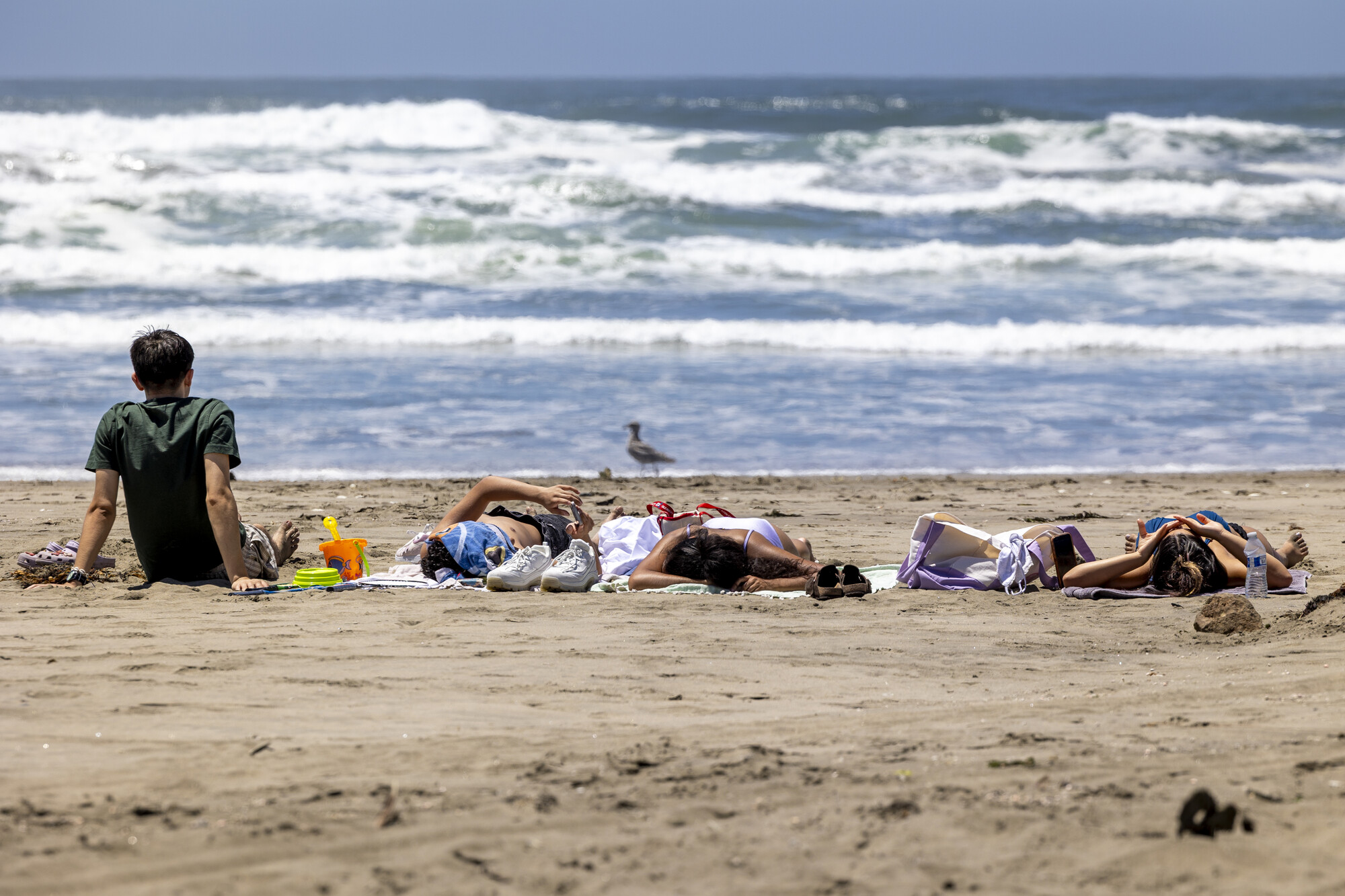
"caption": "People sunbathe at Ocean Beach in San Francisco during a heat wave on June 10, 2026. Experts warn that the city is not equipped to handle extreme heat, as its residents are accustomed to cooler temperatures.\r\n",
"credit": "Tâm Vũ/KQED",
"altTag": null,
"description": null,
"imgSizes": {
"thumbnail": {
"file": "https://cdn.kqed.org/wp-content/uploads/sites/10/2026/07/260610-riskywx00193_TV_qed-160x107.jpg",
"width": 160,
"height": 107,
"mimeType": "image/jpeg"
},
"1536x1536": {
"file": "https://cdn.kqed.org/wp-content/uploads/sites/10/2026/07/260610-riskywx00193_TV_qed-1536x1024.jpg",
"width": 1536,
"height": 1024,
"mimeType": "image/jpeg"
},
"post-thumbnail": {
"file": "https://cdn.kqed.org/wp-content/uploads/sites/10/2026/07/260610-riskywx00193_TV_qed-672x372.jpg",
"width": 672,
"height": 372,
"mimeType": "image/jpeg"
},
"twentyfourteen-full-width": {
"file": "https://cdn.kqed.org/wp-content/uploads/sites/10/2026/07/260610-riskywx00193_TV_qed-1038x576.jpg",
"width": 1038,
"height": 576,
"mimeType": "image/jpeg"
},
"npr-cds-wide": {
"file": "https://cdn.kqed.org/wp-content/uploads/sites/10/2026/07/260610-riskywx00193_TV_qed-1200x675.jpg",
"width": 1200,
"height": 675,
"mimeType": "image/jpeg"
},
"npr-cds-square": {
"file": "https://cdn.kqed.org/wp-content/uploads/sites/10/2026/07/260610-riskywx00193_TV_qed-600x600.jpg",
"width": 600,
"height": 600,
"mimeType": "image/jpeg"
},
"kqedFullSize": {
"file": "https://cdn.kqed.org/wp-content/uploads/sites/10/2026/07/260610-riskywx00193_TV_qed.jpg",
"width": 2000,
"height": 1333
}
},
"isLoading": false,
"fetchFailed": false
},
"news_11726081": {
"type": "attachments",
"id": "news_11726081",
"meta": {
"index": "attachments_1716263798",
"site": "news",
"id": "11726081",
"found": true
},
"title": "Los Angeles City Council Votes To Ban Medical Marijuana Dispensaries",
"publishDate": 1550105027,
"status": "inherit",
"parent": 11726034,
"modified": 1773693624,
"caption": "Supporters say fully opening the doors of the U.S. banking system to the legal marijuana industry would reduce crime risks and resolve a litany of challenges for cannabis companies, from paying taxes to getting a loan.",
"credit": "David McNew/Getty Images",
"altTag": null,
"description": "Supporters say fully opening the doors of the U.S. banking system to the legal marijuana industry would reduce crime risks and resolve a litany of challenges for cannabis companies, from paying taxes to getting a loan.",
"imgSizes": {
"thumbnail": {
"file": "https://cdn.kqed.org/wp-content/uploads/sites/10/2019/02/RS4903_marajuanasales-160x107.jpg",
"width": 160,
"height": 107,
"mimeType": "image/jpeg"
},
"medium": {
"file": "https://cdn.kqed.org/wp-content/uploads/sites/10/2019/02/RS4903_marajuanasales-800x533.jpg",
"width": 800,
"height": 533,
"mimeType": "image/jpeg"
},
"large": {
"file": "https://cdn.kqed.org/wp-content/uploads/sites/10/2019/02/RS4903_marajuanasales-1020x680.jpg",
"width": 1020,
"height": 680,
"mimeType": "image/jpeg"
},
"complete_open_graph": {
"file": "https://cdn.kqed.org/wp-content/uploads/sites/10/2019/02/RS4903_marajuanasales-1200x800.jpg",
"width": 1200,
"height": 800,
"mimeType": "image/jpeg"
},
"post-thumbnail": {
"file": "https://cdn.kqed.org/wp-content/uploads/sites/10/2019/02/RS4903_marajuanasales-672x372.jpg",
"width": 672,
"height": 372,
"mimeType": "image/jpeg"
},
"twentyfourteen-full-width": {
"file": "https://cdn.kqed.org/wp-content/uploads/sites/10/2019/02/RS4903_marajuanasales-1038x576.jpg",
"width": 1038,
"height": 576,
"mimeType": "image/jpeg"
},
"full-width": {
"file": "https://cdn.kqed.org/wp-content/uploads/sites/10/2019/02/RS4903_marajuanasales-1920x1280.jpg",
"width": 1920,
"height": 1280,
"mimeType": "image/jpeg"
},
"guest-author-32": {
"file": "https://cdn.kqed.org/wp-content/uploads/sites/10/2019/02/RS4903_marajuanasales-32x32.jpg",
"width": 32,
"height": 32,
"mimeType": "image/jpeg"
},
"guest-author-50": {
"file": "https://cdn.kqed.org/wp-content/uploads/sites/10/2019/02/RS4903_marajuanasales-50x50.jpg",
"width": 50,
"height": 50,
"mimeType": "image/jpeg"
},
"guest-author-64": {
"file": "https://cdn.kqed.org/wp-content/uploads/sites/10/2019/02/RS4903_marajuanasales-64x64.jpg",
"width": 64,
"height": 64,
"mimeType": "image/jpeg"
},
"guest-author-96": {
"file": "https://cdn.kqed.org/wp-content/uploads/sites/10/2019/02/RS4903_marajuanasales-96x96.jpg",
"width": 96,
"height": 96,
"mimeType": "image/jpeg"
},
"guest-author-128": {
"file": "https://cdn.kqed.org/wp-content/uploads/sites/10/2019/02/RS4903_marajuanasales-128x128.jpg",
"width": 128,
"height": 128,
"mimeType": "image/jpeg"
},
"detail": {
"file": "https://cdn.kqed.org/wp-content/uploads/sites/10/2019/02/RS4903_marajuanasales-150x150.jpg",
"width": 150,
"height": 150,
"mimeType": "image/jpeg"
},
"kqedFullSize": {
"file": "https://cdn.kqed.org/wp-content/uploads/sites/10/2019/02/RS4903_marajuanasales-e1550105105781.jpg",
"width": 1920,
"height": 1280
}
},
"isLoading": false,
"fetchFailed": false
},
"news_11955692": {
"type": "attachments",
"id": "news_11955692",
"meta": {
"index": "attachments_1716263798",
"site": "news",
"id": "11955692",
"found": true
},
"title": "Pride Flag at San Francisco City Hall",
"publishDate": 1689298339,
"status": "inherit",
"parent": 11955680,
"modified": 1689314014,
"caption": "San Francisco-based attorney Courtney Liss advises businesses to make it very clear that they do want to provide services to LGBTQ+ communities, with signs and clear website notices. “I personally do not want to go anywhere where I'm not welcome,” she said.",
"credit": "JasonDoiy/Getty Images",
"altTag": "A rainbow flag hangs over a government building.",
"description": null,
"imgSizes": {
"medium": {
"file": "https://cdn.kqed.org/wp-content/uploads/sites/10/2023/07/GettyImages-972695008-800x533.jpg",
"width": 800,
"height": 533,
"mimeType": "image/jpeg"
},
"large": {
"file": "https://cdn.kqed.org/wp-content/uploads/sites/10/2023/07/GettyImages-972695008-1020x680.jpg",
"width": 1020,
"height": 680,
"mimeType": "image/jpeg"
},
"thumbnail": {
"file": "https://cdn.kqed.org/wp-content/uploads/sites/10/2023/07/GettyImages-972695008-160x107.jpg",
"width": 160,
"height": 107,
"mimeType": "image/jpeg"
},
"1536x1536": {
"file": "https://cdn.kqed.org/wp-content/uploads/sites/10/2023/07/GettyImages-972695008-1536x1024.jpg",
"width": 1536,
"height": 1024,
"mimeType": "image/jpeg"
},
"2048x2048": {
"file": "https://cdn.kqed.org/wp-content/uploads/sites/10/2023/07/GettyImages-972695008-2048x1365.jpg",
"width": 2048,
"height": 1365,
"mimeType": "image/jpeg"
},
"post-thumbnail": {
"file": "https://cdn.kqed.org/wp-content/uploads/sites/10/2023/07/GettyImages-972695008-672x372.jpg",
"width": 672,
"height": 372,
"mimeType": "image/jpeg"
},
"twentyfourteen-full-width": {
"file": "https://cdn.kqed.org/wp-content/uploads/sites/10/2023/07/GettyImages-972695008-1038x576.jpg",
"width": 1038,
"height": 576,
"mimeType": "image/jpeg"
},
"full-width": {
"file": "https://cdn.kqed.org/wp-content/uploads/sites/10/2023/07/GettyImages-972695008-1920x1280.jpg",
"width": 1920,
"height": 1280,
"mimeType": "image/jpeg"
},
"kqedFullSize": {
"file": "https://cdn.kqed.org/wp-content/uploads/sites/10/2023/07/GettyImages-972695008-scaled-e1742851504460.jpg",
"width": 2000,
"height": 1334
}
},
"isLoading": false,
"fetchFailed": false
},
"news_12020498": {
"type": "attachments",
"id": "news_12020498",
"meta": {
"index": "attachments_1716263798",
"site": "news",
"id": "12020498",
"found": true
},
"title": "250105-LurieInaugurationCleanup-51",
"publishDate": 1736206956,
"status": "inherit",
"parent": 0,
"modified": 1736207201,
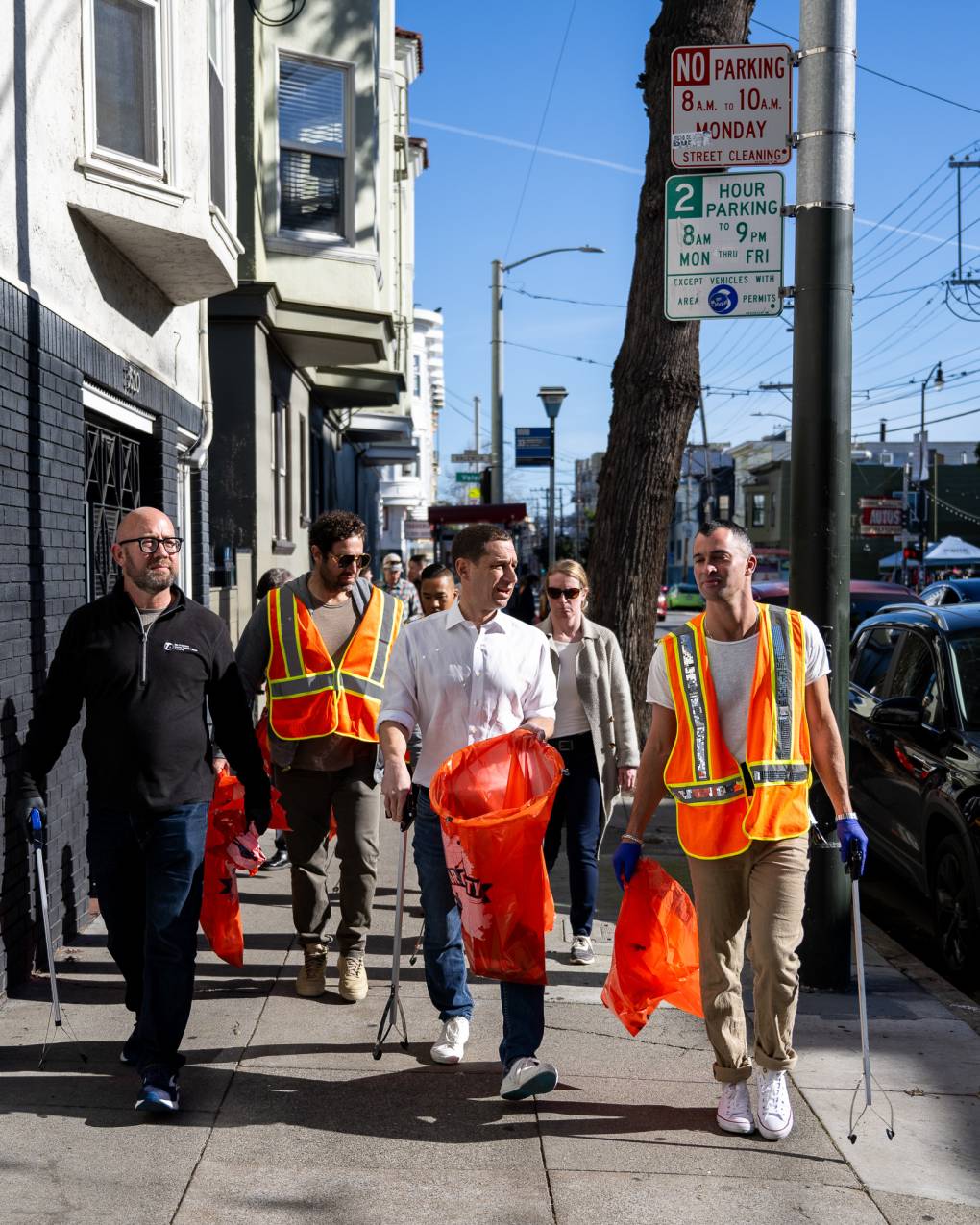
"caption": "San Francisco Mayor-elect Daniel Lurie walks with Supervisor Rafael Mandelman and Manny Yekutiel during a trash pick up in the Mission District on Jan. 5, 2025, during a weekend of service before his inauguration.",
"credit": "Beth LaBerge/KQED",
"altTag": null,
"description": null,
"imgSizes": {
"medium": {
"file": "https://cdn.kqed.org/wp-content/uploads/sites/10/2025/01/250105-LurieInaugurationCleanup-51-800x1000.jpg",
"width": 800,
"height": 1000,
"mimeType": "image/jpeg"
},
"large": {
"file": "https://cdn.kqed.org/wp-content/uploads/sites/10/2025/01/250105-LurieInaugurationCleanup-51-1020x1275.jpg",
"width": 1020,
"height": 1275,
"mimeType": "image/jpeg"
},
"thumbnail": {
"file": "https://cdn.kqed.org/wp-content/uploads/sites/10/2025/01/250105-LurieInaugurationCleanup-51-160x200.jpg",
"width": 160,
"height": 200,
"mimeType": "image/jpeg"
},
"1536x1536": {
"file": "https://cdn.kqed.org/wp-content/uploads/sites/10/2025/01/250105-LurieInaugurationCleanup-51-1229x1536.jpg",
"width": 1229,
"height": 1536,
"mimeType": "image/jpeg"
},
"post-thumbnail": {
"file": "https://cdn.kqed.org/wp-content/uploads/sites/10/2025/01/250105-LurieInaugurationCleanup-51-672x372.jpg",
"width": 672,
"height": 372,
"mimeType": "image/jpeg"
},
"twentyfourteen-full-width": {
"file": "https://cdn.kqed.org/wp-content/uploads/sites/10/2025/01/250105-LurieInaugurationCleanup-51-1038x576.jpg",
"width": 1038,
"height": 576,
"mimeType": "image/jpeg"
},
"kqedFullSize": {
"file": "https://cdn.kqed.org/wp-content/uploads/sites/10/2025/01/250105-LurieInaugurationCleanup-51.jpg",
"width": 1600,
"height": 2000
}
},
"isLoading": false,
"fetchFailed": false
},
"news_11990724": {
"type": "attachments",
"id": "news_11990724",
"meta": {
"index": "attachments_1716263798",
"site": "news",
"id": "11990724",
"found": true
},
"title": "DrugFreeRecoveryHousing01",
"publishDate": 1718651960,
"status": "inherit",
"parent": 11990693,
"modified": 1718665035,
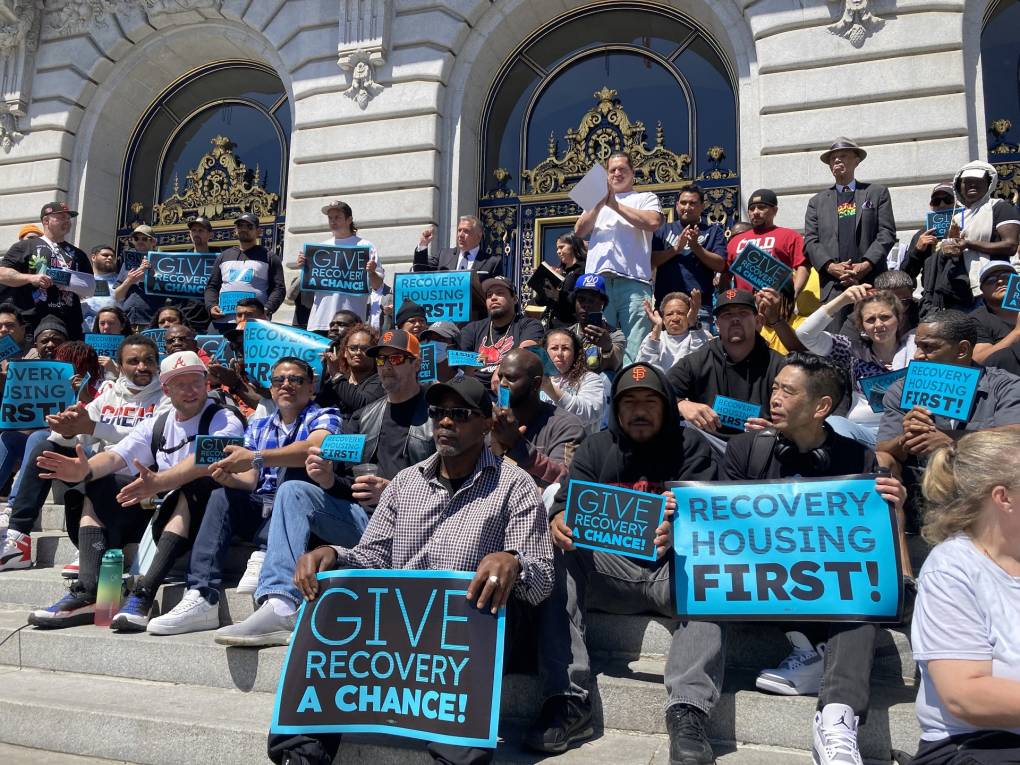
"caption": "San Francisco Supervisor Matt Dorsey (top-center) speaks from a podium at City Hall on June 17. Together, he and Supervisor Rafael Mandelman announced their new legislation to prioritize drug-free recovery housing in front of advocates and the community.",
"credit": "Katherine Monahan/KQED",
"altTag": null,
"description": null,
"imgSizes": {
"medium": {
"file": "https://cdn.kqed.org/wp-content/uploads/sites/10/2024/06/DrugFreeRecoveryHousing01-800x600.jpg",
"width": 800,
"height": 600,
"mimeType": "image/jpeg"
},
"large": {
"file": "https://cdn.kqed.org/wp-content/uploads/sites/10/2024/06/DrugFreeRecoveryHousing01-1020x765.jpg",
"width": 1020,
"height": 765,
"mimeType": "image/jpeg"
},
"thumbnail": {
"file": "https://cdn.kqed.org/wp-content/uploads/sites/10/2024/06/DrugFreeRecoveryHousing01-160x120.jpg",
"width": 160,
"height": 120,
"mimeType": "image/jpeg"
},
"1536x1536": {
"file": "https://cdn.kqed.org/wp-content/uploads/sites/10/2024/06/DrugFreeRecoveryHousing01-1536x1152.jpg",
"width": 1536,
"height": 1152,
"mimeType": "image/jpeg"
},
"post-thumbnail": {
"file": "https://cdn.kqed.org/wp-content/uploads/sites/10/2024/06/DrugFreeRecoveryHousing01-672x372.jpg",
"width": 672,
"height": 372,
"mimeType": "image/jpeg"
},
"twentyfourteen-full-width": {
"file": "https://cdn.kqed.org/wp-content/uploads/sites/10/2024/06/DrugFreeRecoveryHousing01-1038x576.jpg",
"width": 1038,
"height": 576,
"mimeType": "image/jpeg"
},
"kqedFullSize": {
"file": "https://cdn.kqed.org/wp-content/uploads/sites/10/2024/06/DrugFreeRecoveryHousing01.jpg",
"width": 1920,
"height": 1440
}
},
"isLoading": false,
"fetchFailed": false
},
"news_11958938": {
"type": "attachments",
"id": "news_11958938",
"meta": {
"index": "attachments_1716263798",
"site": "news",
"id": "11958938",
"found": true
},
"parent": 0,
"imgSizes": {
"twentyfourteen-full-width": {
"file": "https://ww2.kqed.org/app/uploads/sites/10/2023/08/RS68250_20230822-HomelessLawsuit-09-JY-KQED-1038x576.jpg",
"width": 1038,
"mimeType": "image/jpeg",
"height": 576
},
"thumbnail": {
"file": "https://ww2.kqed.org/app/uploads/sites/10/2023/08/RS68250_20230822-HomelessLawsuit-09-JY-KQED-160x107.jpg",
"width": 160,
"mimeType": "image/jpeg",
"height": 107
},
"post-thumbnail": {
"file": "https://ww2.kqed.org/app/uploads/sites/10/2023/08/RS68250_20230822-HomelessLawsuit-09-JY-KQED-672x372.jpg",
"width": 672,
"mimeType": "image/jpeg",
"height": 372
},
"kqedFullSize": {
"file": "https://ww2.kqed.org/app/uploads/sites/10/2023/08/RS68250_20230822-HomelessLawsuit-09-JY-KQED.jpg",
"width": 2000,
"height": 1333
},
"large": {
"file": "https://ww2.kqed.org/app/uploads/sites/10/2023/08/RS68250_20230822-HomelessLawsuit-09-JY-KQED-1020x680.jpg",
"width": 1020,
"mimeType": "image/jpeg",
"height": 680
},
"1536x1536": {
"file": "https://ww2.kqed.org/app/uploads/sites/10/2023/08/RS68250_20230822-HomelessLawsuit-09-JY-KQED-1536x1024.jpg",
"width": 1536,
"mimeType": "image/jpeg",
"height": 1024
},
"full-width": {
"file": "https://ww2.kqed.org/app/uploads/sites/10/2023/08/RS68250_20230822-HomelessLawsuit-09-JY-KQED-1920x1280.jpg",
"width": 1920,
"mimeType": "image/jpeg",
"height": 1280
},
"medium": {
"file": "https://ww2.kqed.org/app/uploads/sites/10/2023/08/RS68250_20230822-HomelessLawsuit-09-JY-KQED-800x533.jpg",
"width": 800,
"mimeType": "image/jpeg",
"height": 533
}
},
"publishDate": 1692825517,
"modified": 1692829980,
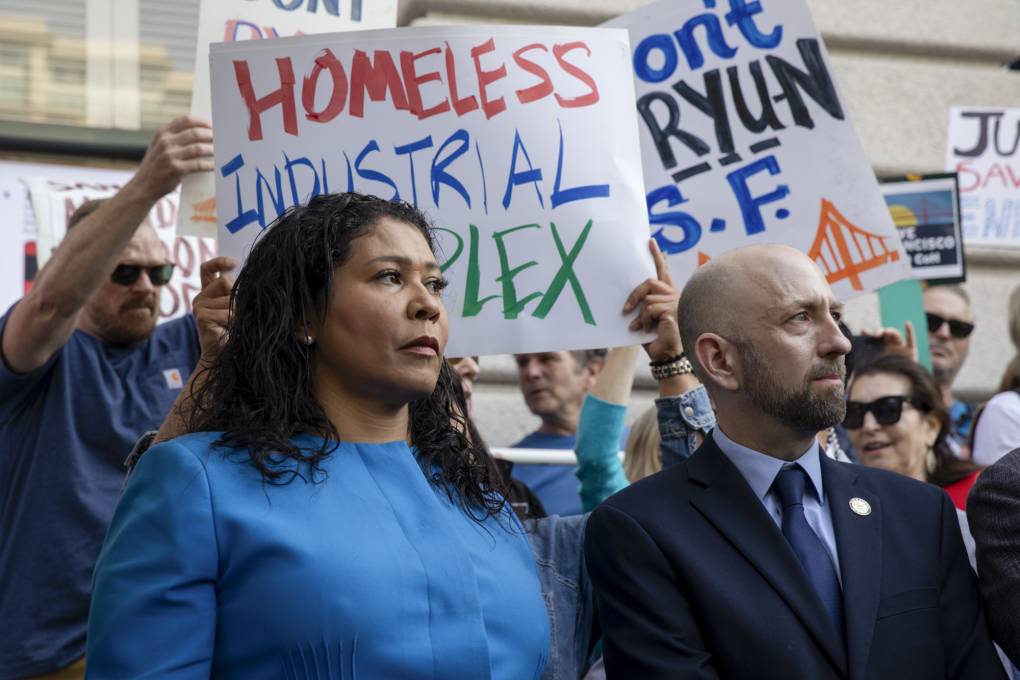
"caption": "Mayor London Breed (left) and Supervisor Joel Engardio (right) are seen at a rally in front of the Ninth Circuit Court of Appeals in San Francisco on Wednesday, Aug. 23, 2023. Mayor Breed and Supervisor Engardio strongly oppose the injunction filed by the Coalition on Homelessness, which has temporarily kept city workers from removing encampments on the streets.",
"description": null,
"title": "RS68250_20230822-HomelessLawsuit-09-JY-KQED",
"credit": "Juliana Yamada/KQED",
"status": "inherit",
"altTag": "A woman in blue stands next to a man in a suit with signs protesting and supporting homelessness in the background.",
"isLoading": false,
"fetchFailed": false
},
"news_11923134": {
"type": "attachments",
"id": "news_11923134",
"meta": {
"index": "attachments_1716263798",
"site": "news",
"id": "11923134",
"found": true
},
"parent": 11923129,
"imgSizes": {
"twentyfourteen-full-width": {
"file": "https://ww2.kqed.org/app/uploads/sites/10/2022/08/RS57923_20220821_121740-1038x576.jpg",
"width": 1038,
"mimeType": "image/jpeg",
"height": 576
},
"thumbnail": {
"file": "https://ww2.kqed.org/app/uploads/sites/10/2022/08/RS57923_20220821_121740-160x120.jpg",
"width": 160,
"mimeType": "image/jpeg",
"height": 120
},
"post-thumbnail": {
"file": "https://ww2.kqed.org/app/uploads/sites/10/2022/08/RS57923_20220821_121740-672x372.jpg",
"width": 672,
"mimeType": "image/jpeg",
"height": 372
},
"kqedFullSize": {
"file": "https://ww2.kqed.org/app/uploads/sites/10/2022/08/RS57923_20220821_121740.jpg",
"width": 1920,
"height": 1440
},
"large": {
"file": "https://ww2.kqed.org/app/uploads/sites/10/2022/08/RS57923_20220821_121740-1020x765.jpg",
"width": 1020,
"mimeType": "image/jpeg",
"height": 765
},
"1536x1536": {
"file": "https://ww2.kqed.org/app/uploads/sites/10/2022/08/RS57923_20220821_121740-1536x1152.jpg",
"width": 1536,
"mimeType": "image/jpeg",
"height": 1152
},
"medium": {
"file": "https://ww2.kqed.org/app/uploads/sites/10/2022/08/RS57923_20220821_121740-800x600.jpg",
"width": 800,
"mimeType": "image/jpeg",
"height": 600
}
},
"publishDate": 1661198638,
"modified": 1661206117,
"caption": "San Francisco District Attorney Brooke Jenkins embraces a supporter from Mothers Against Drug Deaths at a City Hall rally to raise awareness for fentanyl deaths in San Francisco on Aug. 21.",
"description": null,
"title": "RS57923_20220821_121740",
"credit": "Joe Fitzgerald Rodriguez/KQED",
"status": "inherit",
"altTag": "two women hug at a rally in front of city hall, with news cameras all around",
"isLoading": false,
"fetchFailed": false
},
"news_11858088": {
"type": "attachments",
"id": "news_11858088",
"meta": {
"index": "attachments_1716263798",
"site": "news",
"id": "11858088",
"found": true
},
"parent": 11857924,
"imgSizes": {
"apple_news_ca_square_4_0": {
"file": "https://ww2.kqed.org/app/uploads/sites/10/2021/02/GettyImages-52984873-470x470.jpg",
"width": 470,
"mimeType": "image/jpeg",
"height": 470
},
"twentyfourteen-full-width": {
"file": "https://ww2.kqed.org/app/uploads/sites/10/2021/02/GettyImages-52984873-1024x576.jpg",
"width": 1024,
"mimeType": "image/jpeg",
"height": 576
},
"thumbnail": {
"file": "https://ww2.kqed.org/app/uploads/sites/10/2021/02/GettyImages-52984873-160x101.jpg",
"width": 160,
"mimeType": "image/jpeg",
"height": 101
},
"post-thumbnail": {
"file": "https://ww2.kqed.org/app/uploads/sites/10/2021/02/GettyImages-52984873-672x372.jpg",
"width": 672,
"mimeType": "image/jpeg",
"height": 372
},
"kqedFullSize": {
"file": "https://ww2.kqed.org/app/uploads/sites/10/2021/02/GettyImages-52984873.jpg",
"width": 1024,
"height": 644
},
"apple_news_ca_landscape_4_7": {
"file": "https://ww2.kqed.org/app/uploads/sites/10/2021/02/GettyImages-52984873-632x474.jpg",
"width": 632,
"mimeType": "image/jpeg",
"height": 474
},
"large": {
"file": "https://ww2.kqed.org/app/uploads/sites/10/2021/02/GettyImages-52984873-1020x641.jpg",
"width": 1020,
"mimeType": "image/jpeg",
"height": 641
},
"apple_news_ca_landscape_4_0": {
"file": "https://ww2.kqed.org/app/uploads/sites/10/2021/02/GettyImages-52984873-536x402.jpg",
"width": 536,
"mimeType": "image/jpeg",
"height": 402
},
"medium": {
"file": "https://ww2.kqed.org/app/uploads/sites/10/2021/02/GettyImages-52984873-800x503.jpg",
"width": 800,
"mimeType": "image/jpeg",
"height": 503
},
"apple_news_ca_portrait_4_0": {
"file": "https://ww2.kqed.org/app/uploads/sites/10/2021/02/GettyImages-52984873-354x472.jpg",
"width": 354,
"mimeType": "image/jpeg",
"height": 472
},
"apple_news_ca_portrait_9_7": {
"file": "https://ww2.kqed.org/app/uploads/sites/10/2021/02/GettyImages-52984873-840x644.jpg",
"width": 840,
"mimeType": "image/jpeg",
"height": 644
},
"apple_news_ca_portrait_4_7": {
"file": "https://ww2.kqed.org/app/uploads/sites/10/2021/02/GettyImages-52984873-414x552.jpg",
"width": 414,
"mimeType": "image/jpeg",
"height": 552
},
"apple_news_ca_portrait_5_5": {
"file": "https://ww2.kqed.org/app/uploads/sites/10/2021/02/GettyImages-52984873-687x644.jpg",
"width": 687,
"mimeType": "image/jpeg",
"height": 644
},
"apple_news_ca_square_4_7": {
"file": "https://ww2.kqed.org/app/uploads/sites/10/2021/02/GettyImages-52984873-550x550.jpg",
"width": 550,
"mimeType": "image/jpeg",
"height": 550
},
"apple_news_ca_square_5_5": {
"file": "https://ww2.kqed.org/app/uploads/sites/10/2021/02/GettyImages-52984873-912x644.jpg",
"width": 912,
"mimeType": "image/jpeg",
"height": 644
}
},
"publishDate": 1612226351,
"modified": 1612226487,
"caption": "A woman walks past luxury homes in the Sea Cliff neighborhood of San Francisco.",
"description": null,
"title": "Luxury Homes In San Francisco Average $2.7 Million",
"credit": "Justin Sullivan/Getty Images",
"status": "inherit",
"altTag": null,
"isLoading": false,
"fetchFailed": false
},
"news_11843054": {
"type": "attachments",
"id": "news_11843054",
"meta": {
"index": "attachments_1716263798",
"site": "news",
"id": "11843054",
"found": true
},
"parent": 11843004,
"imgSizes": {
"apple_news_ca_landscape_5_5": {
"file": "https://ww2.kqed.org/app/uploads/sites/10/2020/10/RS43040_011_KQED_SanFrancisco_TentEncampments_05052020-qut-1044x783.jpg",
"width": 1044,
"mimeType": "image/jpeg",
"height": 783
},
"apple_news_ca_square_4_0": {
"file": "https://ww2.kqed.org/app/uploads/sites/10/2020/10/RS43040_011_KQED_SanFrancisco_TentEncampments_05052020-qut-470x470.jpg",
"width": 470,
"mimeType": "image/jpeg",
"height": 470
},
"twentyfourteen-full-width": {
"file": "https://ww2.kqed.org/app/uploads/sites/10/2020/10/RS43040_011_KQED_SanFrancisco_TentEncampments_05052020-qut-1038x576.jpg",
"width": 1038,
"mimeType": "image/jpeg",
"height": 576
},
"thumbnail": {
"file": "https://ww2.kqed.org/app/uploads/sites/10/2020/10/RS43040_011_KQED_SanFrancisco_TentEncampments_05052020-qut-160x107.jpg",
"width": 160,
"mimeType": "image/jpeg",
"height": 107
},
"post-thumbnail": {
"file": "https://ww2.kqed.org/app/uploads/sites/10/2020/10/RS43040_011_KQED_SanFrancisco_TentEncampments_05052020-qut-672x372.jpg",
"width": 672,
"mimeType": "image/jpeg",
"height": 372
},
"kqedFullSize": {
"file": "https://ww2.kqed.org/app/uploads/sites/10/2020/10/RS43040_011_KQED_SanFrancisco_TentEncampments_05052020-qut.jpg",
"width": 1920,
"height": 1280
},
"apple_news_ca_landscape_4_7": {
"file": "https://ww2.kqed.org/app/uploads/sites/10/2020/10/RS43040_011_KQED_SanFrancisco_TentEncampments_05052020-qut-632x474.jpg",
"width": 632,
"mimeType": "image/jpeg",
"height": 474
},
"large": {
"file": "https://ww2.kqed.org/app/uploads/sites/10/2020/10/RS43040_011_KQED_SanFrancisco_TentEncampments_05052020-qut-1020x680.jpg",
"width": 1020,
"mimeType": "image/jpeg",
"height": 680
},
"apple_news_ca_landscape_4_0": {
"file": "https://ww2.kqed.org/app/uploads/sites/10/2020/10/RS43040_011_KQED_SanFrancisco_TentEncampments_05052020-qut-536x402.jpg",
"width": 536,
"mimeType": "image/jpeg",
"height": 402
},
"apple_news_ca_portrait_12_9": {
"file": "https://ww2.kqed.org/app/uploads/sites/10/2020/10/RS43040_011_KQED_SanFrancisco_TentEncampments_05052020-qut-1122x1280.jpg",
"width": 1122,
"mimeType": "image/jpeg",
"height": 1280
},
"medium": {
"file": "https://ww2.kqed.org/app/uploads/sites/10/2020/10/RS43040_011_KQED_SanFrancisco_TentEncampments_05052020-qut-800x533.jpg",
"width": 800,
"mimeType": "image/jpeg",
"height": 533
},
"apple_news_ca_portrait_4_0": {
"file": "https://ww2.kqed.org/app/uploads/sites/10/2020/10/RS43040_011_KQED_SanFrancisco_TentEncampments_05052020-qut-354x472.jpg",
"width": 354,
"mimeType": "image/jpeg",
"height": 472
},
"apple_news_ca_portrait_9_7": {
"file": "https://ww2.kqed.org/app/uploads/sites/10/2020/10/RS43040_011_KQED_SanFrancisco_TentEncampments_05052020-qut-840x1120.jpg",
"width": 840,
"mimeType": "image/jpeg",
"height": 1120
},
"apple_news_ca_landscape_12_9": {
"file": "https://ww2.kqed.org/app/uploads/sites/10/2020/10/RS43040_011_KQED_SanFrancisco_TentEncampments_05052020-qut-1832x1280.jpg",
"width": 1832,
"mimeType": "image/jpeg",
"height": 1280
},
"apple_news_ca_square_9_7": {
"file": "https://ww2.kqed.org/app/uploads/sites/10/2020/10/RS43040_011_KQED_SanFrancisco_TentEncampments_05052020-qut-1104x1104.jpg",
"width": 1104,
"mimeType": "image/jpeg",
"height": 1104
},
"1536x1536": {
"file": "https://ww2.kqed.org/app/uploads/sites/10/2020/10/RS43040_011_KQED_SanFrancisco_TentEncampments_05052020-qut-1536x1024.jpg",
"width": 1536,
"mimeType": "image/jpeg",
"height": 1024
},
"apple_news_ca_portrait_4_7": {
"file": "https://ww2.kqed.org/app/uploads/sites/10/2020/10/RS43040_011_KQED_SanFrancisco_TentEncampments_05052020-qut-414x552.jpg",
"width": 414,
"mimeType": "image/jpeg",
"height": 552
},
"apple_news_ca_square_12_9": {
"file": "https://ww2.kqed.org/app/uploads/sites/10/2020/10/RS43040_011_KQED_SanFrancisco_TentEncampments_05052020-qut-1472x1280.jpg",
"width": 1472,
"mimeType": "image/jpeg",
"height": 1280
},
"apple_news_ca_portrait_5_5": {
"file": "https://ww2.kqed.org/app/uploads/sites/10/2020/10/RS43040_011_KQED_SanFrancisco_TentEncampments_05052020-qut-687x916.jpg",
"width": 687,
"mimeType": "image/jpeg",
"height": 916
},
"apple_news_ca_square_4_7": {
"file": "https://ww2.kqed.org/app/uploads/sites/10/2020/10/RS43040_011_KQED_SanFrancisco_TentEncampments_05052020-qut-550x550.jpg",
"width": 550,
"mimeType": "image/jpeg",
"height": 550
},
"apple_news_ca_landscape_9_7": {
"file": "https://ww2.kqed.org/app/uploads/sites/10/2020/10/RS43040_011_KQED_SanFrancisco_TentEncampments_05052020-qut-1376x1032.jpg",
"width": 1376,
"mimeType": "image/jpeg",
"height": 1032
},
"apple_news_ca_square_5_5": {
"file": "https://ww2.kqed.org/app/uploads/sites/10/2020/10/RS43040_011_KQED_SanFrancisco_TentEncampments_05052020-qut-912x912.jpg",
"width": 912,
"mimeType": "image/jpeg",
"height": 912
}
},
"publishDate": 1603237048,
"modified": 1603237180,
"caption": "Tents line a gravel sidewalk off Fulton Street near City Hall on May 5, 2020. On Wednesday, city staffers started drawing out socially distant spaces with chalk on the street for the tents to stay. ",
"description": null,
"title": "Tents line Fulton Street near City Hall on April 5, 2020.",
"credit": "Beth LaBerge/KQED",
"status": "inherit",
"isLoading": false,
"fetchFailed": false
},
"news_11811594": {
"type": "attachments",
"id": "news_11811594",
"meta": {
"index": "attachments_1716263798",
"site": "news",
"id": "11811594",
"found": true
},
"parent": 11811589,
"imgSizes": {
"apple_news_ca_landscape_5_5": {
"file": "https://ww2.kqed.org/app/uploads/sites/10/2020/04/RS42465_002_KQED_SanFrancisco_WholeFoods_03312020-qut-1044x783.jpg",
"width": 1044,
"mimeType": "image/jpeg",
"height": 783
},
"apple_news_ca_square_4_0": {
"file": "https://ww2.kqed.org/app/uploads/sites/10/2020/04/RS42465_002_KQED_SanFrancisco_WholeFoods_03312020-qut-470x470.jpg",
"width": 470,
"mimeType": "image/jpeg",
"height": 470
},
"twentyfourteen-full-width": {
"file": "https://ww2.kqed.org/app/uploads/sites/10/2020/04/RS42465_002_KQED_SanFrancisco_WholeFoods_03312020-qut-1038x576.jpg",
"width": 1038,
"mimeType": "image/jpeg",
"height": 576
},
"thumbnail": {
"file": "https://ww2.kqed.org/app/uploads/sites/10/2020/04/RS42465_002_KQED_SanFrancisco_WholeFoods_03312020-qut-160x107.jpg",
"width": 160,
"mimeType": "image/jpeg",
"height": 107
},
"post-thumbnail": {
"file": "https://ww2.kqed.org/app/uploads/sites/10/2020/04/RS42465_002_KQED_SanFrancisco_WholeFoods_03312020-qut-672x372.jpg",
"width": 672,
"mimeType": "image/jpeg",
"height": 372
},
"kqedFullSize": {
"file": "https://ww2.kqed.org/app/uploads/sites/10/2020/04/RS42465_002_KQED_SanFrancisco_WholeFoods_03312020-qut.jpg",
"width": 1920,
"height": 1280
},
"apple_news_ca_landscape_4_7": {
"file": "https://ww2.kqed.org/app/uploads/sites/10/2020/04/RS42465_002_KQED_SanFrancisco_WholeFoods_03312020-qut-632x474.jpg",
"width": 632,
"mimeType": "image/jpeg",
"height": 474
},
"large": {
"file": "https://ww2.kqed.org/app/uploads/sites/10/2020/04/RS42465_002_KQED_SanFrancisco_WholeFoods_03312020-qut-1020x680.jpg",
"width": 1020,
"mimeType": "image/jpeg",
"height": 680
},
"apple_news_ca_landscape_4_0": {
"file": "https://ww2.kqed.org/app/uploads/sites/10/2020/04/RS42465_002_KQED_SanFrancisco_WholeFoods_03312020-qut-536x402.jpg",
"width": 536,
"mimeType": "image/jpeg",
"height": 402
},
"apple_news_ca_portrait_12_9": {
"file": "https://ww2.kqed.org/app/uploads/sites/10/2020/04/RS42465_002_KQED_SanFrancisco_WholeFoods_03312020-qut-1122x1280.jpg",
"width": 1122,
"mimeType": "image/jpeg",
"height": 1280
},
"medium": {
"file": "https://ww2.kqed.org/app/uploads/sites/10/2020/04/RS42465_002_KQED_SanFrancisco_WholeFoods_03312020-qut-800x533.jpg",
"width": 800,
"mimeType": "image/jpeg",
"height": 533
},
"apple_news_ca_portrait_4_0": {
"file": "https://ww2.kqed.org/app/uploads/sites/10/2020/04/RS42465_002_KQED_SanFrancisco_WholeFoods_03312020-qut-354x472.jpg",
"width": 354,
"mimeType": "image/jpeg",
"height": 472
},
"apple_news_ca_portrait_9_7": {
"file": "https://ww2.kqed.org/app/uploads/sites/10/2020/04/RS42465_002_KQED_SanFrancisco_WholeFoods_03312020-qut-840x1120.jpg",
"width": 840,
"mimeType": "image/jpeg",
"height": 1120
},
"apple_news_ca_landscape_12_9": {
"file": "https://ww2.kqed.org/app/uploads/sites/10/2020/04/RS42465_002_KQED_SanFrancisco_WholeFoods_03312020-qut-1832x1280.jpg",
"width": 1832,
"mimeType": "image/jpeg",
"height": 1280
},
"apple_news_ca_square_9_7": {
"file": "https://ww2.kqed.org/app/uploads/sites/10/2020/04/RS42465_002_KQED_SanFrancisco_WholeFoods_03312020-qut-1104x1104.jpg",
"width": 1104,
"mimeType": "image/jpeg",
"height": 1104
},
"apple_news_ca_portrait_4_7": {
"file": "https://ww2.kqed.org/app/uploads/sites/10/2020/04/RS42465_002_KQED_SanFrancisco_WholeFoods_03312020-qut-414x552.jpg",
"width": 414,
"mimeType": "image/jpeg",
"height": 552
},
"apple_news_ca_square_12_9": {
"file": "https://ww2.kqed.org/app/uploads/sites/10/2020/04/RS42465_002_KQED_SanFrancisco_WholeFoods_03312020-qut-1472x1280.jpg",
"width": 1472,
"mimeType": "image/jpeg",
"height": 1280
},
"apple_news_ca_portrait_5_5": {
"file": "https://ww2.kqed.org/app/uploads/sites/10/2020/04/RS42465_002_KQED_SanFrancisco_WholeFoods_03312020-qut-687x916.jpg",
"width": 687,
"mimeType": "image/jpeg",
"height": 916
},
"full-width": {
"file": "https://ww2.kqed.org/app/uploads/sites/10/2020/04/RS42465_002_KQED_SanFrancisco_WholeFoods_03312020-qut-1920x1280.jpg",
"width": 1920,
"mimeType": "image/jpeg",
"height": 1280
},
"apple_news_ca_square_4_7": {
"file": "https://ww2.kqed.org/app/uploads/sites/10/2020/04/RS42465_002_KQED_SanFrancisco_WholeFoods_03312020-qut-550x550.jpg",
"width": 550,
"mimeType": "image/jpeg",
"height": 550
},
"apple_news_ca_landscape_9_7": {
"file": "https://ww2.kqed.org/app/uploads/sites/10/2020/04/RS42465_002_KQED_SanFrancisco_WholeFoods_03312020-qut-1376x1032.jpg",
"width": 1376,
"mimeType": "image/jpeg",
"height": 1032
},
"apple_news_ca_square_5_5": {
"file": "https://ww2.kqed.org/app/uploads/sites/10/2020/04/RS42465_002_KQED_SanFrancisco_WholeFoods_03312020-qut-912x912.jpg",
"width": 912,
"mimeType": "image/jpeg",
"height": 912
}
},
"publishDate": 1586461708,
"modified": 1586465919,
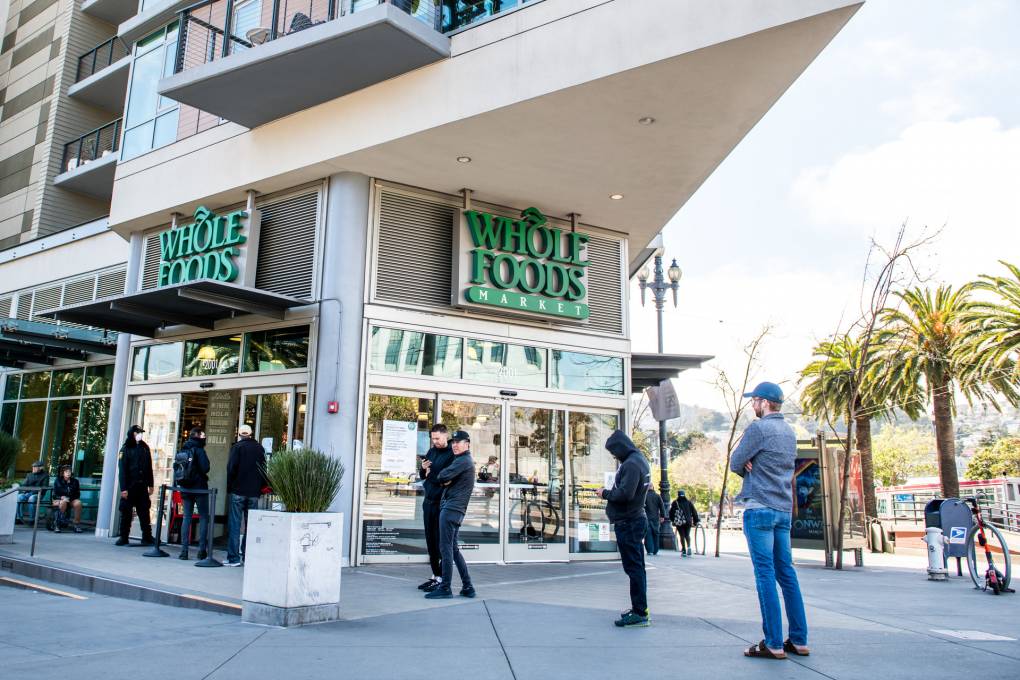
"caption": "A Whole Foods employee at the store on Market and Dolores Street has tested positive for COVID- 19.",
"description": "A Whole Foods employee at the store on Market and Dolores Street has tested positive for COVID- 19.",
"title": "RS42465_002_KQED_SanFrancisco_WholeFoods_03312020-qut",
"credit": "Beth LaBerge/KQED",
"status": "inherit",
"isLoading": false,
"fetchFailed": false
},
"news_11782049": {
"type": "attachments",
"id": "news_11782049",
"meta": {
"index": "attachments_1716263798",
"site": "news",
"id": "11782049",
"found": true
},
"parent": 11781929,
"imgSizes": {
"apple_news_ca_landscape_5_5": {
"file": "https://ww2.kqed.org/app/uploads/sites/10/2019/10/London-Breed-Meth-Task-Force-1044x783.jpg",
"width": 1044,
"mimeType": "image/jpeg",
"height": 783
},
"apple_news_ca_square_4_0": {
"file": "https://ww2.kqed.org/app/uploads/sites/10/2019/10/London-Breed-Meth-Task-Force-470x470.jpg",
"width": 470,
"mimeType": "image/jpeg",
"height": 470
},
"twentyfourteen-full-width": {
"file": "https://ww2.kqed.org/app/uploads/sites/10/2019/10/London-Breed-Meth-Task-Force-1038x576.jpg",
"width": 1038,
"mimeType": "image/jpeg",
"height": 576
},
"thumbnail": {
"file": "https://ww2.kqed.org/app/uploads/sites/10/2019/10/London-Breed-Meth-Task-Force-160x113.jpg",
"width": 160,
"mimeType": "image/jpeg",
"height": 113
},
"post-thumbnail": {
"file": "https://ww2.kqed.org/app/uploads/sites/10/2019/10/London-Breed-Meth-Task-Force-672x372.jpg",
"width": 672,
"mimeType": "image/jpeg",
"height": 372
},
"kqedFullSize": {
"file": "https://ww2.kqed.org/app/uploads/sites/10/2019/10/London-Breed-Meth-Task-Force.jpg",
"width": 1920,
"height": 1354
},
"apple_news_ca_landscape_4_7": {
"file": "https://ww2.kqed.org/app/uploads/sites/10/2019/10/London-Breed-Meth-Task-Force-632x474.jpg",
"width": 632,
"mimeType": "image/jpeg",
"height": 474
},
"large": {
"file": "https://ww2.kqed.org/app/uploads/sites/10/2019/10/London-Breed-Meth-Task-Force-1020x719.jpg",
"width": 1020,
"mimeType": "image/jpeg",
"height": 719
},
"complete_open_graph": {
"file": "https://ww2.kqed.org/app/uploads/sites/10/2019/10/London-Breed-Meth-Task-Force-1200x846.jpg",
"width": 1200,
"mimeType": "image/jpeg",
"height": 846
},
"apple_news_ca_landscape_4_0": {
"file": "https://ww2.kqed.org/app/uploads/sites/10/2019/10/London-Breed-Meth-Task-Force-536x402.jpg",
"width": 536,
"mimeType": "image/jpeg",
"height": 402
},
"apple_news_ca_portrait_12_9": {
"file": "https://ww2.kqed.org/app/uploads/sites/10/2019/10/London-Breed-Meth-Task-Force-1122x1354.jpg",
"width": 1122,
"mimeType": "image/jpeg",
"height": 1354
},
"medium": {
"file": "https://ww2.kqed.org/app/uploads/sites/10/2019/10/London-Breed-Meth-Task-Force-800x564.jpg",
"width": 800,
"mimeType": "image/jpeg",
"height": 564
},
"apple_news_ca_portrait_4_0": {
"file": "https://ww2.kqed.org/app/uploads/sites/10/2019/10/London-Breed-Meth-Task-Force-354x472.jpg",
"width": 354,
"mimeType": "image/jpeg",
"height": 472
},
"apple_news_ca_portrait_9_7": {
"file": "https://ww2.kqed.org/app/uploads/sites/10/2019/10/London-Breed-Meth-Task-Force-840x1120.jpg",
"width": 840,
"mimeType": "image/jpeg",
"height": 1120
},
"apple_news_ca_landscape_12_9": {
"file": "https://ww2.kqed.org/app/uploads/sites/10/2019/10/London-Breed-Meth-Task-Force-1832x1354.jpg",
"width": 1832,
"mimeType": "image/jpeg",
"height": 1354
},
"apple_news_ca_square_9_7": {
"file": "https://ww2.kqed.org/app/uploads/sites/10/2019/10/London-Breed-Meth-Task-Force-1104x1104.jpg",
"width": 1104,
"mimeType": "image/jpeg",
"height": 1104
},
"apple_news_ca_portrait_4_7": {
"file": "https://ww2.kqed.org/app/uploads/sites/10/2019/10/London-Breed-Meth-Task-Force-414x552.jpg",
"width": 414,
"mimeType": "image/jpeg",
"height": 552
},
"apple_news_ca_square_12_9": {
"file": "https://ww2.kqed.org/app/uploads/sites/10/2019/10/London-Breed-Meth-Task-Force-1472x1354.jpg",
"width": 1472,
"mimeType": "image/jpeg",
"height": 1354
},
"apple_news_ca_portrait_5_5": {
"file": "https://ww2.kqed.org/app/uploads/sites/10/2019/10/London-Breed-Meth-Task-Force-687x916.jpg",
"width": 687,
"mimeType": "image/jpeg",
"height": 916
},
"full-width": {
"file": "https://ww2.kqed.org/app/uploads/sites/10/2019/10/London-Breed-Meth-Task-Force-1920x1354.jpg",
"width": 1920,
"mimeType": "image/jpeg",
"height": 1354
},
"apple_news_ca_square_4_7": {
"file": "https://ww2.kqed.org/app/uploads/sites/10/2019/10/London-Breed-Meth-Task-Force-550x550.jpg",
"width": 550,
"mimeType": "image/jpeg",
"height": 550
},
"apple_news_ca_landscape_9_7": {
"file": "https://ww2.kqed.org/app/uploads/sites/10/2019/10/London-Breed-Meth-Task-Force-1376x1032.jpg",
"width": 1376,
"mimeType": "image/jpeg",
"height": 1032
},
"apple_news_ca_square_5_5": {
"file": "https://ww2.kqed.org/app/uploads/sites/10/2019/10/London-Breed-Meth-Task-Force-912x912.jpg",
"width": 912,
"mimeType": "image/jpeg",
"height": 912
}
},
"publishDate": 1571858680,
"modified": 1571872894,
"caption": "Mayor London Breed (right) announced the findings of San Francisco's methamphetamine task force on Tuesday. Supervisor Rafael Mandelman (center) and public health director Grant Colfax (left) co-chaired the task force.",
"description": "Mayor London Breed (right) announced the findings of San Francisco's methamphetamine task force on Tuesday. Supervisor Rafael Mandelman (center) and public health director Grant Colfaxt (left) co-chaired the task force.",
"title": "London-Breed-Meth-Task-Force",
"credit": "April Dembosky/KQED",
"status": "inherit",
"isLoading": false,
"fetchFailed": false
},
"news_11777941": {
"type": "attachments",
"id": "news_11777941",
"meta": {
"index": "attachments_1716263798",
"site": "news",
"id": "11777941",
"found": true
},
"parent": 11777612,
"imgSizes": {
"apple_news_ca_square_4_0": {
"file": "https://ww2.kqed.org/app/uploads/sites/10/2019/10/Clinton-Park-rocks-with-sleeper-1024x640-470x470.jpg",
"width": 470,
"mimeType": "image/jpeg",
"height": 470
},
"twentyfourteen-full-width": {
"file": "https://ww2.kqed.org/app/uploads/sites/10/2019/10/Clinton-Park-rocks-with-sleeper-1024x640-1024x576.jpg",
"width": 1024,
"mimeType": "image/jpeg",
"height": 576
},
"thumbnail": {
"file": "https://ww2.kqed.org/app/uploads/sites/10/2019/10/Clinton-Park-rocks-with-sleeper-1024x640-160x100.jpg",
"width": 160,
"mimeType": "image/jpeg",
"height": 100
},
"post-thumbnail": {
"file": "https://ww2.kqed.org/app/uploads/sites/10/2019/10/Clinton-Park-rocks-with-sleeper-1024x640-672x372.jpg",
"width": 672,
"mimeType": "image/jpeg",
"height": 372
},
"kqedFullSize": {
"file": "https://ww2.kqed.org/app/uploads/sites/10/2019/10/Clinton-Park-rocks-with-sleeper-1024x640.jpg",
"width": 1024,
"height": 640
},
"apple_news_ca_landscape_4_7": {
"file": "https://ww2.kqed.org/app/uploads/sites/10/2019/10/Clinton-Park-rocks-with-sleeper-1024x640-632x474.jpg",
"width": 632,
"mimeType": "image/jpeg",
"height": 474
},
"large": {
"file": "https://ww2.kqed.org/app/uploads/sites/10/2019/10/Clinton-Park-rocks-with-sleeper-1024x640-1020x638.jpg",
"width": 1020,
"mimeType": "image/jpeg",
"height": 638
},
"apple_news_ca_landscape_4_0": {
"file": "https://ww2.kqed.org/app/uploads/sites/10/2019/10/Clinton-Park-rocks-with-sleeper-1024x640-536x402.jpg",
"width": 536,
"mimeType": "image/jpeg",
"height": 402
},
"medium": {
"file": "https://ww2.kqed.org/app/uploads/sites/10/2019/10/Clinton-Park-rocks-with-sleeper-1024x640-800x500.jpg",
"width": 800,
"mimeType": "image/jpeg",
"height": 500
},
"apple_news_ca_portrait_4_0": {
"file": "https://ww2.kqed.org/app/uploads/sites/10/2019/10/Clinton-Park-rocks-with-sleeper-1024x640-354x472.jpg",
"width": 354,
"mimeType": "image/jpeg",
"height": 472
},
"apple_news_ca_portrait_9_7": {
"file": "https://ww2.kqed.org/app/uploads/sites/10/2019/10/Clinton-Park-rocks-with-sleeper-1024x640-840x640.jpg",
"width": 840,
"mimeType": "image/jpeg",
"height": 640
},
"apple_news_ca_portrait_4_7": {
"file": "https://ww2.kqed.org/app/uploads/sites/10/2019/10/Clinton-Park-rocks-with-sleeper-1024x640-414x552.jpg",
"width": 414,
"mimeType": "image/jpeg",
"height": 552
},
"apple_news_ca_portrait_5_5": {
"file": "https://ww2.kqed.org/app/uploads/sites/10/2019/10/Clinton-Park-rocks-with-sleeper-1024x640-687x640.jpg",
"width": 687,
"mimeType": "image/jpeg",
"height": 640
},
"apple_news_ca_square_4_7": {
"file": "https://ww2.kqed.org/app/uploads/sites/10/2019/10/Clinton-Park-rocks-with-sleeper-1024x640-550x550.jpg",
"width": 550,
"mimeType": "image/jpeg",
"height": 550
},
"apple_news_ca_square_5_5": {
"file": "https://ww2.kqed.org/app/uploads/sites/10/2019/10/Clinton-Park-rocks-with-sleeper-1024x640-912x640.jpg",
"width": 912,
"mimeType": "image/jpeg",
"height": 640
}
},
"publishDate": 1570081061,
"modified": 1570134752,
"caption": "A homeless person sleeps in Clinton Park in San Francisco's Mission Dolores neighborhood, where neighbors put out boulders in September to block encampments. ",
"description": null,
"title": "Clinton-Park-rocks-with-sleeper-1024x640",
"credit": "Taylor Ahlgren via Twitter",
"status": "inherit",
"isLoading": false,
"fetchFailed": false
}
},
"audioPlayerReducer": {
"postId": "stream_live",
"isPaused": true,
"isPlaying": false,
"pfsActive": false,
"pledgeModalIsOpen": true,
"playerDrawerIsOpen": false,
"liveAudioPlayStartedAt": 0,
"liveAudioPlayContext": ""
},
"authorsReducer": {
"matthewgreen": {
"type": "authors",
"id": "1263",
"meta": {
"index": "authors_1716337520",
"id": "1263",
"found": true
},
"name": "Matthew Green",
"firstName": "Matthew",
"lastName": "Green",
"slug": "matthewgreen",
"email": "mgreen@kqed.org",
"display_author_email": false,
"staff_mastheads": [],
"title": "KQED Editor/Reporter",
"bio": "Matthew Green is a digital media producer for KQED News. He previously produced \u003ca href=\"http://www.kqed.org/lowdown\">The Lowdown\u003c/a>, KQED’s multimedia news education blog. Matthew's written for numerous Bay Area publications, including the Oakland Tribune and San Francisco Chronicle. He also taught journalism classes at Fremont High School in East Oakland.\r\n\r\nEmail: mgreen@kqed.org; Twitter: @MGreenKQED",
"avatar": "https://secure.gravatar.com/avatar/3bf498d1267ca02c8494f33d8cfc575e?s=600&d=blank&r=g",
"twitter": "MGreenKQED",
"facebook": null,
"instagram": null,
"linkedin": null,
"sites": [
{
"site": "news",
"roles": []
},
{
"site": "lowdown",
"roles": []
},
{
"site": "science",
"roles": []
},
{
"site": "education",
"roles": []
},
{
"site": "quest",
"roles": []
},
{
"site": "liveblog",
"roles": []
}
],
"headData": {
"title": "Matthew Green | KQED",
"description": "KQED Editor/Reporter",
"ogImgSrc": "https://secure.gravatar.com/avatar/3bf498d1267ca02c8494f33d8cfc575e?s=600&d=blank&r=g",
"twImgSrc": "https://secure.gravatar.com/avatar/3bf498d1267ca02c8494f33d8cfc575e?s=600&d=blank&r=g"
},
"isLoading": false,
"link": "/author/matthewgreen"
},
"adembosky": {
"type": "authors",
"id": "3205",
"meta": {
"index": "authors_1716337520",
"id": "3205",
"found": true
},
"name": "April Dembosky",
"firstName": "April",
"lastName": "Dembosky",
"slug": "adembosky",
"email": "adembosky@kqed.org",
"display_author_email": false,
"staff_mastheads": [
"news",
"science"
],
"title": "KQED Health Correspondent",
"bio": "April Dembosky is the health correspondent for KQED News and a regular contributor to NPR. She specializes in covering altered states of mind, from postpartum depression to methamphetamine-induced psychosis to the insanity defense. Her investigative series on insurance companies sidestepping mental health laws won multiple awards, including first place in beat reporting from the national Association of Health Care Journalists. She is the recipient of numerous other prizes and fellowships, including a national Edward R. Murrow award for investigative reporting, a Society of Professional Journalists award for long-form storytelling, and a Carter Center Fellowship for Mental Health Journalism.\r\n\r\nDembosky reported and produced \u003cem>Soundtrack of Silence\u003c/em>, an audio documentary about music and memory that is currently being made into a feature film by Paramount Pictures.\r\n\r\nBefore joining KQED in 2013, Dembosky covered technology and Silicon Valley for \u003cem>The Financial Times of London,\u003c/em> and contributed business and arts stories to \u003cem>Marketplace \u003c/em>and \u003cem>The New York Times.\u003c/em> She got her undergraduate degree in philosophy from Smith College and her master's in journalism from the University of California, Berkeley. She is a classically trained violinist and proud alum of the first symphony orchestra at Burning Man.",
"avatar": "https://secure.gravatar.com/avatar/d6593cd737b732102fe0b6250b5351c2d3bc9b2987566514aa3c9a106494d684?s=600&d=blank&r=g",
"twitter": "adembosky",
"bluesky": null,
"facebook": null,
"instagram": null,
"linkedin": null,
"sites": [
{
"site": "arts",
"roles": [
"author"
]
},
{
"site": "news",
"roles": [
"editor"
]
},
{
"site": "futureofyou",
"roles": [
"author"
]
},
{
"site": "stateofhealth",
"roles": [
"editor"
]
},
{
"site": "science",
"roles": [
"editor"
]
},
{
"site": "forum",
"roles": [
"editor"
]
}
],
"headData": {
"title": "April Dembosky | KQED",
"description": "KQED Health Correspondent",
"ogImgSrc": "https://secure.gravatar.com/avatar/d6593cd737b732102fe0b6250b5351c2d3bc9b2987566514aa3c9a106494d684?s=600&d=blank&r=g",
"twImgSrc": "https://secure.gravatar.com/avatar/d6593cd737b732102fe0b6250b5351c2d3bc9b2987566514aa3c9a106494d684?s=600&d=blank&r=g"
},
"isLoading": false,
"link": "/author/adembosky"
},
"lesleymcclurg": {
"type": "authors",
"id": "11229",
"meta": {
"index": "authors_1716337520",
"id": "11229",
"found": true
},
"name": "Lesley McClurg",
"firstName": "Lesley",
"lastName": "McClurg",
"slug": "lesleymcclurg",
"email": "lmcclurg@KQED.org",
"display_author_email": false,
"staff_mastheads": [
"news",
"science"
],
"title": "KQED Health Correspondent",
"bio": "Lesley McClurg is a health correspondent and fill-in host whose work is regularly rebroadcast on NPR and PBS programs. She’s earned multiple regional Emmy awards, a national and a regional Edward R. Murrow award, and was named Best Beat Reporter by the Association of Health Care Journalists. The Society of Professional Journalists has recognized her work several times, and the Society of Environmental Journalists spotlighted her coverage of California’s historic drought.\r\n\r\nBefore joining KQED in 2016, Lesley covered food and sustainability for Capital Public Radio, environmental issues for Colorado Public Radio, and reported for KUOW and KCTS 9 in Seattle. Away from the newsroom, she loves skiing with her daughter, mountain biking with her partner, and playing with Ollie, the family’s goldendoodle. On deadline, she runs almost entirely on chocolate chips.\r\n\r\n ",
"avatar": "https://secure.gravatar.com/avatar/bab49e972ea10c774fe0f5e29dba1722b158f7c0d58a360923d1389d380b2978?s=600&d=blank&r=g",
"twitter": "lesleywmcclurg",
"bluesky": null,
"facebook": null,
"instagram": null,
"linkedin": null,
"sites": [
{
"site": "arts",
"roles": [
"author"
]
},
{
"site": "news",
"roles": [
"editor"
]
},
{
"site": "futureofyou",
"roles": [
"editor"
]
},
{
"site": "stateofhealth",
"roles": [
"author"
]
},
{
"site": "science",
"roles": [
"editor"
]
},
{
"site": "quest",
"roles": [
"subscriber"
]
},
{
"site": "forum",
"roles": [
"administrator"
]
},
{
"site": "liveblog",
"roles": [
"author"
]
}
],
"headData": {
"title": "Lesley McClurg | KQED",
"description": "KQED Health Correspondent",
"ogImgSrc": "https://secure.gravatar.com/avatar/bab49e972ea10c774fe0f5e29dba1722b158f7c0d58a360923d1389d380b2978?s=600&d=blank&r=g",
"twImgSrc": "https://secure.gravatar.com/avatar/bab49e972ea10c774fe0f5e29dba1722b158f7c0d58a360923d1389d380b2978?s=600&d=blank&r=g"
},
"isLoading": false,
"link": "/author/lesleymcclurg"
},
"agarces": {
"type": "authors",
"id": "11367",
"meta": {
"index": "authors_1716337520",
"id": "11367",
"found": true
},
"name": "Audrey Garces",
"firstName": "Audrey",
"lastName": "Garces",
"slug": "agarces",
"email": "agarces@kqed.org",
"display_author_email": false,
"staff_mastheads": [
"news"
],
"title": "Digital Producer",
"bio": "Audrey is a former digital producer at KQED News. Previously, she was a KQED Raul Ramirez Diversity Fund intern where she developed stories that focused on highlighting diverse voices in journalism. Prior to her work at KQED, she worked as a news intern at the San Francisco Examiner. Audrey graduated from San Francisco State University with a B.A. in journalism and a minor in political science.",
"avatar": "https://secure.gravatar.com/avatar/5211bc2e6a809b9956da169e35ce63d5?s=600&d=blank&r=g",
"twitter": "audgar",
"facebook": null,
"instagram": null,
"linkedin": null,
"sites": [
{
"site": "arts",
"roles": []
},
{
"site": "news",
"roles": [
"subscriber"
]
},
{
"site": "science",
"roles": [
"editor"
]
},
{
"site": "forum",
"roles": [
"editor"
]
},
{
"site": "perspectives",
"roles": [
"administrator"
]
}
],
"headData": {
"title": "Audrey Garces | KQED",
"description": "Digital Producer",
"ogImgSrc": "https://secure.gravatar.com/avatar/5211bc2e6a809b9956da169e35ce63d5?s=600&d=blank&r=g",
"twImgSrc": "https://secure.gravatar.com/avatar/5211bc2e6a809b9956da169e35ce63d5?s=600&d=blank&r=g"
},
"isLoading": false,
"link": "/author/agarces"
},
"rdillon": {
"type": "authors",
"id": "11495",
"meta": {
"index": "authors_1716337520",
"id": "11495",
"found": true
},
"name": "Raquel Maria Dillon",
"firstName": "Raquel Maria",
"lastName": "Dillon",
"slug": "rdillon",
"email": "rdillon@kqed.org",
"display_author_email": false,
"staff_mastheads": [],
"title": null,
"bio": "Raquel Maria Dillon was a reporter and host for KQED News. Previously, she produced the daily statewide California Report, edited newscasts, and covered health and education stories. Before returning to the Bay Area in 2016, she worked in Los Angeles as a wire reporter and one-woman-band video journalist for the Associated Press, where she shot, edited and reported breaking news and features across the West. Her work has appeared online and in print around the globe, and also on NPR’s Morning Edition, All Things Considered, Here and Now, Marketplace, On The Media, and Studio 360. She previously edited and mentored up-and-coming reporters at KALW, produced social videos for Timeline.com, and was a local TV news videographer for KTVU and digital producer for KNTV. She got her start as a Radio News Trainee at KQED, produced a weekly public affairs roundtable show for OPB, and covered health and politics at New Hampshire Public Radio. She has a BA in political science from Barnard College and a MA in video journalism from UC Berkeley, where she was awarded the Faith Fancher Scholarship and a Student Emmy. She has received numerous local awards from the Associated Press and the Society of Professional Journalists.",
"avatar": "https://secure.gravatar.com/avatar/b8e02ae982913d0950df605910267c1b?s=600&d=blank&r=g",
"twitter": "RaquelMDillon",
"facebook": null,
"instagram": null,
"linkedin": null,
"sites": [
{
"site": "news",
"roles": [
"subscriber"
]
},
{
"site": "stateofhealth",
"roles": [
"editor"
]
},
{
"site": "science",
"roles": [
"editor"
]
},
{
"site": "forum",
"roles": [
"editor"
]
}
],
"headData": {
"title": "Raquel Maria Dillon | KQED",
"description": null,
"ogImgSrc": "https://secure.gravatar.com/avatar/b8e02ae982913d0950df605910267c1b?s=600&d=blank&r=g",
"twImgSrc": "https://secure.gravatar.com/avatar/b8e02ae982913d0950df605910267c1b?s=600&d=blank&r=g"
},
"isLoading": false,
"link": "/author/rdillon"
},
"jrodriguez": {
"type": "authors",
"id": "11690",
"meta": {
"index": "authors_1716337520",
"id": "11690",
"found": true
},
"name": "Joe Fitzgerald Rodriguez",
"firstName": "Joe",
"lastName": "Fitzgerald Rodriguez",
"slug": "jrodriguez",
"email": "jrodriguez@kqed.org",
"display_author_email": true,
"staff_mastheads": [
"news"
],
"title": "Reporter and Producer",
"bio": "Joe Fitzgerald Rodriguez is a reporter and digital producer for KQED covering politics. Joe most recently wrote for the \u003cem>San Francisco Examiner\u003c/em> as a political columnist covering The City. He was raised in San Francisco and has spent his reporting career in his beloved, foggy, city by the bay. Joe was 12-years-old when he conducted his first interview in journalism, grilling former San Francisco Mayor Willie Brown for the Marina Middle School newspaper, \u003cem>The Penguin Press, \u003c/em>and he continues to report on the San Francisco Bay Area to this day.",
"avatar": "https://secure.gravatar.com/avatar/2247beb0564c1e9c62228d5649d2edac?s=600&d=blank&r=g",
"twitter": "FitztheReporter",
"facebook": null,
"instagram": "https://www.instagram.com/fitzthereporter/",
"linkedin": null,
"sites": [
{
"site": "",
"roles": [
"editor"
]
},
{
"site": "arts",
"roles": [
"editor"
]
},
{
"site": "news",
"roles": [
"editor"
]
},
{
"site": "science",
"roles": [
"editor"
]
},
{
"site": "elections",
"roles": [
"editor"
]
},
{
"site": "liveblog",
"roles": [
"editor"
]
}
],
"headData": {
"title": "Joe Fitzgerald Rodriguez | KQED",
"description": "Reporter and Producer",
"ogImgSrc": "https://secure.gravatar.com/avatar/2247beb0564c1e9c62228d5649d2edac?s=600&d=blank&r=g",
"twImgSrc": "https://secure.gravatar.com/avatar/2247beb0564c1e9c62228d5649d2edac?s=600&d=blank&r=g"
},
"isLoading": false,
"link": "/author/jrodriguez"
},
"sjohnson": {
"type": "authors",
"id": "11840",
"meta": {
"index": "authors_1716337520",
"id": "11840",
"found": true
},
"name": "Sydney Johnson",
"firstName": "Sydney",
"lastName": "Johnson",
"slug": "sjohnson",
"email": "sjohnson@kqed.org",
"display_author_email": false,
"staff_mastheads": [
"news"
],
"title": "KQED Reporter",
"bio": "Sydney Johnson is a general assignment reporter at KQED. She previously reported on public health and city government at the San Francisco Examiner, and before that, she covered statewide education policy for EdSource. Her reporting has won multiple local, state and national awards. Sydney is a graduate of the University of California, Berkeley and lives in San Francisco.",
"avatar": "https://secure.gravatar.com/avatar/97855f2719b72ad6190b7c535fe642c8?s=600&d=blank&r=g",
"twitter": "sydneyfjohnson",
"facebook": null,
"instagram": null,
"linkedin": null,
"sites": [
{
"site": "news",
"roles": [
"editor"
]
}
],
"headData": {
"title": "Sydney Johnson | KQED",
"description": "KQED Reporter",
"ogImgSrc": "https://secure.gravatar.com/avatar/97855f2719b72ad6190b7c535fe642c8?s=600&d=blank&r=g",
"twImgSrc": "https://secure.gravatar.com/avatar/97855f2719b72ad6190b7c535fe642c8?s=600&d=blank&r=g"
},
"isLoading": false,
"link": "/author/sjohnson"
},
"kdebenedetti": {
"type": "authors",
"id": "11913",
"meta": {
"index": "authors_1716337520",
"id": "11913",
"found": true
},
"name": "Katie DeBenedetti",
"firstName": "Katie",
"lastName": "DeBenedetti",
"slug": "kdebenedetti",
"email": "kdebenedetti@kqed.org",
"display_author_email": false,
"staff_mastheads": [
"news",
"science"
],
"title": "KQED Contributor",
"bio": "Katie DeBenedetti is a digital reporter covering daily news for the Express Desk. Prior to joining KQED as a culture reporting intern in January 2024, she covered education and city government for the Napa Valley Register.",
"avatar": "https://secure.gravatar.com/avatar/6e31073cb8f7e4214ab03f42771d0f45?s=600&d=blank&r=g",
"twitter": null,
"facebook": null,
"instagram": null,
"linkedin": null,
"sites": [
{
"site": "news",
"roles": [
"author"
]
},
{
"site": "science",
"roles": [
"author"
]
},
{
"site": "liveblog",
"roles": [
"author"
]
}
],
"headData": {
"title": "Katie DeBenedetti | KQED",
"description": "KQED Contributor",
"ogImgSrc": "https://secure.gravatar.com/avatar/6e31073cb8f7e4214ab03f42771d0f45?s=600&d=blank&r=g",
"twImgSrc": "https://secure.gravatar.com/avatar/6e31073cb8f7e4214ab03f42771d0f45?s=600&d=blank&r=g"
},
"isLoading": false,
"link": "/author/kdebenedetti"
},
"psibulo": {
"type": "authors",
"id": "11995",
"meta": {
"index": "authors_1716337520",
"id": "11995",
"found": true
},
"name": "Paula Sibulo",
"firstName": "Paula",
"lastName": "Sibulo",
"slug": "psibulo",
"email": "psibulo@kqed.org",
"display_author_email": false,
"staff_mastheads": [
"news"
],
"title": "KQED Contributor",
"bio": "Paula Sibulo is a reporter at KQED. She graduated from San Francisco State University, where she studied broadcast journalism and served as the editor-in-chief of its student-run newspaper, \u003cem>Golden Gate Xpress\u003c/em>. Her work has been recognized with awards from Society of Professional Journalists NorCal, College Media Association, Associated Collegiate Press, and Best of SNO.",
"avatar": "https://secure.gravatar.com/avatar/0548c07ed39b61edb3e76faad378e49a997fd03a43541c27edf5392b1e0738f6?s=600&d=blank&r=g",
"twitter": null,
"bluesky": null,
"facebook": null,
"instagram": null,
"linkedin": null,
"sites": [
{
"site": "news",
"roles": [
"contributor"
]
}
],
"headData": {
"title": "Paula Sibulo | KQED",
"description": "KQED Contributor",
"ogImgSrc": "https://secure.gravatar.com/avatar/0548c07ed39b61edb3e76faad378e49a997fd03a43541c27edf5392b1e0738f6?s=600&d=blank&r=g",
"twImgSrc": "https://secure.gravatar.com/avatar/0548c07ed39b61edb3e76faad378e49a997fd03a43541c27edf5392b1e0738f6?s=600&d=blank&r=g"
},
"isLoading": false,
"link": "/author/psibulo"
},
"ejackson": {
"type": "authors",
"id": "12003",
"meta": {
"index": "authors_1716337520",
"id": "12003",
"found": true
},
"name": "Ella Jackson",
"firstName": "Ella",
"lastName": "Jackson",
"slug": "ejackson",
"email": "ejackson@kqed.org",
"display_author_email": false,
"staff_mastheads": [],
"title": "KQED Contributor",
"bio": null,
"avatar": "https://secure.gravatar.com/avatar/3c688edc62aec1dcae096e1475956d245f72bde99cff316455871c9b22a7205b?s=600&d=blank&r=g",
"twitter": null,
"bluesky": null,
"facebook": null,
"instagram": null,
"linkedin": null,
"sites": [
{
"site": "news",
"roles": [
"author"
]
},
{
"site": "science",
"roles": [
"author"
]
}
],
"headData": {
"title": "Ella Jackson | KQED",
"description": "KQED Contributor",
"ogImgSrc": "https://secure.gravatar.com/avatar/3c688edc62aec1dcae096e1475956d245f72bde99cff316455871c9b22a7205b?s=600&d=blank&r=g",
"twImgSrc": "https://secure.gravatar.com/avatar/3c688edc62aec1dcae096e1475956d245f72bde99cff316455871c9b22a7205b?s=600&d=blank&r=g"
},
"isLoading": false,
"link": "/author/ejackson"
}
},
"pagesReducer": {
"news_tag_rafael-mandelman": {
"type": "terms",
"id": "news_25113",
"meta": {
"index": "terms_1716263798",
"site": "news",
"id": "25113",
"score": 10.404627
},
"featImg": null,
"name": "Rafael Mandelman",
"description": null,
"taxonomy": "tag",
"headData": {
"twImgId": null,
"twTitle": null,
"ogTitle": null,
"ogImgId": null,
"twDescription": null,
"description": null,
"title": "Rafael Mandelman Archives | KQED News",
"ogDescription": null
},
"ttid": 25130,
"slug": "rafael-mandelman",
"isLoading": false,
"title": "Rafael Mandelman",
"pageMeta": {
"site": "news",
"WpPageTemplate": "page-topic-editorial",
"currentPage": 1
},
"blocks": [
{
"blockName": "kqed/post-list",
"attrs": {
"layout": "cardArticle2",
"query": "posts/news?tag=rafael-mandelman",
"seeMore": false,
"paginated": true,
"page": 1
}
},
{
"blockName": "kqed/ad"
}
]
}
},
"pfsSessionReducer": {},
"postsReducer": {
"stream_live": {
"type": "live",
"id": "stream_live",
"audioUrl": "https://streams.kqed.org/kqedradio",
"title": "Live Stream",
"excerpt": "Live Stream information currently unavailable.",
"link": "/radio",
"featImg": "",
"label": {
"name": "KQED Live",
"link": "/"
}
},
"stream_kqedNewscast": {
"type": "posts",
"id": "stream_kqedNewscast",
"audioUrl": "https://www.kqed.org/.stream/anon/radio/RDnews/newscast.mp3?_=1",
"title": "KQED Newscast",
"featImg": "",
"label": {
"name": "88.5 FM",
"link": "/"
}
},
"news_12090057": {
"type": "posts",
"id": "news_12090057",
"meta": {
"index": "posts_1716263798",
"site": "news",
"id": "12090057",
"score": null,
"sort": [
1783536771000
]
},
"guestAuthors": [],
"slug": "is-san-francisco-prepared-for-extreme-heat-this-sf-supervisor-wants-to-find-out",
"title": "Is San Francisco Prepared for Extreme Heat? This SF Supervisor Wants to Find Out",
"publishDate": 1783536771,
"format": "standard",
"headTitle": "Is San Francisco Prepared for Extreme Heat? This SF Supervisor Wants to Find Out | KQED",
"labelTerm": {
"site": "news"
},
"content": "\u003cp>As record-breaking heat waves sweep across the U.S. and Europe, San Francisco Supervisor \u003ca href=\"https://www.kqed.org/news/tag/rafael-mandelman\">Rafael Mandelman\u003c/a> wants to make sure the city is prepared, in case an extreme heat event comes its way.\u003c/p>\n\u003cp>Mandelman called for a hearing on Tuesday to discuss the progress — or lack thereof— of San Francisco’s Heat and Air Quality Resilience Plan. Mandelman said that although the city released the plan in 2023, many of its strategies have yet to be implemented.\u003c/p>\n\u003cp>Climate change is warming the Bay, experts warned, and \u003ca href=\"https://toolkit.climate.gov/case-study/burning-issues-cool-solutions-san-francisco%E2%80%99s-heat-and-air-quality-resilience-plan\">Cal-Adapt’s High Emissions Scenario\u003c/a> predicts that by 2050, San Francisco will see twice as many extreme heat events per year.\u003c/p>\n\u003cp>[ad fullwidth]\u003c/p>\n\u003cp>In March, San Francisco \u003ca href=\"https://www.kqed.org/science/2000299/a-delight-mare-bay-area-sizzles-march-heat-wave-could-shatter-records\">hit a record-breaking\u003c/a> 90 degrees Fahrenheit — the highest temperature recorded in the month of March in the past 152 years, according to Mandelman’s office.\u003c/p>\n\u003cp>Rishee Jain, an associate professor of civil and environmental engineering at Stanford, said that “just like wildfires have become a California annual occurrence, I think this is going to be an annual occurrence.”\u003c/p>\n\u003cfigure id=\"attachment_12062093\" class=\"wp-caption aligncenter\" style=\"max-width: 2000px\">\u003cimg loading=\"lazy\" decoding=\"async\" class=\"size-full wp-image-12062093\" src=\"https://cdn.kqed.org/wp-content/uploads/sites/10/2025/10/251029-SNAP-PRESSER-MD-05-KQED.jpg\" alt=\"\" width=\"2000\" height=\"1333\" srcset=\"https://cdn.kqed.org/wp-content/uploads/sites/10/2025/10/251029-SNAP-PRESSER-MD-05-KQED.jpg 2000w, https://cdn.kqed.org/wp-content/uploads/sites/10/2025/10/251029-SNAP-PRESSER-MD-05-KQED-160x107.jpg 160w, https://cdn.kqed.org/wp-content/uploads/sites/10/2025/10/251029-SNAP-PRESSER-MD-05-KQED-1536x1024.jpg 1536w\" sizes=\"auto, (max-width: 2000px) 100vw, 2000px\">\u003cfigcaption class=\"wp-caption-text\">San Francisco Supervisor Rafael Mandelman speaks at a press event in front of San Francisco City Hall on Oct. 29, 2025. \u003ccite>(Martin do Nascimento/KQED)\u003c/cite>\u003c/figcaption>\u003c/figure>\n\u003cp>Mandelman said that San Francisco residents are extra vulnerable given their lack of exposure to extreme heat. “San Francisco has less air conditioning than any major city in the country,” he added.\u003c/p>\n\u003cp>He also cited the city Department of Public Health, which estimates that “the risk of hospitalization and death here starts climbing at 85 degrees, an unremarkable temperature by California standards — because our bodies and our buildings are unprepared for that kind of heat.”\u003c/p>\n\u003cp>Noah Diffenbaugh, a professor and senior fellow at Stanford University, said that humans can adapt to a variety of climates, and what’s safe for some humans can be disastrous for others. “It’s really relative to what we’re accustomed to and what we’re prepared for,” he continued.[aside postID=news_12076584 hero='https://cdn.kqed.org/wp-content/uploads/sites/10/2019/02/RS4903_marajuanasales-e1550105105781.jpg']Even within San Francisco, the risk is not evenly distributed, Mandelman said.\u003c/p>\n\u003cp>“When heat arrives in San Francisco, it hits hardest in neighborhoods like SoMa, Bayview-Hunters Point and Chinatown — urban heat islands that run significantly hotter than surrounding areas and whose residents are the least likely to have access to cooling,” he explained.\u003c/p>\n\u003cp>At the end of the day, Diffenbaugh said, “resilience to severe heat really comes down to preparation.”\u003c/p>\n\u003cp>Jain said that in order to prepare for extreme heat, San Francisco may need to revisit its infrastructure. “Many of our buildings are designed to keep heat in because it’s notoriously cold here,” he said. He explained that because they’re designed to keep the heat in, buildings can stay hot inside even after the heat breaks outside.\u003c/p>\n\u003cp>He said another solution could involve making it easier to get cool air back into buildings. “Most people in San Francisco still get to use Karl as their primary source of cooling.”\u003c/p>\n\u003cp>“So a big part of this is also thinking about how we can harness that cooling power even on days that it does get hot,” Jain continued.\u003c/p>\n\u003cfigure id=\"attachment_12077503\" class=\"wp-caption aligncenter\" style=\"max-width: 2000px\">\u003cimg loading=\"lazy\" decoding=\"async\" class=\"size-full wp-image-12077503\" src=\"https://cdn.kqed.org/wp-content/uploads/sites/10/2026/03/GettyImages-2266506019-scaled-e1783536611934.jpg\" alt=\"\" width=\"2000\" height=\"1332\">\u003cfigcaption class=\"wp-caption-text\">People flock to Baker Beach near the Golden Gate Bridge as heat advisory issued in San Francisco, California, on March 16, 2026. \u003ccite>(Tayfun Coskun/Anadolu via Getty Images)\u003c/cite>\u003c/figcaption>\u003c/figure>\n\u003cp>Diffenbaugh also offered solutions such as installing air conditioning, having warning systems, designating cooling centers for heat waves, and getting vulnerable people access to those centers when the heat waves come.\u003c/p>\n\u003cp>Mandelman’s office said that although the hearing isn’t officially scheduled yet, he’s aiming for July 23.\u003c/p>\n\u003cp>At a Board of Supervisors meeting on Tuesday, Mandelman said that the hearing will answer one question: “When an extreme heat event strikes again — because it is a question of when, and not if — is San Francisco in a better place to respond?”\u003c/p>\n\u003cp>\u003c/p>\n",
"blocks": [],
"excerpt": "With more extreme heat waves on the horizon, San Francisco Supervisor Rafael Mandelman wants to make sure the city can beat the heat.",
"status": "publish",
"parent": 0,
"modified": 1783540662,
"stats": {
"hasAudio": false,
"hasVideo": false,
"hasChartOrMap": false,
"iframeSrcs": [],
"hasGoogleForm": false,
"hasGallery": false,
"hasHearkenModule": false,
"hasPolis": false,
"paragraphCount": 18,
"wordCount": 691
},
"headData": {
"title": "Is San Francisco Prepared for Extreme Heat? This SF Supervisor Wants to Find Out | KQED",
"description": "With more extreme heat waves on the horizon, San Francisco Supervisor Rafael Mandelman wants to make sure the city can beat the heat.",
"ogTitle": "",
"ogDescription": "",
"ogImgId": "",
"twTitle": "",
"twDescription": "",
"twImgId": "",
"schema": {
"@context": "https://schema.org",
"@type": "NewsArticle",
"headline": "Is San Francisco Prepared for Extreme Heat? This SF Supervisor Wants to Find Out",
"datePublished": "2026-07-08T11:52:51-07:00",
"dateModified": "2026-07-08T12:57:42-07:00",
"image": "https://cdn.kqed.org/wp-content/uploads/2020/02/KQED-OG-Image@1x.png",
"isAccessibleForFree": "True",
"publisher": {
"@type": "NewsMediaOrganization",
"@id": "https://www.kqed.org/#organization",
"name": "KQED",
"logo": "https://cdn.kqed.org/wp-content/uploads/2020/02/KQED-OG-Image@1x.png",
"url": "https://www.kqed.org",
"sameAs": [
"https://www.facebook.com/KQED",
"https://twitter.com/KQED",
"https://www.instagram.com/kqed/",
"https://www.tiktok.com/@kqedofficial",
"https://www.linkedin.com/company/kqed",
"https://www.youtube.com/channel/UCeC0IOo7i1P_61zVUWbJ4nw"
]
}
}
},
"primaryCategory": {
"termId": 28250,
"slug": "local",
"name": "Local"
},
"sticky": false,
"nprStoryId": "kqed-12090057",
"templateType": "standard",
"featuredImageType": "standard",
"excludeFromSiteSearch": "Include",
"articleAge": "0",
"path": "/news/12090057/is-san-francisco-prepared-for-extreme-heat-this-sf-supervisor-wants-to-find-out",
"audioTrackLength": null,
"parsedContent": [
{
"type": "contentString",
"content": "\u003cdiv class=\"post-body\">\u003cp>\u003cp>As record-breaking heat waves sweep across the U.S. and Europe, San Francisco Supervisor \u003ca href=\"https://www.kqed.org/news/tag/rafael-mandelman\">Rafael Mandelman\u003c/a> wants to make sure the city is prepared, in case an extreme heat event comes its way.\u003c/p>\n\u003cp>Mandelman called for a hearing on Tuesday to discuss the progress — or lack thereof— of San Francisco’s Heat and Air Quality Resilience Plan. Mandelman said that although the city released the plan in 2023, many of its strategies have yet to be implemented.\u003c/p>\n\u003cp>Climate change is warming the Bay, experts warned, and \u003ca href=\"https://toolkit.climate.gov/case-study/burning-issues-cool-solutions-san-francisco%E2%80%99s-heat-and-air-quality-resilience-plan\">Cal-Adapt’s High Emissions Scenario\u003c/a> predicts that by 2050, San Francisco will see twice as many extreme heat events per year.\u003c/p>\n\u003cp>\u003c/p>\u003c/div>",
"attributes": {
"named": {},
"numeric": []
}
},
{
"type": "component",
"content": "",
"name": "ad",
"attributes": {
"named": {
"label": "fullwidth"
},
"numeric": [
"fullwidth"
]
}
},
{
"type": "contentString",
"content": "\u003cdiv class=\"post-body\">\u003cp>\u003c/p>\n\u003cp>In March, San Francisco \u003ca href=\"https://www.kqed.org/science/2000299/a-delight-mare-bay-area-sizzles-march-heat-wave-could-shatter-records\">hit a record-breaking\u003c/a> 90 degrees Fahrenheit — the highest temperature recorded in the month of March in the past 152 years, according to Mandelman’s office.\u003c/p>\n\u003cp>Rishee Jain, an associate professor of civil and environmental engineering at Stanford, said that “just like wildfires have become a California annual occurrence, I think this is going to be an annual occurrence.”\u003c/p>\n\u003cfigure id=\"attachment_12062093\" class=\"wp-caption aligncenter\" style=\"max-width: 2000px\">\u003cimg loading=\"lazy\" decoding=\"async\" class=\"size-full wp-image-12062093\" src=\"https://cdn.kqed.org/wp-content/uploads/sites/10/2025/10/251029-SNAP-PRESSER-MD-05-KQED.jpg\" alt=\"\" width=\"2000\" height=\"1333\" srcset=\"https://cdn.kqed.org/wp-content/uploads/sites/10/2025/10/251029-SNAP-PRESSER-MD-05-KQED.jpg 2000w, https://cdn.kqed.org/wp-content/uploads/sites/10/2025/10/251029-SNAP-PRESSER-MD-05-KQED-160x107.jpg 160w, https://cdn.kqed.org/wp-content/uploads/sites/10/2025/10/251029-SNAP-PRESSER-MD-05-KQED-1536x1024.jpg 1536w\" sizes=\"auto, (max-width: 2000px) 100vw, 2000px\">\u003cfigcaption class=\"wp-caption-text\">San Francisco Supervisor Rafael Mandelman speaks at a press event in front of San Francisco City Hall on Oct. 29, 2025. \u003ccite>(Martin do Nascimento/KQED)\u003c/cite>\u003c/figcaption>\u003c/figure>\n\u003cp>Mandelman said that San Francisco residents are extra vulnerable given their lack of exposure to extreme heat. “San Francisco has less air conditioning than any major city in the country,” he added.\u003c/p>\n\u003cp>He also cited the city Department of Public Health, which estimates that “the risk of hospitalization and death here starts climbing at 85 degrees, an unremarkable temperature by California standards — because our bodies and our buildings are unprepared for that kind of heat.”\u003c/p>\n\u003cp>Noah Diffenbaugh, a professor and senior fellow at Stanford University, said that humans can adapt to a variety of climates, and what’s safe for some humans can be disastrous for others. “It’s really relative to what we’re accustomed to and what we’re prepared for,” he continued.\u003c/p>\u003c/div>",
"attributes": {
"named": {},
"numeric": []
}
},
{
"type": "component",
"content": "",
"name": "aside",
"attributes": {
"named": {
"postid": "news_12076584",
"hero": "https://cdn.kqed.org/wp-content/uploads/sites/10/2019/02/RS4903_marajuanasales-e1550105105781.jpg",
"label": ""
},
"numeric": []
}
},
{
"type": "contentString",
"content": "\u003cdiv class=\"post-body\">\u003cp>Even within San Francisco, the risk is not evenly distributed, Mandelman said.\u003c/p>\n\u003cp>“When heat arrives in San Francisco, it hits hardest in neighborhoods like SoMa, Bayview-Hunters Point and Chinatown — urban heat islands that run significantly hotter than surrounding areas and whose residents are the least likely to have access to cooling,” he explained.\u003c/p>\n\u003cp>At the end of the day, Diffenbaugh said, “resilience to severe heat really comes down to preparation.”\u003c/p>\n\u003cp>Jain said that in order to prepare for extreme heat, San Francisco may need to revisit its infrastructure. “Many of our buildings are designed to keep heat in because it’s notoriously cold here,” he said. He explained that because they’re designed to keep the heat in, buildings can stay hot inside even after the heat breaks outside.\u003c/p>\n\u003cp>He said another solution could involve making it easier to get cool air back into buildings. “Most people in San Francisco still get to use Karl as their primary source of cooling.”\u003c/p>\n\u003cp>“So a big part of this is also thinking about how we can harness that cooling power even on days that it does get hot,” Jain continued.\u003c/p>\n\u003cfigure id=\"attachment_12077503\" class=\"wp-caption aligncenter\" style=\"max-width: 2000px\">\u003cimg loading=\"lazy\" decoding=\"async\" class=\"size-full wp-image-12077503\" src=\"https://cdn.kqed.org/wp-content/uploads/sites/10/2026/03/GettyImages-2266506019-scaled-e1783536611934.jpg\" alt=\"\" width=\"2000\" height=\"1332\">\u003cfigcaption class=\"wp-caption-text\">People flock to Baker Beach near the Golden Gate Bridge as heat advisory issued in San Francisco, California, on March 16, 2026. \u003ccite>(Tayfun Coskun/Anadolu via Getty Images)\u003c/cite>\u003c/figcaption>\u003c/figure>\n\u003cp>Diffenbaugh also offered solutions such as installing air conditioning, having warning systems, designating cooling centers for heat waves, and getting vulnerable people access to those centers when the heat waves come.\u003c/p>\n\u003cp>Mandelman’s office said that although the hearing isn’t officially scheduled yet, he’s aiming for July 23.\u003c/p>\n\u003cp>At a Board of Supervisors meeting on Tuesday, Mandelman said that the hearing will answer one question: “When an extreme heat event strikes again — because it is a question of when, and not if — is San Francisco in a better place to respond?”\u003c/p>\n\u003cp>\u003c/p>\n\u003c/div>\u003c/p>",
"attributes": {
"named": {},
"numeric": []
}
}
],
"link": "/news/12090057/is-san-francisco-prepared-for-extreme-heat-this-sf-supervisor-wants-to-find-out",
"authors": [
"12003"
],
"categories": [
"news_34165",
"news_28250",
"news_8"
],
"tags": [
"news_19204",
"news_255",
"news_27626",
"news_18578",
"news_25113",
"news_38",
"news_196"
],
"featImg": "news_12090213",
"label": "news"
},
"news_12076584": {
"type": "posts",
"id": "news_12076584",
"meta": {
"index": "posts_1716263798",
"site": "news",
"id": "12076584",
"score": null,
"sort": [
1773693436000
]
},
"guestAuthors": [],
"slug": "san-francisco-leaders-hope-to-spark-citys-cannabis-scene",
"title": "San Francisco Leaders Hope to Spark City’s Cannabis Scene",
"publishDate": 1773693436,
"format": "standard",
"headTitle": "San Francisco Leaders Hope to Spark City’s Cannabis Scene | KQED",
"labelTerm": {
"site": "news"
},
"content": "\u003cp>The sale of \u003ca href=\"https://www.kqed.org/news/tag/cannabis\">cannabis\u003c/a>, prepared food, coffee and live entertainment — all in one place — has been legal in California for over a year.\u003c/p>\n\u003cp>But while San Francisco has long been marijuana-friendly, the city has yet to approve cannabis cafes for operation, officials said Monday.\u003c/p>\n\u003cp>At City Hall, Supervisor Rafael Mandelman announced Monday an ordinance that would enact \u003ca href=\"https://calmatters.digitaldemocracy.org/bills/ca_202320240ab1775\">AB 1775\u003c/a> — The Control, Regulate and Tax Adult Use of Marijuana Act — on the city level.\u003c/p>\n\u003cp>[ad fullwidth]\u003c/p>\n\u003cp>California operates the world’s largest legal cannabis market — with \u003ca href=\"https://www.cannabis.ca.gov/resources/data-dashboard/daily-sales-customer-type-item-category-report/\">$29 billion \u003c/a>in cumulative sales since 2020, according to state numbers. Yet the state only captures \u003ca href=\"https://www.dankreports.com/california-cannabis-market-failure-analysis/#:~:text=Why%20California%20Fails:%20Three%20Structural,Angeles:%20The%20Enforcement%20Black%20Hole\">less than two-thirds \u003c/a>of the total market, while illegal operations flourish.\u003c/p>\n\u003cp>“We have our legal cannabis industry retailers following all the rules, following all the laws, paying the taxes in competition with people who just don’t have to deal with any of that,” Mandelman said at a press conference on Monday. “It’s important to provide new pathways for the legal industry to survive and thrive.”\u003c/p>\n\u003cfigure id=\"attachment_12034721\" class=\"wp-caption aligncenter\" style=\"max-width: 2000px\">\u003cimg loading=\"lazy\" decoding=\"async\" class=\"size-full wp-image-12034721\" src=\"https://cdn.kqed.org/wp-content/uploads/sites/10/2025/04/250218-SFDowntown-12-BL_qed.jpg\" alt=\"\" width=\"2000\" height=\"1333\" srcset=\"https://cdn.kqed.org/wp-content/uploads/sites/10/2025/04/250218-SFDowntown-12-BL_qed.jpg 2000w, https://cdn.kqed.org/wp-content/uploads/sites/10/2025/04/250218-SFDowntown-12-BL_qed-800x533.jpg 800w, https://cdn.kqed.org/wp-content/uploads/sites/10/2025/04/250218-SFDowntown-12-BL_qed-1020x680.jpg 1020w, https://cdn.kqed.org/wp-content/uploads/sites/10/2025/04/250218-SFDowntown-12-BL_qed-160x107.jpg 160w, https://cdn.kqed.org/wp-content/uploads/sites/10/2025/04/250218-SFDowntown-12-BL_qed-1536x1024.jpg 1536w, https://cdn.kqed.org/wp-content/uploads/sites/10/2025/04/250218-SFDowntown-12-BL_qed-1920x1280.jpg 1920w\" sizes=\"auto, (max-width: 2000px) 100vw, 2000px\">\u003cfigcaption class=\"wp-caption-text\">Assemblymember Matt Haney speaks during a press conference in Union Square, San Francisco, on Feb. 18, 2025, announcing legislation to increase nightlife in Downtown San Francisco to help the recovery of the neighborhood. \u003ccite>(Beth LaBerge/KQED)\u003c/cite>\u003c/figcaption>\u003c/figure>\n\u003cp>Assemblymember Matt Haney, who authored the state law, said he’s supported efforts like this since \u003ca href=\"https://courts.ca.gov/programs-initiatives/criminal-justice-services/proposition-64-adult-use-marijuana-act\">Proposition 64\u003c/a>, which legalized cannabis for recreational use in California since 2016.\u003c/p>\n\u003cp>“If we don’t innovate and adapt like we are doing today, we risk watching California’s legal cannabis industry continue to collapse,” Haney said. “This has tremendous value in jobs and revenue for our state.”\u003c/p>\n\u003cp>Will Dolan, owner of cannabis businesses in the Outer Sunset and Mission districts, said local legislation will allow him and other community members to have “a space at the crossroads of cannabis and hospitality.”[aside postID=news_12048931 hero='https://cdn.kqed.org/wp-content/uploads/sites/10/2025/07/070125-Camarillo-Aftermath-LV-CM-06-copy.jpg']“The community can gather, consume cannabis and enjoy such things as coffee, light bites, a snack, and entertainment such as music and standup comedy,” Dolan said. “I’m incredibly excited for this opportunity, not just for my business but for the industry as a whole and specifically for our local industry here in San Francisco.”\u003c/p>\n\u003cp>San Diego, West Hollywood and Sacramento already operate cannabis cafes of their own.\u003c/p>\n\u003cp>Lawmakers cited health and safety laws as the main reasons why the bill has not yet gone into effect in San Francisco. The ordinance would amend the city code governing those domains, along with tax and business laws, to make it easier for cannabis cafes in San Francisco to get approved.\u003c/p>\n\u003cp>Mandelman thanked San Francisco’s Director of Nightlife Initiatives Ben Van Houten for amending the existing legislation in efforts to reduce obstacles businesses may face from local government and “clear the path to open real cannabis cafes.”\u003c/p>\n\u003cp>The ordinance would additionally require sites to have clear signage of consumption, training on second-hand smoke and ventilation and prohibit loitering.\u003c/p>\n\u003cp>\u003c/p>\n",
"blocks": [],
"excerpt": "“If we don’t innovate and adapt, we risk watching California’s legal cannabis industry continue to collapse,” Assemblymember Matt Haney said at City Hall on Monday.",
"status": "publish",
"parent": 0,
"modified": 1774369133,
"stats": {
"hasAudio": false,
"hasVideo": false,
"hasChartOrMap": false,
"iframeSrcs": [],
"hasGoogleForm": false,
"hasGallery": false,
"hasHearkenModule": false,
"hasPolis": false,
"paragraphCount": 14,
"wordCount": 534
},
"headData": {
"title": "San Francisco Leaders Hope to Spark City’s Cannabis Scene | KQED",
"description": "“If we don’t innovate and adapt, we risk watching California’s legal cannabis industry continue to collapse,” Assemblymember Matt Haney said at City Hall on Monday.",
"ogTitle": "",
"ogDescription": "",
"ogImgId": "",
"twTitle": "",
"twDescription": "",
"twImgId": "",
"schema": {
"@context": "https://schema.org",
"@type": "NewsArticle",
"headline": "San Francisco Leaders Hope to Spark City’s Cannabis Scene",
"datePublished": "2026-03-16T13:37:16-07:00",
"dateModified": "2026-03-24T09:18:53-07:00",
"image": "https://cdn.kqed.org/wp-content/uploads/2020/02/KQED-OG-Image@1x.png",
"isAccessibleForFree": "True",
"publisher": {
"@type": "NewsMediaOrganization",
"@id": "https://www.kqed.org/#organization",
"name": "KQED",
"logo": "https://cdn.kqed.org/wp-content/uploads/2020/02/KQED-OG-Image@1x.png",
"url": "https://www.kqed.org",
"sameAs": [
"https://www.facebook.com/KQED",
"https://twitter.com/KQED",
"https://www.instagram.com/kqed/",
"https://www.tiktok.com/@kqedofficial",
"https://www.linkedin.com/company/kqed",
"https://www.youtube.com/channel/UCeC0IOo7i1P_61zVUWbJ4nw"
]
}
}
},
"primaryCategory": {
"termId": 28250,
"slug": "local",
"name": "Local"
},
"sticky": false,
"nprStoryId": "kqed-12076584",
"templateType": "standard",
"featuredImageType": "standard",
"excludeFromSiteSearch": "Include",
"showOnAuthorArchivePages": "No",
"articleAge": "0",
"path": "/news/12076584/san-francisco-leaders-hope-to-spark-citys-cannabis-scene",
"audioTrackLength": null,
"parsedContent": [
{
"type": "contentString",
"content": "\u003cdiv class=\"post-body\">\u003cp>\u003cp>The sale of \u003ca href=\"https://www.kqed.org/news/tag/cannabis\">cannabis\u003c/a>, prepared food, coffee and live entertainment — all in one place — has been legal in California for over a year.\u003c/p>\n\u003cp>But while San Francisco has long been marijuana-friendly, the city has yet to approve cannabis cafes for operation, officials said Monday.\u003c/p>\n\u003cp>At City Hall, Supervisor Rafael Mandelman announced Monday an ordinance that would enact \u003ca href=\"https://calmatters.digitaldemocracy.org/bills/ca_202320240ab1775\">AB 1775\u003c/a> — The Control, Regulate and Tax Adult Use of Marijuana Act — on the city level.\u003c/p>\n\u003cp>\u003c/p>\u003c/div>",
"attributes": {
"named": {},
"numeric": []
}
},
{
"type": "component",
"content": "",
"name": "ad",
"attributes": {
"named": {
"label": "fullwidth"
},
"numeric": [
"fullwidth"
]
}
},
{
"type": "contentString",
"content": "\u003cdiv class=\"post-body\">\u003cp>\u003c/p>\n\u003cp>California operates the world’s largest legal cannabis market — with \u003ca href=\"https://www.cannabis.ca.gov/resources/data-dashboard/daily-sales-customer-type-item-category-report/\">$29 billion \u003c/a>in cumulative sales since 2020, according to state numbers. Yet the state only captures \u003ca href=\"https://www.dankreports.com/california-cannabis-market-failure-analysis/#:~:text=Why%20California%20Fails:%20Three%20Structural,Angeles:%20The%20Enforcement%20Black%20Hole\">less than two-thirds \u003c/a>of the total market, while illegal operations flourish.\u003c/p>\n\u003cp>“We have our legal cannabis industry retailers following all the rules, following all the laws, paying the taxes in competition with people who just don’t have to deal with any of that,” Mandelman said at a press conference on Monday. “It’s important to provide new pathways for the legal industry to survive and thrive.”\u003c/p>\n\u003cfigure id=\"attachment_12034721\" class=\"wp-caption aligncenter\" style=\"max-width: 2000px\">\u003cimg loading=\"lazy\" decoding=\"async\" class=\"size-full wp-image-12034721\" src=\"https://cdn.kqed.org/wp-content/uploads/sites/10/2025/04/250218-SFDowntown-12-BL_qed.jpg\" alt=\"\" width=\"2000\" height=\"1333\" srcset=\"https://cdn.kqed.org/wp-content/uploads/sites/10/2025/04/250218-SFDowntown-12-BL_qed.jpg 2000w, https://cdn.kqed.org/wp-content/uploads/sites/10/2025/04/250218-SFDowntown-12-BL_qed-800x533.jpg 800w, https://cdn.kqed.org/wp-content/uploads/sites/10/2025/04/250218-SFDowntown-12-BL_qed-1020x680.jpg 1020w, https://cdn.kqed.org/wp-content/uploads/sites/10/2025/04/250218-SFDowntown-12-BL_qed-160x107.jpg 160w, https://cdn.kqed.org/wp-content/uploads/sites/10/2025/04/250218-SFDowntown-12-BL_qed-1536x1024.jpg 1536w, https://cdn.kqed.org/wp-content/uploads/sites/10/2025/04/250218-SFDowntown-12-BL_qed-1920x1280.jpg 1920w\" sizes=\"auto, (max-width: 2000px) 100vw, 2000px\">\u003cfigcaption class=\"wp-caption-text\">Assemblymember Matt Haney speaks during a press conference in Union Square, San Francisco, on Feb. 18, 2025, announcing legislation to increase nightlife in Downtown San Francisco to help the recovery of the neighborhood. \u003ccite>(Beth LaBerge/KQED)\u003c/cite>\u003c/figcaption>\u003c/figure>\n\u003cp>Assemblymember Matt Haney, who authored the state law, said he’s supported efforts like this since \u003ca href=\"https://courts.ca.gov/programs-initiatives/criminal-justice-services/proposition-64-adult-use-marijuana-act\">Proposition 64\u003c/a>, which legalized cannabis for recreational use in California since 2016.\u003c/p>\n\u003cp>“If we don’t innovate and adapt like we are doing today, we risk watching California’s legal cannabis industry continue to collapse,” Haney said. “This has tremendous value in jobs and revenue for our state.”\u003c/p>\n\u003cp>Will Dolan, owner of cannabis businesses in the Outer Sunset and Mission districts, said local legislation will allow him and other community members to have “a space at the crossroads of cannabis and hospitality.”\u003c/p>\u003c/div>",
"attributes": {
"named": {},
"numeric": []
}
},
{
"type": "component",
"content": "",
"name": "aside",
"attributes": {
"named": {
"postid": "news_12048931",
"hero": "https://cdn.kqed.org/wp-content/uploads/sites/10/2025/07/070125-Camarillo-Aftermath-LV-CM-06-copy.jpg",
"label": ""
},
"numeric": []
}
},
{
"type": "contentString",
"content": "\u003cdiv class=\"post-body\">\u003cp>“The community can gather, consume cannabis and enjoy such things as coffee, light bites, a snack, and entertainment such as music and standup comedy,” Dolan said. “I’m incredibly excited for this opportunity, not just for my business but for the industry as a whole and specifically for our local industry here in San Francisco.”\u003c/p>\n\u003cp>San Diego, West Hollywood and Sacramento already operate cannabis cafes of their own.\u003c/p>\n\u003cp>Lawmakers cited health and safety laws as the main reasons why the bill has not yet gone into effect in San Francisco. The ordinance would amend the city code governing those domains, along with tax and business laws, to make it easier for cannabis cafes in San Francisco to get approved.\u003c/p>\n\u003cp>Mandelman thanked San Francisco’s Director of Nightlife Initiatives Ben Van Houten for amending the existing legislation in efforts to reduce obstacles businesses may face from local government and “clear the path to open real cannabis cafes.”\u003c/p>\n\u003cp>The ordinance would additionally require sites to have clear signage of consumption, training on second-hand smoke and ventilation and prohibit loitering.\u003c/p>\n\u003cp>\u003c/p>\n\u003c/div>\u003c/p>",
"attributes": {
"named": {},
"numeric": []
}
}
],
"link": "/news/12076584/san-francisco-leaders-hope-to-spark-citys-cannabis-scene",
"authors": [
"11995"
],
"categories": [
"news_28250",
"news_8"
],
"tags": [
"news_1386",
"news_19963",
"news_34085",
"news_21926",
"news_25468",
"news_25113",
"news_38"
],
"featImg": "news_11726081",
"label": "news"
},
"news_12032765": {
"type": "posts",
"id": "news_12032765",
"meta": {
"index": "posts_1716263798",
"site": "news",
"id": "12032765",
"score": null,
"sort": [
1742852038000
]
},
"guestAuthors": [],
"slug": "lgbtq-nonprofits-fear-targeted-attacks-sf-will-consider-easing-disclosure-rules",
"title": "As LGBTQ Nonprofits Fear Targeted Attacks, SF Will Consider Easing Disclosure Rules",
"publishDate": 1742852038,
"format": "standard",
"headTitle": "As LGBTQ Nonprofits Fear Targeted Attacks, SF Will Consider Easing Disclosure Rules | KQED",
"labelTerm": {
"site": "news"
},
"content": "\u003cp>\u003ca href=\"https://www.kqed.org/news/tag/san-francisco\">San Francisco\u003c/a> city officials will consider removing some personal information from nonprofits’ financial disclosure requirements after LGBTQ organizations expressed concern that they could put staffers in danger in the \u003ca href=\"https://www.kqed.org/news/12029864/will-i-be-safe-transgender-california-youth-feel-threatened-by-trumps-executive-orders\">current political landscape\u003c/a>.\u003c/p>\n\u003cp>On Monday, the Board of Supervisors Rules Committee gave the first nod of approval to an amendment of the city administrative code that would strike requirements for organizations to include employees’ personal information and some financial documents in annual economic statements to the city.\u003c/p>\n\u003cp>Board President Rafael Mandelman introduced the amendment in December after he said multiple organizations raised worries about publishing reports that include the names of their executive officers and board members.\u003c/p>\n\u003cp>[ad fullwidth]\u003c/p>\n\u003cp>“As the mood of the country changed, and organizations, particularly queer organizations, found themselves under increasing and often violent threat, folks approached me about potentially amending that legislation to provide some protection for those LGBTQ-serving organizations,” he said during the committee meeting on Monday.\u003c/p>\n\u003cp>Among the organizations that could be affected by the policy change are family planning services, including Planned Parenthood. Such groups that provide reproductive health care have been \u003ca href=\"https://www.justice.gov/crt/recent-cases-violence-against-reproductive-health-care-providers\">targets\u003c/a> of political attacks in recent years. Crimes against LGBTQ people also surged in 2024, and advocates have raised alarms over hundreds of laws rolling back transgender rights in cities and states across the country.\u003c/p>\n\u003cfigure id=\"attachment_11933387\" class=\"wp-caption aligncenter\" style=\"max-width: 1920px\">\u003cimg loading=\"lazy\" decoding=\"async\" class=\"size-full wp-image-11933387\" src=\"https://cdn.kqed.org/wp-content/uploads/sites/10/2022/11/RS60550_DSC01205.jpg\" alt=\"A man wearing glasses and a coat hold a microphone outside around people.\" width=\"1920\" height=\"1280\" srcset=\"https://cdn.kqed.org/wp-content/uploads/sites/10/2022/11/RS60550_DSC01205.jpg 1920w, https://cdn.kqed.org/wp-content/uploads/sites/10/2022/11/RS60550_DSC01205-800x533.jpg 800w, https://cdn.kqed.org/wp-content/uploads/sites/10/2022/11/RS60550_DSC01205-1020x680.jpg 1020w, https://cdn.kqed.org/wp-content/uploads/sites/10/2022/11/RS60550_DSC01205-160x107.jpg 160w, https://cdn.kqed.org/wp-content/uploads/sites/10/2022/11/RS60550_DSC01205-1536x1024.jpg 1536w\" sizes=\"auto, (max-width: 1920px) 100vw, 1920px\">\u003cfigcaption class=\"wp-caption-text\">District 8 Supervisor Rafael Mandelman speaks to a crowd at Harvey Milk Plaza in the Castro on Nov. 27, 2022, to honor victims of the Q club shooting. \u003ccite>(Aryk Copley/KQED)\u003c/cite>\u003c/figcaption>\u003c/figure>\n\u003cp>Mandelman’s proposed amendment comes after supervisors amended the city administrative code in 2023 to increase transparency in nonprofits’ expense reporting. Organizations that receive more than $100,000 a year from the city for public use were required to post their annual statement on websites and report back to the city starting in 2024.\u003c/p>\n\u003cp>The new amendment would remove five of these statements’ requirements, including listing the names of the agencies’ chief executive officer, other officers or directors and a disclosure of any other boards of directors that they sit on. It also cuts the requirement for a program-by-program description of all funding expended or budgeted, a letter from the Internal Revenue Service confirming the organization’s status as a nonprofit and a public copy of its most recent tax return.\u003c/p>\n\u003cp>Mandelman said that the city will still require this information from organizations in “various forms,” but it will be less publicly available to people with questionable intentions.[aside postID=news_12031588 hero='https://cdn.kqed.org/wp-content/uploads/sites/10/2025/01/0M6A0870_qed-1020x680.jpg']The amendment also increases the minimum dollar amount that requires a statement from $100,000 to $1 million a year, in line with the federal standard, and widens the scope of when required information can be redacted.\u003c/p>\n\u003cp>The current language says that any of the information can be redacted to ensure that privacy-related laws aren’t violated. The amendment would add a second cause for removing information — allowing organizations to redact information that puts employees at risk if they have “received threats of violence” within the last year. It would allow the same protection to nonprofits that have similar duties to other agencies that have been the target of these threats.\u003c/p>\n\u003cp>A previous version of Mandelman’s amendments only included the expansion of when information could be redacted. He said that he worked on the larger package of amendments with local nonprofits after they expressed that the policy still made them more vulnerable to harassment and violence than they were prior to the original 2023 reporting legislation.\u003c/p>\n\u003cp>“We’re still requiring some additional information that was not required before 2023 to be submitted, but we’re not going to make it quite so easy for the potential harassers and ill-wishers to do harm to organizations serving vulnerable communities,” Mandelman said during the meeting.\u003c/p>\n\u003cfigure id=\"attachment_12020020\" class=\"wp-caption aligncenter\" style=\"max-width: 2000px\">\u003cimg loading=\"lazy\" decoding=\"async\" class=\"size-full wp-image-12020020\" src=\"https://cdn.kqed.org/wp-content/uploads/sites/10/2300/12/GettyImages-2174968250-e1736293413905.jpg\" alt=\"\" width=\"2000\" height=\"1333\">\u003cfigcaption class=\"wp-caption-text\">San Francisco City Hall in November 2024. \u003ccite>(James Carter-Johnson/Getty Images)\u003c/cite>\u003c/figcaption>\u003c/figure>\n\u003cp>Beverly Upton, the executive director of San Francisco’s Domestic Violence Consortium, said that the amendment also provides much-needed security for victims of domestic violence.\u003c/p>\n\u003cp>“Survivors of domestic violence, sexual assault, stalking, trafficking, and so many other areas and issues receive help in San Francisco and want to give back,” she said, thanking Mandelman and the city attorney’s office for “helping us to shape something that gives survivors and so many other people in other marginalized communities an opportunity to give back without fear.”\u003c/p>\n\u003cp>Upton said that as national attention toward San Francisco has intensified, people working within marginalized communities can feel less safe.\u003c/p>\n\u003cp>“San Francisco is being watched very closely,” she told the committee. “We just want to make sure that we keep people as safe as possible, and this will help us do that.”\u003c/p>\n\u003cp>Supervisors Stephen Sherrill and Mandelman both voted to approve the amendments to the legislation, but because it includes substantive changes, the ordinance will come back before the committee in April before being forwarded to the whole board.\u003c/p>\n\u003cp>\u003c/p>\n",
"blocks": [],
"excerpt": "San Francisco sought to make nonprofits’ financial reporting more transparent in 2023. Amid the current political climate, groups worry the disclosures could put staffers at risk.",
"status": "publish",
"parent": 0,
"modified": 1742853450,
"stats": {
"hasAudio": false,
"hasVideo": false,
"hasChartOrMap": false,
"iframeSrcs": [],
"hasGoogleForm": false,
"hasGallery": false,
"hasHearkenModule": false,
"hasPolis": false,
"paragraphCount": 18,
"wordCount": 856
},
"headData": {
"title": "As LGBTQ Nonprofits Fear Targeted Attacks, SF Will Consider Easing Disclosure Rules | KQED",
"description": "San Francisco sought to make nonprofits’ financial reporting more transparent in 2023. Amid the current political climate, groups worry the disclosures could put staffers at risk.",
"ogTitle": "",
"ogDescription": "",
"ogImgId": "",
"twTitle": "",
"twDescription": "",
"twImgId": "",
"schema": {
"@context": "https://schema.org",
"@type": "NewsArticle",
"headline": "As LGBTQ Nonprofits Fear Targeted Attacks, SF Will Consider Easing Disclosure Rules",
"datePublished": "2025-03-24T14:33:58-07:00",
"dateModified": "2025-03-24T14:57:30-07:00",
"image": "https://cdn.kqed.org/wp-content/uploads/2020/02/KQED-OG-Image@1x.png",
"isAccessibleForFree": "True",
"publisher": {
"@type": "NewsMediaOrganization",
"@id": "https://www.kqed.org/#organization",
"name": "KQED",
"logo": "https://cdn.kqed.org/wp-content/uploads/2020/02/KQED-OG-Image@1x.png",
"url": "https://www.kqed.org",
"sameAs": [
"https://www.facebook.com/KQED",
"https://twitter.com/KQED",
"https://www.instagram.com/kqed/",
"https://www.tiktok.com/@kqedofficial",
"https://www.linkedin.com/company/kqed",
"https://www.youtube.com/channel/UCeC0IOo7i1P_61zVUWbJ4nw"
]
}
}
},
"sticky": false,
"nprStoryId": "kqed-12032765",
"templateType": "standard",
"featuredImageType": "standard",
"excludeFromSiteSearch": "Include",
"articleAge": "0",
"path": "/news/12032765/lgbtq-nonprofits-fear-targeted-attacks-sf-will-consider-easing-disclosure-rules",
"audioTrackLength": null,
"parsedContent": [
{
"type": "contentString",
"content": "\u003cdiv class=\"post-body\">\u003cp>\u003cp>\u003ca href=\"https://www.kqed.org/news/tag/san-francisco\">San Francisco\u003c/a> city officials will consider removing some personal information from nonprofits’ financial disclosure requirements after LGBTQ organizations expressed concern that they could put staffers in danger in the \u003ca href=\"https://www.kqed.org/news/12029864/will-i-be-safe-transgender-california-youth-feel-threatened-by-trumps-executive-orders\">current political landscape\u003c/a>.\u003c/p>\n\u003cp>On Monday, the Board of Supervisors Rules Committee gave the first nod of approval to an amendment of the city administrative code that would strike requirements for organizations to include employees’ personal information and some financial documents in annual economic statements to the city.\u003c/p>\n\u003cp>Board President Rafael Mandelman introduced the amendment in December after he said multiple organizations raised worries about publishing reports that include the names of their executive officers and board members.\u003c/p>\n\u003cp>\u003c/p>\u003c/div>",
"attributes": {
"named": {},
"numeric": []
}
},
{
"type": "component",
"content": "",
"name": "ad",
"attributes": {
"named": {
"label": "fullwidth"
},
"numeric": [
"fullwidth"
]
}
},
{
"type": "contentString",
"content": "\u003cdiv class=\"post-body\">\u003cp>\u003c/p>\n\u003cp>“As the mood of the country changed, and organizations, particularly queer organizations, found themselves under increasing and often violent threat, folks approached me about potentially amending that legislation to provide some protection for those LGBTQ-serving organizations,” he said during the committee meeting on Monday.\u003c/p>\n\u003cp>Among the organizations that could be affected by the policy change are family planning services, including Planned Parenthood. Such groups that provide reproductive health care have been \u003ca href=\"https://www.justice.gov/crt/recent-cases-violence-against-reproductive-health-care-providers\">targets\u003c/a> of political attacks in recent years. Crimes against LGBTQ people also surged in 2024, and advocates have raised alarms over hundreds of laws rolling back transgender rights in cities and states across the country.\u003c/p>\n\u003cfigure id=\"attachment_11933387\" class=\"wp-caption aligncenter\" style=\"max-width: 1920px\">\u003cimg loading=\"lazy\" decoding=\"async\" class=\"size-full wp-image-11933387\" src=\"https://cdn.kqed.org/wp-content/uploads/sites/10/2022/11/RS60550_DSC01205.jpg\" alt=\"A man wearing glasses and a coat hold a microphone outside around people.\" width=\"1920\" height=\"1280\" srcset=\"https://cdn.kqed.org/wp-content/uploads/sites/10/2022/11/RS60550_DSC01205.jpg 1920w, https://cdn.kqed.org/wp-content/uploads/sites/10/2022/11/RS60550_DSC01205-800x533.jpg 800w, https://cdn.kqed.org/wp-content/uploads/sites/10/2022/11/RS60550_DSC01205-1020x680.jpg 1020w, https://cdn.kqed.org/wp-content/uploads/sites/10/2022/11/RS60550_DSC01205-160x107.jpg 160w, https://cdn.kqed.org/wp-content/uploads/sites/10/2022/11/RS60550_DSC01205-1536x1024.jpg 1536w\" sizes=\"auto, (max-width: 1920px) 100vw, 1920px\">\u003cfigcaption class=\"wp-caption-text\">District 8 Supervisor Rafael Mandelman speaks to a crowd at Harvey Milk Plaza in the Castro on Nov. 27, 2022, to honor victims of the Q club shooting. \u003ccite>(Aryk Copley/KQED)\u003c/cite>\u003c/figcaption>\u003c/figure>\n\u003cp>Mandelman’s proposed amendment comes after supervisors amended the city administrative code in 2023 to increase transparency in nonprofits’ expense reporting. Organizations that receive more than $100,000 a year from the city for public use were required to post their annual statement on websites and report back to the city starting in 2024.\u003c/p>\n\u003cp>The new amendment would remove five of these statements’ requirements, including listing the names of the agencies’ chief executive officer, other officers or directors and a disclosure of any other boards of directors that they sit on. It also cuts the requirement for a program-by-program description of all funding expended or budgeted, a letter from the Internal Revenue Service confirming the organization’s status as a nonprofit and a public copy of its most recent tax return.\u003c/p>\n\u003cp>Mandelman said that the city will still require this information from organizations in “various forms,” but it will be less publicly available to people with questionable intentions.\u003c/p>\u003c/div>",
"attributes": {
"named": {},
"numeric": []
}
},
{
"type": "component",
"content": "",
"name": "aside",
"attributes": {
"named": {
"postid": "news_12031588",
"hero": "https://cdn.kqed.org/wp-content/uploads/sites/10/2025/01/0M6A0870_qed-1020x680.jpg",
"label": ""
},
"numeric": []
}
},
{
"type": "contentString",
"content": "\u003cdiv class=\"post-body\">\u003cp>The amendment also increases the minimum dollar amount that requires a statement from $100,000 to $1 million a year, in line with the federal standard, and widens the scope of when required information can be redacted.\u003c/p>\n\u003cp>The current language says that any of the information can be redacted to ensure that privacy-related laws aren’t violated. The amendment would add a second cause for removing information — allowing organizations to redact information that puts employees at risk if they have “received threats of violence” within the last year. It would allow the same protection to nonprofits that have similar duties to other agencies that have been the target of these threats.\u003c/p>\n\u003cp>A previous version of Mandelman’s amendments only included the expansion of when information could be redacted. He said that he worked on the larger package of amendments with local nonprofits after they expressed that the policy still made them more vulnerable to harassment and violence than they were prior to the original 2023 reporting legislation.\u003c/p>\n\u003cp>“We’re still requiring some additional information that was not required before 2023 to be submitted, but we’re not going to make it quite so easy for the potential harassers and ill-wishers to do harm to organizations serving vulnerable communities,” Mandelman said during the meeting.\u003c/p>\n\u003cfigure id=\"attachment_12020020\" class=\"wp-caption aligncenter\" style=\"max-width: 2000px\">\u003cimg loading=\"lazy\" decoding=\"async\" class=\"size-full wp-image-12020020\" src=\"https://cdn.kqed.org/wp-content/uploads/sites/10/2300/12/GettyImages-2174968250-e1736293413905.jpg\" alt=\"\" width=\"2000\" height=\"1333\">\u003cfigcaption class=\"wp-caption-text\">San Francisco City Hall in November 2024. \u003ccite>(James Carter-Johnson/Getty Images)\u003c/cite>\u003c/figcaption>\u003c/figure>\n\u003cp>Beverly Upton, the executive director of San Francisco’s Domestic Violence Consortium, said that the amendment also provides much-needed security for victims of domestic violence.\u003c/p>\n\u003cp>“Survivors of domestic violence, sexual assault, stalking, trafficking, and so many other areas and issues receive help in San Francisco and want to give back,” she said, thanking Mandelman and the city attorney’s office for “helping us to shape something that gives survivors and so many other people in other marginalized communities an opportunity to give back without fear.”\u003c/p>\n\u003cp>Upton said that as national attention toward San Francisco has intensified, people working within marginalized communities can feel less safe.\u003c/p>\n\u003cp>“San Francisco is being watched very closely,” she told the committee. “We just want to make sure that we keep people as safe as possible, and this will help us do that.”\u003c/p>\n\u003cp>Supervisors Stephen Sherrill and Mandelman both voted to approve the amendments to the legislation, but because it includes substantive changes, the ordinance will come back before the committee in April before being forwarded to the whole board.\u003c/p>\n\u003cp>\u003c/p>\n\u003c/div>\u003c/p>",
"attributes": {
"named": {},
"numeric": []
}
}
],
"link": "/news/12032765/lgbtq-nonprofits-fear-targeted-attacks-sf-will-consider-easing-disclosure-rules",
"authors": [
"11913"
],
"categories": [
"news_31795",
"news_28250",
"news_8"
],
"tags": [
"news_3424",
"news_20296",
"news_25113",
"news_38",
"news_196"
],
"featImg": "news_11955692",
"label": "news"
},
"news_12021879": {
"type": "posts",
"id": "news_12021879",
"meta": {
"index": "posts_1716263798",
"site": "news",
"id": "12021879",
"score": null,
"sort": [
1736863236000
]
},
"guestAuthors": [],
"slug": "sf-mayor-lurie-launches-1st-legislative-push-fentanyl-emergency-response",
"title": "SF Mayor Lurie Launches His 1st Legislative Push: Fentanyl Emergency Response",
"publishDate": 1736863236,
"format": "standard",
"headTitle": "SF Mayor Lurie Launches His 1st Legislative Push: Fentanyl Emergency Response | KQED",
"labelTerm": {
"site": "news"
},
"content": "\u003cp>Newly sworn-in \u003ca href=\"https://www.kqed.org/news/tag/daniel-lurie\">Mayor Daniel Lurie\u003c/a> promised voters he would make big strides on San Francisco’s most pressing issues around homelessness and drugs. Now comes the heavy lifting.\u003c/p>\n\u003cp>On Tuesday, he’ll ask the Board of Supervisors to approve a handful of bureaucratic policy changes that he said will speed up permitting to build elements of his campaign platform, like opening 1,500 shelter beds in his first six months in office.\u003c/p>\n\u003cp>On the campaign trail, Lurie had vowed to declare a state of emergency around fentanyl. During his inaugural address on Wednesday, the mayor told the sun-kissed masses he is \u003ca href=\"https://www.kqed.org/news/12020848/now-sf-mayor-lurie-unveils-emergency-plans-drug-homelessness-crises\">introducing what he’s called “Fentanyl State of Emergency Ordinances”\u003c/a> — not exactly an emergency proclamation, but a legislative move that he’ll need supervisors to pass.\u003c/p>\n\u003cp>[ad fullwidth]\u003c/p>\n\u003cp>“This will allow us to further surge resources and bypass the bureaucratic hurdles standing in the way of tackling this crisis,” Lurie said. Hinting at the clearance, he still needs to move forward on his idea, Lurie added: “I look forward to working with the incoming Board of Supervisors for their quick approval.”\u003c/p>\n\u003cp>Lurie’s “Fentanyl State of Emergency Ordinances” should not be confused with an official state of emergency, a specific legal action that can allow mayors to bypass regulations and bureaucracy in response to a disaster. The difference means Lurie has to get permission from colleagues to streamline these efforts since, legally, he can’t declare an emergency over fentanyl (or any other drug) specifically, \u003ca href=\"https://missionlocal.org/2024/11/san-francisco-has-no-idea-how-daniel-lurie-will-govern-does-he/\">\u003cem>Mission Local\u003c/em> reports\u003c/a>.\u003c/p>\n\u003cfigure id=\"attachment_12021881\" class=\"wp-caption aligncenter\" style=\"max-width: 2000px\">\u003cimg loading=\"lazy\" decoding=\"async\" class=\"size-full wp-image-12021881\" src=\"https://cdn.kqed.org/wp-content/uploads/sites/10/2025/01/240108-LurieInaugurationDay-34_qed.jpg\" alt=\"\" width=\"2000\" height=\"1333\" srcset=\"https://cdn.kqed.org/wp-content/uploads/sites/10/2025/01/240108-LurieInaugurationDay-34_qed.jpg 2000w, https://cdn.kqed.org/wp-content/uploads/sites/10/2025/01/240108-LurieInaugurationDay-34_qed-800x533.jpg 800w, https://cdn.kqed.org/wp-content/uploads/sites/10/2025/01/240108-LurieInaugurationDay-34_qed-1020x680.jpg 1020w, https://cdn.kqed.org/wp-content/uploads/sites/10/2025/01/240108-LurieInaugurationDay-34_qed-160x107.jpg 160w, https://cdn.kqed.org/wp-content/uploads/sites/10/2025/01/240108-LurieInaugurationDay-34_qed-1536x1024.jpg 1536w, https://cdn.kqed.org/wp-content/uploads/sites/10/2025/01/240108-LurieInaugurationDay-34_qed-1920x1280.jpg 1920w\" sizes=\"auto, (max-width: 2000px) 100vw, 2000px\">\u003cfigcaption class=\"wp-caption-text\">Daniel Lurie addresses a crowd of hundreds for the first time as city mayor on Inauguration Day at Civic Center in San Francisco on Jan. 8, 2025. \u003ccite>(Beth LaBerge/KQED)\u003c/cite>\u003c/figcaption>\u003c/figure>\n\u003cp>Supervisor Bilal Mahmood represents the Tenderloin, where the majority of overdose deaths have occurred in recent years in San Francisco. He said he’s optimistic about the plan, which was still sparse on details as of Monday.\u003c/p>\n\u003cp>“It gives us the same powers we had during COVID to work with urgency to spin up new command centers and shelters and give us the personnel we need to shut down open-air drug markets,” Mahmood said.\u003c/p>\n\u003cp>If supervisors pass his legislative package, Lurie wants to first expand evening hours for the city’s Drug Market Agency Coordination Center — which targets outdoor drug users, drug dealers and illegal street vending — and asked the police chief to come up with a budget to make the effort permanent. He also wants to create a “Hospitality Zone Task Force,” essentially a police unit for the city’s tourist areas, including Union Square, Market Street and Moscone Center.\u003c/p>\n\u003cp>Lurie also wants to open up an additional 24/7 drop-off center for people experiencing a behavioral health crisis. In his speech last week, Lurie said the center would be “police-friendly” while serving as an alternative to overnight stays in jail or the city’s emergency rooms.\u003c/p>\n\u003cp>San Francisco already has several street intervention teams that respond to overdoses and other crises that police may be less equipped to handle. But the mayor also said he wants to streamline those initiatives — which could mean cuts or reorganization ahead.\u003c/p>\n\u003cp>“We currently have at least nine street teams operated by five different departments. Despite having made a vast investment of resources and personnel, no one thinks the current structure is working,” Lurie said. “Our first step in streamlining our crisis response is to mandate that all departments coordinate to build and maintain a single public-facing Street Conditions Dashboard.”\u003c/p>\n\u003ch2>Who’s paying?\u003c/h2>\n\u003cp>Lurie, an heir to the Levi Strauss fortune who ran an anti-poverty nonprofit but has no prior experience in elected office, said he wants to fund his ambitious promises using a mix of private and public funding.\u003c/p>\n\u003cp>“This authorization will fast track a public-private partnership to stand up temporary emergency shelter and address the homelessness crisis on our streets,” Lurie said last Wednesday. “It is time to move past the politics of demonizing each other on every single issue. It’s time to redefine how politics works in San Francisco.”\u003c/p>\n\u003cfigure id=\"attachment_12020807\" class=\"wp-caption aligncenter\" style=\"max-width: 2000px\">\u003cimg loading=\"lazy\" decoding=\"async\" class=\"size-full wp-image-12020807\" src=\"https://cdn.kqed.org/wp-content/uploads/sites/10/2025/01/250108-LurieInaugurationDay-10.jpg\" alt=\"\" width=\"2000\" height=\"1333\" srcset=\"https://cdn.kqed.org/wp-content/uploads/sites/10/2025/01/250108-LurieInaugurationDay-10.jpg 2000w, https://cdn.kqed.org/wp-content/uploads/sites/10/2025/01/250108-LurieInaugurationDay-10-800x533.jpg 800w, https://cdn.kqed.org/wp-content/uploads/sites/10/2025/01/250108-LurieInaugurationDay-10-1020x680.jpg 1020w, https://cdn.kqed.org/wp-content/uploads/sites/10/2025/01/250108-LurieInaugurationDay-10-160x107.jpg 160w, https://cdn.kqed.org/wp-content/uploads/sites/10/2025/01/250108-LurieInaugurationDay-10-1536x1024.jpg 1536w, https://cdn.kqed.org/wp-content/uploads/sites/10/2025/01/250108-LurieInaugurationDay-10-1920x1280.jpg 1920w\" sizes=\"auto, (max-width: 2000px) 100vw, 2000px\">\u003cfigcaption class=\"wp-caption-text\">Mayor-elect Daniel Lurie and his family serve food at St. Anthony’s Foundation, a nonprofit providing meals, medical care, clothing, shelter and addiction recovery in San Francisco, on Jan. 8, 2025, before his inauguration ceremony. \u003ccite>(Beth LaBerge/KQED)\u003c/cite>\u003c/figcaption>\u003c/figure>\n\u003cp>On the campaign trail, Lurie maintained a steadfast message that he would bring accountability and change to San Francisco as a political outsider with no ties to corruption scandals and other status quo operations in City Hall. But Lurie’s first major ask to his colleagues on the Board of Supervisors would essentially give supervisors less authority to block or approve contracts that departments will need to make in order to, for example, expand shelters and staff them.\u003c/p>\n\u003cp>A policy memo provided by the mayor’s office said the mayor would propose to “speed procurement processes by waiving code procurement rules for executing contracts and grants” and authorize the use of private funding in the form of behested payments, which are essentially donations. The city administrator and controller will also be tasked with reviewing and auditing the ordinances.\u003c/p>\n\u003cp>[aside postID=news_12020848 hero='https://cdn.kqed.org/wp-content/uploads/sites/10/2025/01/20250108_LurieInaugurationDay_GC_00196-1020x680.jpg']\u003c/p>\n\u003cp>“There are good reasons we have processes in place to avoid conflicts of interest and ethical problems. But with something this high profile, I have confidence in the fourth estate and city government that we can get this right,” said Supervisor Matt Dorsey, whose district includes the South of Market neighborhood. “Fentanyl is a moral emergency and personal to me as someone with experience recovering from drug addiction. We have an opportunity to bring solutions that are as big as the problem and surge resources where they are needed.”\u003c/p>\n\u003cp>The city has had a fraught relationship with behested payments in the past, however, and critics and government watchdogs say they can open the floodgates for corruption.\u003c/p>\n\u003cp>After a spiraling corruption scandal involving behested payments sent former Public Works head Mohammad Nuru to prison, San Francisco voters in June 2022 passed legislation that made it harder for city officials to solicit donations in an effort to limit misconduct.\u003c/p>\n\u003cp>The city can grant waivers to its behested payment laws, and it has done so several times already, including Mayor London Breed’s effort to fundraise for pandas at the city’s zoo and the city’s unsuccessfully attempt to open overdose prevention centers with private funding.\u003c/p>\n\u003cp>Supervisor Rafael Mandelman, who recently was elected board president, didn’t comment on Lurie’s plan specifically since the legislation was still underway but said he supports giving the mayor more flexibility to carry out his platform.\u003c/p>\n\u003cp>“It is reasonable to ask private parties to contribute to the city’s efforts, and if people want to do it as a gift, that is laudable, and the mayor should have the authority to do that,” Mandelman said. “I think our behested payment restrictions are pretty cumbersome and hard for the mayor and BOS to navigate. I would be open to reforms of that.”\u003c/p>\n\u003cp>[ad floatright]\u003c/p>\n",
"blocks": [],
"excerpt": "Mayor Daniel Lurie promised to make big strides on San Francisco’s most pressing issues around homelessness and drugs. Now comes the heavy lifting.",
"status": "publish",
"parent": 0,
"modified": 1740520827,
"stats": {
"hasAudio": false,
"hasVideo": false,
"hasChartOrMap": false,
"iframeSrcs": [],
"hasGoogleForm": false,
"hasGallery": false,
"hasHearkenModule": false,
"hasPolis": false,
"paragraphCount": 24,
"wordCount": 1237
},
"headData": {
"title": "SF Mayor Lurie Launches His 1st Legislative Push: Fentanyl Emergency Response | KQED",
"description": "Mayor Daniel Lurie promised to make big strides on San Francisco’s most pressing issues around homelessness and drugs. Now comes the heavy lifting.",
"ogTitle": "",
"ogDescription": "",
"ogImgId": "",
"twTitle": "",
"twDescription": "",
"twImgId": "",
"schema": {
"@context": "https://schema.org",
"@type": "NewsArticle",
"headline": "SF Mayor Lurie Launches His 1st Legislative Push: Fentanyl Emergency Response",
"datePublished": "2025-01-14T06:00:36-08:00",
"dateModified": "2025-02-25T14:00:27-08:00",
"image": "https://cdn.kqed.org/wp-content/uploads/2020/02/KQED-OG-Image@1x.png",
"isAccessibleForFree": "True",
"publisher": {
"@type": "NewsMediaOrganization",
"@id": "https://www.kqed.org/#organization",
"name": "KQED",
"logo": "https://cdn.kqed.org/wp-content/uploads/2020/02/KQED-OG-Image@1x.png",
"url": "https://www.kqed.org",
"sameAs": [
"https://www.facebook.com/KQED",
"https://twitter.com/KQED",
"https://www.instagram.com/kqed/",
"https://www.tiktok.com/@kqedofficial",
"https://www.linkedin.com/company/kqed",
"https://www.youtube.com/channel/UCeC0IOo7i1P_61zVUWbJ4nw"
]
}
}
},
"sticky": false,
"nprStoryId": "kqed-12021879",
"excludeFromSiteSearch": "Include",
"articleAge": "0",
"path": "/news/12021879/sf-mayor-lurie-launches-1st-legislative-push-fentanyl-emergency-response",
"audioTrackLength": null,
"parsedContent": [
{
"type": "contentString",
"content": "\u003cdiv class=\"post-body\">\u003cp>\u003cp>Newly sworn-in \u003ca href=\"https://www.kqed.org/news/tag/daniel-lurie\">Mayor Daniel Lurie\u003c/a> promised voters he would make big strides on San Francisco’s most pressing issues around homelessness and drugs. Now comes the heavy lifting.\u003c/p>\n\u003cp>On Tuesday, he’ll ask the Board of Supervisors to approve a handful of bureaucratic policy changes that he said will speed up permitting to build elements of his campaign platform, like opening 1,500 shelter beds in his first six months in office.\u003c/p>\n\u003cp>On the campaign trail, Lurie had vowed to declare a state of emergency around fentanyl. During his inaugural address on Wednesday, the mayor told the sun-kissed masses he is \u003ca href=\"https://www.kqed.org/news/12020848/now-sf-mayor-lurie-unveils-emergency-plans-drug-homelessness-crises\">introducing what he’s called “Fentanyl State of Emergency Ordinances”\u003c/a> — not exactly an emergency proclamation, but a legislative move that he’ll need supervisors to pass.\u003c/p>\n\u003cp>\u003c/p>\u003c/div>",
"attributes": {
"named": {},
"numeric": []
}
},
{
"type": "component",
"content": "",
"name": "ad",
"attributes": {
"named": {
"label": "fullwidth"
},
"numeric": [
"fullwidth"
]
}
},
{
"type": "contentString",
"content": "\u003cdiv class=\"post-body\">\u003cp>\u003c/p>\n\u003cp>“This will allow us to further surge resources and bypass the bureaucratic hurdles standing in the way of tackling this crisis,” Lurie said. Hinting at the clearance, he still needs to move forward on his idea, Lurie added: “I look forward to working with the incoming Board of Supervisors for their quick approval.”\u003c/p>\n\u003cp>Lurie’s “Fentanyl State of Emergency Ordinances” should not be confused with an official state of emergency, a specific legal action that can allow mayors to bypass regulations and bureaucracy in response to a disaster. The difference means Lurie has to get permission from colleagues to streamline these efforts since, legally, he can’t declare an emergency over fentanyl (or any other drug) specifically, \u003ca href=\"https://missionlocal.org/2024/11/san-francisco-has-no-idea-how-daniel-lurie-will-govern-does-he/\">\u003cem>Mission Local\u003c/em> reports\u003c/a>.\u003c/p>\n\u003cfigure id=\"attachment_12021881\" class=\"wp-caption aligncenter\" style=\"max-width: 2000px\">\u003cimg loading=\"lazy\" decoding=\"async\" class=\"size-full wp-image-12021881\" src=\"https://cdn.kqed.org/wp-content/uploads/sites/10/2025/01/240108-LurieInaugurationDay-34_qed.jpg\" alt=\"\" width=\"2000\" height=\"1333\" srcset=\"https://cdn.kqed.org/wp-content/uploads/sites/10/2025/01/240108-LurieInaugurationDay-34_qed.jpg 2000w, https://cdn.kqed.org/wp-content/uploads/sites/10/2025/01/240108-LurieInaugurationDay-34_qed-800x533.jpg 800w, https://cdn.kqed.org/wp-content/uploads/sites/10/2025/01/240108-LurieInaugurationDay-34_qed-1020x680.jpg 1020w, https://cdn.kqed.org/wp-content/uploads/sites/10/2025/01/240108-LurieInaugurationDay-34_qed-160x107.jpg 160w, https://cdn.kqed.org/wp-content/uploads/sites/10/2025/01/240108-LurieInaugurationDay-34_qed-1536x1024.jpg 1536w, https://cdn.kqed.org/wp-content/uploads/sites/10/2025/01/240108-LurieInaugurationDay-34_qed-1920x1280.jpg 1920w\" sizes=\"auto, (max-width: 2000px) 100vw, 2000px\">\u003cfigcaption class=\"wp-caption-text\">Daniel Lurie addresses a crowd of hundreds for the first time as city mayor on Inauguration Day at Civic Center in San Francisco on Jan. 8, 2025. \u003ccite>(Beth LaBerge/KQED)\u003c/cite>\u003c/figcaption>\u003c/figure>\n\u003cp>Supervisor Bilal Mahmood represents the Tenderloin, where the majority of overdose deaths have occurred in recent years in San Francisco. He said he’s optimistic about the plan, which was still sparse on details as of Monday.\u003c/p>\n\u003cp>“It gives us the same powers we had during COVID to work with urgency to spin up new command centers and shelters and give us the personnel we need to shut down open-air drug markets,” Mahmood said.\u003c/p>\n\u003cp>If supervisors pass his legislative package, Lurie wants to first expand evening hours for the city’s Drug Market Agency Coordination Center — which targets outdoor drug users, drug dealers and illegal street vending — and asked the police chief to come up with a budget to make the effort permanent. He also wants to create a “Hospitality Zone Task Force,” essentially a police unit for the city’s tourist areas, including Union Square, Market Street and Moscone Center.\u003c/p>\n\u003cp>Lurie also wants to open up an additional 24/7 drop-off center for people experiencing a behavioral health crisis. In his speech last week, Lurie said the center would be “police-friendly” while serving as an alternative to overnight stays in jail or the city’s emergency rooms.\u003c/p>\n\u003cp>San Francisco already has several street intervention teams that respond to overdoses and other crises that police may be less equipped to handle. But the mayor also said he wants to streamline those initiatives — which could mean cuts or reorganization ahead.\u003c/p>\n\u003cp>“We currently have at least nine street teams operated by five different departments. Despite having made a vast investment of resources and personnel, no one thinks the current structure is working,” Lurie said. “Our first step in streamlining our crisis response is to mandate that all departments coordinate to build and maintain a single public-facing Street Conditions Dashboard.”\u003c/p>\n\u003ch2>Who’s paying?\u003c/h2>\n\u003cp>Lurie, an heir to the Levi Strauss fortune who ran an anti-poverty nonprofit but has no prior experience in elected office, said he wants to fund his ambitious promises using a mix of private and public funding.\u003c/p>\n\u003cp>“This authorization will fast track a public-private partnership to stand up temporary emergency shelter and address the homelessness crisis on our streets,” Lurie said last Wednesday. “It is time to move past the politics of demonizing each other on every single issue. It’s time to redefine how politics works in San Francisco.”\u003c/p>\n\u003cfigure id=\"attachment_12020807\" class=\"wp-caption aligncenter\" style=\"max-width: 2000px\">\u003cimg loading=\"lazy\" decoding=\"async\" class=\"size-full wp-image-12020807\" src=\"https://cdn.kqed.org/wp-content/uploads/sites/10/2025/01/250108-LurieInaugurationDay-10.jpg\" alt=\"\" width=\"2000\" height=\"1333\" srcset=\"https://cdn.kqed.org/wp-content/uploads/sites/10/2025/01/250108-LurieInaugurationDay-10.jpg 2000w, https://cdn.kqed.org/wp-content/uploads/sites/10/2025/01/250108-LurieInaugurationDay-10-800x533.jpg 800w, https://cdn.kqed.org/wp-content/uploads/sites/10/2025/01/250108-LurieInaugurationDay-10-1020x680.jpg 1020w, https://cdn.kqed.org/wp-content/uploads/sites/10/2025/01/250108-LurieInaugurationDay-10-160x107.jpg 160w, https://cdn.kqed.org/wp-content/uploads/sites/10/2025/01/250108-LurieInaugurationDay-10-1536x1024.jpg 1536w, https://cdn.kqed.org/wp-content/uploads/sites/10/2025/01/250108-LurieInaugurationDay-10-1920x1280.jpg 1920w\" sizes=\"auto, (max-width: 2000px) 100vw, 2000px\">\u003cfigcaption class=\"wp-caption-text\">Mayor-elect Daniel Lurie and his family serve food at St. Anthony’s Foundation, a nonprofit providing meals, medical care, clothing, shelter and addiction recovery in San Francisco, on Jan. 8, 2025, before his inauguration ceremony. \u003ccite>(Beth LaBerge/KQED)\u003c/cite>\u003c/figcaption>\u003c/figure>\n\u003cp>On the campaign trail, Lurie maintained a steadfast message that he would bring accountability and change to San Francisco as a political outsider with no ties to corruption scandals and other status quo operations in City Hall. But Lurie’s first major ask to his colleagues on the Board of Supervisors would essentially give supervisors less authority to block or approve contracts that departments will need to make in order to, for example, expand shelters and staff them.\u003c/p>\n\u003cp>A policy memo provided by the mayor’s office said the mayor would propose to “speed procurement processes by waiving code procurement rules for executing contracts and grants” and authorize the use of private funding in the form of behested payments, which are essentially donations. The city administrator and controller will also be tasked with reviewing and auditing the ordinances.\u003c/p>\n\u003cp>\u003c/p>\u003c/div>",
"attributes": {
"named": {},
"numeric": []
}
},
{
"type": "component",
"content": "",
"name": "aside",
"attributes": {
"named": {
"postid": "news_12020848",
"hero": "https://cdn.kqed.org/wp-content/uploads/sites/10/2025/01/20250108_LurieInaugurationDay_GC_00196-1020x680.jpg",
"label": ""
},
"numeric": []
}
},
{
"type": "contentString",
"content": "\u003cdiv class=\"post-body\">\u003cp>\u003c/p>\n\u003cp>“There are good reasons we have processes in place to avoid conflicts of interest and ethical problems. But with something this high profile, I have confidence in the fourth estate and city government that we can get this right,” said Supervisor Matt Dorsey, whose district includes the South of Market neighborhood. “Fentanyl is a moral emergency and personal to me as someone with experience recovering from drug addiction. We have an opportunity to bring solutions that are as big as the problem and surge resources where they are needed.”\u003c/p>\n\u003cp>The city has had a fraught relationship with behested payments in the past, however, and critics and government watchdogs say they can open the floodgates for corruption.\u003c/p>\n\u003cp>After a spiraling corruption scandal involving behested payments sent former Public Works head Mohammad Nuru to prison, San Francisco voters in June 2022 passed legislation that made it harder for city officials to solicit donations in an effort to limit misconduct.\u003c/p>\n\u003cp>The city can grant waivers to its behested payment laws, and it has done so several times already, including Mayor London Breed’s effort to fundraise for pandas at the city’s zoo and the city’s unsuccessfully attempt to open overdose prevention centers with private funding.\u003c/p>\n\u003cp>Supervisor Rafael Mandelman, who recently was elected board president, didn’t comment on Lurie’s plan specifically since the legislation was still underway but said he supports giving the mayor more flexibility to carry out his platform.\u003c/p>\n\u003cp>“It is reasonable to ask private parties to contribute to the city’s efforts, and if people want to do it as a gift, that is laudable, and the mayor should have the authority to do that,” Mandelman said. “I think our behested payment restrictions are pretty cumbersome and hard for the mayor and BOS to navigate. I would be open to reforms of that.”\u003c/p>\n\u003cp>\u003c/p>\u003c/div>",
"attributes": {
"named": {},
"numeric": []
}
},
{
"type": "component",
"content": "",
"name": "ad",
"attributes": {
"named": {
"label": "floatright"
},
"numeric": [
"floatright"
]
}
},
{
"type": "contentString",
"content": "\u003cdiv class=\"post-body\">\u003cp>\u003c/p>\n\u003c/div>\u003c/p>",
"attributes": {
"named": {},
"numeric": []
}
}
],
"link": "/news/12021879/sf-mayor-lurie-launches-1st-legislative-push-fentanyl-emergency-response",
"authors": [
"11840"
],
"categories": [
"news_457",
"news_28250",
"news_8"
],
"tags": [
"news_34055",
"news_34377",
"news_23051",
"news_18543",
"news_4020",
"news_1775",
"news_17968",
"news_25113",
"news_38",
"news_3181"
],
"featImg": "news_12020498",
"label": "news"
},
"news_11990693": {
"type": "posts",
"id": "news_11990693",
"meta": {
"index": "posts_1716263798",
"site": "news",
"id": "11990693",
"score": null,
"sort": [
1718665152000
]
},
"guestAuthors": [],
"slug": "san-francisco-lawmakers-want-sober-housing-to-be-part-of-homelessness-plan",
"title": "San Francisco Lawmakers Want Sober Housing to Be Part of Homelessness Plan",
"publishDate": 1718665152,
"format": "standard",
"headTitle": "San Francisco Lawmakers Want Sober Housing to Be Part of Homelessness Plan | KQED",
"labelTerm": {
"site": "news"
},
"content": "\u003cp>A pair of \u003ca href=\"https://www.kqed.org/news/tag/san-francisco\">San Francisco\u003c/a> lawmakers on Monday outlined their plans to require the city to create more drug-free recovery housing in its push to house the unhoused population, building on a growing movement toward establishing sober housing for people trying to exit homelessness while struggling with addiction.\u003c/p>\n\u003cp>The legislation that San Francisco Supervisors Matt Dorsey and Rafael Mandelman plan to introduce Tuesday acknowledges that some permanent supportive housing projects are legally restricted to “drug-permissive,” harm-reduction approaches, which means they are required to accept applicants regardless of their sobriety and cannot evict residents solely for the use of illicit drugs.\u003c/p>\n\u003cp>Any unrestricted funding, however, would be required to go toward drug-free or “recovery-oriented” housing until at least 25% of units in the city’s broader initiative to provide permanent housing for the homeless population are drug-free.\u003c/p>\n\u003cp>[ad fullwidth]\u003c/p>\n\u003cp>Under California’s “Housing First” policy, there are no drug-free public housing options, a void that advocates argue is critical to fill.\u003c/p>\n\u003cp>“It’s not enough to get folks indoors and keep them alive until they die of overdose. The point is to get them indoors so we can support them in living long and full and productive lives,” Mandelman said at a news conference on Monday at City Hall announcing the legislation.\u003c/p>\n\u003cp>Joshua Brathwaite, a San Francisco-based recovery advocate, highlighted the urgency of the situation in a recent \u003ca href=\"https://a17.asmdc.org/press-releases/20240415-new-bill-ends-californias-ban-funding-drug-free-recovery-housing\">press release\u003c/a> from a California legislator aiming to allow state housing funds to go toward sober housing.\u003c/p>\n\u003cp>“I’ve been sober for 16 months, but I can’t find any available drug-free housing that can give me the programming and support I need to continue being sober,” Brathwaite said. “I’m in danger of relapsing and falling back into a cycle I fought so hard to get out of.”\u003c/p>\n\u003cp>California’s \u003ca href=\"https://www.hcd.ca.gov/grants-funding/active-funding/docs/housing-first-fact-sheet.pdf\">Housing First policy\u003c/a>, enacted in 2016, prioritizes rapid rehousing without prerequisites such as credit checks, criminal background reviews, income verification, or sobriety, with the goal of quickly moving people into housing before following up with addiction treatment, healthcare, mental health services and job training. Crucially, the policy prohibits state funding for sober housing.\u003c/p>\n\u003cp>As \u003ca href=\"https://www.cdph.ca.gov/Programs/CCDPHP/sapb/CDPH%20Document%20Library/2020-Overdose-Mortality-Data-Brief_ADA.pdf\">fentanyl use\u003c/a> surged nationwide, critics have argued that the state’s policy is too restrictive, limiting housing options for those attempting to avoid drugs. Addiction specialists contend that living in environments permeated by drug use can derail recovery efforts, even for highly motivated individuals.[aside postID=news_11990665 hero='https://cdn.kqed.org/wp-content/uploads/sites/10/2024/06/240405-District5BOSRedistricting-003-BL_qut-1020x680.jpg']“San Francisco needs different kinds of supportive housing for the diverse range of people who are homeless, including recovery-oriented housing for people with addictions,” Keith Humphreys, a Stanford psychology professor who served as senior drug policy advisor in the Obama administration, said Monday in a news release from Dorsey’s office. “Research shows that recovery housing helps residents cease substance use, find a job and stay out of jail.”\u003c/p>\n\u003cp>Although federal housing officials \u003ca href=\"https://www.usich.gov/sites/default/files/document/All_In.pdf\">revised their Housing First guidelines\u003c/a> to include provisions for drug-free recovery housing in 2022, California has yet to adopt similar measures, leaving a gap in support for those in recovery.\u003c/p>\n\u003cp>Assemblymember Matt Haney (D-San Francisco) is leading efforts to amend state law. His proposed bill, \u003ca href=\"https://legiscan.com/CA/text/AB2479/id/2927209\">AB 2479\u003c/a>, would allocate up to 25% of state housing funds for drug-free housing. The bill has passed the state Assembly and is now under consideration by the state Senate.\u003c/p>\n\u003cp>“Many people seeking recovery don’t want to live next to others who are still using drugs, and they shouldn’t be forced to. These drug-free recovery models allow for a community of people who are all on a journey to be fully sober to help keep each other accountable and make sure that they have the support needed to not fall back into drug use or homelessness,” Haney said in a \u003ca href=\"https://a17.asmdc.org/press-releases/20240415-new-bill-ends-californias-ban-funding-drug-free-recovery-housing\">press release\u003c/a>.\u003c/p>\n\u003cp>Meanwhile, some conservative groups and Republican lawmakers are advocating for the repeal of California’s Housing First policy, arguing that it has not effectively reduced homelessness. Assemblymember Josh Hoover (D-Folsom) has introduced \u003ca href=\"https://leginfo.legislature.ca.gov/faces/billNavClient.xhtml?bill_id=202320240AB2417\">AB 2417\u003c/a>, which seeks to dismantle Housing First policies. The bill has yet to be heard by a committee and is unlikely to advance this year.\u003c/p>\n\u003cp>\u003cem>KQED’s \u003c/em>\u003ca href=\"https://www.kqed.org/author/kmonahan\">\u003cem>Katherine Monahan\u003c/em>\u003c/a>\u003cem> contributed to this report.\u003c/em>\u003c/p>\n\u003cp>\u003c/p>\n",
"blocks": [],
"excerpt": "The proposed legislation would require the city to create more drug-free recovery housing in its push to provide permanent housing for the homeless population.",
"status": "publish",
"parent": 0,
"modified": 1738095868,
"stats": {
"hasAudio": false,
"hasVideo": false,
"hasChartOrMap": false,
"iframeSrcs": [],
"hasGoogleForm": false,
"hasGallery": false,
"hasHearkenModule": false,
"hasPolis": false,
"paragraphCount": 16,
"wordCount": 751
},
"headData": {
"title": "San Francisco Lawmakers Want Sober Housing to Be Part of Homelessness Plan | KQED",
"description": "The proposed legislation would require the city to create more drug-free recovery housing in its push to provide permanent housing for the homeless population.",
"ogTitle": "",
"ogDescription": "",
"ogImgId": "",
"twTitle": "",
"twDescription": "",
"twImgId": "",
"schema": {
"@context": "https://schema.org",
"@type": "NewsArticle",
"headline": "San Francisco Lawmakers Want Sober Housing to Be Part of Homelessness Plan",
"datePublished": "2024-06-17T15:59:12-07:00",
"dateModified": "2025-01-28T12:24:28-08:00",
"image": "https://cdn.kqed.org/wp-content/uploads/2020/02/KQED-OG-Image@1x.png",
"isAccessibleForFree": "True",
"publisher": {
"@type": "NewsMediaOrganization",
"@id": "https://www.kqed.org/#organization",
"name": "KQED",
"logo": "https://cdn.kqed.org/wp-content/uploads/2020/02/KQED-OG-Image@1x.png",
"url": "https://www.kqed.org",
"sameAs": [
"https://www.facebook.com/KQED",
"https://twitter.com/KQED",
"https://www.instagram.com/kqed/",
"https://www.tiktok.com/@kqedofficial",
"https://www.linkedin.com/company/kqed",
"https://www.youtube.com/channel/UCeC0IOo7i1P_61zVUWbJ4nw"
]
}
}
},
"sticky": false,
"nprStoryId": "kqed-11990693",
"excludeFromSiteSearch": "Include",
"articleAge": "0",
"path": "/news/11990693/san-francisco-lawmakers-want-sober-housing-to-be-part-of-homelessness-plan",
"audioTrackLength": null,
"parsedContent": [
{
"type": "contentString",
"content": "\u003cdiv class=\"post-body\">\u003cp>\u003cp>A pair of \u003ca href=\"https://www.kqed.org/news/tag/san-francisco\">San Francisco\u003c/a> lawmakers on Monday outlined their plans to require the city to create more drug-free recovery housing in its push to house the unhoused population, building on a growing movement toward establishing sober housing for people trying to exit homelessness while struggling with addiction.\u003c/p>\n\u003cp>The legislation that San Francisco Supervisors Matt Dorsey and Rafael Mandelman plan to introduce Tuesday acknowledges that some permanent supportive housing projects are legally restricted to “drug-permissive,” harm-reduction approaches, which means they are required to accept applicants regardless of their sobriety and cannot evict residents solely for the use of illicit drugs.\u003c/p>\n\u003cp>Any unrestricted funding, however, would be required to go toward drug-free or “recovery-oriented” housing until at least 25% of units in the city’s broader initiative to provide permanent housing for the homeless population are drug-free.\u003c/p>\n\u003cp>\u003c/p>\u003c/div>",
"attributes": {
"named": {},
"numeric": []
}
},
{
"type": "component",
"content": "",
"name": "ad",
"attributes": {
"named": {
"label": "fullwidth"
},
"numeric": [
"fullwidth"
]
}
},
{
"type": "contentString",
"content": "\u003cdiv class=\"post-body\">\u003cp>\u003c/p>\n\u003cp>Under California’s “Housing First” policy, there are no drug-free public housing options, a void that advocates argue is critical to fill.\u003c/p>\n\u003cp>“It’s not enough to get folks indoors and keep them alive until they die of overdose. The point is to get them indoors so we can support them in living long and full and productive lives,” Mandelman said at a news conference on Monday at City Hall announcing the legislation.\u003c/p>\n\u003cp>Joshua Brathwaite, a San Francisco-based recovery advocate, highlighted the urgency of the situation in a recent \u003ca href=\"https://a17.asmdc.org/press-releases/20240415-new-bill-ends-californias-ban-funding-drug-free-recovery-housing\">press release\u003c/a> from a California legislator aiming to allow state housing funds to go toward sober housing.\u003c/p>\n\u003cp>“I’ve been sober for 16 months, but I can’t find any available drug-free housing that can give me the programming and support I need to continue being sober,” Brathwaite said. “I’m in danger of relapsing and falling back into a cycle I fought so hard to get out of.”\u003c/p>\n\u003cp>California’s \u003ca href=\"https://www.hcd.ca.gov/grants-funding/active-funding/docs/housing-first-fact-sheet.pdf\">Housing First policy\u003c/a>, enacted in 2016, prioritizes rapid rehousing without prerequisites such as credit checks, criminal background reviews, income verification, or sobriety, with the goal of quickly moving people into housing before following up with addiction treatment, healthcare, mental health services and job training. Crucially, the policy prohibits state funding for sober housing.\u003c/p>\n\u003cp>As \u003ca href=\"https://www.cdph.ca.gov/Programs/CCDPHP/sapb/CDPH%20Document%20Library/2020-Overdose-Mortality-Data-Brief_ADA.pdf\">fentanyl use\u003c/a> surged nationwide, critics have argued that the state’s policy is too restrictive, limiting housing options for those attempting to avoid drugs. Addiction specialists contend that living in environments permeated by drug use can derail recovery efforts, even for highly motivated individuals.\u003c/p>\u003c/div>",
"attributes": {
"named": {},
"numeric": []
}
},
{
"type": "component",
"content": "",
"name": "aside",
"attributes": {
"named": {
"postid": "news_11990665",
"hero": "https://cdn.kqed.org/wp-content/uploads/sites/10/2024/06/240405-District5BOSRedistricting-003-BL_qut-1020x680.jpg",
"label": ""
},
"numeric": []
}
},
{
"type": "contentString",
"content": "\u003cdiv class=\"post-body\">\u003cp>“San Francisco needs different kinds of supportive housing for the diverse range of people who are homeless, including recovery-oriented housing for people with addictions,” Keith Humphreys, a Stanford psychology professor who served as senior drug policy advisor in the Obama administration, said Monday in a news release from Dorsey’s office. “Research shows that recovery housing helps residents cease substance use, find a job and stay out of jail.”\u003c/p>\n\u003cp>Although federal housing officials \u003ca href=\"https://www.usich.gov/sites/default/files/document/All_In.pdf\">revised their Housing First guidelines\u003c/a> to include provisions for drug-free recovery housing in 2022, California has yet to adopt similar measures, leaving a gap in support for those in recovery.\u003c/p>\n\u003cp>Assemblymember Matt Haney (D-San Francisco) is leading efforts to amend state law. His proposed bill, \u003ca href=\"https://legiscan.com/CA/text/AB2479/id/2927209\">AB 2479\u003c/a>, would allocate up to 25% of state housing funds for drug-free housing. The bill has passed the state Assembly and is now under consideration by the state Senate.\u003c/p>\n\u003cp>“Many people seeking recovery don’t want to live next to others who are still using drugs, and they shouldn’t be forced to. These drug-free recovery models allow for a community of people who are all on a journey to be fully sober to help keep each other accountable and make sure that they have the support needed to not fall back into drug use or homelessness,” Haney said in a \u003ca href=\"https://a17.asmdc.org/press-releases/20240415-new-bill-ends-californias-ban-funding-drug-free-recovery-housing\">press release\u003c/a>.\u003c/p>\n\u003cp>Meanwhile, some conservative groups and Republican lawmakers are advocating for the repeal of California’s Housing First policy, arguing that it has not effectively reduced homelessness. Assemblymember Josh Hoover (D-Folsom) has introduced \u003ca href=\"https://leginfo.legislature.ca.gov/faces/billNavClient.xhtml?bill_id=202320240AB2417\">AB 2417\u003c/a>, which seeks to dismantle Housing First policies. The bill has yet to be heard by a committee and is unlikely to advance this year.\u003c/p>\n\u003cp>\u003cem>KQED’s \u003c/em>\u003ca href=\"https://www.kqed.org/author/kmonahan\">\u003cem>Katherine Monahan\u003c/em>\u003c/a>\u003cem> contributed to this report.\u003c/em>\u003c/p>\n\u003cp>\u003c/p>\n\u003c/div>\u003c/p>",
"attributes": {
"named": {},
"numeric": []
}
}
],
"link": "/news/11990693/san-francisco-lawmakers-want-sober-housing-to-be-part-of-homelessness-plan",
"authors": [
"11229"
],
"categories": [
"news_457",
"news_6266",
"news_8"
],
"tags": [
"news_28991",
"news_3921",
"news_25968",
"news_27626",
"news_18543",
"news_1775",
"news_6553",
"news_22774",
"news_17968",
"news_25113",
"news_38"
],
"featImg": "news_11990724",
"label": "news"
},
"news_11958939": {
"type": "posts",
"id": "news_11958939",
"meta": {
"index": "posts_1716263798",
"site": "news",
"id": "11958939",
"score": null,
"sort": [
1692830767000
]
},
"guestAuthors": [],
"slug": "sf-homelessness-lawsuit-faces-critical-hearing-over-sweeps-ban",
"title": "'An Impossible Situation': Tensions Rise as Federal Court Weighs Legality of SF Encampment Sweeps",
"publishDate": 1692830767,
"format": "standard",
"headTitle": "‘An Impossible Situation’: Tensions Rise as Federal Court Weighs Legality of SF Encampment Sweeps | KQED",
"labelTerm": {
"site": "news"
},
"content": "\u003cp>Protesters and counterprotesters went head-to-head outside the Ninth Circuit Court of Appeals in San Francisco on Wednesday, where a panel of three judges heard arguments over whether to appeal \u003ca href=\"https://www.kqed.org/news/11950967/advocates-for-unhoused-san-franciscans-say-encampment-sweeps-continue-despite-court-order-call-on-judge-to-rein-city-in\">an injunction that prevents the city from moving unhoused people\u003c/a> under certain circumstances.\u003c/p>\n\u003cp>\u003ca href=\"https://www.kqed.org/news/11926891/unhoused-san-francisco-residents-sue-city-over-displacement-rights-violations\">The legal battle started in September 2022\u003c/a>, when the Coalition on Homelessness sued San Francisco for violating the city’s own ordinances around clearing encampments. Attorneys for the coalition, representing both the ACLU and Lawyers’ Committee for Civil Rights of the San Francisco Bay Area, argue that the city has violated federal precedent by not providing appropriate shelter before removing unhoused people, and that it trashed personal belongings during its sweeps.[pullquote size=\"medium\" align=\"right\" citation=\"Zal Shroff, interim legal director for the Lawyers Committee\"]‘They have cited and arrested thousands of unhoused people whose only crime was having nowhere else to go when the city obviously did not have shelter to offer them.’[/pullquote]“They have cited and arrested thousands of unhoused people whose only crime was having nowhere else to go when the city obviously did not have shelter to offer them,” Zal Shroff, interim legal director for the Lawyers Committee, told KQED in an interview before the hearing. “You can still clean the streets, you can enforce your drug laws, you can enforce your accessibility laws, clear all safety hazards, but you can’t keep policing unhoused people from block to block solely for the crime of being too poor to afford a home, when you obviously haven’t given them a place to go.”\u003c/p>\n\u003cp>Tensions were high outside the packed courthouse, where more than 100 people rallied both for and against the injunction while surrounded by a significant police presence.\u003c/p>\n\u003cp>“We are compassionate, we are supportive, we continue to help people. But this is not the way,” Mayor London Breed said outside the courthouse on Wednesday. “It is not humane to let people live on our streets in tents, use drugs. We have found dead bodies, we found a dead body in these tents. We have seen people in really awful conditions and we are not standing for it anymore. The goal here is to make sure that the court of appeals understands we want a reversal of this injunction that makes it impossible for us to do our jobs.”\u003c/p>\n\u003cfigure id=\"attachment_11958935\" class=\"wp-caption alignnone\" style=\"max-width: 800px\">\u003cimg loading=\"lazy\" decoding=\"async\" class=\"wp-image-11958935 size-medium\" src=\"https://ww2.kqed.org/app/uploads/sites/10/2023/08/RS68263_20230822-HomelessLawsuit-17-JY-KQED-800x533.jpg\" alt=\"Police and protesters with sign stand in front of a San Francisco building.\" width=\"800\" height=\"533\" srcset=\"https://cdn.kqed.org/wp-content/uploads/sites/10/2023/08/RS68263_20230822-HomelessLawsuit-17-JY-KQED-800x533.jpg 800w, https://cdn.kqed.org/wp-content/uploads/sites/10/2023/08/RS68263_20230822-HomelessLawsuit-17-JY-KQED-1020x680.jpg 1020w, https://cdn.kqed.org/wp-content/uploads/sites/10/2023/08/RS68263_20230822-HomelessLawsuit-17-JY-KQED-160x107.jpg 160w, https://cdn.kqed.org/wp-content/uploads/sites/10/2023/08/RS68263_20230822-HomelessLawsuit-17-JY-KQED-1536x1024.jpg 1536w, https://cdn.kqed.org/wp-content/uploads/sites/10/2023/08/RS68263_20230822-HomelessLawsuit-17-JY-KQED-1920x1280.jpg 1920w, https://cdn.kqed.org/wp-content/uploads/sites/10/2023/08/RS68263_20230822-HomelessLawsuit-17-JY-KQED.jpg 2000w\" sizes=\"auto, (max-width: 800px) 100vw, 800px\">\u003cfigcaption class=\"wp-caption-text\">Protesters, counterprotesters, and SFPD are seen at a rally in front of the Ninth Circuit Court of Appeals in San Francisco on Wednesday, Aug. 23, 2023. The court is hearing arguments for the city’s appeal of an injunction filed by the Coalition on Homelessness, which has temporarily kept city workers from removing encampments on the streets. \u003ccite>(Juliana Yamada/KQED)\u003c/cite>\u003c/figcaption>\u003c/figure>\n\u003cp>San Francisco resident Fred Winograd showed up to the rally to protest the injunction. “It’s unfair to the people on the street and it’s unfair to the city,” Winograd told KQED. “Outside of my door someone can camp and stay there and not be moved because of this injunction. That’s harmful to the residents and businesses of this city, and it’s got to stop.”\u003c/p>\n\u003cp>Others, like Terri Beswick, came to show their support for the Coalition on Homelessness and its lawsuit. “I love that the court took a stand on this and I hope they stick to it,” Beswick said. “If you want people off the streets, you have to give them somewhere to stay.”\u003c/p>\n\u003cp>Wednesday’s hearing laid out initial arguments, but it could be several months before the panel of judges issue their ruling over the injunction, which was first issued by U.S. Magistrate Judge Donna Ryu.\u003c/p>\n\u003cp>City Attorney David Chiu formally appealed the injunction in January 2023, with the backing of Mayor Breed, multiple city supervisors and a coalition of residents and business owners.\u003c/p>\n\u003cp>“We are trying to address the conditions on the street and this lawsuit makes it harder to do so,” Chiu told KQED. “There are a number of issues with the injunction, which we believe is unnecessarily broad, exceeds legal precedent and has strained our city’s ability to meet practical and legal obligations.”\u003c/p>\n\u003cp>Plaintiffs maintain that the city can clean its sidewalks and enforce its sit-lie laws so long as shelter is offered and personal belongings are protected. If someone refuses shelter, the plaintiffs said the city could then enforce its laws.\u003c/p>\n\u003cp>But the city is far from meeting the need for temporary shelter beds or permanent supportive housing.[pullquote size=\"medium\" align=\"right\" citation=\"Mayor London Breed\"]‘It is not humane to let people live on our streets in tents, use drugs.’[/pullquote]As of Aug. 23, there were \u003ca href=\"https://hsh.sfgov.org/services/how-to-get-services/accessing-temporary-shelter/adult-temporary-shelter/shelter-reservation-waitlist/\">448 people\u003c/a> on the waiting list for the city’s recently-opened shelter request system. San Francisco has 7,754 people experiencing homelessness, and at least 4,397 of them living outside as opposed to a shelter, according to the latest citywide count.\u003c/p>\n\u003cp>Meanwhile, the city has roughly 3,500 shelter beds in its system. (During the COVID-19 pandemic, more than 2,000 additional beds were brought online through programs like the Shelter-In-Place Hotel program, but that program has since ended.)\u003c/p>\n\u003cp>In an email, Chiu estimated that it could cost $1.45 billion, on top of several years of building and planning, to erect enough shelter for everyone who needs it in the city.\u003c/p>\n\u003cp>“The injunction has put our City in an impossible situation, ignoring the necessary balance between providing compassionate services and shelter to unhoused people and maintaining safe and healthy streets for all,” Chiu said.\u003c/p>\n\u003cp>On Wednesday, attorneys representing the city said the injunction was overly broad and left questions as to what options the city has to address street homelessness.\u003c/p>\n\u003cp>[ad fullwidth]\u003c/p>\n\u003cp>In particular, defendants questioned the judges’ definition of “involuntarily homeless,” arguing that the injunction language is not clear.\u003c/p>\n\u003cp>The injunction “does not define ‘involuntarily homeless,’ which has created uncertainty about whether the City can enforce laws against those who refuse shelter or have shelter beds but choose to maintain tents on the street,” Chiu said in a press statement ahead of the hearing.\u003c/p>\n\u003cp>“This is especially problematic as over half of the unhoused individuals approached by City workers reject offers of shelter.”\u003c/p>\n\u003cp>Joseph Lee, the attorney representing the plaintiffs, said at the hearing that a person could no longer be considered “involuntarily homeless” if they are offered but decline a genuine shelter option.\u003c/p>\n\u003cp>“The actual limitation for who the injunction protects is limited to involuntarily homeless individuals,” Lee said. “The city used these laws not in the way that they are intended or in the way that their policy describes they can be used, but used it as a pretext to criminalize homeless individuals.”\u003c/p>\n\u003cfigure id=\"attachment_11958936\" class=\"wp-caption alignnone\" style=\"max-width: 800px\">\u003cimg loading=\"lazy\" decoding=\"async\" class=\"size-medium wp-image-11958936\" src=\"https://ww2.kqed.org/app/uploads/sites/10/2023/08/RS68264_20230822-HomelessLawsuit-24-JY-KQED-800x533.jpg\" alt=\"People holding signs stand in front of a grey building.\" width=\"800\" height=\"533\" srcset=\"https://cdn.kqed.org/wp-content/uploads/sites/10/2023/08/RS68264_20230822-HomelessLawsuit-24-JY-KQED-800x533.jpg 800w, https://cdn.kqed.org/wp-content/uploads/sites/10/2023/08/RS68264_20230822-HomelessLawsuit-24-JY-KQED-1020x680.jpg 1020w, https://cdn.kqed.org/wp-content/uploads/sites/10/2023/08/RS68264_20230822-HomelessLawsuit-24-JY-KQED-160x107.jpg 160w, https://cdn.kqed.org/wp-content/uploads/sites/10/2023/08/RS68264_20230822-HomelessLawsuit-24-JY-KQED-1536x1024.jpg 1536w, https://cdn.kqed.org/wp-content/uploads/sites/10/2023/08/RS68264_20230822-HomelessLawsuit-24-JY-KQED-1920x1280.jpg 1920w, https://cdn.kqed.org/wp-content/uploads/sites/10/2023/08/RS68264_20230822-HomelessLawsuit-24-JY-KQED.jpg 2000w\" sizes=\"auto, (max-width: 800px) 100vw, 800px\">\u003cfigcaption class=\"wp-caption-text\">Protesters and counterprotesters gather at a rally in front of the Ninth Circuit Court of Appeals in San Francisco on Wednesday. \u003ccite>(Juliana Yamada/KQED)\u003c/cite>\u003c/figcaption>\u003c/figure>\n\u003cp>Right after the hearing, Chiu said that his team was “pleasantly surprised to receive this major concession from Plaintiffs during oral argument today,” referring to the clarity over involuntary homelessness. “It never made sense that a person who rejected a shelter offer or had a shelter bed but chose to maintain tents on the street should be considered ‘involuntarily homeless,’” he wrote in a press release.\u003c/p>\n\u003cp>The city also argued that precedents established in similar cases including \u003ca href=\"https://homelesslaw.org/supreme-court-martin-v-boise/\">Martin v. Boise\u003c/a> and \u003ca href=\"https://cdn.ca9.uscourts.gov/datastore/opinions/2022/09/28/20-35752.pdf\">Johnson v. Grants Pass (PDF)\u003c/a> should not apply to San Francisco. In broad terms, those cases found that public agencies can’t enforce public sidewalk sleeping or camping laws if there is no shelter or housing alternative available. The city’s attorney said San Francisco is different because its laws allow for people to sleep outside in certain settings.\u003c/p>\n\u003cp>But San Francisco has several laws governing and preventing sidewalk camping and sleeping.\u003c/p>\n\u003cp>In 2010, voters approved a “sit-lie” law that prohibits sitting or lying on public sidewalks between 7 a.m. and 11 p.m., with certain exceptions. In 2013, the city amended another ordinance to ban sleeping in parks from 8 p.m. to 8 a.m.\u003c/p>\n\u003cp>If someone is not with their belongings, the city is required to bag and tag items rather than tossing them to the dump during an encampment sweep.\u003c/p>\n\u003cfigure id=\"attachment_11958937\" class=\"wp-caption alignnone\" style=\"max-width: 800px\">\u003cimg loading=\"lazy\" decoding=\"async\" class=\"size-medium wp-image-11958937\" src=\"https://ww2.kqed.org/app/uploads/sites/10/2023/08/RS68271_20230822-HomelessLawsuit-31-JY-KQED-800x533.jpg\" alt=\"'More homes less cops' is written in pink chalk\" width=\"800\" height=\"533\" srcset=\"https://cdn.kqed.org/wp-content/uploads/sites/10/2023/08/RS68271_20230822-HomelessLawsuit-31-JY-KQED-800x533.jpg 800w, https://cdn.kqed.org/wp-content/uploads/sites/10/2023/08/RS68271_20230822-HomelessLawsuit-31-JY-KQED-1020x680.jpg 1020w, https://cdn.kqed.org/wp-content/uploads/sites/10/2023/08/RS68271_20230822-HomelessLawsuit-31-JY-KQED-160x107.jpg 160w, https://cdn.kqed.org/wp-content/uploads/sites/10/2023/08/RS68271_20230822-HomelessLawsuit-31-JY-KQED-1536x1024.jpg 1536w, https://cdn.kqed.org/wp-content/uploads/sites/10/2023/08/RS68271_20230822-HomelessLawsuit-31-JY-KQED-1920x1280.jpg 1920w, https://cdn.kqed.org/wp-content/uploads/sites/10/2023/08/RS68271_20230822-HomelessLawsuit-31-JY-KQED.jpg 2000w\" sizes=\"auto, (max-width: 800px) 100vw, 800px\">\u003cfigcaption class=\"wp-caption-text\">‘More homes less cops’ is written in chalk on the sidewalk during a rally in front of the Ninth Circuit Court of Appeals in San Francisco on Wednesday. \u003ccite>(Juliana Yamada/KQED)\u003c/cite>\u003c/figcaption>\u003c/figure>\n\u003cp>Multiple lawsuits were filed earlier this year on behalf of homeless residents who said they lost clothes, cell phones or laptops, sleeping gear, family heirlooms and other important personal items during sweeps. As of February, the city had paid out more than $100,000 in claims to unhoused people in more than 20 different cases, the \u003ca href=\"https://sfstandard.com/2023/02/21/gold-chains-designer-clothes-family-heirlooms-homeless-san-franciscans-sue-the-city-for-thousands-in-lost-property/\">\u003cem>San Francisco Standard\u003c/em> reports\u003c/a>.[aside tag=\"homeless, unhoused\" label=\"More Related Stories\"]Supervisor Rafael Mandelman, who spoke at the rally on Wednesday in support of ending the injunction, has proposed legislation, called “A Place for All,” that would dramatically expand the number of temporary shelter beds, including the use of tiny homes and other non-congregate options. But reception to that response has been mixed.\u003c/p>\n\u003cp>“Yes, we need more shelter, but it needs to be coupled with housing and prevention, otherwise it’s inefficient and we waste city dollars,” said Jennifer Friedenbach, executive director of the Coalition on Homelessness. “Most (permanent) housing options are cheaper than shelter. And it’s not faster to create a shelter program than it would be to expand our section 8 program either.”\u003c/p>\n\u003cp>Next, on Thursday, August 24, the district court will hear a motion to enforce the injunction brought by plaintiffs, alleging the city violated the sweeps ban.\u003c/p>\n\u003cp>\u003cem>KQED’s Billy Cruz contributed to this report.\u003c/em>\u003c/p>\n\u003cp>[ad floatright]\u003c/p>\n",
"blocks": [],
"excerpt": "City leaders say the lawsuit stops them from clearing homeless encampments on sidewalks. Plaintiffs say the city isn’t following its own laws. ",
"status": "publish",
"parent": 0,
"modified": 1740611659,
"stats": {
"hasAudio": false,
"hasVideo": false,
"hasChartOrMap": false,
"iframeSrcs": [],
"hasGoogleForm": false,
"hasGallery": false,
"hasHearkenModule": false,
"hasPolis": false,
"paragraphCount": 31,
"wordCount": 1690
},
"headData": {
"title": "'An Impossible Situation': Tensions Rise as Federal Court Weighs Legality of SF Encampment Sweeps | KQED",
"description": "City leaders say the lawsuit stops them from clearing homeless encampments on sidewalks. Plaintiffs say the city isn’t following its own laws. ",
"ogTitle": "",
"ogDescription": "",
"ogImgId": "",
"twTitle": "",
"twDescription": "",
"twImgId": "",
"schema": {
"@context": "https://schema.org",
"@type": "NewsArticle",
"headline": "'An Impossible Situation': Tensions Rise as Federal Court Weighs Legality of SF Encampment Sweeps",
"datePublished": "2023-08-23T15:46:07-07:00",
"dateModified": "2025-02-26T15:14:19-08:00",
"image": "https://cdn.kqed.org/wp-content/uploads/2020/02/KQED-OG-Image@1x.png",
"isAccessibleForFree": "True",
"publisher": {
"@type": "NewsMediaOrganization",
"@id": "https://www.kqed.org/#organization",
"name": "KQED",
"logo": "https://cdn.kqed.org/wp-content/uploads/2020/02/KQED-OG-Image@1x.png",
"url": "https://www.kqed.org",
"sameAs": [
"https://www.facebook.com/KQED",
"https://twitter.com/KQED",
"https://www.instagram.com/kqed/",
"https://www.tiktok.com/@kqedofficial",
"https://www.linkedin.com/company/kqed",
"https://www.youtube.com/channel/UCeC0IOo7i1P_61zVUWbJ4nw"
]
}
}
},
"sticky": false,
"excludeFromSiteSearch": "Include",
"articleAge": "0",
"path": "/news/11958939/sf-homelessness-lawsuit-faces-critical-hearing-over-sweeps-ban",
"audioTrackLength": null,
"parsedContent": [
{
"type": "contentString",
"content": "\u003cdiv class=\"post-body\">\u003cp>\u003cp>Protesters and counterprotesters went head-to-head outside the Ninth Circuit Court of Appeals in San Francisco on Wednesday, where a panel of three judges heard arguments over whether to appeal \u003ca href=\"https://www.kqed.org/news/11950967/advocates-for-unhoused-san-franciscans-say-encampment-sweeps-continue-despite-court-order-call-on-judge-to-rein-city-in\">an injunction that prevents the city from moving unhoused people\u003c/a> under certain circumstances.\u003c/p>\n\u003cp>\u003ca href=\"https://www.kqed.org/news/11926891/unhoused-san-francisco-residents-sue-city-over-displacement-rights-violations\">The legal battle started in September 2022\u003c/a>, when the Coalition on Homelessness sued San Francisco for violating the city’s own ordinances around clearing encampments. Attorneys for the coalition, representing both the ACLU and Lawyers’ Committee for Civil Rights of the San Francisco Bay Area, argue that the city has violated federal precedent by not providing appropriate shelter before removing unhoused people, and that it trashed personal belongings during its sweeps.\u003c/p>\u003c/div>",
"attributes": {
"named": {},
"numeric": []
}
},
{
"type": "component",
"content": "‘They have cited and arrested thousands of unhoused people whose only crime was having nowhere else to go when the city obviously did not have shelter to offer them.’",
"name": "pullquote",
"attributes": {
"named": {
"size": "medium",
"align": "right",
"citation": "Zal Shroff, interim legal director for the Lawyers Committee",
"label": ""
},
"numeric": []
}
},
{
"type": "contentString",
"content": "\u003cdiv class=\"post-body\">\u003cp>“They have cited and arrested thousands of unhoused people whose only crime was having nowhere else to go when the city obviously did not have shelter to offer them,” Zal Shroff, interim legal director for the Lawyers Committee, told KQED in an interview before the hearing. “You can still clean the streets, you can enforce your drug laws, you can enforce your accessibility laws, clear all safety hazards, but you can’t keep policing unhoused people from block to block solely for the crime of being too poor to afford a home, when you obviously haven’t given them a place to go.”\u003c/p>\n\u003cp>Tensions were high outside the packed courthouse, where more than 100 people rallied both for and against the injunction while surrounded by a significant police presence.\u003c/p>\n\u003cp>“We are compassionate, we are supportive, we continue to help people. But this is not the way,” Mayor London Breed said outside the courthouse on Wednesday. “It is not humane to let people live on our streets in tents, use drugs. We have found dead bodies, we found a dead body in these tents. We have seen people in really awful conditions and we are not standing for it anymore. The goal here is to make sure that the court of appeals understands we want a reversal of this injunction that makes it impossible for us to do our jobs.”\u003c/p>\n\u003cfigure id=\"attachment_11958935\" class=\"wp-caption alignnone\" style=\"max-width: 800px\">\u003cimg loading=\"lazy\" decoding=\"async\" class=\"wp-image-11958935 size-medium\" src=\"https://ww2.kqed.org/app/uploads/sites/10/2023/08/RS68263_20230822-HomelessLawsuit-17-JY-KQED-800x533.jpg\" alt=\"Police and protesters with sign stand in front of a San Francisco building.\" width=\"800\" height=\"533\" srcset=\"https://cdn.kqed.org/wp-content/uploads/sites/10/2023/08/RS68263_20230822-HomelessLawsuit-17-JY-KQED-800x533.jpg 800w, https://cdn.kqed.org/wp-content/uploads/sites/10/2023/08/RS68263_20230822-HomelessLawsuit-17-JY-KQED-1020x680.jpg 1020w, https://cdn.kqed.org/wp-content/uploads/sites/10/2023/08/RS68263_20230822-HomelessLawsuit-17-JY-KQED-160x107.jpg 160w, https://cdn.kqed.org/wp-content/uploads/sites/10/2023/08/RS68263_20230822-HomelessLawsuit-17-JY-KQED-1536x1024.jpg 1536w, https://cdn.kqed.org/wp-content/uploads/sites/10/2023/08/RS68263_20230822-HomelessLawsuit-17-JY-KQED-1920x1280.jpg 1920w, https://cdn.kqed.org/wp-content/uploads/sites/10/2023/08/RS68263_20230822-HomelessLawsuit-17-JY-KQED.jpg 2000w\" sizes=\"auto, (max-width: 800px) 100vw, 800px\">\u003cfigcaption class=\"wp-caption-text\">Protesters, counterprotesters, and SFPD are seen at a rally in front of the Ninth Circuit Court of Appeals in San Francisco on Wednesday, Aug. 23, 2023. The court is hearing arguments for the city’s appeal of an injunction filed by the Coalition on Homelessness, which has temporarily kept city workers from removing encampments on the streets. \u003ccite>(Juliana Yamada/KQED)\u003c/cite>\u003c/figcaption>\u003c/figure>\n\u003cp>San Francisco resident Fred Winograd showed up to the rally to protest the injunction. “It’s unfair to the people on the street and it’s unfair to the city,” Winograd told KQED. “Outside of my door someone can camp and stay there and not be moved because of this injunction. That’s harmful to the residents and businesses of this city, and it’s got to stop.”\u003c/p>\n\u003cp>Others, like Terri Beswick, came to show their support for the Coalition on Homelessness and its lawsuit. “I love that the court took a stand on this and I hope they stick to it,” Beswick said. “If you want people off the streets, you have to give them somewhere to stay.”\u003c/p>\n\u003cp>Wednesday’s hearing laid out initial arguments, but it could be several months before the panel of judges issue their ruling over the injunction, which was first issued by U.S. Magistrate Judge Donna Ryu.\u003c/p>\n\u003cp>City Attorney David Chiu formally appealed the injunction in January 2023, with the backing of Mayor Breed, multiple city supervisors and a coalition of residents and business owners.\u003c/p>\n\u003cp>“We are trying to address the conditions on the street and this lawsuit makes it harder to do so,” Chiu told KQED. “There are a number of issues with the injunction, which we believe is unnecessarily broad, exceeds legal precedent and has strained our city’s ability to meet practical and legal obligations.”\u003c/p>\n\u003cp>Plaintiffs maintain that the city can clean its sidewalks and enforce its sit-lie laws so long as shelter is offered and personal belongings are protected. If someone refuses shelter, the plaintiffs said the city could then enforce its laws.\u003c/p>\n\u003cp>But the city is far from meeting the need for temporary shelter beds or permanent supportive housing.\u003c/p>\u003c/div>",
"attributes": {
"named": {},
"numeric": []
}
},
{
"type": "component",
"content": "‘It is not humane to let people live on our streets in tents, use drugs.’",
"name": "pullquote",
"attributes": {
"named": {
"size": "medium",
"align": "right",
"citation": "Mayor London Breed",
"label": ""
},
"numeric": []
}
},
{
"type": "contentString",
"content": "\u003cdiv class=\"post-body\">\u003cp>As of Aug. 23, there were \u003ca href=\"https://hsh.sfgov.org/services/how-to-get-services/accessing-temporary-shelter/adult-temporary-shelter/shelter-reservation-waitlist/\">448 people\u003c/a> on the waiting list for the city’s recently-opened shelter request system. San Francisco has 7,754 people experiencing homelessness, and at least 4,397 of them living outside as opposed to a shelter, according to the latest citywide count.\u003c/p>\n\u003cp>Meanwhile, the city has roughly 3,500 shelter beds in its system. (During the COVID-19 pandemic, more than 2,000 additional beds were brought online through programs like the Shelter-In-Place Hotel program, but that program has since ended.)\u003c/p>\n\u003cp>In an email, Chiu estimated that it could cost $1.45 billion, on top of several years of building and planning, to erect enough shelter for everyone who needs it in the city.\u003c/p>\n\u003cp>“The injunction has put our City in an impossible situation, ignoring the necessary balance between providing compassionate services and shelter to unhoused people and maintaining safe and healthy streets for all,” Chiu said.\u003c/p>\n\u003cp>On Wednesday, attorneys representing the city said the injunction was overly broad and left questions as to what options the city has to address street homelessness.\u003c/p>\n\u003cp>\u003c/p>\u003c/div>",
"attributes": {
"named": {},
"numeric": []
}
},
{
"type": "component",
"content": "",
"name": "ad",
"attributes": {
"named": {
"label": "fullwidth"
},
"numeric": [
"fullwidth"
]
}
},
{
"type": "contentString",
"content": "\u003cdiv class=\"post-body\">\u003cp>\u003c/p>\n\u003cp>In particular, defendants questioned the judges’ definition of “involuntarily homeless,” arguing that the injunction language is not clear.\u003c/p>\n\u003cp>The injunction “does not define ‘involuntarily homeless,’ which has created uncertainty about whether the City can enforce laws against those who refuse shelter or have shelter beds but choose to maintain tents on the street,” Chiu said in a press statement ahead of the hearing.\u003c/p>\n\u003cp>“This is especially problematic as over half of the unhoused individuals approached by City workers reject offers of shelter.”\u003c/p>\n\u003cp>Joseph Lee, the attorney representing the plaintiffs, said at the hearing that a person could no longer be considered “involuntarily homeless” if they are offered but decline a genuine shelter option.\u003c/p>\n\u003cp>“The actual limitation for who the injunction protects is limited to involuntarily homeless individuals,” Lee said. “The city used these laws not in the way that they are intended or in the way that their policy describes they can be used, but used it as a pretext to criminalize homeless individuals.”\u003c/p>\n\u003cfigure id=\"attachment_11958936\" class=\"wp-caption alignnone\" style=\"max-width: 800px\">\u003cimg loading=\"lazy\" decoding=\"async\" class=\"size-medium wp-image-11958936\" src=\"https://ww2.kqed.org/app/uploads/sites/10/2023/08/RS68264_20230822-HomelessLawsuit-24-JY-KQED-800x533.jpg\" alt=\"People holding signs stand in front of a grey building.\" width=\"800\" height=\"533\" srcset=\"https://cdn.kqed.org/wp-content/uploads/sites/10/2023/08/RS68264_20230822-HomelessLawsuit-24-JY-KQED-800x533.jpg 800w, https://cdn.kqed.org/wp-content/uploads/sites/10/2023/08/RS68264_20230822-HomelessLawsuit-24-JY-KQED-1020x680.jpg 1020w, https://cdn.kqed.org/wp-content/uploads/sites/10/2023/08/RS68264_20230822-HomelessLawsuit-24-JY-KQED-160x107.jpg 160w, https://cdn.kqed.org/wp-content/uploads/sites/10/2023/08/RS68264_20230822-HomelessLawsuit-24-JY-KQED-1536x1024.jpg 1536w, https://cdn.kqed.org/wp-content/uploads/sites/10/2023/08/RS68264_20230822-HomelessLawsuit-24-JY-KQED-1920x1280.jpg 1920w, https://cdn.kqed.org/wp-content/uploads/sites/10/2023/08/RS68264_20230822-HomelessLawsuit-24-JY-KQED.jpg 2000w\" sizes=\"auto, (max-width: 800px) 100vw, 800px\">\u003cfigcaption class=\"wp-caption-text\">Protesters and counterprotesters gather at a rally in front of the Ninth Circuit Court of Appeals in San Francisco on Wednesday. \u003ccite>(Juliana Yamada/KQED)\u003c/cite>\u003c/figcaption>\u003c/figure>\n\u003cp>Right after the hearing, Chiu said that his team was “pleasantly surprised to receive this major concession from Plaintiffs during oral argument today,” referring to the clarity over involuntary homelessness. “It never made sense that a person who rejected a shelter offer or had a shelter bed but chose to maintain tents on the street should be considered ‘involuntarily homeless,’” he wrote in a press release.\u003c/p>\n\u003cp>The city also argued that precedents established in similar cases including \u003ca href=\"https://homelesslaw.org/supreme-court-martin-v-boise/\">Martin v. Boise\u003c/a> and \u003ca href=\"https://cdn.ca9.uscourts.gov/datastore/opinions/2022/09/28/20-35752.pdf\">Johnson v. Grants Pass (PDF)\u003c/a> should not apply to San Francisco. In broad terms, those cases found that public agencies can’t enforce public sidewalk sleeping or camping laws if there is no shelter or housing alternative available. The city’s attorney said San Francisco is different because its laws allow for people to sleep outside in certain settings.\u003c/p>\n\u003cp>But San Francisco has several laws governing and preventing sidewalk camping and sleeping.\u003c/p>\n\u003cp>In 2010, voters approved a “sit-lie” law that prohibits sitting or lying on public sidewalks between 7 a.m. and 11 p.m., with certain exceptions. In 2013, the city amended another ordinance to ban sleeping in parks from 8 p.m. to 8 a.m.\u003c/p>\n\u003cp>If someone is not with their belongings, the city is required to bag and tag items rather than tossing them to the dump during an encampment sweep.\u003c/p>\n\u003cfigure id=\"attachment_11958937\" class=\"wp-caption alignnone\" style=\"max-width: 800px\">\u003cimg loading=\"lazy\" decoding=\"async\" class=\"size-medium wp-image-11958937\" src=\"https://ww2.kqed.org/app/uploads/sites/10/2023/08/RS68271_20230822-HomelessLawsuit-31-JY-KQED-800x533.jpg\" alt=\"'More homes less cops' is written in pink chalk\" width=\"800\" height=\"533\" srcset=\"https://cdn.kqed.org/wp-content/uploads/sites/10/2023/08/RS68271_20230822-HomelessLawsuit-31-JY-KQED-800x533.jpg 800w, https://cdn.kqed.org/wp-content/uploads/sites/10/2023/08/RS68271_20230822-HomelessLawsuit-31-JY-KQED-1020x680.jpg 1020w, https://cdn.kqed.org/wp-content/uploads/sites/10/2023/08/RS68271_20230822-HomelessLawsuit-31-JY-KQED-160x107.jpg 160w, https://cdn.kqed.org/wp-content/uploads/sites/10/2023/08/RS68271_20230822-HomelessLawsuit-31-JY-KQED-1536x1024.jpg 1536w, https://cdn.kqed.org/wp-content/uploads/sites/10/2023/08/RS68271_20230822-HomelessLawsuit-31-JY-KQED-1920x1280.jpg 1920w, https://cdn.kqed.org/wp-content/uploads/sites/10/2023/08/RS68271_20230822-HomelessLawsuit-31-JY-KQED.jpg 2000w\" sizes=\"auto, (max-width: 800px) 100vw, 800px\">\u003cfigcaption class=\"wp-caption-text\">‘More homes less cops’ is written in chalk on the sidewalk during a rally in front of the Ninth Circuit Court of Appeals in San Francisco on Wednesday. \u003ccite>(Juliana Yamada/KQED)\u003c/cite>\u003c/figcaption>\u003c/figure>\n\u003cp>Multiple lawsuits were filed earlier this year on behalf of homeless residents who said they lost clothes, cell phones or laptops, sleeping gear, family heirlooms and other important personal items during sweeps. As of February, the city had paid out more than $100,000 in claims to unhoused people in more than 20 different cases, the \u003ca href=\"https://sfstandard.com/2023/02/21/gold-chains-designer-clothes-family-heirlooms-homeless-san-franciscans-sue-the-city-for-thousands-in-lost-property/\">\u003cem>San Francisco Standard\u003c/em> reports\u003c/a>.\u003c/p>\u003c/div>",
"attributes": {
"named": {},
"numeric": []
}
},
{
"type": "component",
"content": "",
"name": "aside",
"attributes": {
"named": {
"tag": "homeless, unhoused",
"label": "More Related Stories "
},
"numeric": []
}
},
{
"type": "contentString",
"content": "\u003cdiv class=\"post-body\">\u003cp>Supervisor Rafael Mandelman, who spoke at the rally on Wednesday in support of ending the injunction, has proposed legislation, called “A Place for All,” that would dramatically expand the number of temporary shelter beds, including the use of tiny homes and other non-congregate options. But reception to that response has been mixed.\u003c/p>\n\u003cp>“Yes, we need more shelter, but it needs to be coupled with housing and prevention, otherwise it’s inefficient and we waste city dollars,” said Jennifer Friedenbach, executive director of the Coalition on Homelessness. “Most (permanent) housing options are cheaper than shelter. And it’s not faster to create a shelter program than it would be to expand our section 8 program either.”\u003c/p>\n\u003cp>Next, on Thursday, August 24, the district court will hear a motion to enforce the injunction brought by plaintiffs, alleging the city violated the sweeps ban.\u003c/p>\n\u003cp>\u003cem>KQED’s Billy Cruz contributed to this report.\u003c/em>\u003c/p>\n\u003cp>\u003c/p>\u003c/div>",
"attributes": {
"named": {},
"numeric": []
}
},
{
"type": "component",
"content": "",
"name": "ad",
"attributes": {
"named": {
"label": "floatright"
},
"numeric": [
"floatright"
]
}
},
{
"type": "contentString",
"content": "\u003cdiv class=\"post-body\">\u003cp>\u003c/p>\n\u003c/div>\u003c/p>",
"attributes": {
"named": {},
"numeric": []
}
}
],
"link": "/news/11958939/sf-homelessness-lawsuit-faces-critical-hearing-over-sweeps-ban",
"authors": [
"11840"
],
"categories": [
"news_6266",
"news_6188",
"news_28250",
"news_8",
"news_13"
],
"tags": [
"news_167",
"news_27626",
"news_4020",
"news_20530",
"news_25113",
"news_29607"
],
"featImg": "news_11958938",
"label": "news"
},
"news_11923129": {
"type": "posts",
"id": "news_11923129",
"meta": {
"index": "posts_1716263798",
"site": "news",
"id": "11923129",
"score": null,
"sort": [
1661206403000
]
},
"parent": 0,
"labelTerm": {
"site": "news"
},
"blocks": [],
"publishDate": 1661206403,
"format": "standard",
"disqusTitle": "SF Political Leaders Speak at Rally Opposing Safe Injection Sites, Even as Many Privately Say They Support Them",
"title": "SF Political Leaders Speak at Rally Opposing Safe Injection Sites, Even as Many Privately Say They Support Them",
"headTitle": "KQED News",
"content": "\u003cp>San Franciscans rallied against fentanyl Sunday at an event marking National Fentanyl Prevention and Awareness Day — but even as they stood at City Hall in unity over a broader shared goal, opinions split over a bill that would allow the city to create safe injection sites for drug users.\u003c/p>\n\u003cp>The rally was hosted by Mothers Against Drug Deaths, an advocacy group that favors stricter penalties for drug users; group members argue that supervised injection sites will worsen addictions. But local officials are mostly in favor of the sites, arguing that pilot programs in the country and a growing body of science show \u003ca href=\"https://www.npr.org/sections/health-shots/2018/09/07/645609248/whats-the-evidence-that-supervised-drug-injection-sites-save-lives\">they prevent deaths among drug users\u003c/a>.\u003c/p>\n\u003cp>Notably, even District Attorney Brooke Jenkins, who has billed herself as tough on crime, has said she’s in favor of such spaces.\u003c/p>\n\u003cp>[aside label=\"Related Stories\" postID=\"news_11922301,news_11691210,news_11911092\"]Safe injection sites, which are controversial because they allow drugs to be consumed on-site under the supervision of health care workers, may soon be a reality in California. Senate Bill 57, authored by state Sen. Scott Wiener, D-San Francisco, would allow a pilot program for safe injection sites to move forward in San Francisco, Oakland and Los Angeles. Several elected leaders who took part in Sunday’s event said they support the bill.\u003c/p>\n\u003cp>Gov. Gavin Newsom is expected to announce his decision either to sign or veto the bill on Monday, timing that the rally’s organizers used to deliver their message against it.\u003c/p>\n\u003cp>[ad fullwidth]\u003c/p>\n\u003cp>San Franciscan Tanya Tilghman told the crowd her son became addicted to drugs after seeking prescription drug treatment for his attention-deficit/hyperactivity disorder. Their family’s life soon spiraled into chaos, she said, including an incident where her son held himself hostage in North Beach until more than 15 SFPD officers managed to talk him down.\u003c/p>\n\u003cp>Her experience sharpened her opposition to SB 57.\u003c/p>\n\u003cp>“I am a mother, and I do kind of have an idea. Maybe we shouldn’t be passing SB 57 and funding it. Maybe we should take the money and put it into residential treatment programs and rehabilitation,” said Tilghman, one of several speakers at the rally who spoke out against the bill. She said putting government resources toward such sites was akin to “saying that it is OK to use illegal drugs.”\u003c/p>\n\u003cfigure id=\"attachment_11923138\" class=\"wp-caption aligncenter\" style=\"max-width: 1920px\">\u003ca href=\"https://ww2.kqed.org/app/uploads/sites/10/2022/08/RS57926_20220821_111507.jpg\">\u003cimg class=\"size-full wp-image-11923138\" src=\"https://ww2.kqed.org/app/uploads/sites/10/2022/08/RS57926_20220821_111507.jpg\" alt=\"a line of women prepare to speak on the steps of San Francisco City Hall at a rally against fentanyl deaths\" width=\"1920\" height=\"1440\" srcset=\"https://ww2.kqed.org/app/uploads/sites/10/2022/08/RS57926_20220821_111507.jpg 1920w, https://ww2.kqed.org/app/uploads/sites/10/2022/08/RS57926_20220821_111507-800x600.jpg 800w, https://ww2.kqed.org/app/uploads/sites/10/2022/08/RS57926_20220821_111507-1020x765.jpg 1020w, https://ww2.kqed.org/app/uploads/sites/10/2022/08/RS57926_20220821_111507-160x120.jpg 160w, https://ww2.kqed.org/app/uploads/sites/10/2022/08/RS57926_20220821_111507-1536x1152.jpg 1536w\" sizes=\"(max-width: 1920px) 100vw, 1920px\">\u003c/a>\u003cfigcaption class=\"wp-caption-text\">Moms Against Drug Deaths hold a City Hall rally to raise awareness for fentanyl deaths in San Francisco on Aug. 21. \u003ccite>(Joe Fitzgerald Rodriguez/KQED)\u003c/cite>\u003c/figcaption>\u003c/figure>\n\u003cp>City officials who spoke at the rally — including Supervisors Rafael Mandelman and Matt Dorsey in addition to Jenkins — said they support the group's larger aim: to prevent drug deaths. But all three also told KQED they back supervised injection sites.\u003c/p>\n\u003cp>Mandelman, for his part, said speaking at a rally held by Mothers Against Drug Deaths was natural for him as he pushes for more ways to ease suffering on San Francisco streets — even if he does believe in safe injection sites.\u003c/p>\n\u003cp>“We don't have to agree on everything,” he said, “but we're real strong allies around a whole bunch of stuff.”\u003c/p>\n\u003ch2>Walking a fine political line\u003c/h2>\n\u003cp>Jenkins might be in a more sensitive political position as she runs to keep the seat to which she was appointed following the recall of her predecessor, Chesa Boudin. Perhaps in recognition of that, she walked a particularly fine line at the rally.\u003c/p>\n\u003cp>At the podium, Jenkins promised Mothers Against Drug Deaths her support of their broader efforts to curb drug use, and promoted her \u003ca href=\"https://www.sfdistrictattorney.org/press-release/district-attorney-brooke-jenkins-announces-new-policy-to-hold-drug-dealers-accountable-revokes-misdemeanor-plea-offers-for-fentanyl-dealers/\">newly announced policy to revoke misdemeanor plea deals for fentanyl dealers\u003c/a>. She avoided the topic of supervised consumption sites in her speech, while advocates who spoke touched on it repeatedly.\u003c/p>\n\u003cp>“Drug sales is not a victimless crime. And I think today really tells the story of how many people have been victims of this illegal conduct,” Jenkins told the crowd of about 50 people. “Yes, we are in a war against fentanyl. We are in a war against making sure that our children don't get what looks like candy in their hands, but that will kill them.”\u003c/p>\n\u003cp>But when asked if she supports SB 57, Jenkins told KQED in an interview that she does support safe injection sites.\u003c/p>\n\u003cp>“I agree with safe injection sites, safe consumption sites. We need to be saving lives. We're in a different universe right now. You know, 10 years ago, we didn't have as lethal a drug as fentanyl on the market,” she said.[pullquote align=\"right\" size=\"medium\" citation=\"Brooke Jenkins, San Francisco district attorney\"]'I agree with safe injection sites, safe consumption sites. We need to be saving lives.'[/pullquote]Appearing at a rally championed by a group so staunchly against safe consumption sites may be a natural choice for a district attorney who has branded herself as a bastion of law and order, and depends on supporters who value that punishment-focused message. In public statements made against former DA Chesa Boudin, Jenkins criticized his policies as sending a message that San Francisco wouldn’t prosecute crime.\u003c/p>\n\u003cp>Yet she also needs the support of politicos like Mayor London Breed, who has been a longtime champion of legalizing safe injection sites, and Sen. Wiener, who authored the safe injection sites bill and also endorsed Jenkins. Breed appointed Jenkins as district attorney after Boudin was recalled in June.\u003c/p>\n\u003cp>Breed believes in safe injection sites so strongly, she touted them in her \u003ca href=\"https://sfmayor.org/mayor-london-n-breeds-2020-inauguration-speech\">2020 inauguration speech\u003c/a>.\u003c/p>\n\u003cp>“We are working to open meth sobering centers, safe injection sites and managed alcohol facilities so we can stop walking by addiction spilling out on our streets, and start treating it like the health care issue that it is,” Breed said at the steps of City Hall in 2020.\u003c/p>\n\u003cp>Jason McDaniel, associate professor of political science at San Francisco State University, said navigating those differing viewpoints may test Jenkins’ relationships with major supporters.\u003c/p>\n\u003cp>“It is perhaps risky to create the possibility of daylight between her view and important supporters,” McDaniel said. “I think it is a recognition that this is a difficult issue.”\u003c/p>\n\u003ch2>Painful personal histories\u003c/h2>\n\u003cp>It’s also an issue that has affected a growing number of families. There were \u003ca href=\"https://sf.gov/resource/2020/ocme-accidental-overdose-reports\">641 accidental drug overdose deaths in San Francisco in 2021, and more than 300 so far this year\u003c/a>, according to the Office of the Chief Medical Examiner. The majority of those overdoses came from fentanyl use.\u003c/p>\n\u003cp>Keneda Gibson of Oakland, who spoke at the San Francisco rally Sunday, said her younger brother fell into drug addiction after being treated for gunshot wounds with opiates. The medical system failed him, she said, and he found himself in San Francisco seeking drugs.\u003c/p>\n\u003cp>“He had gone to seek heroin in the streets,” she said.\u003c/p>\n\u003cp>At one point, she said, someone mistakenly informed her family that he had died. They searched in San Francisco and Oakland looking for John Doe's who fit his description. Her family mourned him. It was only later that someone reached out and said they had found him alive. But his quality of life and his drug addiction were still daunting, she said, and sent her family into a depression.\u003c/p>\n\u003cp>When asked if she supported SB 57, Gibson said, “I think that Governor Newsom is absolutely insane for even considering such an idea.”\u003c/p>\n\u003cfigure id=\"attachment_11923139\" class=\"wp-caption aligncenter\" style=\"max-width: 1920px\">\u003ca href=\"https://ww2.kqed.org/app/uploads/sites/10/2022/08/RS57927_20220821_105401.jpg\">\u003cimg class=\"size-full wp-image-11923139\" src=\"https://ww2.kqed.org/app/uploads/sites/10/2022/08/RS57927_20220821_105401.jpg\" alt='a sign that reads \"What has fentanyl stolen from you?\"' width=\"1920\" height=\"1440\" srcset=\"https://ww2.kqed.org/app/uploads/sites/10/2022/08/RS57927_20220821_105401.jpg 1920w, https://ww2.kqed.org/app/uploads/sites/10/2022/08/RS57927_20220821_105401-800x600.jpg 800w, https://ww2.kqed.org/app/uploads/sites/10/2022/08/RS57927_20220821_105401-1020x765.jpg 1020w, https://ww2.kqed.org/app/uploads/sites/10/2022/08/RS57927_20220821_105401-160x120.jpg 160w, https://ww2.kqed.org/app/uploads/sites/10/2022/08/RS57927_20220821_105401-1536x1152.jpg 1536w\" sizes=\"(max-width: 1920px) 100vw, 1920px\">\u003c/a>\u003cfigcaption class=\"wp-caption-text\">A sign produced by Moms Against Drug Deaths at a City Hall rally to raise awareness for fentanyl deaths in San Francisco on Aug. 21. \u003ccite>(Joe Fitzgerald Rodriguez/KQED)\u003c/cite>\u003c/figcaption>\u003c/figure>\n\u003cp>Gibson hopes California studies the use of psychedelics to aid those suffering from addiction. (Studying the broader benefits of psychedelics is another effort by Sen. Wiener, in the form of \u003ca href=\"https://www.marijuanamoment.net/california-senator-gives-up-psychedelics-reform-push-for-2022-after-bill-gutted-by-key-committee/\">Senate Bill 519\u003c/a>.)\u003c/p>\n\u003cp>Safe consumption sites have long been controversial because they allow drugs to be consumed on-site.\u003c/p>\n\u003cp>Yet because safe consumption sites are usually staffed with medical professionals and social workers — people who can connect drug users to services and administer lifesaving treatments if someone overdoses — the sites have been hailed by proponents for saving lives and for allowing opportunities for drug users to end the cycle of addiction. \u003ca href=\"https://www.sfchronicle.com/projects/2022/supervised-drug-use-sites/\">Two such sites opened in New York City last year\u003c/a> to much fanfare, and more than 100 sites exist around the world. San Francisco has considered the use of safe consumption sites for close to a decade.\u003c/p>\n\u003cp>Ellen Grantz, a co-founder of Mothers Against Drug Deaths, told KQED she believes SB 57 is “premature at best.” The group would prefer the state focus on committing more resources to preventing the epidemic of drug use, instead.\u003c/p>\n\u003cp>“The reality is that there are people who are trying to get clean. They actually have appointments with treatment intake, but they're being turned away from their appointment because there isn't enough staff,” Grantz said. “So before doing something else around helping people to use a safe consumption site, we want these treatment issues to be addressed.”\u003c/p>\n\u003cp>Two years later, Jenkins appeared on those same steps with a group that decries the use of safe injection sites. The day before they met at City Hall’s steps, Grantz of Mothers Against Drug Deaths praised Jenkins for agreeing to appear at their event.\u003c/p>\n\u003cp>“We're super excited to have her, also talking about what her role is in helping to address the fentanyl situation and the drug overdose situation,” Grantz said.\u003c/p>\n\u003cp>[ad floatright]\u003c/p>\n\u003cp>\u003cem>Annelise Finney contributed to this report.\u003c/em>\u003c/p>\n\n",
"disqusIdentifier": "11923129 https://ww2.kqed.org/news/?p=11923129",
"disqusUrl": "https://ww2.kqed.org/news/2022/08/22/sf-political-leaders-speak-at-rally-opposing-safe-injection-sites-even-as-many-privately-say-they-support-them/",
"stats": {
"hasVideo": false,
"hasChartOrMap": false,
"hasAudio": false,
"hasPolis": false,
"wordCount": 1605,
"hasGoogleForm": false,
"hasGallery": false,
"hasHearkenModule": false,
"iframeSrcs": [],
"paragraphCount": 36
},
"modified": 1661206403,
"excerpt": "At a rally the day before Gov. Newsom is expected to sign or veto a bill allowing safe injection sites to move forward, an advocacy group and elected officials came together to speak out against fentanyl deaths — despite opposing views on the proposed legislation. ",
"headData": {
"twImgId": "",
"twTitle": "",
"ogTitle": "",
"ogImgId": "",
"twDescription": "",
"description": "At a rally the day before Gov. Newsom is expected to sign or veto a bill allowing safe injection sites to move forward, an advocacy group and elected officials came together to speak out against fentanyl deaths — despite opposing views on the proposed legislation. ",
"title": "SF Political Leaders Speak at Rally Opposing Safe Injection Sites, Even as Many Privately Say They Support Them | KQED",
"ogDescription": "",
"schema": {
"@context": "https://schema.org",
"@type": "NewsArticle",
"headline": "SF Political Leaders Speak at Rally Opposing Safe Injection Sites, Even as Many Privately Say They Support Them",
"datePublished": "2022-08-22T15:13:23-07:00",
"dateModified": "2022-08-22T15:13:23-07:00",
"image": "https://cdn.kqed.org/wp-content/uploads/2020/02/KQED-OG-Image@1x.png",
"isAccessibleForFree": "True",
"publisher": {
"@type": "NewsMediaOrganization",
"@id": "https://www.kqed.org/#organization",
"name": "KQED",
"logo": "https://cdn.kqed.org/wp-content/uploads/2020/02/KQED-OG-Image@1x.png",
"url": "https://www.kqed.org",
"sameAs": [
"https://www.facebook.com/KQED",
"https://twitter.com/KQED",
"https://www.instagram.com/kqed/",
"https://www.tiktok.com/@kqedofficial",
"https://www.linkedin.com/company/kqed",
"https://www.youtube.com/channel/UCeC0IOo7i1P_61zVUWbJ4nw"
]
}
}
},
"guestAuthors": [],
"slug": "sf-political-leaders-speak-at-rally-opposing-safe-injection-sites-even-as-many-privately-say-they-support-them",
"status": "publish",
"excludeFromSiteSearch": "Include",
"path": "/news/11923129/sf-political-leaders-speak-at-rally-opposing-safe-injection-sites-even-as-many-privately-say-they-support-them",
"audioTrackLength": null,
"parsedContent": [
{
"type": "contentString",
"content": "\u003cdiv class=\"post-body\">\u003cp>\u003cp>San Franciscans rallied against fentanyl Sunday at an event marking National Fentanyl Prevention and Awareness Day — but even as they stood at City Hall in unity over a broader shared goal, opinions split over a bill that would allow the city to create safe injection sites for drug users.\u003c/p>\n\u003cp>The rally was hosted by Mothers Against Drug Deaths, an advocacy group that favors stricter penalties for drug users; group members argue that supervised injection sites will worsen addictions. But local officials are mostly in favor of the sites, arguing that pilot programs in the country and a growing body of science show \u003ca href=\"https://www.npr.org/sections/health-shots/2018/09/07/645609248/whats-the-evidence-that-supervised-drug-injection-sites-save-lives\">they prevent deaths among drug users\u003c/a>.\u003c/p>\n\u003cp>Notably, even District Attorney Brooke Jenkins, who has billed herself as tough on crime, has said she’s in favor of such spaces.\u003c/p>\n\u003cp>\u003c/p>\u003c/div>",
"attributes": {
"named": {},
"numeric": []
}
},
{
"type": "component",
"content": "",
"name": "aside",
"attributes": {
"named": {
"label": "Related Stories ",
"postid": "news_11922301,news_11691210,news_11911092"
},
"numeric": []
}
},
{
"type": "contentString",
"content": "\u003cdiv class=\"post-body\">\u003cp>Safe injection sites, which are controversial because they allow drugs to be consumed on-site under the supervision of health care workers, may soon be a reality in California. Senate Bill 57, authored by state Sen. Scott Wiener, D-San Francisco, would allow a pilot program for safe injection sites to move forward in San Francisco, Oakland and Los Angeles. Several elected leaders who took part in Sunday’s event said they support the bill.\u003c/p>\n\u003cp>Gov. Gavin Newsom is expected to announce his decision either to sign or veto the bill on Monday, timing that the rally’s organizers used to deliver their message against it.\u003c/p>\n\u003cp>\u003c/p>\u003c/div>",
"attributes": {
"named": {},
"numeric": []
}
},
{
"type": "component",
"content": "",
"name": "ad",
"attributes": {
"named": {
"label": "fullwidth"
},
"numeric": [
"fullwidth"
]
}
},
{
"type": "contentString",
"content": "\u003cdiv class=\"post-body\">\u003cp>\u003c/p>\n\u003cp>San Franciscan Tanya Tilghman told the crowd her son became addicted to drugs after seeking prescription drug treatment for his attention-deficit/hyperactivity disorder. Their family’s life soon spiraled into chaos, she said, including an incident where her son held himself hostage in North Beach until more than 15 SFPD officers managed to talk him down.\u003c/p>\n\u003cp>Her experience sharpened her opposition to SB 57.\u003c/p>\n\u003cp>“I am a mother, and I do kind of have an idea. Maybe we shouldn’t be passing SB 57 and funding it. Maybe we should take the money and put it into residential treatment programs and rehabilitation,” said Tilghman, one of several speakers at the rally who spoke out against the bill. She said putting government resources toward such sites was akin to “saying that it is OK to use illegal drugs.”\u003c/p>\n\u003cfigure id=\"attachment_11923138\" class=\"wp-caption aligncenter\" style=\"max-width: 1920px\">\u003ca href=\"https://ww2.kqed.org/app/uploads/sites/10/2022/08/RS57926_20220821_111507.jpg\">\u003cimg class=\"size-full wp-image-11923138\" src=\"https://ww2.kqed.org/app/uploads/sites/10/2022/08/RS57926_20220821_111507.jpg\" alt=\"a line of women prepare to speak on the steps of San Francisco City Hall at a rally against fentanyl deaths\" width=\"1920\" height=\"1440\" srcset=\"https://ww2.kqed.org/app/uploads/sites/10/2022/08/RS57926_20220821_111507.jpg 1920w, https://ww2.kqed.org/app/uploads/sites/10/2022/08/RS57926_20220821_111507-800x600.jpg 800w, https://ww2.kqed.org/app/uploads/sites/10/2022/08/RS57926_20220821_111507-1020x765.jpg 1020w, https://ww2.kqed.org/app/uploads/sites/10/2022/08/RS57926_20220821_111507-160x120.jpg 160w, https://ww2.kqed.org/app/uploads/sites/10/2022/08/RS57926_20220821_111507-1536x1152.jpg 1536w\" sizes=\"(max-width: 1920px) 100vw, 1920px\">\u003c/a>\u003cfigcaption class=\"wp-caption-text\">Moms Against Drug Deaths hold a City Hall rally to raise awareness for fentanyl deaths in San Francisco on Aug. 21. \u003ccite>(Joe Fitzgerald Rodriguez/KQED)\u003c/cite>\u003c/figcaption>\u003c/figure>\n\u003cp>City officials who spoke at the rally — including Supervisors Rafael Mandelman and Matt Dorsey in addition to Jenkins — said they support the group's larger aim: to prevent drug deaths. But all three also told KQED they back supervised injection sites.\u003c/p>\n\u003cp>Mandelman, for his part, said speaking at a rally held by Mothers Against Drug Deaths was natural for him as he pushes for more ways to ease suffering on San Francisco streets — even if he does believe in safe injection sites.\u003c/p>\n\u003cp>“We don't have to agree on everything,” he said, “but we're real strong allies around a whole bunch of stuff.”\u003c/p>\n\u003ch2>Walking a fine political line\u003c/h2>\n\u003cp>Jenkins might be in a more sensitive political position as she runs to keep the seat to which she was appointed following the recall of her predecessor, Chesa Boudin. Perhaps in recognition of that, she walked a particularly fine line at the rally.\u003c/p>\n\u003cp>At the podium, Jenkins promised Mothers Against Drug Deaths her support of their broader efforts to curb drug use, and promoted her \u003ca href=\"https://www.sfdistrictattorney.org/press-release/district-attorney-brooke-jenkins-announces-new-policy-to-hold-drug-dealers-accountable-revokes-misdemeanor-plea-offers-for-fentanyl-dealers/\">newly announced policy to revoke misdemeanor plea deals for fentanyl dealers\u003c/a>. She avoided the topic of supervised consumption sites in her speech, while advocates who spoke touched on it repeatedly.\u003c/p>\n\u003cp>“Drug sales is not a victimless crime. And I think today really tells the story of how many people have been victims of this illegal conduct,” Jenkins told the crowd of about 50 people. “Yes, we are in a war against fentanyl. We are in a war against making sure that our children don't get what looks like candy in their hands, but that will kill them.”\u003c/p>\n\u003cp>But when asked if she supports SB 57, Jenkins told KQED in an interview that she does support safe injection sites.\u003c/p>\n\u003cp>“I agree with safe injection sites, safe consumption sites. We need to be saving lives. We're in a different universe right now. You know, 10 years ago, we didn't have as lethal a drug as fentanyl on the market,” she said.\u003c/p>\u003c/div>",
"attributes": {
"named": {},
"numeric": []
}
},
{
"type": "component",
"content": "'I agree with safe injection sites, safe consumption sites. We need to be saving lives.'",
"name": "pullquote",
"attributes": {
"named": {
"align": "right",
"size": "medium",
"citation": "Brooke Jenkins, San Francisco district attorney",
"label": ""
},
"numeric": []
}
},
{
"type": "contentString",
"content": "\u003cdiv class=\"post-body\">\u003cp>Appearing at a rally championed by a group so staunchly against safe consumption sites may be a natural choice for a district attorney who has branded herself as a bastion of law and order, and depends on supporters who value that punishment-focused message. In public statements made against former DA Chesa Boudin, Jenkins criticized his policies as sending a message that San Francisco wouldn’t prosecute crime.\u003c/p>\n\u003cp>Yet she also needs the support of politicos like Mayor London Breed, who has been a longtime champion of legalizing safe injection sites, and Sen. Wiener, who authored the safe injection sites bill and also endorsed Jenkins. Breed appointed Jenkins as district attorney after Boudin was recalled in June.\u003c/p>\n\u003cp>Breed believes in safe injection sites so strongly, she touted them in her \u003ca href=\"https://sfmayor.org/mayor-london-n-breeds-2020-inauguration-speech\">2020 inauguration speech\u003c/a>.\u003c/p>\n\u003cp>“We are working to open meth sobering centers, safe injection sites and managed alcohol facilities so we can stop walking by addiction spilling out on our streets, and start treating it like the health care issue that it is,” Breed said at the steps of City Hall in 2020.\u003c/p>\n\u003cp>Jason McDaniel, associate professor of political science at San Francisco State University, said navigating those differing viewpoints may test Jenkins’ relationships with major supporters.\u003c/p>\n\u003cp>“It is perhaps risky to create the possibility of daylight between her view and important supporters,” McDaniel said. “I think it is a recognition that this is a difficult issue.”\u003c/p>\n\u003ch2>Painful personal histories\u003c/h2>\n\u003cp>It’s also an issue that has affected a growing number of families. There were \u003ca href=\"https://sf.gov/resource/2020/ocme-accidental-overdose-reports\">641 accidental drug overdose deaths in San Francisco in 2021, and more than 300 so far this year\u003c/a>, according to the Office of the Chief Medical Examiner. The majority of those overdoses came from fentanyl use.\u003c/p>\n\u003cp>Keneda Gibson of Oakland, who spoke at the San Francisco rally Sunday, said her younger brother fell into drug addiction after being treated for gunshot wounds with opiates. The medical system failed him, she said, and he found himself in San Francisco seeking drugs.\u003c/p>\n\u003cp>“He had gone to seek heroin in the streets,” she said.\u003c/p>\n\u003cp>At one point, she said, someone mistakenly informed her family that he had died. They searched in San Francisco and Oakland looking for John Doe's who fit his description. Her family mourned him. It was only later that someone reached out and said they had found him alive. But his quality of life and his drug addiction were still daunting, she said, and sent her family into a depression.\u003c/p>\n\u003cp>When asked if she supported SB 57, Gibson said, “I think that Governor Newsom is absolutely insane for even considering such an idea.”\u003c/p>\n\u003cfigure id=\"attachment_11923139\" class=\"wp-caption aligncenter\" style=\"max-width: 1920px\">\u003ca href=\"https://ww2.kqed.org/app/uploads/sites/10/2022/08/RS57927_20220821_105401.jpg\">\u003cimg class=\"size-full wp-image-11923139\" src=\"https://ww2.kqed.org/app/uploads/sites/10/2022/08/RS57927_20220821_105401.jpg\" alt='a sign that reads \"What has fentanyl stolen from you?\"' width=\"1920\" height=\"1440\" srcset=\"https://ww2.kqed.org/app/uploads/sites/10/2022/08/RS57927_20220821_105401.jpg 1920w, https://ww2.kqed.org/app/uploads/sites/10/2022/08/RS57927_20220821_105401-800x600.jpg 800w, https://ww2.kqed.org/app/uploads/sites/10/2022/08/RS57927_20220821_105401-1020x765.jpg 1020w, https://ww2.kqed.org/app/uploads/sites/10/2022/08/RS57927_20220821_105401-160x120.jpg 160w, https://ww2.kqed.org/app/uploads/sites/10/2022/08/RS57927_20220821_105401-1536x1152.jpg 1536w\" sizes=\"(max-width: 1920px) 100vw, 1920px\">\u003c/a>\u003cfigcaption class=\"wp-caption-text\">A sign produced by Moms Against Drug Deaths at a City Hall rally to raise awareness for fentanyl deaths in San Francisco on Aug. 21. \u003ccite>(Joe Fitzgerald Rodriguez/KQED)\u003c/cite>\u003c/figcaption>\u003c/figure>\n\u003cp>Gibson hopes California studies the use of psychedelics to aid those suffering from addiction. (Studying the broader benefits of psychedelics is another effort by Sen. Wiener, in the form of \u003ca href=\"https://www.marijuanamoment.net/california-senator-gives-up-psychedelics-reform-push-for-2022-after-bill-gutted-by-key-committee/\">Senate Bill 519\u003c/a>.)\u003c/p>\n\u003cp>Safe consumption sites have long been controversial because they allow drugs to be consumed on-site.\u003c/p>\n\u003cp>Yet because safe consumption sites are usually staffed with medical professionals and social workers — people who can connect drug users to services and administer lifesaving treatments if someone overdoses — the sites have been hailed by proponents for saving lives and for allowing opportunities for drug users to end the cycle of addiction. \u003ca href=\"https://www.sfchronicle.com/projects/2022/supervised-drug-use-sites/\">Two such sites opened in New York City last year\u003c/a> to much fanfare, and more than 100 sites exist around the world. San Francisco has considered the use of safe consumption sites for close to a decade.\u003c/p>\n\u003cp>Ellen Grantz, a co-founder of Mothers Against Drug Deaths, told KQED she believes SB 57 is “premature at best.” The group would prefer the state focus on committing more resources to preventing the epidemic of drug use, instead.\u003c/p>\n\u003cp>“The reality is that there are people who are trying to get clean. They actually have appointments with treatment intake, but they're being turned away from their appointment because there isn't enough staff,” Grantz said. “So before doing something else around helping people to use a safe consumption site, we want these treatment issues to be addressed.”\u003c/p>\n\u003cp>Two years later, Jenkins appeared on those same steps with a group that decries the use of safe injection sites. The day before they met at City Hall’s steps, Grantz of Mothers Against Drug Deaths praised Jenkins for agreeing to appear at their event.\u003c/p>\n\u003cp>“We're super excited to have her, also talking about what her role is in helping to address the fentanyl situation and the drug overdose situation,” Grantz said.\u003c/p>\n\u003cp>\u003c/p>\u003c/div>",
"attributes": {
"named": {},
"numeric": []
}
},
{
"type": "component",
"content": "",
"name": "ad",
"attributes": {
"named": {
"label": "floatright"
},
"numeric": [
"floatright"
]
}
},
{
"type": "contentString",
"content": "\u003cdiv class=\"post-body\">\u003cp>\u003c/p>\n\u003cp>\u003cem>Annelise Finney contributed to this report.\u003c/em>\u003c/p>\n\n\u003c/div>\u003c/p>",
"attributes": {
"named": {},
"numeric": []
}
}
],
"link": "/news/11923129/sf-political-leaders-speak-at-rally-opposing-safe-injection-sites-even-as-many-privately-say-they-support-them",
"authors": [
"11690"
],
"categories": [
"news_8"
],
"tags": [
"news_31298",
"news_23051",
"news_16",
"news_25113",
"news_24074",
"news_1217"
],
"featImg": "news_11923134",
"label": "news"
},
"news_11857924": {
"type": "posts",
"id": "news_11857924",
"meta": {
"index": "posts_1716263798",
"site": "news",
"id": "11857924",
"score": null,
"sort": [
1612226711000
]
},
"parent": 0,
"labelTerm": {
"site": "news"
},
"blocks": [],
"publishDate": 1612226711,
"format": "standard",
"disqusTitle": "SF Supervisor Wants to Limit 'McMansions,' Allow Fourplexes Where Single Family Homes Roam",
"title": "SF Supervisor Wants to Limit 'McMansions,' Allow Fourplexes Where Single Family Homes Roam",
"headTitle": "KQED News",
"content": "\u003cp>San Francisco Supervisor Rafael Mandelman is coming for the city's mansions, while also turning up the heat on housing production.\u003c/p>\n\u003cp>His proposed legislation, announced this weekend, and set to be introduced at the Board of Supervisors on Tuesday, would curtail the construction of oversized homes, sometimes nicknamed \"McMansions.\"\u003c/p>\n\u003cp>The land used for such giant homes, Mandelman argues, should go toward creating more units for more people to live in. That's where his next proposal comes in.\u003c/p>\n\u003cp>His companion piece of legislation, which is still in the works, would allow the construction of fourplexes on corner lots and areas of the city where only single-family homes are currently allowed to be built, as long as the area is within a half-mile of a major transit stop.\u003c/p>\n\u003cp>The potential change in zoning rules to increase housing density in some neighborhoods — a process called upzoning — could result in denser construction near most of the city's BART and Caltrain stations, as well as near the West Portal, Castro and Forest Hill Muni stations.\u003c/p>\n\u003cp>[ad fullwidth]\u003c/p>\n\u003cp>The legislation is similar in concept — but not scope — to \u003ca href=\"https://leginfo.legislature.ca.gov/faces/billTextClient.xhtml?bill_id=201920200SB50\">Senate Bill 50\u003c/a>, a highly controversial and ultimately unsuccessful statewide measure, that would have required upzoning near most transit lines, not just major stations.\u003c/p>\n\u003cp>The state Department of Housing and Community Development recently called for the construction of more than \u003ca href=\"https://www.sfchronicle.com/news/article/SF-Bay-Area-needs-to-build-lots-of-housing-to-15421749.php\">440,000 new \u003c/a>\u003ca href=\"https://www.sfchronicle.com/news/article/SF-Bay-Area-needs-to-build-lots-of-housing-to-15421749.php\">homes\u003c/a>\u003ca href=\"https://www.sfchronicle.com/news/article/SF-Bay-Area-needs-to-build-lots-of-housing-to-15421749.php\"> in the Bay Area \u003c/a>between 2022 and 2030 — more than double the current pace of housing production — to help ease the region's massive housing shortage and drive down sky-high prices. San Francisco\u003ca href=\"https://commissions.sfplanning.org/cpcpackets/2018-004047CWP-02_07162020.pdf\"> has lagged significantly\u003c/a> on meeting its own state housing production goals, and Mandelman hopes his measure will help narrow that gap.\u003c/p>\n\u003cp>\"It wouldn't cover the entire city. It is not anywhere close to as far-reaching, for example, as something like SB 50. But it would enable a little bit more density in the areas around train stations,\" Mandelman said of his proposal.\u003c/p>\n\u003cp>Think of it as diet-SB 50: same flavor, less sugar. And much like the statewide measure — which was fiercely protested and voted down — Mandelman's downscaled local version is already drawing criticism from those who fear that density will drive displacement.\u003c/p>\n\u003cp>Among them is Supervisor Shamann Walton, who represents some of the city's historically Black southeastern neighborhoods. Walton \u003ca href=\"https://www.sfchronicle.com/bayarea/heatherknight/article/S-F-supervisor-s-creative-proposal-Make-it-15910055.php\">told the San Francisco Chronicle's Heather Knight\u003c/a> that turning homes into fourplexes would push the Black community out.\u003c/p>\n\u003cp>“I guess people really don’t want Black people and other communities of color in this city. Would [Mandelman] do this to his neighborhoods?” he said.\u003c/p>\n\u003cp>[aside label=\"related coverage\" tag=\"housing\"]Walton says he's especially concerned about certain communities in the Potrero Hill and Dogpatch neighborhoods, near the 22nd Street Caltrain station.\u003c/p>\n\u003cp>The burden of building more housing, particularly more dense housing like apartment complexes, has not been imposed on all communities equally in San Francisco, often falling disproportionately on the city's Black and Latino neighborhoods. Relatively wealthier communities that are largely white or Asian, on the city's west side, have not seen the same level of development.\u003c/p>\n\u003cp>In San Francisco's Mission District, for instance, cranes now dot the horizon, constructing multimillion-dollar condos, which has helped drive out scores of lower-income Latino families that have lived in the neighborhood for generations.\u003c/p>\n\u003cp>That's the kind of issue that David Garcia, policy director of UC Berkeley's Terner Center for Housing Innovation, says people should take seriously.\u003c/p>\n\u003cp>\"I think it's fair to be cautious about the unintended consequences of allowing densification in single-family areas, particularly when those areas are populated mostly by renters who are already at risk of displacement,\" Garcia said.\u003c/p>\n\u003cp>It's an age-old tension in the Bay Area housing debate:\u003c/p>\n\u003cp>Density advocates say building \u003cem>more\u003c/em>, building \u003cem>higher\u003c/em> and building \u003cem>faster \u003c/em>will bring down the price of housing across the region through basic rules of supply and demand.\u003c/p>\n\u003cp>But neighborhood and tenants' advocates often fear the short-term local effects of the \u003cem>build, build, build\u003c/em> ethos.\u003c/p>\n\u003cp>Garcia, however, argues that denser housing policies needn't drive displacement.\u003c/p>\n\u003cp>A well thought-out proposal to allow the construction of fourplexes in San Francisco \"could actually benefit communities of color in neighborhoods where there are higher proportions of people of color who own homes,\" Garcia said, as it would allow residents to add a second unit or convert their properties into fourplexes for added rental income.\u003c/p>\n\u003cp>Mandelman's fourplex legislation, he added, also has the potential to boost housing production by quite a bit.\u003c/p>\n\u003cp>\"The potential increase in new homes is pretty significant when you consider the fact that the vast majority of California zoned land is reserved specifically for single-family homes,\" he said.\u003c/p>\n\u003cp>That holds true even in already-dense cities like San Francisco.\u003c/p>\n\u003cp>Mandelman's proposal, for instance, could increase housing density in some of the city's tonier western neighborhoods — like St. Francis Wood and Forest Hill — that have long been off-limits to planners and developers.\u003c/p>\n\u003cp>Roughly a century ago, the city's Forest Hill subway station was built just west of Twin Peaks, as Muni — and its streetcars — began to spread west. \u003ca href=\"https://www.kqed.org/news/11847897/sfmta-muni-forced-to-redo-portion-of-52-million-twin-peaks-tunnel-project\">The Twin Peaks Tunnel\u003c/a>, as it's called, runs through the hill and outlets at West Portal Station.\u003c/p>\n\u003cp>As those rail tracks were laid down, higher-income neighborhoods sprung up, including St. Francis Wood and Forest Hill.\u003c/p>\n\u003cp>\"Those are neighborhoods that did not exist before the Twin Peaks tunnel was built, which is important to note,\" said Rick Laubscher, a transit historian and president of the Market Street Railway museum. \"Forest Hill grew up as a white-collar, semi-privileged enclave, as did St. Francis Wood. That's where doctors and lawyers and high-paid professionals, almost all of whom were white, lived when they were built.\"\u003c/p>\n\u003cp>It's perhaps a historical irony, then, that the same train stations that helped create those wealthy neighborhoods of sprawling houses will be the legal anchors Mandelman is trying to use to build more dense — and perhaps more affordable — housing.\u003c/p>\n\u003cp>Those neighborhoods, though, have long resisted such a change. One 2018\u003ca href=\"https://sf.curbed.com/2018/3/9/17101728/forest-hill-senior-affordable-housing-nimbys-san-francisco\"> battle\u003c/a> in the Forest Hill neighborhood to block construction of a 150-unit affordable housing development for seniors may portend a rough road ahead for Mandelman's effort.\u003c/p>\n\u003cp>In an almost cookie-cutter example of housing density bouts that have played out across the city, neighbors shouted their grievances to the rafters during public meetings on the project, citing concerns that any formerly homeless person invited to live at the new affordable housing development could pose a physical danger to children in the community.\u003c/p>\n\u003cp>In the end, the project was defeated, partly because of such fierce resistance.\u003c/p>\n\u003cp>Most San Franciscans agree that affordable housing should be available for the city's essential workers, Mandelman said, but a lot of residents \"also don't want to just have radical change in their neighborhood.\"\u003c/p>\n\u003cp>Asked about the likelihood of finding a \"center of gravity\" between opposing viewpoints on housing development, Mandelman said, \"We'll find out.\"\u003c/p>\n\u003cp>[ad floatright]\u003c/p>\n\u003cp>\u003cem>Staff writer Erin Baldassari contributed to this report. \u003c/em>\u003c/p>\n\n",
"disqusIdentifier": "11857924 https://ww2.kqed.org/news/?p=11857924",
"disqusUrl": "https://ww2.kqed.org/news/2021/02/01/sf-supervisor-wants-to-limit-mcmansions-allow-fourplexes-where-single-family-homes-roam/",
"stats": {
"hasVideo": false,
"hasChartOrMap": false,
"hasAudio": false,
"hasPolis": false,
"wordCount": 1208,
"hasGoogleForm": false,
"hasGallery": false,
"hasHearkenModule": false,
"iframeSrcs": [],
"paragraphCount": 37
},
"modified": 1612287149,
"excerpt": "A pair of upcoming bills from Supervisor Rafael Mandelman would block construction of oversized homes in the city and allow fourplexes to built near major transit stops.",
"headData": {
"twImgId": "",
"twTitle": "",
"ogTitle": "",
"ogImgId": "",
"twDescription": "",
"description": "A pair of upcoming bills from Supervisor Rafael Mandelman would block construction of oversized homes in the city and allow fourplexes to built near major transit stops.",
"title": "SF Supervisor Wants to Limit 'McMansions,' Allow Fourplexes Where Single Family Homes Roam | KQED",
"ogDescription": "",
"schema": {
"@context": "https://schema.org",
"@type": "NewsArticle",
"headline": "SF Supervisor Wants to Limit 'McMansions,' Allow Fourplexes Where Single Family Homes Roam",
"datePublished": "2021-02-01T16:45:11-08:00",
"dateModified": "2021-02-02T09:32:29-08:00",
"image": "https://cdn.kqed.org/wp-content/uploads/2020/02/KQED-OG-Image@1x.png",
"isAccessibleForFree": "True",
"publisher": {
"@type": "NewsMediaOrganization",
"@id": "https://www.kqed.org/#organization",
"name": "KQED",
"logo": "https://cdn.kqed.org/wp-content/uploads/2020/02/KQED-OG-Image@1x.png",
"url": "https://www.kqed.org",
"sameAs": [
"https://www.facebook.com/KQED",
"https://twitter.com/KQED",
"https://www.instagram.com/kqed/",
"https://www.tiktok.com/@kqedofficial",
"https://www.linkedin.com/company/kqed",
"https://www.youtube.com/channel/UCeC0IOo7i1P_61zVUWbJ4nw"
]
}
}
},
"guestAuthors": [],
"slug": "sf-supervisor-wants-to-limit-mcmansions-allow-fourplexes-where-single-family-homes-roam",
"status": "publish",
"path": "/news/11857924/sf-supervisor-wants-to-limit-mcmansions-allow-fourplexes-where-single-family-homes-roam",
"audioTrackLength": null,
"parsedContent": [
{
"type": "contentString",
"content": "\u003cdiv class=\"post-body\">\u003cp>\u003cp>San Francisco Supervisor Rafael Mandelman is coming for the city's mansions, while also turning up the heat on housing production.\u003c/p>\n\u003cp>His proposed legislation, announced this weekend, and set to be introduced at the Board of Supervisors on Tuesday, would curtail the construction of oversized homes, sometimes nicknamed \"McMansions.\"\u003c/p>\n\u003cp>The land used for such giant homes, Mandelman argues, should go toward creating more units for more people to live in. That's where his next proposal comes in.\u003c/p>\n\u003cp>His companion piece of legislation, which is still in the works, would allow the construction of fourplexes on corner lots and areas of the city where only single-family homes are currently allowed to be built, as long as the area is within a half-mile of a major transit stop.\u003c/p>\n\u003cp>The potential change in zoning rules to increase housing density in some neighborhoods — a process called upzoning — could result in denser construction near most of the city's BART and Caltrain stations, as well as near the West Portal, Castro and Forest Hill Muni stations.\u003c/p>\n\u003cp>\u003c/p>\u003c/div>",
"attributes": {
"named": {},
"numeric": []
}
},
{
"type": "component",
"content": "",
"name": "ad",
"attributes": {
"named": {
"label": "fullwidth"
},
"numeric": [
"fullwidth"
]
}
},
{
"type": "contentString",
"content": "\u003cdiv class=\"post-body\">\u003cp>\u003c/p>\n\u003cp>The legislation is similar in concept — but not scope — to \u003ca href=\"https://leginfo.legislature.ca.gov/faces/billTextClient.xhtml?bill_id=201920200SB50\">Senate Bill 50\u003c/a>, a highly controversial and ultimately unsuccessful statewide measure, that would have required upzoning near most transit lines, not just major stations.\u003c/p>\n\u003cp>The state Department of Housing and Community Development recently called for the construction of more than \u003ca href=\"https://www.sfchronicle.com/news/article/SF-Bay-Area-needs-to-build-lots-of-housing-to-15421749.php\">440,000 new \u003c/a>\u003ca href=\"https://www.sfchronicle.com/news/article/SF-Bay-Area-needs-to-build-lots-of-housing-to-15421749.php\">homes\u003c/a>\u003ca href=\"https://www.sfchronicle.com/news/article/SF-Bay-Area-needs-to-build-lots-of-housing-to-15421749.php\"> in the Bay Area \u003c/a>between 2022 and 2030 — more than double the current pace of housing production — to help ease the region's massive housing shortage and drive down sky-high prices. San Francisco\u003ca href=\"https://commissions.sfplanning.org/cpcpackets/2018-004047CWP-02_07162020.pdf\"> has lagged significantly\u003c/a> on meeting its own state housing production goals, and Mandelman hopes his measure will help narrow that gap.\u003c/p>\n\u003cp>\"It wouldn't cover the entire city. It is not anywhere close to as far-reaching, for example, as something like SB 50. But it would enable a little bit more density in the areas around train stations,\" Mandelman said of his proposal.\u003c/p>\n\u003cp>Think of it as diet-SB 50: same flavor, less sugar. And much like the statewide measure — which was fiercely protested and voted down — Mandelman's downscaled local version is already drawing criticism from those who fear that density will drive displacement.\u003c/p>\n\u003cp>Among them is Supervisor Shamann Walton, who represents some of the city's historically Black southeastern neighborhoods. Walton \u003ca href=\"https://www.sfchronicle.com/bayarea/heatherknight/article/S-F-supervisor-s-creative-proposal-Make-it-15910055.php\">told the San Francisco Chronicle's Heather Knight\u003c/a> that turning homes into fourplexes would push the Black community out.\u003c/p>\n\u003cp>“I guess people really don’t want Black people and other communities of color in this city. Would [Mandelman] do this to his neighborhoods?” he said.\u003c/p>\n\u003cp>\u003c/p>\u003c/div>",
"attributes": {
"named": {},
"numeric": []
}
},
{
"type": "component",
"content": "",
"name": "aside",
"attributes": {
"named": {
"label": "related coverage ",
"tag": "housing"
},
"numeric": []
}
},
{
"type": "contentString",
"content": "\u003cdiv class=\"post-body\">\u003cp>Walton says he's especially concerned about certain communities in the Potrero Hill and Dogpatch neighborhoods, near the 22nd Street Caltrain station.\u003c/p>\n\u003cp>The burden of building more housing, particularly more dense housing like apartment complexes, has not been imposed on all communities equally in San Francisco, often falling disproportionately on the city's Black and Latino neighborhoods. Relatively wealthier communities that are largely white or Asian, on the city's west side, have not seen the same level of development.\u003c/p>\n\u003cp>In San Francisco's Mission District, for instance, cranes now dot the horizon, constructing multimillion-dollar condos, which has helped drive out scores of lower-income Latino families that have lived in the neighborhood for generations.\u003c/p>\n\u003cp>That's the kind of issue that David Garcia, policy director of UC Berkeley's Terner Center for Housing Innovation, says people should take seriously.\u003c/p>\n\u003cp>\"I think it's fair to be cautious about the unintended consequences of allowing densification in single-family areas, particularly when those areas are populated mostly by renters who are already at risk of displacement,\" Garcia said.\u003c/p>\n\u003cp>It's an age-old tension in the Bay Area housing debate:\u003c/p>\n\u003cp>Density advocates say building \u003cem>more\u003c/em>, building \u003cem>higher\u003c/em> and building \u003cem>faster \u003c/em>will bring down the price of housing across the region through basic rules of supply and demand.\u003c/p>\n\u003cp>But neighborhood and tenants' advocates often fear the short-term local effects of the \u003cem>build, build, build\u003c/em> ethos.\u003c/p>\n\u003cp>Garcia, however, argues that denser housing policies needn't drive displacement.\u003c/p>\n\u003cp>A well thought-out proposal to allow the construction of fourplexes in San Francisco \"could actually benefit communities of color in neighborhoods where there are higher proportions of people of color who own homes,\" Garcia said, as it would allow residents to add a second unit or convert their properties into fourplexes for added rental income.\u003c/p>\n\u003cp>Mandelman's fourplex legislation, he added, also has the potential to boost housing production by quite a bit.\u003c/p>\n\u003cp>\"The potential increase in new homes is pretty significant when you consider the fact that the vast majority of California zoned land is reserved specifically for single-family homes,\" he said.\u003c/p>\n\u003cp>That holds true even in already-dense cities like San Francisco.\u003c/p>\n\u003cp>Mandelman's proposal, for instance, could increase housing density in some of the city's tonier western neighborhoods — like St. Francis Wood and Forest Hill — that have long been off-limits to planners and developers.\u003c/p>\n\u003cp>Roughly a century ago, the city's Forest Hill subway station was built just west of Twin Peaks, as Muni — and its streetcars — began to spread west. \u003ca href=\"https://www.kqed.org/news/11847897/sfmta-muni-forced-to-redo-portion-of-52-million-twin-peaks-tunnel-project\">The Twin Peaks Tunnel\u003c/a>, as it's called, runs through the hill and outlets at West Portal Station.\u003c/p>\n\u003cp>As those rail tracks were laid down, higher-income neighborhoods sprung up, including St. Francis Wood and Forest Hill.\u003c/p>\n\u003cp>\"Those are neighborhoods that did not exist before the Twin Peaks tunnel was built, which is important to note,\" said Rick Laubscher, a transit historian and president of the Market Street Railway museum. \"Forest Hill grew up as a white-collar, semi-privileged enclave, as did St. Francis Wood. That's where doctors and lawyers and high-paid professionals, almost all of whom were white, lived when they were built.\"\u003c/p>\n\u003cp>It's perhaps a historical irony, then, that the same train stations that helped create those wealthy neighborhoods of sprawling houses will be the legal anchors Mandelman is trying to use to build more dense — and perhaps more affordable — housing.\u003c/p>\n\u003cp>Those neighborhoods, though, have long resisted such a change. One 2018\u003ca href=\"https://sf.curbed.com/2018/3/9/17101728/forest-hill-senior-affordable-housing-nimbys-san-francisco\"> battle\u003c/a> in the Forest Hill neighborhood to block construction of a 150-unit affordable housing development for seniors may portend a rough road ahead for Mandelman's effort.\u003c/p>\n\u003cp>In an almost cookie-cutter example of housing density bouts that have played out across the city, neighbors shouted their grievances to the rafters during public meetings on the project, citing concerns that any formerly homeless person invited to live at the new affordable housing development could pose a physical danger to children in the community.\u003c/p>\n\u003cp>In the end, the project was defeated, partly because of such fierce resistance.\u003c/p>\n\u003cp>Most San Franciscans agree that affordable housing should be available for the city's essential workers, Mandelman said, but a lot of residents \"also don't want to just have radical change in their neighborhood.\"\u003c/p>\n\u003cp>Asked about the likelihood of finding a \"center of gravity\" between opposing viewpoints on housing development, Mandelman said, \"We'll find out.\"\u003c/p>\n\u003cp>\u003c/p>\u003c/div>",
"attributes": {
"named": {},
"numeric": []
}
},
{
"type": "component",
"content": "",
"name": "ad",
"attributes": {
"named": {
"label": "floatright"
},
"numeric": [
"floatright"
]
}
},
{
"type": "contentString",
"content": "\u003cdiv class=\"post-body\">\u003cp>\u003c/p>\n\u003cp>\u003cem>Staff writer Erin Baldassari contributed to this report. \u003c/em>\u003c/p>\n\n\u003c/div>\u003c/p>",
"attributes": {
"named": {},
"numeric": []
}
}
],
"link": "/news/11857924/sf-supervisor-wants-to-limit-mcmansions-allow-fourplexes-where-single-family-homes-roam",
"authors": [
"11690"
],
"categories": [
"news_6266",
"news_8"
],
"tags": [
"news_3921",
"news_1775",
"news_25113",
"news_196",
"news_25372"
],
"featImg": "news_11858088",
"label": "news"
},
"news_11843004": {
"type": "posts",
"id": "news_11843004",
"meta": {
"index": "posts_1716263798",
"site": "news",
"id": "11843004",
"score": null,
"sort": [
1603241676000
]
},
"guestAuthors": [],
"slug": "supervisors-propose-expanding-san-franciscos-safe-sleeping-villages",
"title": "Supervisors Propose Expanding San Francisco's Safe Sleeping Villages",
"publishDate": 1603241676,
"format": "standard",
"headTitle": "Supervisors Propose Expanding San Francisco’s Safe Sleeping Villages | KQED",
"labelTerm": {
"site": "news"
},
"content": "\u003cp>Two San Francisco supervisors have introduced legislation that would require the city to expand its system of safe sleeping sites for homeless people. The \u003ca href=\"https://www.kqed.org/news/11816648/sf-used-to-trash-homeless-tents-now-the-city-will-sanction-these-safe-sleeping-sites\" target=\"_blank\" rel=\"noopener noreferrer\">city first opened the sanctioned tent villages in May\u003c/a>, as the pandemic forced shelters to limit the number of people they could take, and more people began sleeping on sidewalks in crowded encampments.\u003c/p>\n\u003cp>If Supervisors approve the proposal, it would mandate enough new safe sleeping sites to accommodate 500 people within nine months. Within 18 months, the city would need to have enough sites for anyone without access to a permanent supportive housing unit, shelter bed or hotel room. While the current number of unhoused people in San Francisco is unknown, the city’s 2019 point-in-time count found about 8,000 homeless people.\u003c/p>\n\u003cp>Supervisor Rafael Mandelman introduced the proposal along with Supervisor Sandra Lee Fewer.\u003c/p>\n\u003cp>Mandelman says the sleeping sites the city has already set up have been successful alternatives to shelters and sidewalks for unhoused people during the coronavirus pandemic.\u003c/p>\n\u003cp>“They are places where folks can set up tents. They’re managed. They have port-a-potties and sometimes showers and services, regular cleaning, 24 hour 24/7 staff.”\u003c/p>\n\u003cp>[ad fullwidth]\u003c/p>\n\u003cp>There are currently five sanctioned safe sleeping sites throughout the city, with a total capacity of 213 people. It’s unclear how many people are currently staying at those sites.\u003c/p>\n\u003cp>The San Francisco Coalition on Homelessness recently \u003ca href=\"https://drive.google.com/file/d/1thWoIG4PXe36QoInR-QiOwEKi4RIccer/view\" target=\"_blank\" rel=\"noopener noreferrer\">surveyed\u003c/a> 584 unhoused people in the city and found that 58% of the people surveyed would prefer a legal, free campsite over sleeping in one of the city’s existing shelters.\u003c/p>\n\u003cp>Keegan Medrano, policy and social media director for the Coalition, says the group doesn’t have an official position on the legislation yet, but supports expanding safe sleeping sites.\u003c/p>\n\u003cp>“If you gave me a choice of someone living in a vehicle, or on streets, someplace where they won’t be policed, where they won’t be harassed, I would be supportive of that,” said Medrano. [aside tag=\"housing\" label=\"More Related Stories\"]\u003c/p>\n\u003cp>At the same time, they recognize that the sites are a harm reduction approach, and are less optimal than hotel rooms or RVs.\u003c/p>\n\u003cp>“I want permanently supportive housing. I want people to have a roof over their heads, but right now we don’t, as a city, have the will to do that completely,” said Medrano.\u003c/p>\n\u003cp>Mandelman said he would prefer if the city could find ways to afford more permanent housing for everyone.\u003c/p>\n\u003cp>“At the very, very least, we should be identifying safe places where people can at least spend the night rather than leaving it to them to figure out which sidewalk it’s okay to be on. And rather than expecting neighbors to sort of accept having an encampment pop up outside their window,” Mandelman said.\u003c/p>\n\u003cp>If the Supervisors adopt the proposal, the Department of Housing and Supportive Services would have 60 days to come up with a budget and plan for implementing it.\u003c/p>\n\u003cp>\u003c/p>\n\u003cp> \u003c/p>\n\n",
"blocks": [],
"excerpt": "City-sanctioned encampments have been alternatives to shelters, which have scaled back capacity due to the pandemic.",
"status": "publish",
"parent": 0,
"modified": 1721127248,
"stats": {
"hasAudio": false,
"hasVideo": false,
"hasChartOrMap": false,
"iframeSrcs": [],
"hasGoogleForm": false,
"hasGallery": false,
"hasHearkenModule": false,
"hasPolis": false,
"paragraphCount": 16,
"wordCount": 513
},
"headData": {
"title": "Supervisors Propose Expanding San Francisco's Safe Sleeping Villages | KQED",
"description": "City-sanctioned encampments have been alternatives to shelters, which have scaled back capacity due to the pandemic.",
"ogTitle": "",
"ogDescription": "",
"ogImgId": "",
"twTitle": "",
"twDescription": "",
"twImgId": "",
"schema": {
"@context": "https://schema.org",
"@type": "NewsArticle",
"headline": "Supervisors Propose Expanding San Francisco's Safe Sleeping Villages",
"datePublished": "2020-10-20T17:54:36-07:00",
"dateModified": "2024-07-16T03:54:08-07:00",
"image": "https://cdn.kqed.org/wp-content/uploads/2020/02/KQED-OG-Image@1x.png",
"isAccessibleForFree": "True",
"publisher": {
"@type": "NewsMediaOrganization",
"@id": "https://www.kqed.org/#organization",
"name": "KQED",
"logo": "https://cdn.kqed.org/wp-content/uploads/2020/02/KQED-OG-Image@1x.png",
"url": "https://www.kqed.org",
"sameAs": [
"https://www.facebook.com/KQED",
"https://twitter.com/KQED",
"https://www.instagram.com/kqed/",
"https://www.tiktok.com/@kqedofficial",
"https://www.linkedin.com/company/kqed",
"https://www.youtube.com/channel/UCeC0IOo7i1P_61zVUWbJ4nw"
]
}
}
},
"sticky": false,
"path": "/news/11843004/supervisors-propose-expanding-san-franciscos-safe-sleeping-villages",
"audioTrackLength": null,
"parsedContent": [
{
"type": "contentString",
"content": "\u003cdiv class=\"post-body\">\u003cp>\u003cp>Two San Francisco supervisors have introduced legislation that would require the city to expand its system of safe sleeping sites for homeless people. The \u003ca href=\"https://www.kqed.org/news/11816648/sf-used-to-trash-homeless-tents-now-the-city-will-sanction-these-safe-sleeping-sites\" target=\"_blank\" rel=\"noopener noreferrer\">city first opened the sanctioned tent villages in May\u003c/a>, as the pandemic forced shelters to limit the number of people they could take, and more people began sleeping on sidewalks in crowded encampments.\u003c/p>\n\u003cp>If Supervisors approve the proposal, it would mandate enough new safe sleeping sites to accommodate 500 people within nine months. Within 18 months, the city would need to have enough sites for anyone without access to a permanent supportive housing unit, shelter bed or hotel room. While the current number of unhoused people in San Francisco is unknown, the city’s 2019 point-in-time count found about 8,000 homeless people.\u003c/p>\n\u003cp>Supervisor Rafael Mandelman introduced the proposal along with Supervisor Sandra Lee Fewer.\u003c/p>\n\u003cp>Mandelman says the sleeping sites the city has already set up have been successful alternatives to shelters and sidewalks for unhoused people during the coronavirus pandemic.\u003c/p>\n\u003cp>“They are places where folks can set up tents. They’re managed. They have port-a-potties and sometimes showers and services, regular cleaning, 24 hour 24/7 staff.”\u003c/p>\n\u003cp>\u003c/p>\u003c/div>",
"attributes": {
"named": {},
"numeric": []
}
},
{
"type": "component",
"content": "",
"name": "ad",
"attributes": {
"named": {
"label": "fullwidth"
},
"numeric": [
"fullwidth"
]
}
},
{
"type": "contentString",
"content": "\u003cdiv class=\"post-body\">\u003cp>\u003c/p>\n\u003cp>There are currently five sanctioned safe sleeping sites throughout the city, with a total capacity of 213 people. It’s unclear how many people are currently staying at those sites.\u003c/p>\n\u003cp>The San Francisco Coalition on Homelessness recently \u003ca href=\"https://drive.google.com/file/d/1thWoIG4PXe36QoInR-QiOwEKi4RIccer/view\" target=\"_blank\" rel=\"noopener noreferrer\">surveyed\u003c/a> 584 unhoused people in the city and found that 58% of the people surveyed would prefer a legal, free campsite over sleeping in one of the city’s existing shelters.\u003c/p>\n\u003cp>Keegan Medrano, policy and social media director for the Coalition, says the group doesn’t have an official position on the legislation yet, but supports expanding safe sleeping sites.\u003c/p>\n\u003cp>“If you gave me a choice of someone living in a vehicle, or on streets, someplace where they won’t be policed, where they won’t be harassed, I would be supportive of that,” said Medrano. \u003c/p>\u003c/div>",
"attributes": {
"named": {},
"numeric": []
}
},
{
"type": "component",
"content": "",
"name": "aside",
"attributes": {
"named": {
"tag": "housing",
"label": "More Related Stories "
},
"numeric": []
}
},
{
"type": "contentString",
"content": "\u003cdiv class=\"post-body\">\u003cp>\u003c/p>\n\u003cp>At the same time, they recognize that the sites are a harm reduction approach, and are less optimal than hotel rooms or RVs.\u003c/p>\n\u003cp>“I want permanently supportive housing. I want people to have a roof over their heads, but right now we don’t, as a city, have the will to do that completely,” said Medrano.\u003c/p>\n\u003cp>Mandelman said he would prefer if the city could find ways to afford more permanent housing for everyone.\u003c/p>\n\u003cp>“At the very, very least, we should be identifying safe places where people can at least spend the night rather than leaving it to them to figure out which sidewalk it’s okay to be on. And rather than expecting neighbors to sort of accept having an encampment pop up outside their window,” Mandelman said.\u003c/p>\n\u003cp>If the Supervisors adopt the proposal, the Department of Housing and Supportive Services would have 60 days to come up with a budget and plan for implementing it.\u003c/p>\n\u003cp>\u003c/p>\n\u003cp> \u003c/p>\n\n\u003c/div>\u003c/p>",
"attributes": {
"named": {},
"numeric": []
}
}
],
"link": "/news/11843004/supervisors-propose-expanding-san-franciscos-safe-sleeping-villages",
"authors": [
"11495"
],
"categories": [
"news_6266",
"news_8"
],
"tags": [
"news_3921",
"news_1775",
"news_25113",
"news_38",
"news_196"
],
"featImg": "news_11843054",
"label": "news"
},
"news_11811589": {
"type": "posts",
"id": "news_11811589",
"meta": {
"index": "posts_1716263798",
"site": "news",
"id": "11811589",
"score": null,
"sort": [
1586468904000
]
},
"guestAuthors": [],
"slug": "another-whole-foods-employee-in-sf-tests-positive-for-coronavirus",
"title": "Another Whole Foods Employee in SF Tests Positive for Coronavirus",
"publishDate": 1586468904,
"format": "standard",
"headTitle": "Another Whole Foods Employee in SF Tests Positive for Coronavirus | KQED",
"labelTerm": {},
"content": "\u003cp>\u003cem>Updated Thursday at 7:15 p.m.\u003c/em>\u003c/p>\n\u003cp>A worker at a Whole Foods Market location on Market Street in San Francisco has been diagnosed with COVID-19, a company spokesperson confirmed to KQED on Thursday.\u003c/p>\n\u003cp>The diagnosis marks at least the second confirmed case of a Whole Foods employee in San Francisco coming down with the coronavirus. A worker at the grocery chain’s Stanyan Street location \u003ca href=\"https://www.kqed.org/news/11809819/sf-whole-foods-employee-tests-positive-for-coronavirus-store-stays-open\">previously tested positive\u003c/a> in March. Both stores remain open.\u003c/p>\n\u003cp>In an emailed statement, the Whole Foods spokesperson said the infected worker at the Market Street location is in quarantine and that the company is following guidance from the Centers for Disease Control and Prevention, and local health and food safety officials.\u003c/p>\n\u003cp>The Market Street store performed an additional deep cleaning and disinfection on top of enhanced sanitation measures implemented at all stores during the coronavirus pandemic, according to the spokesperson. It’s the same protocol taken after the Stanyan Street location worker tested positive.\u003c/p>\n\u003cp>Whole Foods stores across the nation with employees who have confirmed COVID-19 cases have also stayed open to customers after performing additional disinfections and deep cleanings, including in \u003ca href=\"https://www.latimes.com/socal/daily-pilot/news/story/2020-03-26/worker-at-h-b-whole-foods-market-tests-positive-for-coronavirus\">Huntington Beach\u003c/a>, \u003ca href=\"https://abc7chicago.com/whole-foods-coronavirus-sauganash-chicago/6061435/\">Chicago\u003c/a> and \u003ca href=\"https://abc13.com/covid-19-whole-foods-employee-grocery-store-at-tests-positive/6087726/\">Houston\u003c/a>.\u003c/p>\n\u003cp>[aside postID=\"news_11809819\" label=\"SF whole foods: first confirmed case\" hero=\"https://cdn.kqed.org/wp-content/uploads/sites/10/2020/03/RS42459_GettyImages-73393175-qut-1020x667.jpg\"]\u003c/p>\n\u003ch3>An Employee’s Mother: ‘Now It Hit Home’\u003c/h3>\n\u003cp>The mother of a Market Street store worker said her son was notified about the case at work on Wednesday, and that the store closed early to be cleaned that evening. KQED granted a request for anonymity made by the mother and son due to their concerns that the son’s job could be in jeopardy.\u003c/p>\n\u003cp>“Now it hit home,” she said. “Now that it actually has shown up at his store, it seems like upper-management isn’t really thinking about the best interest of my child or his coworkers.”\u003c/p>\n\u003cp>Whole Foods gives two weeks of paid time off to workers that test positive for COVID-19. Employees can also get two weeks of pay if they isolate after contact with a confirmed case – but only if the self-quarantine is recommended by Whole Foods or a health care professional, a Whole Foods spokesperson said.\u003c/p>\n\u003cp>“The majority of the people who work at Whole Foods live paycheck to paycheck,” the worker’s mother said. “If they became ill, two weeks of pay is not going to cover it. Many of them would be facing bankruptcy and worse.”\u003c/p>\n\u003cp>She said her son doesn’t know if he had contact with the confirmed case because management did not reveal any information about the employee, so her son is continuing to show up for his shifts.\u003c/p>\n\u003cp>“I’m worried that they aren’t being given all of the information required to truly make an informed decision about whether they risk continuing their employment there,” she said.\u003c/p>\n\u003cp>In light of the coronavirus crisis, the company has implemented enhanced sanitation measures and a relaxed worker attendance policy, and has begun paying employees $2 more per hour. The week following the announcement of the Stanyan Street case in San Francisco, the company rolled out daily temperature screenings for their workers and Amazon Prime Now shoppers across the country.\u003c/p>\n\u003cp>\u003ca href=\"https://twitter.com/WholeWorkerWFM?ref_src=twsrc%5Egoogle%7Ctwcamp%5Eserp%7Ctwgr%5Eauthor\">Whole Worker\u003c/a>, an advocacy group that describes itself as a “grassroots movement” of Whole Foods team members working to unionize, said the measures taken by the Amazon-owned company aren’t sufficient. The group spearheaded a nationwide sickout on March 31 to demand paid leave for all workers who self-quarantine, hazard pay of double wages while the crisis continues and the immediate shutdown of any store where a worker tests positive for the coronavirus.\u003c/p>\n\u003cp>District 8 Supervisor Rafael Mandelman, whose district covers the Market Street location, said he’s concerned for the safety of the Whole Foods workers, as well as all essential workers during this time.\u003c/p>\n\u003cp>“While many of us are able to shelter at home and are doing everything we can to avoid putting ourselves at risk, there are so many people who are not able to do that, who are essential workers and are out every day doing the things that need to be done … that we need to survive,” he said. “And we all owe them an enormous debt of gratitude.”\u003c/p>\n\u003cp>Mandelman said he’s seen the social distancing efforts the Market Street location has implemented, but he isn’t familiar with the particular steps the store has taken to protect its employees since the confirmed case was announced.\u003c/p>\n\u003cp>“I will say that Amazon, which owns Whole Foods, is one of the largest and most powerful corporations on the planet with hundreds of thousands of employees,” Mandelman added. “And I would feel much more confident that every step had been taken to protect the health of the Whole Foods employees if those employees had been allowed to organize and unionize.”\u003c/p>\n\u003cp>\u003cem>This post will be updated.\u003c/em>\u003c/p>\n\u003cp>[ad fullwidth]\u003c/p>\n\u003ch3>Resources for Workers and Shoppers\u003c/h3>\n\u003cp>\u003cstrong>How to File for Unemployment\u003c/strong>\u003c/p>\n\u003cp>If you are a worker who is sick with what appears to be COVID-19, or you are caring for someone who is sick from the coronavirus, you may be eligible for paid time off, disability insurance or family and medical leave if the business you work for has less than 500 and more than 50 employees. You can \u003ca href=\"https://www.edd.ca.gov/about_edd/coronavirus-2019.htm\">apply here\u003c/a> at the Employment Development Department website, although they admit that they are still waiting for more details from the federal government.\u003c/p>\n\u003cp>Specific policies instituted as a result of the coronavirus can be seen \u003ca href=\"https://www.edd.ca.gov/about_edd/coronavirus-2019/faqs.htm\" target=\"_blank\" rel=\"noopener noreferrer\">here\u003c/a> (also available in \u003ca href=\"https://edd.ca.gov/about_edd/coronavirus-2019-espanol.htm\" target=\"_blank\" rel=\"noopener noreferrer\">Spanish\u003c/a>). The department is providing workers and caregivers various options to collect payment. \u003ca href=\"https://www.kqed.org/news/11806938/how-to-file-for-unemployment-in-california-during-the-coronavirus-pandemic\">Learn more here.\u003c/a>\u003c/p>\n\u003cp>You should also seek legal counsel for advice on how to communicate with your employer about coronavirus. \u003ca href=\"https://www.justia.com/lawyers/employment-law/california/legal-aid-and-pro-bono-services\">Here is a list\u003c/a> of pro bono employment lawyers in California.\u003c/p>\n\u003cp>\u003cstrong>How Long Should You Isolate Yourself if You Test Positive for COVID-19?\u003c/strong>\u003c/p>\n\u003cp>Guidelines for how long to isolate after testing positive for COVID-19 are changing rapidly, so it’s important to seek out the most up-to-date information, according to Dr. Sajan Patel of UCSF. When you do, he says, refer to the\u003ca href=\"https://www.cdc.gov/coronavirus/2019-ncov/if-you-are-sick/steps-when-sick.html\"> Centers for Disease Control and Prevention (CDC) guidelines\u003c/a>. \u003ca href=\"https://www.kqed.org/science/1960107/so-you-tested-positive-for-covid-19-how-long-should-you-isolate-yourself\">Here\u003c/a> are two routes to take when wondering when to end home isolation.\u003c/p>\n\u003cp>\u003cstrong>How to Buy Groceries Safely and Efficiently\u003c/strong>\u003c/p>\n\u003cp>During the statewide shelter-in-place order, grocery stores are among the few places shoppers can go to stock their pantries. But empty shelves, large gatherings of people and reports of sick employees are a major issue of concern for shoppers and health officials alike. \u003ca href=\"https://www.kqed.org/news/11809265/doing-the-essential-grocery-shopping-in-the-bay-area-during-the-pandemic\">Here \u003c/a>are some precautions you can take.\u003c/p>\n\u003cp>[ad floatright]\u003c/p>\n",
"blocks": [],
"excerpt": "The diagnosis marks the second-known case of a Whole Foods employee in San Francisco coming down with the virus. Both stores where the infected employees worked remain open.",
"status": "publish",
"parent": 0,
"modified": 1721124279,
"stats": {
"hasAudio": false,
"hasVideo": false,
"hasChartOrMap": false,
"iframeSrcs": [],
"hasGoogleForm": false,
"hasGallery": false,
"hasHearkenModule": false,
"hasPolis": false,
"paragraphCount": 30,
"wordCount": 1154
},
"headData": {
"title": "Another Whole Foods Employee in SF Tests Positive for Coronavirus | KQED",
"description": "The diagnosis marks the second-known case of a Whole Foods employee in San Francisco coming down with the virus. Both stores where the infected employees worked remain open.",
"ogTitle": "",
"ogDescription": "",
"ogImgId": "",
"twTitle": "",
"twDescription": "",
"twImgId": "",
"schema": {
"@context": "https://schema.org",
"@type": "NewsArticle",
"headline": "Another Whole Foods Employee in SF Tests Positive for Coronavirus",
"datePublished": "2020-04-09T14:48:24-07:00",
"dateModified": "2024-07-16T03:04:39-07:00",
"image": "https://cdn.kqed.org/wp-content/uploads/2020/02/KQED-OG-Image@1x.png",
"isAccessibleForFree": "True",
"publisher": {
"@type": "NewsMediaOrganization",
"@id": "https://www.kqed.org/#organization",
"name": "KQED",
"logo": "https://cdn.kqed.org/wp-content/uploads/2020/02/KQED-OG-Image@1x.png",
"url": "https://www.kqed.org",
"sameAs": [
"https://www.facebook.com/KQED",
"https://twitter.com/KQED",
"https://www.instagram.com/kqed/",
"https://www.tiktok.com/@kqedofficial",
"https://www.linkedin.com/company/kqed",
"https://www.youtube.com/channel/UCeC0IOo7i1P_61zVUWbJ4nw"
]
}
}
},
"source": "Coronavirus",
"sourceUrl": "https://www.kqed.org/coronavirus",
"sticky": false,
"path": "/news/11811589/another-whole-foods-employee-in-sf-tests-positive-for-coronavirus",
"audioTrackLength": null,
"parsedContent": [
{
"type": "contentString",
"content": "\u003cdiv class=\"post-body\">\u003cp>\u003cp>\u003cem>Updated Thursday at 7:15 p.m.\u003c/em>\u003c/p>\n\u003cp>A worker at a Whole Foods Market location on Market Street in San Francisco has been diagnosed with COVID-19, a company spokesperson confirmed to KQED on Thursday.\u003c/p>\n\u003cp>The diagnosis marks at least the second confirmed case of a Whole Foods employee in San Francisco coming down with the coronavirus. A worker at the grocery chain’s Stanyan Street location \u003ca href=\"https://www.kqed.org/news/11809819/sf-whole-foods-employee-tests-positive-for-coronavirus-store-stays-open\">previously tested positive\u003c/a> in March. Both stores remain open.\u003c/p>\n\u003cp>In an emailed statement, the Whole Foods spokesperson said the infected worker at the Market Street location is in quarantine and that the company is following guidance from the Centers for Disease Control and Prevention, and local health and food safety officials.\u003c/p>\n\u003cp>The Market Street store performed an additional deep cleaning and disinfection on top of enhanced sanitation measures implemented at all stores during the coronavirus pandemic, according to the spokesperson. It’s the same protocol taken after the Stanyan Street location worker tested positive.\u003c/p>\n\u003cp>Whole Foods stores across the nation with employees who have confirmed COVID-19 cases have also stayed open to customers after performing additional disinfections and deep cleanings, including in \u003ca href=\"https://www.latimes.com/socal/daily-pilot/news/story/2020-03-26/worker-at-h-b-whole-foods-market-tests-positive-for-coronavirus\">Huntington Beach\u003c/a>, \u003ca href=\"https://abc7chicago.com/whole-foods-coronavirus-sauganash-chicago/6061435/\">Chicago\u003c/a> and \u003ca href=\"https://abc13.com/covid-19-whole-foods-employee-grocery-store-at-tests-positive/6087726/\">Houston\u003c/a>.\u003c/p>\n\u003cp>\u003c/p>\u003c/div>",
"attributes": {
"named": {},
"numeric": []
}
},
{
"type": "component",
"content": "",
"name": "aside",
"attributes": {
"named": {
"postid": "news_11809819",
"label": "SF whole foods: first confirmed case ",
"hero": "https://cdn.kqed.org/wp-content/uploads/sites/10/2020/03/RS42459_GettyImages-73393175-qut-1020x667.jpg"
},
"numeric": []
}
},
{
"type": "contentString",
"content": "\u003cdiv class=\"post-body\">\u003cp>\u003c/p>\n\u003ch3>An Employee’s Mother: ‘Now It Hit Home’\u003c/h3>\n\u003cp>The mother of a Market Street store worker said her son was notified about the case at work on Wednesday, and that the store closed early to be cleaned that evening. KQED granted a request for anonymity made by the mother and son due to their concerns that the son’s job could be in jeopardy.\u003c/p>\n\u003cp>“Now it hit home,” she said. “Now that it actually has shown up at his store, it seems like upper-management isn’t really thinking about the best interest of my child or his coworkers.”\u003c/p>\n\u003cp>Whole Foods gives two weeks of paid time off to workers that test positive for COVID-19. Employees can also get two weeks of pay if they isolate after contact with a confirmed case – but only if the self-quarantine is recommended by Whole Foods or a health care professional, a Whole Foods spokesperson said.\u003c/p>\n\u003cp>“The majority of the people who work at Whole Foods live paycheck to paycheck,” the worker’s mother said. “If they became ill, two weeks of pay is not going to cover it. Many of them would be facing bankruptcy and worse.”\u003c/p>\n\u003cp>She said her son doesn’t know if he had contact with the confirmed case because management did not reveal any information about the employee, so her son is continuing to show up for his shifts.\u003c/p>\n\u003cp>“I’m worried that they aren’t being given all of the information required to truly make an informed decision about whether they risk continuing their employment there,” she said.\u003c/p>\n\u003cp>In light of the coronavirus crisis, the company has implemented enhanced sanitation measures and a relaxed worker attendance policy, and has begun paying employees $2 more per hour. The week following the announcement of the Stanyan Street case in San Francisco, the company rolled out daily temperature screenings for their workers and Amazon Prime Now shoppers across the country.\u003c/p>\n\u003cp>\u003ca href=\"https://twitter.com/WholeWorkerWFM?ref_src=twsrc%5Egoogle%7Ctwcamp%5Eserp%7Ctwgr%5Eauthor\">Whole Worker\u003c/a>, an advocacy group that describes itself as a “grassroots movement” of Whole Foods team members working to unionize, said the measures taken by the Amazon-owned company aren’t sufficient. The group spearheaded a nationwide sickout on March 31 to demand paid leave for all workers who self-quarantine, hazard pay of double wages while the crisis continues and the immediate shutdown of any store where a worker tests positive for the coronavirus.\u003c/p>\n\u003cp>District 8 Supervisor Rafael Mandelman, whose district covers the Market Street location, said he’s concerned for the safety of the Whole Foods workers, as well as all essential workers during this time.\u003c/p>\n\u003cp>“While many of us are able to shelter at home and are doing everything we can to avoid putting ourselves at risk, there are so many people who are not able to do that, who are essential workers and are out every day doing the things that need to be done … that we need to survive,” he said. “And we all owe them an enormous debt of gratitude.”\u003c/p>\n\u003cp>Mandelman said he’s seen the social distancing efforts the Market Street location has implemented, but he isn’t familiar with the particular steps the store has taken to protect its employees since the confirmed case was announced.\u003c/p>\n\u003cp>“I will say that Amazon, which owns Whole Foods, is one of the largest and most powerful corporations on the planet with hundreds of thousands of employees,” Mandelman added. “And I would feel much more confident that every step had been taken to protect the health of the Whole Foods employees if those employees had been allowed to organize and unionize.”\u003c/p>\n\u003cp>\u003cem>This post will be updated.\u003c/em>\u003c/p>\n\u003cp>\u003c/p>\u003c/div>",
"attributes": {
"named": {},
"numeric": []
}
},
{
"type": "component",
"content": "",
"name": "ad",
"attributes": {
"named": {
"label": "fullwidth"
},
"numeric": [
"fullwidth"
]
}
},
{
"type": "contentString",
"content": "\u003cdiv class=\"post-body\">\u003cp>\u003c/p>\n\u003ch3>Resources for Workers and Shoppers\u003c/h3>\n\u003cp>\u003cstrong>How to File for Unemployment\u003c/strong>\u003c/p>\n\u003cp>If you are a worker who is sick with what appears to be COVID-19, or you are caring for someone who is sick from the coronavirus, you may be eligible for paid time off, disability insurance or family and medical leave if the business you work for has less than 500 and more than 50 employees. You can \u003ca href=\"https://www.edd.ca.gov/about_edd/coronavirus-2019.htm\">apply here\u003c/a> at the Employment Development Department website, although they admit that they are still waiting for more details from the federal government.\u003c/p>\n\u003cp>Specific policies instituted as a result of the coronavirus can be seen \u003ca href=\"https://www.edd.ca.gov/about_edd/coronavirus-2019/faqs.htm\" target=\"_blank\" rel=\"noopener noreferrer\">here\u003c/a> (also available in \u003ca href=\"https://edd.ca.gov/about_edd/coronavirus-2019-espanol.htm\" target=\"_blank\" rel=\"noopener noreferrer\">Spanish\u003c/a>). The department is providing workers and caregivers various options to collect payment. \u003ca href=\"https://www.kqed.org/news/11806938/how-to-file-for-unemployment-in-california-during-the-coronavirus-pandemic\">Learn more here.\u003c/a>\u003c/p>\n\u003cp>You should also seek legal counsel for advice on how to communicate with your employer about coronavirus. \u003ca href=\"https://www.justia.com/lawyers/employment-law/california/legal-aid-and-pro-bono-services\">Here is a list\u003c/a> of pro bono employment lawyers in California.\u003c/p>\n\u003cp>\u003cstrong>How Long Should You Isolate Yourself if You Test Positive for COVID-19?\u003c/strong>\u003c/p>\n\u003cp>Guidelines for how long to isolate after testing positive for COVID-19 are changing rapidly, so it’s important to seek out the most up-to-date information, according to Dr. Sajan Patel of UCSF. When you do, he says, refer to the\u003ca href=\"https://www.cdc.gov/coronavirus/2019-ncov/if-you-are-sick/steps-when-sick.html\"> Centers for Disease Control and Prevention (CDC) guidelines\u003c/a>. \u003ca href=\"https://www.kqed.org/science/1960107/so-you-tested-positive-for-covid-19-how-long-should-you-isolate-yourself\">Here\u003c/a> are two routes to take when wondering when to end home isolation.\u003c/p>\n\u003cp>\u003cstrong>How to Buy Groceries Safely and Efficiently\u003c/strong>\u003c/p>\n\u003cp>During the statewide shelter-in-place order, grocery stores are among the few places shoppers can go to stock their pantries. But empty shelves, large gatherings of people and reports of sick employees are a major issue of concern for shoppers and health officials alike. \u003ca href=\"https://www.kqed.org/news/11809265/doing-the-essential-grocery-shopping-in-the-bay-area-during-the-pandemic\">Here \u003c/a>are some precautions you can take.\u003c/p>\n\u003cp>\u003c/p>\u003c/div>",
"attributes": {
"named": {},
"numeric": []
}
},
{
"type": "component",
"content": "",
"name": "ad",
"attributes": {
"named": {
"label": "floatright"
},
"numeric": [
"floatright"
]
}
},
{
"type": "contentString",
"content": "\u003cdiv class=\"post-body\">\u003cp>\u003c/p>\n\u003c/div>\u003c/p>",
"attributes": {
"named": {},
"numeric": []
}
}
],
"link": "/news/11811589/another-whole-foods-employee-in-sf-tests-positive-for-coronavirus",
"authors": [
"11367"
],
"categories": [
"news_24114",
"news_457",
"news_8"
],
"tags": [
"news_18538",
"news_27350",
"news_27504",
"news_27698",
"news_333",
"news_19904",
"news_25113",
"news_38",
"news_811",
"news_4569"
],
"featImg": "news_11811594",
"label": "source_news_11811589"
},
"news_11781929": {
"type": "posts",
"id": "news_11781929",
"meta": {
"index": "posts_1716263798",
"site": "news",
"id": "11781929",
"score": null,
"sort": [
1571858721000
]
},
"parent": 0,
"labelTerm": {
"site": "news"
},
"blocks": [],
"publishDate": 1571858721,
"format": "audio",
"disqusTitle": "New Meth 'Sobering Centers' Top San Francisco's Plans to Address Drug Crisis",
"title": "New Meth 'Sobering Centers' Top San Francisco's Plans to Address Drug Crisis",
"headTitle": "KQED News",
"content": "\u003cp>San Francisco Mayor London Breed convened a task force in February to address the fast-growing numbers of \u003ca href=\"https://www.kqed.org/news/11724407/meths-comeback-a-new-speed-epidemic-takes-its-toll-on-san-francisco\" target=\"_blank\" rel=\"noopener\">meth overdoses and hospitalizations\u003c/a>, and on Tuesday the force issued its report, detailing \u003ca href=\"https://www.sfdph.org/dph/files/MethTaskForce/Meth%20Task%20Force%20Final%20Report_FULL.pdf\" target=\"_blank\" rel=\"noopener\">17 recommendations\u003c/a> on how to improve crisis response and treatment options for people with problematic meth use.\u003c/p>\n\u003cp>[pullquote size=\"medium\" align=\"right\" citation=\"Rafael Mandelman, San Francisco supervisor\"]'We need places that are not psychiatric emergency services, that are not emergency rooms, and that are not jail for people who are meth intoxicated.'[/pullquote]\u003c/p>\n\u003cp>The number one recommendation, and one the mayor is acting on immediately, is to open a meth sobering center, a safe place where people who are too high or experiencing meth-induced psychosis can safely come down.\u003c/p>\n\u003cp>“We need places that are not psychiatric emergency services, that are not emergency rooms, and that are not jail for people who are meth intoxicated,” said Rafael Mandelman, San Francisco District 8 supervisor and co-chair of the task force.\u003c/p>\n\u003cp>Public health officials say a sobering center will ease the burden on San Francisco General Hospital’s psychiatric emergency services, where almost \u003ca href=\"https://www.kqed.org/news/11737627/meth-mania-from-biker-gangs-to-the-psych-ward-how-speed-came-of-age-in-california\" target=\"_blank\" rel=\"noopener\">half the patients admitted every year\u003c/a> are high on meth, and instead direct them to a less intensive and less costly place to sober up and learn about long-term treatment options.\u003c/p>\n\u003cp>[ad fullwidth]\u003c/p>\n\u003cp>“We've operated a sobering center — mainly for people who use alcohol — since 2003, and we will build on what we've learned from that to implement this sobering center and others,” said Grant Colfax, director of the city’s public health department and a co-chair on the task force.\u003c/p>\n\u003cp>The city is working “furiously” to figure out where these centers can go, Colfax said, with the plan to open the first one in the next three to six months.\u003c/p>\n\u003cp>The second-highest recommendation was to strengthen the city’s behavioral health crisis response protocol.\u003c/p>\n\u003cp>“I hear from constituents every day who are seeing folks in distress, folks in psychosis, and they have no idea what to do, who to call, how to get a response,” Mandelman said. “They 3-1-1 it, it doesn’t work. They feel nervous about calling the police.”\u003c/p>\n\u003cp>[aside postID=news_11724407 label='The Methamphetamine Crisis' hero=\"https://ww2.kqed.org/news/wp-content/uploads/sites/10/2019/02/GettyImages-458902784-1038x576.jpg\"]Instead of 311 or 911, the city plans to set up a separate number and mobile app where people can get a real-time response from street medicine team workers who are trained to recognize and de-escalate people on meth, and who generally have more success convincing people with problematic use to enter treatment.\u003c/p>\n\u003cp>The task force met four times between April and September and included officials from government, public health, drug treatment services and law enforcement. Focus groups with business owners and residents surfaced complaints of violent encounters, property damage and thefts related to meth use. This year, methamphetamine has been the drug most frequently involved in drug arrests in San Francisco, and among people in the city’s jails, meth is the second-highest reported substance used after alcohol.\u003c/p>\n\u003cp>“We know that progress is not moving fast enough,” said Breed, who has come under fire from other supervisors who say she is not acting fast enough to address the city’s mental health care needs. “But we need to be responsible in how we coordinate the right system, so it actually delivers the results we need.”\u003c/p>\n\u003cp>Breed says her plan, Urgent Care SF, will also address the meth crisis. She wants to add 1,000 beds to the city’s mental health system, add more providers and case management services, and expand the city’s conservatorship program to force meth users with repeat hospital admissions into treatment.\u003c/p>\n\u003cp>“We know that among people with at least eight 5150 psychiatric holds, nearly nine in 10 are users of meth,” she said.\u003c/p>\n\u003cfigure id=\"attachment_11781934\" class=\"wp-caption alignnone\" style=\"max-width: 1920px\">\u003cimg class=\"size-full wp-image-11781934\" src=\"https://ww2.kqed.org/news/wp-content/uploads/sites/10/2019/10/Meth-task-force-poster-e1571854716490.jpg\" alt=\"\" width=\"1920\" height=\"1440\">\u003cfigcaption class=\"wp-caption-text\">The meth task force issued 17 recommendations to improve treatment, crisis response and access to housing. \u003ccite>(April Dembosky/KQED)\u003c/cite>\u003c/figcaption>\u003c/figure>\n\u003cp>Other recommendations include improving access to treatment, by loosening \u003ca href=\"https://www.kqed.org/news/11754493/in-san-francisco-new-drug-treatment-money-also-means-new-rules\" target=\"_blank\" rel=\"noopener\">restrictions on length of stay and number of stays\u003c/a> in residential programs, and by creating lower threshold treatment options for people who are not ready for the intensity of a residential program.\u003c/p>\n\u003cp>\u003ca href=\"https://www.kqed.org/news/11728012/lack-of-medication-treatments-for-meth-frustrates-doctors\" target=\"_blank\" rel=\"noopener\">Contingency management\u003c/a> is one of these lower threshold treatments that got a lot of attention in the task force meetings. It involves giving people vouchers or small financial incentives to reduce or abstain from meth use over a 12-week period. Research shows that it works, but the city will have to cover the full costs, or negotiate with the state over reimbursement policies, because the Medi-Cal program for low-income Californians does not currently pay for this kind of treatment.\u003c/p>\n\u003cp>Housing was another key focus of the task force. Lack of housing is a driver of problematic use and relapse, it prevents people from seeking treatment at all, and it fuels meth use in public spaces, according to the task force’s \u003ca href=\"https://www.sfdph.org/dph/files/MethTaskForce/Meth%20Task%20Force%20Final%20Report_FULL.pdf\" target=\"_blank\" rel=\"noopener\">final report\u003c/a>.\u003c/p>\n\u003cp>“Something like 44 percent of homeless people who come out of a treatment program go to a shelter or the streets upon their exit,” Mandelman said. “We’ve got to do better than that.”\u003c/p>\n\u003cp>They recommend creating a fund to provide housing subsidies for people who voluntarily enter treatment, helping people find housing before exiting residential treatment, and helping those in recovery defend against evictions.\u003c/p>\n\u003cp>\u003c/p>\n\u003cp>Though Breed is already acting on a few of the recommendations, she said the next steps her office will take will be to carefully review the rest of the recommendations made by the task force and determine which ones will move forward.\u003c/p>\n\n",
"disqusIdentifier": "11781929 https://ww2.kqed.org/news/?p=11781929",
"disqusUrl": "https://ww2.kqed.org/news/2019/10/23/new-meth-sobering-centers-top-san-franciscos-plans-to-address-drug-crisis/",
"stats": {
"hasVideo": false,
"hasChartOrMap": false,
"hasAudio": false,
"hasPolis": false,
"wordCount": 975,
"hasGoogleForm": false,
"hasGallery": false,
"hasHearkenModule": false,
"iframeSrcs": [],
"paragraphCount": 22
},
"modified": 1571872998,
"excerpt": "Mayor London Breed convened a task force earlier this year to look for better ways to stem the spike in methamphetamine-related deaths, ER visits and arrests.",
"headData": {
"twImgId": "",
"twTitle": "",
"ogTitle": "",
"ogImgId": "",
"twDescription": "",
"description": "Mayor London Breed convened a task force earlier this year to look for better ways to stem the spike in methamphetamine-related deaths, ER visits and arrests.",
"title": "New Meth 'Sobering Centers' Top San Francisco's Plans to Address Drug Crisis | KQED",
"ogDescription": "",
"schema": {
"@context": "https://schema.org",
"@type": "NewsArticle",
"headline": "New Meth 'Sobering Centers' Top San Francisco's Plans to Address Drug Crisis",
"datePublished": "2019-10-23T12:25:21-07:00",
"dateModified": "2019-10-23T16:23:18-07:00",
"image": "https://cdn.kqed.org/wp-content/uploads/2020/02/KQED-OG-Image@1x.png",
"isAccessibleForFree": "True",
"publisher": {
"@type": "NewsMediaOrganization",
"@id": "https://www.kqed.org/#organization",
"name": "KQED",
"logo": "https://cdn.kqed.org/wp-content/uploads/2020/02/KQED-OG-Image@1x.png",
"url": "https://www.kqed.org",
"sameAs": [
"https://www.facebook.com/KQED",
"https://twitter.com/KQED",
"https://www.instagram.com/kqed/",
"https://www.tiktok.com/@kqedofficial",
"https://www.linkedin.com/company/kqed",
"https://www.youtube.com/channel/UCeC0IOo7i1P_61zVUWbJ4nw"
]
}
}
},
"guestAuthors": [],
"slug": "new-meth-sobering-centers-top-san-franciscos-plans-to-address-drug-crisis",
"status": "publish",
"audioUrl": "https://www.kqed.org/.stream/anon/radio/RDnews/2019/10/DemboskyMethTaskForce.mp3",
"audioTrackLength": 136,
"path": "/news/11781929/new-meth-sobering-centers-top-san-franciscos-plans-to-address-drug-crisis",
"audioDuration": 135000,
"parsedContent": [
{
"type": "contentString",
"content": "\u003cdiv class=\"post-body\">\u003cp>\u003cp>San Francisco Mayor London Breed convened a task force in February to address the fast-growing numbers of \u003ca href=\"https://www.kqed.org/news/11724407/meths-comeback-a-new-speed-epidemic-takes-its-toll-on-san-francisco\" target=\"_blank\" rel=\"noopener\">meth overdoses and hospitalizations\u003c/a>, and on Tuesday the force issued its report, detailing \u003ca href=\"https://www.sfdph.org/dph/files/MethTaskForce/Meth%20Task%20Force%20Final%20Report_FULL.pdf\" target=\"_blank\" rel=\"noopener\">17 recommendations\u003c/a> on how to improve crisis response and treatment options for people with problematic meth use.\u003c/p>\n\u003cp>\u003c/p>\u003c/div>",
"attributes": {
"named": {},
"numeric": []
}
},
{
"type": "component",
"content": "'We need places that are not psychiatric emergency services, that are not emergency rooms, and that are not jail for people who are meth intoxicated.'",
"name": "pullquote",
"attributes": {
"named": {
"size": "medium",
"align": "right",
"citation": "Rafael Mandelman, San Francisco supervisor",
"label": ""
},
"numeric": []
}
},
{
"type": "contentString",
"content": "\u003cdiv class=\"post-body\">\u003cp>\u003c/p>\n\u003cp>The number one recommendation, and one the mayor is acting on immediately, is to open a meth sobering center, a safe place where people who are too high or experiencing meth-induced psychosis can safely come down.\u003c/p>\n\u003cp>“We need places that are not psychiatric emergency services, that are not emergency rooms, and that are not jail for people who are meth intoxicated,” said Rafael Mandelman, San Francisco District 8 supervisor and co-chair of the task force.\u003c/p>\n\u003cp>Public health officials say a sobering center will ease the burden on San Francisco General Hospital’s psychiatric emergency services, where almost \u003ca href=\"https://www.kqed.org/news/11737627/meth-mania-from-biker-gangs-to-the-psych-ward-how-speed-came-of-age-in-california\" target=\"_blank\" rel=\"noopener\">half the patients admitted every year\u003c/a> are high on meth, and instead direct them to a less intensive and less costly place to sober up and learn about long-term treatment options.\u003c/p>\n\u003cp>\u003c/p>\u003c/div>",
"attributes": {
"named": {},
"numeric": []
}
},
{
"type": "component",
"content": "",
"name": "ad",
"attributes": {
"named": {
"label": "fullwidth"
},
"numeric": [
"fullwidth"
]
}
},
{
"type": "contentString",
"content": "\u003cdiv class=\"post-body\">\u003cp>\u003c/p>\n\u003cp>“We've operated a sobering center — mainly for people who use alcohol — since 2003, and we will build on what we've learned from that to implement this sobering center and others,” said Grant Colfax, director of the city’s public health department and a co-chair on the task force.\u003c/p>\n\u003cp>The city is working “furiously” to figure out where these centers can go, Colfax said, with the plan to open the first one in the next three to six months.\u003c/p>\n\u003cp>The second-highest recommendation was to strengthen the city’s behavioral health crisis response protocol.\u003c/p>\n\u003cp>“I hear from constituents every day who are seeing folks in distress, folks in psychosis, and they have no idea what to do, who to call, how to get a response,” Mandelman said. “They 3-1-1 it, it doesn’t work. They feel nervous about calling the police.”\u003c/p>\n\u003cp>\u003c/p>\u003c/div>",
"attributes": {
"named": {},
"numeric": []
}
},
{
"type": "component",
"content": "",
"name": "aside",
"attributes": {
"named": {
"postid": "news_11724407",
"label": "The Methamphetamine Crisis ",
"hero": "https://ww2.kqed.org/news/wp-content/uploads/sites/10/2019/02/GettyImages-458902784-1038x576.jpg"
},
"numeric": []
}
},
{
"type": "contentString",
"content": "\u003cdiv class=\"post-body\">\u003cp>Instead of 311 or 911, the city plans to set up a separate number and mobile app where people can get a real-time response from street medicine team workers who are trained to recognize and de-escalate people on meth, and who generally have more success convincing people with problematic use to enter treatment.\u003c/p>\n\u003cp>The task force met four times between April and September and included officials from government, public health, drug treatment services and law enforcement. Focus groups with business owners and residents surfaced complaints of violent encounters, property damage and thefts related to meth use. This year, methamphetamine has been the drug most frequently involved in drug arrests in San Francisco, and among people in the city’s jails, meth is the second-highest reported substance used after alcohol.\u003c/p>\n\u003cp>“We know that progress is not moving fast enough,” said Breed, who has come under fire from other supervisors who say she is not acting fast enough to address the city’s mental health care needs. “But we need to be responsible in how we coordinate the right system, so it actually delivers the results we need.”\u003c/p>\n\u003cp>Breed says her plan, Urgent Care SF, will also address the meth crisis. She wants to add 1,000 beds to the city’s mental health system, add more providers and case management services, and expand the city’s conservatorship program to force meth users with repeat hospital admissions into treatment.\u003c/p>\n\u003cp>“We know that among people with at least eight 5150 psychiatric holds, nearly nine in 10 are users of meth,” she said.\u003c/p>\n\u003cfigure id=\"attachment_11781934\" class=\"wp-caption alignnone\" style=\"max-width: 1920px\">\u003cimg class=\"size-full wp-image-11781934\" src=\"https://ww2.kqed.org/news/wp-content/uploads/sites/10/2019/10/Meth-task-force-poster-e1571854716490.jpg\" alt=\"\" width=\"1920\" height=\"1440\">\u003cfigcaption class=\"wp-caption-text\">The meth task force issued 17 recommendations to improve treatment, crisis response and access to housing. \u003ccite>(April Dembosky/KQED)\u003c/cite>\u003c/figcaption>\u003c/figure>\n\u003cp>Other recommendations include improving access to treatment, by loosening \u003ca href=\"https://www.kqed.org/news/11754493/in-san-francisco-new-drug-treatment-money-also-means-new-rules\" target=\"_blank\" rel=\"noopener\">restrictions on length of stay and number of stays\u003c/a> in residential programs, and by creating lower threshold treatment options for people who are not ready for the intensity of a residential program.\u003c/p>\n\u003cp>\u003ca href=\"https://www.kqed.org/news/11728012/lack-of-medication-treatments-for-meth-frustrates-doctors\" target=\"_blank\" rel=\"noopener\">Contingency management\u003c/a> is one of these lower threshold treatments that got a lot of attention in the task force meetings. It involves giving people vouchers or small financial incentives to reduce or abstain from meth use over a 12-week period. Research shows that it works, but the city will have to cover the full costs, or negotiate with the state over reimbursement policies, because the Medi-Cal program for low-income Californians does not currently pay for this kind of treatment.\u003c/p>\n\u003cp>Housing was another key focus of the task force. Lack of housing is a driver of problematic use and relapse, it prevents people from seeking treatment at all, and it fuels meth use in public spaces, according to the task force’s \u003ca href=\"https://www.sfdph.org/dph/files/MethTaskForce/Meth%20Task%20Force%20Final%20Report_FULL.pdf\" target=\"_blank\" rel=\"noopener\">final report\u003c/a>.\u003c/p>\n\u003cp>“Something like 44 percent of homeless people who come out of a treatment program go to a shelter or the streets upon their exit,” Mandelman said. “We’ve got to do better than that.”\u003c/p>\n\u003cp>They recommend creating a fund to provide housing subsidies for people who voluntarily enter treatment, helping people find housing before exiting residential treatment, and helping those in recovery defend against evictions.\u003c/p>\n\u003cp>\u003c/p>\n\u003cp>Though Breed is already acting on a few of the recommendations, she said the next steps her office will take will be to carefully review the rest of the recommendations made by the task force and determine which ones will move forward.\u003c/p>\n\n\u003c/div>\u003c/p>",
"attributes": {
"named": {},
"numeric": []
}
}
],
"link": "/news/11781929/new-meth-sobering-centers-top-san-franciscos-plans-to-address-drug-crisis",
"authors": [
"3205"
],
"categories": [
"news_457",
"news_6188",
"news_8",
"news_13"
],
"tags": [
"news_21434",
"news_25703",
"news_25959",
"news_6931",
"news_25076",
"news_24982",
"news_22661",
"news_25113"
],
"featImg": "news_11782049",
"label": "news"
},
"news_11777612": {
"type": "posts",
"id": "news_11777612",
"meta": {
"index": "posts_1716263798",
"site": "news",
"id": "11777612",
"score": null,
"sort": [
1570135777000
]
},
"guestAuthors": [],
"slug": "bouldergate-how-san-franciscans-found-themselves-stuck-between-a-rock-and-a-hard-place",
"title": "Bouldergate: How San Franciscans Found Themselves Stuck Between a Rock and a Hard Place",
"publishDate": 1570135777,
"format": "standard",
"headTitle": "Bouldergate: How San Franciscans Found Themselves Stuck Between a Rock and a Hard Place | KQED",
"labelTerm": {
"term": 72,
"site": "news"
},
"content": "\u003cp>This is what it might look like if \u003ca href=\"https://www.ancient.eu/sisyphus/#targetText=Sisyphus%20(or%20Sisyphos)%20is%20a,in%20the%20depths%20of%20Hades.\" target=\"_blank\" rel=\"noopener\">Sisyphus\u003c/a> dabbled in urban planning.\u003c/p>\n\u003cp>In early September, a group of residents living near Clinton Park in San Francisco’s Mission Dolores neighborhood triggered a strong backlash when they bought two dozen boulders and put them on the sidewalk in an effort to thwart the homeless encampments and illicit drug activity that they said has become commonplace there.\u003c/p>\n\u003cp>[pullquote size='medium' align='right' citation=\"Jennifer Friedenbach, executive director of San Francisco's Coalition on Homelessness\"]‘Hostile architecture is not a solution to homelessness and it shouldn’t ever be considered in that way.’[/pullquote]\u003c/p>\n\u003cp>Since the start of the year, neighbors had called 311 and 911 hundreds of times, the \u003ca href=\"https://www.sfchronicle.com/bayarea/article/Anti-tent-boulders-set-to-be-moved-by-city-14479827.php\" target=\"_blank\" rel=\"noopener\">San Francisco Chronicle\u003c/a> reported, detailing scenes of round-the-clock drug use, needles scattered on the sidewalk and inebriated homeless people cooking on open flames and raucously partying late into the night.\u003c/p>\n\u003cp>After the city failed to resolve the situation, neighbors took matters into their own hands: Without official sanction, they rolled out the hefty boulders, positioning them to occupy prime sidewalk real estate — a geologically inspired effort to clear the area. (They \u003ca href=\"https://www.sfexaminer.com/news/city-to-remove-anti-homeless-boulders-from-clinton-park/\" target=\"_blank\" rel=\"noopener\">reportedly\u003c/a> raised $2,000 via GoFundMe for the boulders).\u003c/p>\n\u003cp>It didn’t work out quite as they had hoped.\u003c/p>\n\u003cp>As word of the boulders spread among homeless advocates — after it was first \u003ca href=\"https://hoodline.com/2019/09/25-boulders-from-unknown-source-appear-on-clinton-park-sidewalk-in-apparent-anti-encampment-measure\" target=\"_blank\" rel=\"noopener\">reported\u003c/a> by Hoodline last week — Clinton Park neighbors soon realized that in their bid to put out one fire, they’d ignited a much larger firestorm that hits at the heart of San Francisco’s most pressing and divisive issue: how to handle the city’s seemingly intractable homeless crisis.\u003c/p>\n\u003cp>Activists converged nightly on Clinton Park, a narrow byway off Market Street, to push the boulders off the sidewalk into the street. Some, according to the Chronicle, reportedly harassed neighbors with threatening messages on social media, accusing them of being anti-homeless and inhumane and resorting to cruel, passive-aggressive Band-Aid tactics, rather than working toward real solutions.\u003c/p>\n\u003cp>“All you had to do is come and say something to us. We’re all pretty reasonable people and we’re very kind,” Daniel Bartosiewicz, a homeless person who had camped at Clinton Park for months, said in a Twitter \u003ca href=\"https://twitter.com/TayAhlgren/status/1179116093585027073\" target=\"_blank\" rel=\"noopener\">video\u003c/a>. “All of you guys just would smile and walk by and silently act like everything was OK instead of coming and confronting us.”\u003c/p>\n\u003cp>One demonstrator tried, unsuccessfully, to \u003ca href=\"https://www.google.com/amp/s/www.sfchronicle.com/bayarea/amp/SF-artist-offers-up-anti-homeless-street-rocks-14472800.php\" target=\"_blank\" rel=\"noopener\">auction\u003c/a> the rocks on Craigslist, a post that was quickly removed.\u003c/p>\n\u003cp>[pullquote size='medium' align='right' citation=\"Daniel Bartosiewicz, a homeless person who had camped at Clinton Park\"]‘All of you guys just would smile and walk by and silently act like everything was OK instead of coming and confronting us.’[/pullquote]The activists were rebelling against a growing urban design trend known as “hostile architecture,” one that restricts the use of public space and is often aimed at discouraging homeless people from congregating or lying down.\u003c/p>\n\u003cp>Critics have \u003ca href=\"https://www.kqed.org/arts/13861966/barts-fare-evasion-crackdown-exposes-the-deadly-elegance-of-hostile-design\" target=\"_blank\" rel=\"noopener\">noted\u003c/a> the expansion of “anti-homeless” designs around the city, including spiked planter boxes, newly erected barricades and benches with segmented dividers.\u003c/p>\n\u003cp>“Hostile architecture is not a solution to homelessness and it shouldn’t ever be considered in that way,” Jennifer Friedenbach, executive director of the city’s Coalition on Homelessness, said Tuesday on \u003ca href=\"https://www.kqed.org/forum/2010101873602/boulder-controversy-highlights-san-franciscos-homelessness-crisis\" target=\"_blank\" rel=\"noopener\">KQED Forum\u003c/a>. “It’s just making it harder for people to be able to sleep and rest and pushing people out of particular areas and really does not get us anywhere.”\u003c/p>\n\u003cfigure id=\"attachment_11777939\" class=\"wp-caption alignnone\" style=\"max-width: 2048px\">\u003ca href=\"https://ww2.kqed.org/news/wp-content/uploads/sites/10/2019/10/rock-pic.jpeg\">\u003cimg loading=\"lazy\" decoding=\"async\" class=\"size-full wp-image-11777939\" src=\"https://ww2.kqed.org/news/wp-content/uploads/sites/10/2019/10/rock-pic.jpeg\" alt=\"\" width=\"2048\" height=\"1814\" srcset=\"https://cdn.kqed.org/wp-content/uploads/sites/10/2019/10/rock-pic.jpeg 2048w, https://cdn.kqed.org/wp-content/uploads/sites/10/2019/10/rock-pic-160x142.jpeg 160w, https://cdn.kqed.org/wp-content/uploads/sites/10/2019/10/rock-pic-800x709.jpeg 800w, https://cdn.kqed.org/wp-content/uploads/sites/10/2019/10/rock-pic-1020x903.jpeg 1020w, https://cdn.kqed.org/wp-content/uploads/sites/10/2019/10/rock-pic-1200x1063.jpeg 1200w, https://cdn.kqed.org/wp-content/uploads/sites/10/2019/10/rock-pic-1920x1701.jpeg 1920w\" sizes=\"auto, (max-width: 2048px) 100vw, 2048px\">\u003c/a>\u003cfigcaption class=\"wp-caption-text\">Homeless activists converged last week on Clinton Park to protest against neighbors who had placed boulders on the sidewalk to thwart homeless activity. \u003ccite>(Taylor Ahlgren via Twitter)\u003c/cite>\u003c/figcaption>\u003c/figure>\n\u003cp>The fracas — which has since drawn \u003ca href=\"https://www.washingtonpost.com/nation/2019/10/02/residents-put-huge-rocks-their-sidewalk-keep-homeless-away-launched-battle/\" target=\"_blank\" rel=\"noopener\">national attention\u003c/a> — has come to symbolize the city’s inability to adequately address and manage its homelessness problem, and starkly underscores the sharp wedge the issue has driven between residents.\u003c/p>\n\u003cp>Since 2017, the number of unhoused San Franciscans has risen 17% as rents and real estate prices continue to explode and the city — despite throwing hundreds of millions of taxpayer dollars each year at the problem — struggles to create or preserve enough affordable housing or rehabilitation services.\u003c/p>\n\u003cp>[pullquote size='medium' align='right' citation=\"Rachel Gordon, a public works spokeswoman\"]‘We decided we’ll see what we could do to work with them to somehow sanction the boulders that were on the street.’[/pullquote]As of Wednesday, more than 1,100 people were on the shelter \u003ca href=\"https://sf311.org/information/waitlist\" target=\"_blank\" rel=\"noopener\">waiting list\u003c/a> in San Francisco, a city with an annual budget over $12 billion and the \u003ca href=\"https://www.usnews.com/news/cities/articles/2019-05-10/san-francisco-is-home-to-the-worlds-most-billionaires-per-capita\">highest concentration\u003c/a> of billionaires in the world.\u003c/p>\n\u003cp>Friedenbach said the “wait for housing is years and years long.”\u003c/p>\n\u003cp>“Folks don’t have anywhere to go. And I think the city’s response has been primarily moving folks from place to place,” she added. “That locks people into a cycle of homelessness even further and really oftentimes creates a lot more instability for folks and [makes it] more difficult for people to get off the streets.”\u003c/p>\n\u003cp>For their part, the neighbors behind the rocks said they had no ill intent toward the homeless people living outside their doors. The boulder plan, they said, was a last resort, rolled out only after they had made repeated attempts to enlist the help of the city’s outreach services.\u003c/p>\n\u003cp>[aside label=\"more homelessness coverage\" tag=\"homelessness\"]“This is about people yelling and screaming at 3 in the morning and openly flashing weapons,” one woman \u003ca href=\"https://www.sfchronicle.com/bayarea/philmatier/article/San-Francisco-OK-with-boulders-on-small-street-to-14465305.php\" target=\"_blank\" rel=\"noopener\">told\u003c/a> the San Francisco Chronicle. “I’m not rich. I’m having a hard enough time making it myself. They even set up a shelf and were openly dealing drugs, and nobody was doing anything.”\u003c/p>\n\u003cp>At residents’ request, city workers came through many times to put the boulders back on the sidewalk, only to find them pushed onto the street hours later.\u003c/p>\n\u003cp>By the end of last weekend, the group of neighbors decided they’d had enough, and summoned city workers yet again, who returned Monday — their fourth visit in nearly as many days — to \u003ca href=\"https://www.sfchronicle.com/bayarea/article/Anti-tent-boulders-set-to-be-moved-by-city-14479827.php\" target=\"_blank\" rel=\"noopener\">remove\u003c/a> the boulders, placing them in storage.\u003c/p>\n\u003cp>“We traded criminals for activists and the media,” one unnamed resident told the Chronicle. “We don’t want to feel the fire anymore.”\u003c/p>\n\u003cp>https://twitter.com/FitzTheReporter/status/1178737047005065216\u003c/p>\n\u003cp>San Francisco Supervisor Rafael Mandelman, who represents the neighborhood, said he sympathizes with residents who are seeking a safe environment to live in but also recognizes the frustration felt by the homeless population and their defenders.\u003c/p>\n\u003cp>“Certainly, I think there’s the will in the mayor’s office and on the board to find additional resources and try and get people into long-term housing solutions,” he told Forum. “But in the short term, we’re spending a whole lot of money on moving people around.”\u003c/p>\n\u003cp>[pullquote size='medium' align='right' citation=\"San Francisco Supervisor Rafael Mandelman\"]‘There are a lot of folks who see any effort to address any of the street behavior issues as a war on the homeless.’[/pullquote]Mandelman noted how split the city is on the issue and how difficult it has been to reach a consensus.\u003c/p>\n\u003cp>“I think these boulders sort of encapsulate that. There are a lot of folks who see any effort to address any of the street behavior issues as a war on the homeless,” he said. “And then … I hear from my constituents who are not hostile to homeless people but are not willing to continue living in the conditions San Francisco is in.”\u003c/p>\n\u003cp>Clinton Park neighbors told the San Francisco Examiner they’re still intent on cleaning up the street and are considering their next move — one that could involve another landscaping tactic.\u003c/p>\n\u003cp>Mohammed Nuru, the city’s public works director, on Monday told the \u003ca href=\"https://www.sfexaminer.com/news/city-to-remove-anti-homeless-boulders-from-clinton-park/\" target=\"_blank\" rel=\"noopener\">Examiner\u003c/a> that he commended the group for banding together to find a creative “solution.”\u003c/p>\n\u003cp>“The problem is they were not big enough,” Nuru said, suggesting a permanent fix could involve larger boulders.\u003c/p>\n\u003cp>Rachel Gordon, a public works spokeswoman confirmed her department had supported the neighbors’ unconventional boulder initiative.\u003c/p>\n\u003cp>“We decided we’ll see what we could do to work with them to somehow sanction the boulders that were on the street,” she told Forum. “Obviously, that didn’t work out.”\u003c/p>\n\u003cp>[ad fullwidth]\u003c/p>\n\u003cp>[ad floatright]\u003c/p>\n",
"blocks": [],
"excerpt": "When Clinton Park neighbors placed boulders on the sidewalk in an effort to block a homeless encampment, they inadvertently ignited a firestorm. ",
"status": "publish",
"parent": 0,
"modified": 1740520933,
"stats": {
"hasAudio": false,
"hasVideo": false,
"hasChartOrMap": false,
"iframeSrcs": [],
"hasGoogleForm": false,
"hasGallery": false,
"hasHearkenModule": false,
"hasPolis": false,
"paragraphCount": 34,
"wordCount": 1451
},
"headData": {
"title": "Bouldergate: How San Franciscans Found Themselves Stuck Between a Rock and a Hard Place | KQED",
"description": "When Clinton Park neighbors placed boulders on the sidewalk in an effort to block a homeless encampment, they inadvertently ignited a firestorm. ",
"ogTitle": "",
"ogDescription": "",
"ogImgId": "",
"twTitle": "",
"twDescription": "",
"twImgId": "",
"schema": {
"@context": "https://schema.org",
"@type": "NewsArticle",
"headline": "Bouldergate: How San Franciscans Found Themselves Stuck Between a Rock and a Hard Place",
"datePublished": "2019-10-03T13:49:37-07:00",
"dateModified": "2025-02-25T14:02:13-08:00",
"image": "https://cdn.kqed.org/wp-content/uploads/2020/02/KQED-OG-Image@1x.png",
"isAccessibleForFree": "True",
"publisher": {
"@type": "NewsMediaOrganization",
"@id": "https://www.kqed.org/#organization",
"name": "KQED",
"logo": "https://cdn.kqed.org/wp-content/uploads/2020/02/KQED-OG-Image@1x.png",
"url": "https://www.kqed.org",
"sameAs": [
"https://www.facebook.com/KQED",
"https://twitter.com/KQED",
"https://www.instagram.com/kqed/",
"https://www.tiktok.com/@kqedofficial",
"https://www.linkedin.com/company/kqed",
"https://www.youtube.com/channel/UCeC0IOo7i1P_61zVUWbJ4nw"
]
}
}
},
"audioUrl": "https://od1.kqed.org/anon.kqed/radio/forum/2019/10/Forum20191001a.mp3",
"sticky": false,
"audioTrackLength": 3160,
"path": "/news/11777612/bouldergate-how-san-franciscans-found-themselves-stuck-between-a-rock-and-a-hard-place",
"parsedContent": [
{
"type": "contentString",
"content": "\u003cdiv class=\"post-body\">\u003cp>\u003cp>This is what it might look like if \u003ca href=\"https://www.ancient.eu/sisyphus/#targetText=Sisyphus%20(or%20Sisyphos)%20is%20a,in%20the%20depths%20of%20Hades.\" target=\"_blank\" rel=\"noopener\">Sisyphus\u003c/a> dabbled in urban planning.\u003c/p>\n\u003cp>In early September, a group of residents living near Clinton Park in San Francisco’s Mission Dolores neighborhood triggered a strong backlash when they bought two dozen boulders and put them on the sidewalk in an effort to thwart the homeless encampments and illicit drug activity that they said has become commonplace there.\u003c/p>\n\u003cp>\u003c/p>\u003c/div>",
"attributes": {
"named": {},
"numeric": []
}
},
{
"type": "component",
"content": "‘Hostile architecture is not a solution to homelessness and it shouldn’t ever be considered in that way.’",
"name": "pullquote",
"attributes": {
"named": {
"size": "medium",
"align": "right",
"citation": "Jennifer Friedenbach, executive director of San Francisco's Coalition on Homelessness",
"label": ""
},
"numeric": []
}
},
{
"type": "contentString",
"content": "\u003cdiv class=\"post-body\">\u003cp>\u003c/p>\n\u003cp>Since the start of the year, neighbors had called 311 and 911 hundreds of times, the \u003ca href=\"https://www.sfchronicle.com/bayarea/article/Anti-tent-boulders-set-to-be-moved-by-city-14479827.php\" target=\"_blank\" rel=\"noopener\">San Francisco Chronicle\u003c/a> reported, detailing scenes of round-the-clock drug use, needles scattered on the sidewalk and inebriated homeless people cooking on open flames and raucously partying late into the night.\u003c/p>\n\u003cp>After the city failed to resolve the situation, neighbors took matters into their own hands: Without official sanction, they rolled out the hefty boulders, positioning them to occupy prime sidewalk real estate — a geologically inspired effort to clear the area. (They \u003ca href=\"https://www.sfexaminer.com/news/city-to-remove-anti-homeless-boulders-from-clinton-park/\" target=\"_blank\" rel=\"noopener\">reportedly\u003c/a> raised $2,000 via GoFundMe for the boulders).\u003c/p>\n\u003cp>It didn’t work out quite as they had hoped.\u003c/p>\n\u003cp>As word of the boulders spread among homeless advocates — after it was first \u003ca href=\"https://hoodline.com/2019/09/25-boulders-from-unknown-source-appear-on-clinton-park-sidewalk-in-apparent-anti-encampment-measure\" target=\"_blank\" rel=\"noopener\">reported\u003c/a> by Hoodline last week — Clinton Park neighbors soon realized that in their bid to put out one fire, they’d ignited a much larger firestorm that hits at the heart of San Francisco’s most pressing and divisive issue: how to handle the city’s seemingly intractable homeless crisis.\u003c/p>\n\u003cp>Activists converged nightly on Clinton Park, a narrow byway off Market Street, to push the boulders off the sidewalk into the street. Some, according to the Chronicle, reportedly harassed neighbors with threatening messages on social media, accusing them of being anti-homeless and inhumane and resorting to cruel, passive-aggressive Band-Aid tactics, rather than working toward real solutions.\u003c/p>\n\u003cp>“All you had to do is come and say something to us. We’re all pretty reasonable people and we’re very kind,” Daniel Bartosiewicz, a homeless person who had camped at Clinton Park for months, said in a Twitter \u003ca href=\"https://twitter.com/TayAhlgren/status/1179116093585027073\" target=\"_blank\" rel=\"noopener\">video\u003c/a>. “All of you guys just would smile and walk by and silently act like everything was OK instead of coming and confronting us.”\u003c/p>\n\u003cp>One demonstrator tried, unsuccessfully, to \u003ca href=\"https://www.google.com/amp/s/www.sfchronicle.com/bayarea/amp/SF-artist-offers-up-anti-homeless-street-rocks-14472800.php\" target=\"_blank\" rel=\"noopener\">auction\u003c/a> the rocks on Craigslist, a post that was quickly removed.\u003c/p>\n\u003cp>\u003c/p>\u003c/div>",
"attributes": {
"named": {},
"numeric": []
}
},
{
"type": "component",
"content": "‘All of you guys just would smile and walk by and silently act like everything was OK instead of coming and confronting us.’",
"name": "pullquote",
"attributes": {
"named": {
"size": "medium",
"align": "right",
"citation": "Daniel Bartosiewicz, a homeless person who had camped at Clinton Park",
"label": ""
},
"numeric": []
}
},
{
"type": "contentString",
"content": "\u003cdiv class=\"post-body\">\u003cp>The activists were rebelling against a growing urban design trend known as “hostile architecture,” one that restricts the use of public space and is often aimed at discouraging homeless people from congregating or lying down.\u003c/p>\n\u003cp>Critics have \u003ca href=\"https://www.kqed.org/arts/13861966/barts-fare-evasion-crackdown-exposes-the-deadly-elegance-of-hostile-design\" target=\"_blank\" rel=\"noopener\">noted\u003c/a> the expansion of “anti-homeless” designs around the city, including spiked planter boxes, newly erected barricades and benches with segmented dividers.\u003c/p>\n\u003cp>“Hostile architecture is not a solution to homelessness and it shouldn’t ever be considered in that way,” Jennifer Friedenbach, executive director of the city’s Coalition on Homelessness, said Tuesday on \u003ca href=\"https://www.kqed.org/forum/2010101873602/boulder-controversy-highlights-san-franciscos-homelessness-crisis\" target=\"_blank\" rel=\"noopener\">KQED Forum\u003c/a>. “It’s just making it harder for people to be able to sleep and rest and pushing people out of particular areas and really does not get us anywhere.”\u003c/p>\n\u003cfigure id=\"attachment_11777939\" class=\"wp-caption alignnone\" style=\"max-width: 2048px\">\u003ca href=\"https://ww2.kqed.org/news/wp-content/uploads/sites/10/2019/10/rock-pic.jpeg\">\u003cimg loading=\"lazy\" decoding=\"async\" class=\"size-full wp-image-11777939\" src=\"https://ww2.kqed.org/news/wp-content/uploads/sites/10/2019/10/rock-pic.jpeg\" alt=\"\" width=\"2048\" height=\"1814\" srcset=\"https://cdn.kqed.org/wp-content/uploads/sites/10/2019/10/rock-pic.jpeg 2048w, https://cdn.kqed.org/wp-content/uploads/sites/10/2019/10/rock-pic-160x142.jpeg 160w, https://cdn.kqed.org/wp-content/uploads/sites/10/2019/10/rock-pic-800x709.jpeg 800w, https://cdn.kqed.org/wp-content/uploads/sites/10/2019/10/rock-pic-1020x903.jpeg 1020w, https://cdn.kqed.org/wp-content/uploads/sites/10/2019/10/rock-pic-1200x1063.jpeg 1200w, https://cdn.kqed.org/wp-content/uploads/sites/10/2019/10/rock-pic-1920x1701.jpeg 1920w\" sizes=\"auto, (max-width: 2048px) 100vw, 2048px\">\u003c/a>\u003cfigcaption class=\"wp-caption-text\">Homeless activists converged last week on Clinton Park to protest against neighbors who had placed boulders on the sidewalk to thwart homeless activity. \u003ccite>(Taylor Ahlgren via Twitter)\u003c/cite>\u003c/figcaption>\u003c/figure>\n\u003cp>The fracas — which has since drawn \u003ca href=\"https://www.washingtonpost.com/nation/2019/10/02/residents-put-huge-rocks-their-sidewalk-keep-homeless-away-launched-battle/\" target=\"_blank\" rel=\"noopener\">national attention\u003c/a> — has come to symbolize the city’s inability to adequately address and manage its homelessness problem, and starkly underscores the sharp wedge the issue has driven between residents.\u003c/p>\n\u003cp>Since 2017, the number of unhoused San Franciscans has risen 17% as rents and real estate prices continue to explode and the city — despite throwing hundreds of millions of taxpayer dollars each year at the problem — struggles to create or preserve enough affordable housing or rehabilitation services.\u003c/p>\n\u003cp>\u003c/p>\u003c/div>",
"attributes": {
"named": {},
"numeric": []
}
},
{
"type": "component",
"content": "‘We decided we’ll see what we could do to work with them to somehow sanction the boulders that were on the street.’",
"name": "pullquote",
"attributes": {
"named": {
"size": "medium",
"align": "right",
"citation": "Rachel Gordon, a public works spokeswoman",
"label": ""
},
"numeric": []
}
},
{
"type": "contentString",
"content": "\u003cdiv class=\"post-body\">\u003cp>As of Wednesday, more than 1,100 people were on the shelter \u003ca href=\"https://sf311.org/information/waitlist\" target=\"_blank\" rel=\"noopener\">waiting list\u003c/a> in San Francisco, a city with an annual budget over $12 billion and the \u003ca href=\"https://www.usnews.com/news/cities/articles/2019-05-10/san-francisco-is-home-to-the-worlds-most-billionaires-per-capita\">highest concentration\u003c/a> of billionaires in the world.\u003c/p>\n\u003cp>Friedenbach said the “wait for housing is years and years long.”\u003c/p>\n\u003cp>“Folks don’t have anywhere to go. And I think the city’s response has been primarily moving folks from place to place,” she added. “That locks people into a cycle of homelessness even further and really oftentimes creates a lot more instability for folks and [makes it] more difficult for people to get off the streets.”\u003c/p>\n\u003cp>For their part, the neighbors behind the rocks said they had no ill intent toward the homeless people living outside their doors. The boulder plan, they said, was a last resort, rolled out only after they had made repeated attempts to enlist the help of the city’s outreach services.\u003c/p>\n\u003cp>\u003c/p>\u003c/div>",
"attributes": {
"named": {},
"numeric": []
}
},
{
"type": "component",
"content": "",
"name": "aside",
"attributes": {
"named": {
"label": "more homelessness coverage ",
"tag": "homelessness"
},
"numeric": []
}
},
{
"type": "contentString",
"content": "\u003cdiv class=\"post-body\">\u003cp>“This is about people yelling and screaming at 3 in the morning and openly flashing weapons,” one woman \u003ca href=\"https://www.sfchronicle.com/bayarea/philmatier/article/San-Francisco-OK-with-boulders-on-small-street-to-14465305.php\" target=\"_blank\" rel=\"noopener\">told\u003c/a> the San Francisco Chronicle. “I’m not rich. I’m having a hard enough time making it myself. They even set up a shelf and were openly dealing drugs, and nobody was doing anything.”\u003c/p>\n\u003cp>At residents’ request, city workers came through many times to put the boulders back on the sidewalk, only to find them pushed onto the street hours later.\u003c/p>\n\u003cp>By the end of last weekend, the group of neighbors decided they’d had enough, and summoned city workers yet again, who returned Monday — their fourth visit in nearly as many days — to \u003ca href=\"https://www.sfchronicle.com/bayarea/article/Anti-tent-boulders-set-to-be-moved-by-city-14479827.php\" target=\"_blank\" rel=\"noopener\">remove\u003c/a> the boulders, placing them in storage.\u003c/p>\n\u003cp>“We traded criminals for activists and the media,” one unnamed resident told the Chronicle. “We don’t want to feel the fire anymore.”\u003c/p>\u003c/p>\u003c/div>",
"attributes": {
"named": {},
"numeric": []
}
},
{
"type": "component",
"content": "",
"name": "singleTwitterStatus",
"attributes": {
"named": {
"id": "1178737047005065216"
},
"numeric": []
}
},
{
"type": "contentString",
"content": "\u003cdiv class=\"post-body\">\u003cp>\n\u003cp>San Francisco Supervisor Rafael Mandelman, who represents the neighborhood, said he sympathizes with residents who are seeking a safe environment to live in but also recognizes the frustration felt by the homeless population and their defenders.\u003c/p>\n\u003cp>“Certainly, I think there’s the will in the mayor’s office and on the board to find additional resources and try and get people into long-term housing solutions,” he told Forum. “But in the short term, we’re spending a whole lot of money on moving people around.”\u003c/p>\n\u003cp>\u003c/p>\u003c/div>",
"attributes": {
"named": {},
"numeric": []
}
},
{
"type": "component",
"content": "‘There are a lot of folks who see any effort to address any of the street behavior issues as a war on the homeless.’",
"name": "pullquote",
"attributes": {
"named": {
"size": "medium",
"align": "right",
"citation": "San Francisco Supervisor Rafael Mandelman",
"label": ""
},
"numeric": []
}
},
{
"type": "contentString",
"content": "\u003cdiv class=\"post-body\">\u003cp>Mandelman noted how split the city is on the issue and how difficult it has been to reach a consensus.\u003c/p>\n\u003cp>“I think these boulders sort of encapsulate that. There are a lot of folks who see any effort to address any of the street behavior issues as a war on the homeless,” he said. “And then … I hear from my constituents who are not hostile to homeless people but are not willing to continue living in the conditions San Francisco is in.”\u003c/p>\n\u003cp>Clinton Park neighbors told the San Francisco Examiner they’re still intent on cleaning up the street and are considering their next move — one that could involve another landscaping tactic.\u003c/p>\n\u003cp>Mohammed Nuru, the city’s public works director, on Monday told the \u003ca href=\"https://www.sfexaminer.com/news/city-to-remove-anti-homeless-boulders-from-clinton-park/\" target=\"_blank\" rel=\"noopener\">Examiner\u003c/a> that he commended the group for banding together to find a creative “solution.”\u003c/p>\n\u003cp>“The problem is they were not big enough,” Nuru said, suggesting a permanent fix could involve larger boulders.\u003c/p>\n\u003cp>Rachel Gordon, a public works spokeswoman confirmed her department had supported the neighbors’ unconventional boulder initiative.\u003c/p>\n\u003cp>“We decided we’ll see what we could do to work with them to somehow sanction the boulders that were on the street,” she told Forum. “Obviously, that didn’t work out.”\u003c/p>\n\u003cp>\u003c/p>\u003c/div>",
"attributes": {
"named": {},
"numeric": []
}
},
{
"type": "component",
"content": "",
"name": "ad",
"attributes": {
"named": {
"label": "fullwidth"
},
"numeric": [
"fullwidth"
]
}
},
{
"type": "contentString",
"content": "\u003cdiv class=\"post-body\">\u003cp>\u003c/p>\n\u003cp>\u003c/p>\u003c/div>",
"attributes": {
"named": {},
"numeric": []
}
},
{
"type": "component",
"content": "",
"name": "ad",
"attributes": {
"named": {
"label": "floatright"
},
"numeric": [
"floatright"
]
}
},
{
"type": "contentString",
"content": "\u003cdiv class=\"post-body\">\u003cp>\u003c/p>\n\u003c/div>\u003c/p>",
"attributes": {
"named": {},
"numeric": []
}
}
],
"link": "/news/11777612/bouldergate-how-san-franciscans-found-themselves-stuck-between-a-rock-and-a-hard-place",
"authors": [
"1263"
],
"programs": [
"news_72"
],
"categories": [
"news_6266",
"news_8",
"news_33520"
],
"tags": [
"news_3921",
"news_19542",
"news_4020",
"news_1775",
"news_25113",
"news_38"
],
"featImg": "news_11777941",
"label": "news_72"
}
},
"podcastsReducer": {
"isFetching": false,
"fetchFailed": false,
"hasFetched": false,
"podcasts": {}
},
"radioProgramsReducer": {
"isFetching": false,
"fetchFailed": false,
"hasFetched": false,
"radioPrograms": {}
},
"radioSearchSegmentsReducer": {},
"programsReducer": {
"all-things-considered": {
"id": "all-things-considered",
"title": "All Things Considered",
"info": "Every weekday, \u003cem>All Things Considered\u003c/em> hosts Robert Siegel, Audie Cornish, Ari Shapiro, and Kelly McEvers present the program's trademark mix of news, interviews, commentaries, reviews, and offbeat features. Michel Martin hosts on the weekends.",
"airtime": "MON-FRI 1pm-2pm, 4:30pm-6:30pm\u003cbr />SAT-SUN 5pm-6pm",
"imageSrc": "https://cdn.kqed.org/wp-content/uploads/2024/04/All-Things-Considered-Podcast-Tile-360x360-1.jpg",
"officialWebsiteLink": "https://www.npr.org/programs/all-things-considered/",
"meta": {
"site": "news",
"source": "npr"
},
"link": "/radio/program/all-things-considered"
},
"american-suburb-podcast": {
"id": "american-suburb-podcast",
"title": "American Suburb: The Podcast",
"tagline": "The flip side of gentrification, told through one town",
"info": "Gentrification is changing cities across America, forcing people from neighborhoods they have long called home. Call them the displaced. Now those priced out of the Bay Area are looking for a better life in an unlikely place. American Suburb follows this migration to one California town along the Delta, 45 miles from San Francisco. But is this once sleepy suburb ready for them?",
"imageSrc": "https://cdn.kqed.org/wp-content/uploads/2024/04/American-Suburb-Podcast-Tile-703x703-1.jpg",
"officialWebsiteLink": "/news/series/american-suburb-podcast",
"meta": {
"site": "news",
"source": "kqed",
"order": 19
},
"link": "/news/series/american-suburb-podcast/",
"subscribe": {
"npr": "https://rpb3r.app.goo.gl/RBrW",
"apple": "https://itunes.apple.com/WebObjects/MZStore.woa/wa/viewPodcast?mt=2&id=1287748328",
"tuneIn": "https://tunein.com/radio/American-Suburb-p1086805/",
"rss": "https://ww2.kqed.org/news/series/american-suburb-podcast/feed/podcast",
"google": "https://podcasts.google.com/feed/aHR0cHM6Ly9mZWVkcy5tZWdhcGhvbmUuZm0vS1FJTkMzMDExODgxNjA5"
}
},
"baycurious": {
"id": "baycurious",
"title": "Bay Curious",
"tagline": "Exploring the Bay Area, one question at a time",
"info": "KQED’s new podcast, Bay Curious, gets to the bottom of the mysteries — both profound and peculiar — that give the Bay Area its unique identity. And we’ll do it with your help! You ask the questions. You decide what Bay Curious investigates. And you join us on the journey to find the answers.",
"imageSrc": "https://cdn.kqed.org/wp-content/uploads/2024/04/Bay-Curious-Podcast-Tile-703x703-1.jpg",
"imageAlt": "KQED Bay Curious",
"officialWebsiteLink": "/news/series/baycurious",
"meta": {
"site": "news",
"source": "kqed",
"order": 3
},
"link": "/podcasts/baycurious",
"subscribe": {
"apple": "https://podcasts.apple.com/us/podcast/bay-curious/id1172473406",
"npr": "https://www.npr.org/podcasts/500557090/bay-curious",
"rss": "https://ww2.kqed.org/news/category/bay-curious-podcast/feed/podcast",
"amazon": "https://music.amazon.com/podcasts/9a90d476-aa04-455d-9a4c-0871ed6216d4/bay-curious",
"stitcher": "https://www.stitcher.com/podcast/kqed/bay-curious",
"spotify": "https://open.spotify.com/show/6O76IdmhixfijmhTZLIJ8k"
}
},
"bbc-world-service": {
"id": "bbc-world-service",
"title": "BBC World Service",
"info": "The day's top stories from BBC News compiled twice daily in the week, once at weekends.",
"airtime": "MON-FRI 9pm-10pm, TUE-FRI 1am-2am",
"imageSrc": "https://cdn.kqed.org/wp-content/uploads/2024/04/BBC-World-Service-Podcast-Tile-360x360-1.jpg",
"officialWebsiteLink": "https://www.bbc.co.uk/sounds/play/live:bbc_world_service",
"meta": {
"site": "news",
"source": "BBC World Service"
},
"link": "/radio/program/bbc-world-service",
"subscribe": {
"apple": "https://itunes.apple.com/us/podcast/global-news-podcast/id135067274?mt=2",
"tuneIn": "https://tunein.com/radio/BBC-World-Service-p455581/",
"rss": "https://podcasts.files.bbci.co.uk/p02nq0gn.rss"
}
},
"californiareport": {
"id": "californiareport",
"title": "The California Report",
"tagline": "California, day by day",
"info": "KQED’s statewide radio news program providing daily coverage of issues, trends and public policy decisions.",
"imageSrc": "https://cdn.kqed.org/wp-content/uploads/2024/04/The-California-Report-Podcast-Tile-703x703-1.jpg",
"imageAlt": "KQED The California Report",
"officialWebsiteLink": "/californiareport",
"meta": {
"site": "news",
"source": "kqed",
"order": 8
},
"link": "/californiareport",
"subscribe": {
"apple": "https://podcasts.apple.com/us/podcast/kqeds-the-california-report/id79681292",
"amazon": "https://music.amazon.com/podcasts/26099305-72af-4542-9dde-ac1807fe36d5/kqed-s-the-california-report",
"npr": "https://www.npr.org/podcasts/432285393/the-california-report",
"stitcher": "https://www.stitcher.com/podcast/kqedfm-kqeds-the-california-report-podcast-8838",
"rss": "https://ww2.kqed.org/news/tag/tcram/feed/podcast"
}
},
"californiareportmagazine": {
"id": "californiareportmagazine",
"title": "The California Report Magazine",
"tagline": "Your state, your stories",
"info": "Every week, The California Report Magazine takes you on a road trip for the ears: to visit the places and meet the people who make California unique. The in-depth storytelling podcast from the California Report.",
"airtime": "FRI 4:30pm-5pm, 6:30pm-7pm, 11pm-11:30pm",
"imageSrc": "https://cdn.kqed.org/wp-content/uploads/2024/04/The-California-Report-Magazine-Podcast-Tile-703x703-1.jpg",
"imageAlt": "KQED The California Report Magazine",
"officialWebsiteLink": "/californiareportmagazine",
"meta": {
"site": "news",
"source": "kqed",
"order": 10
},
"link": "/californiareportmagazine",
"subscribe": {
"apple": "https://podcasts.apple.com/us/podcast/the-california-report-magazine/id1314750545",
"google": "https://podcasts.google.com/feed/aHR0cHM6Ly9mZWVkcy5tZWdhcGhvbmUuZm0vS1FJTkM3NjkwNjk1OTAz",
"npr": "https://www.npr.org/podcasts/564733126/the-california-report-magazine",
"stitcher": "https://www.stitcher.com/podcast/kqed/the-california-report-magazine",
"rss": "https://ww2.kqed.org/news/tag/tcrmag/feed/podcast"
}
},
"city-arts": {
"id": "city-arts",
"title": "City Arts & Lectures",
"info": "A one-hour radio program to hear celebrated writers, artists and thinkers address contemporary ideas and values, often discussing the creative process. Please note: tapes or transcripts are not available",
"imageSrc": "https://ww2.kqed.org/radio/wp-content/uploads/sites/50/2018/05/cityartsandlecture-300x300.jpg",
"officialWebsiteLink": "https://www.cityarts.net/",
"airtime": "SUN 1pm-2pm, TUE 10pm, WED 1am",
"meta": {
"site": "news",
"source": "City Arts & Lectures"
},
"link": "https://www.cityarts.net",
"subscribe": {
"tuneIn": "https://tunein.com/radio/City-Arts-and-Lectures-p692/",
"rss": "https://www.cityarts.net/feed/"
}
},
"closealltabs": {
"id": "closealltabs",
"title": "Close All Tabs",
"tagline": "Your irreverent guide to the trends redefining our world",
"info": "Close All Tabs breaks down how digital culture shapes our world through thoughtful insights and irreverent humor.",
"imageSrc": "https://cdn.kqed.org/wp-content/uploads/2025/02/CAT_2_Tile-scaled.jpg",
"imageAlt": "KQED Close All Tabs",
"officialWebsiteLink": "/podcasts/closealltabs",
"meta": {
"site": "news",
"source": "kqed",
"order": 1
},
"link": "/podcasts/closealltabs",
"subscribe": {
"apple": "https://podcasts.apple.com/us/podcast/close-all-tabs/id214663465",
"rss": "https://feeds.megaphone.fm/KQINC6993880386",
"amazon": "https://music.amazon.com/podcasts/92d9d4ac-67a3-4eed-b10a-fb45d45b1ef2/close-all-tabs",
"spotify": "https://open.spotify.com/show/6LAJFHnGK1pYXYzv6SIol6?si=deb0cae19813417c"
}
},
"code-switch-life-kit": {
"id": "code-switch-life-kit",
"title": "Code Switch / Life Kit",
"info": "\u003cem>Code Switch\u003c/em>, which listeners will hear in the first part of the hour, has fearless and much-needed conversations about race. Hosted by journalists of color, the show tackles the subject of race head-on, exploring how it impacts every part of society — from politics and pop culture to history, sports and more.\u003cbr />\u003cbr />\u003cem>Life Kit\u003c/em>, which will be in the second part of the hour, guides you through spaces and feelings no one prepares you for — from finances to mental health, from workplace microaggressions to imposter syndrome, from relationships to parenting. The show features experts with real world experience and shares their knowledge. Because everyone needs a little help being human.\u003cbr />\u003cbr />\u003ca href=\"https://www.npr.org/podcasts/510312/codeswitch\">\u003cem>Code Switch\u003c/em> offical site and podcast\u003c/a>\u003cbr />\u003ca href=\"https://www.npr.org/lifekit\">\u003cem>Life Kit\u003c/em> offical site and podcast\u003c/a>\u003cbr />",
"airtime": "SUN 9pm-10pm",
"imageSrc": "https://cdn.kqed.org/wp-content/uploads/2024/04/Code-Switch-Life-Kit-Podcast-Tile-360x360-1.jpg",
"meta": {
"site": "radio",
"source": "npr"
},
"link": "/radio/program/code-switch-life-kit",
"subscribe": {
"apple": "https://podcasts.apple.com/podcast/1112190608?mt=2&at=11l79Y&ct=nprdirectory",
"google": "https://podcasts.google.com/feed/aHR0cHM6Ly93d3cubnByLm9yZy9yc3MvcG9kY2FzdC5waHA_aWQ9NTEwMzEy",
"spotify": "https://open.spotify.com/show/3bExJ9JQpkwNhoHvaIIuyV",
"rss": "https://feeds.npr.org/510312/podcast.xml"
}
},
"commonwealth-club": {
"id": "commonwealth-club",
"title": "Commonwealth Club of California Podcast",
"info": "The Commonwealth Club of California is the nation's oldest and largest public affairs forum. As a non-partisan forum, The Club brings to the public airwaves diverse viewpoints on important topics. The Club's weekly radio broadcast - the oldest in the U.S., dating back to 1924 - is carried across the nation on public radio stations and is now podcasting. Our website archive features audio of our recent programs, as well as selected speeches from our long and distinguished history. This podcast feed is usually updated twice a week and is always un-edited.",
"airtime": "THU 10pm, FRI 1am",
"imageSrc": "https://cdn.kqed.org/wp-content/uploads/2024/04/Commonwealth-Club-Podcast-Tile-360x360-1.jpg",
"officialWebsiteLink": "https://www.commonwealthclub.org/podcasts",
"meta": {
"site": "news",
"source": "Commonwealth Club of California"
},
"link": "/radio/program/commonwealth-club",
"subscribe": {
"apple": "https://itunes.apple.com/us/podcast/commonwealth-club-of-california-podcast/id976334034?mt=2",
"google": "https://podcasts.google.com/feed/aHR0cDovL3d3dy5jb21tb253ZWFsdGhjbHViLm9yZy9hdWRpby9wb2RjYXN0L3dlZWtseS54bWw",
"tuneIn": "https://tunein.com/radio/Commonwealth-Club-of-California-p1060/"
}
},
"forum": {
"id": "forum",
"title": "Forum",
"tagline": "The conversation starts here",
"info": "KQED’s live call-in program discussing local, state, national and international issues, as well as in-depth interviews.",
"airtime": "MON-FRI 9am-11am, 10pm-11pm",
"imageSrc": "https://cdn.kqed.org/wp-content/uploads/2024/04/Forum-Podcast-Tile-703x703-1.jpg",
"imageAlt": "KQED Forum with Mina Kim and Alexis Madrigal",
"officialWebsiteLink": "/forum",
"meta": {
"site": "news",
"source": "kqed",
"order": 9
},
"link": "/forum",
"subscribe": {
"apple": "https://podcasts.apple.com/us/podcast/kqeds-forum/id73329719",
"google": "https://podcasts.google.com/feed/aHR0cHM6Ly9mZWVkcy5tZWdhcGhvbmUuZm0vS1FJTkM5NTU3MzgxNjMz",
"npr": "https://www.npr.org/podcasts/432307980/forum",
"stitcher": "https://www.stitcher.com/podcast/kqedfm-kqeds-forum-podcast",
"rss": "https://feeds.megaphone.fm/KQINC9557381633"
}
},
"freakonomics-radio": {
"id": "freakonomics-radio",
"title": "Freakonomics Radio",
"info": "Freakonomics Radio is a one-hour award-winning podcast and public-radio project hosted by Stephen Dubner, with co-author Steve Levitt as a regular guest. It is produced in partnership with WNYC.",
"imageSrc": "https://ww2.kqed.org/news/wp-content/uploads/sites/10/2018/05/freakonomicsRadio.png",
"officialWebsiteLink": "http://freakonomics.com/",
"airtime": "SUN 1am-2am, SAT 3pm-4pm",
"meta": {
"site": "radio",
"source": "WNYC"
},
"link": "/radio/program/freakonomics-radio",
"subscribe": {
"npr": "https://rpb3r.app.goo.gl/4s8b",
"apple": "https://itunes.apple.com/us/podcast/freakonomics-radio/id354668519",
"tuneIn": "https://tunein.com/podcasts/WNYC-Podcasts/Freakonomics-Radio-p272293/",
"rss": "https://feeds.feedburner.com/freakonomicsradio"
}
},
"fresh-air": {
"id": "fresh-air",
"title": "Fresh Air",
"info": "Hosted by Terry Gross, \u003cem>Fresh Air from WHYY\u003c/em> is the Peabody Award-winning weekday magazine of contemporary arts and issues. One of public radio's most popular programs, Fresh Air features intimate conversations with today's biggest luminaries.",
"airtime": "MON-FRI 7pm-8pm",
"imageSrc": "https://cdn.kqed.org/wp-content/uploads/2024/04/Fresh-Air-Podcast-Tile-360x360-1.jpg",
"officialWebsiteLink": "https://www.npr.org/programs/fresh-air/",
"meta": {
"site": "radio",
"source": "npr"
},
"link": "/radio/program/fresh-air",
"subscribe": {
"npr": "https://rpb3r.app.goo.gl/4s8b",
"apple": "https://itunes.apple.com/WebObjects/MZStore.woa/wa/viewPodcast?s=143441&mt=2&id=214089682&at=11l79Y&ct=nprdirectory",
"tuneIn": "https://tunein.com/radio/Fresh-Air-p17/",
"rss": "https://feeds.npr.org/381444908/podcast.xml"
}
},
"here-and-now": {
"id": "here-and-now",
"title": "Here & Now",
"info": "A live production of NPR and WBUR Boston, in collaboration with stations across the country, Here & Now reflects the fluid world of news as it's happening in the middle of the day, with timely, in-depth news, interviews and conversation. Hosted by Robin Young, Jeremy Hobson and Tonya Mosley.",
"airtime": "MON-THU 11am-12pm",
"imageSrc": "https://cdn.kqed.org/wp-content/uploads/2024/04/Here-And-Now-Podcast-Tile-360x360-1.jpg",
"officialWebsiteLink": "http://www.wbur.org/hereandnow",
"meta": {
"site": "news",
"source": "npr"
},
"link": "/radio/program/here-and-now",
"subsdcribe": {
"apple": "https://itunes.apple.com/WebObjects/MZStore.woa/wa/viewPodcast?mt=2&id=426698661",
"tuneIn": "https://tunein.com/radio/Here--Now-p211/",
"rss": "https://feeds.npr.org/510051/podcast.xml"
}
},
"hidden-brain": {
"id": "hidden-brain",
"title": "Hidden Brain",
"info": "Shankar Vedantam uses science and storytelling to reveal the unconscious patterns that drive human behavior, shape our choices and direct our relationships.",
"imageSrc": "https://ww2.kqed.org/radio/wp-content/uploads/sites/50/2018/05/hiddenbrain.jpg",
"officialWebsiteLink": "https://www.npr.org/series/423302056/hidden-brain",
"airtime": "SUN 7pm-8pm",
"meta": {
"site": "news",
"source": "NPR"
},
"link": "/radio/program/hidden-brain",
"subscribe": {
"apple": "https://itunes.apple.com/us/podcast/hidden-brain/id1028908750?mt=2",
"tuneIn": "https://tunein.com/podcasts/Science-Podcasts/Hidden-Brain-p787503/",
"rss": "https://feeds.npr.org/510308/podcast.xml"
}
},
"how-i-built-this": {
"id": "how-i-built-this",
"title": "How I Built This with Guy Raz",
"info": "Guy Raz dives into the stories behind some of the world's best known companies. How I Built This weaves a narrative journey about innovators, entrepreneurs and idealists—and the movements they built.",
"imageSrc": "https://ww2.kqed.org/news/wp-content/uploads/sites/10/2018/05/howIBuiltThis.png",
"officialWebsiteLink": "https://www.npr.org/podcasts/510313/how-i-built-this",
"airtime": "SUN 7:30pm-8pm",
"meta": {
"site": "news",
"source": "npr"
},
"link": "/radio/program/how-i-built-this",
"subscribe": {
"npr": "https://rpb3r.app.goo.gl/3zxy",
"apple": "https://itunes.apple.com/us/podcast/how-i-built-this-with-guy-raz/id1150510297?mt=2",
"tuneIn": "https://tunein.com/podcasts/Arts--Culture-Podcasts/How-I-Built-This-p910896/",
"rss": "https://feeds.npr.org/510313/podcast.xml"
}
},
"hyphenacion": {
"id": "hyphenacion",
"title": "Hyphenación",
"tagline": "Where conversation and cultura meet",
"info": "What kind of no sabo word is Hyphenación? For us, it’s about living within a hyphenation. Like being a third-gen Mexican-American from the Texas border now living that Bay Area Chicano life. Like Xorje! Each week we bring together a couple of hyphenated Latinos to talk all about personal life choices: family, careers, relationships, belonging … everything is on the table. ",
"imageSrc": "https://cdn.kqed.org/wp-content/uploads/2025/03/Hyphenacion_FinalAssets_PodcastTile.png",
"imageAlt": "KQED Hyphenación",
"officialWebsiteLink": "/podcasts/hyphenacion",
"meta": {
"site": "news",
"source": "kqed",
"order": 15
},
"link": "/podcasts/hyphenacion",
"subscribe": {
"apple": "https://podcasts.apple.com/us/podcast/hyphenaci%C3%B3n/id1191591838",
"spotify": "https://open.spotify.com/show/2p3Fifq96nw9BPcmFdIq0o?si=39209f7b25774f38",
"youtube": "https://www.youtube.com/c/kqedarts",
"amazon": "https://music.amazon.com/podcasts/6c3dd23c-93fb-4aab-97ba-1725fa6315f1/hyphenaci%C3%B3n",
"rss": "https://feeds.megaphone.fm/KQINC2275451163"
}
},
"jerrybrown": {
"id": "jerrybrown",
"title": "The Political Mind of Jerry Brown",
"tagline": "Lessons from a lifetime in politics",
"info": "The Political Mind of Jerry Brown brings listeners the wisdom of the former Governor, Mayor, and presidential candidate. Scott Shafer interviewed Brown for more than 40 hours, covering the former governor's life and half-century in the political game – and Brown has some lessons he'd like to share. ",
"imageSrc": "https://cdn.kqed.org/wp-content/uploads/2024/04/The-Political-Mind-of-Jerry-Brown-Podcast-Tile-703x703-1.jpg",
"imageAlt": "KQED The Political Mind of Jerry Brown",
"officialWebsiteLink": "/podcasts/jerrybrown",
"meta": {
"site": "news",
"source": "kqed",
"order": 18
},
"link": "/podcasts/jerrybrown",
"subscribe": {
"npr": "https://www.npr.org/podcasts/790253322/the-political-mind-of-jerry-brown",
"apple": "https://itunes.apple.com/us/podcast/id1492194549",
"rss": "https://ww2.kqed.org/news/series/jerrybrown/feed/podcast/",
"tuneIn": "http://tun.in/pjGcK",
"stitcher": "https://www.stitcher.com/podcast/kqed/the-political-mind-of-jerry-brown",
"spotify": "https://open.spotify.com/show/54C1dmuyFyKMFttY6X2j6r?si=K8SgRCoISNK6ZbjpXrX5-w",
"amazon": "https://music.amazon.com/podcasts/44420f75-3b0e-4301-ab3b-16da6b09e543/the-political-mind-of-jerry-brown"
}
},
"latino-usa": {
"id": "latino-usa",
"title": "Latino USA",
"airtime": "MON 1am-2am, SUN 6pm-7pm",
"info": "Latino USA, the radio journal of news and culture, is the only national, English-language radio program produced from a Latino perspective.",
"imageSrc": "https://ww2.kqed.org/radio/wp-content/uploads/sites/50/2018/04/latinoUsa.jpg",
"officialWebsiteLink": "http://latinousa.org/",
"meta": {
"site": "news",
"source": "npr"
},
"link": "/radio/program/latino-usa",
"subscribe": {
"npr": "https://rpb3r.app.goo.gl/xtTd",
"apple": "https://itunes.apple.com/WebObjects/MZStore.woa/wa/viewPodcast?s=143441&mt=2&id=79681317&at=11l79Y&ct=nprdirectory",
"tuneIn": "https://tunein.com/radio/Latino-USA-p621/",
"rss": "https://feeds.npr.org/510016/podcast.xml"
}
},
"marketplace": {
"id": "marketplace",
"title": "Marketplace",
"info": "Our flagship program, helmed by Kai Ryssdal, examines what the day in money delivered, through stories, conversations, newsworthy numbers and more. Updated Monday through Friday at about 3:30 p.m. PT.",
"airtime": "MON-FRI 4pm-4:30pm, MON-WED 6:30pm-7pm",
"imageSrc": "https://cdn.kqed.org/wp-content/uploads/2024/04/Marketplace-Podcast-Tile-360x360-1.jpg",
"officialWebsiteLink": "https://www.marketplace.org/",
"meta": {
"site": "news",
"source": "American Public Media"
},
"link": "/radio/program/marketplace",
"subscribe": {
"apple": "https://itunes.apple.com/WebObjects/MZStore.woa/wa/viewPodcast?s=143441&mt=2&id=201853034&at=11l79Y&ct=nprdirectory",
"tuneIn": "https://tunein.com/radio/APM-Marketplace-p88/",
"rss": "https://feeds.publicradio.org/public_feeds/marketplace-pm/rss/rss"
}
},
"masters-of-scale": {
"id": "masters-of-scale",
"title": "Masters of Scale",
"info": "Masters of Scale is an original podcast in which LinkedIn co-founder and Greylock Partner Reid Hoffman sets out to describe and prove theories that explain how great entrepreneurs take their companies from zero to a gazillion in ingenious fashion.",
"airtime": "Every other Wednesday June 12 through October 16 at 8pm (repeats Thursdays at 2am)",
"imageSrc": "https://cdn.kqed.org/wp-content/uploads/2024/04/Masters-of-Scale-Podcast-Tile-360x360-1.jpg",
"officialWebsiteLink": "https://mastersofscale.com/",
"meta": {
"site": "radio",
"source": "WaitWhat"
},
"link": "/radio/program/masters-of-scale",
"subscribe": {
"apple": "http://mastersofscale.app.link/",
"rss": "https://rss.art19.com/masters-of-scale"
}
},
"mindshift": {
"id": "mindshift",
"title": "MindShift",
"tagline": "A podcast about the future of learning and how we raise our kids",
"info": "The MindShift podcast explores the innovations in education that are shaping how kids learn. Hosts Ki Sung and Katrina Schwartz introduce listeners to educators, researchers, parents and students who are developing effective ways to improve how kids learn. We cover topics like how fed-up administrators are developing surprising tactics to deal with classroom disruptions; how listening to podcasts are helping kids develop reading skills; the consequences of overparenting; and why interdisciplinary learning can engage students on all ends of the traditional achievement spectrum. This podcast is part of the MindShift education site, a division of KQED News. KQED is an NPR/PBS member station based in San Francisco. You can also visit the MindShift website for episodes and supplemental blog posts or tweet us \u003ca href=\"https://twitter.com/MindShiftKQED\">@MindShiftKQED\u003c/a> or visit us at \u003ca href=\"/mindshift\">MindShift.KQED.org\u003c/a>",
"imageSrc": "https://cdn.kqed.org/wp-content/uploads/2024/04/Mindshift-Podcast-Tile-703x703-1.jpg",
"imageAlt": "KQED MindShift: How We Will Learn",
"officialWebsiteLink": "/mindshift/",
"meta": {
"site": "news",
"source": "kqed",
"order": 12
},
"link": "/podcasts/mindshift",
"subscribe": {
"apple": "https://podcasts.apple.com/us/podcast/mindshift-podcast/id1078765985",
"google": "https://podcasts.google.com/feed/aHR0cHM6Ly9mZWVkcy5tZWdhcGhvbmUuZm0vS1FJTkM1NzY0NjAwNDI5",
"npr": "https://www.npr.org/podcasts/464615685/mind-shift-podcast",
"stitcher": "https://www.stitcher.com/podcast/kqed/stories-teachers-share",
"spotify": "https://open.spotify.com/show/0MxSpNYZKNprFLCl7eEtyx"
}
},
"morning-edition": {
"id": "morning-edition",
"title": "Morning Edition",
"info": "\u003cem>Morning Edition\u003c/em> takes listeners around the country and the world with multi-faceted stories and commentaries every weekday. Hosts Steve Inskeep, David Greene and Rachel Martin bring you the latest breaking news and features to prepare you for the day.",
"airtime": "MON-FRI 3am-9am",
"imageSrc": "https://cdn.kqed.org/wp-content/uploads/2024/04/Morning-Edition-Podcast-Tile-360x360-1.jpg",
"officialWebsiteLink": "https://www.npr.org/programs/morning-edition/",
"meta": {
"site": "news",
"source": "npr"
},
"link": "/radio/program/morning-edition"
},
"onourwatch": {
"id": "onourwatch",
"title": "On Our Watch",
"tagline": "Deeply-reported investigative journalism",
"info": "For decades, the process for how police police themselves has been inconsistent – if not opaque. In some states, like California, these proceedings were completely hidden. After a new police transparency law unsealed scores of internal affairs files, our reporters set out to examine these cases and the shadow world of police discipline. On Our Watch brings listeners into the rooms where officers are questioned and witnesses are interrogated to find out who this system is really protecting. Is it the officers, or the public they've sworn to serve?",
"imageSrc": "https://cdn.kqed.org/wp-content/uploads/2024/04/On-Our-Watch-Podcast-Tile-703x703-1.jpg",
"imageAlt": "On Our Watch from NPR and KQED",
"officialWebsiteLink": "/podcasts/onourwatch",
"meta": {
"site": "news",
"source": "kqed",
"order": 11
},
"link": "/podcasts/onourwatch",
"subscribe": {
"apple": "https://podcasts.apple.com/podcast/id1567098962",
"google": "https://podcasts.google.com/feed/aHR0cHM6Ly9mZWVkcy5ucHIub3JnLzUxMDM2MC9wb2RjYXN0LnhtbD9zYz1nb29nbGVwb2RjYXN0cw",
"npr": "https://rpb3r.app.goo.gl/onourwatch",
"spotify": "https://open.spotify.com/show/0OLWoyizopu6tY1XiuX70x",
"tuneIn": "https://tunein.com/radio/On-Our-Watch-p1436229/",
"stitcher": "https://www.stitcher.com/show/on-our-watch",
"rss": "https://feeds.npr.org/510360/podcast.xml"
}
},
"on-the-media": {
"id": "on-the-media",
"title": "On The Media",
"info": "Our weekly podcast explores how the media 'sausage' is made, casts an incisive eye on fluctuations in the marketplace of ideas, and examines threats to the freedom of information and expression in America and abroad. For one hour a week, the show tries to lift the veil from the process of \"making media,\" especially news media, because it's through that lens that we see the world and the world sees us",
"airtime": "SUN 2pm-3pm, MON 12am-1am",
"imageSrc": "https://ww2.kqed.org/radio/wp-content/uploads/sites/50/2018/04/onTheMedia.png",
"officialWebsiteLink": "https://www.wnycstudios.org/shows/otm",
"meta": {
"site": "news",
"source": "wnyc"
},
"link": "/radio/program/on-the-media",
"subscribe": {
"apple": "https://itunes.apple.com/us/podcast/on-the-media/id73330715?mt=2",
"tuneIn": "https://tunein.com/radio/On-the-Media-p69/",
"rss": "http://feeds.wnyc.org/onthemedia"
}
},
"pbs-newshour": {
"id": "pbs-newshour",
"title": "PBS NewsHour",
"info": "Analysis, background reports and updates from the PBS NewsHour putting today's news in context.",
"airtime": "MON-FRI 3pm-4pm",
"imageSrc": "https://cdn.kqed.org/wp-content/uploads/2024/04/PBS-News-Hour-Podcast-Tile-360x360-1.jpg",
"officialWebsiteLink": "https://www.pbs.org/newshour/",
"meta": {
"site": "news",
"source": "pbs"
},
"link": "/radio/program/pbs-newshour",
"subscribe": {
"apple": "https://itunes.apple.com/us/podcast/pbs-newshour-full-show/id394432287?mt=2",
"tuneIn": "https://tunein.com/radio/PBS-NewsHour---Full-Show-p425698/",
"rss": "https://www.pbs.org/newshour/feeds/rss/podcasts/show"
}
},
"perspectives": {
"id": "perspectives",
"title": "Perspectives",
"tagline": "KQED's series of daily listener commentaries since 1991",
"info": "KQED's series of daily listener commentaries since 1991.",
"imageSrc": "https://cdn.kqed.org/wp-content/uploads/2025/01/Perspectives_Tile_Final.jpg",
"imageAlt": "KQED Perspectives",
"officialWebsiteLink": "/perspectives/",
"meta": {
"site": "radio",
"source": "kqed",
"order": 14
},
"link": "/perspectives",
"subscribe": {
"apple": "https://podcasts.apple.com/us/podcast/id73801135",
"npr": "https://www.npr.org/podcasts/432309616/perspectives",
"rss": "https://ww2.kqed.org/perspectives/category/perspectives/feed/",
"google": "https://podcasts.google.com/feed/aHR0cHM6Ly93dzIua3FlZC5vcmcvcGVyc3BlY3RpdmVzL2NhdGVnb3J5L3BlcnNwZWN0aXZlcy9mZWVkLw"
}
},
"planet-money": {
"id": "planet-money",
"title": "Planet Money",
"info": "The economy explained. Imagine you could call up a friend and say, Meet me at the bar and tell me what's going on with the economy. Now imagine that's actually a fun evening.",
"airtime": "SUN 3pm-4pm",
"imageSrc": "https://ww2.kqed.org/radio/wp-content/uploads/sites/50/2018/04/planetmoney.jpg",
"officialWebsiteLink": "https://www.npr.org/sections/money/",
"meta": {
"site": "news",
"source": "npr"
},
"link": "/radio/program/planet-money",
"subscribe": {
"npr": "https://rpb3r.app.goo.gl/M4f5",
"apple": "https://itunes.apple.com/us/podcast/planet-money/id290783428?mt=2",
"tuneIn": "https://tunein.com/podcasts/Business--Economics-Podcasts/Planet-Money-p164680/",
"rss": "https://feeds.npr.org/510289/podcast.xml"
}
},
"politicalbreakdown": {
"id": "politicalbreakdown",
"title": "Political Breakdown",
"tagline": "Politics from a personal perspective",
"info": "Political Breakdown is a new series that explores the political intersection of California and the nation. Each week hosts Scott Shafer and Marisa Lagos are joined with a new special guest to unpack politics -- with personality — and offer an insider’s glimpse at how politics happens.",
"airtime": "THU 6:30pm-7pm",
"imageSrc": "https://cdn.kqed.org/wp-content/uploads/2024/04/Political-Breakdown-2024-Podcast-Tile-703x703-1.jpg",
"imageAlt": "KQED Political Breakdown",
"officialWebsiteLink": "/podcasts/politicalbreakdown",
"meta": {
"site": "radio",
"source": "kqed",
"order": 5
},
"link": "/podcasts/politicalbreakdown",
"subscribe": {
"apple": "https://podcasts.apple.com/us/podcast/political-breakdown/id1327641087",
"amazon": "https://music.amazon.com/podcasts/e0c2d153-ad36-4c8d-901d-f1da6a724824/political-breakdown",
"npr": "https://www.npr.org/podcasts/572155894/political-breakdown",
"stitcher": "https://www.stitcher.com/podcast/kqed/political-breakdown",
"spotify": "https://open.spotify.com/show/07RVyIjIdk2WDuVehvBMoN",
"rss": "https://ww2.kqed.org/news/tag/political-breakdown/feed/podcast"
}
},
"possible": {
"id": "possible",
"title": "Possible",
"info": "Possible is hosted by entrepreneur Reid Hoffman and writer Aria Finger. Together in Possible, Hoffman and Finger lead enlightening discussions about building a brighter collective future. The show features interviews with visionary guests like Trevor Noah, Sam Altman and Janette Sadik-Khan. Possible paints an optimistic portrait of the world we can create through science, policy, business, art and our shared humanity. It asks: What if everything goes right for once? How can we get there? Each episode also includes a short fiction story generated by advanced AI GPT-4, serving as a thought-provoking springboard to speculate how humanity could leverage technology for good.",
"airtime": "SUN 2pm",
"imageSrc": "https://cdn.kqed.org/wp-content/uploads/2024/04/Possible-Podcast-Tile-360x360-1.jpg",
"officialWebsiteLink": "https://www.possible.fm/",
"meta": {
"site": "news",
"source": "Possible"
},
"link": "/radio/program/possible",
"subscribe": {
"apple": "https://podcasts.apple.com/us/podcast/possible/id1677184070",
"spotify": "https://open.spotify.com/show/730YpdUSNlMyPQwNnyjp4k"
}
},
"pri-the-world": {
"id": "pri-the-world",
"title": "PRI's The World: Latest Edition",
"info": "Each weekday, host Marco Werman and his team of producers bring you the world's most interesting stories in an hour of radio that reminds us just how small our planet really is.",
"airtime": "MON-FRI 2pm-3pm",
"imageSrc": "https://cdn.kqed.org/wp-content/uploads/2024/04/The-World-Podcast-Tile-360x360-1.jpg",
"officialWebsiteLink": "https://www.pri.org/programs/the-world",
"meta": {
"site": "news",
"source": "PRI"
},
"link": "/radio/program/pri-the-world",
"subscribe": {
"apple": "https://itunes.apple.com/us/podcast/pris-the-world-latest-edition/id278196007?mt=2",
"tuneIn": "https://tunein.com/podcasts/News--Politics-Podcasts/PRIs-The-World-p24/",
"rss": "http://feeds.feedburner.com/pri/theworld"
}
},
"radiolab": {
"id": "radiolab",
"title": "Radiolab",
"info": "A two-time Peabody Award-winner, Radiolab is an investigation told through sounds and stories, and centered around one big idea. In the Radiolab world, information sounds like music and science and culture collide. Hosted by Jad Abumrad and Robert Krulwich, the show is designed for listeners who demand skepticism, but appreciate wonder. WNYC Studios is the producer of other leading podcasts including Freakonomics Radio, Death, Sex & Money, On the Media and many more.",
"airtime": "SUN 12am-1am, SAT 2pm-3pm",
"imageSrc": "https://ww2.kqed.org/radio/wp-content/uploads/sites/50/2018/04/radiolab1400.png",
"officialWebsiteLink": "https://www.wnycstudios.org/shows/radiolab/",
"meta": {
"site": "science",
"source": "WNYC"
},
"link": "/radio/program/radiolab",
"subscribe": {
"apple": "https://itunes.apple.com/us/podcast/radiolab/id152249110?mt=2",
"tuneIn": "https://tunein.com/radio/RadioLab-p68032/",
"rss": "https://feeds.wnyc.org/radiolab"
}
},
"reveal": {
"id": "reveal",
"title": "Reveal",
"info": "Created by The Center for Investigative Reporting and PRX, Reveal is public radios first one-hour weekly radio show and podcast dedicated to investigative reporting. Credible, fact based and without a partisan agenda, Reveal combines the power and artistry of driveway moment storytelling with data-rich reporting on critically important issues. The result is stories that inform and inspire, arming our listeners with information to right injustices, hold the powerful accountable and improve lives.Reveal is hosted by Al Letson and showcases the award-winning work of CIR and newsrooms large and small across the nation. In a radio and podcast market crowded with choices, Reveal focuses on important and often surprising stories that illuminate the world for our listeners.",
"airtime": "SAT 4pm-5pm",
"imageSrc": "https://ww2.kqed.org/radio/wp-content/uploads/sites/50/2018/04/reveal300px.png",
"officialWebsiteLink": "https://www.revealnews.org/episodes/",
"meta": {
"site": "news",
"source": "npr"
},
"link": "/radio/program/reveal",
"subscribe": {
"apple": "https://itunes.apple.com/us/podcast/reveal/id886009669",
"tuneIn": "https://tunein.com/radio/Reveal-p679597/",
"rss": "http://feeds.revealradio.org/revealpodcast"
}
},
"rightnowish": {
"id": "rightnowish",
"title": "Rightnowish",
"tagline": "Art is where you find it",
"info": "Rightnowish digs into life in the Bay Area right now… ish. Journalist Pendarvis Harshaw takes us to galleries painted on the sides of liquor stores in West Oakland. We'll dance in warehouses in the Bayview, make smoothies with kids in South Berkeley, and listen to classical music in a 1984 Cutlass Supreme in Richmond. Every week, Pen talks to movers and shakers about how the Bay Area shapes what they create, and how they shape the place we call home.",
"imageSrc": "https://cdn.kqed.org/wp-content/uploads/2024/04/Rightnowish-Podcast-Tile-500x500-1.jpg",
"imageAlt": "KQED Rightnowish with Pendarvis Harshaw",
"officialWebsiteLink": "/podcasts/rightnowish",
"meta": {
"site": "arts",
"source": "kqed",
"order": 16
},
"link": "/podcasts/rightnowish",
"subscribe": {
"npr": "https://www.npr.org/podcasts/721590300/rightnowish",
"rss": "https://ww2.kqed.org/arts/programs/rightnowish/feed/podcast",
"apple": "https://podcasts.apple.com/us/podcast/rightnowish/id1482187648",
"stitcher": "https://www.stitcher.com/podcast/kqed/rightnowish",
"google": "https://podcasts.google.com/feed/aHR0cHM6Ly9mZWVkcy5tZWdhcGhvbmUuZm0vS1FJTkMxMjU5MTY3NDc4",
"spotify": "https://open.spotify.com/show/7kEJuafTzTVan7B78ttz1I"
}
},
"science-friday": {
"id": "science-friday",
"title": "Science Friday",
"info": "Science Friday is a weekly science talk show, broadcast live over public radio stations nationwide. Each week, the show focuses on science topics that are in the news and tries to bring an educated, balanced discussion to bear on the scientific issues at hand. Panels of expert guests join host Ira Flatow, a veteran science journalist, to discuss science and to take questions from listeners during the call-in portion of the program.",
"airtime": "FRI 11am-1pm",
"imageSrc": "https://cdn.kqed.org/wp-content/uploads/2024/04/Science-Friday-Podcast-Tile-360x360-1.jpg",
"officialWebsiteLink": "https://www.wnycstudios.org/shows/science-friday",
"meta": {
"site": "news",
"source": "npr"
},
"link": "/radio/program/science-friday",
"subscribe": {
"apple": "https://itunes.apple.com/WebObjects/MZStore.woa/wa/viewPodcast?s=143441&mt=2&id=73329284&at=11l79Y&ct=nprdirectory",
"tuneIn": "https://tunein.com/radio/Science-Friday-p394/",
"rss": "http://feeds.wnyc.org/science-friday"
}
},
"snap-judgment": {
"id": "snap-judgment",
"title": "Snap Judgment",
"tagline": "Real stories with killer beats",
"info": "The Snap Judgment radio show and podcast mixes real stories with killer beats to produce cinematic, dramatic radio. Snap's musical brand of storytelling dares listeners to see the world through the eyes of another. This is storytelling... with a BEAT!! Snap first aired on public radio stations nationwide in July 2010. Today, Snap Judgment airs on over 450 public radio stations and is brought to the airwaves by KQED & PRX.",
"airtime": "SAT 1pm-2pm, 9pm-10pm",
"imageSrc": "https://cdn.kqed.org/wp-content/uploads/2024/05/Snap-Judgment-Podcast-Tile-703x703-1.jpg",
"imageAlt": "KQED Snap Judgment",
"officialWebsiteLink": "https://snapjudgment.org",
"meta": {
"site": "arts",
"source": "kqed",
"order": 4
},
"link": "https://snapjudgment.org",
"subscribe": {
"apple": "https://podcasts.apple.com/us/podcast/snap-judgment/id283657561",
"npr": "https://www.npr.org/podcasts/449018144/snap-judgment",
"stitcher": "https://www.pandora.com/podcast/snap-judgment/PC:241?source=stitcher-sunset",
"spotify": "https://open.spotify.com/show/3Cct7ZWmxHNAtLgBTqjC5v",
"rss": "https://snap.feed.snapjudgment.org/"
}
},
"soldout": {
"id": "soldout",
"title": "SOLD OUT: Rethinking Housing in America",
"tagline": "A new future for housing",
"info": "Sold Out: Rethinking Housing in America",
"imageSrc": "https://cdn.kqed.org/wp-content/uploads/2024/04/Sold-Out-Podcast-Tile-703x703-1.jpg",
"imageAlt": "KQED Sold Out: Rethinking Housing in America",
"officialWebsiteLink": "/podcasts/soldout",
"meta": {
"site": "news",
"source": "kqed",
"order": 13
},
"link": "/podcasts/soldout",
"subscribe": {
"npr": "https://www.npr.org/podcasts/911586047/s-o-l-d-o-u-t-a-new-future-for-housing",
"apple": "https://podcasts.apple.com/us/podcast/introducing-sold-out-rethinking-housing-in-america/id1531354937",
"rss": "https://feeds.megaphone.fm/soldout",
"spotify": "https://open.spotify.com/show/38dTBSk2ISFoPiyYNoKn1X",
"stitcher": "https://www.stitcher.com/podcast/kqed/sold-out-rethinking-housing-in-america",
"tunein": "https://tunein.com/radio/SOLD-OUT-Rethinking-Housing-in-America-p1365871/"
}
},
"spooked": {
"id": "spooked",
"title": "Spooked",
"tagline": "True-life supernatural stories",
"info": "",
"imageSrc": "https://cdn.kqed.org/wp-content/uploads/2024/10/Spooked-Podcast-Tile-703x703-1.jpg",
"imageAlt": "KQED Spooked",
"officialWebsiteLink": "https://spookedpodcast.org/",
"meta": {
"site": "news",
"source": "kqed",
"order": 7
},
"link": "https://spookedpodcast.org/",
"subscribe": {
"apple": "https://podcasts.apple.com/us/podcast/spooked/id1279361017",
"npr": "https://www.npr.org/podcasts/549547848/snap-judgment-presents-spooked",
"spotify": "https://open.spotify.com/show/76571Rfl3m7PLJQZKQIGCT",
"rss": "https://feeds.simplecast.com/TBotaapn"
}
},
"tech-nation": {
"id": "tech-nation",
"title": "Tech Nation Radio Podcast",
"info": "Tech Nation is a weekly public radio program, hosted by Dr. Moira Gunn. Founded in 1993, it has grown from a simple interview show to a multi-faceted production, featuring conversations with noted technology and science leaders, and a weekly science and technology-related commentary.",
"airtime": "FRI 10pm",
"imageSrc": "https://cdn.kqed.org/wp-content/uploads/2024/04/Tech-Nation-Radio-Podcast-Tile-360x360-1.jpg",
"officialWebsiteLink": "http://technation.podomatic.com/",
"meta": {
"site": "science",
"source": "Tech Nation Media"
},
"link": "/radio/program/tech-nation",
"subscribe": {
"rss": "https://technation.podomatic.com/rss2.xml"
}
},
"ted-radio-hour": {
"id": "ted-radio-hour",
"title": "TED Radio Hour",
"info": "The TED Radio Hour is a journey through fascinating ideas, astonishing inventions, fresh approaches to old problems, and new ways to think and create.",
"airtime": "SUN 3pm-4pm, SAT 10pm-11pm",
"imageSrc": "https://ww2.kqed.org/radio/wp-content/uploads/sites/50/2018/04/tedRadioHour.jpg",
"officialWebsiteLink": "https://www.npr.org/programs/ted-radio-hour/?showDate=2018-06-22",
"meta": {
"site": "news",
"source": "npr"
},
"link": "/radio/program/ted-radio-hour",
"subscribe": {
"npr": "https://rpb3r.app.goo.gl/8vsS",
"apple": "https://itunes.apple.com/WebObjects/MZStore.woa/wa/viewPodcast?s=143441&mt=2&id=523121474&at=11l79Y&ct=nprdirectory",
"tuneIn": "https://tunein.com/radio/TED-Radio-Hour-p418021/",
"rss": "https://feeds.npr.org/510298/podcast.xml"
}
},
"thebay": {
"id": "thebay",
"title": "The Bay",
"tagline": "Local news to keep you rooted",
"info": "Host Devin Katayama walks you through the biggest story of the day with reporters and newsmakers.",
"imageSrc": "https://cdn.kqed.org/wp-content/uploads/2024/04/The-Bay-Podcast-Tile-703x703-1.jpg",
"imageAlt": "KQED The Bay",
"officialWebsiteLink": "/podcasts/thebay",
"meta": {
"site": "radio",
"source": "kqed",
"order": 2
},
"link": "/podcasts/thebay",
"subscribe": {
"apple": "https://podcasts.apple.com/us/podcast/the-bay/id1350043452",
"amazon": "https://music.amazon.com/podcasts/d800ea4c-7a2c-42f2-b861-edaf78a5db0b/the-bay",
"npr": "https://www.npr.org/podcasts/586725995/the-bay",
"stitcher": "https://www.stitcher.com/podcast/kqed/the-bay",
"spotify": "https://open.spotify.com/show/4BIKBKIujizLHlIlBNaAqQ",
"rss": "https://feeds.megaphone.fm/KQINC8259786327"
}
},
"thelatest": {
"id": "thelatest",
"title": "The Latest",
"tagline": "Trusted local news in real time",
"info": "",
"imageSrc": "https://cdn.kqed.org/wp-content/uploads/2025/05/The-Latest-2025-Podcast-Tile-703x703-1.jpg",
"imageAlt": "KQED The Latest",
"officialWebsiteLink": "/thelatest",
"meta": {
"site": "news",
"source": "kqed",
"order": 6
},
"link": "/thelatest",
"subscribe": {
"apple": "https://podcasts.apple.com/us/podcast/the-latest-from-kqed/id1197721799",
"npr": "https://www.npr.org/podcasts/1257949365/the-latest-from-k-q-e-d",
"spotify": "https://open.spotify.com/show/5KIIXMgM9GTi5AepwOYvIZ?si=bd3053fec7244dba",
"rss": "https://feeds.megaphone.fm/KQINC9137121918"
}
},
"theleap": {
"id": "theleap",
"title": "The Leap",
"tagline": "What if you closed your eyes, and jumped?",
"info": "Stories about people making dramatic, risky changes, told by award-winning public radio reporter Judy Campbell.",
"imageSrc": "https://cdn.kqed.org/wp-content/uploads/2024/04/The-Leap-Podcast-Tile-703x703-1.jpg",
"imageAlt": "KQED The Leap",
"officialWebsiteLink": "/podcasts/theleap",
"meta": {
"site": "news",
"source": "kqed",
"order": 17
},
"link": "/podcasts/theleap",
"subscribe": {
"apple": "https://podcasts.apple.com/us/podcast/the-leap/id1046668171",
"npr": "https://www.npr.org/podcasts/447248267/the-leap",
"stitcher": "https://www.stitcher.com/podcast/kqed/the-leap",
"spotify": "https://open.spotify.com/show/3sSlVHHzU0ytLwuGs1SD1U",
"rss": "https://ww2.kqed.org/news/programs/the-leap/feed/podcast"
}
},
"the-moth-radio-hour": {
"id": "the-moth-radio-hour",
"title": "The Moth Radio Hour",
"info": "Since its launch in 1997, The Moth has presented thousands of true stories, told live and without notes, to standing-room-only crowds worldwide. Moth storytellers stand alone, under a spotlight, with only a microphone and a roomful of strangers. The storyteller and the audience embark on a high-wire act of shared experience which is both terrifying and exhilarating. Since 2008, The Moth podcast has featured many of our favorite stories told live on Moth stages around the country. For information on all of our programs and live events, visit themoth.org.",
"airtime": "SAT 8pm-9pm and SUN 11am-12pm",
"imageSrc": "https://ww2.kqed.org/radio/wp-content/uploads/sites/50/2018/04/theMoth.jpg",
"officialWebsiteLink": "https://themoth.org/",
"meta": {
"site": "arts",
"source": "prx"
},
"link": "/radio/program/the-moth-radio-hour",
"subscribe": {
"apple": "https://itunes.apple.com/us/podcast/the-moth-podcast/id275699983?mt=2",
"tuneIn": "https://tunein.com/radio/The-Moth-p273888/",
"rss": "http://feeds.themoth.org/themothpodcast"
}
},
"the-new-yorker-radio-hour": {
"id": "the-new-yorker-radio-hour",
"title": "The New Yorker Radio Hour",
"info": "The New Yorker Radio Hour is a weekly program presented by the magazine's editor, David Remnick, and produced by WNYC Studios and The New Yorker. Each episode features a diverse mix of interviews, profiles, storytelling, and an occasional burst of humor inspired by the magazine, and shaped by its writers, artists, and editors. This isn't a radio version of a magazine, but something all its own, reflecting the rich possibilities of audio storytelling and conversation. Theme music for the show was composed and performed by Merrill Garbus of tUnE-YArDs.",
"airtime": "SAT 10am-11am",
"imageSrc": "https://cdn.kqed.org/wp-content/uploads/2024/04/The-New-Yorker-Podcast-Tile-360x360-1.jpg",
"officialWebsiteLink": "https://www.wnycstudios.org/shows/tnyradiohour",
"meta": {
"site": "arts",
"source": "WNYC"
},
"link": "/radio/program/the-new-yorker-radio-hour",
"subscribe": {
"apple": "https://itunes.apple.com/us/podcast/id1050430296",
"tuneIn": "https://tunein.com/podcasts/WNYC-Podcasts/New-Yorker-Radio-Hour-p803804/",
"rss": "https://feeds.feedburner.com/newyorkerradiohour"
}
},
"the-sam-sanders-show": {
"id": "the-sam-sanders-show",
"title": "The Sam Sanders Show",
"info": "One of public radio's most dynamic voices, Sam Sanders helped launch The NPR Politics Podcast and hosted NPR's hit show It's Been A Minute. Now, the award-winning host returns with something brand new, The Sam Sanders Show. Every week, Sam Sanders and friends dig into the culture that shapes our lives: what's driving the biggest trends, how artists really think, and even the memes you can't stop scrolling past. Sam is beloved for his way of unpacking the world and bringing you up close to fresh currents and engaging conversations. The Sam Sanders Show is smart, funny and always a good time.",
"airtime": "FRI 12-1pm AND SAT 11am-12pm",
"imageSrc": "https://cdn.kqed.org/wp-content/uploads/2025/11/The-Sam-Sanders-Show-Podcast-Tile-400x400-1.jpg",
"officialWebsiteLink": "https://www.kcrw.com/shows/the-sam-sanders-show/latest",
"meta": {
"site": "arts",
"source": "KCRW"
},
"link": "https://www.kcrw.com/shows/the-sam-sanders-show/latest",
"subscribe": {
"rss": "https://feed.cdnstream1.com/zjb/feed/download/ac/28/59/ac28594c-e1d0-4231-8728-61865cdc80e8.xml"
}
},
"the-splendid-table": {
"id": "the-splendid-table",
"title": "The Splendid Table",
"info": "\u003cem>The Splendid Table\u003c/em> hosts our nation's conversations about cooking, sustainability and food culture.",
"imageSrc": "https://cdn.kqed.org/wp-content/uploads/2024/04/The-Splendid-Table-Podcast-Tile-360x360-1.jpg",
"officialWebsiteLink": "https://www.splendidtable.org/",
"airtime": "SUN 10-11 pm",
"meta": {
"site": "radio",
"source": "npr"
},
"link": "/radio/program/the-splendid-table"
},
"this-american-life": {
"id": "this-american-life",
"title": "This American Life",
"info": "This American Life is a weekly public radio show, heard by 2.2 million people on more than 500 stations. Another 2.5 million people download the weekly podcast. It is hosted by Ira Glass, produced in collaboration with Chicago Public Media, delivered to stations by PRX The Public Radio Exchange, and has won all of the major broadcasting awards.",
"airtime": "SAT 12pm-1pm, 7pm-8pm",
"imageSrc": "https://ww2.kqed.org/radio/wp-content/uploads/sites/50/2018/04/thisAmericanLife.png",
"officialWebsiteLink": "https://www.thisamericanlife.org/",
"meta": {
"site": "news",
"source": "wbez"
},
"link": "/radio/program/this-american-life",
"subscribe": {
"apple": "https://itunes.apple.com/WebObjects/MZStore.woa/wa/viewPodcast?s=143441&mt=2&id=201671138&at=11l79Y&ct=nprdirectory",
"rss": "https://www.thisamericanlife.org/podcast/rss.xml"
}
},
"tinydeskradio": {
"id": "tinydeskradio",
"title": "Tiny Desk Radio",
"info": "We're bringing the best of Tiny Desk to the airwaves, only on public radio.",
"airtime": "SUN 8pm and SAT 9pm",
"imageSrc": "https://cdn.kqed.org/wp-content/uploads/2025/04/300x300-For-Member-Station-Logo-Tiny-Desk-Radio-@2x.png",
"officialWebsiteLink": "https://www.npr.org/series/g-s1-52030/tiny-desk-radio",
"meta": {
"site": "news",
"source": "npr"
},
"link": "/radio/program/tinydeskradio",
"subscribe": {
"rss": "https://feeds.npr.org/g-s1-52030/rss.xml"
}
},
"wait-wait-dont-tell-me": {
"id": "wait-wait-dont-tell-me",
"title": "Wait Wait... Don't Tell Me!",
"info": "Peter Sagal and Bill Kurtis host the weekly NPR News quiz show alongside some of the best and brightest news and entertainment personalities.",
"airtime": "SUN 10am-11am, SAT 11am-12pm, SAT 6pm-7pm",
"imageSrc": "https://cdn.kqed.org/wp-content/uploads/2024/04/Wait-Wait-Podcast-Tile-300x300-1.jpg",
"officialWebsiteLink": "https://www.npr.org/programs/wait-wait-dont-tell-me/",
"meta": {
"site": "news",
"source": "npr"
},
"link": "/radio/program/wait-wait-dont-tell-me",
"subscribe": {
"npr": "https://rpb3r.app.goo.gl/Xogv",
"apple": "https://itunes.apple.com/WebObjects/MZStore.woa/wa/viewPodcast?s=143441&mt=2&id=121493804&at=11l79Y&ct=nprdirectory",
"tuneIn": "https://tunein.com/radio/Wait-Wait-Dont-Tell-Me-p46/",
"rss": "https://feeds.npr.org/344098539/podcast.xml"
}
},
"weekend-edition-saturday": {
"id": "weekend-edition-saturday",
"title": "Weekend Edition Saturday",
"info": "Weekend Edition Saturday wraps up the week's news and offers a mix of analysis and features on a wide range of topics, including arts, sports, entertainment, and human interest stories. The two-hour program is hosted by NPR's Peabody Award-winning Scott Simon.",
"airtime": "SAT 5am-10am",
"imageSrc": "https://cdn.kqed.org/wp-content/uploads/2024/04/Weekend-Edition-Podcast-Tile-360x360-1.jpg",
"officialWebsiteLink": "https://www.npr.org/programs/weekend-edition-saturday/",
"meta": {
"site": "news",
"source": "npr"
},
"link": "/radio/program/weekend-edition-saturday"
},
"weekend-edition-sunday": {
"id": "weekend-edition-sunday",
"title": "Weekend Edition Sunday",
"info": "Weekend Edition Sunday features interviews with newsmakers, artists, scientists, politicians, musicians, writers, theologians and historians. The program has covered news events from Nelson Mandela's 1990 release from a South African prison to the capture of Saddam Hussein.",
"airtime": "SUN 5am-10am",
"imageSrc": "https://cdn.kqed.org/wp-content/uploads/2024/04/Weekend-Edition-Podcast-Tile-360x360-1.jpg",
"officialWebsiteLink": "https://www.npr.org/programs/weekend-edition-sunday/",
"meta": {
"site": "news",
"source": "npr"
},
"link": "/radio/program/weekend-edition-sunday"
}
},
"racesReducer": {},
"racesGenElectionReducer": {},
"racesGenElection2026Reducer": {},
"racesGenElection2026PresidentialReducer": {},
"radioSchedulesReducer": {},
"listsReducer": {
"posts/news?tag=rafael-mandelman": {
"isFetching": false,
"latestQuery": {
"from": 0,
"size": 12
},
"vitalsOnly": false,
"totalRequested": 12,
"isLoading": false,
"isLoadingMore": true,
"total": {
"value": 14,
"relation": "eq"
},
"items": [
"news_12090057",
"news_12076584",
"news_12032765",
"news_12021879",
"news_11990693",
"news_11958939",
"news_11923129",
"news_11857924",
"news_11843004",
"news_11811589",
"news_11781929",
"news_11777612"
],
"complete": true
}
},
"recallGuideReducer": {
"intros": {},
"policy": {},
"candidates": {}
},
"savedArticleReducer": {
"articles": [],
"status": {}
},
"newslettersReducer": {
"isFetching": false,
"fetchFailed": false,
"hasFetched": false,
"newsletters": {},
"isSubscribing": false,
"isUnsubscribing": false,
"subscribedNewsletters": {}
},
"termsReducer": {
"about": {
"name": "About",
"type": "terms",
"id": "about",
"slug": "about",
"link": "/about",
"taxonomy": "site"
},
"arts": {
"name": "Arts & Culture",
"grouping": [
"arts",
"pop",
"trulyca"
],
"description": "KQED Arts provides daily in-depth coverage of the Bay Area's music, art, film, performing arts, literature and arts news, as well as cultural commentary and criticism.",
"type": "terms",
"id": "arts",
"slug": "arts",
"link": "/arts",
"taxonomy": "site"
},
"artschool": {
"name": "Art School",
"parent": "arts",
"type": "terms",
"id": "artschool",
"slug": "artschool",
"link": "/artschool",
"taxonomy": "site"
},
"bayareabites": {
"name": "KQED food",
"grouping": [
"food",
"bayareabites",
"checkplease"
],
"parent": "food",
"type": "terms",
"id": "bayareabites",
"slug": "bayareabites",
"link": "/food",
"taxonomy": "site"
},
"bayareahiphop": {
"name": "Bay Area Hiphop",
"type": "terms",
"id": "bayareahiphop",
"slug": "bayareahiphop",
"link": "/bayareahiphop",
"taxonomy": "site"
},
"campaign21": {
"name": "Campaign 21",
"type": "terms",
"id": "campaign21",
"slug": "campaign21",
"link": "/campaign21",
"taxonomy": "site"
},
"careers": {
"name": "Careers",
"type": "terms",
"id": "careers",
"slug": "careers",
"link": "/careers",
"taxonomy": "site"
},
"checkplease": {
"name": "KQED food",
"grouping": [
"food",
"bayareabites",
"checkplease"
],
"parent": "food",
"type": "terms",
"id": "checkplease",
"slug": "checkplease",
"link": "/food",
"taxonomy": "site"
},
"education": {
"name": "Education",
"grouping": [
"education"
],
"type": "terms",
"id": "education",
"slug": "education",
"link": "/education",
"taxonomy": "site"
},
"elections": {
"name": "Elections",
"type": "terms",
"id": "elections",
"slug": "elections",
"link": "/elections",
"taxonomy": "site"
},
"events": {
"name": "Events",
"type": "terms",
"id": "events",
"slug": "events",
"link": "/events",
"taxonomy": "site"
},
"event": {
"name": "Event",
"alias": "events",
"type": "terms",
"id": "event",
"slug": "event",
"link": "/event",
"taxonomy": "site"
},
"filmschoolshorts": {
"name": "Film School Shorts",
"type": "terms",
"id": "filmschoolshorts",
"slug": "filmschoolshorts",
"link": "/filmschoolshorts",
"taxonomy": "site"
},
"food": {
"name": "KQED food",
"grouping": [
"food",
"bayareabites",
"checkplease"
],
"type": "terms",
"id": "food",
"slug": "food",
"link": "/food",
"taxonomy": "site"
},
"forum": {
"name": "Forum",
"relatedContentQuery": "posts/forum?",
"parent": "news",
"type": "terms",
"id": "forum",
"slug": "forum",
"link": "/forum",
"taxonomy": "site"
},
"futureofyou": {
"name": "Future of You",
"grouping": [
"science",
"futureofyou"
],
"parent": "science",
"type": "terms",
"id": "futureofyou",
"slug": "futureofyou",
"link": "/futureofyou",
"taxonomy": "site"
},
"jpepinheart": {
"name": "KQED food",
"relatedContentQuery": "posts/food,bayareabites,checkplease",
"parent": "food",
"type": "terms",
"id": "jpepinheart",
"slug": "jpepinheart",
"link": "/food",
"taxonomy": "site"
},
"liveblog": {
"name": "Live Blog",
"type": "terms",
"id": "liveblog",
"slug": "liveblog",
"link": "/liveblog",
"taxonomy": "site"
},
"livetv": {
"name": "Live TV",
"parent": "tv",
"type": "terms",
"id": "livetv",
"slug": "livetv",
"link": "/livetv",
"taxonomy": "site"
},
"lowdown": {
"name": "The Lowdown",
"relatedContentQuery": "posts/lowdown?",
"parent": "news",
"type": "terms",
"id": "lowdown",
"slug": "lowdown",
"link": "/lowdown",
"taxonomy": "site"
},
"mindshift": {
"name": "Mindshift",
"parent": "news",
"description": "MindShift explores the future of education by highlighting the innovative – and sometimes counterintuitive – ways educators and parents are helping all children succeed.",
"type": "terms",
"id": "mindshift",
"slug": "mindshift",
"link": "/mindshift",
"taxonomy": "site"
},
"news": {
"name": "News",
"grouping": [
"news",
"forum"
],
"type": "terms",
"id": "news",
"slug": "news",
"link": "/news",
"taxonomy": "site"
},
"newsletters": {
"name": "newsletters",
"type": "terms",
"id": "newsletters",
"slug": "newsletters",
"link": "/newsletters",
"taxonomy": "site"
},
"perspectives": {
"name": "Perspectives",
"parent": "radio",
"type": "terms",
"id": "perspectives",
"slug": "perspectives",
"link": "/perspectives",
"taxonomy": "site"
},
"podcasts": {
"name": "Podcasts",
"type": "terms",
"id": "podcasts",
"slug": "podcasts",
"link": "/podcasts",
"taxonomy": "site"
},
"pop": {
"name": "Pop",
"parent": "arts",
"type": "terms",
"id": "pop",
"slug": "pop",
"link": "/pop",
"taxonomy": "site"
},
"pressroom": {
"name": "Pressroom",
"type": "terms",
"id": "pressroom",
"slug": "pressroom",
"link": "/pressroom",
"taxonomy": "site"
},
"quest": {
"name": "Quest",
"parent": "science",
"type": "terms",
"id": "quest",
"slug": "quest",
"link": "/quest",
"taxonomy": "site"
},
"radio": {
"name": "Radio",
"grouping": [
"forum",
"perspectives"
],
"description": "Listen to KQED Public Radio – home of Forum and The California Report – on 88.5 FM in San Francisco, 89.3 FM in Sacramento, 88.3 FM in Santa Rosa and 88.1 FM in Martinez.",
"type": "terms",
"id": "radio",
"slug": "radio",
"link": "/radio",
"taxonomy": "site"
},
"root": {
"name": "KQED",
"image": "https://ww2.kqed.org/app/uploads/2020/02/KQED-OG-Image@1x.png",
"imageWidth": 1200,
"imageHeight": 630,
"headData": {
"title": "KQED | News, Radio, Podcasts, TV | Public Media for Northern California",
"description": "KQED provides public radio, television, and independent reporting on issues that matter to the Bay Area. We’re the NPR and PBS member station for Northern California."
},
"type": "terms",
"id": "root",
"slug": "root",
"link": "/root",
"taxonomy": "site"
},
"science": {
"name": "Science",
"grouping": [
"science",
"futureofyou"
],
"description": "KQED Science brings you award-winning science and environment coverage from the Bay Area and beyond.",
"type": "terms",
"id": "science",
"slug": "science",
"link": "/science",
"taxonomy": "site"
},
"stateofhealth": {
"name": "State of Health",
"parent": "science",
"type": "terms",
"id": "stateofhealth",
"slug": "stateofhealth",
"link": "/stateofhealth",
"taxonomy": "site"
},
"support": {
"name": "Support",
"type": "terms",
"id": "support",
"slug": "support",
"link": "/support",
"taxonomy": "site"
},
"thedolist": {
"name": "The Do List",
"parent": "arts",
"type": "terms",
"id": "thedolist",
"slug": "thedolist",
"link": "/thedolist",
"taxonomy": "site"
},
"trulyca": {
"name": "Truly CA",
"grouping": [
"arts",
"pop",
"trulyca"
],
"parent": "arts",
"type": "terms",
"id": "trulyca",
"slug": "trulyca",
"link": "/trulyca",
"taxonomy": "site"
},
"tv": {
"name": "TV",
"type": "terms",
"id": "tv",
"slug": "tv",
"link": "/tv",
"taxonomy": "site"
},
"voterguide": {
"name": "Voter Guide",
"parent": "elections",
"alias": "elections",
"type": "terms",
"id": "voterguide",
"slug": "voterguide",
"link": "/voterguide",
"taxonomy": "site"
},
"guiaelectoral": {
"name": "Guia Electoral",
"parent": "elections",
"alias": "elections",
"type": "terms",
"id": "guiaelectoral",
"slug": "guiaelectoral",
"link": "/guiaelectoral",
"taxonomy": "site"
},
"news_tag_rafael-mandelman": {
"isLoading": true
},
"news_25113": {
"type": "terms",
"id": "news_25113",
"meta": {
"index": "terms_1716263798",
"site": "news",
"id": "25113",
"found": true
},
"relationships": {},
"featImg": null,
"name": "Rafael Mandelman",
"description": null,
"taxonomy": "tag",
"headData": {
"twImgId": null,
"twTitle": null,
"ogTitle": null,
"ogImgId": null,
"twDescription": null,
"description": null,
"title": "Rafael Mandelman Archives | KQED News",
"ogDescription": null
},
"ttid": 25130,
"slug": "rafael-mandelman",
"isLoading": false,
"link": "/news/tag/rafael-mandelman"
},
"source_news_11811589": {
"type": "terms",
"id": "source_news_11811589",
"meta": {
"override": true
},
"name": "Coronavirus",
"link": "https://www.kqed.org/coronavirus",
"isLoading": false
},
"news_34165": {
"type": "terms",
"id": "news_34165",
"meta": {
"index": "terms_1716263798",
"site": "news",
"id": "34165",
"found": true
},
"relationships": {},
"name": "Climate",
"slug": "climate",
"taxonomy": "category",
"description": null,
"featImg": null,
"headData": {
"title": "Climate Archives | KQED News",
"description": null,
"ogTitle": null,
"ogDescription": null,
"ogImgId": null,
"twTitle": null,
"twDescription": null,
"twImgId": null
},
"ttid": 34182,
"isLoading": false,
"link": "/news/category/climate"
},
"news_28250": {
"type": "terms",
"id": "news_28250",
"meta": {
"index": "terms_1716263798",
"site": "news",
"id": "28250",
"found": true
},
"relationships": {},
"featImg": null,
"name": "Local",
"description": null,
"taxonomy": "category",
"headData": {
"twImgId": null,
"twTitle": null,
"ogTitle": null,
"ogImgId": null,
"twDescription": null,
"description": null,
"title": "Local Archives | KQED News",
"ogDescription": null
},
"ttid": 28267,
"slug": "local",
"isLoading": false,
"link": "/news/category/local"
},
"news_8": {
"type": "terms",
"id": "news_8",
"meta": {
"index": "terms_1716263798",
"site": "news",
"id": "8",
"found": true
},
"relationships": {},
"featImg": null,
"name": "News",
"description": null,
"taxonomy": "category",
"headData": {
"twImgId": null,
"twTitle": null,
"ogTitle": null,
"ogImgId": null,
"twDescription": null,
"description": null,
"title": "News Archives | KQED News",
"ogDescription": null
},
"ttid": 8,
"slug": "news",
"isLoading": false,
"link": "/news/category/news"
},
"news_19204": {
"type": "terms",
"id": "news_19204",
"meta": {
"index": "terms_1716263798",
"site": "news",
"id": "19204",
"found": true
},
"relationships": {},
"featImg": null,
"name": "climate",
"description": null,
"taxonomy": "tag",
"headData": {
"twImgId": null,
"twTitle": null,
"ogTitle": null,
"ogImgId": null,
"twDescription": null,
"description": null,
"title": "climate Archives | KQED News",
"ogDescription": null
},
"ttid": 19221,
"slug": "climate",
"isLoading": false,
"link": "/news/tag/climate"
},
"news_255": {
"type": "terms",
"id": "news_255",
"meta": {
"index": "terms_1716263798",
"site": "news",
"id": "255",
"found": true
},
"relationships": {},
"featImg": null,
"name": "climate change",
"description": null,
"taxonomy": "tag",
"headData": {
"twImgId": null,
"twTitle": null,
"ogTitle": null,
"ogImgId": null,
"twDescription": null,
"description": null,
"title": "climate change Archives | KQED News",
"ogDescription": null
},
"ttid": 263,
"slug": "climate-change",
"isLoading": false,
"link": "/news/tag/climate-change"
},
"news_27626": {
"type": "terms",
"id": "news_27626",
"meta": {
"index": "terms_1716263798",
"site": "news",
"id": "27626",
"found": true
},
"relationships": {},
"featImg": null,
"name": "featured-news",
"description": null,
"taxonomy": "tag",
"headData": {
"twImgId": null,
"twTitle": null,
"ogTitle": null,
"ogImgId": null,
"twDescription": null,
"description": null,
"title": "featured-news Archives | KQED News",
"ogDescription": null
},
"ttid": 27643,
"slug": "featured-news",
"isLoading": false,
"link": "/news/tag/featured-news"
},
"news_18578": {
"type": "terms",
"id": "news_18578",
"meta": {
"index": "terms_1716263798",
"site": "news",
"id": "18578",
"found": true
},
"relationships": {},
"featImg": null,
"name": "heat wave",
"description": null,
"taxonomy": "tag",
"headData": {
"twImgId": null,
"twTitle": null,
"ogTitle": null,
"ogImgId": null,
"twDescription": null,
"description": null,
"title": "heat wave Archives | KQED News",
"ogDescription": null
},
"ttid": 18595,
"slug": "heat-wave",
"isLoading": false,
"link": "/news/tag/heat-wave"
},
"news_38": {
"type": "terms",
"id": "news_38",
"meta": {
"index": "terms_1716263798",
"site": "news",
"id": "38",
"found": true
},
"relationships": {},
"featImg": null,
"name": "San Francisco",
"description": null,
"taxonomy": "tag",
"headData": {
"twImgId": null,
"twTitle": null,
"ogTitle": null,
"ogImgId": null,
"twDescription": null,
"description": null,
"title": "San Francisco Archives | KQED News",
"ogDescription": null
},
"ttid": 58,
"slug": "san-francisco",
"isLoading": false,
"link": "/news/tag/san-francisco"
},
"news_196": {
"type": "terms",
"id": "news_196",
"meta": {
"index": "terms_1716263798",
"site": "news",
"id": "196",
"found": true
},
"relationships": {},
"featImg": null,
"name": "San Francisco Board of Supervisors",
"description": null,
"taxonomy": "tag",
"headData": {
"twImgId": null,
"twTitle": null,
"ogTitle": null,
"ogImgId": null,
"twDescription": null,
"description": null,
"title": "San Francisco Board of Supervisors Archives | KQED News",
"ogDescription": null
},
"ttid": 204,
"slug": "san-francisco-board-of-supervisors",
"isLoading": false,
"link": "/news/tag/san-francisco-board-of-supervisors"
},
"news_33750": {
"type": "terms",
"id": "news_33750",
"meta": {
"index": "terms_1716263798",
"site": "news",
"id": "33750",
"found": true
},
"relationships": {},
"featImg": null,
"name": "Climate",
"description": null,
"taxonomy": "interest",
"headData": {
"twImgId": null,
"twTitle": null,
"ogTitle": null,
"ogImgId": null,
"twDescription": null,
"description": null,
"title": "Climate Archives | KQED News",
"ogDescription": null
},
"ttid": 33767,
"slug": "climate",
"isLoading": false,
"link": "/news/interest/climate"
},
"news_33733": {
"type": "terms",
"id": "news_33733",
"meta": {
"index": "terms_1716263798",
"site": "news",
"id": "33733",
"found": true
},
"relationships": {},
"featImg": null,
"name": "News",
"description": null,
"taxonomy": "interest",
"headData": {
"twImgId": null,
"twTitle": null,
"ogTitle": null,
"ogImgId": null,
"twDescription": null,
"description": null,
"title": "News Archives | KQED News",
"ogDescription": null
},
"ttid": 33750,
"slug": "news",
"isLoading": false,
"link": "/news/interest/news"
},
"news_33729": {
"type": "terms",
"id": "news_33729",
"meta": {
"index": "terms_1716263798",
"site": "news",
"id": "33729",
"found": true
},
"relationships": {},
"featImg": null,
"name": "San Francisco",
"description": null,
"taxonomy": "interest",
"headData": {
"twImgId": null,
"twTitle": null,
"ogTitle": null,
"ogImgId": null,
"twDescription": null,
"description": null,
"title": "San Francisco Archives | KQED News",
"ogDescription": null
},
"ttid": 33746,
"slug": "san-francisco",
"isLoading": false,
"link": "/news/interest/san-francisco"
},
"news_1386": {
"type": "terms",
"id": "news_1386",
"meta": {
"index": "terms_1716263798",
"site": "news",
"id": "1386",
"found": true
},
"relationships": {},
"featImg": null,
"name": "Bay Area",
"description": null,
"taxonomy": "tag",
"headData": {
"twImgId": null,
"twTitle": null,
"ogTitle": null,
"ogImgId": null,
"twDescription": null,
"description": null,
"title": "Bay Area Archives | KQED News",
"ogDescription": null
},
"ttid": 1398,
"slug": "bay-area",
"isLoading": false,
"link": "/news/tag/bay-area"
},
"news_19963": {
"type": "terms",
"id": "news_19963",
"meta": {
"index": "terms_1716263798",
"site": "news",
"id": "19963",
"found": true
},
"relationships": {},
"featImg": null,
"name": "Cannabis",
"description": null,
"taxonomy": "tag",
"headData": {
"twImgId": null,
"twTitle": null,
"ogTitle": null,
"ogImgId": null,
"twDescription": null,
"description": null,
"title": "Cannabis Archives | KQED News",
"ogDescription": null
},
"ttid": 19980,
"slug": "cannabis",
"isLoading": false,
"link": "/news/tag/cannabis"
},
"news_34085": {
"type": "terms",
"id": "news_34085",
"meta": {
"index": "terms_1716263798",
"site": "news",
"id": "34085",
"found": true
},
"relationships": {},
"name": "Cannabis Cafes",
"slug": "cannabis-cafes",
"taxonomy": "tag",
"description": null,
"featImg": null,
"headData": {
"title": "Cannabis Cafes | KQED News",
"description": null,
"ogTitle": null,
"ogDescription": null,
"ogImgId": null,
"twTitle": null,
"twDescription": null,
"twImgId": null,
"metaRobotsNoIndex": "noindex"
},
"ttid": 34102,
"isLoading": false,
"link": "/news/tag/cannabis-cafes"
},
"news_21926": {
"type": "terms",
"id": "news_21926",
"meta": {
"index": "terms_1716263798",
"site": "news",
"id": "21926",
"found": true
},
"relationships": {},
"featImg": null,
"name": "legal cannabis",
"description": null,
"taxonomy": "tag",
"headData": {
"twImgId": null,
"twTitle": null,
"ogTitle": null,
"ogImgId": null,
"twDescription": null,
"description": null,
"title": "legal cannabis Archives | KQED News",
"ogDescription": null
},
"ttid": 21943,
"slug": "legal-cannabis",
"isLoading": false,
"link": "/news/tag/legal-cannabis"
},
"news_25468": {
"type": "terms",
"id": "news_25468",
"meta": {
"index": "terms_1716263798",
"site": "news",
"id": "25468",
"found": true
},
"relationships": {},
"featImg": null,
"name": "Matt Haney",
"description": null,
"taxonomy": "tag",
"headData": {
"twImgId": null,
"twTitle": null,
"ogTitle": null,
"ogImgId": null,
"twDescription": null,
"description": null,
"title": "Matt Haney Archives | KQED News",
"ogDescription": null
},
"ttid": 25485,
"slug": "matt-haney",
"isLoading": false,
"link": "/news/tag/matt-haney"
},
"news_31795": {
"type": "terms",
"id": "news_31795",
"meta": {
"index": "terms_1716263798",
"site": "news",
"id": "31795",
"found": true
},
"relationships": {},
"featImg": null,
"name": "California",
"description": null,
"taxonomy": "category",
"headData": {
"twImgId": null,
"twTitle": null,
"ogTitle": null,
"ogImgId": null,
"twDescription": null,
"description": null,
"title": "California Archives | KQED News",
"ogDescription": null
},
"ttid": 31812,
"slug": "california",
"isLoading": false,
"link": "/news/category/california"
},
"news_3424": {
"type": "terms",
"id": "news_3424",
"meta": {
"index": "terms_1716263798",
"site": "news",
"id": "3424",
"found": true
},
"relationships": {},
"featImg": null,
"name": "nonprofits",
"description": null,
"taxonomy": "tag",
"headData": {
"twImgId": null,
"twTitle": null,
"ogTitle": null,
"ogImgId": null,
"twDescription": null,
"description": null,
"title": "nonprofits Archives | KQED News",
"ogDescription": null
},
"ttid": 3442,
"slug": "nonprofits",
"isLoading": false,
"link": "/news/tag/nonprofits"
},
"news_20296": {
"type": "terms",
"id": "news_20296",
"meta": {
"index": "terms_1716263798",
"site": "news",
"id": "20296",
"found": true
},
"relationships": {},
"featImg": null,
"name": "planned parenthood",
"description": null,
"taxonomy": "tag",
"headData": {
"twImgId": null,
"twTitle": null,
"ogTitle": null,
"ogImgId": null,
"twDescription": null,
"description": null,
"title": "planned parenthood Archives | KQED News",
"ogDescription": null
},
"ttid": 20313,
"slug": "planned-parenthood",
"isLoading": false,
"link": "/news/tag/planned-parenthood"
},
"news_33738": {
"type": "terms",
"id": "news_33738",
"meta": {
"index": "terms_1716263798",
"site": "news",
"id": "33738",
"found": true
},
"relationships": {},
"featImg": null,
"name": "California",
"description": null,
"taxonomy": "interest",
"headData": {
"twImgId": null,
"twTitle": null,
"ogTitle": null,
"ogImgId": null,
"twDescription": null,
"description": null,
"title": "California Archives | KQED News",
"ogDescription": null
},
"ttid": 33755,
"slug": "california",
"isLoading": false,
"link": "/news/interest/california"
},
"news_457": {
"type": "terms",
"id": "news_457",
"meta": {
"index": "terms_1716263798",
"site": "news",
"id": "457",
"found": true
},
"relationships": {},
"featImg": null,
"name": "Health",
"description": null,
"taxonomy": "category",
"headData": {
"twImgId": null,
"twTitle": null,
"ogTitle": null,
"ogImgId": null,
"twDescription": null,
"description": null,
"title": "Health Archives | KQED News",
"ogDescription": null
},
"ttid": 16998,
"slug": "health",
"isLoading": false,
"link": "/news/category/health"
},
"news_34055": {
"type": "terms",
"id": "news_34055",
"meta": {
"index": "terms_1716263798",
"site": "news",
"id": "34055",
"found": true
},
"relationships": {},
"name": "Daniel Lurie",
"slug": "daniel-lurie",
"taxonomy": "tag",
"description": null,
"featImg": null,
"headData": {
"title": "Daniel Lurie | KQED News",
"description": null,
"ogTitle": null,
"ogDescription": null,
"ogImgId": null,
"twTitle": null,
"twDescription": null,
"twImgId": null
},
"ttid": 34072,
"isLoading": false,
"link": "/news/tag/daniel-lurie"
},
"news_34377": {
"type": "terms",
"id": "news_34377",
"meta": {
"index": "terms_1716263798",
"site": "news",
"id": "34377",
"found": true
},
"relationships": {},
"name": "featured-politics",
"slug": "featured-politics",
"taxonomy": "tag",
"description": null,
"featImg": null,
"headData": {
"title": "featured-politics Archives | KQED News",
"description": null,
"ogTitle": null,
"ogDescription": null,
"ogImgId": null,
"twTitle": null,
"twDescription": null,
"twImgId": null
},
"ttid": 34394,
"isLoading": false,
"link": "/news/tag/featured-politics"
},
"news_23051": {
"type": "terms",
"id": "news_23051",
"meta": {
"index": "terms_1716263798",
"site": "news",
"id": "23051",
"found": true
},
"relationships": {},
"featImg": null,
"name": "fentanyl",
"description": null,
"taxonomy": "tag",
"headData": {
"twImgId": null,
"twTitle": null,
"ogTitle": null,
"ogImgId": null,
"twDescription": null,
"description": null,
"title": "fentanyl Archives | KQED News",
"ogDescription": null
},
"ttid": 23068,
"slug": "fentanyl",
"isLoading": false,
"link": "/news/tag/fentanyl"
},
"news_18543": {
"type": "terms",
"id": "news_18543",
"meta": {
"index": "terms_1716263798",
"site": "news",
"id": "18543",
"found": true
},
"relationships": {},
"featImg": null,
"name": "Health",
"description": null,
"taxonomy": "tag",
"headData": {
"twImgId": null,
"twTitle": null,
"ogTitle": null,
"ogImgId": null,
"twDescription": null,
"description": null,
"title": "Health Archives | KQED News",
"ogDescription": null
},
"ttid": 466,
"slug": "health",
"isLoading": false,
"link": "/news/tag/health"
},
"news_4020": {
"type": "terms",
"id": "news_4020",
"meta": {
"index": "terms_1716263798",
"site": "news",
"id": "4020",
"found": true
},
"relationships": {},
"name": "Homelessness",
"slug": "homelessness",
"taxonomy": "tag",
"description": null,
"featImg": null,
"headData": {
"title": "Homelessness | KQED News",
"description": null,
"ogTitle": null,
"ogDescription": null,
"ogImgId": null,
"twTitle": null,
"twDescription": null,
"twImgId": null,
"metaRobotsNoIndex": "index"
},
"ttid": 4039,
"isLoading": false,
"link": "/news/tag/homelessness"
},
"news_1775": {
"type": "terms",
"id": "news_1775",
"meta": {
"index": "terms_1716263798",
"site": "news",
"id": "1775",
"found": true
},
"relationships": {},
"featImg": null,
"name": "housing",
"description": null,
"taxonomy": "tag",
"headData": {
"twImgId": null,
"twTitle": null,
"ogTitle": null,
"ogImgId": null,
"twDescription": null,
"description": null,
"title": "housing Archives | KQED News",
"ogDescription": null
},
"ttid": 1790,
"slug": "housing",
"isLoading": false,
"link": "/news/tag/housing"
},
"news_17968": {
"type": "terms",
"id": "news_17968",
"meta": {
"index": "terms_1716263798",
"site": "news",
"id": "17968",
"found": true
},
"relationships": {},
"name": "Politics",
"slug": "politics",
"taxonomy": "tag",
"description": null,
"featImg": null,
"headData": {
"title": "Politics | KQED News",
"description": null,
"ogTitle": null,
"ogDescription": null,
"ogImgId": null,
"twTitle": null,
"twDescription": null,
"twImgId": null
},
"ttid": 18002,
"isLoading": false,
"link": "/news/tag/politics"
},
"news_3181": {
"type": "terms",
"id": "news_3181",
"meta": {
"index": "terms_1716263798",
"site": "news",
"id": "3181",
"found": true
},
"relationships": {},
"featImg": null,
"name": "Tenderloin",
"description": null,
"taxonomy": "tag",
"headData": {
"twImgId": null,
"twTitle": null,
"ogTitle": null,
"ogImgId": null,
"twDescription": null,
"description": null,
"title": "Tenderloin Archives | KQED News",
"ogDescription": null
},
"ttid": 3199,
"slug": "tenderloin",
"isLoading": false,
"link": "/news/tag/tenderloin"
},
"news_33747": {
"type": "terms",
"id": "news_33747",
"meta": {
"index": "terms_1716263798",
"site": "news",
"id": "33747",
"found": true
},
"relationships": {},
"featImg": null,
"name": "Health",
"description": null,
"taxonomy": "interest",
"headData": {
"twImgId": null,
"twTitle": null,
"ogTitle": null,
"ogImgId": null,
"twDescription": null,
"description": null,
"title": "Health Archives | KQED News",
"ogDescription": null
},
"ttid": 33764,
"slug": "health",
"isLoading": false,
"link": "/news/interest/health"
},
"news_6266": {
"type": "terms",
"id": "news_6266",
"meta": {
"index": "terms_1716263798",
"site": "news",
"id": "6266",
"found": true
},
"relationships": {},
"featImg": null,
"name": "Housing",
"description": null,
"taxonomy": "category",
"headData": {
"twImgId": null,
"twTitle": null,
"ogTitle": null,
"ogImgId": null,
"twDescription": null,
"description": null,
"title": "Housing Archives | KQED News",
"ogDescription": null
},
"ttid": 6290,
"slug": "housing",
"isLoading": false,
"link": "/news/category/housing"
},
"news_28991": {
"type": "terms",
"id": "news_28991",
"meta": {
"index": "terms_1716263798",
"site": "news",
"id": "28991",
"found": true
},
"relationships": {},
"featImg": null,
"name": "addiction treatment",
"description": null,
"taxonomy": "tag",
"headData": {
"twImgId": null,
"twTitle": null,
"ogTitle": null,
"ogImgId": null,
"twDescription": null,
"description": null,
"title": "addiction treatment Archives | KQED News",
"ogDescription": null
},
"ttid": 29008,
"slug": "addiction-treatment",
"isLoading": false,
"link": "/news/tag/addiction-treatment"
},
"news_3921": {
"type": "terms",
"id": "news_3921",
"meta": {
"index": "terms_1716263798",
"site": "news",
"id": "3921",
"found": true
},
"relationships": {},
"featImg": null,
"name": "affordable housing",
"description": null,
"taxonomy": "tag",
"headData": {
"twImgId": null,
"twTitle": null,
"ogTitle": null,
"ogImgId": null,
"twDescription": null,
"description": null,
"title": "affordable housing Archives | KQED News",
"ogDescription": null
},
"ttid": 3940,
"slug": "affordable-housing",
"isLoading": false,
"link": "/news/tag/affordable-housing"
},
"news_25968": {
"type": "terms",
"id": "news_25968",
"meta": {
"index": "terms_1716263798",
"site": "news",
"id": "25968",
"found": true
},
"relationships": {},
"featImg": null,
"name": "drug addiction",
"description": null,
"taxonomy": "tag",
"headData": {
"twImgId": null,
"twTitle": null,
"ogTitle": null,
"ogImgId": null,
"twDescription": null,
"description": null,
"title": "drug addiction Archives | KQED News",
"ogDescription": null
},
"ttid": 25985,
"slug": "drug-addiction",
"isLoading": false,
"link": "/news/tag/drug-addiction"
},
"news_6553": {
"type": "terms",
"id": "news_6553",
"meta": {
"index": "terms_1716263798",
"site": "news",
"id": "6553",
"found": true
},
"relationships": {},
"featImg": null,
"name": "Matt Dorsey",
"description": null,
"taxonomy": "tag",
"headData": {
"twImgId": null,
"twTitle": null,
"ogTitle": null,
"ogImgId": null,
"twDescription": null,
"description": null,
"title": "Matt Dorsey Archives | KQED News",
"ogDescription": null
},
"ttid": 6577,
"slug": "matt-dorsey",
"isLoading": false,
"link": "/news/tag/matt-dorsey"
},
"news_22774": {
"type": "terms",
"id": "news_22774",
"meta": {
"index": "terms_1716263798",
"site": "news",
"id": "22774",
"found": true
},
"relationships": {},
"featImg": null,
"name": "opioids",
"description": null,
"taxonomy": "tag",
"headData": {
"twImgId": null,
"twTitle": null,
"ogTitle": null,
"ogImgId": null,
"twDescription": null,
"description": null,
"title": "opioids Archives | KQED News",
"ogDescription": null
},
"ttid": 22791,
"slug": "opioids",
"isLoading": false,
"link": "/news/tag/opioids"
},
"news_33739": {
"type": "terms",
"id": "news_33739",
"meta": {
"index": "terms_1716263798",
"site": "news",
"id": "33739",
"found": true
},
"relationships": {},
"featImg": null,
"name": "Housing",
"description": null,
"taxonomy": "interest",
"headData": {
"twImgId": null,
"twTitle": null,
"ogTitle": null,
"ogImgId": null,
"twDescription": null,
"description": null,
"title": "Housing Archives | KQED News",
"ogDescription": null
},
"ttid": 33756,
"slug": "housing",
"isLoading": false,
"link": "/news/interest/housing"
},
"news_6188": {
"type": "terms",
"id": "news_6188",
"meta": {
"index": "terms_1716263798",
"site": "news",
"id": "6188",
"found": true
},
"relationships": {},
"featImg": null,
"name": "Law and Justice",
"description": null,
"taxonomy": "category",
"headData": {
"twImgId": null,
"twTitle": null,
"ogTitle": null,
"ogImgId": null,
"twDescription": null,
"description": null,
"title": "Law and Justice Archives | KQED News",
"ogDescription": null
},
"ttid": 6212,
"slug": "law-and-justice",
"isLoading": false,
"link": "/news/category/law-and-justice"
},
"news_13": {
"type": "terms",
"id": "news_13",
"meta": {
"index": "terms_1716263798",
"site": "news",
"id": "13",
"found": true
},
"relationships": {},
"name": "Politics",
"slug": "politics",
"taxonomy": "category",
"description": null,
"featImg": null,
"headData": {
"title": "Politics | KQED News",
"description": null,
"ogTitle": null,
"ogDescription": null,
"ogImgId": null,
"twTitle": null,
"twDescription": null,
"twImgId": null
},
"ttid": 13,
"isLoading": false,
"link": "/news/category/politics"
},
"news_167": {
"type": "terms",
"id": "news_167",
"meta": {
"index": "terms_1716263798",
"site": "news",
"id": "167",
"found": true
},
"relationships": {},
"featImg": null,
"name": "David Chiu",
"description": null,
"taxonomy": "tag",
"headData": {
"twImgId": null,
"twTitle": null,
"ogTitle": null,
"ogImgId": null,
"twDescription": null,
"description": null,
"title": "David Chiu Archives | KQED News",
"ogDescription": null
},
"ttid": 174,
"slug": "david-chiu",
"isLoading": false,
"link": "/news/tag/david-chiu"
},
"news_20530": {
"type": "terms",
"id": "news_20530",
"meta": {
"index": "terms_1716263798",
"site": "news",
"id": "20530",
"found": true
},
"relationships": {},
"featImg": null,
"name": "ninth circuit",
"description": null,
"taxonomy": "tag",
"headData": {
"twImgId": null,
"twTitle": null,
"ogTitle": null,
"ogImgId": null,
"twDescription": null,
"description": null,
"title": "ninth circuit Archives | KQED News",
"ogDescription": null
},
"ttid": 20547,
"slug": "ninth-circuit",
"isLoading": false,
"link": "/news/tag/ninth-circuit"
},
"news_29607": {
"type": "terms",
"id": "news_29607",
"meta": {
"index": "terms_1716263798",
"site": "news",
"id": "29607",
"found": true
},
"relationships": {},
"featImg": null,
"name": "unhoused",
"description": null,
"taxonomy": "tag",
"headData": {
"twImgId": null,
"twTitle": null,
"ogTitle": null,
"ogImgId": null,
"twDescription": null,
"description": null,
"title": "unhoused Archives | KQED News",
"ogDescription": null
},
"ttid": 29624,
"slug": "unhoused",
"isLoading": false,
"link": "/news/tag/unhoused"
},
"news_31298": {
"type": "terms",
"id": "news_31298",
"meta": {
"index": "terms_1716263798",
"site": "news",
"id": "31298",
"found": true
},
"relationships": {},
"name": "Brooke Jenkins",
"slug": "brooke-jenkins",
"taxonomy": "tag",
"description": null,
"featImg": null,
"headData": {
"title": "Brooke Jenkins | KQED News",
"description": null,
"ogTitle": null,
"ogDescription": null,
"ogImgId": null,
"twTitle": null,
"twDescription": null,
"twImgId": null,
"metaRobotsNoIndex": "index"
},
"ttid": 31315,
"isLoading": false,
"link": "/news/tag/brooke-jenkins"
},
"news_16": {
"type": "terms",
"id": "news_16",
"meta": {
"index": "terms_1716263798",
"site": "news",
"id": "16",
"found": true
},
"relationships": {},
"featImg": null,
"name": "Gavin Newsom",
"description": null,
"taxonomy": "tag",
"headData": {
"twImgId": null,
"twTitle": null,
"ogTitle": null,
"ogImgId": null,
"twDescription": null,
"description": null,
"title": "Gavin Newsom Archives | KQED News",
"ogDescription": null
},
"ttid": 16,
"slug": "gavin-newsom",
"isLoading": false,
"link": "/news/tag/gavin-newsom"
},
"news_24074": {
"type": "terms",
"id": "news_24074",
"meta": {
"index": "terms_1716263798",
"site": "news",
"id": "24074",
"found": true
},
"relationships": {},
"featImg": null,
"name": "safe injection sites",
"description": null,
"taxonomy": "tag",
"headData": {
"twImgId": null,
"twTitle": null,
"ogTitle": null,
"ogImgId": null,
"twDescription": null,
"description": null,
"title": "safe injection sites Archives | KQED News",
"ogDescription": null
},
"ttid": 24091,
"slug": "safe-injection-sites",
"isLoading": false,
"link": "/news/tag/safe-injection-sites"
},
"news_1217": {
"type": "terms",
"id": "news_1217",
"meta": {
"index": "terms_1716263798",
"site": "news",
"id": "1217",
"found": true
},
"relationships": {},
"featImg": null,
"name": "Scott Wiener",
"description": null,
"taxonomy": "tag",
"headData": {
"twImgId": null,
"twTitle": null,
"ogTitle": null,
"ogImgId": null,
"twDescription": null,
"description": null,
"title": "Scott Wiener Archives | KQED News",
"ogDescription": null
},
"ttid": 1229,
"slug": "scott-wiener",
"isLoading": false,
"link": "/news/tag/scott-wiener"
},
"news_25372": {
"type": "terms",
"id": "news_25372",
"meta": {
"index": "terms_1716263798",
"site": "news",
"id": "25372",
"found": true
},
"relationships": {},
"featImg": null,
"name": "zoning",
"description": null,
"taxonomy": "tag",
"headData": {
"twImgId": null,
"twTitle": null,
"ogTitle": null,
"ogImgId": null,
"twDescription": null,
"description": null,
"title": "zoning Archives | KQED News",
"ogDescription": null
},
"ttid": 25389,
"slug": "zoning",
"isLoading": false,
"link": "/news/tag/zoning"
},
"news_24114": {
"type": "terms",
"id": "news_24114",
"meta": {
"index": "terms_1716263798",
"site": "news",
"id": "24114",
"found": true
},
"relationships": {},
"featImg": null,
"name": "Food",
"description": null,
"taxonomy": "category",
"headData": {
"twImgId": null,
"twTitle": null,
"ogTitle": null,
"ogImgId": null,
"twDescription": null,
"description": null,
"title": "Food Archives | KQED News",
"ogDescription": null
},
"ttid": 24131,
"slug": "food",
"isLoading": false,
"link": "/news/category/food"
},
"news_18538": {
"type": "terms",
"id": "news_18538",
"meta": {
"index": "terms_1716263798",
"site": "news",
"id": "18538",
"found": true
},
"relationships": {},
"featImg": null,
"name": "California",
"description": null,
"taxonomy": "tag",
"headData": {
"twImgId": null,
"twTitle": null,
"ogTitle": null,
"ogImgId": null,
"twDescription": null,
"description": null,
"title": "California Archives | KQED News",
"ogDescription": null
},
"ttid": 31,
"slug": "california",
"isLoading": false,
"link": "/news/tag/california"
},
"news_27350": {
"type": "terms",
"id": "news_27350",
"meta": {
"index": "terms_1716263798",
"site": "news",
"id": "27350",
"found": true
},
"relationships": {},
"featImg": null,
"name": "coronavirus",
"description": null,
"taxonomy": "tag",
"headData": {
"twImgId": null,
"twTitle": null,
"ogTitle": null,
"ogImgId": null,
"twDescription": null,
"description": null,
"title": "coronavirus Archives | KQED News",
"ogDescription": null
},
"ttid": 27367,
"slug": "coronavirus",
"isLoading": false,
"link": "/news/tag/coronavirus"
},
"news_27504": {
"type": "terms",
"id": "news_27504",
"meta": {
"index": "terms_1716263798",
"site": "news",
"id": "27504",
"found": true
},
"relationships": {},
"featImg": null,
"name": "covid-19",
"description": null,
"taxonomy": "tag",
"headData": {
"twImgId": null,
"twTitle": null,
"ogTitle": null,
"ogImgId": null,
"twDescription": null,
"description": null,
"title": "covid-19 Archives | KQED News",
"ogDescription": null
},
"ttid": 27521,
"slug": "covid-19",
"isLoading": false,
"link": "/news/tag/covid-19"
},
"news_27698": {
"type": "terms",
"id": "news_27698",
"meta": {
"index": "terms_1716263798",
"site": "news",
"id": "27698",
"found": true
},
"relationships": {},
"featImg": null,
"name": "essential workers",
"description": null,
"taxonomy": "tag",
"headData": {
"twImgId": null,
"twTitle": null,
"ogTitle": null,
"ogImgId": null,
"twDescription": null,
"description": null,
"title": "essential workers Archives | KQED News",
"ogDescription": null
},
"ttid": 27715,
"slug": "essential-workers",
"isLoading": false,
"link": "/news/tag/essential-workers"
},
"news_333": {
"type": "terms",
"id": "news_333",
"meta": {
"index": "terms_1716263798",
"site": "news",
"id": "333",
"found": true
},
"relationships": {},
"featImg": null,
"name": "Food",
"description": null,
"taxonomy": "tag",
"headData": {
"twImgId": null,
"twTitle": null,
"ogTitle": null,
"ogImgId": null,
"twDescription": null,
"description": null,
"title": "Food Archives | KQED News",
"ogDescription": null
},
"ttid": 341,
"slug": "food",
"isLoading": false,
"link": "/news/tag/food"
},
"news_19904": {
"type": "terms",
"id": "news_19904",
"meta": {
"index": "terms_1716263798",
"site": "news",
"id": "19904",
"found": true
},
"relationships": {},
"name": "Labor",
"slug": "labor",
"taxonomy": "tag",
"description": null,
"featImg": null,
"headData": {
"title": "Labor | KQED News",
"description": null,
"ogTitle": null,
"ogDescription": null,
"ogImgId": null,
"twTitle": null,
"twDescription": null,
"twImgId": null
},
"ttid": 19921,
"isLoading": false,
"link": "/news/tag/labor"
},
"news_811": {
"type": "terms",
"id": "news_811",
"meta": {
"index": "terms_1716263798",
"site": "news",
"id": "811",
"found": true
},
"relationships": {},
"featImg": null,
"name": "Whole Foods",
"description": null,
"taxonomy": "tag",
"headData": {
"twImgId": null,
"twTitle": null,
"ogTitle": null,
"ogImgId": null,
"twDescription": null,
"description": null,
"title": "Whole Foods Archives | KQED News",
"ogDescription": null
},
"ttid": 821,
"slug": "whole-foods",
"isLoading": false,
"link": "/news/tag/whole-foods"
},
"news_4569": {
"type": "terms",
"id": "news_4569",
"meta": {
"index": "terms_1716263798",
"site": "news",
"id": "4569",
"found": true
},
"relationships": {},
"featImg": null,
"name": "Workers",
"description": null,
"taxonomy": "tag",
"headData": {
"twImgId": null,
"twTitle": null,
"ogTitle": null,
"ogImgId": null,
"twDescription": null,
"description": null,
"title": "Workers Archives | KQED News",
"ogDescription": null
},
"ttid": 4588,
"slug": "workers",
"isLoading": false,
"link": "/news/tag/workers"
},
"news_21434": {
"type": "terms",
"id": "news_21434",
"meta": {
"index": "terms_1716263798",
"site": "news",
"id": "21434",
"found": true
},
"relationships": {},
"featImg": null,
"name": "addiction",
"description": null,
"taxonomy": "tag",
"headData": {
"twImgId": null,
"twTitle": null,
"ogTitle": null,
"ogImgId": null,
"twDescription": null,
"description": null,
"title": "addiction Archives | KQED News",
"ogDescription": null
},
"ttid": 21451,
"slug": "addiction",
"isLoading": false,
"link": "/news/tag/addiction"
},
"news_25703": {
"type": "terms",
"id": "news_25703",
"meta": {
"index": "terms_1716263798",
"site": "news",
"id": "25703",
"found": true
},
"relationships": {},
"featImg": null,
"name": "drug abuse",
"description": null,
"taxonomy": "tag",
"headData": {
"twImgId": null,
"twTitle": null,
"ogTitle": null,
"ogImgId": null,
"twDescription": null,
"description": null,
"title": "drug abuse Archives | KQED News",
"ogDescription": null
},
"ttid": 25720,
"slug": "drug-abuse",
"isLoading": false,
"link": "/news/tag/drug-abuse"
},
"news_25959": {
"type": "terms",
"id": "news_25959",
"meta": {
"index": "terms_1716263798",
"site": "news",
"id": "25959",
"found": true
},
"relationships": {},
"featImg": null,
"name": "drug treatment",
"description": null,
"taxonomy": "tag",
"headData": {
"twImgId": null,
"twTitle": null,
"ogTitle": null,
"ogImgId": null,
"twDescription": null,
"description": null,
"title": "drug treatment Archives | KQED News",
"ogDescription": null
},
"ttid": 25976,
"slug": "drug-treatment",
"isLoading": false,
"link": "/news/tag/drug-treatment"
},
"news_6931": {
"type": "terms",
"id": "news_6931",
"meta": {
"index": "terms_1716263798",
"site": "news",
"id": "6931",
"found": true
},
"relationships": {},
"featImg": null,
"name": "London Breed",
"description": null,
"taxonomy": "tag",
"headData": {
"twImgId": null,
"twTitle": null,
"ogTitle": null,
"ogImgId": null,
"twDescription": null,
"description": null,
"title": "London Breed Archives | KQED News",
"ogDescription": null
},
"ttid": 6955,
"slug": "london-breed",
"isLoading": false,
"link": "/news/tag/london-breed"
},
"news_25076": {
"type": "terms",
"id": "news_25076",
"meta": {
"index": "terms_1716263798",
"site": "news",
"id": "25076",
"found": true
},
"relationships": {},
"featImg": null,
"name": "meth",
"description": null,
"taxonomy": "tag",
"headData": {
"twImgId": null,
"twTitle": null,
"ogTitle": null,
"ogImgId": null,
"twDescription": null,
"description": null,
"title": "meth Archives | KQED News",
"ogDescription": null
},
"ttid": 25093,
"slug": "meth",
"isLoading": false,
"link": "/news/tag/meth"
},
"news_24982": {
"type": "terms",
"id": "news_24982",
"meta": {
"index": "terms_1716263798",
"site": "news",
"id": "24982",
"found": true
},
"relationships": {},
"featImg": null,
"name": "methamphetamine",
"description": null,
"taxonomy": "tag",
"headData": {
"twImgId": null,
"twTitle": null,
"ogTitle": null,
"ogImgId": null,
"twDescription": null,
"description": null,
"title": "methamphetamine Archives | KQED News",
"ogDescription": null
},
"ttid": 24999,
"slug": "methamphetamine",
"isLoading": false,
"link": "/news/tag/methamphetamine"
},
"news_22661": {
"type": "terms",
"id": "news_22661",
"meta": {
"index": "terms_1716263798",
"site": "news",
"id": "22661",
"found": true
},
"relationships": {},
"featImg": null,
"name": "overdose",
"description": null,
"taxonomy": "tag",
"headData": {
"twImgId": null,
"twTitle": null,
"ogTitle": null,
"ogImgId": null,
"twDescription": null,
"description": null,
"title": "overdose Archives | KQED News",
"ogDescription": null
},
"ttid": 22678,
"slug": "overdose",
"isLoading": false,
"link": "/news/tag/overdose"
},
"news_72": {
"type": "terms",
"id": "news_72",
"meta": {
"index": "terms_1716263798",
"site": "news",
"id": "72",
"found": true
},
"relationships": {},
"featImg": "https://ww2.kqed.org/app/uploads/sites/10/2014/10/TCR-2-Logo-Web-Banners-03.png",
"name": "The California Report",
"description": null,
"taxonomy": "program",
"headData": {
"twImgId": null,
"twTitle": null,
"ogTitle": null,
"ogImgId": null,
"twDescription": null,
"description": null,
"title": "The California Report Archives | KQED News",
"ogDescription": null
},
"ttid": 6969,
"slug": "the-california-report",
"isLoading": false,
"link": "/news/program/the-california-report"
},
"news_33520": {
"type": "terms",
"id": "news_33520",
"meta": {
"index": "terms_1716263798",
"site": "news",
"id": "33520",
"found": true
},
"relationships": {},
"featImg": null,
"name": "Podcast",
"description": null,
"taxonomy": "category",
"headData": {
"twImgId": null,
"twTitle": null,
"ogTitle": null,
"ogImgId": null,
"twDescription": null,
"description": null,
"title": "Podcast Archives | KQED News",
"ogDescription": null
},
"ttid": 33537,
"slug": "podcast",
"isLoading": false,
"link": "/news/category/podcast"
},
"news_19542": {
"type": "terms",
"id": "news_19542",
"meta": {
"index": "terms_1716263798",
"site": "news",
"id": "19542",
"found": true
},
"relationships": {},
"featImg": null,
"name": "featured",
"description": null,
"taxonomy": "tag",
"headData": {
"twImgId": null,
"twTitle": null,
"ogTitle": null,
"ogImgId": null,
"twDescription": null,
"description": null,
"title": "featured Archives | KQED News",
"ogDescription": null
},
"ttid": 19559,
"slug": "featured",
"isLoading": false,
"link": "/news/tag/featured"
}
},
"userPermissionsReducer": {
"wpLoggedIn": false
},
"eventsReducer": {},
"fssReducer": {},
"tvDailyScheduleReducer": {},
"tvWeeklyScheduleReducer": {},
"tvPrimetimeScheduleReducer": {},
"tvMonthlyScheduleReducer": {},
"userAccountReducer": {
"user": {
"email": null,
"emailStatus": "EMAIL_UNVALIDATED",
"loggedStatus": "LOGGED_OUT",
"loggingChecked": false,
"articles": [],
"firstName": null,
"lastName": null,
"phoneNumber": null,
"fetchingMembership": false,
"membershipError": false,
"memberships": [
{
"id": null,
"startDate": null,
"firstName": null,
"lastName": null,
"familyNumber": null,
"memberNumber": null,
"memberSince": null,
"expirationDate": null,
"pfsEligible": false,
"isSustaining": false,
"membershipLevel": "Prospect",
"membershipStatus": "Non Member",
"lastGiftDate": null,
"renewalDate": null,
"lastDonationAmount": null
}
]
},
"authModal": {
"isOpen": false,
"view": "LANDING_VIEW"
},
"error": null
},
"youthMediaReducer": {},
"checkPleaseReducer": {
"filterData": {
"region": {
"key": "Restaurant Region",
"filters": [
"Any Region"
]
},
"cuisine": {
"key": "Restaurant Cuisine",
"filters": [
"Any Cuisine"
]
}
},
"restaurantDataById": {},
"restaurantIdsSorted": [],
"error": null
},
"userAgentReducer": {
"userAgent": "Mozilla/5.0 AppleWebKit/537.36 (KHTML, like Gecko; compatible; ClaudeBot/1.0; +claudebot@anthropic.com)",
"isBot": true
},
"requestOutcomesReducer": {
"notFound": []
}
}