window.__IS_SSR__=true
window.__INITIAL_STATE__={
"attachmentsReducer": {
"audio_0": {
"type": "attachments",
"id": "audio_0",
"imgSizes": {
"kqedFullSize": {
"file": "https://ww2.kqed.org/news/wp-content/themes/KQED-unified/img/audio_bgs/background0.jpg"
}
}
},
"audio_1": {
"type": "attachments",
"id": "audio_1",
"imgSizes": {
"kqedFullSize": {
"file": "https://ww2.kqed.org/news/wp-content/themes/KQED-unified/img/audio_bgs/background1.jpg"
}
}
},
"audio_2": {
"type": "attachments",
"id": "audio_2",
"imgSizes": {
"kqedFullSize": {
"file": "https://ww2.kqed.org/news/wp-content/themes/KQED-unified/img/audio_bgs/background2.jpg"
}
}
},
"audio_3": {
"type": "attachments",
"id": "audio_3",
"imgSizes": {
"kqedFullSize": {
"file": "https://ww2.kqed.org/news/wp-content/themes/KQED-unified/img/audio_bgs/background3.jpg"
}
}
},
"audio_4": {
"type": "attachments",
"id": "audio_4",
"imgSizes": {
"kqedFullSize": {
"file": "https://ww2.kqed.org/news/wp-content/themes/KQED-unified/img/audio_bgs/background4.jpg"
}
}
},
"placeholder": {
"type": "attachments",
"id": "placeholder",
"imgSizes": {
"thumbnail": {
"file": "https://cdn.kqed.org/wp-content/uploads/2024/12/KQED-Default-Image-816638274-2000x1333-1-160x107.jpg",
"width": 160,
"height": 107,
"mimeType": "image/jpeg"
},
"medium": {
"file": "https://cdn.kqed.org/wp-content/uploads/2024/12/KQED-Default-Image-816638274-2000x1333-1-800x533.jpg",
"width": 800,
"height": 533,
"mimeType": "image/jpeg"
},
"medium_large": {
"file": "https://cdn.kqed.org/wp-content/uploads/2024/12/KQED-Default-Image-816638274-2000x1333-1-768x512.jpg",
"width": 768,
"height": 512,
"mimeType": "image/jpeg"
},
"large": {
"file": "https://cdn.kqed.org/wp-content/uploads/2024/12/KQED-Default-Image-816638274-2000x1333-1-1020x680.jpg",
"width": 1020,
"height": 680,
"mimeType": "image/jpeg"
},
"1536x1536": {
"file": "https://cdn.kqed.org/wp-content/uploads/2024/12/KQED-Default-Image-816638274-2000x1333-1-1536x1024.jpg",
"width": 1536,
"height": 1024,
"mimeType": "image/jpeg"
},
"fd-lrg": {
"file": "https://cdn.kqed.org/wp-content/uploads/2024/12/KQED-Default-Image-816638274-2000x1333-1-1536x1024.jpg",
"width": 1536,
"height": 1024,
"mimeType": "image/jpeg"
},
"fd-med": {
"file": "https://cdn.kqed.org/wp-content/uploads/2024/12/KQED-Default-Image-816638274-2000x1333-1-1020x680.jpg",
"width": 1020,
"height": 680,
"mimeType": "image/jpeg"
},
"fd-sm": {
"file": "https://cdn.kqed.org/wp-content/uploads/2024/12/KQED-Default-Image-816638274-2000x1333-1-800x533.jpg",
"width": 800,
"height": 533,
"mimeType": "image/jpeg"
},
"post-thumbnail": {
"file": "https://cdn.kqed.org/wp-content/uploads/2024/12/KQED-Default-Image-816638274-2000x1333-1-672x372.jpg",
"width": 672,
"height": 372,
"mimeType": "image/jpeg"
},
"twentyfourteen-full-width": {
"file": "https://cdn.kqed.org/wp-content/uploads/2024/12/KQED-Default-Image-816638274-2000x1333-1-1038x576.jpg",
"width": 1038,
"height": 576,
"mimeType": "image/jpeg"
},
"xxsmall": {
"file": "https://cdn.kqed.org/wp-content/uploads/2024/12/KQED-Default-Image-816638274-2000x1333-1-160x107.jpg",
"width": 160,
"height": 107,
"mimeType": "image/jpeg"
},
"xsmall": {
"file": "https://cdn.kqed.org/wp-content/uploads/2024/12/KQED-Default-Image-816638274-2000x1333-1-672x372.jpg",
"width": 672,
"height": 372,
"mimeType": "image/jpeg"
},
"small": {
"file": "https://cdn.kqed.org/wp-content/uploads/2024/12/KQED-Default-Image-816638274-2000x1333-1-672x372.jpg",
"width": 672,
"height": 372,
"mimeType": "image/jpeg"
},
"xlarge": {
"file": "https://cdn.kqed.org/wp-content/uploads/2024/12/KQED-Default-Image-816638274-2000x1333-1-1020x680.jpg",
"width": 1020,
"height": 680,
"mimeType": "image/jpeg"
},
"full-width": {
"file": "https://cdn.kqed.org/wp-content/uploads/2024/12/KQED-Default-Image-816638274-2000x1333-1-1920x1280.jpg",
"width": 1920,
"height": 1280,
"mimeType": "image/jpeg"
},
"guest-author-32": {
"file": "https://cdn.kqed.org/wp-content/uploads/2025/01/KQED-Default-Image-816638274-1333x1333-1-160x160.jpg",
"width": 32,
"height": 32,
"mimeType": "image/jpeg"
},
"guest-author-50": {
"file": "https://cdn.kqed.org/wp-content/uploads/2025/01/KQED-Default-Image-816638274-1333x1333-1-160x160.jpg",
"width": 50,
"height": 50,
"mimeType": "image/jpeg"
},
"guest-author-64": {
"file": "https://cdn.kqed.org/wp-content/uploads/2025/01/KQED-Default-Image-816638274-1333x1333-1-160x160.jpg",
"width": 64,
"height": 64,
"mimeType": "image/jpeg"
},
"guest-author-96": {
"file": "https://cdn.kqed.org/wp-content/uploads/2025/01/KQED-Default-Image-816638274-1333x1333-1-160x160.jpg",
"width": 96,
"height": 96,
"mimeType": "image/jpeg"
},
"guest-author-128": {
"file": "https://cdn.kqed.org/wp-content/uploads/2025/01/KQED-Default-Image-816638274-1333x1333-1-160x160.jpg",
"width": 128,
"height": 128,
"mimeType": "image/jpeg"
},
"detail": {
"file": "https://cdn.kqed.org/wp-content/uploads/2025/01/KQED-Default-Image-816638274-1333x1333-1-160x160.jpg",
"width": 160,
"height": 160,
"mimeType": "image/jpeg"
},
"kqedFullSize": {
"file": "https://cdn.kqed.org/wp-content/uploads/2024/12/KQED-Default-Image-816638274-2000x1333-1.jpg",
"width": 2000,
"height": 1333
}
}
},
"news_11722954": {
"type": "attachments",
"id": "news_11722954",
"meta": {
"index": "attachments_1716263798",
"site": "news",
"id": "11722954",
"found": true
},
"parent": 11722953,
"imgSizes": {
"twentyfourteen-full-width": {
"file": "https://ww2.kqed.org/app/uploads/sites/10/2019/02/img_0436_wide-976a95a143f220663cbf087346597f83f0be7139-1038x576.jpg",
"width": 1038,
"mimeType": "image/jpeg",
"height": 576
},
"thumbnail": {
"file": "https://ww2.kqed.org/app/uploads/sites/10/2019/02/img_0436_wide-976a95a143f220663cbf087346597f83f0be7139-160x90.jpg",
"width": 160,
"mimeType": "image/jpeg",
"height": 90
},
"post-thumbnail": {
"file": "https://ww2.kqed.org/app/uploads/sites/10/2019/02/img_0436_wide-976a95a143f220663cbf087346597f83f0be7139-672x372.jpg",
"width": 672,
"mimeType": "image/jpeg",
"height": 372
},
"kqedFullSize": {
"file": "https://ww2.kqed.org/app/uploads/sites/10/2019/02/img_0436_wide-976a95a143f220663cbf087346597f83f0be7139.jpg",
"width": 2016,
"height": 1135
},
"large": {
"file": "https://ww2.kqed.org/app/uploads/sites/10/2019/02/img_0436_wide-976a95a143f220663cbf087346597f83f0be7139-1020x574.jpg",
"width": 1020,
"mimeType": "image/jpeg",
"height": 574
},
"complete_open_graph": {
"file": "https://ww2.kqed.org/app/uploads/sites/10/2019/02/img_0436_wide-976a95a143f220663cbf087346597f83f0be7139-1200x676.jpg",
"width": 1200,
"mimeType": "image/jpeg",
"height": 676
},
"guest-author-50": {
"file": "https://ww2.kqed.org/app/uploads/sites/10/2019/02/img_0436_wide-976a95a143f220663cbf087346597f83f0be7139-50x50.jpg",
"width": 50,
"mimeType": "image/jpeg",
"height": 50
},
"guest-author-96": {
"file": "https://ww2.kqed.org/app/uploads/sites/10/2019/02/img_0436_wide-976a95a143f220663cbf087346597f83f0be7139-96x96.jpg",
"width": 96,
"mimeType": "image/jpeg",
"height": 96
},
"medium": {
"file": "https://ww2.kqed.org/app/uploads/sites/10/2019/02/img_0436_wide-976a95a143f220663cbf087346597f83f0be7139-800x450.jpg",
"width": 800,
"mimeType": "image/jpeg",
"height": 450
},
"guest-author-64": {
"file": "https://ww2.kqed.org/app/uploads/sites/10/2019/02/img_0436_wide-976a95a143f220663cbf087346597f83f0be7139-64x64.jpg",
"width": 64,
"mimeType": "image/jpeg",
"height": 64
},
"guest-author-32": {
"file": "https://ww2.kqed.org/app/uploads/sites/10/2019/02/img_0436_wide-976a95a143f220663cbf087346597f83f0be7139-32x32.jpg",
"width": 32,
"mimeType": "image/jpeg",
"height": 32
},
"full-width": {
"file": "https://ww2.kqed.org/app/uploads/sites/10/2019/02/img_0436_wide-976a95a143f220663cbf087346597f83f0be7139-1920x1081.jpg",
"width": 1920,
"mimeType": "image/jpeg",
"height": 1081
},
"detail": {
"file": "https://ww2.kqed.org/app/uploads/sites/10/2019/02/img_0436_wide-976a95a143f220663cbf087346597f83f0be7139-150x150.jpg",
"width": 150,
"mimeType": "image/jpeg",
"height": 150
},
"guest-author-128": {
"file": "https://ww2.kqed.org/app/uploads/sites/10/2019/02/img_0436_wide-976a95a143f220663cbf087346597f83f0be7139-128x128.jpg",
"width": 128,
"mimeType": "image/jpeg",
"height": 128
}
},
"publishDate": 1549123083,
"modified": 1549123381,
"caption": "There are still burned out cars, school buses, and toxic debris all over Paradise, Calif. Neighborhoods remain unrecognizable to even longtime residents.",
"description": "There are still burned out cars, school buses, and toxic debris all over Paradise, Calif. Neighborhoods remain unrecognizable to even longtime residents.",
"title": "There are still burned out cars, school buses, and toxic debris all over Paradise, Calif. Neighborhoods remain unrecognizable to even longtime residents.",
"credit": "Alisa Barba/NPR",
"status": "inherit",
"isLoading": false,
"fetchFailed": false
},
"news_11721656": {
"type": "attachments",
"id": "news_11721656",
"meta": {
"index": "attachments_1716263798",
"site": "news",
"id": "11721656",
"found": true
},
"parent": 11721648,
"imgSizes": {
"twentyfourteen-full-width": {
"file": "https://ww2.kqed.org/app/uploads/sites/10/2019/01/GettyImages-1060763298-1038x576.jpg",
"width": 1038,
"mimeType": "image/jpeg",
"height": 576
},
"thumbnail": {
"file": "https://ww2.kqed.org/app/uploads/sites/10/2019/01/GettyImages-1060763298-160x110.jpg",
"width": 160,
"mimeType": "image/jpeg",
"height": 110
},
"post-thumbnail": {
"file": "https://ww2.kqed.org/app/uploads/sites/10/2019/01/GettyImages-1060763298-672x372.jpg",
"width": 672,
"mimeType": "image/jpeg",
"height": 372
},
"kqedFullSize": {
"file": "https://ww2.kqed.org/app/uploads/sites/10/2019/01/GettyImages-1060763298-e1548712638618.jpg",
"width": 1920,
"height": 1320
},
"large": {
"file": "https://ww2.kqed.org/app/uploads/sites/10/2019/01/GettyImages-1060763298-1020x701.jpg",
"width": 1020,
"mimeType": "image/jpeg",
"height": 701
},
"complete_open_graph": {
"file": "https://ww2.kqed.org/app/uploads/sites/10/2019/01/GettyImages-1060763298-1200x825.jpg",
"width": 1200,
"mimeType": "image/jpeg",
"height": 825
},
"guest-author-50": {
"file": "https://ww2.kqed.org/app/uploads/sites/10/2019/01/GettyImages-1060763298-50x50.jpg",
"width": 50,
"mimeType": "image/jpeg",
"height": 50
},
"guest-author-96": {
"file": "https://ww2.kqed.org/app/uploads/sites/10/2019/01/GettyImages-1060763298-96x96.jpg",
"width": 96,
"mimeType": "image/jpeg",
"height": 96
},
"medium": {
"file": "https://ww2.kqed.org/app/uploads/sites/10/2019/01/GettyImages-1060763298-800x550.jpg",
"width": 800,
"mimeType": "image/jpeg",
"height": 550
},
"guest-author-64": {
"file": "https://ww2.kqed.org/app/uploads/sites/10/2019/01/GettyImages-1060763298-64x64.jpg",
"width": 64,
"mimeType": "image/jpeg",
"height": 64
},
"guest-author-32": {
"file": "https://ww2.kqed.org/app/uploads/sites/10/2019/01/GettyImages-1060763298-32x32.jpg",
"width": 32,
"mimeType": "image/jpeg",
"height": 32
},
"full-width": {
"file": "https://ww2.kqed.org/app/uploads/sites/10/2019/01/GettyImages-1060763298-1920x1320.jpg",
"width": 1920,
"mimeType": "image/jpeg",
"height": 1320
},
"detail": {
"file": "https://ww2.kqed.org/app/uploads/sites/10/2019/01/GettyImages-1060763298-150x150.jpg",
"width": 150,
"mimeType": "image/jpeg",
"height": 150
},
"guest-author-128": {
"file": "https://ww2.kqed.org/app/uploads/sites/10/2019/01/GettyImages-1060763298-128x128.jpg",
"width": 128,
"mimeType": "image/jpeg",
"height": 128
}
},
"publishDate": 1548712586,
"modified": 1548720821,
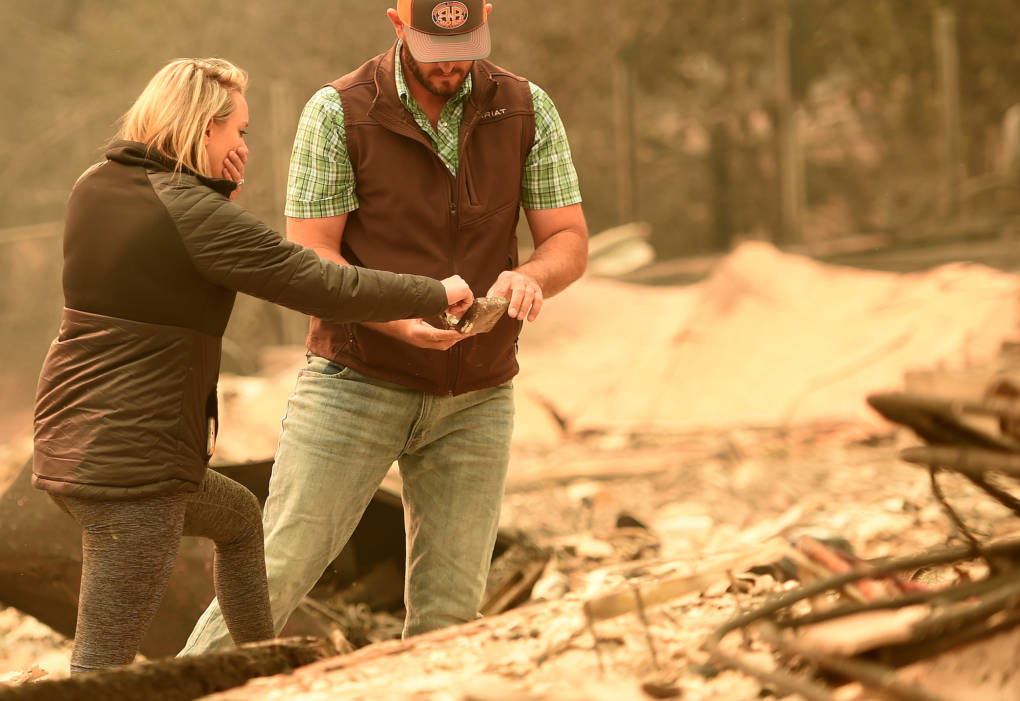
"caption": "Chris (R) and Nancy (L) Brown find the knife Chris won on their first date while looking over the remains of their burned home in Paradise, California, on Nov. 12, 2018. ",
"description": "Chris (R) and Nancy (L) Brown find the knife Chris won on their first date while looking over the remains of their burned home in Paradise, California on November 12, 2018. ",
"title": "US-FIRE-CALIFORNIA-ENVIORNMENT-WEATHER",
"credit": "JOSH EDELSON/AFP/Getty Images",
"status": "inherit",
"isLoading": false,
"fetchFailed": false
},
"news_11719755": {
"type": "attachments",
"id": "news_11719755",
"meta": {
"index": "attachments_1716263798",
"site": "news",
"id": "11719755",
"found": true
},
"parent": 11719092,
"imgSizes": {
"twentyfourteen-full-width": {
"file": "https://ww2.kqed.org/app/uploads/sites/10/2019/01/476dbdd3-rs34330_camp-fire-aerials_1204-14-qut-1038x576.jpg",
"width": 1038,
"mimeType": "image/jpeg",
"height": 576
},
"thumbnail": {
"file": "https://ww2.kqed.org/app/uploads/sites/10/2019/01/476dbdd3-rs34330_camp-fire-aerials_1204-14-qut-160x107.jpg",
"width": 160,
"mimeType": "image/jpeg",
"height": 107
},
"post-thumbnail": {
"file": "https://ww2.kqed.org/app/uploads/sites/10/2019/01/476dbdd3-rs34330_camp-fire-aerials_1204-14-qut-672x372.jpg",
"width": 672,
"mimeType": "image/jpeg",
"height": 372
},
"kqedFullSize": {
"file": "https://ww2.kqed.org/app/uploads/sites/10/2019/01/476dbdd3-rs34330_camp-fire-aerials_1204-14-qut.jpg",
"width": 1920,
"height": 1280
},
"large": {
"file": "https://ww2.kqed.org/app/uploads/sites/10/2019/01/476dbdd3-rs34330_camp-fire-aerials_1204-14-qut-1020x680.jpg",
"width": 1020,
"mimeType": "image/jpeg",
"height": 680
},
"complete_open_graph": {
"file": "https://ww2.kqed.org/app/uploads/sites/10/2019/01/476dbdd3-rs34330_camp-fire-aerials_1204-14-qut-1200x800.jpg",
"width": 1200,
"mimeType": "image/jpeg",
"height": 800
},
"guest-author-50": {
"file": "https://ww2.kqed.org/app/uploads/sites/10/2019/01/476dbdd3-rs34330_camp-fire-aerials_1204-14-qut-50x50.jpg",
"width": 50,
"mimeType": "image/jpeg",
"height": 50
},
"guest-author-96": {
"file": "https://ww2.kqed.org/app/uploads/sites/10/2019/01/476dbdd3-rs34330_camp-fire-aerials_1204-14-qut-96x96.jpg",
"width": 96,
"mimeType": "image/jpeg",
"height": 96
},
"medium": {
"file": "https://ww2.kqed.org/app/uploads/sites/10/2019/01/476dbdd3-rs34330_camp-fire-aerials_1204-14-qut-800x533.jpg",
"width": 800,
"mimeType": "image/jpeg",
"height": 533
},
"guest-author-64": {
"file": "https://ww2.kqed.org/app/uploads/sites/10/2019/01/476dbdd3-rs34330_camp-fire-aerials_1204-14-qut-64x64.jpg",
"width": 64,
"mimeType": "image/jpeg",
"height": 64
},
"guest-author-32": {
"file": "https://ww2.kqed.org/app/uploads/sites/10/2019/01/476dbdd3-rs34330_camp-fire-aerials_1204-14-qut-32x32.jpg",
"width": 32,
"mimeType": "image/jpeg",
"height": 32
},
"full-width": {
"file": "https://ww2.kqed.org/app/uploads/sites/10/2019/01/476dbdd3-rs34330_camp-fire-aerials_1204-14-qut-1920x1280.jpg",
"width": 1920,
"mimeType": "image/jpeg",
"height": 1280
},
"detail": {
"file": "https://ww2.kqed.org/app/uploads/sites/10/2019/01/476dbdd3-rs34330_camp-fire-aerials_1204-14-qut-150x150.jpg",
"width": 150,
"mimeType": "image/jpeg",
"height": 150
},
"guest-author-128": {
"file": "https://ww2.kqed.org/app/uploads/sites/10/2019/01/476dbdd3-rs34330_camp-fire-aerials_1204-14-qut-128x128.jpg",
"width": 128,
"mimeType": "image/jpeg",
"height": 128
}
},
"publishDate": 1548028501,
"modified": 1548028560,
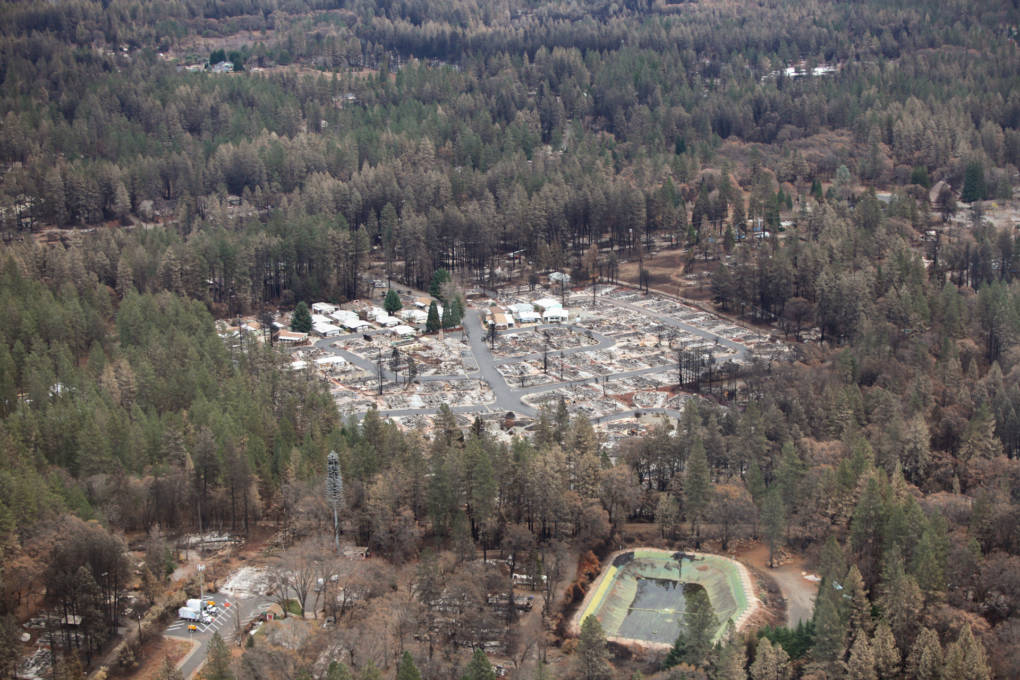
"caption": "An aerial view of Paradise nearly a month after the Camp Fire decimated the town.",
"description": "An aerial view of Paradise nearly a month after the Camp Fire decimated the town.",
"title": "RS34330_Camp Fire aerials_1204-14-qut",
"credit": "Adam Grossberg/KQED",
"status": "inherit",
"isLoading": false,
"fetchFailed": false
},
"news_11716224": {
"type": "attachments",
"id": "news_11716224",
"meta": {
"index": "attachments_1716263798",
"site": "news",
"id": "11716224",
"found": true
},
"parent": 11716135,
"imgSizes": {
"twentyfourteen-full-width": {
"file": "https://ww2.kqed.org/app/uploads/sites/10/2019/01/RS33962_Image-from-iOS-5-qut-1-1038x576.jpg",
"width": 1038,
"mimeType": "image/jpeg",
"height": 576
},
"thumbnail": {
"file": "https://ww2.kqed.org/app/uploads/sites/10/2019/01/RS33962_Image-from-iOS-5-qut-1-160x120.jpg",
"width": 160,
"mimeType": "image/jpeg",
"height": 120
},
"post-thumbnail": {
"file": "https://ww2.kqed.org/app/uploads/sites/10/2019/01/RS33962_Image-from-iOS-5-qut-1-672x372.jpg",
"width": 672,
"mimeType": "image/jpeg",
"height": 372
},
"kqedFullSize": {
"file": "https://ww2.kqed.org/app/uploads/sites/10/2019/01/RS33962_Image-from-iOS-5-qut-1.jpg",
"width": 1920,
"height": 1440
},
"large": {
"file": "https://ww2.kqed.org/app/uploads/sites/10/2019/01/RS33962_Image-from-iOS-5-qut-1-1020x765.jpg",
"width": 1020,
"mimeType": "image/jpeg",
"height": 765
},
"complete_open_graph": {
"file": "https://ww2.kqed.org/app/uploads/sites/10/2019/01/RS33962_Image-from-iOS-5-qut-1-1200x900.jpg",
"width": 1200,
"mimeType": "image/jpeg",
"height": 900
},
"guest-author-50": {
"file": "https://ww2.kqed.org/app/uploads/sites/10/2019/01/RS33962_Image-from-iOS-5-qut-1-50x50.jpg",
"width": 50,
"mimeType": "image/jpeg",
"height": 50
},
"guest-author-96": {
"file": "https://ww2.kqed.org/app/uploads/sites/10/2019/01/RS33962_Image-from-iOS-5-qut-1-96x96.jpg",
"width": 96,
"mimeType": "image/jpeg",
"height": 96
},
"medium": {
"file": "https://ww2.kqed.org/app/uploads/sites/10/2019/01/RS33962_Image-from-iOS-5-qut-1-800x600.jpg",
"width": 800,
"mimeType": "image/jpeg",
"height": 600
},
"guest-author-64": {
"file": "https://ww2.kqed.org/app/uploads/sites/10/2019/01/RS33962_Image-from-iOS-5-qut-1-64x64.jpg",
"width": 64,
"mimeType": "image/jpeg",
"height": 64
},
"guest-author-32": {
"file": "https://ww2.kqed.org/app/uploads/sites/10/2019/01/RS33962_Image-from-iOS-5-qut-1-32x32.jpg",
"width": 32,
"mimeType": "image/jpeg",
"height": 32
},
"full-width": {
"file": "https://ww2.kqed.org/app/uploads/sites/10/2019/01/RS33962_Image-from-iOS-5-qut-1-1920x1440.jpg",
"width": 1920,
"mimeType": "image/jpeg",
"height": 1440
},
"detail": {
"file": "https://ww2.kqed.org/app/uploads/sites/10/2019/01/RS33962_Image-from-iOS-5-qut-1-150x150.jpg",
"width": 150,
"mimeType": "image/jpeg",
"height": 150
},
"guest-author-128": {
"file": "https://ww2.kqed.org/app/uploads/sites/10/2019/01/RS33962_Image-from-iOS-5-qut-1-128x128.jpg",
"width": 128,
"mimeType": "image/jpeg",
"height": 128
}
},
"publishDate": 1546802846,
"modified": 1546809008,
"caption": "Thousands of buildings, like this apartment building in Paradise, burned to the ground in the Camp Fire.",
"description": "Thousands of buildings, like this apartment building in Paradise, burned to the ground in the Camp Fire.",
"title": "RS33962_Image from iOS (5)-qut (1)",
"credit": "Sonja Hutson/KQED",
"status": "inherit",
"isLoading": false,
"fetchFailed": false
},
"news_11714016": {
"type": "attachments",
"id": "news_11714016",
"meta": {
"index": "attachments_1716263798",
"site": "news",
"id": "11714016",
"found": true
},
"parent": 11714010,
"imgSizes": {
"twentyfourteen-full-width": {
"file": "https://ww2.kqed.org/app/uploads/sites/10/2018/12/RS34513_Photo-Dec-16-10-02-11-AM-qut-1038x576.jpg",
"width": 1038,
"mimeType": "image/jpeg",
"height": 576
},
"thumbnail": {
"file": "https://ww2.kqed.org/app/uploads/sites/10/2018/12/RS34513_Photo-Dec-16-10-02-11-AM-qut-160x120.jpg",
"width": 160,
"mimeType": "image/jpeg",
"height": 120
},
"post-thumbnail": {
"file": "https://ww2.kqed.org/app/uploads/sites/10/2018/12/RS34513_Photo-Dec-16-10-02-11-AM-qut-672x372.jpg",
"width": 672,
"mimeType": "image/jpeg",
"height": 372
},
"kqedFullSize": {
"file": "https://ww2.kqed.org/app/uploads/sites/10/2018/12/RS34513_Photo-Dec-16-10-02-11-AM-qut.jpg",
"width": 1920,
"height": 1439
},
"large": {
"file": "https://ww2.kqed.org/app/uploads/sites/10/2018/12/RS34513_Photo-Dec-16-10-02-11-AM-qut-1020x764.jpg",
"width": 1020,
"mimeType": "image/jpeg",
"height": 764
},
"complete_open_graph": {
"file": "https://ww2.kqed.org/app/uploads/sites/10/2018/12/RS34513_Photo-Dec-16-10-02-11-AM-qut-1200x899.jpg",
"width": 1200,
"mimeType": "image/jpeg",
"height": 899
},
"guest-author-50": {
"file": "https://ww2.kqed.org/app/uploads/sites/10/2018/12/RS34513_Photo-Dec-16-10-02-11-AM-qut-50x50.jpg",
"width": 50,
"mimeType": "image/jpeg",
"height": 50
},
"guest-author-96": {
"file": "https://ww2.kqed.org/app/uploads/sites/10/2018/12/RS34513_Photo-Dec-16-10-02-11-AM-qut-96x96.jpg",
"width": 96,
"mimeType": "image/jpeg",
"height": 96
},
"medium": {
"file": "https://ww2.kqed.org/app/uploads/sites/10/2018/12/RS34513_Photo-Dec-16-10-02-11-AM-qut-800x600.jpg",
"width": 800,
"mimeType": "image/jpeg",
"height": 600
},
"guest-author-64": {
"file": "https://ww2.kqed.org/app/uploads/sites/10/2018/12/RS34513_Photo-Dec-16-10-02-11-AM-qut-64x64.jpg",
"width": 64,
"mimeType": "image/jpeg",
"height": 64
},
"guest-author-32": {
"file": "https://ww2.kqed.org/app/uploads/sites/10/2018/12/RS34513_Photo-Dec-16-10-02-11-AM-qut-32x32.jpg",
"width": 32,
"mimeType": "image/jpeg",
"height": 32
},
"full-width": {
"file": "https://ww2.kqed.org/app/uploads/sites/10/2018/12/RS34513_Photo-Dec-16-10-02-11-AM-qut-1920x1439.jpg",
"width": 1920,
"mimeType": "image/jpeg",
"height": 1439
},
"detail": {
"file": "https://ww2.kqed.org/app/uploads/sites/10/2018/12/RS34513_Photo-Dec-16-10-02-11-AM-qut-150x150.jpg",
"width": 150,
"mimeType": "image/jpeg",
"height": 150
},
"guest-author-128": {
"file": "https://ww2.kqed.org/app/uploads/sites/10/2018/12/RS34513_Photo-Dec-16-10-02-11-AM-qut-128x128.jpg",
"width": 128,
"mimeType": "image/jpeg",
"height": 128
}
},
"publishDate": 1545335228,
"modified": 1545423197,
"caption": "Youth pastor Kyle Smith of First Assembly of God Paradise reads from the Bible on his phone because his copy of the book burned in the Camp Fire. His congregation is one of several now worshiping with congregations in Chico for the foreseeable future.",
"description": "Youth pastor Kyle Smith of First Assembly of God Paradise reads from the Bible on his phone because his copy of the book burned in the Camp Fire. His congregation is one of several now worshiping with congregations in Chico for the foreseeable future.",
"title": "RS34513_Photo Dec 16, 10 02 11 AM-qut",
"credit": "Polly Stryker/KQED",
"status": "inherit",
"isLoading": false,
"fetchFailed": false
},
"news_11714167": {
"type": "attachments",
"id": "news_11714167",
"meta": {
"index": "attachments_1716263798",
"site": "news",
"id": "11714167",
"found": true
},
"parent": 11714157,
"imgSizes": {
"twentyfourteen-full-width": {
"file": "https://ww2.kqed.org/app/uploads/sites/10/2018/12/Steve-Kari-e1545348395341-1038x576.jpg",
"width": 1038,
"mimeType": "image/jpeg",
"height": 576
},
"thumbnail": {
"file": "https://ww2.kqed.org/app/uploads/sites/10/2018/12/Steve-Kari-e1545348395341-160x120.jpg",
"width": 160,
"mimeType": "image/jpeg",
"height": 120
},
"post-thumbnail": {
"file": "https://ww2.kqed.org/app/uploads/sites/10/2018/12/Steve-Kari-e1545348395341-672x372.jpg",
"width": 672,
"mimeType": "image/jpeg",
"height": 372
},
"kqedFullSize": {
"file": "https://ww2.kqed.org/app/uploads/sites/10/2018/12/Steve-Kari-e1545348395341.jpg",
"width": 1920,
"height": 1440
},
"large": {
"file": "https://ww2.kqed.org/app/uploads/sites/10/2018/12/Steve-Kari-e1545348395341-1020x765.jpg",
"width": 1020,
"mimeType": "image/jpeg",
"height": 765
},
"complete_open_graph": {
"file": "https://ww2.kqed.org/app/uploads/sites/10/2018/12/Steve-Kari-e1545348395341-1200x900.jpg",
"width": 1200,
"mimeType": "image/jpeg",
"height": 900
},
"guest-author-50": {
"file": "https://ww2.kqed.org/app/uploads/sites/10/2018/12/Steve-Kari-e1545348395341-50x50.jpg",
"width": 50,
"mimeType": "image/jpeg",
"height": 50
},
"guest-author-96": {
"file": "https://ww2.kqed.org/app/uploads/sites/10/2018/12/Steve-Kari-e1545348395341-96x96.jpg",
"width": 96,
"mimeType": "image/jpeg",
"height": 96
},
"medium": {
"file": "https://ww2.kqed.org/app/uploads/sites/10/2018/12/Steve-Kari-e1545348395341-800x600.jpg",
"width": 800,
"mimeType": "image/jpeg",
"height": 600
},
"guest-author-64": {
"file": "https://ww2.kqed.org/app/uploads/sites/10/2018/12/Steve-Kari-e1545348395341-64x64.jpg",
"width": 64,
"mimeType": "image/jpeg",
"height": 64
},
"guest-author-32": {
"file": "https://ww2.kqed.org/app/uploads/sites/10/2018/12/Steve-Kari-e1545348395341-32x32.jpg",
"width": 32,
"mimeType": "image/jpeg",
"height": 32
},
"full-width": {
"file": "https://ww2.kqed.org/app/uploads/sites/10/2018/12/Steve-Kari-e1545348395341-1920x1440.jpg",
"width": 1920,
"mimeType": "image/jpeg",
"height": 1440
},
"detail": {
"file": "https://ww2.kqed.org/app/uploads/sites/10/2018/12/Steve-Kari-e1545348395341-150x150.jpg",
"width": 150,
"mimeType": "image/jpeg",
"height": 150
},
"guest-author-128": {
"file": "https://ww2.kqed.org/app/uploads/sites/10/2018/12/Steve-Kari-e1545348395341-128x128.jpg",
"width": 128,
"mimeType": "image/jpeg",
"height": 128
}
},
"publishDate": 1545348274,
"modified": 1545348364,
"caption": "Steve and Kari Eurotas standing in the doorway of their home in Paradise. For some reason they will never understand, the fire bypassed their house. ",
"description": "Steve and Kari Eurotas standing in the doorway of their home in Paradise. For some reason they will never understand, the fire bypassed their house. ",
"title": "Steve and Kari Eurotas standing in the doorway of their home in Paradise. For some reason they will never understand, the fire bypassed their house.",
"credit": "Rachael Myrow/KQED ",
"status": "inherit",
"isLoading": false,
"fetchFailed": false
},
"news_11713812": {
"type": "attachments",
"id": "news_11713812",
"meta": {
"index": "attachments_1716263798",
"site": "news",
"id": "11713812",
"found": true
},
"parent": 11713652,
"imgSizes": {
"twentyfourteen-full-width": {
"file": "https://ww2.kqed.org/app/uploads/sites/10/2018/12/ParadiseCouple-1038x576.jpg",
"width": 1038,
"mimeType": "image/jpeg",
"height": 576
},
"thumbnail": {
"file": "https://ww2.kqed.org/app/uploads/sites/10/2018/12/ParadiseCouple-160x105.jpg",
"width": 160,
"mimeType": "image/jpeg",
"height": 105
},
"post-thumbnail": {
"file": "https://ww2.kqed.org/app/uploads/sites/10/2018/12/ParadiseCouple-672x372.jpg",
"width": 672,
"mimeType": "image/jpeg",
"height": 372
},
"kqedFullSize": {
"file": "https://ww2.kqed.org/app/uploads/sites/10/2018/12/ParadiseCouple.jpg",
"width": 1920,
"height": 1262
},
"large": {
"file": "https://ww2.kqed.org/app/uploads/sites/10/2018/12/ParadiseCouple-1020x670.jpg",
"width": 1020,
"mimeType": "image/jpeg",
"height": 670
},
"complete_open_graph": {
"file": "https://ww2.kqed.org/app/uploads/sites/10/2018/12/ParadiseCouple-1200x789.jpg",
"width": 1200,
"mimeType": "image/jpeg",
"height": 789
},
"guest-author-50": {
"file": "https://ww2.kqed.org/app/uploads/sites/10/2018/12/ParadiseCouple-50x50.jpg",
"width": 50,
"mimeType": "image/jpeg",
"height": 50
},
"guest-author-96": {
"file": "https://ww2.kqed.org/app/uploads/sites/10/2018/12/ParadiseCouple-96x96.jpg",
"width": 96,
"mimeType": "image/jpeg",
"height": 96
},
"medium": {
"file": "https://ww2.kqed.org/app/uploads/sites/10/2018/12/ParadiseCouple-800x526.jpg",
"width": 800,
"mimeType": "image/jpeg",
"height": 526
},
"guest-author-64": {
"file": "https://ww2.kqed.org/app/uploads/sites/10/2018/12/ParadiseCouple-64x64.jpg",
"width": 64,
"mimeType": "image/jpeg",
"height": 64
},
"guest-author-32": {
"file": "https://ww2.kqed.org/app/uploads/sites/10/2018/12/ParadiseCouple-32x32.jpg",
"width": 32,
"mimeType": "image/jpeg",
"height": 32
},
"full-width": {
"file": "https://ww2.kqed.org/app/uploads/sites/10/2018/12/ParadiseCouple-1920x1262.jpg",
"width": 1920,
"mimeType": "image/jpeg",
"height": 1262
},
"detail": {
"file": "https://ww2.kqed.org/app/uploads/sites/10/2018/12/ParadiseCouple-150x150.jpg",
"width": 150,
"mimeType": "image/jpeg",
"height": 150
},
"guest-author-128": {
"file": "https://ww2.kqed.org/app/uploads/sites/10/2018/12/ParadiseCouple-128x128.jpg",
"width": 128,
"mimeType": "image/jpeg",
"height": 128
}
},
"publishDate": 1545265106,
"modified": 1545325776,
"caption": "Ryan Spainhower (L) and his wife, Kimberly, weep after finding a coin they made during their honeymoon amid the ashes of their home in Paradise on Nov. 18, 2018.",
"description": "Ryan Spainhower (L) and his wife Kimberly weep after finding a coin they made during their honeymoon amidst the ashes of their home in Paradise, on Nov. 18, 2018.",
"title": "ParadiseCouple",
"credit": "JOSH EDELSON/AFP/Getty Images",
"status": "inherit",
"isLoading": false,
"fetchFailed": false
},
"news_11710560": {
"type": "attachments",
"id": "news_11710560",
"meta": {
"index": "attachments_1716263798",
"site": "news",
"id": "11710560",
"found": true
},
"parent": 11710513,
"imgSizes": {
"twentyfourteen-full-width": {
"file": "https://ww2.kqed.org/app/uploads/sites/10/2018/12/Camp-Fire-aerials_1204-18_1920-1038x576.jpg",
"width": 1038,
"mimeType": "image/jpeg",
"height": 576
},
"thumbnail": {
"file": "https://ww2.kqed.org/app/uploads/sites/10/2018/12/Camp-Fire-aerials_1204-18_1920-160x107.jpg",
"width": 160,
"mimeType": "image/jpeg",
"height": 107
},
"post-thumbnail": {
"file": "https://ww2.kqed.org/app/uploads/sites/10/2018/12/Camp-Fire-aerials_1204-18_1920-672x372.jpg",
"width": 672,
"mimeType": "image/jpeg",
"height": 372
},
"kqedFullSize": {
"file": "https://ww2.kqed.org/app/uploads/sites/10/2018/12/Camp-Fire-aerials_1204-18_1920.jpg",
"width": 1920,
"height": 1280
},
"large": {
"file": "https://ww2.kqed.org/app/uploads/sites/10/2018/12/Camp-Fire-aerials_1204-18_1920-1020x680.jpg",
"width": 1020,
"mimeType": "image/jpeg",
"height": 680
},
"complete_open_graph": {
"file": "https://ww2.kqed.org/app/uploads/sites/10/2018/12/Camp-Fire-aerials_1204-18_1920-1200x800.jpg",
"width": 1200,
"mimeType": "image/jpeg",
"height": 800
},
"guest-author-50": {
"file": "https://ww2.kqed.org/app/uploads/sites/10/2018/12/Camp-Fire-aerials_1204-18_1920-50x50.jpg",
"width": 50,
"mimeType": "image/jpeg",
"height": 50
},
"guest-author-96": {
"file": "https://ww2.kqed.org/app/uploads/sites/10/2018/12/Camp-Fire-aerials_1204-18_1920-96x96.jpg",
"width": 96,
"mimeType": "image/jpeg",
"height": 96
},
"medium": {
"file": "https://ww2.kqed.org/app/uploads/sites/10/2018/12/Camp-Fire-aerials_1204-18_1920-800x533.jpg",
"width": 800,
"mimeType": "image/jpeg",
"height": 533
},
"guest-author-64": {
"file": "https://ww2.kqed.org/app/uploads/sites/10/2018/12/Camp-Fire-aerials_1204-18_1920-64x64.jpg",
"width": 64,
"mimeType": "image/jpeg",
"height": 64
},
"guest-author-32": {
"file": "https://ww2.kqed.org/app/uploads/sites/10/2018/12/Camp-Fire-aerials_1204-18_1920-32x32.jpg",
"width": 32,
"mimeType": "image/jpeg",
"height": 32
},
"full-width": {
"file": "https://ww2.kqed.org/app/uploads/sites/10/2018/12/Camp-Fire-aerials_1204-18_1920-1920x1280.jpg",
"width": 1920,
"mimeType": "image/jpeg",
"height": 1280
},
"detail": {
"file": "https://ww2.kqed.org/app/uploads/sites/10/2018/12/Camp-Fire-aerials_1204-18_1920-150x150.jpg",
"width": 150,
"mimeType": "image/jpeg",
"height": 150
},
"guest-author-128": {
"file": "https://ww2.kqed.org/app/uploads/sites/10/2018/12/Camp-Fire-aerials_1204-18_1920-128x128.jpg",
"width": 128,
"mimeType": "image/jpeg",
"height": 128
}
},
"publishDate": 1544134539,
"modified": 1544134596,
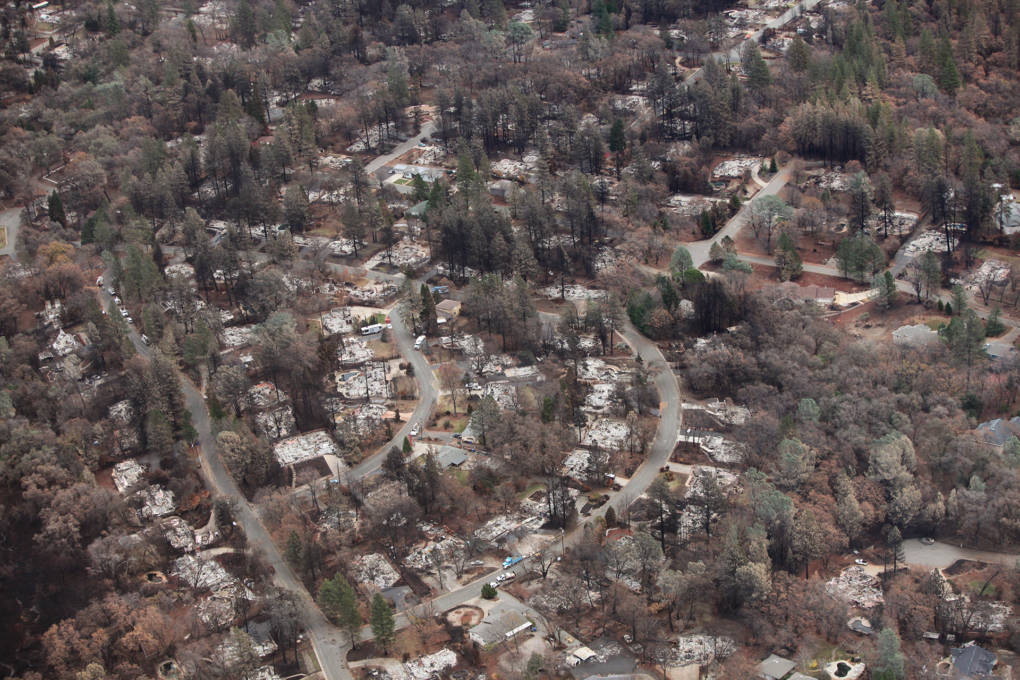
"caption": "A residential neighborhood in Paradise seen approximately one month after the Camp Fire. ",
"description": "A residential neighborhood in Paradise seen approximately one month after the Camp Fire. ",
"title": "Camp Fire aerials_1204-18_1920",
"credit": "Adam Grossberg/KQED",
"status": "inherit",
"isLoading": false,
"fetchFailed": false
},
"news_11713203": {
"type": "attachments",
"id": "news_11713203",
"meta": {
"index": "attachments_1716263798",
"site": "news",
"id": "11713203",
"found": true
},
"parent": 11713199,
"imgSizes": {
"twentyfourteen-full-width": {
"file": "https://ww2.kqed.org/app/uploads/sites/10/2018/12/contractorworkers-1000x576.png",
"width": 1000,
"mimeType": "image/png",
"height": 576
},
"thumbnail": {
"file": "https://ww2.kqed.org/app/uploads/sites/10/2018/12/contractorworkers-160x96.png",
"width": 160,
"mimeType": "image/png",
"height": 96
},
"post-thumbnail": {
"file": "https://ww2.kqed.org/app/uploads/sites/10/2018/12/contractorworkers-672x372.png",
"width": 672,
"mimeType": "image/png",
"height": 372
},
"kqedFullSize": {
"file": "https://ww2.kqed.org/app/uploads/sites/10/2018/12/contractorworkers.png",
"width": 1000,
"height": 600
},
"guest-author-50": {
"file": "https://ww2.kqed.org/app/uploads/sites/10/2018/12/contractorworkers-50x50.png",
"width": 50,
"mimeType": "image/png",
"height": 50
},
"guest-author-96": {
"file": "https://ww2.kqed.org/app/uploads/sites/10/2018/12/contractorworkers-96x96.png",
"width": 96,
"mimeType": "image/png",
"height": 96
},
"medium": {
"file": "https://ww2.kqed.org/app/uploads/sites/10/2018/12/contractorworkers-800x480.png",
"width": 800,
"mimeType": "image/png",
"height": 480
},
"guest-author-64": {
"file": "https://ww2.kqed.org/app/uploads/sites/10/2018/12/contractorworkers-64x64.png",
"width": 64,
"mimeType": "image/png",
"height": 64
},
"detail": {
"file": "https://ww2.kqed.org/app/uploads/sites/10/2018/12/contractorworkers-150x150.png",
"width": 150,
"mimeType": "image/png",
"height": 150
},
"guest-author-32": {
"file": "https://ww2.kqed.org/app/uploads/sites/10/2018/12/contractorworkers-32x32.png",
"width": 32,
"mimeType": "image/png",
"height": 32
},
"guest-author-128": {
"file": "https://ww2.kqed.org/app/uploads/sites/10/2018/12/contractorworkers-128x128.png",
"width": 128,
"mimeType": "image/png",
"height": 128
}
},
"publishDate": 1545092546,
"modified": 1545149853,
"caption": null,
"description": null,
"title": "contractorworkers",
"credit": "Town of Paradise/Facebook",
"status": "inherit",
"isLoading": false,
"fetchFailed": false
},
"news_11712905": {
"type": "attachments",
"id": "news_11712905",
"meta": {
"index": "attachments_1716263798",
"site": "news",
"id": "11712905",
"found": true
},
"parent": 11712772,
"imgSizes": {
"twentyfourteen-full-width": {
"file": "https://ww2.kqed.org/app/uploads/sites/10/2018/12/Image-from-iOS-e1544924559450-1038x576.jpg",
"width": 1038,
"mimeType": "image/jpeg",
"height": 576
},
"thumbnail": {
"file": "https://ww2.kqed.org/app/uploads/sites/10/2018/12/Image-from-iOS-e1544924559450-160x120.jpg",
"width": 160,
"mimeType": "image/jpeg",
"height": 120
},
"post-thumbnail": {
"file": "https://ww2.kqed.org/app/uploads/sites/10/2018/12/Image-from-iOS-e1544924559450-672x372.jpg",
"width": 672,
"mimeType": "image/jpeg",
"height": 372
},
"kqedFullSize": {
"file": "https://ww2.kqed.org/app/uploads/sites/10/2018/12/Image-from-iOS-e1544924559450.jpg",
"width": 1920,
"height": 1440
},
"large": {
"file": "https://ww2.kqed.org/app/uploads/sites/10/2018/12/Image-from-iOS-e1544924559450-1020x765.jpg",
"width": 1020,
"mimeType": "image/jpeg",
"height": 765
},
"complete_open_graph": {
"file": "https://ww2.kqed.org/app/uploads/sites/10/2018/12/Image-from-iOS-e1544924559450-1200x900.jpg",
"width": 1200,
"mimeType": "image/jpeg",
"height": 900
},
"guest-author-50": {
"file": "https://ww2.kqed.org/app/uploads/sites/10/2018/12/Image-from-iOS-e1544924559450-50x50.jpg",
"width": 50,
"mimeType": "image/jpeg",
"height": 50
},
"guest-author-96": {
"file": "https://ww2.kqed.org/app/uploads/sites/10/2018/12/Image-from-iOS-e1544924559450-96x96.jpg",
"width": 96,
"mimeType": "image/jpeg",
"height": 96
},
"medium": {
"file": "https://ww2.kqed.org/app/uploads/sites/10/2018/12/Image-from-iOS-e1544924559450-800x600.jpg",
"width": 800,
"mimeType": "image/jpeg",
"height": 600
},
"guest-author-64": {
"file": "https://ww2.kqed.org/app/uploads/sites/10/2018/12/Image-from-iOS-e1544924559450-64x64.jpg",
"width": 64,
"mimeType": "image/jpeg",
"height": 64
},
"guest-author-32": {
"file": "https://ww2.kqed.org/app/uploads/sites/10/2018/12/Image-from-iOS-e1544924559450-32x32.jpg",
"width": 32,
"mimeType": "image/jpeg",
"height": 32
},
"full-width": {
"file": "https://ww2.kqed.org/app/uploads/sites/10/2018/12/Image-from-iOS-e1544924559450-1920x1440.jpg",
"width": 1920,
"mimeType": "image/jpeg",
"height": 1440
},
"detail": {
"file": "https://ww2.kqed.org/app/uploads/sites/10/2018/12/Image-from-iOS-e1544924559450-150x150.jpg",
"width": 150,
"mimeType": "image/jpeg",
"height": 150
},
"guest-author-128": {
"file": "https://ww2.kqed.org/app/uploads/sites/10/2018/12/Image-from-iOS-e1544924559450-128x128.jpg",
"width": 128,
"mimeType": "image/jpeg",
"height": 128
}
},
"publishDate": 1544924524,
"modified": 1544931204,
"caption": "Autumn Knight at her Chico apartment with her roommate and friends, who are Camp Fire evacuees.",
"description": "Autumn Knight (in kitchen) at her Chico apartment with her roommate and friends, who are Camp Fire evacuees.",
"title": "Image-from-iOS",
"credit": "Yuri Nagano/KQED",
"status": "inherit",
"isLoading": false,
"fetchFailed": false
},
"news_11712283": {
"type": "attachments",
"id": "news_11712283",
"meta": {
"index": "attachments_1716263798",
"site": "news",
"id": "11712283",
"found": true
},
"parent": 11712264,
"imgSizes": {
"twentyfourteen-full-width": {
"file": "https://ww2.kqed.org/app/uploads/sites/10/2018/12/RS33848_couple_GettyImages-1060720780-qut-1038x576.jpg",
"width": 1038,
"mimeType": "image/jpeg",
"height": 576
},
"thumbnail": {
"file": "https://ww2.kqed.org/app/uploads/sites/10/2018/12/RS33848_couple_GettyImages-1060720780-qut-160x103.jpg",
"width": 160,
"mimeType": "image/jpeg",
"height": 103
},
"post-thumbnail": {
"file": "https://ww2.kqed.org/app/uploads/sites/10/2018/12/RS33848_couple_GettyImages-1060720780-qut-672x372.jpg",
"width": 672,
"mimeType": "image/jpeg",
"height": 372
},
"kqedFullSize": {
"file": "https://ww2.kqed.org/app/uploads/sites/10/2018/12/RS33848_couple_GettyImages-1060720780-qut.jpg",
"width": 1920,
"height": 1233
},
"large": {
"file": "https://ww2.kqed.org/app/uploads/sites/10/2018/12/RS33848_couple_GettyImages-1060720780-qut-1020x655.jpg",
"width": 1020,
"mimeType": "image/jpeg",
"height": 655
},
"complete_open_graph": {
"file": "https://ww2.kqed.org/app/uploads/sites/10/2018/12/RS33848_couple_GettyImages-1060720780-qut-1200x771.jpg",
"width": 1200,
"mimeType": "image/jpeg",
"height": 771
},
"guest-author-50": {
"file": "https://ww2.kqed.org/app/uploads/sites/10/2018/12/RS33848_couple_GettyImages-1060720780-qut-50x50.jpg",
"width": 50,
"mimeType": "image/jpeg",
"height": 50
},
"guest-author-96": {
"file": "https://ww2.kqed.org/app/uploads/sites/10/2018/12/RS33848_couple_GettyImages-1060720780-qut-96x96.jpg",
"width": 96,
"mimeType": "image/jpeg",
"height": 96
},
"medium": {
"file": "https://ww2.kqed.org/app/uploads/sites/10/2018/12/RS33848_couple_GettyImages-1060720780-qut-800x514.jpg",
"width": 800,
"mimeType": "image/jpeg",
"height": 514
},
"guest-author-64": {
"file": "https://ww2.kqed.org/app/uploads/sites/10/2018/12/RS33848_couple_GettyImages-1060720780-qut-64x64.jpg",
"width": 64,
"mimeType": "image/jpeg",
"height": 64
},
"guest-author-32": {
"file": "https://ww2.kqed.org/app/uploads/sites/10/2018/12/RS33848_couple_GettyImages-1060720780-qut-32x32.jpg",
"width": 32,
"mimeType": "image/jpeg",
"height": 32
},
"full-width": {
"file": "https://ww2.kqed.org/app/uploads/sites/10/2018/12/RS33848_couple_GettyImages-1060720780-qut-1920x1233.jpg",
"width": 1920,
"mimeType": "image/jpeg",
"height": 1233
},
"detail": {
"file": "https://ww2.kqed.org/app/uploads/sites/10/2018/12/RS33848_couple_GettyImages-1060720780-qut-150x150.jpg",
"width": 150,
"mimeType": "image/jpeg",
"height": 150
},
"guest-author-128": {
"file": "https://ww2.kqed.org/app/uploads/sites/10/2018/12/RS33848_couple_GettyImages-1060720780-qut-128x128.jpg",
"width": 128,
"mimeType": "image/jpeg",
"height": 128
}
},
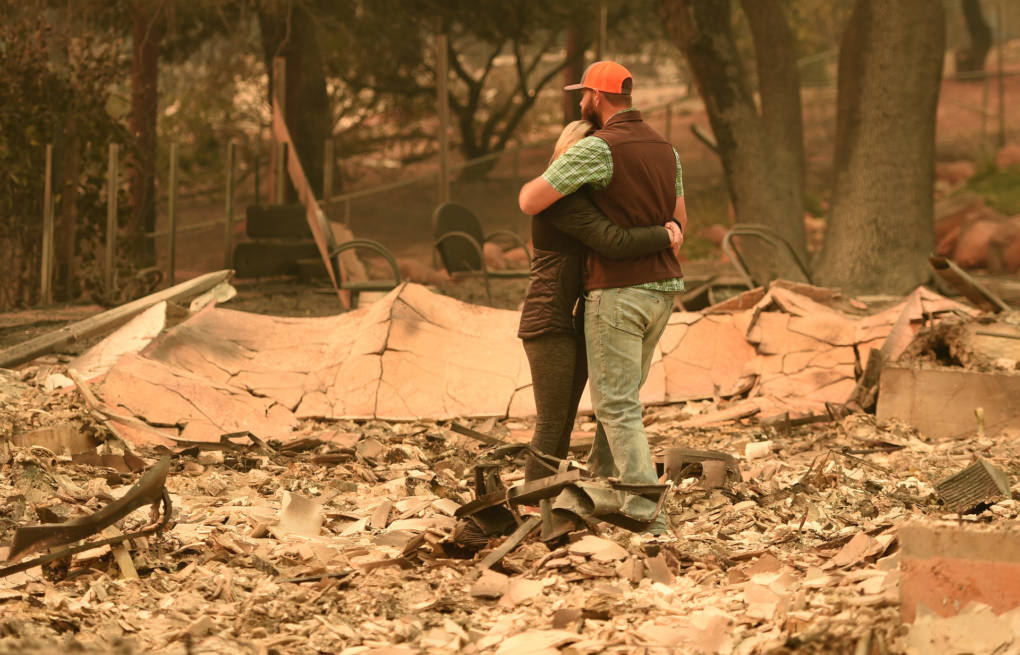
"publishDate": 1544733044,
"modified": 1544747781,
"caption": "Chris and Nancy Brown embrace while looking over the remains of their burned residence after the Camp Rire tore through Paradise, California in early November 2018. ",
"description": null,
"title": "TOPSHOT-US-FIRE-CALIFORNIA-ENVIORNMENT-WEATHER",
"credit": "Josh Edelson/AFP/Getty Images",
"status": "inherit",
"isLoading": false,
"fetchFailed": false
},
"news_11712146": {
"type": "attachments",
"id": "news_11712146",
"meta": {
"index": "attachments_1716263798",
"site": "news",
"id": "11712146",
"found": true
},
"parent": 11712036,
"imgSizes": {
"twentyfourteen-full-width": {
"file": "https://ww2.kqed.org/app/uploads/sites/10/2018/12/DonClark-1038x576.jpg",
"width": 1038,
"mimeType": "image/jpeg",
"height": 576
},
"thumbnail": {
"file": "https://ww2.kqed.org/app/uploads/sites/10/2018/12/DonClark-160x114.jpg",
"width": 160,
"mimeType": "image/jpeg",
"height": 114
},
"post-thumbnail": {
"file": "https://ww2.kqed.org/app/uploads/sites/10/2018/12/DonClark-672x372.jpg",
"width": 672,
"mimeType": "image/jpeg",
"height": 372
},
"kqedFullSize": {
"file": "https://ww2.kqed.org/app/uploads/sites/10/2018/12/DonClark.jpg",
"width": 1920,
"height": 1366
},
"large": {
"file": "https://ww2.kqed.org/app/uploads/sites/10/2018/12/DonClark-1020x726.jpg",
"width": 1020,
"mimeType": "image/jpeg",
"height": 726
},
"complete_open_graph": {
"file": "https://ww2.kqed.org/app/uploads/sites/10/2018/12/DonClark-1200x854.jpg",
"width": 1200,
"mimeType": "image/jpeg",
"height": 854
},
"guest-author-50": {
"file": "https://ww2.kqed.org/app/uploads/sites/10/2018/12/DonClark-50x50.jpg",
"width": 50,
"mimeType": "image/jpeg",
"height": 50
},
"guest-author-96": {
"file": "https://ww2.kqed.org/app/uploads/sites/10/2018/12/DonClark-96x96.jpg",
"width": 96,
"mimeType": "image/jpeg",
"height": 96
},
"medium": {
"file": "https://ww2.kqed.org/app/uploads/sites/10/2018/12/DonClark-800x569.jpg",
"width": 800,
"mimeType": "image/jpeg",
"height": 569
},
"guest-author-64": {
"file": "https://ww2.kqed.org/app/uploads/sites/10/2018/12/DonClark-64x64.jpg",
"width": 64,
"mimeType": "image/jpeg",
"height": 64
},
"guest-author-32": {
"file": "https://ww2.kqed.org/app/uploads/sites/10/2018/12/DonClark-32x32.jpg",
"width": 32,
"mimeType": "image/jpeg",
"height": 32
},
"full-width": {
"file": "https://ww2.kqed.org/app/uploads/sites/10/2018/12/DonClark-1920x1366.jpg",
"width": 1920,
"mimeType": "image/jpeg",
"height": 1366
},
"detail": {
"file": "https://ww2.kqed.org/app/uploads/sites/10/2018/12/DonClark-150x150.jpg",
"width": 150,
"mimeType": "image/jpeg",
"height": 150
},
"guest-author-128": {
"file": "https://ww2.kqed.org/app/uploads/sites/10/2018/12/DonClark-128x128.jpg",
"width": 128,
"mimeType": "image/jpeg",
"height": 128
}
},
"publishDate": 1544660599,
"modified": 1544740791,
"caption": "Don Clark stands in front of where his home was in Paradise. It was destroyed by the Camp Fire.",
"description": "Don Clark stands in front of his home in Paradise, which was destroyed by the Camp Fire.",
"title": "DonClark",
"credit": "Jeremy Siegel/KQED",
"status": "inherit",
"isLoading": false,
"fetchFailed": false
}
},
"audioPlayerReducer": {
"postId": "stream_live",
"isPaused": true,
"isPlaying": false,
"pfsActive": false,
"pledgeModalIsOpen": true,
"playerDrawerIsOpen": false,
"liveAudioPlayStartedAt": 0,
"liveAudioPlayContext": ""
},
"authorsReducer": {
"byline_news_11722953": {
"type": "authors",
"id": "byline_news_11722953",
"meta": {
"override": true
},
"slug": "byline_news_11722953",
"name": "Kirk Siegler",
"isLoading": false
},
"byline_news_11721648": {
"type": "authors",
"id": "byline_news_11721648",
"meta": {
"override": true
},
"slug": "byline_news_11721648",
"name": "Kathleen Ronayne \u003cbr> The Associated Press",
"isLoading": false
},
"byline_news_11719092": {
"type": "authors",
"id": "byline_news_11719092",
"meta": {
"override": true
},
"slug": "byline_news_11719092",
"name": "\u003ca href=\"https://twitter.com/tessacotsirilos\">Teresa Cotsirilos\u003c/a>\u003c/br>KALW",
"isLoading": false
},
"byline_news_11713393": {
"type": "authors",
"id": "byline_news_11713393",
"meta": {
"override": true
},
"slug": "byline_news_11713393",
"name": "\u003cstrong>Bay City News\u003c/strong>",
"isLoading": false
},
"byline_news_11712264": {
"type": "authors",
"id": "byline_news_11712264",
"meta": {
"override": true
},
"slug": "byline_news_11712264",
"name": "Kathleen Ronayne \u003c/br>Associated Press",
"isLoading": false
},
"kqed": {
"type": "authors",
"id": "236",
"meta": {
"index": "authors_1716337520",
"id": "236",
"found": true
},
"name": "KQED News Staff",
"firstName": "KQED News Staff",
"lastName": null,
"slug": "kqed",
"email": "faq@kqed.org",
"display_author_email": false,
"staff_mastheads": [],
"title": null,
"bio": null,
"avatar": "https://secure.gravatar.com/avatar/ef0e801a68c4c54afa9180db14084167?s=600&d=blank&r=g",
"twitter": null,
"facebook": null,
"instagram": null,
"linkedin": null,
"sites": [
{
"site": "arts",
"roles": [
"contributor"
]
},
{
"site": "news",
"roles": [
"editor"
]
},
{
"site": "futureofyou",
"roles": [
"author"
]
}
],
"headData": {
"title": "KQED News Staff | KQED",
"description": null,
"ogImgSrc": "https://secure.gravatar.com/avatar/ef0e801a68c4c54afa9180db14084167?s=600&d=blank&r=g",
"twImgSrc": "https://secure.gravatar.com/avatar/ef0e801a68c4c54afa9180db14084167?s=600&d=blank&r=g"
},
"isLoading": false,
"link": "/author/kqed"
},
"pollystryker": {
"type": "authors",
"id": "250",
"meta": {
"index": "authors_1716337520",
"id": "250",
"found": true
},
"name": "Polly Stryker",
"firstName": "Polly",
"lastName": "Stryker",
"slug": "pollystryker",
"email": "pstryker@kqed.org",
"display_author_email": false,
"staff_mastheads": [
"science"
],
"title": "Editor",
"bio": "Polly Stryker is a former editor for KQED's Science desk. She and reporter/host Rachael Myrow produced the KQED podcast, \u003ca href=\"http://www.npr.org/podcasts/448072249/love-in-the-digital-age\">Love in the Digital Age\u003c/a>.\r\n\r\nPolly has worked for a variety of news and public affairs programs, including most recently as editor of \u003cem>The California Report\u003c/em>. She also edited \u003ca href=\"https://ww2.kqed.org/news/programs/the-california-report\" target=\"_blank\" rel=\"noopener noreferrer\">\u003cem>The California Report'\u003c/em>s\u003c/a> \u003ca href=\"http://www.californiareport.org/healthdialogues/\" target=\"_blank\" rel=\"noopener noreferrer\">“Health Dialogues.”\u003c/a> Before that, she was a producer on \u003cem>\u003ca href=\"http://www.scpr.org/programs/airtalk/\" target=\"_blank\" rel=\"noopener noreferrer\">AirTalk\u003c/a>\u003c/em> with Larry Mantle on \u003ca href=\"http://www.scpr.org/\" target=\"_blank\" rel=\"noopener noreferrer\">KPCC\u003c/a> radio, and \u003cem>\u003ca href=\"http://www.kpbs.org/news/midday-edition/\">These Days\u003c/a>\u003c/em> on KPBS. Polly’s work has won awards from the Radio and Television News Directors Association of Northern California, the Society of Professional Journalists (Southern California and Northern California chapters), the Radio and Television News Association. She's also won a Taste Award.\r\n\r\nShe considers herself to be a citizen of the world, having grown up in Cairo before coming to the United States. Polly speaks Arabic and can say, \"I’d like a martini, please\" in Swahili.",
"avatar": "https://secure.gravatar.com/avatar/5012854a99868cb15a517a876d88f736?s=600&d=blank&r=g",
"twitter": null,
"facebook": null,
"instagram": null,
"linkedin": null,
"sites": [
{
"site": "",
"roles": [
"editor"
]
},
{
"site": "arts",
"roles": [
"administrator"
]
},
{
"site": "news",
"roles": [
"subscriber"
]
},
{
"site": "stateofhealth",
"roles": [
"author"
]
},
{
"site": "science",
"roles": [
"editor"
]
},
{
"site": "forum",
"roles": [
"editor"
]
}
],
"headData": {
"title": "Polly Stryker | KQED",
"description": "Editor",
"ogImgSrc": "https://secure.gravatar.com/avatar/5012854a99868cb15a517a876d88f736?s=600&d=blank&r=g",
"twImgSrc": "https://secure.gravatar.com/avatar/5012854a99868cb15a517a876d88f736?s=600&d=blank&r=g"
},
"isLoading": false,
"link": "/author/pollystryker"
},
"rachael-myrow": {
"type": "authors",
"id": "251",
"meta": {
"index": "authors_1716337520",
"id": "251",
"found": true
},
"name": "Rachael Myrow",
"firstName": "Rachael",
"lastName": "Myrow",
"slug": "rachael-myrow",
"email": "rmyrow@kqed.org",
"display_author_email": true,
"staff_mastheads": [
"news"
],
"title": "Senior Editor of KQED's Silicon Valley News Desk",
"bio": "• I write and edit stories about how Silicon Valley power and policies shape everyday life in California. I’m also passionate about making Bay Area history and culture more accessible to a broad public. • I’ve been a journalist for most of my life, starting in high school with The Franklin Press in Los Angeles, where I grew up. While earning my first degree in English at UC Berkeley, I got my start in public radio at KALX-FM. After completing a second degree in journalism at Cal, I landed my first professional job at Marketplace, then moved on to KPCC (now LAist), and then KQED, where I hosted The California Report for more than seven years. • My reporting has appeared on NPR, The World, WBUR’s \u003ci>Here & Now\u003c/i>, and the BBC. I also guest host for KQED’s \u003ci>Forum\u003c/i>, as well as the Commonwealth Club in San Francisco. • I speak periodically on media, democracy and technology issues, and do voiceover work for documentaries and educational video projects. • Outside of the studio, you'll find me hiking Bay Area trails and whipping up Insta-ready meals in my kitchen. • I do not accept gifts, money, or favors from anyone connected to my reporting, I don't pay people for information, and I do not support or donate to political causes. • I strive to treat the people I report on with fairness, honesty, and respect. I also recognize there are often multiple sides to a story and work to verify information through multiple sources and documentation. If I get something wrong, I correct it.",
"avatar": "https://secure.gravatar.com/avatar/3ed8a3c5f26025e4a805ba634cda8cd764906b97438a6d9ce216b044e340da4e?s=600&d=blank&r=g",
"twitter": "rachaelmyrow",
"bluesky": null,
"facebook": null,
"instagram": null,
"linkedin": "https://www.linkedin.com/in/rachaelmyrow/",
"sites": [
{
"site": "arts",
"roles": [
"administrator"
]
},
{
"site": "news",
"roles": [
"edit_others_posts",
"editor"
]
},
{
"site": "futureofyou",
"roles": [
"editor"
]
},
{
"site": "bayareabites",
"roles": [
"editor"
]
},
{
"site": "stateofhealth",
"roles": [
"editor"
]
},
{
"site": "science",
"roles": [
"editor"
]
},
{
"site": "food",
"roles": [
"editor"
]
},
{
"site": "forum",
"roles": [
"editor"
]
},
{
"site": "liveblog",
"roles": [
"author"
]
}
],
"headData": {
"title": "Rachael Myrow | KQED",
"description": "Senior Editor of KQED's Silicon Valley News Desk",
"ogImgSrc": "https://secure.gravatar.com/avatar/3ed8a3c5f26025e4a805ba634cda8cd764906b97438a6d9ce216b044e340da4e?s=600&d=blank&r=g",
"twImgSrc": "https://secure.gravatar.com/avatar/3ed8a3c5f26025e4a805ba634cda8cd764906b97438a6d9ce216b044e340da4e?s=600&d=blank&r=g"
},
"isLoading": false,
"link": "/author/rachael-myrow"
},
"shutson": {
"type": "authors",
"id": "11216",
"meta": {
"index": "authors_1716337520",
"id": "11216",
"found": true
},
"name": "Sonja Hutson",
"firstName": "Sonja",
"lastName": "Hutson",
"slug": "shutson",
"email": "shutson@kqed.org",
"display_author_email": false,
"staff_mastheads": [],
"title": "KQED Contributor",
"bio": "Sonja Hutson is a former reporter for KQED's Silicon Valley desk and weekend newscasts. She primarily covers tech and housing. Sonja is a Bay Area native and now lives in San Francisco. When she's not working, you can find her camping, skiing, scuba diving, and struggling with the New York Times Crossword. Email: \u003ca href=\"mailto:shutson@kqed.org\">shutson@kqed.org. \u003c/a>Twitter: \u003ca href=\"https://twitter.com/SonjaHutson\">@SonjaHutson\u003c/a>",
"avatar": "https://secure.gravatar.com/avatar/7537c5e36818614e599b6c0f41d72b7a?s=600&d=blank&r=g",
"twitter": "SonjaHutson",
"facebook": null,
"instagram": null,
"linkedin": null,
"sites": [
{
"site": "arts",
"roles": [
"author"
]
},
{
"site": "news",
"roles": [
"subscriber"
]
}
],
"headData": {
"title": "Sonja Hutson | KQED",
"description": "KQED Contributor",
"ogImgSrc": "https://secure.gravatar.com/avatar/7537c5e36818614e599b6c0f41d72b7a?s=600&d=blank&r=g",
"twImgSrc": "https://secure.gravatar.com/avatar/7537c5e36818614e599b6c0f41d72b7a?s=600&d=blank&r=g"
},
"isLoading": false,
"link": "/author/shutson"
},
"jeremysiegel": {
"type": "authors",
"id": "11258",
"meta": {
"index": "authors_1716337520",
"id": "11258",
"found": true
},
"name": "Jeremy Siegel",
"firstName": "Jeremy",
"lastName": "Siegel",
"slug": "jeremysiegel",
"email": "jsiegel@kqed.org",
"display_author_email": false,
"staff_mastheads": [],
"title": "KQED Contributor",
"bio": "Jeremy Siegel is is the weekend afternoon news anchor for KQED. His reporting can be heard on KQED News, Morning Edition, All Things Considered and The California Report. Jeremy's coverage of the Camp Fire in Butte County won the 2019 Society of Professional Journalists, Northern California Chapter, Excellence in Journalism Award for Breaking News. Jeremy grew up in Cincinnati, Ohio, and graduated from UC Berkeley.",
"avatar": "https://secure.gravatar.com/avatar/3921a64ceb9ed5d0ba47d9ae9782f1ab?s=600&d=blank&r=g",
"twitter": "jersiegel",
"facebook": null,
"instagram": null,
"linkedin": null,
"sites": [
{
"site": "arts",
"roles": []
},
{
"site": "news",
"roles": [
"subscriber"
]
},
{
"site": "science",
"roles": []
}
],
"headData": {
"title": "Jeremy Siegel | KQED",
"description": "KQED Contributor",
"ogImgSrc": "https://secure.gravatar.com/avatar/3921a64ceb9ed5d0ba47d9ae9782f1ab?s=600&d=blank&r=g",
"twImgSrc": "https://secure.gravatar.com/avatar/3921a64ceb9ed5d0ba47d9ae9782f1ab?s=600&d=blank&r=g"
},
"isLoading": false,
"link": "/author/jeremysiegel"
},
"mwiley": {
"type": "authors",
"id": "11526",
"meta": {
"index": "authors_1716337520",
"id": "11526",
"found": true
},
"name": "Michelle Wiley",
"firstName": "Michelle",
"lastName": "Wiley",
"slug": "mwiley",
"email": "mwiley@KQED.org",
"display_author_email": true,
"staff_mastheads": [],
"title": null,
"bio": "Michelle Wiley was the senior editor of weekends.",
"avatar": "https://secure.gravatar.com/avatar/3b897d82a09e8587e8e73fa69fbcc635?s=600&d=blank&r=g",
"twitter": "michelleewiley",
"facebook": null,
"instagram": null,
"linkedin": null,
"sites": [
{
"site": "",
"roles": [
"editor"
]
},
{
"site": "arts",
"roles": [
"editor"
]
},
{
"site": "news",
"roles": [
"subscriber"
]
},
{
"site": "lowdown",
"roles": [
"editor"
]
},
{
"site": "science",
"roles": [
"editor"
]
},
{
"site": "podcasts",
"roles": [
"editor"
]
}
],
"headData": {
"title": "Michelle Wiley | KQED",
"description": null,
"ogImgSrc": "https://secure.gravatar.com/avatar/3b897d82a09e8587e8e73fa69fbcc635?s=600&d=blank&r=g",
"twImgSrc": "https://secure.gravatar.com/avatar/3b897d82a09e8587e8e73fa69fbcc635?s=600&d=blank&r=g"
},
"isLoading": false,
"link": "/author/mwiley"
},
"ynagano": {
"type": "authors",
"id": "11562",
"meta": {
"index": "authors_1716337520",
"id": "11562",
"found": true
},
"name": "Yuri Nagano",
"firstName": "Yuri",
"lastName": "Nagano",
"slug": "ynagano",
"email": "ynagano@kqed.org",
"display_author_email": false,
"staff_mastheads": [],
"title": "KQED Contributor",
"bio": null,
"avatar": "https://secure.gravatar.com/avatar/f23362e6301f8bd9cf29d6f31c28426d?s=600&d=blank&r=g",
"twitter": null,
"facebook": null,
"instagram": null,
"linkedin": null,
"sites": [
{
"site": "news",
"roles": [
"create_posts",
"subscriber"
]
}
],
"headData": {
"title": "Yuri Nagano | KQED",
"description": "KQED Contributor",
"ogImgSrc": "https://secure.gravatar.com/avatar/f23362e6301f8bd9cf29d6f31c28426d?s=600&d=blank&r=g",
"twImgSrc": "https://secure.gravatar.com/avatar/f23362e6301f8bd9cf29d6f31c28426d?s=600&d=blank&r=g"
},
"isLoading": false,
"link": "/author/ynagano"
}
},
"pagesReducer": {
"news_tag_paradise": {
"type": "terms",
"id": "news_22753",
"meta": {
"index": "terms_1716263798",
"site": "news",
"id": "22753",
"score": 9.556095
},
"featImg": null,
"name": "Paradise",
"description": null,
"taxonomy": "tag",
"headData": {
"twImgId": null,
"twTitle": null,
"ogTitle": null,
"ogImgId": null,
"twDescription": null,
"description": null,
"title": "Paradise Archives | KQED News",
"ogDescription": null
},
"ttid": 22770,
"slug": "paradise",
"isLoading": false,
"title": "Paradise",
"pageMeta": {
"site": "news",
"WpPageTemplate": "page-topic-editorial",
"currentPage": 5
},
"blocks": [
{
"blockName": "kqed/post-list",
"attrs": {
"layout": "cardArticle2",
"query": "posts/news?tag=paradise",
"seeMore": false,
"paginated": true,
"page": 5
}
},
{
"blockName": "kqed/ad"
}
]
}
},
"pfsSessionReducer": {},
"postsReducer": {
"stream_live": {
"type": "live",
"id": "stream_live",
"audioUrl": "https://streams.kqed.org/kqedradio",
"title": "Live Stream",
"excerpt": "Live Stream information currently unavailable.",
"link": "/radio",
"featImg": "",
"label": {
"name": "KQED Live",
"link": "/"
}
},
"stream_kqedNewscast": {
"type": "posts",
"id": "stream_kqedNewscast",
"audioUrl": "https://www.kqed.org/.stream/anon/radio/RDnews/newscast.mp3?_=1",
"title": "KQED Newscast",
"featImg": "",
"label": {
"name": "88.5 FM",
"link": "/"
}
},
"news_11722953": {
"type": "posts",
"id": "news_11722953",
"meta": {
"index": "posts_1716263798",
"site": "news",
"id": "11722953",
"score": null,
"sort": [
1549124627000
]
},
"parent": 0,
"labelTerm": {},
"blocks": [],
"publishDate": 1549124627,
"format": "standard",
"disqusTitle": "For Many Fire Evacuees, There's Still No Going Back to Paradise",
"title": "For Many Fire Evacuees, There's Still No Going Back to Paradise",
"headTitle": "The California Report | KQED News",
"content": "\u003cp>Paradise had a population of about 25,000 until it was almost entirely wiped out by the Camp Fire nearly three months ago. It was the deadliest, most destructive wildfire in the U.S. in more than a century. Now, despite a massive effort to clean up, restore power and make plans to rebuild, the town remains largely uninhabitable. \u003c/p>\n\u003cp>There are still burned out cars, pickups and school buses lining its roads. Neighborhoods remain unrecognizable to even longtime residents. There's ash and toxic debris everywhere. \u003c/p>\n\u003cp>\"We've been staring at these same businesses and these same homes, burned down in our neighborhoods for over two months,\" says Duane Crowder, a volunteer who's coordinating disaster relief. \"Nothing has been done with them.\"\u003c/p>\n\u003cfigure id=\"attachment_11722955\" class=\"wp-caption aligncenter\" style=\"max-width: 800px\">\u003cimg src=\"https://ww2.kqed.org/news/wp-content/uploads/sites/10/2019/02/img_8813_wide-31c4dcdd18485c2ec4bfaa7409e24e1f2b0e6a55-800x451.jpg\" alt=\"Duane Crowder is coordinating disaster relief at the Magalia Baptist Church, where 300-600 people show up each day for free meals.\" width=\"800\" height=\"451\" class=\"size-medium wp-image-11722955\">\u003cfigcaption class=\"wp-caption-text\">Duane Crowder is coordinating disaster relief at the Magalia Baptist Church, where 300-600 people show up each day for free meals. \u003ccite>(Kirk Siegler/NPR)\u003c/cite>\u003c/figcaption>\u003c/figure>\n\u003cp>Nevertheless, all around Paradise, utility crews are putting power lines back up on the windy one-way-in, one-way-out streets and cul-de-sacs where lot after lot is burned out. Gas lines and phone service are also being restored. But for whom? Some former residents and local leaders are starting to question whether anyone is really going to live here anytime soon. \u003c/p>\n\u003cp>\"Paradise will probably not rebuild for a decade,\" Crowder says. \u003c/p>\n\u003cp>[ad fullwidth]\u003c/p>\n\u003cp>The monumental task of removing that debris is beginning this week in earnest, a job that could take well over a year. Disaster response officials say it's on a scale not seen in this country since the Sept. 11 attacks. \u003c/p>\n\u003cp>Even after that, rebuilding is no guarantee for a lot of people. \u003c/p>\n\u003cp>Crowder's father is the pastor at the Magalia Baptist Church, which did not burn. After the fire, the family transformed the facility into an aid station, a lifeline for up to 600 people per day. They come for free meals, pick up donated clothes, shoes. Spend just a few minutes there, and it's remarkable how fast the cases of bottled water get distributed from large pallets that Crowder can't get enough of. Paradise's water isn't safe to drink. Benzenes from burning plastics, soot and ash seeped into the town's water supply. \u003c/p>\n\u003cfigure id=\"attachment_11722956\" class=\"wp-caption aligncenter\" style=\"max-width: 800px\">\u003cimg src=\"https://ww2.kqed.org/news/wp-content/uploads/sites/10/2019/02/ap_18337858678274_wide-37017178bf0d0820d80bcb7bf04e7246aa264415-800x451.jpg\" alt=\"Homes leveled by the Camp Fire line the Ridgewood Mobile Home Park retirement community in Paradise seen last December.\" width=\"800\" height=\"451\" class=\"size-medium wp-image-11722956\" srcset=\"https://ww2.kqed.org/app/uploads/sites/10/2019/02/ap_18337858678274_wide-37017178bf0d0820d80bcb7bf04e7246aa264415-800x451.jpg 800w, https://ww2.kqed.org/app/uploads/sites/10/2019/02/ap_18337858678274_wide-37017178bf0d0820d80bcb7bf04e7246aa264415-160x90.jpg 160w, https://ww2.kqed.org/app/uploads/sites/10/2019/02/ap_18337858678274_wide-37017178bf0d0820d80bcb7bf04e7246aa264415-1020x575.jpg 1020w, https://ww2.kqed.org/app/uploads/sites/10/2019/02/ap_18337858678274_wide-37017178bf0d0820d80bcb7bf04e7246aa264415-1200x676.jpg 1200w, https://ww2.kqed.org/app/uploads/sites/10/2019/02/ap_18337858678274_wide-37017178bf0d0820d80bcb7bf04e7246aa264415-1920x1082.jpg 1920w\" sizes=\"(max-width: 800px) 100vw, 800px\">\u003cfigcaption class=\"wp-caption-text\">Homes leveled by the Camp Fire line the Ridgewood Mobile Home Park retirement community in Paradise seen last December. \u003ccite>(Noah Berger/AP)\u003c/cite>\u003c/figcaption>\u003c/figure>\n\u003cp>Most of the people who are still here have few other options but to live in their cars or a camper on their burned out property. A lot of people who could leave have left. \u003c/p>\n\u003cp>\"People have just said you know what, nuts to it, we're out of here, there's not going to be anything here,\" Crowder says. \"As the time goes on people start to realize, how much time this is going to take.\" \u003c/p>\n\u003cp>\u003cstrong>No going back\u003c/strong>\u003c/p>\n\u003cp>Linda Oslin, 73, and her husband Bob, who's 85, lost their home in Paradise. They had lived there since 1972.\u003c/p>\n\u003cp>They've been staying with friends in a little town down in the valley ever since. Just along one small country lane, there are at least three other families doubling up in homes, in similar states of limbo.\u003c/p>\n\u003cp>The couple has already decided they won't rebuild. They don't want to go back. One of the biggest concerns is the toxicity. They were avid gardeners, and if it's going to take more than a year just to clear the lots, they say, it's anybody's guess when crews will get around to theirs. No one can even start planning to rebuild until the debris is removed, and the government has certified the sites are safe. \u003c/p>\n\u003cp>\"And then to get a contractor and they're going to be rebuilding, what, 14,000 homes,\" Bob says. \"At my age, I don't have years.\" \u003c/p>\n\u003cp>The Oslins watched as it went from a quiet, country town to a commuter city built out into the woods. It was cheaper — a haven for retirees on fixed incomes.\u003c/p>\n\u003cp>But the Oslins, and a lot of other people, were traumatized by the fire. \u003c/p>\n\u003cp>\"We just don't want to go back up there,\" Bob says. \"I don't know if I could sleep well if I woke up at two o'clock in the morning and heard the wind blowing, 40 miles and it's 80 degrees out, I'd lay there just wide awake thinking, 'oh boy.'\"\u003c/p>\n\u003cp>They recently bought a new house in nearby Oroville. \u003c/p>\n\u003cp>\u003cstrong>Rebuilding an entire city\u003c/strong>\u003c/p>\n\u003cp>The Camp Fire has again exposed the high risk of living in overgrown forests now prone to even more severe wildfires due to climate change. The aftermath is leading some to wonder whether this country's immediate response to natural disasters, the rush to rebuild and put everything back how it was, is the right thing to do. \u003c/p>\n\u003cp>Local leaders like Ed Mayer, for instance, say they've been puzzled by the apparent rush by utility crews to reinstall a lot of the infrastructure in Paradise. \u003c/p>\n\u003cp>\"Their charge, given their funding streams, is to rebuild what was there, whether that makes sense or not,\" says Mayer, the executive director of the Housing Authority for Butte County. \u003c/p>\n\u003cp>It is a chicken-and-egg dilemma, though: how do you begin to even recover from a disaster if there's no infrastructure to support it? For most, rebuilding is so far off in the future that Mayer is doing all he can to help people relocate, mostly out of state. There was already a severe housing shortage here before the fire.\u003c/p>\n\u003cfigure id=\"attachment_11722957\" class=\"wp-caption aligncenter\" style=\"max-width: 800px\">\u003cimg src=\"https://ww2.kqed.org/news/wp-content/uploads/sites/10/2019/02/img_8811_wide-ded7acf4b11e3340be9979ceab0de511131f98d1-800x451.jpg\" alt=\"For many in Paradise, the reality is starting to sink in that it could take years to recover let alone rebuild.\" width=\"800\" height=\"451\" class=\"size-medium wp-image-11722957\">\u003cfigcaption class=\"wp-caption-text\">For many in Paradise, the reality is starting to sink in that it could take years to recover let alone rebuild. \u003ccite>(Kirk Siegler/NPR)\u003c/cite>\u003c/figcaption>\u003c/figure>\n\u003cp>\"We see these populations coming out of Paradise, they want to stay with their community, they've been here for decades,\" he says. \"But really, that's not an option.\"\u003c/p>\n\u003cp>Not an option right now for a place that is basically a skeleton — they're trucking in water to make coffee at Starbucks, the hospital is shuttered, the Safeway is rubble. And upwards of one million burnt trees need to be cut and hauled away\u003c/p>\n\u003cp>There's so much work to be done, some here question whether the town should even be reopened to the general public at this point. At the baptist church, Duane Crowder figures it's probably too soon to even talk about rebuilding. No one here has ever seen anything like this before. \u003c/p>\n\u003cp>[ad floatright]\u003c/p>\n\u003cp>\"How do you rebuild an entire city from the ground up? We don't know,\" Crowder says. \"How long does it take? We don't know.\" \u003c/p>\n\u003cdiv class=\"fullattribution\">Copyright 2019 NPR. To see more, visit https://www.npr.org.\u003cimg src=\"https://www.google-analytics.com/__utm.gif?utmac=UA-5828686-4&utmdt=For+Many+Fire+Evacuees%2C+There%27s+Still+No+Going+Back+To+Paradise&utme=8(APIKey)9(MDAxOTAwOTE4MDEyMTkxMDAzNjczZDljZA004)\">\u003c/div>\n\n",
"disqusIdentifier": "11722953 https://ww2.kqed.org/news/?p=11722953",
"disqusUrl": "https://ww2.kqed.org/news/2019/02/02/for-many-fire-evacuees-theres-still-no-going-back-to-paradise/",
"stats": {
"hasVideo": false,
"hasChartOrMap": false,
"hasAudio": false,
"hasPolis": false,
"wordCount": 1125,
"hasGoogleForm": false,
"hasGallery": false,
"hasHearkenModule": false,
"iframeSrcs": [],
"paragraphCount": 30
},
"modified": 1549124627,
"excerpt": "Paradise is a skeleton these days after mostly burning to the ground last November. Months later, there's growing acceptance very few people will be able to move back anytime soon.",
"headData": {
"twImgId": "",
"twTitle": "",
"ogTitle": "",
"ogImgId": "",
"twDescription": "",
"description": "Paradise is a skeleton these days after mostly burning to the ground last November. Months later, there's growing acceptance very few people will be able to move back anytime soon.",
"title": "For Many Fire Evacuees, There's Still No Going Back to Paradise | KQED",
"ogDescription": "",
"schema": {
"@context": "https://schema.org",
"@type": "NewsArticle",
"headline": "For Many Fire Evacuees, There's Still No Going Back to Paradise",
"datePublished": "2019-02-02T08:23:47-08:00",
"dateModified": "2019-02-02T08:23:47-08:00",
"image": "https://cdn.kqed.org/wp-content/uploads/2020/02/KQED-OG-Image@1x.png",
"isAccessibleForFree": "True",
"publisher": {
"@type": "NewsMediaOrganization",
"@id": "https://www.kqed.org/#organization",
"name": "KQED",
"logo": "https://cdn.kqed.org/wp-content/uploads/2020/02/KQED-OG-Image@1x.png",
"url": "https://www.kqed.org",
"sameAs": [
"https://www.facebook.com/KQED",
"https://twitter.com/KQED",
"https://www.instagram.com/kqed/",
"https://www.tiktok.com/@kqedofficial",
"https://www.linkedin.com/company/kqed",
"https://www.youtube.com/channel/UCeC0IOo7i1P_61zVUWbJ4nw"
]
}
}
},
"guestAuthors": [],
"slug": "for-many-fire-evacuees-theres-still-no-going-back-to-paradise",
"status": "publish",
"nprApiLink": "http://api.npr.org/query?id=690822661&apiKey=MDAxOTAwOTE4MDEyMTkxMDAzNjczZDljZA004",
"nprStoryDate": "Fri, 01 Feb 2019 16:20:00 -0500",
"nprLastModifiedDate": "Fri, 01 Feb 2019 22:07:54 -0500",
"nprHtmlLink": "https://www.npr.org/2019/02/01/690822661/in-paradise-calif-rebuilding-after-the-wildfire-clean-up-isnt-guaranteed?ft=nprml&f=690822661",
"nprAudio": "https://ondemand.npr.org/anon.npr-mp3/npr/atc/2019/02/20190201_atc_in_paradise_calif_rebuilding_after_the_wildfire_clean-up_isnt_guaranteed.mp3?orgId=1&topicId=1003&d=292&p=2&story=690822661&ft=nprml&f=690822661",
"nprImageAgency": "NPR",
"source": "NPR",
"nprAudioM3u": "http://api.npr.org/m3u/1690822662-9e0eb9.m3u?orgId=1&topicId=1003&d=292&p=2&story=690822661&ft=nprml&f=690822661",
"nprStoryId": "690822661",
"sourceUrl": "https://www.npr.org/",
"nprByline": "Kirk Siegler",
"audioTrackLength": 292,
"nprImageCredit": "Alisa Barba",
"nprRetrievedStory": "1",
"nprPubDate": "Fri, 01 Feb 2019 22:07:00 -0500",
"path": "/news/11722953/for-many-fire-evacuees-theres-still-no-going-back-to-paradise",
"audioUrl": "https://ondemand.npr.org/anon.npr-mp3/npr/atc/2019/02/20190201_atc_in_paradise_calif_rebuilding_after_the_wildfire_clean-up_isnt_guaranteed.mp3?orgId=1&topicId=1003&d=292&p=2&story=690822661&ft=nprml&f=690822661",
"parsedContent": [
{
"type": "contentString",
"content": "\u003cdiv class=\"post-body\">\u003cp>\u003cp>Paradise had a population of about 25,000 until it was almost entirely wiped out by the Camp Fire nearly three months ago. It was the deadliest, most destructive wildfire in the U.S. in more than a century. Now, despite a massive effort to clean up, restore power and make plans to rebuild, the town remains largely uninhabitable. \u003c/p>\n\u003cp>There are still burned out cars, pickups and school buses lining its roads. Neighborhoods remain unrecognizable to even longtime residents. There's ash and toxic debris everywhere. \u003c/p>\n\u003cp>\"We've been staring at these same businesses and these same homes, burned down in our neighborhoods for over two months,\" says Duane Crowder, a volunteer who's coordinating disaster relief. \"Nothing has been done with them.\"\u003c/p>\n\u003cfigure id=\"attachment_11722955\" class=\"wp-caption aligncenter\" style=\"max-width: 800px\">\u003cimg src=\"https://ww2.kqed.org/news/wp-content/uploads/sites/10/2019/02/img_8813_wide-31c4dcdd18485c2ec4bfaa7409e24e1f2b0e6a55-800x451.jpg\" alt=\"Duane Crowder is coordinating disaster relief at the Magalia Baptist Church, where 300-600 people show up each day for free meals.\" width=\"800\" height=\"451\" class=\"size-medium wp-image-11722955\">\u003cfigcaption class=\"wp-caption-text\">Duane Crowder is coordinating disaster relief at the Magalia Baptist Church, where 300-600 people show up each day for free meals. \u003ccite>(Kirk Siegler/NPR)\u003c/cite>\u003c/figcaption>\u003c/figure>\n\u003cp>Nevertheless, all around Paradise, utility crews are putting power lines back up on the windy one-way-in, one-way-out streets and cul-de-sacs where lot after lot is burned out. Gas lines and phone service are also being restored. But for whom? Some former residents and local leaders are starting to question whether anyone is really going to live here anytime soon. \u003c/p>\n\u003cp>\"Paradise will probably not rebuild for a decade,\" Crowder says. \u003c/p>\n\u003cp>\u003c/p>\u003c/div>",
"attributes": {
"named": {},
"numeric": []
}
},
{
"type": "component",
"content": "",
"name": "ad",
"attributes": {
"named": {
"label": "fullwidth"
},
"numeric": [
"fullwidth"
]
}
},
{
"type": "contentString",
"content": "\u003cdiv class=\"post-body\">\u003cp>\u003c/p>\n\u003cp>The monumental task of removing that debris is beginning this week in earnest, a job that could take well over a year. Disaster response officials say it's on a scale not seen in this country since the Sept. 11 attacks. \u003c/p>\n\u003cp>Even after that, rebuilding is no guarantee for a lot of people. \u003c/p>\n\u003cp>Crowder's father is the pastor at the Magalia Baptist Church, which did not burn. After the fire, the family transformed the facility into an aid station, a lifeline for up to 600 people per day. They come for free meals, pick up donated clothes, shoes. Spend just a few minutes there, and it's remarkable how fast the cases of bottled water get distributed from large pallets that Crowder can't get enough of. Paradise's water isn't safe to drink. Benzenes from burning plastics, soot and ash seeped into the town's water supply. \u003c/p>\n\u003cfigure id=\"attachment_11722956\" class=\"wp-caption aligncenter\" style=\"max-width: 800px\">\u003cimg src=\"https://ww2.kqed.org/news/wp-content/uploads/sites/10/2019/02/ap_18337858678274_wide-37017178bf0d0820d80bcb7bf04e7246aa264415-800x451.jpg\" alt=\"Homes leveled by the Camp Fire line the Ridgewood Mobile Home Park retirement community in Paradise seen last December.\" width=\"800\" height=\"451\" class=\"size-medium wp-image-11722956\" srcset=\"https://ww2.kqed.org/app/uploads/sites/10/2019/02/ap_18337858678274_wide-37017178bf0d0820d80bcb7bf04e7246aa264415-800x451.jpg 800w, https://ww2.kqed.org/app/uploads/sites/10/2019/02/ap_18337858678274_wide-37017178bf0d0820d80bcb7bf04e7246aa264415-160x90.jpg 160w, https://ww2.kqed.org/app/uploads/sites/10/2019/02/ap_18337858678274_wide-37017178bf0d0820d80bcb7bf04e7246aa264415-1020x575.jpg 1020w, https://ww2.kqed.org/app/uploads/sites/10/2019/02/ap_18337858678274_wide-37017178bf0d0820d80bcb7bf04e7246aa264415-1200x676.jpg 1200w, https://ww2.kqed.org/app/uploads/sites/10/2019/02/ap_18337858678274_wide-37017178bf0d0820d80bcb7bf04e7246aa264415-1920x1082.jpg 1920w\" sizes=\"(max-width: 800px) 100vw, 800px\">\u003cfigcaption class=\"wp-caption-text\">Homes leveled by the Camp Fire line the Ridgewood Mobile Home Park retirement community in Paradise seen last December. \u003ccite>(Noah Berger/AP)\u003c/cite>\u003c/figcaption>\u003c/figure>\n\u003cp>Most of the people who are still here have few other options but to live in their cars or a camper on their burned out property. A lot of people who could leave have left. \u003c/p>\n\u003cp>\"People have just said you know what, nuts to it, we're out of here, there's not going to be anything here,\" Crowder says. \"As the time goes on people start to realize, how much time this is going to take.\" \u003c/p>\n\u003cp>\u003cstrong>No going back\u003c/strong>\u003c/p>\n\u003cp>Linda Oslin, 73, and her husband Bob, who's 85, lost their home in Paradise. They had lived there since 1972.\u003c/p>\n\u003cp>They've been staying with friends in a little town down in the valley ever since. Just along one small country lane, there are at least three other families doubling up in homes, in similar states of limbo.\u003c/p>\n\u003cp>The couple has already decided they won't rebuild. They don't want to go back. One of the biggest concerns is the toxicity. They were avid gardeners, and if it's going to take more than a year just to clear the lots, they say, it's anybody's guess when crews will get around to theirs. No one can even start planning to rebuild until the debris is removed, and the government has certified the sites are safe. \u003c/p>\n\u003cp>\"And then to get a contractor and they're going to be rebuilding, what, 14,000 homes,\" Bob says. \"At my age, I don't have years.\" \u003c/p>\n\u003cp>The Oslins watched as it went from a quiet, country town to a commuter city built out into the woods. It was cheaper — a haven for retirees on fixed incomes.\u003c/p>\n\u003cp>But the Oslins, and a lot of other people, were traumatized by the fire. \u003c/p>\n\u003cp>\"We just don't want to go back up there,\" Bob says. \"I don't know if I could sleep well if I woke up at two o'clock in the morning and heard the wind blowing, 40 miles and it's 80 degrees out, I'd lay there just wide awake thinking, 'oh boy.'\"\u003c/p>\n\u003cp>They recently bought a new house in nearby Oroville. \u003c/p>\n\u003cp>\u003cstrong>Rebuilding an entire city\u003c/strong>\u003c/p>\n\u003cp>The Camp Fire has again exposed the high risk of living in overgrown forests now prone to even more severe wildfires due to climate change. The aftermath is leading some to wonder whether this country's immediate response to natural disasters, the rush to rebuild and put everything back how it was, is the right thing to do. \u003c/p>\n\u003cp>Local leaders like Ed Mayer, for instance, say they've been puzzled by the apparent rush by utility crews to reinstall a lot of the infrastructure in Paradise. \u003c/p>\n\u003cp>\"Their charge, given their funding streams, is to rebuild what was there, whether that makes sense or not,\" says Mayer, the executive director of the Housing Authority for Butte County. \u003c/p>\n\u003cp>It is a chicken-and-egg dilemma, though: how do you begin to even recover from a disaster if there's no infrastructure to support it? For most, rebuilding is so far off in the future that Mayer is doing all he can to help people relocate, mostly out of state. There was already a severe housing shortage here before the fire.\u003c/p>\n\u003cfigure id=\"attachment_11722957\" class=\"wp-caption aligncenter\" style=\"max-width: 800px\">\u003cimg src=\"https://ww2.kqed.org/news/wp-content/uploads/sites/10/2019/02/img_8811_wide-ded7acf4b11e3340be9979ceab0de511131f98d1-800x451.jpg\" alt=\"For many in Paradise, the reality is starting to sink in that it could take years to recover let alone rebuild.\" width=\"800\" height=\"451\" class=\"size-medium wp-image-11722957\">\u003cfigcaption class=\"wp-caption-text\">For many in Paradise, the reality is starting to sink in that it could take years to recover let alone rebuild. \u003ccite>(Kirk Siegler/NPR)\u003c/cite>\u003c/figcaption>\u003c/figure>\n\u003cp>\"We see these populations coming out of Paradise, they want to stay with their community, they've been here for decades,\" he says. \"But really, that's not an option.\"\u003c/p>\n\u003cp>Not an option right now for a place that is basically a skeleton — they're trucking in water to make coffee at Starbucks, the hospital is shuttered, the Safeway is rubble. And upwards of one million burnt trees need to be cut and hauled away\u003c/p>\n\u003cp>There's so much work to be done, some here question whether the town should even be reopened to the general public at this point. At the baptist church, Duane Crowder figures it's probably too soon to even talk about rebuilding. No one here has ever seen anything like this before. \u003c/p>\n\u003cp>\u003c/p>\u003c/div>",
"attributes": {
"named": {},
"numeric": []
}
},
{
"type": "component",
"content": "",
"name": "ad",
"attributes": {
"named": {
"label": "floatright"
},
"numeric": [
"floatright"
]
}
},
{
"type": "contentString",
"content": "\u003cdiv class=\"post-body\">\u003cp>\u003c/p>\n\u003cp>\"How do you rebuild an entire city from the ground up? We don't know,\" Crowder says. \"How long does it take? We don't know.\" \u003c/p>\n\u003cdiv class=\"fullattribution\">Copyright 2019 NPR. To see more, visit https://www.npr.org.\u003cimg src=\"https://www.google-analytics.com/__utm.gif?utmac=UA-5828686-4&utmdt=For+Many+Fire+Evacuees%2C+There%27s+Still+No+Going+Back+To+Paradise&utme=8(APIKey)9(MDAxOTAwOTE4MDEyMTkxMDAzNjczZDljZA004)\">\u003c/div>\n\n\u003c/div>\u003c/p>",
"attributes": {
"named": {},
"numeric": []
}
}
],
"link": "/news/11722953/for-many-fire-evacuees-theres-still-no-going-back-to-paradise",
"authors": [
"byline_news_11722953"
],
"programs": [
"news_72"
],
"categories": [
"news_1758",
"news_6266",
"news_8"
],
"tags": [
"news_24483",
"news_19542",
"news_22753"
],
"featImg": "news_11722954",
"label": "source_news_11722953"
},
"news_11721648": {
"type": "posts",
"id": "news_11721648",
"meta": {
"index": "posts_1716263798",
"site": "news",
"id": "11721648",
"score": null,
"sort": [
1548715486000
]
},
"guestAuthors": [],
"slug": "insurance-claims-from-californias-deadly-november-wildfires-top-11-4-billion",
"title": "Insurance Claims From California's Deadly November Wildfires Top $11.4 Billion",
"publishDate": 1548715486,
"format": "audio",
"headTitle": "Insurance Claims From California’s Deadly November Wildfires Top $11.4 Billion | KQED",
"labelTerm": {
"term": 72,
"site": "news"
},
"content": "\u003cp>Insurance claims from California’s deadly November 2018 wildfires have topped $11.4 billion, making the series of fires one of the most expensive in state history, officials said Monday.\u003c/p>\n\u003cp>More than $8 billion of those losses are from the fire that leveled the town of Paradise, killing 86 people and destroying nearly 14,000 homes, state Insurance Commissioner Ricardo Lara said. Roughly $3 billion worth of damage is related to two Southern California wildfires that ignited during the same week.\u003c/p>\n\u003cp>“We have a long way to go before we can feel whole again,” Lara said after announcing the numbers.\u003c/p>\n\u003caside class=\"alignright\">\n\u003ch3>\u003ca href=\"https://www.kqed.org/news/tag/pge\">PG&E Bankruptcy: How We Got Here\u003c/a>\u003c/h3>\n\u003cfigure>\u003ca href=\"https://www.kqed.org/news/tag/pge\">\u003cimg decoding=\"async\" src=\"https://u.s.kqed.net/2019/01/14/PGEWorkersLift.jpg\" alt=\"\">\u003c/a>\u003c/figure>\n\u003c/aside>\n\u003cp>The $11.4 billion total is slightly below the losses claimed from 2017 wildfires that ripped through Northern California wine country in October and Southern California in December.\u003c/p>\n\u003cp>While far more houses were destroyed in last year’s wildfires, home values are much lower in rural California communities, officials said last year.\u003c/p>\n\u003cp>The losses could keep rising. In all, wildfire insurance claims in California last year neared $12.4 billion, Lara said.\u003c/p>\n\u003cp>The new numbers come as Pacific Gas & Electric Corp., the nation’s largest utility, \u003ca href=\"https://www.kqed.org/news/tag/pge\" target=\"_blank\" rel=\"noopener\">prepares to file for bankruptcy\u003c/a> as early as Tuesday. State officials have not yet determined the cause of all of last year’s wildfires, but PG&E equipment is suspected in the Paradise blaze.\u003c/p>\n\u003cp>California law makes utilities entirely liable for damage from wildfires sparked by their equipment, even if the utility isn’t found negligent. PG&E has said it faces billions in possible damages from fires.\u003c/p>\n\u003cp>[ad fullwidth]\u003c/p>\n\u003cp>Regardless of what happens with the utility, California’s insurers are prepared to pay out all the claims, most of which were filed by residential property owners, Lara said.\u003c/p>\n\u003cp>“We are confident that the insurers have the money to make sure that we make people whole,” Lara said.\u003c/p>\n\u003cp>\u003c/p>\n",
"blocks": [],
"excerpt": "More than $8 billion of that total stems from the Camp Fire, which leveled the town of Paradise, killing 86 people and destroying nearly 14,000 homes.",
"status": "publish",
"parent": 0,
"modified": 1722635743,
"stats": {
"hasAudio": false,
"hasVideo": false,
"hasChartOrMap": false,
"iframeSrcs": [],
"hasGoogleForm": false,
"hasGallery": false,
"hasHearkenModule": false,
"hasPolis": false,
"paragraphCount": 12,
"wordCount": 325
},
"headData": {
"title": "Insurance Claims From California's Deadly November Wildfires Top $11.4 Billion | KQED",
"description": "More than $8 billion of that total stems from the Camp Fire, which leveled the town of Paradise, killing 86 people and destroying nearly 14,000 homes.",
"ogTitle": "",
"ogDescription": "",
"ogImgId": "",
"twTitle": "",
"twDescription": "",
"twImgId": "",
"schema": {
"@context": "https://schema.org",
"@type": "NewsArticle",
"headline": "Insurance Claims From California's Deadly November Wildfires Top $11.4 Billion",
"datePublished": "2019-01-28T14:44:46-08:00",
"dateModified": "2024-08-02T14:55:43-07:00",
"image": "https://cdn.kqed.org/wp-content/uploads/2020/02/KQED-OG-Image@1x.png",
"isAccessibleForFree": "True",
"publisher": {
"@type": "NewsMediaOrganization",
"@id": "https://www.kqed.org/#organization",
"name": "KQED",
"logo": "https://cdn.kqed.org/wp-content/uploads/2020/02/KQED-OG-Image@1x.png",
"url": "https://www.kqed.org",
"sameAs": [
"https://www.facebook.com/KQED",
"https://twitter.com/KQED",
"https://www.instagram.com/kqed/",
"https://www.tiktok.com/@kqedofficial",
"https://www.linkedin.com/company/kqed",
"https://www.youtube.com/channel/UCeC0IOo7i1P_61zVUWbJ4nw"
]
}
}
},
"audioUrl": "https://www.kqed.org/.stream/anon/radio/tcr/2019/01/CampFireClaims.mp3",
"sticky": false,
"nprByline": "Kathleen Ronayne \u003cbr> The Associated Press",
"audioTrackLength": 66,
"path": "/news/11721648/insurance-claims-from-californias-deadly-november-wildfires-top-11-4-billion",
"parsedContent": [
{
"type": "contentString",
"content": "\u003cdiv class=\"post-body\">\u003cp>\u003cp>Insurance claims from California’s deadly November 2018 wildfires have topped $11.4 billion, making the series of fires one of the most expensive in state history, officials said Monday.\u003c/p>\n\u003cp>More than $8 billion of those losses are from the fire that leveled the town of Paradise, killing 86 people and destroying nearly 14,000 homes, state Insurance Commissioner Ricardo Lara said. Roughly $3 billion worth of damage is related to two Southern California wildfires that ignited during the same week.\u003c/p>\n\u003cp>“We have a long way to go before we can feel whole again,” Lara said after announcing the numbers.\u003c/p>\n\u003caside class=\"alignright\">\n\u003ch3>\u003ca href=\"https://www.kqed.org/news/tag/pge\">PG&E Bankruptcy: How We Got Here\u003c/a>\u003c/h3>\n\u003cfigure>\u003ca href=\"https://www.kqed.org/news/tag/pge\">\u003cimg decoding=\"async\" src=\"https://u.s.kqed.net/2019/01/14/PGEWorkersLift.jpg\" alt=\"\">\u003c/a>\u003c/figure>\n\u003c/aside>\n\u003cp>The $11.4 billion total is slightly below the losses claimed from 2017 wildfires that ripped through Northern California wine country in October and Southern California in December.\u003c/p>\n\u003cp>While far more houses were destroyed in last year’s wildfires, home values are much lower in rural California communities, officials said last year.\u003c/p>\n\u003cp>The losses could keep rising. In all, wildfire insurance claims in California last year neared $12.4 billion, Lara said.\u003c/p>\n\u003cp>The new numbers come as Pacific Gas & Electric Corp., the nation’s largest utility, \u003ca href=\"https://www.kqed.org/news/tag/pge\" target=\"_blank\" rel=\"noopener\">prepares to file for bankruptcy\u003c/a> as early as Tuesday. State officials have not yet determined the cause of all of last year’s wildfires, but PG&E equipment is suspected in the Paradise blaze.\u003c/p>\n\u003cp>California law makes utilities entirely liable for damage from wildfires sparked by their equipment, even if the utility isn’t found negligent. PG&E has said it faces billions in possible damages from fires.\u003c/p>\n\u003cp>\u003c/p>\u003c/div>",
"attributes": {
"named": {},
"numeric": []
}
},
{
"type": "component",
"content": "",
"name": "ad",
"attributes": {
"named": {
"label": "fullwidth"
},
"numeric": [
"fullwidth"
]
}
},
{
"type": "contentString",
"content": "\u003cdiv class=\"post-body\">\u003cp>\u003c/p>\n\u003cp>Regardless of what happens with the utility, California’s insurers are prepared to pay out all the claims, most of which were filed by residential property owners, Lara said.\u003c/p>\n\u003cp>“We are confident that the insurers have the money to make sure that we make people whole,” Lara said.\u003c/p>\n\u003cp>\u003c/p>\n\u003c/div>\u003c/p>",
"attributes": {
"named": {},
"numeric": []
}
}
],
"link": "/news/11721648/insurance-claims-from-californias-deadly-november-wildfires-top-11-4-billion",
"authors": [
"byline_news_11721648"
],
"programs": [
"news_72"
],
"categories": [
"news_1758",
"news_19906",
"news_6266",
"news_8"
],
"tags": [
"news_24483",
"news_22753",
"news_140",
"news_4463"
],
"featImg": "news_11721656",
"label": "news_72"
},
"news_11719092": {
"type": "posts",
"id": "news_11719092",
"meta": {
"index": "posts_1716263798",
"site": "news",
"id": "11719092",
"score": null,
"sort": [
1548028631000
]
},
"guestAuthors": [],
"slug": "add-benzene-in-the-water-to-the-list-of-post-wildfire-concerns-in-paradise",
"title": "Add Benzene in the Water to the List of Post-Wildfire Concerns in Paradise",
"publishDate": 1548028631,
"format": "image",
"headTitle": "Add Benzene in the Water to the List of Post-Wildfire Concerns in Paradise | KQED",
"labelTerm": {
"term": 72,
"site": "news"
},
"content": "\u003cp>Officials in Paradise are trying to understand how much of the city’s water supply has been contaminated with a carcinogenic chemical as a result of last November’s deadly Camp Fire.\u003c/p>\n\u003cp>The Paradise Irrigation District announced earlier this month that tests had come back positive for benzene — a flammable chemical used in the production of gasoline and plastic — but the extent of the contamination is still unclear.\u003c/p>\n\u003caside class=\"alignright\">\n\u003ch3>\u003ca href=\"https://www.kqed.org/news/11716135/paradise-wants-to-help-people-move-back-but-is-it-safe\" rel=\"noopener\" target=\"_blank\">Paradise Wants to Help People Move Back, But Is It Safe?\u003c/a>\u003c/h3>\n\u003cfigure>\u003ca href=\"https://www.kqed.org/news/11716135/paradise-wants-to-help-people-move-back-but-is-it-safe\">\u003cimg decoding=\"async\" src=\"https://ww2.kqed.org/news/wp-content/uploads/sites/10/2019/01/RS33962_Image-from-iOS-5-qut-1.jpg\" alt=\"\">\u003c/a>\u003c/figure>\n\u003c/aside>\n\u003cp>Samples collected at some residential water meters didn’t contain any benzene. Other samples did, and one revealed benzene levels about 15 times the state limit for drinking water. According to the Center for Disease Control and Prevention, \u003ca href=\"https://emergency.cdc.gov/agent/benzene/basics/facts.asp\" target=\"_blank\" rel=\"noopener\">long-term exposure\u003c/a> to benzene can cause anemia or cancer.\u003c/p>\n\u003cp>The November fire burned down close to 14,000 homes and effectively melted some of the plastic piping in Paradise’s water system, releasing benzene into the water supply, according to Reese Crenshaw, an engineer with the state Division of Drinking Water.\u003c/p>\n\u003cp>According to Crenshaw and other state officials, this is only the second time that they know of that this has happened. The first was in Santa Rosa, where officials discovered benzene contamination after the devastating Tubbs Fire in 2017. \u003c/p>\n\u003cp>[ad fullwidth]\u003c/p>\n\u003cp>Ben Horenstein, Santa Rosa’s former water director, said he’d never considered what a wildfire could do to the plastic in their water system. Then he received a complaint from a resident who told him the water smelled and tasted like petroleum.\u003c/p>\n\u003cp>“I have to believe this has occurred elsewhere, and it was unbeknownst to the water agency or the residents,” Horenstein said.\u003c/p>\n\u003cp>It took Santa Rosa the better part of last year to identify the extent of their benzene problem and to replace the damaged piping. Horenstein and other local officials initially expected the project to cost around $47 million, but it only ended up costing $5 to $6 million. The contamination of the system was limited, and flushing the pipes proved very effective, he said.\u003c/p>\n\u003cp>Officials in Paradise are still trying to map the extent of the damage to its water system and what it means for people who just want to return home. Mickey Rich, a spokeswoman with the Paradise Immigration District, said the community is working closely with the Division of Drinking Water and other agencies so their case can be a model to others.\u003c/p>\n\u003cp>“In the end, we’re going to have safe water again,” Rich said.\u003c/p>\n\u003cp>Horenstein said the benzene problems in Santa Rosa led to proactive testing in Paradise and the development of a testing protocol that could help other communities hit by fires in the future.\u003c/p>\n\u003cp>Running water is being restored in Paradise, but the Paradise Irrigation District has advised residents \u003ca href=\"https://pidwater.com/wqadvisory\" target=\"_blank\" rel=\"noopener\">against drinking, bathing or brushing their teeth\u003c/a> with the tap water until they have more information.\u003c/p>\n\u003cp>Paradise’s drinking water isn’t the only water the Camp Fire contaminated. Several area streams show elevated levels of aluminum, iron and antimony. The metals may be residue from the homes and cars the Camp Fire burned, which were then washed into local streams by winter rains. \u003c/p>\n\u003cp>Officials are still analyzing the area’s watershed contamination.\u003c/p>\n\u003cp>\u003c/p>\n\u003cp>\u003cem>KCHO reporter Marc Albert contributed to this story.\u003c/em>\u003c/p>\n\n",
"blocks": [],
"excerpt": "Officials in Paradise are still trying to map the extent of the damage to its water system and what it means for people who just want to return home.",
"status": "publish",
"parent": 0,
"modified": 1721106489,
"stats": {
"hasAudio": false,
"hasVideo": false,
"hasChartOrMap": false,
"iframeSrcs": [],
"hasGoogleForm": false,
"hasGallery": false,
"hasHearkenModule": false,
"hasPolis": false,
"paragraphCount": 17,
"wordCount": 557
},
"headData": {
"title": "Add Benzene in the Water to the List of Post-Wildfire Concerns in Paradise | KQED",
"description": "Officials in Paradise are still trying to map the extent of the damage to its water system and what it means for people who just want to return home.",
"ogTitle": "",
"ogDescription": "",
"ogImgId": "",
"twTitle": "",
"twDescription": "",
"twImgId": "",
"schema": {
"@context": "https://schema.org",
"@type": "NewsArticle",
"headline": "Add Benzene in the Water to the List of Post-Wildfire Concerns in Paradise",
"datePublished": "2019-01-20T15:57:11-08:00",
"dateModified": "2024-07-15T22:08:09-07:00",
"image": "https://cdn.kqed.org/wp-content/uploads/2020/02/KQED-OG-Image@1x.png",
"isAccessibleForFree": "True",
"publisher": {
"@type": "NewsMediaOrganization",
"@id": "https://www.kqed.org/#organization",
"name": "KQED",
"logo": "https://cdn.kqed.org/wp-content/uploads/2020/02/KQED-OG-Image@1x.png",
"url": "https://www.kqed.org",
"sameAs": [
"https://www.facebook.com/KQED",
"https://twitter.com/KQED",
"https://www.instagram.com/kqed/",
"https://www.tiktok.com/@kqedofficial",
"https://www.linkedin.com/company/kqed",
"https://www.youtube.com/channel/UCeC0IOo7i1P_61zVUWbJ4nw"
]
}
}
},
"sticky": false,
"nprByline": "\u003ca href=\"https://twitter.com/tessacotsirilos\">Teresa Cotsirilos\u003c/a>\u003c/br>KALW",
"audioTrackLength": 171,
"path": "/news/11719092/add-benzene-in-the-water-to-the-list-of-post-wildfire-concerns-in-paradise",
"audioUrl": "https://www.kqed.org/.stream/anon/radio/tcr/2019/01/ParadiseWaterCotsirilistcram190117.mp3",
"audioDuration": 174000,
"parsedContent": [
{
"type": "contentString",
"content": "\u003cdiv class=\"post-body\">\u003cp>\u003cp>Officials in Paradise are trying to understand how much of the city’s water supply has been contaminated with a carcinogenic chemical as a result of last November’s deadly Camp Fire.\u003c/p>\n\u003cp>The Paradise Irrigation District announced earlier this month that tests had come back positive for benzene — a flammable chemical used in the production of gasoline and plastic — but the extent of the contamination is still unclear.\u003c/p>\n\u003caside class=\"alignright\">\n\u003ch3>\u003ca href=\"https://www.kqed.org/news/11716135/paradise-wants-to-help-people-move-back-but-is-it-safe\" rel=\"noopener\" target=\"_blank\">Paradise Wants to Help People Move Back, But Is It Safe?\u003c/a>\u003c/h3>\n\u003cfigure>\u003ca href=\"https://www.kqed.org/news/11716135/paradise-wants-to-help-people-move-back-but-is-it-safe\">\u003cimg decoding=\"async\" src=\"https://ww2.kqed.org/news/wp-content/uploads/sites/10/2019/01/RS33962_Image-from-iOS-5-qut-1.jpg\" alt=\"\">\u003c/a>\u003c/figure>\n\u003c/aside>\n\u003cp>Samples collected at some residential water meters didn’t contain any benzene. Other samples did, and one revealed benzene levels about 15 times the state limit for drinking water. According to the Center for Disease Control and Prevention, \u003ca href=\"https://emergency.cdc.gov/agent/benzene/basics/facts.asp\" target=\"_blank\" rel=\"noopener\">long-term exposure\u003c/a> to benzene can cause anemia or cancer.\u003c/p>\n\u003cp>The November fire burned down close to 14,000 homes and effectively melted some of the plastic piping in Paradise’s water system, releasing benzene into the water supply, according to Reese Crenshaw, an engineer with the state Division of Drinking Water.\u003c/p>\n\u003cp>According to Crenshaw and other state officials, this is only the second time that they know of that this has happened. The first was in Santa Rosa, where officials discovered benzene contamination after the devastating Tubbs Fire in 2017. \u003c/p>\n\u003cp>\u003c/p>\u003c/div>",
"attributes": {
"named": {},
"numeric": []
}
},
{
"type": "component",
"content": "",
"name": "ad",
"attributes": {
"named": {
"label": "fullwidth"
},
"numeric": [
"fullwidth"
]
}
},
{
"type": "contentString",
"content": "\u003cdiv class=\"post-body\">\u003cp>\u003c/p>\n\u003cp>Ben Horenstein, Santa Rosa’s former water director, said he’d never considered what a wildfire could do to the plastic in their water system. Then he received a complaint from a resident who told him the water smelled and tasted like petroleum.\u003c/p>\n\u003cp>“I have to believe this has occurred elsewhere, and it was unbeknownst to the water agency or the residents,” Horenstein said.\u003c/p>\n\u003cp>It took Santa Rosa the better part of last year to identify the extent of their benzene problem and to replace the damaged piping. Horenstein and other local officials initially expected the project to cost around $47 million, but it only ended up costing $5 to $6 million. The contamination of the system was limited, and flushing the pipes proved very effective, he said.\u003c/p>\n\u003cp>Officials in Paradise are still trying to map the extent of the damage to its water system and what it means for people who just want to return home. Mickey Rich, a spokeswoman with the Paradise Immigration District, said the community is working closely with the Division of Drinking Water and other agencies so their case can be a model to others.\u003c/p>\n\u003cp>“In the end, we’re going to have safe water again,” Rich said.\u003c/p>\n\u003cp>Horenstein said the benzene problems in Santa Rosa led to proactive testing in Paradise and the development of a testing protocol that could help other communities hit by fires in the future.\u003c/p>\n\u003cp>Running water is being restored in Paradise, but the Paradise Irrigation District has advised residents \u003ca href=\"https://pidwater.com/wqadvisory\" target=\"_blank\" rel=\"noopener\">against drinking, bathing or brushing their teeth\u003c/a> with the tap water until they have more information.\u003c/p>\n\u003cp>Paradise’s drinking water isn’t the only water the Camp Fire contaminated. Several area streams show elevated levels of aluminum, iron and antimony. The metals may be residue from the homes and cars the Camp Fire burned, which were then washed into local streams by winter rains. \u003c/p>\n\u003cp>Officials are still analyzing the area’s watershed contamination.\u003c/p>\n\u003cp>\u003c/p>\n\u003cp>\u003cem>KCHO reporter Marc Albert contributed to this story.\u003c/em>\u003c/p>\n\n\u003c/div>\u003c/p>",
"attributes": {
"named": {},
"numeric": []
}
}
],
"link": "/news/11719092/add-benzene-in-the-water-to-the-list-of-post-wildfire-concerns-in-paradise",
"authors": [
"byline_news_11719092"
],
"programs": [
"news_72"
],
"categories": [
"news_19906",
"news_457",
"news_8"
],
"tags": [
"news_31711",
"news_24483",
"news_22753"
],
"featImg": "news_11719755",
"label": "news_72"
},
"news_11716135": {
"type": "posts",
"id": "news_11716135",
"meta": {
"index": "posts_1716263798",
"site": "news",
"id": "11716135",
"score": null,
"sort": [
1546956076000
]
},
"guestAuthors": [],
"slug": "paradise-wants-to-help-people-move-back-but-is-it-safe",
"title": "Paradise Wants to Help People Move Back, But Is It Safe?",
"publishDate": 1546956076,
"format": "image",
"headTitle": "Paradise Wants to Help People Move Back, But Is It Safe? | KQED",
"labelTerm": {
"term": 72,
"site": "news"
},
"content": "\u003cp>After almost entirely burning to the ground in November’s \u003ca href=\"https://www.kqed.org/news/11710884/list-of-those-who-died-in-butte-county-paradise-camp-fire\" target=\"_blank\" rel=\"noopener\">Camp Fire\u003c/a>, the town of Paradise is trying to accelerate repopulation — but there are potential health concerns about people moving back into a burn area.\u003c/p>\n\u003cp>Hazardous waste removal is \u003ca href=\"https://www.kqed.org/news/11711149/there-is-so-much-devastation-inside-the-early-days-of-the-camp-fire-cleanup\" target=\"_blank\" rel=\"noopener\">almost halfway done\u003c/a>, and \u003ca href=\"https://www.kqed.org/news/11710331/state-launches-biggest-wildfire-cleanup-job-in-history-again\" target=\"_blank\" rel=\"noopener\">debris removal\u003c/a> is set to begin later this month. It could take up to a year to clear everyone’s properties.\u003c/p>\n\u003cp>But for people living in surviving homes and in RVs, proximity to that debris is potentially dangerous. Debris can contain arsenic, asbestos and lead, which can “aggravate asthma and respiratory problems,” according to the \u003ca href=\"https://www.cdph.ca.gov/Programs/OPA/Pages/NR18-056.aspx\" target=\"_blank\" rel=\"noopener\">California Department of Public Health\u003c/a>.\u003c/p>\n\u003cp>“We don’t recommend [living in these areas] at all,” said Butte County Public Health Department spokeswoman Lisa Almaguer.\u003c/p>\n\u003cp>Contaminants can also get into the water supply. The Paradise Irrigation District is advising residents to use only bottled water for cooking and bathing while it tests its water.\u003c/p>\n\u003cp>[ad fullwidth]\u003c/p>\n\u003cp>“I’m more concerned about the toxins left behind that many people don’t understand … was in these people’s homes that burned,” said Ray Holguin, who lives in neighboring Magalia and lived in Paradise for around 20 years.\u003c/p>\n\u003cp>But Paradise Mayor Jody Jones said the town is responding to the needs of the residents.\u003c/p>\n\u003cp>“People want to move back,” Jones said. “We really don’t have a lot of information about the debris and its health impacts. We’re trying to keep people out of the debris footprint, and they know that they’re up there at their own risk.”\u003c/p>\n\u003cp>But repopulating a town with almost no buildings left standing can be tricky.\u003c/p>\n\u003cp>“You kind of have a chicken-and-egg issue with businesses reopening and population,” Jones said. “People don’t want to live there unless there’s businesses reopening. Businesses can’t stay open unless people are up there to patronize them, so that they are making money. So the two have to go hand in hand.”\u003c/p>\n\u003cp>To help fix the “chicken-and-egg issue,” the town recently passed \u003ca href=\"https://www.townofparadise.com/index.php/forms-and-documents/town-clerk/ordinances/1965-ord-573-an-urgency-ordinance-of-the-town-council-of-the-town-of-paradise-camp-fire-disaster-recovery-temporary-housing-ordinance-4-5-vote-required/file\" target=\"_blank\" rel=\"noopener\">an ordinance\u003c/a> allowing residents to park RVs and trailers on properties of at least two-thirds of an acre before debris removal begins.\u003c/p>\n\u003cp>\u003c/p>\n\u003cp>The hope is that by allowing RVs and trailers on larger lots, it will keep those staying in Paradise away from potentially dangerous debris. After debris removal, RVs and trailers will be allowed on all residential properties.\u003c/p>\n\n",
"blocks": [],
"excerpt": "'People want to move back,' said Mayor Jody Jones. 'We don't have a lot of information about the debris and its health impacts. We're trying to keep people out of the debris footprint, and they know that they're up there at their own risk.'",
"status": "publish",
"parent": 0,
"modified": 1721113700,
"stats": {
"hasAudio": false,
"hasVideo": false,
"hasChartOrMap": false,
"iframeSrcs": [],
"hasGoogleForm": false,
"hasGallery": false,
"hasHearkenModule": false,
"hasPolis": false,
"paragraphCount": 14,
"wordCount": 425
},
"headData": {
"title": "Paradise Wants to Help People Move Back, But Is It Safe? | KQED",
"description": "'People want to move back,' said Mayor Jody Jones. 'We don't have a lot of information about the debris and its health impacts. We're trying to keep people out of the debris footprint, and they know that they're up there at their own risk.'",
"ogTitle": "",
"ogDescription": "",
"ogImgId": "",
"twTitle": "",
"twDescription": "",
"twImgId": "",
"schema": {
"@context": "https://schema.org",
"@type": "NewsArticle",
"headline": "Paradise Wants to Help People Move Back, But Is It Safe?",
"datePublished": "2019-01-08T06:01:16-08:00",
"dateModified": "2024-07-16T00:08:20-07:00",
"image": "https://cdn.kqed.org/wp-content/uploads/2020/02/KQED-OG-Image@1x.png",
"isAccessibleForFree": "True",
"publisher": {
"@type": "NewsMediaOrganization",
"@id": "https://www.kqed.org/#organization",
"name": "KQED",
"logo": "https://cdn.kqed.org/wp-content/uploads/2020/02/KQED-OG-Image@1x.png",
"url": "https://www.kqed.org",
"sameAs": [
"https://www.facebook.com/KQED",
"https://twitter.com/KQED",
"https://www.instagram.com/kqed/",
"https://www.tiktok.com/@kqedofficial",
"https://www.linkedin.com/company/kqed",
"https://www.youtube.com/channel/UCeC0IOo7i1P_61zVUWbJ4nw"
]
}
}
},
"audioUrl": "https://www.kqed.org/.stream/anon/radio/tcr/2019/01/HutsonParadiseRepopulation.mp3",
"sticky": false,
"audioTrackLength": 117,
"path": "/news/11716135/paradise-wants-to-help-people-move-back-but-is-it-safe",
"audioDuration": 120000,
"parsedContent": [
{
"type": "contentString",
"content": "\u003cdiv class=\"post-body\">\u003cp>\u003cp>After almost entirely burning to the ground in November’s \u003ca href=\"https://www.kqed.org/news/11710884/list-of-those-who-died-in-butte-county-paradise-camp-fire\" target=\"_blank\" rel=\"noopener\">Camp Fire\u003c/a>, the town of Paradise is trying to accelerate repopulation — but there are potential health concerns about people moving back into a burn area.\u003c/p>\n\u003cp>Hazardous waste removal is \u003ca href=\"https://www.kqed.org/news/11711149/there-is-so-much-devastation-inside-the-early-days-of-the-camp-fire-cleanup\" target=\"_blank\" rel=\"noopener\">almost halfway done\u003c/a>, and \u003ca href=\"https://www.kqed.org/news/11710331/state-launches-biggest-wildfire-cleanup-job-in-history-again\" target=\"_blank\" rel=\"noopener\">debris removal\u003c/a> is set to begin later this month. It could take up to a year to clear everyone’s properties.\u003c/p>\n\u003cp>But for people living in surviving homes and in RVs, proximity to that debris is potentially dangerous. Debris can contain arsenic, asbestos and lead, which can “aggravate asthma and respiratory problems,” according to the \u003ca href=\"https://www.cdph.ca.gov/Programs/OPA/Pages/NR18-056.aspx\" target=\"_blank\" rel=\"noopener\">California Department of Public Health\u003c/a>.\u003c/p>\n\u003cp>“We don’t recommend [living in these areas] at all,” said Butte County Public Health Department spokeswoman Lisa Almaguer.\u003c/p>\n\u003cp>Contaminants can also get into the water supply. The Paradise Irrigation District is advising residents to use only bottled water for cooking and bathing while it tests its water.\u003c/p>\n\u003cp>\u003c/p>\u003c/div>",
"attributes": {
"named": {},
"numeric": []
}
},
{
"type": "component",
"content": "",
"name": "ad",
"attributes": {
"named": {
"label": "fullwidth"
},
"numeric": [
"fullwidth"
]
}
},
{
"type": "contentString",
"content": "\u003cdiv class=\"post-body\">\u003cp>\u003c/p>\n\u003cp>“I’m more concerned about the toxins left behind that many people don’t understand … was in these people’s homes that burned,” said Ray Holguin, who lives in neighboring Magalia and lived in Paradise for around 20 years.\u003c/p>\n\u003cp>But Paradise Mayor Jody Jones said the town is responding to the needs of the residents.\u003c/p>\n\u003cp>“People want to move back,” Jones said. “We really don’t have a lot of information about the debris and its health impacts. We’re trying to keep people out of the debris footprint, and they know that they’re up there at their own risk.”\u003c/p>\n\u003cp>But repopulating a town with almost no buildings left standing can be tricky.\u003c/p>\n\u003cp>“You kind of have a chicken-and-egg issue with businesses reopening and population,” Jones said. “People don’t want to live there unless there’s businesses reopening. Businesses can’t stay open unless people are up there to patronize them, so that they are making money. So the two have to go hand in hand.”\u003c/p>\n\u003cp>To help fix the “chicken-and-egg issue,” the town recently passed \u003ca href=\"https://www.townofparadise.com/index.php/forms-and-documents/town-clerk/ordinances/1965-ord-573-an-urgency-ordinance-of-the-town-council-of-the-town-of-paradise-camp-fire-disaster-recovery-temporary-housing-ordinance-4-5-vote-required/file\" target=\"_blank\" rel=\"noopener\">an ordinance\u003c/a> allowing residents to park RVs and trailers on properties of at least two-thirds of an acre before debris removal begins.\u003c/p>\n\u003cp>\u003c/p>\n\u003cp>The hope is that by allowing RVs and trailers on larger lots, it will keep those staying in Paradise away from potentially dangerous debris. After debris removal, RVs and trailers will be allowed on all residential properties.\u003c/p>\n\n\u003c/div>\u003c/p>",
"attributes": {
"named": {},
"numeric": []
}
}
],
"link": "/news/11716135/paradise-wants-to-help-people-move-back-but-is-it-safe",
"authors": [
"11216"
],
"programs": [
"news_72"
],
"categories": [
"news_19906",
"news_457",
"news_8"
],
"tags": [
"news_24483",
"news_20023",
"news_22753",
"news_4463"
],
"featImg": "news_11716224",
"label": "news_72"
},
"news_11714010": {
"type": "posts",
"id": "news_11714010",
"meta": {
"index": "posts_1716263798",
"site": "news",
"id": "11714010",
"score": null,
"sort": [
1545397226000
]
},
"parent": 0,
"labelTerm": {
"site": "news",
"term": 72
},
"blocks": [],
"publishDate": 1545397226,
"format": "audio",
"disqusTitle": "Chico's Religious Congregations Welcome Faithful Burned Out of Paradise",
"title": "Chico's Religious Congregations Welcome Faithful Burned Out of Paradise",
"headTitle": "The California Report | KQED News",
"content": "\u003cp>Tens of thousands of refugees from the Camp Fire will be spending Christmas with friends and family next week, many of them in Chico. The city has become a safe haven, not just for those burned-out individuals, but for several religious congregations, too.\u003c/p>\n\u003cp>In the last month, \u003ca href=\"http://paradise1st.com\" target=\"_blank\" rel=\"noopener\">First Assembly Paradise\u003c/a> and its sister in \u003ca href=\"http://chico1st.com\" target=\"_blank\" rel=\"noopener\">Chico, First Assembly,\u003c/a> have blended together. Leaders of both churches run the services, including youth pastor \u003ca href=\"https://www.gofundme.com/kyle-bentley-and-brandy-restart\" target=\"_blank\" rel=\"noopener\">Kyle Smith\u003c/a> of Paradise and his family. They are currently living in a 26-foot trailer outside his brother-in-law’s house in Chico.\u003c/p>\n\u003cp>\"We just didn’t know where our help was going to come from. But when I opened up my eyes the next day, all the phone calls we received, the funds that came through, the blessings that came in, I saw rivers in a desert place,\" Smith said, referencing the Book of Isaiah.\u003c/p>\n\u003cblockquote>\u003cp>\u003cstrong>Isaiah 43:18-19 New International Version (NIV)\u003c/strong>\u003c/p>\n\u003cp>18: “Forget the former things; do not dwell on the past.\u003c/p>\n\u003cp>19: See, I am doing a new thing! Now it springs up; do you not perceive it? I am making a way in the wilderness and streams in the wasteland.\u003c/p>\u003c/blockquote>\n\u003cp>Listen to First Assembly Paradise and its sister church, Chico First Assembly, sing \"The Stand\" by the Australian Christian band \u003ca href=\"https://hillsong.com/united/\" target=\"_blank\" rel=\"noopener\">Hillsong United\u003c/a>:\u003c/p>\n\u003cp>[soundcloud url=\"https://api.soundcloud.com/tracks/547877892\" params=\"color=#ff5500&auto_play=false&hide_related=false&show_comments=true&show_user=true&show_reposts=false&show_teaser=true\" width=\"100%\" height=\"166\" iframe=\"true\" /]\u003c/p>\n\u003cp>The pews in Chico are packed now every Sunday, but Smith says they’re all too aware of who’s not there — or who’s about to leave for good.\u003c/p>\n\u003cp>\"The first couple of weeks we had more, but people have since had to move and relocate out of state, and the Bay Area, different places, just to have someplace safe to be and stay,\" Smith said. \"We have phones. We have social media and we can stay connected that way, but it is hard not to see them like we did in the past.\"\u003c/p>\n\u003cp>More than $10,000 in gift cards and donations from other churches have rolled in, which the combo congregation intends to share widely.\u003c/p>\n\u003cp>Will First Assembly Paradise rebuild? That’s the hope, two or three years from now.\u003c/p>\n\u003cp>\"We don’t have plans. We don’t have a blueprint. \u003ca href=\"https://www.kqed.org/arts/13846730/love-song-to-paradise-goes-from-viral-hit-to-nashville-studio-single\" target=\"_blank\" rel=\"noopener\">One of these days\u003c/a>! We don’t know when, but it’s coming,\" Smith said.\u003c/p>\n\u003ch3>'It Was Easy For Us'\u003c/h3>\n\u003cp>The congregations of Second Baptist Church Chico and First Baptist Church of Paradise sing the classic African-American spiritual, \"Go Tell It on the Mountain.\"\u003c/p>\n\u003cp>[soundcloud url=\"https://api.soundcloud.com/tracks/547902651\" params=\"color=#ff5500&auto_play=false&hide_related=false&show_comments=true&show_user=true&show_reposts=false&show_teaser=true\" width=\"100%\" height=\"166\" iframe=\"true\" /]\u003c/p>\n\u003cp>There’s no time limit to the welcome coming from \u003ca href=\"http://www.secondbaptistchico.com\" target=\"_blank\" rel=\"noopener\">Second Baptist Church Chico\u003c/a>. For the last 12 years, Pastor Joseph Kiwovele has been good friends with Sam Walker, who leads two burned-out Paradise congregations: \u003ca href=\"http://www.hareiyeshua.com\" target=\"_blank\" rel=\"noopener\">Harei Yeshua\u003c/a>, a Messianic Jewish community, which meets on Saturdays, and \u003ca href=\"https://www.fbcparadise.com\" target=\"_blank\" rel=\"noopener\">First Baptist Church Paradise\u003c/a>, which meets on Sundays now in conjunction with Second Baptist Chico.\u003c/p>\n\u003cp>[ad fullwidth]\u003c/p>\n\u003cp>\"It was an organic thing. I told Pastor Sam, this building is an open building. As long as there is a need of it, it will be open,\" Pastor Kiwovele said, adding a thought common among Chico’s faithful: They have an \u003ci>opportunity\u003c/i> this holiday season to practice the spiritual values they believe in most dearly in the most practical way possible — by taking in congregations made homeless by the Camp Fire.\u003c/p>\n\u003cdiv dir=\"auto\">Walker writes the love keeps coming in remarkably thoughtful and directed ways. After finding out that he lost his home in the fire, Pastor Tim Rhul of \u003ca href=\"https://www.pvbaptist.org\" target=\"_blank\" rel=\"noopener\">Pleasant Valley Baptist Church\u003c/a> raised money to buy Walker and another pastor two suits apiece. \"This was very thoughtful, since we may be needing formal dress in the near future to preside over several memorials for church members that we have lost in the fire.\"\u003c/div>\n\u003cdiv dir=\"auto\">\u003c/div>\n\u003cp>\"We are in a warm place. We are in a place that is still standing. We thank the Lord for that,\" Walker said as he launched into a recent Saturday service that Harei Yeshua posted on Facebook:\u003c/p>\n\u003cp style=\"text-align: center\">\n\u003c!-- iframe plugin v.4.3 wordpress.org/plugins/iframe/ -->\u003cbr>\n\u003ciframe src=\"https://www.facebook.com/plugins/video.php?href=https%3A%2F%2Fwww.facebook.com%2Fhareiyeshua%2Fvideos%2F760560637623172%2F&show_text=0&width=267\" width=\"267\" height=\"476\" style=\"border:none;overflow:hidden\" scrolling=\"no\" frameborder=\"0\" allowtransparency=\"true\" class=\"iframe-class\">\u003c/iframe>\n\u003c/p>\n\u003cp style=\"text-align: left\">Walker added, referencing \u003ca href=\"https://biblehub.com/psalms/37-25.htm\" target=\"_blank\" rel=\"noopener\">Psalm 37:25\u003c/a>, \"I've been really blessed, and for me it's just reinforced the passage where it says 'I've never seen the righteous forsaken or their children begging bread.' Sometimes, our whole life gets rearranged, but He is still faithful.\"\u003c/p>\n\u003cp>\u003c/p>\n",
"disqusIdentifier": "11714010 https://ww2.kqed.org/news/?p=11714010",
"disqusUrl": "https://ww2.kqed.org/news/2018/12/21/chicos-religious-congregations-welcome-faithful-burned-out-of-paradise/",
"stats": {
"hasVideo": false,
"hasChartOrMap": false,
"hasAudio": false,
"hasPolis": false,
"wordCount": 794,
"hasGoogleForm": false,
"hasGallery": false,
"hasHearkenModule": false,
"iframeSrcs": [],
"paragraphCount": 20
},
"modified": 1545433075,
"excerpt": "Congregations burned out of Paradise, Concow and Magalia by the Camp Fire find open arms down the mountain in Chico.",
"headData": {
"twImgId": "",
"twTitle": "",
"ogTitle": "",
"ogImgId": "",
"twDescription": "",
"description": "Congregations burned out of Paradise, Concow and Magalia by the Camp Fire find open arms down the mountain in Chico.",
"title": "Chico's Religious Congregations Welcome Faithful Burned Out of Paradise | KQED",
"ogDescription": "",
"schema": {
"@context": "https://schema.org",
"@type": "NewsArticle",
"headline": "Chico's Religious Congregations Welcome Faithful Burned Out of Paradise",
"datePublished": "2018-12-21T05:00:26-08:00",
"dateModified": "2018-12-21T14:57:55-08:00",
"image": "https://cdn.kqed.org/wp-content/uploads/2020/02/KQED-OG-Image@1x.png",
"isAccessibleForFree": "True",
"publisher": {
"@type": "NewsMediaOrganization",
"@id": "https://www.kqed.org/#organization",
"name": "KQED",
"logo": "https://cdn.kqed.org/wp-content/uploads/2020/02/KQED-OG-Image@1x.png",
"url": "https://www.kqed.org",
"sameAs": [
"https://www.facebook.com/KQED",
"https://twitter.com/KQED",
"https://www.instagram.com/kqed/",
"https://www.tiktok.com/@kqedofficial",
"https://www.linkedin.com/company/kqed",
"https://www.youtube.com/channel/UCeC0IOo7i1P_61zVUWbJ4nw"
]
}
}
},
"guestAuthors": [],
"slug": "chicos-religious-congregations-welcome-faithful-burned-out-of-paradise",
"status": "publish",
"audioUrl": "https://www.kqed.org/.stream/anon/radio/tcr/2018/12/MyrowChicoChurches.mp3",
"audioTrackLength": 162,
"path": "/news/11714010/chicos-religious-congregations-welcome-faithful-burned-out-of-paradise",
"audioDuration": 166000,
"parsedContent": [
{
"type": "contentString",
"content": "\u003cdiv class=\"post-body\">\u003cp>\u003cp>Tens of thousands of refugees from the Camp Fire will be spending Christmas with friends and family next week, many of them in Chico. The city has become a safe haven, not just for those burned-out individuals, but for several religious congregations, too.\u003c/p>\n\u003cp>In the last month, \u003ca href=\"http://paradise1st.com\" target=\"_blank\" rel=\"noopener\">First Assembly Paradise\u003c/a> and its sister in \u003ca href=\"http://chico1st.com\" target=\"_blank\" rel=\"noopener\">Chico, First Assembly,\u003c/a> have blended together. Leaders of both churches run the services, including youth pastor \u003ca href=\"https://www.gofundme.com/kyle-bentley-and-brandy-restart\" target=\"_blank\" rel=\"noopener\">Kyle Smith\u003c/a> of Paradise and his family. They are currently living in a 26-foot trailer outside his brother-in-law’s house in Chico.\u003c/p>\n\u003cp>\"We just didn’t know where our help was going to come from. But when I opened up my eyes the next day, all the phone calls we received, the funds that came through, the blessings that came in, I saw rivers in a desert place,\" Smith said, referencing the Book of Isaiah.\u003c/p>\n\u003cblockquote>\u003cp>\u003cstrong>Isaiah 43:18-19 New International Version (NIV)\u003c/strong>\u003c/p>\n\u003cp>18: “Forget the former things; do not dwell on the past.\u003c/p>\n\u003cp>19: See, I am doing a new thing! Now it springs up; do you not perceive it? I am making a way in the wilderness and streams in the wasteland.\u003c/p>\u003c/blockquote>\n\u003cp>Listen to First Assembly Paradise and its sister church, Chico First Assembly, sing \"The Stand\" by the Australian Christian band \u003ca href=\"https://hillsong.com/united/\" target=\"_blank\" rel=\"noopener\">Hillsong United\u003c/a>:\u003c/p>\n\u003cp>\u003c/p>\u003cp>\u003cdiv class='utils-parseShortcode-shortcodes-__shortcodes__shortcodeWrapper'>\n \u003ciframe width='100%' height='166'\n scrolling='no' frameborder='no'\n src='https://w.soundcloud.com/player/?url=https://api.soundcloud.com/tracks/547877892&visual=true&color=#ff5500&auto_play=false&hide_related=false&show_comments=true&show_user=true&show_reposts=false&show_teaser=true'\n title='https://api.soundcloud.com/tracks/547877892'>\n \u003c/iframe>\n \u003c/div>\u003c/p>\u003cp>\u003c/p>\n\u003cp>The pews in Chico are packed now every Sunday, but Smith says they’re all too aware of who’s not there — or who’s about to leave for good.\u003c/p>\n\u003cp>\"The first couple of weeks we had more, but people have since had to move and relocate out of state, and the Bay Area, different places, just to have someplace safe to be and stay,\" Smith said. \"We have phones. We have social media and we can stay connected that way, but it is hard not to see them like we did in the past.\"\u003c/p>\n\u003cp>More than $10,000 in gift cards and donations from other churches have rolled in, which the combo congregation intends to share widely.\u003c/p>\n\u003cp>Will First Assembly Paradise rebuild? That’s the hope, two or three years from now.\u003c/p>\n\u003cp>\"We don’t have plans. We don’t have a blueprint. \u003ca href=\"https://www.kqed.org/arts/13846730/love-song-to-paradise-goes-from-viral-hit-to-nashville-studio-single\" target=\"_blank\" rel=\"noopener\">One of these days\u003c/a>! We don’t know when, but it’s coming,\" Smith said.\u003c/p>\n\u003ch3>'It Was Easy For Us'\u003c/h3>\n\u003cp>The congregations of Second Baptist Church Chico and First Baptist Church of Paradise sing the classic African-American spiritual, \"Go Tell It on the Mountain.\"\u003c/p>\n\u003cp>\u003c/p>\u003cp>\u003cdiv class='utils-parseShortcode-shortcodes-__shortcodes__shortcodeWrapper'>\n \u003ciframe width='100%' height='166'\n scrolling='no' frameborder='no'\n src='https://w.soundcloud.com/player/?url=https://api.soundcloud.com/tracks/547902651&visual=true&color=#ff5500&auto_play=false&hide_related=false&show_comments=true&show_user=true&show_reposts=false&show_teaser=true'\n title='https://api.soundcloud.com/tracks/547902651'>\n \u003c/iframe>\n \u003c/div>\u003c/p>\u003cp>\u003c/p>\n\u003cp>There’s no time limit to the welcome coming from \u003ca href=\"http://www.secondbaptistchico.com\" target=\"_blank\" rel=\"noopener\">Second Baptist Church Chico\u003c/a>. For the last 12 years, Pastor Joseph Kiwovele has been good friends with Sam Walker, who leads two burned-out Paradise congregations: \u003ca href=\"http://www.hareiyeshua.com\" target=\"_blank\" rel=\"noopener\">Harei Yeshua\u003c/a>, a Messianic Jewish community, which meets on Saturdays, and \u003ca href=\"https://www.fbcparadise.com\" target=\"_blank\" rel=\"noopener\">First Baptist Church Paradise\u003c/a>, which meets on Sundays now in conjunction with Second Baptist Chico.\u003c/p>\n\u003cp>\u003c/p>\u003c/div>",
"attributes": {
"named": {},
"numeric": []
}
},
{
"type": "component",
"content": "",
"name": "ad",
"attributes": {
"named": {
"label": "fullwidth"
},
"numeric": [
"fullwidth"
]
}
},
{
"type": "contentString",
"content": "\u003cdiv class=\"post-body\">\u003cp>\u003c/p>\n\u003cp>\"It was an organic thing. I told Pastor Sam, this building is an open building. As long as there is a need of it, it will be open,\" Pastor Kiwovele said, adding a thought common among Chico’s faithful: They have an \u003ci>opportunity\u003c/i> this holiday season to practice the spiritual values they believe in most dearly in the most practical way possible — by taking in congregations made homeless by the Camp Fire.\u003c/p>\n\u003cdiv dir=\"auto\">Walker writes the love keeps coming in remarkably thoughtful and directed ways. After finding out that he lost his home in the fire, Pastor Tim Rhul of \u003ca href=\"https://www.pvbaptist.org\" target=\"_blank\" rel=\"noopener\">Pleasant Valley Baptist Church\u003c/a> raised money to buy Walker and another pastor two suits apiece. \"This was very thoughtful, since we may be needing formal dress in the near future to preside over several memorials for church members that we have lost in the fire.\"\u003c/div>\n\u003cdiv dir=\"auto\">\u003c/div>\n\u003cp>\"We are in a warm place. We are in a place that is still standing. We thank the Lord for that,\" Walker said as he launched into a recent Saturday service that Harei Yeshua posted on Facebook:\u003c/p>\n\u003cp style=\"text-align: center\">\n\u003c!-- iframe plugin v.4.3 wordpress.org/plugins/iframe/ -->\u003cbr>\n\u003ciframe src=\"https://www.facebook.com/plugins/video.php?href=https%3A%2F%2Fwww.facebook.com%2Fhareiyeshua%2Fvideos%2F760560637623172%2F&show_text=0&width=267\" width=\"267\" height=\"476\" style=\"border:none;overflow:hidden\" scrolling=\"no\" frameborder=\"0\" allowtransparency=\"true\" class=\"iframe-class\">\u003c/iframe>\n\u003c/p>\n\u003cp style=\"text-align: left\">Walker added, referencing \u003ca href=\"https://biblehub.com/psalms/37-25.htm\" target=\"_blank\" rel=\"noopener\">Psalm 37:25\u003c/a>, \"I've been really blessed, and for me it's just reinforced the passage where it says 'I've never seen the righteous forsaken or their children begging bread.' Sometimes, our whole life gets rearranged, but He is still faithful.\"\u003c/p>\n\u003cp>\u003c/p>\n\u003c/div>\u003c/p>",
"attributes": {
"named": {},
"numeric": []
}
}
],
"link": "/news/11714010/chicos-religious-congregations-welcome-faithful-burned-out-of-paradise",
"authors": [
"251"
],
"programs": [
"news_72"
],
"categories": [
"news_19906",
"news_8"
],
"tags": [
"news_24483",
"news_24512",
"news_22753",
"news_2011",
"news_856",
"news_4463"
],
"featImg": "news_11714016",
"label": "news_72"
},
"news_11714157": {
"type": "posts",
"id": "news_11714157",
"meta": {
"index": "posts_1716263798",
"site": "news",
"id": "11714157",
"score": null,
"sort": [
1545352688000
]
},
"parent": 0,
"labelTerm": {
"site": "news",
"term": 72
},
"blocks": [],
"publishDate": 1545352688,
"format": "audio",
"disqusTitle": "Amid the Devastation in Paradise, What Happens to the Lone House Standing?",
"title": "Amid the Devastation in Paradise, What Happens to the Lone House Standing?",
"headTitle": "The California Report | KQED News",
"content": "\u003cp>All the evacuation orders for the\u003ca href=\"https://en.wikipedia.org/wiki/Camp_Fire_(2018)\"> Camp Fire\u003c/a> finally lifted in Paradise over the weekend, and many people drove back in to assess their burned homes. But the fire did spare the occasional house, which is hard for the owners in a different way.\u003c/p>\n\u003cp>Steve and Kari Eurotas, ages 64 and 60, have the lone house standing in their immediate neighborhood on the south end of Paradise. Their nearly 3,000-square-foot home — with a vaulted ceiling, wood-burning stove and deck — sits on a 3-acre lot overlooking a valley of trees.\u003c/p>\n\u003cp>“We just do not understand how our house is still here,” says Steve, shaking his head, eyes watering.\u003c/p>\n\u003cp>Walking inside their home, which has been empty for over a month, everything looks perfect, except for the strong smell. It smells burned, rotted, and has a hint of chemicals.\u003c/p>\n\u003cp>\"There's no water, no power, no gas,” says Kari.\u003c/p>\n\u003cfigure id=\"attachment_11714171\" class=\"wp-caption alignright\" style=\"max-width: 800px\">\u003cimg class=\"wp-image-11714171 size-medium\" src=\"https://ww2.kqed.org/news/wp-content/uploads/sites/10/2018/12/Cream-of-wheat-e1545348550930-800x1067.jpg\" alt=\"Steve's breakfast, left on the counter as he rushed to evacuate. \" width=\"800\" height=\"1067\" srcset=\"https://ww2.kqed.org/app/uploads/sites/10/2018/12/Cream-of-wheat-e1545348550930-800x1067.jpg 800w, https://ww2.kqed.org/app/uploads/sites/10/2018/12/Cream-of-wheat-e1545348550930-160x213.jpg 160w, https://ww2.kqed.org/app/uploads/sites/10/2018/12/Cream-of-wheat-e1545348550930-1020x1360.jpg 1020w, https://ww2.kqed.org/app/uploads/sites/10/2018/12/Cream-of-wheat-e1545348550930-900x1200.jpg 900w, https://ww2.kqed.org/app/uploads/sites/10/2018/12/Cream-of-wheat-e1545348550930.jpg 1440w\" sizes=\"(max-width: 800px) 100vw, 800px\">\u003cfigcaption class=\"wp-caption-text\">Steve's breakfast, left on the counter as he rushed to evacuate. \u003ccite>(Rachael Myrow/KQED )\u003c/cite>\u003c/figcaption>\u003c/figure>\n\u003cp>The home is a time capsule to Nov. 8, when the \u003ca href=\"https://www.chicoer.com/tag/camp-fire/\">Camp Fire\u003c/a> forced them to evacuate.\u003c/p>\n\u003cp>“Everything is the way it was when we left. There's a dried-up bowl of oatmeal,” says Kari. “It's cream of wheat with raspberries,” Steve says, remembering his last breakfast there. Their bed is unmade, covers turned back, like someone had just woken up.\u003c/p>\n\u003cp>It's bizarre, but the smell is about the only thing wrong with the home. While almost everything around them lies in ruins. Kari says she has mixed feelings about it.\u003c/p>\n\u003cp>\"I'm not super-excited that it's standing. But, I just think; I’m going to start crying,” Kari says, her voice breaking. “It limits our choices. Most of our friends are leaving and not rebuilding.” Her mother lost her house, as did many people they knew.\u003c/p>\n\u003cp>[ad fullwidth]\u003c/p>\n\u003cp>Because their house is still there, they won't get to claim a total loss on their insurance, likely just smoke damage. And because of that, they can’t decide to rebuild or move somewhere else.\u003c/p>\n\u003cp>They feel bad saying this, because of all the people they know who lost everything. But when you look around their charred neighborhood, it’s hard to imagine living there.\u003c/p>\n\u003cp>If they could leave, would they?\u003c/p>\n\u003cp>“Now? Probably. It's really hard, because all of my family's lost their homes, our friends, too. So it's kind of like, our Paradise? It's gone,” says Kari.\u003c/p>\n\u003cp>The couple can't move back yet, because of the smoke damage and lack of utilities. So, they're living in a single-wide mobile home with friends in Chico for the foreseeable future.\u003c/p>\n\u003cp>There was one thing Steve had to get from the house before they headed back to Chico. He points to a suitcase. \"It's very dear to me this time of year. It's my red-and-white suit.”\u003c/p>\n\u003cp>“It's his Santa suit,\" says Kari, laughing. \"He's been Santa every year.”\u003c/p>\n\u003cp>Normally, Steve would be all booked up for “celebrity appearances,” but he says, “you know, there's no parties in Paradise this year, no Christmas parties.”\u003c/p>\n\u003cp>He’s a Santa without a gig.\u003c/p>\n\u003cp>Steve and Kari had planned to sell the house in a couple of years, so they could retire in Chico. But with the uncertainty in the real estate market and the future of Paradise, that's all on hold now. At some point, they will probably have to come back to live in a town they hardly recognize.\u003c/p>\n\u003cfigure id=\"attachment_11714173\" class=\"wp-caption aligncenter\" style=\"max-width: 800px\">\u003cimg class=\"wp-image-11714173 size-medium\" src=\"https://ww2.kqed.org/news/wp-content/uploads/sites/10/2018/12/Steve-and-Karis-home-in-the-trees-800x600.jpg\" alt=\"Steve and Kari Eurotas' home in Paradise, through the trees. \" width=\"800\" height=\"600\">\u003cfigcaption class=\"wp-caption-text\">Steve and Kari Eurotas' home in Paradise, through the trees. \u003ccite>(Rachael Myrow/KQED)\u003c/cite>\u003c/figcaption>\u003c/figure>\n\u003cp> \u003c/p>\n\u003cp>\u003c/p>\n",
"disqusIdentifier": "11714157 https://ww2.kqed.org/news/?p=11714157",
"disqusUrl": "https://ww2.kqed.org/news/2018/12/20/amid-the-devastation-in-paradise-what-happens-to-the-lone-house-standing/",
"stats": {
"hasVideo": false,
"hasChartOrMap": false,
"hasAudio": false,
"hasPolis": false,
"wordCount": 636,
"hasGoogleForm": false,
"hasGallery": false,
"hasHearkenModule": false,
"iframeSrcs": [],
"paragraphCount": 21
},
"modified": 1545356267,
"excerpt": "“We just do not understand how our house is still here,” says Steve Eurotas. One couple's home is a time capsule to Nov. 8, when the Camp Fire forced them to evacuate.",
"headData": {
"twImgId": "",
"twTitle": "",
"ogTitle": "",
"ogImgId": "",
"twDescription": "",
"description": "“We just do not understand how our house is still here,” says Steve Eurotas. One couple's home is a time capsule to Nov. 8, when the Camp Fire forced them to evacuate.",
"title": "Amid the Devastation in Paradise, What Happens to the Lone House Standing? | KQED",
"ogDescription": "",
"schema": {
"@context": "https://schema.org",
"@type": "NewsArticle",
"headline": "Amid the Devastation in Paradise, What Happens to the Lone House Standing?",
"datePublished": "2018-12-20T16:38:08-08:00",
"dateModified": "2018-12-20T17:37:47-08:00",
"image": "https://cdn.kqed.org/wp-content/uploads/2020/02/KQED-OG-Image@1x.png",
"isAccessibleForFree": "True",
"publisher": {
"@type": "NewsMediaOrganization",
"@id": "https://www.kqed.org/#organization",
"name": "KQED",
"logo": "https://cdn.kqed.org/wp-content/uploads/2020/02/KQED-OG-Image@1x.png",
"url": "https://www.kqed.org",
"sameAs": [
"https://www.facebook.com/KQED",
"https://twitter.com/KQED",
"https://www.instagram.com/kqed/",
"https://www.tiktok.com/@kqedofficial",
"https://www.linkedin.com/company/kqed",
"https://www.youtube.com/channel/UCeC0IOo7i1P_61zVUWbJ4nw"
]
}
}
},
"guestAuthors": [],
"slug": "amid-the-devastation-in-paradise-what-happens-to-the-lone-house-standing",
"status": "publish",
"audioUrl": "https://www.kqed.org/.stream/anon/radio/tcr/2018/12/StrykerLoneHouse.mp3",
"audioTrackLength": 171,
"path": "/news/11714157/amid-the-devastation-in-paradise-what-happens-to-the-lone-house-standing",
"audioDuration": 174000,
"parsedContent": [
{
"type": "contentString",
"content": "\u003cdiv class=\"post-body\">\u003cp>\u003cp>All the evacuation orders for the\u003ca href=\"https://en.wikipedia.org/wiki/Camp_Fire_(2018)\"> Camp Fire\u003c/a> finally lifted in Paradise over the weekend, and many people drove back in to assess their burned homes. But the fire did spare the occasional house, which is hard for the owners in a different way.\u003c/p>\n\u003cp>Steve and Kari Eurotas, ages 64 and 60, have the lone house standing in their immediate neighborhood on the south end of Paradise. Their nearly 3,000-square-foot home — with a vaulted ceiling, wood-burning stove and deck — sits on a 3-acre lot overlooking a valley of trees.\u003c/p>\n\u003cp>“We just do not understand how our house is still here,” says Steve, shaking his head, eyes watering.\u003c/p>\n\u003cp>Walking inside their home, which has been empty for over a month, everything looks perfect, except for the strong smell. It smells burned, rotted, and has a hint of chemicals.\u003c/p>\n\u003cp>\"There's no water, no power, no gas,” says Kari.\u003c/p>\n\u003cfigure id=\"attachment_11714171\" class=\"wp-caption alignright\" style=\"max-width: 800px\">\u003cimg class=\"wp-image-11714171 size-medium\" src=\"https://ww2.kqed.org/news/wp-content/uploads/sites/10/2018/12/Cream-of-wheat-e1545348550930-800x1067.jpg\" alt=\"Steve's breakfast, left on the counter as he rushed to evacuate. \" width=\"800\" height=\"1067\" srcset=\"https://ww2.kqed.org/app/uploads/sites/10/2018/12/Cream-of-wheat-e1545348550930-800x1067.jpg 800w, https://ww2.kqed.org/app/uploads/sites/10/2018/12/Cream-of-wheat-e1545348550930-160x213.jpg 160w, https://ww2.kqed.org/app/uploads/sites/10/2018/12/Cream-of-wheat-e1545348550930-1020x1360.jpg 1020w, https://ww2.kqed.org/app/uploads/sites/10/2018/12/Cream-of-wheat-e1545348550930-900x1200.jpg 900w, https://ww2.kqed.org/app/uploads/sites/10/2018/12/Cream-of-wheat-e1545348550930.jpg 1440w\" sizes=\"(max-width: 800px) 100vw, 800px\">\u003cfigcaption class=\"wp-caption-text\">Steve's breakfast, left on the counter as he rushed to evacuate. \u003ccite>(Rachael Myrow/KQED )\u003c/cite>\u003c/figcaption>\u003c/figure>\n\u003cp>The home is a time capsule to Nov. 8, when the \u003ca href=\"https://www.chicoer.com/tag/camp-fire/\">Camp Fire\u003c/a> forced them to evacuate.\u003c/p>\n\u003cp>“Everything is the way it was when we left. There's a dried-up bowl of oatmeal,” says Kari. “It's cream of wheat with raspberries,” Steve says, remembering his last breakfast there. Their bed is unmade, covers turned back, like someone had just woken up.\u003c/p>\n\u003cp>It's bizarre, but the smell is about the only thing wrong with the home. While almost everything around them lies in ruins. Kari says she has mixed feelings about it.\u003c/p>\n\u003cp>\"I'm not super-excited that it's standing. But, I just think; I’m going to start crying,” Kari says, her voice breaking. “It limits our choices. Most of our friends are leaving and not rebuilding.” Her mother lost her house, as did many people they knew.\u003c/p>\n\u003cp>\u003c/p>\u003c/div>",
"attributes": {
"named": {},
"numeric": []
}
},
{
"type": "component",
"content": "",
"name": "ad",
"attributes": {
"named": {
"label": "fullwidth"
},
"numeric": [
"fullwidth"
]
}
},
{
"type": "contentString",
"content": "\u003cdiv class=\"post-body\">\u003cp>\u003c/p>\n\u003cp>Because their house is still there, they won't get to claim a total loss on their insurance, likely just smoke damage. And because of that, they can’t decide to rebuild or move somewhere else.\u003c/p>\n\u003cp>They feel bad saying this, because of all the people they know who lost everything. But when you look around their charred neighborhood, it’s hard to imagine living there.\u003c/p>\n\u003cp>If they could leave, would they?\u003c/p>\n\u003cp>“Now? Probably. It's really hard, because all of my family's lost their homes, our friends, too. So it's kind of like, our Paradise? It's gone,” says Kari.\u003c/p>\n\u003cp>The couple can't move back yet, because of the smoke damage and lack of utilities. So, they're living in a single-wide mobile home with friends in Chico for the foreseeable future.\u003c/p>\n\u003cp>There was one thing Steve had to get from the house before they headed back to Chico. He points to a suitcase. \"It's very dear to me this time of year. It's my red-and-white suit.”\u003c/p>\n\u003cp>“It's his Santa suit,\" says Kari, laughing. \"He's been Santa every year.”\u003c/p>\n\u003cp>Normally, Steve would be all booked up for “celebrity appearances,” but he says, “you know, there's no parties in Paradise this year, no Christmas parties.”\u003c/p>\n\u003cp>He’s a Santa without a gig.\u003c/p>\n\u003cp>Steve and Kari had planned to sell the house in a couple of years, so they could retire in Chico. But with the uncertainty in the real estate market and the future of Paradise, that's all on hold now. At some point, they will probably have to come back to live in a town they hardly recognize.\u003c/p>\n\u003cfigure id=\"attachment_11714173\" class=\"wp-caption aligncenter\" style=\"max-width: 800px\">\u003cimg class=\"wp-image-11714173 size-medium\" src=\"https://ww2.kqed.org/news/wp-content/uploads/sites/10/2018/12/Steve-and-Karis-home-in-the-trees-800x600.jpg\" alt=\"Steve and Kari Eurotas' home in Paradise, through the trees. \" width=\"800\" height=\"600\">\u003cfigcaption class=\"wp-caption-text\">Steve and Kari Eurotas' home in Paradise, through the trees. \u003ccite>(Rachael Myrow/KQED)\u003c/cite>\u003c/figcaption>\u003c/figure>\n\u003cp> \u003c/p>\n\u003cp>\u003c/p>\n\u003c/div>\u003c/p>",
"attributes": {
"named": {},
"numeric": []
}
}
],
"link": "/news/11714157/amid-the-devastation-in-paradise-what-happens-to-the-lone-house-standing",
"authors": [
"250"
],
"programs": [
"news_72"
],
"categories": [
"news_8"
],
"tags": [
"news_24483",
"news_22753",
"news_4463"
],
"featImg": "news_11714167",
"label": "news_72"
},
"news_11713652": {
"type": "posts",
"id": "news_11713652",
"meta": {
"index": "posts_1716263798",
"site": "news",
"id": "11713652",
"score": null,
"sort": [
1545314410000
]
},
"parent": 0,
"labelTerm": {
"site": "news",
"term": 72
},
"blocks": [],
"publishDate": 1545314410,
"format": "audio",
"disqusTitle": "As National Spotlight Turns Away From Camp Fire, Public Radio Station Rallies for Its Community",
"title": "As National Spotlight Turns Away From Camp Fire, Public Radio Station Rallies for Its Community",
"headTitle": "The California Report | KQED News",
"content": "\u003cp>It’s been six weeks to the day since the \u003ca href=\"https://www.kqed.org/news/11705243/california-wildfires-what-you-need-to-know\" target=\"_blank\" rel=\"noopener\">Camp Fire\u003c/a> ignited and roared through the Butte County community of Paradise, killing 86 people and destroying nearly 14,000 single residences on its way to becoming the deadliest and most destructive wildfire in modern California history.\u003c/p>\n\u003cp>On Thursday night, \"\u003ca href=\"https://www.mynspr.org/programs/after-paradise#stream/0\" target=\"_blank\" rel=\"noopener\">After Paradise\u003c/a>\" — the show \u003ca href=\"https://www.mynspr.org/\" target=\"_blank\" rel=\"noopener\">North State Public Radio\u003c/a> launched to cover the fallout of the Camp Fire — will switch from daily to weekly broadcasts. But there's more than enough to keep talking about.\u003c/p>\n\u003cp>Public radio host Tess Vigeland was between jobs when she spotted a Facebook post from NSPR’s general manager, Phil Wilke, saying, “Look, we have a teeny tiny staff. It’s been the most horrendous, tough couple weeks of our careers and we need help!”\u003c/p>\n\u003cp>Vigeland then spent three weeks helping to launch \"After Paradise\" as a volunteer host, producer, reporter and editor. She saw the story evolve over that short time.\u003c/p>\n\u003cp>\"This is going to be a very long recovery process for the entire community, here in Chico and Paradise and beyond, and we’re here for that,\" she said.\u003c/p>\n\u003cp>[ad fullwidth]\u003c/p>\n\u003cp>\"After Paradise\" features interviews with government officials, insurance experts, psychotherapists and others living through the aftermath of one of the worst disasters in California history. At a time when most national reporters have decamped to cover new headlines, Butte County locals still need a place to talk about what's going on for them.\u003c/p>\n\u003cfigure id=\"attachment_11713663\" class=\"wp-caption alignright\" style=\"max-width: 800px\">\u003ca href=\"https://www.mynspr.org/programs/after-paradise#stream/0\">\u003cimg class=\"size-medium wp-image-11713663\" src=\"https://ww2.kqed.org/news/wp-content/uploads/sites/10/2018/12/After-Paradise-Logo-Color-Horizontal-R2-1_7-800x384.jpg\" alt='\"After Paradise,\" a production of North State Public Radio, broadcasts weekly on Thursday nights.' width=\"800\" height=\"384\" srcset=\"https://ww2.kqed.org/app/uploads/sites/10/2018/12/After-Paradise-Logo-Color-Horizontal-R2-1_7.jpg 800w, https://ww2.kqed.org/app/uploads/sites/10/2018/12/After-Paradise-Logo-Color-Horizontal-R2-1_7-160x77.jpg 160w, https://ww2.kqed.org/app/uploads/sites/10/2018/12/After-Paradise-Logo-Color-Horizontal-R2-1_7-240x115.jpg 240w, https://ww2.kqed.org/app/uploads/sites/10/2018/12/After-Paradise-Logo-Color-Horizontal-R2-1_7-375x180.jpg 375w, https://ww2.kqed.org/app/uploads/sites/10/2018/12/After-Paradise-Logo-Color-Horizontal-R2-1_7-520x250.jpg 520w\" sizes=\"(max-width: 800px) 100vw, 800px\">\u003c/a>\u003cfigcaption class=\"wp-caption-text\">\"After Paradise,\" a production of North State Public Radio, broadcasts weekly on Thursday nights. \u003ccite>(Courtesy of NSPR)\u003c/cite>\u003c/figcaption>\u003c/figure>\n\u003cp>That said, you don’t need to live near Chico to hear more about the awful day the fire struck, from folks like the Rev. Ron Zimmer of \u003ca href=\"http://eastavechurch.org\" target=\"_blank\" rel=\"noopener\">East Avenue Church\u003c/a> in Chico, who provided shelter for many fleeing in the early days.\u003c/p>\n\u003cp>\"After Paradise\" also serves up forward-looking conversations with people like \u003ca href=\"https://www.townofparadise.com/index.php/our-government/town-council\" target=\"_blank\" rel=\"noopener\">Mayor Jody Jones\u003c/a>.\u003c/p>\n\u003cp>\"We have an opportunity to do things better. To look at some of our streets so that we have better evacuation routes. To look at our building so we have more fireproof structures in town. Those sorts of things,\" Jones said on a recent show.\u003c/p>\n\u003cp>Vigeland added, \"We are at the crossroads of human suffering and human resilience, and it is a fascinating place at which to stand and watch how people get through something like this.\"\u003c/p>\n\u003cp>Wilke was general manager at NSPR for less than three months before the Camp Fire broke out Nov. 8. He wrote in the public media industry publication \u003ca href=\"https://current.org/2018/12/with-generous-help-from-volunteers-overextended-california-station-creates-local-show-about-wildfire-recovery/\" target=\"_blank\" rel=\"noopener\">\u003cem>Current\u003c/em>\u003c/a>, \"I really hate to say this, but the experience of covering the Camp Fire has prepared us to respond to the next emergency. We know how to deploy reporters, board ops, volunteers and interns. We have a playbook — though it’s one you don’t want to use because it means your listeners and your community are in trouble.\"\u003c/p>\n\u003cp>Vigeland headed home to Portland. She'll be helping out remotely, but she's leaving the show in the capable hands of the station's two-person newsroom, consisting of Marc Albert and Sarah Bohannon.\u003c/p>\n\u003cp>\u003c/p>\n\u003cp>New volunteers are welcome to join the effort.\u003c/p>\n\n",
"disqusIdentifier": "11713652 https://ww2.kqed.org/news/?p=11713652",
"disqusUrl": "https://ww2.kqed.org/news/2018/12/20/as-national-spotlight-turns-away-from-camp-fire-public-radio-station-rallies-for-its-community/",
"stats": {
"hasVideo": false,
"hasChartOrMap": false,
"hasAudio": false,
"hasPolis": false,
"wordCount": 534,
"hasGoogleForm": false,
"hasGallery": false,
"hasHearkenModule": false,
"iframeSrcs": [],
"paragraphCount": 15
},
"modified": 1545339188,
"excerpt": "With ongoing broadcasts of ’After Paradise,’ North State Public Radio provides Butte County locals with a place to talk about recovering from one of the worst disasters in California history.",
"headData": {
"twImgId": "",
"twTitle": "",
"ogTitle": "",
"ogImgId": "",
"twDescription": "",
"description": "With ongoing broadcasts of ’After Paradise,’ North State Public Radio provides Butte County locals with a place to talk about recovering from one of the worst disasters in California history.",
"title": "As National Spotlight Turns Away From Camp Fire, Public Radio Station Rallies for Its Community | KQED",
"ogDescription": "",
"schema": {
"@context": "https://schema.org",
"@type": "NewsArticle",
"headline": "As National Spotlight Turns Away From Camp Fire, Public Radio Station Rallies for Its Community",
"datePublished": "2018-12-20T06:00:10-08:00",
"dateModified": "2018-12-20T12:53:08-08:00",
"image": "https://cdn.kqed.org/wp-content/uploads/2020/02/KQED-OG-Image@1x.png",
"isAccessibleForFree": "True",
"publisher": {
"@type": "NewsMediaOrganization",
"@id": "https://www.kqed.org/#organization",
"name": "KQED",
"logo": "https://cdn.kqed.org/wp-content/uploads/2020/02/KQED-OG-Image@1x.png",
"url": "https://www.kqed.org",
"sameAs": [
"https://www.facebook.com/KQED",
"https://twitter.com/KQED",
"https://www.instagram.com/kqed/",
"https://www.tiktok.com/@kqedofficial",
"https://www.linkedin.com/company/kqed",
"https://www.youtube.com/channel/UCeC0IOo7i1P_61zVUWbJ4nw"
]
}
}
},
"guestAuthors": [],
"slug": "as-national-spotlight-turns-away-from-camp-fire-public-radio-station-rallies-for-its-community",
"status": "publish",
"audioUrl": "https://www.kqed.org/.stream/anon/radio/tcr/2018/12/MyrowAfterParadise.mp3",
"audioTrackLength": 116,
"path": "/news/11713652/as-national-spotlight-turns-away-from-camp-fire-public-radio-station-rallies-for-its-community",
"audioDuration": 117000,
"parsedContent": [
{
"type": "contentString",
"content": "\u003cdiv class=\"post-body\">\u003cp>\u003cp>It’s been six weeks to the day since the \u003ca href=\"https://www.kqed.org/news/11705243/california-wildfires-what-you-need-to-know\" target=\"_blank\" rel=\"noopener\">Camp Fire\u003c/a> ignited and roared through the Butte County community of Paradise, killing 86 people and destroying nearly 14,000 single residences on its way to becoming the deadliest and most destructive wildfire in modern California history.\u003c/p>\n\u003cp>On Thursday night, \"\u003ca href=\"https://www.mynspr.org/programs/after-paradise#stream/0\" target=\"_blank\" rel=\"noopener\">After Paradise\u003c/a>\" — the show \u003ca href=\"https://www.mynspr.org/\" target=\"_blank\" rel=\"noopener\">North State Public Radio\u003c/a> launched to cover the fallout of the Camp Fire — will switch from daily to weekly broadcasts. But there's more than enough to keep talking about.\u003c/p>\n\u003cp>Public radio host Tess Vigeland was between jobs when she spotted a Facebook post from NSPR’s general manager, Phil Wilke, saying, “Look, we have a teeny tiny staff. It’s been the most horrendous, tough couple weeks of our careers and we need help!”\u003c/p>\n\u003cp>Vigeland then spent three weeks helping to launch \"After Paradise\" as a volunteer host, producer, reporter and editor. She saw the story evolve over that short time.\u003c/p>\n\u003cp>\"This is going to be a very long recovery process for the entire community, here in Chico and Paradise and beyond, and we’re here for that,\" she said.\u003c/p>\n\u003cp>\u003c/p>\u003c/div>",
"attributes": {
"named": {},
"numeric": []
}
},
{
"type": "component",
"content": "",
"name": "ad",
"attributes": {
"named": {
"label": "fullwidth"
},
"numeric": [
"fullwidth"
]
}
},
{
"type": "contentString",
"content": "\u003cdiv class=\"post-body\">\u003cp>\u003c/p>\n\u003cp>\"After Paradise\" features interviews with government officials, insurance experts, psychotherapists and others living through the aftermath of one of the worst disasters in California history. At a time when most national reporters have decamped to cover new headlines, Butte County locals still need a place to talk about what's going on for them.\u003c/p>\n\u003cfigure id=\"attachment_11713663\" class=\"wp-caption alignright\" style=\"max-width: 800px\">\u003ca href=\"https://www.mynspr.org/programs/after-paradise#stream/0\">\u003cimg class=\"size-medium wp-image-11713663\" src=\"https://ww2.kqed.org/news/wp-content/uploads/sites/10/2018/12/After-Paradise-Logo-Color-Horizontal-R2-1_7-800x384.jpg\" alt='\"After Paradise,\" a production of North State Public Radio, broadcasts weekly on Thursday nights.' width=\"800\" height=\"384\" srcset=\"https://ww2.kqed.org/app/uploads/sites/10/2018/12/After-Paradise-Logo-Color-Horizontal-R2-1_7.jpg 800w, https://ww2.kqed.org/app/uploads/sites/10/2018/12/After-Paradise-Logo-Color-Horizontal-R2-1_7-160x77.jpg 160w, https://ww2.kqed.org/app/uploads/sites/10/2018/12/After-Paradise-Logo-Color-Horizontal-R2-1_7-240x115.jpg 240w, https://ww2.kqed.org/app/uploads/sites/10/2018/12/After-Paradise-Logo-Color-Horizontal-R2-1_7-375x180.jpg 375w, https://ww2.kqed.org/app/uploads/sites/10/2018/12/After-Paradise-Logo-Color-Horizontal-R2-1_7-520x250.jpg 520w\" sizes=\"(max-width: 800px) 100vw, 800px\">\u003c/a>\u003cfigcaption class=\"wp-caption-text\">\"After Paradise,\" a production of North State Public Radio, broadcasts weekly on Thursday nights. \u003ccite>(Courtesy of NSPR)\u003c/cite>\u003c/figcaption>\u003c/figure>\n\u003cp>That said, you don’t need to live near Chico to hear more about the awful day the fire struck, from folks like the Rev. Ron Zimmer of \u003ca href=\"http://eastavechurch.org\" target=\"_blank\" rel=\"noopener\">East Avenue Church\u003c/a> in Chico, who provided shelter for many fleeing in the early days.\u003c/p>\n\u003cp>\"After Paradise\" also serves up forward-looking conversations with people like \u003ca href=\"https://www.townofparadise.com/index.php/our-government/town-council\" target=\"_blank\" rel=\"noopener\">Mayor Jody Jones\u003c/a>.\u003c/p>\n\u003cp>\"We have an opportunity to do things better. To look at some of our streets so that we have better evacuation routes. To look at our building so we have more fireproof structures in town. Those sorts of things,\" Jones said on a recent show.\u003c/p>\n\u003cp>Vigeland added, \"We are at the crossroads of human suffering and human resilience, and it is a fascinating place at which to stand and watch how people get through something like this.\"\u003c/p>\n\u003cp>Wilke was general manager at NSPR for less than three months before the Camp Fire broke out Nov. 8. He wrote in the public media industry publication \u003ca href=\"https://current.org/2018/12/with-generous-help-from-volunteers-overextended-california-station-creates-local-show-about-wildfire-recovery/\" target=\"_blank\" rel=\"noopener\">\u003cem>Current\u003c/em>\u003c/a>, \"I really hate to say this, but the experience of covering the Camp Fire has prepared us to respond to the next emergency. We know how to deploy reporters, board ops, volunteers and interns. We have a playbook — though it’s one you don’t want to use because it means your listeners and your community are in trouble.\"\u003c/p>\n\u003cp>Vigeland headed home to Portland. She'll be helping out remotely, but she's leaving the show in the capable hands of the station's two-person newsroom, consisting of Marc Albert and Sarah Bohannon.\u003c/p>\n\u003cp>\u003c/p>\n\u003cp>New volunteers are welcome to join the effort.\u003c/p>\n\n\u003c/div>\u003c/p>",
"attributes": {
"named": {},
"numeric": []
}
}
],
"link": "/news/11713652/as-national-spotlight-turns-away-from-camp-fire-public-radio-station-rallies-for-its-community",
"authors": [
"251"
],
"programs": [
"news_72"
],
"categories": [
"news_223",
"news_19906",
"news_8"
],
"tags": [
"news_22754",
"news_24483",
"news_24512",
"news_22753",
"news_2011",
"news_17041",
"news_4463"
],
"featImg": "news_11713812",
"label": "news_72"
},
"news_11713393": {
"type": "posts",
"id": "news_11713393",
"meta": {
"index": "posts_1716263798",
"site": "news",
"id": "11713393",
"score": null,
"sort": [
1545177606000
]
},
"guestAuthors": [],
"slug": "wildland-development-escalates-california-fire-costs",
"title": "Wildland Development Escalates California Fire Costs",
"publishDate": 1545177606,
"format": "image",
"headTitle": "Wildland Development Escalates California Fire Costs | KQED",
"labelTerm": {},
"content": "\u003cp>\u003cem>Illustrations by Joe Dworetzky\u003c/em>\u003c/p>\n\u003cp>The sky above Ron Beeny turned black.\u003c/p>\n\u003cp>The 71-year-old was stuck in traffic as he evacuated from his home in Paradise on the morning of Nov. 8.\u003c/p>\n\u003cp>Trees and brush lined both sides of the two-lane road. In the darkness, Beeny had no idea where the fire was. A former firefighter, he knew that getting trapped between walls of fuel could be deadly.\u003c/p>\n\u003cp>“[When] daytime turns to night, the fire is burning extremely intense,” he said.\u003c/p>\n\u003cp>For more than an hour Beeny inched forward in his red Toyota pickup, heading west toward Chico. His home of 41 years was incinerated by the Camp Fire. The blaze that destroyed Beeny’s home is just the latest mega-fire in California — and the cost of fighting such fires has risen dramatically.\u003c/p>\n\u003cp>\u003cimg loading=\"lazy\" decoding=\"async\" class=\"alignleft wp-image-11713419 size-full\" src=\"https://ww2.kqed.org/news/wp-content/uploads/sites/10/2018/12/Fires-In-California-Are-Dangerous-border.png\" alt=\"\" width=\"960\" height=\"960\" srcset=\"https://cdn.kqed.org/wp-content/uploads/sites/10/2018/12/Fires-In-California-Are-Dangerous-border.png 960w, https://cdn.kqed.org/wp-content/uploads/sites/10/2018/12/Fires-In-California-Are-Dangerous-border-160x160.png 160w, https://cdn.kqed.org/wp-content/uploads/sites/10/2018/12/Fires-In-California-Are-Dangerous-border-800x800.png 800w, https://cdn.kqed.org/wp-content/uploads/sites/10/2018/12/Fires-In-California-Are-Dangerous-border-240x240.png 240w, https://cdn.kqed.org/wp-content/uploads/sites/10/2018/12/Fires-In-California-Are-Dangerous-border-375x375.png 375w, https://cdn.kqed.org/wp-content/uploads/sites/10/2018/12/Fires-In-California-Are-Dangerous-border-520x520.png 520w, https://cdn.kqed.org/wp-content/uploads/sites/10/2018/12/Fires-In-California-Are-Dangerous-border-32x32.png 32w, https://cdn.kqed.org/wp-content/uploads/sites/10/2018/12/Fires-In-California-Are-Dangerous-border-50x50.png 50w, https://cdn.kqed.org/wp-content/uploads/sites/10/2018/12/Fires-In-California-Are-Dangerous-border-64x64.png 64w, https://cdn.kqed.org/wp-content/uploads/sites/10/2018/12/Fires-In-California-Are-Dangerous-border-96x96.png 96w, https://cdn.kqed.org/wp-content/uploads/sites/10/2018/12/Fires-In-California-Are-Dangerous-border-128x128.png 128w, https://cdn.kqed.org/wp-content/uploads/sites/10/2018/12/Fires-In-California-Are-Dangerous-border-150x150.png 150w\" sizes=\"(max-width: 960px) 100vw, 960px\">\u003c/p>\n\u003cp>California dwarfs other states in fire-suppression costs, an analysis by a Stanford journalism class has found. The Stanford class analyzed daily reports from the most expensive fires in every state from 2014 to 2017, and found that dense development at the border of wildlands — in communities like Paradise, Cobb, and Santa Rosa — helps explain California fires’ exceptional damage and expense to put out.\u003c/p>\n\u003cp>A 2015 federal audit showed that fire suppression costs vastly more in these transition zones between wild and developed areas — Wildland Urban Interface areas, or WUIs, for short.\u003c/p>\n\u003cp>The Stanford analysis of fire costs found that, among the states that spend the most on suppression, California fires overlapped far more with the WUI: More than 30 percent of the 2015 Butte Fire, for example, burned on WUI lands, destroying almost 1,000 buildings. Much of the state’s WUI is made up of chaparral — dry shrubland — that burns fast and hot.\u003c/p>\n\u003cp>Policymakers differ on how state and local governments should intervene. But experts like Tom Harbour — who served as National Director of Fire and Aviation Management before retiring from the U.S. Forest Service in 2016 — agree that the growth of WUI has fueled a crisis.\u003c/p>\n\u003cp>“You’ve taken a lot of land in [California] … that used to be ponderosa pine down near the bottoms of these drainages … and now you put homes in there,” Harbour said. “Well, the pine trees are still there. The bitterbrush is still there. The sagebrush is still there. The desire that Mother Nature has to burn is still there. But now your home is there.”\u003c/p>\n\u003cfigure id=\"attachment_11713413\" class=\"wp-caption aligncenter\" style=\"max-width: 1920px\">\u003cimg loading=\"lazy\" decoding=\"async\" class=\"wp-image-11713413 size-full\" src=\"https://ww2.kqed.org/news/wp-content/uploads/sites/10/2018/12/cost_vs_area-e1545168429488.jpg\" alt=\"\" width=\"1920\" height=\"780\" srcset=\"https://cdn.kqed.org/wp-content/uploads/sites/10/2018/12/cost_vs_area-e1545168429488.jpg 1920w, https://cdn.kqed.org/wp-content/uploads/sites/10/2018/12/cost_vs_area-e1545168429488-160x65.jpg 160w, https://cdn.kqed.org/wp-content/uploads/sites/10/2018/12/cost_vs_area-e1545168429488-800x325.jpg 800w, https://cdn.kqed.org/wp-content/uploads/sites/10/2018/12/cost_vs_area-e1545168429488-1020x414.jpg 1020w, https://cdn.kqed.org/wp-content/uploads/sites/10/2018/12/cost_vs_area-e1545168429488-1200x488.jpg 1200w\" sizes=\"(max-width: 1920px) 100vw, 1920px\">\u003cfigcaption class=\"wp-caption-text\">An analysis of the 20 most expensive fires to fight in each state between 2014 and 2017 shows that western states lead the country in suppression costs. But even among western states, California stands out. Source: Incident Status Summary and Situation Report data, National Wildfire Coordinating Group \u003ccite>(Irena Fischer-Hwang/Stanford Big Local News/Bay City News)\u003c/cite>\u003c/figcaption>\u003c/figure>\n\u003cp>\u003cstrong> High costs, high damage\u003c/strong>\u003c/p>\n\u003cp>Ron Beeny’s home was one of more than 13,000 destroyed in Paradise. One month after the Camp Fire began, the death toll stood at 86, with three people still missing.\u003c/p>\n\u003cp>Officials are worried about another tally, too: the ballooning cost of putting out such fires.\u003c/p>\n\u003cp>A strong economy and a state budget surplus mean that recent firefighting costs will not cut into other priorities this year, said California Assembly Budget Committee Chair Phil Ting, D-San Francisco. But Ting and other lawmakers are looking for ways to curb the destruction long-term.\u003c/p>\n\u003cp>“It’s a major concern,” Ting said. “We’ve had these two horrific wildfires up and down the state, two really bad summers, so we need to do whatever’s possible to help.”\u003c/p>\n\u003cp>By the end of August, California had burned through most of the $440 million in emergency funds that had been allotted for the 2018 fiscal year. One week later, the California Department of Forestry and Fire Protection (Cal Fire) requested an additional $234 million for firefighting efforts through November.\u003c/p>\n\u003cp>It was a prescient request — but insufficient. November’s Camp Fire alone would cost more than $150 million to suppress. Late last month, Cal Fire asked for about $250 million more in emergency funds.\u003c/p>\n\u003cp>Daily reports tracking estimated suppression costs show that the 20 most expensive fires in California from 2014 to 2017 cost nearly $1.5 billion to fight.\u003c/p>\n\u003cfigure id=\"attachment_11713417\" class=\"wp-caption aligncenter\" style=\"max-width: 1920px\">\u003cimg loading=\"lazy\" decoding=\"async\" class=\"wp-image-11713417 size-full\" src=\"https://ww2.kqed.org/news/wp-content/uploads/sites/10/2018/12/cost_vs_destroyed-e1545168474729.jpg\" alt=\"\" width=\"1920\" height=\"611\">\u003cfigcaption class=\"wp-caption-text\">California’s most expensive fires (circles, shown in red) destroyed and damaged far more buildings than Oregon’s (orange) or Washington’s (yellow). The maximum number of buildings threatened by each fire is indicated by the size of each circle. Source: Incident Status Summary and Situation Report data, National Wildfire Coordinating Group \u003ccite>( Irena Fischer-Hwang/Stanford Big Local News/Bay City News)\u003c/cite>\u003c/figcaption>\u003c/figure>\n\u003cp>That’s more than double the cost of fire suppression for the 20 most expensive fires in Oregon, the state with the next highest price tag, and more than triple that of third-ranked Washington’s top fires. And the daily reports aren’t even complete– reports are missing for the Thomas Fire, California’s costliest fire in 2017.\u003c/p>\n\u003cp>The most expensive fires to fight are not necessarily the largest. The state’s unusually high suppression costs coincide with a second measure where California leaves other states far behind: damage to buildings.\u003c/p>\n\u003cp>From 2014 to 2017, California’s most expensive fires destroyed and damaged over 60 times more buildings than Oregon’s priciest fires did, and over 10 times more buildings than Washington’s fires.\u003c/p>\n\u003cp>By the measure of buildings destroyed, 41 of the 100 most destructive fires in the nation from 2014 to 2017 occurred in California.\u003c/p>\n\u003cfigure id=\"attachment_11713412\" class=\"wp-caption alignleft\" style=\"max-width: 1109px\">\u003cimg loading=\"lazy\" decoding=\"async\" class=\"wp-image-11713412 size-full\" src=\"https://ww2.kqed.org/news/wp-content/uploads/sites/10/2018/12/destructive_by_state.jpg\" alt=\"\" width=\"1109\" height=\"1715\" srcset=\"https://cdn.kqed.org/wp-content/uploads/sites/10/2018/12/destructive_by_state.jpg 1109w, https://cdn.kqed.org/wp-content/uploads/sites/10/2018/12/destructive_by_state-160x247.jpg 160w, https://cdn.kqed.org/wp-content/uploads/sites/10/2018/12/destructive_by_state-800x1237.jpg 800w, https://cdn.kqed.org/wp-content/uploads/sites/10/2018/12/destructive_by_state-1020x1577.jpg 1020w, https://cdn.kqed.org/wp-content/uploads/sites/10/2018/12/destructive_by_state-776x1200.jpg 776w, https://cdn.kqed.org/wp-content/uploads/sites/10/2018/12/destructive_by_state-960x1485.jpg 960w, https://cdn.kqed.org/wp-content/uploads/sites/10/2018/12/destructive_by_state-240x371.jpg 240w, https://cdn.kqed.org/wp-content/uploads/sites/10/2018/12/destructive_by_state-375x580.jpg 375w, https://cdn.kqed.org/wp-content/uploads/sites/10/2018/12/destructive_by_state-520x804.jpg 520w\" sizes=\"(max-width: 1109px) 100vw, 1109px\">\u003cfigcaption class=\"wp-caption-text\">Of the 100 fires across the U.S. that destroyed the most buildings between 2014 and 2017, 41 occurred in California.\u003cbr>Source: Incident Status Summary and Situation Report data, National Wildfire Coordinating Group \u003ccite>( Irena Fischer-Hwang/Stanford Big Local News/Bay City News)\u003c/cite>\u003c/figcaption>\u003c/figure>\n\u003cp>\u003cstrong>At the edge of wildland and towns\u003c/strong>\u003c/p>\n\u003cp>In 2015, the Butte Fire spread rapidly toward old Gold Rush towns in the Sierra foothills of California’s Amador and Calaveras counties, fueled by chaparral shrubbery dried out in the summer heat.\u003c/p>\n\u003cp>By the second day of the fire, more than 6,000 buildings were at risk; by the fourth, 81 houses had been charred. More than 4,000 people joined the firefighting effort as agencies worked to contain the fire, protect homes and evacuate hundreds of people all at once.\u003c/p>\n\u003cp>“Suppression efforts had minimal impacts on perimeter control due to a high focus on structure defense,” read the second of the Butte firefighters’ Incident Status Summary reports, which detail fire conditions and resources in use at a given time.\u003c/p>\n\u003cp>Over a third of the Butte Fire burned in the WUI. By contrast, none of Washington’s most expensive fires had more than 7 percent of their area overlap with WUI zones.\u003c/p>\n\u003cp>None of Oregon’s most expensive fires overlapped more than 2 percent with the WUI in terms of area. An analysis of geospatial data shows that 18 of California’s 20 most expensive recent wildfires overlapped with WUI areas, while in Oregon and Washington, fewer than half did.\u003c/p>\n\u003cfigure id=\"attachment_11713415\" class=\"wp-caption aligncenter\" style=\"max-width: 1920px\">\u003cimg loading=\"lazy\" decoding=\"async\" class=\"wp-image-11713415 size-full\" src=\"https://ww2.kqed.org/news/wp-content/uploads/sites/10/2018/12/wui_overlap-e1545168462774.jpg\" alt=\"\" width=\"1920\" height=\"601\">\u003cfigcaption class=\"wp-caption-text\">California fires overlapped far more with WUI areas than fires in Washington or Oregon, the states with the next-highest suppression costs. Source: USGS GeoMAC data, SILVIS Lab WUI data \u003ccite>(Irena Fischer-Hwang/Stanford Big Local News/Bay City News)\u003c/cite>\u003c/figcaption>\u003c/figure>\n\u003cp>Fires that threaten buildings are “always going to be more costly,” said Rocky Opliger, a deputy chief for the La Verne Fire Department in Southern California who led Forest Service suppression efforts on major fires as an incident commander. “It costs more money when you’re bringing in more expensive resources.”\u003c/p>\n\u003cp>In 1990, California had more than 3 million homes in the WUI, according to Forest Service data. By 2010, that number had ballooned by more than a third to over 4 million — 50 percent more than Texas, the state with the next largest number of WUI homes.\u003c/p>\n\u003cp>California had one of the highest building densities in WUI areas in the country in 2010, the latest year for which the Forest Service has data.\u003c/p>\n\u003cp>And people continue to move into the WUI. In El Dorado County, for example, the foothill town of Placerville has sprawled toward a national forest, said Scott Vail, former deputy chief for fire administration with the California Office of Emergency Services.\u003c/p>\n\u003cp>In the 1970s, Vail said, it “took forever” to get into Placerville from the forest. “Now, once you get out of the national forest, the city starts.”\u003cbr>\nCalifornia’s WUI is especially fire-prone, and that stacks the odds against developed WUI areas, said Michael Mann, a George Washington University geographer who has studied the overlap of California’s WUI with high fire-hazard zones.\u003c/p>\n\u003cp>Chaparral, for instance, evolved with frequent wildfires and feeds fires so intense that they burn all the vegetation in their path.\u003c/p>\n\u003cfigure id=\"attachment_11713414\" class=\"wp-caption aligncenter\" style=\"max-width: 1920px\">\u003cimg loading=\"lazy\" decoding=\"async\" class=\"wp-image-11713414 size-full\" src=\"https://ww2.kqed.org/news/wp-content/uploads/sites/10/2018/12/wui_growth-e1545168440909.jpg\" alt=\"\" width=\"1920\" height=\"901\">\u003cfigcaption class=\"wp-caption-text\">The number of homes in the WUI is growing. Here we show the growth in number of homes in the WUI since 1990 for the five states with the largest number of homes in the WUI in 2010. Source: Forest Service statistics on WUI growth in the U.S. \u003ccite>(Irena Fischer-Hwang/Stanford Big Local News/Bay City News)\u003c/cite>\u003c/figcaption>\u003c/figure>\n\u003cp>These areas become even more likely to ignite when people arrive, said Char Miller, a professor of environmental analysis and history at Pomona College.\u003c/p>\n\u003cp>“When we move into these landscapes, we burn them,” Miller said.\u003c/p>\n\u003cp>\u003cstrong>Cost of fighting fires in the WUI\u003c/strong>\u003c/p>\n\u003cp>Fighting fires in the WUI costs $1,695 per acre, according to a 2015 Forest Service audit that examined several WUI fires from 2008 to 2010.\u003c/p>\n\u003cp>That’s more than twice the cost of putting out fires in a forest, and nearly 30 times the cost of fighting fire in undeveloped grassland or shrubbery.\u003c/p>\n\u003cp>When people and their homes are threatened, agencies tend to marshal whatever resources are needed, said Opliger, the former Forest Service incident commander.\u003c/p>\n\u003cp>“I have yet to have an agency administrator really restrict me on what I need to do as far as getting the job done, especially when it involves direct protection of civilians, private and public property,” he said.\u003c/p>\n\u003cp>Fighting fires becomes far more complex when firefighters are protecting populated areas, said George Huang, a San Luis Obispo battalion chief.\u003c/p>\n\u003cp>\u003cimg loading=\"lazy\" decoding=\"async\" class=\"alignright wp-image-11713418 size-full\" src=\"https://ww2.kqed.org/news/wp-content/uploads/sites/10/2018/12/Protecting-Structures-in-the-WUI-BORDER.png\" alt=\"\" width=\"960\" height=\"960\" srcset=\"https://cdn.kqed.org/wp-content/uploads/sites/10/2018/12/Protecting-Structures-in-the-WUI-BORDER.png 960w, https://cdn.kqed.org/wp-content/uploads/sites/10/2018/12/Protecting-Structures-in-the-WUI-BORDER-160x160.png 160w, https://cdn.kqed.org/wp-content/uploads/sites/10/2018/12/Protecting-Structures-in-the-WUI-BORDER-800x800.png 800w, https://cdn.kqed.org/wp-content/uploads/sites/10/2018/12/Protecting-Structures-in-the-WUI-BORDER-32x32.png 32w, https://cdn.kqed.org/wp-content/uploads/sites/10/2018/12/Protecting-Structures-in-the-WUI-BORDER-50x50.png 50w, https://cdn.kqed.org/wp-content/uploads/sites/10/2018/12/Protecting-Structures-in-the-WUI-BORDER-64x64.png 64w, https://cdn.kqed.org/wp-content/uploads/sites/10/2018/12/Protecting-Structures-in-the-WUI-BORDER-96x96.png 96w, https://cdn.kqed.org/wp-content/uploads/sites/10/2018/12/Protecting-Structures-in-the-WUI-BORDER-128x128.png 128w, https://cdn.kqed.org/wp-content/uploads/sites/10/2018/12/Protecting-Structures-in-the-WUI-BORDER-150x150.png 150w\" sizes=\"(max-width: 960px) 100vw, 960px\">\u003c/p>\n\u003cp>“It’s like a huge chess game,” Huang said. “We have fire engines … trying to put out the fire … a couple engines at homes to make sure that homes don’t catch on fire, and at the same time we’re working with the law enforcement to evacuate people out of their homes.”\u003c/p>\n\u003cp>Development in rural areas also makes fire prevention tactics such as prescribed burns harder to carry out, said Tom Harbour, the former Forest Service official. The controlled burns produce smoke that can upset residents.\u003c/p>\n\u003cp>“I don’t like that,” Harbour said of the smoke produced. “You don’t like it. The American public doesn’t like it.”\u003c/p>\n\u003cp>\u003cstrong>Limiting the damage\u003c/strong>\u003c/p>\n\u003cp>Legislation passed in September takes some steps toward limiting damage from fires within the WUI. While California Senate Bill 901 focused primarily on forest management and the liabilities of utilities, the measure also puts “a little bit more teeth” into community planning guidelines for fire-prone areas, said Cal Fire researcher Dave Sapsis.\u003c/p>\n\u003cp>Starting in 2021, local governments in areas with very high chances of fire will have to take more precautions previously required only for state lands — for example, ensuring that roads are wide enough for evacuation.\u003c/p>\n\u003cp>But some experts doubt SB 901’s changes will be enough to prevent the kind of widespread destruction the state has experienced in the WUI.\u003c/p>\n\u003cp>Miller believes one solution is for communities to establish programs, funded through municipal bonds, to buy up wild borderlands from willing private owners and limit development within them.\u003c/p>\n\u003cp>But local governments have had little financial incentive to prevent development: turning away new residents reduces their tax revenue, while state and federal agencies tend to bear the costs of wildfire suppression, said Kimiko Barrett, a researcher at Montana-based think tank Headwaters Economics who has studied WUI and fire risk.\u003c/p>\n\u003cp>“It’s what we call a moral hazard … [Cities are] able to approve certain decision-making processes without having to pay the consequences of those decisions,” Barrett said.\u003c/p>\n\u003cp>State legislators have been reluctant to intervene in planning issues they consider the province of local governments, but some policymakers are exploring further statewide legislation.\u003c/p>\n\u003cp>\u003cimg loading=\"lazy\" decoding=\"async\" class=\"alignleft wp-image-11713420 size-full\" src=\"https://ww2.kqed.org/news/wp-content/uploads/sites/10/2018/12/Cal-is-Burning-BORDER.png\" alt=\"\" width=\"962\" height=\"960\" srcset=\"https://cdn.kqed.org/wp-content/uploads/sites/10/2018/12/Cal-is-Burning-BORDER.png 962w, https://cdn.kqed.org/wp-content/uploads/sites/10/2018/12/Cal-is-Burning-BORDER-160x160.png 160w, https://cdn.kqed.org/wp-content/uploads/sites/10/2018/12/Cal-is-Burning-BORDER-800x798.png 800w, https://cdn.kqed.org/wp-content/uploads/sites/10/2018/12/Cal-is-Burning-BORDER-960x958.png 960w, https://cdn.kqed.org/wp-content/uploads/sites/10/2018/12/Cal-is-Burning-BORDER-240x240.png 240w, https://cdn.kqed.org/wp-content/uploads/sites/10/2018/12/Cal-is-Burning-BORDER-375x374.png 375w, https://cdn.kqed.org/wp-content/uploads/sites/10/2018/12/Cal-is-Burning-BORDER-520x519.png 520w, https://cdn.kqed.org/wp-content/uploads/sites/10/2018/12/Cal-is-Burning-BORDER-32x32.png 32w, https://cdn.kqed.org/wp-content/uploads/sites/10/2018/12/Cal-is-Burning-BORDER-50x50.png 50w, https://cdn.kqed.org/wp-content/uploads/sites/10/2018/12/Cal-is-Burning-BORDER-64x64.png 64w, https://cdn.kqed.org/wp-content/uploads/sites/10/2018/12/Cal-is-Burning-BORDER-96x96.png 96w, https://cdn.kqed.org/wp-content/uploads/sites/10/2018/12/Cal-is-Burning-BORDER-128x128.png 128w, https://cdn.kqed.org/wp-content/uploads/sites/10/2018/12/Cal-is-Burning-BORDER-150x150.png 150w\" sizes=\"(max-width: 962px) 100vw, 962px\">\u003c/p>\n\u003cp>Assemblyman Chris Holden, D-Pasadena, who co-chaired the development of SB 901, may introduce new legislation early in 2019, according to his spokesman Garo Manjikian.\u003cbr>\nMeanwhile, legislation passed in 2018 authorized the California Department of Insurance to create a “working group” to investigate potential market-based solutions to curb development in fire-prone rural areas. Yet no timetable has been established for their work.\u003c/p>\n\u003cp>The glacial pace of legislative action leaves experts frustrated. On Nov. 29, University of California at Berkeley’s Center for Law, Energy, and the Environment (CLEE) and the nonprofit Resources Legacy Fund released their joint recommendations for incoming Gov. Gavin Newsom.\u003c/p>\n\u003cp>Included was a proposal to create a wildfire-focused leadership position within the governor’s office. The appointee would be charged with “developing and implementing state incentives for local governments to limit new development in high-risk areas.”\u003c/p>\n\u003cp>“I think the state needs to play a stepped up role coordinating all the different agencies involved, trying to marshal the funding to do it, and then also trying to change local government land use decision-making,” said Ethan Elkind, director of CLEE’s climate program.\u003c/p>\n\u003cp>Even those knowledgeable about fires find it difficult to resist the call of the wildlands. Ron Beeny, the firefighter who escaped last month’s Camp Fire, said he liked Paradise precisely because of its natural beauty.\u003c/p>\n\u003cp>“We just like the mountains. We like the trees,” he said.\u003c/p>\n\u003cp>For most of his career Beeny was an engineer, driving a fire engine to fires of all kinds. He was frequently a first responder, fighting hundreds of fires over many years.\u003c/p>\n\u003cp>But on the morning the Camp Fire blazed into Paradise, his emergency plan was the same as everyone else’s: “Get the hell out.”\u003c/p>\n\u003cp>At first, Beeny thought he would rebuild his home in Paradise, but his son is encouraging him to settle elsewhere.\u003c/p>\n\u003cp>He’s not sure yet where he will land — Oregon is at the top of his list. But wherever he ends up, he will probably live in the WUI.\u003c/p>\n\u003cp>“I know how ridiculous it sounds,” he said. “But that’s the kind of country we like.”\u003c/p>\n\u003cp>\u003cem>Story by Joe Dworetzky, Irena Fischer-Hwang, Jay Harris, Hannah Knowles and Emily Surgent\u003c/em>\u003c/p>\n\u003cp>\u003cem>This story comes from a Stanford University class affiliated with the Big Local News project. Journalists collected, processed and analyzed data on the cost of wildfires across California and the U.S. to produce this report. The underlying data and analysis will be released along with how-to guides for other journalists and researchers evaluating the impact of fires. Big Local News is a Stanford Journalism and Democracy Initiative (JDI). Its goal is to collect, process and share governmental data that are hard to obtain and difficult to analyze; partner with local and national newsrooms on investigative projects across a range of topics; and make it easy to teach best practices for finding stories within the data.\u003c/em>\u003c/p>\n\u003cp>[ad fullwidth]\u003c/p>\n\u003cp>[ad floatright]\u003c/p>\n",
"blocks": [],
"excerpt": null,
"status": "publish",
"parent": 0,
"modified": 1722640532,
"stats": {
"hasAudio": false,
"hasVideo": false,
"hasChartOrMap": false,
"iframeSrcs": [],
"hasGoogleForm": false,
"hasGallery": false,
"hasHearkenModule": false,
"hasPolis": false,
"paragraphCount": 72,
"wordCount": 2650
},
"headData": {
"title": "Wildland Development Escalates California Fire Costs | KQED",
"description": "Illustrations by Joe Dworetzky The sky above Ron Beeny turned black. The 71-year-old was stuck in traffic as he evacuated from his home in Paradise on the morning of Nov. 8. Trees and brush lined both sides of the two-lane road. In the darkness, Beeny had no idea where the fire was. A former firefighter, he knew that getting trapped between walls of fuel could be deadly. " daytime turns to night, the fire is burning extremely intense," he said. For more than an hour Beeny inched forward in his red Toyota pickup, heading west toward Chico. His home of",
"ogTitle": "",
"ogDescription": "",
"ogImgId": "",
"twTitle": "",
"twDescription": "",
"twImgId": "",
"schema": {
"@context": "https://schema.org",
"@type": "NewsArticle",
"headline": "Wildland Development Escalates California Fire Costs",
"datePublished": "2018-12-18T16:00:06-08:00",
"dateModified": "2024-08-02T16:15:32-07:00",
"image": "https://cdn.kqed.org/wp-content/uploads/2020/02/KQED-OG-Image@1x.png",
"isAccessibleForFree": "True",
"publisher": {
"@type": "NewsMediaOrganization",
"@id": "https://www.kqed.org/#organization",
"name": "KQED",
"logo": "https://cdn.kqed.org/wp-content/uploads/2020/02/KQED-OG-Image@1x.png",
"url": "https://www.kqed.org",
"sameAs": [
"https://www.facebook.com/KQED",
"https://twitter.com/KQED",
"https://www.instagram.com/kqed/",
"https://www.tiktok.com/@kqedofficial",
"https://www.linkedin.com/company/kqed",
"https://www.youtube.com/channel/UCeC0IOo7i1P_61zVUWbJ4nw"
]
}
}
},
"source": "Bay City News",
"sourceUrl": "http://www.baycitynews.com/",
"sticky": false,
"nprByline": "\u003cstrong>Bay City News\u003c/strong>",
"path": "/news/11713393/wildland-development-escalates-california-fire-costs",
"audioTrackLength": null,
"parsedContent": [
{
"type": "contentString",
"content": "\u003cdiv class=\"post-body\">\u003cp>\u003cp>\u003cem>Illustrations by Joe Dworetzky\u003c/em>\u003c/p>\n\u003cp>The sky above Ron Beeny turned black.\u003c/p>\n\u003cp>The 71-year-old was stuck in traffic as he evacuated from his home in Paradise on the morning of Nov. 8.\u003c/p>\n\u003cp>Trees and brush lined both sides of the two-lane road. In the darkness, Beeny had no idea where the fire was. A former firefighter, he knew that getting trapped between walls of fuel could be deadly.\u003c/p>\n\u003cp>“[When] daytime turns to night, the fire is burning extremely intense,” he said.\u003c/p>\n\u003cp>For more than an hour Beeny inched forward in his red Toyota pickup, heading west toward Chico. His home of 41 years was incinerated by the Camp Fire. The blaze that destroyed Beeny’s home is just the latest mega-fire in California — and the cost of fighting such fires has risen dramatically.\u003c/p>\n\u003cp>\u003cimg loading=\"lazy\" decoding=\"async\" class=\"alignleft wp-image-11713419 size-full\" src=\"https://ww2.kqed.org/news/wp-content/uploads/sites/10/2018/12/Fires-In-California-Are-Dangerous-border.png\" alt=\"\" width=\"960\" height=\"960\" srcset=\"https://cdn.kqed.org/wp-content/uploads/sites/10/2018/12/Fires-In-California-Are-Dangerous-border.png 960w, https://cdn.kqed.org/wp-content/uploads/sites/10/2018/12/Fires-In-California-Are-Dangerous-border-160x160.png 160w, https://cdn.kqed.org/wp-content/uploads/sites/10/2018/12/Fires-In-California-Are-Dangerous-border-800x800.png 800w, https://cdn.kqed.org/wp-content/uploads/sites/10/2018/12/Fires-In-California-Are-Dangerous-border-240x240.png 240w, https://cdn.kqed.org/wp-content/uploads/sites/10/2018/12/Fires-In-California-Are-Dangerous-border-375x375.png 375w, https://cdn.kqed.org/wp-content/uploads/sites/10/2018/12/Fires-In-California-Are-Dangerous-border-520x520.png 520w, https://cdn.kqed.org/wp-content/uploads/sites/10/2018/12/Fires-In-California-Are-Dangerous-border-32x32.png 32w, https://cdn.kqed.org/wp-content/uploads/sites/10/2018/12/Fires-In-California-Are-Dangerous-border-50x50.png 50w, https://cdn.kqed.org/wp-content/uploads/sites/10/2018/12/Fires-In-California-Are-Dangerous-border-64x64.png 64w, https://cdn.kqed.org/wp-content/uploads/sites/10/2018/12/Fires-In-California-Are-Dangerous-border-96x96.png 96w, https://cdn.kqed.org/wp-content/uploads/sites/10/2018/12/Fires-In-California-Are-Dangerous-border-128x128.png 128w, https://cdn.kqed.org/wp-content/uploads/sites/10/2018/12/Fires-In-California-Are-Dangerous-border-150x150.png 150w\" sizes=\"(max-width: 960px) 100vw, 960px\">\u003c/p>\n\u003cp>California dwarfs other states in fire-suppression costs, an analysis by a Stanford journalism class has found. The Stanford class analyzed daily reports from the most expensive fires in every state from 2014 to 2017, and found that dense development at the border of wildlands — in communities like Paradise, Cobb, and Santa Rosa — helps explain California fires’ exceptional damage and expense to put out.\u003c/p>\n\u003cp>A 2015 federal audit showed that fire suppression costs vastly more in these transition zones between wild and developed areas — Wildland Urban Interface areas, or WUIs, for short.\u003c/p>\n\u003cp>The Stanford analysis of fire costs found that, among the states that spend the most on suppression, California fires overlapped far more with the WUI: More than 30 percent of the 2015 Butte Fire, for example, burned on WUI lands, destroying almost 1,000 buildings. Much of the state’s WUI is made up of chaparral — dry shrubland — that burns fast and hot.\u003c/p>\n\u003cp>Policymakers differ on how state and local governments should intervene. But experts like Tom Harbour — who served as National Director of Fire and Aviation Management before retiring from the U.S. Forest Service in 2016 — agree that the growth of WUI has fueled a crisis.\u003c/p>\n\u003cp>“You’ve taken a lot of land in [California] … that used to be ponderosa pine down near the bottoms of these drainages … and now you put homes in there,” Harbour said. “Well, the pine trees are still there. The bitterbrush is still there. The sagebrush is still there. The desire that Mother Nature has to burn is still there. But now your home is there.”\u003c/p>\n\u003cfigure id=\"attachment_11713413\" class=\"wp-caption aligncenter\" style=\"max-width: 1920px\">\u003cimg loading=\"lazy\" decoding=\"async\" class=\"wp-image-11713413 size-full\" src=\"https://ww2.kqed.org/news/wp-content/uploads/sites/10/2018/12/cost_vs_area-e1545168429488.jpg\" alt=\"\" width=\"1920\" height=\"780\" srcset=\"https://cdn.kqed.org/wp-content/uploads/sites/10/2018/12/cost_vs_area-e1545168429488.jpg 1920w, https://cdn.kqed.org/wp-content/uploads/sites/10/2018/12/cost_vs_area-e1545168429488-160x65.jpg 160w, https://cdn.kqed.org/wp-content/uploads/sites/10/2018/12/cost_vs_area-e1545168429488-800x325.jpg 800w, https://cdn.kqed.org/wp-content/uploads/sites/10/2018/12/cost_vs_area-e1545168429488-1020x414.jpg 1020w, https://cdn.kqed.org/wp-content/uploads/sites/10/2018/12/cost_vs_area-e1545168429488-1200x488.jpg 1200w\" sizes=\"(max-width: 1920px) 100vw, 1920px\">\u003cfigcaption class=\"wp-caption-text\">An analysis of the 20 most expensive fires to fight in each state between 2014 and 2017 shows that western states lead the country in suppression costs. But even among western states, California stands out. Source: Incident Status Summary and Situation Report data, National Wildfire Coordinating Group \u003ccite>(Irena Fischer-Hwang/Stanford Big Local News/Bay City News)\u003c/cite>\u003c/figcaption>\u003c/figure>\n\u003cp>\u003cstrong> High costs, high damage\u003c/strong>\u003c/p>\n\u003cp>Ron Beeny’s home was one of more than 13,000 destroyed in Paradise. One month after the Camp Fire began, the death toll stood at 86, with three people still missing.\u003c/p>\n\u003cp>Officials are worried about another tally, too: the ballooning cost of putting out such fires.\u003c/p>\n\u003cp>A strong economy and a state budget surplus mean that recent firefighting costs will not cut into other priorities this year, said California Assembly Budget Committee Chair Phil Ting, D-San Francisco. But Ting and other lawmakers are looking for ways to curb the destruction long-term.\u003c/p>\n\u003cp>“It’s a major concern,” Ting said. “We’ve had these two horrific wildfires up and down the state, two really bad summers, so we need to do whatever’s possible to help.”\u003c/p>\n\u003cp>By the end of August, California had burned through most of the $440 million in emergency funds that had been allotted for the 2018 fiscal year. One week later, the California Department of Forestry and Fire Protection (Cal Fire) requested an additional $234 million for firefighting efforts through November.\u003c/p>\n\u003cp>It was a prescient request — but insufficient. November’s Camp Fire alone would cost more than $150 million to suppress. Late last month, Cal Fire asked for about $250 million more in emergency funds.\u003c/p>\n\u003cp>Daily reports tracking estimated suppression costs show that the 20 most expensive fires in California from 2014 to 2017 cost nearly $1.5 billion to fight.\u003c/p>\n\u003cfigure id=\"attachment_11713417\" class=\"wp-caption aligncenter\" style=\"max-width: 1920px\">\u003cimg loading=\"lazy\" decoding=\"async\" class=\"wp-image-11713417 size-full\" src=\"https://ww2.kqed.org/news/wp-content/uploads/sites/10/2018/12/cost_vs_destroyed-e1545168474729.jpg\" alt=\"\" width=\"1920\" height=\"611\">\u003cfigcaption class=\"wp-caption-text\">California’s most expensive fires (circles, shown in red) destroyed and damaged far more buildings than Oregon’s (orange) or Washington’s (yellow). The maximum number of buildings threatened by each fire is indicated by the size of each circle. Source: Incident Status Summary and Situation Report data, National Wildfire Coordinating Group \u003ccite>( Irena Fischer-Hwang/Stanford Big Local News/Bay City News)\u003c/cite>\u003c/figcaption>\u003c/figure>\n\u003cp>That’s more than double the cost of fire suppression for the 20 most expensive fires in Oregon, the state with the next highest price tag, and more than triple that of third-ranked Washington’s top fires. And the daily reports aren’t even complete– reports are missing for the Thomas Fire, California’s costliest fire in 2017.\u003c/p>\n\u003cp>The most expensive fires to fight are not necessarily the largest. The state’s unusually high suppression costs coincide with a second measure where California leaves other states far behind: damage to buildings.\u003c/p>\n\u003cp>From 2014 to 2017, California’s most expensive fires destroyed and damaged over 60 times more buildings than Oregon’s priciest fires did, and over 10 times more buildings than Washington’s fires.\u003c/p>\n\u003cp>By the measure of buildings destroyed, 41 of the 100 most destructive fires in the nation from 2014 to 2017 occurred in California.\u003c/p>\n\u003cfigure id=\"attachment_11713412\" class=\"wp-caption alignleft\" style=\"max-width: 1109px\">\u003cimg loading=\"lazy\" decoding=\"async\" class=\"wp-image-11713412 size-full\" src=\"https://ww2.kqed.org/news/wp-content/uploads/sites/10/2018/12/destructive_by_state.jpg\" alt=\"\" width=\"1109\" height=\"1715\" srcset=\"https://cdn.kqed.org/wp-content/uploads/sites/10/2018/12/destructive_by_state.jpg 1109w, https://cdn.kqed.org/wp-content/uploads/sites/10/2018/12/destructive_by_state-160x247.jpg 160w, https://cdn.kqed.org/wp-content/uploads/sites/10/2018/12/destructive_by_state-800x1237.jpg 800w, https://cdn.kqed.org/wp-content/uploads/sites/10/2018/12/destructive_by_state-1020x1577.jpg 1020w, https://cdn.kqed.org/wp-content/uploads/sites/10/2018/12/destructive_by_state-776x1200.jpg 776w, https://cdn.kqed.org/wp-content/uploads/sites/10/2018/12/destructive_by_state-960x1485.jpg 960w, https://cdn.kqed.org/wp-content/uploads/sites/10/2018/12/destructive_by_state-240x371.jpg 240w, https://cdn.kqed.org/wp-content/uploads/sites/10/2018/12/destructive_by_state-375x580.jpg 375w, https://cdn.kqed.org/wp-content/uploads/sites/10/2018/12/destructive_by_state-520x804.jpg 520w\" sizes=\"(max-width: 1109px) 100vw, 1109px\">\u003cfigcaption class=\"wp-caption-text\">Of the 100 fires across the U.S. that destroyed the most buildings between 2014 and 2017, 41 occurred in California.\u003cbr>Source: Incident Status Summary and Situation Report data, National Wildfire Coordinating Group \u003ccite>( Irena Fischer-Hwang/Stanford Big Local News/Bay City News)\u003c/cite>\u003c/figcaption>\u003c/figure>\n\u003cp>\u003cstrong>At the edge of wildland and towns\u003c/strong>\u003c/p>\n\u003cp>In 2015, the Butte Fire spread rapidly toward old Gold Rush towns in the Sierra foothills of California’s Amador and Calaveras counties, fueled by chaparral shrubbery dried out in the summer heat.\u003c/p>\n\u003cp>By the second day of the fire, more than 6,000 buildings were at risk; by the fourth, 81 houses had been charred. More than 4,000 people joined the firefighting effort as agencies worked to contain the fire, protect homes and evacuate hundreds of people all at once.\u003c/p>\n\u003cp>“Suppression efforts had minimal impacts on perimeter control due to a high focus on structure defense,” read the second of the Butte firefighters’ Incident Status Summary reports, which detail fire conditions and resources in use at a given time.\u003c/p>\n\u003cp>Over a third of the Butte Fire burned in the WUI. By contrast, none of Washington’s most expensive fires had more than 7 percent of their area overlap with WUI zones.\u003c/p>\n\u003cp>None of Oregon’s most expensive fires overlapped more than 2 percent with the WUI in terms of area. An analysis of geospatial data shows that 18 of California’s 20 most expensive recent wildfires overlapped with WUI areas, while in Oregon and Washington, fewer than half did.\u003c/p>\n\u003cfigure id=\"attachment_11713415\" class=\"wp-caption aligncenter\" style=\"max-width: 1920px\">\u003cimg loading=\"lazy\" decoding=\"async\" class=\"wp-image-11713415 size-full\" src=\"https://ww2.kqed.org/news/wp-content/uploads/sites/10/2018/12/wui_overlap-e1545168462774.jpg\" alt=\"\" width=\"1920\" height=\"601\">\u003cfigcaption class=\"wp-caption-text\">California fires overlapped far more with WUI areas than fires in Washington or Oregon, the states with the next-highest suppression costs. Source: USGS GeoMAC data, SILVIS Lab WUI data \u003ccite>(Irena Fischer-Hwang/Stanford Big Local News/Bay City News)\u003c/cite>\u003c/figcaption>\u003c/figure>\n\u003cp>Fires that threaten buildings are “always going to be more costly,” said Rocky Opliger, a deputy chief for the La Verne Fire Department in Southern California who led Forest Service suppression efforts on major fires as an incident commander. “It costs more money when you’re bringing in more expensive resources.”\u003c/p>\n\u003cp>In 1990, California had more than 3 million homes in the WUI, according to Forest Service data. By 2010, that number had ballooned by more than a third to over 4 million — 50 percent more than Texas, the state with the next largest number of WUI homes.\u003c/p>\n\u003cp>California had one of the highest building densities in WUI areas in the country in 2010, the latest year for which the Forest Service has data.\u003c/p>\n\u003cp>And people continue to move into the WUI. In El Dorado County, for example, the foothill town of Placerville has sprawled toward a national forest, said Scott Vail, former deputy chief for fire administration with the California Office of Emergency Services.\u003c/p>\n\u003cp>In the 1970s, Vail said, it “took forever” to get into Placerville from the forest. “Now, once you get out of the national forest, the city starts.”\u003cbr>\nCalifornia’s WUI is especially fire-prone, and that stacks the odds against developed WUI areas, said Michael Mann, a George Washington University geographer who has studied the overlap of California’s WUI with high fire-hazard zones.\u003c/p>\n\u003cp>Chaparral, for instance, evolved with frequent wildfires and feeds fires so intense that they burn all the vegetation in their path.\u003c/p>\n\u003cfigure id=\"attachment_11713414\" class=\"wp-caption aligncenter\" style=\"max-width: 1920px\">\u003cimg loading=\"lazy\" decoding=\"async\" class=\"wp-image-11713414 size-full\" src=\"https://ww2.kqed.org/news/wp-content/uploads/sites/10/2018/12/wui_growth-e1545168440909.jpg\" alt=\"\" width=\"1920\" height=\"901\">\u003cfigcaption class=\"wp-caption-text\">The number of homes in the WUI is growing. Here we show the growth in number of homes in the WUI since 1990 for the five states with the largest number of homes in the WUI in 2010. Source: Forest Service statistics on WUI growth in the U.S. \u003ccite>(Irena Fischer-Hwang/Stanford Big Local News/Bay City News)\u003c/cite>\u003c/figcaption>\u003c/figure>\n\u003cp>These areas become even more likely to ignite when people arrive, said Char Miller, a professor of environmental analysis and history at Pomona College.\u003c/p>\n\u003cp>“When we move into these landscapes, we burn them,” Miller said.\u003c/p>\n\u003cp>\u003cstrong>Cost of fighting fires in the WUI\u003c/strong>\u003c/p>\n\u003cp>Fighting fires in the WUI costs $1,695 per acre, according to a 2015 Forest Service audit that examined several WUI fires from 2008 to 2010.\u003c/p>\n\u003cp>That’s more than twice the cost of putting out fires in a forest, and nearly 30 times the cost of fighting fire in undeveloped grassland or shrubbery.\u003c/p>\n\u003cp>When people and their homes are threatened, agencies tend to marshal whatever resources are needed, said Opliger, the former Forest Service incident commander.\u003c/p>\n\u003cp>“I have yet to have an agency administrator really restrict me on what I need to do as far as getting the job done, especially when it involves direct protection of civilians, private and public property,” he said.\u003c/p>\n\u003cp>Fighting fires becomes far more complex when firefighters are protecting populated areas, said George Huang, a San Luis Obispo battalion chief.\u003c/p>\n\u003cp>\u003cimg loading=\"lazy\" decoding=\"async\" class=\"alignright wp-image-11713418 size-full\" src=\"https://ww2.kqed.org/news/wp-content/uploads/sites/10/2018/12/Protecting-Structures-in-the-WUI-BORDER.png\" alt=\"\" width=\"960\" height=\"960\" srcset=\"https://cdn.kqed.org/wp-content/uploads/sites/10/2018/12/Protecting-Structures-in-the-WUI-BORDER.png 960w, https://cdn.kqed.org/wp-content/uploads/sites/10/2018/12/Protecting-Structures-in-the-WUI-BORDER-160x160.png 160w, https://cdn.kqed.org/wp-content/uploads/sites/10/2018/12/Protecting-Structures-in-the-WUI-BORDER-800x800.png 800w, https://cdn.kqed.org/wp-content/uploads/sites/10/2018/12/Protecting-Structures-in-the-WUI-BORDER-32x32.png 32w, https://cdn.kqed.org/wp-content/uploads/sites/10/2018/12/Protecting-Structures-in-the-WUI-BORDER-50x50.png 50w, https://cdn.kqed.org/wp-content/uploads/sites/10/2018/12/Protecting-Structures-in-the-WUI-BORDER-64x64.png 64w, https://cdn.kqed.org/wp-content/uploads/sites/10/2018/12/Protecting-Structures-in-the-WUI-BORDER-96x96.png 96w, https://cdn.kqed.org/wp-content/uploads/sites/10/2018/12/Protecting-Structures-in-the-WUI-BORDER-128x128.png 128w, https://cdn.kqed.org/wp-content/uploads/sites/10/2018/12/Protecting-Structures-in-the-WUI-BORDER-150x150.png 150w\" sizes=\"(max-width: 960px) 100vw, 960px\">\u003c/p>\n\u003cp>“It’s like a huge chess game,” Huang said. “We have fire engines … trying to put out the fire … a couple engines at homes to make sure that homes don’t catch on fire, and at the same time we’re working with the law enforcement to evacuate people out of their homes.”\u003c/p>\n\u003cp>Development in rural areas also makes fire prevention tactics such as prescribed burns harder to carry out, said Tom Harbour, the former Forest Service official. The controlled burns produce smoke that can upset residents.\u003c/p>\n\u003cp>“I don’t like that,” Harbour said of the smoke produced. “You don’t like it. The American public doesn’t like it.”\u003c/p>\n\u003cp>\u003cstrong>Limiting the damage\u003c/strong>\u003c/p>\n\u003cp>Legislation passed in September takes some steps toward limiting damage from fires within the WUI. While California Senate Bill 901 focused primarily on forest management and the liabilities of utilities, the measure also puts “a little bit more teeth” into community planning guidelines for fire-prone areas, said Cal Fire researcher Dave Sapsis.\u003c/p>\n\u003cp>Starting in 2021, local governments in areas with very high chances of fire will have to take more precautions previously required only for state lands — for example, ensuring that roads are wide enough for evacuation.\u003c/p>\n\u003cp>But some experts doubt SB 901’s changes will be enough to prevent the kind of widespread destruction the state has experienced in the WUI.\u003c/p>\n\u003cp>Miller believes one solution is for communities to establish programs, funded through municipal bonds, to buy up wild borderlands from willing private owners and limit development within them.\u003c/p>\n\u003cp>But local governments have had little financial incentive to prevent development: turning away new residents reduces their tax revenue, while state and federal agencies tend to bear the costs of wildfire suppression, said Kimiko Barrett, a researcher at Montana-based think tank Headwaters Economics who has studied WUI and fire risk.\u003c/p>\n\u003cp>“It’s what we call a moral hazard … [Cities are] able to approve certain decision-making processes without having to pay the consequences of those decisions,” Barrett said.\u003c/p>\n\u003cp>State legislators have been reluctant to intervene in planning issues they consider the province of local governments, but some policymakers are exploring further statewide legislation.\u003c/p>\n\u003cp>\u003cimg loading=\"lazy\" decoding=\"async\" class=\"alignleft wp-image-11713420 size-full\" src=\"https://ww2.kqed.org/news/wp-content/uploads/sites/10/2018/12/Cal-is-Burning-BORDER.png\" alt=\"\" width=\"962\" height=\"960\" srcset=\"https://cdn.kqed.org/wp-content/uploads/sites/10/2018/12/Cal-is-Burning-BORDER.png 962w, https://cdn.kqed.org/wp-content/uploads/sites/10/2018/12/Cal-is-Burning-BORDER-160x160.png 160w, https://cdn.kqed.org/wp-content/uploads/sites/10/2018/12/Cal-is-Burning-BORDER-800x798.png 800w, https://cdn.kqed.org/wp-content/uploads/sites/10/2018/12/Cal-is-Burning-BORDER-960x958.png 960w, https://cdn.kqed.org/wp-content/uploads/sites/10/2018/12/Cal-is-Burning-BORDER-240x240.png 240w, https://cdn.kqed.org/wp-content/uploads/sites/10/2018/12/Cal-is-Burning-BORDER-375x374.png 375w, https://cdn.kqed.org/wp-content/uploads/sites/10/2018/12/Cal-is-Burning-BORDER-520x519.png 520w, https://cdn.kqed.org/wp-content/uploads/sites/10/2018/12/Cal-is-Burning-BORDER-32x32.png 32w, https://cdn.kqed.org/wp-content/uploads/sites/10/2018/12/Cal-is-Burning-BORDER-50x50.png 50w, https://cdn.kqed.org/wp-content/uploads/sites/10/2018/12/Cal-is-Burning-BORDER-64x64.png 64w, https://cdn.kqed.org/wp-content/uploads/sites/10/2018/12/Cal-is-Burning-BORDER-96x96.png 96w, https://cdn.kqed.org/wp-content/uploads/sites/10/2018/12/Cal-is-Burning-BORDER-128x128.png 128w, https://cdn.kqed.org/wp-content/uploads/sites/10/2018/12/Cal-is-Burning-BORDER-150x150.png 150w\" sizes=\"(max-width: 962px) 100vw, 962px\">\u003c/p>\n\u003cp>Assemblyman Chris Holden, D-Pasadena, who co-chaired the development of SB 901, may introduce new legislation early in 2019, according to his spokesman Garo Manjikian.\u003cbr>\nMeanwhile, legislation passed in 2018 authorized the California Department of Insurance to create a “working group” to investigate potential market-based solutions to curb development in fire-prone rural areas. Yet no timetable has been established for their work.\u003c/p>\n\u003cp>The glacial pace of legislative action leaves experts frustrated. On Nov. 29, University of California at Berkeley’s Center for Law, Energy, and the Environment (CLEE) and the nonprofit Resources Legacy Fund released their joint recommendations for incoming Gov. Gavin Newsom.\u003c/p>\n\u003cp>Included was a proposal to create a wildfire-focused leadership position within the governor’s office. The appointee would be charged with “developing and implementing state incentives for local governments to limit new development in high-risk areas.”\u003c/p>\n\u003cp>“I think the state needs to play a stepped up role coordinating all the different agencies involved, trying to marshal the funding to do it, and then also trying to change local government land use decision-making,” said Ethan Elkind, director of CLEE’s climate program.\u003c/p>\n\u003cp>Even those knowledgeable about fires find it difficult to resist the call of the wildlands. Ron Beeny, the firefighter who escaped last month’s Camp Fire, said he liked Paradise precisely because of its natural beauty.\u003c/p>\n\u003cp>“We just like the mountains. We like the trees,” he said.\u003c/p>\n\u003cp>For most of his career Beeny was an engineer, driving a fire engine to fires of all kinds. He was frequently a first responder, fighting hundreds of fires over many years.\u003c/p>\n\u003cp>But on the morning the Camp Fire blazed into Paradise, his emergency plan was the same as everyone else’s: “Get the hell out.”\u003c/p>\n\u003cp>At first, Beeny thought he would rebuild his home in Paradise, but his son is encouraging him to settle elsewhere.\u003c/p>\n\u003cp>He’s not sure yet where he will land — Oregon is at the top of his list. But wherever he ends up, he will probably live in the WUI.\u003c/p>\n\u003cp>“I know how ridiculous it sounds,” he said. “But that’s the kind of country we like.”\u003c/p>\n\u003cp>\u003cem>Story by Joe Dworetzky, Irena Fischer-Hwang, Jay Harris, Hannah Knowles and Emily Surgent\u003c/em>\u003c/p>\n\u003cp>\u003cem>This story comes from a Stanford University class affiliated with the Big Local News project. Journalists collected, processed and analyzed data on the cost of wildfires across California and the U.S. to produce this report. The underlying data and analysis will be released along with how-to guides for other journalists and researchers evaluating the impact of fires. Big Local News is a Stanford Journalism and Democracy Initiative (JDI). Its goal is to collect, process and share governmental data that are hard to obtain and difficult to analyze; partner with local and national newsrooms on investigative projects across a range of topics; and make it easy to teach best practices for finding stories within the data.\u003c/em>\u003c/p>\n\u003cp>\u003c/p>\u003c/div>",
"attributes": {
"named": {},
"numeric": []
}
},
{
"type": "component",
"content": "",
"name": "ad",
"attributes": {
"named": {
"label": "fullwidth"
},
"numeric": [
"fullwidth"
]
}
},
{
"type": "contentString",
"content": "\u003cdiv class=\"post-body\">\u003cp>\u003c/p>\n\u003cp>\u003c/p>\u003c/div>",
"attributes": {
"named": {},
"numeric": []
}
},
{
"type": "component",
"content": "",
"name": "ad",
"attributes": {
"named": {
"label": "floatright"
},
"numeric": [
"floatright"
]
}
},
{
"type": "contentString",
"content": "\u003cdiv class=\"post-body\">\u003cp>\u003c/p>\n\u003c/div>\u003c/p>",
"attributes": {
"named": {},
"numeric": []
}
}
],
"link": "/news/11713393/wildland-development-escalates-california-fire-costs",
"authors": [
"byline_news_11713393"
],
"programs": [
"news_72"
],
"categories": [
"news_19906",
"news_8"
],
"tags": [
"news_23414",
"news_22754",
"news_18590",
"news_6383",
"news_20158",
"news_24483",
"news_24512",
"news_22753",
"news_4463"
],
"featImg": "news_11710560",
"label": "source_news_11713393"
},
"news_11713199": {
"type": "posts",
"id": "news_11713199",
"meta": {
"index": "posts_1716263798",
"site": "news",
"id": "11713199",
"score": null,
"sort": [
1545148825000
]
},
"parent": 0,
"labelTerm": {
"site": "news",
"term": 72
},
"blocks": [],
"publishDate": 1545148825,
"format": "standard",
"disqusTitle": "Cleanup Contractor Dismissed After Workers Post 'Reprehensible' Photos of Fire Damage in Paradise",
"title": "Cleanup Contractor Dismissed After Workers Post 'Reprehensible' Photos of Fire Damage in Paradise",
"headTitle": "The California Report | KQED News",
"content": "\u003cp>Pacific Gas & Electric has dismissed a cleanup contractor after three of its employees shared photos of fire-damaged properties in Paradise on social media.\u003c/p>\n\u003cp>The Facebook photos included a dead cat posed next to a liquor bottle with insensitive captions.\u003c/p>\n\u003cp>The contractor, San Leandro-based Bigge Crane and Rigging Co., has fired the workers.\u003c/p>\n\u003cp>Randy Smith, a spokesman for the company says it learned of the \u003ca href=\"https://www.facebook.com/townofparadise/posts/2151670054895371\">postings\u003c/a> Friday night. By Saturday, the company started an investigation and came to the conclusion that the postings did not meet the company's standards, Smith says.\u003c/p>\n\u003cp>\"We do take this very seriously and we feel terrible for everybody in Paradise and thought it was a completely insensitive posting,\" Smith says. \"We expect all of our employees to conduct themselves with utmost integrity and sensitivity.\"\u003c/p>\n\u003cp>Smith and multiple news stories identified one of the employees as Rob Freestone.\u003c/p>\n\u003cp>\u003cimg class=\"aligncenter size-full wp-image-11713225\" src=\"https://ww2.kqed.org/news/wp-content/uploads/sites/10/2018/12/Screen-Shot-2018-12-17-at-5.33.56-PM.png\" alt=\"\" width=\"944\" height=\"506\" srcset=\"https://ww2.kqed.org/app/uploads/sites/10/2018/12/Screen-Shot-2018-12-17-at-5.33.56-PM.png 944w, https://ww2.kqed.org/app/uploads/sites/10/2018/12/Screen-Shot-2018-12-17-at-5.33.56-PM-160x86.png 160w, https://ww2.kqed.org/app/uploads/sites/10/2018/12/Screen-Shot-2018-12-17-at-5.33.56-PM-800x429.png 800w\" sizes=\"(max-width: 944px) 100vw, 944px\">\u003c/p>\n\u003cp>\u003cimg class=\"aligncenter size-full wp-image-11713226\" src=\"https://ww2.kqed.org/news/wp-content/uploads/sites/10/2018/12/Screen-Shot-2018-12-17-at-5.33.45-PM.png\" alt=\"\" width=\"934\" height=\"492\" srcset=\"https://ww2.kqed.org/app/uploads/sites/10/2018/12/Screen-Shot-2018-12-17-at-5.33.45-PM.png 934w, https://ww2.kqed.org/app/uploads/sites/10/2018/12/Screen-Shot-2018-12-17-at-5.33.45-PM-160x84.png 160w, https://ww2.kqed.org/app/uploads/sites/10/2018/12/Screen-Shot-2018-12-17-at-5.33.45-PM-800x421.png 800w, https://ww2.kqed.org/app/uploads/sites/10/2018/12/Screen-Shot-2018-12-17-at-5.33.45-PM-240x126.png 240w, https://ww2.kqed.org/app/uploads/sites/10/2018/12/Screen-Shot-2018-12-17-at-5.33.45-PM-375x198.png 375w, https://ww2.kqed.org/app/uploads/sites/10/2018/12/Screen-Shot-2018-12-17-at-5.33.45-PM-520x274.png 520w\" sizes=\"(max-width: 934px) 100vw, 934px\">\u003c/p>\n\u003cp>PG&E spokesman Paul Moreno calls the posts reprehensible.\u003c/p>\n\u003cp>\"As soon as we learned of what was going on, we reacted immediately and reached out to the contractor,\" said Moreno.\u003c/p>\n\u003cp>Paradise police say they are still investigating whether any crimes were committed. Police spokesman Matt Gates told KQED that \"the penal code is a big book and I'm sure there's something that applies.\"\u003c/p>\n\u003cp>The contractor says it employed a dozen workers in the area.\u003c/p>\n\u003cp>[ad fullwidth]\u003c/p>\n\u003cp>\u003c/p>\n",
"disqusIdentifier": "11713199 https://ww2.kqed.org/news/?p=11713199",
"disqusUrl": "https://ww2.kqed.org/news/2018/12/18/cleanup-contractor-dismissed-after-workers-post-reprehensible-photos-of-fire-damage-in-paradise/",
"stats": {
"hasVideo": false,
"hasChartOrMap": false,
"hasAudio": false,
"hasPolis": false,
"wordCount": 224,
"hasGoogleForm": false,
"hasGallery": false,
"hasHearkenModule": false,
"iframeSrcs": [],
"paragraphCount": 14
},
"modified": 1545153620,
"excerpt": "Pacific Gas & Electric has dismissed a cleanup contractor after three of its employees shared photos of fire-damaged properties in Paradise on social media.\r\n",
"headData": {
"twImgId": "",
"twTitle": "",
"ogTitle": "",
"ogImgId": "",
"twDescription": "",
"description": "Pacific Gas & Electric has dismissed a cleanup contractor after three of its employees shared photos of fire-damaged properties in Paradise on social media.\r\n",
"title": "Cleanup Contractor Dismissed After Workers Post 'Reprehensible' Photos of Fire Damage in Paradise | KQED",
"ogDescription": "",
"schema": {
"@context": "https://schema.org",
"@type": "NewsArticle",
"headline": "Cleanup Contractor Dismissed After Workers Post 'Reprehensible' Photos of Fire Damage in Paradise",
"datePublished": "2018-12-18T08:00:25-08:00",
"dateModified": "2018-12-18T09:20:20-08:00",
"image": "https://cdn.kqed.org/wp-content/uploads/2020/02/KQED-OG-Image@1x.png",
"isAccessibleForFree": "True",
"publisher": {
"@type": "NewsMediaOrganization",
"@id": "https://www.kqed.org/#organization",
"name": "KQED",
"logo": "https://cdn.kqed.org/wp-content/uploads/2020/02/KQED-OG-Image@1x.png",
"url": "https://www.kqed.org",
"sameAs": [
"https://www.facebook.com/KQED",
"https://twitter.com/KQED",
"https://www.instagram.com/kqed/",
"https://www.tiktok.com/@kqedofficial",
"https://www.linkedin.com/company/kqed",
"https://www.youtube.com/channel/UCeC0IOo7i1P_61zVUWbJ4nw"
]
}
}
},
"guestAuthors": [],
"slug": "cleanup-contractor-dismissed-after-workers-post-reprehensible-photos-of-fire-damage-in-paradise",
"status": "publish",
"path": "/news/11713199/cleanup-contractor-dismissed-after-workers-post-reprehensible-photos-of-fire-damage-in-paradise",
"audioTrackLength": null,
"parsedContent": [
{
"type": "contentString",
"content": "\u003cdiv class=\"post-body\">\u003cp>\u003cp>Pacific Gas & Electric has dismissed a cleanup contractor after three of its employees shared photos of fire-damaged properties in Paradise on social media.\u003c/p>\n\u003cp>The Facebook photos included a dead cat posed next to a liquor bottle with insensitive captions.\u003c/p>\n\u003cp>The contractor, San Leandro-based Bigge Crane and Rigging Co., has fired the workers.\u003c/p>\n\u003cp>Randy Smith, a spokesman for the company says it learned of the \u003ca href=\"https://www.facebook.com/townofparadise/posts/2151670054895371\">postings\u003c/a> Friday night. By Saturday, the company started an investigation and came to the conclusion that the postings did not meet the company's standards, Smith says.\u003c/p>\n\u003cp>\"We do take this very seriously and we feel terrible for everybody in Paradise and thought it was a completely insensitive posting,\" Smith says. \"We expect all of our employees to conduct themselves with utmost integrity and sensitivity.\"\u003c/p>\n\u003cp>Smith and multiple news stories identified one of the employees as Rob Freestone.\u003c/p>\n\u003cp>\u003cimg class=\"aligncenter size-full wp-image-11713225\" src=\"https://ww2.kqed.org/news/wp-content/uploads/sites/10/2018/12/Screen-Shot-2018-12-17-at-5.33.56-PM.png\" alt=\"\" width=\"944\" height=\"506\" srcset=\"https://ww2.kqed.org/app/uploads/sites/10/2018/12/Screen-Shot-2018-12-17-at-5.33.56-PM.png 944w, https://ww2.kqed.org/app/uploads/sites/10/2018/12/Screen-Shot-2018-12-17-at-5.33.56-PM-160x86.png 160w, https://ww2.kqed.org/app/uploads/sites/10/2018/12/Screen-Shot-2018-12-17-at-5.33.56-PM-800x429.png 800w\" sizes=\"(max-width: 944px) 100vw, 944px\">\u003c/p>\n\u003cp>\u003cimg class=\"aligncenter size-full wp-image-11713226\" src=\"https://ww2.kqed.org/news/wp-content/uploads/sites/10/2018/12/Screen-Shot-2018-12-17-at-5.33.45-PM.png\" alt=\"\" width=\"934\" height=\"492\" srcset=\"https://ww2.kqed.org/app/uploads/sites/10/2018/12/Screen-Shot-2018-12-17-at-5.33.45-PM.png 934w, https://ww2.kqed.org/app/uploads/sites/10/2018/12/Screen-Shot-2018-12-17-at-5.33.45-PM-160x84.png 160w, https://ww2.kqed.org/app/uploads/sites/10/2018/12/Screen-Shot-2018-12-17-at-5.33.45-PM-800x421.png 800w, https://ww2.kqed.org/app/uploads/sites/10/2018/12/Screen-Shot-2018-12-17-at-5.33.45-PM-240x126.png 240w, https://ww2.kqed.org/app/uploads/sites/10/2018/12/Screen-Shot-2018-12-17-at-5.33.45-PM-375x198.png 375w, https://ww2.kqed.org/app/uploads/sites/10/2018/12/Screen-Shot-2018-12-17-at-5.33.45-PM-520x274.png 520w\" sizes=\"(max-width: 934px) 100vw, 934px\">\u003c/p>\n\u003cp>PG&E spokesman Paul Moreno calls the posts reprehensible.\u003c/p>\n\u003cp>\"As soon as we learned of what was going on, we reacted immediately and reached out to the contractor,\" said Moreno.\u003c/p>\n\u003cp>Paradise police say they are still investigating whether any crimes were committed. Police spokesman Matt Gates told KQED that \"the penal code is a big book and I'm sure there's something that applies.\"\u003c/p>\n\u003cp>The contractor says it employed a dozen workers in the area.\u003c/p>\n\u003cp>\u003c/p>\u003c/div>",
"attributes": {
"named": {},
"numeric": []
}
},
{
"type": "component",
"content": "",
"name": "ad",
"attributes": {
"named": {
"label": "fullwidth"
},
"numeric": [
"fullwidth"
]
}
},
{
"type": "contentString",
"content": "\u003cdiv class=\"post-body\">\u003cp>\u003c/p>\n\u003cp>\u003c/p>\n\u003c/div>\u003c/p>",
"attributes": {
"named": {},
"numeric": []
}
}
],
"link": "/news/11713199/cleanup-contractor-dismissed-after-workers-post-reprehensible-photos-of-fire-damage-in-paradise",
"authors": [
"236"
],
"programs": [
"news_72"
],
"categories": [
"news_19906",
"news_8"
],
"tags": [
"news_24483",
"news_1092",
"news_22753",
"news_17041",
"news_4463"
],
"featImg": "news_11713203",
"label": "news_72"
},
"news_11712772": {
"type": "posts",
"id": "news_11712772",
"meta": {
"index": "posts_1716263798",
"site": "news",
"id": "11712772",
"score": null,
"sort": [
1544984773000
]
},
"guestAuthors": [],
"slug": "mother-daughter-duo-aims-to-make-a-difference-for-camp-fire-survivors",
"title": "Mother-Daughter Duo Aims to Make a Difference for Camp Fire Survivors",
"publishDate": 1544984773,
"format": "standard",
"headTitle": "Mother-Daughter Duo Aims to Make a Difference for Camp Fire Survivors | KQED",
"labelTerm": {
"term": 72,
"site": "news"
},
"content": "\u003cp>Autumn Knight grew up in Paradise and Los Angeles, and she spent much of her childhood as a Girl Scout. Her mom Kate was her troop leader.\u003c/p>\n\u003cp>So when the Camp Fire ripped through Paradise last month, Kate put out the call to troops in Los Angeles County looking for donations to help fire survivors at Autumn’s church in Paradise, Hope Christian Church, which was destroyed in the blaze.\u003c/p>\n\u003cp>Everyone wanted to help, but no one wanted to be in charge of actually gathering and delivering the donations. So Kate and Autumn took it on. They expanded the call beyond the Girl Scout community and created a Facebook group to find out what church members — around 300 before the fire — said they needed.\u003c/p>\n\u003cp>Kate and Autumn decided to package the donations into the form of suitcases, filling them with clothes, shoes, books and toys, all specifically requested by church members.\u003c/p>\n\u003cp>“The whole point with the suitcase is that we understand [survivors] don’t have houses and places to put [things],” Autumn said.\u003c/p>\n\u003cp>[ad fullwidth]\u003c/p>\n\u003cp>One item that has been in particular high demand are gas cards, since survivors have had to drive significant distances since being displaced.\u003c/p>\n\u003cp>“One of the problems is that people needed specific things, and Kate and Autumn have been able to provide them,” said Stan Freitas, lead pastor of Hope Christian Church.\u003c/p>\n\u003cp>Autumn was sleeping over at her friend’s house in Paradise when the fire erupted. She said she barely escaped with her friends after her boyfriend and others kept calling them and telling them to evacuate. She says they didn’t receive any official evacuation warnings.\u003c/p>\n\u003cp>Until last year, Autumn lived in Paradise with her grandmother. The fire destroyed that house, but her grandmother was able to escape.\u003c/p>\n\u003cp>Autumn now lives in an apartment in Chico where she moved to be closer to Butte College, where she goes to school. Her apartment wasn’t damaged in the fire, but she and her roommates have taken in friends who lost their homes.\u003c/p>\n\u003cp>In addition to housing friends, Autumn has been working with her mom to gather and give away smaller donations like body wash, deodorant and toothbrushes to church members and friends. So far, the pair has collected 40 or 50 suitcases and are in the process of filling all of them with donations. Some have been sent out of state, where church members have fled following the fire.\u003c/p>\n\u003cp>This weekend, Kate is bringing a carload of suitcases up to Chico, and she and Autumn plan to deliver them to the congregation on Sunday.\u003c/p>\n\u003cp>Both women are afraid that people will soon forget about the disaster and the people struggling to recover.\u003c/p>\n\u003cp>“My worry is people are going to start to forget about Paradise, but all the people in Paradise are still going to have this trauma,” Kate said.\u003c/p>\n\u003cp>Autumn says that’s what happened to the people displaced from the destructive Carr Fire in Redding earlier this year. “Once it was contained, that was the end of it,” she said.\u003c/p>\n\u003cp>\u003c/p>\n\u003cp>The pair say they are committed to continuing to help Camp Fire victims. They are already collecting donation items such as dishes, bookshelves, beds and sofas in anticipation that those will be the next things survivors will need when they start to move out of their shelters.\u003c/p>\n\n",
"blocks": [],
"excerpt": "A mother and daughter working on opposite ends of the state are collecting donations for what survivors need now — and in the future.",
"status": "publish",
"parent": 0,
"modified": 1722632753,
"stats": {
"hasAudio": false,
"hasVideo": false,
"hasChartOrMap": false,
"iframeSrcs": [],
"hasGoogleForm": false,
"hasGallery": false,
"hasHearkenModule": false,
"hasPolis": false,
"paragraphCount": 18,
"wordCount": 570
},
"headData": {
"title": "Mother-Daughter Duo Aims to Make a Difference for Camp Fire Survivors | KQED",
"description": "A mother and daughter working on opposite ends of the state are collecting donations for what survivors need now — and in the future.",
"ogTitle": "",
"ogDescription": "",
"ogImgId": "",
"twTitle": "",
"twDescription": "",
"twImgId": "",
"schema": {
"@context": "https://schema.org",
"@type": "NewsArticle",
"headline": "Mother-Daughter Duo Aims to Make a Difference for Camp Fire Survivors",
"datePublished": "2018-12-16T10:26:13-08:00",
"dateModified": "2024-08-02T14:05:53-07:00",
"image": "https://cdn.kqed.org/wp-content/uploads/2020/02/KQED-OG-Image@1x.png",
"isAccessibleForFree": "True",
"publisher": {
"@type": "NewsMediaOrganization",
"@id": "https://www.kqed.org/#organization",
"name": "KQED",
"logo": "https://cdn.kqed.org/wp-content/uploads/2020/02/KQED-OG-Image@1x.png",
"url": "https://www.kqed.org",
"sameAs": [
"https://www.facebook.com/KQED",
"https://twitter.com/KQED",
"https://www.instagram.com/kqed/",
"https://www.tiktok.com/@kqedofficial",
"https://www.linkedin.com/company/kqed",
"https://www.youtube.com/channel/UCeC0IOo7i1P_61zVUWbJ4nw"
]
}
}
},
"sticky": false,
"audioTrackLength": 100,
"path": "/news/11712772/mother-daughter-duo-aims-to-make-a-difference-for-camp-fire-survivors",
"audioUrl": "https://www.kqed.org/.stream/anon/radio/RDnews/2018/12/404PMNewscast.mp3",
"audioDuration": 87000,
"parsedContent": [
{
"type": "contentString",
"content": "\u003cdiv class=\"post-body\">\u003cp>\u003cp>Autumn Knight grew up in Paradise and Los Angeles, and she spent much of her childhood as a Girl Scout. Her mom Kate was her troop leader.\u003c/p>\n\u003cp>So when the Camp Fire ripped through Paradise last month, Kate put out the call to troops in Los Angeles County looking for donations to help fire survivors at Autumn’s church in Paradise, Hope Christian Church, which was destroyed in the blaze.\u003c/p>\n\u003cp>Everyone wanted to help, but no one wanted to be in charge of actually gathering and delivering the donations. So Kate and Autumn took it on. They expanded the call beyond the Girl Scout community and created a Facebook group to find out what church members — around 300 before the fire — said they needed.\u003c/p>\n\u003cp>Kate and Autumn decided to package the donations into the form of suitcases, filling them with clothes, shoes, books and toys, all specifically requested by church members.\u003c/p>\n\u003cp>“The whole point with the suitcase is that we understand [survivors] don’t have houses and places to put [things],” Autumn said.\u003c/p>\n\u003cp>\u003c/p>\u003c/div>",
"attributes": {
"named": {},
"numeric": []
}
},
{
"type": "component",
"content": "",
"name": "ad",
"attributes": {
"named": {
"label": "fullwidth"
},
"numeric": [
"fullwidth"
]
}
},
{
"type": "contentString",
"content": "\u003cdiv class=\"post-body\">\u003cp>\u003c/p>\n\u003cp>One item that has been in particular high demand are gas cards, since survivors have had to drive significant distances since being displaced.\u003c/p>\n\u003cp>“One of the problems is that people needed specific things, and Kate and Autumn have been able to provide them,” said Stan Freitas, lead pastor of Hope Christian Church.\u003c/p>\n\u003cp>Autumn was sleeping over at her friend’s house in Paradise when the fire erupted. She said she barely escaped with her friends after her boyfriend and others kept calling them and telling them to evacuate. She says they didn’t receive any official evacuation warnings.\u003c/p>\n\u003cp>Until last year, Autumn lived in Paradise with her grandmother. The fire destroyed that house, but her grandmother was able to escape.\u003c/p>\n\u003cp>Autumn now lives in an apartment in Chico where she moved to be closer to Butte College, where she goes to school. Her apartment wasn’t damaged in the fire, but she and her roommates have taken in friends who lost their homes.\u003c/p>\n\u003cp>In addition to housing friends, Autumn has been working with her mom to gather and give away smaller donations like body wash, deodorant and toothbrushes to church members and friends. So far, the pair has collected 40 or 50 suitcases and are in the process of filling all of them with donations. Some have been sent out of state, where church members have fled following the fire.\u003c/p>\n\u003cp>This weekend, Kate is bringing a carload of suitcases up to Chico, and she and Autumn plan to deliver them to the congregation on Sunday.\u003c/p>\n\u003cp>Both women are afraid that people will soon forget about the disaster and the people struggling to recover.\u003c/p>\n\u003cp>“My worry is people are going to start to forget about Paradise, but all the people in Paradise are still going to have this trauma,” Kate said.\u003c/p>\n\u003cp>Autumn says that’s what happened to the people displaced from the destructive Carr Fire in Redding earlier this year. “Once it was contained, that was the end of it,” she said.\u003c/p>\n\u003cp>\u003c/p>\n\u003cp>The pair say they are committed to continuing to help Camp Fire victims. They are already collecting donation items such as dishes, bookshelves, beds and sofas in anticipation that those will be the next things survivors will need when they start to move out of their shelters.\u003c/p>\n\n\u003c/div>\u003c/p>",
"attributes": {
"named": {},
"numeric": []
}
}
],
"link": "/news/11712772/mother-daughter-duo-aims-to-make-a-difference-for-camp-fire-survivors",
"authors": [
"11562"
],
"programs": [
"news_72"
],
"categories": [
"news_8"
],
"tags": [
"news_24483",
"news_22753",
"news_4463"
],
"featImg": "news_11712905",
"label": "news_72"
},
"news_11712264": {
"type": "posts",
"id": "news_11712264",
"meta": {
"index": "posts_1716263798",
"site": "news",
"id": "11712264",
"score": null,
"sort": [
1544733504000
]
},
"guestAuthors": [],
"slug": "insurance-claims-at-9-billion-from-recent-california-fires",
"title": "Insurance Claims at $9 Billion From Recent California Fires",
"publishDate": 1544733504,
"format": "standard",
"headTitle": "Insurance Claims at $9 Billion From Recent California Fires | KQED",
"labelTerm": {
"term": 72,
"site": "news"
},
"content": "\u003cp>Insurance claims from last month’s California wildfires already are at $9 billion and expected to increase, the state’s insurance commissioner announced Wednesday.\u003c/p>\n\u003cp>About $7 billion in claims are from the Camp Fire that destroyed the Northern California city of Paradise and killed at least 86 people, making it the deadliest U.S. wildfire in at least a century. The rest is from the Woolsey and Hill fires in Southern California.\u003c/p>\n\u003cp>Collectively, the fires destroyed or damaged more than 20,000 structures, with the vast majority in and around Paradise. On Tuesday, state and federal authorities estimated it will cost at least $3 billion just to clear debris.\u003c/p>\n\u003cp>“As the claims get perfected, as individuals get access to their former homes and neighborhoods, as they dialogue with their insurance companies and share more information about the scope of their loss, we expect these numbers to rise,” Insurance Commissioner Dave Jones said of the $9 billion estimate.\u003c/p>\n\u003cp>There are more than 28,000 claims for residential personal property, nearly 2,000 from commercial property, and 9,400 in auto and other claims for the fires.\u003c/p>\n\u003cp>[ad fullwidth]\u003c/p>\n\u003cp>That’s well above the number of claims filed following a series of fires that tore through Northern California’s wine country last year. Losses from those fires were initially pegged at $3.3 billion but eventually grew to $10 billion.\u003c/p>\n\u003cp>While the Camp Fire destroyed about double the number of structures as the 2017 fires, home values in Butte County are far lower than those in Sonoma County. That’s part of the reason total claims may seem low compared to the 2017 figures, Jones said. Median home values in Sonoma County are more than double those in Butte.\u003c/p>\n\u003cp>Jones advised homeowners to be cautious of “fraudsters and scam artists” trying to take advantage of vulnerable communities.\u003cbr>\nHe also said it’s time for California to start rethinking how and if it builds in fire-prone areas. Ken Pimlott, outgoing director of the California Department of Forestry and Fire Protection, told The Associated Press this week that the state should consider banning construction in vulnerable areas.\u003c/p>\n\u003cp>Jones said local governments may not be fully considering the long-term impacts of building in areas at high risk of fire, floods and rising sea levels.\u003c/p>\n\u003cp>“That’s going to be a hard conversation. Everybody likes to build new, people obviously want to rebuild their communities,” he said. “We’re in a new era where these risks are so bad I think we’ve really got to take a look at how we’re making these decisions.”\u003c/p>\n\u003cp>Authorities are still determining what caused the fire.\u003c/p>\n\u003cp>Pacific Gas & Electric told regulators that a high-voltage power line malfunctioned at the time at a spot where investigators believe the fire started on Nov. 8.\u003c/p>\n\u003cp>The San Francisco-based utility told the California Public Utilities Commission on Tuesday that several miles away workers found a fallen power pole and equipment with bullet holes.\u003c/p>\n\u003cp>A number of fire victims have filed lawsuits alleging that PG&E’s equipment started the fire that destroyed the town of Paradise and killed at least 86 people.\u003c/p>\n\u003cp>The cleanup costs for last month’s fires will far surpass the record expense of $1.3 billion the U.S. Army Corps of Engineers spent on debris removal in Northern California in 2017.\u003c/p>\n\u003cp>California Office of Emergency Services Director Mark Ghilarducci said the state will manage cleanup contracts this time. Last year, hundreds of Northern California homeowners complained that contractors paid by the ton hauled away too much dirt and damaged unbroken driveways, sidewalks and pipes.\u003c/p>\n\u003cp>The state OES spent millions repairing that damage.\u003c/p>\n\u003cp>Ghilarducci said the state OES will hire auditors and monitors to watch over debris removal in hopes of cutting down on the number of over-eager contractors.\u003c/p>\n\u003cp>“We learned a great number of things” last year, Ghilarducci said.\u003c/p>\n\u003cp>He said the U.S. Corps of Engineers was asked to lead the effort last year because state resources were stretched thin after responding to more than a dozen wildfires. This year, he said state officials can manage the cleanup, and costs will be shared among state, federal and local authorities.\u003c/p>\n\u003cp>Cleanup is expected to begin in January and take about a year to complete. State and federal officials are currently removing hazardous household materials from the damaged properties.\u003c/p>\n\u003cp>\u003c/p>\n\u003cp>___\u003cbr>\nAssociated Press writer Paul Elias in San Francisco contributed to this story.\u003c/p>\n\n",
"blocks": [],
"excerpt": "There are more than 28,000 claims for residential personal property, nearly 2,000 from commercial property, and 9,400 in auto and other claims for the fires.",
"status": "publish",
"parent": 0,
"modified": 1722632764,
"stats": {
"hasAudio": false,
"hasVideo": false,
"hasChartOrMap": false,
"iframeSrcs": [],
"hasGoogleForm": false,
"hasGallery": false,
"hasHearkenModule": false,
"hasPolis": false,
"paragraphCount": 24,
"wordCount": 763
},
"headData": {
"title": "Insurance Claims at $9 Billion From Recent California Fires | KQED",
"description": "There are more than 28,000 claims for residential personal property, nearly 2,000 from commercial property, and 9,400 in auto and other claims for the fires.",
"ogTitle": "",
"ogDescription": "",
"ogImgId": "",
"twTitle": "",
"twDescription": "",
"twImgId": "",
"schema": {
"@context": "https://schema.org",
"@type": "NewsArticle",
"headline": "Insurance Claims at $9 Billion From Recent California Fires",
"datePublished": "2018-12-13T12:38:24-08:00",
"dateModified": "2024-08-02T14:06:04-07:00",
"image": "https://cdn.kqed.org/wp-content/uploads/2020/02/KQED-OG-Image@1x.png",
"isAccessibleForFree": "True",
"publisher": {
"@type": "NewsMediaOrganization",
"@id": "https://www.kqed.org/#organization",
"name": "KQED",
"logo": "https://cdn.kqed.org/wp-content/uploads/2020/02/KQED-OG-Image@1x.png",
"url": "https://www.kqed.org",
"sameAs": [
"https://www.facebook.com/KQED",
"https://twitter.com/KQED",
"https://www.instagram.com/kqed/",
"https://www.tiktok.com/@kqedofficial",
"https://www.linkedin.com/company/kqed",
"https://www.youtube.com/channel/UCeC0IOo7i1P_61zVUWbJ4nw"
]
}
}
},
"sticky": false,
"nprByline": "Kathleen Ronayne \u003c/br>Associated Press",
"audioTrackLength": 84,
"path": "/news/11712264/insurance-claims-at-9-billion-from-recent-california-fires",
"parsedContent": [
{
"type": "contentString",
"content": "\u003cdiv class=\"post-body\">\u003cp>\u003cp>Insurance claims from last month’s California wildfires already are at $9 billion and expected to increase, the state’s insurance commissioner announced Wednesday.\u003c/p>\n\u003cp>About $7 billion in claims are from the Camp Fire that destroyed the Northern California city of Paradise and killed at least 86 people, making it the deadliest U.S. wildfire in at least a century. The rest is from the Woolsey and Hill fires in Southern California.\u003c/p>\n\u003cp>Collectively, the fires destroyed or damaged more than 20,000 structures, with the vast majority in and around Paradise. On Tuesday, state and federal authorities estimated it will cost at least $3 billion just to clear debris.\u003c/p>\n\u003cp>“As the claims get perfected, as individuals get access to their former homes and neighborhoods, as they dialogue with their insurance companies and share more information about the scope of their loss, we expect these numbers to rise,” Insurance Commissioner Dave Jones said of the $9 billion estimate.\u003c/p>\n\u003cp>There are more than 28,000 claims for residential personal property, nearly 2,000 from commercial property, and 9,400 in auto and other claims for the fires.\u003c/p>\n\u003cp>\u003c/p>\u003c/div>",
"attributes": {
"named": {},
"numeric": []
}
},
{
"type": "component",
"content": "",
"name": "ad",
"attributes": {
"named": {
"label": "fullwidth"
},
"numeric": [
"fullwidth"
]
}
},
{
"type": "contentString",
"content": "\u003cdiv class=\"post-body\">\u003cp>\u003c/p>\n\u003cp>That’s well above the number of claims filed following a series of fires that tore through Northern California’s wine country last year. Losses from those fires were initially pegged at $3.3 billion but eventually grew to $10 billion.\u003c/p>\n\u003cp>While the Camp Fire destroyed about double the number of structures as the 2017 fires, home values in Butte County are far lower than those in Sonoma County. That’s part of the reason total claims may seem low compared to the 2017 figures, Jones said. Median home values in Sonoma County are more than double those in Butte.\u003c/p>\n\u003cp>Jones advised homeowners to be cautious of “fraudsters and scam artists” trying to take advantage of vulnerable communities.\u003cbr>\nHe also said it’s time for California to start rethinking how and if it builds in fire-prone areas. Ken Pimlott, outgoing director of the California Department of Forestry and Fire Protection, told The Associated Press this week that the state should consider banning construction in vulnerable areas.\u003c/p>\n\u003cp>Jones said local governments may not be fully considering the long-term impacts of building in areas at high risk of fire, floods and rising sea levels.\u003c/p>\n\u003cp>“That’s going to be a hard conversation. Everybody likes to build new, people obviously want to rebuild their communities,” he said. “We’re in a new era where these risks are so bad I think we’ve really got to take a look at how we’re making these decisions.”\u003c/p>\n\u003cp>Authorities are still determining what caused the fire.\u003c/p>\n\u003cp>Pacific Gas & Electric told regulators that a high-voltage power line malfunctioned at the time at a spot where investigators believe the fire started on Nov. 8.\u003c/p>\n\u003cp>The San Francisco-based utility told the California Public Utilities Commission on Tuesday that several miles away workers found a fallen power pole and equipment with bullet holes.\u003c/p>\n\u003cp>A number of fire victims have filed lawsuits alleging that PG&E’s equipment started the fire that destroyed the town of Paradise and killed at least 86 people.\u003c/p>\n\u003cp>The cleanup costs for last month’s fires will far surpass the record expense of $1.3 billion the U.S. Army Corps of Engineers spent on debris removal in Northern California in 2017.\u003c/p>\n\u003cp>California Office of Emergency Services Director Mark Ghilarducci said the state will manage cleanup contracts this time. Last year, hundreds of Northern California homeowners complained that contractors paid by the ton hauled away too much dirt and damaged unbroken driveways, sidewalks and pipes.\u003c/p>\n\u003cp>The state OES spent millions repairing that damage.\u003c/p>\n\u003cp>Ghilarducci said the state OES will hire auditors and monitors to watch over debris removal in hopes of cutting down on the number of over-eager contractors.\u003c/p>\n\u003cp>“We learned a great number of things” last year, Ghilarducci said.\u003c/p>\n\u003cp>He said the U.S. Corps of Engineers was asked to lead the effort last year because state resources were stretched thin after responding to more than a dozen wildfires. This year, he said state officials can manage the cleanup, and costs will be shared among state, federal and local authorities.\u003c/p>\n\u003cp>Cleanup is expected to begin in January and take about a year to complete. State and federal officials are currently removing hazardous household materials from the damaged properties.\u003c/p>\n\u003cp>\u003c/p>\n\u003cp>___\u003cbr>\nAssociated Press writer Paul Elias in San Francisco contributed to this story.\u003c/p>\n\n\u003c/div>\u003c/p>",
"attributes": {
"named": {},
"numeric": []
}
}
],
"link": "/news/11712264/insurance-claims-at-9-billion-from-recent-california-fires",
"authors": [
"byline_news_11712264"
],
"programs": [
"news_72"
],
"categories": [
"news_19906",
"news_6266",
"news_8"
],
"tags": [
"news_24483",
"news_24336",
"news_22753",
"news_4463",
"news_24487"
],
"featImg": "news_11712283",
"label": "news_72"
},
"news_11712036": {
"type": "posts",
"id": "news_11712036",
"meta": {
"index": "posts_1716263798",
"site": "news",
"id": "11712036",
"score": null,
"sort": [
1544706045000
]
},
"parent": 0,
"labelTerm": {
"site": "news",
"term": 72
},
"blocks": [],
"publishDate": 1544706045,
"format": "image",
"disqusTitle": "Separated for Weeks by Camp Fire, Couple Return to Where Their Home Used to Be",
"title": "Separated for Weeks by Camp Fire, Couple Return to Where Their Home Used to Be",
"headTitle": "The California Report | KQED News",
"content": "\u003cp>[dropcap]J[/dropcap]anet and Don Clark are used to spending time apart. Janet's a big camper, and she used to leave their Paradise home for weeks at a time for camping trips. But that was before the deadliest wildfire in modern California history swept through and destroyed their town. And the two weeks they spent apart after the blaze were different.\u003c/p>\n\u003cp>When the \u003ca href=\"https://www.kqed.org/news/11705243/california-wildfires-what-you-need-to-know\" target=\"_blank\" rel=\"noopener\">Camp Fire\u003c/a> broke out early Nov. 8, Janet and Don knew they needed to get out. They could see the flames from their home of more than 30 years, so they packed up some of their belongings in separate cars and left. But once they got on the road, traffic was gridlocked.\u003c/p>\n\u003cp>\"People just got out of their cars,\" Don said. \"[They] just left 'em right in the middle of the road and took off running.\"\u003c/p>\n\u003caside class=\"pullquote alignright\">'We can’t afford to really move somewhere else ... We’re old, y’know, and that’s a lot of people. A lot of people are elderly. How do you start over and how long do you wait before you start over?'\u003ccite>Janet Clark\u003c/cite>\u003c/aside>\n\u003cp>So he turned his van around and went back to their property. The fire had already moved through the area, so he figured it was safe enough.\u003c/p>\n\u003cp>But Janet stayed, stuck in traffic. The smoke made the skyline dark and hard to see. At one point, a bicycle seat sticking out of her window caught on fire and she had to pull over, with propane tanks exploding and new flames erupting all around her.\u003c/p>\n\u003cp>After several hours, she was finally able to make it off the hill and into Chico.\u003c/p>\n\u003cp>Back in Paradise, their home was gone. It burned down within 10 minutes. But Don Clark stayed — for 14 days.\u003c/p>\n\u003cp>\"I was not allowed to leave the property,\" Don said. That's because of laws requiring people to shelter in place.\u003c/p>\n\u003cp>[ad fullwidth]\u003c/p>\n\u003cp>Don said that he did sneak away, \"but if I was caught off the property, they could force me to go to Chico. You can stay here as long as you don't leave. Once you leave, you're not allowed to come back.\"\u003c/p>\n\u003cp>Don said he initially spent his time walking around the neighborhood, clearing brush and trying to put out spot fires he saw near vacant properties. Some of his neighbors even credit him with saving their homes.\u003c/p>\n\u003cp>\"I think I served a purpose being here,\" he said. \"Because the firemen had to drive up and down the road, they didn't have time to go down these little roads and put out little fires that are still burning.\"\u003c/p>\n\u003cp>Even after the fires went out, Don still stayed. He took stock of their losses and organized some of the remnants of their old home.\u003c/p>\n\u003cfigure id=\"attachment_11712166\" class=\"wp-caption aligncenter\" style=\"max-width: 800px\">\u003cimg class=\"wp-image-11712166 size-medium\" src=\"https://ww2.kqed.org/news/wp-content/uploads/sites/10/2018/12/ClarksBelongings-800x566.jpg\" alt=\"A few of the Clarks' Christmas ornaments, and Janet's SF Giants mug, were spared by the Camp Fire.\" width=\"800\" height=\"566\" srcset=\"https://ww2.kqed.org/app/uploads/sites/10/2018/12/ClarksBelongings-800x566.jpg 800w, https://ww2.kqed.org/app/uploads/sites/10/2018/12/ClarksBelongings-160x113.jpg 160w, https://ww2.kqed.org/app/uploads/sites/10/2018/12/ClarksBelongings-1020x721.jpg 1020w, https://ww2.kqed.org/app/uploads/sites/10/2018/12/ClarksBelongings-1200x849.jpg 1200w, https://ww2.kqed.org/app/uploads/sites/10/2018/12/ClarksBelongings.jpg 1920w\" sizes=\"(max-width: 800px) 100vw, 800px\">\u003cfigcaption class=\"wp-caption-text\">A few of the Clarks' Christmas ornaments, and Janet's San Francisco Giants mug, were spared by the Camp Fire. \u003ccite>(Jeremy Siegel/KQED)\u003c/cite>\u003c/figcaption>\u003c/figure>\n\u003cp>There were also a number of animals left behind in the fire. Don took it upon himself to watch over and feed them. His neighbors have a cat, and he'd slide food under their door whenever he got a chance.\u003c/p>\n\u003cp>\"I just did things I thought might be good,\" Don said. \"There were horses and animals here for a while. I'd take them little things that I'd find, like an apple.\"\u003c/p>\n\u003cp>Don's a big blues fan and a seasoned musician. He and some other residents used to get together weekly for jam sessions. When the fire hit, Don was able to save a guitar, an amplifier and a generator. But he didn't have a cord to connect the instrument to the amp.\u003c/p>\n\u003cp>So firefighters brought him one, free of charge.\u003c/p>\n\u003cp>\"The firemen were good to me,\" Don recalled. \"They brought me food. They brought me water.\"\u003c/p>\n\u003cp>Don said he would spend his days sitting outside the rubble of his old home, playing guitar, watching first responders and PG&E crews drive by, all while coming to terms with his loss.\u003c/p>\n\u003cp>\"So this is my situation,\" he said. \"I could hate it — which I do — and I could be very mad, and I could get all uptight inside. Or I could just let it go. And I had two weeks to do that.\"\u003c/p>\n\u003cp>For Janet, who fled the fire zone, her experience was much different.\u003c/p>\n\u003cfigure id=\"attachment_11712159\" class=\"wp-caption aligncenter\" style=\"max-width: 800px\">\u003cimg class=\"wp-image-11712159 size-medium\" src=\"https://ww2.kqed.org/news/wp-content/uploads/sites/10/2018/12/ClarksChristmas-800x563.jpg\" alt=\"Janet Clark holds a photograph of her husband Don and herself standing in front of their now-destroyed home, adorned with Christmas decorations.\" width=\"800\" height=\"563\" srcset=\"https://ww2.kqed.org/app/uploads/sites/10/2018/12/ClarksChristmas-800x563.jpg 800w, https://ww2.kqed.org/app/uploads/sites/10/2018/12/ClarksChristmas-160x113.jpg 160w, https://ww2.kqed.org/app/uploads/sites/10/2018/12/ClarksChristmas-1020x718.jpg 1020w, https://ww2.kqed.org/app/uploads/sites/10/2018/12/ClarksChristmas-1200x845.jpg 1200w, https://ww2.kqed.org/app/uploads/sites/10/2018/12/ClarksChristmas.jpg 1920w\" sizes=\"(max-width: 800px) 100vw, 800px\">\u003cfigcaption class=\"wp-caption-text\">Janet Clark holds a photograph of her husband, Don, and herself standing in front of their now-destroyed home, adorned with the Christmas decorations they were famous for. \u003ccite>(Michelle Wiley/KQED)\u003c/cite>\u003c/figcaption>\u003c/figure>\n\u003cp>After her hours-long trip out of Paradise, Janet started sleeping off and on outside the Walmart parking lot. While Don had weeks stuck at the site coming to terms with his situation, Janet was seeing it for the first time.\u003c/p>\n\u003cp>\"I can't even recognize my own house,\" said Janet. \"I can't even \u003cem>recognize\u003c/em> my own house.\"\u003c/p>\n\u003cp>On their lot were the remnants of what used to be a small house, several cars and a motor home that Janet would use for camping.\u003c/p>\n\u003cp>\"I had five tents, five canopies, six heaters, seven lanterns,\" said Janet. All of it was destroyed in the blaze.\u003c/p>\n\u003cp>The old cars had Christmas presents hidden in them. All of them burned in the fire.\u003c/p>\n\u003cp>\"Everything, I just keep going over it,\" said Janet. \"Everything. And you'll think of something you haven't even thought about and just... boom. Gone.\"\u003c/p>\n\u003caside class=\"alignright\">\n\u003ch3>\u003ca href=\"https://www.kqed.org/news/11711341/with-help-from-strangers-on-airbnb-paradise-family-lands-on-its-feet\">With Help From Strangers on Airbnb, Paradise Family Lands on Its Feet\u003c/a>\u003c/h3>\n\u003cfigure>\u003ca href=\"https://www.kqed.org/news/11711341/with-help-from-strangers-on-airbnb-paradise-family-lands-on-its-feet\">\u003cimg src=\"https://ww2.kqed.org/news/wp-content/uploads/sites/10/2018/12/RS34403_Photo-Dec-09-12-29-02-PM-qut-1180x841.jpg\" alt=\"\">\u003c/a>\u003c/figure>\n\u003c/aside>\n\u003cp>The Clarks are famous for their yearly Christmas display. Colorful strings of lights and decorations, given to them by friends and family, would blanket the yard. When the fire hit, they'd already started putting up the first of their decorations.\u003c/p>\n\u003cp>The remnants of the display still circle the yard. Charred icicle lights and burned plastic Christmas trees.\u003c/p>\n\u003cp>\"I had so many beautiful things,\" said Janet. \"My house was such shit, but I had a lot of beautiful, beautiful things.\"\u003c/p>\n\u003cp>It's unclear what's next for the Clarks. The lot they live on is paid for, but they don't have insurance and Janet doesn't have a job.\u003c/p>\n\u003cp>\"We can’t afford to really move somewhere else,\" said Janet. \"Y’know, the land’s paid for. We gotta figure out ... we’re old, y’know, and that’s a lot of people. A lot of people are elderly. How do you start over and how long do you wait before you start over?\"\u003c/p>\n\u003cp>And even if you start over, there are some things you can't rebuild. Like Janet's baseball memorabilia, which she'd been collecting for years.\u003c/p>\n\u003cp>But, sifting through the debris, Janet did find one thing that made her smile. Her San Francisco Giants mug.\u003c/p>\n\u003cp>[ad floatright]\u003c/p>\n",
"disqusIdentifier": "11712036 https://ww2.kqed.org/news/?p=11712036",
"disqusUrl": "https://ww2.kqed.org/news/2018/12/13/separated-for-weeks-by-camp-fire-couple-returns-together/",
"stats": {
"hasVideo": false,
"hasChartOrMap": false,
"hasAudio": false,
"hasPolis": false,
"wordCount": 1144,
"hasGoogleForm": false,
"hasGallery": false,
"hasHearkenModule": false,
"iframeSrcs": [],
"paragraphCount": 35
},
"modified": 1544747182,
"excerpt": "When Janet and Don Clark piled into their cars and fled, they didn’t know they wouldn’t see each other again for a long time. Or that their separation would mean a very different grieving process over the loss of their home.",
"headData": {
"twImgId": "",
"twTitle": "",
"ogTitle": "",
"ogImgId": "",
"twDescription": "",
"description": "When Janet and Don Clark piled into their cars and fled, they didn’t know they wouldn’t see each other again for a long time. Or that their separation would mean a very different grieving process over the loss of their home.",
"title": "Separated for Weeks by Camp Fire, Couple Return to Where Their Home Used to Be | KQED",
"ogDescription": "",
"schema": {
"@context": "https://schema.org",
"@type": "NewsArticle",
"headline": "Separated for Weeks by Camp Fire, Couple Return to Where Their Home Used to Be",
"datePublished": "2018-12-13T05:00:45-08:00",
"dateModified": "2018-12-13T16:26:22-08:00",
"image": "https://cdn.kqed.org/wp-content/uploads/2020/02/KQED-OG-Image@1x.png",
"isAccessibleForFree": "True",
"publisher": {
"@type": "NewsMediaOrganization",
"@id": "https://www.kqed.org/#organization",
"name": "KQED",
"logo": "https://cdn.kqed.org/wp-content/uploads/2020/02/KQED-OG-Image@1x.png",
"url": "https://www.kqed.org",
"sameAs": [
"https://www.facebook.com/KQED",
"https://twitter.com/KQED",
"https://www.instagram.com/kqed/",
"https://www.tiktok.com/@kqedofficial",
"https://www.linkedin.com/company/kqed",
"https://www.youtube.com/channel/UCeC0IOo7i1P_61zVUWbJ4nw"
]
}
}
},
"guestAuthors": [],
"slug": "separated-for-weeks-by-camp-fire-couple-returns-together",
"status": "publish",
"audioUrl": "https://www.kqed.org/.stream/anon/radio/RDnews/2018/12/SeigelHutsonFireCouple.mp3",
"audioTrackLength": 409,
"path": "/news/11712036/separated-for-weeks-by-camp-fire-couple-returns-together",
"audioDuration": 396000,
"parsedContent": [
{
"type": "contentString",
"content": "\u003cdiv class=\"post-body\">\u003cp>\u003cp>\u003c/p>\u003cp>\u003cspan class=\"utils-parseShortcode-shortcodes-__dropcapShortcode__dropcap\">J\u003c/span>\u003c/p>\u003cp>anet and Don Clark are used to spending time apart. Janet's a big camper, and she used to leave their Paradise home for weeks at a time for camping trips. But that was before the deadliest wildfire in modern California history swept through and destroyed their town. And the two weeks they spent apart after the blaze were different.\u003c/p>\n\u003cp>When the \u003ca href=\"https://www.kqed.org/news/11705243/california-wildfires-what-you-need-to-know\" target=\"_blank\" rel=\"noopener\">Camp Fire\u003c/a> broke out early Nov. 8, Janet and Don knew they needed to get out. They could see the flames from their home of more than 30 years, so they packed up some of their belongings in separate cars and left. But once they got on the road, traffic was gridlocked.\u003c/p>\n\u003cp>\"People just got out of their cars,\" Don said. \"[They] just left 'em right in the middle of the road and took off running.\"\u003c/p>\n\u003caside class=\"pullquote alignright\">'We can’t afford to really move somewhere else ... We’re old, y’know, and that’s a lot of people. A lot of people are elderly. How do you start over and how long do you wait before you start over?'\u003ccite>Janet Clark\u003c/cite>\u003c/aside>\n\u003cp>So he turned his van around and went back to their property. The fire had already moved through the area, so he figured it was safe enough.\u003c/p>\n\u003cp>But Janet stayed, stuck in traffic. The smoke made the skyline dark and hard to see. At one point, a bicycle seat sticking out of her window caught on fire and she had to pull over, with propane tanks exploding and new flames erupting all around her.\u003c/p>\n\u003cp>After several hours, she was finally able to make it off the hill and into Chico.\u003c/p>\n\u003cp>Back in Paradise, their home was gone. It burned down within 10 minutes. But Don Clark stayed — for 14 days.\u003c/p>\n\u003cp>\"I was not allowed to leave the property,\" Don said. That's because of laws requiring people to shelter in place.\u003c/p>\n\u003cp>\u003c/p>\u003c/div>",
"attributes": {
"named": {},
"numeric": []
}
},
{
"type": "component",
"content": "",
"name": "ad",
"attributes": {
"named": {
"label": "fullwidth"
},
"numeric": [
"fullwidth"
]
}
},
{
"type": "contentString",
"content": "\u003cdiv class=\"post-body\">\u003cp>\u003c/p>\n\u003cp>Don said that he did sneak away, \"but if I was caught off the property, they could force me to go to Chico. You can stay here as long as you don't leave. Once you leave, you're not allowed to come back.\"\u003c/p>\n\u003cp>Don said he initially spent his time walking around the neighborhood, clearing brush and trying to put out spot fires he saw near vacant properties. Some of his neighbors even credit him with saving their homes.\u003c/p>\n\u003cp>\"I think I served a purpose being here,\" he said. \"Because the firemen had to drive up and down the road, they didn't have time to go down these little roads and put out little fires that are still burning.\"\u003c/p>\n\u003cp>Even after the fires went out, Don still stayed. He took stock of their losses and organized some of the remnants of their old home.\u003c/p>\n\u003cfigure id=\"attachment_11712166\" class=\"wp-caption aligncenter\" style=\"max-width: 800px\">\u003cimg class=\"wp-image-11712166 size-medium\" src=\"https://ww2.kqed.org/news/wp-content/uploads/sites/10/2018/12/ClarksBelongings-800x566.jpg\" alt=\"A few of the Clarks' Christmas ornaments, and Janet's SF Giants mug, were spared by the Camp Fire.\" width=\"800\" height=\"566\" srcset=\"https://ww2.kqed.org/app/uploads/sites/10/2018/12/ClarksBelongings-800x566.jpg 800w, https://ww2.kqed.org/app/uploads/sites/10/2018/12/ClarksBelongings-160x113.jpg 160w, https://ww2.kqed.org/app/uploads/sites/10/2018/12/ClarksBelongings-1020x721.jpg 1020w, https://ww2.kqed.org/app/uploads/sites/10/2018/12/ClarksBelongings-1200x849.jpg 1200w, https://ww2.kqed.org/app/uploads/sites/10/2018/12/ClarksBelongings.jpg 1920w\" sizes=\"(max-width: 800px) 100vw, 800px\">\u003cfigcaption class=\"wp-caption-text\">A few of the Clarks' Christmas ornaments, and Janet's San Francisco Giants mug, were spared by the Camp Fire. \u003ccite>(Jeremy Siegel/KQED)\u003c/cite>\u003c/figcaption>\u003c/figure>\n\u003cp>There were also a number of animals left behind in the fire. Don took it upon himself to watch over and feed them. His neighbors have a cat, and he'd slide food under their door whenever he got a chance.\u003c/p>\n\u003cp>\"I just did things I thought might be good,\" Don said. \"There were horses and animals here for a while. I'd take them little things that I'd find, like an apple.\"\u003c/p>\n\u003cp>Don's a big blues fan and a seasoned musician. He and some other residents used to get together weekly for jam sessions. When the fire hit, Don was able to save a guitar, an amplifier and a generator. But he didn't have a cord to connect the instrument to the amp.\u003c/p>\n\u003cp>So firefighters brought him one, free of charge.\u003c/p>\n\u003cp>\"The firemen were good to me,\" Don recalled. \"They brought me food. They brought me water.\"\u003c/p>\n\u003cp>Don said he would spend his days sitting outside the rubble of his old home, playing guitar, watching first responders and PG&E crews drive by, all while coming to terms with his loss.\u003c/p>\n\u003cp>\"So this is my situation,\" he said. \"I could hate it — which I do — and I could be very mad, and I could get all uptight inside. Or I could just let it go. And I had two weeks to do that.\"\u003c/p>\n\u003cp>For Janet, who fled the fire zone, her experience was much different.\u003c/p>\n\u003cfigure id=\"attachment_11712159\" class=\"wp-caption aligncenter\" style=\"max-width: 800px\">\u003cimg class=\"wp-image-11712159 size-medium\" src=\"https://ww2.kqed.org/news/wp-content/uploads/sites/10/2018/12/ClarksChristmas-800x563.jpg\" alt=\"Janet Clark holds a photograph of her husband Don and herself standing in front of their now-destroyed home, adorned with Christmas decorations.\" width=\"800\" height=\"563\" srcset=\"https://ww2.kqed.org/app/uploads/sites/10/2018/12/ClarksChristmas-800x563.jpg 800w, https://ww2.kqed.org/app/uploads/sites/10/2018/12/ClarksChristmas-160x113.jpg 160w, https://ww2.kqed.org/app/uploads/sites/10/2018/12/ClarksChristmas-1020x718.jpg 1020w, https://ww2.kqed.org/app/uploads/sites/10/2018/12/ClarksChristmas-1200x845.jpg 1200w, https://ww2.kqed.org/app/uploads/sites/10/2018/12/ClarksChristmas.jpg 1920w\" sizes=\"(max-width: 800px) 100vw, 800px\">\u003cfigcaption class=\"wp-caption-text\">Janet Clark holds a photograph of her husband, Don, and herself standing in front of their now-destroyed home, adorned with the Christmas decorations they were famous for. \u003ccite>(Michelle Wiley/KQED)\u003c/cite>\u003c/figcaption>\u003c/figure>\n\u003cp>After her hours-long trip out of Paradise, Janet started sleeping off and on outside the Walmart parking lot. While Don had weeks stuck at the site coming to terms with his situation, Janet was seeing it for the first time.\u003c/p>\n\u003cp>\"I can't even recognize my own house,\" said Janet. \"I can't even \u003cem>recognize\u003c/em> my own house.\"\u003c/p>\n\u003cp>On their lot were the remnants of what used to be a small house, several cars and a motor home that Janet would use for camping.\u003c/p>\n\u003cp>\"I had five tents, five canopies, six heaters, seven lanterns,\" said Janet. All of it was destroyed in the blaze.\u003c/p>\n\u003cp>The old cars had Christmas presents hidden in them. All of them burned in the fire.\u003c/p>\n\u003cp>\"Everything, I just keep going over it,\" said Janet. \"Everything. And you'll think of something you haven't even thought about and just... boom. Gone.\"\u003c/p>\n\u003caside class=\"alignright\">\n\u003ch3>\u003ca href=\"https://www.kqed.org/news/11711341/with-help-from-strangers-on-airbnb-paradise-family-lands-on-its-feet\">With Help From Strangers on Airbnb, Paradise Family Lands on Its Feet\u003c/a>\u003c/h3>\n\u003cfigure>\u003ca href=\"https://www.kqed.org/news/11711341/with-help-from-strangers-on-airbnb-paradise-family-lands-on-its-feet\">\u003cimg src=\"https://ww2.kqed.org/news/wp-content/uploads/sites/10/2018/12/RS34403_Photo-Dec-09-12-29-02-PM-qut-1180x841.jpg\" alt=\"\">\u003c/a>\u003c/figure>\n\u003c/aside>\n\u003cp>The Clarks are famous for their yearly Christmas display. Colorful strings of lights and decorations, given to them by friends and family, would blanket the yard. When the fire hit, they'd already started putting up the first of their decorations.\u003c/p>\n\u003cp>The remnants of the display still circle the yard. Charred icicle lights and burned plastic Christmas trees.\u003c/p>\n\u003cp>\"I had so many beautiful things,\" said Janet. \"My house was such shit, but I had a lot of beautiful, beautiful things.\"\u003c/p>\n\u003cp>It's unclear what's next for the Clarks. The lot they live on is paid for, but they don't have insurance and Janet doesn't have a job.\u003c/p>\n\u003cp>\"We can’t afford to really move somewhere else,\" said Janet. \"Y’know, the land’s paid for. We gotta figure out ... we’re old, y’know, and that’s a lot of people. A lot of people are elderly. How do you start over and how long do you wait before you start over?\"\u003c/p>\n\u003cp>And even if you start over, there are some things you can't rebuild. Like Janet's baseball memorabilia, which she'd been collecting for years.\u003c/p>\n\u003cp>But, sifting through the debris, Janet did find one thing that made her smile. Her San Francisco Giants mug.\u003c/p>\n\u003cp>\u003c/p>\u003c/div>",
"attributes": {
"named": {},
"numeric": []
}
},
{
"type": "component",
"content": "",
"name": "ad",
"attributes": {
"named": {
"label": "floatright"
},
"numeric": [
"floatright"
]
}
},
{
"type": "contentString",
"content": "\u003cdiv class=\"post-body\">\u003cp>\u003c/p>\n\u003c/div>\u003c/p>",
"attributes": {
"named": {},
"numeric": []
}
}
],
"link": "/news/11712036/separated-for-weeks-by-camp-fire-couple-returns-together",
"authors": [
"11526",
"11258"
],
"programs": [
"news_72"
],
"categories": [
"news_19906",
"news_6266",
"news_8"
],
"tags": [
"news_24483",
"news_19542",
"news_22753",
"news_17041",
"news_4463"
],
"featImg": "news_11712146",
"label": "news_72"
}
},
"podcastsReducer": {
"isFetching": false,
"fetchFailed": false,
"hasFetched": false,
"podcasts": {}
},
"radioProgramsReducer": {
"isFetching": false,
"fetchFailed": false,
"hasFetched": false,
"radioPrograms": {}
},
"radioSearchSegmentsReducer": {},
"programsReducer": {
"all-things-considered": {
"id": "all-things-considered",
"title": "All Things Considered",
"info": "Every weekday, \u003cem>All Things Considered\u003c/em> hosts Robert Siegel, Audie Cornish, Ari Shapiro, and Kelly McEvers present the program's trademark mix of news, interviews, commentaries, reviews, and offbeat features. Michel Martin hosts on the weekends.",
"airtime": "MON-FRI 1pm-2pm, 4:30pm-6:30pm\u003cbr />SAT-SUN 5pm-6pm",
"imageSrc": "https://cdn.kqed.org/wp-content/uploads/2024/04/All-Things-Considered-Podcast-Tile-360x360-1.jpg",
"officialWebsiteLink": "https://www.npr.org/programs/all-things-considered/",
"meta": {
"site": "news",
"source": "npr"
},
"link": "/radio/program/all-things-considered"
},
"american-suburb-podcast": {
"id": "american-suburb-podcast",
"title": "American Suburb: The Podcast",
"tagline": "The flip side of gentrification, told through one town",
"info": "Gentrification is changing cities across America, forcing people from neighborhoods they have long called home. Call them the displaced. Now those priced out of the Bay Area are looking for a better life in an unlikely place. American Suburb follows this migration to one California town along the Delta, 45 miles from San Francisco. But is this once sleepy suburb ready for them?",
"imageSrc": "https://cdn.kqed.org/wp-content/uploads/2024/04/American-Suburb-Podcast-Tile-703x703-1.jpg",
"officialWebsiteLink": "/news/series/american-suburb-podcast",
"meta": {
"site": "news",
"source": "kqed",
"order": 19
},
"link": "/news/series/american-suburb-podcast/",
"subscribe": {
"npr": "https://rpb3r.app.goo.gl/RBrW",
"apple": "https://itunes.apple.com/WebObjects/MZStore.woa/wa/viewPodcast?mt=2&id=1287748328",
"tuneIn": "https://tunein.com/radio/American-Suburb-p1086805/",
"rss": "https://ww2.kqed.org/news/series/american-suburb-podcast/feed/podcast",
"google": "https://podcasts.google.com/feed/aHR0cHM6Ly9mZWVkcy5tZWdhcGhvbmUuZm0vS1FJTkMzMDExODgxNjA5"
}
},
"baycurious": {
"id": "baycurious",
"title": "Bay Curious",
"tagline": "Exploring the Bay Area, one question at a time",
"info": "KQED’s new podcast, Bay Curious, gets to the bottom of the mysteries — both profound and peculiar — that give the Bay Area its unique identity. And we’ll do it with your help! You ask the questions. You decide what Bay Curious investigates. And you join us on the journey to find the answers.",
"imageSrc": "https://cdn.kqed.org/wp-content/uploads/2024/04/Bay-Curious-Podcast-Tile-703x703-1.jpg",
"imageAlt": "KQED Bay Curious",
"officialWebsiteLink": "/news/series/baycurious",
"meta": {
"site": "news",
"source": "kqed",
"order": 3
},
"link": "/podcasts/baycurious",
"subscribe": {
"apple": "https://podcasts.apple.com/us/podcast/bay-curious/id1172473406",
"npr": "https://www.npr.org/podcasts/500557090/bay-curious",
"rss": "https://ww2.kqed.org/news/category/bay-curious-podcast/feed/podcast",
"amazon": "https://music.amazon.com/podcasts/9a90d476-aa04-455d-9a4c-0871ed6216d4/bay-curious",
"stitcher": "https://www.stitcher.com/podcast/kqed/bay-curious",
"spotify": "https://open.spotify.com/show/6O76IdmhixfijmhTZLIJ8k"
}
},
"bbc-world-service": {
"id": "bbc-world-service",
"title": "BBC World Service",
"info": "The day's top stories from BBC News compiled twice daily in the week, once at weekends.",
"airtime": "MON-FRI 9pm-10pm, TUE-FRI 1am-2am",
"imageSrc": "https://cdn.kqed.org/wp-content/uploads/2024/04/BBC-World-Service-Podcast-Tile-360x360-1.jpg",
"officialWebsiteLink": "https://www.bbc.co.uk/sounds/play/live:bbc_world_service",
"meta": {
"site": "news",
"source": "BBC World Service"
},
"link": "/radio/program/bbc-world-service",
"subscribe": {
"apple": "https://itunes.apple.com/us/podcast/global-news-podcast/id135067274?mt=2",
"tuneIn": "https://tunein.com/radio/BBC-World-Service-p455581/",
"rss": "https://podcasts.files.bbci.co.uk/p02nq0gn.rss"
}
},
"californiareport": {
"id": "californiareport",
"title": "The California Report",
"tagline": "California, day by day",
"info": "KQED’s statewide radio news program providing daily coverage of issues, trends and public policy decisions.",
"imageSrc": "https://cdn.kqed.org/wp-content/uploads/2024/04/The-California-Report-Podcast-Tile-703x703-1.jpg",
"imageAlt": "KQED The California Report",
"officialWebsiteLink": "/californiareport",
"meta": {
"site": "news",
"source": "kqed",
"order": 8
},
"link": "/californiareport",
"subscribe": {
"apple": "https://podcasts.apple.com/us/podcast/kqeds-the-california-report/id79681292",
"amazon": "https://music.amazon.com/podcasts/26099305-72af-4542-9dde-ac1807fe36d5/kqed-s-the-california-report",
"npr": "https://www.npr.org/podcasts/432285393/the-california-report",
"stitcher": "https://www.stitcher.com/podcast/kqedfm-kqeds-the-california-report-podcast-8838",
"rss": "https://ww2.kqed.org/news/tag/tcram/feed/podcast"
}
},
"californiareportmagazine": {
"id": "californiareportmagazine",
"title": "The California Report Magazine",
"tagline": "Your state, your stories",
"info": "Every week, The California Report Magazine takes you on a road trip for the ears: to visit the places and meet the people who make California unique. The in-depth storytelling podcast from the California Report.",
"airtime": "FRI 4:30pm-5pm, 6:30pm-7pm, 11pm-11:30pm",
"imageSrc": "https://cdn.kqed.org/wp-content/uploads/2024/04/The-California-Report-Magazine-Podcast-Tile-703x703-1.jpg",
"imageAlt": "KQED The California Report Magazine",
"officialWebsiteLink": "/californiareportmagazine",
"meta": {
"site": "news",
"source": "kqed",
"order": 10
},
"link": "/californiareportmagazine",
"subscribe": {
"apple": "https://podcasts.apple.com/us/podcast/the-california-report-magazine/id1314750545",
"google": "https://podcasts.google.com/feed/aHR0cHM6Ly9mZWVkcy5tZWdhcGhvbmUuZm0vS1FJTkM3NjkwNjk1OTAz",
"npr": "https://www.npr.org/podcasts/564733126/the-california-report-magazine",
"stitcher": "https://www.stitcher.com/podcast/kqed/the-california-report-magazine",
"rss": "https://ww2.kqed.org/news/tag/tcrmag/feed/podcast"
}
},
"city-arts": {
"id": "city-arts",
"title": "City Arts & Lectures",
"info": "A one-hour radio program to hear celebrated writers, artists and thinkers address contemporary ideas and values, often discussing the creative process. Please note: tapes or transcripts are not available",
"imageSrc": "https://ww2.kqed.org/radio/wp-content/uploads/sites/50/2018/05/cityartsandlecture-300x300.jpg",
"officialWebsiteLink": "https://www.cityarts.net/",
"airtime": "SUN 1pm-2pm, TUE 10pm, WED 1am",
"meta": {
"site": "news",
"source": "City Arts & Lectures"
},
"link": "https://www.cityarts.net",
"subscribe": {
"tuneIn": "https://tunein.com/radio/City-Arts-and-Lectures-p692/",
"rss": "https://www.cityarts.net/feed/"
}
},
"closealltabs": {
"id": "closealltabs",
"title": "Close All Tabs",
"tagline": "Your irreverent guide to the trends redefining our world",
"info": "Close All Tabs breaks down how digital culture shapes our world through thoughtful insights and irreverent humor.",
"imageSrc": "https://cdn.kqed.org/wp-content/uploads/2025/02/CAT_2_Tile-scaled.jpg",
"imageAlt": "KQED Close All Tabs",
"officialWebsiteLink": "/podcasts/closealltabs",
"meta": {
"site": "news",
"source": "kqed",
"order": 1
},
"link": "/podcasts/closealltabs",
"subscribe": {
"apple": "https://podcasts.apple.com/us/podcast/close-all-tabs/id214663465",
"rss": "https://feeds.megaphone.fm/KQINC6993880386",
"amazon": "https://music.amazon.com/podcasts/92d9d4ac-67a3-4eed-b10a-fb45d45b1ef2/close-all-tabs",
"spotify": "https://open.spotify.com/show/6LAJFHnGK1pYXYzv6SIol6?si=deb0cae19813417c"
}
},
"code-switch-life-kit": {
"id": "code-switch-life-kit",
"title": "Code Switch / Life Kit",
"info": "\u003cem>Code Switch\u003c/em>, which listeners will hear in the first part of the hour, has fearless and much-needed conversations about race. Hosted by journalists of color, the show tackles the subject of race head-on, exploring how it impacts every part of society — from politics and pop culture to history, sports and more.\u003cbr />\u003cbr />\u003cem>Life Kit\u003c/em>, which will be in the second part of the hour, guides you through spaces and feelings no one prepares you for — from finances to mental health, from workplace microaggressions to imposter syndrome, from relationships to parenting. The show features experts with real world experience and shares their knowledge. Because everyone needs a little help being human.\u003cbr />\u003cbr />\u003ca href=\"https://www.npr.org/podcasts/510312/codeswitch\">\u003cem>Code Switch\u003c/em> offical site and podcast\u003c/a>\u003cbr />\u003ca href=\"https://www.npr.org/lifekit\">\u003cem>Life Kit\u003c/em> offical site and podcast\u003c/a>\u003cbr />",
"airtime": "SUN 9pm-10pm",
"imageSrc": "https://cdn.kqed.org/wp-content/uploads/2024/04/Code-Switch-Life-Kit-Podcast-Tile-360x360-1.jpg",
"meta": {
"site": "radio",
"source": "npr"
},
"link": "/radio/program/code-switch-life-kit",
"subscribe": {
"apple": "https://podcasts.apple.com/podcast/1112190608?mt=2&at=11l79Y&ct=nprdirectory",
"google": "https://podcasts.google.com/feed/aHR0cHM6Ly93d3cubnByLm9yZy9yc3MvcG9kY2FzdC5waHA_aWQ9NTEwMzEy",
"spotify": "https://open.spotify.com/show/3bExJ9JQpkwNhoHvaIIuyV",
"rss": "https://feeds.npr.org/510312/podcast.xml"
}
},
"commonwealth-club": {
"id": "commonwealth-club",
"title": "Commonwealth Club of California Podcast",
"info": "The Commonwealth Club of California is the nation's oldest and largest public affairs forum. As a non-partisan forum, The Club brings to the public airwaves diverse viewpoints on important topics. The Club's weekly radio broadcast - the oldest in the U.S., dating back to 1924 - is carried across the nation on public radio stations and is now podcasting. Our website archive features audio of our recent programs, as well as selected speeches from our long and distinguished history. This podcast feed is usually updated twice a week and is always un-edited.",
"airtime": "THU 10pm, FRI 1am",
"imageSrc": "https://cdn.kqed.org/wp-content/uploads/2024/04/Commonwealth-Club-Podcast-Tile-360x360-1.jpg",
"officialWebsiteLink": "https://www.commonwealthclub.org/podcasts",
"meta": {
"site": "news",
"source": "Commonwealth Club of California"
},
"link": "/radio/program/commonwealth-club",
"subscribe": {
"apple": "https://itunes.apple.com/us/podcast/commonwealth-club-of-california-podcast/id976334034?mt=2",
"google": "https://podcasts.google.com/feed/aHR0cDovL3d3dy5jb21tb253ZWFsdGhjbHViLm9yZy9hdWRpby9wb2RjYXN0L3dlZWtseS54bWw",
"tuneIn": "https://tunein.com/radio/Commonwealth-Club-of-California-p1060/"
}
},
"forum": {
"id": "forum",
"title": "Forum",
"tagline": "The conversation starts here",
"info": "KQED’s live call-in program discussing local, state, national and international issues, as well as in-depth interviews.",
"airtime": "MON-FRI 9am-11am, 10pm-11pm",
"imageSrc": "https://cdn.kqed.org/wp-content/uploads/2024/04/Forum-Podcast-Tile-703x703-1.jpg",
"imageAlt": "KQED Forum with Mina Kim and Alexis Madrigal",
"officialWebsiteLink": "/forum",
"meta": {
"site": "news",
"source": "kqed",
"order": 9
},
"link": "/forum",
"subscribe": {
"apple": "https://podcasts.apple.com/us/podcast/kqeds-forum/id73329719",
"google": "https://podcasts.google.com/feed/aHR0cHM6Ly9mZWVkcy5tZWdhcGhvbmUuZm0vS1FJTkM5NTU3MzgxNjMz",
"npr": "https://www.npr.org/podcasts/432307980/forum",
"stitcher": "https://www.stitcher.com/podcast/kqedfm-kqeds-forum-podcast",
"rss": "https://feeds.megaphone.fm/KQINC9557381633"
}
},
"freakonomics-radio": {
"id": "freakonomics-radio",
"title": "Freakonomics Radio",
"info": "Freakonomics Radio is a one-hour award-winning podcast and public-radio project hosted by Stephen Dubner, with co-author Steve Levitt as a regular guest. It is produced in partnership with WNYC.",
"imageSrc": "https://ww2.kqed.org/news/wp-content/uploads/sites/10/2018/05/freakonomicsRadio.png",
"officialWebsiteLink": "http://freakonomics.com/",
"airtime": "SUN 1am-2am, SAT 3pm-4pm",
"meta": {
"site": "radio",
"source": "WNYC"
},
"link": "/radio/program/freakonomics-radio",
"subscribe": {
"npr": "https://rpb3r.app.goo.gl/4s8b",
"apple": "https://itunes.apple.com/us/podcast/freakonomics-radio/id354668519",
"tuneIn": "https://tunein.com/podcasts/WNYC-Podcasts/Freakonomics-Radio-p272293/",
"rss": "https://feeds.feedburner.com/freakonomicsradio"
}
},
"fresh-air": {
"id": "fresh-air",
"title": "Fresh Air",
"info": "Hosted by Terry Gross, \u003cem>Fresh Air from WHYY\u003c/em> is the Peabody Award-winning weekday magazine of contemporary arts and issues. One of public radio's most popular programs, Fresh Air features intimate conversations with today's biggest luminaries.",
"airtime": "MON-FRI 7pm-8pm",
"imageSrc": "https://cdn.kqed.org/wp-content/uploads/2024/04/Fresh-Air-Podcast-Tile-360x360-1.jpg",
"officialWebsiteLink": "https://www.npr.org/programs/fresh-air/",
"meta": {
"site": "radio",
"source": "npr"
},
"link": "/radio/program/fresh-air",
"subscribe": {
"npr": "https://rpb3r.app.goo.gl/4s8b",
"apple": "https://itunes.apple.com/WebObjects/MZStore.woa/wa/viewPodcast?s=143441&mt=2&id=214089682&at=11l79Y&ct=nprdirectory",
"tuneIn": "https://tunein.com/radio/Fresh-Air-p17/",
"rss": "https://feeds.npr.org/381444908/podcast.xml"
}
},
"here-and-now": {
"id": "here-and-now",
"title": "Here & Now",
"info": "A live production of NPR and WBUR Boston, in collaboration with stations across the country, Here & Now reflects the fluid world of news as it's happening in the middle of the day, with timely, in-depth news, interviews and conversation. Hosted by Robin Young, Jeremy Hobson and Tonya Mosley.",
"airtime": "MON-THU 11am-12pm",
"imageSrc": "https://cdn.kqed.org/wp-content/uploads/2024/04/Here-And-Now-Podcast-Tile-360x360-1.jpg",
"officialWebsiteLink": "http://www.wbur.org/hereandnow",
"meta": {
"site": "news",
"source": "npr"
},
"link": "/radio/program/here-and-now",
"subsdcribe": {
"apple": "https://itunes.apple.com/WebObjects/MZStore.woa/wa/viewPodcast?mt=2&id=426698661",
"tuneIn": "https://tunein.com/radio/Here--Now-p211/",
"rss": "https://feeds.npr.org/510051/podcast.xml"
}
},
"hidden-brain": {
"id": "hidden-brain",
"title": "Hidden Brain",
"info": "Shankar Vedantam uses science and storytelling to reveal the unconscious patterns that drive human behavior, shape our choices and direct our relationships.",
"imageSrc": "https://ww2.kqed.org/radio/wp-content/uploads/sites/50/2018/05/hiddenbrain.jpg",
"officialWebsiteLink": "https://www.npr.org/series/423302056/hidden-brain",
"airtime": "SUN 7pm-8pm",
"meta": {
"site": "news",
"source": "NPR"
},
"link": "/radio/program/hidden-brain",
"subscribe": {
"apple": "https://itunes.apple.com/us/podcast/hidden-brain/id1028908750?mt=2",
"tuneIn": "https://tunein.com/podcasts/Science-Podcasts/Hidden-Brain-p787503/",
"rss": "https://feeds.npr.org/510308/podcast.xml"
}
},
"how-i-built-this": {
"id": "how-i-built-this",
"title": "How I Built This with Guy Raz",
"info": "Guy Raz dives into the stories behind some of the world's best known companies. How I Built This weaves a narrative journey about innovators, entrepreneurs and idealists—and the movements they built.",
"imageSrc": "https://ww2.kqed.org/news/wp-content/uploads/sites/10/2018/05/howIBuiltThis.png",
"officialWebsiteLink": "https://www.npr.org/podcasts/510313/how-i-built-this",
"airtime": "SUN 7:30pm-8pm",
"meta": {
"site": "news",
"source": "npr"
},
"link": "/radio/program/how-i-built-this",
"subscribe": {
"npr": "https://rpb3r.app.goo.gl/3zxy",
"apple": "https://itunes.apple.com/us/podcast/how-i-built-this-with-guy-raz/id1150510297?mt=2",
"tuneIn": "https://tunein.com/podcasts/Arts--Culture-Podcasts/How-I-Built-This-p910896/",
"rss": "https://feeds.npr.org/510313/podcast.xml"
}
},
"hyphenacion": {
"id": "hyphenacion",
"title": "Hyphenación",
"tagline": "Where conversation and cultura meet",
"info": "What kind of no sabo word is Hyphenación? For us, it’s about living within a hyphenation. Like being a third-gen Mexican-American from the Texas border now living that Bay Area Chicano life. Like Xorje! Each week we bring together a couple of hyphenated Latinos to talk all about personal life choices: family, careers, relationships, belonging … everything is on the table. ",
"imageSrc": "https://cdn.kqed.org/wp-content/uploads/2025/03/Hyphenacion_FinalAssets_PodcastTile.png",
"imageAlt": "KQED Hyphenación",
"officialWebsiteLink": "/podcasts/hyphenacion",
"meta": {
"site": "news",
"source": "kqed",
"order": 15
},
"link": "/podcasts/hyphenacion",
"subscribe": {
"apple": "https://podcasts.apple.com/us/podcast/hyphenaci%C3%B3n/id1191591838",
"spotify": "https://open.spotify.com/show/2p3Fifq96nw9BPcmFdIq0o?si=39209f7b25774f38",
"youtube": "https://www.youtube.com/c/kqedarts",
"amazon": "https://music.amazon.com/podcasts/6c3dd23c-93fb-4aab-97ba-1725fa6315f1/hyphenaci%C3%B3n",
"rss": "https://feeds.megaphone.fm/KQINC2275451163"
}
},
"jerrybrown": {
"id": "jerrybrown",
"title": "The Political Mind of Jerry Brown",
"tagline": "Lessons from a lifetime in politics",
"info": "The Political Mind of Jerry Brown brings listeners the wisdom of the former Governor, Mayor, and presidential candidate. Scott Shafer interviewed Brown for more than 40 hours, covering the former governor's life and half-century in the political game – and Brown has some lessons he'd like to share. ",
"imageSrc": "https://cdn.kqed.org/wp-content/uploads/2024/04/The-Political-Mind-of-Jerry-Brown-Podcast-Tile-703x703-1.jpg",
"imageAlt": "KQED The Political Mind of Jerry Brown",
"officialWebsiteLink": "/podcasts/jerrybrown",
"meta": {
"site": "news",
"source": "kqed",
"order": 18
},
"link": "/podcasts/jerrybrown",
"subscribe": {
"npr": "https://www.npr.org/podcasts/790253322/the-political-mind-of-jerry-brown",
"apple": "https://itunes.apple.com/us/podcast/id1492194549",
"rss": "https://ww2.kqed.org/news/series/jerrybrown/feed/podcast/",
"tuneIn": "http://tun.in/pjGcK",
"stitcher": "https://www.stitcher.com/podcast/kqed/the-political-mind-of-jerry-brown",
"spotify": "https://open.spotify.com/show/54C1dmuyFyKMFttY6X2j6r?si=K8SgRCoISNK6ZbjpXrX5-w",
"amazon": "https://music.amazon.com/podcasts/44420f75-3b0e-4301-ab3b-16da6b09e543/the-political-mind-of-jerry-brown"
}
},
"latino-usa": {
"id": "latino-usa",
"title": "Latino USA",
"airtime": "MON 1am-2am, SUN 6pm-7pm",
"info": "Latino USA, the radio journal of news and culture, is the only national, English-language radio program produced from a Latino perspective.",
"imageSrc": "https://ww2.kqed.org/radio/wp-content/uploads/sites/50/2018/04/latinoUsa.jpg",
"officialWebsiteLink": "http://latinousa.org/",
"meta": {
"site": "news",
"source": "npr"
},
"link": "/radio/program/latino-usa",
"subscribe": {
"npr": "https://rpb3r.app.goo.gl/xtTd",
"apple": "https://itunes.apple.com/WebObjects/MZStore.woa/wa/viewPodcast?s=143441&mt=2&id=79681317&at=11l79Y&ct=nprdirectory",
"tuneIn": "https://tunein.com/radio/Latino-USA-p621/",
"rss": "https://feeds.npr.org/510016/podcast.xml"
}
},
"marketplace": {
"id": "marketplace",
"title": "Marketplace",
"info": "Our flagship program, helmed by Kai Ryssdal, examines what the day in money delivered, through stories, conversations, newsworthy numbers and more. Updated Monday through Friday at about 3:30 p.m. PT.",
"airtime": "MON-FRI 4pm-4:30pm, MON-WED 6:30pm-7pm",
"imageSrc": "https://cdn.kqed.org/wp-content/uploads/2024/04/Marketplace-Podcast-Tile-360x360-1.jpg",
"officialWebsiteLink": "https://www.marketplace.org/",
"meta": {
"site": "news",
"source": "American Public Media"
},
"link": "/radio/program/marketplace",
"subscribe": {
"apple": "https://itunes.apple.com/WebObjects/MZStore.woa/wa/viewPodcast?s=143441&mt=2&id=201853034&at=11l79Y&ct=nprdirectory",
"tuneIn": "https://tunein.com/radio/APM-Marketplace-p88/",
"rss": "https://feeds.publicradio.org/public_feeds/marketplace-pm/rss/rss"
}
},
"masters-of-scale": {
"id": "masters-of-scale",
"title": "Masters of Scale",
"info": "Masters of Scale is an original podcast in which LinkedIn co-founder and Greylock Partner Reid Hoffman sets out to describe and prove theories that explain how great entrepreneurs take their companies from zero to a gazillion in ingenious fashion.",
"airtime": "Every other Wednesday June 12 through October 16 at 8pm (repeats Thursdays at 2am)",
"imageSrc": "https://cdn.kqed.org/wp-content/uploads/2024/04/Masters-of-Scale-Podcast-Tile-360x360-1.jpg",
"officialWebsiteLink": "https://mastersofscale.com/",
"meta": {
"site": "radio",
"source": "WaitWhat"
},
"link": "/radio/program/masters-of-scale",
"subscribe": {
"apple": "http://mastersofscale.app.link/",
"rss": "https://rss.art19.com/masters-of-scale"
}
},
"mindshift": {
"id": "mindshift",
"title": "MindShift",
"tagline": "A podcast about the future of learning and how we raise our kids",
"info": "The MindShift podcast explores the innovations in education that are shaping how kids learn. Hosts Ki Sung and Katrina Schwartz introduce listeners to educators, researchers, parents and students who are developing effective ways to improve how kids learn. We cover topics like how fed-up administrators are developing surprising tactics to deal with classroom disruptions; how listening to podcasts are helping kids develop reading skills; the consequences of overparenting; and why interdisciplinary learning can engage students on all ends of the traditional achievement spectrum. This podcast is part of the MindShift education site, a division of KQED News. KQED is an NPR/PBS member station based in San Francisco. You can also visit the MindShift website for episodes and supplemental blog posts or tweet us \u003ca href=\"https://twitter.com/MindShiftKQED\">@MindShiftKQED\u003c/a> or visit us at \u003ca href=\"/mindshift\">MindShift.KQED.org\u003c/a>",
"imageSrc": "https://cdn.kqed.org/wp-content/uploads/2024/04/Mindshift-Podcast-Tile-703x703-1.jpg",
"imageAlt": "KQED MindShift: How We Will Learn",
"officialWebsiteLink": "/mindshift/",
"meta": {
"site": "news",
"source": "kqed",
"order": 12
},
"link": "/podcasts/mindshift",
"subscribe": {
"apple": "https://podcasts.apple.com/us/podcast/mindshift-podcast/id1078765985",
"google": "https://podcasts.google.com/feed/aHR0cHM6Ly9mZWVkcy5tZWdhcGhvbmUuZm0vS1FJTkM1NzY0NjAwNDI5",
"npr": "https://www.npr.org/podcasts/464615685/mind-shift-podcast",
"stitcher": "https://www.stitcher.com/podcast/kqed/stories-teachers-share",
"spotify": "https://open.spotify.com/show/0MxSpNYZKNprFLCl7eEtyx"
}
},
"morning-edition": {
"id": "morning-edition",
"title": "Morning Edition",
"info": "\u003cem>Morning Edition\u003c/em> takes listeners around the country and the world with multi-faceted stories and commentaries every weekday. Hosts Steve Inskeep, David Greene and Rachel Martin bring you the latest breaking news and features to prepare you for the day.",
"airtime": "MON-FRI 3am-9am",
"imageSrc": "https://cdn.kqed.org/wp-content/uploads/2024/04/Morning-Edition-Podcast-Tile-360x360-1.jpg",
"officialWebsiteLink": "https://www.npr.org/programs/morning-edition/",
"meta": {
"site": "news",
"source": "npr"
},
"link": "/radio/program/morning-edition"
},
"onourwatch": {
"id": "onourwatch",
"title": "On Our Watch",
"tagline": "Deeply-reported investigative journalism",
"info": "For decades, the process for how police police themselves has been inconsistent – if not opaque. In some states, like California, these proceedings were completely hidden. After a new police transparency law unsealed scores of internal affairs files, our reporters set out to examine these cases and the shadow world of police discipline. On Our Watch brings listeners into the rooms where officers are questioned and witnesses are interrogated to find out who this system is really protecting. Is it the officers, or the public they've sworn to serve?",
"imageSrc": "https://cdn.kqed.org/wp-content/uploads/2024/04/On-Our-Watch-Podcast-Tile-703x703-1.jpg",
"imageAlt": "On Our Watch from NPR and KQED",
"officialWebsiteLink": "/podcasts/onourwatch",
"meta": {
"site": "news",
"source": "kqed",
"order": 11
},
"link": "/podcasts/onourwatch",
"subscribe": {
"apple": "https://podcasts.apple.com/podcast/id1567098962",
"google": "https://podcasts.google.com/feed/aHR0cHM6Ly9mZWVkcy5ucHIub3JnLzUxMDM2MC9wb2RjYXN0LnhtbD9zYz1nb29nbGVwb2RjYXN0cw",
"npr": "https://rpb3r.app.goo.gl/onourwatch",
"spotify": "https://open.spotify.com/show/0OLWoyizopu6tY1XiuX70x",
"tuneIn": "https://tunein.com/radio/On-Our-Watch-p1436229/",
"stitcher": "https://www.stitcher.com/show/on-our-watch",
"rss": "https://feeds.npr.org/510360/podcast.xml"
}
},
"on-the-media": {
"id": "on-the-media",
"title": "On The Media",
"info": "Our weekly podcast explores how the media 'sausage' is made, casts an incisive eye on fluctuations in the marketplace of ideas, and examines threats to the freedom of information and expression in America and abroad. For one hour a week, the show tries to lift the veil from the process of \"making media,\" especially news media, because it's through that lens that we see the world and the world sees us",
"airtime": "SUN 2pm-3pm, MON 12am-1am",
"imageSrc": "https://ww2.kqed.org/radio/wp-content/uploads/sites/50/2018/04/onTheMedia.png",
"officialWebsiteLink": "https://www.wnycstudios.org/shows/otm",
"meta": {
"site": "news",
"source": "wnyc"
},
"link": "/radio/program/on-the-media",
"subscribe": {
"apple": "https://itunes.apple.com/us/podcast/on-the-media/id73330715?mt=2",
"tuneIn": "https://tunein.com/radio/On-the-Media-p69/",
"rss": "http://feeds.wnyc.org/onthemedia"
}
},
"pbs-newshour": {
"id": "pbs-newshour",
"title": "PBS NewsHour",
"info": "Analysis, background reports and updates from the PBS NewsHour putting today's news in context.",
"airtime": "MON-FRI 3pm-4pm",
"imageSrc": "https://cdn.kqed.org/wp-content/uploads/2024/04/PBS-News-Hour-Podcast-Tile-360x360-1.jpg",
"officialWebsiteLink": "https://www.pbs.org/newshour/",
"meta": {
"site": "news",
"source": "pbs"
},
"link": "/radio/program/pbs-newshour",
"subscribe": {
"apple": "https://itunes.apple.com/us/podcast/pbs-newshour-full-show/id394432287?mt=2",
"tuneIn": "https://tunein.com/radio/PBS-NewsHour---Full-Show-p425698/",
"rss": "https://www.pbs.org/newshour/feeds/rss/podcasts/show"
}
},
"perspectives": {
"id": "perspectives",
"title": "Perspectives",
"tagline": "KQED's series of daily listener commentaries since 1991",
"info": "KQED's series of daily listener commentaries since 1991.",
"imageSrc": "https://cdn.kqed.org/wp-content/uploads/2025/01/Perspectives_Tile_Final.jpg",
"imageAlt": "KQED Perspectives",
"officialWebsiteLink": "/perspectives/",
"meta": {
"site": "radio",
"source": "kqed",
"order": 14
},
"link": "/perspectives",
"subscribe": {
"apple": "https://podcasts.apple.com/us/podcast/id73801135",
"npr": "https://www.npr.org/podcasts/432309616/perspectives",
"rss": "https://ww2.kqed.org/perspectives/category/perspectives/feed/",
"google": "https://podcasts.google.com/feed/aHR0cHM6Ly93dzIua3FlZC5vcmcvcGVyc3BlY3RpdmVzL2NhdGVnb3J5L3BlcnNwZWN0aXZlcy9mZWVkLw"
}
},
"planet-money": {
"id": "planet-money",
"title": "Planet Money",
"info": "The economy explained. Imagine you could call up a friend and say, Meet me at the bar and tell me what's going on with the economy. Now imagine that's actually a fun evening.",
"airtime": "SUN 3pm-4pm",
"imageSrc": "https://ww2.kqed.org/radio/wp-content/uploads/sites/50/2018/04/planetmoney.jpg",
"officialWebsiteLink": "https://www.npr.org/sections/money/",
"meta": {
"site": "news",
"source": "npr"
},
"link": "/radio/program/planet-money",
"subscribe": {
"npr": "https://rpb3r.app.goo.gl/M4f5",
"apple": "https://itunes.apple.com/us/podcast/planet-money/id290783428?mt=2",
"tuneIn": "https://tunein.com/podcasts/Business--Economics-Podcasts/Planet-Money-p164680/",
"rss": "https://feeds.npr.org/510289/podcast.xml"
}
},
"politicalbreakdown": {
"id": "politicalbreakdown",
"title": "Political Breakdown",
"tagline": "Politics from a personal perspective",
"info": "Political Breakdown is a new series that explores the political intersection of California and the nation. Each week hosts Scott Shafer and Marisa Lagos are joined with a new special guest to unpack politics -- with personality — and offer an insider’s glimpse at how politics happens.",
"airtime": "THU 6:30pm-7pm",
"imageSrc": "https://cdn.kqed.org/wp-content/uploads/2024/04/Political-Breakdown-2024-Podcast-Tile-703x703-1.jpg",
"imageAlt": "KQED Political Breakdown",
"officialWebsiteLink": "/podcasts/politicalbreakdown",
"meta": {
"site": "radio",
"source": "kqed",
"order": 5
},
"link": "/podcasts/politicalbreakdown",
"subscribe": {
"apple": "https://podcasts.apple.com/us/podcast/political-breakdown/id1327641087",
"amazon": "https://music.amazon.com/podcasts/e0c2d153-ad36-4c8d-901d-f1da6a724824/political-breakdown",
"npr": "https://www.npr.org/podcasts/572155894/political-breakdown",
"stitcher": "https://www.stitcher.com/podcast/kqed/political-breakdown",
"spotify": "https://open.spotify.com/show/07RVyIjIdk2WDuVehvBMoN",
"rss": "https://ww2.kqed.org/news/tag/political-breakdown/feed/podcast"
}
},
"possible": {
"id": "possible",
"title": "Possible",
"info": "Possible is hosted by entrepreneur Reid Hoffman and writer Aria Finger. Together in Possible, Hoffman and Finger lead enlightening discussions about building a brighter collective future. The show features interviews with visionary guests like Trevor Noah, Sam Altman and Janette Sadik-Khan. Possible paints an optimistic portrait of the world we can create through science, policy, business, art and our shared humanity. It asks: What if everything goes right for once? How can we get there? Each episode also includes a short fiction story generated by advanced AI GPT-4, serving as a thought-provoking springboard to speculate how humanity could leverage technology for good.",
"airtime": "SUN 2pm",
"imageSrc": "https://cdn.kqed.org/wp-content/uploads/2024/04/Possible-Podcast-Tile-360x360-1.jpg",
"officialWebsiteLink": "https://www.possible.fm/",
"meta": {
"site": "news",
"source": "Possible"
},
"link": "/radio/program/possible",
"subscribe": {
"apple": "https://podcasts.apple.com/us/podcast/possible/id1677184070",
"spotify": "https://open.spotify.com/show/730YpdUSNlMyPQwNnyjp4k"
}
},
"pri-the-world": {
"id": "pri-the-world",
"title": "PRI's The World: Latest Edition",
"info": "Each weekday, host Marco Werman and his team of producers bring you the world's most interesting stories in an hour of radio that reminds us just how small our planet really is.",
"airtime": "MON-FRI 2pm-3pm",
"imageSrc": "https://cdn.kqed.org/wp-content/uploads/2024/04/The-World-Podcast-Tile-360x360-1.jpg",
"officialWebsiteLink": "https://www.pri.org/programs/the-world",
"meta": {
"site": "news",
"source": "PRI"
},
"link": "/radio/program/pri-the-world",
"subscribe": {
"apple": "https://itunes.apple.com/us/podcast/pris-the-world-latest-edition/id278196007?mt=2",
"tuneIn": "https://tunein.com/podcasts/News--Politics-Podcasts/PRIs-The-World-p24/",
"rss": "http://feeds.feedburner.com/pri/theworld"
}
},
"radiolab": {
"id": "radiolab",
"title": "Radiolab",
"info": "A two-time Peabody Award-winner, Radiolab is an investigation told through sounds and stories, and centered around one big idea. In the Radiolab world, information sounds like music and science and culture collide. Hosted by Jad Abumrad and Robert Krulwich, the show is designed for listeners who demand skepticism, but appreciate wonder. WNYC Studios is the producer of other leading podcasts including Freakonomics Radio, Death, Sex & Money, On the Media and many more.",
"airtime": "SUN 12am-1am, SAT 2pm-3pm",
"imageSrc": "https://ww2.kqed.org/radio/wp-content/uploads/sites/50/2018/04/radiolab1400.png",
"officialWebsiteLink": "https://www.wnycstudios.org/shows/radiolab/",
"meta": {
"site": "science",
"source": "WNYC"
},
"link": "/radio/program/radiolab",
"subscribe": {
"apple": "https://itunes.apple.com/us/podcast/radiolab/id152249110?mt=2",
"tuneIn": "https://tunein.com/radio/RadioLab-p68032/",
"rss": "https://feeds.wnyc.org/radiolab"
}
},
"reveal": {
"id": "reveal",
"title": "Reveal",
"info": "Created by The Center for Investigative Reporting and PRX, Reveal is public radios first one-hour weekly radio show and podcast dedicated to investigative reporting. Credible, fact based and without a partisan agenda, Reveal combines the power and artistry of driveway moment storytelling with data-rich reporting on critically important issues. The result is stories that inform and inspire, arming our listeners with information to right injustices, hold the powerful accountable and improve lives.Reveal is hosted by Al Letson and showcases the award-winning work of CIR and newsrooms large and small across the nation. In a radio and podcast market crowded with choices, Reveal focuses on important and often surprising stories that illuminate the world for our listeners.",
"airtime": "SAT 4pm-5pm",
"imageSrc": "https://ww2.kqed.org/radio/wp-content/uploads/sites/50/2018/04/reveal300px.png",
"officialWebsiteLink": "https://www.revealnews.org/episodes/",
"meta": {
"site": "news",
"source": "npr"
},
"link": "/radio/program/reveal",
"subscribe": {
"apple": "https://itunes.apple.com/us/podcast/reveal/id886009669",
"tuneIn": "https://tunein.com/radio/Reveal-p679597/",
"rss": "http://feeds.revealradio.org/revealpodcast"
}
},
"rightnowish": {
"id": "rightnowish",
"title": "Rightnowish",
"tagline": "Art is where you find it",
"info": "Rightnowish digs into life in the Bay Area right now… ish. Journalist Pendarvis Harshaw takes us to galleries painted on the sides of liquor stores in West Oakland. We'll dance in warehouses in the Bayview, make smoothies with kids in South Berkeley, and listen to classical music in a 1984 Cutlass Supreme in Richmond. Every week, Pen talks to movers and shakers about how the Bay Area shapes what they create, and how they shape the place we call home.",
"imageSrc": "https://cdn.kqed.org/wp-content/uploads/2024/04/Rightnowish-Podcast-Tile-500x500-1.jpg",
"imageAlt": "KQED Rightnowish with Pendarvis Harshaw",
"officialWebsiteLink": "/podcasts/rightnowish",
"meta": {
"site": "arts",
"source": "kqed",
"order": 16
},
"link": "/podcasts/rightnowish",
"subscribe": {
"npr": "https://www.npr.org/podcasts/721590300/rightnowish",
"rss": "https://ww2.kqed.org/arts/programs/rightnowish/feed/podcast",
"apple": "https://podcasts.apple.com/us/podcast/rightnowish/id1482187648",
"stitcher": "https://www.stitcher.com/podcast/kqed/rightnowish",
"google": "https://podcasts.google.com/feed/aHR0cHM6Ly9mZWVkcy5tZWdhcGhvbmUuZm0vS1FJTkMxMjU5MTY3NDc4",
"spotify": "https://open.spotify.com/show/7kEJuafTzTVan7B78ttz1I"
}
},
"science-friday": {
"id": "science-friday",
"title": "Science Friday",
"info": "Science Friday is a weekly science talk show, broadcast live over public radio stations nationwide. Each week, the show focuses on science topics that are in the news and tries to bring an educated, balanced discussion to bear on the scientific issues at hand. Panels of expert guests join host Ira Flatow, a veteran science journalist, to discuss science and to take questions from listeners during the call-in portion of the program.",
"airtime": "FRI 11am-1pm",
"imageSrc": "https://cdn.kqed.org/wp-content/uploads/2024/04/Science-Friday-Podcast-Tile-360x360-1.jpg",
"officialWebsiteLink": "https://www.wnycstudios.org/shows/science-friday",
"meta": {
"site": "news",
"source": "npr"
},
"link": "/radio/program/science-friday",
"subscribe": {
"apple": "https://itunes.apple.com/WebObjects/MZStore.woa/wa/viewPodcast?s=143441&mt=2&id=73329284&at=11l79Y&ct=nprdirectory",
"tuneIn": "https://tunein.com/radio/Science-Friday-p394/",
"rss": "http://feeds.wnyc.org/science-friday"
}
},
"snap-judgment": {
"id": "snap-judgment",
"title": "Snap Judgment",
"tagline": "Real stories with killer beats",
"info": "The Snap Judgment radio show and podcast mixes real stories with killer beats to produce cinematic, dramatic radio. Snap's musical brand of storytelling dares listeners to see the world through the eyes of another. This is storytelling... with a BEAT!! Snap first aired on public radio stations nationwide in July 2010. Today, Snap Judgment airs on over 450 public radio stations and is brought to the airwaves by KQED & PRX.",
"airtime": "SAT 1pm-2pm, 9pm-10pm",
"imageSrc": "https://cdn.kqed.org/wp-content/uploads/2024/05/Snap-Judgment-Podcast-Tile-703x703-1.jpg",
"imageAlt": "KQED Snap Judgment",
"officialWebsiteLink": "https://snapjudgment.org",
"meta": {
"site": "arts",
"source": "kqed",
"order": 4
},
"link": "https://snapjudgment.org",
"subscribe": {
"apple": "https://podcasts.apple.com/us/podcast/snap-judgment/id283657561",
"npr": "https://www.npr.org/podcasts/449018144/snap-judgment",
"stitcher": "https://www.pandora.com/podcast/snap-judgment/PC:241?source=stitcher-sunset",
"spotify": "https://open.spotify.com/show/3Cct7ZWmxHNAtLgBTqjC5v",
"rss": "https://snap.feed.snapjudgment.org/"
}
},
"soldout": {
"id": "soldout",
"title": "SOLD OUT: Rethinking Housing in America",
"tagline": "A new future for housing",
"info": "Sold Out: Rethinking Housing in America",
"imageSrc": "https://cdn.kqed.org/wp-content/uploads/2024/04/Sold-Out-Podcast-Tile-703x703-1.jpg",
"imageAlt": "KQED Sold Out: Rethinking Housing in America",
"officialWebsiteLink": "/podcasts/soldout",
"meta": {
"site": "news",
"source": "kqed",
"order": 13
},
"link": "/podcasts/soldout",
"subscribe": {
"npr": "https://www.npr.org/podcasts/911586047/s-o-l-d-o-u-t-a-new-future-for-housing",
"apple": "https://podcasts.apple.com/us/podcast/introducing-sold-out-rethinking-housing-in-america/id1531354937",
"rss": "https://feeds.megaphone.fm/soldout",
"spotify": "https://open.spotify.com/show/38dTBSk2ISFoPiyYNoKn1X",
"stitcher": "https://www.stitcher.com/podcast/kqed/sold-out-rethinking-housing-in-america",
"tunein": "https://tunein.com/radio/SOLD-OUT-Rethinking-Housing-in-America-p1365871/"
}
},
"spooked": {
"id": "spooked",
"title": "Spooked",
"tagline": "True-life supernatural stories",
"info": "",
"imageSrc": "https://cdn.kqed.org/wp-content/uploads/2024/10/Spooked-Podcast-Tile-703x703-1.jpg",
"imageAlt": "KQED Spooked",
"officialWebsiteLink": "https://spookedpodcast.org/",
"meta": {
"site": "news",
"source": "kqed",
"order": 7
},
"link": "https://spookedpodcast.org/",
"subscribe": {
"apple": "https://podcasts.apple.com/us/podcast/spooked/id1279361017",
"npr": "https://www.npr.org/podcasts/549547848/snap-judgment-presents-spooked",
"spotify": "https://open.spotify.com/show/76571Rfl3m7PLJQZKQIGCT",
"rss": "https://feeds.simplecast.com/TBotaapn"
}
},
"tech-nation": {
"id": "tech-nation",
"title": "Tech Nation Radio Podcast",
"info": "Tech Nation is a weekly public radio program, hosted by Dr. Moira Gunn. Founded in 1993, it has grown from a simple interview show to a multi-faceted production, featuring conversations with noted technology and science leaders, and a weekly science and technology-related commentary.",
"airtime": "FRI 10pm",
"imageSrc": "https://cdn.kqed.org/wp-content/uploads/2024/04/Tech-Nation-Radio-Podcast-Tile-360x360-1.jpg",
"officialWebsiteLink": "http://technation.podomatic.com/",
"meta": {
"site": "science",
"source": "Tech Nation Media"
},
"link": "/radio/program/tech-nation",
"subscribe": {
"rss": "https://technation.podomatic.com/rss2.xml"
}
},
"ted-radio-hour": {
"id": "ted-radio-hour",
"title": "TED Radio Hour",
"info": "The TED Radio Hour is a journey through fascinating ideas, astonishing inventions, fresh approaches to old problems, and new ways to think and create.",
"airtime": "SUN 3pm-4pm, SAT 10pm-11pm",
"imageSrc": "https://ww2.kqed.org/radio/wp-content/uploads/sites/50/2018/04/tedRadioHour.jpg",
"officialWebsiteLink": "https://www.npr.org/programs/ted-radio-hour/?showDate=2018-06-22",
"meta": {
"site": "news",
"source": "npr"
},
"link": "/radio/program/ted-radio-hour",
"subscribe": {
"npr": "https://rpb3r.app.goo.gl/8vsS",
"apple": "https://itunes.apple.com/WebObjects/MZStore.woa/wa/viewPodcast?s=143441&mt=2&id=523121474&at=11l79Y&ct=nprdirectory",
"tuneIn": "https://tunein.com/radio/TED-Radio-Hour-p418021/",
"rss": "https://feeds.npr.org/510298/podcast.xml"
}
},
"thebay": {
"id": "thebay",
"title": "The Bay",
"tagline": "Local news to keep you rooted",
"info": "Host Devin Katayama walks you through the biggest story of the day with reporters and newsmakers.",
"imageSrc": "https://cdn.kqed.org/wp-content/uploads/2024/04/The-Bay-Podcast-Tile-703x703-1.jpg",
"imageAlt": "KQED The Bay",
"officialWebsiteLink": "/podcasts/thebay",
"meta": {
"site": "radio",
"source": "kqed",
"order": 2
},
"link": "/podcasts/thebay",
"subscribe": {
"apple": "https://podcasts.apple.com/us/podcast/the-bay/id1350043452",
"amazon": "https://music.amazon.com/podcasts/d800ea4c-7a2c-42f2-b861-edaf78a5db0b/the-bay",
"npr": "https://www.npr.org/podcasts/586725995/the-bay",
"stitcher": "https://www.stitcher.com/podcast/kqed/the-bay",
"spotify": "https://open.spotify.com/show/4BIKBKIujizLHlIlBNaAqQ",
"rss": "https://feeds.megaphone.fm/KQINC8259786327"
}
},
"thelatest": {
"id": "thelatest",
"title": "The Latest",
"tagline": "Trusted local news in real time",
"info": "",
"imageSrc": "https://cdn.kqed.org/wp-content/uploads/2025/05/The-Latest-2025-Podcast-Tile-703x703-1.jpg",
"imageAlt": "KQED The Latest",
"officialWebsiteLink": "/thelatest",
"meta": {
"site": "news",
"source": "kqed",
"order": 6
},
"link": "/thelatest",
"subscribe": {
"apple": "https://podcasts.apple.com/us/podcast/the-latest-from-kqed/id1197721799",
"npr": "https://www.npr.org/podcasts/1257949365/the-latest-from-k-q-e-d",
"spotify": "https://open.spotify.com/show/5KIIXMgM9GTi5AepwOYvIZ?si=bd3053fec7244dba",
"rss": "https://feeds.megaphone.fm/KQINC9137121918"
}
},
"theleap": {
"id": "theleap",
"title": "The Leap",
"tagline": "What if you closed your eyes, and jumped?",
"info": "Stories about people making dramatic, risky changes, told by award-winning public radio reporter Judy Campbell.",
"imageSrc": "https://cdn.kqed.org/wp-content/uploads/2024/04/The-Leap-Podcast-Tile-703x703-1.jpg",
"imageAlt": "KQED The Leap",
"officialWebsiteLink": "/podcasts/theleap",
"meta": {
"site": "news",
"source": "kqed",
"order": 17
},
"link": "/podcasts/theleap",
"subscribe": {
"apple": "https://podcasts.apple.com/us/podcast/the-leap/id1046668171",
"npr": "https://www.npr.org/podcasts/447248267/the-leap",
"stitcher": "https://www.stitcher.com/podcast/kqed/the-leap",
"spotify": "https://open.spotify.com/show/3sSlVHHzU0ytLwuGs1SD1U",
"rss": "https://ww2.kqed.org/news/programs/the-leap/feed/podcast"
}
},
"the-moth-radio-hour": {
"id": "the-moth-radio-hour",
"title": "The Moth Radio Hour",
"info": "Since its launch in 1997, The Moth has presented thousands of true stories, told live and without notes, to standing-room-only crowds worldwide. Moth storytellers stand alone, under a spotlight, with only a microphone and a roomful of strangers. The storyteller and the audience embark on a high-wire act of shared experience which is both terrifying and exhilarating. Since 2008, The Moth podcast has featured many of our favorite stories told live on Moth stages around the country. For information on all of our programs and live events, visit themoth.org.",
"airtime": "SAT 8pm-9pm and SUN 11am-12pm",
"imageSrc": "https://ww2.kqed.org/radio/wp-content/uploads/sites/50/2018/04/theMoth.jpg",
"officialWebsiteLink": "https://themoth.org/",
"meta": {
"site": "arts",
"source": "prx"
},
"link": "/radio/program/the-moth-radio-hour",
"subscribe": {
"apple": "https://itunes.apple.com/us/podcast/the-moth-podcast/id275699983?mt=2",
"tuneIn": "https://tunein.com/radio/The-Moth-p273888/",
"rss": "http://feeds.themoth.org/themothpodcast"
}
},
"the-new-yorker-radio-hour": {
"id": "the-new-yorker-radio-hour",
"title": "The New Yorker Radio Hour",
"info": "The New Yorker Radio Hour is a weekly program presented by the magazine's editor, David Remnick, and produced by WNYC Studios and The New Yorker. Each episode features a diverse mix of interviews, profiles, storytelling, and an occasional burst of humor inspired by the magazine, and shaped by its writers, artists, and editors. This isn't a radio version of a magazine, but something all its own, reflecting the rich possibilities of audio storytelling and conversation. Theme music for the show was composed and performed by Merrill Garbus of tUnE-YArDs.",
"airtime": "SAT 10am-11am",
"imageSrc": "https://cdn.kqed.org/wp-content/uploads/2024/04/The-New-Yorker-Podcast-Tile-360x360-1.jpg",
"officialWebsiteLink": "https://www.wnycstudios.org/shows/tnyradiohour",
"meta": {
"site": "arts",
"source": "WNYC"
},
"link": "/radio/program/the-new-yorker-radio-hour",
"subscribe": {
"apple": "https://itunes.apple.com/us/podcast/id1050430296",
"tuneIn": "https://tunein.com/podcasts/WNYC-Podcasts/New-Yorker-Radio-Hour-p803804/",
"rss": "https://feeds.feedburner.com/newyorkerradiohour"
}
},
"the-sam-sanders-show": {
"id": "the-sam-sanders-show",
"title": "The Sam Sanders Show",
"info": "One of public radio's most dynamic voices, Sam Sanders helped launch The NPR Politics Podcast and hosted NPR's hit show It's Been A Minute. Now, the award-winning host returns with something brand new, The Sam Sanders Show. Every week, Sam Sanders and friends dig into the culture that shapes our lives: what's driving the biggest trends, how artists really think, and even the memes you can't stop scrolling past. Sam is beloved for his way of unpacking the world and bringing you up close to fresh currents and engaging conversations. The Sam Sanders Show is smart, funny and always a good time.",
"airtime": "FRI 12-1pm AND SAT 11am-12pm",
"imageSrc": "https://cdn.kqed.org/wp-content/uploads/2025/11/The-Sam-Sanders-Show-Podcast-Tile-400x400-1.jpg",
"officialWebsiteLink": "https://www.kcrw.com/shows/the-sam-sanders-show/latest",
"meta": {
"site": "arts",
"source": "KCRW"
},
"link": "https://www.kcrw.com/shows/the-sam-sanders-show/latest",
"subscribe": {
"rss": "https://feed.cdnstream1.com/zjb/feed/download/ac/28/59/ac28594c-e1d0-4231-8728-61865cdc80e8.xml"
}
},
"the-splendid-table": {
"id": "the-splendid-table",
"title": "The Splendid Table",
"info": "\u003cem>The Splendid Table\u003c/em> hosts our nation's conversations about cooking, sustainability and food culture.",
"imageSrc": "https://cdn.kqed.org/wp-content/uploads/2024/04/The-Splendid-Table-Podcast-Tile-360x360-1.jpg",
"officialWebsiteLink": "https://www.splendidtable.org/",
"airtime": "SUN 10-11 pm",
"meta": {
"site": "radio",
"source": "npr"
},
"link": "/radio/program/the-splendid-table"
},
"this-american-life": {
"id": "this-american-life",
"title": "This American Life",
"info": "This American Life is a weekly public radio show, heard by 2.2 million people on more than 500 stations. Another 2.5 million people download the weekly podcast. It is hosted by Ira Glass, produced in collaboration with Chicago Public Media, delivered to stations by PRX The Public Radio Exchange, and has won all of the major broadcasting awards.",
"airtime": "SAT 12pm-1pm, 7pm-8pm",
"imageSrc": "https://ww2.kqed.org/radio/wp-content/uploads/sites/50/2018/04/thisAmericanLife.png",
"officialWebsiteLink": "https://www.thisamericanlife.org/",
"meta": {
"site": "news",
"source": "wbez"
},
"link": "/radio/program/this-american-life",
"subscribe": {
"apple": "https://itunes.apple.com/WebObjects/MZStore.woa/wa/viewPodcast?s=143441&mt=2&id=201671138&at=11l79Y&ct=nprdirectory",
"rss": "https://www.thisamericanlife.org/podcast/rss.xml"
}
},
"tinydeskradio": {
"id": "tinydeskradio",
"title": "Tiny Desk Radio",
"info": "We're bringing the best of Tiny Desk to the airwaves, only on public radio.",
"airtime": "SUN 8pm and SAT 9pm",
"imageSrc": "https://cdn.kqed.org/wp-content/uploads/2025/04/300x300-For-Member-Station-Logo-Tiny-Desk-Radio-@2x.png",
"officialWebsiteLink": "https://www.npr.org/series/g-s1-52030/tiny-desk-radio",
"meta": {
"site": "news",
"source": "npr"
},
"link": "/radio/program/tinydeskradio",
"subscribe": {
"rss": "https://feeds.npr.org/g-s1-52030/rss.xml"
}
},
"wait-wait-dont-tell-me": {
"id": "wait-wait-dont-tell-me",
"title": "Wait Wait... Don't Tell Me!",
"info": "Peter Sagal and Bill Kurtis host the weekly NPR News quiz show alongside some of the best and brightest news and entertainment personalities.",
"airtime": "SUN 10am-11am, SAT 11am-12pm, SAT 6pm-7pm",
"imageSrc": "https://cdn.kqed.org/wp-content/uploads/2024/04/Wait-Wait-Podcast-Tile-300x300-1.jpg",
"officialWebsiteLink": "https://www.npr.org/programs/wait-wait-dont-tell-me/",
"meta": {
"site": "news",
"source": "npr"
},
"link": "/radio/program/wait-wait-dont-tell-me",
"subscribe": {
"npr": "https://rpb3r.app.goo.gl/Xogv",
"apple": "https://itunes.apple.com/WebObjects/MZStore.woa/wa/viewPodcast?s=143441&mt=2&id=121493804&at=11l79Y&ct=nprdirectory",
"tuneIn": "https://tunein.com/radio/Wait-Wait-Dont-Tell-Me-p46/",
"rss": "https://feeds.npr.org/344098539/podcast.xml"
}
},
"weekend-edition-saturday": {
"id": "weekend-edition-saturday",
"title": "Weekend Edition Saturday",
"info": "Weekend Edition Saturday wraps up the week's news and offers a mix of analysis and features on a wide range of topics, including arts, sports, entertainment, and human interest stories. The two-hour program is hosted by NPR's Peabody Award-winning Scott Simon.",
"airtime": "SAT 5am-10am",
"imageSrc": "https://cdn.kqed.org/wp-content/uploads/2024/04/Weekend-Edition-Podcast-Tile-360x360-1.jpg",
"officialWebsiteLink": "https://www.npr.org/programs/weekend-edition-saturday/",
"meta": {
"site": "news",
"source": "npr"
},
"link": "/radio/program/weekend-edition-saturday"
},
"weekend-edition-sunday": {
"id": "weekend-edition-sunday",
"title": "Weekend Edition Sunday",
"info": "Weekend Edition Sunday features interviews with newsmakers, artists, scientists, politicians, musicians, writers, theologians and historians. The program has covered news events from Nelson Mandela's 1990 release from a South African prison to the capture of Saddam Hussein.",
"airtime": "SUN 5am-10am",
"imageSrc": "https://cdn.kqed.org/wp-content/uploads/2024/04/Weekend-Edition-Podcast-Tile-360x360-1.jpg",
"officialWebsiteLink": "https://www.npr.org/programs/weekend-edition-sunday/",
"meta": {
"site": "news",
"source": "npr"
},
"link": "/radio/program/weekend-edition-sunday"
}
},
"racesReducer": {},
"racesGenElectionReducer": {},
"racesGenElection2026Reducer": {},
"radioSchedulesReducer": {},
"listsReducer": {
"posts/news?tag=paradise": {
"isFetching": false,
"latestQuery": {
"from": 48,
"size": 12
},
"vitalsOnly": false,
"totalRequested": 12,
"isLoading": false,
"isLoadingMore": true,
"total": {
"value": 84,
"relation": "eq"
},
"items": [
"news_11722953",
"news_11721648",
"news_11719092",
"news_11716135",
"news_11714010",
"news_11714157",
"news_11713652",
"news_11713393",
"news_11713199",
"news_11712772",
"news_11712264",
"news_11712036"
],
"complete": true
}
},
"recallGuideReducer": {
"intros": {},
"policy": {},
"candidates": {}
},
"savedArticleReducer": {
"articles": [],
"status": {}
},
"newslettersReducer": {
"isFetching": false,
"fetchFailed": false,
"hasFetched": false,
"newsletters": {},
"isSubscribing": false,
"isUnsubscribing": false,
"subscribedNewsletters": {}
},
"termsReducer": {
"about": {
"name": "About",
"type": "terms",
"id": "about",
"slug": "about",
"link": "/about",
"taxonomy": "site"
},
"arts": {
"name": "Arts & Culture",
"grouping": [
"arts",
"pop",
"trulyca"
],
"description": "KQED Arts provides daily in-depth coverage of the Bay Area's music, art, film, performing arts, literature and arts news, as well as cultural commentary and criticism.",
"type": "terms",
"id": "arts",
"slug": "arts",
"link": "/arts",
"taxonomy": "site"
},
"artschool": {
"name": "Art School",
"parent": "arts",
"type": "terms",
"id": "artschool",
"slug": "artschool",
"link": "/artschool",
"taxonomy": "site"
},
"bayareabites": {
"name": "KQED food",
"grouping": [
"food",
"bayareabites",
"checkplease"
],
"parent": "food",
"type": "terms",
"id": "bayareabites",
"slug": "bayareabites",
"link": "/food",
"taxonomy": "site"
},
"bayareahiphop": {
"name": "Bay Area Hiphop",
"type": "terms",
"id": "bayareahiphop",
"slug": "bayareahiphop",
"link": "/bayareahiphop",
"taxonomy": "site"
},
"campaign21": {
"name": "Campaign 21",
"type": "terms",
"id": "campaign21",
"slug": "campaign21",
"link": "/campaign21",
"taxonomy": "site"
},
"careers": {
"name": "Careers",
"type": "terms",
"id": "careers",
"slug": "careers",
"link": "/careers",
"taxonomy": "site"
},
"checkplease": {
"name": "KQED food",
"grouping": [
"food",
"bayareabites",
"checkplease"
],
"parent": "food",
"type": "terms",
"id": "checkplease",
"slug": "checkplease",
"link": "/food",
"taxonomy": "site"
},
"education": {
"name": "Education",
"grouping": [
"education"
],
"type": "terms",
"id": "education",
"slug": "education",
"link": "/education",
"taxonomy": "site"
},
"elections": {
"name": "Elections",
"type": "terms",
"id": "elections",
"slug": "elections",
"link": "/elections",
"taxonomy": "site"
},
"events": {
"name": "Events",
"type": "terms",
"id": "events",
"slug": "events",
"link": "/events",
"taxonomy": "site"
},
"event": {
"name": "Event",
"alias": "events",
"type": "terms",
"id": "event",
"slug": "event",
"link": "/event",
"taxonomy": "site"
},
"filmschoolshorts": {
"name": "Film School Shorts",
"type": "terms",
"id": "filmschoolshorts",
"slug": "filmschoolshorts",
"link": "/filmschoolshorts",
"taxonomy": "site"
},
"food": {
"name": "KQED food",
"grouping": [
"food",
"bayareabites",
"checkplease"
],
"type": "terms",
"id": "food",
"slug": "food",
"link": "/food",
"taxonomy": "site"
},
"forum": {
"name": "Forum",
"relatedContentQuery": "posts/forum?",
"parent": "news",
"type": "terms",
"id": "forum",
"slug": "forum",
"link": "/forum",
"taxonomy": "site"
},
"futureofyou": {
"name": "Future of You",
"grouping": [
"science",
"futureofyou"
],
"parent": "science",
"type": "terms",
"id": "futureofyou",
"slug": "futureofyou",
"link": "/futureofyou",
"taxonomy": "site"
},
"jpepinheart": {
"name": "KQED food",
"relatedContentQuery": "posts/food,bayareabites,checkplease",
"parent": "food",
"type": "terms",
"id": "jpepinheart",
"slug": "jpepinheart",
"link": "/food",
"taxonomy": "site"
},
"liveblog": {
"name": "Live Blog",
"type": "terms",
"id": "liveblog",
"slug": "liveblog",
"link": "/liveblog",
"taxonomy": "site"
},
"livetv": {
"name": "Live TV",
"parent": "tv",
"type": "terms",
"id": "livetv",
"slug": "livetv",
"link": "/livetv",
"taxonomy": "site"
},
"lowdown": {
"name": "The Lowdown",
"relatedContentQuery": "posts/lowdown?",
"parent": "news",
"type": "terms",
"id": "lowdown",
"slug": "lowdown",
"link": "/lowdown",
"taxonomy": "site"
},
"mindshift": {
"name": "Mindshift",
"parent": "news",
"description": "MindShift explores the future of education by highlighting the innovative – and sometimes counterintuitive – ways educators and parents are helping all children succeed.",
"type": "terms",
"id": "mindshift",
"slug": "mindshift",
"link": "/mindshift",
"taxonomy": "site"
},
"news": {
"name": "News",
"grouping": [
"news",
"forum"
],
"type": "terms",
"id": "news",
"slug": "news",
"link": "/news",
"taxonomy": "site"
},
"newsletters": {
"name": "newsletters",
"type": "terms",
"id": "newsletters",
"slug": "newsletters",
"link": "/newsletters",
"taxonomy": "site"
},
"perspectives": {
"name": "Perspectives",
"parent": "radio",
"type": "terms",
"id": "perspectives",
"slug": "perspectives",
"link": "/perspectives",
"taxonomy": "site"
},
"podcasts": {
"name": "Podcasts",
"type": "terms",
"id": "podcasts",
"slug": "podcasts",
"link": "/podcasts",
"taxonomy": "site"
},
"pop": {
"name": "Pop",
"parent": "arts",
"type": "terms",
"id": "pop",
"slug": "pop",
"link": "/pop",
"taxonomy": "site"
},
"pressroom": {
"name": "Pressroom",
"type": "terms",
"id": "pressroom",
"slug": "pressroom",
"link": "/pressroom",
"taxonomy": "site"
},
"quest": {
"name": "Quest",
"parent": "science",
"type": "terms",
"id": "quest",
"slug": "quest",
"link": "/quest",
"taxonomy": "site"
},
"radio": {
"name": "Radio",
"grouping": [
"forum",
"perspectives"
],
"description": "Listen to KQED Public Radio – home of Forum and The California Report – on 88.5 FM in San Francisco, 89.3 FM in Sacramento, 88.3 FM in Santa Rosa and 88.1 FM in Martinez.",
"type": "terms",
"id": "radio",
"slug": "radio",
"link": "/radio",
"taxonomy": "site"
},
"root": {
"name": "KQED",
"image": "https://ww2.kqed.org/app/uploads/2020/02/KQED-OG-Image@1x.png",
"imageWidth": 1200,
"imageHeight": 630,
"headData": {
"title": "KQED | News, Radio, Podcasts, TV | Public Media for Northern California",
"description": "KQED provides public radio, television, and independent reporting on issues that matter to the Bay Area. We’re the NPR and PBS member station for Northern California."
},
"type": "terms",
"id": "root",
"slug": "root",
"link": "/root",
"taxonomy": "site"
},
"science": {
"name": "Science",
"grouping": [
"science",
"futureofyou"
],
"description": "KQED Science brings you award-winning science and environment coverage from the Bay Area and beyond.",
"type": "terms",
"id": "science",
"slug": "science",
"link": "/science",
"taxonomy": "site"
},
"stateofhealth": {
"name": "State of Health",
"parent": "science",
"type": "terms",
"id": "stateofhealth",
"slug": "stateofhealth",
"link": "/stateofhealth",
"taxonomy": "site"
},
"support": {
"name": "Support",
"type": "terms",
"id": "support",
"slug": "support",
"link": "/support",
"taxonomy": "site"
},
"thedolist": {
"name": "The Do List",
"parent": "arts",
"type": "terms",
"id": "thedolist",
"slug": "thedolist",
"link": "/thedolist",
"taxonomy": "site"
},
"trulyca": {
"name": "Truly CA",
"grouping": [
"arts",
"pop",
"trulyca"
],
"parent": "arts",
"type": "terms",
"id": "trulyca",
"slug": "trulyca",
"link": "/trulyca",
"taxonomy": "site"
},
"tv": {
"name": "TV",
"type": "terms",
"id": "tv",
"slug": "tv",
"link": "/tv",
"taxonomy": "site"
},
"voterguide": {
"name": "Voter Guide",
"parent": "elections",
"alias": "elections",
"type": "terms",
"id": "voterguide",
"slug": "voterguide",
"link": "/voterguide",
"taxonomy": "site"
},
"guiaelectoral": {
"name": "Guia Electoral",
"parent": "elections",
"alias": "elections",
"type": "terms",
"id": "guiaelectoral",
"slug": "guiaelectoral",
"link": "/guiaelectoral",
"taxonomy": "site"
},
"news_tag_paradise": {
"isLoading": true
},
"news_22753": {
"type": "terms",
"id": "news_22753",
"meta": {
"index": "terms_1716263798",
"site": "news",
"id": "22753",
"found": true
},
"relationships": {},
"featImg": null,
"name": "Paradise",
"description": null,
"taxonomy": "tag",
"headData": {
"twImgId": null,
"twTitle": null,
"ogTitle": null,
"ogImgId": null,
"twDescription": null,
"description": null,
"title": "Paradise Archives | KQED News",
"ogDescription": null
},
"ttid": 22770,
"slug": "paradise",
"isLoading": false,
"link": "/news/tag/paradise"
},
"source_news_11722953": {
"type": "terms",
"id": "source_news_11722953",
"meta": {
"override": true
},
"name": "NPR",
"link": "https://www.npr.org/",
"isLoading": false
},
"source_news_11713393": {
"type": "terms",
"id": "source_news_11713393",
"meta": {
"override": true
},
"name": "Bay City News",
"link": "http://www.baycitynews.com/",
"isLoading": false
},
"news_72": {
"type": "terms",
"id": "news_72",
"meta": {
"index": "terms_1716263798",
"site": "news",
"id": "72",
"found": true
},
"relationships": {},
"featImg": "https://ww2.kqed.org/app/uploads/sites/10/2014/10/TCR-2-Logo-Web-Banners-03.png",
"name": "The California Report",
"description": null,
"taxonomy": "program",
"headData": {
"twImgId": null,
"twTitle": null,
"ogTitle": null,
"ogImgId": null,
"twDescription": null,
"description": null,
"title": "The California Report Archives | KQED News",
"ogDescription": null
},
"ttid": 6969,
"slug": "the-california-report",
"isLoading": false,
"link": "/news/program/the-california-report"
},
"news_1758": {
"type": "terms",
"id": "news_1758",
"meta": {
"index": "terms_1716263798",
"site": "news",
"id": "1758",
"found": true
},
"relationships": {},
"featImg": null,
"name": "Economy",
"description": null,
"taxonomy": "category",
"headData": {
"twImgId": null,
"twTitle": null,
"ogTitle": null,
"ogImgId": null,
"twDescription": null,
"description": "Full coverage of the economy",
"title": "Economy Archives | KQED News",
"ogDescription": null
},
"ttid": 2648,
"slug": "economy",
"isLoading": false,
"link": "/news/category/economy"
},
"news_6266": {
"type": "terms",
"id": "news_6266",
"meta": {
"index": "terms_1716263798",
"site": "news",
"id": "6266",
"found": true
},
"relationships": {},
"featImg": null,
"name": "Housing",
"description": null,
"taxonomy": "category",
"headData": {
"twImgId": null,
"twTitle": null,
"ogTitle": null,
"ogImgId": null,
"twDescription": null,
"description": null,
"title": "Housing Archives | KQED News",
"ogDescription": null
},
"ttid": 6290,
"slug": "housing",
"isLoading": false,
"link": "/news/category/housing"
},
"news_8": {
"type": "terms",
"id": "news_8",
"meta": {
"index": "terms_1716263798",
"site": "news",
"id": "8",
"found": true
},
"relationships": {},
"featImg": null,
"name": "News",
"description": null,
"taxonomy": "category",
"headData": {
"twImgId": null,
"twTitle": null,
"ogTitle": null,
"ogImgId": null,
"twDescription": null,
"description": null,
"title": "News Archives | KQED News",
"ogDescription": null
},
"ttid": 8,
"slug": "news",
"isLoading": false,
"link": "/news/category/news"
},
"news_24483": {
"type": "terms",
"id": "news_24483",
"meta": {
"index": "terms_1716263798",
"site": "news",
"id": "24483",
"found": true
},
"relationships": {},
"featImg": null,
"name": "Camp Fire",
"description": null,
"taxonomy": "tag",
"headData": {
"twImgId": null,
"twTitle": null,
"ogTitle": null,
"ogImgId": null,
"twDescription": null,
"description": null,
"title": "Camp Fire Archives | KQED News",
"ogDescription": null
},
"ttid": 24500,
"slug": "camp-fire",
"isLoading": false,
"link": "/news/tag/camp-fire"
},
"news_19542": {
"type": "terms",
"id": "news_19542",
"meta": {
"index": "terms_1716263798",
"site": "news",
"id": "19542",
"found": true
},
"relationships": {},
"featImg": null,
"name": "featured",
"description": null,
"taxonomy": "tag",
"headData": {
"twImgId": null,
"twTitle": null,
"ogTitle": null,
"ogImgId": null,
"twDescription": null,
"description": null,
"title": "featured Archives | KQED News",
"ogDescription": null
},
"ttid": 19559,
"slug": "featured",
"isLoading": false,
"link": "/news/tag/featured"
},
"news_19906": {
"type": "terms",
"id": "news_19906",
"meta": {
"index": "terms_1716263798",
"site": "news",
"id": "19906",
"found": true
},
"relationships": {},
"featImg": null,
"name": "Environment",
"description": null,
"taxonomy": "category",
"headData": {
"twImgId": null,
"twTitle": null,
"ogTitle": null,
"ogImgId": null,
"twDescription": null,
"description": null,
"title": "Environment Archives | KQED News",
"ogDescription": null
},
"ttid": 19923,
"slug": "environment",
"isLoading": false,
"link": "/news/category/environment"
},
"news_140": {
"type": "terms",
"id": "news_140",
"meta": {
"index": "terms_1716263798",
"site": "news",
"id": "140",
"found": true
},
"relationships": {},
"featImg": null,
"name": "PG&E",
"description": null,
"taxonomy": "tag",
"headData": {
"twImgId": null,
"twTitle": null,
"ogTitle": null,
"ogImgId": null,
"twDescription": null,
"description": null,
"title": "PG&E Archives | KQED News",
"ogDescription": null
},
"ttid": 144,
"slug": "pge",
"isLoading": false,
"link": "/news/tag/pge"
},
"news_4463": {
"type": "terms",
"id": "news_4463",
"meta": {
"index": "terms_1716263798",
"site": "news",
"id": "4463",
"found": true
},
"relationships": {},
"featImg": null,
"name": "wildfires",
"description": null,
"taxonomy": "tag",
"headData": {
"twImgId": null,
"twTitle": null,
"ogTitle": null,
"ogImgId": null,
"twDescription": null,
"description": null,
"title": "wildfires Archives | KQED News",
"ogDescription": null
},
"ttid": 4482,
"slug": "wildfires",
"isLoading": false,
"link": "/news/tag/wildfires"
},
"news_457": {
"type": "terms",
"id": "news_457",
"meta": {
"index": "terms_1716263798",
"site": "news",
"id": "457",
"found": true
},
"relationships": {},
"featImg": null,
"name": "Health",
"description": null,
"taxonomy": "category",
"headData": {
"twImgId": null,
"twTitle": null,
"ogTitle": null,
"ogImgId": null,
"twDescription": null,
"description": null,
"title": "Health Archives | KQED News",
"ogDescription": null
},
"ttid": 16998,
"slug": "health",
"isLoading": false,
"link": "/news/category/health"
},
"news_31711": {
"type": "terms",
"id": "news_31711",
"meta": {
"index": "terms_1716263798",
"site": "news",
"id": "31711",
"found": true
},
"relationships": {},
"name": "#water",
"slug": "water",
"taxonomy": "tag",
"description": null,
"featImg": null,
"headData": {
"title": "#water | KQED News",
"description": null,
"ogTitle": null,
"ogDescription": null,
"ogImgId": null,
"twTitle": null,
"twDescription": null,
"twImgId": null
},
"ttid": 31728,
"isLoading": false,
"link": "/news/tag/water"
},
"news_20023": {
"type": "terms",
"id": "news_20023",
"meta": {
"index": "terms_1716263798",
"site": "news",
"id": "20023",
"found": true
},
"relationships": {},
"featImg": null,
"name": "environment",
"description": null,
"taxonomy": "tag",
"headData": {
"twImgId": null,
"twTitle": null,
"ogTitle": null,
"ogImgId": null,
"twDescription": null,
"description": null,
"title": "environment Archives | KQED News",
"ogDescription": null
},
"ttid": 20040,
"slug": "environment",
"isLoading": false,
"link": "/news/tag/environment"
},
"news_24512": {
"type": "terms",
"id": "news_24512",
"meta": {
"index": "terms_1716263798",
"site": "news",
"id": "24512",
"found": true
},
"relationships": {},
"featImg": null,
"name": "chico",
"description": null,
"taxonomy": "tag",
"headData": {
"twImgId": null,
"twTitle": null,
"ogTitle": null,
"ogImgId": null,
"twDescription": null,
"description": null,
"title": "chico Archives | KQED News",
"ogDescription": null
},
"ttid": 24529,
"slug": "chico",
"isLoading": false,
"link": "/news/tag/chico"
},
"news_2011": {
"type": "terms",
"id": "news_2011",
"meta": {
"index": "terms_1716263798",
"site": "news",
"id": "2011",
"found": true
},
"relationships": {},
"featImg": null,
"name": "Rachael Myrow",
"description": null,
"taxonomy": "tag",
"headData": {
"twImgId": null,
"twTitle": null,
"ogTitle": null,
"ogImgId": null,
"twDescription": null,
"description": null,
"title": "Rachael Myrow Archives | KQED News",
"ogDescription": null
},
"ttid": 2026,
"slug": "rachael-myrow-2",
"isLoading": false,
"link": "/news/tag/rachael-myrow-2"
},
"news_856": {
"type": "terms",
"id": "news_856",
"meta": {
"index": "terms_1716263798",
"site": "news",
"id": "856",
"found": true
},
"relationships": {},
"featImg": null,
"name": "Religion",
"description": null,
"taxonomy": "tag",
"headData": {
"twImgId": null,
"twTitle": null,
"ogTitle": null,
"ogImgId": null,
"twDescription": null,
"description": null,
"title": "Religion Archives | KQED News",
"ogDescription": null
},
"ttid": 866,
"slug": "religion",
"isLoading": false,
"link": "/news/tag/religion"
},
"news_223": {
"type": "terms",
"id": "news_223",
"meta": {
"index": "terms_1716263798",
"site": "news",
"id": "223",
"found": true
},
"relationships": {},
"featImg": null,
"name": "Arts and Culture",
"description": null,
"taxonomy": "category",
"headData": {
"twImgId": null,
"twTitle": null,
"ogTitle": null,
"ogImgId": null,
"twDescription": null,
"description": null,
"title": "Arts and Culture Archives | KQED News",
"ogDescription": null
},
"ttid": 231,
"slug": "arts-and-culture",
"isLoading": false,
"link": "/news/category/arts-and-culture"
},
"news_22754": {
"type": "terms",
"id": "news_22754",
"meta": {
"index": "terms_1716263798",
"site": "news",
"id": "22754",
"found": true
},
"relationships": {},
"featImg": null,
"name": "Butte County",
"description": null,
"taxonomy": "tag",
"headData": {
"twImgId": null,
"twTitle": null,
"ogTitle": null,
"ogImgId": null,
"twDescription": null,
"description": null,
"title": "Butte County Archives | KQED News",
"ogDescription": null
},
"ttid": 22771,
"slug": "butte-county",
"isLoading": false,
"link": "/news/tag/butte-county"
},
"news_17041": {
"type": "terms",
"id": "news_17041",
"meta": {
"index": "terms_1716263798",
"site": "news",
"id": "17041",
"found": true
},
"relationships": {},
"featImg": null,
"name": "the-california-report-featured",
"description": null,
"taxonomy": "tag",
"headData": {
"twImgId": null,
"twTitle": null,
"ogTitle": null,
"ogImgId": null,
"twDescription": null,
"description": null,
"title": "the-california-report-featured Archives | KQED News",
"ogDescription": null
},
"ttid": 17067,
"slug": "the-california-report-featured",
"isLoading": false,
"link": "/news/tag/the-california-report-featured"
},
"news_23414": {
"type": "terms",
"id": "news_23414",
"meta": {
"index": "terms_1716263798",
"site": "news",
"id": "23414",
"found": true
},
"relationships": {},
"featImg": null,
"name": "Amador County",
"description": null,
"taxonomy": "tag",
"headData": {
"twImgId": null,
"twTitle": null,
"ogTitle": null,
"ogImgId": null,
"twDescription": null,
"description": null,
"title": "Amador County Archives | KQED News",
"ogDescription": null
},
"ttid": 23431,
"slug": "amador-county",
"isLoading": false,
"link": "/news/tag/amador-county"
},
"news_18590": {
"type": "terms",
"id": "news_18590",
"meta": {
"index": "terms_1716263798",
"site": "news",
"id": "18590",
"found": true
},
"relationships": {},
"featImg": null,
"name": "Butte Fire",
"description": null,
"taxonomy": "tag",
"headData": {
"twImgId": null,
"twTitle": null,
"ogTitle": null,
"ogImgId": null,
"twDescription": null,
"description": null,
"title": "Butte Fire Archives | KQED News",
"ogDescription": null
},
"ttid": 18607,
"slug": "butte-fire",
"isLoading": false,
"link": "/news/tag/butte-fire"
},
"news_6383": {
"type": "terms",
"id": "news_6383",
"meta": {
"index": "terms_1716263798",
"site": "news",
"id": "6383",
"found": true
},
"relationships": {},
"featImg": null,
"name": "Cal Fire",
"description": null,
"taxonomy": "tag",
"headData": {
"twImgId": null,
"twTitle": null,
"ogTitle": null,
"ogImgId": null,
"twDescription": null,
"description": null,
"title": "Cal Fire Archives | KQED News",
"ogDescription": null
},
"ttid": 6407,
"slug": "cal-fire",
"isLoading": false,
"link": "/news/tag/cal-fire"
},
"news_20158": {
"type": "terms",
"id": "news_20158",
"meta": {
"index": "terms_1716263798",
"site": "news",
"id": "20158",
"found": true
},
"relationships": {},
"featImg": null,
"name": "Calaveras County",
"description": null,
"taxonomy": "tag",
"headData": {
"twImgId": null,
"twTitle": null,
"ogTitle": null,
"ogImgId": null,
"twDescription": null,
"description": null,
"title": "Calaveras County Archives | KQED News",
"ogDescription": null
},
"ttid": 20175,
"slug": "calaveras-county",
"isLoading": false,
"link": "/news/tag/calaveras-county"
},
"news_1092": {
"type": "terms",
"id": "news_1092",
"meta": {
"index": "terms_1716263798",
"site": "news",
"id": "1092",
"found": true
},
"relationships": {},
"featImg": null,
"name": "pacific gas and electric",
"description": null,
"taxonomy": "tag",
"headData": {
"twImgId": null,
"twTitle": null,
"ogTitle": null,
"ogImgId": null,
"twDescription": null,
"description": null,
"title": "pacific gas and electric Archives | KQED News",
"ogDescription": null
},
"ttid": 1103,
"slug": "pacific-gas-and-electric",
"isLoading": false,
"link": "/news/tag/pacific-gas-and-electric"
},
"news_24336": {
"type": "terms",
"id": "news_24336",
"meta": {
"index": "terms_1716263798",
"site": "news",
"id": "24336",
"found": true
},
"relationships": {},
"featImg": null,
"name": "Insurance Commissioner",
"description": null,
"taxonomy": "tag",
"headData": {
"twImgId": null,
"twTitle": null,
"ogTitle": null,
"ogImgId": null,
"twDescription": null,
"description": null,
"title": "Insurance Commissioner Archives | KQED News",
"ogDescription": null
},
"ttid": 24353,
"slug": "insurance-commissioner",
"isLoading": false,
"link": "/news/tag/insurance-commissioner"
},
"news_24487": {
"type": "terms",
"id": "news_24487",
"meta": {
"index": "terms_1716263798",
"site": "news",
"id": "24487",
"found": true
},
"relationships": {},
"featImg": null,
"name": "Woolsey Fire",
"description": null,
"taxonomy": "tag",
"headData": {
"twImgId": null,
"twTitle": null,
"ogTitle": null,
"ogImgId": null,
"twDescription": null,
"description": null,
"title": "Woolsey Fire Archives | KQED News",
"ogDescription": null
},
"ttid": 24504,
"slug": "woolsey-fire",
"isLoading": false,
"link": "/news/tag/woolsey-fire"
}
},
"userPermissionsReducer": {
"wpLoggedIn": false
},
"eventsReducer": {},
"fssReducer": {},
"tvDailyScheduleReducer": {},
"tvWeeklyScheduleReducer": {},
"tvPrimetimeScheduleReducer": {},
"tvMonthlyScheduleReducer": {},
"userAccountReducer": {
"user": {
"email": null,
"emailStatus": "EMAIL_UNVALIDATED",
"loggedStatus": "LOGGED_OUT",
"loggingChecked": false,
"articles": [],
"firstName": null,
"lastName": null,
"phoneNumber": null,
"fetchingMembership": false,
"membershipError": false,
"memberships": [
{
"id": null,
"startDate": null,
"firstName": null,
"lastName": null,
"familyNumber": null,
"memberNumber": null,
"memberSince": null,
"expirationDate": null,
"pfsEligible": false,
"isSustaining": false,
"membershipLevel": "Prospect",
"membershipStatus": "Non Member",
"lastGiftDate": null,
"renewalDate": null,
"lastDonationAmount": null
}
]
},
"authModal": {
"isOpen": false,
"view": "LANDING_VIEW"
},
"error": null
},
"youthMediaReducer": {},
"checkPleaseReducer": {
"filterData": {
"region": {
"key": "Restaurant Region",
"filters": [
"Any Region"
]
},
"cuisine": {
"key": "Restaurant Cuisine",
"filters": [
"Any Cuisine"
]
}
},
"restaurantDataById": {},
"restaurantIdsSorted": [],
"error": null
},
"userAgentReducer": {
"userAgent": "Mozilla/5.0 AppleWebKit/537.36 (KHTML, like Gecko; compatible; ClaudeBot/1.0; +claudebot@anthropic.com)",
"isBot": true
},
"requestOutcomesReducer": {
"notFound": []
}
}