California Schools' Police Calls Shed Light on Student Safety Concerns
New California Law Aims to Help More Black and Indigenous People Survive Childbirth
East Bay Grandmother Facing Eviction Joins Forces With Land Trust to Buy Her Home — Thanks to New Law
Lafayette Again Delays Decision to Approve Controversial 'YIMBY' Housing, After a Decade-Long Process
State Lawmakers Introduce Legislation Aiming to Diversify Jury Pools
State Senator Introduces Legislation to Protect Live-Work and Warehouse Residences
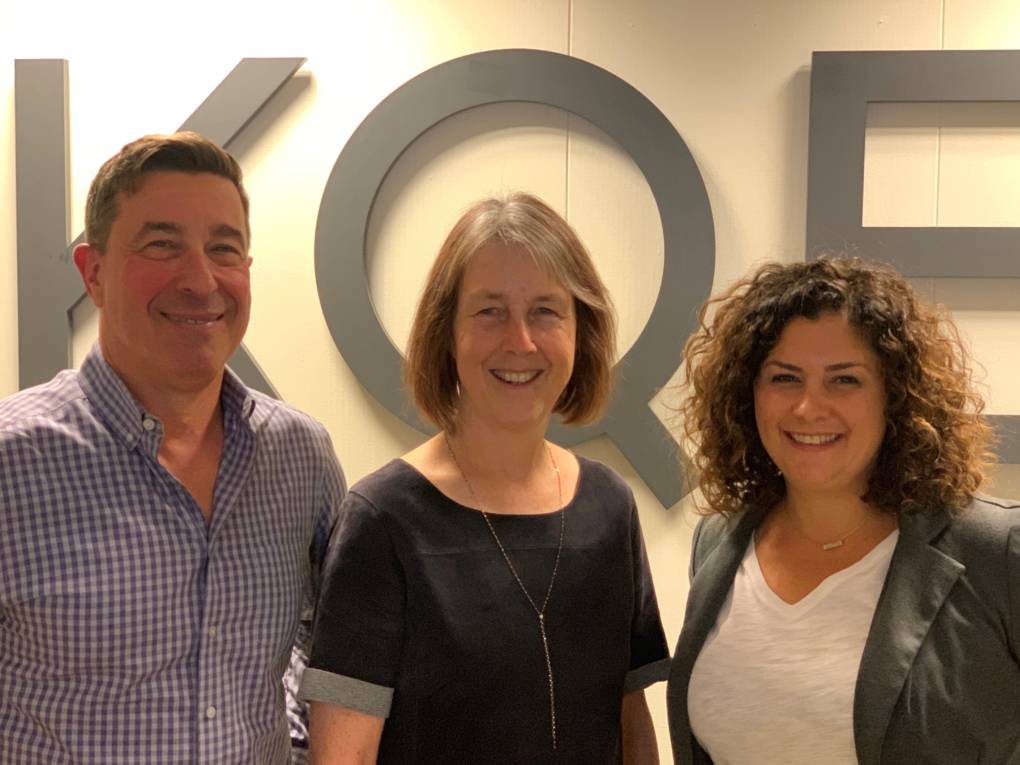
Nancy Skinner on PG&E Shutoffs, Criminal Justice Reform, and the NCAA 'Fair Pay' Law
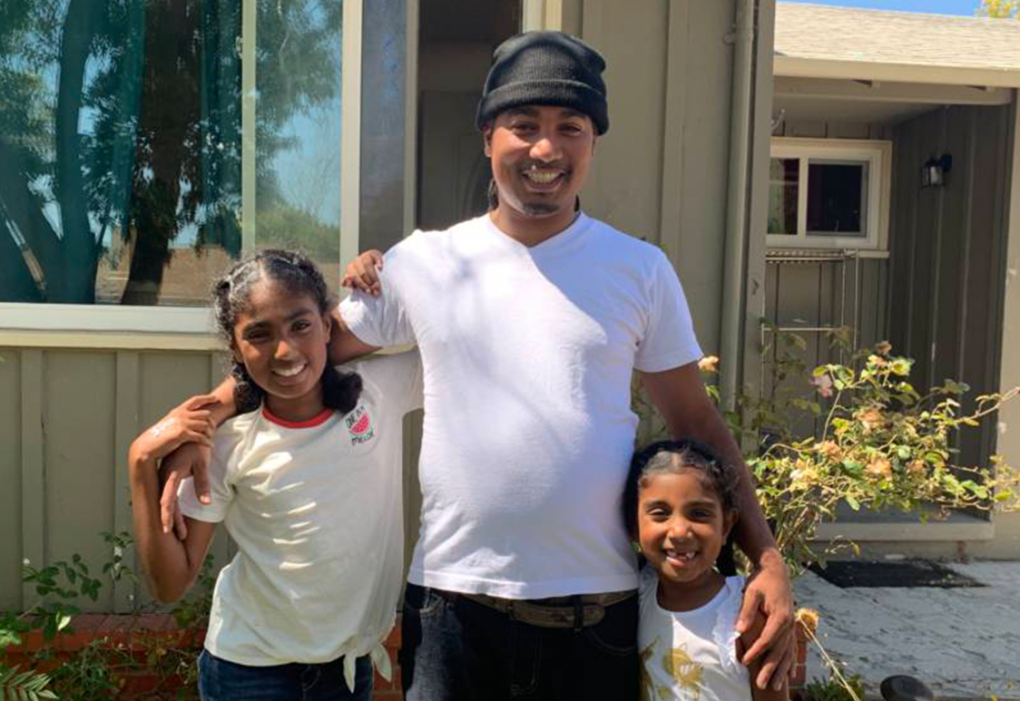
For Low-Income Parents, Most Child Support Goes to the State — Not the Kids
Should College Athletes Profit From Their Prowess? California May Say Yes, NCAA Says No
Sponsored
Player sponsored by
window.__IS_SSR__=true
window.__INITIAL_STATE__={
"attachmentsReducer": {
"audio_0": {
"type": "attachments",
"id": "audio_0",
"imgSizes": {
"kqedFullSize": {
"file": "https://ww2.kqed.org/news/wp-content/themes/KQED-unified/img/audio_bgs/background0.jpg"
}
}
},
"audio_1": {
"type": "attachments",
"id": "audio_1",
"imgSizes": {
"kqedFullSize": {
"file": "https://ww2.kqed.org/news/wp-content/themes/KQED-unified/img/audio_bgs/background1.jpg"
}
}
},
"audio_2": {
"type": "attachments",
"id": "audio_2",
"imgSizes": {
"kqedFullSize": {
"file": "https://ww2.kqed.org/news/wp-content/themes/KQED-unified/img/audio_bgs/background2.jpg"
}
}
},
"audio_3": {
"type": "attachments",
"id": "audio_3",
"imgSizes": {
"kqedFullSize": {
"file": "https://ww2.kqed.org/news/wp-content/themes/KQED-unified/img/audio_bgs/background3.jpg"
}
}
},
"audio_4": {
"type": "attachments",
"id": "audio_4",
"imgSizes": {
"kqedFullSize": {
"file": "https://ww2.kqed.org/news/wp-content/themes/KQED-unified/img/audio_bgs/background4.jpg"
}
}
},
"placeholder": {
"type": "attachments",
"id": "placeholder",
"imgSizes": {
"thumbnail": {
"file": "https://cdn.kqed.org/wp-content/uploads/2024/12/KQED-Default-Image-816638274-2000x1333-1-160x107.jpg",
"width": 160,
"height": 107,
"mimeType": "image/jpeg"
},
"medium": {
"file": "https://cdn.kqed.org/wp-content/uploads/2024/12/KQED-Default-Image-816638274-2000x1333-1-800x533.jpg",
"width": 800,
"height": 533,
"mimeType": "image/jpeg"
},
"medium_large": {
"file": "https://cdn.kqed.org/wp-content/uploads/2024/12/KQED-Default-Image-816638274-2000x1333-1-768x512.jpg",
"width": 768,
"height": 512,
"mimeType": "image/jpeg"
},
"large": {
"file": "https://cdn.kqed.org/wp-content/uploads/2024/12/KQED-Default-Image-816638274-2000x1333-1-1020x680.jpg",
"width": 1020,
"height": 680,
"mimeType": "image/jpeg"
},
"1536x1536": {
"file": "https://cdn.kqed.org/wp-content/uploads/2024/12/KQED-Default-Image-816638274-2000x1333-1-1536x1024.jpg",
"width": 1536,
"height": 1024,
"mimeType": "image/jpeg"
},
"fd-lrg": {
"file": "https://cdn.kqed.org/wp-content/uploads/2024/12/KQED-Default-Image-816638274-2000x1333-1-1536x1024.jpg",
"width": 1536,
"height": 1024,
"mimeType": "image/jpeg"
},
"fd-med": {
"file": "https://cdn.kqed.org/wp-content/uploads/2024/12/KQED-Default-Image-816638274-2000x1333-1-1020x680.jpg",
"width": 1020,
"height": 680,
"mimeType": "image/jpeg"
},
"fd-sm": {
"file": "https://cdn.kqed.org/wp-content/uploads/2024/12/KQED-Default-Image-816638274-2000x1333-1-800x533.jpg",
"width": 800,
"height": 533,
"mimeType": "image/jpeg"
},
"post-thumbnail": {
"file": "https://cdn.kqed.org/wp-content/uploads/2024/12/KQED-Default-Image-816638274-2000x1333-1-672x372.jpg",
"width": 672,
"height": 372,
"mimeType": "image/jpeg"
},
"twentyfourteen-full-width": {
"file": "https://cdn.kqed.org/wp-content/uploads/2024/12/KQED-Default-Image-816638274-2000x1333-1-1038x576.jpg",
"width": 1038,
"height": 576,
"mimeType": "image/jpeg"
},
"xxsmall": {
"file": "https://cdn.kqed.org/wp-content/uploads/2024/12/KQED-Default-Image-816638274-2000x1333-1-160x107.jpg",
"width": 160,
"height": 107,
"mimeType": "image/jpeg"
},
"xsmall": {
"file": "https://cdn.kqed.org/wp-content/uploads/2024/12/KQED-Default-Image-816638274-2000x1333-1-672x372.jpg",
"width": 672,
"height": 372,
"mimeType": "image/jpeg"
},
"small": {
"file": "https://cdn.kqed.org/wp-content/uploads/2024/12/KQED-Default-Image-816638274-2000x1333-1-672x372.jpg",
"width": 672,
"height": 372,
"mimeType": "image/jpeg"
},
"xlarge": {
"file": "https://cdn.kqed.org/wp-content/uploads/2024/12/KQED-Default-Image-816638274-2000x1333-1-1020x680.jpg",
"width": 1020,
"height": 680,
"mimeType": "image/jpeg"
},
"full-width": {
"file": "https://cdn.kqed.org/wp-content/uploads/2024/12/KQED-Default-Image-816638274-2000x1333-1-1920x1280.jpg",
"width": 1920,
"height": 1280,
"mimeType": "image/jpeg"
},
"guest-author-32": {
"file": "https://cdn.kqed.org/wp-content/uploads/2025/01/KQED-Default-Image-816638274-1333x1333-1-160x160.jpg",
"width": 32,
"height": 32,
"mimeType": "image/jpeg"
},
"guest-author-50": {
"file": "https://cdn.kqed.org/wp-content/uploads/2025/01/KQED-Default-Image-816638274-1333x1333-1-160x160.jpg",
"width": 50,
"height": 50,
"mimeType": "image/jpeg"
},
"guest-author-64": {
"file": "https://cdn.kqed.org/wp-content/uploads/2025/01/KQED-Default-Image-816638274-1333x1333-1-160x160.jpg",
"width": 64,
"height": 64,
"mimeType": "image/jpeg"
},
"guest-author-96": {
"file": "https://cdn.kqed.org/wp-content/uploads/2025/01/KQED-Default-Image-816638274-1333x1333-1-160x160.jpg",
"width": 96,
"height": 96,
"mimeType": "image/jpeg"
},
"guest-author-128": {
"file": "https://cdn.kqed.org/wp-content/uploads/2025/01/KQED-Default-Image-816638274-1333x1333-1-160x160.jpg",
"width": 128,
"height": 128,
"mimeType": "image/jpeg"
},
"detail": {
"file": "https://cdn.kqed.org/wp-content/uploads/2025/01/KQED-Default-Image-816638274-1333x1333-1-160x160.jpg",
"width": 160,
"height": 160,
"mimeType": "image/jpeg"
},
"kqedFullSize": {
"file": "https://cdn.kqed.org/wp-content/uploads/2024/12/KQED-Default-Image-816638274-2000x1333-1.jpg",
"width": 2000,
"height": 1333
}
}
},
"news_11989267": {
"type": "attachments",
"id": "news_11989267",
"meta": {
"index": "attachments_1716263798",
"site": "news",
"id": "11989267",
"found": true
},
"title": "Screenshot 2024-06-06 at 12.05.55 PM",
"publishDate": 1717700824,
"status": "inherit",
"parent": 11989248,
"modified": 1717712724,
"caption": "Students at Encore High School play basketball as a San Bernardino County Sheriff deputy parks outside of the school on Sept. 22, 2016, in Hesperia.",
"credit": "James Quigg/The Daily Press via AP",
"altTag": "A police vehicle is parked on dirt with children playing basketball in the background.",
"description": null,
"imgSizes": {
"medium": {
"file": "https://cdn.kqed.org/wp-content/uploads/sites/10/2024/06/Screenshot-2024-06-06-at-12.05.55 PM-800x508.png",
"width": 800,
"height": 508,
"mimeType": "image/png"
},
"large": {
"file": "https://cdn.kqed.org/wp-content/uploads/sites/10/2024/06/Screenshot-2024-06-06-at-12.05.55 PM-1020x647.png",
"width": 1020,
"height": 647,
"mimeType": "image/png"
},
"thumbnail": {
"file": "https://cdn.kqed.org/wp-content/uploads/sites/10/2024/06/Screenshot-2024-06-06-at-12.05.55 PM-160x102.png",
"width": 160,
"height": 102,
"mimeType": "image/png"
},
"1536x1536": {
"file": "https://cdn.kqed.org/wp-content/uploads/sites/10/2024/06/Screenshot-2024-06-06-at-12.05.55 PM-1536x975.png",
"width": 1536,
"height": 975,
"mimeType": "image/png"
},
"2048x2048": {
"file": "https://cdn.kqed.org/wp-content/uploads/sites/10/2024/06/Screenshot-2024-06-06-at-12.05.55 PM-2048x1299.png",
"width": 2048,
"height": 1299,
"mimeType": "image/png"
},
"post-thumbnail": {
"file": "https://cdn.kqed.org/wp-content/uploads/sites/10/2024/06/Screenshot-2024-06-06-at-12.05.55 PM-672x372.png",
"width": 672,
"height": 372,
"mimeType": "image/png"
},
"twentyfourteen-full-width": {
"file": "https://cdn.kqed.org/wp-content/uploads/sites/10/2024/06/Screenshot-2024-06-06-at-12.05.55 PM-1038x576.png",
"width": 1038,
"height": 576,
"mimeType": "image/png"
},
"full-width": {
"file": "https://cdn.kqed.org/wp-content/uploads/sites/10/2024/06/Screenshot-2024-06-06-at-12.05.55 PM-1920x1218.png",
"width": 1920,
"height": 1218,
"mimeType": "image/png"
},
"kqedFullSize": {
"file": "https://cdn.kqed.org/wp-content/uploads/sites/10/2024/06/Screenshot-2024-06-06-at-12.05.55 PM.png",
"width": 2528,
"height": 1604
}
},
"fetchFailed": false,
"isLoading": false
},
"news_11890051": {
"type": "attachments",
"id": "news_11890051",
"meta": {
"index": "attachments_1716263798",
"site": "news",
"id": "11890051",
"found": true
},
"parent": 11889997,
"imgSizes": {
"twentyfourteen-full-width": {
"file": "https://ww2.kqed.org/app/uploads/sites/10/2021/09/RS48778_016_Berkeley_JocelynForemanSigningCeremony_04232021-qut-1038x576.jpg",
"width": 1038,
"mimeType": "image/jpeg",
"height": 576
},
"thumbnail": {
"file": "https://ww2.kqed.org/app/uploads/sites/10/2021/09/RS48778_016_Berkeley_JocelynForemanSigningCeremony_04232021-qut-160x107.jpg",
"width": 160,
"mimeType": "image/jpeg",
"height": 107
},
"post-thumbnail": {
"file": "https://ww2.kqed.org/app/uploads/sites/10/2021/09/RS48778_016_Berkeley_JocelynForemanSigningCeremony_04232021-qut-672x372.jpg",
"width": 672,
"mimeType": "image/jpeg",
"height": 372
},
"kqedFullSize": {
"file": "https://ww2.kqed.org/app/uploads/sites/10/2021/09/RS48778_016_Berkeley_JocelynForemanSigningCeremony_04232021-qut.jpg",
"width": 1574,
"height": 1049
},
"large": {
"file": "https://ww2.kqed.org/app/uploads/sites/10/2021/09/RS48778_016_Berkeley_JocelynForemanSigningCeremony_04232021-qut-1020x680.jpg",
"width": 1020,
"mimeType": "image/jpeg",
"height": 680
},
"1536x1536": {
"file": "https://ww2.kqed.org/app/uploads/sites/10/2021/09/RS48778_016_Berkeley_JocelynForemanSigningCeremony_04232021-qut-1536x1024.jpg",
"width": 1536,
"mimeType": "image/jpeg",
"height": 1024
},
"medium": {
"file": "https://ww2.kqed.org/app/uploads/sites/10/2021/09/RS48778_016_Berkeley_JocelynForemanSigningCeremony_04232021-qut-800x533.jpg",
"width": 800,
"mimeType": "image/jpeg",
"height": 533
}
},
"publishDate": 1632777124,
"modified": 1632859238,
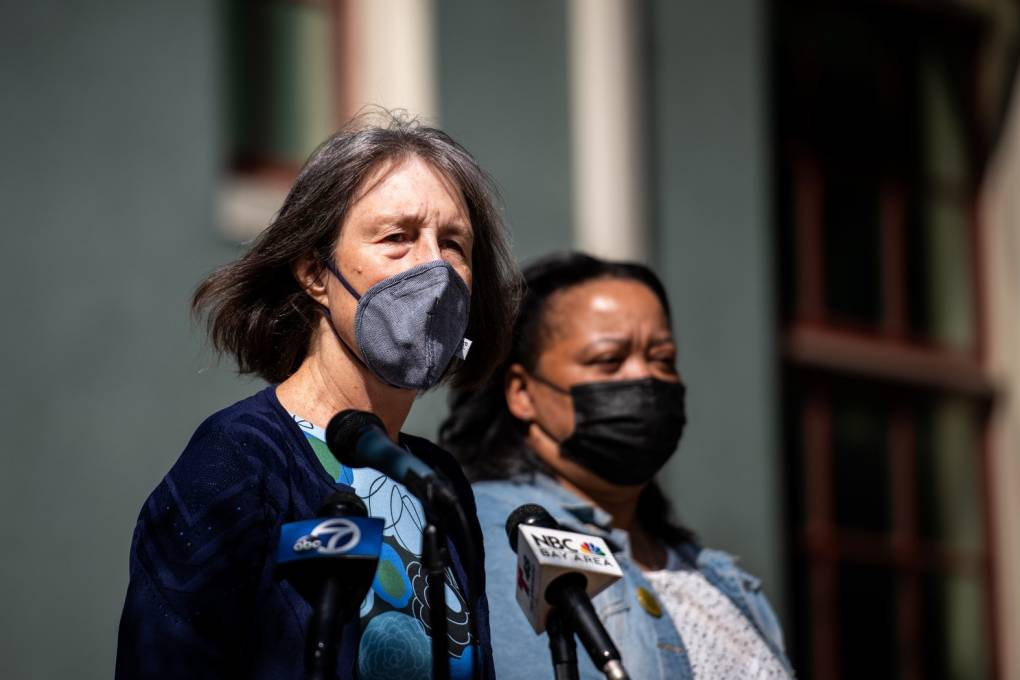
"caption": "State Senator Nancy Skinner speaks at Malcolm X Elementary School in Berkeley on April 23, 2021. Earlier this year, Skinner introduced SB 65, which would write into state law a committee that would investigate every death of a birthing parent and allow for voluntary interviews of family members to better understand what happened.",
"description": "Senator Nancy Skinner speaks, next to Jocelyn Foreman, during a signing ceremony and celebration at Malcolm X Elementary School in Berkeley on April 23, 2021.",
"title": "RS48778_016_Berkeley_JocelynForemanSigningCeremony_04232021-qut",
"credit": "Beth LaBerge/KQED",
"status": "inherit",
"altTag": "Senator Nancy Skinner, wearing a face mask and standing in front of microphones, looks into the distance.",
"fetchFailed": false,
"isLoading": false
},
"news_11871096": {
"type": "attachments",
"id": "news_11871096",
"meta": {
"index": "attachments_1716263798",
"site": "news",
"id": "11871096",
"found": true
},
"parent": 11871064,
"imgSizes": {
"twentyfourteen-full-width": {
"file": "https://ww2.kqed.org/app/uploads/sites/10/2021/04/RS48808_047_Berkeley_JocelynForemanSigningCeremony_04232021-qut-1038x576.jpg",
"width": 1038,
"mimeType": "image/jpeg",
"height": 576
},
"thumbnail": {
"file": "https://ww2.kqed.org/app/uploads/sites/10/2021/04/RS48808_047_Berkeley_JocelynForemanSigningCeremony_04232021-qut-160x107.jpg",
"width": 160,
"mimeType": "image/jpeg",
"height": 107
},
"post-thumbnail": {
"file": "https://ww2.kqed.org/app/uploads/sites/10/2021/04/RS48808_047_Berkeley_JocelynForemanSigningCeremony_04232021-qut-672x372.jpg",
"width": 672,
"mimeType": "image/jpeg",
"height": 372
},
"kqedFullSize": {
"file": "https://ww2.kqed.org/app/uploads/sites/10/2021/04/RS48808_047_Berkeley_JocelynForemanSigningCeremony_04232021-qut.jpg",
"width": 1920,
"height": 1280
},
"large": {
"file": "https://ww2.kqed.org/app/uploads/sites/10/2021/04/RS48808_047_Berkeley_JocelynForemanSigningCeremony_04232021-qut-1020x680.jpg",
"width": 1020,
"mimeType": "image/jpeg",
"height": 680
},
"1536x1536": {
"file": "https://ww2.kqed.org/app/uploads/sites/10/2021/04/RS48808_047_Berkeley_JocelynForemanSigningCeremony_04232021-qut-1536x1024.jpg",
"width": 1536,
"mimeType": "image/jpeg",
"height": 1024
},
"medium": {
"file": "https://ww2.kqed.org/app/uploads/sites/10/2021/04/RS48808_047_Berkeley_JocelynForemanSigningCeremony_04232021-qut-800x533.jpg",
"width": 800,
"mimeType": "image/jpeg",
"height": 533
}
},
"publishDate": 1619367620,
"modified": 1619367646,
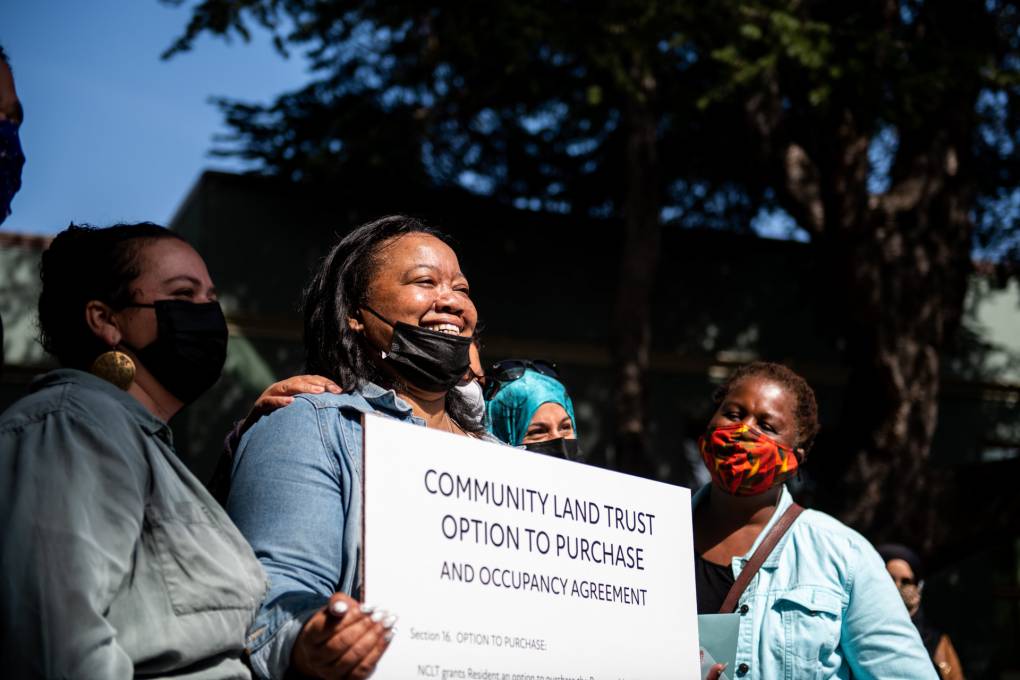
"caption": "Jocelyn Foreman poses with a Community Land Trust agreement during a signing ceremony and celebration at Malcolm X Elementary School in Berkeley on April 23, 2021.",
"description": "Jocelyn Foreman poses with a Community Land Trust agreement during a signing ceremony and celebration at Malcolm X Elementary School in Berkeley on April 23, 2021.",
"title": "RS48808_047_Berkeley_JocelynForemanSigningCeremony_04232021-qut",
"credit": "Beth LaBerge/KQED",
"status": "inherit",
"altTag": null,
"fetchFailed": false,
"isLoading": false
},
"news_11832821": {
"type": "attachments",
"id": "news_11832821",
"meta": {
"index": "attachments_1716263798",
"site": "news",
"id": "11832821",
"found": true
},
"parent": 11832742,
"imgSizes": {
"apple_news_ca_landscape_5_5": {
"file": "https://ww2.kqed.org/app/uploads/sites/10/2020/08/Aerialwithsiteplanoverlay-darkerroofs-1044x783.jpg",
"width": 1044,
"mimeType": "image/jpeg",
"height": 783
},
"apple_news_ca_square_4_0": {
"file": "https://ww2.kqed.org/app/uploads/sites/10/2020/08/Aerialwithsiteplanoverlay-darkerroofs-470x470.jpg",
"width": 470,
"mimeType": "image/jpeg",
"height": 470
},
"twentyfourteen-full-width": {
"file": "https://ww2.kqed.org/app/uploads/sites/10/2020/08/Aerialwithsiteplanoverlay-darkerroofs-1038x576.jpg",
"width": 1038,
"mimeType": "image/jpeg",
"height": 576
},
"thumbnail": {
"file": "https://ww2.kqed.org/app/uploads/sites/10/2020/08/Aerialwithsiteplanoverlay-darkerroofs-160x107.jpg",
"width": 160,
"mimeType": "image/jpeg",
"height": 107
},
"post-thumbnail": {
"file": "https://ww2.kqed.org/app/uploads/sites/10/2020/08/Aerialwithsiteplanoverlay-darkerroofs-672x372.jpg",
"width": 672,
"mimeType": "image/jpeg",
"height": 372
},
"kqedFullSize": {
"file": "https://ww2.kqed.org/app/uploads/sites/10/2020/08/Aerialwithsiteplanoverlay-darkerroofs.jpg",
"width": 1272,
"height": 848
},
"apple_news_ca_landscape_4_7": {
"file": "https://ww2.kqed.org/app/uploads/sites/10/2020/08/Aerialwithsiteplanoverlay-darkerroofs-632x474.jpg",
"width": 632,
"mimeType": "image/jpeg",
"height": 474
},
"large": {
"file": "https://ww2.kqed.org/app/uploads/sites/10/2020/08/Aerialwithsiteplanoverlay-darkerroofs-1020x680.jpg",
"width": 1020,
"mimeType": "image/jpeg",
"height": 680
},
"apple_news_ca_landscape_4_0": {
"file": "https://ww2.kqed.org/app/uploads/sites/10/2020/08/Aerialwithsiteplanoverlay-darkerroofs-536x402.jpg",
"width": 536,
"mimeType": "image/jpeg",
"height": 402
},
"apple_news_ca_portrait_12_9": {
"file": "https://ww2.kqed.org/app/uploads/sites/10/2020/08/Aerialwithsiteplanoverlay-darkerroofs-1122x848.jpg",
"width": 1122,
"mimeType": "image/jpeg",
"height": 848
},
"medium": {
"file": "https://ww2.kqed.org/app/uploads/sites/10/2020/08/Aerialwithsiteplanoverlay-darkerroofs-800x533.jpg",
"width": 800,
"mimeType": "image/jpeg",
"height": 533
},
"apple_news_ca_portrait_4_0": {
"file": "https://ww2.kqed.org/app/uploads/sites/10/2020/08/Aerialwithsiteplanoverlay-darkerroofs-354x472.jpg",
"width": 354,
"mimeType": "image/jpeg",
"height": 472
},
"apple_news_ca_portrait_9_7": {
"file": "https://ww2.kqed.org/app/uploads/sites/10/2020/08/Aerialwithsiteplanoverlay-darkerroofs-840x848.jpg",
"width": 840,
"mimeType": "image/jpeg",
"height": 848
},
"apple_news_ca_square_9_7": {
"file": "https://ww2.kqed.org/app/uploads/sites/10/2020/08/Aerialwithsiteplanoverlay-darkerroofs-1104x848.jpg",
"width": 1104,
"mimeType": "image/jpeg",
"height": 848
},
"apple_news_ca_portrait_4_7": {
"file": "https://ww2.kqed.org/app/uploads/sites/10/2020/08/Aerialwithsiteplanoverlay-darkerroofs-414x552.jpg",
"width": 414,
"mimeType": "image/jpeg",
"height": 552
},
"apple_news_ca_portrait_5_5": {
"file": "https://ww2.kqed.org/app/uploads/sites/10/2020/08/Aerialwithsiteplanoverlay-darkerroofs-687x848.jpg",
"width": 687,
"mimeType": "image/jpeg",
"height": 848
},
"apple_news_ca_square_4_7": {
"file": "https://ww2.kqed.org/app/uploads/sites/10/2020/08/Aerialwithsiteplanoverlay-darkerroofs-550x550.jpg",
"width": 550,
"mimeType": "image/jpeg",
"height": 550
},
"apple_news_ca_square_5_5": {
"file": "https://ww2.kqed.org/app/uploads/sites/10/2020/08/Aerialwithsiteplanoverlay-darkerroofs-912x848.jpg",
"width": 912,
"mimeType": "image/jpeg",
"height": 848
}
},
"publishDate": 1597087633,
"modified": 1597090251,
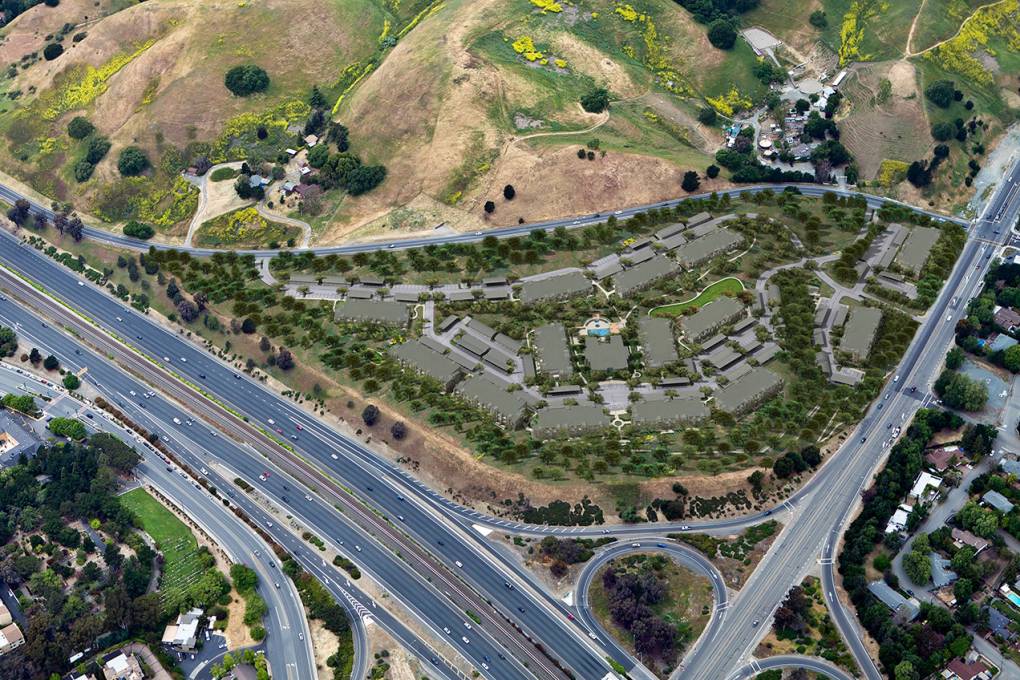
"caption": "An aerial view of the site plan for The Terraces on the southwest corner of Deer Hill and Pleasant Hill Roads in Lafayette.",
"description": null,
"title": "Aerial+with+site+plan+overlay+-+darker+roofs+",
"credit": "Courtesy of Terraces of Lafayette",
"status": "inherit",
"fetchFailed": false,
"isLoading": false
},
"news_11829243": {
"type": "attachments",
"id": "news_11829243",
"meta": {
"index": "attachments_1716263798",
"site": "news",
"id": "11829243",
"found": true
},
"parent": 11829235,
"imgSizes": {
"apple_news_ca_landscape_5_5": {
"file": "https://ww2.kqed.org/app/uploads/sites/10/2020/07/RS14377_Looking_West_from_UC_Hastings_City_Hall_and_CA_State_Courts_San_Francisco-qut-1044x783.jpg",
"width": 1044,
"mimeType": "image/jpeg",
"height": 783
},
"apple_news_ca_square_4_0": {
"file": "https://ww2.kqed.org/app/uploads/sites/10/2020/07/RS14377_Looking_West_from_UC_Hastings_City_Hall_and_CA_State_Courts_San_Francisco-qut-470x470.jpg",
"width": 470,
"mimeType": "image/jpeg",
"height": 470
},
"twentyfourteen-full-width": {
"file": "https://ww2.kqed.org/app/uploads/sites/10/2020/07/RS14377_Looking_West_from_UC_Hastings_City_Hall_and_CA_State_Courts_San_Francisco-qut-1038x576.jpg",
"width": 1038,
"mimeType": "image/jpeg",
"height": 576
},
"thumbnail": {
"file": "https://ww2.kqed.org/app/uploads/sites/10/2020/07/RS14377_Looking_West_from_UC_Hastings_City_Hall_and_CA_State_Courts_San_Francisco-qut-160x101.jpg",
"width": 160,
"mimeType": "image/jpeg",
"height": 101
},
"post-thumbnail": {
"file": "https://ww2.kqed.org/app/uploads/sites/10/2020/07/RS14377_Looking_West_from_UC_Hastings_City_Hall_and_CA_State_Courts_San_Francisco-qut-672x372.jpg",
"width": 672,
"mimeType": "image/jpeg",
"height": 372
},
"kqedFullSize": {
"file": "https://ww2.kqed.org/app/uploads/sites/10/2020/07/RS14377_Looking_West_from_UC_Hastings_City_Hall_and_CA_State_Courts_San_Francisco-qut.jpg",
"width": 1920,
"height": 1207
},
"apple_news_ca_landscape_4_7": {
"file": "https://ww2.kqed.org/app/uploads/sites/10/2020/07/RS14377_Looking_West_from_UC_Hastings_City_Hall_and_CA_State_Courts_San_Francisco-qut-632x474.jpg",
"width": 632,
"mimeType": "image/jpeg",
"height": 474
},
"large": {
"file": "https://ww2.kqed.org/app/uploads/sites/10/2020/07/RS14377_Looking_West_from_UC_Hastings_City_Hall_and_CA_State_Courts_San_Francisco-qut-1020x641.jpg",
"width": 1020,
"mimeType": "image/jpeg",
"height": 641
},
"apple_news_ca_landscape_4_0": {
"file": "https://ww2.kqed.org/app/uploads/sites/10/2020/07/RS14377_Looking_West_from_UC_Hastings_City_Hall_and_CA_State_Courts_San_Francisco-qut-536x402.jpg",
"width": 536,
"mimeType": "image/jpeg",
"height": 402
},
"apple_news_ca_portrait_12_9": {
"file": "https://ww2.kqed.org/app/uploads/sites/10/2020/07/RS14377_Looking_West_from_UC_Hastings_City_Hall_and_CA_State_Courts_San_Francisco-qut-1122x1207.jpg",
"width": 1122,
"mimeType": "image/jpeg",
"height": 1207
},
"medium": {
"file": "https://ww2.kqed.org/app/uploads/sites/10/2020/07/RS14377_Looking_West_from_UC_Hastings_City_Hall_and_CA_State_Courts_San_Francisco-qut-800x503.jpg",
"width": 800,
"mimeType": "image/jpeg",
"height": 503
},
"apple_news_ca_portrait_4_0": {
"file": "https://ww2.kqed.org/app/uploads/sites/10/2020/07/RS14377_Looking_West_from_UC_Hastings_City_Hall_and_CA_State_Courts_San_Francisco-qut-354x472.jpg",
"width": 354,
"mimeType": "image/jpeg",
"height": 472
},
"apple_news_ca_portrait_9_7": {
"file": "https://ww2.kqed.org/app/uploads/sites/10/2020/07/RS14377_Looking_West_from_UC_Hastings_City_Hall_and_CA_State_Courts_San_Francisco-qut-840x1120.jpg",
"width": 840,
"mimeType": "image/jpeg",
"height": 1120
},
"apple_news_ca_landscape_12_9": {
"file": "https://ww2.kqed.org/app/uploads/sites/10/2020/07/RS14377_Looking_West_from_UC_Hastings_City_Hall_and_CA_State_Courts_San_Francisco-qut-1832x1207.jpg",
"width": 1832,
"mimeType": "image/jpeg",
"height": 1207
},
"apple_news_ca_square_9_7": {
"file": "https://ww2.kqed.org/app/uploads/sites/10/2020/07/RS14377_Looking_West_from_UC_Hastings_City_Hall_and_CA_State_Courts_San_Francisco-qut-1104x1104.jpg",
"width": 1104,
"mimeType": "image/jpeg",
"height": 1104
},
"1536x1536": {
"file": "https://ww2.kqed.org/app/uploads/sites/10/2020/07/RS14377_Looking_West_from_UC_Hastings_City_Hall_and_CA_State_Courts_San_Francisco-qut-1536x966.jpg",
"width": 1536,
"mimeType": "image/jpeg",
"height": 966
},
"apple_news_ca_portrait_4_7": {
"file": "https://ww2.kqed.org/app/uploads/sites/10/2020/07/RS14377_Looking_West_from_UC_Hastings_City_Hall_and_CA_State_Courts_San_Francisco-qut-414x552.jpg",
"width": 414,
"mimeType": "image/jpeg",
"height": 552
},
"apple_news_ca_square_12_9": {
"file": "https://ww2.kqed.org/app/uploads/sites/10/2020/07/RS14377_Looking_West_from_UC_Hastings_City_Hall_and_CA_State_Courts_San_Francisco-qut-1472x1207.jpg",
"width": 1472,
"mimeType": "image/jpeg",
"height": 1207
},
"apple_news_ca_portrait_5_5": {
"file": "https://ww2.kqed.org/app/uploads/sites/10/2020/07/RS14377_Looking_West_from_UC_Hastings_City_Hall_and_CA_State_Courts_San_Francisco-qut-687x916.jpg",
"width": 687,
"mimeType": "image/jpeg",
"height": 916
},
"apple_news_ca_square_4_7": {
"file": "https://ww2.kqed.org/app/uploads/sites/10/2020/07/RS14377_Looking_West_from_UC_Hastings_City_Hall_and_CA_State_Courts_San_Francisco-qut-550x550.jpg",
"width": 550,
"mimeType": "image/jpeg",
"height": 550
},
"apple_news_ca_landscape_9_7": {
"file": "https://ww2.kqed.org/app/uploads/sites/10/2020/07/RS14377_Looking_West_from_UC_Hastings_City_Hall_and_CA_State_Courts_San_Francisco-qut-1376x1032.jpg",
"width": 1376,
"mimeType": "image/jpeg",
"height": 1032
},
"apple_news_ca_square_5_5": {
"file": "https://ww2.kqed.org/app/uploads/sites/10/2020/07/RS14377_Looking_West_from_UC_Hastings_City_Hall_and_CA_State_Courts_San_Francisco-qut-912x912.jpg",
"width": 912,
"mimeType": "image/jpeg",
"height": 912
}
},
"publishDate": 1594872408,
"modified": 1594872463,
"caption": "Superior Court of California in 2015.",
"description": null,
"title": "RS14377_Looking_West_from_UC_Hastings,_City_Hall_and_CA_State_Courts,_San_Francisco-qut",
"credit": null,
"status": "inherit",
"fetchFailed": false,
"isLoading": false
},
"arts_13874385": {
"type": "attachments",
"id": "arts_13874385",
"meta": {
"index": "attachments_1716263798",
"site": "arts",
"id": "13874385",
"found": true
},
"parent": 13874382,
"imgSizes": {
"twentyfourteen-full-width": {
"file": "https://ww2.kqed.org/app/uploads/sites/2/2020/02/GettyImages-627387100-1020x680-1020x576.jpg",
"width": 1020,
"mimeType": "image/jpeg",
"height": 576
},
"thumbnail": {
"file": "https://ww2.kqed.org/app/uploads/sites/2/2020/02/GettyImages-627387100-1020x680-160x107.jpg",
"width": 160,
"mimeType": "image/jpeg",
"height": 107
},
"post-thumbnail": {
"file": "https://ww2.kqed.org/app/uploads/sites/2/2020/02/GettyImages-627387100-1020x680-672x372.jpg",
"width": 672,
"mimeType": "image/jpeg",
"height": 372
},
"kqedFullSize": {
"file": "https://ww2.kqed.org/app/uploads/sites/2/2020/02/GettyImages-627387100-1020x680.jpg",
"width": 1020,
"height": 680
},
"large": {
"file": "https://ww2.kqed.org/app/uploads/sites/2/2020/02/GettyImages-627387100-1020x680-1020x680.jpg",
"width": 1020,
"mimeType": "image/jpeg",
"height": 680
},
"medium": {
"file": "https://ww2.kqed.org/app/uploads/sites/2/2020/02/GettyImages-627387100-1020x680-800x533.jpg",
"width": 800,
"mimeType": "image/jpeg",
"height": 533
},
"medium_large": {
"file": "https://ww2.kqed.org/app/uploads/sites/2/2020/02/GettyImages-627387100-1020x680-768x512.jpg",
"width": 768,
"mimeType": "image/jpeg",
"height": 512
}
},
"publishDate": 1580863580,
"modified": 1580932084,
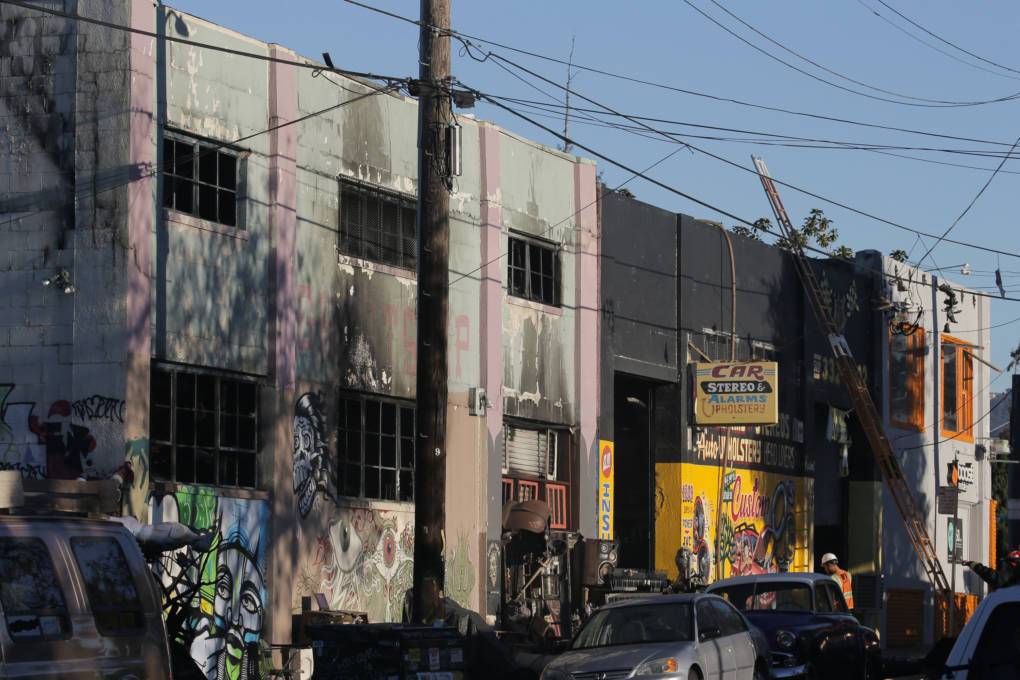
"caption": "The Ghost Ship warehouse in East Oakland where a Dec. 2016 fire killed 36.",
"description": "The Ghost Ship warehouse in East Oakland where a Dec. 2016 fire killed 36.",
"title": "Warehouse Fire Kills Several People At Dance Party In Oakland",
"credit": "Elijah Nouvelage/Getty Images",
"status": "inherit",
"fetchFailed": false,
"isLoading": false
},
"news_11779453": {
"type": "attachments",
"id": "news_11779453",
"meta": {
"index": "attachments_1716263798",
"site": "news",
"id": "11779453",
"found": true
},
"parent": 11779449,
"imgSizes": {
"apple_news_ca_landscape_5_5": {
"file": "https://ww2.kqed.org/app/uploads/sites/10/2019/10/Skinner-1044x783.jpg",
"width": 1044,
"mimeType": "image/jpeg",
"height": 783
},
"apple_news_ca_square_4_0": {
"file": "https://ww2.kqed.org/app/uploads/sites/10/2019/10/Skinner-470x470.jpg",
"width": 470,
"mimeType": "image/jpeg",
"height": 470
},
"twentyfourteen-full-width": {
"file": "https://ww2.kqed.org/app/uploads/sites/10/2019/10/Skinner-1038x576.jpg",
"width": 1038,
"mimeType": "image/jpeg",
"height": 576
},
"thumbnail": {
"file": "https://ww2.kqed.org/app/uploads/sites/10/2019/10/Skinner-160x120.jpg",
"width": 160,
"mimeType": "image/jpeg",
"height": 120
},
"post-thumbnail": {
"file": "https://ww2.kqed.org/app/uploads/sites/10/2019/10/Skinner-672x372.jpg",
"width": 672,
"mimeType": "image/jpeg",
"height": 372
},
"kqedFullSize": {
"file": "https://ww2.kqed.org/app/uploads/sites/10/2019/10/Skinner.jpg",
"width": 3618,
"height": 2713
},
"apple_news_ca_landscape_4_7": {
"file": "https://ww2.kqed.org/app/uploads/sites/10/2019/10/Skinner-632x474.jpg",
"width": 632,
"mimeType": "image/jpeg",
"height": 474
},
"large": {
"file": "https://ww2.kqed.org/app/uploads/sites/10/2019/10/Skinner-1020x765.jpg",
"width": 1020,
"mimeType": "image/jpeg",
"height": 765
},
"complete_open_graph": {
"file": "https://ww2.kqed.org/app/uploads/sites/10/2019/10/Skinner-1200x900.jpg",
"width": 1200,
"mimeType": "image/jpeg",
"height": 900
},
"apple_news_ca_landscape_4_0": {
"file": "https://ww2.kqed.org/app/uploads/sites/10/2019/10/Skinner-536x402.jpg",
"width": 536,
"mimeType": "image/jpeg",
"height": 402
},
"apple_news_ca_portrait_12_9": {
"file": "https://ww2.kqed.org/app/uploads/sites/10/2019/10/Skinner-1122x1496.jpg",
"width": 1122,
"mimeType": "image/jpeg",
"height": 1496
},
"medium": {
"file": "https://ww2.kqed.org/app/uploads/sites/10/2019/10/Skinner-800x600.jpg",
"width": 800,
"mimeType": "image/jpeg",
"height": 600
},
"apple_news_ca_portrait_4_0": {
"file": "https://ww2.kqed.org/app/uploads/sites/10/2019/10/Skinner-354x472.jpg",
"width": 354,
"mimeType": "image/jpeg",
"height": 472
},
"apple_news_ca_portrait_9_7": {
"file": "https://ww2.kqed.org/app/uploads/sites/10/2019/10/Skinner-840x1120.jpg",
"width": 840,
"mimeType": "image/jpeg",
"height": 1120
},
"apple_news_ca_landscape_12_9": {
"file": "https://ww2.kqed.org/app/uploads/sites/10/2019/10/Skinner-1832x1374.jpg",
"width": 1832,
"mimeType": "image/jpeg",
"height": 1374
},
"apple_news_ca_square_9_7": {
"file": "https://ww2.kqed.org/app/uploads/sites/10/2019/10/Skinner-1104x1104.jpg",
"width": 1104,
"mimeType": "image/jpeg",
"height": 1104
},
"apple_news_ca_portrait_4_7": {
"file": "https://ww2.kqed.org/app/uploads/sites/10/2019/10/Skinner-414x552.jpg",
"width": 414,
"mimeType": "image/jpeg",
"height": 552
},
"apple_news_ca_square_12_9": {
"file": "https://ww2.kqed.org/app/uploads/sites/10/2019/10/Skinner-1472x1472.jpg",
"width": 1472,
"mimeType": "image/jpeg",
"height": 1472
},
"apple_news_ca_portrait_5_5": {
"file": "https://ww2.kqed.org/app/uploads/sites/10/2019/10/Skinner-687x916.jpg",
"width": 687,
"mimeType": "image/jpeg",
"height": 916
},
"full-width": {
"file": "https://ww2.kqed.org/app/uploads/sites/10/2019/10/Skinner-1920x1440.jpg",
"width": 1920,
"mimeType": "image/jpeg",
"height": 1440
},
"apple_news_ca_square_4_7": {
"file": "https://ww2.kqed.org/app/uploads/sites/10/2019/10/Skinner-550x550.jpg",
"width": 550,
"mimeType": "image/jpeg",
"height": 550
},
"apple_news_ca_landscape_9_7": {
"file": "https://ww2.kqed.org/app/uploads/sites/10/2019/10/Skinner-1376x1032.jpg",
"width": 1376,
"mimeType": "image/jpeg",
"height": 1032
},
"apple_news_ca_square_5_5": {
"file": "https://ww2.kqed.org/app/uploads/sites/10/2019/10/Skinner-912x912.jpg",
"width": 912,
"mimeType": "image/jpeg",
"height": 912
}
},
"publishDate": 1570757786,
"modified": 1570757863,
"caption": "State Senator Nancy Skinner, with Political Breakdown hosts Scott Shafer and Marisa Lagos. ",
"description": null,
"title": "Skinner",
"credit": "Guy Marzorati/KQED",
"status": "inherit",
"fetchFailed": false,
"isLoading": false
},
"news_11768542": {
"type": "attachments",
"id": "news_11768542",
"meta": {
"index": "attachments_1716263798",
"site": "news",
"id": "11768542",
"found": true
},
"parent": 11768419,
"imgSizes": {
"apple_news_ca_landscape_5_5": {
"file": "https://ww2.kqed.org/app/uploads/sites/10/2019/08/08192019_childsupport_Lam_crop-1044x773.png",
"width": 1044,
"mimeType": "image/png",
"height": 773
},
"apple_news_ca_square_4_0": {
"file": "https://ww2.kqed.org/app/uploads/sites/10/2019/08/08192019_childsupport_Lam_crop-470x470.png",
"width": 470,
"mimeType": "image/png",
"height": 470
},
"twentyfourteen-full-width": {
"file": "https://ww2.kqed.org/app/uploads/sites/10/2019/08/08192019_childsupport_Lam_crop-1038x576.png",
"width": 1038,
"mimeType": "image/png",
"height": 576
},
"thumbnail": {
"file": "https://ww2.kqed.org/app/uploads/sites/10/2019/08/08192019_childsupport_Lam_crop-160x110.png",
"width": 160,
"mimeType": "image/png",
"height": 110
},
"post-thumbnail": {
"file": "https://ww2.kqed.org/app/uploads/sites/10/2019/08/08192019_childsupport_Lam_crop-672x372.png",
"width": 672,
"mimeType": "image/png",
"height": 372
},
"kqedFullSize": {
"file": "https://ww2.kqed.org/app/uploads/sites/10/2019/08/08192019_childsupport_Lam_crop.png",
"width": 1124,
"height": 773
},
"apple_news_ca_landscape_4_7": {
"file": "https://ww2.kqed.org/app/uploads/sites/10/2019/08/08192019_childsupport_Lam_crop-632x474.png",
"width": 632,
"mimeType": "image/png",
"height": 474
},
"large": {
"file": "https://ww2.kqed.org/app/uploads/sites/10/2019/08/08192019_childsupport_Lam_crop-1020x701.png",
"width": 1020,
"mimeType": "image/png",
"height": 701
},
"apple_news_ca_landscape_4_0": {
"file": "https://ww2.kqed.org/app/uploads/sites/10/2019/08/08192019_childsupport_Lam_crop-536x402.png",
"width": 536,
"mimeType": "image/png",
"height": 402
},
"apple_news_ca_portrait_12_9": {
"file": "https://ww2.kqed.org/app/uploads/sites/10/2019/08/08192019_childsupport_Lam_crop-1122x773.png",
"width": 1122,
"mimeType": "image/png",
"height": 773
},
"medium": {
"file": "https://ww2.kqed.org/app/uploads/sites/10/2019/08/08192019_childsupport_Lam_crop-800x550.png",
"width": 800,
"mimeType": "image/png",
"height": 550
},
"apple_news_ca_portrait_4_0": {
"file": "https://ww2.kqed.org/app/uploads/sites/10/2019/08/08192019_childsupport_Lam_crop-354x472.png",
"width": 354,
"mimeType": "image/png",
"height": 472
},
"apple_news_ca_portrait_9_7": {
"file": "https://ww2.kqed.org/app/uploads/sites/10/2019/08/08192019_childsupport_Lam_crop-840x773.png",
"width": 840,
"mimeType": "image/png",
"height": 773
},
"apple_news_ca_square_9_7": {
"file": "https://ww2.kqed.org/app/uploads/sites/10/2019/08/08192019_childsupport_Lam_crop-1104x773.png",
"width": 1104,
"mimeType": "image/png",
"height": 773
},
"apple_news_ca_portrait_4_7": {
"file": "https://ww2.kqed.org/app/uploads/sites/10/2019/08/08192019_childsupport_Lam_crop-414x552.png",
"width": 414,
"mimeType": "image/png",
"height": 552
},
"apple_news_ca_portrait_5_5": {
"file": "https://ww2.kqed.org/app/uploads/sites/10/2019/08/08192019_childsupport_Lam_crop-687x773.png",
"width": 687,
"mimeType": "image/png",
"height": 773
},
"apple_news_ca_square_4_7": {
"file": "https://ww2.kqed.org/app/uploads/sites/10/2019/08/08192019_childsupport_Lam_crop-550x550.png",
"width": 550,
"mimeType": "image/png",
"height": 550
},
"apple_news_ca_square_5_5": {
"file": "https://ww2.kqed.org/app/uploads/sites/10/2019/08/08192019_childsupport_Lam_crop-912x773.png",
"width": 912,
"mimeType": "image/png",
"height": 773
}
},
"publishDate": 1566256785,
"modified": 1566256848,
"caption": "Thomas Lam Jr. stands with his daughters. Aryanna, 10, and Rhiannan, 5, outside his Vallejo home. Lam owed $6,000 in child support debt but the money was going to the government, not his girls.",
"description": null,
"title": "08192019_childsupport_Lam_crop",
"credit": "Marisa Lagos/KQED",
"status": "inherit",
"fetchFailed": false,
"isLoading": false
},
"news_11759235": {
"type": "attachments",
"id": "news_11759235",
"meta": {
"index": "attachments_1716263798",
"site": "news",
"id": "11759235",
"found": true
},
"parent": 11759223,
"imgSizes": {
"apple_news_ca_landscape_5_5": {
"file": "https://ww2.kqed.org/app/uploads/sites/10/2019/07/07052019_Katelyn-Ohashi_Fair-Pay-to-Play-Act_college-athletes_university-athletes_Nancy-Skinner-qut-1044x783.jpg",
"width": 1044,
"mimeType": "image/jpeg",
"height": 783
},
"apple_news_ca_square_4_0": {
"file": "https://ww2.kqed.org/app/uploads/sites/10/2019/07/07052019_Katelyn-Ohashi_Fair-Pay-to-Play-Act_college-athletes_university-athletes_Nancy-Skinner-qut-470x470.jpg",
"width": 470,
"mimeType": "image/jpeg",
"height": 470
},
"twentyfourteen-full-width": {
"file": "https://ww2.kqed.org/app/uploads/sites/10/2019/07/07052019_Katelyn-Ohashi_Fair-Pay-to-Play-Act_college-athletes_university-athletes_Nancy-Skinner-qut-1038x576.jpg",
"width": 1038,
"mimeType": "image/jpeg",
"height": 576
},
"thumbnail": {
"file": "https://ww2.kqed.org/app/uploads/sites/10/2019/07/07052019_Katelyn-Ohashi_Fair-Pay-to-Play-Act_college-athletes_university-athletes_Nancy-Skinner-qut-160x107.jpg",
"width": 160,
"mimeType": "image/jpeg",
"height": 107
},
"post-thumbnail": {
"file": "https://ww2.kqed.org/app/uploads/sites/10/2019/07/07052019_Katelyn-Ohashi_Fair-Pay-to-Play-Act_college-athletes_university-athletes_Nancy-Skinner-qut-672x372.jpg",
"width": 672,
"mimeType": "image/jpeg",
"height": 372
},
"kqedFullSize": {
"file": "https://ww2.kqed.org/app/uploads/sites/10/2019/07/07052019_Katelyn-Ohashi_Fair-Pay-to-Play-Act_college-athletes_university-athletes_Nancy-Skinner-qut.jpg",
"width": 1500,
"height": 1000
},
"apple_news_ca_landscape_4_7": {
"file": "https://ww2.kqed.org/app/uploads/sites/10/2019/07/07052019_Katelyn-Ohashi_Fair-Pay-to-Play-Act_college-athletes_university-athletes_Nancy-Skinner-qut-632x474.jpg",
"width": 632,
"mimeType": "image/jpeg",
"height": 474
},
"large": {
"file": "https://ww2.kqed.org/app/uploads/sites/10/2019/07/07052019_Katelyn-Ohashi_Fair-Pay-to-Play-Act_college-athletes_university-athletes_Nancy-Skinner-qut-1020x680.jpg",
"width": 1020,
"mimeType": "image/jpeg",
"height": 680
},
"complete_open_graph": {
"file": "https://ww2.kqed.org/app/uploads/sites/10/2019/07/07052019_Katelyn-Ohashi_Fair-Pay-to-Play-Act_college-athletes_university-athletes_Nancy-Skinner-qut-1200x800.jpg",
"width": 1200,
"mimeType": "image/jpeg",
"height": 800
},
"apple_news_ca_landscape_4_0": {
"file": "https://ww2.kqed.org/app/uploads/sites/10/2019/07/07052019_Katelyn-Ohashi_Fair-Pay-to-Play-Act_college-athletes_university-athletes_Nancy-Skinner-qut-536x402.jpg",
"width": 536,
"mimeType": "image/jpeg",
"height": 402
},
"apple_news_ca_portrait_12_9": {
"file": "https://ww2.kqed.org/app/uploads/sites/10/2019/07/07052019_Katelyn-Ohashi_Fair-Pay-to-Play-Act_college-athletes_university-athletes_Nancy-Skinner-qut-1122x1000.jpg",
"width": 1122,
"mimeType": "image/jpeg",
"height": 1000
},
"medium": {
"file": "https://ww2.kqed.org/app/uploads/sites/10/2019/07/07052019_Katelyn-Ohashi_Fair-Pay-to-Play-Act_college-athletes_university-athletes_Nancy-Skinner-qut-800x533.jpg",
"width": 800,
"mimeType": "image/jpeg",
"height": 533
},
"apple_news_ca_portrait_4_0": {
"file": "https://ww2.kqed.org/app/uploads/sites/10/2019/07/07052019_Katelyn-Ohashi_Fair-Pay-to-Play-Act_college-athletes_university-athletes_Nancy-Skinner-qut-354x472.jpg",
"width": 354,
"mimeType": "image/jpeg",
"height": 472
},
"apple_news_ca_portrait_9_7": {
"file": "https://ww2.kqed.org/app/uploads/sites/10/2019/07/07052019_Katelyn-Ohashi_Fair-Pay-to-Play-Act_college-athletes_university-athletes_Nancy-Skinner-qut-840x1000.jpg",
"width": 840,
"mimeType": "image/jpeg",
"height": 1000
},
"apple_news_ca_square_9_7": {
"file": "https://ww2.kqed.org/app/uploads/sites/10/2019/07/07052019_Katelyn-Ohashi_Fair-Pay-to-Play-Act_college-athletes_university-athletes_Nancy-Skinner-qut-1104x1000.jpg",
"width": 1104,
"mimeType": "image/jpeg",
"height": 1000
},
"apple_news_ca_portrait_4_7": {
"file": "https://ww2.kqed.org/app/uploads/sites/10/2019/07/07052019_Katelyn-Ohashi_Fair-Pay-to-Play-Act_college-athletes_university-athletes_Nancy-Skinner-qut-414x552.jpg",
"width": 414,
"mimeType": "image/jpeg",
"height": 552
},
"apple_news_ca_square_12_9": {
"file": "https://ww2.kqed.org/app/uploads/sites/10/2019/07/07052019_Katelyn-Ohashi_Fair-Pay-to-Play-Act_college-athletes_university-athletes_Nancy-Skinner-qut-1472x1000.jpg",
"width": 1472,
"mimeType": "image/jpeg",
"height": 1000
},
"apple_news_ca_portrait_5_5": {
"file": "https://ww2.kqed.org/app/uploads/sites/10/2019/07/07052019_Katelyn-Ohashi_Fair-Pay-to-Play-Act_college-athletes_university-athletes_Nancy-Skinner-qut-687x916.jpg",
"width": 687,
"mimeType": "image/jpeg",
"height": 916
},
"apple_news_ca_square_4_7": {
"file": "https://ww2.kqed.org/app/uploads/sites/10/2019/07/07052019_Katelyn-Ohashi_Fair-Pay-to-Play-Act_college-athletes_university-athletes_Nancy-Skinner-qut-550x550.jpg",
"width": 550,
"mimeType": "image/jpeg",
"height": 550
},
"apple_news_ca_landscape_9_7": {
"file": "https://ww2.kqed.org/app/uploads/sites/10/2019/07/07052019_Katelyn-Ohashi_Fair-Pay-to-Play-Act_college-athletes_university-athletes_Nancy-Skinner-qut-1376x1000.jpg",
"width": 1376,
"mimeType": "image/jpeg",
"height": 1000
},
"apple_news_ca_square_5_5": {
"file": "https://ww2.kqed.org/app/uploads/sites/10/2019/07/07052019_Katelyn-Ohashi_Fair-Pay-to-Play-Act_college-athletes_university-athletes_Nancy-Skinner-qut-912x912.jpg",
"width": 912,
"mimeType": "image/jpeg",
"height": 912
}
},
"publishDate": 1562353398,
"modified": 1562353672,
"caption": "Female athletes and those who play lower profile sports, such as popular UCLA gymnast Katelyn Ohashi, would gain from the proposed Fair Pay to Play Act, state Sen. Nancy Skinner says. ",
"description": "Female athletes and those who play lower profile sports, such as popular UCLA gymnast Katelyn Ohashi, would gain from the proposed Fair Pay to Play Act, state Sen. Nancy Skinner says. ",
"title": "07052019_Katelyn Ohashi_Fair Pay to Play Act_college athletes_university athletes_Nancy Skinner-qut",
"credit": "Creative Commons",
"status": "inherit",
"fetchFailed": false,
"isLoading": false
}
},
"audioPlayerReducer": {
"postId": "stream_live",
"isPaused": true,
"isPlaying": false,
"pfsActive": false,
"pledgeModalIsOpen": true,
"playerDrawerIsOpen": false
},
"authorsReducer": {
"byline_news_11989248": {
"type": "authors",
"id": "byline_news_11989248",
"meta": {
"override": true
},
"slug": "byline_news_11989248",
"name": "Thomas Peele and Daniel J. Willis",
"isLoading": false
},
"byline_news_11759223": {
"type": "authors",
"id": "byline_news_11759223",
"meta": {
"override": true
},
"slug": "byline_news_11759223",
"name": "\u003cstrong> Felicia Mello\u003c/strong>",
"isLoading": false
},
"kqednewsstaffandwires": {
"type": "authors",
"id": "237",
"meta": {
"index": "authors_1716337520",
"id": "237",
"found": true
},
"name": "KQED News Staff and Wires",
"firstName": "KQED News Staff and Wires",
"lastName": null,
"slug": "kqednewsstaffandwires",
"email": "onlinenewsstaff@kqed.org",
"display_author_email": false,
"staff_mastheads": [],
"title": null,
"bio": null,
"avatar": "https://secure.gravatar.com/avatar/72295af8ebbfbd19a4948f5271285664?s=600&d=blank&r=g",
"twitter": null,
"facebook": null,
"instagram": null,
"linkedin": null,
"sites": [
{
"site": "arts",
"roles": [
"contributor"
]
},
{
"site": "news",
"roles": [
"contributor"
]
},
{
"site": "lowdown",
"roles": [
"author"
]
},
{
"site": "stateofhealth",
"roles": [
"contributor"
]
},
{
"site": "food",
"roles": [
"author"
]
}
],
"headData": {
"title": "KQED News Staff and Wires | KQED",
"description": null,
"ogImgSrc": "https://secure.gravatar.com/avatar/72295af8ebbfbd19a4948f5271285664?s=600&d=blank&r=g",
"twImgSrc": "https://secure.gravatar.com/avatar/72295af8ebbfbd19a4948f5271285664?s=600&d=blank&r=g"
},
"isLoading": false,
"link": "/author/kqednewsstaffandwires"
},
"scottshafer": {
"type": "authors",
"id": "255",
"meta": {
"index": "authors_1716337520",
"id": "255",
"found": true
},
"name": "Scott Shafer",
"firstName": "Scott",
"lastName": "Shafer",
"slug": "scottshafer",
"email": "sshafer@kqed.org",
"display_author_email": false,
"staff_mastheads": [
"news"
],
"title": "KQED Contributor",
"bio": "Scott Shafer is a senior editor with the KQED Politics and Government desk. He is co-host of Political Breakdown, the award-winning radio show and podcast with a personal take on the world of politics. Scott came to KQED in 1998 to host the statewide\u003cem> California Report\u003c/em>. Prior to that he had extended stints in politics and government\u003cem>.\u003c/em> He uses that inside experience at KQED in his, reporting, hosting and analysis for the politics desk. Scott collaborated \u003cem>Political Breakdown a\u003c/em>nd on \u003cem>The Political Mind of Jerry Brown, \u003c/em>an eight-part series about the life and extraordinary political career of the former governor. For fun, he plays water polo with the San Francisco Tsunami.",
"avatar": "https://secure.gravatar.com/avatar/a62ebae45b79d7aed1a39a0e3bf68104?s=600&d=blank&r=g",
"twitter": "scottshafer",
"facebook": null,
"instagram": null,
"linkedin": null,
"sites": [
{
"site": "news",
"roles": [
"editor"
]
},
{
"site": "stateofhealth",
"roles": [
"author"
]
},
{
"site": "science",
"roles": [
"author"
]
},
{
"site": "forum",
"roles": [
"subscriber"
]
}
],
"headData": {
"title": "Scott Shafer | KQED",
"description": "KQED Contributor",
"ogImgSrc": "https://secure.gravatar.com/avatar/a62ebae45b79d7aed1a39a0e3bf68104?s=600&d=blank&r=g",
"twImgSrc": "https://secure.gravatar.com/avatar/a62ebae45b79d7aed1a39a0e3bf68104?s=600&d=blank&r=g"
},
"isLoading": false,
"link": "/author/scottshafer"
},
"mlagos": {
"type": "authors",
"id": "3239",
"meta": {
"index": "authors_1716337520",
"id": "3239",
"found": true
},
"name": "Marisa Lagos",
"firstName": "Marisa",
"lastName": "Lagos",
"slug": "mlagos",
"email": "mlagos@kqed.org",
"display_author_email": false,
"staff_mastheads": [
"news"
],
"title": "KQED Contributor",
"bio": "Marisa Lagos is a correspondent for KQED’s California Politics and Government Desk and co-hosts the award-winning show and podcast, Political Breakdown. At KQED, Lagos also conducts reporting, analysis and investigations into state, local and national politics for radio, TV, online and onstage. In 2022, she and co-host, Scott Shafer, moderated the only gubernatorial debate in California. In 2020, the \u003ci>Washington Post\u003c/i> named her one of the top political journalists in California; she was nominated for a Peabody and won several other awards for her work investigating the 2017 California wildfires. She has worked at the \u003ci>San Francisco Chronicle\u003c/i>, \u003ci>San Francisco Examiner\u003c/i> and \u003ci>Los Angeles Times\u003c/i>. A UC Santa Barbara graduate, she lives in San Francisco with her two sons and husband.",
"avatar": "https://secure.gravatar.com/avatar/a261a0d3696fc066871ef96b85b5e7d2?s=600&d=blank&r=g",
"twitter": "@mlagos",
"facebook": null,
"instagram": null,
"linkedin": null,
"sites": [
{
"site": "arts",
"roles": [
"author"
]
},
{
"site": "news",
"roles": [
"editor"
]
},
{
"site": "science",
"roles": [
"editor"
]
},
{
"site": "forum",
"roles": [
"author"
]
},
{
"site": "liveblog",
"roles": [
"author"
]
}
],
"headData": {
"title": "Marisa Lagos | KQED",
"description": "KQED Contributor",
"ogImgSrc": "https://secure.gravatar.com/avatar/a261a0d3696fc066871ef96b85b5e7d2?s=600&d=blank&r=g",
"twImgSrc": "https://secure.gravatar.com/avatar/a261a0d3696fc066871ef96b85b5e7d2?s=600&d=blank&r=g"
},
"isLoading": false,
"link": "/author/mlagos"
},
"slefebvre": {
"type": "authors",
"id": "11091",
"meta": {
"index": "authors_1716337520",
"id": "11091",
"found": true
},
"name": "Sam Lefebvre",
"firstName": "Sam",
"lastName": "Lefebvre",
"slug": "slefebvre",
"email": "sdlefebvre@gmail.com",
"display_author_email": false,
"staff_mastheads": [],
"title": null,
"bio": "Sam Lefebvre is an award-winning reporter at KQED Arts. He has worked as an editor and columnist at the \u003cem>East Bay Express\u003c/em>, \u003cem>SF Weekly \u003c/em>and Impose Magazine, and his journalism and criticism has appeared in \u003cem>The New York Times\u003c/em>, the Guardian and Pitchfork.",
"avatar": "https://secure.gravatar.com/avatar/143b570c3dec13ae74c6aa2369b04fc8?s=600&d=blank&r=g",
"twitter": "Lefebvre_Sam",
"facebook": null,
"instagram": null,
"linkedin": null,
"sites": [
{
"site": "arts",
"roles": [
"editor"
]
},
{
"site": "news",
"roles": [
"author"
]
}
],
"headData": {
"title": "Sam Lefebvre | KQED",
"description": null,
"ogImgSrc": "https://secure.gravatar.com/avatar/143b570c3dec13ae74c6aa2369b04fc8?s=600&d=blank&r=g",
"twImgSrc": "https://secure.gravatar.com/avatar/143b570c3dec13ae74c6aa2369b04fc8?s=600&d=blank&r=g"
},
"isLoading": false,
"link": "/author/slefebvre"
},
"agarces": {
"type": "authors",
"id": "11367",
"meta": {
"index": "authors_1716337520",
"id": "11367",
"found": true
},
"name": "Audrey Garces",
"firstName": "Audrey",
"lastName": "Garces",
"slug": "agarces",
"email": "agarces@kqed.org",
"display_author_email": false,
"staff_mastheads": [
"news"
],
"title": "Digital Producer",
"bio": "Audrey is a former digital producer at KQED News. Previously, she was a KQED Raul Ramirez Diversity Fund intern where she developed stories that focused on highlighting diverse voices in journalism. Prior to her work at KQED, she worked as a news intern at the San Francisco Examiner. Audrey graduated from San Francisco State University with a B.A. in journalism and a minor in political science.",
"avatar": "https://secure.gravatar.com/avatar/5211bc2e6a809b9956da169e35ce63d5?s=600&d=blank&r=g",
"twitter": "audgar",
"facebook": null,
"instagram": null,
"linkedin": null,
"sites": [
{
"site": "arts",
"roles": []
},
{
"site": "news",
"roles": [
"subscriber"
]
},
{
"site": "science",
"roles": [
"editor"
]
},
{
"site": "forum",
"roles": [
"editor"
]
},
{
"site": "perspectives",
"roles": [
"administrator"
]
}
],
"headData": {
"title": "Audrey Garces | KQED",
"description": "Digital Producer",
"ogImgSrc": "https://secure.gravatar.com/avatar/5211bc2e6a809b9956da169e35ce63d5?s=600&d=blank&r=g",
"twImgSrc": "https://secure.gravatar.com/avatar/5211bc2e6a809b9956da169e35ce63d5?s=600&d=blank&r=g"
},
"isLoading": false,
"link": "/author/agarces"
},
"katewolffe": {
"type": "authors",
"id": "11523",
"meta": {
"index": "authors_1716337520",
"id": "11523",
"found": true
},
"name": "Kate Wolffe",
"firstName": "Kate",
"lastName": "Wolffe",
"slug": "katewolffe",
"email": "kwolffe@kqed.org",
"display_author_email": true,
"staff_mastheads": [
"news"
],
"title": "KQED Reporter + Weekend Host",
"bio": "Kate Wolffe reports on local Bay Area happenings for KQED, and hosts the news on weekend afternoons. She joined KQED in 2018 as an intern on the Forum team, before moving to cover topics ranging from politics to criminal justice to homelessness. A Bay Area native and UC Berkeley graduate, Kate loves to discover new corners of the region.",
"avatar": "https://secure.gravatar.com/avatar/22455f14db824a03ee252f73052fe939?s=600&d=blank&r=g",
"twitter": "katewolffe",
"facebook": null,
"instagram": null,
"linkedin": null,
"sites": [
{
"site": "arts",
"roles": [
"editor"
]
},
{
"site": "news",
"roles": [
"author",
"edit_others_posts"
]
},
{
"site": "forum",
"roles": [
"editor"
]
}
],
"headData": {
"title": "Kate Wolffe | KQED",
"description": "KQED Reporter + Weekend Host",
"ogImgSrc": "https://secure.gravatar.com/avatar/22455f14db824a03ee252f73052fe939?s=600&d=blank&r=g",
"twImgSrc": "https://secure.gravatar.com/avatar/22455f14db824a03ee252f73052fe939?s=600&d=blank&r=g"
},
"isLoading": false,
"link": "/author/katewolffe"
},
"ebaldassari": {
"type": "authors",
"id": "11652",
"meta": {
"index": "authors_1716337520",
"id": "11652",
"found": true
},
"name": "Erin Baldassari",
"firstName": "Erin",
"lastName": "Baldassari",
"slug": "ebaldassari",
"email": "ebaldassari@KQED.org",
"display_author_email": true,
"staff_mastheads": [
"news"
],
"title": "Staff Writer",
"bio": "Erin Baldassari covers housing for KQED. She's a former print journalist and most recently worked as the transportation reporter for the \u003cem>Mercury News\u003c/em> and \u003cem>East Bay Times. \u003c/em>There, she focused on how the Bay Area’s housing shortage has changed the way people move around the region. She also served on the \u003cem>East Bay Times\u003c/em>’ 2017 Pulitzer Prize-winning team for coverage of the Ghost Ship Fire in Oakland. Prior to that, Erin worked as a breaking news and general assignment reporter for a variety of outlets in the Bay Area and the greater Boston area. A Tufts University alumna, Erin grew up in the foothills of the Sierra Nevada mountains and in Sonoma County. She is a life-long KQED listener.",
"avatar": "https://secure.gravatar.com/avatar/660ce35d088ca54ad606d7e941abc652?s=600&d=mm&r=g",
"twitter": "e_baldi",
"facebook": null,
"instagram": null,
"linkedin": null,
"sites": [
{
"site": "news",
"roles": [
"edit_others_posts",
"editor"
]
},
{
"site": "science",
"roles": [
"editor"
]
},
{
"site": "liveblog",
"roles": [
"editor"
]
}
],
"headData": {
"title": "Erin Baldassari | KQED",
"description": "Staff Writer",
"ogImgSrc": "https://secure.gravatar.com/avatar/660ce35d088ca54ad606d7e941abc652?s=600&d=mm&r=g",
"twImgSrc": "https://secure.gravatar.com/avatar/660ce35d088ca54ad606d7e941abc652?s=600&d=mm&r=g"
},
"isLoading": false,
"link": "/author/ebaldassari"
},
"jrodriguez": {
"type": "authors",
"id": "11690",
"meta": {
"index": "authors_1716337520",
"id": "11690",
"found": true
},
"name": "Joe Fitzgerald Rodriguez",
"firstName": "Joe",
"lastName": "Fitzgerald Rodriguez",
"slug": "jrodriguez",
"email": "jrodriguez@kqed.org",
"display_author_email": true,
"staff_mastheads": [
"news"
],
"title": "Reporter and Producer",
"bio": "Joe Fitzgerald Rodriguez is a reporter and digital producer for KQED covering politics. Joe most recently wrote for the \u003cem>San Francisco Examiner\u003c/em> as a political columnist covering The City. He was raised in San Francisco and has spent his reporting career in his beloved, foggy, city by the bay. Joe was 12-years-old when he conducted his first interview in journalism, grilling former San Francisco Mayor Willie Brown for the Marina Middle School newspaper, \u003cem>The Penguin Press, \u003c/em>and he continues to report on the San Francisco Bay Area to this day.",
"avatar": "https://secure.gravatar.com/avatar/2247beb0564c1e9c62228d5649d2edac?s=600&d=blank&r=g",
"twitter": "FitztheReporter",
"facebook": null,
"instagram": "https://www.instagram.com/fitzthereporter/",
"linkedin": null,
"sites": [
{
"site": "",
"roles": [
"editor"
]
},
{
"site": "arts",
"roles": [
"editor"
]
},
{
"site": "news",
"roles": [
"editor"
]
},
{
"site": "science",
"roles": [
"editor"
]
},
{
"site": "elections",
"roles": [
"editor"
]
},
{
"site": "liveblog",
"roles": [
"editor"
]
}
],
"headData": {
"title": "Joe Fitzgerald Rodriguez | KQED",
"description": "Reporter and Producer",
"ogImgSrc": "https://secure.gravatar.com/avatar/2247beb0564c1e9c62228d5649d2edac?s=600&d=blank&r=g",
"twImgSrc": "https://secure.gravatar.com/avatar/2247beb0564c1e9c62228d5649d2edac?s=600&d=blank&r=g"
},
"isLoading": false,
"link": "/author/jrodriguez"
}
},
"breakingNewsReducer": {},
"pagesReducer": {},
"postsReducer": {
"stream_live": {
"type": "live",
"id": "stream_live",
"audioUrl": "https://streams.kqed.org/kqedradio",
"title": "Live Stream",
"excerpt": "Live Stream information currently unavailable.",
"link": "/radio",
"featImg": "",
"label": {
"name": "KQED Live",
"link": "/"
}
},
"stream_kqedNewscast": {
"type": "posts",
"id": "stream_kqedNewscast",
"audioUrl": "https://www.kqed.org/.stream/anon/radio/RDnews/newscast.mp3?_=1",
"title": "KQED Newscast",
"featImg": "",
"label": {
"name": "88.5 FM",
"link": "/"
}
},
"news_11989248": {
"type": "posts",
"id": "news_11989248",
"meta": {
"index": "posts_1716263798",
"site": "news",
"id": "11989248",
"score": null,
"sort": [
1717707904000
]
},
"guestAuthors": [],
"slug": "california-schools-police-calls-shed-light-on-student-safety-concerns",
"title": "California Schools' Police Calls Shed Light on Student Safety Concerns",
"publishDate": 1717707904,
"format": "standard",
"headTitle": "California Schools’ Police Calls Shed Light on Student Safety Concerns | KQED",
"labelTerm": {},
"content": "\u003cp>\u003cem>Editor’s Note: This is the first in a continuing investigation into school policing in California.\u003c/em>\u003c/p>\n\u003cp>\u003cem>Middle schooler allegedly attacks classmate twice, choking him severely. Police recommend attempted murder charges to district attorney.\u003c/em>\u003c/p>\n\u003cp>\u003cem>School staff calls police to report squirrel with injured leg in school courtyard.\u003c/em>\u003c/p>\n\u003cp>\u003cem>Unknown man in swimsuit briefs adorned with Australian flag trespassing at high school pool. Lifeguard sees a man follow boys 9 and 12, into the locker room. Man strips, pulls back the shower curtain to see the boy and asks: “Does this make you uncomfortable?” Man flees. Police list indecent exposure and lewd acts as possible offenses.\u003c/em>\u003c/p>\n\u003cp>\u003cem>Officer dispatched to investigate ringing school alarm. Burnt English muffin found in teachers’ lounge. \u003c/em>\u003c/p>\n\u003cp>[ad fullwidth]\u003c/p>\n\u003cp>From Crescent City, Weed and Alturas in the far north to Calexico and El Cajon nearly 800 miles south, all along the Pacific Coast, across the sprawling Central Valley and up into the High Sierra and down into the Mojave Desert, police are dispatched to California schools thousands of times on any given day classes are in session.\u003c/p>\n\u003cp>Reasons are myriad: Students bringing guns and knives — and even a spear and a bow and arrow — to school, sexual assaults and “perversion reports” and fights. Then there are lost keys, malfunctioning alarms, and dogs — even cattle — loose on school grounds. Once, police were called for help with a swarm of bees.\u003c/p>\n\u003cp>Cops rush to reports of students attempting suicide and overdosing on drugs, bullying, sexual assault and unwanted touching. They surveil high schoolers leaving campuses for lunch. They break up fights between parents over spots in elementary school pickup queues. They haul drunken adults from the stands at school sporting events. They once investigated a teacher’s claim that someone stole $10,000 from her classroom desk.\u003c/p>\n\u003cp>Mostly the call logs capture the anguish of youngsters with mental health challenges, victims whose nude photos are showing up on social media for all to see and parents turning to school administrators to deal with it all.\u003c/p>\n\u003cp>Such details emerged from \u003ca class=\"external\" href=\"https://callingthecops.edsource.org/\" target=\"_blank\" rel=\"noopener\">nearly 46,000 police call logs and dispatch records EdSource obtained\u003c/a> from 164 law enforcement agencies in 57 of California’s 58 counties as part of a sweeping statewide investigation into school policing.\u003c/p>\n\u003cp>The data offered a raw, first-blush look at why school staff summon cops, reasons that sometimes lead to juvenile and adult arrests.\u003c/p>\n\u003cp>[aside postID=\"forum_2010101905485,news_11987651\" label=\"Related Stories\"]All incidents included in the police logs largely remain out of public view due to state laws that shield juveniles and allow police to withhold information on investigations. As a result, the data collected as a representative sample of the state is also clearly an undercount of what routinely occurs in California schools.\u003c/p>\n\u003cp>An EdSource analysis found that nearly a third of all calls for police were for incidents deemed serious. After consulting police experts, EdSource tagged the data with a definition for serious incidents as those that reasonably required a police presence. Included among serious incidents are those tagged as violent, which include anything involving a violent act, including self-harm.\u003c/p>\n\u003cp>The share of serious incidents increases to 4 out of 10 when police patrols are set aside. They make up about a third of all records, but most have little detail on what police were doing at or near the school.\u003c/p>\n\u003cp>The analysis also showed that high school students in districts with their own police departments are policed at a higher rate than in districts that rely on municipal police and sheriffs.\u003c/p>\n\u003ch2>School police calls across California\u003c/h2>\n\u003cp>Four years after Minneapolis police officer Derek Chauvin murdered George Floyd, igniting a national revolt and the defund-the-police movement, only about 20 of California’s 977 public school districts made significant changes to school policing.\u003c/p>\n\u003cp>Most that acted ended contracts with municipal police departments to post cops — commonly called school resource officers — in schools. And three districts that made changes reversed course and brought police back after short hiatuses.\u003c/p>\n\u003cp>EdSource’s investigation sampled records showing calls from and about schools to city and school district police departments and county sheriffs. In some cases, officers stationed in schools dispatch themselves to a problem by radioing their dispatcher. Schools without campus police often call 911. Typically, police record their activity as “patrol” or “school check,” vague descriptions that raise questions about the use of public resources.\u003c/p>\n\u003cp>Whenever a school resource officer ran along a corridor, one hand on a radio microphone, or a sheriff’s deputy raced along a country road with lights and sirens on to reach a distant rural school, they contributed to what data showed is a vast, continuing police presence in California’s pre-K to 12 public education, EdSource found.\u003c/p>\n\u003cp>The records resurfaced a debate lingering years after Floyd’s killing about how much policing schools need and if deploying armed officers does more harm than good.\u003c/p>\n\u003cp>Similarly to police debates at the municipal level, school policing can be polarizing. Across California, the issue emerges as a political divide, with some seeing the police as necessary to ensure safety and others seeing them as agents of racial injustice.\u003c/p>\n\u003cp>In 2021, the ACLU of Southern California issued a \u003ca class=\"external\" href=\"https://www.aclusocal.org/sites/default/files/field_documents/no_police_in_schools_-_report_-_aclu_-_082421.pdf\" target=\"_blank\" rel=\"noopener\">scathing report\u003c/a> that recommended an end to school policing in the Golden State, calling it “discriminatory, costly, and counterproductive.” In schools with regularly assigned cops, students across “all groups” were more likely to be arrested or referred to law enforcement, researchers found.\u003c/p>\n\u003cp>A 2020 University of Maryland study published in the journal Criminology and Public Policy, found school districts that increased policing through federal grants “did not increase school safety.” Researchers recommended improving safety through “the many alternatives” to police in schools.\u003c/p>\n\u003cp>In California, school policing is “a structure. It’s part of the budgets, it’s part of the vocabulary of the schools. It’s part of what the expectation is from the parents and the students,” said Southwestern Law School professor Jyoti Nandam, who has researched school policing for 25 years and calls it “completely unnecessary,” adding, America is the lone civilized country where it is practiced.\u003c/p>\n\u003cp>In rural California, school policing is seen as routine, allowing students to become “comfortable interacting with someone in a uniform, wearing a badge, and carrying a gun, so that as they grew older, they see those people as a friendly face, a resource that they could go to as opposed to someone that they should be afraid of,” Tulare County School Superintendent Tim Hire told EdSource. The practice is spreading in Tulare, where three small districts recently agreed to share a resource officer to travel among them.\u003c/p>\n\u003cp>Such decisions are often couched as safety matters, a vigilant effort to prevent the next school shooting and avoid the failure of Uvalde, Texas police to stop the gunman who slaughtered 19 students and two teachers in 2022.\u003c/p>\n\u003cp>When state Assemblymember Bill Essayli (R-Riverside) introduced legislation in February to require an armed police officer in each public school with more than 50 students, he described the need in base terms: “We need good guys and girls with guns, ready to act.”\u003c/p>\n\u003cp>Essayli’s idea is “a step backward,” Assembly Education Committee member Mia Bonta (D-Alameda) said at a hearing where the bill died in April. “We know it to be true that there’s a disproportionate impact on Black and brown students when police officers are in schools.”\u003c/p>\n\u003ch2>A matter of local control\u003c/h2>\n\u003cp>The state Department of Education offers no guidance or best practices, calling policing a local matter, a spokesperson said. There’s little consistency statewide in whether police are deployed in schools. Nineteen school districts have their own police departments, including Los Angeles United, which refused to release its police call data, some with only a handful of officers.\u003c/p>\n\u003cp>Los Angeles Unified cut its police department’s budget by 35% in 2020 and banned officers from being posted in schools. Following reports of escalating violence, the district recently reinstated police to two schools through mid-June. Superintendent Alberto Carvalho had informed the school board that he was planning to return police to 20 schools, but he got community and trustee backlash.\u003c/p>\n\u003cp>Oakland Unified disbanded its police department in favor of non-police staffers to keep peace in schools and respond to emergencies. Principals were trained on when to call city police only as a last resort. Still, data shows eight of the district’s 18 traditional middle and high schools combined to call city police 225 times, with nearly half of them serious, between Jan. 15 and June 30, 2023. Reasons include assault with a deadly weapon, suicide attempts, battery and terrorist/criminal threats.\u003c/p>\n\u003cp>Retired Long Beach and San Diego school Superintendent Carl Cohn, who served on the California State Board of Education from 2011 to 2018, said Oakland’s model of deploying people to talk students through peaceful resolutions of disputes can work. In the early 1990s, he ran the Long Beach schools anti-gang task force, hiring people with “street cred,” including former gang members.\u003c/p>\n\u003cp>They “could stop instantly what was going on on a campus by their mere presence,” Cohn said. “Their credibility with youngsters that might be on the verge of gang affiliation was really powerful.”\u003c/p>\n\u003cp>Yet Cohn’s “not on board with this notion of ‘let’s abandon the school police altogether.’ It’s the type of thing where ultimately there’s enough bad things from time to time happening that the safety of children has to be front and center.” Police must be well-trained, and school officials must cooperate with them, he added.\u003c/p>\n\u003cp>Shutting down the Oakland Unified police department of 11 officers and changing its policing culture is tough and ongoing, said a leader of a racial justice group that pushed for the change.\u003c/p>\n\u003cp>“There’s still the ideology of policing that exists on campus and is embedded in the infrastructure of schools that we’re also up against,” said Jessica Black, a Black Organizing Project activist. “The criminalization of young people, implicit bias, and anti-Black racist practices” still need to be confronted.\u003c/p>\n\u003cp>It was only after Floyd’s murder that Dr. Tony Moos, a physician, learned that her four children, who had each attended high school in the affluent Santa Clara County city of Los Altos, had “negative interactions” with school resources officers “that they’d kept to themselves,” she said.\u003c/p>\n\u003cp>Moos was motivated to act and got the city to examine school police practices and make changes.\u003c/p>\n\u003cp>After hearings that included a Black high school teacher saying a resource officer had once pushed her to the ground, the city pulled police from the high school. The city also replaced its police chief in 2022. The new hire, a Black woman, came with much-needed experience.\u003c/p>\n\u003ch2>Out of public view\u003c/h2>\n\u003cp>California law grants police-wide powers to withhold documents, including investigatory records, requested under the Public Records Act without revealing how many such records are being withheld. Many departments withheld from EdSource some — or even all — of the school calls they received.\u003c/p>\n\u003cp>The same is true about what information police can reveal in news releases or public statements about individual school incidents, especially involving juveniles. The public is often then not informed about police activity in schools.\u003c/p>\n\u003cp>That means that the serious incidents — weapons, death threats, rapes, assaults, fights, drugs — that police are responding to in 3 out of 10 calls often remain confidential.\u003c/p>\n\u003cp>Police in Crescent City, Del Norte County, for example, didn’t release information about the attempted murder of a student at Crescent Elk Middle School by a classmate who allegedly repeatedly choked him on Jan. 23, 2023, until EdSource asked about the incident more than a year later.\u003c/p>\n\u003cp>When EdSource asked police in Avenal, Kings County to elaborate on a call record of a late-night report of “shots fired” at the city’s high school, a lawyer responded claiming the information was exempt from disclosure.\u003c/p>\n\u003cp>“The problem is that (the exemptions) apply to virtually everything law enforcement does. They never expire. So, every police report is potentially covered by the investigatory records exemption,” said David Loy, legal director of the First Amendment Coalition, an open government group. The lack of disclosure of police activity in schools makes it all the harder to determine what the correct level of policing should be, he added.\u003c/p>\n\u003cp>Given the importance of the issue, the lack of information is troubling, Loy said. The debate over school policing “should be held on the basis of full and complete data and not driven by anecdote.”\u003c/p>\n\u003ch2>A day of policing\u003c/h2>\n\u003cp>The one-day record of police responding to a school for serious incidents was 10, the data sample shows.\u003c/p>\n\u003cp>That was May 17, 2023, at \u003ca class=\"external\" href=\"https://callingthecops.edsource.org/school/15737421531367\" target=\"_blank\" rel=\"noopener\">Burroughs High School\u003c/a> in the Sierra Sands Unified School District in Ridgecrest, a desert city of 28,000 in eastern Kern County near Death Valley.\u003c/p>\n\u003cp>The first occurred at 8:38 a.m. when a school resource officer arrested a student for battery and released him to his parents. District Assistant Superintendent Brian Auld, who’s in charge of security, told EdSource the student “didn’t even go to the police station.”\u003c/p>\n\u003cp>That was followed at 9:09 a.m. by reports of two students who appeared to be under the influence of drugs. They were evaluated and returned to class. Another report of two students apparently under the influence came in at 10:26 a.m. One student was impaired and released to their parents, Auld said.\u003c/p>\n\u003cp>Less than 10 minutes later, the resource officer responded to a student in “mental distress” who was taken for a psychological evaluation.\u003c/p>\n\u003cp>At 1:23 p.m., police were alerted to a terrorist threat that ended up involving a student threatening to beat up someone, Auld said.\u003c/p>\n\u003cp>About 20 minutes later, two girls began fighting in art class.\u003c/p>\n\u003cp>One grabbed what Auld called “an art project” — apparently a ceramic object — and allegedly swung it at the other girl’s head. Police called it assault with a deadly weapon, arresting the aggressor. “Deadly weapon sounds like a knife or a gun. The officer made the decision that (the object) could have done serious bodily harm,” Auld said. “I’m not downplaying it.”\u003c/p>\n\u003cp>At 3:14 p.m. a report of disturbing the peace came in. No details were provided.\u003c/p>\n\u003cp>At 10:26 p.m., a vandalism report to the police turned out to be benign — police found that soon-to-graduate seniors had decorated the school with toilet paper.\u003c/p>\n\u003cp>Ridgecrest is “a unique, isolated community” near a military base. The school district considers its relationship with the police as a successful partnership, Auld said.\u003c/p>\n\u003cp>District officials “have some, or even total, discretion regarding whether or not an arrest is made,” he added. The district has 15 counselors, mental health therapists and a registered behavioral therapist, Auld said. It’s also implementing restorative practices and social-emotional learning to “change behaviors before they result in suspensions, expulsions and arrests.”\u003c/p>\n\u003ch2>The Kings of calls\u003c/h2>\n\u003cp>The most total call and dispatch records in the data for one school that relies on calling 911 was \u003ca class=\"external\" href=\"https://callingthecops.edsource.org/school/16639821635606\" target=\"_blank\" rel=\"noopener\">Lemoore High School\u003c/a>, in Lemoore, a city of 26,600 in Kings County with 471 calls over a nearly six-month period.\u003c/p>\n\u003cp>Lemoore police, which refers to school police as youth development officers, provided scant detail on the reasons for the calls, listing hundreds in records as premises checks.\u003c/p>\n\u003cp>In an interview, Lt. Alvaro Santos, who supervises Lemoore’s school policing, attributed the numbers to the department’s practice of having all available officers “drop what they’re doing” during the times students arrive at school and leave for lunch and later go home, basically surrounding the buildings, some on side streets out of view of students.\u003c/p>\n\u003cp>“They’re around the school. They could be either parked on a side street or they could be driving by looking for vehicle code violations or anything that would pose a danger to the students,” Santos said. He said the schools are near a main road through the city and that there are concerns about drunk drivers in the area.\u003c/p>\n\u003ch2>More serious calls\u003c/h2>\n\u003cp>Sampled data shows that middle schools have a higher rate of serious incidents reported to police than high schools. At \u003ca class=\"external\" href=\"https://callingthecops.edsource.org/school/41689990136093\" target=\"_blank\" rel=\"noopener\">Cesar Chavez Middle School\u003c/a>, in East Palo Alto, 41% of calls to police reported violent incidents, threats and sexual misconduct, data shows.\u003c/p>\n\u003cp>In one of two calls that East Palo Alto police labeled “perversion report,” a student allegedly used a phone to make “a TikTok” of another girl using the restroom, according to a recording of a heavily redacted 911 call to police from a school official. Police refused to release any details.\u003c/p>\n\u003cp>Fresno’s \u003ca class=\"external\" href=\"https://callingthecops.edsource.org/school/10621660129338\" target=\"_blank\" rel=\"noopener\">Gaston Middle School\u003c/a> is in a neighborhood plagued by violence, gangs and drugs, all of which follow students through the school doors, both police and Fresno Unified Superintendent Bob Nelson said.\u003c/p>\n\u003cfigure id=\"attachment_11989267\" class=\"wp-caption aligncenter\" style=\"max-width: 2528px\">\u003ca href=\"https://cdn.kqed.org/wp-content/uploads/sites/10/2024/06/Screenshot-2024-06-06-at-12.05.55%E2%80%AFPM.png\">\u003cimg loading=\"lazy\" decoding=\"async\" class=\"size-full wp-image-11989267\" src=\"https://cdn.kqed.org/wp-content/uploads/sites/10/2024/06/Screenshot-2024-06-06-at-12.05.55%E2%80%AFPM.png\" alt=\"A police vehicle is parked on dirt with children playing basketball in the background.\" width=\"2528\" height=\"1604\" srcset=\"https://cdn.kqed.org/wp-content/uploads/sites/10/2024/06/Screenshot-2024-06-06-at-12.05.55 PM.png 2528w, https://cdn.kqed.org/wp-content/uploads/sites/10/2024/06/Screenshot-2024-06-06-at-12.05.55 PM-800x508.png 800w, https://cdn.kqed.org/wp-content/uploads/sites/10/2024/06/Screenshot-2024-06-06-at-12.05.55 PM-1020x647.png 1020w, https://cdn.kqed.org/wp-content/uploads/sites/10/2024/06/Screenshot-2024-06-06-at-12.05.55 PM-160x102.png 160w, https://cdn.kqed.org/wp-content/uploads/sites/10/2024/06/Screenshot-2024-06-06-at-12.05.55 PM-1536x975.png 1536w, https://cdn.kqed.org/wp-content/uploads/sites/10/2024/06/Screenshot-2024-06-06-at-12.05.55 PM-2048x1299.png 2048w, https://cdn.kqed.org/wp-content/uploads/sites/10/2024/06/Screenshot-2024-06-06-at-12.05.55 PM-1920x1218.png 1920w\" sizes=\"(max-width: 2528px) 100vw, 2528px\">\u003c/a>\u003cfigcaption class=\"wp-caption-text\">Students at Encore High School play basketball as a San Bernardino County Sheriff deputy parks outside of the school Sept. 22, 2016 in Hesperia. \u003ccite>(James Quigg/The Daily Press via AP)\u003c/cite>\u003c/figcaption>\u003c/figure>\n\u003cp>“I would love for there to be no acts of any physical harm on another person, but that’s impossible,” Sgt. Anthony Alvarado said.\u003c/p>\n\u003cp>Fresno Unified has been debating what level of policing to have in its schools for several years. In 2020 police were pulled from the district’s middle schools but remained in high schools. After several violent incidents, police were returned to some middle schools in 2022 and the rest in 2023.\u003c/p>\n\u003ch2>School “feels like a prison”\u003c/h2>\n\u003cp>The daily presence of Kern High School District police at Mira Monte High in Bakersfield “feels ghetto,” sophomore Jose Delgado said.\u003c/p>\n\u003cp>The school “feels like a prison. It’s like they don’t trust us at all.”\u003c/p>\n\u003cp>Still, Delgado said, he understands the need for police, noting a lot of fights at the school. “It’s for the best, but it makes us feel ghetto.”\u003c/p>\n\u003cp>\u003ca class=\"external\" href=\"https://callingthecops.edsource.org/school/15635290116400\" target=\"_blank\" rel=\"noopener\">Data shows 163 police call records at Delgado’s school\u003c/a> for the five-and-a-half-month period. They describe incidents including assault with a deadly weapon, an irate parent, out-of-control juveniles and resisting a police officer.\u003c/p>\n\u003cp>Delgado’s sense of school as a prison and not being trusted are among the reasons why the negatives of school policing “completely outweigh the positives,” Nandam, the Southwestern Law School professor said.\u003c/p>\n\u003cp>The students who police typically interact with “are not the children that are doing well in school,” Nandam said. “Part of why there isn’t an outrage, a global outrage, is because it’s not impacting the people that are in power, the people who have agency.”\u003c/p>\n\u003cp>Children seeing police in schools can be akin to going to an airport and encountering armed officers at a security checkpoint, said University of Florida education professor Chris Curran, who has studied school policing extensively. “It’s natural to wonder what’s wrong, why are there people with guns?” he said. “You find yourself saying, ‘What do I not know about? What’s this danger that has necessitated assault rifles?’”\u003c/p>\n\u003ch2>No state guidance\u003c/h2>\n\u003cp>When he was a state Assembly member in 2020, California Attorney General Rob Bonta, Assemblymember Mia Bonta’s spouse, clearly came down on the side of removing police from schools when he spoke at a forum after Floyd’s murder.\u003c/p>\n\u003cp>“It’s just really important to call out this incredible moment,” he said, lauding districts, including Oakland, that ended policing. “There’s a general dehumanization of children of color, a belief that they need to be surveilled and monitored and watched and policed.”\u003c/p>\n\u003cfigure id=\"attachment_11989269\" class=\"wp-caption aligncenter\" style=\"max-width: 2594px\">\u003ca href=\"https://cdn.kqed.org/wp-content/uploads/sites/10/2024/06/Screenshot-2024-06-06-at-12.06.40%E2%80%AFPM.png\">\u003cimg loading=\"lazy\" decoding=\"async\" class=\"size-full wp-image-11989269\" src=\"https://cdn.kqed.org/wp-content/uploads/sites/10/2024/06/Screenshot-2024-06-06-at-12.06.40%E2%80%AFPM.png\" alt=\"A Black man wearing a suit gestures with his hands in front of a microphone.\" width=\"2594\" height=\"1594\" srcset=\"https://cdn.kqed.org/wp-content/uploads/sites/10/2024/06/Screenshot-2024-06-06-at-12.06.40 PM.png 2594w, https://cdn.kqed.org/wp-content/uploads/sites/10/2024/06/Screenshot-2024-06-06-at-12.06.40 PM-800x492.png 800w, https://cdn.kqed.org/wp-content/uploads/sites/10/2024/06/Screenshot-2024-06-06-at-12.06.40 PM-1020x627.png 1020w, https://cdn.kqed.org/wp-content/uploads/sites/10/2024/06/Screenshot-2024-06-06-at-12.06.40 PM-160x98.png 160w, https://cdn.kqed.org/wp-content/uploads/sites/10/2024/06/Screenshot-2024-06-06-at-12.06.40 PM-1536x944.png 1536w, https://cdn.kqed.org/wp-content/uploads/sites/10/2024/06/Screenshot-2024-06-06-at-12.06.40 PM-2048x1258.png 2048w, https://cdn.kqed.org/wp-content/uploads/sites/10/2024/06/Screenshot-2024-06-06-at-12.06.40 PM-1920x1180.png 1920w\" sizes=\"(max-width: 2594px) 100vw, 2594px\">\u003c/a>\u003cfigcaption class=\"wp-caption-text\">State Superintendent of Public Instruction Tony Thurmond. \u003ccite>(Andrew Reed/EdSource)\u003c/cite>\u003c/figcaption>\u003c/figure>\n\u003cp>“The outcomes don’t make our students safer,” he said. School policing is “not achieving what we’re seeking,” \u003ca class=\"external\" href=\"https://www.facebook.com/CAEducation/videos/288417659174199\" target=\"_blank\" rel=\"noopener\">a video of the forum\u003c/a> shows. It was hosted by State Superintendent of Public Instruction Tony Thurmond.\u003c/p>\n\u003cp>Asked recently if Bonta’s position on school policing as the state’s top law enforcement officer mirrors what he said in 2020, his press secretary replied “no” via email.\u003c/p>\n\u003cp>Bonta, who’s expected to enter the 2026 governor’s race, “has always believed that there isn’t a one-size-fits-all solution for school safety and that schools need to work towards data-driven policies that fit their community,” Alexandra Duquet wrote.\u003c/p>\n\u003cp>“School resource officers can be an important component of ensuring students and school personnel safety,” Duquet wrote. “Their primary focus should be ensuring the safety of all on-campus — not discipline — and they be given tools such as implicit bias training that ensure the equitable treatment of all students.”\u003c/p>\n\u003cp>Thurmond, \u003ca class=\"external\" href=\"https://apnews.com/article/california-governor-tony-thurmond-education-schools-e31cbf14dbec595f962b615bb8704915\" target=\"_blank\" rel=\"noopener\">a declared 2026 gubernatorial candidate\u003c/a>, took no position on school policing during the forum. He recently told EdSource that he favors “well-trained school resource officers to handle serious situations.” He also called for “more training of school staff so they’re not calling police for something that’s a student discipline matter.”\u003c/p>\n\u003cp>Thurmond also said that during his time as a member of the West Contra Costa Unified School District board from 2008–12, he saw police officers help students, calling them “some of the best social workers I’ve worked with.”\u003c/p>\n\u003cp>State Sen. Nancy Skinner (D-Berkeley) who during Thurmond’s forum praised Oakland’s shuttering of its school police department, said in an interview that school districts should consider alternatives to police the way some cities have started using trained civilians to respond to 911 mental-health-crisis calls.\u003c/p>\n\u003cfigure id=\"attachment_11989270\" class=\"wp-caption aligncenter\" style=\"max-width: 2388px\">\u003ca href=\"https://cdn.kqed.org/wp-content/uploads/sites/10/2024/06/Screenshot-2024-06-06-at-12.06.48%E2%80%AFPM.png\">\u003cimg loading=\"lazy\" decoding=\"async\" class=\"size-full wp-image-11989270\" src=\"https://cdn.kqed.org/wp-content/uploads/sites/10/2024/06/Screenshot-2024-06-06-at-12.06.48%E2%80%AFPM.png\" alt=\"A white woman wearing glasses and a white jacket holds a piece of paper and speaks into a microphone in a room.\" width=\"2388\" height=\"1608\" srcset=\"https://cdn.kqed.org/wp-content/uploads/sites/10/2024/06/Screenshot-2024-06-06-at-12.06.48 PM.png 2388w, https://cdn.kqed.org/wp-content/uploads/sites/10/2024/06/Screenshot-2024-06-06-at-12.06.48 PM-800x539.png 800w, https://cdn.kqed.org/wp-content/uploads/sites/10/2024/06/Screenshot-2024-06-06-at-12.06.48 PM-1020x687.png 1020w, https://cdn.kqed.org/wp-content/uploads/sites/10/2024/06/Screenshot-2024-06-06-at-12.06.48 PM-160x108.png 160w, https://cdn.kqed.org/wp-content/uploads/sites/10/2024/06/Screenshot-2024-06-06-at-12.06.48 PM-1536x1034.png 1536w, https://cdn.kqed.org/wp-content/uploads/sites/10/2024/06/Screenshot-2024-06-06-at-12.06.48 PM-2048x1379.png 2048w, https://cdn.kqed.org/wp-content/uploads/sites/10/2024/06/Screenshot-2024-06-06-at-12.06.48 PM-1920x1293.png 1920w\" sizes=\"(max-width: 2388px) 100vw, 2388px\">\u003c/a>\u003cfigcaption class=\"wp-caption-text\">State Sen. Nancy Skinner, D-Berkeley. \u003ccite>(Rich Pedroncelli/The Associated Press)\u003c/cite>\u003c/figcaption>\u003c/figure>\n\u003cp>“Kids are emotional. Kids don’t have impulse control the way adults should, and to bring an officer in, especially since all of our officers are armed, can, rather than defuse the situation, make it worse,” Skinner said. Kids can act out what they experience at home or on the street, she added.\u003c/p>\n\u003cp>Skinner, the author of several major police accountability bills, also said she saw value in the data EdSource obtained and published.\u003c/p>\n\u003cp>Police logs can help officials decide if civilian staff should deal with more school incidents at a time when California’s \u003ca class=\"external\" href=\"https://www.mercurynews.com/2024/01/09/even-at-112000-starting-pay-fewer-people-want-to-be-cops/\" target=\"_blank\" rel=\"noopener\">suffering a police shortage\u003c/a>, she said. That could leave sworn officers available for “real public safety needs. We never want to prevent a school from calling 911 if that’s needed. However, there might be some appropriate guidelines or boundaries that cities and schools could work out.”\u003c/p>\n\u003ch2>Stopping a police chase\u003c/h2>\n\u003cp>The executive director of the Alabama-based National Association of School Resource Officers, Mo Candy, a retired cop, said districts would be mistaken to remove resource officers from campuses. Police will always be needed to respond to schools, and “we need for students and faculty to be able to feel like this officer is more than just a law enforcement officer, that they really are another trusted adult in that school environment.” A trained and well-known officer, “may be the person who comes into a situation with the coolest head,” he said.\u003c/p>\n\u003cp>Loretta Whitson, executive director of the California School Counselors Association, has seen what can happen when police approach a student situation lacking the cool-headedness Candy described.\u003c/p>\n\u003cp>As a school counselor in the Monrovia Unified School District in Los Angeles County, she once worked with a child who ran away from school multiple times. Finally, an exacerbated principal called the police, who chased after the student.\u003c/p>\n\u003cp>“The principal didn’t stop them. I felt as (officers) went on in their rant this kid is getting more damaged. So, I said, ‘Stop, stop,”’ Whitson said. “We already had a very damaged kid, and this wasn’t helping.” The student was later found to need special education services, she said.\u003c/p>\n\u003cp>Tom Nolan, a retired Boston police lieutenant turned sociologist who’s taught at several universities and studied school policing, said when law enforcement officers are called into a school situation, “they become the shot callers,” deciding what to do whether it is in the child’s best interest or not. Too often, principals are calling them for minor problems like lost keys and disciplinary matters, he said.\u003c/p>\n\u003cp>“The research is unequivocal in demonstrating that the police coming into schools, or police being assigned to schools, is almost always a bad idea. It has bad outcomes for children. It has bad outcomes for school safety.”\u003c/p>\n\u003cp>Nolan said police are not school counselors and shouldn’t play that role. “That’s something that’s a very specific skill set that is attained through years of graduate level study by mental health practitioners and clinicians.”\u003c/p>\n\u003cp>The California Police Chiefs Association declined to make anyone from its leadership available for an interview. In an email, its executive director described school policing as a matter best discussed at local levels.\u003c/p>\n\u003cp>Brian Marvel, president of the Peace Officers Research Association of California, a powerful federation of police unions, wasn’t available for an interview, a spokesperson said. In a statement, Marvel, a San Diego police officer, said cops assigned to schools “play an important role in” schools. They act as “educators, emergency/crisis managers, first responders, informal counselors, mentors, and model the kind of behavior that builds trust and respect between law enforcement and the communities they serve.”\u003c/p>\n\u003cp>Data shows that sometimes, regardless of who might be available to counsel or advise a student, one may just do something dumb, like putting a death threat in writing.\u003c/p>\n\u003cp>On June 15, 2023, James Morris, the county administrator who also acts as Inglewood Unified superintendent, received a death threat via email, police call records show. Morris, a veteran administrator, was brought on to lift Inglewood out of years of state receivership because of fiscal woes.\u003c/p>\n\u003cp>“I can just say, generally, it was a student,” Morris said when asked about the threat. Police took a report, but Morris said he didn’t want charges filed.\u003c/p>\n\u003cp>[ad floatright]\u003c/p>\n\u003cp>“I’ve been doing this for 44 years. It takes a lot to rattle me,” he said. “It was a young person who just needed help.”\u003c/p>\n\n",
"blocks": [],
"excerpt": "An investigation uncovers why school staff summons police, reasons that sometimes lead to student arrests, as well as issues affecting students like bullying, sexual assaults, weapons, drugs and fights.",
"status": "publish",
"parent": 0,
"modified": 1721132103,
"stats": {
"hasAudio": false,
"hasVideo": false,
"hasChartOrMap": false,
"iframeSrcs": [],
"hasGoogleForm": false,
"hasGallery": false,
"hasHearkenModule": false,
"hasPolis": false,
"paragraphCount": 101,
"wordCount": 4579
},
"headData": {
"title": "California Schools' Police Calls Shed Light on Student Safety Concerns | KQED",
"description": "An investigation uncovers why school staff summons police, reasons that sometimes lead to student arrests, as well as issues affecting students like bullying, sexual assaults, weapons, drugs and fights.",
"ogTitle": "",
"ogDescription": "",
"ogImgId": "",
"twTitle": "",
"twDescription": "",
"twImgId": "",
"schema": {
"@context": "https://schema.org",
"@type": "NewsArticle",
"headline": "California Schools' Police Calls Shed Light on Student Safety Concerns",
"datePublished": "2024-06-06T14:05:04-07:00",
"dateModified": "2024-07-16T05:15:03-07:00",
"image": "https://cdn.kqed.org/wp-content/uploads/2020/02/KQED-OG-Image@1x.png",
"isAccessibleForFree": "True",
"publisher": {
"@type": "NewsMediaOrganization",
"@id": "https://www.kqed.org/#organization",
"name": "KQED",
"logo": "https://cdn.kqed.org/wp-content/uploads/2020/02/KQED-OG-Image@1x.png",
"url": "https://www.kqed.org",
"sameAs": [
"https://www.facebook.com/KQED",
"https://twitter.com/KQED",
"https://www.instagram.com/kqed/",
"https://www.tiktok.com/@kqedofficial",
"https://www.linkedin.com/company/kqed",
"https://www.youtube.com/channel/UCeC0IOo7i1P_61zVUWbJ4nw"
]
}
}
},
"source": "EdSource",
"sourceUrl": "https://edsource.org",
"sticky": false,
"nprByline": "Thomas Peele and Daniel J. Willis",
"nprStoryId": "kqed-11989248",
"excludeFromSiteSearch": "Include",
"showOnAuthorArchivePages": "No",
"articleAge": "0",
"path": "/news/11989248/california-schools-police-calls-shed-light-on-student-safety-concerns",
"audioTrackLength": null,
"parsedContent": [
{
"type": "contentString",
"content": "\u003cdiv class=\"post-body\">\u003cp>\u003cp>\u003cem>Editor’s Note: This is the first in a continuing investigation into school policing in California.\u003c/em>\u003c/p>\n\u003cp>\u003cem>Middle schooler allegedly attacks classmate twice, choking him severely. Police recommend attempted murder charges to district attorney.\u003c/em>\u003c/p>\n\u003cp>\u003cem>School staff calls police to report squirrel with injured leg in school courtyard.\u003c/em>\u003c/p>\n\u003cp>\u003cem>Unknown man in swimsuit briefs adorned with Australian flag trespassing at high school pool. Lifeguard sees a man follow boys 9 and 12, into the locker room. Man strips, pulls back the shower curtain to see the boy and asks: “Does this make you uncomfortable?” Man flees. Police list indecent exposure and lewd acts as possible offenses.\u003c/em>\u003c/p>\n\u003cp>\u003cem>Officer dispatched to investigate ringing school alarm. Burnt English muffin found in teachers’ lounge. \u003c/em>\u003c/p>\n\u003cp>\u003c/p>\u003c/div>",
"attributes": {
"named": {},
"numeric": []
}
},
{
"type": "component",
"content": "",
"name": "ad",
"attributes": {
"named": {
"label": "fullwidth"
},
"numeric": [
"fullwidth"
]
}
},
{
"type": "contentString",
"content": "\u003cdiv class=\"post-body\">\u003cp>\u003c/p>\n\u003cp>From Crescent City, Weed and Alturas in the far north to Calexico and El Cajon nearly 800 miles south, all along the Pacific Coast, across the sprawling Central Valley and up into the High Sierra and down into the Mojave Desert, police are dispatched to California schools thousands of times on any given day classes are in session.\u003c/p>\n\u003cp>Reasons are myriad: Students bringing guns and knives — and even a spear and a bow and arrow — to school, sexual assaults and “perversion reports” and fights. Then there are lost keys, malfunctioning alarms, and dogs — even cattle — loose on school grounds. Once, police were called for help with a swarm of bees.\u003c/p>\n\u003cp>Cops rush to reports of students attempting suicide and overdosing on drugs, bullying, sexual assault and unwanted touching. They surveil high schoolers leaving campuses for lunch. They break up fights between parents over spots in elementary school pickup queues. They haul drunken adults from the stands at school sporting events. They once investigated a teacher’s claim that someone stole $10,000 from her classroom desk.\u003c/p>\n\u003cp>Mostly the call logs capture the anguish of youngsters with mental health challenges, victims whose nude photos are showing up on social media for all to see and parents turning to school administrators to deal with it all.\u003c/p>\n\u003cp>Such details emerged from \u003ca class=\"external\" href=\"https://callingthecops.edsource.org/\" target=\"_blank\" rel=\"noopener\">nearly 46,000 police call logs and dispatch records EdSource obtained\u003c/a> from 164 law enforcement agencies in 57 of California’s 58 counties as part of a sweeping statewide investigation into school policing.\u003c/p>\n\u003cp>The data offered a raw, first-blush look at why school staff summon cops, reasons that sometimes lead to juvenile and adult arrests.\u003c/p>\n\u003cp>\u003c/p>\u003c/div>",
"attributes": {
"named": {},
"numeric": []
}
},
{
"type": "component",
"content": "",
"name": "aside",
"attributes": {
"named": {
"postid": "forum_2010101905485,news_11987651",
"label": "Related Stories "
},
"numeric": []
}
},
{
"type": "contentString",
"content": "\u003cdiv class=\"post-body\">\u003cp>All incidents included in the police logs largely remain out of public view due to state laws that shield juveniles and allow police to withhold information on investigations. As a result, the data collected as a representative sample of the state is also clearly an undercount of what routinely occurs in California schools.\u003c/p>\n\u003cp>An EdSource analysis found that nearly a third of all calls for police were for incidents deemed serious. After consulting police experts, EdSource tagged the data with a definition for serious incidents as those that reasonably required a police presence. Included among serious incidents are those tagged as violent, which include anything involving a violent act, including self-harm.\u003c/p>\n\u003cp>The share of serious incidents increases to 4 out of 10 when police patrols are set aside. They make up about a third of all records, but most have little detail on what police were doing at or near the school.\u003c/p>\n\u003cp>The analysis also showed that high school students in districts with their own police departments are policed at a higher rate than in districts that rely on municipal police and sheriffs.\u003c/p>\n\u003ch2>School police calls across California\u003c/h2>\n\u003cp>Four years after Minneapolis police officer Derek Chauvin murdered George Floyd, igniting a national revolt and the defund-the-police movement, only about 20 of California’s 977 public school districts made significant changes to school policing.\u003c/p>\n\u003cp>Most that acted ended contracts with municipal police departments to post cops — commonly called school resource officers — in schools. And three districts that made changes reversed course and brought police back after short hiatuses.\u003c/p>\n\u003cp>EdSource’s investigation sampled records showing calls from and about schools to city and school district police departments and county sheriffs. In some cases, officers stationed in schools dispatch themselves to a problem by radioing their dispatcher. Schools without campus police often call 911. Typically, police record their activity as “patrol” or “school check,” vague descriptions that raise questions about the use of public resources.\u003c/p>\n\u003cp>Whenever a school resource officer ran along a corridor, one hand on a radio microphone, or a sheriff’s deputy raced along a country road with lights and sirens on to reach a distant rural school, they contributed to what data showed is a vast, continuing police presence in California’s pre-K to 12 public education, EdSource found.\u003c/p>\n\u003cp>The records resurfaced a debate lingering years after Floyd’s killing about how much policing schools need and if deploying armed officers does more harm than good.\u003c/p>\n\u003cp>Similarly to police debates at the municipal level, school policing can be polarizing. Across California, the issue emerges as a political divide, with some seeing the police as necessary to ensure safety and others seeing them as agents of racial injustice.\u003c/p>\n\u003cp>In 2021, the ACLU of Southern California issued a \u003ca class=\"external\" href=\"https://www.aclusocal.org/sites/default/files/field_documents/no_police_in_schools_-_report_-_aclu_-_082421.pdf\" target=\"_blank\" rel=\"noopener\">scathing report\u003c/a> that recommended an end to school policing in the Golden State, calling it “discriminatory, costly, and counterproductive.” In schools with regularly assigned cops, students across “all groups” were more likely to be arrested or referred to law enforcement, researchers found.\u003c/p>\n\u003cp>A 2020 University of Maryland study published in the journal Criminology and Public Policy, found school districts that increased policing through federal grants “did not increase school safety.” Researchers recommended improving safety through “the many alternatives” to police in schools.\u003c/p>\n\u003cp>In California, school policing is “a structure. It’s part of the budgets, it’s part of the vocabulary of the schools. It’s part of what the expectation is from the parents and the students,” said Southwestern Law School professor Jyoti Nandam, who has researched school policing for 25 years and calls it “completely unnecessary,” adding, America is the lone civilized country where it is practiced.\u003c/p>\n\u003cp>In rural California, school policing is seen as routine, allowing students to become “comfortable interacting with someone in a uniform, wearing a badge, and carrying a gun, so that as they grew older, they see those people as a friendly face, a resource that they could go to as opposed to someone that they should be afraid of,” Tulare County School Superintendent Tim Hire told EdSource. The practice is spreading in Tulare, where three small districts recently agreed to share a resource officer to travel among them.\u003c/p>\n\u003cp>Such decisions are often couched as safety matters, a vigilant effort to prevent the next school shooting and avoid the failure of Uvalde, Texas police to stop the gunman who slaughtered 19 students and two teachers in 2022.\u003c/p>\n\u003cp>When state Assemblymember Bill Essayli (R-Riverside) introduced legislation in February to require an armed police officer in each public school with more than 50 students, he described the need in base terms: “We need good guys and girls with guns, ready to act.”\u003c/p>\n\u003cp>Essayli’s idea is “a step backward,” Assembly Education Committee member Mia Bonta (D-Alameda) said at a hearing where the bill died in April. “We know it to be true that there’s a disproportionate impact on Black and brown students when police officers are in schools.”\u003c/p>\n\u003ch2>A matter of local control\u003c/h2>\n\u003cp>The state Department of Education offers no guidance or best practices, calling policing a local matter, a spokesperson said. There’s little consistency statewide in whether police are deployed in schools. Nineteen school districts have their own police departments, including Los Angeles United, which refused to release its police call data, some with only a handful of officers.\u003c/p>\n\u003cp>Los Angeles Unified cut its police department’s budget by 35% in 2020 and banned officers from being posted in schools. Following reports of escalating violence, the district recently reinstated police to two schools through mid-June. Superintendent Alberto Carvalho had informed the school board that he was planning to return police to 20 schools, but he got community and trustee backlash.\u003c/p>\n\u003cp>Oakland Unified disbanded its police department in favor of non-police staffers to keep peace in schools and respond to emergencies. Principals were trained on when to call city police only as a last resort. Still, data shows eight of the district’s 18 traditional middle and high schools combined to call city police 225 times, with nearly half of them serious, between Jan. 15 and June 30, 2023. Reasons include assault with a deadly weapon, suicide attempts, battery and terrorist/criminal threats.\u003c/p>\n\u003cp>Retired Long Beach and San Diego school Superintendent Carl Cohn, who served on the California State Board of Education from 2011 to 2018, said Oakland’s model of deploying people to talk students through peaceful resolutions of disputes can work. In the early 1990s, he ran the Long Beach schools anti-gang task force, hiring people with “street cred,” including former gang members.\u003c/p>\n\u003cp>They “could stop instantly what was going on on a campus by their mere presence,” Cohn said. “Their credibility with youngsters that might be on the verge of gang affiliation was really powerful.”\u003c/p>\n\u003cp>Yet Cohn’s “not on board with this notion of ‘let’s abandon the school police altogether.’ It’s the type of thing where ultimately there’s enough bad things from time to time happening that the safety of children has to be front and center.” Police must be well-trained, and school officials must cooperate with them, he added.\u003c/p>\n\u003cp>Shutting down the Oakland Unified police department of 11 officers and changing its policing culture is tough and ongoing, said a leader of a racial justice group that pushed for the change.\u003c/p>\n\u003cp>“There’s still the ideology of policing that exists on campus and is embedded in the infrastructure of schools that we’re also up against,” said Jessica Black, a Black Organizing Project activist. “The criminalization of young people, implicit bias, and anti-Black racist practices” still need to be confronted.\u003c/p>\n\u003cp>It was only after Floyd’s murder that Dr. Tony Moos, a physician, learned that her four children, who had each attended high school in the affluent Santa Clara County city of Los Altos, had “negative interactions” with school resources officers “that they’d kept to themselves,” she said.\u003c/p>\n\u003cp>Moos was motivated to act and got the city to examine school police practices and make changes.\u003c/p>\n\u003cp>After hearings that included a Black high school teacher saying a resource officer had once pushed her to the ground, the city pulled police from the high school. The city also replaced its police chief in 2022. The new hire, a Black woman, came with much-needed experience.\u003c/p>\n\u003ch2>Out of public view\u003c/h2>\n\u003cp>California law grants police-wide powers to withhold documents, including investigatory records, requested under the Public Records Act without revealing how many such records are being withheld. Many departments withheld from EdSource some — or even all — of the school calls they received.\u003c/p>\n\u003cp>The same is true about what information police can reveal in news releases or public statements about individual school incidents, especially involving juveniles. The public is often then not informed about police activity in schools.\u003c/p>\n\u003cp>That means that the serious incidents — weapons, death threats, rapes, assaults, fights, drugs — that police are responding to in 3 out of 10 calls often remain confidential.\u003c/p>\n\u003cp>Police in Crescent City, Del Norte County, for example, didn’t release information about the attempted murder of a student at Crescent Elk Middle School by a classmate who allegedly repeatedly choked him on Jan. 23, 2023, until EdSource asked about the incident more than a year later.\u003c/p>\n\u003cp>When EdSource asked police in Avenal, Kings County to elaborate on a call record of a late-night report of “shots fired” at the city’s high school, a lawyer responded claiming the information was exempt from disclosure.\u003c/p>\n\u003cp>“The problem is that (the exemptions) apply to virtually everything law enforcement does. They never expire. So, every police report is potentially covered by the investigatory records exemption,” said David Loy, legal director of the First Amendment Coalition, an open government group. The lack of disclosure of police activity in schools makes it all the harder to determine what the correct level of policing should be, he added.\u003c/p>\n\u003cp>Given the importance of the issue, the lack of information is troubling, Loy said. The debate over school policing “should be held on the basis of full and complete data and not driven by anecdote.”\u003c/p>\n\u003ch2>A day of policing\u003c/h2>\n\u003cp>The one-day record of police responding to a school for serious incidents was 10, the data sample shows.\u003c/p>\n\u003cp>That was May 17, 2023, at \u003ca class=\"external\" href=\"https://callingthecops.edsource.org/school/15737421531367\" target=\"_blank\" rel=\"noopener\">Burroughs High School\u003c/a> in the Sierra Sands Unified School District in Ridgecrest, a desert city of 28,000 in eastern Kern County near Death Valley.\u003c/p>\n\u003cp>The first occurred at 8:38 a.m. when a school resource officer arrested a student for battery and released him to his parents. District Assistant Superintendent Brian Auld, who’s in charge of security, told EdSource the student “didn’t even go to the police station.”\u003c/p>\n\u003cp>That was followed at 9:09 a.m. by reports of two students who appeared to be under the influence of drugs. They were evaluated and returned to class. Another report of two students apparently under the influence came in at 10:26 a.m. One student was impaired and released to their parents, Auld said.\u003c/p>\n\u003cp>Less than 10 minutes later, the resource officer responded to a student in “mental distress” who was taken for a psychological evaluation.\u003c/p>\n\u003cp>At 1:23 p.m., police were alerted to a terrorist threat that ended up involving a student threatening to beat up someone, Auld said.\u003c/p>\n\u003cp>About 20 minutes later, two girls began fighting in art class.\u003c/p>\n\u003cp>One grabbed what Auld called “an art project” — apparently a ceramic object — and allegedly swung it at the other girl’s head. Police called it assault with a deadly weapon, arresting the aggressor. “Deadly weapon sounds like a knife or a gun. The officer made the decision that (the object) could have done serious bodily harm,” Auld said. “I’m not downplaying it.”\u003c/p>\n\u003cp>At 3:14 p.m. a report of disturbing the peace came in. No details were provided.\u003c/p>\n\u003cp>At 10:26 p.m., a vandalism report to the police turned out to be benign — police found that soon-to-graduate seniors had decorated the school with toilet paper.\u003c/p>\n\u003cp>Ridgecrest is “a unique, isolated community” near a military base. The school district considers its relationship with the police as a successful partnership, Auld said.\u003c/p>\n\u003cp>District officials “have some, or even total, discretion regarding whether or not an arrest is made,” he added. The district has 15 counselors, mental health therapists and a registered behavioral therapist, Auld said. It’s also implementing restorative practices and social-emotional learning to “change behaviors before they result in suspensions, expulsions and arrests.”\u003c/p>\n\u003ch2>The Kings of calls\u003c/h2>\n\u003cp>The most total call and dispatch records in the data for one school that relies on calling 911 was \u003ca class=\"external\" href=\"https://callingthecops.edsource.org/school/16639821635606\" target=\"_blank\" rel=\"noopener\">Lemoore High School\u003c/a>, in Lemoore, a city of 26,600 in Kings County with 471 calls over a nearly six-month period.\u003c/p>\n\u003cp>Lemoore police, which refers to school police as youth development officers, provided scant detail on the reasons for the calls, listing hundreds in records as premises checks.\u003c/p>\n\u003cp>In an interview, Lt. Alvaro Santos, who supervises Lemoore’s school policing, attributed the numbers to the department’s practice of having all available officers “drop what they’re doing” during the times students arrive at school and leave for lunch and later go home, basically surrounding the buildings, some on side streets out of view of students.\u003c/p>\n\u003cp>“They’re around the school. They could be either parked on a side street or they could be driving by looking for vehicle code violations or anything that would pose a danger to the students,” Santos said. He said the schools are near a main road through the city and that there are concerns about drunk drivers in the area.\u003c/p>\n\u003ch2>More serious calls\u003c/h2>\n\u003cp>Sampled data shows that middle schools have a higher rate of serious incidents reported to police than high schools. At \u003ca class=\"external\" href=\"https://callingthecops.edsource.org/school/41689990136093\" target=\"_blank\" rel=\"noopener\">Cesar Chavez Middle School\u003c/a>, in East Palo Alto, 41% of calls to police reported violent incidents, threats and sexual misconduct, data shows.\u003c/p>\n\u003cp>In one of two calls that East Palo Alto police labeled “perversion report,” a student allegedly used a phone to make “a TikTok” of another girl using the restroom, according to a recording of a heavily redacted 911 call to police from a school official. Police refused to release any details.\u003c/p>\n\u003cp>Fresno’s \u003ca class=\"external\" href=\"https://callingthecops.edsource.org/school/10621660129338\" target=\"_blank\" rel=\"noopener\">Gaston Middle School\u003c/a> is in a neighborhood plagued by violence, gangs and drugs, all of which follow students through the school doors, both police and Fresno Unified Superintendent Bob Nelson said.\u003c/p>\n\u003cfigure id=\"attachment_11989267\" class=\"wp-caption aligncenter\" style=\"max-width: 2528px\">\u003ca href=\"https://cdn.kqed.org/wp-content/uploads/sites/10/2024/06/Screenshot-2024-06-06-at-12.05.55%E2%80%AFPM.png\">\u003cimg loading=\"lazy\" decoding=\"async\" class=\"size-full wp-image-11989267\" src=\"https://cdn.kqed.org/wp-content/uploads/sites/10/2024/06/Screenshot-2024-06-06-at-12.05.55%E2%80%AFPM.png\" alt=\"A police vehicle is parked on dirt with children playing basketball in the background.\" width=\"2528\" height=\"1604\" srcset=\"https://cdn.kqed.org/wp-content/uploads/sites/10/2024/06/Screenshot-2024-06-06-at-12.05.55 PM.png 2528w, https://cdn.kqed.org/wp-content/uploads/sites/10/2024/06/Screenshot-2024-06-06-at-12.05.55 PM-800x508.png 800w, https://cdn.kqed.org/wp-content/uploads/sites/10/2024/06/Screenshot-2024-06-06-at-12.05.55 PM-1020x647.png 1020w, https://cdn.kqed.org/wp-content/uploads/sites/10/2024/06/Screenshot-2024-06-06-at-12.05.55 PM-160x102.png 160w, https://cdn.kqed.org/wp-content/uploads/sites/10/2024/06/Screenshot-2024-06-06-at-12.05.55 PM-1536x975.png 1536w, https://cdn.kqed.org/wp-content/uploads/sites/10/2024/06/Screenshot-2024-06-06-at-12.05.55 PM-2048x1299.png 2048w, https://cdn.kqed.org/wp-content/uploads/sites/10/2024/06/Screenshot-2024-06-06-at-12.05.55 PM-1920x1218.png 1920w\" sizes=\"(max-width: 2528px) 100vw, 2528px\">\u003c/a>\u003cfigcaption class=\"wp-caption-text\">Students at Encore High School play basketball as a San Bernardino County Sheriff deputy parks outside of the school Sept. 22, 2016 in Hesperia. \u003ccite>(James Quigg/The Daily Press via AP)\u003c/cite>\u003c/figcaption>\u003c/figure>\n\u003cp>“I would love for there to be no acts of any physical harm on another person, but that’s impossible,” Sgt. Anthony Alvarado said.\u003c/p>\n\u003cp>Fresno Unified has been debating what level of policing to have in its schools for several years. In 2020 police were pulled from the district’s middle schools but remained in high schools. After several violent incidents, police were returned to some middle schools in 2022 and the rest in 2023.\u003c/p>\n\u003ch2>School “feels like a prison”\u003c/h2>\n\u003cp>The daily presence of Kern High School District police at Mira Monte High in Bakersfield “feels ghetto,” sophomore Jose Delgado said.\u003c/p>\n\u003cp>The school “feels like a prison. It’s like they don’t trust us at all.”\u003c/p>\n\u003cp>Still, Delgado said, he understands the need for police, noting a lot of fights at the school. “It’s for the best, but it makes us feel ghetto.”\u003c/p>\n\u003cp>\u003ca class=\"external\" href=\"https://callingthecops.edsource.org/school/15635290116400\" target=\"_blank\" rel=\"noopener\">Data shows 163 police call records at Delgado’s school\u003c/a> for the five-and-a-half-month period. They describe incidents including assault with a deadly weapon, an irate parent, out-of-control juveniles and resisting a police officer.\u003c/p>\n\u003cp>Delgado’s sense of school as a prison and not being trusted are among the reasons why the negatives of school policing “completely outweigh the positives,” Nandam, the Southwestern Law School professor said.\u003c/p>\n\u003cp>The students who police typically interact with “are not the children that are doing well in school,” Nandam said. “Part of why there isn’t an outrage, a global outrage, is because it’s not impacting the people that are in power, the people who have agency.”\u003c/p>\n\u003cp>Children seeing police in schools can be akin to going to an airport and encountering armed officers at a security checkpoint, said University of Florida education professor Chris Curran, who has studied school policing extensively. “It’s natural to wonder what’s wrong, why are there people with guns?” he said. “You find yourself saying, ‘What do I not know about? What’s this danger that has necessitated assault rifles?’”\u003c/p>\n\u003ch2>No state guidance\u003c/h2>\n\u003cp>When he was a state Assembly member in 2020, California Attorney General Rob Bonta, Assemblymember Mia Bonta’s spouse, clearly came down on the side of removing police from schools when he spoke at a forum after Floyd’s murder.\u003c/p>\n\u003cp>“It’s just really important to call out this incredible moment,” he said, lauding districts, including Oakland, that ended policing. “There’s a general dehumanization of children of color, a belief that they need to be surveilled and monitored and watched and policed.”\u003c/p>\n\u003cfigure id=\"attachment_11989269\" class=\"wp-caption aligncenter\" style=\"max-width: 2594px\">\u003ca href=\"https://cdn.kqed.org/wp-content/uploads/sites/10/2024/06/Screenshot-2024-06-06-at-12.06.40%E2%80%AFPM.png\">\u003cimg loading=\"lazy\" decoding=\"async\" class=\"size-full wp-image-11989269\" src=\"https://cdn.kqed.org/wp-content/uploads/sites/10/2024/06/Screenshot-2024-06-06-at-12.06.40%E2%80%AFPM.png\" alt=\"A Black man wearing a suit gestures with his hands in front of a microphone.\" width=\"2594\" height=\"1594\" srcset=\"https://cdn.kqed.org/wp-content/uploads/sites/10/2024/06/Screenshot-2024-06-06-at-12.06.40 PM.png 2594w, https://cdn.kqed.org/wp-content/uploads/sites/10/2024/06/Screenshot-2024-06-06-at-12.06.40 PM-800x492.png 800w, https://cdn.kqed.org/wp-content/uploads/sites/10/2024/06/Screenshot-2024-06-06-at-12.06.40 PM-1020x627.png 1020w, https://cdn.kqed.org/wp-content/uploads/sites/10/2024/06/Screenshot-2024-06-06-at-12.06.40 PM-160x98.png 160w, https://cdn.kqed.org/wp-content/uploads/sites/10/2024/06/Screenshot-2024-06-06-at-12.06.40 PM-1536x944.png 1536w, https://cdn.kqed.org/wp-content/uploads/sites/10/2024/06/Screenshot-2024-06-06-at-12.06.40 PM-2048x1258.png 2048w, https://cdn.kqed.org/wp-content/uploads/sites/10/2024/06/Screenshot-2024-06-06-at-12.06.40 PM-1920x1180.png 1920w\" sizes=\"(max-width: 2594px) 100vw, 2594px\">\u003c/a>\u003cfigcaption class=\"wp-caption-text\">State Superintendent of Public Instruction Tony Thurmond. \u003ccite>(Andrew Reed/EdSource)\u003c/cite>\u003c/figcaption>\u003c/figure>\n\u003cp>“The outcomes don’t make our students safer,” he said. School policing is “not achieving what we’re seeking,” \u003ca class=\"external\" href=\"https://www.facebook.com/CAEducation/videos/288417659174199\" target=\"_blank\" rel=\"noopener\">a video of the forum\u003c/a> shows. It was hosted by State Superintendent of Public Instruction Tony Thurmond.\u003c/p>\n\u003cp>Asked recently if Bonta’s position on school policing as the state’s top law enforcement officer mirrors what he said in 2020, his press secretary replied “no” via email.\u003c/p>\n\u003cp>Bonta, who’s expected to enter the 2026 governor’s race, “has always believed that there isn’t a one-size-fits-all solution for school safety and that schools need to work towards data-driven policies that fit their community,” Alexandra Duquet wrote.\u003c/p>\n\u003cp>“School resource officers can be an important component of ensuring students and school personnel safety,” Duquet wrote. “Their primary focus should be ensuring the safety of all on-campus — not discipline — and they be given tools such as implicit bias training that ensure the equitable treatment of all students.”\u003c/p>\n\u003cp>Thurmond, \u003ca class=\"external\" href=\"https://apnews.com/article/california-governor-tony-thurmond-education-schools-e31cbf14dbec595f962b615bb8704915\" target=\"_blank\" rel=\"noopener\">a declared 2026 gubernatorial candidate\u003c/a>, took no position on school policing during the forum. He recently told EdSource that he favors “well-trained school resource officers to handle serious situations.” He also called for “more training of school staff so they’re not calling police for something that’s a student discipline matter.”\u003c/p>\n\u003cp>Thurmond also said that during his time as a member of the West Contra Costa Unified School District board from 2008–12, he saw police officers help students, calling them “some of the best social workers I’ve worked with.”\u003c/p>\n\u003cp>State Sen. Nancy Skinner (D-Berkeley) who during Thurmond’s forum praised Oakland’s shuttering of its school police department, said in an interview that school districts should consider alternatives to police the way some cities have started using trained civilians to respond to 911 mental-health-crisis calls.\u003c/p>\n\u003cfigure id=\"attachment_11989270\" class=\"wp-caption aligncenter\" style=\"max-width: 2388px\">\u003ca href=\"https://cdn.kqed.org/wp-content/uploads/sites/10/2024/06/Screenshot-2024-06-06-at-12.06.48%E2%80%AFPM.png\">\u003cimg loading=\"lazy\" decoding=\"async\" class=\"size-full wp-image-11989270\" src=\"https://cdn.kqed.org/wp-content/uploads/sites/10/2024/06/Screenshot-2024-06-06-at-12.06.48%E2%80%AFPM.png\" alt=\"A white woman wearing glasses and a white jacket holds a piece of paper and speaks into a microphone in a room.\" width=\"2388\" height=\"1608\" srcset=\"https://cdn.kqed.org/wp-content/uploads/sites/10/2024/06/Screenshot-2024-06-06-at-12.06.48 PM.png 2388w, https://cdn.kqed.org/wp-content/uploads/sites/10/2024/06/Screenshot-2024-06-06-at-12.06.48 PM-800x539.png 800w, https://cdn.kqed.org/wp-content/uploads/sites/10/2024/06/Screenshot-2024-06-06-at-12.06.48 PM-1020x687.png 1020w, https://cdn.kqed.org/wp-content/uploads/sites/10/2024/06/Screenshot-2024-06-06-at-12.06.48 PM-160x108.png 160w, https://cdn.kqed.org/wp-content/uploads/sites/10/2024/06/Screenshot-2024-06-06-at-12.06.48 PM-1536x1034.png 1536w, https://cdn.kqed.org/wp-content/uploads/sites/10/2024/06/Screenshot-2024-06-06-at-12.06.48 PM-2048x1379.png 2048w, https://cdn.kqed.org/wp-content/uploads/sites/10/2024/06/Screenshot-2024-06-06-at-12.06.48 PM-1920x1293.png 1920w\" sizes=\"(max-width: 2388px) 100vw, 2388px\">\u003c/a>\u003cfigcaption class=\"wp-caption-text\">State Sen. Nancy Skinner, D-Berkeley. \u003ccite>(Rich Pedroncelli/The Associated Press)\u003c/cite>\u003c/figcaption>\u003c/figure>\n\u003cp>“Kids are emotional. Kids don’t have impulse control the way adults should, and to bring an officer in, especially since all of our officers are armed, can, rather than defuse the situation, make it worse,” Skinner said. Kids can act out what they experience at home or on the street, she added.\u003c/p>\n\u003cp>Skinner, the author of several major police accountability bills, also said she saw value in the data EdSource obtained and published.\u003c/p>\n\u003cp>Police logs can help officials decide if civilian staff should deal with more school incidents at a time when California’s \u003ca class=\"external\" href=\"https://www.mercurynews.com/2024/01/09/even-at-112000-starting-pay-fewer-people-want-to-be-cops/\" target=\"_blank\" rel=\"noopener\">suffering a police shortage\u003c/a>, she said. That could leave sworn officers available for “real public safety needs. We never want to prevent a school from calling 911 if that’s needed. However, there might be some appropriate guidelines or boundaries that cities and schools could work out.”\u003c/p>\n\u003ch2>Stopping a police chase\u003c/h2>\n\u003cp>The executive director of the Alabama-based National Association of School Resource Officers, Mo Candy, a retired cop, said districts would be mistaken to remove resource officers from campuses. Police will always be needed to respond to schools, and “we need for students and faculty to be able to feel like this officer is more than just a law enforcement officer, that they really are another trusted adult in that school environment.” A trained and well-known officer, “may be the person who comes into a situation with the coolest head,” he said.\u003c/p>\n\u003cp>Loretta Whitson, executive director of the California School Counselors Association, has seen what can happen when police approach a student situation lacking the cool-headedness Candy described.\u003c/p>\n\u003cp>As a school counselor in the Monrovia Unified School District in Los Angeles County, she once worked with a child who ran away from school multiple times. Finally, an exacerbated principal called the police, who chased after the student.\u003c/p>\n\u003cp>“The principal didn’t stop them. I felt as (officers) went on in their rant this kid is getting more damaged. So, I said, ‘Stop, stop,”’ Whitson said. “We already had a very damaged kid, and this wasn’t helping.” The student was later found to need special education services, she said.\u003c/p>\n\u003cp>Tom Nolan, a retired Boston police lieutenant turned sociologist who’s taught at several universities and studied school policing, said when law enforcement officers are called into a school situation, “they become the shot callers,” deciding what to do whether it is in the child’s best interest or not. Too often, principals are calling them for minor problems like lost keys and disciplinary matters, he said.\u003c/p>\n\u003cp>“The research is unequivocal in demonstrating that the police coming into schools, or police being assigned to schools, is almost always a bad idea. It has bad outcomes for children. It has bad outcomes for school safety.”\u003c/p>\n\u003cp>Nolan said police are not school counselors and shouldn’t play that role. “That’s something that’s a very specific skill set that is attained through years of graduate level study by mental health practitioners and clinicians.”\u003c/p>\n\u003cp>The California Police Chiefs Association declined to make anyone from its leadership available for an interview. In an email, its executive director described school policing as a matter best discussed at local levels.\u003c/p>\n\u003cp>Brian Marvel, president of the Peace Officers Research Association of California, a powerful federation of police unions, wasn’t available for an interview, a spokesperson said. In a statement, Marvel, a San Diego police officer, said cops assigned to schools “play an important role in” schools. They act as “educators, emergency/crisis managers, first responders, informal counselors, mentors, and model the kind of behavior that builds trust and respect between law enforcement and the communities they serve.”\u003c/p>\n\u003cp>Data shows that sometimes, regardless of who might be available to counsel or advise a student, one may just do something dumb, like putting a death threat in writing.\u003c/p>\n\u003cp>On June 15, 2023, James Morris, the county administrator who also acts as Inglewood Unified superintendent, received a death threat via email, police call records show. Morris, a veteran administrator, was brought on to lift Inglewood out of years of state receivership because of fiscal woes.\u003c/p>\n\u003cp>“I can just say, generally, it was a student,” Morris said when asked about the threat. Police took a report, but Morris said he didn’t want charges filed.\u003c/p>\n\u003cp>\u003c/p>\u003c/div>",
"attributes": {
"named": {},
"numeric": []
}
},
{
"type": "component",
"content": "",
"name": "ad",
"attributes": {
"named": {
"label": "floatright"
},
"numeric": [
"floatright"
]
}
},
{
"type": "contentString",
"content": "\u003cdiv class=\"post-body\">\u003cp>\u003c/p>\n\u003cp>“I’ve been doing this for 44 years. It takes a lot to rattle me,” he said. “It was a young person who just needed help.”\u003c/p>\n\n\u003c/div>\u003c/p>",
"attributes": {
"named": {},
"numeric": []
}
}
],
"link": "/news/11989248/california-schools-police-calls-shed-light-on-student-safety-concerns",
"authors": [
"byline_news_11989248"
],
"categories": [
"news_18540",
"news_6188",
"news_8"
],
"tags": [
"news_3673",
"news_3366",
"news_20625",
"news_34139",
"news_2998",
"news_23313"
],
"featImg": "news_11989267",
"label": "source_news_11989248"
},
"news_11889997": {
"type": "posts",
"id": "news_11889997",
"meta": {
"index": "posts_1716263798",
"site": "news",
"id": "11889997",
"score": null,
"sort": [
1633380010000
]
},
"guestAuthors": [],
"slug": "new-momnibus-bill-wants-to-help-more-black-moms-survive-childbirth",
"title": "New California Law Aims to Help More Black and Indigenous People Survive Childbirth",
"publishDate": 1633380010,
"format": "standard",
"headTitle": "New California Law Aims to Help More Black and Indigenous People Survive Childbirth | KQED",
"labelTerm": {
"site": "news"
},
"content": "\u003cp>\u003cem>Updated Oct. 4, 2021, 2:30 p.m.\u003c/em>\u003c/p>\n\u003cp>Gov. Gavin Newsom signed a bill into law on Monday that aims to improve the survival rates of Black and Indigenous people and their babies during childbirth in California.\u003c/p>\n\u003cp>Black people were six times more likely to die within a year of pregnancy than white women from 2014 to 2016 and had a higher rate of death than Black women nationally from 2014 to 2017.\u003c/p>\n\u003cp>In California, Black and Native American babies die at a rate \u003ca href=\"https://leginfo.legislature.ca.gov/faces/billNavClient.xhtml?bill_id=202120220SB65\">more than double the state average\u003c/a>. Black birthing people die at more than three times the state average.\u003c/p>\n\u003cp>Senate Bill 65, also known as the California Momnibus Act, will collect more details about pregnancy-related deaths, diversify the experts looking at that data and require them to recommend ways to reduce racial and socioeconomic gaps. It also would expand access to doulas and midwives, whose presence can drive better care.\u003c/p>\n\u003cp>“Every individual deserves to have a healthy pregnancy and birth, and this bill will help make this a reality for more California families,” Newsom said in a press release. “It is unacceptable that the maternal and infant mortality rate among Black and Indigenous communities remains significantly higher than the state average.”\u003c/p>\n\u003cp>SB 65, co-authored by Democratic state Sen. Nancy Skinner, D-Berkeley, formalizes a committee that is tasked with investigating every death of a birthing person and allows for voluntary interviews of family members to better understand what happened. It also looks into pregnancy-related deaths among members of the LGBTQ+ community.\u003c/p>\n\u003cp>“Gov. Newsom’s signing SB 65, the California Momnibus Act, represents a significant victory for Black maternal and infant health. Despite our medical advances, more U.S. babies and mothers die during birth than in all other high-income countries, and these preventable deaths are disproportionately higher for Black families,” said Skinner, who is also vice chair of the Legislative Women’s Caucus. “With the enactment of SB 65, California will help close racial disparities in maternal and infant deaths and save lives.”\u003c/p>\n\u003cp>The bill also increases Medi-Cal coverage to a full year postpartum. Previously, birthing people in lower-income families were kicked off Medi-Cal, California’s version of the federal Medicaid program, two months after giving birth.\u003c/p>\n\u003cp>“This bill affirms here in California these kinds of disparities in our maternal and infant outcomes will no longer be tolerated,” said state Assemblymember Dr. Akilah Weber, D-San Diego, another co-author of SB 65.\u003c/p>\n\u003cp>\u003cem>See the signing below:\u003c/em>\u003c/p>\n\u003cp>https://youtu.be/mTDSMNyUNrQ\u003c/p>\n\u003cp>\u003cstrong>Original post: Sept. 27, 2021\u003c/strong>\u003c/p>\n\u003cp>California has among the lowest death rates nationally among pregnant and birthing people, but the numbers for Black people in those populations tell a different story.\u003c/p>\n\u003cp>They were six times more likely to die within a year of pregnancy than white women from 2014 to 2016 and had a higher rate of death than Black women nationally from 2014 to 2017, the most recent time frame for which data is available.\u003c/p>\n\u003cp>[pullquote align=\"right\" size=\"medium\" citation=\"Jen Flory, Western Center on Law and Poverty\"]‘It is going to take a serious investment and resources, whether that means providing every Black mother a doula or really investigating what’s happening when Black mothers die.’[/pullquote]A bill before Gov. Gavin Newsom aims to change that. Nicknamed the “Momnibus” bill, it would collect more details about pregnancy-related deaths, diversify the experts looking at that data and require them to recommend ways to reduce racial gaps. It also would expand access to doulas and midwives, whose presence can drive better care.\u003c/p>\n\u003cp>“If you really want to address the issue, it is going to take a serious investment and resources, whether that means providing every Black mother a doula or really investigating what’s happening when Black mothers die,” said Jen Flory, policy advocate for the Western Center on Law and Poverty, which supports the bill.\u003c/p>\n\u003cp>Newsom backed past efforts to improve care for Black pregnant people by requiring implicit bias training for health care workers involved in perinatal care, and he’s made support for women and new birthing people a priority for his administration. But his Department of Finance opposes the bill because the $6.7 million price tag for expanded data collection wasn’t included in the state budget. Newsom hasn’t said whether he’ll sign it.\u003c/p>\n\u003cp>Among wealthy nations, the United States ranks poorly in death rates of birthing people, and California’s effort is part of a national push to improve outcomes. Back in 2020, Democratic legislators on Capitol Hill introduced the Black Maternal Health Momnibus Act, which received the support of then-Senator Kamala Harris. But the bill never got a vote.\u003c/p>\n\u003cp>During his campaign, President Joe Biden lauded California’s efforts to reduce deaths, and in April he recognized Black Maternal Health Week.\u003cbr>\n[ad fullwidth]\u003cbr>\nThere are two ways to track deaths: The mortality rate for birthing people, used globally, counts deaths during pregnancy and within 42 days of giving birth. The pregnancy-related mortality rate, used in California and some other states, tracks deaths within a year of giving birth. The Centers for Disease Control and Prevention looks at both, though data lags and isn’t available to compare across states for the latter measure.\u003c/p>\n\u003cp>Earlier this month, the California Department of Public Health released a report tracking California’s outcomes from 2008 to 2016. Deaths of birthing people within a year of pregnancy hit a low in 2012, with fewer than 10 per 100,000 live births. It ticked up to about 14 deaths in 2016, slightly behind the national rate of almost 17 deaths. Using the mortality rate of birthing people, California ranked only behind Illinois for lowest death rates in 2019.\u003c/p>\n\u003cp>[pullquote align=\"right\" size=\"medium\" citation=\"Kimberly D. Gregory, Cedars-Sinai Medical Center\"]‘There is a disparity between Black and white women and it’s not getting better.’[/pullquote]But the rate for Black birthing people was far higher. From 2014 to 2016 in California, about 56 Black birthing people died per 100,000 live births, compared to 13 Asian, 11 Latina and fewer than 10 white birthing people. Nationally, Black birthing people died at a rate of nearly 42 per 100,000 live births from 2014 to 2017. California’s Black birthing people died at six times the rate of white birthing people, up from three times the rate in 2008.\u003c/p>\n\u003cp>“The reality is there is a disparity between Black and white women and it’s not getting better,” said Kimberly D. Gregory, director of maternal fetal medicine at Cedars-Sinai Medical Center in Los Angeles and a former member of California’s pregnancy surveillance committee.\u003c/p>\n\u003cp>The committee plans to release data on pregnancy-related deaths through 2020 by next year. It relies on grant funding.\u003c/p>\n\u003cp>SB 65, authored by Democratic state Sen. Nancy Skinner, \u003ca href=\"https://leginfo.legislature.ca.gov/faces/billNavClient.xhtml?bill_id=202120220SB65\">aims to write the committee into state law\u003c/a> and strengthen its data collection and duties. It would require the committee to have 13 members, including doctors, midwives, doulas and community advocates and would include a tribal representative. According to the bill’s text, California’s Native American infant mortality rate is 11.7 deaths per 1,000 live births, which is far above the state’s average of 4.2 deaths per 1,000 live births.\u003c/p>\n\u003cp>Most of the committee’s current members are doctors.\u003c/p>\n\u003cp>The committee would investigate every death of a birthing person and allow for voluntary interviews of family members to better understand what happened. The committee would have to publish its findings and recommendations every three years. It would also look into pregnancy-related deaths among members of the LGBTQ+ community.\u003c/p>\n\u003cp>“We can make better decisions about prevention, intervention, systems changes, not only at the hospital level but at the community level,” said Mashariki Kudumu, director of maternal and infant health initiatives for the \u003ca href=\"https://www.marchofdimes.org/news/march-of-dimes-greater-los-angeles-division-board.aspx\">March of Dimes, Greater Los Angeles\u003c/a>, which is a co-sponsor of the bill. “What comes with diverse and different perspectives are better changes to systems that improve care.”\u003c/p>\n\u003cp>Kudumu is also trained as a doula. Newsom in his state budget made doulas a covered benefit under Medi-Cal, the state’s health insurance program for lower-income people, following states including New York and Illinois. Doulas are trained to assist and advocate for birthing people in pregnancy and during and after birth. Research shows their presence reduces pregnancy complications and low birthweight in babies.\u003c/p>\n\u003cp>[aside label ='Related Coverage' tag='health-equity']The benefit takes effect next year, and the bill before Newsom would establish a group to study its use. The proposal also expands training for midwives.\u003c/p>\n\u003cp>Kudumu said she’s helped birthing people stick to their birthing plans in the face of pressure from doctors and provided them with nursing and lactation support.\u003c/p>\n\u003cp>She knows the value from personal experience. When Kudumu delivered her son prematurely, she felt disrespected by the doctor because she’s a Black woman who was on Medi-Cal at the time while she was in graduate school.\u003c/p>\n\u003cp>Kudumu had to fight to ensure her son got breastmilk instead of formula while he was in the newborn intensive care unit. She remembers the doctor’s attitude changing when another doula at the hospital came up to greet her.\u003c/p>\n\u003cp>“We want to make sure that this resource, that evidence shows improves health outcomes, is more accessible to people,” she said.\u003c/p>\n\u003cp>\u003cem>Original reporting for this post was from Kathleen Ronayne of the The Associated Press. KQED’s April Dembosky contributed reporting to the updates.\u003c/em>\u003cbr>\n[ad fullwidth]\u003c/p>\n\u003cp>[ad floatright]\u003c/p>\n",
"blocks": [],
"excerpt": "SB 65 formalizes a committee that is tasked with investigating every death of a birthing person and allows for voluntary interviews of family members to better understand what happened. It also looks into pregnancy-related deaths among members of the LGBTQ+ community.",
"status": "publish",
"parent": 0,
"modified": 1738185761,
"stats": {
"hasAudio": false,
"hasVideo": false,
"hasChartOrMap": false,
"iframeSrcs": [],
"hasGoogleForm": false,
"hasGallery": false,
"hasHearkenModule": false,
"hasPolis": false,
"paragraphCount": 35,
"wordCount": 1647
},
"headData": {
"title": "New California Law Aims to Help More Black and Indigenous People Survive Childbirth | KQED",
"description": "SB 65 formalizes a committee that is tasked with investigating every death of a birthing person and allows for voluntary interviews of family members to better understand what happened. It also looks into pregnancy-related deaths among members of the LGBTQ+ community.",
"ogTitle": "",
"ogDescription": "",
"ogImgId": "",
"twTitle": "",
"twDescription": "",
"twImgId": "",
"schema": {
"@context": "https://schema.org",
"@type": "NewsArticle",
"headline": "New California Law Aims to Help More Black and Indigenous People Survive Childbirth",
"datePublished": "2021-10-04T13:40:10-07:00",
"dateModified": "2025-01-29T13:22:41-08:00",
"image": "https://cdn.kqed.org/wp-content/uploads/2020/02/KQED-OG-Image@1x.png",
"isAccessibleForFree": "True",
"publisher": {
"@type": "NewsMediaOrganization",
"@id": "https://www.kqed.org/#organization",
"name": "KQED",
"logo": "https://cdn.kqed.org/wp-content/uploads/2020/02/KQED-OG-Image@1x.png",
"url": "https://www.kqed.org",
"sameAs": [
"https://www.facebook.com/KQED",
"https://twitter.com/KQED",
"https://www.instagram.com/kqed/",
"https://www.tiktok.com/@kqedofficial",
"https://www.linkedin.com/company/kqed",
"https://www.youtube.com/channel/UCeC0IOo7i1P_61zVUWbJ4nw"
]
}
}
},
"sticky": false,
"path": "/news/11889997/new-momnibus-bill-wants-to-help-more-black-moms-survive-childbirth",
"audioTrackLength": null,
"parsedContent": [
{
"type": "contentString",
"content": "\u003cdiv class=\"post-body\">\u003cp>\u003cp>\u003cem>Updated Oct. 4, 2021, 2:30 p.m.\u003c/em>\u003c/p>\n\u003cp>Gov. Gavin Newsom signed a bill into law on Monday that aims to improve the survival rates of Black and Indigenous people and their babies during childbirth in California.\u003c/p>\n\u003cp>Black people were six times more likely to die within a year of pregnancy than white women from 2014 to 2016 and had a higher rate of death than Black women nationally from 2014 to 2017.\u003c/p>\n\u003cp>In California, Black and Native American babies die at a rate \u003ca href=\"https://leginfo.legislature.ca.gov/faces/billNavClient.xhtml?bill_id=202120220SB65\">more than double the state average\u003c/a>. Black birthing people die at more than three times the state average.\u003c/p>\n\u003cp>Senate Bill 65, also known as the California Momnibus Act, will collect more details about pregnancy-related deaths, diversify the experts looking at that data and require them to recommend ways to reduce racial and socioeconomic gaps. It also would expand access to doulas and midwives, whose presence can drive better care.\u003c/p>\n\u003cp>“Every individual deserves to have a healthy pregnancy and birth, and this bill will help make this a reality for more California families,” Newsom said in a press release. “It is unacceptable that the maternal and infant mortality rate among Black and Indigenous communities remains significantly higher than the state average.”\u003c/p>\n\u003cp>SB 65, co-authored by Democratic state Sen. Nancy Skinner, D-Berkeley, formalizes a committee that is tasked with investigating every death of a birthing person and allows for voluntary interviews of family members to better understand what happened. It also looks into pregnancy-related deaths among members of the LGBTQ+ community.\u003c/p>\n\u003cp>“Gov. Newsom’s signing SB 65, the California Momnibus Act, represents a significant victory for Black maternal and infant health. Despite our medical advances, more U.S. babies and mothers die during birth than in all other high-income countries, and these preventable deaths are disproportionately higher for Black families,” said Skinner, who is also vice chair of the Legislative Women’s Caucus. “With the enactment of SB 65, California will help close racial disparities in maternal and infant deaths and save lives.”\u003c/p>\n\u003cp>The bill also increases Medi-Cal coverage to a full year postpartum. Previously, birthing people in lower-income families were kicked off Medi-Cal, California’s version of the federal Medicaid program, two months after giving birth.\u003c/p>\n\u003cp>“This bill affirms here in California these kinds of disparities in our maternal and infant outcomes will no longer be tolerated,” said state Assemblymember Dr. Akilah Weber, D-San Diego, another co-author of SB 65.\u003c/p>\n\u003cp>\u003cem>See the signing below:\u003c/em>\u003c/p>\u003c/p>\u003cp>\u003cspan class='utils-parseShortcode-shortcodes-__youtubeShortcode__embedYoutube'>\n \u003cspan class='utils-parseShortcode-shortcodes-__youtubeShortcode__embedYoutubeInside'>\n \u003ciframe\n loading='lazy'\n class='utils-parseShortcode-shortcodes-__youtubeShortcode__youtubePlayer'\n type='text/html'\n src='//www.youtube.com/embed/mTDSMNyUNrQ'\n title='//www.youtube.com/embed/mTDSMNyUNrQ'\n allowfullscreen='true'\n style='border:0;'>\u003c/iframe>\n \u003c/span>\n \u003c/span>\u003c/p>\u003cp>\u003cp>\u003cstrong>Original post: Sept. 27, 2021\u003c/strong>\u003c/p>\n\u003cp>California has among the lowest death rates nationally among pregnant and birthing people, but the numbers for Black people in those populations tell a different story.\u003c/p>\n\u003cp>They were six times more likely to die within a year of pregnancy than white women from 2014 to 2016 and had a higher rate of death than Black women nationally from 2014 to 2017, the most recent time frame for which data is available.\u003c/p>\n\u003cp>\u003c/p>\u003c/div>",
"attributes": {
"named": {},
"numeric": []
}
},
{
"type": "component",
"content": "‘It is going to take a serious investment and resources, whether that means providing every Black mother a doula or really investigating what’s happening when Black mothers die.’",
"name": "pullquote",
"attributes": {
"named": {
"align": "right",
"size": "medium",
"citation": "Jen Flory, Western Center on Law and Poverty",
"label": ""
},
"numeric": []
}
},
{
"type": "contentString",
"content": "\u003cdiv class=\"post-body\">\u003cp>A bill before Gov. Gavin Newsom aims to change that. Nicknamed the “Momnibus” bill, it would collect more details about pregnancy-related deaths, diversify the experts looking at that data and require them to recommend ways to reduce racial gaps. It also would expand access to doulas and midwives, whose presence can drive better care.\u003c/p>\n\u003cp>“If you really want to address the issue, it is going to take a serious investment and resources, whether that means providing every Black mother a doula or really investigating what’s happening when Black mothers die,” said Jen Flory, policy advocate for the Western Center on Law and Poverty, which supports the bill.\u003c/p>\n\u003cp>Newsom backed past efforts to improve care for Black pregnant people by requiring implicit bias training for health care workers involved in perinatal care, and he’s made support for women and new birthing people a priority for his administration. But his Department of Finance opposes the bill because the $6.7 million price tag for expanded data collection wasn’t included in the state budget. Newsom hasn’t said whether he’ll sign it.\u003c/p>\n\u003cp>Among wealthy nations, the United States ranks poorly in death rates of birthing people, and California’s effort is part of a national push to improve outcomes. Back in 2020, Democratic legislators on Capitol Hill introduced the Black Maternal Health Momnibus Act, which received the support of then-Senator Kamala Harris. But the bill never got a vote.\u003c/p>\n\u003cp>During his campaign, President Joe Biden lauded California’s efforts to reduce deaths, and in April he recognized Black Maternal Health Week.\u003cbr>\n\u003c/p>\u003c/div>",
"attributes": {
"named": {},
"numeric": []
}
},
{
"type": "component",
"content": "",
"name": "ad",
"attributes": {
"named": {
"label": "fullwidth"
},
"numeric": [
"fullwidth"
]
}
},
{
"type": "contentString",
"content": "\u003cdiv class=\"post-body\">\u003cp>\u003cbr>\nThere are two ways to track deaths: The mortality rate for birthing people, used globally, counts deaths during pregnancy and within 42 days of giving birth. The pregnancy-related mortality rate, used in California and some other states, tracks deaths within a year of giving birth. The Centers for Disease Control and Prevention looks at both, though data lags and isn’t available to compare across states for the latter measure.\u003c/p>\n\u003cp>Earlier this month, the California Department of Public Health released a report tracking California’s outcomes from 2008 to 2016. Deaths of birthing people within a year of pregnancy hit a low in 2012, with fewer than 10 per 100,000 live births. It ticked up to about 14 deaths in 2016, slightly behind the national rate of almost 17 deaths. Using the mortality rate of birthing people, California ranked only behind Illinois for lowest death rates in 2019.\u003c/p>\n\u003cp>\u003c/p>\u003c/div>",
"attributes": {
"named": {},
"numeric": []
}
},
{
"type": "component",
"content": "‘There is a disparity between Black and white women and it’s not getting better.’",
"name": "pullquote",
"attributes": {
"named": {
"align": "right",
"size": "medium",
"citation": "Kimberly D. Gregory, Cedars-Sinai Medical Center",
"label": ""
},
"numeric": []
}
},
{
"type": "contentString",
"content": "\u003cdiv class=\"post-body\">\u003cp>But the rate for Black birthing people was far higher. From 2014 to 2016 in California, about 56 Black birthing people died per 100,000 live births, compared to 13 Asian, 11 Latina and fewer than 10 white birthing people. Nationally, Black birthing people died at a rate of nearly 42 per 100,000 live births from 2014 to 2017. California’s Black birthing people died at six times the rate of white birthing people, up from three times the rate in 2008.\u003c/p>\n\u003cp>“The reality is there is a disparity between Black and white women and it’s not getting better,” said Kimberly D. Gregory, director of maternal fetal medicine at Cedars-Sinai Medical Center in Los Angeles and a former member of California’s pregnancy surveillance committee.\u003c/p>\n\u003cp>The committee plans to release data on pregnancy-related deaths through 2020 by next year. It relies on grant funding.\u003c/p>\n\u003cp>SB 65, authored by Democratic state Sen. Nancy Skinner, \u003ca href=\"https://leginfo.legislature.ca.gov/faces/billNavClient.xhtml?bill_id=202120220SB65\">aims to write the committee into state law\u003c/a> and strengthen its data collection and duties. It would require the committee to have 13 members, including doctors, midwives, doulas and community advocates and would include a tribal representative. According to the bill’s text, California’s Native American infant mortality rate is 11.7 deaths per 1,000 live births, which is far above the state’s average of 4.2 deaths per 1,000 live births.\u003c/p>\n\u003cp>Most of the committee’s current members are doctors.\u003c/p>\n\u003cp>The committee would investigate every death of a birthing person and allow for voluntary interviews of family members to better understand what happened. The committee would have to publish its findings and recommendations every three years. It would also look into pregnancy-related deaths among members of the LGBTQ+ community.\u003c/p>\n\u003cp>“We can make better decisions about prevention, intervention, systems changes, not only at the hospital level but at the community level,” said Mashariki Kudumu, director of maternal and infant health initiatives for the \u003ca href=\"https://www.marchofdimes.org/news/march-of-dimes-greater-los-angeles-division-board.aspx\">March of Dimes, Greater Los Angeles\u003c/a>, which is a co-sponsor of the bill. “What comes with diverse and different perspectives are better changes to systems that improve care.”\u003c/p>\n\u003cp>Kudumu is also trained as a doula. Newsom in his state budget made doulas a covered benefit under Medi-Cal, the state’s health insurance program for lower-income people, following states including New York and Illinois. Doulas are trained to assist and advocate for birthing people in pregnancy and during and after birth. Research shows their presence reduces pregnancy complications and low birthweight in babies.\u003c/p>\n\u003cp>\u003c/p>\u003c/div>",
"attributes": {
"named": {},
"numeric": []
}
},
{
"type": "component",
"content": "",
"name": "aside",
"attributes": {
"named": {
"label": "Related Coverage ",
"tag": "health-equity"
},
"numeric": []
}
},
{
"type": "contentString",
"content": "\u003cdiv class=\"post-body\">\u003cp>The benefit takes effect next year, and the bill before Newsom would establish a group to study its use. The proposal also expands training for midwives.\u003c/p>\n\u003cp>Kudumu said she’s helped birthing people stick to their birthing plans in the face of pressure from doctors and provided them with nursing and lactation support.\u003c/p>\n\u003cp>She knows the value from personal experience. When Kudumu delivered her son prematurely, she felt disrespected by the doctor because she’s a Black woman who was on Medi-Cal at the time while she was in graduate school.\u003c/p>\n\u003cp>Kudumu had to fight to ensure her son got breastmilk instead of formula while he was in the newborn intensive care unit. She remembers the doctor’s attitude changing when another doula at the hospital came up to greet her.\u003c/p>\n\u003cp>“We want to make sure that this resource, that evidence shows improves health outcomes, is more accessible to people,” she said.\u003c/p>\n\u003cp>\u003cem>Original reporting for this post was from Kathleen Ronayne of the The Associated Press. KQED’s April Dembosky contributed reporting to the updates.\u003c/em>\u003cbr>\n\u003c/p>\u003c/div>",
"attributes": {
"named": {},
"numeric": []
}
},
{
"type": "component",
"content": "",
"name": "ad",
"attributes": {
"named": {
"label": "fullwidth"
},
"numeric": [
"fullwidth"
]
}
},
{
"type": "contentString",
"content": "\u003cdiv class=\"post-body\">\u003cp>\u003c/p>\n\u003cp>\u003c/p>\u003c/div>",
"attributes": {
"named": {},
"numeric": []
}
},
{
"type": "component",
"content": "",
"name": "ad",
"attributes": {
"named": {
"label": "floatright"
},
"numeric": [
"floatright"
]
}
},
{
"type": "contentString",
"content": "\u003cdiv class=\"post-body\">\u003cp>\u003c/p>\n\u003c/div>\u003c/p>",
"attributes": {
"named": {},
"numeric": []
}
}
],
"link": "/news/11889997/new-momnibus-bill-wants-to-help-more-black-moms-survive-childbirth",
"authors": [
"237"
],
"categories": [
"news_457",
"news_8"
],
"tags": [
"news_28272",
"news_29948",
"news_16",
"news_18543",
"news_2605",
"news_19743",
"news_3673",
"news_19960"
],
"featImg": "news_11890051",
"label": "news"
},
"news_11871064": {
"type": "posts",
"id": "news_11871064",
"meta": {
"index": "posts_1716263798",
"site": "news",
"id": "11871064",
"score": null,
"sort": [
1619442062000
]
},
"guestAuthors": [],
"slug": "east-bay-tenant-land-trust-buy-foreclosed-home-in-early-test-of-new-california-law",
"title": "East Bay Grandmother Facing Eviction Joins Forces With Land Trust to Buy Her Home — Thanks to New Law",
"publishDate": 1619442062,
"format": "audio",
"headTitle": "East Bay Grandmother Facing Eviction Joins Forces With Land Trust to Buy Her Home — Thanks to New Law | KQED",
"labelTerm": {
"site": "news"
},
"content": "\u003cp>An East Bay woman who was facing eviction got a reprieve this week after a community land trust was able to purchase the home she was renting.\u003c/p>\n\u003cp>The mother of five and grandmother of three made history as an \u003ca href=\"https://www.kqed.org/news/11868037/grandma-challenges-real-estate-giant-in-early-test-of-new-california-law\" target=\"_blank\" rel=\"noopener noreferrer\">early test case\u003c/a> of a new California law designed to get more homes out of the hands of corporations and into the hands of homeowners. Now her new home will remain permanently affordable.\u003c/p>\n\u003cp>[pullquote size=\"medium\" align=\"right\" citation=\"Jocelyn Foreman\"]‘This house was so important to me. It was my opportunity to break the cycle, for myself and for my children.’[/pullquote]\u003ca href=\"https://sd09.senate.ca.gov/news/20200928-governor-signs-sb-1079-homes-homeowners-not-corporations\" target=\"_blank\" rel=\"noopener noreferrer\">Senate Bill 1079\u003c/a> — signed by Gov. Gavin Newsom last year — allows tenants of foreclosed homes, nonprofits and local governments an exclusive 45-day window to match the winning bid at auction.\u003c/p>\n\u003cp>Jocelyn Foreman had never expected to become a homeowner. The Berkeley native and her five children had been homeless for the better part of the past 20 years, couch surfing with relatives. She said she felt stuck in a cycle of poverty.\u003c/p>\n\u003cp>But all of that changed in the fall of 2018, when she found an affordable home to rent in Pinole.\u003c/p>\n\u003cp>“This house was so important to me,” she said Friday. “It was my opportunity to break the cycle, for myself and for my children.”\u003c/p>\n\u003cfigure id=\"attachment_11871098\" class=\"wp-caption alignnone\" style=\"max-width: 800px\">\u003cimg loading=\"lazy\" decoding=\"async\" class=\"size-medium wp-image-11871098\" src=\"https://ww2.kqed.org/app/uploads/sites/10/2021/04/RS48796_035_Berkeley_JocelynForemanSigningCeremony_04232021-qut-800x533.jpg\" alt=\"\" width=\"800\" height=\"533\" srcset=\"https://cdn.kqed.org/wp-content/uploads/sites/10/2021/04/RS48796_035_Berkeley_JocelynForemanSigningCeremony_04232021-qut-800x533.jpg 800w, https://cdn.kqed.org/wp-content/uploads/sites/10/2021/04/RS48796_035_Berkeley_JocelynForemanSigningCeremony_04232021-qut-1020x680.jpg 1020w, https://cdn.kqed.org/wp-content/uploads/sites/10/2021/04/RS48796_035_Berkeley_JocelynForemanSigningCeremony_04232021-qut-160x107.jpg 160w, https://cdn.kqed.org/wp-content/uploads/sites/10/2021/04/RS48796_035_Berkeley_JocelynForemanSigningCeremony_04232021-qut-1536x1024.jpg 1536w, https://cdn.kqed.org/wp-content/uploads/sites/10/2021/04/RS48796_035_Berkeley_JocelynForemanSigningCeremony_04232021-qut.jpg 1920w\" sizes=\"auto, (max-width: 800px) 100vw, 800px\">\u003cfigcaption class=\"wp-caption-text\">Jocelyn Foreman speaks during a signing ceremony and celebration at Malcolm X Elementary School in Berkeley on April 23, 2021. \u003ccite>(Beth LaBerge/KQED)\u003c/cite>\u003c/figcaption>\u003c/figure>\n\u003cp>But that house went into foreclosure last year after her landlord had trouble paying the mortgage. The foreclosure was delayed due to the pandemic, so the house didn’t go to auction until March of this year.\u003c/p>\n\u003cp>The winning bid was for $600,000. It had been made by Wedgewood Inc., a Southern California-based real estate flipper that specializes in flipping distressed homes.\u003c/p>\n\u003cp>The company drew national scrutiny in late 2019 when a group of Black, homeless mothers occupied a vacant house in West Oakland that Wedgewood had purchased at a foreclosure auction. The occupiers, who called themselves \u003ca href=\"https://www.kqed.org/news/11842392/how-moms-4-housing-changed-laws-and-inspired-a-movement\" target=\"_blank\" rel=\"noopener noreferrer\">Moms 4 Housing\u003c/a>, sought to spotlight increasing corporate ownership of housing, which they said had led to rising rents and growing homelessness.\u003c/p>\n\u003cp>[ad fullwidth]\u003c/p>\n\u003cp>A \u003ca href=\"https://www.kqed.org/news/11868037/grandma-challenges-real-estate-giant-in-early-test-of-new-california-law\" target=\"_blank\" rel=\"noopener noreferrer\">KQED investigation\u003c/a> found that despite the controversy, a global pandemic and mass unemployment, Wedgewood continued to buy homes across California — scooping up at least 276 properties through a network of shell companies between the start of the pandemic in mid-March 2020 and March of this year. All but 15 of those properties were single-family homes, like the three-bedroom home Foreman was renting in Pinole.\u003c/p>\n\u003cp>In an email to KQED, Wedgewood CEO Greg Geiser said he didn’t know much about Foreman’s house.\u003c/p>\n\u003cp>“All we know is we bought a house, and it is occupied,” he wrote.\u003c/p>\n\u003cp>Asked whether the company planned to evict Foreman or keep her on as a tenant, Geiser said in an interview with KQED they would do their best to work with her.\u003c/p>\n\u003cp>“It sounds like this woman is in a special situation, and we will deal with her,” he said. “We will come to a resolution with this.”\u003c/p>\n\u003cp>But Foreman doesn’t have to worry now about what that resolution would entail, or about being forced to leave the house. SB 1079 gave Foreman a fighting chance to buy the house herself — but not without help.\u003c/p>\n\u003cfigure id=\"attachment_11871099\" class=\"wp-caption alignnone\" style=\"max-width: 800px\">\u003cimg loading=\"lazy\" decoding=\"async\" class=\"size-medium wp-image-11871099\" src=\"https://ww2.kqed.org/app/uploads/sites/10/2021/04/RS48780_018_Berkeley_JocelynForemanSigningCeremony_04232021-qut-800x533.jpg\" alt=\"\" width=\"800\" height=\"533\" srcset=\"https://cdn.kqed.org/wp-content/uploads/sites/10/2021/04/RS48780_018_Berkeley_JocelynForemanSigningCeremony_04232021-qut-800x533.jpg 800w, https://cdn.kqed.org/wp-content/uploads/sites/10/2021/04/RS48780_018_Berkeley_JocelynForemanSigningCeremony_04232021-qut-1020x680.jpg 1020w, https://cdn.kqed.org/wp-content/uploads/sites/10/2021/04/RS48780_018_Berkeley_JocelynForemanSigningCeremony_04232021-qut-160x107.jpg 160w, https://cdn.kqed.org/wp-content/uploads/sites/10/2021/04/RS48780_018_Berkeley_JocelynForemanSigningCeremony_04232021-qut-1536x1024.jpg 1536w, https://cdn.kqed.org/wp-content/uploads/sites/10/2021/04/RS48780_018_Berkeley_JocelynForemanSigningCeremony_04232021-qut.jpg 1920w\" sizes=\"auto, (max-width: 800px) 100vw, 800px\">\u003cfigcaption class=\"wp-caption-text\">State Sen. Nancy Skinner, D-Berkeley, speaks next to Jocelyn Foreman during a signing ceremony and celebration at Malcolm X Elementary School in Berkeley on April 23, 2021. Skinner introduced and passed SB 1079. \u003ccite>(Beth LaBerge/KQED)\u003c/cite>\u003c/figcaption>\u003c/figure>\n\u003cp>After finding out about the foreclosure, she reached out to the Sustainable Economies Law Center, a nonprofit legal aid organization that helped put her in touch with the Northern California Land Trust.\u003c/p>\n\u003cp>[aside label=\"related coverage\" tag=\"affordable-housing\"]When Foreman came to the trust for help purchasing the home, it seemed like a long shot, said Francis McIlveen, director of real estate for the land trust.\u003c/p>\n\u003cp>“We’re a nonprofit. We don’t have cash,” he said. “We had three weeks to get $600,000.”\u003c/p>\n\u003cp>But Foreman’s community of supporters — including many parents and teachers from the Berkeley Unified School District, where Foreman works — came through. More than 900 donors contributed \u003ca href=\"https://secure.givelively.org/donate/berkeley-public-schools-fund/planting-seeds-with-jocelyn-foreman\" target=\"_blank\" rel=\"noopener noreferrer\">roughly $176,000\u003c/a> to her campaign, which helped enable the land trust to secure the financing it needed to purchase the home.\u003c/p>\n\u003cp>Under the terms of the deal, the land trust will maintain ownership of the property until Foreman can qualify for a traditional mortgage. At that time, she’ll have the opportunity to purchase the home. The land underneath the house will remain with the trust, so that if Foreman ever moves out or decides to sell, it will be sold at an affordable price to the next buyer.\u003c/p>\n\u003cp>McIlveen said a deal like this would not normally have been possible.\u003c/p>\n\u003cfigure id=\"attachment_11871100\" class=\"wp-caption alignnone\" style=\"max-width: 800px\">\u003cimg loading=\"lazy\" decoding=\"async\" class=\"size-medium wp-image-11871100\" src=\"https://ww2.kqed.org/app/uploads/sites/10/2021/04/RS48783_021_Berkeley_JocelynForemanSigningCeremony_04232021-qut-800x533.jpg\" alt=\"\" width=\"800\" height=\"533\" srcset=\"https://cdn.kqed.org/wp-content/uploads/sites/10/2021/04/RS48783_021_Berkeley_JocelynForemanSigningCeremony_04232021-qut-800x533.jpg 800w, https://cdn.kqed.org/wp-content/uploads/sites/10/2021/04/RS48783_021_Berkeley_JocelynForemanSigningCeremony_04232021-qut-1020x680.jpg 1020w, https://cdn.kqed.org/wp-content/uploads/sites/10/2021/04/RS48783_021_Berkeley_JocelynForemanSigningCeremony_04232021-qut-160x107.jpg 160w, https://cdn.kqed.org/wp-content/uploads/sites/10/2021/04/RS48783_021_Berkeley_JocelynForemanSigningCeremony_04232021-qut-1536x1024.jpg 1536w, https://cdn.kqed.org/wp-content/uploads/sites/10/2021/04/RS48783_021_Berkeley_JocelynForemanSigningCeremony_04232021-qut.jpg 1920w\" sizes=\"auto, (max-width: 800px) 100vw, 800px\">\u003cfigcaption class=\"wp-caption-text\">Jocelyn Foreman hugs her sister Janice Adam during a signing ceremony and celebration at Malcolm X Elementary School in Berkeley on April 23, 2021. \u003ccite>(Beth LaBerge/KQED)\u003c/cite>\u003c/figcaption>\u003c/figure>\n\u003cp>“This was a unicorn of a case,” McIlveen said, “because of who she is, because of the network of people around her, because of how much support she has in this community.”\u003c/p>\n\u003cp>To ensure SB 1079 is truly effective, McIlveen said it needs to come with funding so more would-be homeowners could benefit from the law. The trust, along with other land trusts across the state, is lobbying for $103.5 million in this year’s budget to help finance purchases like Foreman’s house in Pinole.\u003c/p>\n\u003cp>But for Foreman, her days of couch surfing with relatives are over.\u003c/p>\n\u003cp>“We’re here now,” she said. “I have a home.”\u003c/p>\n\u003cp>\u003c/p>\n",
"blocks": [],
"excerpt": "Jocelyn Foreman made history as an early test case of a new state law designed to get more homes out of the hands of corporations and into the hands of homeowners.",
"status": "publish",
"parent": 0,
"modified": 1738783879,
"stats": {
"hasAudio": false,
"hasVideo": false,
"hasChartOrMap": false,
"iframeSrcs": [],
"hasGoogleForm": false,
"hasGallery": false,
"hasHearkenModule": false,
"hasPolis": false,
"paragraphCount": 27,
"wordCount": 992
},
"headData": {
"title": "East Bay Grandmother Facing Eviction Joins Forces With Land Trust to Buy Her Home — Thanks to New Law | KQED",
"description": "Jocelyn Foreman made history as an early test case of a new state law designed to get more homes out of the hands of corporations and into the hands of homeowners.",
"ogTitle": "",
"ogDescription": "",
"ogImgId": "",
"twTitle": "",
"twDescription": "",
"twImgId": "",
"schema": {
"@context": "https://schema.org",
"@type": "NewsArticle",
"headline": "East Bay Grandmother Facing Eviction Joins Forces With Land Trust to Buy Her Home — Thanks to New Law",
"datePublished": "2021-04-26T06:01:02-07:00",
"dateModified": "2025-02-05T11:31:19-08:00",
"image": "https://cdn.kqed.org/wp-content/uploads/2020/02/KQED-OG-Image@1x.png",
"isAccessibleForFree": "True",
"publisher": {
"@type": "NewsMediaOrganization",
"@id": "https://www.kqed.org/#organization",
"name": "KQED",
"logo": "https://cdn.kqed.org/wp-content/uploads/2020/02/KQED-OG-Image@1x.png",
"url": "https://www.kqed.org",
"sameAs": [
"https://www.facebook.com/KQED",
"https://twitter.com/KQED",
"https://www.instagram.com/kqed/",
"https://www.tiktok.com/@kqedofficial",
"https://www.linkedin.com/company/kqed",
"https://www.youtube.com/channel/UCeC0IOo7i1P_61zVUWbJ4nw"
]
}
}
},
"audioUrl": "https://www.kqed.org/.stream/anon/radio/RDnews/2021/04/BaldassariJocelynsHouse.mp3",
"sticky": false,
"path": "/news/11871064/east-bay-tenant-land-trust-buy-foreclosed-home-in-early-test-of-new-california-law",
"audioTrackLength": null,
"parsedContent": [
{
"type": "contentString",
"content": "\u003cdiv class=\"post-body\">\u003cp>\u003cp>An East Bay woman who was facing eviction got a reprieve this week after a community land trust was able to purchase the home she was renting.\u003c/p>\n\u003cp>The mother of five and grandmother of three made history as an \u003ca href=\"https://www.kqed.org/news/11868037/grandma-challenges-real-estate-giant-in-early-test-of-new-california-law\" target=\"_blank\" rel=\"noopener noreferrer\">early test case\u003c/a> of a new California law designed to get more homes out of the hands of corporations and into the hands of homeowners. Now her new home will remain permanently affordable.\u003c/p>\n\u003cp>\u003c/p>\u003c/div>",
"attributes": {
"named": {},
"numeric": []
}
},
{
"type": "component",
"content": "‘This house was so important to me. It was my opportunity to break the cycle, for myself and for my children.’",
"name": "pullquote",
"attributes": {
"named": {
"size": "medium",
"align": "right",
"citation": "Jocelyn Foreman",
"label": ""
},
"numeric": []
}
},
{
"type": "contentString",
"content": "\u003cdiv class=\"post-body\">\u003cp>\u003ca href=\"https://sd09.senate.ca.gov/news/20200928-governor-signs-sb-1079-homes-homeowners-not-corporations\" target=\"_blank\" rel=\"noopener noreferrer\">Senate Bill 1079\u003c/a> — signed by Gov. Gavin Newsom last year — allows tenants of foreclosed homes, nonprofits and local governments an exclusive 45-day window to match the winning bid at auction.\u003c/p>\n\u003cp>Jocelyn Foreman had never expected to become a homeowner. The Berkeley native and her five children had been homeless for the better part of the past 20 years, couch surfing with relatives. She said she felt stuck in a cycle of poverty.\u003c/p>\n\u003cp>But all of that changed in the fall of 2018, when she found an affordable home to rent in Pinole.\u003c/p>\n\u003cp>“This house was so important to me,” she said Friday. “It was my opportunity to break the cycle, for myself and for my children.”\u003c/p>\n\u003cfigure id=\"attachment_11871098\" class=\"wp-caption alignnone\" style=\"max-width: 800px\">\u003cimg loading=\"lazy\" decoding=\"async\" class=\"size-medium wp-image-11871098\" src=\"https://ww2.kqed.org/app/uploads/sites/10/2021/04/RS48796_035_Berkeley_JocelynForemanSigningCeremony_04232021-qut-800x533.jpg\" alt=\"\" width=\"800\" height=\"533\" srcset=\"https://cdn.kqed.org/wp-content/uploads/sites/10/2021/04/RS48796_035_Berkeley_JocelynForemanSigningCeremony_04232021-qut-800x533.jpg 800w, https://cdn.kqed.org/wp-content/uploads/sites/10/2021/04/RS48796_035_Berkeley_JocelynForemanSigningCeremony_04232021-qut-1020x680.jpg 1020w, https://cdn.kqed.org/wp-content/uploads/sites/10/2021/04/RS48796_035_Berkeley_JocelynForemanSigningCeremony_04232021-qut-160x107.jpg 160w, https://cdn.kqed.org/wp-content/uploads/sites/10/2021/04/RS48796_035_Berkeley_JocelynForemanSigningCeremony_04232021-qut-1536x1024.jpg 1536w, https://cdn.kqed.org/wp-content/uploads/sites/10/2021/04/RS48796_035_Berkeley_JocelynForemanSigningCeremony_04232021-qut.jpg 1920w\" sizes=\"auto, (max-width: 800px) 100vw, 800px\">\u003cfigcaption class=\"wp-caption-text\">Jocelyn Foreman speaks during a signing ceremony and celebration at Malcolm X Elementary School in Berkeley on April 23, 2021. \u003ccite>(Beth LaBerge/KQED)\u003c/cite>\u003c/figcaption>\u003c/figure>\n\u003cp>But that house went into foreclosure last year after her landlord had trouble paying the mortgage. The foreclosure was delayed due to the pandemic, so the house didn’t go to auction until March of this year.\u003c/p>\n\u003cp>The winning bid was for $600,000. It had been made by Wedgewood Inc., a Southern California-based real estate flipper that specializes in flipping distressed homes.\u003c/p>\n\u003cp>The company drew national scrutiny in late 2019 when a group of Black, homeless mothers occupied a vacant house in West Oakland that Wedgewood had purchased at a foreclosure auction. The occupiers, who called themselves \u003ca href=\"https://www.kqed.org/news/11842392/how-moms-4-housing-changed-laws-and-inspired-a-movement\" target=\"_blank\" rel=\"noopener noreferrer\">Moms 4 Housing\u003c/a>, sought to spotlight increasing corporate ownership of housing, which they said had led to rising rents and growing homelessness.\u003c/p>\n\u003cp>\u003c/p>\u003c/div>",
"attributes": {
"named": {},
"numeric": []
}
},
{
"type": "component",
"content": "",
"name": "ad",
"attributes": {
"named": {
"label": "fullwidth"
},
"numeric": [
"fullwidth"
]
}
},
{
"type": "contentString",
"content": "\u003cdiv class=\"post-body\">\u003cp>\u003c/p>\n\u003cp>A \u003ca href=\"https://www.kqed.org/news/11868037/grandma-challenges-real-estate-giant-in-early-test-of-new-california-law\" target=\"_blank\" rel=\"noopener noreferrer\">KQED investigation\u003c/a> found that despite the controversy, a global pandemic and mass unemployment, Wedgewood continued to buy homes across California — scooping up at least 276 properties through a network of shell companies between the start of the pandemic in mid-March 2020 and March of this year. All but 15 of those properties were single-family homes, like the three-bedroom home Foreman was renting in Pinole.\u003c/p>\n\u003cp>In an email to KQED, Wedgewood CEO Greg Geiser said he didn’t know much about Foreman’s house.\u003c/p>\n\u003cp>“All we know is we bought a house, and it is occupied,” he wrote.\u003c/p>\n\u003cp>Asked whether the company planned to evict Foreman or keep her on as a tenant, Geiser said in an interview with KQED they would do their best to work with her.\u003c/p>\n\u003cp>“It sounds like this woman is in a special situation, and we will deal with her,” he said. “We will come to a resolution with this.”\u003c/p>\n\u003cp>But Foreman doesn’t have to worry now about what that resolution would entail, or about being forced to leave the house. SB 1079 gave Foreman a fighting chance to buy the house herself — but not without help.\u003c/p>\n\u003cfigure id=\"attachment_11871099\" class=\"wp-caption alignnone\" style=\"max-width: 800px\">\u003cimg loading=\"lazy\" decoding=\"async\" class=\"size-medium wp-image-11871099\" src=\"https://ww2.kqed.org/app/uploads/sites/10/2021/04/RS48780_018_Berkeley_JocelynForemanSigningCeremony_04232021-qut-800x533.jpg\" alt=\"\" width=\"800\" height=\"533\" srcset=\"https://cdn.kqed.org/wp-content/uploads/sites/10/2021/04/RS48780_018_Berkeley_JocelynForemanSigningCeremony_04232021-qut-800x533.jpg 800w, https://cdn.kqed.org/wp-content/uploads/sites/10/2021/04/RS48780_018_Berkeley_JocelynForemanSigningCeremony_04232021-qut-1020x680.jpg 1020w, https://cdn.kqed.org/wp-content/uploads/sites/10/2021/04/RS48780_018_Berkeley_JocelynForemanSigningCeremony_04232021-qut-160x107.jpg 160w, https://cdn.kqed.org/wp-content/uploads/sites/10/2021/04/RS48780_018_Berkeley_JocelynForemanSigningCeremony_04232021-qut-1536x1024.jpg 1536w, https://cdn.kqed.org/wp-content/uploads/sites/10/2021/04/RS48780_018_Berkeley_JocelynForemanSigningCeremony_04232021-qut.jpg 1920w\" sizes=\"auto, (max-width: 800px) 100vw, 800px\">\u003cfigcaption class=\"wp-caption-text\">State Sen. Nancy Skinner, D-Berkeley, speaks next to Jocelyn Foreman during a signing ceremony and celebration at Malcolm X Elementary School in Berkeley on April 23, 2021. Skinner introduced and passed SB 1079. \u003ccite>(Beth LaBerge/KQED)\u003c/cite>\u003c/figcaption>\u003c/figure>\n\u003cp>After finding out about the foreclosure, she reached out to the Sustainable Economies Law Center, a nonprofit legal aid organization that helped put her in touch with the Northern California Land Trust.\u003c/p>\n\u003cp>\u003c/p>\u003c/div>",
"attributes": {
"named": {},
"numeric": []
}
},
{
"type": "component",
"content": "",
"name": "aside",
"attributes": {
"named": {
"label": "related coverage ",
"tag": "affordable-housing"
},
"numeric": []
}
},
{
"type": "contentString",
"content": "\u003cdiv class=\"post-body\">\u003cp>When Foreman came to the trust for help purchasing the home, it seemed like a long shot, said Francis McIlveen, director of real estate for the land trust.\u003c/p>\n\u003cp>“We’re a nonprofit. We don’t have cash,” he said. “We had three weeks to get $600,000.”\u003c/p>\n\u003cp>But Foreman’s community of supporters — including many parents and teachers from the Berkeley Unified School District, where Foreman works — came through. More than 900 donors contributed \u003ca href=\"https://secure.givelively.org/donate/berkeley-public-schools-fund/planting-seeds-with-jocelyn-foreman\" target=\"_blank\" rel=\"noopener noreferrer\">roughly $176,000\u003c/a> to her campaign, which helped enable the land trust to secure the financing it needed to purchase the home.\u003c/p>\n\u003cp>Under the terms of the deal, the land trust will maintain ownership of the property until Foreman can qualify for a traditional mortgage. At that time, she’ll have the opportunity to purchase the home. The land underneath the house will remain with the trust, so that if Foreman ever moves out or decides to sell, it will be sold at an affordable price to the next buyer.\u003c/p>\n\u003cp>McIlveen said a deal like this would not normally have been possible.\u003c/p>\n\u003cfigure id=\"attachment_11871100\" class=\"wp-caption alignnone\" style=\"max-width: 800px\">\u003cimg loading=\"lazy\" decoding=\"async\" class=\"size-medium wp-image-11871100\" src=\"https://ww2.kqed.org/app/uploads/sites/10/2021/04/RS48783_021_Berkeley_JocelynForemanSigningCeremony_04232021-qut-800x533.jpg\" alt=\"\" width=\"800\" height=\"533\" srcset=\"https://cdn.kqed.org/wp-content/uploads/sites/10/2021/04/RS48783_021_Berkeley_JocelynForemanSigningCeremony_04232021-qut-800x533.jpg 800w, https://cdn.kqed.org/wp-content/uploads/sites/10/2021/04/RS48783_021_Berkeley_JocelynForemanSigningCeremony_04232021-qut-1020x680.jpg 1020w, https://cdn.kqed.org/wp-content/uploads/sites/10/2021/04/RS48783_021_Berkeley_JocelynForemanSigningCeremony_04232021-qut-160x107.jpg 160w, https://cdn.kqed.org/wp-content/uploads/sites/10/2021/04/RS48783_021_Berkeley_JocelynForemanSigningCeremony_04232021-qut-1536x1024.jpg 1536w, https://cdn.kqed.org/wp-content/uploads/sites/10/2021/04/RS48783_021_Berkeley_JocelynForemanSigningCeremony_04232021-qut.jpg 1920w\" sizes=\"auto, (max-width: 800px) 100vw, 800px\">\u003cfigcaption class=\"wp-caption-text\">Jocelyn Foreman hugs her sister Janice Adam during a signing ceremony and celebration at Malcolm X Elementary School in Berkeley on April 23, 2021. \u003ccite>(Beth LaBerge/KQED)\u003c/cite>\u003c/figcaption>\u003c/figure>\n\u003cp>“This was a unicorn of a case,” McIlveen said, “because of who she is, because of the network of people around her, because of how much support she has in this community.”\u003c/p>\n\u003cp>To ensure SB 1079 is truly effective, McIlveen said it needs to come with funding so more would-be homeowners could benefit from the law. The trust, along with other land trusts across the state, is lobbying for $103.5 million in this year’s budget to help finance purchases like Foreman’s house in Pinole.\u003c/p>\n\u003cp>But for Foreman, her days of couch surfing with relatives are over.\u003c/p>\n\u003cp>“We’re here now,” she said. “I have a home.”\u003c/p>\n\u003cp>\u003c/p>\n\u003c/div>\u003c/p>",
"attributes": {
"named": {},
"numeric": []
}
}
],
"link": "/news/11871064/east-bay-tenant-land-trust-buy-foreclosed-home-in-early-test-of-new-california-law",
"authors": [
"11652"
],
"categories": [
"news_6266",
"news_8"
],
"tags": [
"news_3921",
"news_24805",
"news_18538",
"news_27626",
"news_1775",
"news_3673",
"news_26225",
"news_27707"
],
"featImg": "news_11871096",
"label": "news"
},
"news_11832742": {
"type": "posts",
"id": "news_11832742",
"meta": {
"index": "posts_1716263798",
"site": "news",
"id": "11832742",
"score": null,
"sort": [
1597090471000
]
},
"guestAuthors": [],
"slug": "will-lafayette-approve-controversial-yimby-housing-a-decade-in-the-making",
"title": "Lafayette Again Delays Decision to Approve Controversial 'YIMBY' Housing, After a Decade-Long Process",
"publishDate": 1597090471,
"format": "standard",
"headTitle": "Lafayette Again Delays Decision to Approve Controversial ‘YIMBY’ Housing, After a Decade-Long Process | KQED",
"labelTerm": {
"site": "news"
},
"content": "\u003cp>\u003cstrong>Update, 1:35 a.m. Tuesday:\u003c/strong> It’s been voted down, legally challenged, backed by voter referendum, and stalled for years, like a car spinning its wheels in mud. Now, a 315-unit apartment development in Lafayette that became a statewide rallying cry for the Yes In My Back Yard movement will spin its wheels a little longer.\u003c/p>\n\u003cp>The vote to approve The Terraces development was delayed by the Lafayette City Council after a seven-hour marathon meeting that stretched from Monday night into early Tuesday.\u003c/p>\n\u003cp>The Lafayette City Council said they needed more time to fully discuss concerns aired by neighbors, many of whom claimed the proposed apartments would bring crippling traffic congestion, increase the risk of wildfire, and imperil the movement of emergency vehicles.\u003c/p>\n\u003cp>But Jeremy Levine, a Lafayette resident and co-founder of the group Inclusive Lafayette, said those concerns have been proven untrue by Lafayette city staff, and others.\u003c/p>\n\u003cp>While the Lafayette City Council pushed their decision down the road, public commenters and city staff warned Lafayette would be open to lawsuit under the Housing Accountability Act – and $15 million in possible fines – should they fail to approve the project.\u003c/p>\n\u003cp>Victoria Fierce of housing advocacy group California Renters Legal Advocacy and Education Fund, or CaRLA said, “Lafayette may no longer choose between housing or no housing. You may decide between housing and consequences.”\u003c/p>\n\u003cp>The Lafayette City Council will continue its discussion of The Terraces development August 24.\u003c/p>\n\u003cp>\u003cstrong>Original post, 1:00 p.m. Monday:\u003c/strong>\u003cbr>\nBefore a single brick has even been laid, \u003ca href=\"https://www.terracesoflafayette.com\">The Terraces\u003c/a>, a proposed 315-unit apartment development in Lafayette, became a flash point for discussion around the housing crisis in Northern California.\u003c/p>\n\u003cp>The 2015 legal battle over the project helped define the “Yes In My Backyard,” or YIMBY, movement. The movement, and the activists behind it, have made a name for themselves by “suing the suburbs” like Lafayette, in a bid to push California to “build, build, build” its way out of the housing crisis.\u003c/p>\n\u003cp>Now, nearly a decade after the project first entered the public sphere, The Terraces finally faces approval Monday night from the Lafayette City Council.\u003c/p>\n\u003cp>Councilmember Cameron Burks appealed the project after it was approved July 1 by the Lafayette Planning Commission.\u003c/p>\n\u003cp>[pullquote size=\"medium\" align=\"right\" citation=\"Lafayette City Councilmember Cameron Burks\"]“I felt that this particular project was such profound importance to the city that really the community deserved to have their elected officials make the final decision.”[/pullquote]\u003c/p>\n\u003cp>Burks, who recently announced his reelection campaign, said he brought it to the City Council so the body could put itself on record about The Terraces.\u003c/p>\n\u003cp>“I felt that this particular project was such profound importance to the city that really the community deserved to have their elected officials make the final decision,” Burks said.\u003c/p>\n\u003cp>The Terraces has drawn rebuke from some neighbors, particularly a group called \u003ca href=\"http://savelafayette.org\">Save Lafayette\u003c/a>, who publicly say the dense housing project will clog local roads with traffic congestion, ruin the city’s “semi-rural” character and is out of touch with Lafayette writ-large.\u003c/p>\n\u003cp>The town is home to roughly 26,000 people, according to the Census Bureau, and is often touted as an idyllic refuge for people who don’t wish to live the urban life of nearby Oakland or San Francisco, which are only a BART ride away.\u003c/p>\n\u003cp>Though the project has its detractors, neighbors have come to its defense in recent years, as well. Inclusive Lafayette’s co-founder, Jeremy Levine, said his group’s more than 450 members believe The Terraces project won’t add to the city’s traffic congestion.\u003c/p>\n\u003cp>In fact, because the project is less than a mile from BART, Levine says that many living in The Terraces won’t need a car at all.\u003c/p>\n\u003cfigure id=\"attachment_11832820\" class=\"wp-caption alignnone\" style=\"max-width: 800px\">\u003cimg loading=\"lazy\" decoding=\"async\" class=\"size-medium wp-image-11832820\" src=\"https://ww2.kqed.org/app/uploads/sites/10/2020/08/20190327091526171_Page_1-e1597087659178-800x498.jpg\" alt=\"\" width=\"800\" height=\"498\" srcset=\"https://cdn.kqed.org/wp-content/uploads/sites/10/2020/08/20190327091526171_Page_1-e1597087659178-800x498.jpg 800w, https://cdn.kqed.org/wp-content/uploads/sites/10/2020/08/20190327091526171_Page_1-e1597087659178-1020x634.jpg 1020w, https://cdn.kqed.org/wp-content/uploads/sites/10/2020/08/20190327091526171_Page_1-e1597087659178-160x100.jpg 160w, https://cdn.kqed.org/wp-content/uploads/sites/10/2020/08/20190327091526171_Page_1-e1597087659178.jpg 1500w\" sizes=\"(max-width: 800px) 100vw, 800px\">\u003cfigcaption class=\"wp-caption-text\">A project rendering of The Terraces, a proposed 315-unit apartment development project in Lafayette. \u003ccite>(Courtesy of Terraces of Lafayette)\u003c/cite>\u003c/figcaption>\u003c/figure>\n\u003cp>“Compared to almost anywhere else in Lafayette, it’s almost as close as you can get for walkability purposes,” Levine said. “The rest of the community is built on winding roads, squeezed into the hills. And you kind of have to drive if you plan to get anywhere. The Terraces are not that.”\u003c/p>\n\u003cp>The project has had a tumultuous ride. After developer O’Brien Land Company sought to change a sloping open space into apartments, and it drew community resistance, Lafayette officials sought to turn the project into 44 single-family homes.\u003c/p>\n\u003cp>But a group called called SF BARF, which was a precursor to the California Renters Legal Advocacy and Education Fund, sued the city for abandoning the apartment development in 2015. Save Lafayette then sued the city, which led to a June 2018 ballot measure. That was defeated by Lafayette voters, leading to the return of The Terraces and the proposal for over 300 apartments.\u003c/p>\n\u003cp>Along the way, the turmoil over the project also led to the high-profile resignation of former Lafayette City Manager Steven Falk. In a public letter to the City Council in 2018, he drew attention to the connection between the need for all communities to build denser housing and preventing climate change.\u003c/p>\n\u003cp>[ad fullwidth]\u003c/p>\n\u003cp>Victoria Fierce is director of operations at the California Renters Legal Advocacy and Education Fund, or CaRLA, which brought suit to compel The Terraces project to move forward. That legal challenge depended on the state’s Housing Accountability Act of 1982 — which in theory, protects certain types of housing developments from being challenged by local governments across California, but in reality, was rarely enforced previous to CaRLA’s challenges.\u003c/p>\n\u003cp>Since the Lafayette legal wrangling began, various efforts at the state level led by state Sens. Nancy Skinner, D-Berkeley, and Scott Wiener, D-San Francisco, and others have strengthened the Housing Accountability Act and other related laws to compel cities to build more housing.\u003c/p>\n\u003cp>“Because of that lawsuit, the original lawsuit, it brought about a bunch of changes to the Housing Accountability Act,” Fierce said, including increasing the burden on jurisdictions that reject housing, changing standards projects must comply with to favor developers and making attorney fees more available. “Not only did it change the law, but it really drove it home that now people are starting to fight it.”\u003c/p>\n\u003cp>[aside postID=\"news_11825550,news_11801176,news_11731580\" label=\"Related coverage\"]\u003c/p>\n\u003cp>“It’s harder for cities to fight these things,” Fierce added, because now “pretty much anybody can file a lawsuit against the city for unlawful denial of the housing project.”\u003c/p>\n\u003cp>While that strengthened California cities’ incentive to build more housing statewide, it also means that for its final go-round in city planning processes, Lafayette officials may face potential legal challenges should they say \u003cem>no \u003c/em>to The Terraces project.\u003c/p>\n\u003cp>While councilmember Burks said he is neutral on The Terraces project, he said the state’s ability to roll back local control over land-use decisions rankles him.\u003c/p>\n\u003cp>“I do not believe that Sacramento should manage a city’s planning process or planning function using what I’ve called the ’70-mile-screwdriver,’ ” Burks told KQED. He noted Lafayette is roughly 70 miles from Sacramento.\u003c/p>\n\u003cp>Wiener noted that California’s “debilitating housing crisis” will “only be solved if communities pitch in and all housing to be built.”\u003c/p>\n\u003cp>“Lafayette may not like being told what to do, but without state rules, our housing crisis will only get worse,” he said.\u003c/p>\n\u003cp>[ad floatright]\u003c/p>\n",
"blocks": [],
"excerpt": "The vote to approve The Terraces development was delayed by the Lafayette City Council after a seven-hour marathon meeting that stretched into early Tuesday.",
"status": "publish",
"parent": 0,
"modified": 1721120014,
"stats": {
"hasAudio": false,
"hasVideo": false,
"hasChartOrMap": false,
"iframeSrcs": [],
"hasGoogleForm": false,
"hasGallery": false,
"hasHearkenModule": false,
"hasPolis": false,
"paragraphCount": 34,
"wordCount": 1287
},
"headData": {
"title": "Lafayette Again Delays Decision to Approve Controversial 'YIMBY' Housing, After a Decade-Long Process | KQED",
"description": "The vote to approve The Terraces development was delayed by the Lafayette City Council after a seven-hour marathon meeting that stretched into early Tuesday.",
"ogTitle": "",
"ogDescription": "",
"ogImgId": "",
"twTitle": "",
"twDescription": "",
"twImgId": "",
"schema": {
"@context": "https://schema.org",
"@type": "NewsArticle",
"headline": "Lafayette Again Delays Decision to Approve Controversial 'YIMBY' Housing, After a Decade-Long Process",
"datePublished": "2020-08-10T13:14:31-07:00",
"dateModified": "2024-07-16T01:53:34-07:00",
"image": "https://cdn.kqed.org/wp-content/uploads/2020/02/KQED-OG-Image@1x.png",
"isAccessibleForFree": "True",
"publisher": {
"@type": "NewsMediaOrganization",
"@id": "https://www.kqed.org/#organization",
"name": "KQED",
"logo": "https://cdn.kqed.org/wp-content/uploads/2020/02/KQED-OG-Image@1x.png",
"url": "https://www.kqed.org",
"sameAs": [
"https://www.facebook.com/KQED",
"https://twitter.com/KQED",
"https://www.instagram.com/kqed/",
"https://www.tiktok.com/@kqedofficial",
"https://www.linkedin.com/company/kqed",
"https://www.youtube.com/channel/UCeC0IOo7i1P_61zVUWbJ4nw"
]
}
}
},
"sticky": false,
"path": "/news/11832742/will-lafayette-approve-controversial-yimby-housing-a-decade-in-the-making",
"audioTrackLength": null,
"parsedContent": [
{
"type": "contentString",
"content": "\u003cdiv class=\"post-body\">\u003cp>\u003cp>\u003cstrong>Update, 1:35 a.m. Tuesday:\u003c/strong> It’s been voted down, legally challenged, backed by voter referendum, and stalled for years, like a car spinning its wheels in mud. Now, a 315-unit apartment development in Lafayette that became a statewide rallying cry for the Yes In My Back Yard movement will spin its wheels a little longer.\u003c/p>\n\u003cp>The vote to approve The Terraces development was delayed by the Lafayette City Council after a seven-hour marathon meeting that stretched from Monday night into early Tuesday.\u003c/p>\n\u003cp>The Lafayette City Council said they needed more time to fully discuss concerns aired by neighbors, many of whom claimed the proposed apartments would bring crippling traffic congestion, increase the risk of wildfire, and imperil the movement of emergency vehicles.\u003c/p>\n\u003cp>But Jeremy Levine, a Lafayette resident and co-founder of the group Inclusive Lafayette, said those concerns have been proven untrue by Lafayette city staff, and others.\u003c/p>\n\u003cp>While the Lafayette City Council pushed their decision down the road, public commenters and city staff warned Lafayette would be open to lawsuit under the Housing Accountability Act – and $15 million in possible fines – should they fail to approve the project.\u003c/p>\n\u003cp>Victoria Fierce of housing advocacy group California Renters Legal Advocacy and Education Fund, or CaRLA said, “Lafayette may no longer choose between housing or no housing. You may decide between housing and consequences.”\u003c/p>\n\u003cp>The Lafayette City Council will continue its discussion of The Terraces development August 24.\u003c/p>\n\u003cp>\u003cstrong>Original post, 1:00 p.m. Monday:\u003c/strong>\u003cbr>\nBefore a single brick has even been laid, \u003ca href=\"https://www.terracesoflafayette.com\">The Terraces\u003c/a>, a proposed 315-unit apartment development in Lafayette, became a flash point for discussion around the housing crisis in Northern California.\u003c/p>\n\u003cp>The 2015 legal battle over the project helped define the “Yes In My Backyard,” or YIMBY, movement. The movement, and the activists behind it, have made a name for themselves by “suing the suburbs” like Lafayette, in a bid to push California to “build, build, build” its way out of the housing crisis.\u003c/p>\n\u003cp>Now, nearly a decade after the project first entered the public sphere, The Terraces finally faces approval Monday night from the Lafayette City Council.\u003c/p>\n\u003cp>Councilmember Cameron Burks appealed the project after it was approved July 1 by the Lafayette Planning Commission.\u003c/p>\n\u003cp>\u003c/p>\u003c/div>",
"attributes": {
"named": {},
"numeric": []
}
},
{
"type": "component",
"content": "“I felt that this particular project was such profound importance to the city that really the community deserved to have their elected officials make the final decision.”",
"name": "pullquote",
"attributes": {
"named": {
"size": "medium",
"align": "right",
"citation": "Lafayette City Councilmember Cameron Burks",
"label": ""
},
"numeric": []
}
},
{
"type": "contentString",
"content": "\u003cdiv class=\"post-body\">\u003cp>\u003c/p>\n\u003cp>Burks, who recently announced his reelection campaign, said he brought it to the City Council so the body could put itself on record about The Terraces.\u003c/p>\n\u003cp>“I felt that this particular project was such profound importance to the city that really the community deserved to have their elected officials make the final decision,” Burks said.\u003c/p>\n\u003cp>The Terraces has drawn rebuke from some neighbors, particularly a group called \u003ca href=\"http://savelafayette.org\">Save Lafayette\u003c/a>, who publicly say the dense housing project will clog local roads with traffic congestion, ruin the city’s “semi-rural” character and is out of touch with Lafayette writ-large.\u003c/p>\n\u003cp>The town is home to roughly 26,000 people, according to the Census Bureau, and is often touted as an idyllic refuge for people who don’t wish to live the urban life of nearby Oakland or San Francisco, which are only a BART ride away.\u003c/p>\n\u003cp>Though the project has its detractors, neighbors have come to its defense in recent years, as well. Inclusive Lafayette’s co-founder, Jeremy Levine, said his group’s more than 450 members believe The Terraces project won’t add to the city’s traffic congestion.\u003c/p>\n\u003cp>In fact, because the project is less than a mile from BART, Levine says that many living in The Terraces won’t need a car at all.\u003c/p>\n\u003cfigure id=\"attachment_11832820\" class=\"wp-caption alignnone\" style=\"max-width: 800px\">\u003cimg loading=\"lazy\" decoding=\"async\" class=\"size-medium wp-image-11832820\" src=\"https://ww2.kqed.org/app/uploads/sites/10/2020/08/20190327091526171_Page_1-e1597087659178-800x498.jpg\" alt=\"\" width=\"800\" height=\"498\" srcset=\"https://cdn.kqed.org/wp-content/uploads/sites/10/2020/08/20190327091526171_Page_1-e1597087659178-800x498.jpg 800w, https://cdn.kqed.org/wp-content/uploads/sites/10/2020/08/20190327091526171_Page_1-e1597087659178-1020x634.jpg 1020w, https://cdn.kqed.org/wp-content/uploads/sites/10/2020/08/20190327091526171_Page_1-e1597087659178-160x100.jpg 160w, https://cdn.kqed.org/wp-content/uploads/sites/10/2020/08/20190327091526171_Page_1-e1597087659178.jpg 1500w\" sizes=\"(max-width: 800px) 100vw, 800px\">\u003cfigcaption class=\"wp-caption-text\">A project rendering of The Terraces, a proposed 315-unit apartment development project in Lafayette. \u003ccite>(Courtesy of Terraces of Lafayette)\u003c/cite>\u003c/figcaption>\u003c/figure>\n\u003cp>“Compared to almost anywhere else in Lafayette, it’s almost as close as you can get for walkability purposes,” Levine said. “The rest of the community is built on winding roads, squeezed into the hills. And you kind of have to drive if you plan to get anywhere. The Terraces are not that.”\u003c/p>\n\u003cp>The project has had a tumultuous ride. After developer O’Brien Land Company sought to change a sloping open space into apartments, and it drew community resistance, Lafayette officials sought to turn the project into 44 single-family homes.\u003c/p>\n\u003cp>But a group called called SF BARF, which was a precursor to the California Renters Legal Advocacy and Education Fund, sued the city for abandoning the apartment development in 2015. Save Lafayette then sued the city, which led to a June 2018 ballot measure. That was defeated by Lafayette voters, leading to the return of The Terraces and the proposal for over 300 apartments.\u003c/p>\n\u003cp>Along the way, the turmoil over the project also led to the high-profile resignation of former Lafayette City Manager Steven Falk. In a public letter to the City Council in 2018, he drew attention to the connection between the need for all communities to build denser housing and preventing climate change.\u003c/p>\n\u003cp>\u003c/p>\u003c/div>",
"attributes": {
"named": {},
"numeric": []
}
},
{
"type": "component",
"content": "",
"name": "ad",
"attributes": {
"named": {
"label": "fullwidth"
},
"numeric": [
"fullwidth"
]
}
},
{
"type": "contentString",
"content": "\u003cdiv class=\"post-body\">\u003cp>\u003c/p>\n\u003cp>Victoria Fierce is director of operations at the California Renters Legal Advocacy and Education Fund, or CaRLA, which brought suit to compel The Terraces project to move forward. That legal challenge depended on the state’s Housing Accountability Act of 1982 — which in theory, protects certain types of housing developments from being challenged by local governments across California, but in reality, was rarely enforced previous to CaRLA’s challenges.\u003c/p>\n\u003cp>Since the Lafayette legal wrangling began, various efforts at the state level led by state Sens. Nancy Skinner, D-Berkeley, and Scott Wiener, D-San Francisco, and others have strengthened the Housing Accountability Act and other related laws to compel cities to build more housing.\u003c/p>\n\u003cp>“Because of that lawsuit, the original lawsuit, it brought about a bunch of changes to the Housing Accountability Act,” Fierce said, including increasing the burden on jurisdictions that reject housing, changing standards projects must comply with to favor developers and making attorney fees more available. “Not only did it change the law, but it really drove it home that now people are starting to fight it.”\u003c/p>\n\u003cp>\u003c/p>\u003c/div>",
"attributes": {
"named": {},
"numeric": []
}
},
{
"type": "component",
"content": "",
"name": "aside",
"attributes": {
"named": {
"postid": "news_11825550,news_11801176,news_11731580",
"label": "Related coverage "
},
"numeric": []
}
},
{
"type": "contentString",
"content": "\u003cdiv class=\"post-body\">\u003cp>\u003c/p>\n\u003cp>“It’s harder for cities to fight these things,” Fierce added, because now “pretty much anybody can file a lawsuit against the city for unlawful denial of the housing project.”\u003c/p>\n\u003cp>While that strengthened California cities’ incentive to build more housing statewide, it also means that for its final go-round in city planning processes, Lafayette officials may face potential legal challenges should they say \u003cem>no \u003c/em>to The Terraces project.\u003c/p>\n\u003cp>While councilmember Burks said he is neutral on The Terraces project, he said the state’s ability to roll back local control over land-use decisions rankles him.\u003c/p>\n\u003cp>“I do not believe that Sacramento should manage a city’s planning process or planning function using what I’ve called the ’70-mile-screwdriver,’ ” Burks told KQED. He noted Lafayette is roughly 70 miles from Sacramento.\u003c/p>\n\u003cp>Wiener noted that California’s “debilitating housing crisis” will “only be solved if communities pitch in and all housing to be built.”\u003c/p>\n\u003cp>“Lafayette may not like being told what to do, but without state rules, our housing crisis will only get worse,” he said.\u003c/p>\n\u003cp>\u003c/p>\u003c/div>",
"attributes": {
"named": {},
"numeric": []
}
},
{
"type": "component",
"content": "",
"name": "ad",
"attributes": {
"named": {
"label": "floatright"
},
"numeric": [
"floatright"
]
}
},
{
"type": "contentString",
"content": "\u003cdiv class=\"post-body\">\u003cp>\u003c/p>\n\u003c/div>\u003c/p>",
"attributes": {
"named": {},
"numeric": []
}
}
],
"link": "/news/11832742/will-lafayette-approve-controversial-yimby-housing-a-decade-in-the-making",
"authors": [
"11690"
],
"categories": [
"news_6266",
"news_8"
],
"tags": [
"news_255",
"news_1775",
"news_21487",
"news_3673",
"news_25160",
"news_1217"
],
"featImg": "news_11832821",
"label": "news"
},
"news_11829235": {
"type": "posts",
"id": "news_11829235",
"meta": {
"index": "posts_1716263798",
"site": "news",
"id": "11829235",
"score": null,
"sort": [
1594874631000
]
},
"guestAuthors": [],
"slug": "state-lawmakers-introduce-legislation-aiming-to-diversify-jury-pools",
"title": "State Lawmakers Introduce Legislation Aiming to Diversify Jury Pools",
"publishDate": 1594874631,
"format": "standard",
"headTitle": "State Lawmakers Introduce Legislation Aiming to Diversify Jury Pools | KQED",
"labelTerm": {},
"content": "\u003cp>State Sen. Scott Wiener introduced the Fair Juries Act on Wednesday, which aims to make jury pools in court trials more racially and socioeconomically diverse by including all state tax filers in those summoned for service.\u003c/p>\n\u003cp>In California, prospective jurors are currently reached by using Department of Motor Vehicle data and voter registration lists. According to the authors of the bill, these sources skew whiter, wealthier and overall less diverse than California’s overall demographics.\u003c/p>\n\u003cp>“Our juries now in California are wealthier and whiter than California residents as a whole, and certainly wealthier and whiter than most of the people who they are sitting there to judge,” said State Sen. Nancy Skinner, D-Berkeley, who co-authored the bill, in a press conference Wednesday.[pullquote size=\"medium\" align=\"right\" citation=\"Sen. Nancy Skinner, D-Berkeley\"]‘Our juries now in California are wealthier and whiter than California residents as a whole, and certainly wealthier and whiter than most of the people who they are sitting there to judge.’[/pullquote]\u003c/p>\n\u003cp>California’s current jury summoning process leaves out segments of the state’s population that don’t vote or have DMV-issued identification. This could exclude people for a number of reasons — from people who have moved since last updating their information, to those in urban areas without a car. Tax filings, on the other hand, are updated yearly and would broaden the pool to include anyone who filed for a refund or state earned income.\u003c/p>\n\u003cp>“If you don’t have a jury of your peers, a jury that is truly a cross-section of our diverse communities, then it is very hard for someone accused of a crime to get a fair trial,” Wiener said during a press conference. Wiener said the bill, SB 592, would create a fairer process by diversifying the jury pool, and acknowledged that jury selection is just one piece of the “dysfunctional puzzle” of the state’s criminal justice system.\u003c/p>\n\u003cp>[ad fullwidth]\u003c/p>\n\u003cp>\u003ca href=\"https://www.aclunc.org/sites/default/files/racial_and_ethnic_disparities_in_alameda_county_jury_pools.pdf\" target=\"_blank\" rel=\"noopener noreferrer\">Studies\u003c/a> have long shown that the state’s jury pools fail to reflect its demographics. The system is overdue for a change, according to Oscar Bobrow, the Chief Deputy Public Defender in Solano County. Thirty-three states use additional lists outside of voter and DMV data, and 17 of which already use tax filer data to summon jurors, Bobrow added.\u003c/p>\n\u003cp>“The failure to use additional lists is an intentional act, in my opinion, by jury commissioners not to want to expand the jury pool,” Bobrow said.\u003c/p>\n\u003cp>[aside tag=\"jury, law\" label=\"More Related Stories\"] In California, \u003ca href=\"https://law.justia.com/cases/california/court-of-appeal/3d/159/323.html\" target=\"_blank\" rel=\"noopener noreferrer\">a 1984 court case\u003c/a> looking at the underrepresentation of African Americans in Martinez’ juries resulted in a ruling that acknowledged this disparity. However, the court ruled it constitutional since the two lists themselves aren’t intentionally exclusive. This ruling went on to be the standard in similar challenges in California courts going forward.\u003c/p>\n\u003cp>“The legislation attempts to address this historic position of the California Supreme Court,” Bobrow said, and acknowledge that the two lists, “based on social science data and empirical data” provide an underrepresentation of minority populations serving on juries.\u003c/p>\n\u003cp>\u003c/p>\n\u003cp>The bill, which is sponsored by The California Public Defenders Association, will be considered when the state Legislature reconvenes in late July.\u003c/p>\n\n",
"blocks": [],
"excerpt": "The proposed legislation aims to make jury pools in court trials more racially and socioeconomically diverse by including state tax filers in those summoned for service.",
"status": "publish",
"parent": 0,
"modified": 1721105297,
"stats": {
"hasAudio": false,
"hasVideo": false,
"hasChartOrMap": false,
"iframeSrcs": [],
"hasGoogleForm": false,
"hasGallery": false,
"hasHearkenModule": false,
"hasPolis": false,
"paragraphCount": 12,
"wordCount": 559
},
"headData": {
"title": "State Lawmakers Introduce Legislation Aiming to Diversify Jury Pools | KQED",
"description": "The proposed legislation aims to make jury pools in court trials more racially and socioeconomically diverse by including state tax filers in those summoned for service.",
"ogTitle": "",
"ogDescription": "",
"ogImgId": "",
"twTitle": "",
"twDescription": "",
"twImgId": "",
"schema": {
"@context": "https://schema.org",
"@type": "NewsArticle",
"headline": "State Lawmakers Introduce Legislation Aiming to Diversify Jury Pools",
"datePublished": "2020-07-15T21:43:51-07:00",
"dateModified": "2024-07-15T21:48:17-07:00",
"image": "https://cdn.kqed.org/wp-content/uploads/2020/02/KQED-OG-Image@1x.png",
"isAccessibleForFree": "True",
"publisher": {
"@type": "NewsMediaOrganization",
"@id": "https://www.kqed.org/#organization",
"name": "KQED",
"logo": "https://cdn.kqed.org/wp-content/uploads/2020/02/KQED-OG-Image@1x.png",
"url": "https://www.kqed.org",
"sameAs": [
"https://www.facebook.com/KQED",
"https://twitter.com/KQED",
"https://www.instagram.com/kqed/",
"https://www.tiktok.com/@kqedofficial",
"https://www.linkedin.com/company/kqed",
"https://www.youtube.com/channel/UCeC0IOo7i1P_61zVUWbJ4nw"
]
}
}
},
"source": "News",
"sourceUrl": "https://www.kqed.org/",
"sticky": false,
"path": "/news/11829235/state-lawmakers-introduce-legislation-aiming-to-diversify-jury-pools",
"audioTrackLength": null,
"parsedContent": [
{
"type": "contentString",
"content": "\u003cdiv class=\"post-body\">\u003cp>\u003cp>State Sen. Scott Wiener introduced the Fair Juries Act on Wednesday, which aims to make jury pools in court trials more racially and socioeconomically diverse by including all state tax filers in those summoned for service.\u003c/p>\n\u003cp>In California, prospective jurors are currently reached by using Department of Motor Vehicle data and voter registration lists. According to the authors of the bill, these sources skew whiter, wealthier and overall less diverse than California’s overall demographics.\u003c/p>\n\u003cp>“Our juries now in California are wealthier and whiter than California residents as a whole, and certainly wealthier and whiter than most of the people who they are sitting there to judge,” said State Sen. Nancy Skinner, D-Berkeley, who co-authored the bill, in a press conference Wednesday.\u003c/p>\u003c/div>",
"attributes": {
"named": {},
"numeric": []
}
},
{
"type": "component",
"content": "‘Our juries now in California are wealthier and whiter than California residents as a whole, and certainly wealthier and whiter than most of the people who they are sitting there to judge.’",
"name": "pullquote",
"attributes": {
"named": {
"size": "medium",
"align": "right",
"citation": "Sen. Nancy Skinner, D-Berkeley",
"label": ""
},
"numeric": []
}
},
{
"type": "contentString",
"content": "\u003cdiv class=\"post-body\">\u003cp>\u003c/p>\n\u003cp>California’s current jury summoning process leaves out segments of the state’s population that don’t vote or have DMV-issued identification. This could exclude people for a number of reasons — from people who have moved since last updating their information, to those in urban areas without a car. Tax filings, on the other hand, are updated yearly and would broaden the pool to include anyone who filed for a refund or state earned income.\u003c/p>\n\u003cp>“If you don’t have a jury of your peers, a jury that is truly a cross-section of our diverse communities, then it is very hard for someone accused of a crime to get a fair trial,” Wiener said during a press conference. Wiener said the bill, SB 592, would create a fairer process by diversifying the jury pool, and acknowledged that jury selection is just one piece of the “dysfunctional puzzle” of the state’s criminal justice system.\u003c/p>\n\u003cp>\u003c/p>\u003c/div>",
"attributes": {
"named": {},
"numeric": []
}
},
{
"type": "component",
"content": "",
"name": "ad",
"attributes": {
"named": {
"label": "fullwidth"
},
"numeric": [
"fullwidth"
]
}
},
{
"type": "contentString",
"content": "\u003cdiv class=\"post-body\">\u003cp>\u003c/p>\n\u003cp>\u003ca href=\"https://www.aclunc.org/sites/default/files/racial_and_ethnic_disparities_in_alameda_county_jury_pools.pdf\" target=\"_blank\" rel=\"noopener noreferrer\">Studies\u003c/a> have long shown that the state’s jury pools fail to reflect its demographics. The system is overdue for a change, according to Oscar Bobrow, the Chief Deputy Public Defender in Solano County. Thirty-three states use additional lists outside of voter and DMV data, and 17 of which already use tax filer data to summon jurors, Bobrow added.\u003c/p>\n\u003cp>“The failure to use additional lists is an intentional act, in my opinion, by jury commissioners not to want to expand the jury pool,” Bobrow said.\u003c/p>\n\u003cp>\u003c/p>\u003c/div>",
"attributes": {
"named": {},
"numeric": []
}
},
{
"type": "component",
"content": "",
"name": "aside",
"attributes": {
"named": {
"tag": "jury, law",
"label": "More Related Stories "
},
"numeric": []
}
},
{
"type": "contentString",
"content": "\u003cdiv class=\"post-body\">\u003cp> In California, \u003ca href=\"https://law.justia.com/cases/california/court-of-appeal/3d/159/323.html\" target=\"_blank\" rel=\"noopener noreferrer\">a 1984 court case\u003c/a> looking at the underrepresentation of African Americans in Martinez’ juries resulted in a ruling that acknowledged this disparity. However, the court ruled it constitutional since the two lists themselves aren’t intentionally exclusive. This ruling went on to be the standard in similar challenges in California courts going forward.\u003c/p>\n\u003cp>“The legislation attempts to address this historic position of the California Supreme Court,” Bobrow said, and acknowledge that the two lists, “based on social science data and empirical data” provide an underrepresentation of minority populations serving on juries.\u003c/p>\n\u003cp>\u003c/p>\n\u003cp>The bill, which is sponsored by The California Public Defenders Association, will be considered when the state Legislature reconvenes in late July.\u003c/p>\n\n\u003c/div>\u003c/p>",
"attributes": {
"named": {},
"numeric": []
}
}
],
"link": "/news/11829235/state-lawmakers-introduce-legislation-aiming-to-diversify-jury-pools",
"authors": [
"11367",
"11523"
],
"categories": [
"news_6188",
"news_8",
"news_13"
],
"tags": [
"news_17725",
"news_3673",
"news_1217"
],
"featImg": "news_11829243",
"label": "source_news_11829235"
},
"arts_13874382": {
"type": "posts",
"id": "arts_13874382",
"meta": {
"index": "posts_1716263798",
"site": "arts",
"id": "13874382",
"score": null,
"sort": [
1580867056000
]
},
"parent": 0,
"labelTerm": {
"site": "arts"
},
"blocks": [],
"publishDate": 1580867056,
"format": "standard",
"title": "State Senator Introduces Legislation to Protect Live-Work and Warehouse Residences",
"headTitle": "State Senator Introduces Legislation to Protect Live-Work and Warehouse Residences | KQED",
"content": "\u003cp>State Sen. Nancy Skinner on Monday introduced legislation designed to promote safety in California live-work and warehouse residences while protecting tenants from displacement. [aside postID=news_11764921]\u003c/p>\n\u003cp>\u003ca href=\"https://leginfo.legislature.ca.gov/faces/billNavClient.xhtml?bill_id=201920200SB906\" target=\"_blank\" rel=\"noopener noreferrer\">Senate Bill 906\u003c/a>, co-sponsored by the City of Oakland, would give property owners more time to correct non-life-threatening violations that could otherwise motivate them to evict tenants, and also update state live-work code that effectively outlaws many communal residences.\u003c/p>\n\u003cp>The legislation aims to support live-work and warehouse residences popular among artists and musicians. The Dec. 2016 Ghost Ship fire that killed 36 at an unpermitted warehouse venue and residence in East Oakland brought intense scrutiny to such alternative cohousing spaces, prompting many property owners to displace tenants instead of addressing substandard conditions.\u003c/p>\n\u003cp>Skinner, who represents the 9th Senate District in the East Bay, said in a statement that current law gives California cities little flexibility to work with property owners and tenants in such situations. Officials often have a difficult choice between red-tagging buildings, forcing eviction; mandating upgrades that render the housing unaffordable for current tenants; or ignoring potentially hazardous conditions. \u003c/p>\n\u003cp>“California’s housing crisis demands that we give cities the tools they need to protect existing housing while making it safer, especially live-work and warehouse spaces,” Skinner said. “SB 906 is a necessary tool to protect and retain live-work and warehouse residences.” \u003c/p>\n\u003cp>[ad fullwidth]\u003c/p>\n\u003cp>Oakland Mayor Libby Schaaf and Oakland City Council President Rebecca Kaplan also offered statements supporting the legislation for fostering collaboration between city officials and property owners. This legislation, if passed, could help continue Oakland’s legacy of communal artist housing and workspace. \u003c/p>\n\u003cp>The proposed bill amends one section of California’s health and safety code and adds another. \u003c/p>\n\u003cp>The amendment removes what Skinner and live-work advocates call a woefully outdated restriction on the number of residents allowed to share “joint living and working quarters” (currently, four unrelated persons). The addition allows owners of buildings deemed code-deficient to request an enforcement delay of as many as seven years if the violations don’t threaten building occupants’ health and safety.\u003c/p>\n\u003cp>Oakland live-work architect Thomas Dolan, who co-founded the advocacy group \u003ca href=\"https://saferdiyspaces.org/\" rel=\"noopener noreferrer\" target=\"_blank\">Safer DIY Spaces\u003c/a> after the Ghost Ship fire, said in an interview that removing the state limit on live-work residents would help clear a path to legalization for many spaces he’s visited as a consultant. \u003c/p>\n\u003cp>However, Dolan also urged Oakland city officials to reinstate a more comprehensive municipal live-work code they removed after the Ghost Ship fire; Dolan helped author the code. “That’s putting a dead stop on DIY’s ability to do its job,” he said of its removal. \u003c/p>\n\u003cp>[aside link1='https://www.kqed.org/ourturbulentdecade/2016-evictions-and-the-ghost-ship-fire-pushed-oakland-artists-into-the-margins,Evictions, Ghost Ship Fire Pushed Oakland Artists to Margins']\u003c/p>\n\u003cp>Currently any live-work space with more than four residents must pursue a conditional-use permit to exceed the state limit, an expensive and costly process with no guarantee of success. Safer DIY Spaces director David Keenan said such a permit should be unnecessary: “It should be by-right, if we believe housing is a human right.” \u003c/p>\n\u003cp>Dolan also supports SB 906’s efforts to ease the way for property owners to correct non-life-threatening building violations for the sake of retaining affordable housing for current tenants. Oakland already has a similarly aimed “compliance plan” program, he pointed out, that would be strengthened in tenants’ favor by increasing the amount of time property owners have to address violations.\u003c/p>\n\u003cp>Dolan points out that the legislation doesn’t draw a clear distinction between habitability issues, for example, a window slightly narrower than modern building standards require, and immediate life-safety risks. “Life safety no one should compromise on—that needs immediate addressing,” Dolan said. “But the nuance between that and a habitability shortcoming is being overlooked here.”\u003c/p>\n\u003cp>Oakland is recognized as a hub of commercial and warehouse property adapted by artists for residential, performance and fabrication purposes. But climbing rent and competition for commercial space have in recent years threatened the often unspoken agreements between landlords and residential tenants of buildings not technically approved or suitable for residential habitation. \u003c/p>\n\u003cp>The Dec. 2016 Ghost Ship warehouse fire, which broke out during an electronic music event, intensified pressure on unpermitted live-work and warehouse residences. Oakland officials identified unpermitted residences and instructed many owners to “discontinue residential use,” even in the absence of life-threatening conditions. Other property owners moved to evict warehouse tenants proactively amid the possibility of civil liability for Ghost Ship’s landlord, Chor Ng.\u003c/p>\n\u003cp>\u003c/p>\n\u003cp>“Oakland has a long and proud history of fostering affordable joint living and work spaces, especially for our vibrant arts and maker communities,” Schaaf, the mayor of Oakland, said in a statement. “But as a city, we must also ensure that people have safe, affordable housing, and are not forced onto the streets and into homelessness.” \u003c/p>\n\n",
"stats": {
"hasVideo": false,
"hasChartOrMap": false,
"hasAudio": false,
"hasPolis": false,
"wordCount": 861,
"hasGoogleForm": false,
"hasGallery": false,
"hasHearkenModule": false,
"iframeSrcs": [],
"paragraphCount": 19
},
"modified": 1705021358,
"excerpt": "Senate Bill 906, co-sponsored by the City of Oakland, promotes safety in live-work and warehouse residences while protecting tenants from displacement. ",
"headData": {
"twImgId": "",
"twTitle": "",
"ogTitle": "",
"ogImgId": "",
"twDescription": "",
"description": "Senate Bill 906, co-sponsored by the City of Oakland, promotes safety in live-work and warehouse residences while protecting tenants from displacement. ",
"title": "State Senator Introduces Legislation to Protect Live-Work and Warehouse Residences | KQED",
"ogDescription": "",
"schema": {
"@context": "https://schema.org",
"@type": "Article",
"headline": "State Senator Introduces Legislation to Protect Live-Work and Warehouse Residences",
"datePublished": "2020-02-04T17:44:16-08:00",
"dateModified": "2024-01-11T17:02:38-08:00",
"image": "https://cdn.kqed.org/wp-content/uploads/2020/02/KQED-OG-Image@1x.png"
}
},
"guestAuthors": [],
"slug": "state-senator-introduces-legislation-to-protect-live-work-and-warehouse-residences",
"status": "publish",
"templateType": "standard",
"featuredImageType": "standard",
"sticky": false,
"path": "/arts/13874382/state-senator-introduces-legislation-to-protect-live-work-and-warehouse-residences",
"audioTrackLength": null,
"parsedContent": [
{
"type": "contentString",
"content": "\u003cdiv class=\"post-body\">\u003cp>\u003cp>State Sen. Nancy Skinner on Monday introduced legislation designed to promote safety in California live-work and warehouse residences while protecting tenants from displacement. \u003c/p>\u003c/div>",
"attributes": {
"named": {},
"numeric": []
}
},
{
"type": "component",
"content": "",
"name": "aside",
"attributes": {
"named": {
"postid": "news_11764921",
"label": ""
},
"numeric": []
}
},
{
"type": "contentString",
"content": "\u003cdiv class=\"post-body\">\u003cp>\u003c/p>\n\u003cp>\u003ca href=\"https://leginfo.legislature.ca.gov/faces/billNavClient.xhtml?bill_id=201920200SB906\" target=\"_blank\" rel=\"noopener noreferrer\">Senate Bill 906\u003c/a>, co-sponsored by the City of Oakland, would give property owners more time to correct non-life-threatening violations that could otherwise motivate them to evict tenants, and also update state live-work code that effectively outlaws many communal residences.\u003c/p>\n\u003cp>The legislation aims to support live-work and warehouse residences popular among artists and musicians. The Dec. 2016 Ghost Ship fire that killed 36 at an unpermitted warehouse venue and residence in East Oakland brought intense scrutiny to such alternative cohousing spaces, prompting many property owners to displace tenants instead of addressing substandard conditions.\u003c/p>\n\u003cp>Skinner, who represents the 9th Senate District in the East Bay, said in a statement that current law gives California cities little flexibility to work with property owners and tenants in such situations. Officials often have a difficult choice between red-tagging buildings, forcing eviction; mandating upgrades that render the housing unaffordable for current tenants; or ignoring potentially hazardous conditions. \u003c/p>\n\u003cp>“California’s housing crisis demands that we give cities the tools they need to protect existing housing while making it safer, especially live-work and warehouse spaces,” Skinner said. “SB 906 is a necessary tool to protect and retain live-work and warehouse residences.” \u003c/p>\n\u003cp>\u003c/p>\u003c/div>",
"attributes": {
"named": {},
"numeric": []
}
},
{
"type": "component",
"content": "",
"name": "ad",
"attributes": {
"named": {
"label": "fullwidth"
},
"numeric": [
"fullwidth"
]
}
},
{
"type": "contentString",
"content": "\u003cdiv class=\"post-body\">\u003cp>\u003c/p>\n\u003cp>Oakland Mayor Libby Schaaf and Oakland City Council President Rebecca Kaplan also offered statements supporting the legislation for fostering collaboration between city officials and property owners. This legislation, if passed, could help continue Oakland’s legacy of communal artist housing and workspace. \u003c/p>\n\u003cp>The proposed bill amends one section of California’s health and safety code and adds another. \u003c/p>\n\u003cp>The amendment removes what Skinner and live-work advocates call a woefully outdated restriction on the number of residents allowed to share “joint living and working quarters” (currently, four unrelated persons). The addition allows owners of buildings deemed code-deficient to request an enforcement delay of as many as seven years if the violations don’t threaten building occupants’ health and safety.\u003c/p>\n\u003cp>Oakland live-work architect Thomas Dolan, who co-founded the advocacy group \u003ca href=\"https://saferdiyspaces.org/\" rel=\"noopener noreferrer\" target=\"_blank\">Safer DIY Spaces\u003c/a> after the Ghost Ship fire, said in an interview that removing the state limit on live-work residents would help clear a path to legalization for many spaces he’s visited as a consultant. \u003c/p>\n\u003cp>However, Dolan also urged Oakland city officials to reinstate a more comprehensive municipal live-work code they removed after the Ghost Ship fire; Dolan helped author the code. “That’s putting a dead stop on DIY’s ability to do its job,” he said of its removal. \u003c/p>\n\u003cp>\u003c/p>\u003c/div>",
"attributes": {
"named": {},
"numeric": []
}
},
{
"type": "component",
"content": "",
"name": "aside",
"attributes": {
"named": {
"link1": "https://www.kqed.org/ourturbulentdecade/2016-evictions-and-the-ghost-ship-fire-pushed-oakland-artists-into-the-margins,Evictions, Ghost Ship Fire Pushed Oakland Artists to Margins",
"label": ""
},
"numeric": []
}
},
{
"type": "contentString",
"content": "\u003cdiv class=\"post-body\">\u003cp>\u003c/p>\n\u003cp>Currently any live-work space with more than four residents must pursue a conditional-use permit to exceed the state limit, an expensive and costly process with no guarantee of success. Safer DIY Spaces director David Keenan said such a permit should be unnecessary: “It should be by-right, if we believe housing is a human right.” \u003c/p>\n\u003cp>Dolan also supports SB 906’s efforts to ease the way for property owners to correct non-life-threatening building violations for the sake of retaining affordable housing for current tenants. Oakland already has a similarly aimed “compliance plan” program, he pointed out, that would be strengthened in tenants’ favor by increasing the amount of time property owners have to address violations.\u003c/p>\n\u003cp>Dolan points out that the legislation doesn’t draw a clear distinction between habitability issues, for example, a window slightly narrower than modern building standards require, and immediate life-safety risks. “Life safety no one should compromise on—that needs immediate addressing,” Dolan said. “But the nuance between that and a habitability shortcoming is being overlooked here.”\u003c/p>\n\u003cp>Oakland is recognized as a hub of commercial and warehouse property adapted by artists for residential, performance and fabrication purposes. But climbing rent and competition for commercial space have in recent years threatened the often unspoken agreements between landlords and residential tenants of buildings not technically approved or suitable for residential habitation. \u003c/p>\n\u003cp>The Dec. 2016 Ghost Ship warehouse fire, which broke out during an electronic music event, intensified pressure on unpermitted live-work and warehouse residences. Oakland officials identified unpermitted residences and instructed many owners to “discontinue residential use,” even in the absence of life-threatening conditions. Other property owners moved to evict warehouse tenants proactively amid the possibility of civil liability for Ghost Ship’s landlord, Chor Ng.\u003c/p>\n\u003cp>\u003c/p>\n\u003cp>“Oakland has a long and proud history of fostering affordable joint living and work spaces, especially for our vibrant arts and maker communities,” Schaaf, the mayor of Oakland, said in a statement. “But as a city, we must also ensure that people have safe, affordable housing, and are not forced onto the streets and into homelessness.” \u003c/p>\n\n\u003c/div>\u003c/p>",
"attributes": {
"named": {},
"numeric": []
}
}
],
"link": "/arts/13874382/state-senator-introduces-legislation-to-protect-live-work-and-warehouse-residences",
"authors": [
"11091"
],
"categories": [
"arts_1",
"arts_235"
],
"tags": [
"arts_1118",
"arts_1559",
"arts_1627",
"arts_746",
"arts_596",
"arts_1143"
],
"featImg": "arts_13874385",
"label": "arts"
},
"news_11779449": {
"type": "posts",
"id": "news_11779449",
"meta": {
"index": "posts_1716263798",
"site": "news",
"id": "11779449",
"score": null,
"sort": [
1570760457000
]
},
"parent": 0,
"labelTerm": {},
"blocks": [],
"publishDate": 1570760457,
"format": "audio",
"title": "Nancy Skinner on PG&E Shutoffs, Criminal Justice Reform, and the NCAA 'Fair Pay' Law",
"headTitle": "Nancy Skinner on PG&E Shutoffs, Criminal Justice Reform, and the NCAA ‘Fair Pay’ Law | KQED",
"content": "\u003cp>Scott and Marisa discuss the \u003ca href=\"https://www.kqed.org/news/11779330/newsom-pge-and-the-perils-of-power-politics\" target=\"_blank\" rel=\"noopener\">“power politics”\u003c/a> of PG&E’s blackouts with state Sen. Nancy Skinner, D-Berkeley. Skinner also shares stories of her college activism, working on criminal justice reform with former Gov. Jerry Brown and whether she got snubbed during the signing of her bill to allow NCAA athletes in California to receive endorsements.\u003c/p>\n\u003cp>[ad fullwidth]\u003c/p>\u003cp>\u003c/p>\n",
"stats": {
"hasVideo": false,
"hasChartOrMap": false,
"hasAudio": false,
"hasPolis": false,
"wordCount": 63,
"hasGoogleForm": false,
"hasGallery": false,
"hasHearkenModule": false,
"iframeSrcs": [],
"paragraphCount": 3
},
"modified": 1700876085,
"excerpt": null,
"headData": {
"twImgId": "",
"twTitle": "",
"ogTitle": "",
"ogImgId": "",
"twDescription": "",
"description": "Scott and Marisa discuss the "power politics" of PG&E's blackouts with state Sen. Nancy Skinner, D-Berkeley. Skinner also shares stories of her college activism, working on criminal justice reform with former Gov. Jerry Brown and whether she got snubbed during the signing of her bill to allow NCAA athletes in California to receive endorsements.",
"title": "Nancy Skinner on PG&E Shutoffs, Criminal Justice Reform, and the NCAA 'Fair Pay' Law | KQED",
"ogDescription": "",
"schema": {
"@context": "https://schema.org",
"@type": "NewsArticle",
"headline": "Nancy Skinner on PG&E Shutoffs, Criminal Justice Reform, and the NCAA 'Fair Pay' Law",
"datePublished": "2019-10-10T19:20:57-07:00",
"dateModified": "2023-11-24T17:34:45-08:00",
"image": "https://cdn.kqed.org/wp-content/uploads/2020/02/KQED-OG-Image@1x.png",
"isAccessibleForFree": "True",
"publisher": {
"@type": "NewsMediaOrganization",
"@id": "https://www.kqed.org/#organization",
"name": "KQED",
"logo": "https://cdn.kqed.org/wp-content/uploads/2020/02/KQED-OG-Image@1x.png",
"url": "https://www.kqed.org",
"sameAs": [
"https://www.facebook.com/KQED",
"https://twitter.com/KQED",
"https://www.instagram.com/kqed/",
"https://www.tiktok.com/@kqedofficial",
"https://www.linkedin.com/company/kqed",
"https://www.youtube.com/channel/UCeC0IOo7i1P_61zVUWbJ4nw"
]
}
}
},
"guestAuthors": [],
"slug": "nancy-skinner-on-pge-shutoffs-criminal-justice-reform-and-the-ncaa-fair-pay-law",
"status": "publish",
"audioUrl": "https://www.kqed.org/.stream/anon/radio/politicalbreakdown/2019/10/PoliticalBreakdown1010.mp3",
"audioTrackLength": 1720,
"source": "Political Breakdown",
"path": "/news/11779449/nancy-skinner-on-pge-shutoffs-criminal-justice-reform-and-the-ncaa-fair-pay-law",
"audioDuration": 1718000,
"parsedContent": [
{
"type": "contentString",
"content": "\u003cdiv class=\"post-body\">\u003cp>\u003cp>Scott and Marisa discuss the \u003ca href=\"https://www.kqed.org/news/11779330/newsom-pge-and-the-perils-of-power-politics\" target=\"_blank\" rel=\"noopener\">“power politics”\u003c/a> of PG&E’s blackouts with state Sen. Nancy Skinner, D-Berkeley. Skinner also shares stories of her college activism, working on criminal justice reform with former Gov. Jerry Brown and whether she got snubbed during the signing of her bill to allow NCAA athletes in California to receive endorsements.\u003c/p>\n\u003cp>\u003c/p>\u003c/div>",
"attributes": {
"named": {},
"numeric": []
}
},
{
"type": "component",
"content": "",
"name": "ad",
"attributes": {
"named": {
"label": "fullwidth"
},
"numeric": [
"fullwidth"
]
}
},
{
"type": "contentString",
"content": "\u003cdiv class=\"post-body\">\u003cp>\u003c/p>\u003cp>\u003c/p>\n\u003c/div>\u003c/p>",
"attributes": {
"named": {},
"numeric": []
}
}
],
"link": "/news/11779449/nancy-skinner-on-pge-shutoffs-criminal-justice-reform-and-the-ncaa-fair-pay-law",
"authors": [
"255",
"3239"
],
"programs": [
"news_33544"
],
"categories": [
"news_8",
"news_33520"
],
"tags": [
"news_3673",
"news_22235"
],
"featImg": "news_11779453",
"label": "source_news_11779449"
},
"news_11768419": {
"type": "posts",
"id": "news_11768419",
"meta": {
"index": "posts_1716263798",
"site": "news",
"id": "11768419",
"score": null,
"sort": [
1566306028000
]
},
"guestAuthors": [],
"slug": "for-low-income-parents-most-child-support-goes-to-the-state-not-the-kids",
"title": "For Low-Income Parents, Most Child Support Goes to the State — Not the Kids",
"publishDate": 1566306028,
"format": "audio",
"headTitle": "For Low-Income Parents, Most Child Support Goes to the State — Not the Kids | KQED",
"labelTerm": {
"term": 72,
"site": "news"
},
"content": "\u003cp>Thomas Lam Jr. says he has always tried to do right by his two daughters, but for a while, he found himself in an untenable situation: His child support payments were eating up most of his income, but \u003ca href=\"https://tippingpoint.org/wp-content/uploads/2019/04/The-Payback-Problem.pdf\">most of the money wasn’t even going to his kids\u003c/a>.\u003c/p>\n\u003cp>Lam’s case isn’t isolated: Some 250,000 families in California only get $50 a month in child support payments because they’re receiving government assistance, like welfare or Medi-Cal. The rest of the money — $950 per month in Lam’s case at the time — goes to the government to repay the public for those safety net programs that his children’s mother received.\u003c/p>\n\u003cp>“It felt like, what’s the point of working?” Lam, 36, said recently as he waited for his daughters, ages 5 and 10, to arrive at his Vallejo home. “They’re taking all the money. I still had to pay for my kids’ food, clothes and all this other stuff, but it just seemed impossible to do all of that.”\u003c/p>\n\u003cp>[pullquote size='medium' align='right' citation='State Sen. Nancy Skinner, who is trying to change state child support laws']‘It’s like we’re trying to get blood from a turnip, blood from a stone.’[/pullquote]\u003c/p>\n\u003cp>Making matters worse, Lam owed much more more than his monthly $1,000 child support payment. Because he’d fallen behind on payments, the state was charging him 10% interest. All told, he owed around $6,000; if he didn’t pay, he could lose his driver’s license, or even go to jail.\u003c/p>\n\u003cp>[ad fullwidth]\u003c/p>\n\u003cp>\u003ca href=\"https://tippingpoint.org/wp-content/uploads/2019/04/The-Payback-Problem.pdf\">Studies\u003c/a> show that 70% of child support debt in California is owed to the government, and much of it is owed by very low-income parents. The median annual income of parents paying child support in California is about $14,600.\u003c/p>\n\u003cp>In 2018, those parents paid nearly $370 million in child support to the government. A \u003ca href=\"https://www.urban.org/research/publication/relief-government-owed-child-support-debt-and-its-effects-parents-and-children\">new study released Monday\u003c/a> by the Urban Institute found that the debt isn’t only hurting the parents: It’s impacting their relationship with their kids.\u003c/p>\n\u003cp>“It’s so absurd,” said State Sen. Nancy Skinner, D-Oakland, who wants to change state child support laws. “It’s like we’re trying to get blood from a turnip, blood from a stone.”\u003c/p>\n\u003cp>\u003cspan style=\"font-weight: 400\">[pullquote size='medium' align='right' citation='Jamie Austin, Tipping Point Community']‘This is really tearing families apart psychologically.’[/pullquote]\u003c/span>Skinner is pushing a bill this year that would increase the amount of child support that goes to families. Under \u003ca href=\"http://leginfo.legislature.ca.gov/faces/billNavClient.xhtml?bill_id=201920200SB337\">SB337\u003c/a>, families with one kid would get $100 a month instead of $50, and families with two ore more children would receive $200. \u003ca href=\"http://leginfo.legislature.ca.gov/faces/billNavClient.xhtml?bill_id=201920200AB1092\">Another bill\u003c/a> would eliminate the interest charged on child support debt.\u003c/p>\n\u003cp>Skinner’s bill was initially more ambitious, calling for 100% of child support payments to flow to families. But lawmakers in the Senate watered it down, concerned it would cost the state too much money.\u003c/p>\n\u003cp>Still, Skinner said, even the more modest amounts could make a huge difference. She noted that for a parent working for minimum wage, a few hundred dollars every month is a lot of money, and for families living in poverty, every extra cent can help.\u003c/p>\n\u003cp>\u003cspan style=\"font-weight: 400\">[aside tag='childhood-poverty' label='Related Coverage']\u003c/span>\u003c/p>\n\u003cp>If most of the child support payment goes to the government, “what’s the motivation to pay?” she asked.\u003c/p>\n\u003cp>“The studies show that if we can assure the parent who has to pay that the money is actually going to his children, the more likely he is to be willing to pay,” said Skinner.\u003c/p>\n\u003cp>As part of the Urban Institute study, a group of anti-poverty organizations helped to pay down the child care debt of 32 mothers and fathers. \u003ca href=\"https://www.urban.org/research/publication/relief-government-owed-child-support-debt-and-its-effects-parents-and-children\">The study\u003c/a> found that the debt relief made significant impacts on the lives of the parents who owed the money as well as their children, including:\u003c/p>\n\u003cul>\n\u003cli>The parents consistently paid their monthly child support payments on time.\u003c/li>\n\u003cli>The parents’ credit scores, housing status and overall financial situations improved, and they were more likely to be able to get a job.\u003c/li>\n\u003cli>The parents’ relationships with their children and their co-parents improved.\u003c/li>\n\u003c/ul>\n\u003cp>That last benefit is as important as the financial gains, said Jamie Austin at Tipping Point Community, a non-profit that helped fund Urban Institute’s study. Austin said the research showed that many parents, both the ones paying and the ones who are supposed to receive child support, were unaware of how the system works.\u003c/p>\n\u003cp>“This is really tearing families apart psychologically,\u003cstrong>“\u003c/strong> Austin said. “We heard stories of mothers and fathers avoiding each other, always arguing about money … because of these financial troubles that really had nothing to do with the family and everything to do with the government policy.”\u003c/p>\n\u003cp>Lam was one of the participants in the debt relief study, and he said the change was dramatic. He was able to lower his monthly payments to a more affordable amount — $560 a month.\u003c/p>\n\u003cp>The lack of debt and lower payments freed Lam up to spend money on his daughters when they are with him, which he said is nearly half of the time.\u003c/p>\n\u003cp>“I love my kids. They changed my life. They made me a better man … The hard earned money I do make, I want that to go toward my kids. I have no problem paying child support,” he said. “But it should be fair.”\u003c/p>\n\u003cp>\u003c/p>\n\u003cp>\u003ci>\u003cspan style=\"font-weight: 400\">Correction Aug. 20: The original version of this story said child support payments reimburse welfare and food stamp programs. In fact, parents’ payments do not pay back food stamps, but they do pay back Medi-Cal.\u003c/span>\u003c/i>\u003c/p>\n\n",
"blocks": [],
"excerpt": "Some 250,000 families in California receive only $50 per month in child support because they're on government assistance. The rest of the money goes back to the state to pay for those public safety net programs.",
"status": "publish",
"parent": 0,
"modified": 1721122308,
"stats": {
"hasAudio": false,
"hasVideo": false,
"hasChartOrMap": false,
"iframeSrcs": [],
"hasGoogleForm": false,
"hasGallery": false,
"hasHearkenModule": false,
"hasPolis": false,
"paragraphCount": 23,
"wordCount": 998
},
"headData": {
"title": "For Low-Income Parents, Most Child Support Goes to the State — Not the Kids | KQED",
"description": "Some 250,000 families in California receive only $50 per month in child support because they're on government assistance. The rest of the money goes back to the state to pay for those public safety net programs.",
"ogTitle": "",
"ogDescription": "",
"ogImgId": "",
"twTitle": "",
"twDescription": "",
"twImgId": "",
"schema": {
"@context": "https://schema.org",
"@type": "NewsArticle",
"headline": "For Low-Income Parents, Most Child Support Goes to the State — Not the Kids",
"datePublished": "2019-08-20T06:00:28-07:00",
"dateModified": "2024-07-16T02:31:48-07:00",
"image": "https://cdn.kqed.org/wp-content/uploads/2020/02/KQED-OG-Image@1x.png",
"isAccessibleForFree": "True",
"publisher": {
"@type": "NewsMediaOrganization",
"@id": "https://www.kqed.org/#organization",
"name": "KQED",
"logo": "https://cdn.kqed.org/wp-content/uploads/2020/02/KQED-OG-Image@1x.png",
"url": "https://www.kqed.org",
"sameAs": [
"https://www.facebook.com/KQED",
"https://twitter.com/KQED",
"https://www.instagram.com/kqed/",
"https://www.tiktok.com/@kqedofficial",
"https://www.linkedin.com/company/kqed",
"https://www.youtube.com/channel/UCeC0IOo7i1P_61zVUWbJ4nw"
]
}
}
},
"audioUrl": "https://www.kqed.org/.stream/anon/radio/tcr/2019/08/288331LagosChildSupport.mp3",
"sticky": false,
"audioTrackLength": 181,
"path": "/news/11768419/for-low-income-parents-most-child-support-goes-to-the-state-not-the-kids",
"audioDuration": 181000,
"parsedContent": [
{
"type": "contentString",
"content": "\u003cdiv class=\"post-body\">\u003cp>\u003cp>Thomas Lam Jr. says he has always tried to do right by his two daughters, but for a while, he found himself in an untenable situation: His child support payments were eating up most of his income, but \u003ca href=\"https://tippingpoint.org/wp-content/uploads/2019/04/The-Payback-Problem.pdf\">most of the money wasn’t even going to his kids\u003c/a>.\u003c/p>\n\u003cp>Lam’s case isn’t isolated: Some 250,000 families in California only get $50 a month in child support payments because they’re receiving government assistance, like welfare or Medi-Cal. The rest of the money — $950 per month in Lam’s case at the time — goes to the government to repay the public for those safety net programs that his children’s mother received.\u003c/p>\n\u003cp>“It felt like, what’s the point of working?” Lam, 36, said recently as he waited for his daughters, ages 5 and 10, to arrive at his Vallejo home. “They’re taking all the money. I still had to pay for my kids’ food, clothes and all this other stuff, but it just seemed impossible to do all of that.”\u003c/p>\n\u003cp>\u003c/p>\u003c/div>",
"attributes": {
"named": {},
"numeric": []
}
},
{
"type": "component",
"content": "‘It’s like we’re trying to get blood from a turnip, blood from a stone.’",
"name": "pullquote",
"attributes": {
"named": {
"size": "medium",
"align": "right",
"citation": "State Sen. Nancy Skinner, who is trying to change state child support laws",
"label": ""
},
"numeric": []
}
},
{
"type": "contentString",
"content": "\u003cdiv class=\"post-body\">\u003cp>\u003c/p>\n\u003cp>Making matters worse, Lam owed much more more than his monthly $1,000 child support payment. Because he’d fallen behind on payments, the state was charging him 10% interest. All told, he owed around $6,000; if he didn’t pay, he could lose his driver’s license, or even go to jail.\u003c/p>\n\u003cp>\u003c/p>\u003c/div>",
"attributes": {
"named": {},
"numeric": []
}
},
{
"type": "component",
"content": "",
"name": "ad",
"attributes": {
"named": {
"label": "fullwidth"
},
"numeric": [
"fullwidth"
]
}
},
{
"type": "contentString",
"content": "\u003cdiv class=\"post-body\">\u003cp>\u003c/p>\n\u003cp>\u003ca href=\"https://tippingpoint.org/wp-content/uploads/2019/04/The-Payback-Problem.pdf\">Studies\u003c/a> show that 70% of child support debt in California is owed to the government, and much of it is owed by very low-income parents. The median annual income of parents paying child support in California is about $14,600.\u003c/p>\n\u003cp>In 2018, those parents paid nearly $370 million in child support to the government. A \u003ca href=\"https://www.urban.org/research/publication/relief-government-owed-child-support-debt-and-its-effects-parents-and-children\">new study released Monday\u003c/a> by the Urban Institute found that the debt isn’t only hurting the parents: It’s impacting their relationship with their kids.\u003c/p>\n\u003cp>“It’s so absurd,” said State Sen. Nancy Skinner, D-Oakland, who wants to change state child support laws. “It’s like we’re trying to get blood from a turnip, blood from a stone.”\u003c/p>\n\u003cp>\u003cspan style=\"font-weight: 400\">\u003c/p>\u003c/div>",
"attributes": {
"named": {},
"numeric": []
}
},
{
"type": "component",
"content": "‘This is really tearing families apart psychologically.’",
"name": "pullquote",
"attributes": {
"named": {
"size": "medium",
"align": "right",
"citation": "Jamie Austin, Tipping Point Community",
"label": ""
},
"numeric": []
}
},
{
"type": "contentString",
"content": "\u003cdiv class=\"post-body\">\u003cp>\u003c/span>Skinner is pushing a bill this year that would increase the amount of child support that goes to families. Under \u003ca href=\"http://leginfo.legislature.ca.gov/faces/billNavClient.xhtml?bill_id=201920200SB337\">SB337\u003c/a>, families with one kid would get $100 a month instead of $50, and families with two ore more children would receive $200. \u003ca href=\"http://leginfo.legislature.ca.gov/faces/billNavClient.xhtml?bill_id=201920200AB1092\">Another bill\u003c/a> would eliminate the interest charged on child support debt.\u003c/p>\n\u003cp>Skinner’s bill was initially more ambitious, calling for 100% of child support payments to flow to families. But lawmakers in the Senate watered it down, concerned it would cost the state too much money.\u003c/p>\n\u003cp>Still, Skinner said, even the more modest amounts could make a huge difference. She noted that for a parent working for minimum wage, a few hundred dollars every month is a lot of money, and for families living in poverty, every extra cent can help.\u003c/p>\n\u003cp>\u003cspan style=\"font-weight: 400\">\u003c/p>\u003c/div>",
"attributes": {
"named": {},
"numeric": []
}
},
{
"type": "component",
"content": "",
"name": "aside",
"attributes": {
"named": {
"tag": "childhood-poverty",
"label": "Related Coverage "
},
"numeric": []
}
},
{
"type": "contentString",
"content": "\u003cdiv class=\"post-body\">\u003cp>\u003c/span>\u003c/p>\n\u003cp>If most of the child support payment goes to the government, “what’s the motivation to pay?” she asked.\u003c/p>\n\u003cp>“The studies show that if we can assure the parent who has to pay that the money is actually going to his children, the more likely he is to be willing to pay,” said Skinner.\u003c/p>\n\u003cp>As part of the Urban Institute study, a group of anti-poverty organizations helped to pay down the child care debt of 32 mothers and fathers. \u003ca href=\"https://www.urban.org/research/publication/relief-government-owed-child-support-debt-and-its-effects-parents-and-children\">The study\u003c/a> found that the debt relief made significant impacts on the lives of the parents who owed the money as well as their children, including:\u003c/p>\n\u003cul>\n\u003cli>The parents consistently paid their monthly child support payments on time.\u003c/li>\n\u003cli>The parents’ credit scores, housing status and overall financial situations improved, and they were more likely to be able to get a job.\u003c/li>\n\u003cli>The parents’ relationships with their children and their co-parents improved.\u003c/li>\n\u003c/ul>\n\u003cp>That last benefit is as important as the financial gains, said Jamie Austin at Tipping Point Community, a non-profit that helped fund Urban Institute’s study. Austin said the research showed that many parents, both the ones paying and the ones who are supposed to receive child support, were unaware of how the system works.\u003c/p>\n\u003cp>“This is really tearing families apart psychologically,\u003cstrong>“\u003c/strong> Austin said. “We heard stories of mothers and fathers avoiding each other, always arguing about money … because of these financial troubles that really had nothing to do with the family and everything to do with the government policy.”\u003c/p>\n\u003cp>Lam was one of the participants in the debt relief study, and he said the change was dramatic. He was able to lower his monthly payments to a more affordable amount — $560 a month.\u003c/p>\n\u003cp>The lack of debt and lower payments freed Lam up to spend money on his daughters when they are with him, which he said is nearly half of the time.\u003c/p>\n\u003cp>“I love my kids. They changed my life. They made me a better man … The hard earned money I do make, I want that to go toward my kids. I have no problem paying child support,” he said. “But it should be fair.”\u003c/p>\n\u003cp>\u003c/p>\n\u003cp>\u003ci>\u003cspan style=\"font-weight: 400\">Correction Aug. 20: The original version of this story said child support payments reimburse welfare and food stamp programs. In fact, parents’ payments do not pay back food stamps, but they do pay back Medi-Cal.\u003c/span>\u003c/i>\u003c/p>\n\n\u003c/div>\u003c/p>",
"attributes": {
"named": {},
"numeric": []
}
}
],
"link": "/news/11768419/for-low-income-parents-most-child-support-goes-to-the-state-not-the-kids",
"authors": [
"3239"
],
"programs": [
"news_72"
],
"categories": [
"news_457",
"news_8",
"news_13"
],
"tags": [
"news_22569",
"news_2043",
"news_21405",
"news_23333",
"news_19542",
"news_2960",
"news_3673",
"news_23596",
"news_17041",
"news_18176"
],
"featImg": "news_11768542",
"label": "news_72"
},
"news_11759223": {
"type": "posts",
"id": "news_11759223",
"meta": {
"index": "posts_1716263798",
"site": "news",
"id": "11759223",
"score": null,
"sort": [
1562357287000
]
},
"guestAuthors": [],
"slug": "should-college-athletes-profit-from-their-prowess-california-may-say-yes-ncaa-says-no",
"title": "Should College Athletes Profit From Their Prowess? California May Say Yes, NCAA Says No",
"publishDate": 1562357287,
"format": "standard",
"headTitle": "Should College Athletes Profit From Their Prowess? California May Say Yes, NCAA Says No | KQED",
"labelTerm": {},
"content": "\u003cp>Hayley Hodson’s volleyball career took off when she was still in high school, with an invitation to compete on the U.S. Women’s National Team.\u003c/p>\n\u003cp>[pullquote size='medium' align='right' citation='Hayley Hodson, former member of Stanford volleyball team']‘My dreams of playing in the Olympics are over. It has been a devastating and difficult, not to mention expensive, journey.’[/pullquote]As she traveled the world winning medals, the Newport Beach student took care not to run afoul of NCAA eligibility rules barring prospective college athletes from accepting financial compensation, her sights still set on playing for a top school. She turned down an endorsement deal with a sunglasses brand and the stipend offered to her teammates, she says, telling herself there would be time later to play professionally.\u003c/p>\n\u003cp>But later never came for Hodson, who suffered a career-ending head injury on the court during her freshman year at Stanford.\u003c/p>\n\u003cp>“My dreams of playing in the Olympics are over,” Hodson, 22, said in an email. “It has been a devastating and difficult, not to mention expensive, journey.”\u003c/p>\n\u003cp>That’s how Hodson found herself testifying this spring in the California Senate in support of the “Fair Pay to Play Act,” which would allow student athletes to profit from the use of their name, image or likeness. Authored by Sen. Nancy Skinner, the bill would directly contradict NCAA policies enforcing amateurism in college sports, and is the latest front in an ongoing battle over student athlete compensation.\u003c/p>\n\u003cp>Past controversies have focused on whether men’s football and basketball stars should share in the revenue they generate for what has become a multi-billion-dollar college sports industry. Skinner, however, is making the novel argument that the students most likely to benefit from her bill are those on the lower rungs of the athletic-industrial complex — female athletes, those in low-profile sports, and even community college players. Those students, she says, often don’t receive athletic scholarships and might never go pro.\u003c/p>\n\u003cp>“While they’re in college is the time when their reputation is the largest, their athletic prowess is the greatest, and they haven’t been injured yet,” Skinner said.\u003c/p>\n\u003cp>[aside postID='news_11756875']The NCAA set up a working group in May to study whether to change its policies on paid endorsements, and the University of California, California State University, and the Association of Independent California Colleges and Universities — the trade group representing the state’s private colleges — have all come out against Skinner’s proposal. The schools cite concerns that their athletes could be barred from competition if California takes action before the NCAA finishes its review.\u003c/p>\n\u003cp>UC also raised another fear.\u003c/p>\n\u003cp>“Allowing student-athletes to receive compensation from outside sponsors would jeopardize the University’s existing sponsorship agreements, leading to budget cuts … ,” the university’s legislative director wrote in a letter to lawmakers.\u003c/p>\n\u003cfigure id=\"attachment_11759241\" class=\"wp-caption alignnone\" style=\"max-width: 800px\">\u003cimg loading=\"lazy\" decoding=\"async\" class=\"size-medium wp-image-11759241\" src=\"https://ww2.kqed.org/news/wp-content/uploads/sites/10/2019/07/07052019_Ed-OBannon_NCAA_Fair-Pay-to-Play-Act_college-athletes_university-athletes_Nancy-Skinner-qut-800x533.jpg\" alt=\"A lawsuit by former UCLA basketball star Ed O’Bannon over the use of his likeness without compensation led to a 2015 court ruling that the NCAA must allow schools to cover athletes’ full cost of attendance. \" width=\"800\" height=\"533\" srcset=\"https://cdn.kqed.org/wp-content/uploads/sites/10/2019/07/07052019_Ed-OBannon_NCAA_Fair-Pay-to-Play-Act_college-athletes_university-athletes_Nancy-Skinner-qut-800x533.jpg 800w, https://cdn.kqed.org/wp-content/uploads/sites/10/2019/07/07052019_Ed-OBannon_NCAA_Fair-Pay-to-Play-Act_college-athletes_university-athletes_Nancy-Skinner-qut-160x107.jpg 160w, https://cdn.kqed.org/wp-content/uploads/sites/10/2019/07/07052019_Ed-OBannon_NCAA_Fair-Pay-to-Play-Act_college-athletes_university-athletes_Nancy-Skinner-qut-1020x680.jpg 1020w, https://cdn.kqed.org/wp-content/uploads/sites/10/2019/07/07052019_Ed-OBannon_NCAA_Fair-Pay-to-Play-Act_college-athletes_university-athletes_Nancy-Skinner-qut.jpg 1040w\" sizes=\"(max-width: 800px) 100vw, 800px\">\u003cfigcaption class=\"wp-caption-text\">A lawsuit by former UCLA basketball star Ed O’Bannon over the use of his likeness without compensation led to a 2015 court ruling that the NCAA must allow schools to cover athletes’ full cost of attendance. \u003ccite>(Jack Rosenfeld via Creative Commons)\u003c/cite>\u003c/figcaption>\u003c/figure>\n\u003cp>Sports are big business at the University of California and other colleges with Division 1 teams. The two highest-earning employees at UC in 2017 were athletic coaches, each making more than $2.5 million that year.\u003c/p>\n\u003cp>Some athletes “don’t have enough money to go home and see their family, yet they see their coaches driving away in $100,000 cars,” said Eddie Comeaux, a professor of higher education at UC Riverside who studies college athletics.\u003c/p>\n\u003cp>A lawsuit by former UCLA basketball star Ed O’Bannon over the use of his likeness in a video game without compensation led to a 2015 court ruling that the NCAA must allow schools to cover athletes’ full cost of attendance. Scholarships now can include books, transportation and unlimited meal plans.\u003c/p>\n\u003cp>Not every athlete benefits, though. Just over half of Division 1 players receive athletic scholarships, according to the NCAA.\u003c/p>\n\u003cp>[pullquote size='medium' align='right' citation='Nancy Lough, University of Nevada Las Vegas professor']‘I don’t see that these athletes are going to get wealthy because this bill is passed.’[/pullquote]At California’s community colleges, football players from around the country flock to a separate league, hoping to be noticed by a Division 1 recruiter while they work on their academic or athletic qualifications. Out-of-state students pay higher tuition at community colleges, as much as $7,000 per year depending on the campus.\u003c/p>\n\u003cp>“At first it was real tough, you know, not being on a scholarship, having to pay for everything out here already,” said BJ Williams, a defensive back who relocated from Florida to play at Mt. San Antonio College. “That’s a lot of money out of pocket.”\u003c/p>\n\u003cp>Williams said he shared a three-bedroom apartment with six other students to save on rent. His football schedule, he said, didn’t allow time for a part-time job.\u003c/p>\n\u003cp>Skinner argues that Williams and other less-high-profile athletes could earn sponsorships from their hometown businesses if her bill passes. If they’re lucky enough to star in a video that goes viral — like UCLA gymnast Katelyn Ohashi did earlier this year — they could monetize that. The bill would prevent colleges or the NCAA from taking action against athletes who pursue such opportunities, or who contract with agents.\u003c/p>\n\u003cp>But how many of those opportunities would actually pan out?\u003c/p>\n\u003cp>“We’ve got the rare cases, like [former Duke basketball player] Zion Williamson, where companies would be lined up,” said Nancy Lough, a University of Nevada Las Vegas professor and former collegiate coach who studies gender and marketing in college sports.\u003c/p>\n\u003cp>“Beyond that, I think we’re talking small potatoes here. There may be a local car dealership where the community really resonates with the athlete and they decide to sponsor them. I don’t see that these athletes are going to get wealthy because this bill is passed.”\u003c/p>\n\u003cp>[pullquote size='medium' align='right' citation='BJ Williams, a defensive back who relocated from Florida to play at Mt. San Antonio College']‘At first it was real tough, you know, not being on a scholarship, having to pay for everything out here already.’[/pullquote]Probably the biggest impact if the legislation passes, said Lough, is that “NCAA committees would get busier and more intentional on deciding how they’re actually going to deal with this issue.”\u003c/p>\n\u003cp>They’d have time: The measure wouldn’t take effect until 2023. It is scheduled to be heard by the Assembly’s higher education committee July 9.\u003c/p>\n\u003cp>The hearing comes after NCAA President Mark Emmert wrote to another Assembly committee, urging it to delay the bill. The legislation “threatens to alter materially the principles of intercollegiate athletics and create local differences that would make it impossible to host fair national championships,” Emmert wrote in what some saw as a veiled threat to exclude California teams.\u003c/p>\n\u003cp>The committee passed SB 206 anyway, but staffers added an unusually vivid warning to the typically — dry legislative analysis that accompanies each bill. “Beyond this,” they wrote, “there be dragons.”\u003c/p>\n\u003cp>\u003cem>Student journalist Andres Soto of CALmatters’ Cost of College project contributed reporting. This story and other higher education coverage are supported by the College Futures Foundation.\u003c/em>\u003c/p>\n\u003cp>[ad fullwidth]\u003c/p>\n\u003cp>[ad floatright]\u003c/p>\n",
"blocks": [],
"excerpt": "The bill would directly contradict NCAA policies enforcing amateurism in college sports, and is the latest front in an ongoing battle over student athlete compensation.",
"status": "publish",
"parent": 0,
"modified": 1721122151,
"stats": {
"hasAudio": false,
"hasVideo": false,
"hasChartOrMap": false,
"iframeSrcs": [],
"hasGoogleForm": false,
"hasGallery": false,
"hasHearkenModule": false,
"hasPolis": false,
"paragraphCount": 28,
"wordCount": 1289
},
"headData": {
"title": "Should College Athletes Profit From Their Prowess? California May Say Yes, NCAA Says No | KQED",
"description": "The bill would directly contradict NCAA policies enforcing amateurism in college sports, and is the latest front in an ongoing battle over student athlete compensation.",
"ogTitle": "",
"ogDescription": "",
"ogImgId": "",
"twTitle": "",
"twDescription": "",
"twImgId": "",
"schema": {
"@context": "https://schema.org",
"@type": "NewsArticle",
"headline": "Should College Athletes Profit From Their Prowess? California May Say Yes, NCAA Says No",
"datePublished": "2019-07-05T13:08:07-07:00",
"dateModified": "2024-07-16T02:29:11-07:00",
"image": "https://cdn.kqed.org/wp-content/uploads/2020/02/KQED-OG-Image@1x.png",
"isAccessibleForFree": "True",
"publisher": {
"@type": "NewsMediaOrganization",
"@id": "https://www.kqed.org/#organization",
"name": "KQED",
"logo": "https://cdn.kqed.org/wp-content/uploads/2020/02/KQED-OG-Image@1x.png",
"url": "https://www.kqed.org",
"sameAs": [
"https://www.facebook.com/KQED",
"https://twitter.com/KQED",
"https://www.instagram.com/kqed/",
"https://www.tiktok.com/@kqedofficial",
"https://www.linkedin.com/company/kqed",
"https://www.youtube.com/channel/UCeC0IOo7i1P_61zVUWbJ4nw"
]
}
}
},
"source": "CALmatters",
"sourceUrl": "https://calmatters.org",
"sticky": false,
"nprByline": "\u003cstrong> Felicia Mello\u003c/strong>",
"path": "/news/11759223/should-college-athletes-profit-from-their-prowess-california-may-say-yes-ncaa-says-no",
"audioTrackLength": null,
"parsedContent": [
{
"type": "contentString",
"content": "\u003cdiv class=\"post-body\">\u003cp>\u003cp>Hayley Hodson’s volleyball career took off when she was still in high school, with an invitation to compete on the U.S. Women’s National Team.\u003c/p>\n\u003cp>\u003c/p>\u003c/div>",
"attributes": {
"named": {},
"numeric": []
}
},
{
"type": "component",
"content": "‘My dreams of playing in the Olympics are over. It has been a devastating and difficult, not to mention expensive, journey.’",
"name": "pullquote",
"attributes": {
"named": {
"size": "medium",
"align": "right",
"citation": "Hayley Hodson, former member of Stanford volleyball team",
"label": ""
},
"numeric": []
}
},
{
"type": "contentString",
"content": "\u003cdiv class=\"post-body\">\u003cp>As she traveled the world winning medals, the Newport Beach student took care not to run afoul of NCAA eligibility rules barring prospective college athletes from accepting financial compensation, her sights still set on playing for a top school. She turned down an endorsement deal with a sunglasses brand and the stipend offered to her teammates, she says, telling herself there would be time later to play professionally.\u003c/p>\n\u003cp>But later never came for Hodson, who suffered a career-ending head injury on the court during her freshman year at Stanford.\u003c/p>\n\u003cp>“My dreams of playing in the Olympics are over,” Hodson, 22, said in an email. “It has been a devastating and difficult, not to mention expensive, journey.”\u003c/p>\n\u003cp>That’s how Hodson found herself testifying this spring in the California Senate in support of the “Fair Pay to Play Act,” which would allow student athletes to profit from the use of their name, image or likeness. Authored by Sen. Nancy Skinner, the bill would directly contradict NCAA policies enforcing amateurism in college sports, and is the latest front in an ongoing battle over student athlete compensation.\u003c/p>\n\u003cp>Past controversies have focused on whether men’s football and basketball stars should share in the revenue they generate for what has become a multi-billion-dollar college sports industry. Skinner, however, is making the novel argument that the students most likely to benefit from her bill are those on the lower rungs of the athletic-industrial complex — female athletes, those in low-profile sports, and even community college players. Those students, she says, often don’t receive athletic scholarships and might never go pro.\u003c/p>\n\u003cp>“While they’re in college is the time when their reputation is the largest, their athletic prowess is the greatest, and they haven’t been injured yet,” Skinner said.\u003c/p>\n\u003cp>\u003c/p>\u003c/div>",
"attributes": {
"named": {},
"numeric": []
}
},
{
"type": "component",
"content": "",
"name": "aside",
"attributes": {
"named": {
"postid": "news_11756875",
"label": ""
},
"numeric": []
}
},
{
"type": "contentString",
"content": "\u003cdiv class=\"post-body\">\u003cp>The NCAA set up a working group in May to study whether to change its policies on paid endorsements, and the University of California, California State University, and the Association of Independent California Colleges and Universities — the trade group representing the state’s private colleges — have all come out against Skinner’s proposal. The schools cite concerns that their athletes could be barred from competition if California takes action before the NCAA finishes its review.\u003c/p>\n\u003cp>UC also raised another fear.\u003c/p>\n\u003cp>“Allowing student-athletes to receive compensation from outside sponsors would jeopardize the University’s existing sponsorship agreements, leading to budget cuts … ,” the university’s legislative director wrote in a letter to lawmakers.\u003c/p>\n\u003cfigure id=\"attachment_11759241\" class=\"wp-caption alignnone\" style=\"max-width: 800px\">\u003cimg loading=\"lazy\" decoding=\"async\" class=\"size-medium wp-image-11759241\" src=\"https://ww2.kqed.org/news/wp-content/uploads/sites/10/2019/07/07052019_Ed-OBannon_NCAA_Fair-Pay-to-Play-Act_college-athletes_university-athletes_Nancy-Skinner-qut-800x533.jpg\" alt=\"A lawsuit by former UCLA basketball star Ed O’Bannon over the use of his likeness without compensation led to a 2015 court ruling that the NCAA must allow schools to cover athletes’ full cost of attendance. \" width=\"800\" height=\"533\" srcset=\"https://cdn.kqed.org/wp-content/uploads/sites/10/2019/07/07052019_Ed-OBannon_NCAA_Fair-Pay-to-Play-Act_college-athletes_university-athletes_Nancy-Skinner-qut-800x533.jpg 800w, https://cdn.kqed.org/wp-content/uploads/sites/10/2019/07/07052019_Ed-OBannon_NCAA_Fair-Pay-to-Play-Act_college-athletes_university-athletes_Nancy-Skinner-qut-160x107.jpg 160w, https://cdn.kqed.org/wp-content/uploads/sites/10/2019/07/07052019_Ed-OBannon_NCAA_Fair-Pay-to-Play-Act_college-athletes_university-athletes_Nancy-Skinner-qut-1020x680.jpg 1020w, https://cdn.kqed.org/wp-content/uploads/sites/10/2019/07/07052019_Ed-OBannon_NCAA_Fair-Pay-to-Play-Act_college-athletes_university-athletes_Nancy-Skinner-qut.jpg 1040w\" sizes=\"(max-width: 800px) 100vw, 800px\">\u003cfigcaption class=\"wp-caption-text\">A lawsuit by former UCLA basketball star Ed O’Bannon over the use of his likeness without compensation led to a 2015 court ruling that the NCAA must allow schools to cover athletes’ full cost of attendance. \u003ccite>(Jack Rosenfeld via Creative Commons)\u003c/cite>\u003c/figcaption>\u003c/figure>\n\u003cp>Sports are big business at the University of California and other colleges with Division 1 teams. The two highest-earning employees at UC in 2017 were athletic coaches, each making more than $2.5 million that year.\u003c/p>\n\u003cp>Some athletes “don’t have enough money to go home and see their family, yet they see their coaches driving away in $100,000 cars,” said Eddie Comeaux, a professor of higher education at UC Riverside who studies college athletics.\u003c/p>\n\u003cp>A lawsuit by former UCLA basketball star Ed O’Bannon over the use of his likeness in a video game without compensation led to a 2015 court ruling that the NCAA must allow schools to cover athletes’ full cost of attendance. Scholarships now can include books, transportation and unlimited meal plans.\u003c/p>\n\u003cp>Not every athlete benefits, though. Just over half of Division 1 players receive athletic scholarships, according to the NCAA.\u003c/p>\n\u003cp>\u003c/p>\u003c/div>",
"attributes": {
"named": {},
"numeric": []
}
},
{
"type": "component",
"content": "‘I don’t see that these athletes are going to get wealthy because this bill is passed.’",
"name": "pullquote",
"attributes": {
"named": {
"size": "medium",
"align": "right",
"citation": "Nancy Lough, University of Nevada Las Vegas professor",
"label": ""
},
"numeric": []
}
},
{
"type": "contentString",
"content": "\u003cdiv class=\"post-body\">\u003cp>At California’s community colleges, football players from around the country flock to a separate league, hoping to be noticed by a Division 1 recruiter while they work on their academic or athletic qualifications. Out-of-state students pay higher tuition at community colleges, as much as $7,000 per year depending on the campus.\u003c/p>\n\u003cp>“At first it was real tough, you know, not being on a scholarship, having to pay for everything out here already,” said BJ Williams, a defensive back who relocated from Florida to play at Mt. San Antonio College. “That’s a lot of money out of pocket.”\u003c/p>\n\u003cp>Williams said he shared a three-bedroom apartment with six other students to save on rent. His football schedule, he said, didn’t allow time for a part-time job.\u003c/p>\n\u003cp>Skinner argues that Williams and other less-high-profile athletes could earn sponsorships from their hometown businesses if her bill passes. If they’re lucky enough to star in a video that goes viral — like UCLA gymnast Katelyn Ohashi did earlier this year — they could monetize that. The bill would prevent colleges or the NCAA from taking action against athletes who pursue such opportunities, or who contract with agents.\u003c/p>\n\u003cp>But how many of those opportunities would actually pan out?\u003c/p>\n\u003cp>“We’ve got the rare cases, like [former Duke basketball player] Zion Williamson, where companies would be lined up,” said Nancy Lough, a University of Nevada Las Vegas professor and former collegiate coach who studies gender and marketing in college sports.\u003c/p>\n\u003cp>“Beyond that, I think we’re talking small potatoes here. There may be a local car dealership where the community really resonates with the athlete and they decide to sponsor them. I don’t see that these athletes are going to get wealthy because this bill is passed.”\u003c/p>\n\u003cp>\u003c/p>\u003c/div>",
"attributes": {
"named": {},
"numeric": []
}
},
{
"type": "component",
"content": "‘At first it was real tough, you know, not being on a scholarship, having to pay for everything out here already.’",
"name": "pullquote",
"attributes": {
"named": {
"size": "medium",
"align": "right",
"citation": "BJ Williams, a defensive back who relocated from Florida to play at Mt. San Antonio College",
"label": ""
},
"numeric": []
}
},
{
"type": "contentString",
"content": "\u003cdiv class=\"post-body\">\u003cp>Probably the biggest impact if the legislation passes, said Lough, is that “NCAA committees would get busier and more intentional on deciding how they’re actually going to deal with this issue.”\u003c/p>\n\u003cp>They’d have time: The measure wouldn’t take effect until 2023. It is scheduled to be heard by the Assembly’s higher education committee July 9.\u003c/p>\n\u003cp>The hearing comes after NCAA President Mark Emmert wrote to another Assembly committee, urging it to delay the bill. The legislation “threatens to alter materially the principles of intercollegiate athletics and create local differences that would make it impossible to host fair national championships,” Emmert wrote in what some saw as a veiled threat to exclude California teams.\u003c/p>\n\u003cp>The committee passed SB 206 anyway, but staffers added an unusually vivid warning to the typically — dry legislative analysis that accompanies each bill. “Beyond this,” they wrote, “there be dragons.”\u003c/p>\n\u003cp>\u003cem>Student journalist Andres Soto of CALmatters’ Cost of College project contributed reporting. This story and other higher education coverage are supported by the College Futures Foundation.\u003c/em>\u003c/p>\n\u003cp>\u003c/p>\u003c/div>",
"attributes": {
"named": {},
"numeric": []
}
},
{
"type": "component",
"content": "",
"name": "ad",
"attributes": {
"named": {
"label": "fullwidth"
},
"numeric": [
"fullwidth"
]
}
},
{
"type": "contentString",
"content": "\u003cdiv class=\"post-body\">\u003cp>\u003c/p>\n\u003cp>\u003c/p>\u003c/div>",
"attributes": {
"named": {},
"numeric": []
}
},
{
"type": "component",
"content": "",
"name": "ad",
"attributes": {
"named": {
"label": "floatright"
},
"numeric": [
"floatright"
]
}
},
{
"type": "contentString",
"content": "\u003cdiv class=\"post-body\">\u003cp>\u003c/p>\n\u003c/div>\u003c/p>",
"attributes": {
"named": {},
"numeric": []
}
}
],
"link": "/news/11759223/should-college-athletes-profit-from-their-prowess-california-may-say-yes-ncaa-says-no",
"authors": [
"byline_news_11759223"
],
"programs": [
"news_72"
],
"categories": [
"news_18540",
"news_8",
"news_13",
"news_10"
],
"tags": [
"news_221",
"news_3673",
"news_34078",
"news_206",
"news_6387"
],
"featImg": "news_11759235",
"label": "source_news_11759223"
}
},
"programsReducer": {
"all-things-considered": {
"id": "all-things-considered",
"title": "All Things Considered",
"info": "Every weekday, \u003cem>All Things Considered\u003c/em> hosts Robert Siegel, Audie Cornish, Ari Shapiro, and Kelly McEvers present the program's trademark mix of news, interviews, commentaries, reviews, and offbeat features. Michel Martin hosts on the weekends.",
"airtime": "MON-FRI 1pm-2pm, 4:30pm-6:30pm\u003cbr />SAT-SUN 5pm-6pm",
"imageSrc": "https://cdn.kqed.org/wp-content/uploads/2024/04/All-Things-Considered-Podcast-Tile-360x360-1.jpg",
"officialWebsiteLink": "https://www.npr.org/programs/all-things-considered/",
"meta": {
"site": "news",
"source": "npr"
},
"link": "/radio/program/all-things-considered"
},
"american-suburb-podcast": {
"id": "american-suburb-podcast",
"title": "American Suburb: The Podcast",
"tagline": "The flip side of gentrification, told through one town",
"info": "Gentrification is changing cities across America, forcing people from neighborhoods they have long called home. Call them the displaced. Now those priced out of the Bay Area are looking for a better life in an unlikely place. American Suburb follows this migration to one California town along the Delta, 45 miles from San Francisco. But is this once sleepy suburb ready for them?",
"imageSrc": "https://cdn.kqed.org/wp-content/uploads/2024/04/American-Suburb-Podcast-Tile-703x703-1.jpg",
"officialWebsiteLink": "/news/series/american-suburb-podcast",
"meta": {
"site": "news",
"source": "kqed",
"order": 19
},
"link": "/news/series/american-suburb-podcast/",
"subscribe": {
"npr": "https://rpb3r.app.goo.gl/RBrW",
"apple": "https://itunes.apple.com/WebObjects/MZStore.woa/wa/viewPodcast?mt=2&id=1287748328",
"tuneIn": "https://tunein.com/radio/American-Suburb-p1086805/",
"rss": "https://ww2.kqed.org/news/series/american-suburb-podcast/feed/podcast",
"google": "https://podcasts.google.com/feed/aHR0cHM6Ly9mZWVkcy5tZWdhcGhvbmUuZm0vS1FJTkMzMDExODgxNjA5"
}
},
"baycurious": {
"id": "baycurious",
"title": "Bay Curious",
"tagline": "Exploring the Bay Area, one question at a time",
"info": "KQED’s new podcast, Bay Curious, gets to the bottom of the mysteries — both profound and peculiar — that give the Bay Area its unique identity. And we’ll do it with your help! You ask the questions. You decide what Bay Curious investigates. And you join us on the journey to find the answers.",
"imageSrc": "https://cdn.kqed.org/wp-content/uploads/2024/04/Bay-Curious-Podcast-Tile-703x703-1.jpg",
"imageAlt": "\"KQED Bay Curious",
"officialWebsiteLink": "/news/series/baycurious",
"meta": {
"site": "news",
"source": "kqed",
"order": 3
},
"link": "/podcasts/baycurious",
"subscribe": {
"apple": "https://podcasts.apple.com/us/podcast/bay-curious/id1172473406",
"npr": "https://www.npr.org/podcasts/500557090/bay-curious",
"rss": "https://ww2.kqed.org/news/category/bay-curious-podcast/feed/podcast",
"google": "https://podcasts.google.com/feed/aHR0cHM6Ly93dzIua3FlZC5vcmcvbmV3cy9jYXRlZ29yeS9iYXktY3VyaW91cy1wb2RjYXN0L2ZlZWQvcG9kY2FzdA",
"stitcher": "https://www.stitcher.com/podcast/kqed/bay-curious",
"spotify": "https://open.spotify.com/show/6O76IdmhixfijmhTZLIJ8k"
}
},
"bbc-world-service": {
"id": "bbc-world-service",
"title": "BBC World Service",
"info": "The day's top stories from BBC News compiled twice daily in the week, once at weekends.",
"airtime": "MON-FRI 9pm-10pm, TUE-FRI 1am-2am",
"imageSrc": "https://cdn.kqed.org/wp-content/uploads/2024/04/BBC-World-Service-Podcast-Tile-360x360-1.jpg",
"officialWebsiteLink": "https://www.bbc.co.uk/sounds/play/live:bbc_world_service",
"meta": {
"site": "news",
"source": "BBC World Service"
},
"link": "/radio/program/bbc-world-service",
"subscribe": {
"apple": "https://itunes.apple.com/us/podcast/global-news-podcast/id135067274?mt=2",
"tuneIn": "https://tunein.com/radio/BBC-World-Service-p455581/",
"rss": "https://podcasts.files.bbci.co.uk/p02nq0gn.rss"
}
},
"californiareport": {
"id": "californiareport",
"title": "The California Report",
"tagline": "California, day by day",
"info": "KQED’s statewide radio news program providing daily coverage of issues, trends and public policy decisions.",
"imageSrc": "https://cdn.kqed.org/wp-content/uploads/2024/04/The-California-Report-Podcast-Tile-703x703-1.jpg",
"imageAlt": "KQED The California Report",
"officialWebsiteLink": "/californiareport",
"meta": {
"site": "news",
"source": "kqed",
"order": 8
},
"link": "/californiareport",
"subscribe": {
"apple": "https://podcasts.apple.com/us/podcast/kqeds-the-california-report/id79681292",
"google": "https://podcasts.google.com/feed/aHR0cHM6Ly9mZWVkcy5tZWdhcGhvbmUuZm0vS1FJTkM1MDAyODE4NTgz",
"npr": "https://www.npr.org/podcasts/432285393/the-california-report",
"stitcher": "https://www.stitcher.com/podcast/kqedfm-kqeds-the-california-report-podcast-8838",
"rss": "https://ww2.kqed.org/news/tag/tcram/feed/podcast"
}
},
"californiareportmagazine": {
"id": "californiareportmagazine",
"title": "The California Report Magazine",
"tagline": "Your state, your stories",
"info": "Every week, The California Report Magazine takes you on a road trip for the ears: to visit the places and meet the people who make California unique. The in-depth storytelling podcast from the California Report.",
"airtime": "FRI 4:30pm-5pm, 6:30pm-7pm, 11pm-11:30pm",
"imageSrc": "https://cdn.kqed.org/wp-content/uploads/2024/04/The-California-Report-Magazine-Podcast-Tile-703x703-1.jpg",
"imageAlt": "KQED The California Report Magazine",
"officialWebsiteLink": "/californiareportmagazine",
"meta": {
"site": "news",
"source": "kqed",
"order": 10
},
"link": "/californiareportmagazine",
"subscribe": {
"apple": "https://podcasts.apple.com/us/podcast/the-california-report-magazine/id1314750545",
"google": "https://podcasts.google.com/feed/aHR0cHM6Ly9mZWVkcy5tZWdhcGhvbmUuZm0vS1FJTkM3NjkwNjk1OTAz",
"npr": "https://www.npr.org/podcasts/564733126/the-california-report-magazine",
"stitcher": "https://www.stitcher.com/podcast/kqed/the-california-report-magazine",
"rss": "https://ww2.kqed.org/news/tag/tcrmag/feed/podcast"
}
},
"city-arts": {
"id": "city-arts",
"title": "City Arts & Lectures",
"info": "A one-hour radio program to hear celebrated writers, artists and thinkers address contemporary ideas and values, often discussing the creative process. Please note: tapes or transcripts are not available",
"imageSrc": "https://ww2.kqed.org/radio/wp-content/uploads/sites/50/2018/05/cityartsandlecture-300x300.jpg",
"officialWebsiteLink": "https://www.cityarts.net/",
"airtime": "SUN 1pm-2pm, TUE 10pm, WED 1am",
"meta": {
"site": "news",
"source": "City Arts & Lectures"
},
"link": "https://www.cityarts.net",
"subscribe": {
"tuneIn": "https://tunein.com/radio/City-Arts-and-Lectures-p692/",
"rss": "https://www.cityarts.net/feed/"
}
},
"closealltabs": {
"id": "closealltabs",
"title": "Close All Tabs",
"tagline": "Your irreverent guide to the trends redefining our world",
"info": "Close All Tabs breaks down how digital culture shapes our world through thoughtful insights and irreverent humor.",
"imageSrc": "https://cdn.kqed.org/wp-content/uploads/2025/02/CAT_2_Tile-scaled.jpg",
"imageAlt": "\"KQED Close All Tabs",
"officialWebsiteLink": "/podcasts/closealltabs",
"meta": {
"site": "news",
"source": "kqed",
"order": 1
},
"link": "/podcasts/closealltabs",
"subscribe": {
"apple": "https://podcasts.apple.com/us/podcast/close-all-tabs/id214663465",
"rss": "https://feeds.megaphone.fm/KQINC6993880386",
"amazon": "https://music.amazon.com/podcasts/92d9d4ac-67a3-4eed-b10a-fb45d45b1ef2/close-all-tabs",
"spotify": "https://open.spotify.com/show/6LAJFHnGK1pYXYzv6SIol6?si=deb0cae19813417c"
}
},
"code-switch-life-kit": {
"id": "code-switch-life-kit",
"title": "Code Switch / Life Kit",
"info": "\u003cem>Code Switch\u003c/em>, which listeners will hear in the first part of the hour, has fearless and much-needed conversations about race. Hosted by journalists of color, the show tackles the subject of race head-on, exploring how it impacts every part of society — from politics and pop culture to history, sports and more.\u003cbr />\u003cbr />\u003cem>Life Kit\u003c/em>, which will be in the second part of the hour, guides you through spaces and feelings no one prepares you for — from finances to mental health, from workplace microaggressions to imposter syndrome, from relationships to parenting. The show features experts with real world experience and shares their knowledge. Because everyone needs a little help being human.\u003cbr />\u003cbr />\u003ca href=\"https://www.npr.org/podcasts/510312/codeswitch\">\u003cem>Code Switch\u003c/em> offical site and podcast\u003c/a>\u003cbr />\u003ca href=\"https://www.npr.org/lifekit\">\u003cem>Life Kit\u003c/em> offical site and podcast\u003c/a>\u003cbr />",
"airtime": "SUN 9pm-10pm",
"imageSrc": "https://cdn.kqed.org/wp-content/uploads/2024/04/Code-Switch-Life-Kit-Podcast-Tile-360x360-1.jpg",
"meta": {
"site": "radio",
"source": "npr"
},
"link": "/radio/program/code-switch-life-kit",
"subscribe": {
"apple": "https://podcasts.apple.com/podcast/1112190608?mt=2&at=11l79Y&ct=nprdirectory",
"google": "https://podcasts.google.com/feed/aHR0cHM6Ly93d3cubnByLm9yZy9yc3MvcG9kY2FzdC5waHA_aWQ9NTEwMzEy",
"spotify": "https://open.spotify.com/show/3bExJ9JQpkwNhoHvaIIuyV",
"rss": "https://feeds.npr.org/510312/podcast.xml"
}
},
"commonwealth-club": {
"id": "commonwealth-club",
"title": "Commonwealth Club of California Podcast",
"info": "The Commonwealth Club of California is the nation's oldest and largest public affairs forum. As a non-partisan forum, The Club brings to the public airwaves diverse viewpoints on important topics. The Club's weekly radio broadcast - the oldest in the U.S., dating back to 1924 - is carried across the nation on public radio stations and is now podcasting. Our website archive features audio of our recent programs, as well as selected speeches from our long and distinguished history. This podcast feed is usually updated twice a week and is always un-edited.",
"airtime": "THU 10pm, FRI 1am",
"imageSrc": "https://cdn.kqed.org/wp-content/uploads/2024/04/Commonwealth-Club-Podcast-Tile-360x360-1.jpg",
"officialWebsiteLink": "https://www.commonwealthclub.org/podcasts",
"meta": {
"site": "news",
"source": "Commonwealth Club of California"
},
"link": "/radio/program/commonwealth-club",
"subscribe": {
"apple": "https://itunes.apple.com/us/podcast/commonwealth-club-of-california-podcast/id976334034?mt=2",
"google": "https://podcasts.google.com/feed/aHR0cDovL3d3dy5jb21tb253ZWFsdGhjbHViLm9yZy9hdWRpby9wb2RjYXN0L3dlZWtseS54bWw",
"tuneIn": "https://tunein.com/radio/Commonwealth-Club-of-California-p1060/"
}
},
"forum": {
"id": "forum",
"title": "Forum",
"tagline": "The conversation starts here",
"info": "KQED’s live call-in program discussing local, state, national and international issues, as well as in-depth interviews.",
"airtime": "MON-FRI 9am-11am, 10pm-11pm",
"imageSrc": "https://cdn.kqed.org/wp-content/uploads/2024/04/Forum-Podcast-Tile-703x703-1.jpg",
"imageAlt": "KQED Forum with Mina Kim and Alexis Madrigal",
"officialWebsiteLink": "/forum",
"meta": {
"site": "news",
"source": "kqed",
"order": 9
},
"link": "/forum",
"subscribe": {
"apple": "https://podcasts.apple.com/us/podcast/kqeds-forum/id73329719",
"google": "https://podcasts.google.com/feed/aHR0cHM6Ly9mZWVkcy5tZWdhcGhvbmUuZm0vS1FJTkM5NTU3MzgxNjMz",
"npr": "https://www.npr.org/podcasts/432307980/forum",
"stitcher": "https://www.stitcher.com/podcast/kqedfm-kqeds-forum-podcast",
"rss": "https://feeds.megaphone.fm/KQINC9557381633"
}
},
"freakonomics-radio": {
"id": "freakonomics-radio",
"title": "Freakonomics Radio",
"info": "Freakonomics Radio is a one-hour award-winning podcast and public-radio project hosted by Stephen Dubner, with co-author Steve Levitt as a regular guest. It is produced in partnership with WNYC.",
"imageSrc": "https://ww2.kqed.org/news/wp-content/uploads/sites/10/2018/05/freakonomicsRadio.png",
"officialWebsiteLink": "http://freakonomics.com/",
"airtime": "SUN 1am-2am, SAT 3pm-4pm",
"meta": {
"site": "radio",
"source": "WNYC"
},
"link": "/radio/program/freakonomics-radio",
"subscribe": {
"npr": "https://rpb3r.app.goo.gl/4s8b",
"apple": "https://itunes.apple.com/us/podcast/freakonomics-radio/id354668519",
"tuneIn": "https://tunein.com/podcasts/WNYC-Podcasts/Freakonomics-Radio-p272293/",
"rss": "https://feeds.feedburner.com/freakonomicsradio"
}
},
"fresh-air": {
"id": "fresh-air",
"title": "Fresh Air",
"info": "Hosted by Terry Gross, \u003cem>Fresh Air from WHYY\u003c/em> is the Peabody Award-winning weekday magazine of contemporary arts and issues. One of public radio's most popular programs, Fresh Air features intimate conversations with today's biggest luminaries.",
"airtime": "MON-FRI 7pm-8pm",
"imageSrc": "https://cdn.kqed.org/wp-content/uploads/2024/04/Fresh-Air-Podcast-Tile-360x360-1.jpg",
"officialWebsiteLink": "https://www.npr.org/programs/fresh-air/",
"meta": {
"site": "radio",
"source": "npr"
},
"link": "/radio/program/fresh-air",
"subscribe": {
"npr": "https://rpb3r.app.goo.gl/4s8b",
"apple": "https://itunes.apple.com/WebObjects/MZStore.woa/wa/viewPodcast?s=143441&mt=2&id=214089682&at=11l79Y&ct=nprdirectory",
"tuneIn": "https://tunein.com/radio/Fresh-Air-p17/",
"rss": "https://feeds.npr.org/381444908/podcast.xml"
}
},
"here-and-now": {
"id": "here-and-now",
"title": "Here & Now",
"info": "A live production of NPR and WBUR Boston, in collaboration with stations across the country, Here & Now reflects the fluid world of news as it's happening in the middle of the day, with timely, in-depth news, interviews and conversation. Hosted by Robin Young, Jeremy Hobson and Tonya Mosley.",
"airtime": "MON-THU 11am-12pm",
"imageSrc": "https://cdn.kqed.org/wp-content/uploads/2024/04/Here-And-Now-Podcast-Tile-360x360-1.jpg",
"officialWebsiteLink": "http://www.wbur.org/hereandnow",
"meta": {
"site": "news",
"source": "npr"
},
"link": "/radio/program/here-and-now",
"subsdcribe": {
"apple": "https://itunes.apple.com/WebObjects/MZStore.woa/wa/viewPodcast?mt=2&id=426698661",
"tuneIn": "https://tunein.com/radio/Here--Now-p211/",
"rss": "https://feeds.npr.org/510051/podcast.xml"
}
},
"hidden-brain": {
"id": "hidden-brain",
"title": "Hidden Brain",
"info": "Shankar Vedantam uses science and storytelling to reveal the unconscious patterns that drive human behavior, shape our choices and direct our relationships.",
"imageSrc": "https://ww2.kqed.org/radio/wp-content/uploads/sites/50/2018/05/hiddenbrain.jpg",
"officialWebsiteLink": "https://www.npr.org/series/423302056/hidden-brain",
"airtime": "SUN 7pm-8pm",
"meta": {
"site": "news",
"source": "NPR"
},
"link": "/radio/program/hidden-brain",
"subscribe": {
"apple": "https://itunes.apple.com/us/podcast/hidden-brain/id1028908750?mt=2",
"tuneIn": "https://tunein.com/podcasts/Science-Podcasts/Hidden-Brain-p787503/",
"rss": "https://feeds.npr.org/510308/podcast.xml"
}
},
"how-i-built-this": {
"id": "how-i-built-this",
"title": "How I Built This with Guy Raz",
"info": "Guy Raz dives into the stories behind some of the world's best known companies. How I Built This weaves a narrative journey about innovators, entrepreneurs and idealists—and the movements they built.",
"imageSrc": "https://ww2.kqed.org/news/wp-content/uploads/sites/10/2018/05/howIBuiltThis.png",
"officialWebsiteLink": "https://www.npr.org/podcasts/510313/how-i-built-this",
"airtime": "SUN 7:30pm-8pm",
"meta": {
"site": "news",
"source": "npr"
},
"link": "/radio/program/how-i-built-this",
"subscribe": {
"npr": "https://rpb3r.app.goo.gl/3zxy",
"apple": "https://itunes.apple.com/us/podcast/how-i-built-this-with-guy-raz/id1150510297?mt=2",
"tuneIn": "https://tunein.com/podcasts/Arts--Culture-Podcasts/How-I-Built-This-p910896/",
"rss": "https://feeds.npr.org/510313/podcast.xml"
}
},
"hyphenacion": {
"id": "hyphenacion",
"title": "Hyphenación",
"tagline": "Where conversation and cultura meet",
"info": "What kind of no sabo word is Hyphenación? For us, it’s about living within a hyphenation. Like being a third-gen Mexican-American from the Texas border now living that Bay Area Chicano life. Like Xorje! Each week we bring together a couple of hyphenated Latinos to talk all about personal life choices: family, careers, relationships, belonging … everything is on the table. ",
"imageSrc": "https://cdn.kqed.org/wp-content/uploads/2025/03/Hyphenacion_FinalAssets_PodcastTile.png",
"imageAlt": "KQED Hyphenación",
"officialWebsiteLink": "/podcasts/hyphenacion",
"meta": {
"site": "news",
"source": "kqed",
"order": 15
},
"link": "/podcasts/hyphenacion",
"subscribe": {
"apple": "https://podcasts.apple.com/us/podcast/hyphenaci%C3%B3n/id1191591838",
"spotify": "https://open.spotify.com/show/2p3Fifq96nw9BPcmFdIq0o?si=39209f7b25774f38",
"youtube": "https://www.youtube.com/c/kqedarts",
"amazon": "https://music.amazon.com/podcasts/6c3dd23c-93fb-4aab-97ba-1725fa6315f1/hyphenaci%C3%B3n",
"rss": "https://feeds.megaphone.fm/KQINC2275451163"
}
},
"jerrybrown": {
"id": "jerrybrown",
"title": "The Political Mind of Jerry Brown",
"tagline": "Lessons from a lifetime in politics",
"info": "The Political Mind of Jerry Brown brings listeners the wisdom of the former Governor, Mayor, and presidential candidate. Scott Shafer interviewed Brown for more than 40 hours, covering the former governor's life and half-century in the political game – and Brown has some lessons he'd like to share. ",
"imageSrc": "https://cdn.kqed.org/wp-content/uploads/2024/04/The-Political-Mind-of-Jerry-Brown-Podcast-Tile-703x703-1.jpg",
"imageAlt": "KQED The Political Mind of Jerry Brown",
"officialWebsiteLink": "/podcasts/jerrybrown",
"meta": {
"site": "news",
"source": "kqed",
"order": 18
},
"link": "/podcasts/jerrybrown",
"subscribe": {
"npr": "https://www.npr.org/podcasts/790253322/the-political-mind-of-jerry-brown",
"apple": "https://itunes.apple.com/us/podcast/id1492194549",
"rss": "https://ww2.kqed.org/news/series/jerrybrown/feed/podcast/",
"tuneIn": "http://tun.in/pjGcK",
"stitcher": "https://www.stitcher.com/podcast/kqed/the-political-mind-of-jerry-brown",
"spotify": "https://open.spotify.com/show/54C1dmuyFyKMFttY6X2j6r?si=K8SgRCoISNK6ZbjpXrX5-w",
"google": "https://podcasts.google.com/feed/aHR0cHM6Ly93dzIua3FlZC5vcmcvbmV3cy9zZXJpZXMvamVycnlicm93bi9mZWVkL3BvZGNhc3Qv"
}
},
"latino-usa": {
"id": "latino-usa",
"title": "Latino USA",
"airtime": "MON 1am-2am, SUN 6pm-7pm",
"info": "Latino USA, the radio journal of news and culture, is the only national, English-language radio program produced from a Latino perspective.",
"imageSrc": "https://ww2.kqed.org/radio/wp-content/uploads/sites/50/2018/04/latinoUsa.jpg",
"officialWebsiteLink": "http://latinousa.org/",
"meta": {
"site": "news",
"source": "npr"
},
"link": "/radio/program/latino-usa",
"subscribe": {
"npr": "https://rpb3r.app.goo.gl/xtTd",
"apple": "https://itunes.apple.com/WebObjects/MZStore.woa/wa/viewPodcast?s=143441&mt=2&id=79681317&at=11l79Y&ct=nprdirectory",
"tuneIn": "https://tunein.com/radio/Latino-USA-p621/",
"rss": "https://feeds.npr.org/510016/podcast.xml"
}
},
"marketplace": {
"id": "marketplace",
"title": "Marketplace",
"info": "Our flagship program, helmed by Kai Ryssdal, examines what the day in money delivered, through stories, conversations, newsworthy numbers and more. Updated Monday through Friday at about 3:30 p.m. PT.",
"airtime": "MON-FRI 4pm-4:30pm, MON-WED 6:30pm-7pm",
"imageSrc": "https://cdn.kqed.org/wp-content/uploads/2024/04/Marketplace-Podcast-Tile-360x360-1.jpg",
"officialWebsiteLink": "https://www.marketplace.org/",
"meta": {
"site": "news",
"source": "American Public Media"
},
"link": "/radio/program/marketplace",
"subscribe": {
"apple": "https://itunes.apple.com/WebObjects/MZStore.woa/wa/viewPodcast?s=143441&mt=2&id=201853034&at=11l79Y&ct=nprdirectory",
"tuneIn": "https://tunein.com/radio/APM-Marketplace-p88/",
"rss": "https://feeds.publicradio.org/public_feeds/marketplace-pm/rss/rss"
}
},
"masters-of-scale": {
"id": "masters-of-scale",
"title": "Masters of Scale",
"info": "Masters of Scale is an original podcast in which LinkedIn co-founder and Greylock Partner Reid Hoffman sets out to describe and prove theories that explain how great entrepreneurs take their companies from zero to a gazillion in ingenious fashion.",
"airtime": "Every other Wednesday June 12 through October 16 at 8pm (repeats Thursdays at 2am)",
"imageSrc": "https://cdn.kqed.org/wp-content/uploads/2024/04/Masters-of-Scale-Podcast-Tile-360x360-1.jpg",
"officialWebsiteLink": "https://mastersofscale.com/",
"meta": {
"site": "radio",
"source": "WaitWhat"
},
"link": "/radio/program/masters-of-scale",
"subscribe": {
"apple": "http://mastersofscale.app.link/",
"rss": "https://rss.art19.com/masters-of-scale"
}
},
"mindshift": {
"id": "mindshift",
"title": "MindShift",
"tagline": "A podcast about the future of learning and how we raise our kids",
"info": "The MindShift podcast explores the innovations in education that are shaping how kids learn. Hosts Ki Sung and Katrina Schwartz introduce listeners to educators, researchers, parents and students who are developing effective ways to improve how kids learn. We cover topics like how fed-up administrators are developing surprising tactics to deal with classroom disruptions; how listening to podcasts are helping kids develop reading skills; the consequences of overparenting; and why interdisciplinary learning can engage students on all ends of the traditional achievement spectrum. This podcast is part of the MindShift education site, a division of KQED News. KQED is an NPR/PBS member station based in San Francisco. You can also visit the MindShift website for episodes and supplemental blog posts or tweet us \u003ca href=\"https://twitter.com/MindShiftKQED\">@MindShiftKQED\u003c/a> or visit us at \u003ca href=\"/mindshift\">MindShift.KQED.org\u003c/a>",
"imageSrc": "https://cdn.kqed.org/wp-content/uploads/2024/04/Mindshift-Podcast-Tile-703x703-1.jpg",
"imageAlt": "KQED MindShift: How We Will Learn",
"officialWebsiteLink": "/mindshift/",
"meta": {
"site": "news",
"source": "kqed",
"order": 12
},
"link": "/podcasts/mindshift",
"subscribe": {
"apple": "https://podcasts.apple.com/us/podcast/mindshift-podcast/id1078765985",
"google": "https://podcasts.google.com/feed/aHR0cHM6Ly9mZWVkcy5tZWdhcGhvbmUuZm0vS1FJTkM1NzY0NjAwNDI5",
"npr": "https://www.npr.org/podcasts/464615685/mind-shift-podcast",
"stitcher": "https://www.stitcher.com/podcast/kqed/stories-teachers-share",
"spotify": "https://open.spotify.com/show/0MxSpNYZKNprFLCl7eEtyx"
}
},
"morning-edition": {
"id": "morning-edition",
"title": "Morning Edition",
"info": "\u003cem>Morning Edition\u003c/em> takes listeners around the country and the world with multi-faceted stories and commentaries every weekday. Hosts Steve Inskeep, David Greene and Rachel Martin bring you the latest breaking news and features to prepare you for the day.",
"airtime": "MON-FRI 3am-9am",
"imageSrc": "https://cdn.kqed.org/wp-content/uploads/2024/04/Morning-Edition-Podcast-Tile-360x360-1.jpg",
"officialWebsiteLink": "https://www.npr.org/programs/morning-edition/",
"meta": {
"site": "news",
"source": "npr"
},
"link": "/radio/program/morning-edition"
},
"onourwatch": {
"id": "onourwatch",
"title": "On Our Watch",
"tagline": "Deeply-reported investigative journalism",
"info": "For decades, the process for how police police themselves has been inconsistent – if not opaque. In some states, like California, these proceedings were completely hidden. After a new police transparency law unsealed scores of internal affairs files, our reporters set out to examine these cases and the shadow world of police discipline. On Our Watch brings listeners into the rooms where officers are questioned and witnesses are interrogated to find out who this system is really protecting. Is it the officers, or the public they've sworn to serve?",
"imageSrc": "https://cdn.kqed.org/wp-content/uploads/2024/04/On-Our-Watch-Podcast-Tile-703x703-1.jpg",
"imageAlt": "On Our Watch from NPR and KQED",
"officialWebsiteLink": "/podcasts/onourwatch",
"meta": {
"site": "news",
"source": "kqed",
"order": 11
},
"link": "/podcasts/onourwatch",
"subscribe": {
"apple": "https://podcasts.apple.com/podcast/id1567098962",
"google": "https://podcasts.google.com/feed/aHR0cHM6Ly9mZWVkcy5ucHIub3JnLzUxMDM2MC9wb2RjYXN0LnhtbD9zYz1nb29nbGVwb2RjYXN0cw",
"npr": "https://rpb3r.app.goo.gl/onourwatch",
"spotify": "https://open.spotify.com/show/0OLWoyizopu6tY1XiuX70x",
"tuneIn": "https://tunein.com/radio/On-Our-Watch-p1436229/",
"stitcher": "https://www.stitcher.com/show/on-our-watch",
"rss": "https://feeds.npr.org/510360/podcast.xml"
}
},
"on-the-media": {
"id": "on-the-media",
"title": "On The Media",
"info": "Our weekly podcast explores how the media 'sausage' is made, casts an incisive eye on fluctuations in the marketplace of ideas, and examines threats to the freedom of information and expression in America and abroad. For one hour a week, the show tries to lift the veil from the process of \"making media,\" especially news media, because it's through that lens that we see the world and the world sees us",
"airtime": "SUN 2pm-3pm, MON 12am-1am",
"imageSrc": "https://ww2.kqed.org/radio/wp-content/uploads/sites/50/2018/04/onTheMedia.png",
"officialWebsiteLink": "https://www.wnycstudios.org/shows/otm",
"meta": {
"site": "news",
"source": "wnyc"
},
"link": "/radio/program/on-the-media",
"subscribe": {
"apple": "https://itunes.apple.com/us/podcast/on-the-media/id73330715?mt=2",
"tuneIn": "https://tunein.com/radio/On-the-Media-p69/",
"rss": "http://feeds.wnyc.org/onthemedia"
}
},
"pbs-newshour": {
"id": "pbs-newshour",
"title": "PBS NewsHour",
"info": "Analysis, background reports and updates from the PBS NewsHour putting today's news in context.",
"airtime": "MON-FRI 3pm-4pm",
"imageSrc": "https://cdn.kqed.org/wp-content/uploads/2024/04/PBS-News-Hour-Podcast-Tile-360x360-1.jpg",
"officialWebsiteLink": "https://www.pbs.org/newshour/",
"meta": {
"site": "news",
"source": "pbs"
},
"link": "/radio/program/pbs-newshour",
"subscribe": {
"apple": "https://itunes.apple.com/us/podcast/pbs-newshour-full-show/id394432287?mt=2",
"tuneIn": "https://tunein.com/radio/PBS-NewsHour---Full-Show-p425698/",
"rss": "https://www.pbs.org/newshour/feeds/rss/podcasts/show"
}
},
"perspectives": {
"id": "perspectives",
"title": "Perspectives",
"tagline": "KQED's series of daily listener commentaries since 1991",
"info": "KQED's series of daily listener commentaries since 1991.",
"imageSrc": "https://cdn.kqed.org/wp-content/uploads/2025/01/Perspectives_Tile_Final.jpg",
"officialWebsiteLink": "/perspectives/",
"meta": {
"site": "radio",
"source": "kqed",
"order": 14
},
"link": "/perspectives",
"subscribe": {
"apple": "https://podcasts.apple.com/us/podcast/id73801135",
"npr": "https://www.npr.org/podcasts/432309616/perspectives",
"rss": "https://ww2.kqed.org/perspectives/category/perspectives/feed/",
"google": "https://podcasts.google.com/feed/aHR0cHM6Ly93dzIua3FlZC5vcmcvcGVyc3BlY3RpdmVzL2NhdGVnb3J5L3BlcnNwZWN0aXZlcy9mZWVkLw"
}
},
"planet-money": {
"id": "planet-money",
"title": "Planet Money",
"info": "The economy explained. Imagine you could call up a friend and say, Meet me at the bar and tell me what's going on with the economy. Now imagine that's actually a fun evening.",
"airtime": "SUN 3pm-4pm",
"imageSrc": "https://ww2.kqed.org/radio/wp-content/uploads/sites/50/2018/04/planetmoney.jpg",
"officialWebsiteLink": "https://www.npr.org/sections/money/",
"meta": {
"site": "news",
"source": "npr"
},
"link": "/radio/program/planet-money",
"subscribe": {
"npr": "https://rpb3r.app.goo.gl/M4f5",
"apple": "https://itunes.apple.com/us/podcast/planet-money/id290783428?mt=2",
"tuneIn": "https://tunein.com/podcasts/Business--Economics-Podcasts/Planet-Money-p164680/",
"rss": "https://feeds.npr.org/510289/podcast.xml"
}
},
"politicalbreakdown": {
"id": "politicalbreakdown",
"title": "Political Breakdown",
"tagline": "Politics from a personal perspective",
"info": "Political Breakdown is a new series that explores the political intersection of California and the nation. Each week hosts Scott Shafer and Marisa Lagos are joined with a new special guest to unpack politics -- with personality — and offer an insider’s glimpse at how politics happens.",
"airtime": "THU 6:30pm-7pm",
"imageSrc": "https://cdn.kqed.org/wp-content/uploads/2024/04/Political-Breakdown-2024-Podcast-Tile-703x703-1.jpg",
"imageAlt": "KQED Political Breakdown",
"officialWebsiteLink": "/podcasts/politicalbreakdown",
"meta": {
"site": "radio",
"source": "kqed",
"order": 5
},
"link": "/podcasts/politicalbreakdown",
"subscribe": {
"apple": "https://podcasts.apple.com/us/podcast/political-breakdown/id1327641087",
"google": "https://podcasts.google.com/feed/aHR0cHM6Ly9mZWVkcy5tZWdhcGhvbmUuZm0vS1FJTkM5Nzk2MzI2MTEx",
"npr": "https://www.npr.org/podcasts/572155894/political-breakdown",
"stitcher": "https://www.stitcher.com/podcast/kqed/political-breakdown",
"spotify": "https://open.spotify.com/show/07RVyIjIdk2WDuVehvBMoN",
"rss": "https://ww2.kqed.org/news/tag/political-breakdown/feed/podcast"
}
},
"possible": {
"id": "possible",
"title": "Possible",
"info": "Possible is hosted by entrepreneur Reid Hoffman and writer Aria Finger. Together in Possible, Hoffman and Finger lead enlightening discussions about building a brighter collective future. The show features interviews with visionary guests like Trevor Noah, Sam Altman and Janette Sadik-Khan. Possible paints an optimistic portrait of the world we can create through science, policy, business, art and our shared humanity. It asks: What if everything goes right for once? How can we get there? Each episode also includes a short fiction story generated by advanced AI GPT-4, serving as a thought-provoking springboard to speculate how humanity could leverage technology for good.",
"airtime": "SUN 2pm",
"imageSrc": "https://cdn.kqed.org/wp-content/uploads/2024/04/Possible-Podcast-Tile-360x360-1.jpg",
"officialWebsiteLink": "https://www.possible.fm/",
"meta": {
"site": "news",
"source": "Possible"
},
"link": "/radio/program/possible",
"subscribe": {
"apple": "https://podcasts.apple.com/us/podcast/possible/id1677184070",
"spotify": "https://open.spotify.com/show/730YpdUSNlMyPQwNnyjp4k"
}
},
"pri-the-world": {
"id": "pri-the-world",
"title": "PRI's The World: Latest Edition",
"info": "Each weekday, host Marco Werman and his team of producers bring you the world's most interesting stories in an hour of radio that reminds us just how small our planet really is.",
"airtime": "MON-FRI 2pm-3pm",
"imageSrc": "https://cdn.kqed.org/wp-content/uploads/2024/04/The-World-Podcast-Tile-360x360-1.jpg",
"officialWebsiteLink": "https://www.pri.org/programs/the-world",
"meta": {
"site": "news",
"source": "PRI"
},
"link": "/radio/program/pri-the-world",
"subscribe": {
"apple": "https://itunes.apple.com/us/podcast/pris-the-world-latest-edition/id278196007?mt=2",
"tuneIn": "https://tunein.com/podcasts/News--Politics-Podcasts/PRIs-The-World-p24/",
"rss": "http://feeds.feedburner.com/pri/theworld"
}
},
"radiolab": {
"id": "radiolab",
"title": "Radiolab",
"info": "A two-time Peabody Award-winner, Radiolab is an investigation told through sounds and stories, and centered around one big idea. In the Radiolab world, information sounds like music and science and culture collide. Hosted by Jad Abumrad and Robert Krulwich, the show is designed for listeners who demand skepticism, but appreciate wonder. WNYC Studios is the producer of other leading podcasts including Freakonomics Radio, Death, Sex & Money, On the Media and many more.",
"airtime": "SUN 12am-1am, SAT 2pm-3pm",
"imageSrc": "https://ww2.kqed.org/radio/wp-content/uploads/sites/50/2018/04/radiolab1400.png",
"officialWebsiteLink": "https://www.wnycstudios.org/shows/radiolab/",
"meta": {
"site": "science",
"source": "WNYC"
},
"link": "/radio/program/radiolab",
"subscribe": {
"apple": "https://itunes.apple.com/us/podcast/radiolab/id152249110?mt=2",
"tuneIn": "https://tunein.com/radio/RadioLab-p68032/",
"rss": "https://feeds.wnyc.org/radiolab"
}
},
"reveal": {
"id": "reveal",
"title": "Reveal",
"info": "Created by The Center for Investigative Reporting and PRX, Reveal is public radios first one-hour weekly radio show and podcast dedicated to investigative reporting. Credible, fact based and without a partisan agenda, Reveal combines the power and artistry of driveway moment storytelling with data-rich reporting on critically important issues. The result is stories that inform and inspire, arming our listeners with information to right injustices, hold the powerful accountable and improve lives.Reveal is hosted by Al Letson and showcases the award-winning work of CIR and newsrooms large and small across the nation. In a radio and podcast market crowded with choices, Reveal focuses on important and often surprising stories that illuminate the world for our listeners.",
"airtime": "SAT 4pm-5pm",
"imageSrc": "https://ww2.kqed.org/radio/wp-content/uploads/sites/50/2018/04/reveal300px.png",
"officialWebsiteLink": "https://www.revealnews.org/episodes/",
"meta": {
"site": "news",
"source": "npr"
},
"link": "/radio/program/reveal",
"subscribe": {
"apple": "https://itunes.apple.com/us/podcast/reveal/id886009669",
"tuneIn": "https://tunein.com/radio/Reveal-p679597/",
"rss": "http://feeds.revealradio.org/revealpodcast"
}
},
"rightnowish": {
"id": "rightnowish",
"title": "Rightnowish",
"tagline": "Art is where you find it",
"info": "Rightnowish digs into life in the Bay Area right now… ish. Journalist Pendarvis Harshaw takes us to galleries painted on the sides of liquor stores in West Oakland. We'll dance in warehouses in the Bayview, make smoothies with kids in South Berkeley, and listen to classical music in a 1984 Cutlass Supreme in Richmond. Every week, Pen talks to movers and shakers about how the Bay Area shapes what they create, and how they shape the place we call home.",
"imageSrc": "https://cdn.kqed.org/wp-content/uploads/2024/04/Rightnowish-Podcast-Tile-500x500-1.jpg",
"imageAlt": "KQED Rightnowish with Pendarvis Harshaw",
"officialWebsiteLink": "/podcasts/rightnowish",
"meta": {
"site": "arts",
"source": "kqed",
"order": 16
},
"link": "/podcasts/rightnowish",
"subscribe": {
"npr": "https://www.npr.org/podcasts/721590300/rightnowish",
"rss": "https://ww2.kqed.org/arts/programs/rightnowish/feed/podcast",
"apple": "https://podcasts.apple.com/us/podcast/rightnowish/id1482187648",
"stitcher": "https://www.stitcher.com/podcast/kqed/rightnowish",
"google": "https://podcasts.google.com/feed/aHR0cHM6Ly9mZWVkcy5tZWdhcGhvbmUuZm0vS1FJTkMxMjU5MTY3NDc4",
"spotify": "https://open.spotify.com/show/7kEJuafTzTVan7B78ttz1I"
}
},
"science-friday": {
"id": "science-friday",
"title": "Science Friday",
"info": "Science Friday is a weekly science talk show, broadcast live over public radio stations nationwide. Each week, the show focuses on science topics that are in the news and tries to bring an educated, balanced discussion to bear on the scientific issues at hand. Panels of expert guests join host Ira Flatow, a veteran science journalist, to discuss science and to take questions from listeners during the call-in portion of the program.",
"airtime": "FRI 11am-1pm",
"imageSrc": "https://cdn.kqed.org/wp-content/uploads/2024/04/Science-Friday-Podcast-Tile-360x360-1.jpg",
"officialWebsiteLink": "https://www.wnycstudios.org/shows/science-friday",
"meta": {
"site": "news",
"source": "npr"
},
"link": "/radio/program/science-friday",
"subscribe": {
"apple": "https://itunes.apple.com/WebObjects/MZStore.woa/wa/viewPodcast?s=143441&mt=2&id=73329284&at=11l79Y&ct=nprdirectory",
"tuneIn": "https://tunein.com/radio/Science-Friday-p394/",
"rss": "http://feeds.wnyc.org/science-friday"
}
},
"snap-judgment": {
"id": "snap-judgment",
"title": "Snap Judgment",
"tagline": "Real stories with killer beats",
"info": "The Snap Judgment radio show and podcast mixes real stories with killer beats to produce cinematic, dramatic radio. Snap's musical brand of storytelling dares listeners to see the world through the eyes of another. This is storytelling... with a BEAT!! Snap first aired on public radio stations nationwide in July 2010. Today, Snap Judgment airs on over 450 public radio stations and is brought to the airwaves by KQED & PRX.",
"airtime": "SAT 1pm-2pm, 9pm-10pm",
"imageSrc": "https://cdn.kqed.org/wp-content/uploads/2024/05/Snap-Judgment-Podcast-Tile-703x703-1.jpg",
"officialWebsiteLink": "https://snapjudgment.org",
"meta": {
"site": "arts",
"source": "kqed",
"order": 4
},
"link": "https://snapjudgment.org",
"subscribe": {
"apple": "https://podcasts.apple.com/us/podcast/snap-judgment/id283657561",
"npr": "https://www.npr.org/podcasts/449018144/snap-judgment",
"stitcher": "https://www.pandora.com/podcast/snap-judgment/PC:241?source=stitcher-sunset",
"spotify": "https://open.spotify.com/show/3Cct7ZWmxHNAtLgBTqjC5v",
"rss": "https://snap.feed.snapjudgment.org/"
}
},
"soldout": {
"id": "soldout",
"title": "SOLD OUT: Rethinking Housing in America",
"tagline": "A new future for housing",
"info": "Sold Out: Rethinking Housing in America",
"imageSrc": "https://cdn.kqed.org/wp-content/uploads/2024/04/Sold-Out-Podcast-Tile-703x703-1.jpg",
"imageAlt": "KQED Sold Out: Rethinking Housing in America",
"officialWebsiteLink": "/podcasts/soldout",
"meta": {
"site": "news",
"source": "kqed",
"order": 13
},
"link": "/podcasts/soldout",
"subscribe": {
"npr": "https://www.npr.org/podcasts/911586047/s-o-l-d-o-u-t-a-new-future-for-housing",
"apple": "https://podcasts.apple.com/us/podcast/introducing-sold-out-rethinking-housing-in-america/id1531354937",
"rss": "https://feeds.megaphone.fm/soldout",
"spotify": "https://open.spotify.com/show/38dTBSk2ISFoPiyYNoKn1X",
"stitcher": "https://www.stitcher.com/podcast/kqed/sold-out-rethinking-housing-in-america",
"tunein": "https://tunein.com/radio/SOLD-OUT-Rethinking-Housing-in-America-p1365871/",
"google": "https://podcasts.google.com/feed/aHR0cHM6Ly9mZWVkcy5tZWdhcGhvbmUuZm0vc29sZG91dA"
}
},
"spooked": {
"id": "spooked",
"title": "Spooked",
"tagline": "True-life supernatural stories",
"info": "",
"imageSrc": "https://cdn.kqed.org/wp-content/uploads/2024/10/Spooked-Podcast-Tile-703x703-1.jpg",
"imageAlt": "",
"officialWebsiteLink": "https://spookedpodcast.org/",
"meta": {
"site": "news",
"source": "kqed",
"order": 7
},
"link": "https://spookedpodcast.org/",
"subscribe": {
"apple": "https://podcasts.apple.com/us/podcast/spooked/id1279361017",
"npr": "https://www.npr.org/podcasts/549547848/snap-judgment-presents-spooked",
"spotify": "https://open.spotify.com/show/76571Rfl3m7PLJQZKQIGCT",
"rss": "https://feeds.simplecast.com/TBotaapn"
}
},
"tech-nation": {
"id": "tech-nation",
"title": "Tech Nation Radio Podcast",
"info": "Tech Nation is a weekly public radio program, hosted by Dr. Moira Gunn. Founded in 1993, it has grown from a simple interview show to a multi-faceted production, featuring conversations with noted technology and science leaders, and a weekly science and technology-related commentary.",
"airtime": "FRI 10pm",
"imageSrc": "https://cdn.kqed.org/wp-content/uploads/2024/04/Tech-Nation-Radio-Podcast-Tile-360x360-1.jpg",
"officialWebsiteLink": "http://technation.podomatic.com/",
"meta": {
"site": "science",
"source": "Tech Nation Media"
},
"link": "/radio/program/tech-nation",
"subscribe": {
"rss": "https://technation.podomatic.com/rss2.xml"
}
},
"ted-radio-hour": {
"id": "ted-radio-hour",
"title": "TED Radio Hour",
"info": "The TED Radio Hour is a journey through fascinating ideas, astonishing inventions, fresh approaches to old problems, and new ways to think and create.",
"airtime": "SUN 3pm-4pm, SAT 10pm-11pm",
"imageSrc": "https://ww2.kqed.org/radio/wp-content/uploads/sites/50/2018/04/tedRadioHour.jpg",
"officialWebsiteLink": "https://www.npr.org/programs/ted-radio-hour/?showDate=2018-06-22",
"meta": {
"site": "news",
"source": "npr"
},
"link": "/radio/program/ted-radio-hour",
"subscribe": {
"npr": "https://rpb3r.app.goo.gl/8vsS",
"apple": "https://itunes.apple.com/WebObjects/MZStore.woa/wa/viewPodcast?s=143441&mt=2&id=523121474&at=11l79Y&ct=nprdirectory",
"tuneIn": "https://tunein.com/radio/TED-Radio-Hour-p418021/",
"rss": "https://feeds.npr.org/510298/podcast.xml"
}
},
"thebay": {
"id": "thebay",
"title": "The Bay",
"tagline": "Local news to keep you rooted",
"info": "Host Devin Katayama walks you through the biggest story of the day with reporters and newsmakers.",
"imageSrc": "https://cdn.kqed.org/wp-content/uploads/2024/04/The-Bay-Podcast-Tile-703x703-1.jpg",
"imageAlt": "KQED The Bay",
"officialWebsiteLink": "/podcasts/thebay",
"meta": {
"site": "radio",
"source": "kqed",
"order": 2
},
"link": "/podcasts/thebay",
"subscribe": {
"apple": "https://podcasts.apple.com/us/podcast/the-bay/id1350043452",
"google": "https://podcasts.google.com/feed/aHR0cHM6Ly9mZWVkcy5tZWdhcGhvbmUuZm0vS1FJTkM4MjU5Nzg2MzI3",
"npr": "https://www.npr.org/podcasts/586725995/the-bay",
"stitcher": "https://www.stitcher.com/podcast/kqed/the-bay",
"spotify": "https://open.spotify.com/show/4BIKBKIujizLHlIlBNaAqQ",
"rss": "https://feeds.megaphone.fm/KQINC8259786327"
}
},
"thelatest": {
"id": "thelatest",
"title": "The Latest",
"tagline": "Trusted local news in real time",
"info": "",
"imageSrc": "https://cdn.kqed.org/wp-content/uploads/2025/05/The-Latest-2025-Podcast-Tile-703x703-1.jpg",
"imageAlt": "KQED The Latest",
"officialWebsiteLink": "/thelatest",
"meta": {
"site": "news",
"source": "kqed",
"order": 6
},
"link": "/thelatest",
"subscribe": {
"apple": "https://podcasts.apple.com/us/podcast/the-latest-from-kqed/id1197721799",
"npr": "https://www.npr.org/podcasts/1257949365/the-latest-from-k-q-e-d",
"spotify": "https://open.spotify.com/show/5KIIXMgM9GTi5AepwOYvIZ?si=bd3053fec7244dba",
"rss": "https://feeds.megaphone.fm/KQINC9137121918"
}
},
"theleap": {
"id": "theleap",
"title": "The Leap",
"tagline": "What if you closed your eyes, and jumped?",
"info": "Stories about people making dramatic, risky changes, told by award-winning public radio reporter Judy Campbell.",
"imageSrc": "https://cdn.kqed.org/wp-content/uploads/2024/04/The-Leap-Podcast-Tile-703x703-1.jpg",
"imageAlt": "KQED The Leap",
"officialWebsiteLink": "/podcasts/theleap",
"meta": {
"site": "news",
"source": "kqed",
"order": 17
},
"link": "/podcasts/theleap",
"subscribe": {
"apple": "https://podcasts.apple.com/us/podcast/the-leap/id1046668171",
"google": "https://podcasts.google.com/feed/aHR0cHM6Ly9mZWVkcy5tZWdhcGhvbmUuZm0vS1FJTkM0NTcwODQ2MjY2",
"npr": "https://www.npr.org/podcasts/447248267/the-leap",
"stitcher": "https://www.stitcher.com/podcast/kqed/the-leap",
"spotify": "https://open.spotify.com/show/3sSlVHHzU0ytLwuGs1SD1U",
"rss": "https://ww2.kqed.org/news/programs/the-leap/feed/podcast"
}
},
"the-moth-radio-hour": {
"id": "the-moth-radio-hour",
"title": "The Moth Radio Hour",
"info": "Since its launch in 1997, The Moth has presented thousands of true stories, told live and without notes, to standing-room-only crowds worldwide. Moth storytellers stand alone, under a spotlight, with only a microphone and a roomful of strangers. The storyteller and the audience embark on a high-wire act of shared experience which is both terrifying and exhilarating. Since 2008, The Moth podcast has featured many of our favorite stories told live on Moth stages around the country. For information on all of our programs and live events, visit themoth.org.",
"airtime": "SAT 8pm-9pm and SUN 11am-12pm",
"imageSrc": "https://ww2.kqed.org/radio/wp-content/uploads/sites/50/2018/04/theMoth.jpg",
"officialWebsiteLink": "https://themoth.org/",
"meta": {
"site": "arts",
"source": "prx"
},
"link": "/radio/program/the-moth-radio-hour",
"subscribe": {
"apple": "https://itunes.apple.com/us/podcast/the-moth-podcast/id275699983?mt=2",
"tuneIn": "https://tunein.com/radio/The-Moth-p273888/",
"rss": "http://feeds.themoth.org/themothpodcast"
}
},
"the-new-yorker-radio-hour": {
"id": "the-new-yorker-radio-hour",
"title": "The New Yorker Radio Hour",
"info": "The New Yorker Radio Hour is a weekly program presented by the magazine's editor, David Remnick, and produced by WNYC Studios and The New Yorker. Each episode features a diverse mix of interviews, profiles, storytelling, and an occasional burst of humor inspired by the magazine, and shaped by its writers, artists, and editors. This isn't a radio version of a magazine, but something all its own, reflecting the rich possibilities of audio storytelling and conversation. Theme music for the show was composed and performed by Merrill Garbus of tUnE-YArDs.",
"airtime": "SAT 10am-11am",
"imageSrc": "https://cdn.kqed.org/wp-content/uploads/2024/04/The-New-Yorker-Podcast-Tile-360x360-1.jpg",
"officialWebsiteLink": "https://www.wnycstudios.org/shows/tnyradiohour",
"meta": {
"site": "arts",
"source": "WNYC"
},
"link": "/radio/program/the-new-yorker-radio-hour",
"subscribe": {
"apple": "https://itunes.apple.com/us/podcast/id1050430296",
"tuneIn": "https://tunein.com/podcasts/WNYC-Podcasts/New-Yorker-Radio-Hour-p803804/",
"rss": "https://feeds.feedburner.com/newyorkerradiohour"
}
},
"the-sam-sanders-show": {
"id": "the-sam-sanders-show",
"title": "The Sam Sanders Show",
"info": "One of public radio's most dynamic voices, Sam Sanders helped launch The NPR Politics Podcast and hosted NPR's hit show It's Been A Minute. Now, the award-winning host returns with something brand new, The Sam Sanders Show. Every week, Sam Sanders and friends dig into the culture that shapes our lives: what's driving the biggest trends, how artists really think, and even the memes you can't stop scrolling past. Sam is beloved for his way of unpacking the world and bringing you up close to fresh currents and engaging conversations. The Sam Sanders Show is smart, funny and always a good time.",
"airtime": "FRI 12-1pm AND SAT 11am-12pm",
"imageSrc": "https://cdn.kqed.org/wp-content/uploads/2025/11/The-Sam-Sanders-Show-Podcast-Tile-400x400-1.jpg",
"officialWebsiteLink": "https://www.kcrw.com/shows/the-sam-sanders-show/latest",
"meta": {
"site": "arts",
"source": "KCRW"
},
"link": "https://www.kcrw.com/shows/the-sam-sanders-show/latest",
"subscribe": {
"rss": "https://feed.cdnstream1.com/zjb/feed/download/ac/28/59/ac28594c-e1d0-4231-8728-61865cdc80e8.xml"
}
},
"the-splendid-table": {
"id": "the-splendid-table",
"title": "The Splendid Table",
"info": "\u003cem>The Splendid Table\u003c/em> hosts our nation's conversations about cooking, sustainability and food culture.",
"imageSrc": "https://cdn.kqed.org/wp-content/uploads/2024/04/The-Splendid-Table-Podcast-Tile-360x360-1.jpg",
"officialWebsiteLink": "https://www.splendidtable.org/",
"airtime": "SUN 10-11 pm",
"meta": {
"site": "radio",
"source": "npr"
},
"link": "/radio/program/the-splendid-table"
},
"this-american-life": {
"id": "this-american-life",
"title": "This American Life",
"info": "This American Life is a weekly public radio show, heard by 2.2 million people on more than 500 stations. Another 2.5 million people download the weekly podcast. It is hosted by Ira Glass, produced in collaboration with Chicago Public Media, delivered to stations by PRX The Public Radio Exchange, and has won all of the major broadcasting awards.",
"airtime": "SAT 12pm-1pm, 7pm-8pm",
"imageSrc": "https://ww2.kqed.org/radio/wp-content/uploads/sites/50/2018/04/thisAmericanLife.png",
"officialWebsiteLink": "https://www.thisamericanlife.org/",
"meta": {
"site": "news",
"source": "wbez"
},
"link": "/radio/program/this-american-life",
"subscribe": {
"apple": "https://itunes.apple.com/WebObjects/MZStore.woa/wa/viewPodcast?s=143441&mt=2&id=201671138&at=11l79Y&ct=nprdirectory",
"rss": "https://www.thisamericanlife.org/podcast/rss.xml"
}
},
"tinydeskradio": {
"id": "tinydeskradio",
"title": "Tiny Desk Radio",
"info": "We're bringing the best of Tiny Desk to the airwaves, only on public radio.",
"airtime": "SUN 8pm and SAT 9pm",
"imageSrc": "https://cdn.kqed.org/wp-content/uploads/2025/04/300x300-For-Member-Station-Logo-Tiny-Desk-Radio-@2x.png",
"officialWebsiteLink": "https://www.npr.org/series/g-s1-52030/tiny-desk-radio",
"meta": {
"site": "news",
"source": "npr"
},
"link": "/radio/program/tinydeskradio",
"subscribe": {
"rss": "https://feeds.npr.org/g-s1-52030/rss.xml"
}
},
"wait-wait-dont-tell-me": {
"id": "wait-wait-dont-tell-me",
"title": "Wait Wait... Don't Tell Me!",
"info": "Peter Sagal and Bill Kurtis host the weekly NPR News quiz show alongside some of the best and brightest news and entertainment personalities.",
"airtime": "SUN 10am-11am, SAT 11am-12pm, SAT 6pm-7pm",
"imageSrc": "https://cdn.kqed.org/wp-content/uploads/2024/04/Wait-Wait-Podcast-Tile-300x300-1.jpg",
"officialWebsiteLink": "https://www.npr.org/programs/wait-wait-dont-tell-me/",
"meta": {
"site": "news",
"source": "npr"
},
"link": "/radio/program/wait-wait-dont-tell-me",
"subscribe": {
"npr": "https://rpb3r.app.goo.gl/Xogv",
"apple": "https://itunes.apple.com/WebObjects/MZStore.woa/wa/viewPodcast?s=143441&mt=2&id=121493804&at=11l79Y&ct=nprdirectory",
"tuneIn": "https://tunein.com/radio/Wait-Wait-Dont-Tell-Me-p46/",
"rss": "https://feeds.npr.org/344098539/podcast.xml"
}
},
"weekend-edition-saturday": {
"id": "weekend-edition-saturday",
"title": "Weekend Edition Saturday",
"info": "Weekend Edition Saturday wraps up the week's news and offers a mix of analysis and features on a wide range of topics, including arts, sports, entertainment, and human interest stories. The two-hour program is hosted by NPR's Peabody Award-winning Scott Simon.",
"airtime": "SAT 5am-10am",
"imageSrc": "https://cdn.kqed.org/wp-content/uploads/2024/04/Weekend-Edition-Podcast-Tile-360x360-1.jpg",
"officialWebsiteLink": "https://www.npr.org/programs/weekend-edition-saturday/",
"meta": {
"site": "news",
"source": "npr"
},
"link": "/radio/program/weekend-edition-saturday"
},
"weekend-edition-sunday": {
"id": "weekend-edition-sunday",
"title": "Weekend Edition Sunday",
"info": "Weekend Edition Sunday features interviews with newsmakers, artists, scientists, politicians, musicians, writers, theologians and historians. The program has covered news events from Nelson Mandela's 1990 release from a South African prison to the capture of Saddam Hussein.",
"airtime": "SUN 5am-10am",
"imageSrc": "https://cdn.kqed.org/wp-content/uploads/2024/04/Weekend-Edition-Podcast-Tile-360x360-1.jpg",
"officialWebsiteLink": "https://www.npr.org/programs/weekend-edition-sunday/",
"meta": {
"site": "news",
"source": "npr"
},
"link": "/radio/program/weekend-edition-sunday"
}
},
"racesReducer": {},
"racesGenElectionReducer": {},
"radioSchedulesReducer": {},
"listsReducer": {
"posts/news?tag=nancy-skinner": {
"isFetching": false,
"latestQuery": {
"from": 0,
"postsToRender": 9
},
"tag": null,
"vitalsOnly": true,
"totalRequested": 9,
"isLoading": false,
"isLoadingMore": true,
"total": {
"value": 22,
"relation": "eq"
},
"items": [
"news_11989248",
"news_11889997",
"news_11871064",
"news_11832742",
"news_11829235",
"arts_13874382",
"news_11779449",
"news_11768419",
"news_11759223"
]
}
},
"recallGuideReducer": {
"intros": {},
"policy": {},
"candidates": {}
},
"savedArticleReducer": {
"articles": [],
"status": {}
},
"pfsSessionReducer": {},
"subscriptionsReducer": {},
"termsReducer": {
"about": {
"name": "About",
"type": "terms",
"id": "about",
"slug": "about",
"link": "/about",
"taxonomy": "site"
},
"arts": {
"name": "Arts & Culture",
"grouping": [
"arts",
"pop",
"trulyca"
],
"description": "KQED Arts provides daily in-depth coverage of the Bay Area's music, art, film, performing arts, literature and arts news, as well as cultural commentary and criticism.",
"type": "terms",
"id": "arts",
"slug": "arts",
"link": "/arts",
"taxonomy": "site"
},
"artschool": {
"name": "Art School",
"parent": "arts",
"type": "terms",
"id": "artschool",
"slug": "artschool",
"link": "/artschool",
"taxonomy": "site"
},
"bayareabites": {
"name": "KQED food",
"grouping": [
"food",
"bayareabites",
"checkplease"
],
"parent": "food",
"type": "terms",
"id": "bayareabites",
"slug": "bayareabites",
"link": "/food",
"taxonomy": "site"
},
"bayareahiphop": {
"name": "Bay Area Hiphop",
"type": "terms",
"id": "bayareahiphop",
"slug": "bayareahiphop",
"link": "/bayareahiphop",
"taxonomy": "site"
},
"campaign21": {
"name": "Campaign 21",
"type": "terms",
"id": "campaign21",
"slug": "campaign21",
"link": "/campaign21",
"taxonomy": "site"
},
"checkplease": {
"name": "KQED food",
"grouping": [
"food",
"bayareabites",
"checkplease"
],
"parent": "food",
"type": "terms",
"id": "checkplease",
"slug": "checkplease",
"link": "/food",
"taxonomy": "site"
},
"education": {
"name": "Education",
"grouping": [
"education"
],
"type": "terms",
"id": "education",
"slug": "education",
"link": "/education",
"taxonomy": "site"
},
"elections": {
"name": "Elections",
"type": "terms",
"id": "elections",
"slug": "elections",
"link": "/elections",
"taxonomy": "site"
},
"events": {
"name": "Events",
"type": "terms",
"id": "events",
"slug": "events",
"link": "/events",
"taxonomy": "site"
},
"event": {
"name": "Event",
"alias": "events",
"type": "terms",
"id": "event",
"slug": "event",
"link": "/event",
"taxonomy": "site"
},
"filmschoolshorts": {
"name": "Film School Shorts",
"type": "terms",
"id": "filmschoolshorts",
"slug": "filmschoolshorts",
"link": "/filmschoolshorts",
"taxonomy": "site"
},
"food": {
"name": "KQED food",
"grouping": [
"food",
"bayareabites",
"checkplease"
],
"type": "terms",
"id": "food",
"slug": "food",
"link": "/food",
"taxonomy": "site"
},
"forum": {
"name": "Forum",
"relatedContentQuery": "posts/forum?",
"parent": "news",
"type": "terms",
"id": "forum",
"slug": "forum",
"link": "/forum",
"taxonomy": "site"
},
"futureofyou": {
"name": "Future of You",
"grouping": [
"science",
"futureofyou"
],
"parent": "science",
"type": "terms",
"id": "futureofyou",
"slug": "futureofyou",
"link": "/futureofyou",
"taxonomy": "site"
},
"jpepinheart": {
"name": "KQED food",
"relatedContentQuery": "posts/food,bayareabites,checkplease",
"parent": "food",
"type": "terms",
"id": "jpepinheart",
"slug": "jpepinheart",
"link": "/food",
"taxonomy": "site"
},
"liveblog": {
"name": "Live Blog",
"type": "terms",
"id": "liveblog",
"slug": "liveblog",
"link": "/liveblog",
"taxonomy": "site"
},
"livetv": {
"name": "Live TV",
"parent": "tv",
"type": "terms",
"id": "livetv",
"slug": "livetv",
"link": "/livetv",
"taxonomy": "site"
},
"lowdown": {
"name": "The Lowdown",
"relatedContentQuery": "posts/lowdown?",
"parent": "news",
"type": "terms",
"id": "lowdown",
"slug": "lowdown",
"link": "/lowdown",
"taxonomy": "site"
},
"mindshift": {
"name": "Mindshift",
"parent": "news",
"description": "MindShift explores the future of education by highlighting the innovative – and sometimes counterintuitive – ways educators and parents are helping all children succeed.",
"type": "terms",
"id": "mindshift",
"slug": "mindshift",
"link": "/mindshift",
"taxonomy": "site"
},
"news": {
"name": "News",
"grouping": [
"news",
"forum"
],
"type": "terms",
"id": "news",
"slug": "news",
"link": "/news",
"taxonomy": "site"
},
"perspectives": {
"name": "Perspectives",
"parent": "radio",
"type": "terms",
"id": "perspectives",
"slug": "perspectives",
"link": "/perspectives",
"taxonomy": "site"
},
"podcasts": {
"name": "Podcasts",
"type": "terms",
"id": "podcasts",
"slug": "podcasts",
"link": "/podcasts",
"taxonomy": "site"
},
"pop": {
"name": "Pop",
"parent": "arts",
"type": "terms",
"id": "pop",
"slug": "pop",
"link": "/pop",
"taxonomy": "site"
},
"pressroom": {
"name": "Pressroom",
"type": "terms",
"id": "pressroom",
"slug": "pressroom",
"link": "/pressroom",
"taxonomy": "site"
},
"quest": {
"name": "Quest",
"parent": "science",
"type": "terms",
"id": "quest",
"slug": "quest",
"link": "/quest",
"taxonomy": "site"
},
"radio": {
"name": "Radio",
"grouping": [
"forum",
"perspectives"
],
"description": "Listen to KQED Public Radio – home of Forum and The California Report – on 88.5 FM in San Francisco, 89.3 FM in Sacramento, 88.3 FM in Santa Rosa and 88.1 FM in Martinez.",
"type": "terms",
"id": "radio",
"slug": "radio",
"link": "/radio",
"taxonomy": "site"
},
"root": {
"name": "KQED",
"image": "https://ww2.kqed.org/app/uploads/2020/02/KQED-OG-Image@1x.png",
"imageWidth": 1200,
"imageHeight": 630,
"headData": {
"title": "KQED | News, Radio, Podcasts, TV | Public Media for Northern California",
"description": "KQED provides public radio, television, and independent reporting on issues that matter to the Bay Area. We’re the NPR and PBS member station for Northern California."
},
"type": "terms",
"id": "root",
"slug": "root",
"link": "/root",
"taxonomy": "site"
},
"science": {
"name": "Science",
"grouping": [
"science",
"futureofyou"
],
"description": "KQED Science brings you award-winning science and environment coverage from the Bay Area and beyond.",
"type": "terms",
"id": "science",
"slug": "science",
"link": "/science",
"taxonomy": "site"
},
"stateofhealth": {
"name": "State of Health",
"parent": "science",
"type": "terms",
"id": "stateofhealth",
"slug": "stateofhealth",
"link": "/stateofhealth",
"taxonomy": "site"
},
"support": {
"name": "Support",
"type": "terms",
"id": "support",
"slug": "support",
"link": "/support",
"taxonomy": "site"
},
"thedolist": {
"name": "The Do List",
"parent": "arts",
"type": "terms",
"id": "thedolist",
"slug": "thedolist",
"link": "/thedolist",
"taxonomy": "site"
},
"trulyca": {
"name": "Truly CA",
"grouping": [
"arts",
"pop",
"trulyca"
],
"parent": "arts",
"type": "terms",
"id": "trulyca",
"slug": "trulyca",
"link": "/trulyca",
"taxonomy": "site"
},
"tv": {
"name": "TV",
"type": "terms",
"id": "tv",
"slug": "tv",
"link": "/tv",
"taxonomy": "site"
},
"voterguide": {
"name": "Voter Guide",
"parent": "elections",
"alias": "elections",
"type": "terms",
"id": "voterguide",
"slug": "voterguide",
"link": "/voterguide",
"taxonomy": "site"
},
"guiaelectoral": {
"name": "Guia Electoral",
"parent": "elections",
"alias": "elections",
"type": "terms",
"id": "guiaelectoral",
"slug": "guiaelectoral",
"link": "/guiaelectoral",
"taxonomy": "site"
},
"news_3673": {
"type": "terms",
"id": "news_3673",
"meta": {
"index": "terms_1716263798",
"site": "news",
"id": "3673",
"found": true
},
"relationships": {},
"featImg": null,
"name": "Nancy Skinner",
"description": null,
"taxonomy": "tag",
"headData": {
"twImgId": null,
"twTitle": null,
"ogTitle": null,
"ogImgId": null,
"twDescription": null,
"description": null,
"title": "Nancy Skinner Archives | KQED News",
"ogDescription": null,
"imageData": {
"ogImageSize": {
"file": "https://cdn.kqed.org/wp-content/uploads/2020/02/KQED-OG-Image@1x.png",
"width": 1200,
"height": 630
},
"twImageSize": {
"file": "https://cdn.kqed.org/wp-content/uploads/2020/02/KQED-OG-Image@1x.png"
},
"twitterCard": "summary_large_image"
}
},
"ttid": 3691,
"slug": "nancy-skinner",
"isLoading": false,
"link": "/news/tag/nancy-skinner"
},
"source_news_11989248": {
"type": "terms",
"id": "source_news_11989248",
"meta": {
"override": true
},
"name": "EdSource",
"link": "https://edsource.org",
"isLoading": false
},
"source_news_11829235": {
"type": "terms",
"id": "source_news_11829235",
"meta": {
"override": true
},
"name": "News",
"link": "https://www.kqed.org/",
"isLoading": false
},
"source_news_11779449": {
"type": "terms",
"id": "source_news_11779449",
"meta": {
"override": true
},
"name": "Political Breakdown",
"isLoading": false
},
"source_news_11759223": {
"type": "terms",
"id": "source_news_11759223",
"meta": {
"override": true
},
"name": "CALmatters",
"link": "https://calmatters.org",
"isLoading": false
},
"news_18540": {
"type": "terms",
"id": "news_18540",
"meta": {
"index": "terms_1716263798",
"site": "news",
"id": "18540",
"found": true
},
"relationships": {},
"featImg": null,
"name": "Education",
"description": null,
"taxonomy": "category",
"headData": {
"twImgId": null,
"twTitle": null,
"ogTitle": null,
"ogImgId": null,
"twDescription": null,
"description": null,
"title": "Education Archives | KQED News",
"ogDescription": null
},
"ttid": 2595,
"slug": "education",
"isLoading": false,
"link": "/news/category/education"
},
"news_6188": {
"type": "terms",
"id": "news_6188",
"meta": {
"index": "terms_1716263798",
"site": "news",
"id": "6188",
"found": true
},
"relationships": {},
"featImg": null,
"name": "Law and Justice",
"description": null,
"taxonomy": "category",
"headData": {
"twImgId": null,
"twTitle": null,
"ogTitle": null,
"ogImgId": null,
"twDescription": null,
"description": null,
"title": "Law and Justice Archives | KQED News",
"ogDescription": null
},
"ttid": 6212,
"slug": "law-and-justice",
"isLoading": false,
"link": "/news/category/law-and-justice"
},
"news_8": {
"type": "terms",
"id": "news_8",
"meta": {
"index": "terms_1716263798",
"site": "news",
"id": "8",
"found": true
},
"relationships": {},
"featImg": null,
"name": "News",
"description": null,
"taxonomy": "category",
"headData": {
"twImgId": null,
"twTitle": null,
"ogTitle": null,
"ogImgId": null,
"twDescription": null,
"description": null,
"title": "News Archives | KQED News",
"ogDescription": null
},
"ttid": 8,
"slug": "news",
"isLoading": false,
"link": "/news/category/news"
},
"news_3366": {
"type": "terms",
"id": "news_3366",
"meta": {
"index": "terms_1716263798",
"site": "news",
"id": "3366",
"found": true
},
"relationships": {},
"featImg": null,
"name": "OUSD",
"description": null,
"taxonomy": "tag",
"headData": {
"twImgId": null,
"twTitle": null,
"ogTitle": null,
"ogImgId": null,
"twDescription": null,
"description": null,
"title": "OUSD Archives | KQED News",
"ogDescription": null
},
"ttid": 3384,
"slug": "ousd",
"isLoading": false,
"link": "/news/tag/ousd"
},
"news_20625": {
"type": "terms",
"id": "news_20625",
"meta": {
"index": "terms_1716263798",
"site": "news",
"id": "20625",
"found": true
},
"relationships": {},
"featImg": null,
"name": "policing",
"description": null,
"taxonomy": "tag",
"headData": {
"twImgId": null,
"twTitle": null,
"ogTitle": null,
"ogImgId": null,
"twDescription": null,
"description": null,
"title": "policing Archives | KQED News",
"ogDescription": null
},
"ttid": 20642,
"slug": "policing",
"isLoading": false,
"link": "/news/tag/policing"
},
"news_34139": {
"type": "terms",
"id": "news_34139",
"meta": {
"index": "terms_1716263798",
"site": "news",
"id": "34139",
"found": true
},
"relationships": {},
"name": "School Board",
"slug": "school-board",
"taxonomy": "tag",
"description": null,
"featImg": null,
"headData": {
"title": "School Board | KQED News",
"description": null,
"ogTitle": null,
"ogDescription": null,
"ogImgId": null,
"twTitle": null,
"twDescription": null,
"twImgId": null,
"metaRobotsNoIndex": "noindex"
},
"ttid": 34156,
"isLoading": false,
"link": "/news/tag/school-board"
},
"news_2998": {
"type": "terms",
"id": "news_2998",
"meta": {
"index": "terms_1716263798",
"site": "news",
"id": "2998",
"found": true
},
"relationships": {},
"featImg": null,
"name": "schools",
"description": null,
"taxonomy": "tag",
"headData": {
"twImgId": null,
"twTitle": null,
"ogTitle": null,
"ogImgId": null,
"twDescription": null,
"description": null,
"title": "schools Archives | KQED News",
"ogDescription": null
},
"ttid": 3016,
"slug": "schools",
"isLoading": false,
"link": "/news/tag/schools"
},
"news_23313": {
"type": "terms",
"id": "news_23313",
"meta": {
"index": "terms_1716263798",
"site": "news",
"id": "23313",
"found": true
},
"relationships": {},
"featImg": null,
"name": "Tony Thurmond",
"description": null,
"taxonomy": "tag",
"headData": {
"twImgId": null,
"twTitle": null,
"ogTitle": null,
"ogImgId": null,
"twDescription": null,
"description": null,
"title": "Tony Thurmond Archives | KQED News",
"ogDescription": null
},
"ttid": 23330,
"slug": "tony-thurmond",
"isLoading": false,
"link": "/news/tag/tony-thurmond"
},
"news_33745": {
"type": "terms",
"id": "news_33745",
"meta": {
"index": "terms_1716263798",
"site": "news",
"id": "33745",
"found": true
},
"relationships": {},
"featImg": null,
"name": "Criminal Justice",
"description": null,
"taxonomy": "interest",
"headData": {
"twImgId": null,
"twTitle": null,
"ogTitle": null,
"ogImgId": null,
"twDescription": null,
"description": null,
"title": "Criminal Justice Archives | KQED News",
"ogDescription": null
},
"ttid": 33762,
"slug": "criminal-justice",
"isLoading": false,
"link": "/news/interest/criminal-justice"
},
"news_33746": {
"type": "terms",
"id": "news_33746",
"meta": {
"index": "terms_1716263798",
"site": "news",
"id": "33746",
"found": true
},
"relationships": {},
"featImg": null,
"name": "Education",
"description": null,
"taxonomy": "interest",
"headData": {
"twImgId": null,
"twTitle": null,
"ogTitle": null,
"ogImgId": null,
"twDescription": null,
"description": null,
"title": "Education Archives | KQED News",
"ogDescription": null
},
"ttid": 33763,
"slug": "education",
"isLoading": false,
"link": "/news/interest/education"
},
"news_457": {
"type": "terms",
"id": "news_457",
"meta": {
"index": "terms_1716263798",
"site": "news",
"id": "457",
"found": true
},
"relationships": {},
"featImg": null,
"name": "Health",
"description": null,
"taxonomy": "category",
"headData": {
"twImgId": null,
"twTitle": null,
"ogTitle": null,
"ogImgId": null,
"twDescription": null,
"description": null,
"title": "Health Archives | KQED News",
"ogDescription": null
},
"ttid": 16998,
"slug": "health",
"isLoading": false,
"link": "/news/category/health"
},
"news_28272": {
"type": "terms",
"id": "news_28272",
"meta": {
"index": "terms_1716263798",
"site": "news",
"id": "28272",
"found": true
},
"relationships": {},
"featImg": null,
"name": "black californians",
"description": null,
"taxonomy": "tag",
"headData": {
"twImgId": null,
"twTitle": null,
"ogTitle": null,
"ogImgId": null,
"twDescription": null,
"description": null,
"title": "black californians Archives | KQED News",
"ogDescription": null
},
"ttid": 28289,
"slug": "black-californians",
"isLoading": false,
"link": "/news/tag/black-californians"
},
"news_29948": {
"type": "terms",
"id": "news_29948",
"meta": {
"index": "terms_1716263798",
"site": "news",
"id": "29948",
"found": true
},
"relationships": {},
"name": "black maternal health",
"slug": "black-maternal-health",
"taxonomy": "tag",
"description": null,
"featImg": null,
"headData": {
"title": "black maternal health | KQED News",
"description": null,
"ogTitle": null,
"ogDescription": null,
"ogImgId": null,
"twTitle": null,
"twDescription": null,
"twImgId": null,
"metaRobotsNoIndex": "noindex"
},
"ttid": 29965,
"isLoading": false,
"link": "/news/tag/black-maternal-health"
},
"news_16": {
"type": "terms",
"id": "news_16",
"meta": {
"index": "terms_1716263798",
"site": "news",
"id": "16",
"found": true
},
"relationships": {},
"featImg": null,
"name": "Gavin Newsom",
"description": null,
"taxonomy": "tag",
"headData": {
"twImgId": null,
"twTitle": null,
"ogTitle": null,
"ogImgId": null,
"twDescription": null,
"description": null,
"title": "Gavin Newsom Archives | KQED News",
"ogDescription": null
},
"ttid": 16,
"slug": "gavin-newsom",
"isLoading": false,
"link": "/news/tag/gavin-newsom"
},
"news_18543": {
"type": "terms",
"id": "news_18543",
"meta": {
"index": "terms_1716263798",
"site": "news",
"id": "18543",
"found": true
},
"relationships": {},
"featImg": null,
"name": "Health",
"description": null,
"taxonomy": "tag",
"headData": {
"twImgId": null,
"twTitle": null,
"ogTitle": null,
"ogImgId": null,
"twDescription": null,
"description": null,
"title": "Health Archives | KQED News",
"ogDescription": null
},
"ttid": 466,
"slug": "health",
"isLoading": false,
"link": "/news/tag/health"
},
"news_2605": {
"type": "terms",
"id": "news_2605",
"meta": {
"index": "terms_1716263798",
"site": "news",
"id": "2605",
"found": true
},
"relationships": {},
"featImg": null,
"name": "Medi-Cal",
"description": null,
"taxonomy": "tag",
"headData": {
"twImgId": null,
"twTitle": null,
"ogTitle": null,
"ogImgId": null,
"twDescription": null,
"description": null,
"title": "Medi-Cal Archives | KQED News",
"ogDescription": null
},
"ttid": 2621,
"slug": "medi-cal",
"isLoading": false,
"link": "/news/tag/medi-cal"
},
"news_19743": {
"type": "terms",
"id": "news_19743",
"meta": {
"index": "terms_1716263798",
"site": "news",
"id": "19743",
"found": true
},
"relationships": {},
"featImg": null,
"name": "motherhood",
"description": null,
"taxonomy": "tag",
"headData": {
"twImgId": null,
"twTitle": null,
"ogTitle": null,
"ogImgId": null,
"twDescription": null,
"description": null,
"title": "motherhood Archives | KQED News",
"ogDescription": null
},
"ttid": 19760,
"slug": "motherhood",
"isLoading": false,
"link": "/news/tag/motherhood"
},
"news_19960": {
"type": "terms",
"id": "news_19960",
"meta": {
"index": "terms_1716263798",
"site": "news",
"id": "19960",
"found": true
},
"relationships": {},
"featImg": null,
"name": "public health",
"description": null,
"taxonomy": "tag",
"headData": {
"twImgId": null,
"twTitle": null,
"ogTitle": null,
"ogImgId": null,
"twDescription": null,
"description": null,
"title": "public health Archives | KQED News",
"ogDescription": null
},
"ttid": 19977,
"slug": "public-health",
"isLoading": false,
"link": "/news/tag/public-health"
},
"news_6266": {
"type": "terms",
"id": "news_6266",
"meta": {
"index": "terms_1716263798",
"site": "news",
"id": "6266",
"found": true
},
"relationships": {},
"featImg": null,
"name": "Housing",
"description": null,
"taxonomy": "category",
"headData": {
"twImgId": null,
"twTitle": null,
"ogTitle": null,
"ogImgId": null,
"twDescription": null,
"description": null,
"title": "Housing Archives | KQED News",
"ogDescription": null
},
"ttid": 6290,
"slug": "housing",
"isLoading": false,
"link": "/news/category/housing"
},
"news_3921": {
"type": "terms",
"id": "news_3921",
"meta": {
"index": "terms_1716263798",
"site": "news",
"id": "3921",
"found": true
},
"relationships": {},
"featImg": null,
"name": "affordable housing",
"description": null,
"taxonomy": "tag",
"headData": {
"twImgId": null,
"twTitle": null,
"ogTitle": null,
"ogImgId": null,
"twDescription": null,
"description": null,
"title": "affordable housing Archives | KQED News",
"ogDescription": null
},
"ttid": 3940,
"slug": "affordable-housing",
"isLoading": false,
"link": "/news/tag/affordable-housing"
},
"news_24805": {
"type": "terms",
"id": "news_24805",
"meta": {
"index": "terms_1716263798",
"site": "news",
"id": "24805",
"found": true
},
"relationships": {},
"featImg": null,
"name": "affordable housing crisis",
"description": null,
"taxonomy": "tag",
"headData": {
"twImgId": null,
"twTitle": null,
"ogTitle": null,
"ogImgId": null,
"twDescription": null,
"description": null,
"title": "affordable housing crisis Archives | KQED News",
"ogDescription": null
},
"ttid": 24822,
"slug": "affordable-housing-crisis",
"isLoading": false,
"link": "/news/tag/affordable-housing-crisis"
},
"news_18538": {
"type": "terms",
"id": "news_18538",
"meta": {
"index": "terms_1716263798",
"site": "news",
"id": "18538",
"found": true
},
"relationships": {},
"featImg": null,
"name": "California",
"description": null,
"taxonomy": "tag",
"headData": {
"twImgId": null,
"twTitle": null,
"ogTitle": null,
"ogImgId": null,
"twDescription": null,
"description": null,
"title": "California Archives | KQED News",
"ogDescription": null
},
"ttid": 31,
"slug": "california",
"isLoading": false,
"link": "/news/tag/california"
},
"news_27626": {
"type": "terms",
"id": "news_27626",
"meta": {
"index": "terms_1716263798",
"site": "news",
"id": "27626",
"found": true
},
"relationships": {},
"featImg": null,
"name": "featured-news",
"description": null,
"taxonomy": "tag",
"headData": {
"twImgId": null,
"twTitle": null,
"ogTitle": null,
"ogImgId": null,
"twDescription": null,
"description": null,
"title": "featured-news Archives | KQED News",
"ogDescription": null
},
"ttid": 27643,
"slug": "featured-news",
"isLoading": false,
"link": "/news/tag/featured-news"
},
"news_1775": {
"type": "terms",
"id": "news_1775",
"meta": {
"index": "terms_1716263798",
"site": "news",
"id": "1775",
"found": true
},
"relationships": {},
"featImg": null,
"name": "housing",
"description": null,
"taxonomy": "tag",
"headData": {
"twImgId": null,
"twTitle": null,
"ogTitle": null,
"ogImgId": null,
"twDescription": null,
"description": null,
"title": "housing Archives | KQED News",
"ogDescription": null
},
"ttid": 1790,
"slug": "housing",
"isLoading": false,
"link": "/news/tag/housing"
},
"news_26225": {
"type": "terms",
"id": "news_26225",
"meta": {
"index": "terms_1716263798",
"site": "news",
"id": "26225",
"found": true
},
"relationships": {},
"name": "Pinole",
"slug": "pinole",
"taxonomy": "tag",
"description": null,
"featImg": null,
"headData": {
"title": "Pinole | KQED News",
"description": null,
"ogTitle": null,
"ogDescription": null,
"ogImgId": null,
"twTitle": null,
"twDescription": null,
"twImgId": null,
"metaRobotsNoIndex": "noindex"
},
"ttid": 26242,
"isLoading": false,
"link": "/news/tag/pinole"
},
"news_27707": {
"type": "terms",
"id": "news_27707",
"meta": {
"index": "terms_1716263798",
"site": "news",
"id": "27707",
"found": true
},
"relationships": {},
"featImg": null,
"name": "tenants",
"description": null,
"taxonomy": "tag",
"headData": {
"twImgId": null,
"twTitle": null,
"ogTitle": null,
"ogImgId": null,
"twDescription": null,
"description": null,
"title": "tenants Archives | KQED News",
"ogDescription": null
},
"ttid": 27724,
"slug": "tenants",
"isLoading": false,
"link": "/news/tag/tenants"
},
"news_255": {
"type": "terms",
"id": "news_255",
"meta": {
"index": "terms_1716263798",
"site": "news",
"id": "255",
"found": true
},
"relationships": {},
"featImg": null,
"name": "climate change",
"description": null,
"taxonomy": "tag",
"headData": {
"twImgId": null,
"twTitle": null,
"ogTitle": null,
"ogImgId": null,
"twDescription": null,
"description": null,
"title": "climate change Archives | KQED News",
"ogDescription": null
},
"ttid": 263,
"slug": "climate-change",
"isLoading": false,
"link": "/news/tag/climate-change"
},
"news_21487": {
"type": "terms",
"id": "news_21487",
"meta": {
"index": "terms_1716263798",
"site": "news",
"id": "21487",
"found": true
},
"relationships": {},
"name": "Lafayette",
"slug": "lafayette",
"taxonomy": "tag",
"description": null,
"featImg": null,
"headData": {
"title": "Lafayette | KQED News",
"description": null,
"ogTitle": null,
"ogDescription": null,
"ogImgId": null,
"twTitle": null,
"twDescription": null,
"twImgId": null,
"metaRobotsNoIndex": "noindex"
},
"ttid": 21504,
"isLoading": false,
"link": "/news/tag/lafayette"
},
"news_25160": {
"type": "terms",
"id": "news_25160",
"meta": {
"index": "terms_1716263798",
"site": "news",
"id": "25160",
"found": true
},
"relationships": {},
"featImg": null,
"name": "NIMBY",
"description": null,
"taxonomy": "tag",
"headData": {
"twImgId": null,
"twTitle": null,
"ogTitle": null,
"ogImgId": null,
"twDescription": null,
"description": null,
"title": "NIMBY Archives | KQED News",
"ogDescription": null
},
"ttid": 25177,
"slug": "nimby",
"isLoading": false,
"link": "/news/tag/nimby"
},
"news_1217": {
"type": "terms",
"id": "news_1217",
"meta": {
"index": "terms_1716263798",
"site": "news",
"id": "1217",
"found": true
},
"relationships": {},
"featImg": null,
"name": "Scott Wiener",
"description": null,
"taxonomy": "tag",
"headData": {
"twImgId": null,
"twTitle": null,
"ogTitle": null,
"ogImgId": null,
"twDescription": null,
"description": null,
"title": "Scott Wiener Archives | KQED News",
"ogDescription": null
},
"ttid": 1229,
"slug": "scott-wiener",
"isLoading": false,
"link": "/news/tag/scott-wiener"
},
"news_13": {
"type": "terms",
"id": "news_13",
"meta": {
"index": "terms_1716263798",
"site": "news",
"id": "13",
"found": true
},
"relationships": {},
"name": "Politics",
"slug": "politics",
"taxonomy": "category",
"description": null,
"featImg": null,
"headData": {
"title": "Politics | KQED News",
"description": null,
"ogTitle": null,
"ogDescription": null,
"ogImgId": null,
"twTitle": null,
"twDescription": null,
"twImgId": null
},
"ttid": 13,
"isLoading": false,
"link": "/news/category/politics"
},
"news_17725": {
"type": "terms",
"id": "news_17725",
"meta": {
"index": "terms_1716263798",
"site": "news",
"id": "17725",
"found": true
},
"relationships": {},
"featImg": null,
"name": "criminal justice",
"description": null,
"taxonomy": "tag",
"headData": {
"twImgId": null,
"twTitle": null,
"ogTitle": null,
"ogImgId": null,
"twDescription": null,
"description": null,
"title": "criminal justice Archives | KQED News",
"ogDescription": null
},
"ttid": 17759,
"slug": "criminal-justice",
"isLoading": false,
"link": "/news/tag/criminal-justice"
},
"arts_1": {
"type": "terms",
"id": "arts_1",
"meta": {
"index": "terms_1716263798",
"site": "arts",
"id": "1",
"found": true
},
"relationships": {},
"featImg": null,
"name": "Arts",
"description": null,
"taxonomy": "category",
"headData": {
"twImgId": null,
"twTitle": null,
"ogTitle": null,
"ogImgId": null,
"twDescription": null,
"description": null,
"title": "Arts Archives | KQED Arts",
"ogDescription": null
},
"ttid": 1,
"slug": "arts",
"isLoading": false,
"link": "/arts/category/arts"
},
"arts_235": {
"type": "terms",
"id": "arts_235",
"meta": {
"index": "terms_1716263798",
"site": "arts",
"id": "235",
"found": true
},
"relationships": {},
"featImg": null,
"name": "News",
"description": null,
"taxonomy": "category",
"headData": {
"twImgId": null,
"twTitle": null,
"ogTitle": null,
"ogImgId": null,
"twDescription": null,
"description": null,
"title": "News Archives | KQED Arts",
"ogDescription": null
},
"ttid": 236,
"slug": "news",
"isLoading": false,
"link": "/arts/category/news"
},
"arts_1118": {
"type": "terms",
"id": "arts_1118",
"meta": {
"index": "terms_1716263798",
"site": "arts",
"id": "1118",
"found": true
},
"relationships": {},
"featImg": null,
"name": "featured",
"description": null,
"taxonomy": "tag",
"headData": {
"twImgId": null,
"twTitle": null,
"ogTitle": null,
"ogImgId": null,
"twDescription": null,
"description": null,
"title": "featured Archives | KQED Arts",
"ogDescription": null
},
"ttid": 1135,
"slug": "featured",
"isLoading": false,
"link": "/arts/tag/featured"
},
"arts_1559": {
"type": "terms",
"id": "arts_1559",
"meta": {
"index": "terms_1716263798",
"site": "arts",
"id": "1559",
"found": true
},
"relationships": {},
"featImg": null,
"name": "ghost ship",
"description": null,
"taxonomy": "tag",
"headData": {
"twImgId": null,
"twTitle": null,
"ogTitle": null,
"ogImgId": null,
"twDescription": null,
"description": null,
"title": "ghost ship Archives | KQED Arts",
"ogDescription": null
},
"ttid": 1571,
"slug": "ghost-ship",
"isLoading": false,
"link": "/arts/tag/ghost-ship"
},
"arts_1627": {
"type": "terms",
"id": "arts_1627",
"meta": {
"index": "terms_1716263798",
"site": "arts",
"id": "1627",
"found": true
},
"relationships": {},
"featImg": null,
"name": "Ghost Ship fire",
"description": null,
"taxonomy": "tag",
"headData": {
"twImgId": null,
"twTitle": null,
"ogTitle": null,
"ogImgId": null,
"twDescription": null,
"description": null,
"title": "Ghost Ship fire Archives | KQED Arts",
"ogDescription": null
},
"ttid": 1639,
"slug": "ghost-ship-fire",
"isLoading": false,
"link": "/arts/tag/ghost-ship-fire"
},
"arts_746": {
"type": "terms",
"id": "arts_746",
"meta": {
"index": "terms_1716263798",
"site": "arts",
"id": "746",
"found": true
},
"relationships": {},
"featImg": null,
"name": "news",
"description": null,
"taxonomy": "tag",
"headData": {
"twImgId": null,
"twTitle": null,
"ogTitle": null,
"ogImgId": null,
"twDescription": null,
"description": null,
"title": "news Archives | KQED Arts",
"ogDescription": null
},
"ttid": 764,
"slug": "news-2",
"isLoading": false,
"link": "/arts/tag/news-2"
},
"arts_596": {
"type": "terms",
"id": "arts_596",
"meta": {
"index": "terms_1716263798",
"site": "arts",
"id": "596",
"found": true
},
"relationships": {},
"featImg": null,
"name": "ntv",
"description": null,
"taxonomy": "tag",
"headData": {
"twImgId": null,
"twTitle": null,
"ogTitle": null,
"ogImgId": null,
"twDescription": null,
"description": null,
"title": "ntv Archives | KQED Arts",
"ogDescription": null
},
"ttid": 602,
"slug": "ntv",
"isLoading": false,
"link": "/arts/tag/ntv"
},
"arts_1143": {
"type": "terms",
"id": "arts_1143",
"meta": {
"index": "terms_1716263798",
"site": "arts",
"id": "1143",
"found": true
},
"relationships": {},
"featImg": null,
"name": "Oakland",
"description": null,
"taxonomy": "tag",
"headData": {
"twImgId": null,
"twTitle": null,
"ogTitle": null,
"ogImgId": null,
"twDescription": null,
"description": null,
"title": "Oakland Archives | KQED Arts",
"ogDescription": null
},
"ttid": 692,
"slug": "oakland",
"isLoading": false,
"link": "/arts/tag/oakland"
},
"news_33544": {
"type": "terms",
"id": "news_33544",
"meta": {
"index": "terms_1716263798",
"site": "news",
"id": "33544",
"found": true
},
"relationships": {},
"featImg": null,
"name": "Political Breakdown",
"description": null,
"taxonomy": "program",
"headData": {
"twImgId": null,
"twTitle": null,
"ogTitle": null,
"ogImgId": null,
"twDescription": null,
"description": null,
"title": "Political Breakdown Archives | KQED News",
"ogDescription": null
},
"ttid": 33561,
"slug": "political-breakdown",
"isLoading": false,
"link": "/news/program/political-breakdown"
},
"news_33520": {
"type": "terms",
"id": "news_33520",
"meta": {
"index": "terms_1716263798",
"site": "news",
"id": "33520",
"found": true
},
"relationships": {},
"featImg": null,
"name": "Podcast",
"description": null,
"taxonomy": "category",
"headData": {
"twImgId": null,
"twTitle": null,
"ogTitle": null,
"ogImgId": null,
"twDescription": null,
"description": null,
"title": "Podcast Archives | KQED News",
"ogDescription": null
},
"ttid": 33537,
"slug": "podcast",
"isLoading": false,
"link": "/news/category/podcast"
},
"news_22235": {
"type": "terms",
"id": "news_22235",
"meta": {
"index": "terms_1716263798",
"site": "news",
"id": "22235",
"found": true
},
"relationships": {},
"featImg": null,
"name": "Political Breakdown",
"description": "\u003cimg class=\"alignnone size-medium wp-image-11638190\" src=\"https://ww2.kqed.org/news/wp-content/uploads/sites/10/2018/01/PB-for-FB-links.png\" alt=\"\" />\r\n\r\nJoin hosts\u003cstrong> Scott Shafer\u003c/strong> and \u003cstrong>Marisa Lagos\u003c/strong> as they unpack the week in politics with a California perspective. Featuring interviews with reporters and other insiders involved in the craft of politics—including elected officials, candidates, pollsters, campaign managers, fundraisers, and other political players—\u003ci>Political Breakdown \u003c/i>pulls back the curtain to offer an insider’s glimpse at how politics works today.\r\n\r\n\u003ca href=\"https://itunes.apple.com/us/podcast/political-breakdown/id1327641087?mt=2\">\u003cimg src=\"https://ww2.kqed.org/news/wp-content/uploads/sites/10/2018/01/Listen_on_Apple_Podcasts_sRGB_US-e1515635079510.png\" />\u003c/a>",
"taxonomy": "tag",
"headData": {
"twImgId": null,
"twTitle": null,
"ogTitle": null,
"ogImgId": null,
"twDescription": null,
"description": "Join hosts Scott Shafer and Marisa Lagos as they unpack the week in politics with a California perspective. Featuring interviews with reporters and other insiders involved in the craft of politics—including elected officials, candidates, pollsters, campaign managers, fundraisers, and other political players—Political Breakdown pulls back the curtain to offer an insider’s glimpse at how politics works today.",
"title": "Political Breakdown Archives | KQED News",
"ogDescription": null
},
"ttid": 22252,
"slug": "political-breakdown",
"isLoading": false,
"link": "/news/tag/political-breakdown"
},
"news_72": {
"type": "terms",
"id": "news_72",
"meta": {
"index": "terms_1716263798",
"site": "news",
"id": "72",
"found": true
},
"relationships": {},
"featImg": "https://ww2.kqed.org/app/uploads/sites/10/2014/10/TCR-2-Logo-Web-Banners-03.png",
"name": "The California Report",
"description": null,
"taxonomy": "program",
"headData": {
"twImgId": null,
"twTitle": null,
"ogTitle": null,
"ogImgId": null,
"twDescription": null,
"description": null,
"title": "The California Report Archives | KQED News",
"ogDescription": null
},
"ttid": 6969,
"slug": "the-california-report",
"isLoading": false,
"link": "/news/program/the-california-report"
},
"news_22569": {
"type": "terms",
"id": "news_22569",
"meta": {
"index": "terms_1716263798",
"site": "news",
"id": "22569",
"found": true
},
"relationships": {},
"featImg": null,
"name": "childhood poverty",
"description": null,
"taxonomy": "tag",
"headData": {
"twImgId": null,
"twTitle": null,
"ogTitle": null,
"ogImgId": null,
"twDescription": null,
"description": null,
"title": "childhood poverty Archives | KQED News",
"ogDescription": null
},
"ttid": 22586,
"slug": "childhood-poverty",
"isLoading": false,
"link": "/news/tag/childhood-poverty"
},
"news_2043": {
"type": "terms",
"id": "news_2043",
"meta": {
"index": "terms_1716263798",
"site": "news",
"id": "2043",
"found": true
},
"relationships": {},
"featImg": null,
"name": "children",
"description": null,
"taxonomy": "tag",
"headData": {
"twImgId": null,
"twTitle": null,
"ogTitle": null,
"ogImgId": null,
"twDescription": null,
"description": null,
"title": "children Archives | KQED News",
"ogDescription": null
},
"ttid": 2058,
"slug": "children",
"isLoading": false,
"link": "/news/tag/children"
},
"news_21405": {
"type": "terms",
"id": "news_21405",
"meta": {
"index": "terms_1716263798",
"site": "news",
"id": "21405",
"found": true
},
"relationships": {},
"featImg": null,
"name": "equity",
"description": null,
"taxonomy": "tag",
"headData": {
"twImgId": null,
"twTitle": null,
"ogTitle": null,
"ogImgId": null,
"twDescription": null,
"description": null,
"title": "equity Archives | KQED News",
"ogDescription": null
},
"ttid": 21422,
"slug": "equity",
"isLoading": false,
"link": "/news/tag/equity"
},
"news_23333": {
"type": "terms",
"id": "news_23333",
"meta": {
"index": "terms_1716263798",
"site": "news",
"id": "23333",
"found": true
},
"relationships": {},
"featImg": null,
"name": "families",
"description": null,
"taxonomy": "tag",
"headData": {
"twImgId": null,
"twTitle": null,
"ogTitle": null,
"ogImgId": null,
"twDescription": null,
"description": null,
"title": "families Archives | KQED News",
"ogDescription": null
},
"ttid": 23350,
"slug": "families",
"isLoading": false,
"link": "/news/tag/families"
},
"news_19542": {
"type": "terms",
"id": "news_19542",
"meta": {
"index": "terms_1716263798",
"site": "news",
"id": "19542",
"found": true
},
"relationships": {},
"featImg": null,
"name": "featured",
"description": null,
"taxonomy": "tag",
"headData": {
"twImgId": null,
"twTitle": null,
"ogTitle": null,
"ogImgId": null,
"twDescription": null,
"description": null,
"title": "featured Archives | KQED News",
"ogDescription": null
},
"ttid": 19559,
"slug": "featured",
"isLoading": false,
"link": "/news/tag/featured"
},
"news_2960": {
"type": "terms",
"id": "news_2960",
"meta": {
"index": "terms_1716263798",
"site": "news",
"id": "2960",
"found": true
},
"relationships": {},
"featImg": null,
"name": "legislation",
"description": null,
"taxonomy": "tag",
"headData": {
"twImgId": null,
"twTitle": null,
"ogTitle": null,
"ogImgId": null,
"twDescription": null,
"description": null,
"title": "legislation Archives | KQED News",
"ogDescription": null
},
"ttid": 2978,
"slug": "legislation",
"isLoading": false,
"link": "/news/tag/legislation"
},
"news_23596": {
"type": "terms",
"id": "news_23596",
"meta": {
"index": "terms_1716263798",
"site": "news",
"id": "23596",
"found": true
},
"relationships": {},
"featImg": null,
"name": "State Legislature",
"description": null,
"taxonomy": "tag",
"headData": {
"twImgId": null,
"twTitle": null,
"ogTitle": null,
"ogImgId": null,
"twDescription": null,
"description": null,
"title": "State Legislature Archives | KQED News",
"ogDescription": null
},
"ttid": 23613,
"slug": "state-legislature",
"isLoading": false,
"link": "/news/tag/state-legislature"
},
"news_17041": {
"type": "terms",
"id": "news_17041",
"meta": {
"index": "terms_1716263798",
"site": "news",
"id": "17041",
"found": true
},
"relationships": {},
"featImg": null,
"name": "the-california-report-featured",
"description": null,
"taxonomy": "tag",
"headData": {
"twImgId": null,
"twTitle": null,
"ogTitle": null,
"ogImgId": null,
"twDescription": null,
"description": null,
"title": "the-california-report-featured Archives | KQED News",
"ogDescription": null
},
"ttid": 17067,
"slug": "the-california-report-featured",
"isLoading": false,
"link": "/news/tag/the-california-report-featured"
},
"news_18176": {
"type": "terms",
"id": "news_18176",
"meta": {
"index": "terms_1716263798",
"site": "news",
"id": "18176",
"found": true
},
"relationships": {},
"featImg": null,
"name": "welfare",
"description": null,
"taxonomy": "tag",
"headData": {
"twImgId": null,
"twTitle": null,
"ogTitle": null,
"ogImgId": null,
"twDescription": null,
"description": null,
"title": "welfare Archives | KQED News",
"ogDescription": null
},
"ttid": 18210,
"slug": "welfare",
"isLoading": false,
"link": "/news/tag/welfare"
},
"news_10": {
"type": "terms",
"id": "news_10",
"meta": {
"index": "terms_1716263798",
"site": "news",
"id": "10",
"found": true
},
"relationships": {},
"featImg": null,
"name": "Sports",
"description": null,
"taxonomy": "category",
"headData": {
"twImgId": null,
"twTitle": null,
"ogTitle": null,
"ogImgId": null,
"twDescription": null,
"description": null,
"title": "Sports Archives | KQED News",
"ogDescription": null
},
"ttid": 10,
"slug": "sports",
"isLoading": false,
"link": "/news/category/sports"
},
"news_221": {
"type": "terms",
"id": "news_221",
"meta": {
"index": "terms_1716263798",
"site": "news",
"id": "221",
"found": true
},
"relationships": {},
"featImg": null,
"name": "California State University",
"description": null,
"taxonomy": "tag",
"headData": {
"twImgId": null,
"twTitle": null,
"ogTitle": null,
"ogImgId": null,
"twDescription": null,
"description": null,
"title": "California State University Archives | KQED News",
"ogDescription": null
},
"ttid": 229,
"slug": "california-state-university",
"isLoading": false,
"link": "/news/tag/california-state-university"
},
"news_34078": {
"type": "terms",
"id": "news_34078",
"meta": {
"index": "terms_1716263798",
"site": "news",
"id": "34078",
"found": true
},
"relationships": {},
"featImg": null,
"name": "sports",
"description": null,
"taxonomy": "tag",
"headData": {
"twImgId": null,
"twTitle": null,
"ogTitle": null,
"ogImgId": null,
"twDescription": null,
"description": null,
"title": "sports Archives | KQED News",
"ogDescription": null
},
"ttid": 34095,
"slug": "sports",
"isLoading": false,
"link": "/news/tag/sports"
},
"news_206": {
"type": "terms",
"id": "news_206",
"meta": {
"index": "terms_1716263798",
"site": "news",
"id": "206",
"found": true
},
"relationships": {},
"featImg": null,
"name": "University of California",
"description": null,
"taxonomy": "tag",
"headData": {
"twImgId": null,
"twTitle": null,
"ogTitle": null,
"ogImgId": null,
"twDescription": null,
"description": null,
"title": "University of California Archives | KQED News",
"ogDescription": null
},
"ttid": 214,
"slug": "university-of-california",
"isLoading": false,
"link": "/news/tag/university-of-california"
},
"news_6387": {
"type": "terms",
"id": "news_6387",
"meta": {
"index": "terms_1716263798",
"site": "news",
"id": "6387",
"found": true
},
"relationships": {},
"featImg": null,
"name": "work",
"description": null,
"taxonomy": "tag",
"headData": {
"twImgId": null,
"twTitle": null,
"ogTitle": null,
"ogImgId": null,
"twDescription": null,
"description": null,
"title": "work Archives | KQED News",
"ogDescription": null
},
"ttid": 6411,
"slug": "work",
"isLoading": false,
"link": "/news/tag/work"
}
},
"userAgentReducer": {
"userAgent": "Mozilla/5.0 AppleWebKit/537.36 (KHTML, like Gecko; compatible; ClaudeBot/1.0; +claudebot@anthropic.com)",
"isBot": true
},
"userPermissionsReducer": {
"wpLoggedIn": false
},
"localStorageReducer": {},
"browserHistoryReducer": [],
"eventsReducer": {},
"fssReducer": {},
"tvDailyScheduleReducer": {},
"tvWeeklyScheduleReducer": {},
"tvPrimetimeScheduleReducer": {},
"tvMonthlyScheduleReducer": {},
"userAccountReducer": {
"user": {
"email": null,
"emailStatus": "EMAIL_UNVALIDATED",
"loggedStatus": "LOGGED_OUT",
"loggingChecked": false,
"articles": [],
"firstName": null,
"lastName": null,
"phoneNumber": null,
"fetchingMembership": false,
"membershipError": false,
"memberships": [
{
"id": null,
"startDate": null,
"firstName": null,
"lastName": null,
"familyNumber": null,
"memberNumber": null,
"memberSince": null,
"expirationDate": null,
"pfsEligible": false,
"isSustaining": false,
"membershipLevel": "Prospect",
"membershipStatus": "Non Member",
"lastGiftDate": null,
"renewalDate": null,
"lastDonationAmount": null
}
]
},
"authModal": {
"isOpen": false,
"view": "LANDING_VIEW"
},
"error": null
},
"youthMediaReducer": {},
"checkPleaseReducer": {
"filterData": {},
"restaurantData": []
},
"location": {
"pathname": "/news/tag/nancy-skinner",
"previousPathname": "/"
}
}