window.__IS_SSR__=true
window.__INITIAL_STATE__={
"attachmentsReducer": {
"audio_0": {
"type": "attachments",
"id": "audio_0",
"imgSizes": {
"kqedFullSize": {
"file": "https://ww2.kqed.org/news/wp-content/themes/KQED-unified/img/audio_bgs/background0.jpg"
}
}
},
"audio_1": {
"type": "attachments",
"id": "audio_1",
"imgSizes": {
"kqedFullSize": {
"file": "https://ww2.kqed.org/news/wp-content/themes/KQED-unified/img/audio_bgs/background1.jpg"
}
}
},
"audio_2": {
"type": "attachments",
"id": "audio_2",
"imgSizes": {
"kqedFullSize": {
"file": "https://ww2.kqed.org/news/wp-content/themes/KQED-unified/img/audio_bgs/background2.jpg"
}
}
},
"audio_3": {
"type": "attachments",
"id": "audio_3",
"imgSizes": {
"kqedFullSize": {
"file": "https://ww2.kqed.org/news/wp-content/themes/KQED-unified/img/audio_bgs/background3.jpg"
}
}
},
"audio_4": {
"type": "attachments",
"id": "audio_4",
"imgSizes": {
"kqedFullSize": {
"file": "https://ww2.kqed.org/news/wp-content/themes/KQED-unified/img/audio_bgs/background4.jpg"
}
}
},
"placeholder": {
"type": "attachments",
"id": "placeholder",
"imgSizes": {
"thumbnail": {
"file": "https://cdn.kqed.org/wp-content/uploads/2024/12/KQED-Default-Image-816638274-2000x1333-1-160x107.jpg",
"width": 160,
"height": 107,
"mimeType": "image/jpeg"
},
"medium": {
"file": "https://cdn.kqed.org/wp-content/uploads/2024/12/KQED-Default-Image-816638274-2000x1333-1-800x533.jpg",
"width": 800,
"height": 533,
"mimeType": "image/jpeg"
},
"medium_large": {
"file": "https://cdn.kqed.org/wp-content/uploads/2024/12/KQED-Default-Image-816638274-2000x1333-1-768x512.jpg",
"width": 768,
"height": 512,
"mimeType": "image/jpeg"
},
"large": {
"file": "https://cdn.kqed.org/wp-content/uploads/2024/12/KQED-Default-Image-816638274-2000x1333-1-1020x680.jpg",
"width": 1020,
"height": 680,
"mimeType": "image/jpeg"
},
"1536x1536": {
"file": "https://cdn.kqed.org/wp-content/uploads/2024/12/KQED-Default-Image-816638274-2000x1333-1-1536x1024.jpg",
"width": 1536,
"height": 1024,
"mimeType": "image/jpeg"
},
"fd-lrg": {
"file": "https://cdn.kqed.org/wp-content/uploads/2024/12/KQED-Default-Image-816638274-2000x1333-1-1536x1024.jpg",
"width": 1536,
"height": 1024,
"mimeType": "image/jpeg"
},
"fd-med": {
"file": "https://cdn.kqed.org/wp-content/uploads/2024/12/KQED-Default-Image-816638274-2000x1333-1-1020x680.jpg",
"width": 1020,
"height": 680,
"mimeType": "image/jpeg"
},
"fd-sm": {
"file": "https://cdn.kqed.org/wp-content/uploads/2024/12/KQED-Default-Image-816638274-2000x1333-1-800x533.jpg",
"width": 800,
"height": 533,
"mimeType": "image/jpeg"
},
"post-thumbnail": {
"file": "https://cdn.kqed.org/wp-content/uploads/2024/12/KQED-Default-Image-816638274-2000x1333-1-672x372.jpg",
"width": 672,
"height": 372,
"mimeType": "image/jpeg"
},
"twentyfourteen-full-width": {
"file": "https://cdn.kqed.org/wp-content/uploads/2024/12/KQED-Default-Image-816638274-2000x1333-1-1038x576.jpg",
"width": 1038,
"height": 576,
"mimeType": "image/jpeg"
},
"xxsmall": {
"file": "https://cdn.kqed.org/wp-content/uploads/2024/12/KQED-Default-Image-816638274-2000x1333-1-160x107.jpg",
"width": 160,
"height": 107,
"mimeType": "image/jpeg"
},
"xsmall": {
"file": "https://cdn.kqed.org/wp-content/uploads/2024/12/KQED-Default-Image-816638274-2000x1333-1-672x372.jpg",
"width": 672,
"height": 372,
"mimeType": "image/jpeg"
},
"small": {
"file": "https://cdn.kqed.org/wp-content/uploads/2024/12/KQED-Default-Image-816638274-2000x1333-1-672x372.jpg",
"width": 672,
"height": 372,
"mimeType": "image/jpeg"
},
"xlarge": {
"file": "https://cdn.kqed.org/wp-content/uploads/2024/12/KQED-Default-Image-816638274-2000x1333-1-1020x680.jpg",
"width": 1020,
"height": 680,
"mimeType": "image/jpeg"
},
"full-width": {
"file": "https://cdn.kqed.org/wp-content/uploads/2024/12/KQED-Default-Image-816638274-2000x1333-1-1920x1280.jpg",
"width": 1920,
"height": 1280,
"mimeType": "image/jpeg"
},
"guest-author-32": {
"file": "https://cdn.kqed.org/wp-content/uploads/2025/01/KQED-Default-Image-816638274-1333x1333-1-160x160.jpg",
"width": 32,
"height": 32,
"mimeType": "image/jpeg"
},
"guest-author-50": {
"file": "https://cdn.kqed.org/wp-content/uploads/2025/01/KQED-Default-Image-816638274-1333x1333-1-160x160.jpg",
"width": 50,
"height": 50,
"mimeType": "image/jpeg"
},
"guest-author-64": {
"file": "https://cdn.kqed.org/wp-content/uploads/2025/01/KQED-Default-Image-816638274-1333x1333-1-160x160.jpg",
"width": 64,
"height": 64,
"mimeType": "image/jpeg"
},
"guest-author-96": {
"file": "https://cdn.kqed.org/wp-content/uploads/2025/01/KQED-Default-Image-816638274-1333x1333-1-160x160.jpg",
"width": 96,
"height": 96,
"mimeType": "image/jpeg"
},
"guest-author-128": {
"file": "https://cdn.kqed.org/wp-content/uploads/2025/01/KQED-Default-Image-816638274-1333x1333-1-160x160.jpg",
"width": 128,
"height": 128,
"mimeType": "image/jpeg"
},
"detail": {
"file": "https://cdn.kqed.org/wp-content/uploads/2025/01/KQED-Default-Image-816638274-1333x1333-1-160x160.jpg",
"width": 160,
"height": 160,
"mimeType": "image/jpeg"
},
"kqedFullSize": {
"file": "https://cdn.kqed.org/wp-content/uploads/2024/12/KQED-Default-Image-816638274-2000x1333-1.jpg",
"width": 2000,
"height": 1333
}
}
},
"news_12008560": {
"type": "attachments",
"id": "news_12008560",
"meta": {
"index": "attachments_1716263798",
"site": "news",
"id": "12008560",
"found": true
},
"title": "Charli-xcx-guide_3",
"publishDate": 1728425586,
"status": "inherit",
"parent": 12008551,
"modified": 1728425595,
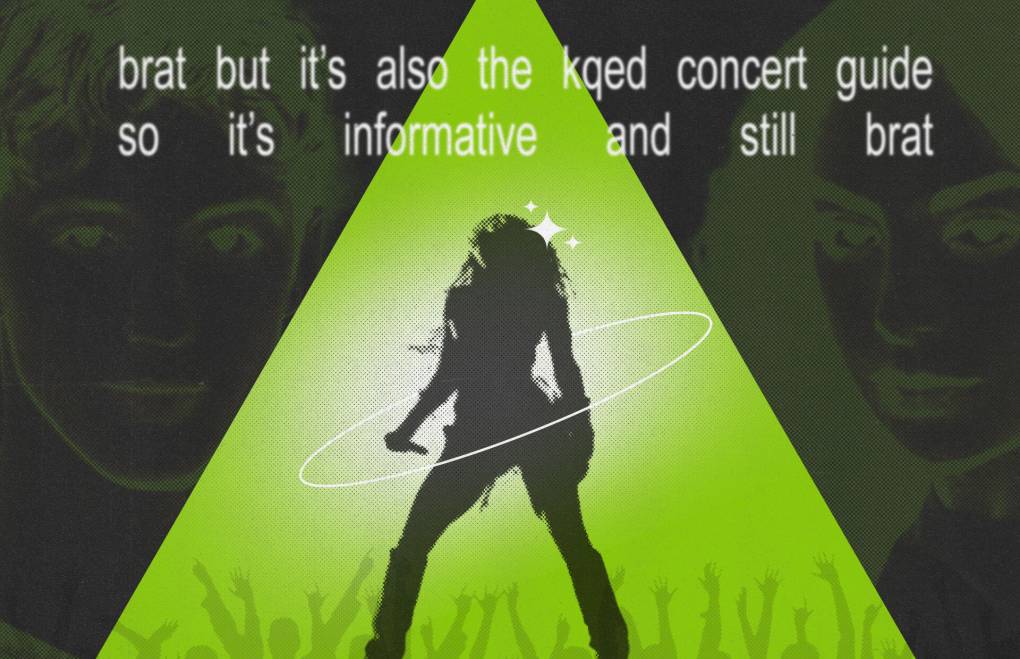
"caption": "Illustration by Darren Tu",
"credit": null,
"altTag": null,
"description": null,
"imgSizes": {
"medium": {
"file": "https://cdn.kqed.org/wp-content/uploads/sites/10/2024/10/Charli-xcx-guide_3-800x517.jpg",
"width": 800,
"height": 517,
"mimeType": "image/jpeg"
},
"large": {
"file": "https://cdn.kqed.org/wp-content/uploads/sites/10/2024/10/Charli-xcx-guide_3-1020x659.jpg",
"width": 1020,
"height": 659,
"mimeType": "image/jpeg"
},
"thumbnail": {
"file": "https://cdn.kqed.org/wp-content/uploads/sites/10/2024/10/Charli-xcx-guide_3-160x103.jpg",
"width": 160,
"height": 103,
"mimeType": "image/jpeg"
},
"1536x1536": {
"file": "https://cdn.kqed.org/wp-content/uploads/sites/10/2024/10/Charli-xcx-guide_3-1536x992.jpg",
"width": 1536,
"height": 992,
"mimeType": "image/jpeg"
},
"post-thumbnail": {
"file": "https://cdn.kqed.org/wp-content/uploads/sites/10/2024/10/Charli-xcx-guide_3-672x372.jpg",
"width": 672,
"height": 372,
"mimeType": "image/jpeg"
},
"twentyfourteen-full-width": {
"file": "https://cdn.kqed.org/wp-content/uploads/sites/10/2024/10/Charli-xcx-guide_3-1038x576.jpg",
"width": 1038,
"height": 576,
"mimeType": "image/jpeg"
},
"kqedFullSize": {
"file": "https://cdn.kqed.org/wp-content/uploads/sites/10/2024/10/Charli-xcx-guide_3.jpg",
"width": 1920,
"height": 1240
}
},
"isLoading": false,
"fetchFailed": false
},
"news_12007304": {
"type": "attachments",
"id": "news_12007304",
"meta": {
"index": "attachments_1716263798",
"site": "news",
"id": "12007304",
"found": true
},
"title": "Fantastic Negrito performs on the Swan Stage during the Hardly Strictly Bluegrass Festival 2019 at Golden Gate Park in San Francisco, Calif., on Sunday, October 6, 2019",
"publishDate": 1727804307,
"status": "inherit",
"parent": 12007103,
"modified": 1727804434,
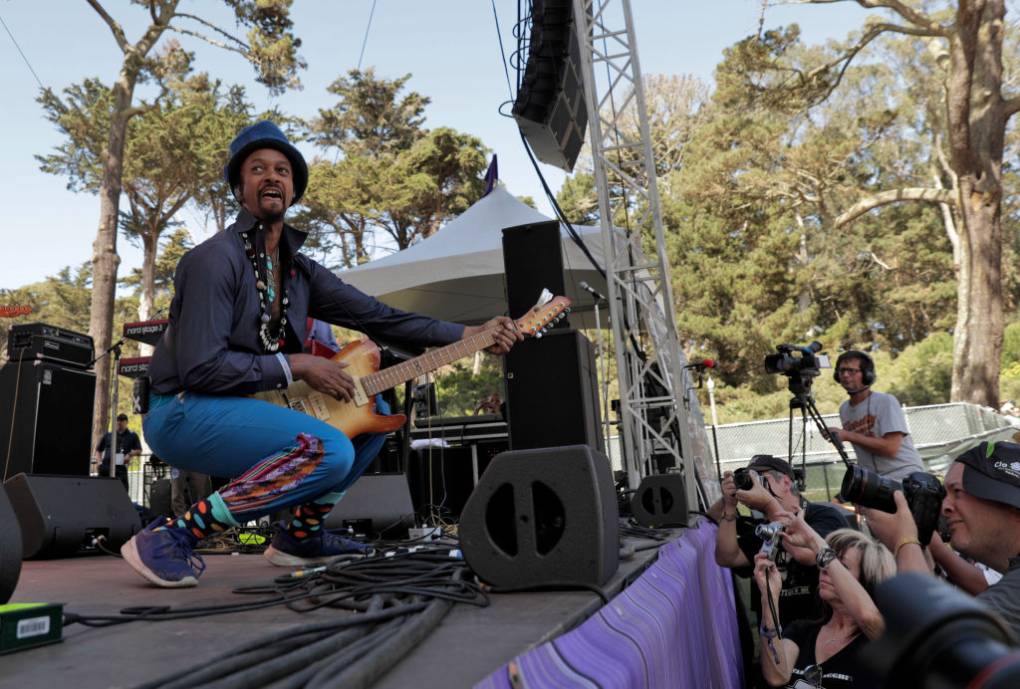
"caption": "Fantastic Negrito performs on the Swan Stage during the Hardly Strictly Bluegrass Festival 2019 at Golden Gate Park in San Francisco on Sunday, Oct. 6, 2019. ",
"credit": "Carlos Avila Gonzalez/The San Francisco Chronicle via Getty Images",
"altTag": "A Black man wearing blue pants and a dark shirt squats while playing a guitar on stage as people take pictures from below.",
"description": null,
"imgSizes": {
"medium": {
"file": "https://cdn.kqed.org/wp-content/uploads/sites/10/2024/10/GettyImages-1409103744-800x541.jpg",
"width": 800,
"height": 541,
"mimeType": "image/jpeg"
},
"large": {
"file": "https://cdn.kqed.org/wp-content/uploads/sites/10/2024/10/GettyImages-1409103744-1020x689.jpg",
"width": 1020,
"height": 689,
"mimeType": "image/jpeg"
},
"thumbnail": {
"file": "https://cdn.kqed.org/wp-content/uploads/sites/10/2024/10/GettyImages-1409103744-160x108.jpg",
"width": 160,
"height": 108,
"mimeType": "image/jpeg"
},
"post-thumbnail": {
"file": "https://cdn.kqed.org/wp-content/uploads/sites/10/2024/10/GettyImages-1409103744-672x372.jpg",
"width": 672,
"height": 372,
"mimeType": "image/jpeg"
},
"twentyfourteen-full-width": {
"file": "https://cdn.kqed.org/wp-content/uploads/sites/10/2024/10/GettyImages-1409103744-1024x576.jpg",
"width": 1024,
"height": 576,
"mimeType": "image/jpeg"
},
"kqedFullSize": {
"file": "https://cdn.kqed.org/wp-content/uploads/sites/10/2024/10/GettyImages-1409103744.jpg",
"width": 1024,
"height": 692
}
},
"isLoading": false,
"fetchFailed": false
},
"news_12007085": {
"type": "attachments",
"id": "news_12007085",
"meta": {
"index": "attachments_1716263798",
"site": "news",
"id": "12007085",
"found": true
},
"title": "analog_dog_collage (1)",
"publishDate": 1727657446,
"status": "inherit",
"parent": 12007055,
"modified": 1727809511,
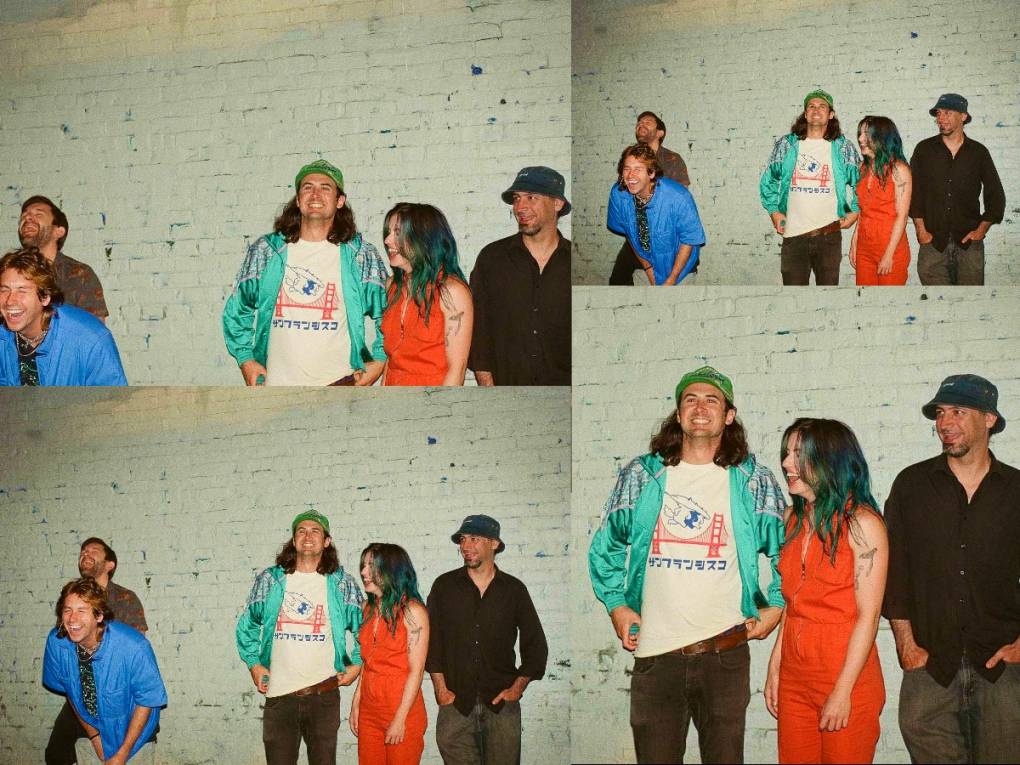
"caption": "Analog Dog, from left: Kale Frank, Austin Wasielewski, Rob Nicol, Celia Ford, and Jason Blasingame.",
"credit": "Photo courtesy of Nathan Schmidlin, collage by Attila Pelit/KQED",
"altTag": null,
"description": null,
"imgSizes": {
"medium": {
"file": "https://cdn.kqed.org/wp-content/uploads/sites/10/2024/09/analog_dog_collage-1-800x600.jpg",
"width": 800,
"height": 600,
"mimeType": "image/jpeg"
},
"large": {
"file": "https://cdn.kqed.org/wp-content/uploads/sites/10/2024/09/analog_dog_collage-1-1020x765.jpg",
"width": 1020,
"height": 765,
"mimeType": "image/jpeg"
},
"thumbnail": {
"file": "https://cdn.kqed.org/wp-content/uploads/sites/10/2024/09/analog_dog_collage-1-160x120.jpg",
"width": 160,
"height": 120,
"mimeType": "image/jpeg"
},
"post-thumbnail": {
"file": "https://cdn.kqed.org/wp-content/uploads/sites/10/2024/09/analog_dog_collage-1-672x372.jpg",
"width": 672,
"height": 372,
"mimeType": "image/jpeg"
},
"twentyfourteen-full-width": {
"file": "https://cdn.kqed.org/wp-content/uploads/sites/10/2024/09/analog_dog_collage-1-1038x576.jpg",
"width": 1038,
"height": 576,
"mimeType": "image/jpeg"
},
"kqedFullSize": {
"file": "https://cdn.kqed.org/wp-content/uploads/sites/10/2024/09/analog_dog_collage-1.jpg",
"width": 1200,
"height": 900
}
},
"isLoading": false,
"fetchFailed": false
},
"news_12005875": {
"type": "attachments",
"id": "news_12005875",
"meta": {
"index": "attachments_1716263798",
"site": "news",
"id": "12005875",
"found": true
},
"title": "20240922_GreenDayPinole_GC-59_qed",
"publishDate": 1727052499,
"status": "inherit",
"parent": 12005849,
"modified": 1727116976,
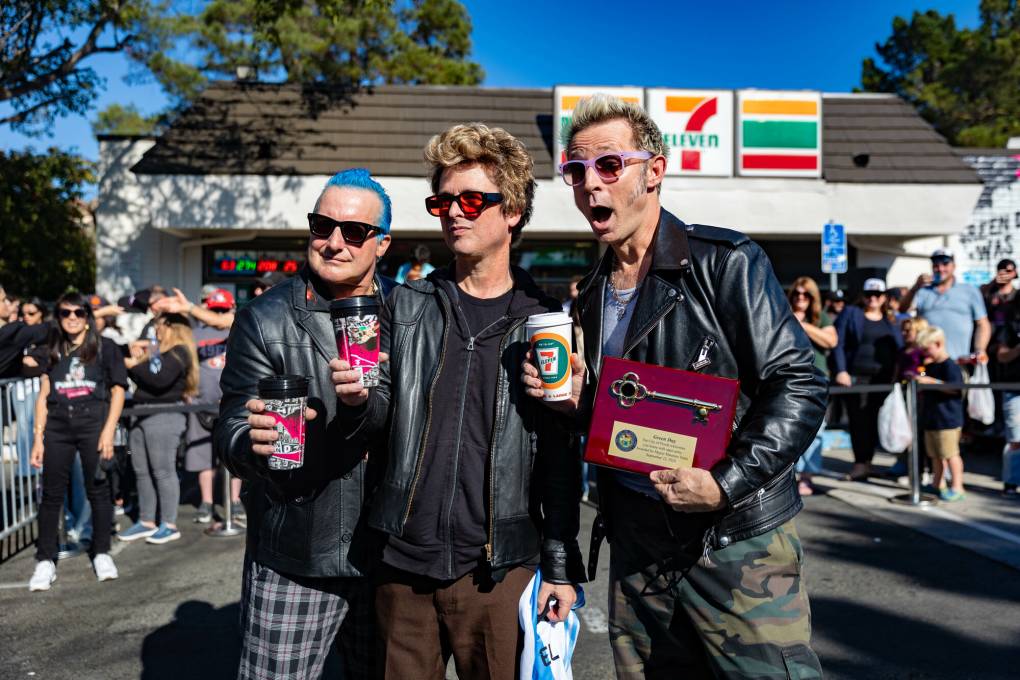
"caption": "Punk rock band Green Day holds Punk Bunny cups, the band’s coffee brand, celebrating the 30th anniversary of the band’s breakout album 'Dookie' and the 60th anniversary of 7-Eleven’s on-the-go coffee, outside of a 7-Eleven in Pinole, the band’s go-to-spot in high school, on Sept. 22, 2024.",
"credit": "Gina Castro/KQED",
"altTag": "Three men wearing black jackets and sunglasses hold coffee cups and a plaque with a key on it in front of a 7-Eleven store.",
"description": null,
"imgSizes": {
"medium": {
"file": "https://cdn.kqed.org/wp-content/uploads/sites/10/2024/09/20240922_GreenDayPinole_GC-59_qed-800x533.jpg",
"width": 800,
"height": 533,
"mimeType": "image/jpeg"
},
"large": {
"file": "https://cdn.kqed.org/wp-content/uploads/sites/10/2024/09/20240922_GreenDayPinole_GC-59_qed-1020x680.jpg",
"width": 1020,
"height": 680,
"mimeType": "image/jpeg"
},
"thumbnail": {
"file": "https://cdn.kqed.org/wp-content/uploads/sites/10/2024/09/20240922_GreenDayPinole_GC-59_qed-160x107.jpg",
"width": 160,
"height": 107,
"mimeType": "image/jpeg"
},
"1536x1536": {
"file": "https://cdn.kqed.org/wp-content/uploads/sites/10/2024/09/20240922_GreenDayPinole_GC-59_qed-1536x1024.jpg",
"width": 1536,
"height": 1024,
"mimeType": "image/jpeg"
},
"post-thumbnail": {
"file": "https://cdn.kqed.org/wp-content/uploads/sites/10/2024/09/20240922_GreenDayPinole_GC-59_qed-672x372.jpg",
"width": 672,
"height": 372,
"mimeType": "image/jpeg"
},
"twentyfourteen-full-width": {
"file": "https://cdn.kqed.org/wp-content/uploads/sites/10/2024/09/20240922_GreenDayPinole_GC-59_qed-1038x576.jpg",
"width": 1038,
"height": 576,
"mimeType": "image/jpeg"
},
"full-width": {
"file": "https://cdn.kqed.org/wp-content/uploads/sites/10/2024/09/20240922_GreenDayPinole_GC-59_qed-1920x1280.jpg",
"width": 1920,
"height": 1280,
"mimeType": "image/jpeg"
},
"kqedFullSize": {
"file": "https://cdn.kqed.org/wp-content/uploads/sites/10/2024/09/20240922_GreenDayPinole_GC-59_qed.jpg",
"width": 2000,
"height": 1333
}
},
"isLoading": false,
"fetchFailed": false
},
"news_12004875": {
"type": "attachments",
"id": "news_12004875",
"meta": {
"index": "attachments_1716263798",
"site": "news",
"id": "12004875",
"found": true
},
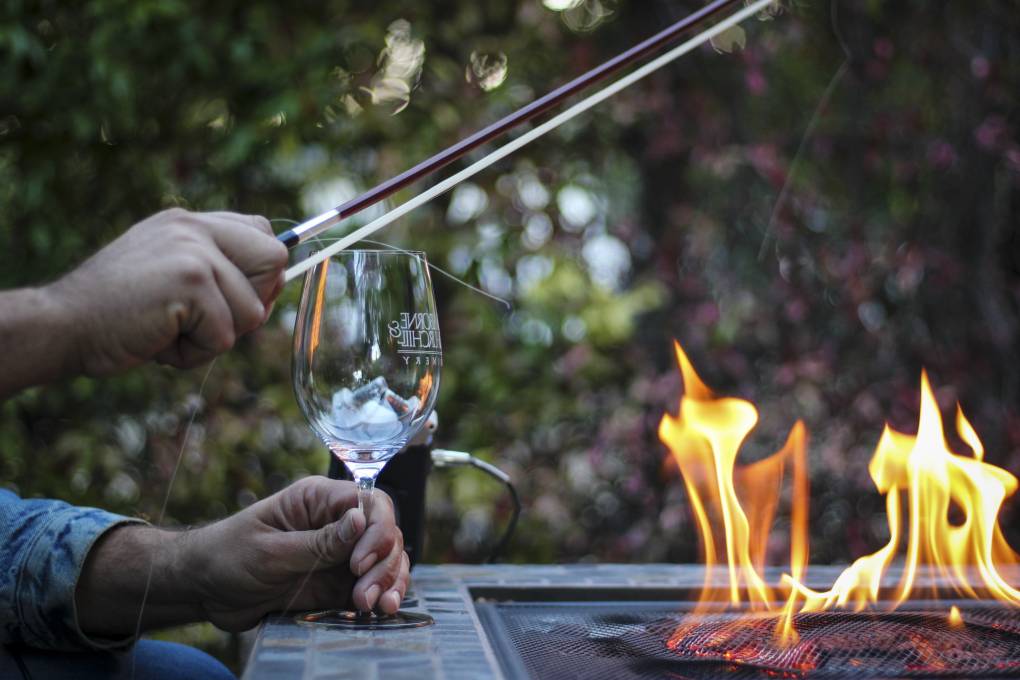
"title": "Brook Munro uses a violin bow on a wine glass to create a unique sound.",
"publishDate": 1726511812,
"status": "inherit",
"parent": 0,
"modified": 1726602811,
"caption": "Brook Munro uses a violin bow on a wine glass to create a unique sound.",
"credit": "Courtesy of Michelle Cordova",
"altTag": "A hand holds a wine glass and a violin bow near an open flame outside.",
"description": null,
"imgSizes": {
"medium": {
"file": "https://cdn.kqed.org/wp-content/uploads/sites/10/2024/09/240916-WINE-COUNTRY-MUSIC-BP-08-KQED-800x533.jpg",
"width": 800,
"height": 533,
"mimeType": "image/jpeg"
},
"large": {
"file": "https://cdn.kqed.org/wp-content/uploads/sites/10/2024/09/240916-WINE-COUNTRY-MUSIC-BP-08-KQED-1020x680.jpg",
"width": 1020,
"height": 680,
"mimeType": "image/jpeg"
},
"thumbnail": {
"file": "https://cdn.kqed.org/wp-content/uploads/sites/10/2024/09/240916-WINE-COUNTRY-MUSIC-BP-08-KQED-160x107.jpg",
"width": 160,
"height": 107,
"mimeType": "image/jpeg"
},
"1536x1536": {
"file": "https://cdn.kqed.org/wp-content/uploads/sites/10/2024/09/240916-WINE-COUNTRY-MUSIC-BP-08-KQED-1536x1024.jpg",
"width": 1536,
"height": 1024,
"mimeType": "image/jpeg"
},
"post-thumbnail": {
"file": "https://cdn.kqed.org/wp-content/uploads/sites/10/2024/09/240916-WINE-COUNTRY-MUSIC-BP-08-KQED-672x372.jpg",
"width": 672,
"height": 372,
"mimeType": "image/jpeg"
},
"twentyfourteen-full-width": {
"file": "https://cdn.kqed.org/wp-content/uploads/sites/10/2024/09/240916-WINE-COUNTRY-MUSIC-BP-08-KQED-1038x576.jpg",
"width": 1038,
"height": 576,
"mimeType": "image/jpeg"
},
"full-width": {
"file": "https://cdn.kqed.org/wp-content/uploads/sites/10/2024/09/240916-WINE-COUNTRY-MUSIC-BP-08-KQED-1920x1280.jpg",
"width": 1920,
"height": 1280,
"mimeType": "image/jpeg"
},
"kqedFullSize": {
"file": "https://cdn.kqed.org/wp-content/uploads/sites/10/2024/09/240916-WINE-COUNTRY-MUSIC-BP-08-KQED.jpg",
"width": 2000,
"height": 1333
}
},
"isLoading": false,
"fetchFailed": false
},
"news_11628746": {
"type": "attachments",
"id": "news_11628746",
"meta": {
"index": "attachments_1716263798",
"site": "news",
"id": "11628746",
"found": true
},
"parent": 11628745,
"imgSizes": {
"small": {
"file": "https://ww2.kqed.org/app/uploads/sites/10/2017/11/gettyimages-633867894_wide-e7e50676b602d043d45f3b34ff18568758f6cebe-520x293.jpg",
"width": 520,
"mimeType": "image/jpeg",
"height": 293
},
"twentyfourteen-full-width": {
"file": "https://ww2.kqed.org/app/uploads/sites/10/2017/11/gettyimages-633867894_wide-e7e50676b602d043d45f3b34ff18568758f6cebe-1038x576.jpg",
"width": 1038,
"mimeType": "image/jpeg",
"height": 576
},
"thumbnail": {
"file": "https://ww2.kqed.org/app/uploads/sites/10/2017/11/gettyimages-633867894_wide-e7e50676b602d043d45f3b34ff18568758f6cebe-160x90.jpg",
"width": 160,
"mimeType": "image/jpeg",
"height": 90
},
"fd-sm": {
"file": "https://ww2.kqed.org/app/uploads/sites/10/2017/11/gettyimages-633867894_wide-e7e50676b602d043d45f3b34ff18568758f6cebe-960x540.jpg",
"width": 960,
"mimeType": "image/jpeg",
"height": 540
},
"post-thumbnail": {
"file": "https://ww2.kqed.org/app/uploads/sites/10/2017/11/gettyimages-633867894_wide-e7e50676b602d043d45f3b34ff18568758f6cebe-672x372.jpg",
"width": 672,
"mimeType": "image/jpeg",
"height": 372
},
"xsmall": {
"file": "https://ww2.kqed.org/app/uploads/sites/10/2017/11/gettyimages-633867894_wide-e7e50676b602d043d45f3b34ff18568758f6cebe-375x211.jpg",
"width": 375,
"mimeType": "image/jpeg",
"height": 211
},
"kqedFullSize": {
"file": "https://ww2.kqed.org/app/uploads/sites/10/2017/11/gettyimages-633867894_wide-e7e50676b602d043d45f3b34ff18568758f6cebe-e1510069404712.jpg",
"width": 1920,
"height": 1080
},
"large": {
"file": "https://ww2.kqed.org/app/uploads/sites/10/2017/11/gettyimages-633867894_wide-e7e50676b602d043d45f3b34ff18568758f6cebe-1020x574.jpg",
"width": 1020,
"mimeType": "image/jpeg",
"height": 574
},
"xlarge": {
"file": "https://ww2.kqed.org/app/uploads/sites/10/2017/11/gettyimages-633867894_wide-e7e50676b602d043d45f3b34ff18568758f6cebe-1180x664.jpg",
"width": 1180,
"mimeType": "image/jpeg",
"height": 664
},
"guest-author-50": {
"file": "https://ww2.kqed.org/app/uploads/sites/10/2017/11/gettyimages-633867894_wide-e7e50676b602d043d45f3b34ff18568758f6cebe-50x50.jpg",
"width": 50,
"mimeType": "image/jpeg",
"height": 50
},
"guest-author-96": {
"file": "https://ww2.kqed.org/app/uploads/sites/10/2017/11/gettyimages-633867894_wide-e7e50676b602d043d45f3b34ff18568758f6cebe-96x96.jpg",
"width": 96,
"mimeType": "image/jpeg",
"height": 96
},
"medium": {
"file": "https://ww2.kqed.org/app/uploads/sites/10/2017/11/gettyimages-633867894_wide-e7e50676b602d043d45f3b34ff18568758f6cebe-800x450.jpg",
"width": 800,
"mimeType": "image/jpeg",
"height": 450
},
"guest-author-64": {
"file": "https://ww2.kqed.org/app/uploads/sites/10/2017/11/gettyimages-633867894_wide-e7e50676b602d043d45f3b34ff18568758f6cebe-64x64.jpg",
"width": 64,
"mimeType": "image/jpeg",
"height": 64
},
"guest-author-32": {
"file": "https://ww2.kqed.org/app/uploads/sites/10/2017/11/gettyimages-633867894_wide-e7e50676b602d043d45f3b34ff18568758f6cebe-32x32.jpg",
"width": 32,
"mimeType": "image/jpeg",
"height": 32
},
"fd-lrg": {
"file": "https://ww2.kqed.org/app/uploads/sites/10/2017/11/gettyimages-633867894_wide-e7e50676b602d043d45f3b34ff18568758f6cebe-1920x1080.jpg",
"width": 1920,
"mimeType": "image/jpeg",
"height": 1080
},
"fd-med": {
"file": "https://ww2.kqed.org/app/uploads/sites/10/2017/11/gettyimages-633867894_wide-e7e50676b602d043d45f3b34ff18568758f6cebe-1180x664.jpg",
"width": 1180,
"mimeType": "image/jpeg",
"height": 664
},
"full-width": {
"file": "https://ww2.kqed.org/app/uploads/sites/10/2017/11/gettyimages-633867894_wide-e7e50676b602d043d45f3b34ff18568758f6cebe-1920x1080.jpg",
"width": 1920,
"mimeType": "image/jpeg",
"height": 1080
},
"detail": {
"file": "https://ww2.kqed.org/app/uploads/sites/10/2017/11/gettyimages-633867894_wide-e7e50676b602d043d45f3b34ff18568758f6cebe-150x150.jpg",
"width": 150,
"mimeType": "image/jpeg",
"height": 150
},
"guest-author-128": {
"file": "https://ww2.kqed.org/app/uploads/sites/10/2017/11/gettyimages-633867894_wide-e7e50676b602d043d45f3b34ff18568758f6cebe-128x128.jpg",
"width": 128,
"mimeType": "image/jpeg",
"height": 128
},
"xxsmall": {
"file": "https://ww2.kqed.org/app/uploads/sites/10/2017/11/gettyimages-633867894_wide-e7e50676b602d043d45f3b34ff18568758f6cebe-240x135.jpg",
"width": 240,
"mimeType": "image/jpeg",
"height": 135
}
},
"publishDate": 1510069197,
"modified": 1510069428,
"caption": "Taylor Swift performing in February in Houston.",
"description": "Taylor Swift performing in February in Houston.",
"title": "gettyimages-633867894_wide-e7e50676b602d043d45f3b34ff18568758f6cebe",
"credit": "John Shearer/Getty Images for DIRECTV",
"status": "inherit",
"isLoading": false,
"fetchFailed": false
},
"news_12002634": {
"type": "attachments",
"id": "news_12002634",
"meta": {
"index": "attachments_1716263798",
"site": "news",
"id": "12002634",
"found": true
},
"title": "DONATO CABRERA 2 BY KRISTEN LOKEN-KQED",
"publishDate": 1725071791,
"status": "inherit",
"parent": 0,
"modified": 1725926426,
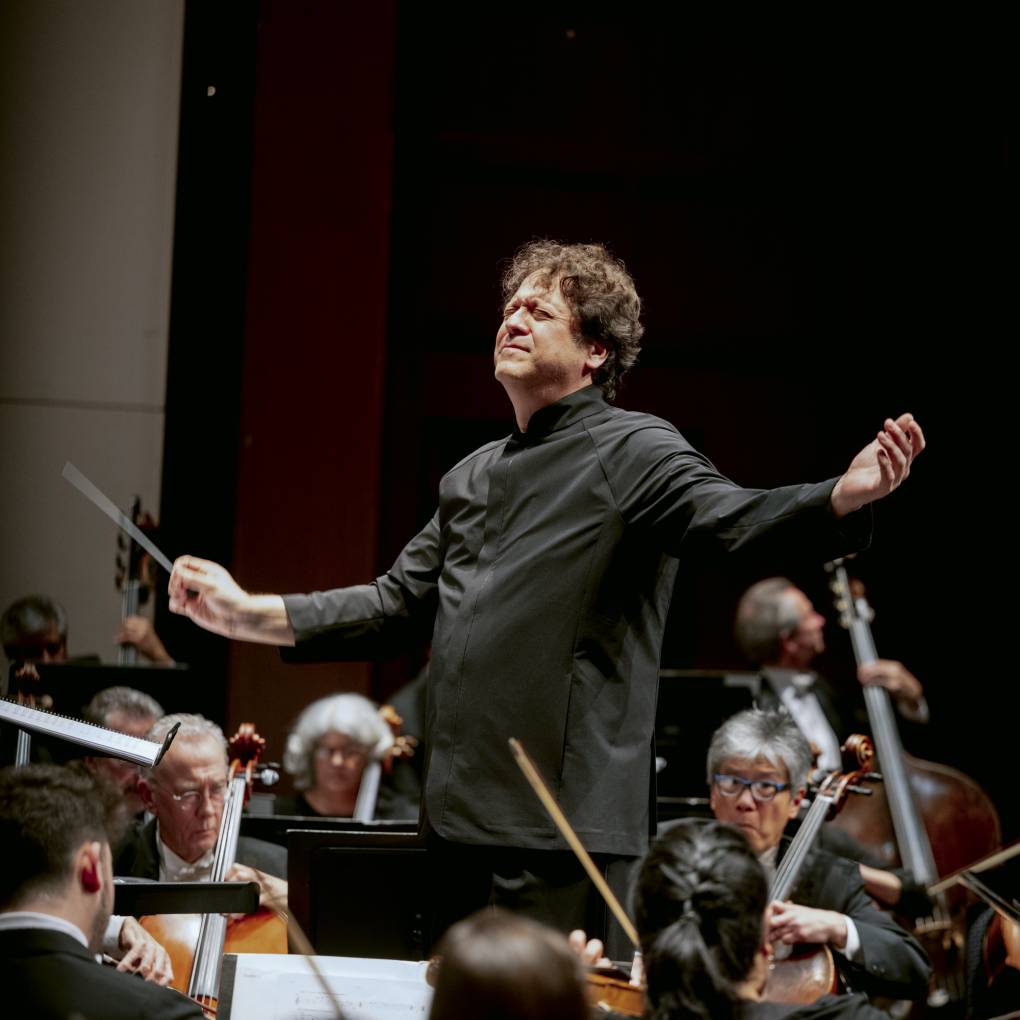
"caption": "Donato Cabrera, a Mexican-American conductor, serves as the artistic and music director of the California Symphony.",
"credit": "Kristen Loken/Courtesy of Donato Cabrera",
"altTag": null,
"description": null,
"imgSizes": {
"medium": {
"file": "https://cdn.kqed.org/wp-content/uploads/sites/10/2024/08/DONATO-CABRERA-2-BY-KRISTEN-LOKEN-KQED-800x800.jpg",
"width": 800,
"height": 800,
"mimeType": "image/jpeg"
},
"large": {
"file": "https://cdn.kqed.org/wp-content/uploads/sites/10/2024/08/DONATO-CABRERA-2-BY-KRISTEN-LOKEN-KQED-1020x1020.jpg",
"width": 1020,
"height": 1020,
"mimeType": "image/jpeg"
},
"thumbnail": {
"file": "https://cdn.kqed.org/wp-content/uploads/sites/10/2024/08/DONATO-CABRERA-2-BY-KRISTEN-LOKEN-KQED-160x160.jpg",
"width": 160,
"height": 160,
"mimeType": "image/jpeg"
},
"1536x1536": {
"file": "https://cdn.kqed.org/wp-content/uploads/sites/10/2024/08/DONATO-CABRERA-2-BY-KRISTEN-LOKEN-KQED-1536x1536.jpg",
"width": 1536,
"height": 1536,
"mimeType": "image/jpeg"
},
"post-thumbnail": {
"file": "https://cdn.kqed.org/wp-content/uploads/sites/10/2024/08/DONATO-CABRERA-2-BY-KRISTEN-LOKEN-KQED-672x372.jpg",
"width": 672,
"height": 372,
"mimeType": "image/jpeg"
},
"twentyfourteen-full-width": {
"file": "https://cdn.kqed.org/wp-content/uploads/sites/10/2024/08/DONATO-CABRERA-2-BY-KRISTEN-LOKEN-KQED-1038x576.jpg",
"width": 1038,
"height": 576,
"mimeType": "image/jpeg"
},
"full-width": {
"file": "https://cdn.kqed.org/wp-content/uploads/sites/10/2024/08/DONATO-CABRERA-2-BY-KRISTEN-LOKEN-KQED-1920x1920.jpg",
"width": 1920,
"height": 1920,
"mimeType": "image/jpeg"
},
"kqedFullSize": {
"file": "https://cdn.kqed.org/wp-content/uploads/sites/10/2024/08/DONATO-CABRERA-2-BY-KRISTEN-LOKEN-KQED.jpg",
"width": 2000,
"height": 2000
}
},
"isLoading": false,
"fetchFailed": false
},
"news_11990527": {
"type": "attachments",
"id": "news_11990527",
"meta": {
"index": "attachments_1716263798",
"site": "news",
"id": "11990527",
"found": true
},
"title": "240611-DestinyMuhammad-10-BL_qut",
"publishDate": 1718406976,
"status": "inherit",
"parent": 0,
"modified": 1724108239,
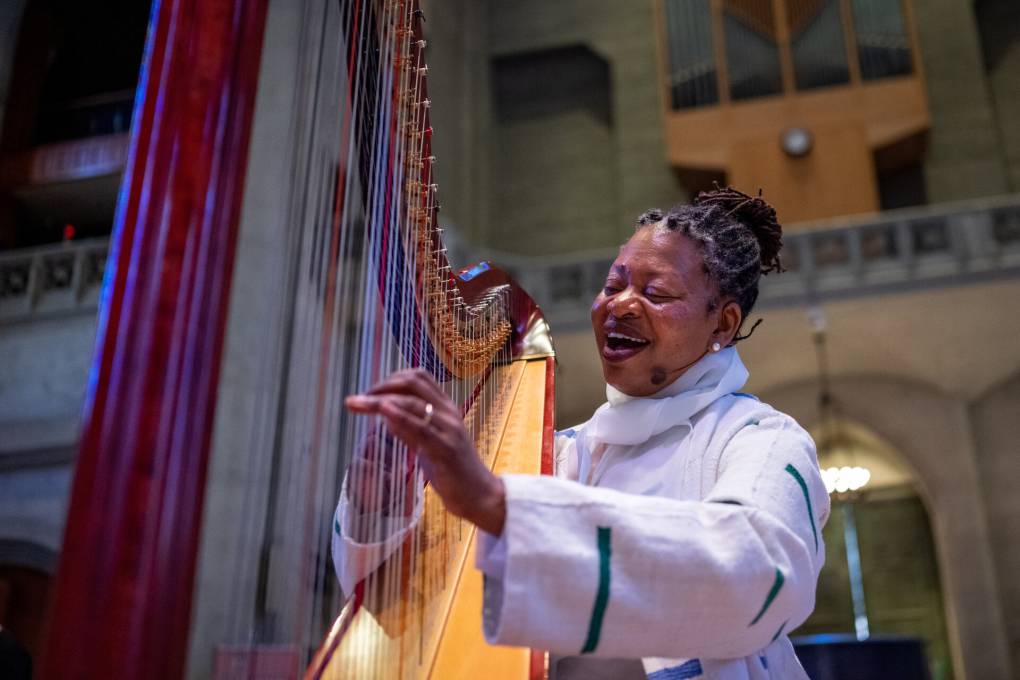
"caption": "Destiny Muhammad, a Bay Area musician, vocalist and composer, plays the harp during a yoga class at Grace Cathedral in San Francisco on June 12.",
"credit": "Beth LaBerge/KQED",
"altTag": "A woman dressed in white plays the harp.",
"description": null,
"imgSizes": {
"medium": {
"file": "https://cdn.kqed.org/wp-content/uploads/sites/10/2024/06/240611-DestinyMuhammad-10-BL_qut-800x533.jpg",
"width": 800,
"height": 533,
"mimeType": "image/jpeg"
},
"large": {
"file": "https://cdn.kqed.org/wp-content/uploads/sites/10/2024/06/240611-DestinyMuhammad-10-BL_qut-1020x680.jpg",
"width": 1020,
"height": 680,
"mimeType": "image/jpeg"
},
"thumbnail": {
"file": "https://cdn.kqed.org/wp-content/uploads/sites/10/2024/06/240611-DestinyMuhammad-10-BL_qut-160x107.jpg",
"width": 160,
"height": 107,
"mimeType": "image/jpeg"
},
"1536x1536": {
"file": "https://cdn.kqed.org/wp-content/uploads/sites/10/2024/06/240611-DestinyMuhammad-10-BL_qut-1536x1024.jpg",
"width": 1536,
"height": 1024,
"mimeType": "image/jpeg"
},
"post-thumbnail": {
"file": "https://cdn.kqed.org/wp-content/uploads/sites/10/2024/06/240611-DestinyMuhammad-10-BL_qut-672x372.jpg",
"width": 672,
"height": 372,
"mimeType": "image/jpeg"
},
"twentyfourteen-full-width": {
"file": "https://cdn.kqed.org/wp-content/uploads/sites/10/2024/06/240611-DestinyMuhammad-10-BL_qut-1038x576.jpg",
"width": 1038,
"height": 576,
"mimeType": "image/jpeg"
},
"kqedFullSize": {
"file": "https://cdn.kqed.org/wp-content/uploads/sites/10/2024/06/240611-DestinyMuhammad-10-BL_qut.jpg",
"width": 1920,
"height": 1280
}
},
"isLoading": false,
"fetchFailed": false
},
"news_11999755": {
"type": "attachments",
"id": "news_11999755",
"meta": {
"index": "attachments_1716263798",
"site": "news",
"id": "11999755",
"found": true
},
"title": "MusicDropCollage",
"publishDate": 1723322400,
"status": "inherit",
"parent": 11999753,
"modified": 1723322492,
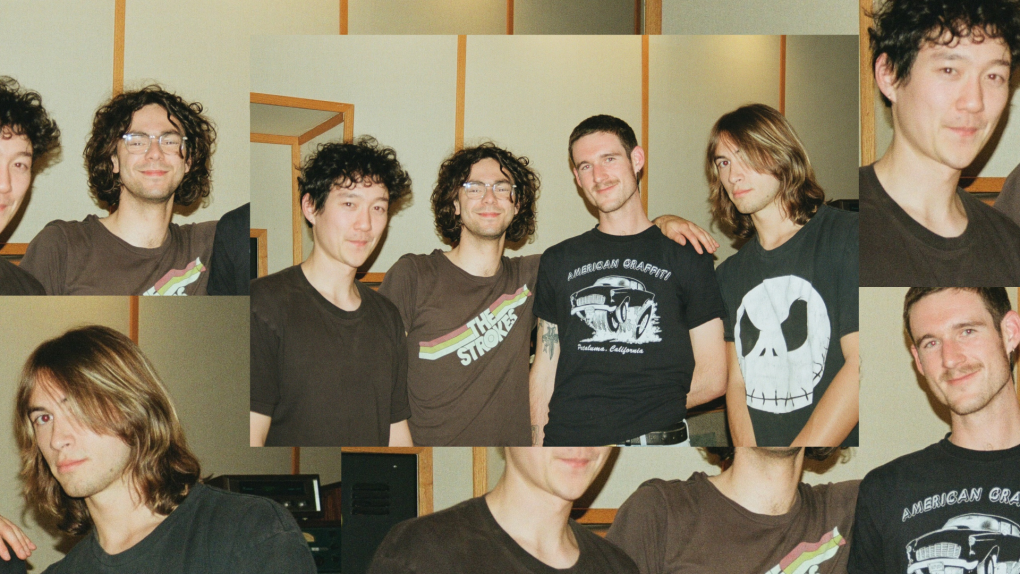
"caption": "Left to right: Nathan Kruse, Joey Goodman, Ben Stolz and Alex Wolfert of Starfish Prime.",
"credit": "Photo courtesy of Caroline Smith/Collage by Lakshmi Sarah of KQED",
"altTag": null,
"description": null,
"imgSizes": {
"medium": {
"file": "https://cdn.kqed.org/wp-content/uploads/sites/10/2024/08/MusicDropCollage-800x450.png",
"width": 800,
"height": 450,
"mimeType": "image/png"
},
"large": {
"file": "https://cdn.kqed.org/wp-content/uploads/sites/10/2024/08/MusicDropCollage-1020x574.png",
"width": 1020,
"height": 574,
"mimeType": "image/png"
},
"thumbnail": {
"file": "https://cdn.kqed.org/wp-content/uploads/sites/10/2024/08/MusicDropCollage-160x90.png",
"width": 160,
"height": 90,
"mimeType": "image/png"
},
"1536x1536": {
"file": "https://cdn.kqed.org/wp-content/uploads/sites/10/2024/08/MusicDropCollage-1536x864.png",
"width": 1536,
"height": 864,
"mimeType": "image/png"
},
"post-thumbnail": {
"file": "https://cdn.kqed.org/wp-content/uploads/sites/10/2024/08/MusicDropCollage-672x372.png",
"width": 672,
"height": 372,
"mimeType": "image/png"
},
"twentyfourteen-full-width": {
"file": "https://cdn.kqed.org/wp-content/uploads/sites/10/2024/08/MusicDropCollage-1038x576.png",
"width": 1038,
"height": 576,
"mimeType": "image/png"
},
"kqedFullSize": {
"file": "https://cdn.kqed.org/wp-content/uploads/sites/10/2024/08/MusicDropCollage.png",
"width": 1920,
"height": 1080
}
},
"isLoading": false,
"fetchFailed": false
},
"news_11999246": {
"type": "attachments",
"id": "news_11999246",
"meta": {
"index": "attachments_1716263798",
"site": "news",
"id": "11999246",
"found": true
},
"title": "OUTSIDELANDS2023_0812_132329-1874_ALIVECOVERAGE",
"publishDate": 1723061245,
"status": "inherit",
"parent": 11999085,
"modified": 1723061379,
"caption": "Outside Lands takes over Golden Gate Park in San Francisco for three days in August every year.",
"credit": "Alive Coverage/Outside Lands",
"altTag": null,
"description": null,
"imgSizes": {
"medium": {
"file": "https://cdn.kqed.org/wp-content/uploads/sites/10/2024/08/OUTSIDELANDS2023_0812_132329-1874_ALIVECOVERAGE-800x533.png",
"width": 800,
"height": 533,
"mimeType": "image/png"
},
"large": {
"file": "https://cdn.kqed.org/wp-content/uploads/sites/10/2024/08/OUTSIDELANDS2023_0812_132329-1874_ALIVECOVERAGE-1020x680.png",
"width": 1020,
"height": 680,
"mimeType": "image/png"
},
"thumbnail": {
"file": "https://cdn.kqed.org/wp-content/uploads/sites/10/2024/08/OUTSIDELANDS2023_0812_132329-1874_ALIVECOVERAGE-160x107.png",
"width": 160,
"height": 107,
"mimeType": "image/png"
},
"1536x1536": {
"file": "https://cdn.kqed.org/wp-content/uploads/sites/10/2024/08/OUTSIDELANDS2023_0812_132329-1874_ALIVECOVERAGE-1536x1024.png",
"width": 1536,
"height": 1024,
"mimeType": "image/png"
},
"post-thumbnail": {
"file": "https://cdn.kqed.org/wp-content/uploads/sites/10/2024/08/OUTSIDELANDS2023_0812_132329-1874_ALIVECOVERAGE-672x372.png",
"width": 672,
"height": 372,
"mimeType": "image/png"
},
"twentyfourteen-full-width": {
"file": "https://cdn.kqed.org/wp-content/uploads/sites/10/2024/08/OUTSIDELANDS2023_0812_132329-1874_ALIVECOVERAGE-1038x576.png",
"width": 1038,
"height": 576,
"mimeType": "image/png"
},
"kqedFullSize": {
"file": "https://cdn.kqed.org/wp-content/uploads/sites/10/2024/08/OUTSIDELANDS2023_0812_132329-1874_ALIVECOVERAGE.png",
"width": 1920,
"height": 1280
}
},
"isLoading": false,
"fetchFailed": false
},
"news_11998152": {
"type": "attachments",
"id": "news_11998152",
"meta": {
"index": "attachments_1716263798",
"site": "news",
"id": "11998152",
"found": true
},
"title": "olivia-rodrigo-san-francisco-guts",
"publishDate": 1722443959,
"status": "inherit",
"parent": 11998109,
"modified": 1722624621,
"caption": "Singer Olivia Rodrigo during a performance at the Wizink Center on June 20, 2024, in Madrid, Spain. Olivia Rodrigo is a 3-time Grammy Award-winning American actress, singer and songwriter. She gained recognition in the late 2010s with her leading roles in the television shows 'Bizaardvark' and 'High School Musical: The Musical: The Series'. Produced by Live Nation, The SOUR Tour world tour includes 57 dates. ",
"credit": "Ricardo Rubio/Europa Press via Getty Images",
"altTag": null,
"description": null,
"imgSizes": {
"medium": {
"file": "https://cdn.kqed.org/wp-content/uploads/sites/10/2024/07/Rodrigo1-800x534.jpg",
"width": 800,
"height": 534,
"mimeType": "image/jpeg"
},
"large": {
"file": "https://cdn.kqed.org/wp-content/uploads/sites/10/2024/07/Rodrigo1-1020x680.jpg",
"width": 1020,
"height": 680,
"mimeType": "image/jpeg"
},
"thumbnail": {
"file": "https://cdn.kqed.org/wp-content/uploads/sites/10/2024/07/Rodrigo1-160x107.jpg",
"width": 160,
"height": 107,
"mimeType": "image/jpeg"
},
"1536x1536": {
"file": "https://cdn.kqed.org/wp-content/uploads/sites/10/2024/07/Rodrigo1-1536x1024.jpg",
"width": 1536,
"height": 1024,
"mimeType": "image/jpeg"
},
"2048x2048": {
"file": "https://cdn.kqed.org/wp-content/uploads/sites/10/2024/07/Rodrigo1-2048x1366.jpg",
"width": 2048,
"height": 1366,
"mimeType": "image/jpeg"
},
"post-thumbnail": {
"file": "https://cdn.kqed.org/wp-content/uploads/sites/10/2024/07/Rodrigo1-672x372.jpg",
"width": 672,
"height": 372,
"mimeType": "image/jpeg"
},
"twentyfourteen-full-width": {
"file": "https://cdn.kqed.org/wp-content/uploads/sites/10/2024/07/Rodrigo1-1038x576.jpg",
"width": 1038,
"height": 576,
"mimeType": "image/jpeg"
},
"full-width": {
"file": "https://cdn.kqed.org/wp-content/uploads/sites/10/2024/07/Rodrigo1-1920x1281.jpg",
"width": 1920,
"height": 1281,
"mimeType": "image/jpeg"
},
"kqedFullSize": {
"file": "https://cdn.kqed.org/wp-content/uploads/sites/10/2024/07/Rodrigo1-scaled.jpg",
"width": 2560,
"height": 1707
}
},
"isLoading": false,
"fetchFailed": false
},
"news_11998269": {
"type": "attachments",
"id": "news_11998269",
"meta": {
"index": "attachments_1716263798",
"site": "news",
"id": "11998269",
"found": true
},
"title": "EG -orchestra-night2-7553 - Crediting Nicole Mago",
"publishDate": 1722461492,
"status": "inherit",
"parent": 11998255,
"modified": 1722556326,
"caption": "Composer Derrick Skye conducting the Wordless Music Orchestra during a performance in Brooklyn, November 2023. ",
"credit": "Courtesy of Nicole Mago",
"altTag": null,
"description": null,
"imgSizes": {
"medium": {
"file": "https://cdn.kqed.org/wp-content/uploads/sites/10/2024/08/EG-orchestra-night2-7553-Crediting-Nicole-Mago-800x533.jpg",
"width": 800,
"height": 533,
"mimeType": "image/jpeg"
},
"large": {
"file": "https://cdn.kqed.org/wp-content/uploads/sites/10/2024/08/EG-orchestra-night2-7553-Crediting-Nicole-Mago-1020x680.jpg",
"width": 1020,
"height": 680,
"mimeType": "image/jpeg"
},
"thumbnail": {
"file": "https://cdn.kqed.org/wp-content/uploads/sites/10/2024/08/EG-orchestra-night2-7553-Crediting-Nicole-Mago-160x107.jpg",
"width": 160,
"height": 107,
"mimeType": "image/jpeg"
},
"1536x1536": {
"file": "https://cdn.kqed.org/wp-content/uploads/sites/10/2024/08/EG-orchestra-night2-7553-Crediting-Nicole-Mago-1536x1024.jpg",
"width": 1536,
"height": 1024,
"mimeType": "image/jpeg"
},
"2048x2048": {
"file": "https://cdn.kqed.org/wp-content/uploads/sites/10/2024/08/EG-orchestra-night2-7553-Crediting-Nicole-Mago-2048x1365.jpg",
"width": 2048,
"height": 1365,
"mimeType": "image/jpeg"
},
"post-thumbnail": {
"file": "https://cdn.kqed.org/wp-content/uploads/sites/10/2024/08/EG-orchestra-night2-7553-Crediting-Nicole-Mago-672x372.jpg",
"width": 672,
"height": 372,
"mimeType": "image/jpeg"
},
"twentyfourteen-full-width": {
"file": "https://cdn.kqed.org/wp-content/uploads/sites/10/2024/08/EG-orchestra-night2-7553-Crediting-Nicole-Mago-1038x576.jpg",
"width": 1038,
"height": 576,
"mimeType": "image/jpeg"
},
"full-width": {
"file": "https://cdn.kqed.org/wp-content/uploads/sites/10/2024/08/EG-orchestra-night2-7553-Crediting-Nicole-Mago-1920x1280.jpg",
"width": 1920,
"height": 1280,
"mimeType": "image/jpeg"
},
"kqedFullSize": {
"file": "https://cdn.kqed.org/wp-content/uploads/sites/10/2024/08/EG-orchestra-night2-7553-Crediting-Nicole-Mago-scaled.jpg",
"width": 2560,
"height": 1707
}
},
"isLoading": false,
"fetchFailed": false
}
},
"audioPlayerReducer": {
"postId": "stream_live",
"isPaused": true,
"isPlaying": false,
"pfsActive": false,
"pledgeModalIsOpen": true,
"playerDrawerIsOpen": false,
"liveAudioPlayStartedAt": 0,
"liveAudioPlayContext": ""
},
"authorsReducer": {
"byline_news_12005040": {
"type": "authors",
"id": "byline_news_12005040",
"meta": {
"override": true
},
"slug": "byline_news_12005040",
"name": "Benjamin Purper",
"isLoading": false
},
"byline_news_11997928": {
"type": "authors",
"id": "byline_news_11997928",
"meta": {
"override": true
},
"slug": "byline_news_11997928",
"name": "Clare Wiley",
"isLoading": false
},
"kqed": {
"type": "authors",
"id": "236",
"meta": {
"index": "authors_1716337520",
"id": "236",
"found": true
},
"name": "KQED News Staff",
"firstName": "KQED News Staff",
"lastName": null,
"slug": "kqed",
"email": "faq@kqed.org",
"display_author_email": false,
"staff_mastheads": [],
"title": null,
"bio": null,
"avatar": "https://secure.gravatar.com/avatar/ef0e801a68c4c54afa9180db14084167?s=600&d=blank&r=g",
"twitter": null,
"facebook": null,
"instagram": null,
"linkedin": null,
"sites": [
{
"site": "arts",
"roles": [
"contributor"
]
},
{
"site": "news",
"roles": [
"editor"
]
},
{
"site": "futureofyou",
"roles": [
"author"
]
}
],
"headData": {
"title": "KQED News Staff | KQED",
"description": null,
"ogImgSrc": "https://secure.gravatar.com/avatar/ef0e801a68c4c54afa9180db14084167?s=600&d=blank&r=g",
"twImgSrc": "https://secure.gravatar.com/avatar/ef0e801a68c4c54afa9180db14084167?s=600&d=blank&r=g"
},
"isLoading": false,
"link": "/author/kqed"
},
"btaylor": {
"type": "authors",
"id": "11365",
"meta": {
"index": "authors_1716337520",
"id": "11365",
"found": true
},
"name": "Bianca Taylor",
"firstName": "Bianca",
"lastName": "Taylor",
"slug": "btaylor",
"email": "btaylor@KQED.org",
"display_author_email": false,
"staff_mastheads": [
"news"
],
"title": "Host and Producer ",
"bio": "Bianca Taylor is a news producer and host of KQED's The Latest podcast.\r\n\r\nHer work with KQED has been honored by the Society of Professional Journalists NorCal, the Webby's, the Regional Murrow Awards, and ONA. She has also worked with NPR, the BBC World Service, and the Washington Post Creative Group.\r\n\r\nBianca is represented by SAG-AFTRA.",
"avatar": "https://secure.gravatar.com/avatar/6b9d3f6552dd10470c5d1c2e58cfe717?s=600&d=blank&r=g",
"twitter": "SoundsLkeBianca",
"facebook": null,
"instagram": null,
"linkedin": null,
"sites": [
{
"site": "arts",
"roles": [
"editor"
]
},
{
"site": "news",
"roles": [
"edit_others_posts",
"editor"
]
},
{
"site": "pop",
"roles": [
"editor"
]
},
{
"site": "bayareabites",
"roles": [
"author"
]
},
{
"site": "science",
"roles": [
"editor"
]
},
{
"site": "forum",
"roles": [
"editor"
]
},
{
"site": "radio",
"roles": [
"editor"
]
},
{
"site": "podcasts",
"roles": [
"editor"
]
}
],
"headData": {
"title": "Bianca Taylor | KQED",
"description": "Host and Producer ",
"ogImgSrc": "https://secure.gravatar.com/avatar/6b9d3f6552dd10470c5d1c2e58cfe717?s=600&d=blank&r=g",
"twImgSrc": "https://secure.gravatar.com/avatar/6b9d3f6552dd10470c5d1c2e58cfe717?s=600&d=blank&r=g"
},
"isLoading": false,
"link": "/author/btaylor"
},
"cmorizono": {
"type": "authors",
"id": "11503",
"meta": {
"index": "authors_1716337520",
"id": "11503",
"found": true
},
"name": "Chloe Morizono",
"firstName": "Chloe",
"lastName": "Morizono",
"slug": "cmorizono",
"email": "cmorizono@kqed.org",
"display_author_email": false,
"staff_mastheads": [],
"title": "KQED Contributor",
"bio": null,
"avatar": "https://secure.gravatar.com/avatar/589de970d4696c868de7f4dc180e0289?s=600&d=blank&r=g",
"twitter": null,
"facebook": null,
"instagram": null,
"linkedin": null,
"sites": [
{
"site": "news",
"roles": []
},
{
"site": "perspectives",
"roles": [
"editor"
]
}
],
"headData": {
"title": "Chloe Morizono | KQED",
"description": "KQED Contributor",
"ogImgSrc": "https://secure.gravatar.com/avatar/589de970d4696c868de7f4dc180e0289?s=600&d=blank&r=g",
"twImgSrc": "https://secure.gravatar.com/avatar/589de970d4696c868de7f4dc180e0289?s=600&d=blank&r=g"
},
"isLoading": false,
"link": "/author/cmorizono"
},
"btorres": {
"type": "authors",
"id": "11666",
"meta": {
"index": "authors_1716337520",
"id": "11666",
"found": true
},
"name": "Blanca Torres",
"firstName": "Blanca",
"lastName": "Torres",
"slug": "btorres",
"email": "btorres@kqed.org",
"display_author_email": true,
"staff_mastheads": [
"news"
],
"title": "Producer, Forum",
"bio": "Blanca Torres brings sharp news judgement and keen sense of lively conversation to her work as producer for Forum. She loves producing shows that leave listeners feeling like they heard distinctive voices, learned something new and gained a fresh perspective.\r\n\r\nShe joined KQED in January of 2020 after 16 years of working as a newspaper reporter most recently at the \u003cem>San Francisco Business Times,\u003c/em> where she wrote about real estate and economic development. Before that, she covered a variety of beats including crime, education, retail, workplace, the economy, consumer issues, and small business for the \u003cem>Contra Costa Times, Baltimore Sun\u003c/em> and\u003cem> The Seattle Times\u003c/em>. In addition to reporting, she worked as an editorial writer and columnist for the \u003cem>Seattle Times\u003c/em>. From 2017 to 2020, Blanca won a total of ten awards from the National Association of Real Estate Editors and won first place for land use reporting from the California News Publishers Association two years in a row. She is also a member and former board member for the National Association of Hispanic Journalists.\r\n\r\nA native of the Pacific Northwest, Blanca earned her bachelor's degree from Vanderbilt University in Nashville and a master's in fine arts in creative writing at Mills College. She lives in the East Bay with her family.",
"avatar": "https://secure.gravatar.com/avatar/50b49d19b14a1eed34f26ebf4681152cdd81574ed21851100871ccd29e578cdc?s=600&d=blank&r=g",
"twitter": "@blancawrites",
"bluesky": null,
"facebook": null,
"instagram": null,
"linkedin": null,
"sites": [
{
"site": "arts",
"roles": [
"editor"
]
},
{
"site": "news",
"roles": [
"editor"
]
},
{
"site": "forum",
"roles": [
"editor"
]
}
],
"headData": {
"title": "Blanca Torres | KQED",
"description": "Producer, Forum",
"ogImgSrc": "https://secure.gravatar.com/avatar/50b49d19b14a1eed34f26ebf4681152cdd81574ed21851100871ccd29e578cdc?s=600&d=blank&r=g",
"twImgSrc": "https://secure.gravatar.com/avatar/50b49d19b14a1eed34f26ebf4681152cdd81574ed21851100871ccd29e578cdc?s=600&d=blank&r=g"
},
"isLoading": false,
"link": "/author/btorres"
},
"afinney": {
"type": "authors",
"id": "11772",
"meta": {
"index": "authors_1716337520",
"id": "11772",
"found": true
},
"name": "Annelise Finney",
"firstName": "Annelise",
"lastName": "Finney",
"slug": "afinney",
"email": "afinney@kqed.org",
"display_author_email": true,
"staff_mastheads": [
"news"
],
"title": "Reporter",
"bio": "Annelise reports on reparations in California and East Bay politics. She co-produced the Sunday Music Drop, a limited-term radio series featuring Bay Area musicians that aired between Sept 2022 and Oct 2024. She joined KQED in 2021 as a general assignment reporter and is an alumna of KALW's Audio Academy. She was born and raised in the East Bay. She is currently away from KQED completing a year-long reporting project in Berlin, Germany as a Alexander Von Humboldt German Chancellor Fellow.",
"avatar": "https://secure.gravatar.com/avatar/5fded66cae47704cdfc5021cde0f3aa4?s=600&d=blank&r=g",
"twitter": null,
"facebook": null,
"instagram": null,
"linkedin": null,
"sites": [
{
"site": "news",
"roles": [
"editor"
]
},
{
"site": "liveblog",
"roles": [
"author"
]
}
],
"headData": {
"title": "Annelise Finney | KQED",
"description": "Reporter",
"ogImgSrc": "https://secure.gravatar.com/avatar/5fded66cae47704cdfc5021cde0f3aa4?s=600&d=blank&r=g",
"twImgSrc": "https://secure.gravatar.com/avatar/5fded66cae47704cdfc5021cde0f3aa4?s=600&d=blank&r=g"
},
"isLoading": false,
"link": "/author/afinney"
},
"apelit": {
"type": "authors",
"id": "11812",
"meta": {
"index": "authors_1716337520",
"id": "11812",
"found": true
},
"name": "Attila Pelit",
"firstName": "Attila",
"lastName": "Pelit",
"slug": "apelit",
"email": "apelit@kqed.org",
"display_author_email": false,
"staff_mastheads": [],
"title": "KQED Contributor",
"bio": null,
"avatar": "https://secure.gravatar.com/avatar/9b7b8a9e595d58a1f4d853f8608ae584?s=600&d=mm&r=g",
"twitter": null,
"facebook": null,
"instagram": null,
"linkedin": null,
"sites": [
{
"site": "news",
"roles": [
"editor"
]
},
{
"site": "science",
"roles": [
"editor"
]
},
{
"site": "elections",
"roles": [
"editor"
]
},
{
"site": "liveblog",
"roles": [
"editor"
]
}
],
"headData": {
"title": "Attila Pelit | KQED",
"description": "KQED Contributor",
"ogImgSrc": "https://secure.gravatar.com/avatar/9b7b8a9e595d58a1f4d853f8608ae584?s=600&d=mm&r=g",
"twImgSrc": "https://secure.gravatar.com/avatar/9b7b8a9e595d58a1f4d853f8608ae584?s=600&d=mm&r=g"
},
"isLoading": false,
"link": "/author/apelit"
},
"nkhan": {
"type": "authors",
"id": "11867",
"meta": {
"index": "authors_1716337520",
"id": "11867",
"found": true
},
"name": "Nisa Khan",
"firstName": "Nisa",
"lastName": "Khan",
"slug": "nkhan",
"email": "nkhan@kqed.org",
"display_author_email": false,
"staff_mastheads": [],
"title": "KQED Contributor",
"bio": "Nisa Khan is a reporter for KQED's Audience News Desk. She was formerly a data reporter at Michigan Radio. She earned a Bachelor of Science in Information from the University of Michigan and a Master of Arts in Communication from Stanford University.",
"avatar": "https://secure.gravatar.com/avatar/8720459eef081ff64582b3506b124d58523e80e120704a0cbd9892533c914991?s=600&d=blank&r=g",
"twitter": "mnisakhan",
"bluesky": null,
"facebook": null,
"instagram": null,
"linkedin": null,
"sites": [
{
"site": "arts",
"roles": [
"editor"
]
},
{
"site": "news",
"roles": [
"editor"
]
},
{
"site": "science",
"roles": [
"editor",
"author"
]
},
{
"site": "forum",
"roles": [
"editor"
]
},
{
"site": "liveblog",
"roles": [
"contributor"
]
}
],
"headData": {
"title": "Nisa Khan | KQED",
"description": "KQED Contributor",
"ogImgSrc": "https://secure.gravatar.com/avatar/8720459eef081ff64582b3506b124d58523e80e120704a0cbd9892533c914991?s=600&d=blank&r=g",
"twImgSrc": "https://secure.gravatar.com/avatar/8720459eef081ff64582b3506b124d58523e80e120704a0cbd9892533c914991?s=600&d=blank&r=g"
},
"isLoading": false,
"link": "/author/nkhan"
},
"udursun": {
"type": "authors",
"id": "11883",
"meta": {
"index": "authors_1716337520",
"id": "11883",
"found": true
},
"name": "Ugur Dursun",
"firstName": "Ugur",
"lastName": "Dursun",
"slug": "udursun",
"email": "udursun@kqed.org",
"display_author_email": true,
"staff_mastheads": [
"arts"
],
"title": "Engagement Producer, KQED Arts & Culture",
"bio": "Ugur Dursun is a reporter and audience engagement producer for KQED Arts. Previously, her reporting has appeared on SFGate, East Bay Times, The Mercury News, KTVU, NBC Bay Area, The Stanford Daily, and other Bay Area local news outlets. In 2023, she was a recipient of Online News Association's \u003ca href=\"https://journalists.org/programs/mj-bear-fellowship/\">MJ Bear Fellowship\u003c/a>, which honors six standout journalists under the age of 30 who are pushing innovation in digital news.",
"avatar": "https://secure.gravatar.com/avatar/9c5fe6a93389635670fe02d7fa44666938055adfbfc2cfd7fffc1de9e29072a2?s=600&d=blank&r=g",
"twitter": null,
"bluesky": null,
"facebook": null,
"instagram": null,
"linkedin": null,
"sites": [
{
"site": "arts",
"roles": [
"administrator"
]
},
{
"site": "news",
"roles": [
"editor"
]
}
],
"headData": {
"title": "Ugur Dursun | KQED",
"description": "Engagement Producer, KQED Arts & Culture",
"ogImgSrc": "https://secure.gravatar.com/avatar/9c5fe6a93389635670fe02d7fa44666938055adfbfc2cfd7fffc1de9e29072a2?s=600&d=blank&r=g",
"twImgSrc": "https://secure.gravatar.com/avatar/9c5fe6a93389635670fe02d7fa44666938055adfbfc2cfd7fffc1de9e29072a2?s=600&d=blank&r=g"
},
"isLoading": false,
"link": "/author/udursun"
},
"kdebenedetti": {
"type": "authors",
"id": "11913",
"meta": {
"index": "authors_1716337520",
"id": "11913",
"found": true
},
"name": "Katie DeBenedetti",
"firstName": "Katie",
"lastName": "DeBenedetti",
"slug": "kdebenedetti",
"email": "kdebenedetti@kqed.org",
"display_author_email": false,
"staff_mastheads": [
"news",
"science"
],
"title": "KQED Contributor",
"bio": "Katie DeBenedetti is a digital reporter covering daily news for the Express Desk. Prior to joining KQED as a culture reporting intern in January 2024, she covered education and city government for the Napa Valley Register.",
"avatar": "https://secure.gravatar.com/avatar/6e31073cb8f7e4214ab03f42771d0f45?s=600&d=blank&r=g",
"twitter": null,
"facebook": null,
"instagram": null,
"linkedin": null,
"sites": [
{
"site": "news",
"roles": [
"author"
]
},
{
"site": "science",
"roles": [
"author"
]
},
{
"site": "liveblog",
"roles": [
"author"
]
}
],
"headData": {
"title": "Katie DeBenedetti | KQED",
"description": "KQED Contributor",
"ogImgSrc": "https://secure.gravatar.com/avatar/6e31073cb8f7e4214ab03f42771d0f45?s=600&d=blank&r=g",
"twImgSrc": "https://secure.gravatar.com/avatar/6e31073cb8f7e4214ab03f42771d0f45?s=600&d=blank&r=g"
},
"isLoading": false,
"link": "/author/kdebenedetti"
}
},
"pagesReducer": {
"news_tag_music": {
"type": "terms",
"id": "news_1425",
"meta": {
"index": "terms_1716263798",
"site": "news",
"id": "1425",
"score": 6.847839
},
"featImg": null,
"name": "music",
"description": null,
"taxonomy": "tag",
"headData": {
"twImgId": null,
"twTitle": null,
"ogTitle": null,
"ogImgId": null,
"twDescription": null,
"description": null,
"title": "music Archives | KQED News",
"ogDescription": null
},
"ttid": 1437,
"slug": "music",
"isLoading": false,
"title": "music",
"pageMeta": {
"site": "news",
"WpPageTemplate": "page-topic-editorial",
"currentPage": 6
},
"blocks": [
{
"blockName": "kqed/post-list",
"attrs": {
"layout": "cardArticle2",
"query": "posts/news?tag=music",
"seeMore": false,
"paginated": true,
"page": 6
}
},
{
"blockName": "kqed/ad"
}
]
}
},
"pfsSessionReducer": {},
"postsReducer": {
"stream_live": {
"type": "live",
"id": "stream_live",
"audioUrl": "https://streams.kqed.org/kqedradio",
"title": "Live Stream",
"excerpt": "Live Stream information currently unavailable.",
"link": "/radio",
"featImg": "",
"label": {
"name": "KQED Live",
"link": "/"
}
},
"stream_kqedNewscast": {
"type": "posts",
"id": "stream_kqedNewscast",
"audioUrl": "https://www.kqed.org/.stream/anon/radio/RDnews/newscast.mp3?_=1",
"title": "KQED Newscast",
"featImg": "",
"label": {
"name": "88.5 FM",
"link": "/"
}
},
"news_12008551": {
"type": "posts",
"id": "news_12008551",
"meta": {
"index": "posts_1716263798",
"site": "news",
"id": "12008551",
"score": null,
"sort": [
1728932443000
]
},
"guestAuthors": [],
"slug": "charli-xcx-troye-sivan-san-franciscos-chase-center-october-20-bag-policy-parking",
"title": "Seeing Charli xcx and Troye Sivan at San Francisco's Chase Center? From Bag Policy to Parking, What to Know",
"publishDate": 1728932443,
"format": "standard",
"headTitle": "Seeing Charli xcx and Troye Sivan at San Francisco’s Chase Center? From Bag Policy to Parking, What to Know | KQED",
"labelTerm": {
"site": "news"
},
"content": "\u003cp>If you’ve got tickets for Charli xcx and Troye Sivan’s \u003cem>Sweat\u003c/em> tour at San Francisco’s Chase Center on Oct. 20, you’ll be \u003ca href=\"https://www.youtube.com/watch?v=bg9EmWTRt3Y\">hearing those club classics\u003c/a>.\u003c/p>\n\u003cp>And while Charli herself has declared \u003ca href=\"https://www.kqed.org/news/11997647/brat-kamala-harris-charli-xcx-coconut-tree-donald-trump\">brat summer\u003c/a> \u003ca href=\"https://x.com/charli_xcx/status/1830695037925237025\">officially over\u003c/a>, the SF show — which also features\u003ca href=\"https://chasecenter.com/events/charli-xcx-and-troye-sivan-20241020/\"> special guest Shygirl \u003c/a>— comes on the heels of her new album \u003ca href=\"https://www.youtube.com/watch?v=bvy6aox2Sgw&list=PL-2HG0C5jJQE-D-1odtlA47fbP7oCg62e\">\u003cem>Brat, and it’s completely different but also still brat\u003c/em>, \u003c/a>with remixes and new tracks featuring artists like \u003ca href=\"https://www.youtube.com/watch?v=6YO2_O1L_YY\">kesha\u003c/a>, \u003ca href=\"https://www.youtube.com/watch?v=jfL8Vu9PfW8&list=PL-2HG0C5jJQE-D-1odtlA47fbP7oCg62e&index=3\">Ariana Grande\u003c/a> and \u003ca href=\"https://www.youtube.com/watch?v=99dsnI6M-a4&list=PL-2HG0C5jJQE-D-1odtlA47fbP7oCg62e&index=7\">Caroline Polachek\u003c/a>:\u003c/p>\n\u003cp>https://twitter.com/charli_xcx/status/1844916739550908789?s=46&t=7BBzFwo6eYLzJIVfAlumEQ\u003c/p>\n\u003cp>Keep reading for everything you need to know about seeing Charli xcx on Sunday, from the Chase Center’s bag policy to parking, tickets and more. Be sure to \u003ca href=\"https://twitter.com/ChaseCenter\">follow Chase Center on social media\u003c/a> for any last-minute updates.\u003c/p>\n\u003cp>(And if you’re going to Sunday’s show, look for the KQED mics — we’ll be there, talking to Charli and Troye Sivan fans about the afterlife of \u003ca href=\"https://www.kqed.org/news/11997449/why-kamala-harris-is-having-a-brat-summer\">brat summer \u003c/a>in the run-up to the November election, as part of \u003ca href=\"https://www.kqed.org/fandomvote\">our Fandom Vote interview series\u003c/a>.)\u003c/p>\n\u003cp>\u003cstrong>Jump straight to:\u003c/strong>\u003c/p>\n\u003cul>\n\u003cli>\u003cstrong>\u003ca href=\"#chase-center-bag-policy\">What’s the Chase Center bag policy for the Charli xcx show?\u003c/a>\u003c/strong>\u003c/li>\n\u003cli>\u003cstrong>\u003ca href=\"#charli-xcx-tickets\">Can I still get Charli xcx \u003cem>Sweat\u003c/em> tour tickets?\u003c/a>\u003c/strong>\u003c/li>\n\u003cli>\u003cstrong>\u003ca href=\"#chase-center-parking\">Where is parking for Chase Center?\u003c/a>\u003c/strong>\u003c/li>\n\u003c/ul>\n\u003cp>[ad fullwidth]\u003c/p>\n\u003ch2>\u003cstrong>What time does the show at Chase Center start?\u003c/strong>\u003c/h2>\n\u003cp>Doors are \u003ca href=\"https://chasecenter.com/events/charli-xcx-and-troye-sivan-20241020/\">slated to open at 6:30 p.m., and the show starts at 7:30 p.m. \u003c/a>\u003c/p>\n\u003cp>As with many concerts, be prepared for a long night. If you don’t mind spoilers, you can view \u003ca href=\"https://open.spotify.com/playlist/5TTFhDs8EU1qPf54tlQuX6\">Charli xcx and Troye Sivan’s likely setlist for San Francisco on Spotify\u003c/a>.\u003c/p>\n\u003cp>\u003ca href=\"https://www.orlandoweekly.com/music/charli-xcx-and-troye-sivan-put-the-sweat-in-the-sweat-tour-at-orlandos-kia-center-37955300\">Concertgoers on the Sweat tour have reported heavy use of strobe lighting\u003c/a>, so folks with light sensitivity should be advised. Even if you don’t have any documented issues with strobe lights, you may want to consider taking a style note from Charli herself and packing a pair of large dark sunglasses.\u003c/p>\n\u003ch2>\u003cstrong>\u003ca id=\"chase-center-bag-policy\">\u003c/a>What’s the Chase Center bag policy?\u003c/strong>\u003c/h2>\n\u003cp>Backpacks (except for single-compartment drawstring bags) and hard-sided bags of any kind are prohibited from entering Chase Center.\u003c/p>\n\u003cp>Any other bag you bring must be smaller than 14 x 14 x 6 inches in size.\u003c/p>\n\u003cp>Bags that do not meet the requirements can be checked at one of Chase’s two bag check locations for a fee of $10. Bag check is at the corner of 16th Street and Terry Francois Boulevard.\u003c/p>\n\u003cp>Here are some more \u003ca href=\"https://www.chasecenter.com/a-to-z-guide\">things you cannot bring into the \u003cem>Sweat\u003c/em> tour show at Chase Center\u003c/a>:\u003c/p>\n\u003cul>\n\u003cli>Bottles and cans\u003c/li>\n\u003cli>Refillable water bottles\u003c/li>\n\u003cli>Signs over 11 x 17 inches or attached to any pole or stick\u003c/li>\n\u003cli>Masks that cover the whole face. (Face coverings to lower your risks of catching — or spreading — COVID-19, like N95 masks, are allowed)\u003c/li>\n\u003cli>Lights, tripods and professional recording equipment. Flash photography is not allowed\u003c/li>\n\u003cli>Noise-making devices, such as air horns, whistles or cowbells\u003c/li>\n\u003cli>Weapons and self-defense items of any kind, including mace, knives and tasers\u003c/li>\n\u003cli>Selfie sticks\u003c/li>\n\u003c/ul>\n\u003cp>What else \u003cem>can\u003c/em> you bring to Chase Center? These items include:\u003c/p>\n\u003cul>\n\u003cli>Baby bags, plastic bottles and formula\u003c/li>\n\u003cli>Diaper bags (with a child)\u003c/li>\n\u003cli>Bags accepted as medical bags\u003c/li>\n\u003cli>Umbrellas\u003c/li>\n\u003cli>Binoculars\u003c/li>\n\u003c/ul>\n\u003cp>While portable phone chargers are not prohibited, Chase Center also offers charging stations compatible with most cellphone devices. Guests may rent a portable charger to take back to their seats for $2 per 30 minutes.\u003c/p>\n\u003ch2>\u003cstrong>How do I know if I’ve got a good seat at the \u003cem>Sweat \u003c/em>tour Chase Center show?\u003c/strong>\u003c/h2>\n\u003cp>If you are anxious about anything obscuring your sight of the stage or how you want to get to your seat fast, you can check out the view from your seat using \u003ca href=\"https://warriors.io-media.com/web/index.html\">Chase Center’s Virtual Venue map\u003c/a>.\u003c/p>\n\u003ch2>\u003cstrong>What should I know about accessibility at Chase Center?\u003c/strong>\u003c/h2>\n\u003cp>Chase Center addresses questions about accessibility in its online \u003ca href=\"https://www.chasecenter.com/a-to-z-guide\">A to Z Guide\u003c/a>, which includes information about accessible parking, hearing assistance, ADA-compliant restrooms and service animals.\u003c/p>\n\u003cp>The venue says guests can request complimentary wheelchair escorts by visiting the kiosks located at \u003ca href=\"https://cdn.nba.com/teams/uploads/sites/1610612744/2024/02/CC_Portals_Map_Update_3202x2550_2024-.jpg\">Portal 13 and Portal 52\u003c/a> or texting 833-CC4-FANS.\u003c/p>\n\u003cp>To schedule an American Sign Language interpreter, guests should contact guestexperiences@warriors.com ahead of time.\u003c/p>\n\u003ch2>\u003cstrong>\u003ca id=\"chase-center-parking\">\u003c/a>What should I know about parking at and near Chase Center?\u003c/strong>\u003c/h2>\n\u003cp>Chase Center has \u003ca href=\"https://chasecenter.com/plan-your-visit/transportation/parking/\">a guide to its parking garage.\u003c/a> Tickets for the \u003ca href=\"https://www.ticketmaster.com/chase-center-parking-charli-xcx-troye-san-francisco-california-10-20-2024/event/1C006091DEDE445F\">parking garage are $50\u003c/a>.\u003c/p>\n\u003cp>The venue’s website also refers fans to the \u003ca href=\"https://spothero.com/search?kind=event&id=907572&view=dl\">third-party parking website SpotHero\u003c/a> for other non-Chase Center parking options nearby. It costs $75 to reserve a spot nearest to the stadium, with a two-minute walk.\u003c/p>\n\u003cp>There are also cheaper parking options farther away. So, if you’re driving to the show but haven’t secured your parking yet, consider wearing comfier shoes for the walk over and back.\u003c/p>\n\u003ch2>\u003cstrong>What about using rideshare services like Lyft and Uber at Chase Center?\u003c/strong>\u003c/h2>\n\u003cp>While getting to the venue using a rideshare service might be fairly smooth, trying to find a car after the show is almost \u003cem>certainly\u003c/em> going to be a challenge — and this author is speaking from personal experience. Due to surge pricing, it will also be far more expensive to get an Uber or Lyft as you exit the venue.\u003c/p>\n\u003cp>There are\u003ca href=\"https://images.ctfassets.net/0lzgl3qjkmm1/6k8OJ6yu4tTfjV4wHsmKTG/0b4cc696d2b3f2360ad34bbc16ffbffd/uber-map.png\"> multiple designated pickup and drop-off zones\u003c/a> located within one block of Chase Center. Upon arrival, use one of the designated passenger loading zones (white curbs) along Terry A Francois Boulevard for a safe curbside drop-off. The website also notes, under “\u003ca href=\"https://www.chasecenter.com/a-to-z-guide\">Drop-off Locations,\u003c/a>” that “if you prefer to walk/take the train to a location where it’s easier to ride-hail, we encourage taking the train/walking along Forth Street towards the Forth and King Caltrain Station.”\u003c/p>\n\u003cp>As you leave the show, rideshare apps will automatically display the best places to get picked up within a five-minute walk radius.\u003c/p>\n\u003cp>Accessible drop-offs and pickups are along the curb of 16th Street and Terry Francois Boulevard, with accessible entry and exit from the East Entrance. For folks with mobility considerations, the venue can provide a wheelchair to transport guests from Thrive City Plaza or the main lobby to their seats.\u003c/p>\n\u003ch2>\u003cstrong>What’s the best way to take public transit to the \u003cem>Sweat\u003c/em> tour?\u003c/strong>\u003c/h2>\n\u003cp>Public transit schedules can always be subject to change. Check the timings for your route on the day of the show itself, and be sure of your very last service home. Chase Center has a \u003ca href=\"https://chasecenter.com/transportation-guide\">comprehensive guide to public transportation\u003c/a> on its website.\u003c/p>\n\u003cp>\u003cimg loading=\"lazy\" decoding=\"async\" class=\"alignnone size-full\" src=\"https://cdn.kqed.org/wp-content/uploads/sites/10/2024/02/CC_BM_20231005_CC_Transportation_MapCC_BM_20231005_CC_Transportation_Map_1080x1080.jpg\" width=\"1080\" height=\"1080\">\u003c/p>\n\u003cp>\u003cstrong>SF Muni\u003c/strong>\u003c/p>\n\u003cp>Any Chase Center patron who shows their event ticket at Muni turnstiles and boarding platforms can \u003ca href=\"https://www.sfmta.com/fares/your-chase-center-event-ticket-your-muni-fare\">ride Muni \u003cem>without \u003c/em>charge\u003c/a>.\u003c/p>\n\u003cp>There is a Muni Metro rail stop serving the venue on the T Third Street line, which connects Chinatown and Sunnydale. See \u003ca href=\"https://www.sfmta.com/routes/t-third-street\">the Muni Metro schedule\u003c/a>.\u003c/p>\n\u003cp>\u003cstrong>BART\u003c/strong>\u003c/p>\n\u003cp>Several BART stations have convenient connections to get to the venue.\u003c/p>\n\u003cp>Muni Route 22 connects to the 16th Street and Mission BART station. This stop is located on Third Street and Gene Friend Way.\u003c/p>\n\u003cp>Muni Route 15 serves as a connection to Montgomery Street BART station. This stop is located on Third Street and Warriors Way.\u003c/p>\n\u003cp>You can transfer to the new Union Square Muni Metro rail station from Powell BART station via the underground corridor to take the T Third Street line or S Shuttle Mission Bay line to the UCSF/Chase Center stop.\u003c/p>\n\u003cp>You can find more information and schedules \u003ca href=\"https://www.bart.gov/\">on the BART website\u003c/a>.\u003c/p>\n\u003cp>\u003cstrong>Caltrain\u003c/strong>\u003c/p>\n\u003cp>If you take Caltrain to San Francisco, you can walk 15–20 minutes along Fourth Street and turn left on Gene Friend Way to Chase Center.\u003c/p>\n\u003cp>You can also transfer from the Caltrain station to the Muni Metro T Third Street platform, which is located across the street, and take Muni to the UCSF/Chase Center stop.\u003c/p>\n\u003cp>Since the show is on a Sunday, the last train leaving San Francisco is around 12 a.m., but be sure to check \u003ca href=\"https://www.caltrain.com/media/33908\">the Caltrain’s weekend schedule.\u003c/a>\u003c/p>\n\u003cp>\u003cstrong>Biking\u003c/strong>\u003c/p>\n\u003cp>Chase Center offers guests free bike valet for the first 300 bikes an hour before start time. The valet is available along 16th Street. Public bike parking is available along 16th Street and Terry Francois Boulevard.\u003c/p>\n\u003cp>There is also a \u003ca href=\"https://www.lyft.com/bikes/bay-wheels\">Lyft/Bay Wheels bike share station\u003c/a> at the intersection of Warriors Way and Terry Francois Boulevard. While they’re convenient and easy to use, the limited availability of these bikes means you should have a backup plan — or you might get stranded.\u003c/p>\n\u003ch2>\u003cstrong>\u003ca id=\"charli-xcx-tickets\">\u003c/a>Can I still get a ticket to the \u003cem>Sweat\u003c/em> tour?\u003c/strong>\u003c/h2>\n\u003cp>According to Ticketmaster, \u003ca href=\"https://www.ticketmaster.com/event/1C00608C0CE59BEB\">tickets are still available\u003c/a>, with the lowest at $279\u003c/p>\n\u003cp>You may find better deals with resale tickets on sites like \u003ca href=\"https://www.stubhub.com/charli-xcx-san-francisco-tickets-10-20-2024/event/153441948/?quantity=1\">StubHub, \u003c/a> but you should make sure you are not purchasing fake tickets. Read more tips about \u003ca href=\"https://www.kqed.org/news/11956083/taylor-swift-levis-stadium-eras-santa-clara-tickets#taylorswifttickets\">avoiding ticket resale scams\u003c/a>.\u003c/p>\n\u003cp>[ad floatright]\u003c/p>\n",
"blocks": [],
"excerpt": "What to know about seeing Charli xcx and Troye Sivan on Sunday at Chase Center on the Sweat tour.",
"status": "publish",
"parent": 0,
"modified": 1728937475,
"stats": {
"hasAudio": false,
"hasVideo": false,
"hasChartOrMap": false,
"iframeSrcs": [],
"hasGoogleForm": false,
"hasGallery": false,
"hasHearkenModule": false,
"hasPolis": false,
"paragraphCount": 47,
"wordCount": 1497
},
"headData": {
"title": "Seeing Charli xcx and Troye Sivan at San Francisco's Chase Center? From Bag Policy to Parking, What to Know | KQED",
"description": "What to know about seeing Charli xcx and Troye Sivan on Sunday at Chase Center on the Sweat tour.",
"ogTitle": "",
"ogDescription": "",
"ogImgId": "",
"twTitle": "",
"twDescription": "",
"twImgId": "",
"schema": {
"@context": "https://schema.org",
"@type": "NewsArticle",
"headline": "Seeing Charli xcx and Troye Sivan at San Francisco's Chase Center? From Bag Policy to Parking, What to Know",
"datePublished": "2024-10-14T12:00:43-07:00",
"dateModified": "2024-10-14T13:24:35-07:00",
"image": "https://cdn.kqed.org/wp-content/uploads/2020/02/KQED-OG-Image@1x.png",
"isAccessibleForFree": "True",
"publisher": {
"@type": "NewsMediaOrganization",
"@id": "https://www.kqed.org/#organization",
"name": "KQED",
"logo": "https://cdn.kqed.org/wp-content/uploads/2020/02/KQED-OG-Image@1x.png",
"url": "https://www.kqed.org",
"sameAs": [
"https://www.facebook.com/KQED",
"https://twitter.com/KQED",
"https://www.instagram.com/kqed/",
"https://www.tiktok.com/@kqedofficial",
"https://www.linkedin.com/company/kqed",
"https://www.youtube.com/channel/UCeC0IOo7i1P_61zVUWbJ4nw"
]
}
}
},
"sticky": false,
"WpOldSlug": "olivia-rodrigo-guts-san-francisco-chase-center-parking-tickets-bag-policy",
"nprStoryId": "kqed-12008551",
"excludeFromSiteSearch": "Include",
"articleAge": "0",
"path": "/news/12008551/charli-xcx-troye-sivan-san-franciscos-chase-center-october-20-bag-policy-parking",
"audioTrackLength": null,
"parsedContent": [
{
"type": "contentString",
"content": "\u003cdiv class=\"post-body\">\u003cp>\u003cp>If you’ve got tickets for Charli xcx and Troye Sivan’s \u003cem>Sweat\u003c/em> tour at San Francisco’s Chase Center on Oct. 20, you’ll be \u003ca href=\"https://www.youtube.com/watch?v=bg9EmWTRt3Y\">hearing those club classics\u003c/a>.\u003c/p>\n\u003cp>And while Charli herself has declared \u003ca href=\"https://www.kqed.org/news/11997647/brat-kamala-harris-charli-xcx-coconut-tree-donald-trump\">brat summer\u003c/a> \u003ca href=\"https://x.com/charli_xcx/status/1830695037925237025\">officially over\u003c/a>, the SF show — which also features\u003ca href=\"https://chasecenter.com/events/charli-xcx-and-troye-sivan-20241020/\"> special guest Shygirl \u003c/a>— comes on the heels of her new album \u003ca href=\"https://www.youtube.com/watch?v=bvy6aox2Sgw&list=PL-2HG0C5jJQE-D-1odtlA47fbP7oCg62e\">\u003cem>Brat, and it’s completely different but also still brat\u003c/em>, \u003c/a>with remixes and new tracks featuring artists like \u003ca href=\"https://www.youtube.com/watch?v=6YO2_O1L_YY\">kesha\u003c/a>, \u003ca href=\"https://www.youtube.com/watch?v=jfL8Vu9PfW8&list=PL-2HG0C5jJQE-D-1odtlA47fbP7oCg62e&index=3\">Ariana Grande\u003c/a> and \u003ca href=\"https://www.youtube.com/watch?v=99dsnI6M-a4&list=PL-2HG0C5jJQE-D-1odtlA47fbP7oCg62e&index=7\">Caroline Polachek\u003c/a>:\u003c/p>\u003c/p>\u003c/div>",
"attributes": {
"named": {},
"numeric": []
}
},
{
"type": "component",
"content": "",
"name": "singleTwitterStatus",
"attributes": {
"named": {
"id": "1844916739550908789"
},
"numeric": []
}
},
{
"type": "contentString",
"content": "\u003cdiv class=\"post-body\">\u003cp>\n\u003cp>Keep reading for everything you need to know about seeing Charli xcx on Sunday, from the Chase Center’s bag policy to parking, tickets and more. Be sure to \u003ca href=\"https://twitter.com/ChaseCenter\">follow Chase Center on social media\u003c/a> for any last-minute updates.\u003c/p>\n\u003cp>(And if you’re going to Sunday’s show, look for the KQED mics — we’ll be there, talking to Charli and Troye Sivan fans about the afterlife of \u003ca href=\"https://www.kqed.org/news/11997449/why-kamala-harris-is-having-a-brat-summer\">brat summer \u003c/a>in the run-up to the November election, as part of \u003ca href=\"https://www.kqed.org/fandomvote\">our Fandom Vote interview series\u003c/a>.)\u003c/p>\n\u003cp>\u003cstrong>Jump straight to:\u003c/strong>\u003c/p>\n\u003cul>\n\u003cli>\u003cstrong>\u003ca href=\"#chase-center-bag-policy\">What’s the Chase Center bag policy for the Charli xcx show?\u003c/a>\u003c/strong>\u003c/li>\n\u003cli>\u003cstrong>\u003ca href=\"#charli-xcx-tickets\">Can I still get Charli xcx \u003cem>Sweat\u003c/em> tour tickets?\u003c/a>\u003c/strong>\u003c/li>\n\u003cli>\u003cstrong>\u003ca href=\"#chase-center-parking\">Where is parking for Chase Center?\u003c/a>\u003c/strong>\u003c/li>\n\u003c/ul>\n\u003cp>\u003c/p>\u003c/div>",
"attributes": {
"named": {},
"numeric": []
}
},
{
"type": "component",
"content": "",
"name": "ad",
"attributes": {
"named": {
"label": "fullwidth"
},
"numeric": [
"fullwidth"
]
}
},
{
"type": "contentString",
"content": "\u003cdiv class=\"post-body\">\u003cp>\u003c/p>\n\u003ch2>\u003cstrong>What time does the show at Chase Center start?\u003c/strong>\u003c/h2>\n\u003cp>Doors are \u003ca href=\"https://chasecenter.com/events/charli-xcx-and-troye-sivan-20241020/\">slated to open at 6:30 p.m., and the show starts at 7:30 p.m. \u003c/a>\u003c/p>\n\u003cp>As with many concerts, be prepared for a long night. If you don’t mind spoilers, you can view \u003ca href=\"https://open.spotify.com/playlist/5TTFhDs8EU1qPf54tlQuX6\">Charli xcx and Troye Sivan’s likely setlist for San Francisco on Spotify\u003c/a>.\u003c/p>\n\u003cp>\u003ca href=\"https://www.orlandoweekly.com/music/charli-xcx-and-troye-sivan-put-the-sweat-in-the-sweat-tour-at-orlandos-kia-center-37955300\">Concertgoers on the Sweat tour have reported heavy use of strobe lighting\u003c/a>, so folks with light sensitivity should be advised. Even if you don’t have any documented issues with strobe lights, you may want to consider taking a style note from Charli herself and packing a pair of large dark sunglasses.\u003c/p>\n\u003ch2>\u003cstrong>\u003ca id=\"chase-center-bag-policy\">\u003c/a>What’s the Chase Center bag policy?\u003c/strong>\u003c/h2>\n\u003cp>Backpacks (except for single-compartment drawstring bags) and hard-sided bags of any kind are prohibited from entering Chase Center.\u003c/p>\n\u003cp>Any other bag you bring must be smaller than 14 x 14 x 6 inches in size.\u003c/p>\n\u003cp>Bags that do not meet the requirements can be checked at one of Chase’s two bag check locations for a fee of $10. Bag check is at the corner of 16th Street and Terry Francois Boulevard.\u003c/p>\n\u003cp>Here are some more \u003ca href=\"https://www.chasecenter.com/a-to-z-guide\">things you cannot bring into the \u003cem>Sweat\u003c/em> tour show at Chase Center\u003c/a>:\u003c/p>\n\u003cul>\n\u003cli>Bottles and cans\u003c/li>\n\u003cli>Refillable water bottles\u003c/li>\n\u003cli>Signs over 11 x 17 inches or attached to any pole or stick\u003c/li>\n\u003cli>Masks that cover the whole face. (Face coverings to lower your risks of catching — or spreading — COVID-19, like N95 masks, are allowed)\u003c/li>\n\u003cli>Lights, tripods and professional recording equipment. Flash photography is not allowed\u003c/li>\n\u003cli>Noise-making devices, such as air horns, whistles or cowbells\u003c/li>\n\u003cli>Weapons and self-defense items of any kind, including mace, knives and tasers\u003c/li>\n\u003cli>Selfie sticks\u003c/li>\n\u003c/ul>\n\u003cp>What else \u003cem>can\u003c/em> you bring to Chase Center? These items include:\u003c/p>\n\u003cul>\n\u003cli>Baby bags, plastic bottles and formula\u003c/li>\n\u003cli>Diaper bags (with a child)\u003c/li>\n\u003cli>Bags accepted as medical bags\u003c/li>\n\u003cli>Umbrellas\u003c/li>\n\u003cli>Binoculars\u003c/li>\n\u003c/ul>\n\u003cp>While portable phone chargers are not prohibited, Chase Center also offers charging stations compatible with most cellphone devices. Guests may rent a portable charger to take back to their seats for $2 per 30 minutes.\u003c/p>\n\u003ch2>\u003cstrong>How do I know if I’ve got a good seat at the \u003cem>Sweat \u003c/em>tour Chase Center show?\u003c/strong>\u003c/h2>\n\u003cp>If you are anxious about anything obscuring your sight of the stage or how you want to get to your seat fast, you can check out the view from your seat using \u003ca href=\"https://warriors.io-media.com/web/index.html\">Chase Center’s Virtual Venue map\u003c/a>.\u003c/p>\n\u003ch2>\u003cstrong>What should I know about accessibility at Chase Center?\u003c/strong>\u003c/h2>\n\u003cp>Chase Center addresses questions about accessibility in its online \u003ca href=\"https://www.chasecenter.com/a-to-z-guide\">A to Z Guide\u003c/a>, which includes information about accessible parking, hearing assistance, ADA-compliant restrooms and service animals.\u003c/p>\n\u003cp>The venue says guests can request complimentary wheelchair escorts by visiting the kiosks located at \u003ca href=\"https://cdn.nba.com/teams/uploads/sites/1610612744/2024/02/CC_Portals_Map_Update_3202x2550_2024-.jpg\">Portal 13 and Portal 52\u003c/a> or texting 833-CC4-FANS.\u003c/p>\n\u003cp>To schedule an American Sign Language interpreter, guests should contact guestexperiences@warriors.com ahead of time.\u003c/p>\n\u003ch2>\u003cstrong>\u003ca id=\"chase-center-parking\">\u003c/a>What should I know about parking at and near Chase Center?\u003c/strong>\u003c/h2>\n\u003cp>Chase Center has \u003ca href=\"https://chasecenter.com/plan-your-visit/transportation/parking/\">a guide to its parking garage.\u003c/a> Tickets for the \u003ca href=\"https://www.ticketmaster.com/chase-center-parking-charli-xcx-troye-san-francisco-california-10-20-2024/event/1C006091DEDE445F\">parking garage are $50\u003c/a>.\u003c/p>\n\u003cp>The venue’s website also refers fans to the \u003ca href=\"https://spothero.com/search?kind=event&id=907572&view=dl\">third-party parking website SpotHero\u003c/a> for other non-Chase Center parking options nearby. It costs $75 to reserve a spot nearest to the stadium, with a two-minute walk.\u003c/p>\n\u003cp>There are also cheaper parking options farther away. So, if you’re driving to the show but haven’t secured your parking yet, consider wearing comfier shoes for the walk over and back.\u003c/p>\n\u003ch2>\u003cstrong>What about using rideshare services like Lyft and Uber at Chase Center?\u003c/strong>\u003c/h2>\n\u003cp>While getting to the venue using a rideshare service might be fairly smooth, trying to find a car after the show is almost \u003cem>certainly\u003c/em> going to be a challenge — and this author is speaking from personal experience. Due to surge pricing, it will also be far more expensive to get an Uber or Lyft as you exit the venue.\u003c/p>\n\u003cp>There are\u003ca href=\"https://images.ctfassets.net/0lzgl3qjkmm1/6k8OJ6yu4tTfjV4wHsmKTG/0b4cc696d2b3f2360ad34bbc16ffbffd/uber-map.png\"> multiple designated pickup and drop-off zones\u003c/a> located within one block of Chase Center. Upon arrival, use one of the designated passenger loading zones (white curbs) along Terry A Francois Boulevard for a safe curbside drop-off. The website also notes, under “\u003ca href=\"https://www.chasecenter.com/a-to-z-guide\">Drop-off Locations,\u003c/a>” that “if you prefer to walk/take the train to a location where it’s easier to ride-hail, we encourage taking the train/walking along Forth Street towards the Forth and King Caltrain Station.”\u003c/p>\n\u003cp>As you leave the show, rideshare apps will automatically display the best places to get picked up within a five-minute walk radius.\u003c/p>\n\u003cp>Accessible drop-offs and pickups are along the curb of 16th Street and Terry Francois Boulevard, with accessible entry and exit from the East Entrance. For folks with mobility considerations, the venue can provide a wheelchair to transport guests from Thrive City Plaza or the main lobby to their seats.\u003c/p>\n\u003ch2>\u003cstrong>What’s the best way to take public transit to the \u003cem>Sweat\u003c/em> tour?\u003c/strong>\u003c/h2>\n\u003cp>Public transit schedules can always be subject to change. Check the timings for your route on the day of the show itself, and be sure of your very last service home. Chase Center has a \u003ca href=\"https://chasecenter.com/transportation-guide\">comprehensive guide to public transportation\u003c/a> on its website.\u003c/p>\n\u003cp>\u003cimg loading=\"lazy\" decoding=\"async\" class=\"alignnone size-full\" src=\"https://cdn.kqed.org/wp-content/uploads/sites/10/2024/02/CC_BM_20231005_CC_Transportation_MapCC_BM_20231005_CC_Transportation_Map_1080x1080.jpg\" width=\"1080\" height=\"1080\">\u003c/p>\n\u003cp>\u003cstrong>SF Muni\u003c/strong>\u003c/p>\n\u003cp>Any Chase Center patron who shows their event ticket at Muni turnstiles and boarding platforms can \u003ca href=\"https://www.sfmta.com/fares/your-chase-center-event-ticket-your-muni-fare\">ride Muni \u003cem>without \u003c/em>charge\u003c/a>.\u003c/p>\n\u003cp>There is a Muni Metro rail stop serving the venue on the T Third Street line, which connects Chinatown and Sunnydale. See \u003ca href=\"https://www.sfmta.com/routes/t-third-street\">the Muni Metro schedule\u003c/a>.\u003c/p>\n\u003cp>\u003cstrong>BART\u003c/strong>\u003c/p>\n\u003cp>Several BART stations have convenient connections to get to the venue.\u003c/p>\n\u003cp>Muni Route 22 connects to the 16th Street and Mission BART station. This stop is located on Third Street and Gene Friend Way.\u003c/p>\n\u003cp>Muni Route 15 serves as a connection to Montgomery Street BART station. This stop is located on Third Street and Warriors Way.\u003c/p>\n\u003cp>You can transfer to the new Union Square Muni Metro rail station from Powell BART station via the underground corridor to take the T Third Street line or S Shuttle Mission Bay line to the UCSF/Chase Center stop.\u003c/p>\n\u003cp>You can find more information and schedules \u003ca href=\"https://www.bart.gov/\">on the BART website\u003c/a>.\u003c/p>\n\u003cp>\u003cstrong>Caltrain\u003c/strong>\u003c/p>\n\u003cp>If you take Caltrain to San Francisco, you can walk 15–20 minutes along Fourth Street and turn left on Gene Friend Way to Chase Center.\u003c/p>\n\u003cp>You can also transfer from the Caltrain station to the Muni Metro T Third Street platform, which is located across the street, and take Muni to the UCSF/Chase Center stop.\u003c/p>\n\u003cp>Since the show is on a Sunday, the last train leaving San Francisco is around 12 a.m., but be sure to check \u003ca href=\"https://www.caltrain.com/media/33908\">the Caltrain’s weekend schedule.\u003c/a>\u003c/p>\n\u003cp>\u003cstrong>Biking\u003c/strong>\u003c/p>\n\u003cp>Chase Center offers guests free bike valet for the first 300 bikes an hour before start time. The valet is available along 16th Street. Public bike parking is available along 16th Street and Terry Francois Boulevard.\u003c/p>\n\u003cp>There is also a \u003ca href=\"https://www.lyft.com/bikes/bay-wheels\">Lyft/Bay Wheels bike share station\u003c/a> at the intersection of Warriors Way and Terry Francois Boulevard. While they’re convenient and easy to use, the limited availability of these bikes means you should have a backup plan — or you might get stranded.\u003c/p>\n\u003ch2>\u003cstrong>\u003ca id=\"charli-xcx-tickets\">\u003c/a>Can I still get a ticket to the \u003cem>Sweat\u003c/em> tour?\u003c/strong>\u003c/h2>\n\u003cp>According to Ticketmaster, \u003ca href=\"https://www.ticketmaster.com/event/1C00608C0CE59BEB\">tickets are still available\u003c/a>, with the lowest at $279\u003c/p>\n\u003cp>You may find better deals with resale tickets on sites like \u003ca href=\"https://www.stubhub.com/charli-xcx-san-francisco-tickets-10-20-2024/event/153441948/?quantity=1\">StubHub, \u003c/a> but you should make sure you are not purchasing fake tickets. Read more tips about \u003ca href=\"https://www.kqed.org/news/11956083/taylor-swift-levis-stadium-eras-santa-clara-tickets#taylorswifttickets\">avoiding ticket resale scams\u003c/a>.\u003c/p>\n\u003cp>\u003c/p>\u003c/div>",
"attributes": {
"named": {},
"numeric": []
}
},
{
"type": "component",
"content": "",
"name": "ad",
"attributes": {
"named": {
"label": "floatright"
},
"numeric": [
"floatright"
]
}
},
{
"type": "contentString",
"content": "\u003cdiv class=\"post-body\">\u003cp>\u003c/p>\n\u003c/div>\u003c/p>",
"attributes": {
"named": {},
"numeric": []
}
}
],
"link": "/news/12008551/charli-xcx-troye-sivan-san-franciscos-chase-center-october-20-bag-policy-parking",
"authors": [
"11867",
"11883"
],
"categories": [
"news_29992",
"news_223",
"news_34168",
"news_8"
],
"tags": [
"news_32707",
"news_26589",
"news_34081",
"news_1425"
],
"featImg": "news_12008560",
"label": "news"
},
"news_12007103": {
"type": "posts",
"id": "news_12007103",
"meta": {
"index": "posts_1716263798",
"site": "news",
"id": "12007103",
"score": null,
"sort": [
1727816405000
]
},
"guestAuthors": [],
"slug": "hardly-strictly-bluegrass-2024-schedule-parking-maps-road-closures-alcohol",
"title": "Hardly Strictly 2024: The Schedule, Parking, Maps and What You Can Bring",
"publishDate": 1727816405,
"format": "standard",
"headTitle": "Hardly Strictly 2024: The Schedule, Parking, Maps and What You Can Bring | KQED",
"labelTerm": {
"site": "news"
},
"content": "\u003cp>This weekend, you might get your chance to see \u003ca href=\"https://www.kqed.org/arts/13961499/hardly-strictly-bluegrass-2024-initial-lineup-free-golden-gate-park\">\u003cem>the\u003c/em> Patti Smith\u003c/a> for free — and many more artists.\u003c/p>\n\u003cp>Hardly Strictly Bluegrass, often just called “Hardly Strictly” or HSB, is San Francisco’s \u003ca href=\"https://www.kqed.org/arts/13961499/hardly-strictly-bluegrass-2024-initial-lineup-free-golden-gate-park\">free music festival for all ages\u003c/a> and has a long lineup this year, with performances from country, folk, and R&B performers — and, of course, bluegrass too. No tickets or RSVP is needed for the festival.\u003c/p>\n\u003cp>Can’t make the festival but want to watch? KQED.org will\u003ca href=\"https://www.kqed.org/event/4680\"> livestream Hardly Strictly on Friday, Oct. 4\u003c/a>, with performances from the Banjo Stage all weekend.\u003c/p>\n\u003cp>If it’s been a while since you attended the festival, there are \u003ca href=\"https://www.hardlystrictlybluegrass.com/info/#venue\">some newer rules to keep in mind before you head in this year. \u003c/a>Read more to learn how to best plan for Hardly Strictly.\u003c/p>\n\u003cp>\u003cstrong>Jump straight to:\u003c/strong>\u003c/p>\n\u003cul>\n\u003cli>\u003cstrong>\u003ca href=\"#schedule\">What’s the Hardly Strictly schedule?\u003c/a>\u003c/strong>\u003c/li>\n\u003cli>\u003cstrong>\u003ca href=\"#parking\">Where is parking for Hardly Strictly?\u003c/a>\u003c/strong>\u003c/li>\n\u003cli>\u003cstrong>\u003ca href=\"#bring\">What food and drink can I still bring into Hardly Strictly (and what’s now banned)?\u003c/a>\u003c/strong>\u003c/li>\n\u003c/ul>\n\u003ch2>What are the basics at Hardly Strictly?\u003c/h2>\n\u003cp>Hardly Strictly will be held at Hellman Hollow and Lindley and Marx meadows in Golden Gate Park on Friday, Oct. 4, Saturday, Oct. 5 and Sunday, Oct. 6.\u003c/p>\n\u003cp>[ad fullwidth]\u003c/p>\n\u003cp>Entrances will open on Friday at 11 a.m. and at 9 a.m. on both Saturday and Sunday. Attendees are asked to enter via \u003ca href=\"https://www.hardlystrictlybluegrass.com/faq-info\">any of these four openings\u003c/a>:\u003c/p>\n\u003cul>\n\u003cli>JFK Drive and Transverse Drive.\u003c/li>\n\u003cli>Fulton Street and 30th Avenue.\u003c/li>\n\u003cli>JFK Drive and 36th Avenue.\u003c/li>\n\u003cli>South Polo Field.\u003c/li>\n\u003c/ul>\n\u003cp>Here is a map of entrances, bathrooms and more:\u003c/p>\n\u003cp>\u003cimg loading=\"lazy\" decoding=\"async\" class=\"alignnone size-medium wp-image-12007138\" src=\"https://cdn.kqed.org/wp-content/uploads/sites/10/2024/09/HSB2024map-800x542.png\" alt=\"\" width=\"800\" height=\"542\" srcset=\"https://cdn.kqed.org/wp-content/uploads/sites/10/2024/09/HSB2024map-800x542.png 800w, https://cdn.kqed.org/wp-content/uploads/sites/10/2024/09/HSB2024map-1020x691.png 1020w, https://cdn.kqed.org/wp-content/uploads/sites/10/2024/09/HSB2024map-160x108.png 160w, https://cdn.kqed.org/wp-content/uploads/sites/10/2024/09/HSB2024map.png 1304w\" sizes=\"(max-width: 800px) 100vw, 800px\">\u003c/p>\n\u003cp>Performances end daily at 7 p.m.\u003c/p>\n\u003cp>It gets crowded at Hardly Strictly, so it’s good to get there early to claim your spot (although this might make subsequent stage-hopping hard). There is also a \u003ca href=\"https://www.hardlystrictlybluegrass.com/info/#venue\">“sweep” of the park by waste management\u003c/a> each night after performances end, so you can’t “save your place” the day before.\u003c/p>\n\u003ch2>What will the weather be like this year?\u003c/h2>\n\u003cp>Usually, Golden Gate Park is an area of San Francisco that you can rely on to bring the chill even on the balmiest days.\u003c/p>\n\u003cp>That said, \u003ca href=\"https://www.kqed.org/science/1994574/bay-area-faces-another-heat-wave-this-week-as-fire-risk-rises\">the Bay Area is in the middle of a heat wave right now\u003c/a>, bringing a heat advisory that the National Weather Service’s Bay Area office says could be extended beyond Wednesday.\u003c/p>\n\u003cp>\u003ca href=\"https://forecast.weather.gov/product.php?format=ci&glossary=1&issuedby=mtr&product=afd&site=mtr&version=1\">Keep an eye on the weather forecast \u003c/a>and plan to bring the usual Golden Gate Park survival kit: water, sunscreen and layers.\u003c/p>\n\u003ch2>\u003ca id=\"schedule\">\u003c/a>What’s the Hardly Strictly schedule, and which artists are playing?\u003c/h2>\n\u003cp>The \u003ca href=\"https://www.hardlystrictlybluegrass.com/schedule\">entire lineup and schedule can be found on the Hardly Strictly website\u003c/a>. Highlights include:\u003c/p>\n\u003cul>\n\u003cli>Famed singer, writer, and poet \u003ca href=\"https://www.pattismith.net/intro.html\">Patti Smith\u003c/a>\u003c/li>\n\u003cli>Singer-songwriter \u003ca href=\"https://www.haley-heynderickx.com/about\">Haley Heynderickx\u003c/a>\u003c/li>\n\u003cli>Pop band \u003ca href=\"https://youtu.be/gn5EWQtlevI?si=F6NwtasjKqDYnh8R\">Big Star\u003c/a>, who are celebrating the 50th anniversary of their influential album \u003cem>Radio City\u003c/em>\u003c/li>\n\u003cli>2024 Grammy winner \u003ca href=\"https://youtu.be/1Q_pdutDQPs?si=Hl2zC9n5F83LIPCh\">Bobby Rush\u003c/a>\u003c/li>\n\u003cli>Folk band \u003ca href=\"https://youtu.be/KQKPmO2vgjc?si=e2jaHWmaisznXqEu\">The Wood Brothers \u003c/a>\u003c/li>\n\u003cli>Folk-meets-art pop singer \u003ca href=\"https://youtu.be/ng-m9CCgyCc?si=JN4uyWSpY-npqcCX\">The Bones of J.R. Jones\u003c/a>\u003c/li>\n\u003c/ul>\n\u003ch2>\u003ca id=\"bring\">\u003c/a>What can I bring to Hardly Strictly?\u003c/h2>\n\u003cp>Expect a security presence at Hardly Strictly, meaning body scanners and a potential search of bags and coolers.\u003c/p>\n\u003cp>If you haven’t been to HSB for a while, many of these measures will be new to you — including the fences and being asked to enter at the four main entry points (as described above). These \u003ca href=\"https://datebook.sfchronicle.com/music/hardly-strictly-announces-new-security-measures-leave-your-cooler-at-home\">security measures were implemented in 2019\u003c/a> after a wave of mass shootings across the U.S. at large events.\u003c/p>\n\u003cp>\u003cimg loading=\"lazy\" decoding=\"async\" class=\"alignnone size-full wp-image-12007148\" src=\"https://cdn.kqed.org/wp-content/uploads/sites/10/2024/09/HSB24dodonts.png\" alt=\"\" width=\"757\" height=\"885\" srcset=\"https://cdn.kqed.org/wp-content/uploads/sites/10/2024/09/HSB24dodonts.png 757w, https://cdn.kqed.org/wp-content/uploads/sites/10/2024/09/HSB24dodonts-160x187.png 160w\" sizes=\"(max-width: 757px) 100vw, 757px\">\u003c/p>\n\u003cp>Clear bags are recommended for the easiest access. Regular bags (like a non-transparent backpack) over 22″ x 15″ x 10″ will be redirected to a physical search, which will probably cause some delay as you enter the festival.\u003c/p>\n\u003cp>Larger hard-sided coolers, like the one seen in the image above, are “discouraged” and will be searched before you can bring them in — which HSB organizers advise may also cause delays in entering. Organizers say that the festival “reserves the right to reject any cooler for any reason.”\u003c/p>\n\u003cp>Beer and wine can be brought, but should be in non-glass containers.\u003c/p>\n\u003cp>Blankets and tarps up to 5′ x 7′ and short-backed chairs and collapsible wagons are allowed.\u003c/p>\n\u003cp>Dogs are allowed to join in, but they must be on a leash.\u003c/p>\n\u003cp>\u003cstrong>You cannot bring:\u003c/strong>\u003c/p>\n\u003cul>\n\u003cli>High-backed chairs\u003c/li>\n\u003cli>Tables\u003c/li>\n\u003cli>Tents\u003c/li>\n\u003cli>Umbrellas and shade structures\u003c/li>\n\u003cli>Items with an open flame, firearms, drones, fireworks\u003c/li>\n\u003cli>Kegs, beverages for the purpose of vending\u003c/li>\n\u003cli>Glass containers\u003c/li>\n\u003cli>Devices for amplified sound or any item/device that could cause damage or injury\u003c/li>\n\u003cli>Cameras are okay but without tripods or \u003ca href=\"https://www.hardlystrictlybluegrass.com/info/#venue\">“intrusive equipment.”\u003c/a>\u003c/li>\n\u003c/ul>\n\u003cp>Smoking is also not allowed in any area in Golden Gate Park due to a San Francisco ordinance.\u003c/p>\n\u003ch2>What about food at Hardly Strictly?\u003c/h2>\n\u003cp>Guests are also allowed to bring their own food (just no glass containers).\u003c/p>\n\u003cp>You can \u003ca href=\"https://www.hardlystrictlybluegrass.com/food-and-beverages\">scope out the list of vendors on Hardly Strictly’s website\u003c/a>. Plan for things to be cashless, and see \u003ca href=\"https://b694fae9-cb85-4756-bccc-c3c83afc8c36.usrfiles.com/ugd/b694fa_6dc56242d3f14a7aa23894a5a1e1386c.pdf\">a map of where the vendors will be (PDF)\u003c/a>.\u003c/p>\n\u003cp>The Bluegrass General Store also allows attendees to pick up picnic supplies, clothing, ice, water and more. There is free water available near bathrooms, between Banjo Stage and Arrow Meadow, as well as McClaren Pass.\u003c/p>\n\u003ch2>Will there be a bus running in the park during Hardly Strictly?\u003c/h2>\n\u003cp>The park service will be \u003ca href=\"https://www.sfrecpark.org/1617/Golden-Gate-Park-Free-Shuttle\">running their shuttle during the music festival\u003c/a>.\u003c/p>\n\u003cp>\u003ca href=\"https://www.sfrecpark.org/1617/Golden-Gate-Park-Free-Shuttle\">Get the shuttle hours and schedule.\u003c/a>\u003c/p>\n\u003cp>\u003cimg loading=\"lazy\" decoding=\"async\" class=\"alignnone size-medium wp-image-12007196\" src=\"https://cdn.kqed.org/wp-content/uploads/sites/10/2024/09/Mapshuttle2024-800x303.png\" alt=\"\" width=\"800\" height=\"303\" srcset=\"https://cdn.kqed.org/wp-content/uploads/sites/10/2024/09/Mapshuttle2024-800x303.png 800w, https://cdn.kqed.org/wp-content/uploads/sites/10/2024/09/Mapshuttle2024-1020x386.png 1020w, https://cdn.kqed.org/wp-content/uploads/sites/10/2024/09/Mapshuttle2024-160x61.png 160w, https://cdn.kqed.org/wp-content/uploads/sites/10/2024/09/Mapshuttle2024.png 1212w\" sizes=\"(max-width: 800px) 100vw, 800px\">\u003c/p>\n\u003ch2>What does public transit look like during Hardly Strictly?\u003c/h2>\n\u003cp>You can consult \u003ca class=\"c-link\" href=\"https://www.sfmta.com/travel-updates/hardly-strictly-bluegrass-october-4-6-2024\" target=\"_blank\" rel=\"noopener noreferrer\" data-stringify-link=\"https://www.sfmta.com/travel-updates/hardly-strictly-bluegrass-october-4-6-2024\" data-sk=\"tooltip_parent\">SFMTA’s webpage for the quickest updates for Muni\u003c/a>, including extra service during festival days.\u003c/p>\n\u003cp>There will be no bike valet this year, but places to park your bike can be found on the HSB map. Organizers ask people not to “lock bikes to trees or fences.”\u003c/p>\n\u003cp>\u003cimg loading=\"lazy\" decoding=\"async\" class=\"alignnone size-medium wp-image-12007198\" src=\"https://cdn.kqed.org/wp-content/uploads/sites/10/2024/09/HSB2024map-1-800x542.png\" alt=\"\" width=\"800\" height=\"542\" srcset=\"https://cdn.kqed.org/wp-content/uploads/sites/10/2024/09/HSB2024map-1-800x542.png 800w, https://cdn.kqed.org/wp-content/uploads/sites/10/2024/09/HSB2024map-1-1020x691.png 1020w, https://cdn.kqed.org/wp-content/uploads/sites/10/2024/09/HSB2024map-1-160x108.png 160w, https://cdn.kqed.org/wp-content/uploads/sites/10/2024/09/HSB2024map-1.png 1304w\" sizes=\"(max-width: 800px) 100vw, 800px\">\u003c/p>\n\u003ch2>What roads will be closed around Golden Gate Park?\u003c/h2>\n\u003cp>According to \u003ca href=\"https://www.hardlystrictlybluegrass.com/faq-info\">Hardly Strictly’s website\u003c/a>, these roads will be closed before and during the event:\u003c/p>\n\u003cul>\n\u003cli>JFK Drive between Transverse Drive and Chain of Lakes Drive.\u003c/li>\n\u003cli>36th Avenue between Fulton and JFK Drive.\u003c/li>\n\u003cli>30th Avenue between Fulton and JFK Drive.\u003c/li>\n\u003cli>Transverse Drive between Crossover Drive (25th Avenue) and MLK Drive.\u003c/li>\n\u003cli>Overlook Drive between Transverse and Middle Drive West.\u003c/li>\n\u003cli>Middle Drive West between Transverse and Martin Luther King Jr. Drive.\u003c/li>\n\u003cli>Metson Drive between Middle Drive West and MLK.\u003c/li>\n\u003cli>Parking area at Polo Fields at North Stables and on Metson Drive (south side of Polo fields).\u003c/li>\n\u003cli>MLK Westbound Between 25th Avenue and Chain of Lakes\u003c/li>\n\u003c/ul>\n\u003ch2>\u003ca id=\"parking\">\u003c/a>What parking is available at Hardly Strictly?\u003c/h2>\n\u003cp>Hardly Strictly encourages public transportation to the event. If you choose to drive, however, there may be paid parking on a first-come, first-serve basis.\u003c/p>\n\u003cp>Below are the paid parking lots that are usually available during this event. However, they are independently owned, so Hardly Strictly \u003ca href=\"https://www.hardlystrictlybluegrass.com/info/#transportation\">cannot guarantee it will be the same this year.\u003c/a>\u003c/p>\n\u003cul>\n\u003cli>George Washington High School — 600 32nd Ave.\u003c/li>\n\u003cli>Argonne — 680 18th Ave.\u003c/li>\n\u003cli>Jefferson Elementary School — 1725 Irving St.\u003c/li>\n\u003cli>Lawton Alternative School — 1570 31st Ave.\u003c/li>\n\u003cli>Lafayette Elementary — 4545 Anza St.\u003c/li>\n\u003c/ul>\n\u003cp>Accessible parking is available along JFK, west of Chain of Lakes. There will be shuttle stops at JFK & Bernice Rodgers Way, JFK & Chain of Lakes, JFK near Gate 3 entry and GGP Senior Center, 6101 Fulton St.\u003c/p>\n\u003cp>Remember, if you’re choosing to try to park near Hardly Strictly, \u003ca href=\"https://www.kqed.org/news/11959477/car-break-ins-bay-area-glass-repair-what-to-do\">break-ins are common in San Francisco\u003c/a> — so leave nothing visible in your vehicle, and if at all possible, leave your trunk exposed to show it’s empty. Don’t leave any electronics like laptops in your vehicle, even if you think they’re hidden. \u003ca href=\"https://www.kqed.org/news/11959799/how-to-avoid-a-car-break-in-bay-area\">Read more about how to potentially reduce your risk of getting your car broken into.\u003c/a>\u003c/p>\n\u003cp>During Hardly Strictly, the SFMTA will enforce blocked driveways “on a complaint basis only,” says SFMTA. Of course, that’s not giving you free rein to block a person’s driveway — they’ll almost certainly make that complaint and have you towed if they don’t recognize your car.\u003c/p>\n\u003ch2>How does rideshare pickup/drop-off work at Hardly Strictly?\u003c/h2>\n\u003cp>There will be taxi stands at Fulton from 22nd Avenue to 24th Avenue.\u003c/p>\n\u003cp>There are pickups and drop-offs for rideshares like Lyft and Uber around “Washington High School on both 30th Avenue between Anza and Balboa and on Balboa between 30th and 31st [avenues],” according to the \u003ca href=\"https://www.hardlystrictlybluegrass.com/info/\">Hardly Strictly website\u003c/a>.\u003c/p>\n\u003cp>There are pickups on Irving between 25th Avenue and 27th Avenue.\u003c/p>\n\u003cp>“Due to the large amounts of traffic coming to and from the park, ridesharing apps will only allow pin drops from the designated pickup area, so you should make your way to the drop-off/pickup location before calling for your ride,” the website notes.\u003c/p>\n\u003ch2>What should I know about accessibility at Hardly Strictly?\u003c/h2>\n\u003cp>Guests who seek \u003ca href=\"https://www.hardlystrictlybluegrass.com/faq-info\">accessible services can get a wristband\u003c/a>. The map below highlights accessible services at Hardly Strictly, like entrances, viewing spots and accessible portable bathrooms.\u003c/p>\n\u003cp>\u003cimg loading=\"lazy\" decoding=\"async\" class=\"alignnone size-medium wp-image-12007200\" src=\"https://cdn.kqed.org/wp-content/uploads/sites/10/2024/09/access2024-800x597.png\" alt=\"\" width=\"800\" height=\"597\" srcset=\"https://cdn.kqed.org/wp-content/uploads/sites/10/2024/09/access2024-800x597.png 800w, https://cdn.kqed.org/wp-content/uploads/sites/10/2024/09/access2024-160x119.png 160w, https://cdn.kqed.org/wp-content/uploads/sites/10/2024/09/access2024.png 1019w\" sizes=\"(max-width: 800px) 100vw, 800px\">\u003c/p>\n\u003cp>There are also shuttles throughout the park; the stops include:\u003c/p>\n\u003cul>\n\u003cli>JFK and Bernice Rodgers Way.\u003c/li>\n\u003cli>JFK and Chain of Lakes.\u003c/li>\n\u003cli>JFK near the Gate 3 entry.\u003c/li>\n\u003cli>GGP Senior Center — 6101 Fulton St.\u003c/li>\n\u003c/ul>\n\u003cp>\u003cimg loading=\"lazy\" decoding=\"async\" class=\"alignnone size-medium wp-image-12007201\" src=\"https://cdn.kqed.org/wp-content/uploads/sites/10/2024/09/access2024more-800x596.png\" alt=\"\" width=\"800\" height=\"596\" srcset=\"https://cdn.kqed.org/wp-content/uploads/sites/10/2024/09/access2024more-800x596.png 800w, https://cdn.kqed.org/wp-content/uploads/sites/10/2024/09/access2024more-1020x760.png 1020w, https://cdn.kqed.org/wp-content/uploads/sites/10/2024/09/access2024more-160x119.png 160w, https://cdn.kqed.org/wp-content/uploads/sites/10/2024/09/access2024more.png 1022w\" sizes=\"(max-width: 800px) 100vw, 800px\">\u003c/p>\n\u003cp>Accessible parking is available along JFK, west of Chain of Lakes.\u003c/p>\n\u003cp>The Accessibility Ambassador tent is at “JFK and 36th Ave., adjacent to Gate 3 at Spreckels Lake,” according to their website. You will get a number at the tent to text, in case you need to request a golf cart to reach you.\u003c/p>\n\u003cp>Accessible golf-cart stops are along JFK:\u003c/p>\n\u003cul>\n\u003cli>Lloyd Lake (pedestrian path) for Banjo and Arrow.\u003c/li>\n\u003cli>Marx Meadow for Rooster.\u003c/li>\n\u003cli>30th Avenue for Swan and Towers of Gold.\u003c/li>\n\u003c/ul>\n\u003cp>There will be a medical team at the festival. The nearest hospital is Health Connection St. Mary’s Hospital & Medical Center at 450 Stanyan St.\u003c/p>\n\u003ch2>What should I do in a crowd?\u003c/h2>\n\u003cp>Crowds can be overwhelming for some people. With \u003ca href=\"https://www.npr.org/2021/11/11/1054765905/what-went-wrong-at-astroworld-the-deadly-dynamics-of-crowd-surge\">past tragic incidents at other festivals\u003c/a>, it does not hurt to be cautious and prepared. Read \u003ca href=\"https://www.npr.org/2021/11/09/1053828800/south-korea-seoul-halloween-crowd-safety-tips\">NPR’s full guide on what to do if you find yourself caught in a crowd crush\u003c/a>.\u003c/p>\n\u003cp>According to Mehdi Moussaïd, a research scientist in Berlin who studies crowd behavior, rely on your instincts and senses if you feel like the crowd is getting too dense. If you get stuck in a crush, move with the crowd, put your arms out in front of your chest and hold them there.\u003c/p>\n\u003cp>“In this position, you would have some space, just a little bit, to push for half a centimeter or just 1 centimeter — enough for you to keep breathing,” \u003ca href=\"https://www.npr.org/2021/11/09/1053828800/south-korea-seoul-halloween-crowd-safety-tips\">Moussaïd told NPR in 2022\u003c/a>. “It’s not going to be comfortable. You’re going to be feeling really bad, but at least you’ll survive.”\u003c/p>\n\u003cp>[ad floatright]\u003c/p>\n\u003cp>\u003cem>Nastia Voynovskaya and Gabe Meline contributed to this report.\u003c/em>\u003c/p>\n\n",
"blocks": [],
"excerpt": "Hardly Strictly Bluegrass is San Francisco's 20-year-plus music festival for all ages with a 73-artist lineup this year. With new rules in effect, learn how to best plan for the free festival.",
"status": "publish",
"parent": 0,
"modified": 1728600069,
"stats": {
"hasAudio": false,
"hasVideo": false,
"hasChartOrMap": false,
"iframeSrcs": [],
"hasGoogleForm": false,
"hasGallery": false,
"hasHearkenModule": false,
"hasPolis": false,
"paragraphCount": 58,
"wordCount": 1830
},
"headData": {
"title": "Hardly Strictly 2024: The Schedule, Parking, Maps and What You Can Bring | KQED",
"description": "Hardly Strictly Bluegrass is San Francisco's 20-year-plus music festival for all ages with a 73-artist lineup this year. With new rules in effect, learn how to best plan for the free festival.",
"ogTitle": "",
"ogDescription": "",
"ogImgId": "",
"twTitle": "",
"twDescription": "",
"twImgId": "",
"schema": {
"@context": "https://schema.org",
"@type": "NewsArticle",
"headline": "Hardly Strictly 2024: The Schedule, Parking, Maps and What You Can Bring",
"datePublished": "2024-10-01T14:00:05-07:00",
"dateModified": "2024-10-10T15:41:09-07:00",
"image": "https://cdn.kqed.org/wp-content/uploads/2020/02/KQED-OG-Image@1x.png",
"isAccessibleForFree": "True",
"publisher": {
"@type": "NewsMediaOrganization",
"@id": "https://www.kqed.org/#organization",
"name": "KQED",
"logo": "https://cdn.kqed.org/wp-content/uploads/2020/02/KQED-OG-Image@1x.png",
"url": "https://www.kqed.org",
"sameAs": [
"https://www.facebook.com/KQED",
"https://twitter.com/KQED",
"https://www.instagram.com/kqed/",
"https://www.tiktok.com/@kqedofficial",
"https://www.linkedin.com/company/kqed",
"https://www.youtube.com/channel/UCeC0IOo7i1P_61zVUWbJ4nw"
]
}
}
},
"sticky": false,
"templateType": "standard",
"featuredImageType": "standard",
"excludeFromSiteSearch": "Include",
"articleAge": "0",
"path": "/news/12007103/hardly-strictly-bluegrass-2024-schedule-parking-maps-road-closures-alcohol",
"audioTrackLength": null,
"parsedContent": [
{
"type": "contentString",
"content": "\u003cdiv class=\"post-body\">\u003cp>\u003cp>This weekend, you might get your chance to see \u003ca href=\"https://www.kqed.org/arts/13961499/hardly-strictly-bluegrass-2024-initial-lineup-free-golden-gate-park\">\u003cem>the\u003c/em> Patti Smith\u003c/a> for free — and many more artists.\u003c/p>\n\u003cp>Hardly Strictly Bluegrass, often just called “Hardly Strictly” or HSB, is San Francisco’s \u003ca href=\"https://www.kqed.org/arts/13961499/hardly-strictly-bluegrass-2024-initial-lineup-free-golden-gate-park\">free music festival for all ages\u003c/a> and has a long lineup this year, with performances from country, folk, and R&B performers — and, of course, bluegrass too. No tickets or RSVP is needed for the festival.\u003c/p>\n\u003cp>Can’t make the festival but want to watch? KQED.org will\u003ca href=\"https://www.kqed.org/event/4680\"> livestream Hardly Strictly on Friday, Oct. 4\u003c/a>, with performances from the Banjo Stage all weekend.\u003c/p>\n\u003cp>If it’s been a while since you attended the festival, there are \u003ca href=\"https://www.hardlystrictlybluegrass.com/info/#venue\">some newer rules to keep in mind before you head in this year. \u003c/a>Read more to learn how to best plan for Hardly Strictly.\u003c/p>\n\u003cp>\u003cstrong>Jump straight to:\u003c/strong>\u003c/p>\n\u003cul>\n\u003cli>\u003cstrong>\u003ca href=\"#schedule\">What’s the Hardly Strictly schedule?\u003c/a>\u003c/strong>\u003c/li>\n\u003cli>\u003cstrong>\u003ca href=\"#parking\">Where is parking for Hardly Strictly?\u003c/a>\u003c/strong>\u003c/li>\n\u003cli>\u003cstrong>\u003ca href=\"#bring\">What food and drink can I still bring into Hardly Strictly (and what’s now banned)?\u003c/a>\u003c/strong>\u003c/li>\n\u003c/ul>\n\u003ch2>What are the basics at Hardly Strictly?\u003c/h2>\n\u003cp>Hardly Strictly will be held at Hellman Hollow and Lindley and Marx meadows in Golden Gate Park on Friday, Oct. 4, Saturday, Oct. 5 and Sunday, Oct. 6.\u003c/p>\n\u003cp>\u003c/p>\u003c/div>",
"attributes": {
"named": {},
"numeric": []
}
},
{
"type": "component",
"content": "",
"name": "ad",
"attributes": {
"named": {
"label": "fullwidth"
},
"numeric": [
"fullwidth"
]
}
},
{
"type": "contentString",
"content": "\u003cdiv class=\"post-body\">\u003cp>\u003c/p>\n\u003cp>Entrances will open on Friday at 11 a.m. and at 9 a.m. on both Saturday and Sunday. Attendees are asked to enter via \u003ca href=\"https://www.hardlystrictlybluegrass.com/faq-info\">any of these four openings\u003c/a>:\u003c/p>\n\u003cul>\n\u003cli>JFK Drive and Transverse Drive.\u003c/li>\n\u003cli>Fulton Street and 30th Avenue.\u003c/li>\n\u003cli>JFK Drive and 36th Avenue.\u003c/li>\n\u003cli>South Polo Field.\u003c/li>\n\u003c/ul>\n\u003cp>Here is a map of entrances, bathrooms and more:\u003c/p>\n\u003cp>\u003cimg loading=\"lazy\" decoding=\"async\" class=\"alignnone size-medium wp-image-12007138\" src=\"https://cdn.kqed.org/wp-content/uploads/sites/10/2024/09/HSB2024map-800x542.png\" alt=\"\" width=\"800\" height=\"542\" srcset=\"https://cdn.kqed.org/wp-content/uploads/sites/10/2024/09/HSB2024map-800x542.png 800w, https://cdn.kqed.org/wp-content/uploads/sites/10/2024/09/HSB2024map-1020x691.png 1020w, https://cdn.kqed.org/wp-content/uploads/sites/10/2024/09/HSB2024map-160x108.png 160w, https://cdn.kqed.org/wp-content/uploads/sites/10/2024/09/HSB2024map.png 1304w\" sizes=\"(max-width: 800px) 100vw, 800px\">\u003c/p>\n\u003cp>Performances end daily at 7 p.m.\u003c/p>\n\u003cp>It gets crowded at Hardly Strictly, so it’s good to get there early to claim your spot (although this might make subsequent stage-hopping hard). There is also a \u003ca href=\"https://www.hardlystrictlybluegrass.com/info/#venue\">“sweep” of the park by waste management\u003c/a> each night after performances end, so you can’t “save your place” the day before.\u003c/p>\n\u003ch2>What will the weather be like this year?\u003c/h2>\n\u003cp>Usually, Golden Gate Park is an area of San Francisco that you can rely on to bring the chill even on the balmiest days.\u003c/p>\n\u003cp>That said, \u003ca href=\"https://www.kqed.org/science/1994574/bay-area-faces-another-heat-wave-this-week-as-fire-risk-rises\">the Bay Area is in the middle of a heat wave right now\u003c/a>, bringing a heat advisory that the National Weather Service’s Bay Area office says could be extended beyond Wednesday.\u003c/p>\n\u003cp>\u003ca href=\"https://forecast.weather.gov/product.php?format=ci&glossary=1&issuedby=mtr&product=afd&site=mtr&version=1\">Keep an eye on the weather forecast \u003c/a>and plan to bring the usual Golden Gate Park survival kit: water, sunscreen and layers.\u003c/p>\n\u003ch2>\u003ca id=\"schedule\">\u003c/a>What’s the Hardly Strictly schedule, and which artists are playing?\u003c/h2>\n\u003cp>The \u003ca href=\"https://www.hardlystrictlybluegrass.com/schedule\">entire lineup and schedule can be found on the Hardly Strictly website\u003c/a>. Highlights include:\u003c/p>\n\u003cul>\n\u003cli>Famed singer, writer, and poet \u003ca href=\"https://www.pattismith.net/intro.html\">Patti Smith\u003c/a>\u003c/li>\n\u003cli>Singer-songwriter \u003ca href=\"https://www.haley-heynderickx.com/about\">Haley Heynderickx\u003c/a>\u003c/li>\n\u003cli>Pop band \u003ca href=\"https://youtu.be/gn5EWQtlevI?si=F6NwtasjKqDYnh8R\">Big Star\u003c/a>, who are celebrating the 50th anniversary of their influential album \u003cem>Radio City\u003c/em>\u003c/li>\n\u003cli>2024 Grammy winner \u003ca href=\"https://youtu.be/1Q_pdutDQPs?si=Hl2zC9n5F83LIPCh\">Bobby Rush\u003c/a>\u003c/li>\n\u003cli>Folk band \u003ca href=\"https://youtu.be/KQKPmO2vgjc?si=e2jaHWmaisznXqEu\">The Wood Brothers \u003c/a>\u003c/li>\n\u003cli>Folk-meets-art pop singer \u003ca href=\"https://youtu.be/ng-m9CCgyCc?si=JN4uyWSpY-npqcCX\">The Bones of J.R. Jones\u003c/a>\u003c/li>\n\u003c/ul>\n\u003ch2>\u003ca id=\"bring\">\u003c/a>What can I bring to Hardly Strictly?\u003c/h2>\n\u003cp>Expect a security presence at Hardly Strictly, meaning body scanners and a potential search of bags and coolers.\u003c/p>\n\u003cp>If you haven’t been to HSB for a while, many of these measures will be new to you — including the fences and being asked to enter at the four main entry points (as described above). These \u003ca href=\"https://datebook.sfchronicle.com/music/hardly-strictly-announces-new-security-measures-leave-your-cooler-at-home\">security measures were implemented in 2019\u003c/a> after a wave of mass shootings across the U.S. at large events.\u003c/p>\n\u003cp>\u003cimg loading=\"lazy\" decoding=\"async\" class=\"alignnone size-full wp-image-12007148\" src=\"https://cdn.kqed.org/wp-content/uploads/sites/10/2024/09/HSB24dodonts.png\" alt=\"\" width=\"757\" height=\"885\" srcset=\"https://cdn.kqed.org/wp-content/uploads/sites/10/2024/09/HSB24dodonts.png 757w, https://cdn.kqed.org/wp-content/uploads/sites/10/2024/09/HSB24dodonts-160x187.png 160w\" sizes=\"(max-width: 757px) 100vw, 757px\">\u003c/p>\n\u003cp>Clear bags are recommended for the easiest access. Regular bags (like a non-transparent backpack) over 22″ x 15″ x 10″ will be redirected to a physical search, which will probably cause some delay as you enter the festival.\u003c/p>\n\u003cp>Larger hard-sided coolers, like the one seen in the image above, are “discouraged” and will be searched before you can bring them in — which HSB organizers advise may also cause delays in entering. Organizers say that the festival “reserves the right to reject any cooler for any reason.”\u003c/p>\n\u003cp>Beer and wine can be brought, but should be in non-glass containers.\u003c/p>\n\u003cp>Blankets and tarps up to 5′ x 7′ and short-backed chairs and collapsible wagons are allowed.\u003c/p>\n\u003cp>Dogs are allowed to join in, but they must be on a leash.\u003c/p>\n\u003cp>\u003cstrong>You cannot bring:\u003c/strong>\u003c/p>\n\u003cul>\n\u003cli>High-backed chairs\u003c/li>\n\u003cli>Tables\u003c/li>\n\u003cli>Tents\u003c/li>\n\u003cli>Umbrellas and shade structures\u003c/li>\n\u003cli>Items with an open flame, firearms, drones, fireworks\u003c/li>\n\u003cli>Kegs, beverages for the purpose of vending\u003c/li>\n\u003cli>Glass containers\u003c/li>\n\u003cli>Devices for amplified sound or any item/device that could cause damage or injury\u003c/li>\n\u003cli>Cameras are okay but without tripods or \u003ca href=\"https://www.hardlystrictlybluegrass.com/info/#venue\">“intrusive equipment.”\u003c/a>\u003c/li>\n\u003c/ul>\n\u003cp>Smoking is also not allowed in any area in Golden Gate Park due to a San Francisco ordinance.\u003c/p>\n\u003ch2>What about food at Hardly Strictly?\u003c/h2>\n\u003cp>Guests are also allowed to bring their own food (just no glass containers).\u003c/p>\n\u003cp>You can \u003ca href=\"https://www.hardlystrictlybluegrass.com/food-and-beverages\">scope out the list of vendors on Hardly Strictly’s website\u003c/a>. Plan for things to be cashless, and see \u003ca href=\"https://b694fae9-cb85-4756-bccc-c3c83afc8c36.usrfiles.com/ugd/b694fa_6dc56242d3f14a7aa23894a5a1e1386c.pdf\">a map of where the vendors will be (PDF)\u003c/a>.\u003c/p>\n\u003cp>The Bluegrass General Store also allows attendees to pick up picnic supplies, clothing, ice, water and more. There is free water available near bathrooms, between Banjo Stage and Arrow Meadow, as well as McClaren Pass.\u003c/p>\n\u003ch2>Will there be a bus running in the park during Hardly Strictly?\u003c/h2>\n\u003cp>The park service will be \u003ca href=\"https://www.sfrecpark.org/1617/Golden-Gate-Park-Free-Shuttle\">running their shuttle during the music festival\u003c/a>.\u003c/p>\n\u003cp>\u003ca href=\"https://www.sfrecpark.org/1617/Golden-Gate-Park-Free-Shuttle\">Get the shuttle hours and schedule.\u003c/a>\u003c/p>\n\u003cp>\u003cimg loading=\"lazy\" decoding=\"async\" class=\"alignnone size-medium wp-image-12007196\" src=\"https://cdn.kqed.org/wp-content/uploads/sites/10/2024/09/Mapshuttle2024-800x303.png\" alt=\"\" width=\"800\" height=\"303\" srcset=\"https://cdn.kqed.org/wp-content/uploads/sites/10/2024/09/Mapshuttle2024-800x303.png 800w, https://cdn.kqed.org/wp-content/uploads/sites/10/2024/09/Mapshuttle2024-1020x386.png 1020w, https://cdn.kqed.org/wp-content/uploads/sites/10/2024/09/Mapshuttle2024-160x61.png 160w, https://cdn.kqed.org/wp-content/uploads/sites/10/2024/09/Mapshuttle2024.png 1212w\" sizes=\"(max-width: 800px) 100vw, 800px\">\u003c/p>\n\u003ch2>What does public transit look like during Hardly Strictly?\u003c/h2>\n\u003cp>You can consult \u003ca class=\"c-link\" href=\"https://www.sfmta.com/travel-updates/hardly-strictly-bluegrass-october-4-6-2024\" target=\"_blank\" rel=\"noopener noreferrer\" data-stringify-link=\"https://www.sfmta.com/travel-updates/hardly-strictly-bluegrass-october-4-6-2024\" data-sk=\"tooltip_parent\">SFMTA’s webpage for the quickest updates for Muni\u003c/a>, including extra service during festival days.\u003c/p>\n\u003cp>There will be no bike valet this year, but places to park your bike can be found on the HSB map. Organizers ask people not to “lock bikes to trees or fences.”\u003c/p>\n\u003cp>\u003cimg loading=\"lazy\" decoding=\"async\" class=\"alignnone size-medium wp-image-12007198\" src=\"https://cdn.kqed.org/wp-content/uploads/sites/10/2024/09/HSB2024map-1-800x542.png\" alt=\"\" width=\"800\" height=\"542\" srcset=\"https://cdn.kqed.org/wp-content/uploads/sites/10/2024/09/HSB2024map-1-800x542.png 800w, https://cdn.kqed.org/wp-content/uploads/sites/10/2024/09/HSB2024map-1-1020x691.png 1020w, https://cdn.kqed.org/wp-content/uploads/sites/10/2024/09/HSB2024map-1-160x108.png 160w, https://cdn.kqed.org/wp-content/uploads/sites/10/2024/09/HSB2024map-1.png 1304w\" sizes=\"(max-width: 800px) 100vw, 800px\">\u003c/p>\n\u003ch2>What roads will be closed around Golden Gate Park?\u003c/h2>\n\u003cp>According to \u003ca href=\"https://www.hardlystrictlybluegrass.com/faq-info\">Hardly Strictly’s website\u003c/a>, these roads will be closed before and during the event:\u003c/p>\n\u003cul>\n\u003cli>JFK Drive between Transverse Drive and Chain of Lakes Drive.\u003c/li>\n\u003cli>36th Avenue between Fulton and JFK Drive.\u003c/li>\n\u003cli>30th Avenue between Fulton and JFK Drive.\u003c/li>\n\u003cli>Transverse Drive between Crossover Drive (25th Avenue) and MLK Drive.\u003c/li>\n\u003cli>Overlook Drive between Transverse and Middle Drive West.\u003c/li>\n\u003cli>Middle Drive West between Transverse and Martin Luther King Jr. Drive.\u003c/li>\n\u003cli>Metson Drive between Middle Drive West and MLK.\u003c/li>\n\u003cli>Parking area at Polo Fields at North Stables and on Metson Drive (south side of Polo fields).\u003c/li>\n\u003cli>MLK Westbound Between 25th Avenue and Chain of Lakes\u003c/li>\n\u003c/ul>\n\u003ch2>\u003ca id=\"parking\">\u003c/a>What parking is available at Hardly Strictly?\u003c/h2>\n\u003cp>Hardly Strictly encourages public transportation to the event. If you choose to drive, however, there may be paid parking on a first-come, first-serve basis.\u003c/p>\n\u003cp>Below are the paid parking lots that are usually available during this event. However, they are independently owned, so Hardly Strictly \u003ca href=\"https://www.hardlystrictlybluegrass.com/info/#transportation\">cannot guarantee it will be the same this year.\u003c/a>\u003c/p>\n\u003cul>\n\u003cli>George Washington High School — 600 32nd Ave.\u003c/li>\n\u003cli>Argonne — 680 18th Ave.\u003c/li>\n\u003cli>Jefferson Elementary School — 1725 Irving St.\u003c/li>\n\u003cli>Lawton Alternative School — 1570 31st Ave.\u003c/li>\n\u003cli>Lafayette Elementary — 4545 Anza St.\u003c/li>\n\u003c/ul>\n\u003cp>Accessible parking is available along JFK, west of Chain of Lakes. There will be shuttle stops at JFK & Bernice Rodgers Way, JFK & Chain of Lakes, JFK near Gate 3 entry and GGP Senior Center, 6101 Fulton St.\u003c/p>\n\u003cp>Remember, if you’re choosing to try to park near Hardly Strictly, \u003ca href=\"https://www.kqed.org/news/11959477/car-break-ins-bay-area-glass-repair-what-to-do\">break-ins are common in San Francisco\u003c/a> — so leave nothing visible in your vehicle, and if at all possible, leave your trunk exposed to show it’s empty. Don’t leave any electronics like laptops in your vehicle, even if you think they’re hidden. \u003ca href=\"https://www.kqed.org/news/11959799/how-to-avoid-a-car-break-in-bay-area\">Read more about how to potentially reduce your risk of getting your car broken into.\u003c/a>\u003c/p>\n\u003cp>During Hardly Strictly, the SFMTA will enforce blocked driveways “on a complaint basis only,” says SFMTA. Of course, that’s not giving you free rein to block a person’s driveway — they’ll almost certainly make that complaint and have you towed if they don’t recognize your car.\u003c/p>\n\u003ch2>How does rideshare pickup/drop-off work at Hardly Strictly?\u003c/h2>\n\u003cp>There will be taxi stands at Fulton from 22nd Avenue to 24th Avenue.\u003c/p>\n\u003cp>There are pickups and drop-offs for rideshares like Lyft and Uber around “Washington High School on both 30th Avenue between Anza and Balboa and on Balboa between 30th and 31st [avenues],” according to the \u003ca href=\"https://www.hardlystrictlybluegrass.com/info/\">Hardly Strictly website\u003c/a>.\u003c/p>\n\u003cp>There are pickups on Irving between 25th Avenue and 27th Avenue.\u003c/p>\n\u003cp>“Due to the large amounts of traffic coming to and from the park, ridesharing apps will only allow pin drops from the designated pickup area, so you should make your way to the drop-off/pickup location before calling for your ride,” the website notes.\u003c/p>\n\u003ch2>What should I know about accessibility at Hardly Strictly?\u003c/h2>\n\u003cp>Guests who seek \u003ca href=\"https://www.hardlystrictlybluegrass.com/faq-info\">accessible services can get a wristband\u003c/a>. The map below highlights accessible services at Hardly Strictly, like entrances, viewing spots and accessible portable bathrooms.\u003c/p>\n\u003cp>\u003cimg loading=\"lazy\" decoding=\"async\" class=\"alignnone size-medium wp-image-12007200\" src=\"https://cdn.kqed.org/wp-content/uploads/sites/10/2024/09/access2024-800x597.png\" alt=\"\" width=\"800\" height=\"597\" srcset=\"https://cdn.kqed.org/wp-content/uploads/sites/10/2024/09/access2024-800x597.png 800w, https://cdn.kqed.org/wp-content/uploads/sites/10/2024/09/access2024-160x119.png 160w, https://cdn.kqed.org/wp-content/uploads/sites/10/2024/09/access2024.png 1019w\" sizes=\"(max-width: 800px) 100vw, 800px\">\u003c/p>\n\u003cp>There are also shuttles throughout the park; the stops include:\u003c/p>\n\u003cul>\n\u003cli>JFK and Bernice Rodgers Way.\u003c/li>\n\u003cli>JFK and Chain of Lakes.\u003c/li>\n\u003cli>JFK near the Gate 3 entry.\u003c/li>\n\u003cli>GGP Senior Center — 6101 Fulton St.\u003c/li>\n\u003c/ul>\n\u003cp>\u003cimg loading=\"lazy\" decoding=\"async\" class=\"alignnone size-medium wp-image-12007201\" src=\"https://cdn.kqed.org/wp-content/uploads/sites/10/2024/09/access2024more-800x596.png\" alt=\"\" width=\"800\" height=\"596\" srcset=\"https://cdn.kqed.org/wp-content/uploads/sites/10/2024/09/access2024more-800x596.png 800w, https://cdn.kqed.org/wp-content/uploads/sites/10/2024/09/access2024more-1020x760.png 1020w, https://cdn.kqed.org/wp-content/uploads/sites/10/2024/09/access2024more-160x119.png 160w, https://cdn.kqed.org/wp-content/uploads/sites/10/2024/09/access2024more.png 1022w\" sizes=\"(max-width: 800px) 100vw, 800px\">\u003c/p>\n\u003cp>Accessible parking is available along JFK, west of Chain of Lakes.\u003c/p>\n\u003cp>The Accessibility Ambassador tent is at “JFK and 36th Ave., adjacent to Gate 3 at Spreckels Lake,” according to their website. You will get a number at the tent to text, in case you need to request a golf cart to reach you.\u003c/p>\n\u003cp>Accessible golf-cart stops are along JFK:\u003c/p>\n\u003cul>\n\u003cli>Lloyd Lake (pedestrian path) for Banjo and Arrow.\u003c/li>\n\u003cli>Marx Meadow for Rooster.\u003c/li>\n\u003cli>30th Avenue for Swan and Towers of Gold.\u003c/li>\n\u003c/ul>\n\u003cp>There will be a medical team at the festival. The nearest hospital is Health Connection St. Mary’s Hospital & Medical Center at 450 Stanyan St.\u003c/p>\n\u003ch2>What should I do in a crowd?\u003c/h2>\n\u003cp>Crowds can be overwhelming for some people. With \u003ca href=\"https://www.npr.org/2021/11/11/1054765905/what-went-wrong-at-astroworld-the-deadly-dynamics-of-crowd-surge\">past tragic incidents at other festivals\u003c/a>, it does not hurt to be cautious and prepared. Read \u003ca href=\"https://www.npr.org/2021/11/09/1053828800/south-korea-seoul-halloween-crowd-safety-tips\">NPR’s full guide on what to do if you find yourself caught in a crowd crush\u003c/a>.\u003c/p>\n\u003cp>According to Mehdi Moussaïd, a research scientist in Berlin who studies crowd behavior, rely on your instincts and senses if you feel like the crowd is getting too dense. If you get stuck in a crush, move with the crowd, put your arms out in front of your chest and hold them there.\u003c/p>\n\u003cp>“In this position, you would have some space, just a little bit, to push for half a centimeter or just 1 centimeter — enough for you to keep breathing,” \u003ca href=\"https://www.npr.org/2021/11/09/1053828800/south-korea-seoul-halloween-crowd-safety-tips\">Moussaïd told NPR in 2022\u003c/a>. “It’s not going to be comfortable. You’re going to be feeling really bad, but at least you’ll survive.”\u003c/p>\n\u003cp>\u003c/p>\u003c/div>",
"attributes": {
"named": {},
"numeric": []
}
},
{
"type": "component",
"content": "",
"name": "ad",
"attributes": {
"named": {
"label": "floatright"
},
"numeric": [
"floatright"
]
}
},
{
"type": "contentString",
"content": "\u003cdiv class=\"post-body\">\u003cp>\u003c/p>\n\u003cp>\u003cem>Nastia Voynovskaya and Gabe Meline contributed to this report.\u003c/em>\u003c/p>\n\n\u003c/div>\u003c/p>",
"attributes": {
"named": {},
"numeric": []
}
}
],
"link": "/news/12007103/hardly-strictly-bluegrass-2024-schedule-parking-maps-road-closures-alcohol",
"authors": [
"11867"
],
"categories": [
"news_29992",
"news_223",
"news_34168",
"news_8"
],
"tags": [
"news_19133",
"news_32707",
"news_2553",
"news_1425",
"news_1159"
],
"featImg": "news_12007304",
"label": "news"
},
"news_12007055": {
"type": "posts",
"id": "news_12007055",
"meta": {
"index": "posts_1716263798",
"site": "news",
"id": "12007055",
"score": null,
"sort": [
1727657769000
]
},
"guestAuthors": [],
"slug": "analog-dog-disco-dani-part-one",
"title": "Analog Dog: 'Disco Dani, Part One'",
"publishDate": 1727657769,
"format": "standard",
"headTitle": "Analog Dog: ‘Disco Dani, Part One’ | KQED",
"labelTerm": {
"term": 34370,
"site": "news"
},
"content": "\u003cp>\u003cem>\u003ca href=\"https://www.kqed.org/sundaymusicdrop\">The Sunday Music Drop\u003c/a> is a weekly radio series hosted by the KQED weekend news team. In each segment, we feature a song from a local musician or band with an upcoming show and hear about what inspires their music.\u003c/em>\u003c/p>\n\u003cp>This week’s episode of Sunday Music Drop is about a band that came about following a discussion on … the universe.\u003c/p>\n\u003cp>“On a fateful day, we played a show together, and then a few months later, [fellow band member Rob Nicol] was at Hardly Strictly Bluegrass on a blanket, and we sat down for like a good couple hours together and talked about the nature of reality in the universe,” says Austin Wasielewski, vocalist, guitarist, keyboard and synth player for Analog Dog. “Then we found our other mates and the five years have gone by, like, in the blink of an eye.”\u003c/p>\n\u003cp>In that blink of the eye, Analog Dog has become a project that Wasielewski says embraces “magical thinking” in a way that enables them to “break beyond those boundaries and see the depth of our connection to each other and the depth of our connection to the earth.”\u003c/p>\n\u003cp>“So I think that we strive to awaken that magic within people so that we can kind of exist in a more community space and in a more magical space,” Wasielewski says.\u003c/p>\n\u003cp>[ad fullwidth]\u003c/p>\n\u003cp>Analog Dog is a San Francisco band inspired by the Bay Area, which Nicol considers a “hotbed of ideas and cultural growth” — and yet, none of the band members are from the Bay Area.\u003c/p>\n\u003cp>“We hail almost like, distinctly from every corner of the country except for California and the West Coast,” Nicol says. “And so we all ended up here, and I think what brought us all out here is ideas.\u003c/p>\n\u003cp>“If you look at like the Grateful Dead and you look at California in general and all the artists that have come out from the West, I think that there’s just a there’s a pull and their gravity that brought us all here that I don’t think is in any way coincidence.”\u003c/p>\n\u003cp>So, what does Analog Dog sound like?\u003c/p>\n\u003cp>“… Its music is essentially genre fluid … encompassed in rock and roll roots, indie vibes, disco-dance passion, some improvisation and jam philosophy, with a little bit of jazz sprinkled on top.”\u003c/p>\n\u003cp>Their song “Disco Dani, Part One” is not just any song for them, it’s the one they close almost every show with, because “by then, everybody’s warmed up and it just hits in such a simple, fun way.”\u003c/p>\n\u003cp>“People lose it because we lose it because we know no matter where we’re at in the set, no matter how the set went, we just have this closer that everybody’s going to lose their pants … you wouldn’t believe the pants!”\u003c/p>\n\u003cp>There’s a song called Patience by Tame Impala. And I was super into it, and I was like, let’s write one like this and our keyboardist Jason. He kind of had a lick based on that, and we worked through that.\u003c/p>\n\u003cp>We also felt that if it was just part one — that’s been done a million times — It’s a great song, but it’s still just like a pop song. And so [we made] part two [which] has these… just like we got into three different keys and there’s time changes and it just goes crazy!\u003c/p>\n\u003cp>Rob Nicol describes the “flux” that underlies the song.\u003c/p>\n\u003cp>“[On the one hand, it’s a] kind of pop and really palatable, easy-to-digest music. And then this other hand in a more complex, challenging musical landscape that we’re both inspired by. And so it’s finding that right balance that people can connect with, but also that will keep things, keep people, keep people coming back to find something new.”\u003c/p>\n\u003cp>\u003ca href=\"https://www.analogdogband.com/\">Analog Dog\u003c/a> also includes Celia Ford on bass and vocals; Jason Blasingame on keyboard, synth and saxophone; and Kale Frank on drums. They will perform live at \u003ca href=\"https://www.jamcellarsballroom.com/tm-attraction/analog-dog/\">JaM Cellars Ballroom in Napa on Oct. 18\u003c/a>.\u003c/p>\n\u003cp>\u003c/p>\n",
"blocks": [],
"excerpt": "San Francisco-based band Analog Dog describes their song 'Disco Dani, Part One' as a set closer designed to make everybody 'lose their pants.'",
"status": "publish",
"parent": 0,
"modified": 1729133403,
"stats": {
"hasAudio": false,
"hasVideo": false,
"hasChartOrMap": false,
"iframeSrcs": [],
"hasGoogleForm": false,
"hasGallery": false,
"hasHearkenModule": false,
"hasPolis": false,
"paragraphCount": 19,
"wordCount": 738
},
"headData": {
"title": "Analog Dog: 'Disco Dani, Part One' | KQED",
"description": "San Francisco-based band Analog Dog describes their song 'Disco Dani, Part One' as a set closer designed to make everybody 'lose their pants.'",
"ogTitle": "",
"ogDescription": "",
"ogImgId": "",
"twTitle": "",
"twDescription": "",
"twImgId": "",
"schema": {
"@context": "https://schema.org",
"@type": "NewsArticle",
"headline": "Analog Dog: 'Disco Dani, Part One'",
"datePublished": "2024-09-29T17:56:09-07:00",
"dateModified": "2024-10-16T19:50:03-07:00",
"image": "https://cdn.kqed.org/wp-content/uploads/2020/02/KQED-OG-Image@1x.png",
"isAccessibleForFree": "True",
"publisher": {
"@type": "NewsMediaOrganization",
"@id": "https://www.kqed.org/#organization",
"name": "KQED",
"logo": "https://cdn.kqed.org/wp-content/uploads/2020/02/KQED-OG-Image@1x.png",
"url": "https://www.kqed.org",
"sameAs": [
"https://www.facebook.com/KQED",
"https://twitter.com/KQED",
"https://www.instagram.com/kqed/",
"https://www.tiktok.com/@kqedofficial",
"https://www.linkedin.com/company/kqed",
"https://www.youtube.com/channel/UCeC0IOo7i1P_61zVUWbJ4nw"
]
}
}
},
"audioUrl": "https://cdn.kqed.org/wp-content/uploads/sites/10/2024/09/Analog-Dog-SELECTS-KM_mixdown.mp3",
"sticky": false,
"nprStoryId": "kqed-12007055",
"excludeFromSiteSearch": "Include",
"articleAge": "0",
"path": "/news/12007055/analog-dog-disco-dani-part-one",
"audioTrackLength": null,
"parsedContent": [
{
"type": "contentString",
"content": "\u003cdiv class=\"post-body\">\u003cp>\u003cp>\u003cem>\u003ca href=\"https://www.kqed.org/sundaymusicdrop\">The Sunday Music Drop\u003c/a> is a weekly radio series hosted by the KQED weekend news team. In each segment, we feature a song from a local musician or band with an upcoming show and hear about what inspires their music.\u003c/em>\u003c/p>\n\u003cp>This week’s episode of Sunday Music Drop is about a band that came about following a discussion on … the universe.\u003c/p>\n\u003cp>“On a fateful day, we played a show together, and then a few months later, [fellow band member Rob Nicol] was at Hardly Strictly Bluegrass on a blanket, and we sat down for like a good couple hours together and talked about the nature of reality in the universe,” says Austin Wasielewski, vocalist, guitarist, keyboard and synth player for Analog Dog. “Then we found our other mates and the five years have gone by, like, in the blink of an eye.”\u003c/p>\n\u003cp>In that blink of the eye, Analog Dog has become a project that Wasielewski says embraces “magical thinking” in a way that enables them to “break beyond those boundaries and see the depth of our connection to each other and the depth of our connection to the earth.”\u003c/p>\n\u003cp>“So I think that we strive to awaken that magic within people so that we can kind of exist in a more community space and in a more magical space,” Wasielewski says.\u003c/p>\n\u003cp>\u003c/p>\u003c/div>",
"attributes": {
"named": {},
"numeric": []
}
},
{
"type": "component",
"content": "",
"name": "ad",
"attributes": {
"named": {
"label": "fullwidth"
},
"numeric": [
"fullwidth"
]
}
},
{
"type": "contentString",
"content": "\u003cdiv class=\"post-body\">\u003cp>\u003c/p>\n\u003cp>Analog Dog is a San Francisco band inspired by the Bay Area, which Nicol considers a “hotbed of ideas and cultural growth” — and yet, none of the band members are from the Bay Area.\u003c/p>\n\u003cp>“We hail almost like, distinctly from every corner of the country except for California and the West Coast,” Nicol says. “And so we all ended up here, and I think what brought us all out here is ideas.\u003c/p>\n\u003cp>“If you look at like the Grateful Dead and you look at California in general and all the artists that have come out from the West, I think that there’s just a there’s a pull and their gravity that brought us all here that I don’t think is in any way coincidence.”\u003c/p>\n\u003cp>So, what does Analog Dog sound like?\u003c/p>\n\u003cp>“… Its music is essentially genre fluid … encompassed in rock and roll roots, indie vibes, disco-dance passion, some improvisation and jam philosophy, with a little bit of jazz sprinkled on top.”\u003c/p>\n\u003cp>Their song “Disco Dani, Part One” is not just any song for them, it’s the one they close almost every show with, because “by then, everybody’s warmed up and it just hits in such a simple, fun way.”\u003c/p>\n\u003cp>“People lose it because we lose it because we know no matter where we’re at in the set, no matter how the set went, we just have this closer that everybody’s going to lose their pants … you wouldn’t believe the pants!”\u003c/p>\n\u003cp>There’s a song called Patience by Tame Impala. And I was super into it, and I was like, let’s write one like this and our keyboardist Jason. He kind of had a lick based on that, and we worked through that.\u003c/p>\n\u003cp>We also felt that if it was just part one — that’s been done a million times — It’s a great song, but it’s still just like a pop song. And so [we made] part two [which] has these… just like we got into three different keys and there’s time changes and it just goes crazy!\u003c/p>\n\u003cp>Rob Nicol describes the “flux” that underlies the song.\u003c/p>\n\u003cp>“[On the one hand, it’s a] kind of pop and really palatable, easy-to-digest music. And then this other hand in a more complex, challenging musical landscape that we’re both inspired by. And so it’s finding that right balance that people can connect with, but also that will keep things, keep people, keep people coming back to find something new.”\u003c/p>\n\u003cp>\u003ca href=\"https://www.analogdogband.com/\">Analog Dog\u003c/a> also includes Celia Ford on bass and vocals; Jason Blasingame on keyboard, synth and saxophone; and Kale Frank on drums. They will perform live at \u003ca href=\"https://www.jamcellarsballroom.com/tm-attraction/analog-dog/\">JaM Cellars Ballroom in Napa on Oct. 18\u003c/a>.\u003c/p>\n\u003cp>\u003c/p>\n\u003c/div>\u003c/p>",
"attributes": {
"named": {},
"numeric": []
}
}
],
"link": "/news/12007055/analog-dog-disco-dani-part-one",
"authors": [
"11772",
"11812"
],
"programs": [
"news_34370"
],
"categories": [
"news_29992",
"news_223",
"news_8",
"news_33520"
],
"tags": [
"news_1425",
"news_31662"
],
"featImg": "news_12007085",
"label": "news_34370"
},
"news_12005849": {
"type": "posts",
"id": "news_12005849",
"meta": {
"index": "posts_1716263798",
"site": "news",
"id": "12005849",
"score": null,
"sort": [
1727115695000
]
},
"guestAuthors": [],
"slug": "pinole-honors-punk-icons-green-day-with-key-to-the-city",
"title": "Pinole Honors Punk Icons Green Day With Key to the City",
"publishDate": 1727115695,
"format": "standard",
"headTitle": "Pinole Honors Punk Icons Green Day With Key to the City | KQED",
"labelTerm": {
"site": "news"
},
"content": "\u003cp>Hundreds of fans of the punk rock band Green Day cheered as Pinole city officials honored the band members for their impact and ties to the local community with the key to the city, a commemorative plaque and mural outside a 7-Eleven store on Sunday afternoon.\u003c/p>\n\u003cp>As eager fans wearing Green Day T-shirts waited for the band to show up, they sang along to their favorite songs and held instruments and memorabilia they hoped to get autographed.\u003c/p>\n\u003cfigure id=\"attachment_12005877\" class=\"wp-caption aligncenter\" style=\"max-width: 2000px\">\u003ca href=\"https://cdn.kqed.org/wp-content/uploads/sites/10/2024/09/20240922_GreenDayPinole_GC-63_qed.jpg\">\u003cimg loading=\"lazy\" decoding=\"async\" class=\"size-full wp-image-12005877\" src=\"https://cdn.kqed.org/wp-content/uploads/sites/10/2024/09/20240922_GreenDayPinole_GC-63_qed.jpg\" alt=\"A man wearing sun glasses writes on an object as several people reach out to him behind a gate.\" width=\"2000\" height=\"1333\" srcset=\"https://cdn.kqed.org/wp-content/uploads/sites/10/2024/09/20240922_GreenDayPinole_GC-63_qed.jpg 2000w, https://cdn.kqed.org/wp-content/uploads/sites/10/2024/09/20240922_GreenDayPinole_GC-63_qed-800x533.jpg 800w, https://cdn.kqed.org/wp-content/uploads/sites/10/2024/09/20240922_GreenDayPinole_GC-63_qed-1020x680.jpg 1020w, https://cdn.kqed.org/wp-content/uploads/sites/10/2024/09/20240922_GreenDayPinole_GC-63_qed-160x107.jpg 160w, https://cdn.kqed.org/wp-content/uploads/sites/10/2024/09/20240922_GreenDayPinole_GC-63_qed-1536x1024.jpg 1536w, https://cdn.kqed.org/wp-content/uploads/sites/10/2024/09/20240922_GreenDayPinole_GC-63_qed-1920x1280.jpg 1920w\" sizes=\"(max-width: 2000px) 100vw, 2000px\">\u003c/a>\u003cfigcaption class=\"wp-caption-text\">Green Day band member Billie Joe Armstrong signs autographs outside of a 7-Eleven in Pinole, the band’s go-to spot in high school. \u003ccite>(Gina Castro/KQED)\u003c/cite>\u003c/figcaption>\u003c/figure>\n\u003cp>“Just to be in close proximity with them is really exciting for me,” says Jasmine Buckles, who arrived in the morning from San Ramon to wait for the event. “I just went to their concert on Friday night at Oracle Park, and it was amazing.”\u003c/p>\n\u003cp>Buckles brought along Funko Pop figures modeled after the band members to get signed.\u003c/p>\n\u003cfigure id=\"attachment_12005873\" class=\"wp-caption aligncenter\" style=\"max-width: 2000px\">\u003ca href=\"https://cdn.kqed.org/wp-content/uploads/sites/10/2024/09/20240922_GreenDayPinole_GC-49_qed.jpg\">\u003cimg loading=\"lazy\" decoding=\"async\" class=\"size-full wp-image-12005873\" src=\"https://cdn.kqed.org/wp-content/uploads/sites/10/2024/09/20240922_GreenDayPinole_GC-49_qed.jpg\" alt=\"A person holds three toy figurines next to a crowd of people.\" width=\"2000\" height=\"1333\" srcset=\"https://cdn.kqed.org/wp-content/uploads/sites/10/2024/09/20240922_GreenDayPinole_GC-49_qed.jpg 2000w, https://cdn.kqed.org/wp-content/uploads/sites/10/2024/09/20240922_GreenDayPinole_GC-49_qed-800x533.jpg 800w, https://cdn.kqed.org/wp-content/uploads/sites/10/2024/09/20240922_GreenDayPinole_GC-49_qed-1020x680.jpg 1020w, https://cdn.kqed.org/wp-content/uploads/sites/10/2024/09/20240922_GreenDayPinole_GC-49_qed-160x107.jpg 160w, https://cdn.kqed.org/wp-content/uploads/sites/10/2024/09/20240922_GreenDayPinole_GC-49_qed-1536x1024.jpg 1536w, https://cdn.kqed.org/wp-content/uploads/sites/10/2024/09/20240922_GreenDayPinole_GC-49_qed-1920x1280.jpg 1920w\" sizes=\"(max-width: 2000px) 100vw, 2000px\">\u003c/a>\u003cfigcaption class=\"wp-caption-text\">A Green Day fan with Funko Pops of the Green Day band members attends the event honoring the band. \u003ccite>(Gina Castro/KQED)\u003c/cite>\u003c/figcaption>\u003c/figure>\n\u003cp>Green Day first formed in 1986 in the town of Rodeo, 3 miles north of Sunday’s event. Band members Billie Joe Armstrong and Mike Dirnt both attended Pinole Valley High School, right across the street from the 7-Eleven.\u003c/p>\n\u003cp>[ad fullwidth]\u003c/p>\n\u003cp>“I didn’t quite make it all the way through high school,” Armstrong says in a short speech. “But Mike did, and the day after he graduated from high school, we took off on our first tour.”\u003c/p>\n\u003cp>Calling the band’s return to Pinole a “full circle” moment, Armstrong acknowledged family and friends, including his mother, siblings and his first piano teacher.\u003c/p>\n\u003cp>The small crowd in Pinole paled in comparison to the 42,000 fans who came to see the band two nights earlier in a sold-out show at Oracle Park in San Francisco. Green Day is currently on a stadium tour, playing their albums “Dookie” and “American Idiot,” as well as their fan favorites. The tour ends on Sept. 28 at Petco Park in San Diego.\u003c/p>\n\u003cfigure id=\"attachment_12005874\" class=\"wp-caption aligncenter\" style=\"max-width: 2000px\">\u003ca href=\"https://cdn.kqed.org/wp-content/uploads/sites/10/2024/09/20240922_GreenDayPinole_GC-53_qed.jpg\">\u003cimg loading=\"lazy\" decoding=\"async\" class=\"size-full wp-image-12005874\" src=\"https://cdn.kqed.org/wp-content/uploads/sites/10/2024/09/20240922_GreenDayPinole_GC-53_qed.jpg\" alt=\"A woman holds her phone as a man leans in to pose for a photo behind a crow of people.\" width=\"2000\" height=\"1333\" srcset=\"https://cdn.kqed.org/wp-content/uploads/sites/10/2024/09/20240922_GreenDayPinole_GC-53_qed.jpg 2000w, https://cdn.kqed.org/wp-content/uploads/sites/10/2024/09/20240922_GreenDayPinole_GC-53_qed-800x533.jpg 800w, https://cdn.kqed.org/wp-content/uploads/sites/10/2024/09/20240922_GreenDayPinole_GC-53_qed-1020x680.jpg 1020w, https://cdn.kqed.org/wp-content/uploads/sites/10/2024/09/20240922_GreenDayPinole_GC-53_qed-160x107.jpg 160w, https://cdn.kqed.org/wp-content/uploads/sites/10/2024/09/20240922_GreenDayPinole_GC-53_qed-1536x1024.jpg 1536w, https://cdn.kqed.org/wp-content/uploads/sites/10/2024/09/20240922_GreenDayPinole_GC-53_qed-1920x1280.jpg 1920w\" sizes=\"(max-width: 2000px) 100vw, 2000px\">\u003c/a>\u003cfigcaption class=\"wp-caption-text\">Green Day band member Mike Dirnt takes a selfie with fan Alyssa Arriola of Reno outside of a 7-Eleven in Pinole. \u003ccite>(Gina Castro/KQED)\u003c/cite>\u003c/figcaption>\u003c/figure>\n\u003cp>Free coffee samples were provided by the band’s Punk Bunny Coffee brand. Green Day recently announced a partnership with 7-Eleven to release their Anniversary Blend of coffee, celebrating the 30th anniversary of their breakout album “Dookie,” as well as commemorating the convenience store’s 60th anniversary.\u003c/p>\n\u003cfigure id=\"attachment_12005871\" class=\"wp-caption aligncenter\" style=\"max-width: 2000px\">\u003ca href=\"https://cdn.kqed.org/wp-content/uploads/sites/10/2024/09/20240922_GreenDayPinole_GC-38_qed.jpg\">\u003cimg loading=\"lazy\" decoding=\"async\" class=\"size-full wp-image-12005871\" src=\"https://cdn.kqed.org/wp-content/uploads/sites/10/2024/09/20240922_GreenDayPinole_GC-38_qed.jpg\" alt=\"Two women and three men stand next to each other with one holding up a plaque with a key on it.\" width=\"2000\" height=\"1333\" srcset=\"https://cdn.kqed.org/wp-content/uploads/sites/10/2024/09/20240922_GreenDayPinole_GC-38_qed.jpg 2000w, https://cdn.kqed.org/wp-content/uploads/sites/10/2024/09/20240922_GreenDayPinole_GC-38_qed-800x533.jpg 800w, https://cdn.kqed.org/wp-content/uploads/sites/10/2024/09/20240922_GreenDayPinole_GC-38_qed-1020x680.jpg 1020w, https://cdn.kqed.org/wp-content/uploads/sites/10/2024/09/20240922_GreenDayPinole_GC-38_qed-160x107.jpg 160w, https://cdn.kqed.org/wp-content/uploads/sites/10/2024/09/20240922_GreenDayPinole_GC-38_qed-1536x1024.jpg 1536w, https://cdn.kqed.org/wp-content/uploads/sites/10/2024/09/20240922_GreenDayPinole_GC-38_qed-1920x1280.jpg 1920w\" sizes=\"(max-width: 2000px) 100vw, 2000px\">\u003c/a>\u003cfigcaption class=\"wp-caption-text\">Pinole Mayor Maureen Toms gives punk rock band Green Day the key to the city at the local 7-Eleven, honoring the band’s impact in their community. \u003ccite>(Gina Castro/KQED)\u003c/cite>\u003c/figcaption>\u003c/figure>\n\u003cp>“There absolutely is local pride in having them from Pinole, and of course coming back to visit us and having the kickoff for their coffee company right here locally,” Pinole Mayor Maureen Toms says. “The key to the city is just a symbolic gesture that we’re recognizing that these folks are important.”\u003c/p>\n\u003cfigure id=\"attachment_12005868\" class=\"wp-caption aligncenter\" style=\"max-width: 1975px\">\u003ca href=\"https://cdn.kqed.org/wp-content/uploads/sites/10/2024/09/20240922_GreenDayPinole_GC-26_qed.jpg\">\u003cimg loading=\"lazy\" decoding=\"async\" class=\"size-full wp-image-12005868\" src=\"https://cdn.kqed.org/wp-content/uploads/sites/10/2024/09/20240922_GreenDayPinole_GC-26_qed.jpg\" alt=\"A man holds a plaque with a key on it.\" width=\"1975\" height=\"1333\" srcset=\"https://cdn.kqed.org/wp-content/uploads/sites/10/2024/09/20240922_GreenDayPinole_GC-26_qed.jpg 1975w, https://cdn.kqed.org/wp-content/uploads/sites/10/2024/09/20240922_GreenDayPinole_GC-26_qed-800x540.jpg 800w, https://cdn.kqed.org/wp-content/uploads/sites/10/2024/09/20240922_GreenDayPinole_GC-26_qed-1020x688.jpg 1020w, https://cdn.kqed.org/wp-content/uploads/sites/10/2024/09/20240922_GreenDayPinole_GC-26_qed-160x108.jpg 160w, https://cdn.kqed.org/wp-content/uploads/sites/10/2024/09/20240922_GreenDayPinole_GC-26_qed-1536x1037.jpg 1536w, https://cdn.kqed.org/wp-content/uploads/sites/10/2024/09/20240922_GreenDayPinole_GC-26_qed-1920x1296.jpg 1920w\" sizes=\"(max-width: 1975px) 100vw, 1975px\">\u003c/a>\u003cfigcaption class=\"wp-caption-text\">Green Day band member Billie Joe Armstrong holds Pinole’s key to the city, presented to the band for their impact in the community. \u003ccite>(Gina Castro/KQED)\u003c/cite>\u003c/figcaption>\u003c/figure>\n\u003cp>Toms says representatives from Punk Bunny and Green Day reached out to city staff about plans for the plaque dedication, and they were excited to participate.\u003c/p>\n\u003cfigure id=\"attachment_12005867\" class=\"wp-caption aligncenter\" style=\"max-width: 2000px\">\u003ca href=\"https://cdn.kqed.org/wp-content/uploads/sites/10/2024/09/20240922_GreenDayPinole_GC-25_qed.jpg\">\u003cimg loading=\"lazy\" decoding=\"async\" class=\"size-full wp-image-12005867\" src=\"https://cdn.kqed.org/wp-content/uploads/sites/10/2024/09/20240922_GreenDayPinole_GC-25_qed.jpg\" alt=\"Someone's hand makes a punk rock gesture next to a plaque.\" width=\"2000\" height=\"1333\" srcset=\"https://cdn.kqed.org/wp-content/uploads/sites/10/2024/09/20240922_GreenDayPinole_GC-25_qed.jpg 2000w, https://cdn.kqed.org/wp-content/uploads/sites/10/2024/09/20240922_GreenDayPinole_GC-25_qed-800x533.jpg 800w, https://cdn.kqed.org/wp-content/uploads/sites/10/2024/09/20240922_GreenDayPinole_GC-25_qed-1020x680.jpg 1020w, https://cdn.kqed.org/wp-content/uploads/sites/10/2024/09/20240922_GreenDayPinole_GC-25_qed-160x107.jpg 160w, https://cdn.kqed.org/wp-content/uploads/sites/10/2024/09/20240922_GreenDayPinole_GC-25_qed-1536x1024.jpg 1536w, https://cdn.kqed.org/wp-content/uploads/sites/10/2024/09/20240922_GreenDayPinole_GC-25_qed-1920x1280.jpg 1920w\" sizes=\"(max-width: 2000px) 100vw, 2000px\">\u003c/a>\u003cfigcaption class=\"wp-caption-text\">Punk rock band Green Day gets presented with a plaque, honoring the band’s impact in the community, at a 7-Eleven in Pinole. The plaque pays tribute to the band’s lyrics. \u003ccite>(Gina Castro/KQED)\u003c/cite>\u003c/figcaption>\u003c/figure>\n\u003cp>Green Day’s commemorative plaque was unveiled outside of the 7-Eleven store, one of the band members’ frequent hangout spots in high school. The plaque featured lyrics from the song “Jesus of Suburbia,” reading, “At the center of the earth in the parking lot of the 7-Eleven… Billie, Mike and Tre were here.”\u003c/p>\n\u003cp>Band members also spray-painted their signatures on a mural dedicated to the band.\u003c/p>\n\u003cfigure id=\"attachment_12005872\" class=\"wp-caption aligncenter\" style=\"max-width: 2000px\">\u003ca href=\"https://cdn.kqed.org/wp-content/uploads/sites/10/2024/09/20240922_GreenDayPinole_GC-42_qed.jpg\">\u003cimg loading=\"lazy\" decoding=\"async\" class=\"size-full wp-image-12005872\" src=\"https://cdn.kqed.org/wp-content/uploads/sites/10/2024/09/20240922_GreenDayPinole_GC-42_qed.jpg\" alt=\"A man wearing sun glasses spray paints a wall.\" width=\"2000\" height=\"1333\" srcset=\"https://cdn.kqed.org/wp-content/uploads/sites/10/2024/09/20240922_GreenDayPinole_GC-42_qed.jpg 2000w, https://cdn.kqed.org/wp-content/uploads/sites/10/2024/09/20240922_GreenDayPinole_GC-42_qed-800x533.jpg 800w, https://cdn.kqed.org/wp-content/uploads/sites/10/2024/09/20240922_GreenDayPinole_GC-42_qed-1020x680.jpg 1020w, https://cdn.kqed.org/wp-content/uploads/sites/10/2024/09/20240922_GreenDayPinole_GC-42_qed-160x107.jpg 160w, https://cdn.kqed.org/wp-content/uploads/sites/10/2024/09/20240922_GreenDayPinole_GC-42_qed-1536x1024.jpg 1536w, https://cdn.kqed.org/wp-content/uploads/sites/10/2024/09/20240922_GreenDayPinole_GC-42_qed-1920x1280.jpg 1920w\" sizes=\"(max-width: 2000px) 100vw, 2000px\">\u003c/a>\u003cfigcaption class=\"wp-caption-text\">Green Day’s Billie Joe Armstrong spray paints his name on a mural in the band’s honor at a 7-Eleven in Pinole. \u003ccite>(Gina Castro/KQED)\u003c/cite>\u003c/figcaption>\u003c/figure>\n\u003cp>In his speech, bassist Mike Dirnt acknowledged how much attitudes about punk had changed since he and Armstrong walked the halls of Pinole Valley High School.\u003c/p>\n\u003cp>“I look around now and think, wow, half of us would have gotten beat up back then for looking the way we look now. And now, the same people who might have wanted to beat us up, they understand us, and we’re understood all around the planet. So this is an amazing thing. … Great things can come from anywhere,” Dirnt says.\u003c/p>\n\u003cfigure id=\"attachment_12005878\" class=\"wp-caption aligncenter\" style=\"max-width: 2000px\">\u003ca href=\"https://cdn.kqed.org/wp-content/uploads/sites/10/2024/09/20240922_GreenDayPinole_GC-33_qed.jpg\">\u003cimg loading=\"lazy\" decoding=\"async\" class=\"size-full wp-image-12005878\" src=\"https://cdn.kqed.org/wp-content/uploads/sites/10/2024/09/20240922_GreenDayPinole_GC-33_qed.jpg\" alt=\"Three men stand together next to a person in an animal mascot costume with their hands raised.\" width=\"2000\" height=\"1333\" srcset=\"https://cdn.kqed.org/wp-content/uploads/sites/10/2024/09/20240922_GreenDayPinole_GC-33_qed.jpg 2000w, https://cdn.kqed.org/wp-content/uploads/sites/10/2024/09/20240922_GreenDayPinole_GC-33_qed-800x533.jpg 800w, https://cdn.kqed.org/wp-content/uploads/sites/10/2024/09/20240922_GreenDayPinole_GC-33_qed-1020x680.jpg 1020w, https://cdn.kqed.org/wp-content/uploads/sites/10/2024/09/20240922_GreenDayPinole_GC-33_qed-160x107.jpg 160w, https://cdn.kqed.org/wp-content/uploads/sites/10/2024/09/20240922_GreenDayPinole_GC-33_qed-1536x1024.jpg 1536w, https://cdn.kqed.org/wp-content/uploads/sites/10/2024/09/20240922_GreenDayPinole_GC-33_qed-1920x1280.jpg 1920w\" sizes=\"(max-width: 2000px) 100vw, 2000px\">\u003c/a>\u003cfigcaption class=\"wp-caption-text\">Punk rock band Green Day gets presented with Pinole’s key to the city, a plaque and mural, honoring the band’s impact in the community. \u003ccite>(Gina Castro/KQED)\u003c/cite>\u003c/figcaption>\u003c/figure>\n\u003cp>“When you live here and are raised here, you feel like they’re just a part of everything that is the East Bay,” says Sarah Paine, who arrived early to the store with her 10-year-old daughter Virginia Gale waiting in anticipation. “They played their music, and you just knew they were icons. It was great. My teenage self is very happy right now.”\u003c/p>\n\u003cp>\u003c/p>\n\u003cp>\u003cem>KQED’s Spencer Whitney, Katherine Monahan and Gina Castro contributed reporting to this story.\u003c/em>\u003c/p>\n\n",
"blocks": [],
"excerpt": "Hundreds of fans lined up outside a 7-Eleven to cheer on Green Day as the band was presented with Pinole's key to the city, a commemorative plaque and mural honoring their impact.",
"status": "publish",
"parent": 0,
"modified": 1727117749,
"stats": {
"hasAudio": false,
"hasVideo": false,
"hasChartOrMap": false,
"iframeSrcs": [],
"hasGoogleForm": false,
"hasGallery": false,
"hasHearkenModule": false,
"hasPolis": false,
"paragraphCount": 19,
"wordCount": 948
},
"headData": {
"title": "Pinole Honors Punk Icons Green Day With Key to the City | KQED",
"description": "Hundreds of fans lined up outside a 7-Eleven to cheer on Green Day as the band was presented with Pinole's key to the city, a commemorative plaque and mural honoring their impact.",
"ogTitle": "",
"ogDescription": "",
"ogImgId": "",
"twTitle": "",
"twDescription": "",
"twImgId": "",
"schema": {
"@context": "https://schema.org",
"@type": "NewsArticle",
"headline": "Pinole Honors Punk Icons Green Day With Key to the City",
"datePublished": "2024-09-23T11:21:35-07:00",
"dateModified": "2024-09-23T11:55:49-07:00",
"image": "https://cdn.kqed.org/wp-content/uploads/2020/02/KQED-OG-Image@1x.png",
"isAccessibleForFree": "True",
"publisher": {
"@type": "NewsMediaOrganization",
"@id": "https://www.kqed.org/#organization",
"name": "KQED",
"logo": "https://cdn.kqed.org/wp-content/uploads/2020/02/KQED-OG-Image@1x.png",
"url": "https://www.kqed.org",
"sameAs": [
"https://www.facebook.com/KQED",
"https://twitter.com/KQED",
"https://www.instagram.com/kqed/",
"https://www.tiktok.com/@kqedofficial",
"https://www.linkedin.com/company/kqed",
"https://www.youtube.com/channel/UCeC0IOo7i1P_61zVUWbJ4nw"
]
}
}
},
"sticky": false,
"nprStoryId": "kqed-12005849",
"templateType": "standard",
"featuredImageType": "standard",
"excludeFromSiteSearch": "Include",
"articleAge": "0",
"path": "/news/12005849/pinole-honors-punk-icons-green-day-with-key-to-the-city",
"audioTrackLength": null,
"parsedContent": [
{
"type": "contentString",
"content": "\u003cdiv class=\"post-body\">\u003cp>\u003cp>Hundreds of fans of the punk rock band Green Day cheered as Pinole city officials honored the band members for their impact and ties to the local community with the key to the city, a commemorative plaque and mural outside a 7-Eleven store on Sunday afternoon.\u003c/p>\n\u003cp>As eager fans wearing Green Day T-shirts waited for the band to show up, they sang along to their favorite songs and held instruments and memorabilia they hoped to get autographed.\u003c/p>\n\u003cfigure id=\"attachment_12005877\" class=\"wp-caption aligncenter\" style=\"max-width: 2000px\">\u003ca href=\"https://cdn.kqed.org/wp-content/uploads/sites/10/2024/09/20240922_GreenDayPinole_GC-63_qed.jpg\">\u003cimg loading=\"lazy\" decoding=\"async\" class=\"size-full wp-image-12005877\" src=\"https://cdn.kqed.org/wp-content/uploads/sites/10/2024/09/20240922_GreenDayPinole_GC-63_qed.jpg\" alt=\"A man wearing sun glasses writes on an object as several people reach out to him behind a gate.\" width=\"2000\" height=\"1333\" srcset=\"https://cdn.kqed.org/wp-content/uploads/sites/10/2024/09/20240922_GreenDayPinole_GC-63_qed.jpg 2000w, https://cdn.kqed.org/wp-content/uploads/sites/10/2024/09/20240922_GreenDayPinole_GC-63_qed-800x533.jpg 800w, https://cdn.kqed.org/wp-content/uploads/sites/10/2024/09/20240922_GreenDayPinole_GC-63_qed-1020x680.jpg 1020w, https://cdn.kqed.org/wp-content/uploads/sites/10/2024/09/20240922_GreenDayPinole_GC-63_qed-160x107.jpg 160w, https://cdn.kqed.org/wp-content/uploads/sites/10/2024/09/20240922_GreenDayPinole_GC-63_qed-1536x1024.jpg 1536w, https://cdn.kqed.org/wp-content/uploads/sites/10/2024/09/20240922_GreenDayPinole_GC-63_qed-1920x1280.jpg 1920w\" sizes=\"(max-width: 2000px) 100vw, 2000px\">\u003c/a>\u003cfigcaption class=\"wp-caption-text\">Green Day band member Billie Joe Armstrong signs autographs outside of a 7-Eleven in Pinole, the band’s go-to spot in high school. \u003ccite>(Gina Castro/KQED)\u003c/cite>\u003c/figcaption>\u003c/figure>\n\u003cp>“Just to be in close proximity with them is really exciting for me,” says Jasmine Buckles, who arrived in the morning from San Ramon to wait for the event. “I just went to their concert on Friday night at Oracle Park, and it was amazing.”\u003c/p>\n\u003cp>Buckles brought along Funko Pop figures modeled after the band members to get signed.\u003c/p>\n\u003cfigure id=\"attachment_12005873\" class=\"wp-caption aligncenter\" style=\"max-width: 2000px\">\u003ca href=\"https://cdn.kqed.org/wp-content/uploads/sites/10/2024/09/20240922_GreenDayPinole_GC-49_qed.jpg\">\u003cimg loading=\"lazy\" decoding=\"async\" class=\"size-full wp-image-12005873\" src=\"https://cdn.kqed.org/wp-content/uploads/sites/10/2024/09/20240922_GreenDayPinole_GC-49_qed.jpg\" alt=\"A person holds three toy figurines next to a crowd of people.\" width=\"2000\" height=\"1333\" srcset=\"https://cdn.kqed.org/wp-content/uploads/sites/10/2024/09/20240922_GreenDayPinole_GC-49_qed.jpg 2000w, https://cdn.kqed.org/wp-content/uploads/sites/10/2024/09/20240922_GreenDayPinole_GC-49_qed-800x533.jpg 800w, https://cdn.kqed.org/wp-content/uploads/sites/10/2024/09/20240922_GreenDayPinole_GC-49_qed-1020x680.jpg 1020w, https://cdn.kqed.org/wp-content/uploads/sites/10/2024/09/20240922_GreenDayPinole_GC-49_qed-160x107.jpg 160w, https://cdn.kqed.org/wp-content/uploads/sites/10/2024/09/20240922_GreenDayPinole_GC-49_qed-1536x1024.jpg 1536w, https://cdn.kqed.org/wp-content/uploads/sites/10/2024/09/20240922_GreenDayPinole_GC-49_qed-1920x1280.jpg 1920w\" sizes=\"(max-width: 2000px) 100vw, 2000px\">\u003c/a>\u003cfigcaption class=\"wp-caption-text\">A Green Day fan with Funko Pops of the Green Day band members attends the event honoring the band. \u003ccite>(Gina Castro/KQED)\u003c/cite>\u003c/figcaption>\u003c/figure>\n\u003cp>Green Day first formed in 1986 in the town of Rodeo, 3 miles north of Sunday’s event. Band members Billie Joe Armstrong and Mike Dirnt both attended Pinole Valley High School, right across the street from the 7-Eleven.\u003c/p>\n\u003cp>\u003c/p>\u003c/div>",
"attributes": {
"named": {},
"numeric": []
}
},
{
"type": "component",
"content": "",
"name": "ad",
"attributes": {
"named": {
"label": "fullwidth"
},
"numeric": [
"fullwidth"
]
}
},
{
"type": "contentString",
"content": "\u003cdiv class=\"post-body\">\u003cp>\u003c/p>\n\u003cp>“I didn’t quite make it all the way through high school,” Armstrong says in a short speech. “But Mike did, and the day after he graduated from high school, we took off on our first tour.”\u003c/p>\n\u003cp>Calling the band’s return to Pinole a “full circle” moment, Armstrong acknowledged family and friends, including his mother, siblings and his first piano teacher.\u003c/p>\n\u003cp>The small crowd in Pinole paled in comparison to the 42,000 fans who came to see the band two nights earlier in a sold-out show at Oracle Park in San Francisco. Green Day is currently on a stadium tour, playing their albums “Dookie” and “American Idiot,” as well as their fan favorites. The tour ends on Sept. 28 at Petco Park in San Diego.\u003c/p>\n\u003cfigure id=\"attachment_12005874\" class=\"wp-caption aligncenter\" style=\"max-width: 2000px\">\u003ca href=\"https://cdn.kqed.org/wp-content/uploads/sites/10/2024/09/20240922_GreenDayPinole_GC-53_qed.jpg\">\u003cimg loading=\"lazy\" decoding=\"async\" class=\"size-full wp-image-12005874\" src=\"https://cdn.kqed.org/wp-content/uploads/sites/10/2024/09/20240922_GreenDayPinole_GC-53_qed.jpg\" alt=\"A woman holds her phone as a man leans in to pose for a photo behind a crow of people.\" width=\"2000\" height=\"1333\" srcset=\"https://cdn.kqed.org/wp-content/uploads/sites/10/2024/09/20240922_GreenDayPinole_GC-53_qed.jpg 2000w, https://cdn.kqed.org/wp-content/uploads/sites/10/2024/09/20240922_GreenDayPinole_GC-53_qed-800x533.jpg 800w, https://cdn.kqed.org/wp-content/uploads/sites/10/2024/09/20240922_GreenDayPinole_GC-53_qed-1020x680.jpg 1020w, https://cdn.kqed.org/wp-content/uploads/sites/10/2024/09/20240922_GreenDayPinole_GC-53_qed-160x107.jpg 160w, https://cdn.kqed.org/wp-content/uploads/sites/10/2024/09/20240922_GreenDayPinole_GC-53_qed-1536x1024.jpg 1536w, https://cdn.kqed.org/wp-content/uploads/sites/10/2024/09/20240922_GreenDayPinole_GC-53_qed-1920x1280.jpg 1920w\" sizes=\"(max-width: 2000px) 100vw, 2000px\">\u003c/a>\u003cfigcaption class=\"wp-caption-text\">Green Day band member Mike Dirnt takes a selfie with fan Alyssa Arriola of Reno outside of a 7-Eleven in Pinole. \u003ccite>(Gina Castro/KQED)\u003c/cite>\u003c/figcaption>\u003c/figure>\n\u003cp>Free coffee samples were provided by the band’s Punk Bunny Coffee brand. Green Day recently announced a partnership with 7-Eleven to release their Anniversary Blend of coffee, celebrating the 30th anniversary of their breakout album “Dookie,” as well as commemorating the convenience store’s 60th anniversary.\u003c/p>\n\u003cfigure id=\"attachment_12005871\" class=\"wp-caption aligncenter\" style=\"max-width: 2000px\">\u003ca href=\"https://cdn.kqed.org/wp-content/uploads/sites/10/2024/09/20240922_GreenDayPinole_GC-38_qed.jpg\">\u003cimg loading=\"lazy\" decoding=\"async\" class=\"size-full wp-image-12005871\" src=\"https://cdn.kqed.org/wp-content/uploads/sites/10/2024/09/20240922_GreenDayPinole_GC-38_qed.jpg\" alt=\"Two women and three men stand next to each other with one holding up a plaque with a key on it.\" width=\"2000\" height=\"1333\" srcset=\"https://cdn.kqed.org/wp-content/uploads/sites/10/2024/09/20240922_GreenDayPinole_GC-38_qed.jpg 2000w, https://cdn.kqed.org/wp-content/uploads/sites/10/2024/09/20240922_GreenDayPinole_GC-38_qed-800x533.jpg 800w, https://cdn.kqed.org/wp-content/uploads/sites/10/2024/09/20240922_GreenDayPinole_GC-38_qed-1020x680.jpg 1020w, https://cdn.kqed.org/wp-content/uploads/sites/10/2024/09/20240922_GreenDayPinole_GC-38_qed-160x107.jpg 160w, https://cdn.kqed.org/wp-content/uploads/sites/10/2024/09/20240922_GreenDayPinole_GC-38_qed-1536x1024.jpg 1536w, https://cdn.kqed.org/wp-content/uploads/sites/10/2024/09/20240922_GreenDayPinole_GC-38_qed-1920x1280.jpg 1920w\" sizes=\"(max-width: 2000px) 100vw, 2000px\">\u003c/a>\u003cfigcaption class=\"wp-caption-text\">Pinole Mayor Maureen Toms gives punk rock band Green Day the key to the city at the local 7-Eleven, honoring the band’s impact in their community. \u003ccite>(Gina Castro/KQED)\u003c/cite>\u003c/figcaption>\u003c/figure>\n\u003cp>“There absolutely is local pride in having them from Pinole, and of course coming back to visit us and having the kickoff for their coffee company right here locally,” Pinole Mayor Maureen Toms says. “The key to the city is just a symbolic gesture that we’re recognizing that these folks are important.”\u003c/p>\n\u003cfigure id=\"attachment_12005868\" class=\"wp-caption aligncenter\" style=\"max-width: 1975px\">\u003ca href=\"https://cdn.kqed.org/wp-content/uploads/sites/10/2024/09/20240922_GreenDayPinole_GC-26_qed.jpg\">\u003cimg loading=\"lazy\" decoding=\"async\" class=\"size-full wp-image-12005868\" src=\"https://cdn.kqed.org/wp-content/uploads/sites/10/2024/09/20240922_GreenDayPinole_GC-26_qed.jpg\" alt=\"A man holds a plaque with a key on it.\" width=\"1975\" height=\"1333\" srcset=\"https://cdn.kqed.org/wp-content/uploads/sites/10/2024/09/20240922_GreenDayPinole_GC-26_qed.jpg 1975w, https://cdn.kqed.org/wp-content/uploads/sites/10/2024/09/20240922_GreenDayPinole_GC-26_qed-800x540.jpg 800w, https://cdn.kqed.org/wp-content/uploads/sites/10/2024/09/20240922_GreenDayPinole_GC-26_qed-1020x688.jpg 1020w, https://cdn.kqed.org/wp-content/uploads/sites/10/2024/09/20240922_GreenDayPinole_GC-26_qed-160x108.jpg 160w, https://cdn.kqed.org/wp-content/uploads/sites/10/2024/09/20240922_GreenDayPinole_GC-26_qed-1536x1037.jpg 1536w, https://cdn.kqed.org/wp-content/uploads/sites/10/2024/09/20240922_GreenDayPinole_GC-26_qed-1920x1296.jpg 1920w\" sizes=\"(max-width: 1975px) 100vw, 1975px\">\u003c/a>\u003cfigcaption class=\"wp-caption-text\">Green Day band member Billie Joe Armstrong holds Pinole’s key to the city, presented to the band for their impact in the community. \u003ccite>(Gina Castro/KQED)\u003c/cite>\u003c/figcaption>\u003c/figure>\n\u003cp>Toms says representatives from Punk Bunny and Green Day reached out to city staff about plans for the plaque dedication, and they were excited to participate.\u003c/p>\n\u003cfigure id=\"attachment_12005867\" class=\"wp-caption aligncenter\" style=\"max-width: 2000px\">\u003ca href=\"https://cdn.kqed.org/wp-content/uploads/sites/10/2024/09/20240922_GreenDayPinole_GC-25_qed.jpg\">\u003cimg loading=\"lazy\" decoding=\"async\" class=\"size-full wp-image-12005867\" src=\"https://cdn.kqed.org/wp-content/uploads/sites/10/2024/09/20240922_GreenDayPinole_GC-25_qed.jpg\" alt=\"Someone's hand makes a punk rock gesture next to a plaque.\" width=\"2000\" height=\"1333\" srcset=\"https://cdn.kqed.org/wp-content/uploads/sites/10/2024/09/20240922_GreenDayPinole_GC-25_qed.jpg 2000w, https://cdn.kqed.org/wp-content/uploads/sites/10/2024/09/20240922_GreenDayPinole_GC-25_qed-800x533.jpg 800w, https://cdn.kqed.org/wp-content/uploads/sites/10/2024/09/20240922_GreenDayPinole_GC-25_qed-1020x680.jpg 1020w, https://cdn.kqed.org/wp-content/uploads/sites/10/2024/09/20240922_GreenDayPinole_GC-25_qed-160x107.jpg 160w, https://cdn.kqed.org/wp-content/uploads/sites/10/2024/09/20240922_GreenDayPinole_GC-25_qed-1536x1024.jpg 1536w, https://cdn.kqed.org/wp-content/uploads/sites/10/2024/09/20240922_GreenDayPinole_GC-25_qed-1920x1280.jpg 1920w\" sizes=\"(max-width: 2000px) 100vw, 2000px\">\u003c/a>\u003cfigcaption class=\"wp-caption-text\">Punk rock band Green Day gets presented with a plaque, honoring the band’s impact in the community, at a 7-Eleven in Pinole. The plaque pays tribute to the band’s lyrics. \u003ccite>(Gina Castro/KQED)\u003c/cite>\u003c/figcaption>\u003c/figure>\n\u003cp>Green Day’s commemorative plaque was unveiled outside of the 7-Eleven store, one of the band members’ frequent hangout spots in high school. The plaque featured lyrics from the song “Jesus of Suburbia,” reading, “At the center of the earth in the parking lot of the 7-Eleven… Billie, Mike and Tre were here.”\u003c/p>\n\u003cp>Band members also spray-painted their signatures on a mural dedicated to the band.\u003c/p>\n\u003cfigure id=\"attachment_12005872\" class=\"wp-caption aligncenter\" style=\"max-width: 2000px\">\u003ca href=\"https://cdn.kqed.org/wp-content/uploads/sites/10/2024/09/20240922_GreenDayPinole_GC-42_qed.jpg\">\u003cimg loading=\"lazy\" decoding=\"async\" class=\"size-full wp-image-12005872\" src=\"https://cdn.kqed.org/wp-content/uploads/sites/10/2024/09/20240922_GreenDayPinole_GC-42_qed.jpg\" alt=\"A man wearing sun glasses spray paints a wall.\" width=\"2000\" height=\"1333\" srcset=\"https://cdn.kqed.org/wp-content/uploads/sites/10/2024/09/20240922_GreenDayPinole_GC-42_qed.jpg 2000w, https://cdn.kqed.org/wp-content/uploads/sites/10/2024/09/20240922_GreenDayPinole_GC-42_qed-800x533.jpg 800w, https://cdn.kqed.org/wp-content/uploads/sites/10/2024/09/20240922_GreenDayPinole_GC-42_qed-1020x680.jpg 1020w, https://cdn.kqed.org/wp-content/uploads/sites/10/2024/09/20240922_GreenDayPinole_GC-42_qed-160x107.jpg 160w, https://cdn.kqed.org/wp-content/uploads/sites/10/2024/09/20240922_GreenDayPinole_GC-42_qed-1536x1024.jpg 1536w, https://cdn.kqed.org/wp-content/uploads/sites/10/2024/09/20240922_GreenDayPinole_GC-42_qed-1920x1280.jpg 1920w\" sizes=\"(max-width: 2000px) 100vw, 2000px\">\u003c/a>\u003cfigcaption class=\"wp-caption-text\">Green Day’s Billie Joe Armstrong spray paints his name on a mural in the band’s honor at a 7-Eleven in Pinole. \u003ccite>(Gina Castro/KQED)\u003c/cite>\u003c/figcaption>\u003c/figure>\n\u003cp>In his speech, bassist Mike Dirnt acknowledged how much attitudes about punk had changed since he and Armstrong walked the halls of Pinole Valley High School.\u003c/p>\n\u003cp>“I look around now and think, wow, half of us would have gotten beat up back then for looking the way we look now. And now, the same people who might have wanted to beat us up, they understand us, and we’re understood all around the planet. So this is an amazing thing. … Great things can come from anywhere,” Dirnt says.\u003c/p>\n\u003cfigure id=\"attachment_12005878\" class=\"wp-caption aligncenter\" style=\"max-width: 2000px\">\u003ca href=\"https://cdn.kqed.org/wp-content/uploads/sites/10/2024/09/20240922_GreenDayPinole_GC-33_qed.jpg\">\u003cimg loading=\"lazy\" decoding=\"async\" class=\"size-full wp-image-12005878\" src=\"https://cdn.kqed.org/wp-content/uploads/sites/10/2024/09/20240922_GreenDayPinole_GC-33_qed.jpg\" alt=\"Three men stand together next to a person in an animal mascot costume with their hands raised.\" width=\"2000\" height=\"1333\" srcset=\"https://cdn.kqed.org/wp-content/uploads/sites/10/2024/09/20240922_GreenDayPinole_GC-33_qed.jpg 2000w, https://cdn.kqed.org/wp-content/uploads/sites/10/2024/09/20240922_GreenDayPinole_GC-33_qed-800x533.jpg 800w, https://cdn.kqed.org/wp-content/uploads/sites/10/2024/09/20240922_GreenDayPinole_GC-33_qed-1020x680.jpg 1020w, https://cdn.kqed.org/wp-content/uploads/sites/10/2024/09/20240922_GreenDayPinole_GC-33_qed-160x107.jpg 160w, https://cdn.kqed.org/wp-content/uploads/sites/10/2024/09/20240922_GreenDayPinole_GC-33_qed-1536x1024.jpg 1536w, https://cdn.kqed.org/wp-content/uploads/sites/10/2024/09/20240922_GreenDayPinole_GC-33_qed-1920x1280.jpg 1920w\" sizes=\"(max-width: 2000px) 100vw, 2000px\">\u003c/a>\u003cfigcaption class=\"wp-caption-text\">Punk rock band Green Day gets presented with Pinole’s key to the city, a plaque and mural, honoring the band’s impact in the community. \u003ccite>(Gina Castro/KQED)\u003c/cite>\u003c/figcaption>\u003c/figure>\n\u003cp>“When you live here and are raised here, you feel like they’re just a part of everything that is the East Bay,” says Sarah Paine, who arrived early to the store with her 10-year-old daughter Virginia Gale waiting in anticipation. “They played their music, and you just knew they were icons. It was great. My teenage self is very happy right now.”\u003c/p>\n\u003cp>\u003c/p>\n\u003cp>\u003cem>KQED’s Spencer Whitney, Katherine Monahan and Gina Castro contributed reporting to this story.\u003c/em>\u003c/p>\n\n\u003c/div>\u003c/p>",
"attributes": {
"named": {},
"numeric": []
}
}
],
"link": "/news/12005849/pinole-honors-punk-icons-green-day-with-key-to-the-city",
"authors": [
"236"
],
"categories": [
"news_29992",
"news_223",
"news_8"
],
"tags": [
"news_34215",
"news_1425",
"news_26225"
],
"featImg": "news_12005875",
"label": "news"
},
"news_12005040": {
"type": "posts",
"id": "news_12005040",
"meta": {
"index": "posts_1716263798",
"site": "news",
"id": "12005040",
"score": null,
"sort": [
1726858804000
]
},
"guestAuthors": [],
"slug": "birds-rain-barbed-wire-sounds-of-a-vineyard-become-a-musical-score-in-harvest-in-twelve-parts",
"title": "Birds. Rain. Barbed Wire. Sounds of a Vineyard Become A Musical Score in ‘Harvest in Twelve Parts’",
"publishDate": 1726858804,
"format": "standard",
"headTitle": "Birds. Rain. Barbed Wire. Sounds of a Vineyard Become A Musical Score in ‘Harvest in Twelve Parts’ | KQED",
"labelTerm": {
"term": 26731,
"site": "news"
},
"content": "\u003cp>On a recent foggy morning, composer and winemaker Brook Munro stood perfectly still next to a row of grapevines, listening to a chorus of birds and insects. He likes to tune into the sounds of the vineyard early, well before any visitors show up to the tasting room at the Claiborne and Churchill Winery in San Luis Obispo’s Edna Valley.\u003c/p>\n\u003cp>\u003ca href=\"https://www.brookmunro.com/\">Munro\u003c/a> is keenly aware of the sounds of the winemaking process — as both a lifelong musician and a professional winemaker. He spent years figuring out how to combine these two passions with his debut album \u003ca href=\"https://www.brookmunro.com/test-music\">“Harvest in Twelve Parts,” which draws on \u003c/a>sounds he recorded from the wine harvest.\u003c/p>\n\u003cp>https://www.youtube.com/watch?v=wD8BgLk7pQ8\u003c/p>\n\u003cp>“One of my favorite things to do is to record unique sounds or ordinary sounds and manipulate them — bend them to my will, so to speak,” said Munro, who’s toured with a rock band called “The Mighty Fine” and scored several \u003ca href=\"https://www.brookmunro.com/watch\">indie films\u003c/a>. “I’ve recorded everything from kitchen sinks to toothbrushes to the sound of cars.”\u003c/p>\n\u003cfigure id=\"attachment_12004870\" class=\"wp-caption aligncenter\" style=\"max-width: 2000px\">\u003ca href=\"https://cdn.kqed.org/wp-content/uploads/sites/10/2024/09/240916-WINE-COUNTRY-MUSIC-BP-02-KQED.jpg\">\u003cimg loading=\"lazy\" decoding=\"async\" class=\"size-full wp-image-12004870\" src=\"https://cdn.kqed.org/wp-content/uploads/sites/10/2024/09/240916-WINE-COUNTRY-MUSIC-BP-02-KQED.jpg\" alt=\"A man wearing a hat and a dark shirt holds a wine glass behind a counter in a tasting room.\" width=\"2000\" height=\"1500\" srcset=\"https://cdn.kqed.org/wp-content/uploads/sites/10/2024/09/240916-WINE-COUNTRY-MUSIC-BP-02-KQED.jpg 2000w, https://cdn.kqed.org/wp-content/uploads/sites/10/2024/09/240916-WINE-COUNTRY-MUSIC-BP-02-KQED-800x600.jpg 800w, https://cdn.kqed.org/wp-content/uploads/sites/10/2024/09/240916-WINE-COUNTRY-MUSIC-BP-02-KQED-1020x765.jpg 1020w, https://cdn.kqed.org/wp-content/uploads/sites/10/2024/09/240916-WINE-COUNTRY-MUSIC-BP-02-KQED-160x120.jpg 160w, https://cdn.kqed.org/wp-content/uploads/sites/10/2024/09/240916-WINE-COUNTRY-MUSIC-BP-02-KQED-1536x1152.jpg 1536w, https://cdn.kqed.org/wp-content/uploads/sites/10/2024/09/240916-WINE-COUNTRY-MUSIC-BP-02-KQED-1920x1440.jpg 1920w\" sizes=\"auto, (max-width: 2000px) 100vw, 2000px\">\u003c/a>\u003cfigcaption class=\"wp-caption-text\">In Clairborne & Churchill Winery’s tasting room, Brook Munro taps a wine glass to create a sound he used throughout “Harvest in Twelve Parts.” \u003ccite>(Benjamin Purper for KQED)\u003c/cite>\u003c/figcaption>\u003c/figure>\n\u003cp>In 2021, Munro — who’s worked as a manager at Claiborne and Churchill for 15 years — had an idea: to record the sounds of the vineyard during harvest season, one of the busiest and most vibrant parts of the winemaking process.\u003c/p>\n\u003cp>[ad fullwidth]\u003c/p>\n\u003cp>“The artistry of winemaking and music-making are quite similar. There [are] a lot of inputs and a lot of variables that are controlled and some that are not controlled,” Munro said. “This idea just kind of struck me: what would it sound like if I could express winemaking from a musical perspective?”\u003c/p>\n\u003cfigure id=\"attachment_12004869\" class=\"wp-caption aligncenter\" style=\"max-width: 2000px\">\u003ca href=\"https://cdn.kqed.org/wp-content/uploads/sites/10/2024/09/240916-WINE-COUNTRY-MUSIC-BP-01-KQED.jpg\">\u003cimg loading=\"lazy\" decoding=\"async\" class=\"size-full wp-image-12004869\" src=\"https://cdn.kqed.org/wp-content/uploads/sites/10/2024/09/240916-WINE-COUNTRY-MUSIC-BP-01-KQED.jpg\" alt=\"A man wearing a hat and dark shirt has his hands in a grapevine.\" width=\"2000\" height=\"1333\" srcset=\"https://cdn.kqed.org/wp-content/uploads/sites/10/2024/09/240916-WINE-COUNTRY-MUSIC-BP-01-KQED.jpg 2000w, https://cdn.kqed.org/wp-content/uploads/sites/10/2024/09/240916-WINE-COUNTRY-MUSIC-BP-01-KQED-800x533.jpg 800w, https://cdn.kqed.org/wp-content/uploads/sites/10/2024/09/240916-WINE-COUNTRY-MUSIC-BP-01-KQED-1020x680.jpg 1020w, https://cdn.kqed.org/wp-content/uploads/sites/10/2024/09/240916-WINE-COUNTRY-MUSIC-BP-01-KQED-160x107.jpg 160w, https://cdn.kqed.org/wp-content/uploads/sites/10/2024/09/240916-WINE-COUNTRY-MUSIC-BP-01-KQED-1536x1024.jpg 1536w, https://cdn.kqed.org/wp-content/uploads/sites/10/2024/09/240916-WINE-COUNTRY-MUSIC-BP-01-KQED-1920x1280.jpg 1920w\" sizes=\"auto, (max-width: 2000px) 100vw, 2000px\">\u003c/a>\u003cfigcaption class=\"wp-caption-text\">At Claiborne & Churchill Vineyard, Brook Munro demonstrates how pulling on a trellis wire creates a sound he used on the track “Jubilaüm.” \u003ccite>(Benjamin Purper for KQED)\u003c/cite>\u003c/figcaption>\u003c/figure>\n\u003cp>Munro took a field recorder and captured sounds like bird calls, the twang of a trellis wire, and the splash of rainwater hitting the grapes. He then manipulated those sounds in his music software to create virtual “instruments” he could arrange into melodies and harmonies.\u003c/p>\n\u003cp>“At the time, I didn’t know what the album would sound like,” he said. “I knew that it would be experimental to a degree. I didn’t know how much. I thought perhaps I [could] make the whole album literally just the sounds from the winery.”\u003c/p>\n\u003cfigure id=\"attachment_12004874\" class=\"wp-caption aligncenter\" style=\"max-width: 1333px\">\u003ca href=\"https://cdn.kqed.org/wp-content/uploads/sites/10/2024/09/240916-WINE-COUNTRY-MUSIC-BP-07-KQED.jpg\">\u003cimg loading=\"lazy\" decoding=\"async\" class=\"size-full wp-image-12004874\" src=\"https://cdn.kqed.org/wp-content/uploads/sites/10/2024/09/240916-WINE-COUNTRY-MUSIC-BP-07-KQED.jpg\" alt=\"A man wearing headphones, a hat and jean jacket holds two mallets near a wine barrel.\" width=\"1333\" height=\"2000\" srcset=\"https://cdn.kqed.org/wp-content/uploads/sites/10/2024/09/240916-WINE-COUNTRY-MUSIC-BP-07-KQED.jpg 1333w, https://cdn.kqed.org/wp-content/uploads/sites/10/2024/09/240916-WINE-COUNTRY-MUSIC-BP-07-KQED-800x1200.jpg 800w, https://cdn.kqed.org/wp-content/uploads/sites/10/2024/09/240916-WINE-COUNTRY-MUSIC-BP-07-KQED-1020x1530.jpg 1020w, https://cdn.kqed.org/wp-content/uploads/sites/10/2024/09/240916-WINE-COUNTRY-MUSIC-BP-07-KQED-160x240.jpg 160w, https://cdn.kqed.org/wp-content/uploads/sites/10/2024/09/240916-WINE-COUNTRY-MUSIC-BP-07-KQED-1024x1536.jpg 1024w\" sizes=\"auto, (max-width: 1333px) 100vw, 1333px\">\u003c/a>\u003cfigcaption class=\"wp-caption-text\">Brook Munro records himself hitting a wine barrel with mallets. \u003ccite>(Courtesy of Michelle Cordova)\u003c/cite>\u003c/figcaption>\u003c/figure>\n\u003cp>With two harvests’ worth of sounds, Munro got to work arranging them into music. Some of the tracks on “Harvest in Twelve Parts” have clear melodies, while others feature more of an ambient, experimental soundscape. Munro also decided to blend the recordings with traditional instruments like cello and guitar to create a unique musical experience.\u003c/p>\n\u003cp>But it’s not just experimentation for its own sake — for Munro, every song has a story, even if there aren’t any words.\u003c/p>\n\u003cp>“I wanted it to be a sonic journey through harvest,” he said. “And to do so, it had to go through kind of an arc in a way…The first track is a prologue, the final track is an epilogue, and everything else is the journey.”\u003c/p>\n\u003cfigure id=\"attachment_12004871\" class=\"wp-caption aligncenter\" style=\"max-width: 2000px\">\u003ca href=\"https://cdn.kqed.org/wp-content/uploads/sites/10/2024/09/240916-WINE-COUNTRY-MUSIC-BP-03-KQED.jpg\">\u003cimg loading=\"lazy\" decoding=\"async\" class=\"size-full wp-image-12004871\" src=\"https://cdn.kqed.org/wp-content/uploads/sites/10/2024/09/240916-WINE-COUNTRY-MUSIC-BP-03-KQED.jpg\" alt='Rows of grapevines with a sign that reads \"Pinot Noir.\"' width=\"2000\" height=\"1333\" srcset=\"https://cdn.kqed.org/wp-content/uploads/sites/10/2024/09/240916-WINE-COUNTRY-MUSIC-BP-03-KQED.jpg 2000w, https://cdn.kqed.org/wp-content/uploads/sites/10/2024/09/240916-WINE-COUNTRY-MUSIC-BP-03-KQED-800x533.jpg 800w, https://cdn.kqed.org/wp-content/uploads/sites/10/2024/09/240916-WINE-COUNTRY-MUSIC-BP-03-KQED-1020x680.jpg 1020w, https://cdn.kqed.org/wp-content/uploads/sites/10/2024/09/240916-WINE-COUNTRY-MUSIC-BP-03-KQED-160x107.jpg 160w, https://cdn.kqed.org/wp-content/uploads/sites/10/2024/09/240916-WINE-COUNTRY-MUSIC-BP-03-KQED-1536x1024.jpg 1536w, https://cdn.kqed.org/wp-content/uploads/sites/10/2024/09/240916-WINE-COUNTRY-MUSIC-BP-03-KQED-1920x1280.jpg 1920w\" sizes=\"auto, (max-width: 2000px) 100vw, 2000px\">\u003c/a>\u003cfigcaption class=\"wp-caption-text\">Rows of pinot noir grapevines at Claiborne & Churchill Winery in San Luis Obispo’s Edna Valley. \u003ccite>(Benjamin Purper for KQED)\u003c/cite>\u003c/figcaption>\u003c/figure>\n\u003cp>Each of the album’s twelve tracks has distinct sounds and moods. Tracks like “Jubilaüm” and “Under the Harvest Sky” feature recordings of birds and have a tranquil quality, while some tracks like “What We Overcome” use rain sounds to create a dire, intense feel. Only one track, “Harvest for Orchestra,” was recorded exclusively on traditional instruments — by the Cape Town Philharmonic — with no processed vineyard sounds.[aside postID=\"arts_13963901,arts_13961151\" label=\"Related Stories\"]\u003c/p>\n\u003cp>On other tracks, it can be hard to tell the difference between traditional instruments and field recordings that Munro digitally processed to sound like instruments. “Macerated Lines,” for example, begins with a xylophone-like sound that Munro created by striking wine glasses with a soft mallet.\u003c/p>\n\u003cp>“Through some digital processing, I could then create this really cool sound, almost like a toy piano,” he said. “Probably 75 percent of the album is all recorded on nontraditional instruments, but a lot of them are layered in such a way where you could hear a sound, and it’s actually four different winery sounds creating one tone.”\u003c/p>\n\u003cfigure id=\"attachment_12004873\" class=\"wp-caption aligncenter\" style=\"max-width: 1333px\">\u003ca href=\"https://cdn.kqed.org/wp-content/uploads/sites/10/2024/09/240916-WINE-COUNTRY-MUSIC-BP-06-KQED.jpg\">\u003cimg loading=\"lazy\" decoding=\"async\" class=\"size-full wp-image-12004873\" src=\"https://cdn.kqed.org/wp-content/uploads/sites/10/2024/09/240916-WINE-COUNTRY-MUSIC-BP-06-KQED.jpg\" alt=\"A hand crushes grapes while the other holds audio equipment.\" width=\"1333\" height=\"2000\" srcset=\"https://cdn.kqed.org/wp-content/uploads/sites/10/2024/09/240916-WINE-COUNTRY-MUSIC-BP-06-KQED.jpg 1333w, https://cdn.kqed.org/wp-content/uploads/sites/10/2024/09/240916-WINE-COUNTRY-MUSIC-BP-06-KQED-800x1200.jpg 800w, https://cdn.kqed.org/wp-content/uploads/sites/10/2024/09/240916-WINE-COUNTRY-MUSIC-BP-06-KQED-1020x1530.jpg 1020w, https://cdn.kqed.org/wp-content/uploads/sites/10/2024/09/240916-WINE-COUNTRY-MUSIC-BP-06-KQED-160x240.jpg 160w, https://cdn.kqed.org/wp-content/uploads/sites/10/2024/09/240916-WINE-COUNTRY-MUSIC-BP-06-KQED-1024x1536.jpg 1024w\" sizes=\"auto, (max-width: 1333px) 100vw, 1333px\">\u003c/a>\u003cfigcaption class=\"wp-caption-text\">Brook Munro records himself crushing wine grapes during harvest season. \u003ccite>(Courtesy of Michelle Cordova)\u003c/cite>\u003c/figcaption>\u003c/figure>\n\u003cp>Munro said he hopes “Harvest in Twelve Parts” inspires others to embrace experimentation — in both music and wine.\u003c/p>\n\u003cp>\u003c/p>\n\u003cp>“If someone else took their experiences into the vineyard, into the cellar, into the barrel room, and they crafted something musically or artistically, it would be beautiful, and it wouldn’t sound like me — it would sound like them,” he said. “Music and wine, the end result is always going to be very much an extension of the person who created it.”\u003c/p>\n\n",
"blocks": [],
"excerpt": "At the Claiborne and Churchill Winery in San Luis Obispo’s Edna Valley, composer and winemaker Brook Munro has written work inspired by the harvest that incorporates the sounds of the vineyard.",
"status": "publish",
"parent": 0,
"modified": 1738791631,
"stats": {
"hasAudio": false,
"hasVideo": true,
"hasChartOrMap": false,
"iframeSrcs": [],
"hasGoogleForm": false,
"hasGallery": false,
"hasHearkenModule": false,
"hasPolis": false,
"paragraphCount": 17,
"wordCount": 928
},
"headData": {
"title": "Birds. Rain. Barbed Wire. Sounds of a Vineyard Become A Musical Score in ‘Harvest in Twelve Parts’ | KQED",
"description": "At the Claiborne and Churchill Winery in San Luis Obispo’s Edna Valley, composer and winemaker Brook Munro has written work inspired by the harvest that incorporates the sounds of the vineyard.",
"ogTitle": "",
"ogDescription": "",
"ogImgId": "",
"twTitle": "",
"twDescription": "",
"twImgId": "",
"schema": {
"@context": "https://schema.org",
"@type": "NewsArticle",
"headline": "Birds. Rain. Barbed Wire. Sounds of a Vineyard Become A Musical Score in ‘Harvest in Twelve Parts’",
"datePublished": "2024-09-20T12:00:04-07:00",
"dateModified": "2025-02-05T13:40:31-08:00",
"image": "https://cdn.kqed.org/wp-content/uploads/2020/02/KQED-OG-Image@1x.png",
"isAccessibleForFree": "True",
"publisher": {
"@type": "NewsMediaOrganization",
"@id": "https://www.kqed.org/#organization",
"name": "KQED",
"logo": "https://cdn.kqed.org/wp-content/uploads/2020/02/KQED-OG-Image@1x.png",
"url": "https://www.kqed.org",
"sameAs": [
"https://www.facebook.com/KQED",
"https://twitter.com/KQED",
"https://www.instagram.com/kqed/",
"https://www.tiktok.com/@kqedofficial",
"https://www.linkedin.com/company/kqed",
"https://www.youtube.com/channel/UCeC0IOo7i1P_61zVUWbJ4nw"
]
}
}
},
"audioUrl": "https://traffic.omny.fm/d/clips/0af137ef-751e-4b19-a055-aaef00d2d578/ffca7e9f-6831-41c5-bcaf-aaef00f5a073/286cc785-fcaf-4fce-a7ba-b1ed01700fcf/audio.mp3",
"sticky": false,
"nprByline": "Benjamin Purper",
"nprStoryId": "kqed-12005040",
"excludeFromSiteSearch": "Include",
"showOnAuthorArchivePages": "No",
"articleAge": "0",
"path": "/news/12005040/birds-rain-barbed-wire-sounds-of-a-vineyard-become-a-musical-score-in-harvest-in-twelve-parts",
"audioTrackLength": null,
"parsedContent": [
{
"type": "contentString",
"content": "\u003cdiv class=\"post-body\">\u003cp>\u003cp>On a recent foggy morning, composer and winemaker Brook Munro stood perfectly still next to a row of grapevines, listening to a chorus of birds and insects. He likes to tune into the sounds of the vineyard early, well before any visitors show up to the tasting room at the Claiborne and Churchill Winery in San Luis Obispo’s Edna Valley.\u003c/p>\n\u003cp>\u003ca href=\"https://www.brookmunro.com/\">Munro\u003c/a> is keenly aware of the sounds of the winemaking process — as both a lifelong musician and a professional winemaker. He spent years figuring out how to combine these two passions with his debut album \u003ca href=\"https://www.brookmunro.com/test-music\">“Harvest in Twelve Parts,” which draws on \u003c/a>sounds he recorded from the wine harvest.\u003c/p>\u003c/p>\u003cp>\u003cspan class='utils-parseShortcode-shortcodes-__youtubeShortcode__embedYoutube'>\n \u003cspan class='utils-parseShortcode-shortcodes-__youtubeShortcode__embedYoutubeInside'>\n \u003ciframe\n loading='lazy'\n class='utils-parseShortcode-shortcodes-__youtubeShortcode__youtubePlayer'\n type='text/html'\n src='//www.youtube.com/embed/wD8BgLk7pQ8'\n title='//www.youtube.com/embed/wD8BgLk7pQ8'\n allowfullscreen='true'\n style='border:0;'>\u003c/iframe>\n \u003c/span>\n \u003c/span>\u003c/p>\u003cp>\u003cp>“One of my favorite things to do is to record unique sounds or ordinary sounds and manipulate them — bend them to my will, so to speak,” said Munro, who’s toured with a rock band called “The Mighty Fine” and scored several \u003ca href=\"https://www.brookmunro.com/watch\">indie films\u003c/a>. “I’ve recorded everything from kitchen sinks to toothbrushes to the sound of cars.”\u003c/p>\n\u003cfigure id=\"attachment_12004870\" class=\"wp-caption aligncenter\" style=\"max-width: 2000px\">\u003ca href=\"https://cdn.kqed.org/wp-content/uploads/sites/10/2024/09/240916-WINE-COUNTRY-MUSIC-BP-02-KQED.jpg\">\u003cimg loading=\"lazy\" decoding=\"async\" class=\"size-full wp-image-12004870\" src=\"https://cdn.kqed.org/wp-content/uploads/sites/10/2024/09/240916-WINE-COUNTRY-MUSIC-BP-02-KQED.jpg\" alt=\"A man wearing a hat and a dark shirt holds a wine glass behind a counter in a tasting room.\" width=\"2000\" height=\"1500\" srcset=\"https://cdn.kqed.org/wp-content/uploads/sites/10/2024/09/240916-WINE-COUNTRY-MUSIC-BP-02-KQED.jpg 2000w, https://cdn.kqed.org/wp-content/uploads/sites/10/2024/09/240916-WINE-COUNTRY-MUSIC-BP-02-KQED-800x600.jpg 800w, https://cdn.kqed.org/wp-content/uploads/sites/10/2024/09/240916-WINE-COUNTRY-MUSIC-BP-02-KQED-1020x765.jpg 1020w, https://cdn.kqed.org/wp-content/uploads/sites/10/2024/09/240916-WINE-COUNTRY-MUSIC-BP-02-KQED-160x120.jpg 160w, https://cdn.kqed.org/wp-content/uploads/sites/10/2024/09/240916-WINE-COUNTRY-MUSIC-BP-02-KQED-1536x1152.jpg 1536w, https://cdn.kqed.org/wp-content/uploads/sites/10/2024/09/240916-WINE-COUNTRY-MUSIC-BP-02-KQED-1920x1440.jpg 1920w\" sizes=\"auto, (max-width: 2000px) 100vw, 2000px\">\u003c/a>\u003cfigcaption class=\"wp-caption-text\">In Clairborne & Churchill Winery’s tasting room, Brook Munro taps a wine glass to create a sound he used throughout “Harvest in Twelve Parts.” \u003ccite>(Benjamin Purper for KQED)\u003c/cite>\u003c/figcaption>\u003c/figure>\n\u003cp>In 2021, Munro — who’s worked as a manager at Claiborne and Churchill for 15 years — had an idea: to record the sounds of the vineyard during harvest season, one of the busiest and most vibrant parts of the winemaking process.\u003c/p>\n\u003cp>\u003c/p>\u003c/div>",
"attributes": {
"named": {},
"numeric": []
}
},
{
"type": "component",
"content": "",
"name": "ad",
"attributes": {
"named": {
"label": "fullwidth"
},
"numeric": [
"fullwidth"
]
}
},
{
"type": "contentString",
"content": "\u003cdiv class=\"post-body\">\u003cp>\u003c/p>\n\u003cp>“The artistry of winemaking and music-making are quite similar. There [are] a lot of inputs and a lot of variables that are controlled and some that are not controlled,” Munro said. “This idea just kind of struck me: what would it sound like if I could express winemaking from a musical perspective?”\u003c/p>\n\u003cfigure id=\"attachment_12004869\" class=\"wp-caption aligncenter\" style=\"max-width: 2000px\">\u003ca href=\"https://cdn.kqed.org/wp-content/uploads/sites/10/2024/09/240916-WINE-COUNTRY-MUSIC-BP-01-KQED.jpg\">\u003cimg loading=\"lazy\" decoding=\"async\" class=\"size-full wp-image-12004869\" src=\"https://cdn.kqed.org/wp-content/uploads/sites/10/2024/09/240916-WINE-COUNTRY-MUSIC-BP-01-KQED.jpg\" alt=\"A man wearing a hat and dark shirt has his hands in a grapevine.\" width=\"2000\" height=\"1333\" srcset=\"https://cdn.kqed.org/wp-content/uploads/sites/10/2024/09/240916-WINE-COUNTRY-MUSIC-BP-01-KQED.jpg 2000w, https://cdn.kqed.org/wp-content/uploads/sites/10/2024/09/240916-WINE-COUNTRY-MUSIC-BP-01-KQED-800x533.jpg 800w, https://cdn.kqed.org/wp-content/uploads/sites/10/2024/09/240916-WINE-COUNTRY-MUSIC-BP-01-KQED-1020x680.jpg 1020w, https://cdn.kqed.org/wp-content/uploads/sites/10/2024/09/240916-WINE-COUNTRY-MUSIC-BP-01-KQED-160x107.jpg 160w, https://cdn.kqed.org/wp-content/uploads/sites/10/2024/09/240916-WINE-COUNTRY-MUSIC-BP-01-KQED-1536x1024.jpg 1536w, https://cdn.kqed.org/wp-content/uploads/sites/10/2024/09/240916-WINE-COUNTRY-MUSIC-BP-01-KQED-1920x1280.jpg 1920w\" sizes=\"auto, (max-width: 2000px) 100vw, 2000px\">\u003c/a>\u003cfigcaption class=\"wp-caption-text\">At Claiborne & Churchill Vineyard, Brook Munro demonstrates how pulling on a trellis wire creates a sound he used on the track “Jubilaüm.” \u003ccite>(Benjamin Purper for KQED)\u003c/cite>\u003c/figcaption>\u003c/figure>\n\u003cp>Munro took a field recorder and captured sounds like bird calls, the twang of a trellis wire, and the splash of rainwater hitting the grapes. He then manipulated those sounds in his music software to create virtual “instruments” he could arrange into melodies and harmonies.\u003c/p>\n\u003cp>“At the time, I didn’t know what the album would sound like,” he said. “I knew that it would be experimental to a degree. I didn’t know how much. I thought perhaps I [could] make the whole album literally just the sounds from the winery.”\u003c/p>\n\u003cfigure id=\"attachment_12004874\" class=\"wp-caption aligncenter\" style=\"max-width: 1333px\">\u003ca href=\"https://cdn.kqed.org/wp-content/uploads/sites/10/2024/09/240916-WINE-COUNTRY-MUSIC-BP-07-KQED.jpg\">\u003cimg loading=\"lazy\" decoding=\"async\" class=\"size-full wp-image-12004874\" src=\"https://cdn.kqed.org/wp-content/uploads/sites/10/2024/09/240916-WINE-COUNTRY-MUSIC-BP-07-KQED.jpg\" alt=\"A man wearing headphones, a hat and jean jacket holds two mallets near a wine barrel.\" width=\"1333\" height=\"2000\" srcset=\"https://cdn.kqed.org/wp-content/uploads/sites/10/2024/09/240916-WINE-COUNTRY-MUSIC-BP-07-KQED.jpg 1333w, https://cdn.kqed.org/wp-content/uploads/sites/10/2024/09/240916-WINE-COUNTRY-MUSIC-BP-07-KQED-800x1200.jpg 800w, https://cdn.kqed.org/wp-content/uploads/sites/10/2024/09/240916-WINE-COUNTRY-MUSIC-BP-07-KQED-1020x1530.jpg 1020w, https://cdn.kqed.org/wp-content/uploads/sites/10/2024/09/240916-WINE-COUNTRY-MUSIC-BP-07-KQED-160x240.jpg 160w, https://cdn.kqed.org/wp-content/uploads/sites/10/2024/09/240916-WINE-COUNTRY-MUSIC-BP-07-KQED-1024x1536.jpg 1024w\" sizes=\"auto, (max-width: 1333px) 100vw, 1333px\">\u003c/a>\u003cfigcaption class=\"wp-caption-text\">Brook Munro records himself hitting a wine barrel with mallets. \u003ccite>(Courtesy of Michelle Cordova)\u003c/cite>\u003c/figcaption>\u003c/figure>\n\u003cp>With two harvests’ worth of sounds, Munro got to work arranging them into music. Some of the tracks on “Harvest in Twelve Parts” have clear melodies, while others feature more of an ambient, experimental soundscape. Munro also decided to blend the recordings with traditional instruments like cello and guitar to create a unique musical experience.\u003c/p>\n\u003cp>But it’s not just experimentation for its own sake — for Munro, every song has a story, even if there aren’t any words.\u003c/p>\n\u003cp>“I wanted it to be a sonic journey through harvest,” he said. “And to do so, it had to go through kind of an arc in a way…The first track is a prologue, the final track is an epilogue, and everything else is the journey.”\u003c/p>\n\u003cfigure id=\"attachment_12004871\" class=\"wp-caption aligncenter\" style=\"max-width: 2000px\">\u003ca href=\"https://cdn.kqed.org/wp-content/uploads/sites/10/2024/09/240916-WINE-COUNTRY-MUSIC-BP-03-KQED.jpg\">\u003cimg loading=\"lazy\" decoding=\"async\" class=\"size-full wp-image-12004871\" src=\"https://cdn.kqed.org/wp-content/uploads/sites/10/2024/09/240916-WINE-COUNTRY-MUSIC-BP-03-KQED.jpg\" alt='Rows of grapevines with a sign that reads \"Pinot Noir.\"' width=\"2000\" height=\"1333\" srcset=\"https://cdn.kqed.org/wp-content/uploads/sites/10/2024/09/240916-WINE-COUNTRY-MUSIC-BP-03-KQED.jpg 2000w, https://cdn.kqed.org/wp-content/uploads/sites/10/2024/09/240916-WINE-COUNTRY-MUSIC-BP-03-KQED-800x533.jpg 800w, https://cdn.kqed.org/wp-content/uploads/sites/10/2024/09/240916-WINE-COUNTRY-MUSIC-BP-03-KQED-1020x680.jpg 1020w, https://cdn.kqed.org/wp-content/uploads/sites/10/2024/09/240916-WINE-COUNTRY-MUSIC-BP-03-KQED-160x107.jpg 160w, https://cdn.kqed.org/wp-content/uploads/sites/10/2024/09/240916-WINE-COUNTRY-MUSIC-BP-03-KQED-1536x1024.jpg 1536w, https://cdn.kqed.org/wp-content/uploads/sites/10/2024/09/240916-WINE-COUNTRY-MUSIC-BP-03-KQED-1920x1280.jpg 1920w\" sizes=\"auto, (max-width: 2000px) 100vw, 2000px\">\u003c/a>\u003cfigcaption class=\"wp-caption-text\">Rows of pinot noir grapevines at Claiborne & Churchill Winery in San Luis Obispo’s Edna Valley. \u003ccite>(Benjamin Purper for KQED)\u003c/cite>\u003c/figcaption>\u003c/figure>\n\u003cp>Each of the album’s twelve tracks has distinct sounds and moods. Tracks like “Jubilaüm” and “Under the Harvest Sky” feature recordings of birds and have a tranquil quality, while some tracks like “What We Overcome” use rain sounds to create a dire, intense feel. Only one track, “Harvest for Orchestra,” was recorded exclusively on traditional instruments — by the Cape Town Philharmonic — with no processed vineyard sounds.\u003c/p>\u003c/div>",
"attributes": {
"named": {},
"numeric": []
}
},
{
"type": "component",
"content": "",
"name": "aside",
"attributes": {
"named": {
"postid": "arts_13963901,arts_13961151",
"label": "Related Stories "
},
"numeric": []
}
},
{
"type": "contentString",
"content": "\u003cdiv class=\"post-body\">\u003cp>\u003c/p>\n\u003cp>On other tracks, it can be hard to tell the difference between traditional instruments and field recordings that Munro digitally processed to sound like instruments. “Macerated Lines,” for example, begins with a xylophone-like sound that Munro created by striking wine glasses with a soft mallet.\u003c/p>\n\u003cp>“Through some digital processing, I could then create this really cool sound, almost like a toy piano,” he said. “Probably 75 percent of the album is all recorded on nontraditional instruments, but a lot of them are layered in such a way where you could hear a sound, and it’s actually four different winery sounds creating one tone.”\u003c/p>\n\u003cfigure id=\"attachment_12004873\" class=\"wp-caption aligncenter\" style=\"max-width: 1333px\">\u003ca href=\"https://cdn.kqed.org/wp-content/uploads/sites/10/2024/09/240916-WINE-COUNTRY-MUSIC-BP-06-KQED.jpg\">\u003cimg loading=\"lazy\" decoding=\"async\" class=\"size-full wp-image-12004873\" src=\"https://cdn.kqed.org/wp-content/uploads/sites/10/2024/09/240916-WINE-COUNTRY-MUSIC-BP-06-KQED.jpg\" alt=\"A hand crushes grapes while the other holds audio equipment.\" width=\"1333\" height=\"2000\" srcset=\"https://cdn.kqed.org/wp-content/uploads/sites/10/2024/09/240916-WINE-COUNTRY-MUSIC-BP-06-KQED.jpg 1333w, https://cdn.kqed.org/wp-content/uploads/sites/10/2024/09/240916-WINE-COUNTRY-MUSIC-BP-06-KQED-800x1200.jpg 800w, https://cdn.kqed.org/wp-content/uploads/sites/10/2024/09/240916-WINE-COUNTRY-MUSIC-BP-06-KQED-1020x1530.jpg 1020w, https://cdn.kqed.org/wp-content/uploads/sites/10/2024/09/240916-WINE-COUNTRY-MUSIC-BP-06-KQED-160x240.jpg 160w, https://cdn.kqed.org/wp-content/uploads/sites/10/2024/09/240916-WINE-COUNTRY-MUSIC-BP-06-KQED-1024x1536.jpg 1024w\" sizes=\"auto, (max-width: 1333px) 100vw, 1333px\">\u003c/a>\u003cfigcaption class=\"wp-caption-text\">Brook Munro records himself crushing wine grapes during harvest season. \u003ccite>(Courtesy of Michelle Cordova)\u003c/cite>\u003c/figcaption>\u003c/figure>\n\u003cp>Munro said he hopes “Harvest in Twelve Parts” inspires others to embrace experimentation — in both music and wine.\u003c/p>\n\u003cp>\u003c/p>\n\u003cp>“If someone else took their experiences into the vineyard, into the cellar, into the barrel room, and they crafted something musically or artistically, it would be beautiful, and it wouldn’t sound like me — it would sound like them,” he said. “Music and wine, the end result is always going to be very much an extension of the person who created it.”\u003c/p>\n\n\u003c/div>\u003c/p>",
"attributes": {
"named": {},
"numeric": []
}
}
],
"link": "/news/12005040/birds-rain-barbed-wire-sounds-of-a-vineyard-become-a-musical-score-in-harvest-in-twelve-parts",
"authors": [
"byline_news_12005040"
],
"programs": [
"news_72",
"news_26731"
],
"categories": [
"news_8",
"news_33520"
],
"tags": [
"news_34341",
"news_1425",
"news_17286",
"news_22018",
"news_3800",
"news_1275"
],
"featImg": "news_12004875",
"label": "news_26731"
},
"news_12004374": {
"type": "posts",
"id": "news_12004374",
"meta": {
"index": "posts_1716263798",
"site": "news",
"id": "12004374",
"score": null,
"sort": [
1726092272000
]
},
"guestAuthors": [],
"slug": "taylor-swift-endorses-kamala-harris-and-raises-fears-of-ai-election-misinformation",
"title": "Taylor Swift Endorses Kamala Harris — and Raises Fears of AI Election Misinformation",
"publishDate": 1726092272,
"format": "standard",
"headTitle": "Taylor Swift Endorses Kamala Harris — and Raises Fears of AI Election Misinformation | KQED",
"labelTerm": {
"site": "news"
},
"content": "\u003cp>Taylor Swift’s much-anticipated \u003ca href=\"https://www.kqed.org/arts/13964057/taylor-swift-endorses-kamala-harris-for-president-after-debate\">endorsement of Vice President Kamala Harris\u003c/a> also called out an \u003ca href=\"https://www.kqed.org/news/tag/ai\">AI\u003c/a>-generated image of the pop superstar shared by former President Donald Trump. In doing so, she added her voice to a chorus of concerns over the technology and its potential for election-related misinformation.\u003c/p>\n\u003cp>The image \u003ca href=\"https://truthsocial.com/@realDonaldTrump/posts/112984762512136574\">reposted by Trump\u003c/a> last month on Truth Social, his right-wing social media platform, shows Swift posing Uncle Sam-style and saying she “wants YOU” to vote for Trump. The former president added a message: “I accept!”\u003c/p>\n\u003cp>After Tuesday’s debate, Swift expressed alarm over the doctored image in \u003ca href=\"https://www.instagram.com/p/C_wtAOKOW1z/\">her Instagram post\u003c/a> endorsing Harris.\u003c/p>\n\u003cp>“Recently I was made aware that AI of ‘me’ falsely endorsing Donald Trump’s presidential run was posted to his site. It really conjured up my fears around AI and the dangers of spreading misinformation,” she wrote. “It brought me to the conclusion that I need to be very transparent about my actual plans for this election as a voter. The simplest way to combat misinformation is with the truth.”\u003c/p>\n\u003cp>[ad fullwidth]\u003c/p>\n\u003cp>As much as \u003ca href=\"https://www.kqed.org/arts/13963687/taylor-swift-fans-election-kamala-harris-trump-swifties\">Swift’s fans\u003c/a> were outraged by the photo — and some called on her to denounce it sooner — one AI expert says that a less partisan and provocative use of AI could pose a bigger threat to election integrity.\u003c/p>\n\u003cp>Lucas Hansen, a co-founder of the Berkeley-based AI knowledge nonprofit CivAI, said two kinds of AI content are at play in the election: inflammatory posts, like the one of Swift, as well as a post on social media site, X from Elon Musk that shows Harris donning a red suit with a communist hammer and sickle symbol, and other content that’s aimed less at angering voters and more at affecting their behavior.\u003c/p>\n\u003cp>In New Hampshire, for example, some voters received robocalls ahead of the March primary election using an assumed AI-generated voice resembling that of President Joe Biden. The calls told voters to “save their vote” for the November general election.\u003c/p>\n\u003cp>[aside postID=news_12000310 hero='https://cdn.kqed.org/wp-content/uploads/sites/10/2024/08/240815-CITYATTORNEYDEEPFAKES-06-BL-KQED-1020x680.jpg']\u003c/p>\n\u003cp>“That was discouraging people from turning out to the primary in New Hampshire, and that’s not inflammatory, but it can be substantially more effective,” Hansen said. “I think a lot of the highest impact things that we’ll see before and during the election are of that type.”\u003c/p>\n\u003cp>To show what AI is capable of, CivAI has been modeling other ways that it could be used to impact voting in the run-up to election day. Hansen said that could look like doctored news articles that resemble real publications publicizing a fake suspected shooting near a polling place or misinformation telling voters that they can avoid paying to park at a polling place by showing up to a certain location during a very tight time frame, “close to when polls close and not a legitimate place.”\u003c/p>\n\u003cp>It’s more likely that voters will be tricked by this kind of AI-generated content than by deepfakes of the candidates or celebrities like Swift, according to Hansen, who expects to see production of this kind of content ramp up — especially in swing states and targeting swing voters.\u003c/p>\n\u003cp>Another CivAI model shows how AI might use highly personalized content to target voters. One of its demos uses LinkedIn to find out a person’s top concerns and writes them an email about a fake, plausible-sounding tax or regulation supposedly proposed by a candidate on one of those issues.\u003c/p>\n\u003cp>Hansen tried it out on his sister, a freelance artist. The email to her said Biden planned to impose additional taxes on freelancers.\u003c/p>\n\u003cp>“That’s so targeted and so specific that a lot of people just wouldn’t think that’s possible to do right now at any sort of automated level,” Hansen said.\u003c/p>\n\u003cp>Jonathan Mehta Stein, the executive director of the nonpartisan watchdog group Common Cause, said that conspiracy theorists who believe election fraud is rampant could also use AI to mimic the sophisticated systems that elections officials run to detect duplicate voters.\u003c/p>\n\u003cp>“You can use AI to mimic that work, but with none of the controls and none of the safeguards” that elections officials use, he said. “You can create hugely erroneous lists of voters that you want to challenge.”\u003c/p>\n\u003cp>Inflammatory content is also still a concern, especially as high-performing AI tools become more accessible. About a month ago, X added a beta version of Grok 2.0 for its premium members, which is an AI image generation feature using a tool from Black Forest Labs.\u003c/p>\n\u003cp>“It’s the first extremely easily available image generation tool that’s high quality,” Hansen told KQED.\u003c/p>\n\u003cp>[aside postID=news_12002254 hero='https://cdn.kqed.org/wp-content/uploads/sites/10/2024/08/ScottWienerAP1-1020x680.jpg']\u003c/p>\n\u003cp>Though many people can detect such deepfakes, some are tougher to spot, he said — like one photo posted on X of Trump giving a thumbs up, surrounded by people wearing shirts that say “Walz’s for Trump.” It was captioned, “The *entire* Tim Walz Family just endorsed Donald J. TRUMP for President 2024!”\u003c/p>\n\u003cp>Although the \u003ca href=\"https://apnews.com/article/walz-family-nebraska-trump-elelction-2f2e29586b0e9ebe094ff2cf546e1ae4\">\u003cem>Associated Press\u003c/em>\u003c/a> confirmed that some distant cousins of the Democratic vice presidential nominee did pose for a separate photo in Trump shirts, the image that showed Trump surrounded by supposed Walz relatives was AI-generated.\u003c/p>\n\u003cp>Hansen said that even as someone with a lot of experience detecting deepfake images, this one didn’t have any of the normal “tells,” like messed up hands or background blurring.\u003c/p>\n\u003cp>Though he said these images are often debunked and mostly sow division, he “expect[s] that we’ll see a large increase in the volume of those sorts of debates as a result of how accessible Grok is.”\u003c/p>\n\u003cp>Stein said the most significant risk could be how this content affects voters’ trust in politics.\u003c/p>\n\u003cp>“The danger is not that 10,000 voters will be deceived by a deepfake and change who they’re voting for,” though it’s possible, he said. “The danger is that 10 million voters who are awash in disinformation between now and Election Day throw up their hands and say, ‘Forget it, I’m not voting at all.’”\u003c/p>\n\u003cp>A bigger impact of the fake photos of Swift might be her response itself — since her post pointing people to vote.gov, the site has received more than 337,000 visits as of Wednesday afternoon, \u003ca href=\"https://x.com/elenammoore/status/1833936170301960507?s=46&t=7BBzFwo6eYLzJIVfAlumEQ\">according to \u003cem>NPR\u003c/em>\u003c/a>.\u003c/p>\n\u003cp>[ad floatright]\u003c/p>\n",
"blocks": [],
"excerpt": "The pop superstar called out an AI-generated image of her that former President Trump shared. Such “deepfakes” are only a slice of the content experts are worried about.",
"status": "publish",
"parent": 0,
"modified": 1766016028,
"stats": {
"hasAudio": false,
"hasVideo": false,
"hasChartOrMap": false,
"iframeSrcs": [],
"hasGoogleForm": false,
"hasGallery": false,
"hasHearkenModule": false,
"hasPolis": false,
"paragraphCount": 28,
"wordCount": 1145
},
"headData": {
"title": "Taylor Swift Endorses Kamala Harris — and Raises Fears of AI Election Misinformation | KQED",
"description": "The pop superstar called out an AI-generated image of her that former President Trump shared. Such “deepfakes” are only a slice of the content experts are worried about.",
"ogTitle": "",
"ogDescription": "",
"ogImgId": "",
"twTitle": "",
"twDescription": "",
"twImgId": "",
"schema": {
"@context": "https://schema.org",
"@type": "NewsArticle",
"headline": "Taylor Swift Endorses Kamala Harris — and Raises Fears of AI Election Misinformation",
"datePublished": "2024-09-11T15:04:32-07:00",
"dateModified": "2025-12-17T16:00:28-08:00",
"image": "https://cdn.kqed.org/wp-content/uploads/2020/02/KQED-OG-Image@1x.png",
"isAccessibleForFree": "True",
"publisher": {
"@type": "NewsMediaOrganization",
"@id": "https://www.kqed.org/#organization",
"name": "KQED",
"logo": "https://cdn.kqed.org/wp-content/uploads/2020/02/KQED-OG-Image@1x.png",
"url": "https://www.kqed.org",
"sameAs": [
"https://www.facebook.com/KQED",
"https://twitter.com/KQED",
"https://www.instagram.com/kqed/",
"https://www.tiktok.com/@kqedofficial",
"https://www.linkedin.com/company/kqed",
"https://www.youtube.com/channel/UCeC0IOo7i1P_61zVUWbJ4nw"
]
}
}
},
"primaryCategory": {
"termId": 8,
"slug": "news",
"name": "News"
},
"sticky": false,
"nprStoryId": "kqed-12004374",
"templateType": "standard",
"featuredImageType": "standard",
"excludeFromSiteSearch": "Include",
"articleAge": "0",
"path": "/news/12004374/taylor-swift-endorses-kamala-harris-and-raises-fears-of-ai-election-misinformation",
"audioTrackLength": null,
"parsedContent": [
{
"type": "contentString",
"content": "\u003cdiv class=\"post-body\">\u003cp>\u003cp>Taylor Swift’s much-anticipated \u003ca href=\"https://www.kqed.org/arts/13964057/taylor-swift-endorses-kamala-harris-for-president-after-debate\">endorsement of Vice President Kamala Harris\u003c/a> also called out an \u003ca href=\"https://www.kqed.org/news/tag/ai\">AI\u003c/a>-generated image of the pop superstar shared by former President Donald Trump. In doing so, she added her voice to a chorus of concerns over the technology and its potential for election-related misinformation.\u003c/p>\n\u003cp>The image \u003ca href=\"https://truthsocial.com/@realDonaldTrump/posts/112984762512136574\">reposted by Trump\u003c/a> last month on Truth Social, his right-wing social media platform, shows Swift posing Uncle Sam-style and saying she “wants YOU” to vote for Trump. The former president added a message: “I accept!”\u003c/p>\n\u003cp>After Tuesday’s debate, Swift expressed alarm over the doctored image in \u003ca href=\"https://www.instagram.com/p/C_wtAOKOW1z/\">her Instagram post\u003c/a> endorsing Harris.\u003c/p>\n\u003cp>“Recently I was made aware that AI of ‘me’ falsely endorsing Donald Trump’s presidential run was posted to his site. It really conjured up my fears around AI and the dangers of spreading misinformation,” she wrote. “It brought me to the conclusion that I need to be very transparent about my actual plans for this election as a voter. The simplest way to combat misinformation is with the truth.”\u003c/p>\n\u003cp>\u003c/p>\u003c/div>",
"attributes": {
"named": {},
"numeric": []
}
},
{
"type": "component",
"content": "",
"name": "ad",
"attributes": {
"named": {
"label": "fullwidth"
},
"numeric": [
"fullwidth"
]
}
},
{
"type": "contentString",
"content": "\u003cdiv class=\"post-body\">\u003cp>\u003c/p>\n\u003cp>As much as \u003ca href=\"https://www.kqed.org/arts/13963687/taylor-swift-fans-election-kamala-harris-trump-swifties\">Swift’s fans\u003c/a> were outraged by the photo — and some called on her to denounce it sooner — one AI expert says that a less partisan and provocative use of AI could pose a bigger threat to election integrity.\u003c/p>\n\u003cp>Lucas Hansen, a co-founder of the Berkeley-based AI knowledge nonprofit CivAI, said two kinds of AI content are at play in the election: inflammatory posts, like the one of Swift, as well as a post on social media site, X from Elon Musk that shows Harris donning a red suit with a communist hammer and sickle symbol, and other content that’s aimed less at angering voters and more at affecting their behavior.\u003c/p>\n\u003cp>In New Hampshire, for example, some voters received robocalls ahead of the March primary election using an assumed AI-generated voice resembling that of President Joe Biden. The calls told voters to “save their vote” for the November general election.\u003c/p>\n\u003cp>\u003c/p>\u003c/div>",
"attributes": {
"named": {},
"numeric": []
}
},
{
"type": "component",
"content": "",
"name": "aside",
"attributes": {
"named": {
"postid": "news_12000310",
"hero": "https://cdn.kqed.org/wp-content/uploads/sites/10/2024/08/240815-CITYATTORNEYDEEPFAKES-06-BL-KQED-1020x680.jpg",
"label": ""
},
"numeric": []
}
},
{
"type": "contentString",
"content": "\u003cdiv class=\"post-body\">\u003cp>\u003c/p>\n\u003cp>“That was discouraging people from turning out to the primary in New Hampshire, and that’s not inflammatory, but it can be substantially more effective,” Hansen said. “I think a lot of the highest impact things that we’ll see before and during the election are of that type.”\u003c/p>\n\u003cp>To show what AI is capable of, CivAI has been modeling other ways that it could be used to impact voting in the run-up to election day. Hansen said that could look like doctored news articles that resemble real publications publicizing a fake suspected shooting near a polling place or misinformation telling voters that they can avoid paying to park at a polling place by showing up to a certain location during a very tight time frame, “close to when polls close and not a legitimate place.”\u003c/p>\n\u003cp>It’s more likely that voters will be tricked by this kind of AI-generated content than by deepfakes of the candidates or celebrities like Swift, according to Hansen, who expects to see production of this kind of content ramp up — especially in swing states and targeting swing voters.\u003c/p>\n\u003cp>Another CivAI model shows how AI might use highly personalized content to target voters. One of its demos uses LinkedIn to find out a person’s top concerns and writes them an email about a fake, plausible-sounding tax or regulation supposedly proposed by a candidate on one of those issues.\u003c/p>\n\u003cp>Hansen tried it out on his sister, a freelance artist. The email to her said Biden planned to impose additional taxes on freelancers.\u003c/p>\n\u003cp>“That’s so targeted and so specific that a lot of people just wouldn’t think that’s possible to do right now at any sort of automated level,” Hansen said.\u003c/p>\n\u003cp>Jonathan Mehta Stein, the executive director of the nonpartisan watchdog group Common Cause, said that conspiracy theorists who believe election fraud is rampant could also use AI to mimic the sophisticated systems that elections officials run to detect duplicate voters.\u003c/p>\n\u003cp>“You can use AI to mimic that work, but with none of the controls and none of the safeguards” that elections officials use, he said. “You can create hugely erroneous lists of voters that you want to challenge.”\u003c/p>\n\u003cp>Inflammatory content is also still a concern, especially as high-performing AI tools become more accessible. About a month ago, X added a beta version of Grok 2.0 for its premium members, which is an AI image generation feature using a tool from Black Forest Labs.\u003c/p>\n\u003cp>“It’s the first extremely easily available image generation tool that’s high quality,” Hansen told KQED.\u003c/p>\n\u003cp>\u003c/p>\u003c/div>",
"attributes": {
"named": {},
"numeric": []
}
},
{
"type": "component",
"content": "",
"name": "aside",
"attributes": {
"named": {
"postid": "news_12002254",
"hero": "https://cdn.kqed.org/wp-content/uploads/sites/10/2024/08/ScottWienerAP1-1020x680.jpg",
"label": ""
},
"numeric": []
}
},
{
"type": "contentString",
"content": "\u003cdiv class=\"post-body\">\u003cp>\u003c/p>\n\u003cp>Though many people can detect such deepfakes, some are tougher to spot, he said — like one photo posted on X of Trump giving a thumbs up, surrounded by people wearing shirts that say “Walz’s for Trump.” It was captioned, “The *entire* Tim Walz Family just endorsed Donald J. TRUMP for President 2024!”\u003c/p>\n\u003cp>Although the \u003ca href=\"https://apnews.com/article/walz-family-nebraska-trump-elelction-2f2e29586b0e9ebe094ff2cf546e1ae4\">\u003cem>Associated Press\u003c/em>\u003c/a> confirmed that some distant cousins of the Democratic vice presidential nominee did pose for a separate photo in Trump shirts, the image that showed Trump surrounded by supposed Walz relatives was AI-generated.\u003c/p>\n\u003cp>Hansen said that even as someone with a lot of experience detecting deepfake images, this one didn’t have any of the normal “tells,” like messed up hands or background blurring.\u003c/p>\n\u003cp>Though he said these images are often debunked and mostly sow division, he “expect[s] that we’ll see a large increase in the volume of those sorts of debates as a result of how accessible Grok is.”\u003c/p>\n\u003cp>Stein said the most significant risk could be how this content affects voters’ trust in politics.\u003c/p>\n\u003cp>“The danger is not that 10,000 voters will be deceived by a deepfake and change who they’re voting for,” though it’s possible, he said. “The danger is that 10 million voters who are awash in disinformation between now and Election Day throw up their hands and say, ‘Forget it, I’m not voting at all.’”\u003c/p>\n\u003cp>A bigger impact of the fake photos of Swift might be her response itself — since her post pointing people to vote.gov, the site has received more than 337,000 visits as of Wednesday afternoon, \u003ca href=\"https://x.com/elenammoore/status/1833936170301960507?s=46&t=7BBzFwo6eYLzJIVfAlumEQ\">according to \u003cem>NPR\u003c/em>\u003c/a>.\u003c/p>\n\u003cp>\u003c/p>\u003c/div>",
"attributes": {
"named": {},
"numeric": []
}
},
{
"type": "component",
"content": "",
"name": "ad",
"attributes": {
"named": {
"label": "floatright"
},
"numeric": [
"floatright"
]
}
},
{
"type": "contentString",
"content": "\u003cdiv class=\"post-body\">\u003cp>\u003c/p>\n\u003c/div>\u003c/p>",
"attributes": {
"named": {},
"numeric": []
}
}
],
"link": "/news/12004374/taylor-swift-endorses-kamala-harris-and-raises-fears-of-ai-election-misinformation",
"authors": [
"11913"
],
"categories": [
"news_29992",
"news_8",
"news_13"
],
"tags": [
"news_25184",
"news_32664",
"news_19133",
"news_22973",
"news_1323",
"news_34377",
"news_61",
"news_1425",
"news_17968",
"news_29111",
"news_32936",
"news_1631",
"news_20572",
"news_20147"
],
"featImg": "news_11628746",
"label": "news"
},
"news_12002975": {
"type": "posts",
"id": "news_12002975",
"meta": {
"index": "posts_1716263798",
"site": "news",
"id": "12002975",
"score": null,
"sort": [
1725973227000
]
},
"guestAuthors": [],
"slug": "how-this-bay-area-conductors-mexican-roots-propelled-him-to-the-symphony",
"title": "How This Bay Area Conductor’s Mexican Roots Propelled Him to the Symphony",
"publishDate": 1725973227,
"format": "standard",
"headTitle": "How This Bay Area Conductor’s Mexican Roots Propelled Him to the Symphony | KQED",
"labelTerm": {
"site": "news"
},
"content": "\u003cp>Twenty-two years ago this month, Donato Cabrera felt like he hit a low point. Instead of conducting orchestras, he was selling CDs at the Metropolitan Opera gift shop in New York City.\u003c/p>\n\u003cp>He was in his early 30s with a bachelor’s degree and two advanced degrees, each focused on musical performance. Working in a music store was fine when he was a teenager living in Reno. It was not OK when he had expensive rent in Manhattan.\u003c/p>\n\u003cp>Cabrera, now 54, has served as music and artistic director of the California Symphony since 2013. Previously, he held conducting roles with the San Francisco Opera and San Francisco Symphony Orchestra, among many other places. But back in 2002, he wasn’t sure how he was going to exit the gift shop and get back to performing.\u003c/p>\n\u003cp>One day, a former graduate school classmate was visiting New York and happened to stop by the gift shop. She said she knew of a job that would be perfect for him with Music Academy of the West, a summer festival in Santa Barbara that was hiring an assistant conductor. He applied and landed the job.\u003c/p>\n\u003cp>While in Santa Barbara, he built a friendship with someone who worked for the San Francisco Opera, which had a job opening for an associate conductor. He landed that role and, in 2005, moved to San Francisco, where he has built an impressive resume. He’s led orchestras for symphonies, operas, ballets and music festivals throughout the United States and Latin America.\u003c/p>\n\u003cp>[ad fullwidth]\u003c/p>\n\u003cp>In a recent interview, Cabrera talked about his career, how he incorporates his heritage into what has been a traditionally white space and the California Symphony’s 2024–25 season that begins Sept. 21.\u003c/p>\n\u003cp>Making a living from art, especially in a specialized field like classical music, is challenging and one Cabrera, who was born in Pasadena and was raised in Las Vegas and Reno, didn’t know was a possibility for him.\u003c/p>\n\u003cp>It was during visits to his paternal grandmother’s house in East L.A. that sparked his love of music. After family meals, she would sit down at her piano and play Mexican waltzes and military marches from memory. She learned to play that music by ear from her father, a musician who traveled all over Mexico performing traditional music.\u003c/p>\n\u003cp>Cabrera was around 8 years old when, on the drive home from one of those visits, he told his parents he wanted to learn piano. His maternal grandmother bought him one.\u003c/p>\n\u003cp>“It was really those two folks, both of my grandmothers — one with the musical inspiration, the cultural information that she shared with us — and the other grandmother, through financial assistance, who pushed me forward into this very strange career of being a conductor,” he said.\u003c/p>\n\u003cp>Cabrera’s story illustrates how culture is transmitted from one generation to the next, but not just by way of exposure or osmosis, as we often think. How many of us have purposely drowned out our parents’ music for more modern, cooler options?\u003c/p>\n\u003cp>Instead, Cabrera sought to embody music the way his grandmother did. Culture isn’t just meant to be consumed. It should also be internalized.\u003c/p>\n\u003cp>After finishing high school, he enrolled at the University of Nevada, Reno, with plans to become a high school music director. He thought learning to conduct an orchestra would help him become a better teacher, so he volunteered to lead the university’s student orchestra. The director gave him a chance since it was a small school, but a more prestigious program would have left the task to graduate students.\u003c/p>\n\u003cp>Cabrera’s professors at UNR pushed him to go to grad school to become a professional conductor. He earned a master’s degree at the University of Illinois Urbana-Champaign. Mentors from that school told him he needed to go to New York City, which led him to the conducting program at the Manhattan School of Music.\u003c/p>\n\u003cp>“I can’t tell you how thankful I am for these mentors of mine who encouraged me to shoot for the stars when I thought I was happy enough with where I was heading,” he said.\u003c/p>\n\u003cp>While in grad school, he recalled questioning whether he belonged in the world of classical music, an environment that felt elitist and rooted solely in European traditions. The idea that Latines don’t have a connection to orchestral music is false, Cabrera said. Mexican composers were creating operas in the early 1700s. Most major Latin American cities have a symphony, something Cabrera knows firsthand because he’s conducted in Mexico and Chile.\u003c/p>\n\u003cp>“What always kept me going was my love and passion for the music,” he said. “It was up to me to get over my preconceptions of my surroundings and my preconceptions of the people around me.”\u003c/p>\n\u003cfigure id=\"attachment_12002635\" class=\"wp-caption aligncenter\" style=\"max-width: 1331px\">\u003cimg loading=\"lazy\" decoding=\"async\" class=\"size-full wp-image-12002635\" src=\"https://cdn.kqed.org/wp-content/uploads/sites/10/2024/08/CABRERA_CALIFORNIASYMPH1_BYLINDSAYHALE-KQED.jpg\" alt=\"\" width=\"1331\" height=\"2000\" srcset=\"https://cdn.kqed.org/wp-content/uploads/sites/10/2024/08/CABRERA_CALIFORNIASYMPH1_BYLINDSAYHALE-KQED.jpg 1331w, https://cdn.kqed.org/wp-content/uploads/sites/10/2024/08/CABRERA_CALIFORNIASYMPH1_BYLINDSAYHALE-KQED-800x1202.jpg 800w, https://cdn.kqed.org/wp-content/uploads/sites/10/2024/08/CABRERA_CALIFORNIASYMPH1_BYLINDSAYHALE-KQED-1020x1533.jpg 1020w, https://cdn.kqed.org/wp-content/uploads/sites/10/2024/08/CABRERA_CALIFORNIASYMPH1_BYLINDSAYHALE-KQED-160x240.jpg 160w, https://cdn.kqed.org/wp-content/uploads/sites/10/2024/08/CABRERA_CALIFORNIASYMPH1_BYLINDSAYHALE-KQED-1022x1536.jpg 1022w\" sizes=\"(max-width: 1331px) 100vw, 1331px\">\u003cfigcaption class=\"wp-caption-text\">Donato Cabrera, a Mexican-American conductor, serves as the artistic and music director of the California Symphony. \u003ccite>(Lindsay Hale / Courtesy of Donato Cabrera )\u003c/cite>\u003c/figcaption>\u003c/figure>\n\u003cp>People might think that the bulk of what a conductor does is stand in front of the orchestra and wave their arms. That’s actually about 1% of the job, Cabrera said. Most of his work involves preparation, organization and planning.\u003c/p>\n\u003cp>“I’m really engaged in all aspects of what a nonprofit performing arts organization does,” he said. “As a music director, I choose all of the repertoire, all of the soloists. Each season has a narrative. The flow of the music that’s being performed, programmed over the course of many years — that’s on my shoulders.”\u003c/p>\n\u003cp>The Walnut Creek-based California Symphony will start the season with a program highlighting Ludwig van Beethoven’s Symphony No. 9, a masterpiece that was the composer’s final completed symphony. The rest of the season, which includes a total of five concerts and runs through June, will showcase the last works of Johannes Brahms, Wolfgang Amadeus Mozart and Pyotr Ilyich Tchaikovsky.\u003c/p>\n\u003cp>Cabrera spearheaded an effort to translate the California Symphony’s website into Spanish, bringing a measurable increase in Latine attendance. The symphony found that Latinos made up about 7% of households that attended performances from 2017 to 2024, almost doubling attendance during the seven years.\u003c/p>\n\u003cp>His goal, he said, is for anyone who walks into a performance to immediately feel welcome and have more knowledge and understanding of the music when they leave.\u003c/p>\n\u003cp>“So many people when they go to a concert, they want to hear what they know. They want to sing along to all the songs,” he said. “(Orchestral) music is for everyone, not just for people that grow up with it in their home or people of a certain strata. It’s there for everyone to enjoy.”\u003c/p>\n\u003cp>[ad floatright]\u003c/p>\n\u003cp>\u003cem>This story was reported for K Onda KQED, a monthly newsletter focused on the Bay Area’s Latinx community. \u003ca href=\"https://www.kqed.org/newsletters/k-onda\">Click here to subscribe\u003c/a>.\u003c/em>\u003c/p>\n\n",
"blocks": [],
"excerpt": "Donato Cabrera sought to embody music the way his paternal grandmother did. His story illustrates how culture is transmitted between generations.",
"status": "publish",
"parent": 0,
"modified": 1725996644,
"stats": {
"hasAudio": false,
"hasVideo": false,
"hasChartOrMap": false,
"iframeSrcs": [],
"hasGoogleForm": false,
"hasGallery": false,
"hasHearkenModule": false,
"hasPolis": false,
"paragraphCount": 26,
"wordCount": 1185
},
"headData": {
"title": "How This Bay Area Conductor’s Mexican Roots Propelled Him to the Symphony | KQED",
"description": "Donato Cabrera sought to embody music the way his paternal grandmother did. His story illustrates how culture is transmitted between generations.",
"ogTitle": "",
"ogDescription": "",
"ogImgId": "",
"twTitle": "",
"twDescription": "",
"twImgId": "",
"schema": {
"@context": "https://schema.org",
"@type": "NewsArticle",
"headline": "How This Bay Area Conductor’s Mexican Roots Propelled Him to the Symphony",
"datePublished": "2024-09-10T06:00:27-07:00",
"dateModified": "2024-09-10T12:30:44-07:00",
"image": "https://cdn.kqed.org/wp-content/uploads/2020/02/KQED-OG-Image@1x.png",
"isAccessibleForFree": "True",
"publisher": {
"@type": "NewsMediaOrganization",
"@id": "https://www.kqed.org/#organization",
"name": "KQED",
"logo": "https://cdn.kqed.org/wp-content/uploads/2020/02/KQED-OG-Image@1x.png",
"url": "https://www.kqed.org",
"sameAs": [
"https://www.facebook.com/KQED",
"https://twitter.com/KQED",
"https://www.instagram.com/kqed/",
"https://www.tiktok.com/@kqedofficial",
"https://www.linkedin.com/company/kqed",
"https://www.youtube.com/channel/UCeC0IOo7i1P_61zVUWbJ4nw"
]
}
}
},
"sticky": false,
"nprStoryId": "kqed-12002975",
"templateType": "standard",
"featuredImageType": "standard",
"excludeFromSiteSearch": "Include",
"articleAge": "0",
"path": "/news/12002975/how-this-bay-area-conductors-mexican-roots-propelled-him-to-the-symphony",
"audioTrackLength": null,
"parsedContent": [
{
"type": "contentString",
"content": "\u003cdiv class=\"post-body\">\u003cp>\u003cp>Twenty-two years ago this month, Donato Cabrera felt like he hit a low point. Instead of conducting orchestras, he was selling CDs at the Metropolitan Opera gift shop in New York City.\u003c/p>\n\u003cp>He was in his early 30s with a bachelor’s degree and two advanced degrees, each focused on musical performance. Working in a music store was fine when he was a teenager living in Reno. It was not OK when he had expensive rent in Manhattan.\u003c/p>\n\u003cp>Cabrera, now 54, has served as music and artistic director of the California Symphony since 2013. Previously, he held conducting roles with the San Francisco Opera and San Francisco Symphony Orchestra, among many other places. But back in 2002, he wasn’t sure how he was going to exit the gift shop and get back to performing.\u003c/p>\n\u003cp>One day, a former graduate school classmate was visiting New York and happened to stop by the gift shop. She said she knew of a job that would be perfect for him with Music Academy of the West, a summer festival in Santa Barbara that was hiring an assistant conductor. He applied and landed the job.\u003c/p>\n\u003cp>While in Santa Barbara, he built a friendship with someone who worked for the San Francisco Opera, which had a job opening for an associate conductor. He landed that role and, in 2005, moved to San Francisco, where he has built an impressive resume. He’s led orchestras for symphonies, operas, ballets and music festivals throughout the United States and Latin America.\u003c/p>\n\u003cp>\u003c/p>\u003c/div>",
"attributes": {
"named": {},
"numeric": []
}
},
{
"type": "component",
"content": "",
"name": "ad",
"attributes": {
"named": {
"label": "fullwidth"
},
"numeric": [
"fullwidth"
]
}
},
{
"type": "contentString",
"content": "\u003cdiv class=\"post-body\">\u003cp>\u003c/p>\n\u003cp>In a recent interview, Cabrera talked about his career, how he incorporates his heritage into what has been a traditionally white space and the California Symphony’s 2024–25 season that begins Sept. 21.\u003c/p>\n\u003cp>Making a living from art, especially in a specialized field like classical music, is challenging and one Cabrera, who was born in Pasadena and was raised in Las Vegas and Reno, didn’t know was a possibility for him.\u003c/p>\n\u003cp>It was during visits to his paternal grandmother’s house in East L.A. that sparked his love of music. After family meals, she would sit down at her piano and play Mexican waltzes and military marches from memory. She learned to play that music by ear from her father, a musician who traveled all over Mexico performing traditional music.\u003c/p>\n\u003cp>Cabrera was around 8 years old when, on the drive home from one of those visits, he told his parents he wanted to learn piano. His maternal grandmother bought him one.\u003c/p>\n\u003cp>“It was really those two folks, both of my grandmothers — one with the musical inspiration, the cultural information that she shared with us — and the other grandmother, through financial assistance, who pushed me forward into this very strange career of being a conductor,” he said.\u003c/p>\n\u003cp>Cabrera’s story illustrates how culture is transmitted from one generation to the next, but not just by way of exposure or osmosis, as we often think. How many of us have purposely drowned out our parents’ music for more modern, cooler options?\u003c/p>\n\u003cp>Instead, Cabrera sought to embody music the way his grandmother did. Culture isn’t just meant to be consumed. It should also be internalized.\u003c/p>\n\u003cp>After finishing high school, he enrolled at the University of Nevada, Reno, with plans to become a high school music director. He thought learning to conduct an orchestra would help him become a better teacher, so he volunteered to lead the university’s student orchestra. The director gave him a chance since it was a small school, but a more prestigious program would have left the task to graduate students.\u003c/p>\n\u003cp>Cabrera’s professors at UNR pushed him to go to grad school to become a professional conductor. He earned a master’s degree at the University of Illinois Urbana-Champaign. Mentors from that school told him he needed to go to New York City, which led him to the conducting program at the Manhattan School of Music.\u003c/p>\n\u003cp>“I can’t tell you how thankful I am for these mentors of mine who encouraged me to shoot for the stars when I thought I was happy enough with where I was heading,” he said.\u003c/p>\n\u003cp>While in grad school, he recalled questioning whether he belonged in the world of classical music, an environment that felt elitist and rooted solely in European traditions. The idea that Latines don’t have a connection to orchestral music is false, Cabrera said. Mexican composers were creating operas in the early 1700s. Most major Latin American cities have a symphony, something Cabrera knows firsthand because he’s conducted in Mexico and Chile.\u003c/p>\n\u003cp>“What always kept me going was my love and passion for the music,” he said. “It was up to me to get over my preconceptions of my surroundings and my preconceptions of the people around me.”\u003c/p>\n\u003cfigure id=\"attachment_12002635\" class=\"wp-caption aligncenter\" style=\"max-width: 1331px\">\u003cimg loading=\"lazy\" decoding=\"async\" class=\"size-full wp-image-12002635\" src=\"https://cdn.kqed.org/wp-content/uploads/sites/10/2024/08/CABRERA_CALIFORNIASYMPH1_BYLINDSAYHALE-KQED.jpg\" alt=\"\" width=\"1331\" height=\"2000\" srcset=\"https://cdn.kqed.org/wp-content/uploads/sites/10/2024/08/CABRERA_CALIFORNIASYMPH1_BYLINDSAYHALE-KQED.jpg 1331w, https://cdn.kqed.org/wp-content/uploads/sites/10/2024/08/CABRERA_CALIFORNIASYMPH1_BYLINDSAYHALE-KQED-800x1202.jpg 800w, https://cdn.kqed.org/wp-content/uploads/sites/10/2024/08/CABRERA_CALIFORNIASYMPH1_BYLINDSAYHALE-KQED-1020x1533.jpg 1020w, https://cdn.kqed.org/wp-content/uploads/sites/10/2024/08/CABRERA_CALIFORNIASYMPH1_BYLINDSAYHALE-KQED-160x240.jpg 160w, https://cdn.kqed.org/wp-content/uploads/sites/10/2024/08/CABRERA_CALIFORNIASYMPH1_BYLINDSAYHALE-KQED-1022x1536.jpg 1022w\" sizes=\"(max-width: 1331px) 100vw, 1331px\">\u003cfigcaption class=\"wp-caption-text\">Donato Cabrera, a Mexican-American conductor, serves as the artistic and music director of the California Symphony. \u003ccite>(Lindsay Hale / Courtesy of Donato Cabrera )\u003c/cite>\u003c/figcaption>\u003c/figure>\n\u003cp>People might think that the bulk of what a conductor does is stand in front of the orchestra and wave their arms. That’s actually about 1% of the job, Cabrera said. Most of his work involves preparation, organization and planning.\u003c/p>\n\u003cp>“I’m really engaged in all aspects of what a nonprofit performing arts organization does,” he said. “As a music director, I choose all of the repertoire, all of the soloists. Each season has a narrative. The flow of the music that’s being performed, programmed over the course of many years — that’s on my shoulders.”\u003c/p>\n\u003cp>The Walnut Creek-based California Symphony will start the season with a program highlighting Ludwig van Beethoven’s Symphony No. 9, a masterpiece that was the composer’s final completed symphony. The rest of the season, which includes a total of five concerts and runs through June, will showcase the last works of Johannes Brahms, Wolfgang Amadeus Mozart and Pyotr Ilyich Tchaikovsky.\u003c/p>\n\u003cp>Cabrera spearheaded an effort to translate the California Symphony’s website into Spanish, bringing a measurable increase in Latine attendance. The symphony found that Latinos made up about 7% of households that attended performances from 2017 to 2024, almost doubling attendance during the seven years.\u003c/p>\n\u003cp>His goal, he said, is for anyone who walks into a performance to immediately feel welcome and have more knowledge and understanding of the music when they leave.\u003c/p>\n\u003cp>“So many people when they go to a concert, they want to hear what they know. They want to sing along to all the songs,” he said. “(Orchestral) music is for everyone, not just for people that grow up with it in their home or people of a certain strata. It’s there for everyone to enjoy.”\u003c/p>\n\u003cp>\u003c/p>\u003c/div>",
"attributes": {
"named": {},
"numeric": []
}
},
{
"type": "component",
"content": "",
"name": "ad",
"attributes": {
"named": {
"label": "floatright"
},
"numeric": [
"floatright"
]
}
},
{
"type": "contentString",
"content": "\u003cdiv class=\"post-body\">\u003cp>\u003c/p>\n\u003cp>\u003cem>This story was reported for K Onda KQED, a monthly newsletter focused on the Bay Area’s Latinx community. \u003ca href=\"https://www.kqed.org/newsletters/k-onda\">Click here to subscribe\u003c/a>.\u003c/em>\u003c/p>\n\n\u003c/div>\u003c/p>",
"attributes": {
"named": {},
"numeric": []
}
}
],
"link": "/news/12002975/how-this-bay-area-conductors-mexican-roots-propelled-him-to-the-symphony",
"authors": [
"11666"
],
"categories": [
"news_29992",
"news_223",
"news_31795",
"news_8"
],
"tags": [
"news_19133",
"news_32662",
"news_18538",
"news_31116",
"news_22973",
"news_18352",
"news_9",
"news_27775",
"news_18142",
"news_25409",
"news_23121",
"news_1425",
"news_29090"
],
"featImg": "news_12002634",
"label": "news"
},
"news_12000787": {
"type": "posts",
"id": "news_12000787",
"meta": {
"index": "posts_1716263798",
"site": "news",
"id": "12000787",
"score": null,
"sort": [
1724439625000
]
},
"guestAuthors": [],
"slug": "oakland-composer-and-harpist-destiny-muhammad-has-always-charted-her-own-path",
"title": "Oakland Composer and Harpist Destiny Muhammad Has Always Charted Her Own Path",
"publishDate": 1724439625,
"format": "standard",
"headTitle": "Oakland Composer and Harpist Destiny Muhammad Has Always Charted Her Own Path | KQED",
"labelTerm": {
"term": 26731,
"site": "news"
},
"content": "\u003cp>[dropcap]S[/dropcap]itting on stage with her harp resting in her lap, Destiny Muhammad repeats this mantra: “Excellence, Beauty, and Success.” It’s part mic-check and part pump-up.\u003c/p>\n\u003cp>When she first started learning to play the harp, the Oakland-based composer and musician used to suffer from stage fright. Now, more than 30 years later, she commands the stage with a presence fit for a woman who calls herself the “sound sculptress.”\u003c/p>\n\u003cp>Her acclaimed career has been peppered with awards and honors, including \u003ca href=\"https://www.recordingacademy.com/membership/governance\">Governor of the Board for the SF Chapter of the Recording Academy\u003c/a> and \u003ca href=\"https://arts.ca.gov/wp-content/uploads/2021/10/CAC_INA_2021_Fellows.pdf\">California Arts Council Legacy Fellow\u003c/a>. But before she was any of this, she was a self-described “shorty in Compton,” inspired by \u003ca href=\"https://www.youtube.com/watch?v=IZuh8r93yqM\">watching Harpo Marx play the harp on an episode of \u003cem>I Love Lucy\u003c/em>\u003c/a>.\u003c/p>\n\u003cp>Muhammad was 9 years old, and that was the first time she had ever seen a harp. She was mesmerized. “That’s what I want to do,” she remembers saying. But when she ran out to tell her mom her revelation, she was stopped in her tracks. Her mother had just gotten divorced from her father, and they were struggling, living in what she calls the “projects,” surviving on welfare and food stamps. Playing the harp was not a dream that Muhammad could afford to have. So she put it in the back of her mind, where it lived quietly for the next decade.\u003c/p>\n\u003cp>When she graduated high school, she hoped to go to college to finally be able to study music, but financial circumstances required her to follow her mother’s advice instead and get her barber’s license. She opened her first barber shop when she was 21 years old. It was the height of the crack epidemic, but she was making a good living for herself, and she liked the work.\u003c/p>\n\u003cfigure id=\"attachment_11995890\" class=\"wp-caption alignnone\" style=\"max-width: 2000px\">\u003cimg loading=\"lazy\" decoding=\"async\" class=\"size-full wp-image-11995890\" src=\"https://cdn.kqed.org/wp-content/uploads/sites/10/2024/07/DESTINY-MUHAMMAD-02-KQED.jpg\" alt=\"Two people in a barber shop, one about to cut the other's hair.\" width=\"2000\" height=\"1500\" srcset=\"https://cdn.kqed.org/wp-content/uploads/sites/10/2024/07/DESTINY-MUHAMMAD-02-KQED.jpg 2000w, https://cdn.kqed.org/wp-content/uploads/sites/10/2024/07/DESTINY-MUHAMMAD-02-KQED-800x600.jpg 800w, https://cdn.kqed.org/wp-content/uploads/sites/10/2024/07/DESTINY-MUHAMMAD-02-KQED-1020x765.jpg 1020w, https://cdn.kqed.org/wp-content/uploads/sites/10/2024/07/DESTINY-MUHAMMAD-02-KQED-160x120.jpg 160w, https://cdn.kqed.org/wp-content/uploads/sites/10/2024/07/DESTINY-MUHAMMAD-02-KQED-1536x1152.jpg 1536w, https://cdn.kqed.org/wp-content/uploads/sites/10/2024/07/DESTINY-MUHAMMAD-02-KQED-1920x1440.jpg 1920w\" sizes=\"(max-width: 2000px) 100vw, 2000px\">\u003cfigcaption class=\"wp-caption-text\">Destiny Muhammad at her barbershop circa 1990. \u003ccite>(Photo Courtesy of Destiny Muhammad)\u003c/cite>\u003c/figcaption>\u003c/figure>\n\u003cp>Then, serendipity struck. She was dating a man who was friends with a harp builder.\u003c/p>\n\u003cp>“That’s when the dream came rushing back,” Muhammad says.\u003c/p>\n\u003cp>“Didn’t I say I wanted to do this when I was a shorty back in Compton, watching an episode of \u003cem>I Love Lucy\u003c/em>? I said I wanted to do this!”\u003c/p>\n\u003ch3>‘Do we, as Black people, do this?’\u003c/h3>\n\u003cp>Muhammad bought her first harp on layaway for $400. But she had no idea how to play it, so she started taking lessons. It was a humbling experience. At 30 years old, she was the oldest student in the class. Her peers also had more resources and a lineage of European classical music training. And one other big thing stood out: the color of her skin. Her friends and family questioned what she, a Black woman, was doing playing a harp: “Do we, as Black people, do that?” she says, remembering those conversations. She recalls one particularly painful moment when a friend called her up to go out dancing.\u003c/p>\n\u003cp>“‘Hey girl, I can’t go, I’m practicing. I’m learning how to play the harp,’” she told her friend.\u003c/p>\n\u003cp>The friend says: “‘Harp? Girl, you are old and Black, and we don’t do that.’”\u003c/p>\n\u003cp>She remembers looking at the phone and then looking at her harp. Back then, she says, you could slam the phone down. But she didn’t. She just hung up and let her talk to the dial tone.\u003c/p>\n\u003cp>But Destiny Muhammad wasn’t deterred by her friend’s doubts or the obstacles that stood in her way. In her heart, she knew she didn’t have a choice: “Even though the path didn’t appear charted, I knew that I had to move forward on it in the only way I could,” she says. “For Destiny Muhammad, the path was always invisible until I would take the step.”\u003c/p>\n\u003cfigure id=\"attachment_11995889\" class=\"wp-caption alignnone\" style=\"max-width: 2000px\">\u003cimg loading=\"lazy\" decoding=\"async\" class=\"size-full wp-image-11995889\" src=\"https://cdn.kqed.org/wp-content/uploads/sites/10/2024/07/DESTINY-MUHAMMAD-01-KQED.jpg\" alt=\"A woman playing the harp with several sunflowers behind her.\" width=\"2000\" height=\"1500\" srcset=\"https://cdn.kqed.org/wp-content/uploads/sites/10/2024/07/DESTINY-MUHAMMAD-01-KQED.jpg 2000w, https://cdn.kqed.org/wp-content/uploads/sites/10/2024/07/DESTINY-MUHAMMAD-01-KQED-800x600.jpg 800w, https://cdn.kqed.org/wp-content/uploads/sites/10/2024/07/DESTINY-MUHAMMAD-01-KQED-1020x765.jpg 1020w, https://cdn.kqed.org/wp-content/uploads/sites/10/2024/07/DESTINY-MUHAMMAD-01-KQED-160x120.jpg 160w, https://cdn.kqed.org/wp-content/uploads/sites/10/2024/07/DESTINY-MUHAMMAD-01-KQED-1536x1152.jpg 1536w, https://cdn.kqed.org/wp-content/uploads/sites/10/2024/07/DESTINY-MUHAMMAD-01-KQED-1920x1440.jpg 1920w\" sizes=\"(max-width: 2000px) 100vw, 2000px\">\u003cfigcaption class=\"wp-caption-text\">Destiny Muhammad at a Bay Area Farmers Market circa 2005. \u003ccite>(Photo Courtesy of Destiny Muhammad)\u003c/cite>\u003c/figcaption>\u003c/figure>\n\u003cp>Her big break came when she started playing at farmers markets around the Bay Area. She would spend hours playing to no one in particular, slowly adding more songs into her sets and then her own improvised pieces as she got more comfortable. And then someone walked up to her and asked her to play at their wedding. That was her first paid gig.\u003c/p>\n\u003ch3>From Celtic to Coltrane\u003c/h3>\n\u003cp>Destiny Muhammad calls her musical style “Celtic to Coltrane.”\u003c/p>\n\u003cp>“I’m cross-pollinating between straight-ahead Celtic music and straight-ahead jazz… I hear the jazz in the Celtic music,” she explains.\u003c/p>\n\u003cp>Some of the first songs she learned to play were traditional Celtic compositions. She was captivated by the stories behind these classics, like \u003ca href=\"https://www.youtube.com/watch?v=ZeP5tDroavw\">the Irish song “The Butterfly Jig” from the early 1900s\u003c/a>.\u003c/p>\n\u003cp>Muhammad says that when researching the song, she found it was originally called “The Widow’s Jig” because so many women lost their husbands during the Irish Potato Famine. When these widows came with their children to the United States, the song’s name changed.\u003c/p>\n\u003cp>“Butterflies are symbolic, at least for me, of transformation and evolution,” Muhammad says. “And that just brought it to life for me. I have kept it in at least a part of my sets because I love that story of transformation.”\u003c/p>\n\u003cp>https://youtu.be/q-0flgjUBfE?si=myjmd6-4sLBYDDVP&t=117\u003c/p>\n\u003cp>The Coltrane in “Celtic to Coltrane” refers to none other than the multi-instrumentalist Alice Coltrane. Known as Alice McLeod before she married fellow jazz musician John Coltrane, Alice was one of the few harpists in the jazz world in the late 1960s. Her music is ethereal, free, and genre-bending.\u003c/p>\n\u003cfigure id=\"attachment_12000831\" class=\"wp-caption alignnone\" style=\"max-width: 2502px\">\u003cimg loading=\"lazy\" decoding=\"async\" class=\"size-full wp-image-12000831\" src=\"https://cdn.kqed.org/wp-content/uploads/sites/10/2024/08/Cropped_Coltrane.jpg\" alt=\"A black and white photo of a Black woman playing the harp\" width=\"2502\" height=\"2424\" srcset=\"https://cdn.kqed.org/wp-content/uploads/sites/10/2024/08/Cropped_Coltrane.jpg 2502w, https://cdn.kqed.org/wp-content/uploads/sites/10/2024/08/Cropped_Coltrane-800x775.jpg 800w, https://cdn.kqed.org/wp-content/uploads/sites/10/2024/08/Cropped_Coltrane-1020x988.jpg 1020w, https://cdn.kqed.org/wp-content/uploads/sites/10/2024/08/Cropped_Coltrane-160x155.jpg 160w, https://cdn.kqed.org/wp-content/uploads/sites/10/2024/08/Cropped_Coltrane-1536x1488.jpg 1536w, https://cdn.kqed.org/wp-content/uploads/sites/10/2024/08/Cropped_Coltrane-2048x1984.jpg 2048w, https://cdn.kqed.org/wp-content/uploads/sites/10/2024/08/Cropped_Coltrane-1920x1860.jpg 1920w\" sizes=\"(max-width: 2502px) 100vw, 2502px\">\u003cfigcaption class=\"wp-caption-text\">American jazz musician and composer Alice Coltrane (1937 – 2007), playing a harp, circa 1965. (Photo by Michael Ochs Archives/Getty Images)\u003c/figcaption>\u003c/figure>\n\u003cp>“I heard Alice Coltrane on the radio on the jazz station. And I’m hearing this pentatonic empress just flourishing. I was like, ‘Oh my God, what is that?’” Muhammad remembers. She plays songs written by both Coltranes in her sets, and you can hear the influence of these two jazz greats in her original compositions.\u003c/p>\n\u003ch3>Composing with the edginess of Oakland\u003c/h3>\n\u003cp>Today, Destiny Muhammad works as a composer, performer and teacher in the Bay Area, where she’s been for the last 30 years. She composes original scores for her group, The Destiny Muhammad Trio.\u003c/p>\n\u003cp>https://www.youtube.com/watch?v=WWuJKGB3nCM\u003c/p>\n\u003cp>Her style of composition is personal and inspired by another jazz great: “Duke Ellington would write scores out for his musicians. But as opposed to putting sax here, drum here, he would put the person’s name because he knew exactly how they were going to interpret what he shared with them,” Muhammad says. “And that’s the way I feel with many of the musicians. When I pick a person … I’ve already felt them breathe life into my composition.”\u003c/p>\n\u003cp>She also doesn’t feel constrained to rely on traditional sheet music notation: “If you ever look at sheet music, especially music that’s scored out for a particular type of ensemble, the composer will have markings or words in there about how to interpret. They might even usually have it in Italian. My Italian is at zero. So I wrote, “‘Give me a gangsta feel right here. Hella gangster right here.’ You know, I live in Oakland. We say stuff like that.”\u003c/p>\n\u003cp>She says her musicians in Oakland respond well to this unorthodox composition because they play with a unique “gutsiness” and “edginess” that she loves. “There’s a level of refinement without being edited,” she says. “I love Oakland and the Bay Area for that.”\u003c/p>\n\u003cp>[ad fullwidth]\u003c/p>\n\u003ch3>The long way around\u003c/h3>\n\u003cp>Destiny Muhammad describes her career trajectory as “the long way around.” She says she probably could have been famous earlier, but it would have compromised her integrity. Like the time, a photographer asked her if she wanted to do a photoshoot naked in the woods with her harp.\u003c/p>\n\u003cp>“I said, ‘How about we don’t!’” Muhammad says, laughing. “There are just some things I’m just not going to do. I have too many ancestors to answer to.”\u003c/p>\n\u003cp>This doesn’t mean she hasn’t had brushes with major celebrity though. In 2019, Kanye West, who now goes by Ye, invited her to play at his infamous Sunday Services in Los Angeles. These weekly concerts were hosted at secret locations and featured a gospel choir, music, and speakers. Guests included David Letterman, Katy Perry, Brad Pitt, and A$AP Rocky.\u003c/p>\n\u003cp>Muhammad played a few Sundays before she was cut. “I am grateful. I can honestly say he paid on time,” she says of the experience working with Ye.\u003c/p>\n\u003cp>“And the funds that I secured from my work with him helped us to purchase another vehicle. Amen.”\u003c/p>\n\u003cfigure id=\"attachment_11990530\" class=\"wp-caption aligncenter\" style=\"max-width: 1920px\">\u003cimg loading=\"lazy\" decoding=\"async\" class=\"size-full wp-image-11990530\" src=\"https://cdn.kqed.org/wp-content/uploads/sites/10/2024/06/240611-DestinyMuhammad-22-BL_qut.jpg\" alt=\"Woman playing the harp in white while people do yoga behind her. \" width=\"1920\" height=\"1280\" srcset=\"https://cdn.kqed.org/wp-content/uploads/sites/10/2024/06/240611-DestinyMuhammad-22-BL_qut.jpg 1920w, https://cdn.kqed.org/wp-content/uploads/sites/10/2024/06/240611-DestinyMuhammad-22-BL_qut-800x533.jpg 800w, https://cdn.kqed.org/wp-content/uploads/sites/10/2024/06/240611-DestinyMuhammad-22-BL_qut-1020x680.jpg 1020w, https://cdn.kqed.org/wp-content/uploads/sites/10/2024/06/240611-DestinyMuhammad-22-BL_qut-160x107.jpg 160w, https://cdn.kqed.org/wp-content/uploads/sites/10/2024/06/240611-DestinyMuhammad-22-BL_qut-1536x1024.jpg 1536w\" sizes=\"(max-width: 1920px) 100vw, 1920px\">\u003cfigcaption class=\"wp-caption-text\">Destiny Muhammad, a Bay Area musician, vocalist and composer, plays the harp during a yoga class at Grace Cathedral in San Francisco on June 12. \u003ccite>(Beth LaBerge/KQED)\u003c/cite>\u003c/figcaption>\u003c/figure>\n\u003cp>One of her weekly gigs now is playing the harp during a yoga class at San Francisco’s Grace Cathedral. Hearing her play in this space with soaring ceilings and light filtering in through stained glass windows adds a reverence to her music. She plays with her eyes closed, head bowed as if in prayer. Here, Muhammad isn’t just playing music; she’s channeling something bigger through it.\u003c/p>\n\u003cp>“The spirit of humanity, even in the midst of the madness as we see it now. I know the spirit is good. The real spirit is good. I get a chance to evoke it every opportunity I get.”\u003c/p>\n\u003cp>It’s what keeps her as excited about the harp today as she was when she got her first one on layaway 30 years ago.\u003c/p>\n\u003cp>[ad floatright]\u003c/p>\n",
"blocks": [],
"excerpt": "When she first started learning to play the harp, she suffered from stage fright. Now, more than 30 years later, she commands the stage with a presence fit for a woman who calls herself the 'sound sculptress.",
"status": "publish",
"parent": 0,
"modified": 1729132102,
"stats": {
"hasAudio": false,
"hasVideo": true,
"hasChartOrMap": false,
"iframeSrcs": [],
"hasGoogleForm": false,
"hasGallery": false,
"hasHearkenModule": false,
"hasPolis": false,
"paragraphCount": 35,
"wordCount": 1737
},
"headData": {
"title": "Oakland Composer and Harpist Destiny Muhammad Has Always Charted Her Own Path | KQED",
"description": "When she first started learning to play the harp, she suffered from stage fright. Now, more than 30 years later, she commands the stage with a presence fit for a woman who calls herself the 'sound sculptress.",
"ogTitle": "",
"ogDescription": "",
"ogImgId": "",
"twTitle": "",
"twDescription": "",
"twImgId": "",
"schema": {
"@context": "https://schema.org",
"@type": "NewsArticle",
"headline": "Oakland Composer and Harpist Destiny Muhammad Has Always Charted Her Own Path",
"datePublished": "2024-08-23T12:00:25-07:00",
"dateModified": "2024-10-16T19:28:22-07:00",
"image": "https://cdn.kqed.org/wp-content/uploads/2020/02/KQED-OG-Image@1x.png",
"isAccessibleForFree": "True",
"publisher": {
"@type": "NewsMediaOrganization",
"@id": "https://www.kqed.org/#organization",
"name": "KQED",
"logo": "https://cdn.kqed.org/wp-content/uploads/2020/02/KQED-OG-Image@1x.png",
"url": "https://www.kqed.org",
"sameAs": [
"https://www.facebook.com/KQED",
"https://twitter.com/KQED",
"https://www.instagram.com/kqed/",
"https://www.tiktok.com/@kqedofficial",
"https://www.linkedin.com/company/kqed",
"https://www.youtube.com/channel/UCeC0IOo7i1P_61zVUWbJ4nw"
]
}
}
},
"audioUrl": "https://traffic.omny.fm/d/clips/0af137ef-751e-4b19-a055-aaef00d2d578/ffca7e9f-6831-41c5-bcaf-aaef00f5a073/2cef5feb-2226-4469-8500-b1d1013ba299/audio.mp3",
"sticky": false,
"nprStoryId": "kqed-12000787",
"excludeFromSiteSearch": "Include",
"articleAge": "0",
"path": "/news/12000787/oakland-composer-and-harpist-destiny-muhammad-has-always-charted-her-own-path",
"audioTrackLength": null,
"parsedContent": [
{
"type": "contentString",
"content": "\u003cdiv class=\"post-body\">\u003cp>\u003cp>\u003c/p>\u003cp>\u003cspan class=\"utils-parseShortcode-shortcodes-__dropcapShortcode__dropcap\">S\u003c/span>\u003c/p>\u003cp>itting on stage with her harp resting in her lap, Destiny Muhammad repeats this mantra: “Excellence, Beauty, and Success.” It’s part mic-check and part pump-up.\u003c/p>\n\u003cp>When she first started learning to play the harp, the Oakland-based composer and musician used to suffer from stage fright. Now, more than 30 years later, she commands the stage with a presence fit for a woman who calls herself the “sound sculptress.”\u003c/p>\n\u003cp>Her acclaimed career has been peppered with awards and honors, including \u003ca href=\"https://www.recordingacademy.com/membership/governance\">Governor of the Board for the SF Chapter of the Recording Academy\u003c/a> and \u003ca href=\"https://arts.ca.gov/wp-content/uploads/2021/10/CAC_INA_2021_Fellows.pdf\">California Arts Council Legacy Fellow\u003c/a>. But before she was any of this, she was a self-described “shorty in Compton,” inspired by \u003ca href=\"https://www.youtube.com/watch?v=IZuh8r93yqM\">watching Harpo Marx play the harp on an episode of \u003cem>I Love Lucy\u003c/em>\u003c/a>.\u003c/p>\n\u003cp>Muhammad was 9 years old, and that was the first time she had ever seen a harp. She was mesmerized. “That’s what I want to do,” she remembers saying. But when she ran out to tell her mom her revelation, she was stopped in her tracks. Her mother had just gotten divorced from her father, and they were struggling, living in what she calls the “projects,” surviving on welfare and food stamps. Playing the harp was not a dream that Muhammad could afford to have. So she put it in the back of her mind, where it lived quietly for the next decade.\u003c/p>\n\u003cp>When she graduated high school, she hoped to go to college to finally be able to study music, but financial circumstances required her to follow her mother’s advice instead and get her barber’s license. She opened her first barber shop when she was 21 years old. It was the height of the crack epidemic, but she was making a good living for herself, and she liked the work.\u003c/p>\n\u003cfigure id=\"attachment_11995890\" class=\"wp-caption alignnone\" style=\"max-width: 2000px\">\u003cimg loading=\"lazy\" decoding=\"async\" class=\"size-full wp-image-11995890\" src=\"https://cdn.kqed.org/wp-content/uploads/sites/10/2024/07/DESTINY-MUHAMMAD-02-KQED.jpg\" alt=\"Two people in a barber shop, one about to cut the other's hair.\" width=\"2000\" height=\"1500\" srcset=\"https://cdn.kqed.org/wp-content/uploads/sites/10/2024/07/DESTINY-MUHAMMAD-02-KQED.jpg 2000w, https://cdn.kqed.org/wp-content/uploads/sites/10/2024/07/DESTINY-MUHAMMAD-02-KQED-800x600.jpg 800w, https://cdn.kqed.org/wp-content/uploads/sites/10/2024/07/DESTINY-MUHAMMAD-02-KQED-1020x765.jpg 1020w, https://cdn.kqed.org/wp-content/uploads/sites/10/2024/07/DESTINY-MUHAMMAD-02-KQED-160x120.jpg 160w, https://cdn.kqed.org/wp-content/uploads/sites/10/2024/07/DESTINY-MUHAMMAD-02-KQED-1536x1152.jpg 1536w, https://cdn.kqed.org/wp-content/uploads/sites/10/2024/07/DESTINY-MUHAMMAD-02-KQED-1920x1440.jpg 1920w\" sizes=\"(max-width: 2000px) 100vw, 2000px\">\u003cfigcaption class=\"wp-caption-text\">Destiny Muhammad at her barbershop circa 1990. \u003ccite>(Photo Courtesy of Destiny Muhammad)\u003c/cite>\u003c/figcaption>\u003c/figure>\n\u003cp>Then, serendipity struck. She was dating a man who was friends with a harp builder.\u003c/p>\n\u003cp>“That’s when the dream came rushing back,” Muhammad says.\u003c/p>\n\u003cp>“Didn’t I say I wanted to do this when I was a shorty back in Compton, watching an episode of \u003cem>I Love Lucy\u003c/em>? I said I wanted to do this!”\u003c/p>\n\u003ch3>‘Do we, as Black people, do this?’\u003c/h3>\n\u003cp>Muhammad bought her first harp on layaway for $400. But she had no idea how to play it, so she started taking lessons. It was a humbling experience. At 30 years old, she was the oldest student in the class. Her peers also had more resources and a lineage of European classical music training. And one other big thing stood out: the color of her skin. Her friends and family questioned what she, a Black woman, was doing playing a harp: “Do we, as Black people, do that?” she says, remembering those conversations. She recalls one particularly painful moment when a friend called her up to go out dancing.\u003c/p>\n\u003cp>“‘Hey girl, I can’t go, I’m practicing. I’m learning how to play the harp,’” she told her friend.\u003c/p>\n\u003cp>The friend says: “‘Harp? Girl, you are old and Black, and we don’t do that.’”\u003c/p>\n\u003cp>She remembers looking at the phone and then looking at her harp. Back then, she says, you could slam the phone down. But she didn’t. She just hung up and let her talk to the dial tone.\u003c/p>\n\u003cp>But Destiny Muhammad wasn’t deterred by her friend’s doubts or the obstacles that stood in her way. In her heart, she knew she didn’t have a choice: “Even though the path didn’t appear charted, I knew that I had to move forward on it in the only way I could,” she says. “For Destiny Muhammad, the path was always invisible until I would take the step.”\u003c/p>\n\u003cfigure id=\"attachment_11995889\" class=\"wp-caption alignnone\" style=\"max-width: 2000px\">\u003cimg loading=\"lazy\" decoding=\"async\" class=\"size-full wp-image-11995889\" src=\"https://cdn.kqed.org/wp-content/uploads/sites/10/2024/07/DESTINY-MUHAMMAD-01-KQED.jpg\" alt=\"A woman playing the harp with several sunflowers behind her.\" width=\"2000\" height=\"1500\" srcset=\"https://cdn.kqed.org/wp-content/uploads/sites/10/2024/07/DESTINY-MUHAMMAD-01-KQED.jpg 2000w, https://cdn.kqed.org/wp-content/uploads/sites/10/2024/07/DESTINY-MUHAMMAD-01-KQED-800x600.jpg 800w, https://cdn.kqed.org/wp-content/uploads/sites/10/2024/07/DESTINY-MUHAMMAD-01-KQED-1020x765.jpg 1020w, https://cdn.kqed.org/wp-content/uploads/sites/10/2024/07/DESTINY-MUHAMMAD-01-KQED-160x120.jpg 160w, https://cdn.kqed.org/wp-content/uploads/sites/10/2024/07/DESTINY-MUHAMMAD-01-KQED-1536x1152.jpg 1536w, https://cdn.kqed.org/wp-content/uploads/sites/10/2024/07/DESTINY-MUHAMMAD-01-KQED-1920x1440.jpg 1920w\" sizes=\"(max-width: 2000px) 100vw, 2000px\">\u003cfigcaption class=\"wp-caption-text\">Destiny Muhammad at a Bay Area Farmers Market circa 2005. \u003ccite>(Photo Courtesy of Destiny Muhammad)\u003c/cite>\u003c/figcaption>\u003c/figure>\n\u003cp>Her big break came when she started playing at farmers markets around the Bay Area. She would spend hours playing to no one in particular, slowly adding more songs into her sets and then her own improvised pieces as she got more comfortable. And then someone walked up to her and asked her to play at their wedding. That was her first paid gig.\u003c/p>\n\u003ch3>From Celtic to Coltrane\u003c/h3>\n\u003cp>Destiny Muhammad calls her musical style “Celtic to Coltrane.”\u003c/p>\n\u003cp>“I’m cross-pollinating between straight-ahead Celtic music and straight-ahead jazz… I hear the jazz in the Celtic music,” she explains.\u003c/p>\n\u003cp>Some of the first songs she learned to play were traditional Celtic compositions. She was captivated by the stories behind these classics, like \u003ca href=\"https://www.youtube.com/watch?v=ZeP5tDroavw\">the Irish song “The Butterfly Jig” from the early 1900s\u003c/a>.\u003c/p>\n\u003cp>Muhammad says that when researching the song, she found it was originally called “The Widow’s Jig” because so many women lost their husbands during the Irish Potato Famine. When these widows came with their children to the United States, the song’s name changed.\u003c/p>\n\u003cp>“Butterflies are symbolic, at least for me, of transformation and evolution,” Muhammad says. “And that just brought it to life for me. I have kept it in at least a part of my sets because I love that story of transformation.”\u003c/p>\u003c/p>\u003cp>\u003cspan class='utils-parseShortcode-shortcodes-__youtubeShortcode__embedYoutube'>\n \u003cspan class='utils-parseShortcode-shortcodes-__youtubeShortcode__embedYoutubeInside'>\n \u003ciframe\n loading='lazy'\n class='utils-parseShortcode-shortcodes-__youtubeShortcode__youtubePlayer'\n type='text/html'\n src='//www.youtube.com/embed/q-0flgjUBfE'\n title='//www.youtube.com/embed/q-0flgjUBfE'\n allowfullscreen='true'\n style='border:0;'>\u003c/iframe>\n \u003c/span>\n \u003c/span>\u003c/p>\u003cp>\u003cp>The Coltrane in “Celtic to Coltrane” refers to none other than the multi-instrumentalist Alice Coltrane. Known as Alice McLeod before she married fellow jazz musician John Coltrane, Alice was one of the few harpists in the jazz world in the late 1960s. Her music is ethereal, free, and genre-bending.\u003c/p>\n\u003cfigure id=\"attachment_12000831\" class=\"wp-caption alignnone\" style=\"max-width: 2502px\">\u003cimg loading=\"lazy\" decoding=\"async\" class=\"size-full wp-image-12000831\" src=\"https://cdn.kqed.org/wp-content/uploads/sites/10/2024/08/Cropped_Coltrane.jpg\" alt=\"A black and white photo of a Black woman playing the harp\" width=\"2502\" height=\"2424\" srcset=\"https://cdn.kqed.org/wp-content/uploads/sites/10/2024/08/Cropped_Coltrane.jpg 2502w, https://cdn.kqed.org/wp-content/uploads/sites/10/2024/08/Cropped_Coltrane-800x775.jpg 800w, https://cdn.kqed.org/wp-content/uploads/sites/10/2024/08/Cropped_Coltrane-1020x988.jpg 1020w, https://cdn.kqed.org/wp-content/uploads/sites/10/2024/08/Cropped_Coltrane-160x155.jpg 160w, https://cdn.kqed.org/wp-content/uploads/sites/10/2024/08/Cropped_Coltrane-1536x1488.jpg 1536w, https://cdn.kqed.org/wp-content/uploads/sites/10/2024/08/Cropped_Coltrane-2048x1984.jpg 2048w, https://cdn.kqed.org/wp-content/uploads/sites/10/2024/08/Cropped_Coltrane-1920x1860.jpg 1920w\" sizes=\"(max-width: 2502px) 100vw, 2502px\">\u003cfigcaption class=\"wp-caption-text\">American jazz musician and composer Alice Coltrane (1937 – 2007), playing a harp, circa 1965. (Photo by Michael Ochs Archives/Getty Images)\u003c/figcaption>\u003c/figure>\n\u003cp>“I heard Alice Coltrane on the radio on the jazz station. And I’m hearing this pentatonic empress just flourishing. I was like, ‘Oh my God, what is that?’” Muhammad remembers. She plays songs written by both Coltranes in her sets, and you can hear the influence of these two jazz greats in her original compositions.\u003c/p>\n\u003ch3>Composing with the edginess of Oakland\u003c/h3>\n\u003cp>Today, Destiny Muhammad works as a composer, performer and teacher in the Bay Area, where she’s been for the last 30 years. She composes original scores for her group, The Destiny Muhammad Trio.\u003c/p>\u003c/p>\u003cp>\u003cspan class='utils-parseShortcode-shortcodes-__youtubeShortcode__embedYoutube'>\n \u003cspan class='utils-parseShortcode-shortcodes-__youtubeShortcode__embedYoutubeInside'>\n \u003ciframe\n loading='lazy'\n class='utils-parseShortcode-shortcodes-__youtubeShortcode__youtubePlayer'\n type='text/html'\n src='//www.youtube.com/embed/WWuJKGB3nCM'\n title='//www.youtube.com/embed/WWuJKGB3nCM'\n allowfullscreen='true'\n style='border:0;'>\u003c/iframe>\n \u003c/span>\n \u003c/span>\u003c/p>\u003cp>\u003cp>Her style of composition is personal and inspired by another jazz great: “Duke Ellington would write scores out for his musicians. But as opposed to putting sax here, drum here, he would put the person’s name because he knew exactly how they were going to interpret what he shared with them,” Muhammad says. “And that’s the way I feel with many of the musicians. When I pick a person … I’ve already felt them breathe life into my composition.”\u003c/p>\n\u003cp>She also doesn’t feel constrained to rely on traditional sheet music notation: “If you ever look at sheet music, especially music that’s scored out for a particular type of ensemble, the composer will have markings or words in there about how to interpret. They might even usually have it in Italian. My Italian is at zero. So I wrote, “‘Give me a gangsta feel right here. Hella gangster right here.’ You know, I live in Oakland. We say stuff like that.”\u003c/p>\n\u003cp>She says her musicians in Oakland respond well to this unorthodox composition because they play with a unique “gutsiness” and “edginess” that she loves. “There’s a level of refinement without being edited,” she says. “I love Oakland and the Bay Area for that.”\u003c/p>\n\u003cp>\u003c/p>\u003c/div>",
"attributes": {
"named": {},
"numeric": []
}
},
{
"type": "component",
"content": "",
"name": "ad",
"attributes": {
"named": {
"label": "fullwidth"
},
"numeric": [
"fullwidth"
]
}
},
{
"type": "contentString",
"content": "\u003cdiv class=\"post-body\">\u003cp>\u003c/p>\n\u003ch3>The long way around\u003c/h3>\n\u003cp>Destiny Muhammad describes her career trajectory as “the long way around.” She says she probably could have been famous earlier, but it would have compromised her integrity. Like the time, a photographer asked her if she wanted to do a photoshoot naked in the woods with her harp.\u003c/p>\n\u003cp>“I said, ‘How about we don’t!’” Muhammad says, laughing. “There are just some things I’m just not going to do. I have too many ancestors to answer to.”\u003c/p>\n\u003cp>This doesn’t mean she hasn’t had brushes with major celebrity though. In 2019, Kanye West, who now goes by Ye, invited her to play at his infamous Sunday Services in Los Angeles. These weekly concerts were hosted at secret locations and featured a gospel choir, music, and speakers. Guests included David Letterman, Katy Perry, Brad Pitt, and A$AP Rocky.\u003c/p>\n\u003cp>Muhammad played a few Sundays before she was cut. “I am grateful. I can honestly say he paid on time,” she says of the experience working with Ye.\u003c/p>\n\u003cp>“And the funds that I secured from my work with him helped us to purchase another vehicle. Amen.”\u003c/p>\n\u003cfigure id=\"attachment_11990530\" class=\"wp-caption aligncenter\" style=\"max-width: 1920px\">\u003cimg loading=\"lazy\" decoding=\"async\" class=\"size-full wp-image-11990530\" src=\"https://cdn.kqed.org/wp-content/uploads/sites/10/2024/06/240611-DestinyMuhammad-22-BL_qut.jpg\" alt=\"Woman playing the harp in white while people do yoga behind her. \" width=\"1920\" height=\"1280\" srcset=\"https://cdn.kqed.org/wp-content/uploads/sites/10/2024/06/240611-DestinyMuhammad-22-BL_qut.jpg 1920w, https://cdn.kqed.org/wp-content/uploads/sites/10/2024/06/240611-DestinyMuhammad-22-BL_qut-800x533.jpg 800w, https://cdn.kqed.org/wp-content/uploads/sites/10/2024/06/240611-DestinyMuhammad-22-BL_qut-1020x680.jpg 1020w, https://cdn.kqed.org/wp-content/uploads/sites/10/2024/06/240611-DestinyMuhammad-22-BL_qut-160x107.jpg 160w, https://cdn.kqed.org/wp-content/uploads/sites/10/2024/06/240611-DestinyMuhammad-22-BL_qut-1536x1024.jpg 1536w\" sizes=\"(max-width: 1920px) 100vw, 1920px\">\u003cfigcaption class=\"wp-caption-text\">Destiny Muhammad, a Bay Area musician, vocalist and composer, plays the harp during a yoga class at Grace Cathedral in San Francisco on June 12. \u003ccite>(Beth LaBerge/KQED)\u003c/cite>\u003c/figcaption>\u003c/figure>\n\u003cp>One of her weekly gigs now is playing the harp during a yoga class at San Francisco’s Grace Cathedral. Hearing her play in this space with soaring ceilings and light filtering in through stained glass windows adds a reverence to her music. She plays with her eyes closed, head bowed as if in prayer. Here, Muhammad isn’t just playing music; she’s channeling something bigger through it.\u003c/p>\n\u003cp>“The spirit of humanity, even in the midst of the madness as we see it now. I know the spirit is good. The real spirit is good. I get a chance to evoke it every opportunity I get.”\u003c/p>\n\u003cp>It’s what keeps her as excited about the harp today as she was when she got her first one on layaway 30 years ago.\u003c/p>\n\u003cp>\u003c/p>\u003c/div>",
"attributes": {
"named": {},
"numeric": []
}
},
{
"type": "component",
"content": "",
"name": "ad",
"attributes": {
"named": {
"label": "floatright"
},
"numeric": [
"floatright"
]
}
},
{
"type": "contentString",
"content": "\u003cdiv class=\"post-body\">\u003cp>\u003c/p>\n\u003c/div>\u003c/p>",
"attributes": {
"named": {},
"numeric": []
}
}
],
"link": "/news/12000787/oakland-composer-and-harpist-destiny-muhammad-has-always-charted-her-own-path",
"authors": [
"11365"
],
"programs": [
"news_26731"
],
"categories": [
"news_223",
"news_28250",
"news_8",
"news_33520"
],
"tags": [
"news_34341",
"news_27626",
"news_1425",
"news_30233",
"news_30162"
],
"featImg": "news_11990527",
"label": "news_26731"
},
"news_11999753": {
"type": "posts",
"id": "news_11999753",
"meta": {
"index": "posts_1716263798",
"site": "news",
"id": "11999753",
"score": null,
"sort": [
1723417236000
]
},
"guestAuthors": [],
"slug": "starfish-prime-62nd-street",
"title": "Starfish Prime: '62nd Street'",
"publishDate": 1723417236,
"format": "standard",
"headTitle": "Starfish Prime: ’62nd Street’ | KQED",
"labelTerm": {},
"content": "\u003cp>\u003cem>\u003ca href=\"https://www.kqed.org/sundaymusicdrop\">The Sunday Music Drop is a weekly radio series hosted by the KQED weekend news team.\u003c/a> In each segment, we feature a song from a local musician or band with an upcoming show and hear about what inspires their music.\u003c/em>\u003c/p>\n\u003cp>San Francisco-based band Starfish Prime has been influenced 100% by the city they’re from, says band member Joey Goodman, who has a background in jazz and an affinity for beatnik literature and “old hippie” writers. Half the band has Grateful Dead roots, while the other half, he says, has roots in jazz.\u003c/p>\n\u003cp>“I think if you move somewhere and you appreciate the beauty and the history of its music scene, then I think it’s almost inevitable that your sound will reflect its history somehow,” he says.\u003c/p>\n\u003cp>[ad fullwidth]\u003c/p>\n\u003cp>The opening lyrics of their song “62nd Street” have fog and buses, both of which are quintessentially San Francisco. They recorded the song live, Goodman says because they “like doing things by the seat of their pants.” And the meaning of “62nd Street”?\u003c/p>\n\u003cp>“I don’t know if this is fun to reveal or not, but the title of 62nd Street is a pun on 60 seconds, the amount of time … the fact that one place can, in a short amount of time, change meanings so severely. … You can pass someplace and, in different times of your life, think about it so fondly or so regretfully, even though it’s the same place.”\u003c/p>\n\u003cp>But Goodman doesn’t want the listener to focus too much on that. He believes listeners can bring whatever meaning they have to it.\u003c/p>\n\u003cp>Starfish Prime are guitarist and lead vocals Joey Goodman, Nathan Kruse on keyboards, Ben Stolz on drums and Alex Wolfert on bass. Goodman and Kruse met as students at UC Santa Barbara, both of them jazz musicians who started jamming together. They eventually met drummer Stolz and through friends Wolfert. Goodman says they all get along great and that there’s no “\u003cspan style=\"font-weight: 400\">battling at all of personalities,” which comes through in the recording of “62nd Street.”\u003c/span>\u003c/p>\n\u003cp>“I think you can tell that we play well together. … Once the band knows the vibe of the melody and the words, we really just stay out of each other’s way, and we appreciate the idiosyncrasies each player has.”\u003c/p>\n\u003cp>You can see Starfish Prime perform live at Green Apple Books (9th Avenue location) in San Francisco on Aug. 24 at 5:30 p.m.\u003c/p>\n\u003cp>\u003c/p>\n",
"blocks": [],
"excerpt": "Starfish Prime's 100% San Francisco roots come through in their song '62nd Street.'",
"status": "publish",
"parent": 0,
"modified": 1727136940,
"stats": {
"hasAudio": false,
"hasVideo": false,
"hasChartOrMap": false,
"iframeSrcs": [],
"hasGoogleForm": false,
"hasGallery": false,
"hasHearkenModule": false,
"hasPolis": false,
"paragraphCount": 11,
"wordCount": 439
},
"headData": {
"title": "Starfish Prime: '62nd Street' | KQED",
"description": "Starfish Prime's 100% San Francisco roots come through in their song '62nd Street.'",
"ogTitle": "",
"ogDescription": "",
"ogImgId": "",
"twTitle": "",
"twDescription": "",
"twImgId": "",
"schema": {
"@context": "https://schema.org",
"@type": "NewsArticle",
"headline": "Starfish Prime: '62nd Street'",
"datePublished": "2024-08-11T16:00:36-07:00",
"dateModified": "2024-09-23T17:15:40-07:00",
"image": "https://cdn.kqed.org/wp-content/uploads/2020/02/KQED-OG-Image@1x.png",
"isAccessibleForFree": "True",
"publisher": {
"@type": "NewsMediaOrganization",
"@id": "https://www.kqed.org/#organization",
"name": "KQED",
"logo": "https://cdn.kqed.org/wp-content/uploads/2020/02/KQED-OG-Image@1x.png",
"url": "https://www.kqed.org",
"sameAs": [
"https://www.facebook.com/KQED",
"https://twitter.com/KQED",
"https://www.instagram.com/kqed/",
"https://www.tiktok.com/@kqedofficial",
"https://www.linkedin.com/company/kqed",
"https://www.youtube.com/channel/UCeC0IOo7i1P_61zVUWbJ4nw"
]
}
}
},
"source": "sunday music drop",
"sourceUrl": "https://www.kqed.org/sundaymusicdrop",
"audioUrl": "https://cdn.kqed.org/wp-content/uploads/sites/10/2024/08/SMD-Starfish-Prime1_mixdown.mp3",
"sticky": false,
"nprStoryId": "kqed-11999753",
"excludeFromSiteSearch": "Include",
"articleAge": "0",
"path": "/news/11999753/starfish-prime-62nd-street",
"audioTrackLength": null,
"parsedContent": [
{
"type": "contentString",
"content": "\u003cdiv class=\"post-body\">\u003cp>\u003cp>\u003cem>\u003ca href=\"https://www.kqed.org/sundaymusicdrop\">The Sunday Music Drop is a weekly radio series hosted by the KQED weekend news team.\u003c/a> In each segment, we feature a song from a local musician or band with an upcoming show and hear about what inspires their music.\u003c/em>\u003c/p>\n\u003cp>San Francisco-based band Starfish Prime has been influenced 100% by the city they’re from, says band member Joey Goodman, who has a background in jazz and an affinity for beatnik literature and “old hippie” writers. Half the band has Grateful Dead roots, while the other half, he says, has roots in jazz.\u003c/p>\n\u003cp>“I think if you move somewhere and you appreciate the beauty and the history of its music scene, then I think it’s almost inevitable that your sound will reflect its history somehow,” he says.\u003c/p>\n\u003cp>\u003c/p>\u003c/div>",
"attributes": {
"named": {},
"numeric": []
}
},
{
"type": "component",
"content": "",
"name": "ad",
"attributes": {
"named": {
"label": "fullwidth"
},
"numeric": [
"fullwidth"
]
}
},
{
"type": "contentString",
"content": "\u003cdiv class=\"post-body\">\u003cp>\u003c/p>\n\u003cp>The opening lyrics of their song “62nd Street” have fog and buses, both of which are quintessentially San Francisco. They recorded the song live, Goodman says because they “like doing things by the seat of their pants.” And the meaning of “62nd Street”?\u003c/p>\n\u003cp>“I don’t know if this is fun to reveal or not, but the title of 62nd Street is a pun on 60 seconds, the amount of time … the fact that one place can, in a short amount of time, change meanings so severely. … You can pass someplace and, in different times of your life, think about it so fondly or so regretfully, even though it’s the same place.”\u003c/p>\n\u003cp>But Goodman doesn’t want the listener to focus too much on that. He believes listeners can bring whatever meaning they have to it.\u003c/p>\n\u003cp>Starfish Prime are guitarist and lead vocals Joey Goodman, Nathan Kruse on keyboards, Ben Stolz on drums and Alex Wolfert on bass. Goodman and Kruse met as students at UC Santa Barbara, both of them jazz musicians who started jamming together. They eventually met drummer Stolz and through friends Wolfert. Goodman says they all get along great and that there’s no “\u003cspan style=\"font-weight: 400\">battling at all of personalities,” which comes through in the recording of “62nd Street.”\u003c/span>\u003c/p>\n\u003cp>“I think you can tell that we play well together. … Once the band knows the vibe of the melody and the words, we really just stay out of each other’s way, and we appreciate the idiosyncrasies each player has.”\u003c/p>\n\u003cp>You can see Starfish Prime perform live at Green Apple Books (9th Avenue location) in San Francisco on Aug. 24 at 5:30 p.m.\u003c/p>\n\u003cp>\u003c/p>\n\u003c/div>\u003c/p>",
"attributes": {
"named": {},
"numeric": []
}
}
],
"link": "/news/11999753/starfish-prime-62nd-street",
"authors": [
"11503",
"11812"
],
"programs": [
"news_34370"
],
"categories": [
"news_29992",
"news_223",
"news_8",
"news_33520"
],
"tags": [
"news_32662",
"news_1425",
"news_31662"
],
"featImg": "news_11999755",
"label": "source_news_11999753"
},
"news_11999085": {
"type": "posts",
"id": "news_11999085",
"meta": {
"index": "posts_1716263798",
"site": "news",
"id": "11999085",
"score": null,
"sort": [
1723065721000
]
},
"guestAuthors": [],
"slug": "outside-lands-2024-tickets-parking-closures-food-bart-muni-bag-rules",
"title": "Outside Lands 2024: From Parking and Road Closures to Will Call, Food and Bag Rules",
"publishDate": 1723065721,
"format": "standard",
"headTitle": "Outside Lands 2024: From Parking and Road Closures to Will Call, Food and Bag Rules | KQED",
"labelTerm": {
"site": "news"
},
"content": "\u003cp>\u003ca href=\"https://www.kqed.org/arts/13956373/outside-lands-lineup-2024-san-francisco\">San Francisco’s biggest music festival, Outside Lands\u003c/a>, is coming to Golden Gate Park this weekend with a 2024 lineup that includes The Killers, Sabrina Carpenter, Chappell Roan, Post Malone, Grace Jones and Victoria Monét.\u003c/p>\n\u003cp>But if you nabbed tickets to the \u003ca href=\"https://sfoutsidelands.com/\">three-day festival that starts Friday, Aug. 9 and lasts through Sunday, Aug. 11\u003c/a>, you might have questions about parking, public transit, the bag policy and more. After all, Outside Lands is a huge, sprawling event that takes over a large part of Golden Gate Park and impacts a lot of the surrounding areas of the Richmond and Sunset districts in San Francisco.\u003c/p>\n\u003cp>So keep reading for our guide to this year’s Outside Lands festival with everything you need to know, from what to bring to Outside Lands, the weather in Golden Gate Park, how to buy tickets and how will call works, maps of the festival, road closures and more.\u003c/p>\n\u003cp>\u003cstrong>Jump straight to:\u003c/strong>\u003c/p>\n\u003cul>\n\u003cli>\u003cstrong>\u003ca href=\"#outsidelandstickets\">Can I still buy tickets for Outside Lands?\u003c/a>\u003c/strong>\u003c/li>\n\u003cli>\u003cstrong>\u003ca href=\"#outsidelands-will-call-box-office\">Where is the Outside Lands will call or box office to pick up my wristband?\u003c/a>\u003c/strong>\u003c/li>\n\u003cli>\u003cstrong>\u003ca href=\"#food-outside-lands\">Can I bring my own food to Outside Lands?\u003c/a>\u003c/strong>\u003c/li>\n\u003cli>\u003cstrong>\u003ca href=\"#parkingoutsidelands\">Where can I find parking for Outside Lands?\u003c/a>\u003c/strong>\u003c/li>\n\u003cli>\u003cstrong>\u003ca href=\"#outsidelandsroadclosures\">What are the Outside Lands road closures, and where can I get dropped off?\u003c/a>\u003c/strong>\u003c/li>\n\u003cli>\u003cstrong>\u003ca href=\"#wristbandoutsidelands\">Can I take off my wristband or leave Outside Lands to reenter?\u003c/a>\u003c/strong>\u003c/li>\n\u003cli>\u003cstrong>\u003ca href=\"#outsidelandsbartmuni\">What’s the best way to get to Golden Gate Park using public transit?\u003c/a>\u003c/strong>\u003c/li>\n\u003cli>\u003cstrong>\u003ca href=\"#banneditemsoutsidelands\">What are the bag rules at Outside Lands?\u003c/a>\u003c/strong>\u003c/li>\n\u003c/ul>\n\u003ch2>\u003ca id=\"outsidelandstickets\">\u003c/a>Can I still get tickets for Outside Lands 2024?\u003c/h2>\n\u003cp>As of Wednesday, \u003ca href=\"https://sfoutsidelands.com/tickets/\">single-day tickets and three-day tickets are still available for Outside Lands.\u003c/a>\u003c/p>\n\u003cp>In previous years, tickets have frequently sold out a few days before the festival.\u003c/p>\n\u003ch2>What’s the Outside Lands 2024 schedule, and when does the festival start?\u003c/h2>\n\u003cp>The Outside Lands will call opens at 10 a.m., gates open at 11 a.m., and the music lineup begins at 12 p.m. on Friday, Aug. 9, Saturday, Aug. 10 and Sunday, Aug. 11.\u003c/p>\n\u003cp>Take a look at \u003ca href=\"https://sfoutsidelands.com/schedule/#/\">the Outside Lands lineup and full schedule\u003c/a> for each day to see when each act is playing.\u003c/p>\n\u003ch2>\u003ca id=\"outsidelands-will-call-box-office\">\u003c/a>Where is the will call to pick up my wristband for Outside Lands?\u003c/h2>\n\u003cp>If you bought your tickets after July 30, you’ll have to pick up your wristband at will call in Golden Gate Park during the week of the festival or when you first arrive at Outside Lands. (The box office at Bill Graham Civic Auditorium is no longer open for picking up Outside Lands wristbands.)\u003c/p>\n\u003cp>You can pick up your wristband at the Marx Meadow will call (25th & Fulton) in Golden Gate Park, which is open:\u003c/p>\n\u003cul>\n\u003cli>Wednesday, Aug. 7 (1–7 p.m.)\u003c/li>\n\u003cli>Thursday, Aug. 8 (1–7 p.m.)\u003c/li>\n\u003cli>Friday, Aug. 9 (10 a.m.–9 p.m.)\u003c/li>\n\u003cli>Saturday, Aug. 10 (10 a.m.–9 p.m.)\u003c/li>\n\u003cli>Sunday, Aug. 11 (10 a.m.–8 p.m.)\u003c/li>\n\u003c/ul>\n\u003cp>If you have a VIP or Golden Gate Club ticket, you can use the VIP will call at 36th and JFK Drive, near the VIP entrance, which is open on festival days only (10:30 a.m.–8 p.m. Friday and Saturday, 10:30 a.m.–7 p.m. Sunday.)\u003c/p>\n\u003cp>What if you purchased your Outside Lands tickets before July 30 but haven’t received your wristbands yet? Festival organizers say if you didn’t receive a tracking number by this week, you should \u003ca href=\"https://support.frontgatetickets.com/hc/en-us/requests/new\">submit a request with Front Gate Tickets\u003c/a> as soon as possible.\u003c/p>\n\u003ch2>\u003ca id=\"outsidelandsroadclosures\">\u003c/a>Getting to Outside Lands by car: Where are the road closures?\u003c/h2>\n\u003cp>Outside Lands organizers (and KQED reporters) recommend ticket holders\u003ca href=\"https://sfoutsidelands.com/info/\"> \u003cem>don’t\u003c/em> drive to the festival\u003c/a> — and when you read our information about road closures and the parking situation, you may understand why.\u003c/p>\n\u003cp>\u003cstrong>Road closures for Outside Lands\u003c/strong>\u003c/p>\n\u003cp>These are the \u003ca href=\"https://sfrecpark.org/547/Golden-Gate-Park-Road-Closures\">entrances closed on the north side of Golden Gate Park\u003c/a>, according to the park’s official website: Transverse Drive at Crossover Drive, JFK Drive at Transverse Drive, 30th Avenue, 36th Avenue, 43rd Avenue (Chain of Lakes), 47th Avenue and The Great Highway at JFK Drive.[aside postID=arts_13956373 hero='https://cdn.kqed.org/wp-content/uploads/sites/2/2024/06/GettyImages-2156725960-1020x679.jpg']\u003c/p>\n\u003cp>These are the entrances closed on the south side of the park: Martin Luther King Jr. Drive at Crossover Drive, 25th Avenue, Sunset Boulevard at Irving Street, 41st Avenue (Chain of Lakes) and Martin Luther King Jr. Drive at Lincoln Avenue.\u003c/p>\n\u003cp>Below is a\u003ca href=\"https://sfoutsidelands.com/assets/ol24_publicletter_map.pdf\"> map of the road closures near the park\u003c/a>. Roads will be closed from Thursday, Aug. 8 at 8 p.m. to Sunday, Aug. 13 at 11 p.m..\u003c/p>\n\u003cfigure id=\"attachment_11999217\" class=\"wp-caption alignnone\" style=\"max-width: 1920px\">\u003cimg loading=\"lazy\" decoding=\"async\" class=\"size-full wp-image-11999217\" src=\"https://cdn.kqed.org/wp-content/uploads/sites/10/2024/08/Outside-Lands-2024-Road-Closures-Golden-Gate-Park.png\" alt=\"\" width=\"1920\" height=\"900\" srcset=\"https://cdn.kqed.org/wp-content/uploads/sites/10/2024/08/Outside-Lands-2024-Road-Closures-Golden-Gate-Park.png 1920w, https://cdn.kqed.org/wp-content/uploads/sites/10/2024/08/Outside-Lands-2024-Road-Closures-Golden-Gate-Park-800x375.png 800w, https://cdn.kqed.org/wp-content/uploads/sites/10/2024/08/Outside-Lands-2024-Road-Closures-Golden-Gate-Park-1020x478.png 1020w, https://cdn.kqed.org/wp-content/uploads/sites/10/2024/08/Outside-Lands-2024-Road-Closures-Golden-Gate-Park-160x75.png 160w, https://cdn.kqed.org/wp-content/uploads/sites/10/2024/08/Outside-Lands-2024-Road-Closures-Golden-Gate-Park-1536x720.png 1536w\" sizes=\"(max-width: 1920px) 100vw, 1920px\">\u003cfigcaption class=\"wp-caption-text\">A map showing the various road closures around Golden Gate Park for Outside Lands 2024. \u003ccite>(SF Outside Lands)\u003c/cite>\u003c/figcaption>\u003c/figure>\n\u003cp>If you have any \u003ca href=\"https://sfoutsidelands.com/311/\">questions about road closures or restrictions\u003c/a>, you can call 415-965-8001 or email community@sfoutsidelands.com.\u003c/p>\n\u003cp>\u003cstrong>Where can I get picked up or dropped off at Outside Lands?\u003c/strong>\u003c/p>\n\u003cp>If you’re looking for a good pickup or drop-off point — either for yourself or because you’re someone else’s ride — Outside Lands recommends \u003ca href=\"https://sfoutsidelands.com/info/\">“several blocks north or south of the park”\u003c/a> — particularly advising that you try Geary Boulevard or Balboa Street to the north or Irving Street to the south.\u003c/p>\n\u003cp>In the Outer Richmond (the north side of the park near the high school), you can get \u003ca href=\"https://www.sfmta.com/travel-updates/outside-lands-august-9-11-2024\">picked up or dropped off\u003c/a> at:\u003c/p>\n\u003cul>\n\u003cli>The north side of Irving, between 25th and 27th avenues,\u003c/li>\n\u003cli>The north side of Balboa, between 30th and 31st avenues,\u003c/li>\n\u003cli>The west side of 30th Avenue, between Balboa and Anza.\u003c/li>\n\u003c/ul>\n\u003cp>\u003cstrong>Advice for using rideshares and taxis\u003c/strong>\u003c/p>\n\u003cp>\u003ca href=\"https://sfoutsidelands.com/info/\">If you use rideshare apps like Lyft or Uber\u003c/a>, the official Outside Lands pickup and drop-off locations are Balboa & 30th Avenue or Irving Street between 25th and 27th avenues. Be aware that these apps will impose dynamic pricing for an event like Outside Lands, which will make even a short ride much more expensive than usual.[aside postID=arts_13962095 hero='https://cdn.kqed.org/wp-content/uploads/sites/2/2024/08/MiLES.MAIN_-1020x680.jpg']\u003c/p>\n\u003cp>If you are \u003ca href=\"https://www.sfmta.com/travel-updates/outside-lands-august-9-11-2024#TaxiStands\">using a taxi to get to or from Outside Lands\u003c/a> any time from Friday, Aug. 9 at 9 a.m. to Monday, Aug. 11 at 2 a.m., there are taxi stands:\u003c/p>\n\u003cul>\n\u003cli>Southside of Fulton Street between 28th and 29th avenues\u003c/li>\n\u003cli>Southside of Fulton Street between 24th and 25th avenues\u003c/li>\n\u003cli>Northside of Fulton Street between 33rd and 34th avenues\u003c/li>\n\u003cli>Northside of Irving Street between 26th and 27th avenues\u003c/li>\n\u003c/ul>\n\u003cp>\u003cstrong>Are there no-go areas for pickup and drop-off for Outside Lands?\u003c/strong>\u003c/p>\n\u003cp>According to SFMTA, \u003ca href=\"https://www.sfmta.com/travel-updates/outside-lands-august-9-11-2024\">these areas are strictly forbidden to pick someone up or drop someone off\u003c/a>:\u003c/p>\n\u003cp>Outer Sunset, south side of the park:\u003c/p>\n\u003cul>\n\u003cli>Lincoln Way, between 25th and 41st avenues.\u003c/li>\n\u003c/ul>\n\u003cp>Outer Richmond, north side of the park:\u003c/p>\n\u003cul>\n\u003cli>Fulton, between 26th and 37th avenues.\u003c/li>\n\u003cli>26th, 27th, 28th, 29th, 30th, 31st, 32nd, 33rd, 34th, 35th, 36th and 37th avenues, between Fulton and Cabrillo.\u003c/li>\n\u003c/ul>\n\u003cp>Golden Gate Park from Friday at 11 a.m. to Sunday at 11:59 p.m.:\u003c/p>\n\u003cul>\n\u003cli>All streets in Golden Gate Park, including Crossover.\u003c/li>\n\u003c/ul>\n\u003ch2>\u003ca id=\"parkingoutsidelands\">\u003c/a>Where can I find parking for Outside Lands?\u003c/h2>\n\u003cp>Let’s get this out of the way: There is no “official” general parking for Outside Lands. (Jump straight to \u003ca href=\"#accessibilityoutsidelands\">more information on accessible parking below\u003c/a>.)\u003c/p>\n\u003cp>Remember, if you’re choosing to try to park near Outside Lands, break-ins are common in San Francisco — so leave nothing visible in your vehicle, and if at all possible, leave your trunk exposed to show it’s empty. Never leave any electronics like laptops in your vehicle, even if you think they’re hidden. \u003ca href=\"https://www.kqed.org/news/11959799/how-to-avoid-a-car-break-in-bay-area\">Read our full guide to reducing your chances of suffering a car break-in in San Francisco\u003c/a> (and if you’re unlucky enough to have your car broken into, our guide to \u003ca href=\"https://www.kqed.org/news/11959477/car-break-ins-bay-area-glass-repair-what-to-do\">how to claim the costs of window repair and stolen items from your insurance\u003c/a>.)\u003c/p>\n\u003cul>\n\u003cli>\u003cstrong>\u003ca href=\"#tellus\">Tell us: What else would you like to read a guide about?\u003c/a>\u003c/strong>\u003c/li>\n\u003c/ul>\n\u003cfigure id=\"attachment_11894419\" class=\"wp-caption alignnone\" style=\"max-width: 1920px\">\u003cimg loading=\"lazy\" decoding=\"async\" class=\"size-full wp-image-11894419\" src=\"https://ww2.kqed.org/app/uploads/sites/10/2021/10/Josh-Withers-scaled-e1635549076106.jpg\" alt=\"A large crowd at a nighttime outdoor concert.\" width=\"1920\" height=\"1280\">\u003cfigcaption class=\"wp-caption-text\">A packed crowd at the Outside Lands Festival in Golden Gate Park in 2019, the last time the event was held before the COVID-19 pandemic. \u003ccite>(Josh Withers/Outside Lands)\u003c/cite>\u003c/figcaption>\u003c/figure>\n\u003cp>\u003cstrong>Can I pay to use a resident’s parking spot?\u003c/strong>\u003c/p>\n\u003cp>Some schools near Golden Gate Park sell their parking during Outside Lands to fundraise money, such as \u003ca href=\"https://www.argonnesf.org/outsidelandsparking.html\">Argonne Elementary School (which does not take reservations.)\u003c/a>\u003c/p>\n\u003cp>Residents around Golden Gate Park may also sell their parking spaces to festival visitors. You can find these on Reddit, Facebook or even by trolling through the Sunset District in person and seeing who has signed up. If you choose to go this route to find parking, stay extra vigilant for scams, and make sure you’re always sending money to the right person.\u003c/p>\n\u003cp>\u003cstrong>What about blocking a driveway, even if it’s mine?\u003c/strong>\u003c/p>\n\u003cp>According to the SFMTA, \u003ca href=\"https://www.sfmta.com/travel-updates/outside-lands-august-9-11-2024\">the San Francisco Transportation Code allows residents to park in the street and block their own driveway\u003c/a> “provided the driveway does not serve more than two tenants.” Any multifamily units of three or more, SFMTA says, may not block their own driveway. Vehicles may also never be parked on the sidewalk.\u003c/p>\n\u003cp>During Outside Lands, the SFMTA will enforce blocked driveways “on a complaint basis only,” SFMTA says. Of course, that’s not giving you free rein to block a person’s driveway — they’ll almost certainly make that complaint and have you towed if they don’t recognize your car.\u003c/p>\n\u003cp>If you live near Golden Gate Park, you can \u003ca href=\"https://www.sfoutsidelands.com/311/\">check Outside Lands’ Neighborhood 311 advisory page for local residents\u003c/a> for any updates.\u003c/p>\n\u003ch2>\u003ca id=\"outsidelandsbartmuni\">\u003c/a>How to get to Outside Lands using public transit\u003c/h2>\n\u003cp>\u003cstrong>Getting to Outside Lands using SF Muni\u003c/strong>\u003c/p>\n\u003cp>\u003ca href=\"https://www.sfmta.com/sites/default/files/imce-images/2022/map_-_outside_lands_-_transportation_map.png\">SF Muni has a useful map of your options for transportation routes to Outside Lands (PNG)\u003c/a>, and the agency has its own\u003ca href=\"https://www.sfmta.com/blog/plan-your-next-golden-gate-park-trip-muni\"> guide on getting to Golden Gate Park on Muni.\u003c/a>\u003c/p>\n\u003cp>\u003ca href=\"https://www.sfmta.com/travel-updates/outside-lands-august-9-11-2024#MuniService\">Muni will provide extra service\u003c/a> on the N Judah and 5R Fulton Rapid. However, remember: The extra service on 5R will not serve the entire route. Each night of the festival, \u003ca href=\"https://www.sfmta.com/travel-updates/outside-lands-august-11-13-2023#MuniService\">there will be a Muni 5X Fulton Express service from Golden Gate Park to Civic Center BART Station\u003c/a>.\u003c/p>\n\u003cp>\u003ca href=\"https://www.sfmta.com/travel-updates/outside-lands-august-11-13-2023#MuniService\">Bookmark the SFMTA website\u003c/a> for a comprehensive list of extra stops provided by Muni for the weekend of Outside Lands.\u003c/p>\n\u003cp>\u003ca href=\"https://www.sfmta.com/travel-updates/outside-lands-august-9-11-2024#MuniService\">Other public transit advisories\u003c/a>, as noted on SFMTA’s website:\u003c/p>\n\u003cul>\n\u003cli>The \u003ca href=\"https://www.sfmta.com/routes/7-haight-noriega\">7 Haight/Noriega\u003c/a>,\u003ca href=\"https://www.sfmta.com/routes/28-19th-avenue\"> 28 19th Avenue\u003c/a>, \u003ca href=\"https://www.sfmta.com/routes/29-sunset\">29 Sunset\u003c/a> and \u003ca href=\"https://www.sfmta.com/routes/44-oshaughnessy\">44 O’Shaughnessy\u003c/a> serve areas of Golden Gate Park and may be subject to crowds.\u003c/li>\n\u003cli>The \u003ca href=\"https://www.sfmta.com/routes/38-geary\">38 Geary\u003c/a> and \u003ca href=\"https://www.sfmta.com/routes/38r-geary-rapid\">38R Geary Rapid routes\u003c/a>, which are four blocks north of the Fulton/30th entrance to Golden Gate Park, may also be considered as alternative options to and from the event.\u003c/li>\n\u003c/ul>\n\u003cp>You can \u003ca href=\"https://511.org/\">plan your Muni trip on 511.org\u003c/a> and \u003ca href=\"https://511.org/\">check Muni’s arrival information on Next Bus\u003c/a>.\u003c/p>\n\u003cp>\u003cstrong>Using the official Outside Lands shuttle\u003c/strong>\u003c/p>\n\u003cp>You can hop a ride on the \u003ca href=\"https://outsidelands.frontgatetickets.com/event/4am8dj5mr25vspoj\">Outside Lands’ shuttle, which departs from the Bill Graham Civic Auditorium\u003c/a> to the south entrance of Outside Lands in Golden Gate Park. Civic Center BART station is next to the Bill Graham Auditorium.\u003c/p>\n\u003cp>\u003ca href=\"https://outsidelands.frontgatetickets.com/event/4am8dj5mr25vspoj\">These “coach-style buses” are pre-paid and cost $29.50\u003c/a> for a one-day pass (with a service fee.) As of Thursday, \u003ca href=\"https://outsidelands.frontgatetickets.com/event/4am8dj5mr25vspoj\">only the highest tier of three-day ticket is available for $44.50\u003c/a>.\u003c/p>\n\u003cp>The service will begin running each day at 11 a.m. and run “continuously all day with limited coverage” from 5 p.m. to 8 p.m., with the last shuttle to the festival leaving Bill Graham Civic Auditorium at 8 p.m. As for getting back, return shuttles run until one hour after the music ends each night, festival organizers say.\u003c/p>\n\u003cp>Outside Lands officials strongly recommend taking BART to Civic Center to pick up the official shuttle, but if you do drive, paid parking is available in the Civic Center Parking Garage adjacent to the Bill Graham Civic Auditorium for a fee (entrance at McAllister Street between Polk Street and Larkin Street.)\u003c/p>\n\u003cp>\u003cstrong>Getting to Outside Lands on BART\u003c/strong>\u003c/p>\n\u003cp>The nearest BART station to Golden Gate Park is Civic Center. From there, you can \u003ca href=\"https://www.sfmta.com/blog/plan-your-next-golden-gate-park-trip-muni\">travel onward to Outside Lands using SF Muni\u003c/a> or \u003ca href=\"https://sfoutsidelands.com/info/\">use the official paid Outside Lands shuttle,\u003c/a> which departs from the nearby Bill Graham Civic Auditorium.\u003c/p>\n\u003cfigure id=\"attachment_11999220\" class=\"wp-caption alignnone\" style=\"max-width: 1920px\">\u003cimg loading=\"lazy\" decoding=\"async\" class=\"size-full wp-image-11999220\" src=\"https://cdn.kqed.org/wp-content/uploads/sites/10/2024/08/Outside-Lands-Public-Transit-BART-Muni.png\" alt=\"\" width=\"1920\" height=\"830\" srcset=\"https://cdn.kqed.org/wp-content/uploads/sites/10/2024/08/Outside-Lands-Public-Transit-BART-Muni.png 1920w, https://cdn.kqed.org/wp-content/uploads/sites/10/2024/08/Outside-Lands-Public-Transit-BART-Muni-800x346.png 800w, https://cdn.kqed.org/wp-content/uploads/sites/10/2024/08/Outside-Lands-Public-Transit-BART-Muni-1020x441.png 1020w, https://cdn.kqed.org/wp-content/uploads/sites/10/2024/08/Outside-Lands-Public-Transit-BART-Muni-160x69.png 160w, https://cdn.kqed.org/wp-content/uploads/sites/10/2024/08/Outside-Lands-Public-Transit-BART-Muni-1536x664.png 1536w\" sizes=\"(max-width: 1920px) 100vw, 1920px\">\u003cfigcaption class=\"wp-caption-text\">A map showing SF Muni routes around Golden Gate Park for Outside Lands 2024. \u003ccite>(SFMTA)\u003c/cite>\u003c/figcaption>\u003c/figure>\n\u003cp>\u003ca href=\"https://sfoutsidelands.com/info/\">BART service will run until “around midnight” on all three days\u003c/a>, the Outside Lands official guidance says. Parking at BART stations with BART-run parking lots is free after 3 p.m. on Friday and free all day on Saturday and Sunday (except for the Milpitas and Berryessa/North San Jose stations, which still charge on weekends).\u003c/p>\n\u003cp>You can \u003ca href=\"https://www.bart.gov/planner\">use the BART Trip Planner to hash out the details.\u003c/a>\u003c/p>\n\u003cp>\u003cstrong>Getting to Outside Lands by bike\u003c/strong>\u003c/p>\n\u003cp>You can park your bikes at the festival, with parking available at the eastern and southern parts of the festival site. \u003ca href=\"https://sfoutsidelands.com/assets/ol24_show_bike_map.pdf\">See a map of bike route closures and detours for Outside Lands.\u003c/a>\u003c/p>\n\u003cp>\u003ca href=\"https://www.lyft.com/bikes/bay-wheels\">Bay Wheels, run by rideshare app Lyft\u003c/a>, is available at the festival on JFK Drive, just east of Transverse Drive, to park your bike or get a bike home. \u003ca href=\"https://account.baywheels.com/map\">Use this website to find Bay Wheels near you.\u003c/a>\u003c/p>\n\u003ch2>Make a plan for getting home each night (and know your last transit option)\u003c/h2>\n\u003cp>\u003ca href=\"https://sfoutsidelands.com/info/\">Music ends at 10 p.m. on all days.\u003c/a>\u003c/p>\n\u003cp>Phil Ginsburg, general manager of San Francisco Parks and Recreation, told KQED in 2023 that exit routes are “very well marked and the strategies for both entering and leaving the festival are pretty well established at this point and we’ll have tons of security and there’s a lot of lightning in the area to keep people safe as they exit the festival.”\u003c/p>\n\u003cp>Use \u003ca href=\"https://www.bart.gov/planner\">BART’s Trip Planner\u003c/a> and \u003ca href=\"https://www.sfmta.com/muni-transit\">SFMTA’s Trip Planner\u003c/a> to check what time the last service of the day is.\u003c/p>\n\u003cp>If you’re hoping to get a rideshare like Uber or Lyft home from Outside Lands, remember \u003ca href=\"#outsidelandsroadclosures\">those recommended pickup locations around Golden Gate Park \u003c/a>— and that dynamic surge pricing for these services will almost certainly mean that ordering an Uber or Lyft home will be pretty pricey. (If you’re determined, you may wish to consider pre-organizing a crew to share the ride and split the cost.)\u003c/p>\n\u003cp>[ad fullwidth]\u003c/p>\n\u003ch2>\u003ca id=\"wristbandoutsidelands\">\u003c/a>Can I take off my wristband or leave Outside Lands to reenter?\u003c/h2>\n\u003cp>No, keep your wristband on your wrist if you’re attending multiple days of Outside Lands. (\u003ca href=\"https://www.sfoutsidelands.com/news/know-before-you-go/\">It’s waterproof, so you can shower with it.\u003c/a>)\u003c/p>\n\u003cp>Ticketholders all get a wristband — and festival organizers want you to “treat it like cash.” In other words, the festival won’t replace your wristband if it gets lost or stolen. Do not cut it or twist your wristband because it can fray, and the festival will not replace it in those cases, either.\u003c/p>\n\u003cp>Same-day reentry is not allowed. But if you \u003cem>have\u003c/em> to leave the festival, festival organizers ask that you speak with a supervising staff member at an exit before leaving to work out the details.\u003c/p>\n\u003ch2>\u003ca id=\"accessibilityoutsidelands\">\u003c/a>What to know about accessibility at Outside Lands\u003c/h2>\n\u003cp>\u003ca href=\"https://sfoutsidelands.com/accessibility/\">There is a designated ADA Entrance at 36th Avenue & JFK\u003c/a>. This is where the Access Center is, and you can request a golf cart inside or get a collar for your service animal. Accessible pickup and drop-off is at 36th and Fulton. If you are taking a rideshare, let your driver know to tell the parking staff that you need access to the ADA parking, which is also at the 36th and Fulton entrance.\u003c/p>\n\u003cp>There is limited ADA parking available, and it is first come, first served. You can access this parking by entering 36th Avenue and Fulton and talking to the gate agents. It is worth noting that some of the ADA parking is on roads with uneven terrain, with a walk to the ADA gate. Notify the parking staff so they can request a shuttle for you to the gate.\u003c/p>\n\u003cp>There is a lot of demand for shuttles, so Outside Lands is limiting “capacity to our disabled patrons plus one companion. Because of the ‘limited number’ of shuttles, Outside Lands organizers advise disabled festival goers to “please expect a wait, and plan your requests accordingly.”\u003c/p>\n\u003cp>Outside Lands provides elevated platforms at the following stages: Sutro, Twin Peaks and Lands End stages. \u003ca href=\"https://sfoutsidelands.com/accessibility/\">There are “banquet style” folding chairs available at all of the platforms.\u003c/a>\u003c/p>\n\u003cp>ADA restrooms are next to all of the accessible viewing platforms. Restrooms at Outside Lands also have accessible options at the ends.\u003c/p>\n\u003cp>Festival organizers recommend that you email \u003ca href=\"mailto:access@sfoutsidelands.com\">access@sfoutsidelands.com\u003c/a> ahead of time with any accessibility questions or requests.\u003c/p>\n\u003ch2>Do I need to bring a jacket to Outside Lands?\u003c/h2>\n\u003cp>Yes, it’s August. Yes, it’s Golden Gate Park. Yes, you still need to bring a jacket.\u003c/p>\n\u003cp>You can keep an eye on \u003ca href=\"https://forecast.weather.gov/MapClick.php?lat=37.7771&lon=-122.4196\">the National Weather Service’s forecast for San Francisco\u003c/a> as the festival draws closer. Right now, the forecast in the City calls for “mostly sunny” weather this weekend, with highs near 69 on Friday, 70 on Saturday and 68 on Sunday. But Golden Gate Park is near the ocean, and it gets \u003cem>cold\u003c/em> even when other parts of San Francisco are toasty. Forgetting layers for a day in the park is a classic mistake to make.\u003c/p>\n\u003cp>Also, another outfit suggestion from experienced KQED reporters: Comfortable shoes you don’t mind getting dirty.\u003c/p>\n\u003cp>You can also consider \u003ca href=\"https://www.nytimes.com/wirecutter/reviews/best-earplugs-for-concerts/\">buying earplugs that allow for sounds to get through for around $30\u003c/a>.\u003c/p>\n\u003ch2>\u003ca id=\"banneditemsoutsidelands\">\u003c/a>What can I bring to Outside Lands?\u003c/h2>\n\u003cp>\u003cstrong>\u003ca href=\"https://sfoutsidelands.com/news/know-before-you-go/\">Some items you can bring to Outside Lands\u003c/a> \u003c/strong>\u003c/p>\n\u003cul>\n\u003cli>Clear backpacks and bags.\u003c/li>\n\u003cli>Non-clear small bags, fanny packs and purses up to 6” x 8” x 3”.\u003c/li>\n\u003cli>Empty dedicated hydration packs with a capacity under 2.5L/150 inches and just one pocket (standard-size backpacks with hydration bladders will not be allowed into the festival.)\u003c/li>\n\u003c/ul>\n\u003cp>\u003ca href=\"https://sfoutsidelands.com/sustainability/refillable-water-program/\">Ticketholders are encouraged to bring a reusable water bottle\u003c/a> and refill it at one of the water stations around the festival.\u003c/p>\n\u003cp>You can \u003ca href=\"https://secure.mobilecharginglockers.com/affiliate/website/event/outside-lands-locker-rental-2024\">reserve a locker\u003c/a> on the festival grounds in advance, but be sure to do so as soon as possible, as these reservations can sell out quickly.\u003c/p>\n\u003cfigure id=\"attachment_11957311\" class=\"wp-caption alignnone\" style=\"max-width: 1920px\">\u003cimg loading=\"lazy\" decoding=\"async\" class=\"size-full wp-image-11957311\" src=\"https://ww2.kqed.org/app/uploads/sites/10/2023/08/outside-lands-bag-policy.jpg\" alt=\"\" width=\"1920\" height=\"1920\" srcset=\"https://cdn.kqed.org/wp-content/uploads/sites/10/2023/08/outside-lands-bag-policy.jpg 1920w, https://cdn.kqed.org/wp-content/uploads/sites/10/2023/08/outside-lands-bag-policy-800x800.jpg 800w, https://cdn.kqed.org/wp-content/uploads/sites/10/2023/08/outside-lands-bag-policy-1020x1020.jpg 1020w, https://cdn.kqed.org/wp-content/uploads/sites/10/2023/08/outside-lands-bag-policy-160x160.jpg 160w, https://cdn.kqed.org/wp-content/uploads/sites/10/2023/08/outside-lands-bag-policy-1536x1536.jpg 1536w\" sizes=\"(max-width: 1920px) 100vw, 1920px\">\u003cfigcaption class=\"wp-caption-text\">An illustration showing the bag policy at Outside Lands \u003ccite>(sfoutsidelands.com)\u003c/cite>\u003c/figcaption>\u003c/figure>\n\u003cp>\u003cstrong>Some items you \u003cem>can’t\u003c/em> bring to Outside Lands\u003c/strong>\u003c/p>\n\u003cul>\n\u003cli>Glow-sticks, laser pointers (however glow bracelets and necklaces are allowed).\u003c/li>\n\u003cli>Weapons, fireworks (including pocket knives).\u003c/li>\n\u003cli>Alcohol.\u003c/li>\n\u003cli>Pets (apart from service dogs).\u003c/li>\n\u003cli>Glass or cans.\u003c/li>\n\u003cli>Video or audio recording equipment (including drones, GoPros and selfie sticks).\u003c/li>\n\u003cli>Professional still camera equipment with “a detachable lens longer than 2 inches, tripods, big zooms or commercial use rigs.”\u003c/li>\n\u003cli>Skateboards, scooters or bikes.\u003c/li>\n\u003cli>Strollers, wagons or carts.\u003c/li>\n\u003cli>Hammocks, umbrellas, picnic baskets, coolers, liquids (excluding personal-sized hand sanitizers).\u003c/li>\n\u003cli>Chairs with legs or tents.\u003c/li>\n\u003c/ul>\n\u003cp>\u003ca href=\"https://www.sfoutsidelands.com/info/\">See the full list of items allowed or prohibited at Outside Lands.\u003c/a>\u003c/p>\n\u003ch2>\u003ca id=\"food-outside-lands\">\u003c/a>Can I bring my own food into Outside Lands, and what food is available there?\u003c/h2>\n\u003cp>\u003ca href=\"https://sfoutsidelands.com/info/\">The Outside Lands FAQ and venue information\u003c/a> states that bringing your own alcohol into the festival is prohibited, but does not explicitly ban bringing your own food. Just remember: the \u003ca href=\"#banneditemsoutsidelands\">Outside Lands bag policy prohibits common kinds of non-clear backpacks.\u003c/a>\u003c/p>\n\u003cp>You can \u003ca href=\"https://www.sfoutsidelands.com/food-and-drink/taste-of-the-bay-area/\">see the Outside Lands food vendor list ahead of time (DOCX)\u003c/a>, with vegan options marked, as well as \u003ca href=\"https://www.sfoutsidelands.com/experiences/\">the drinks list (including alcoholic and non-alcoholic options)(DOCX\u003c/a>\u003ca href=\"https://www.dropbox.com/scl/fi/ozi9fn7wdoreb0e74k1dj/OL23-Drink-Release_7-28-Update.docx?rlkey=5hfb8rfe22zxi8mjp1qg8wdvs&dl=0\">)\u003c/a>.\u003c/p>\n\u003cp>Or, as KQED Arts reported back in 2014, \u003ca href=\"https://www.kqed.org/arts/10139926/how-to-survive-outside-lands-a-veterans-guide\">another option apparently favored by some locals is to “bury bottles of liquor in Golden Gate Park a week before the festival\u003c/a> and dig it up later after you’ve slid past security.”\u003c/p>\n\u003ch2>Any other useful Outside Lands tips I should know?\u003c/h2>\n\u003cp>If you are looking for shortcuts to other stages (like a tunnel between Polo Field and Sutro Stage) or emergency exits, \u003ca href=\"https://sfoutsidelands.com/assets/outsidelands24_patronmap.png\">save the festival’s official map to your Camera Roll (JPG)\u003c/a>:\u003c/p>\n\u003cp>Here are some other insider tips from KQED reporters:\u003c/p>\n\u003cul>\n\u003cli>If you are trying to see someone on the Polo Field, get there early. It gets very crowded quickly.\u003c/li>\n\u003cli>There have been bleachers and ADA platforms in Hellman Hollow, near the Twin Peaks stage.\u003c/li>\n\u003cli>Sometimes artists hang out at the food trucks, talking to fans (and, if you are lucky, performing a quick song.)\u003c/li>\n\u003cli>\u003ca href=\"https://www.kqed.org/arts/13862534/headed-to-outside-lands-heres-everything-you-need-to-know#:~:text=The%20festival%20has%20a%20Sober,sane%20among%20all%20party%20people.\">There is a sober tent available at Outside Lands\u003c/a> for those who feel like they need someone to talk to among the partying. It is near the food trucks.\u003c/li>\n\u003cli>You can now get \u003ca href=\"https://www.kqed.org/arts/13956845/legal-weddings-married-outisde-lands-city-hall\">married at Outside Lands.\u003c/a>\u003c/li>\n\u003c/ul>\n\u003ch2>What should I do in a crowd?\u003c/h2>\n\u003cp>\u003ca href=\"https://www.sfmta.com/travel-updates/outside-lands-august-11-13-2023\">SFMTA expects around 75,000 people each day of the festival\u003c/a> — and crowds can be overwhelming for some, especially with predictions of a \u003ca href=\"https://blockclubchicago.org/2024/08/06/chappell-roan-made-lollapalooza-history/\">huge turnout for singer Chappell Roan\u003c/a>. With \u003ca href=\"https://www.npr.org/2021/11/11/1054765905/what-went-wrong-at-astroworld-the-deadly-dynamics-of-crowd-surge\">past tragic incidents at other festivals\u003c/a> and \u003ca href=\"https://www.change.org/p/urge-outside-lands-to-have-better-exits-to-prevent-astroworld-festival-like-crowd-crush\">Outside Lands fans even asking for better exits to prevent crowd crushes\u003c/a>, it does not hurt to be cautious and prepared. \u003ca href=\"https://www.npr.org/2021/11/09/1053828800/south-korea-seoul-halloween-crowd-safety-tips\">Read NPR’s full guide on what to do if you find yourself caught in a crowd crush\u003c/a>.\u003c/p>\n\u003cp>According to Mehdi Moussaïd, a research scientist in Berlin who studies crowd behavior, rely on your instincts and senses if you feel like the crowd is getting too dense. If you get stuck in a crush, move with the crowd and put your arms out in front of your chest and hold them there.\u003c/p>\n\u003cp>“In this position, you would have some space, just a little bit, to push for half a centimeter or just 1 centimeter — enough for you to keep breathing,” \u003ca href=\"https://www.npr.org/2021/11/09/1053828800/south-korea-seoul-halloween-crowd-safety-tips\">Moussaïd told NPR in 2022\u003c/a>. “It’s not going to be comfortable. You’re going to be feeling really bad, but at least you’ll survive.”\u003c/p>\n\u003ch2>I can’t afford tickets — are there other related performances I can enjoy?\u003c/h2>\n\u003cp>Yes, \u003ca href=\"https://sfoutsidelands.com/night-shows/night-shows/\">Outside Lands has several after-parties around San Francisco for which you can get tickets\u003c/a> from Thursday through Sunday, including one featuring \u003ca href=\"https://www.eventbrite.com/e/princess-w-willow-pill-the-official-outside-lands-afterparty-tickets-940612757077\">RuPaul Drag Race winner Willow Pill\u003c/a>.\u003c/p>\n\u003cp>\u003cem>KQED’s Gabe Meline, Nastia Voynovskaya and Carly Severn contributed to this story\u003c/em>\u003c/p>\n\u003ch2>\u003ca id=\"tellus\">\u003c/a>Tell us: What else do you need information about?\u003c/h2>\n\u003cp>At KQED News, we know that it can sometimes be hard to track down \u003ca href=\"https://www.kqed.org/explainers\">the answers to navigate life in the Bay Area in 2024\u003c/a>.\u003c/p>\n\u003cp>So tell us: What do you need to know more about? Tell us, and you could see your question answered online or on social media. What you submit will make our reporting stronger and help us decide what to cover here on our site and on KQED Public Radio, too.\u003c/p>\n\u003cp>[hearken id=\"10483\" src=\"https://modules.wearehearken.com/kqed/embed/10483.js\"]\u003c/p>\n\u003cp>[ad floatright]\u003c/p>\n",
"blocks": [],
"excerpt": "What can you bring to Outside Lands? Where is will call, what will the weather be like in Golden Gate Park this weekend, and can you bring your own food? We have everything you need to know about Outside Lands 2024, including the best ways to get home.",
"status": "publish",
"parent": 0,
"modified": 1726011757,
"stats": {
"hasAudio": false,
"hasVideo": false,
"hasChartOrMap": false,
"iframeSrcs": [],
"hasGoogleForm": false,
"hasGallery": false,
"hasHearkenModule": true,
"hasPolis": false,
"paragraphCount": 93,
"wordCount": 3865
},
"headData": {
"title": "Outside Lands 2024: From Parking and Road Closures to Will Call, Food and Bag Rules | KQED",
"description": "What can you bring to Outside Lands? Where is will call, what will the weather be like in Golden Gate Park this weekend, and can you bring your own food? We have everything you need to know about Outside Lands 2024, including the best ways to get home.",
"ogTitle": "",
"ogDescription": "",
"ogImgId": "",
"twTitle": "",
"twDescription": "",
"twImgId": "",
"schema": {
"@context": "https://schema.org",
"@type": "NewsArticle",
"headline": "Outside Lands 2024: From Parking and Road Closures to Will Call, Food and Bag Rules",
"datePublished": "2024-08-07T14:22:01-07:00",
"dateModified": "2024-09-10T16:42:37-07:00",
"image": "https://cdn.kqed.org/wp-content/uploads/2020/02/KQED-OG-Image@1x.png",
"isAccessibleForFree": "True",
"publisher": {
"@type": "NewsMediaOrganization",
"@id": "https://www.kqed.org/#organization",
"name": "KQED",
"logo": "https://cdn.kqed.org/wp-content/uploads/2020/02/KQED-OG-Image@1x.png",
"url": "https://www.kqed.org",
"sameAs": [
"https://www.facebook.com/KQED",
"https://twitter.com/KQED",
"https://www.instagram.com/kqed/",
"https://www.tiktok.com/@kqedofficial",
"https://www.linkedin.com/company/kqed",
"https://www.youtube.com/channel/UCeC0IOo7i1P_61zVUWbJ4nw"
]
}
}
},
"sticky": false,
"templateType": "standard",
"featuredImageType": "standard",
"excludeFromSiteSearch": "Include",
"articleAge": "0",
"path": "/news/11999085/outside-lands-2024-tickets-parking-closures-food-bart-muni-bag-rules",
"audioTrackLength": null,
"parsedContent": [
{
"type": "contentString",
"content": "\u003cdiv class=\"post-body\">\u003cp>\u003cp>\u003ca href=\"https://www.kqed.org/arts/13956373/outside-lands-lineup-2024-san-francisco\">San Francisco’s biggest music festival, Outside Lands\u003c/a>, is coming to Golden Gate Park this weekend with a 2024 lineup that includes The Killers, Sabrina Carpenter, Chappell Roan, Post Malone, Grace Jones and Victoria Monét.\u003c/p>\n\u003cp>But if you nabbed tickets to the \u003ca href=\"https://sfoutsidelands.com/\">three-day festival that starts Friday, Aug. 9 and lasts through Sunday, Aug. 11\u003c/a>, you might have questions about parking, public transit, the bag policy and more. After all, Outside Lands is a huge, sprawling event that takes over a large part of Golden Gate Park and impacts a lot of the surrounding areas of the Richmond and Sunset districts in San Francisco.\u003c/p>\n\u003cp>So keep reading for our guide to this year’s Outside Lands festival with everything you need to know, from what to bring to Outside Lands, the weather in Golden Gate Park, how to buy tickets and how will call works, maps of the festival, road closures and more.\u003c/p>\n\u003cp>\u003cstrong>Jump straight to:\u003c/strong>\u003c/p>\n\u003cul>\n\u003cli>\u003cstrong>\u003ca href=\"#outsidelandstickets\">Can I still buy tickets for Outside Lands?\u003c/a>\u003c/strong>\u003c/li>\n\u003cli>\u003cstrong>\u003ca href=\"#outsidelands-will-call-box-office\">Where is the Outside Lands will call or box office to pick up my wristband?\u003c/a>\u003c/strong>\u003c/li>\n\u003cli>\u003cstrong>\u003ca href=\"#food-outside-lands\">Can I bring my own food to Outside Lands?\u003c/a>\u003c/strong>\u003c/li>\n\u003cli>\u003cstrong>\u003ca href=\"#parkingoutsidelands\">Where can I find parking for Outside Lands?\u003c/a>\u003c/strong>\u003c/li>\n\u003cli>\u003cstrong>\u003ca href=\"#outsidelandsroadclosures\">What are the Outside Lands road closures, and where can I get dropped off?\u003c/a>\u003c/strong>\u003c/li>\n\u003cli>\u003cstrong>\u003ca href=\"#wristbandoutsidelands\">Can I take off my wristband or leave Outside Lands to reenter?\u003c/a>\u003c/strong>\u003c/li>\n\u003cli>\u003cstrong>\u003ca href=\"#outsidelandsbartmuni\">What’s the best way to get to Golden Gate Park using public transit?\u003c/a>\u003c/strong>\u003c/li>\n\u003cli>\u003cstrong>\u003ca href=\"#banneditemsoutsidelands\">What are the bag rules at Outside Lands?\u003c/a>\u003c/strong>\u003c/li>\n\u003c/ul>\n\u003ch2>\u003ca id=\"outsidelandstickets\">\u003c/a>Can I still get tickets for Outside Lands 2024?\u003c/h2>\n\u003cp>As of Wednesday, \u003ca href=\"https://sfoutsidelands.com/tickets/\">single-day tickets and three-day tickets are still available for Outside Lands.\u003c/a>\u003c/p>\n\u003cp>In previous years, tickets have frequently sold out a few days before the festival.\u003c/p>\n\u003ch2>What’s the Outside Lands 2024 schedule, and when does the festival start?\u003c/h2>\n\u003cp>The Outside Lands will call opens at 10 a.m., gates open at 11 a.m., and the music lineup begins at 12 p.m. on Friday, Aug. 9, Saturday, Aug. 10 and Sunday, Aug. 11.\u003c/p>\n\u003cp>Take a look at \u003ca href=\"https://sfoutsidelands.com/schedule/#/\">the Outside Lands lineup and full schedule\u003c/a> for each day to see when each act is playing.\u003c/p>\n\u003ch2>\u003ca id=\"outsidelands-will-call-box-office\">\u003c/a>Where is the will call to pick up my wristband for Outside Lands?\u003c/h2>\n\u003cp>If you bought your tickets after July 30, you’ll have to pick up your wristband at will call in Golden Gate Park during the week of the festival or when you first arrive at Outside Lands. (The box office at Bill Graham Civic Auditorium is no longer open for picking up Outside Lands wristbands.)\u003c/p>\n\u003cp>You can pick up your wristband at the Marx Meadow will call (25th & Fulton) in Golden Gate Park, which is open:\u003c/p>\n\u003cul>\n\u003cli>Wednesday, Aug. 7 (1–7 p.m.)\u003c/li>\n\u003cli>Thursday, Aug. 8 (1–7 p.m.)\u003c/li>\n\u003cli>Friday, Aug. 9 (10 a.m.–9 p.m.)\u003c/li>\n\u003cli>Saturday, Aug. 10 (10 a.m.–9 p.m.)\u003c/li>\n\u003cli>Sunday, Aug. 11 (10 a.m.–8 p.m.)\u003c/li>\n\u003c/ul>\n\u003cp>If you have a VIP or Golden Gate Club ticket, you can use the VIP will call at 36th and JFK Drive, near the VIP entrance, which is open on festival days only (10:30 a.m.–8 p.m. Friday and Saturday, 10:30 a.m.–7 p.m. Sunday.)\u003c/p>\n\u003cp>What if you purchased your Outside Lands tickets before July 30 but haven’t received your wristbands yet? Festival organizers say if you didn’t receive a tracking number by this week, you should \u003ca href=\"https://support.frontgatetickets.com/hc/en-us/requests/new\">submit a request with Front Gate Tickets\u003c/a> as soon as possible.\u003c/p>\n\u003ch2>\u003ca id=\"outsidelandsroadclosures\">\u003c/a>Getting to Outside Lands by car: Where are the road closures?\u003c/h2>\n\u003cp>Outside Lands organizers (and KQED reporters) recommend ticket holders\u003ca href=\"https://sfoutsidelands.com/info/\"> \u003cem>don’t\u003c/em> drive to the festival\u003c/a> — and when you read our information about road closures and the parking situation, you may understand why.\u003c/p>\n\u003cp>\u003cstrong>Road closures for Outside Lands\u003c/strong>\u003c/p>\n\u003cp>These are the \u003ca href=\"https://sfrecpark.org/547/Golden-Gate-Park-Road-Closures\">entrances closed on the north side of Golden Gate Park\u003c/a>, according to the park’s official website: Transverse Drive at Crossover Drive, JFK Drive at Transverse Drive, 30th Avenue, 36th Avenue, 43rd Avenue (Chain of Lakes), 47th Avenue and The Great Highway at JFK Drive.\u003c/p>\u003c/div>",
"attributes": {
"named": {},
"numeric": []
}
},
{
"type": "component",
"content": "",
"name": "aside",
"attributes": {
"named": {
"postid": "arts_13956373",
"hero": "https://cdn.kqed.org/wp-content/uploads/sites/2/2024/06/GettyImages-2156725960-1020x679.jpg",
"label": ""
},
"numeric": []
}
},
{
"type": "contentString",
"content": "\u003cdiv class=\"post-body\">\u003cp>\u003c/p>\n\u003cp>These are the entrances closed on the south side of the park: Martin Luther King Jr. Drive at Crossover Drive, 25th Avenue, Sunset Boulevard at Irving Street, 41st Avenue (Chain of Lakes) and Martin Luther King Jr. Drive at Lincoln Avenue.\u003c/p>\n\u003cp>Below is a\u003ca href=\"https://sfoutsidelands.com/assets/ol24_publicletter_map.pdf\"> map of the road closures near the park\u003c/a>. Roads will be closed from Thursday, Aug. 8 at 8 p.m. to Sunday, Aug. 13 at 11 p.m..\u003c/p>\n\u003cfigure id=\"attachment_11999217\" class=\"wp-caption alignnone\" style=\"max-width: 1920px\">\u003cimg loading=\"lazy\" decoding=\"async\" class=\"size-full wp-image-11999217\" src=\"https://cdn.kqed.org/wp-content/uploads/sites/10/2024/08/Outside-Lands-2024-Road-Closures-Golden-Gate-Park.png\" alt=\"\" width=\"1920\" height=\"900\" srcset=\"https://cdn.kqed.org/wp-content/uploads/sites/10/2024/08/Outside-Lands-2024-Road-Closures-Golden-Gate-Park.png 1920w, https://cdn.kqed.org/wp-content/uploads/sites/10/2024/08/Outside-Lands-2024-Road-Closures-Golden-Gate-Park-800x375.png 800w, https://cdn.kqed.org/wp-content/uploads/sites/10/2024/08/Outside-Lands-2024-Road-Closures-Golden-Gate-Park-1020x478.png 1020w, https://cdn.kqed.org/wp-content/uploads/sites/10/2024/08/Outside-Lands-2024-Road-Closures-Golden-Gate-Park-160x75.png 160w, https://cdn.kqed.org/wp-content/uploads/sites/10/2024/08/Outside-Lands-2024-Road-Closures-Golden-Gate-Park-1536x720.png 1536w\" sizes=\"(max-width: 1920px) 100vw, 1920px\">\u003cfigcaption class=\"wp-caption-text\">A map showing the various road closures around Golden Gate Park for Outside Lands 2024. \u003ccite>(SF Outside Lands)\u003c/cite>\u003c/figcaption>\u003c/figure>\n\u003cp>If you have any \u003ca href=\"https://sfoutsidelands.com/311/\">questions about road closures or restrictions\u003c/a>, you can call 415-965-8001 or email community@sfoutsidelands.com.\u003c/p>\n\u003cp>\u003cstrong>Where can I get picked up or dropped off at Outside Lands?\u003c/strong>\u003c/p>\n\u003cp>If you’re looking for a good pickup or drop-off point — either for yourself or because you’re someone else’s ride — Outside Lands recommends \u003ca href=\"https://sfoutsidelands.com/info/\">“several blocks north or south of the park”\u003c/a> — particularly advising that you try Geary Boulevard or Balboa Street to the north or Irving Street to the south.\u003c/p>\n\u003cp>In the Outer Richmond (the north side of the park near the high school), you can get \u003ca href=\"https://www.sfmta.com/travel-updates/outside-lands-august-9-11-2024\">picked up or dropped off\u003c/a> at:\u003c/p>\n\u003cul>\n\u003cli>The north side of Irving, between 25th and 27th avenues,\u003c/li>\n\u003cli>The north side of Balboa, between 30th and 31st avenues,\u003c/li>\n\u003cli>The west side of 30th Avenue, between Balboa and Anza.\u003c/li>\n\u003c/ul>\n\u003cp>\u003cstrong>Advice for using rideshares and taxis\u003c/strong>\u003c/p>\n\u003cp>\u003ca href=\"https://sfoutsidelands.com/info/\">If you use rideshare apps like Lyft or Uber\u003c/a>, the official Outside Lands pickup and drop-off locations are Balboa & 30th Avenue or Irving Street between 25th and 27th avenues. Be aware that these apps will impose dynamic pricing for an event like Outside Lands, which will make even a short ride much more expensive than usual.\u003c/p>\u003c/div>",
"attributes": {
"named": {},
"numeric": []
}
},
{
"type": "component",
"content": "",
"name": "aside",
"attributes": {
"named": {
"postid": "arts_13962095",
"hero": "https://cdn.kqed.org/wp-content/uploads/sites/2/2024/08/MiLES.MAIN_-1020x680.jpg",
"label": ""
},
"numeric": []
}
},
{
"type": "contentString",
"content": "\u003cdiv class=\"post-body\">\u003cp>\u003c/p>\n\u003cp>If you are \u003ca href=\"https://www.sfmta.com/travel-updates/outside-lands-august-9-11-2024#TaxiStands\">using a taxi to get to or from Outside Lands\u003c/a> any time from Friday, Aug. 9 at 9 a.m. to Monday, Aug. 11 at 2 a.m., there are taxi stands:\u003c/p>\n\u003cul>\n\u003cli>Southside of Fulton Street between 28th and 29th avenues\u003c/li>\n\u003cli>Southside of Fulton Street between 24th and 25th avenues\u003c/li>\n\u003cli>Northside of Fulton Street between 33rd and 34th avenues\u003c/li>\n\u003cli>Northside of Irving Street between 26th and 27th avenues\u003c/li>\n\u003c/ul>\n\u003cp>\u003cstrong>Are there no-go areas for pickup and drop-off for Outside Lands?\u003c/strong>\u003c/p>\n\u003cp>According to SFMTA, \u003ca href=\"https://www.sfmta.com/travel-updates/outside-lands-august-9-11-2024\">these areas are strictly forbidden to pick someone up or drop someone off\u003c/a>:\u003c/p>\n\u003cp>Outer Sunset, south side of the park:\u003c/p>\n\u003cul>\n\u003cli>Lincoln Way, between 25th and 41st avenues.\u003c/li>\n\u003c/ul>\n\u003cp>Outer Richmond, north side of the park:\u003c/p>\n\u003cul>\n\u003cli>Fulton, between 26th and 37th avenues.\u003c/li>\n\u003cli>26th, 27th, 28th, 29th, 30th, 31st, 32nd, 33rd, 34th, 35th, 36th and 37th avenues, between Fulton and Cabrillo.\u003c/li>\n\u003c/ul>\n\u003cp>Golden Gate Park from Friday at 11 a.m. to Sunday at 11:59 p.m.:\u003c/p>\n\u003cul>\n\u003cli>All streets in Golden Gate Park, including Crossover.\u003c/li>\n\u003c/ul>\n\u003ch2>\u003ca id=\"parkingoutsidelands\">\u003c/a>Where can I find parking for Outside Lands?\u003c/h2>\n\u003cp>Let’s get this out of the way: There is no “official” general parking for Outside Lands. (Jump straight to \u003ca href=\"#accessibilityoutsidelands\">more information on accessible parking below\u003c/a>.)\u003c/p>\n\u003cp>Remember, if you’re choosing to try to park near Outside Lands, break-ins are common in San Francisco — so leave nothing visible in your vehicle, and if at all possible, leave your trunk exposed to show it’s empty. Never leave any electronics like laptops in your vehicle, even if you think they’re hidden. \u003ca href=\"https://www.kqed.org/news/11959799/how-to-avoid-a-car-break-in-bay-area\">Read our full guide to reducing your chances of suffering a car break-in in San Francisco\u003c/a> (and if you’re unlucky enough to have your car broken into, our guide to \u003ca href=\"https://www.kqed.org/news/11959477/car-break-ins-bay-area-glass-repair-what-to-do\">how to claim the costs of window repair and stolen items from your insurance\u003c/a>.)\u003c/p>\n\u003cul>\n\u003cli>\u003cstrong>\u003ca href=\"#tellus\">Tell us: What else would you like to read a guide about?\u003c/a>\u003c/strong>\u003c/li>\n\u003c/ul>\n\u003cfigure id=\"attachment_11894419\" class=\"wp-caption alignnone\" style=\"max-width: 1920px\">\u003cimg loading=\"lazy\" decoding=\"async\" class=\"size-full wp-image-11894419\" src=\"https://ww2.kqed.org/app/uploads/sites/10/2021/10/Josh-Withers-scaled-e1635549076106.jpg\" alt=\"A large crowd at a nighttime outdoor concert.\" width=\"1920\" height=\"1280\">\u003cfigcaption class=\"wp-caption-text\">A packed crowd at the Outside Lands Festival in Golden Gate Park in 2019, the last time the event was held before the COVID-19 pandemic. \u003ccite>(Josh Withers/Outside Lands)\u003c/cite>\u003c/figcaption>\u003c/figure>\n\u003cp>\u003cstrong>Can I pay to use a resident’s parking spot?\u003c/strong>\u003c/p>\n\u003cp>Some schools near Golden Gate Park sell their parking during Outside Lands to fundraise money, such as \u003ca href=\"https://www.argonnesf.org/outsidelandsparking.html\">Argonne Elementary School (which does not take reservations.)\u003c/a>\u003c/p>\n\u003cp>Residents around Golden Gate Park may also sell their parking spaces to festival visitors. You can find these on Reddit, Facebook or even by trolling through the Sunset District in person and seeing who has signed up. If you choose to go this route to find parking, stay extra vigilant for scams, and make sure you’re always sending money to the right person.\u003c/p>\n\u003cp>\u003cstrong>What about blocking a driveway, even if it’s mine?\u003c/strong>\u003c/p>\n\u003cp>According to the SFMTA, \u003ca href=\"https://www.sfmta.com/travel-updates/outside-lands-august-9-11-2024\">the San Francisco Transportation Code allows residents to park in the street and block their own driveway\u003c/a> “provided the driveway does not serve more than two tenants.” Any multifamily units of three or more, SFMTA says, may not block their own driveway. Vehicles may also never be parked on the sidewalk.\u003c/p>\n\u003cp>During Outside Lands, the SFMTA will enforce blocked driveways “on a complaint basis only,” SFMTA says. Of course, that’s not giving you free rein to block a person’s driveway — they’ll almost certainly make that complaint and have you towed if they don’t recognize your car.\u003c/p>\n\u003cp>If you live near Golden Gate Park, you can \u003ca href=\"https://www.sfoutsidelands.com/311/\">check Outside Lands’ Neighborhood 311 advisory page for local residents\u003c/a> for any updates.\u003c/p>\n\u003ch2>\u003ca id=\"outsidelandsbartmuni\">\u003c/a>How to get to Outside Lands using public transit\u003c/h2>\n\u003cp>\u003cstrong>Getting to Outside Lands using SF Muni\u003c/strong>\u003c/p>\n\u003cp>\u003ca href=\"https://www.sfmta.com/sites/default/files/imce-images/2022/map_-_outside_lands_-_transportation_map.png\">SF Muni has a useful map of your options for transportation routes to Outside Lands (PNG)\u003c/a>, and the agency has its own\u003ca href=\"https://www.sfmta.com/blog/plan-your-next-golden-gate-park-trip-muni\"> guide on getting to Golden Gate Park on Muni.\u003c/a>\u003c/p>\n\u003cp>\u003ca href=\"https://www.sfmta.com/travel-updates/outside-lands-august-9-11-2024#MuniService\">Muni will provide extra service\u003c/a> on the N Judah and 5R Fulton Rapid. However, remember: The extra service on 5R will not serve the entire route. Each night of the festival, \u003ca href=\"https://www.sfmta.com/travel-updates/outside-lands-august-11-13-2023#MuniService\">there will be a Muni 5X Fulton Express service from Golden Gate Park to Civic Center BART Station\u003c/a>.\u003c/p>\n\u003cp>\u003ca href=\"https://www.sfmta.com/travel-updates/outside-lands-august-11-13-2023#MuniService\">Bookmark the SFMTA website\u003c/a> for a comprehensive list of extra stops provided by Muni for the weekend of Outside Lands.\u003c/p>\n\u003cp>\u003ca href=\"https://www.sfmta.com/travel-updates/outside-lands-august-9-11-2024#MuniService\">Other public transit advisories\u003c/a>, as noted on SFMTA’s website:\u003c/p>\n\u003cul>\n\u003cli>The \u003ca href=\"https://www.sfmta.com/routes/7-haight-noriega\">7 Haight/Noriega\u003c/a>,\u003ca href=\"https://www.sfmta.com/routes/28-19th-avenue\"> 28 19th Avenue\u003c/a>, \u003ca href=\"https://www.sfmta.com/routes/29-sunset\">29 Sunset\u003c/a> and \u003ca href=\"https://www.sfmta.com/routes/44-oshaughnessy\">44 O’Shaughnessy\u003c/a> serve areas of Golden Gate Park and may be subject to crowds.\u003c/li>\n\u003cli>The \u003ca href=\"https://www.sfmta.com/routes/38-geary\">38 Geary\u003c/a> and \u003ca href=\"https://www.sfmta.com/routes/38r-geary-rapid\">38R Geary Rapid routes\u003c/a>, which are four blocks north of the Fulton/30th entrance to Golden Gate Park, may also be considered as alternative options to and from the event.\u003c/li>\n\u003c/ul>\n\u003cp>You can \u003ca href=\"https://511.org/\">plan your Muni trip on 511.org\u003c/a> and \u003ca href=\"https://511.org/\">check Muni’s arrival information on Next Bus\u003c/a>.\u003c/p>\n\u003cp>\u003cstrong>Using the official Outside Lands shuttle\u003c/strong>\u003c/p>\n\u003cp>You can hop a ride on the \u003ca href=\"https://outsidelands.frontgatetickets.com/event/4am8dj5mr25vspoj\">Outside Lands’ shuttle, which departs from the Bill Graham Civic Auditorium\u003c/a> to the south entrance of Outside Lands in Golden Gate Park. Civic Center BART station is next to the Bill Graham Auditorium.\u003c/p>\n\u003cp>\u003ca href=\"https://outsidelands.frontgatetickets.com/event/4am8dj5mr25vspoj\">These “coach-style buses” are pre-paid and cost $29.50\u003c/a> for a one-day pass (with a service fee.) As of Thursday, \u003ca href=\"https://outsidelands.frontgatetickets.com/event/4am8dj5mr25vspoj\">only the highest tier of three-day ticket is available for $44.50\u003c/a>.\u003c/p>\n\u003cp>The service will begin running each day at 11 a.m. and run “continuously all day with limited coverage” from 5 p.m. to 8 p.m., with the last shuttle to the festival leaving Bill Graham Civic Auditorium at 8 p.m. As for getting back, return shuttles run until one hour after the music ends each night, festival organizers say.\u003c/p>\n\u003cp>Outside Lands officials strongly recommend taking BART to Civic Center to pick up the official shuttle, but if you do drive, paid parking is available in the Civic Center Parking Garage adjacent to the Bill Graham Civic Auditorium for a fee (entrance at McAllister Street between Polk Street and Larkin Street.)\u003c/p>\n\u003cp>\u003cstrong>Getting to Outside Lands on BART\u003c/strong>\u003c/p>\n\u003cp>The nearest BART station to Golden Gate Park is Civic Center. From there, you can \u003ca href=\"https://www.sfmta.com/blog/plan-your-next-golden-gate-park-trip-muni\">travel onward to Outside Lands using SF Muni\u003c/a> or \u003ca href=\"https://sfoutsidelands.com/info/\">use the official paid Outside Lands shuttle,\u003c/a> which departs from the nearby Bill Graham Civic Auditorium.\u003c/p>\n\u003cfigure id=\"attachment_11999220\" class=\"wp-caption alignnone\" style=\"max-width: 1920px\">\u003cimg loading=\"lazy\" decoding=\"async\" class=\"size-full wp-image-11999220\" src=\"https://cdn.kqed.org/wp-content/uploads/sites/10/2024/08/Outside-Lands-Public-Transit-BART-Muni.png\" alt=\"\" width=\"1920\" height=\"830\" srcset=\"https://cdn.kqed.org/wp-content/uploads/sites/10/2024/08/Outside-Lands-Public-Transit-BART-Muni.png 1920w, https://cdn.kqed.org/wp-content/uploads/sites/10/2024/08/Outside-Lands-Public-Transit-BART-Muni-800x346.png 800w, https://cdn.kqed.org/wp-content/uploads/sites/10/2024/08/Outside-Lands-Public-Transit-BART-Muni-1020x441.png 1020w, https://cdn.kqed.org/wp-content/uploads/sites/10/2024/08/Outside-Lands-Public-Transit-BART-Muni-160x69.png 160w, https://cdn.kqed.org/wp-content/uploads/sites/10/2024/08/Outside-Lands-Public-Transit-BART-Muni-1536x664.png 1536w\" sizes=\"(max-width: 1920px) 100vw, 1920px\">\u003cfigcaption class=\"wp-caption-text\">A map showing SF Muni routes around Golden Gate Park for Outside Lands 2024. \u003ccite>(SFMTA)\u003c/cite>\u003c/figcaption>\u003c/figure>\n\u003cp>\u003ca href=\"https://sfoutsidelands.com/info/\">BART service will run until “around midnight” on all three days\u003c/a>, the Outside Lands official guidance says. Parking at BART stations with BART-run parking lots is free after 3 p.m. on Friday and free all day on Saturday and Sunday (except for the Milpitas and Berryessa/North San Jose stations, which still charge on weekends).\u003c/p>\n\u003cp>You can \u003ca href=\"https://www.bart.gov/planner\">use the BART Trip Planner to hash out the details.\u003c/a>\u003c/p>\n\u003cp>\u003cstrong>Getting to Outside Lands by bike\u003c/strong>\u003c/p>\n\u003cp>You can park your bikes at the festival, with parking available at the eastern and southern parts of the festival site. \u003ca href=\"https://sfoutsidelands.com/assets/ol24_show_bike_map.pdf\">See a map of bike route closures and detours for Outside Lands.\u003c/a>\u003c/p>\n\u003cp>\u003ca href=\"https://www.lyft.com/bikes/bay-wheels\">Bay Wheels, run by rideshare app Lyft\u003c/a>, is available at the festival on JFK Drive, just east of Transverse Drive, to park your bike or get a bike home. \u003ca href=\"https://account.baywheels.com/map\">Use this website to find Bay Wheels near you.\u003c/a>\u003c/p>\n\u003ch2>Make a plan for getting home each night (and know your last transit option)\u003c/h2>\n\u003cp>\u003ca href=\"https://sfoutsidelands.com/info/\">Music ends at 10 p.m. on all days.\u003c/a>\u003c/p>\n\u003cp>Phil Ginsburg, general manager of San Francisco Parks and Recreation, told KQED in 2023 that exit routes are “very well marked and the strategies for both entering and leaving the festival are pretty well established at this point and we’ll have tons of security and there’s a lot of lightning in the area to keep people safe as they exit the festival.”\u003c/p>\n\u003cp>Use \u003ca href=\"https://www.bart.gov/planner\">BART’s Trip Planner\u003c/a> and \u003ca href=\"https://www.sfmta.com/muni-transit\">SFMTA’s Trip Planner\u003c/a> to check what time the last service of the day is.\u003c/p>\n\u003cp>If you’re hoping to get a rideshare like Uber or Lyft home from Outside Lands, remember \u003ca href=\"#outsidelandsroadclosures\">those recommended pickup locations around Golden Gate Park \u003c/a>— and that dynamic surge pricing for these services will almost certainly mean that ordering an Uber or Lyft home will be pretty pricey. (If you’re determined, you may wish to consider pre-organizing a crew to share the ride and split the cost.)\u003c/p>\n\u003cp>\u003c/p>\u003c/div>",
"attributes": {
"named": {},
"numeric": []
}
},
{
"type": "component",
"content": "",
"name": "ad",
"attributes": {
"named": {
"label": "fullwidth"
},
"numeric": [
"fullwidth"
]
}
},
{
"type": "contentString",
"content": "\u003cdiv class=\"post-body\">\u003cp>\u003c/p>\n\u003ch2>\u003ca id=\"wristbandoutsidelands\">\u003c/a>Can I take off my wristband or leave Outside Lands to reenter?\u003c/h2>\n\u003cp>No, keep your wristband on your wrist if you’re attending multiple days of Outside Lands. (\u003ca href=\"https://www.sfoutsidelands.com/news/know-before-you-go/\">It’s waterproof, so you can shower with it.\u003c/a>)\u003c/p>\n\u003cp>Ticketholders all get a wristband — and festival organizers want you to “treat it like cash.” In other words, the festival won’t replace your wristband if it gets lost or stolen. Do not cut it or twist your wristband because it can fray, and the festival will not replace it in those cases, either.\u003c/p>\n\u003cp>Same-day reentry is not allowed. But if you \u003cem>have\u003c/em> to leave the festival, festival organizers ask that you speak with a supervising staff member at an exit before leaving to work out the details.\u003c/p>\n\u003ch2>\u003ca id=\"accessibilityoutsidelands\">\u003c/a>What to know about accessibility at Outside Lands\u003c/h2>\n\u003cp>\u003ca href=\"https://sfoutsidelands.com/accessibility/\">There is a designated ADA Entrance at 36th Avenue & JFK\u003c/a>. This is where the Access Center is, and you can request a golf cart inside or get a collar for your service animal. Accessible pickup and drop-off is at 36th and Fulton. If you are taking a rideshare, let your driver know to tell the parking staff that you need access to the ADA parking, which is also at the 36th and Fulton entrance.\u003c/p>\n\u003cp>There is limited ADA parking available, and it is first come, first served. You can access this parking by entering 36th Avenue and Fulton and talking to the gate agents. It is worth noting that some of the ADA parking is on roads with uneven terrain, with a walk to the ADA gate. Notify the parking staff so they can request a shuttle for you to the gate.\u003c/p>\n\u003cp>There is a lot of demand for shuttles, so Outside Lands is limiting “capacity to our disabled patrons plus one companion. Because of the ‘limited number’ of shuttles, Outside Lands organizers advise disabled festival goers to “please expect a wait, and plan your requests accordingly.”\u003c/p>\n\u003cp>Outside Lands provides elevated platforms at the following stages: Sutro, Twin Peaks and Lands End stages. \u003ca href=\"https://sfoutsidelands.com/accessibility/\">There are “banquet style” folding chairs available at all of the platforms.\u003c/a>\u003c/p>\n\u003cp>ADA restrooms are next to all of the accessible viewing platforms. Restrooms at Outside Lands also have accessible options at the ends.\u003c/p>\n\u003cp>Festival organizers recommend that you email \u003ca href=\"mailto:access@sfoutsidelands.com\">access@sfoutsidelands.com\u003c/a> ahead of time with any accessibility questions or requests.\u003c/p>\n\u003ch2>Do I need to bring a jacket to Outside Lands?\u003c/h2>\n\u003cp>Yes, it’s August. Yes, it’s Golden Gate Park. Yes, you still need to bring a jacket.\u003c/p>\n\u003cp>You can keep an eye on \u003ca href=\"https://forecast.weather.gov/MapClick.php?lat=37.7771&lon=-122.4196\">the National Weather Service’s forecast for San Francisco\u003c/a> as the festival draws closer. Right now, the forecast in the City calls for “mostly sunny” weather this weekend, with highs near 69 on Friday, 70 on Saturday and 68 on Sunday. But Golden Gate Park is near the ocean, and it gets \u003cem>cold\u003c/em> even when other parts of San Francisco are toasty. Forgetting layers for a day in the park is a classic mistake to make.\u003c/p>\n\u003cp>Also, another outfit suggestion from experienced KQED reporters: Comfortable shoes you don’t mind getting dirty.\u003c/p>\n\u003cp>You can also consider \u003ca href=\"https://www.nytimes.com/wirecutter/reviews/best-earplugs-for-concerts/\">buying earplugs that allow for sounds to get through for around $30\u003c/a>.\u003c/p>\n\u003ch2>\u003ca id=\"banneditemsoutsidelands\">\u003c/a>What can I bring to Outside Lands?\u003c/h2>\n\u003cp>\u003cstrong>\u003ca href=\"https://sfoutsidelands.com/news/know-before-you-go/\">Some items you can bring to Outside Lands\u003c/a> \u003c/strong>\u003c/p>\n\u003cul>\n\u003cli>Clear backpacks and bags.\u003c/li>\n\u003cli>Non-clear small bags, fanny packs and purses up to 6” x 8” x 3”.\u003c/li>\n\u003cli>Empty dedicated hydration packs with a capacity under 2.5L/150 inches and just one pocket (standard-size backpacks with hydration bladders will not be allowed into the festival.)\u003c/li>\n\u003c/ul>\n\u003cp>\u003ca href=\"https://sfoutsidelands.com/sustainability/refillable-water-program/\">Ticketholders are encouraged to bring a reusable water bottle\u003c/a> and refill it at one of the water stations around the festival.\u003c/p>\n\u003cp>You can \u003ca href=\"https://secure.mobilecharginglockers.com/affiliate/website/event/outside-lands-locker-rental-2024\">reserve a locker\u003c/a> on the festival grounds in advance, but be sure to do so as soon as possible, as these reservations can sell out quickly.\u003c/p>\n\u003cfigure id=\"attachment_11957311\" class=\"wp-caption alignnone\" style=\"max-width: 1920px\">\u003cimg loading=\"lazy\" decoding=\"async\" class=\"size-full wp-image-11957311\" src=\"https://ww2.kqed.org/app/uploads/sites/10/2023/08/outside-lands-bag-policy.jpg\" alt=\"\" width=\"1920\" height=\"1920\" srcset=\"https://cdn.kqed.org/wp-content/uploads/sites/10/2023/08/outside-lands-bag-policy.jpg 1920w, https://cdn.kqed.org/wp-content/uploads/sites/10/2023/08/outside-lands-bag-policy-800x800.jpg 800w, https://cdn.kqed.org/wp-content/uploads/sites/10/2023/08/outside-lands-bag-policy-1020x1020.jpg 1020w, https://cdn.kqed.org/wp-content/uploads/sites/10/2023/08/outside-lands-bag-policy-160x160.jpg 160w, https://cdn.kqed.org/wp-content/uploads/sites/10/2023/08/outside-lands-bag-policy-1536x1536.jpg 1536w\" sizes=\"(max-width: 1920px) 100vw, 1920px\">\u003cfigcaption class=\"wp-caption-text\">An illustration showing the bag policy at Outside Lands \u003ccite>(sfoutsidelands.com)\u003c/cite>\u003c/figcaption>\u003c/figure>\n\u003cp>\u003cstrong>Some items you \u003cem>can’t\u003c/em> bring to Outside Lands\u003c/strong>\u003c/p>\n\u003cul>\n\u003cli>Glow-sticks, laser pointers (however glow bracelets and necklaces are allowed).\u003c/li>\n\u003cli>Weapons, fireworks (including pocket knives).\u003c/li>\n\u003cli>Alcohol.\u003c/li>\n\u003cli>Pets (apart from service dogs).\u003c/li>\n\u003cli>Glass or cans.\u003c/li>\n\u003cli>Video or audio recording equipment (including drones, GoPros and selfie sticks).\u003c/li>\n\u003cli>Professional still camera equipment with “a detachable lens longer than 2 inches, tripods, big zooms or commercial use rigs.”\u003c/li>\n\u003cli>Skateboards, scooters or bikes.\u003c/li>\n\u003cli>Strollers, wagons or carts.\u003c/li>\n\u003cli>Hammocks, umbrellas, picnic baskets, coolers, liquids (excluding personal-sized hand sanitizers).\u003c/li>\n\u003cli>Chairs with legs or tents.\u003c/li>\n\u003c/ul>\n\u003cp>\u003ca href=\"https://www.sfoutsidelands.com/info/\">See the full list of items allowed or prohibited at Outside Lands.\u003c/a>\u003c/p>\n\u003ch2>\u003ca id=\"food-outside-lands\">\u003c/a>Can I bring my own food into Outside Lands, and what food is available there?\u003c/h2>\n\u003cp>\u003ca href=\"https://sfoutsidelands.com/info/\">The Outside Lands FAQ and venue information\u003c/a> states that bringing your own alcohol into the festival is prohibited, but does not explicitly ban bringing your own food. Just remember: the \u003ca href=\"#banneditemsoutsidelands\">Outside Lands bag policy prohibits common kinds of non-clear backpacks.\u003c/a>\u003c/p>\n\u003cp>You can \u003ca href=\"https://www.sfoutsidelands.com/food-and-drink/taste-of-the-bay-area/\">see the Outside Lands food vendor list ahead of time (DOCX)\u003c/a>, with vegan options marked, as well as \u003ca href=\"https://www.sfoutsidelands.com/experiences/\">the drinks list (including alcoholic and non-alcoholic options)(DOCX\u003c/a>\u003ca href=\"https://www.dropbox.com/scl/fi/ozi9fn7wdoreb0e74k1dj/OL23-Drink-Release_7-28-Update.docx?rlkey=5hfb8rfe22zxi8mjp1qg8wdvs&dl=0\">)\u003c/a>.\u003c/p>\n\u003cp>Or, as KQED Arts reported back in 2014, \u003ca href=\"https://www.kqed.org/arts/10139926/how-to-survive-outside-lands-a-veterans-guide\">another option apparently favored by some locals is to “bury bottles of liquor in Golden Gate Park a week before the festival\u003c/a> and dig it up later after you’ve slid past security.”\u003c/p>\n\u003ch2>Any other useful Outside Lands tips I should know?\u003c/h2>\n\u003cp>If you are looking for shortcuts to other stages (like a tunnel between Polo Field and Sutro Stage) or emergency exits, \u003ca href=\"https://sfoutsidelands.com/assets/outsidelands24_patronmap.png\">save the festival’s official map to your Camera Roll (JPG)\u003c/a>:\u003c/p>\n\u003cp>Here are some other insider tips from KQED reporters:\u003c/p>\n\u003cul>\n\u003cli>If you are trying to see someone on the Polo Field, get there early. It gets very crowded quickly.\u003c/li>\n\u003cli>There have been bleachers and ADA platforms in Hellman Hollow, near the Twin Peaks stage.\u003c/li>\n\u003cli>Sometimes artists hang out at the food trucks, talking to fans (and, if you are lucky, performing a quick song.)\u003c/li>\n\u003cli>\u003ca href=\"https://www.kqed.org/arts/13862534/headed-to-outside-lands-heres-everything-you-need-to-know#:~:text=The%20festival%20has%20a%20Sober,sane%20among%20all%20party%20people.\">There is a sober tent available at Outside Lands\u003c/a> for those who feel like they need someone to talk to among the partying. It is near the food trucks.\u003c/li>\n\u003cli>You can now get \u003ca href=\"https://www.kqed.org/arts/13956845/legal-weddings-married-outisde-lands-city-hall\">married at Outside Lands.\u003c/a>\u003c/li>\n\u003c/ul>\n\u003ch2>What should I do in a crowd?\u003c/h2>\n\u003cp>\u003ca href=\"https://www.sfmta.com/travel-updates/outside-lands-august-11-13-2023\">SFMTA expects around 75,000 people each day of the festival\u003c/a> — and crowds can be overwhelming for some, especially with predictions of a \u003ca href=\"https://blockclubchicago.org/2024/08/06/chappell-roan-made-lollapalooza-history/\">huge turnout for singer Chappell Roan\u003c/a>. With \u003ca href=\"https://www.npr.org/2021/11/11/1054765905/what-went-wrong-at-astroworld-the-deadly-dynamics-of-crowd-surge\">past tragic incidents at other festivals\u003c/a> and \u003ca href=\"https://www.change.org/p/urge-outside-lands-to-have-better-exits-to-prevent-astroworld-festival-like-crowd-crush\">Outside Lands fans even asking for better exits to prevent crowd crushes\u003c/a>, it does not hurt to be cautious and prepared. \u003ca href=\"https://www.npr.org/2021/11/09/1053828800/south-korea-seoul-halloween-crowd-safety-tips\">Read NPR’s full guide on what to do if you find yourself caught in a crowd crush\u003c/a>.\u003c/p>\n\u003cp>According to Mehdi Moussaïd, a research scientist in Berlin who studies crowd behavior, rely on your instincts and senses if you feel like the crowd is getting too dense. If you get stuck in a crush, move with the crowd and put your arms out in front of your chest and hold them there.\u003c/p>\n\u003cp>“In this position, you would have some space, just a little bit, to push for half a centimeter or just 1 centimeter — enough for you to keep breathing,” \u003ca href=\"https://www.npr.org/2021/11/09/1053828800/south-korea-seoul-halloween-crowd-safety-tips\">Moussaïd told NPR in 2022\u003c/a>. “It’s not going to be comfortable. You’re going to be feeling really bad, but at least you’ll survive.”\u003c/p>\n\u003ch2>I can’t afford tickets — are there other related performances I can enjoy?\u003c/h2>\n\u003cp>Yes, \u003ca href=\"https://sfoutsidelands.com/night-shows/night-shows/\">Outside Lands has several after-parties around San Francisco for which you can get tickets\u003c/a> from Thursday through Sunday, including one featuring \u003ca href=\"https://www.eventbrite.com/e/princess-w-willow-pill-the-official-outside-lands-afterparty-tickets-940612757077\">RuPaul Drag Race winner Willow Pill\u003c/a>.\u003c/p>\n\u003cp>\u003cem>KQED’s Gabe Meline, Nastia Voynovskaya and Carly Severn contributed to this story\u003c/em>\u003c/p>\n\u003ch2>\u003ca id=\"tellus\">\u003c/a>Tell us: What else do you need information about?\u003c/h2>\n\u003cp>At KQED News, we know that it can sometimes be hard to track down \u003ca href=\"https://www.kqed.org/explainers\">the answers to navigate life in the Bay Area in 2024\u003c/a>.\u003c/p>\n\u003cp>So tell us: What do you need to know more about? Tell us, and you could see your question answered online or on social media. What you submit will make our reporting stronger and help us decide what to cover here on our site and on KQED Public Radio, too.\u003c/p>\n\u003cp>\u003c/p>\u003c/div>",
"attributes": {
"named": {},
"numeric": []
}
},
{
"type": "component",
"content": "",
"name": "hearken",
"attributes": {
"named": {
"id": "10483",
"src": "https://modules.wearehearken.com/kqed/embed/10483.js",
"label": ""
},
"numeric": []
}
},
{
"type": "contentString",
"content": "\u003cdiv class=\"post-body\">\u003cp>\u003c/p>\n\u003cp>\u003c/p>\u003c/div>",
"attributes": {
"named": {},
"numeric": []
}
},
{
"type": "component",
"content": "",
"name": "ad",
"attributes": {
"named": {
"label": "floatright"
},
"numeric": [
"floatright"
]
}
},
{
"type": "contentString",
"content": "\u003cdiv class=\"post-body\">\u003cp>\u003c/p>\n\u003c/div>\u003c/p>",
"attributes": {
"named": {},
"numeric": []
}
}
],
"link": "/news/11999085/outside-lands-2024-tickets-parking-closures-food-bart-muni-bag-rules",
"authors": [
"11867"
],
"categories": [
"news_29992",
"news_34168",
"news_8"
],
"tags": [
"news_19133",
"news_32707",
"news_29577",
"news_1425"
],
"featImg": "news_11999246",
"label": "news"
},
"news_11998109": {
"type": "posts",
"id": "news_11998109",
"meta": {
"index": "posts_1716263798",
"site": "news",
"id": "11998109",
"score": null,
"sort": [
1722624498000
]
},
"guestAuthors": [],
"slug": "olivia-rodrigo-guts-san-francisco-chase-center-bag-policy-pinkpantheress",
"title": "Seeing Olivia Rodrigo at San Francisco's Chase Center This Weekend? From Bag Policy to Parking, What to Know",
"publishDate": 1722624498,
"format": "image",
"headTitle": "Seeing Olivia Rodrigo at San Francisco’s Chase Center This Weekend? From Bag Policy to Parking, What to Know | KQED",
"labelTerm": {
"site": "news"
},
"content": "\u003cp>Texting your ex may be a \u003ca href=\"https://www.youtube.com/watch?v=Dj9qJsJTsjQ&pp=ygUdYmFkIGlkZWEgcmlnaHQgb2xpdmlhIHJvZHJpZ28%3D\">bad idea — \u003cem>right?\u003c/em>\u003c/a> — but seeing Olivia Rodrigo live in San Francisco for her \u003ca href=\"https://store.oliviarodrigo.com/pages/gutsworldtour\">world \u003cem>Guts\u003c/em> tour\u003c/a> will probably be anything but.\u003c/p>\n\u003cp>The unbearably cool singer, who captures the angst and embarrassment of your early 20s like few other artists, will be playing two nights at Chase Center on Friday and Saturday night.\u003c/p>\n\u003cp>So, if you’ve got tickets for one of Rodrigo’s SF shows on Aug. 2 or 3 and want to quit worrying about logistics, keep reading our guide to everything from Chase Center bag policy, parking, tickets and more.\u003c/p>\n\u003cp>And be aware: \u003ca href=\"https://variety.com/2024/music/news/pinkpantheress-cancels-all-2024-tour-dates-1236093345/\">Rodrigo no longer has her opening act PinkPantheress for these shows\u003c/a>, which means she’ll be most likely starting her performances earlier. Be sure to \u003ca href=\"https://twitter.com/ChaseCenter\">follow Chase Center on social media\u003c/a> for any more last-minute updates.\u003c/p>\n\u003cp>\u003cstrong>Jump straight to:\u003c/strong>\u003c/p>\n\u003cul>\n\u003cli>\u003cstrong>\u003ca href=\"#chase-center-bag-policy\">What’s the Chase Center bag policy?\u003c/a>\u003c/strong>\u003c/li>\n\u003cli>\u003cstrong>\u003ca href=\"#olivia-rodrigo-tickets\">Can I still get Olivia Rodrigo tickets?\u003c/a>\u003c/strong>\u003c/li>\n\u003cli>\u003cstrong>\u003ca href=\"#chase-center-parking\">Where is parking for Chase Center?\u003c/a>\u003c/strong>\u003c/li>\n\u003c/ul>\n\u003cp>[ad fullwidth]\u003c/p>\n\u003ch2>\u003cstrong>What time does the show at Chase Center start?\u003c/strong>\u003c/h2>\n\u003cp>Doors are \u003ca href=\"https://www.chasecenter.com/events/olivia-rodrigo-20240802\">slated to open at 6:45 p.m.\u003c/a>\u003c/p>\n\u003cp>One big update for those with tickets: On Thursday, Rodrigo’s original opener for the shows, bedroom pop singer \u003ca href=\"https://www.youtube.com/watch?v=oftolPu9qp4\">PinkPantheress\u003c/a>, canceled all her tours this year saying she wanted \u003ca href=\"https://variety.com/2024/music/news/pinkpantheress-cancels-all-2024-tour-dates-1236093345/\">“to focus on my physical health and overall wellbeing.”\u003c/a>\u003c/p>\n\u003cp>That means that Rodrigo will now be performing in San Francisco earlier — likely around 8 p.m. Previously, she was scheduled to start performing after PinkPantheress between 8:30 p.m. and 9 p.m., so if you were planning on skipping her opener, you may wish to adjust your plans slightly.\u003c/p>\n\u003cp>As with many concerts, be prepared for a long night. If you don’t mind spoilers, you can view \u003ca href=\"https://open.spotify.com/playlist/2WxbQjSs5xcKRRcgIH5xQW?go=1&sp_cid=5058e06b8fff0221638077912ec7938f&utm_source=embed_player_p&utm_medium=desktop\">Rodrigo’s likely setlist for San Francisco on her official Spotify playlist\u003c/a>.\u003c/p>\n\u003cp>If you are an American Express cardholder, you may get to see \u003ca href=\"https://store.oliviarodrigo.com/pages/guts-bus-amex\">the Guts tour bus\u003c/a> outside the venue. When you enter, you can take pictures in a purple-tinged flashback to the ’90s, a bedroom decorated like the surly protagonist of a coming-of-age movie. If you buy some merch, you may get a complimentary gift.\u003c/p>\n\u003cblockquote class=\"tiktok-embed\" style=\"max-width: 605px; min-width: 325px;\" cite=\"https://www.tiktok.com/@bestofoliviarodrigo/video/7345864876662721835\" data-video-id=\"7345864876662721835\">\n\u003csection>\u003ca title=\"@bestofoliviarodrigo\" href=\"https://www.tiktok.com/@bestofoliviarodrigo?refer=embed\" target=\"_blank\" rel=\"noopener\">@bestofoliviarodrigo\u003c/a> Olivia’s tour bus 💜 Video: @livies hq ❤️ \u003ca title=\"badfeelingjt\" href=\"https://www.tiktok.com/tag/badfeelingjt?refer=embed\" target=\"_blank\" rel=\"noopener\">#badfeelingjt\u003c/a> \u003ca title=\"popstar\" href=\"https://www.tiktok.com/tag/popstar?refer=embed\" target=\"_blank\" rel=\"noopener\">#popstar\u003c/a> \u003ca title=\"singer\" href=\"https://www.tiktok.com/tag/singer?refer=embed\" target=\"_blank\" rel=\"noopener\">#singer\u003c/a> \u003ca title=\"oliviarodrigo\" href=\"https://www.tiktok.com/tag/oliviarodrigo?refer=embed\" target=\"_blank\" rel=\"noopener\">#oliviarodrigo\u003c/a> \u003ca title=\"concert\" href=\"https://www.tiktok.com/tag/concert?refer=embed\" target=\"_blank\" rel=\"noopener\">#concert\u003c/a> \u003ca title=\"trendy\" href=\"https://www.tiktok.com/tag/trendy?refer=embed\" target=\"_blank\" rel=\"noopener\">#trendy\u003c/a> \u003ca title=\"songwriter\" href=\"https://www.tiktok.com/tag/songwriter?refer=embed\" target=\"_blank\" rel=\"noopener\">#songwriter\u003c/a> \u003ca title=\"talent\" href=\"https://www.tiktok.com/tag/talent?refer=embed\" target=\"_blank\" rel=\"noopener\">#talent\u003c/a> \u003ca title=\"guts\" href=\"https://www.tiktok.com/tag/guts?refer=embed\" target=\"_blank\" rel=\"noopener\">#GUTS\u003c/a> \u003ca title=\"fyp\" href=\"https://www.tiktok.com/tag/fyp?refer=embed\" target=\"_blank\" rel=\"noopener\">#fyp\u003c/a> \u003ca title=\"music\" href=\"https://www.tiktok.com/tag/music?refer=embed\" target=\"_blank\" rel=\"noopener\">#music\u003c/a> \u003ca title=\"♬ Bad Feeling (Oompa Loompa) - Jagwar Twin\" href=\"https://www.tiktok.com/music/Bad-Feeling-Oompa-Loompa-7308817011554912257?refer=embed\" target=\"_blank\" rel=\"noopener\">♬ Bad Feeling (Oompa Loompa) – Jagwar Twin\u003c/a>\u003c/section>\n\u003c/blockquote>\n\u003cp>[tiktok]\u003c/p>\n\u003cp>The bus visit is first-come, first-served, and the time it opens has varied from city to city. Familiarize yourself with the other \u003ca href=\"https://store.oliviarodrigo.com/pages/guts-bus-amex\">caveats on Rodrigo’s website around tour bus access\u003c/a>, and consider monitoring fan page \u003ca href=\"https://x.com/LiviesHQ\">Livies HQ on social media\u003c/a> to get updates.\u003c/p>\n\u003ch2>\u003cstrong>\u003ca id=\"chase-center-bag-policy\">\u003c/a>What’s the Chase Center bag policy?\u003c/strong>\u003c/h2>\n\u003cp>Backpacks (except for single-compartment drawstring bags) and hard-sided bags of any kind are prohibited from entering Chase Center. Any other bag you bring must be smaller than 14 x 14 x 6 inches in size.\u003c/p>\n\u003cp>Bags that do not meet the requirements can be checked at one of two bag check locations for a fee of $10. Bag check is at the corner of 16th Street and Terry Francois Boulevard.\u003c/p>\n\u003cp>Here are some more \u003ca href=\"https://www.chasecenter.com/a-to-z-guide\">things you cannot bring into the Olivia Rodrigo shows at Chase Center\u003c/a>:\u003c/p>\n\u003cul>\n\u003cli>Bottles and cans.\u003c/li>\n\u003cli>Refillable water bottles.\u003c/li>\n\u003cli>Signs over 11 x 17 inches or attached to any pole or stick.\u003c/li>\n\u003cli>Masks that cover the whole face. (Face coverings to lower your risks of catching — or spreading — COVID-19, like N95 masks, are allowed, which is just as well given \u003ca href=\"https://www.kqed.org/news/11987343/covid-bay-area-wastewater-variant-symptoms-isolation-guidance\">the current COVID-19 surge in the Bay Area\u003c/a>.)\u003c/li>\n\u003cli>Lights, tripods and professional recording equipment. Flash photography is not allowed.\u003c/li>\n\u003cli>Noise-making devices, such as air horns, whistles or cow bells.\u003c/li>\n\u003cli>Weapons and self-defense items of any kind, including mace, knives and tasers.\u003c/li>\n\u003cli>Selfie sticks.\u003c/li>\n\u003c/ul>\n\u003cp>What else can you bring to Chase Center? These items include:\u003c/p>\n\u003cul>\n\u003cli>Baby bags, plastic bottles and formula.\u003c/li>\n\u003cli>Diaper bags (with a child).\u003c/li>\n\u003cli>Bags accepted as medical bags.\u003c/li>\n\u003cli>Umbrellas.\u003c/li>\n\u003cli>Binoculars.\u003c/li>\n\u003c/ul>\n\u003cp>While portable phone chargers are not prohibited, Chase Center also offers charging stations compatible with most cellphone devices. Guests may rent a portable charger to take back to their seats for $2 per 30 minutes.\u003c/p>\n\u003ch2>\u003cstrong>How do I know if I’ve got a good seat at the Olivia Rodrigo Chase Center show?\u003c/strong>\u003c/h2>\n\u003cp>If you are anxious about anything obscuring your sight of the stage or how you want to get to your seat fast, you can check out the view from your seat using \u003ca href=\"https://warriors.io-media.com/web/index.html\">Chase Center’s Virtual Venue map\u003c/a>.\u003c/p>\n\u003ch2>\u003cstrong>What should I know about accessibility at Chase Center?\u003c/strong>\u003c/h2>\n\u003cp>Chase Center addresses questions about accessibility in its online \u003ca href=\"https://www.chasecenter.com/a-to-z-guide\">A to Z Guide\u003c/a>, which includes information about accessible parking, hearing assistance, ADA-compliant restrooms and service animals.\u003c/p>\n\u003cp>The venue says guests can request complimentary wheelchair escorts by visiting the kiosks located at \u003ca href=\"https://cdn.nba.com/teams/uploads/sites/1610612744/2024/02/CC_Portals_Map_Update_3202x2550_2024-.jpg\">Portal 13 and Portal 52\u003c/a> or texting 833-CC4-FANS.\u003c/p>\n\u003cp>To schedule an American Sign Language interpreter, guests should contact guestexperiences@warriors.com ahead of time.\u003c/p>\n\u003cfigure id=\"attachment_11998153\" class=\"wp-caption alignnone\" style=\"max-width: 2560px\">\u003cimg loading=\"lazy\" decoding=\"async\" class=\"size-full wp-image-11998153\" src=\"https://cdn.kqed.org/wp-content/uploads/sites/10/2024/07/Rodrigo2-scaled.jpg\" alt=\"\" width=\"2560\" height=\"1705\" srcset=\"https://cdn.kqed.org/wp-content/uploads/sites/10/2024/07/Rodrigo2-scaled.jpg 2560w, https://cdn.kqed.org/wp-content/uploads/sites/10/2024/07/Rodrigo2-800x533.jpg 800w, https://cdn.kqed.org/wp-content/uploads/sites/10/2024/07/Rodrigo2-1020x679.jpg 1020w, https://cdn.kqed.org/wp-content/uploads/sites/10/2024/07/Rodrigo2-160x107.jpg 160w, https://cdn.kqed.org/wp-content/uploads/sites/10/2024/07/Rodrigo2-1536x1023.jpg 1536w, https://cdn.kqed.org/wp-content/uploads/sites/10/2024/07/Rodrigo2-2048x1364.jpg 2048w, https://cdn.kqed.org/wp-content/uploads/sites/10/2024/07/Rodrigo2-1920x1279.jpg 1920w\" sizes=\"(max-width: 2560px) 100vw, 2560px\">\u003cfigcaption class=\"wp-caption-text\">Olivia Rodrigo performs at Capital One Arena in Washington, D.C., as part of her GUTS world tour. \u003ccite>(Kyle Gustafson/For The Washington Post via Getty Images)\u003c/cite>\u003c/figcaption>\u003c/figure>\n\u003ch2>\u003cstrong>\u003ca id=\"chase-center-parking\">\u003c/a>What should I know about parking at and near Chase Center?\u003c/strong>\u003c/h2>\n\u003cp>There are \u003ca href=\"https://www.ticketmaster.com/chase-center-parking-olivia-rodrigo-san-francisco-california-08-02-2024/event/1C005F2D8AAF19AE\">some tickets left\u003c/a> for official parking at Chase Center, at around $50.\u003c/p>\n\u003cp>The venue’s website also refers fans to the \u003ca href=\"https://www.parkwhiz.com/chase-center-parking/\">third-party parking website ParkWhiz\u003c/a> for other non-Chase Center parking options nearby. It costs $56 to reserve a spot at the nearest garage, which is about a 10-minute walk from the venue.\u003c/p>\n\u003cp>Cheaper options starting at $12 are available for those willing and able to trek over a mile on foot — or take public transit for the last mile or two. So, if you’re driving to the show but haven’t secured your parking yet, consider wearing comfier shoes.\u003c/p>\n\u003ch2>\u003cstrong>What about using rideshare services like Lyft and Uber at Chase Center?\u003c/strong>\u003c/h2>\n\u003cp>While getting to the venue using a rideshare service might be fairly smooth, trying to find a car after the show is almost certainly going to be a challenge — speaking from personal experience. Due to surge pricing, it will also be far more expensive to get an Uber or Lyft as you exit the venue.\u003c/p>\n\u003cp>There are\u003ca href=\"https://images.ctfassets.net/0lzgl3qjkmm1/6k8OJ6yu4tTfjV4wHsmKTG/0b4cc696d2b3f2360ad34bbc16ffbffd/uber-map.png\"> multiple designated pickup and drop-off zones\u003c/a> located within one block of Chase Center. Upon arrival, use one of the designated passenger loading zones (white curbs) along Terry A Francois Boulevard for a safe curbside drop-off. The website also notes, under “\u003ca href=\"https://www.chasecenter.com/a-to-z-guide\">Drop-off Locations,\u003c/a>” that “if you prefer to walk/take the train to a location where it’s easier to ride-hail, we encourage taking the train/walking along Forth Street towards the Forth and King Caltrain Station.”\u003c/p>\n\u003cp>As you leave the show, the rideshare apps will automatically show you the best places to get picked up within a five-minute walk radius.\u003c/p>\n\u003cp>Accessible drop-offs and pickups are along the curb of 16th Street and Terry Francois Boulevard, with accessible entry and exit from the East Entrance. For folks with mobility considerations, the venue can provide a wheelchair to transport guests from Thrive City Plaza or the main lobby to their seats.\u003c/p>\n\u003ch2>\u003cstrong>What’s the best way to take public transit to the Olivia Rodrigo concert?\u003c/strong>\u003c/h2>\n\u003cp>Public transit schedules can always be subject to change. Check the timings for your route on the day of the show itself, and be sure of your very last service home. Chase Center has a \u003ca href=\"https://chasecenter.com/transportation-guide\">comprehensive guide to public transportation\u003c/a> on its website.\u003c/p>\n\u003cp>\u003cimg loading=\"lazy\" decoding=\"async\" class=\"alignnone size-full\" src=\"https://cdn.kqed.org/wp-content/uploads/sites/10/2024/02/CC_BM_20231005_CC_Transportation_MapCC_BM_20231005_CC_Transportation_Map_1080x1080.jpg\" width=\"1080\" height=\"1080\">\u003c/p>\n\u003cp>\u003cstrong>SF Muni\u003c/strong>\u003c/p>\n\u003cp>Any Chase Center patron who shows their event ticket at Muni turnstiles and boarding platforms can \u003ca href=\"https://www.chasecenter.com/transportation-guide\">ride Muni \u003cem>without \u003c/em>charge\u003c/a>.\u003c/p>\n\u003cp>There is a Muni Metro rail stop serving the venue on the T Third Street line, which connects Chinatown and Sunnydale. See \u003ca href=\"https://www.sfmta.com/routes/t-third-street\">the Muni Metro schedule\u003c/a>.\u003c/p>\n\u003cp>\u003cstrong>BART\u003c/strong>\u003c/p>\n\u003cp>Several BART stations have convenient connections to get to the venue.\u003c/p>\n\u003cp>Muni Route 22 connects to the 16th Street and Mission BART station. This stop is located on Third Street and Gene Friend Way.\u003c/p>\n\u003cp>Muni Route 15 serves as a connection to Montgomery Street BART station. This stop is located on Third Street and Warriors Way.\u003c/p>\n\u003cp>You can transfer to the new Union Square Muni Metro rail station from Powell BART station via the underground corridor to take the T Third Street line or S Shuttle Mission Bay line to the UCSF/Chase Center stop.\u003c/p>\n\u003cp>You can find more information and schedules \u003ca href=\"https://www.bart.gov/\">on the BART website\u003c/a>.\u003c/p>\n\u003cp>\u003cstrong>Caltrain\u003c/strong>\u003c/p>\n\u003cp>If you take Caltrain to San Francisco, you can walk 15–20 minutes along Fourth Street and turn left on Gene Friend Way to Chase Center.\u003c/p>\n\u003cp>You can also transfer from the Caltrain station to the Muni Metro T Third Street platform, which is located across the street, and take Muni to the UCSF/Chase Center stop.\u003c/p>\n\u003cp>On weekdays, the last Caltrain from San Francisco departs at 12:03 a.m. \u003ca href=\"https://www.caltrain.com/\">See the Caltrain schedule here\u003c/a>.\u003c/p>\n\u003cp>\u003cstrong>Biking\u003c/strong>\u003c/p>\n\u003cp>Chase Center offers guests free bike valet for the first 300 bikes an hour before start time. The valet is available along 16th Street. Public bike parking is available along 16th Street and Terry Francois Boulevard.\u003c/p>\n\u003cp>There is also a \u003ca href=\"https://www.lyft.com/bikes/bay-wheels\">Lyft/Bay Wheels bike share station\u003c/a> at the intersection of Warriors Way and Terry Francois Boulevard. While they’re convenient and easy to use, the limited availability of these bikes means you should have a backup plan — or you might get stranded.\u003c/p>\n\u003ch2>\u003cstrong>\u003ca id=\"olivia-rodrigo-tickets\">\u003c/a>Can I still get a ticket for the Olivia Rodrigo shows?\u003c/strong>\u003c/h2>\n\u003cp>According to Ticketmaster, tickets to \u003ca href=\"https://www.ticketmaster.com/olivia-rodrigo-tickets/artist/2836194\">both shows are sold out\u003c/a>.\u003c/p>\n\u003cp>You can find resale tickets on sites like \u003ca href=\"https://www.stubhub.com/olivia-rodrigo-tickets/performer/101864867\">StubHub\u003c/a> — with some ranging around $350 — but make sure you’re not purchasing fake tickets. Read more tips about \u003ca href=\"https://www.kqed.org/news/11956083/taylor-swift-levis-stadium-eras-santa-clara-tickets#taylorswifttickets\">avoiding ticket resale scams\u003c/a>.\u003c/p>\n\u003cp>\u003cem>This story has been updated.\u003c/em>\u003c/p>\n\u003cp>[ad floatright]\u003c/p>\n",
"blocks": [],
"excerpt": "What to know about seeing Olivia Rodrigo's two San Francisco dates at Chase Center on her Guts tour, including why her opener PinkPantheress has canceled and what that means for start times.",
"status": "publish",
"parent": 0,
"modified": 1726011773,
"stats": {
"hasAudio": false,
"hasVideo": false,
"hasChartOrMap": false,
"iframeSrcs": [],
"hasGoogleForm": false,
"hasGallery": false,
"hasHearkenModule": false,
"hasPolis": false,
"paragraphCount": 51,
"wordCount": 1659
},
"headData": {
"title": "Seeing Olivia Rodrigo at San Francisco's Chase Center This Weekend? From Bag Policy to Parking, What to Know | KQED",
"description": "What to know about seeing Olivia Rodrigo's two San Francisco dates at Chase Center on her Guts tour, including why her opener PinkPantheress has canceled and what that means for start times.",
"ogTitle": "",
"ogDescription": "",
"ogImgId": "",
"twTitle": "",
"twDescription": "",
"twImgId": "",
"schema": {
"@context": "https://schema.org",
"@type": "NewsArticle",
"headline": "Seeing Olivia Rodrigo at San Francisco's Chase Center This Weekend? From Bag Policy to Parking, What to Know",
"datePublished": "2024-08-02T11:48:18-07:00",
"dateModified": "2024-09-10T16:42:53-07:00",
"image": "https://cdn.kqed.org/wp-content/uploads/2020/02/KQED-OG-Image@1x.png",
"isAccessibleForFree": "True",
"publisher": {
"@type": "NewsMediaOrganization",
"@id": "https://www.kqed.org/#organization",
"name": "KQED",
"logo": "https://cdn.kqed.org/wp-content/uploads/2020/02/KQED-OG-Image@1x.png",
"url": "https://www.kqed.org",
"sameAs": [
"https://www.facebook.com/KQED",
"https://twitter.com/KQED",
"https://www.instagram.com/kqed/",
"https://www.tiktok.com/@kqedofficial",
"https://www.linkedin.com/company/kqed",
"https://www.youtube.com/channel/UCeC0IOo7i1P_61zVUWbJ4nw"
]
}
}
},
"sticky": false,
"WpOldSlug": "olivia-rodrigo-guts-san-francisco-chase-center-parking-tickets-bag-policy",
"nprStoryId": "kqed-11998109",
"excludeFromSiteSearch": "Include",
"articleAge": "0",
"path": "/news/11998109/olivia-rodrigo-guts-san-francisco-chase-center-bag-policy-pinkpantheress",
"audioTrackLength": null,
"parsedContent": [
{
"type": "contentString",
"content": "\u003cdiv class=\"post-body\">\u003cp>\u003cp>Texting your ex may be a \u003ca href=\"https://www.youtube.com/watch?v=Dj9qJsJTsjQ&pp=ygUdYmFkIGlkZWEgcmlnaHQgb2xpdmlhIHJvZHJpZ28%3D\">bad idea — \u003cem>right?\u003c/em>\u003c/a> — but seeing Olivia Rodrigo live in San Francisco for her \u003ca href=\"https://store.oliviarodrigo.com/pages/gutsworldtour\">world \u003cem>Guts\u003c/em> tour\u003c/a> will probably be anything but.\u003c/p>\n\u003cp>The unbearably cool singer, who captures the angst and embarrassment of your early 20s like few other artists, will be playing two nights at Chase Center on Friday and Saturday night.\u003c/p>\n\u003cp>So, if you’ve got tickets for one of Rodrigo’s SF shows on Aug. 2 or 3 and want to quit worrying about logistics, keep reading our guide to everything from Chase Center bag policy, parking, tickets and more.\u003c/p>\n\u003cp>And be aware: \u003ca href=\"https://variety.com/2024/music/news/pinkpantheress-cancels-all-2024-tour-dates-1236093345/\">Rodrigo no longer has her opening act PinkPantheress for these shows\u003c/a>, which means she’ll be most likely starting her performances earlier. Be sure to \u003ca href=\"https://twitter.com/ChaseCenter\">follow Chase Center on social media\u003c/a> for any more last-minute updates.\u003c/p>\n\u003cp>\u003cstrong>Jump straight to:\u003c/strong>\u003c/p>\n\u003cul>\n\u003cli>\u003cstrong>\u003ca href=\"#chase-center-bag-policy\">What’s the Chase Center bag policy?\u003c/a>\u003c/strong>\u003c/li>\n\u003cli>\u003cstrong>\u003ca href=\"#olivia-rodrigo-tickets\">Can I still get Olivia Rodrigo tickets?\u003c/a>\u003c/strong>\u003c/li>\n\u003cli>\u003cstrong>\u003ca href=\"#chase-center-parking\">Where is parking for Chase Center?\u003c/a>\u003c/strong>\u003c/li>\n\u003c/ul>\n\u003cp>\u003c/p>\u003c/div>",
"attributes": {
"named": {},
"numeric": []
}
},
{
"type": "component",
"content": "",
"name": "ad",
"attributes": {
"named": {
"label": "fullwidth"
},
"numeric": [
"fullwidth"
]
}
},
{
"type": "contentString",
"content": "\u003cdiv class=\"post-body\">\u003cp>\u003c/p>\n\u003ch2>\u003cstrong>What time does the show at Chase Center start?\u003c/strong>\u003c/h2>\n\u003cp>Doors are \u003ca href=\"https://www.chasecenter.com/events/olivia-rodrigo-20240802\">slated to open at 6:45 p.m.\u003c/a>\u003c/p>\n\u003cp>One big update for those with tickets: On Thursday, Rodrigo’s original opener for the shows, bedroom pop singer \u003ca href=\"https://www.youtube.com/watch?v=oftolPu9qp4\">PinkPantheress\u003c/a>, canceled all her tours this year saying she wanted \u003ca href=\"https://variety.com/2024/music/news/pinkpantheress-cancels-all-2024-tour-dates-1236093345/\">“to focus on my physical health and overall wellbeing.”\u003c/a>\u003c/p>\n\u003cp>That means that Rodrigo will now be performing in San Francisco earlier — likely around 8 p.m. Previously, she was scheduled to start performing after PinkPantheress between 8:30 p.m. and 9 p.m., so if you were planning on skipping her opener, you may wish to adjust your plans slightly.\u003c/p>\n\u003cp>As with many concerts, be prepared for a long night. If you don’t mind spoilers, you can view \u003ca href=\"https://open.spotify.com/playlist/2WxbQjSs5xcKRRcgIH5xQW?go=1&sp_cid=5058e06b8fff0221638077912ec7938f&utm_source=embed_player_p&utm_medium=desktop\">Rodrigo’s likely setlist for San Francisco on her official Spotify playlist\u003c/a>.\u003c/p>\n\u003cp>If you are an American Express cardholder, you may get to see \u003ca href=\"https://store.oliviarodrigo.com/pages/guts-bus-amex\">the Guts tour bus\u003c/a> outside the venue. When you enter, you can take pictures in a purple-tinged flashback to the ’90s, a bedroom decorated like the surly protagonist of a coming-of-age movie. If you buy some merch, you may get a complimentary gift.\u003c/p>\n\u003cblockquote class=\"tiktok-embed\" style=\"max-width: 605px; min-width: 325px;\" cite=\"https://www.tiktok.com/@bestofoliviarodrigo/video/7345864876662721835\" data-video-id=\"7345864876662721835\">\n\u003csection>\u003ca title=\"@bestofoliviarodrigo\" href=\"https://www.tiktok.com/@bestofoliviarodrigo?refer=embed\" target=\"_blank\" rel=\"noopener\">@bestofoliviarodrigo\u003c/a> Olivia’s tour bus 💜 Video: @livies hq ❤️ \u003ca title=\"badfeelingjt\" href=\"https://www.tiktok.com/tag/badfeelingjt?refer=embed\" target=\"_blank\" rel=\"noopener\">#badfeelingjt\u003c/a> \u003ca title=\"popstar\" href=\"https://www.tiktok.com/tag/popstar?refer=embed\" target=\"_blank\" rel=\"noopener\">#popstar\u003c/a> \u003ca title=\"singer\" href=\"https://www.tiktok.com/tag/singer?refer=embed\" target=\"_blank\" rel=\"noopener\">#singer\u003c/a> \u003ca title=\"oliviarodrigo\" href=\"https://www.tiktok.com/tag/oliviarodrigo?refer=embed\" target=\"_blank\" rel=\"noopener\">#oliviarodrigo\u003c/a> \u003ca title=\"concert\" href=\"https://www.tiktok.com/tag/concert?refer=embed\" target=\"_blank\" rel=\"noopener\">#concert\u003c/a> \u003ca title=\"trendy\" href=\"https://www.tiktok.com/tag/trendy?refer=embed\" target=\"_blank\" rel=\"noopener\">#trendy\u003c/a> \u003ca title=\"songwriter\" href=\"https://www.tiktok.com/tag/songwriter?refer=embed\" target=\"_blank\" rel=\"noopener\">#songwriter\u003c/a> \u003ca title=\"talent\" href=\"https://www.tiktok.com/tag/talent?refer=embed\" target=\"_blank\" rel=\"noopener\">#talent\u003c/a> \u003ca title=\"guts\" href=\"https://www.tiktok.com/tag/guts?refer=embed\" target=\"_blank\" rel=\"noopener\">#GUTS\u003c/a> \u003ca title=\"fyp\" href=\"https://www.tiktok.com/tag/fyp?refer=embed\" target=\"_blank\" rel=\"noopener\">#fyp\u003c/a> \u003ca title=\"music\" href=\"https://www.tiktok.com/tag/music?refer=embed\" target=\"_blank\" rel=\"noopener\">#music\u003c/a> \u003ca title=\"♬ Bad Feeling (Oompa Loompa) - Jagwar Twin\" href=\"https://www.tiktok.com/music/Bad-Feeling-Oompa-Loompa-7308817011554912257?refer=embed\" target=\"_blank\" rel=\"noopener\">♬ Bad Feeling (Oompa Loompa) – Jagwar Twin\u003c/a>\u003c/section>\n\u003c/blockquote>\n\u003cp>\u003c/p>\u003c/div>",
"attributes": {
"named": {},
"numeric": []
}
},
{
"type": "component",
"content": "",
"name": "tiktok",
"attributes": {
"named": {
"label": ""
},
"numeric": []
}
},
{
"type": "contentString",
"content": "\u003cdiv class=\"post-body\">\u003cp>\u003c/p>\n\u003cp>The bus visit is first-come, first-served, and the time it opens has varied from city to city. Familiarize yourself with the other \u003ca href=\"https://store.oliviarodrigo.com/pages/guts-bus-amex\">caveats on Rodrigo’s website around tour bus access\u003c/a>, and consider monitoring fan page \u003ca href=\"https://x.com/LiviesHQ\">Livies HQ on social media\u003c/a> to get updates.\u003c/p>\n\u003ch2>\u003cstrong>\u003ca id=\"chase-center-bag-policy\">\u003c/a>What’s the Chase Center bag policy?\u003c/strong>\u003c/h2>\n\u003cp>Backpacks (except for single-compartment drawstring bags) and hard-sided bags of any kind are prohibited from entering Chase Center. Any other bag you bring must be smaller than 14 x 14 x 6 inches in size.\u003c/p>\n\u003cp>Bags that do not meet the requirements can be checked at one of two bag check locations for a fee of $10. Bag check is at the corner of 16th Street and Terry Francois Boulevard.\u003c/p>\n\u003cp>Here are some more \u003ca href=\"https://www.chasecenter.com/a-to-z-guide\">things you cannot bring into the Olivia Rodrigo shows at Chase Center\u003c/a>:\u003c/p>\n\u003cul>\n\u003cli>Bottles and cans.\u003c/li>\n\u003cli>Refillable water bottles.\u003c/li>\n\u003cli>Signs over 11 x 17 inches or attached to any pole or stick.\u003c/li>\n\u003cli>Masks that cover the whole face. (Face coverings to lower your risks of catching — or spreading — COVID-19, like N95 masks, are allowed, which is just as well given \u003ca href=\"https://www.kqed.org/news/11987343/covid-bay-area-wastewater-variant-symptoms-isolation-guidance\">the current COVID-19 surge in the Bay Area\u003c/a>.)\u003c/li>\n\u003cli>Lights, tripods and professional recording equipment. Flash photography is not allowed.\u003c/li>\n\u003cli>Noise-making devices, such as air horns, whistles or cow bells.\u003c/li>\n\u003cli>Weapons and self-defense items of any kind, including mace, knives and tasers.\u003c/li>\n\u003cli>Selfie sticks.\u003c/li>\n\u003c/ul>\n\u003cp>What else can you bring to Chase Center? These items include:\u003c/p>\n\u003cul>\n\u003cli>Baby bags, plastic bottles and formula.\u003c/li>\n\u003cli>Diaper bags (with a child).\u003c/li>\n\u003cli>Bags accepted as medical bags.\u003c/li>\n\u003cli>Umbrellas.\u003c/li>\n\u003cli>Binoculars.\u003c/li>\n\u003c/ul>\n\u003cp>While portable phone chargers are not prohibited, Chase Center also offers charging stations compatible with most cellphone devices. Guests may rent a portable charger to take back to their seats for $2 per 30 minutes.\u003c/p>\n\u003ch2>\u003cstrong>How do I know if I’ve got a good seat at the Olivia Rodrigo Chase Center show?\u003c/strong>\u003c/h2>\n\u003cp>If you are anxious about anything obscuring your sight of the stage or how you want to get to your seat fast, you can check out the view from your seat using \u003ca href=\"https://warriors.io-media.com/web/index.html\">Chase Center’s Virtual Venue map\u003c/a>.\u003c/p>\n\u003ch2>\u003cstrong>What should I know about accessibility at Chase Center?\u003c/strong>\u003c/h2>\n\u003cp>Chase Center addresses questions about accessibility in its online \u003ca href=\"https://www.chasecenter.com/a-to-z-guide\">A to Z Guide\u003c/a>, which includes information about accessible parking, hearing assistance, ADA-compliant restrooms and service animals.\u003c/p>\n\u003cp>The venue says guests can request complimentary wheelchair escorts by visiting the kiosks located at \u003ca href=\"https://cdn.nba.com/teams/uploads/sites/1610612744/2024/02/CC_Portals_Map_Update_3202x2550_2024-.jpg\">Portal 13 and Portal 52\u003c/a> or texting 833-CC4-FANS.\u003c/p>\n\u003cp>To schedule an American Sign Language interpreter, guests should contact guestexperiences@warriors.com ahead of time.\u003c/p>\n\u003cfigure id=\"attachment_11998153\" class=\"wp-caption alignnone\" style=\"max-width: 2560px\">\u003cimg loading=\"lazy\" decoding=\"async\" class=\"size-full wp-image-11998153\" src=\"https://cdn.kqed.org/wp-content/uploads/sites/10/2024/07/Rodrigo2-scaled.jpg\" alt=\"\" width=\"2560\" height=\"1705\" srcset=\"https://cdn.kqed.org/wp-content/uploads/sites/10/2024/07/Rodrigo2-scaled.jpg 2560w, https://cdn.kqed.org/wp-content/uploads/sites/10/2024/07/Rodrigo2-800x533.jpg 800w, https://cdn.kqed.org/wp-content/uploads/sites/10/2024/07/Rodrigo2-1020x679.jpg 1020w, https://cdn.kqed.org/wp-content/uploads/sites/10/2024/07/Rodrigo2-160x107.jpg 160w, https://cdn.kqed.org/wp-content/uploads/sites/10/2024/07/Rodrigo2-1536x1023.jpg 1536w, https://cdn.kqed.org/wp-content/uploads/sites/10/2024/07/Rodrigo2-2048x1364.jpg 2048w, https://cdn.kqed.org/wp-content/uploads/sites/10/2024/07/Rodrigo2-1920x1279.jpg 1920w\" sizes=\"(max-width: 2560px) 100vw, 2560px\">\u003cfigcaption class=\"wp-caption-text\">Olivia Rodrigo performs at Capital One Arena in Washington, D.C., as part of her GUTS world tour. \u003ccite>(Kyle Gustafson/For The Washington Post via Getty Images)\u003c/cite>\u003c/figcaption>\u003c/figure>\n\u003ch2>\u003cstrong>\u003ca id=\"chase-center-parking\">\u003c/a>What should I know about parking at and near Chase Center?\u003c/strong>\u003c/h2>\n\u003cp>There are \u003ca href=\"https://www.ticketmaster.com/chase-center-parking-olivia-rodrigo-san-francisco-california-08-02-2024/event/1C005F2D8AAF19AE\">some tickets left\u003c/a> for official parking at Chase Center, at around $50.\u003c/p>\n\u003cp>The venue’s website also refers fans to the \u003ca href=\"https://www.parkwhiz.com/chase-center-parking/\">third-party parking website ParkWhiz\u003c/a> for other non-Chase Center parking options nearby. It costs $56 to reserve a spot at the nearest garage, which is about a 10-minute walk from the venue.\u003c/p>\n\u003cp>Cheaper options starting at $12 are available for those willing and able to trek over a mile on foot — or take public transit for the last mile or two. So, if you’re driving to the show but haven’t secured your parking yet, consider wearing comfier shoes.\u003c/p>\n\u003ch2>\u003cstrong>What about using rideshare services like Lyft and Uber at Chase Center?\u003c/strong>\u003c/h2>\n\u003cp>While getting to the venue using a rideshare service might be fairly smooth, trying to find a car after the show is almost certainly going to be a challenge — speaking from personal experience. Due to surge pricing, it will also be far more expensive to get an Uber or Lyft as you exit the venue.\u003c/p>\n\u003cp>There are\u003ca href=\"https://images.ctfassets.net/0lzgl3qjkmm1/6k8OJ6yu4tTfjV4wHsmKTG/0b4cc696d2b3f2360ad34bbc16ffbffd/uber-map.png\"> multiple designated pickup and drop-off zones\u003c/a> located within one block of Chase Center. Upon arrival, use one of the designated passenger loading zones (white curbs) along Terry A Francois Boulevard for a safe curbside drop-off. The website also notes, under “\u003ca href=\"https://www.chasecenter.com/a-to-z-guide\">Drop-off Locations,\u003c/a>” that “if you prefer to walk/take the train to a location where it’s easier to ride-hail, we encourage taking the train/walking along Forth Street towards the Forth and King Caltrain Station.”\u003c/p>\n\u003cp>As you leave the show, the rideshare apps will automatically show you the best places to get picked up within a five-minute walk radius.\u003c/p>\n\u003cp>Accessible drop-offs and pickups are along the curb of 16th Street and Terry Francois Boulevard, with accessible entry and exit from the East Entrance. For folks with mobility considerations, the venue can provide a wheelchair to transport guests from Thrive City Plaza or the main lobby to their seats.\u003c/p>\n\u003ch2>\u003cstrong>What’s the best way to take public transit to the Olivia Rodrigo concert?\u003c/strong>\u003c/h2>\n\u003cp>Public transit schedules can always be subject to change. Check the timings for your route on the day of the show itself, and be sure of your very last service home. Chase Center has a \u003ca href=\"https://chasecenter.com/transportation-guide\">comprehensive guide to public transportation\u003c/a> on its website.\u003c/p>\n\u003cp>\u003cimg loading=\"lazy\" decoding=\"async\" class=\"alignnone size-full\" src=\"https://cdn.kqed.org/wp-content/uploads/sites/10/2024/02/CC_BM_20231005_CC_Transportation_MapCC_BM_20231005_CC_Transportation_Map_1080x1080.jpg\" width=\"1080\" height=\"1080\">\u003c/p>\n\u003cp>\u003cstrong>SF Muni\u003c/strong>\u003c/p>\n\u003cp>Any Chase Center patron who shows their event ticket at Muni turnstiles and boarding platforms can \u003ca href=\"https://www.chasecenter.com/transportation-guide\">ride Muni \u003cem>without \u003c/em>charge\u003c/a>.\u003c/p>\n\u003cp>There is a Muni Metro rail stop serving the venue on the T Third Street line, which connects Chinatown and Sunnydale. See \u003ca href=\"https://www.sfmta.com/routes/t-third-street\">the Muni Metro schedule\u003c/a>.\u003c/p>\n\u003cp>\u003cstrong>BART\u003c/strong>\u003c/p>\n\u003cp>Several BART stations have convenient connections to get to the venue.\u003c/p>\n\u003cp>Muni Route 22 connects to the 16th Street and Mission BART station. This stop is located on Third Street and Gene Friend Way.\u003c/p>\n\u003cp>Muni Route 15 serves as a connection to Montgomery Street BART station. This stop is located on Third Street and Warriors Way.\u003c/p>\n\u003cp>You can transfer to the new Union Square Muni Metro rail station from Powell BART station via the underground corridor to take the T Third Street line or S Shuttle Mission Bay line to the UCSF/Chase Center stop.\u003c/p>\n\u003cp>You can find more information and schedules \u003ca href=\"https://www.bart.gov/\">on the BART website\u003c/a>.\u003c/p>\n\u003cp>\u003cstrong>Caltrain\u003c/strong>\u003c/p>\n\u003cp>If you take Caltrain to San Francisco, you can walk 15–20 minutes along Fourth Street and turn left on Gene Friend Way to Chase Center.\u003c/p>\n\u003cp>You can also transfer from the Caltrain station to the Muni Metro T Third Street platform, which is located across the street, and take Muni to the UCSF/Chase Center stop.\u003c/p>\n\u003cp>On weekdays, the last Caltrain from San Francisco departs at 12:03 a.m. \u003ca href=\"https://www.caltrain.com/\">See the Caltrain schedule here\u003c/a>.\u003c/p>\n\u003cp>\u003cstrong>Biking\u003c/strong>\u003c/p>\n\u003cp>Chase Center offers guests free bike valet for the first 300 bikes an hour before start time. The valet is available along 16th Street. Public bike parking is available along 16th Street and Terry Francois Boulevard.\u003c/p>\n\u003cp>There is also a \u003ca href=\"https://www.lyft.com/bikes/bay-wheels\">Lyft/Bay Wheels bike share station\u003c/a> at the intersection of Warriors Way and Terry Francois Boulevard. While they’re convenient and easy to use, the limited availability of these bikes means you should have a backup plan — or you might get stranded.\u003c/p>\n\u003ch2>\u003cstrong>\u003ca id=\"olivia-rodrigo-tickets\">\u003c/a>Can I still get a ticket for the Olivia Rodrigo shows?\u003c/strong>\u003c/h2>\n\u003cp>According to Ticketmaster, tickets to \u003ca href=\"https://www.ticketmaster.com/olivia-rodrigo-tickets/artist/2836194\">both shows are sold out\u003c/a>.\u003c/p>\n\u003cp>You can find resale tickets on sites like \u003ca href=\"https://www.stubhub.com/olivia-rodrigo-tickets/performer/101864867\">StubHub\u003c/a> — with some ranging around $350 — but make sure you’re not purchasing fake tickets. Read more tips about \u003ca href=\"https://www.kqed.org/news/11956083/taylor-swift-levis-stadium-eras-santa-clara-tickets#taylorswifttickets\">avoiding ticket resale scams\u003c/a>.\u003c/p>\n\u003cp>\u003cem>This story has been updated.\u003c/em>\u003c/p>\n\u003cp>\u003c/p>\u003c/div>",
"attributes": {
"named": {},
"numeric": []
}
},
{
"type": "component",
"content": "",
"name": "ad",
"attributes": {
"named": {
"label": "floatright"
},
"numeric": [
"floatright"
]
}
},
{
"type": "contentString",
"content": "\u003cdiv class=\"post-body\">\u003cp>\u003c/p>\n\u003c/div>\u003c/p>",
"attributes": {
"named": {},
"numeric": []
}
}
],
"link": "/news/11998109/olivia-rodrigo-guts-san-francisco-chase-center-bag-policy-pinkpantheress",
"authors": [
"11867",
"11883"
],
"categories": [
"news_29992",
"news_223",
"news_34168",
"news_8"
],
"tags": [
"news_32707",
"news_26589",
"news_34081",
"news_1425"
],
"featImg": "news_11998152",
"label": "news"
},
"news_11997928": {
"type": "posts",
"id": "news_11997928",
"meta": {
"index": "posts_1716263798",
"site": "news",
"id": "11997928",
"score": null,
"sort": [
1722596426000
]
},
"guestAuthors": [],
"slug": "always-looking-up-and-looking-out-this-young-la-composers-music-is-guided-by-the-cosmos",
"title": "'Always Looking Up and Looking Out': This Young LA Composer's Music Is Guided by the Cosmos",
"publishDate": 1722596426,
"format": "standard",
"headTitle": "‘Always Looking Up and Looking Out’: This Young LA Composer’s Music Is Guided by the Cosmos | KQED",
"labelTerm": {
"term": 26731,
"site": "news"
},
"content": "\u003cp>When Derrick Skye began the process of composing his piece “Prisms, Cycles, Leaps,” he was watching YouTube videos about Jupiter. He was captivated by the way the planet’s stripes and swirls move at different speeds.\u003c/p>\n\u003cp>“It’s almost like there’s a river going at one speed, and something is floating over the top of the river at a different rate,” said the Los Angeles-based composer. He wanted to somehow capture this idea in the new piece, so he created a flute solo melody that sounds like it’s detached from the rhythm underneath.\u003c/p>\n\u003cp>That rhythm is based on a bell pattern from traditional Ewe music; the Ewe people are an ethnic group living in Ghana and Togo. But instead of being played on a bell or a drum, Skye decided that the strings would play the challenging pattern. “That particular rhythm is a little bit tricky to get into the body,” said Skye. “But that’s fine with me: I think we all have to want to go on an adventure.”\u003c/p>\n\u003cp>[ad fullwidth]\u003c/p>\n\u003cp>Once he had the rhythm and the melody down, Skye used those as a framework to improvise and find the other parts of the piece. “I like to set up parameters, and then discover on top of those,” he said. The basses and cellos perform a rhythm that’s based on a traditional Ewe piece called Adzogbo, which is usually played on a lead drum called atsimevu.\u003c/p>\n\u003cp>“Prisms, Cycles, Leaps” is a work in three parts. The Los Angeles Chamber Orchestra performed the first part back in 2015, and the second in 2018. The third part premiered in April this year.\u003c/p>\n\u003cp>https://www.youtube.com/watch?v=FCVLScWOdsY\u003c/p>\n\u003cp>“The meaning behind ‘Prisms, Cycles, Leaps’ actually goes back to the meaning of all my work,” Skye explained. “[Which is that] I love struggling to create holistic music … where you can have a total embrace of every style of music equally, and [explore] what kind of music can come out when you value every genre and every approach.”\u003c/p>\n\u003cp>As a Southern California native, Skye aims to create a musical language that reflects the way the state embraces people. “This place really feels a lot like what I go through when I’m writing my music,” he said. “There are people from all over the world in this state. Everybody’s here, trying to figure out how to work together, grow together, and excel together. There’s frustrations. But somehow, we manage to press on.”\u003c/p>\n\u003cp>Skye has always been drawn to music, even as a child. “I remember being at church and seeing the drum set,” he said. “I just thought that was super cool, and it felt good when I heard it. So I was like, I wonder how I can make those sounds.”\u003c/p>\n\u003cfigure id=\"attachment_11998279\" class=\"wp-caption alignnone\" style=\"max-width: 2560px\">\u003cimg loading=\"lazy\" decoding=\"async\" class=\"size-full wp-image-11998279\" src=\"https://cdn.kqed.org/wp-content/uploads/sites/10/2024/08/L1054055-Crediting-Madison-Phipps-scaled.jpg\" alt=\"\" width=\"2560\" height=\"1708\" srcset=\"https://cdn.kqed.org/wp-content/uploads/sites/10/2024/08/L1054055-Crediting-Madison-Phipps-scaled.jpg 2560w, https://cdn.kqed.org/wp-content/uploads/sites/10/2024/08/L1054055-Crediting-Madison-Phipps-800x534.jpg 800w, https://cdn.kqed.org/wp-content/uploads/sites/10/2024/08/L1054055-Crediting-Madison-Phipps-1020x681.jpg 1020w, https://cdn.kqed.org/wp-content/uploads/sites/10/2024/08/L1054055-Crediting-Madison-Phipps-160x107.jpg 160w, https://cdn.kqed.org/wp-content/uploads/sites/10/2024/08/L1054055-Crediting-Madison-Phipps-1536x1025.jpg 1536w, https://cdn.kqed.org/wp-content/uploads/sites/10/2024/08/L1054055-Crediting-Madison-Phipps-2048x1367.jpg 2048w, https://cdn.kqed.org/wp-content/uploads/sites/10/2024/08/L1054055-Crediting-Madison-Phipps-1920x1281.jpg 1920w\" sizes=\"(max-width: 2560px) 100vw, 2560px\">\u003cfigcaption class=\"wp-caption-text\">Derrick Skye conducting the Royal Philharmonic Orchestra in London, April 2024. \u003ccite>(Courtesy of Madison Phipps)\u003c/cite>\u003c/figcaption>\u003c/figure>\n\u003cp>His other passion was space: Skye has always been fascinated by the cosmos. “For the majority of my younger years, I wanted to be an astronaut.” But this lofty dream went on the back burner, and Skye pursued music: he played the trombone in music class at school. “I practiced really, really hard. I always want to be the best I can be at something when I put my mind to it.”\u003c/p>\n\u003cp>Skye continued playing the trombone when he went to study at UCLA. He was heading home after practice one night, when he heard West African music drifting from a concert hall. He went inside to check it out, and was hooked. This fascination led him to explore Indian classical music too, and then music from the Balkans. Those three cultures form the building blocks of Skye’s work today.\u003c/p>\n\u003cp>“I always wanted to hear an orchestra play these types of things, and I just could never hear it. So I started writing it,” Skye said. “The most interesting stuff to me comes out of when things merge together.”\u003c/p>\n\u003cp>Part of the reason Derrick resonates with so many different musical traditions is because he has a really diverse ancestry: He has Nigerian, Ghanaian, Congolese British, Irish and Indigenous American heritage.\u003c/p>\n\u003cp>After graduating, Derrick worked as a teaching artist for the LA Philharmonic, and assistant conductor for the Santa Clarita Valley Youth Orchestra — alongside composing his music. He decided to submit “Prisms, Cycles, Leaps” to the LA Chamber Orchestra through a new music program. “I assumed that it was highly likely that I could end up just being a one hit wonder in classical music, and I just refused to go out like that,” he said.\u003c/p>\n\u003cfigure id=\"attachment_11998283\" class=\"wp-caption alignnone\" style=\"max-width: 1920px\">\u003cimg loading=\"lazy\" decoding=\"async\" class=\"size-full wp-image-11998283\" src=\"https://cdn.kqed.org/wp-content/uploads/sites/10/2024/08/YASI6727-Crediting-Yasi-aka-Jasmine-Safaeian.jpg\" alt=\"\" width=\"1920\" height=\"1280\" srcset=\"https://cdn.kqed.org/wp-content/uploads/sites/10/2024/08/YASI6727-Crediting-Yasi-aka-Jasmine-Safaeian.jpg 1920w, https://cdn.kqed.org/wp-content/uploads/sites/10/2024/08/YASI6727-Crediting-Yasi-aka-Jasmine-Safaeian-800x533.jpg 800w, https://cdn.kqed.org/wp-content/uploads/sites/10/2024/08/YASI6727-Crediting-Yasi-aka-Jasmine-Safaeian-1020x680.jpg 1020w, https://cdn.kqed.org/wp-content/uploads/sites/10/2024/08/YASI6727-Crediting-Yasi-aka-Jasmine-Safaeian-160x107.jpg 160w, https://cdn.kqed.org/wp-content/uploads/sites/10/2024/08/YASI6727-Crediting-Yasi-aka-Jasmine-Safaeian-1536x1024.jpg 1536w\" sizes=\"(max-width: 1920px) 100vw, 1920px\">\u003cfigcaption class=\"wp-caption-text\">Derrick Skye conducting the Hollywood Bowl Orchestra at Walt Disney Concert Hall. \u003ccite>(Courtesy of Jasmine Sefaeian)\u003c/cite>\u003c/figcaption>\u003c/figure>\n\u003cp>Skye decided to take matters into his own hands. He gathered a group of musician friends together to record a CD of the piece, which is unusual in classical music. He then released it at the same time as the orchestra premiered the piece.\u003c/p>\n\u003cp>“I was selling the CD there in person. People walked out of the hall and they were like, ‘wow, I wish I could hear that again.’ I was like, ‘Oh, guess what, you can!’”\u003c/p>\n\u003cp>Word spread, and Skye’s career began to take off. “Prisms, Cycles, Leaps” was played by orchestras in Canada, the UK and the Netherlands. Then new commissions started rolling in.\u003c/p>\n\u003cp>“I was over the moon,” he said. “I thought, I just might make this work. I might be able to have this highly sought after job in the classical world where someone says, ‘well what do you do?’, and you say, ‘I write orchestra music for concerts.’”\u003c/p>\n\u003cp>Skye has collaborated with the LA Chamber Orchestra for almost 10 years, and serves as one of its artistic advisors. Executive director Ben Cadwallader said Skye is “one of those artists where if you give him a boundary or a genre, he doesn’t just push outside it, he redefines it.”\u003c/p>\n\u003cfigure id=\"attachment_11998285\" class=\"wp-caption alignnone\" style=\"max-width: 2400px\">\u003cimg loading=\"lazy\" decoding=\"async\" class=\"size-full wp-image-11998285\" src=\"https://cdn.kqed.org/wp-content/uploads/sites/10/2024/08/EG-SF-11-Crediting-Nicole-Mago.jpg\" alt=\"\" width=\"2400\" height=\"1597\" srcset=\"https://cdn.kqed.org/wp-content/uploads/sites/10/2024/08/EG-SF-11-Crediting-Nicole-Mago.jpg 2400w, https://cdn.kqed.org/wp-content/uploads/sites/10/2024/08/EG-SF-11-Crediting-Nicole-Mago-800x532.jpg 800w, https://cdn.kqed.org/wp-content/uploads/sites/10/2024/08/EG-SF-11-Crediting-Nicole-Mago-1020x679.jpg 1020w, https://cdn.kqed.org/wp-content/uploads/sites/10/2024/08/EG-SF-11-Crediting-Nicole-Mago-160x106.jpg 160w, https://cdn.kqed.org/wp-content/uploads/sites/10/2024/08/EG-SF-11-Crediting-Nicole-Mago-1536x1022.jpg 1536w, https://cdn.kqed.org/wp-content/uploads/sites/10/2024/08/EG-SF-11-Crediting-Nicole-Mago-2048x1363.jpg 2048w, https://cdn.kqed.org/wp-content/uploads/sites/10/2024/08/EG-SF-11-Crediting-Nicole-Mago-1920x1278.jpg 1920w\" sizes=\"(max-width: 2400px) 100vw, 2400px\">\u003cfigcaption class=\"wp-caption-text\">Skye with the San Francisco Symphony and vocalist Ellie Goulding in November 2023. \u003ccite>(Courtesy of Nicole Mago)\u003c/cite>\u003c/figcaption>\u003c/figure>\n\u003cp>“He has this obsession with creating new forms of expression. I don’t know of a composer, I don’t know of an artist, who accomplishes this with more elegance and artistry, and authenticity.”\u003c/p>\n\u003cp>Part of the way Skye achieves this authenticity is through learning. He considers himself a lifelong student, and regularly takes classes with expert teachers. Skye is aware that there can be questions over who is entitled to make music from different traditions.\u003c/p>\n\u003cp>“People have this idea of cultural appropriation,” he said. “What I always do is tell the truth. I don’t know absolutely everything there is to know about West African music. But I don’t need to know everything there is to know about West African music for it to be a part of my life.\u003c/p>\n\u003cp>“[It’s about saying] ‘I was inspired by this legacy of music and these people in that legacy.’ And that has to be enough. Because if that’s not enough, then we’re going to go back to segregation, where only the people from West Africa can play West African music. And I’m not doing that. I don’t think anybody wants that.\u003c/p>\n\u003cp>“You just need to be honest with where your knowledge ends, and how you’ve incorporated these things in your art. Because ultimately, everybody borrows from everyone, forever.”\u003c/p>\n\u003cp>Skye doesn’t only draw from different cultures; he blends genres and forms too. In a new piece released last year, called “God of the Gaps,” he brought Persian classical music together with electronic music. His starting point was a sample of tar, a Persian stringed instrument, played by his teacher Pirayeh Pourafar.\u003c/p>\n\u003cp>https://www.youtube.com/watch?v=QAug5xuOY2Y\u003c/p>\n\u003cp>Skye is a musician who refuses to conform to convention; it’s an approach he takes to his own identity too. In the summer of 2021, he changed his last name from Spiva — which was the name given to his enslaved ancestors — to Skye. “I just don’t like accepting things for the way they are because that’s the way it is,” he said.\u003cbr>\nHe chose the name Skye as a nod to his love of astronomy. “I felt like that best described the essence of my being, is always looking up and looking out.”\u003c/p>\n\u003cp>Initially Skye was apprehensive, primarily about his family’s reaction, but they’ve been supportive. “I just felt empowered,” he said. “I got to change my name. And I got to make sure that the state called me what I wanted to be called. And this is the same state with the history of erasing people’s names and culture. I was able to get them [to acknowledge] … ‘this is what I’m going to be called’ and have them say it. And they did that. And I was happy.”\u003c/p>\n\u003cp>This idea of being recognized and feeling valued is actually what Skye wants his audience to feel. So if you’re sitting in a concert hall listening to a Derrick Skye piece, you might hear something of yourself — no matter where you come from.\u003c/p>\n\u003cfigure id=\"attachment_11998286\" class=\"wp-caption alignnone\" style=\"max-width: 2400px\">\u003cimg loading=\"lazy\" decoding=\"async\" class=\"size-full wp-image-11998286\" src=\"https://cdn.kqed.org/wp-content/uploads/sites/10/2024/08/EG-SF-16-Crediting-Nicole-Mago-1.jpg\" alt=\"\" width=\"2400\" height=\"1597\" srcset=\"https://cdn.kqed.org/wp-content/uploads/sites/10/2024/08/EG-SF-16-Crediting-Nicole-Mago-1.jpg 2400w, https://cdn.kqed.org/wp-content/uploads/sites/10/2024/08/EG-SF-16-Crediting-Nicole-Mago-1-800x532.jpg 800w, https://cdn.kqed.org/wp-content/uploads/sites/10/2024/08/EG-SF-16-Crediting-Nicole-Mago-1-1020x679.jpg 1020w, https://cdn.kqed.org/wp-content/uploads/sites/10/2024/08/EG-SF-16-Crediting-Nicole-Mago-1-160x106.jpg 160w, https://cdn.kqed.org/wp-content/uploads/sites/10/2024/08/EG-SF-16-Crediting-Nicole-Mago-1-1536x1022.jpg 1536w, https://cdn.kqed.org/wp-content/uploads/sites/10/2024/08/EG-SF-16-Crediting-Nicole-Mago-1-2048x1363.jpg 2048w, https://cdn.kqed.org/wp-content/uploads/sites/10/2024/08/EG-SF-16-Crediting-Nicole-Mago-1-1920x1278.jpg 1920w\" sizes=\"(max-width: 2400px) 100vw, 2400px\">\u003cfigcaption class=\"wp-caption-text\">Skye with the San Francisco Symphony at Davis Symphony Hall in November 2023. \u003ccite>(Courtesy of Nicole Mago)\u003c/cite>\u003c/figcaption>\u003c/figure>\n\u003cp>[ad floatright]\u003c/p>\n",
"blocks": [],
"excerpt": "Derrick Skye's fascination with the cosmos is threaded into all his music — including his latest composition 'Prisms, Cycles, Leaps,' which premiered this spring. The LA-based composer explains how he brings his otherworldly ideas to life.",
"status": "publish",
"parent": 0,
"modified": 1722556606,
"stats": {
"hasAudio": false,
"hasVideo": true,
"hasChartOrMap": false,
"iframeSrcs": [],
"hasGoogleForm": false,
"hasGallery": false,
"hasHearkenModule": false,
"hasPolis": false,
"paragraphCount": 29,
"wordCount": 1656
},
"headData": {
"title": "'Always Looking Up and Looking Out': This Young LA Composer's Music Is Guided by the Cosmos | KQED",
"description": "Derrick Skye's fascination with the cosmos is threaded into all his music — including his latest composition 'Prisms, Cycles, Leaps,' which premiered this spring. The LA-based composer explains how he brings his otherworldly ideas to life.",
"ogTitle": "",
"ogDescription": "",
"ogImgId": "",
"twTitle": "",
"twDescription": "",
"twImgId": "",
"schema": {
"@context": "https://schema.org",
"@type": "NewsArticle",
"headline": "'Always Looking Up and Looking Out': This Young LA Composer's Music Is Guided by the Cosmos",
"datePublished": "2024-08-02T04:00:26-07:00",
"dateModified": "2024-08-01T16:56:46-07:00",
"image": "https://cdn.kqed.org/wp-content/uploads/2020/02/KQED-OG-Image@1x.png",
"isAccessibleForFree": "True",
"publisher": {
"@type": "NewsMediaOrganization",
"@id": "https://www.kqed.org/#organization",
"name": "KQED",
"logo": "https://cdn.kqed.org/wp-content/uploads/2020/02/KQED-OG-Image@1x.png",
"url": "https://www.kqed.org",
"sameAs": [
"https://www.facebook.com/KQED",
"https://twitter.com/KQED",
"https://www.instagram.com/kqed/",
"https://www.tiktok.com/@kqedofficial",
"https://www.linkedin.com/company/kqed",
"https://www.youtube.com/channel/UCeC0IOo7i1P_61zVUWbJ4nw"
]
}
}
},
"audioUrl": "https://traffic.omny.fm/d/clips/0af137ef-751e-4b19-a055-aaef00d2d578/ffca7e9f-6831-41c5-bcaf-aaef00f5a073/1a7f3887-ba2e-4d0a-8097-b1bc016cde8e/audio.mp3",
"sticky": false,
"nprByline": "Clare Wiley",
"excludeFromSiteSearch": "Include",
"showOnAuthorArchivePages": "No",
"articleAge": "0",
"path": "/news/11997928/always-looking-up-and-looking-out-this-young-la-composers-music-is-guided-by-the-cosmos",
"audioTrackLength": null,
"parsedContent": [
{
"type": "contentString",
"content": "\u003cdiv class=\"post-body\">\u003cp>\u003cp>When Derrick Skye began the process of composing his piece “Prisms, Cycles, Leaps,” he was watching YouTube videos about Jupiter. He was captivated by the way the planet’s stripes and swirls move at different speeds.\u003c/p>\n\u003cp>“It’s almost like there’s a river going at one speed, and something is floating over the top of the river at a different rate,” said the Los Angeles-based composer. He wanted to somehow capture this idea in the new piece, so he created a flute solo melody that sounds like it’s detached from the rhythm underneath.\u003c/p>\n\u003cp>That rhythm is based on a bell pattern from traditional Ewe music; the Ewe people are an ethnic group living in Ghana and Togo. But instead of being played on a bell or a drum, Skye decided that the strings would play the challenging pattern. “That particular rhythm is a little bit tricky to get into the body,” said Skye. “But that’s fine with me: I think we all have to want to go on an adventure.”\u003c/p>\n\u003cp>\u003c/p>\u003c/div>",
"attributes": {
"named": {},
"numeric": []
}
},
{
"type": "component",
"content": "",
"name": "ad",
"attributes": {
"named": {
"label": "fullwidth"
},
"numeric": [
"fullwidth"
]
}
},
{
"type": "contentString",
"content": "\u003cdiv class=\"post-body\">\u003cp>\u003c/p>\n\u003cp>Once he had the rhythm and the melody down, Skye used those as a framework to improvise and find the other parts of the piece. “I like to set up parameters, and then discover on top of those,” he said. The basses and cellos perform a rhythm that’s based on a traditional Ewe piece called Adzogbo, which is usually played on a lead drum called atsimevu.\u003c/p>\n\u003cp>“Prisms, Cycles, Leaps” is a work in three parts. The Los Angeles Chamber Orchestra performed the first part back in 2015, and the second in 2018. The third part premiered in April this year.\u003c/p>\u003c/p>\u003cp>\u003cspan class='utils-parseShortcode-shortcodes-__youtubeShortcode__embedYoutube'>\n \u003cspan class='utils-parseShortcode-shortcodes-__youtubeShortcode__embedYoutubeInside'>\n \u003ciframe\n loading='lazy'\n class='utils-parseShortcode-shortcodes-__youtubeShortcode__youtubePlayer'\n type='text/html'\n src='//www.youtube.com/embed/FCVLScWOdsY'\n title='//www.youtube.com/embed/FCVLScWOdsY'\n allowfullscreen='true'\n style='border:0;'>\u003c/iframe>\n \u003c/span>\n \u003c/span>\u003c/p>\u003cp>\u003cp>“The meaning behind ‘Prisms, Cycles, Leaps’ actually goes back to the meaning of all my work,” Skye explained. “[Which is that] I love struggling to create holistic music … where you can have a total embrace of every style of music equally, and [explore] what kind of music can come out when you value every genre and every approach.”\u003c/p>\n\u003cp>As a Southern California native, Skye aims to create a musical language that reflects the way the state embraces people. “This place really feels a lot like what I go through when I’m writing my music,” he said. “There are people from all over the world in this state. Everybody’s here, trying to figure out how to work together, grow together, and excel together. There’s frustrations. But somehow, we manage to press on.”\u003c/p>\n\u003cp>Skye has always been drawn to music, even as a child. “I remember being at church and seeing the drum set,” he said. “I just thought that was super cool, and it felt good when I heard it. So I was like, I wonder how I can make those sounds.”\u003c/p>\n\u003cfigure id=\"attachment_11998279\" class=\"wp-caption alignnone\" style=\"max-width: 2560px\">\u003cimg loading=\"lazy\" decoding=\"async\" class=\"size-full wp-image-11998279\" src=\"https://cdn.kqed.org/wp-content/uploads/sites/10/2024/08/L1054055-Crediting-Madison-Phipps-scaled.jpg\" alt=\"\" width=\"2560\" height=\"1708\" srcset=\"https://cdn.kqed.org/wp-content/uploads/sites/10/2024/08/L1054055-Crediting-Madison-Phipps-scaled.jpg 2560w, https://cdn.kqed.org/wp-content/uploads/sites/10/2024/08/L1054055-Crediting-Madison-Phipps-800x534.jpg 800w, https://cdn.kqed.org/wp-content/uploads/sites/10/2024/08/L1054055-Crediting-Madison-Phipps-1020x681.jpg 1020w, https://cdn.kqed.org/wp-content/uploads/sites/10/2024/08/L1054055-Crediting-Madison-Phipps-160x107.jpg 160w, https://cdn.kqed.org/wp-content/uploads/sites/10/2024/08/L1054055-Crediting-Madison-Phipps-1536x1025.jpg 1536w, https://cdn.kqed.org/wp-content/uploads/sites/10/2024/08/L1054055-Crediting-Madison-Phipps-2048x1367.jpg 2048w, https://cdn.kqed.org/wp-content/uploads/sites/10/2024/08/L1054055-Crediting-Madison-Phipps-1920x1281.jpg 1920w\" sizes=\"(max-width: 2560px) 100vw, 2560px\">\u003cfigcaption class=\"wp-caption-text\">Derrick Skye conducting the Royal Philharmonic Orchestra in London, April 2024. \u003ccite>(Courtesy of Madison Phipps)\u003c/cite>\u003c/figcaption>\u003c/figure>\n\u003cp>His other passion was space: Skye has always been fascinated by the cosmos. “For the majority of my younger years, I wanted to be an astronaut.” But this lofty dream went on the back burner, and Skye pursued music: he played the trombone in music class at school. “I practiced really, really hard. I always want to be the best I can be at something when I put my mind to it.”\u003c/p>\n\u003cp>Skye continued playing the trombone when he went to study at UCLA. He was heading home after practice one night, when he heard West African music drifting from a concert hall. He went inside to check it out, and was hooked. This fascination led him to explore Indian classical music too, and then music from the Balkans. Those three cultures form the building blocks of Skye’s work today.\u003c/p>\n\u003cp>“I always wanted to hear an orchestra play these types of things, and I just could never hear it. So I started writing it,” Skye said. “The most interesting stuff to me comes out of when things merge together.”\u003c/p>\n\u003cp>Part of the reason Derrick resonates with so many different musical traditions is because he has a really diverse ancestry: He has Nigerian, Ghanaian, Congolese British, Irish and Indigenous American heritage.\u003c/p>\n\u003cp>After graduating, Derrick worked as a teaching artist for the LA Philharmonic, and assistant conductor for the Santa Clarita Valley Youth Orchestra — alongside composing his music. He decided to submit “Prisms, Cycles, Leaps” to the LA Chamber Orchestra through a new music program. “I assumed that it was highly likely that I could end up just being a one hit wonder in classical music, and I just refused to go out like that,” he said.\u003c/p>\n\u003cfigure id=\"attachment_11998283\" class=\"wp-caption alignnone\" style=\"max-width: 1920px\">\u003cimg loading=\"lazy\" decoding=\"async\" class=\"size-full wp-image-11998283\" src=\"https://cdn.kqed.org/wp-content/uploads/sites/10/2024/08/YASI6727-Crediting-Yasi-aka-Jasmine-Safaeian.jpg\" alt=\"\" width=\"1920\" height=\"1280\" srcset=\"https://cdn.kqed.org/wp-content/uploads/sites/10/2024/08/YASI6727-Crediting-Yasi-aka-Jasmine-Safaeian.jpg 1920w, https://cdn.kqed.org/wp-content/uploads/sites/10/2024/08/YASI6727-Crediting-Yasi-aka-Jasmine-Safaeian-800x533.jpg 800w, https://cdn.kqed.org/wp-content/uploads/sites/10/2024/08/YASI6727-Crediting-Yasi-aka-Jasmine-Safaeian-1020x680.jpg 1020w, https://cdn.kqed.org/wp-content/uploads/sites/10/2024/08/YASI6727-Crediting-Yasi-aka-Jasmine-Safaeian-160x107.jpg 160w, https://cdn.kqed.org/wp-content/uploads/sites/10/2024/08/YASI6727-Crediting-Yasi-aka-Jasmine-Safaeian-1536x1024.jpg 1536w\" sizes=\"(max-width: 1920px) 100vw, 1920px\">\u003cfigcaption class=\"wp-caption-text\">Derrick Skye conducting the Hollywood Bowl Orchestra at Walt Disney Concert Hall. \u003ccite>(Courtesy of Jasmine Sefaeian)\u003c/cite>\u003c/figcaption>\u003c/figure>\n\u003cp>Skye decided to take matters into his own hands. He gathered a group of musician friends together to record a CD of the piece, which is unusual in classical music. He then released it at the same time as the orchestra premiered the piece.\u003c/p>\n\u003cp>“I was selling the CD there in person. People walked out of the hall and they were like, ‘wow, I wish I could hear that again.’ I was like, ‘Oh, guess what, you can!’”\u003c/p>\n\u003cp>Word spread, and Skye’s career began to take off. “Prisms, Cycles, Leaps” was played by orchestras in Canada, the UK and the Netherlands. Then new commissions started rolling in.\u003c/p>\n\u003cp>“I was over the moon,” he said. “I thought, I just might make this work. I might be able to have this highly sought after job in the classical world where someone says, ‘well what do you do?’, and you say, ‘I write orchestra music for concerts.’”\u003c/p>\n\u003cp>Skye has collaborated with the LA Chamber Orchestra for almost 10 years, and serves as one of its artistic advisors. Executive director Ben Cadwallader said Skye is “one of those artists where if you give him a boundary or a genre, he doesn’t just push outside it, he redefines it.”\u003c/p>\n\u003cfigure id=\"attachment_11998285\" class=\"wp-caption alignnone\" style=\"max-width: 2400px\">\u003cimg loading=\"lazy\" decoding=\"async\" class=\"size-full wp-image-11998285\" src=\"https://cdn.kqed.org/wp-content/uploads/sites/10/2024/08/EG-SF-11-Crediting-Nicole-Mago.jpg\" alt=\"\" width=\"2400\" height=\"1597\" srcset=\"https://cdn.kqed.org/wp-content/uploads/sites/10/2024/08/EG-SF-11-Crediting-Nicole-Mago.jpg 2400w, https://cdn.kqed.org/wp-content/uploads/sites/10/2024/08/EG-SF-11-Crediting-Nicole-Mago-800x532.jpg 800w, https://cdn.kqed.org/wp-content/uploads/sites/10/2024/08/EG-SF-11-Crediting-Nicole-Mago-1020x679.jpg 1020w, https://cdn.kqed.org/wp-content/uploads/sites/10/2024/08/EG-SF-11-Crediting-Nicole-Mago-160x106.jpg 160w, https://cdn.kqed.org/wp-content/uploads/sites/10/2024/08/EG-SF-11-Crediting-Nicole-Mago-1536x1022.jpg 1536w, https://cdn.kqed.org/wp-content/uploads/sites/10/2024/08/EG-SF-11-Crediting-Nicole-Mago-2048x1363.jpg 2048w, https://cdn.kqed.org/wp-content/uploads/sites/10/2024/08/EG-SF-11-Crediting-Nicole-Mago-1920x1278.jpg 1920w\" sizes=\"(max-width: 2400px) 100vw, 2400px\">\u003cfigcaption class=\"wp-caption-text\">Skye with the San Francisco Symphony and vocalist Ellie Goulding in November 2023. \u003ccite>(Courtesy of Nicole Mago)\u003c/cite>\u003c/figcaption>\u003c/figure>\n\u003cp>“He has this obsession with creating new forms of expression. I don’t know of a composer, I don’t know of an artist, who accomplishes this with more elegance and artistry, and authenticity.”\u003c/p>\n\u003cp>Part of the way Skye achieves this authenticity is through learning. He considers himself a lifelong student, and regularly takes classes with expert teachers. Skye is aware that there can be questions over who is entitled to make music from different traditions.\u003c/p>\n\u003cp>“People have this idea of cultural appropriation,” he said. “What I always do is tell the truth. I don’t know absolutely everything there is to know about West African music. But I don’t need to know everything there is to know about West African music for it to be a part of my life.\u003c/p>\n\u003cp>“[It’s about saying] ‘I was inspired by this legacy of music and these people in that legacy.’ And that has to be enough. Because if that’s not enough, then we’re going to go back to segregation, where only the people from West Africa can play West African music. And I’m not doing that. I don’t think anybody wants that.\u003c/p>\n\u003cp>“You just need to be honest with where your knowledge ends, and how you’ve incorporated these things in your art. Because ultimately, everybody borrows from everyone, forever.”\u003c/p>\n\u003cp>Skye doesn’t only draw from different cultures; he blends genres and forms too. In a new piece released last year, called “God of the Gaps,” he brought Persian classical music together with electronic music. His starting point was a sample of tar, a Persian stringed instrument, played by his teacher Pirayeh Pourafar.\u003c/p>\u003c/p>\u003cp>\u003cspan class='utils-parseShortcode-shortcodes-__youtubeShortcode__embedYoutube'>\n \u003cspan class='utils-parseShortcode-shortcodes-__youtubeShortcode__embedYoutubeInside'>\n \u003ciframe\n loading='lazy'\n class='utils-parseShortcode-shortcodes-__youtubeShortcode__youtubePlayer'\n type='text/html'\n src='//www.youtube.com/embed/QAug5xuOY2Y'\n title='//www.youtube.com/embed/QAug5xuOY2Y'\n allowfullscreen='true'\n style='border:0;'>\u003c/iframe>\n \u003c/span>\n \u003c/span>\u003c/p>\u003cp>\u003cp>Skye is a musician who refuses to conform to convention; it’s an approach he takes to his own identity too. In the summer of 2021, he changed his last name from Spiva — which was the name given to his enslaved ancestors — to Skye. “I just don’t like accepting things for the way they are because that’s the way it is,” he said.\u003cbr>\nHe chose the name Skye as a nod to his love of astronomy. “I felt like that best described the essence of my being, is always looking up and looking out.”\u003c/p>\n\u003cp>Initially Skye was apprehensive, primarily about his family’s reaction, but they’ve been supportive. “I just felt empowered,” he said. “I got to change my name. And I got to make sure that the state called me what I wanted to be called. And this is the same state with the history of erasing people’s names and culture. I was able to get them [to acknowledge] … ‘this is what I’m going to be called’ and have them say it. And they did that. And I was happy.”\u003c/p>\n\u003cp>This idea of being recognized and feeling valued is actually what Skye wants his audience to feel. So if you’re sitting in a concert hall listening to a Derrick Skye piece, you might hear something of yourself — no matter where you come from.\u003c/p>\n\u003cfigure id=\"attachment_11998286\" class=\"wp-caption alignnone\" style=\"max-width: 2400px\">\u003cimg loading=\"lazy\" decoding=\"async\" class=\"size-full wp-image-11998286\" src=\"https://cdn.kqed.org/wp-content/uploads/sites/10/2024/08/EG-SF-16-Crediting-Nicole-Mago-1.jpg\" alt=\"\" width=\"2400\" height=\"1597\" srcset=\"https://cdn.kqed.org/wp-content/uploads/sites/10/2024/08/EG-SF-16-Crediting-Nicole-Mago-1.jpg 2400w, https://cdn.kqed.org/wp-content/uploads/sites/10/2024/08/EG-SF-16-Crediting-Nicole-Mago-1-800x532.jpg 800w, https://cdn.kqed.org/wp-content/uploads/sites/10/2024/08/EG-SF-16-Crediting-Nicole-Mago-1-1020x679.jpg 1020w, https://cdn.kqed.org/wp-content/uploads/sites/10/2024/08/EG-SF-16-Crediting-Nicole-Mago-1-160x106.jpg 160w, https://cdn.kqed.org/wp-content/uploads/sites/10/2024/08/EG-SF-16-Crediting-Nicole-Mago-1-1536x1022.jpg 1536w, https://cdn.kqed.org/wp-content/uploads/sites/10/2024/08/EG-SF-16-Crediting-Nicole-Mago-1-2048x1363.jpg 2048w, https://cdn.kqed.org/wp-content/uploads/sites/10/2024/08/EG-SF-16-Crediting-Nicole-Mago-1-1920x1278.jpg 1920w\" sizes=\"(max-width: 2400px) 100vw, 2400px\">\u003cfigcaption class=\"wp-caption-text\">Skye with the San Francisco Symphony at Davis Symphony Hall in November 2023. \u003ccite>(Courtesy of Nicole Mago)\u003c/cite>\u003c/figcaption>\u003c/figure>\n\u003cp>\u003c/p>\u003c/div>",
"attributes": {
"named": {},
"numeric": []
}
},
{
"type": "component",
"content": "",
"name": "ad",
"attributes": {
"named": {
"label": "floatright"
},
"numeric": [
"floatright"
]
}
},
{
"type": "contentString",
"content": "\u003cdiv class=\"post-body\">\u003cp>\u003c/p>\n\u003c/div>\u003c/p>",
"attributes": {
"named": {},
"numeric": []
}
}
],
"link": "/news/11997928/always-looking-up-and-looking-out-this-young-la-composers-music-is-guided-by-the-cosmos",
"authors": [
"byline_news_11997928"
],
"programs": [
"news_72",
"news_26731"
],
"categories": [
"news_29992",
"news_223",
"news_8"
],
"tags": [
"news_34341",
"news_27626",
"news_1425",
"news_30162"
],
"featImg": "news_11998269",
"label": "news_26731"
}
},
"podcastsReducer": {
"isFetching": false,
"fetchFailed": false,
"hasFetched": false,
"podcasts": {}
},
"radioProgramsReducer": {
"isFetching": false,
"fetchFailed": false,
"hasFetched": false,
"radioPrograms": {}
},
"radioSearchSegmentsReducer": {},
"programsReducer": {
"all-things-considered": {
"id": "all-things-considered",
"title": "All Things Considered",
"info": "Every weekday, \u003cem>All Things Considered\u003c/em> hosts Robert Siegel, Audie Cornish, Ari Shapiro, and Kelly McEvers present the program's trademark mix of news, interviews, commentaries, reviews, and offbeat features. Michel Martin hosts on the weekends.",
"airtime": "MON-FRI 1pm-2pm, 4:30pm-6:30pm\u003cbr />SAT-SUN 5pm-6pm",
"imageSrc": "https://cdn.kqed.org/wp-content/uploads/2024/04/All-Things-Considered-Podcast-Tile-360x360-1.jpg",
"officialWebsiteLink": "https://www.npr.org/programs/all-things-considered/",
"meta": {
"site": "news",
"source": "npr"
},
"link": "/radio/program/all-things-considered"
},
"american-suburb-podcast": {
"id": "american-suburb-podcast",
"title": "American Suburb: The Podcast",
"tagline": "The flip side of gentrification, told through one town",
"info": "Gentrification is changing cities across America, forcing people from neighborhoods they have long called home. Call them the displaced. Now those priced out of the Bay Area are looking for a better life in an unlikely place. American Suburb follows this migration to one California town along the Delta, 45 miles from San Francisco. But is this once sleepy suburb ready for them?",
"imageSrc": "https://cdn.kqed.org/wp-content/uploads/2024/04/American-Suburb-Podcast-Tile-703x703-1.jpg",
"officialWebsiteLink": "/news/series/american-suburb-podcast",
"meta": {
"site": "news",
"source": "kqed",
"order": 19
},
"link": "/news/series/american-suburb-podcast/",
"subscribe": {
"npr": "https://rpb3r.app.goo.gl/RBrW",
"apple": "https://itunes.apple.com/WebObjects/MZStore.woa/wa/viewPodcast?mt=2&id=1287748328",
"tuneIn": "https://tunein.com/radio/American-Suburb-p1086805/",
"rss": "https://ww2.kqed.org/news/series/american-suburb-podcast/feed/podcast",
"google": "https://podcasts.google.com/feed/aHR0cHM6Ly9mZWVkcy5tZWdhcGhvbmUuZm0vS1FJTkMzMDExODgxNjA5"
}
},
"baycurious": {
"id": "baycurious",
"title": "Bay Curious",
"tagline": "Exploring the Bay Area, one question at a time",
"info": "KQED’s new podcast, Bay Curious, gets to the bottom of the mysteries — both profound and peculiar — that give the Bay Area its unique identity. And we’ll do it with your help! You ask the questions. You decide what Bay Curious investigates. And you join us on the journey to find the answers.",
"imageSrc": "https://cdn.kqed.org/wp-content/uploads/2024/04/Bay-Curious-Podcast-Tile-703x703-1.jpg",
"imageAlt": "KQED Bay Curious",
"officialWebsiteLink": "/news/series/baycurious",
"meta": {
"site": "news",
"source": "kqed",
"order": 3
},
"link": "/podcasts/baycurious",
"subscribe": {
"apple": "https://podcasts.apple.com/us/podcast/bay-curious/id1172473406",
"npr": "https://www.npr.org/podcasts/500557090/bay-curious",
"rss": "https://ww2.kqed.org/news/category/bay-curious-podcast/feed/podcast",
"amazon": "https://music.amazon.com/podcasts/9a90d476-aa04-455d-9a4c-0871ed6216d4/bay-curious",
"stitcher": "https://www.stitcher.com/podcast/kqed/bay-curious",
"spotify": "https://open.spotify.com/show/6O76IdmhixfijmhTZLIJ8k"
}
},
"bbc-world-service": {
"id": "bbc-world-service",
"title": "BBC World Service",
"info": "The day's top stories from BBC News compiled twice daily in the week, once at weekends.",
"airtime": "MON-FRI 9pm-10pm, TUE-FRI 1am-2am",
"imageSrc": "https://cdn.kqed.org/wp-content/uploads/2024/04/BBC-World-Service-Podcast-Tile-360x360-1.jpg",
"officialWebsiteLink": "https://www.bbc.co.uk/sounds/play/live:bbc_world_service",
"meta": {
"site": "news",
"source": "BBC World Service"
},
"link": "/radio/program/bbc-world-service",
"subscribe": {
"apple": "https://itunes.apple.com/us/podcast/global-news-podcast/id135067274?mt=2",
"tuneIn": "https://tunein.com/radio/BBC-World-Service-p455581/",
"rss": "https://podcasts.files.bbci.co.uk/p02nq0gn.rss"
}
},
"californiareport": {
"id": "californiareport",
"title": "The California Report",
"tagline": "California, day by day",
"info": "KQED’s statewide radio news program providing daily coverage of issues, trends and public policy decisions.",
"imageSrc": "https://cdn.kqed.org/wp-content/uploads/2024/04/The-California-Report-Podcast-Tile-703x703-1.jpg",
"imageAlt": "KQED The California Report",
"officialWebsiteLink": "/californiareport",
"meta": {
"site": "news",
"source": "kqed",
"order": 8
},
"link": "/californiareport",
"subscribe": {
"apple": "https://podcasts.apple.com/us/podcast/kqeds-the-california-report/id79681292",
"amazon": "https://music.amazon.com/podcasts/26099305-72af-4542-9dde-ac1807fe36d5/kqed-s-the-california-report",
"npr": "https://www.npr.org/podcasts/432285393/the-california-report",
"stitcher": "https://www.stitcher.com/podcast/kqedfm-kqeds-the-california-report-podcast-8838",
"rss": "https://ww2.kqed.org/news/tag/tcram/feed/podcast"
}
},
"californiareportmagazine": {
"id": "californiareportmagazine",
"title": "The California Report Magazine",
"tagline": "Your state, your stories",
"info": "Every week, The California Report Magazine takes you on a road trip for the ears: to visit the places and meet the people who make California unique. The in-depth storytelling podcast from the California Report.",
"airtime": "FRI 4:30pm-5pm, 6:30pm-7pm, 11pm-11:30pm",
"imageSrc": "https://cdn.kqed.org/wp-content/uploads/2024/04/The-California-Report-Magazine-Podcast-Tile-703x703-1.jpg",
"imageAlt": "KQED The California Report Magazine",
"officialWebsiteLink": "/californiareportmagazine",
"meta": {
"site": "news",
"source": "kqed",
"order": 10
},
"link": "/californiareportmagazine",
"subscribe": {
"apple": "https://podcasts.apple.com/us/podcast/the-california-report-magazine/id1314750545",
"google": "https://podcasts.google.com/feed/aHR0cHM6Ly9mZWVkcy5tZWdhcGhvbmUuZm0vS1FJTkM3NjkwNjk1OTAz",
"npr": "https://www.npr.org/podcasts/564733126/the-california-report-magazine",
"stitcher": "https://www.stitcher.com/podcast/kqed/the-california-report-magazine",
"rss": "https://ww2.kqed.org/news/tag/tcrmag/feed/podcast"
}
},
"city-arts": {
"id": "city-arts",
"title": "City Arts & Lectures",
"info": "A one-hour radio program to hear celebrated writers, artists and thinkers address contemporary ideas and values, often discussing the creative process. Please note: tapes or transcripts are not available",
"imageSrc": "https://ww2.kqed.org/radio/wp-content/uploads/sites/50/2018/05/cityartsandlecture-300x300.jpg",
"officialWebsiteLink": "https://www.cityarts.net/",
"airtime": "SUN 1pm-2pm, TUE 10pm, WED 1am",
"meta": {
"site": "news",
"source": "City Arts & Lectures"
},
"link": "https://www.cityarts.net",
"subscribe": {
"tuneIn": "https://tunein.com/radio/City-Arts-and-Lectures-p692/",
"rss": "https://www.cityarts.net/feed/"
}
},
"closealltabs": {
"id": "closealltabs",
"title": "Close All Tabs",
"tagline": "Your irreverent guide to the trends redefining our world",
"info": "Close All Tabs breaks down how digital culture shapes our world through thoughtful insights and irreverent humor.",
"imageSrc": "https://cdn.kqed.org/wp-content/uploads/2025/02/CAT_2_Tile-scaled.jpg",
"imageAlt": "KQED Close All Tabs",
"officialWebsiteLink": "/podcasts/closealltabs",
"meta": {
"site": "news",
"source": "kqed",
"order": 1
},
"link": "/podcasts/closealltabs",
"subscribe": {
"apple": "https://podcasts.apple.com/us/podcast/close-all-tabs/id214663465",
"rss": "https://feeds.megaphone.fm/KQINC6993880386",
"amazon": "https://music.amazon.com/podcasts/92d9d4ac-67a3-4eed-b10a-fb45d45b1ef2/close-all-tabs",
"spotify": "https://open.spotify.com/show/6LAJFHnGK1pYXYzv6SIol6?si=deb0cae19813417c"
}
},
"code-switch-life-kit": {
"id": "code-switch-life-kit",
"title": "Code Switch / Life Kit",
"info": "\u003cem>Code Switch\u003c/em>, which listeners will hear in the first part of the hour, has fearless and much-needed conversations about race. Hosted by journalists of color, the show tackles the subject of race head-on, exploring how it impacts every part of society — from politics and pop culture to history, sports and more.\u003cbr />\u003cbr />\u003cem>Life Kit\u003c/em>, which will be in the second part of the hour, guides you through spaces and feelings no one prepares you for — from finances to mental health, from workplace microaggressions to imposter syndrome, from relationships to parenting. The show features experts with real world experience and shares their knowledge. Because everyone needs a little help being human.\u003cbr />\u003cbr />\u003ca href=\"https://www.npr.org/podcasts/510312/codeswitch\">\u003cem>Code Switch\u003c/em> offical site and podcast\u003c/a>\u003cbr />\u003ca href=\"https://www.npr.org/lifekit\">\u003cem>Life Kit\u003c/em> offical site and podcast\u003c/a>\u003cbr />",
"airtime": "SUN 9pm-10pm",
"imageSrc": "https://cdn.kqed.org/wp-content/uploads/2024/04/Code-Switch-Life-Kit-Podcast-Tile-360x360-1.jpg",
"meta": {
"site": "radio",
"source": "npr"
},
"link": "/radio/program/code-switch-life-kit",
"subscribe": {
"apple": "https://podcasts.apple.com/podcast/1112190608?mt=2&at=11l79Y&ct=nprdirectory",
"google": "https://podcasts.google.com/feed/aHR0cHM6Ly93d3cubnByLm9yZy9yc3MvcG9kY2FzdC5waHA_aWQ9NTEwMzEy",
"spotify": "https://open.spotify.com/show/3bExJ9JQpkwNhoHvaIIuyV",
"rss": "https://feeds.npr.org/510312/podcast.xml"
}
},
"commonwealth-club": {
"id": "commonwealth-club",
"title": "Commonwealth Club of California Podcast",
"info": "The Commonwealth Club of California is the nation's oldest and largest public affairs forum. As a non-partisan forum, The Club brings to the public airwaves diverse viewpoints on important topics. The Club's weekly radio broadcast - the oldest in the U.S., dating back to 1924 - is carried across the nation on public radio stations and is now podcasting. Our website archive features audio of our recent programs, as well as selected speeches from our long and distinguished history. This podcast feed is usually updated twice a week and is always un-edited.",
"airtime": "THU 10pm, FRI 1am",
"imageSrc": "https://cdn.kqed.org/wp-content/uploads/2024/04/Commonwealth-Club-Podcast-Tile-360x360-1.jpg",
"officialWebsiteLink": "https://www.commonwealthclub.org/podcasts",
"meta": {
"site": "news",
"source": "Commonwealth Club of California"
},
"link": "/radio/program/commonwealth-club",
"subscribe": {
"apple": "https://itunes.apple.com/us/podcast/commonwealth-club-of-california-podcast/id976334034?mt=2",
"google": "https://podcasts.google.com/feed/aHR0cDovL3d3dy5jb21tb253ZWFsdGhjbHViLm9yZy9hdWRpby9wb2RjYXN0L3dlZWtseS54bWw",
"tuneIn": "https://tunein.com/radio/Commonwealth-Club-of-California-p1060/"
}
},
"forum": {
"id": "forum",
"title": "Forum",
"tagline": "The conversation starts here",
"info": "KQED’s live call-in program discussing local, state, national and international issues, as well as in-depth interviews.",
"airtime": "MON-FRI 9am-11am, 10pm-11pm",
"imageSrc": "https://cdn.kqed.org/wp-content/uploads/2024/04/Forum-Podcast-Tile-703x703-1.jpg",
"imageAlt": "KQED Forum with Mina Kim and Alexis Madrigal",
"officialWebsiteLink": "/forum",
"meta": {
"site": "news",
"source": "kqed",
"order": 9
},
"link": "/forum",
"subscribe": {
"apple": "https://podcasts.apple.com/us/podcast/kqeds-forum/id73329719",
"google": "https://podcasts.google.com/feed/aHR0cHM6Ly9mZWVkcy5tZWdhcGhvbmUuZm0vS1FJTkM5NTU3MzgxNjMz",
"npr": "https://www.npr.org/podcasts/432307980/forum",
"stitcher": "https://www.stitcher.com/podcast/kqedfm-kqeds-forum-podcast",
"rss": "https://feeds.megaphone.fm/KQINC9557381633"
}
},
"freakonomics-radio": {
"id": "freakonomics-radio",
"title": "Freakonomics Radio",
"info": "Freakonomics Radio is a one-hour award-winning podcast and public-radio project hosted by Stephen Dubner, with co-author Steve Levitt as a regular guest. It is produced in partnership with WNYC.",
"imageSrc": "https://ww2.kqed.org/news/wp-content/uploads/sites/10/2018/05/freakonomicsRadio.png",
"officialWebsiteLink": "http://freakonomics.com/",
"airtime": "SUN 1am-2am, SAT 3pm-4pm",
"meta": {
"site": "radio",
"source": "WNYC"
},
"link": "/radio/program/freakonomics-radio",
"subscribe": {
"npr": "https://rpb3r.app.goo.gl/4s8b",
"apple": "https://itunes.apple.com/us/podcast/freakonomics-radio/id354668519",
"tuneIn": "https://tunein.com/podcasts/WNYC-Podcasts/Freakonomics-Radio-p272293/",
"rss": "https://feeds.feedburner.com/freakonomicsradio"
}
},
"fresh-air": {
"id": "fresh-air",
"title": "Fresh Air",
"info": "Hosted by Terry Gross, \u003cem>Fresh Air from WHYY\u003c/em> is the Peabody Award-winning weekday magazine of contemporary arts and issues. One of public radio's most popular programs, Fresh Air features intimate conversations with today's biggest luminaries.",
"airtime": "MON-FRI 7pm-8pm",
"imageSrc": "https://cdn.kqed.org/wp-content/uploads/2024/04/Fresh-Air-Podcast-Tile-360x360-1.jpg",
"officialWebsiteLink": "https://www.npr.org/programs/fresh-air/",
"meta": {
"site": "radio",
"source": "npr"
},
"link": "/radio/program/fresh-air",
"subscribe": {
"npr": "https://rpb3r.app.goo.gl/4s8b",
"apple": "https://itunes.apple.com/WebObjects/MZStore.woa/wa/viewPodcast?s=143441&mt=2&id=214089682&at=11l79Y&ct=nprdirectory",
"tuneIn": "https://tunein.com/radio/Fresh-Air-p17/",
"rss": "https://feeds.npr.org/381444908/podcast.xml"
}
},
"here-and-now": {
"id": "here-and-now",
"title": "Here & Now",
"info": "A live production of NPR and WBUR Boston, in collaboration with stations across the country, Here & Now reflects the fluid world of news as it's happening in the middle of the day, with timely, in-depth news, interviews and conversation. Hosted by Robin Young, Jeremy Hobson and Tonya Mosley.",
"airtime": "MON-THU 11am-12pm",
"imageSrc": "https://cdn.kqed.org/wp-content/uploads/2024/04/Here-And-Now-Podcast-Tile-360x360-1.jpg",
"officialWebsiteLink": "http://www.wbur.org/hereandnow",
"meta": {
"site": "news",
"source": "npr"
},
"link": "/radio/program/here-and-now",
"subsdcribe": {
"apple": "https://itunes.apple.com/WebObjects/MZStore.woa/wa/viewPodcast?mt=2&id=426698661",
"tuneIn": "https://tunein.com/radio/Here--Now-p211/",
"rss": "https://feeds.npr.org/510051/podcast.xml"
}
},
"hidden-brain": {
"id": "hidden-brain",
"title": "Hidden Brain",
"info": "Shankar Vedantam uses science and storytelling to reveal the unconscious patterns that drive human behavior, shape our choices and direct our relationships.",
"imageSrc": "https://ww2.kqed.org/radio/wp-content/uploads/sites/50/2018/05/hiddenbrain.jpg",
"officialWebsiteLink": "https://www.npr.org/series/423302056/hidden-brain",
"airtime": "SUN 7pm-8pm",
"meta": {
"site": "news",
"source": "NPR"
},
"link": "/radio/program/hidden-brain",
"subscribe": {
"apple": "https://itunes.apple.com/us/podcast/hidden-brain/id1028908750?mt=2",
"tuneIn": "https://tunein.com/podcasts/Science-Podcasts/Hidden-Brain-p787503/",
"rss": "https://feeds.npr.org/510308/podcast.xml"
}
},
"how-i-built-this": {
"id": "how-i-built-this",
"title": "How I Built This with Guy Raz",
"info": "Guy Raz dives into the stories behind some of the world's best known companies. How I Built This weaves a narrative journey about innovators, entrepreneurs and idealists—and the movements they built.",
"imageSrc": "https://ww2.kqed.org/news/wp-content/uploads/sites/10/2018/05/howIBuiltThis.png",
"officialWebsiteLink": "https://www.npr.org/podcasts/510313/how-i-built-this",
"airtime": "SUN 7:30pm-8pm",
"meta": {
"site": "news",
"source": "npr"
},
"link": "/radio/program/how-i-built-this",
"subscribe": {
"npr": "https://rpb3r.app.goo.gl/3zxy",
"apple": "https://itunes.apple.com/us/podcast/how-i-built-this-with-guy-raz/id1150510297?mt=2",
"tuneIn": "https://tunein.com/podcasts/Arts--Culture-Podcasts/How-I-Built-This-p910896/",
"rss": "https://feeds.npr.org/510313/podcast.xml"
}
},
"hyphenacion": {
"id": "hyphenacion",
"title": "Hyphenación",
"tagline": "Where conversation and cultura meet",
"info": "What kind of no sabo word is Hyphenación? For us, it’s about living within a hyphenation. Like being a third-gen Mexican-American from the Texas border now living that Bay Area Chicano life. Like Xorje! Each week we bring together a couple of hyphenated Latinos to talk all about personal life choices: family, careers, relationships, belonging … everything is on the table. ",
"imageSrc": "https://cdn.kqed.org/wp-content/uploads/2025/03/Hyphenacion_FinalAssets_PodcastTile.png",
"imageAlt": "KQED Hyphenación",
"officialWebsiteLink": "/podcasts/hyphenacion",
"meta": {
"site": "news",
"source": "kqed",
"order": 15
},
"link": "/podcasts/hyphenacion",
"subscribe": {
"apple": "https://podcasts.apple.com/us/podcast/hyphenaci%C3%B3n/id1191591838",
"spotify": "https://open.spotify.com/show/2p3Fifq96nw9BPcmFdIq0o?si=39209f7b25774f38",
"youtube": "https://www.youtube.com/c/kqedarts",
"amazon": "https://music.amazon.com/podcasts/6c3dd23c-93fb-4aab-97ba-1725fa6315f1/hyphenaci%C3%B3n",
"rss": "https://feeds.megaphone.fm/KQINC2275451163"
}
},
"jerrybrown": {
"id": "jerrybrown",
"title": "The Political Mind of Jerry Brown",
"tagline": "Lessons from a lifetime in politics",
"info": "The Political Mind of Jerry Brown brings listeners the wisdom of the former Governor, Mayor, and presidential candidate. Scott Shafer interviewed Brown for more than 40 hours, covering the former governor's life and half-century in the political game – and Brown has some lessons he'd like to share. ",
"imageSrc": "https://cdn.kqed.org/wp-content/uploads/2024/04/The-Political-Mind-of-Jerry-Brown-Podcast-Tile-703x703-1.jpg",
"imageAlt": "KQED The Political Mind of Jerry Brown",
"officialWebsiteLink": "/podcasts/jerrybrown",
"meta": {
"site": "news",
"source": "kqed",
"order": 18
},
"link": "/podcasts/jerrybrown",
"subscribe": {
"npr": "https://www.npr.org/podcasts/790253322/the-political-mind-of-jerry-brown",
"apple": "https://itunes.apple.com/us/podcast/id1492194549",
"rss": "https://ww2.kqed.org/news/series/jerrybrown/feed/podcast/",
"tuneIn": "http://tun.in/pjGcK",
"stitcher": "https://www.stitcher.com/podcast/kqed/the-political-mind-of-jerry-brown",
"spotify": "https://open.spotify.com/show/54C1dmuyFyKMFttY6X2j6r?si=K8SgRCoISNK6ZbjpXrX5-w",
"amazon": "https://music.amazon.com/podcasts/44420f75-3b0e-4301-ab3b-16da6b09e543/the-political-mind-of-jerry-brown"
}
},
"latino-usa": {
"id": "latino-usa",
"title": "Latino USA",
"airtime": "MON 1am-2am, SUN 6pm-7pm",
"info": "Latino USA, the radio journal of news and culture, is the only national, English-language radio program produced from a Latino perspective.",
"imageSrc": "https://ww2.kqed.org/radio/wp-content/uploads/sites/50/2018/04/latinoUsa.jpg",
"officialWebsiteLink": "http://latinousa.org/",
"meta": {
"site": "news",
"source": "npr"
},
"link": "/radio/program/latino-usa",
"subscribe": {
"npr": "https://rpb3r.app.goo.gl/xtTd",
"apple": "https://itunes.apple.com/WebObjects/MZStore.woa/wa/viewPodcast?s=143441&mt=2&id=79681317&at=11l79Y&ct=nprdirectory",
"tuneIn": "https://tunein.com/radio/Latino-USA-p621/",
"rss": "https://feeds.npr.org/510016/podcast.xml"
}
},
"marketplace": {
"id": "marketplace",
"title": "Marketplace",
"info": "Our flagship program, helmed by Kai Ryssdal, examines what the day in money delivered, through stories, conversations, newsworthy numbers and more. Updated Monday through Friday at about 3:30 p.m. PT.",
"airtime": "MON-FRI 4pm-4:30pm, MON-WED 6:30pm-7pm",
"imageSrc": "https://cdn.kqed.org/wp-content/uploads/2024/04/Marketplace-Podcast-Tile-360x360-1.jpg",
"officialWebsiteLink": "https://www.marketplace.org/",
"meta": {
"site": "news",
"source": "American Public Media"
},
"link": "/radio/program/marketplace",
"subscribe": {
"apple": "https://itunes.apple.com/WebObjects/MZStore.woa/wa/viewPodcast?s=143441&mt=2&id=201853034&at=11l79Y&ct=nprdirectory",
"tuneIn": "https://tunein.com/radio/APM-Marketplace-p88/",
"rss": "https://feeds.publicradio.org/public_feeds/marketplace-pm/rss/rss"
}
},
"masters-of-scale": {
"id": "masters-of-scale",
"title": "Masters of Scale",
"info": "Masters of Scale is an original podcast in which LinkedIn co-founder and Greylock Partner Reid Hoffman sets out to describe and prove theories that explain how great entrepreneurs take their companies from zero to a gazillion in ingenious fashion.",
"airtime": "Every other Wednesday June 12 through October 16 at 8pm (repeats Thursdays at 2am)",
"imageSrc": "https://cdn.kqed.org/wp-content/uploads/2024/04/Masters-of-Scale-Podcast-Tile-360x360-1.jpg",
"officialWebsiteLink": "https://mastersofscale.com/",
"meta": {
"site": "radio",
"source": "WaitWhat"
},
"link": "/radio/program/masters-of-scale",
"subscribe": {
"apple": "http://mastersofscale.app.link/",
"rss": "https://rss.art19.com/masters-of-scale"
}
},
"mindshift": {
"id": "mindshift",
"title": "MindShift",
"tagline": "A podcast about the future of learning and how we raise our kids",
"info": "The MindShift podcast explores the innovations in education that are shaping how kids learn. Hosts Ki Sung and Katrina Schwartz introduce listeners to educators, researchers, parents and students who are developing effective ways to improve how kids learn. We cover topics like how fed-up administrators are developing surprising tactics to deal with classroom disruptions; how listening to podcasts are helping kids develop reading skills; the consequences of overparenting; and why interdisciplinary learning can engage students on all ends of the traditional achievement spectrum. This podcast is part of the MindShift education site, a division of KQED News. KQED is an NPR/PBS member station based in San Francisco. You can also visit the MindShift website for episodes and supplemental blog posts or tweet us \u003ca href=\"https://twitter.com/MindShiftKQED\">@MindShiftKQED\u003c/a> or visit us at \u003ca href=\"/mindshift\">MindShift.KQED.org\u003c/a>",
"imageSrc": "https://cdn.kqed.org/wp-content/uploads/2024/04/Mindshift-Podcast-Tile-703x703-1.jpg",
"imageAlt": "KQED MindShift: How We Will Learn",
"officialWebsiteLink": "/mindshift/",
"meta": {
"site": "news",
"source": "kqed",
"order": 12
},
"link": "/podcasts/mindshift",
"subscribe": {
"apple": "https://podcasts.apple.com/us/podcast/mindshift-podcast/id1078765985",
"google": "https://podcasts.google.com/feed/aHR0cHM6Ly9mZWVkcy5tZWdhcGhvbmUuZm0vS1FJTkM1NzY0NjAwNDI5",
"npr": "https://www.npr.org/podcasts/464615685/mind-shift-podcast",
"stitcher": "https://www.stitcher.com/podcast/kqed/stories-teachers-share",
"spotify": "https://open.spotify.com/show/0MxSpNYZKNprFLCl7eEtyx"
}
},
"morning-edition": {
"id": "morning-edition",
"title": "Morning Edition",
"info": "\u003cem>Morning Edition\u003c/em> takes listeners around the country and the world with multi-faceted stories and commentaries every weekday. Hosts Steve Inskeep, David Greene and Rachel Martin bring you the latest breaking news and features to prepare you for the day.",
"airtime": "MON-FRI 3am-9am",
"imageSrc": "https://cdn.kqed.org/wp-content/uploads/2024/04/Morning-Edition-Podcast-Tile-360x360-1.jpg",
"officialWebsiteLink": "https://www.npr.org/programs/morning-edition/",
"meta": {
"site": "news",
"source": "npr"
},
"link": "/radio/program/morning-edition"
},
"onourwatch": {
"id": "onourwatch",
"title": "On Our Watch",
"tagline": "Deeply-reported investigative journalism",
"info": "For decades, the process for how police police themselves has been inconsistent – if not opaque. In some states, like California, these proceedings were completely hidden. After a new police transparency law unsealed scores of internal affairs files, our reporters set out to examine these cases and the shadow world of police discipline. On Our Watch brings listeners into the rooms where officers are questioned and witnesses are interrogated to find out who this system is really protecting. Is it the officers, or the public they've sworn to serve?",
"imageSrc": "https://cdn.kqed.org/wp-content/uploads/2024/04/On-Our-Watch-Podcast-Tile-703x703-1.jpg",
"imageAlt": "On Our Watch from NPR and KQED",
"officialWebsiteLink": "/podcasts/onourwatch",
"meta": {
"site": "news",
"source": "kqed",
"order": 11
},
"link": "/podcasts/onourwatch",
"subscribe": {
"apple": "https://podcasts.apple.com/podcast/id1567098962",
"google": "https://podcasts.google.com/feed/aHR0cHM6Ly9mZWVkcy5ucHIub3JnLzUxMDM2MC9wb2RjYXN0LnhtbD9zYz1nb29nbGVwb2RjYXN0cw",
"npr": "https://rpb3r.app.goo.gl/onourwatch",
"spotify": "https://open.spotify.com/show/0OLWoyizopu6tY1XiuX70x",
"tuneIn": "https://tunein.com/radio/On-Our-Watch-p1436229/",
"stitcher": "https://www.stitcher.com/show/on-our-watch",
"rss": "https://feeds.npr.org/510360/podcast.xml"
}
},
"on-the-media": {
"id": "on-the-media",
"title": "On The Media",
"info": "Our weekly podcast explores how the media 'sausage' is made, casts an incisive eye on fluctuations in the marketplace of ideas, and examines threats to the freedom of information and expression in America and abroad. For one hour a week, the show tries to lift the veil from the process of \"making media,\" especially news media, because it's through that lens that we see the world and the world sees us",
"airtime": "SUN 2pm-3pm, MON 12am-1am",
"imageSrc": "https://ww2.kqed.org/radio/wp-content/uploads/sites/50/2018/04/onTheMedia.png",
"officialWebsiteLink": "https://www.wnycstudios.org/shows/otm",
"meta": {
"site": "news",
"source": "wnyc"
},
"link": "/radio/program/on-the-media",
"subscribe": {
"apple": "https://itunes.apple.com/us/podcast/on-the-media/id73330715?mt=2",
"tuneIn": "https://tunein.com/radio/On-the-Media-p69/",
"rss": "http://feeds.wnyc.org/onthemedia"
}
},
"pbs-newshour": {
"id": "pbs-newshour",
"title": "PBS NewsHour",
"info": "Analysis, background reports and updates from the PBS NewsHour putting today's news in context.",
"airtime": "MON-FRI 3pm-4pm",
"imageSrc": "https://cdn.kqed.org/wp-content/uploads/2024/04/PBS-News-Hour-Podcast-Tile-360x360-1.jpg",
"officialWebsiteLink": "https://www.pbs.org/newshour/",
"meta": {
"site": "news",
"source": "pbs"
},
"link": "/radio/program/pbs-newshour",
"subscribe": {
"apple": "https://itunes.apple.com/us/podcast/pbs-newshour-full-show/id394432287?mt=2",
"tuneIn": "https://tunein.com/radio/PBS-NewsHour---Full-Show-p425698/",
"rss": "https://www.pbs.org/newshour/feeds/rss/podcasts/show"
}
},
"perspectives": {
"id": "perspectives",
"title": "Perspectives",
"tagline": "KQED's series of daily listener commentaries since 1991",
"info": "KQED's series of daily listener commentaries since 1991.",
"imageSrc": "https://cdn.kqed.org/wp-content/uploads/2025/01/Perspectives_Tile_Final.jpg",
"imageAlt": "KQED Perspectives",
"officialWebsiteLink": "/perspectives/",
"meta": {
"site": "radio",
"source": "kqed",
"order": 14
},
"link": "/perspectives",
"subscribe": {
"apple": "https://podcasts.apple.com/us/podcast/id73801135",
"npr": "https://www.npr.org/podcasts/432309616/perspectives",
"rss": "https://ww2.kqed.org/perspectives/category/perspectives/feed/",
"google": "https://podcasts.google.com/feed/aHR0cHM6Ly93dzIua3FlZC5vcmcvcGVyc3BlY3RpdmVzL2NhdGVnb3J5L3BlcnNwZWN0aXZlcy9mZWVkLw"
}
},
"planet-money": {
"id": "planet-money",
"title": "Planet Money",
"info": "The economy explained. Imagine you could call up a friend and say, Meet me at the bar and tell me what's going on with the economy. Now imagine that's actually a fun evening.",
"airtime": "SUN 3pm-4pm",
"imageSrc": "https://ww2.kqed.org/radio/wp-content/uploads/sites/50/2018/04/planetmoney.jpg",
"officialWebsiteLink": "https://www.npr.org/sections/money/",
"meta": {
"site": "news",
"source": "npr"
},
"link": "/radio/program/planet-money",
"subscribe": {
"npr": "https://rpb3r.app.goo.gl/M4f5",
"apple": "https://itunes.apple.com/us/podcast/planet-money/id290783428?mt=2",
"tuneIn": "https://tunein.com/podcasts/Business--Economics-Podcasts/Planet-Money-p164680/",
"rss": "https://feeds.npr.org/510289/podcast.xml"
}
},
"politicalbreakdown": {
"id": "politicalbreakdown",
"title": "Political Breakdown",
"tagline": "Politics from a personal perspective",
"info": "Political Breakdown is a new series that explores the political intersection of California and the nation. Each week hosts Scott Shafer and Marisa Lagos are joined with a new special guest to unpack politics -- with personality — and offer an insider’s glimpse at how politics happens.",
"airtime": "THU 6:30pm-7pm",
"imageSrc": "https://cdn.kqed.org/wp-content/uploads/2024/04/Political-Breakdown-2024-Podcast-Tile-703x703-1.jpg",
"imageAlt": "KQED Political Breakdown",
"officialWebsiteLink": "/podcasts/politicalbreakdown",
"meta": {
"site": "radio",
"source": "kqed",
"order": 5
},
"link": "/podcasts/politicalbreakdown",
"subscribe": {
"apple": "https://podcasts.apple.com/us/podcast/political-breakdown/id1327641087",
"amazon": "https://music.amazon.com/podcasts/e0c2d153-ad36-4c8d-901d-f1da6a724824/political-breakdown",
"npr": "https://www.npr.org/podcasts/572155894/political-breakdown",
"stitcher": "https://www.stitcher.com/podcast/kqed/political-breakdown",
"spotify": "https://open.spotify.com/show/07RVyIjIdk2WDuVehvBMoN",
"rss": "https://ww2.kqed.org/news/tag/political-breakdown/feed/podcast"
}
},
"possible": {
"id": "possible",
"title": "Possible",
"info": "Possible is hosted by entrepreneur Reid Hoffman and writer Aria Finger. Together in Possible, Hoffman and Finger lead enlightening discussions about building a brighter collective future. The show features interviews with visionary guests like Trevor Noah, Sam Altman and Janette Sadik-Khan. Possible paints an optimistic portrait of the world we can create through science, policy, business, art and our shared humanity. It asks: What if everything goes right for once? How can we get there? Each episode also includes a short fiction story generated by advanced AI GPT-4, serving as a thought-provoking springboard to speculate how humanity could leverage technology for good.",
"airtime": "SUN 2pm",
"imageSrc": "https://cdn.kqed.org/wp-content/uploads/2024/04/Possible-Podcast-Tile-360x360-1.jpg",
"officialWebsiteLink": "https://www.possible.fm/",
"meta": {
"site": "news",
"source": "Possible"
},
"link": "/radio/program/possible",
"subscribe": {
"apple": "https://podcasts.apple.com/us/podcast/possible/id1677184070",
"spotify": "https://open.spotify.com/show/730YpdUSNlMyPQwNnyjp4k"
}
},
"pri-the-world": {
"id": "pri-the-world",
"title": "PRI's The World: Latest Edition",
"info": "Each weekday, host Marco Werman and his team of producers bring you the world's most interesting stories in an hour of radio that reminds us just how small our planet really is.",
"airtime": "MON-FRI 2pm-3pm",
"imageSrc": "https://cdn.kqed.org/wp-content/uploads/2024/04/The-World-Podcast-Tile-360x360-1.jpg",
"officialWebsiteLink": "https://www.pri.org/programs/the-world",
"meta": {
"site": "news",
"source": "PRI"
},
"link": "/radio/program/pri-the-world",
"subscribe": {
"apple": "https://itunes.apple.com/us/podcast/pris-the-world-latest-edition/id278196007?mt=2",
"tuneIn": "https://tunein.com/podcasts/News--Politics-Podcasts/PRIs-The-World-p24/",
"rss": "http://feeds.feedburner.com/pri/theworld"
}
},
"radiolab": {
"id": "radiolab",
"title": "Radiolab",
"info": "A two-time Peabody Award-winner, Radiolab is an investigation told through sounds and stories, and centered around one big idea. In the Radiolab world, information sounds like music and science and culture collide. Hosted by Jad Abumrad and Robert Krulwich, the show is designed for listeners who demand skepticism, but appreciate wonder. WNYC Studios is the producer of other leading podcasts including Freakonomics Radio, Death, Sex & Money, On the Media and many more.",
"airtime": "SUN 12am-1am, SAT 2pm-3pm",
"imageSrc": "https://ww2.kqed.org/radio/wp-content/uploads/sites/50/2018/04/radiolab1400.png",
"officialWebsiteLink": "https://www.wnycstudios.org/shows/radiolab/",
"meta": {
"site": "science",
"source": "WNYC"
},
"link": "/radio/program/radiolab",
"subscribe": {
"apple": "https://itunes.apple.com/us/podcast/radiolab/id152249110?mt=2",
"tuneIn": "https://tunein.com/radio/RadioLab-p68032/",
"rss": "https://feeds.wnyc.org/radiolab"
}
},
"reveal": {
"id": "reveal",
"title": "Reveal",
"info": "Created by The Center for Investigative Reporting and PRX, Reveal is public radios first one-hour weekly radio show and podcast dedicated to investigative reporting. Credible, fact based and without a partisan agenda, Reveal combines the power and artistry of driveway moment storytelling with data-rich reporting on critically important issues. The result is stories that inform and inspire, arming our listeners with information to right injustices, hold the powerful accountable and improve lives.Reveal is hosted by Al Letson and showcases the award-winning work of CIR and newsrooms large and small across the nation. In a radio and podcast market crowded with choices, Reveal focuses on important and often surprising stories that illuminate the world for our listeners.",
"airtime": "SAT 4pm-5pm",
"imageSrc": "https://ww2.kqed.org/radio/wp-content/uploads/sites/50/2018/04/reveal300px.png",
"officialWebsiteLink": "https://www.revealnews.org/episodes/",
"meta": {
"site": "news",
"source": "npr"
},
"link": "/radio/program/reveal",
"subscribe": {
"apple": "https://itunes.apple.com/us/podcast/reveal/id886009669",
"tuneIn": "https://tunein.com/radio/Reveal-p679597/",
"rss": "http://feeds.revealradio.org/revealpodcast"
}
},
"rightnowish": {
"id": "rightnowish",
"title": "Rightnowish",
"tagline": "Art is where you find it",
"info": "Rightnowish digs into life in the Bay Area right now… ish. Journalist Pendarvis Harshaw takes us to galleries painted on the sides of liquor stores in West Oakland. We'll dance in warehouses in the Bayview, make smoothies with kids in South Berkeley, and listen to classical music in a 1984 Cutlass Supreme in Richmond. Every week, Pen talks to movers and shakers about how the Bay Area shapes what they create, and how they shape the place we call home.",
"imageSrc": "https://cdn.kqed.org/wp-content/uploads/2024/04/Rightnowish-Podcast-Tile-500x500-1.jpg",
"imageAlt": "KQED Rightnowish with Pendarvis Harshaw",
"officialWebsiteLink": "/podcasts/rightnowish",
"meta": {
"site": "arts",
"source": "kqed",
"order": 16
},
"link": "/podcasts/rightnowish",
"subscribe": {
"npr": "https://www.npr.org/podcasts/721590300/rightnowish",
"rss": "https://ww2.kqed.org/arts/programs/rightnowish/feed/podcast",
"apple": "https://podcasts.apple.com/us/podcast/rightnowish/id1482187648",
"stitcher": "https://www.stitcher.com/podcast/kqed/rightnowish",
"google": "https://podcasts.google.com/feed/aHR0cHM6Ly9mZWVkcy5tZWdhcGhvbmUuZm0vS1FJTkMxMjU5MTY3NDc4",
"spotify": "https://open.spotify.com/show/7kEJuafTzTVan7B78ttz1I"
}
},
"science-friday": {
"id": "science-friday",
"title": "Science Friday",
"info": "Science Friday is a weekly science talk show, broadcast live over public radio stations nationwide. Each week, the show focuses on science topics that are in the news and tries to bring an educated, balanced discussion to bear on the scientific issues at hand. Panels of expert guests join host Ira Flatow, a veteran science journalist, to discuss science and to take questions from listeners during the call-in portion of the program.",
"airtime": "FRI 11am-1pm",
"imageSrc": "https://cdn.kqed.org/wp-content/uploads/2024/04/Science-Friday-Podcast-Tile-360x360-1.jpg",
"officialWebsiteLink": "https://www.wnycstudios.org/shows/science-friday",
"meta": {
"site": "news",
"source": "npr"
},
"link": "/radio/program/science-friday",
"subscribe": {
"apple": "https://itunes.apple.com/WebObjects/MZStore.woa/wa/viewPodcast?s=143441&mt=2&id=73329284&at=11l79Y&ct=nprdirectory",
"tuneIn": "https://tunein.com/radio/Science-Friday-p394/",
"rss": "http://feeds.wnyc.org/science-friday"
}
},
"snap-judgment": {
"id": "snap-judgment",
"title": "Snap Judgment",
"tagline": "Real stories with killer beats",
"info": "The Snap Judgment radio show and podcast mixes real stories with killer beats to produce cinematic, dramatic radio. Snap's musical brand of storytelling dares listeners to see the world through the eyes of another. This is storytelling... with a BEAT!! Snap first aired on public radio stations nationwide in July 2010. Today, Snap Judgment airs on over 450 public radio stations and is brought to the airwaves by KQED & PRX.",
"airtime": "SAT 1pm-2pm, 9pm-10pm",
"imageSrc": "https://cdn.kqed.org/wp-content/uploads/2024/05/Snap-Judgment-Podcast-Tile-703x703-1.jpg",
"imageAlt": "KQED Snap Judgment",
"officialWebsiteLink": "https://snapjudgment.org",
"meta": {
"site": "arts",
"source": "kqed",
"order": 4
},
"link": "https://snapjudgment.org",
"subscribe": {
"apple": "https://podcasts.apple.com/us/podcast/snap-judgment/id283657561",
"npr": "https://www.npr.org/podcasts/449018144/snap-judgment",
"stitcher": "https://www.pandora.com/podcast/snap-judgment/PC:241?source=stitcher-sunset",
"spotify": "https://open.spotify.com/show/3Cct7ZWmxHNAtLgBTqjC5v",
"rss": "https://snap.feed.snapjudgment.org/"
}
},
"soldout": {
"id": "soldout",
"title": "SOLD OUT: Rethinking Housing in America",
"tagline": "A new future for housing",
"info": "Sold Out: Rethinking Housing in America",
"imageSrc": "https://cdn.kqed.org/wp-content/uploads/2024/04/Sold-Out-Podcast-Tile-703x703-1.jpg",
"imageAlt": "KQED Sold Out: Rethinking Housing in America",
"officialWebsiteLink": "/podcasts/soldout",
"meta": {
"site": "news",
"source": "kqed",
"order": 13
},
"link": "/podcasts/soldout",
"subscribe": {
"npr": "https://www.npr.org/podcasts/911586047/s-o-l-d-o-u-t-a-new-future-for-housing",
"apple": "https://podcasts.apple.com/us/podcast/introducing-sold-out-rethinking-housing-in-america/id1531354937",
"rss": "https://feeds.megaphone.fm/soldout",
"spotify": "https://open.spotify.com/show/38dTBSk2ISFoPiyYNoKn1X",
"stitcher": "https://www.stitcher.com/podcast/kqed/sold-out-rethinking-housing-in-america",
"tunein": "https://tunein.com/radio/SOLD-OUT-Rethinking-Housing-in-America-p1365871/"
}
},
"spooked": {
"id": "spooked",
"title": "Spooked",
"tagline": "True-life supernatural stories",
"info": "",
"imageSrc": "https://cdn.kqed.org/wp-content/uploads/2024/10/Spooked-Podcast-Tile-703x703-1.jpg",
"imageAlt": "KQED Spooked",
"officialWebsiteLink": "https://spookedpodcast.org/",
"meta": {
"site": "news",
"source": "kqed",
"order": 7
},
"link": "https://spookedpodcast.org/",
"subscribe": {
"apple": "https://podcasts.apple.com/us/podcast/spooked/id1279361017",
"npr": "https://www.npr.org/podcasts/549547848/snap-judgment-presents-spooked",
"spotify": "https://open.spotify.com/show/76571Rfl3m7PLJQZKQIGCT",
"rss": "https://feeds.simplecast.com/TBotaapn"
}
},
"tech-nation": {
"id": "tech-nation",
"title": "Tech Nation Radio Podcast",
"info": "Tech Nation is a weekly public radio program, hosted by Dr. Moira Gunn. Founded in 1993, it has grown from a simple interview show to a multi-faceted production, featuring conversations with noted technology and science leaders, and a weekly science and technology-related commentary.",
"airtime": "FRI 10pm",
"imageSrc": "https://cdn.kqed.org/wp-content/uploads/2024/04/Tech-Nation-Radio-Podcast-Tile-360x360-1.jpg",
"officialWebsiteLink": "http://technation.podomatic.com/",
"meta": {
"site": "science",
"source": "Tech Nation Media"
},
"link": "/radio/program/tech-nation",
"subscribe": {
"rss": "https://technation.podomatic.com/rss2.xml"
}
},
"ted-radio-hour": {
"id": "ted-radio-hour",
"title": "TED Radio Hour",
"info": "The TED Radio Hour is a journey through fascinating ideas, astonishing inventions, fresh approaches to old problems, and new ways to think and create.",
"airtime": "SUN 3pm-4pm, SAT 10pm-11pm",
"imageSrc": "https://ww2.kqed.org/radio/wp-content/uploads/sites/50/2018/04/tedRadioHour.jpg",
"officialWebsiteLink": "https://www.npr.org/programs/ted-radio-hour/?showDate=2018-06-22",
"meta": {
"site": "news",
"source": "npr"
},
"link": "/radio/program/ted-radio-hour",
"subscribe": {
"npr": "https://rpb3r.app.goo.gl/8vsS",
"apple": "https://itunes.apple.com/WebObjects/MZStore.woa/wa/viewPodcast?s=143441&mt=2&id=523121474&at=11l79Y&ct=nprdirectory",
"tuneIn": "https://tunein.com/radio/TED-Radio-Hour-p418021/",
"rss": "https://feeds.npr.org/510298/podcast.xml"
}
},
"thebay": {
"id": "thebay",
"title": "The Bay",
"tagline": "Local news to keep you rooted",
"info": "Host Devin Katayama walks you through the biggest story of the day with reporters and newsmakers.",
"imageSrc": "https://cdn.kqed.org/wp-content/uploads/2024/04/The-Bay-Podcast-Tile-703x703-1.jpg",
"imageAlt": "KQED The Bay",
"officialWebsiteLink": "/podcasts/thebay",
"meta": {
"site": "radio",
"source": "kqed",
"order": 2
},
"link": "/podcasts/thebay",
"subscribe": {
"apple": "https://podcasts.apple.com/us/podcast/the-bay/id1350043452",
"amazon": "https://music.amazon.com/podcasts/d800ea4c-7a2c-42f2-b861-edaf78a5db0b/the-bay",
"npr": "https://www.npr.org/podcasts/586725995/the-bay",
"stitcher": "https://www.stitcher.com/podcast/kqed/the-bay",
"spotify": "https://open.spotify.com/show/4BIKBKIujizLHlIlBNaAqQ",
"rss": "https://feeds.megaphone.fm/KQINC8259786327"
}
},
"thelatest": {
"id": "thelatest",
"title": "The Latest",
"tagline": "Trusted local news in real time",
"info": "",
"imageSrc": "https://cdn.kqed.org/wp-content/uploads/2025/05/The-Latest-2025-Podcast-Tile-703x703-1.jpg",
"imageAlt": "KQED The Latest",
"officialWebsiteLink": "/thelatest",
"meta": {
"site": "news",
"source": "kqed",
"order": 6
},
"link": "/thelatest",
"subscribe": {
"apple": "https://podcasts.apple.com/us/podcast/the-latest-from-kqed/id1197721799",
"npr": "https://www.npr.org/podcasts/1257949365/the-latest-from-k-q-e-d",
"spotify": "https://open.spotify.com/show/5KIIXMgM9GTi5AepwOYvIZ?si=bd3053fec7244dba",
"rss": "https://feeds.megaphone.fm/KQINC9137121918"
}
},
"theleap": {
"id": "theleap",
"title": "The Leap",
"tagline": "What if you closed your eyes, and jumped?",
"info": "Stories about people making dramatic, risky changes, told by award-winning public radio reporter Judy Campbell.",
"imageSrc": "https://cdn.kqed.org/wp-content/uploads/2024/04/The-Leap-Podcast-Tile-703x703-1.jpg",
"imageAlt": "KQED The Leap",
"officialWebsiteLink": "/podcasts/theleap",
"meta": {
"site": "news",
"source": "kqed",
"order": 17
},
"link": "/podcasts/theleap",
"subscribe": {
"apple": "https://podcasts.apple.com/us/podcast/the-leap/id1046668171",
"npr": "https://www.npr.org/podcasts/447248267/the-leap",
"stitcher": "https://www.stitcher.com/podcast/kqed/the-leap",
"spotify": "https://open.spotify.com/show/3sSlVHHzU0ytLwuGs1SD1U",
"rss": "https://ww2.kqed.org/news/programs/the-leap/feed/podcast"
}
},
"the-moth-radio-hour": {
"id": "the-moth-radio-hour",
"title": "The Moth Radio Hour",
"info": "Since its launch in 1997, The Moth has presented thousands of true stories, told live and without notes, to standing-room-only crowds worldwide. Moth storytellers stand alone, under a spotlight, with only a microphone and a roomful of strangers. The storyteller and the audience embark on a high-wire act of shared experience which is both terrifying and exhilarating. Since 2008, The Moth podcast has featured many of our favorite stories told live on Moth stages around the country. For information on all of our programs and live events, visit themoth.org.",
"airtime": "SAT 8pm-9pm and SUN 11am-12pm",
"imageSrc": "https://ww2.kqed.org/radio/wp-content/uploads/sites/50/2018/04/theMoth.jpg",
"officialWebsiteLink": "https://themoth.org/",
"meta": {
"site": "arts",
"source": "prx"
},
"link": "/radio/program/the-moth-radio-hour",
"subscribe": {
"apple": "https://itunes.apple.com/us/podcast/the-moth-podcast/id275699983?mt=2",
"tuneIn": "https://tunein.com/radio/The-Moth-p273888/",
"rss": "http://feeds.themoth.org/themothpodcast"
}
},
"the-new-yorker-radio-hour": {
"id": "the-new-yorker-radio-hour",
"title": "The New Yorker Radio Hour",
"info": "The New Yorker Radio Hour is a weekly program presented by the magazine's editor, David Remnick, and produced by WNYC Studios and The New Yorker. Each episode features a diverse mix of interviews, profiles, storytelling, and an occasional burst of humor inspired by the magazine, and shaped by its writers, artists, and editors. This isn't a radio version of a magazine, but something all its own, reflecting the rich possibilities of audio storytelling and conversation. Theme music for the show was composed and performed by Merrill Garbus of tUnE-YArDs.",
"airtime": "SAT 10am-11am",
"imageSrc": "https://cdn.kqed.org/wp-content/uploads/2024/04/The-New-Yorker-Podcast-Tile-360x360-1.jpg",
"officialWebsiteLink": "https://www.wnycstudios.org/shows/tnyradiohour",
"meta": {
"site": "arts",
"source": "WNYC"
},
"link": "/radio/program/the-new-yorker-radio-hour",
"subscribe": {
"apple": "https://itunes.apple.com/us/podcast/id1050430296",
"tuneIn": "https://tunein.com/podcasts/WNYC-Podcasts/New-Yorker-Radio-Hour-p803804/",
"rss": "https://feeds.feedburner.com/newyorkerradiohour"
}
},
"the-sam-sanders-show": {
"id": "the-sam-sanders-show",
"title": "The Sam Sanders Show",
"info": "One of public radio's most dynamic voices, Sam Sanders helped launch The NPR Politics Podcast and hosted NPR's hit show It's Been A Minute. Now, the award-winning host returns with something brand new, The Sam Sanders Show. Every week, Sam Sanders and friends dig into the culture that shapes our lives: what's driving the biggest trends, how artists really think, and even the memes you can't stop scrolling past. Sam is beloved for his way of unpacking the world and bringing you up close to fresh currents and engaging conversations. The Sam Sanders Show is smart, funny and always a good time.",
"airtime": "FRI 12-1pm AND SAT 11am-12pm",
"imageSrc": "https://cdn.kqed.org/wp-content/uploads/2025/11/The-Sam-Sanders-Show-Podcast-Tile-400x400-1.jpg",
"officialWebsiteLink": "https://www.kcrw.com/shows/the-sam-sanders-show/latest",
"meta": {
"site": "arts",
"source": "KCRW"
},
"link": "https://www.kcrw.com/shows/the-sam-sanders-show/latest",
"subscribe": {
"rss": "https://feed.cdnstream1.com/zjb/feed/download/ac/28/59/ac28594c-e1d0-4231-8728-61865cdc80e8.xml"
}
},
"the-splendid-table": {
"id": "the-splendid-table",
"title": "The Splendid Table",
"info": "\u003cem>The Splendid Table\u003c/em> hosts our nation's conversations about cooking, sustainability and food culture.",
"imageSrc": "https://cdn.kqed.org/wp-content/uploads/2024/04/The-Splendid-Table-Podcast-Tile-360x360-1.jpg",
"officialWebsiteLink": "https://www.splendidtable.org/",
"airtime": "SUN 10-11 pm",
"meta": {
"site": "radio",
"source": "npr"
},
"link": "/radio/program/the-splendid-table"
},
"this-american-life": {
"id": "this-american-life",
"title": "This American Life",
"info": "This American Life is a weekly public radio show, heard by 2.2 million people on more than 500 stations. Another 2.5 million people download the weekly podcast. It is hosted by Ira Glass, produced in collaboration with Chicago Public Media, delivered to stations by PRX The Public Radio Exchange, and has won all of the major broadcasting awards.",
"airtime": "SAT 12pm-1pm, 7pm-8pm",
"imageSrc": "https://ww2.kqed.org/radio/wp-content/uploads/sites/50/2018/04/thisAmericanLife.png",
"officialWebsiteLink": "https://www.thisamericanlife.org/",
"meta": {
"site": "news",
"source": "wbez"
},
"link": "/radio/program/this-american-life",
"subscribe": {
"apple": "https://itunes.apple.com/WebObjects/MZStore.woa/wa/viewPodcast?s=143441&mt=2&id=201671138&at=11l79Y&ct=nprdirectory",
"rss": "https://www.thisamericanlife.org/podcast/rss.xml"
}
},
"tinydeskradio": {
"id": "tinydeskradio",
"title": "Tiny Desk Radio",
"info": "We're bringing the best of Tiny Desk to the airwaves, only on public radio.",
"airtime": "SUN 8pm and SAT 9pm",
"imageSrc": "https://cdn.kqed.org/wp-content/uploads/2025/04/300x300-For-Member-Station-Logo-Tiny-Desk-Radio-@2x.png",
"officialWebsiteLink": "https://www.npr.org/series/g-s1-52030/tiny-desk-radio",
"meta": {
"site": "news",
"source": "npr"
},
"link": "/radio/program/tinydeskradio",
"subscribe": {
"rss": "https://feeds.npr.org/g-s1-52030/rss.xml"
}
},
"wait-wait-dont-tell-me": {
"id": "wait-wait-dont-tell-me",
"title": "Wait Wait... Don't Tell Me!",
"info": "Peter Sagal and Bill Kurtis host the weekly NPR News quiz show alongside some of the best and brightest news and entertainment personalities.",
"airtime": "SUN 10am-11am, SAT 11am-12pm, SAT 6pm-7pm",
"imageSrc": "https://cdn.kqed.org/wp-content/uploads/2024/04/Wait-Wait-Podcast-Tile-300x300-1.jpg",
"officialWebsiteLink": "https://www.npr.org/programs/wait-wait-dont-tell-me/",
"meta": {
"site": "news",
"source": "npr"
},
"link": "/radio/program/wait-wait-dont-tell-me",
"subscribe": {
"npr": "https://rpb3r.app.goo.gl/Xogv",
"apple": "https://itunes.apple.com/WebObjects/MZStore.woa/wa/viewPodcast?s=143441&mt=2&id=121493804&at=11l79Y&ct=nprdirectory",
"tuneIn": "https://tunein.com/radio/Wait-Wait-Dont-Tell-Me-p46/",
"rss": "https://feeds.npr.org/344098539/podcast.xml"
}
},
"weekend-edition-saturday": {
"id": "weekend-edition-saturday",
"title": "Weekend Edition Saturday",
"info": "Weekend Edition Saturday wraps up the week's news and offers a mix of analysis and features on a wide range of topics, including arts, sports, entertainment, and human interest stories. The two-hour program is hosted by NPR's Peabody Award-winning Scott Simon.",
"airtime": "SAT 5am-10am",
"imageSrc": "https://cdn.kqed.org/wp-content/uploads/2024/04/Weekend-Edition-Podcast-Tile-360x360-1.jpg",
"officialWebsiteLink": "https://www.npr.org/programs/weekend-edition-saturday/",
"meta": {
"site": "news",
"source": "npr"
},
"link": "/radio/program/weekend-edition-saturday"
},
"weekend-edition-sunday": {
"id": "weekend-edition-sunday",
"title": "Weekend Edition Sunday",
"info": "Weekend Edition Sunday features interviews with newsmakers, artists, scientists, politicians, musicians, writers, theologians and historians. The program has covered news events from Nelson Mandela's 1990 release from a South African prison to the capture of Saddam Hussein.",
"airtime": "SUN 5am-10am",
"imageSrc": "https://cdn.kqed.org/wp-content/uploads/2024/04/Weekend-Edition-Podcast-Tile-360x360-1.jpg",
"officialWebsiteLink": "https://www.npr.org/programs/weekend-edition-sunday/",
"meta": {
"site": "news",
"source": "npr"
},
"link": "/radio/program/weekend-edition-sunday"
}
},
"racesReducer": {},
"racesGenElectionReducer": {},
"racesGenElection2026Reducer": {},
"radioSchedulesReducer": {},
"listsReducer": {
"posts/news?tag=music": {
"isFetching": false,
"latestQuery": {
"from": 60,
"size": 12
},
"vitalsOnly": false,
"totalRequested": 12,
"isLoading": false,
"isLoadingMore": true,
"total": {
"value": 266,
"relation": "eq"
},
"items": [
"news_12008551",
"news_12007103",
"news_12007055",
"news_12005849",
"news_12005040",
"news_12004374",
"news_12002975",
"news_12000787",
"news_11999753",
"news_11999085",
"news_11998109",
"news_11997928"
],
"complete": true
}
},
"recallGuideReducer": {
"intros": {},
"policy": {},
"candidates": {}
},
"savedArticleReducer": {
"articles": [],
"status": {}
},
"newslettersReducer": {
"isFetching": false,
"fetchFailed": false,
"hasFetched": false,
"newsletters": {},
"isSubscribing": false,
"isUnsubscribing": false,
"subscribedNewsletters": {}
},
"termsReducer": {
"about": {
"name": "About",
"type": "terms",
"id": "about",
"slug": "about",
"link": "/about",
"taxonomy": "site"
},
"arts": {
"name": "Arts & Culture",
"grouping": [
"arts",
"pop",
"trulyca"
],
"description": "KQED Arts provides daily in-depth coverage of the Bay Area's music, art, film, performing arts, literature and arts news, as well as cultural commentary and criticism.",
"type": "terms",
"id": "arts",
"slug": "arts",
"link": "/arts",
"taxonomy": "site"
},
"artschool": {
"name": "Art School",
"parent": "arts",
"type": "terms",
"id": "artschool",
"slug": "artschool",
"link": "/artschool",
"taxonomy": "site"
},
"bayareabites": {
"name": "KQED food",
"grouping": [
"food",
"bayareabites",
"checkplease"
],
"parent": "food",
"type": "terms",
"id": "bayareabites",
"slug": "bayareabites",
"link": "/food",
"taxonomy": "site"
},
"bayareahiphop": {
"name": "Bay Area Hiphop",
"type": "terms",
"id": "bayareahiphop",
"slug": "bayareahiphop",
"link": "/bayareahiphop",
"taxonomy": "site"
},
"campaign21": {
"name": "Campaign 21",
"type": "terms",
"id": "campaign21",
"slug": "campaign21",
"link": "/campaign21",
"taxonomy": "site"
},
"careers": {
"name": "Careers",
"type": "terms",
"id": "careers",
"slug": "careers",
"link": "/careers",
"taxonomy": "site"
},
"checkplease": {
"name": "KQED food",
"grouping": [
"food",
"bayareabites",
"checkplease"
],
"parent": "food",
"type": "terms",
"id": "checkplease",
"slug": "checkplease",
"link": "/food",
"taxonomy": "site"
},
"education": {
"name": "Education",
"grouping": [
"education"
],
"type": "terms",
"id": "education",
"slug": "education",
"link": "/education",
"taxonomy": "site"
},
"elections": {
"name": "Elections",
"type": "terms",
"id": "elections",
"slug": "elections",
"link": "/elections",
"taxonomy": "site"
},
"events": {
"name": "Events",
"type": "terms",
"id": "events",
"slug": "events",
"link": "/events",
"taxonomy": "site"
},
"event": {
"name": "Event",
"alias": "events",
"type": "terms",
"id": "event",
"slug": "event",
"link": "/event",
"taxonomy": "site"
},
"filmschoolshorts": {
"name": "Film School Shorts",
"type": "terms",
"id": "filmschoolshorts",
"slug": "filmschoolshorts",
"link": "/filmschoolshorts",
"taxonomy": "site"
},
"food": {
"name": "KQED food",
"grouping": [
"food",
"bayareabites",
"checkplease"
],
"type": "terms",
"id": "food",
"slug": "food",
"link": "/food",
"taxonomy": "site"
},
"forum": {
"name": "Forum",
"relatedContentQuery": "posts/forum?",
"parent": "news",
"type": "terms",
"id": "forum",
"slug": "forum",
"link": "/forum",
"taxonomy": "site"
},
"futureofyou": {
"name": "Future of You",
"grouping": [
"science",
"futureofyou"
],
"parent": "science",
"type": "terms",
"id": "futureofyou",
"slug": "futureofyou",
"link": "/futureofyou",
"taxonomy": "site"
},
"jpepinheart": {
"name": "KQED food",
"relatedContentQuery": "posts/food,bayareabites,checkplease",
"parent": "food",
"type": "terms",
"id": "jpepinheart",
"slug": "jpepinheart",
"link": "/food",
"taxonomy": "site"
},
"liveblog": {
"name": "Live Blog",
"type": "terms",
"id": "liveblog",
"slug": "liveblog",
"link": "/liveblog",
"taxonomy": "site"
},
"livetv": {
"name": "Live TV",
"parent": "tv",
"type": "terms",
"id": "livetv",
"slug": "livetv",
"link": "/livetv",
"taxonomy": "site"
},
"lowdown": {
"name": "The Lowdown",
"relatedContentQuery": "posts/lowdown?",
"parent": "news",
"type": "terms",
"id": "lowdown",
"slug": "lowdown",
"link": "/lowdown",
"taxonomy": "site"
},
"mindshift": {
"name": "Mindshift",
"parent": "news",
"description": "MindShift explores the future of education by highlighting the innovative – and sometimes counterintuitive – ways educators and parents are helping all children succeed.",
"type": "terms",
"id": "mindshift",
"slug": "mindshift",
"link": "/mindshift",
"taxonomy": "site"
},
"news": {
"name": "News",
"grouping": [
"news",
"forum"
],
"type": "terms",
"id": "news",
"slug": "news",
"link": "/news",
"taxonomy": "site"
},
"newsletters": {
"name": "newsletters",
"type": "terms",
"id": "newsletters",
"slug": "newsletters",
"link": "/newsletters",
"taxonomy": "site"
},
"perspectives": {
"name": "Perspectives",
"parent": "radio",
"type": "terms",
"id": "perspectives",
"slug": "perspectives",
"link": "/perspectives",
"taxonomy": "site"
},
"podcasts": {
"name": "Podcasts",
"type": "terms",
"id": "podcasts",
"slug": "podcasts",
"link": "/podcasts",
"taxonomy": "site"
},
"pop": {
"name": "Pop",
"parent": "arts",
"type": "terms",
"id": "pop",
"slug": "pop",
"link": "/pop",
"taxonomy": "site"
},
"pressroom": {
"name": "Pressroom",
"type": "terms",
"id": "pressroom",
"slug": "pressroom",
"link": "/pressroom",
"taxonomy": "site"
},
"quest": {
"name": "Quest",
"parent": "science",
"type": "terms",
"id": "quest",
"slug": "quest",
"link": "/quest",
"taxonomy": "site"
},
"radio": {
"name": "Radio",
"grouping": [
"forum",
"perspectives"
],
"description": "Listen to KQED Public Radio – home of Forum and The California Report – on 88.5 FM in San Francisco, 89.3 FM in Sacramento, 88.3 FM in Santa Rosa and 88.1 FM in Martinez.",
"type": "terms",
"id": "radio",
"slug": "radio",
"link": "/radio",
"taxonomy": "site"
},
"root": {
"name": "KQED",
"image": "https://ww2.kqed.org/app/uploads/2020/02/KQED-OG-Image@1x.png",
"imageWidth": 1200,
"imageHeight": 630,
"headData": {
"title": "KQED | News, Radio, Podcasts, TV | Public Media for Northern California",
"description": "KQED provides public radio, television, and independent reporting on issues that matter to the Bay Area. We’re the NPR and PBS member station for Northern California."
},
"type": "terms",
"id": "root",
"slug": "root",
"link": "/root",
"taxonomy": "site"
},
"science": {
"name": "Science",
"grouping": [
"science",
"futureofyou"
],
"description": "KQED Science brings you award-winning science and environment coverage from the Bay Area and beyond.",
"type": "terms",
"id": "science",
"slug": "science",
"link": "/science",
"taxonomy": "site"
},
"stateofhealth": {
"name": "State of Health",
"parent": "science",
"type": "terms",
"id": "stateofhealth",
"slug": "stateofhealth",
"link": "/stateofhealth",
"taxonomy": "site"
},
"support": {
"name": "Support",
"type": "terms",
"id": "support",
"slug": "support",
"link": "/support",
"taxonomy": "site"
},
"thedolist": {
"name": "The Do List",
"parent": "arts",
"type": "terms",
"id": "thedolist",
"slug": "thedolist",
"link": "/thedolist",
"taxonomy": "site"
},
"trulyca": {
"name": "Truly CA",
"grouping": [
"arts",
"pop",
"trulyca"
],
"parent": "arts",
"type": "terms",
"id": "trulyca",
"slug": "trulyca",
"link": "/trulyca",
"taxonomy": "site"
},
"tv": {
"name": "TV",
"type": "terms",
"id": "tv",
"slug": "tv",
"link": "/tv",
"taxonomy": "site"
},
"voterguide": {
"name": "Voter Guide",
"parent": "elections",
"alias": "elections",
"type": "terms",
"id": "voterguide",
"slug": "voterguide",
"link": "/voterguide",
"taxonomy": "site"
},
"guiaelectoral": {
"name": "Guia Electoral",
"parent": "elections",
"alias": "elections",
"type": "terms",
"id": "guiaelectoral",
"slug": "guiaelectoral",
"link": "/guiaelectoral",
"taxonomy": "site"
},
"news_tag_music": {
"isLoading": true
},
"news_1425": {
"type": "terms",
"id": "news_1425",
"meta": {
"index": "terms_1716263798",
"site": "news",
"id": "1425",
"found": true
},
"relationships": {},
"featImg": null,
"name": "music",
"description": null,
"taxonomy": "tag",
"headData": {
"twImgId": null,
"twTitle": null,
"ogTitle": null,
"ogImgId": null,
"twDescription": null,
"description": null,
"title": "music Archives | KQED News",
"ogDescription": null
},
"ttid": 1437,
"slug": "music",
"isLoading": false,
"link": "/news/tag/music"
},
"source_news_11999753": {
"type": "terms",
"id": "source_news_11999753",
"meta": {
"override": true
},
"name": "sunday music drop",
"link": "https://www.kqed.org/sundaymusicdrop",
"isLoading": false
},
"news_29992": {
"type": "terms",
"id": "news_29992",
"meta": {
"index": "terms_1716263798",
"site": "news",
"id": "29992",
"found": true
},
"relationships": {},
"featImg": null,
"name": "Arts",
"description": null,
"taxonomy": "category",
"headData": {
"twImgId": null,
"twTitle": null,
"ogTitle": null,
"ogImgId": null,
"twDescription": null,
"description": null,
"title": "Arts Archives | KQED News",
"ogDescription": null
},
"ttid": 30009,
"slug": "arts",
"isLoading": false,
"link": "/news/category/arts"
},
"news_223": {
"type": "terms",
"id": "news_223",
"meta": {
"index": "terms_1716263798",
"site": "news",
"id": "223",
"found": true
},
"relationships": {},
"featImg": null,
"name": "Arts and Culture",
"description": null,
"taxonomy": "category",
"headData": {
"twImgId": null,
"twTitle": null,
"ogTitle": null,
"ogImgId": null,
"twDescription": null,
"description": null,
"title": "Arts and Culture Archives | KQED News",
"ogDescription": null
},
"ttid": 231,
"slug": "arts-and-culture",
"isLoading": false,
"link": "/news/category/arts-and-culture"
},
"news_34168": {
"type": "terms",
"id": "news_34168",
"meta": {
"index": "terms_1716263798",
"site": "news",
"id": "34168",
"found": true
},
"relationships": {},
"name": "Guides and Explainers",
"slug": "guides-and-explainers",
"taxonomy": "category",
"description": null,
"featImg": null,
"headData": {
"title": "Guides and Explainers Archives | KQED News",
"description": null,
"ogTitle": null,
"ogDescription": null,
"ogImgId": null,
"twTitle": null,
"twDescription": null,
"twImgId": null
},
"ttid": 34185,
"isLoading": false,
"link": "/news/category/guides-and-explainers"
},
"news_8": {
"type": "terms",
"id": "news_8",
"meta": {
"index": "terms_1716263798",
"site": "news",
"id": "8",
"found": true
},
"relationships": {},
"featImg": null,
"name": "News",
"description": null,
"taxonomy": "category",
"headData": {
"twImgId": null,
"twTitle": null,
"ogTitle": null,
"ogImgId": null,
"twDescription": null,
"description": null,
"title": "News Archives | KQED News",
"ogDescription": null
},
"ttid": 8,
"slug": "news",
"isLoading": false,
"link": "/news/category/news"
},
"news_32707": {
"type": "terms",
"id": "news_32707",
"meta": {
"index": "terms_1716263798",
"site": "news",
"id": "32707",
"found": true
},
"relationships": {},
"featImg": null,
"name": "audience-news",
"description": null,
"taxonomy": "tag",
"headData": {
"twImgId": null,
"twTitle": null,
"ogTitle": null,
"ogImgId": null,
"twDescription": null,
"description": null,
"title": "audience-news Archives | KQED News",
"ogDescription": null
},
"ttid": 32724,
"slug": "audience-news",
"isLoading": false,
"link": "/news/tag/audience-news"
},
"news_26589": {
"type": "terms",
"id": "news_26589",
"meta": {
"index": "terms_1716263798",
"site": "news",
"id": "26589",
"found": true
},
"relationships": {},
"featImg": null,
"name": "chase center",
"description": null,
"taxonomy": "tag",
"headData": {
"twImgId": null,
"twTitle": null,
"ogTitle": null,
"ogImgId": null,
"twDescription": null,
"description": null,
"title": "chase center Archives | KQED News",
"ogDescription": null
},
"ttid": 26606,
"slug": "chase-center",
"isLoading": false,
"link": "/news/tag/chase-center"
},
"news_34081": {
"type": "terms",
"id": "news_34081",
"meta": {
"index": "terms_1716263798",
"site": "news",
"id": "34081",
"found": true
},
"relationships": {},
"featImg": null,
"name": "events",
"description": null,
"taxonomy": "tag",
"headData": {
"twImgId": null,
"twTitle": null,
"ogTitle": null,
"ogImgId": null,
"twDescription": null,
"description": null,
"title": "events Archives | KQED News",
"ogDescription": null
},
"ttid": 34098,
"slug": "events",
"isLoading": false,
"link": "/news/tag/events"
},
"news_33736": {
"type": "terms",
"id": "news_33736",
"meta": {
"index": "terms_1716263798",
"site": "news",
"id": "33736",
"found": true
},
"relationships": {},
"featImg": null,
"name": "Arts and Culture",
"description": null,
"taxonomy": "interest",
"headData": {
"twImgId": null,
"twTitle": null,
"ogTitle": null,
"ogImgId": null,
"twDescription": null,
"description": null,
"title": "Arts and Culture Archives | KQED News",
"ogDescription": null
},
"ttid": 33753,
"slug": "arts-and-culture",
"isLoading": false,
"link": "/news/interest/arts-and-culture"
},
"news_33740": {
"type": "terms",
"id": "news_33740",
"meta": {
"index": "terms_1716263798",
"site": "news",
"id": "33740",
"found": true
},
"relationships": {},
"featImg": null,
"name": "Events",
"description": null,
"taxonomy": "interest",
"headData": {
"twImgId": null,
"twTitle": null,
"ogTitle": null,
"ogImgId": null,
"twDescription": null,
"description": null,
"title": "Events Archives | KQED News",
"ogDescription": null
},
"ttid": 33757,
"slug": "events",
"isLoading": false,
"link": "/news/interest/events"
},
"news_33733": {
"type": "terms",
"id": "news_33733",
"meta": {
"index": "terms_1716263798",
"site": "news",
"id": "33733",
"found": true
},
"relationships": {},
"featImg": null,
"name": "News",
"description": null,
"taxonomy": "interest",
"headData": {
"twImgId": null,
"twTitle": null,
"ogTitle": null,
"ogImgId": null,
"twDescription": null,
"description": null,
"title": "News Archives | KQED News",
"ogDescription": null
},
"ttid": 33750,
"slug": "news",
"isLoading": false,
"link": "/news/interest/news"
},
"news_33729": {
"type": "terms",
"id": "news_33729",
"meta": {
"index": "terms_1716263798",
"site": "news",
"id": "33729",
"found": true
},
"relationships": {},
"featImg": null,
"name": "San Francisco",
"description": null,
"taxonomy": "interest",
"headData": {
"twImgId": null,
"twTitle": null,
"ogTitle": null,
"ogImgId": null,
"twDescription": null,
"description": null,
"title": "San Francisco Archives | KQED News",
"ogDescription": null
},
"ttid": 33746,
"slug": "san-francisco",
"isLoading": false,
"link": "/news/interest/san-francisco"
},
"news_19133": {
"type": "terms",
"id": "news_19133",
"meta": {
"index": "terms_1716263798",
"site": "news",
"id": "19133",
"found": true
},
"relationships": {},
"featImg": null,
"name": "Arts",
"description": null,
"taxonomy": "tag",
"headData": {
"twImgId": null,
"twTitle": null,
"ogTitle": null,
"ogImgId": null,
"twDescription": null,
"description": null,
"title": "Arts Archives | KQED News",
"ogDescription": null
},
"ttid": 19150,
"slug": "arts",
"isLoading": false,
"link": "/news/tag/arts"
},
"news_2553": {
"type": "terms",
"id": "news_2553",
"meta": {
"index": "terms_1716263798",
"site": "news",
"id": "2553",
"found": true
},
"relationships": {},
"featImg": null,
"name": "Hardly Strictly Bluegrass",
"description": null,
"taxonomy": "tag",
"headData": {
"twImgId": null,
"twTitle": null,
"ogTitle": null,
"ogImgId": null,
"twDescription": null,
"description": null,
"title": "Hardly Strictly Bluegrass Archives | KQED News",
"ogDescription": null
},
"ttid": 2568,
"slug": "hardly-strictly-bluegrass",
"isLoading": false,
"link": "/news/tag/hardly-strictly-bluegrass"
},
"news_1159": {
"type": "terms",
"id": "news_1159",
"meta": {
"index": "terms_1716263798",
"site": "news",
"id": "1159",
"found": true
},
"relationships": {},
"featImg": null,
"name": "Parking",
"description": null,
"taxonomy": "tag",
"headData": {
"twImgId": null,
"twTitle": null,
"ogTitle": null,
"ogImgId": null,
"twDescription": null,
"description": null,
"title": "Parking Archives | KQED News",
"ogDescription": null
},
"ttid": 1170,
"slug": "parking",
"isLoading": false,
"link": "/news/tag/parking"
},
"news_33749": {
"type": "terms",
"id": "news_33749",
"meta": {
"index": "terms_1716263798",
"site": "news",
"id": "33749",
"found": true
},
"relationships": {},
"featImg": null,
"name": "Entertainment",
"description": null,
"taxonomy": "interest",
"headData": {
"twImgId": null,
"twTitle": null,
"ogTitle": null,
"ogImgId": null,
"twDescription": null,
"description": null,
"title": "Entertainment Archives | KQED News",
"ogDescription": null
},
"ttid": 33766,
"slug": "entertainment",
"isLoading": false,
"link": "/news/interest/entertainment"
},
"news_34370": {
"type": "terms",
"id": "news_34370",
"meta": {
"index": "terms_1716263798",
"site": "news",
"id": "34370",
"found": true
},
"relationships": {},
"name": "Sunday Music Drop",
"slug": "sunday-music-drop",
"taxonomy": "program",
"description": "\u003cdiv id=\"message-list_1746471329.235059\" class=\"c-virtual_list__item\" role=\"listitem\" data-qa=\"virtual-list-item\" data-item-key=\"1746471329.235059\">\r\n\u003cdiv class=\"c-message_kit__background c-message_kit__background--hovered p-message_pane_message__message c-message_kit__message\" role=\"presentation\" data-qa=\"message_container\" data-qa-unprocessed=\"false\" data-qa-placeholder=\"false\">\r\n\u003cdiv class=\"c-message_kit__hover c-message_kit__hover--hovered\" role=\"document\" data-qa-hover=\"true\">\r\n\u003cdiv class=\"c-message_kit__actions c-message_kit__actions--default\">\r\n\u003cdiv class=\"c-message_kit__gutter\">\r\n\u003cdiv class=\"c-message_kit__gutter__right\" role=\"presentation\" data-qa=\"message_content\">\r\n\u003cdiv class=\"c-message_kit__blocks c-message_kit__blocks--rich_text\">\r\n\u003cdiv class=\"c-message__message_blocks c-message__message_blocks--rich_text\" data-qa=\"message-text\">\r\n\u003cdiv class=\"p-block_kit_renderer\" data-qa=\"block-kit-renderer\">\r\n\u003cdiv class=\"p-block_kit_renderer__block_wrapper p-block_kit_renderer__block_wrapper--first\">\r\n\u003cdiv class=\"p-rich_text_block\" dir=\"auto\">\r\n\u003cdiv class=\"p-rich_text_section\">The Sunday Music Drop is a weekly radio series hosted by the KQED News team that airs on Sunday evenings. In each segment, we feature a song from a local musician with an upcoming show or new song and hear about what inspires their music. Do you or somebody you know want to be featured? Fill out \u003ca class=\"c-link\" href=\"https://docs.google.com/forms/d/e/1FAIpQLSeaF8UqQVzcPqHf1yTwFoWwdHjn59CJErrGf9KHQ_W3acjMfQ/viewform?usp=header\" target=\"_blank\" rel=\"noopener noreferrer\" data-stringify-link=\"https://docs.google.com/forms/d/e/1FAIpQLSeaF8UqQVzcPqHf1yTwFoWwdHjn59CJErrGf9KHQ_W3acjMfQ/viewform?usp=header\" data-sk=\"tooltip_parent\">this form\u003c/a> and our team will contact you if it’s a good fit!\u003c/div>\r\n\u003c/div>\r\n\u003c/div>\r\n\u003c/div>\r\n\u003c/div>\r\n\u003c/div>\r\n\u003c/div>\r\n\u003c/div>\r\n\u003c/div>\r\n\u003c/div>\r\n\u003c/div>\r\n\u003c/div>",
"featImg": null,
"headData": {
"title": "Sunday Music Drop | KQED News",
"description": "The Sunday Music Drop is a weekly radio series hosted by the KQED News team that airs on Sunday evenings. In each segment, we feature a song from a local musician with an upcoming show or new song and hear about what inspires their music. Do you or somebody you know want to be featured? Fill out this form and our team will contact you if it’s a good fit!",
"ogTitle": null,
"ogDescription": null,
"ogImgId": null,
"twTitle": null,
"twDescription": null,
"twImgId": null
},
"ttid": 34387,
"isLoading": false,
"link": "/news/program/sunday-music-drop"
},
"news_33520": {
"type": "terms",
"id": "news_33520",
"meta": {
"index": "terms_1716263798",
"site": "news",
"id": "33520",
"found": true
},
"relationships": {},
"featImg": null,
"name": "Podcast",
"description": null,
"taxonomy": "category",
"headData": {
"twImgId": null,
"twTitle": null,
"ogTitle": null,
"ogImgId": null,
"twDescription": null,
"description": null,
"title": "Podcast Archives | KQED News",
"ogDescription": null
},
"ttid": 33537,
"slug": "podcast",
"isLoading": false,
"link": "/news/category/podcast"
},
"news_31662": {
"type": "terms",
"id": "news_31662",
"meta": {
"index": "terms_1716263798",
"site": "news",
"id": "31662",
"found": true
},
"relationships": {},
"featImg": null,
"name": "Sunday Music Drop",
"description": null,
"taxonomy": "tag",
"headData": {
"twImgId": null,
"twTitle": null,
"ogTitle": null,
"ogImgId": null,
"twDescription": null,
"description": null,
"title": "Sunday Music Drop Archives | KQED News",
"ogDescription": null
},
"ttid": 31679,
"slug": "sunday-music-drop",
"isLoading": false,
"link": "/news/tag/sunday-music-drop"
},
"news_34215": {
"type": "terms",
"id": "news_34215",
"meta": {
"index": "terms_1716263798",
"site": "news",
"id": "34215",
"found": true
},
"relationships": {},
"name": "coffee",
"slug": "coffee",
"taxonomy": "tag",
"description": null,
"featImg": null,
"headData": {
"title": "coffee Archives | KQED News",
"description": null,
"ogTitle": null,
"ogDescription": null,
"ogImgId": null,
"twTitle": null,
"twDescription": null,
"twImgId": null
},
"ttid": 34232,
"isLoading": false,
"link": "/news/tag/coffee"
},
"news_26225": {
"type": "terms",
"id": "news_26225",
"meta": {
"index": "terms_1716263798",
"site": "news",
"id": "26225",
"found": true
},
"relationships": {},
"name": "Pinole",
"slug": "pinole",
"taxonomy": "tag",
"description": null,
"featImg": null,
"headData": {
"title": "Pinole | KQED News",
"description": null,
"ogTitle": null,
"ogDescription": null,
"ogImgId": null,
"twTitle": null,
"twDescription": null,
"twImgId": null,
"metaRobotsNoIndex": "noindex"
},
"ttid": 26242,
"isLoading": false,
"link": "/news/tag/pinole"
},
"news_33741": {
"type": "terms",
"id": "news_33741",
"meta": {
"index": "terms_1716263798",
"site": "news",
"id": "33741",
"found": true
},
"relationships": {},
"featImg": null,
"name": "East Bay",
"description": null,
"taxonomy": "interest",
"headData": {
"twImgId": null,
"twTitle": null,
"ogTitle": null,
"ogImgId": null,
"twDescription": null,
"description": null,
"title": "East Bay Archives | KQED News",
"ogDescription": null
},
"ttid": 33758,
"slug": "east-bay",
"isLoading": false,
"link": "/news/interest/east-bay"
},
"news_72": {
"type": "terms",
"id": "news_72",
"meta": {
"index": "terms_1716263798",
"site": "news",
"id": "72",
"found": true
},
"relationships": {},
"featImg": "https://ww2.kqed.org/app/uploads/sites/10/2014/10/TCR-2-Logo-Web-Banners-03.png",
"name": "The California Report",
"description": null,
"taxonomy": "program",
"headData": {
"twImgId": null,
"twTitle": null,
"ogTitle": null,
"ogImgId": null,
"twDescription": null,
"description": null,
"title": "The California Report Archives | KQED News",
"ogDescription": null
},
"ttid": 6969,
"slug": "the-california-report",
"isLoading": false,
"link": "/news/program/the-california-report"
},
"news_26731": {
"type": "terms",
"id": "news_26731",
"meta": {
"index": "terms_1716263798",
"site": "news",
"id": "26731",
"found": true
},
"relationships": {},
"featImg": null,
"name": "The California Report Magazine",
"description": null,
"taxonomy": "program",
"headData": {
"twImgId": null,
"twTitle": null,
"ogTitle": null,
"ogImgId": null,
"twDescription": null,
"description": null,
"title": "The California Report Magazine Archives | KQED News",
"ogDescription": null
},
"ttid": 26748,
"slug": "the-california-report-magazine",
"isLoading": false,
"link": "/news/program/the-california-report-magazine"
},
"news_34341": {
"type": "terms",
"id": "news_34341",
"meta": {
"index": "terms_1716263798",
"site": "news",
"id": "34341",
"found": true
},
"relationships": {},
"name": "California composers",
"slug": "california-composers",
"taxonomy": "tag",
"description": null,
"featImg": null,
"headData": {
"title": "California composers Archives | KQED News",
"description": null,
"ogTitle": null,
"ogDescription": null,
"ogImgId": null,
"twTitle": null,
"twDescription": null,
"twImgId": null
},
"ttid": 34358,
"isLoading": false,
"link": "/news/tag/california-composers"
},
"news_17286": {
"type": "terms",
"id": "news_17286",
"meta": {
"index": "terms_1716263798",
"site": "news",
"id": "17286",
"found": true
},
"relationships": {},
"featImg": null,
"name": "tcr",
"description": null,
"taxonomy": "tag",
"headData": {
"twImgId": null,
"twTitle": null,
"ogTitle": null,
"ogImgId": null,
"twDescription": null,
"description": null,
"title": "tcr Archives | KQED News",
"ogDescription": null
},
"ttid": 17318,
"slug": "tcr",
"isLoading": false,
"link": "/news/tag/tcr"
},
"news_22018": {
"type": "terms",
"id": "news_22018",
"meta": {
"index": "terms_1716263798",
"site": "news",
"id": "22018",
"found": true
},
"relationships": {},
"featImg": null,
"name": "TCRMag",
"description": null,
"taxonomy": "tag",
"headData": {
"twImgId": null,
"twTitle": null,
"ogTitle": null,
"ogImgId": null,
"twDescription": null,
"description": null,
"title": "TCRMag Archives | KQED News",
"ogDescription": null
},
"ttid": 22035,
"slug": "tcrmag",
"isLoading": false,
"link": "/news/tag/tcrmag"
},
"news_3800": {
"type": "terms",
"id": "news_3800",
"meta": {
"index": "terms_1716263798",
"site": "news",
"id": "3800",
"found": true
},
"relationships": {},
"featImg": null,
"name": "vineyards",
"description": null,
"taxonomy": "tag",
"headData": {
"twImgId": null,
"twTitle": null,
"ogTitle": null,
"ogImgId": null,
"twDescription": null,
"description": null,
"title": "vineyards Archives | KQED News",
"ogDescription": null
},
"ttid": 3819,
"slug": "vineyards",
"isLoading": false,
"link": "/news/tag/vineyards"
},
"news_1275": {
"type": "terms",
"id": "news_1275",
"meta": {
"index": "terms_1716263798",
"site": "news",
"id": "1275",
"found": true
},
"relationships": {},
"featImg": null,
"name": "wine",
"description": null,
"taxonomy": "tag",
"headData": {
"twImgId": null,
"twTitle": null,
"ogTitle": null,
"ogImgId": null,
"twDescription": null,
"description": null,
"title": "wine Archives | KQED News",
"ogDescription": null
},
"ttid": 1287,
"slug": "wine",
"isLoading": false,
"link": "/news/tag/wine"
},
"news_13": {
"type": "terms",
"id": "news_13",
"meta": {
"index": "terms_1716263798",
"site": "news",
"id": "13",
"found": true
},
"relationships": {},
"name": "Politics",
"slug": "politics",
"taxonomy": "category",
"description": null,
"featImg": null,
"headData": {
"title": "Politics | KQED News",
"description": null,
"ogTitle": null,
"ogDescription": null,
"ogImgId": null,
"twTitle": null,
"twDescription": null,
"twImgId": null
},
"ttid": 13,
"isLoading": false,
"link": "/news/category/politics"
},
"news_25184": {
"type": "terms",
"id": "news_25184",
"meta": {
"index": "terms_1716263798",
"site": "news",
"id": "25184",
"found": true
},
"relationships": {},
"featImg": null,
"name": "AI",
"description": null,
"taxonomy": "tag",
"headData": {
"twImgId": null,
"twTitle": null,
"ogTitle": null,
"ogImgId": null,
"twDescription": null,
"description": null,
"title": "AI Archives | KQED News",
"ogDescription": null
},
"ttid": 25201,
"slug": "ai",
"isLoading": false,
"link": "/news/tag/ai"
},
"news_32664": {
"type": "terms",
"id": "news_32664",
"meta": {
"index": "terms_1716263798",
"site": "news",
"id": "32664",
"found": true
},
"relationships": {},
"name": "AI software",
"slug": "ai-software",
"taxonomy": "tag",
"description": null,
"featImg": null,
"headData": {
"title": "AI software | KQED News",
"description": null,
"ogTitle": null,
"ogDescription": null,
"ogImgId": null,
"twTitle": null,
"twDescription": null,
"twImgId": null
},
"ttid": 32681,
"isLoading": false,
"link": "/news/tag/ai-software"
},
"news_22973": {
"type": "terms",
"id": "news_22973",
"meta": {
"index": "terms_1716263798",
"site": "news",
"id": "22973",
"found": true
},
"relationships": {},
"featImg": null,
"name": "culture",
"description": null,
"taxonomy": "tag",
"headData": {
"twImgId": null,
"twTitle": null,
"ogTitle": null,
"ogImgId": null,
"twDescription": null,
"description": null,
"title": "culture Archives | KQED News",
"ogDescription": null
},
"ttid": 22990,
"slug": "culture",
"isLoading": false,
"link": "/news/tag/culture"
},
"news_1323": {
"type": "terms",
"id": "news_1323",
"meta": {
"index": "terms_1716263798",
"site": "news",
"id": "1323",
"found": true
},
"relationships": {},
"featImg": null,
"name": "Donald Trump",
"description": null,
"taxonomy": "tag",
"headData": {
"twImgId": null,
"twTitle": null,
"ogTitle": null,
"ogImgId": null,
"twDescription": null,
"description": null,
"title": "Donald Trump Archives | KQED News",
"ogDescription": null
},
"ttid": 1335,
"slug": "donald-trump",
"isLoading": false,
"link": "/news/tag/donald-trump"
},
"news_34377": {
"type": "terms",
"id": "news_34377",
"meta": {
"index": "terms_1716263798",
"site": "news",
"id": "34377",
"found": true
},
"relationships": {},
"name": "featured-politics",
"slug": "featured-politics",
"taxonomy": "tag",
"description": null,
"featImg": null,
"headData": {
"title": "featured-politics Archives | KQED News",
"description": null,
"ogTitle": null,
"ogDescription": null,
"ogImgId": null,
"twTitle": null,
"twDescription": null,
"twImgId": null
},
"ttid": 34394,
"isLoading": false,
"link": "/news/tag/featured-politics"
},
"news_61": {
"type": "terms",
"id": "news_61",
"meta": {
"index": "terms_1716263798",
"site": "news",
"id": "61",
"found": true
},
"relationships": {},
"name": "Kamala Harris",
"slug": "kamala-harris",
"taxonomy": "tag",
"description": "Browse all our stories on Vice President Kamala Harris, including archive coverage of her accomplishments — and controversies — during her time in Bay Area and California politics before 2020.\r\n\r\nThe Oakland-born, Berkeley-raised Harris was San Francisco district attorney from 2004–10, California attorney general from 2011–17 and United States senator for California from 2017–21. In 2020, she became the first woman, the first Black woman and the first South Asian woman to be elected to vice president.",
"featImg": null,
"headData": {
"title": "Kamala Harris Archives | KQED News",
"description": "Browse all our stories on Vice President Kamala Harris, including archive coverage of her accomplishments — and controversies — during her time in Bay Area and California politics before 2020. The Oakland-born, Berkeley-raised Harris was San Francisco district attorney from 2004–10, California attorney general from 2011–17 and United States senator for California from 2017–21. In 2020, she became the first woman, the first Black woman and the first South Asian woman to be elected to vice president.",
"ogTitle": null,
"ogDescription": null,
"ogImgId": null,
"twTitle": null,
"twDescription": null,
"twImgId": null
},
"ttid": 62,
"isLoading": false,
"link": "/news/tag/kamala-harris"
},
"news_17968": {
"type": "terms",
"id": "news_17968",
"meta": {
"index": "terms_1716263798",
"site": "news",
"id": "17968",
"found": true
},
"relationships": {},
"name": "Politics",
"slug": "politics",
"taxonomy": "tag",
"description": null,
"featImg": null,
"headData": {
"title": "Politics | KQED News",
"description": null,
"ogTitle": null,
"ogDescription": null,
"ogImgId": null,
"twTitle": null,
"twDescription": null,
"twImgId": null
},
"ttid": 18002,
"isLoading": false,
"link": "/news/tag/politics"
},
"news_29111": {
"type": "terms",
"id": "news_29111",
"meta": {
"index": "terms_1716263798",
"site": "news",
"id": "29111",
"found": true
},
"relationships": {},
"name": "Presidential Election",
"slug": "presidential-election",
"taxonomy": "tag",
"description": null,
"featImg": null,
"headData": {
"title": "Presidential Election Archives | KQED News",
"description": null,
"ogTitle": null,
"ogDescription": null,
"ogImgId": null,
"twTitle": null,
"twDescription": null,
"twImgId": null
},
"ttid": 29128,
"isLoading": false,
"link": "/news/tag/presidential-election"
},
"news_32936": {
"type": "terms",
"id": "news_32936",
"meta": {
"index": "terms_1716263798",
"site": "news",
"id": "32936",
"found": true
},
"relationships": {},
"name": "taylor swift",
"slug": "taylor-swift",
"taxonomy": "tag",
"description": null,
"featImg": null,
"headData": {
"title": "taylor swift | KQED News",
"description": null,
"ogTitle": null,
"ogDescription": null,
"ogImgId": null,
"twTitle": null,
"twDescription": null,
"twImgId": null,
"metaRobotsNoIndex": "noindex"
},
"ttid": 32953,
"isLoading": false,
"link": "/news/tag/taylor-swift"
},
"news_1631": {
"type": "terms",
"id": "news_1631",
"meta": {
"index": "terms_1716263798",
"site": "news",
"id": "1631",
"found": true
},
"relationships": {},
"name": "Technology",
"slug": "technology",
"taxonomy": "tag",
"description": null,
"featImg": null,
"headData": {
"title": "Technology | KQED News",
"description": null,
"ogTitle": null,
"ogDescription": null,
"ogImgId": null,
"twTitle": null,
"twDescription": null,
"twImgId": null
},
"ttid": 1643,
"isLoading": false,
"link": "/news/tag/technology"
},
"news_20572": {
"type": "terms",
"id": "news_20572",
"meta": {
"index": "terms_1716263798",
"site": "news",
"id": "20572",
"found": true
},
"relationships": {},
"featImg": null,
"name": "voter registration",
"description": null,
"taxonomy": "tag",
"headData": {
"twImgId": null,
"twTitle": null,
"ogTitle": null,
"ogImgId": null,
"twDescription": null,
"description": null,
"title": "voter registration Archives | KQED News",
"ogDescription": null
},
"ttid": 20589,
"slug": "voter-registration",
"isLoading": false,
"link": "/news/tag/voter-registration"
},
"news_20147": {
"type": "terms",
"id": "news_20147",
"meta": {
"index": "terms_1716263798",
"site": "news",
"id": "20147",
"found": true
},
"relationships": {},
"featImg": null,
"name": "voters",
"description": null,
"taxonomy": "tag",
"headData": {
"twImgId": null,
"twTitle": null,
"ogTitle": null,
"ogImgId": null,
"twDescription": null,
"description": null,
"title": "voters Archives | KQED News",
"ogDescription": null
},
"ttid": 20164,
"slug": "voters",
"isLoading": false,
"link": "/news/tag/voters"
},
"news_33734": {
"type": "terms",
"id": "news_33734",
"meta": {
"index": "terms_1716263798",
"site": "news",
"id": "33734",
"found": true
},
"relationships": {},
"featImg": null,
"name": "Local Politics",
"description": null,
"taxonomy": "interest",
"headData": {
"twImgId": null,
"twTitle": null,
"ogTitle": null,
"ogImgId": null,
"twDescription": null,
"description": null,
"title": "Local Politics Archives | KQED News",
"ogDescription": null
},
"ttid": 33751,
"slug": "local-politics",
"isLoading": false,
"link": "/news/interest/local-politics"
},
"news_31795": {
"type": "terms",
"id": "news_31795",
"meta": {
"index": "terms_1716263798",
"site": "news",
"id": "31795",
"found": true
},
"relationships": {},
"featImg": null,
"name": "California",
"description": null,
"taxonomy": "category",
"headData": {
"twImgId": null,
"twTitle": null,
"ogTitle": null,
"ogImgId": null,
"twDescription": null,
"description": null,
"title": "California Archives | KQED News",
"ogDescription": null
},
"ttid": 31812,
"slug": "california",
"isLoading": false,
"link": "/news/category/california"
},
"news_32662": {
"type": "terms",
"id": "news_32662",
"meta": {
"index": "terms_1716263798",
"site": "news",
"id": "32662",
"found": true
},
"relationships": {},
"featImg": null,
"name": "arts and culture",
"description": null,
"taxonomy": "tag",
"headData": {
"twImgId": null,
"twTitle": null,
"ogTitle": null,
"ogImgId": null,
"twDescription": null,
"description": null,
"title": "arts and culture Archives | KQED News",
"ogDescription": null
},
"ttid": 32679,
"slug": "arts-and-culture",
"isLoading": false,
"link": "/news/tag/arts-and-culture"
},
"news_18538": {
"type": "terms",
"id": "news_18538",
"meta": {
"index": "terms_1716263798",
"site": "news",
"id": "18538",
"found": true
},
"relationships": {},
"featImg": null,
"name": "California",
"description": null,
"taxonomy": "tag",
"headData": {
"twImgId": null,
"twTitle": null,
"ogTitle": null,
"ogImgId": null,
"twDescription": null,
"description": null,
"title": "California Archives | KQED News",
"ogDescription": null
},
"ttid": 31,
"slug": "california",
"isLoading": false,
"link": "/news/tag/california"
},
"news_31116": {
"type": "terms",
"id": "news_31116",
"meta": {
"index": "terms_1716263798",
"site": "news",
"id": "31116",
"found": true
},
"relationships": {},
"featImg": null,
"name": "commentary",
"description": null,
"taxonomy": "tag",
"headData": {
"twImgId": null,
"twTitle": null,
"ogTitle": null,
"ogImgId": null,
"twDescription": null,
"description": null,
"title": "commentary Archives | KQED News",
"ogDescription": null
},
"ttid": 31133,
"slug": "commentary",
"isLoading": false,
"link": "/news/tag/commentary"
},
"news_18352": {
"type": "terms",
"id": "news_18352",
"meta": {
"index": "terms_1716263798",
"site": "news",
"id": "18352",
"found": true
},
"relationships": {},
"featImg": null,
"name": "East Bay",
"description": null,
"taxonomy": "tag",
"headData": {
"twImgId": null,
"twTitle": null,
"ogTitle": null,
"ogImgId": null,
"twDescription": null,
"description": null,
"title": "East Bay Archives | KQED News",
"ogDescription": null
},
"ttid": 18386,
"slug": "east-bay",
"isLoading": false,
"link": "/news/tag/east-bay"
},
"news_9": {
"type": "terms",
"id": "news_9",
"meta": {
"index": "terms_1716263798",
"site": "news",
"id": "9",
"found": true
},
"relationships": {},
"featImg": null,
"name": "KQED",
"description": null,
"taxonomy": "tag",
"headData": {
"twImgId": null,
"twTitle": null,
"ogTitle": null,
"ogImgId": null,
"twDescription": null,
"description": null,
"title": "KQED Archives | KQED News",
"ogDescription": null
},
"ttid": 150,
"slug": "kqed",
"isLoading": false,
"link": "/news/tag/kqed"
},
"news_27775": {
"type": "terms",
"id": "news_27775",
"meta": {
"index": "terms_1716263798",
"site": "news",
"id": "27775",
"found": true
},
"relationships": {},
"featImg": null,
"name": "kqed en español",
"description": null,
"taxonomy": "tag",
"headData": {
"twImgId": null,
"twTitle": null,
"ogTitle": null,
"ogImgId": null,
"twDescription": null,
"description": null,
"title": "kqed en español Archives | KQED News",
"ogDescription": null
},
"ttid": 27792,
"slug": "kqed-en-espanol",
"isLoading": false,
"link": "/news/tag/kqed-en-espanol"
},
"news_18142": {
"type": "terms",
"id": "news_18142",
"meta": {
"index": "terms_1716263798",
"site": "news",
"id": "18142",
"found": true
},
"relationships": {},
"featImg": null,
"name": "Latinos",
"description": null,
"taxonomy": "tag",
"headData": {
"twImgId": null,
"twTitle": null,
"ogTitle": null,
"ogImgId": null,
"twDescription": null,
"description": null,
"title": "Latinos Archives | KQED News",
"ogDescription": null
},
"ttid": 18176,
"slug": "latinos",
"isLoading": false,
"link": "/news/tag/latinos"
},
"news_25409": {
"type": "terms",
"id": "news_25409",
"meta": {
"index": "terms_1716263798",
"site": "news",
"id": "25409",
"found": true
},
"relationships": {},
"featImg": null,
"name": "Latinx",
"description": null,
"taxonomy": "tag",
"headData": {
"twImgId": null,
"twTitle": null,
"ogTitle": null,
"ogImgId": null,
"twDescription": null,
"description": null,
"title": "Latinx Archives | KQED News",
"ogDescription": null
},
"ttid": 25426,
"slug": "latinx",
"isLoading": false,
"link": "/news/tag/latinx"
},
"news_23121": {
"type": "terms",
"id": "news_23121",
"meta": {
"index": "terms_1716263798",
"site": "news",
"id": "23121",
"found": true
},
"relationships": {},
"featImg": null,
"name": "Mexican Americans",
"description": null,
"taxonomy": "tag",
"headData": {
"twImgId": null,
"twTitle": null,
"ogTitle": null,
"ogImgId": null,
"twDescription": null,
"description": null,
"title": "Mexican Americans Archives | KQED News",
"ogDescription": null
},
"ttid": 23138,
"slug": "mexican-americans",
"isLoading": false,
"link": "/news/tag/mexican-americans"
},
"news_29090": {
"type": "terms",
"id": "news_29090",
"meta": {
"index": "terms_1716263798",
"site": "news",
"id": "29090",
"found": true
},
"relationships": {},
"name": "música",
"slug": "musica",
"taxonomy": "tag",
"description": null,
"featImg": null,
"headData": {
"title": "música | KQED News",
"description": null,
"ogTitle": null,
"ogDescription": null,
"ogImgId": null,
"twTitle": null,
"twDescription": null,
"twImgId": null,
"metaRobotsNoIndex": "noindex"
},
"ttid": 29107,
"isLoading": false,
"link": "/news/tag/musica"
},
"news_33738": {
"type": "terms",
"id": "news_33738",
"meta": {
"index": "terms_1716263798",
"site": "news",
"id": "33738",
"found": true
},
"relationships": {},
"featImg": null,
"name": "California",
"description": null,
"taxonomy": "interest",
"headData": {
"twImgId": null,
"twTitle": null,
"ogTitle": null,
"ogImgId": null,
"twDescription": null,
"description": null,
"title": "California Archives | KQED News",
"ogDescription": null
},
"ttid": 33755,
"slug": "california",
"isLoading": false,
"link": "/news/interest/california"
},
"news_28250": {
"type": "terms",
"id": "news_28250",
"meta": {
"index": "terms_1716263798",
"site": "news",
"id": "28250",
"found": true
},
"relationships": {},
"featImg": null,
"name": "Local",
"description": null,
"taxonomy": "category",
"headData": {
"twImgId": null,
"twTitle": null,
"ogTitle": null,
"ogImgId": null,
"twDescription": null,
"description": null,
"title": "Local Archives | KQED News",
"ogDescription": null
},
"ttid": 28267,
"slug": "local",
"isLoading": false,
"link": "/news/category/local"
},
"news_27626": {
"type": "terms",
"id": "news_27626",
"meta": {
"index": "terms_1716263798",
"site": "news",
"id": "27626",
"found": true
},
"relationships": {},
"featImg": null,
"name": "featured-news",
"description": null,
"taxonomy": "tag",
"headData": {
"twImgId": null,
"twTitle": null,
"ogTitle": null,
"ogImgId": null,
"twDescription": null,
"description": null,
"title": "featured-news Archives | KQED News",
"ogDescription": null
},
"ttid": 27643,
"slug": "featured-news",
"isLoading": false,
"link": "/news/tag/featured-news"
},
"news_30233": {
"type": "terms",
"id": "news_30233",
"meta": {
"index": "terms_1716263798",
"site": "news",
"id": "30233",
"found": true
},
"relationships": {},
"featImg": null,
"name": "TCR Mag",
"description": null,
"taxonomy": "tag",
"headData": {
"twImgId": null,
"twTitle": null,
"ogTitle": null,
"ogImgId": null,
"twDescription": null,
"description": null,
"title": "TCR Mag Archives | KQED News",
"ogDescription": null
},
"ttid": 30250,
"slug": "tcr-mag",
"isLoading": false,
"link": "/news/tag/tcr-mag"
},
"news_30162": {
"type": "terms",
"id": "news_30162",
"meta": {
"index": "terms_1716263798",
"site": "news",
"id": "30162",
"found": true
},
"relationships": {},
"featImg": null,
"name": "The California Report Magazine",
"description": null,
"taxonomy": "tag",
"headData": {
"twImgId": null,
"twTitle": null,
"ogTitle": null,
"ogImgId": null,
"twDescription": null,
"description": null,
"title": "The California Report Magazine Archives | KQED News",
"ogDescription": null
},
"ttid": 30179,
"slug": "the-california-report-magazine",
"isLoading": false,
"link": "/news/tag/the-california-report-magazine"
},
"news_29577": {
"type": "terms",
"id": "news_29577",
"meta": {
"index": "terms_1716263798",
"site": "news",
"id": "29577",
"found": true
},
"relationships": {},
"featImg": null,
"name": "Live Music",
"description": null,
"taxonomy": "tag",
"headData": {
"twImgId": null,
"twTitle": null,
"ogTitle": null,
"ogImgId": null,
"twDescription": null,
"description": null,
"title": "Live Music Archives | KQED News",
"ogDescription": null
},
"ttid": 29594,
"slug": "live-music",
"isLoading": false,
"link": "/news/tag/live-music"
}
},
"userPermissionsReducer": {
"wpLoggedIn": false
},
"eventsReducer": {},
"fssReducer": {},
"tvDailyScheduleReducer": {},
"tvWeeklyScheduleReducer": {},
"tvPrimetimeScheduleReducer": {},
"tvMonthlyScheduleReducer": {},
"userAccountReducer": {
"user": {
"email": null,
"emailStatus": "EMAIL_UNVALIDATED",
"loggedStatus": "LOGGED_OUT",
"loggingChecked": false,
"articles": [],
"firstName": null,
"lastName": null,
"phoneNumber": null,
"fetchingMembership": false,
"membershipError": false,
"memberships": [
{
"id": null,
"startDate": null,
"firstName": null,
"lastName": null,
"familyNumber": null,
"memberNumber": null,
"memberSince": null,
"expirationDate": null,
"pfsEligible": false,
"isSustaining": false,
"membershipLevel": "Prospect",
"membershipStatus": "Non Member",
"lastGiftDate": null,
"renewalDate": null,
"lastDonationAmount": null
}
]
},
"authModal": {
"isOpen": false,
"view": "LANDING_VIEW"
},
"error": null
},
"youthMediaReducer": {},
"checkPleaseReducer": {
"filterData": {
"region": {
"key": "Restaurant Region",
"filters": [
"Any Region"
]
},
"cuisine": {
"key": "Restaurant Cuisine",
"filters": [
"Any Cuisine"
]
}
},
"restaurantDataById": {},
"restaurantIdsSorted": [],
"error": null
},
"userAgentReducer": {
"userAgent": "Mozilla/5.0 AppleWebKit/537.36 (KHTML, like Gecko; compatible; ClaudeBot/1.0; +claudebot@anthropic.com)",
"isBot": true
},
"requestOutcomesReducer": {
"notFound": []
}
}