window.__IS_SSR__=true
window.__INITIAL_STATE__={
"attachmentsReducer": {
"audio_0": {
"type": "attachments",
"id": "audio_0",
"imgSizes": {
"kqedFullSize": {
"file": "https://ww2.kqed.org/news/wp-content/themes/KQED-unified/img/audio_bgs/background0.jpg"
}
}
},
"audio_1": {
"type": "attachments",
"id": "audio_1",
"imgSizes": {
"kqedFullSize": {
"file": "https://ww2.kqed.org/news/wp-content/themes/KQED-unified/img/audio_bgs/background1.jpg"
}
}
},
"audio_2": {
"type": "attachments",
"id": "audio_2",
"imgSizes": {
"kqedFullSize": {
"file": "https://ww2.kqed.org/news/wp-content/themes/KQED-unified/img/audio_bgs/background2.jpg"
}
}
},
"audio_3": {
"type": "attachments",
"id": "audio_3",
"imgSizes": {
"kqedFullSize": {
"file": "https://ww2.kqed.org/news/wp-content/themes/KQED-unified/img/audio_bgs/background3.jpg"
}
}
},
"audio_4": {
"type": "attachments",
"id": "audio_4",
"imgSizes": {
"kqedFullSize": {
"file": "https://ww2.kqed.org/news/wp-content/themes/KQED-unified/img/audio_bgs/background4.jpg"
}
}
},
"placeholder": {
"type": "attachments",
"id": "placeholder",
"imgSizes": {
"thumbnail": {
"file": "https://cdn.kqed.org/wp-content/uploads/2024/12/KQED-Default-Image-816638274-2000x1333-1-160x107.jpg",
"width": 160,
"height": 107,
"mimeType": "image/jpeg"
},
"medium": {
"file": "https://cdn.kqed.org/wp-content/uploads/2024/12/KQED-Default-Image-816638274-2000x1333-1-800x533.jpg",
"width": 800,
"height": 533,
"mimeType": "image/jpeg"
},
"medium_large": {
"file": "https://cdn.kqed.org/wp-content/uploads/2024/12/KQED-Default-Image-816638274-2000x1333-1-768x512.jpg",
"width": 768,
"height": 512,
"mimeType": "image/jpeg"
},
"large": {
"file": "https://cdn.kqed.org/wp-content/uploads/2024/12/KQED-Default-Image-816638274-2000x1333-1-1020x680.jpg",
"width": 1020,
"height": 680,
"mimeType": "image/jpeg"
},
"1536x1536": {
"file": "https://cdn.kqed.org/wp-content/uploads/2024/12/KQED-Default-Image-816638274-2000x1333-1-1536x1024.jpg",
"width": 1536,
"height": 1024,
"mimeType": "image/jpeg"
},
"fd-lrg": {
"file": "https://cdn.kqed.org/wp-content/uploads/2024/12/KQED-Default-Image-816638274-2000x1333-1-1536x1024.jpg",
"width": 1536,
"height": 1024,
"mimeType": "image/jpeg"
},
"fd-med": {
"file": "https://cdn.kqed.org/wp-content/uploads/2024/12/KQED-Default-Image-816638274-2000x1333-1-1020x680.jpg",
"width": 1020,
"height": 680,
"mimeType": "image/jpeg"
},
"fd-sm": {
"file": "https://cdn.kqed.org/wp-content/uploads/2024/12/KQED-Default-Image-816638274-2000x1333-1-800x533.jpg",
"width": 800,
"height": 533,
"mimeType": "image/jpeg"
},
"post-thumbnail": {
"file": "https://cdn.kqed.org/wp-content/uploads/2024/12/KQED-Default-Image-816638274-2000x1333-1-672x372.jpg",
"width": 672,
"height": 372,
"mimeType": "image/jpeg"
},
"twentyfourteen-full-width": {
"file": "https://cdn.kqed.org/wp-content/uploads/2024/12/KQED-Default-Image-816638274-2000x1333-1-1038x576.jpg",
"width": 1038,
"height": 576,
"mimeType": "image/jpeg"
},
"xxsmall": {
"file": "https://cdn.kqed.org/wp-content/uploads/2024/12/KQED-Default-Image-816638274-2000x1333-1-160x107.jpg",
"width": 160,
"height": 107,
"mimeType": "image/jpeg"
},
"xsmall": {
"file": "https://cdn.kqed.org/wp-content/uploads/2024/12/KQED-Default-Image-816638274-2000x1333-1-672x372.jpg",
"width": 672,
"height": 372,
"mimeType": "image/jpeg"
},
"small": {
"file": "https://cdn.kqed.org/wp-content/uploads/2024/12/KQED-Default-Image-816638274-2000x1333-1-672x372.jpg",
"width": 672,
"height": 372,
"mimeType": "image/jpeg"
},
"xlarge": {
"file": "https://cdn.kqed.org/wp-content/uploads/2024/12/KQED-Default-Image-816638274-2000x1333-1-1020x680.jpg",
"width": 1020,
"height": 680,
"mimeType": "image/jpeg"
},
"full-width": {
"file": "https://cdn.kqed.org/wp-content/uploads/2024/12/KQED-Default-Image-816638274-2000x1333-1-1920x1280.jpg",
"width": 1920,
"height": 1280,
"mimeType": "image/jpeg"
},
"guest-author-32": {
"file": "https://cdn.kqed.org/wp-content/uploads/2025/01/KQED-Default-Image-816638274-1333x1333-1-160x160.jpg",
"width": 32,
"height": 32,
"mimeType": "image/jpeg"
},
"guest-author-50": {
"file": "https://cdn.kqed.org/wp-content/uploads/2025/01/KQED-Default-Image-816638274-1333x1333-1-160x160.jpg",
"width": 50,
"height": 50,
"mimeType": "image/jpeg"
},
"guest-author-64": {
"file": "https://cdn.kqed.org/wp-content/uploads/2025/01/KQED-Default-Image-816638274-1333x1333-1-160x160.jpg",
"width": 64,
"height": 64,
"mimeType": "image/jpeg"
},
"guest-author-96": {
"file": "https://cdn.kqed.org/wp-content/uploads/2025/01/KQED-Default-Image-816638274-1333x1333-1-160x160.jpg",
"width": 96,
"height": 96,
"mimeType": "image/jpeg"
},
"guest-author-128": {
"file": "https://cdn.kqed.org/wp-content/uploads/2025/01/KQED-Default-Image-816638274-1333x1333-1-160x160.jpg",
"width": 128,
"height": 128,
"mimeType": "image/jpeg"
},
"detail": {
"file": "https://cdn.kqed.org/wp-content/uploads/2025/01/KQED-Default-Image-816638274-1333x1333-1-160x160.jpg",
"width": 160,
"height": 160,
"mimeType": "image/jpeg"
},
"kqedFullSize": {
"file": "https://cdn.kqed.org/wp-content/uploads/2024/12/KQED-Default-Image-816638274-2000x1333-1.jpg",
"width": 2000,
"height": 1333
}
}
},
"news_12042266": {
"type": "attachments",
"id": "news_12042266",
"meta": {
"index": "attachments_1716263798",
"site": "news",
"id": "12042266",
"found": true
},
"title": "250530-ASTRALOGIK-13-BL-KQED",
"publishDate": 1748643689,
"status": "inherit",
"parent": 0,
"modified": 1748643764,
"caption": "The Bay Area-based duo explore what it means to be Filipinx in the diaspora and how music can bring people together. ",
"credit": "Beth LaBerge/KQED",
"altTag": null,
"description": null,
"imgSizes": {
"medium": {
"file": "https://cdn.kqed.org/wp-content/uploads/sites/10/2025/05/250530-ASTRALOGIK-13-BL-KQED-800x533.jpg",
"width": 800,
"height": 533,
"mimeType": "image/jpeg"
},
"large": {
"file": "https://cdn.kqed.org/wp-content/uploads/sites/10/2025/05/250530-ASTRALOGIK-13-BL-KQED-1020x680.jpg",
"width": 1020,
"height": 680,
"mimeType": "image/jpeg"
},
"thumbnail": {
"file": "https://cdn.kqed.org/wp-content/uploads/sites/10/2025/05/250530-ASTRALOGIK-13-BL-KQED-160x107.jpg",
"width": 160,
"height": 107,
"mimeType": "image/jpeg"
},
"1536x1536": {
"file": "https://cdn.kqed.org/wp-content/uploads/sites/10/2025/05/250530-ASTRALOGIK-13-BL-KQED-1536x1024.jpg",
"width": 1536,
"height": 1024,
"mimeType": "image/jpeg"
},
"post-thumbnail": {
"file": "https://cdn.kqed.org/wp-content/uploads/sites/10/2025/05/250530-ASTRALOGIK-13-BL-KQED-672x372.jpg",
"width": 672,
"height": 372,
"mimeType": "image/jpeg"
},
"twentyfourteen-full-width": {
"file": "https://cdn.kqed.org/wp-content/uploads/sites/10/2025/05/250530-ASTRALOGIK-13-BL-KQED-1038x576.jpg",
"width": 1038,
"height": 576,
"mimeType": "image/jpeg"
},
"full-width": {
"file": "https://cdn.kqed.org/wp-content/uploads/sites/10/2025/05/250530-ASTRALOGIK-13-BL-KQED-1920x1280.jpg",
"width": 1920,
"height": 1280,
"mimeType": "image/jpeg"
},
"kqedFullSize": {
"file": "https://cdn.kqed.org/wp-content/uploads/sites/10/2025/05/250530-ASTRALOGIK-13-BL-KQED.jpg",
"width": 2000,
"height": 1333
}
},
"isLoading": false,
"fetchFailed": false
},
"news_12015403": {
"type": "attachments",
"id": "news_12015403",
"meta": {
"index": "attachments_1716263798",
"site": "news",
"id": "12015403",
"found": true
},
"title": "U.S. Capitol",
"publishDate": 1732229773,
"status": "inherit",
"parent": 12015395,
"modified": 1776125035,
"caption": "The U.S. Capitol, including the House of Representatives, left, are seen on Nov. 14, 2024, in Washington. ",
"credit": "AP Photo/Mariam Zuhaib",
"altTag": null,
"description": null,
"imgSizes": {
"medium": {
"file": "https://cdn.kqed.org/wp-content/uploads/sites/10/2024/11/AP24319624163000-800x533.jpg",
"width": 800,
"height": 533,
"mimeType": "image/jpeg"
},
"large": {
"file": "https://cdn.kqed.org/wp-content/uploads/sites/10/2024/11/AP24319624163000-1020x680.jpg",
"width": 1020,
"height": 680,
"mimeType": "image/jpeg"
},
"thumbnail": {
"file": "https://cdn.kqed.org/wp-content/uploads/sites/10/2024/11/AP24319624163000-160x107.jpg",
"width": 160,
"height": 107,
"mimeType": "image/jpeg"
},
"1536x1536": {
"file": "https://cdn.kqed.org/wp-content/uploads/sites/10/2024/11/AP24319624163000-1536x1024.jpg",
"width": 1536,
"height": 1024,
"mimeType": "image/jpeg"
},
"2048x2048": {
"file": "https://cdn.kqed.org/wp-content/uploads/sites/10/2024/11/AP24319624163000-2048x1365.jpg",
"width": 2048,
"height": 1365,
"mimeType": "image/jpeg"
},
"post-thumbnail": {
"file": "https://cdn.kqed.org/wp-content/uploads/sites/10/2024/11/AP24319624163000-672x372.jpg",
"width": 672,
"height": 372,
"mimeType": "image/jpeg"
},
"twentyfourteen-full-width": {
"file": "https://cdn.kqed.org/wp-content/uploads/sites/10/2024/11/AP24319624163000-1038x576.jpg",
"width": 1038,
"height": 576,
"mimeType": "image/jpeg"
},
"full-width": {
"file": "https://cdn.kqed.org/wp-content/uploads/sites/10/2024/11/AP24319624163000-1920x1280.jpg",
"width": 1920,
"height": 1280,
"mimeType": "image/jpeg"
},
"kqedFullSize": {
"file": "https://cdn.kqed.org/wp-content/uploads/sites/10/2024/11/AP24319624163000-scaled-e1738263690738.jpg",
"width": 2000,
"height": 1333
}
},
"isLoading": false,
"fetchFailed": false
},
"news_12036143": {
"type": "attachments",
"id": "news_12036143",
"meta": {
"index": "attachments_1716263798",
"site": "news",
"id": "12036143",
"found": true
},
"title": "Narcocorridos",
"publishDate": 1744763441,
"status": "inherit",
"parent": 12036107,
"modified": 1744825004,
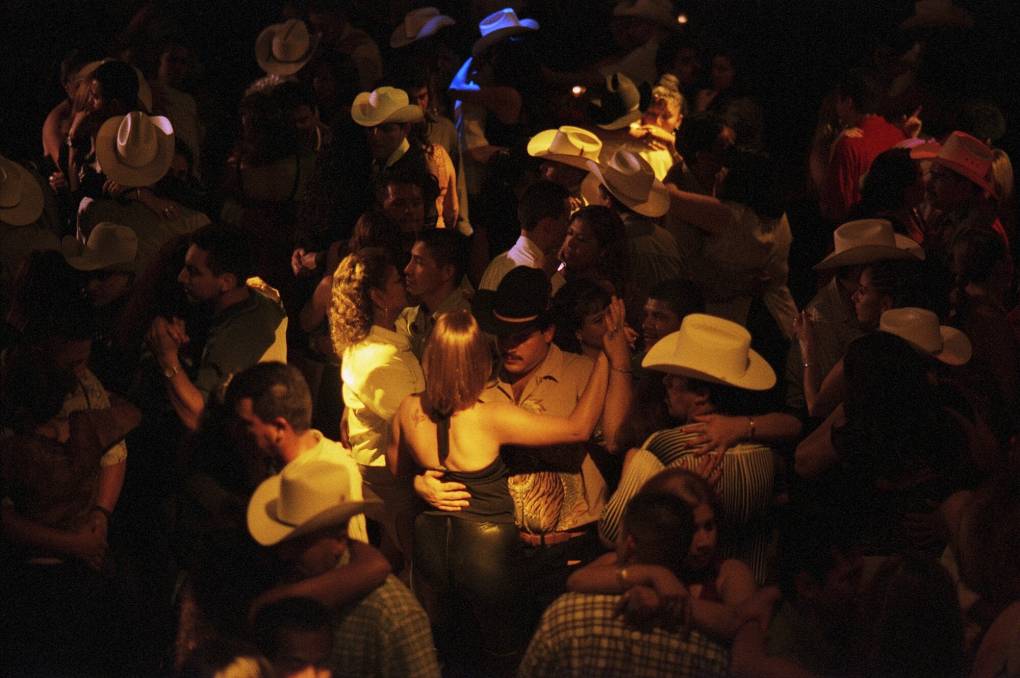
"caption": "People dance to a band playing corridos at the Lido Club in South Gate, California. One of the most cherished traditions within Mexican regional music, corridos are narrative ballads that tell a story, sometimes about the crime, violence and misogyny that have plagued Mexico for decades.",
"credit": "Gregory Bojorquez/Getty Images",
"altTag": null,
"description": null,
"imgSizes": {
"medium": {
"file": "https://cdn.kqed.org/wp-content/uploads/sites/10/2025/04/GettyImages-1341918465_qed-800x532.jpg",
"width": 800,
"height": 532,
"mimeType": "image/jpeg"
},
"large": {
"file": "https://cdn.kqed.org/wp-content/uploads/sites/10/2025/04/GettyImages-1341918465_qed-1020x678.jpg",
"width": 1020,
"height": 678,
"mimeType": "image/jpeg"
},
"thumbnail": {
"file": "https://cdn.kqed.org/wp-content/uploads/sites/10/2025/04/GettyImages-1341918465_qed-160x106.jpg",
"width": 160,
"height": 106,
"mimeType": "image/jpeg"
},
"1536x1536": {
"file": "https://cdn.kqed.org/wp-content/uploads/sites/10/2025/04/GettyImages-1341918465_qed-1536x1021.jpg",
"width": 1536,
"height": 1021,
"mimeType": "image/jpeg"
},
"post-thumbnail": {
"file": "https://cdn.kqed.org/wp-content/uploads/sites/10/2025/04/GettyImages-1341918465_qed-672x372.jpg",
"width": 672,
"height": 372,
"mimeType": "image/jpeg"
},
"twentyfourteen-full-width": {
"file": "https://cdn.kqed.org/wp-content/uploads/sites/10/2025/04/GettyImages-1341918465_qed-1038x576.jpg",
"width": 1038,
"height": 576,
"mimeType": "image/jpeg"
},
"full-width": {
"file": "https://cdn.kqed.org/wp-content/uploads/sites/10/2025/04/GettyImages-1341918465_qed-1920x1276.jpg",
"width": 1920,
"height": 1276,
"mimeType": "image/jpeg"
},
"kqedFullSize": {
"file": "https://cdn.kqed.org/wp-content/uploads/sites/10/2025/04/GettyImages-1341918465_qed.jpg",
"width": 2000,
"height": 1329
}
},
"isLoading": false,
"fetchFailed": false
},
"news_11960140": {
"type": "attachments",
"id": "news_11960140",
"meta": {
"index": "attachments_1716263798",
"site": "news",
"id": "11960140",
"found": true
},
"parent": 0,
"imgSizes": {
"twentyfourteen-full-width": {
"file": "https://ww2.kqed.org/app/uploads/sites/10/2023/09/20230901_Symphony_12-KQED-1038x576.jpg",
"width": 1038,
"mimeType": "image/jpeg",
"height": 576
},
"thumbnail": {
"file": "https://ww2.kqed.org/app/uploads/sites/10/2023/09/20230901_Symphony_12-KQED-160x107.jpg",
"width": 160,
"mimeType": "image/jpeg",
"height": 107
},
"post-thumbnail": {
"file": "https://ww2.kqed.org/app/uploads/sites/10/2023/09/20230901_Symphony_12-KQED-672x372.jpg",
"width": 672,
"mimeType": "image/jpeg",
"height": 372
},
"kqedFullSize": {
"file": "https://ww2.kqed.org/app/uploads/sites/10/2023/09/20230901_Symphony_12-KQED.jpg",
"width": 2000,
"height": 1333
},
"large": {
"file": "https://ww2.kqed.org/app/uploads/sites/10/2023/09/20230901_Symphony_12-KQED-1020x680.jpg",
"width": 1020,
"mimeType": "image/jpeg",
"height": 680
},
"1536x1536": {
"file": "https://ww2.kqed.org/app/uploads/sites/10/2023/09/20230901_Symphony_12-KQED-1536x1024.jpg",
"width": 1536,
"mimeType": "image/jpeg",
"height": 1024
},
"full-width": {
"file": "https://ww2.kqed.org/app/uploads/sites/10/2023/09/20230901_Symphony_12-KQED-1920x1280.jpg",
"width": 1920,
"mimeType": "image/jpeg",
"height": 1280
},
"medium": {
"file": "https://ww2.kqed.org/app/uploads/sites/10/2023/09/20230901_Symphony_12-KQED-800x533.jpg",
"width": 800,
"mimeType": "image/jpeg",
"height": 533
}
},
"publishDate": 1693948624,
"modified": 1695330244,
"caption": "Jacob Rock, 19, and musician Rob Laufer sit at the piano together in Rock’s family home music studio in Los Angeles, Calif.",
"description": null,
"title": "20230901_Symphony_12-KQED",
"credit": "Alisha Jucevic for KQED",
"status": "inherit",
"altTag": "Two people sit in front of a piano -- one plays it and the other sits facing away from the keys.",
"isLoading": false,
"fetchFailed": false
},
"news_12029485": {
"type": "attachments",
"id": "news_12029485",
"meta": {
"index": "attachments_1716263798",
"site": "news",
"id": "12029485",
"found": true
},
"title": "al akhbar band",
"publishDate": 1741038793,
"status": "inherit",
"parent": 12029482,
"modified": 1741291157,
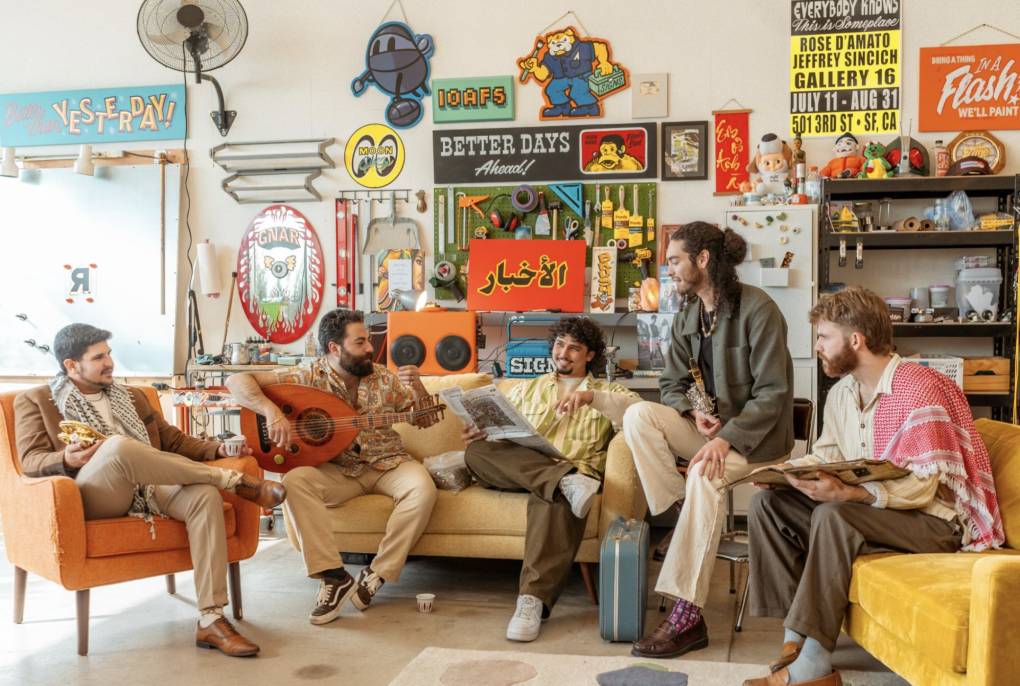
"caption": "The San Diego band Al Akhbar poses for a photo on Jan. 6, 2025. From left to right: keyboardist Tamir Persekian, vocalist and Arab instrumentalist Salem Kattar, drummer Naji Shaban, saxophonist Richard Albert IV and bass player Hank Lee Nelson.",
"credit": "Al Akhbar",
"altTag": null,
"description": null,
"imgSizes": {
"medium": {
"file": "https://cdn.kqed.org/wp-content/uploads/sites/10/2025/03/al-akbar-band-800x538.jpg",
"width": 800,
"height": 538,
"mimeType": "image/jpeg"
},
"large": {
"file": "https://cdn.kqed.org/wp-content/uploads/sites/10/2025/03/al-akbar-band-1020x686.jpg",
"width": 1020,
"height": 686,
"mimeType": "image/jpeg"
},
"thumbnail": {
"file": "https://cdn.kqed.org/wp-content/uploads/sites/10/2025/03/al-akbar-band-160x108.jpg",
"width": 160,
"height": 108,
"mimeType": "image/jpeg"
},
"1536x1536": {
"file": "https://cdn.kqed.org/wp-content/uploads/sites/10/2025/03/al-akbar-band-1536x1033.jpg",
"width": 1536,
"height": 1033,
"mimeType": "image/jpeg"
},
"2048x2048": {
"file": "https://cdn.kqed.org/wp-content/uploads/sites/10/2025/03/al-akbar-band-2048x1378.jpg",
"width": 2048,
"height": 1378,
"mimeType": "image/jpeg"
},
"post-thumbnail": {
"file": "https://cdn.kqed.org/wp-content/uploads/sites/10/2025/03/al-akbar-band-672x372.jpg",
"width": 672,
"height": 372,
"mimeType": "image/jpeg"
},
"twentyfourteen-full-width": {
"file": "https://cdn.kqed.org/wp-content/uploads/sites/10/2025/03/al-akbar-band-1038x576.jpg",
"width": 1038,
"height": 576,
"mimeType": "image/jpeg"
},
"full-width": {
"file": "https://cdn.kqed.org/wp-content/uploads/sites/10/2025/03/al-akbar-band-1920x1292.jpg",
"width": 1920,
"height": 1292,
"mimeType": "image/jpeg"
},
"kqedFullSize": {
"file": "https://cdn.kqed.org/wp-content/uploads/sites/10/2025/03/al-akbar-band-e1741038826551.jpg",
"width": 2000,
"height": 1345
}
},
"isLoading": false,
"fetchFailed": false
},
"news_12027984": {
"type": "attachments",
"id": "news_12027984",
"meta": {
"index": "attachments_1716263798",
"site": "news",
"id": "12027984",
"found": true
},
"title": "image4",
"publishDate": 1740093827,
"status": "inherit",
"parent": 12027942,
"modified": 1740093909,
"caption": "Loz Rayoz de Guadalupe pose in their custom-made outfits — an important part of many Mexican regional music groups. Left to right: Irving Fabela, Joaquin Perez, Chencho Pérez, Aníbal Pérez.",
"credit": "Courtesy of Loz Rayoz de Guadalupe",
"altTag": null,
"description": null,
"imgSizes": {
"medium": {
"file": "https://cdn.kqed.org/wp-content/uploads/sites/10/2025/02/image4-e1740093867875-800x796.jpg",
"width": 800,
"height": 796,
"mimeType": "image/jpeg"
},
"large": {
"file": "https://cdn.kqed.org/wp-content/uploads/sites/10/2025/02/image4-e1740093867875-1020x1015.jpg",
"width": 1020,
"height": 1015,
"mimeType": "image/jpeg"
},
"thumbnail": {
"file": "https://cdn.kqed.org/wp-content/uploads/sites/10/2025/02/image4-e1740093867875-160x159.jpg",
"width": 160,
"height": 159,
"mimeType": "image/jpeg"
},
"1536x1536": {
"file": "https://cdn.kqed.org/wp-content/uploads/sites/10/2025/02/image4-1024x1536.jpg",
"width": 1024,
"height": 1536,
"mimeType": "image/jpeg"
},
"post-thumbnail": {
"file": "https://cdn.kqed.org/wp-content/uploads/sites/10/2025/02/image4-e1740093867875-672x372.jpg",
"width": 672,
"height": 372,
"mimeType": "image/jpeg"
},
"twentyfourteen-full-width": {
"file": "https://cdn.kqed.org/wp-content/uploads/sites/10/2025/02/image4-e1740093867875-1038x576.jpg",
"width": 1038,
"height": 576,
"mimeType": "image/jpeg"
},
"kqedFullSize": {
"file": "https://cdn.kqed.org/wp-content/uploads/sites/10/2025/02/image4-e1740093867875.jpg",
"width": 1333,
"height": 1326
}
},
"isLoading": false,
"fetchFailed": false
},
"news_12026552": {
"type": "attachments",
"id": "news_12026552",
"meta": {
"index": "attachments_1716263798",
"site": "news",
"id": "12026552",
"found": true
},
"title": "20250206_Ambient-Bird_DMB_00402",
"publishDate": 1739234222,
"status": "inherit",
"parent": 0,
"modified": 1740114006,
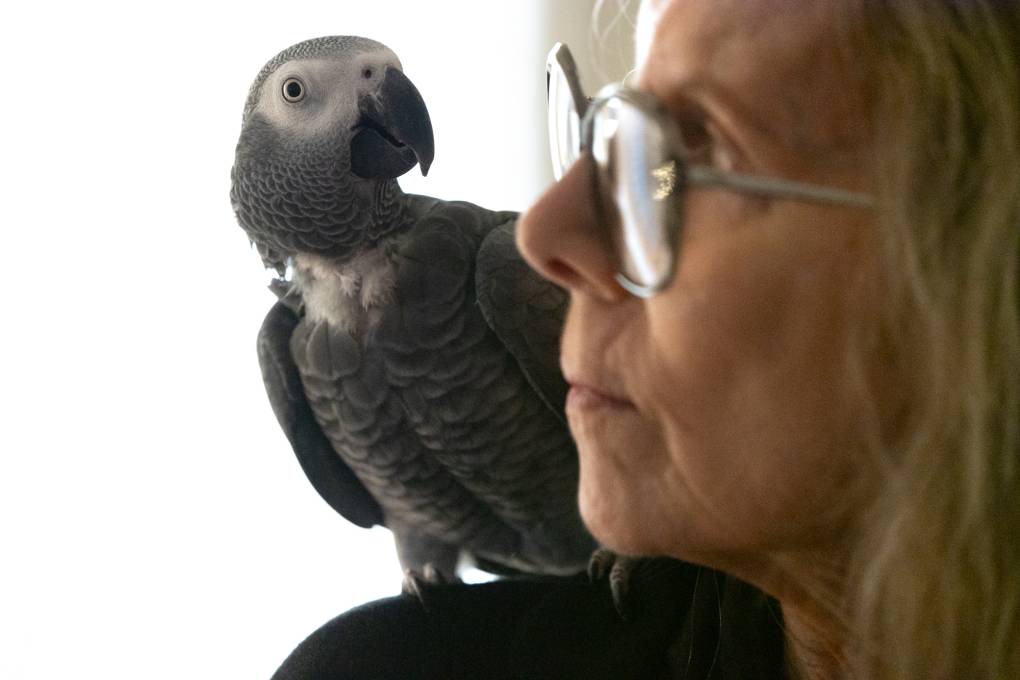
"caption": "Wendy Reid and her African grey parrot named Lulu pose in Reid’s apartment in Berkeley on Feb. 6, 2025. Reid, an experienced violinist, records and performs with Lulu.",
"credit": "David M. Barreda/KQED",
"altTag": "A middle-aged woman with glasses looks at a grey parrot perched on her shoulder.",
"description": null,
"imgSizes": {
"medium": {
"file": "https://cdn.kqed.org/wp-content/uploads/sites/10/2025/02/20250206_Ambient-Bird_DMB_00402-800x533.jpg",
"width": 800,
"height": 533,
"mimeType": "image/jpeg"
},
"large": {
"file": "https://cdn.kqed.org/wp-content/uploads/sites/10/2025/02/20250206_Ambient-Bird_DMB_00402-1020x680.jpg",
"width": 1020,
"height": 680,
"mimeType": "image/jpeg"
},
"thumbnail": {
"file": "https://cdn.kqed.org/wp-content/uploads/sites/10/2025/02/20250206_Ambient-Bird_DMB_00402-160x107.jpg",
"width": 160,
"height": 107,
"mimeType": "image/jpeg"
},
"1536x1536": {
"file": "https://cdn.kqed.org/wp-content/uploads/sites/10/2025/02/20250206_Ambient-Bird_DMB_00402-1536x1024.jpg",
"width": 1536,
"height": 1024,
"mimeType": "image/jpeg"
},
"post-thumbnail": {
"file": "https://cdn.kqed.org/wp-content/uploads/sites/10/2025/02/20250206_Ambient-Bird_DMB_00402-672x372.jpg",
"width": 672,
"height": 372,
"mimeType": "image/jpeg"
},
"twentyfourteen-full-width": {
"file": "https://cdn.kqed.org/wp-content/uploads/sites/10/2025/02/20250206_Ambient-Bird_DMB_00402-1038x576.jpg",
"width": 1038,
"height": 576,
"mimeType": "image/jpeg"
},
"full-width": {
"file": "https://cdn.kqed.org/wp-content/uploads/sites/10/2025/02/20250206_Ambient-Bird_DMB_00402-1920x1280.jpg",
"width": 1920,
"height": 1280,
"mimeType": "image/jpeg"
},
"kqedFullSize": {
"file": "https://cdn.kqed.org/wp-content/uploads/sites/10/2025/02/20250206_Ambient-Bird_DMB_00402.jpg",
"width": 2000,
"height": 1333
}
},
"isLoading": false,
"fetchFailed": false
},
"news_12028035": {
"type": "attachments",
"id": "news_12028035",
"meta": {
"index": "attachments_1716263798",
"site": "news",
"id": "12028035",
"found": true
},
"title": "Tyler-the-Creator-Oakland",
"publishDate": 1740096783,
"status": "inherit",
"parent": 12027554,
"modified": 1740096891,
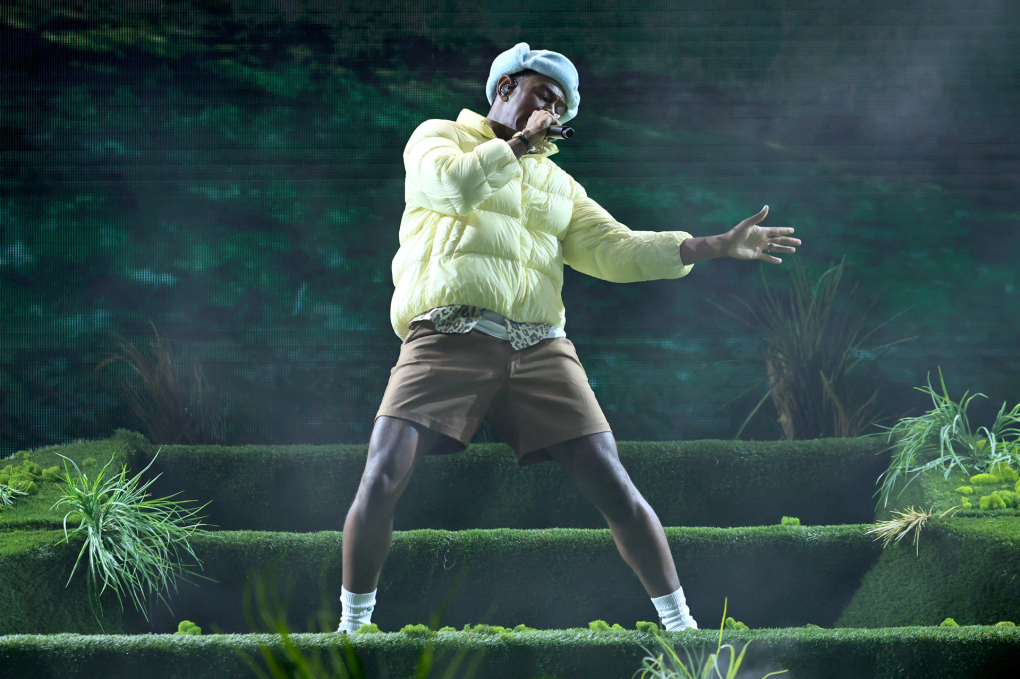
"caption": "Tyler, the Creator performs onstage during 2022 Made In America at Benjamin Franklin Parkway on September 03, 2022 in Philadelphia, Pennsylvania.",
"credit": "Photo by Theo Wargo/Getty Images for Roc Nation",
"altTag": "Tyler, the Creator performing onstage against a green backdrop wearing brown shorts and a lime green puffer jacket.",
"description": null,
"imgSizes": {
"medium": {
"file": "https://cdn.kqed.org/wp-content/uploads/sites/10/2027/02/Tyler-800x533.png",
"width": 800,
"height": 533,
"mimeType": "image/png"
},
"large": {
"file": "https://cdn.kqed.org/wp-content/uploads/sites/10/2027/02/Tyler-1020x679.png",
"width": 1020,
"height": 679,
"mimeType": "image/png"
},
"thumbnail": {
"file": "https://cdn.kqed.org/wp-content/uploads/sites/10/2027/02/Tyler-160x107.png",
"width": 160,
"height": 107,
"mimeType": "image/png"
},
"1536x1536": {
"file": "https://cdn.kqed.org/wp-content/uploads/sites/10/2027/02/Tyler-1536x1023.png",
"width": 1536,
"height": 1023,
"mimeType": "image/png"
},
"post-thumbnail": {
"file": "https://cdn.kqed.org/wp-content/uploads/sites/10/2027/02/Tyler-672x372.png",
"width": 672,
"height": 372,
"mimeType": "image/png"
},
"twentyfourteen-full-width": {
"file": "https://cdn.kqed.org/wp-content/uploads/sites/10/2027/02/Tyler-1038x576.png",
"width": 1038,
"height": 576,
"mimeType": "image/png"
},
"kqedFullSize": {
"file": "https://cdn.kqed.org/wp-content/uploads/sites/10/2027/02/Tyler.png",
"width": 1920,
"height": 1279
}
},
"isLoading": false,
"fetchFailed": false
},
"news_12026536": {
"type": "attachments",
"id": "news_12026536",
"meta": {
"index": "attachments_1716263798",
"site": "news",
"id": "12026536",
"found": true
},
"title": "20250127_K-ONDA_DB_00057-KQED",
"publishDate": 1739233064,
"status": "inherit",
"parent": 0,
"modified": 1739233085,
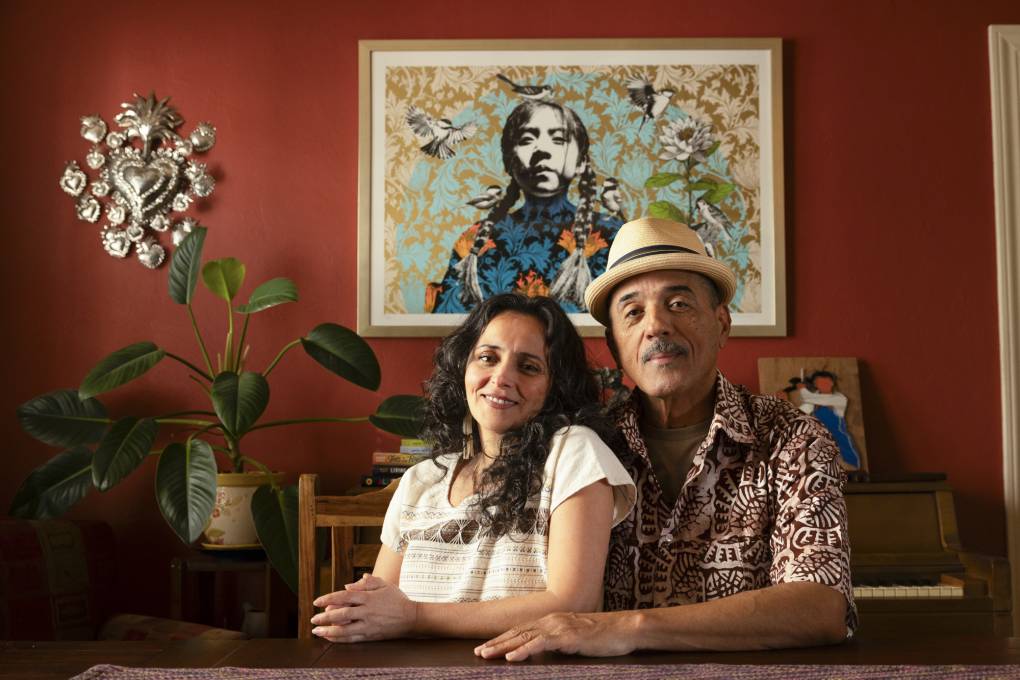
"caption": "Aida Salazar and John Santos, sit at their dining room table and pose for a portrait, in their home in Oakland, California, Monday, Jan. 27, 2025. Salazar is an award-winning Xicana author with several successful YA titles to her name. Santos, a San Francisco native, is a seven-time Grammy-nominated percussionist specializing in Afro-Latin music.",
"credit": "David M. Barreda/KQED",
"altTag": null,
"description": null,
"imgSizes": {
"medium": {
"file": "https://cdn.kqed.org/wp-content/uploads/sites/10/2025/02/20250127_K-ONDA_DB_00057-KQED-800x533.jpg",
"width": 800,
"height": 533,
"mimeType": "image/jpeg"
},
"large": {
"file": "https://cdn.kqed.org/wp-content/uploads/sites/10/2025/02/20250127_K-ONDA_DB_00057-KQED-1020x680.jpg",
"width": 1020,
"height": 680,
"mimeType": "image/jpeg"
},
"thumbnail": {
"file": "https://cdn.kqed.org/wp-content/uploads/sites/10/2025/02/20250127_K-ONDA_DB_00057-KQED-160x107.jpg",
"width": 160,
"height": 107,
"mimeType": "image/jpeg"
},
"1536x1536": {
"file": "https://cdn.kqed.org/wp-content/uploads/sites/10/2025/02/20250127_K-ONDA_DB_00057-KQED-1536x1024.jpg",
"width": 1536,
"height": 1024,
"mimeType": "image/jpeg"
},
"post-thumbnail": {
"file": "https://cdn.kqed.org/wp-content/uploads/sites/10/2025/02/20250127_K-ONDA_DB_00057-KQED-672x372.jpg",
"width": 672,
"height": 372,
"mimeType": "image/jpeg"
},
"twentyfourteen-full-width": {
"file": "https://cdn.kqed.org/wp-content/uploads/sites/10/2025/02/20250127_K-ONDA_DB_00057-KQED-1038x576.jpg",
"width": 1038,
"height": 576,
"mimeType": "image/jpeg"
},
"full-width": {
"file": "https://cdn.kqed.org/wp-content/uploads/sites/10/2025/02/20250127_K-ONDA_DB_00057-KQED-1920x1280.jpg",
"width": 1920,
"height": 1280,
"mimeType": "image/jpeg"
},
"kqedFullSize": {
"file": "https://cdn.kqed.org/wp-content/uploads/sites/10/2025/02/20250127_K-ONDA_DB_00057-KQED.jpg",
"width": 2000,
"height": 1333
}
},
"isLoading": false,
"fetchFailed": false
},
"news_12020445": {
"type": "attachments",
"id": "news_12020445",
"meta": {
"index": "attachments_1716263798",
"site": "news",
"id": "12020445",
"found": true
},
"title": "20250106_KishiBashi_DMB_00061",
"publishDate": 1736198054,
"status": "inherit",
"parent": 0,
"modified": 1738886601,
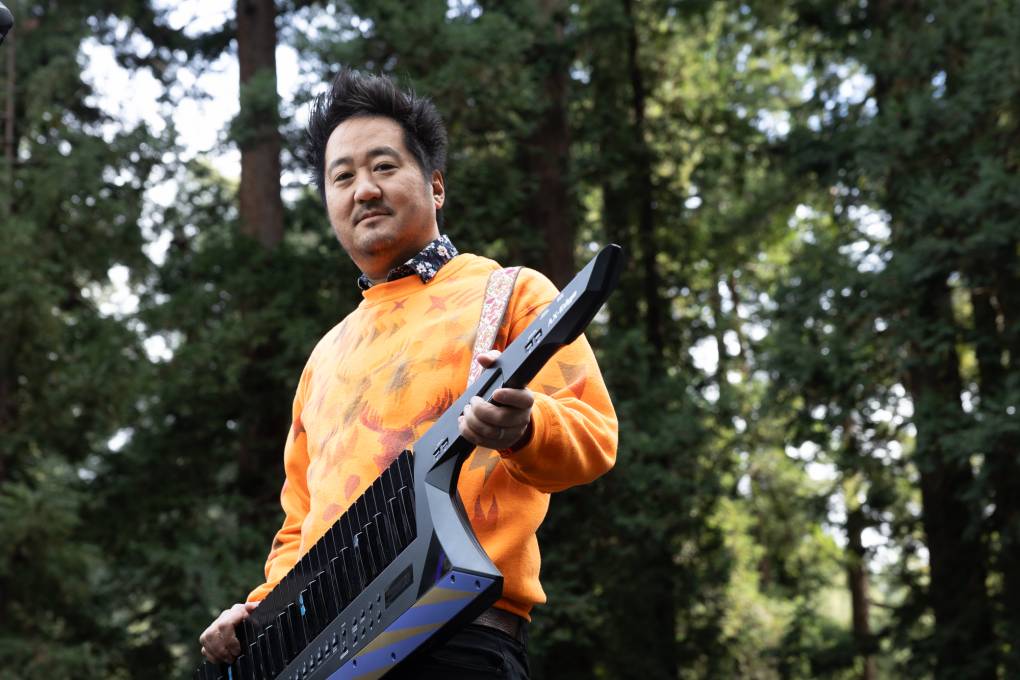
"caption": "Composer Kishi Bashi poses with a keytar he owns at his home in the Santa Cruz Mountains of Los Gatos, Santa Clara County, Jan. 6, 2025.",
"credit": "David M. Barreda/KQED",
"altTag": null,
"description": null,
"imgSizes": {
"medium": {
"file": "https://cdn.kqed.org/wp-content/uploads/sites/10/2025/01/20250106_KishiBashi_DMB_00061-800x533.jpg",
"width": 800,
"height": 533,
"mimeType": "image/jpeg"
},
"large": {
"file": "https://cdn.kqed.org/wp-content/uploads/sites/10/2025/01/20250106_KishiBashi_DMB_00061-1020x680.jpg",
"width": 1020,
"height": 680,
"mimeType": "image/jpeg"
},
"thumbnail": {
"file": "https://cdn.kqed.org/wp-content/uploads/sites/10/2025/01/20250106_KishiBashi_DMB_00061-160x107.jpg",
"width": 160,
"height": 107,
"mimeType": "image/jpeg"
},
"1536x1536": {
"file": "https://cdn.kqed.org/wp-content/uploads/sites/10/2025/01/20250106_KishiBashi_DMB_00061-1536x1024.jpg",
"width": 1536,
"height": 1024,
"mimeType": "image/jpeg"
},
"post-thumbnail": {
"file": "https://cdn.kqed.org/wp-content/uploads/sites/10/2025/01/20250106_KishiBashi_DMB_00061-672x372.jpg",
"width": 672,
"height": 372,
"mimeType": "image/jpeg"
},
"twentyfourteen-full-width": {
"file": "https://cdn.kqed.org/wp-content/uploads/sites/10/2025/01/20250106_KishiBashi_DMB_00061-1038x576.jpg",
"width": 1038,
"height": 576,
"mimeType": "image/jpeg"
},
"full-width": {
"file": "https://cdn.kqed.org/wp-content/uploads/sites/10/2025/01/20250106_KishiBashi_DMB_00061-1920x1280.jpg",
"width": 1920,
"height": 1280,
"mimeType": "image/jpeg"
},
"kqedFullSize": {
"file": "https://cdn.kqed.org/wp-content/uploads/sites/10/2025/01/20250106_KishiBashi_DMB_00061.jpg",
"width": 2000,
"height": 1333
}
},
"isLoading": false,
"fetchFailed": false
},
"news_12016911": {
"type": "attachments",
"id": "news_12016911",
"meta": {
"index": "attachments_1716263798",
"site": "news",
"id": "12016911",
"found": true
},
"title": "Billie Eilish HIT ME HARD AND SOFT: THE TOUR New York",
"publishDate": 1733437928,
"status": "inherit",
"parent": 12015849,
"modified": 1733438033,
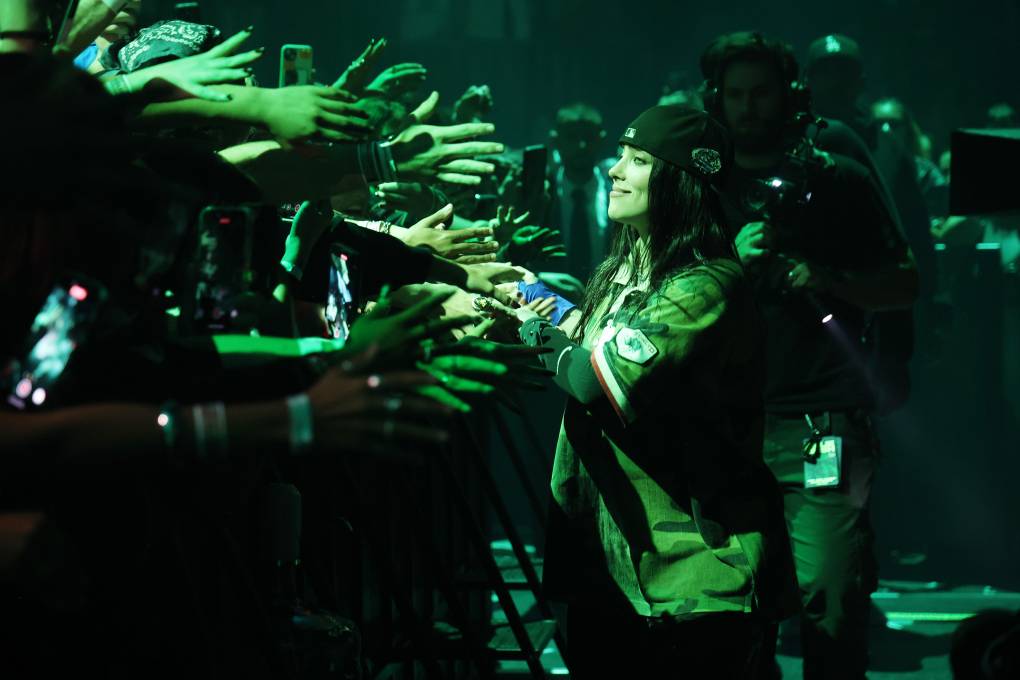
"caption": "Billie Eilish greets fans during Billie Eilish HIT ME HARD AND SOFT: THE TOUR at Madison Square Garden on October 16, 2024 in New York City.",
"credit": "Kevin Mazur/Getty Images for Live Nation",
"altTag": null,
"description": null,
"imgSizes": {
"medium": {
"file": "https://cdn.kqed.org/wp-content/uploads/sites/10/2024/12/GettyImages-2178840758-800x533.jpg",
"width": 800,
"height": 533,
"mimeType": "image/jpeg"
},
"large": {
"file": "https://cdn.kqed.org/wp-content/uploads/sites/10/2024/12/GettyImages-2178840758-1020x680.jpg",
"width": 1020,
"height": 680,
"mimeType": "image/jpeg"
},
"thumbnail": {
"file": "https://cdn.kqed.org/wp-content/uploads/sites/10/2024/12/GettyImages-2178840758-160x107.jpg",
"width": 160,
"height": 107,
"mimeType": "image/jpeg"
},
"1536x1536": {
"file": "https://cdn.kqed.org/wp-content/uploads/sites/10/2024/12/GettyImages-2178840758-1536x1024.jpg",
"width": 1536,
"height": 1024,
"mimeType": "image/jpeg"
},
"2048x2048": {
"file": "https://cdn.kqed.org/wp-content/uploads/sites/10/2024/12/GettyImages-2178840758-2048x1365.jpg",
"width": 2048,
"height": 1365,
"mimeType": "image/jpeg"
},
"post-thumbnail": {
"file": "https://cdn.kqed.org/wp-content/uploads/sites/10/2024/12/GettyImages-2178840758-672x372.jpg",
"width": 672,
"height": 372,
"mimeType": "image/jpeg"
},
"twentyfourteen-full-width": {
"file": "https://cdn.kqed.org/wp-content/uploads/sites/10/2024/12/GettyImages-2178840758-1038x576.jpg",
"width": 1038,
"height": 576,
"mimeType": "image/jpeg"
},
"full-width": {
"file": "https://cdn.kqed.org/wp-content/uploads/sites/10/2024/12/GettyImages-2178840758-1920x1280.jpg",
"width": 1920,
"height": 1280,
"mimeType": "image/jpeg"
},
"kqedFullSize": {
"file": "https://cdn.kqed.org/wp-content/uploads/sites/10/2024/12/GettyImages-2178840758-scaled.jpg",
"width": 2560,
"height": 1707
}
},
"isLoading": false,
"fetchFailed": false
},
"news_12014151": {
"type": "attachments",
"id": "news_12014151",
"meta": {
"index": "attachments_1716263798",
"site": "news",
"id": "12014151",
"found": true
},
"title": "20241112_WAVEORGAN_GC-3-KQED",
"publishDate": 1731457514,
"status": "inherit",
"parent": 0,
"modified": 1731457596,
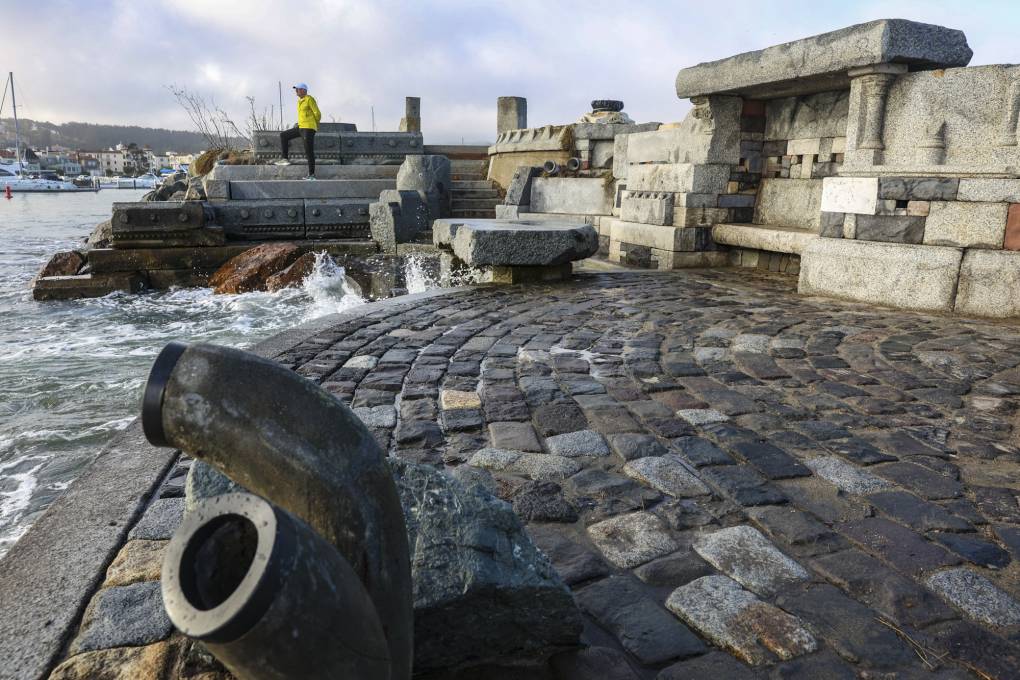
"caption": "The Wave Organ jetty, made of recycled materials including from a demolished cemetery and old street curbs, in San Francisco on Nov. 12, 2024.",
"credit": "Gina Castro/KQED",
"altTag": null,
"description": null,
"imgSizes": {
"medium": {
"file": "https://cdn.kqed.org/wp-content/uploads/sites/10/2024/11/20241112_WAVEORGAN_GC-3-KQED-800x533.jpg",
"width": 800,
"height": 533,
"mimeType": "image/jpeg"
},
"large": {
"file": "https://cdn.kqed.org/wp-content/uploads/sites/10/2024/11/20241112_WAVEORGAN_GC-3-KQED-1020x680.jpg",
"width": 1020,
"height": 680,
"mimeType": "image/jpeg"
},
"thumbnail": {
"file": "https://cdn.kqed.org/wp-content/uploads/sites/10/2024/11/20241112_WAVEORGAN_GC-3-KQED-160x107.jpg",
"width": 160,
"height": 107,
"mimeType": "image/jpeg"
},
"1536x1536": {
"file": "https://cdn.kqed.org/wp-content/uploads/sites/10/2024/11/20241112_WAVEORGAN_GC-3-KQED-1536x1024.jpg",
"width": 1536,
"height": 1024,
"mimeType": "image/jpeg"
},
"post-thumbnail": {
"file": "https://cdn.kqed.org/wp-content/uploads/sites/10/2024/11/20241112_WAVEORGAN_GC-3-KQED-672x372.jpg",
"width": 672,
"height": 372,
"mimeType": "image/jpeg"
},
"twentyfourteen-full-width": {
"file": "https://cdn.kqed.org/wp-content/uploads/sites/10/2024/11/20241112_WAVEORGAN_GC-3-KQED-1038x576.jpg",
"width": 1038,
"height": 576,
"mimeType": "image/jpeg"
},
"full-width": {
"file": "https://cdn.kqed.org/wp-content/uploads/sites/10/2024/11/20241112_WAVEORGAN_GC-3-KQED-1920x1280.jpg",
"width": 1920,
"height": 1280,
"mimeType": "image/jpeg"
},
"kqedFullSize": {
"file": "https://cdn.kqed.org/wp-content/uploads/sites/10/2024/11/20241112_WAVEORGAN_GC-3-KQED.jpg",
"width": 2000,
"height": 1333
}
},
"isLoading": false,
"fetchFailed": false
}
},
"audioPlayerReducer": {
"postId": "stream_live",
"isPaused": true,
"isPlaying": false,
"pfsActive": false,
"pledgeModalIsOpen": true,
"playerDrawerIsOpen": false,
"liveAudioPlayStartedAt": 0,
"liveAudioPlayContext": ""
},
"authorsReducer": {
"byline_news_12041727": {
"type": "authors",
"id": "byline_news_12041727",
"meta": {
"override": true
},
"slug": "byline_news_12041727",
"name": "I-Yun Chan",
"isLoading": false
},
"byline_news_12029482": {
"type": "authors",
"id": "byline_news_12029482",
"meta": {
"override": true
},
"slug": "byline_news_12029482",
"name": "Hussain Khan",
"isLoading": false
},
"byline_news_12027942": {
"type": "authors",
"id": "byline_news_12027942",
"meta": {
"override": true
},
"slug": "byline_news_12027942",
"name": "\u003ca href=\"https://x.com/benjaminpurper\">Benjamin Purper\u003c/a>",
"isLoading": false
},
"byline_news_12027701": {
"type": "authors",
"id": "byline_news_12027701",
"meta": {
"override": true
},
"slug": "byline_news_12027701",
"name": "Julia Haney ",
"isLoading": false
},
"byline_news_12026067": {
"type": "authors",
"id": "byline_news_12026067",
"meta": {
"override": true
},
"slug": "byline_news_12026067",
"name": "Lusen Mendel",
"isLoading": false
},
"byline_news_12015182": {
"type": "authors",
"id": "byline_news_12015182",
"meta": {
"override": true
},
"slug": "byline_news_12015182",
"name": "Ana De Almeida Amaral",
"isLoading": false
},
"matthewgreen": {
"type": "authors",
"id": "1263",
"meta": {
"index": "authors_1716337520",
"id": "1263",
"found": true
},
"name": "Matthew Green",
"firstName": "Matthew",
"lastName": "Green",
"slug": "matthewgreen",
"email": "mgreen@kqed.org",
"display_author_email": false,
"staff_mastheads": [],
"title": "KQED Editor/Reporter",
"bio": "Matthew Green is a digital media producer for KQED News. He previously produced \u003ca href=\"http://www.kqed.org/lowdown\">The Lowdown\u003c/a>, KQED’s multimedia news education blog. Matthew's written for numerous Bay Area publications, including the Oakland Tribune and San Francisco Chronicle. He also taught journalism classes at Fremont High School in East Oakland.\r\n\r\nEmail: mgreen@kqed.org; Twitter: @MGreenKQED",
"avatar": "https://secure.gravatar.com/avatar/3bf498d1267ca02c8494f33d8cfc575e?s=600&d=blank&r=g",
"twitter": "MGreenKQED",
"facebook": null,
"instagram": null,
"linkedin": null,
"sites": [
{
"site": "news",
"roles": []
},
{
"site": "lowdown",
"roles": []
},
{
"site": "science",
"roles": []
},
{
"site": "education",
"roles": []
},
{
"site": "quest",
"roles": []
},
{
"site": "liveblog",
"roles": []
}
],
"headData": {
"title": "Matthew Green | KQED",
"description": "KQED Editor/Reporter",
"ogImgSrc": "https://secure.gravatar.com/avatar/3bf498d1267ca02c8494f33d8cfc575e?s=600&d=blank&r=g",
"twImgSrc": "https://secure.gravatar.com/avatar/3bf498d1267ca02c8494f33d8cfc575e?s=600&d=blank&r=g"
},
"isLoading": false,
"link": "/author/matthewgreen"
},
"ecruzguevarra": {
"type": "authors",
"id": "8654",
"meta": {
"index": "authors_1716337520",
"id": "8654",
"found": true
},
"name": "Ericka Cruz Guevarra",
"firstName": "Ericka",
"lastName": "Cruz Guevarra",
"slug": "ecruzguevarra",
"email": "ecruzguevarra@kqed.org",
"display_author_email": true,
"staff_mastheads": [
"news"
],
"title": "Producer, The Bay Podcast",
"bio": "Ericka Cruz Guevarra is host of \u003ca href=\"https://www.kqed.org/podcasts/thebay\">\u003cem>The Bay\u003c/em>\u003c/a> podcast at KQED. Before host, she was the show’s producer. Her work in that capacity includes a three-part reported series on policing in Vallejo, which won a 2020 excellence in journalism award from the Society of Professional Journalists. Ericka has worked as a breaking news reporter at Oregon Public Broadcasting, helped produce the Code Switch podcast, and was KQED’s inaugural Raul Ramirez Diversity Fund intern. She’s also an alumna of NPR’s Next Generation Radio program. Send her an email if you have strong feelings about whether Fairfield and Suisun City are the Bay. Ericka is represented by SAG-AFTRA.",
"avatar": "https://secure.gravatar.com/avatar/accefc1de4bafc7e234b69bcb9b6f6536c130fd84709bc3069ef11a78787e1bb?s=600&d=blank&r=g",
"twitter": "NotoriousECG",
"bluesky": null,
"facebook": null,
"instagram": null,
"linkedin": null,
"sites": [
{
"site": "arts",
"roles": [
"subscriber"
]
},
{
"site": "news",
"roles": [
"editor",
"manage_categories"
]
},
{
"site": "futureofyou",
"roles": [
"subscriber"
]
},
{
"site": "stateofhealth",
"roles": [
"subscriber"
]
},
{
"site": "science",
"roles": [
"editor"
]
},
{
"site": "forum",
"roles": [
"subscriber"
]
}
],
"headData": {
"title": "Ericka Cruz Guevarra | KQED",
"description": "Producer, The Bay Podcast",
"ogImgSrc": "https://secure.gravatar.com/avatar/accefc1de4bafc7e234b69bcb9b6f6536c130fd84709bc3069ef11a78787e1bb?s=600&d=blank&r=g",
"twImgSrc": "https://secure.gravatar.com/avatar/accefc1de4bafc7e234b69bcb9b6f6536c130fd84709bc3069ef11a78787e1bb?s=600&d=blank&r=g"
},
"isLoading": false,
"link": "/author/ecruzguevarra"
},
"amontecillo": {
"type": "authors",
"id": "11649",
"meta": {
"index": "authors_1716337520",
"id": "11649",
"found": true
},
"name": "Alan Montecillo",
"firstName": "Alan",
"lastName": "Montecillo",
"slug": "amontecillo",
"email": "amontecillo@kqed.org",
"display_author_email": false,
"staff_mastheads": [
"news"
],
"title": "KQED Contributor",
"bio": "Alan Montecillo is the senior editor of \u003cem>\u003ca href=\"http://kqed.org/thebay\">The Bay\u003c/a>, \u003c/em> KQED's local news podcast. Before moving to the Bay Area, he worked as a senior talk show producer for WILL in Champaign-Urbana, Illinois and at Oregon Public Broadcasting in Portland, Oregon. He has won journalism awards from the Society of Professional Journalists Northern California, the Public Media Journalists Association, The Signal Awards, and has also received a regional Edward R. Murrow award. Alan is a Filipino American from Hong Kong and a graduate of Reed College.",
"avatar": "https://secure.gravatar.com/avatar/268f53a2066899ea9efdd8a5900218b17c822d9862cbc9326cccec53ef41d349?s=600&d=blank&r=g",
"twitter": "alanmontecillo",
"bluesky": null,
"facebook": null,
"instagram": null,
"linkedin": null,
"sites": [
{
"site": "",
"roles": [
"editor"
]
},
{
"site": "news",
"roles": [
"editor",
"manage_categories"
]
}
],
"headData": {
"title": "Alan Montecillo | KQED",
"description": "KQED Contributor",
"ogImgSrc": "https://secure.gravatar.com/avatar/268f53a2066899ea9efdd8a5900218b17c822d9862cbc9326cccec53ef41d349?s=600&d=blank&r=g",
"twImgSrc": "https://secure.gravatar.com/avatar/268f53a2066899ea9efdd8a5900218b17c822d9862cbc9326cccec53ef41d349?s=600&d=blank&r=g"
},
"isLoading": false,
"link": "/author/amontecillo"
},
"btorres": {
"type": "authors",
"id": "11666",
"meta": {
"index": "authors_1716337520",
"id": "11666",
"found": true
},
"name": "Blanca Torres",
"firstName": "Blanca",
"lastName": "Torres",
"slug": "btorres",
"email": "btorres@kqed.org",
"display_author_email": true,
"staff_mastheads": [
"news"
],
"title": "Producer, Forum",
"bio": "Blanca Torres brings sharp news judgement and keen sense of lively conversation to her work as producer for Forum. She loves producing shows that leave listeners feeling like they heard distinctive voices, learned something new and gained a fresh perspective.\r\n\r\nShe joined KQED in January of 2020 after 16 years of working as a newspaper reporter most recently at the \u003cem>San Francisco Business Times,\u003c/em> where she wrote about real estate and economic development. Before that, she covered a variety of beats including crime, education, retail, workplace, the economy, consumer issues, and small business for the \u003cem>Contra Costa Times, Baltimore Sun\u003c/em> and\u003cem> The Seattle Times\u003c/em>. In addition to reporting, she worked as an editorial writer and columnist for the \u003cem>Seattle Times\u003c/em>. From 2017 to 2020, Blanca won a total of ten awards from the National Association of Real Estate Editors and won first place for land use reporting from the California News Publishers Association two years in a row. She is also a member and former board member for the National Association of Hispanic Journalists.\r\n\r\nA native of the Pacific Northwest, Blanca earned her bachelor's degree from Vanderbilt University in Nashville and a master's in fine arts in creative writing at Mills College. She lives in the East Bay with her family.",
"avatar": "https://secure.gravatar.com/avatar/50b49d19b14a1eed34f26ebf4681152cdd81574ed21851100871ccd29e578cdc?s=600&d=blank&r=g",
"twitter": "@blancawrites",
"bluesky": null,
"facebook": null,
"instagram": null,
"linkedin": null,
"sites": [
{
"site": "arts",
"roles": [
"editor"
]
},
{
"site": "news",
"roles": [
"editor"
]
},
{
"site": "forum",
"roles": [
"editor"
]
}
],
"headData": {
"title": "Blanca Torres | KQED",
"description": "Producer, Forum",
"ogImgSrc": "https://secure.gravatar.com/avatar/50b49d19b14a1eed34f26ebf4681152cdd81574ed21851100871ccd29e578cdc?s=600&d=blank&r=g",
"twImgSrc": "https://secure.gravatar.com/avatar/50b49d19b14a1eed34f26ebf4681152cdd81574ed21851100871ccd29e578cdc?s=600&d=blank&r=g"
},
"isLoading": false,
"link": "/author/btorres"
},
"ccabreralomeli": {
"type": "authors",
"id": "11708",
"meta": {
"index": "authors_1716337520",
"id": "11708",
"found": true
},
"name": "Carlos Cabrera-Lomelí",
"firstName": "Carlos",
"lastName": "Cabrera-Lomelí",
"slug": "ccabreralomeli",
"email": "ccabreralomeli@KQED.org",
"display_author_email": true,
"staff_mastheads": [
"news"
],
"title": "Community Reporter",
"bio": "Carlos Cabrera-Lomelí is a community reporter with KQED's digital engagement team. He also reports and co-produces for KQED's bilingual news hub KQED en Español. He grew up in San Francisco's Mission District and has previously worked with Univision, 48 Hills and REFORMA in Mexico City.",
"avatar": "https://secure.gravatar.com/avatar/c309be9665e484f887b818c89e273ecc673004f426f36b24d00a4d813a2e0518?s=600&d=blank&r=g",
"twitter": "@LomeliCabrera",
"bluesky": null,
"facebook": null,
"instagram": null,
"linkedin": null,
"sites": [
{
"site": "arts",
"roles": [
"editor"
]
},
{
"site": "news",
"roles": [
"editor"
]
},
{
"site": "about",
"roles": [
"editor"
]
},
{
"site": "science",
"roles": [
"editor"
]
},
{
"site": "perspectives",
"roles": [
"editor"
]
},
{
"site": "elections",
"roles": [
"editor"
]
},
{
"site": "liveblog",
"roles": [
"contributor"
]
}
],
"headData": {
"title": "Carlos Cabrera-Lomelí | KQED",
"description": "Community Reporter",
"ogImgSrc": "https://secure.gravatar.com/avatar/c309be9665e484f887b818c89e273ecc673004f426f36b24d00a4d813a2e0518?s=600&d=blank&r=g",
"twImgSrc": "https://secure.gravatar.com/avatar/c309be9665e484f887b818c89e273ecc673004f426f36b24d00a4d813a2e0518?s=600&d=blank&r=g"
},
"isLoading": false,
"link": "/author/ccabreralomeli"
},
"kmizuguchi": {
"type": "authors",
"id": "11739",
"meta": {
"index": "authors_1716337520",
"id": "11739",
"found": true
},
"name": "Keith Mizuguchi",
"firstName": "Keith",
"lastName": "Mizuguchi",
"slug": "kmizuguchi",
"email": "kmizuguchi@kqed.org",
"display_author_email": false,
"staff_mastheads": [],
"title": "KQED Contributor",
"bio": null,
"avatar": "https://secure.gravatar.com/avatar/64d8a7de0723d4099b9fe4e915136103febcc20809abce228ee4415bcb237023?s=600&d=blank&r=g",
"twitter": null,
"bluesky": null,
"facebook": null,
"instagram": null,
"linkedin": null,
"sites": [
{
"site": "news",
"roles": [
"editor"
]
},
{
"site": "science",
"roles": [
"editor"
]
}
],
"headData": {
"title": "Keith Mizuguchi | KQED",
"description": "KQED Contributor",
"ogImgSrc": "https://secure.gravatar.com/avatar/64d8a7de0723d4099b9fe4e915136103febcc20809abce228ee4415bcb237023?s=600&d=blank&r=g",
"twImgSrc": "https://secure.gravatar.com/avatar/64d8a7de0723d4099b9fe4e915136103febcc20809abce228ee4415bcb237023?s=600&d=blank&r=g"
},
"isLoading": false,
"link": "/author/kmizuguchi"
},
"jessicakariisa": {
"type": "authors",
"id": "11831",
"meta": {
"index": "authors_1716337520",
"id": "11831",
"found": true
},
"name": "Jessica Kariisa",
"firstName": "Jessica",
"lastName": "Kariisa",
"slug": "jessicakariisa",
"email": "jkariisa@kqed.org",
"display_author_email": false,
"staff_mastheads": [],
"title": "Producer, The Bay",
"bio": "Jessica Kariisa is the producer of The Bay. She first joined KQED as an intern for The California Report Magazine, after which she became an on-call producer. She reported a Bay Curious episode on the use of rap lyrics in criminal trials which won a Society of Professional Journalists award in 2023 for Excellence in Features Journalism and the 2023 Signal Award for Best Conversation Starter. She’s worked on podcasts for Snap Judgment and American Public Media. Before embarking on her audio career, she was a music journalist.\r\n\r\nJessica Kariisa is represented by SAG-AFTRA.",
"avatar": "https://secure.gravatar.com/avatar/522e97b28ac0b3d411621c0fde8f3419c7b71ea2c5c262c57c4bb600963f328c?s=600&d=blank&r=g",
"twitter": null,
"bluesky": null,
"facebook": null,
"instagram": null,
"linkedin": null,
"sites": [
{
"site": "arts",
"roles": [
"author"
]
},
{
"site": "news",
"roles": [
"editor",
"manage_categories"
]
}
],
"headData": {
"title": "Jessica Kariisa | KQED",
"description": "Producer, The Bay",
"ogImgSrc": "https://secure.gravatar.com/avatar/522e97b28ac0b3d411621c0fde8f3419c7b71ea2c5c262c57c4bb600963f328c?s=600&d=blank&r=g",
"twImgSrc": "https://secure.gravatar.com/avatar/522e97b28ac0b3d411621c0fde8f3419c7b71ea2c5c262c57c4bb600963f328c?s=600&d=blank&r=g"
},
"isLoading": false,
"link": "/author/jessicakariisa"
},
"nkhan": {
"type": "authors",
"id": "11867",
"meta": {
"index": "authors_1716337520",
"id": "11867",
"found": true
},
"name": "Nisa Khan",
"firstName": "Nisa",
"lastName": "Khan",
"slug": "nkhan",
"email": "nkhan@kqed.org",
"display_author_email": false,
"staff_mastheads": [],
"title": "KQED Contributor",
"bio": "Nisa Khan is a reporter for KQED's Audience News Desk. She was formerly a data reporter at Michigan Radio. She earned a Bachelor of Science in Information from the University of Michigan and a Master of Arts in Communication from Stanford University.",
"avatar": "https://secure.gravatar.com/avatar/8720459eef081ff64582b3506b124d58523e80e120704a0cbd9892533c914991?s=600&d=blank&r=g",
"twitter": "mnisakhan",
"bluesky": null,
"facebook": null,
"instagram": null,
"linkedin": null,
"sites": [
{
"site": "arts",
"roles": [
"editor"
]
},
{
"site": "news",
"roles": [
"editor"
]
},
{
"site": "science",
"roles": [
"editor",
"author"
]
},
{
"site": "forum",
"roles": [
"editor"
]
},
{
"site": "liveblog",
"roles": [
"contributor"
]
}
],
"headData": {
"title": "Nisa Khan | KQED",
"description": "KQED Contributor",
"ogImgSrc": "https://secure.gravatar.com/avatar/8720459eef081ff64582b3506b124d58523e80e120704a0cbd9892533c914991?s=600&d=blank&r=g",
"twImgSrc": "https://secure.gravatar.com/avatar/8720459eef081ff64582b3506b124d58523e80e120704a0cbd9892533c914991?s=600&d=blank&r=g"
},
"isLoading": false,
"link": "/author/nkhan"
},
"mvelasquez": {
"type": "authors",
"id": "11939",
"meta": {
"index": "authors_1716337520",
"id": "11939",
"found": true
},
"name": "Mel Velasquez",
"firstName": "Mel",
"lastName": "Velasquez",
"slug": "mvelasquez",
"email": "mvelasquez@kqed.org",
"display_author_email": false,
"staff_mastheads": [],
"title": "KQED Contributor",
"bio": null,
"avatar": "https://secure.gravatar.com/avatar/409094312d56fab09fef4251e949ffa6?s=600&d=blank&r=g",
"twitter": null,
"facebook": null,
"instagram": null,
"linkedin": "www.linkedin.com/in/melanievelasquezz",
"sites": [
{
"site": "news",
"roles": [
"editor"
]
}
],
"headData": {
"title": "Mel Velasquez | KQED",
"description": "KQED Contributor",
"ogImgSrc": "https://secure.gravatar.com/avatar/409094312d56fab09fef4251e949ffa6?s=600&d=blank&r=g",
"twImgSrc": "https://secure.gravatar.com/avatar/409094312d56fab09fef4251e949ffa6?s=600&d=blank&r=g"
},
"isLoading": false,
"link": "/author/mvelasquez"
}
},
"pagesReducer": {
"news_tag_music": {
"type": "terms",
"id": "news_1425",
"meta": {
"index": "terms_1716263798",
"site": "news",
"id": "1425",
"score": 6.847819
},
"featImg": null,
"name": "music",
"description": null,
"taxonomy": "tag",
"headData": {
"twImgId": null,
"twTitle": null,
"ogTitle": null,
"ogImgId": null,
"twDescription": null,
"description": null,
"title": "music Archives | KQED News",
"ogDescription": null
},
"ttid": 1437,
"slug": "music",
"isLoading": false,
"title": "music",
"pageMeta": {
"site": "news",
"WpPageTemplate": "page-topic-editorial",
"currentPage": 5
},
"blocks": [
{
"blockName": "kqed/post-list",
"attrs": {
"layout": "cardArticle2",
"query": "posts/news?tag=music",
"seeMore": false,
"paginated": true,
"page": 5
}
},
{
"blockName": "kqed/ad"
}
]
}
},
"pfsSessionReducer": {},
"postsReducer": {
"stream_live": {
"type": "live",
"id": "stream_live",
"audioUrl": "https://streams.kqed.org/kqedradio",
"title": "Live Stream",
"excerpt": "Live Stream information currently unavailable.",
"link": "/radio",
"featImg": "",
"label": {
"name": "KQED Live",
"link": "/"
}
},
"stream_kqedNewscast": {
"type": "posts",
"id": "stream_kqedNewscast",
"audioUrl": "https://www.kqed.org/.stream/anon/radio/RDnews/newscast.mp3?_=1",
"title": "KQED Newscast",
"featImg": "",
"label": {
"name": "88.5 FM",
"link": "/"
}
},
"news_12041727": {
"type": "posts",
"id": "news_12041727",
"meta": {
"index": "posts_1716263798",
"site": "news",
"id": "12041727",
"score": null,
"sort": [
1748700008000
]
},
"guestAuthors": [],
"slug": "in-song-and-self-how-queer-pinay-duo-astralogik-finds-belonging-through-music",
"title": "In Song and Self: How Queer Pinay Duo AstraLogik Finds Belonging Through Music",
"publishDate": 1748700008,
"format": "standard",
"headTitle": "In Song and Self: How Queer Pinay Duo AstraLogik Finds Belonging Through Music | KQED",
"labelTerm": {
"term": 26731,
"site": "news"
},
"content": "\u003cp>On a warm evening in a backyard tucked into a \u003ca href=\"https://www.kqed.org/arts/tag/oakland\">North Oakland neighborhood\u003c/a>, people sipped drinks, sat on outdoor cushions and blankets, their heads turned toward a small stage strung with lights. At the center were two women, one singing, the other strumming a guitar.\u003c/p>\n\u003cp>“We wrote this song 13 years ago,” said Charito Soriano, before launching into the opening chords of “Be,” the first song she ever wrote with her musical partner, Chen Conlu. “It still applies today. Our music is like a self-help book for me. I hope it self-helps you, too.”\u003c/p>\n\u003cp>As \u003ca href=\"https://astralogik.com/\">AstraLogik, Soriano and Conlu\u003c/a> have been performing together for more than a decade. Their music blends R&B, soul and spoken word with themes of healing, self-acceptance, and identity.\u003c/p>\n\u003cp>[ad fullwidth]\u003c/p>\n\u003cp>They met nearly 15 years ago through a mutual friend who insisted they had to connect. The first time they played together — Soriano singing, Conlu on guitar — something clicked. Soriano later wrote “Be” during a jam session with Conlu, scribbling lyrics on a napkin as Conlu played the guitar.\u003c/p>\n\u003cp>“I’ve never done that before,” Soriano said. “I’ve never been so inspired by hearing someone play that I was just like, ‘Oh, I want to write all this stuff down. I’m going to sing on top of it.’”\u003c/p>\n\u003cfigure id=\"attachment_12042270\" class=\"wp-caption aligncenter\" style=\"max-width: 2000px\">\u003cimg loading=\"lazy\" decoding=\"async\" class=\"size-full wp-image-12042270\" src=\"https://cdn.kqed.org/wp-content/uploads/sites/10/2025/05/250530-ASTRALOGIK-21-BL-KQED.jpg\" alt=\"\" width=\"2000\" height=\"1333\" srcset=\"https://cdn.kqed.org/wp-content/uploads/sites/10/2025/05/250530-ASTRALOGIK-21-BL-KQED.jpg 2000w, https://cdn.kqed.org/wp-content/uploads/sites/10/2025/05/250530-ASTRALOGIK-21-BL-KQED-800x533.jpg 800w, https://cdn.kqed.org/wp-content/uploads/sites/10/2025/05/250530-ASTRALOGIK-21-BL-KQED-1020x680.jpg 1020w, https://cdn.kqed.org/wp-content/uploads/sites/10/2025/05/250530-ASTRALOGIK-21-BL-KQED-160x107.jpg 160w, https://cdn.kqed.org/wp-content/uploads/sites/10/2025/05/250530-ASTRALOGIK-21-BL-KQED-1536x1024.jpg 1536w, https://cdn.kqed.org/wp-content/uploads/sites/10/2025/05/250530-ASTRALOGIK-21-BL-KQED-1920x1280.jpg 1920w\" sizes=\"auto, (max-width: 2000px) 100vw, 2000px\">\u003cfigcaption class=\"wp-caption-text\">Charito Soriano holds family photos at home in Hayward on May 30, 2025. \u003ccite>(Beth LaBerge/KQED)\u003c/cite>\u003c/figcaption>\u003c/figure>\n\u003cp>That chemistry sparked not only a musical partnership but a personal one. The two eventually became romantic partners and creative collaborators. Through music, they found a way to understand themselves more deeply, as individuals and as a couple.\u003c/p>\n\u003cp>Soriano said she often felt the weight of her family’s expectations growing up in an immigrant household, where success often meant chasing a version of the American dream tied to social status and constant productivity. But through her relationship with Conlu, she began to question that pace and the pressure to always do more.\u003c/p>\n\u003cp>“I was always chasing something, trying to be the good daughter, thinking about what I had to do next,” Soriano said. “But Chen was one of the few people that showed me that it’s okay to slow down, to sit still and not think about tomorrow.”[aside postID=news_12040449 hero='https://cdn.kqed.org/wp-content/uploads/sites/10/2025/05/250513-REENA-ESMAIL-1-KQED-1020x680.jpg']Their name, \u003ca href=\"https://astralogik.com/\">AstraLogik\u003c/a>, reflects the roles they play in each other’s lives. Conlu is the “Astra” — the dreamer. Soriano is the “Logik” — the planner. Through their music and partnership, they’ve learned to slow down, listen inward and be present.\u003c/p>\n\u003cp>As children of Filipino immigrants who grew up outside the Philippines, both have wrestled with what it means to be Filipino in diaspora.\u003c/p>\n\u003cp>Conlu, raised in Guam, said she often felt out of place among her Chamorro peers.\u003c/p>\n\u003cp>“I honestly didn’t identify as a Filipino in school,” Conlu said. “I was trying to understand, how come this family speaks different languages from my family? When I was younger, I was always questioning my whereabouts and who I belonged to.”\u003c/p>\n\u003cp>Her relationship with Filipino culture deepened after moving to the United States after high school. She learned Filipino martial arts and was exposed to home-cooked Filipino food through her cousins in Seattle.\u003c/p>\n\u003cp>Soriano, meanwhile, grew up in the Bay Area but still felt disconnected from her heritage as a kid.\u003c/p>\n\u003cfigure id=\"attachment_12042269\" class=\"wp-caption aligncenter\" style=\"max-width: 2000px\">\u003cimg loading=\"lazy\" decoding=\"async\" class=\"size-full wp-image-12042269\" src=\"https://cdn.kqed.org/wp-content/uploads/sites/10/2025/05/250530-ASTRALOGIK-18-BL-KQED.jpg\" alt=\"\" width=\"2000\" height=\"1333\" srcset=\"https://cdn.kqed.org/wp-content/uploads/sites/10/2025/05/250530-ASTRALOGIK-18-BL-KQED.jpg 2000w, https://cdn.kqed.org/wp-content/uploads/sites/10/2025/05/250530-ASTRALOGIK-18-BL-KQED-800x533.jpg 800w, https://cdn.kqed.org/wp-content/uploads/sites/10/2025/05/250530-ASTRALOGIK-18-BL-KQED-1020x680.jpg 1020w, https://cdn.kqed.org/wp-content/uploads/sites/10/2025/05/250530-ASTRALOGIK-18-BL-KQED-160x107.jpg 160w, https://cdn.kqed.org/wp-content/uploads/sites/10/2025/05/250530-ASTRALOGIK-18-BL-KQED-1536x1024.jpg 1536w, https://cdn.kqed.org/wp-content/uploads/sites/10/2025/05/250530-ASTRALOGIK-18-BL-KQED-1920x1280.jpg 1920w\" sizes=\"auto, (max-width: 2000px) 100vw, 2000px\">\u003cfigcaption class=\"wp-caption-text\">Chen Conlu holds a photo of family members at home in Hayward on May 30, 2025. \u003ccite>(Beth LaBerge/KQED)\u003c/cite>\u003c/figcaption>\u003c/figure>\n\u003cp>“I lived in the ‘suburbias’ of California,” she said. “I almost didn’t feel Filipino for a long time. Most of my young life, when I was a child and an adolescent, I was trying to be what I saw on TV, which was pretty white people.”\u003c/p>\n\u003cp>Her experience is far from unique. Anthony Ocampo, a sociologist and author who studies the Filipino American experience, said many Filipinos raised outside ethnic enclaves often grow up ashamed of their heritage.\u003c/p>\n\u003cp>“I’m seeing more and more Filipinos trying to assert their American-ness or their sense of belonging,” Ocampo said. “Part of that is actually othering and marginalizing people in their own community.”\u003c/p>\n\u003cp>Ocampo tied that internalized shame and obsession with whiteness to nearly four centuries of Western colonization in the Philippines — first by Spain, from 1565 to 1898, and then by the United States until 1946. And that colonial legacy still affects many Filipino Americans today.\u003c/p>\n\u003cfigure id=\"attachment_12042264\" class=\"wp-caption aligncenter\" style=\"max-width: 2000px\">\u003cimg loading=\"lazy\" decoding=\"async\" class=\"wp-image-12042264 size-full\" src=\"https://cdn.kqed.org/wp-content/uploads/sites/10/2025/05/250530-ASTRALOGIK-07-BL-KQED.jpg\" alt=\"\" width=\"2000\" height=\"1333\" srcset=\"https://cdn.kqed.org/wp-content/uploads/sites/10/2025/05/250530-ASTRALOGIK-07-BL-KQED.jpg 2000w, https://cdn.kqed.org/wp-content/uploads/sites/10/2025/05/250530-ASTRALOGIK-07-BL-KQED-800x533.jpg 800w, https://cdn.kqed.org/wp-content/uploads/sites/10/2025/05/250530-ASTRALOGIK-07-BL-KQED-1020x680.jpg 1020w, https://cdn.kqed.org/wp-content/uploads/sites/10/2025/05/250530-ASTRALOGIK-07-BL-KQED-160x107.jpg 160w, https://cdn.kqed.org/wp-content/uploads/sites/10/2025/05/250530-ASTRALOGIK-07-BL-KQED-1536x1024.jpg 1536w, https://cdn.kqed.org/wp-content/uploads/sites/10/2025/05/250530-ASTRALOGIK-07-BL-KQED-1920x1280.jpg 1920w\" sizes=\"auto, (max-width: 2000px) 100vw, 2000px\">\u003cfigcaption class=\"wp-caption-text\">Charito Soriano (left) and Chen Conlu practice for an upcoming show for their band AstraLogik at their home in Hayward on May 30, 2025. \u003ccite>(Beth LaBerge/KQED)\u003c/cite>\u003c/figcaption>\u003c/figure>\n\u003cp>But he also sees a growing number of Filipino artists using their work to reverse that trend and embrace their heritage with pride.\u003c/p>\n\u003cp>And that’s exactly what AstraLogik is doing.\u003c/p>\n\u003cp>“I think the awareness of how colonialism has taken hold of our culture, our internal programming since birth,” Conlu said. “I think it’s acknowledging that, being brave to step out of that matrix.”\u003c/p>\n\u003cp>AstraLogik’s music has become a vessel for that reclamation. Through lyrics and community performances, they create spaces that affirm their intersecting identities — queer, Filipina and children of immigrants.\u003c/p>\n\u003cp>Coming out queer wasn’t easy. Soriano struggled with the fear of losing family support and being judged by her community.[aside postID=news_12037162 hero='https://cdn.kqed.org/wp-content/uploads/sites/10/2025/04/250407-EL-COMPA-NEGRO-01-KQED-1020x680.jpg']But performing and making music with Conlu allowed her to show up authentically.\u003c/p>\n\u003cp>“Having music to continuously be together and show ourselves, and to see how the response was that we are embraced,” Soriano said. “It’s the only reason that we’re still getting gigs today. People accept us how we are.”\u003c/p>\n\u003cp>Through music, they’ve found a way not just to express, but to build a community. Their songs have become affirmations of identity, resilience, and love. And in a time of rising anti-LGBTQ+ legislation across the country, \u003ca href=\"https://www.aclu.org/legislative-attacks-on-lgbtq-rights-2025\">including bills targeting gender-affirming care and inclusive curricula\u003c/a>, creating a space for joy and connection feels more urgent than ever.\u003c/p>\n\u003cp>AstraLogik performs mostly at community-based shows across the Bay Area, like the backyard concert in Oakland. Conlu said intimate spaces like these are where true connections happen.\u003c/p>\n\u003cp>“During these crazy times, I just hope we can still gather in community,” she said. “And still find joy in the sadness that we’re all going through.”\u003c/p>\n\u003cp>\u003cem>I-Yun Chan is a recent graduate of UC Berkeley Graduate School of Journalism and an audio producer covering mental health, human rights and the LGBTQ+ community.\u003c/em>\u003c/p>\n\u003cp>[ad floatright]\u003c/p>\n",
"blocks": [],
"excerpt": "The Bay Area duo explores what it means to be Filipinx in the diaspora and how music can bring people together. ",
"status": "publish",
"parent": 0,
"modified": 1748706734,
"stats": {
"hasAudio": false,
"hasVideo": false,
"hasChartOrMap": false,
"iframeSrcs": [],
"hasGoogleForm": false,
"hasGallery": false,
"hasHearkenModule": false,
"hasPolis": false,
"paragraphCount": 29,
"wordCount": 1179
},
"headData": {
"title": "In Song and Self: How Queer Pinay Duo AstraLogik Finds Belonging Through Music | KQED",
"description": "The Bay Area duo explores what it means to be Filipinx in the diaspora and how music can bring people together. ",
"ogTitle": "",
"ogDescription": "",
"ogImgId": "",
"twTitle": "",
"twDescription": "",
"twImgId": "",
"schema": {
"@context": "https://schema.org",
"@type": "NewsArticle",
"headline": "In Song and Self: How Queer Pinay Duo AstraLogik Finds Belonging Through Music",
"datePublished": "2025-05-31T07:00:08-07:00",
"dateModified": "2025-05-31T08:52:14-07:00",
"image": "https://cdn.kqed.org/wp-content/uploads/2020/02/KQED-OG-Image@1x.png",
"isAccessibleForFree": "True",
"publisher": {
"@type": "NewsMediaOrganization",
"@id": "https://www.kqed.org/#organization",
"name": "KQED",
"logo": "https://cdn.kqed.org/wp-content/uploads/2020/02/KQED-OG-Image@1x.png",
"url": "https://www.kqed.org",
"sameAs": [
"https://www.facebook.com/KQED",
"https://twitter.com/KQED",
"https://www.instagram.com/kqed/",
"https://www.tiktok.com/@kqedofficial",
"https://www.linkedin.com/company/kqed",
"https://www.youtube.com/channel/UCeC0IOo7i1P_61zVUWbJ4nw"
]
}
}
},
"audioUrl": "https://traffic.omny.fm/d/clips/0af137ef-751e-4b19-a055-aaef00d2d578/ffca7e9f-6831-41c5-bcaf-aaef00f5a073/71cb30a2-2f07-491a-83e0-b2ea016351a1/audio.mp3",
"sticky": false,
"WpOldSlug": "the-eaton-fire-hit-caltech-scientists-close-to-home-now-theyre-studying-the-toxic-aftermath-2",
"nprByline": "I-Yun Chan",
"nprStoryId": "kqed-12041727",
"templateType": "standard",
"featuredImageType": "standard",
"excludeFromSiteSearch": "Include",
"showOnAuthorArchivePages": "No",
"articleAge": "0",
"path": "/news/12041727/in-song-and-self-how-queer-pinay-duo-astralogik-finds-belonging-through-music",
"audioTrackLength": null,
"parsedContent": [
{
"type": "contentString",
"content": "\u003cdiv class=\"post-body\">\u003cp>\u003cp>On a warm evening in a backyard tucked into a \u003ca href=\"https://www.kqed.org/arts/tag/oakland\">North Oakland neighborhood\u003c/a>, people sipped drinks, sat on outdoor cushions and blankets, their heads turned toward a small stage strung with lights. At the center were two women, one singing, the other strumming a guitar.\u003c/p>\n\u003cp>“We wrote this song 13 years ago,” said Charito Soriano, before launching into the opening chords of “Be,” the first song she ever wrote with her musical partner, Chen Conlu. “It still applies today. Our music is like a self-help book for me. I hope it self-helps you, too.”\u003c/p>\n\u003cp>As \u003ca href=\"https://astralogik.com/\">AstraLogik, Soriano and Conlu\u003c/a> have been performing together for more than a decade. Their music blends R&B, soul and spoken word with themes of healing, self-acceptance, and identity.\u003c/p>\n\u003cp>\u003c/p>\u003c/div>",
"attributes": {
"named": {},
"numeric": []
}
},
{
"type": "component",
"content": "",
"name": "ad",
"attributes": {
"named": {
"label": "fullwidth"
},
"numeric": [
"fullwidth"
]
}
},
{
"type": "contentString",
"content": "\u003cdiv class=\"post-body\">\u003cp>\u003c/p>\n\u003cp>They met nearly 15 years ago through a mutual friend who insisted they had to connect. The first time they played together — Soriano singing, Conlu on guitar — something clicked. Soriano later wrote “Be” during a jam session with Conlu, scribbling lyrics on a napkin as Conlu played the guitar.\u003c/p>\n\u003cp>“I’ve never done that before,” Soriano said. “I’ve never been so inspired by hearing someone play that I was just like, ‘Oh, I want to write all this stuff down. I’m going to sing on top of it.’”\u003c/p>\n\u003cfigure id=\"attachment_12042270\" class=\"wp-caption aligncenter\" style=\"max-width: 2000px\">\u003cimg loading=\"lazy\" decoding=\"async\" class=\"size-full wp-image-12042270\" src=\"https://cdn.kqed.org/wp-content/uploads/sites/10/2025/05/250530-ASTRALOGIK-21-BL-KQED.jpg\" alt=\"\" width=\"2000\" height=\"1333\" srcset=\"https://cdn.kqed.org/wp-content/uploads/sites/10/2025/05/250530-ASTRALOGIK-21-BL-KQED.jpg 2000w, https://cdn.kqed.org/wp-content/uploads/sites/10/2025/05/250530-ASTRALOGIK-21-BL-KQED-800x533.jpg 800w, https://cdn.kqed.org/wp-content/uploads/sites/10/2025/05/250530-ASTRALOGIK-21-BL-KQED-1020x680.jpg 1020w, https://cdn.kqed.org/wp-content/uploads/sites/10/2025/05/250530-ASTRALOGIK-21-BL-KQED-160x107.jpg 160w, https://cdn.kqed.org/wp-content/uploads/sites/10/2025/05/250530-ASTRALOGIK-21-BL-KQED-1536x1024.jpg 1536w, https://cdn.kqed.org/wp-content/uploads/sites/10/2025/05/250530-ASTRALOGIK-21-BL-KQED-1920x1280.jpg 1920w\" sizes=\"auto, (max-width: 2000px) 100vw, 2000px\">\u003cfigcaption class=\"wp-caption-text\">Charito Soriano holds family photos at home in Hayward on May 30, 2025. \u003ccite>(Beth LaBerge/KQED)\u003c/cite>\u003c/figcaption>\u003c/figure>\n\u003cp>That chemistry sparked not only a musical partnership but a personal one. The two eventually became romantic partners and creative collaborators. Through music, they found a way to understand themselves more deeply, as individuals and as a couple.\u003c/p>\n\u003cp>Soriano said she often felt the weight of her family’s expectations growing up in an immigrant household, where success often meant chasing a version of the American dream tied to social status and constant productivity. But through her relationship with Conlu, she began to question that pace and the pressure to always do more.\u003c/p>\n\u003cp>“I was always chasing something, trying to be the good daughter, thinking about what I had to do next,” Soriano said. “But Chen was one of the few people that showed me that it’s okay to slow down, to sit still and not think about tomorrow.”\u003c/p>\u003c/div>",
"attributes": {
"named": {},
"numeric": []
}
},
{
"type": "component",
"content": "",
"name": "aside",
"attributes": {
"named": {
"postid": "news_12040449",
"hero": "https://cdn.kqed.org/wp-content/uploads/sites/10/2025/05/250513-REENA-ESMAIL-1-KQED-1020x680.jpg",
"label": ""
},
"numeric": []
}
},
{
"type": "contentString",
"content": "\u003cdiv class=\"post-body\">\u003cp>Their name, \u003ca href=\"https://astralogik.com/\">AstraLogik\u003c/a>, reflects the roles they play in each other’s lives. Conlu is the “Astra” — the dreamer. Soriano is the “Logik” — the planner. Through their music and partnership, they’ve learned to slow down, listen inward and be present.\u003c/p>\n\u003cp>As children of Filipino immigrants who grew up outside the Philippines, both have wrestled with what it means to be Filipino in diaspora.\u003c/p>\n\u003cp>Conlu, raised in Guam, said she often felt out of place among her Chamorro peers.\u003c/p>\n\u003cp>“I honestly didn’t identify as a Filipino in school,” Conlu said. “I was trying to understand, how come this family speaks different languages from my family? When I was younger, I was always questioning my whereabouts and who I belonged to.”\u003c/p>\n\u003cp>Her relationship with Filipino culture deepened after moving to the United States after high school. She learned Filipino martial arts and was exposed to home-cooked Filipino food through her cousins in Seattle.\u003c/p>\n\u003cp>Soriano, meanwhile, grew up in the Bay Area but still felt disconnected from her heritage as a kid.\u003c/p>\n\u003cfigure id=\"attachment_12042269\" class=\"wp-caption aligncenter\" style=\"max-width: 2000px\">\u003cimg loading=\"lazy\" decoding=\"async\" class=\"size-full wp-image-12042269\" src=\"https://cdn.kqed.org/wp-content/uploads/sites/10/2025/05/250530-ASTRALOGIK-18-BL-KQED.jpg\" alt=\"\" width=\"2000\" height=\"1333\" srcset=\"https://cdn.kqed.org/wp-content/uploads/sites/10/2025/05/250530-ASTRALOGIK-18-BL-KQED.jpg 2000w, https://cdn.kqed.org/wp-content/uploads/sites/10/2025/05/250530-ASTRALOGIK-18-BL-KQED-800x533.jpg 800w, https://cdn.kqed.org/wp-content/uploads/sites/10/2025/05/250530-ASTRALOGIK-18-BL-KQED-1020x680.jpg 1020w, https://cdn.kqed.org/wp-content/uploads/sites/10/2025/05/250530-ASTRALOGIK-18-BL-KQED-160x107.jpg 160w, https://cdn.kqed.org/wp-content/uploads/sites/10/2025/05/250530-ASTRALOGIK-18-BL-KQED-1536x1024.jpg 1536w, https://cdn.kqed.org/wp-content/uploads/sites/10/2025/05/250530-ASTRALOGIK-18-BL-KQED-1920x1280.jpg 1920w\" sizes=\"auto, (max-width: 2000px) 100vw, 2000px\">\u003cfigcaption class=\"wp-caption-text\">Chen Conlu holds a photo of family members at home in Hayward on May 30, 2025. \u003ccite>(Beth LaBerge/KQED)\u003c/cite>\u003c/figcaption>\u003c/figure>\n\u003cp>“I lived in the ‘suburbias’ of California,” she said. “I almost didn’t feel Filipino for a long time. Most of my young life, when I was a child and an adolescent, I was trying to be what I saw on TV, which was pretty white people.”\u003c/p>\n\u003cp>Her experience is far from unique. Anthony Ocampo, a sociologist and author who studies the Filipino American experience, said many Filipinos raised outside ethnic enclaves often grow up ashamed of their heritage.\u003c/p>\n\u003cp>“I’m seeing more and more Filipinos trying to assert their American-ness or their sense of belonging,” Ocampo said. “Part of that is actually othering and marginalizing people in their own community.”\u003c/p>\n\u003cp>Ocampo tied that internalized shame and obsession with whiteness to nearly four centuries of Western colonization in the Philippines — first by Spain, from 1565 to 1898, and then by the United States until 1946. And that colonial legacy still affects many Filipino Americans today.\u003c/p>\n\u003cfigure id=\"attachment_12042264\" class=\"wp-caption aligncenter\" style=\"max-width: 2000px\">\u003cimg loading=\"lazy\" decoding=\"async\" class=\"wp-image-12042264 size-full\" src=\"https://cdn.kqed.org/wp-content/uploads/sites/10/2025/05/250530-ASTRALOGIK-07-BL-KQED.jpg\" alt=\"\" width=\"2000\" height=\"1333\" srcset=\"https://cdn.kqed.org/wp-content/uploads/sites/10/2025/05/250530-ASTRALOGIK-07-BL-KQED.jpg 2000w, https://cdn.kqed.org/wp-content/uploads/sites/10/2025/05/250530-ASTRALOGIK-07-BL-KQED-800x533.jpg 800w, https://cdn.kqed.org/wp-content/uploads/sites/10/2025/05/250530-ASTRALOGIK-07-BL-KQED-1020x680.jpg 1020w, https://cdn.kqed.org/wp-content/uploads/sites/10/2025/05/250530-ASTRALOGIK-07-BL-KQED-160x107.jpg 160w, https://cdn.kqed.org/wp-content/uploads/sites/10/2025/05/250530-ASTRALOGIK-07-BL-KQED-1536x1024.jpg 1536w, https://cdn.kqed.org/wp-content/uploads/sites/10/2025/05/250530-ASTRALOGIK-07-BL-KQED-1920x1280.jpg 1920w\" sizes=\"auto, (max-width: 2000px) 100vw, 2000px\">\u003cfigcaption class=\"wp-caption-text\">Charito Soriano (left) and Chen Conlu practice for an upcoming show for their band AstraLogik at their home in Hayward on May 30, 2025. \u003ccite>(Beth LaBerge/KQED)\u003c/cite>\u003c/figcaption>\u003c/figure>\n\u003cp>But he also sees a growing number of Filipino artists using their work to reverse that trend and embrace their heritage with pride.\u003c/p>\n\u003cp>And that’s exactly what AstraLogik is doing.\u003c/p>\n\u003cp>“I think the awareness of how colonialism has taken hold of our culture, our internal programming since birth,” Conlu said. “I think it’s acknowledging that, being brave to step out of that matrix.”\u003c/p>\n\u003cp>AstraLogik’s music has become a vessel for that reclamation. Through lyrics and community performances, they create spaces that affirm their intersecting identities — queer, Filipina and children of immigrants.\u003c/p>\n\u003cp>Coming out queer wasn’t easy. Soriano struggled with the fear of losing family support and being judged by her community.\u003c/p>\u003c/div>",
"attributes": {
"named": {},
"numeric": []
}
},
{
"type": "component",
"content": "",
"name": "aside",
"attributes": {
"named": {
"postid": "news_12037162",
"hero": "https://cdn.kqed.org/wp-content/uploads/sites/10/2025/04/250407-EL-COMPA-NEGRO-01-KQED-1020x680.jpg",
"label": ""
},
"numeric": []
}
},
{
"type": "contentString",
"content": "\u003cdiv class=\"post-body\">\u003cp>But performing and making music with Conlu allowed her to show up authentically.\u003c/p>\n\u003cp>“Having music to continuously be together and show ourselves, and to see how the response was that we are embraced,” Soriano said. “It’s the only reason that we’re still getting gigs today. People accept us how we are.”\u003c/p>\n\u003cp>Through music, they’ve found a way not just to express, but to build a community. Their songs have become affirmations of identity, resilience, and love. And in a time of rising anti-LGBTQ+ legislation across the country, \u003ca href=\"https://www.aclu.org/legislative-attacks-on-lgbtq-rights-2025\">including bills targeting gender-affirming care and inclusive curricula\u003c/a>, creating a space for joy and connection feels more urgent than ever.\u003c/p>\n\u003cp>AstraLogik performs mostly at community-based shows across the Bay Area, like the backyard concert in Oakland. Conlu said intimate spaces like these are where true connections happen.\u003c/p>\n\u003cp>“During these crazy times, I just hope we can still gather in community,” she said. “And still find joy in the sadness that we’re all going through.”\u003c/p>\n\u003cp>\u003cem>I-Yun Chan is a recent graduate of UC Berkeley Graduate School of Journalism and an audio producer covering mental health, human rights and the LGBTQ+ community.\u003c/em>\u003c/p>\n\u003cp>\u003c/p>\u003c/div>",
"attributes": {
"named": {},
"numeric": []
}
},
{
"type": "component",
"content": "",
"name": "ad",
"attributes": {
"named": {
"label": "floatright"
},
"numeric": [
"floatright"
]
}
},
{
"type": "contentString",
"content": "\u003cdiv class=\"post-body\">\u003cp>\u003c/p>\n\u003c/div>\u003c/p>",
"attributes": {
"named": {},
"numeric": []
}
}
],
"link": "/news/12041727/in-song-and-self-how-queer-pinay-duo-astralogik-finds-belonging-through-music",
"authors": [
"byline_news_12041727"
],
"programs": [
"news_72",
"news_26731"
],
"categories": [
"news_223",
"news_31795",
"news_8",
"news_34018"
],
"tags": [
"news_1386",
"news_18538",
"news_5056",
"news_28094",
"news_20003",
"news_1425",
"news_17996",
"news_34054",
"news_20851",
"news_30162"
],
"featImg": "news_12042266",
"label": "news_26731"
},
"news_12041993": {
"type": "posts",
"id": "news_12041993",
"meta": {
"index": "posts_1716263798",
"site": "news",
"id": "12041993",
"score": null,
"sort": [
1748599238000
]
},
"guestAuthors": [],
"slug": "are-californias-ai-rules-in-jeopardy-plus-new-data-on-oaklands-non-police-response-and-the-bay-areas-ruby-ibarra-wins-nprs-tiny-desk-contest",
"title": "Are California’s AI Rules in Jeopardy? Plus, New Data on Oakland’s Non-Police Response, and the Bay Area’s Ruby Ibarra Wins NPR’s Tiny Desk Contest",
"publishDate": 1748599238,
"format": "audio",
"headTitle": "Are California’s AI Rules in Jeopardy? Plus, New Data on Oakland’s Non-Police Response, and the Bay Area’s Ruby Ibarra Wins NPR’s Tiny Desk Contest | KQED",
"labelTerm": {},
"content": "\u003cp>On this month’s edition of The Bay’s news roundup, we talk about a proposed 10-year ban on state AI regulations that the House of Representatives passed as part of President Trump’s budget bill. Plus, Oakland’s MACRO program – a non-emergency alternative to police – releases new data, and the Bay Area’s very own Ruby Ibarra wins NPR’s Tiny Desk Contest.\u003c/p>\n\u003cp>\u003cstrong>Links:\u003c/strong>\u003c/p>\n\u003cul>\n\u003cli class=\"entry-title \">\u003ca href=\"https://calmatters.org/economy/technology/2025/05/state-ai-regulation-ban/\">Californians would lose AI protections under bill advancing in Congress\u003c/a>\u003c/li>\n\u003cli>\u003ca href=\"https://www.ktvu.com/news/oaklands-macro-touts-improvements-despite-criticism-needs-4m-year-survive\">Oakland’s MACRO touts improvements despite criticism; needs $4M a year to survive\u003c/a>\u003c/li>\n\u003cli>\u003ca href=\"https://www.npr.org/2025/05/29/g-s1-69049/ruby-ibarra-tiny-desk-concert\">Ruby Ibarra: NPR Tiny Desk Concert\u003c/a>\u003c/li>\n\u003c/ul>\n\u003cp>\u003c!-- iframe plugin v.4.3 wordpress.org/plugins/iframe/ -->\u003cbr>\n\u003ciframe loading=\"lazy\" frameborder=\"0\" height=\"200\" scrolling=\"no\" src=\"https://playlist.megaphone.fm?e=KQINC5175160153&light=true\" width=\"100%\" class=\"iframe-class\">\u003c/iframe>\u003c/p>\n\u003cp>\u003cem>This is a computer-generated transcript. While our team has reviewed it, there may be errors.\u003c/em>\u003c/p>\n\u003cp>\u003cb>Ericka Cruz Guevarra: \u003c/b>\u003cem>[00:00:54] \u003c/em>I’m Ericka Cruz Guevara and welcome to The Bay, local news to keep you rooted. And welcome to the Bay’s May news roundup where I sit down with the rest of the Bay team to talk about some of the other Bay Area stories that we’ve been following this month. I’m joined by our producer, Jessica Carissa. Hey Jessica.\u003c/p>\n\u003cp>[ad fullwidth]\u003c/p>\n\u003cp>\u003cb>Jessica Kariisa: \u003c/b>\u003cem>[00:01:12] \u003c/em>Hey.\u003c/p>\n\u003cp>\u003cb>Ericka Cruz Guevarra: \u003c/b>\u003cem>[00:01:14] \u003c/em>And senior editor, Alan Montesilio. What’s up, Alan?\u003c/p>\n\u003cp>\u003cb>Alan Montecillo: \u003c/b>\u003cem>[00:01:17] \u003c/em>Hello.\u003c/p>\n\u003cp>\u003cb>Ericka Cruz Guevarra: \u003c/b>\u003cem>[00:01:18] \u003c/em>And also our intern, Mel Velasquez.\u003c/p>\n\u003cp>\u003cb>Mel Velasquez: \u003c/b>\u003cem>[00:01:21] \u003c/em>\u003c/p>\n\u003cp>\u003cb>Ericka Cruz Guevarra: \u003c/b>\u003cem>[00:01:22] \u003c/em>Well, first I wanna take a quick look back at some of the stories that we did cover on this show this month. This May we marked 50 years since the fall of Saigon and talked about how that moment in history really shaped Santa Clara County and San Jose as we know it today. We discussed the Trump administration’s cancelation of federal arts funds and what that is going to mean for the local art scene here in the Bay Area. And we talked about the Golden State Valkyries who began their first season here in the Bay area and also they recently had their first win. And Mel, I wanna turn to you for a second because you actually went out to a pre-season game party in the Mission to get a sense of the vibes, the excitement around the Valkyrys for our show. And you also went to the home opener. How was that?\u003c/p>\n\u003cp>\u003cb>Mel Velasquez: \u003c/b>\u003cem>[00:02:22] \u003c/em>It was really fun, it was really packed. I went to Standard Deviant, which is in the mission, and it was hosted by Ricky’s, which will be the new women’s sports bar that’s coming to the Castro soon. There were a lot of people who were excited for the Valkyries, and it just a pre-season game. Um, but then when I went to the home opener, it was completely sold out. I mean, the energy was insane. They had pyrotechnics inside the Chase Center. It was a sea of purple. People were screaming and then they had like the segment where they were showing like the first Valkyries fan that entered the Chase Center at their first game. There was just like a lot of celebration, yeah it was just a really good time.\u003c/p>\n\u003cp>\u003cb>Ericka Cruz Guevarra: \u003c/b>\u003cem>[00:03:17] \u003c/em>And if you listen to the show, you probably know that our senior editor, Alan Montecilio, is a basketball head. Alan, how have you been feeling about the Valkyries starting their season here in the Bay? I mean, you already have a Valkry’s sweater.\u003c/p>\n\u003cp>\u003cb>Alan Montecillo: \u003c/b>\u003cem>[00:03:35] \u003c/em>Oh yeah, I have a Valkyries hoodie. Got a lot of compliments on it. Thank you for asking. As Mel was saying, they really leaned into the first theme. The t-shirts around the stands had the words first of a lifetime on them. And actually we have two wins as of this taping. The Valkyrys are two and two. You know, expectations for a lot of wins are not super high, but it’s more about getting excited for the team, getting to know the players. So yeah, it’s cool to just walk around and see people wearing the gear and watching Chase Center. Get really loud. I mean the Warriors season is over too so you know for the next four to five months the Valkyries will be the only pro basketball team in the Bay Area playing at Chase Center.\u003c/p>\n\u003cp>\u003cb>Ericka Cruz Guevarra: \u003c/b>\u003cem>[00:04:16] \u003c/em>That’s true, I didn’t even think about that. And yeah, I really have been seeing more and more gear out there. Last weekend we went and visited Jessica in San Jose, where she lives, and I feel like I was even seeing Valkyrie’s gear out in the wild over there. Are you excited about the Valkyrys, Jessica? Are you planning to watch?\u003c/p>\n\u003cp>\u003cb>Jessica Kariisa: \u003c/b>\u003cem>[00:04:41] \u003c/em>Oh yeah, definitely. I think, you know, I’m just really excited for women’s sports period in the Bay Area. I think being down in San Jose, I’m pretty close to where Bay FC plays. And so that’s also a top of my list as a summer activity. And when we covered the Valkyries, I was looking up a lot of sports content. And so now my YouTube algorithm is just purely basketball. So that’s, also dragged me into the NBA playoffs too. I’m generally just really excited about sports this summer.\u003c/p>\n\u003cp>\u003cb>Alan Montecillo: \u003c/b>\u003cem>[00:05:13] \u003c/em>Yes, join us. The algorithm is roping you in.\u003c/p>\n\u003cp>\u003cb>Ericka Cruz Guevarra: \u003c/b>\u003cem>[00:05:20] \u003c/em>Well, Mel, thank you so much for joining us for this first part of our news roundup.\u003c/p>\n\u003cp>\u003cb>Mel Velasquez: \u003c/b>\u003cem>[00:05:27] \u003c/em>It’s always a pleasure, Ericka. And when we come back, we’ll dig into some of the other stories that we’ve been following this month. Stay with us.\u003c/p>\n\u003cp>\u003cb>Ericka Cruz Guevarra: \u003c/b>\u003cem>[00:06:44] \u003c/em>And welcome back to the Bays Monthly News Roundup where we talk about some of the other stories that we’ve been following this month and Alan will dive right in with your story. What have you been following?\u003c/p>\n\u003cp>\u003cb>Alan Montecillo: \u003c/b>\u003cem>[00:06:55] \u003c/em>Well, obviously, at the federal level, one of the biggest pieces of news is President Trump’s so-called big, beautiful bill, a.k.a. The big budget reconciliation bill that is making its way through Congress recently past the House. There are many different aspects to it that are getting attention, including potential cuts to the safety net, things like Medicaid, Medicare, potential tax breaks for the rich. But one. Element of this bill that has also gotten attention here in California has to do with artificial intelligence. Most of the reporting I read to prep for this segment, uh, comes from Kari Johnson from CalMatters. So the bill that passed the house recently that’s being considered in the Senate includes a moratorium, essentially a ban on state regulations of AI for 10 years, you know, that has obviously caused considerable alarm here in California. Which is not only home to many, many AI companies, including OpenAI, but also home to many state-level regulations of\u003c/p>\n\u003cp>\u003cb>Jessica Kariisa: \u003c/b>\u003cem>[00:07:55] \u003c/em>Wow, I mean, living in Silicon Valley and being a journalist, I can definitely understand the concerns, you know, articles have been used to train AI, and that’s been a big issue. But I guess what’s the argument behind this ban?\u003c/p>\n\u003cp>\u003cb>Alan Montecillo: \u003c/b>\u003cem>[00:08:12] \u003c/em>One argument that House Republicans have made is that we essentially have a patchwork of regulations right now when it comes to AI.\u003c/p>\n\u003cp>\u003cb>Rep. Jay Obernolte: \u003c/b>\u003cem>[00:08:19] \u003c/em>What we absolutely cannot have is a situation where the rules on the governance of AI change every time the winds of political fortune shift one way or another.\u003c/p>\n\u003cp>\u003cb>Alan Montecillo: \u003c/b>\u003cem>[00:08:29] \u003c/em>Representative Jay Obernolte, who is a Republican and represents parts of LA, Kern County, San Bernardino counties, at a committee hearing earlier this month, basically argued that this patchwork of regulations that we have across states, so it’s different in each state, is bad for U.S. Competitiveness. It’s bad for entrepreneurs who will sort of have to navigate different sets of rules across states.\u003c/p>\n\u003cp>\u003cb>Rep. Jay Obernolte: \u003c/b>\u003cem>[00:08:54] \u003c/em>Innovators and investors that are making billion-dollar decisions on R&D and procurement, and they need regulatory certainty to do that, and the only way that that happens is if we provide that leadership.\u003c/p>\n\u003cp>\u003cb>Alan Montecillo: \u003c/b>\u003cem>[00:09:04] \u003c/em>Some Republicans have argued that this moratorium would pave the way for a more comprehensive federal approach to AI. But I think big picture, President Trump and his administration have signaled an interest in deregulation more broadly, whether it’s AI, whether its the environment, whether it’s financial institutions. So there’s sort of different arguments in that vein, but those are some of the reasons why there’s this 10-year ban on regulations of AI in this bill.\u003c/p>\n\u003cp>\u003cb>Ericka Cruz Guevarra: \u003c/b>\u003cem>[00:09:35] \u003c/em>So I mean, how would this even work exactly, Alan? I mean aren’t we talking about laws that have already been passed by the California State Legislature and signed into law? And then isn’t California also currently considering a bunch of AI regulations now? I mean what would this ban do exactly? How would it work?\u003c/p>\n\u003cp>\u003cb>Alan Montecillo: \u003c/b>\u003cem>[00:10:01] \u003c/em>Well, I mean, it would make it unlawful to enforce many of our laws regarding AI here in California, and it would potentially preempt the nearly 30 bills that are currently being considered in the California state legislature. Now last year, the legislature passed around 20 laws related to AI. Some advocates wanted the state to get going even stronger on regulations, but there For many that did pass, including things like… Um, requiring political campaigns to disclose when AI is being used in advertising measures that protect children, you know, requiring companies to provide free AI detection tools to the public. This 10 year ban would render many of these measures unlawful to enforce.\u003c/p>\n\u003cp>\u003cb>Jessica Kariisa: \u003c/b>\u003cem>[00:10:43] \u003c/em>What have the reactions been?\u003c/p>\n\u003cp>\u003cb>Alan Montecillo: \u003c/b>\u003cem>[00:10:45] \u003c/em>You know, some Democrats in Congress have expressed concern, although they don’t really have any power to stop it since they’re in the minority.\u003c/p>\n\u003cp>\u003cb>Rep Kevin Mullen: \u003c/b>\u003cem>[00:10:51] \u003c/em>The idea that we have to pick between innovation and safeguards just doesn’t hold up.\u003c/p>\n\u003cp>\u003cb>Alan Montecillo: \u003c/b>\u003cem>[00:10:55] \u003c/em>Representative Kevin Mullen, who represents the peninsula, sat in an energy committee hearing that he thinks this sort of blanket deregulation, as he called it, isn’t the right approach.\u003c/p>\n\u003cp>\u003cb>Rep Kevin Mullen: \u003c/b>\u003cem>[00:11:05] \u003c/em>The real threat to U.S. Leadership in AI isn’t regulation, it’s inaction. If we allow AI systems operate without guardrails, we risk eroding public trust. So when we talk about AI regulation and American leadership, the real question isn’t whether to regulate. It’s where and how.\u003c/p>\n\u003cp>\u003cb>Alan Montecillo: \u003c/b>\u003cem>[00:11:23] \u003c/em>The California Privacy Protection Agency sent a letter to Congress saying that this moratorium could, quote, rob millions of Americans of rights they already enjoy. So certainly from, you know, many Democrats here in California and privacy advocates, This is pretty alarming.\u003c/p>\n\u003cp>\u003cb>Ericka Cruz Guevarra: \u003c/b>\u003cem>[00:11:39] \u003c/em>I mean, will this ban on AI regulations actually happen or not? Like how likely is it that this will in fact move forward?\u003c/p>\n\u003cp>\u003cb>Alan Montecillo: \u003c/b>\u003cem>[00:11:52] \u003c/em>It’s unclear, and it’s a little wheezy, but the reason it’s unclear is because the so-called big, beautiful bill of President Trump’s is what’s called a budget reconciliation bill, which is to say that this sweeping bill needs to include measures that are related to fiscal matters in order for it to pass, and in order to only need 51 senators for it pass. One privacy advocate who spoke to Kari Johnson from CalMatters… Pointed out that a 10 year moratorium on AI regulations, is that a fiscal matter? I mean, probably not. But these advocates are still concerned because it sort of puts a marker down for how House Republicans are thinking about this issue. And maybe even if it doesn’t make it into this giant budget bill, it may get attached to a different bill related to AI later down the line.\u003c/p>\n\u003cp>\u003cb>Ericka Cruz Guevarra: \u003c/b>\u003cem>[00:12:38] \u003c/em>Well, definitely something to watch in the coming months. Alan, thank you so much. And next we have my story that I’ve been following this month, which is an update on an alternative to police that was established in Oakland after the murder of George Floyd in 2020. If you all remember, Oakland really became the epicenter nationally of efforts to find an alternative to policing. They really went ahead with a program really try to do that and now there’s new data on how that alternative has been working in the last few years. Oakland’s civilian response team also known as the mobile assistance community responders of Oakland you probably know it more or hear it more so referred to as MACRO has responded to more than 6 000 incidents last year according to a report released to the city council this week. And it was able to divert hundreds of calls away from law enforcement and emergency services according to this data, which the folks behind MACRO really see as a success.\u003c/p>\n\u003cp>\u003cb>Jessica Kariisa: \u003c/b>\u003cem>[00:14:02] \u003c/em>You mentioned that they responded to over 6,000 incidents, and those were instances that people avoided calling the police. So what kinds of non-emergency incidents were they responding to?\u003c/p>\n\u003cp>\u003cb>Ericka Cruz Guevarra: \u003c/b>\u003cem>[00:14:15] \u003c/em>Yeah, so MACRO was really looking at the kind of situations that have too often led to violence only after police show up. You know, a mental health crisis that escalates, a man sleeping in a car, for example, and they really stress that their focus is these non-violent incidents. Anything that involves violence is really, in their minds, a police matter.\u003c/p>\n\u003cp>\u003cb>Alan Montecillo: \u003c/b>\u003cem>[00:14:42] \u003c/em>So what else can you tell us about this data? And I’m curious, are there any areas of improvements, places where macro could do better?\u003c/p>\n\u003cp>\u003cb>Ericka Cruz Guevarra: \u003c/b>\u003cem>[00:14:50] \u003c/em>Yeah, so the data shows that most of the incidents that they responded to occurred downtown and on city streets. So really, this shows that they’re dealing mostly with the city’s unhoused population. And the most common incident was actually a wellness check that made up 54% of the calls that they received. That was followed by sleeping checks and also behavioral concerns. Most notably, Macro says that its dispatched responses diverted 34% of calls away from law enforcement and away from emergency services. Almost 100% of these incidents were resolved on site without requiring police or EMS intervention. Elliot Jones, who’s the program manager for Macro, delivered some of this data to Oakland City Council earlier this week in. He shared this example of the kind of stuff that they’re responding to.\u003c/p>\n\u003cp>\u003cb>Elliot Jones: \u003c/b>\u003cem>[00:15:52] \u003c/em>Couple days ago, we get a call about an elderly individual on a porch on the North Oakland Berkeley border. We get there, this man had wandered out of his home. He was having memory issues, but MACRO was able to respond and make the connection. And while it doesn’t always show up on the stat sheet, and the news report didn’t include us, it did say, update, he’s been found.\u003c/p>\n\u003cp>\u003cb>Ericka Cruz Guevarra: \u003c/b>\u003cem>[00:16:13] \u003c/em>That said, there was criticism at the city council meeting around macro. Some say that the team is just too limited in the things that it could actually do to help the problems going on in Oakland. Some say that too few 911 calls are being even routed to macro. Others said that, you know, this money could be used for the Oakland fire department, which has had to close fire stations around the city. And others say that not enough people know that macro is even a service that’s available to people in the community. There’s also this question around independent auditing of macro. These numbers that were shared at the city council meeting were mostly just numbers that macro itself was keeping track of. And Jones agrees with critics that there should be some sort of independent oversight. And monitoring of how exactly Macro is doing to help him make the case that this is a program actually worth keeping around if it could get the resources it needs to do what I think many Oaklanders have really demanded after the death of George Floyd.\u003c/p>\n\u003cp>\u003cb>Jessica Kariisa: \u003c/b>\u003cem>[00:17:33] \u003c/em>So, I mean, what happens next? I mean I know Oakland’s in the middle of a major budget crisis. So, you know, is macro gonna be able to stick around? Do we know anything?\u003c/p>\n\u003cp>\u003cb>Ericka Cruz Guevarra: \u003c/b>\u003cem>[00:17:45] \u003c/em>Yeah, I think Elliot Jones, Macros program manager, is very aware of Oakland’s budget issues. He told KTVU that a state grant of $10 million that they’ve been using to really run this program ends next year, at the end of 2026, and that it’s gonna take about $4 million annually to keep this program running. And Joan says that he is working with the city and also really looking for grants to make sure that this kind of program can stay afloat in Oakland. All right, and that is it for the story I’ve been following this month. Jessica Kariisa, we will end it off with you and a fun story\u003c/p>\n\u003cp>\u003cb>Jessica Kariisa: \u003c/b>\u003cem>[00:18:40] \u003c/em>Yeah, this is more maybe an announcement than story per se, but the Bay Area’s very own Ruby Ibarra won NPR’s 2025 Tiny Desk Contest.\u003c/p>\n\u003cp>\u003cb>Ruby Ibarra (rapping): \u003c/b>\u003cem>[00:18:52] \u003c/em>Hello America, break your backs for dollars they don’t carry ya Seven thousand miles away from home with language barriers Land of opportunity, tell me is it good to ya But six feet deep on stolen land is where they bury ya November 1991\u003c/p>\n\u003cp>\u003cb>Jessica Kariisa: \u003c/b>\u003cem>[00:19:04] \u003c/em>She was chosen as the winner from over 7,000 submissions of independent artists from across the country. It’s a really huge deal. It’s really huge platform. Most people have heard of Tiny Desk. She’s joining the ranks of lots of great artists, including Fantastic Negrito, who also was based in the Bay Area, and Tank and the Bangas, and so many other great artists.\u003c/p>\n\u003cp>\u003cb>Ruby Ibarra (rapping): \u003c/b>\u003cem>[00:19:29] \u003c/em>They always feed in a slice Made to believe I don’t exist unless I wear a disguise Cause I’ve been constantly lying Too broken to die till I cry Till I no longer recognize the person that was inside Until we fail like the sun\u003c/p>\n\u003cp>\u003cb>Alan Montecillo: \u003c/b>\u003cem>[00:19:40] \u003c/em>This is super exciting for the Bay Area. Ruby Ibarra is someone who, you know, I’ve been aware of for a while because she’s Filipina. ECG as well. But Jessica, can you tell us a bit more about her background in the Bay area and the kind of music she performs?\u003c/p>\n\u003cp>\u003cb>Jessica Kariisa: \u003c/b>\u003cem>[00:19:56] \u003c/em>For sure, yeah. So Ruby, she was born in the Philippines. She immigrated to the U.S. As a young child. She grew up in San Lorenzo, shout out to the East Bay. And, you know, she’s been making music for a while. I mean, her debut mixtape came out in 2012. Her immigrant experience has been a huge part of her music, dating back to her debut album, Circa 91. You know, her raps in multiple languages. She raps English and also multiple Filipino languages, including Tagalog and her native Waray. You know, she’s someone I heard about when I first moved to the Bay Area and was looking into the music scene. She’s really just been a staple in the Bay area as an independent artist for so long. So this really feels like a victory lap and a culmination of all her really hard work.\u003c/p>\n\u003cp>\u003cb>Ericka Cruz Guevarra: \u003c/b>\u003cem>[00:20:43] \u003c/em>One thing I really love about Ruby Ibara, I feel like she’s one of those artists who shares in her success. Like she lifts up others as she’s also coming up. I got a chance to interview her at a Filipino arts event that we did at KQED in 2023. And one of the things that she did during her performance was like, have a young up and coming Filipino American artists perform with her. And I feel like. She also really highlights other people in the community in the winning song that she performed. Can you talk a little bit more about the tiny desk that she preformed and that actually ended up winning?\u003c/p>\n\u003cp>\u003cb>Jessica Kariisa: \u003c/b>\u003cem>[00:21:25] \u003c/em>Yeah, so the song is called Bakunawa.\u003c/p>\n\u003cp>\u003cb>Ruby Ibarra (rapping): \u003c/b>\u003cem>[00:21:28] \u003c/em>I need a Samaria combined into one I’ve been blue like the ocean, we all grew When we moved one of you like our red Till I’m white, that’s the bluest Blue like the moon, like the eyes in the brew\u003c/p>\n\u003cp>\u003cb>Jessica Kariisa: \u003c/b>\u003cem>[00:21:38] \u003c/em>and it’s a reference to a dragon-like serpent in Philippine mythology who swallows the moon and is believed to cause eclipses, earthquakes, and you know other weather-related events. Basically like a disruptive force that typically people want to banish but she told KQED that she wanted to flip the story and embody the Bakunawa.\u003c/p>\n\u003cp>\u003cb>Singing: \u003c/b>\u003cem>[00:22:00] \u003c/em>Hoi hoi hoiii\u003cem> \u003c/em>\u003c/p>\n\u003cp>\u003cb>Jessica Kariisa: \u003c/b>\u003cem>[00:22:08] \u003c/em>and that she interpreted the story as a metaphor for resistance and a battle cry against erasure. And the performance video is really cool. She had an all-Filipina band. She was pregnant with her first child while she made the song and while she recorded the video. And so she’s talked about how her daughter and being pregnant has also played a big part in it. And also the song is just great. It’s really funky. There’s a spoken word portion. There’s the rap portion. Like I said before, it’s in multiple languages. And it’s just a really, really beautiful, powerful video.\u003c/p>\n\u003cp>\u003cb>Singing: \u003c/b>\u003cem>[00:22:45] \u003c/em>If I don’t know me, what is my past? If I dont know me what is…\u003c/p>\n\u003cp>\u003cb>Alan Montecillo: \u003c/b>\u003cem>[00:22:58] \u003c/em>So winning Tiny Desk. Huge deal. So what happens now that she’s won the contest?\u003c/p>\n\u003cp>\u003cb>Jessica Kariisa: \u003c/b>\u003cem>[00:23:03] \u003c/em>She submitted her video, she won, and the next step was to record an actual Tiny Desk at the Tiny Desks in D.C. And that just dropped on YouTube, so you can go watch that. And that performance is expanded. It’s three songs, so, you get to listen to a bit more of her catalog. And she’s also going to headline a 10-city Tiny Desktour this summer. You can buy tickets to that already at tinydeskcontest.npr.org. There’ll be a stop in the Bay Area and Petaluma. And yeah, I mean, like you were saying, it’s a huge, huge platform. So, you know, she’s already collected new fans. She’ll keep collecting more new fans and it’s really gonna be just a huge leveling up of her career.\u003c/p>\n\u003cp>\u003cb>Ruby Ibarra (rapping): \u003c/b>\u003cem>[00:23:47] \u003c/em>The sun touched my skin in hopes that I’d win Hands etched with sorrows deeper than the ocean’s depths History rooted in my people’s death This breath been enveloped, consumed, swallowed whole On nights where one moon seems fleeting so Even seven moons don’t illuminate like my soul My rage spoon-feeder, moon eater, truth keeper Naabay kahadlukan wala diri Bisaya ni ang dilahait kaayotan awa ni Gigaun ang bulan revolution in me Naan na ang bakunawa Rebirth the new moon\u003c/p>\n\u003cp>\u003cb>Ericka Cruz Guevarra: \u003c/b>\u003cem>[00:24:26] \u003c/em>It’s so exciting to see Ruby Ibarra up there on that tiny desk and representing the Bay Area and Bay Area Pin Eyes. Thanks for sharing this one, Jessica.\u003c/p>\n\u003cp>\u003cb>Jessica Kariisa: \u003c/b>\u003cem>[00:24:37] \u003c/em>Yeah, absolutely.\u003c/p>\n\u003cp>\u003cb>Ericka Cruz Guevarra: \u003c/b>\u003cem>[00:24:45] \u003c/em>Well, that’s it for the Bays monthly news roundup. Jessica Kariisa, producer, and Alan Montecillo, thank you both so much for joining me.\u003c/p>\n\u003cp>[ad floatright]\u003c/p>\n\u003cp>\u003cem>\u003ci>Some members of the KQED podcast team are represented by The Screen Actors Guild, American Federation of Television and Radio Artists. San Francisco Northern California Local.\u003c/i>\u003c/em>\u003c/p>\n\n",
"blocks": [],
"excerpt": "On this month’s edition of The Bay’s news roundup, we talk about a proposed 10-year ban on state AI regulations that the House of Representatives passed as part of President Trump’s budget bill. Plus, Oakland’s MACRO program – a non-emergency alternative to police – releases new data, and the Bay Area’s very own Ruby Ibarra wins NPR’s Tiny Desk Contest.",
"status": "publish",
"parent": 0,
"modified": 1748883892,
"stats": {
"hasAudio": true,
"hasVideo": false,
"hasChartOrMap": false,
"iframeSrcs": [],
"hasGoogleForm": false,
"hasGallery": false,
"hasHearkenModule": false,
"hasPolis": false,
"paragraphCount": 68,
"wordCount": 4269
},
"headData": {
"title": "Are California’s AI Rules in Jeopardy? Plus, New Data on Oakland’s Non-Police Response, and the Bay Area’s Ruby Ibarra Wins NPR’s Tiny Desk Contest | KQED",
"description": "On this month’s edition of The Bay’s news roundup, we talk about a proposed 10-year ban on state AI regulations that the House of Representatives passed as part of President Trump’s budget bill. Plus, Oakland’s MACRO program – a non-emergency alternative to police – releases new data, and the Bay Area’s very own Ruby Ibarra wins NPR’s Tiny Desk Contest.",
"ogTitle": "",
"ogDescription": "",
"ogImgId": "",
"twTitle": "",
"twDescription": "",
"twImgId": "",
"schema": {
"@context": "https://schema.org",
"@type": "NewsArticle",
"headline": "Are California’s AI Rules in Jeopardy? Plus, New Data on Oakland’s Non-Police Response, and the Bay Area’s Ruby Ibarra Wins NPR’s Tiny Desk Contest",
"datePublished": "2025-05-30T03:00:38-07:00",
"dateModified": "2025-06-02T10:04:52-07:00",
"image": "https://cdn.kqed.org/wp-content/uploads/2020/02/KQED-OG-Image@1x.png",
"isAccessibleForFree": "True",
"publisher": {
"@type": "NewsMediaOrganization",
"@id": "https://www.kqed.org/#organization",
"name": "KQED",
"logo": "https://cdn.kqed.org/wp-content/uploads/2020/02/KQED-OG-Image@1x.png",
"url": "https://www.kqed.org",
"sameAs": [
"https://www.facebook.com/KQED",
"https://twitter.com/KQED",
"https://www.instagram.com/kqed/",
"https://www.tiktok.com/@kqedofficial",
"https://www.linkedin.com/company/kqed",
"https://www.youtube.com/channel/UCeC0IOo7i1P_61zVUWbJ4nw"
]
}
}
},
"source": "The Bay",
"sourceUrl": "https://www.kqed.org/podcasts/thebay",
"audioUrl": "https://www.podtrac.com/pts/redirect.mp3/chrt.fm/track/G6C7C3/traffic.megaphone.fm/KQINC5175160153.mp3?updated=1748545892",
"sticky": false,
"nprStoryId": "kqed-12041993",
"templateType": "standard",
"featuredImageType": "standard",
"excludeFromSiteSearch": "Include",
"articleAge": "0",
"path": "/news/12041993/are-californias-ai-rules-in-jeopardy-plus-new-data-on-oaklands-non-police-response-and-the-bay-areas-ruby-ibarra-wins-nprs-tiny-desk-contest",
"audioTrackLength": null,
"parsedContent": [
{
"type": "contentString",
"content": "\u003cdiv class=\"post-body\">\u003cp>\u003cp>On this month’s edition of The Bay’s news roundup, we talk about a proposed 10-year ban on state AI regulations that the House of Representatives passed as part of President Trump’s budget bill. Plus, Oakland’s MACRO program – a non-emergency alternative to police – releases new data, and the Bay Area’s very own Ruby Ibarra wins NPR’s Tiny Desk Contest.\u003c/p>\n\u003cp>\u003cstrong>Links:\u003c/strong>\u003c/p>\n\u003cul>\n\u003cli class=\"entry-title \">\u003ca href=\"https://calmatters.org/economy/technology/2025/05/state-ai-regulation-ban/\">Californians would lose AI protections under bill advancing in Congress\u003c/a>\u003c/li>\n\u003cli>\u003ca href=\"https://www.ktvu.com/news/oaklands-macro-touts-improvements-despite-criticism-needs-4m-year-survive\">Oakland’s MACRO touts improvements despite criticism; needs $4M a year to survive\u003c/a>\u003c/li>\n\u003cli>\u003ca href=\"https://www.npr.org/2025/05/29/g-s1-69049/ruby-ibarra-tiny-desk-concert\">Ruby Ibarra: NPR Tiny Desk Concert\u003c/a>\u003c/li>\n\u003c/ul>\n\u003cp>\u003c!-- iframe plugin v.4.3 wordpress.org/plugins/iframe/ -->\u003cbr>\n\u003ciframe loading=\"lazy\" frameborder=\"0\" height=\"200\" scrolling=\"no\" src=\"https://playlist.megaphone.fm?e=KQINC5175160153&light=true\" width=\"100%\" class=\"iframe-class\">\u003c/iframe>\u003c/p>\n\u003cp>\u003cem>This is a computer-generated transcript. While our team has reviewed it, there may be errors.\u003c/em>\u003c/p>\n\u003cp>\u003cb>Ericka Cruz Guevarra: \u003c/b>\u003cem>[00:00:54] \u003c/em>I’m Ericka Cruz Guevara and welcome to The Bay, local news to keep you rooted. And welcome to the Bay’s May news roundup where I sit down with the rest of the Bay team to talk about some of the other Bay Area stories that we’ve been following this month. I’m joined by our producer, Jessica Carissa. Hey Jessica.\u003c/p>\n\u003cp>\u003c/p>\u003c/div>",
"attributes": {
"named": {},
"numeric": []
}
},
{
"type": "component",
"content": "",
"name": "ad",
"attributes": {
"named": {
"label": "fullwidth"
},
"numeric": [
"fullwidth"
]
}
},
{
"type": "contentString",
"content": "\u003cdiv class=\"post-body\">\u003cp>\u003c/p>\n\u003cp>\u003cb>Jessica Kariisa: \u003c/b>\u003cem>[00:01:12] \u003c/em>Hey.\u003c/p>\n\u003cp>\u003cb>Ericka Cruz Guevarra: \u003c/b>\u003cem>[00:01:14] \u003c/em>And senior editor, Alan Montesilio. What’s up, Alan?\u003c/p>\n\u003cp>\u003cb>Alan Montecillo: \u003c/b>\u003cem>[00:01:17] \u003c/em>Hello.\u003c/p>\n\u003cp>\u003cb>Ericka Cruz Guevarra: \u003c/b>\u003cem>[00:01:18] \u003c/em>And also our intern, Mel Velasquez.\u003c/p>\n\u003cp>\u003cb>Mel Velasquez: \u003c/b>\u003cem>[00:01:21] \u003c/em>\u003c/p>\n\u003cp>\u003cb>Ericka Cruz Guevarra: \u003c/b>\u003cem>[00:01:22] \u003c/em>Well, first I wanna take a quick look back at some of the stories that we did cover on this show this month. This May we marked 50 years since the fall of Saigon and talked about how that moment in history really shaped Santa Clara County and San Jose as we know it today. We discussed the Trump administration’s cancelation of federal arts funds and what that is going to mean for the local art scene here in the Bay Area. And we talked about the Golden State Valkyries who began their first season here in the Bay area and also they recently had their first win. And Mel, I wanna turn to you for a second because you actually went out to a pre-season game party in the Mission to get a sense of the vibes, the excitement around the Valkyrys for our show. And you also went to the home opener. How was that?\u003c/p>\n\u003cp>\u003cb>Mel Velasquez: \u003c/b>\u003cem>[00:02:22] \u003c/em>It was really fun, it was really packed. I went to Standard Deviant, which is in the mission, and it was hosted by Ricky’s, which will be the new women’s sports bar that’s coming to the Castro soon. There were a lot of people who were excited for the Valkyries, and it just a pre-season game. Um, but then when I went to the home opener, it was completely sold out. I mean, the energy was insane. They had pyrotechnics inside the Chase Center. It was a sea of purple. People were screaming and then they had like the segment where they were showing like the first Valkyries fan that entered the Chase Center at their first game. There was just like a lot of celebration, yeah it was just a really good time.\u003c/p>\n\u003cp>\u003cb>Ericka Cruz Guevarra: \u003c/b>\u003cem>[00:03:17] \u003c/em>And if you listen to the show, you probably know that our senior editor, Alan Montecilio, is a basketball head. Alan, how have you been feeling about the Valkyries starting their season here in the Bay? I mean, you already have a Valkry’s sweater.\u003c/p>\n\u003cp>\u003cb>Alan Montecillo: \u003c/b>\u003cem>[00:03:35] \u003c/em>Oh yeah, I have a Valkyries hoodie. Got a lot of compliments on it. Thank you for asking. As Mel was saying, they really leaned into the first theme. The t-shirts around the stands had the words first of a lifetime on them. And actually we have two wins as of this taping. The Valkyrys are two and two. You know, expectations for a lot of wins are not super high, but it’s more about getting excited for the team, getting to know the players. So yeah, it’s cool to just walk around and see people wearing the gear and watching Chase Center. Get really loud. I mean the Warriors season is over too so you know for the next four to five months the Valkyries will be the only pro basketball team in the Bay Area playing at Chase Center.\u003c/p>\n\u003cp>\u003cb>Ericka Cruz Guevarra: \u003c/b>\u003cem>[00:04:16] \u003c/em>That’s true, I didn’t even think about that. And yeah, I really have been seeing more and more gear out there. Last weekend we went and visited Jessica in San Jose, where she lives, and I feel like I was even seeing Valkyrie’s gear out in the wild over there. Are you excited about the Valkyrys, Jessica? Are you planning to watch?\u003c/p>\n\u003cp>\u003cb>Jessica Kariisa: \u003c/b>\u003cem>[00:04:41] \u003c/em>Oh yeah, definitely. I think, you know, I’m just really excited for women’s sports period in the Bay Area. I think being down in San Jose, I’m pretty close to where Bay FC plays. And so that’s also a top of my list as a summer activity. And when we covered the Valkyries, I was looking up a lot of sports content. And so now my YouTube algorithm is just purely basketball. So that’s, also dragged me into the NBA playoffs too. I’m generally just really excited about sports this summer.\u003c/p>\n\u003cp>\u003cb>Alan Montecillo: \u003c/b>\u003cem>[00:05:13] \u003c/em>Yes, join us. The algorithm is roping you in.\u003c/p>\n\u003cp>\u003cb>Ericka Cruz Guevarra: \u003c/b>\u003cem>[00:05:20] \u003c/em>Well, Mel, thank you so much for joining us for this first part of our news roundup.\u003c/p>\n\u003cp>\u003cb>Mel Velasquez: \u003c/b>\u003cem>[00:05:27] \u003c/em>It’s always a pleasure, Ericka. And when we come back, we’ll dig into some of the other stories that we’ve been following this month. Stay with us.\u003c/p>\n\u003cp>\u003cb>Ericka Cruz Guevarra: \u003c/b>\u003cem>[00:06:44] \u003c/em>And welcome back to the Bays Monthly News Roundup where we talk about some of the other stories that we’ve been following this month and Alan will dive right in with your story. What have you been following?\u003c/p>\n\u003cp>\u003cb>Alan Montecillo: \u003c/b>\u003cem>[00:06:55] \u003c/em>Well, obviously, at the federal level, one of the biggest pieces of news is President Trump’s so-called big, beautiful bill, a.k.a. The big budget reconciliation bill that is making its way through Congress recently past the House. There are many different aspects to it that are getting attention, including potential cuts to the safety net, things like Medicaid, Medicare, potential tax breaks for the rich. But one. Element of this bill that has also gotten attention here in California has to do with artificial intelligence. Most of the reporting I read to prep for this segment, uh, comes from Kari Johnson from CalMatters. So the bill that passed the house recently that’s being considered in the Senate includes a moratorium, essentially a ban on state regulations of AI for 10 years, you know, that has obviously caused considerable alarm here in California. Which is not only home to many, many AI companies, including OpenAI, but also home to many state-level regulations of\u003c/p>\n\u003cp>\u003cb>Jessica Kariisa: \u003c/b>\u003cem>[00:07:55] \u003c/em>Wow, I mean, living in Silicon Valley and being a journalist, I can definitely understand the concerns, you know, articles have been used to train AI, and that’s been a big issue. But I guess what’s the argument behind this ban?\u003c/p>\n\u003cp>\u003cb>Alan Montecillo: \u003c/b>\u003cem>[00:08:12] \u003c/em>One argument that House Republicans have made is that we essentially have a patchwork of regulations right now when it comes to AI.\u003c/p>\n\u003cp>\u003cb>Rep. Jay Obernolte: \u003c/b>\u003cem>[00:08:19] \u003c/em>What we absolutely cannot have is a situation where the rules on the governance of AI change every time the winds of political fortune shift one way or another.\u003c/p>\n\u003cp>\u003cb>Alan Montecillo: \u003c/b>\u003cem>[00:08:29] \u003c/em>Representative Jay Obernolte, who is a Republican and represents parts of LA, Kern County, San Bernardino counties, at a committee hearing earlier this month, basically argued that this patchwork of regulations that we have across states, so it’s different in each state, is bad for U.S. Competitiveness. It’s bad for entrepreneurs who will sort of have to navigate different sets of rules across states.\u003c/p>\n\u003cp>\u003cb>Rep. Jay Obernolte: \u003c/b>\u003cem>[00:08:54] \u003c/em>Innovators and investors that are making billion-dollar decisions on R&D and procurement, and they need regulatory certainty to do that, and the only way that that happens is if we provide that leadership.\u003c/p>\n\u003cp>\u003cb>Alan Montecillo: \u003c/b>\u003cem>[00:09:04] \u003c/em>Some Republicans have argued that this moratorium would pave the way for a more comprehensive federal approach to AI. But I think big picture, President Trump and his administration have signaled an interest in deregulation more broadly, whether it’s AI, whether its the environment, whether it’s financial institutions. So there’s sort of different arguments in that vein, but those are some of the reasons why there’s this 10-year ban on regulations of AI in this bill.\u003c/p>\n\u003cp>\u003cb>Ericka Cruz Guevarra: \u003c/b>\u003cem>[00:09:35] \u003c/em>So I mean, how would this even work exactly, Alan? I mean aren’t we talking about laws that have already been passed by the California State Legislature and signed into law? And then isn’t California also currently considering a bunch of AI regulations now? I mean what would this ban do exactly? How would it work?\u003c/p>\n\u003cp>\u003cb>Alan Montecillo: \u003c/b>\u003cem>[00:10:01] \u003c/em>Well, I mean, it would make it unlawful to enforce many of our laws regarding AI here in California, and it would potentially preempt the nearly 30 bills that are currently being considered in the California state legislature. Now last year, the legislature passed around 20 laws related to AI. Some advocates wanted the state to get going even stronger on regulations, but there For many that did pass, including things like… Um, requiring political campaigns to disclose when AI is being used in advertising measures that protect children, you know, requiring companies to provide free AI detection tools to the public. This 10 year ban would render many of these measures unlawful to enforce.\u003c/p>\n\u003cp>\u003cb>Jessica Kariisa: \u003c/b>\u003cem>[00:10:43] \u003c/em>What have the reactions been?\u003c/p>\n\u003cp>\u003cb>Alan Montecillo: \u003c/b>\u003cem>[00:10:45] \u003c/em>You know, some Democrats in Congress have expressed concern, although they don’t really have any power to stop it since they’re in the minority.\u003c/p>\n\u003cp>\u003cb>Rep Kevin Mullen: \u003c/b>\u003cem>[00:10:51] \u003c/em>The idea that we have to pick between innovation and safeguards just doesn’t hold up.\u003c/p>\n\u003cp>\u003cb>Alan Montecillo: \u003c/b>\u003cem>[00:10:55] \u003c/em>Representative Kevin Mullen, who represents the peninsula, sat in an energy committee hearing that he thinks this sort of blanket deregulation, as he called it, isn’t the right approach.\u003c/p>\n\u003cp>\u003cb>Rep Kevin Mullen: \u003c/b>\u003cem>[00:11:05] \u003c/em>The real threat to U.S. Leadership in AI isn’t regulation, it’s inaction. If we allow AI systems operate without guardrails, we risk eroding public trust. So when we talk about AI regulation and American leadership, the real question isn’t whether to regulate. It’s where and how.\u003c/p>\n\u003cp>\u003cb>Alan Montecillo: \u003c/b>\u003cem>[00:11:23] \u003c/em>The California Privacy Protection Agency sent a letter to Congress saying that this moratorium could, quote, rob millions of Americans of rights they already enjoy. So certainly from, you know, many Democrats here in California and privacy advocates, This is pretty alarming.\u003c/p>\n\u003cp>\u003cb>Ericka Cruz Guevarra: \u003c/b>\u003cem>[00:11:39] \u003c/em>I mean, will this ban on AI regulations actually happen or not? Like how likely is it that this will in fact move forward?\u003c/p>\n\u003cp>\u003cb>Alan Montecillo: \u003c/b>\u003cem>[00:11:52] \u003c/em>It’s unclear, and it’s a little wheezy, but the reason it’s unclear is because the so-called big, beautiful bill of President Trump’s is what’s called a budget reconciliation bill, which is to say that this sweeping bill needs to include measures that are related to fiscal matters in order for it to pass, and in order to only need 51 senators for it pass. One privacy advocate who spoke to Kari Johnson from CalMatters… Pointed out that a 10 year moratorium on AI regulations, is that a fiscal matter? I mean, probably not. But these advocates are still concerned because it sort of puts a marker down for how House Republicans are thinking about this issue. And maybe even if it doesn’t make it into this giant budget bill, it may get attached to a different bill related to AI later down the line.\u003c/p>\n\u003cp>\u003cb>Ericka Cruz Guevarra: \u003c/b>\u003cem>[00:12:38] \u003c/em>Well, definitely something to watch in the coming months. Alan, thank you so much. And next we have my story that I’ve been following this month, which is an update on an alternative to police that was established in Oakland after the murder of George Floyd in 2020. If you all remember, Oakland really became the epicenter nationally of efforts to find an alternative to policing. They really went ahead with a program really try to do that and now there’s new data on how that alternative has been working in the last few years. Oakland’s civilian response team also known as the mobile assistance community responders of Oakland you probably know it more or hear it more so referred to as MACRO has responded to more than 6 000 incidents last year according to a report released to the city council this week. And it was able to divert hundreds of calls away from law enforcement and emergency services according to this data, which the folks behind MACRO really see as a success.\u003c/p>\n\u003cp>\u003cb>Jessica Kariisa: \u003c/b>\u003cem>[00:14:02] \u003c/em>You mentioned that they responded to over 6,000 incidents, and those were instances that people avoided calling the police. So what kinds of non-emergency incidents were they responding to?\u003c/p>\n\u003cp>\u003cb>Ericka Cruz Guevarra: \u003c/b>\u003cem>[00:14:15] \u003c/em>Yeah, so MACRO was really looking at the kind of situations that have too often led to violence only after police show up. You know, a mental health crisis that escalates, a man sleeping in a car, for example, and they really stress that their focus is these non-violent incidents. Anything that involves violence is really, in their minds, a police matter.\u003c/p>\n\u003cp>\u003cb>Alan Montecillo: \u003c/b>\u003cem>[00:14:42] \u003c/em>So what else can you tell us about this data? And I’m curious, are there any areas of improvements, places where macro could do better?\u003c/p>\n\u003cp>\u003cb>Ericka Cruz Guevarra: \u003c/b>\u003cem>[00:14:50] \u003c/em>Yeah, so the data shows that most of the incidents that they responded to occurred downtown and on city streets. So really, this shows that they’re dealing mostly with the city’s unhoused population. And the most common incident was actually a wellness check that made up 54% of the calls that they received. That was followed by sleeping checks and also behavioral concerns. Most notably, Macro says that its dispatched responses diverted 34% of calls away from law enforcement and away from emergency services. Almost 100% of these incidents were resolved on site without requiring police or EMS intervention. Elliot Jones, who’s the program manager for Macro, delivered some of this data to Oakland City Council earlier this week in. He shared this example of the kind of stuff that they’re responding to.\u003c/p>\n\u003cp>\u003cb>Elliot Jones: \u003c/b>\u003cem>[00:15:52] \u003c/em>Couple days ago, we get a call about an elderly individual on a porch on the North Oakland Berkeley border. We get there, this man had wandered out of his home. He was having memory issues, but MACRO was able to respond and make the connection. And while it doesn’t always show up on the stat sheet, and the news report didn’t include us, it did say, update, he’s been found.\u003c/p>\n\u003cp>\u003cb>Ericka Cruz Guevarra: \u003c/b>\u003cem>[00:16:13] \u003c/em>That said, there was criticism at the city council meeting around macro. Some say that the team is just too limited in the things that it could actually do to help the problems going on in Oakland. Some say that too few 911 calls are being even routed to macro. Others said that, you know, this money could be used for the Oakland fire department, which has had to close fire stations around the city. And others say that not enough people know that macro is even a service that’s available to people in the community. There’s also this question around independent auditing of macro. These numbers that were shared at the city council meeting were mostly just numbers that macro itself was keeping track of. And Jones agrees with critics that there should be some sort of independent oversight. And monitoring of how exactly Macro is doing to help him make the case that this is a program actually worth keeping around if it could get the resources it needs to do what I think many Oaklanders have really demanded after the death of George Floyd.\u003c/p>\n\u003cp>\u003cb>Jessica Kariisa: \u003c/b>\u003cem>[00:17:33] \u003c/em>So, I mean, what happens next? I mean I know Oakland’s in the middle of a major budget crisis. So, you know, is macro gonna be able to stick around? Do we know anything?\u003c/p>\n\u003cp>\u003cb>Ericka Cruz Guevarra: \u003c/b>\u003cem>[00:17:45] \u003c/em>Yeah, I think Elliot Jones, Macros program manager, is very aware of Oakland’s budget issues. He told KTVU that a state grant of $10 million that they’ve been using to really run this program ends next year, at the end of 2026, and that it’s gonna take about $4 million annually to keep this program running. And Joan says that he is working with the city and also really looking for grants to make sure that this kind of program can stay afloat in Oakland. All right, and that is it for the story I’ve been following this month. Jessica Kariisa, we will end it off with you and a fun story\u003c/p>\n\u003cp>\u003cb>Jessica Kariisa: \u003c/b>\u003cem>[00:18:40] \u003c/em>Yeah, this is more maybe an announcement than story per se, but the Bay Area’s very own Ruby Ibarra won NPR’s 2025 Tiny Desk Contest.\u003c/p>\n\u003cp>\u003cb>Ruby Ibarra (rapping): \u003c/b>\u003cem>[00:18:52] \u003c/em>Hello America, break your backs for dollars they don’t carry ya Seven thousand miles away from home with language barriers Land of opportunity, tell me is it good to ya But six feet deep on stolen land is where they bury ya November 1991\u003c/p>\n\u003cp>\u003cb>Jessica Kariisa: \u003c/b>\u003cem>[00:19:04] \u003c/em>She was chosen as the winner from over 7,000 submissions of independent artists from across the country. It’s a really huge deal. It’s really huge platform. Most people have heard of Tiny Desk. She’s joining the ranks of lots of great artists, including Fantastic Negrito, who also was based in the Bay Area, and Tank and the Bangas, and so many other great artists.\u003c/p>\n\u003cp>\u003cb>Ruby Ibarra (rapping): \u003c/b>\u003cem>[00:19:29] \u003c/em>They always feed in a slice Made to believe I don’t exist unless I wear a disguise Cause I’ve been constantly lying Too broken to die till I cry Till I no longer recognize the person that was inside Until we fail like the sun\u003c/p>\n\u003cp>\u003cb>Alan Montecillo: \u003c/b>\u003cem>[00:19:40] \u003c/em>This is super exciting for the Bay Area. Ruby Ibarra is someone who, you know, I’ve been aware of for a while because she’s Filipina. ECG as well. But Jessica, can you tell us a bit more about her background in the Bay area and the kind of music she performs?\u003c/p>\n\u003cp>\u003cb>Jessica Kariisa: \u003c/b>\u003cem>[00:19:56] \u003c/em>For sure, yeah. So Ruby, she was born in the Philippines. She immigrated to the U.S. As a young child. She grew up in San Lorenzo, shout out to the East Bay. And, you know, she’s been making music for a while. I mean, her debut mixtape came out in 2012. Her immigrant experience has been a huge part of her music, dating back to her debut album, Circa 91. You know, her raps in multiple languages. She raps English and also multiple Filipino languages, including Tagalog and her native Waray. You know, she’s someone I heard about when I first moved to the Bay Area and was looking into the music scene. She’s really just been a staple in the Bay area as an independent artist for so long. So this really feels like a victory lap and a culmination of all her really hard work.\u003c/p>\n\u003cp>\u003cb>Ericka Cruz Guevarra: \u003c/b>\u003cem>[00:20:43] \u003c/em>One thing I really love about Ruby Ibara, I feel like she’s one of those artists who shares in her success. Like she lifts up others as she’s also coming up. I got a chance to interview her at a Filipino arts event that we did at KQED in 2023. And one of the things that she did during her performance was like, have a young up and coming Filipino American artists perform with her. And I feel like. She also really highlights other people in the community in the winning song that she performed. Can you talk a little bit more about the tiny desk that she preformed and that actually ended up winning?\u003c/p>\n\u003cp>\u003cb>Jessica Kariisa: \u003c/b>\u003cem>[00:21:25] \u003c/em>Yeah, so the song is called Bakunawa.\u003c/p>\n\u003cp>\u003cb>Ruby Ibarra (rapping): \u003c/b>\u003cem>[00:21:28] \u003c/em>I need a Samaria combined into one I’ve been blue like the ocean, we all grew When we moved one of you like our red Till I’m white, that’s the bluest Blue like the moon, like the eyes in the brew\u003c/p>\n\u003cp>\u003cb>Jessica Kariisa: \u003c/b>\u003cem>[00:21:38] \u003c/em>and it’s a reference to a dragon-like serpent in Philippine mythology who swallows the moon and is believed to cause eclipses, earthquakes, and you know other weather-related events. Basically like a disruptive force that typically people want to banish but she told KQED that she wanted to flip the story and embody the Bakunawa.\u003c/p>\n\u003cp>\u003cb>Singing: \u003c/b>\u003cem>[00:22:00] \u003c/em>Hoi hoi hoiii\u003cem> \u003c/em>\u003c/p>\n\u003cp>\u003cb>Jessica Kariisa: \u003c/b>\u003cem>[00:22:08] \u003c/em>and that she interpreted the story as a metaphor for resistance and a battle cry against erasure. And the performance video is really cool. She had an all-Filipina band. She was pregnant with her first child while she made the song and while she recorded the video. And so she’s talked about how her daughter and being pregnant has also played a big part in it. And also the song is just great. It’s really funky. There’s a spoken word portion. There’s the rap portion. Like I said before, it’s in multiple languages. And it’s just a really, really beautiful, powerful video.\u003c/p>\n\u003cp>\u003cb>Singing: \u003c/b>\u003cem>[00:22:45] \u003c/em>If I don’t know me, what is my past? If I dont know me what is…\u003c/p>\n\u003cp>\u003cb>Alan Montecillo: \u003c/b>\u003cem>[00:22:58] \u003c/em>So winning Tiny Desk. Huge deal. So what happens now that she’s won the contest?\u003c/p>\n\u003cp>\u003cb>Jessica Kariisa: \u003c/b>\u003cem>[00:23:03] \u003c/em>She submitted her video, she won, and the next step was to record an actual Tiny Desk at the Tiny Desks in D.C. And that just dropped on YouTube, so you can go watch that. And that performance is expanded. It’s three songs, so, you get to listen to a bit more of her catalog. And she’s also going to headline a 10-city Tiny Desktour this summer. You can buy tickets to that already at tinydeskcontest.npr.org. There’ll be a stop in the Bay Area and Petaluma. And yeah, I mean, like you were saying, it’s a huge, huge platform. So, you know, she’s already collected new fans. She’ll keep collecting more new fans and it’s really gonna be just a huge leveling up of her career.\u003c/p>\n\u003cp>\u003cb>Ruby Ibarra (rapping): \u003c/b>\u003cem>[00:23:47] \u003c/em>The sun touched my skin in hopes that I’d win Hands etched with sorrows deeper than the ocean’s depths History rooted in my people’s death This breath been enveloped, consumed, swallowed whole On nights where one moon seems fleeting so Even seven moons don’t illuminate like my soul My rage spoon-feeder, moon eater, truth keeper Naabay kahadlukan wala diri Bisaya ni ang dilahait kaayotan awa ni Gigaun ang bulan revolution in me Naan na ang bakunawa Rebirth the new moon\u003c/p>\n\u003cp>\u003cb>Ericka Cruz Guevarra: \u003c/b>\u003cem>[00:24:26] \u003c/em>It’s so exciting to see Ruby Ibarra up there on that tiny desk and representing the Bay Area and Bay Area Pin Eyes. Thanks for sharing this one, Jessica.\u003c/p>\n\u003cp>\u003cb>Jessica Kariisa: \u003c/b>\u003cem>[00:24:37] \u003c/em>Yeah, absolutely.\u003c/p>\n\u003cp>\u003cb>Ericka Cruz Guevarra: \u003c/b>\u003cem>[00:24:45] \u003c/em>Well, that’s it for the Bays monthly news roundup. Jessica Kariisa, producer, and Alan Montecillo, thank you both so much for joining me.\u003c/p>\n\u003cp>\u003c/p>\u003c/div>",
"attributes": {
"named": {},
"numeric": []
}
},
{
"type": "component",
"content": "",
"name": "ad",
"attributes": {
"named": {
"label": "floatright"
},
"numeric": [
"floatright"
]
}
},
{
"type": "contentString",
"content": "\u003cdiv class=\"post-body\">\u003cp>\u003c/p>\n\u003cp>\u003cem>\u003ci>Some members of the KQED podcast team are represented by The Screen Actors Guild, American Federation of Television and Radio Artists. San Francisco Northern California Local.\u003c/i>\u003c/em>\u003c/p>\n\n\u003c/div>\u003c/p>",
"attributes": {
"named": {},
"numeric": []
}
}
],
"link": "/news/12041993/are-californias-ai-rules-in-jeopardy-plus-new-data-on-oaklands-non-police-response-and-the-bay-areas-ruby-ibarra-wins-nprs-tiny-desk-contest",
"authors": [
"8654",
"11831",
"11649",
"11939"
],
"categories": [
"news_8"
],
"tags": [
"news_25184",
"news_34755",
"news_18538",
"news_20149",
"news_1323",
"news_5056",
"news_33812",
"news_1425",
"news_18542",
"news_34054",
"news_116",
"news_1631",
"news_22598"
],
"featImg": "news_12015403",
"label": "source_news_12041993"
},
"news_12036107": {
"type": "posts",
"id": "news_12036107",
"meta": {
"index": "posts_1716263798",
"site": "news",
"id": "12036107",
"score": null,
"sort": [
1744819225000
]
},
"guestAuthors": [],
"slug": "mexican-bands-california-shows-in-jeopardy-after-u-s-revokes-visas-over-narco-imagery",
"title": "Mexican Band’s California Shows in Jeopardy After US Revokes Visas Over Narco Imagery",
"publishDate": 1744819225,
"format": "standard",
"headTitle": "Mexican Band’s California Shows in Jeopardy After US Revokes Visas Over Narco Imagery | KQED",
"labelTerm": {
"site": "news"
},
"content": "\u003cp>Los Alegres del Barranco will likely have to cancel its U.S. tour, including a performance in Morgan Hill, after the State Department revoked the popular Mexican band’s visas for “glorifying [a] drug kingpin.”\u003c/p>\n\u003cp>The band — known for \u003ca href=\"https://www.kqed.org/news/11904539/idolo-why-singer-chalino-sanchez-is-still-a-legend-30-years-after-his-unsolved-murder\">“narco ballads” or narcocorridos\u003c/a> — drew attention from both the U.S. and Mexican governments after projecting an image of a Sinaloa drug cartel leader onto a screen at a recent concert in Mexico.\u003c/p>\n\u003cp>The group, from the Mexican state of Sinaloa, was scheduled to perform at the rodeo grounds of Rancho Grande de Morgan Hill on April 27. The concert promoter has not officially confirmed the cancellation and did not respond to KQED’s request for comment.\u003c/p>\n\u003cp>“I’m a firm believer in freedom of expression, but that doesn’t mean that expression should be free of consequences,” U.S. Deputy Secretary of State Christopher Landau wrote in a \u003ca href=\"https://x.com/DeputySecState/status/1907273733573660813\">post on X\u003c/a>. “In the Trump Administration, we take seriously our responsibility over foreigners’ access to our country. The last thing we need is a welcome mat for people who extol criminals and terrorists.”\u003c/p>\n\u003cp>[ad fullwidth]\u003c/p>\n\u003cp>During its March 29 show in Guadalajara, the band projected the image of Nemesio “El Mencho” Oseguera Ramos of the Jalisco New Generation Cartel, one of the most feared transnational drug trafficking groups.\u003c/p>\n\u003cp>The concert took place just weeks after the \u003ca href=\"https://www.npr.org/2025/03/14/nx-s1-5328058/mexico-disappeared-jalisco-cartel\">remains of dozens of missing people\u003c/a> were found at a remote ranch in the state of Jalisco, an incident that was linked to the cartel.[aside postID=news_12034651 hero='https://cdn.kqed.org/wp-content/uploads/sites/10/2025/04/005_KQEDARTS_ALAMEDA_LADONA_07202021-KQED.jpg']\u003c/p>\n\u003cp>The CJNG is one of eight criminal groups the Trump administration \u003ca href=\"https://www.state.gov/designation-of-international-cartels/\">recently declared\u003c/a> “foreign terrorist organizations” as part of its bid to “ensure the total elimination” of these groups in the U.S.\u003c/p>\n\u003cp>“It was a lack of taste to say the least,” said Juan Carlos Ramirez Pimienta, a professor of border studies at San Diego State University, noting that Mexican leaders, including its president, were quick to publicly condemn the band.\u003c/p>\n\u003cp>In a \u003ca href=\"https://www.facebook.com/photo/?fbid=1193322902157094&set=a.579115136911210\">statement\u003c/a> and \u003ca href=\"https://www.instagram.com/stories/losalegresdelbarranco1/3602310590094574725/\">video\u003c/a> posted in Spanish on social media several days later, the group apologized, claiming “it was never our intention to create controversy, much less cause offense.” The band promised to “take stricter measures” in choosing their visual and narrative content during performances.\u003c/p>\n\u003cp>However, the group, which performs regional Mexican music, also emphasized that its corridos — or ballads — are firmly rooted in Mexican culture and folklore.\u003c/p>\n\u003cp>“We reaffirm that our music is inspired by telling popular stories within Mexican music,” the group wrote.\u003c/p>\n\u003cfigure id=\"attachment_12036153\" class=\"wp-caption aligncenter\" style=\"max-width: 1920px\">\u003cimg loading=\"lazy\" decoding=\"async\" class=\"size-full wp-image-12036153\" src=\"https://cdn.kqed.org/wp-content/uploads/sites/10/2025/04/231013_PesoPluma_EG-59.jpg\" alt=\"\" width=\"1920\" height=\"1280\" srcset=\"https://cdn.kqed.org/wp-content/uploads/sites/10/2025/04/231013_PesoPluma_EG-59.jpg 1920w, https://cdn.kqed.org/wp-content/uploads/sites/10/2025/04/231013_PesoPluma_EG-59-800x533.jpg 800w, https://cdn.kqed.org/wp-content/uploads/sites/10/2025/04/231013_PesoPluma_EG-59-1020x680.jpg 1020w, https://cdn.kqed.org/wp-content/uploads/sites/10/2025/04/231013_PesoPluma_EG-59-160x107.jpg 160w, https://cdn.kqed.org/wp-content/uploads/sites/10/2025/04/231013_PesoPluma_EG-59-1536x1024.jpg 1536w\" sizes=\"auto, (max-width: 1920px) 100vw, 1920px\">\u003cfigcaption class=\"wp-caption-text\">Peso Pluma performs at the SAP Center on Friday, Oct. 13, 2023. \u003ccite>(Estefany Gonzalez for KQED)\u003c/cite>\u003c/figcaption>\u003c/figure>\n\u003cp>The backlash against the band may have an impact on other Mexican performers in the U.S. Junior H, a Mexican singer known for his corridos tumbados — a blend of traditional music with trap and hip-hop elements — avoided performing explicit corridos during his highly anticipated Coachella set last weekend, a year after \u003ca href=\"https://www.kqed.org/arts/13936406/peso-pluma-photos-fans-san-jose\">Peso Pluma\u003c/a> delivered multiple narcocorridos at the same festival.\u003c/p>\n\u003cp>Ramirez Pimienta said he’s not surprised that the U.S. government revoked the band’s work and tourism visas after such a controversial incident. However, he said there also seems to be another, more concerning element at play, given the Trump administration’s broader efforts to crack down on immigration and distance itself from neighboring countries.\u003c/p>\n\u003cp>“I do perceive another element — a political, ideological attack on Mexican-ness, Mexican identity,” he said. “The Mexican population perceives itself as being under siege — under attack — and I think they do so correctly, especially in these times. So that’s part of that whole scenario.”[aside postID=news_11904539 hero='https://cdn.kqed.org/wp-content/uploads/sites/10/2022/02/Chalino-master.jpg']\u003c/p>\n\u003cp>Although corridos and the bands that perform them have become a major industry in Mexico and are often associated with stories about drug cartels, the genre has humble origins, presenting “counternarratives” from common people struggling to survive, said Ramirez Pimienta.\u003c/p>\n\u003cp>“At least at the beginning, before it was a huge industry, they were tales from the underdog in order to make sense of what is happening in their lives,” he said, noting the corridos about migrants mistreated by Texas Rangers in the early 1900s. “I like to emphasize that corridos as a musical genre do not have a set ideology. Intrinsically, they are not one thing.”\u003c/p>\n\u003cp>Los Alegres del Barranco’s \u003ca href=\"https://www.youtube.com/watch?v=0yz_RsgiiN4\">song celebrating El Mencho\u003c/a> is not the only narcocorrido in its repertoire. Another song, “\u003ca href=\"https://www.youtube.com/watch?v=sZ1cdzkHeP8\">El 701\u003c/a>,” tells the story of Joaquín “El Chapo” Guzmán, the former leader of the Sinaloa cartel, who rose from humble beginnings to reach Forbes’ list of the world’s richest people.\u003c/p>\n\u003cp>But Ramirez Pimienta notes that, unlike some other bands in the same genre that explicitly perform corridos — often of the narco variety — Los Alegres del Barranco has a broader repertoire.\u003c/p>\n\u003cp>“Some other performers, if they were prohibited from singing corridos, they would have no act,” he said. “These guys also write love songs and rhythmic songs. So they would be able to give a concert without necessarily having to sing corridos.”\u003c/p>\n\u003cp>\u003c/p>\n",
"blocks": [],
"excerpt": "Los Alegres del Barranco will likely have to cancel its California concerts after the State Department revoked the band’s visas for extolling “criminals and terrorists.”",
"status": "publish",
"parent": 0,
"modified": 1744825246,
"stats": {
"hasAudio": false,
"hasVideo": false,
"hasChartOrMap": false,
"iframeSrcs": [],
"hasGoogleForm": false,
"hasGallery": false,
"hasHearkenModule": false,
"hasPolis": false,
"paragraphCount": 21,
"wordCount": 920
},
"headData": {
"title": "Mexican Band’s California Shows in Jeopardy After US Revokes Visas Over Narco Imagery | KQED",
"description": "Los Alegres del Barranco will likely have to cancel its California concerts after the State Department revoked the band’s visas for extolling “criminals and terrorists.”",
"ogTitle": "",
"ogDescription": "",
"ogImgId": "",
"twTitle": "",
"twDescription": "",
"twImgId": "",
"schema": {
"@context": "https://schema.org",
"@type": "NewsArticle",
"headline": "Mexican Band’s California Shows in Jeopardy After US Revokes Visas Over Narco Imagery",
"datePublished": "2025-04-16T09:00:25-07:00",
"dateModified": "2025-04-16T10:40:46-07:00",
"image": "https://cdn.kqed.org/wp-content/uploads/2020/02/KQED-OG-Image@1x.png",
"isAccessibleForFree": "True",
"publisher": {
"@type": "NewsMediaOrganization",
"@id": "https://www.kqed.org/#organization",
"name": "KQED",
"logo": "https://cdn.kqed.org/wp-content/uploads/2020/02/KQED-OG-Image@1x.png",
"url": "https://www.kqed.org",
"sameAs": [
"https://www.facebook.com/KQED",
"https://twitter.com/KQED",
"https://www.instagram.com/kqed/",
"https://www.tiktok.com/@kqedofficial",
"https://www.linkedin.com/company/kqed",
"https://www.youtube.com/channel/UCeC0IOo7i1P_61zVUWbJ4nw"
]
}
}
},
"sticky": false,
"nprStoryId": "kqed-12036107",
"templateType": "standard",
"featuredImageType": "standard",
"excludeFromSiteSearch": "Include",
"articleAge": "0",
"path": "/news/12036107/mexican-bands-california-shows-in-jeopardy-after-u-s-revokes-visas-over-narco-imagery",
"audioTrackLength": null,
"parsedContent": [
{
"type": "contentString",
"content": "\u003cdiv class=\"post-body\">\u003cp>\u003cp>Los Alegres del Barranco will likely have to cancel its U.S. tour, including a performance in Morgan Hill, after the State Department revoked the popular Mexican band’s visas for “glorifying [a] drug kingpin.”\u003c/p>\n\u003cp>The band — known for \u003ca href=\"https://www.kqed.org/news/11904539/idolo-why-singer-chalino-sanchez-is-still-a-legend-30-years-after-his-unsolved-murder\">“narco ballads” or narcocorridos\u003c/a> — drew attention from both the U.S. and Mexican governments after projecting an image of a Sinaloa drug cartel leader onto a screen at a recent concert in Mexico.\u003c/p>\n\u003cp>The group, from the Mexican state of Sinaloa, was scheduled to perform at the rodeo grounds of Rancho Grande de Morgan Hill on April 27. The concert promoter has not officially confirmed the cancellation and did not respond to KQED’s request for comment.\u003c/p>\n\u003cp>“I’m a firm believer in freedom of expression, but that doesn’t mean that expression should be free of consequences,” U.S. Deputy Secretary of State Christopher Landau wrote in a \u003ca href=\"https://x.com/DeputySecState/status/1907273733573660813\">post on X\u003c/a>. “In the Trump Administration, we take seriously our responsibility over foreigners’ access to our country. The last thing we need is a welcome mat for people who extol criminals and terrorists.”\u003c/p>\n\u003cp>\u003c/p>\u003c/div>",
"attributes": {
"named": {},
"numeric": []
}
},
{
"type": "component",
"content": "",
"name": "ad",
"attributes": {
"named": {
"label": "fullwidth"
},
"numeric": [
"fullwidth"
]
}
},
{
"type": "contentString",
"content": "\u003cdiv class=\"post-body\">\u003cp>\u003c/p>\n\u003cp>During its March 29 show in Guadalajara, the band projected the image of Nemesio “El Mencho” Oseguera Ramos of the Jalisco New Generation Cartel, one of the most feared transnational drug trafficking groups.\u003c/p>\n\u003cp>The concert took place just weeks after the \u003ca href=\"https://www.npr.org/2025/03/14/nx-s1-5328058/mexico-disappeared-jalisco-cartel\">remains of dozens of missing people\u003c/a> were found at a remote ranch in the state of Jalisco, an incident that was linked to the cartel.\u003c/p>\u003c/div>",
"attributes": {
"named": {},
"numeric": []
}
},
{
"type": "component",
"content": "",
"name": "aside",
"attributes": {
"named": {
"postid": "news_12034651",
"hero": "https://cdn.kqed.org/wp-content/uploads/sites/10/2025/04/005_KQEDARTS_ALAMEDA_LADONA_07202021-KQED.jpg",
"label": ""
},
"numeric": []
}
},
{
"type": "contentString",
"content": "\u003cdiv class=\"post-body\">\u003cp>\u003c/p>\n\u003cp>The CJNG is one of eight criminal groups the Trump administration \u003ca href=\"https://www.state.gov/designation-of-international-cartels/\">recently declared\u003c/a> “foreign terrorist organizations” as part of its bid to “ensure the total elimination” of these groups in the U.S.\u003c/p>\n\u003cp>“It was a lack of taste to say the least,” said Juan Carlos Ramirez Pimienta, a professor of border studies at San Diego State University, noting that Mexican leaders, including its president, were quick to publicly condemn the band.\u003c/p>\n\u003cp>In a \u003ca href=\"https://www.facebook.com/photo/?fbid=1193322902157094&set=a.579115136911210\">statement\u003c/a> and \u003ca href=\"https://www.instagram.com/stories/losalegresdelbarranco1/3602310590094574725/\">video\u003c/a> posted in Spanish on social media several days later, the group apologized, claiming “it was never our intention to create controversy, much less cause offense.” The band promised to “take stricter measures” in choosing their visual and narrative content during performances.\u003c/p>\n\u003cp>However, the group, which performs regional Mexican music, also emphasized that its corridos — or ballads — are firmly rooted in Mexican culture and folklore.\u003c/p>\n\u003cp>“We reaffirm that our music is inspired by telling popular stories within Mexican music,” the group wrote.\u003c/p>\n\u003cfigure id=\"attachment_12036153\" class=\"wp-caption aligncenter\" style=\"max-width: 1920px\">\u003cimg loading=\"lazy\" decoding=\"async\" class=\"size-full wp-image-12036153\" src=\"https://cdn.kqed.org/wp-content/uploads/sites/10/2025/04/231013_PesoPluma_EG-59.jpg\" alt=\"\" width=\"1920\" height=\"1280\" srcset=\"https://cdn.kqed.org/wp-content/uploads/sites/10/2025/04/231013_PesoPluma_EG-59.jpg 1920w, https://cdn.kqed.org/wp-content/uploads/sites/10/2025/04/231013_PesoPluma_EG-59-800x533.jpg 800w, https://cdn.kqed.org/wp-content/uploads/sites/10/2025/04/231013_PesoPluma_EG-59-1020x680.jpg 1020w, https://cdn.kqed.org/wp-content/uploads/sites/10/2025/04/231013_PesoPluma_EG-59-160x107.jpg 160w, https://cdn.kqed.org/wp-content/uploads/sites/10/2025/04/231013_PesoPluma_EG-59-1536x1024.jpg 1536w\" sizes=\"auto, (max-width: 1920px) 100vw, 1920px\">\u003cfigcaption class=\"wp-caption-text\">Peso Pluma performs at the SAP Center on Friday, Oct. 13, 2023. \u003ccite>(Estefany Gonzalez for KQED)\u003c/cite>\u003c/figcaption>\u003c/figure>\n\u003cp>The backlash against the band may have an impact on other Mexican performers in the U.S. Junior H, a Mexican singer known for his corridos tumbados — a blend of traditional music with trap and hip-hop elements — avoided performing explicit corridos during his highly anticipated Coachella set last weekend, a year after \u003ca href=\"https://www.kqed.org/arts/13936406/peso-pluma-photos-fans-san-jose\">Peso Pluma\u003c/a> delivered multiple narcocorridos at the same festival.\u003c/p>\n\u003cp>Ramirez Pimienta said he’s not surprised that the U.S. government revoked the band’s work and tourism visas after such a controversial incident. However, he said there also seems to be another, more concerning element at play, given the Trump administration’s broader efforts to crack down on immigration and distance itself from neighboring countries.\u003c/p>\n\u003cp>“I do perceive another element — a political, ideological attack on Mexican-ness, Mexican identity,” he said. “The Mexican population perceives itself as being under siege — under attack — and I think they do so correctly, especially in these times. So that’s part of that whole scenario.”\u003c/p>\u003c/div>",
"attributes": {
"named": {},
"numeric": []
}
},
{
"type": "component",
"content": "",
"name": "aside",
"attributes": {
"named": {
"postid": "news_11904539",
"hero": "https://cdn.kqed.org/wp-content/uploads/sites/10/2022/02/Chalino-master.jpg",
"label": ""
},
"numeric": []
}
},
{
"type": "contentString",
"content": "\u003cdiv class=\"post-body\">\u003cp>\u003c/p>\n\u003cp>Although corridos and the bands that perform them have become a major industry in Mexico and are often associated with stories about drug cartels, the genre has humble origins, presenting “counternarratives” from common people struggling to survive, said Ramirez Pimienta.\u003c/p>\n\u003cp>“At least at the beginning, before it was a huge industry, they were tales from the underdog in order to make sense of what is happening in their lives,” he said, noting the corridos about migrants mistreated by Texas Rangers in the early 1900s. “I like to emphasize that corridos as a musical genre do not have a set ideology. Intrinsically, they are not one thing.”\u003c/p>\n\u003cp>Los Alegres del Barranco’s \u003ca href=\"https://www.youtube.com/watch?v=0yz_RsgiiN4\">song celebrating El Mencho\u003c/a> is not the only narcocorrido in its repertoire. Another song, “\u003ca href=\"https://www.youtube.com/watch?v=sZ1cdzkHeP8\">El 701\u003c/a>,” tells the story of Joaquín “El Chapo” Guzmán, the former leader of the Sinaloa cartel, who rose from humble beginnings to reach Forbes’ list of the world’s richest people.\u003c/p>\n\u003cp>But Ramirez Pimienta notes that, unlike some other bands in the same genre that explicitly perform corridos — often of the narco variety — Los Alegres del Barranco has a broader repertoire.\u003c/p>\n\u003cp>“Some other performers, if they were prohibited from singing corridos, they would have no act,” he said. “These guys also write love songs and rhythmic songs. So they would be able to give a concert without necessarily having to sing corridos.”\u003c/p>\n\u003cp>\u003c/p>\n\u003c/div>\u003c/p>",
"attributes": {
"named": {},
"numeric": []
}
}
],
"link": "/news/12036107/mexican-bands-california-shows-in-jeopardy-after-u-s-revokes-visas-over-narco-imagery",
"authors": [
"1263"
],
"categories": [
"news_31795",
"news_1169",
"news_34551",
"news_28250",
"news_8",
"news_13"
],
"tags": [
"news_32662",
"news_18538",
"news_34270",
"news_18123",
"news_1323",
"news_20466",
"news_34377",
"news_20202",
"news_18142",
"news_25409",
"news_23121",
"news_29283",
"news_1425",
"news_17968"
],
"featImg": "news_12036143",
"label": "news"
},
"news_12030264": {
"type": "posts",
"id": "news_12030264",
"meta": {
"index": "posts_1716263798",
"site": "news",
"id": "12030264",
"score": null,
"sort": [
1741373181000
]
},
"guestAuthors": [],
"slug": "can-music-help-with-mental-health-issues",
"title": "Can Music Help With Mental Health Issues?",
"publishDate": 1741373181,
"format": "audio",
"headTitle": "Can Music Help With Mental Health Issues? | KQED",
"labelTerm": {},
"content": "\u003cp>\u003cb>Here are the morning’s top stories on Friday, March 7, 2025…\u003c/b>\u003c/p>\n\u003cul>\n\u003cli style=\"font-weight: 400\">\u003cspan style=\"font-weight: 400\">It’s a common belief that music soothes the soul. But some researchers and healthcare companies say it can be \u003c/span>\u003ca href=\"https://laist.com/news/health/music-as-medicine-to-treat-anxiety-other-mental-health-issues\">\u003cspan style=\"font-weight: 400\">used to heal the mind\u003c/span>\u003c/a>\u003cspan style=\"font-weight: 400\">, and maybe the body.\u003c/span>\u003c/li>\n\u003cli style=\"font-weight: 400\">\u003cspan style=\"font-weight: 400\">Lawmakers should hit the brakes on one of Governor Gavin Newsom’s signature programs for cleaning up homeless encampments. That’s according to \u003c/span>\u003ca href=\"https://www.kqed.org/news/12030057/state-report-throws-shade-on-one-of-newsoms-key-encampment-clearing-policies\">\u003cspan style=\"font-weight: 400\">a report\u003c/span>\u003c/a>\u003cspan style=\"font-weight: 400\"> out this week from the Legislative Analyst’s Office. \u003c/span>\u003c/li>\n\u003cli>Governor Gavin Newsom surprised many people this week when he \u003ca href=\"https://calmatters.org/politics/2025/03/newsom-transgender-athletes/\">chose to speak out\u003c/a> against transgender women and girls in sports on his new podcast called “This is Gavin Newsom.”\u003c/li>\n\u003c/ul>\n\u003ch2 class=\"ArticlePage-headline\">\u003ca href=\"https://laist.com/news/health/music-as-medicine-to-treat-anxiety-other-mental-health-issues\">\u003cstrong>Could Doctors Prescribe Music To Treat Mental Health Issues?\u003c/strong>\u003c/a>\u003c/h2>\n\u003cp>It’s a common belief that music soothes the soul. But some researchers and healthcare companies say it can be used to heal the mind — and maybe the body.\u003c/p>\n\u003cp>Several popular apps claim to help relieve anxiety through music, meditations and mindfulness. A company in Los Angeles takes that idea further: It’s seeking approval from the Food and Drug Administration to prescribe music treatments for specific mental health conditions, such as generalized anxiety disorder.\u003c/p>\n\u003cp>A recent study out of UC Irvine found that listening mindfully to improvisational jazz was linked to a decrease in pain and anxiety for some patients. Sean Young, lead author of the study, told LAist that just as doctors prescribe opioids for chronic pain, “you could imagine that prescribing something like jazz or certain sounds might be in the future of what we can do in helping patients with pain or other kinds of clinical, mental, behavioral health issues.”\u003c/p>\n\u003cp>\u003ca class=\"Link\" href=\"https://sona.care/\" target=\"_blank\" rel=\"noopener\" data-cms-ai=\"0\">Sona Labs\u003c/a>, an L.A.-based company that bills itself as “music as medicine,” is seeking FDA approval for its music treatment so that mental health professionals can prescribe them for conditions like generalized anxiety disorder. Sona’s founder, Neal Sarin, said music compositions created with the company’s proprietary technique have been shown in tests to increase alpha waves in listeners’ brains.\u003c/p>\n\u003ch2 class=\"routes-Site-routes-Post-Title-__Title__title\">\u003ca href=\"https://www.kqed.org/news/12030057/state-report-throws-shade-on-one-of-newsoms-key-encampment-clearing-policies\">\u003cstrong>Report: California Should Pause Funding For One Of Newsom’s Key Programs To Clear Encampments\u003c/strong>\u003c/a>\u003c/h2>\n\u003cp>Lawmakers should hit the brakes on one of Gov. Gavin Newsom’s signature programs for cleaning up homeless encampments, \u003ca href=\"https://lao.ca.gov/Publications/Report/5007\">according to a report\u003c/a> out Wednesday from the Legislative Analyst’s Office (LAO).\u003c/p>\n\u003cp>[ad fullwidth]\u003c/p>\n\u003cp>The LAO found lawmakers lack the basic information needed to assess how well the effort — called Encampment Resolution Funding Program — is working and should hold off on further investment until it’s given “compelling evidence that program goals are being met.”\u003c/p>\n\u003cp>Newsom and legislators \u003ca href=\"https://www.gov.ca.gov/2021/10/29/california-launches-encampment-resolution-grant-program/\">rolled out the competitive grant in 2021\u003c/a> to help local governments address “specific, persistent encampments” with the aim of moving people into permanent housing or temporary shelter until long-term housing becomes available. The state invested $900 million in the program since its launch, according to the report.\u003c/p>\n\u003ch2 class=\"entry-title \">\u003ca href=\"https://calmatters.org/politics/2025/03/newsom-transgender-athletes/\">\u003cstrong>Gavin Newsom Shocks LGBTQ Allies With Criticism Of Transgender Athletes\u003c/strong>\u003c/a>\u003c/h2>\n\u003cp>Gov. Gavin Newsom called it “deeply unfair” for transgender athletes to participate in girls’ sports this week — a notable change in his position that thrust the Democratic governor into the center of a national maelstrom. It was unclear whether he will act on his new position as Republicans urged him to follow conservative states in banning transgender athletes from girls’ sports.\u003c/p>\n\u003cp>The comments came on the first episode of Newsom’s new podcast, “This Is Gavin Newsom,” on which the governor has said \u003ca href=\"https://www.politico.com/news/2025/02/26/gavin-newsom-podcast-maga-00206153\">he plans to interview political figures\u003c/a> he disagrees with about the major issues of the day. In a chummy conversation with Charlie Kirk, the Donald Trump-aligned conservative activist, Newsom repeatedly conceded to criticisms of a transgender high school track athlete who \u003ca href=\"https://www.dailymail.co.uk/sport/othersports/article-14458419/Trans-high-school-track-star-sparks-backlash-winning-triple-jump-astonishing-distance.html\">recently won a regional meet\u003c/a>.\u003c/p>\n\u003cp>Allies were angered by Newsom’s comments, which break with the mainstream Democratic Party position supporting transgender athletes, with some arguing that he was abandoning transgender youth at the same time they face a wave of laws nationwide rolling back their rights.\u003c/p>\n\u003cp>\u003c/p>\n\u003cp>“In this moment of crisis, they need leaders who will unequivocally fight for them,” Tony Hoang, executive director of Equality California, the state’s leading LGBTQ+ advocacy group, said in a \u003ca href=\"https://www.eqca.org/newsom-trans-remarks/\">lengthy statement\u003c/a>. “Instead of standing strong, the Governor has added to the heartbreak and fear caused by the relentless barrage of hate from the Trump Administration.”\u003c/p>\n\n",
"blocks": [],
"excerpt": "An LA company is seeking approval from the FDA to prescribe music treatments for specific mental health conditions.",
"status": "publish",
"parent": 0,
"modified": 1741373181,
"stats": {
"hasAudio": false,
"hasVideo": false,
"hasChartOrMap": false,
"iframeSrcs": [],
"hasGoogleForm": false,
"hasGallery": false,
"hasHearkenModule": false,
"hasPolis": false,
"paragraphCount": 14,
"wordCount": 764
},
"headData": {
"title": "Can Music Help With Mental Health Issues? | KQED",
"description": "An LA company is seeking approval from the FDA to prescribe music treatments for specific mental health conditions.",
"ogTitle": "",
"ogDescription": "",
"ogImgId": "",
"twTitle": "",
"twDescription": "",
"twImgId": "",
"schema": {
"@context": "https://schema.org",
"@type": "NewsArticle",
"headline": "Can Music Help With Mental Health Issues?",
"datePublished": "2025-03-07T10:46:21-08:00",
"dateModified": "2025-03-07T10:46:21-08:00",
"image": "https://cdn.kqed.org/wp-content/uploads/2020/02/KQED-OG-Image@1x.png",
"isAccessibleForFree": "True",
"publisher": {
"@type": "NewsMediaOrganization",
"@id": "https://www.kqed.org/#organization",
"name": "KQED",
"logo": "https://cdn.kqed.org/wp-content/uploads/2020/02/KQED-OG-Image@1x.png",
"url": "https://www.kqed.org",
"sameAs": [
"https://www.facebook.com/KQED",
"https://twitter.com/KQED",
"https://www.instagram.com/kqed/",
"https://www.tiktok.com/@kqedofficial",
"https://www.linkedin.com/company/kqed",
"https://www.youtube.com/channel/UCeC0IOo7i1P_61zVUWbJ4nw"
]
}
}
},
"source": "The California Report",
"sourceUrl": "https://www.kqed.org/news/tag/tcrarchive/",
"audioUrl": "https://www.podtrac.com/pts/redirect.mp3/chrt.fm/track/G6C7C3/traffic.megaphone.fm/KQINC8858788850.mp3?updated=1741361022",
"sticky": false,
"nprStoryId": "kqed-12030264",
"templateType": "standard",
"featuredImageType": "standard",
"excludeFromSiteSearch": "Include",
"articleAge": "0",
"path": "/news/12030264/can-music-help-with-mental-health-issues",
"audioTrackLength": null,
"parsedContent": [
{
"type": "contentString",
"content": "\u003cdiv class=\"post-body\">\u003cp>\u003cp>\u003cb>Here are the morning’s top stories on Friday, March 7, 2025…\u003c/b>\u003c/p>\n\u003cul>\n\u003cli style=\"font-weight: 400\">\u003cspan style=\"font-weight: 400\">It’s a common belief that music soothes the soul. But some researchers and healthcare companies say it can be \u003c/span>\u003ca href=\"https://laist.com/news/health/music-as-medicine-to-treat-anxiety-other-mental-health-issues\">\u003cspan style=\"font-weight: 400\">used to heal the mind\u003c/span>\u003c/a>\u003cspan style=\"font-weight: 400\">, and maybe the body.\u003c/span>\u003c/li>\n\u003cli style=\"font-weight: 400\">\u003cspan style=\"font-weight: 400\">Lawmakers should hit the brakes on one of Governor Gavin Newsom’s signature programs for cleaning up homeless encampments. That’s according to \u003c/span>\u003ca href=\"https://www.kqed.org/news/12030057/state-report-throws-shade-on-one-of-newsoms-key-encampment-clearing-policies\">\u003cspan style=\"font-weight: 400\">a report\u003c/span>\u003c/a>\u003cspan style=\"font-weight: 400\"> out this week from the Legislative Analyst’s Office. \u003c/span>\u003c/li>\n\u003cli>Governor Gavin Newsom surprised many people this week when he \u003ca href=\"https://calmatters.org/politics/2025/03/newsom-transgender-athletes/\">chose to speak out\u003c/a> against transgender women and girls in sports on his new podcast called “This is Gavin Newsom.”\u003c/li>\n\u003c/ul>\n\u003ch2 class=\"ArticlePage-headline\">\u003ca href=\"https://laist.com/news/health/music-as-medicine-to-treat-anxiety-other-mental-health-issues\">\u003cstrong>Could Doctors Prescribe Music To Treat Mental Health Issues?\u003c/strong>\u003c/a>\u003c/h2>\n\u003cp>It’s a common belief that music soothes the soul. But some researchers and healthcare companies say it can be used to heal the mind — and maybe the body.\u003c/p>\n\u003cp>Several popular apps claim to help relieve anxiety through music, meditations and mindfulness. A company in Los Angeles takes that idea further: It’s seeking approval from the Food and Drug Administration to prescribe music treatments for specific mental health conditions, such as generalized anxiety disorder.\u003c/p>\n\u003cp>A recent study out of UC Irvine found that listening mindfully to improvisational jazz was linked to a decrease in pain and anxiety for some patients. Sean Young, lead author of the study, told LAist that just as doctors prescribe opioids for chronic pain, “you could imagine that prescribing something like jazz or certain sounds might be in the future of what we can do in helping patients with pain or other kinds of clinical, mental, behavioral health issues.”\u003c/p>\n\u003cp>\u003ca class=\"Link\" href=\"https://sona.care/\" target=\"_blank\" rel=\"noopener\" data-cms-ai=\"0\">Sona Labs\u003c/a>, an L.A.-based company that bills itself as “music as medicine,” is seeking FDA approval for its music treatment so that mental health professionals can prescribe them for conditions like generalized anxiety disorder. Sona’s founder, Neal Sarin, said music compositions created with the company’s proprietary technique have been shown in tests to increase alpha waves in listeners’ brains.\u003c/p>\n\u003ch2 class=\"routes-Site-routes-Post-Title-__Title__title\">\u003ca href=\"https://www.kqed.org/news/12030057/state-report-throws-shade-on-one-of-newsoms-key-encampment-clearing-policies\">\u003cstrong>Report: California Should Pause Funding For One Of Newsom’s Key Programs To Clear Encampments\u003c/strong>\u003c/a>\u003c/h2>\n\u003cp>Lawmakers should hit the brakes on one of Gov. Gavin Newsom’s signature programs for cleaning up homeless encampments, \u003ca href=\"https://lao.ca.gov/Publications/Report/5007\">according to a report\u003c/a> out Wednesday from the Legislative Analyst’s Office (LAO).\u003c/p>\n\u003cp>\u003c/p>\u003c/div>",
"attributes": {
"named": {},
"numeric": []
}
},
{
"type": "component",
"content": "",
"name": "ad",
"attributes": {
"named": {
"label": "fullwidth"
},
"numeric": [
"fullwidth"
]
}
},
{
"type": "contentString",
"content": "\u003cdiv class=\"post-body\">\u003cp>\u003c/p>\n\u003cp>The LAO found lawmakers lack the basic information needed to assess how well the effort — called Encampment Resolution Funding Program — is working and should hold off on further investment until it’s given “compelling evidence that program goals are being met.”\u003c/p>\n\u003cp>Newsom and legislators \u003ca href=\"https://www.gov.ca.gov/2021/10/29/california-launches-encampment-resolution-grant-program/\">rolled out the competitive grant in 2021\u003c/a> to help local governments address “specific, persistent encampments” with the aim of moving people into permanent housing or temporary shelter until long-term housing becomes available. The state invested $900 million in the program since its launch, according to the report.\u003c/p>\n\u003ch2 class=\"entry-title \">\u003ca href=\"https://calmatters.org/politics/2025/03/newsom-transgender-athletes/\">\u003cstrong>Gavin Newsom Shocks LGBTQ Allies With Criticism Of Transgender Athletes\u003c/strong>\u003c/a>\u003c/h2>\n\u003cp>Gov. Gavin Newsom called it “deeply unfair” for transgender athletes to participate in girls’ sports this week — a notable change in his position that thrust the Democratic governor into the center of a national maelstrom. It was unclear whether he will act on his new position as Republicans urged him to follow conservative states in banning transgender athletes from girls’ sports.\u003c/p>\n\u003cp>The comments came on the first episode of Newsom’s new podcast, “This Is Gavin Newsom,” on which the governor has said \u003ca href=\"https://www.politico.com/news/2025/02/26/gavin-newsom-podcast-maga-00206153\">he plans to interview political figures\u003c/a> he disagrees with about the major issues of the day. In a chummy conversation with Charlie Kirk, the Donald Trump-aligned conservative activist, Newsom repeatedly conceded to criticisms of a transgender high school track athlete who \u003ca href=\"https://www.dailymail.co.uk/sport/othersports/article-14458419/Trans-high-school-track-star-sparks-backlash-winning-triple-jump-astonishing-distance.html\">recently won a regional meet\u003c/a>.\u003c/p>\n\u003cp>Allies were angered by Newsom’s comments, which break with the mainstream Democratic Party position supporting transgender athletes, with some arguing that he was abandoning transgender youth at the same time they face a wave of laws nationwide rolling back their rights.\u003c/p>\n\u003cp>\u003c/p>\n\u003cp>“In this moment of crisis, they need leaders who will unequivocally fight for them,” Tony Hoang, executive director of Equality California, the state’s leading LGBTQ+ advocacy group, said in a \u003ca href=\"https://www.eqca.org/newsom-trans-remarks/\">lengthy statement\u003c/a>. “Instead of standing strong, the Governor has added to the heartbreak and fear caused by the relentless barrage of hate from the Trump Administration.”\u003c/p>\n\n\u003c/div>\u003c/p>",
"attributes": {
"named": {},
"numeric": []
}
}
],
"link": "/news/12030264/can-music-help-with-mental-health-issues",
"authors": [
"11739"
],
"programs": [
"news_72"
],
"categories": [
"news_33520",
"news_34018"
],
"tags": [
"news_35095",
"news_34474",
"news_35129",
"news_20004",
"news_1425",
"news_21998",
"news_21268",
"news_20782"
],
"featImg": "news_11960140",
"label": "source_news_12030264"
},
"news_12029482": {
"type": "posts",
"id": "news_12029482",
"meta": {
"index": "posts_1716263798",
"site": "news",
"id": "12029482",
"score": null,
"sort": [
1741366803000
]
},
"guestAuthors": [],
"slug": "san-diegos-al-akhbar-fuses-worlds-and-sounds-with-middle-east-jazz",
"title": "San Diego's 'Al Akhbar' Fuses Cultures and Sounds With Middle Eastern Jazz",
"publishDate": 1741366803,
"format": "standard",
"headTitle": "San Diego’s ‘Al Akhbar’ Fuses Cultures and Sounds With Middle Eastern Jazz | KQED",
"labelTerm": {
"term": 26731,
"site": "news"
},
"content": "\u003cp>On an October night, a crowd packed tightly in San Diego’s Lightbulb Coffee murmured with excitement as they waited for a concert to begin.\u003c/p>\n\u003cp>It was only a few days before \u003ca href=\"https://www.kqed.org/news/tag/israel-hamas-war\">the first anniversary of the Israel-Hamas war\u003c/a> and the atmosphere was tense.\u003c/p>\n\u003cp>“We have heavy, heavy hearts,” Sarab Aziz, a Syrian concert attendee, told KQED.\u003c/p>\n\u003cp>[ad fullwidth]\u003c/p>\n\u003cp>A saxophone let out a melancholic sound, accompanied by an agitated hum of a cymbal. Suddenly, the playful melodies of the \u003cem>nye\u003c/em> — an Arabic reed flute — joined in. The atmosphere in the coffee shop transformed from heaviness to joy as the crowd recognized “Khosara,” a popular Egyptian song made even more famous when Jay-Z sampled it in his 2000 hit “Big Pimpin’.” But this wasn’t the version of the song most may be familiar with or traditional Arabic music at all: it was a jazz cover.\u003c/p>\n\u003cp>The band on stage was Al Akhbar, which means “the news” in Arabic. The San Diego-based group weaves together the instrumentation and rhythms of the Middle East with Western jazz, bringing audiences from diverse backgrounds together with their unique sound.\u003c/p>\n\u003cfigure id=\"attachment_12030085\" class=\"wp-caption alignnone\" style=\"max-width: 2000px\">\u003ca href=\"https://cdn.kqed.org/wp-content/uploads/sites/10/2025/03/tamir-scaled-e1741288667392.jpg\">\u003cimg loading=\"lazy\" decoding=\"async\" class=\"size-full wp-image-12030085\" src=\"https://cdn.kqed.org/wp-content/uploads/sites/10/2025/03/tamir-scaled-e1741288667392.jpg\" alt=\"\" width=\"2000\" height=\"1334\">\u003c/a>\u003cfigcaption class=\"wp-caption-text\">Keyboardist Tamir Persekian performs at SWANACON, an event at UC Riverside on Jan. 18, 2025. \u003ccite>( Daniel Nasr Photography)\u003c/cite>\u003c/figcaption>\u003c/figure>\n\u003cp>The origin of the band follows multiple, interweaving stories. Keyboardist Tamir Persekian’s story begins across the ocean in East Jerusalem, where he was raised. The earliest sounds Persekian remembers are from family mornings.\u003c/p>\n\u003cp>“You’d hear the spoon just stirring in the pot,” he said, “My parents making coffee with the radio on.”\u003c/p>\n\u003cp>While Persekian grew up with all kinds of music, his first love was hip-hop.\u003c/p>\n\u003cp>“All the hip-hop that was coming out of Palestine was like a form of protest,” he said.\u003c/p>\n\u003cp>As a teenager, he loved listening to Palestinian rappers such as Shadia Mansour and DAM, as well as Black American musicians like Kendrick Lamar and J Dilla. Their music spoke to Persekian’s experiences of seeing family members harassed by Israeli soldiers in the streets and at military checkpoints.\u003c/p>\n\u003cp>[aside postID=news_12021919 hero='https://cdn.kqed.org/wp-content/uploads/sites/10/2025/01/20250115_JapaneseAmericanActivism_GC-47-1020x680.jpg']\u003c/p>\n\u003cp>“It got to the point where it’s like, ‘All right guys, can we listen to some hip-hop that’s not about occupation?’” Persekian said. “But it’s hard, ‘cause that’s what you live, breathe, eat, drink. Every single day.”\u003c/p>\n\u003cp>After graduating from high school, Persekian came to the United States to study music at Mesa College in San Diego. There, he met drummer Naji Chaaban, who was also studying jazz. The two connected immediately.\u003c/p>\n\u003cp>“Music is not something I do just for fun,” said Chaaban. “It’s my language. It’s how I express myself on a very deep level.”\u003c/p>\n\u003cp>Chaaban has been playing music since he was a toddler. When his mother couldn’t find him inside the house one day, she saw kitchen cabinets emptied and, hearing noise, walked to their backyard.\u003c/p>\n\u003cp>“She found me just banging on a bunch of pots,” he said. “I had them set up in a tuned way.\u003c/p>\n\u003cp>Although he was born in the United States, Chaaban grew up visiting relatives in Aleppo, Syria, during summers. He can still recall the smell of the jasmine growing on their apartment entrance. However, the trips stopped abruptly after the Syrian Civil War broke out in 2011. He was around 10.\u003c/p>\n\u003cp>“Not being able to go there just like every other Syrian is definitely a sense feeling lost,” Chaaban said.\u003c/p>\n\u003cp>This loss prompted an identity crisis.\u003c/p>\n\u003cfigure id=\"attachment_12030086\" class=\"wp-caption alignnone\" style=\"max-width: 2000px\">\u003ca href=\"https://cdn.kqed.org/wp-content/uploads/sites/10/2025/03/band-photo-scaled-e1741288702582.jpg\">\u003cimg loading=\"lazy\" decoding=\"async\" class=\"size-full wp-image-12030086\" src=\"https://cdn.kqed.org/wp-content/uploads/sites/10/2025/03/band-photo-scaled-e1741288702582.jpg\" alt=\"\" width=\"2000\" height=\"1584\">\u003c/a>\u003cfigcaption class=\"wp-caption-text\">Al Akhbar performed at UC Riverside’s SWANACON on Jan. 18, 2025. \u003ccite>(Daniel Nasr Photography)\u003c/cite>\u003c/figcaption>\u003c/figure>\n\u003cp>“I felt like I was a bit too Arab for the Americans and then not Arab enough for the Arabs,” he said. “It kind of just threw me off for a while.”\u003c/p>\n\u003cp>During the COVID-19 pandemic, Chaaban researched Arabic music. He dug deep into \u003ca href=\"https://global.oup.com/academic/product/inside-arabic-music-9780190658366\">\u003cem>Inside Arabic Music\u003c/em>\u003c/a>, a book that breaks down maqams, or Arabic melodies and their theories. As he read, Chaaban realized there were overlaps between jazz and Arabic music, like the emphasis on rhythm and the political circumstances that gave rise to both genres.\u003c/p>\n\u003cp>“Revolution music is a good way to describe Black American music,” he said. “Resistance music is a great way to describe Middle Eastern music.”\u003c/p>\n\u003cp>Persekian saw these links too, and soon, the two began experimenting, combining the music they were raised with and the music they adopted and performing jazz-inspired covers of Arabic music.\u003c/p>\n\u003cp>Soon after, Persekian went to a local Arab classical music concert put on by an organization called Mazikaa Enterprises, led by Layan Amkieh.\u003c/p>\n\u003cp>“That scarcity, that feeling of always carrying an armor,” Amkieh began, “led to the need for a space where we could take off that armor. A space that we could look in the mirror, be fully us.”[aside postID=news_12023476 hero='https://cdn.kqed.org/wp-content/uploads/sites/10/2025/01/240403-DrSubeh-005-BL-1020x680.jpg']Amkieh is also Syrian, and she grew up between the United States and the Middle East. She said she felt like she had to buffer her national, cultural and religious identity from others. So, in 2023, she started Mazikaa Enterprises with her sister, Nour Amikeh, in order to curate spaces where Southwest Asian and North African cultures, known as SWANA, could be celebrated in diaspora communities.\u003c/p>\n\u003cp>When Amkieh and Persekian spoke, he broached the idea of fusion music with her. She loved it and became the band’s manager to make it happen.\u003c/p>\n\u003cp>Persekian enlisted additional friends, including saxophone player Richard Albert IV, who goes by Riva, and bassist Hank Lee Nelson.\u003c/p>\n\u003cp>According to Albert, who grew up in Texas with Mexican and Puerto Rican parents, playing Arabic music has deepened his connection to his Latin American roots.\u003c/p>\n\u003cp>“Those percussive elements and some of the harmonic elements [in Latin music] belong to Arabic culture that … through generations and generations are passed down,” he said. “So learning my own culture through Arabic culture…it’s such a crazy journey as well.”\u003c/p>\n\u003cp>Originally from the Bay Area, Nelson’s path to Al Akhbar was more dramatic. One night, he was out with Albert and other friends when Persekian called him in a panic.\u003c/p>\n\u003cp>“He’s like, ‘Yo, the bassist dropped out. Can you pull up and play?’” Nelson recalled. He was floored.\u003c/p>\n\u003cp>“You want me to play bass at your gig that starts in like 15 minutes?” he responded.\u003c/p>\n\u003cfigure id=\"attachment_12030108\" class=\"wp-caption alignnone\" style=\"max-width: 1707px\">\u003ca href=\"https://cdn.kqed.org/wp-content/uploads/sites/10/2025/03/Mazikaa-salar-149-2-scaled.jpg\">\u003cimg loading=\"lazy\" decoding=\"async\" class=\"size-full wp-image-12030108\" src=\"https://cdn.kqed.org/wp-content/uploads/sites/10/2025/03/Mazikaa-salar-149-2-scaled.jpg\" alt=\"\" width=\"1707\" height=\"2560\" srcset=\"https://cdn.kqed.org/wp-content/uploads/sites/10/2025/03/Mazikaa-salar-149-2-scaled.jpg 1707w, https://cdn.kqed.org/wp-content/uploads/sites/10/2025/03/Mazikaa-salar-149-2-800x1200.jpg 800w, https://cdn.kqed.org/wp-content/uploads/sites/10/2025/03/Mazikaa-salar-149-2-1020x1530.jpg 1020w, https://cdn.kqed.org/wp-content/uploads/sites/10/2025/03/Mazikaa-salar-149-2-160x240.jpg 160w, https://cdn.kqed.org/wp-content/uploads/sites/10/2025/03/Mazikaa-salar-149-2-1024x1536.jpg 1024w, https://cdn.kqed.org/wp-content/uploads/sites/10/2025/03/Mazikaa-salar-149-2-1365x2048.jpg 1365w, https://cdn.kqed.org/wp-content/uploads/sites/10/2025/03/Mazikaa-salar-149-2-1920x2880.jpg 1920w\" sizes=\"auto, (max-width: 1707px) 100vw, 1707px\">\u003c/a>\u003cfigcaption class=\"wp-caption-text\">Persekian, a keyboardist with roots in East Jerusalem, founded Al Akhbar with drummer Naji Chaaban in San Diego. \u003ccite>(Mazikaa by Salar)\u003c/cite>\u003c/figcaption>\u003c/figure>\n\u003cp>Nelson had only practiced the music once. When the concert started, he was shaking as he strummed.\u003c/p>\n\u003cp>“I don’t know how or why, but [Nelson] killed it,” Persekian recalled of that night.\u003c/p>\n\u003cp>The last member to join the band was vocalist and Arab instrumentalist Salem Khattar. Growing up, Khattar’s Lebanese parents would take him to their home country in the summers. Khattar said he felt the musical spark when his grandparents took him to a music festival, where he saw a band play Arabic music live for the first time.\u003c/p>\n\u003cp>“I was obsessed with it, and I wanted to learn so bad,” he said.\u003c/p>\n\u003cp>His family bought him his first \u003cem>nye\u003c/em> soon after.\u003c/p>\n\u003cp>Years later, while attending law school, Khattar threw himself into practicing the \u003cem>oud\u003c/em>, a lute. Like Persekian, Khattar met Amkieh, the band’s manager, at a concert, exchanging Instagram handles. Then, he joined one of their rehearsals.[aside postID=news_11997602 hero='https://cdn.kqed.org/wp-content/uploads/sites/10/2024/10/20240623_GAZAEVACUATION_GC-9-KQED.jpg']“When I met Naji, I was like, ‘I’ll break your legs if you don’t let me into this group,” Khattar said as he laughed.\u003c/p>\n\u003cp>San Diego contains many diasporic communities, as about a quarter of its population was born outside the country, \u003ca href=\"https://datausa.io/profile/geo/san-diego-ca\">according to 2022 census data\u003c/a>. San Diego County has historically \u003ca href=\"https://calmatters.org/justice/2017/07/san-diego-welcomes-refugees-california-county/\">welcomed\u003c/a> more refugees than others in California.\u003c/p>\n\u003cp>The band also attracts a multicultural audience.\u003c/p>\n\u003cp>Megan Kirie, who identifies as Boricua, or Puerto Rican, said the music that Al Akhbar played at Lightbulb Coffee resonated with her. It reminded her of the tunes her parents would dance to back home in New York and brought back memories of her time volunteering in the occupied West Bank.\u003c/p>\n\u003cp>“Music is our language. It’s what connects us and brings us together,” she said, referring to the Global South. “It’s how we survive as a people.”\u003c/p>\n\u003cp>Kirie said the Israel-Hamas war has taken an emotional toll on her. It reminded her of her Palestinian friends. She stifled a sob as she explained that the music evoked thoughts of both ancestors and current events.\u003c/p>\n\u003cp>“It’s never just the people in the room,” Kirie said. “It’s always who’s not with us in the room as well.”\u003c/p>\n\u003cp>The layered emotions aren’t unfamiliar to Al Akhbar, as war and upheaval in the Middle East have impacted band members. Khattar has, at times, felt guilty about performing, worried about his relatives in Lebanon.\u003c/p>\n\u003cfigure id=\"attachment_12030087\" class=\"wp-caption alignnone\" style=\"max-width: 2000px\">\u003ca href=\"https://cdn.kqed.org/wp-content/uploads/sites/10/2025/03/Mazikaa-audience-2-scaled-e1741288850383.jpg\">\u003cimg loading=\"lazy\" decoding=\"async\" class=\"size-full wp-image-12030087\" src=\"https://cdn.kqed.org/wp-content/uploads/sites/10/2025/03/Mazikaa-audience-2-scaled-e1741288850383.jpg\" alt=\"\" width=\"2000\" height=\"1334\">\u003c/a>\u003cfigcaption class=\"wp-caption-text\">A crowd danced at a Mazikaa event in San Diego on Dec. 15, 2024. Khattar told KQED that joy was a form of resistance. \u003ccite>(Mazikaa by Salar)\u003c/cite>\u003c/figcaption>\u003c/figure>\n\u003cp>“I’m going to play a party, and they’re worried about tomorrow, you know?” he said.\u003c/p>\n\u003cp>Persekian also missed his family in East Jerusalem and is unsure when he can visit them.\u003c/p>\n\u003cp>“It just breaks my heart because it just feels like there’s less chances of us returning or being able to be together,” he said.\u003c/p>\n\u003cp>Khattar’s family abroad has offered support, commenting on his Instagram posts about the band.\u003c/p>\n\u003cp>“My relatives back home personally have reached out to me on my Stories and said, ‘Good for you,’” he said.\u003c/p>\n\u003cp>For him and other band members, performing has become a means of resistance.\u003c/p>\n\u003cp>“Not only is war like an attack on infrastructure or on humans, but it’s also a psychological thing,” Khattar said. “Like, you shouldn’t be happy, and they don’t want you to be happy. So being joyful and having a good time is almost like a rebellion in itself.”\u003c/p>\n\u003cp>Persekian agrees, viewing the band’s music as a way to keep their culture alive while it’s under siege. Gaza’s health ministry has reported that Israel’s military campaign has killed more than \u003ca href=\"https://www.ochaopt.org/content/reported-impact-snapshot-gaza-strip-4-march-2025\">48,000 Palestinians\u003c/a>, and the war has leveled the architecture of cultural life as well. \u003ca href=\"https://www.aljazeera.com/news/2024/1/14/a-cultural-genocide-which-of-gazas-heritage-sites-have-been-destroyed\">Mosques\u003c/a>, \u003ca href=\"https://www.aljazeera.com/news/2024/1/14/a-cultural-genocide-which-of-gazas-heritage-sites-have-been-destroyed\">churches\u003c/a>, \u003ca href=\"https://www.thenation.com/article/world/gaza-students-future/\">universities\u003c/a> and \u003ca href=\"https://www.smithsonianmag.com/smart-news/arts-center-in-gaza-destroyed-180984142/\">art galleries\u003c/a> have been destroyed.\u003c/p>\n\u003cp>“When your culture is being stolen, you gotta be louder than ever,” he said.\u003c/p>\n\u003cp>\u003cem>[\u003cstrong>March 9:\u003c/strong> A previous version of this story misspelled the names of Layan Amkieh, Salem Khattar, Naji Chaaban, Nour Amikeh and Mazikaa Enterprises. The story has been updated.]\u003c/em>\u003c/p>\n\u003cp>[ad floatright]\u003c/p>\n",
"blocks": [],
"excerpt": "The band weaves together the instrumentation and rhythms of the Middle East with Western jazz, uniting audiences with a unique sound.",
"status": "publish",
"parent": 0,
"modified": 1748362334,
"stats": {
"hasAudio": false,
"hasVideo": false,
"hasChartOrMap": false,
"iframeSrcs": [],
"hasGoogleForm": false,
"hasGallery": false,
"hasHearkenModule": false,
"hasPolis": false,
"paragraphCount": 57,
"wordCount": 1929
},
"headData": {
"title": "San Diego's 'Al Akhbar' Fuses Cultures and Sounds With Middle Eastern Jazz | KQED",
"description": "The band weaves together the instrumentation and rhythms of the Middle East with Western jazz, uniting audiences with a unique sound.",
"ogTitle": "",
"ogDescription": "",
"ogImgId": "",
"twTitle": "",
"twDescription": "",
"twImgId": "",
"schema": {
"@context": "https://schema.org",
"@type": "NewsArticle",
"headline": "San Diego's 'Al Akhbar' Fuses Cultures and Sounds With Middle Eastern Jazz",
"datePublished": "2025-03-07T09:00:03-08:00",
"dateModified": "2025-05-27T09:12:14-07:00",
"image": "https://cdn.kqed.org/wp-content/uploads/2020/02/KQED-OG-Image@1x.png",
"isAccessibleForFree": "True",
"publisher": {
"@type": "NewsMediaOrganization",
"@id": "https://www.kqed.org/#organization",
"name": "KQED",
"logo": "https://cdn.kqed.org/wp-content/uploads/2020/02/KQED-OG-Image@1x.png",
"url": "https://www.kqed.org",
"sameAs": [
"https://www.facebook.com/KQED",
"https://twitter.com/KQED",
"https://www.instagram.com/kqed/",
"https://www.tiktok.com/@kqedofficial",
"https://www.linkedin.com/company/kqed",
"https://www.youtube.com/channel/UCeC0IOo7i1P_61zVUWbJ4nw"
]
}
}
},
"audioUrl": "https://traffic.omny.fm/d/clips/0af137ef-751e-4b19-a055-aaef00d2d578/ffca7e9f-6831-41c5-bcaf-aaef00f5a073/b5b0b239-b458-4811-9df0-b298012458c2/audio.mp3?accessToken=eyJhbGciOiJIUzI1NiIsImtpZCI6IjlzYTZ6N20wdUVtT0VhcnZBUGdxVHciLCJ0eXAiOiJKV1QifQ.eyJjbGlwIjoiYjViMGIyMzktYjQ1OC00ODExLTlkZjAtYjI5ODAxMjQ1OGMyIiwiYWRzIjowfQ.xO6yULJ-ARGz2BHhLaCHEE86lXUaQy5upic5ElWVoXI",
"sticky": false,
"nprByline": "Hussain Khan",
"nprStoryId": "kqed-12029482",
"templateType": "standard",
"featuredImageType": "standard",
"excludeFromSiteSearch": "Include",
"showOnAuthorArchivePages": "No",
"articleAge": "0",
"path": "/news/12029482/san-diegos-al-akhbar-fuses-worlds-and-sounds-with-middle-east-jazz",
"audioTrackLength": null,
"parsedContent": [
{
"type": "contentString",
"content": "\u003cdiv class=\"post-body\">\u003cp>\u003cp>On an October night, a crowd packed tightly in San Diego’s Lightbulb Coffee murmured with excitement as they waited for a concert to begin.\u003c/p>\n\u003cp>It was only a few days before \u003ca href=\"https://www.kqed.org/news/tag/israel-hamas-war\">the first anniversary of the Israel-Hamas war\u003c/a> and the atmosphere was tense.\u003c/p>\n\u003cp>“We have heavy, heavy hearts,” Sarab Aziz, a Syrian concert attendee, told KQED.\u003c/p>\n\u003cp>\u003c/p>\u003c/div>",
"attributes": {
"named": {},
"numeric": []
}
},
{
"type": "component",
"content": "",
"name": "ad",
"attributes": {
"named": {
"label": "fullwidth"
},
"numeric": [
"fullwidth"
]
}
},
{
"type": "contentString",
"content": "\u003cdiv class=\"post-body\">\u003cp>\u003c/p>\n\u003cp>A saxophone let out a melancholic sound, accompanied by an agitated hum of a cymbal. Suddenly, the playful melodies of the \u003cem>nye\u003c/em> — an Arabic reed flute — joined in. The atmosphere in the coffee shop transformed from heaviness to joy as the crowd recognized “Khosara,” a popular Egyptian song made even more famous when Jay-Z sampled it in his 2000 hit “Big Pimpin’.” But this wasn’t the version of the song most may be familiar with or traditional Arabic music at all: it was a jazz cover.\u003c/p>\n\u003cp>The band on stage was Al Akhbar, which means “the news” in Arabic. The San Diego-based group weaves together the instrumentation and rhythms of the Middle East with Western jazz, bringing audiences from diverse backgrounds together with their unique sound.\u003c/p>\n\u003cfigure id=\"attachment_12030085\" class=\"wp-caption alignnone\" style=\"max-width: 2000px\">\u003ca href=\"https://cdn.kqed.org/wp-content/uploads/sites/10/2025/03/tamir-scaled-e1741288667392.jpg\">\u003cimg loading=\"lazy\" decoding=\"async\" class=\"size-full wp-image-12030085\" src=\"https://cdn.kqed.org/wp-content/uploads/sites/10/2025/03/tamir-scaled-e1741288667392.jpg\" alt=\"\" width=\"2000\" height=\"1334\">\u003c/a>\u003cfigcaption class=\"wp-caption-text\">Keyboardist Tamir Persekian performs at SWANACON, an event at UC Riverside on Jan. 18, 2025. \u003ccite>( Daniel Nasr Photography)\u003c/cite>\u003c/figcaption>\u003c/figure>\n\u003cp>The origin of the band follows multiple, interweaving stories. Keyboardist Tamir Persekian’s story begins across the ocean in East Jerusalem, where he was raised. The earliest sounds Persekian remembers are from family mornings.\u003c/p>\n\u003cp>“You’d hear the spoon just stirring in the pot,” he said, “My parents making coffee with the radio on.”\u003c/p>\n\u003cp>While Persekian grew up with all kinds of music, his first love was hip-hop.\u003c/p>\n\u003cp>“All the hip-hop that was coming out of Palestine was like a form of protest,” he said.\u003c/p>\n\u003cp>As a teenager, he loved listening to Palestinian rappers such as Shadia Mansour and DAM, as well as Black American musicians like Kendrick Lamar and J Dilla. Their music spoke to Persekian’s experiences of seeing family members harassed by Israeli soldiers in the streets and at military checkpoints.\u003c/p>\n\u003cp>\u003c/p>\u003c/div>",
"attributes": {
"named": {},
"numeric": []
}
},
{
"type": "component",
"content": "",
"name": "aside",
"attributes": {
"named": {
"postid": "news_12021919",
"hero": "https://cdn.kqed.org/wp-content/uploads/sites/10/2025/01/20250115_JapaneseAmericanActivism_GC-47-1020x680.jpg",
"label": ""
},
"numeric": []
}
},
{
"type": "contentString",
"content": "\u003cdiv class=\"post-body\">\u003cp>\u003c/p>\n\u003cp>“It got to the point where it’s like, ‘All right guys, can we listen to some hip-hop that’s not about occupation?’” Persekian said. “But it’s hard, ‘cause that’s what you live, breathe, eat, drink. Every single day.”\u003c/p>\n\u003cp>After graduating from high school, Persekian came to the United States to study music at Mesa College in San Diego. There, he met drummer Naji Chaaban, who was also studying jazz. The two connected immediately.\u003c/p>\n\u003cp>“Music is not something I do just for fun,” said Chaaban. “It’s my language. It’s how I express myself on a very deep level.”\u003c/p>\n\u003cp>Chaaban has been playing music since he was a toddler. When his mother couldn’t find him inside the house one day, she saw kitchen cabinets emptied and, hearing noise, walked to their backyard.\u003c/p>\n\u003cp>“She found me just banging on a bunch of pots,” he said. “I had them set up in a tuned way.\u003c/p>\n\u003cp>Although he was born in the United States, Chaaban grew up visiting relatives in Aleppo, Syria, during summers. He can still recall the smell of the jasmine growing on their apartment entrance. However, the trips stopped abruptly after the Syrian Civil War broke out in 2011. He was around 10.\u003c/p>\n\u003cp>“Not being able to go there just like every other Syrian is definitely a sense feeling lost,” Chaaban said.\u003c/p>\n\u003cp>This loss prompted an identity crisis.\u003c/p>\n\u003cfigure id=\"attachment_12030086\" class=\"wp-caption alignnone\" style=\"max-width: 2000px\">\u003ca href=\"https://cdn.kqed.org/wp-content/uploads/sites/10/2025/03/band-photo-scaled-e1741288702582.jpg\">\u003cimg loading=\"lazy\" decoding=\"async\" class=\"size-full wp-image-12030086\" src=\"https://cdn.kqed.org/wp-content/uploads/sites/10/2025/03/band-photo-scaled-e1741288702582.jpg\" alt=\"\" width=\"2000\" height=\"1584\">\u003c/a>\u003cfigcaption class=\"wp-caption-text\">Al Akhbar performed at UC Riverside’s SWANACON on Jan. 18, 2025. \u003ccite>(Daniel Nasr Photography)\u003c/cite>\u003c/figcaption>\u003c/figure>\n\u003cp>“I felt like I was a bit too Arab for the Americans and then not Arab enough for the Arabs,” he said. “It kind of just threw me off for a while.”\u003c/p>\n\u003cp>During the COVID-19 pandemic, Chaaban researched Arabic music. He dug deep into \u003ca href=\"https://global.oup.com/academic/product/inside-arabic-music-9780190658366\">\u003cem>Inside Arabic Music\u003c/em>\u003c/a>, a book that breaks down maqams, or Arabic melodies and their theories. As he read, Chaaban realized there were overlaps between jazz and Arabic music, like the emphasis on rhythm and the political circumstances that gave rise to both genres.\u003c/p>\n\u003cp>“Revolution music is a good way to describe Black American music,” he said. “Resistance music is a great way to describe Middle Eastern music.”\u003c/p>\n\u003cp>Persekian saw these links too, and soon, the two began experimenting, combining the music they were raised with and the music they adopted and performing jazz-inspired covers of Arabic music.\u003c/p>\n\u003cp>Soon after, Persekian went to a local Arab classical music concert put on by an organization called Mazikaa Enterprises, led by Layan Amkieh.\u003c/p>\n\u003cp>“That scarcity, that feeling of always carrying an armor,” Amkieh began, “led to the need for a space where we could take off that armor. A space that we could look in the mirror, be fully us.”\u003c/p>\u003c/div>",
"attributes": {
"named": {},
"numeric": []
}
},
{
"type": "component",
"content": "",
"name": "aside",
"attributes": {
"named": {
"postid": "news_12023476",
"hero": "https://cdn.kqed.org/wp-content/uploads/sites/10/2025/01/240403-DrSubeh-005-BL-1020x680.jpg",
"label": ""
},
"numeric": []
}
},
{
"type": "contentString",
"content": "\u003cdiv class=\"post-body\">\u003cp>Amkieh is also Syrian, and she grew up between the United States and the Middle East. She said she felt like she had to buffer her national, cultural and religious identity from others. So, in 2023, she started Mazikaa Enterprises with her sister, Nour Amikeh, in order to curate spaces where Southwest Asian and North African cultures, known as SWANA, could be celebrated in diaspora communities.\u003c/p>\n\u003cp>When Amkieh and Persekian spoke, he broached the idea of fusion music with her. She loved it and became the band’s manager to make it happen.\u003c/p>\n\u003cp>Persekian enlisted additional friends, including saxophone player Richard Albert IV, who goes by Riva, and bassist Hank Lee Nelson.\u003c/p>\n\u003cp>According to Albert, who grew up in Texas with Mexican and Puerto Rican parents, playing Arabic music has deepened his connection to his Latin American roots.\u003c/p>\n\u003cp>“Those percussive elements and some of the harmonic elements [in Latin music] belong to Arabic culture that … through generations and generations are passed down,” he said. “So learning my own culture through Arabic culture…it’s such a crazy journey as well.”\u003c/p>\n\u003cp>Originally from the Bay Area, Nelson’s path to Al Akhbar was more dramatic. One night, he was out with Albert and other friends when Persekian called him in a panic.\u003c/p>\n\u003cp>“He’s like, ‘Yo, the bassist dropped out. Can you pull up and play?’” Nelson recalled. He was floored.\u003c/p>\n\u003cp>“You want me to play bass at your gig that starts in like 15 minutes?” he responded.\u003c/p>\n\u003cfigure id=\"attachment_12030108\" class=\"wp-caption alignnone\" style=\"max-width: 1707px\">\u003ca href=\"https://cdn.kqed.org/wp-content/uploads/sites/10/2025/03/Mazikaa-salar-149-2-scaled.jpg\">\u003cimg loading=\"lazy\" decoding=\"async\" class=\"size-full wp-image-12030108\" src=\"https://cdn.kqed.org/wp-content/uploads/sites/10/2025/03/Mazikaa-salar-149-2-scaled.jpg\" alt=\"\" width=\"1707\" height=\"2560\" srcset=\"https://cdn.kqed.org/wp-content/uploads/sites/10/2025/03/Mazikaa-salar-149-2-scaled.jpg 1707w, https://cdn.kqed.org/wp-content/uploads/sites/10/2025/03/Mazikaa-salar-149-2-800x1200.jpg 800w, https://cdn.kqed.org/wp-content/uploads/sites/10/2025/03/Mazikaa-salar-149-2-1020x1530.jpg 1020w, https://cdn.kqed.org/wp-content/uploads/sites/10/2025/03/Mazikaa-salar-149-2-160x240.jpg 160w, https://cdn.kqed.org/wp-content/uploads/sites/10/2025/03/Mazikaa-salar-149-2-1024x1536.jpg 1024w, https://cdn.kqed.org/wp-content/uploads/sites/10/2025/03/Mazikaa-salar-149-2-1365x2048.jpg 1365w, https://cdn.kqed.org/wp-content/uploads/sites/10/2025/03/Mazikaa-salar-149-2-1920x2880.jpg 1920w\" sizes=\"auto, (max-width: 1707px) 100vw, 1707px\">\u003c/a>\u003cfigcaption class=\"wp-caption-text\">Persekian, a keyboardist with roots in East Jerusalem, founded Al Akhbar with drummer Naji Chaaban in San Diego. \u003ccite>(Mazikaa by Salar)\u003c/cite>\u003c/figcaption>\u003c/figure>\n\u003cp>Nelson had only practiced the music once. When the concert started, he was shaking as he strummed.\u003c/p>\n\u003cp>“I don’t know how or why, but [Nelson] killed it,” Persekian recalled of that night.\u003c/p>\n\u003cp>The last member to join the band was vocalist and Arab instrumentalist Salem Khattar. Growing up, Khattar’s Lebanese parents would take him to their home country in the summers. Khattar said he felt the musical spark when his grandparents took him to a music festival, where he saw a band play Arabic music live for the first time.\u003c/p>\n\u003cp>“I was obsessed with it, and I wanted to learn so bad,” he said.\u003c/p>\n\u003cp>His family bought him his first \u003cem>nye\u003c/em> soon after.\u003c/p>\n\u003cp>Years later, while attending law school, Khattar threw himself into practicing the \u003cem>oud\u003c/em>, a lute. Like Persekian, Khattar met Amkieh, the band’s manager, at a concert, exchanging Instagram handles. Then, he joined one of their rehearsals.\u003c/p>\u003c/div>",
"attributes": {
"named": {},
"numeric": []
}
},
{
"type": "component",
"content": "",
"name": "aside",
"attributes": {
"named": {
"postid": "news_11997602",
"hero": "https://cdn.kqed.org/wp-content/uploads/sites/10/2024/10/20240623_GAZAEVACUATION_GC-9-KQED.jpg",
"label": ""
},
"numeric": []
}
},
{
"type": "contentString",
"content": "\u003cdiv class=\"post-body\">\u003cp>“When I met Naji, I was like, ‘I’ll break your legs if you don’t let me into this group,” Khattar said as he laughed.\u003c/p>\n\u003cp>San Diego contains many diasporic communities, as about a quarter of its population was born outside the country, \u003ca href=\"https://datausa.io/profile/geo/san-diego-ca\">according to 2022 census data\u003c/a>. San Diego County has historically \u003ca href=\"https://calmatters.org/justice/2017/07/san-diego-welcomes-refugees-california-county/\">welcomed\u003c/a> more refugees than others in California.\u003c/p>\n\u003cp>The band also attracts a multicultural audience.\u003c/p>\n\u003cp>Megan Kirie, who identifies as Boricua, or Puerto Rican, said the music that Al Akhbar played at Lightbulb Coffee resonated with her. It reminded her of the tunes her parents would dance to back home in New York and brought back memories of her time volunteering in the occupied West Bank.\u003c/p>\n\u003cp>“Music is our language. It’s what connects us and brings us together,” she said, referring to the Global South. “It’s how we survive as a people.”\u003c/p>\n\u003cp>Kirie said the Israel-Hamas war has taken an emotional toll on her. It reminded her of her Palestinian friends. She stifled a sob as she explained that the music evoked thoughts of both ancestors and current events.\u003c/p>\n\u003cp>“It’s never just the people in the room,” Kirie said. “It’s always who’s not with us in the room as well.”\u003c/p>\n\u003cp>The layered emotions aren’t unfamiliar to Al Akhbar, as war and upheaval in the Middle East have impacted band members. Khattar has, at times, felt guilty about performing, worried about his relatives in Lebanon.\u003c/p>\n\u003cfigure id=\"attachment_12030087\" class=\"wp-caption alignnone\" style=\"max-width: 2000px\">\u003ca href=\"https://cdn.kqed.org/wp-content/uploads/sites/10/2025/03/Mazikaa-audience-2-scaled-e1741288850383.jpg\">\u003cimg loading=\"lazy\" decoding=\"async\" class=\"size-full wp-image-12030087\" src=\"https://cdn.kqed.org/wp-content/uploads/sites/10/2025/03/Mazikaa-audience-2-scaled-e1741288850383.jpg\" alt=\"\" width=\"2000\" height=\"1334\">\u003c/a>\u003cfigcaption class=\"wp-caption-text\">A crowd danced at a Mazikaa event in San Diego on Dec. 15, 2024. Khattar told KQED that joy was a form of resistance. \u003ccite>(Mazikaa by Salar)\u003c/cite>\u003c/figcaption>\u003c/figure>\n\u003cp>“I’m going to play a party, and they’re worried about tomorrow, you know?” he said.\u003c/p>\n\u003cp>Persekian also missed his family in East Jerusalem and is unsure when he can visit them.\u003c/p>\n\u003cp>“It just breaks my heart because it just feels like there’s less chances of us returning or being able to be together,” he said.\u003c/p>\n\u003cp>Khattar’s family abroad has offered support, commenting on his Instagram posts about the band.\u003c/p>\n\u003cp>“My relatives back home personally have reached out to me on my Stories and said, ‘Good for you,’” he said.\u003c/p>\n\u003cp>For him and other band members, performing has become a means of resistance.\u003c/p>\n\u003cp>“Not only is war like an attack on infrastructure or on humans, but it’s also a psychological thing,” Khattar said. “Like, you shouldn’t be happy, and they don’t want you to be happy. So being joyful and having a good time is almost like a rebellion in itself.”\u003c/p>\n\u003cp>Persekian agrees, viewing the band’s music as a way to keep their culture alive while it’s under siege. Gaza’s health ministry has reported that Israel’s military campaign has killed more than \u003ca href=\"https://www.ochaopt.org/content/reported-impact-snapshot-gaza-strip-4-march-2025\">48,000 Palestinians\u003c/a>, and the war has leveled the architecture of cultural life as well. \u003ca href=\"https://www.aljazeera.com/news/2024/1/14/a-cultural-genocide-which-of-gazas-heritage-sites-have-been-destroyed\">Mosques\u003c/a>, \u003ca href=\"https://www.aljazeera.com/news/2024/1/14/a-cultural-genocide-which-of-gazas-heritage-sites-have-been-destroyed\">churches\u003c/a>, \u003ca href=\"https://www.thenation.com/article/world/gaza-students-future/\">universities\u003c/a> and \u003ca href=\"https://www.smithsonianmag.com/smart-news/arts-center-in-gaza-destroyed-180984142/\">art galleries\u003c/a> have been destroyed.\u003c/p>\n\u003cp>“When your culture is being stolen, you gotta be louder than ever,” he said.\u003c/p>\n\u003cp>\u003cem>[\u003cstrong>March 9:\u003c/strong> A previous version of this story misspelled the names of Layan Amkieh, Salem Khattar, Naji Chaaban, Nour Amikeh and Mazikaa Enterprises. The story has been updated.]\u003c/em>\u003c/p>\n\u003cp>\u003c/p>\u003c/div>",
"attributes": {
"named": {},
"numeric": []
}
},
{
"type": "component",
"content": "",
"name": "ad",
"attributes": {
"named": {
"label": "floatright"
},
"numeric": [
"floatright"
]
}
},
{
"type": "contentString",
"content": "\u003cdiv class=\"post-body\">\u003cp>\u003c/p>\n\u003c/div>\u003c/p>",
"attributes": {
"named": {},
"numeric": []
}
}
],
"link": "/news/12029482/san-diegos-al-akhbar-fuses-worlds-and-sounds-with-middle-east-jazz",
"authors": [
"byline_news_12029482"
],
"programs": [
"news_26731"
],
"categories": [
"news_31795",
"news_34169",
"news_8"
],
"tags": [
"news_20257",
"news_18538",
"news_27626",
"news_33333",
"news_33449",
"news_1425",
"news_29475",
"news_4486"
],
"featImg": "news_12029485",
"label": "news_26731"
},
"news_12027942": {
"type": "posts",
"id": "news_12027942",
"meta": {
"index": "posts_1716263798",
"site": "news",
"id": "12027942",
"score": null,
"sort": [
1740238215000
]
},
"guestAuthors": [],
"slug": "loz-rayoz-de-guadalupe-central-coast-norteno-band-embrace-and-evolve-traditional-mexican-sound",
"title": "Loz Rayoz de Guadalupe: Central Coast Norteño Band Embrace and Evolve Traditional Mexican Sound",
"publishDate": 1740238215,
"format": "standard",
"headTitle": "Loz Rayoz de Guadalupe: Central Coast Norteño Band Embrace and Evolve Traditional Mexican Sound | KQED",
"labelTerm": {
"term": 26731,
"site": "news"
},
"content": "\u003cp>Mexican music has a long, rich history of popularity and appreciation beyond the country’s borders, extending into the United States, the rest of Latin America and around the world. But in the last few years, Mexican regional music — a diverse group of folkloric styles from throughout the country — has exploded in popularity.\u003c/p>\n\u003cp>Under the umbrella of Mexican regional music is \u003cem>norteño\u003c/em>, a distinct style from the country’s northern states that’s \u003ca href=\"https://www.npr.org/2015/03/11/392141073/how-mexico-learned-to-polka\">heavily influenced by European polka\u003c/a>.\u003c/p>\n\u003cp>California’s Central Coast is a hotspot for the state’s norteño music scene. The Santa Maria Valley, north of Santa Barbara, is home to a new generation of norteño musicians preserving this musical heritage while making it their own.\u003c/p>\n\u003cp>[ad fullwidth]\u003c/p>\n\u003cp>Norteño music was the soundtrack of Chencho Pérez’s childhood. He’s a 19-year-old musician from the Central Coast city of Guadalupe, where he plays and sings in a band that includes his brother and father.\u003c/p>\n\u003cp>“Growing up, my mom would always put [on] norteño artists, like Ramón Ayala, Los Tigres del Norte, Los Tucanes — we would listen to everything in norteño,” Pérez said. “So I’ve always had a passion for that type of music.”\u003c/p>\n\u003cp>Pérez said norteño has a unique instrumentation that sets it apart from other types of Mexican regional music. A major part of that is the \u003cem>bajo quinto\u003c/em>, a 10-stringed instrument that looks like a cross between an acoustic guitar and a bass. The use of a \u003cem>bajo quinto\u003c/em> sets norteño apart from other Mexican musical styles like \u003ca href=\"https://www.npr.org/2023/11/29/1215765458/the-popularity-of-regional-mexican-music-is-crossing-borders-and-going-global\">sierreño\u003c/a>.\u003c/p>\n\u003cfigure id=\"attachment_12027979\" class=\"wp-caption aligncenter\" style=\"max-width: 1102px\">\u003cimg loading=\"lazy\" decoding=\"async\" class=\"size-full wp-image-12027979\" src=\"https://cdn.kqed.org/wp-content/uploads/sites/10/2025/02/image3.jpg\" alt=\"\" width=\"1102\" height=\"1296\" srcset=\"https://cdn.kqed.org/wp-content/uploads/sites/10/2025/02/image3.jpg 1102w, https://cdn.kqed.org/wp-content/uploads/sites/10/2025/02/image3-800x941.jpg 800w, https://cdn.kqed.org/wp-content/uploads/sites/10/2025/02/image3-1020x1200.jpg 1020w, https://cdn.kqed.org/wp-content/uploads/sites/10/2025/02/image3-160x188.jpg 160w\" sizes=\"auto, (max-width: 1102px) 100vw, 1102px\">\u003cfigcaption class=\"wp-caption-text\">Loz Rayoz de Guadalupe is a Central Coast-based band formed by Irving Fabela, Joaquin Pérez, Chencho Pérez, and Aníbal Pérez. \u003ccite>(Courtesy of Loz Rayoz de Guadalupe)\u003c/cite>\u003c/figcaption>\u003c/figure>\n\u003cp>“Sierreño is basically people picking up 12-string guitars, and a bass, and six-string guitar, so that’s different from norteño,” Pérez said. “Norteño is like accordion, bajo quinto, and then you got the bass and the drums. So it’s Mexican music, but it’s still different — it’s like punk rock and metal rock.”\u003c/p>\n\u003cp>Norteño, sierreño, and other Mexican genres like banda and mariachi are extremely popular in the Santa Maria Valley, drawing in performers and fans of all ages. Chencho didn’t just grow up hearing this music on records or the radio — he comes from a family of musicians.\u003c/p>\n\u003cp>Pérez’s father plays several instruments, so as kids, he and his brother were surrounded by drums, guitars, bajo quintos, and more.\u003c/p>\n\u003cp>When his younger brother started learning bass, Chencho learned drums with help from his dad. The three of them joined up with some other musicians and started performing norteño music when Chencho and his brother were just teenagers.\u003c/p>\n\u003cp>The COVID-19 pandemic forced them to stop playing music for a while, during which time Pérez expanded his skills into new instruments, including the bajo quinto. Shortly after they were able to start performing again, they were \u003ca href=\"https://www.youtube.com/watch?v=s7vO5OV_Oy0\">invited to appear on Tengo Mucho Talento\u003c/a>, a kind of Spanish-language \u003cem>America’s Got Talent.\u003c/em>\u003c/p>\n\u003cp>Chencho’s band didn’t win the competition, but appearing on TV put them on the map.\u003c/p>\n\u003cp>“So we didn’t win, but we got a lot of work that following year,” Pérez said. “We were fully booked the whole year.”\u003c/p>\n\u003cp>After some reshuffling of band members, Chencho, his dad and his brother decided to split off into a new group. Suddenly, they had to settle on a new name.\u003c/p>\n\u003cp>“When we were on the show, they told us that we had a lot of energy — like you can feel the energy when we play,” he said. “So when you think of energy, you think of a lightning bolt.”\u003c/p>\n\u003cp>That image gave them the idea to use the Spanish word “rayo” — as in, a ray of lightning. And the word resonated with Chencho and his family bandmates for another reason.\u003c/p>\n\u003cp>“We had a dog that was blind, he lived a long time, and he was a very loyal dog, and his name was Rayo,” Pérez said.\u003c/p>\n\u003cfigure id=\"attachment_12027982\" class=\"wp-caption aligncenter\" style=\"max-width: 1333px\">\u003cimg loading=\"lazy\" decoding=\"async\" class=\"size-full wp-image-12027982\" src=\"https://cdn.kqed.org/wp-content/uploads/sites/10/2025/02/image2-e1740093624415.jpg\" alt=\"\" width=\"1333\" height=\"1633\" srcset=\"https://cdn.kqed.org/wp-content/uploads/sites/10/2025/02/image2-e1740093624415.jpg 1333w, https://cdn.kqed.org/wp-content/uploads/sites/10/2025/02/image2-e1740093624415-800x980.jpg 800w, https://cdn.kqed.org/wp-content/uploads/sites/10/2025/02/image2-e1740093624415-1020x1250.jpg 1020w, https://cdn.kqed.org/wp-content/uploads/sites/10/2025/02/image2-e1740093624415-160x196.jpg 160w, https://cdn.kqed.org/wp-content/uploads/sites/10/2025/02/image2-e1740093624415-1254x1536.jpg 1254w\" sizes=\"auto, (max-width: 1333px) 100vw, 1333px\">\u003cfigcaption class=\"wp-caption-text\">Chencho Pérez poses with his bajo quinto. \u003ccite>(Courtesy of Loz Rayoz de Guadalupe)\u003c/cite>\u003c/figcaption>\u003c/figure>\n\u003cp>Pérez and his bandmates combined the word “rayo” with a reference to their hometown, and the new name was born: \u003cem>Loz Rayoz de Guadalupe. \u003c/em>\u003c/p>\n\u003cp>“When we announced the \u003ca href=\"https://www.instagram.com/lozrayozdeguadalupe/\">Instagram\u003c/a> post that we were like back with the new name and a new member, we got so much support. It felt really nice, like we really mattered in the community,” Pérez said.\u003c/p>\n\u003cp>Pérez is just one of many young norteño musicians embracing change while staying true to the genre’s roots. He’s now teaching himself accordion, so now, along with bajo quinto, bass, drums, guitar and vocals, he can play every instrument in a norteño band.\u003c/p>\n\u003cp>Loz Rayoz de Guadalupe is borrowing from other styles of Mexican regional music to create new sounds. “The music we recently recorded, it’s like accordion, bajo quinto, two alto horns [called] \u003cem>charchetas,\u003c/em> and then it’s a stand-up bass, and then a tuba,” Pérez said. “That’s something different that I also fell in love with. That type of sound is also kind of like what’s hitting right now on the charts.”\u003c/p>\n\u003cp>For Pérez, music isn’t just a passion — it’s a career. Besides performing, he’s also learning the technical side of music, including live sound and audio engineering.\u003c/p>\n\u003cp>“Music’s a business. Once you understand that, that’s when you’re on the right track. Music’s whatever you want it to be, but I want to make this as a lifestyle and my job.”\u003c/p>\n\u003cp>At age 19, Chencho Pérez has already performed on TV and played with major artists he grew up listening to, like norteño legend \u003ca href=\"https://www.npr.org/sections/altlatino/2014/04/12/301443014/borderland-music-songs-from-the-u-s-mexico-frontera\">Ramon Ayala\u003c/a>. He’s recording original music and making \u003ca href=\"https://www.youtube.com/watch?v=2fTAmwHJQsE\">music videos\u003c/a> with Loz Rayoz de Guadalupe. He’s also getting a degree in music.\u003c/p>\n\u003cp>But even as he grows and expands his musical horizons, Pérez said norteño will always be his roots.\u003c/p>\n\u003cp>“I fall in love with music every day I perform,” he said. “Hearing the accordion, the drums, the bass, and just everything coming together — nothing else in this world can really bring people together like that. That’s why music is so special.”\u003c/p>\n\u003cp>[ad floatright]\u003c/p>\n",
"blocks": [],
"excerpt": "Chencho Pérez and his bandmates are part of a new generation of Mexican musicians in California's Central Coast who are not just preserving the norteño musical heritage but making it their own. ",
"status": "publish",
"parent": 0,
"modified": 1740103570,
"stats": {
"hasAudio": false,
"hasVideo": false,
"hasChartOrMap": false,
"iframeSrcs": [],
"hasGoogleForm": false,
"hasGallery": false,
"hasHearkenModule": false,
"hasPolis": false,
"paragraphCount": 28,
"wordCount": 1196
},
"headData": {
"title": "Loz Rayoz de Guadalupe: Central Coast Norteño Band Embrace and Evolve Traditional Mexican Sound | KQED",
"description": "Chencho Pérez and his bandmates are part of a new generation of Mexican musicians in California's Central Coast who are not just preserving the norteño musical heritage but making it their own. ",
"ogTitle": "",
"ogDescription": "",
"ogImgId": "",
"twTitle": "",
"twDescription": "",
"twImgId": "",
"schema": {
"@context": "https://schema.org",
"@type": "NewsArticle",
"headline": "Loz Rayoz de Guadalupe: Central Coast Norteño Band Embrace and Evolve Traditional Mexican Sound",
"datePublished": "2025-02-22T07:30:15-08:00",
"dateModified": "2025-02-20T18:06:10-08:00",
"image": "https://cdn.kqed.org/wp-content/uploads/2020/02/KQED-OG-Image@1x.png",
"isAccessibleForFree": "True",
"publisher": {
"@type": "NewsMediaOrganization",
"@id": "https://www.kqed.org/#organization",
"name": "KQED",
"logo": "https://cdn.kqed.org/wp-content/uploads/2020/02/KQED-OG-Image@1x.png",
"url": "https://www.kqed.org",
"sameAs": [
"https://www.facebook.com/KQED",
"https://twitter.com/KQED",
"https://www.instagram.com/kqed/",
"https://www.tiktok.com/@kqedofficial",
"https://www.linkedin.com/company/kqed",
"https://www.youtube.com/channel/UCeC0IOo7i1P_61zVUWbJ4nw"
]
}
}
},
"audioUrl": "https://cdn.kqed.org/wp-content/uploads/sites/10/2025/02/The-19-Year-Old-Bandleader-Creating-a-Future-for-Norteño-Music.mp3",
"sticky": false,
"nprByline": "\u003ca href=\"https://x.com/benjaminpurper\">Benjamin Purper\u003c/a>",
"excludeFromSiteSearch": "Include",
"showOnAuthorArchivePages": "No",
"articleAge": "0",
"path": "/news/12027942/loz-rayoz-de-guadalupe-central-coast-norteno-band-embrace-and-evolve-traditional-mexican-sound",
"audioTrackLength": null,
"parsedContent": [
{
"type": "contentString",
"content": "\u003cdiv class=\"post-body\">\u003cp>\u003cp>Mexican music has a long, rich history of popularity and appreciation beyond the country’s borders, extending into the United States, the rest of Latin America and around the world. But in the last few years, Mexican regional music — a diverse group of folkloric styles from throughout the country — has exploded in popularity.\u003c/p>\n\u003cp>Under the umbrella of Mexican regional music is \u003cem>norteño\u003c/em>, a distinct style from the country’s northern states that’s \u003ca href=\"https://www.npr.org/2015/03/11/392141073/how-mexico-learned-to-polka\">heavily influenced by European polka\u003c/a>.\u003c/p>\n\u003cp>California’s Central Coast is a hotspot for the state’s norteño music scene. The Santa Maria Valley, north of Santa Barbara, is home to a new generation of norteño musicians preserving this musical heritage while making it their own.\u003c/p>\n\u003cp>\u003c/p>\u003c/div>",
"attributes": {
"named": {},
"numeric": []
}
},
{
"type": "component",
"content": "",
"name": "ad",
"attributes": {
"named": {
"label": "fullwidth"
},
"numeric": [
"fullwidth"
]
}
},
{
"type": "contentString",
"content": "\u003cdiv class=\"post-body\">\u003cp>\u003c/p>\n\u003cp>Norteño music was the soundtrack of Chencho Pérez’s childhood. He’s a 19-year-old musician from the Central Coast city of Guadalupe, where he plays and sings in a band that includes his brother and father.\u003c/p>\n\u003cp>“Growing up, my mom would always put [on] norteño artists, like Ramón Ayala, Los Tigres del Norte, Los Tucanes — we would listen to everything in norteño,” Pérez said. “So I’ve always had a passion for that type of music.”\u003c/p>\n\u003cp>Pérez said norteño has a unique instrumentation that sets it apart from other types of Mexican regional music. A major part of that is the \u003cem>bajo quinto\u003c/em>, a 10-stringed instrument that looks like a cross between an acoustic guitar and a bass. The use of a \u003cem>bajo quinto\u003c/em> sets norteño apart from other Mexican musical styles like \u003ca href=\"https://www.npr.org/2023/11/29/1215765458/the-popularity-of-regional-mexican-music-is-crossing-borders-and-going-global\">sierreño\u003c/a>.\u003c/p>\n\u003cfigure id=\"attachment_12027979\" class=\"wp-caption aligncenter\" style=\"max-width: 1102px\">\u003cimg loading=\"lazy\" decoding=\"async\" class=\"size-full wp-image-12027979\" src=\"https://cdn.kqed.org/wp-content/uploads/sites/10/2025/02/image3.jpg\" alt=\"\" width=\"1102\" height=\"1296\" srcset=\"https://cdn.kqed.org/wp-content/uploads/sites/10/2025/02/image3.jpg 1102w, https://cdn.kqed.org/wp-content/uploads/sites/10/2025/02/image3-800x941.jpg 800w, https://cdn.kqed.org/wp-content/uploads/sites/10/2025/02/image3-1020x1200.jpg 1020w, https://cdn.kqed.org/wp-content/uploads/sites/10/2025/02/image3-160x188.jpg 160w\" sizes=\"auto, (max-width: 1102px) 100vw, 1102px\">\u003cfigcaption class=\"wp-caption-text\">Loz Rayoz de Guadalupe is a Central Coast-based band formed by Irving Fabela, Joaquin Pérez, Chencho Pérez, and Aníbal Pérez. \u003ccite>(Courtesy of Loz Rayoz de Guadalupe)\u003c/cite>\u003c/figcaption>\u003c/figure>\n\u003cp>“Sierreño is basically people picking up 12-string guitars, and a bass, and six-string guitar, so that’s different from norteño,” Pérez said. “Norteño is like accordion, bajo quinto, and then you got the bass and the drums. So it’s Mexican music, but it’s still different — it’s like punk rock and metal rock.”\u003c/p>\n\u003cp>Norteño, sierreño, and other Mexican genres like banda and mariachi are extremely popular in the Santa Maria Valley, drawing in performers and fans of all ages. Chencho didn’t just grow up hearing this music on records or the radio — he comes from a family of musicians.\u003c/p>\n\u003cp>Pérez’s father plays several instruments, so as kids, he and his brother were surrounded by drums, guitars, bajo quintos, and more.\u003c/p>\n\u003cp>When his younger brother started learning bass, Chencho learned drums with help from his dad. The three of them joined up with some other musicians and started performing norteño music when Chencho and his brother were just teenagers.\u003c/p>\n\u003cp>The COVID-19 pandemic forced them to stop playing music for a while, during which time Pérez expanded his skills into new instruments, including the bajo quinto. Shortly after they were able to start performing again, they were \u003ca href=\"https://www.youtube.com/watch?v=s7vO5OV_Oy0\">invited to appear on Tengo Mucho Talento\u003c/a>, a kind of Spanish-language \u003cem>America’s Got Talent.\u003c/em>\u003c/p>\n\u003cp>Chencho’s band didn’t win the competition, but appearing on TV put them on the map.\u003c/p>\n\u003cp>“So we didn’t win, but we got a lot of work that following year,” Pérez said. “We were fully booked the whole year.”\u003c/p>\n\u003cp>After some reshuffling of band members, Chencho, his dad and his brother decided to split off into a new group. Suddenly, they had to settle on a new name.\u003c/p>\n\u003cp>“When we were on the show, they told us that we had a lot of energy — like you can feel the energy when we play,” he said. “So when you think of energy, you think of a lightning bolt.”\u003c/p>\n\u003cp>That image gave them the idea to use the Spanish word “rayo” — as in, a ray of lightning. And the word resonated with Chencho and his family bandmates for another reason.\u003c/p>\n\u003cp>“We had a dog that was blind, he lived a long time, and he was a very loyal dog, and his name was Rayo,” Pérez said.\u003c/p>\n\u003cfigure id=\"attachment_12027982\" class=\"wp-caption aligncenter\" style=\"max-width: 1333px\">\u003cimg loading=\"lazy\" decoding=\"async\" class=\"size-full wp-image-12027982\" src=\"https://cdn.kqed.org/wp-content/uploads/sites/10/2025/02/image2-e1740093624415.jpg\" alt=\"\" width=\"1333\" height=\"1633\" srcset=\"https://cdn.kqed.org/wp-content/uploads/sites/10/2025/02/image2-e1740093624415.jpg 1333w, https://cdn.kqed.org/wp-content/uploads/sites/10/2025/02/image2-e1740093624415-800x980.jpg 800w, https://cdn.kqed.org/wp-content/uploads/sites/10/2025/02/image2-e1740093624415-1020x1250.jpg 1020w, https://cdn.kqed.org/wp-content/uploads/sites/10/2025/02/image2-e1740093624415-160x196.jpg 160w, https://cdn.kqed.org/wp-content/uploads/sites/10/2025/02/image2-e1740093624415-1254x1536.jpg 1254w\" sizes=\"auto, (max-width: 1333px) 100vw, 1333px\">\u003cfigcaption class=\"wp-caption-text\">Chencho Pérez poses with his bajo quinto. \u003ccite>(Courtesy of Loz Rayoz de Guadalupe)\u003c/cite>\u003c/figcaption>\u003c/figure>\n\u003cp>Pérez and his bandmates combined the word “rayo” with a reference to their hometown, and the new name was born: \u003cem>Loz Rayoz de Guadalupe. \u003c/em>\u003c/p>\n\u003cp>“When we announced the \u003ca href=\"https://www.instagram.com/lozrayozdeguadalupe/\">Instagram\u003c/a> post that we were like back with the new name and a new member, we got so much support. It felt really nice, like we really mattered in the community,” Pérez said.\u003c/p>\n\u003cp>Pérez is just one of many young norteño musicians embracing change while staying true to the genre’s roots. He’s now teaching himself accordion, so now, along with bajo quinto, bass, drums, guitar and vocals, he can play every instrument in a norteño band.\u003c/p>\n\u003cp>Loz Rayoz de Guadalupe is borrowing from other styles of Mexican regional music to create new sounds. “The music we recently recorded, it’s like accordion, bajo quinto, two alto horns [called] \u003cem>charchetas,\u003c/em> and then it’s a stand-up bass, and then a tuba,” Pérez said. “That’s something different that I also fell in love with. That type of sound is also kind of like what’s hitting right now on the charts.”\u003c/p>\n\u003cp>For Pérez, music isn’t just a passion — it’s a career. Besides performing, he’s also learning the technical side of music, including live sound and audio engineering.\u003c/p>\n\u003cp>“Music’s a business. Once you understand that, that’s when you’re on the right track. Music’s whatever you want it to be, but I want to make this as a lifestyle and my job.”\u003c/p>\n\u003cp>At age 19, Chencho Pérez has already performed on TV and played with major artists he grew up listening to, like norteño legend \u003ca href=\"https://www.npr.org/sections/altlatino/2014/04/12/301443014/borderland-music-songs-from-the-u-s-mexico-frontera\">Ramon Ayala\u003c/a>. He’s recording original music and making \u003ca href=\"https://www.youtube.com/watch?v=2fTAmwHJQsE\">music videos\u003c/a> with Loz Rayoz de Guadalupe. He’s also getting a degree in music.\u003c/p>\n\u003cp>But even as he grows and expands his musical horizons, Pérez said norteño will always be his roots.\u003c/p>\n\u003cp>“I fall in love with music every day I perform,” he said. “Hearing the accordion, the drums, the bass, and just everything coming together — nothing else in this world can really bring people together like that. That’s why music is so special.”\u003c/p>\n\u003cp>\u003c/p>\u003c/div>",
"attributes": {
"named": {},
"numeric": []
}
},
{
"type": "component",
"content": "",
"name": "ad",
"attributes": {
"named": {
"label": "floatright"
},
"numeric": [
"floatright"
]
}
},
{
"type": "contentString",
"content": "\u003cdiv class=\"post-body\">\u003cp>\u003c/p>\n\u003c/div>\u003c/p>",
"attributes": {
"named": {},
"numeric": []
}
}
],
"link": "/news/12027942/loz-rayoz-de-guadalupe-central-coast-norteno-band-embrace-and-evolve-traditional-mexican-sound",
"authors": [
"byline_news_12027942"
],
"programs": [
"news_72",
"news_26731"
],
"categories": [
"news_29992",
"news_223",
"news_31795",
"news_8"
],
"tags": [
"news_23121",
"news_29283",
"news_1425",
"news_22018"
],
"featImg": "news_12027984",
"label": "news_26731"
},
"news_12027701": {
"type": "posts",
"id": "news_12027701",
"meta": {
"index": "posts_1716263798",
"site": "news",
"id": "12027701",
"score": null,
"sort": [
1740168018000
]
},
"guestAuthors": [],
"slug": "dynamic-duo-how-a-composer-and-her-bird-came-to-make-beautiful-music-together",
"title": "Dynamic Duo: How a Composer and Her Bird Came to Make Beautiful Music Together",
"publishDate": 1740168018,
"format": "standard",
"headTitle": "Dynamic Duo: How a Composer and Her Bird Came to Make Beautiful Music Together | KQED",
"labelTerm": {
"term": 26731,
"site": "news"
},
"content": "\u003cp>\u003cem>This story is part of The California Report Magazine’s series about \u003c/em>\u003ca href=\"https://www.kqed.org/news/tag/california-composers\">\u003cem>California composers\u003c/em>\u003c/a>\u003cem>. Listen to this and more in-depth storytelling by \u003c/em>\u003ca href=\"http://itunes.apple.com/us/podcast/the-california-report-magazine/id1314750545?mt=2\">\u003cem>subscribing\u003c/em>\u003c/a>\u003cem> to The California Report Magazine podcast.\u003c/em>\u003c/p>\n\u003cp>It’s early evening and a group of musicians — led by co-composers Wendy Reid and Lulu — is beginning to assemble in Berkeley’s Live Oak Park under a small redwood grove wrapped by a creek.\u003c/p>\n\u003cp>Unlike at a concert hall, the audience here is tasked with finding their own seats. Some settle into the ivy or perch on the stairs that lead down to the performance area. Others sit on the grassy bank high above the musicians. I find a spot under a redwood tree. There is a sense of anticipation in the air.\u003c/p>\n\u003cp>Some of the people here tonight have been following Reid’s work for years. ”Her pieces are virtuosic,” said Kattt Atchley, a Bay Area improvisational artist. “ Wendy’s unusual — I mean, this is unusual — but she can pull it off. I don’t think many people can. But she can.”\u003c/p>\n\u003cp>But in many ways, Lulu feels like the star of this unusual performance. People whisper her name and strain to see her warming up.\u003c/p>\n\u003cp>[ad fullwidth]\u003c/p>\n\u003cp>Lulu and Reid have been making music together for almost two decades. And though they don’t speak the same language, they communicate through musical composition.\u003c/p>\n\u003cp>“When I interact with Lulu, I’m learning her language and then she’s learning my language,” said Reid, who earned a Master of Arts degree from Mills College and studied with renowned composer, Nadia Boulanger.\u003c/p>\n\u003cfigure id=\"attachment_12026551\" class=\"wp-caption alignnone\" style=\"max-width: 2000px\">\u003ca href=\"https://cdn.kqed.org/wp-content/uploads/sites/10/2025/02/20250206_Ambient-Bird_DMB_00232.jpg\">\u003cimg loading=\"lazy\" decoding=\"async\" class=\"wp-image-12026551 size-full\" src=\"https://cdn.kqed.org/wp-content/uploads/sites/10/2025/02/20250206_Ambient-Bird_DMB_00232.jpg\" alt=\"A middle-aged woman with glasses plays violin next to a grey parrot in a purple-lit cage.\" width=\"2000\" height=\"1333\" srcset=\"https://cdn.kqed.org/wp-content/uploads/sites/10/2025/02/20250206_Ambient-Bird_DMB_00232.jpg 2000w, https://cdn.kqed.org/wp-content/uploads/sites/10/2025/02/20250206_Ambient-Bird_DMB_00232-800x533.jpg 800w, https://cdn.kqed.org/wp-content/uploads/sites/10/2025/02/20250206_Ambient-Bird_DMB_00232-1020x680.jpg 1020w, https://cdn.kqed.org/wp-content/uploads/sites/10/2025/02/20250206_Ambient-Bird_DMB_00232-160x107.jpg 160w, https://cdn.kqed.org/wp-content/uploads/sites/10/2025/02/20250206_Ambient-Bird_DMB_00232-1536x1024.jpg 1536w, https://cdn.kqed.org/wp-content/uploads/sites/10/2025/02/20250206_Ambient-Bird_DMB_00232-1920x1280.jpg 1920w\" sizes=\"auto, (max-width: 2000px) 100vw, 2000px\">\u003c/a>\u003cfigcaption class=\"wp-caption-text\">Wendy Reid, and Lulu, her African grey parrot, practice in Reid’s apartment in Berkeley on Feb. 6, 2025. \u003ccite>(David M. Barreda/KQED)\u003c/cite>\u003c/figcaption>\u003c/figure>\n\u003cp>As the musicians start warming up, they form a semicircle around the star of the show, Lulu, the one so many people came here to see. But Lulu is still quietly observing, unassuming.\u003c/p>\n\u003cp>Lulu is perched on a bar in a brightly lit cage — because Lulu is a bird: an African grey parrot.\u003c/p>\n\u003ch2>‘Ambient Bird’\u003c/h2>\n\u003cp>This performance is called Ambient Bird. It’s based on Reid and Lulu’s interactions, which Reid transcribes into musical compositions and invites ensemble members to perform. Tonight, there are a dozen musicians playing alongside the two co-composers.\u003c/p>\n\u003cp>The quietest of all the performers is Lulu herself. With all eyes on her and so many interesting sounds, she tends to get a little stage fright. However, Reid is prepared for that and plays recordings of Lulu alongside the live music.\u003c/p>\n\u003cp>[aside label=\"more stories on california composers\" tag=\"california-composers\"]As the performance begins, some people wander over from the park to join the audience. The music intermingles with birdsong, dog barks, and kids playing in the creek below.\u003c/p>\n\u003cp>For Reid, these sounds are not interruptions but part of the reason she loves performing in these kinds of public spaces and surprising people who happen upon her music — like Joe Silber.\u003c/p>\n\u003cp>“We just stumbled into this with our kids,” he said in a whisper. “I think it’s a human/bird collaboration.”\u003c/p>\n\u003cp>And though they aren’t paying attention to the performance, for a moment, Silber’s kids become part of it, yelling to each other across the creek as they scramble over the bank’s exposed roots. The musicians continue to play.\u003c/p>\n\u003cp>“That’s exactly what I want in this piece,” Reid said. “I want that ambient sound of people just living their lives as this odd little piece goes on.”\u003c/p>\n\u003cp>The kids, the dogs, the water, cars whizzing by, wind in the trees — it’s all part of Reid’s composition. It also feels like a celebration of her relationship with Lulu and of the liminal human/bird world that they’ve created together.\u003c/p>\n\u003ch2>Housemates\u003c/h2>\n\u003cp>At Reid’s home in Berkeley, Lulu’s crate is next to the door, surrounded by stacks of books and records. She’s gray, with light eyes and a bright red undercoat. And she likes being sprayed with water.\u003c/p>\n\u003cp>Wendy sprays her as she talks to her. They go back and forth, saying “OK” to each other and laughing, Lulu imitating the sounds of Wendy’s laughter with an almost eerie perfection. Lulu is an entertainer and has learned how people interact with each other and with her. She repeats phrases people say to her: “cute” or “pretty girl” or “beautiful bird.”\u003c/p>\n\u003cp>But don’t get too close.\u003c/p>\n\u003cp>“If you get too close to her, she’ll bite you,” Reid said. “And she’ll know you’ll say ‘ouch.’ So she says ‘ouch’ before you. And then she’ll start laughing because that’s what people do.”\u003c/p>\n\u003cp>Laughing, Reid said, “It’s kind of embarrassing because it’s not her intellectual side. It’s her conniving side, really.”\u003c/p>\n\u003ch2>The composition process\u003c/h2>\n\u003cp>Reid and Lulu compose music in their living room. “We improvise a little bit probably every day,” Reid said.\u003c/p>\n\u003cp>She records and transcribes their interactions. Their composing process is spontaneous and unique every time. Sometimes, Reid will try to inspire Lulu with a birdcall. “You know how you kind of yell to somebody when you want to just hear their voice?” she said.\u003c/p>\n\u003cp>Reid also teaches violin lessons at her home and said that when a student is practicing, Lulu loves to chime in with squawks, songs, and, occasionally, a note correction.\u003c/p>\n\u003cp>“Sometimes somebody’s playing a little out of tune, and then she’ll throw them the right note, and I’ll say, ‘Just like Lulu — a little bit higher.”’\u003c/p>\n\u003cp>This has a way of lightening the mood. “When a teacher corrects you, it’s much more intimidating, but when a bird is correcting you, it’s funny,” Reid said.\u003c/p>\n\u003cfigure id=\"attachment_12026553\" class=\"wp-caption alignnone\" style=\"max-width: 2000px\">\u003ca href=\"https://cdn.kqed.org/wp-content/uploads/sites/10/2025/02/20250206_Ambient-Bird_DMB_00482.jpg\">\u003cimg loading=\"lazy\" decoding=\"async\" class=\"wp-image-12026553 size-full\" src=\"https://cdn.kqed.org/wp-content/uploads/sites/10/2025/02/20250206_Ambient-Bird_DMB_00482.jpg\" alt=\"A middle-aged woman with glasses looks at a grey parrot perched on her shoulder.\" width=\"2000\" height=\"1333\" srcset=\"https://cdn.kqed.org/wp-content/uploads/sites/10/2025/02/20250206_Ambient-Bird_DMB_00482.jpg 2000w, https://cdn.kqed.org/wp-content/uploads/sites/10/2025/02/20250206_Ambient-Bird_DMB_00482-800x533.jpg 800w, https://cdn.kqed.org/wp-content/uploads/sites/10/2025/02/20250206_Ambient-Bird_DMB_00482-1020x680.jpg 1020w, https://cdn.kqed.org/wp-content/uploads/sites/10/2025/02/20250206_Ambient-Bird_DMB_00482-160x107.jpg 160w, https://cdn.kqed.org/wp-content/uploads/sites/10/2025/02/20250206_Ambient-Bird_DMB_00482-1536x1024.jpg 1536w, https://cdn.kqed.org/wp-content/uploads/sites/10/2025/02/20250206_Ambient-Bird_DMB_00482-1920x1280.jpg 1920w\" sizes=\"auto, (max-width: 2000px) 100vw, 2000px\">\u003c/a>\u003cfigcaption class=\"wp-caption-text\">Wendy Reid and Lulu pose in Reid’s apartment in Berkeley on Feb. 6, 2025. \u003ccite>(David M. Barreda/KQED)\u003c/cite>\u003c/figcaption>\u003c/figure>\n\u003cp>Reid’s been making music with animals for decades. She even collaborated with her border collie, Twinkie.\u003c/p>\n\u003cp>“That dog didn’t have the vocabulary of a bird, so she wasn’t going to be featured in all my pieces,” Reid said. “But all the birds that I’ve had have been featured in my music since 1980.”\u003c/p>\n\u003cp>Birdsong is also embedded in Reid’s earliest memories of music when she’d go to her grandmother’s ranch in Wyoming and escape to a nearby forest to play her violin.\u003c/p>\n\u003cp>The ranch was similar in some ways to the Live Oak performance space.\u003c/p>\n\u003cp>“It was surrounded by all these trees and a creek,” said Reid, recalling how she would take her violin and explore the music she knew.\u003c/p>\n\u003cp>As a child, Reid didn’t want people to follow her to the creek and listen to her play. “I just wanted to be out there by myself and do my own thing and not be thinking that I have to perform for somebody,” she said.\u003c/p>\n\u003ch2>‘I think of her as an equal’\u003c/h2>\n\u003cp>In the materials for the Live Oak performance, Lulu’s name is listed before Reid’s — a signal that Lulu is not a mere sound effect in their music.\u003c/p>\n\u003cp>“I think of her as an equal when I write a piece of music. She can’t write the notes down, but she’s definitely creating the ideas with me,” Reid said. “I always call her half-human, and I’m half-bird.”\u003c/p>\n\u003cp>On the night of the performance at Live Oak Park, Reid doesn’t pay much attention to the audience and their response, or let it inhibit her work. “If somebody thought it was stupid, that wouldn’t have any effect on me,” she said.\u003c/p>\n\u003cp>As the performance ends and the sounds of chirping crickets fill the void, I walk up to Reid and Lulu to ask them how they think it went.\u003c/p>\n\u003cp>“She likes to listen to herself I think, that’s the problem,” Reid said. “She might have done a few peeps.”\u003c/p>\n\u003cp>Just a few peeps. Lulu cocks her head to the side. I wonder what she makes of all this — I wish I could understand her the way Reid does.\u003c/p>\n\u003cp>[ad floatright]\u003c/p>\n\u003cp>“I think she gets mesmerized by the whole situation,” Reid said. “She hears the instruments playing, and she hears herself playing, and she’s thinking, ‘Maybe I should just be listening.’”\u003c/p>\n\n",
"blocks": [],
"excerpt": "Lulu and Reid have been making music together for almost two decades, even though they don’t speak the same language. That's because Lulu is an African grey parrot.\r\n",
"status": "publish",
"parent": 0,
"modified": 1740181355,
"stats": {
"hasAudio": false,
"hasVideo": false,
"hasChartOrMap": false,
"iframeSrcs": [],
"hasGoogleForm": false,
"hasGallery": false,
"hasHearkenModule": false,
"hasPolis": false,
"paragraphCount": 42,
"wordCount": 1514
},
"headData": {
"title": "Dynamic Duo: How a Composer and Her Bird Came to Make Beautiful Music Together | KQED",
"description": "Lulu and Reid have been making music together for almost two decades, even though they don’t speak the same language. That's because Lulu is an African grey parrot.\r\n",
"ogTitle": "",
"ogDescription": "",
"ogImgId": "",
"twTitle": "",
"twDescription": "",
"twImgId": "",
"schema": {
"@context": "https://schema.org",
"@type": "NewsArticle",
"headline": "Dynamic Duo: How a Composer and Her Bird Came to Make Beautiful Music Together",
"datePublished": "2025-02-21T12:00:18-08:00",
"dateModified": "2025-02-21T15:42:35-08:00",
"image": "https://cdn.kqed.org/wp-content/uploads/2020/02/KQED-OG-Image@1x.png",
"isAccessibleForFree": "True",
"publisher": {
"@type": "NewsMediaOrganization",
"@id": "https://www.kqed.org/#organization",
"name": "KQED",
"logo": "https://cdn.kqed.org/wp-content/uploads/2020/02/KQED-OG-Image@1x.png",
"url": "https://www.kqed.org",
"sameAs": [
"https://www.facebook.com/KQED",
"https://twitter.com/KQED",
"https://www.instagram.com/kqed/",
"https://www.tiktok.com/@kqedofficial",
"https://www.linkedin.com/company/kqed",
"https://www.youtube.com/channel/UCeC0IOo7i1P_61zVUWbJ4nw"
]
}
}
},
"audioUrl": "https://traffic.omny.fm/d/clips/0af137ef-751e-4b19-a055-aaef00d2d578/ffca7e9f-6831-41c5-bcaf-aaef00f5a073/543d7e90-5ac4-4ebb-9f5b-b289012ed674/audio.mp3",
"sticky": false,
"nprByline": "Julia Haney ",
"nprStoryId": "kqed-12027701",
"excludeFromSiteSearch": "Include",
"showOnAuthorArchivePages": "No",
"articleAge": "0",
"path": "/news/12027701/dynamic-duo-how-a-composer-and-her-bird-came-to-make-beautiful-music-together",
"audioTrackLength": null,
"parsedContent": [
{
"type": "contentString",
"content": "\u003cdiv class=\"post-body\">\u003cp>\u003cp>\u003cem>This story is part of The California Report Magazine’s series about \u003c/em>\u003ca href=\"https://www.kqed.org/news/tag/california-composers\">\u003cem>California composers\u003c/em>\u003c/a>\u003cem>. Listen to this and more in-depth storytelling by \u003c/em>\u003ca href=\"http://itunes.apple.com/us/podcast/the-california-report-magazine/id1314750545?mt=2\">\u003cem>subscribing\u003c/em>\u003c/a>\u003cem> to The California Report Magazine podcast.\u003c/em>\u003c/p>\n\u003cp>It’s early evening and a group of musicians — led by co-composers Wendy Reid and Lulu — is beginning to assemble in Berkeley’s Live Oak Park under a small redwood grove wrapped by a creek.\u003c/p>\n\u003cp>Unlike at a concert hall, the audience here is tasked with finding their own seats. Some settle into the ivy or perch on the stairs that lead down to the performance area. Others sit on the grassy bank high above the musicians. I find a spot under a redwood tree. There is a sense of anticipation in the air.\u003c/p>\n\u003cp>Some of the people here tonight have been following Reid’s work for years. ”Her pieces are virtuosic,” said Kattt Atchley, a Bay Area improvisational artist. “ Wendy’s unusual — I mean, this is unusual — but she can pull it off. I don’t think many people can. But she can.”\u003c/p>\n\u003cp>But in many ways, Lulu feels like the star of this unusual performance. People whisper her name and strain to see her warming up.\u003c/p>\n\u003cp>\u003c/p>\u003c/div>",
"attributes": {
"named": {},
"numeric": []
}
},
{
"type": "component",
"content": "",
"name": "ad",
"attributes": {
"named": {
"label": "fullwidth"
},
"numeric": [
"fullwidth"
]
}
},
{
"type": "contentString",
"content": "\u003cdiv class=\"post-body\">\u003cp>\u003c/p>\n\u003cp>Lulu and Reid have been making music together for almost two decades. And though they don’t speak the same language, they communicate through musical composition.\u003c/p>\n\u003cp>“When I interact with Lulu, I’m learning her language and then she’s learning my language,” said Reid, who earned a Master of Arts degree from Mills College and studied with renowned composer, Nadia Boulanger.\u003c/p>\n\u003cfigure id=\"attachment_12026551\" class=\"wp-caption alignnone\" style=\"max-width: 2000px\">\u003ca href=\"https://cdn.kqed.org/wp-content/uploads/sites/10/2025/02/20250206_Ambient-Bird_DMB_00232.jpg\">\u003cimg loading=\"lazy\" decoding=\"async\" class=\"wp-image-12026551 size-full\" src=\"https://cdn.kqed.org/wp-content/uploads/sites/10/2025/02/20250206_Ambient-Bird_DMB_00232.jpg\" alt=\"A middle-aged woman with glasses plays violin next to a grey parrot in a purple-lit cage.\" width=\"2000\" height=\"1333\" srcset=\"https://cdn.kqed.org/wp-content/uploads/sites/10/2025/02/20250206_Ambient-Bird_DMB_00232.jpg 2000w, https://cdn.kqed.org/wp-content/uploads/sites/10/2025/02/20250206_Ambient-Bird_DMB_00232-800x533.jpg 800w, https://cdn.kqed.org/wp-content/uploads/sites/10/2025/02/20250206_Ambient-Bird_DMB_00232-1020x680.jpg 1020w, https://cdn.kqed.org/wp-content/uploads/sites/10/2025/02/20250206_Ambient-Bird_DMB_00232-160x107.jpg 160w, https://cdn.kqed.org/wp-content/uploads/sites/10/2025/02/20250206_Ambient-Bird_DMB_00232-1536x1024.jpg 1536w, https://cdn.kqed.org/wp-content/uploads/sites/10/2025/02/20250206_Ambient-Bird_DMB_00232-1920x1280.jpg 1920w\" sizes=\"auto, (max-width: 2000px) 100vw, 2000px\">\u003c/a>\u003cfigcaption class=\"wp-caption-text\">Wendy Reid, and Lulu, her African grey parrot, practice in Reid’s apartment in Berkeley on Feb. 6, 2025. \u003ccite>(David M. Barreda/KQED)\u003c/cite>\u003c/figcaption>\u003c/figure>\n\u003cp>As the musicians start warming up, they form a semicircle around the star of the show, Lulu, the one so many people came here to see. But Lulu is still quietly observing, unassuming.\u003c/p>\n\u003cp>Lulu is perched on a bar in a brightly lit cage — because Lulu is a bird: an African grey parrot.\u003c/p>\n\u003ch2>‘Ambient Bird’\u003c/h2>\n\u003cp>This performance is called Ambient Bird. It’s based on Reid and Lulu’s interactions, which Reid transcribes into musical compositions and invites ensemble members to perform. Tonight, there are a dozen musicians playing alongside the two co-composers.\u003c/p>\n\u003cp>The quietest of all the performers is Lulu herself. With all eyes on her and so many interesting sounds, she tends to get a little stage fright. However, Reid is prepared for that and plays recordings of Lulu alongside the live music.\u003c/p>\n\u003cp>\u003c/p>\u003c/div>",
"attributes": {
"named": {},
"numeric": []
}
},
{
"type": "component",
"content": "",
"name": "aside",
"attributes": {
"named": {
"label": "more stories on california composers ",
"tag": "california-composers"
},
"numeric": []
}
},
{
"type": "contentString",
"content": "\u003cdiv class=\"post-body\">\u003cp>As the performance begins, some people wander over from the park to join the audience. The music intermingles with birdsong, dog barks, and kids playing in the creek below.\u003c/p>\n\u003cp>For Reid, these sounds are not interruptions but part of the reason she loves performing in these kinds of public spaces and surprising people who happen upon her music — like Joe Silber.\u003c/p>\n\u003cp>“We just stumbled into this with our kids,” he said in a whisper. “I think it’s a human/bird collaboration.”\u003c/p>\n\u003cp>And though they aren’t paying attention to the performance, for a moment, Silber’s kids become part of it, yelling to each other across the creek as they scramble over the bank’s exposed roots. The musicians continue to play.\u003c/p>\n\u003cp>“That’s exactly what I want in this piece,” Reid said. “I want that ambient sound of people just living their lives as this odd little piece goes on.”\u003c/p>\n\u003cp>The kids, the dogs, the water, cars whizzing by, wind in the trees — it’s all part of Reid’s composition. It also feels like a celebration of her relationship with Lulu and of the liminal human/bird world that they’ve created together.\u003c/p>\n\u003ch2>Housemates\u003c/h2>\n\u003cp>At Reid’s home in Berkeley, Lulu’s crate is next to the door, surrounded by stacks of books and records. She’s gray, with light eyes and a bright red undercoat. And she likes being sprayed with water.\u003c/p>\n\u003cp>Wendy sprays her as she talks to her. They go back and forth, saying “OK” to each other and laughing, Lulu imitating the sounds of Wendy’s laughter with an almost eerie perfection. Lulu is an entertainer and has learned how people interact with each other and with her. She repeats phrases people say to her: “cute” or “pretty girl” or “beautiful bird.”\u003c/p>\n\u003cp>But don’t get too close.\u003c/p>\n\u003cp>“If you get too close to her, she’ll bite you,” Reid said. “And she’ll know you’ll say ‘ouch.’ So she says ‘ouch’ before you. And then she’ll start laughing because that’s what people do.”\u003c/p>\n\u003cp>Laughing, Reid said, “It’s kind of embarrassing because it’s not her intellectual side. It’s her conniving side, really.”\u003c/p>\n\u003ch2>The composition process\u003c/h2>\n\u003cp>Reid and Lulu compose music in their living room. “We improvise a little bit probably every day,” Reid said.\u003c/p>\n\u003cp>She records and transcribes their interactions. Their composing process is spontaneous and unique every time. Sometimes, Reid will try to inspire Lulu with a birdcall. “You know how you kind of yell to somebody when you want to just hear their voice?” she said.\u003c/p>\n\u003cp>Reid also teaches violin lessons at her home and said that when a student is practicing, Lulu loves to chime in with squawks, songs, and, occasionally, a note correction.\u003c/p>\n\u003cp>“Sometimes somebody’s playing a little out of tune, and then she’ll throw them the right note, and I’ll say, ‘Just like Lulu — a little bit higher.”’\u003c/p>\n\u003cp>This has a way of lightening the mood. “When a teacher corrects you, it’s much more intimidating, but when a bird is correcting you, it’s funny,” Reid said.\u003c/p>\n\u003cfigure id=\"attachment_12026553\" class=\"wp-caption alignnone\" style=\"max-width: 2000px\">\u003ca href=\"https://cdn.kqed.org/wp-content/uploads/sites/10/2025/02/20250206_Ambient-Bird_DMB_00482.jpg\">\u003cimg loading=\"lazy\" decoding=\"async\" class=\"wp-image-12026553 size-full\" src=\"https://cdn.kqed.org/wp-content/uploads/sites/10/2025/02/20250206_Ambient-Bird_DMB_00482.jpg\" alt=\"A middle-aged woman with glasses looks at a grey parrot perched on her shoulder.\" width=\"2000\" height=\"1333\" srcset=\"https://cdn.kqed.org/wp-content/uploads/sites/10/2025/02/20250206_Ambient-Bird_DMB_00482.jpg 2000w, https://cdn.kqed.org/wp-content/uploads/sites/10/2025/02/20250206_Ambient-Bird_DMB_00482-800x533.jpg 800w, https://cdn.kqed.org/wp-content/uploads/sites/10/2025/02/20250206_Ambient-Bird_DMB_00482-1020x680.jpg 1020w, https://cdn.kqed.org/wp-content/uploads/sites/10/2025/02/20250206_Ambient-Bird_DMB_00482-160x107.jpg 160w, https://cdn.kqed.org/wp-content/uploads/sites/10/2025/02/20250206_Ambient-Bird_DMB_00482-1536x1024.jpg 1536w, https://cdn.kqed.org/wp-content/uploads/sites/10/2025/02/20250206_Ambient-Bird_DMB_00482-1920x1280.jpg 1920w\" sizes=\"auto, (max-width: 2000px) 100vw, 2000px\">\u003c/a>\u003cfigcaption class=\"wp-caption-text\">Wendy Reid and Lulu pose in Reid’s apartment in Berkeley on Feb. 6, 2025. \u003ccite>(David M. Barreda/KQED)\u003c/cite>\u003c/figcaption>\u003c/figure>\n\u003cp>Reid’s been making music with animals for decades. She even collaborated with her border collie, Twinkie.\u003c/p>\n\u003cp>“That dog didn’t have the vocabulary of a bird, so she wasn’t going to be featured in all my pieces,” Reid said. “But all the birds that I’ve had have been featured in my music since 1980.”\u003c/p>\n\u003cp>Birdsong is also embedded in Reid’s earliest memories of music when she’d go to her grandmother’s ranch in Wyoming and escape to a nearby forest to play her violin.\u003c/p>\n\u003cp>The ranch was similar in some ways to the Live Oak performance space.\u003c/p>\n\u003cp>“It was surrounded by all these trees and a creek,” said Reid, recalling how she would take her violin and explore the music she knew.\u003c/p>\n\u003cp>As a child, Reid didn’t want people to follow her to the creek and listen to her play. “I just wanted to be out there by myself and do my own thing and not be thinking that I have to perform for somebody,” she said.\u003c/p>\n\u003ch2>‘I think of her as an equal’\u003c/h2>\n\u003cp>In the materials for the Live Oak performance, Lulu’s name is listed before Reid’s — a signal that Lulu is not a mere sound effect in their music.\u003c/p>\n\u003cp>“I think of her as an equal when I write a piece of music. She can’t write the notes down, but she’s definitely creating the ideas with me,” Reid said. “I always call her half-human, and I’m half-bird.”\u003c/p>\n\u003cp>On the night of the performance at Live Oak Park, Reid doesn’t pay much attention to the audience and their response, or let it inhibit her work. “If somebody thought it was stupid, that wouldn’t have any effect on me,” she said.\u003c/p>\n\u003cp>As the performance ends and the sounds of chirping crickets fill the void, I walk up to Reid and Lulu to ask them how they think it went.\u003c/p>\n\u003cp>“She likes to listen to herself I think, that’s the problem,” Reid said. “She might have done a few peeps.”\u003c/p>\n\u003cp>Just a few peeps. Lulu cocks her head to the side. I wonder what she makes of all this — I wish I could understand her the way Reid does.\u003c/p>\n\u003cp>\u003c/p>\u003c/div>",
"attributes": {
"named": {},
"numeric": []
}
},
{
"type": "component",
"content": "",
"name": "ad",
"attributes": {
"named": {
"label": "floatright"
},
"numeric": [
"floatright"
]
}
},
{
"type": "contentString",
"content": "\u003cdiv class=\"post-body\">\u003cp>\u003c/p>\n\u003cp>“I think she gets mesmerized by the whole situation,” Reid said. “She hears the instruments playing, and she hears herself playing, and she’s thinking, ‘Maybe I should just be listening.’”\u003c/p>\n\n\u003c/div>\u003c/p>",
"attributes": {
"named": {},
"numeric": []
}
}
],
"link": "/news/12027701/dynamic-duo-how-a-composer-and-her-bird-came-to-make-beautiful-music-together",
"authors": [
"byline_news_12027701"
],
"programs": [
"news_26731"
],
"categories": [
"news_29992",
"news_223",
"news_8"
],
"tags": [
"news_19133",
"news_32662",
"news_34341",
"news_1425"
],
"featImg": "news_12026552",
"label": "news_26731"
},
"news_12027554": {
"type": "posts",
"id": "news_12027554",
"meta": {
"index": "posts_1716263798",
"site": "news",
"id": "12027554",
"score": null,
"sort": [
1740139238000
]
},
"guestAuthors": [],
"slug": "tyler-the-creator-oakland-arena-everything-to-know-from-parking-to-bag-policies-2",
"title": "Everything You Need to Know for Tyler, the Creator’s Oakland Arena Show",
"publishDate": 1740139238,
"format": "standard",
"headTitle": "Everything You Need to Know for Tyler, the Creator’s Oakland Arena Show | KQED",
"labelTerm": {
"site": "news"
},
"content": "\u003cp>Tyler, the Creator’s CHROMAKOPIA: The World Tour will be heading to Oakland Arena on Monday, alongside Lil Yachty and L.A.-duo Paris Texas.\u003c/p>\n\u003cp>If you’re planning on attending, you may be looking for a game plan for parking at the venue — or just getting in and out of the crowded, hectic stadium as painlessly as possible.\u003c/p>\n\u003cp>Keep reading for our at-a-glance information on parking options, bag policy, public transit and more for the Tyler, the Creator show.\u003c/p>\n\u003cp>(And if you’re \u003cem>not \u003c/em>attending the show but you live, work or commute in the region? This guide might not be for you, but you should be prepared for I-880 and surrounding routes to potentially be busy on Monday night, both before and after the show.)\u003c/p>\n\u003cp>\u003cstrong>Jump straight to:\u003c/strong>\u003c/p>\n\u003cul>\n\u003cli>\u003cstrong>\u003ca href=\"#oaklandarenabagpolicy\">What’s the Oakland Arena bag policy?\u003c/a>\u003c/strong>\u003c/li>\n\u003cli>\u003cstrong>\u003ca href=\"#oaklandarenaparking\">What should I know about parking at and near Oakland Arena?\u003c/a>\u003c/strong>\u003c/li>\n\u003cli>\u003cstrong>\u003ca href=\"#coliseumpublictransit\">How can I take public transit to the Tyler, the Creator concert?\u003c/a>\u003c/strong>\u003c/li>\n\u003c/ul>\n\u003ch2>What time is the Tyler, the Creator show at Oakland Arena?\u003c/h2>\n\u003cp>The show will start at 7:30 p.m. on Monday, Feb. 24. \u003ca href=\"https://www.theoaklandarena.com/events/detail/nicki-minaj\">The doors at Oakland Area will open that night at 6 p.m. \u003c/a>\u003c/p>\n\u003cp>You can check out \u003ca href=\"https://uproxx.com/music/tyler-the-creator-chromakopia-tour-setlist-2025/\">the setlist at UPROXX.com\u003c/a>.\u003c/p>\n\u003ch2>What will the weather be like on Monday night in Oakland?\u003c/h2>\n\u003cp>Even though the Oakland Arena is an indoor venue, it is best for you to plan ahead for being outdoors (for example, getting in and out of the stadium) and dress warm. The \u003ca href=\"https://forecast.weather.gov/MapClick.php?lat=37.8051&lon=-122.2731\">National Weather Service predicts that Oakland will be foggy that night.\u003c/a>\u003c/p>\n\u003ch2>\u003ca id=\"oaklandarenabagpolicy\">\u003c/a>What’s the Oakland Arena bag policy?\u003c/h2>\n\u003cp>Bag check is not available at Oakland Arena, so you should plan ahead accordingly. \u003ca href=\"https://www.theoaklandarena.com/prohibited-items\">Some things you cannot bring to the Tyler, the Creator show\u003c/a> on Monday include:\u003c/p>\n\u003cul>\n\u003cli>Coolers\u003c/li>\n\u003cli>Any type of backpacks\u003c/li>\n\u003cli>Bags larger than 14″ x 14″ x 6″\u003c/li>\n\u003cli>Cigarettes\u003c/li>\n\u003cli>Weapons or sharp objects\u003c/li>\n\u003cli>Bats and clubs\u003c/li>\n\u003cli>Outside food or beverage (as well as hard side containers like a thermos)\u003c/li>\n\u003cli>Selfie sticks and tripods\u003c/li>\n\u003cli>Strollers and portable chairs\u003c/li>\n\u003cli>Seat cushions\u003c/li>\n\u003cli>Large banners or flags\u003c/li>\n\u003c/ul>\n\u003cp>\u003cimg loading=\"lazy\" decoding=\"async\" class=\"size-full wp-image-11977242 aligncenter\" src=\"https://cdn.kqed.org/wp-content/uploads/sites/10/2024/02/Oakland-Arena-Prohibited-Items-deea1b7735.png\" alt=\"\" width=\"436\" height=\"779\">\u003c/p>\n\u003cp>\u003cem>Empty\u003c/em> soft plastic bottles are allowed, as well as binoculars and still cameras with lenses shorter than 3 inches.\u003c/p>\n\u003cp>\u003ca href=\"https://www.kqed.org/news/11959799/how-to-avoid-a-car-break-in-bay-area\">Be careful if you’re choosing to stash anything in your vehicle\u003c/a> during the show, as break-ins are unfortunately common around the Bay Area. Don’t leave anything on display in your car, especially electronics like laptops — even if you think they’re hidden from view.\u003c/p>\n\u003ch2>What should I know about accessibility at Oakland Arena?\u003c/h2>\n\u003cp>\u003ca href=\"https://www.theoaklandarena.com/accessibility\">Oakland Arena has an online guide to its accessibility services\u003c/a>. Accessibility highlights include:\u003c/p>\n\u003cul>\n\u003cli>Assisted Listening Devices are available in the First Aid Section 106.\u003c/li>\n\u003cli>The First Aid section also includes \u003ca href=\"https://www.theoaklandarena.com/oakland-a-z\">“(s)ensory bags, equipped with noise canceling headphones, fidget tools, verbal cue cards and weighted lap pads.”\u003c/a>\u003c/li>\n\u003cli>Elevators are available at the west side, near Section 114 and the east side, near Section 101.\u003c/li>\n\u003cli>You can call 510-569-2121 or email customerservice@coliseum.com for information or requests.\u003c/li>\n\u003c/ul>\n\u003ch2>\u003ca id=\"oaklandarenaparking\">\u003c/a>What should I know about parking at and near Oakland Arena?\u003c/h2>\n\u003cp>Oakland Arena’s website is currently redirecting fans to \u003ca href=\"https://spothero.com/search?kind=event&id=1012292&view=dl\">parking website Spot Hero for any available spaces\u003c/a>. Be sure to secure a parking space quick, as the prices closer to the stadium are reaching $100.\u003c/p>\n\u003cp>Make sure you map the route using a tool like Google Maps, to make sure you know how long you have to walk and the shortest route to do so — and wear comfy footwear.\u003c/p>\n\u003ch2>\u003ca id=\"coliseumpublictransit\">\u003c/a>How to take public transportation to the Tyler, the Creator concert\u003c/h2>\n\u003cp>Public transit schedules can always be subject to change. Check the timings for your route on the day of the show itself, and be sure of your very last service home.\u003c/p>\n\u003cp>\u003cimg decoding=\"async\" class=\"aligncenter\" src=\"https://www.theoaklandarena.com/assets/img/Email-Maps-4-bd72220145.png\">\u003c/p>\n\u003cp>The Oakland Arena is located near \u003ca href=\"https://www.bart.gov/\">BART\u003c/a>, the \u003ca href=\"https://www.amtrak.com/stations/okj\">Capitol Corridor Amtrak train\u003c/a>, and \u003ca href=\"http://www.actransit.org/\">AC Transit\u003c/a>. If you are taking the BART or Amtrak, you \u003ca href=\"https://www.theoaklandarena.com/public-transportation\">would need to get off the Coliseum Station and cross the ramp to the Arena\u003c/a>.\u003c/p>\n\u003cp>If you are going to take an Uber or Lyft to or from the event, you will need to be picked up at Baldwin Gate. Baldwin Gate \u003ca href=\"https://www.theoaklandarena.com/oakland-a-z\">opens two hours before the event starts\u003c/a>. Be aware that there will likely be a surge charge around this time due to the crowds.\u003c/p>\n\u003ch2>\u003cstrong>How do I know if I’ve got a good seat at the Tyler, the Creator show?\u003c/strong>\u003c/h2>\n\u003cp>If you are anxious about anything obscuring your sight of the stage or how you want to get to your seat fast, you can check it out on Oakland \u003ca href=\"https://www.theoaklandarena.com/seating-charts\">Arena’s website\u003c/a> or \u003ca href=\"https://aviewfrommyseat.com/venue/Oakland+Arena/\">A View From My Seat\u003c/a>.\u003c/p>\n\u003cp>[ad fullwidth]\u003c/p>\n\u003ch2>\u003cstrong>Can I still get a ticket for the CHROMAKOPIA tour at Oakland Arena?\u003c/strong>\u003c/h2>\n\u003cp>\u003ca href=\"https://tix.axs.com/YD%2f5CgAAAAAMiQWGAAAAAAAq%2fv%2f%2f%2fwD%2f%2f%2f%2f%2fBXRoZW1lAP%2f%2f%2f%2f%2f%2f%2f%2f%2f%2f/shop/search?skin=theoaklandarena&tags=&cpch=&cpdate=&cprid=&cpid=&cpcn=&cpdid=&cpdn=&cpsrc=&intoff=&cid=&utm_source=&utm_medium=&utm_campaign=&utm_term=&utm_content=&aff=&clickref=&promocode=&originalReferringURL=https%253A%252F%252Fwww.theoaklandarena.com%252F&upgrade=&mkt_campaign=&irclickid=&q=00000000-0000-0000-0000-000000000000&p=2b597fe9-9094-4d2b-99ac-7f98a698e258&ts=1739923918&c=axs&e=1841068488783241&rt=AfterEvent&h=85020744cdc7798b6630bae70f0ab14e\">Tickets are still being offered on AXS\u003c/a>, which is the most official way to secure your seat at the Tyler, the Creator show for $96 and up. (Most tickets are, however, around the $200 to $300 mark.) If you need accessible tickets, be sure to filter for them on the site.\u003c/p>\n\u003cp>You can also find \u003ca href=\"https://www.stubhub.com/tyler-the-creator-oakland-tickets-2-24-2025/event/155908767/\">resales on sites like StubHub\u003c/a> or look for better deals and seats on Facebook marketplace resales and Eventbrite.\u003c/p>\n\u003cp>If you’re buying a resale ticket, a note: \u003ca href=\"https://abc7news.com/taylor-swift-scams-concert-tickets-better-business-bureau/13474055/\">The Better Businesses Bureau issued a warning about resale scams\u003c/a> during Taylor Swift’s 2023 Eras Tour, with many people discovering after sending the money through apps like Venmo or Zelle that these “tickets” never existed. Check out the person’s profile and their past posting history to see if it seems real. And \u003ca href=\"https://www.bbb.org/article/scams/28902-bbb-scam-alert-spot-the-scam-before-paying-big-bucks-for-taylor-swift-tickets\">if you do choose to buy a resale, use your credit card,\u003c/a> says the BBB. This at least provides some protection for you if the deal was fake.\u003c/p>\n\u003cp>If you are getting a resale from a friend, \u003ca href=\"https://www.bbb.org/article/scams/28902-bbb-scam-alert-spot-the-scam-before-paying-big-bucks-for-taylor-swift-tickets\">make sure you call your friend directly\u003c/a> — to make sure someone isn’t impersonating them online.\u003c/p>\n\u003cp>Also, if you can’t make it to the Oakland show, don’t get too worried. Tyler, the Creator is coming to \u003ca href=\"https://www.ticketmaster.com/tyler-the-creator-chromakopia-the-world-san-francisco-california-03-05-2025/event/1C006155BAC01E10?landing=c\">San Francisco’s Chase Center in early March\u003c/a>.\u003c/p>\n\u003cp>\u003c/p>\n",
"blocks": [],
"excerpt": "If you're going to Monday's Tyler, the Creator show at Oakland Arena, here's what to know about venue bag policies, getting in and out of the arena, and more.",
"status": "publish",
"parent": 0,
"modified": 1749135918,
"stats": {
"hasAudio": false,
"hasVideo": false,
"hasChartOrMap": false,
"iframeSrcs": [],
"hasGoogleForm": false,
"hasGallery": false,
"hasHearkenModule": false,
"hasPolis": false,
"paragraphCount": 27,
"wordCount": 1033
},
"headData": {
"title": "Your Guide to Tyler, the Creator’s Oakland Arena Show | KQED",
"description": "Attending Tyler, the Creator's CHROMAKOPIA tour at Oakland Arena? Here's what you need to know about parking, bag policies, and more.",
"ogTitle": "",
"ogDescription": "",
"ogImgId": "",
"twTitle": "",
"twDescription": "",
"twImgId": "",
"socialTitle": "Your Guide to Tyler, the Creator’s Oakland Arena Show | KQED",
"socialDescription": "Attending Tyler, the Creator's CHROMAKOPIA tour at Oakland Arena? Here's what you need to know about parking, bag policies, and more.",
"schema": {
"@context": "https://schema.org",
"@type": "NewsArticle",
"headline": "Everything You Need to Know for Tyler, the Creator’s Oakland Arena Show",
"datePublished": "2025-02-21T04:00:38-08:00",
"dateModified": "2025-06-05T08:05:18-07:00",
"image": "https://cdn.kqed.org/wp-content/uploads/2020/02/KQED-OG-Image@1x.png",
"isAccessibleForFree": "True",
"publisher": {
"@type": "NewsMediaOrganization",
"@id": "https://www.kqed.org/#organization",
"name": "KQED",
"logo": "https://cdn.kqed.org/wp-content/uploads/2020/02/KQED-OG-Image@1x.png",
"url": "https://www.kqed.org",
"sameAs": [
"https://www.facebook.com/KQED",
"https://twitter.com/KQED",
"https://www.instagram.com/kqed/",
"https://www.tiktok.com/@kqedofficial",
"https://www.linkedin.com/company/kqed",
"https://www.youtube.com/channel/UCeC0IOo7i1P_61zVUWbJ4nw"
]
}
}
},
"sticky": false,
"templateType": "standard",
"featuredImageType": "standard",
"excludeFromSiteSearch": "Include",
"articleAge": "0",
"path": "/news/12027554/tyler-the-creator-oakland-arena-everything-to-know-from-parking-to-bag-policies-2",
"audioTrackLength": null,
"parsedContent": [
{
"type": "contentString",
"content": "\u003cdiv class=\"post-body\">\u003cp>\u003cp>Tyler, the Creator’s CHROMAKOPIA: The World Tour will be heading to Oakland Arena on Monday, alongside Lil Yachty and L.A.-duo Paris Texas.\u003c/p>\n\u003cp>If you’re planning on attending, you may be looking for a game plan for parking at the venue — or just getting in and out of the crowded, hectic stadium as painlessly as possible.\u003c/p>\n\u003cp>Keep reading for our at-a-glance information on parking options, bag policy, public transit and more for the Tyler, the Creator show.\u003c/p>\n\u003cp>(And if you’re \u003cem>not \u003c/em>attending the show but you live, work or commute in the region? This guide might not be for you, but you should be prepared for I-880 and surrounding routes to potentially be busy on Monday night, both before and after the show.)\u003c/p>\n\u003cp>\u003cstrong>Jump straight to:\u003c/strong>\u003c/p>\n\u003cul>\n\u003cli>\u003cstrong>\u003ca href=\"#oaklandarenabagpolicy\">What’s the Oakland Arena bag policy?\u003c/a>\u003c/strong>\u003c/li>\n\u003cli>\u003cstrong>\u003ca href=\"#oaklandarenaparking\">What should I know about parking at and near Oakland Arena?\u003c/a>\u003c/strong>\u003c/li>\n\u003cli>\u003cstrong>\u003ca href=\"#coliseumpublictransit\">How can I take public transit to the Tyler, the Creator concert?\u003c/a>\u003c/strong>\u003c/li>\n\u003c/ul>\n\u003ch2>What time is the Tyler, the Creator show at Oakland Arena?\u003c/h2>\n\u003cp>The show will start at 7:30 p.m. on Monday, Feb. 24. \u003ca href=\"https://www.theoaklandarena.com/events/detail/nicki-minaj\">The doors at Oakland Area will open that night at 6 p.m. \u003c/a>\u003c/p>\n\u003cp>You can check out \u003ca href=\"https://uproxx.com/music/tyler-the-creator-chromakopia-tour-setlist-2025/\">the setlist at UPROXX.com\u003c/a>.\u003c/p>\n\u003ch2>What will the weather be like on Monday night in Oakland?\u003c/h2>\n\u003cp>Even though the Oakland Arena is an indoor venue, it is best for you to plan ahead for being outdoors (for example, getting in and out of the stadium) and dress warm. The \u003ca href=\"https://forecast.weather.gov/MapClick.php?lat=37.8051&lon=-122.2731\">National Weather Service predicts that Oakland will be foggy that night.\u003c/a>\u003c/p>\n\u003ch2>\u003ca id=\"oaklandarenabagpolicy\">\u003c/a>What’s the Oakland Arena bag policy?\u003c/h2>\n\u003cp>Bag check is not available at Oakland Arena, so you should plan ahead accordingly. \u003ca href=\"https://www.theoaklandarena.com/prohibited-items\">Some things you cannot bring to the Tyler, the Creator show\u003c/a> on Monday include:\u003c/p>\n\u003cul>\n\u003cli>Coolers\u003c/li>\n\u003cli>Any type of backpacks\u003c/li>\n\u003cli>Bags larger than 14″ x 14″ x 6″\u003c/li>\n\u003cli>Cigarettes\u003c/li>\n\u003cli>Weapons or sharp objects\u003c/li>\n\u003cli>Bats and clubs\u003c/li>\n\u003cli>Outside food or beverage (as well as hard side containers like a thermos)\u003c/li>\n\u003cli>Selfie sticks and tripods\u003c/li>\n\u003cli>Strollers and portable chairs\u003c/li>\n\u003cli>Seat cushions\u003c/li>\n\u003cli>Large banners or flags\u003c/li>\n\u003c/ul>\n\u003cp>\u003cimg loading=\"lazy\" decoding=\"async\" class=\"size-full wp-image-11977242 aligncenter\" src=\"https://cdn.kqed.org/wp-content/uploads/sites/10/2024/02/Oakland-Arena-Prohibited-Items-deea1b7735.png\" alt=\"\" width=\"436\" height=\"779\">\u003c/p>\n\u003cp>\u003cem>Empty\u003c/em> soft plastic bottles are allowed, as well as binoculars and still cameras with lenses shorter than 3 inches.\u003c/p>\n\u003cp>\u003ca href=\"https://www.kqed.org/news/11959799/how-to-avoid-a-car-break-in-bay-area\">Be careful if you’re choosing to stash anything in your vehicle\u003c/a> during the show, as break-ins are unfortunately common around the Bay Area. Don’t leave anything on display in your car, especially electronics like laptops — even if you think they’re hidden from view.\u003c/p>\n\u003ch2>What should I know about accessibility at Oakland Arena?\u003c/h2>\n\u003cp>\u003ca href=\"https://www.theoaklandarena.com/accessibility\">Oakland Arena has an online guide to its accessibility services\u003c/a>. Accessibility highlights include:\u003c/p>\n\u003cul>\n\u003cli>Assisted Listening Devices are available in the First Aid Section 106.\u003c/li>\n\u003cli>The First Aid section also includes \u003ca href=\"https://www.theoaklandarena.com/oakland-a-z\">“(s)ensory bags, equipped with noise canceling headphones, fidget tools, verbal cue cards and weighted lap pads.”\u003c/a>\u003c/li>\n\u003cli>Elevators are available at the west side, near Section 114 and the east side, near Section 101.\u003c/li>\n\u003cli>You can call 510-569-2121 or email customerservice@coliseum.com for information or requests.\u003c/li>\n\u003c/ul>\n\u003ch2>\u003ca id=\"oaklandarenaparking\">\u003c/a>What should I know about parking at and near Oakland Arena?\u003c/h2>\n\u003cp>Oakland Arena’s website is currently redirecting fans to \u003ca href=\"https://spothero.com/search?kind=event&id=1012292&view=dl\">parking website Spot Hero for any available spaces\u003c/a>. Be sure to secure a parking space quick, as the prices closer to the stadium are reaching $100.\u003c/p>\n\u003cp>Make sure you map the route using a tool like Google Maps, to make sure you know how long you have to walk and the shortest route to do so — and wear comfy footwear.\u003c/p>\n\u003ch2>\u003ca id=\"coliseumpublictransit\">\u003c/a>How to take public transportation to the Tyler, the Creator concert\u003c/h2>\n\u003cp>Public transit schedules can always be subject to change. Check the timings for your route on the day of the show itself, and be sure of your very last service home.\u003c/p>\n\u003cp>\u003cimg decoding=\"async\" class=\"aligncenter\" src=\"https://www.theoaklandarena.com/assets/img/Email-Maps-4-bd72220145.png\">\u003c/p>\n\u003cp>The Oakland Arena is located near \u003ca href=\"https://www.bart.gov/\">BART\u003c/a>, the \u003ca href=\"https://www.amtrak.com/stations/okj\">Capitol Corridor Amtrak train\u003c/a>, and \u003ca href=\"http://www.actransit.org/\">AC Transit\u003c/a>. If you are taking the BART or Amtrak, you \u003ca href=\"https://www.theoaklandarena.com/public-transportation\">would need to get off the Coliseum Station and cross the ramp to the Arena\u003c/a>.\u003c/p>\n\u003cp>If you are going to take an Uber or Lyft to or from the event, you will need to be picked up at Baldwin Gate. Baldwin Gate \u003ca href=\"https://www.theoaklandarena.com/oakland-a-z\">opens two hours before the event starts\u003c/a>. Be aware that there will likely be a surge charge around this time due to the crowds.\u003c/p>\n\u003ch2>\u003cstrong>How do I know if I’ve got a good seat at the Tyler, the Creator show?\u003c/strong>\u003c/h2>\n\u003cp>If you are anxious about anything obscuring your sight of the stage or how you want to get to your seat fast, you can check it out on Oakland \u003ca href=\"https://www.theoaklandarena.com/seating-charts\">Arena’s website\u003c/a> or \u003ca href=\"https://aviewfrommyseat.com/venue/Oakland+Arena/\">A View From My Seat\u003c/a>.\u003c/p>\n\u003cp>\u003c/p>\u003c/div>",
"attributes": {
"named": {},
"numeric": []
}
},
{
"type": "component",
"content": "",
"name": "ad",
"attributes": {
"named": {
"label": "fullwidth"
},
"numeric": [
"fullwidth"
]
}
},
{
"type": "contentString",
"content": "\u003cdiv class=\"post-body\">\u003cp>\u003c/p>\n\u003ch2>\u003cstrong>Can I still get a ticket for the CHROMAKOPIA tour at Oakland Arena?\u003c/strong>\u003c/h2>\n\u003cp>\u003ca href=\"https://tix.axs.com/YD%2f5CgAAAAAMiQWGAAAAAAAq%2fv%2f%2f%2fwD%2f%2f%2f%2f%2fBXRoZW1lAP%2f%2f%2f%2f%2f%2f%2f%2f%2f%2f/shop/search?skin=theoaklandarena&tags=&cpch=&cpdate=&cprid=&cpid=&cpcn=&cpdid=&cpdn=&cpsrc=&intoff=&cid=&utm_source=&utm_medium=&utm_campaign=&utm_term=&utm_content=&aff=&clickref=&promocode=&originalReferringURL=https%253A%252F%252Fwww.theoaklandarena.com%252F&upgrade=&mkt_campaign=&irclickid=&q=00000000-0000-0000-0000-000000000000&p=2b597fe9-9094-4d2b-99ac-7f98a698e258&ts=1739923918&c=axs&e=1841068488783241&rt=AfterEvent&h=85020744cdc7798b6630bae70f0ab14e\">Tickets are still being offered on AXS\u003c/a>, which is the most official way to secure your seat at the Tyler, the Creator show for $96 and up. (Most tickets are, however, around the $200 to $300 mark.) If you need accessible tickets, be sure to filter for them on the site.\u003c/p>\n\u003cp>You can also find \u003ca href=\"https://www.stubhub.com/tyler-the-creator-oakland-tickets-2-24-2025/event/155908767/\">resales on sites like StubHub\u003c/a> or look for better deals and seats on Facebook marketplace resales and Eventbrite.\u003c/p>\n\u003cp>If you’re buying a resale ticket, a note: \u003ca href=\"https://abc7news.com/taylor-swift-scams-concert-tickets-better-business-bureau/13474055/\">The Better Businesses Bureau issued a warning about resale scams\u003c/a> during Taylor Swift’s 2023 Eras Tour, with many people discovering after sending the money through apps like Venmo or Zelle that these “tickets” never existed. Check out the person’s profile and their past posting history to see if it seems real. And \u003ca href=\"https://www.bbb.org/article/scams/28902-bbb-scam-alert-spot-the-scam-before-paying-big-bucks-for-taylor-swift-tickets\">if you do choose to buy a resale, use your credit card,\u003c/a> says the BBB. This at least provides some protection for you if the deal was fake.\u003c/p>\n\u003cp>If you are getting a resale from a friend, \u003ca href=\"https://www.bbb.org/article/scams/28902-bbb-scam-alert-spot-the-scam-before-paying-big-bucks-for-taylor-swift-tickets\">make sure you call your friend directly\u003c/a> — to make sure someone isn’t impersonating them online.\u003c/p>\n\u003cp>Also, if you can’t make it to the Oakland show, don’t get too worried. Tyler, the Creator is coming to \u003ca href=\"https://www.ticketmaster.com/tyler-the-creator-chromakopia-the-world-san-francisco-california-03-05-2025/event/1C006155BAC01E10?landing=c\">San Francisco’s Chase Center in early March\u003c/a>.\u003c/p>\n\u003cp>\u003c/p>\n\u003c/div>\u003c/p>",
"attributes": {
"named": {},
"numeric": []
}
}
],
"link": "/news/12027554/tyler-the-creator-oakland-arena-everything-to-know-from-parking-to-bag-policies-2",
"authors": [
"11867"
],
"categories": [
"news_223",
"news_8"
],
"tags": [
"news_19133",
"news_32662",
"news_32707",
"news_3772",
"news_1425"
],
"featImg": "news_12028035",
"label": "news"
},
"news_12026423": {
"type": "posts",
"id": "news_12026423",
"meta": {
"index": "posts_1716263798",
"site": "news",
"id": "12026423",
"score": null,
"sort": [
1739282427000
]
},
"guestAuthors": [],
"slug": "how-2-bay-area-artists-built-a-life-music-literature-love",
"title": "Against the Odds: How 2 Bay Area Artists Built a Life of Music, Literature and Love",
"publishDate": 1739282427,
"format": "standard",
"headTitle": "Against the Odds: How 2 Bay Area Artists Built a Life of Music, Literature and Love | KQED",
"labelTerm": {
"site": "news"
},
"content": "\u003cp>\u003cem>This story was reported for K Onda KQED, a monthly newsletter focused on the Bay Area’s Latinx community. \u003c/em>\u003ca href=\"https://www.kqed.org/newsletters/k-onda\">\u003cem>Click here to subscribe.\u003c/em>\u003c/a>\u003c/p>\n\u003cp>I met children’s author Aida Salazar back in 2017 at an intensive, weeklong writing class. It was the type of class aspiring writers sign up for to receive feedback and encouragement to keep going, but few end up going pro.\u003c/p>\n\u003cp>Salazar landed a book deal. Since 2020, she has published four young adult novels, several anthologies, a handful of children’s books and translations.\u003c/p>\n\u003cp>I recently caught up with Salazar in the lobby of Freight & Salvage, a live music venue in Berkeley, before her partner, acclaimed Latin jazz percussionist John Santos, took the stage with his sextet. The sold-out show marked the 40th anniversary of Machete Records, the label he founded, and the release of his latest album, “Horizontes.”\u003c/p>\n\u003cp>[ad fullwidth]\u003c/p>\n\u003cp>Salazar was in charge of the merchandise table, a role she begrudgingly took when they started dating more than 25 years ago.\u003c/p>\n\u003cp>“When I moved in with him, I said, ‘I’m not going to be the one selling your CDs,’ and now I’m always the one selling his CDs because I know his collection so well,” she said, laughing.\u003c/p>\n\u003cp>That night, she set out copies of her books alongside the rows of CDs, turning the merch table into another symbol of their partnership. Making a living as an artist in the Bay Area is hard enough for one person, let alone two.\u003c/p>\n\u003cfigure id=\"attachment_12026499\" class=\"wp-caption aligncenter\" style=\"max-width: 2000px\">\u003cimg loading=\"lazy\" decoding=\"async\" class=\"size-full wp-image-12026499\" src=\"https://cdn.kqed.org/wp-content/uploads/sites/10/2025/02/20250201_K-Onda_DMB_04886.jpg\" alt=\"\" width=\"2000\" height=\"1333\" srcset=\"https://cdn.kqed.org/wp-content/uploads/sites/10/2025/02/20250201_K-Onda_DMB_04886.jpg 2000w, https://cdn.kqed.org/wp-content/uploads/sites/10/2025/02/20250201_K-Onda_DMB_04886-800x533.jpg 800w, https://cdn.kqed.org/wp-content/uploads/sites/10/2025/02/20250201_K-Onda_DMB_04886-1020x680.jpg 1020w, https://cdn.kqed.org/wp-content/uploads/sites/10/2025/02/20250201_K-Onda_DMB_04886-160x107.jpg 160w, https://cdn.kqed.org/wp-content/uploads/sites/10/2025/02/20250201_K-Onda_DMB_04886-1536x1024.jpg 1536w, https://cdn.kqed.org/wp-content/uploads/sites/10/2025/02/20250201_K-Onda_DMB_04886-1920x1280.jpg 1920w\" sizes=\"auto, (max-width: 2000px) 100vw, 2000px\">\u003cfigcaption class=\"wp-caption-text\">The John Santos Sextet performs to a sold out crowd at Freight & Salvage in Berkeley, California, Feb. 1, 2025. The concert marked the release of a new album, Horizontes, along with the 40th anniversary of the launch of Santos’ label, Machete Records. The sextet features bassist Saul Sierra, drummer David Flores, flutist John Calloway, saxophonist Charlie Gurke, and pianist and trumpeter Marco Diaz. The band was joined by percussionist Javier Navarrette; pianist Marcel Joao, Santos’ 17-year-old son; vocalists Maria Cora, Christelle Durandy and Juan Luis Pérez; cuatro player Pedro Pastrana; violinist Anthony Blea; and timbales legend Orestes Vilató. \u003ccite>(David M. Barreda/KQED)\u003c/cite>\u003c/figcaption>\u003c/figure>\n\u003cp>Artists are often credited with fueling the soul and character of a place, but in the Bay Area, artists are regularly forced to flee the high cost of living.\u003c/p>\n\u003cp>I sat down with Salazar and Santos in their home earlier this year to find out more about how they thrive as a couple — and as working artists in the Bay Area. Art, they said, brought them together as a spiritual practice, a creative practice and a vehicle for social justice.\u003c/p>\n\u003cp>Salazar’s books, including \u003cem>The Moon Within\u003c/em>, \u003cem>A Seed in the Sun\u003c/em> and \u003cem>Ultraviolet\u003c/em>, focus on the experiences of young Latinos navigating everything from their menstrual cycles to immigration to toxic masculinity. Her children’s book, \u003cem>Jovita Wore Pants\u003c/em>, tells the story of her distant aunt who dressed as a man to fight in a civil war over religious rights in 1920s Mexico.\u003c/p>\n\u003cp>[aside postID=news_12021877 hero='https://cdn.kqed.org/wp-content/uploads/sites/10/2024/12/20241216-KOndaJanuary-JY-009-1020x680.jpg']\u003c/p>\n\u003cp>Santos, 69, was born and raised in the Bernal Heights neighborhood of San Francisco. His mother’s family was originally from Puerto Rico, and his father’s from Cape Verde, a small island nation off the coast of West Africa. He learned traditional Caribbean and African rhythms from the various professional musicians in his family.\u003c/p>\n\u003cp>They met in 2000 in Los Angeles, where Salazar grew up. At 27, she was an artist who made a living producing cultural events for nonprofits and arts organizations. At the time, she had a rule of not dating musicians or actors because they “didn’t know when to stop performing.”\u003c/p>\n\u003cp>“John came in to do a performance at the museum where I was helping produce a concert series,” Salazar, now 52, continued. “He had an energy about him that was really awesome. I had to take him around to different gigs throughout the weekend, and he just made me laugh. He was so down-to-earth and so charismatic. He just didn’t feel like he was performing.”\u003c/p>\n\u003cp>It also didn’t hurt that he was tall and good-looking, she added.\u003c/p>\n\u003cp>“When I met Aida, she was a very beautiful young lady,” Santos said. “She’s very natural, very comfortable in her skin. And smart as a whip and communicative. She was very spunky. That was very attractive. And finding out about her work in the community and her background as an activist, I related to that.”\u003c/p>\n\u003cfigure id=\"attachment_12024525\" class=\"wp-caption aligncenter\" style=\"max-width: 2000px\">\u003cimg loading=\"lazy\" decoding=\"async\" class=\"size-full wp-image-12024525\" src=\"https://cdn.kqed.org/wp-content/uploads/sites/10/2025/01/20250127_K-Onda_DB_00109.jpg\" alt=\"\" width=\"2000\" height=\"1333\" srcset=\"https://cdn.kqed.org/wp-content/uploads/sites/10/2025/01/20250127_K-Onda_DB_00109.jpg 2000w, https://cdn.kqed.org/wp-content/uploads/sites/10/2025/01/20250127_K-Onda_DB_00109-800x533.jpg 800w, https://cdn.kqed.org/wp-content/uploads/sites/10/2025/01/20250127_K-Onda_DB_00109-1020x680.jpg 1020w, https://cdn.kqed.org/wp-content/uploads/sites/10/2025/01/20250127_K-Onda_DB_00109-160x107.jpg 160w, https://cdn.kqed.org/wp-content/uploads/sites/10/2025/01/20250127_K-Onda_DB_00109-1536x1024.jpg 1536w, https://cdn.kqed.org/wp-content/uploads/sites/10/2025/01/20250127_K-Onda_DB_00109-1920x1280.jpg 1920w\" sizes=\"auto, (max-width: 2000px) 100vw, 2000px\">\u003cfigcaption class=\"wp-caption-text\">John Santos and Aida Salazar pose for a portrait in front of their home in Oakland, California, on Monday, Jan. 27, 2025. \u003ccite>(David M. Barreda/KQED)\u003c/cite>\u003c/figcaption>\u003c/figure>\n\u003cp>They dated long-distance for about a year, exchanging many poetry-filled letters before Aida decided to move to the Bay Area.\u003c/p>\n\u003cp>The foundation of their life in Oakland is their house in the Fruitvale District.\u003c/p>\n\u003cp>The exterior is painted a deep blue with magenta accents. The inside is filled with photos, artwork and decor from Mexico and the Caribbean. A separate building in the back houses a recording studio.\u003c/p>\n\u003cp>Santos bought the house in 1997 because, like many San Francisco natives, he was priced out of his hometown. In retrospect, the purchase was fortuitous, given how much home values have risen in Oakland.[aside postID=news_12014006 hero='https://cdn.kqed.org/wp-content/uploads/sites/10/2024/11/Rogelio_Garcia_-_Convivir1-e1731360269373-1020x616.png']Santos’ focus on Latin jazz and Afro-Caribbean music could have pulled him to New York City, but he never had the desire to leave the Bay Area.\u003c/p>\n\u003cp>“I’m not interested in the commercial aspect of music. I’m not interested in winning a Grammy. I’m not interested in breaking records sales because I know that’s not realistic,” he said. “I’ve never felt limited being in the Bay Area. It’s kind of in my DNA. It’s more mellow here.”\u003c/p>\n\u003cp>Salazar referred to the house as a blessing.\u003c/p>\n\u003cp>“We call it La Casa Florida because there’s flowers everywhere outside like the big bougainvillea that I just adore,” she said. “It’s been like a canvas to be able to grow all of these plants everywhere and really make this place our home.”\u003c/p>\n\u003cp>They’ve focused on what Salazar calls “the ultimate creation,” their children. Their first child, Amaly Celeste, died a month after she was born — a loss they are still grappling with two decades later.\u003c/p>\n\u003cp>“The arts gave us something to express the grief we have and to dive into it and give us some solace,” Santos said.\u003c/p>\n\u003cp>They have two children. A daughter, Avelina Claridad, 19, is an accomplished dancer. Their son, Marcel Joao, 17, studies music at the Oakland School for the Arts.\u003c/p>\n\u003cp>“We facilitated them to find their own artistic path, and they became artists not because we wanted them to, but just because we were able to expose them to a world of the arts,” Salazar said.\u003c/p>\n\u003cp>Salazar plans to release \u003cem>Stream,\u003c/em> her fifth novel, next year. Santos hopes to perform at SF Jazz for his 70th birthday in November.\u003c/p>\n\u003cp>“We’re lucky to be still doing what we’re doing,” Santos said. “I feel fortunate to have met Aida, who I respect greatly for being an artist. It’s [an] ideal situation because we are coming from the same place in terms of how we see art and the role of art in the community and how it’s such an important voice for sanity and for peace in the world.”\u003c/p>\n\u003cp>[ad floatright]\u003c/p>\n",
"blocks": [],
"excerpt": "Two artists rooted in Oakland on the importance of art as a voice for sanity and for peace in the world.",
"status": "publish",
"parent": 0,
"modified": 1740776262,
"stats": {
"hasAudio": false,
"hasVideo": false,
"hasChartOrMap": false,
"iframeSrcs": [],
"hasGoogleForm": false,
"hasGallery": false,
"hasHearkenModule": false,
"hasPolis": false,
"paragraphCount": 31,
"wordCount": 1338
},
"headData": {
"title": "Against the Odds: How 2 Bay Area Artists Built a Life of Music, Literature and Love | KQED",
"description": "Two artists rooted in Oakland on the importance of art as a voice for sanity and for peace in the world.",
"ogTitle": "",
"ogDescription": "",
"ogImgId": "",
"twTitle": "",
"twDescription": "",
"twImgId": "",
"schema": {
"@context": "https://schema.org",
"@type": "NewsArticle",
"headline": "Against the Odds: How 2 Bay Area Artists Built a Life of Music, Literature and Love",
"datePublished": "2025-02-11T06:00:27-08:00",
"dateModified": "2025-02-28T12:57:42-08:00",
"image": "https://cdn.kqed.org/wp-content/uploads/2020/02/KQED-OG-Image@1x.png",
"isAccessibleForFree": "True",
"publisher": {
"@type": "NewsMediaOrganization",
"@id": "https://www.kqed.org/#organization",
"name": "KQED",
"logo": "https://cdn.kqed.org/wp-content/uploads/2020/02/KQED-OG-Image@1x.png",
"url": "https://www.kqed.org",
"sameAs": [
"https://www.facebook.com/KQED",
"https://twitter.com/KQED",
"https://www.instagram.com/kqed/",
"https://www.tiktok.com/@kqedofficial",
"https://www.linkedin.com/company/kqed",
"https://www.youtube.com/channel/UCeC0IOo7i1P_61zVUWbJ4nw"
]
}
}
},
"audioUrl": "https://traffic.omny.fm/d/clips/0af137ef-751e-4b19-a055-aaef00d2d578/ffca7e9f-6831-41c5-bcaf-aaef00f5a073/98fdb594-bc39-4a92-9b3e-b292011bae17/audio.mp3",
"sticky": false,
"nprStoryId": "kqed-12026423",
"templateType": "standard",
"featuredImageType": "standard",
"excludeFromSiteSearch": "Include",
"articleAge": "0",
"path": "/news/12026423/how-2-bay-area-artists-built-a-life-music-literature-love",
"audioTrackLength": null,
"parsedContent": [
{
"type": "contentString",
"content": "\u003cdiv class=\"post-body\">\u003cp>\u003cp>\u003cem>This story was reported for K Onda KQED, a monthly newsletter focused on the Bay Area’s Latinx community. \u003c/em>\u003ca href=\"https://www.kqed.org/newsletters/k-onda\">\u003cem>Click here to subscribe.\u003c/em>\u003c/a>\u003c/p>\n\u003cp>I met children’s author Aida Salazar back in 2017 at an intensive, weeklong writing class. It was the type of class aspiring writers sign up for to receive feedback and encouragement to keep going, but few end up going pro.\u003c/p>\n\u003cp>Salazar landed a book deal. Since 2020, she has published four young adult novels, several anthologies, a handful of children’s books and translations.\u003c/p>\n\u003cp>I recently caught up with Salazar in the lobby of Freight & Salvage, a live music venue in Berkeley, before her partner, acclaimed Latin jazz percussionist John Santos, took the stage with his sextet. The sold-out show marked the 40th anniversary of Machete Records, the label he founded, and the release of his latest album, “Horizontes.”\u003c/p>\n\u003cp>\u003c/p>\u003c/div>",
"attributes": {
"named": {},
"numeric": []
}
},
{
"type": "component",
"content": "",
"name": "ad",
"attributes": {
"named": {
"label": "fullwidth"
},
"numeric": [
"fullwidth"
]
}
},
{
"type": "contentString",
"content": "\u003cdiv class=\"post-body\">\u003cp>\u003c/p>\n\u003cp>Salazar was in charge of the merchandise table, a role she begrudgingly took when they started dating more than 25 years ago.\u003c/p>\n\u003cp>“When I moved in with him, I said, ‘I’m not going to be the one selling your CDs,’ and now I’m always the one selling his CDs because I know his collection so well,” she said, laughing.\u003c/p>\n\u003cp>That night, she set out copies of her books alongside the rows of CDs, turning the merch table into another symbol of their partnership. Making a living as an artist in the Bay Area is hard enough for one person, let alone two.\u003c/p>\n\u003cfigure id=\"attachment_12026499\" class=\"wp-caption aligncenter\" style=\"max-width: 2000px\">\u003cimg loading=\"lazy\" decoding=\"async\" class=\"size-full wp-image-12026499\" src=\"https://cdn.kqed.org/wp-content/uploads/sites/10/2025/02/20250201_K-Onda_DMB_04886.jpg\" alt=\"\" width=\"2000\" height=\"1333\" srcset=\"https://cdn.kqed.org/wp-content/uploads/sites/10/2025/02/20250201_K-Onda_DMB_04886.jpg 2000w, https://cdn.kqed.org/wp-content/uploads/sites/10/2025/02/20250201_K-Onda_DMB_04886-800x533.jpg 800w, https://cdn.kqed.org/wp-content/uploads/sites/10/2025/02/20250201_K-Onda_DMB_04886-1020x680.jpg 1020w, https://cdn.kqed.org/wp-content/uploads/sites/10/2025/02/20250201_K-Onda_DMB_04886-160x107.jpg 160w, https://cdn.kqed.org/wp-content/uploads/sites/10/2025/02/20250201_K-Onda_DMB_04886-1536x1024.jpg 1536w, https://cdn.kqed.org/wp-content/uploads/sites/10/2025/02/20250201_K-Onda_DMB_04886-1920x1280.jpg 1920w\" sizes=\"auto, (max-width: 2000px) 100vw, 2000px\">\u003cfigcaption class=\"wp-caption-text\">The John Santos Sextet performs to a sold out crowd at Freight & Salvage in Berkeley, California, Feb. 1, 2025. The concert marked the release of a new album, Horizontes, along with the 40th anniversary of the launch of Santos’ label, Machete Records. The sextet features bassist Saul Sierra, drummer David Flores, flutist John Calloway, saxophonist Charlie Gurke, and pianist and trumpeter Marco Diaz. The band was joined by percussionist Javier Navarrette; pianist Marcel Joao, Santos’ 17-year-old son; vocalists Maria Cora, Christelle Durandy and Juan Luis Pérez; cuatro player Pedro Pastrana; violinist Anthony Blea; and timbales legend Orestes Vilató. \u003ccite>(David M. Barreda/KQED)\u003c/cite>\u003c/figcaption>\u003c/figure>\n\u003cp>Artists are often credited with fueling the soul and character of a place, but in the Bay Area, artists are regularly forced to flee the high cost of living.\u003c/p>\n\u003cp>I sat down with Salazar and Santos in their home earlier this year to find out more about how they thrive as a couple — and as working artists in the Bay Area. Art, they said, brought them together as a spiritual practice, a creative practice and a vehicle for social justice.\u003c/p>\n\u003cp>Salazar’s books, including \u003cem>The Moon Within\u003c/em>, \u003cem>A Seed in the Sun\u003c/em> and \u003cem>Ultraviolet\u003c/em>, focus on the experiences of young Latinos navigating everything from their menstrual cycles to immigration to toxic masculinity. Her children’s book, \u003cem>Jovita Wore Pants\u003c/em>, tells the story of her distant aunt who dressed as a man to fight in a civil war over religious rights in 1920s Mexico.\u003c/p>\n\u003cp>\u003c/p>\u003c/div>",
"attributes": {
"named": {},
"numeric": []
}
},
{
"type": "component",
"content": "",
"name": "aside",
"attributes": {
"named": {
"postid": "news_12021877",
"hero": "https://cdn.kqed.org/wp-content/uploads/sites/10/2024/12/20241216-KOndaJanuary-JY-009-1020x680.jpg",
"label": ""
},
"numeric": []
}
},
{
"type": "contentString",
"content": "\u003cdiv class=\"post-body\">\u003cp>\u003c/p>\n\u003cp>Santos, 69, was born and raised in the Bernal Heights neighborhood of San Francisco. His mother’s family was originally from Puerto Rico, and his father’s from Cape Verde, a small island nation off the coast of West Africa. He learned traditional Caribbean and African rhythms from the various professional musicians in his family.\u003c/p>\n\u003cp>They met in 2000 in Los Angeles, where Salazar grew up. At 27, she was an artist who made a living producing cultural events for nonprofits and arts organizations. At the time, she had a rule of not dating musicians or actors because they “didn’t know when to stop performing.”\u003c/p>\n\u003cp>“John came in to do a performance at the museum where I was helping produce a concert series,” Salazar, now 52, continued. “He had an energy about him that was really awesome. I had to take him around to different gigs throughout the weekend, and he just made me laugh. He was so down-to-earth and so charismatic. He just didn’t feel like he was performing.”\u003c/p>\n\u003cp>It also didn’t hurt that he was tall and good-looking, she added.\u003c/p>\n\u003cp>“When I met Aida, she was a very beautiful young lady,” Santos said. “She’s very natural, very comfortable in her skin. And smart as a whip and communicative. She was very spunky. That was very attractive. And finding out about her work in the community and her background as an activist, I related to that.”\u003c/p>\n\u003cfigure id=\"attachment_12024525\" class=\"wp-caption aligncenter\" style=\"max-width: 2000px\">\u003cimg loading=\"lazy\" decoding=\"async\" class=\"size-full wp-image-12024525\" src=\"https://cdn.kqed.org/wp-content/uploads/sites/10/2025/01/20250127_K-Onda_DB_00109.jpg\" alt=\"\" width=\"2000\" height=\"1333\" srcset=\"https://cdn.kqed.org/wp-content/uploads/sites/10/2025/01/20250127_K-Onda_DB_00109.jpg 2000w, https://cdn.kqed.org/wp-content/uploads/sites/10/2025/01/20250127_K-Onda_DB_00109-800x533.jpg 800w, https://cdn.kqed.org/wp-content/uploads/sites/10/2025/01/20250127_K-Onda_DB_00109-1020x680.jpg 1020w, https://cdn.kqed.org/wp-content/uploads/sites/10/2025/01/20250127_K-Onda_DB_00109-160x107.jpg 160w, https://cdn.kqed.org/wp-content/uploads/sites/10/2025/01/20250127_K-Onda_DB_00109-1536x1024.jpg 1536w, https://cdn.kqed.org/wp-content/uploads/sites/10/2025/01/20250127_K-Onda_DB_00109-1920x1280.jpg 1920w\" sizes=\"auto, (max-width: 2000px) 100vw, 2000px\">\u003cfigcaption class=\"wp-caption-text\">John Santos and Aida Salazar pose for a portrait in front of their home in Oakland, California, on Monday, Jan. 27, 2025. \u003ccite>(David M. Barreda/KQED)\u003c/cite>\u003c/figcaption>\u003c/figure>\n\u003cp>They dated long-distance for about a year, exchanging many poetry-filled letters before Aida decided to move to the Bay Area.\u003c/p>\n\u003cp>The foundation of their life in Oakland is their house in the Fruitvale District.\u003c/p>\n\u003cp>The exterior is painted a deep blue with magenta accents. The inside is filled with photos, artwork and decor from Mexico and the Caribbean. A separate building in the back houses a recording studio.\u003c/p>\n\u003cp>Santos bought the house in 1997 because, like many San Francisco natives, he was priced out of his hometown. In retrospect, the purchase was fortuitous, given how much home values have risen in Oakland.\u003c/p>\u003c/div>",
"attributes": {
"named": {},
"numeric": []
}
},
{
"type": "component",
"content": "",
"name": "aside",
"attributes": {
"named": {
"postid": "news_12014006",
"hero": "https://cdn.kqed.org/wp-content/uploads/sites/10/2024/11/Rogelio_Garcia_-_Convivir1-e1731360269373-1020x616.png",
"label": ""
},
"numeric": []
}
},
{
"type": "contentString",
"content": "\u003cdiv class=\"post-body\">\u003cp>Santos’ focus on Latin jazz and Afro-Caribbean music could have pulled him to New York City, but he never had the desire to leave the Bay Area.\u003c/p>\n\u003cp>“I’m not interested in the commercial aspect of music. I’m not interested in winning a Grammy. I’m not interested in breaking records sales because I know that’s not realistic,” he said. “I’ve never felt limited being in the Bay Area. It’s kind of in my DNA. It’s more mellow here.”\u003c/p>\n\u003cp>Salazar referred to the house as a blessing.\u003c/p>\n\u003cp>“We call it La Casa Florida because there’s flowers everywhere outside like the big bougainvillea that I just adore,” she said. “It’s been like a canvas to be able to grow all of these plants everywhere and really make this place our home.”\u003c/p>\n\u003cp>They’ve focused on what Salazar calls “the ultimate creation,” their children. Their first child, Amaly Celeste, died a month after she was born — a loss they are still grappling with two decades later.\u003c/p>\n\u003cp>“The arts gave us something to express the grief we have and to dive into it and give us some solace,” Santos said.\u003c/p>\n\u003cp>They have two children. A daughter, Avelina Claridad, 19, is an accomplished dancer. Their son, Marcel Joao, 17, studies music at the Oakland School for the Arts.\u003c/p>\n\u003cp>“We facilitated them to find their own artistic path, and they became artists not because we wanted them to, but just because we were able to expose them to a world of the arts,” Salazar said.\u003c/p>\n\u003cp>Salazar plans to release \u003cem>Stream,\u003c/em> her fifth novel, next year. Santos hopes to perform at SF Jazz for his 70th birthday in November.\u003c/p>\n\u003cp>“We’re lucky to be still doing what we’re doing,” Santos said. “I feel fortunate to have met Aida, who I respect greatly for being an artist. It’s [an] ideal situation because we are coming from the same place in terms of how we see art and the role of art in the community and how it’s such an important voice for sanity and for peace in the world.”\u003c/p>\n\u003cp>\u003c/p>\u003c/div>",
"attributes": {
"named": {},
"numeric": []
}
},
{
"type": "component",
"content": "",
"name": "ad",
"attributes": {
"named": {
"label": "floatright"
},
"numeric": [
"floatright"
]
}
},
{
"type": "contentString",
"content": "\u003cdiv class=\"post-body\">\u003cp>\u003c/p>\n\u003c/div>\u003c/p>",
"attributes": {
"named": {},
"numeric": []
}
}
],
"link": "/news/12026423/how-2-bay-area-artists-built-a-life-music-literature-love",
"authors": [
"11666"
],
"categories": [
"news_223",
"news_31795",
"news_8"
],
"tags": [
"news_19133",
"news_32662",
"news_1386",
"news_18538",
"news_25409",
"news_1425",
"news_34054"
],
"featImg": "news_12026536",
"label": "news"
},
"news_12026067": {
"type": "posts",
"id": "news_12026067",
"meta": {
"index": "posts_1716263798",
"site": "news",
"id": "12026067",
"score": null,
"sort": [
1738949407000
]
},
"guestAuthors": [],
"slug": "how-experimental-composer-and-performer-kishi-bashi-brings-new-ideas-to-life",
"title": "How Experimental Composer and Performer Kishi Bashi Brings New Ideas to Life",
"publishDate": 1738949407,
"format": "standard",
"headTitle": "How Experimental Composer and Performer Kishi Bashi Brings New Ideas to Life | KQED",
"labelTerm": {
"term": 26731,
"site": "news"
},
"content": "\u003cp>Whether Kishi Bashi is composing new music or performing it on stage, he is open to improvisation and imperfection. This might explain why he’s not afraid to release albums that experiment with genre and keep fans guessing. Kishi Bashi’s music moves between classical, rock, electronic, and indie pop — his lyrics are a combination of English and Japanese.\u003c/p>\n\u003cp>At his home near San José, Kishi Bashi demonstrated his spontaneous approach to composition. “If I want something super epic, I imagine what that could be in my head, and then I try to verbalize it,” he said, beatboxing an epic fanfare off the top of his head as an example.\u003c/p>\n\u003cp>Kishi Bashi is also an accomplished multi-instrumentalist. He picked up a guitar and made up a riff on the spot. As he strummed, he began humming and then singing, not worrying if his stray phrases about love and longing made any sense. Kishi Bashi called this “mouthing words.” Even as improvised sketches, his easy playing and sweet falsetto were captivating.\u003c/p>\n\u003cp>Kishi Bashi took the same playful approach to demonstrating how he composes, using each of his violins. The first violin he picked up was tuned differently than a Western classical violin. The second was built with an extra string so that Kishi Bashi could play the violin down into the lower range of a viola. He was playing around on that five-string violin-viola when he composed “For Every Voice That Never Sang.” The finished song is rich with musical layers, but you can hear those initial arpeggios in the background.\u003c/p>\n\u003cp>https://www.youtube.com/watch?v=kSWMx8-0-i0\u003c/p>\n\u003cp>Whenever Kishi Bashi explores an idea for a new song, he records it onto his phone so he can review it later. For example, “Violin Akai” is the first song on \u003cem>Kantos\u003c/em>, his latest album. In the recording he made of his initial “Violin Akai” idea, he sang a melody with a swinging beat, his voice serving as the violin. It’s a very rough sketch — a few pencil lines, really — that Bashi later built into an exuberant, multi-instrument song for his band.\u003c/p>\n\u003cp>https://www.youtube.com/watch?v=Yt5jUFjf8qg\u003c/p>\n\u003cp>Before Bashi became the solo artist Kishi Bashi, he was born Kaoru Ishibishi (now Kaoru Dill-Ishibashi). Kishi Bashi’s parents grew up in Japan and met at the University of Washington in Seattle. Kishi Bashi was born there, though the family soon moved to Ithaca, New York.\u003c/p>\n\u003cp>“My parents moved every 5 to 10 years,” Kishi Bashi said. “So I never felt grounded anywhere.” Bashi also regularly visited family in Japan while trying to fit in with predominantly white classmates at school.\u003c/p>\n\u003cp>[ad fullwidth]\u003c/p>\n\u003cp>In Ithaca, Kishi Bashi started learning the Suzuki violin, a method created by Japanese violinist Shinichi Suzuki that teaches children to learn violin as though learning a second language. Kishi Bashi started playing violin at age 7 — relatively late for a Suzuki student — yet he was soon called a child prodigy. By high school, Bashi and his family had moved to Virginia, where Kishi Bashi was exposed to jazz violin and improvisation.\u003c/p>\n\u003cp>After high school, Kishi Bashi attended Cornell University, where he continued playing jazz violin. Officially, though, he was majoring in engineering. It took him a couple of years to realize that music could be more than a hobby. Once that realization hit, he dropped out of Cornell and went to the Berklee School of Music to study film scoring. After graduating, he moved to New York to score films and write jingles for commercials.\u003c/p>\n\u003cfigure id=\"attachment_12020444\" class=\"wp-caption aligncenter\" style=\"max-width: 2000px\">\u003cimg loading=\"lazy\" decoding=\"async\" class=\"wp-image-12020444 size-full\" src=\"https://cdn.kqed.org/wp-content/uploads/sites/10/2025/01/20250106_KishiBashi_DMB_00056.jpg\" alt=\"\" width=\"2000\" height=\"1333\" srcset=\"https://cdn.kqed.org/wp-content/uploads/sites/10/2025/01/20250106_KishiBashi_DMB_00056.jpg 2000w, https://cdn.kqed.org/wp-content/uploads/sites/10/2025/01/20250106_KishiBashi_DMB_00056-800x533.jpg 800w, https://cdn.kqed.org/wp-content/uploads/sites/10/2025/01/20250106_KishiBashi_DMB_00056-1020x680.jpg 1020w, https://cdn.kqed.org/wp-content/uploads/sites/10/2025/01/20250106_KishiBashi_DMB_00056-160x107.jpg 160w, https://cdn.kqed.org/wp-content/uploads/sites/10/2025/01/20250106_KishiBashi_DMB_00056-1536x1024.jpg 1536w, https://cdn.kqed.org/wp-content/uploads/sites/10/2025/01/20250106_KishiBashi_DMB_00056-1920x1280.jpg 1920w\" sizes=\"auto, (max-width: 2000px) 100vw, 2000px\">\u003cfigcaption class=\"wp-caption-text\">Bashi holds a custom guitar decorated with Manga cartoons at his home. \u003ccite>(David M. Barreda/KQED)\u003c/cite>\u003c/figcaption>\u003c/figure>\n\u003cp>Kishi Bashi’s true passion, however, was composing indie rock songs and playing in a band. In 2003, he founded a band called Jupiter One and explored another instrument: his voice. He recalled the moment things started taking off.\u003c/p>\n\u003cp>“[Before], we had tens of people — maybe all our friends — showing up at our shows,” Kishi Bashi said. “But then, once I started singing, more and more people started showing up. Girls and their boyfriends show up when you start singing.”\u003c/p>\n\u003cp>https://www.youtube.com/watch?v=7wlpmnAvGwk\u003c/p>\n\u003cp>In 2010, after touring with Jupiter One and opening for \u003ca href=\"https://en.wikipedia.org/wiki/Sondre_Lerche\">Sondre Lerche\u003c/a>, he decided to go solo. This was when he became the artist “Kishi Bashi.” He was 35, married, and had a young daughter. He and his family moved back in with his parents while he made the Kishi Bashi leap.\u003c/p>\n\u003cp>Kishi Bashi was no stranger to the challenge musicians face in making a living and being creative. Going solo was both exciting and risky.\u003c/p>\n\u003cp>“When I was starting my debut album, I was kind of struggling with the idea of imperfection,” he said. “I’m very self-conscious and afraid of judgment because one negative thing can crush my excitement. To me, that’s dangerous.”\u003c/p>\n\u003cfigure id=\"attachment_12020446\" class=\"wp-caption aligncenter\" style=\"max-width: 2000px\">\u003cimg loading=\"lazy\" decoding=\"async\" class=\"wp-image-12020446 size-full\" src=\"https://cdn.kqed.org/wp-content/uploads/sites/10/2025/01/20250106_KishiBashi_DMB_00140.jpg\" alt=\"\" width=\"2000\" height=\"1333\" srcset=\"https://cdn.kqed.org/wp-content/uploads/sites/10/2025/01/20250106_KishiBashi_DMB_00140.jpg 2000w, https://cdn.kqed.org/wp-content/uploads/sites/10/2025/01/20250106_KishiBashi_DMB_00140-800x533.jpg 800w, https://cdn.kqed.org/wp-content/uploads/sites/10/2025/01/20250106_KishiBashi_DMB_00140-1020x680.jpg 1020w, https://cdn.kqed.org/wp-content/uploads/sites/10/2025/01/20250106_KishiBashi_DMB_00140-160x107.jpg 160w, https://cdn.kqed.org/wp-content/uploads/sites/10/2025/01/20250106_KishiBashi_DMB_00140-1536x1024.jpg 1536w, https://cdn.kqed.org/wp-content/uploads/sites/10/2025/01/20250106_KishiBashi_DMB_00140-1920x1280.jpg 1920w\" sizes=\"auto, (max-width: 2000px) 100vw, 2000px\">\u003cfigcaption class=\"wp-caption-text\">Bashi plays a 1970s Wurlitzer electric piano at his home. \u003ccite>(David M. Barreda/KQED)\u003c/cite>\u003c/figcaption>\u003c/figure>\n\u003cp>Bashi needn’t have been afraid. Once he finally released his first album, \u003cem>151a\u003c/em>, in 2012, it was well-received. When read in Japanese, \u003cem>151a\u003c/em> resembles the Japanese phrase \u003cem>ichi-go ichi-e\u003c/em>, which Bashi explained means “that one time, that one meeting; it is unique to itself, even with its imperfections.”\u003c/p>\n\u003cp>That debut album launched a successful solo career. Kishi Bashi recently released his fifth solo album and went on an international tour. At his San Francisco show last September, long-time fan Kevin Adamski described a typical Kishi Bashi concert as “a very joyful experience, very optimistic, very hopeful. The whole crowd is dancing. There’s confetti.”\u003c/p>\n\u003cp>https://www.youtube.com/watch?v=EewB7xHHIvE\u003c/p>\n\u003cp>Much of that San Francisco show was upbeat and celebratory, but in the middle, there was a moment of calm. The band exited the stage for a costume change, leaving Kishi Bashi standing alone in a spotlight with his violin. He plucked a rhythm, which continued looping as he added layers of mournful strings. Then he sang. As though under a spell, the audience’s boisterous energy settled into momentary stillness.\u003c/p>\n\u003cp>Kishi Bashi looked utterly at ease on stage with the surprises and improvisations of live performance. At one point, he started a violin loop for a new song and then stopped and restarted, saying he could do better. Everyone cheered.\u003c/p>\n\u003cfigure id=\"attachment_12020447\" class=\"wp-caption aligncenter\" style=\"max-width: 2000px\">\u003cimg loading=\"lazy\" decoding=\"async\" class=\"wp-image-12020447 size-full\" src=\"https://cdn.kqed.org/wp-content/uploads/sites/10/2025/01/20250106_KishiBashi_DMB_00151.jpg\" alt=\"\" width=\"2000\" height=\"1333\" srcset=\"https://cdn.kqed.org/wp-content/uploads/sites/10/2025/01/20250106_KishiBashi_DMB_00151.jpg 2000w, https://cdn.kqed.org/wp-content/uploads/sites/10/2025/01/20250106_KishiBashi_DMB_00151-800x533.jpg 800w, https://cdn.kqed.org/wp-content/uploads/sites/10/2025/01/20250106_KishiBashi_DMB_00151-1020x680.jpg 1020w, https://cdn.kqed.org/wp-content/uploads/sites/10/2025/01/20250106_KishiBashi_DMB_00151-160x107.jpg 160w, https://cdn.kqed.org/wp-content/uploads/sites/10/2025/01/20250106_KishiBashi_DMB_00151-1536x1024.jpg 1536w, https://cdn.kqed.org/wp-content/uploads/sites/10/2025/01/20250106_KishiBashi_DMB_00151-1920x1280.jpg 1920w\" sizes=\"auto, (max-width: 2000px) 100vw, 2000px\">\u003cfigcaption class=\"wp-caption-text\">Kishi Bashi received this award from the Roger Ebert’s Film Festival in 2024, photographed in his home last month. \u003ccite>(David M. Barreda/KQED)\u003c/cite>\u003c/figcaption>\u003c/figure>\n\u003cp>Early in Kishi Bashi’s career, messing up on stage felt like a big deal. One time, back when he was opening for Sondre Lerche, he had to restart a loop over and over again because the timing was off.\u003c/p>\n\u003cp>“I started to realize that I was just really not nailing it that night,” he said. That might seem like a panic-inducing moment for a live performer, but Kishi Bashi kept going, and the crowd started cheering. They kept cheering until he finally got the loop right.\u003c/p>\n\u003cp>“They wanted to see me succeed,” he said. It taught him a valuable lesson about live performance. “[The audience] are not just there to hear a perfect iteration of something … they [like] the idea that they’re supporting someone.\u003c/p>\n\u003cp>https://www.youtube.com/watch?v=LJUQzs4n_3c\u003c/p>\n\u003cp>At the end of every Kishi Bashi show, the band does an acoustic encore. Kishi Bashi said it started when a venue told them to stop playing. “I got really annoyed and took the music to the crowd.” Taking the music into the crowd was an unexpected, almost spiritual end to the recent San Francisco show.\u003c/p>\n\u003cp>After playing with mics and amps on an elevated stage during the entire show, the band left the stage, grabbed acoustic instruments, and walked down into the middle of the audience. A couple of hundred fans clustered around the band, and then Kishi Bashi led everyone in a giant and intimate sing-along. Whatever improvisations and imperfections led to this unique moment, it was the perfect experience to share with other people.\u003c/p>\n\u003cfigure id=\"attachment_12020448\" class=\"wp-caption aligncenter\" style=\"max-width: 2000px\">\u003cimg loading=\"lazy\" decoding=\"async\" class=\"size-full wp-image-12020448\" src=\"https://cdn.kqed.org/wp-content/uploads/sites/10/2025/01/20250106_KishiBashi_DMB_00206.jpg\" alt=\"\" width=\"2000\" height=\"1333\" srcset=\"https://cdn.kqed.org/wp-content/uploads/sites/10/2025/01/20250106_KishiBashi_DMB_00206.jpg 2000w, https://cdn.kqed.org/wp-content/uploads/sites/10/2025/01/20250106_KishiBashi_DMB_00206-800x533.jpg 800w, https://cdn.kqed.org/wp-content/uploads/sites/10/2025/01/20250106_KishiBashi_DMB_00206-1020x680.jpg 1020w, https://cdn.kqed.org/wp-content/uploads/sites/10/2025/01/20250106_KishiBashi_DMB_00206-160x107.jpg 160w, https://cdn.kqed.org/wp-content/uploads/sites/10/2025/01/20250106_KishiBashi_DMB_00206-1536x1024.jpg 1536w, https://cdn.kqed.org/wp-content/uploads/sites/10/2025/01/20250106_KishiBashi_DMB_00206-1920x1280.jpg 1920w\" sizes=\"auto, (max-width: 2000px) 100vw, 2000px\">\u003cfigcaption class=\"wp-caption-text\">Composer Kishi Bashi poses for a portrait at his home. \u003ccite>(David M. Barreda/KQED)\u003c/cite>\u003c/figcaption>\u003c/figure>\n\u003cp>[ad floatright]\u003c/p>\n",
"blocks": [],
"excerpt": "We went to San Francisco and lined up to experience the genre-defying music of California artist Kishi Bashi and take part in what fans call a 'Kishakening.' ",
"status": "publish",
"parent": 0,
"modified": 1764709597,
"stats": {
"hasAudio": false,
"hasVideo": true,
"hasChartOrMap": false,
"iframeSrcs": [],
"hasGoogleForm": false,
"hasGallery": false,
"hasHearkenModule": false,
"hasPolis": false,
"paragraphCount": 25,
"wordCount": 1413
},
"headData": {
"title": "How Experimental Composer and Performer Kishi Bashi Brings New Ideas to Life | KQED",
"description": "We went to San Francisco and lined up to experience the genre-defying music of California artist Kishi Bashi and take part in what fans call a 'Kishakening.' ",
"ogTitle": "",
"ogDescription": "",
"ogImgId": "",
"twTitle": "",
"twDescription": "",
"twImgId": "",
"schema": {
"@context": "https://schema.org",
"@type": "NewsArticle",
"headline": "How Experimental Composer and Performer Kishi Bashi Brings New Ideas to Life",
"datePublished": "2025-02-07T09:30:07-08:00",
"dateModified": "2025-12-02T13:06:37-08:00",
"image": "https://cdn.kqed.org/wp-content/uploads/2020/02/KQED-OG-Image@1x.png",
"isAccessibleForFree": "True",
"publisher": {
"@type": "NewsMediaOrganization",
"@id": "https://www.kqed.org/#organization",
"name": "KQED",
"logo": "https://cdn.kqed.org/wp-content/uploads/2020/02/KQED-OG-Image@1x.png",
"url": "https://www.kqed.org",
"sameAs": [
"https://www.facebook.com/KQED",
"https://twitter.com/KQED",
"https://www.instagram.com/kqed/",
"https://www.tiktok.com/@kqedofficial",
"https://www.linkedin.com/company/kqed",
"https://www.youtube.com/channel/UCeC0IOo7i1P_61zVUWbJ4nw"
]
}
}
},
"primaryCategory": {
"termId": 223,
"slug": "arts-and-culture",
"name": "Arts and Culture"
},
"audioUrl": "https://cdn.kqed.org/wp-content/uploads/sites/10/2025/02/Kishi-Bashi-On-Embracing-Imperfection-to-Free-His-Music.mp3",
"sticky": false,
"nprByline": "Lusen Mendel",
"nprStoryId": "kqed-12026067",
"templateType": "standard",
"featuredImageType": "standard",
"excludeFromSiteSearch": "Include",
"showOnAuthorArchivePages": "No",
"articleAge": "0",
"path": "/news/12026067/how-experimental-composer-and-performer-kishi-bashi-brings-new-ideas-to-life",
"audioTrackLength": null,
"parsedContent": [
{
"type": "contentString",
"content": "\u003cdiv class=\"post-body\">\u003cp>\u003cp>Whether Kishi Bashi is composing new music or performing it on stage, he is open to improvisation and imperfection. This might explain why he’s not afraid to release albums that experiment with genre and keep fans guessing. Kishi Bashi’s music moves between classical, rock, electronic, and indie pop — his lyrics are a combination of English and Japanese.\u003c/p>\n\u003cp>At his home near San José, Kishi Bashi demonstrated his spontaneous approach to composition. “If I want something super epic, I imagine what that could be in my head, and then I try to verbalize it,” he said, beatboxing an epic fanfare off the top of his head as an example.\u003c/p>\n\u003cp>Kishi Bashi is also an accomplished multi-instrumentalist. He picked up a guitar and made up a riff on the spot. As he strummed, he began humming and then singing, not worrying if his stray phrases about love and longing made any sense. Kishi Bashi called this “mouthing words.” Even as improvised sketches, his easy playing and sweet falsetto were captivating.\u003c/p>\n\u003cp>Kishi Bashi took the same playful approach to demonstrating how he composes, using each of his violins. The first violin he picked up was tuned differently than a Western classical violin. The second was built with an extra string so that Kishi Bashi could play the violin down into the lower range of a viola. He was playing around on that five-string violin-viola when he composed “For Every Voice That Never Sang.” The finished song is rich with musical layers, but you can hear those initial arpeggios in the background.\u003c/p>\u003c/p>\u003cp>\u003cspan class='utils-parseShortcode-shortcodes-__youtubeShortcode__embedYoutube'>\n \u003cspan class='utils-parseShortcode-shortcodes-__youtubeShortcode__embedYoutubeInside'>\n \u003ciframe\n loading='lazy'\n class='utils-parseShortcode-shortcodes-__youtubeShortcode__youtubePlayer'\n type='text/html'\n src='//www.youtube.com/embed/kSWMx8-0-i0'\n title='//www.youtube.com/embed/kSWMx8-0-i0'\n allowfullscreen='true'\n style='border:0;'>\u003c/iframe>\n \u003c/span>\n \u003c/span>\u003c/p>\u003cp>\u003cp>Whenever Kishi Bashi explores an idea for a new song, he records it onto his phone so he can review it later. For example, “Violin Akai” is the first song on \u003cem>Kantos\u003c/em>, his latest album. In the recording he made of his initial “Violin Akai” idea, he sang a melody with a swinging beat, his voice serving as the violin. It’s a very rough sketch — a few pencil lines, really — that Bashi later built into an exuberant, multi-instrument song for his band.\u003c/p>\u003c/p>\u003cp>\u003cspan class='utils-parseShortcode-shortcodes-__youtubeShortcode__embedYoutube'>\n \u003cspan class='utils-parseShortcode-shortcodes-__youtubeShortcode__embedYoutubeInside'>\n \u003ciframe\n loading='lazy'\n class='utils-parseShortcode-shortcodes-__youtubeShortcode__youtubePlayer'\n type='text/html'\n src='//www.youtube.com/embed/Yt5jUFjf8qg'\n title='//www.youtube.com/embed/Yt5jUFjf8qg'\n allowfullscreen='true'\n style='border:0;'>\u003c/iframe>\n \u003c/span>\n \u003c/span>\u003c/p>\u003cp>\u003cp>Before Bashi became the solo artist Kishi Bashi, he was born Kaoru Ishibishi (now Kaoru Dill-Ishibashi). Kishi Bashi’s parents grew up in Japan and met at the University of Washington in Seattle. Kishi Bashi was born there, though the family soon moved to Ithaca, New York.\u003c/p>\n\u003cp>“My parents moved every 5 to 10 years,” Kishi Bashi said. “So I never felt grounded anywhere.” Bashi also regularly visited family in Japan while trying to fit in with predominantly white classmates at school.\u003c/p>\n\u003cp>\u003c/p>\u003c/div>",
"attributes": {
"named": {},
"numeric": []
}
},
{
"type": "component",
"content": "",
"name": "ad",
"attributes": {
"named": {
"label": "fullwidth"
},
"numeric": [
"fullwidth"
]
}
},
{
"type": "contentString",
"content": "\u003cdiv class=\"post-body\">\u003cp>\u003c/p>\n\u003cp>In Ithaca, Kishi Bashi started learning the Suzuki violin, a method created by Japanese violinist Shinichi Suzuki that teaches children to learn violin as though learning a second language. Kishi Bashi started playing violin at age 7 — relatively late for a Suzuki student — yet he was soon called a child prodigy. By high school, Bashi and his family had moved to Virginia, where Kishi Bashi was exposed to jazz violin and improvisation.\u003c/p>\n\u003cp>After high school, Kishi Bashi attended Cornell University, where he continued playing jazz violin. Officially, though, he was majoring in engineering. It took him a couple of years to realize that music could be more than a hobby. Once that realization hit, he dropped out of Cornell and went to the Berklee School of Music to study film scoring. After graduating, he moved to New York to score films and write jingles for commercials.\u003c/p>\n\u003cfigure id=\"attachment_12020444\" class=\"wp-caption aligncenter\" style=\"max-width: 2000px\">\u003cimg loading=\"lazy\" decoding=\"async\" class=\"wp-image-12020444 size-full\" src=\"https://cdn.kqed.org/wp-content/uploads/sites/10/2025/01/20250106_KishiBashi_DMB_00056.jpg\" alt=\"\" width=\"2000\" height=\"1333\" srcset=\"https://cdn.kqed.org/wp-content/uploads/sites/10/2025/01/20250106_KishiBashi_DMB_00056.jpg 2000w, https://cdn.kqed.org/wp-content/uploads/sites/10/2025/01/20250106_KishiBashi_DMB_00056-800x533.jpg 800w, https://cdn.kqed.org/wp-content/uploads/sites/10/2025/01/20250106_KishiBashi_DMB_00056-1020x680.jpg 1020w, https://cdn.kqed.org/wp-content/uploads/sites/10/2025/01/20250106_KishiBashi_DMB_00056-160x107.jpg 160w, https://cdn.kqed.org/wp-content/uploads/sites/10/2025/01/20250106_KishiBashi_DMB_00056-1536x1024.jpg 1536w, https://cdn.kqed.org/wp-content/uploads/sites/10/2025/01/20250106_KishiBashi_DMB_00056-1920x1280.jpg 1920w\" sizes=\"auto, (max-width: 2000px) 100vw, 2000px\">\u003cfigcaption class=\"wp-caption-text\">Bashi holds a custom guitar decorated with Manga cartoons at his home. \u003ccite>(David M. Barreda/KQED)\u003c/cite>\u003c/figcaption>\u003c/figure>\n\u003cp>Kishi Bashi’s true passion, however, was composing indie rock songs and playing in a band. In 2003, he founded a band called Jupiter One and explored another instrument: his voice. He recalled the moment things started taking off.\u003c/p>\n\u003cp>“[Before], we had tens of people — maybe all our friends — showing up at our shows,” Kishi Bashi said. “But then, once I started singing, more and more people started showing up. Girls and their boyfriends show up when you start singing.”\u003c/p>\u003c/p>\u003cp>\u003cspan class='utils-parseShortcode-shortcodes-__youtubeShortcode__embedYoutube'>\n \u003cspan class='utils-parseShortcode-shortcodes-__youtubeShortcode__embedYoutubeInside'>\n \u003ciframe\n loading='lazy'\n class='utils-parseShortcode-shortcodes-__youtubeShortcode__youtubePlayer'\n type='text/html'\n src='//www.youtube.com/embed/7wlpmnAvGwk'\n title='//www.youtube.com/embed/7wlpmnAvGwk'\n allowfullscreen='true'\n style='border:0;'>\u003c/iframe>\n \u003c/span>\n \u003c/span>\u003c/p>\u003cp>\u003cp>In 2010, after touring with Jupiter One and opening for \u003ca href=\"https://en.wikipedia.org/wiki/Sondre_Lerche\">Sondre Lerche\u003c/a>, he decided to go solo. This was when he became the artist “Kishi Bashi.” He was 35, married, and had a young daughter. He and his family moved back in with his parents while he made the Kishi Bashi leap.\u003c/p>\n\u003cp>Kishi Bashi was no stranger to the challenge musicians face in making a living and being creative. Going solo was both exciting and risky.\u003c/p>\n\u003cp>“When I was starting my debut album, I was kind of struggling with the idea of imperfection,” he said. “I’m very self-conscious and afraid of judgment because one negative thing can crush my excitement. To me, that’s dangerous.”\u003c/p>\n\u003cfigure id=\"attachment_12020446\" class=\"wp-caption aligncenter\" style=\"max-width: 2000px\">\u003cimg loading=\"lazy\" decoding=\"async\" class=\"wp-image-12020446 size-full\" src=\"https://cdn.kqed.org/wp-content/uploads/sites/10/2025/01/20250106_KishiBashi_DMB_00140.jpg\" alt=\"\" width=\"2000\" height=\"1333\" srcset=\"https://cdn.kqed.org/wp-content/uploads/sites/10/2025/01/20250106_KishiBashi_DMB_00140.jpg 2000w, https://cdn.kqed.org/wp-content/uploads/sites/10/2025/01/20250106_KishiBashi_DMB_00140-800x533.jpg 800w, https://cdn.kqed.org/wp-content/uploads/sites/10/2025/01/20250106_KishiBashi_DMB_00140-1020x680.jpg 1020w, https://cdn.kqed.org/wp-content/uploads/sites/10/2025/01/20250106_KishiBashi_DMB_00140-160x107.jpg 160w, https://cdn.kqed.org/wp-content/uploads/sites/10/2025/01/20250106_KishiBashi_DMB_00140-1536x1024.jpg 1536w, https://cdn.kqed.org/wp-content/uploads/sites/10/2025/01/20250106_KishiBashi_DMB_00140-1920x1280.jpg 1920w\" sizes=\"auto, (max-width: 2000px) 100vw, 2000px\">\u003cfigcaption class=\"wp-caption-text\">Bashi plays a 1970s Wurlitzer electric piano at his home. \u003ccite>(David M. Barreda/KQED)\u003c/cite>\u003c/figcaption>\u003c/figure>\n\u003cp>Bashi needn’t have been afraid. Once he finally released his first album, \u003cem>151a\u003c/em>, in 2012, it was well-received. When read in Japanese, \u003cem>151a\u003c/em> resembles the Japanese phrase \u003cem>ichi-go ichi-e\u003c/em>, which Bashi explained means “that one time, that one meeting; it is unique to itself, even with its imperfections.”\u003c/p>\n\u003cp>That debut album launched a successful solo career. Kishi Bashi recently released his fifth solo album and went on an international tour. At his San Francisco show last September, long-time fan Kevin Adamski described a typical Kishi Bashi concert as “a very joyful experience, very optimistic, very hopeful. The whole crowd is dancing. There’s confetti.”\u003c/p>\u003c/p>\u003cp>\u003cspan class='utils-parseShortcode-shortcodes-__youtubeShortcode__embedYoutube'>\n \u003cspan class='utils-parseShortcode-shortcodes-__youtubeShortcode__embedYoutubeInside'>\n \u003ciframe\n loading='lazy'\n class='utils-parseShortcode-shortcodes-__youtubeShortcode__youtubePlayer'\n type='text/html'\n src='//www.youtube.com/embed/EewB7xHHIvE'\n title='//www.youtube.com/embed/EewB7xHHIvE'\n allowfullscreen='true'\n style='border:0;'>\u003c/iframe>\n \u003c/span>\n \u003c/span>\u003c/p>\u003cp>\u003cp>Much of that San Francisco show was upbeat and celebratory, but in the middle, there was a moment of calm. The band exited the stage for a costume change, leaving Kishi Bashi standing alone in a spotlight with his violin. He plucked a rhythm, which continued looping as he added layers of mournful strings. Then he sang. As though under a spell, the audience’s boisterous energy settled into momentary stillness.\u003c/p>\n\u003cp>Kishi Bashi looked utterly at ease on stage with the surprises and improvisations of live performance. At one point, he started a violin loop for a new song and then stopped and restarted, saying he could do better. Everyone cheered.\u003c/p>\n\u003cfigure id=\"attachment_12020447\" class=\"wp-caption aligncenter\" style=\"max-width: 2000px\">\u003cimg loading=\"lazy\" decoding=\"async\" class=\"wp-image-12020447 size-full\" src=\"https://cdn.kqed.org/wp-content/uploads/sites/10/2025/01/20250106_KishiBashi_DMB_00151.jpg\" alt=\"\" width=\"2000\" height=\"1333\" srcset=\"https://cdn.kqed.org/wp-content/uploads/sites/10/2025/01/20250106_KishiBashi_DMB_00151.jpg 2000w, https://cdn.kqed.org/wp-content/uploads/sites/10/2025/01/20250106_KishiBashi_DMB_00151-800x533.jpg 800w, https://cdn.kqed.org/wp-content/uploads/sites/10/2025/01/20250106_KishiBashi_DMB_00151-1020x680.jpg 1020w, https://cdn.kqed.org/wp-content/uploads/sites/10/2025/01/20250106_KishiBashi_DMB_00151-160x107.jpg 160w, https://cdn.kqed.org/wp-content/uploads/sites/10/2025/01/20250106_KishiBashi_DMB_00151-1536x1024.jpg 1536w, https://cdn.kqed.org/wp-content/uploads/sites/10/2025/01/20250106_KishiBashi_DMB_00151-1920x1280.jpg 1920w\" sizes=\"auto, (max-width: 2000px) 100vw, 2000px\">\u003cfigcaption class=\"wp-caption-text\">Kishi Bashi received this award from the Roger Ebert’s Film Festival in 2024, photographed in his home last month. \u003ccite>(David M. Barreda/KQED)\u003c/cite>\u003c/figcaption>\u003c/figure>\n\u003cp>Early in Kishi Bashi’s career, messing up on stage felt like a big deal. One time, back when he was opening for Sondre Lerche, he had to restart a loop over and over again because the timing was off.\u003c/p>\n\u003cp>“I started to realize that I was just really not nailing it that night,” he said. That might seem like a panic-inducing moment for a live performer, but Kishi Bashi kept going, and the crowd started cheering. They kept cheering until he finally got the loop right.\u003c/p>\n\u003cp>“They wanted to see me succeed,” he said. It taught him a valuable lesson about live performance. “[The audience] are not just there to hear a perfect iteration of something … they [like] the idea that they’re supporting someone.\u003c/p>\u003c/p>\u003cp>\u003cspan class='utils-parseShortcode-shortcodes-__youtubeShortcode__embedYoutube'>\n \u003cspan class='utils-parseShortcode-shortcodes-__youtubeShortcode__embedYoutubeInside'>\n \u003ciframe\n loading='lazy'\n class='utils-parseShortcode-shortcodes-__youtubeShortcode__youtubePlayer'\n type='text/html'\n src='//www.youtube.com/embed/LJUQzs4n_3c'\n title='//www.youtube.com/embed/LJUQzs4n_3c'\n allowfullscreen='true'\n style='border:0;'>\u003c/iframe>\n \u003c/span>\n \u003c/span>\u003c/p>\u003cp>\u003cp>At the end of every Kishi Bashi show, the band does an acoustic encore. Kishi Bashi said it started when a venue told them to stop playing. “I got really annoyed and took the music to the crowd.” Taking the music into the crowd was an unexpected, almost spiritual end to the recent San Francisco show.\u003c/p>\n\u003cp>After playing with mics and amps on an elevated stage during the entire show, the band left the stage, grabbed acoustic instruments, and walked down into the middle of the audience. A couple of hundred fans clustered around the band, and then Kishi Bashi led everyone in a giant and intimate sing-along. Whatever improvisations and imperfections led to this unique moment, it was the perfect experience to share with other people.\u003c/p>\n\u003cfigure id=\"attachment_12020448\" class=\"wp-caption aligncenter\" style=\"max-width: 2000px\">\u003cimg loading=\"lazy\" decoding=\"async\" class=\"size-full wp-image-12020448\" src=\"https://cdn.kqed.org/wp-content/uploads/sites/10/2025/01/20250106_KishiBashi_DMB_00206.jpg\" alt=\"\" width=\"2000\" height=\"1333\" srcset=\"https://cdn.kqed.org/wp-content/uploads/sites/10/2025/01/20250106_KishiBashi_DMB_00206.jpg 2000w, https://cdn.kqed.org/wp-content/uploads/sites/10/2025/01/20250106_KishiBashi_DMB_00206-800x533.jpg 800w, https://cdn.kqed.org/wp-content/uploads/sites/10/2025/01/20250106_KishiBashi_DMB_00206-1020x680.jpg 1020w, https://cdn.kqed.org/wp-content/uploads/sites/10/2025/01/20250106_KishiBashi_DMB_00206-160x107.jpg 160w, https://cdn.kqed.org/wp-content/uploads/sites/10/2025/01/20250106_KishiBashi_DMB_00206-1536x1024.jpg 1536w, https://cdn.kqed.org/wp-content/uploads/sites/10/2025/01/20250106_KishiBashi_DMB_00206-1920x1280.jpg 1920w\" sizes=\"auto, (max-width: 2000px) 100vw, 2000px\">\u003cfigcaption class=\"wp-caption-text\">Composer Kishi Bashi poses for a portrait at his home. \u003ccite>(David M. Barreda/KQED)\u003c/cite>\u003c/figcaption>\u003c/figure>\n\u003cp>\u003c/p>\u003c/div>",
"attributes": {
"named": {},
"numeric": []
}
},
{
"type": "component",
"content": "",
"name": "ad",
"attributes": {
"named": {
"label": "floatright"
},
"numeric": [
"floatright"
]
}
},
{
"type": "contentString",
"content": "\u003cdiv class=\"post-body\">\u003cp>\u003c/p>\n\u003c/div>\u003c/p>",
"attributes": {
"named": {},
"numeric": []
}
}
],
"link": "/news/12026067/how-experimental-composer-and-performer-kishi-bashi-brings-new-ideas-to-life",
"authors": [
"byline_news_12026067"
],
"programs": [
"news_72",
"news_26731"
],
"categories": [
"news_29992",
"news_223",
"news_8"
],
"tags": [
"news_32662",
"news_34341",
"news_1425"
],
"featImg": "news_12020445",
"label": "news_26731"
},
"news_12015849": {
"type": "posts",
"id": "news_12015849",
"meta": {
"index": "posts_1716263798",
"site": "news",
"id": "12015849",
"score": null,
"sort": [
1733773517000
]
},
"guestAuthors": [],
"slug": "billie-eilish-at-san-jose-s-sap-center-what-to-know-from-parking-to-bag-policy",
"title": "Billie Eilish at San José's SAP Center: What to Know, From Parking to Bag Policy",
"publishDate": 1733773517,
"format": "standard",
"headTitle": "Billie Eilish at San José’s SAP Center: What to Know, From Parking to Bag Policy | KQED",
"labelTerm": {
"site": "news"
},
"content": "\u003cp>Billie Eilish is bringing the \u003ca href=\"https://store.billieeilish.com/pages/tour?srsltid=AfmBOoq2eASfgCymyq7bTBd9zoGeRpy1GjTfUL7EzORz-cKu6q6DxHhT\">\u003cem>Hit Me Hard and Soft\u003c/em> tour\u003c/a> to San José on Dec. 10 and Dec. 11, with \u003ca href=\"https://www.instagram.com/themarias/?hl=en\">Los Angeles pop band The Marías\u003c/a> as the opener.\u003c/p>\n\u003cp>The tour is named after her critically acclaimed album released earlier this year, coming right after the high of her second Oscar win for her \u003cem>Barbie \u003c/em>ballad, “What Was I Made For?” Eilish was also part of \u003ca href=\"https://www.kqed.org/arts/13967133/charli-xcx-fans-election-2024-harris-trump\">the whirlwind that was brat summer\u003c/a> as a featured singer on \u003ca href=\"https://www.youtube.com/watch?v=huGd4efgdPA\">Charli XCX’s “Guess.”\u003c/a>\u003c/p>\n\u003cp>Keep reading for everything you need to know about seeing Billie Eilish next week, from SAP Center’s bag policy to parking, tickets and more.\u003c/p>\n\u003cp>Keep reading, or jump straight to:\u003c/p>\n\u003cul>\n\u003cli>\u003cstrong>\u003ca href=\"#parkingSAPcenter\">Where can I find parking for SAP Center?\u003c/a>\u003c/strong>\u003c/li>\n\u003cli>\u003cstrong>\u003ca href=\"#SAPcenterbanneditems\">What’s the bag policy at SAP Center?\u003c/a>\u003c/strong>\u003c/li>\n\u003cli>\u003cstrong>\u003ca href=\"#pesoplumatickets\">Can I still buy Billie Eilish tickets?\u003c/a>\u003c/strong>\u003c/li>\n\u003c/ul>\n\u003ch2>How can I get to SAP Center by car?\u003c/h2>\n\u003cp>If you’re driving from out of town, you have several options to get to downtown San José. If you’re coming from San Francisco or the Peninsula, both Highway 101 and the I-280 freeways (and El Camino Real, if you have a lot of time to spare) take you straight to the city’s center. If you’re coming in from the East Bay, you can take either the I-680 or the I-880.\u003c/p>\n\u003cul>\n\u003cli>\u003cstrong>\u003ca href=\"#tellus\">Tell us: What else do you need an explainer on right now?\u003c/a>\u003c/strong>\u003c/li>\n\u003c/ul>\n\u003cp>For \u003ca href=\"https://www.kqed.org/news/11963875/peso-pluma-san-jose-parking-schedule\">past concerts\u003c/a>, \u003ca href=\"https://trends.google.com/trends/explore?date=today%201-m&geo=US-CA-807&q=peso%20pluma%20concert&hl=en\">places in the North Bay, including Santa Rosa and Larkspur, have shown some of the strongest interest.\u003c/a> If that’s where you’re coming from, the fastest option will likely be getting on the I-580, crossing the Richmond Bridge and then transferring on to I-880 that will take you straight to downtown San José.\u003c/p>\n\u003ch2>\u003ca id=\"parkingSAPcenter\">\u003c/a>Where can I find parking at SAP Center?\u003c/h2>\n\u003cp>One word: timing.\u003c/p>\n\u003cp>SAP Center has \u003ca href=\"https://www.sapcenter.com/directions-parking/parking-pricing-and-directions\">on-site parking\u003c/a> at their ABC Lot but anyone who has been to a concert here knows that parking can fill up fast. “I’d just encourage everybody to arrive early,” says Jim Sparaco, director of public relations for SAP Center during \u003ca href=\"https://www.kqed.org/news/11963875/peso-pluma-san-jose-parking-schedule\">the Peso Pluma concert\u003c/a>. “Most people like to arrive before the concert starts, but of course, that’s when everyone wants to arrive — and that can create longer lines.”\u003c/p>\n\u003cp>[aside postID=\"news_11959799\" hero=\"https://ww2.kqed.org/app/uploads/sites/10/2023/08/GettyImages-1258762861-1-1-1020x680.jpg\"]\u003c/p>\n\u003cp>The show is scheduled to start at 7 p.m., and Sparaco recommends you get to SAP Center at least an hour before the concert begins. Concert tickets are usually not cheap, and if you want to make the most of the show, make sure you’re in your seat when it begins — not sitting in your car waiting for a parking spot.\u003c/p>\n\u003cp>You can also reserve parking ahead of time, either at the main ABC Lot or at another, nearby parking lot, using \u003ca href=\"https://spothero.com/search?kind=destination&id=56099&%243p=a_hasoffers&%24affiliate_json=http%3A%2F%2Ftracking.spothero.com%2Faff_c%3Foffer_id%3D1%26aff_id%3D1822%26source%3Dsapcenter%26aff_sub2%3Dparkingpage%26aff_sub3%3Dlink%26format%3Djson&operator_id=16236&_branch_match_id=1355649275202063070&utm_source=Partnerships&utm_campaign=Tune_Platform&utm_medium=paid+advertising&_branch_referrer=H4sIAAAAAAAAA31Ry07DMBD8mvjYJk4bGiQLIaoeuSDO0dbZ1KZpbNYOiAvfzrot4VUh%2BTKz9s7DJkYfrufz4F00SG4G3s96O%2BznMRRe3j8%2FYHGzt0OrWgzRDhCtG4Rt1bLK61pkclF6BY2B4LoOKVxmoOtsbyFi8xTcoAyLZuVtJjd8IoFmgd1ssqDdgXl%2B0%2Bis3By3NLbNynWRySrRJ7CSknFwI2lkHMBrHCLS%2BVIYt5JpD5S2e9jh16DkQQrJTOfoAJFxciacR4Lokp4qKllWYqT%2B6DdMhv9UlUJMZbHjTC5TCbzzWw0s9SvJu%2B6t3p9xLhfbZQVVh8tqVbdwpYs6b69quSoX8njZhdjokQgH%2FcYvHh%2FWE%2F0C%2FZgqyBMTULuhBXpr%2FLjtbWCrPEpNGWimjzhTl8rbOehTc1IEbfCAp%2FjCsJL6k114iEb9aEAcFygpPvOqQpyE1CQjpvDq%2F%2BjiZ3DFscW30CoX74QsQ%2FzHzZbca0BSd4bcAT8Ategf%2B9sCAAA%3D&view=dl\">parking reservation website Spot Hero\u003c/a>. Reservations range from $20 to $45.\u003c/p>\n\u003cp>You can also try looking for street parking — but keep in mind that others will have the same idea, and you may have to walk 15–20 minutes from your car to the venue depending on how busy it gets. And check signs for any parking restrictions, as you don’t want to return to your car after the concert to find a hefty parking ticket.\u003c/p>\n\u003ch2>How can I get to SAP Center using public transit?\u003c/h2>\n\u003cp>You’re in luck: downtown San José is very well connected by several public transit agencies.\u003c/p>\n\u003cp>If you’re coming from the city’s Eastside, you can take the light rail VTA from Alum Rock station straight to San José-Diridon, which is only one block away from SAP Center.\u003c/p>\n\u003cp>Caltrain — which runs from San Francisco through San Mateo County to the South Bay — also stops at San José-Diridon.\u003c/p>\n\u003cp>In fact, Caltrain is offering \u003ca href=\"https://www.caltrain.com/billie\">$1 fares to fans younger than 18 \u003c/a>and \u003ca href=\"https://www.caltrain.com/fares/ticket-types/group-sales\">10% off for parties of 15 or more\u003c/a>.\u003c/p>\n\u003cp>On Dec. 10, there will be a “Billie Car” with both Billie Eilish and Caltrain merch available for fans. The schedule for the \u003ca href=\"https://www.caltrain.com/billie\">“Billie Car” can be found on Caltrain’s website.\u003c/a>\u003c/p>\n\u003cp>Coming in from the East Bay? You can take BART and get off at Berryessa/North San José station and then get on a VTA bus, specifically the Rapid 500 bus line, which will quickly take you straight to SAP Center.\u003c/p>\n\u003cp>Keep in mind that public transportation in San José does not run the whole night and usually the “last two trains depart San José-Diridon at 10:30 p.m. and 11:12 p.m.” If you’re getting home from the Billie Eilish concert by public transit, be very sure of when you need to get up from your seat and start heading out — you don’t want to be stranded.\u003c/p>\n\u003ch2>\u003ca id=\"SAPcenterbanneditems\">\u003c/a>Bag policy: What’s not allowed into SAP Center?\u003c/h2>\n\u003cp>\u003cstrong>No food.\u003c/strong>\u003c/p>\n\u003cp>Long-time San José residents know this well: Their city is \u003ca href=\"https://www.kqed.org/sanjosefood\">a treasure trove of delicious cuisine from all over the world\u003c/a>. And \u003ca href=\"https://www.sfchronicle.com/food/restaurants/article/san-jose-mexican-food-18167782.php\">the SR 408 is a particularly fantastic place to eat Sinaloa-style Mexican food.\u003c/a>\u003c/p>\n\u003cp>But if you’re thinking of grabbing some dinner before the concert, you will have to finish it before heading to the show as you are \u003cem>not\u003c/em> allowed to bring outside food into SAP Center.\u003c/p>\n\u003cp>And major news for vegans: The SAP Center is also offering \u003ci>only\u003c/i> vegan meals as tribute to Eilish’s advocacy for \u003ca href=\"https://www.mercurynews.com/2024/12/07/billie-eilish-vegan-sap-center-san-jose/\">plant-based diets\u003c/a>.\u003c/p>\n\u003cp>\u003cstrong>No alcohol.\u003c/strong>\u003c/p>\n\u003cp>Nope, you won’t be allowed in with \u003ca href=\"https://www.sapcenter.com/plan-your-visit/arena-faqs\">outside alcoholic beverages\u003c/a>. Cans, glass bottles and coolers are also not allowed in — doesn’t matter if they are open or closed. (Plastic bottles are fine, however, and you can refill your water bottle inside SAP Center.)\u003c/p>\n\u003cp>There are, however, several spots inside SAP Center where you can pick up a drink that you can enjoy at your seat. But lines get long, especially as the concert is starting, so that’s another reason to make it to the concert with extra time.\u003c/p>\n\u003cp>\u003cstrong>What kind of bag can I bring?\u003c/strong>\u003c/p>\n\u003cp>If your bag or clutch is smaller than \u003ca href=\"https://www.sapcenter.com/plan-your-visit/bag-policy\">5 x 9 x 2 inches\u003c/a>, you can pass through security without a problem.\u003c/p>\n\u003cp>But if your bag is bigger than that — including larger fanny packs or diaper bags — your bag may go through X-ray inspection.\u003c/p>\n\u003cp>There \u003cem>are\u003c/em> size limits, however. You can’t enter SAP Center with bags bigger than 20 x 14 x 11 inches (which is roughly similar to a medium-sized tote bag). So don’t try coming in with your backpack and ask to check it in as \u003ca href=\"https://www.sapcenter.com/plan-your-visit/bag-policy\">SAP Center no longer offers a bag check option or storage lockers onsite\u003c/a>.\u003c/p>\n\u003ch2>\u003ca id=\"pesoplumatickets\">\u003c/a>Can I still find tickets for Billie Eilish in San José?\u003c/h2>\n\u003cp>According to \u003ca href=\"https://www.ticketmaster.com/billie-eilish-hit-me-hard-and-san-jose-california-12-10-2024/event/1C0060939D8E20BB\">Ticketmaster\u003c/a>, both Billie Eilish shows are\u003ca href=\"https://www.ticketmaster.com/billie-eilish-hit-me-hard-and-san-jose-california-12-11-2024/event/1C00609AC3B345A8\"> sold out\u003c/a>.\u003c/p>\n\u003cp>You may also want to check out Facebook Marketplace, \u003ca href=\"https://www.stubhub.com/billie-eilish-san-jose-tickets-12-10-2024/event/153501246/?quantity=2\">Stubhub\u003c/a>, or other social media, with the lower end of prices ranging around $350 to $400. \u003ca href=\"https://abc7news.com/taylor-swift-scams-concert-tickets-better-business-bureau/13474055/\">The Better Business Bureau (BBB) issued a warning about resale scams\u003c/a>, with many people discovering after sending money through apps like Venmo or Zelle that these “tickets” never existed. Check out the person’s profile and their past posting history to see if it seems real. And \u003ca href=\"https://www.bbb.org/article/scams/28902-bbb-scam-alert-spot-the-scam-before-paying-big-bucks-for-taylor-swift-tickets\">if you do choose to buy a resale ticket, use your credit card\u003c/a>, says the BBB. This at least provides some protection for you if the deal was fake.[aside label='More guides from KQED' tag='audience-news']And \u003ca href=\"https://www.bbb.org/article/scams/28902-bbb-scam-alert-spot-the-scam-before-paying-big-bucks-for-taylor-swift-tickets\">if you’re in a large group chat and get a ticket offer from someone you know\u003c/a>, call this person directly — to make sure someone isn’t impersonating them online.\u003c/p>\n\u003cp>The website\u003ca href=\"https://aviewfrommyseat.com/venue/SAP+Center/seating/all/?photo_type=concert\"> a view from my seat\u003c/a> shares what fans who have gone to SAP Center already could see from where they sat. You can check out different sections in the arena to see what works best for you.\u003c/p>\n\u003cp>\u003cem>This story includes reporting from KQED’s Paloma Abarca. \u003c/em>\u003c/p>\n\u003ch2>\u003ca id=\"tellus\">\u003c/a>Tell us: What else do you need information about?\u003c/h2>\n\u003cp>At KQED News, we know that it can sometimes be hard to track down the answers to navigate life in the Bay Area in 2023. We’ve published \u003ca href=\"https://www.kqed.org/news/tag/coronavirus-resources-and-explainers\">clear, practical explainers and guides about COVID\u003c/a>, \u003ca href=\"https://www.kqed.org/news/11936674/how-to-prepare-for-this-weeks-atmospheric-river-storm-sandbags-emergency-kits-and-more\">how to cope with intense winter weather\u003c/a> and \u003ca href=\"https://www.kqed.org/news/11821950/how-to-safely-attend-a-protest-in-the-bay-area\">how to exercise your right to protest safely\u003c/a>.\u003c/p>\n\u003cp>So tell us: What do you need to know more about? Tell us, and you could see your question answered online or on social media. What you submit will make our reporting stronger, and help us decide what to cover here on our site, and on KQED Public Radio, too.\u003c/p>\n\u003cp>[hearken id=\"10483\" src=\"https://modules.wearehearken.com/kqed/embed/10483.js\"]\u003cbr>\n[ad fullwidth]\u003c/p>\n\u003cp>[ad floatright]\u003c/p>\n",
"blocks": [],
"excerpt": "If you're attending Billie Eilish's upcoming concert at SAP Center in San José, here's everything you need to know about getting there, including parking, public transit and more.",
"status": "publish",
"parent": 0,
"modified": 1733773784,
"stats": {
"hasAudio": false,
"hasVideo": false,
"hasChartOrMap": false,
"iframeSrcs": [],
"hasGoogleForm": false,
"hasGallery": false,
"hasHearkenModule": true,
"hasPolis": false,
"paragraphCount": 38,
"wordCount": 1529
},
"headData": {
"title": "Billie Eilish at San José's SAP Center: What to Know, From Parking to Bag Policy | KQED",
"description": "If you're attending Billie Eilish's upcoming concert at SAP Center in San José, here's everything you need to know about getting there, including parking, public transit and more.",
"ogTitle": "",
"ogDescription": "",
"ogImgId": "",
"twTitle": "",
"twDescription": "",
"twImgId": "",
"schema": {
"@context": "https://schema.org",
"@type": "NewsArticle",
"headline": "Billie Eilish at San José's SAP Center: What to Know, From Parking to Bag Policy",
"datePublished": "2024-12-09T11:45:17-08:00",
"dateModified": "2024-12-09T11:49:44-08:00",
"image": "https://cdn.kqed.org/wp-content/uploads/2020/02/KQED-OG-Image@1x.png",
"isAccessibleForFree": "True",
"publisher": {
"@type": "NewsMediaOrganization",
"@id": "https://www.kqed.org/#organization",
"name": "KQED",
"logo": "https://cdn.kqed.org/wp-content/uploads/2020/02/KQED-OG-Image@1x.png",
"url": "https://www.kqed.org",
"sameAs": [
"https://www.facebook.com/KQED",
"https://twitter.com/KQED",
"https://www.instagram.com/kqed/",
"https://www.tiktok.com/@kqedofficial",
"https://www.linkedin.com/company/kqed",
"https://www.youtube.com/channel/UCeC0IOo7i1P_61zVUWbJ4nw"
]
}
}
},
"sticky": false,
"templateType": "standard",
"featuredImageType": "standard",
"excludeFromSiteSearch": "Include",
"articleAge": "0",
"path": "/news/12015849/billie-eilish-at-san-jose-s-sap-center-what-to-know-from-parking-to-bag-policy",
"audioTrackLength": null,
"parsedContent": [
{
"type": "contentString",
"content": "\u003cdiv class=\"post-body\">\u003cp>\u003cp>Billie Eilish is bringing the \u003ca href=\"https://store.billieeilish.com/pages/tour?srsltid=AfmBOoq2eASfgCymyq7bTBd9zoGeRpy1GjTfUL7EzORz-cKu6q6DxHhT\">\u003cem>Hit Me Hard and Soft\u003c/em> tour\u003c/a> to San José on Dec. 10 and Dec. 11, with \u003ca href=\"https://www.instagram.com/themarias/?hl=en\">Los Angeles pop band The Marías\u003c/a> as the opener.\u003c/p>\n\u003cp>The tour is named after her critically acclaimed album released earlier this year, coming right after the high of her second Oscar win for her \u003cem>Barbie \u003c/em>ballad, “What Was I Made For?” Eilish was also part of \u003ca href=\"https://www.kqed.org/arts/13967133/charli-xcx-fans-election-2024-harris-trump\">the whirlwind that was brat summer\u003c/a> as a featured singer on \u003ca href=\"https://www.youtube.com/watch?v=huGd4efgdPA\">Charli XCX’s “Guess.”\u003c/a>\u003c/p>\n\u003cp>Keep reading for everything you need to know about seeing Billie Eilish next week, from SAP Center’s bag policy to parking, tickets and more.\u003c/p>\n\u003cp>Keep reading, or jump straight to:\u003c/p>\n\u003cul>\n\u003cli>\u003cstrong>\u003ca href=\"#parkingSAPcenter\">Where can I find parking for SAP Center?\u003c/a>\u003c/strong>\u003c/li>\n\u003cli>\u003cstrong>\u003ca href=\"#SAPcenterbanneditems\">What’s the bag policy at SAP Center?\u003c/a>\u003c/strong>\u003c/li>\n\u003cli>\u003cstrong>\u003ca href=\"#pesoplumatickets\">Can I still buy Billie Eilish tickets?\u003c/a>\u003c/strong>\u003c/li>\n\u003c/ul>\n\u003ch2>How can I get to SAP Center by car?\u003c/h2>\n\u003cp>If you’re driving from out of town, you have several options to get to downtown San José. If you’re coming from San Francisco or the Peninsula, both Highway 101 and the I-280 freeways (and El Camino Real, if you have a lot of time to spare) take you straight to the city’s center. If you’re coming in from the East Bay, you can take either the I-680 or the I-880.\u003c/p>\n\u003cul>\n\u003cli>\u003cstrong>\u003ca href=\"#tellus\">Tell us: What else do you need an explainer on right now?\u003c/a>\u003c/strong>\u003c/li>\n\u003c/ul>\n\u003cp>For \u003ca href=\"https://www.kqed.org/news/11963875/peso-pluma-san-jose-parking-schedule\">past concerts\u003c/a>, \u003ca href=\"https://trends.google.com/trends/explore?date=today%201-m&geo=US-CA-807&q=peso%20pluma%20concert&hl=en\">places in the North Bay, including Santa Rosa and Larkspur, have shown some of the strongest interest.\u003c/a> If that’s where you’re coming from, the fastest option will likely be getting on the I-580, crossing the Richmond Bridge and then transferring on to I-880 that will take you straight to downtown San José.\u003c/p>\n\u003ch2>\u003ca id=\"parkingSAPcenter\">\u003c/a>Where can I find parking at SAP Center?\u003c/h2>\n\u003cp>One word: timing.\u003c/p>\n\u003cp>SAP Center has \u003ca href=\"https://www.sapcenter.com/directions-parking/parking-pricing-and-directions\">on-site parking\u003c/a> at their ABC Lot but anyone who has been to a concert here knows that parking can fill up fast. “I’d just encourage everybody to arrive early,” says Jim Sparaco, director of public relations for SAP Center during \u003ca href=\"https://www.kqed.org/news/11963875/peso-pluma-san-jose-parking-schedule\">the Peso Pluma concert\u003c/a>. “Most people like to arrive before the concert starts, but of course, that’s when everyone wants to arrive — and that can create longer lines.”\u003c/p>\n\u003cp>\u003c/p>\u003c/div>",
"attributes": {
"named": {},
"numeric": []
}
},
{
"type": "component",
"content": "",
"name": "aside",
"attributes": {
"named": {
"postid": "news_11959799",
"hero": "https://ww2.kqed.org/app/uploads/sites/10/2023/08/GettyImages-1258762861-1-1-1020x680.jpg",
"label": ""
},
"numeric": []
}
},
{
"type": "contentString",
"content": "\u003cdiv class=\"post-body\">\u003cp>\u003c/p>\n\u003cp>The show is scheduled to start at 7 p.m., and Sparaco recommends you get to SAP Center at least an hour before the concert begins. Concert tickets are usually not cheap, and if you want to make the most of the show, make sure you’re in your seat when it begins — not sitting in your car waiting for a parking spot.\u003c/p>\n\u003cp>You can also reserve parking ahead of time, either at the main ABC Lot or at another, nearby parking lot, using \u003ca href=\"https://spothero.com/search?kind=destination&id=56099&%243p=a_hasoffers&%24affiliate_json=http%3A%2F%2Ftracking.spothero.com%2Faff_c%3Foffer_id%3D1%26aff_id%3D1822%26source%3Dsapcenter%26aff_sub2%3Dparkingpage%26aff_sub3%3Dlink%26format%3Djson&operator_id=16236&_branch_match_id=1355649275202063070&utm_source=Partnerships&utm_campaign=Tune_Platform&utm_medium=paid+advertising&_branch_referrer=H4sIAAAAAAAAA31Ry07DMBD8mvjYJk4bGiQLIaoeuSDO0dbZ1KZpbNYOiAvfzrot4VUh%2BTKz9s7DJkYfrufz4F00SG4G3s96O%2BznMRRe3j8%2FYHGzt0OrWgzRDhCtG4Rt1bLK61pkclF6BY2B4LoOKVxmoOtsbyFi8xTcoAyLZuVtJjd8IoFmgd1ssqDdgXl%2B0%2Bis3By3NLbNynWRySrRJ7CSknFwI2lkHMBrHCLS%2BVIYt5JpD5S2e9jh16DkQQrJTOfoAJFxciacR4Lokp4qKllWYqT%2B6DdMhv9UlUJMZbHjTC5TCbzzWw0s9SvJu%2B6t3p9xLhfbZQVVh8tqVbdwpYs6b69quSoX8njZhdjokQgH%2FcYvHh%2FWE%2F0C%2FZgqyBMTULuhBXpr%2FLjtbWCrPEpNGWimjzhTl8rbOehTc1IEbfCAp%2FjCsJL6k114iEb9aEAcFygpPvOqQpyE1CQjpvDq%2F%2BjiZ3DFscW30CoX74QsQ%2FzHzZbca0BSd4bcAT8Ategf%2B9sCAAA%3D&view=dl\">parking reservation website Spot Hero\u003c/a>. Reservations range from $20 to $45.\u003c/p>\n\u003cp>You can also try looking for street parking — but keep in mind that others will have the same idea, and you may have to walk 15–20 minutes from your car to the venue depending on how busy it gets. And check signs for any parking restrictions, as you don’t want to return to your car after the concert to find a hefty parking ticket.\u003c/p>\n\u003ch2>How can I get to SAP Center using public transit?\u003c/h2>\n\u003cp>You’re in luck: downtown San José is very well connected by several public transit agencies.\u003c/p>\n\u003cp>If you’re coming from the city’s Eastside, you can take the light rail VTA from Alum Rock station straight to San José-Diridon, which is only one block away from SAP Center.\u003c/p>\n\u003cp>Caltrain — which runs from San Francisco through San Mateo County to the South Bay — also stops at San José-Diridon.\u003c/p>\n\u003cp>In fact, Caltrain is offering \u003ca href=\"https://www.caltrain.com/billie\">$1 fares to fans younger than 18 \u003c/a>and \u003ca href=\"https://www.caltrain.com/fares/ticket-types/group-sales\">10% off for parties of 15 or more\u003c/a>.\u003c/p>\n\u003cp>On Dec. 10, there will be a “Billie Car” with both Billie Eilish and Caltrain merch available for fans. The schedule for the \u003ca href=\"https://www.caltrain.com/billie\">“Billie Car” can be found on Caltrain’s website.\u003c/a>\u003c/p>\n\u003cp>Coming in from the East Bay? You can take BART and get off at Berryessa/North San José station and then get on a VTA bus, specifically the Rapid 500 bus line, which will quickly take you straight to SAP Center.\u003c/p>\n\u003cp>Keep in mind that public transportation in San José does not run the whole night and usually the “last two trains depart San José-Diridon at 10:30 p.m. and 11:12 p.m.” If you’re getting home from the Billie Eilish concert by public transit, be very sure of when you need to get up from your seat and start heading out — you don’t want to be stranded.\u003c/p>\n\u003ch2>\u003ca id=\"SAPcenterbanneditems\">\u003c/a>Bag policy: What’s not allowed into SAP Center?\u003c/h2>\n\u003cp>\u003cstrong>No food.\u003c/strong>\u003c/p>\n\u003cp>Long-time San José residents know this well: Their city is \u003ca href=\"https://www.kqed.org/sanjosefood\">a treasure trove of delicious cuisine from all over the world\u003c/a>. And \u003ca href=\"https://www.sfchronicle.com/food/restaurants/article/san-jose-mexican-food-18167782.php\">the SR 408 is a particularly fantastic place to eat Sinaloa-style Mexican food.\u003c/a>\u003c/p>\n\u003cp>But if you’re thinking of grabbing some dinner before the concert, you will have to finish it before heading to the show as you are \u003cem>not\u003c/em> allowed to bring outside food into SAP Center.\u003c/p>\n\u003cp>And major news for vegans: The SAP Center is also offering \u003ci>only\u003c/i> vegan meals as tribute to Eilish’s advocacy for \u003ca href=\"https://www.mercurynews.com/2024/12/07/billie-eilish-vegan-sap-center-san-jose/\">plant-based diets\u003c/a>.\u003c/p>\n\u003cp>\u003cstrong>No alcohol.\u003c/strong>\u003c/p>\n\u003cp>Nope, you won’t be allowed in with \u003ca href=\"https://www.sapcenter.com/plan-your-visit/arena-faqs\">outside alcoholic beverages\u003c/a>. Cans, glass bottles and coolers are also not allowed in — doesn’t matter if they are open or closed. (Plastic bottles are fine, however, and you can refill your water bottle inside SAP Center.)\u003c/p>\n\u003cp>There are, however, several spots inside SAP Center where you can pick up a drink that you can enjoy at your seat. But lines get long, especially as the concert is starting, so that’s another reason to make it to the concert with extra time.\u003c/p>\n\u003cp>\u003cstrong>What kind of bag can I bring?\u003c/strong>\u003c/p>\n\u003cp>If your bag or clutch is smaller than \u003ca href=\"https://www.sapcenter.com/plan-your-visit/bag-policy\">5 x 9 x 2 inches\u003c/a>, you can pass through security without a problem.\u003c/p>\n\u003cp>But if your bag is bigger than that — including larger fanny packs or diaper bags — your bag may go through X-ray inspection.\u003c/p>\n\u003cp>There \u003cem>are\u003c/em> size limits, however. You can’t enter SAP Center with bags bigger than 20 x 14 x 11 inches (which is roughly similar to a medium-sized tote bag). So don’t try coming in with your backpack and ask to check it in as \u003ca href=\"https://www.sapcenter.com/plan-your-visit/bag-policy\">SAP Center no longer offers a bag check option or storage lockers onsite\u003c/a>.\u003c/p>\n\u003ch2>\u003ca id=\"pesoplumatickets\">\u003c/a>Can I still find tickets for Billie Eilish in San José?\u003c/h2>\n\u003cp>According to \u003ca href=\"https://www.ticketmaster.com/billie-eilish-hit-me-hard-and-san-jose-california-12-10-2024/event/1C0060939D8E20BB\">Ticketmaster\u003c/a>, both Billie Eilish shows are\u003ca href=\"https://www.ticketmaster.com/billie-eilish-hit-me-hard-and-san-jose-california-12-11-2024/event/1C00609AC3B345A8\"> sold out\u003c/a>.\u003c/p>\n\u003cp>You may also want to check out Facebook Marketplace, \u003ca href=\"https://www.stubhub.com/billie-eilish-san-jose-tickets-12-10-2024/event/153501246/?quantity=2\">Stubhub\u003c/a>, or other social media, with the lower end of prices ranging around $350 to $400. \u003ca href=\"https://abc7news.com/taylor-swift-scams-concert-tickets-better-business-bureau/13474055/\">The Better Business Bureau (BBB) issued a warning about resale scams\u003c/a>, with many people discovering after sending money through apps like Venmo or Zelle that these “tickets” never existed. Check out the person’s profile and their past posting history to see if it seems real. And \u003ca href=\"https://www.bbb.org/article/scams/28902-bbb-scam-alert-spot-the-scam-before-paying-big-bucks-for-taylor-swift-tickets\">if you do choose to buy a resale ticket, use your credit card\u003c/a>, says the BBB. This at least provides some protection for you if the deal was fake.\u003c/p>\u003c/div>",
"attributes": {
"named": {},
"numeric": []
}
},
{
"type": "component",
"content": "",
"name": "aside",
"attributes": {
"named": {
"label": "More guides from KQED ",
"tag": "audience-news"
},
"numeric": []
}
},
{
"type": "contentString",
"content": "\u003cdiv class=\"post-body\">\u003cp>And \u003ca href=\"https://www.bbb.org/article/scams/28902-bbb-scam-alert-spot-the-scam-before-paying-big-bucks-for-taylor-swift-tickets\">if you’re in a large group chat and get a ticket offer from someone you know\u003c/a>, call this person directly — to make sure someone isn’t impersonating them online.\u003c/p>\n\u003cp>The website\u003ca href=\"https://aviewfrommyseat.com/venue/SAP+Center/seating/all/?photo_type=concert\"> a view from my seat\u003c/a> shares what fans who have gone to SAP Center already could see from where they sat. You can check out different sections in the arena to see what works best for you.\u003c/p>\n\u003cp>\u003cem>This story includes reporting from KQED’s Paloma Abarca. \u003c/em>\u003c/p>\n\u003ch2>\u003ca id=\"tellus\">\u003c/a>Tell us: What else do you need information about?\u003c/h2>\n\u003cp>At KQED News, we know that it can sometimes be hard to track down the answers to navigate life in the Bay Area in 2023. We’ve published \u003ca href=\"https://www.kqed.org/news/tag/coronavirus-resources-and-explainers\">clear, practical explainers and guides about COVID\u003c/a>, \u003ca href=\"https://www.kqed.org/news/11936674/how-to-prepare-for-this-weeks-atmospheric-river-storm-sandbags-emergency-kits-and-more\">how to cope with intense winter weather\u003c/a> and \u003ca href=\"https://www.kqed.org/news/11821950/how-to-safely-attend-a-protest-in-the-bay-area\">how to exercise your right to protest safely\u003c/a>.\u003c/p>\n\u003cp>So tell us: What do you need to know more about? Tell us, and you could see your question answered online or on social media. What you submit will make our reporting stronger, and help us decide what to cover here on our site, and on KQED Public Radio, too.\u003c/p>\n\u003cp>\u003c/p>\u003c/div>",
"attributes": {
"named": {},
"numeric": []
}
},
{
"type": "component",
"content": "",
"name": "hearken",
"attributes": {
"named": {
"id": "10483",
"src": "https://modules.wearehearken.com/kqed/embed/10483.js",
"label": ""
},
"numeric": []
}
},
{
"type": "contentString",
"content": "\u003cdiv class=\"post-body\">\u003cp>\u003cbr>\n\u003c/p>\u003c/div>",
"attributes": {
"named": {},
"numeric": []
}
},
{
"type": "component",
"content": "",
"name": "ad",
"attributes": {
"named": {
"label": "fullwidth"
},
"numeric": [
"fullwidth"
]
}
},
{
"type": "contentString",
"content": "\u003cdiv class=\"post-body\">\u003cp>\u003c/p>\n\u003cp>\u003c/p>\u003c/div>",
"attributes": {
"named": {},
"numeric": []
}
},
{
"type": "component",
"content": "",
"name": "ad",
"attributes": {
"named": {
"label": "floatright"
},
"numeric": [
"floatright"
]
}
},
{
"type": "contentString",
"content": "\u003cdiv class=\"post-body\">\u003cp>\u003c/p>\n\u003c/div>\u003c/p>",
"attributes": {
"named": {},
"numeric": []
}
}
],
"link": "/news/12015849/billie-eilish-at-san-jose-s-sap-center-what-to-know-from-parking-to-bag-policy",
"authors": [
"11708",
"11867"
],
"categories": [
"news_29992",
"news_8"
],
"tags": [
"news_32707",
"news_26702",
"news_1425",
"news_18541"
],
"featImg": "news_12016911",
"label": "news"
},
"news_12015182": {
"type": "posts",
"id": "news_12015182",
"meta": {
"index": "posts_1716263798",
"site": "news",
"id": "12015182",
"score": null,
"sort": [
1732186813000
]
},
"guestAuthors": [],
"slug": "san-franciscos-wave-organ-brings-sounds-of-the-bay-to-life",
"title": "San Francisco’s Wave Organ Brings Sounds of the Bay to Life",
"publishDate": 1732186813,
"format": "standard",
"headTitle": "San Francisco’s Wave Organ Brings Sounds of the Bay to Life | KQED",
"labelTerm": {
"term": 33523,
"site": "news"
},
"content": "\u003cp>\u003ca href=\"#episode-transcript\">View the full episode transcript\u003c/a>\u003c/p>\n\u003cp>Ever wondered what the San Francisco Bay sounds like beneath the water’s surface? The Wave Organ, a sound sculpture maintained by San Francisco’s Exploratorium, has 25 pipes that shoot down into the bay, creating a unique sonic experience for visitors above. You can find the sculpture, made of recycled granite, at the end of the man-made jetty across the street from the Palace of Fine Arts. There, you can put your ear to a pipe made of PVC and concrete to hear the “music” of the bay.\u003c/p>\n\u003cp>[baycuriouspodcastinfo]\u003c/p>\n\u003cp>The Wave Organ is nothing like the trumpeting organs in a church. The art installation stretches about 60 feet across and is made of rock slabs with different seating levels that visitors can climb on. The artists behind the sculpture chose to use recycled debris from the 1906 earthquake, and remnants of headstones leftover from century-old cemetery relocations.\u003c/p>\n\u003cp>As far as the sound the organ makes — you probably wouldn’t call it musical. This art piece features an orchestra of gurgles, splashes, and booms.\u003c/p>\n\u003cfigure id=\"attachment_12014153\" class=\"wp-caption alignnone\" style=\"max-width: 800px\">\u003cimg loading=\"lazy\" decoding=\"async\" class=\"size-medium wp-image-12014153\" src=\"https://cdn.kqed.org/wp-content/uploads/sites/10/2024/11/20241112_WAVEORGAN_GC-9-KQED-800x533.jpg\" alt=\"\" width=\"800\" height=\"533\" srcset=\"https://cdn.kqed.org/wp-content/uploads/sites/10/2024/11/20241112_WAVEORGAN_GC-9-KQED-800x533.jpg 800w, https://cdn.kqed.org/wp-content/uploads/sites/10/2024/11/20241112_WAVEORGAN_GC-9-KQED-1020x680.jpg 1020w, https://cdn.kqed.org/wp-content/uploads/sites/10/2024/11/20241112_WAVEORGAN_GC-9-KQED-160x107.jpg 160w, https://cdn.kqed.org/wp-content/uploads/sites/10/2024/11/20241112_WAVEORGAN_GC-9-KQED-1536x1024.jpg 1536w, https://cdn.kqed.org/wp-content/uploads/sites/10/2024/11/20241112_WAVEORGAN_GC-9-KQED-1920x1280.jpg 1920w, https://cdn.kqed.org/wp-content/uploads/sites/10/2024/11/20241112_WAVEORGAN_GC-9-KQED.jpg 2000w\" sizes=\"auto, (max-width: 800px) 100vw, 800px\">\u003cfigcaption class=\"wp-caption-text\">A plaque for the Wave Organ in San Francisco on Nov. 12, 2024. \u003ccite>(Gina Castro/KQED)\u003c/cite>\u003c/figcaption>\u003c/figure>\n\u003ch3>The Wave Organ’s origins\u003c/h3>\n\u003cp>Understanding the Wave Organ’s origins requires a little lesson in San Francisco art history.\u003c/p>\n\u003cp>[ad fullwidth]\u003c/p>\n\u003cp>This environmental sculpture was created in 1986 by artist Peter Richards in collaboration with master stonemason George Gonzalez.\u003c/p>\n\u003cp>Richards was inspired to create the Wave Organ after moving to San Francisco in 1970. He was fascinated by how the tides in the bay showed an intimate connection between the sea and the moon.\u003c/p>\n\u003cfigure id=\"attachment_12014150\" class=\"wp-caption alignnone\" style=\"max-width: 800px\">\u003cimg loading=\"lazy\" decoding=\"async\" class=\"size-medium wp-image-12014150\" src=\"https://cdn.kqed.org/wp-content/uploads/sites/10/2024/11/20241112_WAVEORGAN_GC-2-KQED-800x522.jpg\" alt=\"\" width=\"800\" height=\"522\" srcset=\"https://cdn.kqed.org/wp-content/uploads/sites/10/2024/11/20241112_WAVEORGAN_GC-2-KQED-800x522.jpg 800w, https://cdn.kqed.org/wp-content/uploads/sites/10/2024/11/20241112_WAVEORGAN_GC-2-KQED-1020x666.jpg 1020w, https://cdn.kqed.org/wp-content/uploads/sites/10/2024/11/20241112_WAVEORGAN_GC-2-KQED-160x104.jpg 160w, https://cdn.kqed.org/wp-content/uploads/sites/10/2024/11/20241112_WAVEORGAN_GC-2-KQED-1536x1002.jpg 1536w, https://cdn.kqed.org/wp-content/uploads/sites/10/2024/11/20241112_WAVEORGAN_GC-2-KQED-1920x1253.jpg 1920w, https://cdn.kqed.org/wp-content/uploads/sites/10/2024/11/20241112_WAVEORGAN_GC-2-KQED.jpg 2000w\" sizes=\"auto, (max-width: 800px) 100vw, 800px\">\u003cfigcaption class=\"wp-caption-text\">Water flows out of a pipe at the Wave Organ in San Francisco on Nov. 12, 2024. \u003ccite>(Gina Castro/KQED)\u003c/cite>\u003c/figcaption>\u003c/figure>\n\u003cp>“It was the first time I was near a place that had tides,” said Richards, a senior artist emeritus at the Exploratorium in San Francisco, about moving to the West Coast. “I was inherently curious about [tides] and how they worked.”\u003c/p>\n\u003cp>Richards was also inspired by artist Bill Fontana, who had recorded the sounds of pipes in a concrete dock in Sydney, Australia, in 1976. Fontana’s sonic art piece amplified and distorted bubbling and splashing sounds from the water. Richards was intrigued by the connection between physics and art to create the acoustic rhythm.\u003c/p>\n\u003cp>Richards wanted to see if he could do the same using San Francisco’s waters. So he took PVC pipes to the jetty in the city’s Marina district and began testing the sounds of different pipe configurations.\u003c/p>\n\u003cfigure id=\"attachment_12015192\" class=\"wp-caption alignnone\" style=\"max-width: 800px\">\u003cimg loading=\"lazy\" decoding=\"async\" class=\"wp-image-12015192 size-medium\" src=\"https://cdn.kqed.org/wp-content/uploads/sites/10/2024/11/conceptual-1-1-resize-800x547.jpg\" alt=\"\" width=\"800\" height=\"547\" srcset=\"https://cdn.kqed.org/wp-content/uploads/sites/10/2024/11/conceptual-1-1-resize-800x547.jpg 800w, https://cdn.kqed.org/wp-content/uploads/sites/10/2024/11/conceptual-1-1-resize-1020x697.jpg 1020w, https://cdn.kqed.org/wp-content/uploads/sites/10/2024/11/conceptual-1-1-resize-160x109.jpg 160w, https://cdn.kqed.org/wp-content/uploads/sites/10/2024/11/conceptual-1-1-resize-1536x1050.jpg 1536w, https://cdn.kqed.org/wp-content/uploads/sites/10/2024/11/conceptual-1-1-resize.jpg 2000w\" sizes=\"auto, (max-width: 800px) 100vw, 800px\">\u003cfigcaption class=\"wp-caption-text\">A conceptual design of the Wave Organ originally shared at the New Music ’81 Festival. (Courtesy of the Exploratorium)\u003c/figcaption>\u003c/figure>\n\u003cp>What he found was that the sound from the organ pipes changed depending on the water level within the pipe.\u003c/p>\n\u003ch3>How does it work?\u003c/h3>\n\u003cp>In the Wave Organ, each pipe creates a vibrating column of air that amplifies sounds produced by moving water. Certain sound frequencies created by the waves are amplified, depending on the length of the pipe and water level within it.\u003c/p>\n\u003cp>“At high tides, the air columns are shorter, so the sounds are higher,” Richards explains. “The low tides produce lower frequencies.”\u003c/p>\n\u003cfigure id=\"attachment_12014154\" class=\"wp-caption alignnone\" style=\"max-width: 800px\">\u003cimg loading=\"lazy\" decoding=\"async\" class=\"size-medium wp-image-12014154\" src=\"https://cdn.kqed.org/wp-content/uploads/sites/10/2024/11/20241112_WAVEORGAN_GC-12-KQED-800x533.jpg\" alt=\"\" width=\"800\" height=\"533\" srcset=\"https://cdn.kqed.org/wp-content/uploads/sites/10/2024/11/20241112_WAVEORGAN_GC-12-KQED-800x533.jpg 800w, https://cdn.kqed.org/wp-content/uploads/sites/10/2024/11/20241112_WAVEORGAN_GC-12-KQED-1020x680.jpg 1020w, https://cdn.kqed.org/wp-content/uploads/sites/10/2024/11/20241112_WAVEORGAN_GC-12-KQED-160x107.jpg 160w, https://cdn.kqed.org/wp-content/uploads/sites/10/2024/11/20241112_WAVEORGAN_GC-12-KQED-1536x1024.jpg 1536w, https://cdn.kqed.org/wp-content/uploads/sites/10/2024/11/20241112_WAVEORGAN_GC-12-KQED-1920x1280.jpg 1920w, https://cdn.kqed.org/wp-content/uploads/sites/10/2024/11/20241112_WAVEORGAN_GC-12-KQED.jpg 2000w\" sizes=\"auto, (max-width: 800px) 100vw, 800px\">\u003cfigcaption class=\"wp-caption-text\">Pipes made of PVC and concrete at the Wave Organ in San Francisco on Nov. 12, 2024. The installation has 25 organ pipes, which sound best during high tide. \u003ccite>(Gina Castro/KQED)\u003c/cite>\u003c/figcaption>\u003c/figure>\n\u003cp>Richards prototyped his design for the Wave Organ and presented a rudimentary version of the sculpture for the New Music ’81 Festival in San Francisco, a festival for experimental music and instruments.\u003c/p>\n\u003cp>After securing funding to create a permanent installation, Richards met fellow Bay Area-based stonemason George Gonzalez and invited him to be a collaborator on the project. Richard says that before he met Gonzalez, he had made models and drawings of what he imagined the final installation to look like, but Gonzalez brought an innovative vision and elevated the overall project.\u003c/p>\n\u003cp>“When we started working on it, the first thing we did was throw the drawings away and… just allow the stonework to determine what was needed. George [had an] amazing ability to look at this beautiful stonework and be able to put it together in a very clever and functional way,” said Richards.\u003c/p>\n\u003cp>In 1986, the Wave Organ opened to the public. Decades later, it is still a favorite spot for San Franciscans who stop by on their morning walks. It’s also a destination for tourists who want to get off the beaten path and a place for fishermen to cast their lines.\u003c/p>\n\u003cp>Craig Easley, a San Franciscan who visits the Wave Organ twice a week to fish, says, “Fish or no fish, this is heaven. It’s a little bit of paradise with a 360-degree view of the bay and the city that I love.”\u003c/p>\n\u003cp>The Wave Organ is free to visit. It’s one of the few Exploratorium exhibits that is located outside the walls of the museum.\u003c/p>\n\u003cp>[baycuriousquestion]\u003c/p>\n\u003ch2 id=\"episode-transcript\">Episode Transcript\u003c/h2>\n\u003cp>\u003cstrong>Olivia Allen-Price:\u003c/strong> During the early days of the COVID-19 pandemic, we all had our little escapes. Places away from the confines of our quarantined homes to get some fresh air … and remind us that despite the distance, the rest of the world still exists. After moving to San Francisco in 2020, Robbie Rock discovered his special spot: a public art installation called the Wave Organ. It’s at the very end of a jetty sitting out in the bay, across the way from The Palace of Fine Arts.\u003c/p>\n\u003cp>\u003cstrong>Robbie Rock:\u003c/strong> It’s just a really cool place to sit, watch the waves, and also to, like, hear the organ.\u003c/p>\n\u003cp>\u003cstrong>Olivia Allen-Price:\u003c/strong> The Wave organ is not like the massive trumpeting organs that you’ll find in a church. Its appearance and sounds are a bit less opulent, but the organ still produces a pretty grand orchestra of gurgles, hisses, and booms.\u003c/p>\n\u003cp>\u003cem>[distorted gurgling from the Wave Organ]\u003c/em>\u003c/p>\n\u003cp>\u003cstrong>Olivia Allen-Price:\u003c/strong> But after all of his visits, Robbie still never really knew what, exactly, he was listening to.\u003c/p>\n\u003cp>\u003cstrong>Robbie Rock:\u003c/strong> I just had so many questions about it. Why is it there, and how does it even work?\u003c/p>\n\u003cp>\u003cstrong>Olivia Allen-Price:\u003c/strong> And of course…\u003c/p>\n\u003cp>\u003cstrong>Robbie Rock:\u003c/strong> When is the best time to hear it?\u003c/p>\n\u003cp>\u003cstrong>Olivia Allen-Price:\u003c/strong> I’m Olivia Allen-Price. This is Bay Curious — the podcast that answers your questions about the San Francisco Bay Area. This week, we’re turning an ear to the waters of the bay.\u003c/p>\n\u003cp>Now, this episode is probably going to sound best with headphones, but if you’re listening on speakers, you might just want to crank it up. Stay with us.\u003c/p>\n\u003cp>\u003cem>[SPONSOR MESSAGE]\u003c/em>\u003c/p>\n\u003cp>\u003cstrong>Olivia Allen-Price:\u003c/strong> To learn more about this instrument that’s being played by the bay itself, we sent out Bay Curious intern, Ana De Almeida Amaral.\u003c/p>\n\u003cp>\u003cstrong>Ana De Almeida Amaral:\u003c/strong> Out in the Marina district of San Francisco, just off Marina Boulevard, a jetty stretches out into the bay — It’s a man-made stretch of land protecting the docks of St Francis Yacht Club. I went there on a windy morning to visit the Wave Organ. The Wave Organ is an art installation that is partially underwater at the edge of the jetty. It’s an environmental sculpture that interacts with the natural sounds of the waves to create a unique auditory experience.\u003c/p>\n\u003cp>\u003cem>[Ambient sound of the Wave Organ]\u003c/em>\u003c/p>\n\u003cp>\u003cstrong>Ana De Almeida Amaral:\u003c/strong> I called up Ken Finn, an educator at the Exploratorium, which is the interactive science and arts museum in San Francisco. The organ is one of the few exploratorium exhibits that is outside the walls of the museum, and it’s free! I asked Ken to show me around the Wave Organ for the first time.\u003c/p>\n\u003cp>\u003cstrong>Ken Finn:\u003c/strong> A personal favorite time to come out here…[laughs] when a storm is brewing.\u003c/p>\n\u003cp>\u003cstrong>Ana De Almeida Amaral:\u003c/strong> The Wave Organ is a really unique installation. It looks kind of like a Roman ruin — with various slabs of granite creating different viewing levels and stone stairs leading down to the water’s edge. The organ itself is all around the installation. There are 25 organ pipes that peek out like periscopes. And visitors can place their ear next to each pipe in order to hear what is going on underwater. As I climbed around the installation with Ken, we approached an organ pipe.\u003c/p>\n\u003cp>\u003cstrong>Ken Finn:\u003c/strong> Here’s one of the first pipes. And you can see now that the tide is low. You can almost trace it in its winding path down into the bay. I’m going to give it a listen here… Oh, nice.\u003c/p>\n\u003cp>\u003cstrong>Ana De Almeida Amaral:\u003c/strong> Then, it was my turn to listen….\u003c/p>\n\u003cp>\u003cem>[Distorted swishing sounds from the Wave Organ]\u003c/em>\u003c/p>\n\u003cp>\u003cstrong>Ana De Almeida Amaral:\u003c/strong> That’s beautiful!\u003c/p>\n\u003cp>\u003cstrong>Ana De Almeida Amaral:\u003c/strong> With the tide out, the lower water level exposes the length of the pipes. Some only reach out 3 or 4 feet into the bay, while others extend out deep into the water. Then, Ken points at a stone slab on the staircase.\u003c/p>\n\u003cp>\u003cstrong>Ken Finn:\u003c/strong> I like to call out that on some of these, you can see the leftover red paint, so you can tell there’s a red zone. So, some of these were old curb stones from parts of San Francisco.\u003c/p>\n\u003cp>\u003cstrong>Ana De Almeida Amaral:\u003c/strong> That’s because most of the stone slabs used to make the sculpture are recycled pieces of granite. The jetty was originally built using stone slabs from fallen buildings after the 1906 earthquake and headstone remnants from the cemetery relocations of the early 1900s. Many still had beautiful carvings and designs, and they were given a new life with the creation of the Wave Organ.\u003c/p>\n\u003cp>The Wave Organ was created by artist Peter Richards in collaboration with master stonemason, George Gonzalez. Peter Richards is now a senior artist emeritus at the Exploratorium, but back in 1970 he was a recent MFA graduate and new to San Francisco.\u003c/p>\n\u003cp>\u003cstrong>Peter Richards:\u003c/strong> It was the first time I was near a place that had tides. So, I was inherently curious about them and how they worked.\u003c/p>\n\u003cp>\u003cstrong>Ana De Almeida Amaral:\u003c/strong> He was enamored by the changing tides and the way they revealed an intimate connection between us — and the sun and the moon. He was also inspired by a recording he had heard from artist Bill Fontana — who had recorded the sounds of cylindrical pipes he found in a concrete dock in Sydney, Australia. Peter was drawn in by the rhythmic, distorted, and almost mesmerizing qualities of this audio portrait.\u003c/p>\n\u003cp>Here’s a little excerpt of that.\u003c/p>\n\u003cp>\u003cem>[Splashing sounds]\u003c/em>\u003c/p>\n\u003cp>\u003cstrong>Ana De Almeida Amaral:\u003c/strong> Peter wanted to see if he could intentionally create this phenomenon. So he took PVC pipes out onto the jetty just across from the Exploratorium, which at the time was housed at the Palace of Fine Arts. And he began testing the sounds of different pipe lengths and configurations. What he found was that the sound from the pipes changed depending on the water level within the pipe…\u003c/p>\n\u003cp>\u003cstrong>Peter Richards:\u003c/strong> So at High tides, the air columns are shorter, so the sounds are higher. And if you go to the low tide, it produces lower frequencies.\u003c/p>\n\u003cp>\u003cstrong>Ana De Almeida Amaral:\u003c/strong> The pipes function like a pan flute. In the Wave Organ, each pipe is a vibrating column of air that amplifies the sounds produced by the moving water. Certain sound frequencies created by the waves are amplified depending on the length of the pipe. And this is what creates a distorted orchestra of underwater sounds.\u003c/p>\n\u003cp>Once he made this discovery, Peter built a prototype of the Wave Organ for an experimental music festival in 1981. He constructed a rudimentary version at the same spot on the jetty.\u003c/p>\n\u003cp>\u003cstrong>Peter Richards:\u003c/strong> At that point, it was done very crudely. But we did mic it and run a telephone wire back to the Exploratorium.\u003c/p>\n\u003cp>\u003cstrong>Ana De Almeida Amaral:\u003c/strong> The telephone wire ran across Marina Boulevard and all the way to the Palace of Fine Arts.\u003c/p>\n\u003cp>\u003cstrong>Peter Richards:\u003c/strong> So we had the sounds from the Wave Organ sort of echoing through the museum.\u003c/p>\n\u003cp>\u003cem>[Sounds from the Wave Organ]\u003c/em>\u003c/p>\n\u003cp>\u003cstrong>Ana De Almeida Amaral:\u003c/strong> And visitors loved it!\u003c/p>\n\u003cp>\u003cstrong>Peter Richards:\u003c/strong> At that point the Director Frank Oppenheimer said, “Well, we’ve got to do something with this.” So that’s when I started working seriously on it.\u003c/p>\n\u003cp>\u003cstrong>Ana De Almeida Amaral:\u003c/strong> After working to secure funding, the Exploratorium was ready to break ground on a permanent installation. That is when Peter met George Gonzalez and invited him to be the stonemason on the project.\u003c/p>\n\u003cp>\u003cstrong>Peter Richards:\u003c/strong> During the conceptual development of the project, I had built some models, and I made a drawing of what I envisioned happening. And when we started working on it, the first thing we did is to throw the drawings away and put the model away and just allow the stonework to determine what was needed there. And there was George’s amazing ability to look at this beautiful stonework and be able to put it together in a very clever and functional way.\u003c/p>\n\u003cp>\u003cstrong>Ana De Almeida Amaral:\u003c/strong> With an attention to the beautifully carved granite slabs and to the tides… the Wave Organ rose from the rocks on the jetty in 1986. The Wave Organ is a magical integration of the natural and constructed world. It’s an art piece that sits at the center of many intersections — between the sea and moon and between science and art. And here, you get to be an audience to all of it. But before I left the Wave Organ, I had to ask Ken, the educator from the Exploratorium, the question we are all waiting for: When is the best time to hear the Wave Organ?\u003c/p>\n\u003cp>\u003cstrong>Ken Finn:\u003c/strong> Definitely check the tides. And I think that visiting the Wave Organ at high tide is the best time. And it’s definitely a lot more enjoyable to be there when the tide is high, and it’s making some tones that are much more easy for us to hear.\u003c/p>\n\u003cp>\u003cstrong>Ana De Almeida Amaral:\u003c/strong> But, in case you are not able to make it out to the Wave Organ at high tide — we’ll bring it to you. Here’s 30 seconds of oceanic art.\u003c/p>\n\u003cp>\u003cem>[Sounds from the Wave Organ]\u003c/em>\u003c/p>\n\u003cp>\u003cstrong>Olivia Allen-Price:\u003c/strong> That was KQED’s Ana De Almeida Amaral.\u003c/p>\n\u003cp>Thanks to Robbie Rock for asking the question and to Bill Fontana for letting us share a piece of his sonic art.\u003c/p>\n\u003cp>The Bay Curious team is taking a little breather next week, so we won’t have a new episode.\u003cbr>\nBut, we did create a kid-friendly Spotify playlist with some of our greatest hits from over the years. If you’ve got travel plans and need to fill some time — check it out! We’ll drop a link in our show notes. We’ll be back in your feeds on Dec. 5.\u003c/p>\n\u003cp>Gift-buying season is on the way, and I know, at least for some of you, it’s been here since Halloween, so I’d love to humbly suggest you consider giving the Bay Curious book this year. It’s chock full of history, culture, fun facts and more all about the San Francisco Bay Area. You can find it at most local bookstores and all the big online retailers. If audiobooks are more your jam, we’ve got one of those too. Learn more at \u003ca href=\"https://www.kqed.org/podcasts/baycurious\">KQED.org/BayCuriousBook\u003c/a>.\u003c/p>\n\u003cp>Bay Curious is made in San Francisco by Ana De Almeida Amaral, Amanda Font, Christopher Beale and me, Olivia Allen-Price.\u003c/p>\n\u003cp>With additional support from Jen Chien, Katie Sprenger, Maha Sanad, Chris Hambrick, Holly Kernan, Chris Egusa and the whole KQED family.\u003c/p>\n\u003cp>[ad floatright]\u003c/p>\n\u003cp>I’m Olivia Allen-Price. Have a wonderful week!\u003c/p>\n\n",
"blocks": [],
"excerpt": null,
"status": "publish",
"parent": 0,
"modified": 1758150988,
"stats": {
"hasAudio": false,
"hasVideo": false,
"hasChartOrMap": false,
"iframeSrcs": [],
"hasGoogleForm": false,
"hasGallery": false,
"hasHearkenModule": true,
"hasPolis": false,
"paragraphCount": 75,
"wordCount": 2724
},
"headData": {
"title": "San Francisco’s Wave Organ Brings Sounds of the Bay to Life | KQED",
"description": "View the full episode transcript Ever wondered what the San Francisco Bay sounds like beneath the water’s surface? The Wave Organ, a sound sculpture maintained by San Francisco’s Exploratorium, has 25 pipes that shoot down into the bay, creating a unique sonic experience for visitors above. You can find the sculpture, made of recycled granite, at the end of the man-made jetty across the street from the Palace of Fine Arts. There, you can put your ear to a pipe made of PVC and concrete to hear the “music” of the bay. The Wave Organ is nothing like the trumpeting",
"ogTitle": "",
"ogDescription": "",
"ogImgId": "",
"twTitle": "",
"twDescription": "",
"twImgId": "",
"schema": {
"@context": "https://schema.org",
"@type": "NewsArticle",
"headline": "San Francisco’s Wave Organ Brings Sounds of the Bay to Life",
"datePublished": "2024-11-21T03:00:13-08:00",
"dateModified": "2025-09-17T16:16:28-07:00",
"image": "https://cdn.kqed.org/wp-content/uploads/2020/02/KQED-OG-Image@1x.png",
"isAccessibleForFree": "True",
"publisher": {
"@type": "NewsMediaOrganization",
"@id": "https://www.kqed.org/#organization",
"name": "KQED",
"logo": "https://cdn.kqed.org/wp-content/uploads/2020/02/KQED-OG-Image@1x.png",
"url": "https://www.kqed.org",
"sameAs": [
"https://www.facebook.com/KQED",
"https://twitter.com/KQED",
"https://www.instagram.com/kqed/",
"https://www.tiktok.com/@kqedofficial",
"https://www.linkedin.com/company/kqed",
"https://www.youtube.com/channel/UCeC0IOo7i1P_61zVUWbJ4nw"
]
}
}
},
"primaryCategory": {
"termId": 29992,
"slug": "arts",
"name": "Arts"
},
"audioUrl": "https://www.podtrac.com/pts/redirect.mp3/pdst.fm/e/chrt.fm/track/G6C7C3/traffic.megaphone.fm/KQINC6570185477.mp3?updated=1732146698",
"sticky": false,
"nprByline": "Ana De Almeida Amaral",
"nprStoryId": "kqed-12015182",
"templateType": "standard",
"featuredImageType": "standard",
"excludeFromSiteSearch": "Include",
"showOnAuthorArchivePages": "No",
"articleAge": "0",
"path": "/news/12015182/san-franciscos-wave-organ-brings-sounds-of-the-bay-to-life",
"audioTrackLength": null,
"parsedContent": [
{
"type": "contentString",
"content": "\u003cdiv class=\"post-body\">\u003cp>\u003cp>\u003ca href=\"#episode-transcript\">View the full episode transcript\u003c/a>\u003c/p>\n\u003cp>Ever wondered what the San Francisco Bay sounds like beneath the water’s surface? The Wave Organ, a sound sculpture maintained by San Francisco’s Exploratorium, has 25 pipes that shoot down into the bay, creating a unique sonic experience for visitors above. You can find the sculpture, made of recycled granite, at the end of the man-made jetty across the street from the Palace of Fine Arts. There, you can put your ear to a pipe made of PVC and concrete to hear the “music” of the bay.\u003c/p>\n\u003cp>\u003c/p>\u003cp>\u003caside class=\"alignleft utils-parseShortcode-shortcodes-__bayCuriousPodcastShortcode__bayCurious\">\u003cimg src=https://cdn.kqed.org/wp-content/uploads/2023/02/bayCuriousLogo.png alt=\"Bay Curious Podcast\" loading=\"lazy\" />\n \u003ca href=\"/news/series/baycurious\">Bay Curious\u003c/a> is a podcast that answers your questions about the Bay Area.\n Subscribe on \u003ca href=\"https://itunes.apple.com/us/podcast/bay-curious/id1172473406\" target=\"_blank\" rel=\"noopener noreferrer\">Apple Podcasts\u003c/a>,\n \u003ca href=\"http://www.npr.org/podcasts/500557090/bay-curious\" target=\"_blank\" rel=\"noopener noreferrer\">NPR One\u003c/a> or your favorite podcast platform.\u003c/aside>\u003c/p>\u003cp>\u003c/p>\n\u003cp>The Wave Organ is nothing like the trumpeting organs in a church. The art installation stretches about 60 feet across and is made of rock slabs with different seating levels that visitors can climb on. The artists behind the sculpture chose to use recycled debris from the 1906 earthquake, and remnants of headstones leftover from century-old cemetery relocations.\u003c/p>\n\u003cp>As far as the sound the organ makes — you probably wouldn’t call it musical. This art piece features an orchestra of gurgles, splashes, and booms.\u003c/p>\n\u003cfigure id=\"attachment_12014153\" class=\"wp-caption alignnone\" style=\"max-width: 800px\">\u003cimg loading=\"lazy\" decoding=\"async\" class=\"size-medium wp-image-12014153\" src=\"https://cdn.kqed.org/wp-content/uploads/sites/10/2024/11/20241112_WAVEORGAN_GC-9-KQED-800x533.jpg\" alt=\"\" width=\"800\" height=\"533\" srcset=\"https://cdn.kqed.org/wp-content/uploads/sites/10/2024/11/20241112_WAVEORGAN_GC-9-KQED-800x533.jpg 800w, https://cdn.kqed.org/wp-content/uploads/sites/10/2024/11/20241112_WAVEORGAN_GC-9-KQED-1020x680.jpg 1020w, https://cdn.kqed.org/wp-content/uploads/sites/10/2024/11/20241112_WAVEORGAN_GC-9-KQED-160x107.jpg 160w, https://cdn.kqed.org/wp-content/uploads/sites/10/2024/11/20241112_WAVEORGAN_GC-9-KQED-1536x1024.jpg 1536w, https://cdn.kqed.org/wp-content/uploads/sites/10/2024/11/20241112_WAVEORGAN_GC-9-KQED-1920x1280.jpg 1920w, https://cdn.kqed.org/wp-content/uploads/sites/10/2024/11/20241112_WAVEORGAN_GC-9-KQED.jpg 2000w\" sizes=\"auto, (max-width: 800px) 100vw, 800px\">\u003cfigcaption class=\"wp-caption-text\">A plaque for the Wave Organ in San Francisco on Nov. 12, 2024. \u003ccite>(Gina Castro/KQED)\u003c/cite>\u003c/figcaption>\u003c/figure>\n\u003ch3>The Wave Organ’s origins\u003c/h3>\n\u003cp>Understanding the Wave Organ’s origins requires a little lesson in San Francisco art history.\u003c/p>\n\u003cp>\u003c/p>\u003c/div>",
"attributes": {
"named": {},
"numeric": []
}
},
{
"type": "component",
"content": "",
"name": "ad",
"attributes": {
"named": {
"label": "fullwidth"
},
"numeric": [
"fullwidth"
]
}
},
{
"type": "contentString",
"content": "\u003cdiv class=\"post-body\">\u003cp>\u003c/p>\n\u003cp>This environmental sculpture was created in 1986 by artist Peter Richards in collaboration with master stonemason George Gonzalez.\u003c/p>\n\u003cp>Richards was inspired to create the Wave Organ after moving to San Francisco in 1970. He was fascinated by how the tides in the bay showed an intimate connection between the sea and the moon.\u003c/p>\n\u003cfigure id=\"attachment_12014150\" class=\"wp-caption alignnone\" style=\"max-width: 800px\">\u003cimg loading=\"lazy\" decoding=\"async\" class=\"size-medium wp-image-12014150\" src=\"https://cdn.kqed.org/wp-content/uploads/sites/10/2024/11/20241112_WAVEORGAN_GC-2-KQED-800x522.jpg\" alt=\"\" width=\"800\" height=\"522\" srcset=\"https://cdn.kqed.org/wp-content/uploads/sites/10/2024/11/20241112_WAVEORGAN_GC-2-KQED-800x522.jpg 800w, https://cdn.kqed.org/wp-content/uploads/sites/10/2024/11/20241112_WAVEORGAN_GC-2-KQED-1020x666.jpg 1020w, https://cdn.kqed.org/wp-content/uploads/sites/10/2024/11/20241112_WAVEORGAN_GC-2-KQED-160x104.jpg 160w, https://cdn.kqed.org/wp-content/uploads/sites/10/2024/11/20241112_WAVEORGAN_GC-2-KQED-1536x1002.jpg 1536w, https://cdn.kqed.org/wp-content/uploads/sites/10/2024/11/20241112_WAVEORGAN_GC-2-KQED-1920x1253.jpg 1920w, https://cdn.kqed.org/wp-content/uploads/sites/10/2024/11/20241112_WAVEORGAN_GC-2-KQED.jpg 2000w\" sizes=\"auto, (max-width: 800px) 100vw, 800px\">\u003cfigcaption class=\"wp-caption-text\">Water flows out of a pipe at the Wave Organ in San Francisco on Nov. 12, 2024. \u003ccite>(Gina Castro/KQED)\u003c/cite>\u003c/figcaption>\u003c/figure>\n\u003cp>“It was the first time I was near a place that had tides,” said Richards, a senior artist emeritus at the Exploratorium in San Francisco, about moving to the West Coast. “I was inherently curious about [tides] and how they worked.”\u003c/p>\n\u003cp>Richards was also inspired by artist Bill Fontana, who had recorded the sounds of pipes in a concrete dock in Sydney, Australia, in 1976. Fontana’s sonic art piece amplified and distorted bubbling and splashing sounds from the water. Richards was intrigued by the connection between physics and art to create the acoustic rhythm.\u003c/p>\n\u003cp>Richards wanted to see if he could do the same using San Francisco’s waters. So he took PVC pipes to the jetty in the city’s Marina district and began testing the sounds of different pipe configurations.\u003c/p>\n\u003cfigure id=\"attachment_12015192\" class=\"wp-caption alignnone\" style=\"max-width: 800px\">\u003cimg loading=\"lazy\" decoding=\"async\" class=\"wp-image-12015192 size-medium\" src=\"https://cdn.kqed.org/wp-content/uploads/sites/10/2024/11/conceptual-1-1-resize-800x547.jpg\" alt=\"\" width=\"800\" height=\"547\" srcset=\"https://cdn.kqed.org/wp-content/uploads/sites/10/2024/11/conceptual-1-1-resize-800x547.jpg 800w, https://cdn.kqed.org/wp-content/uploads/sites/10/2024/11/conceptual-1-1-resize-1020x697.jpg 1020w, https://cdn.kqed.org/wp-content/uploads/sites/10/2024/11/conceptual-1-1-resize-160x109.jpg 160w, https://cdn.kqed.org/wp-content/uploads/sites/10/2024/11/conceptual-1-1-resize-1536x1050.jpg 1536w, https://cdn.kqed.org/wp-content/uploads/sites/10/2024/11/conceptual-1-1-resize.jpg 2000w\" sizes=\"auto, (max-width: 800px) 100vw, 800px\">\u003cfigcaption class=\"wp-caption-text\">A conceptual design of the Wave Organ originally shared at the New Music ’81 Festival. (Courtesy of the Exploratorium)\u003c/figcaption>\u003c/figure>\n\u003cp>What he found was that the sound from the organ pipes changed depending on the water level within the pipe.\u003c/p>\n\u003ch3>How does it work?\u003c/h3>\n\u003cp>In the Wave Organ, each pipe creates a vibrating column of air that amplifies sounds produced by moving water. Certain sound frequencies created by the waves are amplified, depending on the length of the pipe and water level within it.\u003c/p>\n\u003cp>“At high tides, the air columns are shorter, so the sounds are higher,” Richards explains. “The low tides produce lower frequencies.”\u003c/p>\n\u003cfigure id=\"attachment_12014154\" class=\"wp-caption alignnone\" style=\"max-width: 800px\">\u003cimg loading=\"lazy\" decoding=\"async\" class=\"size-medium wp-image-12014154\" src=\"https://cdn.kqed.org/wp-content/uploads/sites/10/2024/11/20241112_WAVEORGAN_GC-12-KQED-800x533.jpg\" alt=\"\" width=\"800\" height=\"533\" srcset=\"https://cdn.kqed.org/wp-content/uploads/sites/10/2024/11/20241112_WAVEORGAN_GC-12-KQED-800x533.jpg 800w, https://cdn.kqed.org/wp-content/uploads/sites/10/2024/11/20241112_WAVEORGAN_GC-12-KQED-1020x680.jpg 1020w, https://cdn.kqed.org/wp-content/uploads/sites/10/2024/11/20241112_WAVEORGAN_GC-12-KQED-160x107.jpg 160w, https://cdn.kqed.org/wp-content/uploads/sites/10/2024/11/20241112_WAVEORGAN_GC-12-KQED-1536x1024.jpg 1536w, https://cdn.kqed.org/wp-content/uploads/sites/10/2024/11/20241112_WAVEORGAN_GC-12-KQED-1920x1280.jpg 1920w, https://cdn.kqed.org/wp-content/uploads/sites/10/2024/11/20241112_WAVEORGAN_GC-12-KQED.jpg 2000w\" sizes=\"auto, (max-width: 800px) 100vw, 800px\">\u003cfigcaption class=\"wp-caption-text\">Pipes made of PVC and concrete at the Wave Organ in San Francisco on Nov. 12, 2024. The installation has 25 organ pipes, which sound best during high tide. \u003ccite>(Gina Castro/KQED)\u003c/cite>\u003c/figcaption>\u003c/figure>\n\u003cp>Richards prototyped his design for the Wave Organ and presented a rudimentary version of the sculpture for the New Music ’81 Festival in San Francisco, a festival for experimental music and instruments.\u003c/p>\n\u003cp>After securing funding to create a permanent installation, Richards met fellow Bay Area-based stonemason George Gonzalez and invited him to be a collaborator on the project. Richard says that before he met Gonzalez, he had made models and drawings of what he imagined the final installation to look like, but Gonzalez brought an innovative vision and elevated the overall project.\u003c/p>\n\u003cp>“When we started working on it, the first thing we did was throw the drawings away and… just allow the stonework to determine what was needed. George [had an] amazing ability to look at this beautiful stonework and be able to put it together in a very clever and functional way,” said Richards.\u003c/p>\n\u003cp>In 1986, the Wave Organ opened to the public. Decades later, it is still a favorite spot for San Franciscans who stop by on their morning walks. It’s also a destination for tourists who want to get off the beaten path and a place for fishermen to cast their lines.\u003c/p>\n\u003cp>Craig Easley, a San Franciscan who visits the Wave Organ twice a week to fish, says, “Fish or no fish, this is heaven. It’s a little bit of paradise with a 360-degree view of the bay and the city that I love.”\u003c/p>\n\u003cp>The Wave Organ is free to visit. It’s one of the few Exploratorium exhibits that is located outside the walls of the museum.\u003c/p>\n\u003cp>\u003c/p>\u003c/div>",
"attributes": {
"named": {},
"numeric": []
}
},
{
"type": "component",
"content": "",
"name": "baycuriousquestion",
"attributes": {
"named": {
"label": ""
},
"numeric": []
}
},
{
"type": "contentString",
"content": "\u003cdiv class=\"post-body\">\u003c/div>",
"attributes": {
"named": {},
"numeric": []
}
},
{
"type": "contentString",
"content": "\u003cdiv class=\"post-content post-body\">\u003ch2 id=\"episode-transcript\">Episode Transcript\u003c/h2>\n\u003cp>\u003cstrong>Olivia Allen-Price:\u003c/strong> During the early days of the COVID-19 pandemic, we all had our little escapes. Places away from the confines of our quarantined homes to get some fresh air … and remind us that despite the distance, the rest of the world still exists. After moving to San Francisco in 2020, Robbie Rock discovered his special spot: a public art installation called the Wave Organ. It’s at the very end of a jetty sitting out in the bay, across the way from The Palace of Fine Arts.\u003c/p>\n\u003cp>\u003cstrong>Robbie Rock:\u003c/strong> It’s just a really cool place to sit, watch the waves, and also to, like, hear the organ.\u003c/p>\n\u003cp>\u003cstrong>Olivia Allen-Price:\u003c/strong> The Wave organ is not like the massive trumpeting organs that you’ll find in a church. Its appearance and sounds are a bit less opulent, but the organ still produces a pretty grand orchestra of gurgles, hisses, and booms.\u003c/p>\n\u003cp>\u003cem>[distorted gurgling from the Wave Organ]\u003c/em>\u003c/p>\n\u003cp>\u003cstrong>Olivia Allen-Price:\u003c/strong> But after all of his visits, Robbie still never really knew what, exactly, he was listening to.\u003c/p>\n\u003cp>\u003cstrong>Robbie Rock:\u003c/strong> I just had so many questions about it. Why is it there, and how does it even work?\u003c/p>\n\u003cp>\u003cstrong>Olivia Allen-Price:\u003c/strong> And of course…\u003c/p>\n\u003cp>\u003cstrong>Robbie Rock:\u003c/strong> When is the best time to hear it?\u003c/p>\n\u003cp>\u003cstrong>Olivia Allen-Price:\u003c/strong> I’m Olivia Allen-Price. This is Bay Curious — the podcast that answers your questions about the San Francisco Bay Area. This week, we’re turning an ear to the waters of the bay.\u003c/p>\n\u003cp>Now, this episode is probably going to sound best with headphones, but if you’re listening on speakers, you might just want to crank it up. Stay with us.\u003c/p>\n\u003cp>\u003cem>[SPONSOR MESSAGE]\u003c/em>\u003c/p>\n\u003cp>\u003cstrong>Olivia Allen-Price:\u003c/strong> To learn more about this instrument that’s being played by the bay itself, we sent out Bay Curious intern, Ana De Almeida Amaral.\u003c/p>\n\u003cp>\u003cstrong>Ana De Almeida Amaral:\u003c/strong> Out in the Marina district of San Francisco, just off Marina Boulevard, a jetty stretches out into the bay — It’s a man-made stretch of land protecting the docks of St Francis Yacht Club. I went there on a windy morning to visit the Wave Organ. The Wave Organ is an art installation that is partially underwater at the edge of the jetty. It’s an environmental sculpture that interacts with the natural sounds of the waves to create a unique auditory experience.\u003c/p>\n\u003cp>\u003cem>[Ambient sound of the Wave Organ]\u003c/em>\u003c/p>\n\u003cp>\u003cstrong>Ana De Almeida Amaral:\u003c/strong> I called up Ken Finn, an educator at the Exploratorium, which is the interactive science and arts museum in San Francisco. The organ is one of the few exploratorium exhibits that is outside the walls of the museum, and it’s free! I asked Ken to show me around the Wave Organ for the first time.\u003c/p>\n\u003cp>\u003cstrong>Ken Finn:\u003c/strong> A personal favorite time to come out here…[laughs] when a storm is brewing.\u003c/p>\n\u003cp>\u003cstrong>Ana De Almeida Amaral:\u003c/strong> The Wave Organ is a really unique installation. It looks kind of like a Roman ruin — with various slabs of granite creating different viewing levels and stone stairs leading down to the water’s edge. The organ itself is all around the installation. There are 25 organ pipes that peek out like periscopes. And visitors can place their ear next to each pipe in order to hear what is going on underwater. As I climbed around the installation with Ken, we approached an organ pipe.\u003c/p>\n\u003cp>\u003cstrong>Ken Finn:\u003c/strong> Here’s one of the first pipes. And you can see now that the tide is low. You can almost trace it in its winding path down into the bay. I’m going to give it a listen here… Oh, nice.\u003c/p>\n\u003cp>\u003cstrong>Ana De Almeida Amaral:\u003c/strong> Then, it was my turn to listen….\u003c/p>\n\u003cp>\u003cem>[Distorted swishing sounds from the Wave Organ]\u003c/em>\u003c/p>\n\u003cp>\u003cstrong>Ana De Almeida Amaral:\u003c/strong> That’s beautiful!\u003c/p>\n\u003cp>\u003cstrong>Ana De Almeida Amaral:\u003c/strong> With the tide out, the lower water level exposes the length of the pipes. Some only reach out 3 or 4 feet into the bay, while others extend out deep into the water. Then, Ken points at a stone slab on the staircase.\u003c/p>\n\u003cp>\u003cstrong>Ken Finn:\u003c/strong> I like to call out that on some of these, you can see the leftover red paint, so you can tell there’s a red zone. So, some of these were old curb stones from parts of San Francisco.\u003c/p>\n\u003cp>\u003cstrong>Ana De Almeida Amaral:\u003c/strong> That’s because most of the stone slabs used to make the sculpture are recycled pieces of granite. The jetty was originally built using stone slabs from fallen buildings after the 1906 earthquake and headstone remnants from the cemetery relocations of the early 1900s. Many still had beautiful carvings and designs, and they were given a new life with the creation of the Wave Organ.\u003c/p>\n\u003cp>The Wave Organ was created by artist Peter Richards in collaboration with master stonemason, George Gonzalez. Peter Richards is now a senior artist emeritus at the Exploratorium, but back in 1970 he was a recent MFA graduate and new to San Francisco.\u003c/p>\n\u003cp>\u003cstrong>Peter Richards:\u003c/strong> It was the first time I was near a place that had tides. So, I was inherently curious about them and how they worked.\u003c/p>\n\u003cp>\u003cstrong>Ana De Almeida Amaral:\u003c/strong> He was enamored by the changing tides and the way they revealed an intimate connection between us — and the sun and the moon. He was also inspired by a recording he had heard from artist Bill Fontana — who had recorded the sounds of cylindrical pipes he found in a concrete dock in Sydney, Australia. Peter was drawn in by the rhythmic, distorted, and almost mesmerizing qualities of this audio portrait.\u003c/p>\n\u003cp>Here’s a little excerpt of that.\u003c/p>\n\u003cp>\u003cem>[Splashing sounds]\u003c/em>\u003c/p>\n\u003cp>\u003cstrong>Ana De Almeida Amaral:\u003c/strong> Peter wanted to see if he could intentionally create this phenomenon. So he took PVC pipes out onto the jetty just across from the Exploratorium, which at the time was housed at the Palace of Fine Arts. And he began testing the sounds of different pipe lengths and configurations. What he found was that the sound from the pipes changed depending on the water level within the pipe…\u003c/p>\n\u003cp>\u003cstrong>Peter Richards:\u003c/strong> So at High tides, the air columns are shorter, so the sounds are higher. And if you go to the low tide, it produces lower frequencies.\u003c/p>\n\u003cp>\u003cstrong>Ana De Almeida Amaral:\u003c/strong> The pipes function like a pan flute. In the Wave Organ, each pipe is a vibrating column of air that amplifies the sounds produced by the moving water. Certain sound frequencies created by the waves are amplified depending on the length of the pipe. And this is what creates a distorted orchestra of underwater sounds.\u003c/p>\n\u003cp>Once he made this discovery, Peter built a prototype of the Wave Organ for an experimental music festival in 1981. He constructed a rudimentary version at the same spot on the jetty.\u003c/p>\n\u003cp>\u003cstrong>Peter Richards:\u003c/strong> At that point, it was done very crudely. But we did mic it and run a telephone wire back to the Exploratorium.\u003c/p>\n\u003cp>\u003cstrong>Ana De Almeida Amaral:\u003c/strong> The telephone wire ran across Marina Boulevard and all the way to the Palace of Fine Arts.\u003c/p>\n\u003cp>\u003cstrong>Peter Richards:\u003c/strong> So we had the sounds from the Wave Organ sort of echoing through the museum.\u003c/p>\n\u003cp>\u003cem>[Sounds from the Wave Organ]\u003c/em>\u003c/p>\n\u003cp>\u003cstrong>Ana De Almeida Amaral:\u003c/strong> And visitors loved it!\u003c/p>\n\u003cp>\u003cstrong>Peter Richards:\u003c/strong> At that point the Director Frank Oppenheimer said, “Well, we’ve got to do something with this.” So that’s when I started working seriously on it.\u003c/p>\n\u003cp>\u003cstrong>Ana De Almeida Amaral:\u003c/strong> After working to secure funding, the Exploratorium was ready to break ground on a permanent installation. That is when Peter met George Gonzalez and invited him to be the stonemason on the project.\u003c/p>\n\u003cp>\u003cstrong>Peter Richards:\u003c/strong> During the conceptual development of the project, I had built some models, and I made a drawing of what I envisioned happening. And when we started working on it, the first thing we did is to throw the drawings away and put the model away and just allow the stonework to determine what was needed there. And there was George’s amazing ability to look at this beautiful stonework and be able to put it together in a very clever and functional way.\u003c/p>\n\u003cp>\u003cstrong>Ana De Almeida Amaral:\u003c/strong> With an attention to the beautifully carved granite slabs and to the tides… the Wave Organ rose from the rocks on the jetty in 1986. The Wave Organ is a magical integration of the natural and constructed world. It’s an art piece that sits at the center of many intersections — between the sea and moon and between science and art. And here, you get to be an audience to all of it. But before I left the Wave Organ, I had to ask Ken, the educator from the Exploratorium, the question we are all waiting for: When is the best time to hear the Wave Organ?\u003c/p>\n\u003cp>\u003cstrong>Ken Finn:\u003c/strong> Definitely check the tides. And I think that visiting the Wave Organ at high tide is the best time. And it’s definitely a lot more enjoyable to be there when the tide is high, and it’s making some tones that are much more easy for us to hear.\u003c/p>\n\u003cp>\u003cstrong>Ana De Almeida Amaral:\u003c/strong> But, in case you are not able to make it out to the Wave Organ at high tide — we’ll bring it to you. Here’s 30 seconds of oceanic art.\u003c/p>\n\u003cp>\u003cem>[Sounds from the Wave Organ]\u003c/em>\u003c/p>\n\u003cp>\u003cstrong>Olivia Allen-Price:\u003c/strong> That was KQED’s Ana De Almeida Amaral.\u003c/p>\n\u003cp>Thanks to Robbie Rock for asking the question and to Bill Fontana for letting us share a piece of his sonic art.\u003c/p>\n\u003cp>The Bay Curious team is taking a little breather next week, so we won’t have a new episode.\u003cbr>\nBut, we did create a kid-friendly Spotify playlist with some of our greatest hits from over the years. If you’ve got travel plans and need to fill some time — check it out! We’ll drop a link in our show notes. We’ll be back in your feeds on Dec. 5.\u003c/p>\n\u003cp>Gift-buying season is on the way, and I know, at least for some of you, it’s been here since Halloween, so I’d love to humbly suggest you consider giving the Bay Curious book this year. It’s chock full of history, culture, fun facts and more all about the San Francisco Bay Area. You can find it at most local bookstores and all the big online retailers. If audiobooks are more your jam, we’ve got one of those too. Learn more at \u003ca href=\"https://www.kqed.org/podcasts/baycurious\">KQED.org/BayCuriousBook\u003c/a>.\u003c/p>\n\u003cp>Bay Curious is made in San Francisco by Ana De Almeida Amaral, Amanda Font, Christopher Beale and me, Olivia Allen-Price.\u003c/p>\n\u003cp>With additional support from Jen Chien, Katie Sprenger, Maha Sanad, Chris Hambrick, Holly Kernan, Chris Egusa and the whole KQED family.\u003c/p>\n\u003cp>\u003c/p>\n\u003cp>I’m Olivia Allen-Price. Have a wonderful week!\u003c/p>\n\n\u003c/div>"
}
],
"link": "/news/12015182/san-franciscos-wave-organ-brings-sounds-of-the-bay-to-life",
"authors": [
"byline_news_12015182"
],
"programs": [
"news_33523"
],
"series": [
"news_17986"
],
"categories": [
"news_29992",
"news_223",
"news_31795",
"news_19906",
"news_28250",
"news_8",
"news_33520"
],
"tags": [
"news_18426",
"news_27626",
"news_1425",
"news_38",
"news_1861"
],
"featImg": "news_12014151",
"label": "news_33523"
}
},
"podcastsReducer": {
"isFetching": false,
"fetchFailed": false,
"hasFetched": false,
"podcasts": {}
},
"radioProgramsReducer": {
"isFetching": false,
"fetchFailed": false,
"hasFetched": false,
"radioPrograms": {}
},
"radioSearchSegmentsReducer": {},
"programsReducer": {
"all-things-considered": {
"id": "all-things-considered",
"title": "All Things Considered",
"info": "Every weekday, \u003cem>All Things Considered\u003c/em> hosts Robert Siegel, Audie Cornish, Ari Shapiro, and Kelly McEvers present the program's trademark mix of news, interviews, commentaries, reviews, and offbeat features. Michel Martin hosts on the weekends.",
"airtime": "MON-FRI 1pm-2pm, 4:30pm-6:30pm\u003cbr />SAT-SUN 5pm-6pm",
"imageSrc": "https://cdn.kqed.org/wp-content/uploads/2024/04/All-Things-Considered-Podcast-Tile-360x360-1.jpg",
"officialWebsiteLink": "https://www.npr.org/programs/all-things-considered/",
"meta": {
"site": "news",
"source": "npr"
},
"link": "/radio/program/all-things-considered"
},
"american-suburb-podcast": {
"id": "american-suburb-podcast",
"title": "American Suburb: The Podcast",
"tagline": "The flip side of gentrification, told through one town",
"info": "Gentrification is changing cities across America, forcing people from neighborhoods they have long called home. Call them the displaced. Now those priced out of the Bay Area are looking for a better life in an unlikely place. American Suburb follows this migration to one California town along the Delta, 45 miles from San Francisco. But is this once sleepy suburb ready for them?",
"imageSrc": "https://cdn.kqed.org/wp-content/uploads/2024/04/American-Suburb-Podcast-Tile-703x703-1.jpg",
"officialWebsiteLink": "/news/series/american-suburb-podcast",
"meta": {
"site": "news",
"source": "kqed",
"order": 19
},
"link": "/news/series/american-suburb-podcast/",
"subscribe": {
"npr": "https://rpb3r.app.goo.gl/RBrW",
"apple": "https://itunes.apple.com/WebObjects/MZStore.woa/wa/viewPodcast?mt=2&id=1287748328",
"tuneIn": "https://tunein.com/radio/American-Suburb-p1086805/",
"rss": "https://ww2.kqed.org/news/series/american-suburb-podcast/feed/podcast",
"google": "https://podcasts.google.com/feed/aHR0cHM6Ly9mZWVkcy5tZWdhcGhvbmUuZm0vS1FJTkMzMDExODgxNjA5"
}
},
"baycurious": {
"id": "baycurious",
"title": "Bay Curious",
"tagline": "Exploring the Bay Area, one question at a time",
"info": "KQED’s new podcast, Bay Curious, gets to the bottom of the mysteries — both profound and peculiar — that give the Bay Area its unique identity. And we’ll do it with your help! You ask the questions. You decide what Bay Curious investigates. And you join us on the journey to find the answers.",
"imageSrc": "https://cdn.kqed.org/wp-content/uploads/2024/04/Bay-Curious-Podcast-Tile-703x703-1.jpg",
"imageAlt": "KQED Bay Curious",
"officialWebsiteLink": "/news/series/baycurious",
"meta": {
"site": "news",
"source": "kqed",
"order": 3
},
"link": "/podcasts/baycurious",
"subscribe": {
"apple": "https://podcasts.apple.com/us/podcast/bay-curious/id1172473406",
"npr": "https://www.npr.org/podcasts/500557090/bay-curious",
"rss": "https://ww2.kqed.org/news/category/bay-curious-podcast/feed/podcast",
"amazon": "https://music.amazon.com/podcasts/9a90d476-aa04-455d-9a4c-0871ed6216d4/bay-curious",
"stitcher": "https://www.stitcher.com/podcast/kqed/bay-curious",
"spotify": "https://open.spotify.com/show/6O76IdmhixfijmhTZLIJ8k"
}
},
"bbc-world-service": {
"id": "bbc-world-service",
"title": "BBC World Service",
"info": "The day's top stories from BBC News compiled twice daily in the week, once at weekends.",
"airtime": "MON-FRI 9pm-10pm, TUE-FRI 1am-2am",
"imageSrc": "https://cdn.kqed.org/wp-content/uploads/2024/04/BBC-World-Service-Podcast-Tile-360x360-1.jpg",
"officialWebsiteLink": "https://www.bbc.co.uk/sounds/play/live:bbc_world_service",
"meta": {
"site": "news",
"source": "BBC World Service"
},
"link": "/radio/program/bbc-world-service",
"subscribe": {
"apple": "https://itunes.apple.com/us/podcast/global-news-podcast/id135067274?mt=2",
"tuneIn": "https://tunein.com/radio/BBC-World-Service-p455581/",
"rss": "https://podcasts.files.bbci.co.uk/p02nq0gn.rss"
}
},
"californiareport": {
"id": "californiareport",
"title": "The California Report",
"tagline": "California, day by day",
"info": "KQED’s statewide radio news program providing daily coverage of issues, trends and public policy decisions.",
"imageSrc": "https://cdn.kqed.org/wp-content/uploads/2024/04/The-California-Report-Podcast-Tile-703x703-1.jpg",
"imageAlt": "KQED The California Report",
"officialWebsiteLink": "/californiareport",
"meta": {
"site": "news",
"source": "kqed",
"order": 8
},
"link": "/californiareport",
"subscribe": {
"apple": "https://podcasts.apple.com/us/podcast/kqeds-the-california-report/id79681292",
"amazon": "https://music.amazon.com/podcasts/26099305-72af-4542-9dde-ac1807fe36d5/kqed-s-the-california-report",
"npr": "https://www.npr.org/podcasts/432285393/the-california-report",
"stitcher": "https://www.stitcher.com/podcast/kqedfm-kqeds-the-california-report-podcast-8838",
"rss": "https://ww2.kqed.org/news/tag/tcram/feed/podcast"
}
},
"californiareportmagazine": {
"id": "californiareportmagazine",
"title": "The California Report Magazine",
"tagline": "Your state, your stories",
"info": "Every week, The California Report Magazine takes you on a road trip for the ears: to visit the places and meet the people who make California unique. The in-depth storytelling podcast from the California Report.",
"airtime": "FRI 4:30pm-5pm, 6:30pm-7pm, 11pm-11:30pm",
"imageSrc": "https://cdn.kqed.org/wp-content/uploads/2024/04/The-California-Report-Magazine-Podcast-Tile-703x703-1.jpg",
"imageAlt": "KQED The California Report Magazine",
"officialWebsiteLink": "/californiareportmagazine",
"meta": {
"site": "news",
"source": "kqed",
"order": 10
},
"link": "/californiareportmagazine",
"subscribe": {
"apple": "https://podcasts.apple.com/us/podcast/the-california-report-magazine/id1314750545",
"google": "https://podcasts.google.com/feed/aHR0cHM6Ly9mZWVkcy5tZWdhcGhvbmUuZm0vS1FJTkM3NjkwNjk1OTAz",
"npr": "https://www.npr.org/podcasts/564733126/the-california-report-magazine",
"stitcher": "https://www.stitcher.com/podcast/kqed/the-california-report-magazine",
"rss": "https://ww2.kqed.org/news/tag/tcrmag/feed/podcast"
}
},
"city-arts": {
"id": "city-arts",
"title": "City Arts & Lectures",
"info": "A one-hour radio program to hear celebrated writers, artists and thinkers address contemporary ideas and values, often discussing the creative process. Please note: tapes or transcripts are not available",
"imageSrc": "https://ww2.kqed.org/radio/wp-content/uploads/sites/50/2018/05/cityartsandlecture-300x300.jpg",
"officialWebsiteLink": "https://www.cityarts.net/",
"airtime": "SUN 1pm-2pm, TUE 10pm, WED 1am",
"meta": {
"site": "news",
"source": "City Arts & Lectures"
},
"link": "https://www.cityarts.net",
"subscribe": {
"tuneIn": "https://tunein.com/radio/City-Arts-and-Lectures-p692/",
"rss": "https://www.cityarts.net/feed/"
}
},
"closealltabs": {
"id": "closealltabs",
"title": "Close All Tabs",
"tagline": "Your irreverent guide to the trends redefining our world",
"info": "Close All Tabs breaks down how digital culture shapes our world through thoughtful insights and irreverent humor.",
"imageSrc": "https://cdn.kqed.org/wp-content/uploads/2025/02/CAT_2_Tile-scaled.jpg",
"imageAlt": "KQED Close All Tabs",
"officialWebsiteLink": "/podcasts/closealltabs",
"meta": {
"site": "news",
"source": "kqed",
"order": 1
},
"link": "/podcasts/closealltabs",
"subscribe": {
"apple": "https://podcasts.apple.com/us/podcast/close-all-tabs/id214663465",
"rss": "https://feeds.megaphone.fm/KQINC6993880386",
"amazon": "https://music.amazon.com/podcasts/92d9d4ac-67a3-4eed-b10a-fb45d45b1ef2/close-all-tabs",
"spotify": "https://open.spotify.com/show/6LAJFHnGK1pYXYzv6SIol6?si=deb0cae19813417c"
}
},
"code-switch-life-kit": {
"id": "code-switch-life-kit",
"title": "Code Switch / Life Kit",
"info": "\u003cem>Code Switch\u003c/em>, which listeners will hear in the first part of the hour, has fearless and much-needed conversations about race. Hosted by journalists of color, the show tackles the subject of race head-on, exploring how it impacts every part of society — from politics and pop culture to history, sports and more.\u003cbr />\u003cbr />\u003cem>Life Kit\u003c/em>, which will be in the second part of the hour, guides you through spaces and feelings no one prepares you for — from finances to mental health, from workplace microaggressions to imposter syndrome, from relationships to parenting. The show features experts with real world experience and shares their knowledge. Because everyone needs a little help being human.\u003cbr />\u003cbr />\u003ca href=\"https://www.npr.org/podcasts/510312/codeswitch\">\u003cem>Code Switch\u003c/em> offical site and podcast\u003c/a>\u003cbr />\u003ca href=\"https://www.npr.org/lifekit\">\u003cem>Life Kit\u003c/em> offical site and podcast\u003c/a>\u003cbr />",
"airtime": "SUN 9pm-10pm",
"imageSrc": "https://cdn.kqed.org/wp-content/uploads/2024/04/Code-Switch-Life-Kit-Podcast-Tile-360x360-1.jpg",
"meta": {
"site": "radio",
"source": "npr"
},
"link": "/radio/program/code-switch-life-kit",
"subscribe": {
"apple": "https://podcasts.apple.com/podcast/1112190608?mt=2&at=11l79Y&ct=nprdirectory",
"google": "https://podcasts.google.com/feed/aHR0cHM6Ly93d3cubnByLm9yZy9yc3MvcG9kY2FzdC5waHA_aWQ9NTEwMzEy",
"spotify": "https://open.spotify.com/show/3bExJ9JQpkwNhoHvaIIuyV",
"rss": "https://feeds.npr.org/510312/podcast.xml"
}
},
"commonwealth-club": {
"id": "commonwealth-club",
"title": "Commonwealth Club of California Podcast",
"info": "The Commonwealth Club of California is the nation's oldest and largest public affairs forum. As a non-partisan forum, The Club brings to the public airwaves diverse viewpoints on important topics. The Club's weekly radio broadcast - the oldest in the U.S., dating back to 1924 - is carried across the nation on public radio stations and is now podcasting. Our website archive features audio of our recent programs, as well as selected speeches from our long and distinguished history. This podcast feed is usually updated twice a week and is always un-edited.",
"airtime": "THU 10pm, FRI 1am",
"imageSrc": "https://cdn.kqed.org/wp-content/uploads/2024/04/Commonwealth-Club-Podcast-Tile-360x360-1.jpg",
"officialWebsiteLink": "https://www.commonwealthclub.org/podcasts",
"meta": {
"site": "news",
"source": "Commonwealth Club of California"
},
"link": "/radio/program/commonwealth-club",
"subscribe": {
"apple": "https://itunes.apple.com/us/podcast/commonwealth-club-of-california-podcast/id976334034?mt=2",
"google": "https://podcasts.google.com/feed/aHR0cDovL3d3dy5jb21tb253ZWFsdGhjbHViLm9yZy9hdWRpby9wb2RjYXN0L3dlZWtseS54bWw",
"tuneIn": "https://tunein.com/radio/Commonwealth-Club-of-California-p1060/"
}
},
"forum": {
"id": "forum",
"title": "Forum",
"tagline": "The conversation starts here",
"info": "KQED’s live call-in program discussing local, state, national and international issues, as well as in-depth interviews.",
"airtime": "MON-FRI 9am-11am, 10pm-11pm",
"imageSrc": "https://cdn.kqed.org/wp-content/uploads/2024/04/Forum-Podcast-Tile-703x703-1.jpg",
"imageAlt": "KQED Forum with Mina Kim and Alexis Madrigal",
"officialWebsiteLink": "/forum",
"meta": {
"site": "news",
"source": "kqed",
"order": 9
},
"link": "/forum",
"subscribe": {
"apple": "https://podcasts.apple.com/us/podcast/kqeds-forum/id73329719",
"google": "https://podcasts.google.com/feed/aHR0cHM6Ly9mZWVkcy5tZWdhcGhvbmUuZm0vS1FJTkM5NTU3MzgxNjMz",
"npr": "https://www.npr.org/podcasts/432307980/forum",
"stitcher": "https://www.stitcher.com/podcast/kqedfm-kqeds-forum-podcast",
"rss": "https://feeds.megaphone.fm/KQINC9557381633"
}
},
"freakonomics-radio": {
"id": "freakonomics-radio",
"title": "Freakonomics Radio",
"info": "Freakonomics Radio is a one-hour award-winning podcast and public-radio project hosted by Stephen Dubner, with co-author Steve Levitt as a regular guest. It is produced in partnership with WNYC.",
"imageSrc": "https://ww2.kqed.org/news/wp-content/uploads/sites/10/2018/05/freakonomicsRadio.png",
"officialWebsiteLink": "http://freakonomics.com/",
"airtime": "SUN 1am-2am, SAT 3pm-4pm",
"meta": {
"site": "radio",
"source": "WNYC"
},
"link": "/radio/program/freakonomics-radio",
"subscribe": {
"npr": "https://rpb3r.app.goo.gl/4s8b",
"apple": "https://itunes.apple.com/us/podcast/freakonomics-radio/id354668519",
"tuneIn": "https://tunein.com/podcasts/WNYC-Podcasts/Freakonomics-Radio-p272293/",
"rss": "https://feeds.feedburner.com/freakonomicsradio"
}
},
"fresh-air": {
"id": "fresh-air",
"title": "Fresh Air",
"info": "Hosted by Terry Gross, \u003cem>Fresh Air from WHYY\u003c/em> is the Peabody Award-winning weekday magazine of contemporary arts and issues. One of public radio's most popular programs, Fresh Air features intimate conversations with today's biggest luminaries.",
"airtime": "MON-FRI 7pm-8pm",
"imageSrc": "https://cdn.kqed.org/wp-content/uploads/2024/04/Fresh-Air-Podcast-Tile-360x360-1.jpg",
"officialWebsiteLink": "https://www.npr.org/programs/fresh-air/",
"meta": {
"site": "radio",
"source": "npr"
},
"link": "/radio/program/fresh-air",
"subscribe": {
"npr": "https://rpb3r.app.goo.gl/4s8b",
"apple": "https://itunes.apple.com/WebObjects/MZStore.woa/wa/viewPodcast?s=143441&mt=2&id=214089682&at=11l79Y&ct=nprdirectory",
"tuneIn": "https://tunein.com/radio/Fresh-Air-p17/",
"rss": "https://feeds.npr.org/381444908/podcast.xml"
}
},
"here-and-now": {
"id": "here-and-now",
"title": "Here & Now",
"info": "A live production of NPR and WBUR Boston, in collaboration with stations across the country, Here & Now reflects the fluid world of news as it's happening in the middle of the day, with timely, in-depth news, interviews and conversation. Hosted by Robin Young, Jeremy Hobson and Tonya Mosley.",
"airtime": "MON-THU 11am-12pm",
"imageSrc": "https://cdn.kqed.org/wp-content/uploads/2024/04/Here-And-Now-Podcast-Tile-360x360-1.jpg",
"officialWebsiteLink": "http://www.wbur.org/hereandnow",
"meta": {
"site": "news",
"source": "npr"
},
"link": "/radio/program/here-and-now",
"subsdcribe": {
"apple": "https://itunes.apple.com/WebObjects/MZStore.woa/wa/viewPodcast?mt=2&id=426698661",
"tuneIn": "https://tunein.com/radio/Here--Now-p211/",
"rss": "https://feeds.npr.org/510051/podcast.xml"
}
},
"hidden-brain": {
"id": "hidden-brain",
"title": "Hidden Brain",
"info": "Shankar Vedantam uses science and storytelling to reveal the unconscious patterns that drive human behavior, shape our choices and direct our relationships.",
"imageSrc": "https://ww2.kqed.org/radio/wp-content/uploads/sites/50/2018/05/hiddenbrain.jpg",
"officialWebsiteLink": "https://www.npr.org/series/423302056/hidden-brain",
"airtime": "SUN 7pm-8pm",
"meta": {
"site": "news",
"source": "NPR"
},
"link": "/radio/program/hidden-brain",
"subscribe": {
"apple": "https://itunes.apple.com/us/podcast/hidden-brain/id1028908750?mt=2",
"tuneIn": "https://tunein.com/podcasts/Science-Podcasts/Hidden-Brain-p787503/",
"rss": "https://feeds.npr.org/510308/podcast.xml"
}
},
"how-i-built-this": {
"id": "how-i-built-this",
"title": "How I Built This with Guy Raz",
"info": "Guy Raz dives into the stories behind some of the world's best known companies. How I Built This weaves a narrative journey about innovators, entrepreneurs and idealists—and the movements they built.",
"imageSrc": "https://ww2.kqed.org/news/wp-content/uploads/sites/10/2018/05/howIBuiltThis.png",
"officialWebsiteLink": "https://www.npr.org/podcasts/510313/how-i-built-this",
"airtime": "SUN 7:30pm-8pm",
"meta": {
"site": "news",
"source": "npr"
},
"link": "/radio/program/how-i-built-this",
"subscribe": {
"npr": "https://rpb3r.app.goo.gl/3zxy",
"apple": "https://itunes.apple.com/us/podcast/how-i-built-this-with-guy-raz/id1150510297?mt=2",
"tuneIn": "https://tunein.com/podcasts/Arts--Culture-Podcasts/How-I-Built-This-p910896/",
"rss": "https://feeds.npr.org/510313/podcast.xml"
}
},
"hyphenacion": {
"id": "hyphenacion",
"title": "Hyphenación",
"tagline": "Where conversation and cultura meet",
"info": "What kind of no sabo word is Hyphenación? For us, it’s about living within a hyphenation. Like being a third-gen Mexican-American from the Texas border now living that Bay Area Chicano life. Like Xorje! Each week we bring together a couple of hyphenated Latinos to talk all about personal life choices: family, careers, relationships, belonging … everything is on the table. ",
"imageSrc": "https://cdn.kqed.org/wp-content/uploads/2025/03/Hyphenacion_FinalAssets_PodcastTile.png",
"imageAlt": "KQED Hyphenación",
"officialWebsiteLink": "/podcasts/hyphenacion",
"meta": {
"site": "news",
"source": "kqed",
"order": 15
},
"link": "/podcasts/hyphenacion",
"subscribe": {
"apple": "https://podcasts.apple.com/us/podcast/hyphenaci%C3%B3n/id1191591838",
"spotify": "https://open.spotify.com/show/2p3Fifq96nw9BPcmFdIq0o?si=39209f7b25774f38",
"youtube": "https://www.youtube.com/c/kqedarts",
"amazon": "https://music.amazon.com/podcasts/6c3dd23c-93fb-4aab-97ba-1725fa6315f1/hyphenaci%C3%B3n",
"rss": "https://feeds.megaphone.fm/KQINC2275451163"
}
},
"jerrybrown": {
"id": "jerrybrown",
"title": "The Political Mind of Jerry Brown",
"tagline": "Lessons from a lifetime in politics",
"info": "The Political Mind of Jerry Brown brings listeners the wisdom of the former Governor, Mayor, and presidential candidate. Scott Shafer interviewed Brown for more than 40 hours, covering the former governor's life and half-century in the political game – and Brown has some lessons he'd like to share. ",
"imageSrc": "https://cdn.kqed.org/wp-content/uploads/2024/04/The-Political-Mind-of-Jerry-Brown-Podcast-Tile-703x703-1.jpg",
"imageAlt": "KQED The Political Mind of Jerry Brown",
"officialWebsiteLink": "/podcasts/jerrybrown",
"meta": {
"site": "news",
"source": "kqed",
"order": 18
},
"link": "/podcasts/jerrybrown",
"subscribe": {
"npr": "https://www.npr.org/podcasts/790253322/the-political-mind-of-jerry-brown",
"apple": "https://itunes.apple.com/us/podcast/id1492194549",
"rss": "https://ww2.kqed.org/news/series/jerrybrown/feed/podcast/",
"tuneIn": "http://tun.in/pjGcK",
"stitcher": "https://www.stitcher.com/podcast/kqed/the-political-mind-of-jerry-brown",
"spotify": "https://open.spotify.com/show/54C1dmuyFyKMFttY6X2j6r?si=K8SgRCoISNK6ZbjpXrX5-w",
"amazon": "https://music.amazon.com/podcasts/44420f75-3b0e-4301-ab3b-16da6b09e543/the-political-mind-of-jerry-brown"
}
},
"latino-usa": {
"id": "latino-usa",
"title": "Latino USA",
"airtime": "MON 1am-2am, SUN 6pm-7pm",
"info": "Latino USA, the radio journal of news and culture, is the only national, English-language radio program produced from a Latino perspective.",
"imageSrc": "https://ww2.kqed.org/radio/wp-content/uploads/sites/50/2018/04/latinoUsa.jpg",
"officialWebsiteLink": "http://latinousa.org/",
"meta": {
"site": "news",
"source": "npr"
},
"link": "/radio/program/latino-usa",
"subscribe": {
"npr": "https://rpb3r.app.goo.gl/xtTd",
"apple": "https://itunes.apple.com/WebObjects/MZStore.woa/wa/viewPodcast?s=143441&mt=2&id=79681317&at=11l79Y&ct=nprdirectory",
"tuneIn": "https://tunein.com/radio/Latino-USA-p621/",
"rss": "https://feeds.npr.org/510016/podcast.xml"
}
},
"marketplace": {
"id": "marketplace",
"title": "Marketplace",
"info": "Our flagship program, helmed by Kai Ryssdal, examines what the day in money delivered, through stories, conversations, newsworthy numbers and more. Updated Monday through Friday at about 3:30 p.m. PT.",
"airtime": "MON-FRI 4pm-4:30pm, MON-WED 6:30pm-7pm",
"imageSrc": "https://cdn.kqed.org/wp-content/uploads/2024/04/Marketplace-Podcast-Tile-360x360-1.jpg",
"officialWebsiteLink": "https://www.marketplace.org/",
"meta": {
"site": "news",
"source": "American Public Media"
},
"link": "/radio/program/marketplace",
"subscribe": {
"apple": "https://itunes.apple.com/WebObjects/MZStore.woa/wa/viewPodcast?s=143441&mt=2&id=201853034&at=11l79Y&ct=nprdirectory",
"tuneIn": "https://tunein.com/radio/APM-Marketplace-p88/",
"rss": "https://feeds.publicradio.org/public_feeds/marketplace-pm/rss/rss"
}
},
"masters-of-scale": {
"id": "masters-of-scale",
"title": "Masters of Scale",
"info": "Masters of Scale is an original podcast in which LinkedIn co-founder and Greylock Partner Reid Hoffman sets out to describe and prove theories that explain how great entrepreneurs take their companies from zero to a gazillion in ingenious fashion.",
"airtime": "Every other Wednesday June 12 through October 16 at 8pm (repeats Thursdays at 2am)",
"imageSrc": "https://cdn.kqed.org/wp-content/uploads/2024/04/Masters-of-Scale-Podcast-Tile-360x360-1.jpg",
"officialWebsiteLink": "https://mastersofscale.com/",
"meta": {
"site": "radio",
"source": "WaitWhat"
},
"link": "/radio/program/masters-of-scale",
"subscribe": {
"apple": "http://mastersofscale.app.link/",
"rss": "https://rss.art19.com/masters-of-scale"
}
},
"mindshift": {
"id": "mindshift",
"title": "MindShift",
"tagline": "A podcast about the future of learning and how we raise our kids",
"info": "The MindShift podcast explores the innovations in education that are shaping how kids learn. Hosts Ki Sung and Katrina Schwartz introduce listeners to educators, researchers, parents and students who are developing effective ways to improve how kids learn. We cover topics like how fed-up administrators are developing surprising tactics to deal with classroom disruptions; how listening to podcasts are helping kids develop reading skills; the consequences of overparenting; and why interdisciplinary learning can engage students on all ends of the traditional achievement spectrum. This podcast is part of the MindShift education site, a division of KQED News. KQED is an NPR/PBS member station based in San Francisco. You can also visit the MindShift website for episodes and supplemental blog posts or tweet us \u003ca href=\"https://twitter.com/MindShiftKQED\">@MindShiftKQED\u003c/a> or visit us at \u003ca href=\"/mindshift\">MindShift.KQED.org\u003c/a>",
"imageSrc": "https://cdn.kqed.org/wp-content/uploads/2024/04/Mindshift-Podcast-Tile-703x703-1.jpg",
"imageAlt": "KQED MindShift: How We Will Learn",
"officialWebsiteLink": "/mindshift/",
"meta": {
"site": "news",
"source": "kqed",
"order": 12
},
"link": "/podcasts/mindshift",
"subscribe": {
"apple": "https://podcasts.apple.com/us/podcast/mindshift-podcast/id1078765985",
"google": "https://podcasts.google.com/feed/aHR0cHM6Ly9mZWVkcy5tZWdhcGhvbmUuZm0vS1FJTkM1NzY0NjAwNDI5",
"npr": "https://www.npr.org/podcasts/464615685/mind-shift-podcast",
"stitcher": "https://www.stitcher.com/podcast/kqed/stories-teachers-share",
"spotify": "https://open.spotify.com/show/0MxSpNYZKNprFLCl7eEtyx"
}
},
"morning-edition": {
"id": "morning-edition",
"title": "Morning Edition",
"info": "\u003cem>Morning Edition\u003c/em> takes listeners around the country and the world with multi-faceted stories and commentaries every weekday. Hosts Steve Inskeep, David Greene and Rachel Martin bring you the latest breaking news and features to prepare you for the day.",
"airtime": "MON-FRI 3am-9am",
"imageSrc": "https://cdn.kqed.org/wp-content/uploads/2024/04/Morning-Edition-Podcast-Tile-360x360-1.jpg",
"officialWebsiteLink": "https://www.npr.org/programs/morning-edition/",
"meta": {
"site": "news",
"source": "npr"
},
"link": "/radio/program/morning-edition"
},
"onourwatch": {
"id": "onourwatch",
"title": "On Our Watch",
"tagline": "Deeply-reported investigative journalism",
"info": "For decades, the process for how police police themselves has been inconsistent – if not opaque. In some states, like California, these proceedings were completely hidden. After a new police transparency law unsealed scores of internal affairs files, our reporters set out to examine these cases and the shadow world of police discipline. On Our Watch brings listeners into the rooms where officers are questioned and witnesses are interrogated to find out who this system is really protecting. Is it the officers, or the public they've sworn to serve?",
"imageSrc": "https://cdn.kqed.org/wp-content/uploads/2024/04/On-Our-Watch-Podcast-Tile-703x703-1.jpg",
"imageAlt": "On Our Watch from NPR and KQED",
"officialWebsiteLink": "/podcasts/onourwatch",
"meta": {
"site": "news",
"source": "kqed",
"order": 11
},
"link": "/podcasts/onourwatch",
"subscribe": {
"apple": "https://podcasts.apple.com/podcast/id1567098962",
"google": "https://podcasts.google.com/feed/aHR0cHM6Ly9mZWVkcy5ucHIub3JnLzUxMDM2MC9wb2RjYXN0LnhtbD9zYz1nb29nbGVwb2RjYXN0cw",
"npr": "https://rpb3r.app.goo.gl/onourwatch",
"spotify": "https://open.spotify.com/show/0OLWoyizopu6tY1XiuX70x",
"tuneIn": "https://tunein.com/radio/On-Our-Watch-p1436229/",
"stitcher": "https://www.stitcher.com/show/on-our-watch",
"rss": "https://feeds.npr.org/510360/podcast.xml"
}
},
"on-the-media": {
"id": "on-the-media",
"title": "On The Media",
"info": "Our weekly podcast explores how the media 'sausage' is made, casts an incisive eye on fluctuations in the marketplace of ideas, and examines threats to the freedom of information and expression in America and abroad. For one hour a week, the show tries to lift the veil from the process of \"making media,\" especially news media, because it's through that lens that we see the world and the world sees us",
"airtime": "SUN 2pm-3pm, MON 12am-1am",
"imageSrc": "https://ww2.kqed.org/radio/wp-content/uploads/sites/50/2018/04/onTheMedia.png",
"officialWebsiteLink": "https://www.wnycstudios.org/shows/otm",
"meta": {
"site": "news",
"source": "wnyc"
},
"link": "/radio/program/on-the-media",
"subscribe": {
"apple": "https://itunes.apple.com/us/podcast/on-the-media/id73330715?mt=2",
"tuneIn": "https://tunein.com/radio/On-the-Media-p69/",
"rss": "http://feeds.wnyc.org/onthemedia"
}
},
"pbs-newshour": {
"id": "pbs-newshour",
"title": "PBS NewsHour",
"info": "Analysis, background reports and updates from the PBS NewsHour putting today's news in context.",
"airtime": "MON-FRI 3pm-4pm",
"imageSrc": "https://cdn.kqed.org/wp-content/uploads/2024/04/PBS-News-Hour-Podcast-Tile-360x360-1.jpg",
"officialWebsiteLink": "https://www.pbs.org/newshour/",
"meta": {
"site": "news",
"source": "pbs"
},
"link": "/radio/program/pbs-newshour",
"subscribe": {
"apple": "https://itunes.apple.com/us/podcast/pbs-newshour-full-show/id394432287?mt=2",
"tuneIn": "https://tunein.com/radio/PBS-NewsHour---Full-Show-p425698/",
"rss": "https://www.pbs.org/newshour/feeds/rss/podcasts/show"
}
},
"perspectives": {
"id": "perspectives",
"title": "Perspectives",
"tagline": "KQED's series of daily listener commentaries since 1991",
"info": "KQED's series of daily listener commentaries since 1991.",
"imageSrc": "https://cdn.kqed.org/wp-content/uploads/2025/01/Perspectives_Tile_Final.jpg",
"imageAlt": "KQED Perspectives",
"officialWebsiteLink": "/perspectives/",
"meta": {
"site": "radio",
"source": "kqed",
"order": 14
},
"link": "/perspectives",
"subscribe": {
"apple": "https://podcasts.apple.com/us/podcast/id73801135",
"npr": "https://www.npr.org/podcasts/432309616/perspectives",
"rss": "https://ww2.kqed.org/perspectives/category/perspectives/feed/",
"google": "https://podcasts.google.com/feed/aHR0cHM6Ly93dzIua3FlZC5vcmcvcGVyc3BlY3RpdmVzL2NhdGVnb3J5L3BlcnNwZWN0aXZlcy9mZWVkLw"
}
},
"planet-money": {
"id": "planet-money",
"title": "Planet Money",
"info": "The economy explained. Imagine you could call up a friend and say, Meet me at the bar and tell me what's going on with the economy. Now imagine that's actually a fun evening.",
"airtime": "SUN 3pm-4pm",
"imageSrc": "https://ww2.kqed.org/radio/wp-content/uploads/sites/50/2018/04/planetmoney.jpg",
"officialWebsiteLink": "https://www.npr.org/sections/money/",
"meta": {
"site": "news",
"source": "npr"
},
"link": "/radio/program/planet-money",
"subscribe": {
"npr": "https://rpb3r.app.goo.gl/M4f5",
"apple": "https://itunes.apple.com/us/podcast/planet-money/id290783428?mt=2",
"tuneIn": "https://tunein.com/podcasts/Business--Economics-Podcasts/Planet-Money-p164680/",
"rss": "https://feeds.npr.org/510289/podcast.xml"
}
},
"politicalbreakdown": {
"id": "politicalbreakdown",
"title": "Political Breakdown",
"tagline": "Politics from a personal perspective",
"info": "Political Breakdown is a new series that explores the political intersection of California and the nation. Each week hosts Scott Shafer and Marisa Lagos are joined with a new special guest to unpack politics -- with personality — and offer an insider’s glimpse at how politics happens.",
"airtime": "THU 6:30pm-7pm",
"imageSrc": "https://cdn.kqed.org/wp-content/uploads/2024/04/Political-Breakdown-2024-Podcast-Tile-703x703-1.jpg",
"imageAlt": "KQED Political Breakdown",
"officialWebsiteLink": "/podcasts/politicalbreakdown",
"meta": {
"site": "radio",
"source": "kqed",
"order": 5
},
"link": "/podcasts/politicalbreakdown",
"subscribe": {
"apple": "https://podcasts.apple.com/us/podcast/political-breakdown/id1327641087",
"amazon": "https://music.amazon.com/podcasts/e0c2d153-ad36-4c8d-901d-f1da6a724824/political-breakdown",
"npr": "https://www.npr.org/podcasts/572155894/political-breakdown",
"stitcher": "https://www.stitcher.com/podcast/kqed/political-breakdown",
"spotify": "https://open.spotify.com/show/07RVyIjIdk2WDuVehvBMoN",
"rss": "https://ww2.kqed.org/news/tag/political-breakdown/feed/podcast"
}
},
"possible": {
"id": "possible",
"title": "Possible",
"info": "Possible is hosted by entrepreneur Reid Hoffman and writer Aria Finger. Together in Possible, Hoffman and Finger lead enlightening discussions about building a brighter collective future. The show features interviews with visionary guests like Trevor Noah, Sam Altman and Janette Sadik-Khan. Possible paints an optimistic portrait of the world we can create through science, policy, business, art and our shared humanity. It asks: What if everything goes right for once? How can we get there? Each episode also includes a short fiction story generated by advanced AI GPT-4, serving as a thought-provoking springboard to speculate how humanity could leverage technology for good.",
"airtime": "SUN 2pm",
"imageSrc": "https://cdn.kqed.org/wp-content/uploads/2024/04/Possible-Podcast-Tile-360x360-1.jpg",
"officialWebsiteLink": "https://www.possible.fm/",
"meta": {
"site": "news",
"source": "Possible"
},
"link": "/radio/program/possible",
"subscribe": {
"apple": "https://podcasts.apple.com/us/podcast/possible/id1677184070",
"spotify": "https://open.spotify.com/show/730YpdUSNlMyPQwNnyjp4k"
}
},
"pri-the-world": {
"id": "pri-the-world",
"title": "PRI's The World: Latest Edition",
"info": "Each weekday, host Marco Werman and his team of producers bring you the world's most interesting stories in an hour of radio that reminds us just how small our planet really is.",
"airtime": "MON-FRI 2pm-3pm",
"imageSrc": "https://cdn.kqed.org/wp-content/uploads/2024/04/The-World-Podcast-Tile-360x360-1.jpg",
"officialWebsiteLink": "https://www.pri.org/programs/the-world",
"meta": {
"site": "news",
"source": "PRI"
},
"link": "/radio/program/pri-the-world",
"subscribe": {
"apple": "https://itunes.apple.com/us/podcast/pris-the-world-latest-edition/id278196007?mt=2",
"tuneIn": "https://tunein.com/podcasts/News--Politics-Podcasts/PRIs-The-World-p24/",
"rss": "http://feeds.feedburner.com/pri/theworld"
}
},
"radiolab": {
"id": "radiolab",
"title": "Radiolab",
"info": "A two-time Peabody Award-winner, Radiolab is an investigation told through sounds and stories, and centered around one big idea. In the Radiolab world, information sounds like music and science and culture collide. Hosted by Jad Abumrad and Robert Krulwich, the show is designed for listeners who demand skepticism, but appreciate wonder. WNYC Studios is the producer of other leading podcasts including Freakonomics Radio, Death, Sex & Money, On the Media and many more.",
"airtime": "SUN 12am-1am, SAT 2pm-3pm",
"imageSrc": "https://ww2.kqed.org/radio/wp-content/uploads/sites/50/2018/04/radiolab1400.png",
"officialWebsiteLink": "https://www.wnycstudios.org/shows/radiolab/",
"meta": {
"site": "science",
"source": "WNYC"
},
"link": "/radio/program/radiolab",
"subscribe": {
"apple": "https://itunes.apple.com/us/podcast/radiolab/id152249110?mt=2",
"tuneIn": "https://tunein.com/radio/RadioLab-p68032/",
"rss": "https://feeds.wnyc.org/radiolab"
}
},
"reveal": {
"id": "reveal",
"title": "Reveal",
"info": "Created by The Center for Investigative Reporting and PRX, Reveal is public radios first one-hour weekly radio show and podcast dedicated to investigative reporting. Credible, fact based and without a partisan agenda, Reveal combines the power and artistry of driveway moment storytelling with data-rich reporting on critically important issues. The result is stories that inform and inspire, arming our listeners with information to right injustices, hold the powerful accountable and improve lives.Reveal is hosted by Al Letson and showcases the award-winning work of CIR and newsrooms large and small across the nation. In a radio and podcast market crowded with choices, Reveal focuses on important and often surprising stories that illuminate the world for our listeners.",
"airtime": "SAT 4pm-5pm",
"imageSrc": "https://ww2.kqed.org/radio/wp-content/uploads/sites/50/2018/04/reveal300px.png",
"officialWebsiteLink": "https://www.revealnews.org/episodes/",
"meta": {
"site": "news",
"source": "npr"
},
"link": "/radio/program/reveal",
"subscribe": {
"apple": "https://itunes.apple.com/us/podcast/reveal/id886009669",
"tuneIn": "https://tunein.com/radio/Reveal-p679597/",
"rss": "http://feeds.revealradio.org/revealpodcast"
}
},
"rightnowish": {
"id": "rightnowish",
"title": "Rightnowish",
"tagline": "Art is where you find it",
"info": "Rightnowish digs into life in the Bay Area right now… ish. Journalist Pendarvis Harshaw takes us to galleries painted on the sides of liquor stores in West Oakland. We'll dance in warehouses in the Bayview, make smoothies with kids in South Berkeley, and listen to classical music in a 1984 Cutlass Supreme in Richmond. Every week, Pen talks to movers and shakers about how the Bay Area shapes what they create, and how they shape the place we call home.",
"imageSrc": "https://cdn.kqed.org/wp-content/uploads/2024/04/Rightnowish-Podcast-Tile-500x500-1.jpg",
"imageAlt": "KQED Rightnowish with Pendarvis Harshaw",
"officialWebsiteLink": "/podcasts/rightnowish",
"meta": {
"site": "arts",
"source": "kqed",
"order": 16
},
"link": "/podcasts/rightnowish",
"subscribe": {
"npr": "https://www.npr.org/podcasts/721590300/rightnowish",
"rss": "https://ww2.kqed.org/arts/programs/rightnowish/feed/podcast",
"apple": "https://podcasts.apple.com/us/podcast/rightnowish/id1482187648",
"stitcher": "https://www.stitcher.com/podcast/kqed/rightnowish",
"google": "https://podcasts.google.com/feed/aHR0cHM6Ly9mZWVkcy5tZWdhcGhvbmUuZm0vS1FJTkMxMjU5MTY3NDc4",
"spotify": "https://open.spotify.com/show/7kEJuafTzTVan7B78ttz1I"
}
},
"science-friday": {
"id": "science-friday",
"title": "Science Friday",
"info": "Science Friday is a weekly science talk show, broadcast live over public radio stations nationwide. Each week, the show focuses on science topics that are in the news and tries to bring an educated, balanced discussion to bear on the scientific issues at hand. Panels of expert guests join host Ira Flatow, a veteran science journalist, to discuss science and to take questions from listeners during the call-in portion of the program.",
"airtime": "FRI 11am-1pm",
"imageSrc": "https://cdn.kqed.org/wp-content/uploads/2024/04/Science-Friday-Podcast-Tile-360x360-1.jpg",
"officialWebsiteLink": "https://www.wnycstudios.org/shows/science-friday",
"meta": {
"site": "news",
"source": "npr"
},
"link": "/radio/program/science-friday",
"subscribe": {
"apple": "https://itunes.apple.com/WebObjects/MZStore.woa/wa/viewPodcast?s=143441&mt=2&id=73329284&at=11l79Y&ct=nprdirectory",
"tuneIn": "https://tunein.com/radio/Science-Friday-p394/",
"rss": "http://feeds.wnyc.org/science-friday"
}
},
"snap-judgment": {
"id": "snap-judgment",
"title": "Snap Judgment",
"tagline": "Real stories with killer beats",
"info": "The Snap Judgment radio show and podcast mixes real stories with killer beats to produce cinematic, dramatic radio. Snap's musical brand of storytelling dares listeners to see the world through the eyes of another. This is storytelling... with a BEAT!! Snap first aired on public radio stations nationwide in July 2010. Today, Snap Judgment airs on over 450 public radio stations and is brought to the airwaves by KQED & PRX.",
"airtime": "SAT 1pm-2pm, 9pm-10pm",
"imageSrc": "https://cdn.kqed.org/wp-content/uploads/2024/05/Snap-Judgment-Podcast-Tile-703x703-1.jpg",
"imageAlt": "KQED Snap Judgment",
"officialWebsiteLink": "https://snapjudgment.org",
"meta": {
"site": "arts",
"source": "kqed",
"order": 4
},
"link": "https://snapjudgment.org",
"subscribe": {
"apple": "https://podcasts.apple.com/us/podcast/snap-judgment/id283657561",
"npr": "https://www.npr.org/podcasts/449018144/snap-judgment",
"stitcher": "https://www.pandora.com/podcast/snap-judgment/PC:241?source=stitcher-sunset",
"spotify": "https://open.spotify.com/show/3Cct7ZWmxHNAtLgBTqjC5v",
"rss": "https://snap.feed.snapjudgment.org/"
}
},
"soldout": {
"id": "soldout",
"title": "SOLD OUT: Rethinking Housing in America",
"tagline": "A new future for housing",
"info": "Sold Out: Rethinking Housing in America",
"imageSrc": "https://cdn.kqed.org/wp-content/uploads/2024/04/Sold-Out-Podcast-Tile-703x703-1.jpg",
"imageAlt": "KQED Sold Out: Rethinking Housing in America",
"officialWebsiteLink": "/podcasts/soldout",
"meta": {
"site": "news",
"source": "kqed",
"order": 13
},
"link": "/podcasts/soldout",
"subscribe": {
"npr": "https://www.npr.org/podcasts/911586047/s-o-l-d-o-u-t-a-new-future-for-housing",
"apple": "https://podcasts.apple.com/us/podcast/introducing-sold-out-rethinking-housing-in-america/id1531354937",
"rss": "https://feeds.megaphone.fm/soldout",
"spotify": "https://open.spotify.com/show/38dTBSk2ISFoPiyYNoKn1X",
"stitcher": "https://www.stitcher.com/podcast/kqed/sold-out-rethinking-housing-in-america",
"tunein": "https://tunein.com/radio/SOLD-OUT-Rethinking-Housing-in-America-p1365871/"
}
},
"spooked": {
"id": "spooked",
"title": "Spooked",
"tagline": "True-life supernatural stories",
"info": "",
"imageSrc": "https://cdn.kqed.org/wp-content/uploads/2024/10/Spooked-Podcast-Tile-703x703-1.jpg",
"imageAlt": "KQED Spooked",
"officialWebsiteLink": "https://spookedpodcast.org/",
"meta": {
"site": "news",
"source": "kqed",
"order": 7
},
"link": "https://spookedpodcast.org/",
"subscribe": {
"apple": "https://podcasts.apple.com/us/podcast/spooked/id1279361017",
"npr": "https://www.npr.org/podcasts/549547848/snap-judgment-presents-spooked",
"spotify": "https://open.spotify.com/show/76571Rfl3m7PLJQZKQIGCT",
"rss": "https://feeds.simplecast.com/TBotaapn"
}
},
"tech-nation": {
"id": "tech-nation",
"title": "Tech Nation Radio Podcast",
"info": "Tech Nation is a weekly public radio program, hosted by Dr. Moira Gunn. Founded in 1993, it has grown from a simple interview show to a multi-faceted production, featuring conversations with noted technology and science leaders, and a weekly science and technology-related commentary.",
"airtime": "FRI 10pm",
"imageSrc": "https://cdn.kqed.org/wp-content/uploads/2024/04/Tech-Nation-Radio-Podcast-Tile-360x360-1.jpg",
"officialWebsiteLink": "http://technation.podomatic.com/",
"meta": {
"site": "science",
"source": "Tech Nation Media"
},
"link": "/radio/program/tech-nation",
"subscribe": {
"rss": "https://technation.podomatic.com/rss2.xml"
}
},
"ted-radio-hour": {
"id": "ted-radio-hour",
"title": "TED Radio Hour",
"info": "The TED Radio Hour is a journey through fascinating ideas, astonishing inventions, fresh approaches to old problems, and new ways to think and create.",
"airtime": "SUN 3pm-4pm, SAT 10pm-11pm",
"imageSrc": "https://ww2.kqed.org/radio/wp-content/uploads/sites/50/2018/04/tedRadioHour.jpg",
"officialWebsiteLink": "https://www.npr.org/programs/ted-radio-hour/?showDate=2018-06-22",
"meta": {
"site": "news",
"source": "npr"
},
"link": "/radio/program/ted-radio-hour",
"subscribe": {
"npr": "https://rpb3r.app.goo.gl/8vsS",
"apple": "https://itunes.apple.com/WebObjects/MZStore.woa/wa/viewPodcast?s=143441&mt=2&id=523121474&at=11l79Y&ct=nprdirectory",
"tuneIn": "https://tunein.com/radio/TED-Radio-Hour-p418021/",
"rss": "https://feeds.npr.org/510298/podcast.xml"
}
},
"thebay": {
"id": "thebay",
"title": "The Bay",
"tagline": "Local news to keep you rooted",
"info": "Host Devin Katayama walks you through the biggest story of the day with reporters and newsmakers.",
"imageSrc": "https://cdn.kqed.org/wp-content/uploads/2024/04/The-Bay-Podcast-Tile-703x703-1.jpg",
"imageAlt": "KQED The Bay",
"officialWebsiteLink": "/podcasts/thebay",
"meta": {
"site": "radio",
"source": "kqed",
"order": 2
},
"link": "/podcasts/thebay",
"subscribe": {
"apple": "https://podcasts.apple.com/us/podcast/the-bay/id1350043452",
"amazon": "https://music.amazon.com/podcasts/d800ea4c-7a2c-42f2-b861-edaf78a5db0b/the-bay",
"npr": "https://www.npr.org/podcasts/586725995/the-bay",
"stitcher": "https://www.stitcher.com/podcast/kqed/the-bay",
"spotify": "https://open.spotify.com/show/4BIKBKIujizLHlIlBNaAqQ",
"rss": "https://feeds.megaphone.fm/KQINC8259786327"
}
},
"thelatest": {
"id": "thelatest",
"title": "The Latest",
"tagline": "Trusted local news in real time",
"info": "",
"imageSrc": "https://cdn.kqed.org/wp-content/uploads/2025/05/The-Latest-2025-Podcast-Tile-703x703-1.jpg",
"imageAlt": "KQED The Latest",
"officialWebsiteLink": "/thelatest",
"meta": {
"site": "news",
"source": "kqed",
"order": 6
},
"link": "/thelatest",
"subscribe": {
"apple": "https://podcasts.apple.com/us/podcast/the-latest-from-kqed/id1197721799",
"npr": "https://www.npr.org/podcasts/1257949365/the-latest-from-k-q-e-d",
"spotify": "https://open.spotify.com/show/5KIIXMgM9GTi5AepwOYvIZ?si=bd3053fec7244dba",
"rss": "https://feeds.megaphone.fm/KQINC9137121918"
}
},
"theleap": {
"id": "theleap",
"title": "The Leap",
"tagline": "What if you closed your eyes, and jumped?",
"info": "Stories about people making dramatic, risky changes, told by award-winning public radio reporter Judy Campbell.",
"imageSrc": "https://cdn.kqed.org/wp-content/uploads/2024/04/The-Leap-Podcast-Tile-703x703-1.jpg",
"imageAlt": "KQED The Leap",
"officialWebsiteLink": "/podcasts/theleap",
"meta": {
"site": "news",
"source": "kqed",
"order": 17
},
"link": "/podcasts/theleap",
"subscribe": {
"apple": "https://podcasts.apple.com/us/podcast/the-leap/id1046668171",
"npr": "https://www.npr.org/podcasts/447248267/the-leap",
"stitcher": "https://www.stitcher.com/podcast/kqed/the-leap",
"spotify": "https://open.spotify.com/show/3sSlVHHzU0ytLwuGs1SD1U",
"rss": "https://ww2.kqed.org/news/programs/the-leap/feed/podcast"
}
},
"the-moth-radio-hour": {
"id": "the-moth-radio-hour",
"title": "The Moth Radio Hour",
"info": "Since its launch in 1997, The Moth has presented thousands of true stories, told live and without notes, to standing-room-only crowds worldwide. Moth storytellers stand alone, under a spotlight, with only a microphone and a roomful of strangers. The storyteller and the audience embark on a high-wire act of shared experience which is both terrifying and exhilarating. Since 2008, The Moth podcast has featured many of our favorite stories told live on Moth stages around the country. For information on all of our programs and live events, visit themoth.org.",
"airtime": "SAT 8pm-9pm and SUN 11am-12pm",
"imageSrc": "https://ww2.kqed.org/radio/wp-content/uploads/sites/50/2018/04/theMoth.jpg",
"officialWebsiteLink": "https://themoth.org/",
"meta": {
"site": "arts",
"source": "prx"
},
"link": "/radio/program/the-moth-radio-hour",
"subscribe": {
"apple": "https://itunes.apple.com/us/podcast/the-moth-podcast/id275699983?mt=2",
"tuneIn": "https://tunein.com/radio/The-Moth-p273888/",
"rss": "http://feeds.themoth.org/themothpodcast"
}
},
"the-new-yorker-radio-hour": {
"id": "the-new-yorker-radio-hour",
"title": "The New Yorker Radio Hour",
"info": "The New Yorker Radio Hour is a weekly program presented by the magazine's editor, David Remnick, and produced by WNYC Studios and The New Yorker. Each episode features a diverse mix of interviews, profiles, storytelling, and an occasional burst of humor inspired by the magazine, and shaped by its writers, artists, and editors. This isn't a radio version of a magazine, but something all its own, reflecting the rich possibilities of audio storytelling and conversation. Theme music for the show was composed and performed by Merrill Garbus of tUnE-YArDs.",
"airtime": "SAT 10am-11am",
"imageSrc": "https://cdn.kqed.org/wp-content/uploads/2024/04/The-New-Yorker-Podcast-Tile-360x360-1.jpg",
"officialWebsiteLink": "https://www.wnycstudios.org/shows/tnyradiohour",
"meta": {
"site": "arts",
"source": "WNYC"
},
"link": "/radio/program/the-new-yorker-radio-hour",
"subscribe": {
"apple": "https://itunes.apple.com/us/podcast/id1050430296",
"tuneIn": "https://tunein.com/podcasts/WNYC-Podcasts/New-Yorker-Radio-Hour-p803804/",
"rss": "https://feeds.feedburner.com/newyorkerradiohour"
}
},
"the-sam-sanders-show": {
"id": "the-sam-sanders-show",
"title": "The Sam Sanders Show",
"info": "One of public radio's most dynamic voices, Sam Sanders helped launch The NPR Politics Podcast and hosted NPR's hit show It's Been A Minute. Now, the award-winning host returns with something brand new, The Sam Sanders Show. Every week, Sam Sanders and friends dig into the culture that shapes our lives: what's driving the biggest trends, how artists really think, and even the memes you can't stop scrolling past. Sam is beloved for his way of unpacking the world and bringing you up close to fresh currents and engaging conversations. The Sam Sanders Show is smart, funny and always a good time.",
"airtime": "FRI 12-1pm AND SAT 11am-12pm",
"imageSrc": "https://cdn.kqed.org/wp-content/uploads/2025/11/The-Sam-Sanders-Show-Podcast-Tile-400x400-1.jpg",
"officialWebsiteLink": "https://www.kcrw.com/shows/the-sam-sanders-show/latest",
"meta": {
"site": "arts",
"source": "KCRW"
},
"link": "https://www.kcrw.com/shows/the-sam-sanders-show/latest",
"subscribe": {
"rss": "https://feed.cdnstream1.com/zjb/feed/download/ac/28/59/ac28594c-e1d0-4231-8728-61865cdc80e8.xml"
}
},
"the-splendid-table": {
"id": "the-splendid-table",
"title": "The Splendid Table",
"info": "\u003cem>The Splendid Table\u003c/em> hosts our nation's conversations about cooking, sustainability and food culture.",
"imageSrc": "https://cdn.kqed.org/wp-content/uploads/2024/04/The-Splendid-Table-Podcast-Tile-360x360-1.jpg",
"officialWebsiteLink": "https://www.splendidtable.org/",
"airtime": "SUN 10-11 pm",
"meta": {
"site": "radio",
"source": "npr"
},
"link": "/radio/program/the-splendid-table"
},
"this-american-life": {
"id": "this-american-life",
"title": "This American Life",
"info": "This American Life is a weekly public radio show, heard by 2.2 million people on more than 500 stations. Another 2.5 million people download the weekly podcast. It is hosted by Ira Glass, produced in collaboration with Chicago Public Media, delivered to stations by PRX The Public Radio Exchange, and has won all of the major broadcasting awards.",
"airtime": "SAT 12pm-1pm, 7pm-8pm",
"imageSrc": "https://ww2.kqed.org/radio/wp-content/uploads/sites/50/2018/04/thisAmericanLife.png",
"officialWebsiteLink": "https://www.thisamericanlife.org/",
"meta": {
"site": "news",
"source": "wbez"
},
"link": "/radio/program/this-american-life",
"subscribe": {
"apple": "https://itunes.apple.com/WebObjects/MZStore.woa/wa/viewPodcast?s=143441&mt=2&id=201671138&at=11l79Y&ct=nprdirectory",
"rss": "https://www.thisamericanlife.org/podcast/rss.xml"
}
},
"tinydeskradio": {
"id": "tinydeskradio",
"title": "Tiny Desk Radio",
"info": "We're bringing the best of Tiny Desk to the airwaves, only on public radio.",
"airtime": "SUN 8pm and SAT 9pm",
"imageSrc": "https://cdn.kqed.org/wp-content/uploads/2025/04/300x300-For-Member-Station-Logo-Tiny-Desk-Radio-@2x.png",
"officialWebsiteLink": "https://www.npr.org/series/g-s1-52030/tiny-desk-radio",
"meta": {
"site": "news",
"source": "npr"
},
"link": "/radio/program/tinydeskradio",
"subscribe": {
"rss": "https://feeds.npr.org/g-s1-52030/rss.xml"
}
},
"wait-wait-dont-tell-me": {
"id": "wait-wait-dont-tell-me",
"title": "Wait Wait... Don't Tell Me!",
"info": "Peter Sagal and Bill Kurtis host the weekly NPR News quiz show alongside some of the best and brightest news and entertainment personalities.",
"airtime": "SUN 10am-11am, SAT 11am-12pm, SAT 6pm-7pm",
"imageSrc": "https://cdn.kqed.org/wp-content/uploads/2024/04/Wait-Wait-Podcast-Tile-300x300-1.jpg",
"officialWebsiteLink": "https://www.npr.org/programs/wait-wait-dont-tell-me/",
"meta": {
"site": "news",
"source": "npr"
},
"link": "/radio/program/wait-wait-dont-tell-me",
"subscribe": {
"npr": "https://rpb3r.app.goo.gl/Xogv",
"apple": "https://itunes.apple.com/WebObjects/MZStore.woa/wa/viewPodcast?s=143441&mt=2&id=121493804&at=11l79Y&ct=nprdirectory",
"tuneIn": "https://tunein.com/radio/Wait-Wait-Dont-Tell-Me-p46/",
"rss": "https://feeds.npr.org/344098539/podcast.xml"
}
},
"weekend-edition-saturday": {
"id": "weekend-edition-saturday",
"title": "Weekend Edition Saturday",
"info": "Weekend Edition Saturday wraps up the week's news and offers a mix of analysis and features on a wide range of topics, including arts, sports, entertainment, and human interest stories. The two-hour program is hosted by NPR's Peabody Award-winning Scott Simon.",
"airtime": "SAT 5am-10am",
"imageSrc": "https://cdn.kqed.org/wp-content/uploads/2024/04/Weekend-Edition-Podcast-Tile-360x360-1.jpg",
"officialWebsiteLink": "https://www.npr.org/programs/weekend-edition-saturday/",
"meta": {
"site": "news",
"source": "npr"
},
"link": "/radio/program/weekend-edition-saturday"
},
"weekend-edition-sunday": {
"id": "weekend-edition-sunday",
"title": "Weekend Edition Sunday",
"info": "Weekend Edition Sunday features interviews with newsmakers, artists, scientists, politicians, musicians, writers, theologians and historians. The program has covered news events from Nelson Mandela's 1990 release from a South African prison to the capture of Saddam Hussein.",
"airtime": "SUN 5am-10am",
"imageSrc": "https://cdn.kqed.org/wp-content/uploads/2024/04/Weekend-Edition-Podcast-Tile-360x360-1.jpg",
"officialWebsiteLink": "https://www.npr.org/programs/weekend-edition-sunday/",
"meta": {
"site": "news",
"source": "npr"
},
"link": "/radio/program/weekend-edition-sunday"
}
},
"racesReducer": {},
"racesGenElectionReducer": {},
"racesGenElection2026Reducer": {},
"radioSchedulesReducer": {},
"listsReducer": {
"posts/news?tag=music": {
"isFetching": false,
"latestQuery": {
"from": 48,
"size": 12
},
"vitalsOnly": false,
"totalRequested": 12,
"isLoading": false,
"isLoadingMore": true,
"total": {
"value": 266,
"relation": "eq"
},
"items": [
"news_12041727",
"news_12041993",
"news_12036107",
"news_12030264",
"news_12029482",
"news_12027942",
"news_12027701",
"news_12027554",
"news_12026423",
"news_12026067",
"news_12015849",
"news_12015182"
],
"complete": true
}
},
"recallGuideReducer": {
"intros": {},
"policy": {},
"candidates": {}
},
"savedArticleReducer": {
"articles": [],
"status": {}
},
"newslettersReducer": {
"isFetching": false,
"fetchFailed": false,
"hasFetched": false,
"newsletters": {},
"isSubscribing": false,
"isUnsubscribing": false,
"subscribedNewsletters": {}
},
"termsReducer": {
"about": {
"name": "About",
"type": "terms",
"id": "about",
"slug": "about",
"link": "/about",
"taxonomy": "site"
},
"arts": {
"name": "Arts & Culture",
"grouping": [
"arts",
"pop",
"trulyca"
],
"description": "KQED Arts provides daily in-depth coverage of the Bay Area's music, art, film, performing arts, literature and arts news, as well as cultural commentary and criticism.",
"type": "terms",
"id": "arts",
"slug": "arts",
"link": "/arts",
"taxonomy": "site"
},
"artschool": {
"name": "Art School",
"parent": "arts",
"type": "terms",
"id": "artschool",
"slug": "artschool",
"link": "/artschool",
"taxonomy": "site"
},
"bayareabites": {
"name": "KQED food",
"grouping": [
"food",
"bayareabites",
"checkplease"
],
"parent": "food",
"type": "terms",
"id": "bayareabites",
"slug": "bayareabites",
"link": "/food",
"taxonomy": "site"
},
"bayareahiphop": {
"name": "Bay Area Hiphop",
"type": "terms",
"id": "bayareahiphop",
"slug": "bayareahiphop",
"link": "/bayareahiphop",
"taxonomy": "site"
},
"campaign21": {
"name": "Campaign 21",
"type": "terms",
"id": "campaign21",
"slug": "campaign21",
"link": "/campaign21",
"taxonomy": "site"
},
"careers": {
"name": "Careers",
"type": "terms",
"id": "careers",
"slug": "careers",
"link": "/careers",
"taxonomy": "site"
},
"checkplease": {
"name": "KQED food",
"grouping": [
"food",
"bayareabites",
"checkplease"
],
"parent": "food",
"type": "terms",
"id": "checkplease",
"slug": "checkplease",
"link": "/food",
"taxonomy": "site"
},
"education": {
"name": "Education",
"grouping": [
"education"
],
"type": "terms",
"id": "education",
"slug": "education",
"link": "/education",
"taxonomy": "site"
},
"elections": {
"name": "Elections",
"type": "terms",
"id": "elections",
"slug": "elections",
"link": "/elections",
"taxonomy": "site"
},
"events": {
"name": "Events",
"type": "terms",
"id": "events",
"slug": "events",
"link": "/events",
"taxonomy": "site"
},
"event": {
"name": "Event",
"alias": "events",
"type": "terms",
"id": "event",
"slug": "event",
"link": "/event",
"taxonomy": "site"
},
"filmschoolshorts": {
"name": "Film School Shorts",
"type": "terms",
"id": "filmschoolshorts",
"slug": "filmschoolshorts",
"link": "/filmschoolshorts",
"taxonomy": "site"
},
"food": {
"name": "KQED food",
"grouping": [
"food",
"bayareabites",
"checkplease"
],
"type": "terms",
"id": "food",
"slug": "food",
"link": "/food",
"taxonomy": "site"
},
"forum": {
"name": "Forum",
"relatedContentQuery": "posts/forum?",
"parent": "news",
"type": "terms",
"id": "forum",
"slug": "forum",
"link": "/forum",
"taxonomy": "site"
},
"futureofyou": {
"name": "Future of You",
"grouping": [
"science",
"futureofyou"
],
"parent": "science",
"type": "terms",
"id": "futureofyou",
"slug": "futureofyou",
"link": "/futureofyou",
"taxonomy": "site"
},
"jpepinheart": {
"name": "KQED food",
"relatedContentQuery": "posts/food,bayareabites,checkplease",
"parent": "food",
"type": "terms",
"id": "jpepinheart",
"slug": "jpepinheart",
"link": "/food",
"taxonomy": "site"
},
"liveblog": {
"name": "Live Blog",
"type": "terms",
"id": "liveblog",
"slug": "liveblog",
"link": "/liveblog",
"taxonomy": "site"
},
"livetv": {
"name": "Live TV",
"parent": "tv",
"type": "terms",
"id": "livetv",
"slug": "livetv",
"link": "/livetv",
"taxonomy": "site"
},
"lowdown": {
"name": "The Lowdown",
"relatedContentQuery": "posts/lowdown?",
"parent": "news",
"type": "terms",
"id": "lowdown",
"slug": "lowdown",
"link": "/lowdown",
"taxonomy": "site"
},
"mindshift": {
"name": "Mindshift",
"parent": "news",
"description": "MindShift explores the future of education by highlighting the innovative – and sometimes counterintuitive – ways educators and parents are helping all children succeed.",
"type": "terms",
"id": "mindshift",
"slug": "mindshift",
"link": "/mindshift",
"taxonomy": "site"
},
"news": {
"name": "News",
"grouping": [
"news",
"forum"
],
"type": "terms",
"id": "news",
"slug": "news",
"link": "/news",
"taxonomy": "site"
},
"newsletters": {
"name": "newsletters",
"type": "terms",
"id": "newsletters",
"slug": "newsletters",
"link": "/newsletters",
"taxonomy": "site"
},
"perspectives": {
"name": "Perspectives",
"parent": "radio",
"type": "terms",
"id": "perspectives",
"slug": "perspectives",
"link": "/perspectives",
"taxonomy": "site"
},
"podcasts": {
"name": "Podcasts",
"type": "terms",
"id": "podcasts",
"slug": "podcasts",
"link": "/podcasts",
"taxonomy": "site"
},
"pop": {
"name": "Pop",
"parent": "arts",
"type": "terms",
"id": "pop",
"slug": "pop",
"link": "/pop",
"taxonomy": "site"
},
"pressroom": {
"name": "Pressroom",
"type": "terms",
"id": "pressroom",
"slug": "pressroom",
"link": "/pressroom",
"taxonomy": "site"
},
"quest": {
"name": "Quest",
"parent": "science",
"type": "terms",
"id": "quest",
"slug": "quest",
"link": "/quest",
"taxonomy": "site"
},
"radio": {
"name": "Radio",
"grouping": [
"forum",
"perspectives"
],
"description": "Listen to KQED Public Radio – home of Forum and The California Report – on 88.5 FM in San Francisco, 89.3 FM in Sacramento, 88.3 FM in Santa Rosa and 88.1 FM in Martinez.",
"type": "terms",
"id": "radio",
"slug": "radio",
"link": "/radio",
"taxonomy": "site"
},
"root": {
"name": "KQED",
"image": "https://ww2.kqed.org/app/uploads/2020/02/KQED-OG-Image@1x.png",
"imageWidth": 1200,
"imageHeight": 630,
"headData": {
"title": "KQED | News, Radio, Podcasts, TV | Public Media for Northern California",
"description": "KQED provides public radio, television, and independent reporting on issues that matter to the Bay Area. We’re the NPR and PBS member station for Northern California."
},
"type": "terms",
"id": "root",
"slug": "root",
"link": "/root",
"taxonomy": "site"
},
"science": {
"name": "Science",
"grouping": [
"science",
"futureofyou"
],
"description": "KQED Science brings you award-winning science and environment coverage from the Bay Area and beyond.",
"type": "terms",
"id": "science",
"slug": "science",
"link": "/science",
"taxonomy": "site"
},
"stateofhealth": {
"name": "State of Health",
"parent": "science",
"type": "terms",
"id": "stateofhealth",
"slug": "stateofhealth",
"link": "/stateofhealth",
"taxonomy": "site"
},
"support": {
"name": "Support",
"type": "terms",
"id": "support",
"slug": "support",
"link": "/support",
"taxonomy": "site"
},
"thedolist": {
"name": "The Do List",
"parent": "arts",
"type": "terms",
"id": "thedolist",
"slug": "thedolist",
"link": "/thedolist",
"taxonomy": "site"
},
"trulyca": {
"name": "Truly CA",
"grouping": [
"arts",
"pop",
"trulyca"
],
"parent": "arts",
"type": "terms",
"id": "trulyca",
"slug": "trulyca",
"link": "/trulyca",
"taxonomy": "site"
},
"tv": {
"name": "TV",
"type": "terms",
"id": "tv",
"slug": "tv",
"link": "/tv",
"taxonomy": "site"
},
"voterguide": {
"name": "Voter Guide",
"parent": "elections",
"alias": "elections",
"type": "terms",
"id": "voterguide",
"slug": "voterguide",
"link": "/voterguide",
"taxonomy": "site"
},
"guiaelectoral": {
"name": "Guia Electoral",
"parent": "elections",
"alias": "elections",
"type": "terms",
"id": "guiaelectoral",
"slug": "guiaelectoral",
"link": "/guiaelectoral",
"taxonomy": "site"
},
"news_tag_music": {
"isLoading": true
},
"news_1425": {
"type": "terms",
"id": "news_1425",
"meta": {
"index": "terms_1716263798",
"site": "news",
"id": "1425",
"found": true
},
"relationships": {},
"featImg": null,
"name": "music",
"description": null,
"taxonomy": "tag",
"headData": {
"twImgId": null,
"twTitle": null,
"ogTitle": null,
"ogImgId": null,
"twDescription": null,
"description": null,
"title": "music Archives | KQED News",
"ogDescription": null
},
"ttid": 1437,
"slug": "music",
"isLoading": false,
"link": "/news/tag/music"
},
"source_news_12041993": {
"type": "terms",
"id": "source_news_12041993",
"meta": {
"override": true
},
"name": "The Bay",
"link": "https://www.kqed.org/podcasts/thebay",
"isLoading": false
},
"source_news_12030264": {
"type": "terms",
"id": "source_news_12030264",
"meta": {
"override": true
},
"name": "The California Report",
"link": "https://www.kqed.org/news/tag/tcrarchive/",
"isLoading": false
},
"news_72": {
"type": "terms",
"id": "news_72",
"meta": {
"index": "terms_1716263798",
"site": "news",
"id": "72",
"found": true
},
"relationships": {},
"featImg": "https://ww2.kqed.org/app/uploads/sites/10/2014/10/TCR-2-Logo-Web-Banners-03.png",
"name": "The California Report",
"description": null,
"taxonomy": "program",
"headData": {
"twImgId": null,
"twTitle": null,
"ogTitle": null,
"ogImgId": null,
"twDescription": null,
"description": null,
"title": "The California Report Archives | KQED News",
"ogDescription": null
},
"ttid": 6969,
"slug": "the-california-report",
"isLoading": false,
"link": "/news/program/the-california-report"
},
"news_26731": {
"type": "terms",
"id": "news_26731",
"meta": {
"index": "terms_1716263798",
"site": "news",
"id": "26731",
"found": true
},
"relationships": {},
"featImg": null,
"name": "The California Report Magazine",
"description": null,
"taxonomy": "program",
"headData": {
"twImgId": null,
"twTitle": null,
"ogTitle": null,
"ogImgId": null,
"twDescription": null,
"description": null,
"title": "The California Report Magazine Archives | KQED News",
"ogDescription": null
},
"ttid": 26748,
"slug": "the-california-report-magazine",
"isLoading": false,
"link": "/news/program/the-california-report-magazine"
},
"news_223": {
"type": "terms",
"id": "news_223",
"meta": {
"index": "terms_1716263798",
"site": "news",
"id": "223",
"found": true
},
"relationships": {},
"featImg": null,
"name": "Arts and Culture",
"description": null,
"taxonomy": "category",
"headData": {
"twImgId": null,
"twTitle": null,
"ogTitle": null,
"ogImgId": null,
"twDescription": null,
"description": null,
"title": "Arts and Culture Archives | KQED News",
"ogDescription": null
},
"ttid": 231,
"slug": "arts-and-culture",
"isLoading": false,
"link": "/news/category/arts-and-culture"
},
"news_31795": {
"type": "terms",
"id": "news_31795",
"meta": {
"index": "terms_1716263798",
"site": "news",
"id": "31795",
"found": true
},
"relationships": {},
"featImg": null,
"name": "California",
"description": null,
"taxonomy": "category",
"headData": {
"twImgId": null,
"twTitle": null,
"ogTitle": null,
"ogImgId": null,
"twDescription": null,
"description": null,
"title": "California Archives | KQED News",
"ogDescription": null
},
"ttid": 31812,
"slug": "california",
"isLoading": false,
"link": "/news/category/california"
},
"news_8": {
"type": "terms",
"id": "news_8",
"meta": {
"index": "terms_1716263798",
"site": "news",
"id": "8",
"found": true
},
"relationships": {},
"featImg": null,
"name": "News",
"description": null,
"taxonomy": "category",
"headData": {
"twImgId": null,
"twTitle": null,
"ogTitle": null,
"ogImgId": null,
"twDescription": null,
"description": null,
"title": "News Archives | KQED News",
"ogDescription": null
},
"ttid": 8,
"slug": "news",
"isLoading": false,
"link": "/news/category/news"
},
"news_34018": {
"type": "terms",
"id": "news_34018",
"meta": {
"index": "terms_1716263798",
"site": "news",
"id": "34018",
"found": true
},
"relationships": {},
"featImg": null,
"name": "tcr",
"description": null,
"taxonomy": "category",
"headData": {
"twImgId": null,
"twTitle": null,
"ogTitle": null,
"ogImgId": null,
"twDescription": null,
"description": null,
"title": "tcr Archives | KQED News",
"ogDescription": null
},
"ttid": 34035,
"slug": "tcr",
"isLoading": false,
"link": "/news/category/tcr"
},
"news_1386": {
"type": "terms",
"id": "news_1386",
"meta": {
"index": "terms_1716263798",
"site": "news",
"id": "1386",
"found": true
},
"relationships": {},
"featImg": null,
"name": "Bay Area",
"description": null,
"taxonomy": "tag",
"headData": {
"twImgId": null,
"twTitle": null,
"ogTitle": null,
"ogImgId": null,
"twDescription": null,
"description": null,
"title": "Bay Area Archives | KQED News",
"ogDescription": null
},
"ttid": 1398,
"slug": "bay-area",
"isLoading": false,
"link": "/news/tag/bay-area"
},
"news_18538": {
"type": "terms",
"id": "news_18538",
"meta": {
"index": "terms_1716263798",
"site": "news",
"id": "18538",
"found": true
},
"relationships": {},
"featImg": null,
"name": "California",
"description": null,
"taxonomy": "tag",
"headData": {
"twImgId": null,
"twTitle": null,
"ogTitle": null,
"ogImgId": null,
"twDescription": null,
"description": null,
"title": "California Archives | KQED News",
"ogDescription": null
},
"ttid": 31,
"slug": "california",
"isLoading": false,
"link": "/news/tag/california"
},
"news_5056": {
"type": "terms",
"id": "news_5056",
"meta": {
"index": "terms_1716263798",
"site": "news",
"id": "5056",
"found": true
},
"relationships": {},
"featImg": null,
"name": "Filipino Americans",
"description": null,
"taxonomy": "tag",
"headData": {
"twImgId": null,
"twTitle": null,
"ogTitle": null,
"ogImgId": null,
"twDescription": null,
"description": null,
"title": "Filipino Americans Archives | KQED News",
"ogDescription": null
},
"ttid": 5077,
"slug": "filipino-americans",
"isLoading": false,
"link": "/news/tag/filipino-americans"
},
"news_28094": {
"type": "terms",
"id": "news_28094",
"meta": {
"index": "terms_1716263798",
"site": "news",
"id": "28094",
"found": true
},
"relationships": {},
"featImg": null,
"name": "identity",
"description": null,
"taxonomy": "tag",
"headData": {
"twImgId": null,
"twTitle": null,
"ogTitle": null,
"ogImgId": null,
"twDescription": null,
"description": null,
"title": "identity Archives | KQED News",
"ogDescription": null
},
"ttid": 28111,
"slug": "identity",
"isLoading": false,
"link": "/news/tag/identity"
},
"news_20003": {
"type": "terms",
"id": "news_20003",
"meta": {
"index": "terms_1716263798",
"site": "news",
"id": "20003",
"found": true
},
"relationships": {},
"featImg": null,
"name": "LGBTQ community",
"description": null,
"taxonomy": "tag",
"headData": {
"twImgId": null,
"twTitle": null,
"ogTitle": null,
"ogImgId": null,
"twDescription": null,
"description": null,
"title": "LGBTQ community Archives | KQED News",
"ogDescription": null
},
"ttid": 20020,
"slug": "lgbtq-community",
"isLoading": false,
"link": "/news/tag/lgbtq-community"
},
"news_17996": {
"type": "terms",
"id": "news_17996",
"meta": {
"index": "terms_1716263798",
"site": "news",
"id": "17996",
"found": true
},
"relationships": {},
"featImg": null,
"name": "News",
"description": null,
"taxonomy": "tag",
"headData": {
"twImgId": null,
"twTitle": null,
"ogTitle": null,
"ogImgId": null,
"twDescription": null,
"description": null,
"title": "News Archives | KQED News",
"ogDescription": null
},
"ttid": 18030,
"slug": "news",
"isLoading": false,
"link": "/news/tag/news"
},
"news_34054": {
"type": "terms",
"id": "news_34054",
"meta": {
"index": "terms_1716263798",
"site": "news",
"id": "34054",
"found": true
},
"relationships": {},
"featImg": null,
"name": "oakland",
"description": null,
"taxonomy": "tag",
"headData": {
"twImgId": null,
"twTitle": null,
"ogTitle": null,
"ogImgId": null,
"twDescription": null,
"description": null,
"title": "oakland Archives | KQED News",
"ogDescription": null
},
"ttid": 34071,
"slug": "oakland",
"isLoading": false,
"link": "/news/tag/oakland"
},
"news_20851": {
"type": "terms",
"id": "news_20851",
"meta": {
"index": "terms_1716263798",
"site": "news",
"id": "20851",
"found": true
},
"relationships": {},
"featImg": null,
"name": "The California Report",
"description": null,
"taxonomy": "tag",
"headData": {
"twImgId": null,
"twTitle": null,
"ogTitle": null,
"ogImgId": null,
"twDescription": null,
"description": null,
"title": "The California Report Archives | KQED News",
"ogDescription": null
},
"ttid": 20868,
"slug": "the-california-report",
"isLoading": false,
"link": "/news/tag/the-california-report"
},
"news_30162": {
"type": "terms",
"id": "news_30162",
"meta": {
"index": "terms_1716263798",
"site": "news",
"id": "30162",
"found": true
},
"relationships": {},
"featImg": null,
"name": "The California Report Magazine",
"description": null,
"taxonomy": "tag",
"headData": {
"twImgId": null,
"twTitle": null,
"ogTitle": null,
"ogImgId": null,
"twDescription": null,
"description": null,
"title": "The California Report Magazine Archives | KQED News",
"ogDescription": null
},
"ttid": 30179,
"slug": "the-california-report-magazine",
"isLoading": false,
"link": "/news/tag/the-california-report-magazine"
},
"news_33736": {
"type": "terms",
"id": "news_33736",
"meta": {
"index": "terms_1716263798",
"site": "news",
"id": "33736",
"found": true
},
"relationships": {},
"featImg": null,
"name": "Arts and Culture",
"description": null,
"taxonomy": "interest",
"headData": {
"twImgId": null,
"twTitle": null,
"ogTitle": null,
"ogImgId": null,
"twDescription": null,
"description": null,
"title": "Arts and Culture Archives | KQED News",
"ogDescription": null
},
"ttid": 33753,
"slug": "arts-and-culture",
"isLoading": false,
"link": "/news/interest/arts-and-culture"
},
"news_33738": {
"type": "terms",
"id": "news_33738",
"meta": {
"index": "terms_1716263798",
"site": "news",
"id": "33738",
"found": true
},
"relationships": {},
"featImg": null,
"name": "California",
"description": null,
"taxonomy": "interest",
"headData": {
"twImgId": null,
"twTitle": null,
"ogTitle": null,
"ogImgId": null,
"twDescription": null,
"description": null,
"title": "California Archives | KQED News",
"ogDescription": null
},
"ttid": 33755,
"slug": "california",
"isLoading": false,
"link": "/news/interest/california"
},
"news_33733": {
"type": "terms",
"id": "news_33733",
"meta": {
"index": "terms_1716263798",
"site": "news",
"id": "33733",
"found": true
},
"relationships": {},
"featImg": null,
"name": "News",
"description": null,
"taxonomy": "interest",
"headData": {
"twImgId": null,
"twTitle": null,
"ogTitle": null,
"ogImgId": null,
"twDescription": null,
"description": null,
"title": "News Archives | KQED News",
"ogDescription": null
},
"ttid": 33750,
"slug": "news",
"isLoading": false,
"link": "/news/interest/news"
},
"news_25184": {
"type": "terms",
"id": "news_25184",
"meta": {
"index": "terms_1716263798",
"site": "news",
"id": "25184",
"found": true
},
"relationships": {},
"featImg": null,
"name": "AI",
"description": null,
"taxonomy": "tag",
"headData": {
"twImgId": null,
"twTitle": null,
"ogTitle": null,
"ogImgId": null,
"twDescription": null,
"description": null,
"title": "AI Archives | KQED News",
"ogDescription": null
},
"ttid": 25201,
"slug": "ai",
"isLoading": false,
"link": "/news/tag/ai"
},
"news_34755": {
"type": "terms",
"id": "news_34755",
"meta": {
"index": "terms_1716263798",
"site": "news",
"id": "34755",
"found": true
},
"relationships": {},
"name": "artificial intelligence",
"slug": "artificial-intelligence",
"taxonomy": "tag",
"description": null,
"featImg": null,
"headData": {
"title": "artificial intelligence | KQED News",
"description": null,
"ogTitle": null,
"ogDescription": null,
"ogImgId": null,
"twTitle": null,
"twDescription": null,
"twImgId": null
},
"ttid": 34772,
"isLoading": false,
"link": "/news/tag/artificial-intelligence"
},
"news_20149": {
"type": "terms",
"id": "news_20149",
"meta": {
"index": "terms_1716263798",
"site": "news",
"id": "20149",
"found": true
},
"relationships": {},
"featImg": null,
"name": "Congress",
"description": null,
"taxonomy": "tag",
"headData": {
"twImgId": null,
"twTitle": null,
"ogTitle": null,
"ogImgId": null,
"twDescription": null,
"description": null,
"title": "Congress Archives | KQED News",
"ogDescription": null
},
"ttid": 20166,
"slug": "congress",
"isLoading": false,
"link": "/news/tag/congress"
},
"news_1323": {
"type": "terms",
"id": "news_1323",
"meta": {
"index": "terms_1716263798",
"site": "news",
"id": "1323",
"found": true
},
"relationships": {},
"featImg": null,
"name": "Donald Trump",
"description": null,
"taxonomy": "tag",
"headData": {
"twImgId": null,
"twTitle": null,
"ogTitle": null,
"ogImgId": null,
"twDescription": null,
"description": null,
"title": "Donald Trump Archives | KQED News",
"ogDescription": null
},
"ttid": 1335,
"slug": "donald-trump",
"isLoading": false,
"link": "/news/tag/donald-trump"
},
"news_33812": {
"type": "terms",
"id": "news_33812",
"meta": {
"index": "terms_1716263798",
"site": "news",
"id": "33812",
"found": true
},
"relationships": {},
"featImg": null,
"name": "Interests",
"description": null,
"taxonomy": "tag",
"headData": {
"twImgId": null,
"twTitle": null,
"ogTitle": null,
"ogImgId": null,
"twDescription": null,
"description": null,
"title": "Interests Archives | KQED News",
"ogDescription": null
},
"ttid": 33829,
"slug": "interests",
"isLoading": false,
"link": "/news/tag/interests"
},
"news_18542": {
"type": "terms",
"id": "news_18542",
"meta": {
"index": "terms_1716263798",
"site": "news",
"id": "18542",
"found": true
},
"relationships": {},
"featImg": null,
"name": "NPR",
"description": null,
"taxonomy": "tag",
"headData": {
"twImgId": null,
"twTitle": null,
"ogTitle": null,
"ogImgId": null,
"twDescription": null,
"description": null,
"title": "NPR Archives | KQED News",
"ogDescription": null
},
"ttid": 261,
"slug": "npr",
"isLoading": false,
"link": "/news/tag/npr"
},
"news_116": {
"type": "terms",
"id": "news_116",
"meta": {
"index": "terms_1716263798",
"site": "news",
"id": "116",
"found": true
},
"relationships": {},
"featImg": null,
"name": "police",
"description": null,
"taxonomy": "tag",
"headData": {
"twImgId": null,
"twTitle": null,
"ogTitle": null,
"ogImgId": null,
"twDescription": null,
"description": null,
"title": "police Archives | KQED News",
"ogDescription": null
},
"ttid": 120,
"slug": "police",
"isLoading": false,
"link": "/news/tag/police"
},
"news_1631": {
"type": "terms",
"id": "news_1631",
"meta": {
"index": "terms_1716263798",
"site": "news",
"id": "1631",
"found": true
},
"relationships": {},
"name": "Technology",
"slug": "technology",
"taxonomy": "tag",
"description": null,
"featImg": null,
"headData": {
"title": "Technology | KQED News",
"description": null,
"ogTitle": null,
"ogDescription": null,
"ogImgId": null,
"twTitle": null,
"twDescription": null,
"twImgId": null
},
"ttid": 1643,
"isLoading": false,
"link": "/news/tag/technology"
},
"news_22598": {
"type": "terms",
"id": "news_22598",
"meta": {
"index": "terms_1716263798",
"site": "news",
"id": "22598",
"found": true
},
"relationships": {},
"featImg": null,
"name": "The Bay",
"description": "\u003cimg class=\"alignnone size-medium wp-image-11638190\" src=\"https://ww2.kqed.org/news/wp-content/uploads/sites/10/2018/02/TheBay_1200x6301.png\" alt=\"\" />\r\n\u003cbr/>\r\n\r\nEvery good story starts local. So that’s where we start. \u003ci>The Bay\u003c/i> is storytelling for daily news. KQED host Devin Katayama talks with reporters to help us make sense of what’s happening in the Bay Area. One story. One conversation. One idea.\r\n\r\n\u003cstrong>Subscribe to The Bay:\u003c/strong>\r\n\r\n\u003ca href=\"https://itunes.apple.com/us/podcast/the-bay/id1350043452?mt=2\">\u003cimg src=\"https://ww2.kqed.org/news/wp-content/uploads/sites/10/2018/01/Listen_on_Apple_Podcasts_sRGB_US-e1515635079510.png\" />\u003c/a>",
"taxonomy": "tag",
"headData": {
"twImgId": null,
"twTitle": null,
"ogTitle": null,
"ogImgId": null,
"twDescription": null,
"description": "Every good story starts local. So that’s where we start. The Bay is storytelling for daily news. KQED host Devin Katayama talks with reporters to help us make sense of what’s happening in the Bay Area. One story. One conversation. One idea. Subscribe to The Bay:",
"title": "The Bay Archives | KQED News",
"ogDescription": null
},
"ttid": 22615,
"slug": "the-bay",
"isLoading": false,
"link": "/news/tag/the-bay"
},
"news_1169": {
"type": "terms",
"id": "news_1169",
"meta": {
"index": "terms_1716263798",
"site": "news",
"id": "1169",
"found": true
},
"relationships": {},
"featImg": null,
"name": "Immigration",
"description": null,
"taxonomy": "category",
"headData": {
"twImgId": null,
"twTitle": null,
"ogTitle": null,
"ogImgId": null,
"twDescription": null,
"description": null,
"title": "Immigration Archives | KQED News",
"ogDescription": null
},
"ttid": 1180,
"slug": "immigration",
"isLoading": false,
"link": "/news/category/immigration"
},
"news_34551": {
"type": "terms",
"id": "news_34551",
"meta": {
"index": "terms_1716263798",
"site": "news",
"id": "34551",
"found": true
},
"relationships": {},
"name": "Labor",
"slug": "labor",
"taxonomy": "category",
"description": "We examine worker safety, workplace regulation, employment trends and union organizing.",
"featImg": null,
"headData": {
"title": "Labor | KQED News",
"description": "We examine worker safety, workplace regulation, employment trends and union organizing.",
"ogTitle": null,
"ogDescription": null,
"ogImgId": null,
"twTitle": null,
"twDescription": null,
"twImgId": null
},
"ttid": 34568,
"isLoading": false,
"link": "/news/category/labor"
},
"news_28250": {
"type": "terms",
"id": "news_28250",
"meta": {
"index": "terms_1716263798",
"site": "news",
"id": "28250",
"found": true
},
"relationships": {},
"featImg": null,
"name": "Local",
"description": null,
"taxonomy": "category",
"headData": {
"twImgId": null,
"twTitle": null,
"ogTitle": null,
"ogImgId": null,
"twDescription": null,
"description": null,
"title": "Local Archives | KQED News",
"ogDescription": null
},
"ttid": 28267,
"slug": "local",
"isLoading": false,
"link": "/news/category/local"
},
"news_13": {
"type": "terms",
"id": "news_13",
"meta": {
"index": "terms_1716263798",
"site": "news",
"id": "13",
"found": true
},
"relationships": {},
"name": "Politics",
"slug": "politics",
"taxonomy": "category",
"description": null,
"featImg": null,
"headData": {
"title": "Politics | KQED News",
"description": null,
"ogTitle": null,
"ogDescription": null,
"ogImgId": null,
"twTitle": null,
"twDescription": null,
"twImgId": null
},
"ttid": 13,
"isLoading": false,
"link": "/news/category/politics"
},
"news_32662": {
"type": "terms",
"id": "news_32662",
"meta": {
"index": "terms_1716263798",
"site": "news",
"id": "32662",
"found": true
},
"relationships": {},
"featImg": null,
"name": "arts and culture",
"description": null,
"taxonomy": "tag",
"headData": {
"twImgId": null,
"twTitle": null,
"ogTitle": null,
"ogImgId": null,
"twDescription": null,
"description": null,
"title": "arts and culture Archives | KQED News",
"ogDescription": null
},
"ttid": 32679,
"slug": "arts-and-culture",
"isLoading": false,
"link": "/news/tag/arts-and-culture"
},
"news_34270": {
"type": "terms",
"id": "news_34270",
"meta": {
"index": "terms_1716263798",
"site": "news",
"id": "34270",
"found": true
},
"relationships": {},
"name": "corridos",
"slug": "corridos",
"taxonomy": "tag",
"description": null,
"featImg": null,
"headData": {
"title": "corridos Archives | KQED News",
"description": null,
"ogTitle": null,
"ogDescription": null,
"ogImgId": null,
"twTitle": null,
"twDescription": null,
"twImgId": null
},
"ttid": 34287,
"isLoading": false,
"link": "/news/tag/corridos"
},
"news_18123": {
"type": "terms",
"id": "news_18123",
"meta": {
"index": "terms_1716263798",
"site": "news",
"id": "18123",
"found": true
},
"relationships": {},
"featImg": null,
"name": "deportation",
"description": null,
"taxonomy": "tag",
"headData": {
"twImgId": null,
"twTitle": null,
"ogTitle": null,
"ogImgId": null,
"twDescription": null,
"description": null,
"title": "deportation Archives | KQED News",
"ogDescription": null
},
"ttid": 18157,
"slug": "deportation",
"isLoading": false,
"link": "/news/tag/deportation"
},
"news_20466": {
"type": "terms",
"id": "news_20466",
"meta": {
"index": "terms_1716263798",
"site": "news",
"id": "20466",
"found": true
},
"relationships": {},
"featImg": null,
"name": "Executive Order",
"description": null,
"taxonomy": "tag",
"headData": {
"twImgId": null,
"twTitle": null,
"ogTitle": null,
"ogImgId": null,
"twDescription": null,
"description": null,
"title": "Executive Order Archives | KQED News",
"ogDescription": null
},
"ttid": 20483,
"slug": "executive-order",
"isLoading": false,
"link": "/news/tag/executive-order"
},
"news_34377": {
"type": "terms",
"id": "news_34377",
"meta": {
"index": "terms_1716263798",
"site": "news",
"id": "34377",
"found": true
},
"relationships": {},
"name": "featured-politics",
"slug": "featured-politics",
"taxonomy": "tag",
"description": null,
"featImg": null,
"headData": {
"title": "featured-politics Archives | KQED News",
"description": null,
"ogTitle": null,
"ogDescription": null,
"ogImgId": null,
"twTitle": null,
"twDescription": null,
"twImgId": null
},
"ttid": 34394,
"isLoading": false,
"link": "/news/tag/featured-politics"
},
"news_20202": {
"type": "terms",
"id": "news_20202",
"meta": {
"index": "terms_1716263798",
"site": "news",
"id": "20202",
"found": true
},
"relationships": {},
"featImg": null,
"name": "immigration",
"description": null,
"taxonomy": "tag",
"headData": {
"twImgId": null,
"twTitle": null,
"ogTitle": null,
"ogImgId": null,
"twDescription": null,
"description": null,
"title": "immigration Archives | KQED News",
"ogDescription": null
},
"ttid": 20219,
"slug": "immigration",
"isLoading": false,
"link": "/news/tag/immigration"
},
"news_18142": {
"type": "terms",
"id": "news_18142",
"meta": {
"index": "terms_1716263798",
"site": "news",
"id": "18142",
"found": true
},
"relationships": {},
"featImg": null,
"name": "Latinos",
"description": null,
"taxonomy": "tag",
"headData": {
"twImgId": null,
"twTitle": null,
"ogTitle": null,
"ogImgId": null,
"twDescription": null,
"description": null,
"title": "Latinos Archives | KQED News",
"ogDescription": null
},
"ttid": 18176,
"slug": "latinos",
"isLoading": false,
"link": "/news/tag/latinos"
},
"news_25409": {
"type": "terms",
"id": "news_25409",
"meta": {
"index": "terms_1716263798",
"site": "news",
"id": "25409",
"found": true
},
"relationships": {},
"featImg": null,
"name": "Latinx",
"description": null,
"taxonomy": "tag",
"headData": {
"twImgId": null,
"twTitle": null,
"ogTitle": null,
"ogImgId": null,
"twDescription": null,
"description": null,
"title": "Latinx Archives | KQED News",
"ogDescription": null
},
"ttid": 25426,
"slug": "latinx",
"isLoading": false,
"link": "/news/tag/latinx"
},
"news_23121": {
"type": "terms",
"id": "news_23121",
"meta": {
"index": "terms_1716263798",
"site": "news",
"id": "23121",
"found": true
},
"relationships": {},
"featImg": null,
"name": "Mexican Americans",
"description": null,
"taxonomy": "tag",
"headData": {
"twImgId": null,
"twTitle": null,
"ogTitle": null,
"ogImgId": null,
"twDescription": null,
"description": null,
"title": "Mexican Americans Archives | KQED News",
"ogDescription": null
},
"ttid": 23138,
"slug": "mexican-americans",
"isLoading": false,
"link": "/news/tag/mexican-americans"
},
"news_29283": {
"type": "terms",
"id": "news_29283",
"meta": {
"index": "terms_1716263798",
"site": "news",
"id": "29283",
"found": true
},
"relationships": {},
"featImg": null,
"name": "Mexican music",
"description": null,
"taxonomy": "tag",
"headData": {
"twImgId": null,
"twTitle": null,
"ogTitle": null,
"ogImgId": null,
"twDescription": null,
"description": null,
"title": "Mexican music Archives | KQED News",
"ogDescription": null
},
"ttid": 29300,
"slug": "mexican-music",
"isLoading": false,
"link": "/news/tag/mexican-music"
},
"news_17968": {
"type": "terms",
"id": "news_17968",
"meta": {
"index": "terms_1716263798",
"site": "news",
"id": "17968",
"found": true
},
"relationships": {},
"name": "Politics",
"slug": "politics",
"taxonomy": "tag",
"description": null,
"featImg": null,
"headData": {
"title": "Politics | KQED News",
"description": null,
"ogTitle": null,
"ogDescription": null,
"ogImgId": null,
"twTitle": null,
"twDescription": null,
"twImgId": null
},
"ttid": 18002,
"isLoading": false,
"link": "/news/tag/politics"
},
"news_33748": {
"type": "terms",
"id": "news_33748",
"meta": {
"index": "terms_1716263798",
"site": "news",
"id": "33748",
"found": true
},
"relationships": {},
"featImg": null,
"name": "Immigration",
"description": null,
"taxonomy": "interest",
"headData": {
"twImgId": null,
"twTitle": null,
"ogTitle": null,
"ogImgId": null,
"twDescription": null,
"description": null,
"title": "Immigration Archives | KQED News",
"ogDescription": null
},
"ttid": 33765,
"slug": "immigration",
"isLoading": false,
"link": "/news/interest/immigration"
},
"news_33734": {
"type": "terms",
"id": "news_33734",
"meta": {
"index": "terms_1716263798",
"site": "news",
"id": "33734",
"found": true
},
"relationships": {},
"featImg": null,
"name": "Local Politics",
"description": null,
"taxonomy": "interest",
"headData": {
"twImgId": null,
"twTitle": null,
"ogTitle": null,
"ogImgId": null,
"twDescription": null,
"description": null,
"title": "Local Politics Archives | KQED News",
"ogDescription": null
},
"ttid": 33751,
"slug": "local-politics",
"isLoading": false,
"link": "/news/interest/local-politics"
},
"news_33520": {
"type": "terms",
"id": "news_33520",
"meta": {
"index": "terms_1716263798",
"site": "news",
"id": "33520",
"found": true
},
"relationships": {},
"featImg": null,
"name": "Podcast",
"description": null,
"taxonomy": "category",
"headData": {
"twImgId": null,
"twTitle": null,
"ogTitle": null,
"ogImgId": null,
"twDescription": null,
"description": null,
"title": "Podcast Archives | KQED News",
"ogDescription": null
},
"ttid": 33537,
"slug": "podcast",
"isLoading": false,
"link": "/news/category/podcast"
},
"news_35095": {
"type": "terms",
"id": "news_35095",
"meta": {
"index": "terms_1716263798",
"site": "news",
"id": "35095",
"found": true
},
"relationships": {},
"name": "encampments",
"slug": "encampments",
"taxonomy": "tag",
"description": null,
"featImg": null,
"headData": {
"title": "encampments | KQED News",
"description": null,
"ogTitle": null,
"ogDescription": null,
"ogImgId": null,
"twTitle": null,
"twDescription": null,
"twImgId": null
},
"ttid": 35112,
"isLoading": false,
"link": "/news/tag/encampments"
},
"news_34474": {
"type": "terms",
"id": "news_34474",
"meta": {
"index": "terms_1716263798",
"site": "news",
"id": "34474",
"found": true
},
"relationships": {},
"name": "Governor Newsom",
"slug": "governor-newsom",
"taxonomy": "tag",
"description": null,
"featImg": null,
"headData": {
"title": "Governor Newsom | KQED News",
"description": null,
"ogTitle": null,
"ogDescription": null,
"ogImgId": null,
"twTitle": null,
"twDescription": null,
"twImgId": null
},
"ttid": 34491,
"isLoading": false,
"link": "/news/tag/governor-newsom"
},
"news_35129": {
"type": "terms",
"id": "news_35129",
"meta": {
"index": "terms_1716263798",
"site": "news",
"id": "35129",
"found": true
},
"relationships": {},
"name": "homeless",
"slug": "homeless",
"taxonomy": "tag",
"description": null,
"featImg": null,
"headData": {
"title": "homeless | KQED News",
"description": null,
"ogTitle": null,
"ogDescription": null,
"ogImgId": null,
"twTitle": null,
"twDescription": null,
"twImgId": null
},
"ttid": 35146,
"isLoading": false,
"link": "/news/tag/homeless"
},
"news_20004": {
"type": "terms",
"id": "news_20004",
"meta": {
"index": "terms_1716263798",
"site": "news",
"id": "20004",
"found": true
},
"relationships": {},
"featImg": null,
"name": "LGBTQ",
"description": null,
"taxonomy": "tag",
"headData": {
"twImgId": null,
"twTitle": null,
"ogTitle": null,
"ogImgId": null,
"twDescription": null,
"description": null,
"title": "LGBTQ Archives | KQED News",
"ogDescription": null
},
"ttid": 20021,
"slug": "lgbtq",
"isLoading": false,
"link": "/news/tag/lgbtq"
},
"news_21998": {
"type": "terms",
"id": "news_21998",
"meta": {
"index": "terms_1716263798",
"site": "news",
"id": "21998",
"found": true
},
"relationships": {},
"featImg": null,
"name": "TCRAM",
"description": null,
"taxonomy": "tag",
"headData": {
"twImgId": null,
"twTitle": null,
"ogTitle": null,
"ogImgId": null,
"twDescription": null,
"description": null,
"title": "TCRAM Archives | KQED News",
"ogDescription": null
},
"ttid": 22015,
"slug": "tcram",
"isLoading": false,
"link": "/news/tag/tcram"
},
"news_21268": {
"type": "terms",
"id": "news_21268",
"meta": {
"index": "terms_1716263798",
"site": "news",
"id": "21268",
"found": true
},
"relationships": {},
"featImg": null,
"name": "tcrarchive",
"description": null,
"taxonomy": "tag",
"headData": {
"twImgId": null,
"twTitle": null,
"ogTitle": null,
"ogImgId": null,
"twDescription": null,
"description": null,
"title": "tcrarchive Archives | KQED News",
"ogDescription": null
},
"ttid": 21285,
"slug": "tcrarchive",
"isLoading": false,
"link": "/news/tag/tcrarchive"
},
"news_20782": {
"type": "terms",
"id": "news_20782",
"meta": {
"index": "terms_1716263798",
"site": "news",
"id": "20782",
"found": true
},
"relationships": {},
"featImg": null,
"name": "therapy",
"description": null,
"taxonomy": "tag",
"headData": {
"twImgId": null,
"twTitle": null,
"ogTitle": null,
"ogImgId": null,
"twDescription": null,
"description": null,
"title": "therapy Archives | KQED News",
"ogDescription": null
},
"ttid": 20799,
"slug": "therapy",
"isLoading": false,
"link": "/news/tag/therapy"
},
"news_34169": {
"type": "terms",
"id": "news_34169",
"meta": {
"index": "terms_1716263798",
"site": "news",
"id": "34169",
"found": true
},
"relationships": {},
"name": "Cultural Commentary",
"slug": "cultural-commentary",
"taxonomy": "category",
"description": null,
"featImg": null,
"headData": {
"title": "Cultural Commentary Archives | KQED News",
"description": null,
"ogTitle": null,
"ogDescription": null,
"ogImgId": null,
"twTitle": null,
"twDescription": null,
"twImgId": null
},
"ttid": 34186,
"isLoading": false,
"link": "/news/category/cultural-commentary"
},
"news_20257": {
"type": "terms",
"id": "news_20257",
"meta": {
"index": "terms_1716263798",
"site": "news",
"id": "20257",
"found": true
},
"relationships": {},
"featImg": null,
"name": "art",
"description": null,
"taxonomy": "tag",
"headData": {
"twImgId": null,
"twTitle": null,
"ogTitle": null,
"ogImgId": null,
"twDescription": null,
"description": null,
"title": "art Archives | KQED News",
"ogDescription": null
},
"ttid": 20274,
"slug": "art",
"isLoading": false,
"link": "/news/tag/art"
},
"news_27626": {
"type": "terms",
"id": "news_27626",
"meta": {
"index": "terms_1716263798",
"site": "news",
"id": "27626",
"found": true
},
"relationships": {},
"featImg": null,
"name": "featured-news",
"description": null,
"taxonomy": "tag",
"headData": {
"twImgId": null,
"twTitle": null,
"ogTitle": null,
"ogImgId": null,
"twDescription": null,
"description": null,
"title": "featured-news Archives | KQED News",
"ogDescription": null
},
"ttid": 27643,
"slug": "featured-news",
"isLoading": false,
"link": "/news/tag/featured-news"
},
"news_33333": {
"type": "terms",
"id": "news_33333",
"meta": {
"index": "terms_1716263798",
"site": "news",
"id": "33333",
"found": true
},
"relationships": {},
"featImg": null,
"name": "Israel-Hamas War",
"description": null,
"taxonomy": "tag",
"headData": {
"twImgId": null,
"twTitle": null,
"ogTitle": null,
"ogImgId": null,
"twDescription": null,
"description": null,
"title": "Israel-Hamas War Archives | KQED News",
"ogDescription": null
},
"ttid": 33350,
"slug": "israel-hamas-war",
"isLoading": false,
"link": "/news/tag/israel-hamas-war"
},
"news_33449": {
"type": "terms",
"id": "news_33449",
"meta": {
"index": "terms_1716263798",
"site": "news",
"id": "33449",
"found": true
},
"relationships": {},
"featImg": null,
"name": "Middle East Conflict",
"description": null,
"taxonomy": "tag",
"headData": {
"twImgId": null,
"twTitle": null,
"ogTitle": null,
"ogImgId": null,
"twDescription": null,
"description": null,
"title": "Middle East Conflict Archives | KQED News",
"ogDescription": null
},
"ttid": 33466,
"slug": "middle-east-conflict",
"isLoading": false,
"link": "/news/tag/middle-east-conflict"
},
"news_29475": {
"type": "terms",
"id": "news_29475",
"meta": {
"index": "terms_1716263798",
"site": "news",
"id": "29475",
"found": true
},
"relationships": {},
"featImg": null,
"name": "palestine",
"description": null,
"taxonomy": "tag",
"headData": {
"twImgId": null,
"twTitle": null,
"ogTitle": null,
"ogImgId": null,
"twDescription": null,
"description": null,
"title": "palestine Archives | KQED News",
"ogDescription": null
},
"ttid": 29492,
"slug": "palestine",
"isLoading": false,
"link": "/news/tag/palestine"
},
"news_4486": {
"type": "terms",
"id": "news_4486",
"meta": {
"index": "terms_1716263798",
"site": "news",
"id": "4486",
"found": true
},
"relationships": {},
"featImg": null,
"name": "San Diego",
"description": null,
"taxonomy": "tag",
"headData": {
"twImgId": null,
"twTitle": null,
"ogTitle": null,
"ogImgId": null,
"twDescription": null,
"description": null,
"title": "San Diego Archives | KQED News",
"ogDescription": null
},
"ttid": 4505,
"slug": "san-diego",
"isLoading": false,
"link": "/news/tag/san-diego"
},
"news_29992": {
"type": "terms",
"id": "news_29992",
"meta": {
"index": "terms_1716263798",
"site": "news",
"id": "29992",
"found": true
},
"relationships": {},
"featImg": null,
"name": "Arts",
"description": null,
"taxonomy": "category",
"headData": {
"twImgId": null,
"twTitle": null,
"ogTitle": null,
"ogImgId": null,
"twDescription": null,
"description": null,
"title": "Arts Archives | KQED News",
"ogDescription": null
},
"ttid": 30009,
"slug": "arts",
"isLoading": false,
"link": "/news/category/arts"
},
"news_22018": {
"type": "terms",
"id": "news_22018",
"meta": {
"index": "terms_1716263798",
"site": "news",
"id": "22018",
"found": true
},
"relationships": {},
"featImg": null,
"name": "TCRMag",
"description": null,
"taxonomy": "tag",
"headData": {
"twImgId": null,
"twTitle": null,
"ogTitle": null,
"ogImgId": null,
"twDescription": null,
"description": null,
"title": "TCRMag Archives | KQED News",
"ogDescription": null
},
"ttid": 22035,
"slug": "tcrmag",
"isLoading": false,
"link": "/news/tag/tcrmag"
},
"news_19133": {
"type": "terms",
"id": "news_19133",
"meta": {
"index": "terms_1716263798",
"site": "news",
"id": "19133",
"found": true
},
"relationships": {},
"featImg": null,
"name": "Arts",
"description": null,
"taxonomy": "tag",
"headData": {
"twImgId": null,
"twTitle": null,
"ogTitle": null,
"ogImgId": null,
"twDescription": null,
"description": null,
"title": "Arts Archives | KQED News",
"ogDescription": null
},
"ttid": 19150,
"slug": "arts",
"isLoading": false,
"link": "/news/tag/arts"
},
"news_34341": {
"type": "terms",
"id": "news_34341",
"meta": {
"index": "terms_1716263798",
"site": "news",
"id": "34341",
"found": true
},
"relationships": {},
"name": "California composers",
"slug": "california-composers",
"taxonomy": "tag",
"description": null,
"featImg": null,
"headData": {
"title": "California composers Archives | KQED News",
"description": null,
"ogTitle": null,
"ogDescription": null,
"ogImgId": null,
"twTitle": null,
"twDescription": null,
"twImgId": null
},
"ttid": 34358,
"isLoading": false,
"link": "/news/tag/california-composers"
},
"news_32707": {
"type": "terms",
"id": "news_32707",
"meta": {
"index": "terms_1716263798",
"site": "news",
"id": "32707",
"found": true
},
"relationships": {},
"featImg": null,
"name": "audience-news",
"description": null,
"taxonomy": "tag",
"headData": {
"twImgId": null,
"twTitle": null,
"ogTitle": null,
"ogImgId": null,
"twDescription": null,
"description": null,
"title": "audience-news Archives | KQED News",
"ogDescription": null
},
"ttid": 32724,
"slug": "audience-news",
"isLoading": false,
"link": "/news/tag/audience-news"
},
"news_3772": {
"type": "terms",
"id": "news_3772",
"meta": {
"index": "terms_1716263798",
"site": "news",
"id": "3772",
"found": true
},
"relationships": {},
"featImg": null,
"name": "concert",
"description": null,
"taxonomy": "tag",
"headData": {
"twImgId": null,
"twTitle": null,
"ogTitle": null,
"ogImgId": null,
"twDescription": null,
"description": null,
"title": "concert Archives | KQED News",
"ogDescription": null
},
"ttid": 3790,
"slug": "concert",
"isLoading": false,
"link": "/news/tag/concert"
},
"news_33749": {
"type": "terms",
"id": "news_33749",
"meta": {
"index": "terms_1716263798",
"site": "news",
"id": "33749",
"found": true
},
"relationships": {},
"featImg": null,
"name": "Entertainment",
"description": null,
"taxonomy": "interest",
"headData": {
"twImgId": null,
"twTitle": null,
"ogTitle": null,
"ogImgId": null,
"twDescription": null,
"description": null,
"title": "Entertainment Archives | KQED News",
"ogDescription": null
},
"ttid": 33766,
"slug": "entertainment",
"isLoading": false,
"link": "/news/interest/entertainment"
},
"news_33730": {
"type": "terms",
"id": "news_33730",
"meta": {
"index": "terms_1716263798",
"site": "news",
"id": "33730",
"found": true
},
"relationships": {},
"featImg": null,
"name": "Oakland",
"description": null,
"taxonomy": "interest",
"headData": {
"twImgId": null,
"twTitle": null,
"ogTitle": null,
"ogImgId": null,
"twDescription": null,
"description": null,
"title": "Oakland Archives | KQED News",
"ogDescription": null
},
"ttid": 33747,
"slug": "oakland",
"isLoading": false,
"link": "/news/interest/oakland"
},
"news_33740": {
"type": "terms",
"id": "news_33740",
"meta": {
"index": "terms_1716263798",
"site": "news",
"id": "33740",
"found": true
},
"relationships": {},
"featImg": null,
"name": "Events",
"description": null,
"taxonomy": "interest",
"headData": {
"twImgId": null,
"twTitle": null,
"ogTitle": null,
"ogImgId": null,
"twDescription": null,
"description": null,
"title": "Events Archives | KQED News",
"ogDescription": null
},
"ttid": 33757,
"slug": "events",
"isLoading": false,
"link": "/news/interest/events"
},
"news_33729": {
"type": "terms",
"id": "news_33729",
"meta": {
"index": "terms_1716263798",
"site": "news",
"id": "33729",
"found": true
},
"relationships": {},
"featImg": null,
"name": "San Francisco",
"description": null,
"taxonomy": "interest",
"headData": {
"twImgId": null,
"twTitle": null,
"ogTitle": null,
"ogImgId": null,
"twDescription": null,
"description": null,
"title": "San Francisco Archives | KQED News",
"ogDescription": null
},
"ttid": 33746,
"slug": "san-francisco",
"isLoading": false,
"link": "/news/interest/san-francisco"
},
"news_33731": {
"type": "terms",
"id": "news_33731",
"meta": {
"index": "terms_1716263798",
"site": "news",
"id": "33731",
"found": true
},
"relationships": {},
"featImg": null,
"name": "South Bay",
"description": null,
"taxonomy": "interest",
"headData": {
"twImgId": null,
"twTitle": null,
"ogTitle": null,
"ogImgId": null,
"twDescription": null,
"description": null,
"title": "South Bay Archives | KQED News",
"ogDescription": null
},
"ttid": 33748,
"slug": "south-bay",
"isLoading": false,
"link": "/news/interest/south-bay"
},
"news_26702": {
"type": "terms",
"id": "news_26702",
"meta": {
"index": "terms_1716263798",
"site": "news",
"id": "26702",
"found": true
},
"relationships": {},
"featImg": null,
"name": "KQED guides",
"description": null,
"taxonomy": "tag",
"headData": {
"twImgId": null,
"twTitle": null,
"ogTitle": null,
"ogImgId": null,
"twDescription": null,
"description": null,
"title": "KQED guides Archives | KQED News",
"ogDescription": null
},
"ttid": 26719,
"slug": "kqed-guides",
"isLoading": false,
"link": "/news/tag/kqed-guides"
},
"news_18541": {
"type": "terms",
"id": "news_18541",
"meta": {
"index": "terms_1716263798",
"site": "news",
"id": "18541",
"found": true
},
"relationships": {},
"featImg": null,
"name": "San Jose",
"description": null,
"taxonomy": "tag",
"headData": {
"twImgId": null,
"twTitle": null,
"ogTitle": null,
"ogImgId": null,
"twDescription": null,
"description": null,
"title": "San Jose Archives | KQED News",
"ogDescription": null
},
"ttid": 91,
"slug": "san-jose",
"isLoading": false,
"link": "/news/tag/san-jose"
},
"news_33523": {
"type": "terms",
"id": "news_33523",
"meta": {
"index": "terms_1716263798",
"site": "news",
"id": "33523",
"found": true
},
"relationships": {},
"featImg": null,
"name": "Bay Curious",
"description": null,
"taxonomy": "program",
"headData": {
"twImgId": null,
"twTitle": null,
"ogTitle": null,
"ogImgId": null,
"twDescription": null,
"description": null,
"title": "Bay Curious Archives | KQED News",
"ogDescription": null
},
"ttid": 33540,
"slug": "bay-curious",
"isLoading": false,
"link": "/news/program/bay-curious"
},
"news_17986": {
"type": "terms",
"id": "news_17986",
"meta": {
"index": "terms_1716263798",
"site": "news",
"id": "17986",
"found": true
},
"relationships": {},
"featImg": "https://ww2.kqed.org/app/uploads/sites/10/2016/11/BayCuriousLogoFinal01-e1493662037229.png",
"name": "Bay Curious",
"description": "\u003ch2>A podcast exploring the Bay Area one question at a time\u003c/h2>\r\n\r\n\u003caside>\r\n\u003cdiv style=\"width: 100%; padding-right: 20px;\">\r\n\r\nKQED’s \u003cstrong>Bay Curious\u003c/strong> gets to the bottom of the mysteries — both profound and peculiar — that give the Bay Area its unique identity. And we’ll do it with your help! You ask the questions. You decide what Bay Curious investigates. And you join us on the journey to find the answers.\r\n\u003cbr />\r\n\u003cspan class=\"alignleft\">\u003ca href=\"https://itunes.apple.com/us/podcast/id1172473406\">\u003cimg width=\"75px\" src=\"https://ww2.kqed.org/news/wp-content/uploads/sites/10/2016/11/DownloadOniTunes_100x100.png\">\u003c/a> \u003ca href=\"https://goo.gl/app/playmusic?ibi=com.google.PlayMusic&isi=691797987&ius=googleplaymusic&link=https://play.google.com/music/m/Ipi2mc5aqfen4nr2daayiziiyuy?t%3DBay_Curious\">\u003cimg width=\"75px\" src=\"https://ww2.kqed.org/news/wp-content/uploads/sites/10/2016/11/Google_Play_100x100.png\">\u003c/a>\u003c/span>\u003c/div>\r\n\u003c/aside> \r\n\u003ch2>What's your question?\u003c/h2>\r\n\u003cdiv id=\"huxq6\" class=\"curiosity-module\" data-pym-src=\"//modules.wearehearken.com/kqed/curiosity_modules/133\">\u003c/div>\r\n\u003cscript src=\"//assets.wearehearken.com/production/thirdparty/p.m.js\">\u003c/script>\r\n\u003ch2>Bay Curious monthly newsletter\u003c/h2>\r\nWe're launching it soon! \u003ca href=\"https://docs.google.com/forms/d/e/1FAIpQLSdEtzbyNbSQkRHCCAkKhoGiAl3Bd0zWxhk0ZseJ1KH_o_ZDjQ/viewform\" target=\"_blank\">Sign up\u003c/a> so you don't miss it when it drops.\r\n",
"taxonomy": "series",
"headData": {
"twImgId": null,
"twTitle": null,
"ogTitle": null,
"ogImgId": null,
"twDescription": null,
"description": "A podcast exploring the Bay Area one question at a time KQED’s Bay Curious gets to the bottom of the mysteries — both profound and peculiar — that give the Bay Area its unique identity. And we’ll do it with your help! You ask the questions. You decide what Bay Curious investigates. And you join us on the journey to find the answers. What's your question? Bay Curious monthly newsletter We're launching it soon! Sign up so you don't miss it when it drops.",
"title": "Bay Curious Archives | KQED News",
"ogDescription": null
},
"ttid": 18020,
"slug": "baycurious",
"isLoading": false,
"link": "/news/series/baycurious"
},
"news_19906": {
"type": "terms",
"id": "news_19906",
"meta": {
"index": "terms_1716263798",
"site": "news",
"id": "19906",
"found": true
},
"relationships": {},
"featImg": null,
"name": "Environment",
"description": null,
"taxonomy": "category",
"headData": {
"twImgId": null,
"twTitle": null,
"ogTitle": null,
"ogImgId": null,
"twDescription": null,
"description": null,
"title": "Environment Archives | KQED News",
"ogDescription": null
},
"ttid": 19923,
"slug": "environment",
"isLoading": false,
"link": "/news/category/environment"
},
"news_18426": {
"type": "terms",
"id": "news_18426",
"meta": {
"index": "terms_1716263798",
"site": "news",
"id": "18426",
"found": true
},
"relationships": {},
"featImg": null,
"name": "Bay Curious",
"description": null,
"taxonomy": "tag",
"headData": {
"twImgId": null,
"twTitle": null,
"ogTitle": null,
"ogImgId": null,
"twDescription": null,
"description": null,
"title": "Bay Curious Archives | KQED News",
"ogDescription": null
},
"ttid": 18460,
"slug": "bay-curious",
"isLoading": false,
"link": "/news/tag/bay-curious"
},
"news_38": {
"type": "terms",
"id": "news_38",
"meta": {
"index": "terms_1716263798",
"site": "news",
"id": "38",
"found": true
},
"relationships": {},
"featImg": null,
"name": "San Francisco",
"description": null,
"taxonomy": "tag",
"headData": {
"twImgId": null,
"twTitle": null,
"ogTitle": null,
"ogImgId": null,
"twDescription": null,
"description": null,
"title": "San Francisco Archives | KQED News",
"ogDescription": null
},
"ttid": 58,
"slug": "san-francisco",
"isLoading": false,
"link": "/news/tag/san-francisco"
},
"news_1861": {
"type": "terms",
"id": "news_1861",
"meta": {
"index": "terms_1716263798",
"site": "news",
"id": "1861",
"found": true
},
"relationships": {},
"featImg": null,
"name": "San Francisco Bay",
"description": null,
"taxonomy": "tag",
"headData": {
"twImgId": null,
"twTitle": null,
"ogTitle": null,
"ogImgId": null,
"twDescription": null,
"description": null,
"title": "San Francisco Bay Archives | KQED News",
"ogDescription": null
},
"ttid": 1876,
"slug": "san-francisco-bay",
"isLoading": false,
"link": "/news/tag/san-francisco-bay"
}
},
"userPermissionsReducer": {
"wpLoggedIn": false
},
"eventsReducer": {},
"fssReducer": {},
"tvDailyScheduleReducer": {},
"tvWeeklyScheduleReducer": {},
"tvPrimetimeScheduleReducer": {},
"tvMonthlyScheduleReducer": {},
"userAccountReducer": {
"user": {
"email": null,
"emailStatus": "EMAIL_UNVALIDATED",
"loggedStatus": "LOGGED_OUT",
"loggingChecked": false,
"articles": [],
"firstName": null,
"lastName": null,
"phoneNumber": null,
"fetchingMembership": false,
"membershipError": false,
"memberships": [
{
"id": null,
"startDate": null,
"firstName": null,
"lastName": null,
"familyNumber": null,
"memberNumber": null,
"memberSince": null,
"expirationDate": null,
"pfsEligible": false,
"isSustaining": false,
"membershipLevel": "Prospect",
"membershipStatus": "Non Member",
"lastGiftDate": null,
"renewalDate": null,
"lastDonationAmount": null
}
]
},
"authModal": {
"isOpen": false,
"view": "LANDING_VIEW"
},
"error": null
},
"youthMediaReducer": {},
"checkPleaseReducer": {
"filterData": {
"region": {
"key": "Restaurant Region",
"filters": [
"Any Region"
]
},
"cuisine": {
"key": "Restaurant Cuisine",
"filters": [
"Any Cuisine"
]
}
},
"restaurantDataById": {},
"restaurantIdsSorted": [],
"error": null
},
"userAgentReducer": {
"userAgent": "Mozilla/5.0 AppleWebKit/537.36 (KHTML, like Gecko; compatible; ClaudeBot/1.0; +claudebot@anthropic.com)",
"isBot": true
},
"requestOutcomesReducer": {
"notFound": []
}
}