window.__IS_SSR__=true
window.__INITIAL_STATE__={
"attachmentsReducer": {
"audio_0": {
"type": "attachments",
"id": "audio_0",
"imgSizes": {
"kqedFullSize": {
"file": "https://ww2.kqed.org/news/wp-content/themes/KQED-unified/img/audio_bgs/background0.jpg"
}
}
},
"audio_1": {
"type": "attachments",
"id": "audio_1",
"imgSizes": {
"kqedFullSize": {
"file": "https://ww2.kqed.org/news/wp-content/themes/KQED-unified/img/audio_bgs/background1.jpg"
}
}
},
"audio_2": {
"type": "attachments",
"id": "audio_2",
"imgSizes": {
"kqedFullSize": {
"file": "https://ww2.kqed.org/news/wp-content/themes/KQED-unified/img/audio_bgs/background2.jpg"
}
}
},
"audio_3": {
"type": "attachments",
"id": "audio_3",
"imgSizes": {
"kqedFullSize": {
"file": "https://ww2.kqed.org/news/wp-content/themes/KQED-unified/img/audio_bgs/background3.jpg"
}
}
},
"audio_4": {
"type": "attachments",
"id": "audio_4",
"imgSizes": {
"kqedFullSize": {
"file": "https://ww2.kqed.org/news/wp-content/themes/KQED-unified/img/audio_bgs/background4.jpg"
}
}
},
"placeholder": {
"type": "attachments",
"id": "placeholder",
"imgSizes": {
"thumbnail": {
"file": "https://cdn.kqed.org/wp-content/uploads/2024/12/KQED-Default-Image-816638274-2000x1333-1-160x107.jpg",
"width": 160,
"height": 107,
"mimeType": "image/jpeg"
},
"medium": {
"file": "https://cdn.kqed.org/wp-content/uploads/2024/12/KQED-Default-Image-816638274-2000x1333-1-800x533.jpg",
"width": 800,
"height": 533,
"mimeType": "image/jpeg"
},
"medium_large": {
"file": "https://cdn.kqed.org/wp-content/uploads/2024/12/KQED-Default-Image-816638274-2000x1333-1-768x512.jpg",
"width": 768,
"height": 512,
"mimeType": "image/jpeg"
},
"large": {
"file": "https://cdn.kqed.org/wp-content/uploads/2024/12/KQED-Default-Image-816638274-2000x1333-1-1020x680.jpg",
"width": 1020,
"height": 680,
"mimeType": "image/jpeg"
},
"1536x1536": {
"file": "https://cdn.kqed.org/wp-content/uploads/2024/12/KQED-Default-Image-816638274-2000x1333-1-1536x1024.jpg",
"width": 1536,
"height": 1024,
"mimeType": "image/jpeg"
},
"fd-lrg": {
"file": "https://cdn.kqed.org/wp-content/uploads/2024/12/KQED-Default-Image-816638274-2000x1333-1-1536x1024.jpg",
"width": 1536,
"height": 1024,
"mimeType": "image/jpeg"
},
"fd-med": {
"file": "https://cdn.kqed.org/wp-content/uploads/2024/12/KQED-Default-Image-816638274-2000x1333-1-1020x680.jpg",
"width": 1020,
"height": 680,
"mimeType": "image/jpeg"
},
"fd-sm": {
"file": "https://cdn.kqed.org/wp-content/uploads/2024/12/KQED-Default-Image-816638274-2000x1333-1-800x533.jpg",
"width": 800,
"height": 533,
"mimeType": "image/jpeg"
},
"post-thumbnail": {
"file": "https://cdn.kqed.org/wp-content/uploads/2024/12/KQED-Default-Image-816638274-2000x1333-1-672x372.jpg",
"width": 672,
"height": 372,
"mimeType": "image/jpeg"
},
"twentyfourteen-full-width": {
"file": "https://cdn.kqed.org/wp-content/uploads/2024/12/KQED-Default-Image-816638274-2000x1333-1-1038x576.jpg",
"width": 1038,
"height": 576,
"mimeType": "image/jpeg"
},
"xxsmall": {
"file": "https://cdn.kqed.org/wp-content/uploads/2024/12/KQED-Default-Image-816638274-2000x1333-1-160x107.jpg",
"width": 160,
"height": 107,
"mimeType": "image/jpeg"
},
"xsmall": {
"file": "https://cdn.kqed.org/wp-content/uploads/2024/12/KQED-Default-Image-816638274-2000x1333-1-672x372.jpg",
"width": 672,
"height": 372,
"mimeType": "image/jpeg"
},
"small": {
"file": "https://cdn.kqed.org/wp-content/uploads/2024/12/KQED-Default-Image-816638274-2000x1333-1-672x372.jpg",
"width": 672,
"height": 372,
"mimeType": "image/jpeg"
},
"xlarge": {
"file": "https://cdn.kqed.org/wp-content/uploads/2024/12/KQED-Default-Image-816638274-2000x1333-1-1020x680.jpg",
"width": 1020,
"height": 680,
"mimeType": "image/jpeg"
},
"full-width": {
"file": "https://cdn.kqed.org/wp-content/uploads/2024/12/KQED-Default-Image-816638274-2000x1333-1-1920x1280.jpg",
"width": 1920,
"height": 1280,
"mimeType": "image/jpeg"
},
"guest-author-32": {
"file": "https://cdn.kqed.org/wp-content/uploads/2025/01/KQED-Default-Image-816638274-1333x1333-1-160x160.jpg",
"width": 32,
"height": 32,
"mimeType": "image/jpeg"
},
"guest-author-50": {
"file": "https://cdn.kqed.org/wp-content/uploads/2025/01/KQED-Default-Image-816638274-1333x1333-1-160x160.jpg",
"width": 50,
"height": 50,
"mimeType": "image/jpeg"
},
"guest-author-64": {
"file": "https://cdn.kqed.org/wp-content/uploads/2025/01/KQED-Default-Image-816638274-1333x1333-1-160x160.jpg",
"width": 64,
"height": 64,
"mimeType": "image/jpeg"
},
"guest-author-96": {
"file": "https://cdn.kqed.org/wp-content/uploads/2025/01/KQED-Default-Image-816638274-1333x1333-1-160x160.jpg",
"width": 96,
"height": 96,
"mimeType": "image/jpeg"
},
"guest-author-128": {
"file": "https://cdn.kqed.org/wp-content/uploads/2025/01/KQED-Default-Image-816638274-1333x1333-1-160x160.jpg",
"width": 128,
"height": 128,
"mimeType": "image/jpeg"
},
"detail": {
"file": "https://cdn.kqed.org/wp-content/uploads/2025/01/KQED-Default-Image-816638274-1333x1333-1-160x160.jpg",
"width": 160,
"height": 160,
"mimeType": "image/jpeg"
},
"kqedFullSize": {
"file": "https://cdn.kqed.org/wp-content/uploads/2024/12/KQED-Default-Image-816638274-2000x1333-1.jpg",
"width": 2000,
"height": 1333
}
}
},
"news_11336368": {
"type": "attachments",
"id": "news_11336368",
"meta": {
"index": "attachments_1716263798",
"site": "news",
"id": "11336368",
"found": true
},
"parent": 11336367,
"imgSizes": {
"small": {
"file": "https://ww2.kqed.org/app/uploads/sites/10/2017/02/MORAN_STILL-520x293.jpg",
"width": 520,
"mimeType": "image/jpeg",
"height": 293
},
"twentyfourteen-full-width": {
"file": "https://ww2.kqed.org/app/uploads/sites/10/2017/02/MORAN_STILL-1038x576.jpg",
"width": 1038,
"mimeType": "image/jpeg",
"height": 576
},
"thumbnail": {
"file": "https://ww2.kqed.org/app/uploads/sites/10/2017/02/MORAN_STILL-160x90.jpg",
"width": 160,
"mimeType": "image/jpeg",
"height": 90
},
"fd-sm": {
"file": "https://ww2.kqed.org/app/uploads/sites/10/2017/02/MORAN_STILL-960x540.jpg",
"width": 960,
"mimeType": "image/jpeg",
"height": 540
},
"post-thumbnail": {
"file": "https://ww2.kqed.org/app/uploads/sites/10/2017/02/MORAN_STILL-672x372.jpg",
"width": 672,
"mimeType": "image/jpeg",
"height": 372
},
"xsmall": {
"file": "https://ww2.kqed.org/app/uploads/sites/10/2017/02/MORAN_STILL-375x211.jpg",
"width": 375,
"mimeType": "image/jpeg",
"height": 211
},
"kqedFullSize": {
"file": "https://ww2.kqed.org/app/uploads/sites/10/2017/02/MORAN_STILL.jpg",
"width": 1280,
"height": 720
},
"large": {
"file": "https://ww2.kqed.org/app/uploads/sites/10/2017/02/MORAN_STILL-1020x574.jpg",
"width": 1020,
"mimeType": "image/jpeg",
"height": 574
},
"xlarge": {
"file": "https://ww2.kqed.org/app/uploads/sites/10/2017/02/MORAN_STILL-1180x664.jpg",
"width": 1180,
"mimeType": "image/jpeg",
"height": 664
},
"guest-author-50": {
"file": "https://ww2.kqed.org/app/uploads/sites/10/2017/02/MORAN_STILL-50x50.jpg",
"width": 50,
"mimeType": "image/jpeg",
"height": 50
},
"guest-author-96": {
"file": "https://ww2.kqed.org/app/uploads/sites/10/2017/02/MORAN_STILL-96x96.jpg",
"width": 96,
"mimeType": "image/jpeg",
"height": 96
},
"medium": {
"file": "https://ww2.kqed.org/app/uploads/sites/10/2017/02/MORAN_STILL-800x450.jpg",
"width": 800,
"mimeType": "image/jpeg",
"height": 450
},
"guest-author-64": {
"file": "https://ww2.kqed.org/app/uploads/sites/10/2017/02/MORAN_STILL-64x64.jpg",
"width": 64,
"mimeType": "image/jpeg",
"height": 64
},
"guest-author-32": {
"file": "https://ww2.kqed.org/app/uploads/sites/10/2017/02/MORAN_STILL-32x32.jpg",
"width": 32,
"mimeType": "image/jpeg",
"height": 32
},
"fd-med": {
"file": "https://ww2.kqed.org/app/uploads/sites/10/2017/02/MORAN_STILL-1180x664.jpg",
"width": 1180,
"mimeType": "image/jpeg",
"height": 664
},
"detail": {
"file": "https://ww2.kqed.org/app/uploads/sites/10/2017/02/MORAN_STILL-150x150.jpg",
"width": 150,
"mimeType": "image/jpeg",
"height": 150
},
"guest-author-128": {
"file": "https://ww2.kqed.org/app/uploads/sites/10/2017/02/MORAN_STILL-128x128.jpg",
"width": 128,
"mimeType": "image/jpeg",
"height": 128
},
"xxsmall": {
"file": "https://ww2.kqed.org/app/uploads/sites/10/2017/02/MORAN_STILL-240x135.jpg",
"width": 240,
"mimeType": "image/jpeg",
"height": 135
}
},
"publishDate": 1488220644,
"modified": 1488220644,
"caption": null,
"description": null,
"title": "MORAN_STILL",
"credit": null,
"status": "inherit",
"isLoading": false,
"fetchFailed": false
},
"news_11332471": {
"type": "attachments",
"id": "news_11332471",
"meta": {
"index": "attachments_1716263798",
"site": "news",
"id": "11332471",
"found": true
},
"parent": 11332470,
"imgSizes": {
"small": {
"file": "https://ww2.kqed.org/app/uploads/sites/10/2017/02/WEB-COPY-IMAGE-520x293.jpg",
"width": 520,
"mimeType": "image/jpeg",
"height": 293
},
"twentyfourteen-full-width": {
"file": "https://ww2.kqed.org/app/uploads/sites/10/2017/02/WEB-COPY-IMAGE-1038x576.jpg",
"width": 1038,
"mimeType": "image/jpeg",
"height": 576
},
"thumbnail": {
"file": "https://ww2.kqed.org/app/uploads/sites/10/2017/02/WEB-COPY-IMAGE-160x90.jpg",
"width": 160,
"mimeType": "image/jpeg",
"height": 90
},
"fd-sm": {
"file": "https://ww2.kqed.org/app/uploads/sites/10/2017/02/WEB-COPY-IMAGE-960x540.jpg",
"width": 960,
"mimeType": "image/jpeg",
"height": 540
},
"post-thumbnail": {
"file": "https://ww2.kqed.org/app/uploads/sites/10/2017/02/WEB-COPY-IMAGE-672x372.jpg",
"width": 672,
"mimeType": "image/jpeg",
"height": 372
},
"xsmall": {
"file": "https://ww2.kqed.org/app/uploads/sites/10/2017/02/WEB-COPY-IMAGE-375x211.jpg",
"width": 375,
"mimeType": "image/jpeg",
"height": 211
},
"kqedFullSize": {
"file": "https://ww2.kqed.org/app/uploads/sites/10/2017/02/WEB-COPY-IMAGE.jpg",
"width": 1280,
"height": 720
},
"large": {
"file": "https://ww2.kqed.org/app/uploads/sites/10/2017/02/WEB-COPY-IMAGE-1020x574.jpg",
"width": 1020,
"mimeType": "image/jpeg",
"height": 574
},
"xlarge": {
"file": "https://ww2.kqed.org/app/uploads/sites/10/2017/02/WEB-COPY-IMAGE-1180x664.jpg",
"width": 1180,
"mimeType": "image/jpeg",
"height": 664
},
"guest-author-50": {
"file": "https://ww2.kqed.org/app/uploads/sites/10/2017/02/WEB-COPY-IMAGE-50x50.jpg",
"width": 50,
"mimeType": "image/jpeg",
"height": 50
},
"guest-author-96": {
"file": "https://ww2.kqed.org/app/uploads/sites/10/2017/02/WEB-COPY-IMAGE-96x96.jpg",
"width": 96,
"mimeType": "image/jpeg",
"height": 96
},
"medium": {
"file": "https://ww2.kqed.org/app/uploads/sites/10/2017/02/WEB-COPY-IMAGE-800x450.jpg",
"width": 800,
"mimeType": "image/jpeg",
"height": 450
},
"guest-author-64": {
"file": "https://ww2.kqed.org/app/uploads/sites/10/2017/02/WEB-COPY-IMAGE-64x64.jpg",
"width": 64,
"mimeType": "image/jpeg",
"height": 64
},
"guest-author-32": {
"file": "https://ww2.kqed.org/app/uploads/sites/10/2017/02/WEB-COPY-IMAGE-32x32.jpg",
"width": 32,
"mimeType": "image/jpeg",
"height": 32
},
"fd-med": {
"file": "https://ww2.kqed.org/app/uploads/sites/10/2017/02/WEB-COPY-IMAGE-1180x664.jpg",
"width": 1180,
"mimeType": "image/jpeg",
"height": 664
},
"detail": {
"file": "https://ww2.kqed.org/app/uploads/sites/10/2017/02/WEB-COPY-IMAGE-150x150.jpg",
"width": 150,
"mimeType": "image/jpeg",
"height": 150
},
"guest-author-128": {
"file": "https://ww2.kqed.org/app/uploads/sites/10/2017/02/WEB-COPY-IMAGE-128x128.jpg",
"width": 128,
"mimeType": "image/jpeg",
"height": 128
},
"xxsmall": {
"file": "https://ww2.kqed.org/app/uploads/sites/10/2017/02/WEB-COPY-IMAGE-240x135.jpg",
"width": 240,
"mimeType": "image/jpeg",
"height": 135
}
},
"publishDate": 1487989457,
"modified": 1487990526,
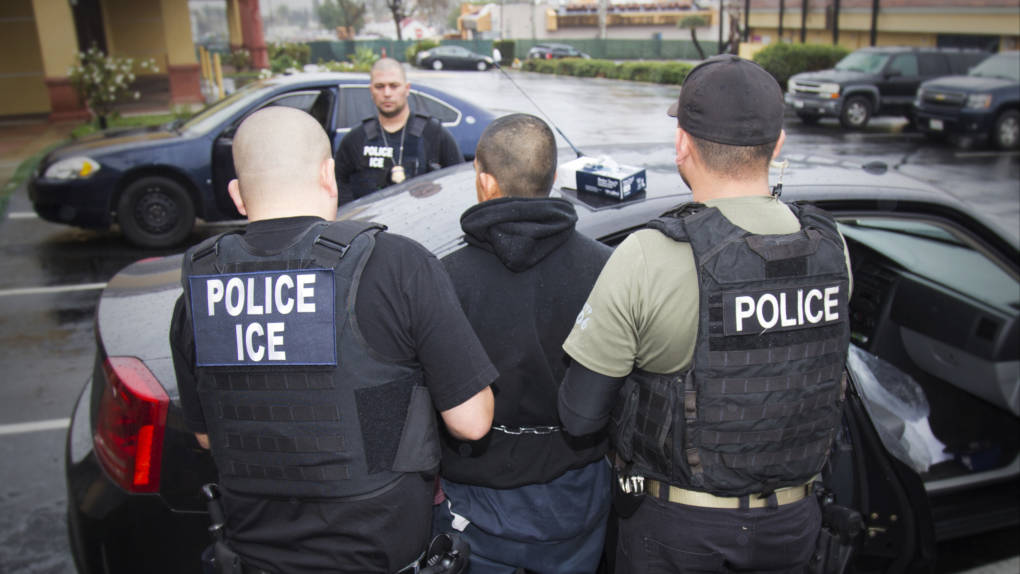
"caption": "Immigration and Customs Enforcement Officers arresting an undocumented immigrant during an enforcement operation. ",
"description": null,
"title": "WEB COPY IMAGE",
"credit": "Department of Homeland Security",
"status": "inherit",
"isLoading": false,
"fetchFailed": false
},
"news_11326705": {
"type": "attachments",
"id": "news_11326705",
"meta": {
"index": "attachments_1716263798",
"site": "news",
"id": "11326705",
"found": true
},
"parent": 11326640,
"imgSizes": {
"small": {
"file": "https://ww2.kqed.org/app/uploads/sites/10/2017/02/GettyImages-633191580-520x347.jpg",
"width": 520,
"mimeType": "image/jpeg",
"height": 347
},
"twentyfourteen-full-width": {
"file": "https://ww2.kqed.org/app/uploads/sites/10/2017/02/GettyImages-633191580-1038x576.jpg",
"width": 1038,
"mimeType": "image/jpeg",
"height": 576
},
"thumbnail": {
"file": "https://ww2.kqed.org/app/uploads/sites/10/2017/02/GettyImages-633191580-160x107.jpg",
"width": 160,
"mimeType": "image/jpeg",
"height": 107
},
"fd-sm": {
"file": "https://ww2.kqed.org/app/uploads/sites/10/2017/02/GettyImages-633191580-960x640.jpg",
"width": 960,
"mimeType": "image/jpeg",
"height": 640
},
"post-thumbnail": {
"file": "https://ww2.kqed.org/app/uploads/sites/10/2017/02/GettyImages-633191580-672x372.jpg",
"width": 672,
"mimeType": "image/jpeg",
"height": 372
},
"xsmall": {
"file": "https://ww2.kqed.org/app/uploads/sites/10/2017/02/GettyImages-633191580-375x250.jpg",
"width": 375,
"mimeType": "image/jpeg",
"height": 250
},
"kqedFullSize": {
"file": "https://ww2.kqed.org/app/uploads/sites/10/2017/02/GettyImages-633191580-e1487699664773.jpg",
"width": 1920,
"height": 1280
},
"large": {
"file": "https://ww2.kqed.org/app/uploads/sites/10/2017/02/GettyImages-633191580-1020x680.jpg",
"width": 1020,
"mimeType": "image/jpeg",
"height": 680
},
"xlarge": {
"file": "https://ww2.kqed.org/app/uploads/sites/10/2017/02/GettyImages-633191580-1180x787.jpg",
"width": 1180,
"mimeType": "image/jpeg",
"height": 787
},
"guest-author-50": {
"file": "https://ww2.kqed.org/app/uploads/sites/10/2017/02/GettyImages-633191580-50x50.jpg",
"width": 50,
"mimeType": "image/jpeg",
"height": 50
},
"guest-author-96": {
"file": "https://ww2.kqed.org/app/uploads/sites/10/2017/02/GettyImages-633191580-96x96.jpg",
"width": 96,
"mimeType": "image/jpeg",
"height": 96
},
"medium": {
"file": "https://ww2.kqed.org/app/uploads/sites/10/2017/02/GettyImages-633191580-800x533.jpg",
"width": 800,
"mimeType": "image/jpeg",
"height": 533
},
"guest-author-64": {
"file": "https://ww2.kqed.org/app/uploads/sites/10/2017/02/GettyImages-633191580-64x64.jpg",
"width": 64,
"mimeType": "image/jpeg",
"height": 64
},
"guest-author-32": {
"file": "https://ww2.kqed.org/app/uploads/sites/10/2017/02/GettyImages-633191580-32x32.jpg",
"width": 32,
"mimeType": "image/jpeg",
"height": 32
},
"fd-lrg": {
"file": "https://ww2.kqed.org/app/uploads/sites/10/2017/02/GettyImages-633191580-1920x1280.jpg",
"width": 1920,
"mimeType": "image/jpeg",
"height": 1280
},
"fd-med": {
"file": "https://ww2.kqed.org/app/uploads/sites/10/2017/02/GettyImages-633191580-1180x787.jpg",
"width": 1180,
"mimeType": "image/jpeg",
"height": 787
},
"full-width": {
"file": "https://ww2.kqed.org/app/uploads/sites/10/2017/02/GettyImages-633191580-1920x1280.jpg",
"width": 1920,
"mimeType": "image/jpeg",
"height": 1280
},
"detail": {
"file": "https://ww2.kqed.org/app/uploads/sites/10/2017/02/GettyImages-633191580-150x150.jpg",
"width": 150,
"mimeType": "image/jpeg",
"height": 150
},
"guest-author-128": {
"file": "https://ww2.kqed.org/app/uploads/sites/10/2017/02/GettyImages-633191580-128x128.jpg",
"width": 128,
"mimeType": "image/jpeg",
"height": 128
},
"xxsmall": {
"file": "https://ww2.kqed.org/app/uploads/sites/10/2017/02/GettyImages-633191580-240x160.jpg",
"width": 240,
"mimeType": "image/jpeg",
"height": 160
}
},
"publishDate": 1487699584,
"modified": 1487722058,
"caption": "President Donald Trump delivers remarks at the beginning of a meeting with Homeland Security Secretary John Kelly and other government cybersecurity experts in January.",
"description": null,
"title": "john kelly donald trump",
"credit": "Chip Somodevilla/Getty Images",
"status": "inherit",
"isLoading": false,
"fetchFailed": false
},
"news_11315414": {
"type": "attachments",
"id": "news_11315414",
"meta": {
"index": "attachments_1716263798",
"site": "news",
"id": "11315414",
"found": true
},
"parent": 11315413,
"imgSizes": {
"small": {
"file": "https://ww2.kqed.org/app/uploads/sites/10/2017/02/ap_17043509687891_wide-a1d6d34e8f71dbe99c192d7cdf0bb05c65e4d163-520x292.jpg",
"width": 520,
"mimeType": "image/jpeg",
"height": 292
},
"twentyfourteen-full-width": {
"file": "https://ww2.kqed.org/app/uploads/sites/10/2017/02/ap_17043509687891_wide-a1d6d34e8f71dbe99c192d7cdf0bb05c65e4d163-1038x576.jpg",
"width": 1038,
"mimeType": "image/jpeg",
"height": 576
},
"thumbnail": {
"file": "https://ww2.kqed.org/app/uploads/sites/10/2017/02/ap_17043509687891_wide-a1d6d34e8f71dbe99c192d7cdf0bb05c65e4d163-160x90.jpg",
"width": 160,
"mimeType": "image/jpeg",
"height": 90
},
"fd-sm": {
"file": "https://ww2.kqed.org/app/uploads/sites/10/2017/02/ap_17043509687891_wide-a1d6d34e8f71dbe99c192d7cdf0bb05c65e4d163-960x540.jpg",
"width": 960,
"mimeType": "image/jpeg",
"height": 540
},
"post-thumbnail": {
"file": "https://ww2.kqed.org/app/uploads/sites/10/2017/02/ap_17043509687891_wide-a1d6d34e8f71dbe99c192d7cdf0bb05c65e4d163-672x372.jpg",
"width": 672,
"mimeType": "image/jpeg",
"height": 372
},
"xsmall": {
"file": "https://ww2.kqed.org/app/uploads/sites/10/2017/02/ap_17043509687891_wide-a1d6d34e8f71dbe99c192d7cdf0bb05c65e4d163-375x211.jpg",
"width": 375,
"mimeType": "image/jpeg",
"height": 211
},
"kqedFullSize": {
"file": "https://ww2.kqed.org/app/uploads/sites/10/2017/02/ap_17043509687891_wide-a1d6d34e8f71dbe99c192d7cdf0bb05c65e4d163-e1487880645720.jpg",
"width": 1920,
"height": 1080
},
"large": {
"file": "https://ww2.kqed.org/app/uploads/sites/10/2017/02/ap_17043509687891_wide-a1d6d34e8f71dbe99c192d7cdf0bb05c65e4d163-1020x574.jpg",
"width": 1020,
"mimeType": "image/jpeg",
"height": 574
},
"xlarge": {
"file": "https://ww2.kqed.org/app/uploads/sites/10/2017/02/ap_17043509687891_wide-a1d6d34e8f71dbe99c192d7cdf0bb05c65e4d163-1180x664.jpg",
"width": 1180,
"mimeType": "image/jpeg",
"height": 664
},
"guest-author-50": {
"file": "https://ww2.kqed.org/app/uploads/sites/10/2017/02/ap_17043509687891_wide-a1d6d34e8f71dbe99c192d7cdf0bb05c65e4d163-50x50.jpg",
"width": 50,
"mimeType": "image/jpeg",
"height": 50
},
"guest-author-96": {
"file": "https://ww2.kqed.org/app/uploads/sites/10/2017/02/ap_17043509687891_wide-a1d6d34e8f71dbe99c192d7cdf0bb05c65e4d163-96x96.jpg",
"width": 96,
"mimeType": "image/jpeg",
"height": 96
},
"medium": {
"file": "https://ww2.kqed.org/app/uploads/sites/10/2017/02/ap_17043509687891_wide-a1d6d34e8f71dbe99c192d7cdf0bb05c65e4d163-800x450.jpg",
"width": 800,
"mimeType": "image/jpeg",
"height": 450
},
"guest-author-64": {
"file": "https://ww2.kqed.org/app/uploads/sites/10/2017/02/ap_17043509687891_wide-a1d6d34e8f71dbe99c192d7cdf0bb05c65e4d163-64x64.jpg",
"width": 64,
"mimeType": "image/jpeg",
"height": 64
},
"guest-author-32": {
"file": "https://ww2.kqed.org/app/uploads/sites/10/2017/02/ap_17043509687891_wide-a1d6d34e8f71dbe99c192d7cdf0bb05c65e4d163-32x32.jpg",
"width": 32,
"mimeType": "image/jpeg",
"height": 32
},
"fd-lrg": {
"file": "https://ww2.kqed.org/app/uploads/sites/10/2017/02/ap_17043509687891_wide-a1d6d34e8f71dbe99c192d7cdf0bb05c65e4d163-1920x1080.jpg",
"width": 1920,
"mimeType": "image/jpeg",
"height": 1080
},
"fd-med": {
"file": "https://ww2.kqed.org/app/uploads/sites/10/2017/02/ap_17043509687891_wide-a1d6d34e8f71dbe99c192d7cdf0bb05c65e4d163-1180x664.jpg",
"width": 1180,
"mimeType": "image/jpeg",
"height": 664
},
"full-width": {
"file": "https://ww2.kqed.org/app/uploads/sites/10/2017/02/ap_17043509687891_wide-a1d6d34e8f71dbe99c192d7cdf0bb05c65e4d163-1920x1080.jpg",
"width": 1920,
"mimeType": "image/jpeg",
"height": 1080
},
"detail": {
"file": "https://ww2.kqed.org/app/uploads/sites/10/2017/02/ap_17043509687891_wide-a1d6d34e8f71dbe99c192d7cdf0bb05c65e4d163-150x150.jpg",
"width": 150,
"mimeType": "image/jpeg",
"height": 150
},
"guest-author-128": {
"file": "https://ww2.kqed.org/app/uploads/sites/10/2017/02/ap_17043509687891_wide-a1d6d34e8f71dbe99c192d7cdf0bb05c65e4d163-128x128.jpg",
"width": 128,
"mimeType": "image/jpeg",
"height": 128
},
"xxsmall": {
"file": "https://ww2.kqed.org/app/uploads/sites/10/2017/02/ap_17043509687891_wide-a1d6d34e8f71dbe99c192d7cdf0bb05c65e4d163-240x135.jpg",
"width": 240,
"mimeType": "image/jpeg",
"height": 135
}
},
"publishDate": 1487028839,
"modified": 1487029462,
"caption": "A photo released Tuesday by U.S. Immigration and Customs Enforcement shows people being arrested during an ICE operation.",
"description": null,
"title": "A photo released Tuesday by U.S. Immigration and Customs Enforcement shows people being arrested during an ICE operation.",
"credit": "Charles Reed/U.S. Immigration and Customs Enforcement",
"status": "inherit",
"isLoading": false,
"fetchFailed": false
},
"news_11311104": {
"type": "attachments",
"id": "news_11311104",
"meta": {
"index": "attachments_1716263798",
"site": "news",
"id": "11311104",
"found": true
},
"parent": 11311103,
"imgSizes": {
"small": {
"file": "https://ww2.kqed.org/app/uploads/sites/10/2017/02/3-JUDGES-520x293.jpg",
"width": 520,
"mimeType": "image/jpeg",
"height": 293
},
"twentyfourteen-full-width": {
"file": "https://ww2.kqed.org/app/uploads/sites/10/2017/02/3-JUDGES-1038x576.jpg",
"width": 1038,
"mimeType": "image/jpeg",
"height": 576
},
"thumbnail": {
"file": "https://ww2.kqed.org/app/uploads/sites/10/2017/02/3-JUDGES-160x90.jpg",
"width": 160,
"mimeType": "image/jpeg",
"height": 90
},
"fd-sm": {
"file": "https://ww2.kqed.org/app/uploads/sites/10/2017/02/3-JUDGES-960x540.jpg",
"width": 960,
"mimeType": "image/jpeg",
"height": 540
},
"post-thumbnail": {
"file": "https://ww2.kqed.org/app/uploads/sites/10/2017/02/3-JUDGES-672x372.jpg",
"width": 672,
"mimeType": "image/jpeg",
"height": 372
},
"xsmall": {
"file": "https://ww2.kqed.org/app/uploads/sites/10/2017/02/3-JUDGES-375x211.jpg",
"width": 375,
"mimeType": "image/jpeg",
"height": 211
},
"kqedFullSize": {
"file": "https://ww2.kqed.org/app/uploads/sites/10/2017/02/3-JUDGES.jpg",
"width": 1280,
"height": 720
},
"large": {
"file": "https://ww2.kqed.org/app/uploads/sites/10/2017/02/3-JUDGES-1020x574.jpg",
"width": 1020,
"mimeType": "image/jpeg",
"height": 574
},
"xlarge": {
"file": "https://ww2.kqed.org/app/uploads/sites/10/2017/02/3-JUDGES-1180x664.jpg",
"width": 1180,
"mimeType": "image/jpeg",
"height": 664
},
"guest-author-50": {
"file": "https://ww2.kqed.org/app/uploads/sites/10/2017/02/3-JUDGES-50x50.jpg",
"width": 50,
"mimeType": "image/jpeg",
"height": 50
},
"guest-author-96": {
"file": "https://ww2.kqed.org/app/uploads/sites/10/2017/02/3-JUDGES-96x96.jpg",
"width": 96,
"mimeType": "image/jpeg",
"height": 96
},
"medium": {
"file": "https://ww2.kqed.org/app/uploads/sites/10/2017/02/3-JUDGES-800x450.jpg",
"width": 800,
"mimeType": "image/jpeg",
"height": 450
},
"guest-author-64": {
"file": "https://ww2.kqed.org/app/uploads/sites/10/2017/02/3-JUDGES-64x64.jpg",
"width": 64,
"mimeType": "image/jpeg",
"height": 64
},
"guest-author-32": {
"file": "https://ww2.kqed.org/app/uploads/sites/10/2017/02/3-JUDGES-32x32.jpg",
"width": 32,
"mimeType": "image/jpeg",
"height": 32
},
"fd-med": {
"file": "https://ww2.kqed.org/app/uploads/sites/10/2017/02/3-JUDGES-1180x664.jpg",
"width": 1180,
"mimeType": "image/jpeg",
"height": 664
},
"detail": {
"file": "https://ww2.kqed.org/app/uploads/sites/10/2017/02/3-JUDGES-150x150.jpg",
"width": 150,
"mimeType": "image/jpeg",
"height": 150
},
"guest-author-128": {
"file": "https://ww2.kqed.org/app/uploads/sites/10/2017/02/3-JUDGES-128x128.jpg",
"width": 128,
"mimeType": "image/jpeg",
"height": 128
},
"xxsmall": {
"file": "https://ww2.kqed.org/app/uploads/sites/10/2017/02/3-JUDGES-240x135.jpg",
"width": 240,
"mimeType": "image/jpeg",
"height": 135
}
},
"publishDate": 1486779875,
"modified": 1486779875,
"caption": null,
"description": null,
"title": "3 JUDGES",
"credit": null,
"status": "inherit",
"isLoading": false,
"fetchFailed": false
},
"news_11310882": {
"type": "attachments",
"id": "news_11310882",
"meta": {
"index": "attachments_1716263798",
"site": "news",
"id": "11310882",
"found": true
},
"parent": 11310875,
"imgSizes": {
"small": {
"file": "https://ww2.kqed.org/app/uploads/sites/10/2017/02/GettyImages-634608272-520x347.jpg",
"width": 520,
"mimeType": "image/jpeg",
"height": 347
},
"twentyfourteen-full-width": {
"file": "https://ww2.kqed.org/app/uploads/sites/10/2017/02/GettyImages-634608272-1038x576.jpg",
"width": 1038,
"mimeType": "image/jpeg",
"height": 576
},
"thumbnail": {
"file": "https://ww2.kqed.org/app/uploads/sites/10/2017/02/GettyImages-634608272-160x107.jpg",
"width": 160,
"mimeType": "image/jpeg",
"height": 107
},
"fd-sm": {
"file": "https://ww2.kqed.org/app/uploads/sites/10/2017/02/GettyImages-634608272-960x641.jpg",
"width": 960,
"mimeType": "image/jpeg",
"height": 641
},
"post-thumbnail": {
"file": "https://ww2.kqed.org/app/uploads/sites/10/2017/02/GettyImages-634608272-672x372.jpg",
"width": 672,
"mimeType": "image/jpeg",
"height": 372
},
"xsmall": {
"file": "https://ww2.kqed.org/app/uploads/sites/10/2017/02/GettyImages-634608272-375x250.jpg",
"width": 375,
"mimeType": "image/jpeg",
"height": 250
},
"kqedFullSize": {
"file": "https://ww2.kqed.org/app/uploads/sites/10/2017/02/GettyImages-634608272-e1486770130944.jpg",
"width": 1920,
"height": 1282
},
"large": {
"file": "https://ww2.kqed.org/app/uploads/sites/10/2017/02/GettyImages-634608272-1020x681.jpg",
"width": 1020,
"mimeType": "image/jpeg",
"height": 681
},
"xlarge": {
"file": "https://ww2.kqed.org/app/uploads/sites/10/2017/02/GettyImages-634608272-1180x788.jpg",
"width": 1180,
"mimeType": "image/jpeg",
"height": 788
},
"guest-author-50": {
"file": "https://ww2.kqed.org/app/uploads/sites/10/2017/02/GettyImages-634608272-50x50.jpg",
"width": 50,
"mimeType": "image/jpeg",
"height": 50
},
"guest-author-96": {
"file": "https://ww2.kqed.org/app/uploads/sites/10/2017/02/GettyImages-634608272-96x96.jpg",
"width": 96,
"mimeType": "image/jpeg",
"height": 96
},
"medium": {
"file": "https://ww2.kqed.org/app/uploads/sites/10/2017/02/GettyImages-634608272-800x534.jpg",
"width": 800,
"mimeType": "image/jpeg",
"height": 534
},
"guest-author-64": {
"file": "https://ww2.kqed.org/app/uploads/sites/10/2017/02/GettyImages-634608272-64x64.jpg",
"width": 64,
"mimeType": "image/jpeg",
"height": 64
},
"guest-author-32": {
"file": "https://ww2.kqed.org/app/uploads/sites/10/2017/02/GettyImages-634608272-32x32.jpg",
"width": 32,
"mimeType": "image/jpeg",
"height": 32
},
"fd-lrg": {
"file": "https://ww2.kqed.org/app/uploads/sites/10/2017/02/GettyImages-634608272-1920x1282.jpg",
"width": 1920,
"mimeType": "image/jpeg",
"height": 1282
},
"fd-med": {
"file": "https://ww2.kqed.org/app/uploads/sites/10/2017/02/GettyImages-634608272-1180x788.jpg",
"width": 1180,
"mimeType": "image/jpeg",
"height": 788
},
"full-width": {
"file": "https://ww2.kqed.org/app/uploads/sites/10/2017/02/GettyImages-634608272-1920x1282.jpg",
"width": 1920,
"mimeType": "image/jpeg",
"height": 1282
},
"detail": {
"file": "https://ww2.kqed.org/app/uploads/sites/10/2017/02/GettyImages-634608272-150x150.jpg",
"width": 150,
"mimeType": "image/jpeg",
"height": 150
},
"guest-author-128": {
"file": "https://ww2.kqed.org/app/uploads/sites/10/2017/02/GettyImages-634608272-128x128.jpg",
"width": 128,
"mimeType": "image/jpeg",
"height": 128
},
"xxsmall": {
"file": "https://ww2.kqed.org/app/uploads/sites/10/2017/02/GettyImages-634608272-240x160.jpg",
"width": 240,
"mimeType": "image/jpeg",
"height": 160
}
},
"publishDate": 1486770102,
"modified": 1486772031,
"caption": "President Donald Trump during a joint press conference with Japanese Prime Minister Shinzo Abe at the White House on Feb. 10, 2017. Trump spoke of his plans to rewrite his immigration order after the meeting.",
"description": null,
"title": "President Trump Holds Joint Press Conference With Japanese PM Shinzo Abe",
"credit": "Mario Tama/Getty Images",
"status": "inherit",
"isLoading": false,
"fetchFailed": false
},
"news_11286566": {
"type": "attachments",
"id": "news_11286566",
"meta": {
"index": "attachments_1716263798",
"site": "news",
"id": "11286566",
"found": true
},
"parent": 11286488,
"imgSizes": {
"small": {
"file": "https://ww2.kqed.org/app/uploads/sites/10/2017/01/GettyImages-632699284-520x377.jpg",
"width": 520,
"mimeType": "image/jpeg",
"height": 377
},
"twentyfourteen-full-width": {
"file": "https://ww2.kqed.org/app/uploads/sites/10/2017/01/GettyImages-632699284-1038x576.jpg",
"width": 1038,
"mimeType": "image/jpeg",
"height": 576
},
"thumbnail": {
"file": "https://ww2.kqed.org/app/uploads/sites/10/2017/01/GettyImages-632699284-160x116.jpg",
"width": 160,
"mimeType": "image/jpeg",
"height": 116
},
"fd-sm": {
"file": "https://ww2.kqed.org/app/uploads/sites/10/2017/01/GettyImages-632699284-960x696.jpg",
"width": 960,
"mimeType": "image/jpeg",
"height": 696
},
"post-thumbnail": {
"file": "https://ww2.kqed.org/app/uploads/sites/10/2017/01/GettyImages-632699284-672x372.jpg",
"width": 672,
"mimeType": "image/jpeg",
"height": 372
},
"xsmall": {
"file": "https://ww2.kqed.org/app/uploads/sites/10/2017/01/GettyImages-632699284-375x272.jpg",
"width": 375,
"mimeType": "image/jpeg",
"height": 272
},
"kqedFullSize": {
"file": "https://ww2.kqed.org/app/uploads/sites/10/2017/01/GettyImages-632699284-e1485391179853.jpg",
"width": 1920,
"height": 1392
},
"large": {
"file": "https://ww2.kqed.org/app/uploads/sites/10/2017/01/GettyImages-632699284-1020x740.jpg",
"width": 1020,
"mimeType": "image/jpeg",
"height": 740
},
"xlarge": {
"file": "https://ww2.kqed.org/app/uploads/sites/10/2017/01/GettyImages-632699284-1180x856.jpg",
"width": 1180,
"mimeType": "image/jpeg",
"height": 856
},
"guest-author-50": {
"file": "https://ww2.kqed.org/app/uploads/sites/10/2017/01/GettyImages-632699284-50x50.jpg",
"width": 50,
"mimeType": "image/jpeg",
"height": 50
},
"guest-author-96": {
"file": "https://ww2.kqed.org/app/uploads/sites/10/2017/01/GettyImages-632699284-96x96.jpg",
"width": 96,
"mimeType": "image/jpeg",
"height": 96
},
"medium": {
"file": "https://ww2.kqed.org/app/uploads/sites/10/2017/01/GettyImages-632699284-800x580.jpg",
"width": 800,
"mimeType": "image/jpeg",
"height": 580
},
"guest-author-64": {
"file": "https://ww2.kqed.org/app/uploads/sites/10/2017/01/GettyImages-632699284-64x64.jpg",
"width": 64,
"mimeType": "image/jpeg",
"height": 64
},
"guest-author-32": {
"file": "https://ww2.kqed.org/app/uploads/sites/10/2017/01/GettyImages-632699284-32x32.jpg",
"width": 32,
"mimeType": "image/jpeg",
"height": 32
},
"jmtc-small-thumb": {
"file": "https://ww2.kqed.org/app/uploads/sites/10/2017/01/GettyImages-632699284-280x150.jpg",
"width": 280,
"mimeType": "image/jpeg",
"height": 150
},
"fd-lrg": {
"file": "https://ww2.kqed.org/app/uploads/sites/10/2017/01/GettyImages-632699284-1920x1392.jpg",
"width": 1920,
"mimeType": "image/jpeg",
"height": 1392
},
"fd-med": {
"file": "https://ww2.kqed.org/app/uploads/sites/10/2017/01/GettyImages-632699284-1180x856.jpg",
"width": 1180,
"mimeType": "image/jpeg",
"height": 856
},
"full-width": {
"file": "https://ww2.kqed.org/app/uploads/sites/10/2017/01/GettyImages-632699284-1920x1392.jpg",
"width": 1920,
"mimeType": "image/jpeg",
"height": 1392
},
"detail": {
"file": "https://ww2.kqed.org/app/uploads/sites/10/2017/01/GettyImages-632699284-150x150.jpg",
"width": 150,
"mimeType": "image/jpeg",
"height": 150
},
"guest-author-128": {
"file": "https://ww2.kqed.org/app/uploads/sites/10/2017/01/GettyImages-632699284-128x128.jpg",
"width": 128,
"mimeType": "image/jpeg",
"height": 128
},
"xxsmall": {
"file": "https://ww2.kqed.org/app/uploads/sites/10/2017/01/GettyImages-632699284-240x174.jpg",
"width": 240,
"mimeType": "image/jpeg",
"height": 174
}
},
"publishDate": 1485391162,
"modified": 1486689182,
"caption": "President Donald Trump has vowed to restore \"control\" of U.S. frontiers.",
"description": "President Donald Trump",
"title": "US-POLITICS-TRUMP-HOMELAND SECURITY",
"credit": "Nicholas Kamm/AFP/Getty Images",
"status": "inherit",
"isLoading": false,
"fetchFailed": false
},
"news_11294920": {
"type": "attachments",
"id": "news_11294920",
"meta": {
"index": "attachments_1716263798",
"site": "news",
"id": "11294920",
"found": true
},
"parent": 11294776,
"imgSizes": {
"small": {
"file": "https://ww2.kqed.org/app/uploads/sites/10/2017/01/SUNDAR-520x372.jpg",
"width": 520,
"mimeType": "image/jpeg",
"height": 372
},
"twentyfourteen-full-width": {
"file": "https://ww2.kqed.org/app/uploads/sites/10/2017/01/SUNDAR-1038x576.jpg",
"width": 1038,
"mimeType": "image/jpeg",
"height": 576
},
"thumbnail": {
"file": "https://ww2.kqed.org/app/uploads/sites/10/2017/01/SUNDAR-160x114.jpg",
"width": 160,
"mimeType": "image/jpeg",
"height": 114
},
"fd-sm": {
"file": "https://ww2.kqed.org/app/uploads/sites/10/2017/01/SUNDAR-960x687.jpg",
"width": 960,
"mimeType": "image/jpeg",
"height": 687
},
"post-thumbnail": {
"file": "https://ww2.kqed.org/app/uploads/sites/10/2017/01/SUNDAR-672x372.jpg",
"width": 672,
"mimeType": "image/jpeg",
"height": 372
},
"xsmall": {
"file": "https://ww2.kqed.org/app/uploads/sites/10/2017/01/SUNDAR-375x268.jpg",
"width": 375,
"mimeType": "image/jpeg",
"height": 268
},
"kqedFullSize": {
"file": "https://ww2.kqed.org/app/uploads/sites/10/2017/01/SUNDAR-e1486681778665.jpg",
"width": 1920,
"height": 1374
},
"large": {
"file": "https://ww2.kqed.org/app/uploads/sites/10/2017/01/SUNDAR-1020x730.jpg",
"width": 1020,
"mimeType": "image/jpeg",
"height": 730
},
"xlarge": {
"file": "https://ww2.kqed.org/app/uploads/sites/10/2017/01/SUNDAR-1180x844.jpg",
"width": 1180,
"mimeType": "image/jpeg",
"height": 844
},
"guest-author-50": {
"file": "https://ww2.kqed.org/app/uploads/sites/10/2017/01/SUNDAR-50x50.jpg",
"width": 50,
"mimeType": "image/jpeg",
"height": 50
},
"guest-author-96": {
"file": "https://ww2.kqed.org/app/uploads/sites/10/2017/01/SUNDAR-96x96.jpg",
"width": 96,
"mimeType": "image/jpeg",
"height": 96
},
"medium": {
"file": "https://ww2.kqed.org/app/uploads/sites/10/2017/01/SUNDAR-800x572.jpg",
"width": 800,
"mimeType": "image/jpeg",
"height": 572
},
"guest-author-64": {
"file": "https://ww2.kqed.org/app/uploads/sites/10/2017/01/SUNDAR-64x64.jpg",
"width": 64,
"mimeType": "image/jpeg",
"height": 64
},
"guest-author-32": {
"file": "https://ww2.kqed.org/app/uploads/sites/10/2017/01/SUNDAR-32x32.jpg",
"width": 32,
"mimeType": "image/jpeg",
"height": 32
},
"jmtc-small-thumb": {
"file": "https://ww2.kqed.org/app/uploads/sites/10/2017/01/SUNDAR-280x150.jpg",
"width": 280,
"mimeType": "image/jpeg",
"height": 150
},
"fd-lrg": {
"file": "https://ww2.kqed.org/app/uploads/sites/10/2017/01/SUNDAR-1920x1374.jpg",
"width": 1920,
"mimeType": "image/jpeg",
"height": 1374
},
"fd-med": {
"file": "https://ww2.kqed.org/app/uploads/sites/10/2017/01/SUNDAR-1180x844.jpg",
"width": 1180,
"mimeType": "image/jpeg",
"height": 844
},
"full-width": {
"file": "https://ww2.kqed.org/app/uploads/sites/10/2017/01/SUNDAR-1920x1374.jpg",
"width": 1920,
"mimeType": "image/jpeg",
"height": 1374
},
"detail": {
"file": "https://ww2.kqed.org/app/uploads/sites/10/2017/01/SUNDAR-150x150.jpg",
"width": 150,
"mimeType": "image/jpeg",
"height": 150
},
"guest-author-128": {
"file": "https://ww2.kqed.org/app/uploads/sites/10/2017/01/SUNDAR-128x128.jpg",
"width": 128,
"mimeType": "image/jpeg",
"height": 128
},
"xxsmall": {
"file": "https://ww2.kqed.org/app/uploads/sites/10/2017/01/SUNDAR-240x172.jpg",
"width": 240,
"mimeType": "image/jpeg",
"height": 172
}
},
"publishDate": 1485889931,
"modified": 1486686217,
"caption": "Google CEO Sundar Pichai speaks at a protest on the Google campus in Mountain View. Google employees were protesting President Trump's executive order banning people from seven majority-Muslim countries from entering the U.S.",
"description": null,
"title": "SUNDAR",
"credit": "Queena Sook Kim/KQED",
"status": "inherit",
"isLoading": false,
"fetchFailed": false
},
"news_10489894": {
"type": "attachments",
"id": "news_10489894",
"meta": {
"index": "attachments_1716263798",
"site": "news",
"id": "10489894",
"found": true
},
"parent": 10489893,
"imgSizes": {
"twentyfourteen-full-width": {
"file": "https://ww2.kqed.org/app/uploads/sites/10/2015/04/BART1-1038x576.jpg",
"width": 1038,
"mimeType": "image/jpeg",
"height": 576
},
"thumbnail": {
"file": "https://ww2.kqed.org/app/uploads/sites/10/2015/04/BART1-400x300.jpg",
"width": 400,
"mimeType": "image/jpeg",
"height": 300
},
"fd-sm": {
"file": "https://ww2.kqed.org/app/uploads/sites/10/2015/04/BART1-320x240.jpg",
"width": 320,
"mimeType": "image/jpeg",
"height": 240
},
"post-thumbnail": {
"file": "https://ww2.kqed.org/app/uploads/sites/10/2015/04/BART1-672x372.jpg",
"width": 672,
"mimeType": "image/jpeg",
"height": 372
},
"kqedFullSize": {
"file": "https://ww2.kqed.org/app/uploads/sites/10/2015/04/BART1.jpg",
"width": 1920,
"height": 1440
},
"large": {
"file": "https://ww2.kqed.org/app/uploads/sites/10/2015/04/BART1-1440x1080.jpg",
"width": 1440,
"mimeType": "image/jpeg",
"height": 1080
},
"guest-author-96": {
"file": "https://ww2.kqed.org/app/uploads/sites/10/2015/04/BART1-96x96.jpg",
"width": 96,
"mimeType": "image/jpeg",
"height": 96
},
"medium": {
"file": "https://ww2.kqed.org/app/uploads/sites/10/2015/04/BART1-800x600.jpg",
"width": 800,
"mimeType": "image/jpeg",
"height": 600
},
"guest-author-64": {
"file": "https://ww2.kqed.org/app/uploads/sites/10/2015/04/BART1-64x64.jpg",
"width": 64,
"mimeType": "image/jpeg",
"height": 64
},
"guest-author-32": {
"file": "https://ww2.kqed.org/app/uploads/sites/10/2015/04/BART1-32x32.jpg",
"width": 32,
"mimeType": "image/jpeg",
"height": 32
},
"fd-lrg": {
"file": "https://ww2.kqed.org/app/uploads/sites/10/2015/04/BART1-1180x885.jpg",
"width": 1180,
"mimeType": "image/jpeg",
"height": 885
},
"fd-med": {
"file": "https://ww2.kqed.org/app/uploads/sites/10/2015/04/BART1-768x576.jpg",
"width": 768,
"mimeType": "image/jpeg",
"height": 576
},
"detail": {
"file": "https://ww2.kqed.org/app/uploads/sites/10/2015/04/BART1-75x75.jpg",
"width": 75,
"mimeType": "image/jpeg",
"height": 75
},
"guest-author-128": {
"file": "https://ww2.kqed.org/app/uploads/sites/10/2015/04/BART1-128x128.jpg",
"width": 128,
"mimeType": "image/jpeg",
"height": 128
}
},
"publishDate": 1429029419,
"modified": 1442352820,
"caption": "A BART train near the system's Rockridge Station in Oakland. ",
"description": "A BART train near the system's Rockridge station in Oakland. ",
"title": "Bay Area Transportation Workers Strike Looms Ahead Of Monday Deadline",
"credit": "Justin Sullivan/Getty Images",
"status": "inherit",
"isLoading": false,
"fetchFailed": false
},
"news_11303002": {
"type": "attachments",
"id": "news_11303002",
"meta": {
"index": "attachments_1716263798",
"site": "news",
"id": "11303002",
"found": true
},
"parent": 11301672,
"imgSizes": {
"small": {
"file": "https://ww2.kqed.org/app/uploads/sites/10/2017/02/RS24030_EA_F_siter-qut-520x390.jpg",
"width": 520,
"mimeType": "image/jpeg",
"height": 390
},
"twentyfourteen-full-width": {
"file": "https://ww2.kqed.org/app/uploads/sites/10/2017/02/RS24030_EA_F_siter-qut-1024x576.jpg",
"width": 1024,
"mimeType": "image/jpeg",
"height": 576
},
"thumbnail": {
"file": "https://ww2.kqed.org/app/uploads/sites/10/2017/02/RS24030_EA_F_siter-qut-160x120.jpg",
"width": 160,
"mimeType": "image/jpeg",
"height": 120
},
"fd-sm": {
"file": "https://ww2.kqed.org/app/uploads/sites/10/2017/02/RS24030_EA_F_siter-qut-960x720.jpg",
"width": 960,
"mimeType": "image/jpeg",
"height": 720
},
"post-thumbnail": {
"file": "https://ww2.kqed.org/app/uploads/sites/10/2017/02/RS24030_EA_F_siter-qut-672x372.jpg",
"width": 672,
"mimeType": "image/jpeg",
"height": 372
},
"xsmall": {
"file": "https://ww2.kqed.org/app/uploads/sites/10/2017/02/RS24030_EA_F_siter-qut-375x281.jpg",
"width": 375,
"mimeType": "image/jpeg",
"height": 281
},
"kqedFullSize": {
"file": "https://ww2.kqed.org/app/uploads/sites/10/2017/02/RS24030_EA_F_siter-qut.jpg",
"width": 1024,
"height": 768
},
"large": {
"file": "https://ww2.kqed.org/app/uploads/sites/10/2017/02/RS24030_EA_F_siter-qut-1020x765.jpg",
"width": 1020,
"mimeType": "image/jpeg",
"height": 765
},
"guest-author-50": {
"file": "https://ww2.kqed.org/app/uploads/sites/10/2017/02/RS24030_EA_F_siter-qut-50x50.jpg",
"width": 50,
"mimeType": "image/jpeg",
"height": 50
},
"guest-author-96": {
"file": "https://ww2.kqed.org/app/uploads/sites/10/2017/02/RS24030_EA_F_siter-qut-96x96.jpg",
"width": 96,
"mimeType": "image/jpeg",
"height": 96
},
"medium": {
"file": "https://ww2.kqed.org/app/uploads/sites/10/2017/02/RS24030_EA_F_siter-qut-800x600.jpg",
"width": 800,
"mimeType": "image/jpeg",
"height": 600
},
"guest-author-64": {
"file": "https://ww2.kqed.org/app/uploads/sites/10/2017/02/RS24030_EA_F_siter-qut-64x64.jpg",
"width": 64,
"mimeType": "image/jpeg",
"height": 64
},
"guest-author-32": {
"file": "https://ww2.kqed.org/app/uploads/sites/10/2017/02/RS24030_EA_F_siter-qut-32x32.jpg",
"width": 32,
"mimeType": "image/jpeg",
"height": 32
},
"jmtc-small-thumb": {
"file": "https://ww2.kqed.org/app/uploads/sites/10/2017/02/RS24030_EA_F_siter-qut-280x150.jpg",
"width": 280,
"mimeType": "image/jpeg",
"height": 150
},
"detail": {
"file": "https://ww2.kqed.org/app/uploads/sites/10/2017/02/RS24030_EA_F_siter-qut-150x150.jpg",
"width": 150,
"mimeType": "image/jpeg",
"height": 150
},
"guest-author-128": {
"file": "https://ww2.kqed.org/app/uploads/sites/10/2017/02/RS24030_EA_F_siter-qut-128x128.jpg",
"width": 128,
"mimeType": "image/jpeg",
"height": 128
},
"xxsmall": {
"file": "https://ww2.kqed.org/app/uploads/sites/10/2017/02/RS24030_EA_F_siter-qut-240x180.jpg",
"width": 240,
"mimeType": "image/jpeg",
"height": 180
}
},
"publishDate": 1486345147,
"modified": 1486345180,
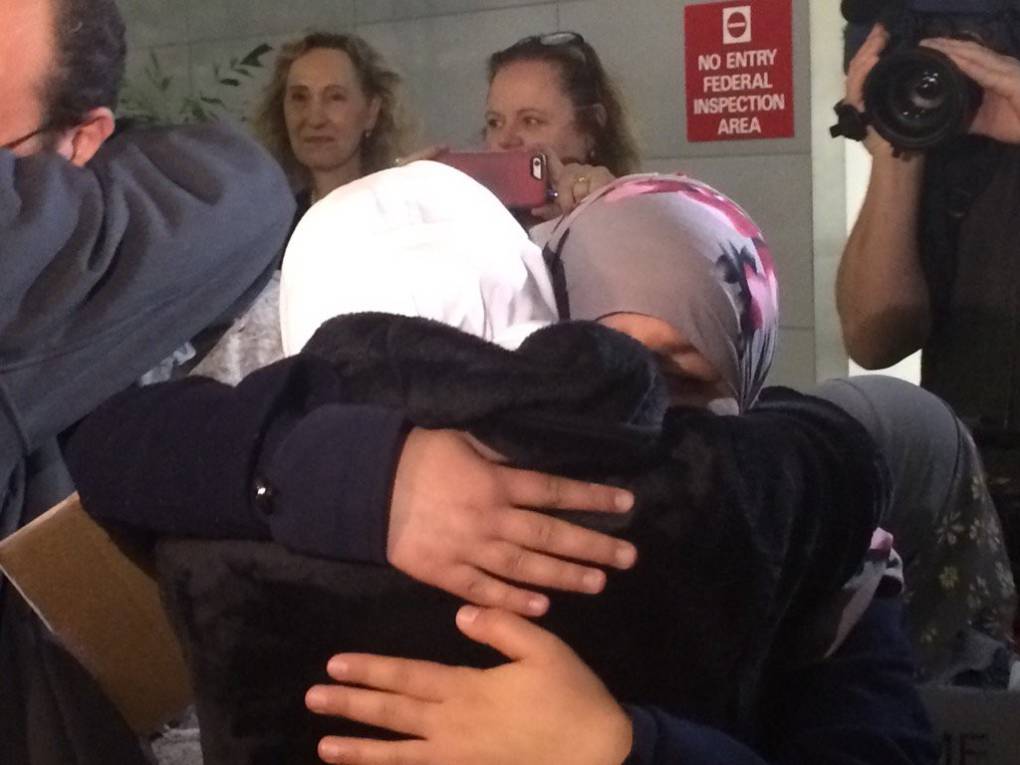
"caption": "Eman Ali, 12, and her sister embrace at SFO. She'd been stranded by Trump's travel ban, and hadn't seen her sister in four years.",
"description": null,
"title": "RS24030_EA_F_siter-qut",
"credit": "Farida Jhabvala Romero/KQED",
"status": "inherit",
"isLoading": false,
"fetchFailed": false
},
"news_11296590": {
"type": "attachments",
"id": "news_11296590",
"meta": {
"index": "attachments_1716263798",
"site": "news",
"id": "11296590",
"found": true
},
"parent": 11296571,
"imgSizes": {
"small": {
"file": "https://ww2.kqed.org/app/uploads/sites/10/2017/02/RS23923_GettyImages-633030772-qut-520x326.jpg",
"width": 520,
"mimeType": "image/jpeg",
"height": 326
},
"twentyfourteen-full-width": {
"file": "https://ww2.kqed.org/app/uploads/sites/10/2017/02/RS23923_GettyImages-633030772-qut-1038x576.jpg",
"width": 1038,
"mimeType": "image/jpeg",
"height": 576
},
"thumbnail": {
"file": "https://ww2.kqed.org/app/uploads/sites/10/2017/02/RS23923_GettyImages-633030772-qut-160x100.jpg",
"width": 160,
"mimeType": "image/jpeg",
"height": 100
},
"fd-sm": {
"file": "https://ww2.kqed.org/app/uploads/sites/10/2017/02/RS23923_GettyImages-633030772-qut-960x602.jpg",
"width": 960,
"mimeType": "image/jpeg",
"height": 602
},
"post-thumbnail": {
"file": "https://ww2.kqed.org/app/uploads/sites/10/2017/02/RS23923_GettyImages-633030772-qut-672x372.jpg",
"width": 672,
"mimeType": "image/jpeg",
"height": 372
},
"xsmall": {
"file": "https://ww2.kqed.org/app/uploads/sites/10/2017/02/RS23923_GettyImages-633030772-qut-375x235.jpg",
"width": 375,
"mimeType": "image/jpeg",
"height": 235
},
"kqedFullSize": {
"file": "https://ww2.kqed.org/app/uploads/sites/10/2017/02/RS23923_GettyImages-633030772-qut.jpg",
"width": 1920,
"height": 1203
},
"large": {
"file": "https://ww2.kqed.org/app/uploads/sites/10/2017/02/RS23923_GettyImages-633030772-qut-1020x639.jpg",
"width": 1020,
"mimeType": "image/jpeg",
"height": 639
},
"xlarge": {
"file": "https://ww2.kqed.org/app/uploads/sites/10/2017/02/RS23923_GettyImages-633030772-qut-1180x739.jpg",
"width": 1180,
"mimeType": "image/jpeg",
"height": 739
},
"guest-author-50": {
"file": "https://ww2.kqed.org/app/uploads/sites/10/2017/02/RS23923_GettyImages-633030772-qut-50x50.jpg",
"width": 50,
"mimeType": "image/jpeg",
"height": 50
},
"guest-author-96": {
"file": "https://ww2.kqed.org/app/uploads/sites/10/2017/02/RS23923_GettyImages-633030772-qut-96x96.jpg",
"width": 96,
"mimeType": "image/jpeg",
"height": 96
},
"medium": {
"file": "https://ww2.kqed.org/app/uploads/sites/10/2017/02/RS23923_GettyImages-633030772-qut-800x501.jpg",
"width": 800,
"mimeType": "image/jpeg",
"height": 501
},
"guest-author-64": {
"file": "https://ww2.kqed.org/app/uploads/sites/10/2017/02/RS23923_GettyImages-633030772-qut-64x64.jpg",
"width": 64,
"mimeType": "image/jpeg",
"height": 64
},
"guest-author-32": {
"file": "https://ww2.kqed.org/app/uploads/sites/10/2017/02/RS23923_GettyImages-633030772-qut-32x32.jpg",
"width": 32,
"mimeType": "image/jpeg",
"height": 32
},
"jmtc-small-thumb": {
"file": "https://ww2.kqed.org/app/uploads/sites/10/2017/02/RS23923_GettyImages-633030772-qut-280x150.jpg",
"width": 280,
"mimeType": "image/jpeg",
"height": 150
},
"fd-lrg": {
"file": "https://ww2.kqed.org/app/uploads/sites/10/2017/02/RS23923_GettyImages-633030772-qut-1920x1203.jpg",
"width": 1920,
"mimeType": "image/jpeg",
"height": 1203
},
"fd-med": {
"file": "https://ww2.kqed.org/app/uploads/sites/10/2017/02/RS23923_GettyImages-633030772-qut-1180x739.jpg",
"width": 1180,
"mimeType": "image/jpeg",
"height": 739
},
"full-width": {
"file": "https://ww2.kqed.org/app/uploads/sites/10/2017/02/RS23923_GettyImages-633030772-qut-1920x1203.jpg",
"width": 1920,
"mimeType": "image/jpeg",
"height": 1203
},
"detail": {
"file": "https://ww2.kqed.org/app/uploads/sites/10/2017/02/RS23923_GettyImages-633030772-qut-150x150.jpg",
"width": 150,
"mimeType": "image/jpeg",
"height": 150
},
"guest-author-128": {
"file": "https://ww2.kqed.org/app/uploads/sites/10/2017/02/RS23923_GettyImages-633030772-qut-128x128.jpg",
"width": 128,
"mimeType": "image/jpeg",
"height": 128
},
"xxsmall": {
"file": "https://ww2.kqed.org/app/uploads/sites/10/2017/02/RS23923_GettyImages-633030772-qut-240x150.jpg",
"width": 240,
"mimeType": "image/jpeg",
"height": 150
}
},
"publishDate": 1485982366,
"modified": 1498748798,
"caption": "Protesters shout and hold up signs at San Francisco International Airport in San Francisco on Jan. 29, 2017, after U.S. President Donald Trump first executive order on travel took effect.",
"description": null,
"title": "RS23923_GettyImages-633030772-qut",
"credit": "Josh Edelson/AFP/Getty Images)",
"status": "inherit",
"isLoading": false,
"fetchFailed": false
},
"news_11294915": {
"type": "attachments",
"id": "news_11294915",
"meta": {
"index": "attachments_1716263798",
"site": "news",
"id": "11294915",
"found": true
},
"parent": 11294776,
"imgSizes": {
"small": {
"file": "https://ww2.kqed.org/app/uploads/sites/10/2017/01/google-protest-in-quad-520x390.jpg",
"width": 520,
"mimeType": "image/jpeg",
"height": 390
},
"twentyfourteen-full-width": {
"file": "https://ww2.kqed.org/app/uploads/sites/10/2017/01/google-protest-in-quad-1038x576.jpg",
"width": 1038,
"mimeType": "image/jpeg",
"height": 576
},
"thumbnail": {
"file": "https://ww2.kqed.org/app/uploads/sites/10/2017/01/google-protest-in-quad-160x120.jpg",
"width": 160,
"mimeType": "image/jpeg",
"height": 120
},
"fd-sm": {
"file": "https://ww2.kqed.org/app/uploads/sites/10/2017/01/google-protest-in-quad-960x720.jpg",
"width": 960,
"mimeType": "image/jpeg",
"height": 720
},
"post-thumbnail": {
"file": "https://ww2.kqed.org/app/uploads/sites/10/2017/01/google-protest-in-quad-672x372.jpg",
"width": 672,
"mimeType": "image/jpeg",
"height": 372
},
"xsmall": {
"file": "https://ww2.kqed.org/app/uploads/sites/10/2017/01/google-protest-in-quad-375x281.jpg",
"width": 375,
"mimeType": "image/jpeg",
"height": 281
},
"kqedFullSize": {
"file": "https://ww2.kqed.org/app/uploads/sites/10/2017/01/google-protest-in-quad.jpg",
"width": 3264,
"height": 2448
},
"large": {
"file": "https://ww2.kqed.org/app/uploads/sites/10/2017/01/google-protest-in-quad-1020x765.jpg",
"width": 1020,
"mimeType": "image/jpeg",
"height": 765
},
"xlarge": {
"file": "https://ww2.kqed.org/app/uploads/sites/10/2017/01/google-protest-in-quad-1180x885.jpg",
"width": 1180,
"mimeType": "image/jpeg",
"height": 885
},
"guest-author-50": {
"file": "https://ww2.kqed.org/app/uploads/sites/10/2017/01/google-protest-in-quad-50x50.jpg",
"width": 50,
"mimeType": "image/jpeg",
"height": 50
},
"guest-author-96": {
"file": "https://ww2.kqed.org/app/uploads/sites/10/2017/01/google-protest-in-quad-96x96.jpg",
"width": 96,
"mimeType": "image/jpeg",
"height": 96
},
"medium": {
"file": "https://ww2.kqed.org/app/uploads/sites/10/2017/01/google-protest-in-quad-800x600.jpg",
"width": 800,
"mimeType": "image/jpeg",
"height": 600
},
"guest-author-64": {
"file": "https://ww2.kqed.org/app/uploads/sites/10/2017/01/google-protest-in-quad-64x64.jpg",
"width": 64,
"mimeType": "image/jpeg",
"height": 64
},
"guest-author-32": {
"file": "https://ww2.kqed.org/app/uploads/sites/10/2017/01/google-protest-in-quad-32x32.jpg",
"width": 32,
"mimeType": "image/jpeg",
"height": 32
},
"jmtc-small-thumb": {
"file": "https://ww2.kqed.org/app/uploads/sites/10/2017/01/google-protest-in-quad-280x150.jpg",
"width": 280,
"mimeType": "image/jpeg",
"height": 150
},
"fd-lrg": {
"file": "https://ww2.kqed.org/app/uploads/sites/10/2017/01/google-protest-in-quad-1920x1440.jpg",
"width": 1920,
"mimeType": "image/jpeg",
"height": 1440
},
"fd-med": {
"file": "https://ww2.kqed.org/app/uploads/sites/10/2017/01/google-protest-in-quad-1180x885.jpg",
"width": 1180,
"mimeType": "image/jpeg",
"height": 885
},
"full-width": {
"file": "https://ww2.kqed.org/app/uploads/sites/10/2017/01/google-protest-in-quad-1920x1440.jpg",
"width": 1920,
"mimeType": "image/jpeg",
"height": 1440
},
"detail": {
"file": "https://ww2.kqed.org/app/uploads/sites/10/2017/01/google-protest-in-quad-150x150.jpg",
"width": 150,
"mimeType": "image/jpeg",
"height": 150
},
"guest-author-128": {
"file": "https://ww2.kqed.org/app/uploads/sites/10/2017/01/google-protest-in-quad-128x128.jpg",
"width": 128,
"mimeType": "image/jpeg",
"height": 128
},
"xxsmall": {
"file": "https://ww2.kqed.org/app/uploads/sites/10/2017/01/google-protest-in-quad-240x180.jpg",
"width": 240,
"mimeType": "image/jpeg",
"height": 180
}
},
"publishDate": 1485889519,
"modified": 1485889557,
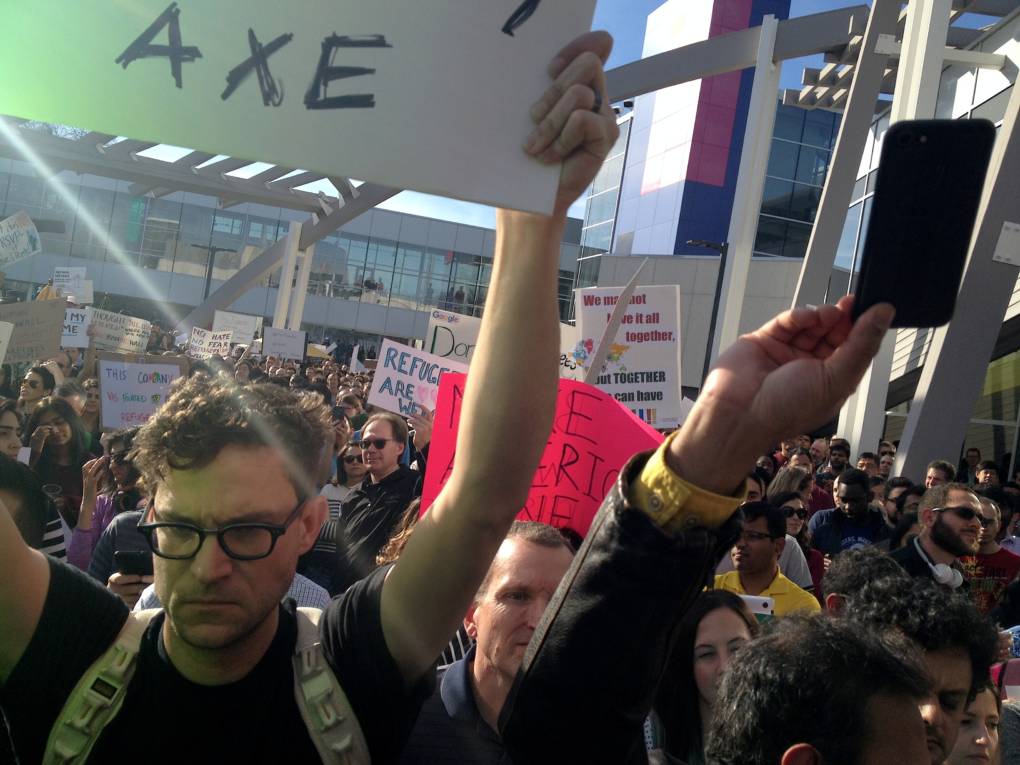
"caption": "Googlers packed the campus quad at the company's headquarters in Mountain View. They were protesting President Trump's executive order to ban people from seven majority Muslim states from entering the U.S.",
"description": null,
"title": "google protest in quad",
"credit": "Queena Sook Kim",
"status": "inherit",
"isLoading": false,
"fetchFailed": false
}
},
"audioPlayerReducer": {
"postId": "stream_live",
"isPaused": true,
"isPlaying": false,
"pfsActive": false,
"pledgeModalIsOpen": true,
"playerDrawerIsOpen": false,
"liveAudioPlayStartedAt": 0,
"liveAudioPlayContext": ""
},
"authorsReducer": {
"byline_news_11326640": {
"type": "authors",
"id": "byline_news_11326640",
"meta": {
"override": true
},
"slug": "byline_news_11326640",
"name": "\u003cstrong>Laura Smitherman\u003cbr>NPR\u003c/strong>",
"isLoading": false
},
"byline_news_11315413": {
"type": "authors",
"id": "byline_news_11315413",
"meta": {
"override": true
},
"slug": "byline_news_11315413",
"name": "\u003cstrong>Camila Domonoske\u003cbr>\u003ca href=\"http://www.npr.org/sections/thetwo-way/2017/02/13/515032423/75-percent-of-immigration-raid-arrests-were-for-criminal-convictions-dhs-says\">NPR\u003c/a>\u003c/strong>",
"isLoading": false
},
"byline_news_11310875": {
"type": "authors",
"id": "byline_news_11310875",
"meta": {
"override": true
},
"slug": "byline_news_11310875",
"name": "\u003cstrong>Associated Press\u003c/strong>",
"isLoading": false
},
"byline_news_11307696": {
"type": "authors",
"id": "byline_news_11307696",
"meta": {
"override": true
},
"slug": "byline_news_11307696",
"name": "\u003cstrong>\u003ca href=\"https://ww2.kqed.org/news/author/qkim/\">Queena Sook Kim\u003c/a>\u003c/strong> and \u003ca href=\"https://twitter.com/lizgannes\">Liz Gannes\u003ca/>",
"isLoading": false
},
"kqed": {
"type": "authors",
"id": "236",
"meta": {
"index": "authors_1716337520",
"id": "236",
"found": true
},
"name": "KQED News Staff",
"firstName": "KQED News Staff",
"lastName": null,
"slug": "kqed",
"email": "faq@kqed.org",
"display_author_email": false,
"staff_mastheads": [],
"title": null,
"bio": null,
"avatar": "https://secure.gravatar.com/avatar/ef0e801a68c4c54afa9180db14084167?s=600&d=blank&r=g",
"twitter": null,
"facebook": null,
"instagram": null,
"linkedin": null,
"sites": [
{
"site": "arts",
"roles": [
"contributor"
]
},
{
"site": "news",
"roles": [
"editor"
]
},
{
"site": "futureofyou",
"roles": [
"author"
]
}
],
"headData": {
"title": "KQED News Staff | KQED",
"description": null,
"ogImgSrc": "https://secure.gravatar.com/avatar/ef0e801a68c4c54afa9180db14084167?s=600&d=blank&r=g",
"twImgSrc": "https://secure.gravatar.com/avatar/ef0e801a68c4c54afa9180db14084167?s=600&d=blank&r=g"
},
"isLoading": false,
"link": "/author/kqed"
},
"tgoldberg": {
"type": "authors",
"id": "258",
"meta": {
"index": "authors_1716337520",
"id": "258",
"found": true
},
"name": "Ted Goldberg",
"firstName": "Ted",
"lastName": "Goldberg",
"slug": "tgoldberg",
"email": "tgoldberg@kqed.org",
"display_author_email": true,
"staff_mastheads": [
"news"
],
"title": "KQED Managing Editor, News and Newscasts",
"bio": "Ted Goldberg is Managing Editor of News and Newscasts at KQED. His main reporting beat is the Bay Area's oil refining industry.\r\n\r\nPrior to joining KQED in 2014, Ted worked at CBS News and WCBS AM in New York and Bay City News and KCBS Radio in San Francisco. He graduated from Oberlin College in Ohio in 1998.",
"avatar": "https://secure.gravatar.com/avatar/16d702c9ec5f696d78dbfb76b592cf0a?s=600&d=blank&r=g",
"twitter": "TedrickG",
"bluesky": null,
"facebook": null,
"instagram": null,
"linkedin": null,
"sites": [
{
"site": "news",
"roles": [
"editor"
]
},
{
"site": "science",
"roles": [
"editor"
]
}
],
"headData": {
"title": "Ted Goldberg | KQED",
"description": "KQED Managing Editor, News and Newscasts",
"ogImgSrc": "https://secure.gravatar.com/avatar/16d702c9ec5f696d78dbfb76b592cf0a?s=600&d=blank&r=g",
"twImgSrc": "https://secure.gravatar.com/avatar/16d702c9ec5f696d78dbfb76b592cf0a?s=600&d=blank&r=g"
},
"isLoading": false,
"link": "/author/tgoldberg"
},
"mlagos": {
"type": "authors",
"id": "3239",
"meta": {
"index": "authors_1716337520",
"id": "3239",
"found": true
},
"name": "Marisa Lagos",
"firstName": "Marisa",
"lastName": "Lagos",
"slug": "mlagos",
"email": "mlagos@kqed.org",
"display_author_email": false,
"staff_mastheads": [
"news"
],
"title": "KQED Contributor",
"bio": "Marisa Lagos is a correspondent for KQED’s California Politics and Government Desk and co-hosts the award-winning show and podcast, Political Breakdown. At KQED, Lagos also conducts reporting, analysis and investigations into state, local and national politics for radio, TV, online and onstage. In 2022, she and co-host, Scott Shafer, moderated the only gubernatorial debate in California. In 2020, the \u003ci>Washington Post\u003c/i> named her one of the top political journalists in California; she was nominated for a Peabody and won several other awards for her work investigating the 2017 California wildfires. She has worked at the \u003ci>San Francisco Chronicle\u003c/i>, \u003ci>San Francisco Examiner\u003c/i> and \u003ci>Los Angeles Times\u003c/i>. A UC Santa Barbara graduate, she lives in San Francisco with her two sons and husband.",
"avatar": "https://secure.gravatar.com/avatar/a261a0d3696fc066871ef96b85b5e7d2?s=600&d=blank&r=g",
"twitter": "@mlagos",
"facebook": null,
"instagram": null,
"linkedin": null,
"sites": [
{
"site": "arts",
"roles": [
"author"
]
},
{
"site": "news",
"roles": [
"editor"
]
},
{
"site": "science",
"roles": [
"editor"
]
},
{
"site": "forum",
"roles": [
"author"
]
},
{
"site": "liveblog",
"roles": [
"author"
]
}
],
"headData": {
"title": "Marisa Lagos | KQED",
"description": "KQED Contributor",
"ogImgSrc": "https://secure.gravatar.com/avatar/a261a0d3696fc066871ef96b85b5e7d2?s=600&d=blank&r=g",
"twImgSrc": "https://secure.gravatar.com/avatar/a261a0d3696fc066871ef96b85b5e7d2?s=600&d=blank&r=g"
},
"isLoading": false,
"link": "/author/mlagos"
},
"fjhabvala": {
"type": "authors",
"id": "8659",
"meta": {
"index": "authors_1716337520",
"id": "8659",
"found": true
},
"name": "Farida Jhabvala Romero",
"firstName": "Farida",
"lastName": "Jhabvala Romero",
"slug": "fjhabvala",
"email": "fjhabvala@kqed.org",
"display_author_email": true,
"staff_mastheads": [
"news"
],
"title": "KQED Contributor",
"bio": "\u003cspan style=\"font-weight: 400;\">Farida Jhabvala Romero is a Labor Correspondent for KQED. She previously covered immigration. Farida was \u003ca href=\"https://www.ccnma.org/2022-most-influential-latina-journalists\">named\u003c/a> one of the 10 Most Influential Latina Journalists in California in 2022 by the California Chicano News Media Association. Her work has won awards from the Society of Professional Journalists (Northern California), as well as a national and regional Edward M. Murrow Award for the collaborative reporting projects “Dangerous Air” and “Graying California.” \u003c/span>\u003cspan style=\"font-weight: 400;\">Before joining KQED, Farida worked as a producer at Radio Bilingüe, a national public radio network. Farida earned her master’s degree in journalism from Stanford University.\u003c/span>",
"avatar": "https://secure.gravatar.com/avatar/c3ab27c5554b67b478f80971e515aa02?s=600&d=blank&r=g",
"twitter": "FaridaJhabvala",
"facebook": null,
"instagram": null,
"linkedin": "https://www.linkedin.com/in/faridajhabvala/",
"sites": [
{
"site": "news",
"roles": [
"editor"
]
},
{
"site": "stateofhealth",
"roles": [
"author"
]
}
],
"headData": {
"title": "Farida Jhabvala Romero | KQED",
"description": "KQED Contributor",
"ogImgSrc": "https://secure.gravatar.com/avatar/c3ab27c5554b67b478f80971e515aa02?s=600&d=blank&r=g",
"twImgSrc": "https://secure.gravatar.com/avatar/c3ab27c5554b67b478f80971e515aa02?s=600&d=blank&r=g"
},
"isLoading": false,
"link": "/author/fjhabvala"
},
"qkim": {
"type": "authors",
"id": "11099",
"meta": {
"index": "authors_1716337520",
"id": "11099",
"found": true
},
"name": "Queena Sook Kim",
"firstName": "Queena",
"lastName": "Kim",
"slug": "qkim",
"email": "qkim@kqed.org",
"display_author_email": false,
"staff_mastheads": [
"news"
],
"title": "Senior Editor",
"bio": "\u003cspan style=\"font-weight: 400;\">Queena Sook Kim is a former senior editor of the weekend desk at KQED. Before taking on that post, she was the Senior Editor of the Silicon Valley Desk and was the \u003c/span>\u003cspan style=\"font-weight: 400;\">host of The California Report. The daily morning show airs on KQED in San Francisco, one of the nation’s largest NPR affiliates, and on 30 stations across the state. In that role, she produces and reports on news, politics and life in the Golden State. Queena likes to take sideways look at the larger trends changing the state. One of her favorite stories asked\u003c/span>\u003ca href=\"https://ww2.kqed.org/news/2015/02/15/why-the-heck-do-mexican-reporters-on-public-radio-say-their-names-that-way\"> \u003cspan style=\"font-weight: 400;\">why Latino journalists “over’pronounce” their Spanish surnames\u003c/span>\u003c/a>\u003cspan style=\"font-weight: 400;\"> as a way of looking at how immigration is creating a culture shift in California.\u003c/span>\r\n\r\n\u003cspan style=\"font-weight: 400;\">Before joining The California Report, Queena was a \u003ca href=\"http://www.marketplace.org/people/queena-kim\">Senior Reporter covering technology for Marketplace\u003c/a>, the daily business show that airs on public radio. Queena covered daily tech business stories and reported on larger technology trends. She did a series of stories looking at role of social engineering in hacking and on a start-up in Silicon Valley that’s trying to use technology, instead of animals, to make meat that bleeds.\u003c/span>\r\n\r\n\u003cspan style=\"font-weight: 400;\">Queena started her career as a business journalist at the Wall Street Journal, where she spent four years covering the paper, home building and toy industries. She wrote A1 stories about the unusually aggressive tactics KB Home took against its home buyers. and the resurgence of “Cracker” architecture in Florida. She also wrote section front stories on marketing trends and\u003c/span>\r\n\r\n\u003cspan style=\"font-weight: 400;\">As a journalist, Queena has spent much of her career helping start-up editorial products. She was on the founding editorial team of The Bay Citizen, an experimental, online news site in San Francisco that was funded by the late hillbilly billionaire Warren Hellman. In 2009, Queena received a grant from the Corporation of Public Broadcasting to start-up a podcast called \u003ca href=\"https://soundcloud.com/cyberfrequencies\">CyberFrequencies\u003c/a>, which reported on the culture of technology. She also helped start-up two radio shows - Off-Ramp and Pacific Drift - for KPCC, the NPR-affiliate in Los Angeles. Off-Ramp was awarded 1st Place for news and Public Affairs programming by the PRINDI and the L.A. Press club. \u003ca href=\"https://soundcloud.com/queena-sook-kim\">Queena’s stories have appeared \u003c/a>on NPR’s Day to Day, Hearing Voices, WNYC’s Studio 360, WBUR’s Here and Now, BBC’s Global Perspectives and New York Times’ multimedia page.\u003c/span>\r\n\r\n\u003cspan style=\"font-weight: 400;\">In 1994, Queena won a Fulbright Grant to teach and study in Seoul, South Korea. She was also selected to be a Teach For America Corps Member in 1991 and taught elementary school in the Inglewood Unified School District in Southern California.\u003c/span>\r\n\r\n\u003cspan style=\"font-weight: 400;\">Queena is a frequent public speaker and has given talks at UC Berkeley, Stanford University, San Francisco State University, PRINDI conference and the Craigslist Foundation Boot Camp. Queena went to UC Berkeley’s Graduate School of Journalism and graduated cum laude from New York University with a B.A. in Politics. She grew up in Southern California and lives in Berkeley, Ca in a big fixer on which she spends most weekends, well, fixing.\u003c/span>",
"avatar": "https://secure.gravatar.com/avatar/b72382fd0db351b99f8a31939f4853fc?s=600&d=blank&r=g",
"twitter": "queenasookkim",
"facebook": null,
"instagram": null,
"linkedin": null,
"sites": [
{
"site": "news",
"roles": [
"subscriber"
]
},
{
"site": "forum",
"roles": [
"author"
]
},
{
"site": "breakingnews",
"roles": [
"editor"
]
}
],
"headData": {
"title": "Queena Sook Kim | KQED",
"description": "Senior Editor",
"ogImgSrc": "https://secure.gravatar.com/avatar/b72382fd0db351b99f8a31939f4853fc?s=600&d=blank&r=g",
"twImgSrc": "https://secure.gravatar.com/avatar/b72382fd0db351b99f8a31939f4853fc?s=600&d=blank&r=g"
},
"isLoading": false,
"link": "/author/qkim"
},
"korr": {
"type": "authors",
"id": "11200",
"meta": {
"index": "authors_1716337520",
"id": "11200",
"found": true
},
"name": "Katie Orr",
"firstName": "Katie",
"lastName": "Orr",
"slug": "korr",
"email": "korr@kqed.org",
"display_author_email": false,
"staff_mastheads": [],
"title": "KQED Contributor",
"bio": "Katie Orr was a Sacramento-based reporter for KQED's Politics and Government Desk, covering the state Capitol and a variety of issues including women in politics, voting and elections and legislation. Prior to joining KQED in 2016, Katie was state government reporter for Capital Public Radio in Sacramento. She's also worked for KPBS in San Diego, where she covered City Hall.\r\n\r\nKatie received her masters degree in political science from San Diego State University and holds a Bachelors degree in broadcast journalism from Arizona State University.\r\n\r\nIn 2015 Katie won a national Clarion Award for a series of stories she did on women in California politics. She's been honored by the Society for Professional Journalists and, in 2013, was named by \u003cem>The Washington Post\u003c/em> as one of the country's top state Capitol reporters. She's also reported for the award-winning documentary series \u003cem>The View from Here \u003c/em>and was part of the team that won national PRNDI and Gabriel Awards in 2015. She lives in Sacramento with her husband. Twitter: @1KatieOrr",
"avatar": "https://secure.gravatar.com/avatar/41a40b25845adc78f50808670860449e?s=600&d=blank&r=g",
"twitter": "1katieorr",
"facebook": null,
"instagram": null,
"linkedin": null,
"sites": [
{
"site": "news",
"roles": [
"subscriber"
]
},
{
"site": "stateofhealth",
"roles": [
"author"
]
},
{
"site": "forum",
"roles": [
"author"
]
}
],
"headData": {
"title": "Katie Orr | KQED",
"description": "KQED Contributor",
"ogImgSrc": "https://secure.gravatar.com/avatar/41a40b25845adc78f50808670860449e?s=600&d=blank&r=g",
"twImgSrc": "https://secure.gravatar.com/avatar/41a40b25845adc78f50808670860449e?s=600&d=blank&r=g"
},
"isLoading": false,
"link": "/author/korr"
}
},
"pagesReducer": {
"news_tag_immigration": {
"type": "terms",
"id": "news_20202",
"meta": {
"index": "terms_1716263798",
"site": "news",
"id": "20202",
"score": 6.90445
},
"featImg": null,
"name": "immigration",
"description": null,
"taxonomy": "tag",
"headData": {
"twImgId": null,
"twTitle": null,
"ogTitle": null,
"ogImgId": null,
"twDescription": null,
"description": null,
"title": "immigration Archives | KQED News",
"ogDescription": null
},
"ttid": 20219,
"slug": "immigration",
"isLoading": false,
"title": "immigration",
"pageMeta": {
"site": "news",
"WpPageTemplate": "page-topic-editorial",
"currentPage": 90
},
"blocks": [
{
"blockName": "kqed/post-list",
"attrs": {
"layout": "cardArticle2",
"query": "posts/news?tag=immigration",
"seeMore": false,
"paginated": true,
"page": 90
}
},
{
"blockName": "kqed/ad"
}
]
}
},
"pfsSessionReducer": {},
"postsReducer": {
"stream_live": {
"type": "live",
"id": "stream_live",
"audioUrl": "https://streams.kqed.org/kqedradio",
"title": "Live Stream",
"excerpt": "Live Stream information currently unavailable.",
"link": "/radio",
"featImg": "",
"label": {
"name": "KQED Live",
"link": "/"
}
},
"stream_kqedNewscast": {
"type": "posts",
"id": "stream_kqedNewscast",
"audioUrl": "https://www.kqed.org/.stream/anon/radio/RDnews/newscast.mp3?_=1",
"title": "KQED Newscast",
"featImg": "",
"label": {
"name": "88.5 FM",
"link": "/"
}
},
"news_11336367": {
"type": "posts",
"id": "news_11336367",
"meta": {
"index": "posts_1716263798",
"site": "news",
"id": "11336367",
"score": null,
"sort": [
1488221293000
]
},
"guestAuthors": [],
"slug": "interview-with-shawn-moran-vice-president-of-the-national-border-patrol-council",
"title": "Interview with Border Patrol Agent Shawn Moran",
"publishDate": 1488221293,
"format": "video",
"headTitle": "Interview with Border Patrol Agent Shawn Moran | KQED",
"labelTerm": {
"term": 7052,
"site": "news"
},
"content": "\u003cp>KQED NEWSROOM’s Thuy Vu talks with Shawn Moran, a 20-year veteran U.S. Border Patrol agent in San Diego and Vice-President of the National Border Patrol Council, the union representing more than 16,000 border patrol agents. Moran spoke about border security challenges and new directives from the Department of Homeland Security to crackdown on illegal immigration, the merits of building a wall along the U.S.-Mexico border and the border security challenges unique to California. \u003c/p>\n\u003cp>[ad fullwidth]\u003c/p>\u003cp>\u003c/p>\n",
"blocks": [],
"excerpt": "Shawn Moran, Vice-President of the National Border Patrol Council, talks about boosting border security.",
"status": "publish",
"parent": 0,
"modified": 1721109767,
"stats": {
"hasAudio": false,
"hasVideo": false,
"hasChartOrMap": false,
"iframeSrcs": [],
"hasGoogleForm": false,
"hasGallery": false,
"hasHearkenModule": false,
"hasPolis": false,
"paragraphCount": 3,
"wordCount": 83
},
"headData": {
"title": "Interview with Border Patrol Agent Shawn Moran | KQED",
"description": "Shawn Moran, Vice-President of the National Border Patrol Council, talks about boosting border security.",
"ogTitle": "",
"ogDescription": "",
"ogImgId": "",
"twTitle": "",
"twDescription": "",
"twImgId": "",
"schema": {
"@context": "https://schema.org",
"@type": "NewsArticle",
"headline": "Interview with Border Patrol Agent Shawn Moran",
"datePublished": "2017-02-27T10:48:13-08:00",
"dateModified": "2024-07-15T23:02:47-07:00",
"image": "https://cdn.kqed.org/wp-content/uploads/2020/02/KQED-OG-Image@1x.png",
"isAccessibleForFree": "True",
"publisher": {
"@type": "NewsMediaOrganization",
"@id": "https://www.kqed.org/#organization",
"name": "KQED",
"logo": "https://cdn.kqed.org/wp-content/uploads/2020/02/KQED-OG-Image@1x.png",
"url": "https://www.kqed.org",
"sameAs": [
"https://www.facebook.com/KQED",
"https://twitter.com/KQED",
"https://www.instagram.com/kqed/",
"https://www.tiktok.com/@kqedofficial",
"https://www.linkedin.com/company/kqed",
"https://www.youtube.com/channel/UCeC0IOo7i1P_61zVUWbJ4nw"
]
}
}
},
"videoEmbed": "https://youtu.be/dVYIkOJS6w8",
"sticky": false,
"path": "/news/11336367/interview-with-shawn-moran-vice-president-of-the-national-border-patrol-council",
"audioTrackLength": null,
"parsedContent": [
{
"type": "contentString",
"content": "\u003cdiv class=\"post-body\">\u003cp>\u003cp>KQED NEWSROOM’s Thuy Vu talks with Shawn Moran, a 20-year veteran U.S. Border Patrol agent in San Diego and Vice-President of the National Border Patrol Council, the union representing more than 16,000 border patrol agents. Moran spoke about border security challenges and new directives from the Department of Homeland Security to crackdown on illegal immigration, the merits of building a wall along the U.S.-Mexico border and the border security challenges unique to California. \u003c/p>\n\u003cp>\u003c/p>\u003c/div>",
"attributes": {
"named": {},
"numeric": []
}
},
{
"type": "component",
"content": "",
"name": "ad",
"attributes": {
"named": {
"label": "fullwidth"
},
"numeric": [
"fullwidth"
]
}
},
{
"type": "contentString",
"content": "\u003cdiv class=\"post-body\">\u003cp>\u003c/p>\u003cp>\u003c/p>\n\u003c/div>\u003c/p>",
"attributes": {
"named": {},
"numeric": []
}
}
],
"link": "/news/11336367/interview-with-shawn-moran-vice-president-of-the-national-border-patrol-council",
"authors": [
"236"
],
"programs": [
"news_7052"
],
"categories": [
"news_1169",
"news_8"
],
"tags": [
"news_20595",
"news_20594",
"news_20202",
"news_20052",
"news_19177"
],
"featImg": "news_11336368",
"label": "news_7052"
},
"news_11332470": {
"type": "posts",
"id": "news_11332470",
"meta": {
"index": "posts_1716263798",
"site": "news",
"id": "11332470",
"score": null,
"sort": [
1487990549000
]
},
"guestAuthors": [],
"slug": "boosting-border-security-immigration-enforcement-changes-robert-reich-cleve-jones",
"title": "Boosting Border Security, Immigration Enforcement Changes, Robert Reich, Cleve Jones",
"publishDate": 1487990549,
"format": "video",
"headTitle": "Boosting Border Security, Immigration Enforcement Changes, Robert Reich, Cleve Jones | KQED",
"labelTerm": {
"term": 7052,
"site": "news"
},
"content": "\u003cp>\u003cb>Boosting Border Security\u003c/b>\u003cbr>\nVice President of the National Border Patrol Council Shawn Moran talks about the Trump administration’s new efforts to crack down on illegal immigration and hire thousands of new border patrol agents. \u003c/p>\n\u003cp>\u003cb>Immigration Enforcement Changes\u003c/b>\u003cbr>\nUC Hastings law professor Karen Musalo discusses legal concerns over the expansion of immigration enforcement, which would greatly increase the number of people subject to deportation. \u003c/p>\n\u003cp>\u003cb>Robert Reich on Job Creation\u003c/b>\u003cbr>\nUC Berkeley public policy professor Robert Reich shares his thoughts about boosting the economy, raising wages for American workers and why strict immigration policies could be bad for California’s economy.\u003c/p>\n\u003cp>\u003cb>Cleve Jones on “When We Rise\u003c/b>\u003cbr>\nLongtime gay rights activist Cleve Jones discusses his memoir, “When We Rise.” Jones’ story is also part of a new ABC miniseries of the same title, about the early struggle for LGBT rights.\u003c/p>\n\u003cp>[ad fullwidth]\u003c/p>\u003cp>\u003c/p>\n",
"blocks": [],
"excerpt": "Hear from a 20-year veteran of the Border Patrol, LGBT activist Cleve Jones and UC Berkeley professor Robert Reich",
"status": "publish",
"parent": 0,
"modified": 1738179156,
"stats": {
"hasAudio": false,
"hasVideo": false,
"hasChartOrMap": false,
"iframeSrcs": [],
"hasGoogleForm": false,
"hasGallery": false,
"hasHearkenModule": false,
"hasPolis": false,
"paragraphCount": 6,
"wordCount": 147
},
"headData": {
"title": "Boosting Border Security, Immigration Enforcement Changes, Robert Reich, Cleve Jones | KQED",
"description": "Hear from a 20-year veteran of the Border Patrol, LGBT activist Cleve Jones and UC Berkeley professor Robert Reich",
"ogTitle": "",
"ogDescription": "",
"ogImgId": "",
"twTitle": "",
"twDescription": "",
"twImgId": "",
"schema": {
"@context": "https://schema.org",
"@type": "NewsArticle",
"headline": "Boosting Border Security, Immigration Enforcement Changes, Robert Reich, Cleve Jones",
"datePublished": "2017-02-24T18:42:29-08:00",
"dateModified": "2025-01-29T11:32:36-08:00",
"image": "https://cdn.kqed.org/wp-content/uploads/2020/02/KQED-OG-Image@1x.png",
"isAccessibleForFree": "True",
"publisher": {
"@type": "NewsMediaOrganization",
"@id": "https://www.kqed.org/#organization",
"name": "KQED",
"logo": "https://cdn.kqed.org/wp-content/uploads/2020/02/KQED-OG-Image@1x.png",
"url": "https://www.kqed.org",
"sameAs": [
"https://www.facebook.com/KQED",
"https://twitter.com/KQED",
"https://www.instagram.com/kqed/",
"https://www.tiktok.com/@kqedofficial",
"https://www.linkedin.com/company/kqed",
"https://www.youtube.com/channel/UCeC0IOo7i1P_61zVUWbJ4nw"
]
}
}
},
"videoEmbed": "https://youtu.be/h_O0W-I5mUU",
"sticky": false,
"path": "/news/11332470/boosting-border-security-immigration-enforcement-changes-robert-reich-cleve-jones",
"audioTrackLength": null,
"parsedContent": [
{
"type": "contentString",
"content": "\u003cdiv class=\"post-body\">\u003cp>\u003cp>\u003cb>Boosting Border Security\u003c/b>\u003cbr>\nVice President of the National Border Patrol Council Shawn Moran talks about the Trump administration’s new efforts to crack down on illegal immigration and hire thousands of new border patrol agents. \u003c/p>\n\u003cp>\u003cb>Immigration Enforcement Changes\u003c/b>\u003cbr>\nUC Hastings law professor Karen Musalo discusses legal concerns over the expansion of immigration enforcement, which would greatly increase the number of people subject to deportation. \u003c/p>\n\u003cp>\u003cb>Robert Reich on Job Creation\u003c/b>\u003cbr>\nUC Berkeley public policy professor Robert Reich shares his thoughts about boosting the economy, raising wages for American workers and why strict immigration policies could be bad for California’s economy.\u003c/p>\n\u003cp>\u003cb>Cleve Jones on “When We Rise\u003c/b>\u003cbr>\nLongtime gay rights activist Cleve Jones discusses his memoir, “When We Rise.” Jones’ story is also part of a new ABC miniseries of the same title, about the early struggle for LGBT rights.\u003c/p>\n\u003cp>\u003c/p>\u003c/div>",
"attributes": {
"named": {},
"numeric": []
}
},
{
"type": "component",
"content": "",
"name": "ad",
"attributes": {
"named": {
"label": "fullwidth"
},
"numeric": [
"fullwidth"
]
}
},
{
"type": "contentString",
"content": "\u003cdiv class=\"post-body\">\u003cp>\u003c/p>\u003cp>\u003c/p>\n\u003c/div>\u003c/p>",
"attributes": {
"named": {},
"numeric": []
}
}
],
"link": "/news/11332470/boosting-border-security-immigration-enforcement-changes-robert-reich-cleve-jones",
"authors": [
"236"
],
"programs": [
"news_7052"
],
"categories": [
"news_1169",
"news_8"
],
"tags": [
"news_370",
"news_1323",
"news_20202",
"news_19177",
"news_2075"
],
"featImg": "news_11332471",
"label": "news_7052"
},
"news_11326640": {
"type": "posts",
"id": "news_11326640",
"meta": {
"index": "posts_1716263798",
"site": "news",
"id": "11326640",
"score": null,
"sort": [
1487695388000
]
},
"parent": 0,
"labelTerm": {
"site": "news",
"term": 72
},
"blocks": [],
"publishDate": 1487695388,
"format": "standard",
"disqusTitle": "Homeland Security Outlines New Rules Tightening Enforcement of Immigration Law",
"title": "Homeland Security Outlines New Rules Tightening Enforcement of Immigration Law",
"headTitle": "The California Report | KQED News",
"content": "\u003cp>Homeland Security Secretary John Kelly unveiled new policies on Tuesday that are aimed at detaining and deporting more immigrants in the U.S. illegally.\u003c/p>\n\u003cp>\u003ca href=\"https://www.dhs.gov/executive-orders-protecting-homeland\">The two memos\u003c/a>, signed by Kelly, lay out a series of steps the department plans to take to implement President Donald Trump's executive orders from late January. Those orders called for increased border security and better enforcement of the nation's immigration laws.\u003c/p>\n\u003cp>While the new policies call for a \"surge\" in the deployment of immigration judges and other personnel, DHS officials said the agency is not planning mass deportations and that many of the new policies would take time to implement.\u003c/p>\n\u003cp>\"We don't need a sense of panic necessarily in these communities,\" one official said in a conference call with reporters.\u003c/p>\n\u003cp>Under the new rules, the department would greatly expand the number of immigrants who are prioritized for removal. This includes unauthorized immigrants who may have committed a crime but not been charged, and anyone an immigration officer deems a risk to public safety or national security. The policies also make it more difficult for migrants to claim asylum.\u003c/p>\n\u003cp>[ad fullwidth]\u003c/p>\n\u003cp>Homeland Security officials said the policies would not affect Deferred Action for Childhood Arrivals, the Obama administration policy that offered protection from deportation for people who were brought to the U.S. illegally as children.\u003c/p>\n\u003cp>The department is planning expedited deportation proceedings for unauthorized immigrants who have been in the country illegally for up to two years. Under the Obama administration, those expedited deportations had been limited to those in the country for two weeks or less.\u003c/p>\n\u003cp>In addition, the policies call for an expansion of a federal program that enlists state and local law enforcement to enforce immigration laws.\u003c/p>\n\u003cp>That partnership program has come under fire from critics who allege it led to racial profiling. The federal government terminated one such agreement with Maricopa County Sheriff Joe Arpaio in 2011 after the Justice Department found that county officers unlawfully stopped and detained Latinos.\u003c/p>\n\u003cp>\u003c/p>\n\u003cp>On Tuesday, DHS called the program \"a highly successful force multiplier.\" Officials said local officers go through extensive training and that racial profiling would not be tolerated.\u003c/p>\n\u003cdiv class=\"fullattribution\">Copyright 2017 NPR. To see more, visit http://www.npr.org/.\u003cimg src=\"http://www.google-analytics.com/__utm.gif?utmac=UA-5828686-4&utmdt=Homeland+Security+Outlines+New+Rules+Tightening+Enforcement+Of+Immigration+Law&utme=8(APIKey)9(MDAxOTAwOTE4MDEyMTkxMDAzNjczZDljZA004)\">\u003c/div>\n\n",
"disqusIdentifier": "11326640 https://ww2.kqed.org/news/?p=11326640",
"disqusUrl": "https://ww2.kqed.org/news/2017/02/21/homeland-security-outlines-new-rules-tightening-enforcement-of-immigration-law/",
"stats": {
"hasVideo": false,
"hasChartOrMap": false,
"hasAudio": false,
"hasPolis": false,
"wordCount": 370,
"hasGoogleForm": false,
"hasGallery": false,
"hasHearkenModule": false,
"iframeSrcs": [],
"paragraphCount": 12
},
"modified": 1487722062,
"excerpt": "Two memos, signed by Secretary John Kelly, greatly expand the number of immigrants prioritized for removal. The rules do not affect 'Dreamers.'",
"headData": {
"twImgId": "",
"twTitle": "",
"ogTitle": "",
"ogImgId": "",
"twDescription": "",
"description": "Two memos, signed by Secretary John Kelly, greatly expand the number of immigrants prioritized for removal. The rules do not affect 'Dreamers.'",
"title": "Homeland Security Outlines New Rules Tightening Enforcement of Immigration Law | KQED",
"ogDescription": "",
"schema": {
"@context": "https://schema.org",
"@type": "NewsArticle",
"headline": "Homeland Security Outlines New Rules Tightening Enforcement of Immigration Law",
"datePublished": "2017-02-21T08:43:08-08:00",
"dateModified": "2017-02-21T16:07:42-08:00",
"image": "https://cdn.kqed.org/wp-content/uploads/2020/02/KQED-OG-Image@1x.png",
"isAccessibleForFree": "True",
"publisher": {
"@type": "NewsMediaOrganization",
"@id": "https://www.kqed.org/#organization",
"name": "KQED",
"logo": "https://cdn.kqed.org/wp-content/uploads/2020/02/KQED-OG-Image@1x.png",
"url": "https://www.kqed.org",
"sameAs": [
"https://www.facebook.com/KQED",
"https://twitter.com/KQED",
"https://www.instagram.com/kqed/",
"https://www.tiktok.com/@kqedofficial",
"https://www.linkedin.com/company/kqed",
"https://www.youtube.com/channel/UCeC0IOo7i1P_61zVUWbJ4nw"
]
}
}
},
"guestAuthors": [],
"slug": "homeland-security-outlines-new-rules-tightening-enforcement-of-immigration-law",
"status": "publish",
"nprApiLink": "http://api.npr.org/query?id=516433342&apiKey=MDAxOTAwOTE4MDEyMTkxMDAzNjczZDljZA004",
"nprByline": "\u003cstrong>Laura Smitherman\u003cbr>NPR\u003c/strong>",
"nprStoryDate": "Tue, 21 Feb 2017 11:27:00 -0500",
"nprLastModifiedDate": "Tue, 21 Feb 2017 11:32:31 -0500",
"nprHtmlLink": "http://www.npr.org/sections/thetwo-way/2017/02/21/516433342/homeland-security-outlines-new-rules-tightening-enforcement-of-immigration-law?ft=nprml&f=516433342",
"nprStoryId": "516433342",
"nprRetrievedStory": "1",
"nprPubDate": "Tue, 21 Feb 2017 11:32:00 -0500",
"path": "/news/11326640/homeland-security-outlines-new-rules-tightening-enforcement-of-immigration-law",
"audioTrackLength": null,
"parsedContent": [
{
"type": "contentString",
"content": "\u003cdiv class=\"post-body\">\u003cp>\u003cp>Homeland Security Secretary John Kelly unveiled new policies on Tuesday that are aimed at detaining and deporting more immigrants in the U.S. illegally.\u003c/p>\n\u003cp>\u003ca href=\"https://www.dhs.gov/executive-orders-protecting-homeland\">The two memos\u003c/a>, signed by Kelly, lay out a series of steps the department plans to take to implement President Donald Trump's executive orders from late January. Those orders called for increased border security and better enforcement of the nation's immigration laws.\u003c/p>\n\u003cp>While the new policies call for a \"surge\" in the deployment of immigration judges and other personnel, DHS officials said the agency is not planning mass deportations and that many of the new policies would take time to implement.\u003c/p>\n\u003cp>\"We don't need a sense of panic necessarily in these communities,\" one official said in a conference call with reporters.\u003c/p>\n\u003cp>Under the new rules, the department would greatly expand the number of immigrants who are prioritized for removal. This includes unauthorized immigrants who may have committed a crime but not been charged, and anyone an immigration officer deems a risk to public safety or national security. The policies also make it more difficult for migrants to claim asylum.\u003c/p>\n\u003cp>\u003c/p>\u003c/div>",
"attributes": {
"named": {},
"numeric": []
}
},
{
"type": "component",
"content": "",
"name": "ad",
"attributes": {
"named": {
"label": "fullwidth"
},
"numeric": [
"fullwidth"
]
}
},
{
"type": "contentString",
"content": "\u003cdiv class=\"post-body\">\u003cp>\u003c/p>\n\u003cp>Homeland Security officials said the policies would not affect Deferred Action for Childhood Arrivals, the Obama administration policy that offered protection from deportation for people who were brought to the U.S. illegally as children.\u003c/p>\n\u003cp>The department is planning expedited deportation proceedings for unauthorized immigrants who have been in the country illegally for up to two years. Under the Obama administration, those expedited deportations had been limited to those in the country for two weeks or less.\u003c/p>\n\u003cp>In addition, the policies call for an expansion of a federal program that enlists state and local law enforcement to enforce immigration laws.\u003c/p>\n\u003cp>That partnership program has come under fire from critics who allege it led to racial profiling. The federal government terminated one such agreement with Maricopa County Sheriff Joe Arpaio in 2011 after the Justice Department found that county officers unlawfully stopped and detained Latinos.\u003c/p>\n\u003cp>\u003c/p>\n\u003cp>On Tuesday, DHS called the program \"a highly successful force multiplier.\" Officials said local officers go through extensive training and that racial profiling would not be tolerated.\u003c/p>\n\u003cdiv class=\"fullattribution\">Copyright 2017 NPR. To see more, visit http://www.npr.org/.\u003cimg src=\"http://www.google-analytics.com/__utm.gif?utmac=UA-5828686-4&utmdt=Homeland+Security+Outlines+New+Rules+Tightening+Enforcement+Of+Immigration+Law&utme=8(APIKey)9(MDAxOTAwOTE4MDEyMTkxMDAzNjczZDljZA004)\">\u003c/div>\n\n\u003c/div>\u003c/p>",
"attributes": {
"named": {},
"numeric": []
}
}
],
"link": "/news/11326640/homeland-security-outlines-new-rules-tightening-enforcement-of-immigration-law",
"authors": [
"byline_news_11326640"
],
"programs": [
"news_6944",
"news_72"
],
"categories": [
"news_1169",
"news_6188",
"news_8",
"news_13"
],
"tags": [
"news_3716",
"news_1323",
"news_19542",
"news_20202",
"news_17041"
],
"featImg": "news_11326705",
"label": "news_72"
},
"news_11315413": {
"type": "posts",
"id": "news_11315413",
"meta": {
"index": "posts_1716263798",
"site": "news",
"id": "11315413",
"score": null,
"sort": [
1487029466000
]
},
"guestAuthors": [],
"slug": "75-percent-of-immigration-raid-arrests-were-for-criminal-convictions-dhs-says",
"title": "75 Percent of Immigration Raid Arrests Were for Criminal Convictions, DHS Says",
"publishDate": 1487029466,
"format": "standard",
"headTitle": "75 Percent of Immigration Raid Arrests Were for Criminal Convictions, DHS Says | KQED",
"labelTerm": {},
"content": "\u003cp>Immigration and Customs Enforcement arrested 680 people in raids across the U.S. last week, approximately three-fourths of whom had prior criminal convictions, according to Homeland Security Secretary John Kelly.\u003c/p>\n\u003cp>The convictions were for offenses “including, but not limited to, homicide, aggravated sexual abuse, sexual assault of a minor, lewd and lascivious acts with a child, indecent liberties with a minor, drug trafficking, battery, assault, DUI and weapons charges.”\u003c/p>\n\u003cp>The Department of Homeland Security did not specify how many of the convictions were for the most serious crimes, like homicide and sexual assault; in regional fact sheets, ICE provided more detailed information on only 15 arrested individuals. It’s also unclear whether the 75 percent statistic includes more minor crimes than the examples listed.\u003c/p>\n\u003cp>The raids prompted an outcry from immigrant rights advocates, concerned about the scale and synchronization of the raids — which they described as unusual, despite ICE’s characterizations of the operations as “routine” — and by shifts in practice compared with previous ICE operations.\u003c/p>\n\u003cp>For instance, last week’s ICE arrests included “collateral damage,” or people who were picked up despite not being targeted in the operations — for instance, because they were in the same place as a person who \u003cem>was \u003c/em>targeted, and did not have documentation.\u003c/p>\n\u003cp>[ad fullwidth]\u003c/p>\n\u003cp>Individuals swept up in this way are presumably among the quarter of those arrested that Kelly did not identify as having a criminal conviction.\u003c/p>\n\u003cp>Immigration activists had also expressed concern over what kinds of crimes could lead a person to be a target for deportation. Kelly’s statement notes that some of the people arrested had convictions for serious crimes such as homicide and sexual assault, but it’s not clear how many of the arrests were for those crimes and how many for crimes such as drunken driving.\u003c/p>\n\u003cp>President Trump’s \u003ca href=\"https://www.whitehouse.gov/the-press-office/2017/01/25/presidential-executive-order-enhancing-public-safety-interior-united\">executive order\u003c/a> on the deportation of “criminal aliens” allows a person to be targeted for deportation over \u003cem>any \u003c/em>crime. It’s unclear from Kelly’s statement whether any lower-level crimes, like immigration offenses, are included in the 75 percent tally.\u003c/p>\n\u003cp>Joseph Villela, the director of policy at the immigrant rights group CHIRLA, told NPR on Sunday night that his organization had reports of people being arrested in the raids who would not have been prioritized for deportation before.\u003c/p>\n\u003cp>“There were individuals that had, first, no criminal conviction — second, maybe a minor conviction — but third, some of them had a previous deportation order and that was what made them a priority,” he said. “This is a shift that reflected [President Trump’s] executive order.”‘\u003c/p>\n\u003cp>Villela said there was a lack of transparency from ICE officials about how many people were affected by the raids, and that at one point CHIRLA’s legal team received false information about a client’s whereabouts.\u003c/p>\n\u003cp>He described a “deficit of trust” between advocacy groups and the enforcement agency.\u003c/p>\n\u003cp>“Forgive us for not believing 100 percent of what [ICE] are saying when in the field … they were not forthcoming in regards to the real numbers of individuals that were affected,” he said.\u003c/p>\n\u003cp>While President Trump has characterized the raids as fulfilling a campaign pledge to deport “criminals” in the country illegally, immigration officials have maintained the series of actions were just business as usual — in some cases, saying the operations were planned months in advance.\u003c/p>\n\u003cp>That discrepancy continued on Monday. During a joint news conference with Canadian Prime Minister Justin Trudeau, Trump praised Kelly and said the raids were fulfilling a campaign promise.\u003c/p>\n\u003cp>Meanwhile, Kelly characterized the raids as “consistent with the routine, targeted arrests carried out by ICE’s Fugitive Operations teams on a daily basis.”\u003c/p>\n\u003cp>The Trump administration has also said that in deporting people in the country illegally, the focus is on threats to “national security and public safety.”\u003c/p>\n\u003cp>\u003c/p>\n\u003cp>The statement from Kelly characterized recent arrests using slightly different terms. The 680 individuals arrested “pose a threat to public safety, border security or the integrity of our nation’s immigration system,” he wrote.\u003c/p>\n\u003cdiv class=\"fullattribution\">\u003cem>Copyright 2017 NPR. To see more, visit \u003ca href=\"http://www.npr.org/.\">www.npr.org\u003c/a>.\u003c/em>\u003c/div>\n\n",
"blocks": [],
"excerpt": "Of 680 people arrested, around three-quarters had convictions, Homeland Secretary John Kelly said. But raids also swept up people with no criminal record.",
"status": "publish",
"parent": 0,
"modified": 1727476737,
"stats": {
"hasAudio": false,
"hasVideo": false,
"hasChartOrMap": false,
"iframeSrcs": [],
"hasGoogleForm": false,
"hasGallery": false,
"hasHearkenModule": false,
"hasPolis": false,
"paragraphCount": 20,
"wordCount": 720
},
"headData": {
"title": "75 Percent of Immigration Raid Arrests Were for Criminal Convictions, DHS Says | KQED",
"description": "Of 680 people arrested, around three-quarters had convictions, Homeland Secretary John Kelly said. But raids also swept up people with no criminal record.",
"ogTitle": "",
"ogDescription": "",
"ogImgId": "",
"twTitle": "",
"twDescription": "",
"twImgId": "",
"schema": {
"@context": "https://schema.org",
"@type": "NewsArticle",
"headline": "75 Percent of Immigration Raid Arrests Were for Criminal Convictions, DHS Says",
"datePublished": "2017-02-13T15:44:26-08:00",
"dateModified": "2024-09-27T15:38:57-07:00",
"image": "https://cdn.kqed.org/wp-content/uploads/2020/02/KQED-OG-Image@1x.png",
"isAccessibleForFree": "True",
"publisher": {
"@type": "NewsMediaOrganization",
"@id": "https://www.kqed.org/#organization",
"name": "KQED",
"logo": "https://cdn.kqed.org/wp-content/uploads/2020/02/KQED-OG-Image@1x.png",
"url": "https://www.kqed.org",
"sameAs": [
"https://www.facebook.com/KQED",
"https://twitter.com/KQED",
"https://www.instagram.com/kqed/",
"https://www.tiktok.com/@kqedofficial",
"https://www.linkedin.com/company/kqed",
"https://www.youtube.com/channel/UCeC0IOo7i1P_61zVUWbJ4nw"
]
}
}
},
"source": "NPR",
"sourceUrl": "http://www.npr.org/sections/thetwo-way/2017/02/13/515032423/75-percent-of-immigration-raid-arrests-were-for-criminal-convictions-dhs-says",
"sticky": false,
"nprImageCredit": "Charles Reed/U.S. Immigration and Customs Enforcement",
"nprByline": "\u003cstrong>Camila Domonoske\u003cbr>\u003ca href=\"http://www.npr.org/sections/thetwo-way/2017/02/13/515032423/75-percent-of-immigration-raid-arrests-were-for-criminal-convictions-dhs-says\">NPR\u003c/a>\u003c/strong>",
"nprImageAgency": "AP",
"nprStoryId": "515032423",
"nprApiLink": "http://api.npr.org/query?id=515032423&apiKey=MDAxOTAwOTE4MDEyMTkxMDAzNjczZDljZA004",
"nprHtmlLink": "http://www.npr.org/sections/thetwo-way/2017/02/13/515032423/75-percent-of-immigration-raid-arrests-were-for-criminal-convictions-dhs-says?ft=nprml&f=515032423",
"nprRetrievedStory": "1",
"nprPubDate": "Mon, 13 Feb 2017 18:24:00 -0500",
"nprStoryDate": "Mon, 13 Feb 2017 16:12:00 -0500",
"nprLastModifiedDate": "Mon, 13 Feb 2017 18:24:18 -0500",
"path": "/news/11315413/75-percent-of-immigration-raid-arrests-were-for-criminal-convictions-dhs-says",
"audioTrackLength": null,
"parsedContent": [
{
"type": "contentString",
"content": "\u003cdiv class=\"post-body\">\u003cp>\u003cp>Immigration and Customs Enforcement arrested 680 people in raids across the U.S. last week, approximately three-fourths of whom had prior criminal convictions, according to Homeland Security Secretary John Kelly.\u003c/p>\n\u003cp>The convictions were for offenses “including, but not limited to, homicide, aggravated sexual abuse, sexual assault of a minor, lewd and lascivious acts with a child, indecent liberties with a minor, drug trafficking, battery, assault, DUI and weapons charges.”\u003c/p>\n\u003cp>The Department of Homeland Security did not specify how many of the convictions were for the most serious crimes, like homicide and sexual assault; in regional fact sheets, ICE provided more detailed information on only 15 arrested individuals. It’s also unclear whether the 75 percent statistic includes more minor crimes than the examples listed.\u003c/p>\n\u003cp>The raids prompted an outcry from immigrant rights advocates, concerned about the scale and synchronization of the raids — which they described as unusual, despite ICE’s characterizations of the operations as “routine” — and by shifts in practice compared with previous ICE operations.\u003c/p>\n\u003cp>For instance, last week’s ICE arrests included “collateral damage,” or people who were picked up despite not being targeted in the operations — for instance, because they were in the same place as a person who \u003cem>was \u003c/em>targeted, and did not have documentation.\u003c/p>\n\u003cp>\u003c/p>\u003c/div>",
"attributes": {
"named": {},
"numeric": []
}
},
{
"type": "component",
"content": "",
"name": "ad",
"attributes": {
"named": {
"label": "fullwidth"
},
"numeric": [
"fullwidth"
]
}
},
{
"type": "contentString",
"content": "\u003cdiv class=\"post-body\">\u003cp>\u003c/p>\n\u003cp>Individuals swept up in this way are presumably among the quarter of those arrested that Kelly did not identify as having a criminal conviction.\u003c/p>\n\u003cp>Immigration activists had also expressed concern over what kinds of crimes could lead a person to be a target for deportation. Kelly’s statement notes that some of the people arrested had convictions for serious crimes such as homicide and sexual assault, but it’s not clear how many of the arrests were for those crimes and how many for crimes such as drunken driving.\u003c/p>\n\u003cp>President Trump’s \u003ca href=\"https://www.whitehouse.gov/the-press-office/2017/01/25/presidential-executive-order-enhancing-public-safety-interior-united\">executive order\u003c/a> on the deportation of “criminal aliens” allows a person to be targeted for deportation over \u003cem>any \u003c/em>crime. It’s unclear from Kelly’s statement whether any lower-level crimes, like immigration offenses, are included in the 75 percent tally.\u003c/p>\n\u003cp>Joseph Villela, the director of policy at the immigrant rights group CHIRLA, told NPR on Sunday night that his organization had reports of people being arrested in the raids who would not have been prioritized for deportation before.\u003c/p>\n\u003cp>“There were individuals that had, first, no criminal conviction — second, maybe a minor conviction — but third, some of them had a previous deportation order and that was what made them a priority,” he said. “This is a shift that reflected [President Trump’s] executive order.”‘\u003c/p>\n\u003cp>Villela said there was a lack of transparency from ICE officials about how many people were affected by the raids, and that at one point CHIRLA’s legal team received false information about a client’s whereabouts.\u003c/p>\n\u003cp>He described a “deficit of trust” between advocacy groups and the enforcement agency.\u003c/p>\n\u003cp>“Forgive us for not believing 100 percent of what [ICE] are saying when in the field … they were not forthcoming in regards to the real numbers of individuals that were affected,” he said.\u003c/p>\n\u003cp>While President Trump has characterized the raids as fulfilling a campaign pledge to deport “criminals” in the country illegally, immigration officials have maintained the series of actions were just business as usual — in some cases, saying the operations were planned months in advance.\u003c/p>\n\u003cp>That discrepancy continued on Monday. During a joint news conference with Canadian Prime Minister Justin Trudeau, Trump praised Kelly and said the raids were fulfilling a campaign promise.\u003c/p>\n\u003cp>Meanwhile, Kelly characterized the raids as “consistent with the routine, targeted arrests carried out by ICE’s Fugitive Operations teams on a daily basis.”\u003c/p>\n\u003cp>The Trump administration has also said that in deporting people in the country illegally, the focus is on threats to “national security and public safety.”\u003c/p>\n\u003cp>\u003c/p>\n\u003cp>The statement from Kelly characterized recent arrests using slightly different terms. The 680 individuals arrested “pose a threat to public safety, border security or the integrity of our nation’s immigration system,” he wrote.\u003c/p>\n\u003cdiv class=\"fullattribution\">\u003cem>Copyright 2017 NPR. To see more, visit \u003ca href=\"http://www.npr.org/.\">www.npr.org\u003c/a>.\u003c/em>\u003c/div>\n\n\u003c/div>\u003c/p>",
"attributes": {
"named": {},
"numeric": []
}
}
],
"link": "/news/11315413/75-percent-of-immigration-raid-arrests-were-for-criminal-convictions-dhs-says",
"authors": [
"byline_news_11315413"
],
"programs": [
"news_6944",
"news_72"
],
"categories": [
"news_1169",
"news_6188",
"news_8",
"news_33520"
],
"tags": [
"news_1323",
"news_20202",
"news_20529"
],
"affiliates": [
"news_253"
],
"featImg": "news_11315414",
"label": "source_news_11315413"
},
"news_11311103": {
"type": "posts",
"id": "news_11311103",
"meta": {
"index": "posts_1716263798",
"site": "news",
"id": "11311103",
"score": null,
"sort": [
1486780976000
]
},
"guestAuthors": [],
"slug": "fight-over-immigration-ban-continues-california-public-school-policy-national-security-analysis",
"title": "Fight Over Immigration Ban Continues, California Public School Policy, National Security Analysis",
"publishDate": 1486780976,
"format": "video",
"headTitle": "Fight Over Immigration Ban Continues, California Public School Policy, National Security Analysis | KQED",
"labelTerm": {
"term": 7052,
"site": "news"
},
"content": "\u003cp>\u003cstrong>Fight Over Immigration Ban Continues\u003c/strong>\u003c/p>\n\u003cp>After a three-judge panel of the 9\u003csup>th\u003c/sup> U.S. Circuit Court of Appeals unanimously refused to reinstate President Trump’s executive order to restrict travel from seven predominantly Muslim countries, the president vowed he would take other actions to increase national security – as soon as next week, he suggested at a press conference Friday. UC Berkeley Law School interim dean Melissa Murray and KQED California Politics and Government senior editor Scott Shafer join Thuy Vu.\u003c/p>\n\u003cp>\u003cstrong>California Public School Policy\u003c/strong>\u003c/p>\n\u003cp>The confirmation of Betsy DeVos, a staunch supporter of so-called school choice, as secretary of the U.S. Department of Education raises questions about the impact of federal policy on California’s public schools and their roughly 6 million students. Also this week, San Francisco led the nation in making City College tuition free for all residents of the city. Learning Policy Institute President Linda Darling-Hammond and UC Berkeley education professor Janelle Scott join Thuy Vu.\u003c/p>\n\u003cp>\u003cstrong>National Security Analysis\u003c/strong>\u003c/p>\n\u003cp>[ad fullwidth]\u003c/p>\n\u003cp>\u003c/p>\n\u003cp>NPR correspondent David Welna describes his recent visit to Guantanamo Bay prison and discusses recent national security developments, including the impact of President Trump’s executive order on foreign relations.\u003c/p>\n\n",
"blocks": [],
"excerpt": "A look at the legal setback to the controversial travel ban and NPR's David Welna on national security.",
"status": "publish",
"parent": 0,
"modified": 1738179161,
"stats": {
"hasAudio": false,
"hasVideo": false,
"hasChartOrMap": false,
"iframeSrcs": [],
"hasGoogleForm": false,
"hasGallery": false,
"hasHearkenModule": false,
"hasPolis": false,
"paragraphCount": 8,
"wordCount": 202
},
"headData": {
"title": "Fight Over Immigration Ban Continues, California Public School Policy, National Security Analysis | KQED",
"description": "A look at the legal setback to the controversial travel ban and NPR's David Welna on national security.",
"ogTitle": "",
"ogDescription": "",
"ogImgId": "",
"twTitle": "",
"twDescription": "",
"twImgId": "",
"schema": {
"@context": "https://schema.org",
"@type": "NewsArticle",
"headline": "Fight Over Immigration Ban Continues, California Public School Policy, National Security Analysis",
"datePublished": "2017-02-10T18:42:56-08:00",
"dateModified": "2025-01-29T11:32:41-08:00",
"image": "https://cdn.kqed.org/wp-content/uploads/2020/02/KQED-OG-Image@1x.png",
"isAccessibleForFree": "True",
"publisher": {
"@type": "NewsMediaOrganization",
"@id": "https://www.kqed.org/#organization",
"name": "KQED",
"logo": "https://cdn.kqed.org/wp-content/uploads/2020/02/KQED-OG-Image@1x.png",
"url": "https://www.kqed.org",
"sameAs": [
"https://www.facebook.com/KQED",
"https://twitter.com/KQED",
"https://www.instagram.com/kqed/",
"https://www.tiktok.com/@kqedofficial",
"https://www.linkedin.com/company/kqed",
"https://www.youtube.com/channel/UCeC0IOo7i1P_61zVUWbJ4nw"
]
}
}
},
"videoEmbed": "https://youtu.be/T0LnWha1ypU",
"sticky": false,
"path": "/news/11311103/fight-over-immigration-ban-continues-california-public-school-policy-national-security-analysis",
"audioTrackLength": null,
"parsedContent": [
{
"type": "contentString",
"content": "\u003cdiv class=\"post-body\">\u003cp>\u003cp>\u003cstrong>Fight Over Immigration Ban Continues\u003c/strong>\u003c/p>\n\u003cp>After a three-judge panel of the 9\u003csup>th\u003c/sup> U.S. Circuit Court of Appeals unanimously refused to reinstate President Trump’s executive order to restrict travel from seven predominantly Muslim countries, the president vowed he would take other actions to increase national security – as soon as next week, he suggested at a press conference Friday. UC Berkeley Law School interim dean Melissa Murray and KQED California Politics and Government senior editor Scott Shafer join Thuy Vu.\u003c/p>\n\u003cp>\u003cstrong>California Public School Policy\u003c/strong>\u003c/p>\n\u003cp>The confirmation of Betsy DeVos, a staunch supporter of so-called school choice, as secretary of the U.S. Department of Education raises questions about the impact of federal policy on California’s public schools and their roughly 6 million students. Also this week, San Francisco led the nation in making City College tuition free for all residents of the city. Learning Policy Institute President Linda Darling-Hammond and UC Berkeley education professor Janelle Scott join Thuy Vu.\u003c/p>\n\u003cp>\u003cstrong>National Security Analysis\u003c/strong>\u003c/p>\n\u003cp>\u003c/p>\u003c/div>",
"attributes": {
"named": {},
"numeric": []
}
},
{
"type": "component",
"content": "",
"name": "ad",
"attributes": {
"named": {
"label": "fullwidth"
},
"numeric": [
"fullwidth"
]
}
},
{
"type": "contentString",
"content": "\u003cdiv class=\"post-body\">\u003cp>\u003c/p>\n\u003cp>\u003c/p>\n\u003cp>NPR correspondent David Welna describes his recent visit to Guantanamo Bay prison and discusses recent national security developments, including the impact of President Trump’s executive order on foreign relations.\u003c/p>\n\n\u003c/div>\u003c/p>",
"attributes": {
"named": {},
"numeric": []
}
}
],
"link": "/news/11311103/fight-over-immigration-ban-continues-california-public-school-policy-national-security-analysis",
"authors": [
"236"
],
"programs": [
"news_7052"
],
"categories": [
"news_1169",
"news_6188",
"news_8",
"news_13"
],
"tags": [
"news_1323",
"news_20202",
"news_20297",
"news_19177",
"news_20530"
],
"featImg": "news_11311104",
"label": "news_7052"
},
"news_11310875": {
"type": "posts",
"id": "news_11310875",
"meta": {
"index": "posts_1716263798",
"site": "news",
"id": "11310875",
"score": null,
"sort": [
1486770427000
]
},
"parent": 0,
"labelTerm": {
"site": "news",
"term": 72
},
"blocks": [],
"publishDate": 1486770427,
"format": "standard",
"disqusTitle": "After Travel Ban Halted in Court, Trump Considers a 'Brand-New Order'",
"title": "After Travel Ban Halted in Court, Trump Considers a 'Brand-New Order'",
"headTitle": "The California Report | KQED News",
"content": "\u003cp>Seeking to regroup after a stinging legal defeat, President Donald Trump said Friday he is considering signing a \"brand-new order\" after his refugee and immigration travel ban was halted in court.\u003c/p>\n\u003cp>Trump, speaking to reporters on Air Force One as he flew to Florida for the weekend, said he expected his administration to win the legal battle over his original directive. But he said the White House was also weighing other alternatives, including making changes to the order, which suspended the nation's refugee program and barred all entries from seven Muslim-majority countries.\u003c/p>\n\u003cp>The president said a new executive order would likely change \"very little\" from the first.\u003c/p>\n\u003cp>Trump's comments came a day after the 9th U.S. Circuit Court of Appeals upheld a restraining order on the original travel ban. While a White House official initially suggested the administration would not ask the Supreme Court to overturn that order, chief of staff Reince Priebus later said \"every single court option is on the table,\" including a high court appeal.\u003c/p>\n\u003cp>Priebus said the administration was also considering \"fighting out this case on the merits\" in a lower court.\u003c/p>\n\u003cp>[ad fullwidth]\u003c/p>\n\u003cp>Trump's executive order was hastily unveiled at the end of his first week in office. It caused chaos at airports in the U.S. and sparked protests across the country.\u003c/p>\n\u003cp>The president has cast the order as crucial for national security. Earlier Friday, he promised to take action \"very rapidly\" to protect the U.S. and its citizens in the wake of the appeals court decision, but he did not specify what steps he planned to take.\u003c/p>\n\u003cp>\"We'll be doing things to continue to make our country safe,\" Trump pledged at a news conference with Japanese Prime Minister Shinzo Abe. \"It will happen rapidly. We will not allow people into our country who are looking to do harm to our people.\"\u003c/p>\n\u003cp>The president's comments were far more restrained than his angry reaction to last week's initial court ruling blocking the travel ban. Trump took aim at both the \"so-called judge\" in that case and the ruling, which he called \"ridiculous.\"\u003c/p>\n\u003cp>Trump continued to conjure images of unspecified danger Friday, saying he had \"learned tremendous things that you could only learn, frankly, if you were in a certain position, namely president. And there are tremendous threats to our country. We will not allow that to happen, I can tell you that. We will not allow that to happen.\"\u003c/p>\n\u003cp>The 9th Circuit ruling represented a significant setback for Trump in just his third week in office. The appellate decision brushed aside arguments by the Justice Department that the president has the constitutional power to restrict entry to the United States and that the courts cannot second-guess his determination that such a step was needed to prevent terrorism.\u003c/p>\n\u003cp>Senate Minority Leader Chuck Schumer tweeted that Trump \"ought to see the writing on the wall\" and abandon the proposal. The New York Democrat called on the president to \"roll up his sleeves\" and come up with \"a real, bipartisan plan to keep us safe.\"\u003c/p>\n\u003cp>House Democratic leader Nancy Pelosi of California promised, \"Democrats will continue to press for President Trump's dangerous and unconstitutional ban to be withdrawn.\" And Trump's former presidential rival Hillary Clinton offered a terse response on Twitter, noting the unanimous vote: \"3-0.\"\u003c/p>\n\u003cp>Congress' Republican leaders, House Speaker Paul Ryan and Senate Majority Leader Mitch McConnell, declined to comment.\u003c/p>\n\u003cp>U.S. District Judge James Robart in Seattle issued the temporary restraining order halting the ban after Washington state and Minnesota sued, leading to the federal government's appeal.\u003c/p>\n\u003cp>The Trump administration has said the seven nations — Iran, Iraq, Libya, Somalia, Sudan, Syria and Yemen — have raised terrorism concerns. The states have argued that the executive order unconstitutionally blocked entry based on religion and the travel ban harmed individuals, businesses and universities.\u003c/p>\n\u003cp>Trump and his aides frequently refer to a ruling by a federal judge in Boston who declined last week to extend a temporary injunction against Trump's travel ban. In a separate federal ruling in Seattle, a different federal judge put the ban on hold nationwide; it is that judge's decision that the White House has challenged.\u003c/p>\n\u003cp>\u003c/p>\n\u003cp>\"It's a decision that we'll win, in my opinion, very easily. And, by the way, we won that decision in Boston,\" Trump said.\u003c/p>\n\n",
"disqusIdentifier": "11310875 https://ww2.kqed.org/news/?p=11310875",
"disqusUrl": "https://ww2.kqed.org/news/2017/02/10/after-travel-ban-halted-in-court-trump-considers-a-brand-new-order/",
"stats": {
"hasVideo": false,
"hasChartOrMap": false,
"hasAudio": false,
"hasPolis": false,
"wordCount": 735,
"hasGoogleForm": false,
"hasGallery": false,
"hasHearkenModule": false,
"iframeSrcs": [],
"paragraphCount": 20
},
"modified": 1487212795,
"excerpt": "Trump's comments came a day after the 9th U.S. Circuit Court of Appeals upheld a restraining order on the original travel ban.",
"headData": {
"twImgId": "",
"twTitle": "",
"ogTitle": "",
"ogImgId": "",
"twDescription": "",
"description": "Trump's comments came a day after the 9th U.S. Circuit Court of Appeals upheld a restraining order on the original travel ban.",
"title": "After Travel Ban Halted in Court, Trump Considers a 'Brand-New Order' | KQED",
"ogDescription": "",
"schema": {
"@context": "https://schema.org",
"@type": "NewsArticle",
"headline": "After Travel Ban Halted in Court, Trump Considers a 'Brand-New Order'",
"datePublished": "2017-02-10T15:47:07-08:00",
"dateModified": "2017-02-15T18:39:55-08:00",
"image": "https://cdn.kqed.org/wp-content/uploads/2020/02/KQED-OG-Image@1x.png",
"isAccessibleForFree": "True",
"publisher": {
"@type": "NewsMediaOrganization",
"@id": "https://www.kqed.org/#organization",
"name": "KQED",
"logo": "https://cdn.kqed.org/wp-content/uploads/2020/02/KQED-OG-Image@1x.png",
"url": "https://www.kqed.org",
"sameAs": [
"https://www.facebook.com/KQED",
"https://twitter.com/KQED",
"https://www.instagram.com/kqed/",
"https://www.tiktok.com/@kqedofficial",
"https://www.linkedin.com/company/kqed",
"https://www.youtube.com/channel/UCeC0IOo7i1P_61zVUWbJ4nw"
]
}
}
},
"guestAuthors": [],
"slug": "after-travel-ban-halted-in-court-trump-considers-a-brand-new-order",
"status": "publish",
"audioUrl": "https://soundcloud.com/thecaliforniareport/central-valley-prison-next-victim-of-valley-fever",
"nprByline": "\u003cstrong>Associated Press\u003c/strong>",
"guestFields": "0",
"path": "/news/11310875/after-travel-ban-halted-in-court-trump-considers-a-brand-new-order",
"audioTrackLength": null,
"parsedContent": [
{
"type": "contentString",
"content": "\u003cdiv class=\"post-body\">\u003cp>\u003cp>Seeking to regroup after a stinging legal defeat, President Donald Trump said Friday he is considering signing a \"brand-new order\" after his refugee and immigration travel ban was halted in court.\u003c/p>\n\u003cp>Trump, speaking to reporters on Air Force One as he flew to Florida for the weekend, said he expected his administration to win the legal battle over his original directive. But he said the White House was also weighing other alternatives, including making changes to the order, which suspended the nation's refugee program and barred all entries from seven Muslim-majority countries.\u003c/p>\n\u003cp>The president said a new executive order would likely change \"very little\" from the first.\u003c/p>\n\u003cp>Trump's comments came a day after the 9th U.S. Circuit Court of Appeals upheld a restraining order on the original travel ban. While a White House official initially suggested the administration would not ask the Supreme Court to overturn that order, chief of staff Reince Priebus later said \"every single court option is on the table,\" including a high court appeal.\u003c/p>\n\u003cp>Priebus said the administration was also considering \"fighting out this case on the merits\" in a lower court.\u003c/p>\n\u003cp>\u003c/p>\u003c/div>",
"attributes": {
"named": {},
"numeric": []
}
},
{
"type": "component",
"content": "",
"name": "ad",
"attributes": {
"named": {
"label": "fullwidth"
},
"numeric": [
"fullwidth"
]
}
},
{
"type": "contentString",
"content": "\u003cdiv class=\"post-body\">\u003cp>\u003c/p>\n\u003cp>Trump's executive order was hastily unveiled at the end of his first week in office. It caused chaos at airports in the U.S. and sparked protests across the country.\u003c/p>\n\u003cp>The president has cast the order as crucial for national security. Earlier Friday, he promised to take action \"very rapidly\" to protect the U.S. and its citizens in the wake of the appeals court decision, but he did not specify what steps he planned to take.\u003c/p>\n\u003cp>\"We'll be doing things to continue to make our country safe,\" Trump pledged at a news conference with Japanese Prime Minister Shinzo Abe. \"It will happen rapidly. We will not allow people into our country who are looking to do harm to our people.\"\u003c/p>\n\u003cp>The president's comments were far more restrained than his angry reaction to last week's initial court ruling blocking the travel ban. Trump took aim at both the \"so-called judge\" in that case and the ruling, which he called \"ridiculous.\"\u003c/p>\n\u003cp>Trump continued to conjure images of unspecified danger Friday, saying he had \"learned tremendous things that you could only learn, frankly, if you were in a certain position, namely president. And there are tremendous threats to our country. We will not allow that to happen, I can tell you that. We will not allow that to happen.\"\u003c/p>\n\u003cp>The 9th Circuit ruling represented a significant setback for Trump in just his third week in office. The appellate decision brushed aside arguments by the Justice Department that the president has the constitutional power to restrict entry to the United States and that the courts cannot second-guess his determination that such a step was needed to prevent terrorism.\u003c/p>\n\u003cp>Senate Minority Leader Chuck Schumer tweeted that Trump \"ought to see the writing on the wall\" and abandon the proposal. The New York Democrat called on the president to \"roll up his sleeves\" and come up with \"a real, bipartisan plan to keep us safe.\"\u003c/p>\n\u003cp>House Democratic leader Nancy Pelosi of California promised, \"Democrats will continue to press for President Trump's dangerous and unconstitutional ban to be withdrawn.\" And Trump's former presidential rival Hillary Clinton offered a terse response on Twitter, noting the unanimous vote: \"3-0.\"\u003c/p>\n\u003cp>Congress' Republican leaders, House Speaker Paul Ryan and Senate Majority Leader Mitch McConnell, declined to comment.\u003c/p>\n\u003cp>U.S. District Judge James Robart in Seattle issued the temporary restraining order halting the ban after Washington state and Minnesota sued, leading to the federal government's appeal.\u003c/p>\n\u003cp>The Trump administration has said the seven nations — Iran, Iraq, Libya, Somalia, Sudan, Syria and Yemen — have raised terrorism concerns. The states have argued that the executive order unconstitutionally blocked entry based on religion and the travel ban harmed individuals, businesses and universities.\u003c/p>\n\u003cp>Trump and his aides frequently refer to a ruling by a federal judge in Boston who declined last week to extend a temporary injunction against Trump's travel ban. In a separate federal ruling in Seattle, a different federal judge put the ban on hold nationwide; it is that judge's decision that the White House has challenged.\u003c/p>\n\u003cp>\u003c/p>\n\u003cp>\"It's a decision that we'll win, in my opinion, very easily. And, by the way, we won that decision in Boston,\" Trump said.\u003c/p>\n\n\u003c/div>\u003c/p>",
"attributes": {
"named": {},
"numeric": []
}
}
],
"link": "/news/11310875/after-travel-ban-halted-in-court-trump-considers-a-brand-new-order",
"authors": [
"byline_news_11310875"
],
"programs": [
"news_6944",
"news_72"
],
"categories": [
"news_6188",
"news_8",
"news_13"
],
"tags": [
"news_1323",
"news_20202"
],
"featImg": "news_11310882",
"label": "news_72"
},
"news_11309134": {
"type": "posts",
"id": "news_11309134",
"meta": {
"index": "posts_1716263798",
"site": "news",
"id": "11309134",
"score": null,
"sort": [
1486702841000
]
},
"guestAuthors": [],
"slug": "survey-30-percent-of-californians-approve-of-trumps-job-performance",
"title": "Survey: 30 Percent of Californians Approve of Trump's Job Performance",
"publishDate": 1486702841,
"format": "audio",
"headTitle": "Survey: 30 Percent of Californians Approve of Trump’s Job Performance | KQED",
"labelTerm": {
"term": 72,
"site": "news"
},
"content": "\u003cp>A \u003ca href=\"http://www.ppic.org/main/download.asp\" target=\"_blank\" rel=\"noopener\">new survey\u003c/a> from the Public Policy Institute of California finds overall that 30 percent of adults approve of the way President Trump is doing his job. But those numbers split sharply along party lines, with 72 percent of Republicans approving of the new president and 82 percent of Democrats disapproving.\u003c/p>\n\u003cp>The results demonstrate the state’s diversity, said PPIC president and CEO Mark Baldassare.\u003c/p>\n\u003cp>“Being not just geographically large but large in population, we’re a state that has a lot of unique and different political views within it that are represented,” he said.\u003c/p>\n\u003cp>Gov. Jerry Brown and the Democratic-controlled state Legislature seem to be faring well. The PPIC poll finds 62 percent of Californians approve of the job Brown’s doing — that’s the highest ever recorded by the survey. The Legislature’s approval rating is 57 percent, its highest point since 2001. However, there are deep partisan divides on that issue as well, with Republicans tending to disapprove of both.\u003c/p>\n\u003cfigure id=\"attachment_11309609\" class=\"wp-caption aligncenter\" style=\"max-width: 398px\">\u003cimg loading=\"lazy\" decoding=\"async\" class=\"wp-image-11309609 size-full\" src=\"https://ww2.kqed.org/news/wp-content/uploads/sites/10/2017/02/Gov_Leg_Approval.jpg\" alt=\"Gov_Leg_Approval\" width=\"398\" height=\"351\" srcset=\"https://cdn.kqed.org/wp-content/uploads/sites/10/2017/02/Gov_Leg_Approval.jpg 398w, https://cdn.kqed.org/wp-content/uploads/sites/10/2017/02/Gov_Leg_Approval-160x141.jpg 160w, https://cdn.kqed.org/wp-content/uploads/sites/10/2017/02/Gov_Leg_Approval-240x212.jpg 240w, https://cdn.kqed.org/wp-content/uploads/sites/10/2017/02/Gov_Leg_Approval-375x331.jpg 375w\" sizes=\"(max-width: 398px) 100vw, 398px\">\u003cfigcaption class=\"wp-caption-text\">Courtesy of PPIC \u003ccite>(Courtesy of PPIC)\u003c/cite>\u003c/figcaption>\u003c/figure>\n\u003cp>Baldassare says much of the goodwill being shown toward the governor and Legislature is likely related to California’s strong economy in recent years and the state spending money on programs people care about.\u003c/p>\n\u003cp>[ad fullwidth]\u003c/p>\n\u003cp>“But I also think that there is hope and there is expectation on the part of Californians, at this time when many Californians are troubled about the direction of the country, that our leadership here will be up to the task,” he says.\u003c/p>\n\u003cp>Climate change proved to be another partisan issue, with 65 percent of adults, including 82 percent of Democrats and 62 percent of independents, believing it is a major threat to the country’s well-being. Republicans were more likely to classify climate change as a minor threat or not a threat at all.\u003c/p>\n\u003cfigure id=\"attachment_11309610\" class=\"wp-caption aligncenter\" style=\"max-width: 392px\">\u003cimg loading=\"lazy\" decoding=\"async\" class=\"wp-image-11309610 size-full\" src=\"https://ww2.kqed.org/news/wp-content/uploads/sites/10/2017/02/ClimateChange_Gfx.jpg\" alt=\"ClimateChange_Gfx\" width=\"392\" height=\"340\" srcset=\"https://cdn.kqed.org/wp-content/uploads/sites/10/2017/02/ClimateChange_Gfx.jpg 392w, https://cdn.kqed.org/wp-content/uploads/sites/10/2017/02/ClimateChange_Gfx-160x139.jpg 160w, https://cdn.kqed.org/wp-content/uploads/sites/10/2017/02/ClimateChange_Gfx-240x208.jpg 240w, https://cdn.kqed.org/wp-content/uploads/sites/10/2017/02/ClimateChange_Gfx-375x325.jpg 375w\" sizes=\"(max-width: 392px) 100vw, 392px\">\u003cfigcaption class=\"wp-caption-text\">Courtesy of PPIC \u003ccite>(Courtesy of PPIC)\u003c/cite>\u003c/figcaption>\u003c/figure>\n\u003cp>One area that defied partisan divides was illegal immigration: 85 percent of adults, including 65 percent of Republicans, said undocumented immigrants should be allowed to stay in the country. Baldassare says many in California see immigration as a settled issue.\u003c/p>\n\u003cp>“Most Californians believe that the immigrants in our state are a net benefit to the people and economy of California,” he says.\u003c/p>\n\u003cp>\u003c/p>\n\u003cp>Among the top issues that concern Californians were the economy, immigration and education.\u003c/p>\n\n",
"blocks": [],
"excerpt": "A new survey shows blue California actually has vast internal divides.",
"status": "publish",
"parent": 0,
"modified": 1727476744,
"stats": {
"hasAudio": false,
"hasVideo": false,
"hasChartOrMap": false,
"iframeSrcs": [],
"hasGoogleForm": false,
"hasGallery": false,
"hasHearkenModule": false,
"hasPolis": false,
"paragraphCount": 12,
"wordCount": 401
},
"headData": {
"title": "Survey: 30 Percent of Californians Approve of Trump's Job Performance | KQED",
"description": "A new survey shows blue California actually has vast internal divides.",
"ogTitle": "",
"ogDescription": "",
"ogImgId": "",
"twTitle": "",
"twDescription": "",
"twImgId": "",
"schema": {
"@context": "https://schema.org",
"@type": "NewsArticle",
"headline": "Survey: 30 Percent of Californians Approve of Trump's Job Performance",
"datePublished": "2017-02-09T21:00:41-08:00",
"dateModified": "2024-09-27T15:39:04-07:00",
"image": "https://cdn.kqed.org/wp-content/uploads/2020/02/KQED-OG-Image@1x.png",
"isAccessibleForFree": "True",
"publisher": {
"@type": "NewsMediaOrganization",
"@id": "https://www.kqed.org/#organization",
"name": "KQED",
"logo": "https://cdn.kqed.org/wp-content/uploads/2020/02/KQED-OG-Image@1x.png",
"url": "https://www.kqed.org",
"sameAs": [
"https://www.facebook.com/KQED",
"https://twitter.com/KQED",
"https://www.instagram.com/kqed/",
"https://www.tiktok.com/@kqedofficial",
"https://www.linkedin.com/company/kqed",
"https://www.youtube.com/channel/UCeC0IOo7i1P_61zVUWbJ4nw"
]
}
}
},
"audioUrl": "http://www.kqed.org/.stream/anon/radio/tcr/2017/02/2017-02-10b-tcr.mp3",
"guestFields": "0",
"sticky": false,
"path": "/news/11309134/survey-30-percent-of-californians-approve-of-trumps-job-performance",
"audioTrackLength": null,
"parsedContent": [
{
"type": "contentString",
"content": "\u003cdiv class=\"post-body\">\u003cp>\u003cp>A \u003ca href=\"http://www.ppic.org/main/download.asp\" target=\"_blank\" rel=\"noopener\">new survey\u003c/a> from the Public Policy Institute of California finds overall that 30 percent of adults approve of the way President Trump is doing his job. But those numbers split sharply along party lines, with 72 percent of Republicans approving of the new president and 82 percent of Democrats disapproving.\u003c/p>\n\u003cp>The results demonstrate the state’s diversity, said PPIC president and CEO Mark Baldassare.\u003c/p>\n\u003cp>“Being not just geographically large but large in population, we’re a state that has a lot of unique and different political views within it that are represented,” he said.\u003c/p>\n\u003cp>Gov. Jerry Brown and the Democratic-controlled state Legislature seem to be faring well. The PPIC poll finds 62 percent of Californians approve of the job Brown’s doing — that’s the highest ever recorded by the survey. The Legislature’s approval rating is 57 percent, its highest point since 2001. However, there are deep partisan divides on that issue as well, with Republicans tending to disapprove of both.\u003c/p>\n\u003cfigure id=\"attachment_11309609\" class=\"wp-caption aligncenter\" style=\"max-width: 398px\">\u003cimg loading=\"lazy\" decoding=\"async\" class=\"wp-image-11309609 size-full\" src=\"https://ww2.kqed.org/news/wp-content/uploads/sites/10/2017/02/Gov_Leg_Approval.jpg\" alt=\"Gov_Leg_Approval\" width=\"398\" height=\"351\" srcset=\"https://cdn.kqed.org/wp-content/uploads/sites/10/2017/02/Gov_Leg_Approval.jpg 398w, https://cdn.kqed.org/wp-content/uploads/sites/10/2017/02/Gov_Leg_Approval-160x141.jpg 160w, https://cdn.kqed.org/wp-content/uploads/sites/10/2017/02/Gov_Leg_Approval-240x212.jpg 240w, https://cdn.kqed.org/wp-content/uploads/sites/10/2017/02/Gov_Leg_Approval-375x331.jpg 375w\" sizes=\"(max-width: 398px) 100vw, 398px\">\u003cfigcaption class=\"wp-caption-text\">Courtesy of PPIC \u003ccite>(Courtesy of PPIC)\u003c/cite>\u003c/figcaption>\u003c/figure>\n\u003cp>Baldassare says much of the goodwill being shown toward the governor and Legislature is likely related to California’s strong economy in recent years and the state spending money on programs people care about.\u003c/p>\n\u003cp>\u003c/p>\u003c/div>",
"attributes": {
"named": {},
"numeric": []
}
},
{
"type": "component",
"content": "",
"name": "ad",
"attributes": {
"named": {
"label": "fullwidth"
},
"numeric": [
"fullwidth"
]
}
},
{
"type": "contentString",
"content": "\u003cdiv class=\"post-body\">\u003cp>\u003c/p>\n\u003cp>“But I also think that there is hope and there is expectation on the part of Californians, at this time when many Californians are troubled about the direction of the country, that our leadership here will be up to the task,” he says.\u003c/p>\n\u003cp>Climate change proved to be another partisan issue, with 65 percent of adults, including 82 percent of Democrats and 62 percent of independents, believing it is a major threat to the country’s well-being. Republicans were more likely to classify climate change as a minor threat or not a threat at all.\u003c/p>\n\u003cfigure id=\"attachment_11309610\" class=\"wp-caption aligncenter\" style=\"max-width: 392px\">\u003cimg loading=\"lazy\" decoding=\"async\" class=\"wp-image-11309610 size-full\" src=\"https://ww2.kqed.org/news/wp-content/uploads/sites/10/2017/02/ClimateChange_Gfx.jpg\" alt=\"ClimateChange_Gfx\" width=\"392\" height=\"340\" srcset=\"https://cdn.kqed.org/wp-content/uploads/sites/10/2017/02/ClimateChange_Gfx.jpg 392w, https://cdn.kqed.org/wp-content/uploads/sites/10/2017/02/ClimateChange_Gfx-160x139.jpg 160w, https://cdn.kqed.org/wp-content/uploads/sites/10/2017/02/ClimateChange_Gfx-240x208.jpg 240w, https://cdn.kqed.org/wp-content/uploads/sites/10/2017/02/ClimateChange_Gfx-375x325.jpg 375w\" sizes=\"(max-width: 392px) 100vw, 392px\">\u003cfigcaption class=\"wp-caption-text\">Courtesy of PPIC \u003ccite>(Courtesy of PPIC)\u003c/cite>\u003c/figcaption>\u003c/figure>\n\u003cp>One area that defied partisan divides was illegal immigration: 85 percent of adults, including 65 percent of Republicans, said undocumented immigrants should be allowed to stay in the country. Baldassare says many in California see immigration as a settled issue.\u003c/p>\n\u003cp>“Most Californians believe that the immigrants in our state are a net benefit to the people and economy of California,” he says.\u003c/p>\n\u003cp>\u003c/p>\n\u003cp>Among the top issues that concern Californians were the economy, immigration and education.\u003c/p>\n\n\u003c/div>\u003c/p>",
"attributes": {
"named": {},
"numeric": []
}
}
],
"link": "/news/11309134/survey-30-percent-of-californians-approve-of-trumps-job-performance",
"authors": [
"11200"
],
"programs": [
"news_6944",
"news_72"
],
"categories": [
"news_34165",
"news_1758",
"news_19906",
"news_1169",
"news_6188",
"news_33520",
"news_13"
],
"tags": [
"news_255",
"news_1323",
"news_20202",
"news_30",
"news_1852",
"news_347",
"news_17286"
],
"featImg": "news_11286566",
"label": "news_72"
},
"news_11307696": {
"type": "posts",
"id": "news_11307696",
"meta": {
"index": "posts_1716263798",
"site": "news",
"id": "11307696",
"score": null,
"sort": [
1486701642000
]
},
"parent": 0,
"labelTerm": {
"site": "news",
"term": 72
},
"blocks": [],
"publishDate": 1486701642,
"format": "standard",
"disqusTitle": "Understanding Silicon Valley's Newfound Activism",
"title": "Understanding Silicon Valley's Newfound Activism",
"headTitle": "The California Report | KQED News",
"content": "\u003cp>Silicon Valley may want to change the world, but traditionally it has stayed out of the realm of politics to do it. So how to explain the sudden explosion of political protest against President Trump’s Jan. 27 executive order on immigration?\u003c/p>\n\u003cp>\u003ca href=\"https://www.crunchbase.com/person/tony-xu\" target=\"_blank\" rel=\"noopener noreferrer\">Tony Xu\u003c/a>’s metamorphosis provides one answer. Xu is the co-founder of the food delivery startup DoorDash, which is one of the tech companies that signed onto the \u003ca href=\"http://www.usatoday.com/story/tech/talkingtech/2017/02/06/97-companies-immigration-amicus-brief-trump-tech-google-apple-facebook/97561452/\" target=\"_blank\" rel=\"noopener noreferrer\">immigration amicus brief\u003c/a>.\u003c/p>\n\u003cp>“I am usually not politically involved,” Xu said.\u003c/p>\n\u003cp>[soundcloud url=\"https://api.soundcloud.com/tracks/306934888\" params=\"color=ff5500&auto_play=false&hide_related=false&show_comments=true&show_user=true&show_reposts=false\" width=\"100%\" height=\"166\" iframe=\"true\" /]\u003c/p>\n\u003cp>But the executive order touched a nerve. Xu immigrated from China to the U.S. when he was 5, and his family lived on food stamps when they first arrived. Today, DoorDash is valued at about $700 million, and employs hundreds of employees and tens of thousands of contractors across the country.\u003c/p>\n\u003cp>[ad fullwidth]\u003c/p>\n\u003cp>“You know, the typical immigrant story,” he said.\u003c/p>\n\u003cp>It’s also a typical Silicon Valley story. From the Hungarian-born Andy Grove, who went on to be a founder of Intel, to Soviet-born Sergey Brin at Google and \u003ca href=\"http://www.seattletimes.com/business/technology/expedia-ceo-says-trump-visa-order-shows-the-worst-of-his-proclivity-toward-rash-action/\" target=\"_blank\" rel=\"noopener noreferrer\">Dara Khosrowshahi\u003c/a>, the Iranian-born American citizen who is the CEO of Expedia, immigrants have been integral to the tech industry.\u003c/p>\n\u003cp>“The special sauce in Silicon Valley has always been this amalgamation of people from different backgrounds and different skill sets,” Xu said. “It’s best that we can congregate as much of that in Silicon Valley to solve the next set of problems. If we stop the flood of talent, that’s not going to happen.”\u003c/p>\n\u003cp>Trump’s executive order isn’t \u003cem>really\u003c/em> stopping that flood of talent. The number of tech workers from the seven countries named in the immigration ban represent a very small portion of the tech workforce. In a leaked email, Google CEO Sundar Pichai said \u003ca href=\"https://techcrunch.com/2017/01/28/google-ceo-sundar-pichai-fears-impact-of-trump-immigration-order-recalls-staff/\" target=\"_blank\" rel=\"noopener noreferrer\">a minimum of 187 Google employees\u003c/a> were affected. Google employs about 60,000 people around the world.\u003c/p>\n\u003cp>Given the relatively small numbers affected by the executive order, the protests and general outrage on Twitter among tech workers seems disproportionate. So what gives?\u003c/p>\n\u003cp>While exact numbers are difficult to come by, \u003ca href=\"http://www.jointventure.org/\" target=\"_blank\" rel=\"noopener noreferrer\">Joint Venture Silicon Valley\u003c/a> estimates that roughly 30 percent of tech workers are foreign-born noncitizens, in the U.S. on green cards and various visas. And the executive order, coupled with Trump’s divisive rhetoric against immigrants during the campaign, are being interpreted by this workforce as an attack on immigration writ large.\u003c/p>\n\u003cp>“You have this era of uncertainty where people are unsure and all they can think about, appropriately, is their immigration process,” said Romish Badani, co-founder and CEO of \u003ca href=\"https://www.bridge.us/\" target=\"_blank\" rel=\"noopener noreferrer\">Bridge US\u003c/a>, a San Francisco-based company that helps other firms with the immigration process.\u003c/p>\n\u003cp>“There’s very little productive work that probably got done last week for a foreign national, whether you’re an entrepreneur or you’re an employee of a company,” Badani said.\u003c/p>\n\u003cp>That decline in productivity was on view at Google’s Mountain View campus last week. Hundreds of employees stopped work to hold a \u003ca href=\"https://ww2.kqed.org/news/2017/01/31/google-employees-protest-trumps-immigration-ban/\" target=\"_blank\" rel=\"noopener noreferrer\">protest \u003c/a>against the executive order.\u003c/p>\n\u003cp>At the protest, it was clear that the messy rollout of the executive order created panic. Tech workers with green cards weren’t sure if they could enter the country. At one point it appeared the Trump administration reserved the right to revoke visas that were already granted.\u003c/p>\n\u003cp>Soufi Esmaeilzadeh, a product manager at Google, got caught up in this chaos. She’s a Canadian citizen who was born in Iran and is in the U.S. on a green card. The Friday the executive order was issued, Esmaeilzadeh was in Switzerland on a business trip. She called Google to ask if she should come home.\u003c/p>\n\u003cp>Esmaeilzadeh read from the company's emailed response to her, as she stood before the gathering of protesters.\u003c/p>\n\u003cp>“I highly recommend that you do not return to the states right now,” she read. \"And that we figure out a short-, medium- and long-term plan about where we can place you.”\u003c/p>\n\u003cp>Esmaeilzadeh asked the company what would happen if she tried to return to the U.S.\u003c/p>\n\u003cp>Google answered that “the likelihood was very high that I would either be deported or turned away or put on the next flight to Canada or back to Europe,” Esmaeilzadeh said. “Either of those situations could be put into my record and cause problems for me in the future.”\u003c/p>\n\u003cp>After a judge in Seattle put a hold on the ban, Esmaeilzadeh said Google told her to rush back home. But the scenario raises many questions. If you’re Google, do you stop sending some noncitizens on business trips for fear another order might come down? How do you recruit and plan in the face of such uncertainty?\u003c/p>\n\u003cp>Michael Tippett’s answer: move to Canada. Tippett is with \u003ca href=\"https://true-north-ventures.myshopify.com/pages/about-true-north\" target=\"_blank\" rel=\"noopener noreferrer\">True North\u003c/a>, a company that is helping American tech companies with foreign workers set up subsidiaries in Vancouver. He says Canada has friendlier immigration policies when it comes to tech workers.\u003c/p>\n\u003cp>“I think the eventual outcome of this could be that you get an exodus of incredibly talented world-class experts who have been brought to Silicon Valley,” Tippett said. But they may “find themselves wanting to find a second home and Vancouver might be that place.”\u003c/p>\n\u003cp>So does this mean Vancouver is the new Silicon Valley?\u003c/p>\n\u003cp>Not by a long shot, say venture capitalists. While Silicon Valley is feeling uncertain about what lies ahead, the fact remains that the venture money and big companies are established in the San Francisco Bay Area. And a few defections aren't going to change that.\u003c/p>\n\u003cp>\u003cem>\u003ca href=\"https://60db.co/\" target=\"_blank\" rel=\"noopener noreferrer\">60dB\u003c/a> is a personalized radio app where you can hear Liz Gannes' work and more.\u003c/em>\u003c/p>\n\u003cp>\u003c/p>\n\u003cp>\u003cem>This story is part of our ongoing series on Techquity: Diversity, Inclusion and Equity in Silicon Valley. \u003c/em>\u003c/p>\n\n",
"disqusIdentifier": "11307696 https://ww2.kqed.org/news/?p=11307696",
"disqusUrl": "https://ww2.kqed.org/news/2017/02/09/understanding-silicon-valleys-newfound-activism/",
"stats": {
"hasVideo": false,
"hasChartOrMap": false,
"hasAudio": false,
"hasPolis": false,
"wordCount": 1031,
"hasGoogleForm": false,
"hasGallery": false,
"hasHearkenModule": false,
"iframeSrcs": [],
"paragraphCount": 29
},
"modified": 1497557442,
"excerpt": "Immigrants have been integral to the tech industry, and President Trump's executive order banning immigration has touched a nerve.",
"headData": {
"twImgId": "",
"twTitle": "",
"ogTitle": "",
"ogImgId": "",
"twDescription": "",
"description": "Immigrants have been integral to the tech industry, and President Trump's executive order banning immigration has touched a nerve.",
"title": "Understanding Silicon Valley's Newfound Activism | KQED",
"ogDescription": "",
"schema": {
"@context": "https://schema.org",
"@type": "NewsArticle",
"headline": "Understanding Silicon Valley's Newfound Activism",
"datePublished": "2017-02-09T20:40:42-08:00",
"dateModified": "2017-06-15T13:10:42-07:00",
"image": "https://cdn.kqed.org/wp-content/uploads/2020/02/KQED-OG-Image@1x.png",
"isAccessibleForFree": "True",
"publisher": {
"@type": "NewsMediaOrganization",
"@id": "https://www.kqed.org/#organization",
"name": "KQED",
"logo": "https://cdn.kqed.org/wp-content/uploads/2020/02/KQED-OG-Image@1x.png",
"url": "https://www.kqed.org",
"sameAs": [
"https://www.facebook.com/KQED",
"https://twitter.com/KQED",
"https://www.instagram.com/kqed/",
"https://www.tiktok.com/@kqedofficial",
"https://www.linkedin.com/company/kqed",
"https://www.youtube.com/channel/UCeC0IOo7i1P_61zVUWbJ4nw"
]
}
}
},
"guestAuthors": [],
"slug": "understanding-silicon-valleys-newfound-activism",
"status": "publish",
"nprByline": "\u003cstrong>\u003ca href=\"https://ww2.kqed.org/news/author/qkim/\">Queena Sook Kim\u003c/a>\u003c/strong> and \u003ca href=\"https://twitter.com/lizgannes\">Liz Gannes\u003ca/>",
"path": "/news/11307696/understanding-silicon-valleys-newfound-activism",
"audioTrackLength": null,
"parsedContent": [
{
"type": "contentString",
"content": "\u003cdiv class=\"post-body\">\u003cp>\u003cp>Silicon Valley may want to change the world, but traditionally it has stayed out of the realm of politics to do it. So how to explain the sudden explosion of political protest against President Trump’s Jan. 27 executive order on immigration?\u003c/p>\n\u003cp>\u003ca href=\"https://www.crunchbase.com/person/tony-xu\" target=\"_blank\" rel=\"noopener noreferrer\">Tony Xu\u003c/a>’s metamorphosis provides one answer. Xu is the co-founder of the food delivery startup DoorDash, which is one of the tech companies that signed onto the \u003ca href=\"http://www.usatoday.com/story/tech/talkingtech/2017/02/06/97-companies-immigration-amicus-brief-trump-tech-google-apple-facebook/97561452/\" target=\"_blank\" rel=\"noopener noreferrer\">immigration amicus brief\u003c/a>.\u003c/p>\n\u003cp>“I am usually not politically involved,” Xu said.\u003c/p>\n\u003cp>\u003c/p>\u003cp>\u003cdiv class='utils-parseShortcode-shortcodes-__shortcodes__shortcodeWrapper'>\n \u003ciframe width='100%' height='166'\n scrolling='no' frameborder='no'\n src='https://w.soundcloud.com/player/?url=https://api.soundcloud.com/tracks/306934888&visual=true&color=ff5500&auto_play=false&hide_related=false&show_comments=true&show_user=true&show_reposts=false'\n title='https://api.soundcloud.com/tracks/306934888'>\n \u003c/iframe>\n \u003c/div>\u003c/p>\u003cp>\u003c/p>\n\u003cp>But the executive order touched a nerve. Xu immigrated from China to the U.S. when he was 5, and his family lived on food stamps when they first arrived. Today, DoorDash is valued at about $700 million, and employs hundreds of employees and tens of thousands of contractors across the country.\u003c/p>\n\u003cp>\u003c/p>\u003c/div>",
"attributes": {
"named": {},
"numeric": []
}
},
{
"type": "component",
"content": "",
"name": "ad",
"attributes": {
"named": {
"label": "fullwidth"
},
"numeric": [
"fullwidth"
]
}
},
{
"type": "contentString",
"content": "\u003cdiv class=\"post-body\">\u003cp>\u003c/p>\n\u003cp>“You know, the typical immigrant story,” he said.\u003c/p>\n\u003cp>It’s also a typical Silicon Valley story. From the Hungarian-born Andy Grove, who went on to be a founder of Intel, to Soviet-born Sergey Brin at Google and \u003ca href=\"http://www.seattletimes.com/business/technology/expedia-ceo-says-trump-visa-order-shows-the-worst-of-his-proclivity-toward-rash-action/\" target=\"_blank\" rel=\"noopener noreferrer\">Dara Khosrowshahi\u003c/a>, the Iranian-born American citizen who is the CEO of Expedia, immigrants have been integral to the tech industry.\u003c/p>\n\u003cp>“The special sauce in Silicon Valley has always been this amalgamation of people from different backgrounds and different skill sets,” Xu said. “It’s best that we can congregate as much of that in Silicon Valley to solve the next set of problems. If we stop the flood of talent, that’s not going to happen.”\u003c/p>\n\u003cp>Trump’s executive order isn’t \u003cem>really\u003c/em> stopping that flood of talent. The number of tech workers from the seven countries named in the immigration ban represent a very small portion of the tech workforce. In a leaked email, Google CEO Sundar Pichai said \u003ca href=\"https://techcrunch.com/2017/01/28/google-ceo-sundar-pichai-fears-impact-of-trump-immigration-order-recalls-staff/\" target=\"_blank\" rel=\"noopener noreferrer\">a minimum of 187 Google employees\u003c/a> were affected. Google employs about 60,000 people around the world.\u003c/p>\n\u003cp>Given the relatively small numbers affected by the executive order, the protests and general outrage on Twitter among tech workers seems disproportionate. So what gives?\u003c/p>\n\u003cp>While exact numbers are difficult to come by, \u003ca href=\"http://www.jointventure.org/\" target=\"_blank\" rel=\"noopener noreferrer\">Joint Venture Silicon Valley\u003c/a> estimates that roughly 30 percent of tech workers are foreign-born noncitizens, in the U.S. on green cards and various visas. And the executive order, coupled with Trump’s divisive rhetoric against immigrants during the campaign, are being interpreted by this workforce as an attack on immigration writ large.\u003c/p>\n\u003cp>“You have this era of uncertainty where people are unsure and all they can think about, appropriately, is their immigration process,” said Romish Badani, co-founder and CEO of \u003ca href=\"https://www.bridge.us/\" target=\"_blank\" rel=\"noopener noreferrer\">Bridge US\u003c/a>, a San Francisco-based company that helps other firms with the immigration process.\u003c/p>\n\u003cp>“There’s very little productive work that probably got done last week for a foreign national, whether you’re an entrepreneur or you’re an employee of a company,” Badani said.\u003c/p>\n\u003cp>That decline in productivity was on view at Google’s Mountain View campus last week. Hundreds of employees stopped work to hold a \u003ca href=\"https://ww2.kqed.org/news/2017/01/31/google-employees-protest-trumps-immigration-ban/\" target=\"_blank\" rel=\"noopener noreferrer\">protest \u003c/a>against the executive order.\u003c/p>\n\u003cp>At the protest, it was clear that the messy rollout of the executive order created panic. Tech workers with green cards weren’t sure if they could enter the country. At one point it appeared the Trump administration reserved the right to revoke visas that were already granted.\u003c/p>\n\u003cp>Soufi Esmaeilzadeh, a product manager at Google, got caught up in this chaos. She’s a Canadian citizen who was born in Iran and is in the U.S. on a green card. The Friday the executive order was issued, Esmaeilzadeh was in Switzerland on a business trip. She called Google to ask if she should come home.\u003c/p>\n\u003cp>Esmaeilzadeh read from the company's emailed response to her, as she stood before the gathering of protesters.\u003c/p>\n\u003cp>“I highly recommend that you do not return to the states right now,” she read. \"And that we figure out a short-, medium- and long-term plan about where we can place you.”\u003c/p>\n\u003cp>Esmaeilzadeh asked the company what would happen if she tried to return to the U.S.\u003c/p>\n\u003cp>Google answered that “the likelihood was very high that I would either be deported or turned away or put on the next flight to Canada or back to Europe,” Esmaeilzadeh said. “Either of those situations could be put into my record and cause problems for me in the future.”\u003c/p>\n\u003cp>After a judge in Seattle put a hold on the ban, Esmaeilzadeh said Google told her to rush back home. But the scenario raises many questions. If you’re Google, do you stop sending some noncitizens on business trips for fear another order might come down? How do you recruit and plan in the face of such uncertainty?\u003c/p>\n\u003cp>Michael Tippett’s answer: move to Canada. Tippett is with \u003ca href=\"https://true-north-ventures.myshopify.com/pages/about-true-north\" target=\"_blank\" rel=\"noopener noreferrer\">True North\u003c/a>, a company that is helping American tech companies with foreign workers set up subsidiaries in Vancouver. He says Canada has friendlier immigration policies when it comes to tech workers.\u003c/p>\n\u003cp>“I think the eventual outcome of this could be that you get an exodus of incredibly talented world-class experts who have been brought to Silicon Valley,” Tippett said. But they may “find themselves wanting to find a second home and Vancouver might be that place.”\u003c/p>\n\u003cp>So does this mean Vancouver is the new Silicon Valley?\u003c/p>\n\u003cp>Not by a long shot, say venture capitalists. While Silicon Valley is feeling uncertain about what lies ahead, the fact remains that the venture money and big companies are established in the San Francisco Bay Area. And a few defections aren't going to change that.\u003c/p>\n\u003cp>\u003cem>\u003ca href=\"https://60db.co/\" target=\"_blank\" rel=\"noopener noreferrer\">60dB\u003c/a> is a personalized radio app where you can hear Liz Gannes' work and more.\u003c/em>\u003c/p>\n\u003cp>\u003c/p>\n\u003cp>\u003cem>This story is part of our ongoing series on Techquity: Diversity, Inclusion and Equity in Silicon Valley. \u003c/em>\u003c/p>\n\n\u003c/div>\u003c/p>",
"attributes": {
"named": {},
"numeric": []
}
}
],
"link": "/news/11307696/understanding-silicon-valleys-newfound-activism",
"authors": [
"byline_news_11307696"
],
"programs": [
"news_6944",
"news_72"
],
"categories": [
"news_8",
"news_248"
],
"tags": [
"news_21114",
"news_1323",
"news_20202"
],
"featImg": "news_11294920",
"label": "news_72"
},
"news_11309056": {
"type": "posts",
"id": "news_11309056",
"meta": {
"index": "posts_1716263798",
"site": "news",
"id": "11309056",
"score": null,
"sort": [
1486687701000
]
},
"parent": 0,
"labelTerm": {
"site": "news",
"term": 72
},
"blocks": [],
"publishDate": 1486687701,
"format": "standard",
"disqusTitle": "BART Directors Propose Immigration Sanctuary In Transit",
"title": "BART Directors Propose Immigration Sanctuary In Transit",
"headTitle": "The California Report | KQED News",
"content": "\u003cp>Two members of BART's Board of Directors want to limit cooperation between the transit agency's police department and federal authorities in the enforcement of immigration laws.\u003c/p>\n\u003cp>The proposal, by directors Lateefah Simon and Nick Josefowitz, could mark the first sanctuary-in-transit agency in the nation that crosses through multiple counties. And it would throw BART into what's become an increasing national debate over sanctuary jurisdictions.\u003c/p>\n\u003cp>\"If our system can mirror some of the best cities and municipalities in this country that are standing up to hate and xenophobia ... we want to be on the right side of history,\" Simon said at Thursday's meeting.\u003c/p>\n\u003cp>Dozens of sanctuary cities and counties in California and the rest of the country refuse many requests from federal immigration authorities to detain, pursue or report undocumented immigrants. A recent executive order signed by President Trump threatens to cut billions of dollars in federal funds from \u003ca href=\"http://ww2.kqed.org/lowdown/2015/07/10/explainer-what-are-sanctuary-cities/\" target=\"_blank\">sanctuary cities\u003c/a>.\u003c/p>\n\u003cp>In response, Santa Clara County and \u003ca href=\"https://ww2.kqed.org/news/2017/01/31/s-f-files-suit-against-trump-saying-punishing-sanctuary-cities-is-illegal/\" target=\"_blank\">San Francisco\u003c/a> have filed lawsuits against the Trump administration.\u003c/p>\n\u003cp>[ad fullwidth]\u003c/p>\n\u003cp>Simon and Josefowitz have asked BART staff to look into further limiting cooperation between the transit district's police department and the federal government in the enforcement of federal immigration laws.\u003c/p>\n\u003cp>They want BART to join other cities in the agency's service area in limiting information about undocumented immigrants shared directly or indirectly with federal authorities.\u003c/p>\n\u003cp>\"Recent studies indicate that there are over 500,000 undocumented immigrants living in the Bay Area. Many of these immigrants ride BART every day,\" Josefowitz said during Thursday's meeting.\u003c/p>\n\u003cp>\"When local law enforcement focuses on keeping communities safe, rather than becoming entangled in federal immigration enforcement efforts, communities are safer and community members stay more engaged in the local economy,\" he said.\u003c/p>\n\u003cp>The move would amend two sections of BART's police code: one on when \"foreign nationals\" are arrested or detained, and another section on immigration violations. There are currently regulations that limit cooperation with federal authorities on immigration cases (these are Sections 422 and 428 of the department's \u003ca href=\"https://www.bart.gov/sites/default/files/docs/LEXIPOL%20POLICY%20JANUARY%202017.pdf\" target=\"_blank\">policy manual\u003c/a>). This proposal would strengthen those rules.\u003c/p>\n\u003cp>Their proposal comes days after an \u003ca href=\"https://ww2.kqed.org/news/2017/02/06/trump-california-out-of-control-and-defunding-could-be-in-store/\" target=\"_blank\">interview President Trump did with Fox News' Bill O'Reilly\u003c/a> where he reiterated his desire to punish the state of California and local governments that aim to restrict their local law enforcement from enforcing federal immigration law.\u003c/p>\n\u003cp>\"I think it's ridiculous, sanctuary cities. As you know I'm very much opposed to sanctuary cities. They breed crime,\" Trump said.\u003c/p>\n\u003cp>\"There's lots of problems. If we have to, we'll defund. We give tremendous amounts to California. California in many ways is out of control, as you know. Obviously, the voters agree. Otherwise they wouldn't have voted for me,\" Trump said.\u003c/p>\n\u003cp>BART received more than $99 million in federal funds for the 2016 fiscal year, according to the Metropolitan Transportation Commission.\u003c/p>\n\u003cp>Trump's assertion that sanctuary jurisdictions breed crime is contrary to at least one study. According to \u003ca href=\"https://www.americanprogress.org/issues/immigration/reports/2017/01/26/297366/the-effects-of-sanctuary-policies-on-crime-and-the-economy/\" target=\"_blank\">research \u003c/a>by a professor at UC San Diego, crime is significantly lower in counties that do not cooperate with federal law enforcement, compared with those that do.\u003c/p>\n\u003cp>\u003c/p>\n\u003cp>The BART Police Department does not have any records of their officers reporting anyone to federal immigration authorities in the past six years, according to agency spokeswoman Alicia Trost.\u003c/p>\n\n",
"disqusIdentifier": "11309056 https://ww2.kqed.org/news/?p=11309056",
"disqusUrl": "https://ww2.kqed.org/news/2017/02/09/bart-directors-propose-immigration-sanctuary-in-transit/",
"stats": {
"hasVideo": false,
"hasChartOrMap": false,
"hasAudio": false,
"hasPolis": false,
"wordCount": 559,
"hasGoogleForm": false,
"hasGallery": false,
"hasHearkenModule": false,
"iframeSrcs": [],
"paragraphCount": 18
},
"modified": 1486688206,
"excerpt": "'We want to be on the right side of history,' BART Director Lateefah Simon said. ",
"headData": {
"twImgId": "",
"twTitle": "",
"ogTitle": "",
"ogImgId": "",
"twDescription": "",
"description": "'We want to be on the right side of history,' BART Director Lateefah Simon said. ",
"title": "BART Directors Propose Immigration Sanctuary In Transit | KQED",
"ogDescription": "",
"schema": {
"@context": "https://schema.org",
"@type": "NewsArticle",
"headline": "BART Directors Propose Immigration Sanctuary In Transit",
"datePublished": "2017-02-09T16:48:21-08:00",
"dateModified": "2017-02-09T16:56:46-08:00",
"image": "https://cdn.kqed.org/wp-content/uploads/2020/02/KQED-OG-Image@1x.png",
"isAccessibleForFree": "True",
"publisher": {
"@type": "NewsMediaOrganization",
"@id": "https://www.kqed.org/#organization",
"name": "KQED",
"logo": "https://cdn.kqed.org/wp-content/uploads/2020/02/KQED-OG-Image@1x.png",
"url": "https://www.kqed.org",
"sameAs": [
"https://www.facebook.com/KQED",
"https://twitter.com/KQED",
"https://www.instagram.com/kqed/",
"https://www.tiktok.com/@kqedofficial",
"https://www.linkedin.com/company/kqed",
"https://www.youtube.com/channel/UCeC0IOo7i1P_61zVUWbJ4nw"
]
}
}
},
"guestAuthors": [],
"slug": "bart-directors-propose-immigration-sanctuary-in-transit",
"status": "publish",
"path": "/news/11309056/bart-directors-propose-immigration-sanctuary-in-transit",
"audioTrackLength": null,
"parsedContent": [
{
"type": "contentString",
"content": "\u003cdiv class=\"post-body\">\u003cp>\u003cp>Two members of BART's Board of Directors want to limit cooperation between the transit agency's police department and federal authorities in the enforcement of immigration laws.\u003c/p>\n\u003cp>The proposal, by directors Lateefah Simon and Nick Josefowitz, could mark the first sanctuary-in-transit agency in the nation that crosses through multiple counties. And it would throw BART into what's become an increasing national debate over sanctuary jurisdictions.\u003c/p>\n\u003cp>\"If our system can mirror some of the best cities and municipalities in this country that are standing up to hate and xenophobia ... we want to be on the right side of history,\" Simon said at Thursday's meeting.\u003c/p>\n\u003cp>Dozens of sanctuary cities and counties in California and the rest of the country refuse many requests from federal immigration authorities to detain, pursue or report undocumented immigrants. A recent executive order signed by President Trump threatens to cut billions of dollars in federal funds from \u003ca href=\"http://ww2.kqed.org/lowdown/2015/07/10/explainer-what-are-sanctuary-cities/\" target=\"_blank\">sanctuary cities\u003c/a>.\u003c/p>\n\u003cp>In response, Santa Clara County and \u003ca href=\"https://ww2.kqed.org/news/2017/01/31/s-f-files-suit-against-trump-saying-punishing-sanctuary-cities-is-illegal/\" target=\"_blank\">San Francisco\u003c/a> have filed lawsuits against the Trump administration.\u003c/p>\n\u003cp>\u003c/p>\u003c/div>",
"attributes": {
"named": {},
"numeric": []
}
},
{
"type": "component",
"content": "",
"name": "ad",
"attributes": {
"named": {
"label": "fullwidth"
},
"numeric": [
"fullwidth"
]
}
},
{
"type": "contentString",
"content": "\u003cdiv class=\"post-body\">\u003cp>\u003c/p>\n\u003cp>Simon and Josefowitz have asked BART staff to look into further limiting cooperation between the transit district's police department and the federal government in the enforcement of federal immigration laws.\u003c/p>\n\u003cp>They want BART to join other cities in the agency's service area in limiting information about undocumented immigrants shared directly or indirectly with federal authorities.\u003c/p>\n\u003cp>\"Recent studies indicate that there are over 500,000 undocumented immigrants living in the Bay Area. Many of these immigrants ride BART every day,\" Josefowitz said during Thursday's meeting.\u003c/p>\n\u003cp>\"When local law enforcement focuses on keeping communities safe, rather than becoming entangled in federal immigration enforcement efforts, communities are safer and community members stay more engaged in the local economy,\" he said.\u003c/p>\n\u003cp>The move would amend two sections of BART's police code: one on when \"foreign nationals\" are arrested or detained, and another section on immigration violations. There are currently regulations that limit cooperation with federal authorities on immigration cases (these are Sections 422 and 428 of the department's \u003ca href=\"https://www.bart.gov/sites/default/files/docs/LEXIPOL%20POLICY%20JANUARY%202017.pdf\" target=\"_blank\">policy manual\u003c/a>). This proposal would strengthen those rules.\u003c/p>\n\u003cp>Their proposal comes days after an \u003ca href=\"https://ww2.kqed.org/news/2017/02/06/trump-california-out-of-control-and-defunding-could-be-in-store/\" target=\"_blank\">interview President Trump did with Fox News' Bill O'Reilly\u003c/a> where he reiterated his desire to punish the state of California and local governments that aim to restrict their local law enforcement from enforcing federal immigration law.\u003c/p>\n\u003cp>\"I think it's ridiculous, sanctuary cities. As you know I'm very much opposed to sanctuary cities. They breed crime,\" Trump said.\u003c/p>\n\u003cp>\"There's lots of problems. If we have to, we'll defund. We give tremendous amounts to California. California in many ways is out of control, as you know. Obviously, the voters agree. Otherwise they wouldn't have voted for me,\" Trump said.\u003c/p>\n\u003cp>BART received more than $99 million in federal funds for the 2016 fiscal year, according to the Metropolitan Transportation Commission.\u003c/p>\n\u003cp>Trump's assertion that sanctuary jurisdictions breed crime is contrary to at least one study. According to \u003ca href=\"https://www.americanprogress.org/issues/immigration/reports/2017/01/26/297366/the-effects-of-sanctuary-policies-on-crime-and-the-economy/\" target=\"_blank\">research \u003c/a>by a professor at UC San Diego, crime is significantly lower in counties that do not cooperate with federal law enforcement, compared with those that do.\u003c/p>\n\u003cp>\u003c/p>\n\u003cp>The BART Police Department does not have any records of their officers reporting anyone to federal immigration authorities in the past six years, according to agency spokeswoman Alicia Trost.\u003c/p>\n\n\u003c/div>\u003c/p>",
"attributes": {
"named": {},
"numeric": []
}
}
],
"link": "/news/11309056/bart-directors-propose-immigration-sanctuary-in-transit",
"authors": [
"258"
],
"programs": [
"news_6944",
"news_72"
],
"categories": [
"news_1169",
"news_6188",
"news_8",
"news_13",
"news_1397"
],
"tags": [
"news_269",
"news_20202",
"news_20523"
],
"featImg": "news_10489894",
"label": "news_72"
},
"news_11301672": {
"type": "posts",
"id": "news_11301672",
"meta": {
"index": "posts_1716263798",
"site": "news",
"id": "11301672",
"score": null,
"sort": [
1486277450000
]
},
"guestAuthors": [],
"slug": "girl-12-caught-in-trump-ban-to-reunite-with-california-family",
"title": "Girl, 12, Caught In Trump Ban Reunites With California Family",
"publishDate": 1486277450,
"format": "standard",
"headTitle": "Girl, 12, Caught In Trump Ban Reunites With California Family | KQED",
"labelTerm": {
"term": 72,
"site": "news"
},
"content": "\u003cp>One girl, caught up in President Donald Trump’s immigration ban, was finally able to reunite with her family in California on Sunday after being stranded en route by the new policy.\u003c/p>\n\u003cp>Eman Ali, a 12-year-old national of Yemen, and her father, Ahmed Ali, a U.S. citizen, arrived in San Francisco Sunday afternoon, and were cleared by immigration agents upon arrival. A group of relatives, holding signs reading, “Welcome Home Eman,” greeted her.\u003c/p>\n\u003cp>“I’m really happy to be here,” she said, with her dad at her side, after she shared hugs with relatives, including her older sister, who she hadn’t seen in four years. Eman Ali has been granted U.S. citizenship through her parents, her attorneys said.\u003c/p>\n\u003cfigure id=\"attachment_11302999\" class=\"wp-caption alignnone\" style=\"max-width: 800px\">\u003cimg loading=\"lazy\" decoding=\"async\" class=\"size-medium wp-image-11302999\" src=\"https://ww2.kqed.org/news/wp-content/uploads/sites/10/2017/02/RS24029_EA_F-qut-800x600.jpg\" alt=\"Family of Eman Ali, 12, wait for her at SFO. She'd been stranded by Trump's travel ban.\" width=\"800\" height=\"600\" srcset=\"https://cdn.kqed.org/wp-content/uploads/sites/10/2017/02/RS24029_EA_F-qut-800x600.jpg 800w, https://cdn.kqed.org/wp-content/uploads/sites/10/2017/02/RS24029_EA_F-qut-160x120.jpg 160w, https://cdn.kqed.org/wp-content/uploads/sites/10/2017/02/RS24029_EA_F-qut-1020x765.jpg 1020w, https://cdn.kqed.org/wp-content/uploads/sites/10/2017/02/RS24029_EA_F-qut-960x720.jpg 960w, https://cdn.kqed.org/wp-content/uploads/sites/10/2017/02/RS24029_EA_F-qut-240x180.jpg 240w, https://cdn.kqed.org/wp-content/uploads/sites/10/2017/02/RS24029_EA_F-qut-375x281.jpg 375w, https://cdn.kqed.org/wp-content/uploads/sites/10/2017/02/RS24029_EA_F-qut-520x390.jpg 520w, https://cdn.kqed.org/wp-content/uploads/sites/10/2017/02/RS24029_EA_F-qut.jpg 1024w\" sizes=\"(max-width: 800px) 100vw, 800px\">\u003cfigcaption class=\"wp-caption-text\">Family of Eman Ali, 12, wait for her at SFO. She’d been stranded by Trump’s travel ban. \u003ccite>(Farida Jhabvala Romero/KQED)\u003c/cite>\u003c/figcaption>\u003c/figure>\n\u003cp>The latest chapter in Eman’s odyssey began on Jan. 27, when Trump signed an executive order barring people from seven Muslim-majority nations — including Yemen — from entering the U.S. for 90 days. Eman, who was on her way to Los Banos in Central California, was granted a visa on Jan. 26 but got stuck with her dad in the East African nation of Djibouti as Trump’s order took effect.\u003c/p>\n\u003cp>\u003cspan style=\"font-weight: 400\">“It’s been an emotional roller coaster,” said immigration lawyer Stacey \u003c/span>Gartland\u003cspan style=\"font-weight: 400\">. “A nightmare. Every time we think something great happens, like when we got Eman her visa, something else happens.”\u003cbr>\n\u003c/span>\u003c/p>\n\u003cp>[ad fullwidth]\u003c/p>\n\u003cp>Gartland worked with the Alis for six years to get Eman an immigrant visa that would allow her to reunite with her parents and two siblings, all of whom are U.S. citizens. Eman, who was born in Yemen, had been living with her grandparents there as her parents worked through the bureaucratic challenges of getting her a visa.\u003c/p>\n\u003cp>[soundcloud url=”https://api.soundcloud.com/tracks/306452339″ params=”color=ff5500&auto_play=false&hide_related=false&show_comments=true&show_user=true&show_reposts=false” width=”100%” height=”166″ iframe=”true” /]\u003c/p>\n\u003cp>Eman was among many ensnared in Trump’s immigration order, which prompted the State Department to cancel visas for \u003ca href=\"http://www.pbs.org/newshour/rundown/trump-lashes-travel-ban-ruling-called-judge/\">60,000 or more people\u003c/a> from the affected countries and triggered large protests at airports throughout the country.\u003c/p>\n\u003cp>At least five courts have blocked parts of Trump’s order. On Friday, U.S. District Judge James Robart in Seattle granted a temporary restraining order, effectively halting the ban nationwide.\u003c/p>\n\u003cp>To comply, the Department of Homeland Security said it told all personnel to return to “standard policy and procedure.”\u003c/p>\n\u003cp>A government appeal of that decision to the 9th U.S. Circuit Court of Appeals in San Francisco seeking an immediate stay was \u003ca href=\"http://www.pbs.org/newshour/rundown/court-denies-trump-request-immediately-restore-travel-ban/\">rejected by the justices early Sunday\u003c/a>, meaning the legal battles over the ban will continue for days at least.\u003c/p>\n\u003cp>KQED spoke with Ahmed Ali, a grocery store manager, while he and Eman waited at a hotel in Djibouti earlier this week, unsure how long they’d have to wait — or whether they’d even be successful.\u003c/p>\n\u003cp>\u003c/p>\n\u003cp>“It’s not fair. She should be (in the U.S.) with us,” said Ali, adding the experience has been stressful, with his daughter crying a lot and refusing to leave their hotel room for days. “She kept asking me, ‘Dada,\u003cspan style=\"font-weight: 400\"> what did I do for them to ban me from the U.S.A?’ ”\u003c/span>\u003c/p>\n\n",
"blocks": [],
"excerpt": "Eman Ali, who was born in Yemen, had been living with her grandparents there as her parents worked through the bureaucratic challenges of getting her a visa.",
"status": "publish",
"parent": 0,
"modified": 1727476750,
"stats": {
"hasAudio": false,
"hasVideo": false,
"hasChartOrMap": false,
"iframeSrcs": [],
"hasGoogleForm": false,
"hasGallery": false,
"hasHearkenModule": false,
"hasPolis": false,
"paragraphCount": 15,
"wordCount": 621
},
"headData": {
"title": "Girl, 12, Caught In Trump Ban Reunites With California Family | KQED",
"description": "Eman Ali, who was born in Yemen, had been living with her grandparents there as her parents worked through the bureaucratic challenges of getting her a visa.",
"ogTitle": "",
"ogDescription": "",
"ogImgId": "",
"twTitle": "",
"twDescription": "",
"twImgId": "",
"schema": {
"@context": "https://schema.org",
"@type": "NewsArticle",
"headline": "Girl, 12, Caught In Trump Ban Reunites With California Family",
"datePublished": "2017-02-04T22:50:50-08:00",
"dateModified": "2024-09-27T15:39:10-07:00",
"image": "https://cdn.kqed.org/wp-content/uploads/2020/02/KQED-OG-Image@1x.png",
"isAccessibleForFree": "True",
"publisher": {
"@type": "NewsMediaOrganization",
"@id": "https://www.kqed.org/#organization",
"name": "KQED",
"logo": "https://cdn.kqed.org/wp-content/uploads/2020/02/KQED-OG-Image@1x.png",
"url": "https://www.kqed.org",
"sameAs": [
"https://www.facebook.com/KQED",
"https://twitter.com/KQED",
"https://www.instagram.com/kqed/",
"https://www.tiktok.com/@kqedofficial",
"https://www.linkedin.com/company/kqed",
"https://www.youtube.com/channel/UCeC0IOo7i1P_61zVUWbJ4nw"
]
}
}
},
"sticky": false,
"path": "/news/11301672/girl-12-caught-in-trump-ban-to-reunite-with-california-family",
"audioTrackLength": null,
"parsedContent": [
{
"type": "contentString",
"content": "\u003cdiv class=\"post-body\">\u003cp>\u003cp>One girl, caught up in President Donald Trump’s immigration ban, was finally able to reunite with her family in California on Sunday after being stranded en route by the new policy.\u003c/p>\n\u003cp>Eman Ali, a 12-year-old national of Yemen, and her father, Ahmed Ali, a U.S. citizen, arrived in San Francisco Sunday afternoon, and were cleared by immigration agents upon arrival. A group of relatives, holding signs reading, “Welcome Home Eman,” greeted her.\u003c/p>\n\u003cp>“I’m really happy to be here,” she said, with her dad at her side, after she shared hugs with relatives, including her older sister, who she hadn’t seen in four years. Eman Ali has been granted U.S. citizenship through her parents, her attorneys said.\u003c/p>\n\u003cfigure id=\"attachment_11302999\" class=\"wp-caption alignnone\" style=\"max-width: 800px\">\u003cimg loading=\"lazy\" decoding=\"async\" class=\"size-medium wp-image-11302999\" src=\"https://ww2.kqed.org/news/wp-content/uploads/sites/10/2017/02/RS24029_EA_F-qut-800x600.jpg\" alt=\"Family of Eman Ali, 12, wait for her at SFO. She'd been stranded by Trump's travel ban.\" width=\"800\" height=\"600\" srcset=\"https://cdn.kqed.org/wp-content/uploads/sites/10/2017/02/RS24029_EA_F-qut-800x600.jpg 800w, https://cdn.kqed.org/wp-content/uploads/sites/10/2017/02/RS24029_EA_F-qut-160x120.jpg 160w, https://cdn.kqed.org/wp-content/uploads/sites/10/2017/02/RS24029_EA_F-qut-1020x765.jpg 1020w, https://cdn.kqed.org/wp-content/uploads/sites/10/2017/02/RS24029_EA_F-qut-960x720.jpg 960w, https://cdn.kqed.org/wp-content/uploads/sites/10/2017/02/RS24029_EA_F-qut-240x180.jpg 240w, https://cdn.kqed.org/wp-content/uploads/sites/10/2017/02/RS24029_EA_F-qut-375x281.jpg 375w, https://cdn.kqed.org/wp-content/uploads/sites/10/2017/02/RS24029_EA_F-qut-520x390.jpg 520w, https://cdn.kqed.org/wp-content/uploads/sites/10/2017/02/RS24029_EA_F-qut.jpg 1024w\" sizes=\"(max-width: 800px) 100vw, 800px\">\u003cfigcaption class=\"wp-caption-text\">Family of Eman Ali, 12, wait for her at SFO. She’d been stranded by Trump’s travel ban. \u003ccite>(Farida Jhabvala Romero/KQED)\u003c/cite>\u003c/figcaption>\u003c/figure>\n\u003cp>The latest chapter in Eman’s odyssey began on Jan. 27, when Trump signed an executive order barring people from seven Muslim-majority nations — including Yemen — from entering the U.S. for 90 days. Eman, who was on her way to Los Banos in Central California, was granted a visa on Jan. 26 but got stuck with her dad in the East African nation of Djibouti as Trump’s order took effect.\u003c/p>\n\u003cp>\u003cspan style=\"font-weight: 400\">“It’s been an emotional roller coaster,” said immigration lawyer Stacey \u003c/span>Gartland\u003cspan style=\"font-weight: 400\">. “A nightmare. Every time we think something great happens, like when we got Eman her visa, something else happens.”\u003cbr>\n\u003c/span>\u003c/p>\n\u003cp>\u003c/p>\u003c/div>",
"attributes": {
"named": {},
"numeric": []
}
},
{
"type": "component",
"content": "",
"name": "ad",
"attributes": {
"named": {
"label": "fullwidth"
},
"numeric": [
"fullwidth"
]
}
},
{
"type": "contentString",
"content": "\u003cdiv class=\"post-body\">\u003cp>\u003c/p>\n\u003cp>Gartland worked with the Alis for six years to get Eman an immigrant visa that would allow her to reunite with her parents and two siblings, all of whom are U.S. citizens. Eman, who was born in Yemen, had been living with her grandparents there as her parents worked through the bureaucratic challenges of getting her a visa.\u003c/p>\n\u003cp>\u003c/p>\u003cp>\u003cdiv class='utils-parseShortcode-shortcodes-__shortcodes__shortcodeWrapper'>\n \u003ciframe width='”100%”' height='”166″'\n scrolling='no' frameborder='no'\n src='https://w.soundcloud.com/player/?url=”https://api.soundcloud.com/tracks/306452339″&visual=true&”color=ff5500&auto_play=false&hide_related=false&show_comments=true&show_user=true&show_reposts=false”'\n title='”https://api.soundcloud.com/tracks/306452339″'>\n \u003c/iframe>\n \u003c/div>\u003c/p>\u003cp>\u003c/p>\n\u003cp>Eman was among many ensnared in Trump’s immigration order, which prompted the State Department to cancel visas for \u003ca href=\"http://www.pbs.org/newshour/rundown/trump-lashes-travel-ban-ruling-called-judge/\">60,000 or more people\u003c/a> from the affected countries and triggered large protests at airports throughout the country.\u003c/p>\n\u003cp>At least five courts have blocked parts of Trump’s order. On Friday, U.S. District Judge James Robart in Seattle granted a temporary restraining order, effectively halting the ban nationwide.\u003c/p>\n\u003cp>To comply, the Department of Homeland Security said it told all personnel to return to “standard policy and procedure.”\u003c/p>\n\u003cp>A government appeal of that decision to the 9th U.S. Circuit Court of Appeals in San Francisco seeking an immediate stay was \u003ca href=\"http://www.pbs.org/newshour/rundown/court-denies-trump-request-immediately-restore-travel-ban/\">rejected by the justices early Sunday\u003c/a>, meaning the legal battles over the ban will continue for days at least.\u003c/p>\n\u003cp>KQED spoke with Ahmed Ali, a grocery store manager, while he and Eman waited at a hotel in Djibouti earlier this week, unsure how long they’d have to wait — or whether they’d even be successful.\u003c/p>\n\u003cp>\u003c/p>\n\u003cp>“It’s not fair. She should be (in the U.S.) with us,” said Ali, adding the experience has been stressful, with his daughter crying a lot and refusing to leave their hotel room for days. “She kept asking me, ‘Dada,\u003cspan style=\"font-weight: 400\"> what did I do for them to ban me from the U.S.A?’ ”\u003c/span>\u003c/p>\n\n\u003c/div>\u003c/p>",
"attributes": {
"named": {},
"numeric": []
}
}
],
"link": "/news/11301672/girl-12-caught-in-trump-ban-to-reunite-with-california-family",
"authors": [
"8659"
],
"programs": [
"news_6944",
"news_72"
],
"categories": [
"news_1169",
"news_6188",
"news_8",
"news_33520"
],
"tags": [
"news_4863",
"news_1323",
"news_20202",
"news_4272",
"news_17286",
"news_20467",
"news_20483"
],
"featImg": "news_11303002",
"label": "news_72"
},
"news_11296571": {
"type": "posts",
"id": "news_11296571",
"meta": {
"index": "posts_1716263798",
"site": "news",
"id": "11296571",
"score": null,
"sort": [
1485997423000
]
},
"parent": 0,
"labelTerm": {
"site": "news",
"term": 72
},
"blocks": [],
"publishDate": 1485997423,
"format": "standard",
"disqusTitle": "Resistance to Trump's Sanctuary Policies Spreads in Bay Area",
"title": "Resistance to Trump's Sanctuary Policies Spreads in Bay Area",
"headTitle": "The California Report | KQED News",
"content": "\u003cp>San Francisco officials aren't the only Bay Area leaders taking\u003ca href=\"https://ww2.kqed.org/news/2017/01/25/questions-resistance-greet-trumps-immigration-orders-in-california/\"> a strong stand against President Donald Trump's move\u003c/a> to cut federal funding from sanctuary jurisdictions.\u003c/p>\n\u003cp>On Tuesday — a day after \u003ca href=\"https://ww2.kqed.org/news/2017/01/31/s-f-files-suit-against-trump-saying-punishing-sanctuary-cities-is-illegal/\">San Francisco announced a lawsuit against the Trump administration —\u003c/a> elected officials in Santa Rosa, Oakland and Santa Clara County cast votes showing their commitment to protecting undocumented residents and pushing back against Trump's anti-immigrant policies. The moves comes a week after Trump signed an executive order directing federal agencies to cut grants to local governments that refuse to use local police or resources to enforce U.S. immigration law.\u003c/p>\n\u003cp>Here's a rundown of the action each jurisdiction took:\u003c/p>\n\u003cul>\n\u003cli>Santa Clara County supervisors \u003ca href=\"http://www.nbcbayarea.com/news/local/Santa-Clara-County-Considers-Suing-President-Trump-412355773.html\">voted unanimously to move forward\u003c/a> with a lawsuit, similar to San Francisco's, challenging Trump's order to strip sanctuary cities and counties of federal funds.\u003c/li>\n\u003cli>Oakland \u003ca href=\"https://ww2.kqed.org/news/2016/12/21/la-county-approves-3m-defense-fund-for-immigrants-facing-deportation/\">joined Los Angeles\u003c/a> and other cities that are putting public funds into deportation defense funds. The City Council \u003ca href=\"http://www.sfchronicle.com/bayarea/article/Oakland-sets-up-300-000-fund-to-fight-10899021.php\">voted to put $300,000 \u003c/a>over the next 18 months \u003ca href=\"///Users/johnmyers/Downloads/View%20Report.pdf\">into a \"rapid response network\" made up of 12 \u003c/a>groups that will help local families facing deportations.\u003c/li>\n\u003cli>Santa Rosa's City Council voted to explore protecting their immigration population, possibly by becoming a sanctuary city. The vote came after people in favor of expanding immigration protections \u003ca href=\"http://www.pressdemocrat.com/news/6610224-181/santa-rosa-to-consider-sanctuary?artslide=0\">packed the City Council chambers wearing red shirts\u003c/a>. Councilman Ernesto Olivares said he was touched seeing the group, noting he was an immigrant who arrived in the U.S. as a child: \"These people are telling me I am welcome here. Nobody has ever told me that. I mean, it's assumed, but to see it and to see it in the faces of the audience -- the majority of them did not look like me, but yet they cared enough to come to the council to speak for everybody,\" he said. \"And that's what we need to be doing, (asking), 'How do I speak for everyone and not just my own special interests or needs?' \"\u003c/li>\n\u003c/ul>\n\u003cp>Local officials said they aren't trying to pick a fight with Trump but are acting to keep their communities safe. Oakland officials, for example, noted in a \u003ca href=\"///Users/johnmyers/Downloads/View%20Report.pdf\">report\u003c/a> that more than 25 percent of its residents are immigrants.\u003c/p>\n\u003cp>Many such residents won't feel comfortable sending their kids to school, seeking medical care or reporting crimes if they know that local officials are going to ask about their immigration status or turn them over to federal officials, San Francisco City Attorney Dennis Herrera said.\u003c/p>\n\u003cp>[ad fullwidth]\u003c/p>\n\u003cp>In his executive order, Trump stated that sanctuary jurisdictions \"willfully violate federal law in an attempt to shield aliens from removal of the United States,” and \"have caused immeasurable harm to the American people and to the very fabric of our republic.”\u003c/p>\n\u003cp>But in the lawsuit he filed, Herrera questioned who was violating federal law.\u003c/p>\n\u003cp>\u003cspan style=\"font-weight: 400\">“Obey the rule of law. Abide by the constitution. We are a nation of laws, not of men, right?\" he said. \"You're not an emperor who rules by fiat. We all have to abide by the rule of law and we are going to make that clear.\"\u003c/span>\u003c/p>\n\u003cp>Olivares said Santa Rosa intends to defend other classes of citizens — such as LGBT individuals — who could face attack under a Trump presidency.\u003c/p>\n\u003cp>\u003c/p>\n\u003cp>\u003cspan style=\"font-weight: 400\">\"The issue is, how are people, residents in our community feeling?\" he asked. \"Are they going to feel safe?\"\u003cbr>\n\u003c/span>\u003c/p>\n\n",
"disqusIdentifier": "11296571 https://ww2.kqed.org/news/?p=11296571",
"disqusUrl": "https://ww2.kqed.org/news/2017/02/01/bay-area-sanctuary-cities-defy-trump-immigration-policies/",
"stats": {
"hasVideo": false,
"hasChartOrMap": false,
"hasAudio": false,
"hasPolis": false,
"wordCount": 598,
"hasGoogleForm": false,
"hasGallery": false,
"hasHearkenModule": false,
"iframeSrcs": [],
"paragraphCount": 12
},
"modified": 1485998249,
"excerpt": "Other sanctuary jurisdictions in the region are following San Francisco's lead in taking steps to protect their immigrant communities.",
"headData": {
"twImgId": "",
"twTitle": "",
"ogTitle": "",
"ogImgId": "",
"twDescription": "",
"description": "Other sanctuary jurisdictions in the region are following San Francisco's lead in taking steps to protect their immigrant communities.",
"title": "Resistance to Trump's Sanctuary Policies Spreads in Bay Area | KQED",
"ogDescription": "",
"schema": {
"@context": "https://schema.org",
"@type": "NewsArticle",
"headline": "Resistance to Trump's Sanctuary Policies Spreads in Bay Area",
"datePublished": "2017-02-01T17:03:43-08:00",
"dateModified": "2017-02-01T17:17:29-08:00",
"image": "https://cdn.kqed.org/wp-content/uploads/2020/02/KQED-OG-Image@1x.png",
"isAccessibleForFree": "True",
"publisher": {
"@type": "NewsMediaOrganization",
"@id": "https://www.kqed.org/#organization",
"name": "KQED",
"logo": "https://cdn.kqed.org/wp-content/uploads/2020/02/KQED-OG-Image@1x.png",
"url": "https://www.kqed.org",
"sameAs": [
"https://www.facebook.com/KQED",
"https://twitter.com/KQED",
"https://www.instagram.com/kqed/",
"https://www.tiktok.com/@kqedofficial",
"https://www.linkedin.com/company/kqed",
"https://www.youtube.com/channel/UCeC0IOo7i1P_61zVUWbJ4nw"
]
}
}
},
"guestAuthors": [],
"slug": "bay-area-sanctuary-cities-defy-trump-immigration-policies",
"status": "publish",
"path": "/news/11296571/bay-area-sanctuary-cities-defy-trump-immigration-policies",
"audioTrackLength": null,
"parsedContent": [
{
"type": "contentString",
"content": "\u003cdiv class=\"post-body\">\u003cp>\u003cp>San Francisco officials aren't the only Bay Area leaders taking\u003ca href=\"https://ww2.kqed.org/news/2017/01/25/questions-resistance-greet-trumps-immigration-orders-in-california/\"> a strong stand against President Donald Trump's move\u003c/a> to cut federal funding from sanctuary jurisdictions.\u003c/p>\n\u003cp>On Tuesday — a day after \u003ca href=\"https://ww2.kqed.org/news/2017/01/31/s-f-files-suit-against-trump-saying-punishing-sanctuary-cities-is-illegal/\">San Francisco announced a lawsuit against the Trump administration —\u003c/a> elected officials in Santa Rosa, Oakland and Santa Clara County cast votes showing their commitment to protecting undocumented residents and pushing back against Trump's anti-immigrant policies. The moves comes a week after Trump signed an executive order directing federal agencies to cut grants to local governments that refuse to use local police or resources to enforce U.S. immigration law.\u003c/p>\n\u003cp>Here's a rundown of the action each jurisdiction took:\u003c/p>\n\u003cul>\n\u003cli>Santa Clara County supervisors \u003ca href=\"http://www.nbcbayarea.com/news/local/Santa-Clara-County-Considers-Suing-President-Trump-412355773.html\">voted unanimously to move forward\u003c/a> with a lawsuit, similar to San Francisco's, challenging Trump's order to strip sanctuary cities and counties of federal funds.\u003c/li>\n\u003cli>Oakland \u003ca href=\"https://ww2.kqed.org/news/2016/12/21/la-county-approves-3m-defense-fund-for-immigrants-facing-deportation/\">joined Los Angeles\u003c/a> and other cities that are putting public funds into deportation defense funds. The City Council \u003ca href=\"http://www.sfchronicle.com/bayarea/article/Oakland-sets-up-300-000-fund-to-fight-10899021.php\">voted to put $300,000 \u003c/a>over the next 18 months \u003ca href=\"///Users/johnmyers/Downloads/View%20Report.pdf\">into a \"rapid response network\" made up of 12 \u003c/a>groups that will help local families facing deportations.\u003c/li>\n\u003cli>Santa Rosa's City Council voted to explore protecting their immigration population, possibly by becoming a sanctuary city. The vote came after people in favor of expanding immigration protections \u003ca href=\"http://www.pressdemocrat.com/news/6610224-181/santa-rosa-to-consider-sanctuary?artslide=0\">packed the City Council chambers wearing red shirts\u003c/a>. Councilman Ernesto Olivares said he was touched seeing the group, noting he was an immigrant who arrived in the U.S. as a child: \"These people are telling me I am welcome here. Nobody has ever told me that. I mean, it's assumed, but to see it and to see it in the faces of the audience -- the majority of them did not look like me, but yet they cared enough to come to the council to speak for everybody,\" he said. \"And that's what we need to be doing, (asking), 'How do I speak for everyone and not just my own special interests or needs?' \"\u003c/li>\n\u003c/ul>\n\u003cp>Local officials said they aren't trying to pick a fight with Trump but are acting to keep their communities safe. Oakland officials, for example, noted in a \u003ca href=\"///Users/johnmyers/Downloads/View%20Report.pdf\">report\u003c/a> that more than 25 percent of its residents are immigrants.\u003c/p>\n\u003cp>Many such residents won't feel comfortable sending their kids to school, seeking medical care or reporting crimes if they know that local officials are going to ask about their immigration status or turn them over to federal officials, San Francisco City Attorney Dennis Herrera said.\u003c/p>\n\u003cp>\u003c/p>\u003c/div>",
"attributes": {
"named": {},
"numeric": []
}
},
{
"type": "component",
"content": "",
"name": "ad",
"attributes": {
"named": {
"label": "fullwidth"
},
"numeric": [
"fullwidth"
]
}
},
{
"type": "contentString",
"content": "\u003cdiv class=\"post-body\">\u003cp>\u003c/p>\n\u003cp>In his executive order, Trump stated that sanctuary jurisdictions \"willfully violate federal law in an attempt to shield aliens from removal of the United States,” and \"have caused immeasurable harm to the American people and to the very fabric of our republic.”\u003c/p>\n\u003cp>But in the lawsuit he filed, Herrera questioned who was violating federal law.\u003c/p>\n\u003cp>\u003cspan style=\"font-weight: 400\">“Obey the rule of law. Abide by the constitution. We are a nation of laws, not of men, right?\" he said. \"You're not an emperor who rules by fiat. We all have to abide by the rule of law and we are going to make that clear.\"\u003c/span>\u003c/p>\n\u003cp>Olivares said Santa Rosa intends to defend other classes of citizens — such as LGBT individuals — who could face attack under a Trump presidency.\u003c/p>\n\u003cp>\u003c/p>\n\u003cp>\u003cspan style=\"font-weight: 400\">\"The issue is, how are people, residents in our community feeling?\" he asked. \"Are they going to feel safe?\"\u003cbr>\n\u003c/span>\u003c/p>\n\n\u003c/div>\u003c/p>",
"attributes": {
"named": {},
"numeric": []
}
}
],
"link": "/news/11296571/bay-area-sanctuary-cities-defy-trump-immigration-policies",
"authors": [
"3239"
],
"programs": [
"news_6944",
"news_72"
],
"categories": [
"news_1169",
"news_6188",
"news_8",
"news_13"
],
"tags": [
"news_1323",
"news_20202",
"news_20445"
],
"featImg": "news_11296590",
"label": "news_72"
},
"news_11294776": {
"type": "posts",
"id": "news_11294776",
"meta": {
"index": "posts_1716263798",
"site": "news",
"id": "11294776",
"score": null,
"sort": [
1485913779000
]
},
"guestAuthors": [],
"slug": "google-employees-protest-trumps-immigration-ban",
"title": "Google Employees Protest Trump's Immigration Ban",
"publishDate": 1485913779,
"format": "standard",
"headTitle": "Google Employees Protest Trump’s Immigration Ban | KQED",
"labelTerm": {
"term": 72,
"site": "news"
},
"content": "\u003cp>In an unusual sign of protest at an iconic Silicon Valley name, Google employees worldwide took to the streets to denounce Trump’s new immigration policies that are directly impacting workers at the global giant.\u003c/p>\n\u003cfigure id=\"attachment_11294847\" class=\"wp-caption alignnone\" style=\"max-width: 800px\">\u003cimg loading=\"lazy\" decoding=\"async\" class=\"size-medium wp-image-11294847\" src=\"https://ww2.kqed.org/news/wp-content/uploads/sites/10/2017/01/GOOG-PIC-1-800x806.jpg\" alt=\"A Google worker walks to a protest against President Trump's executive order banning immigrants from seven majority-Muslim countries.\" width=\"800\" height=\"806\" srcset=\"https://cdn.kqed.org/wp-content/uploads/sites/10/2017/01/GOOG-PIC-1-800x806.jpg 800w, https://cdn.kqed.org/wp-content/uploads/sites/10/2017/01/GOOG-PIC-1-160x161.jpg 160w, https://cdn.kqed.org/wp-content/uploads/sites/10/2017/01/GOOG-PIC-1-1020x1027.jpg 1020w, https://cdn.kqed.org/wp-content/uploads/sites/10/2017/01/GOOG-PIC-1-1920x1934.jpg 1920w, https://cdn.kqed.org/wp-content/uploads/sites/10/2017/01/GOOG-PIC-1-1180x1188.jpg 1180w, https://cdn.kqed.org/wp-content/uploads/sites/10/2017/01/GOOG-PIC-1-960x967.jpg 960w, https://cdn.kqed.org/wp-content/uploads/sites/10/2017/01/GOOG-PIC-1-240x242.jpg 240w, https://cdn.kqed.org/wp-content/uploads/sites/10/2017/01/GOOG-PIC-1-375x378.jpg 375w, https://cdn.kqed.org/wp-content/uploads/sites/10/2017/01/GOOG-PIC-1-520x524.jpg 520w, https://cdn.kqed.org/wp-content/uploads/sites/10/2017/01/GOOG-PIC-1-32x32.jpg 32w, https://cdn.kqed.org/wp-content/uploads/sites/10/2017/01/GOOG-PIC-1-50x50.jpg 50w, https://cdn.kqed.org/wp-content/uploads/sites/10/2017/01/GOOG-PIC-1-64x64.jpg 64w, https://cdn.kqed.org/wp-content/uploads/sites/10/2017/01/GOOG-PIC-1-96x96.jpg 96w, https://cdn.kqed.org/wp-content/uploads/sites/10/2017/01/GOOG-PIC-1-128x128.jpg 128w, https://cdn.kqed.org/wp-content/uploads/sites/10/2017/01/GOOG-PIC-1-150x150.jpg 150w\" sizes=\"auto, (max-width: 800px) 100vw, 800px\">\u003cfigcaption class=\"wp-caption-text\">A Google worker walks to a protest against President Trump’s executive order banning immigrants from seven majority-Muslim countries. \u003ccite>(Queena Sook Kim)\u003c/cite>\u003c/figcaption>\u003c/figure>\n\u003cp>At Google’s headquarters in Mountain View on Monday, a quad was packed with Googlers toting signs reading “Nation of immigrants,” “Even introverts are here” and “No ban, no wall.”\u003c/p>\n\u003cp>Google CEO Sundar Pichai, who joined the rally, has been highly critical of Trump’s order and warned that it could prevent at least 187 foreign-born Google employees from entering the United States.\u003c/p>\n\u003cp>“There are some values that are foundational and you should never compromise on,” said Pichai, a U.S. citizen born in India. “It is core to the founding of this company.”\u003c/p>\n\u003cp>Silicon Valley relies heavily on a foreign and immigrant workforce. That’s apparent at Google, where visitors can see large groups of Indians, Chinese, Iranians, Europeans and more — both foreign nationals and hyphenated Americans.\u003c/p>\n\u003cp>[ad fullwidth]\u003c/p>\n\u003cp>One of them — Soufi Esmaeilzdeh, an Iranian-born Canadian Google product manager — addressed the crowd. She was in Switzerland when news of the Trump policies broke, learning that the immigration freeze included people from Iran (the others are Iraq, Yemen, Syria, Libya, Somalia and Sudan).\u003c/p>\n\u003cfigure id=\"attachment_11294850\" class=\"wp-caption alignnone\" style=\"max-width: 800px\">\u003cimg loading=\"lazy\" decoding=\"async\" class=\"size-medium wp-image-11294850\" src=\"https://ww2.kqed.org/news/wp-content/uploads/sites/10/2017/01/Soufi-Esmaeilzdeh-800x600.jpg\" alt=\"Soufi Esmaeilzdeh, a product manager at Google, speaks about her experience dealing with Trump's executive action banning people from seven majority Muslim states entry into the U.S. Esmaeilzdeh is an Iranian-born Canadian citizen and was in Switzerland when the executive action was announced.\" width=\"800\" height=\"600\" srcset=\"https://cdn.kqed.org/wp-content/uploads/sites/10/2017/01/Soufi-Esmaeilzdeh-800x600.jpg 800w, https://cdn.kqed.org/wp-content/uploads/sites/10/2017/01/Soufi-Esmaeilzdeh-160x120.jpg 160w, https://cdn.kqed.org/wp-content/uploads/sites/10/2017/01/Soufi-Esmaeilzdeh-1020x765.jpg 1020w, https://cdn.kqed.org/wp-content/uploads/sites/10/2017/01/Soufi-Esmaeilzdeh-1920x1440.jpg 1920w, https://cdn.kqed.org/wp-content/uploads/sites/10/2017/01/Soufi-Esmaeilzdeh-1180x885.jpg 1180w, https://cdn.kqed.org/wp-content/uploads/sites/10/2017/01/Soufi-Esmaeilzdeh-960x720.jpg 960w, https://cdn.kqed.org/wp-content/uploads/sites/10/2017/01/Soufi-Esmaeilzdeh-240x180.jpg 240w, https://cdn.kqed.org/wp-content/uploads/sites/10/2017/01/Soufi-Esmaeilzdeh-375x281.jpg 375w, https://cdn.kqed.org/wp-content/uploads/sites/10/2017/01/Soufi-Esmaeilzdeh-520x390.jpg 520w\" sizes=\"auto, (max-width: 800px) 100vw, 800px\">\u003cfigcaption class=\"wp-caption-text\">Soufi Esmaeilzdeh, a product manager at Google, speaks about her experience dealing with Trump’s executive action banning people from seven majority Muslim states entry into the U.S. Esmaeilzdeh is an Iranian-born Canadian citizen and was in Switzerland when the executive action was announced. \u003ccite>(Queena Sook Kim)\u003c/cite>\u003c/figcaption>\u003c/figure>\n\u003cp>\u003cspan style=\"font-weight: 400\">When Esmaeilzdeh asked Google’s immigration and security team if she should come home to the U.S., they advised her to stay put. It was unclear what the consequences would be and the Google team needed to figure it out. \u003c/span>\u003c/p>\n\u003cp>\u003cspan style=\"font-weight: 400\">She asked, what would happen if she tried to return?\u003c/span>\u003c/p>\n\u003cp>They told her, “The likelihood was very high that I would either be deported, turned away and put on the next flight back to Canada or back to Europe.” She was also told that if any of those immigration actions was taken, it could become a part of her record and pose a problem in the future.\u003c/p>\n\u003cp>\u003cspan style=\"font-weight: 400\">And so, like an untold number of travelers, Esmaeilzdeh was stuck in limbo until the courts intervened.\u003c/span>\u003c/p>\n\u003cp>The protest was capped off by an appearance from Google co-founder Sergey Brin, who joined the large protests at San Francisco International Airport against the Trump policies over the weekend.\u003c/p>\n\u003cfigure id=\"attachment_11294923\" class=\"wp-caption alignnone\" style=\"max-width: 800px\">\u003cimg loading=\"lazy\" decoding=\"async\" class=\"size-medium wp-image-11294923\" src=\"https://ww2.kqed.org/news/wp-content/uploads/sites/10/2017/01/sundar-and-sergy-800x472.jpg\" alt=\"Google co-founder Sergey Brin speaking at a protest on the company's headquarters in Mountain View. The protest was against President Trump's executive order banning people from seven majority Muslim states from entering the U.S.\" width=\"800\" height=\"472\" srcset=\"https://cdn.kqed.org/wp-content/uploads/sites/10/2017/01/sundar-and-sergy-800x472.jpg 800w, https://cdn.kqed.org/wp-content/uploads/sites/10/2017/01/sundar-and-sergy-160x94.jpg 160w, https://cdn.kqed.org/wp-content/uploads/sites/10/2017/01/sundar-and-sergy-1020x602.jpg 1020w, https://cdn.kqed.org/wp-content/uploads/sites/10/2017/01/sundar-and-sergy-1920x1133.jpg 1920w, https://cdn.kqed.org/wp-content/uploads/sites/10/2017/01/sundar-and-sergy-1180x696.jpg 1180w, https://cdn.kqed.org/wp-content/uploads/sites/10/2017/01/sundar-and-sergy-960x567.jpg 960w, https://cdn.kqed.org/wp-content/uploads/sites/10/2017/01/sundar-and-sergy-240x142.jpg 240w, https://cdn.kqed.org/wp-content/uploads/sites/10/2017/01/sundar-and-sergy-375x221.jpg 375w, https://cdn.kqed.org/wp-content/uploads/sites/10/2017/01/sundar-and-sergy-520x307.jpg 520w\" sizes=\"auto, (max-width: 800px) 100vw, 800px\">\u003cfigcaption class=\"wp-caption-text\">Google co-founder Sergey Brin speaking at a protest on the company’s headquarters in Mountain View. The protest was against President Trump’s executive order banning people from seven majority Muslim states from entering the U.S. \u003ccite>(Queena Sook Kim)\u003c/cite>\u003c/figcaption>\u003c/figure>\n\u003cp>\u003cspan style=\"font-weight: 400\">Brin, whose family immigrated from the Soviet Union at the height of the Cold War, reminded the crowd that tensions between the two nations were fierce and the relationship was full of mistrust. \u003c/span>\u003c/p>\n\u003cp>\u003cspan style=\"font-weight: 400\">“Nevertheless, this country was brave and welcoming,” said Brin, who was six years old when his family moved to the U.S. “I wouldn’t be where I am here today, if it was not for this great country that stood up for liberty.”\u003c/span>\u003c/p>\n\u003cp>\u003c/p>\n\u003cp>\u003cem>This story is part of our ongoing series on Techquity: Diversity, Inclusion and Equity in Silicon Valley. \u003c/em>\u003c/p>\n\n",
"blocks": [],
"excerpt": "In an unusual sign of protest at an iconic Silicon Valley name, Google employees worldwide took to the streets to denounce Trump's new immigration policies.",
"status": "publish",
"parent": 0,
"modified": 1740179134,
"stats": {
"hasAudio": false,
"hasVideo": false,
"hasChartOrMap": false,
"iframeSrcs": [],
"hasGoogleForm": false,
"hasGallery": false,
"hasHearkenModule": false,
"hasPolis": false,
"paragraphCount": 16,
"wordCount": 618
},
"headData": {
"title": "Google Employees Protest Trump's Immigration Ban | KQED",
"description": "In an unusual sign of protest at an iconic Silicon Valley name, Google employees worldwide took to the streets to denounce Trump's new immigration policies.",
"ogTitle": "",
"ogDescription": "",
"ogImgId": "",
"twTitle": "",
"twDescription": "",
"twImgId": "",
"schema": {
"@context": "https://schema.org",
"@type": "NewsArticle",
"headline": "Google Employees Protest Trump's Immigration Ban",
"datePublished": "2017-01-31T17:49:39-08:00",
"dateModified": "2025-02-21T15:05:34-08:00",
"image": "https://cdn.kqed.org/wp-content/uploads/2020/02/KQED-OG-Image@1x.png",
"isAccessibleForFree": "True",
"publisher": {
"@type": "NewsMediaOrganization",
"@id": "https://www.kqed.org/#organization",
"name": "KQED",
"logo": "https://cdn.kqed.org/wp-content/uploads/2020/02/KQED-OG-Image@1x.png",
"url": "https://www.kqed.org",
"sameAs": [
"https://www.facebook.com/KQED",
"https://twitter.com/KQED",
"https://www.instagram.com/kqed/",
"https://www.tiktok.com/@kqedofficial",
"https://www.linkedin.com/company/kqed",
"https://www.youtube.com/channel/UCeC0IOo7i1P_61zVUWbJ4nw"
]
}
}
},
"sticky": false,
"path": "/news/11294776/google-employees-protest-trumps-immigration-ban",
"audioTrackLength": null,
"parsedContent": [
{
"type": "contentString",
"content": "\u003cdiv class=\"post-body\">\u003cp>\u003cp>In an unusual sign of protest at an iconic Silicon Valley name, Google employees worldwide took to the streets to denounce Trump’s new immigration policies that are directly impacting workers at the global giant.\u003c/p>\n\u003cfigure id=\"attachment_11294847\" class=\"wp-caption alignnone\" style=\"max-width: 800px\">\u003cimg loading=\"lazy\" decoding=\"async\" class=\"size-medium wp-image-11294847\" src=\"https://ww2.kqed.org/news/wp-content/uploads/sites/10/2017/01/GOOG-PIC-1-800x806.jpg\" alt=\"A Google worker walks to a protest against President Trump's executive order banning immigrants from seven majority-Muslim countries.\" width=\"800\" height=\"806\" srcset=\"https://cdn.kqed.org/wp-content/uploads/sites/10/2017/01/GOOG-PIC-1-800x806.jpg 800w, https://cdn.kqed.org/wp-content/uploads/sites/10/2017/01/GOOG-PIC-1-160x161.jpg 160w, https://cdn.kqed.org/wp-content/uploads/sites/10/2017/01/GOOG-PIC-1-1020x1027.jpg 1020w, https://cdn.kqed.org/wp-content/uploads/sites/10/2017/01/GOOG-PIC-1-1920x1934.jpg 1920w, https://cdn.kqed.org/wp-content/uploads/sites/10/2017/01/GOOG-PIC-1-1180x1188.jpg 1180w, https://cdn.kqed.org/wp-content/uploads/sites/10/2017/01/GOOG-PIC-1-960x967.jpg 960w, https://cdn.kqed.org/wp-content/uploads/sites/10/2017/01/GOOG-PIC-1-240x242.jpg 240w, https://cdn.kqed.org/wp-content/uploads/sites/10/2017/01/GOOG-PIC-1-375x378.jpg 375w, https://cdn.kqed.org/wp-content/uploads/sites/10/2017/01/GOOG-PIC-1-520x524.jpg 520w, https://cdn.kqed.org/wp-content/uploads/sites/10/2017/01/GOOG-PIC-1-32x32.jpg 32w, https://cdn.kqed.org/wp-content/uploads/sites/10/2017/01/GOOG-PIC-1-50x50.jpg 50w, https://cdn.kqed.org/wp-content/uploads/sites/10/2017/01/GOOG-PIC-1-64x64.jpg 64w, https://cdn.kqed.org/wp-content/uploads/sites/10/2017/01/GOOG-PIC-1-96x96.jpg 96w, https://cdn.kqed.org/wp-content/uploads/sites/10/2017/01/GOOG-PIC-1-128x128.jpg 128w, https://cdn.kqed.org/wp-content/uploads/sites/10/2017/01/GOOG-PIC-1-150x150.jpg 150w\" sizes=\"auto, (max-width: 800px) 100vw, 800px\">\u003cfigcaption class=\"wp-caption-text\">A Google worker walks to a protest against President Trump’s executive order banning immigrants from seven majority-Muslim countries. \u003ccite>(Queena Sook Kim)\u003c/cite>\u003c/figcaption>\u003c/figure>\n\u003cp>At Google’s headquarters in Mountain View on Monday, a quad was packed with Googlers toting signs reading “Nation of immigrants,” “Even introverts are here” and “No ban, no wall.”\u003c/p>\n\u003cp>Google CEO Sundar Pichai, who joined the rally, has been highly critical of Trump’s order and warned that it could prevent at least 187 foreign-born Google employees from entering the United States.\u003c/p>\n\u003cp>“There are some values that are foundational and you should never compromise on,” said Pichai, a U.S. citizen born in India. “It is core to the founding of this company.”\u003c/p>\n\u003cp>Silicon Valley relies heavily on a foreign and immigrant workforce. That’s apparent at Google, where visitors can see large groups of Indians, Chinese, Iranians, Europeans and more — both foreign nationals and hyphenated Americans.\u003c/p>\n\u003cp>\u003c/p>\u003c/div>",
"attributes": {
"named": {},
"numeric": []
}
},
{
"type": "component",
"content": "",
"name": "ad",
"attributes": {
"named": {
"label": "fullwidth"
},
"numeric": [
"fullwidth"
]
}
},
{
"type": "contentString",
"content": "\u003cdiv class=\"post-body\">\u003cp>\u003c/p>\n\u003cp>One of them — Soufi Esmaeilzdeh, an Iranian-born Canadian Google product manager — addressed the crowd. She was in Switzerland when news of the Trump policies broke, learning that the immigration freeze included people from Iran (the others are Iraq, Yemen, Syria, Libya, Somalia and Sudan).\u003c/p>\n\u003cfigure id=\"attachment_11294850\" class=\"wp-caption alignnone\" style=\"max-width: 800px\">\u003cimg loading=\"lazy\" decoding=\"async\" class=\"size-medium wp-image-11294850\" src=\"https://ww2.kqed.org/news/wp-content/uploads/sites/10/2017/01/Soufi-Esmaeilzdeh-800x600.jpg\" alt=\"Soufi Esmaeilzdeh, a product manager at Google, speaks about her experience dealing with Trump's executive action banning people from seven majority Muslim states entry into the U.S. Esmaeilzdeh is an Iranian-born Canadian citizen and was in Switzerland when the executive action was announced.\" width=\"800\" height=\"600\" srcset=\"https://cdn.kqed.org/wp-content/uploads/sites/10/2017/01/Soufi-Esmaeilzdeh-800x600.jpg 800w, https://cdn.kqed.org/wp-content/uploads/sites/10/2017/01/Soufi-Esmaeilzdeh-160x120.jpg 160w, https://cdn.kqed.org/wp-content/uploads/sites/10/2017/01/Soufi-Esmaeilzdeh-1020x765.jpg 1020w, https://cdn.kqed.org/wp-content/uploads/sites/10/2017/01/Soufi-Esmaeilzdeh-1920x1440.jpg 1920w, https://cdn.kqed.org/wp-content/uploads/sites/10/2017/01/Soufi-Esmaeilzdeh-1180x885.jpg 1180w, https://cdn.kqed.org/wp-content/uploads/sites/10/2017/01/Soufi-Esmaeilzdeh-960x720.jpg 960w, https://cdn.kqed.org/wp-content/uploads/sites/10/2017/01/Soufi-Esmaeilzdeh-240x180.jpg 240w, https://cdn.kqed.org/wp-content/uploads/sites/10/2017/01/Soufi-Esmaeilzdeh-375x281.jpg 375w, https://cdn.kqed.org/wp-content/uploads/sites/10/2017/01/Soufi-Esmaeilzdeh-520x390.jpg 520w\" sizes=\"auto, (max-width: 800px) 100vw, 800px\">\u003cfigcaption class=\"wp-caption-text\">Soufi Esmaeilzdeh, a product manager at Google, speaks about her experience dealing with Trump’s executive action banning people from seven majority Muslim states entry into the U.S. Esmaeilzdeh is an Iranian-born Canadian citizen and was in Switzerland when the executive action was announced. \u003ccite>(Queena Sook Kim)\u003c/cite>\u003c/figcaption>\u003c/figure>\n\u003cp>\u003cspan style=\"font-weight: 400\">When Esmaeilzdeh asked Google’s immigration and security team if she should come home to the U.S., they advised her to stay put. It was unclear what the consequences would be and the Google team needed to figure it out. \u003c/span>\u003c/p>\n\u003cp>\u003cspan style=\"font-weight: 400\">She asked, what would happen if she tried to return?\u003c/span>\u003c/p>\n\u003cp>They told her, “The likelihood was very high that I would either be deported, turned away and put on the next flight back to Canada or back to Europe.” She was also told that if any of those immigration actions was taken, it could become a part of her record and pose a problem in the future.\u003c/p>\n\u003cp>\u003cspan style=\"font-weight: 400\">And so, like an untold number of travelers, Esmaeilzdeh was stuck in limbo until the courts intervened.\u003c/span>\u003c/p>\n\u003cp>The protest was capped off by an appearance from Google co-founder Sergey Brin, who joined the large protests at San Francisco International Airport against the Trump policies over the weekend.\u003c/p>\n\u003cfigure id=\"attachment_11294923\" class=\"wp-caption alignnone\" style=\"max-width: 800px\">\u003cimg loading=\"lazy\" decoding=\"async\" class=\"size-medium wp-image-11294923\" src=\"https://ww2.kqed.org/news/wp-content/uploads/sites/10/2017/01/sundar-and-sergy-800x472.jpg\" alt=\"Google co-founder Sergey Brin speaking at a protest on the company's headquarters in Mountain View. The protest was against President Trump's executive order banning people from seven majority Muslim states from entering the U.S.\" width=\"800\" height=\"472\" srcset=\"https://cdn.kqed.org/wp-content/uploads/sites/10/2017/01/sundar-and-sergy-800x472.jpg 800w, https://cdn.kqed.org/wp-content/uploads/sites/10/2017/01/sundar-and-sergy-160x94.jpg 160w, https://cdn.kqed.org/wp-content/uploads/sites/10/2017/01/sundar-and-sergy-1020x602.jpg 1020w, https://cdn.kqed.org/wp-content/uploads/sites/10/2017/01/sundar-and-sergy-1920x1133.jpg 1920w, https://cdn.kqed.org/wp-content/uploads/sites/10/2017/01/sundar-and-sergy-1180x696.jpg 1180w, https://cdn.kqed.org/wp-content/uploads/sites/10/2017/01/sundar-and-sergy-960x567.jpg 960w, https://cdn.kqed.org/wp-content/uploads/sites/10/2017/01/sundar-and-sergy-240x142.jpg 240w, https://cdn.kqed.org/wp-content/uploads/sites/10/2017/01/sundar-and-sergy-375x221.jpg 375w, https://cdn.kqed.org/wp-content/uploads/sites/10/2017/01/sundar-and-sergy-520x307.jpg 520w\" sizes=\"auto, (max-width: 800px) 100vw, 800px\">\u003cfigcaption class=\"wp-caption-text\">Google co-founder Sergey Brin speaking at a protest on the company’s headquarters in Mountain View. The protest was against President Trump’s executive order banning people from seven majority Muslim states from entering the U.S. \u003ccite>(Queena Sook Kim)\u003c/cite>\u003c/figcaption>\u003c/figure>\n\u003cp>\u003cspan style=\"font-weight: 400\">Brin, whose family immigrated from the Soviet Union at the height of the Cold War, reminded the crowd that tensions between the two nations were fierce and the relationship was full of mistrust. \u003c/span>\u003c/p>\n\u003cp>\u003cspan style=\"font-weight: 400\">“Nevertheless, this country was brave and welcoming,” said Brin, who was six years old when his family moved to the U.S. “I wouldn’t be where I am here today, if it was not for this great country that stood up for liberty.”\u003c/span>\u003c/p>\n\u003cp>\u003c/p>\n\u003cp>\u003cem>This story is part of our ongoing series on Techquity: Diversity, Inclusion and Equity in Silicon Valley. \u003c/em>\u003c/p>\n\n\u003c/div>\u003c/p>",
"attributes": {
"named": {},
"numeric": []
}
}
],
"link": "/news/11294776/google-employees-protest-trumps-immigration-ban",
"authors": [
"11099"
],
"programs": [
"news_6944",
"news_72"
],
"categories": [
"news_1169",
"news_8",
"news_33520",
"news_248"
],
"tags": [
"news_18538",
"news_1323",
"news_93",
"news_20202",
"news_20473",
"news_1631"
],
"featImg": "news_11294915",
"label": "news_72"
}
},
"podcastsReducer": {
"isFetching": false,
"fetchFailed": false,
"hasFetched": false,
"podcasts": {}
},
"radioProgramsReducer": {
"isFetching": false,
"fetchFailed": false,
"hasFetched": false,
"radioPrograms": {}
},
"programsReducer": {
"all-things-considered": {
"id": "all-things-considered",
"title": "All Things Considered",
"info": "Every weekday, \u003cem>All Things Considered\u003c/em> hosts Robert Siegel, Audie Cornish, Ari Shapiro, and Kelly McEvers present the program's trademark mix of news, interviews, commentaries, reviews, and offbeat features. Michel Martin hosts on the weekends.",
"airtime": "MON-FRI 1pm-2pm, 4:30pm-6:30pm\u003cbr />SAT-SUN 5pm-6pm",
"imageSrc": "https://cdn.kqed.org/wp-content/uploads/2024/04/All-Things-Considered-Podcast-Tile-360x360-1.jpg",
"officialWebsiteLink": "https://www.npr.org/programs/all-things-considered/",
"meta": {
"site": "news",
"source": "npr"
},
"link": "/radio/program/all-things-considered"
},
"american-suburb-podcast": {
"id": "american-suburb-podcast",
"title": "American Suburb: The Podcast",
"tagline": "The flip side of gentrification, told through one town",
"info": "Gentrification is changing cities across America, forcing people from neighborhoods they have long called home. Call them the displaced. Now those priced out of the Bay Area are looking for a better life in an unlikely place. American Suburb follows this migration to one California town along the Delta, 45 miles from San Francisco. But is this once sleepy suburb ready for them?",
"imageSrc": "https://cdn.kqed.org/wp-content/uploads/2024/04/American-Suburb-Podcast-Tile-703x703-1.jpg",
"officialWebsiteLink": "/news/series/american-suburb-podcast",
"meta": {
"site": "news",
"source": "kqed",
"order": 19
},
"link": "/news/series/american-suburb-podcast/",
"subscribe": {
"npr": "https://rpb3r.app.goo.gl/RBrW",
"apple": "https://itunes.apple.com/WebObjects/MZStore.woa/wa/viewPodcast?mt=2&id=1287748328",
"tuneIn": "https://tunein.com/radio/American-Suburb-p1086805/",
"rss": "https://ww2.kqed.org/news/series/american-suburb-podcast/feed/podcast",
"google": "https://podcasts.google.com/feed/aHR0cHM6Ly9mZWVkcy5tZWdhcGhvbmUuZm0vS1FJTkMzMDExODgxNjA5"
}
},
"baycurious": {
"id": "baycurious",
"title": "Bay Curious",
"tagline": "Exploring the Bay Area, one question at a time",
"info": "KQED’s new podcast, Bay Curious, gets to the bottom of the mysteries — both profound and peculiar — that give the Bay Area its unique identity. And we’ll do it with your help! You ask the questions. You decide what Bay Curious investigates. And you join us on the journey to find the answers.",
"imageSrc": "https://cdn.kqed.org/wp-content/uploads/2024/04/Bay-Curious-Podcast-Tile-703x703-1.jpg",
"imageAlt": "KQED Bay Curious",
"officialWebsiteLink": "/news/series/baycurious",
"meta": {
"site": "news",
"source": "kqed",
"order": 3
},
"link": "/podcasts/baycurious",
"subscribe": {
"apple": "https://podcasts.apple.com/us/podcast/bay-curious/id1172473406",
"npr": "https://www.npr.org/podcasts/500557090/bay-curious",
"rss": "https://ww2.kqed.org/news/category/bay-curious-podcast/feed/podcast",
"amazon": "https://music.amazon.com/podcasts/9a90d476-aa04-455d-9a4c-0871ed6216d4/bay-curious",
"stitcher": "https://www.stitcher.com/podcast/kqed/bay-curious",
"spotify": "https://open.spotify.com/show/6O76IdmhixfijmhTZLIJ8k"
}
},
"bbc-world-service": {
"id": "bbc-world-service",
"title": "BBC World Service",
"info": "The day's top stories from BBC News compiled twice daily in the week, once at weekends.",
"airtime": "MON-FRI 9pm-10pm, TUE-FRI 1am-2am",
"imageSrc": "https://cdn.kqed.org/wp-content/uploads/2024/04/BBC-World-Service-Podcast-Tile-360x360-1.jpg",
"officialWebsiteLink": "https://www.bbc.co.uk/sounds/play/live:bbc_world_service",
"meta": {
"site": "news",
"source": "BBC World Service"
},
"link": "/radio/program/bbc-world-service",
"subscribe": {
"apple": "https://itunes.apple.com/us/podcast/global-news-podcast/id135067274?mt=2",
"tuneIn": "https://tunein.com/radio/BBC-World-Service-p455581/",
"rss": "https://podcasts.files.bbci.co.uk/p02nq0gn.rss"
}
},
"californiareport": {
"id": "californiareport",
"title": "The California Report",
"tagline": "California, day by day",
"info": "KQED’s statewide radio news program providing daily coverage of issues, trends and public policy decisions.",
"imageSrc": "https://cdn.kqed.org/wp-content/uploads/2024/04/The-California-Report-Podcast-Tile-703x703-1.jpg",
"imageAlt": "KQED The California Report",
"officialWebsiteLink": "/californiareport",
"meta": {
"site": "news",
"source": "kqed",
"order": 8
},
"link": "/californiareport",
"subscribe": {
"apple": "https://podcasts.apple.com/us/podcast/kqeds-the-california-report/id79681292",
"amazon": "https://music.amazon.com/podcasts/26099305-72af-4542-9dde-ac1807fe36d5/kqed-s-the-california-report",
"npr": "https://www.npr.org/podcasts/432285393/the-california-report",
"stitcher": "https://www.stitcher.com/podcast/kqedfm-kqeds-the-california-report-podcast-8838",
"rss": "https://ww2.kqed.org/news/tag/tcram/feed/podcast"
}
},
"californiareportmagazine": {
"id": "californiareportmagazine",
"title": "The California Report Magazine",
"tagline": "Your state, your stories",
"info": "Every week, The California Report Magazine takes you on a road trip for the ears: to visit the places and meet the people who make California unique. The in-depth storytelling podcast from the California Report.",
"airtime": "FRI 4:30pm-5pm, 6:30pm-7pm, 11pm-11:30pm",
"imageSrc": "https://cdn.kqed.org/wp-content/uploads/2024/04/The-California-Report-Magazine-Podcast-Tile-703x703-1.jpg",
"imageAlt": "KQED The California Report Magazine",
"officialWebsiteLink": "/californiareportmagazine",
"meta": {
"site": "news",
"source": "kqed",
"order": 10
},
"link": "/californiareportmagazine",
"subscribe": {
"apple": "https://podcasts.apple.com/us/podcast/the-california-report-magazine/id1314750545",
"google": "https://podcasts.google.com/feed/aHR0cHM6Ly9mZWVkcy5tZWdhcGhvbmUuZm0vS1FJTkM3NjkwNjk1OTAz",
"npr": "https://www.npr.org/podcasts/564733126/the-california-report-magazine",
"stitcher": "https://www.stitcher.com/podcast/kqed/the-california-report-magazine",
"rss": "https://ww2.kqed.org/news/tag/tcrmag/feed/podcast"
}
},
"city-arts": {
"id": "city-arts",
"title": "City Arts & Lectures",
"info": "A one-hour radio program to hear celebrated writers, artists and thinkers address contemporary ideas and values, often discussing the creative process. Please note: tapes or transcripts are not available",
"imageSrc": "https://ww2.kqed.org/radio/wp-content/uploads/sites/50/2018/05/cityartsandlecture-300x300.jpg",
"officialWebsiteLink": "https://www.cityarts.net/",
"airtime": "SUN 1pm-2pm, TUE 10pm, WED 1am",
"meta": {
"site": "news",
"source": "City Arts & Lectures"
},
"link": "https://www.cityarts.net",
"subscribe": {
"tuneIn": "https://tunein.com/radio/City-Arts-and-Lectures-p692/",
"rss": "https://www.cityarts.net/feed/"
}
},
"closealltabs": {
"id": "closealltabs",
"title": "Close All Tabs",
"tagline": "Your irreverent guide to the trends redefining our world",
"info": "Close All Tabs breaks down how digital culture shapes our world through thoughtful insights and irreverent humor.",
"imageSrc": "https://cdn.kqed.org/wp-content/uploads/2025/02/CAT_2_Tile-scaled.jpg",
"imageAlt": "KQED Close All Tabs",
"officialWebsiteLink": "/podcasts/closealltabs",
"meta": {
"site": "news",
"source": "kqed",
"order": 1
},
"link": "/podcasts/closealltabs",
"subscribe": {
"apple": "https://podcasts.apple.com/us/podcast/close-all-tabs/id214663465",
"rss": "https://feeds.megaphone.fm/KQINC6993880386",
"amazon": "https://music.amazon.com/podcasts/92d9d4ac-67a3-4eed-b10a-fb45d45b1ef2/close-all-tabs",
"spotify": "https://open.spotify.com/show/6LAJFHnGK1pYXYzv6SIol6?si=deb0cae19813417c"
}
},
"code-switch-life-kit": {
"id": "code-switch-life-kit",
"title": "Code Switch / Life Kit",
"info": "\u003cem>Code Switch\u003c/em>, which listeners will hear in the first part of the hour, has fearless and much-needed conversations about race. Hosted by journalists of color, the show tackles the subject of race head-on, exploring how it impacts every part of society — from politics and pop culture to history, sports and more.\u003cbr />\u003cbr />\u003cem>Life Kit\u003c/em>, which will be in the second part of the hour, guides you through spaces and feelings no one prepares you for — from finances to mental health, from workplace microaggressions to imposter syndrome, from relationships to parenting. The show features experts with real world experience and shares their knowledge. Because everyone needs a little help being human.\u003cbr />\u003cbr />\u003ca href=\"https://www.npr.org/podcasts/510312/codeswitch\">\u003cem>Code Switch\u003c/em> offical site and podcast\u003c/a>\u003cbr />\u003ca href=\"https://www.npr.org/lifekit\">\u003cem>Life Kit\u003c/em> offical site and podcast\u003c/a>\u003cbr />",
"airtime": "SUN 9pm-10pm",
"imageSrc": "https://cdn.kqed.org/wp-content/uploads/2024/04/Code-Switch-Life-Kit-Podcast-Tile-360x360-1.jpg",
"meta": {
"site": "radio",
"source": "npr"
},
"link": "/radio/program/code-switch-life-kit",
"subscribe": {
"apple": "https://podcasts.apple.com/podcast/1112190608?mt=2&at=11l79Y&ct=nprdirectory",
"google": "https://podcasts.google.com/feed/aHR0cHM6Ly93d3cubnByLm9yZy9yc3MvcG9kY2FzdC5waHA_aWQ9NTEwMzEy",
"spotify": "https://open.spotify.com/show/3bExJ9JQpkwNhoHvaIIuyV",
"rss": "https://feeds.npr.org/510312/podcast.xml"
}
},
"commonwealth-club": {
"id": "commonwealth-club",
"title": "Commonwealth Club of California Podcast",
"info": "The Commonwealth Club of California is the nation's oldest and largest public affairs forum. As a non-partisan forum, The Club brings to the public airwaves diverse viewpoints on important topics. The Club's weekly radio broadcast - the oldest in the U.S., dating back to 1924 - is carried across the nation on public radio stations and is now podcasting. Our website archive features audio of our recent programs, as well as selected speeches from our long and distinguished history. This podcast feed is usually updated twice a week and is always un-edited.",
"airtime": "THU 10pm, FRI 1am",
"imageSrc": "https://cdn.kqed.org/wp-content/uploads/2024/04/Commonwealth-Club-Podcast-Tile-360x360-1.jpg",
"officialWebsiteLink": "https://www.commonwealthclub.org/podcasts",
"meta": {
"site": "news",
"source": "Commonwealth Club of California"
},
"link": "/radio/program/commonwealth-club",
"subscribe": {
"apple": "https://itunes.apple.com/us/podcast/commonwealth-club-of-california-podcast/id976334034?mt=2",
"google": "https://podcasts.google.com/feed/aHR0cDovL3d3dy5jb21tb253ZWFsdGhjbHViLm9yZy9hdWRpby9wb2RjYXN0L3dlZWtseS54bWw",
"tuneIn": "https://tunein.com/radio/Commonwealth-Club-of-California-p1060/"
}
},
"forum": {
"id": "forum",
"title": "Forum",
"tagline": "The conversation starts here",
"info": "KQED’s live call-in program discussing local, state, national and international issues, as well as in-depth interviews.",
"airtime": "MON-FRI 9am-11am, 10pm-11pm",
"imageSrc": "https://cdn.kqed.org/wp-content/uploads/2024/04/Forum-Podcast-Tile-703x703-1.jpg",
"imageAlt": "KQED Forum with Mina Kim and Alexis Madrigal",
"officialWebsiteLink": "/forum",
"meta": {
"site": "news",
"source": "kqed",
"order": 9
},
"link": "/forum",
"subscribe": {
"apple": "https://podcasts.apple.com/us/podcast/kqeds-forum/id73329719",
"google": "https://podcasts.google.com/feed/aHR0cHM6Ly9mZWVkcy5tZWdhcGhvbmUuZm0vS1FJTkM5NTU3MzgxNjMz",
"npr": "https://www.npr.org/podcasts/432307980/forum",
"stitcher": "https://www.stitcher.com/podcast/kqedfm-kqeds-forum-podcast",
"rss": "https://feeds.megaphone.fm/KQINC9557381633"
}
},
"freakonomics-radio": {
"id": "freakonomics-radio",
"title": "Freakonomics Radio",
"info": "Freakonomics Radio is a one-hour award-winning podcast and public-radio project hosted by Stephen Dubner, with co-author Steve Levitt as a regular guest. It is produced in partnership with WNYC.",
"imageSrc": "https://ww2.kqed.org/news/wp-content/uploads/sites/10/2018/05/freakonomicsRadio.png",
"officialWebsiteLink": "http://freakonomics.com/",
"airtime": "SUN 1am-2am, SAT 3pm-4pm",
"meta": {
"site": "radio",
"source": "WNYC"
},
"link": "/radio/program/freakonomics-radio",
"subscribe": {
"npr": "https://rpb3r.app.goo.gl/4s8b",
"apple": "https://itunes.apple.com/us/podcast/freakonomics-radio/id354668519",
"tuneIn": "https://tunein.com/podcasts/WNYC-Podcasts/Freakonomics-Radio-p272293/",
"rss": "https://feeds.feedburner.com/freakonomicsradio"
}
},
"fresh-air": {
"id": "fresh-air",
"title": "Fresh Air",
"info": "Hosted by Terry Gross, \u003cem>Fresh Air from WHYY\u003c/em> is the Peabody Award-winning weekday magazine of contemporary arts and issues. One of public radio's most popular programs, Fresh Air features intimate conversations with today's biggest luminaries.",
"airtime": "MON-FRI 7pm-8pm",
"imageSrc": "https://cdn.kqed.org/wp-content/uploads/2024/04/Fresh-Air-Podcast-Tile-360x360-1.jpg",
"officialWebsiteLink": "https://www.npr.org/programs/fresh-air/",
"meta": {
"site": "radio",
"source": "npr"
},
"link": "/radio/program/fresh-air",
"subscribe": {
"npr": "https://rpb3r.app.goo.gl/4s8b",
"apple": "https://itunes.apple.com/WebObjects/MZStore.woa/wa/viewPodcast?s=143441&mt=2&id=214089682&at=11l79Y&ct=nprdirectory",
"tuneIn": "https://tunein.com/radio/Fresh-Air-p17/",
"rss": "https://feeds.npr.org/381444908/podcast.xml"
}
},
"here-and-now": {
"id": "here-and-now",
"title": "Here & Now",
"info": "A live production of NPR and WBUR Boston, in collaboration with stations across the country, Here & Now reflects the fluid world of news as it's happening in the middle of the day, with timely, in-depth news, interviews and conversation. Hosted by Robin Young, Jeremy Hobson and Tonya Mosley.",
"airtime": "MON-THU 11am-12pm",
"imageSrc": "https://cdn.kqed.org/wp-content/uploads/2024/04/Here-And-Now-Podcast-Tile-360x360-1.jpg",
"officialWebsiteLink": "http://www.wbur.org/hereandnow",
"meta": {
"site": "news",
"source": "npr"
},
"link": "/radio/program/here-and-now",
"subsdcribe": {
"apple": "https://itunes.apple.com/WebObjects/MZStore.woa/wa/viewPodcast?mt=2&id=426698661",
"tuneIn": "https://tunein.com/radio/Here--Now-p211/",
"rss": "https://feeds.npr.org/510051/podcast.xml"
}
},
"hidden-brain": {
"id": "hidden-brain",
"title": "Hidden Brain",
"info": "Shankar Vedantam uses science and storytelling to reveal the unconscious patterns that drive human behavior, shape our choices and direct our relationships.",
"imageSrc": "https://ww2.kqed.org/radio/wp-content/uploads/sites/50/2018/05/hiddenbrain.jpg",
"officialWebsiteLink": "https://www.npr.org/series/423302056/hidden-brain",
"airtime": "SUN 7pm-8pm",
"meta": {
"site": "news",
"source": "NPR"
},
"link": "/radio/program/hidden-brain",
"subscribe": {
"apple": "https://itunes.apple.com/us/podcast/hidden-brain/id1028908750?mt=2",
"tuneIn": "https://tunein.com/podcasts/Science-Podcasts/Hidden-Brain-p787503/",
"rss": "https://feeds.npr.org/510308/podcast.xml"
}
},
"how-i-built-this": {
"id": "how-i-built-this",
"title": "How I Built This with Guy Raz",
"info": "Guy Raz dives into the stories behind some of the world's best known companies. How I Built This weaves a narrative journey about innovators, entrepreneurs and idealists—and the movements they built.",
"imageSrc": "https://ww2.kqed.org/news/wp-content/uploads/sites/10/2018/05/howIBuiltThis.png",
"officialWebsiteLink": "https://www.npr.org/podcasts/510313/how-i-built-this",
"airtime": "SUN 7:30pm-8pm",
"meta": {
"site": "news",
"source": "npr"
},
"link": "/radio/program/how-i-built-this",
"subscribe": {
"npr": "https://rpb3r.app.goo.gl/3zxy",
"apple": "https://itunes.apple.com/us/podcast/how-i-built-this-with-guy-raz/id1150510297?mt=2",
"tuneIn": "https://tunein.com/podcasts/Arts--Culture-Podcasts/How-I-Built-This-p910896/",
"rss": "https://feeds.npr.org/510313/podcast.xml"
}
},
"hyphenacion": {
"id": "hyphenacion",
"title": "Hyphenación",
"tagline": "Where conversation and cultura meet",
"info": "What kind of no sabo word is Hyphenación? For us, it’s about living within a hyphenation. Like being a third-gen Mexican-American from the Texas border now living that Bay Area Chicano life. Like Xorje! Each week we bring together a couple of hyphenated Latinos to talk all about personal life choices: family, careers, relationships, belonging … everything is on the table. ",
"imageSrc": "https://cdn.kqed.org/wp-content/uploads/2025/03/Hyphenacion_FinalAssets_PodcastTile.png",
"imageAlt": "KQED Hyphenación",
"officialWebsiteLink": "/podcasts/hyphenacion",
"meta": {
"site": "news",
"source": "kqed",
"order": 15
},
"link": "/podcasts/hyphenacion",
"subscribe": {
"apple": "https://podcasts.apple.com/us/podcast/hyphenaci%C3%B3n/id1191591838",
"spotify": "https://open.spotify.com/show/2p3Fifq96nw9BPcmFdIq0o?si=39209f7b25774f38",
"youtube": "https://www.youtube.com/c/kqedarts",
"amazon": "https://music.amazon.com/podcasts/6c3dd23c-93fb-4aab-97ba-1725fa6315f1/hyphenaci%C3%B3n",
"rss": "https://feeds.megaphone.fm/KQINC2275451163"
}
},
"jerrybrown": {
"id": "jerrybrown",
"title": "The Political Mind of Jerry Brown",
"tagline": "Lessons from a lifetime in politics",
"info": "The Political Mind of Jerry Brown brings listeners the wisdom of the former Governor, Mayor, and presidential candidate. Scott Shafer interviewed Brown for more than 40 hours, covering the former governor's life and half-century in the political game – and Brown has some lessons he'd like to share. ",
"imageSrc": "https://cdn.kqed.org/wp-content/uploads/2024/04/The-Political-Mind-of-Jerry-Brown-Podcast-Tile-703x703-1.jpg",
"imageAlt": "KQED The Political Mind of Jerry Brown",
"officialWebsiteLink": "/podcasts/jerrybrown",
"meta": {
"site": "news",
"source": "kqed",
"order": 18
},
"link": "/podcasts/jerrybrown",
"subscribe": {
"npr": "https://www.npr.org/podcasts/790253322/the-political-mind-of-jerry-brown",
"apple": "https://itunes.apple.com/us/podcast/id1492194549",
"rss": "https://ww2.kqed.org/news/series/jerrybrown/feed/podcast/",
"tuneIn": "http://tun.in/pjGcK",
"stitcher": "https://www.stitcher.com/podcast/kqed/the-political-mind-of-jerry-brown",
"spotify": "https://open.spotify.com/show/54C1dmuyFyKMFttY6X2j6r?si=K8SgRCoISNK6ZbjpXrX5-w",
"amazon": "https://music.amazon.com/podcasts/44420f75-3b0e-4301-ab3b-16da6b09e543/the-political-mind-of-jerry-brown"
}
},
"latino-usa": {
"id": "latino-usa",
"title": "Latino USA",
"airtime": "MON 1am-2am, SUN 6pm-7pm",
"info": "Latino USA, the radio journal of news and culture, is the only national, English-language radio program produced from a Latino perspective.",
"imageSrc": "https://ww2.kqed.org/radio/wp-content/uploads/sites/50/2018/04/latinoUsa.jpg",
"officialWebsiteLink": "http://latinousa.org/",
"meta": {
"site": "news",
"source": "npr"
},
"link": "/radio/program/latino-usa",
"subscribe": {
"npr": "https://rpb3r.app.goo.gl/xtTd",
"apple": "https://itunes.apple.com/WebObjects/MZStore.woa/wa/viewPodcast?s=143441&mt=2&id=79681317&at=11l79Y&ct=nprdirectory",
"tuneIn": "https://tunein.com/radio/Latino-USA-p621/",
"rss": "https://feeds.npr.org/510016/podcast.xml"
}
},
"marketplace": {
"id": "marketplace",
"title": "Marketplace",
"info": "Our flagship program, helmed by Kai Ryssdal, examines what the day in money delivered, through stories, conversations, newsworthy numbers and more. Updated Monday through Friday at about 3:30 p.m. PT.",
"airtime": "MON-FRI 4pm-4:30pm, MON-WED 6:30pm-7pm",
"imageSrc": "https://cdn.kqed.org/wp-content/uploads/2024/04/Marketplace-Podcast-Tile-360x360-1.jpg",
"officialWebsiteLink": "https://www.marketplace.org/",
"meta": {
"site": "news",
"source": "American Public Media"
},
"link": "/radio/program/marketplace",
"subscribe": {
"apple": "https://itunes.apple.com/WebObjects/MZStore.woa/wa/viewPodcast?s=143441&mt=2&id=201853034&at=11l79Y&ct=nprdirectory",
"tuneIn": "https://tunein.com/radio/APM-Marketplace-p88/",
"rss": "https://feeds.publicradio.org/public_feeds/marketplace-pm/rss/rss"
}
},
"masters-of-scale": {
"id": "masters-of-scale",
"title": "Masters of Scale",
"info": "Masters of Scale is an original podcast in which LinkedIn co-founder and Greylock Partner Reid Hoffman sets out to describe and prove theories that explain how great entrepreneurs take their companies from zero to a gazillion in ingenious fashion.",
"airtime": "Every other Wednesday June 12 through October 16 at 8pm (repeats Thursdays at 2am)",
"imageSrc": "https://cdn.kqed.org/wp-content/uploads/2024/04/Masters-of-Scale-Podcast-Tile-360x360-1.jpg",
"officialWebsiteLink": "https://mastersofscale.com/",
"meta": {
"site": "radio",
"source": "WaitWhat"
},
"link": "/radio/program/masters-of-scale",
"subscribe": {
"apple": "http://mastersofscale.app.link/",
"rss": "https://rss.art19.com/masters-of-scale"
}
},
"mindshift": {
"id": "mindshift",
"title": "MindShift",
"tagline": "A podcast about the future of learning and how we raise our kids",
"info": "The MindShift podcast explores the innovations in education that are shaping how kids learn. Hosts Ki Sung and Katrina Schwartz introduce listeners to educators, researchers, parents and students who are developing effective ways to improve how kids learn. We cover topics like how fed-up administrators are developing surprising tactics to deal with classroom disruptions; how listening to podcasts are helping kids develop reading skills; the consequences of overparenting; and why interdisciplinary learning can engage students on all ends of the traditional achievement spectrum. This podcast is part of the MindShift education site, a division of KQED News. KQED is an NPR/PBS member station based in San Francisco. You can also visit the MindShift website for episodes and supplemental blog posts or tweet us \u003ca href=\"https://twitter.com/MindShiftKQED\">@MindShiftKQED\u003c/a> or visit us at \u003ca href=\"/mindshift\">MindShift.KQED.org\u003c/a>",
"imageSrc": "https://cdn.kqed.org/wp-content/uploads/2024/04/Mindshift-Podcast-Tile-703x703-1.jpg",
"imageAlt": "KQED MindShift: How We Will Learn",
"officialWebsiteLink": "/mindshift/",
"meta": {
"site": "news",
"source": "kqed",
"order": 12
},
"link": "/podcasts/mindshift",
"subscribe": {
"apple": "https://podcasts.apple.com/us/podcast/mindshift-podcast/id1078765985",
"google": "https://podcasts.google.com/feed/aHR0cHM6Ly9mZWVkcy5tZWdhcGhvbmUuZm0vS1FJTkM1NzY0NjAwNDI5",
"npr": "https://www.npr.org/podcasts/464615685/mind-shift-podcast",
"stitcher": "https://www.stitcher.com/podcast/kqed/stories-teachers-share",
"spotify": "https://open.spotify.com/show/0MxSpNYZKNprFLCl7eEtyx"
}
},
"morning-edition": {
"id": "morning-edition",
"title": "Morning Edition",
"info": "\u003cem>Morning Edition\u003c/em> takes listeners around the country and the world with multi-faceted stories and commentaries every weekday. Hosts Steve Inskeep, David Greene and Rachel Martin bring you the latest breaking news and features to prepare you for the day.",
"airtime": "MON-FRI 3am-9am",
"imageSrc": "https://cdn.kqed.org/wp-content/uploads/2024/04/Morning-Edition-Podcast-Tile-360x360-1.jpg",
"officialWebsiteLink": "https://www.npr.org/programs/morning-edition/",
"meta": {
"site": "news",
"source": "npr"
},
"link": "/radio/program/morning-edition"
},
"onourwatch": {
"id": "onourwatch",
"title": "On Our Watch",
"tagline": "Deeply-reported investigative journalism",
"info": "For decades, the process for how police police themselves has been inconsistent – if not opaque. In some states, like California, these proceedings were completely hidden. After a new police transparency law unsealed scores of internal affairs files, our reporters set out to examine these cases and the shadow world of police discipline. On Our Watch brings listeners into the rooms where officers are questioned and witnesses are interrogated to find out who this system is really protecting. Is it the officers, or the public they've sworn to serve?",
"imageSrc": "https://cdn.kqed.org/wp-content/uploads/2024/04/On-Our-Watch-Podcast-Tile-703x703-1.jpg",
"imageAlt": "On Our Watch from NPR and KQED",
"officialWebsiteLink": "/podcasts/onourwatch",
"meta": {
"site": "news",
"source": "kqed",
"order": 11
},
"link": "/podcasts/onourwatch",
"subscribe": {
"apple": "https://podcasts.apple.com/podcast/id1567098962",
"google": "https://podcasts.google.com/feed/aHR0cHM6Ly9mZWVkcy5ucHIub3JnLzUxMDM2MC9wb2RjYXN0LnhtbD9zYz1nb29nbGVwb2RjYXN0cw",
"npr": "https://rpb3r.app.goo.gl/onourwatch",
"spotify": "https://open.spotify.com/show/0OLWoyizopu6tY1XiuX70x",
"tuneIn": "https://tunein.com/radio/On-Our-Watch-p1436229/",
"stitcher": "https://www.stitcher.com/show/on-our-watch",
"rss": "https://feeds.npr.org/510360/podcast.xml"
}
},
"on-the-media": {
"id": "on-the-media",
"title": "On The Media",
"info": "Our weekly podcast explores how the media 'sausage' is made, casts an incisive eye on fluctuations in the marketplace of ideas, and examines threats to the freedom of information and expression in America and abroad. For one hour a week, the show tries to lift the veil from the process of \"making media,\" especially news media, because it's through that lens that we see the world and the world sees us",
"airtime": "SUN 2pm-3pm, MON 12am-1am",
"imageSrc": "https://ww2.kqed.org/radio/wp-content/uploads/sites/50/2018/04/onTheMedia.png",
"officialWebsiteLink": "https://www.wnycstudios.org/shows/otm",
"meta": {
"site": "news",
"source": "wnyc"
},
"link": "/radio/program/on-the-media",
"subscribe": {
"apple": "https://itunes.apple.com/us/podcast/on-the-media/id73330715?mt=2",
"tuneIn": "https://tunein.com/radio/On-the-Media-p69/",
"rss": "http://feeds.wnyc.org/onthemedia"
}
},
"pbs-newshour": {
"id": "pbs-newshour",
"title": "PBS NewsHour",
"info": "Analysis, background reports and updates from the PBS NewsHour putting today's news in context.",
"airtime": "MON-FRI 3pm-4pm",
"imageSrc": "https://cdn.kqed.org/wp-content/uploads/2024/04/PBS-News-Hour-Podcast-Tile-360x360-1.jpg",
"officialWebsiteLink": "https://www.pbs.org/newshour/",
"meta": {
"site": "news",
"source": "pbs"
},
"link": "/radio/program/pbs-newshour",
"subscribe": {
"apple": "https://itunes.apple.com/us/podcast/pbs-newshour-full-show/id394432287?mt=2",
"tuneIn": "https://tunein.com/radio/PBS-NewsHour---Full-Show-p425698/",
"rss": "https://www.pbs.org/newshour/feeds/rss/podcasts/show"
}
},
"perspectives": {
"id": "perspectives",
"title": "Perspectives",
"tagline": "KQED's series of daily listener commentaries since 1991",
"info": "KQED's series of daily listener commentaries since 1991.",
"imageSrc": "https://cdn.kqed.org/wp-content/uploads/2025/01/Perspectives_Tile_Final.jpg",
"imageAlt": "KQED Perspectives",
"officialWebsiteLink": "/perspectives/",
"meta": {
"site": "radio",
"source": "kqed",
"order": 14
},
"link": "/perspectives",
"subscribe": {
"apple": "https://podcasts.apple.com/us/podcast/id73801135",
"npr": "https://www.npr.org/podcasts/432309616/perspectives",
"rss": "https://ww2.kqed.org/perspectives/category/perspectives/feed/",
"google": "https://podcasts.google.com/feed/aHR0cHM6Ly93dzIua3FlZC5vcmcvcGVyc3BlY3RpdmVzL2NhdGVnb3J5L3BlcnNwZWN0aXZlcy9mZWVkLw"
}
},
"planet-money": {
"id": "planet-money",
"title": "Planet Money",
"info": "The economy explained. Imagine you could call up a friend and say, Meet me at the bar and tell me what's going on with the economy. Now imagine that's actually a fun evening.",
"airtime": "SUN 3pm-4pm",
"imageSrc": "https://ww2.kqed.org/radio/wp-content/uploads/sites/50/2018/04/planetmoney.jpg",
"officialWebsiteLink": "https://www.npr.org/sections/money/",
"meta": {
"site": "news",
"source": "npr"
},
"link": "/radio/program/planet-money",
"subscribe": {
"npr": "https://rpb3r.app.goo.gl/M4f5",
"apple": "https://itunes.apple.com/us/podcast/planet-money/id290783428?mt=2",
"tuneIn": "https://tunein.com/podcasts/Business--Economics-Podcasts/Planet-Money-p164680/",
"rss": "https://feeds.npr.org/510289/podcast.xml"
}
},
"politicalbreakdown": {
"id": "politicalbreakdown",
"title": "Political Breakdown",
"tagline": "Politics from a personal perspective",
"info": "Political Breakdown is a new series that explores the political intersection of California and the nation. Each week hosts Scott Shafer and Marisa Lagos are joined with a new special guest to unpack politics -- with personality — and offer an insider’s glimpse at how politics happens.",
"airtime": "THU 6:30pm-7pm",
"imageSrc": "https://cdn.kqed.org/wp-content/uploads/2024/04/Political-Breakdown-2024-Podcast-Tile-703x703-1.jpg",
"imageAlt": "KQED Political Breakdown",
"officialWebsiteLink": "/podcasts/politicalbreakdown",
"meta": {
"site": "radio",
"source": "kqed",
"order": 5
},
"link": "/podcasts/politicalbreakdown",
"subscribe": {
"apple": "https://podcasts.apple.com/us/podcast/political-breakdown/id1327641087",
"amazon": "https://music.amazon.com/podcasts/e0c2d153-ad36-4c8d-901d-f1da6a724824/political-breakdown",
"npr": "https://www.npr.org/podcasts/572155894/political-breakdown",
"stitcher": "https://www.stitcher.com/podcast/kqed/political-breakdown",
"spotify": "https://open.spotify.com/show/07RVyIjIdk2WDuVehvBMoN",
"rss": "https://ww2.kqed.org/news/tag/political-breakdown/feed/podcast"
}
},
"possible": {
"id": "possible",
"title": "Possible",
"info": "Possible is hosted by entrepreneur Reid Hoffman and writer Aria Finger. Together in Possible, Hoffman and Finger lead enlightening discussions about building a brighter collective future. The show features interviews with visionary guests like Trevor Noah, Sam Altman and Janette Sadik-Khan. Possible paints an optimistic portrait of the world we can create through science, policy, business, art and our shared humanity. It asks: What if everything goes right for once? How can we get there? Each episode also includes a short fiction story generated by advanced AI GPT-4, serving as a thought-provoking springboard to speculate how humanity could leverage technology for good.",
"airtime": "SUN 2pm",
"imageSrc": "https://cdn.kqed.org/wp-content/uploads/2024/04/Possible-Podcast-Tile-360x360-1.jpg",
"officialWebsiteLink": "https://www.possible.fm/",
"meta": {
"site": "news",
"source": "Possible"
},
"link": "/radio/program/possible",
"subscribe": {
"apple": "https://podcasts.apple.com/us/podcast/possible/id1677184070",
"spotify": "https://open.spotify.com/show/730YpdUSNlMyPQwNnyjp4k"
}
},
"pri-the-world": {
"id": "pri-the-world",
"title": "PRI's The World: Latest Edition",
"info": "Each weekday, host Marco Werman and his team of producers bring you the world's most interesting stories in an hour of radio that reminds us just how small our planet really is.",
"airtime": "MON-FRI 2pm-3pm",
"imageSrc": "https://cdn.kqed.org/wp-content/uploads/2024/04/The-World-Podcast-Tile-360x360-1.jpg",
"officialWebsiteLink": "https://www.pri.org/programs/the-world",
"meta": {
"site": "news",
"source": "PRI"
},
"link": "/radio/program/pri-the-world",
"subscribe": {
"apple": "https://itunes.apple.com/us/podcast/pris-the-world-latest-edition/id278196007?mt=2",
"tuneIn": "https://tunein.com/podcasts/News--Politics-Podcasts/PRIs-The-World-p24/",
"rss": "http://feeds.feedburner.com/pri/theworld"
}
},
"radiolab": {
"id": "radiolab",
"title": "Radiolab",
"info": "A two-time Peabody Award-winner, Radiolab is an investigation told through sounds and stories, and centered around one big idea. In the Radiolab world, information sounds like music and science and culture collide. Hosted by Jad Abumrad and Robert Krulwich, the show is designed for listeners who demand skepticism, but appreciate wonder. WNYC Studios is the producer of other leading podcasts including Freakonomics Radio, Death, Sex & Money, On the Media and many more.",
"airtime": "SUN 12am-1am, SAT 2pm-3pm",
"imageSrc": "https://ww2.kqed.org/radio/wp-content/uploads/sites/50/2018/04/radiolab1400.png",
"officialWebsiteLink": "https://www.wnycstudios.org/shows/radiolab/",
"meta": {
"site": "science",
"source": "WNYC"
},
"link": "/radio/program/radiolab",
"subscribe": {
"apple": "https://itunes.apple.com/us/podcast/radiolab/id152249110?mt=2",
"tuneIn": "https://tunein.com/radio/RadioLab-p68032/",
"rss": "https://feeds.wnyc.org/radiolab"
}
},
"reveal": {
"id": "reveal",
"title": "Reveal",
"info": "Created by The Center for Investigative Reporting and PRX, Reveal is public radios first one-hour weekly radio show and podcast dedicated to investigative reporting. Credible, fact based and without a partisan agenda, Reveal combines the power and artistry of driveway moment storytelling with data-rich reporting on critically important issues. The result is stories that inform and inspire, arming our listeners with information to right injustices, hold the powerful accountable and improve lives.Reveal is hosted by Al Letson and showcases the award-winning work of CIR and newsrooms large and small across the nation. In a radio and podcast market crowded with choices, Reveal focuses on important and often surprising stories that illuminate the world for our listeners.",
"airtime": "SAT 4pm-5pm",
"imageSrc": "https://ww2.kqed.org/radio/wp-content/uploads/sites/50/2018/04/reveal300px.png",
"officialWebsiteLink": "https://www.revealnews.org/episodes/",
"meta": {
"site": "news",
"source": "npr"
},
"link": "/radio/program/reveal",
"subscribe": {
"apple": "https://itunes.apple.com/us/podcast/reveal/id886009669",
"tuneIn": "https://tunein.com/radio/Reveal-p679597/",
"rss": "http://feeds.revealradio.org/revealpodcast"
}
},
"rightnowish": {
"id": "rightnowish",
"title": "Rightnowish",
"tagline": "Art is where you find it",
"info": "Rightnowish digs into life in the Bay Area right now… ish. Journalist Pendarvis Harshaw takes us to galleries painted on the sides of liquor stores in West Oakland. We'll dance in warehouses in the Bayview, make smoothies with kids in South Berkeley, and listen to classical music in a 1984 Cutlass Supreme in Richmond. Every week, Pen talks to movers and shakers about how the Bay Area shapes what they create, and how they shape the place we call home.",
"imageSrc": "https://cdn.kqed.org/wp-content/uploads/2024/04/Rightnowish-Podcast-Tile-500x500-1.jpg",
"imageAlt": "KQED Rightnowish with Pendarvis Harshaw",
"officialWebsiteLink": "/podcasts/rightnowish",
"meta": {
"site": "arts",
"source": "kqed",
"order": 16
},
"link": "/podcasts/rightnowish",
"subscribe": {
"npr": "https://www.npr.org/podcasts/721590300/rightnowish",
"rss": "https://ww2.kqed.org/arts/programs/rightnowish/feed/podcast",
"apple": "https://podcasts.apple.com/us/podcast/rightnowish/id1482187648",
"stitcher": "https://www.stitcher.com/podcast/kqed/rightnowish",
"google": "https://podcasts.google.com/feed/aHR0cHM6Ly9mZWVkcy5tZWdhcGhvbmUuZm0vS1FJTkMxMjU5MTY3NDc4",
"spotify": "https://open.spotify.com/show/7kEJuafTzTVan7B78ttz1I"
}
},
"science-friday": {
"id": "science-friday",
"title": "Science Friday",
"info": "Science Friday is a weekly science talk show, broadcast live over public radio stations nationwide. Each week, the show focuses on science topics that are in the news and tries to bring an educated, balanced discussion to bear on the scientific issues at hand. Panels of expert guests join host Ira Flatow, a veteran science journalist, to discuss science and to take questions from listeners during the call-in portion of the program.",
"airtime": "FRI 11am-1pm",
"imageSrc": "https://cdn.kqed.org/wp-content/uploads/2024/04/Science-Friday-Podcast-Tile-360x360-1.jpg",
"officialWebsiteLink": "https://www.wnycstudios.org/shows/science-friday",
"meta": {
"site": "news",
"source": "npr"
},
"link": "/radio/program/science-friday",
"subscribe": {
"apple": "https://itunes.apple.com/WebObjects/MZStore.woa/wa/viewPodcast?s=143441&mt=2&id=73329284&at=11l79Y&ct=nprdirectory",
"tuneIn": "https://tunein.com/radio/Science-Friday-p394/",
"rss": "http://feeds.wnyc.org/science-friday"
}
},
"snap-judgment": {
"id": "snap-judgment",
"title": "Snap Judgment",
"tagline": "Real stories with killer beats",
"info": "The Snap Judgment radio show and podcast mixes real stories with killer beats to produce cinematic, dramatic radio. Snap's musical brand of storytelling dares listeners to see the world through the eyes of another. This is storytelling... with a BEAT!! Snap first aired on public radio stations nationwide in July 2010. Today, Snap Judgment airs on over 450 public radio stations and is brought to the airwaves by KQED & PRX.",
"airtime": "SAT 1pm-2pm, 9pm-10pm",
"imageSrc": "https://cdn.kqed.org/wp-content/uploads/2024/05/Snap-Judgment-Podcast-Tile-703x703-1.jpg",
"imageAlt": "KQED Snap Judgment",
"officialWebsiteLink": "https://snapjudgment.org",
"meta": {
"site": "arts",
"source": "kqed",
"order": 4
},
"link": "https://snapjudgment.org",
"subscribe": {
"apple": "https://podcasts.apple.com/us/podcast/snap-judgment/id283657561",
"npr": "https://www.npr.org/podcasts/449018144/snap-judgment",
"stitcher": "https://www.pandora.com/podcast/snap-judgment/PC:241?source=stitcher-sunset",
"spotify": "https://open.spotify.com/show/3Cct7ZWmxHNAtLgBTqjC5v",
"rss": "https://snap.feed.snapjudgment.org/"
}
},
"soldout": {
"id": "soldout",
"title": "SOLD OUT: Rethinking Housing in America",
"tagline": "A new future for housing",
"info": "Sold Out: Rethinking Housing in America",
"imageSrc": "https://cdn.kqed.org/wp-content/uploads/2024/04/Sold-Out-Podcast-Tile-703x703-1.jpg",
"imageAlt": "KQED Sold Out: Rethinking Housing in America",
"officialWebsiteLink": "/podcasts/soldout",
"meta": {
"site": "news",
"source": "kqed",
"order": 13
},
"link": "/podcasts/soldout",
"subscribe": {
"npr": "https://www.npr.org/podcasts/911586047/s-o-l-d-o-u-t-a-new-future-for-housing",
"apple": "https://podcasts.apple.com/us/podcast/introducing-sold-out-rethinking-housing-in-america/id1531354937",
"rss": "https://feeds.megaphone.fm/soldout",
"spotify": "https://open.spotify.com/show/38dTBSk2ISFoPiyYNoKn1X",
"stitcher": "https://www.stitcher.com/podcast/kqed/sold-out-rethinking-housing-in-america",
"tunein": "https://tunein.com/radio/SOLD-OUT-Rethinking-Housing-in-America-p1365871/"
}
},
"spooked": {
"id": "spooked",
"title": "Spooked",
"tagline": "True-life supernatural stories",
"info": "",
"imageSrc": "https://cdn.kqed.org/wp-content/uploads/2024/10/Spooked-Podcast-Tile-703x703-1.jpg",
"imageAlt": "KQED Spooked",
"officialWebsiteLink": "https://spookedpodcast.org/",
"meta": {
"site": "news",
"source": "kqed",
"order": 7
},
"link": "https://spookedpodcast.org/",
"subscribe": {
"apple": "https://podcasts.apple.com/us/podcast/spooked/id1279361017",
"npr": "https://www.npr.org/podcasts/549547848/snap-judgment-presents-spooked",
"spotify": "https://open.spotify.com/show/76571Rfl3m7PLJQZKQIGCT",
"rss": "https://feeds.simplecast.com/TBotaapn"
}
},
"tech-nation": {
"id": "tech-nation",
"title": "Tech Nation Radio Podcast",
"info": "Tech Nation is a weekly public radio program, hosted by Dr. Moira Gunn. Founded in 1993, it has grown from a simple interview show to a multi-faceted production, featuring conversations with noted technology and science leaders, and a weekly science and technology-related commentary.",
"airtime": "FRI 10pm",
"imageSrc": "https://cdn.kqed.org/wp-content/uploads/2024/04/Tech-Nation-Radio-Podcast-Tile-360x360-1.jpg",
"officialWebsiteLink": "http://technation.podomatic.com/",
"meta": {
"site": "science",
"source": "Tech Nation Media"
},
"link": "/radio/program/tech-nation",
"subscribe": {
"rss": "https://technation.podomatic.com/rss2.xml"
}
},
"ted-radio-hour": {
"id": "ted-radio-hour",
"title": "TED Radio Hour",
"info": "The TED Radio Hour is a journey through fascinating ideas, astonishing inventions, fresh approaches to old problems, and new ways to think and create.",
"airtime": "SUN 3pm-4pm, SAT 10pm-11pm",
"imageSrc": "https://ww2.kqed.org/radio/wp-content/uploads/sites/50/2018/04/tedRadioHour.jpg",
"officialWebsiteLink": "https://www.npr.org/programs/ted-radio-hour/?showDate=2018-06-22",
"meta": {
"site": "news",
"source": "npr"
},
"link": "/radio/program/ted-radio-hour",
"subscribe": {
"npr": "https://rpb3r.app.goo.gl/8vsS",
"apple": "https://itunes.apple.com/WebObjects/MZStore.woa/wa/viewPodcast?s=143441&mt=2&id=523121474&at=11l79Y&ct=nprdirectory",
"tuneIn": "https://tunein.com/radio/TED-Radio-Hour-p418021/",
"rss": "https://feeds.npr.org/510298/podcast.xml"
}
},
"thebay": {
"id": "thebay",
"title": "The Bay",
"tagline": "Local news to keep you rooted",
"info": "Host Devin Katayama walks you through the biggest story of the day with reporters and newsmakers.",
"imageSrc": "https://cdn.kqed.org/wp-content/uploads/2024/04/The-Bay-Podcast-Tile-703x703-1.jpg",
"imageAlt": "KQED The Bay",
"officialWebsiteLink": "/podcasts/thebay",
"meta": {
"site": "radio",
"source": "kqed",
"order": 2
},
"link": "/podcasts/thebay",
"subscribe": {
"apple": "https://podcasts.apple.com/us/podcast/the-bay/id1350043452",
"amazon": "https://music.amazon.com/podcasts/d800ea4c-7a2c-42f2-b861-edaf78a5db0b/the-bay",
"npr": "https://www.npr.org/podcasts/586725995/the-bay",
"stitcher": "https://www.stitcher.com/podcast/kqed/the-bay",
"spotify": "https://open.spotify.com/show/4BIKBKIujizLHlIlBNaAqQ",
"rss": "https://feeds.megaphone.fm/KQINC8259786327"
}
},
"thelatest": {
"id": "thelatest",
"title": "The Latest",
"tagline": "Trusted local news in real time",
"info": "",
"imageSrc": "https://cdn.kqed.org/wp-content/uploads/2025/05/The-Latest-2025-Podcast-Tile-703x703-1.jpg",
"imageAlt": "KQED The Latest",
"officialWebsiteLink": "/thelatest",
"meta": {
"site": "news",
"source": "kqed",
"order": 6
},
"link": "/thelatest",
"subscribe": {
"apple": "https://podcasts.apple.com/us/podcast/the-latest-from-kqed/id1197721799",
"npr": "https://www.npr.org/podcasts/1257949365/the-latest-from-k-q-e-d",
"spotify": "https://open.spotify.com/show/5KIIXMgM9GTi5AepwOYvIZ?si=bd3053fec7244dba",
"rss": "https://feeds.megaphone.fm/KQINC9137121918"
}
},
"theleap": {
"id": "theleap",
"title": "The Leap",
"tagline": "What if you closed your eyes, and jumped?",
"info": "Stories about people making dramatic, risky changes, told by award-winning public radio reporter Judy Campbell.",
"imageSrc": "https://cdn.kqed.org/wp-content/uploads/2024/04/The-Leap-Podcast-Tile-703x703-1.jpg",
"imageAlt": "KQED The Leap",
"officialWebsiteLink": "/podcasts/theleap",
"meta": {
"site": "news",
"source": "kqed",
"order": 17
},
"link": "/podcasts/theleap",
"subscribe": {
"apple": "https://podcasts.apple.com/us/podcast/the-leap/id1046668171",
"npr": "https://www.npr.org/podcasts/447248267/the-leap",
"stitcher": "https://www.stitcher.com/podcast/kqed/the-leap",
"spotify": "https://open.spotify.com/show/3sSlVHHzU0ytLwuGs1SD1U",
"rss": "https://ww2.kqed.org/news/programs/the-leap/feed/podcast"
}
},
"the-moth-radio-hour": {
"id": "the-moth-radio-hour",
"title": "The Moth Radio Hour",
"info": "Since its launch in 1997, The Moth has presented thousands of true stories, told live and without notes, to standing-room-only crowds worldwide. Moth storytellers stand alone, under a spotlight, with only a microphone and a roomful of strangers. The storyteller and the audience embark on a high-wire act of shared experience which is both terrifying and exhilarating. Since 2008, The Moth podcast has featured many of our favorite stories told live on Moth stages around the country. For information on all of our programs and live events, visit themoth.org.",
"airtime": "SAT 8pm-9pm and SUN 11am-12pm",
"imageSrc": "https://ww2.kqed.org/radio/wp-content/uploads/sites/50/2018/04/theMoth.jpg",
"officialWebsiteLink": "https://themoth.org/",
"meta": {
"site": "arts",
"source": "prx"
},
"link": "/radio/program/the-moth-radio-hour",
"subscribe": {
"apple": "https://itunes.apple.com/us/podcast/the-moth-podcast/id275699983?mt=2",
"tuneIn": "https://tunein.com/radio/The-Moth-p273888/",
"rss": "http://feeds.themoth.org/themothpodcast"
}
},
"the-new-yorker-radio-hour": {
"id": "the-new-yorker-radio-hour",
"title": "The New Yorker Radio Hour",
"info": "The New Yorker Radio Hour is a weekly program presented by the magazine's editor, David Remnick, and produced by WNYC Studios and The New Yorker. Each episode features a diverse mix of interviews, profiles, storytelling, and an occasional burst of humor inspired by the magazine, and shaped by its writers, artists, and editors. This isn't a radio version of a magazine, but something all its own, reflecting the rich possibilities of audio storytelling and conversation. Theme music for the show was composed and performed by Merrill Garbus of tUnE-YArDs.",
"airtime": "SAT 10am-11am",
"imageSrc": "https://cdn.kqed.org/wp-content/uploads/2024/04/The-New-Yorker-Podcast-Tile-360x360-1.jpg",
"officialWebsiteLink": "https://www.wnycstudios.org/shows/tnyradiohour",
"meta": {
"site": "arts",
"source": "WNYC"
},
"link": "/radio/program/the-new-yorker-radio-hour",
"subscribe": {
"apple": "https://itunes.apple.com/us/podcast/id1050430296",
"tuneIn": "https://tunein.com/podcasts/WNYC-Podcasts/New-Yorker-Radio-Hour-p803804/",
"rss": "https://feeds.feedburner.com/newyorkerradiohour"
}
},
"the-sam-sanders-show": {
"id": "the-sam-sanders-show",
"title": "The Sam Sanders Show",
"info": "One of public radio's most dynamic voices, Sam Sanders helped launch The NPR Politics Podcast and hosted NPR's hit show It's Been A Minute. Now, the award-winning host returns with something brand new, The Sam Sanders Show. Every week, Sam Sanders and friends dig into the culture that shapes our lives: what's driving the biggest trends, how artists really think, and even the memes you can't stop scrolling past. Sam is beloved for his way of unpacking the world and bringing you up close to fresh currents and engaging conversations. The Sam Sanders Show is smart, funny and always a good time.",
"airtime": "FRI 12-1pm AND SAT 11am-12pm",
"imageSrc": "https://cdn.kqed.org/wp-content/uploads/2025/11/The-Sam-Sanders-Show-Podcast-Tile-400x400-1.jpg",
"officialWebsiteLink": "https://www.kcrw.com/shows/the-sam-sanders-show/latest",
"meta": {
"site": "arts",
"source": "KCRW"
},
"link": "https://www.kcrw.com/shows/the-sam-sanders-show/latest",
"subscribe": {
"rss": "https://feed.cdnstream1.com/zjb/feed/download/ac/28/59/ac28594c-e1d0-4231-8728-61865cdc80e8.xml"
}
},
"the-splendid-table": {
"id": "the-splendid-table",
"title": "The Splendid Table",
"info": "\u003cem>The Splendid Table\u003c/em> hosts our nation's conversations about cooking, sustainability and food culture.",
"imageSrc": "https://cdn.kqed.org/wp-content/uploads/2024/04/The-Splendid-Table-Podcast-Tile-360x360-1.jpg",
"officialWebsiteLink": "https://www.splendidtable.org/",
"airtime": "SUN 10-11 pm",
"meta": {
"site": "radio",
"source": "npr"
},
"link": "/radio/program/the-splendid-table"
},
"this-american-life": {
"id": "this-american-life",
"title": "This American Life",
"info": "This American Life is a weekly public radio show, heard by 2.2 million people on more than 500 stations. Another 2.5 million people download the weekly podcast. It is hosted by Ira Glass, produced in collaboration with Chicago Public Media, delivered to stations by PRX The Public Radio Exchange, and has won all of the major broadcasting awards.",
"airtime": "SAT 12pm-1pm, 7pm-8pm",
"imageSrc": "https://ww2.kqed.org/radio/wp-content/uploads/sites/50/2018/04/thisAmericanLife.png",
"officialWebsiteLink": "https://www.thisamericanlife.org/",
"meta": {
"site": "news",
"source": "wbez"
},
"link": "/radio/program/this-american-life",
"subscribe": {
"apple": "https://itunes.apple.com/WebObjects/MZStore.woa/wa/viewPodcast?s=143441&mt=2&id=201671138&at=11l79Y&ct=nprdirectory",
"rss": "https://www.thisamericanlife.org/podcast/rss.xml"
}
},
"tinydeskradio": {
"id": "tinydeskradio",
"title": "Tiny Desk Radio",
"info": "We're bringing the best of Tiny Desk to the airwaves, only on public radio.",
"airtime": "SUN 8pm and SAT 9pm",
"imageSrc": "https://cdn.kqed.org/wp-content/uploads/2025/04/300x300-For-Member-Station-Logo-Tiny-Desk-Radio-@2x.png",
"officialWebsiteLink": "https://www.npr.org/series/g-s1-52030/tiny-desk-radio",
"meta": {
"site": "news",
"source": "npr"
},
"link": "/radio/program/tinydeskradio",
"subscribe": {
"rss": "https://feeds.npr.org/g-s1-52030/rss.xml"
}
},
"wait-wait-dont-tell-me": {
"id": "wait-wait-dont-tell-me",
"title": "Wait Wait... Don't Tell Me!",
"info": "Peter Sagal and Bill Kurtis host the weekly NPR News quiz show alongside some of the best and brightest news and entertainment personalities.",
"airtime": "SUN 10am-11am, SAT 11am-12pm, SAT 6pm-7pm",
"imageSrc": "https://cdn.kqed.org/wp-content/uploads/2024/04/Wait-Wait-Podcast-Tile-300x300-1.jpg",
"officialWebsiteLink": "https://www.npr.org/programs/wait-wait-dont-tell-me/",
"meta": {
"site": "news",
"source": "npr"
},
"link": "/radio/program/wait-wait-dont-tell-me",
"subscribe": {
"npr": "https://rpb3r.app.goo.gl/Xogv",
"apple": "https://itunes.apple.com/WebObjects/MZStore.woa/wa/viewPodcast?s=143441&mt=2&id=121493804&at=11l79Y&ct=nprdirectory",
"tuneIn": "https://tunein.com/radio/Wait-Wait-Dont-Tell-Me-p46/",
"rss": "https://feeds.npr.org/344098539/podcast.xml"
}
},
"weekend-edition-saturday": {
"id": "weekend-edition-saturday",
"title": "Weekend Edition Saturday",
"info": "Weekend Edition Saturday wraps up the week's news and offers a mix of analysis and features on a wide range of topics, including arts, sports, entertainment, and human interest stories. The two-hour program is hosted by NPR's Peabody Award-winning Scott Simon.",
"airtime": "SAT 5am-10am",
"imageSrc": "https://cdn.kqed.org/wp-content/uploads/2024/04/Weekend-Edition-Podcast-Tile-360x360-1.jpg",
"officialWebsiteLink": "https://www.npr.org/programs/weekend-edition-saturday/",
"meta": {
"site": "news",
"source": "npr"
},
"link": "/radio/program/weekend-edition-saturday"
},
"weekend-edition-sunday": {
"id": "weekend-edition-sunday",
"title": "Weekend Edition Sunday",
"info": "Weekend Edition Sunday features interviews with newsmakers, artists, scientists, politicians, musicians, writers, theologians and historians. The program has covered news events from Nelson Mandela's 1990 release from a South African prison to the capture of Saddam Hussein.",
"airtime": "SUN 5am-10am",
"imageSrc": "https://cdn.kqed.org/wp-content/uploads/2024/04/Weekend-Edition-Podcast-Tile-360x360-1.jpg",
"officialWebsiteLink": "https://www.npr.org/programs/weekend-edition-sunday/",
"meta": {
"site": "news",
"source": "npr"
},
"link": "/radio/program/weekend-edition-sunday"
}
},
"racesReducer": {},
"racesGenElectionReducer": {},
"racesGenElection2026Reducer": {},
"radioSchedulesReducer": {},
"listsReducer": {
"posts/news?tag=immigration": {
"isFetching": false,
"latestQuery": {
"from": 1068,
"size": 12
},
"vitalsOnly": false,
"totalRequested": 12,
"isLoading": false,
"isLoadingMore": true,
"total": {
"value": 1097,
"relation": "eq"
},
"items": [
"news_11336367",
"news_11332470",
"news_11326640",
"news_11315413",
"news_11311103",
"news_11310875",
"news_11309134",
"news_11307696",
"news_11309056",
"news_11301672",
"news_11296571",
"news_11294776"
],
"complete": true
}
},
"recallGuideReducer": {
"intros": {},
"policy": {},
"candidates": {}
},
"savedArticleReducer": {
"articles": [],
"status": {}
},
"newslettersReducer": {
"isFetching": false,
"fetchFailed": false,
"hasFetched": false,
"newsletters": {},
"isSubscribing": false,
"isUnsubscribing": false,
"subscribedNewsletters": {}
},
"termsReducer": {
"about": {
"name": "About",
"type": "terms",
"id": "about",
"slug": "about",
"link": "/about",
"taxonomy": "site"
},
"arts": {
"name": "Arts & Culture",
"grouping": [
"arts",
"pop",
"trulyca"
],
"description": "KQED Arts provides daily in-depth coverage of the Bay Area's music, art, film, performing arts, literature and arts news, as well as cultural commentary and criticism.",
"type": "terms",
"id": "arts",
"slug": "arts",
"link": "/arts",
"taxonomy": "site"
},
"artschool": {
"name": "Art School",
"parent": "arts",
"type": "terms",
"id": "artschool",
"slug": "artschool",
"link": "/artschool",
"taxonomy": "site"
},
"bayareabites": {
"name": "KQED food",
"grouping": [
"food",
"bayareabites",
"checkplease"
],
"parent": "food",
"type": "terms",
"id": "bayareabites",
"slug": "bayareabites",
"link": "/food",
"taxonomy": "site"
},
"bayareahiphop": {
"name": "Bay Area Hiphop",
"type": "terms",
"id": "bayareahiphop",
"slug": "bayareahiphop",
"link": "/bayareahiphop",
"taxonomy": "site"
},
"campaign21": {
"name": "Campaign 21",
"type": "terms",
"id": "campaign21",
"slug": "campaign21",
"link": "/campaign21",
"taxonomy": "site"
},
"careers": {
"name": "Careers",
"type": "terms",
"id": "careers",
"slug": "careers",
"link": "/careers",
"taxonomy": "site"
},
"checkplease": {
"name": "KQED food",
"grouping": [
"food",
"bayareabites",
"checkplease"
],
"parent": "food",
"type": "terms",
"id": "checkplease",
"slug": "checkplease",
"link": "/food",
"taxonomy": "site"
},
"education": {
"name": "Education",
"grouping": [
"education"
],
"type": "terms",
"id": "education",
"slug": "education",
"link": "/education",
"taxonomy": "site"
},
"elections": {
"name": "Elections",
"type": "terms",
"id": "elections",
"slug": "elections",
"link": "/elections",
"taxonomy": "site"
},
"events": {
"name": "Events",
"type": "terms",
"id": "events",
"slug": "events",
"link": "/events",
"taxonomy": "site"
},
"event": {
"name": "Event",
"alias": "events",
"type": "terms",
"id": "event",
"slug": "event",
"link": "/event",
"taxonomy": "site"
},
"filmschoolshorts": {
"name": "Film School Shorts",
"type": "terms",
"id": "filmschoolshorts",
"slug": "filmschoolshorts",
"link": "/filmschoolshorts",
"taxonomy": "site"
},
"food": {
"name": "KQED food",
"grouping": [
"food",
"bayareabites",
"checkplease"
],
"type": "terms",
"id": "food",
"slug": "food",
"link": "/food",
"taxonomy": "site"
},
"forum": {
"name": "Forum",
"relatedContentQuery": "posts/forum?",
"parent": "news",
"type": "terms",
"id": "forum",
"slug": "forum",
"link": "/forum",
"taxonomy": "site"
},
"futureofyou": {
"name": "Future of You",
"grouping": [
"science",
"futureofyou"
],
"parent": "science",
"type": "terms",
"id": "futureofyou",
"slug": "futureofyou",
"link": "/futureofyou",
"taxonomy": "site"
},
"jpepinheart": {
"name": "KQED food",
"relatedContentQuery": "posts/food,bayareabites,checkplease",
"parent": "food",
"type": "terms",
"id": "jpepinheart",
"slug": "jpepinheart",
"link": "/food",
"taxonomy": "site"
},
"liveblog": {
"name": "Live Blog",
"type": "terms",
"id": "liveblog",
"slug": "liveblog",
"link": "/liveblog",
"taxonomy": "site"
},
"livetv": {
"name": "Live TV",
"parent": "tv",
"type": "terms",
"id": "livetv",
"slug": "livetv",
"link": "/livetv",
"taxonomy": "site"
},
"lowdown": {
"name": "The Lowdown",
"relatedContentQuery": "posts/lowdown?",
"parent": "news",
"type": "terms",
"id": "lowdown",
"slug": "lowdown",
"link": "/lowdown",
"taxonomy": "site"
},
"mindshift": {
"name": "Mindshift",
"parent": "news",
"description": "MindShift explores the future of education by highlighting the innovative – and sometimes counterintuitive – ways educators and parents are helping all children succeed.",
"type": "terms",
"id": "mindshift",
"slug": "mindshift",
"link": "/mindshift",
"taxonomy": "site"
},
"news": {
"name": "News",
"grouping": [
"news",
"forum"
],
"type": "terms",
"id": "news",
"slug": "news",
"link": "/news",
"taxonomy": "site"
},
"newsletters": {
"name": "newsletters",
"type": "terms",
"id": "newsletters",
"slug": "newsletters",
"link": "/newsletters",
"taxonomy": "site"
},
"perspectives": {
"name": "Perspectives",
"parent": "radio",
"type": "terms",
"id": "perspectives",
"slug": "perspectives",
"link": "/perspectives",
"taxonomy": "site"
},
"podcasts": {
"name": "Podcasts",
"type": "terms",
"id": "podcasts",
"slug": "podcasts",
"link": "/podcasts",
"taxonomy": "site"
},
"pop": {
"name": "Pop",
"parent": "arts",
"type": "terms",
"id": "pop",
"slug": "pop",
"link": "/pop",
"taxonomy": "site"
},
"pressroom": {
"name": "Pressroom",
"type": "terms",
"id": "pressroom",
"slug": "pressroom",
"link": "/pressroom",
"taxonomy": "site"
},
"quest": {
"name": "Quest",
"parent": "science",
"type": "terms",
"id": "quest",
"slug": "quest",
"link": "/quest",
"taxonomy": "site"
},
"radio": {
"name": "Radio",
"grouping": [
"forum",
"perspectives"
],
"description": "Listen to KQED Public Radio – home of Forum and The California Report – on 88.5 FM in San Francisco, 89.3 FM in Sacramento, 88.3 FM in Santa Rosa and 88.1 FM in Martinez.",
"type": "terms",
"id": "radio",
"slug": "radio",
"link": "/radio",
"taxonomy": "site"
},
"root": {
"name": "KQED",
"image": "https://ww2.kqed.org/app/uploads/2020/02/KQED-OG-Image@1x.png",
"imageWidth": 1200,
"imageHeight": 630,
"headData": {
"title": "KQED | News, Radio, Podcasts, TV | Public Media for Northern California",
"description": "KQED provides public radio, television, and independent reporting on issues that matter to the Bay Area. We’re the NPR and PBS member station for Northern California."
},
"type": "terms",
"id": "root",
"slug": "root",
"link": "/root",
"taxonomy": "site"
},
"science": {
"name": "Science",
"grouping": [
"science",
"futureofyou"
],
"description": "KQED Science brings you award-winning science and environment coverage from the Bay Area and beyond.",
"type": "terms",
"id": "science",
"slug": "science",
"link": "/science",
"taxonomy": "site"
},
"stateofhealth": {
"name": "State of Health",
"parent": "science",
"type": "terms",
"id": "stateofhealth",
"slug": "stateofhealth",
"link": "/stateofhealth",
"taxonomy": "site"
},
"support": {
"name": "Support",
"type": "terms",
"id": "support",
"slug": "support",
"link": "/support",
"taxonomy": "site"
},
"thedolist": {
"name": "The Do List",
"parent": "arts",
"type": "terms",
"id": "thedolist",
"slug": "thedolist",
"link": "/thedolist",
"taxonomy": "site"
},
"trulyca": {
"name": "Truly CA",
"grouping": [
"arts",
"pop",
"trulyca"
],
"parent": "arts",
"type": "terms",
"id": "trulyca",
"slug": "trulyca",
"link": "/trulyca",
"taxonomy": "site"
},
"tv": {
"name": "TV",
"type": "terms",
"id": "tv",
"slug": "tv",
"link": "/tv",
"taxonomy": "site"
},
"voterguide": {
"name": "Voter Guide",
"parent": "elections",
"alias": "elections",
"type": "terms",
"id": "voterguide",
"slug": "voterguide",
"link": "/voterguide",
"taxonomy": "site"
},
"guiaelectoral": {
"name": "Guia Electoral",
"parent": "elections",
"alias": "elections",
"type": "terms",
"id": "guiaelectoral",
"slug": "guiaelectoral",
"link": "/guiaelectoral",
"taxonomy": "site"
},
"news_tag_immigration": {
"isLoading": true
},
"news_20202": {
"type": "terms",
"id": "news_20202",
"meta": {
"index": "terms_1716263798",
"site": "news",
"id": "20202",
"found": true
},
"relationships": {},
"featImg": null,
"name": "immigration",
"description": null,
"taxonomy": "tag",
"headData": {
"twImgId": null,
"twTitle": null,
"ogTitle": null,
"ogImgId": null,
"twDescription": null,
"description": null,
"title": "immigration Archives | KQED News",
"ogDescription": null
},
"ttid": 20219,
"slug": "immigration",
"isLoading": false,
"link": "/news/tag/immigration"
},
"source_news_11315413": {
"type": "terms",
"id": "source_news_11315413",
"meta": {
"override": true
},
"name": "NPR",
"link": "http://www.npr.org/sections/thetwo-way/2017/02/13/515032423/75-percent-of-immigration-raid-arrests-were-for-criminal-convictions-dhs-says",
"isLoading": false
},
"news_7052": {
"type": "terms",
"id": "news_7052",
"meta": {
"index": "terms_1716263798",
"site": "news",
"id": "7052",
"found": true
},
"relationships": {
"ogImgId": {
"data": {
"type": "attachments",
"id": "news_117396"
}
}
},
"featImg": "https://ww2.kqed.org/app/uploads/sites/10/2014/10/KQED-Newsroom-Logo-Web-Banners-051.png",
"name": "KQED Newsroom",
"description": null,
"taxonomy": "program",
"headData": {
"twImgId": null,
"twTitle": null,
"ogTitle": "KQED Newsroom",
"ogImgId": "news_117396",
"twDescription": null,
"description": "KQED Newsroom airs every Friday on KQED-9",
"title": "KQED Newsroom | KQED Arts",
"ogDescription": "KQED Newsroom is our weekly show highlighting the issues that matter most to the people of Northern California."
},
"ttid": 7078,
"slug": "kqed-newsroom",
"isLoading": false,
"link": "/news/program/kqed-newsroom"
},
"news_1169": {
"type": "terms",
"id": "news_1169",
"meta": {
"index": "terms_1716263798",
"site": "news",
"id": "1169",
"found": true
},
"relationships": {},
"featImg": null,
"name": "Immigration",
"description": null,
"taxonomy": "category",
"headData": {
"twImgId": null,
"twTitle": null,
"ogTitle": null,
"ogImgId": null,
"twDescription": null,
"description": null,
"title": "Immigration Archives | KQED News",
"ogDescription": null
},
"ttid": 1180,
"slug": "immigration",
"isLoading": false,
"link": "/news/category/immigration"
},
"news_8": {
"type": "terms",
"id": "news_8",
"meta": {
"index": "terms_1716263798",
"site": "news",
"id": "8",
"found": true
},
"relationships": {},
"featImg": null,
"name": "News",
"description": null,
"taxonomy": "category",
"headData": {
"twImgId": null,
"twTitle": null,
"ogTitle": null,
"ogImgId": null,
"twDescription": null,
"description": null,
"title": "News Archives | KQED News",
"ogDescription": null
},
"ttid": 8,
"slug": "news",
"isLoading": false,
"link": "/news/category/news"
},
"news_20595": {
"type": "terms",
"id": "news_20595",
"meta": {
"index": "terms_1716263798",
"site": "news",
"id": "20595",
"found": true
},
"relationships": {},
"featImg": null,
"name": "border patrol",
"description": null,
"taxonomy": "tag",
"headData": {
"twImgId": null,
"twTitle": null,
"ogTitle": null,
"ogImgId": null,
"twDescription": null,
"description": null,
"title": "border patrol Archives | KQED News",
"ogDescription": null
},
"ttid": 20612,
"slug": "border-patrol",
"isLoading": false,
"link": "/news/tag/border-patrol"
},
"news_20594": {
"type": "terms",
"id": "news_20594",
"meta": {
"index": "terms_1716263798",
"site": "news",
"id": "20594",
"found": true
},
"relationships": {},
"featImg": null,
"name": "border security",
"description": null,
"taxonomy": "tag",
"headData": {
"twImgId": null,
"twTitle": null,
"ogTitle": null,
"ogImgId": null,
"twDescription": null,
"description": null,
"title": "border security Archives | KQED News",
"ogDescription": null
},
"ttid": 20611,
"slug": "border-security",
"isLoading": false,
"link": "/news/tag/border-security"
},
"news_20052": {
"type": "terms",
"id": "news_20052",
"meta": {
"index": "terms_1716263798",
"site": "news",
"id": "20052",
"found": true
},
"relationships": {},
"featImg": null,
"name": "KQED Newsroom Segments",
"description": null,
"taxonomy": "tag",
"headData": {
"twImgId": null,
"twTitle": null,
"ogTitle": null,
"ogImgId": null,
"twDescription": null,
"description": null,
"title": "KQED Newsroom Segments Archives | KQED News",
"ogDescription": null
},
"ttid": 20069,
"slug": "kqed-newsroom-video",
"isLoading": false,
"link": "/news/tag/kqed-newsroom-video"
},
"news_19177": {
"type": "terms",
"id": "news_19177",
"meta": {
"index": "terms_1716263798",
"site": "news",
"id": "19177",
"found": true
},
"relationships": {},
"featImg": null,
"name": "kqed-newsroom-featured",
"description": null,
"taxonomy": "tag",
"headData": {
"twImgId": null,
"twTitle": null,
"ogTitle": null,
"ogImgId": null,
"twDescription": null,
"description": null,
"title": "kqed-newsroom-featured Archives | KQED News",
"ogDescription": null
},
"ttid": 19194,
"slug": "kqed-newsroom-featured",
"isLoading": false,
"link": "/news/tag/kqed-newsroom-featured"
},
"news_370": {
"type": "terms",
"id": "news_370",
"meta": {
"index": "terms_1716263798",
"site": "news",
"id": "370",
"found": true
},
"relationships": {},
"name": "Cleve Jones",
"slug": "cleve-jones",
"taxonomy": "tag",
"description": null,
"featImg": null,
"headData": {
"title": "Cleve Jones | KQED News",
"description": null,
"ogTitle": null,
"ogDescription": null,
"ogImgId": null,
"twTitle": null,
"twDescription": null,
"twImgId": null,
"metaRobotsNoIndex": "noindex"
},
"ttid": 378,
"isLoading": false,
"link": "/news/tag/cleve-jones"
},
"news_1323": {
"type": "terms",
"id": "news_1323",
"meta": {
"index": "terms_1716263798",
"site": "news",
"id": "1323",
"found": true
},
"relationships": {},
"featImg": null,
"name": "Donald Trump",
"description": null,
"taxonomy": "tag",
"headData": {
"twImgId": null,
"twTitle": null,
"ogTitle": null,
"ogImgId": null,
"twDescription": null,
"description": null,
"title": "Donald Trump Archives | KQED News",
"ogDescription": null
},
"ttid": 1335,
"slug": "donald-trump",
"isLoading": false,
"link": "/news/tag/donald-trump"
},
"news_2075": {
"type": "terms",
"id": "news_2075",
"meta": {
"index": "terms_1716263798",
"site": "news",
"id": "2075",
"found": true
},
"relationships": {},
"name": "Robert Reich",
"slug": "robert-reich",
"taxonomy": "tag",
"description": null,
"featImg": null,
"headData": {
"title": "Robert Reich | KQED News",
"description": null,
"ogTitle": null,
"ogDescription": null,
"ogImgId": null,
"twTitle": null,
"twDescription": null,
"twImgId": null,
"metaRobotsNoIndex": "noindex"
},
"ttid": 2090,
"isLoading": false,
"link": "/news/tag/robert-reich"
},
"news_6944": {
"type": "terms",
"id": "news_6944",
"meta": {
"index": "terms_1716263798",
"site": "news",
"id": "6944",
"found": true
},
"relationships": {},
"featImg": "https://ww2.kqed.org/app/uploads/sites/10/2014/10/News-Fix-Logo-Web-Banners-04.png",
"name": "News Fix",
"description": null,
"taxonomy": "program",
"headData": {
"twImgId": null,
"twTitle": null,
"ogTitle": null,
"ogImgId": null,
"twDescription": null,
"description": "The News Fix is a daily news podcast from KQED that breaks down the latest headlines and provides in-depth analysis of the stories that matter to the Bay Area.",
"title": "News Fix - Daily Dose of Bay Area News | KQED",
"ogDescription": null
},
"ttid": 6968,
"slug": "news-fix",
"isLoading": false,
"link": "/news/program/news-fix"
},
"news_72": {
"type": "terms",
"id": "news_72",
"meta": {
"index": "terms_1716263798",
"site": "news",
"id": "72",
"found": true
},
"relationships": {},
"featImg": "https://ww2.kqed.org/app/uploads/sites/10/2014/10/TCR-2-Logo-Web-Banners-03.png",
"name": "The California Report",
"description": null,
"taxonomy": "program",
"headData": {
"twImgId": null,
"twTitle": null,
"ogTitle": null,
"ogImgId": null,
"twDescription": null,
"description": null,
"title": "The California Report Archives | KQED News",
"ogDescription": null
},
"ttid": 6969,
"slug": "the-california-report",
"isLoading": false,
"link": "/news/program/the-california-report"
},
"news_6188": {
"type": "terms",
"id": "news_6188",
"meta": {
"index": "terms_1716263798",
"site": "news",
"id": "6188",
"found": true
},
"relationships": {},
"featImg": null,
"name": "Law and Justice",
"description": null,
"taxonomy": "category",
"headData": {
"twImgId": null,
"twTitle": null,
"ogTitle": null,
"ogImgId": null,
"twDescription": null,
"description": null,
"title": "Law and Justice Archives | KQED News",
"ogDescription": null
},
"ttid": 6212,
"slug": "law-and-justice",
"isLoading": false,
"link": "/news/category/law-and-justice"
},
"news_13": {
"type": "terms",
"id": "news_13",
"meta": {
"index": "terms_1716263798",
"site": "news",
"id": "13",
"found": true
},
"relationships": {},
"name": "Politics",
"slug": "politics",
"taxonomy": "category",
"description": null,
"featImg": null,
"headData": {
"title": "Politics | KQED News",
"description": null,
"ogTitle": null,
"ogDescription": null,
"ogImgId": null,
"twTitle": null,
"twDescription": null,
"twImgId": null
},
"ttid": 13,
"isLoading": false,
"link": "/news/category/politics"
},
"news_3716": {
"type": "terms",
"id": "news_3716",
"meta": {
"index": "terms_1716263798",
"site": "news",
"id": "3716",
"found": true
},
"relationships": {},
"featImg": null,
"name": "Department of Homeland Security",
"description": null,
"taxonomy": "tag",
"headData": {
"twImgId": null,
"twTitle": null,
"ogTitle": null,
"ogImgId": null,
"twDescription": null,
"description": null,
"title": "Department of Homeland Security Archives | KQED News",
"ogDescription": null
},
"ttid": 3734,
"slug": "department-of-homeland-security",
"isLoading": false,
"link": "/news/tag/department-of-homeland-security"
},
"news_19542": {
"type": "terms",
"id": "news_19542",
"meta": {
"index": "terms_1716263798",
"site": "news",
"id": "19542",
"found": true
},
"relationships": {},
"featImg": null,
"name": "featured",
"description": null,
"taxonomy": "tag",
"headData": {
"twImgId": null,
"twTitle": null,
"ogTitle": null,
"ogImgId": null,
"twDescription": null,
"description": null,
"title": "featured Archives | KQED News",
"ogDescription": null
},
"ttid": 19559,
"slug": "featured",
"isLoading": false,
"link": "/news/tag/featured"
},
"news_17041": {
"type": "terms",
"id": "news_17041",
"meta": {
"index": "terms_1716263798",
"site": "news",
"id": "17041",
"found": true
},
"relationships": {},
"featImg": null,
"name": "the-california-report-featured",
"description": null,
"taxonomy": "tag",
"headData": {
"twImgId": null,
"twTitle": null,
"ogTitle": null,
"ogImgId": null,
"twDescription": null,
"description": null,
"title": "the-california-report-featured Archives | KQED News",
"ogDescription": null
},
"ttid": 17067,
"slug": "the-california-report-featured",
"isLoading": false,
"link": "/news/tag/the-california-report-featured"
},
"news_33520": {
"type": "terms",
"id": "news_33520",
"meta": {
"index": "terms_1716263798",
"site": "news",
"id": "33520",
"found": true
},
"relationships": {},
"featImg": null,
"name": "Podcast",
"description": null,
"taxonomy": "category",
"headData": {
"twImgId": null,
"twTitle": null,
"ogTitle": null,
"ogImgId": null,
"twDescription": null,
"description": null,
"title": "Podcast Archives | KQED News",
"ogDescription": null
},
"ttid": 33537,
"slug": "podcast",
"isLoading": false,
"link": "/news/category/podcast"
},
"news_20529": {
"type": "terms",
"id": "news_20529",
"meta": {
"index": "terms_1716263798",
"site": "news",
"id": "20529",
"found": true
},
"relationships": {},
"featImg": null,
"name": "U.S. Immigration and Customs Enforcement",
"description": null,
"taxonomy": "tag",
"headData": {
"twImgId": null,
"twTitle": null,
"ogTitle": null,
"ogImgId": null,
"twDescription": null,
"description": null,
"title": "U.S. Immigration and Customs Enforcement Archives | KQED News",
"ogDescription": null
},
"ttid": 20546,
"slug": "u-s-immigration-and-customs-enforcement",
"isLoading": false,
"link": "/news/tag/u-s-immigration-and-customs-enforcement"
},
"news_253": {
"type": "terms",
"id": "news_253",
"meta": {
"index": "terms_1716263798",
"site": "news",
"id": "253",
"found": true
},
"relationships": {},
"featImg": null,
"name": "NPR",
"description": null,
"taxonomy": "affiliate",
"headData": {
"twImgId": null,
"twTitle": null,
"ogTitle": null,
"ogImgId": null,
"twDescription": null,
"description": "KQED is the NPR station for the Bay Area, providing award-winning news, programming, and community engagement.",
"title": "NPR Archives - Get the Latest News and Reports from California | KQED",
"ogDescription": null
},
"ttid": 7083,
"slug": "npr",
"isLoading": false,
"link": "/news/affiliate/npr"
},
"news_20297": {
"type": "terms",
"id": "news_20297",
"meta": {
"index": "terms_1716263798",
"site": "news",
"id": "20297",
"found": true
},
"relationships": {},
"featImg": "https://ww2.kqed.org/app/uploads/sites/10/2014/10/KQED-Newsroom-Logo-Web-Banners-051.png",
"name": "KQED Newsroom Full Episodes",
"description": null,
"taxonomy": "tag",
"headData": {
"twImgId": null,
"twTitle": null,
"ogTitle": null,
"ogImgId": null,
"twDescription": null,
"description": null,
"title": "KQED Newsroom Full Episodes Archives | KQED News",
"ogDescription": null
},
"ttid": 20314,
"slug": "kqed-newsroom-episode",
"isLoading": false,
"link": "/news/tag/kqed-newsroom-episode"
},
"news_20530": {
"type": "terms",
"id": "news_20530",
"meta": {
"index": "terms_1716263798",
"site": "news",
"id": "20530",
"found": true
},
"relationships": {},
"featImg": null,
"name": "ninth circuit",
"description": null,
"taxonomy": "tag",
"headData": {
"twImgId": null,
"twTitle": null,
"ogTitle": null,
"ogImgId": null,
"twDescription": null,
"description": null,
"title": "ninth circuit Archives | KQED News",
"ogDescription": null
},
"ttid": 20547,
"slug": "ninth-circuit",
"isLoading": false,
"link": "/news/tag/ninth-circuit"
},
"news_34165": {
"type": "terms",
"id": "news_34165",
"meta": {
"index": "terms_1716263798",
"site": "news",
"id": "34165",
"found": true
},
"relationships": {},
"name": "Climate",
"slug": "climate",
"taxonomy": "category",
"description": null,
"featImg": null,
"headData": {
"title": "Climate Archives | KQED News",
"description": null,
"ogTitle": null,
"ogDescription": null,
"ogImgId": null,
"twTitle": null,
"twDescription": null,
"twImgId": null
},
"ttid": 34182,
"isLoading": false,
"link": "/news/category/climate"
},
"news_1758": {
"type": "terms",
"id": "news_1758",
"meta": {
"index": "terms_1716263798",
"site": "news",
"id": "1758",
"found": true
},
"relationships": {},
"featImg": null,
"name": "Economy",
"description": null,
"taxonomy": "category",
"headData": {
"twImgId": null,
"twTitle": null,
"ogTitle": null,
"ogImgId": null,
"twDescription": null,
"description": "Full coverage of the economy",
"title": "Economy Archives | KQED News",
"ogDescription": null
},
"ttid": 2648,
"slug": "economy",
"isLoading": false,
"link": "/news/category/economy"
},
"news_19906": {
"type": "terms",
"id": "news_19906",
"meta": {
"index": "terms_1716263798",
"site": "news",
"id": "19906",
"found": true
},
"relationships": {},
"featImg": null,
"name": "Environment",
"description": null,
"taxonomy": "category",
"headData": {
"twImgId": null,
"twTitle": null,
"ogTitle": null,
"ogImgId": null,
"twDescription": null,
"description": null,
"title": "Environment Archives | KQED News",
"ogDescription": null
},
"ttid": 19923,
"slug": "environment",
"isLoading": false,
"link": "/news/category/environment"
},
"news_255": {
"type": "terms",
"id": "news_255",
"meta": {
"index": "terms_1716263798",
"site": "news",
"id": "255",
"found": true
},
"relationships": {},
"featImg": null,
"name": "climate change",
"description": null,
"taxonomy": "tag",
"headData": {
"twImgId": null,
"twTitle": null,
"ogTitle": null,
"ogImgId": null,
"twDescription": null,
"description": null,
"title": "climate change Archives | KQED News",
"ogDescription": null
},
"ttid": 263,
"slug": "climate-change",
"isLoading": false,
"link": "/news/tag/climate-change"
},
"news_30": {
"type": "terms",
"id": "news_30",
"meta": {
"index": "terms_1716263798",
"site": "news",
"id": "30",
"found": true
},
"relationships": {},
"featImg": null,
"name": "Jerry Brown",
"description": null,
"taxonomy": "tag",
"headData": {
"twImgId": null,
"twTitle": null,
"ogTitle": null,
"ogImgId": null,
"twDescription": null,
"description": null,
"title": "Jerry Brown Archives | KQED News",
"ogDescription": null
},
"ttid": 30,
"slug": "jerry-brown",
"isLoading": false,
"link": "/news/tag/jerry-brown"
},
"news_1852": {
"type": "terms",
"id": "news_1852",
"meta": {
"index": "terms_1716263798",
"site": "news",
"id": "1852",
"found": true
},
"relationships": {},
"featImg": null,
"name": "legislature",
"description": null,
"taxonomy": "tag",
"headData": {
"twImgId": null,
"twTitle": null,
"ogTitle": null,
"ogImgId": null,
"twDescription": null,
"description": null,
"title": "legislature Archives | KQED News",
"ogDescription": null
},
"ttid": 1867,
"slug": "legislature",
"isLoading": false,
"link": "/news/tag/legislature"
},
"news_347": {
"type": "terms",
"id": "news_347",
"meta": {
"index": "terms_1716263798",
"site": "news",
"id": "347",
"found": true
},
"relationships": {},
"featImg": null,
"name": "PPIC",
"description": null,
"taxonomy": "tag",
"headData": {
"twImgId": null,
"twTitle": null,
"ogTitle": null,
"ogImgId": null,
"twDescription": null,
"description": null,
"title": "PPIC Archives | KQED News",
"ogDescription": null
},
"ttid": 355,
"slug": "ppic",
"isLoading": false,
"link": "/news/tag/ppic"
},
"news_17286": {
"type": "terms",
"id": "news_17286",
"meta": {
"index": "terms_1716263798",
"site": "news",
"id": "17286",
"found": true
},
"relationships": {},
"featImg": null,
"name": "tcr",
"description": null,
"taxonomy": "tag",
"headData": {
"twImgId": null,
"twTitle": null,
"ogTitle": null,
"ogImgId": null,
"twDescription": null,
"description": null,
"title": "tcr Archives | KQED News",
"ogDescription": null
},
"ttid": 17318,
"slug": "tcr",
"isLoading": false,
"link": "/news/tag/tcr"
},
"news_248": {
"type": "terms",
"id": "news_248",
"meta": {
"index": "terms_1716263798",
"site": "news",
"id": "248",
"found": true
},
"relationships": {},
"featImg": null,
"name": "Technology",
"description": null,
"taxonomy": "category",
"headData": {
"twImgId": null,
"twTitle": null,
"ogTitle": null,
"ogImgId": null,
"twDescription": null,
"description": null,
"title": "Technology Archives | KQED News",
"ogDescription": null
},
"ttid": 256,
"slug": "technology",
"isLoading": false,
"link": "/news/category/technology"
},
"news_21114": {
"type": "terms",
"id": "news_21114",
"meta": {
"index": "terms_1716263798",
"site": "news",
"id": "21114",
"found": true
},
"relationships": {},
"featImg": null,
"name": "Changing Workplace",
"description": null,
"taxonomy": "tag",
"headData": {
"twImgId": null,
"twTitle": null,
"ogTitle": null,
"ogImgId": null,
"twDescription": null,
"description": null,
"title": "Changing Workplace Archives | KQED News",
"ogDescription": null
},
"ttid": 21131,
"slug": "changing-workplace",
"isLoading": false,
"link": "/news/tag/changing-workplace"
},
"news_1397": {
"type": "terms",
"id": "news_1397",
"meta": {
"index": "terms_1716263798",
"site": "news",
"id": "1397",
"found": true
},
"relationships": {},
"featImg": null,
"name": "Transportation",
"description": null,
"taxonomy": "category",
"headData": {
"twImgId": null,
"twTitle": null,
"ogTitle": null,
"ogImgId": null,
"twDescription": null,
"description": null,
"title": "Transportation Archives | KQED News",
"ogDescription": null
},
"ttid": 1409,
"slug": "transportation",
"isLoading": false,
"link": "/news/category/transportation"
},
"news_269": {
"type": "terms",
"id": "news_269",
"meta": {
"index": "terms_1716263798",
"site": "news",
"id": "269",
"found": true
},
"relationships": {},
"featImg": null,
"name": "BART",
"description": null,
"taxonomy": "tag",
"headData": {
"twImgId": null,
"twTitle": null,
"ogTitle": null,
"ogImgId": null,
"twDescription": null,
"description": null,
"title": "BART Archives | KQED News",
"ogDescription": null
},
"ttid": 277,
"slug": "bart",
"isLoading": false,
"link": "/news/tag/bart"
},
"news_20523": {
"type": "terms",
"id": "news_20523",
"meta": {
"index": "terms_1716263798",
"site": "news",
"id": "20523",
"found": true
},
"relationships": {},
"featImg": null,
"name": "Sanctuary",
"description": null,
"taxonomy": "tag",
"headData": {
"twImgId": null,
"twTitle": null,
"ogTitle": null,
"ogImgId": null,
"twDescription": null,
"description": null,
"title": "Sanctuary Archives | KQED News",
"ogDescription": null
},
"ttid": 20540,
"slug": "sanctuary",
"isLoading": false,
"link": "/news/tag/sanctuary"
},
"news_4863": {
"type": "terms",
"id": "news_4863",
"meta": {
"index": "terms_1716263798",
"site": "news",
"id": "4863",
"found": true
},
"relationships": {},
"name": "9th U.S. Circuit Court of Appeals",
"slug": "9th-u-s-circuit-court-of-appeals",
"taxonomy": "tag",
"description": null,
"featImg": null,
"headData": {
"title": "9th U.S. Circuit Court of Appeals | KQED News",
"description": null,
"ogTitle": null,
"ogDescription": null,
"ogImgId": null,
"twTitle": null,
"twDescription": null,
"twImgId": null,
"metaRobotsNoIndex": "noindex"
},
"ttid": 4882,
"isLoading": false,
"link": "/news/tag/9th-u-s-circuit-court-of-appeals"
},
"news_4272": {
"type": "terms",
"id": "news_4272",
"meta": {
"index": "terms_1716263798",
"site": "news",
"id": "4272",
"found": true
},
"relationships": {},
"featImg": null,
"name": "Muslims",
"description": null,
"taxonomy": "tag",
"headData": {
"twImgId": null,
"twTitle": null,
"ogTitle": null,
"ogImgId": null,
"twDescription": null,
"description": null,
"title": "Muslims Archives | KQED News",
"ogDescription": null
},
"ttid": 4291,
"slug": "muslims",
"isLoading": false,
"link": "/news/tag/muslims"
},
"news_20467": {
"type": "terms",
"id": "news_20467",
"meta": {
"index": "terms_1716263798",
"site": "news",
"id": "20467",
"found": true
},
"relationships": {},
"featImg": null,
"name": "Travel Ban",
"description": null,
"taxonomy": "tag",
"headData": {
"twImgId": null,
"twTitle": null,
"ogTitle": null,
"ogImgId": null,
"twDescription": null,
"description": null,
"title": "Travel Ban Archives | KQED News",
"ogDescription": null
},
"ttid": 20484,
"slug": "travel-ban",
"isLoading": false,
"link": "/news/tag/travel-ban"
},
"news_20483": {
"type": "terms",
"id": "news_20483",
"meta": {
"index": "terms_1716263798",
"site": "news",
"id": "20483",
"found": true
},
"relationships": {},
"featImg": null,
"name": "Yemen",
"description": null,
"taxonomy": "tag",
"headData": {
"twImgId": null,
"twTitle": null,
"ogTitle": null,
"ogImgId": null,
"twDescription": null,
"description": null,
"title": "Yemen Archives | KQED News",
"ogDescription": null
},
"ttid": 20500,
"slug": "yemen",
"isLoading": false,
"link": "/news/tag/yemen"
},
"news_20445": {
"type": "terms",
"id": "news_20445",
"meta": {
"index": "terms_1716263798",
"site": "news",
"id": "20445",
"found": true
},
"relationships": {},
"featImg": null,
"name": "Sanctuary Cities",
"description": null,
"taxonomy": "tag",
"headData": {
"twImgId": null,
"twTitle": null,
"ogTitle": null,
"ogImgId": null,
"twDescription": null,
"description": null,
"title": "Sanctuary Cities Archives | KQED News",
"ogDescription": null
},
"ttid": 20462,
"slug": "sanctuary-cities",
"isLoading": false,
"link": "/news/tag/sanctuary-cities"
},
"news_18538": {
"type": "terms",
"id": "news_18538",
"meta": {
"index": "terms_1716263798",
"site": "news",
"id": "18538",
"found": true
},
"relationships": {},
"featImg": null,
"name": "California",
"description": null,
"taxonomy": "tag",
"headData": {
"twImgId": null,
"twTitle": null,
"ogTitle": null,
"ogImgId": null,
"twDescription": null,
"description": null,
"title": "California Archives | KQED News",
"ogDescription": null
},
"ttid": 31,
"slug": "california",
"isLoading": false,
"link": "/news/tag/california"
},
"news_93": {
"type": "terms",
"id": "news_93",
"meta": {
"index": "terms_1716263798",
"site": "news",
"id": "93",
"found": true
},
"relationships": {},
"featImg": null,
"name": "Google",
"description": null,
"taxonomy": "tag",
"headData": {
"twImgId": null,
"twTitle": null,
"ogTitle": null,
"ogImgId": null,
"twDescription": null,
"description": null,
"title": "Google Archives | KQED News",
"ogDescription": null
},
"ttid": 96,
"slug": "google",
"isLoading": false,
"link": "/news/tag/google"
},
"news_20473": {
"type": "terms",
"id": "news_20473",
"meta": {
"index": "terms_1716263798",
"site": "news",
"id": "20473",
"found": true
},
"relationships": {},
"featImg": null,
"name": "sundar pichai",
"description": null,
"taxonomy": "tag",
"headData": {
"twImgId": null,
"twTitle": null,
"ogTitle": null,
"ogImgId": null,
"twDescription": null,
"description": null,
"title": "sundar pichai Archives | KQED News",
"ogDescription": null
},
"ttid": 20490,
"slug": "sundar-pichai",
"isLoading": false,
"link": "/news/tag/sundar-pichai"
},
"news_1631": {
"type": "terms",
"id": "news_1631",
"meta": {
"index": "terms_1716263798",
"site": "news",
"id": "1631",
"found": true
},
"relationships": {},
"name": "Technology",
"slug": "technology",
"taxonomy": "tag",
"description": null,
"featImg": null,
"headData": {
"title": "Technology | KQED News",
"description": null,
"ogTitle": null,
"ogDescription": null,
"ogImgId": null,
"twTitle": null,
"twDescription": null,
"twImgId": null
},
"ttid": 1643,
"isLoading": false,
"link": "/news/tag/technology"
}
},
"userPermissionsReducer": {
"wpLoggedIn": false
},
"eventsReducer": {},
"fssReducer": {},
"tvDailyScheduleReducer": {},
"tvWeeklyScheduleReducer": {},
"tvPrimetimeScheduleReducer": {},
"tvMonthlyScheduleReducer": {},
"userAccountReducer": {
"user": {
"email": null,
"emailStatus": "EMAIL_UNVALIDATED",
"loggedStatus": "LOGGED_OUT",
"loggingChecked": false,
"articles": [],
"firstName": null,
"lastName": null,
"phoneNumber": null,
"fetchingMembership": false,
"membershipError": false,
"memberships": [
{
"id": null,
"startDate": null,
"firstName": null,
"lastName": null,
"familyNumber": null,
"memberNumber": null,
"memberSince": null,
"expirationDate": null,
"pfsEligible": false,
"isSustaining": false,
"membershipLevel": "Prospect",
"membershipStatus": "Non Member",
"lastGiftDate": null,
"renewalDate": null,
"lastDonationAmount": null
}
]
},
"authModal": {
"isOpen": false,
"view": "LANDING_VIEW"
},
"error": null
},
"youthMediaReducer": {},
"checkPleaseReducer": {
"filterData": {
"region": {
"key": "Restaurant Region",
"filters": [
"Any Region"
]
},
"cuisine": {
"key": "Restaurant Cuisine",
"filters": [
"Any Cuisine"
]
}
},
"restaurantDataById": {},
"restaurantIdsSorted": [],
"error": null
},
"userAgentReducer": {
"userAgent": "Mozilla/5.0 AppleWebKit/537.36 (KHTML, like Gecko; compatible; ClaudeBot/1.0; +claudebot@anthropic.com)",
"isBot": true
}
}