window.__IS_SSR__=true
window.__INITIAL_STATE__={
"attachmentsReducer": {
"audio_0": {
"type": "attachments",
"id": "audio_0",
"imgSizes": {
"kqedFullSize": {
"file": "https://ww2.kqed.org/news/wp-content/themes/KQED-unified/img/audio_bgs/background0.jpg"
}
}
},
"audio_1": {
"type": "attachments",
"id": "audio_1",
"imgSizes": {
"kqedFullSize": {
"file": "https://ww2.kqed.org/news/wp-content/themes/KQED-unified/img/audio_bgs/background1.jpg"
}
}
},
"audio_2": {
"type": "attachments",
"id": "audio_2",
"imgSizes": {
"kqedFullSize": {
"file": "https://ww2.kqed.org/news/wp-content/themes/KQED-unified/img/audio_bgs/background2.jpg"
}
}
},
"audio_3": {
"type": "attachments",
"id": "audio_3",
"imgSizes": {
"kqedFullSize": {
"file": "https://ww2.kqed.org/news/wp-content/themes/KQED-unified/img/audio_bgs/background3.jpg"
}
}
},
"audio_4": {
"type": "attachments",
"id": "audio_4",
"imgSizes": {
"kqedFullSize": {
"file": "https://ww2.kqed.org/news/wp-content/themes/KQED-unified/img/audio_bgs/background4.jpg"
}
}
},
"placeholder": {
"type": "attachments",
"id": "placeholder",
"imgSizes": {
"thumbnail": {
"file": "https://cdn.kqed.org/wp-content/uploads/2024/12/KQED-Default-Image-816638274-2000x1333-1-160x107.jpg",
"width": 160,
"height": 107,
"mimeType": "image/jpeg"
},
"medium": {
"file": "https://cdn.kqed.org/wp-content/uploads/2024/12/KQED-Default-Image-816638274-2000x1333-1-800x533.jpg",
"width": 800,
"height": 533,
"mimeType": "image/jpeg"
},
"medium_large": {
"file": "https://cdn.kqed.org/wp-content/uploads/2024/12/KQED-Default-Image-816638274-2000x1333-1-768x512.jpg",
"width": 768,
"height": 512,
"mimeType": "image/jpeg"
},
"large": {
"file": "https://cdn.kqed.org/wp-content/uploads/2024/12/KQED-Default-Image-816638274-2000x1333-1-1020x680.jpg",
"width": 1020,
"height": 680,
"mimeType": "image/jpeg"
},
"1536x1536": {
"file": "https://cdn.kqed.org/wp-content/uploads/2024/12/KQED-Default-Image-816638274-2000x1333-1-1536x1024.jpg",
"width": 1536,
"height": 1024,
"mimeType": "image/jpeg"
},
"fd-lrg": {
"file": "https://cdn.kqed.org/wp-content/uploads/2024/12/KQED-Default-Image-816638274-2000x1333-1-1536x1024.jpg",
"width": 1536,
"height": 1024,
"mimeType": "image/jpeg"
},
"fd-med": {
"file": "https://cdn.kqed.org/wp-content/uploads/2024/12/KQED-Default-Image-816638274-2000x1333-1-1020x680.jpg",
"width": 1020,
"height": 680,
"mimeType": "image/jpeg"
},
"fd-sm": {
"file": "https://cdn.kqed.org/wp-content/uploads/2024/12/KQED-Default-Image-816638274-2000x1333-1-800x533.jpg",
"width": 800,
"height": 533,
"mimeType": "image/jpeg"
},
"post-thumbnail": {
"file": "https://cdn.kqed.org/wp-content/uploads/2024/12/KQED-Default-Image-816638274-2000x1333-1-672x372.jpg",
"width": 672,
"height": 372,
"mimeType": "image/jpeg"
},
"twentyfourteen-full-width": {
"file": "https://cdn.kqed.org/wp-content/uploads/2024/12/KQED-Default-Image-816638274-2000x1333-1-1038x576.jpg",
"width": 1038,
"height": 576,
"mimeType": "image/jpeg"
},
"xxsmall": {
"file": "https://cdn.kqed.org/wp-content/uploads/2024/12/KQED-Default-Image-816638274-2000x1333-1-160x107.jpg",
"width": 160,
"height": 107,
"mimeType": "image/jpeg"
},
"xsmall": {
"file": "https://cdn.kqed.org/wp-content/uploads/2024/12/KQED-Default-Image-816638274-2000x1333-1-672x372.jpg",
"width": 672,
"height": 372,
"mimeType": "image/jpeg"
},
"small": {
"file": "https://cdn.kqed.org/wp-content/uploads/2024/12/KQED-Default-Image-816638274-2000x1333-1-672x372.jpg",
"width": 672,
"height": 372,
"mimeType": "image/jpeg"
},
"xlarge": {
"file": "https://cdn.kqed.org/wp-content/uploads/2024/12/KQED-Default-Image-816638274-2000x1333-1-1020x680.jpg",
"width": 1020,
"height": 680,
"mimeType": "image/jpeg"
},
"full-width": {
"file": "https://cdn.kqed.org/wp-content/uploads/2024/12/KQED-Default-Image-816638274-2000x1333-1-1920x1280.jpg",
"width": 1920,
"height": 1280,
"mimeType": "image/jpeg"
},
"guest-author-32": {
"file": "https://cdn.kqed.org/wp-content/uploads/2025/01/KQED-Default-Image-816638274-1333x1333-1-160x160.jpg",
"width": 32,
"height": 32,
"mimeType": "image/jpeg"
},
"guest-author-50": {
"file": "https://cdn.kqed.org/wp-content/uploads/2025/01/KQED-Default-Image-816638274-1333x1333-1-160x160.jpg",
"width": 50,
"height": 50,
"mimeType": "image/jpeg"
},
"guest-author-64": {
"file": "https://cdn.kqed.org/wp-content/uploads/2025/01/KQED-Default-Image-816638274-1333x1333-1-160x160.jpg",
"width": 64,
"height": 64,
"mimeType": "image/jpeg"
},
"guest-author-96": {
"file": "https://cdn.kqed.org/wp-content/uploads/2025/01/KQED-Default-Image-816638274-1333x1333-1-160x160.jpg",
"width": 96,
"height": 96,
"mimeType": "image/jpeg"
},
"guest-author-128": {
"file": "https://cdn.kqed.org/wp-content/uploads/2025/01/KQED-Default-Image-816638274-1333x1333-1-160x160.jpg",
"width": 128,
"height": 128,
"mimeType": "image/jpeg"
},
"detail": {
"file": "https://cdn.kqed.org/wp-content/uploads/2025/01/KQED-Default-Image-816638274-1333x1333-1-160x160.jpg",
"width": 160,
"height": 160,
"mimeType": "image/jpeg"
},
"kqedFullSize": {
"file": "https://cdn.kqed.org/wp-content/uploads/2024/12/KQED-Default-Image-816638274-2000x1333-1.jpg",
"width": 2000,
"height": 1333
}
}
},
"news_11757156": {
"type": "attachments",
"id": "news_11757156",
"meta": {
"index": "attachments_1716263798",
"site": "news",
"id": "11757156",
"found": true
},
"parent": 11757141,
"imgSizes": {
"apple_news_ca_landscape_5_5": {
"file": "https://ww2.kqed.org/app/uploads/sites/10/2019/06/sanders_custom-5819835c0d94a6366ceb7f0851420fddaac4be1c-s1600-c85-1044x783.jpg",
"width": 1044,
"mimeType": "image/jpeg",
"height": 783
},
"apple_news_ca_square_4_0": {
"file": "https://ww2.kqed.org/app/uploads/sites/10/2019/06/sanders_custom-5819835c0d94a6366ceb7f0851420fddaac4be1c-s1600-c85-470x470.jpg",
"width": 470,
"mimeType": "image/jpeg",
"height": 470
},
"twentyfourteen-full-width": {
"file": "https://ww2.kqed.org/app/uploads/sites/10/2019/06/sanders_custom-5819835c0d94a6366ceb7f0851420fddaac4be1c-s1600-c85-1038x576.jpg",
"width": 1038,
"mimeType": "image/jpeg",
"height": 576
},
"thumbnail": {
"file": "https://ww2.kqed.org/app/uploads/sites/10/2019/06/sanders_custom-5819835c0d94a6366ceb7f0851420fddaac4be1c-s1600-c85-160x104.jpg",
"width": 160,
"mimeType": "image/jpeg",
"height": 104
},
"post-thumbnail": {
"file": "https://ww2.kqed.org/app/uploads/sites/10/2019/06/sanders_custom-5819835c0d94a6366ceb7f0851420fddaac4be1c-s1600-c85-672x372.jpg",
"width": 672,
"mimeType": "image/jpeg",
"height": 372
},
"kqedFullSize": {
"file": "https://ww2.kqed.org/app/uploads/sites/10/2019/06/sanders_custom-5819835c0d94a6366ceb7f0851420fddaac4be1c-s1600-c85.jpg",
"width": 1600,
"height": 1039
},
"apple_news_ca_landscape_4_7": {
"file": "https://ww2.kqed.org/app/uploads/sites/10/2019/06/sanders_custom-5819835c0d94a6366ceb7f0851420fddaac4be1c-s1600-c85-632x474.jpg",
"width": 632,
"mimeType": "image/jpeg",
"height": 474
},
"large": {
"file": "https://ww2.kqed.org/app/uploads/sites/10/2019/06/sanders_custom-5819835c0d94a6366ceb7f0851420fddaac4be1c-s1600-c85-1020x662.jpg",
"width": 1020,
"mimeType": "image/jpeg",
"height": 662
},
"complete_open_graph": {
"file": "https://ww2.kqed.org/app/uploads/sites/10/2019/06/sanders_custom-5819835c0d94a6366ceb7f0851420fddaac4be1c-s1600-c85-1200x779.jpg",
"width": 1200,
"mimeType": "image/jpeg",
"height": 779
},
"apple_news_ca_landscape_4_0": {
"file": "https://ww2.kqed.org/app/uploads/sites/10/2019/06/sanders_custom-5819835c0d94a6366ceb7f0851420fddaac4be1c-s1600-c85-536x402.jpg",
"width": 536,
"mimeType": "image/jpeg",
"height": 402
},
"apple_news_ca_portrait_12_9": {
"file": "https://ww2.kqed.org/app/uploads/sites/10/2019/06/sanders_custom-5819835c0d94a6366ceb7f0851420fddaac4be1c-s1600-c85-1122x1039.jpg",
"width": 1122,
"mimeType": "image/jpeg",
"height": 1039
},
"medium": {
"file": "https://ww2.kqed.org/app/uploads/sites/10/2019/06/sanders_custom-5819835c0d94a6366ceb7f0851420fddaac4be1c-s1600-c85-800x520.jpg",
"width": 800,
"mimeType": "image/jpeg",
"height": 520
},
"apple_news_ca_portrait_4_0": {
"file": "https://ww2.kqed.org/app/uploads/sites/10/2019/06/sanders_custom-5819835c0d94a6366ceb7f0851420fddaac4be1c-s1600-c85-354x472.jpg",
"width": 354,
"mimeType": "image/jpeg",
"height": 472
},
"apple_news_ca_portrait_9_7": {
"file": "https://ww2.kqed.org/app/uploads/sites/10/2019/06/sanders_custom-5819835c0d94a6366ceb7f0851420fddaac4be1c-s1600-c85-840x1039.jpg",
"width": 840,
"mimeType": "image/jpeg",
"height": 1039
},
"apple_news_ca_square_9_7": {
"file": "https://ww2.kqed.org/app/uploads/sites/10/2019/06/sanders_custom-5819835c0d94a6366ceb7f0851420fddaac4be1c-s1600-c85-1104x1039.jpg",
"width": 1104,
"mimeType": "image/jpeg",
"height": 1039
},
"apple_news_ca_portrait_4_7": {
"file": "https://ww2.kqed.org/app/uploads/sites/10/2019/06/sanders_custom-5819835c0d94a6366ceb7f0851420fddaac4be1c-s1600-c85-414x552.jpg",
"width": 414,
"mimeType": "image/jpeg",
"height": 552
},
"apple_news_ca_square_12_9": {
"file": "https://ww2.kqed.org/app/uploads/sites/10/2019/06/sanders_custom-5819835c0d94a6366ceb7f0851420fddaac4be1c-s1600-c85-1472x1039.jpg",
"width": 1472,
"mimeType": "image/jpeg",
"height": 1039
},
"apple_news_ca_portrait_5_5": {
"file": "https://ww2.kqed.org/app/uploads/sites/10/2019/06/sanders_custom-5819835c0d94a6366ceb7f0851420fddaac4be1c-s1600-c85-687x916.jpg",
"width": 687,
"mimeType": "image/jpeg",
"height": 916
},
"apple_news_ca_square_4_7": {
"file": "https://ww2.kqed.org/app/uploads/sites/10/2019/06/sanders_custom-5819835c0d94a6366ceb7f0851420fddaac4be1c-s1600-c85-550x550.jpg",
"width": 550,
"mimeType": "image/jpeg",
"height": 550
},
"apple_news_ca_landscape_9_7": {
"file": "https://ww2.kqed.org/app/uploads/sites/10/2019/06/sanders_custom-5819835c0d94a6366ceb7f0851420fddaac4be1c-s1600-c85-1376x1032.jpg",
"width": 1376,
"mimeType": "image/jpeg",
"height": 1032
},
"apple_news_ca_square_5_5": {
"file": "https://ww2.kqed.org/app/uploads/sites/10/2019/06/sanders_custom-5819835c0d94a6366ceb7f0851420fddaac4be1c-s1600-c85-912x912.jpg",
"width": 912,
"mimeType": "image/jpeg",
"height": 912
}
},
"publishDate": 1561488128,
"modified": 1561488188,
"caption": "John Sanders (center) has been acting commissioner of U.S. Customs and Border Protection for just over two months.\n",
"description": null,
"title": "sanders_custom-5819835c0d94a6366ceb7f0851420fddaac4be1c-s1600-c85",
"credit": "Donna Burton/CBP handout via Reuters",
"status": "inherit",
"isLoading": false,
"fetchFailed": false
},
"news_11757075": {
"type": "attachments",
"id": "news_11757075",
"meta": {
"index": "attachments_1716263798",
"site": "news",
"id": "11757075",
"found": true
},
"parent": 11757074,
"imgSizes": {
"apple_news_ca_landscape_5_5": {
"file": "https://ww2.kqed.org/app/uploads/sites/10/2019/06/ap_19175632040530-b3e78fb58d05f05c6d4fc33895596a66fed1f6df-1044x783.jpg",
"width": 1044,
"mimeType": "image/jpeg",
"height": 783
},
"apple_news_ca_square_4_0": {
"file": "https://ww2.kqed.org/app/uploads/sites/10/2019/06/ap_19175632040530-b3e78fb58d05f05c6d4fc33895596a66fed1f6df-470x470.jpg",
"width": 470,
"mimeType": "image/jpeg",
"height": 470
},
"twentyfourteen-full-width": {
"file": "https://ww2.kqed.org/app/uploads/sites/10/2019/06/ap_19175632040530-b3e78fb58d05f05c6d4fc33895596a66fed1f6df-1038x576.jpg",
"width": 1038,
"mimeType": "image/jpeg",
"height": 576
},
"thumbnail": {
"file": "https://ww2.kqed.org/app/uploads/sites/10/2019/06/ap_19175632040530-b3e78fb58d05f05c6d4fc33895596a66fed1f6df-160x120.jpg",
"width": 160,
"mimeType": "image/jpeg",
"height": 120
},
"post-thumbnail": {
"file": "https://ww2.kqed.org/app/uploads/sites/10/2019/06/ap_19175632040530-b3e78fb58d05f05c6d4fc33895596a66fed1f6df-672x372.jpg",
"width": 672,
"mimeType": "image/jpeg",
"height": 372
},
"kqedFullSize": {
"file": "https://ww2.kqed.org/app/uploads/sites/10/2019/06/ap_19175632040530-b3e78fb58d05f05c6d4fc33895596a66fed1f6df-e1561480601759.jpg",
"width": 1920,
"height": 1440
},
"apple_news_ca_landscape_4_7": {
"file": "https://ww2.kqed.org/app/uploads/sites/10/2019/06/ap_19175632040530-b3e78fb58d05f05c6d4fc33895596a66fed1f6df-632x474.jpg",
"width": 632,
"mimeType": "image/jpeg",
"height": 474
},
"large": {
"file": "https://ww2.kqed.org/app/uploads/sites/10/2019/06/ap_19175632040530-b3e78fb58d05f05c6d4fc33895596a66fed1f6df-1020x765.jpg",
"width": 1020,
"mimeType": "image/jpeg",
"height": 765
},
"complete_open_graph": {
"file": "https://ww2.kqed.org/app/uploads/sites/10/2019/06/ap_19175632040530-b3e78fb58d05f05c6d4fc33895596a66fed1f6df-1200x900.jpg",
"width": 1200,
"mimeType": "image/jpeg",
"height": 900
},
"apple_news_ca_landscape_4_0": {
"file": "https://ww2.kqed.org/app/uploads/sites/10/2019/06/ap_19175632040530-b3e78fb58d05f05c6d4fc33895596a66fed1f6df-536x402.jpg",
"width": 536,
"mimeType": "image/jpeg",
"height": 402
},
"apple_news_ca_portrait_12_9": {
"file": "https://ww2.kqed.org/app/uploads/sites/10/2019/06/ap_19175632040530-b3e78fb58d05f05c6d4fc33895596a66fed1f6df-1122x1496.jpg",
"width": 1122,
"mimeType": "image/jpeg",
"height": 1496
},
"medium": {
"file": "https://ww2.kqed.org/app/uploads/sites/10/2019/06/ap_19175632040530-b3e78fb58d05f05c6d4fc33895596a66fed1f6df-800x600.jpg",
"width": 800,
"mimeType": "image/jpeg",
"height": 600
},
"apple_news_ca_portrait_4_0": {
"file": "https://ww2.kqed.org/app/uploads/sites/10/2019/06/ap_19175632040530-b3e78fb58d05f05c6d4fc33895596a66fed1f6df-354x472.jpg",
"width": 354,
"mimeType": "image/jpeg",
"height": 472
},
"apple_news_ca_portrait_9_7": {
"file": "https://ww2.kqed.org/app/uploads/sites/10/2019/06/ap_19175632040530-b3e78fb58d05f05c6d4fc33895596a66fed1f6df-840x1120.jpg",
"width": 840,
"mimeType": "image/jpeg",
"height": 1120
},
"apple_news_ca_landscape_12_9": {
"file": "https://ww2.kqed.org/app/uploads/sites/10/2019/06/ap_19175632040530-b3e78fb58d05f05c6d4fc33895596a66fed1f6df-1832x1374.jpg",
"width": 1832,
"mimeType": "image/jpeg",
"height": 1374
},
"apple_news_ca_square_9_7": {
"file": "https://ww2.kqed.org/app/uploads/sites/10/2019/06/ap_19175632040530-b3e78fb58d05f05c6d4fc33895596a66fed1f6df-1104x1104.jpg",
"width": 1104,
"mimeType": "image/jpeg",
"height": 1104
},
"apple_news_ca_portrait_4_7": {
"file": "https://ww2.kqed.org/app/uploads/sites/10/2019/06/ap_19175632040530-b3e78fb58d05f05c6d4fc33895596a66fed1f6df-414x552.jpg",
"width": 414,
"mimeType": "image/jpeg",
"height": 552
},
"apple_news_ca_square_12_9": {
"file": "https://ww2.kqed.org/app/uploads/sites/10/2019/06/ap_19175632040530-b3e78fb58d05f05c6d4fc33895596a66fed1f6df-1472x1472.jpg",
"width": 1472,
"mimeType": "image/jpeg",
"height": 1472
},
"apple_news_ca_portrait_5_5": {
"file": "https://ww2.kqed.org/app/uploads/sites/10/2019/06/ap_19175632040530-b3e78fb58d05f05c6d4fc33895596a66fed1f6df-687x916.jpg",
"width": 687,
"mimeType": "image/jpeg",
"height": 916
},
"full-width": {
"file": "https://ww2.kqed.org/app/uploads/sites/10/2019/06/ap_19175632040530-b3e78fb58d05f05c6d4fc33895596a66fed1f6df-1920x1440.jpg",
"width": 1920,
"mimeType": "image/jpeg",
"height": 1440
},
"apple_news_ca_square_4_7": {
"file": "https://ww2.kqed.org/app/uploads/sites/10/2019/06/ap_19175632040530-b3e78fb58d05f05c6d4fc33895596a66fed1f6df-550x550.jpg",
"width": 550,
"mimeType": "image/jpeg",
"height": 550
},
"apple_news_ca_landscape_9_7": {
"file": "https://ww2.kqed.org/app/uploads/sites/10/2019/06/ap_19175632040530-b3e78fb58d05f05c6d4fc33895596a66fed1f6df-1376x1032.jpg",
"width": 1376,
"mimeType": "image/jpeg",
"height": 1032
},
"apple_news_ca_square_5_5": {
"file": "https://ww2.kqed.org/app/uploads/sites/10/2019/06/ap_19175632040530-b3e78fb58d05f05c6d4fc33895596a66fed1f6df-912x912.jpg",
"width": 912,
"mimeType": "image/jpeg",
"height": 912
}
},
"publishDate": 1561476113,
"modified": 1561480558,
"caption": "The entrance of a Border Patrol station in Clint, Texas. U.S. Customs and Border Protection said the agency is removing children from the facility following reports of unsanitary conditions inside.",
"description": "The entrance of a Border Patrol station in Clint, Texas. U.S. Customs and Border Protection said the agency is removing children from the facility following reports of unsanitary conditions inside.",
"title": "The entrance of a Border Patrol station in Clint, Texas. U.S. Customs and Border Protection said the agency is removing children from the facility following reports of unsanitary conditions inside.",
"credit": "Cedar Attanasio/AP",
"status": "inherit",
"isLoading": false,
"fetchFailed": false
},
"news_11756822": {
"type": "attachments",
"id": "news_11756822",
"meta": {
"index": "attachments_1716263798",
"site": "news",
"id": "11756822",
"found": true
},
"parent": 11756535,
"imgSizes": {
"apple_news_ca_landscape_5_5": {
"file": "https://ww2.kqed.org/app/uploads/sites/10/2019/06/cbp-1920-1044x783.jpg",
"width": 1044,
"mimeType": "image/jpeg",
"height": 783
},
"apple_news_ca_square_4_0": {
"file": "https://ww2.kqed.org/app/uploads/sites/10/2019/06/cbp-1920-470x470.jpg",
"width": 470,
"mimeType": "image/jpeg",
"height": 470
},
"twentyfourteen-full-width": {
"file": "https://ww2.kqed.org/app/uploads/sites/10/2019/06/cbp-1920-1038x576.jpg",
"width": 1038,
"mimeType": "image/jpeg",
"height": 576
},
"thumbnail": {
"file": "https://ww2.kqed.org/app/uploads/sites/10/2019/06/cbp-1920-160x108.jpg",
"width": 160,
"mimeType": "image/jpeg",
"height": 108
},
"post-thumbnail": {
"file": "https://ww2.kqed.org/app/uploads/sites/10/2019/06/cbp-1920-672x372.jpg",
"width": 672,
"mimeType": "image/jpeg",
"height": 372
},
"kqedFullSize": {
"file": "https://ww2.kqed.org/app/uploads/sites/10/2019/06/cbp-1920.jpg",
"width": 1920,
"height": 1290
},
"apple_news_ca_landscape_4_7": {
"file": "https://ww2.kqed.org/app/uploads/sites/10/2019/06/cbp-1920-632x474.jpg",
"width": 632,
"mimeType": "image/jpeg",
"height": 474
},
"large": {
"file": "https://ww2.kqed.org/app/uploads/sites/10/2019/06/cbp-1920-1020x685.jpg",
"width": 1020,
"mimeType": "image/jpeg",
"height": 685
},
"complete_open_graph": {
"file": "https://ww2.kqed.org/app/uploads/sites/10/2019/06/cbp-1920-1200x806.jpg",
"width": 1200,
"mimeType": "image/jpeg",
"height": 806
},
"apple_news_ca_landscape_4_0": {
"file": "https://ww2.kqed.org/app/uploads/sites/10/2019/06/cbp-1920-536x402.jpg",
"width": 536,
"mimeType": "image/jpeg",
"height": 402
},
"apple_news_ca_portrait_12_9": {
"file": "https://ww2.kqed.org/app/uploads/sites/10/2019/06/cbp-1920-1122x1290.jpg",
"width": 1122,
"mimeType": "image/jpeg",
"height": 1290
},
"medium": {
"file": "https://ww2.kqed.org/app/uploads/sites/10/2019/06/cbp-1920-800x538.jpg",
"width": 800,
"mimeType": "image/jpeg",
"height": 538
},
"apple_news_ca_portrait_4_0": {
"file": "https://ww2.kqed.org/app/uploads/sites/10/2019/06/cbp-1920-354x472.jpg",
"width": 354,
"mimeType": "image/jpeg",
"height": 472
},
"apple_news_ca_portrait_9_7": {
"file": "https://ww2.kqed.org/app/uploads/sites/10/2019/06/cbp-1920-840x1120.jpg",
"width": 840,
"mimeType": "image/jpeg",
"height": 1120
},
"apple_news_ca_landscape_12_9": {
"file": "https://ww2.kqed.org/app/uploads/sites/10/2019/06/cbp-1920-1832x1290.jpg",
"width": 1832,
"mimeType": "image/jpeg",
"height": 1290
},
"apple_news_ca_square_9_7": {
"file": "https://ww2.kqed.org/app/uploads/sites/10/2019/06/cbp-1920-1104x1104.jpg",
"width": 1104,
"mimeType": "image/jpeg",
"height": 1104
},
"apple_news_ca_portrait_4_7": {
"file": "https://ww2.kqed.org/app/uploads/sites/10/2019/06/cbp-1920-414x552.jpg",
"width": 414,
"mimeType": "image/jpeg",
"height": 552
},
"apple_news_ca_square_12_9": {
"file": "https://ww2.kqed.org/app/uploads/sites/10/2019/06/cbp-1920-1472x1290.jpg",
"width": 1472,
"mimeType": "image/jpeg",
"height": 1290
},
"apple_news_ca_portrait_5_5": {
"file": "https://ww2.kqed.org/app/uploads/sites/10/2019/06/cbp-1920-687x916.jpg",
"width": 687,
"mimeType": "image/jpeg",
"height": 916
},
"full-width": {
"file": "https://ww2.kqed.org/app/uploads/sites/10/2019/06/cbp-1920-1920x1290.jpg",
"width": 1920,
"mimeType": "image/jpeg",
"height": 1290
},
"apple_news_ca_square_4_7": {
"file": "https://ww2.kqed.org/app/uploads/sites/10/2019/06/cbp-1920-550x550.jpg",
"width": 550,
"mimeType": "image/jpeg",
"height": 550
},
"apple_news_ca_landscape_9_7": {
"file": "https://ww2.kqed.org/app/uploads/sites/10/2019/06/cbp-1920-1376x1032.jpg",
"width": 1376,
"mimeType": "image/jpeg",
"height": 1032
},
"apple_news_ca_square_5_5": {
"file": "https://ww2.kqed.org/app/uploads/sites/10/2019/06/cbp-1920-912x912.jpg",
"width": 912,
"mimeType": "image/jpeg",
"height": 912
}
},
"publishDate": 1561391100,
"modified": 1561423047,
"caption": "Migrants are loaded onto a bus by U.S. Border Patrol agents after being detained when they crossed into the United States from Mexico on June 1, 2019, in El Paso, Texas. The location is in an area where migrants frequently turn themselves in to Border Patrol and ask for asylum after crossing the border. In recent months, U.S. immigration officials have seen a surge in the number of asylum-seekers arriving at the border.",
"description": null,
"title": "cbp-1920",
"credit": "Joe Raedle/Getty Images",
"status": "inherit",
"isLoading": false,
"fetchFailed": false
},
"news_11756674": {
"type": "attachments",
"id": "news_11756674",
"meta": {
"index": "attachments_1716263798",
"site": "news",
"id": "11756674",
"found": true
},
"parent": 11756670,
"imgSizes": {
"apple_news_ca_landscape_5_5": {
"file": "https://ww2.kqed.org/app/uploads/sites/10/2019/06/RS23894_GettyImages-632849048-qut-1044x783.jpg",
"width": 1044,
"mimeType": "image/jpeg",
"height": 783
},
"apple_news_ca_square_4_0": {
"file": "https://ww2.kqed.org/app/uploads/sites/10/2019/06/RS23894_GettyImages-632849048-qut-470x470.jpg",
"width": 470,
"mimeType": "image/jpeg",
"height": 470
},
"twentyfourteen-full-width": {
"file": "https://ww2.kqed.org/app/uploads/sites/10/2019/06/RS23894_GettyImages-632849048-qut-1038x576.jpg",
"width": 1038,
"mimeType": "image/jpeg",
"height": 576
},
"thumbnail": {
"file": "https://ww2.kqed.org/app/uploads/sites/10/2019/06/RS23894_GettyImages-632849048-qut-160x107.jpg",
"width": 160,
"mimeType": "image/jpeg",
"height": 107
},
"post-thumbnail": {
"file": "https://ww2.kqed.org/app/uploads/sites/10/2019/06/RS23894_GettyImages-632849048-qut-672x372.jpg",
"width": 672,
"mimeType": "image/jpeg",
"height": 372
},
"kqedFullSize": {
"file": "https://ww2.kqed.org/app/uploads/sites/10/2019/06/RS23894_GettyImages-632849048-qut.jpg",
"width": 1920,
"height": 1283
},
"apple_news_ca_landscape_4_7": {
"file": "https://ww2.kqed.org/app/uploads/sites/10/2019/06/RS23894_GettyImages-632849048-qut-632x474.jpg",
"width": 632,
"mimeType": "image/jpeg",
"height": 474
},
"large": {
"file": "https://ww2.kqed.org/app/uploads/sites/10/2019/06/RS23894_GettyImages-632849048-qut-1020x682.jpg",
"width": 1020,
"mimeType": "image/jpeg",
"height": 682
},
"complete_open_graph": {
"file": "https://ww2.kqed.org/app/uploads/sites/10/2019/06/RS23894_GettyImages-632849048-qut-1200x802.jpg",
"width": 1200,
"mimeType": "image/jpeg",
"height": 802
},
"apple_news_ca_landscape_4_0": {
"file": "https://ww2.kqed.org/app/uploads/sites/10/2019/06/RS23894_GettyImages-632849048-qut-536x402.jpg",
"width": 536,
"mimeType": "image/jpeg",
"height": 402
},
"apple_news_ca_portrait_12_9": {
"file": "https://ww2.kqed.org/app/uploads/sites/10/2019/06/RS23894_GettyImages-632849048-qut-1122x1283.jpg",
"width": 1122,
"mimeType": "image/jpeg",
"height": 1283
},
"medium": {
"file": "https://ww2.kqed.org/app/uploads/sites/10/2019/06/RS23894_GettyImages-632849048-qut-800x535.jpg",
"width": 800,
"mimeType": "image/jpeg",
"height": 535
},
"apple_news_ca_portrait_4_0": {
"file": "https://ww2.kqed.org/app/uploads/sites/10/2019/06/RS23894_GettyImages-632849048-qut-354x472.jpg",
"width": 354,
"mimeType": "image/jpeg",
"height": 472
},
"apple_news_ca_portrait_9_7": {
"file": "https://ww2.kqed.org/app/uploads/sites/10/2019/06/RS23894_GettyImages-632849048-qut-840x1120.jpg",
"width": 840,
"mimeType": "image/jpeg",
"height": 1120
},
"apple_news_ca_landscape_12_9": {
"file": "https://ww2.kqed.org/app/uploads/sites/10/2019/06/RS23894_GettyImages-632849048-qut-1832x1283.jpg",
"width": 1832,
"mimeType": "image/jpeg",
"height": 1283
},
"apple_news_ca_square_9_7": {
"file": "https://ww2.kqed.org/app/uploads/sites/10/2019/06/RS23894_GettyImages-632849048-qut-1104x1104.jpg",
"width": 1104,
"mimeType": "image/jpeg",
"height": 1104
},
"apple_news_ca_portrait_4_7": {
"file": "https://ww2.kqed.org/app/uploads/sites/10/2019/06/RS23894_GettyImages-632849048-qut-414x552.jpg",
"width": 414,
"mimeType": "image/jpeg",
"height": 552
},
"apple_news_ca_square_12_9": {
"file": "https://ww2.kqed.org/app/uploads/sites/10/2019/06/RS23894_GettyImages-632849048-qut-1472x1283.jpg",
"width": 1472,
"mimeType": "image/jpeg",
"height": 1283
},
"apple_news_ca_portrait_5_5": {
"file": "https://ww2.kqed.org/app/uploads/sites/10/2019/06/RS23894_GettyImages-632849048-qut-687x916.jpg",
"width": 687,
"mimeType": "image/jpeg",
"height": 916
},
"full-width": {
"file": "https://ww2.kqed.org/app/uploads/sites/10/2019/06/RS23894_GettyImages-632849048-qut-1920x1283.jpg",
"width": 1920,
"mimeType": "image/jpeg",
"height": 1283
},
"apple_news_ca_square_4_7": {
"file": "https://ww2.kqed.org/app/uploads/sites/10/2019/06/RS23894_GettyImages-632849048-qut-550x550.jpg",
"width": 550,
"mimeType": "image/jpeg",
"height": 550
},
"apple_news_ca_landscape_9_7": {
"file": "https://ww2.kqed.org/app/uploads/sites/10/2019/06/RS23894_GettyImages-632849048-qut-1376x1032.jpg",
"width": 1376,
"mimeType": "image/jpeg",
"height": 1032
},
"apple_news_ca_square_5_5": {
"file": "https://ww2.kqed.org/app/uploads/sites/10/2019/06/RS23894_GettyImages-632849048-qut-912x912.jpg",
"width": 912,
"mimeType": "image/jpeg",
"height": 912
}
},
"publishDate": 1561233329,
"modified": 1561233499,
"caption": "President Donald Trump speaks during a press conference in the White House on January 27, 2017 in Washington, DC. Trump tweeted on Saturday that deportations will proceed unless Congress finds a solution on the US-Mexico border.",
"description": null,
"title": "RS23894_GettyImages-632849048-qut",
"credit": "Mandel Ngan/AFP",
"status": "inherit",
"isLoading": false,
"fetchFailed": false
},
"news_11756647": {
"type": "attachments",
"id": "news_11756647",
"meta": {
"index": "attachments_1716263798",
"site": "news",
"id": "11756647",
"found": true
},
"parent": 11756583,
"imgSizes": {
"apple_news_ca_landscape_5_5": {
"file": "https://ww2.kqed.org/app/uploads/sites/10/2019/06/iStock-1155523595-1044x783.jpg",
"width": 1044,
"mimeType": "image/jpeg",
"height": 783
},
"apple_news_ca_square_4_0": {
"file": "https://ww2.kqed.org/app/uploads/sites/10/2019/06/iStock-1155523595-470x470.jpg",
"width": 470,
"mimeType": "image/jpeg",
"height": 470
},
"twentyfourteen-full-width": {
"file": "https://ww2.kqed.org/app/uploads/sites/10/2019/06/iStock-1155523595-1038x576.jpg",
"width": 1038,
"mimeType": "image/jpeg",
"height": 576
},
"thumbnail": {
"file": "https://ww2.kqed.org/app/uploads/sites/10/2019/06/iStock-1155523595-160x107.jpg",
"width": 160,
"mimeType": "image/jpeg",
"height": 107
},
"post-thumbnail": {
"file": "https://ww2.kqed.org/app/uploads/sites/10/2019/06/iStock-1155523595-672x372.jpg",
"width": 672,
"mimeType": "image/jpeg",
"height": 372
},
"kqedFullSize": {
"file": "https://ww2.kqed.org/app/uploads/sites/10/2019/06/iStock-1155523595-e1561227391685.jpg",
"width": 1920,
"height": 1280
},
"apple_news_ca_landscape_4_7": {
"file": "https://ww2.kqed.org/app/uploads/sites/10/2019/06/iStock-1155523595-632x474.jpg",
"width": 632,
"mimeType": "image/jpeg",
"height": 474
},
"large": {
"file": "https://ww2.kqed.org/app/uploads/sites/10/2019/06/iStock-1155523595-1020x680.jpg",
"width": 1020,
"mimeType": "image/jpeg",
"height": 680
},
"complete_open_graph": {
"file": "https://ww2.kqed.org/app/uploads/sites/10/2019/06/iStock-1155523595-1200x800.jpg",
"width": 1200,
"mimeType": "image/jpeg",
"height": 800
},
"apple_news_ca_landscape_4_0": {
"file": "https://ww2.kqed.org/app/uploads/sites/10/2019/06/iStock-1155523595-536x402.jpg",
"width": 536,
"mimeType": "image/jpeg",
"height": 402
},
"apple_news_ca_portrait_12_9": {
"file": "https://ww2.kqed.org/app/uploads/sites/10/2019/06/iStock-1155523595-1122x1414.jpg",
"width": 1122,
"mimeType": "image/jpeg",
"height": 1414
},
"medium": {
"file": "https://ww2.kqed.org/app/uploads/sites/10/2019/06/iStock-1155523595-800x533.jpg",
"width": 800,
"mimeType": "image/jpeg",
"height": 533
},
"apple_news_ca_portrait_4_0": {
"file": "https://ww2.kqed.org/app/uploads/sites/10/2019/06/iStock-1155523595-354x472.jpg",
"width": 354,
"mimeType": "image/jpeg",
"height": 472
},
"apple_news_ca_portrait_9_7": {
"file": "https://ww2.kqed.org/app/uploads/sites/10/2019/06/iStock-1155523595-840x1120.jpg",
"width": 840,
"mimeType": "image/jpeg",
"height": 1120
},
"apple_news_ca_landscape_12_9": {
"file": "https://ww2.kqed.org/app/uploads/sites/10/2019/06/iStock-1155523595-1832x1374.jpg",
"width": 1832,
"mimeType": "image/jpeg",
"height": 1374
},
"apple_news_ca_square_9_7": {
"file": "https://ww2.kqed.org/app/uploads/sites/10/2019/06/iStock-1155523595-1104x1104.jpg",
"width": 1104,
"mimeType": "image/jpeg",
"height": 1104
},
"apple_news_ca_portrait_4_7": {
"file": "https://ww2.kqed.org/app/uploads/sites/10/2019/06/iStock-1155523595-414x552.jpg",
"width": 414,
"mimeType": "image/jpeg",
"height": 552
},
"apple_news_ca_square_12_9": {
"file": "https://ww2.kqed.org/app/uploads/sites/10/2019/06/iStock-1155523595-1472x1414.jpg",
"width": 1472,
"mimeType": "image/jpeg",
"height": 1414
},
"apple_news_ca_portrait_5_5": {
"file": "https://ww2.kqed.org/app/uploads/sites/10/2019/06/iStock-1155523595-687x916.jpg",
"width": 687,
"mimeType": "image/jpeg",
"height": 916
},
"full-width": {
"file": "https://ww2.kqed.org/app/uploads/sites/10/2019/06/iStock-1155523595-1920x1280.jpg",
"width": 1920,
"mimeType": "image/jpeg",
"height": 1280
},
"apple_news_ca_square_4_7": {
"file": "https://ww2.kqed.org/app/uploads/sites/10/2019/06/iStock-1155523595-550x550.jpg",
"width": 550,
"mimeType": "image/jpeg",
"height": 550
},
"apple_news_ca_landscape_9_7": {
"file": "https://ww2.kqed.org/app/uploads/sites/10/2019/06/iStock-1155523595-1376x1032.jpg",
"width": 1376,
"mimeType": "image/jpeg",
"height": 1032
},
"apple_news_ca_square_5_5": {
"file": "https://ww2.kqed.org/app/uploads/sites/10/2019/06/iStock-1155523595-912x912.jpg",
"width": 912,
"mimeType": "image/jpeg",
"height": 912
}
},
"publishDate": 1561227302,
"modified": 1561227380,
"caption": "The appearance rate is even higher in San Francisco’s immigration court likely because Northern California communities have long-standing, robust legal services for immigrants, according to Judge Dana Leigh Marks, president emerita of the National Association of Immigration Judges. ",
"description": null,
"title": "Judge Gavel hammer wood on bokeh background",
"credit": "iStock",
"status": "inherit",
"isLoading": false,
"fetchFailed": false
},
"news_11747949": {
"type": "attachments",
"id": "news_11747949",
"meta": {
"index": "attachments_1716263798",
"site": "news",
"id": "11747949",
"found": true
},
"parent": 11747948,
"imgSizes": {
"apple_news_ca_landscape_5_5": {
"file": "https://ww2.kqed.org/app/uploads/sites/10/2019/05/ap_19136689198302_wide-acec85db6e19a9d117d12071d89c226dbc061f11-1-1044x783.jpg",
"width": 1044,
"mimeType": "image/jpeg",
"height": 783
},
"apple_news_ca_square_4_0": {
"file": "https://ww2.kqed.org/app/uploads/sites/10/2019/05/ap_19136689198302_wide-acec85db6e19a9d117d12071d89c226dbc061f11-1-470x470.jpg",
"width": 470,
"mimeType": "image/jpeg",
"height": 470
},
"twentyfourteen-full-width": {
"file": "https://ww2.kqed.org/app/uploads/sites/10/2019/05/ap_19136689198302_wide-acec85db6e19a9d117d12071d89c226dbc061f11-1-1038x576.jpg",
"width": 1038,
"mimeType": "image/jpeg",
"height": 576
},
"thumbnail": {
"file": "https://ww2.kqed.org/app/uploads/sites/10/2019/05/ap_19136689198302_wide-acec85db6e19a9d117d12071d89c226dbc061f11-1-160x90.jpg",
"width": 160,
"mimeType": "image/jpeg",
"height": 90
},
"post-thumbnail": {
"file": "https://ww2.kqed.org/app/uploads/sites/10/2019/05/ap_19136689198302_wide-acec85db6e19a9d117d12071d89c226dbc061f11-1-672x372.jpg",
"width": 672,
"mimeType": "image/jpeg",
"height": 372
},
"kqedFullSize": {
"file": "https://ww2.kqed.org/app/uploads/sites/10/2019/05/ap_19136689198302_wide-acec85db6e19a9d117d12071d89c226dbc061f11-1-e1558120428420.jpg",
"width": 1920,
"height": 1080
},
"apple_news_ca_landscape_4_7": {
"file": "https://ww2.kqed.org/app/uploads/sites/10/2019/05/ap_19136689198302_wide-acec85db6e19a9d117d12071d89c226dbc061f11-1-632x474.jpg",
"width": 632,
"mimeType": "image/jpeg",
"height": 474
},
"large": {
"file": "https://ww2.kqed.org/app/uploads/sites/10/2019/05/ap_19136689198302_wide-acec85db6e19a9d117d12071d89c226dbc061f11-1-1020x574.jpg",
"width": 1020,
"mimeType": "image/jpeg",
"height": 574
},
"complete_open_graph": {
"file": "https://ww2.kqed.org/app/uploads/sites/10/2019/05/ap_19136689198302_wide-acec85db6e19a9d117d12071d89c226dbc061f11-1-1200x675.jpg",
"width": 1200,
"mimeType": "image/jpeg",
"height": 675
},
"apple_news_ca_landscape_4_0": {
"file": "https://ww2.kqed.org/app/uploads/sites/10/2019/05/ap_19136689198302_wide-acec85db6e19a9d117d12071d89c226dbc061f11-1-536x402.jpg",
"width": 536,
"mimeType": "image/jpeg",
"height": 402
},
"apple_news_ca_portrait_12_9": {
"file": "https://ww2.kqed.org/app/uploads/sites/10/2019/05/ap_19136689198302_wide-acec85db6e19a9d117d12071d89c226dbc061f11-1-1122x1496.jpg",
"width": 1122,
"mimeType": "image/jpeg",
"height": 1496
},
"medium": {
"file": "https://ww2.kqed.org/app/uploads/sites/10/2019/05/ap_19136689198302_wide-acec85db6e19a9d117d12071d89c226dbc061f11-1-800x450.jpg",
"width": 800,
"mimeType": "image/jpeg",
"height": 450
},
"apple_news_ca_portrait_4_0": {
"file": "https://ww2.kqed.org/app/uploads/sites/10/2019/05/ap_19136689198302_wide-acec85db6e19a9d117d12071d89c226dbc061f11-1-354x472.jpg",
"width": 354,
"mimeType": "image/jpeg",
"height": 472
},
"apple_news_ca_portrait_9_7": {
"file": "https://ww2.kqed.org/app/uploads/sites/10/2019/05/ap_19136689198302_wide-acec85db6e19a9d117d12071d89c226dbc061f11-1-840x1120.jpg",
"width": 840,
"mimeType": "image/jpeg",
"height": 1120
},
"apple_news_ca_landscape_12_9": {
"file": "https://ww2.kqed.org/app/uploads/sites/10/2019/05/ap_19136689198302_wide-acec85db6e19a9d117d12071d89c226dbc061f11-1-1832x1374.jpg",
"width": 1832,
"mimeType": "image/jpeg",
"height": 1374
},
"apple_news_ca_square_9_7": {
"file": "https://ww2.kqed.org/app/uploads/sites/10/2019/05/ap_19136689198302_wide-acec85db6e19a9d117d12071d89c226dbc061f11-1-1104x1104.jpg",
"width": 1104,
"mimeType": "image/jpeg",
"height": 1104
},
"apple_news_ca_portrait_4_7": {
"file": "https://ww2.kqed.org/app/uploads/sites/10/2019/05/ap_19136689198302_wide-acec85db6e19a9d117d12071d89c226dbc061f11-1-414x552.jpg",
"width": 414,
"mimeType": "image/jpeg",
"height": 552
},
"apple_news_ca_square_12_9": {
"file": "https://ww2.kqed.org/app/uploads/sites/10/2019/05/ap_19136689198302_wide-acec85db6e19a9d117d12071d89c226dbc061f11-1-1472x1472.jpg",
"width": 1472,
"mimeType": "image/jpeg",
"height": 1472
},
"apple_news_ca_portrait_5_5": {
"file": "https://ww2.kqed.org/app/uploads/sites/10/2019/05/ap_19136689198302_wide-acec85db6e19a9d117d12071d89c226dbc061f11-1-687x916.jpg",
"width": 687,
"mimeType": "image/jpeg",
"height": 916
},
"full-width": {
"file": "https://ww2.kqed.org/app/uploads/sites/10/2019/05/ap_19136689198302_wide-acec85db6e19a9d117d12071d89c226dbc061f11-1-1920x1080.jpg",
"width": 1920,
"mimeType": "image/jpeg",
"height": 1080
},
"apple_news_ca_square_4_7": {
"file": "https://ww2.kqed.org/app/uploads/sites/10/2019/05/ap_19136689198302_wide-acec85db6e19a9d117d12071d89c226dbc061f11-1-550x550.jpg",
"width": 550,
"mimeType": "image/jpeg",
"height": 550
},
"apple_news_ca_landscape_9_7": {
"file": "https://ww2.kqed.org/app/uploads/sites/10/2019/05/ap_19136689198302_wide-acec85db6e19a9d117d12071d89c226dbc061f11-1-1376x1032.jpg",
"width": 1376,
"mimeType": "image/jpeg",
"height": 1032
},
"apple_news_ca_square_5_5": {
"file": "https://ww2.kqed.org/app/uploads/sites/10/2019/05/ap_19136689198302_wide-acec85db6e19a9d117d12071d89c226dbc061f11-1-912x912.jpg",
"width": 912,
"mimeType": "image/jpeg",
"height": 912
}
},
"publishDate": 1558120217,
"modified": 1558120456,
"caption": "President Trump speaks on immigration in the Rose Garden at the White House in Washington, D.C. on May 16, 2019.",
"description": "President Donald Trump speaks on immigration in the Rose Garden at the White House in Washington, Thursday, May 16, 2019.",
"title": "President Donald Trump speaks on immigration in the Rose Garden at the White House in Washington, Thursday, May 16, 2019.",
"credit": null,
"status": "inherit",
"isLoading": false,
"fetchFailed": false
},
"news_11754912": {
"type": "attachments",
"id": "news_11754912",
"meta": {
"index": "attachments_1716263798",
"site": "news",
"id": "11754912",
"found": true
},
"parent": 11754887,
"imgSizes": {
"apple_news_ca_landscape_5_5": {
"file": "https://ww2.kqed.org/app/uploads/sites/10/2019/06/GettyImages-978048234-1-1044x783.jpg",
"width": 1044,
"mimeType": "image/jpeg",
"height": 783
},
"apple_news_ca_square_4_0": {
"file": "https://ww2.kqed.org/app/uploads/sites/10/2019/06/GettyImages-978048234-1-470x470.jpg",
"width": 470,
"mimeType": "image/jpeg",
"height": 470
},
"twentyfourteen-full-width": {
"file": "https://ww2.kqed.org/app/uploads/sites/10/2019/06/GettyImages-978048234-1-1038x576.jpg",
"width": 1038,
"mimeType": "image/jpeg",
"height": 576
},
"thumbnail": {
"file": "https://ww2.kqed.org/app/uploads/sites/10/2019/06/GettyImages-978048234-1-160x107.jpg",
"width": 160,
"mimeType": "image/jpeg",
"height": 107
},
"post-thumbnail": {
"file": "https://ww2.kqed.org/app/uploads/sites/10/2019/06/GettyImages-978048234-1-672x372.jpg",
"width": 672,
"mimeType": "image/jpeg",
"height": 372
},
"kqedFullSize": {
"file": "https://ww2.kqed.org/app/uploads/sites/10/2019/06/GettyImages-978048234-1.jpg",
"width": 1920,
"height": 1280
},
"apple_news_ca_landscape_4_7": {
"file": "https://ww2.kqed.org/app/uploads/sites/10/2019/06/GettyImages-978048234-1-632x474.jpg",
"width": 632,
"mimeType": "image/jpeg",
"height": 474
},
"large": {
"file": "https://ww2.kqed.org/app/uploads/sites/10/2019/06/GettyImages-978048234-1-1020x680.jpg",
"width": 1020,
"mimeType": "image/jpeg",
"height": 680
},
"complete_open_graph": {
"file": "https://ww2.kqed.org/app/uploads/sites/10/2019/06/GettyImages-978048234-1-1200x800.jpg",
"width": 1200,
"mimeType": "image/jpeg",
"height": 800
},
"apple_news_ca_landscape_4_0": {
"file": "https://ww2.kqed.org/app/uploads/sites/10/2019/06/GettyImages-978048234-1-536x402.jpg",
"width": 536,
"mimeType": "image/jpeg",
"height": 402
},
"apple_news_ca_portrait_12_9": {
"file": "https://ww2.kqed.org/app/uploads/sites/10/2019/06/GettyImages-978048234-1-1122x1280.jpg",
"width": 1122,
"mimeType": "image/jpeg",
"height": 1280
},
"medium": {
"file": "https://ww2.kqed.org/app/uploads/sites/10/2019/06/GettyImages-978048234-1-800x533.jpg",
"width": 800,
"mimeType": "image/jpeg",
"height": 533
},
"apple_news_ca_portrait_4_0": {
"file": "https://ww2.kqed.org/app/uploads/sites/10/2019/06/GettyImages-978048234-1-354x472.jpg",
"width": 354,
"mimeType": "image/jpeg",
"height": 472
},
"apple_news_ca_portrait_9_7": {
"file": "https://ww2.kqed.org/app/uploads/sites/10/2019/06/GettyImages-978048234-1-840x1120.jpg",
"width": 840,
"mimeType": "image/jpeg",
"height": 1120
},
"apple_news_ca_landscape_12_9": {
"file": "https://ww2.kqed.org/app/uploads/sites/10/2019/06/GettyImages-978048234-1-1832x1280.jpg",
"width": 1832,
"mimeType": "image/jpeg",
"height": 1280
},
"apple_news_ca_square_9_7": {
"file": "https://ww2.kqed.org/app/uploads/sites/10/2019/06/GettyImages-978048234-1-1104x1104.jpg",
"width": 1104,
"mimeType": "image/jpeg",
"height": 1104
},
"apple_news_ca_portrait_4_7": {
"file": "https://ww2.kqed.org/app/uploads/sites/10/2019/06/GettyImages-978048234-1-414x552.jpg",
"width": 414,
"mimeType": "image/jpeg",
"height": 552
},
"apple_news_ca_square_12_9": {
"file": "https://ww2.kqed.org/app/uploads/sites/10/2019/06/GettyImages-978048234-1-1472x1280.jpg",
"width": 1472,
"mimeType": "image/jpeg",
"height": 1280
},
"apple_news_ca_portrait_5_5": {
"file": "https://ww2.kqed.org/app/uploads/sites/10/2019/06/GettyImages-978048234-1-687x916.jpg",
"width": 687,
"mimeType": "image/jpeg",
"height": 916
},
"full-width": {
"file": "https://ww2.kqed.org/app/uploads/sites/10/2019/06/GettyImages-978048234-1-1920x1280.jpg",
"width": 1920,
"mimeType": "image/jpeg",
"height": 1280
},
"apple_news_ca_square_4_7": {
"file": "https://ww2.kqed.org/app/uploads/sites/10/2019/06/GettyImages-978048234-1-550x550.jpg",
"width": 550,
"mimeType": "image/jpeg",
"height": 550
},
"apple_news_ca_landscape_9_7": {
"file": "https://ww2.kqed.org/app/uploads/sites/10/2019/06/GettyImages-978048234-1-1376x1032.jpg",
"width": 1376,
"mimeType": "image/jpeg",
"height": 1032
},
"apple_news_ca_square_5_5": {
"file": "https://ww2.kqed.org/app/uploads/sites/10/2019/06/GettyImages-978048234-1-912x912.jpg",
"width": 912,
"mimeType": "image/jpeg",
"height": 912
}
},
"publishDate": 1560554303,
"modified": 1561555052,
"caption": "In this handout photo provided by U.S. Customs and Border Protection, U.S. Border Patrol agents conduct intake of illegal border crossers at the Central Processing Center on June 17, 2018 in McAllen, Texas. ",
"description": "In this handout photo provided by U.S. Customs and Border Protection, U.S. Border Patrol agents conduct intake of illegal border crossers at the Central Processing Center on June 17, 2018 in McAllen, Texas. ",
"title": "Central Processing at McAllen Border Patrol Facility",
"credit": "U.S. Customs and Border Protection via Getty Images",
"status": "inherit",
"isLoading": false,
"fetchFailed": false
},
"news_11753706": {
"type": "attachments",
"id": "news_11753706",
"meta": {
"index": "attachments_1716263798",
"site": "news",
"id": "11753706",
"found": true
},
"parent": 11753698,
"imgSizes": {
"apple_news_ca_landscape_5_5": {
"file": "https://ww2.kqed.org/app/uploads/sites/10/2019/06/perception_061019_final-1044x783.jpg",
"width": 1044,
"mimeType": "image/jpeg",
"height": 783
},
"apple_news_ca_square_4_0": {
"file": "https://ww2.kqed.org/app/uploads/sites/10/2019/06/perception_061019_final-470x470.jpg",
"width": 470,
"mimeType": "image/jpeg",
"height": 470
},
"twentyfourteen-full-width": {
"file": "https://ww2.kqed.org/app/uploads/sites/10/2019/06/perception_061019_final-1038x576.jpg",
"width": 1038,
"mimeType": "image/jpeg",
"height": 576
},
"thumbnail": {
"file": "https://ww2.kqed.org/app/uploads/sites/10/2019/06/perception_061019_final-160x114.jpg",
"width": 160,
"mimeType": "image/jpeg",
"height": 114
},
"post-thumbnail": {
"file": "https://ww2.kqed.org/app/uploads/sites/10/2019/06/perception_061019_final-672x372.jpg",
"width": 672,
"mimeType": "image/jpeg",
"height": 372
},
"kqedFullSize": {
"file": "https://ww2.kqed.org/app/uploads/sites/10/2019/06/perception_061019_final.jpg",
"width": 1920,
"height": 1370
},
"apple_news_ca_landscape_4_7": {
"file": "https://ww2.kqed.org/app/uploads/sites/10/2019/06/perception_061019_final-632x474.jpg",
"width": 632,
"mimeType": "image/jpeg",
"height": 474
},
"large": {
"file": "https://ww2.kqed.org/app/uploads/sites/10/2019/06/perception_061019_final-1020x728.jpg",
"width": 1020,
"mimeType": "image/jpeg",
"height": 728
},
"complete_open_graph": {
"file": "https://ww2.kqed.org/app/uploads/sites/10/2019/06/perception_061019_final-1200x856.jpg",
"width": 1200,
"mimeType": "image/jpeg",
"height": 856
},
"apple_news_ca_landscape_4_0": {
"file": "https://ww2.kqed.org/app/uploads/sites/10/2019/06/perception_061019_final-536x402.jpg",
"width": 536,
"mimeType": "image/jpeg",
"height": 402
},
"apple_news_ca_portrait_12_9": {
"file": "https://ww2.kqed.org/app/uploads/sites/10/2019/06/perception_061019_final-1122x1370.jpg",
"width": 1122,
"mimeType": "image/jpeg",
"height": 1370
},
"medium": {
"file": "https://ww2.kqed.org/app/uploads/sites/10/2019/06/perception_061019_final-800x571.jpg",
"width": 800,
"mimeType": "image/jpeg",
"height": 571
},
"apple_news_ca_portrait_4_0": {
"file": "https://ww2.kqed.org/app/uploads/sites/10/2019/06/perception_061019_final-354x472.jpg",
"width": 354,
"mimeType": "image/jpeg",
"height": 472
},
"apple_news_ca_portrait_9_7": {
"file": "https://ww2.kqed.org/app/uploads/sites/10/2019/06/perception_061019_final-840x1120.jpg",
"width": 840,
"mimeType": "image/jpeg",
"height": 1120
},
"apple_news_ca_landscape_12_9": {
"file": "https://ww2.kqed.org/app/uploads/sites/10/2019/06/perception_061019_final-1832x1370.jpg",
"width": 1832,
"mimeType": "image/jpeg",
"height": 1370
},
"apple_news_ca_square_9_7": {
"file": "https://ww2.kqed.org/app/uploads/sites/10/2019/06/perception_061019_final-1104x1104.jpg",
"width": 1104,
"mimeType": "image/jpeg",
"height": 1104
},
"apple_news_ca_portrait_4_7": {
"file": "https://ww2.kqed.org/app/uploads/sites/10/2019/06/perception_061019_final-414x552.jpg",
"width": 414,
"mimeType": "image/jpeg",
"height": 552
},
"apple_news_ca_square_12_9": {
"file": "https://ww2.kqed.org/app/uploads/sites/10/2019/06/perception_061019_final-1472x1370.jpg",
"width": 1472,
"mimeType": "image/jpeg",
"height": 1370
},
"apple_news_ca_portrait_5_5": {
"file": "https://ww2.kqed.org/app/uploads/sites/10/2019/06/perception_061019_final-687x916.jpg",
"width": 687,
"mimeType": "image/jpeg",
"height": 916
},
"full-width": {
"file": "https://ww2.kqed.org/app/uploads/sites/10/2019/06/perception_061019_final-1920x1370.jpg",
"width": 1920,
"mimeType": "image/jpeg",
"height": 1370
},
"apple_news_ca_square_4_7": {
"file": "https://ww2.kqed.org/app/uploads/sites/10/2019/06/perception_061019_final-550x550.jpg",
"width": 550,
"mimeType": "image/jpeg",
"height": 550
},
"apple_news_ca_landscape_9_7": {
"file": "https://ww2.kqed.org/app/uploads/sites/10/2019/06/perception_061019_final-1376x1032.jpg",
"width": 1376,
"mimeType": "image/jpeg",
"height": 1032
},
"apple_news_ca_square_5_5": {
"file": "https://ww2.kqed.org/app/uploads/sites/10/2019/06/perception_061019_final-912x912.jpg",
"width": 912,
"mimeType": "image/jpeg",
"height": 912
}
},
"publishDate": 1560199071,
"modified": 1560199104,
"caption": null,
"description": null,
"title": "perception_061019_final",
"credit": null,
"status": "inherit",
"isLoading": false,
"fetchFailed": false
},
"news_11752941": {
"type": "attachments",
"id": "news_11752941",
"meta": {
"index": "attachments_1716263798",
"site": "news",
"id": "11752941",
"found": true
},
"parent": 11752787,
"imgSizes": {
"apple_news_ca_landscape_5_5": {
"file": "https://ww2.kqed.org/app/uploads/sites/10/2019/06/RS37547_IMG_4864-qut-1044x783.jpg",
"width": 1044,
"mimeType": "image/jpeg",
"height": 783
},
"apple_news_ca_square_4_0": {
"file": "https://ww2.kqed.org/app/uploads/sites/10/2019/06/RS37547_IMG_4864-qut-470x470.jpg",
"width": 470,
"mimeType": "image/jpeg",
"height": 470
},
"twentyfourteen-full-width": {
"file": "https://ww2.kqed.org/app/uploads/sites/10/2019/06/RS37547_IMG_4864-qut-1038x576.jpg",
"width": 1038,
"mimeType": "image/jpeg",
"height": 576
},
"thumbnail": {
"file": "https://ww2.kqed.org/app/uploads/sites/10/2019/06/RS37547_IMG_4864-qut-160x107.jpg",
"width": 160,
"mimeType": "image/jpeg",
"height": 107
},
"post-thumbnail": {
"file": "https://ww2.kqed.org/app/uploads/sites/10/2019/06/RS37547_IMG_4864-qut-672x372.jpg",
"width": 672,
"mimeType": "image/jpeg",
"height": 372
},
"kqedFullSize": {
"file": "https://ww2.kqed.org/app/uploads/sites/10/2019/06/RS37547_IMG_4864-qut.jpg",
"width": 1920,
"height": 1280
},
"apple_news_ca_landscape_4_7": {
"file": "https://ww2.kqed.org/app/uploads/sites/10/2019/06/RS37547_IMG_4864-qut-632x474.jpg",
"width": 632,
"mimeType": "image/jpeg",
"height": 474
},
"large": {
"file": "https://ww2.kqed.org/app/uploads/sites/10/2019/06/RS37547_IMG_4864-qut-1020x680.jpg",
"width": 1020,
"mimeType": "image/jpeg",
"height": 680
},
"complete_open_graph": {
"file": "https://ww2.kqed.org/app/uploads/sites/10/2019/06/RS37547_IMG_4864-qut-1200x800.jpg",
"width": 1200,
"mimeType": "image/jpeg",
"height": 800
},
"apple_news_ca_landscape_4_0": {
"file": "https://ww2.kqed.org/app/uploads/sites/10/2019/06/RS37547_IMG_4864-qut-536x402.jpg",
"width": 536,
"mimeType": "image/jpeg",
"height": 402
},
"apple_news_ca_portrait_12_9": {
"file": "https://ww2.kqed.org/app/uploads/sites/10/2019/06/RS37547_IMG_4864-qut-1122x1280.jpg",
"width": 1122,
"mimeType": "image/jpeg",
"height": 1280
},
"medium": {
"file": "https://ww2.kqed.org/app/uploads/sites/10/2019/06/RS37547_IMG_4864-qut-800x533.jpg",
"width": 800,
"mimeType": "image/jpeg",
"height": 533
},
"apple_news_ca_portrait_4_0": {
"file": "https://ww2.kqed.org/app/uploads/sites/10/2019/06/RS37547_IMG_4864-qut-354x472.jpg",
"width": 354,
"mimeType": "image/jpeg",
"height": 472
},
"apple_news_ca_portrait_9_7": {
"file": "https://ww2.kqed.org/app/uploads/sites/10/2019/06/RS37547_IMG_4864-qut-840x1120.jpg",
"width": 840,
"mimeType": "image/jpeg",
"height": 1120
},
"apple_news_ca_landscape_12_9": {
"file": "https://ww2.kqed.org/app/uploads/sites/10/2019/06/RS37547_IMG_4864-qut-1832x1280.jpg",
"width": 1832,
"mimeType": "image/jpeg",
"height": 1280
},
"apple_news_ca_square_9_7": {
"file": "https://ww2.kqed.org/app/uploads/sites/10/2019/06/RS37547_IMG_4864-qut-1104x1104.jpg",
"width": 1104,
"mimeType": "image/jpeg",
"height": 1104
},
"apple_news_ca_portrait_4_7": {
"file": "https://ww2.kqed.org/app/uploads/sites/10/2019/06/RS37547_IMG_4864-qut-414x552.jpg",
"width": 414,
"mimeType": "image/jpeg",
"height": 552
},
"apple_news_ca_square_12_9": {
"file": "https://ww2.kqed.org/app/uploads/sites/10/2019/06/RS37547_IMG_4864-qut-1472x1280.jpg",
"width": 1472,
"mimeType": "image/jpeg",
"height": 1280
},
"apple_news_ca_portrait_5_5": {
"file": "https://ww2.kqed.org/app/uploads/sites/10/2019/06/RS37547_IMG_4864-qut-687x916.jpg",
"width": 687,
"mimeType": "image/jpeg",
"height": 916
},
"full-width": {
"file": "https://ww2.kqed.org/app/uploads/sites/10/2019/06/RS37547_IMG_4864-qut-1920x1280.jpg",
"width": 1920,
"mimeType": "image/jpeg",
"height": 1280
},
"apple_news_ca_square_4_7": {
"file": "https://ww2.kqed.org/app/uploads/sites/10/2019/06/RS37547_IMG_4864-qut-550x550.jpg",
"width": 550,
"mimeType": "image/jpeg",
"height": 550
},
"apple_news_ca_landscape_9_7": {
"file": "https://ww2.kqed.org/app/uploads/sites/10/2019/06/RS37547_IMG_4864-qut-1376x1032.jpg",
"width": 1376,
"mimeType": "image/jpeg",
"height": 1032
},
"apple_news_ca_square_5_5": {
"file": "https://ww2.kqed.org/app/uploads/sites/10/2019/06/RS37547_IMG_4864-qut-912x912.jpg",
"width": 912,
"mimeType": "image/jpeg",
"height": 912
}
},
"publishDate": 1559863988,
"modified": 1559955331,
"caption": "45,000 cars pass through the San Ysidro Port of Entry's vehicle inspection lanes every day on their way from Mexico to the U.S., according to U.S. Customs and Border Protection.",
"description": null,
"title": "RS37547_IMG_4864-qut",
"credit": "Alex Hall/KQED",
"status": "inherit",
"isLoading": false,
"fetchFailed": false
},
"news_11753372": {
"type": "attachments",
"id": "news_11753372",
"meta": {
"index": "attachments_1716263798",
"site": "news",
"id": "11753372",
"found": true
},
"parent": 11753371,
"imgSizes": {
"apple_news_ca_landscape_5_5": {
"file": "https://ww2.kqed.org/app/uploads/sites/10/2019/06/ap_19158782540337_wide-6a82e4a6398fe1c436743ffceea8a1034e51c034-1044x783.jpg",
"width": 1044,
"mimeType": "image/jpeg",
"height": 783
},
"apple_news_ca_square_4_0": {
"file": "https://ww2.kqed.org/app/uploads/sites/10/2019/06/ap_19158782540337_wide-6a82e4a6398fe1c436743ffceea8a1034e51c034-470x470.jpg",
"width": 470,
"mimeType": "image/jpeg",
"height": 470
},
"twentyfourteen-full-width": {
"file": "https://ww2.kqed.org/app/uploads/sites/10/2019/06/ap_19158782540337_wide-6a82e4a6398fe1c436743ffceea8a1034e51c034-1038x576.jpg",
"width": 1038,
"mimeType": "image/jpeg",
"height": 576
},
"thumbnail": {
"file": "https://ww2.kqed.org/app/uploads/sites/10/2019/06/ap_19158782540337_wide-6a82e4a6398fe1c436743ffceea8a1034e51c034-160x90.jpg",
"width": 160,
"mimeType": "image/jpeg",
"height": 90
},
"post-thumbnail": {
"file": "https://ww2.kqed.org/app/uploads/sites/10/2019/06/ap_19158782540337_wide-6a82e4a6398fe1c436743ffceea8a1034e51c034-672x372.jpg",
"width": 672,
"mimeType": "image/jpeg",
"height": 372
},
"kqedFullSize": {
"file": "https://ww2.kqed.org/app/uploads/sites/10/2019/06/ap_19158782540337_wide-6a82e4a6398fe1c436743ffceea8a1034e51c034.jpg",
"width": 2048,
"height": 1152
},
"apple_news_ca_landscape_4_7": {
"file": "https://ww2.kqed.org/app/uploads/sites/10/2019/06/ap_19158782540337_wide-6a82e4a6398fe1c436743ffceea8a1034e51c034-632x474.jpg",
"width": 632,
"mimeType": "image/jpeg",
"height": 474
},
"large": {
"file": "https://ww2.kqed.org/app/uploads/sites/10/2019/06/ap_19158782540337_wide-6a82e4a6398fe1c436743ffceea8a1034e51c034-1020x574.jpg",
"width": 1020,
"mimeType": "image/jpeg",
"height": 574
},
"complete_open_graph": {
"file": "https://ww2.kqed.org/app/uploads/sites/10/2019/06/ap_19158782540337_wide-6a82e4a6398fe1c436743ffceea8a1034e51c034-1200x675.jpg",
"width": 1200,
"mimeType": "image/jpeg",
"height": 675
},
"apple_news_ca_landscape_4_0": {
"file": "https://ww2.kqed.org/app/uploads/sites/10/2019/06/ap_19158782540337_wide-6a82e4a6398fe1c436743ffceea8a1034e51c034-536x402.jpg",
"width": 536,
"mimeType": "image/jpeg",
"height": 402
},
"apple_news_ca_portrait_12_9": {
"file": "https://ww2.kqed.org/app/uploads/sites/10/2019/06/ap_19158782540337_wide-6a82e4a6398fe1c436743ffceea8a1034e51c034-1122x1496.jpg",
"width": 1122,
"mimeType": "image/jpeg",
"height": 1496
},
"medium": {
"file": "https://ww2.kqed.org/app/uploads/sites/10/2019/06/ap_19158782540337_wide-6a82e4a6398fe1c436743ffceea8a1034e51c034-800x450.jpg",
"width": 800,
"mimeType": "image/jpeg",
"height": 450
},
"apple_news_ca_portrait_4_0": {
"file": "https://ww2.kqed.org/app/uploads/sites/10/2019/06/ap_19158782540337_wide-6a82e4a6398fe1c436743ffceea8a1034e51c034-354x472.jpg",
"width": 354,
"mimeType": "image/jpeg",
"height": 472
},
"apple_news_ca_portrait_9_7": {
"file": "https://ww2.kqed.org/app/uploads/sites/10/2019/06/ap_19158782540337_wide-6a82e4a6398fe1c436743ffceea8a1034e51c034-840x1120.jpg",
"width": 840,
"mimeType": "image/jpeg",
"height": 1120
},
"apple_news_ca_landscape_12_9": {
"file": "https://ww2.kqed.org/app/uploads/sites/10/2019/06/ap_19158782540337_wide-6a82e4a6398fe1c436743ffceea8a1034e51c034-1832x1374.jpg",
"width": 1832,
"mimeType": "image/jpeg",
"height": 1374
},
"apple_news_ca_square_9_7": {
"file": "https://ww2.kqed.org/app/uploads/sites/10/2019/06/ap_19158782540337_wide-6a82e4a6398fe1c436743ffceea8a1034e51c034-1104x1104.jpg",
"width": 1104,
"mimeType": "image/jpeg",
"height": 1104
},
"apple_news_ca_portrait_4_7": {
"file": "https://ww2.kqed.org/app/uploads/sites/10/2019/06/ap_19158782540337_wide-6a82e4a6398fe1c436743ffceea8a1034e51c034-414x552.jpg",
"width": 414,
"mimeType": "image/jpeg",
"height": 552
},
"apple_news_ca_square_12_9": {
"file": "https://ww2.kqed.org/app/uploads/sites/10/2019/06/ap_19158782540337_wide-6a82e4a6398fe1c436743ffceea8a1034e51c034-1472x1472.jpg",
"width": 1472,
"mimeType": "image/jpeg",
"height": 1472
},
"apple_news_ca_portrait_5_5": {
"file": "https://ww2.kqed.org/app/uploads/sites/10/2019/06/ap_19158782540337_wide-6a82e4a6398fe1c436743ffceea8a1034e51c034-687x916.jpg",
"width": 687,
"mimeType": "image/jpeg",
"height": 916
},
"full-width": {
"file": "https://ww2.kqed.org/app/uploads/sites/10/2019/06/ap_19158782540337_wide-6a82e4a6398fe1c436743ffceea8a1034e51c034-1920x1080.jpg",
"width": 1920,
"mimeType": "image/jpeg",
"height": 1080
},
"apple_news_ca_square_4_7": {
"file": "https://ww2.kqed.org/app/uploads/sites/10/2019/06/ap_19158782540337_wide-6a82e4a6398fe1c436743ffceea8a1034e51c034-550x550.jpg",
"width": 550,
"mimeType": "image/jpeg",
"height": 550
},
"apple_news_ca_landscape_9_7": {
"file": "https://ww2.kqed.org/app/uploads/sites/10/2019/06/ap_19158782540337_wide-6a82e4a6398fe1c436743ffceea8a1034e51c034-1376x1032.jpg",
"width": 1376,
"mimeType": "image/jpeg",
"height": 1032
},
"apple_news_ca_square_5_5": {
"file": "https://ww2.kqed.org/app/uploads/sites/10/2019/06/ap_19158782540337_wide-6a82e4a6398fe1c436743ffceea8a1034e51c034-912x912.jpg",
"width": 912,
"mimeType": "image/jpeg",
"height": 912
}
},
"publishDate": 1559956130,
"modified": 1559956333,
"caption": "Trucks pass along a border wall as they get into position to cross into the United States at the border in Tijuana, Mexico, on Friday. Companies have been rushing to ship as many goods as possible out of Mexico to get ahead of possible tariffs threatened by President Donald Trump, hurriedly sending cars, appliances and construction materials across the border to beat Monday’s deadline.",
"description": "Trucks pass along a border wall as they get into position to cross into the United States at the border in Tijuana, Mexico, on Friday. Companies have been rushing to ship as many goods as possible out of Mexico to get ahead of possible tariffs threatened by President Donald Trump, hurriedly sending cars, appliances and construction materials across the border to beat Monday’s deadline.",
"title": "Trucks pass along a border wall as they get into position to cross into the United States at the border in Tijuana, Mexico, on Friday. Companies have been rushing to ship as many goods as possible out of Mexico to get ahead of possible tariffs threatened by President Donald Trump, hurriedly sending cars, appliances and construction materials across the border to beat Monday's deadline.",
"credit": "Hans-Maximo Musielik/AP",
"status": "inherit",
"isLoading": false,
"fetchFailed": false
},
"news_11752653": {
"type": "attachments",
"id": "news_11752653",
"meta": {
"index": "attachments_1716263798",
"site": "news",
"id": "11752653",
"found": true
},
"parent": 11752632,
"imgSizes": {
"apple_news_ca_landscape_5_5": {
"file": "https://ww2.kqed.org/app/uploads/sites/10/2019/06/Migrant-Kids-Play-Soccer-1044x783.jpg",
"width": 1044,
"mimeType": "image/jpeg",
"height": 783
},
"apple_news_ca_square_4_0": {
"file": "https://ww2.kqed.org/app/uploads/sites/10/2019/06/Migrant-Kids-Play-Soccer-470x470.jpg",
"width": 470,
"mimeType": "image/jpeg",
"height": 470
},
"twentyfourteen-full-width": {
"file": "https://ww2.kqed.org/app/uploads/sites/10/2019/06/Migrant-Kids-Play-Soccer-1038x576.jpg",
"width": 1038,
"mimeType": "image/jpeg",
"height": 576
},
"thumbnail": {
"file": "https://ww2.kqed.org/app/uploads/sites/10/2019/06/Migrant-Kids-Play-Soccer-160x99.jpg",
"width": 160,
"mimeType": "image/jpeg",
"height": 99
},
"post-thumbnail": {
"file": "https://ww2.kqed.org/app/uploads/sites/10/2019/06/Migrant-Kids-Play-Soccer-672x372.jpg",
"width": 672,
"mimeType": "image/jpeg",
"height": 372
},
"kqedFullSize": {
"file": "https://ww2.kqed.org/app/uploads/sites/10/2019/06/Migrant-Kids-Play-Soccer.jpg",
"width": 1920,
"height": 1190
},
"apple_news_ca_landscape_4_7": {
"file": "https://ww2.kqed.org/app/uploads/sites/10/2019/06/Migrant-Kids-Play-Soccer-632x474.jpg",
"width": 632,
"mimeType": "image/jpeg",
"height": 474
},
"large": {
"file": "https://ww2.kqed.org/app/uploads/sites/10/2019/06/Migrant-Kids-Play-Soccer-1020x632.jpg",
"width": 1020,
"mimeType": "image/jpeg",
"height": 632
},
"complete_open_graph": {
"file": "https://ww2.kqed.org/app/uploads/sites/10/2019/06/Migrant-Kids-Play-Soccer-1200x744.jpg",
"width": 1200,
"mimeType": "image/jpeg",
"height": 744
},
"apple_news_ca_landscape_4_0": {
"file": "https://ww2.kqed.org/app/uploads/sites/10/2019/06/Migrant-Kids-Play-Soccer-536x402.jpg",
"width": 536,
"mimeType": "image/jpeg",
"height": 402
},
"apple_news_ca_portrait_12_9": {
"file": "https://ww2.kqed.org/app/uploads/sites/10/2019/06/Migrant-Kids-Play-Soccer-1122x1190.jpg",
"width": 1122,
"mimeType": "image/jpeg",
"height": 1190
},
"medium": {
"file": "https://ww2.kqed.org/app/uploads/sites/10/2019/06/Migrant-Kids-Play-Soccer-800x496.jpg",
"width": 800,
"mimeType": "image/jpeg",
"height": 496
},
"apple_news_ca_portrait_4_0": {
"file": "https://ww2.kqed.org/app/uploads/sites/10/2019/06/Migrant-Kids-Play-Soccer-354x472.jpg",
"width": 354,
"mimeType": "image/jpeg",
"height": 472
},
"apple_news_ca_portrait_9_7": {
"file": "https://ww2.kqed.org/app/uploads/sites/10/2019/06/Migrant-Kids-Play-Soccer-840x1120.jpg",
"width": 840,
"mimeType": "image/jpeg",
"height": 1120
},
"apple_news_ca_landscape_12_9": {
"file": "https://ww2.kqed.org/app/uploads/sites/10/2019/06/Migrant-Kids-Play-Soccer-1832x1190.jpg",
"width": 1832,
"mimeType": "image/jpeg",
"height": 1190
},
"apple_news_ca_square_9_7": {
"file": "https://ww2.kqed.org/app/uploads/sites/10/2019/06/Migrant-Kids-Play-Soccer-1104x1104.jpg",
"width": 1104,
"mimeType": "image/jpeg",
"height": 1104
},
"apple_news_ca_portrait_4_7": {
"file": "https://ww2.kqed.org/app/uploads/sites/10/2019/06/Migrant-Kids-Play-Soccer-414x552.jpg",
"width": 414,
"mimeType": "image/jpeg",
"height": 552
},
"apple_news_ca_square_12_9": {
"file": "https://ww2.kqed.org/app/uploads/sites/10/2019/06/Migrant-Kids-Play-Soccer-1472x1190.jpg",
"width": 1472,
"mimeType": "image/jpeg",
"height": 1190
},
"apple_news_ca_portrait_5_5": {
"file": "https://ww2.kqed.org/app/uploads/sites/10/2019/06/Migrant-Kids-Play-Soccer-687x916.jpg",
"width": 687,
"mimeType": "image/jpeg",
"height": 916
},
"full-width": {
"file": "https://ww2.kqed.org/app/uploads/sites/10/2019/06/Migrant-Kids-Play-Soccer-1920x1190.jpg",
"width": 1920,
"mimeType": "image/jpeg",
"height": 1190
},
"apple_news_ca_square_4_7": {
"file": "https://ww2.kqed.org/app/uploads/sites/10/2019/06/Migrant-Kids-Play-Soccer-550x550.jpg",
"width": 550,
"mimeType": "image/jpeg",
"height": 550
},
"apple_news_ca_landscape_9_7": {
"file": "https://ww2.kqed.org/app/uploads/sites/10/2019/06/Migrant-Kids-Play-Soccer-1376x1032.jpg",
"width": 1376,
"mimeType": "image/jpeg",
"height": 1032
},
"apple_news_ca_square_5_5": {
"file": "https://ww2.kqed.org/app/uploads/sites/10/2019/06/Migrant-Kids-Play-Soccer-912x912.jpg",
"width": 912,
"mimeType": "image/jpeg",
"height": 912
}
},
"publishDate": 1559777581,
"modified": 1559781336,
"caption": "Migrant children from Central America play soccer at a church shelter for migrants who are seeking asylum on May 18, 2019, in El Paso, Texas.",
"description": null,
"title": "Migrant-Kids-Play-Soccer",
"credit": "Mario Tama/Getty Images",
"status": "inherit",
"isLoading": false,
"fetchFailed": false
},
"news_11752512": {
"type": "attachments",
"id": "news_11752512",
"meta": {
"index": "attachments_1716263798",
"site": "news",
"id": "11752512",
"found": true
},
"parent": 11752482,
"imgSizes": {
"apple_news_ca_square_4_0": {
"file": "https://ww2.kqed.org/app/uploads/sites/10/2019/06/GettyImages-1153734379-1-470x470.jpg",
"width": 470,
"mimeType": "image/jpeg",
"height": 470
},
"twentyfourteen-full-width": {
"file": "https://ww2.kqed.org/app/uploads/sites/10/2019/06/GettyImages-1153734379-1-1024x576.jpg",
"width": 1024,
"mimeType": "image/jpeg",
"height": 576
},
"thumbnail": {
"file": "https://ww2.kqed.org/app/uploads/sites/10/2019/06/GettyImages-1153734379-1-160x105.jpg",
"width": 160,
"mimeType": "image/jpeg",
"height": 105
},
"post-thumbnail": {
"file": "https://ww2.kqed.org/app/uploads/sites/10/2019/06/GettyImages-1153734379-1-672x372.jpg",
"width": 672,
"mimeType": "image/jpeg",
"height": 372
},
"kqedFullSize": {
"file": "https://ww2.kqed.org/app/uploads/sites/10/2019/06/GettyImages-1153734379-1.jpg",
"width": 1024,
"height": 673
},
"apple_news_ca_landscape_4_7": {
"file": "https://ww2.kqed.org/app/uploads/sites/10/2019/06/GettyImages-1153734379-1-632x474.jpg",
"width": 632,
"mimeType": "image/jpeg",
"height": 474
},
"large": {
"file": "https://ww2.kqed.org/app/uploads/sites/10/2019/06/GettyImages-1153734379-1-1020x670.jpg",
"width": 1020,
"mimeType": "image/jpeg",
"height": 670
},
"apple_news_ca_landscape_4_0": {
"file": "https://ww2.kqed.org/app/uploads/sites/10/2019/06/GettyImages-1153734379-1-536x402.jpg",
"width": 536,
"mimeType": "image/jpeg",
"height": 402
},
"medium": {
"file": "https://ww2.kqed.org/app/uploads/sites/10/2019/06/GettyImages-1153734379-1-800x526.jpg",
"width": 800,
"mimeType": "image/jpeg",
"height": 526
},
"apple_news_ca_portrait_4_0": {
"file": "https://ww2.kqed.org/app/uploads/sites/10/2019/06/GettyImages-1153734379-1-354x472.jpg",
"width": 354,
"mimeType": "image/jpeg",
"height": 472
},
"apple_news_ca_portrait_9_7": {
"file": "https://ww2.kqed.org/app/uploads/sites/10/2019/06/GettyImages-1153734379-1-840x673.jpg",
"width": 840,
"mimeType": "image/jpeg",
"height": 673
},
"apple_news_ca_portrait_4_7": {
"file": "https://ww2.kqed.org/app/uploads/sites/10/2019/06/GettyImages-1153734379-1-414x552.jpg",
"width": 414,
"mimeType": "image/jpeg",
"height": 552
},
"apple_news_ca_portrait_5_5": {
"file": "https://ww2.kqed.org/app/uploads/sites/10/2019/06/GettyImages-1153734379-1-687x673.jpg",
"width": 687,
"mimeType": "image/jpeg",
"height": 673
},
"apple_news_ca_square_4_7": {
"file": "https://ww2.kqed.org/app/uploads/sites/10/2019/06/GettyImages-1153734379-1-550x550.jpg",
"width": 550,
"mimeType": "image/jpeg",
"height": 550
},
"apple_news_ca_square_5_5": {
"file": "https://ww2.kqed.org/app/uploads/sites/10/2019/06/GettyImages-1153734379-1-912x673.jpg",
"width": 912,
"mimeType": "image/jpeg",
"height": 673
}
},
"publishDate": 1559763741,
"modified": 1559764055,
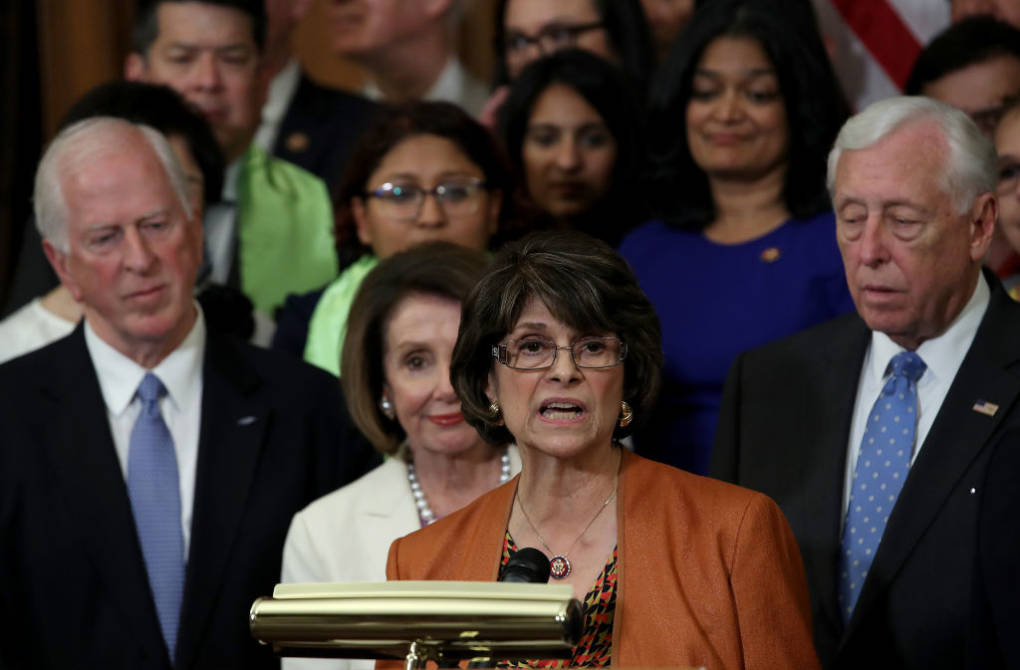
"caption": "Lucille Roybal-Allard, D-California, speaks during a press conference with House Democrats at the U.S. Capitol on June 4, 2019 ahead of a vote on the American Dream and Promise Act. The bill offers a pathway to citizenship for those with Deferred Action for Childhood Arrivals, Temporary Protected Status, Deferred Enforced Departure and similarly situated immigrants who have spent much of their lives in the United States.",
"description": null,
"title": "Nancy Pelosi, House Democrats Discuss American Dream And Promise Act",
"credit": "Win McNamee/Getty Images",
"status": "inherit",
"isLoading": false,
"fetchFailed": false
}
},
"audioPlayerReducer": {
"postId": "stream_live",
"isPaused": true,
"isPlaying": false,
"pfsActive": false,
"pledgeModalIsOpen": true,
"playerDrawerIsOpen": false,
"liveAudioPlayStartedAt": 0,
"liveAudioPlayContext": ""
},
"authorsReducer": {
"byline_news_11757141": {
"type": "authors",
"id": "byline_news_11757141",
"meta": {
"override": true
},
"slug": "byline_news_11757141",
"name": "Vanessa Romo and John Burnett",
"isLoading": false
},
"byline_news_11757074": {
"type": "authors",
"id": "byline_news_11757074",
"meta": {
"override": true
},
"slug": "byline_news_11757074",
"name": "Richard Gonzales",
"isLoading": false
},
"byline_news_11756670": {
"type": "authors",
"id": "byline_news_11756670",
"meta": {
"override": true
},
"slug": "byline_news_11756670",
"name": "Colleen Long \u003cbr> Associated Press",
"isLoading": false
},
"byline_news_11754887": {
"type": "authors",
"id": "byline_news_11754887",
"meta": {
"override": true
},
"slug": "byline_news_11754887",
"name": "Astrid Galván and Garance Burke \u003cbr> Associated Press",
"isLoading": false
},
"byline_news_11753371": {
"type": "authors",
"id": "byline_news_11753371",
"meta": {
"override": true
},
"slug": "byline_news_11753371",
"name": "\u003ca href=\"https://www.npr.org/people/599484393/ayesha-rascoe\">Ayesha Rascoe\u003c/a>, \u003ca href=\"https://www.npr.org/people/638550790/bobby-allyn\">Bobby Allyn\u003c/a>\u003cbr>NPR",
"isLoading": false
},
"byline_news_11752632": {
"type": "authors",
"id": "byline_news_11752632",
"meta": {
"override": true
},
"slug": "byline_news_11752632",
"name": "Astrid Galvan and Adriana Gomez Licon \u003cbr> Associated Press",
"isLoading": false
},
"byline_news_11752482": {
"type": "authors",
"id": "byline_news_11752482",
"meta": {
"override": true
},
"slug": "byline_news_11752482",
"name": "Alan Fram\u003cbr>Associated Press",
"isLoading": false
},
"kqed": {
"type": "authors",
"id": "236",
"meta": {
"index": "authors_1716337520",
"id": "236",
"found": true
},
"name": "KQED News Staff",
"firstName": "KQED News Staff",
"lastName": null,
"slug": "kqed",
"email": "faq@kqed.org",
"display_author_email": false,
"staff_mastheads": [],
"title": null,
"bio": null,
"avatar": "https://secure.gravatar.com/avatar/ef0e801a68c4c54afa9180db14084167?s=600&d=blank&r=g",
"twitter": null,
"facebook": null,
"instagram": null,
"linkedin": null,
"sites": [
{
"site": "arts",
"roles": [
"contributor"
]
},
{
"site": "news",
"roles": [
"editor"
]
},
{
"site": "futureofyou",
"roles": [
"author"
]
}
],
"headData": {
"title": "KQED News Staff | KQED",
"description": null,
"ogImgSrc": "https://secure.gravatar.com/avatar/ef0e801a68c4c54afa9180db14084167?s=600&d=blank&r=g",
"twImgSrc": "https://secure.gravatar.com/avatar/ef0e801a68c4c54afa9180db14084167?s=600&d=blank&r=g"
},
"isLoading": false,
"link": "/author/kqed"
},
"tychehendricks": {
"type": "authors",
"id": "259",
"meta": {
"index": "authors_1716337520",
"id": "259",
"found": true
},
"name": "Tyche Hendricks",
"firstName": "Tyche",
"lastName": "Hendricks",
"slug": "tychehendricks",
"email": "thendricks@kqed.org",
"display_author_email": true,
"staff_mastheads": [
"news"
],
"title": "KQED Senior Editor, Immigration",
"bio": "\u003cspan style=\"font-weight: 400;\">Tyche Hendricks is KQED’s senior editor for immigration, leading coverage of the policy and politics that affect California’s immigrant communities. Her work for KQED’s radio and online audiences is also carried on NPR and other national outlets. She has been recognized with awards from the Radio and Television News Directors Association, the Society for Professional Journalists; the Education Writers Association; the Best of the West and the National Federation of Community Broadcasters. Before joining KQED in 2010, Tyche spent more than a dozen years as a newspaper reporter, notably at the \u003c/span>\u003ci>\u003cspan style=\"font-weight: 400;\">San Francisco Chronicle\u003c/span>\u003c/i>\u003cspan style=\"font-weight: 400;\">. At different times she has covered criminal justice, government and politics and urban planning. Tyche has taught in the MFA Creative Writing program at the University of San Francisco and at UC Berkeley’s Graduate School of Journalism, where she was co-director of a national immigration symposium for professional journalists. She is the author of \u003c/span>\u003ci>\u003cspan style=\"font-weight: 400;\">The Wind Doesn't Need a Passport: Stories from the U.S.-Mexico Borderlands\u003c/span>\u003c/i>\u003cspan style=\"font-weight: 400;\"> (University of California Press). \u003c/span>",
"avatar": "https://secure.gravatar.com/avatar/b8ee458e2731c2d43df86882ce17267e?s=600&d=blank&r=g",
"twitter": "tychehendricks",
"facebook": null,
"instagram": null,
"linkedin": null,
"sites": [
{
"site": "news",
"roles": [
"editor"
]
},
{
"site": "stateofhealth",
"roles": [
"editor"
]
}
],
"headData": {
"title": "Tyche Hendricks | KQED",
"description": "KQED Senior Editor, Immigration",
"ogImgSrc": "https://secure.gravatar.com/avatar/b8ee458e2731c2d43df86882ce17267e?s=600&d=blank&r=g",
"twImgSrc": "https://secure.gravatar.com/avatar/b8ee458e2731c2d43df86882ce17267e?s=600&d=blank&r=g"
},
"isLoading": false,
"link": "/author/tychehendricks"
},
"markfiore": {
"type": "authors",
"id": "3236",
"meta": {
"index": "authors_1716337520",
"id": "3236",
"found": true
},
"name": "Mark Fiore",
"firstName": "Mark",
"lastName": "Fiore",
"slug": "markfiore",
"email": "mark@markfiore.com",
"display_author_email": false,
"staff_mastheads": [
"news"
],
"title": "KQED News Cartoonist",
"bio": "\u003ca href=\"http://www.MarkFiore.com\">MarkFiore.com\u003c/a> | \u003ca href=\"https://twitter.com/markfiore\">Follow on Twitter\u003c/a> | \u003ca href=\"https://www.facebook.com/pages/Mark-Fiore-Animated-Political-Cartoons/94451707396?ref=bookmarks\">Facebook\u003c/a> | \u003ca href=\"mailto:mark@markfiore.com\">email\u003c/a>\r\n\r\nPulitzer Prize-winner, Mark Fiore, who the Wall Street Journal has called “the undisputed guru of the form,” creates animated political cartoons in San Francisco, where his work has been featured regularly on the San Francisco Chronicle’s web site, SFGate.com. His work has appeared on Newsweek.com, Slate.com, CBSNews.com, MotherJones.com, DailyKos.com and NPR’s web site. Fiore’s political animation has appeared on CNN, Frontline, Bill Moyers Journal, Salon.com and cable and broadcast outlets across the globe.\r\n\r\nBeginning his professional life by drawing traditional political cartoons for newspapers, Fiore’s work appeared in publications ranging from the Washington Post to the Los Angeles Times. In the late 1990s, he began to experiment with animating political cartoons and, after a short stint at the San Jose Mercury News as their staff cartoonist, Fiore devoted all his energies to animation.\r\nGrowing up in California, Fiore also spent a good portion of his life in the backwoods of Idaho. It was this combination that shaped him politically. Mark majored in political science at Colorado College, where, in a perfect send-off for a cartoonist, he received his diploma in 1991 as commencement speaker Dick Cheney smiled approvingly.\r\nMark Fiore was awarded the Pulitzer Prize for political cartooning in 2010, a Robert F. Kennedy Journalism Award in 2004 and has twice received an Online Journalism Award for commentary from the Online News Association (2002, 2008). Fiore has received two awards for his work in new media from the National Cartoonists Society (2001, 2002), and in 2006 received The James Madison Freedom of Information Award from The Society of Professional Journalists.",
"avatar": "https://secure.gravatar.com/avatar/fc4e2a612b15b67bad0c6f0e1db4ca9b?s=600&d=blank&r=g",
"twitter": "MarkFiore",
"facebook": null,
"instagram": "https://www.instagram.com/markfiore/?hl=en",
"linkedin": null,
"sites": [
{
"site": "arts",
"roles": [
"contributor"
]
},
{
"site": "news",
"roles": [
"editor"
]
},
{
"site": "futureofyou",
"roles": [
"editor"
]
},
{
"site": "science",
"roles": [
"editor"
]
}
],
"headData": {
"title": "Mark Fiore | KQED",
"description": "KQED News Cartoonist",
"ogImgSrc": "https://secure.gravatar.com/avatar/fc4e2a612b15b67bad0c6f0e1db4ca9b?s=600&d=blank&r=g",
"twImgSrc": "https://secure.gravatar.com/avatar/fc4e2a612b15b67bad0c6f0e1db4ca9b?s=600&d=blank&r=g"
},
"isLoading": false,
"link": "/author/markfiore"
},
"lklivans": {
"type": "authors",
"id": "8648",
"meta": {
"index": "authors_1716337520",
"id": "8648",
"found": true
},
"name": "Laura Klivans",
"firstName": "Laura",
"lastName": "Klivans",
"slug": "lklivans",
"email": "lklivans@kqed.org",
"display_author_email": true,
"staff_mastheads": [
"news",
"science"
],
"title": "Reporter",
"bio": "Laura Klivans is an award-winning science reporter for KQED News, where she covers climate change with an eye on both groundbreaking progress and gaps in action. She is the former host of KQED's blockbuster video series about tiny, amazing animals, \u003cem>Deep Look\u003c/em>. Her work reaches national audiences through NPR, \u003cem>Here & Now, \u003c/em>PRI, and other major outlets. \r\n\r\nLaura’s won five Northern California Area Emmy Awards for Deep Look and First Place in the Greater Bay Area Journalism Awards for a podcast exploring how one Oakland neighborhood teamed up to reduce planet-heating pollution.\r\n\r\nBeyond her reporting, she hosts and moderates events. In the past, she taught audio storytelling at the UC Berkeley Graduate School of Journalism, led international education programs, worked with immigrants and refugees along the Thai-Burmese border, taught high schoolers sex ed, and was an actress. \r\n\r\nShe's a former UC Berkeley Human Rights Fellow, USC Center for Health Journalism's California Fellow and Coro Fellow in Public Affairs. Laura has a master’s in journalism from UC Berkeley, a master’s in education from Harvard, and an undergraduate degree from Northwestern University.\r\n\r\nShe loves trying to riddle the meaning out of vanity license plates.",
"avatar": "https://secure.gravatar.com/avatar/af8e757bb8ce7b7fee6160ba66e37327?s=600&d=blank&r=g",
"twitter": "lauraklivans",
"facebook": null,
"instagram": null,
"linkedin": null,
"sites": [
{
"site": "news",
"roles": [
"editor"
]
},
{
"site": "stateofhealth",
"roles": [
"contributor",
"editor"
]
},
{
"site": "science",
"roles": [
"editor"
]
},
{
"site": "forum",
"roles": [
"editor"
]
}
],
"headData": {
"title": "Laura Klivans | KQED",
"description": "Reporter",
"ogImgSrc": "https://secure.gravatar.com/avatar/af8e757bb8ce7b7fee6160ba66e37327?s=600&d=blank&r=g",
"twImgSrc": "https://secure.gravatar.com/avatar/af8e757bb8ce7b7fee6160ba66e37327?s=600&d=blank&r=g"
},
"isLoading": false,
"link": "/author/lklivans"
},
"ahall": {
"type": "authors",
"id": "11490",
"meta": {
"index": "authors_1716337520",
"id": "11490",
"found": true
},
"name": "Alex Hall",
"firstName": "Alex",
"lastName": "Hall",
"slug": "ahall",
"email": "ahall@kqed.org",
"display_author_email": false,
"staff_mastheads": [
"news"
],
"title": "KQED Enterprise & Accountability Reporter",
"bio": "Alex Hall is KQED's Enterprise and Accountability Reporter. She previously covered the Central Valley for five years from KQED's bureau in Fresno. Before joining KQED, Alex was an investigative reporting fellow at Wisconsin Public Radio and the Wisconsin Center for Investigative Journalism. She has also worked as a bilingual producer for NPR's investigative unit and freelance video producer for Reuters TV on the Latin America desk. She got her start in journalism in South America, where she worked as a radio producer and Spanish-English translator for CNN Chile. Her documentary and investigation into the series of deadly COVID-19 outbreaks at Foster Farms won a national Edward R. Murrow award and was named an Investigative Reporters & Editors award finalist. Alex's reporting for Reveal on the Wisconsin dairy industry's reliance on undocumented immigrant labor was made into a film, Los Lecheros, which won a regional Edward R. Murrow award for best news documentary.",
"avatar": "https://secure.gravatar.com/avatar/defcbeb88b0bf591ff9af41f22644051?s=600&d=blank&r=g",
"twitter": "@chalexhall",
"facebook": null,
"instagram": null,
"linkedin": null,
"sites": [
{
"site": "news",
"roles": [
"editor"
]
},
{
"site": "liveblog",
"roles": [
"author"
]
}
],
"headData": {
"title": "Alex Hall | KQED",
"description": "KQED Enterprise & Accountability Reporter",
"ogImgSrc": "https://secure.gravatar.com/avatar/defcbeb88b0bf591ff9af41f22644051?s=600&d=blank&r=g",
"twImgSrc": "https://secure.gravatar.com/avatar/defcbeb88b0bf591ff9af41f22644051?s=600&d=blank&r=g"
},
"isLoading": false,
"link": "/author/ahall"
}
},
"pagesReducer": {
"news_tag_immigration": {
"type": "terms",
"id": "news_20202",
"meta": {
"index": "terms_1716263798",
"site": "news",
"id": "20202",
"score": 6.90445
},
"featImg": null,
"name": "immigration",
"description": null,
"taxonomy": "tag",
"headData": {
"twImgId": null,
"twTitle": null,
"ogTitle": null,
"ogImgId": null,
"twDescription": null,
"description": null,
"title": "immigration Archives | KQED News",
"ogDescription": null
},
"ttid": 20219,
"slug": "immigration",
"isLoading": false,
"title": "immigration",
"pageMeta": {
"site": "news",
"WpPageTemplate": "page-topic-editorial",
"currentPage": 75
},
"blocks": [
{
"blockName": "kqed/post-list",
"attrs": {
"layout": "cardArticle2",
"query": "posts/news?tag=immigration",
"seeMore": false,
"paginated": true,
"page": 75
}
},
{
"blockName": "kqed/ad"
}
]
}
},
"pfsSessionReducer": {},
"postsReducer": {
"stream_live": {
"type": "live",
"id": "stream_live",
"audioUrl": "https://streams.kqed.org/kqedradio",
"title": "Live Stream",
"excerpt": "Live Stream information currently unavailable.",
"link": "/radio",
"featImg": "",
"label": {
"name": "KQED Live",
"link": "/"
}
},
"stream_kqedNewscast": {
"type": "posts",
"id": "stream_kqedNewscast",
"audioUrl": "https://www.kqed.org/.stream/anon/radio/RDnews/newscast.mp3?_=1",
"title": "KQED Newscast",
"featImg": "",
"label": {
"name": "88.5 FM",
"link": "/"
}
},
"news_11757141": {
"type": "posts",
"id": "news_11757141",
"meta": {
"index": "posts_1716263798",
"site": "news",
"id": "11757141",
"score": null,
"sort": [
1561488222000
]
},
"parent": 0,
"labelTerm": {},
"blocks": [],
"publishDate": 1561488222,
"format": "standard",
"disqusTitle": "Acting Head of Customs and Border Protection Plans to Step Down",
"title": "Acting Head of Customs and Border Protection Plans to Step Down",
"headTitle": "KQED News",
"content": "\u003cp>The acting commissioner of U.S. Customs and Border Protection plans to step down in the coming weeks, according to two agency officials, amid a public furor over the treatment of migrant children in U.S. facilities.\u003c/p>\n\u003cp>John Sanders is expected to make his resignation effective July 5, according to the officials, who spoke to NPR on condition of anonymity because an official announcement had not been made to agency employees.\u003c/p>\n\u003cp>Sanders has held the post for just over two months, after President Trump tapped his predecessor, Kevin McAleenan, to be acting chief of the Department of Homeland Security.\u003c/p>\n\u003cp>Trump said Tuesday afternoon that he did not ask Sanders to step down. \"I don't think I've ever spoken to him,\" the president told reporters. He added that he expected Sanders' resignation and that \"I've made changes, very good changes.\"\u003c/p>\n\u003cp>\"We're moving some people around to different locations,\" Trump said, without expounding on who is being shuffled or where they might go.\u003c/p>\n\u003cp>[ad fullwidth]\u003c/p>\n\u003cp>Customs and Border Protection has come under fire in recent days amid revelations that nearly 300 migrant children — from infants to 17-year-olds — had been detained in a remote Border Patrol station in West Texas without adequate food, water and sanitation.\u003c/p>\n\u003cp>All but 30 of the children were transferred out of the center in Clint, Texas, after revelations last week that they were being held in squalid conditions.\u003c/p>\n\u003cp>According to a CBP official who asked not to be identified, \"nothing additional\" was provided at the Clint facility before the children were moved back.\u003c/p>\n\u003cp>During a phone conference with reporters, the same CBP official rejected accounts that children were being mistreated at any of its temporary shelter, as a group of lawyers who toured the Clint location reported last week.\u003c/p>\n\u003cp>\"I personally don't believe these allegations,\" he said, when asked whether children were denied showers, soap, toothbrushes and other personal hygiene items, as well as reports that children were forced to care for unconsoleable toddlers.\u003c/p>\n\u003cp>\"I don't buy that,\" he repeated, when reporters mentioned statements that children said they were often hungry.\u003c/p>\n\u003cp>The official maintained that CBP is not running low on supplies. \"Those things are available now and they have been continuously,\" he added.\u003c/p>\n\u003cp>Under the Flores settlement, a 1997 agreement that dictates how the government is supposed to treat detained underage migrants, children held by the Border Patrol are supposed to be transferred into the care of the Office of Refugee Resettlement within 72 hours. But many of the children were held for weeks at the Clint facility, which CBP says is not bound to the 72-hour limit because it is an emergency shelter.\u003c/p>\n\u003cp>The White House has been urging Congress to approve a supplemental budget request since last month, saying money to house and care for migrants will run out by the end of the month.\u003c/p>\n\u003cp>That additional funding, according to HHS spokeswoman Evelyn Stauffer, would go toward increasing \"shelter capacity in order to meet the needs of the minors in our custody while ORR works to find sponsors, usually family members, for the children.\"\u003c/p>\n\u003cp>On Tuesday, Trump said he is \"very concerned\" about the conditions for migrant children at facilities along the U.S.-Mexico border but added that \"they're much better than they were under President Obama by far.\"\u003c/p>\n\u003cp>\"A lot of these young children that come from places that you don't even want to know about, the way they've lived ... the poverty that they grew up in,\" he said.\u003c/p>\n\u003cp>Trump also accused Democrats of not taking action to improve the situation for migrants at the Southern border and to close what he called loopholes for asylum-seekers. \"We're trying to get the Democrats to agree to really give us some humanitarian aid, humanitarian money,\" he said.\u003c/p>\n\u003cp>The House is expected to vote Tuesday on a supplemental spending measure that would send money to agencies working to address the needs of migrants arriving at the U.S.-Mexico border.\u003c/p>\n\u003cp>\u003c/p>\n\u003cp>As NPR's Kelsey Snell reported, last-minute requirements were added to the $4.5 billion legislation that would obligate CBP to establish hygiene and medical standards for children and a 90-day limit on keeping kids in temporary emergency shelters.\u003c/p>\n\n",
"disqusIdentifier": "11757141 https://ww2.kqed.org/news/?p=11757141",
"disqusUrl": "https://ww2.kqed.org/news/2019/06/25/acting-head-of-customs-and-border-protection-plans-to-step-down/",
"stats": {
"hasVideo": false,
"hasChartOrMap": false,
"hasAudio": false,
"hasPolis": false,
"wordCount": 711,
"hasGoogleForm": false,
"hasGallery": false,
"hasHearkenModule": false,
"iframeSrcs": [],
"paragraphCount": 22
},
"modified": 1561515357,
"excerpt": "John Sanders is expected to make his resignation effective July 5, two officials said. The move comes after hundreds of children were removed from a facility without adequate food and sanitation.",
"headData": {
"twImgId": "",
"twTitle": "",
"ogTitle": "",
"ogImgId": "",
"twDescription": "",
"description": "John Sanders is expected to make his resignation effective July 5, two officials said. The move comes after hundreds of children were removed from a facility without adequate food and sanitation.",
"title": "Acting Head of Customs and Border Protection Plans to Step Down | KQED",
"ogDescription": "",
"schema": {
"@context": "https://schema.org",
"@type": "NewsArticle",
"headline": "Acting Head of Customs and Border Protection Plans to Step Down",
"datePublished": "2019-06-25T11:43:42-07:00",
"dateModified": "2019-06-25T19:15:57-07:00",
"image": "https://cdn.kqed.org/wp-content/uploads/2020/02/KQED-OG-Image@1x.png",
"isAccessibleForFree": "True",
"publisher": {
"@type": "NewsMediaOrganization",
"@id": "https://www.kqed.org/#organization",
"name": "KQED",
"logo": "https://cdn.kqed.org/wp-content/uploads/2020/02/KQED-OG-Image@1x.png",
"url": "https://www.kqed.org",
"sameAs": [
"https://www.facebook.com/KQED",
"https://twitter.com/KQED",
"https://www.instagram.com/kqed/",
"https://www.tiktok.com/@kqedofficial",
"https://www.linkedin.com/company/kqed",
"https://www.youtube.com/channel/UCeC0IOo7i1P_61zVUWbJ4nw"
]
}
}
},
"guestAuthors": [],
"slug": "acting-head-of-customs-and-border-protection-plans-to-step-down",
"status": "publish",
"sourceUrl": "https://www.npr.org/2019/06/25/735764301/acting-head-of-customs-and-border-protection-plans-to-step-down",
"nprByline": "Vanessa Romo and John Burnett",
"source": "NPR",
"path": "/news/11757141/acting-head-of-customs-and-border-protection-plans-to-step-down",
"audioTrackLength": null,
"parsedContent": [
{
"type": "contentString",
"content": "\u003cdiv class=\"post-body\">\u003cp>\u003cp>The acting commissioner of U.S. Customs and Border Protection plans to step down in the coming weeks, according to two agency officials, amid a public furor over the treatment of migrant children in U.S. facilities.\u003c/p>\n\u003cp>John Sanders is expected to make his resignation effective July 5, according to the officials, who spoke to NPR on condition of anonymity because an official announcement had not been made to agency employees.\u003c/p>\n\u003cp>Sanders has held the post for just over two months, after President Trump tapped his predecessor, Kevin McAleenan, to be acting chief of the Department of Homeland Security.\u003c/p>\n\u003cp>Trump said Tuesday afternoon that he did not ask Sanders to step down. \"I don't think I've ever spoken to him,\" the president told reporters. He added that he expected Sanders' resignation and that \"I've made changes, very good changes.\"\u003c/p>\n\u003cp>\"We're moving some people around to different locations,\" Trump said, without expounding on who is being shuffled or where they might go.\u003c/p>\n\u003cp>\u003c/p>\u003c/div>",
"attributes": {
"named": {},
"numeric": []
}
},
{
"type": "component",
"content": "",
"name": "ad",
"attributes": {
"named": {
"label": "fullwidth"
},
"numeric": [
"fullwidth"
]
}
},
{
"type": "contentString",
"content": "\u003cdiv class=\"post-body\">\u003cp>\u003c/p>\n\u003cp>Customs and Border Protection has come under fire in recent days amid revelations that nearly 300 migrant children — from infants to 17-year-olds — had been detained in a remote Border Patrol station in West Texas without adequate food, water and sanitation.\u003c/p>\n\u003cp>All but 30 of the children were transferred out of the center in Clint, Texas, after revelations last week that they were being held in squalid conditions.\u003c/p>\n\u003cp>According to a CBP official who asked not to be identified, \"nothing additional\" was provided at the Clint facility before the children were moved back.\u003c/p>\n\u003cp>During a phone conference with reporters, the same CBP official rejected accounts that children were being mistreated at any of its temporary shelter, as a group of lawyers who toured the Clint location reported last week.\u003c/p>\n\u003cp>\"I personally don't believe these allegations,\" he said, when asked whether children were denied showers, soap, toothbrushes and other personal hygiene items, as well as reports that children were forced to care for unconsoleable toddlers.\u003c/p>\n\u003cp>\"I don't buy that,\" he repeated, when reporters mentioned statements that children said they were often hungry.\u003c/p>\n\u003cp>The official maintained that CBP is not running low on supplies. \"Those things are available now and they have been continuously,\" he added.\u003c/p>\n\u003cp>Under the Flores settlement, a 1997 agreement that dictates how the government is supposed to treat detained underage migrants, children held by the Border Patrol are supposed to be transferred into the care of the Office of Refugee Resettlement within 72 hours. But many of the children were held for weeks at the Clint facility, which CBP says is not bound to the 72-hour limit because it is an emergency shelter.\u003c/p>\n\u003cp>The White House has been urging Congress to approve a supplemental budget request since last month, saying money to house and care for migrants will run out by the end of the month.\u003c/p>\n\u003cp>That additional funding, according to HHS spokeswoman Evelyn Stauffer, would go toward increasing \"shelter capacity in order to meet the needs of the minors in our custody while ORR works to find sponsors, usually family members, for the children.\"\u003c/p>\n\u003cp>On Tuesday, Trump said he is \"very concerned\" about the conditions for migrant children at facilities along the U.S.-Mexico border but added that \"they're much better than they were under President Obama by far.\"\u003c/p>\n\u003cp>\"A lot of these young children that come from places that you don't even want to know about, the way they've lived ... the poverty that they grew up in,\" he said.\u003c/p>\n\u003cp>Trump also accused Democrats of not taking action to improve the situation for migrants at the Southern border and to close what he called loopholes for asylum-seekers. \"We're trying to get the Democrats to agree to really give us some humanitarian aid, humanitarian money,\" he said.\u003c/p>\n\u003cp>The House is expected to vote Tuesday on a supplemental spending measure that would send money to agencies working to address the needs of migrants arriving at the U.S.-Mexico border.\u003c/p>\n\u003cp>\u003c/p>\n\u003cp>As NPR's Kelsey Snell reported, last-minute requirements were added to the $4.5 billion legislation that would obligate CBP to establish hygiene and medical standards for children and a 90-day limit on keeping kids in temporary emergency shelters.\u003c/p>\n\n\u003c/div>\u003c/p>",
"attributes": {
"named": {},
"numeric": []
}
}
],
"link": "/news/11757141/acting-head-of-customs-and-border-protection-plans-to-step-down",
"authors": [
"byline_news_11757141"
],
"categories": [
"news_1169",
"news_8",
"news_13"
],
"tags": [
"news_21200",
"news_20202"
],
"featImg": "news_11757156",
"label": "source_news_11757141"
},
"news_11757074": {
"type": "posts",
"id": "news_11757074",
"meta": {
"index": "posts_1716263798",
"site": "news",
"id": "11757074",
"score": null,
"sort": [
1561476442000
]
},
"parent": 0,
"labelTerm": {},
"blocks": [],
"publishDate": 1561476442,
"format": "standard",
"disqusTitle": "Migrant Children Moved From Border Patrol Center After Outcry",
"title": "Migrant Children Moved From Border Patrol Center After Outcry",
"headTitle": "The California Report | KQED News",
"content": "\u003cp>Update 11:01 a.m. \u003c/p>\n\u003cp>More than 200 migrant children detained in a remote Border Patrol station in southwest Texas without adequate food, water and sanitation have been moved after news of the conditions became public last week.\u003c/p>\n\u003cp>\"This morning, my office was informed that only 30 children remain in the Clint Border Patrol station in El Paso County,\" Rep. Veronica Escobar \u003ca href=\"https://twitter.com/RepEscobar/status/1143264559895068673\">tweeted\u003c/a> Monday. She said that last week lawyers for Human Rights Watch had \"found 255 children in beyond alarming conditions.\"\u003c/p>\n\u003cp>On Tuesday, NPR reported that acting commissioner of U.S. Customs and Border Protection, John Sanders, will step down effective July 5.\u003c/p>\n\u003cp>A law professor who recently visited the facility, Warren Binford of Willamette University, described the conditions for children in an \u003ca href=\"https://www.npr.org/2019/06/23/735191289/law-professor-describes-poor-conditions-where-migrant-children-are-held\">interview\u003c/a> with NPR's Lulu Garcia Navarro.\u003c/p>\n\u003cblockquote>\n\u003cp>\"Many of them are sleeping on concrete floors, including infants, toddlers, preschoolers. They are being given nothing but instant meals, Kool-Aid and cookies — many of them are sick. We are hearing that many of them are not sleeping. Almost all of them are incredibly sad and being traumatized. Many of them have not been given a shower for weeks. Many of them are not being allowed to brush their teeth except for maybe once every 10 days. They have no access to soap. It's incredibly unsanitary conditions, and we're very worried about the children's health.\"\u003c/p>\n\u003c/blockquote>\n\u003cp>News of the conditions at the Clint facility was first \u003ca href=\"https://www.apnews.com/46da2dbe04f54adbb875cfbc06bbc615\">reported\u003c/a> last week by The Associated Press based on initial interviews with Binford and other lawyers who were conducting inspections under the terms of the \u003ca href=\"https://www.npr.org/2018/06/22/622678753/the-history-of-the-flores-settlement-and-its-effects-on-immigration\">Flores settlement\u003c/a>, a legal agreement that spells out how the government is supposed to treat detained migrant children.\u003c/p>\n\u003cp>The AP reported:\u003c/p>\n\u003cblockquote>\n\u003cp>\"A 2-year-old boy locked in detention wants to be held all the time. A few girls, ages 10 to 15, say they've been doing their best to feed and soothe the clingy toddler who was handed to them by a guard days ago. Lawyers warn that kids are taking care of kids, and there's inadequate food, water and sanitation for the 250 infants, children and teens at the Border Patrol station.\"\u003c/p>\n\u003c/blockquote>\n\u003cp>In a statement issued Friday, Customs and Border Protection said it \"leverages our limited resources to provide the best care possible to those in our custody, especially children,\" and \"all allegations of civil rights abuses or mistreatment in CBP detention are taken seriously and investigated to the fullest extent possible.\"\u003c/p>\n\u003cp>Under the Flores settlement, children detained by the Border Patrol are supposed to be turned over to the custody of the Office of Refugee Resettlement, an arm of the Department of Health and Human Services, within 72 hours. Some children said they had been kept at the Clint facility for weeks.\u003c/p>\n\u003cp>It is not clear where the children formerly detained at the Clint facility have been transferred. Escobar \u003ca href=\"https://www.apnews.com/a7a9acc4c6a546829a258e008d10d705\">said\u003c/a> some of the children were temporarily sent to Border Patrol Station 1 on the north side of El Paso.\u003c/p>\n\u003cp>Vice President Pence \u003ca href=\"https://www.cnn.com/videos/politics/2019/06/23/mike-pence-immigration-border-facility-children-sotu-vpx.cnn\">told\u003c/a> CNN on Sunday that the administration is asking Congress for funds to pay for more bed space for migrant families.\u003c/p>\n\u003cp>\"Congress needs to provide additional support to deal with our crisis on our southern border,\" Pence said. \u003c/p>\n\u003cdiv class=\"fullattribution\">Copyright 2019 NPR. To see more, visit https://www.npr.org.\u003cimg src=\"https://www.google-analytics.com/__utm.gif?utmac=UA-5828686-4&utmdt=Migrant+Children+Moved+From+Border+Patrol+Center+After+Outcry&utme=8(APIKey)9(MDAxOTAwOTE4MDEyMTkxMDAzNjczZDljZA004)\">\u003c/div>\n\u003cp>[ad fullwidth]\u003c/p>\n\u003cp>\u003c/p>\n",
"disqusIdentifier": "11757074 https://ww2.kqed.org/news/?p=11757074",
"disqusUrl": "https://ww2.kqed.org/news/2019/06/25/migrant-children-moved-from-border-patrol-center-after-outcry/",
"stats": {
"hasVideo": false,
"hasChartOrMap": false,
"hasAudio": false,
"hasPolis": false,
"wordCount": 554,
"hasGoogleForm": false,
"hasGallery": false,
"hasHearkenModule": false,
"iframeSrcs": [],
"paragraphCount": 16
},
"modified": 1561485800,
"excerpt": "Reports of children detained in crowded and unsanitary conditions long beyond the maximum legal limit have created a new controversy over the administration's immigration policies.",
"headData": {
"twImgId": "",
"twTitle": "",
"ogTitle": "",
"ogImgId": "",
"twDescription": "",
"description": "Reports of children detained in crowded and unsanitary conditions long beyond the maximum legal limit have created a new controversy over the administration's immigration policies.",
"title": "Migrant Children Moved From Border Patrol Center After Outcry | KQED",
"ogDescription": "",
"schema": {
"@context": "https://schema.org",
"@type": "NewsArticle",
"headline": "Migrant Children Moved From Border Patrol Center After Outcry",
"datePublished": "2019-06-25T08:27:22-07:00",
"dateModified": "2019-06-25T11:03:20-07:00",
"image": "https://cdn.kqed.org/wp-content/uploads/2020/02/KQED-OG-Image@1x.png",
"isAccessibleForFree": "True",
"publisher": {
"@type": "NewsMediaOrganization",
"@id": "https://www.kqed.org/#organization",
"name": "KQED",
"logo": "https://cdn.kqed.org/wp-content/uploads/2020/02/KQED-OG-Image@1x.png",
"url": "https://www.kqed.org",
"sameAs": [
"https://www.facebook.com/KQED",
"https://twitter.com/KQED",
"https://www.instagram.com/kqed/",
"https://www.tiktok.com/@kqedofficial",
"https://www.linkedin.com/company/kqed",
"https://www.youtube.com/channel/UCeC0IOo7i1P_61zVUWbJ4nw"
]
}
}
},
"guestAuthors": [],
"slug": "migrant-children-moved-from-border-patrol-center-after-outcry",
"status": "publish",
"sourceUrl": "https://www.npr.org/",
"nprApiLink": "http://api.npr.org/query?id=735552011&apiKey=MDAxOTAwOTE4MDEyMTkxMDAzNjczZDljZA004",
"nprByline": "Richard Gonzales",
"nprStoryDate": "Mon, 24 Jun 2019 20:35:48 -0400",
"nprLastModifiedDate": "Tue, 25 Jun 2019 08:12:19 -0400",
"nprHtmlLink": "https://www.npr.org/2019/06/24/735552011/migrant-children-moved-from-border-patrol-center-after-outcry?ft=nprml&f=735552011",
"nprImageAgency": "AP",
"nprImageCredit": "Cedar Attanasio",
"source": "NPR",
"nprStoryId": "735552011",
"nprRetrievedStory": "1",
"nprPubDate": "Tue, 25 Jun 2019 08:12:00 -0400",
"path": "/news/11757074/migrant-children-moved-from-border-patrol-center-after-outcry",
"audioTrackLength": null,
"parsedContent": [
{
"type": "contentString",
"content": "\u003cdiv class=\"post-body\">\u003cp>\u003cp>Update 11:01 a.m. \u003c/p>\n\u003cp>More than 200 migrant children detained in a remote Border Patrol station in southwest Texas without adequate food, water and sanitation have been moved after news of the conditions became public last week.\u003c/p>\n\u003cp>\"This morning, my office was informed that only 30 children remain in the Clint Border Patrol station in El Paso County,\" Rep. Veronica Escobar \u003ca href=\"https://twitter.com/RepEscobar/status/1143264559895068673\">tweeted\u003c/a> Monday. She said that last week lawyers for Human Rights Watch had \"found 255 children in beyond alarming conditions.\"\u003c/p>\n\u003cp>On Tuesday, NPR reported that acting commissioner of U.S. Customs and Border Protection, John Sanders, will step down effective July 5.\u003c/p>\n\u003cp>A law professor who recently visited the facility, Warren Binford of Willamette University, described the conditions for children in an \u003ca href=\"https://www.npr.org/2019/06/23/735191289/law-professor-describes-poor-conditions-where-migrant-children-are-held\">interview\u003c/a> with NPR's Lulu Garcia Navarro.\u003c/p>\n\u003cblockquote>\n\u003cp>\"Many of them are sleeping on concrete floors, including infants, toddlers, preschoolers. They are being given nothing but instant meals, Kool-Aid and cookies — many of them are sick. We are hearing that many of them are not sleeping. Almost all of them are incredibly sad and being traumatized. Many of them have not been given a shower for weeks. Many of them are not being allowed to brush their teeth except for maybe once every 10 days. They have no access to soap. It's incredibly unsanitary conditions, and we're very worried about the children's health.\"\u003c/p>\n\u003c/blockquote>\n\u003cp>News of the conditions at the Clint facility was first \u003ca href=\"https://www.apnews.com/46da2dbe04f54adbb875cfbc06bbc615\">reported\u003c/a> last week by The Associated Press based on initial interviews with Binford and other lawyers who were conducting inspections under the terms of the \u003ca href=\"https://www.npr.org/2018/06/22/622678753/the-history-of-the-flores-settlement-and-its-effects-on-immigration\">Flores settlement\u003c/a>, a legal agreement that spells out how the government is supposed to treat detained migrant children.\u003c/p>\n\u003cp>The AP reported:\u003c/p>\n\u003cblockquote>\n\u003cp>\"A 2-year-old boy locked in detention wants to be held all the time. A few girls, ages 10 to 15, say they've been doing their best to feed and soothe the clingy toddler who was handed to them by a guard days ago. Lawyers warn that kids are taking care of kids, and there's inadequate food, water and sanitation for the 250 infants, children and teens at the Border Patrol station.\"\u003c/p>\n\u003c/blockquote>\n\u003cp>In a statement issued Friday, Customs and Border Protection said it \"leverages our limited resources to provide the best care possible to those in our custody, especially children,\" and \"all allegations of civil rights abuses or mistreatment in CBP detention are taken seriously and investigated to the fullest extent possible.\"\u003c/p>\n\u003cp>Under the Flores settlement, children detained by the Border Patrol are supposed to be turned over to the custody of the Office of Refugee Resettlement, an arm of the Department of Health and Human Services, within 72 hours. Some children said they had been kept at the Clint facility for weeks.\u003c/p>\n\u003cp>It is not clear where the children formerly detained at the Clint facility have been transferred. Escobar \u003ca href=\"https://www.apnews.com/a7a9acc4c6a546829a258e008d10d705\">said\u003c/a> some of the children were temporarily sent to Border Patrol Station 1 on the north side of El Paso.\u003c/p>\n\u003cp>Vice President Pence \u003ca href=\"https://www.cnn.com/videos/politics/2019/06/23/mike-pence-immigration-border-facility-children-sotu-vpx.cnn\">told\u003c/a> CNN on Sunday that the administration is asking Congress for funds to pay for more bed space for migrant families.\u003c/p>\n\u003cp>\"Congress needs to provide additional support to deal with our crisis on our southern border,\" Pence said. \u003c/p>\n\u003cdiv class=\"fullattribution\">Copyright 2019 NPR. To see more, visit https://www.npr.org.\u003cimg src=\"https://www.google-analytics.com/__utm.gif?utmac=UA-5828686-4&utmdt=Migrant+Children+Moved+From+Border+Patrol+Center+After+Outcry&utme=8(APIKey)9(MDAxOTAwOTE4MDEyMTkxMDAzNjczZDljZA004)\">\u003c/div>\n\u003cp>\u003c/p>\u003c/div>",
"attributes": {
"named": {},
"numeric": []
}
},
{
"type": "component",
"content": "",
"name": "ad",
"attributes": {
"named": {
"label": "fullwidth"
},
"numeric": [
"fullwidth"
]
}
},
{
"type": "contentString",
"content": "\u003cdiv class=\"post-body\">\u003cp>\u003c/p>\n\u003cp>\u003c/p>\n\u003c/div>\u003c/p>",
"attributes": {
"named": {},
"numeric": []
}
}
],
"link": "/news/11757074/migrant-children-moved-from-border-patrol-center-after-outcry",
"authors": [
"byline_news_11757074"
],
"programs": [
"news_72"
],
"categories": [
"news_1169",
"news_6188",
"news_8",
"news_13"
],
"tags": [
"news_20202",
"news_23796"
],
"featImg": "news_11757075",
"label": "source_news_11757074"
},
"news_11756535": {
"type": "posts",
"id": "news_11756535",
"meta": {
"index": "posts_1716263798",
"site": "news",
"id": "11756535",
"score": null,
"sort": [
1561395088000
]
},
"parent": 0,
"labelTerm": {
"site": "news",
"term": 72
},
"blocks": [],
"publishDate": 1561395088,
"format": "standard",
"disqusTitle": "Trump Immigration Policies Spark Increased Anxiety and Poorer Sleep for Latino Youth, Study Finds",
"title": "Trump Immigration Policies Spark Increased Anxiety and Poorer Sleep for Latino Youth, Study Finds",
"headTitle": "The California Report | KQED News",
"content": "\u003cp>A UC Berkeley School of Public Health \u003ca href=\"https://jamanetwork.com/journals/jamapediatrics/article-abstract/2735685\" target=\"_blank\" rel=\"noopener\">study\u003c/a> suggests that since the 2016 presidential election, some Latino youth have experienced increased anxiety and poorer sleep.\u003c/p>\n\u003cp>Researchers assessed the health of nearly 400 teenagers living in California before and after the 2016 election. All youth in the study were born in the U.S. and have at least one immigrant parent.\u003c/p>\n\u003cp>More than 40% reported worrying about the impacts of U.S. immigration policy on their family, and those with concerns also had higher anxiety and worse sleep than their peers.\u003c/p>\n\u003cp>The study is part of \u003ca href=\"https://cerch.berkeley.edu/research-programs/chamacos-study\" target=\"_blank\" rel=\"noopener\">ongoing research\u003c/a> following primarily Mexican American farmworker families.\u003c/p>\n\u003cp>\"The study is important because we're showing that the current anti-immigration rhetoric and policies in the U.S. following the 2016 election is affecting the health of Latinx youth, including U.S. citizens,\" said Brenda Eskenazi, professor of maternal and child health and epidemiology at the UC Berkeley School of Public Health and lead author of the study.\u003c/p>\n\u003cp>[ad fullwidth]\u003c/p>\n\u003cp>Whereas previous studies have looked at Deferred Action for Childhood Arrivals recipients or undocumented immigrants, Eskenazi's research focused on U.S. citizens.\u003c/p>\n\u003cp>[aside tag='immigration' label='More Immigration Coverage']\u003c/p>\n\u003cp>\"They are citizens by birthright,\" she said. \"The implications are that the impact of the U.S. policies are further-reaching than we had known before.\"\u003c/p>\n\u003cp>Dr. Katherine D’Harlingue, associate medical director for pediatrics at the health center \u003ca href=\"https://www.laclinica.org/\" target=\"_blank\" rel=\"noopener\">La Clínica\u003c/a> in Oakland, said she didn’t need a study to tell her about increased anxiety among immigrant populations. During her eight years at La Clínica, she has always seen her patients worry about immigration, but their fears dramatically increased after Donald Trump’s election.\u003c/p>\n\u003cp>\"We’ve definitely seen increased rates of anxiety, depression, a lot of kids just being really fearful and wanting to cling to their parents,\" D’Harlingue said. \"We also just see a lot of kids with things that present as medical problems: abdominal pain, migraines, that when you actually get to the bottom of it there’s a lot of stress and anxiety that is related to immigration.\"\u003c/p>\n\u003cp>\u003c/p>\n\u003cp>Study authors are following up with the teenagers to see if their anxiety has persisted.\u003c/p>\n\n",
"disqusIdentifier": "11756535 https://ww2.kqed.org/news/?p=11756535",
"disqusUrl": "https://ww2.kqed.org/news/2019/06/24/trump-immigration-policies-spark-increased-anxiety-and-poorer-sleep-for-latino-youth-study-finds/",
"stats": {
"hasVideo": false,
"hasChartOrMap": false,
"hasAudio": false,
"hasPolis": false,
"wordCount": 375,
"hasGoogleForm": false,
"hasGallery": false,
"hasHearkenModule": false,
"iframeSrcs": [],
"paragraphCount": 13
},
"modified": 1561423420,
"excerpt": "The study found that U.S.-born citizens with an immigrant parent have concerns for the safety of their families.",
"headData": {
"twImgId": "",
"twTitle": "",
"ogTitle": "",
"ogImgId": "",
"twDescription": "",
"description": "The study found that U.S.-born citizens with an immigrant parent have concerns for the safety of their families.",
"title": "Trump Immigration Policies Spark Increased Anxiety and Poorer Sleep for Latino Youth, Study Finds | KQED",
"ogDescription": "",
"schema": {
"@context": "https://schema.org",
"@type": "NewsArticle",
"headline": "Trump Immigration Policies Spark Increased Anxiety and Poorer Sleep for Latino Youth, Study Finds",
"datePublished": "2019-06-24T09:51:28-07:00",
"dateModified": "2019-06-24T17:43:40-07:00",
"image": "https://cdn.kqed.org/wp-content/uploads/2020/02/KQED-OG-Image@1x.png",
"isAccessibleForFree": "True",
"publisher": {
"@type": "NewsMediaOrganization",
"@id": "https://www.kqed.org/#organization",
"name": "KQED",
"logo": "https://cdn.kqed.org/wp-content/uploads/2020/02/KQED-OG-Image@1x.png",
"url": "https://www.kqed.org",
"sameAs": [
"https://www.facebook.com/KQED",
"https://twitter.com/KQED",
"https://www.instagram.com/kqed/",
"https://www.tiktok.com/@kqedofficial",
"https://www.linkedin.com/company/kqed",
"https://www.youtube.com/channel/UCeC0IOo7i1P_61zVUWbJ4nw"
]
}
}
},
"guestAuthors": [],
"slug": "trump-immigration-policies-spark-increased-anxiety-and-poorer-sleep-for-latino-youth-study-finds",
"status": "publish",
"audioUrl": "https://www.kqed.org/.stream/anon/radio/tcr/2019/06/klivans20190624.mp3",
"audioTrackLength": 97,
"path": "/news/11756535/trump-immigration-policies-spark-increased-anxiety-and-poorer-sleep-for-latino-youth-study-finds",
"audioDuration": 97000,
"parsedContent": [
{
"type": "contentString",
"content": "\u003cdiv class=\"post-body\">\u003cp>\u003cp>A UC Berkeley School of Public Health \u003ca href=\"https://jamanetwork.com/journals/jamapediatrics/article-abstract/2735685\" target=\"_blank\" rel=\"noopener\">study\u003c/a> suggests that since the 2016 presidential election, some Latino youth have experienced increased anxiety and poorer sleep.\u003c/p>\n\u003cp>Researchers assessed the health of nearly 400 teenagers living in California before and after the 2016 election. All youth in the study were born in the U.S. and have at least one immigrant parent.\u003c/p>\n\u003cp>More than 40% reported worrying about the impacts of U.S. immigration policy on their family, and those with concerns also had higher anxiety and worse sleep than their peers.\u003c/p>\n\u003cp>The study is part of \u003ca href=\"https://cerch.berkeley.edu/research-programs/chamacos-study\" target=\"_blank\" rel=\"noopener\">ongoing research\u003c/a> following primarily Mexican American farmworker families.\u003c/p>\n\u003cp>\"The study is important because we're showing that the current anti-immigration rhetoric and policies in the U.S. following the 2016 election is affecting the health of Latinx youth, including U.S. citizens,\" said Brenda Eskenazi, professor of maternal and child health and epidemiology at the UC Berkeley School of Public Health and lead author of the study.\u003c/p>\n\u003cp>\u003c/p>\u003c/div>",
"attributes": {
"named": {},
"numeric": []
}
},
{
"type": "component",
"content": "",
"name": "ad",
"attributes": {
"named": {
"label": "fullwidth"
},
"numeric": [
"fullwidth"
]
}
},
{
"type": "contentString",
"content": "\u003cdiv class=\"post-body\">\u003cp>\u003c/p>\n\u003cp>Whereas previous studies have looked at Deferred Action for Childhood Arrivals recipients or undocumented immigrants, Eskenazi's research focused on U.S. citizens.\u003c/p>\n\u003cp>\u003c/p>\u003c/div>",
"attributes": {
"named": {},
"numeric": []
}
},
{
"type": "component",
"content": "",
"name": "aside",
"attributes": {
"named": {
"tag": "immigration",
"label": "More Immigration Coverage "
},
"numeric": []
}
},
{
"type": "contentString",
"content": "\u003cdiv class=\"post-body\">\u003cp>\u003c/p>\n\u003cp>\"They are citizens by birthright,\" she said. \"The implications are that the impact of the U.S. policies are further-reaching than we had known before.\"\u003c/p>\n\u003cp>Dr. Katherine D’Harlingue, associate medical director for pediatrics at the health center \u003ca href=\"https://www.laclinica.org/\" target=\"_blank\" rel=\"noopener\">La Clínica\u003c/a> in Oakland, said she didn’t need a study to tell her about increased anxiety among immigrant populations. During her eight years at La Clínica, she has always seen her patients worry about immigration, but their fears dramatically increased after Donald Trump’s election.\u003c/p>\n\u003cp>\"We’ve definitely seen increased rates of anxiety, depression, a lot of kids just being really fearful and wanting to cling to their parents,\" D’Harlingue said. \"We also just see a lot of kids with things that present as medical problems: abdominal pain, migraines, that when you actually get to the bottom of it there’s a lot of stress and anxiety that is related to immigration.\"\u003c/p>\n\u003cp>\u003c/p>\n\u003cp>Study authors are following up with the teenagers to see if their anxiety has persisted.\u003c/p>\n\n\u003c/div>\u003c/p>",
"attributes": {
"named": {},
"numeric": []
}
}
],
"link": "/news/11756535/trump-immigration-policies-spark-increased-anxiety-and-poorer-sleep-for-latino-youth-study-finds",
"authors": [
"8648"
],
"programs": [
"news_72"
],
"categories": [
"news_457",
"news_1169",
"news_8"
],
"tags": [
"news_1323",
"news_20202",
"news_17041"
],
"featImg": "news_11756822",
"label": "news_72"
},
"news_11756670": {
"type": "posts",
"id": "news_11756670",
"meta": {
"index": "posts_1716263798",
"site": "news",
"id": "11756670",
"score": null,
"sort": [
1561233986000
]
},
"guestAuthors": [],
"slug": "trump-delays-nationwide-ice-raids-including-san-francisco",
"title": "Trump Delays Nationwide ICE Raids, Including San Francisco",
"publishDate": 1561233986,
"format": "standard",
"headTitle": "Trump Delays Nationwide ICE Raids, Including San Francisco | KQED",
"labelTerm": {},
"content": "\u003cp>President Donald Trump says he is delaying a nationwide sweep to deport people living in the U.S. illegally. San Francisco was among the cities likely being \u003ca href=\"https://www.kqed.org/news/11756483/trumps-threat-of-mass-deportations-could-test-bay-area-legal-aid-networks-for-immigrants\" target=\"_blank\" rel=\"noopener\">targeted\u003c/a>, along with Atlanta, Baltimore, Chicago, Denver, Houston, Los Angeles, Miami, New Orleans and New York.\u003c/p>\n\u003cp>He said in a tweet Saturday he would delay for two weeks to give lawmakers time to discuss border solutions.\u003c/p>\n\u003cp>https://twitter.com/realDonaldTrump/status/1142506687020130306\u003c/p>\n\u003cp>Three administration officials told The Associated Press the operation had been canceled because details had leaked in the media and officer safety could be jeopardized. The officials were not authorized to speak publicly on the operation and spoke on condition of anonymity.\u003c/p>\n\u003cp>The operation was expected to begin Sunday and would have targeted people with final orders of removal, including families whose immigration cases had been fast-tracked by judges.\u003c/p>\n\u003cdiv class=\"Article\">\n\u003cp>Trump earlier this week tweeted that an operation was upcoming and said the agency would begin to remove “millions” of people.\u003c/p>\n\u003cp>https://twitter.com/realDonaldTrump/status/1140791400658870274\u003c/p>\n\u003c/div>\n\u003cp>[ad fullwidth]\u003c/p>\u003cp>\u003c/p>\n",
"blocks": [],
"excerpt": "Earlier Saturday, Trump had defended the raids, arguing that targeted families have been running from the law.",
"status": "publish",
"parent": 0,
"modified": 1721114606,
"stats": {
"hasAudio": false,
"hasVideo": false,
"hasChartOrMap": false,
"iframeSrcs": [],
"hasGoogleForm": false,
"hasGallery": false,
"hasHearkenModule": false,
"hasPolis": false,
"paragraphCount": 7,
"wordCount": 172
},
"headData": {
"title": "Trump Delays Nationwide ICE Raids, Including San Francisco | KQED",
"description": "Earlier Saturday, Trump had defended the raids, arguing that targeted families have been running from the law.",
"ogTitle": "",
"ogDescription": "",
"ogImgId": "",
"twTitle": "",
"twDescription": "",
"twImgId": "",
"schema": {
"@context": "https://schema.org",
"@type": "NewsArticle",
"headline": "Trump Delays Nationwide ICE Raids, Including San Francisco",
"datePublished": "2019-06-22T13:06:26-07:00",
"dateModified": "2024-07-16T00:23:26-07:00",
"image": "https://cdn.kqed.org/wp-content/uploads/2020/02/KQED-OG-Image@1x.png",
"isAccessibleForFree": "True",
"publisher": {
"@type": "NewsMediaOrganization",
"@id": "https://www.kqed.org/#organization",
"name": "KQED",
"logo": "https://cdn.kqed.org/wp-content/uploads/2020/02/KQED-OG-Image@1x.png",
"url": "https://www.kqed.org",
"sameAs": [
"https://www.facebook.com/KQED",
"https://twitter.com/KQED",
"https://www.instagram.com/kqed/",
"https://www.tiktok.com/@kqedofficial",
"https://www.linkedin.com/company/kqed",
"https://www.youtube.com/channel/UCeC0IOo7i1P_61zVUWbJ4nw"
]
}
}
},
"source": "Associated Press",
"sticky": false,
"nprByline": "Colleen Long \u003cbr> Associated Press",
"excludeFromSiteSearch": "Include",
"showOnAuthorArchivePages": "No",
"articleAge": "0",
"path": "/news/11756670/trump-delays-nationwide-ice-raids-including-san-francisco",
"audioTrackLength": null,
"parsedContent": [
{
"type": "contentString",
"content": "\u003cdiv class=\"post-body\">\u003cp>\u003cp>President Donald Trump says he is delaying a nationwide sweep to deport people living in the U.S. illegally. San Francisco was among the cities likely being \u003ca href=\"https://www.kqed.org/news/11756483/trumps-threat-of-mass-deportations-could-test-bay-area-legal-aid-networks-for-immigrants\" target=\"_blank\" rel=\"noopener\">targeted\u003c/a>, along with Atlanta, Baltimore, Chicago, Denver, Houston, Los Angeles, Miami, New Orleans and New York.\u003c/p>\n\u003cp>He said in a tweet Saturday he would delay for two weeks to give lawmakers time to discuss border solutions.\u003c/p>\u003c/p>\u003c/div>",
"attributes": {
"named": {},
"numeric": []
}
},
{
"type": "component",
"content": "",
"name": "singleTwitterStatus",
"attributes": {
"named": {
"id": "1142506687020130306"
},
"numeric": []
}
},
{
"type": "contentString",
"content": "\u003cdiv class=\"post-body\">\u003cp>\n\u003cp>Three administration officials told The Associated Press the operation had been canceled because details had leaked in the media and officer safety could be jeopardized. The officials were not authorized to speak publicly on the operation and spoke on condition of anonymity.\u003c/p>\n\u003cp>The operation was expected to begin Sunday and would have targeted people with final orders of removal, including families whose immigration cases had been fast-tracked by judges.\u003c/p>\n\u003cdiv class=\"Article\">\n\u003cp>Trump earlier this week tweeted that an operation was upcoming and said the agency would begin to remove “millions” of people.\u003c/p>\u003c/p>\u003c/div>",
"attributes": {
"named": {},
"numeric": []
}
},
{
"type": "component",
"content": "",
"name": "singleTwitterStatus",
"attributes": {
"named": {
"id": "1140791400658870274"
},
"numeric": []
}
},
{
"type": "contentString",
"content": "\u003cdiv class=\"post-body\">\u003cp>\n\u003c/div>\n\u003cp>\u003c/p>\u003c/div>",
"attributes": {
"named": {},
"numeric": []
}
},
{
"type": "component",
"content": "",
"name": "ad",
"attributes": {
"named": {
"label": "fullwidth"
},
"numeric": [
"fullwidth"
]
}
},
{
"type": "contentString",
"content": "\u003cdiv class=\"post-body\">\u003cp>\u003c/p>\u003cp>\u003c/p>\n\u003c/div>\u003c/p>",
"attributes": {
"named": {},
"numeric": []
}
}
],
"link": "/news/11756670/trump-delays-nationwide-ice-raids-including-san-francisco",
"authors": [
"byline_news_11756670"
],
"categories": [
"news_1169",
"news_8"
],
"tags": [
"news_18123",
"news_1323",
"news_21027",
"news_20202"
],
"featImg": "news_11756674",
"label": "source_news_11756670"
},
"news_11756583": {
"type": "posts",
"id": "news_11756583",
"meta": {
"index": "posts_1716263798",
"site": "news",
"id": "11756583",
"score": null,
"sort": [
1561227462000
]
},
"guestAuthors": [],
"slug": "report-vast-majority-of-asylum-seeking-families-in-s-f-immigration-court-attend-all-hearings",
"title": "Report: Vast Majority of Asylum-Seeking Families in SF Immigration Court Attend All Hearings",
"publishDate": 1561227462,
"format": "standard",
"headTitle": "Report: Vast Majority of Asylum-Seeking Families in SF Immigration Court Attend All Hearings | KQED",
"labelTerm": {
"site": "news"
},
"content": "\u003cp>\u003cspan style=\"font-weight: 400\">A new \u003ca href=\"https://trac.syr.edu/immigration/reports/562/\" target=\"_blank\" rel=\"noopener\">analysis\u003c/a> of immigration court records show that the overwhelming majority — close to 98% — of asylum-seeking families in San Francisco’s immigration court attended every hearing, the highest rate in the country. \u003c/span>\u003c/p>\n\u003cp>\u003cspan style=\"font-weight: 400\">For those with legal representation, almost 100% made it to court for every hearing.\u003c/span>\u003c/p>\n\u003cp>\u003cspan style=\"font-weight: 400\">The San Francisco numbers are in keeping with data from across the country, which shows that the vast majority of families attended all their immigration court hearings, from last September through May.\u003c/span>\u003c/p>\n\u003cp>[ad fullwidth]\u003c/p>\n\u003cp>\u003cspan style=\"font-weight: 400\">But they contradict a recent assertion by the acting Homeland Security secretary, who told the U.S. Senate earlier this month that 90% of people \u003ca href=\"https://www.nationalreview.com/news/dhs-secretary-90-percent-of-recent-asylum-seekers-skipped-their-hearings/\" target=\"_blank\" rel=\"noopener\">do not show up\u003c/a> for their asylum hearings.\u003c/span>\u003c/p>\n\u003cp>\u003cspan style=\"font-weight: 400\">The analysis, released this week by the Transactional Records Action Clearinghouse at Syracuse University, comes at a time when President Donald Trump has vowed massive deportations of immigrant families and the White House has said countless \u003ca href=\"https://www.latimes.com/politics/la-na-pol-trump-threat-millions-deportations-immigration-20190618-story.html\" target=\"_blank\" rel=\"noopener\">“runaway aliens”\u003c/a> skip their court hearings and abscond from deportation proceedings.\u003c/span>\u003c/p>\n\u003cp>\u003cspan style=\"font-weight: 400\">But the new data shows that in fact more than 80% of adults and children who are part of “family units” across the country do attend all deportation court hearings. And among those with lawyers, 99 percent attend all hearings.\u003c/span>\u003c/p>\n\u003cp>\u003cspan style=\"font-weight: 400\">The appearance rate is even higher in San Francisco’s immigration court (which handles cases from Kern County to the Oregon border), likely because Northern California communities have long-standing, robust legal services for immigrants, according to Judge Dana Leigh Marks, president emerita of the National Association of Immigration Judges.\u003c/span>\u003c/p>\n\u003cp>[pullquote size='medium' align='left' citation='Judge Dana Leigh Marks']“When the first wave of Central American families began arriving in 2014, the Bay Area legal community moved quickly to organize and strategize how to maximize resources”[/pullquote]\u003c/p>\n\u003cp>\u003cspan style=\"font-weight: 400\">“When the first wave of Central American families began arriving in 2014, the Bay Area legal community moved quickly to organize and strategize how to maximize \u003c/span>\u003ci>\u003cspan style=\"font-weight: 400\">pro bono\u003c/span>\u003c/i>\u003cspan style=\"font-weight: 400\"> resources,” she said.\u003c/span>\u003c/p>\n\u003cp>\u003cspan style=\"font-weight: 400\">The data, obtained under the Freedom of Information Act from the U.S. Justice Department office in charge of immigration courts, covered all 46,743 cases of adults and children in family units who had deportation hearings between September 2018, when the court began tracking families, through the end of May, 2019.\u003c/span>\u003c/p>\n\u003cp>\u003cspan style=\"font-weight: 400\">“These appearance rates were remarkably high,” the Syracuse University report noted, given \u003ca href=\"https://www.washingtonpost.com/opinions/2019/05/17/deporting-asylum-seekers-who-miss-court-dates-is-not-rule-law/?noredirect=on&utm_term=.373066d7c931\" target=\"_blank\" rel=\"noopener\">problems in court records\u003c/a> and the fact that there is no legal requirement that immigrants receive notice of their hearings. \u003c/span>\u003c/p>\n\u003cp>\u003cspan style=\"font-weight: 400\">The charging document, called a Notice to Appear, may be sent by regular mail with no verification that it is received. Prior to 1996, such notices had to be served by certified mail.\u003c/span>\u003c/p>\n\u003cp>\u003cspan style=\"font-weight: 400\">The report found that addresses were sometimes absent or incorrect — for example including zip codes that don’t exist or didn’t match the city or state. \u003c/span>\u003c/p>\n\u003cp>[pullquote size='medium' align='right']“When a family doesn’t show up, it doesn’t mean they had intended to ‘skip’ their hearing. Some immigrants who don’t appear simply have not received notification of their hearing.”[/pullquote]\u003c/p>\n\u003cp>\u003cspan style=\"font-weight: 400\">The report noted that “When a family doesn’t show up, it doesn’t mean they had intended to ‘skip’ their hearing. Some immigrants who don’t appear simply have not received notification of their hearing.”\u003c/span>\u003c/p>\n\u003cp>\u003cspan style=\"font-weight: 400\">The Syracuse University findings that most families do attend hearings run contrary to \u003ca href=\"https://www.c-span.org/video/?461582-1/acting-dhs-secretary-kevin-mcaleenan-testifies-border-security&start=4487\" target=\"_blank\" rel=\"noopener\">testimony\u003c/a> by Kevin McAleenan, the acting Secretary of Homeland Security, to the Senate Judiciary Committee on June 10. \u003c/span>\u003c/p>\n\u003cp>\u003cspan style=\"font-weight: 400\">Under questioning by the committee chair, Sen. Lindsay Graham, who asked what percentage of people show up for asylum hearings, McAleenan said, “We did an expedited pilot with family units this year with ICE and the immigration courts. \u003c/span>\u003c/p>\n\u003cp>\u003cspan style=\"font-weight: 400\">Out of those 7,000 cases, 90 [percent] received final orders of removal in absentia.” Graham asked, “90 percent did not show up?” and McAleenan responded, “Correct.”\u003c/span>\u003cspan style=\"font-weight: 400\">\u003cbr>\n\u003c/span>\u003c/p>\n\u003cp>\u003cspan style=\"font-weight: 400\">A Homeland Security spokesman declined repeated requests to provide details about the pilot program or comment on the discrepancy with the Syracuse data. \u003c/span>\u003c/p>\n\u003cp>\u003cspan style=\"font-weight: 400\">However the immigration court system, known as the Executive Office of Immigration Review, did begin putting families into an expedited docket in 10 cities last year. \u003c/span>\u003c/p>\n\u003cp>\u003cspan style=\"font-weight: 400\">Data on those cases found that out of all family members ordered deported, or “removed,” 85% were ordered deported\u003c/span>\u003ci>\u003cspan style=\"font-weight: 400\"> in absentia\u003c/span>\u003c/i>\u003cspan style=\"font-weight: 400\">, meaning the immigrant was not present in court at the time. \u003c/span>\u003c/p>\n\u003cp>\u003cspan style=\"font-weight: 400\">Sources familiar with the courts say that whenever a person fails to appear for a hearing they are generally ordered removed, regardless of the strength of their asylum claim.\u003c/span>\u003c/p>\n\u003cp>\u003cspan style=\"font-weight: 400\">A 2018 \u003ca href=\"https://cliniclegal.org/sites/default/files/Denied-a-Day-in-Court.pdf\" target=\"_blank\" rel=\"noopener\">report\u003c/a> by the Catholic Legal Immigration Network found that many asylum seekers ordered removed \u003c/span>\u003ci>\u003cspan style=\"font-weight: 400\">in absentia\u003c/span>\u003c/i>\u003cspan style=\"font-weight: 400\"> had legitimate reasons for not appearing in court, including lack of notice, incorrect government information, serious medical problems and language barriers. \u003c/span>\u003c/p>\n\u003cp>\u003c/p>\n",
"blocks": [],
"excerpt": "Data on almost 47,000 cases contradicts Homeland Security secretary’s assertion that “90 percent do not show up.”\r\n",
"status": "publish",
"parent": 0,
"modified": 1751071364,
"stats": {
"hasAudio": false,
"hasVideo": false,
"hasChartOrMap": false,
"iframeSrcs": [],
"hasGoogleForm": false,
"hasGallery": false,
"hasHearkenModule": false,
"hasPolis": false,
"paragraphCount": 25,
"wordCount": 823
},
"headData": {
"title": "Report: Vast Majority of Asylum-Seeking Families in SF Immigration Court Attend All Hearings | KQED",
"description": "Data on almost 47,000 cases contradicts Homeland Security secretary’s assertion that “90 percent do not show up.”\r\n",
"ogTitle": "",
"ogDescription": "",
"ogImgId": "",
"twTitle": "",
"twDescription": "",
"twImgId": "",
"schema": {
"@context": "https://schema.org",
"@type": "NewsArticle",
"headline": "Report: Vast Majority of Asylum-Seeking Families in SF Immigration Court Attend All Hearings",
"datePublished": "2019-06-22T11:17:42-07:00",
"dateModified": "2025-06-27T17:42:44-07:00",
"image": "https://cdn.kqed.org/wp-content/uploads/2020/02/KQED-OG-Image@1x.png",
"isAccessibleForFree": "True",
"publisher": {
"@type": "NewsMediaOrganization",
"@id": "https://www.kqed.org/#organization",
"name": "KQED",
"logo": "https://cdn.kqed.org/wp-content/uploads/2020/02/KQED-OG-Image@1x.png",
"url": "https://www.kqed.org",
"sameAs": [
"https://www.facebook.com/KQED",
"https://twitter.com/KQED",
"https://www.instagram.com/kqed/",
"https://www.tiktok.com/@kqedofficial",
"https://www.linkedin.com/company/kqed",
"https://www.youtube.com/channel/UCeC0IOo7i1P_61zVUWbJ4nw"
]
}
}
},
"sticky": false,
"templateType": "standard",
"featuredImageType": "standard",
"excludeFromSiteSearch": "Include",
"articleAge": "0",
"path": "/news/11756583/report-vast-majority-of-asylum-seeking-families-in-s-f-immigration-court-attend-all-hearings",
"audioTrackLength": null,
"parsedContent": [
{
"type": "contentString",
"content": "\u003cdiv class=\"post-body\">\u003cp>\u003cp>\u003cspan style=\"font-weight: 400\">A new \u003ca href=\"https://trac.syr.edu/immigration/reports/562/\" target=\"_blank\" rel=\"noopener\">analysis\u003c/a> of immigration court records show that the overwhelming majority — close to 98% — of asylum-seeking families in San Francisco’s immigration court attended every hearing, the highest rate in the country. \u003c/span>\u003c/p>\n\u003cp>\u003cspan style=\"font-weight: 400\">For those with legal representation, almost 100% made it to court for every hearing.\u003c/span>\u003c/p>\n\u003cp>\u003cspan style=\"font-weight: 400\">The San Francisco numbers are in keeping with data from across the country, which shows that the vast majority of families attended all their immigration court hearings, from last September through May.\u003c/span>\u003c/p>\n\u003cp>\u003c/p>\u003c/div>",
"attributes": {
"named": {},
"numeric": []
}
},
{
"type": "component",
"content": "",
"name": "ad",
"attributes": {
"named": {
"label": "fullwidth"
},
"numeric": [
"fullwidth"
]
}
},
{
"type": "contentString",
"content": "\u003cdiv class=\"post-body\">\u003cp>\u003c/p>\n\u003cp>\u003cspan style=\"font-weight: 400\">But they contradict a recent assertion by the acting Homeland Security secretary, who told the U.S. Senate earlier this month that 90% of people \u003ca href=\"https://www.nationalreview.com/news/dhs-secretary-90-percent-of-recent-asylum-seekers-skipped-their-hearings/\" target=\"_blank\" rel=\"noopener\">do not show up\u003c/a> for their asylum hearings.\u003c/span>\u003c/p>\n\u003cp>\u003cspan style=\"font-weight: 400\">The analysis, released this week by the Transactional Records Action Clearinghouse at Syracuse University, comes at a time when President Donald Trump has vowed massive deportations of immigrant families and the White House has said countless \u003ca href=\"https://www.latimes.com/politics/la-na-pol-trump-threat-millions-deportations-immigration-20190618-story.html\" target=\"_blank\" rel=\"noopener\">“runaway aliens”\u003c/a> skip their court hearings and abscond from deportation proceedings.\u003c/span>\u003c/p>\n\u003cp>\u003cspan style=\"font-weight: 400\">But the new data shows that in fact more than 80% of adults and children who are part of “family units” across the country do attend all deportation court hearings. And among those with lawyers, 99 percent attend all hearings.\u003c/span>\u003c/p>\n\u003cp>\u003cspan style=\"font-weight: 400\">The appearance rate is even higher in San Francisco’s immigration court (which handles cases from Kern County to the Oregon border), likely because Northern California communities have long-standing, robust legal services for immigrants, according to Judge Dana Leigh Marks, president emerita of the National Association of Immigration Judges.\u003c/span>\u003c/p>\n\u003cp>\u003c/p>\u003c/div>",
"attributes": {
"named": {},
"numeric": []
}
},
{
"type": "component",
"content": "“When the first wave of Central American families began arriving in 2014, the Bay Area legal community moved quickly to organize and strategize how to maximize resources”",
"name": "pullquote",
"attributes": {
"named": {
"size": "medium",
"align": "left",
"citation": "Judge Dana Leigh Marks",
"label": ""
},
"numeric": []
}
},
{
"type": "contentString",
"content": "\u003cdiv class=\"post-body\">\u003cp>\u003c/p>\n\u003cp>\u003cspan style=\"font-weight: 400\">“When the first wave of Central American families began arriving in 2014, the Bay Area legal community moved quickly to organize and strategize how to maximize \u003c/span>\u003ci>\u003cspan style=\"font-weight: 400\">pro bono\u003c/span>\u003c/i>\u003cspan style=\"font-weight: 400\"> resources,” she said.\u003c/span>\u003c/p>\n\u003cp>\u003cspan style=\"font-weight: 400\">The data, obtained under the Freedom of Information Act from the U.S. Justice Department office in charge of immigration courts, covered all 46,743 cases of adults and children in family units who had deportation hearings between September 2018, when the court began tracking families, through the end of May, 2019.\u003c/span>\u003c/p>\n\u003cp>\u003cspan style=\"font-weight: 400\">“These appearance rates were remarkably high,” the Syracuse University report noted, given \u003ca href=\"https://www.washingtonpost.com/opinions/2019/05/17/deporting-asylum-seekers-who-miss-court-dates-is-not-rule-law/?noredirect=on&utm_term=.373066d7c931\" target=\"_blank\" rel=\"noopener\">problems in court records\u003c/a> and the fact that there is no legal requirement that immigrants receive notice of their hearings. \u003c/span>\u003c/p>\n\u003cp>\u003cspan style=\"font-weight: 400\">The charging document, called a Notice to Appear, may be sent by regular mail with no verification that it is received. Prior to 1996, such notices had to be served by certified mail.\u003c/span>\u003c/p>\n\u003cp>\u003cspan style=\"font-weight: 400\">The report found that addresses were sometimes absent or incorrect — for example including zip codes that don’t exist or didn’t match the city or state. \u003c/span>\u003c/p>\n\u003cp>\u003c/p>\u003c/div>",
"attributes": {
"named": {},
"numeric": []
}
},
{
"type": "component",
"content": "“When a family doesn’t show up, it doesn’t mean they had intended to ‘skip’ their hearing. Some immigrants who don’t appear simply have not received notification of their hearing.”",
"name": "pullquote",
"attributes": {
"named": {
"size": "medium",
"align": "right",
"label": ""
},
"numeric": []
}
},
{
"type": "contentString",
"content": "\u003cdiv class=\"post-body\">\u003cp>\u003c/p>\n\u003cp>\u003cspan style=\"font-weight: 400\">The report noted that “When a family doesn’t show up, it doesn’t mean they had intended to ‘skip’ their hearing. Some immigrants who don’t appear simply have not received notification of their hearing.”\u003c/span>\u003c/p>\n\u003cp>\u003cspan style=\"font-weight: 400\">The Syracuse University findings that most families do attend hearings run contrary to \u003ca href=\"https://www.c-span.org/video/?461582-1/acting-dhs-secretary-kevin-mcaleenan-testifies-border-security&start=4487\" target=\"_blank\" rel=\"noopener\">testimony\u003c/a> by Kevin McAleenan, the acting Secretary of Homeland Security, to the Senate Judiciary Committee on June 10. \u003c/span>\u003c/p>\n\u003cp>\u003cspan style=\"font-weight: 400\">Under questioning by the committee chair, Sen. Lindsay Graham, who asked what percentage of people show up for asylum hearings, McAleenan said, “We did an expedited pilot with family units this year with ICE and the immigration courts. \u003c/span>\u003c/p>\n\u003cp>\u003cspan style=\"font-weight: 400\">Out of those 7,000 cases, 90 [percent] received final orders of removal in absentia.” Graham asked, “90 percent did not show up?” and McAleenan responded, “Correct.”\u003c/span>\u003cspan style=\"font-weight: 400\">\u003cbr>\n\u003c/span>\u003c/p>\n\u003cp>\u003cspan style=\"font-weight: 400\">A Homeland Security spokesman declined repeated requests to provide details about the pilot program or comment on the discrepancy with the Syracuse data. \u003c/span>\u003c/p>\n\u003cp>\u003cspan style=\"font-weight: 400\">However the immigration court system, known as the Executive Office of Immigration Review, did begin putting families into an expedited docket in 10 cities last year. \u003c/span>\u003c/p>\n\u003cp>\u003cspan style=\"font-weight: 400\">Data on those cases found that out of all family members ordered deported, or “removed,” 85% were ordered deported\u003c/span>\u003ci>\u003cspan style=\"font-weight: 400\"> in absentia\u003c/span>\u003c/i>\u003cspan style=\"font-weight: 400\">, meaning the immigrant was not present in court at the time. \u003c/span>\u003c/p>\n\u003cp>\u003cspan style=\"font-weight: 400\">Sources familiar with the courts say that whenever a person fails to appear for a hearing they are generally ordered removed, regardless of the strength of their asylum claim.\u003c/span>\u003c/p>\n\u003cp>\u003cspan style=\"font-weight: 400\">A 2018 \u003ca href=\"https://cliniclegal.org/sites/default/files/Denied-a-Day-in-Court.pdf\" target=\"_blank\" rel=\"noopener\">report\u003c/a> by the Catholic Legal Immigration Network found that many asylum seekers ordered removed \u003c/span>\u003ci>\u003cspan style=\"font-weight: 400\">in absentia\u003c/span>\u003c/i>\u003cspan style=\"font-weight: 400\"> had legitimate reasons for not appearing in court, including lack of notice, incorrect government information, serious medical problems and language barriers. \u003c/span>\u003c/p>\n\u003cp>\u003c/p>\n\u003c/div>\u003c/p>",
"attributes": {
"named": {},
"numeric": []
}
}
],
"link": "/news/11756583/report-vast-majority-of-asylum-seeking-families-in-s-f-immigration-court-attend-all-hearings",
"authors": [
"259"
],
"categories": [
"news_1169",
"news_8"
],
"tags": [
"news_23087",
"news_23653",
"news_3716",
"news_20202",
"news_6883"
],
"featImg": "news_11756647",
"label": "news"
},
"news_11755562": {
"type": "posts",
"id": "news_11755562",
"meta": {
"index": "posts_1716263798",
"site": "news",
"id": "11755562",
"score": null,
"sort": [
1560916411000
]
},
"guestAuthors": [],
"slug": "schaaf-khanna-condemn-trumps-plan-to-deport-millions",
"title": "Schaaf, Khanna Condemn Trump's Plan to Deport 'Millions'",
"publishDate": 1560916411,
"format": "standard",
"headTitle": "Schaaf, Khanna Condemn Trump’s Plan to Deport ‘Millions’ | KQED",
"labelTerm": {
"term": 72,
"site": "news"
},
"content": "\u003cp>President Donald Trump said Tuesday that the U.S. Immigration and Customs Enforcement plans to deport “millions” of immigrants who are living in the United States without authorization starting next week. \u003c/p>\n\u003cp>Trump made the announcement, which quickly drew sharp rebuke from Bay Area officials, as he launched his re-election campaign. \u003ca href=\"https://www.npr.org/2019/06/18/733661860/trump-threatens-to-deport-millions-as-he-kicks-off-campaign-for-reelection\">NPR reports\u003c/a> that the focus of the enforcement effort will be on those who skipped immigration court dates or those with final removal orders. \u003c/p>\n\u003cp>According to NPR, there are few details on how ICE, the federal agency charged with immigration enforcement, will carry out the plan.\u003c/p>\n\u003cp>https://twitter.com/realDonaldTrump/status/1140791400658870274\u003c/p>\n\u003cp>Rep. Ro Khanna, D-Fremont, said Trump is politicizing an issue that should be reserved for law enforcement and the courts. \u003c/p>\n\u003cp>“The president can shape policy, the president can set policy,” said Khanna. “But the details of enforcement is not supposed to be for political reasons.”\u003c/p>\n\u003cp>He said he’s worried about mixed-status families and said any efforts toward mass detentions and deportations raise a whole host of legal and humanitarian concerns. \u003c/p>\n\u003cp>[aside label=\"More on deportations\" tag=\"deportation\"]\u003c/p>\n\u003cp>“What happens in the case of a situation where the parents may be undocumented but the children are American citizens and going to school,” Khanna said. “Is this administration going to again separate kids from their parents?” \u003c/p>\n\u003cp>Khanna said Congress should exercise “vigorous oversight” over ICE. \u003c/p>\n\u003cp>“We need to make sure that people’s rights are being protected, we need to make sure that the agencies are complying with the law,” he said. “We need to make sure that ICE is doing its primary function, for which Congress appropriated funds, and that is protecting against sex trafficking, drug trafficking, child trafficking, that is the primary threat that the United States faces at the border. It’s not the people who are undocumented who are living here, paying taxes, working, who have kids going to school. \u003c/p>\n\u003cp>Oakland Mayor Libby Schaaf called Trump’s policies, including the latest plan, “frightening” and “racist” during a press conference Tuesday. She said mass roundups can easily lead to civil rights violations. \u003c/p>\n\u003cp>“I cannot stomach this racist hate mongering from someone who is in government,” said Schaaf.\u003c/p>\n\u003cp>Schaaf said it is ironic that Trump would make such an announcement about potential raids when she had once been \u003ca href=\"https://www.kqed.org/news/11654570/trump-says-u-s-is-looking-into-oakland-mayor-libby-schaafs-immigration-raid-warning\">criticized by the president\u003c/a> for warning Oakland residents about similar operations in her city. \u003c/p>\n\u003cp>Schaaf said Oakland will remain “unapologetically” a sanctuary city, “We are not breaking any laws. We are simply not using our precious local resources to in any way assist with what is a federal civil matter and that is immigration enforcement.”\u003c/p>\n\u003cp>\u003cem>Peter Jon Shuler and Marnette Federis contributed to this report.\u003c/em>\u003c/p>\n\u003cp>[ad fullwidth]\u003c/p>\n\u003cp>\u003c/p>\n",
"blocks": [],
"excerpt": "President Donald Trump said U.S. Immigration and Customs Enforcement plans to deport \"millions.\" The announcement made via Twitter drew sharp rebuke from Bay Area officials.",
"status": "publish",
"parent": 0,
"modified": 1721109626,
"stats": {
"hasAudio": false,
"hasVideo": false,
"hasChartOrMap": false,
"iframeSrcs": [],
"hasGoogleForm": false,
"hasGallery": false,
"hasHearkenModule": false,
"hasPolis": false,
"paragraphCount": 17,
"wordCount": 480
},
"headData": {
"title": "Schaaf, Khanna Condemn Trump's Plan to Deport 'Millions' | KQED",
"description": "President Donald Trump said U.S. Immigration and Customs Enforcement plans to deport "millions." The announcement made via Twitter drew sharp rebuke from Bay Area officials.",
"ogTitle": "",
"ogDescription": "",
"ogImgId": "",
"twTitle": "",
"twDescription": "",
"twImgId": "",
"schema": {
"@context": "https://schema.org",
"@type": "NewsArticle",
"headline": "Schaaf, Khanna Condemn Trump's Plan to Deport 'Millions'",
"datePublished": "2019-06-18T20:53:31-07:00",
"dateModified": "2024-07-15T23:00:26-07:00",
"image": "https://cdn.kqed.org/wp-content/uploads/2020/02/KQED-OG-Image@1x.png",
"isAccessibleForFree": "True",
"publisher": {
"@type": "NewsMediaOrganization",
"@id": "https://www.kqed.org/#organization",
"name": "KQED",
"logo": "https://cdn.kqed.org/wp-content/uploads/2020/02/KQED-OG-Image@1x.png",
"url": "https://www.kqed.org",
"sameAs": [
"https://www.facebook.com/KQED",
"https://twitter.com/KQED",
"https://www.instagram.com/kqed/",
"https://www.tiktok.com/@kqedofficial",
"https://www.linkedin.com/company/kqed",
"https://www.youtube.com/channel/UCeC0IOo7i1P_61zVUWbJ4nw"
]
}
}
},
"sticky": false,
"path": "/news/11755562/schaaf-khanna-condemn-trumps-plan-to-deport-millions",
"audioTrackLength": null,
"parsedContent": [
{
"type": "contentString",
"content": "\u003cdiv class=\"post-body\">\u003cp>\u003cp>President Donald Trump said Tuesday that the U.S. Immigration and Customs Enforcement plans to deport “millions” of immigrants who are living in the United States without authorization starting next week. \u003c/p>\n\u003cp>Trump made the announcement, which quickly drew sharp rebuke from Bay Area officials, as he launched his re-election campaign. \u003ca href=\"https://www.npr.org/2019/06/18/733661860/trump-threatens-to-deport-millions-as-he-kicks-off-campaign-for-reelection\">NPR reports\u003c/a> that the focus of the enforcement effort will be on those who skipped immigration court dates or those with final removal orders. \u003c/p>\n\u003cp>According to NPR, there are few details on how ICE, the federal agency charged with immigration enforcement, will carry out the plan.\u003c/p>\u003c/p>\u003c/div>",
"attributes": {
"named": {},
"numeric": []
}
},
{
"type": "component",
"content": "",
"name": "singleTwitterStatus",
"attributes": {
"named": {
"id": "1140791400658870274"
},
"numeric": []
}
},
{
"type": "contentString",
"content": "\u003cdiv class=\"post-body\">\u003cp>\n\u003cp>Rep. Ro Khanna, D-Fremont, said Trump is politicizing an issue that should be reserved for law enforcement and the courts. \u003c/p>\n\u003cp>“The president can shape policy, the president can set policy,” said Khanna. “But the details of enforcement is not supposed to be for political reasons.”\u003c/p>\n\u003cp>He said he’s worried about mixed-status families and said any efforts toward mass detentions and deportations raise a whole host of legal and humanitarian concerns. \u003c/p>\n\u003cp>\u003c/p>\u003c/div>",
"attributes": {
"named": {},
"numeric": []
}
},
{
"type": "component",
"content": "",
"name": "aside",
"attributes": {
"named": {
"label": "More on deportations ",
"tag": "deportation"
},
"numeric": []
}
},
{
"type": "contentString",
"content": "\u003cdiv class=\"post-body\">\u003cp>\u003c/p>\n\u003cp>“What happens in the case of a situation where the parents may be undocumented but the children are American citizens and going to school,” Khanna said. “Is this administration going to again separate kids from their parents?” \u003c/p>\n\u003cp>Khanna said Congress should exercise “vigorous oversight” over ICE. \u003c/p>\n\u003cp>“We need to make sure that people’s rights are being protected, we need to make sure that the agencies are complying with the law,” he said. “We need to make sure that ICE is doing its primary function, for which Congress appropriated funds, and that is protecting against sex trafficking, drug trafficking, child trafficking, that is the primary threat that the United States faces at the border. It’s not the people who are undocumented who are living here, paying taxes, working, who have kids going to school. \u003c/p>\n\u003cp>Oakland Mayor Libby Schaaf called Trump’s policies, including the latest plan, “frightening” and “racist” during a press conference Tuesday. She said mass roundups can easily lead to civil rights violations. \u003c/p>\n\u003cp>“I cannot stomach this racist hate mongering from someone who is in government,” said Schaaf.\u003c/p>\n\u003cp>Schaaf said it is ironic that Trump would make such an announcement about potential raids when she had once been \u003ca href=\"https://www.kqed.org/news/11654570/trump-says-u-s-is-looking-into-oakland-mayor-libby-schaafs-immigration-raid-warning\">criticized by the president\u003c/a> for warning Oakland residents about similar operations in her city. \u003c/p>\n\u003cp>Schaaf said Oakland will remain “unapologetically” a sanctuary city, “We are not breaking any laws. We are simply not using our precious local resources to in any way assist with what is a federal civil matter and that is immigration enforcement.”\u003c/p>\n\u003cp>\u003cem>Peter Jon Shuler and Marnette Federis contributed to this report.\u003c/em>\u003c/p>\n\u003cp>\u003c/p>\u003c/div>",
"attributes": {
"named": {},
"numeric": []
}
},
{
"type": "component",
"content": "",
"name": "ad",
"attributes": {
"named": {
"label": "fullwidth"
},
"numeric": [
"fullwidth"
]
}
},
{
"type": "contentString",
"content": "\u003cdiv class=\"post-body\">\u003cp>\u003c/p>\n\u003cp>\u003c/p>\n\u003c/div>\u003c/p>",
"attributes": {
"named": {},
"numeric": []
}
}
],
"link": "/news/11755562/schaaf-khanna-condemn-trumps-plan-to-deport-millions",
"authors": [
"236"
],
"programs": [
"news_72"
],
"categories": [
"news_8"
],
"tags": [
"news_18123",
"news_1323",
"news_20202",
"news_6905",
"news_6238"
],
"featImg": "news_11747949",
"label": "news_72"
},
"news_11754887": {
"type": "posts",
"id": "news_11754887",
"meta": {
"index": "posts_1716263798",
"site": "news",
"id": "11754887",
"score": null,
"sort": [
1560556758000
]
},
"parent": 0,
"labelTerm": {},
"blocks": [],
"publishDate": 1560556758,
"format": "standard",
"disqusTitle": "Advocacy Group Finds Premature Migrant Baby at Texas Border Patrol Facility",
"title": "Advocacy Group Finds Premature Migrant Baby at Texas Border Patrol Facility",
"headTitle": "KQED News",
"content": "\u003cp>The teenage girl with pigtail braids was hunched over in a wheelchair and holding a bunched sweatshirt when an immigrant advocate met her at a crowded Border Patrol facility in Texas.\u003c/p>\n\u003cp>She opened the sweatshirt and the advocate gasped. It was a tiny baby, born premature and held in detention instead of where the advocate believes the baby should have been — at a hospital neonatal unit.\u003c/p>\n\u003cp>\"You look at this baby and there is no question that this baby should be in a tube with a heart monitor,\" said Hope Frye, a volunteer with an immigrant advocacy group who travels the country visiting immigration facilities with children to make sure the facilities comply with federal guidelines.\u003c/p>\n\u003cp>[aside tag='immigration-detention' label='Inside the border crisis'] Frye and other advocates said the case highlights the poor conditions immigrants are held in after crossing the U.S.-Mexico border as the government deals with an unprecedented number of families and children arriving daily.\u003c/p>\n\u003cp>The mother, a 17-year-old from Guatemala, had an emergency cesarean section in Mexico in early May and crossed the border with the baby June 4, Frye said.\u003c/p>\n\u003cp>She was in a wheelchair in extreme pain when legal advocates found her this week. The girl told advocates she crossed the border through the Rio Grande but needed people to carry her, and that she also needed help getting into a Border Patrol car when she was apprehended.\u003c/p>\n\u003cp>The mother and daughter were expected to be transferred to a privately run facility for underage immigrants without parents on Thursday after outcry on social media.\u003c/p>\n\u003cp>They were held in an overcrowded McAllen processing facility that holds hundreds of parents and children in large, fenced-in areas and gained international attention last year when it detained children separated from their parents.\u003c/p>\n\u003cp>Advocates describe them as cages and say they are extremely cold. The converted warehouse is the same place where a flu outbreak caused authorities to shut down the facility last month.\u003c/p>\n\u003cp>The Trump administration has faced daily criticism over conditions in migrant detention facilities.\u003c/p>\n\u003cp>Five children have died since late last year after being detained by the Border Patrol. Immigrants have been kept outside for extended periods near a bridge in El Paso in conditions that a professor who recently visited the location told the \u003ca href=\"https://www.texasmonthly.com/news/border-patrol-outdoor-detention-migrants-el-paso/\" target=\"_blank\" rel=\"noopener\">Texas Monthly\u003c/a> magazine was like a \"human dog pound.\"\u003c/p>\n\u003cp>[pullquote]Frye said she was not sure how premature the baby was born, but described the baby as \"minuscule,\" with a head \"the size of my fist or smaller than my fist.\"[/pullquote] And an Inspector General report last month found severe overcrowding inside an El Paso processing center, with 76 migrants packed into a tiny cell designed for 12 people. Investigators saw immigrants standing on top of toilets to make room and find space to breathe because the cell was so cramped.\u003c/p>\n\u003cp>In a letter to Congress this week, the Department of Homeland Security's acting secretary, Kevin K. McAleenan, and Alex Azar, who heads the Health and Human Services Department, pleaded for emergency supplemental funding.\u003c/p>\n\u003cp>\"We continue to experience a humanitarian and security crisis at the southern border of the United States, and the situation becomes more dire each day,\" they wrote.\u003c/p>\n\u003cp>Customs and Border Protection said its agents are overwhelmed and don't have the funding or resources to handle the influx. Health and Human Services, the governmental agency in charge of caring for unaccompanied children after they're released from Border Patrol custody, said it is past capacity with over 13,000 kids in its care at the moment.\u003c/p>\n\u003cp>The agency plans to add new facilities for children in New Mexico, Texas and a military base in Oklahoma.\u003c/p>\n\u003cp>[aside tag='immigration' label='More on immigration policy']Families and underage migrants who cross the border are held in Border Patrol facilities meant to be temporary and designed primarily for single adult men — not mothers, newborns and sick toddlers. Families are regularly kept in them for much longer than the allowed maximum of 72 hours.\u003c/p>\n\u003cp>Frye first met the teenage girl at the McAllen facility on Tuesday.\u003c/p>\n\u003cp>The girl said border authorities made her throw away a backpack with the baby's clothing and had not given her anything else, so the baby was in a dirty onesie bundled in a sweatshirt that another migrant mother gave her.\u003c/p>\n\u003cp>The teenage girl was sent to the hospital on Wednesday night but was released.\u003c/p>\n\u003cp>At one point, the baby got sick and was listless and unresponsive, Frye said. Frye said that as far as she knew, the baby hadn't been hospitalized.\u003c/p>\n\u003cp>Frye said the baby and her mother should never have been kept there. She said she was not sure how premature the baby was born but described the baby as \"minuscule,\" with a head \"the size of my fist or smaller than my fist.\"\u003c/p>\n\u003cp>Customs and Border Protection, which runs the facility the girl and baby were held in, has not commented.\u003cbr>\n___\u003cbr>\nThis story has been corrected to show that mother and daughter were being transferred on Thursday, not Friday.\u003c/p>\n\u003cp>[ad fullwidth]\u003c/p>\n\u003cp>\u003c/p>\n",
"disqusIdentifier": "11754887 https://ww2.kqed.org/news/?p=11754887",
"disqusUrl": "https://ww2.kqed.org/news/2019/06/14/advocacy-group-finds-premature-migrant-baby-at-texas-border-patrol-facility/",
"stats": {
"hasVideo": false,
"hasChartOrMap": false,
"hasAudio": false,
"hasPolis": false,
"wordCount": 851,
"hasGoogleForm": false,
"hasGallery": false,
"hasHearkenModule": false,
"iframeSrcs": [],
"paragraphCount": 25
},
"modified": 1560556758,
"excerpt": "Advocates found a teenager mother and her baby, who they believe should have been at a hospital neonatal unit.",
"headData": {
"twImgId": "",
"twTitle": "",
"ogTitle": "",
"ogImgId": "",
"twDescription": "",
"description": "Advocates found a teenager mother and her baby, who they believe should have been at a hospital neonatal unit.",
"title": "Advocacy Group Finds Premature Migrant Baby at Texas Border Patrol Facility | KQED",
"ogDescription": "",
"schema": {
"@context": "https://schema.org",
"@type": "NewsArticle",
"headline": "Advocacy Group Finds Premature Migrant Baby at Texas Border Patrol Facility",
"datePublished": "2019-06-14T16:59:18-07:00",
"dateModified": "2019-06-14T16:59:18-07:00",
"image": "https://cdn.kqed.org/wp-content/uploads/2020/02/KQED-OG-Image@1x.png",
"isAccessibleForFree": "True",
"publisher": {
"@type": "NewsMediaOrganization",
"@id": "https://www.kqed.org/#organization",
"name": "KQED",
"logo": "https://cdn.kqed.org/wp-content/uploads/2020/02/KQED-OG-Image@1x.png",
"url": "https://www.kqed.org",
"sameAs": [
"https://www.facebook.com/KQED",
"https://twitter.com/KQED",
"https://www.instagram.com/kqed/",
"https://www.tiktok.com/@kqedofficial",
"https://www.linkedin.com/company/kqed",
"https://www.youtube.com/channel/UCeC0IOo7i1P_61zVUWbJ4nw"
]
}
}
},
"guestAuthors": [],
"slug": "advocacy-group-finds-premature-migrant-baby-at-texas-border-patrol-facility",
"status": "publish",
"nprByline": "Astrid Galván and Garance Burke \u003cbr> Associated Press",
"source": "Associated Press",
"path": "/news/11754887/advocacy-group-finds-premature-migrant-baby-at-texas-border-patrol-facility",
"audioTrackLength": null,
"parsedContent": [
{
"type": "contentString",
"content": "\u003cdiv class=\"post-body\">\u003cp>\u003cp>The teenage girl with pigtail braids was hunched over in a wheelchair and holding a bunched sweatshirt when an immigrant advocate met her at a crowded Border Patrol facility in Texas.\u003c/p>\n\u003cp>She opened the sweatshirt and the advocate gasped. It was a tiny baby, born premature and held in detention instead of where the advocate believes the baby should have been — at a hospital neonatal unit.\u003c/p>\n\u003cp>\"You look at this baby and there is no question that this baby should be in a tube with a heart monitor,\" said Hope Frye, a volunteer with an immigrant advocacy group who travels the country visiting immigration facilities with children to make sure the facilities comply with federal guidelines.\u003c/p>\n\u003cp>\u003c/p>\u003c/div>",
"attributes": {
"named": {},
"numeric": []
}
},
{
"type": "component",
"content": "",
"name": "aside",
"attributes": {
"named": {
"tag": "immigration-detention",
"label": "Inside the border crisis "
},
"numeric": []
}
},
{
"type": "contentString",
"content": "\u003cdiv class=\"post-body\">\u003cp> Frye and other advocates said the case highlights the poor conditions immigrants are held in after crossing the U.S.-Mexico border as the government deals with an unprecedented number of families and children arriving daily.\u003c/p>\n\u003cp>The mother, a 17-year-old from Guatemala, had an emergency cesarean section in Mexico in early May and crossed the border with the baby June 4, Frye said.\u003c/p>\n\u003cp>She was in a wheelchair in extreme pain when legal advocates found her this week. The girl told advocates she crossed the border through the Rio Grande but needed people to carry her, and that she also needed help getting into a Border Patrol car when she was apprehended.\u003c/p>\n\u003cp>The mother and daughter were expected to be transferred to a privately run facility for underage immigrants without parents on Thursday after outcry on social media.\u003c/p>\n\u003cp>They were held in an overcrowded McAllen processing facility that holds hundreds of parents and children in large, fenced-in areas and gained international attention last year when it detained children separated from their parents.\u003c/p>\n\u003cp>Advocates describe them as cages and say they are extremely cold. The converted warehouse is the same place where a flu outbreak caused authorities to shut down the facility last month.\u003c/p>\n\u003cp>The Trump administration has faced daily criticism over conditions in migrant detention facilities.\u003c/p>\n\u003cp>Five children have died since late last year after being detained by the Border Patrol. Immigrants have been kept outside for extended periods near a bridge in El Paso in conditions that a professor who recently visited the location told the \u003ca href=\"https://www.texasmonthly.com/news/border-patrol-outdoor-detention-migrants-el-paso/\" target=\"_blank\" rel=\"noopener\">Texas Monthly\u003c/a> magazine was like a \"human dog pound.\"\u003c/p>\n\u003cp>\u003c/p>\u003c/div>",
"attributes": {
"named": {},
"numeric": []
}
},
{
"type": "component",
"content": "Frye said she was not sure how premature the baby was born, but described the baby as \"minuscule,\" with a head \"the size of my fist or smaller than my fist.\"",
"name": "pullquote",
"attributes": {
"named": {
"label": ""
},
"numeric": []
}
},
{
"type": "contentString",
"content": "\u003cdiv class=\"post-body\">\u003cp> And an Inspector General report last month found severe overcrowding inside an El Paso processing center, with 76 migrants packed into a tiny cell designed for 12 people. Investigators saw immigrants standing on top of toilets to make room and find space to breathe because the cell was so cramped.\u003c/p>\n\u003cp>In a letter to Congress this week, the Department of Homeland Security's acting secretary, Kevin K. McAleenan, and Alex Azar, who heads the Health and Human Services Department, pleaded for emergency supplemental funding.\u003c/p>\n\u003cp>\"We continue to experience a humanitarian and security crisis at the southern border of the United States, and the situation becomes more dire each day,\" they wrote.\u003c/p>\n\u003cp>Customs and Border Protection said its agents are overwhelmed and don't have the funding or resources to handle the influx. Health and Human Services, the governmental agency in charge of caring for unaccompanied children after they're released from Border Patrol custody, said it is past capacity with over 13,000 kids in its care at the moment.\u003c/p>\n\u003cp>The agency plans to add new facilities for children in New Mexico, Texas and a military base in Oklahoma.\u003c/p>\n\u003cp>\u003c/p>\u003c/div>",
"attributes": {
"named": {},
"numeric": []
}
},
{
"type": "component",
"content": "",
"name": "aside",
"attributes": {
"named": {
"tag": "immigration",
"label": "More on immigration policy "
},
"numeric": []
}
},
{
"type": "contentString",
"content": "\u003cdiv class=\"post-body\">\u003cp>Families and underage migrants who cross the border are held in Border Patrol facilities meant to be temporary and designed primarily for single adult men — not mothers, newborns and sick toddlers. Families are regularly kept in them for much longer than the allowed maximum of 72 hours.\u003c/p>\n\u003cp>Frye first met the teenage girl at the McAllen facility on Tuesday.\u003c/p>\n\u003cp>The girl said border authorities made her throw away a backpack with the baby's clothing and had not given her anything else, so the baby was in a dirty onesie bundled in a sweatshirt that another migrant mother gave her.\u003c/p>\n\u003cp>The teenage girl was sent to the hospital on Wednesday night but was released.\u003c/p>\n\u003cp>At one point, the baby got sick and was listless and unresponsive, Frye said. Frye said that as far as she knew, the baby hadn't been hospitalized.\u003c/p>\n\u003cp>Frye said the baby and her mother should never have been kept there. She said she was not sure how premature the baby was born but described the baby as \"minuscule,\" with a head \"the size of my fist or smaller than my fist.\"\u003c/p>\n\u003cp>Customs and Border Protection, which runs the facility the girl and baby were held in, has not commented.\u003cbr>\n___\u003cbr>\nThis story has been corrected to show that mother and daughter were being transferred on Thursday, not Friday.\u003c/p>\n\u003cp>\u003c/p>\u003c/div>",
"attributes": {
"named": {},
"numeric": []
}
},
{
"type": "component",
"content": "",
"name": "ad",
"attributes": {
"named": {
"label": "fullwidth"
},
"numeric": [
"fullwidth"
]
}
},
{
"type": "contentString",
"content": "\u003cdiv class=\"post-body\">\u003cp>\u003c/p>\n\u003cp>\u003c/p>\n\u003c/div>\u003c/p>",
"attributes": {
"named": {},
"numeric": []
}
}
],
"link": "/news/11754887/advocacy-group-finds-premature-migrant-baby-at-texas-border-patrol-facility",
"authors": [
"byline_news_11754887"
],
"categories": [
"news_1169",
"news_8"
],
"tags": [
"news_25969",
"news_20202",
"news_20584",
"news_21540"
],
"featImg": "news_11754912",
"label": "source_news_11754887"
},
"news_11753698": {
"type": "posts",
"id": "news_11753698",
"meta": {
"index": "posts_1716263798",
"site": "news",
"id": "11753698",
"score": null,
"sort": [
1560202258000
]
},
"guestAuthors": [],
"slug": "a-dose-of-reality-in-a-border-patrol-basement",
"title": "A Dose of Reality in a Border Patrol Basement",
"publishDate": 1560202258,
"format": "standard",
"headTitle": "A Dose of Reality in a Border Patrol Basement | KQED",
"labelTerm": {
"term": 18515,
"site": "news"
},
"content": "\u003cp>“It’s like you lose hope. Maybe asylum isn’t real. Sometimes I wonder,” said a young asylum-seeker after being \u003ca href=\"http://bit.ly/fiorebasementcells\" target=\"_blank\" rel=\"noopener\">detained in a basement holding cell \u003c/a>at the San Ysidro Port of Entry in San Diego.\u003c/p>\n\u003cp>U.S. Customs and Border Protection holds people seeking asylum in cells in the basement, reportedly for much longer than CBP’s standard 72-hour maximum.\u003c/p>\n\u003cp>So much for that \u003ca href=\"https://en.wikipedia.org/wiki/The_New_Colossus\" target=\"_blank\" rel=\"noopener\">golden door\u003c/a>.\u003c/p>\n\u003cp>[ad fullwidth]\u003c/p>\u003cp>\u003c/p>\n",
"blocks": [],
"excerpt": "'It’s like you lose hope. Maybe asylum isn’t real. Sometimes I wonder,' said a young asylum-seeker after being detained in a basement holding cell in San Diego.",
"status": "publish",
"parent": 0,
"modified": 1721121607,
"stats": {
"hasAudio": false,
"hasVideo": false,
"hasChartOrMap": false,
"iframeSrcs": [],
"hasGoogleForm": false,
"hasGallery": false,
"hasHearkenModule": false,
"hasPolis": false,
"paragraphCount": 5,
"wordCount": 77
},
"headData": {
"title": "A Dose of Reality in a Border Patrol Basement | KQED",
"description": "'It’s like you lose hope. Maybe asylum isn’t real. Sometimes I wonder,' said a young asylum-seeker after being detained in a basement holding cell in San Diego.",
"ogTitle": "",
"ogDescription": "",
"ogImgId": "",
"twTitle": "",
"twDescription": "",
"twImgId": "",
"schema": {
"@context": "https://schema.org",
"@type": "NewsArticle",
"headline": "A Dose of Reality in a Border Patrol Basement",
"datePublished": "2019-06-10T14:30:58-07:00",
"dateModified": "2024-07-16T02:20:07-07:00",
"image": "https://cdn.kqed.org/wp-content/uploads/2020/02/KQED-OG-Image@1x.png",
"isAccessibleForFree": "True",
"publisher": {
"@type": "NewsMediaOrganization",
"@id": "https://www.kqed.org/#organization",
"name": "KQED",
"logo": "https://cdn.kqed.org/wp-content/uploads/2020/02/KQED-OG-Image@1x.png",
"url": "https://www.kqed.org",
"sameAs": [
"https://www.facebook.com/KQED",
"https://twitter.com/KQED",
"https://www.instagram.com/kqed/",
"https://www.tiktok.com/@kqedofficial",
"https://www.linkedin.com/company/kqed",
"https://www.youtube.com/channel/UCeC0IOo7i1P_61zVUWbJ4nw"
]
}
}
},
"sticky": false,
"path": "/news/11753698/a-dose-of-reality-in-a-border-patrol-basement",
"audioTrackLength": null,
"parsedContent": [
{
"type": "contentString",
"content": "\u003cdiv class=\"post-body\">\u003cp>\u003cp>“It’s like you lose hope. Maybe asylum isn’t real. Sometimes I wonder,” said a young asylum-seeker after being \u003ca href=\"http://bit.ly/fiorebasementcells\" target=\"_blank\" rel=\"noopener\">detained in a basement holding cell \u003c/a>at the San Ysidro Port of Entry in San Diego.\u003c/p>\n\u003cp>U.S. Customs and Border Protection holds people seeking asylum in cells in the basement, reportedly for much longer than CBP’s standard 72-hour maximum.\u003c/p>\n\u003cp>So much for that \u003ca href=\"https://en.wikipedia.org/wiki/The_New_Colossus\" target=\"_blank\" rel=\"noopener\">golden door\u003c/a>.\u003c/p>\n\u003cp>\u003c/p>\u003c/div>",
"attributes": {
"named": {},
"numeric": []
}
},
{
"type": "component",
"content": "",
"name": "ad",
"attributes": {
"named": {
"label": "fullwidth"
},
"numeric": [
"fullwidth"
]
}
},
{
"type": "contentString",
"content": "\u003cdiv class=\"post-body\">\u003cp>\u003c/p>\u003cp>\u003c/p>\n\u003c/div>\u003c/p>",
"attributes": {
"named": {},
"numeric": []
}
}
],
"link": "/news/11753698/a-dose-of-reality-in-a-border-patrol-basement",
"authors": [
"3236"
],
"series": [
"news_18515"
],
"categories": [
"news_1169",
"news_6188",
"news_8",
"news_13"
],
"tags": [
"news_24736",
"news_21200",
"news_20202",
"news_20949"
],
"featImg": "news_11753706",
"label": "news_18515"
},
"news_11752787": {
"type": "posts",
"id": "news_11752787",
"meta": {
"index": "posts_1716263798",
"site": "news",
"id": "11752787",
"score": null,
"sort": [
1560193201000
]
},
"guestAuthors": [],
"slug": "seeking-asylum-at-the-california-border-in-the-basement-cells-at-san-ysidro-port-of-entry",
"title": "Seeking Asylum at the California Border: In the Basement Cells at San Ysidro Port of Entry",
"publishDate": 1560193201,
"format": "audio",
"headTitle": "Seeking Asylum at the California Border: In the Basement Cells at San Ysidro Port of Entry | KQED",
"labelTerm": {
"term": 72,
"site": "news"
},
"content": "\u003cp>On a recent Friday at the San Ysidro Port of Entry, the modern, well-lit pedestrian crossing bustled with travelers on their way from Tijuana into San Diego. As they waited in line for a border officer to inspect their passports or other documents, another line began forming in a separate part of the building. This one was for asylum-seekers.\u003c/p>\n\u003cp>[pullquote size='small' align='right' citation='Kevin, asylum-seeker from Honduras']‘It’s like you lose hope. Maybe asylum isn’t real. Sometimes I wonder.’[/pullquote]In this room, hidden from the routine flow of traffic, men, women and small children from Africa, the Caribbean and Central America stood in silence — single file, with their hands behind their backs. They waited for an officer to take them down several flights of stairs to the port basement, where they would be placed in a holding cell while U.S. Customs and Border Protection (CBP) decided where they would go next.\u003c/p>\n\u003cp>In late May, KQED got a rare glimpse inside CBP’s Admissibility Enforcement Unit, the basement of the San Ysidro Port of Entry where asylum-seekers attempting to enter the U.S. legally from Tijuana are initially processed. Under \u003ca href=\"https://www.cbp.gov/sites/default/files/assets/documents/2017-Sep/CBP%20TEDS%20Policy%20Oct2015.pdf\">CBP standards\u003c/a>, people should generally not be held in such facilities for more than 72 hours, but the time limit is often exceeded. Migrants told KQED they were recently detained there for weeks.\u003c/p>\n\u003cp>Asylum-seeking migrants often travel for weeks or even months to get to the U.S.-Mexico border. But officials say they are overwhelmed and can process only a limited number of requests each day, so the migrants put their names on an informal list and then wait in Tijuana — sometimes for months — until it’s their turn to return to the port of entry and ask for asylum. As large numbers of asylum-seekers arrive here, the basement has become ground zero for what the agency describes as a \u003ca href=\"https://www.judiciary.senate.gov/imo/media/doc/Owen-Provost-Padilla%20Joint%20Testimony.pdf\">crisis\u003c/a>.\u003c/p>\n\u003cp>Four asylum-seekers recently detained here told KQED that border officers denied them food, delayed medical treatment, used physical force against them or other detainees and pressured them to sign paperwork that would trigger their return to Mexico. While KQED was not able to independently verify the accounts from asylum-seekers, several individuals repeated the same observations in separate interviews.\u003c/p>\n\u003cp>A CBP spokeswoman denied those allegations, calling them unsubstantiated, and said the agency “treats those in its custody with dignity and respect and provides multiple avenues to report any misconduct.” She said the agency investigates all formal complaints.\u003c/p>\n\u003cp>\u003cstrong>The San Ysidro Port of Entry\u003c/strong>\u003c/p>\n\u003cp>Every day, 34,000 people walk north through the San Ysidro Port of Entry’s pedestrian crossings, and 45,000 cars move through its vehicle inspection lines, according to CBP. With 19% of all traffic coming into the United States here, San Ysidro is the busiest land border crossing in the Western Hemisphere.\u003c/p>\n\u003cp>https://www.youtube.com/watch?v=qx01gsmr8RI&feature=youtu.be\u003c/p>\n\u003cp>The port’s underground facility looks like a jail, but cleaner. White cinder block walls enclose hallways with surveillance cameras. The floor is gray linoleum with drains. Migrants first undergo a medical screening. People with contagious illnesses, transgender migrants and other vulnerable detainees must be isolated, according to CBP.\u003c/p>\n\u003cp>[pullquote]‘A CBP spokeswoman denied allegations made by four asylum-seekers who spoke to KQED, calling them unsubstantiated.’[/pullquote]After the initial intake process, migrants pass through a chain-link gate and stand at a counter to answer questions from officers sitting behind computers. Mothers and children sit together beneath a large American flag hanging in a waiting room. Meanwhile, migrants shuffle back and forth from holding cells to the cafeteria or showers, walking in single file with their hands behind their backs.\u003c/p>\n\u003cp>The cells are the size of a small bedroom. Inside, migrants sit on metal benches or use the toilet — shielded only by a waist-high divider. Detainees hold aluminum blankets and thin, rolled-up sleeping mats.\u003c/p>\n\u003cp>All of the people who spoke to KQED are Central Americans who underwent an initial screening and were sent back to Tijuana to await their hearings in U.S. immigration court under the government’s recent Migrant Protection Protocols, or “Return to Mexico” policy.\u003c/p>\n\u003cp>Below are accounts of detention inside the San Ysidro Port of Entry from four asylum-seekers. KQED has agreed to identify them by partially naming them— generally using their first names— because they all have ongoing asylum cases.\u003c/p>\n\u003cfigure id=\"attachment_11752913\" class=\"wp-caption alignnone\" style=\"max-width: 800px\">\u003cimg loading=\"lazy\" decoding=\"async\" class=\"size-medium wp-image-11752913\" src=\"https://ww2.kqed.org/news/wp-content/uploads/sites/10/2019/06/10-800x533.jpg\" alt=\"\" width=\"800\" height=\"533\" srcset=\"https://cdn.kqed.org/wp-content/uploads/sites/10/2019/06/10-800x533.jpg 800w, https://cdn.kqed.org/wp-content/uploads/sites/10/2019/06/10-160x107.jpg 160w, https://cdn.kqed.org/wp-content/uploads/sites/10/2019/06/10-1020x680.jpg 1020w, https://cdn.kqed.org/wp-content/uploads/sites/10/2019/06/10-1200x800.jpg 1200w, https://cdn.kqed.org/wp-content/uploads/sites/10/2019/06/10-1920x1280.jpg 1920w, https://cdn.kqed.org/wp-content/uploads/sites/10/2019/06/10.jpg 2048w\" sizes=\"(max-width: 800px) 100vw, 800px\">\u003cfigcaption class=\"wp-caption-text\">Carmen Lovo looks out from a rooftop in Tijuana, Mexico, on May 23, 2019. Lovo said she lost her baby while being detained at the San Ysidro Port of Entry. (Ariana Drehsler/KQED)\u003c/figcaption>\u003c/figure>\n\u003cp>\u003cstrong>Carmen Lovo: Miscarriage in a Cell\u003c/strong>\u003c/p>\n\u003cp>Carmen Lovo, 34, from El Salvador (not her full name), said she was detained twice. She said she found out she was pregnant while she was held for three days in March the first time and suffered a miscarriage. She believes delayed access to medical attention played a role in the loss of her child.\u003c/p>\n\u003cp>[pullquote size='small' align='right' citation='Carmen Lovo, asylum-seeker from El Salvador']“The officials told me, ‘You have to sign.’ “[/pullquote]Lovo said she told officers she was experiencing pain and asked to see a doctor, but she waited four hours to be assessed. An ambulance arrived around midnight, another five hours later, she said.\u003c/p>\n\u003cp>Lovo said she received no documentation of the hospital visit. She said she returned from the hospital to the port of entry with blood-stained pants, and was released in Tijuana the next day. Lovo said she planned to file a complaint but decided not to because she no longer had proof of the incident.\u003c/p>\n\u003cp>Two women told KQED they were detained in the same holding cell as Lovo and witnessed what she described.\u003c/p>\n\u003cp>Lovo also said CBP officers pressured asylum-seekers to sign documents when they refused to do so because they feared returning to Mexico.\u003c/p>\n\u003cp>“Even when you don’t want to sign, they make you sign,” Lovo said. “The officials told me, ‘You have to sign. Why are you crying?’ ‘Because I don’t want to return to Tijuana, because I’m scared.’\u003c/p>\n\u003cp>“They said, ‘If you don’t want to be here anymore …’ ” she added. “In the moment, you feel desperate because it’s hard to be locked up.”\u003c/p>\n\u003cp>CBP’s director of field operations in San Diego, Pete Flores, said officers never have asylum-seekers refuse to sign paperwork required for processing under the Migrant Protection Protocols, and if they did, an officer would simply note it.\u003c/p>\n\u003cfigure id=\"attachment_11752903\" class=\"wp-caption alignnone\" style=\"max-width: 800px\">\u003cimg loading=\"lazy\" decoding=\"async\" class=\"size-medium wp-image-11752903\" src=\"https://ww2.kqed.org/news/wp-content/uploads/sites/10/2019/06/43-800x533.jpg\" alt=\"\" width=\"800\" height=\"533\" srcset=\"https://cdn.kqed.org/wp-content/uploads/sites/10/2019/06/43-800x533.jpg 800w, https://cdn.kqed.org/wp-content/uploads/sites/10/2019/06/43-160x107.jpg 160w, https://cdn.kqed.org/wp-content/uploads/sites/10/2019/06/43-1020x680.jpg 1020w, https://cdn.kqed.org/wp-content/uploads/sites/10/2019/06/43-1200x800.jpg 1200w, https://cdn.kqed.org/wp-content/uploads/sites/10/2019/06/43-1920x1280.jpg 1920w, https://cdn.kqed.org/wp-content/uploads/sites/10/2019/06/43.jpg 2048w\" sizes=\"(max-width: 800px) 100vw, 800px\">\u003cfigcaption class=\"wp-caption-text\">Kevin inside a shelter in Tijuana, Mexico, on May 23, 2019. (Ariana Drehsler/KQED)\u003c/figcaption>\u003c/figure>\n\u003cp>\u003cstrong>Kevin: ‘Maybe Asylum Isn’t Real’\u003c/strong>\u003c/p>\n\u003cp>Kevin, 20, from Honduras, said he got sick while in detention at the port of entry for 20 days. The first time, he thought he had the flu. Another time, it was a bad stomach ache and constipation.\u003c/p>\n\u003cp>At one point, a man in his cell started throwing up blood, he said, so Kevin and other migrants knocked on the door to summon help. After a while, an officer responded and administered an EKG, he said. Later, a second man began vomiting blood in a frightening episode, said Kevin.\u003c/p>\n\u003cp>Again, the detainees called for help, he said, and a different CBP agent came to the cell.\u003c/p>\n\u003cp>Kevin said she told the detainees she didn’t understand what they were saying. “She told me ‘No speak Spanish,’ ” Kevin said, but he added that he had heard her speak Spanish previously, and thought she wanted to avoid having to deal with a problem.\u003c/p>\n\u003cp>Another time, he says an immigration judge told him he would have an interview, but that he never did, and was simply sent back to Mexico.\u003c/p>\n\u003cp>“It’s weird, right? That they say one thing, and then it doesn’t happen. It’s like you lose hope. Maybe asylum isn’t real. Sometimes I wonder,” Kevin said.\u003c/p>\n\u003cfigure id=\"attachment_11752916\" class=\"wp-caption alignnone\" style=\"max-width: 800px\">\u003cimg loading=\"lazy\" decoding=\"async\" class=\"size-medium wp-image-11752916\" src=\"https://ww2.kqed.org/news/wp-content/uploads/sites/10/2019/06/45-800x533.jpg\" alt=\"\" width=\"800\" height=\"533\" srcset=\"https://cdn.kqed.org/wp-content/uploads/sites/10/2019/06/45-800x533.jpg 800w, https://cdn.kqed.org/wp-content/uploads/sites/10/2019/06/45-160x107.jpg 160w, https://cdn.kqed.org/wp-content/uploads/sites/10/2019/06/45-1020x680.jpg 1020w, https://cdn.kqed.org/wp-content/uploads/sites/10/2019/06/45-1200x800.jpg 1200w, https://cdn.kqed.org/wp-content/uploads/sites/10/2019/06/45-1920x1280.jpg 1920w, https://cdn.kqed.org/wp-content/uploads/sites/10/2019/06/45.jpg 2048w\" sizes=\"(max-width: 800px) 100vw, 800px\">\u003cfigcaption class=\"wp-caption-text\">Adela stands in a stairwell above a coffee shop in Tijuana, Mexico, on May 23, 2019. (Ariana Drehsler/KQED)\u003c/figcaption>\u003c/figure>\n\u003cp>\u003cstrong>Adela: ‘You Sign or We Deport’\u003c/strong>\u003c/p>\n\u003cp>Adela, 32, said she lived alone in Honduras with her two children before coming to the port of entry. She said her kids got sick when they were detained.\u003c/p>\n\u003cp>The most recent time they were detained, she said her son became ill from the cold temperatures in the holding cell, which prevented him from sleeping. She said she and her 7-year-old daughter were held in a cell with many other women and children.\u003c/p>\n\u003cp>[pullquote size='small' align='right' citation='Adela, asylum-seeker from Honduras']‘You had to walk on the benches because the people couldn’t fit in there.’[/pullquote]Adela said she could not sleep because there were so many people packed into the cell that there was only space to sleep sitting up on a bench. A woman who she estimated to be six to eight months pregnant slept beneath her on the floor, she said.\u003c/p>\n\u003cp>“We couldn’t lay down or even stand up,” Adela said. “You had to walk on the benches because the people couldn’t fit in there. I couldn’t sleep because everything is made of metal. It’s freezing.”\u003c/p>\n\u003cp>She also claimed that, during the first time she was detained, an officer pressured her into signing a form required for sending migrants back to await their asylum hearings in Mexico. Initially, a male officer who interviewed her noted that she refused to sign the document. Early the next morning, she said, a different officer retrieved her.\u003c/p>\n\u003cp>“She said ‘Sign.’ And I didn’t want to so she took me to a room. It was like an office. I’m not sure, but there was no one (else) there,” Adela said. “She yelled at me to sign. I cried. I didn’t want to sign. She said ‘Sign! I don’t have all day to be with here with you.’\u003c/p>\n\u003cp>“She talked to me really loudly. ‘You sign or we deport you to your country,’ she said. So I grabbed the pen and I signed,” she added.\u003c/p>\n\u003cfigure id=\"attachment_11752907\" class=\"wp-caption alignnone\" style=\"max-width: 800px\">\u003cimg loading=\"lazy\" decoding=\"async\" class=\"size-medium wp-image-11752907\" src=\"https://ww2.kqed.org/news/wp-content/uploads/sites/10/2019/06/16-800x533.jpg\" alt=\"\" width=\"800\" height=\"533\" srcset=\"https://cdn.kqed.org/wp-content/uploads/sites/10/2019/06/16-800x533.jpg 800w, https://cdn.kqed.org/wp-content/uploads/sites/10/2019/06/16-160x107.jpg 160w, https://cdn.kqed.org/wp-content/uploads/sites/10/2019/06/16-1020x680.jpg 1020w, https://cdn.kqed.org/wp-content/uploads/sites/10/2019/06/16-1200x800.jpg 1200w, https://cdn.kqed.org/wp-content/uploads/sites/10/2019/06/16-1920x1280.jpg 1920w, https://cdn.kqed.org/wp-content/uploads/sites/10/2019/06/16.jpg 2048w\" sizes=\"(max-width: 800px) 100vw, 800px\">\u003cfigcaption class=\"wp-caption-text\">Gerson, who now works in a barbershop in Tijuana, Mexico, said he was detained at the San Ysidro Port of Entry for 13 days. (Ariana Drehsler/KQED)\u003c/figcaption>\u003c/figure>\n\u003cp>\u003cstrong>Gerson: Laughter and Song Among the Asylum-Seekers\u003c/strong>\u003c/p>\n\u003cp>Gerson, a 22-year-old from Honduras, said he was detained at the port of entry for 13 days following a hearing in immigration court. He is now working as a barber in Tijuana while he awaits his next hearing.\u003c/p>\n\u003cp>Gerson described being locked in a cell with migrants from all over the world, sometimes as many as 30 people. To pass the time, they would recall stories about their lives and tell jokes. Even if a punchline was lost to the language barrier, the other detainees would still laugh, he said, and sometimes, they would sing, too.\u003c/p>\n\u003cp>“One time I was singing and (an officer) told me to shut up and so we did,” Gerson said. “A little while later, we started to sing again and all of a sudden the officer grabbed my arm and twisted it and pushed me up against a wall. He said, ‘What did I tell you? I told you to shut up.’ I couldn’t say anything. I just kept quiet.”\u003c/p>\n\u003cp>\u003cstrong>CBP’s Challenges\u003c/strong>\u003c/p>\n\u003cp>From 2008 to 2018, the total number of asylum applications \u003ca href=\"https://www.justice.gov/eoir/page/file/1163606/download\" target=\"_blank\" rel=\"noopener\">almost quadrupled\u003c/a>.\u003c/p>\n\u003cp>[aside tag='border' label='More Border Coverage']San Ysidro’s Port Director Sidney Aki said that while CBP officers typically process unaccompanied migrant children in one day and families within three days, officers can’t always move detainees out of the facility as quickly as needed.\u003c/p>\n\u003cp>“In the past, what we have normally taken into custody were single individuals,” Aki said. “Now there’s this new era with regards to family units now being a good majority of what we take in.”\u003c/p>\n\u003cp>In a statement, a spokeswoman for CBP said the agency strives to process individuals as expeditiously as possible, and that most individuals are in custody for 72 hours or less.\u003c/p>\n\u003cp>“There are exceptions when a given individual may remain in CBP custody for a longer period of time for one of any number of reasons, such as the need to maintain family unity; availability of appropriate detention space in another facility; translation requirements, and more,” the spokeswoman said.\u003c/p>\n\u003cp>CBP also holds families and unaccompanied children for more time when Immigration and Customs Enforcement, which transports migrants to detention facilities, does not have enough space for them, according to CBP spokesman Ralph DeSio.\u003c/p>\n\u003cp>“If there are no openings with ICE, you can’t move them on,” DeSio said.\u003c/p>\n\u003cp>Most recently, from October 2018 to May 2019, the number of migrants deemed “inadmissible” at ports of entry along the southern border increased from 9,769 to 11,391 people, according to \u003ca href=\"https://www.cbp.gov/newsroom/stats/sw-border-migration\">CBP data\u003c/a>. (The term “inadmissible” includes people seeking “humanitarian protection under our laws,” according to the CBP website.)\u003c/p>\n\u003cp>While CBP tries to make San Ysidro’s holding cells as hospitable as possible, the purpose of the facility is to secure people, Aki said, adding that the agency only takes in a specific number of asylum-seekers for processing each day so that conditions and care are not compromised.\u003c/p>\n\u003cp>“If we overload individuals into our custody, there is a somewhat decrease in care provided to individuals,” Aki said. “Individuals may not get the proper checks and medical care, may not get fed in a timely manner … all those things happen when you’re overcrowded.”\u003c/p>\n\u003cp>[ad fullwidth]\u003c/p>\n\u003cp>[ad floatright]\u003c/p>\n",
"blocks": [],
"excerpt": "Migrants tell KQED what it was like trying to enter the U.S. as an asylum-seeker. In recent years, the number of asylum-seekers at the port of entry has gone up. U.S. Customs and Border Protection says it can’t keep taking them in.",
"status": "publish",
"parent": 0,
"modified": 1721121612,
"stats": {
"hasAudio": false,
"hasVideo": true,
"hasChartOrMap": false,
"iframeSrcs": [],
"hasGoogleForm": false,
"hasGallery": false,
"hasHearkenModule": false,
"hasPolis": false,
"paragraphCount": 54,
"wordCount": 2382
},
"headData": {
"title": "Seeking Asylum at the California Border: In the Basement Cells at San Ysidro Port of Entry | KQED",
"description": "Migrants tell KQED what it was like trying to enter the U.S. as an asylum-seeker. In recent years, the number of asylum-seekers at the port of entry has gone up. U.S. Customs and Border Protection says it can’t keep taking them in.",
"ogTitle": "",
"ogDescription": "",
"ogImgId": "",
"twTitle": "",
"twDescription": "",
"twImgId": "",
"schema": {
"@context": "https://schema.org",
"@type": "NewsArticle",
"headline": "Seeking Asylum at the California Border: In the Basement Cells at San Ysidro Port of Entry",
"datePublished": "2019-06-10T12:00:01-07:00",
"dateModified": "2024-07-16T02:20:12-07:00",
"image": "https://cdn.kqed.org/wp-content/uploads/2020/02/KQED-OG-Image@1x.png",
"isAccessibleForFree": "True",
"publisher": {
"@type": "NewsMediaOrganization",
"@id": "https://www.kqed.org/#organization",
"name": "KQED",
"logo": "https://cdn.kqed.org/wp-content/uploads/2020/02/KQED-OG-Image@1x.png",
"url": "https://www.kqed.org",
"sameAs": [
"https://www.facebook.com/KQED",
"https://twitter.com/KQED",
"https://www.instagram.com/kqed/",
"https://www.tiktok.com/@kqedofficial",
"https://www.linkedin.com/company/kqed",
"https://www.youtube.com/channel/UCeC0IOo7i1P_61zVUWbJ4nw"
]
}
}
},
"sticky": false,
"audioTrackLength": 245,
"path": "/news/11752787/seeking-asylum-at-the-california-border-in-the-basement-cells-at-san-ysidro-port-of-entry",
"audioUrl": "https://www.kqed.org/.stream/anon/radio/tcr/2019/06/HallCBPTCR190613.mp3",
"audioDuration": 245000,
"parsedContent": [
{
"type": "contentString",
"content": "\u003cdiv class=\"post-body\">\u003cp>\u003cp>On a recent Friday at the San Ysidro Port of Entry, the modern, well-lit pedestrian crossing bustled with travelers on their way from Tijuana into San Diego. As they waited in line for a border officer to inspect their passports or other documents, another line began forming in a separate part of the building. This one was for asylum-seekers.\u003c/p>\n\u003cp>\u003c/p>\u003c/div>",
"attributes": {
"named": {},
"numeric": []
}
},
{
"type": "component",
"content": "‘It’s like you lose hope. Maybe asylum isn’t real. Sometimes I wonder.’",
"name": "pullquote",
"attributes": {
"named": {
"size": "small",
"align": "right",
"citation": "Kevin, asylum-seeker from Honduras",
"label": ""
},
"numeric": []
}
},
{
"type": "contentString",
"content": "\u003cdiv class=\"post-body\">\u003cp>In this room, hidden from the routine flow of traffic, men, women and small children from Africa, the Caribbean and Central America stood in silence — single file, with their hands behind their backs. They waited for an officer to take them down several flights of stairs to the port basement, where they would be placed in a holding cell while U.S. Customs and Border Protection (CBP) decided where they would go next.\u003c/p>\n\u003cp>In late May, KQED got a rare glimpse inside CBP’s Admissibility Enforcement Unit, the basement of the San Ysidro Port of Entry where asylum-seekers attempting to enter the U.S. legally from Tijuana are initially processed. Under \u003ca href=\"https://www.cbp.gov/sites/default/files/assets/documents/2017-Sep/CBP%20TEDS%20Policy%20Oct2015.pdf\">CBP standards\u003c/a>, people should generally not be held in such facilities for more than 72 hours, but the time limit is often exceeded. Migrants told KQED they were recently detained there for weeks.\u003c/p>\n\u003cp>Asylum-seeking migrants often travel for weeks or even months to get to the U.S.-Mexico border. But officials say they are overwhelmed and can process only a limited number of requests each day, so the migrants put their names on an informal list and then wait in Tijuana — sometimes for months — until it’s their turn to return to the port of entry and ask for asylum. As large numbers of asylum-seekers arrive here, the basement has become ground zero for what the agency describes as a \u003ca href=\"https://www.judiciary.senate.gov/imo/media/doc/Owen-Provost-Padilla%20Joint%20Testimony.pdf\">crisis\u003c/a>.\u003c/p>\n\u003cp>Four asylum-seekers recently detained here told KQED that border officers denied them food, delayed medical treatment, used physical force against them or other detainees and pressured them to sign paperwork that would trigger their return to Mexico. While KQED was not able to independently verify the accounts from asylum-seekers, several individuals repeated the same observations in separate interviews.\u003c/p>\n\u003cp>A CBP spokeswoman denied those allegations, calling them unsubstantiated, and said the agency “treats those in its custody with dignity and respect and provides multiple avenues to report any misconduct.” She said the agency investigates all formal complaints.\u003c/p>\n\u003cp>\u003cstrong>The San Ysidro Port of Entry\u003c/strong>\u003c/p>\n\u003cp>Every day, 34,000 people walk north through the San Ysidro Port of Entry’s pedestrian crossings, and 45,000 cars move through its vehicle inspection lines, according to CBP. With 19% of all traffic coming into the United States here, San Ysidro is the busiest land border crossing in the Western Hemisphere.\u003c/p>\u003c/p>\u003cp>\u003cspan class='utils-parseShortcode-shortcodes-__youtubeShortcode__embedYoutube'>\n \u003cspan class='utils-parseShortcode-shortcodes-__youtubeShortcode__embedYoutubeInside'>\n \u003ciframe\n loading='lazy'\n class='utils-parseShortcode-shortcodes-__youtubeShortcode__youtubePlayer'\n type='text/html'\n src='//www.youtube.com/embed/qx01gsmr8RI'\n title='//www.youtube.com/embed/qx01gsmr8RI'\n allowfullscreen='true'\n style='border:0;'>\u003c/iframe>\n \u003c/span>\n \u003c/span>\u003c/p>\u003cp>\u003cp>The port’s underground facility looks like a jail, but cleaner. White cinder block walls enclose hallways with surveillance cameras. The floor is gray linoleum with drains. Migrants first undergo a medical screening. People with contagious illnesses, transgender migrants and other vulnerable detainees must be isolated, according to CBP.\u003c/p>\n\u003cp>\u003c/p>\u003c/div>",
"attributes": {
"named": {},
"numeric": []
}
},
{
"type": "component",
"content": "‘A CBP spokeswoman denied allegations made by four asylum-seekers who spoke to KQED, calling them unsubstantiated.’",
"name": "pullquote",
"attributes": {
"named": {
"label": ""
},
"numeric": []
}
},
{
"type": "contentString",
"content": "\u003cdiv class=\"post-body\">\u003cp>After the initial intake process, migrants pass through a chain-link gate and stand at a counter to answer questions from officers sitting behind computers. Mothers and children sit together beneath a large American flag hanging in a waiting room. Meanwhile, migrants shuffle back and forth from holding cells to the cafeteria or showers, walking in single file with their hands behind their backs.\u003c/p>\n\u003cp>The cells are the size of a small bedroom. Inside, migrants sit on metal benches or use the toilet — shielded only by a waist-high divider. Detainees hold aluminum blankets and thin, rolled-up sleeping mats.\u003c/p>\n\u003cp>All of the people who spoke to KQED are Central Americans who underwent an initial screening and were sent back to Tijuana to await their hearings in U.S. immigration court under the government’s recent Migrant Protection Protocols, or “Return to Mexico” policy.\u003c/p>\n\u003cp>Below are accounts of detention inside the San Ysidro Port of Entry from four asylum-seekers. KQED has agreed to identify them by partially naming them— generally using their first names— because they all have ongoing asylum cases.\u003c/p>\n\u003cfigure id=\"attachment_11752913\" class=\"wp-caption alignnone\" style=\"max-width: 800px\">\u003cimg loading=\"lazy\" decoding=\"async\" class=\"size-medium wp-image-11752913\" src=\"https://ww2.kqed.org/news/wp-content/uploads/sites/10/2019/06/10-800x533.jpg\" alt=\"\" width=\"800\" height=\"533\" srcset=\"https://cdn.kqed.org/wp-content/uploads/sites/10/2019/06/10-800x533.jpg 800w, https://cdn.kqed.org/wp-content/uploads/sites/10/2019/06/10-160x107.jpg 160w, https://cdn.kqed.org/wp-content/uploads/sites/10/2019/06/10-1020x680.jpg 1020w, https://cdn.kqed.org/wp-content/uploads/sites/10/2019/06/10-1200x800.jpg 1200w, https://cdn.kqed.org/wp-content/uploads/sites/10/2019/06/10-1920x1280.jpg 1920w, https://cdn.kqed.org/wp-content/uploads/sites/10/2019/06/10.jpg 2048w\" sizes=\"(max-width: 800px) 100vw, 800px\">\u003cfigcaption class=\"wp-caption-text\">Carmen Lovo looks out from a rooftop in Tijuana, Mexico, on May 23, 2019. Lovo said she lost her baby while being detained at the San Ysidro Port of Entry. (Ariana Drehsler/KQED)\u003c/figcaption>\u003c/figure>\n\u003cp>\u003cstrong>Carmen Lovo: Miscarriage in a Cell\u003c/strong>\u003c/p>\n\u003cp>Carmen Lovo, 34, from El Salvador (not her full name), said she was detained twice. She said she found out she was pregnant while she was held for three days in March the first time and suffered a miscarriage. She believes delayed access to medical attention played a role in the loss of her child.\u003c/p>\n\u003cp>\u003c/p>\u003c/div>",
"attributes": {
"named": {},
"numeric": []
}
},
{
"type": "component",
"content": "“The officials told me, ‘You have to sign.’ “",
"name": "pullquote",
"attributes": {
"named": {
"size": "small",
"align": "right",
"citation": "Carmen Lovo, asylum-seeker from El Salvador",
"label": ""
},
"numeric": []
}
},
{
"type": "contentString",
"content": "\u003cdiv class=\"post-body\">\u003cp>Lovo said she told officers she was experiencing pain and asked to see a doctor, but she waited four hours to be assessed. An ambulance arrived around midnight, another five hours later, she said.\u003c/p>\n\u003cp>Lovo said she received no documentation of the hospital visit. She said she returned from the hospital to the port of entry with blood-stained pants, and was released in Tijuana the next day. Lovo said she planned to file a complaint but decided not to because she no longer had proof of the incident.\u003c/p>\n\u003cp>Two women told KQED they were detained in the same holding cell as Lovo and witnessed what she described.\u003c/p>\n\u003cp>Lovo also said CBP officers pressured asylum-seekers to sign documents when they refused to do so because they feared returning to Mexico.\u003c/p>\n\u003cp>“Even when you don’t want to sign, they make you sign,” Lovo said. “The officials told me, ‘You have to sign. Why are you crying?’ ‘Because I don’t want to return to Tijuana, because I’m scared.’\u003c/p>\n\u003cp>“They said, ‘If you don’t want to be here anymore …’ ” she added. “In the moment, you feel desperate because it’s hard to be locked up.”\u003c/p>\n\u003cp>CBP’s director of field operations in San Diego, Pete Flores, said officers never have asylum-seekers refuse to sign paperwork required for processing under the Migrant Protection Protocols, and if they did, an officer would simply note it.\u003c/p>\n\u003cfigure id=\"attachment_11752903\" class=\"wp-caption alignnone\" style=\"max-width: 800px\">\u003cimg loading=\"lazy\" decoding=\"async\" class=\"size-medium wp-image-11752903\" src=\"https://ww2.kqed.org/news/wp-content/uploads/sites/10/2019/06/43-800x533.jpg\" alt=\"\" width=\"800\" height=\"533\" srcset=\"https://cdn.kqed.org/wp-content/uploads/sites/10/2019/06/43-800x533.jpg 800w, https://cdn.kqed.org/wp-content/uploads/sites/10/2019/06/43-160x107.jpg 160w, https://cdn.kqed.org/wp-content/uploads/sites/10/2019/06/43-1020x680.jpg 1020w, https://cdn.kqed.org/wp-content/uploads/sites/10/2019/06/43-1200x800.jpg 1200w, https://cdn.kqed.org/wp-content/uploads/sites/10/2019/06/43-1920x1280.jpg 1920w, https://cdn.kqed.org/wp-content/uploads/sites/10/2019/06/43.jpg 2048w\" sizes=\"(max-width: 800px) 100vw, 800px\">\u003cfigcaption class=\"wp-caption-text\">Kevin inside a shelter in Tijuana, Mexico, on May 23, 2019. (Ariana Drehsler/KQED)\u003c/figcaption>\u003c/figure>\n\u003cp>\u003cstrong>Kevin: ‘Maybe Asylum Isn’t Real’\u003c/strong>\u003c/p>\n\u003cp>Kevin, 20, from Honduras, said he got sick while in detention at the port of entry for 20 days. The first time, he thought he had the flu. Another time, it was a bad stomach ache and constipation.\u003c/p>\n\u003cp>At one point, a man in his cell started throwing up blood, he said, so Kevin and other migrants knocked on the door to summon help. After a while, an officer responded and administered an EKG, he said. Later, a second man began vomiting blood in a frightening episode, said Kevin.\u003c/p>\n\u003cp>Again, the detainees called for help, he said, and a different CBP agent came to the cell.\u003c/p>\n\u003cp>Kevin said she told the detainees she didn’t understand what they were saying. “She told me ‘No speak Spanish,’ ” Kevin said, but he added that he had heard her speak Spanish previously, and thought she wanted to avoid having to deal with a problem.\u003c/p>\n\u003cp>Another time, he says an immigration judge told him he would have an interview, but that he never did, and was simply sent back to Mexico.\u003c/p>\n\u003cp>“It’s weird, right? That they say one thing, and then it doesn’t happen. It’s like you lose hope. Maybe asylum isn’t real. Sometimes I wonder,” Kevin said.\u003c/p>\n\u003cfigure id=\"attachment_11752916\" class=\"wp-caption alignnone\" style=\"max-width: 800px\">\u003cimg loading=\"lazy\" decoding=\"async\" class=\"size-medium wp-image-11752916\" src=\"https://ww2.kqed.org/news/wp-content/uploads/sites/10/2019/06/45-800x533.jpg\" alt=\"\" width=\"800\" height=\"533\" srcset=\"https://cdn.kqed.org/wp-content/uploads/sites/10/2019/06/45-800x533.jpg 800w, https://cdn.kqed.org/wp-content/uploads/sites/10/2019/06/45-160x107.jpg 160w, https://cdn.kqed.org/wp-content/uploads/sites/10/2019/06/45-1020x680.jpg 1020w, https://cdn.kqed.org/wp-content/uploads/sites/10/2019/06/45-1200x800.jpg 1200w, https://cdn.kqed.org/wp-content/uploads/sites/10/2019/06/45-1920x1280.jpg 1920w, https://cdn.kqed.org/wp-content/uploads/sites/10/2019/06/45.jpg 2048w\" sizes=\"(max-width: 800px) 100vw, 800px\">\u003cfigcaption class=\"wp-caption-text\">Adela stands in a stairwell above a coffee shop in Tijuana, Mexico, on May 23, 2019. (Ariana Drehsler/KQED)\u003c/figcaption>\u003c/figure>\n\u003cp>\u003cstrong>Adela: ‘You Sign or We Deport’\u003c/strong>\u003c/p>\n\u003cp>Adela, 32, said she lived alone in Honduras with her two children before coming to the port of entry. She said her kids got sick when they were detained.\u003c/p>\n\u003cp>The most recent time they were detained, she said her son became ill from the cold temperatures in the holding cell, which prevented him from sleeping. She said she and her 7-year-old daughter were held in a cell with many other women and children.\u003c/p>\n\u003cp>\u003c/p>\u003c/div>",
"attributes": {
"named": {},
"numeric": []
}
},
{
"type": "component",
"content": "‘You had to walk on the benches because the people couldn’t fit in there.’",
"name": "pullquote",
"attributes": {
"named": {
"size": "small",
"align": "right",
"citation": "Adela, asylum-seeker from Honduras",
"label": ""
},
"numeric": []
}
},
{
"type": "contentString",
"content": "\u003cdiv class=\"post-body\">\u003cp>Adela said she could not sleep because there were so many people packed into the cell that there was only space to sleep sitting up on a bench. A woman who she estimated to be six to eight months pregnant slept beneath her on the floor, she said.\u003c/p>\n\u003cp>“We couldn’t lay down or even stand up,” Adela said. “You had to walk on the benches because the people couldn’t fit in there. I couldn’t sleep because everything is made of metal. It’s freezing.”\u003c/p>\n\u003cp>She also claimed that, during the first time she was detained, an officer pressured her into signing a form required for sending migrants back to await their asylum hearings in Mexico. Initially, a male officer who interviewed her noted that she refused to sign the document. Early the next morning, she said, a different officer retrieved her.\u003c/p>\n\u003cp>“She said ‘Sign.’ And I didn’t want to so she took me to a room. It was like an office. I’m not sure, but there was no one (else) there,” Adela said. “She yelled at me to sign. I cried. I didn’t want to sign. She said ‘Sign! I don’t have all day to be with here with you.’\u003c/p>\n\u003cp>“She talked to me really loudly. ‘You sign or we deport you to your country,’ she said. So I grabbed the pen and I signed,” she added.\u003c/p>\n\u003cfigure id=\"attachment_11752907\" class=\"wp-caption alignnone\" style=\"max-width: 800px\">\u003cimg loading=\"lazy\" decoding=\"async\" class=\"size-medium wp-image-11752907\" src=\"https://ww2.kqed.org/news/wp-content/uploads/sites/10/2019/06/16-800x533.jpg\" alt=\"\" width=\"800\" height=\"533\" srcset=\"https://cdn.kqed.org/wp-content/uploads/sites/10/2019/06/16-800x533.jpg 800w, https://cdn.kqed.org/wp-content/uploads/sites/10/2019/06/16-160x107.jpg 160w, https://cdn.kqed.org/wp-content/uploads/sites/10/2019/06/16-1020x680.jpg 1020w, https://cdn.kqed.org/wp-content/uploads/sites/10/2019/06/16-1200x800.jpg 1200w, https://cdn.kqed.org/wp-content/uploads/sites/10/2019/06/16-1920x1280.jpg 1920w, https://cdn.kqed.org/wp-content/uploads/sites/10/2019/06/16.jpg 2048w\" sizes=\"(max-width: 800px) 100vw, 800px\">\u003cfigcaption class=\"wp-caption-text\">Gerson, who now works in a barbershop in Tijuana, Mexico, said he was detained at the San Ysidro Port of Entry for 13 days. (Ariana Drehsler/KQED)\u003c/figcaption>\u003c/figure>\n\u003cp>\u003cstrong>Gerson: Laughter and Song Among the Asylum-Seekers\u003c/strong>\u003c/p>\n\u003cp>Gerson, a 22-year-old from Honduras, said he was detained at the port of entry for 13 days following a hearing in immigration court. He is now working as a barber in Tijuana while he awaits his next hearing.\u003c/p>\n\u003cp>Gerson described being locked in a cell with migrants from all over the world, sometimes as many as 30 people. To pass the time, they would recall stories about their lives and tell jokes. Even if a punchline was lost to the language barrier, the other detainees would still laugh, he said, and sometimes, they would sing, too.\u003c/p>\n\u003cp>“One time I was singing and (an officer) told me to shut up and so we did,” Gerson said. “A little while later, we started to sing again and all of a sudden the officer grabbed my arm and twisted it and pushed me up against a wall. He said, ‘What did I tell you? I told you to shut up.’ I couldn’t say anything. I just kept quiet.”\u003c/p>\n\u003cp>\u003cstrong>CBP’s Challenges\u003c/strong>\u003c/p>\n\u003cp>From 2008 to 2018, the total number of asylum applications \u003ca href=\"https://www.justice.gov/eoir/page/file/1163606/download\" target=\"_blank\" rel=\"noopener\">almost quadrupled\u003c/a>.\u003c/p>\n\u003cp>\u003c/p>\u003c/div>",
"attributes": {
"named": {},
"numeric": []
}
},
{
"type": "component",
"content": "",
"name": "aside",
"attributes": {
"named": {
"tag": "border",
"label": "More Border Coverage "
},
"numeric": []
}
},
{
"type": "contentString",
"content": "\u003cdiv class=\"post-body\">\u003cp>San Ysidro’s Port Director Sidney Aki said that while CBP officers typically process unaccompanied migrant children in one day and families within three days, officers can’t always move detainees out of the facility as quickly as needed.\u003c/p>\n\u003cp>“In the past, what we have normally taken into custody were single individuals,” Aki said. “Now there’s this new era with regards to family units now being a good majority of what we take in.”\u003c/p>\n\u003cp>In a statement, a spokeswoman for CBP said the agency strives to process individuals as expeditiously as possible, and that most individuals are in custody for 72 hours or less.\u003c/p>\n\u003cp>“There are exceptions when a given individual may remain in CBP custody for a longer period of time for one of any number of reasons, such as the need to maintain family unity; availability of appropriate detention space in another facility; translation requirements, and more,” the spokeswoman said.\u003c/p>\n\u003cp>CBP also holds families and unaccompanied children for more time when Immigration and Customs Enforcement, which transports migrants to detention facilities, does not have enough space for them, according to CBP spokesman Ralph DeSio.\u003c/p>\n\u003cp>“If there are no openings with ICE, you can’t move them on,” DeSio said.\u003c/p>\n\u003cp>Most recently, from October 2018 to May 2019, the number of migrants deemed “inadmissible” at ports of entry along the southern border increased from 9,769 to 11,391 people, according to \u003ca href=\"https://www.cbp.gov/newsroom/stats/sw-border-migration\">CBP data\u003c/a>. (The term “inadmissible” includes people seeking “humanitarian protection under our laws,” according to the CBP website.)\u003c/p>\n\u003cp>While CBP tries to make San Ysidro’s holding cells as hospitable as possible, the purpose of the facility is to secure people, Aki said, adding that the agency only takes in a specific number of asylum-seekers for processing each day so that conditions and care are not compromised.\u003c/p>\n\u003cp>“If we overload individuals into our custody, there is a somewhat decrease in care provided to individuals,” Aki said. “Individuals may not get the proper checks and medical care, may not get fed in a timely manner … all those things happen when you’re overcrowded.”\u003c/p>\n\u003cp>\u003c/p>\u003c/div>",
"attributes": {
"named": {},
"numeric": []
}
},
{
"type": "component",
"content": "",
"name": "ad",
"attributes": {
"named": {
"label": "fullwidth"
},
"numeric": [
"fullwidth"
]
}
},
{
"type": "contentString",
"content": "\u003cdiv class=\"post-body\">\u003cp>\u003c/p>\n\u003cp>\u003c/p>\u003c/div>",
"attributes": {
"named": {},
"numeric": []
}
},
{
"type": "component",
"content": "",
"name": "ad",
"attributes": {
"named": {
"label": "floatright"
},
"numeric": [
"floatright"
]
}
},
{
"type": "contentString",
"content": "\u003cdiv class=\"post-body\">\u003cp>\u003c/p>\n\u003c/div>\u003c/p>",
"attributes": {
"named": {},
"numeric": []
}
}
],
"link": "/news/11752787/seeking-asylum-at-the-california-border-in-the-basement-cells-at-san-ysidro-port-of-entry",
"authors": [
"11490"
],
"programs": [
"news_72"
],
"categories": [
"news_1169",
"news_6188",
"news_8",
"news_13"
],
"tags": [
"news_23087",
"news_23653",
"news_19542",
"news_17708",
"news_20202",
"news_23978",
"news_4486",
"news_17041",
"news_23796",
"news_21038",
"news_244"
],
"featImg": "news_11752941",
"label": "news_72"
},
"news_11753371": {
"type": "posts",
"id": "news_11753371",
"meta": {
"index": "posts_1716263798",
"site": "news",
"id": "11753371",
"score": null,
"sort": [
1559965680000
]
},
"parent": 0,
"labelTerm": {},
"blocks": [],
"publishDate": 1559965680,
"format": "standard",
"disqusTitle": "Trump: U.S., Mexico Reach Deal To Avoid New Tariffs",
"title": "Trump: U.S., Mexico Reach Deal To Avoid New Tariffs",
"headTitle": "The California Report | KQED News",
"content": "\u003cp>\u003cstrong>Updated Saturday, 7:30 a.m.\u003c/strong>\u003c/p>\n\u003cp>A day after U.S. and Mexico officials announced an agreement to avert tariffs — set to begin on Monday — on imports from Mexico, President Trump took a victory lap on Twitter. \u003c/p>\n\u003cp>https://twitter.com/realDonaldTrump/status/1137363899420950530\u003c/p>\n\u003cp>Under a joint \u003ca href=\"https://www.state.gov/u-s-mexico-joint-declaration/\">agreement \u003c/a>released by State Department officials, Mexico will assist the United States in curbing migration across the border by deploying its national guard troops through the country, especially its southern border. \u003c/p>\n\u003cp>The deal also expands a new program called Migrant Protection Protocols, allowing U.S. immigration enforcement officials to send Central American migrants to Mexico as their asylum claims are pending \u003c/p>\n\u003cp>[ad fullwidth]\u003c/p>\n\u003cp>Mexico says those migrants will be offered jobs, health care and education, though critics question how safe migrants will be as they await the conclusion of their claims. \u003c/p>\n\u003cp>The agreement also says Mexican authorities will work to dismantle human smuggling operations.\u003c/p>\n\u003cp>Mexican President Andrés Manuel López Obrador praised the deal, thanking \"all Mexicans who made it possible to avoid the imposition of tariffs on Mexico products exported to the United States.\" He called for celebrations in Mexico on Saturday.\u003c/p>\n\u003cp>Secretary of State Mike Pompeo said the accord will help the U.S. \"stem the tide of illegal migration across our southern border and to make our border strong and secure.\" \u003c/p>\n\u003cp>Mexican Foreign Minister Marcelo Ebrard said the national guard deployment would start on Monday. \"I think it's a fair balance,\" Ebrard said. \u003c/p>\n\u003cp>Reactions among top Democrats were far from celebratory. \u003c/p>\n\u003cp>House Speaker Nancy Pelosi criticized Trump's negotiating tactics, which she described as \"recklessly threatening to impose tariffs on our close friend and neighbor to the south.\"\u003c/p>\n\u003cp>Pelosi said in a statement on Saturday that the Trump administration's deal with Mexico violates the rights of asylum-seekers under federal law \"and fails to address the root causes of Central American migration.\" \u003c/p>\n\u003cp>The agreement did not include a demand from the U.S. that Mexico agree to a \"safe third country\" designation, requiring the country to permanently accept most asylum seekers from Central America.\u003cstrong> \u003c/strong>\u003c/p>\n\u003cp>Trump announced on May 30 that he would impose a 5% tariff on all goods imported from Mexico beginning June 10 if Mexico did not take action to stop the flow of migrants from Central America into the U.S. After that, he said, the tariffs would go up an additional 5% each month until reaching 25% in October, unless the administration were satisfied with the Mexican government's efforts on immigration.\u003c/p>\n\u003cp>\"If the illegal migration crisis is alleviated through effective actions taken by Mexico, to be determined in our sole discretion and judgment, the Tariffs will be removed,\" the president's statement said.\u003c/p>\n\u003cp>U.S. and Mexican officials continued the talks, as Mexico tried to reach an agreement to stop the tariffs from going into effect.\u003c/p>\n\u003cp>Officials meeting at the State Department focused on possible changes to asylum rules and whether Mexico could keep asylum-seekers in their country while their cases in the U.S. were adjudicated.\u003c/p>\n\u003cp>Mexico's foreign minister announced on Thursday that 6,000 national guard troops would be sent to the country's southern border with Guatemala. However, that force was recently established and has not gotten up and running, with estimates of full operations to be underway by 2021.\u003c/p>\n\u003cp>Earlier Friday, the president said there was \"a good chance\" the U.S. and Mexico could make a deal.\u003c/p>\n\u003cp>Border crossings have surged in recent months as Central American families have traveled to the U.S. seeking asylum.\u003c/p>\n\u003cp>More than 144,000 migrants were taken into custody after crossing the Southern border in May, according to data released by U.S. Customs and Border Protection on Wednesday.\u003c/p>\n\u003cp>Trump is facing rare pressure from congressional Republicans over his decision to link immigration policy to trade.\u003c/p>\n\u003cp>\"There is not much support in my conference for tariffs,\" Senate Majority Leader Mitch McConnell, R-Ky., told reporters after White House lawyers met with GOP senators at their weekly luncheon on Tuesday.\u003c/p>\n\u003cp>Lawmakers have warned the tariffs could hurt U.S. businesses and force U.S. consumers to pay more for products imported from Mexico.\u003c/p>\n\u003cp>On Saturday morning, the president issued a flurry of jubilant tweets about the agreement that halted plans to impose new tariffs on America's largest trade partner. \u003c/p>\n\u003cp>\u003c/p>\n\u003cp>\"Everyone very excited about the new deal with Mexico!\" Trump \u003ca href=\"https://twitter.com/realDonaldTrump/status/1137355469134151681\">tweeted on Saturday.\u003c/a> \"Mexico will try very hard, and if they do that, this will be a very successful agreement for both the United States and Mexico!\" the president \u003ca href=\"https://twitter.com/realDonaldTrump/status/1137313896585474048\">wrote in another tweet\u003c/a>. \u003c/p>\n\u003cdiv class=\"fullattribution\">Copyright 2019 NPR. To see more, visit https://www.npr.org.\u003cimg src=\"https://www.google-analytics.com/__utm.gif?utmac=UA-5828686-4&utmdt=Trump%3A+U.S.%2C+Mexico+Reach+Deal+To+Avoid+New+Tariffs&utme=8(APIKey)9(MDAxOTAwOTE4MDEyMTkxMDAzNjczZDljZA004)\">\u003c/div>\n\n",
"disqusIdentifier": "11753371 https://ww2.kqed.org/news/?p=11753371",
"disqusUrl": "https://ww2.kqed.org/news/2019/06/07/trump-u-s-mexico-reach-deal-to-avoid-new-tariffs/",
"stats": {
"hasVideo": false,
"hasChartOrMap": false,
"hasAudio": false,
"hasPolis": false,
"wordCount": 777,
"hasGoogleForm": false,
"hasGallery": false,
"hasHearkenModule": false,
"iframeSrcs": [],
"paragraphCount": 28
},
"modified": 1560021308,
"excerpt": "Mexican officials have 'agreed to take strong measures to stem the tide of Migration' as part of the agreement, the president tweeted on Friday. The tariffs were to begin on Monday.",
"headData": {
"twImgId": "",
"twTitle": "",
"ogTitle": "",
"ogImgId": "",
"twDescription": "",
"description": "Mexican officials have 'agreed to take strong measures to stem the tide of Migration' as part of the agreement, the president tweeted on Friday. The tariffs were to begin on Monday.",
"title": "Trump: U.S., Mexico Reach Deal To Avoid New Tariffs | KQED",
"ogDescription": "",
"schema": {
"@context": "https://schema.org",
"@type": "NewsArticle",
"headline": "Trump: U.S., Mexico Reach Deal To Avoid New Tariffs",
"datePublished": "2019-06-07T20:48:00-07:00",
"dateModified": "2019-06-08T12:15:08-07:00",
"image": "https://cdn.kqed.org/wp-content/uploads/2020/02/KQED-OG-Image@1x.png",
"isAccessibleForFree": "True",
"publisher": {
"@type": "NewsMediaOrganization",
"@id": "https://www.kqed.org/#organization",
"name": "KQED",
"logo": "https://cdn.kqed.org/wp-content/uploads/2020/02/KQED-OG-Image@1x.png",
"url": "https://www.kqed.org",
"sameAs": [
"https://www.facebook.com/KQED",
"https://twitter.com/KQED",
"https://www.instagram.com/kqed/",
"https://www.tiktok.com/@kqedofficial",
"https://www.linkedin.com/company/kqed",
"https://www.youtube.com/channel/UCeC0IOo7i1P_61zVUWbJ4nw"
]
}
}
},
"guestAuthors": [],
"slug": "trump-u-s-mexico-reach-deal-to-avoid-new-tariffs",
"status": "publish",
"sourceUrl": "https://www.npr.org",
"nprApiLink": "http://api.npr.org/query?id=730283772&apiKey=MDAxOTAwOTE4MDEyMTkxMDAzNjczZDljZA004",
"nprByline": "\u003ca href=\"https://www.npr.org/people/599484393/ayesha-rascoe\">Ayesha Rascoe\u003c/a>, \u003ca href=\"https://www.npr.org/people/638550790/bobby-allyn\">Bobby Allyn\u003c/a>\u003cbr>NPR",
"nprStoryDate": "Fri, 07 Jun 2019 20:48:00 -0400",
"nprLastModifiedDate": "Sat, 08 Jun 2019 11:53:42 -0400",
"nprHtmlLink": "https://www.npr.org/2019/06/07/730283772/trump-u-s-mexico-reaches-deal-to-avoid-new-tariffs?ft=nprml&f=730283772",
"nprImageAgency": "AP",
"nprImageCredit": "Hans-Maximo Musielik",
"source": "NPR",
"nprStoryId": "730283772",
"nprRetrievedStory": "1",
"nprPubDate": "Sat, 08 Jun 2019 11:53:00 -0400",
"path": "/news/11753371/trump-u-s-mexico-reach-deal-to-avoid-new-tariffs",
"audioTrackLength": null,
"parsedContent": [
{
"type": "contentString",
"content": "\u003cdiv class=\"post-body\">\u003cp>\u003cp>\u003cstrong>Updated Saturday, 7:30 a.m.\u003c/strong>\u003c/p>\n\u003cp>A day after U.S. and Mexico officials announced an agreement to avert tariffs — set to begin on Monday — on imports from Mexico, President Trump took a victory lap on Twitter. \u003c/p>\u003c/p>\u003c/div>",
"attributes": {
"named": {},
"numeric": []
}
},
{
"type": "component",
"content": "",
"name": "singleTwitterStatus",
"attributes": {
"named": {
"id": "1137363899420950530"
},
"numeric": []
}
},
{
"type": "contentString",
"content": "\u003cdiv class=\"post-body\">\u003cp>\n\u003cp>Under a joint \u003ca href=\"https://www.state.gov/u-s-mexico-joint-declaration/\">agreement \u003c/a>released by State Department officials, Mexico will assist the United States in curbing migration across the border by deploying its national guard troops through the country, especially its southern border. \u003c/p>\n\u003cp>The deal also expands a new program called Migrant Protection Protocols, allowing U.S. immigration enforcement officials to send Central American migrants to Mexico as their asylum claims are pending \u003c/p>\n\u003cp>\u003c/p>\u003c/div>",
"attributes": {
"named": {},
"numeric": []
}
},
{
"type": "component",
"content": "",
"name": "ad",
"attributes": {
"named": {
"label": "fullwidth"
},
"numeric": [
"fullwidth"
]
}
},
{
"type": "contentString",
"content": "\u003cdiv class=\"post-body\">\u003cp>\u003c/p>\n\u003cp>Mexico says those migrants will be offered jobs, health care and education, though critics question how safe migrants will be as they await the conclusion of their claims. \u003c/p>\n\u003cp>The agreement also says Mexican authorities will work to dismantle human smuggling operations.\u003c/p>\n\u003cp>Mexican President Andrés Manuel López Obrador praised the deal, thanking \"all Mexicans who made it possible to avoid the imposition of tariffs on Mexico products exported to the United States.\" He called for celebrations in Mexico on Saturday.\u003c/p>\n\u003cp>Secretary of State Mike Pompeo said the accord will help the U.S. \"stem the tide of illegal migration across our southern border and to make our border strong and secure.\" \u003c/p>\n\u003cp>Mexican Foreign Minister Marcelo Ebrard said the national guard deployment would start on Monday. \"I think it's a fair balance,\" Ebrard said. \u003c/p>\n\u003cp>Reactions among top Democrats were far from celebratory. \u003c/p>\n\u003cp>House Speaker Nancy Pelosi criticized Trump's negotiating tactics, which she described as \"recklessly threatening to impose tariffs on our close friend and neighbor to the south.\"\u003c/p>\n\u003cp>Pelosi said in a statement on Saturday that the Trump administration's deal with Mexico violates the rights of asylum-seekers under federal law \"and fails to address the root causes of Central American migration.\" \u003c/p>\n\u003cp>The agreement did not include a demand from the U.S. that Mexico agree to a \"safe third country\" designation, requiring the country to permanently accept most asylum seekers from Central America.\u003cstrong> \u003c/strong>\u003c/p>\n\u003cp>Trump announced on May 30 that he would impose a 5% tariff on all goods imported from Mexico beginning June 10 if Mexico did not take action to stop the flow of migrants from Central America into the U.S. After that, he said, the tariffs would go up an additional 5% each month until reaching 25% in October, unless the administration were satisfied with the Mexican government's efforts on immigration.\u003c/p>\n\u003cp>\"If the illegal migration crisis is alleviated through effective actions taken by Mexico, to be determined in our sole discretion and judgment, the Tariffs will be removed,\" the president's statement said.\u003c/p>\n\u003cp>U.S. and Mexican officials continued the talks, as Mexico tried to reach an agreement to stop the tariffs from going into effect.\u003c/p>\n\u003cp>Officials meeting at the State Department focused on possible changes to asylum rules and whether Mexico could keep asylum-seekers in their country while their cases in the U.S. were adjudicated.\u003c/p>\n\u003cp>Mexico's foreign minister announced on Thursday that 6,000 national guard troops would be sent to the country's southern border with Guatemala. However, that force was recently established and has not gotten up and running, with estimates of full operations to be underway by 2021.\u003c/p>\n\u003cp>Earlier Friday, the president said there was \"a good chance\" the U.S. and Mexico could make a deal.\u003c/p>\n\u003cp>Border crossings have surged in recent months as Central American families have traveled to the U.S. seeking asylum.\u003c/p>\n\u003cp>More than 144,000 migrants were taken into custody after crossing the Southern border in May, according to data released by U.S. Customs and Border Protection on Wednesday.\u003c/p>\n\u003cp>Trump is facing rare pressure from congressional Republicans over his decision to link immigration policy to trade.\u003c/p>\n\u003cp>\"There is not much support in my conference for tariffs,\" Senate Majority Leader Mitch McConnell, R-Ky., told reporters after White House lawyers met with GOP senators at their weekly luncheon on Tuesday.\u003c/p>\n\u003cp>Lawmakers have warned the tariffs could hurt U.S. businesses and force U.S. consumers to pay more for products imported from Mexico.\u003c/p>\n\u003cp>On Saturday morning, the president issued a flurry of jubilant tweets about the agreement that halted plans to impose new tariffs on America's largest trade partner. \u003c/p>\n\u003cp>\u003c/p>\n\u003cp>\"Everyone very excited about the new deal with Mexico!\" Trump \u003ca href=\"https://twitter.com/realDonaldTrump/status/1137355469134151681\">tweeted on Saturday.\u003c/a> \"Mexico will try very hard, and if they do that, this will be a very successful agreement for both the United States and Mexico!\" the president \u003ca href=\"https://twitter.com/realDonaldTrump/status/1137313896585474048\">wrote in another tweet\u003c/a>. \u003c/p>\n\u003cdiv class=\"fullattribution\">Copyright 2019 NPR. To see more, visit https://www.npr.org.\u003cimg src=\"https://www.google-analytics.com/__utm.gif?utmac=UA-5828686-4&utmdt=Trump%3A+U.S.%2C+Mexico+Reach+Deal+To+Avoid+New+Tariffs&utme=8(APIKey)9(MDAxOTAwOTE4MDEyMTkxMDAzNjczZDljZA004)\">\u003c/div>\n\n\u003c/div>\u003c/p>",
"attributes": {
"named": {},
"numeric": []
}
}
],
"link": "/news/11753371/trump-u-s-mexico-reach-deal-to-avoid-new-tariffs",
"authors": [
"byline_news_11753371"
],
"programs": [
"news_72"
],
"categories": [
"news_8"
],
"tags": [
"news_20202",
"news_2403",
"news_23908"
],
"featImg": "news_11753372",
"label": "source_news_11753371"
},
"news_11752632": {
"type": "posts",
"id": "news_11752632",
"meta": {
"index": "posts_1716263798",
"site": "news",
"id": "11752632",
"score": null,
"sort": [
1559778301000
]
},
"guestAuthors": [],
"slug": "trump-administration-cuts-english-classes-recreation-and-legal-services-for-immigrant-kids",
"title": "Trump Administration Cuts English Classes, Recreation and Legal Services for Immigrant Kids",
"publishDate": 1559778301,
"format": "standard",
"headTitle": "Trump Administration Cuts English Classes, Recreation and Legal Services for Immigrant Kids | KQED",
"labelTerm": {
"term": 72,
"site": "news"
},
"content": "\u003cp>Immigrant children in the care of the U.S. government may no longer have access to English-language courses and legal services, officials said Wednesday.\u003c/p>\n\u003cp>The U.S. Department of Health and Human Services notified shelters around the country last week that it was not going to reimburse them for teachers’ pay or other costs, such as legal services or recreational equipment. The move appears to violate a legal settlement, known as the Flores Agreement, which requires the government to provide education and recreational activities to immigrant children in its care.\u003c/p>\n\u003cp>[pullquote size=“medium” align=”right” citation=\"J.J. Mulligan, attorney at the Immigration Law Clinic at UC Davis\"]‘Most of [these kids] come from Latin American countries where soccer is king, so the ability to play with their friends really brings them joy in dark circumstances.’[/pullquote]\u003c/p>\n\u003cp>But the agency says it doesn’t have the funding to provide those services as it deals with a soaring number of children coming to the U.S., largely from Central America.\u003c/p>\n\u003cp>It’s now up to the various nonprofit and private organizations that care for the children to cover the cost of teachers, supplies, legal services and even recreational activities and equipment — if they can, or choose to.\u003c/p>\n\u003cp>Health and Human Services says it currently has 13,200 children in its care, and more are coming. The Border Patrol said Wednesday that 11,500 children without a parent crossed the border just last month. The kids are transferred to the care of Health and Human Services after the Border Patrol processes them. Health and Human Services contracts out their care and housing to nonprofits and private companies.\u003c/p>\n\u003cp>“As we have said, we have a humanitarian crisis at the border brought on by a broken immigration system that is putting tremendous strain (on the agency),” Health and Human Services spokeswoman Evelyn Stauffer said. “Additional resources are urgently required to meet the humanitarian needs created by this influx — to both sustain critical child welfare and release operations and increase capacity.”\u003c/p>\n\u003cp>Health and Human Services is seeking nearly $3 million in emergency funding to cover more beds and provide basic care.\u003c/p>\n\u003cp>[ad fullwidth]\u003c/p>\n\u003cp>An official at one of the shelter providers said the government notified them on May 30 that they wouldn’t be reimbursing costs of providing education and other activities. The providers pay for things like teacher salary upfront and are then reimbursed by the government.\u003c/p>\n\u003cp>The official, who spoke on the condition of anonymity because he was not authorized to speak on the matter, said his employer was scrambling to figure out how it would cover the cost of teachers. The provider hasn’t laid anyone off, but worries about children who desperately need to learn English and be intellectually stimulated.\u003c/p>\n\u003cp>[aside label=\"Related Coverage\" tag=\"child-migrants\"]\u003c/p>\n\u003cp>Advocates are also worried about the ramifications of cutting recreational activities. Funding cuts may result in physical education coordinators being let go and in a lack of adults who can supervise children playing outside.\u003c/p>\n\u003cp>“The kids are inside 23 hours, and the hour they spend outside is a real lifeline for them,” said J.J. Mulligan, an attorney at the Immigration Law Clinic at UC Davis, who has visited and spoken to many of the children at the facilities. “Most of them come from Latin American countries where soccer is king, so the ability to play with their friends really brings them joy in dark circumstances.”\u003c/p>\n\u003cp>In a memo to staff obtained by The Associated Press, Southwest Key interim CEO Joella Brooks said she was working with the government to figure out why the funding had ended and how it can continue to offer the services. Southwest Key is a nonprofit and the largest provider of shelters for immigrant children.\u003c/p>\n\u003cp>“In the meantime, remember the service, encouragement and compassion you provide to these youth every day matters a great deal. Please continue to stay focused on taking good care of them,” Brooks wrote.\u003c/p>\n\u003cp>U.S. Rep. Raul Grijalva, D-Arizona, was critical of the cuts.\u003c/p>\n\u003cp>“By eliminating English classes and legal aid that are critical to ensuring children successfully navigate the asylum process, the Trump Administration is essentially condemning children to prison and throwing away the key until their imminent deportation,” Grijalva, who represents a district on the border, said in a statement.\u003c/p>\n\u003cp>\u003c/p>\n",
"blocks": [],
"excerpt": "The Department of Health and Human Services says it doesn't have the funding to reimburse shelters for teachers' pay or other costs such as legal services or recreational equipment.",
"status": "publish",
"parent": 0,
"modified": 1721119303,
"stats": {
"hasAudio": false,
"hasVideo": false,
"hasChartOrMap": false,
"iframeSrcs": [],
"hasGoogleForm": false,
"hasGallery": false,
"hasHearkenModule": false,
"hasPolis": false,
"paragraphCount": 19,
"wordCount": 745
},
"headData": {
"title": "Trump Administration Cuts English Classes, Recreation and Legal Services for Immigrant Kids | KQED",
"description": "The Department of Health and Human Services says it doesn't have the funding to reimburse shelters for teachers' pay or other costs such as legal services or recreational equipment.",
"ogTitle": "",
"ogDescription": "",
"ogImgId": "",
"twTitle": "",
"twDescription": "",
"twImgId": "",
"schema": {
"@context": "https://schema.org",
"@type": "NewsArticle",
"headline": "Trump Administration Cuts English Classes, Recreation and Legal Services for Immigrant Kids",
"datePublished": "2019-06-05T16:45:01-07:00",
"dateModified": "2024-07-16T01:41:43-07:00",
"image": "https://cdn.kqed.org/wp-content/uploads/2020/02/KQED-OG-Image@1x.png",
"isAccessibleForFree": "True",
"publisher": {
"@type": "NewsMediaOrganization",
"@id": "https://www.kqed.org/#organization",
"name": "KQED",
"logo": "https://cdn.kqed.org/wp-content/uploads/2020/02/KQED-OG-Image@1x.png",
"url": "https://www.kqed.org",
"sameAs": [
"https://www.facebook.com/KQED",
"https://twitter.com/KQED",
"https://www.instagram.com/kqed/",
"https://www.tiktok.com/@kqedofficial",
"https://www.linkedin.com/company/kqed",
"https://www.youtube.com/channel/UCeC0IOo7i1P_61zVUWbJ4nw"
]
}
}
},
"audioUrl": "https://www.kqed.org/.stream/anon/radio/tcr/2019/06/MichelsUnaccompaniedMinors.mp3",
"sticky": false,
"nprByline": "Astrid Galvan and Adriana Gomez Licon \u003cbr> Associated Press",
"audioTrackLength": 98,
"path": "/news/11752632/trump-administration-cuts-english-classes-recreation-and-legal-services-for-immigrant-kids",
"audioDuration": 98000,
"parsedContent": [
{
"type": "contentString",
"content": "\u003cdiv class=\"post-body\">\u003cp>\u003cp>Immigrant children in the care of the U.S. government may no longer have access to English-language courses and legal services, officials said Wednesday.\u003c/p>\n\u003cp>The U.S. Department of Health and Human Services notified shelters around the country last week that it was not going to reimburse them for teachers’ pay or other costs, such as legal services or recreational equipment. The move appears to violate a legal settlement, known as the Flores Agreement, which requires the government to provide education and recreational activities to immigrant children in its care.\u003c/p>\n\u003cp>\u003c/p>\u003c/div>",
"attributes": {
"named": {},
"numeric": []
}
},
{
"type": "component",
"content": "‘Most of [these kids] come from Latin American countries where soccer is king, so the ability to play with their friends really brings them joy in dark circumstances.’",
"name": "pullquote",
"attributes": {
"named": {
"size": "“medium”",
"align": "”right”",
"citation": "J.J. Mulligan, attorney at the Immigration Law Clinic at UC Davis",
"label": ""
},
"numeric": []
}
},
{
"type": "contentString",
"content": "\u003cdiv class=\"post-body\">\u003cp>\u003c/p>\n\u003cp>But the agency says it doesn’t have the funding to provide those services as it deals with a soaring number of children coming to the U.S., largely from Central America.\u003c/p>\n\u003cp>It’s now up to the various nonprofit and private organizations that care for the children to cover the cost of teachers, supplies, legal services and even recreational activities and equipment — if they can, or choose to.\u003c/p>\n\u003cp>Health and Human Services says it currently has 13,200 children in its care, and more are coming. The Border Patrol said Wednesday that 11,500 children without a parent crossed the border just last month. The kids are transferred to the care of Health and Human Services after the Border Patrol processes them. Health and Human Services contracts out their care and housing to nonprofits and private companies.\u003c/p>\n\u003cp>“As we have said, we have a humanitarian crisis at the border brought on by a broken immigration system that is putting tremendous strain (on the agency),” Health and Human Services spokeswoman Evelyn Stauffer said. “Additional resources are urgently required to meet the humanitarian needs created by this influx — to both sustain critical child welfare and release operations and increase capacity.”\u003c/p>\n\u003cp>Health and Human Services is seeking nearly $3 million in emergency funding to cover more beds and provide basic care.\u003c/p>\n\u003cp>\u003c/p>\u003c/div>",
"attributes": {
"named": {},
"numeric": []
}
},
{
"type": "component",
"content": "",
"name": "ad",
"attributes": {
"named": {
"label": "fullwidth"
},
"numeric": [
"fullwidth"
]
}
},
{
"type": "contentString",
"content": "\u003cdiv class=\"post-body\">\u003cp>\u003c/p>\n\u003cp>An official at one of the shelter providers said the government notified them on May 30 that they wouldn’t be reimbursing costs of providing education and other activities. The providers pay for things like teacher salary upfront and are then reimbursed by the government.\u003c/p>\n\u003cp>The official, who spoke on the condition of anonymity because he was not authorized to speak on the matter, said his employer was scrambling to figure out how it would cover the cost of teachers. The provider hasn’t laid anyone off, but worries about children who desperately need to learn English and be intellectually stimulated.\u003c/p>\n\u003cp>\u003c/p>\u003c/div>",
"attributes": {
"named": {},
"numeric": []
}
},
{
"type": "component",
"content": "",
"name": "aside",
"attributes": {
"named": {
"label": "Related Coverage ",
"tag": "child-migrants"
},
"numeric": []
}
},
{
"type": "contentString",
"content": "\u003cdiv class=\"post-body\">\u003cp>\u003c/p>\n\u003cp>Advocates are also worried about the ramifications of cutting recreational activities. Funding cuts may result in physical education coordinators being let go and in a lack of adults who can supervise children playing outside.\u003c/p>\n\u003cp>“The kids are inside 23 hours, and the hour they spend outside is a real lifeline for them,” said J.J. Mulligan, an attorney at the Immigration Law Clinic at UC Davis, who has visited and spoken to many of the children at the facilities. “Most of them come from Latin American countries where soccer is king, so the ability to play with their friends really brings them joy in dark circumstances.”\u003c/p>\n\u003cp>In a memo to staff obtained by The Associated Press, Southwest Key interim CEO Joella Brooks said she was working with the government to figure out why the funding had ended and how it can continue to offer the services. Southwest Key is a nonprofit and the largest provider of shelters for immigrant children.\u003c/p>\n\u003cp>“In the meantime, remember the service, encouragement and compassion you provide to these youth every day matters a great deal. Please continue to stay focused on taking good care of them,” Brooks wrote.\u003c/p>\n\u003cp>U.S. Rep. Raul Grijalva, D-Arizona, was critical of the cuts.\u003c/p>\n\u003cp>“By eliminating English classes and legal aid that are critical to ensuring children successfully navigate the asylum process, the Trump Administration is essentially condemning children to prison and throwing away the key until their imminent deportation,” Grijalva, who represents a district on the border, said in a statement.\u003c/p>\n\u003cp>\u003c/p>\n\u003c/div>\u003c/p>",
"attributes": {
"named": {},
"numeric": []
}
}
],
"link": "/news/11752632/trump-administration-cuts-english-classes-recreation-and-legal-services-for-immigrant-kids",
"authors": [
"byline_news_11752632"
],
"programs": [
"news_72"
],
"categories": [
"news_1169",
"news_6188",
"news_8",
"news_13"
],
"tags": [
"news_24082",
"news_1323",
"news_6904",
"news_20202",
"news_23138",
"news_23524",
"news_24935",
"news_21038",
"news_244"
],
"featImg": "news_11752653",
"label": "news_72"
},
"news_11752482": {
"type": "posts",
"id": "news_11752482",
"meta": {
"index": "posts_1716263798",
"site": "news",
"id": "11752482",
"score": null,
"sort": [
1559764135000
]
},
"guestAuthors": [],
"slug": "house-oks-dems-immigration-bill-despite-veto-threat",
"title": "House OKs Pathway to Citizenship for Some Immigrants, Despite Trump Veto Threat",
"publishDate": 1559764135,
"format": "audio",
"headTitle": "House OKs Pathway to Citizenship for Some Immigrants, Despite Trump Veto Threat | KQED",
"labelTerm": {
"term": 72,
"site": "news"
},
"content": "\u003cp>[aside label=\"Related Stories\" tag=\"immigration\"]\u003c/p>\n\u003cp>Democrats shunned a White House veto threat and muscled legislation through the House Tuesday that opens up the possibility of citizenship to an estimated 2 million-plus migrants, including more than 600,000 Californians.\u003c/p>\n\u003cp>The bill stands virtually no chance of enactment but allows Democratic lawmakers to showcase their efforts on one of their highest-profile priorities.\u003c/p>\n\u003cp>The measure is just one skirmish in Democrats’ multifront battle against most congressional Republicans over immigration, an issue that has deadlocked the two parties for decades but intensified under the harsh policies and rhetoric of President Donald Trump. It is likely fated to join a host of other House-passed measures advancing Democrats’ agenda that are running aground in the GOP-run Senate, including legislation on health care, gun control, climate change and election security.\u003c/p>\n\u003cp>The bill passed on a near party-line 237-187 vote as supporters in the House visitors’ galleries roared “Yes We Can” and other chants, a rare display of raucous emotion in a chamber whose rules require decorum by its guests. Seven Republicans from mostly moderate districts were the only lawmakers to cross party lines.\u003c/p>\n\u003cp>[ad fullwidth]\u003c/p>\n\u003cp>As if to underscore the relentlessness and sweep of the immigration fight, the Democratic-led House Appropriations Committee took its own swipe at Trump by unveiling a separate bill that provides no additional money next year for building the president’s long-sought barriers along the southwest border. That measure also claws back a portion of the billions of dollars Trump has unilaterally diverted toward constructing portions of his wall.\u003c/p>\n\u003cp>The House-passed bill would shield young migrants brought to the U.S. illegally as children from being deported and offer them a pathway toward citizenship. Many beneficiaries would be “Dreamers” who are currently safeguarded by the Obama-era Deferred Action for Childhood Arrivals program, or DACA, which only the federal courts have thwarted Trump from dismantling.\u003c/p>\n\u003cp>It would also shield other immigrants who are here temporarily because their home countries — chiefly in Central America, Africa and the Middle East — have been ravaged by wars or natural disasters.\u003c/p>\n\u003cp>The nonpartisan Congressional Budget Office estimated that more than 2 million people already in the U.S. would get legal status under the House bill. The analysts also said the measure would cost more than $30 billion over the next decade, largely because many migrants attaining legal status would qualify for federal benefits like Medicaid.\u003c/p>\n\u003cp>Democrats said that besides humanitarian considerations, helping the migrants stay in the U.S. would benefit the economy and the many industries that employ them as workers. The bill’s supporters include the U.S. Chamber of Commerce, the AFL-CIO labor organization and immigration and progressive groups.\u003c/p>\n\u003cp>“This is about who we are as Americans, and what is in the best interests of our country,” said Rep. Lucille Roybal-Allard, D-California, the measure’s chief sponsor.\u003c/p>\n\u003cp>Republicans criticized the bill for lacking border security provisions that they and Trump have long demanded as part of any major immigration bill, and said it dangled overly generous provisions that would encourage even more illegal immigration.\u003c/p>\n\u003cp>“This bill, to my mind, would ruin America,” said Rep. Glenn Grothman, R-Wisconsin.\u003c/p>\n\u003cp>White House aides sent lawmakers a letter threatening a Trump veto, saying the measure “would incentivize and reward illegal immigration” without “protecting our communities and defending our borders.”\u003c/p>\n\u003cp>Though the bill contained provisions thwarting many gang members from winning legal status, Republicans unsuccessfully tried adding tougher language. Just 10 Democrats voted for it, nine from districts Trump carried in 2016. Republicans seemed certain to use the vote in next year’s campaigns to try characterizing Democrats who opposed the amendment as soft on crime.\u003c/p>\n\u003cp>The debate occurred as the number of migrants arriving at the border with Mexico has swelled, straining the government’s ability to process and detain them. Since Dec. 1, more than 200,000 migrants have been released into the country, a huge backlog that means they will likely be in the U.S. for years until immigration courts decide their fate.\u003c/p>\n\u003cp>Trump has requested $4.5 billion to address that influx, but Congress has yet to approve it. Trump has also said he’ll impose a 5% tariff on all Mexican goods starting next week if that country doesn’t stem the flow of migrants and drugs into the U.S. The assessment would grow gradually to 25% without a resolution.\u003c/p>\n\u003cp>Under the House bill, “Dreamers” and immigrants who entered the country before they turned 18 and lived here continually for at least four years could qualify for a decade of conditional legal status. They would have to meet education and background check requirements, and not have committed felonies or certain misdemeanors, including for domestic violence.\u003c/p>\n\u003cp>They would qualify for full, permanent legal residence if they attain post-secondary degrees, serve in the military or have worked for at least three years. After another five years, they could then apply for citizenship.\u003c/p>\n\u003cp>Also qualifying for legal residence, and possible citizenship would be people in the U.S. with Temporary Protected Status, another program that temporarily protects roughly 300,000 people from 10 war-torn or disaster-racked nations. The administration has tried ending the program for people from several of those countries — including Sudan, Nicaragua, Haiti and El Salvador — but has been hindered by lawsuits.\u003c/p>\n\u003cp>Several thousand Liberians fleeing violence and the Ebola virus who have received temporary legal status in the U.S. would also be given a chance for permanent residence and citizenship. Trump decided last year to end that program, called Deferred Enforced Departure, but in March extended it for another year so the program could be phased out.\u003c/p>\n\u003cp>Democrats’ separate homeland security bill would cancel $601 million from procurement programs, dinging Trump for trying to shift that amount from a Treasury fund toward building a border wall, and cut the number of Immigration and Customs Enforcement detention beds. That move by Democrats seeks to reduce the government’s ability to detain migrants instead of releasing them pending court appearances.\u003c/p>\n\u003cp>Both proposals seem certain to attract another Trump veto promise.\u003c/p>\n\u003cp>\u003c/p>\n\u003cp>\u003ci>Associated Press writer Andrew Taylor contributed to this report.\u003c/i>\u003c/p>\n\n",
"blocks": [],
"excerpt": "Although the American Dream and Promise Act stands virtually no chance in the Senate, it gives Democratic lawmakers the opportunity to showcase their efforts on one of their highest-profile priorities.",
"status": "publish",
"parent": 0,
"modified": 1721105119,
"stats": {
"hasAudio": false,
"hasVideo": false,
"hasChartOrMap": false,
"iframeSrcs": [],
"hasGoogleForm": false,
"hasGallery": false,
"hasHearkenModule": false,
"hasPolis": false,
"paragraphCount": 26,
"wordCount": 1063
},
"headData": {
"title": "House OKs Pathway to Citizenship for Some Immigrants, Despite Trump Veto Threat | KQED",
"description": "Although the American Dream and Promise Act stands virtually no chance in the Senate, it gives Democratic lawmakers the opportunity to showcase their efforts on one of their highest-profile priorities.",
"ogTitle": "",
"ogDescription": "",
"ogImgId": "",
"twTitle": "",
"twDescription": "",
"twImgId": "",
"schema": {
"@context": "https://schema.org",
"@type": "NewsArticle",
"headline": "House OKs Pathway to Citizenship for Some Immigrants, Despite Trump Veto Threat",
"datePublished": "2019-06-05T12:48:55-07:00",
"dateModified": "2024-07-15T21:45:19-07:00",
"image": "https://cdn.kqed.org/wp-content/uploads/2020/02/KQED-OG-Image@1x.png",
"isAccessibleForFree": "True",
"publisher": {
"@type": "NewsMediaOrganization",
"@id": "https://www.kqed.org/#organization",
"name": "KQED",
"logo": "https://cdn.kqed.org/wp-content/uploads/2020/02/KQED-OG-Image@1x.png",
"url": "https://www.kqed.org",
"sameAs": [
"https://www.facebook.com/KQED",
"https://twitter.com/KQED",
"https://www.instagram.com/kqed/",
"https://www.tiktok.com/@kqedofficial",
"https://www.linkedin.com/company/kqed",
"https://www.youtube.com/channel/UCeC0IOo7i1P_61zVUWbJ4nw"
]
}
}
},
"audioUrl": "https://www.kqed.org/.stream/anon/radio/tcr/2019/06/HendricksDREAMActHouse.mp3",
"sticky": false,
"nprByline": "Alan Fram\u003cbr>Associated Press",
"audioTrackLength": 85,
"path": "/news/11752482/house-oks-dems-immigration-bill-despite-veto-threat",
"audioDuration": 85000,
"parsedContent": [
{
"type": "contentString",
"content": "\u003cdiv class=\"post-body\">\u003cp>\u003cp>\u003c/p>\u003c/div>",
"attributes": {
"named": {},
"numeric": []
}
},
{
"type": "component",
"content": "",
"name": "aside",
"attributes": {
"named": {
"label": "Related Stories ",
"tag": "immigration"
},
"numeric": []
}
},
{
"type": "contentString",
"content": "\u003cdiv class=\"post-body\">\u003cp>\u003c/p>\n\u003cp>Democrats shunned a White House veto threat and muscled legislation through the House Tuesday that opens up the possibility of citizenship to an estimated 2 million-plus migrants, including more than 600,000 Californians.\u003c/p>\n\u003cp>The bill stands virtually no chance of enactment but allows Democratic lawmakers to showcase their efforts on one of their highest-profile priorities.\u003c/p>\n\u003cp>The measure is just one skirmish in Democrats’ multifront battle against most congressional Republicans over immigration, an issue that has deadlocked the two parties for decades but intensified under the harsh policies and rhetoric of President Donald Trump. It is likely fated to join a host of other House-passed measures advancing Democrats’ agenda that are running aground in the GOP-run Senate, including legislation on health care, gun control, climate change and election security.\u003c/p>\n\u003cp>The bill passed on a near party-line 237-187 vote as supporters in the House visitors’ galleries roared “Yes We Can” and other chants, a rare display of raucous emotion in a chamber whose rules require decorum by its guests. Seven Republicans from mostly moderate districts were the only lawmakers to cross party lines.\u003c/p>\n\u003cp>\u003c/p>\u003c/div>",
"attributes": {
"named": {},
"numeric": []
}
},
{
"type": "component",
"content": "",
"name": "ad",
"attributes": {
"named": {
"label": "fullwidth"
},
"numeric": [
"fullwidth"
]
}
},
{
"type": "contentString",
"content": "\u003cdiv class=\"post-body\">\u003cp>\u003c/p>\n\u003cp>As if to underscore the relentlessness and sweep of the immigration fight, the Democratic-led House Appropriations Committee took its own swipe at Trump by unveiling a separate bill that provides no additional money next year for building the president’s long-sought barriers along the southwest border. That measure also claws back a portion of the billions of dollars Trump has unilaterally diverted toward constructing portions of his wall.\u003c/p>\n\u003cp>The House-passed bill would shield young migrants brought to the U.S. illegally as children from being deported and offer them a pathway toward citizenship. Many beneficiaries would be “Dreamers” who are currently safeguarded by the Obama-era Deferred Action for Childhood Arrivals program, or DACA, which only the federal courts have thwarted Trump from dismantling.\u003c/p>\n\u003cp>It would also shield other immigrants who are here temporarily because their home countries — chiefly in Central America, Africa and the Middle East — have been ravaged by wars or natural disasters.\u003c/p>\n\u003cp>The nonpartisan Congressional Budget Office estimated that more than 2 million people already in the U.S. would get legal status under the House bill. The analysts also said the measure would cost more than $30 billion over the next decade, largely because many migrants attaining legal status would qualify for federal benefits like Medicaid.\u003c/p>\n\u003cp>Democrats said that besides humanitarian considerations, helping the migrants stay in the U.S. would benefit the economy and the many industries that employ them as workers. The bill’s supporters include the U.S. Chamber of Commerce, the AFL-CIO labor organization and immigration and progressive groups.\u003c/p>\n\u003cp>“This is about who we are as Americans, and what is in the best interests of our country,” said Rep. Lucille Roybal-Allard, D-California, the measure’s chief sponsor.\u003c/p>\n\u003cp>Republicans criticized the bill for lacking border security provisions that they and Trump have long demanded as part of any major immigration bill, and said it dangled overly generous provisions that would encourage even more illegal immigration.\u003c/p>\n\u003cp>“This bill, to my mind, would ruin America,” said Rep. Glenn Grothman, R-Wisconsin.\u003c/p>\n\u003cp>White House aides sent lawmakers a letter threatening a Trump veto, saying the measure “would incentivize and reward illegal immigration” without “protecting our communities and defending our borders.”\u003c/p>\n\u003cp>Though the bill contained provisions thwarting many gang members from winning legal status, Republicans unsuccessfully tried adding tougher language. Just 10 Democrats voted for it, nine from districts Trump carried in 2016. Republicans seemed certain to use the vote in next year’s campaigns to try characterizing Democrats who opposed the amendment as soft on crime.\u003c/p>\n\u003cp>The debate occurred as the number of migrants arriving at the border with Mexico has swelled, straining the government’s ability to process and detain them. Since Dec. 1, more than 200,000 migrants have been released into the country, a huge backlog that means they will likely be in the U.S. for years until immigration courts decide their fate.\u003c/p>\n\u003cp>Trump has requested $4.5 billion to address that influx, but Congress has yet to approve it. Trump has also said he’ll impose a 5% tariff on all Mexican goods starting next week if that country doesn’t stem the flow of migrants and drugs into the U.S. The assessment would grow gradually to 25% without a resolution.\u003c/p>\n\u003cp>Under the House bill, “Dreamers” and immigrants who entered the country before they turned 18 and lived here continually for at least four years could qualify for a decade of conditional legal status. They would have to meet education and background check requirements, and not have committed felonies or certain misdemeanors, including for domestic violence.\u003c/p>\n\u003cp>They would qualify for full, permanent legal residence if they attain post-secondary degrees, serve in the military or have worked for at least three years. After another five years, they could then apply for citizenship.\u003c/p>\n\u003cp>Also qualifying for legal residence, and possible citizenship would be people in the U.S. with Temporary Protected Status, another program that temporarily protects roughly 300,000 people from 10 war-torn or disaster-racked nations. The administration has tried ending the program for people from several of those countries — including Sudan, Nicaragua, Haiti and El Salvador — but has been hindered by lawsuits.\u003c/p>\n\u003cp>Several thousand Liberians fleeing violence and the Ebola virus who have received temporary legal status in the U.S. would also be given a chance for permanent residence and citizenship. Trump decided last year to end that program, called Deferred Enforced Departure, but in March extended it for another year so the program could be phased out.\u003c/p>\n\u003cp>Democrats’ separate homeland security bill would cancel $601 million from procurement programs, dinging Trump for trying to shift that amount from a Treasury fund toward building a border wall, and cut the number of Immigration and Customs Enforcement detention beds. That move by Democrats seeks to reduce the government’s ability to detain migrants instead of releasing them pending court appearances.\u003c/p>\n\u003cp>Both proposals seem certain to attract another Trump veto promise.\u003c/p>\n\u003cp>\u003c/p>\n\u003cp>\u003ci>Associated Press writer Andrew Taylor contributed to this report.\u003c/i>\u003c/p>\n\n\u003c/div>\u003c/p>",
"attributes": {
"named": {},
"numeric": []
}
}
],
"link": "/news/11752482/house-oks-dems-immigration-bill-despite-veto-threat",
"authors": [
"byline_news_11752482"
],
"programs": [
"news_72"
],
"categories": [
"news_1169",
"news_6188",
"news_8",
"news_13"
],
"tags": [
"news_22883",
"news_20226",
"news_20415",
"news_20202",
"news_22361"
],
"featImg": "news_11752512",
"label": "news_72"
}
},
"podcastsReducer": {
"isFetching": false,
"fetchFailed": false,
"hasFetched": false,
"podcasts": {}
},
"radioProgramsReducer": {
"isFetching": false,
"fetchFailed": false,
"hasFetched": false,
"radioPrograms": {}
},
"programsReducer": {
"all-things-considered": {
"id": "all-things-considered",
"title": "All Things Considered",
"info": "Every weekday, \u003cem>All Things Considered\u003c/em> hosts Robert Siegel, Audie Cornish, Ari Shapiro, and Kelly McEvers present the program's trademark mix of news, interviews, commentaries, reviews, and offbeat features. Michel Martin hosts on the weekends.",
"airtime": "MON-FRI 1pm-2pm, 4:30pm-6:30pm\u003cbr />SAT-SUN 5pm-6pm",
"imageSrc": "https://cdn.kqed.org/wp-content/uploads/2024/04/All-Things-Considered-Podcast-Tile-360x360-1.jpg",
"officialWebsiteLink": "https://www.npr.org/programs/all-things-considered/",
"meta": {
"site": "news",
"source": "npr"
},
"link": "/radio/program/all-things-considered"
},
"american-suburb-podcast": {
"id": "american-suburb-podcast",
"title": "American Suburb: The Podcast",
"tagline": "The flip side of gentrification, told through one town",
"info": "Gentrification is changing cities across America, forcing people from neighborhoods they have long called home. Call them the displaced. Now those priced out of the Bay Area are looking for a better life in an unlikely place. American Suburb follows this migration to one California town along the Delta, 45 miles from San Francisco. But is this once sleepy suburb ready for them?",
"imageSrc": "https://cdn.kqed.org/wp-content/uploads/2024/04/American-Suburb-Podcast-Tile-703x703-1.jpg",
"officialWebsiteLink": "/news/series/american-suburb-podcast",
"meta": {
"site": "news",
"source": "kqed",
"order": 19
},
"link": "/news/series/american-suburb-podcast/",
"subscribe": {
"npr": "https://rpb3r.app.goo.gl/RBrW",
"apple": "https://itunes.apple.com/WebObjects/MZStore.woa/wa/viewPodcast?mt=2&id=1287748328",
"tuneIn": "https://tunein.com/radio/American-Suburb-p1086805/",
"rss": "https://ww2.kqed.org/news/series/american-suburb-podcast/feed/podcast",
"google": "https://podcasts.google.com/feed/aHR0cHM6Ly9mZWVkcy5tZWdhcGhvbmUuZm0vS1FJTkMzMDExODgxNjA5"
}
},
"baycurious": {
"id": "baycurious",
"title": "Bay Curious",
"tagline": "Exploring the Bay Area, one question at a time",
"info": "KQED’s new podcast, Bay Curious, gets to the bottom of the mysteries — both profound and peculiar — that give the Bay Area its unique identity. And we’ll do it with your help! You ask the questions. You decide what Bay Curious investigates. And you join us on the journey to find the answers.",
"imageSrc": "https://cdn.kqed.org/wp-content/uploads/2024/04/Bay-Curious-Podcast-Tile-703x703-1.jpg",
"imageAlt": "KQED Bay Curious",
"officialWebsiteLink": "/news/series/baycurious",
"meta": {
"site": "news",
"source": "kqed",
"order": 3
},
"link": "/podcasts/baycurious",
"subscribe": {
"apple": "https://podcasts.apple.com/us/podcast/bay-curious/id1172473406",
"npr": "https://www.npr.org/podcasts/500557090/bay-curious",
"rss": "https://ww2.kqed.org/news/category/bay-curious-podcast/feed/podcast",
"amazon": "https://music.amazon.com/podcasts/9a90d476-aa04-455d-9a4c-0871ed6216d4/bay-curious",
"stitcher": "https://www.stitcher.com/podcast/kqed/bay-curious",
"spotify": "https://open.spotify.com/show/6O76IdmhixfijmhTZLIJ8k"
}
},
"bbc-world-service": {
"id": "bbc-world-service",
"title": "BBC World Service",
"info": "The day's top stories from BBC News compiled twice daily in the week, once at weekends.",
"airtime": "MON-FRI 9pm-10pm, TUE-FRI 1am-2am",
"imageSrc": "https://cdn.kqed.org/wp-content/uploads/2024/04/BBC-World-Service-Podcast-Tile-360x360-1.jpg",
"officialWebsiteLink": "https://www.bbc.co.uk/sounds/play/live:bbc_world_service",
"meta": {
"site": "news",
"source": "BBC World Service"
},
"link": "/radio/program/bbc-world-service",
"subscribe": {
"apple": "https://itunes.apple.com/us/podcast/global-news-podcast/id135067274?mt=2",
"tuneIn": "https://tunein.com/radio/BBC-World-Service-p455581/",
"rss": "https://podcasts.files.bbci.co.uk/p02nq0gn.rss"
}
},
"californiareport": {
"id": "californiareport",
"title": "The California Report",
"tagline": "California, day by day",
"info": "KQED’s statewide radio news program providing daily coverage of issues, trends and public policy decisions.",
"imageSrc": "https://cdn.kqed.org/wp-content/uploads/2024/04/The-California-Report-Podcast-Tile-703x703-1.jpg",
"imageAlt": "KQED The California Report",
"officialWebsiteLink": "/californiareport",
"meta": {
"site": "news",
"source": "kqed",
"order": 8
},
"link": "/californiareport",
"subscribe": {
"apple": "https://podcasts.apple.com/us/podcast/kqeds-the-california-report/id79681292",
"amazon": "https://music.amazon.com/podcasts/26099305-72af-4542-9dde-ac1807fe36d5/kqed-s-the-california-report",
"npr": "https://www.npr.org/podcasts/432285393/the-california-report",
"stitcher": "https://www.stitcher.com/podcast/kqedfm-kqeds-the-california-report-podcast-8838",
"rss": "https://ww2.kqed.org/news/tag/tcram/feed/podcast"
}
},
"californiareportmagazine": {
"id": "californiareportmagazine",
"title": "The California Report Magazine",
"tagline": "Your state, your stories",
"info": "Every week, The California Report Magazine takes you on a road trip for the ears: to visit the places and meet the people who make California unique. The in-depth storytelling podcast from the California Report.",
"airtime": "FRI 4:30pm-5pm, 6:30pm-7pm, 11pm-11:30pm",
"imageSrc": "https://cdn.kqed.org/wp-content/uploads/2024/04/The-California-Report-Magazine-Podcast-Tile-703x703-1.jpg",
"imageAlt": "KQED The California Report Magazine",
"officialWebsiteLink": "/californiareportmagazine",
"meta": {
"site": "news",
"source": "kqed",
"order": 10
},
"link": "/californiareportmagazine",
"subscribe": {
"apple": "https://podcasts.apple.com/us/podcast/the-california-report-magazine/id1314750545",
"google": "https://podcasts.google.com/feed/aHR0cHM6Ly9mZWVkcy5tZWdhcGhvbmUuZm0vS1FJTkM3NjkwNjk1OTAz",
"npr": "https://www.npr.org/podcasts/564733126/the-california-report-magazine",
"stitcher": "https://www.stitcher.com/podcast/kqed/the-california-report-magazine",
"rss": "https://ww2.kqed.org/news/tag/tcrmag/feed/podcast"
}
},
"city-arts": {
"id": "city-arts",
"title": "City Arts & Lectures",
"info": "A one-hour radio program to hear celebrated writers, artists and thinkers address contemporary ideas and values, often discussing the creative process. Please note: tapes or transcripts are not available",
"imageSrc": "https://ww2.kqed.org/radio/wp-content/uploads/sites/50/2018/05/cityartsandlecture-300x300.jpg",
"officialWebsiteLink": "https://www.cityarts.net/",
"airtime": "SUN 1pm-2pm, TUE 10pm, WED 1am",
"meta": {
"site": "news",
"source": "City Arts & Lectures"
},
"link": "https://www.cityarts.net",
"subscribe": {
"tuneIn": "https://tunein.com/radio/City-Arts-and-Lectures-p692/",
"rss": "https://www.cityarts.net/feed/"
}
},
"closealltabs": {
"id": "closealltabs",
"title": "Close All Tabs",
"tagline": "Your irreverent guide to the trends redefining our world",
"info": "Close All Tabs breaks down how digital culture shapes our world through thoughtful insights and irreverent humor.",
"imageSrc": "https://cdn.kqed.org/wp-content/uploads/2025/02/CAT_2_Tile-scaled.jpg",
"imageAlt": "KQED Close All Tabs",
"officialWebsiteLink": "/podcasts/closealltabs",
"meta": {
"site": "news",
"source": "kqed",
"order": 1
},
"link": "/podcasts/closealltabs",
"subscribe": {
"apple": "https://podcasts.apple.com/us/podcast/close-all-tabs/id214663465",
"rss": "https://feeds.megaphone.fm/KQINC6993880386",
"amazon": "https://music.amazon.com/podcasts/92d9d4ac-67a3-4eed-b10a-fb45d45b1ef2/close-all-tabs",
"spotify": "https://open.spotify.com/show/6LAJFHnGK1pYXYzv6SIol6?si=deb0cae19813417c"
}
},
"code-switch-life-kit": {
"id": "code-switch-life-kit",
"title": "Code Switch / Life Kit",
"info": "\u003cem>Code Switch\u003c/em>, which listeners will hear in the first part of the hour, has fearless and much-needed conversations about race. Hosted by journalists of color, the show tackles the subject of race head-on, exploring how it impacts every part of society — from politics and pop culture to history, sports and more.\u003cbr />\u003cbr />\u003cem>Life Kit\u003c/em>, which will be in the second part of the hour, guides you through spaces and feelings no one prepares you for — from finances to mental health, from workplace microaggressions to imposter syndrome, from relationships to parenting. The show features experts with real world experience and shares their knowledge. Because everyone needs a little help being human.\u003cbr />\u003cbr />\u003ca href=\"https://www.npr.org/podcasts/510312/codeswitch\">\u003cem>Code Switch\u003c/em> offical site and podcast\u003c/a>\u003cbr />\u003ca href=\"https://www.npr.org/lifekit\">\u003cem>Life Kit\u003c/em> offical site and podcast\u003c/a>\u003cbr />",
"airtime": "SUN 9pm-10pm",
"imageSrc": "https://cdn.kqed.org/wp-content/uploads/2024/04/Code-Switch-Life-Kit-Podcast-Tile-360x360-1.jpg",
"meta": {
"site": "radio",
"source": "npr"
},
"link": "/radio/program/code-switch-life-kit",
"subscribe": {
"apple": "https://podcasts.apple.com/podcast/1112190608?mt=2&at=11l79Y&ct=nprdirectory",
"google": "https://podcasts.google.com/feed/aHR0cHM6Ly93d3cubnByLm9yZy9yc3MvcG9kY2FzdC5waHA_aWQ9NTEwMzEy",
"spotify": "https://open.spotify.com/show/3bExJ9JQpkwNhoHvaIIuyV",
"rss": "https://feeds.npr.org/510312/podcast.xml"
}
},
"commonwealth-club": {
"id": "commonwealth-club",
"title": "Commonwealth Club of California Podcast",
"info": "The Commonwealth Club of California is the nation's oldest and largest public affairs forum. As a non-partisan forum, The Club brings to the public airwaves diverse viewpoints on important topics. The Club's weekly radio broadcast - the oldest in the U.S., dating back to 1924 - is carried across the nation on public radio stations and is now podcasting. Our website archive features audio of our recent programs, as well as selected speeches from our long and distinguished history. This podcast feed is usually updated twice a week and is always un-edited.",
"airtime": "THU 10pm, FRI 1am",
"imageSrc": "https://cdn.kqed.org/wp-content/uploads/2024/04/Commonwealth-Club-Podcast-Tile-360x360-1.jpg",
"officialWebsiteLink": "https://www.commonwealthclub.org/podcasts",
"meta": {
"site": "news",
"source": "Commonwealth Club of California"
},
"link": "/radio/program/commonwealth-club",
"subscribe": {
"apple": "https://itunes.apple.com/us/podcast/commonwealth-club-of-california-podcast/id976334034?mt=2",
"google": "https://podcasts.google.com/feed/aHR0cDovL3d3dy5jb21tb253ZWFsdGhjbHViLm9yZy9hdWRpby9wb2RjYXN0L3dlZWtseS54bWw",
"tuneIn": "https://tunein.com/radio/Commonwealth-Club-of-California-p1060/"
}
},
"forum": {
"id": "forum",
"title": "Forum",
"tagline": "The conversation starts here",
"info": "KQED’s live call-in program discussing local, state, national and international issues, as well as in-depth interviews.",
"airtime": "MON-FRI 9am-11am, 10pm-11pm",
"imageSrc": "https://cdn.kqed.org/wp-content/uploads/2024/04/Forum-Podcast-Tile-703x703-1.jpg",
"imageAlt": "KQED Forum with Mina Kim and Alexis Madrigal",
"officialWebsiteLink": "/forum",
"meta": {
"site": "news",
"source": "kqed",
"order": 9
},
"link": "/forum",
"subscribe": {
"apple": "https://podcasts.apple.com/us/podcast/kqeds-forum/id73329719",
"google": "https://podcasts.google.com/feed/aHR0cHM6Ly9mZWVkcy5tZWdhcGhvbmUuZm0vS1FJTkM5NTU3MzgxNjMz",
"npr": "https://www.npr.org/podcasts/432307980/forum",
"stitcher": "https://www.stitcher.com/podcast/kqedfm-kqeds-forum-podcast",
"rss": "https://feeds.megaphone.fm/KQINC9557381633"
}
},
"freakonomics-radio": {
"id": "freakonomics-radio",
"title": "Freakonomics Radio",
"info": "Freakonomics Radio is a one-hour award-winning podcast and public-radio project hosted by Stephen Dubner, with co-author Steve Levitt as a regular guest. It is produced in partnership with WNYC.",
"imageSrc": "https://ww2.kqed.org/news/wp-content/uploads/sites/10/2018/05/freakonomicsRadio.png",
"officialWebsiteLink": "http://freakonomics.com/",
"airtime": "SUN 1am-2am, SAT 3pm-4pm",
"meta": {
"site": "radio",
"source": "WNYC"
},
"link": "/radio/program/freakonomics-radio",
"subscribe": {
"npr": "https://rpb3r.app.goo.gl/4s8b",
"apple": "https://itunes.apple.com/us/podcast/freakonomics-radio/id354668519",
"tuneIn": "https://tunein.com/podcasts/WNYC-Podcasts/Freakonomics-Radio-p272293/",
"rss": "https://feeds.feedburner.com/freakonomicsradio"
}
},
"fresh-air": {
"id": "fresh-air",
"title": "Fresh Air",
"info": "Hosted by Terry Gross, \u003cem>Fresh Air from WHYY\u003c/em> is the Peabody Award-winning weekday magazine of contemporary arts and issues. One of public radio's most popular programs, Fresh Air features intimate conversations with today's biggest luminaries.",
"airtime": "MON-FRI 7pm-8pm",
"imageSrc": "https://cdn.kqed.org/wp-content/uploads/2024/04/Fresh-Air-Podcast-Tile-360x360-1.jpg",
"officialWebsiteLink": "https://www.npr.org/programs/fresh-air/",
"meta": {
"site": "radio",
"source": "npr"
},
"link": "/radio/program/fresh-air",
"subscribe": {
"npr": "https://rpb3r.app.goo.gl/4s8b",
"apple": "https://itunes.apple.com/WebObjects/MZStore.woa/wa/viewPodcast?s=143441&mt=2&id=214089682&at=11l79Y&ct=nprdirectory",
"tuneIn": "https://tunein.com/radio/Fresh-Air-p17/",
"rss": "https://feeds.npr.org/381444908/podcast.xml"
}
},
"here-and-now": {
"id": "here-and-now",
"title": "Here & Now",
"info": "A live production of NPR and WBUR Boston, in collaboration with stations across the country, Here & Now reflects the fluid world of news as it's happening in the middle of the day, with timely, in-depth news, interviews and conversation. Hosted by Robin Young, Jeremy Hobson and Tonya Mosley.",
"airtime": "MON-THU 11am-12pm",
"imageSrc": "https://cdn.kqed.org/wp-content/uploads/2024/04/Here-And-Now-Podcast-Tile-360x360-1.jpg",
"officialWebsiteLink": "http://www.wbur.org/hereandnow",
"meta": {
"site": "news",
"source": "npr"
},
"link": "/radio/program/here-and-now",
"subsdcribe": {
"apple": "https://itunes.apple.com/WebObjects/MZStore.woa/wa/viewPodcast?mt=2&id=426698661",
"tuneIn": "https://tunein.com/radio/Here--Now-p211/",
"rss": "https://feeds.npr.org/510051/podcast.xml"
}
},
"hidden-brain": {
"id": "hidden-brain",
"title": "Hidden Brain",
"info": "Shankar Vedantam uses science and storytelling to reveal the unconscious patterns that drive human behavior, shape our choices and direct our relationships.",
"imageSrc": "https://ww2.kqed.org/radio/wp-content/uploads/sites/50/2018/05/hiddenbrain.jpg",
"officialWebsiteLink": "https://www.npr.org/series/423302056/hidden-brain",
"airtime": "SUN 7pm-8pm",
"meta": {
"site": "news",
"source": "NPR"
},
"link": "/radio/program/hidden-brain",
"subscribe": {
"apple": "https://itunes.apple.com/us/podcast/hidden-brain/id1028908750?mt=2",
"tuneIn": "https://tunein.com/podcasts/Science-Podcasts/Hidden-Brain-p787503/",
"rss": "https://feeds.npr.org/510308/podcast.xml"
}
},
"how-i-built-this": {
"id": "how-i-built-this",
"title": "How I Built This with Guy Raz",
"info": "Guy Raz dives into the stories behind some of the world's best known companies. How I Built This weaves a narrative journey about innovators, entrepreneurs and idealists—and the movements they built.",
"imageSrc": "https://ww2.kqed.org/news/wp-content/uploads/sites/10/2018/05/howIBuiltThis.png",
"officialWebsiteLink": "https://www.npr.org/podcasts/510313/how-i-built-this",
"airtime": "SUN 7:30pm-8pm",
"meta": {
"site": "news",
"source": "npr"
},
"link": "/radio/program/how-i-built-this",
"subscribe": {
"npr": "https://rpb3r.app.goo.gl/3zxy",
"apple": "https://itunes.apple.com/us/podcast/how-i-built-this-with-guy-raz/id1150510297?mt=2",
"tuneIn": "https://tunein.com/podcasts/Arts--Culture-Podcasts/How-I-Built-This-p910896/",
"rss": "https://feeds.npr.org/510313/podcast.xml"
}
},
"hyphenacion": {
"id": "hyphenacion",
"title": "Hyphenación",
"tagline": "Where conversation and cultura meet",
"info": "What kind of no sabo word is Hyphenación? For us, it’s about living within a hyphenation. Like being a third-gen Mexican-American from the Texas border now living that Bay Area Chicano life. Like Xorje! Each week we bring together a couple of hyphenated Latinos to talk all about personal life choices: family, careers, relationships, belonging … everything is on the table. ",
"imageSrc": "https://cdn.kqed.org/wp-content/uploads/2025/03/Hyphenacion_FinalAssets_PodcastTile.png",
"imageAlt": "KQED Hyphenación",
"officialWebsiteLink": "/podcasts/hyphenacion",
"meta": {
"site": "news",
"source": "kqed",
"order": 15
},
"link": "/podcasts/hyphenacion",
"subscribe": {
"apple": "https://podcasts.apple.com/us/podcast/hyphenaci%C3%B3n/id1191591838",
"spotify": "https://open.spotify.com/show/2p3Fifq96nw9BPcmFdIq0o?si=39209f7b25774f38",
"youtube": "https://www.youtube.com/c/kqedarts",
"amazon": "https://music.amazon.com/podcasts/6c3dd23c-93fb-4aab-97ba-1725fa6315f1/hyphenaci%C3%B3n",
"rss": "https://feeds.megaphone.fm/KQINC2275451163"
}
},
"jerrybrown": {
"id": "jerrybrown",
"title": "The Political Mind of Jerry Brown",
"tagline": "Lessons from a lifetime in politics",
"info": "The Political Mind of Jerry Brown brings listeners the wisdom of the former Governor, Mayor, and presidential candidate. Scott Shafer interviewed Brown for more than 40 hours, covering the former governor's life and half-century in the political game – and Brown has some lessons he'd like to share. ",
"imageSrc": "https://cdn.kqed.org/wp-content/uploads/2024/04/The-Political-Mind-of-Jerry-Brown-Podcast-Tile-703x703-1.jpg",
"imageAlt": "KQED The Political Mind of Jerry Brown",
"officialWebsiteLink": "/podcasts/jerrybrown",
"meta": {
"site": "news",
"source": "kqed",
"order": 18
},
"link": "/podcasts/jerrybrown",
"subscribe": {
"npr": "https://www.npr.org/podcasts/790253322/the-political-mind-of-jerry-brown",
"apple": "https://itunes.apple.com/us/podcast/id1492194549",
"rss": "https://ww2.kqed.org/news/series/jerrybrown/feed/podcast/",
"tuneIn": "http://tun.in/pjGcK",
"stitcher": "https://www.stitcher.com/podcast/kqed/the-political-mind-of-jerry-brown",
"spotify": "https://open.spotify.com/show/54C1dmuyFyKMFttY6X2j6r?si=K8SgRCoISNK6ZbjpXrX5-w",
"amazon": "https://music.amazon.com/podcasts/44420f75-3b0e-4301-ab3b-16da6b09e543/the-political-mind-of-jerry-brown"
}
},
"latino-usa": {
"id": "latino-usa",
"title": "Latino USA",
"airtime": "MON 1am-2am, SUN 6pm-7pm",
"info": "Latino USA, the radio journal of news and culture, is the only national, English-language radio program produced from a Latino perspective.",
"imageSrc": "https://ww2.kqed.org/radio/wp-content/uploads/sites/50/2018/04/latinoUsa.jpg",
"officialWebsiteLink": "http://latinousa.org/",
"meta": {
"site": "news",
"source": "npr"
},
"link": "/radio/program/latino-usa",
"subscribe": {
"npr": "https://rpb3r.app.goo.gl/xtTd",
"apple": "https://itunes.apple.com/WebObjects/MZStore.woa/wa/viewPodcast?s=143441&mt=2&id=79681317&at=11l79Y&ct=nprdirectory",
"tuneIn": "https://tunein.com/radio/Latino-USA-p621/",
"rss": "https://feeds.npr.org/510016/podcast.xml"
}
},
"marketplace": {
"id": "marketplace",
"title": "Marketplace",
"info": "Our flagship program, helmed by Kai Ryssdal, examines what the day in money delivered, through stories, conversations, newsworthy numbers and more. Updated Monday through Friday at about 3:30 p.m. PT.",
"airtime": "MON-FRI 4pm-4:30pm, MON-WED 6:30pm-7pm",
"imageSrc": "https://cdn.kqed.org/wp-content/uploads/2024/04/Marketplace-Podcast-Tile-360x360-1.jpg",
"officialWebsiteLink": "https://www.marketplace.org/",
"meta": {
"site": "news",
"source": "American Public Media"
},
"link": "/radio/program/marketplace",
"subscribe": {
"apple": "https://itunes.apple.com/WebObjects/MZStore.woa/wa/viewPodcast?s=143441&mt=2&id=201853034&at=11l79Y&ct=nprdirectory",
"tuneIn": "https://tunein.com/radio/APM-Marketplace-p88/",
"rss": "https://feeds.publicradio.org/public_feeds/marketplace-pm/rss/rss"
}
},
"masters-of-scale": {
"id": "masters-of-scale",
"title": "Masters of Scale",
"info": "Masters of Scale is an original podcast in which LinkedIn co-founder and Greylock Partner Reid Hoffman sets out to describe and prove theories that explain how great entrepreneurs take their companies from zero to a gazillion in ingenious fashion.",
"airtime": "Every other Wednesday June 12 through October 16 at 8pm (repeats Thursdays at 2am)",
"imageSrc": "https://cdn.kqed.org/wp-content/uploads/2024/04/Masters-of-Scale-Podcast-Tile-360x360-1.jpg",
"officialWebsiteLink": "https://mastersofscale.com/",
"meta": {
"site": "radio",
"source": "WaitWhat"
},
"link": "/radio/program/masters-of-scale",
"subscribe": {
"apple": "http://mastersofscale.app.link/",
"rss": "https://rss.art19.com/masters-of-scale"
}
},
"mindshift": {
"id": "mindshift",
"title": "MindShift",
"tagline": "A podcast about the future of learning and how we raise our kids",
"info": "The MindShift podcast explores the innovations in education that are shaping how kids learn. Hosts Ki Sung and Katrina Schwartz introduce listeners to educators, researchers, parents and students who are developing effective ways to improve how kids learn. We cover topics like how fed-up administrators are developing surprising tactics to deal with classroom disruptions; how listening to podcasts are helping kids develop reading skills; the consequences of overparenting; and why interdisciplinary learning can engage students on all ends of the traditional achievement spectrum. This podcast is part of the MindShift education site, a division of KQED News. KQED is an NPR/PBS member station based in San Francisco. You can also visit the MindShift website for episodes and supplemental blog posts or tweet us \u003ca href=\"https://twitter.com/MindShiftKQED\">@MindShiftKQED\u003c/a> or visit us at \u003ca href=\"/mindshift\">MindShift.KQED.org\u003c/a>",
"imageSrc": "https://cdn.kqed.org/wp-content/uploads/2024/04/Mindshift-Podcast-Tile-703x703-1.jpg",
"imageAlt": "KQED MindShift: How We Will Learn",
"officialWebsiteLink": "/mindshift/",
"meta": {
"site": "news",
"source": "kqed",
"order": 12
},
"link": "/podcasts/mindshift",
"subscribe": {
"apple": "https://podcasts.apple.com/us/podcast/mindshift-podcast/id1078765985",
"google": "https://podcasts.google.com/feed/aHR0cHM6Ly9mZWVkcy5tZWdhcGhvbmUuZm0vS1FJTkM1NzY0NjAwNDI5",
"npr": "https://www.npr.org/podcasts/464615685/mind-shift-podcast",
"stitcher": "https://www.stitcher.com/podcast/kqed/stories-teachers-share",
"spotify": "https://open.spotify.com/show/0MxSpNYZKNprFLCl7eEtyx"
}
},
"morning-edition": {
"id": "morning-edition",
"title": "Morning Edition",
"info": "\u003cem>Morning Edition\u003c/em> takes listeners around the country and the world with multi-faceted stories and commentaries every weekday. Hosts Steve Inskeep, David Greene and Rachel Martin bring you the latest breaking news and features to prepare you for the day.",
"airtime": "MON-FRI 3am-9am",
"imageSrc": "https://cdn.kqed.org/wp-content/uploads/2024/04/Morning-Edition-Podcast-Tile-360x360-1.jpg",
"officialWebsiteLink": "https://www.npr.org/programs/morning-edition/",
"meta": {
"site": "news",
"source": "npr"
},
"link": "/radio/program/morning-edition"
},
"onourwatch": {
"id": "onourwatch",
"title": "On Our Watch",
"tagline": "Deeply-reported investigative journalism",
"info": "For decades, the process for how police police themselves has been inconsistent – if not opaque. In some states, like California, these proceedings were completely hidden. After a new police transparency law unsealed scores of internal affairs files, our reporters set out to examine these cases and the shadow world of police discipline. On Our Watch brings listeners into the rooms where officers are questioned and witnesses are interrogated to find out who this system is really protecting. Is it the officers, or the public they've sworn to serve?",
"imageSrc": "https://cdn.kqed.org/wp-content/uploads/2024/04/On-Our-Watch-Podcast-Tile-703x703-1.jpg",
"imageAlt": "On Our Watch from NPR and KQED",
"officialWebsiteLink": "/podcasts/onourwatch",
"meta": {
"site": "news",
"source": "kqed",
"order": 11
},
"link": "/podcasts/onourwatch",
"subscribe": {
"apple": "https://podcasts.apple.com/podcast/id1567098962",
"google": "https://podcasts.google.com/feed/aHR0cHM6Ly9mZWVkcy5ucHIub3JnLzUxMDM2MC9wb2RjYXN0LnhtbD9zYz1nb29nbGVwb2RjYXN0cw",
"npr": "https://rpb3r.app.goo.gl/onourwatch",
"spotify": "https://open.spotify.com/show/0OLWoyizopu6tY1XiuX70x",
"tuneIn": "https://tunein.com/radio/On-Our-Watch-p1436229/",
"stitcher": "https://www.stitcher.com/show/on-our-watch",
"rss": "https://feeds.npr.org/510360/podcast.xml"
}
},
"on-the-media": {
"id": "on-the-media",
"title": "On The Media",
"info": "Our weekly podcast explores how the media 'sausage' is made, casts an incisive eye on fluctuations in the marketplace of ideas, and examines threats to the freedom of information and expression in America and abroad. For one hour a week, the show tries to lift the veil from the process of \"making media,\" especially news media, because it's through that lens that we see the world and the world sees us",
"airtime": "SUN 2pm-3pm, MON 12am-1am",
"imageSrc": "https://ww2.kqed.org/radio/wp-content/uploads/sites/50/2018/04/onTheMedia.png",
"officialWebsiteLink": "https://www.wnycstudios.org/shows/otm",
"meta": {
"site": "news",
"source": "wnyc"
},
"link": "/radio/program/on-the-media",
"subscribe": {
"apple": "https://itunes.apple.com/us/podcast/on-the-media/id73330715?mt=2",
"tuneIn": "https://tunein.com/radio/On-the-Media-p69/",
"rss": "http://feeds.wnyc.org/onthemedia"
}
},
"pbs-newshour": {
"id": "pbs-newshour",
"title": "PBS NewsHour",
"info": "Analysis, background reports and updates from the PBS NewsHour putting today's news in context.",
"airtime": "MON-FRI 3pm-4pm",
"imageSrc": "https://cdn.kqed.org/wp-content/uploads/2024/04/PBS-News-Hour-Podcast-Tile-360x360-1.jpg",
"officialWebsiteLink": "https://www.pbs.org/newshour/",
"meta": {
"site": "news",
"source": "pbs"
},
"link": "/radio/program/pbs-newshour",
"subscribe": {
"apple": "https://itunes.apple.com/us/podcast/pbs-newshour-full-show/id394432287?mt=2",
"tuneIn": "https://tunein.com/radio/PBS-NewsHour---Full-Show-p425698/",
"rss": "https://www.pbs.org/newshour/feeds/rss/podcasts/show"
}
},
"perspectives": {
"id": "perspectives",
"title": "Perspectives",
"tagline": "KQED's series of daily listener commentaries since 1991",
"info": "KQED's series of daily listener commentaries since 1991.",
"imageSrc": "https://cdn.kqed.org/wp-content/uploads/2025/01/Perspectives_Tile_Final.jpg",
"imageAlt": "KQED Perspectives",
"officialWebsiteLink": "/perspectives/",
"meta": {
"site": "radio",
"source": "kqed",
"order": 14
},
"link": "/perspectives",
"subscribe": {
"apple": "https://podcasts.apple.com/us/podcast/id73801135",
"npr": "https://www.npr.org/podcasts/432309616/perspectives",
"rss": "https://ww2.kqed.org/perspectives/category/perspectives/feed/",
"google": "https://podcasts.google.com/feed/aHR0cHM6Ly93dzIua3FlZC5vcmcvcGVyc3BlY3RpdmVzL2NhdGVnb3J5L3BlcnNwZWN0aXZlcy9mZWVkLw"
}
},
"planet-money": {
"id": "planet-money",
"title": "Planet Money",
"info": "The economy explained. Imagine you could call up a friend and say, Meet me at the bar and tell me what's going on with the economy. Now imagine that's actually a fun evening.",
"airtime": "SUN 3pm-4pm",
"imageSrc": "https://ww2.kqed.org/radio/wp-content/uploads/sites/50/2018/04/planetmoney.jpg",
"officialWebsiteLink": "https://www.npr.org/sections/money/",
"meta": {
"site": "news",
"source": "npr"
},
"link": "/radio/program/planet-money",
"subscribe": {
"npr": "https://rpb3r.app.goo.gl/M4f5",
"apple": "https://itunes.apple.com/us/podcast/planet-money/id290783428?mt=2",
"tuneIn": "https://tunein.com/podcasts/Business--Economics-Podcasts/Planet-Money-p164680/",
"rss": "https://feeds.npr.org/510289/podcast.xml"
}
},
"politicalbreakdown": {
"id": "politicalbreakdown",
"title": "Political Breakdown",
"tagline": "Politics from a personal perspective",
"info": "Political Breakdown is a new series that explores the political intersection of California and the nation. Each week hosts Scott Shafer and Marisa Lagos are joined with a new special guest to unpack politics -- with personality — and offer an insider’s glimpse at how politics happens.",
"airtime": "THU 6:30pm-7pm",
"imageSrc": "https://cdn.kqed.org/wp-content/uploads/2024/04/Political-Breakdown-2024-Podcast-Tile-703x703-1.jpg",
"imageAlt": "KQED Political Breakdown",
"officialWebsiteLink": "/podcasts/politicalbreakdown",
"meta": {
"site": "radio",
"source": "kqed",
"order": 5
},
"link": "/podcasts/politicalbreakdown",
"subscribe": {
"apple": "https://podcasts.apple.com/us/podcast/political-breakdown/id1327641087",
"amazon": "https://music.amazon.com/podcasts/e0c2d153-ad36-4c8d-901d-f1da6a724824/political-breakdown",
"npr": "https://www.npr.org/podcasts/572155894/political-breakdown",
"stitcher": "https://www.stitcher.com/podcast/kqed/political-breakdown",
"spotify": "https://open.spotify.com/show/07RVyIjIdk2WDuVehvBMoN",
"rss": "https://ww2.kqed.org/news/tag/political-breakdown/feed/podcast"
}
},
"possible": {
"id": "possible",
"title": "Possible",
"info": "Possible is hosted by entrepreneur Reid Hoffman and writer Aria Finger. Together in Possible, Hoffman and Finger lead enlightening discussions about building a brighter collective future. The show features interviews with visionary guests like Trevor Noah, Sam Altman and Janette Sadik-Khan. Possible paints an optimistic portrait of the world we can create through science, policy, business, art and our shared humanity. It asks: What if everything goes right for once? How can we get there? Each episode also includes a short fiction story generated by advanced AI GPT-4, serving as a thought-provoking springboard to speculate how humanity could leverage technology for good.",
"airtime": "SUN 2pm",
"imageSrc": "https://cdn.kqed.org/wp-content/uploads/2024/04/Possible-Podcast-Tile-360x360-1.jpg",
"officialWebsiteLink": "https://www.possible.fm/",
"meta": {
"site": "news",
"source": "Possible"
},
"link": "/radio/program/possible",
"subscribe": {
"apple": "https://podcasts.apple.com/us/podcast/possible/id1677184070",
"spotify": "https://open.spotify.com/show/730YpdUSNlMyPQwNnyjp4k"
}
},
"pri-the-world": {
"id": "pri-the-world",
"title": "PRI's The World: Latest Edition",
"info": "Each weekday, host Marco Werman and his team of producers bring you the world's most interesting stories in an hour of radio that reminds us just how small our planet really is.",
"airtime": "MON-FRI 2pm-3pm",
"imageSrc": "https://cdn.kqed.org/wp-content/uploads/2024/04/The-World-Podcast-Tile-360x360-1.jpg",
"officialWebsiteLink": "https://www.pri.org/programs/the-world",
"meta": {
"site": "news",
"source": "PRI"
},
"link": "/radio/program/pri-the-world",
"subscribe": {
"apple": "https://itunes.apple.com/us/podcast/pris-the-world-latest-edition/id278196007?mt=2",
"tuneIn": "https://tunein.com/podcasts/News--Politics-Podcasts/PRIs-The-World-p24/",
"rss": "http://feeds.feedburner.com/pri/theworld"
}
},
"radiolab": {
"id": "radiolab",
"title": "Radiolab",
"info": "A two-time Peabody Award-winner, Radiolab is an investigation told through sounds and stories, and centered around one big idea. In the Radiolab world, information sounds like music and science and culture collide. Hosted by Jad Abumrad and Robert Krulwich, the show is designed for listeners who demand skepticism, but appreciate wonder. WNYC Studios is the producer of other leading podcasts including Freakonomics Radio, Death, Sex & Money, On the Media and many more.",
"airtime": "SUN 12am-1am, SAT 2pm-3pm",
"imageSrc": "https://ww2.kqed.org/radio/wp-content/uploads/sites/50/2018/04/radiolab1400.png",
"officialWebsiteLink": "https://www.wnycstudios.org/shows/radiolab/",
"meta": {
"site": "science",
"source": "WNYC"
},
"link": "/radio/program/radiolab",
"subscribe": {
"apple": "https://itunes.apple.com/us/podcast/radiolab/id152249110?mt=2",
"tuneIn": "https://tunein.com/radio/RadioLab-p68032/",
"rss": "https://feeds.wnyc.org/radiolab"
}
},
"reveal": {
"id": "reveal",
"title": "Reveal",
"info": "Created by The Center for Investigative Reporting and PRX, Reveal is public radios first one-hour weekly radio show and podcast dedicated to investigative reporting. Credible, fact based and without a partisan agenda, Reveal combines the power and artistry of driveway moment storytelling with data-rich reporting on critically important issues. The result is stories that inform and inspire, arming our listeners with information to right injustices, hold the powerful accountable and improve lives.Reveal is hosted by Al Letson and showcases the award-winning work of CIR and newsrooms large and small across the nation. In a radio and podcast market crowded with choices, Reveal focuses on important and often surprising stories that illuminate the world for our listeners.",
"airtime": "SAT 4pm-5pm",
"imageSrc": "https://ww2.kqed.org/radio/wp-content/uploads/sites/50/2018/04/reveal300px.png",
"officialWebsiteLink": "https://www.revealnews.org/episodes/",
"meta": {
"site": "news",
"source": "npr"
},
"link": "/radio/program/reveal",
"subscribe": {
"apple": "https://itunes.apple.com/us/podcast/reveal/id886009669",
"tuneIn": "https://tunein.com/radio/Reveal-p679597/",
"rss": "http://feeds.revealradio.org/revealpodcast"
}
},
"rightnowish": {
"id": "rightnowish",
"title": "Rightnowish",
"tagline": "Art is where you find it",
"info": "Rightnowish digs into life in the Bay Area right now… ish. Journalist Pendarvis Harshaw takes us to galleries painted on the sides of liquor stores in West Oakland. We'll dance in warehouses in the Bayview, make smoothies with kids in South Berkeley, and listen to classical music in a 1984 Cutlass Supreme in Richmond. Every week, Pen talks to movers and shakers about how the Bay Area shapes what they create, and how they shape the place we call home.",
"imageSrc": "https://cdn.kqed.org/wp-content/uploads/2024/04/Rightnowish-Podcast-Tile-500x500-1.jpg",
"imageAlt": "KQED Rightnowish with Pendarvis Harshaw",
"officialWebsiteLink": "/podcasts/rightnowish",
"meta": {
"site": "arts",
"source": "kqed",
"order": 16
},
"link": "/podcasts/rightnowish",
"subscribe": {
"npr": "https://www.npr.org/podcasts/721590300/rightnowish",
"rss": "https://ww2.kqed.org/arts/programs/rightnowish/feed/podcast",
"apple": "https://podcasts.apple.com/us/podcast/rightnowish/id1482187648",
"stitcher": "https://www.stitcher.com/podcast/kqed/rightnowish",
"google": "https://podcasts.google.com/feed/aHR0cHM6Ly9mZWVkcy5tZWdhcGhvbmUuZm0vS1FJTkMxMjU5MTY3NDc4",
"spotify": "https://open.spotify.com/show/7kEJuafTzTVan7B78ttz1I"
}
},
"science-friday": {
"id": "science-friday",
"title": "Science Friday",
"info": "Science Friday is a weekly science talk show, broadcast live over public radio stations nationwide. Each week, the show focuses on science topics that are in the news and tries to bring an educated, balanced discussion to bear on the scientific issues at hand. Panels of expert guests join host Ira Flatow, a veteran science journalist, to discuss science and to take questions from listeners during the call-in portion of the program.",
"airtime": "FRI 11am-1pm",
"imageSrc": "https://cdn.kqed.org/wp-content/uploads/2024/04/Science-Friday-Podcast-Tile-360x360-1.jpg",
"officialWebsiteLink": "https://www.wnycstudios.org/shows/science-friday",
"meta": {
"site": "news",
"source": "npr"
},
"link": "/radio/program/science-friday",
"subscribe": {
"apple": "https://itunes.apple.com/WebObjects/MZStore.woa/wa/viewPodcast?s=143441&mt=2&id=73329284&at=11l79Y&ct=nprdirectory",
"tuneIn": "https://tunein.com/radio/Science-Friday-p394/",
"rss": "http://feeds.wnyc.org/science-friday"
}
},
"snap-judgment": {
"id": "snap-judgment",
"title": "Snap Judgment",
"tagline": "Real stories with killer beats",
"info": "The Snap Judgment radio show and podcast mixes real stories with killer beats to produce cinematic, dramatic radio. Snap's musical brand of storytelling dares listeners to see the world through the eyes of another. This is storytelling... with a BEAT!! Snap first aired on public radio stations nationwide in July 2010. Today, Snap Judgment airs on over 450 public radio stations and is brought to the airwaves by KQED & PRX.",
"airtime": "SAT 1pm-2pm, 9pm-10pm",
"imageSrc": "https://cdn.kqed.org/wp-content/uploads/2024/05/Snap-Judgment-Podcast-Tile-703x703-1.jpg",
"imageAlt": "KQED Snap Judgment",
"officialWebsiteLink": "https://snapjudgment.org",
"meta": {
"site": "arts",
"source": "kqed",
"order": 4
},
"link": "https://snapjudgment.org",
"subscribe": {
"apple": "https://podcasts.apple.com/us/podcast/snap-judgment/id283657561",
"npr": "https://www.npr.org/podcasts/449018144/snap-judgment",
"stitcher": "https://www.pandora.com/podcast/snap-judgment/PC:241?source=stitcher-sunset",
"spotify": "https://open.spotify.com/show/3Cct7ZWmxHNAtLgBTqjC5v",
"rss": "https://snap.feed.snapjudgment.org/"
}
},
"soldout": {
"id": "soldout",
"title": "SOLD OUT: Rethinking Housing in America",
"tagline": "A new future for housing",
"info": "Sold Out: Rethinking Housing in America",
"imageSrc": "https://cdn.kqed.org/wp-content/uploads/2024/04/Sold-Out-Podcast-Tile-703x703-1.jpg",
"imageAlt": "KQED Sold Out: Rethinking Housing in America",
"officialWebsiteLink": "/podcasts/soldout",
"meta": {
"site": "news",
"source": "kqed",
"order": 13
},
"link": "/podcasts/soldout",
"subscribe": {
"npr": "https://www.npr.org/podcasts/911586047/s-o-l-d-o-u-t-a-new-future-for-housing",
"apple": "https://podcasts.apple.com/us/podcast/introducing-sold-out-rethinking-housing-in-america/id1531354937",
"rss": "https://feeds.megaphone.fm/soldout",
"spotify": "https://open.spotify.com/show/38dTBSk2ISFoPiyYNoKn1X",
"stitcher": "https://www.stitcher.com/podcast/kqed/sold-out-rethinking-housing-in-america",
"tunein": "https://tunein.com/radio/SOLD-OUT-Rethinking-Housing-in-America-p1365871/"
}
},
"spooked": {
"id": "spooked",
"title": "Spooked",
"tagline": "True-life supernatural stories",
"info": "",
"imageSrc": "https://cdn.kqed.org/wp-content/uploads/2024/10/Spooked-Podcast-Tile-703x703-1.jpg",
"imageAlt": "KQED Spooked",
"officialWebsiteLink": "https://spookedpodcast.org/",
"meta": {
"site": "news",
"source": "kqed",
"order": 7
},
"link": "https://spookedpodcast.org/",
"subscribe": {
"apple": "https://podcasts.apple.com/us/podcast/spooked/id1279361017",
"npr": "https://www.npr.org/podcasts/549547848/snap-judgment-presents-spooked",
"spotify": "https://open.spotify.com/show/76571Rfl3m7PLJQZKQIGCT",
"rss": "https://feeds.simplecast.com/TBotaapn"
}
},
"tech-nation": {
"id": "tech-nation",
"title": "Tech Nation Radio Podcast",
"info": "Tech Nation is a weekly public radio program, hosted by Dr. Moira Gunn. Founded in 1993, it has grown from a simple interview show to a multi-faceted production, featuring conversations with noted technology and science leaders, and a weekly science and technology-related commentary.",
"airtime": "FRI 10pm",
"imageSrc": "https://cdn.kqed.org/wp-content/uploads/2024/04/Tech-Nation-Radio-Podcast-Tile-360x360-1.jpg",
"officialWebsiteLink": "http://technation.podomatic.com/",
"meta": {
"site": "science",
"source": "Tech Nation Media"
},
"link": "/radio/program/tech-nation",
"subscribe": {
"rss": "https://technation.podomatic.com/rss2.xml"
}
},
"ted-radio-hour": {
"id": "ted-radio-hour",
"title": "TED Radio Hour",
"info": "The TED Radio Hour is a journey through fascinating ideas, astonishing inventions, fresh approaches to old problems, and new ways to think and create.",
"airtime": "SUN 3pm-4pm, SAT 10pm-11pm",
"imageSrc": "https://ww2.kqed.org/radio/wp-content/uploads/sites/50/2018/04/tedRadioHour.jpg",
"officialWebsiteLink": "https://www.npr.org/programs/ted-radio-hour/?showDate=2018-06-22",
"meta": {
"site": "news",
"source": "npr"
},
"link": "/radio/program/ted-radio-hour",
"subscribe": {
"npr": "https://rpb3r.app.goo.gl/8vsS",
"apple": "https://itunes.apple.com/WebObjects/MZStore.woa/wa/viewPodcast?s=143441&mt=2&id=523121474&at=11l79Y&ct=nprdirectory",
"tuneIn": "https://tunein.com/radio/TED-Radio-Hour-p418021/",
"rss": "https://feeds.npr.org/510298/podcast.xml"
}
},
"thebay": {
"id": "thebay",
"title": "The Bay",
"tagline": "Local news to keep you rooted",
"info": "Host Devin Katayama walks you through the biggest story of the day with reporters and newsmakers.",
"imageSrc": "https://cdn.kqed.org/wp-content/uploads/2024/04/The-Bay-Podcast-Tile-703x703-1.jpg",
"imageAlt": "KQED The Bay",
"officialWebsiteLink": "/podcasts/thebay",
"meta": {
"site": "radio",
"source": "kqed",
"order": 2
},
"link": "/podcasts/thebay",
"subscribe": {
"apple": "https://podcasts.apple.com/us/podcast/the-bay/id1350043452",
"amazon": "https://music.amazon.com/podcasts/d800ea4c-7a2c-42f2-b861-edaf78a5db0b/the-bay",
"npr": "https://www.npr.org/podcasts/586725995/the-bay",
"stitcher": "https://www.stitcher.com/podcast/kqed/the-bay",
"spotify": "https://open.spotify.com/show/4BIKBKIujizLHlIlBNaAqQ",
"rss": "https://feeds.megaphone.fm/KQINC8259786327"
}
},
"thelatest": {
"id": "thelatest",
"title": "The Latest",
"tagline": "Trusted local news in real time",
"info": "",
"imageSrc": "https://cdn.kqed.org/wp-content/uploads/2025/05/The-Latest-2025-Podcast-Tile-703x703-1.jpg",
"imageAlt": "KQED The Latest",
"officialWebsiteLink": "/thelatest",
"meta": {
"site": "news",
"source": "kqed",
"order": 6
},
"link": "/thelatest",
"subscribe": {
"apple": "https://podcasts.apple.com/us/podcast/the-latest-from-kqed/id1197721799",
"npr": "https://www.npr.org/podcasts/1257949365/the-latest-from-k-q-e-d",
"spotify": "https://open.spotify.com/show/5KIIXMgM9GTi5AepwOYvIZ?si=bd3053fec7244dba",
"rss": "https://feeds.megaphone.fm/KQINC9137121918"
}
},
"theleap": {
"id": "theleap",
"title": "The Leap",
"tagline": "What if you closed your eyes, and jumped?",
"info": "Stories about people making dramatic, risky changes, told by award-winning public radio reporter Judy Campbell.",
"imageSrc": "https://cdn.kqed.org/wp-content/uploads/2024/04/The-Leap-Podcast-Tile-703x703-1.jpg",
"imageAlt": "KQED The Leap",
"officialWebsiteLink": "/podcasts/theleap",
"meta": {
"site": "news",
"source": "kqed",
"order": 17
},
"link": "/podcasts/theleap",
"subscribe": {
"apple": "https://podcasts.apple.com/us/podcast/the-leap/id1046668171",
"npr": "https://www.npr.org/podcasts/447248267/the-leap",
"stitcher": "https://www.stitcher.com/podcast/kqed/the-leap",
"spotify": "https://open.spotify.com/show/3sSlVHHzU0ytLwuGs1SD1U",
"rss": "https://ww2.kqed.org/news/programs/the-leap/feed/podcast"
}
},
"the-moth-radio-hour": {
"id": "the-moth-radio-hour",
"title": "The Moth Radio Hour",
"info": "Since its launch in 1997, The Moth has presented thousands of true stories, told live and without notes, to standing-room-only crowds worldwide. Moth storytellers stand alone, under a spotlight, with only a microphone and a roomful of strangers. The storyteller and the audience embark on a high-wire act of shared experience which is both terrifying and exhilarating. Since 2008, The Moth podcast has featured many of our favorite stories told live on Moth stages around the country. For information on all of our programs and live events, visit themoth.org.",
"airtime": "SAT 8pm-9pm and SUN 11am-12pm",
"imageSrc": "https://ww2.kqed.org/radio/wp-content/uploads/sites/50/2018/04/theMoth.jpg",
"officialWebsiteLink": "https://themoth.org/",
"meta": {
"site": "arts",
"source": "prx"
},
"link": "/radio/program/the-moth-radio-hour",
"subscribe": {
"apple": "https://itunes.apple.com/us/podcast/the-moth-podcast/id275699983?mt=2",
"tuneIn": "https://tunein.com/radio/The-Moth-p273888/",
"rss": "http://feeds.themoth.org/themothpodcast"
}
},
"the-new-yorker-radio-hour": {
"id": "the-new-yorker-radio-hour",
"title": "The New Yorker Radio Hour",
"info": "The New Yorker Radio Hour is a weekly program presented by the magazine's editor, David Remnick, and produced by WNYC Studios and The New Yorker. Each episode features a diverse mix of interviews, profiles, storytelling, and an occasional burst of humor inspired by the magazine, and shaped by its writers, artists, and editors. This isn't a radio version of a magazine, but something all its own, reflecting the rich possibilities of audio storytelling and conversation. Theme music for the show was composed and performed by Merrill Garbus of tUnE-YArDs.",
"airtime": "SAT 10am-11am",
"imageSrc": "https://cdn.kqed.org/wp-content/uploads/2024/04/The-New-Yorker-Podcast-Tile-360x360-1.jpg",
"officialWebsiteLink": "https://www.wnycstudios.org/shows/tnyradiohour",
"meta": {
"site": "arts",
"source": "WNYC"
},
"link": "/radio/program/the-new-yorker-radio-hour",
"subscribe": {
"apple": "https://itunes.apple.com/us/podcast/id1050430296",
"tuneIn": "https://tunein.com/podcasts/WNYC-Podcasts/New-Yorker-Radio-Hour-p803804/",
"rss": "https://feeds.feedburner.com/newyorkerradiohour"
}
},
"the-sam-sanders-show": {
"id": "the-sam-sanders-show",
"title": "The Sam Sanders Show",
"info": "One of public radio's most dynamic voices, Sam Sanders helped launch The NPR Politics Podcast and hosted NPR's hit show It's Been A Minute. Now, the award-winning host returns with something brand new, The Sam Sanders Show. Every week, Sam Sanders and friends dig into the culture that shapes our lives: what's driving the biggest trends, how artists really think, and even the memes you can't stop scrolling past. Sam is beloved for his way of unpacking the world and bringing you up close to fresh currents and engaging conversations. The Sam Sanders Show is smart, funny and always a good time.",
"airtime": "FRI 12-1pm AND SAT 11am-12pm",
"imageSrc": "https://cdn.kqed.org/wp-content/uploads/2025/11/The-Sam-Sanders-Show-Podcast-Tile-400x400-1.jpg",
"officialWebsiteLink": "https://www.kcrw.com/shows/the-sam-sanders-show/latest",
"meta": {
"site": "arts",
"source": "KCRW"
},
"link": "https://www.kcrw.com/shows/the-sam-sanders-show/latest",
"subscribe": {
"rss": "https://feed.cdnstream1.com/zjb/feed/download/ac/28/59/ac28594c-e1d0-4231-8728-61865cdc80e8.xml"
}
},
"the-splendid-table": {
"id": "the-splendid-table",
"title": "The Splendid Table",
"info": "\u003cem>The Splendid Table\u003c/em> hosts our nation's conversations about cooking, sustainability and food culture.",
"imageSrc": "https://cdn.kqed.org/wp-content/uploads/2024/04/The-Splendid-Table-Podcast-Tile-360x360-1.jpg",
"officialWebsiteLink": "https://www.splendidtable.org/",
"airtime": "SUN 10-11 pm",
"meta": {
"site": "radio",
"source": "npr"
},
"link": "/radio/program/the-splendid-table"
},
"this-american-life": {
"id": "this-american-life",
"title": "This American Life",
"info": "This American Life is a weekly public radio show, heard by 2.2 million people on more than 500 stations. Another 2.5 million people download the weekly podcast. It is hosted by Ira Glass, produced in collaboration with Chicago Public Media, delivered to stations by PRX The Public Radio Exchange, and has won all of the major broadcasting awards.",
"airtime": "SAT 12pm-1pm, 7pm-8pm",
"imageSrc": "https://ww2.kqed.org/radio/wp-content/uploads/sites/50/2018/04/thisAmericanLife.png",
"officialWebsiteLink": "https://www.thisamericanlife.org/",
"meta": {
"site": "news",
"source": "wbez"
},
"link": "/radio/program/this-american-life",
"subscribe": {
"apple": "https://itunes.apple.com/WebObjects/MZStore.woa/wa/viewPodcast?s=143441&mt=2&id=201671138&at=11l79Y&ct=nprdirectory",
"rss": "https://www.thisamericanlife.org/podcast/rss.xml"
}
},
"tinydeskradio": {
"id": "tinydeskradio",
"title": "Tiny Desk Radio",
"info": "We're bringing the best of Tiny Desk to the airwaves, only on public radio.",
"airtime": "SUN 8pm and SAT 9pm",
"imageSrc": "https://cdn.kqed.org/wp-content/uploads/2025/04/300x300-For-Member-Station-Logo-Tiny-Desk-Radio-@2x.png",
"officialWebsiteLink": "https://www.npr.org/series/g-s1-52030/tiny-desk-radio",
"meta": {
"site": "news",
"source": "npr"
},
"link": "/radio/program/tinydeskradio",
"subscribe": {
"rss": "https://feeds.npr.org/g-s1-52030/rss.xml"
}
},
"wait-wait-dont-tell-me": {
"id": "wait-wait-dont-tell-me",
"title": "Wait Wait... Don't Tell Me!",
"info": "Peter Sagal and Bill Kurtis host the weekly NPR News quiz show alongside some of the best and brightest news and entertainment personalities.",
"airtime": "SUN 10am-11am, SAT 11am-12pm, SAT 6pm-7pm",
"imageSrc": "https://cdn.kqed.org/wp-content/uploads/2024/04/Wait-Wait-Podcast-Tile-300x300-1.jpg",
"officialWebsiteLink": "https://www.npr.org/programs/wait-wait-dont-tell-me/",
"meta": {
"site": "news",
"source": "npr"
},
"link": "/radio/program/wait-wait-dont-tell-me",
"subscribe": {
"npr": "https://rpb3r.app.goo.gl/Xogv",
"apple": "https://itunes.apple.com/WebObjects/MZStore.woa/wa/viewPodcast?s=143441&mt=2&id=121493804&at=11l79Y&ct=nprdirectory",
"tuneIn": "https://tunein.com/radio/Wait-Wait-Dont-Tell-Me-p46/",
"rss": "https://feeds.npr.org/344098539/podcast.xml"
}
},
"weekend-edition-saturday": {
"id": "weekend-edition-saturday",
"title": "Weekend Edition Saturday",
"info": "Weekend Edition Saturday wraps up the week's news and offers a mix of analysis and features on a wide range of topics, including arts, sports, entertainment, and human interest stories. The two-hour program is hosted by NPR's Peabody Award-winning Scott Simon.",
"airtime": "SAT 5am-10am",
"imageSrc": "https://cdn.kqed.org/wp-content/uploads/2024/04/Weekend-Edition-Podcast-Tile-360x360-1.jpg",
"officialWebsiteLink": "https://www.npr.org/programs/weekend-edition-saturday/",
"meta": {
"site": "news",
"source": "npr"
},
"link": "/radio/program/weekend-edition-saturday"
},
"weekend-edition-sunday": {
"id": "weekend-edition-sunday",
"title": "Weekend Edition Sunday",
"info": "Weekend Edition Sunday features interviews with newsmakers, artists, scientists, politicians, musicians, writers, theologians and historians. The program has covered news events from Nelson Mandela's 1990 release from a South African prison to the capture of Saddam Hussein.",
"airtime": "SUN 5am-10am",
"imageSrc": "https://cdn.kqed.org/wp-content/uploads/2024/04/Weekend-Edition-Podcast-Tile-360x360-1.jpg",
"officialWebsiteLink": "https://www.npr.org/programs/weekend-edition-sunday/",
"meta": {
"site": "news",
"source": "npr"
},
"link": "/radio/program/weekend-edition-sunday"
}
},
"racesReducer": {},
"racesGenElectionReducer": {},
"racesGenElection2026Reducer": {},
"radioSchedulesReducer": {},
"listsReducer": {
"posts/news?tag=immigration": {
"isFetching": false,
"latestQuery": {
"from": 888,
"size": 12
},
"vitalsOnly": false,
"totalRequested": 12,
"isLoading": false,
"isLoadingMore": true,
"total": {
"value": 1097,
"relation": "eq"
},
"items": [
"news_11757141",
"news_11757074",
"news_11756535",
"news_11756670",
"news_11756583",
"news_11755562",
"news_11754887",
"news_11753698",
"news_11752787",
"news_11753371",
"news_11752632",
"news_11752482"
],
"complete": true
}
},
"recallGuideReducer": {
"intros": {},
"policy": {},
"candidates": {}
},
"savedArticleReducer": {
"articles": [],
"status": {}
},
"newslettersReducer": {
"isFetching": false,
"fetchFailed": false,
"hasFetched": false,
"newsletters": {},
"isSubscribing": false,
"isUnsubscribing": false,
"subscribedNewsletters": {}
},
"termsReducer": {
"about": {
"name": "About",
"type": "terms",
"id": "about",
"slug": "about",
"link": "/about",
"taxonomy": "site"
},
"arts": {
"name": "Arts & Culture",
"grouping": [
"arts",
"pop",
"trulyca"
],
"description": "KQED Arts provides daily in-depth coverage of the Bay Area's music, art, film, performing arts, literature and arts news, as well as cultural commentary and criticism.",
"type": "terms",
"id": "arts",
"slug": "arts",
"link": "/arts",
"taxonomy": "site"
},
"artschool": {
"name": "Art School",
"parent": "arts",
"type": "terms",
"id": "artschool",
"slug": "artschool",
"link": "/artschool",
"taxonomy": "site"
},
"bayareabites": {
"name": "KQED food",
"grouping": [
"food",
"bayareabites",
"checkplease"
],
"parent": "food",
"type": "terms",
"id": "bayareabites",
"slug": "bayareabites",
"link": "/food",
"taxonomy": "site"
},
"bayareahiphop": {
"name": "Bay Area Hiphop",
"type": "terms",
"id": "bayareahiphop",
"slug": "bayareahiphop",
"link": "/bayareahiphop",
"taxonomy": "site"
},
"campaign21": {
"name": "Campaign 21",
"type": "terms",
"id": "campaign21",
"slug": "campaign21",
"link": "/campaign21",
"taxonomy": "site"
},
"careers": {
"name": "Careers",
"type": "terms",
"id": "careers",
"slug": "careers",
"link": "/careers",
"taxonomy": "site"
},
"checkplease": {
"name": "KQED food",
"grouping": [
"food",
"bayareabites",
"checkplease"
],
"parent": "food",
"type": "terms",
"id": "checkplease",
"slug": "checkplease",
"link": "/food",
"taxonomy": "site"
},
"education": {
"name": "Education",
"grouping": [
"education"
],
"type": "terms",
"id": "education",
"slug": "education",
"link": "/education",
"taxonomy": "site"
},
"elections": {
"name": "Elections",
"type": "terms",
"id": "elections",
"slug": "elections",
"link": "/elections",
"taxonomy": "site"
},
"events": {
"name": "Events",
"type": "terms",
"id": "events",
"slug": "events",
"link": "/events",
"taxonomy": "site"
},
"event": {
"name": "Event",
"alias": "events",
"type": "terms",
"id": "event",
"slug": "event",
"link": "/event",
"taxonomy": "site"
},
"filmschoolshorts": {
"name": "Film School Shorts",
"type": "terms",
"id": "filmschoolshorts",
"slug": "filmschoolshorts",
"link": "/filmschoolshorts",
"taxonomy": "site"
},
"food": {
"name": "KQED food",
"grouping": [
"food",
"bayareabites",
"checkplease"
],
"type": "terms",
"id": "food",
"slug": "food",
"link": "/food",
"taxonomy": "site"
},
"forum": {
"name": "Forum",
"relatedContentQuery": "posts/forum?",
"parent": "news",
"type": "terms",
"id": "forum",
"slug": "forum",
"link": "/forum",
"taxonomy": "site"
},
"futureofyou": {
"name": "Future of You",
"grouping": [
"science",
"futureofyou"
],
"parent": "science",
"type": "terms",
"id": "futureofyou",
"slug": "futureofyou",
"link": "/futureofyou",
"taxonomy": "site"
},
"jpepinheart": {
"name": "KQED food",
"relatedContentQuery": "posts/food,bayareabites,checkplease",
"parent": "food",
"type": "terms",
"id": "jpepinheart",
"slug": "jpepinheart",
"link": "/food",
"taxonomy": "site"
},
"liveblog": {
"name": "Live Blog",
"type": "terms",
"id": "liveblog",
"slug": "liveblog",
"link": "/liveblog",
"taxonomy": "site"
},
"livetv": {
"name": "Live TV",
"parent": "tv",
"type": "terms",
"id": "livetv",
"slug": "livetv",
"link": "/livetv",
"taxonomy": "site"
},
"lowdown": {
"name": "The Lowdown",
"relatedContentQuery": "posts/lowdown?",
"parent": "news",
"type": "terms",
"id": "lowdown",
"slug": "lowdown",
"link": "/lowdown",
"taxonomy": "site"
},
"mindshift": {
"name": "Mindshift",
"parent": "news",
"description": "MindShift explores the future of education by highlighting the innovative – and sometimes counterintuitive – ways educators and parents are helping all children succeed.",
"type": "terms",
"id": "mindshift",
"slug": "mindshift",
"link": "/mindshift",
"taxonomy": "site"
},
"news": {
"name": "News",
"grouping": [
"news",
"forum"
],
"type": "terms",
"id": "news",
"slug": "news",
"link": "/news",
"taxonomy": "site"
},
"newsletters": {
"name": "newsletters",
"type": "terms",
"id": "newsletters",
"slug": "newsletters",
"link": "/newsletters",
"taxonomy": "site"
},
"perspectives": {
"name": "Perspectives",
"parent": "radio",
"type": "terms",
"id": "perspectives",
"slug": "perspectives",
"link": "/perspectives",
"taxonomy": "site"
},
"podcasts": {
"name": "Podcasts",
"type": "terms",
"id": "podcasts",
"slug": "podcasts",
"link": "/podcasts",
"taxonomy": "site"
},
"pop": {
"name": "Pop",
"parent": "arts",
"type": "terms",
"id": "pop",
"slug": "pop",
"link": "/pop",
"taxonomy": "site"
},
"pressroom": {
"name": "Pressroom",
"type": "terms",
"id": "pressroom",
"slug": "pressroom",
"link": "/pressroom",
"taxonomy": "site"
},
"quest": {
"name": "Quest",
"parent": "science",
"type": "terms",
"id": "quest",
"slug": "quest",
"link": "/quest",
"taxonomy": "site"
},
"radio": {
"name": "Radio",
"grouping": [
"forum",
"perspectives"
],
"description": "Listen to KQED Public Radio – home of Forum and The California Report – on 88.5 FM in San Francisco, 89.3 FM in Sacramento, 88.3 FM in Santa Rosa and 88.1 FM in Martinez.",
"type": "terms",
"id": "radio",
"slug": "radio",
"link": "/radio",
"taxonomy": "site"
},
"root": {
"name": "KQED",
"image": "https://ww2.kqed.org/app/uploads/2020/02/KQED-OG-Image@1x.png",
"imageWidth": 1200,
"imageHeight": 630,
"headData": {
"title": "KQED | News, Radio, Podcasts, TV | Public Media for Northern California",
"description": "KQED provides public radio, television, and independent reporting on issues that matter to the Bay Area. We’re the NPR and PBS member station for Northern California."
},
"type": "terms",
"id": "root",
"slug": "root",
"link": "/root",
"taxonomy": "site"
},
"science": {
"name": "Science",
"grouping": [
"science",
"futureofyou"
],
"description": "KQED Science brings you award-winning science and environment coverage from the Bay Area and beyond.",
"type": "terms",
"id": "science",
"slug": "science",
"link": "/science",
"taxonomy": "site"
},
"stateofhealth": {
"name": "State of Health",
"parent": "science",
"type": "terms",
"id": "stateofhealth",
"slug": "stateofhealth",
"link": "/stateofhealth",
"taxonomy": "site"
},
"support": {
"name": "Support",
"type": "terms",
"id": "support",
"slug": "support",
"link": "/support",
"taxonomy": "site"
},
"thedolist": {
"name": "The Do List",
"parent": "arts",
"type": "terms",
"id": "thedolist",
"slug": "thedolist",
"link": "/thedolist",
"taxonomy": "site"
},
"trulyca": {
"name": "Truly CA",
"grouping": [
"arts",
"pop",
"trulyca"
],
"parent": "arts",
"type": "terms",
"id": "trulyca",
"slug": "trulyca",
"link": "/trulyca",
"taxonomy": "site"
},
"tv": {
"name": "TV",
"type": "terms",
"id": "tv",
"slug": "tv",
"link": "/tv",
"taxonomy": "site"
},
"voterguide": {
"name": "Voter Guide",
"parent": "elections",
"alias": "elections",
"type": "terms",
"id": "voterguide",
"slug": "voterguide",
"link": "/voterguide",
"taxonomy": "site"
},
"guiaelectoral": {
"name": "Guia Electoral",
"parent": "elections",
"alias": "elections",
"type": "terms",
"id": "guiaelectoral",
"slug": "guiaelectoral",
"link": "/guiaelectoral",
"taxonomy": "site"
},
"news_tag_immigration": {
"isLoading": true
},
"news_20202": {
"type": "terms",
"id": "news_20202",
"meta": {
"index": "terms_1716263798",
"site": "news",
"id": "20202",
"found": true
},
"relationships": {},
"featImg": null,
"name": "immigration",
"description": null,
"taxonomy": "tag",
"headData": {
"twImgId": null,
"twTitle": null,
"ogTitle": null,
"ogImgId": null,
"twDescription": null,
"description": null,
"title": "immigration Archives | KQED News",
"ogDescription": null
},
"ttid": 20219,
"slug": "immigration",
"isLoading": false,
"link": "/news/tag/immigration"
},
"source_news_11757141": {
"type": "terms",
"id": "source_news_11757141",
"meta": {
"override": true
},
"name": "NPR",
"link": "https://www.npr.org/2019/06/25/735764301/acting-head-of-customs-and-border-protection-plans-to-step-down",
"isLoading": false
},
"source_news_11757074": {
"type": "terms",
"id": "source_news_11757074",
"meta": {
"override": true
},
"name": "NPR",
"link": "https://www.npr.org/",
"isLoading": false
},
"source_news_11756670": {
"type": "terms",
"id": "source_news_11756670",
"meta": {
"override": true
},
"name": "Associated Press",
"isLoading": false
},
"source_news_11754887": {
"type": "terms",
"id": "source_news_11754887",
"meta": {
"override": true
},
"name": "Associated Press",
"isLoading": false
},
"source_news_11753371": {
"type": "terms",
"id": "source_news_11753371",
"meta": {
"override": true
},
"name": "NPR",
"link": "https://www.npr.org",
"isLoading": false
},
"news_1169": {
"type": "terms",
"id": "news_1169",
"meta": {
"index": "terms_1716263798",
"site": "news",
"id": "1169",
"found": true
},
"relationships": {},
"featImg": null,
"name": "Immigration",
"description": null,
"taxonomy": "category",
"headData": {
"twImgId": null,
"twTitle": null,
"ogTitle": null,
"ogImgId": null,
"twDescription": null,
"description": null,
"title": "Immigration Archives | KQED News",
"ogDescription": null
},
"ttid": 1180,
"slug": "immigration",
"isLoading": false,
"link": "/news/category/immigration"
},
"news_8": {
"type": "terms",
"id": "news_8",
"meta": {
"index": "terms_1716263798",
"site": "news",
"id": "8",
"found": true
},
"relationships": {},
"featImg": null,
"name": "News",
"description": null,
"taxonomy": "category",
"headData": {
"twImgId": null,
"twTitle": null,
"ogTitle": null,
"ogImgId": null,
"twDescription": null,
"description": null,
"title": "News Archives | KQED News",
"ogDescription": null
},
"ttid": 8,
"slug": "news",
"isLoading": false,
"link": "/news/category/news"
},
"news_13": {
"type": "terms",
"id": "news_13",
"meta": {
"index": "terms_1716263798",
"site": "news",
"id": "13",
"found": true
},
"relationships": {},
"name": "Politics",
"slug": "politics",
"taxonomy": "category",
"description": null,
"featImg": null,
"headData": {
"title": "Politics | KQED News",
"description": null,
"ogTitle": null,
"ogDescription": null,
"ogImgId": null,
"twTitle": null,
"twDescription": null,
"twImgId": null
},
"ttid": 13,
"isLoading": false,
"link": "/news/category/politics"
},
"news_21200": {
"type": "terms",
"id": "news_21200",
"meta": {
"index": "terms_1716263798",
"site": "news",
"id": "21200",
"found": true
},
"relationships": {},
"featImg": null,
"name": "Customs and Border Protection",
"description": null,
"taxonomy": "tag",
"headData": {
"twImgId": null,
"twTitle": null,
"ogTitle": null,
"ogImgId": null,
"twDescription": null,
"description": null,
"title": "Customs and Border Protection Archives | KQED News",
"ogDescription": null
},
"ttid": 21217,
"slug": "customs-and-border-protection",
"isLoading": false,
"link": "/news/tag/customs-and-border-protection"
},
"news_72": {
"type": "terms",
"id": "news_72",
"meta": {
"index": "terms_1716263798",
"site": "news",
"id": "72",
"found": true
},
"relationships": {},
"featImg": "https://ww2.kqed.org/app/uploads/sites/10/2014/10/TCR-2-Logo-Web-Banners-03.png",
"name": "The California Report",
"description": null,
"taxonomy": "program",
"headData": {
"twImgId": null,
"twTitle": null,
"ogTitle": null,
"ogImgId": null,
"twDescription": null,
"description": null,
"title": "The California Report Archives | KQED News",
"ogDescription": null
},
"ttid": 6969,
"slug": "the-california-report",
"isLoading": false,
"link": "/news/program/the-california-report"
},
"news_6188": {
"type": "terms",
"id": "news_6188",
"meta": {
"index": "terms_1716263798",
"site": "news",
"id": "6188",
"found": true
},
"relationships": {},
"featImg": null,
"name": "Law and Justice",
"description": null,
"taxonomy": "category",
"headData": {
"twImgId": null,
"twTitle": null,
"ogTitle": null,
"ogImgId": null,
"twDescription": null,
"description": null,
"title": "Law and Justice Archives | KQED News",
"ogDescription": null
},
"ttid": 6212,
"slug": "law-and-justice",
"isLoading": false,
"link": "/news/category/law-and-justice"
},
"news_23796": {
"type": "terms",
"id": "news_23796",
"meta": {
"index": "terms_1716263798",
"site": "news",
"id": "23796",
"found": true
},
"relationships": {},
"featImg": null,
"name": "U.S. Border Patrol",
"description": null,
"taxonomy": "tag",
"headData": {
"twImgId": null,
"twTitle": null,
"ogTitle": null,
"ogImgId": null,
"twDescription": null,
"description": null,
"title": "U.S. Border Patrol Archives | KQED News",
"ogDescription": null
},
"ttid": 23813,
"slug": "u-s-border-patrol",
"isLoading": false,
"link": "/news/tag/u-s-border-patrol"
},
"news_457": {
"type": "terms",
"id": "news_457",
"meta": {
"index": "terms_1716263798",
"site": "news",
"id": "457",
"found": true
},
"relationships": {},
"featImg": null,
"name": "Health",
"description": null,
"taxonomy": "category",
"headData": {
"twImgId": null,
"twTitle": null,
"ogTitle": null,
"ogImgId": null,
"twDescription": null,
"description": null,
"title": "Health Archives | KQED News",
"ogDescription": null
},
"ttid": 16998,
"slug": "health",
"isLoading": false,
"link": "/news/category/health"
},
"news_1323": {
"type": "terms",
"id": "news_1323",
"meta": {
"index": "terms_1716263798",
"site": "news",
"id": "1323",
"found": true
},
"relationships": {},
"featImg": null,
"name": "Donald Trump",
"description": null,
"taxonomy": "tag",
"headData": {
"twImgId": null,
"twTitle": null,
"ogTitle": null,
"ogImgId": null,
"twDescription": null,
"description": null,
"title": "Donald Trump Archives | KQED News",
"ogDescription": null
},
"ttid": 1335,
"slug": "donald-trump",
"isLoading": false,
"link": "/news/tag/donald-trump"
},
"news_17041": {
"type": "terms",
"id": "news_17041",
"meta": {
"index": "terms_1716263798",
"site": "news",
"id": "17041",
"found": true
},
"relationships": {},
"featImg": null,
"name": "the-california-report-featured",
"description": null,
"taxonomy": "tag",
"headData": {
"twImgId": null,
"twTitle": null,
"ogTitle": null,
"ogImgId": null,
"twDescription": null,
"description": null,
"title": "the-california-report-featured Archives | KQED News",
"ogDescription": null
},
"ttid": 17067,
"slug": "the-california-report-featured",
"isLoading": false,
"link": "/news/tag/the-california-report-featured"
},
"news_18123": {
"type": "terms",
"id": "news_18123",
"meta": {
"index": "terms_1716263798",
"site": "news",
"id": "18123",
"found": true
},
"relationships": {},
"featImg": null,
"name": "deportation",
"description": null,
"taxonomy": "tag",
"headData": {
"twImgId": null,
"twTitle": null,
"ogTitle": null,
"ogImgId": null,
"twDescription": null,
"description": null,
"title": "deportation Archives | KQED News",
"ogDescription": null
},
"ttid": 18157,
"slug": "deportation",
"isLoading": false,
"link": "/news/tag/deportation"
},
"news_21027": {
"type": "terms",
"id": "news_21027",
"meta": {
"index": "terms_1716263798",
"site": "news",
"id": "21027",
"found": true
},
"relationships": {},
"featImg": null,
"name": "ICE",
"description": null,
"taxonomy": "tag",
"headData": {
"twImgId": null,
"twTitle": null,
"ogTitle": null,
"ogImgId": null,
"twDescription": null,
"description": null,
"title": "ICE Archives | KQED News",
"ogDescription": null
},
"ttid": 21044,
"slug": "ice",
"isLoading": false,
"link": "/news/tag/ice"
},
"news_23087": {
"type": "terms",
"id": "news_23087",
"meta": {
"index": "terms_1716263798",
"site": "news",
"id": "23087",
"found": true
},
"relationships": {},
"featImg": null,
"name": "Asylum",
"description": null,
"taxonomy": "tag",
"headData": {
"twImgId": null,
"twTitle": null,
"ogTitle": null,
"ogImgId": null,
"twDescription": null,
"description": null,
"title": "Asylum Archives | KQED News",
"ogDescription": null
},
"ttid": 23104,
"slug": "asylum",
"isLoading": false,
"link": "/news/tag/asylum"
},
"news_23653": {
"type": "terms",
"id": "news_23653",
"meta": {
"index": "terms_1716263798",
"site": "news",
"id": "23653",
"found": true
},
"relationships": {},
"featImg": null,
"name": "Asylum-seekers",
"description": null,
"taxonomy": "tag",
"headData": {
"twImgId": null,
"twTitle": null,
"ogTitle": null,
"ogImgId": null,
"twDescription": null,
"description": null,
"title": "Asylum-seekers Archives | KQED News",
"ogDescription": null
},
"ttid": 23670,
"slug": "asylum-seekers",
"isLoading": false,
"link": "/news/tag/asylum-seekers"
},
"news_3716": {
"type": "terms",
"id": "news_3716",
"meta": {
"index": "terms_1716263798",
"site": "news",
"id": "3716",
"found": true
},
"relationships": {},
"featImg": null,
"name": "Department of Homeland Security",
"description": null,
"taxonomy": "tag",
"headData": {
"twImgId": null,
"twTitle": null,
"ogTitle": null,
"ogImgId": null,
"twDescription": null,
"description": null,
"title": "Department of Homeland Security Archives | KQED News",
"ogDescription": null
},
"ttid": 3734,
"slug": "department-of-homeland-security",
"isLoading": false,
"link": "/news/tag/department-of-homeland-security"
},
"news_6883": {
"type": "terms",
"id": "news_6883",
"meta": {
"index": "terms_1716263798",
"site": "news",
"id": "6883",
"found": true
},
"relationships": {},
"featImg": null,
"name": "immigration courts",
"description": null,
"taxonomy": "tag",
"headData": {
"twImgId": null,
"twTitle": null,
"ogTitle": null,
"ogImgId": null,
"twDescription": null,
"description": null,
"title": "immigration courts Archives | KQED News",
"ogDescription": null
},
"ttid": 6907,
"slug": "immigration-courts",
"isLoading": false,
"link": "/news/tag/immigration-courts"
},
"news_6905": {
"type": "terms",
"id": "news_6905",
"meta": {
"index": "terms_1716263798",
"site": "news",
"id": "6905",
"found": true
},
"relationships": {},
"featImg": null,
"name": "Libby Schaaf",
"description": null,
"taxonomy": "tag",
"headData": {
"twImgId": null,
"twTitle": null,
"ogTitle": null,
"ogImgId": null,
"twDescription": null,
"description": null,
"title": "Libby Schaaf Archives | KQED News",
"ogDescription": null
},
"ttid": 6929,
"slug": "libby-schaaf",
"isLoading": false,
"link": "/news/tag/libby-schaaf"
},
"news_6238": {
"type": "terms",
"id": "news_6238",
"meta": {
"index": "terms_1716263798",
"site": "news",
"id": "6238",
"found": true
},
"relationships": {},
"featImg": null,
"name": "Ro Khanna",
"description": null,
"taxonomy": "tag",
"headData": {
"twImgId": null,
"twTitle": null,
"ogTitle": null,
"ogImgId": null,
"twDescription": null,
"description": null,
"title": "Ro Khanna Archives | KQED News",
"ogDescription": null
},
"ttid": 6262,
"slug": "ro-khanna",
"isLoading": false,
"link": "/news/tag/ro-khanna"
},
"news_25969": {
"type": "terms",
"id": "news_25969",
"meta": {
"index": "terms_1716263798",
"site": "news",
"id": "25969",
"found": true
},
"relationships": {},
"featImg": null,
"name": "border crisis",
"description": null,
"taxonomy": "tag",
"headData": {
"twImgId": null,
"twTitle": null,
"ogTitle": null,
"ogImgId": null,
"twDescription": null,
"description": null,
"title": "border crisis Archives | KQED News",
"ogDescription": null
},
"ttid": 25986,
"slug": "border-crisis",
"isLoading": false,
"link": "/news/tag/border-crisis"
},
"news_20584": {
"type": "terms",
"id": "news_20584",
"meta": {
"index": "terms_1716263798",
"site": "news",
"id": "20584",
"found": true
},
"relationships": {},
"featImg": null,
"name": "immigration detention",
"description": null,
"taxonomy": "tag",
"headData": {
"twImgId": null,
"twTitle": null,
"ogTitle": null,
"ogImgId": null,
"twDescription": null,
"description": null,
"title": "immigration detention Archives | KQED News",
"ogDescription": null
},
"ttid": 20601,
"slug": "immigration-detention",
"isLoading": false,
"link": "/news/tag/immigration-detention"
},
"news_21540": {
"type": "terms",
"id": "news_21540",
"meta": {
"index": "terms_1716263798",
"site": "news",
"id": "21540",
"found": true
},
"relationships": {},
"featImg": null,
"name": "Texas",
"description": null,
"taxonomy": "tag",
"headData": {
"twImgId": null,
"twTitle": null,
"ogTitle": null,
"ogImgId": null,
"twDescription": null,
"description": null,
"title": "Texas Archives | KQED News",
"ogDescription": null
},
"ttid": 21557,
"slug": "texas",
"isLoading": false,
"link": "/news/tag/texas"
},
"news_18515": {
"type": "terms",
"id": "news_18515",
"meta": {
"index": "terms_1716263798",
"site": "news",
"id": "18515",
"found": true
},
"relationships": {},
"featImg": "https://ww2.kqed.org/app/uploads/sites/10/2015/09/DrawnBayHeader.jpg",
"name": "Mark Fiore: Drawn to the Bay",
"description": "\"Mark Fiore: Drawn to the Bay\" is a look at the Bay Area through the eyes of a longtime local cartoonist. Sometimes current, sometimes quirky, always interesting and engaging, you can find Drawn to the Bay here and on KQED’s Facebook, Twitter and Instagram feeds Monday through Friday. Mark Fiore is a Pulitzer Prize-winning political animator and cartoonist who hatched in California before the Intertubes were even invented.\r\n",
"taxonomy": "series",
"headData": {
"twImgId": null,
"twTitle": null,
"ogTitle": null,
"ogImgId": null,
"twDescription": null,
"description": "\"Mark Fiore: Drawn to the Bay\" is a look at the Bay Area through the eyes of a longtime local cartoonist. Sometimes current, sometimes quirky, always interesting and engaging, you can find Drawn to the Bay here and on KQED’s Facebook, Twitter and Instagram feeds Monday through Friday. Mark Fiore is a Pulitzer Prize-winning political animator and cartoonist who hatched in California before the Intertubes were even invented.",
"title": "Mark Fiore: Drawn to the Bay Archives | KQED News",
"ogDescription": null
},
"ttid": 18549,
"slug": "mark-fiore-drawn-to-the-bay",
"isLoading": false,
"link": "/news/series/mark-fiore-drawn-to-the-bay"
},
"news_24736": {
"type": "terms",
"id": "news_24736",
"meta": {
"index": "terms_1716263798",
"site": "news",
"id": "24736",
"found": true
},
"relationships": {},
"featImg": null,
"name": "CBP",
"description": null,
"taxonomy": "tag",
"headData": {
"twImgId": null,
"twTitle": null,
"ogTitle": null,
"ogImgId": null,
"twDescription": null,
"description": null,
"title": "CBP Archives | KQED News",
"ogDescription": null
},
"ttid": 24753,
"slug": "cbp",
"isLoading": false,
"link": "/news/tag/cbp"
},
"news_20949": {
"type": "terms",
"id": "news_20949",
"meta": {
"index": "terms_1716263798",
"site": "news",
"id": "20949",
"found": true
},
"relationships": {},
"featImg": null,
"name": "mark-fiore-drawn-to-the-bay-featured",
"description": null,
"taxonomy": "tag",
"headData": {
"twImgId": null,
"twTitle": null,
"ogTitle": null,
"ogImgId": null,
"twDescription": null,
"description": null,
"title": "mark-fiore-drawn-to-the-bay-featured Archives | KQED News",
"ogDescription": null
},
"ttid": 20966,
"slug": "mark-fiore-drawn-to-the-bay-featured",
"isLoading": false,
"link": "/news/tag/mark-fiore-drawn-to-the-bay-featured"
},
"news_19542": {
"type": "terms",
"id": "news_19542",
"meta": {
"index": "terms_1716263798",
"site": "news",
"id": "19542",
"found": true
},
"relationships": {},
"featImg": null,
"name": "featured",
"description": null,
"taxonomy": "tag",
"headData": {
"twImgId": null,
"twTitle": null,
"ogTitle": null,
"ogImgId": null,
"twDescription": null,
"description": null,
"title": "featured Archives | KQED News",
"ogDescription": null
},
"ttid": 19559,
"slug": "featured",
"isLoading": false,
"link": "/news/tag/featured"
},
"news_17708": {
"type": "terms",
"id": "news_17708",
"meta": {
"index": "terms_1716263798",
"site": "news",
"id": "17708",
"found": true
},
"relationships": {},
"featImg": null,
"name": "immigrants",
"description": null,
"taxonomy": "tag",
"headData": {
"twImgId": null,
"twTitle": null,
"ogTitle": null,
"ogImgId": null,
"twDescription": null,
"description": null,
"title": "immigrants Archives | KQED News",
"ogDescription": null
},
"ttid": 17742,
"slug": "immigrants",
"isLoading": false,
"link": "/news/tag/immigrants"
},
"news_23978": {
"type": "terms",
"id": "news_23978",
"meta": {
"index": "terms_1716263798",
"site": "news",
"id": "23978",
"found": true
},
"relationships": {},
"featImg": null,
"name": "migrants",
"description": null,
"taxonomy": "tag",
"headData": {
"twImgId": null,
"twTitle": null,
"ogTitle": null,
"ogImgId": null,
"twDescription": null,
"description": null,
"title": "migrants Archives | KQED News",
"ogDescription": null
},
"ttid": 23995,
"slug": "migrants",
"isLoading": false,
"link": "/news/tag/migrants"
},
"news_4486": {
"type": "terms",
"id": "news_4486",
"meta": {
"index": "terms_1716263798",
"site": "news",
"id": "4486",
"found": true
},
"relationships": {},
"featImg": null,
"name": "San Diego",
"description": null,
"taxonomy": "tag",
"headData": {
"twImgId": null,
"twTitle": null,
"ogTitle": null,
"ogImgId": null,
"twDescription": null,
"description": null,
"title": "San Diego Archives | KQED News",
"ogDescription": null
},
"ttid": 4505,
"slug": "san-diego",
"isLoading": false,
"link": "/news/tag/san-diego"
},
"news_21038": {
"type": "terms",
"id": "news_21038",
"meta": {
"index": "terms_1716263798",
"site": "news",
"id": "21038",
"found": true
},
"relationships": {},
"featImg": null,
"name": "U.S. Mexico border",
"description": null,
"taxonomy": "tag",
"headData": {
"twImgId": null,
"twTitle": null,
"ogTitle": null,
"ogImgId": null,
"twDescription": null,
"description": null,
"title": "U.S. Mexico border Archives | KQED News",
"ogDescription": null
},
"ttid": 21055,
"slug": "u-s-mexico-border",
"isLoading": false,
"link": "/news/tag/u-s-mexico-border"
},
"news_244": {
"type": "terms",
"id": "news_244",
"meta": {
"index": "terms_1716263798",
"site": "news",
"id": "244",
"found": true
},
"relationships": {},
"featImg": null,
"name": "undocumented immigrants",
"description": null,
"taxonomy": "tag",
"headData": {
"twImgId": null,
"twTitle": null,
"ogTitle": null,
"ogImgId": null,
"twDescription": null,
"description": null,
"title": "undocumented immigrants Archives | KQED News",
"ogDescription": null
},
"ttid": 252,
"slug": "undocumented-immigrants",
"isLoading": false,
"link": "/news/tag/undocumented-immigrants"
},
"news_2403": {
"type": "terms",
"id": "news_2403",
"meta": {
"index": "terms_1716263798",
"site": "news",
"id": "2403",
"found": true
},
"relationships": {},
"featImg": null,
"name": "Mexico",
"description": null,
"taxonomy": "tag",
"headData": {
"twImgId": null,
"twTitle": null,
"ogTitle": null,
"ogImgId": null,
"twDescription": null,
"description": null,
"title": "Mexico Archives | KQED News",
"ogDescription": null
},
"ttid": 2418,
"slug": "mexico",
"isLoading": false,
"link": "/news/tag/mexico"
},
"news_23908": {
"type": "terms",
"id": "news_23908",
"meta": {
"index": "terms_1716263798",
"site": "news",
"id": "23908",
"found": true
},
"relationships": {},
"featImg": null,
"name": "tariffs",
"description": null,
"taxonomy": "tag",
"headData": {
"twImgId": null,
"twTitle": null,
"ogTitle": null,
"ogImgId": null,
"twDescription": null,
"description": null,
"title": "tariffs Archives | KQED News",
"ogDescription": null
},
"ttid": 23925,
"slug": "tariffs",
"isLoading": false,
"link": "/news/tag/tariffs"
},
"news_24082": {
"type": "terms",
"id": "news_24082",
"meta": {
"index": "terms_1716263798",
"site": "news",
"id": "24082",
"found": true
},
"relationships": {},
"featImg": null,
"name": "child migrants",
"description": null,
"taxonomy": "tag",
"headData": {
"twImgId": null,
"twTitle": null,
"ogTitle": null,
"ogImgId": null,
"twDescription": null,
"description": null,
"title": "child migrants Archives | KQED News",
"ogDescription": null
},
"ttid": 24099,
"slug": "child-migrants",
"isLoading": false,
"link": "/news/tag/child-migrants"
},
"news_6904": {
"type": "terms",
"id": "news_6904",
"meta": {
"index": "terms_1716263798",
"site": "news",
"id": "6904",
"found": true
},
"relationships": {},
"featImg": null,
"name": "immigrant children",
"description": null,
"taxonomy": "tag",
"headData": {
"twImgId": null,
"twTitle": null,
"ogTitle": null,
"ogImgId": null,
"twDescription": null,
"description": null,
"title": "immigrant children Archives | KQED News",
"ogDescription": null
},
"ttid": 6928,
"slug": "immigrant-children",
"isLoading": false,
"link": "/news/tag/immigrant-children"
},
"news_23138": {
"type": "terms",
"id": "news_23138",
"meta": {
"index": "terms_1716263798",
"site": "news",
"id": "23138",
"found": true
},
"relationships": {},
"featImg": null,
"name": "migrant caravan",
"description": null,
"taxonomy": "tag",
"headData": {
"twImgId": null,
"twTitle": null,
"ogTitle": null,
"ogImgId": null,
"twDescription": null,
"description": null,
"title": "migrant caravan Archives | KQED News",
"ogDescription": null
},
"ttid": 23155,
"slug": "migrant-caravan",
"isLoading": false,
"link": "/news/tag/migrant-caravan"
},
"news_23524": {
"type": "terms",
"id": "news_23524",
"meta": {
"index": "terms_1716263798",
"site": "news",
"id": "23524",
"found": true
},
"relationships": {},
"featImg": null,
"name": "migrant children",
"description": null,
"taxonomy": "tag",
"headData": {
"twImgId": null,
"twTitle": null,
"ogTitle": null,
"ogImgId": null,
"twDescription": null,
"description": null,
"title": "migrant children Archives | KQED News",
"ogDescription": null
},
"ttid": 23541,
"slug": "migrant-children",
"isLoading": false,
"link": "/news/tag/migrant-children"
},
"news_24935": {
"type": "terms",
"id": "news_24935",
"meta": {
"index": "terms_1716263798",
"site": "news",
"id": "24935",
"found": true
},
"relationships": {},
"featImg": null,
"name": "U.S. Department of Health and Human Services",
"description": null,
"taxonomy": "tag",
"headData": {
"twImgId": null,
"twTitle": null,
"ogTitle": null,
"ogImgId": null,
"twDescription": null,
"description": null,
"title": "U.S. Department of Health and Human Services Archives | KQED News",
"ogDescription": null
},
"ttid": 24952,
"slug": "u-s-department-of-health-and-human-services",
"isLoading": false,
"link": "/news/tag/u-s-department-of-health-and-human-services"
},
"news_22883": {
"type": "terms",
"id": "news_22883",
"meta": {
"index": "terms_1716263798",
"site": "news",
"id": "22883",
"found": true
},
"relationships": {},
"featImg": null,
"name": "citizenship",
"description": null,
"taxonomy": "tag",
"headData": {
"twImgId": null,
"twTitle": null,
"ogTitle": null,
"ogImgId": null,
"twDescription": null,
"description": null,
"title": "citizenship Archives | KQED News",
"ogDescription": null
},
"ttid": 22900,
"slug": "citizenship",
"isLoading": false,
"link": "/news/tag/citizenship"
},
"news_20226": {
"type": "terms",
"id": "news_20226",
"meta": {
"index": "terms_1716263798",
"site": "news",
"id": "20226",
"found": true
},
"relationships": {},
"featImg": null,
"name": "DACA",
"description": null,
"taxonomy": "tag",
"headData": {
"twImgId": null,
"twTitle": null,
"ogTitle": null,
"ogImgId": null,
"twDescription": null,
"description": null,
"title": "DACA Archives | KQED News",
"ogDescription": null
},
"ttid": 20243,
"slug": "daca",
"isLoading": false,
"link": "/news/tag/daca"
},
"news_20415": {
"type": "terms",
"id": "news_20415",
"meta": {
"index": "terms_1716263798",
"site": "news",
"id": "20415",
"found": true
},
"relationships": {},
"featImg": null,
"name": "dreamers",
"description": null,
"taxonomy": "tag",
"headData": {
"twImgId": null,
"twTitle": null,
"ogTitle": null,
"ogImgId": null,
"twDescription": null,
"description": null,
"title": "dreamers Archives | KQED News",
"ogDescription": null
},
"ttid": 20432,
"slug": "dreamers",
"isLoading": false,
"link": "/news/tag/dreamers"
},
"news_22361": {
"type": "terms",
"id": "news_22361",
"meta": {
"index": "terms_1716263798",
"site": "news",
"id": "22361",
"found": true
},
"relationships": {},
"featImg": null,
"name": "Immigration reform",
"description": null,
"taxonomy": "tag",
"headData": {
"twImgId": null,
"twTitle": null,
"ogTitle": null,
"ogImgId": null,
"twDescription": null,
"description": null,
"title": "Immigration reform Archives | KQED News",
"ogDescription": null
},
"ttid": 22378,
"slug": "immigration-reform",
"isLoading": false,
"link": "/news/tag/immigration-reform"
}
},
"userPermissionsReducer": {
"wpLoggedIn": false
},
"eventsReducer": {},
"fssReducer": {},
"tvDailyScheduleReducer": {},
"tvWeeklyScheduleReducer": {},
"tvPrimetimeScheduleReducer": {},
"tvMonthlyScheduleReducer": {},
"userAccountReducer": {
"user": {
"email": null,
"emailStatus": "EMAIL_UNVALIDATED",
"loggedStatus": "LOGGED_OUT",
"loggingChecked": false,
"articles": [],
"firstName": null,
"lastName": null,
"phoneNumber": null,
"fetchingMembership": false,
"membershipError": false,
"memberships": [
{
"id": null,
"startDate": null,
"firstName": null,
"lastName": null,
"familyNumber": null,
"memberNumber": null,
"memberSince": null,
"expirationDate": null,
"pfsEligible": false,
"isSustaining": false,
"membershipLevel": "Prospect",
"membershipStatus": "Non Member",
"lastGiftDate": null,
"renewalDate": null,
"lastDonationAmount": null
}
]
},
"authModal": {
"isOpen": false,
"view": "LANDING_VIEW"
},
"error": null
},
"youthMediaReducer": {},
"checkPleaseReducer": {
"filterData": {
"region": {
"key": "Restaurant Region",
"filters": [
"Any Region"
]
},
"cuisine": {
"key": "Restaurant Cuisine",
"filters": [
"Any Cuisine"
]
}
},
"restaurantDataById": {},
"restaurantIdsSorted": [],
"error": null
},
"userAgentReducer": {
"userAgent": "Mozilla/5.0 AppleWebKit/537.36 (KHTML, like Gecko; compatible; ClaudeBot/1.0; +claudebot@anthropic.com)",
"isBot": true
}
}