window.__IS_SSR__=true
window.__INITIAL_STATE__={
"attachmentsReducer": {
"audio_0": {
"type": "attachments",
"id": "audio_0",
"imgSizes": {
"kqedFullSize": {
"file": "https://ww2.kqed.org/news/wp-content/themes/KQED-unified/img/audio_bgs/background0.jpg"
}
}
},
"audio_1": {
"type": "attachments",
"id": "audio_1",
"imgSizes": {
"kqedFullSize": {
"file": "https://ww2.kqed.org/news/wp-content/themes/KQED-unified/img/audio_bgs/background1.jpg"
}
}
},
"audio_2": {
"type": "attachments",
"id": "audio_2",
"imgSizes": {
"kqedFullSize": {
"file": "https://ww2.kqed.org/news/wp-content/themes/KQED-unified/img/audio_bgs/background2.jpg"
}
}
},
"audio_3": {
"type": "attachments",
"id": "audio_3",
"imgSizes": {
"kqedFullSize": {
"file": "https://ww2.kqed.org/news/wp-content/themes/KQED-unified/img/audio_bgs/background3.jpg"
}
}
},
"audio_4": {
"type": "attachments",
"id": "audio_4",
"imgSizes": {
"kqedFullSize": {
"file": "https://ww2.kqed.org/news/wp-content/themes/KQED-unified/img/audio_bgs/background4.jpg"
}
}
},
"placeholder": {
"type": "attachments",
"id": "placeholder",
"imgSizes": {
"thumbnail": {
"file": "https://cdn.kqed.org/wp-content/uploads/2024/12/KQED-Default-Image-816638274-2000x1333-1-160x107.jpg",
"width": 160,
"height": 107,
"mimeType": "image/jpeg"
},
"medium": {
"file": "https://cdn.kqed.org/wp-content/uploads/2024/12/KQED-Default-Image-816638274-2000x1333-1-800x533.jpg",
"width": 800,
"height": 533,
"mimeType": "image/jpeg"
},
"medium_large": {
"file": "https://cdn.kqed.org/wp-content/uploads/2024/12/KQED-Default-Image-816638274-2000x1333-1-768x512.jpg",
"width": 768,
"height": 512,
"mimeType": "image/jpeg"
},
"large": {
"file": "https://cdn.kqed.org/wp-content/uploads/2024/12/KQED-Default-Image-816638274-2000x1333-1-1020x680.jpg",
"width": 1020,
"height": 680,
"mimeType": "image/jpeg"
},
"1536x1536": {
"file": "https://cdn.kqed.org/wp-content/uploads/2024/12/KQED-Default-Image-816638274-2000x1333-1-1536x1024.jpg",
"width": 1536,
"height": 1024,
"mimeType": "image/jpeg"
},
"fd-lrg": {
"file": "https://cdn.kqed.org/wp-content/uploads/2024/12/KQED-Default-Image-816638274-2000x1333-1-1536x1024.jpg",
"width": 1536,
"height": 1024,
"mimeType": "image/jpeg"
},
"fd-med": {
"file": "https://cdn.kqed.org/wp-content/uploads/2024/12/KQED-Default-Image-816638274-2000x1333-1-1020x680.jpg",
"width": 1020,
"height": 680,
"mimeType": "image/jpeg"
},
"fd-sm": {
"file": "https://cdn.kqed.org/wp-content/uploads/2024/12/KQED-Default-Image-816638274-2000x1333-1-800x533.jpg",
"width": 800,
"height": 533,
"mimeType": "image/jpeg"
},
"post-thumbnail": {
"file": "https://cdn.kqed.org/wp-content/uploads/2024/12/KQED-Default-Image-816638274-2000x1333-1-672x372.jpg",
"width": 672,
"height": 372,
"mimeType": "image/jpeg"
},
"twentyfourteen-full-width": {
"file": "https://cdn.kqed.org/wp-content/uploads/2024/12/KQED-Default-Image-816638274-2000x1333-1-1038x576.jpg",
"width": 1038,
"height": 576,
"mimeType": "image/jpeg"
},
"xxsmall": {
"file": "https://cdn.kqed.org/wp-content/uploads/2024/12/KQED-Default-Image-816638274-2000x1333-1-160x107.jpg",
"width": 160,
"height": 107,
"mimeType": "image/jpeg"
},
"xsmall": {
"file": "https://cdn.kqed.org/wp-content/uploads/2024/12/KQED-Default-Image-816638274-2000x1333-1-672x372.jpg",
"width": 672,
"height": 372,
"mimeType": "image/jpeg"
},
"small": {
"file": "https://cdn.kqed.org/wp-content/uploads/2024/12/KQED-Default-Image-816638274-2000x1333-1-672x372.jpg",
"width": 672,
"height": 372,
"mimeType": "image/jpeg"
},
"xlarge": {
"file": "https://cdn.kqed.org/wp-content/uploads/2024/12/KQED-Default-Image-816638274-2000x1333-1-1020x680.jpg",
"width": 1020,
"height": 680,
"mimeType": "image/jpeg"
},
"full-width": {
"file": "https://cdn.kqed.org/wp-content/uploads/2024/12/KQED-Default-Image-816638274-2000x1333-1-1920x1280.jpg",
"width": 1920,
"height": 1280,
"mimeType": "image/jpeg"
},
"guest-author-32": {
"file": "https://cdn.kqed.org/wp-content/uploads/2025/01/KQED-Default-Image-816638274-1333x1333-1-160x160.jpg",
"width": 32,
"height": 32,
"mimeType": "image/jpeg"
},
"guest-author-50": {
"file": "https://cdn.kqed.org/wp-content/uploads/2025/01/KQED-Default-Image-816638274-1333x1333-1-160x160.jpg",
"width": 50,
"height": 50,
"mimeType": "image/jpeg"
},
"guest-author-64": {
"file": "https://cdn.kqed.org/wp-content/uploads/2025/01/KQED-Default-Image-816638274-1333x1333-1-160x160.jpg",
"width": 64,
"height": 64,
"mimeType": "image/jpeg"
},
"guest-author-96": {
"file": "https://cdn.kqed.org/wp-content/uploads/2025/01/KQED-Default-Image-816638274-1333x1333-1-160x160.jpg",
"width": 96,
"height": 96,
"mimeType": "image/jpeg"
},
"guest-author-128": {
"file": "https://cdn.kqed.org/wp-content/uploads/2025/01/KQED-Default-Image-816638274-1333x1333-1-160x160.jpg",
"width": 128,
"height": 128,
"mimeType": "image/jpeg"
},
"detail": {
"file": "https://cdn.kqed.org/wp-content/uploads/2025/01/KQED-Default-Image-816638274-1333x1333-1-160x160.jpg",
"width": 160,
"height": 160,
"mimeType": "image/jpeg"
},
"kqedFullSize": {
"file": "https://cdn.kqed.org/wp-content/uploads/2024/12/KQED-Default-Image-816638274-2000x1333-1.jpg",
"width": 2000,
"height": 1333
}
}
},
"news_12074618": {
"type": "attachments",
"id": "news_12074618",
"meta": {
"index": "attachments_1716263798",
"site": "news",
"id": "12074618",
"found": true
},
"title": "260219-SUNNYVALEDEPORTED-02-BL-KQED",
"publishDate": 1772053519,
"status": "inherit",
"parent": 12075152,
"modified": 1772586436,
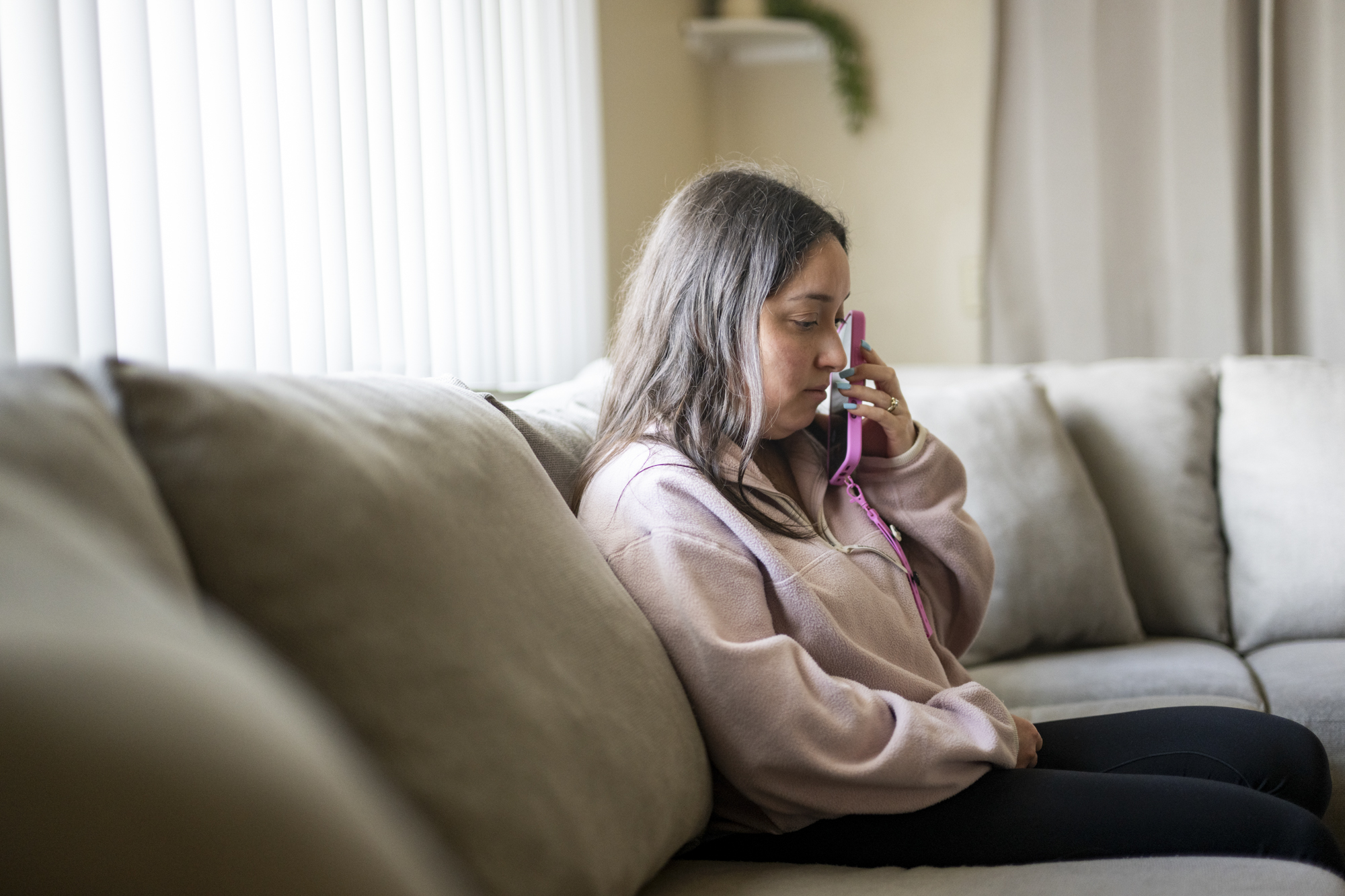
"caption": "Aby Peña speaks by phone with her husband, Ulises Peña Lopez, from their home in Sunnyvale on Feb. 19, 2026. Peña Lopez was deported to Mexico after being taken into ICE custody outside their home in February 2025, leaving his wife and young daughter in the Bay Area.",
"credit": "Beth LaBerge/KQED",
"altTag": null,
"description": null,
"imgSizes": {
"thumbnail": {
"file": "https://cdn.kqed.org/wp-content/uploads/sites/10/2026/02/260219-SUNNYVALEDEPORTED-02-BL-KQED-160x107.jpg",
"width": 160,
"height": 107,
"mimeType": "image/jpeg"
},
"1536x1536": {
"file": "https://cdn.kqed.org/wp-content/uploads/sites/10/2026/02/260219-SUNNYVALEDEPORTED-02-BL-KQED-1536x1024.jpg",
"width": 1536,
"height": 1024,
"mimeType": "image/jpeg"
},
"post-thumbnail": {
"file": "https://cdn.kqed.org/wp-content/uploads/sites/10/2026/02/260219-SUNNYVALEDEPORTED-02-BL-KQED-672x372.jpg",
"width": 672,
"height": 372,
"mimeType": "image/jpeg"
},
"twentyfourteen-full-width": {
"file": "https://cdn.kqed.org/wp-content/uploads/sites/10/2026/02/260219-SUNNYVALEDEPORTED-02-BL-KQED-1038x576.jpg",
"width": 1038,
"height": 576,
"mimeType": "image/jpeg"
},
"npr-cds-wide": {
"file": "https://cdn.kqed.org/wp-content/uploads/sites/10/2026/02/260219-SUNNYVALEDEPORTED-02-BL-KQED-1200x675.jpg",
"width": 1200,
"height": 675,
"mimeType": "image/jpeg"
},
"kqedFullSize": {
"file": "https://cdn.kqed.org/wp-content/uploads/sites/10/2026/02/260219-SUNNYVALEDEPORTED-02-BL-KQED.jpg",
"width": 2000,
"height": 1333
}
},
"isLoading": false,
"fetchFailed": false
},
"news_12077661": {
"type": "attachments",
"id": "news_12077661",
"meta": {
"index": "attachments_1716263798",
"site": "news",
"id": "12077661",
"found": true
},
"title": "020_Antioch_AngeloQuintoMemorial_03102021_qed",
"publishDate": 1774550525,
"status": "inherit",
"parent": 12077656,
"modified": 1774550600,
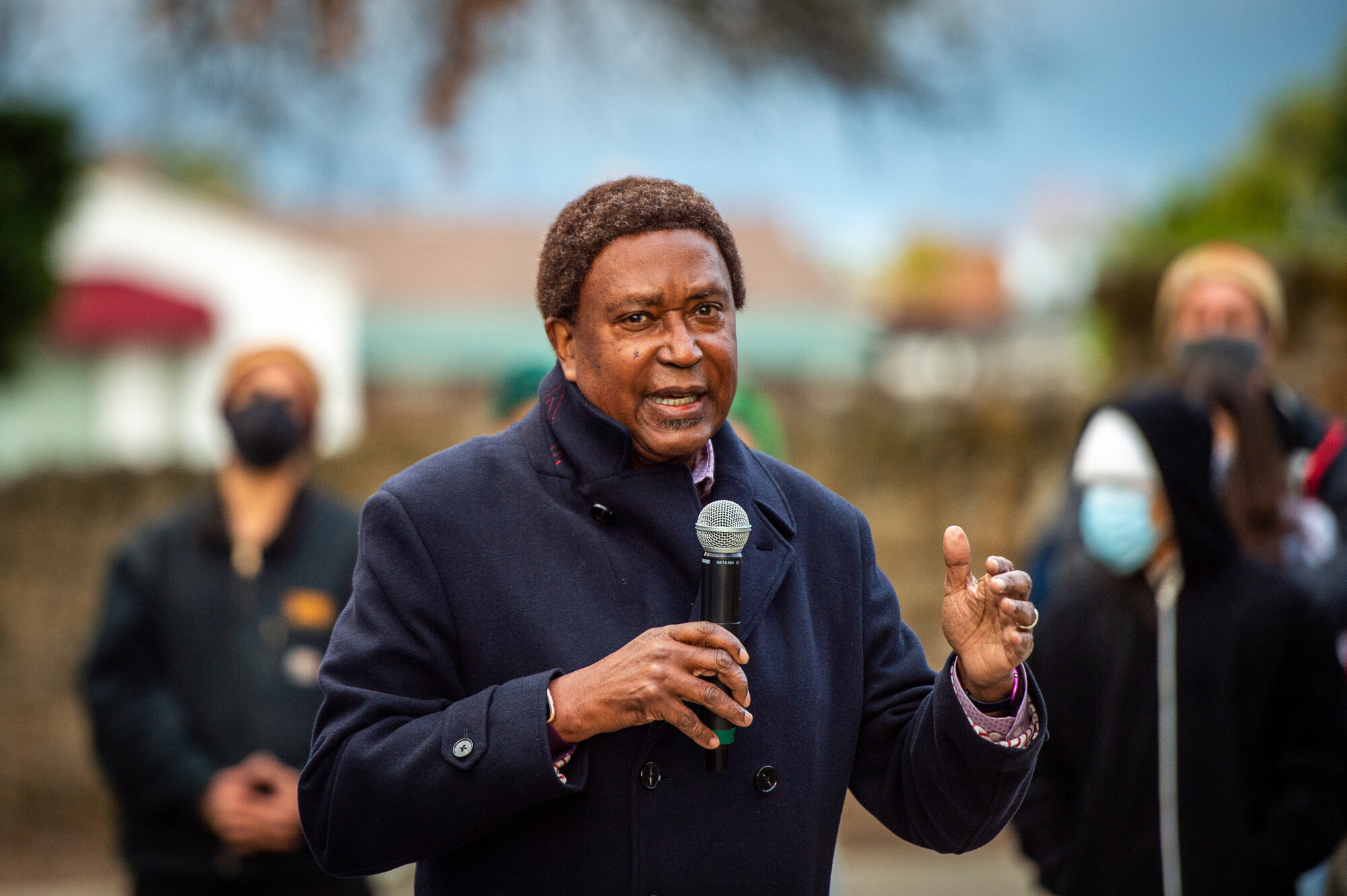
"caption": "Attorney John Burris speaks during a candlelight vigil in remembrance of Angelo Quinto at Antioch City Park on March 10, 2021. ",
"credit": "Beth LaBerge/KQED",
"altTag": null,
"description": null,
"imgSizes": {
"thumbnail": {
"file": "https://cdn.kqed.org/wp-content/uploads/sites/10/2026/03/020_Antioch_AngeloQuintoMemorial_03102021_qed-160x106.jpg",
"width": 160,
"height": 106,
"mimeType": "image/jpeg"
},
"1536x1536": {
"file": "https://cdn.kqed.org/wp-content/uploads/sites/10/2026/03/020_Antioch_AngeloQuintoMemorial_03102021_qed-1536x1022.jpg",
"width": 1536,
"height": 1022,
"mimeType": "image/jpeg"
},
"post-thumbnail": {
"file": "https://cdn.kqed.org/wp-content/uploads/sites/10/2026/03/020_Antioch_AngeloQuintoMemorial_03102021_qed-672x372.jpg",
"width": 672,
"height": 372,
"mimeType": "image/jpeg"
},
"twentyfourteen-full-width": {
"file": "https://cdn.kqed.org/wp-content/uploads/sites/10/2026/03/020_Antioch_AngeloQuintoMemorial_03102021_qed-1038x576.jpg",
"width": 1038,
"height": 576,
"mimeType": "image/jpeg"
},
"npr-cds-wide": {
"file": "https://cdn.kqed.org/wp-content/uploads/sites/10/2026/03/020_Antioch_AngeloQuintoMemorial_03102021_qed-1200x675.jpg",
"width": 1200,
"height": 675,
"mimeType": "image/jpeg"
},
"npr-cds-square": {
"file": "https://cdn.kqed.org/wp-content/uploads/sites/10/2026/03/020_Antioch_AngeloQuintoMemorial_03102021_qed-600x600.jpg",
"width": 600,
"height": 600,
"mimeType": "image/jpeg"
},
"kqedFullSize": {
"file": "https://cdn.kqed.org/wp-content/uploads/sites/10/2026/03/020_Antioch_AngeloQuintoMemorial_03102021_qed.jpg",
"width": 2000,
"height": 1331
}
},
"isLoading": false,
"fetchFailed": false
},
"news_12077694": {
"type": "attachments",
"id": "news_12077694",
"meta": {
"index": "attachments_1716263798",
"site": "news",
"id": "12077694",
"found": true
},
"title": "Chavez Allegations Fallout",
"publishDate": 1774555774,
"status": "inherit",
"parent": 12077691,
"modified": 1774555814,
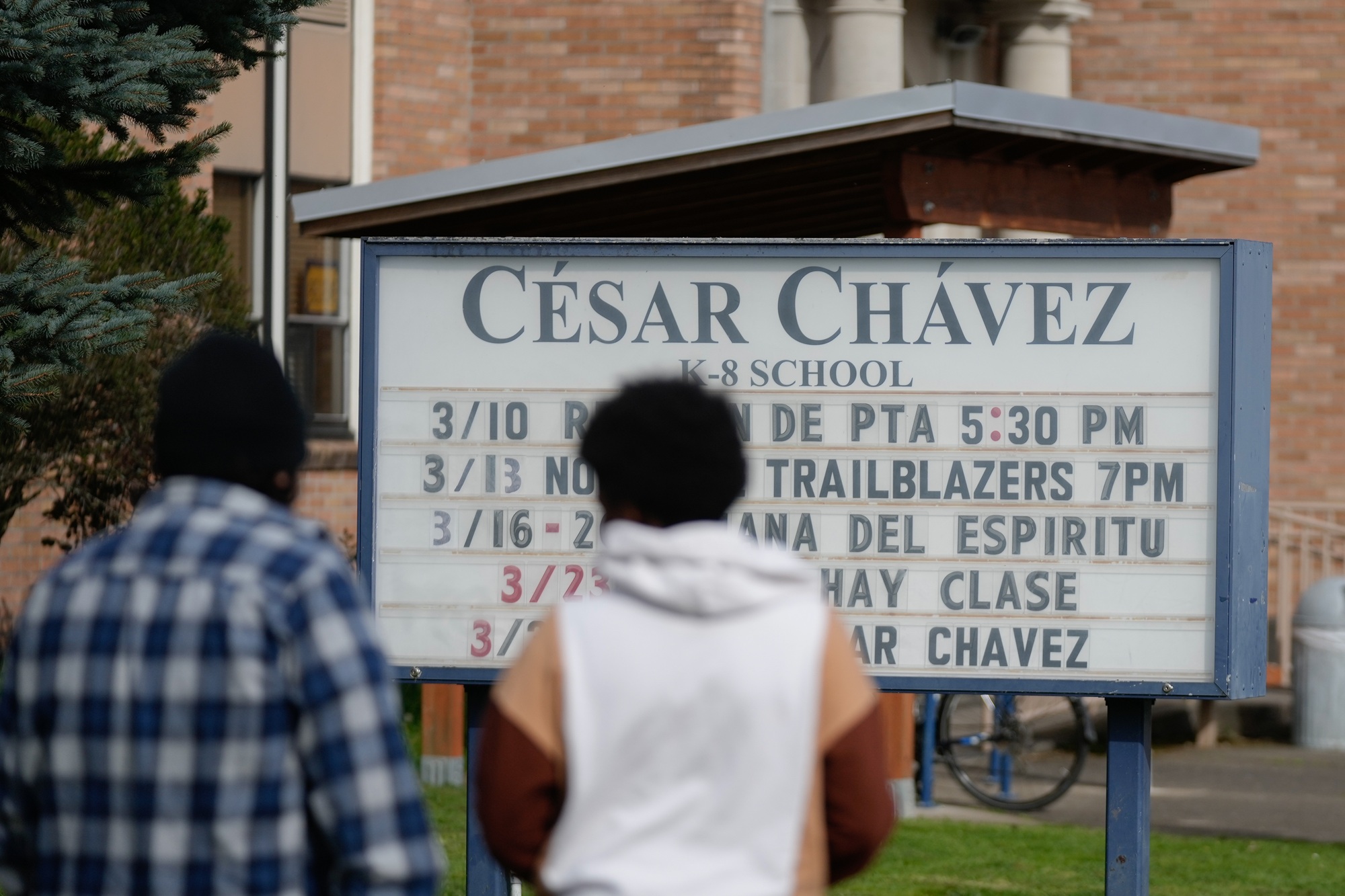
"caption": "A sign for Cesar Chavez School is seen on March 18, 2026, in Portland, Oregon.",
"credit": "Jenny Kane/AP Photo",
"altTag": null,
"description": null,
"imgSizes": {
"thumbnail": {
"file": "https://cdn.kqed.org/wp-content/uploads/sites/10/2026/03/CesarChavezSchoolAP-160x107.jpg",
"width": 160,
"height": 107,
"mimeType": "image/jpeg"
},
"1536x1536": {
"file": "https://cdn.kqed.org/wp-content/uploads/sites/10/2026/03/CesarChavezSchoolAP-1536x1024.jpg",
"width": 1536,
"height": 1024,
"mimeType": "image/jpeg"
},
"post-thumbnail": {
"file": "https://cdn.kqed.org/wp-content/uploads/sites/10/2026/03/CesarChavezSchoolAP-672x372.jpg",
"width": 672,
"height": 372,
"mimeType": "image/jpeg"
},
"twentyfourteen-full-width": {
"file": "https://cdn.kqed.org/wp-content/uploads/sites/10/2026/03/CesarChavezSchoolAP-1038x576.jpg",
"width": 1038,
"height": 576,
"mimeType": "image/jpeg"
},
"npr-cds-wide": {
"file": "https://cdn.kqed.org/wp-content/uploads/sites/10/2026/03/CesarChavezSchoolAP-1200x675.jpg",
"width": 1200,
"height": 675,
"mimeType": "image/jpeg"
},
"npr-cds-square": {
"file": "https://cdn.kqed.org/wp-content/uploads/sites/10/2026/03/CesarChavezSchoolAP-600x600.jpg",
"width": 600,
"height": 600,
"mimeType": "image/jpeg"
},
"kqedFullSize": {
"file": "https://cdn.kqed.org/wp-content/uploads/sites/10/2026/03/CesarChavezSchoolAP.jpg",
"width": 2000,
"height": 1333
}
},
"isLoading": false,
"fetchFailed": false
},
"news_12077588": {
"type": "attachments",
"id": "news_12077588",
"meta": {
"index": "attachments_1716263798",
"site": "news",
"id": "12077588",
"found": true
},
"title": "Protests erupt over SFPD assistance in ICE arrest at SFO",
"publishDate": 1774479250,
"status": "inherit",
"parent": 12077581,
"modified": 1774547350,
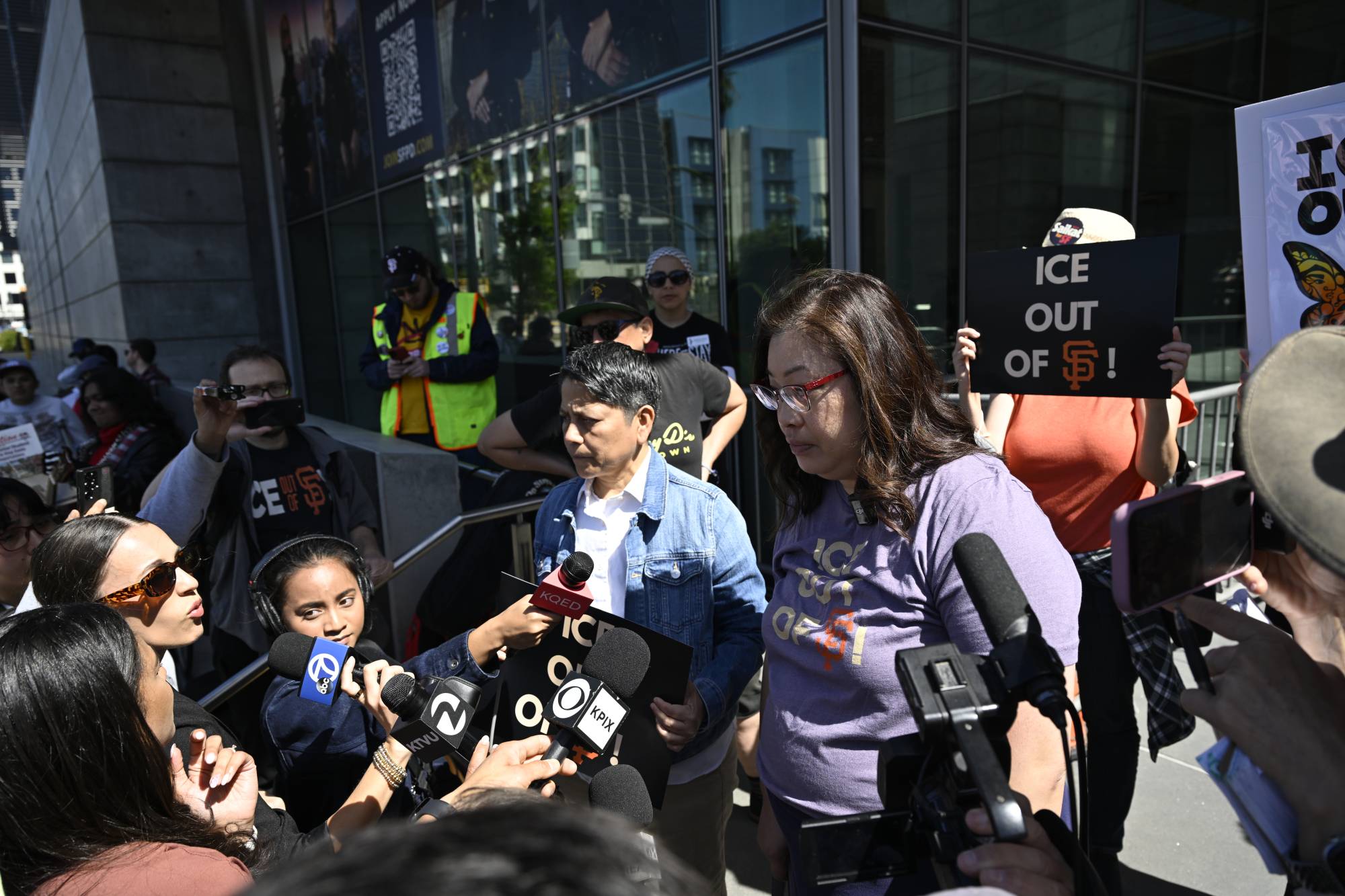
"caption": "Laura Valdez, left, executive director of Mission Action, and Angela Chan, assistant chief attorney at the San Francisco public defender's office, speak as protesters gather outside the San Francisco Police Department headquarters on March 25, 2026. They criticized the SFPD's presence at the scene where ICE officers arrested a mother at San Francisco International Airport.",
"credit": "Tayfun Coskun /Anadolu via Getty Images",
"altTag": "Two people speak into news microphones as a crowd of protesters surrounds them. A sign says \"ICE out of SF\"",
"description": null,
"imgSizes": {
"medium": {
"file": "https://cdn.kqed.org/wp-content/uploads/sites/10/2026/03/GettyImages-2267820367-2000x1333.jpg",
"width": 2000,
"height": 1333,
"mimeType": "image/jpeg"
},
"large": {
"file": "https://cdn.kqed.org/wp-content/uploads/sites/10/2026/03/GettyImages-2267820367-2000x1333.jpg",
"width": 2000,
"height": 1333,
"mimeType": "image/jpeg"
},
"thumbnail": {
"file": "https://cdn.kqed.org/wp-content/uploads/sites/10/2026/03/GettyImages-2267820367-160x107.jpg",
"width": 160,
"height": 107,
"mimeType": "image/jpeg"
},
"1536x1536": {
"file": "https://cdn.kqed.org/wp-content/uploads/sites/10/2026/03/GettyImages-2267820367-1536x1024.jpg",
"width": 1536,
"height": 1024,
"mimeType": "image/jpeg"
},
"2048x2048": {
"file": "https://cdn.kqed.org/wp-content/uploads/sites/10/2026/03/GettyImages-2267820367-2048x1365.jpg",
"width": 2048,
"height": 1365,
"mimeType": "image/jpeg"
},
"post-thumbnail": {
"file": "https://cdn.kqed.org/wp-content/uploads/sites/10/2026/03/GettyImages-2267820367-672x372.jpg",
"width": 672,
"height": 372,
"mimeType": "image/jpeg"
},
"twentyfourteen-full-width": {
"file": "https://cdn.kqed.org/wp-content/uploads/sites/10/2026/03/GettyImages-2267820367-1038x576.jpg",
"width": 1038,
"height": 576,
"mimeType": "image/jpeg"
},
"full-width": {
"file": "https://cdn.kqed.org/wp-content/uploads/sites/10/2026/03/GettyImages-2267820367-2000x1333.jpg",
"width": 2000,
"height": 1333,
"mimeType": "image/jpeg"
},
"npr-cds-wide": {
"file": "https://cdn.kqed.org/wp-content/uploads/sites/10/2026/03/GettyImages-2267820367-1200x675.jpg",
"width": 1200,
"height": 675,
"mimeType": "image/jpeg"
},
"npr-cds-square": {
"file": "https://cdn.kqed.org/wp-content/uploads/sites/10/2026/03/GettyImages-2267820367-600x600.jpg",
"width": 600,
"height": 600,
"mimeType": "image/jpeg"
},
"kqedFullSize": {
"file": "https://cdn.kqed.org/wp-content/uploads/sites/10/2026/03/GettyImages-2267820367-scaled.jpg",
"width": 2560,
"height": 1707
}
},
"isLoading": false,
"fetchFailed": false
},
"news_11729066": {
"type": "attachments",
"id": "news_11729066",
"meta": {
"index": "attachments_1716263798",
"site": "news",
"id": "11729066",
"found": true
},
"parent": 11728992,
"imgSizes": {
"twentyfourteen-full-width": {
"file": "https://ww2.kqed.org/app/uploads/sites/10/2019/02/GettyImages-450371283-1038x576.jpg",
"width": 1038,
"mimeType": "image/jpeg",
"height": 576
},
"thumbnail": {
"file": "https://ww2.kqed.org/app/uploads/sites/10/2019/02/GettyImages-450371283-160x107.jpg",
"width": 160,
"mimeType": "image/jpeg",
"height": 107
},
"post-thumbnail": {
"file": "https://ww2.kqed.org/app/uploads/sites/10/2019/02/GettyImages-450371283-672x372.jpg",
"width": 672,
"mimeType": "image/jpeg",
"height": 372
},
"kqedFullSize": {
"file": "https://ww2.kqed.org/app/uploads/sites/10/2019/02/GettyImages-450371283.jpg",
"width": 2048,
"height": 1365
},
"large": {
"file": "https://ww2.kqed.org/app/uploads/sites/10/2019/02/GettyImages-450371283-1020x680.jpg",
"width": 1020,
"mimeType": "image/jpeg",
"height": 680
},
"complete_open_graph": {
"file": "https://ww2.kqed.org/app/uploads/sites/10/2019/02/GettyImages-450371283-1200x800.jpg",
"width": 1200,
"mimeType": "image/jpeg",
"height": 800
},
"guest-author-50": {
"file": "https://ww2.kqed.org/app/uploads/sites/10/2019/02/GettyImages-450371283-50x50.jpg",
"width": 50,
"mimeType": "image/jpeg",
"height": 50
},
"guest-author-96": {
"file": "https://ww2.kqed.org/app/uploads/sites/10/2019/02/GettyImages-450371283-96x96.jpg",
"width": 96,
"mimeType": "image/jpeg",
"height": 96
},
"medium": {
"file": "https://ww2.kqed.org/app/uploads/sites/10/2019/02/GettyImages-450371283-800x533.jpg",
"width": 800,
"mimeType": "image/jpeg",
"height": 533
},
"guest-author-64": {
"file": "https://ww2.kqed.org/app/uploads/sites/10/2019/02/GettyImages-450371283-64x64.jpg",
"width": 64,
"mimeType": "image/jpeg",
"height": 64
},
"guest-author-32": {
"file": "https://ww2.kqed.org/app/uploads/sites/10/2019/02/GettyImages-450371283-32x32.jpg",
"width": 32,
"mimeType": "image/jpeg",
"height": 32
},
"full-width": {
"file": "https://ww2.kqed.org/app/uploads/sites/10/2019/02/GettyImages-450371283-1920x1280.jpg",
"width": 1920,
"mimeType": "image/jpeg",
"height": 1280
},
"detail": {
"file": "https://ww2.kqed.org/app/uploads/sites/10/2019/02/GettyImages-450371283-150x150.jpg",
"width": 150,
"mimeType": "image/jpeg",
"height": 150
},
"guest-author-128": {
"file": "https://ww2.kqed.org/app/uploads/sites/10/2019/02/GettyImages-450371283-128x128.jpg",
"width": 128,
"mimeType": "image/jpeg",
"height": 128
}
},
"publishDate": 1551211893,
"modified": 1551211976,
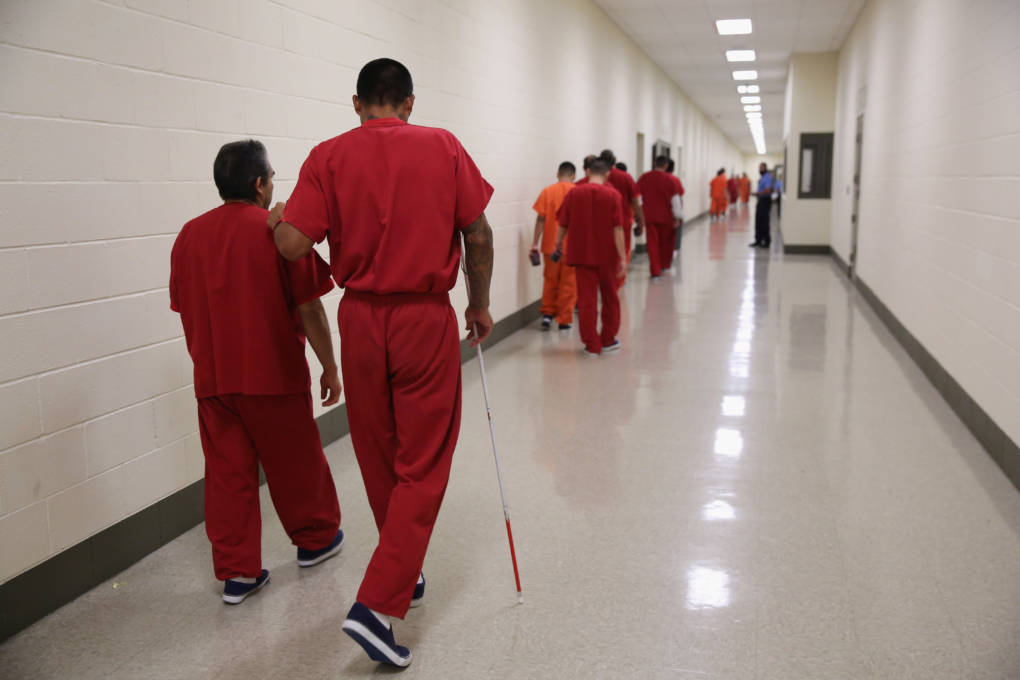
"caption": "Immigration detainees at the facility in Adelanto, California, which houses an average of 1,100 immigrants in custody pending a decision in their immigration cases or awaiting deportation. ",
"description": "Immigration detainees at the facility in Adelanto, California, which houses an average of 1,100 immigrants in custody pending a decision in their immigration cases or awaiting deportation. ",
"title": "ICE Holds Immigrants At Adelanto Detention Facility",
"credit": "John Moore/Getty Images",
"status": "inherit",
"isLoading": false,
"fetchFailed": false
},
"news_12077504": {
"type": "attachments",
"id": "news_12077504",
"meta": {
"index": "attachments_1716263798",
"site": "news",
"id": "12077504",
"found": true
},
"title": "Trump Sends ICE Agents To Airports As DHS Remains Unfunded",
"publishDate": 1774462696,
"status": "inherit",
"parent": 12077353,
"modified": 1779816919,
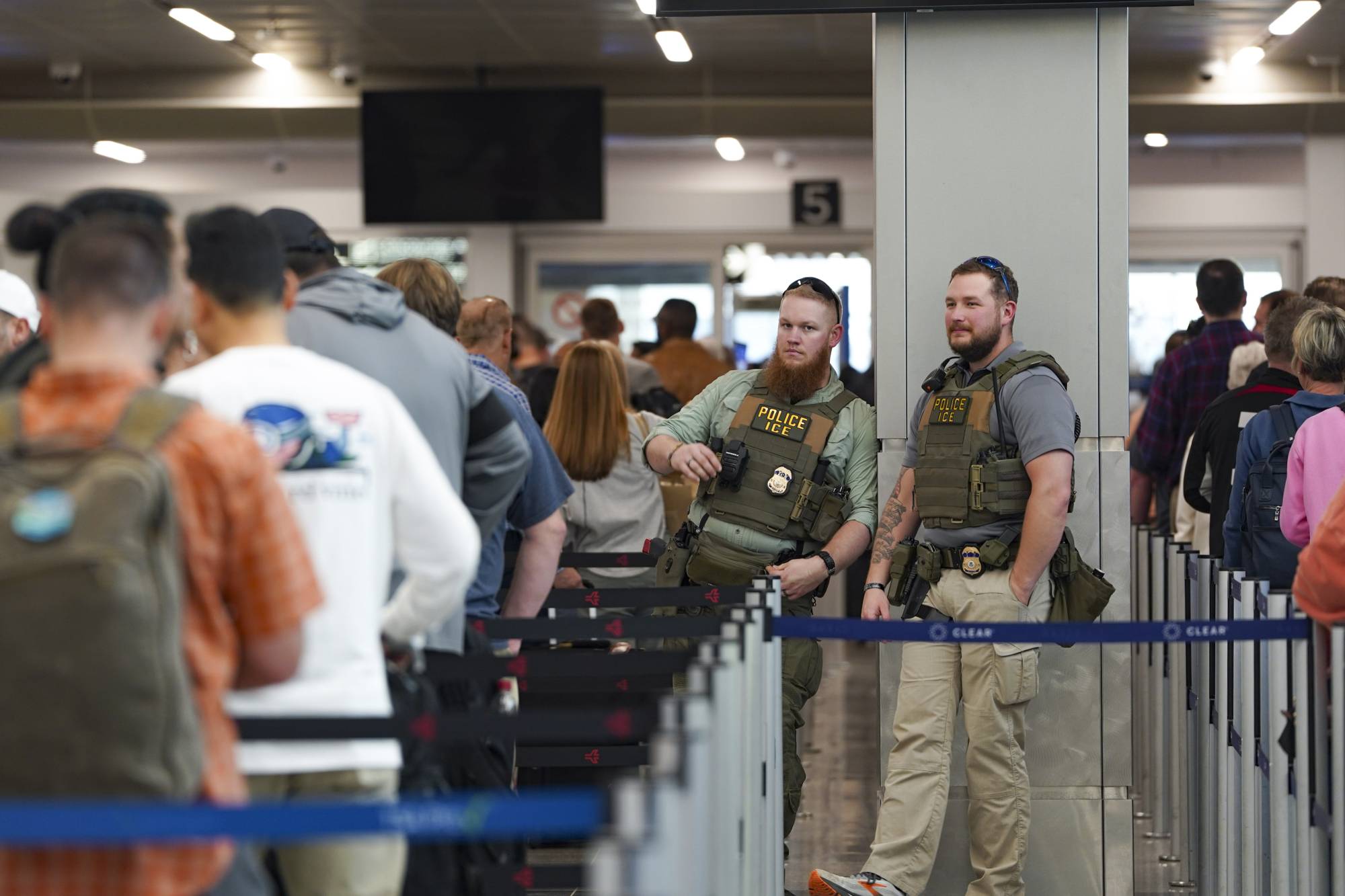
"caption": "CE agents stand next to the security line at Atlanta Hartsfield-Jackson International Airport on March 23, 2026 in Atlanta, Georgia. ",
"credit": "Megan Varner/Getty Images",
"altTag": null,
"description": null,
"imgSizes": {
"medium": {
"file": "https://cdn.kqed.org/wp-content/uploads/sites/10/2026/03/GettyImages-2267571375-2000x1333.jpg",
"width": 2000,
"height": 1333,
"mimeType": "image/jpeg"
},
"large": {
"file": "https://cdn.kqed.org/wp-content/uploads/sites/10/2026/03/GettyImages-2267571375-2000x1333.jpg",
"width": 2000,
"height": 1333,
"mimeType": "image/jpeg"
},
"thumbnail": {
"file": "https://cdn.kqed.org/wp-content/uploads/sites/10/2026/03/GettyImages-2267571375-160x107.jpg",
"width": 160,
"height": 107,
"mimeType": "image/jpeg"
},
"1536x1536": {
"file": "https://cdn.kqed.org/wp-content/uploads/sites/10/2026/03/GettyImages-2267571375-1536x1024.jpg",
"width": 1536,
"height": 1024,
"mimeType": "image/jpeg"
},
"2048x2048": {
"file": "https://cdn.kqed.org/wp-content/uploads/sites/10/2026/03/GettyImages-2267571375-2048x1365.jpg",
"width": 2048,
"height": 1365,
"mimeType": "image/jpeg"
},
"post-thumbnail": {
"file": "https://cdn.kqed.org/wp-content/uploads/sites/10/2026/03/GettyImages-2267571375-672x372.jpg",
"width": 672,
"height": 372,
"mimeType": "image/jpeg"
},
"twentyfourteen-full-width": {
"file": "https://cdn.kqed.org/wp-content/uploads/sites/10/2026/03/GettyImages-2267571375-1038x576.jpg",
"width": 1038,
"height": 576,
"mimeType": "image/jpeg"
},
"full-width": {
"file": "https://cdn.kqed.org/wp-content/uploads/sites/10/2026/03/GettyImages-2267571375-2000x1333.jpg",
"width": 2000,
"height": 1333,
"mimeType": "image/jpeg"
},
"npr-cds-wide": {
"file": "https://cdn.kqed.org/wp-content/uploads/sites/10/2026/03/GettyImages-2267571375-1200x675.jpg",
"width": 1200,
"height": 675,
"mimeType": "image/jpeg"
},
"npr-cds-square": {
"file": "https://cdn.kqed.org/wp-content/uploads/sites/10/2026/03/GettyImages-2267571375-600x600.jpg",
"width": 600,
"height": 600,
"mimeType": "image/jpeg"
},
"kqedFullSize": {
"file": "https://cdn.kqed.org/wp-content/uploads/sites/10/2026/03/GettyImages-2267571375-scaled-e1774462803299.jpg",
"width": 2000,
"height": 1334
}
},
"isLoading": false,
"fetchFailed": false
},
"news_12077382": {
"type": "attachments",
"id": "news_12077382",
"meta": {
"index": "attachments_1716263798",
"site": "news",
"id": "12077382",
"found": true
},
"title": "005_KQED_630Sansome_02052020_1455_qed",
"publishDate": 1774384361,
"status": "inherit",
"parent": 12077372,
"modified": 1774386562,
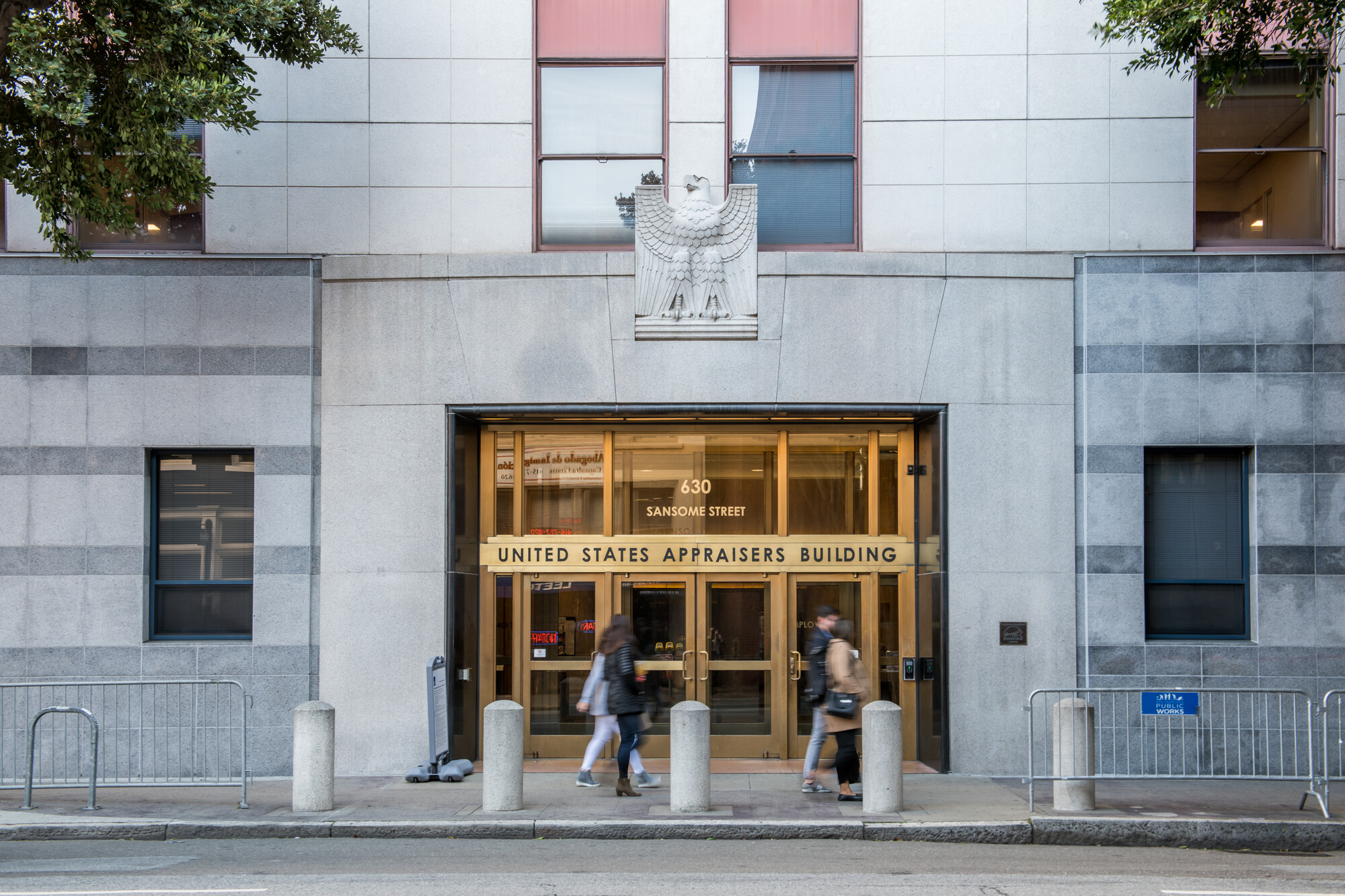
"caption": "The U.S. Immigration and Customs Enforcement building at 630 Sansome St. on Feb. 5, 2020.",
"credit": "Beth LaBerge/KQED",
"altTag": null,
"description": null,
"imgSizes": {
"thumbnail": {
"file": "https://cdn.kqed.org/wp-content/uploads/sites/10/2026/03/005_KQED_630Sansome_02052020_1455_qed-160x107.jpg",
"width": 160,
"height": 107,
"mimeType": "image/jpeg"
},
"1536x1536": {
"file": "https://cdn.kqed.org/wp-content/uploads/sites/10/2026/03/005_KQED_630Sansome_02052020_1455_qed-1536x1024.jpg",
"width": 1536,
"height": 1024,
"mimeType": "image/jpeg"
},
"post-thumbnail": {
"file": "https://cdn.kqed.org/wp-content/uploads/sites/10/2026/03/005_KQED_630Sansome_02052020_1455_qed-672x372.jpg",
"width": 672,
"height": 372,
"mimeType": "image/jpeg"
},
"twentyfourteen-full-width": {
"file": "https://cdn.kqed.org/wp-content/uploads/sites/10/2026/03/005_KQED_630Sansome_02052020_1455_qed-1038x576.jpg",
"width": 1038,
"height": 576,
"mimeType": "image/jpeg"
},
"npr-cds-wide": {
"file": "https://cdn.kqed.org/wp-content/uploads/sites/10/2026/03/005_KQED_630Sansome_02052020_1455_qed-1200x675.jpg",
"width": 1200,
"height": 675,
"mimeType": "image/jpeg"
},
"npr-cds-square": {
"file": "https://cdn.kqed.org/wp-content/uploads/sites/10/2026/03/005_KQED_630Sansome_02052020_1455_qed-600x600.jpg",
"width": 600,
"height": 600,
"mimeType": "image/jpeg"
},
"kqedFullSize": {
"file": "https://cdn.kqed.org/wp-content/uploads/sites/10/2026/03/005_KQED_630Sansome_02052020_1455_qed.jpg",
"width": 2000,
"height": 1333
}
},
"isLoading": false,
"fetchFailed": false
},
"news_12067210": {
"type": "attachments",
"id": "news_12067210",
"meta": {
"index": "attachments_1716263798",
"site": "news",
"id": "12067210",
"found": true
},
"title": "251210-SFOEating-86-BL_qed",
"publishDate": 1765830498,
"status": "inherit",
"parent": 12067167,
"modified": 1774287738,
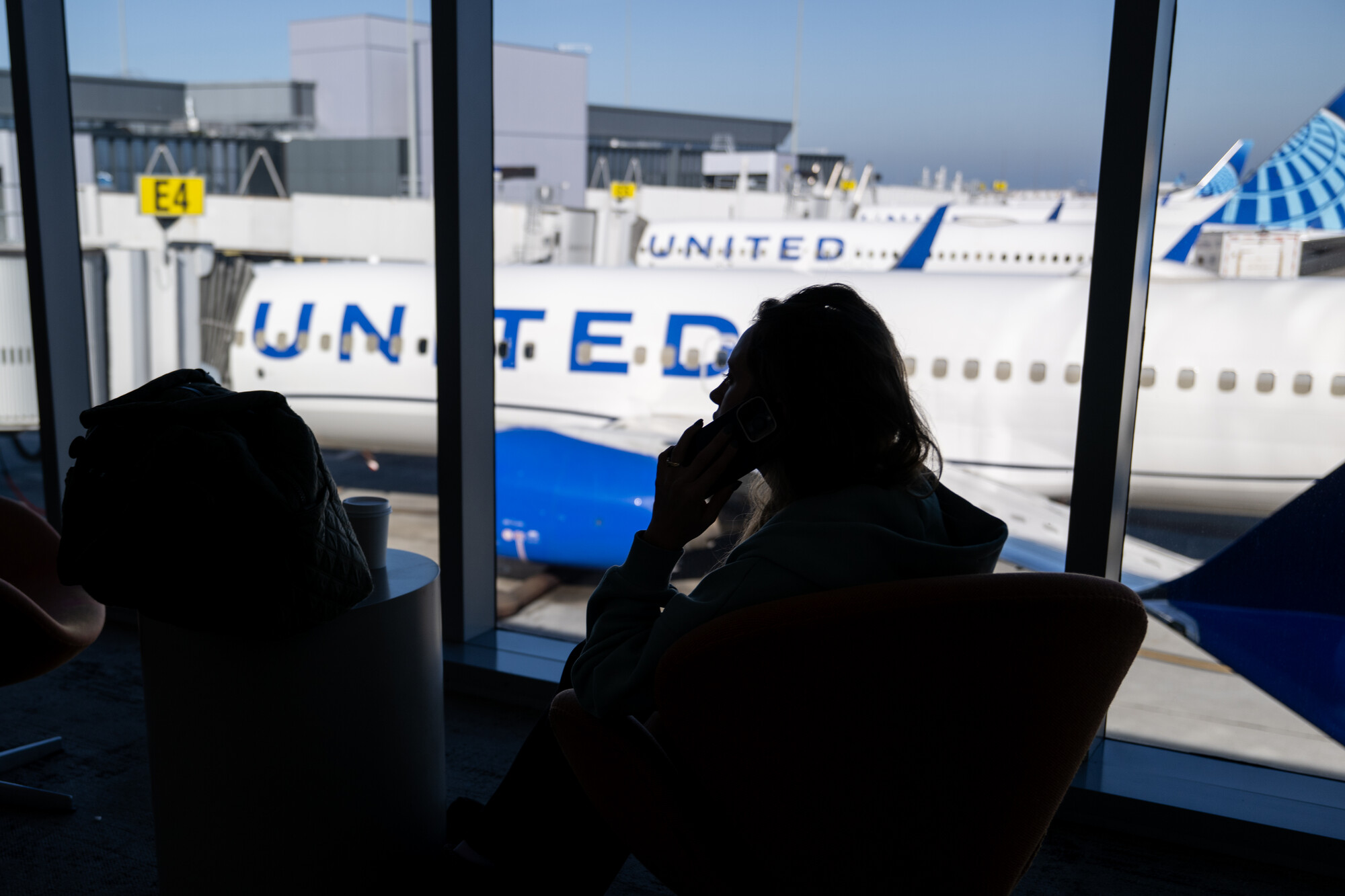
"caption": "Passengers wait for their flight at San Francisco International Airport on Dec. 10, 2025.",
"credit": "Beth LaBerge/KQED",
"altTag": null,
"description": null,
"imgSizes": {
"thumbnail": {
"file": "https://cdn.kqed.org/wp-content/uploads/sites/10/2025/12/251210-SFOEating-86-BL_qed-160x107.jpg",
"width": 160,
"height": 107,
"mimeType": "image/jpeg"
},
"1536x1536": {
"file": "https://cdn.kqed.org/wp-content/uploads/sites/10/2025/12/251210-SFOEating-86-BL_qed-1536x1024.jpg",
"width": 1536,
"height": 1024,
"mimeType": "image/jpeg"
},
"post-thumbnail": {
"file": "https://cdn.kqed.org/wp-content/uploads/sites/10/2025/12/251210-SFOEating-86-BL_qed-672x372.jpg",
"width": 672,
"height": 372,
"mimeType": "image/jpeg"
},
"twentyfourteen-full-width": {
"file": "https://cdn.kqed.org/wp-content/uploads/sites/10/2025/12/251210-SFOEating-86-BL_qed-1038x576.jpg",
"width": 1038,
"height": 576,
"mimeType": "image/jpeg"
},
"npr-cds-wide": {
"file": "https://cdn.kqed.org/wp-content/uploads/sites/10/2025/12/251210-SFOEating-86-BL_qed-1200x675.jpg",
"width": 1200,
"height": 675,
"mimeType": "image/jpeg"
},
"kqedFullSize": {
"file": "https://cdn.kqed.org/wp-content/uploads/sites/10/2025/12/251210-SFOEating-86-BL_qed.jpg",
"width": 2000,
"height": 1333
}
},
"isLoading": false,
"fetchFailed": false
},
"news_12077198": {
"type": "attachments",
"id": "news_12077198",
"meta": {
"index": "attachments_1716263798",
"site": "news",
"id": "12077198",
"found": true
},
"title": "260319-CHAVEZSJ-KQED-09_qed",
"publishDate": 1774034858,
"status": "inherit",
"parent": 12077159,
"modified": 1774037044,
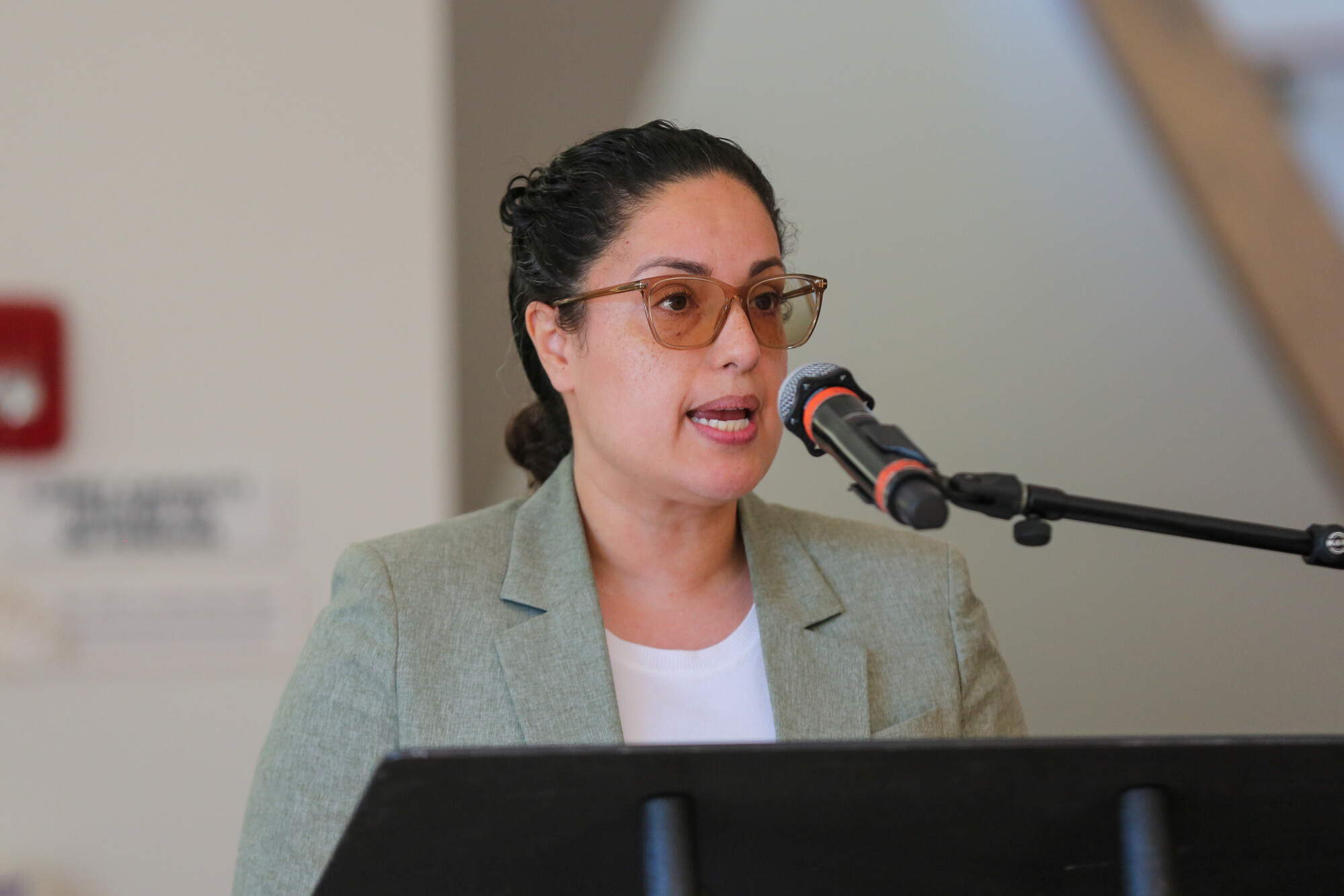
"caption": "Jessica Paz-Cedillos, CEO of Mexican Heritage Plaza, speaks about the community response to sexual abuse allegations against the late labor leader Cesar Chavez in East San José on Thursday, March 19, 2026.",
"credit": "Joseph Geha/KQED",
"altTag": null,
"description": null,
"imgSizes": {
"thumbnail": {
"file": "https://cdn.kqed.org/wp-content/uploads/sites/10/2026/03/260319-CHAVEZSJ-KQED-09_qed-160x107.jpg",
"width": 160,
"height": 107,
"mimeType": "image/jpeg"
},
"1536x1536": {
"file": "https://cdn.kqed.org/wp-content/uploads/sites/10/2026/03/260319-CHAVEZSJ-KQED-09_qed-1536x1024.jpg",
"width": 1536,
"height": 1024,
"mimeType": "image/jpeg"
},
"post-thumbnail": {
"file": "https://cdn.kqed.org/wp-content/uploads/sites/10/2026/03/260319-CHAVEZSJ-KQED-09_qed-672x372.jpg",
"width": 672,
"height": 372,
"mimeType": "image/jpeg"
},
"twentyfourteen-full-width": {
"file": "https://cdn.kqed.org/wp-content/uploads/sites/10/2026/03/260319-CHAVEZSJ-KQED-09_qed-1038x576.jpg",
"width": 1038,
"height": 576,
"mimeType": "image/jpeg"
},
"npr-cds-wide": {
"file": "https://cdn.kqed.org/wp-content/uploads/sites/10/2026/03/260319-CHAVEZSJ-KQED-09_qed-1200x675.jpg",
"width": 1200,
"height": 675,
"mimeType": "image/jpeg"
},
"kqedFullSize": {
"file": "https://cdn.kqed.org/wp-content/uploads/sites/10/2026/03/260319-CHAVEZSJ-KQED-09_qed.jpg",
"width": 1999,
"height": 1333
}
},
"isLoading": false,
"fetchFailed": false
},
"news_12076934": {
"type": "attachments",
"id": "news_12076934",
"meta": {
"index": "attachments_1716263798",
"site": "news",
"id": "12076934",
"found": true
},
"title": "US-LABOUR-RIGHTS-CHAVEZ",
"publishDate": 1773864383,
"status": "inherit",
"parent": 12076859,
"modified": 1773960421,
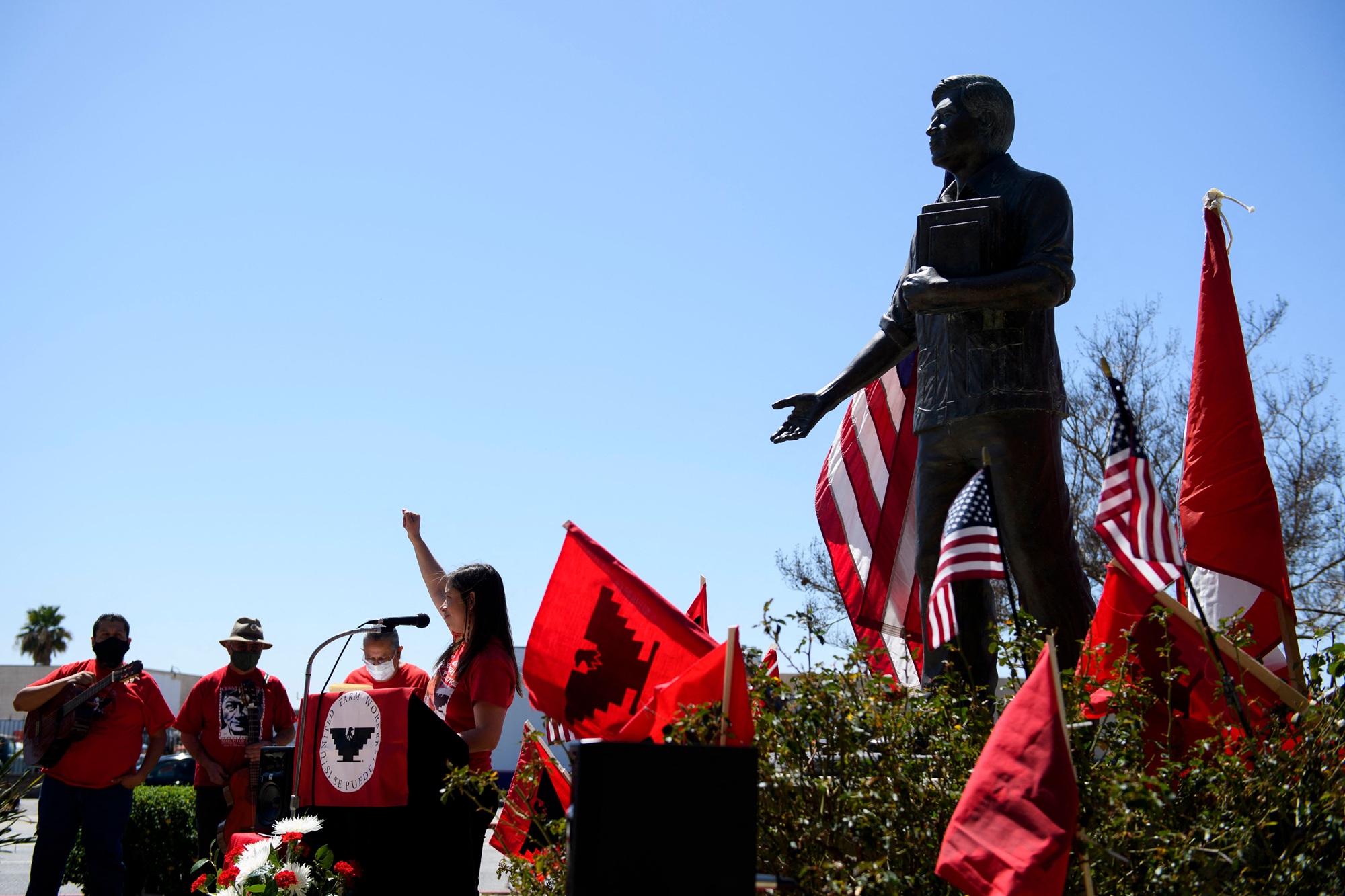
"caption": "A statue of César E. Chavez stands as members of the San Fernando Valley commemorative committee celebrate César Chavez Day on March 31, 2021, in San Fernando, California. Chavez was known for employing non-violent means to seek better working conditions for thousands of farm workers who suffered low wages and severe working conditions. In 1962, he founded the National Farm Workers Association, which later became the United Farm Workers (UFW) union. ",
"credit": "Patrick T. Fallon/AFP via Getty Images",
"altTag": null,
"description": null,
"imgSizes": {
"thumbnail": {
"file": "https://cdn.kqed.org/wp-content/uploads/sites/10/2026/03/CesarChavezGetty2-160x107.jpg",
"width": 160,
"height": 107,
"mimeType": "image/jpeg"
},
"1536x1536": {
"file": "https://cdn.kqed.org/wp-content/uploads/sites/10/2026/03/CesarChavezGetty2-1536x1024.jpg",
"width": 1536,
"height": 1024,
"mimeType": "image/jpeg"
},
"post-thumbnail": {
"file": "https://cdn.kqed.org/wp-content/uploads/sites/10/2026/03/CesarChavezGetty2-672x372.jpg",
"width": 672,
"height": 372,
"mimeType": "image/jpeg"
},
"twentyfourteen-full-width": {
"file": "https://cdn.kqed.org/wp-content/uploads/sites/10/2026/03/CesarChavezGetty2-1038x576.jpg",
"width": 1038,
"height": 576,
"mimeType": "image/jpeg"
},
"npr-cds-wide": {
"file": "https://cdn.kqed.org/wp-content/uploads/sites/10/2026/03/CesarChavezGetty2-1200x675.jpg",
"width": 1200,
"height": 675,
"mimeType": "image/jpeg"
},
"kqedFullSize": {
"file": "https://cdn.kqed.org/wp-content/uploads/sites/10/2026/03/CesarChavezGetty2.jpg",
"width": 2000,
"height": 1333
}
},
"isLoading": false,
"fetchFailed": false
},
"news_12077058": {
"type": "attachments",
"id": "news_12077058",
"meta": {
"index": "attachments_1716263798",
"site": "news",
"id": "12077058",
"found": true
},
"title": "A street sign on Cesar Chavez Street in San Francisco on March 19, 2026.",
"publishDate": 1773944010,
"status": "inherit",
"parent": 12077691,
"modified": 1774556186,
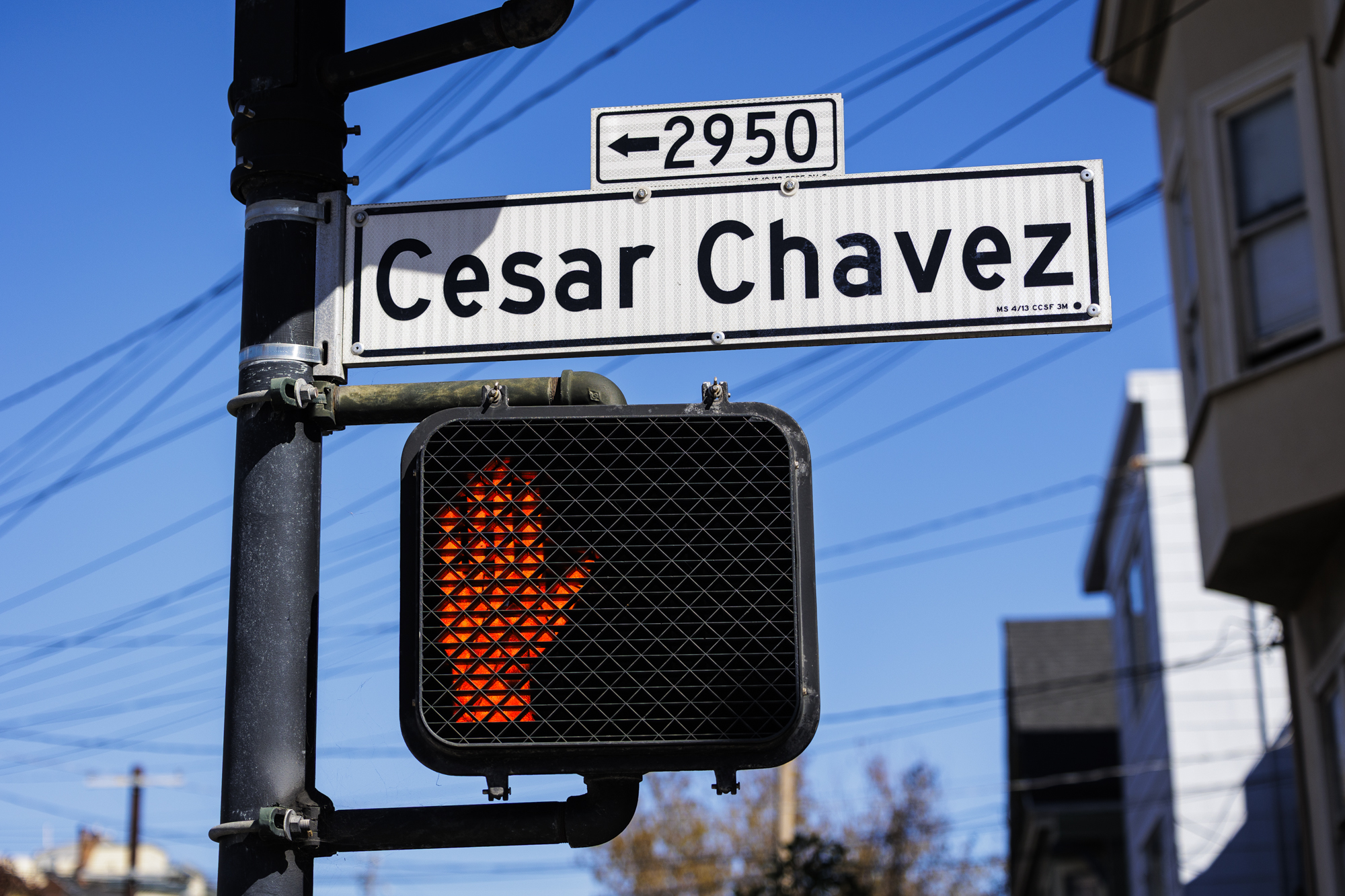
"caption": "A street sign on Cesar Chavez Street in San Francisco on March 19, 2026.",
"credit": "Martin do Nascimento/KQED",
"altTag": null,
"description": null,
"imgSizes": {
"thumbnail": {
"file": "https://cdn.kqed.org/wp-content/uploads/sites/10/2026/03/260319-CESAR-CHAVEZ-STREET-MD-01-KQED-160x107.jpg",
"width": 160,
"height": 107,
"mimeType": "image/jpeg"
},
"1536x1536": {
"file": "https://cdn.kqed.org/wp-content/uploads/sites/10/2026/03/260319-CESAR-CHAVEZ-STREET-MD-01-KQED-1536x1024.jpg",
"width": 1536,
"height": 1024,
"mimeType": "image/jpeg"
},
"post-thumbnail": {
"file": "https://cdn.kqed.org/wp-content/uploads/sites/10/2026/03/260319-CESAR-CHAVEZ-STREET-MD-01-KQED-672x372.jpg",
"width": 672,
"height": 372,
"mimeType": "image/jpeg"
},
"twentyfourteen-full-width": {
"file": "https://cdn.kqed.org/wp-content/uploads/sites/10/2026/03/260319-CESAR-CHAVEZ-STREET-MD-01-KQED-1038x576.jpg",
"width": 1038,
"height": 576,
"mimeType": "image/jpeg"
},
"npr-cds-wide": {
"file": "https://cdn.kqed.org/wp-content/uploads/sites/10/2026/03/260319-CESAR-CHAVEZ-STREET-MD-01-KQED-1200x675.jpg",
"width": 1200,
"height": 675,
"mimeType": "image/jpeg"
},
"kqedFullSize": {
"file": "https://cdn.kqed.org/wp-content/uploads/sites/10/2026/03/260319-CESAR-CHAVEZ-STREET-MD-01-KQED.jpg",
"width": 2000,
"height": 1333
}
},
"isLoading": false,
"fetchFailed": false
},
"news_12076564": {
"type": "attachments",
"id": "news_12076564",
"meta": {
"index": "attachments_1716263798",
"site": "news",
"id": "12076564",
"found": true
},
"title": "20260312_H1BVIDEOGAME_GC-12-KQED",
"publishDate": 1773678342,
"status": "inherit",
"parent": 0,
"modified": 1773678383,
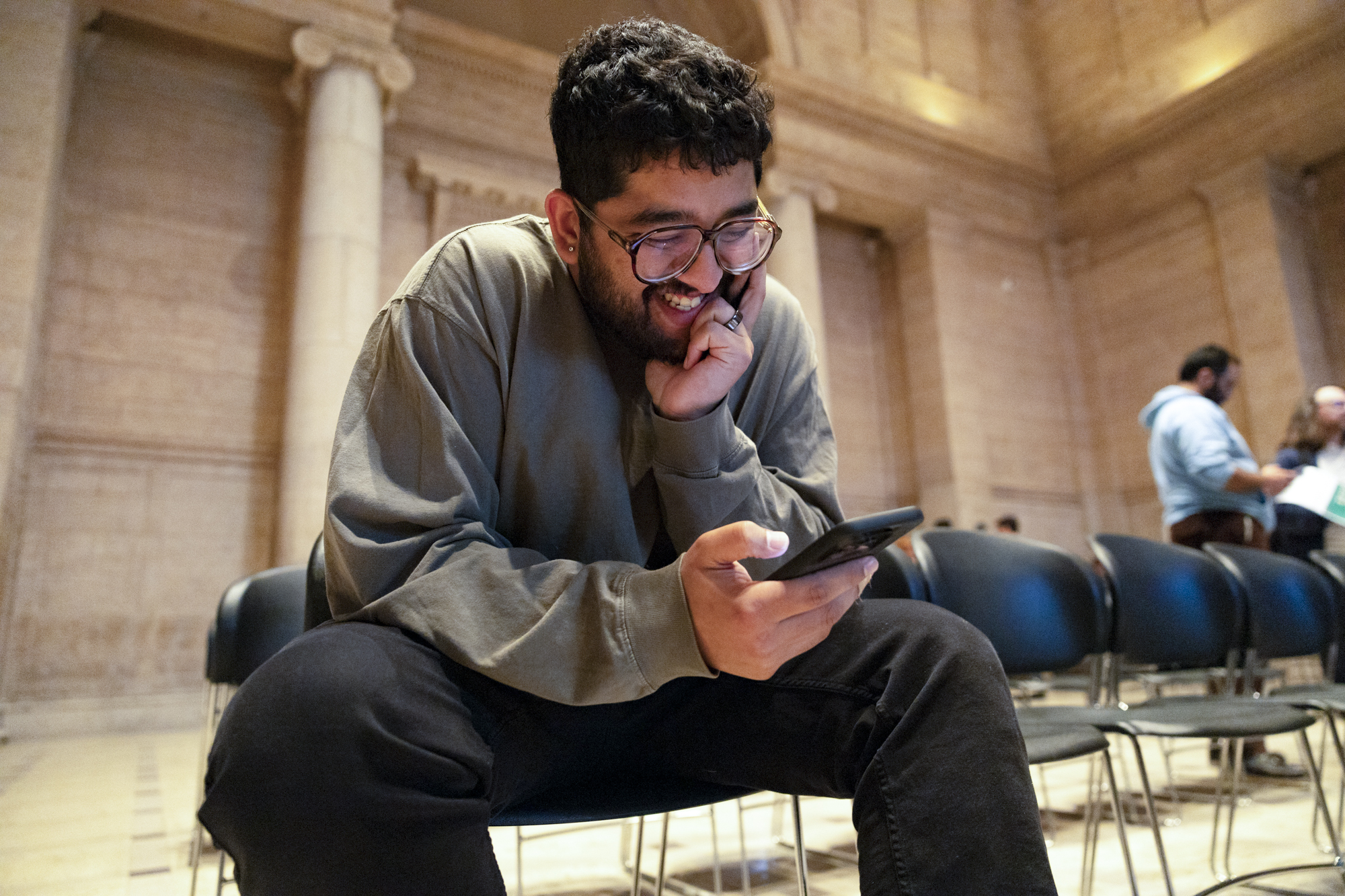
"caption": "Krish Chowdhary plays the H1B.Life game at the Asian Art Museum on March 12, 2026. H1B.Life is a game representing a live simulation of the U.S H-1B visa system with players “living” the lives of international students and workers trapped in the H-1B system, whose experiences were directly written into the game.",
"credit": "Gina Castro for KQED",
"altTag": null,
"description": null,
"imgSizes": {
"thumbnail": {
"file": "https://cdn.kqed.org/wp-content/uploads/sites/10/2026/03/20260312_H1BVIDEOGAME_GC-12-KQED-160x107.jpg",
"width": 160,
"height": 107,
"mimeType": "image/jpeg"
},
"1536x1536": {
"file": "https://cdn.kqed.org/wp-content/uploads/sites/10/2026/03/20260312_H1BVIDEOGAME_GC-12-KQED-1536x1024.jpg",
"width": 1536,
"height": 1024,
"mimeType": "image/jpeg"
},
"post-thumbnail": {
"file": "https://cdn.kqed.org/wp-content/uploads/sites/10/2026/03/20260312_H1BVIDEOGAME_GC-12-KQED-672x372.jpg",
"width": 672,
"height": 372,
"mimeType": "image/jpeg"
},
"twentyfourteen-full-width": {
"file": "https://cdn.kqed.org/wp-content/uploads/sites/10/2026/03/20260312_H1BVIDEOGAME_GC-12-KQED-1038x576.jpg",
"width": 1038,
"height": 576,
"mimeType": "image/jpeg"
},
"npr-cds-wide": {
"file": "https://cdn.kqed.org/wp-content/uploads/sites/10/2026/03/20260312_H1BVIDEOGAME_GC-12-KQED-1200x675.jpg",
"width": 1200,
"height": 675,
"mimeType": "image/jpeg"
},
"kqedFullSize": {
"file": "https://cdn.kqed.org/wp-content/uploads/sites/10/2026/03/20260312_H1BVIDEOGAME_GC-12-KQED.jpg",
"width": 2000,
"height": 1333
}
},
"isLoading": false,
"fetchFailed": false
}
},
"audioPlayerReducer": {
"postId": "stream_live",
"isPaused": true,
"isPlaying": false,
"pfsActive": false,
"pledgeModalIsOpen": true,
"playerDrawerIsOpen": false,
"liveAudioPlayStartedAt": 0,
"liveAudioPlayContext": ""
},
"authorsReducer": {
"byline_news_12077691": {
"type": "authors",
"id": "byline_news_12077691",
"meta": {
"override": true
},
"slug": "byline_news_12077691",
"name": "Trân Nguyễn, The Associated Press",
"isLoading": false
},
"tychehendricks": {
"type": "authors",
"id": "259",
"meta": {
"index": "authors_1716337520",
"id": "259",
"found": true
},
"name": "Tyche Hendricks",
"firstName": "Tyche",
"lastName": "Hendricks",
"slug": "tychehendricks",
"email": "thendricks@kqed.org",
"display_author_email": true,
"staff_mastheads": [
"news"
],
"title": "KQED Senior Editor, Immigration",
"bio": "\u003cspan style=\"font-weight: 400;\">Tyche Hendricks is KQED’s senior editor for immigration, leading coverage of the policy and politics that affect California’s immigrant communities. Her work for KQED’s radio and online audiences is also carried on NPR and other national outlets. She has been recognized with awards from the Radio and Television News Directors Association, the Society for Professional Journalists; the Education Writers Association; the Best of the West and the National Federation of Community Broadcasters. Before joining KQED in 2010, Tyche spent more than a dozen years as a newspaper reporter, notably at the \u003c/span>\u003ci>\u003cspan style=\"font-weight: 400;\">San Francisco Chronicle\u003c/span>\u003c/i>\u003cspan style=\"font-weight: 400;\">. At different times she has covered criminal justice, government and politics and urban planning. Tyche has taught in the MFA Creative Writing program at the University of San Francisco and at UC Berkeley’s Graduate School of Journalism, where she was co-director of a national immigration symposium for professional journalists. She is the author of \u003c/span>\u003ci>\u003cspan style=\"font-weight: 400;\">The Wind Doesn't Need a Passport: Stories from the U.S.-Mexico Borderlands\u003c/span>\u003c/i>\u003cspan style=\"font-weight: 400;\"> (University of California Press). \u003c/span>",
"avatar": "https://secure.gravatar.com/avatar/b8ee458e2731c2d43df86882ce17267e?s=600&d=blank&r=g",
"twitter": "tychehendricks",
"facebook": null,
"instagram": null,
"linkedin": null,
"sites": [
{
"site": "news",
"roles": [
"editor"
]
},
{
"site": "stateofhealth",
"roles": [
"editor"
]
}
],
"headData": {
"title": "Tyche Hendricks | KQED",
"description": "KQED Senior Editor, Immigration",
"ogImgSrc": "https://secure.gravatar.com/avatar/b8ee458e2731c2d43df86882ce17267e?s=600&d=blank&r=g",
"twImgSrc": "https://secure.gravatar.com/avatar/b8ee458e2731c2d43df86882ce17267e?s=600&d=blank&r=g"
},
"isLoading": false,
"link": "/author/tychehendricks"
},
"ecruzguevarra": {
"type": "authors",
"id": "8654",
"meta": {
"index": "authors_1716337520",
"id": "8654",
"found": true
},
"name": "Ericka Cruz Guevarra",
"firstName": "Ericka",
"lastName": "Cruz Guevarra",
"slug": "ecruzguevarra",
"email": "ecruzguevarra@kqed.org",
"display_author_email": true,
"staff_mastheads": [
"news"
],
"title": "Producer, The Bay Podcast",
"bio": "Ericka Cruz Guevarra is host of \u003ca href=\"https://www.kqed.org/podcasts/thebay\">\u003cem>The Bay\u003c/em>\u003c/a> podcast at KQED. Before host, she was the show’s producer. Her work in that capacity includes a three-part reported series on policing in Vallejo, which won a 2020 excellence in journalism award from the Society of Professional Journalists. Ericka has worked as a breaking news reporter at Oregon Public Broadcasting, helped produce the Code Switch podcast, and was KQED’s inaugural Raul Ramirez Diversity Fund intern. She’s also an alumna of NPR’s Next Generation Radio program. Send her an email if you have strong feelings about whether Fairfield and Suisun City are the Bay. Ericka is represented by SAG-AFTRA.",
"avatar": "https://secure.gravatar.com/avatar/25e5ab8d3d53fad2dcc7bb2b5c506b1a?s=600&d=blank&r=g",
"twitter": "NotoriousECG",
"facebook": null,
"instagram": null,
"linkedin": null,
"sites": [
{
"site": "arts",
"roles": [
"subscriber"
]
},
{
"site": "news",
"roles": [
"editor",
"manage_categories"
]
},
{
"site": "futureofyou",
"roles": [
"subscriber"
]
},
{
"site": "stateofhealth",
"roles": [
"subscriber"
]
},
{
"site": "science",
"roles": [
"editor"
]
},
{
"site": "forum",
"roles": [
"subscriber"
]
}
],
"headData": {
"title": "Ericka Cruz Guevarra | KQED",
"description": "Producer, The Bay Podcast",
"ogImgSrc": "https://secure.gravatar.com/avatar/25e5ab8d3d53fad2dcc7bb2b5c506b1a?s=600&d=blank&r=g",
"twImgSrc": "https://secure.gravatar.com/avatar/25e5ab8d3d53fad2dcc7bb2b5c506b1a?s=600&d=blank&r=g"
},
"isLoading": false,
"link": "/author/ecruzguevarra"
},
"fjhabvala": {
"type": "authors",
"id": "8659",
"meta": {
"index": "authors_1716337520",
"id": "8659",
"found": true
},
"name": "Farida Jhabvala Romero",
"firstName": "Farida",
"lastName": "Jhabvala Romero",
"slug": "fjhabvala",
"email": "fjhabvala@kqed.org",
"display_author_email": true,
"staff_mastheads": [
"news"
],
"title": "KQED Contributor",
"bio": "\u003cspan style=\"font-weight: 400;\">Farida Jhabvala Romero is a Labor Correspondent for KQED. She previously covered immigration. Farida was \u003ca href=\"https://www.ccnma.org/2022-most-influential-latina-journalists\">named\u003c/a> one of the 10 Most Influential Latina Journalists in California in 2022 by the California Chicano News Media Association. Her work has won awards from the Society of Professional Journalists (Northern California), as well as a national and regional Edward M. Murrow Award for the collaborative reporting projects “Dangerous Air” and “Graying California.” \u003c/span>\u003cspan style=\"font-weight: 400;\">Before joining KQED, Farida worked as a producer at Radio Bilingüe, a national public radio network. Farida earned her master’s degree in journalism from Stanford University.\u003c/span>",
"avatar": "https://secure.gravatar.com/avatar/c3ab27c5554b67b478f80971e515aa02?s=600&d=blank&r=g",
"twitter": "FaridaJhabvala",
"facebook": null,
"instagram": null,
"linkedin": "https://www.linkedin.com/in/faridajhabvala/",
"sites": [
{
"site": "news",
"roles": [
"editor"
]
},
{
"site": "stateofhealth",
"roles": [
"author"
]
}
],
"headData": {
"title": "Farida Jhabvala Romero | KQED",
"description": "KQED Contributor",
"ogImgSrc": "https://secure.gravatar.com/avatar/c3ab27c5554b67b478f80971e515aa02?s=600&d=blank&r=g",
"twImgSrc": "https://secure.gravatar.com/avatar/c3ab27c5554b67b478f80971e515aa02?s=600&d=blank&r=g"
},
"isLoading": false,
"link": "/author/fjhabvala"
},
"amontecillo": {
"type": "authors",
"id": "11649",
"meta": {
"index": "authors_1716337520",
"id": "11649",
"found": true
},
"name": "Alan Montecillo",
"firstName": "Alan",
"lastName": "Montecillo",
"slug": "amontecillo",
"email": "amontecillo@kqed.org",
"display_author_email": false,
"staff_mastheads": [
"news"
],
"title": "KQED Contributor",
"bio": "Alan Montecillo is the senior editor of \u003cem>\u003ca href=\"http://kqed.org/thebay\">The Bay\u003c/a>, \u003c/em> KQED's local news podcast. Before moving to the Bay Area, he worked as a senior talk show producer for WILL in Champaign-Urbana, Illinois and at Oregon Public Broadcasting in Portland, Oregon. He has won journalism awards from the Society of Professional Journalists Northern California, the Public Media Journalists Association, The Signal Awards, and has also received a regional Edward R. Murrow award. Alan is a Filipino American from Hong Kong and a graduate of Reed College.",
"avatar": "https://secure.gravatar.com/avatar/d5e4e7a76481969ccba76f4e2b5ccabc?s=600&d=blank&r=g",
"twitter": "alanmontecillo",
"facebook": null,
"instagram": null,
"linkedin": null,
"sites": [
{
"site": "",
"roles": [
"editor"
]
},
{
"site": "news",
"roles": [
"editor",
"manage_categories"
]
}
],
"headData": {
"title": "Alan Montecillo | KQED",
"description": "KQED Contributor",
"ogImgSrc": "https://secure.gravatar.com/avatar/d5e4e7a76481969ccba76f4e2b5ccabc?s=600&d=blank&r=g",
"twImgSrc": "https://secure.gravatar.com/avatar/d5e4e7a76481969ccba76f4e2b5ccabc?s=600&d=blank&r=g"
},
"isLoading": false,
"link": "/author/amontecillo"
},
"adahlstromeckman": {
"type": "authors",
"id": "11785",
"meta": {
"index": "authors_1716337520",
"id": "11785",
"found": true
},
"name": "Azul Dahlstrom-Eckman",
"firstName": "Azul",
"lastName": "Dahlstrom-Eckman",
"slug": "adahlstromeckman",
"email": "adahlstrom-eckman@kqed.org",
"display_author_email": true,
"staff_mastheads": [],
"title": "Reporter",
"bio": "Azul is a reporter for KQED focusing on transportation and features. He joined KQED in 2021 as an alumna of KALW's Audio Academy radio journalism training program.",
"avatar": "https://secure.gravatar.com/avatar/9cb750298435add7815a777f55bf1f46845c1386bb8452555c60a7b820b5aba3?s=600&d=blank&r=g",
"twitter": "@zuliemann",
"bluesky": "@azul415.bsky.social",
"facebook": null,
"instagram": null,
"linkedin": null,
"sites": [
{
"site": "arts",
"roles": [
"editor"
]
},
{
"site": "news",
"roles": [
"editor"
]
},
{
"site": "science",
"roles": [
"editor"
]
},
{
"site": "liveblog",
"roles": [
"author"
]
}
],
"headData": {
"title": "Azul Dahlstrom-Eckman | KQED",
"description": "Reporter",
"ogImgSrc": "https://secure.gravatar.com/avatar/9cb750298435add7815a777f55bf1f46845c1386bb8452555c60a7b820b5aba3?s=600&d=blank&r=g",
"twImgSrc": "https://secure.gravatar.com/avatar/9cb750298435add7815a777f55bf1f46845c1386bb8452555c60a7b820b5aba3?s=600&d=blank&r=g"
},
"isLoading": false,
"link": "/author/adahlstromeckman"
},
"jessicakariisa": {
"type": "authors",
"id": "11831",
"meta": {
"index": "authors_1716337520",
"id": "11831",
"found": true
},
"name": "Jessica Kariisa",
"firstName": "Jessica",
"lastName": "Kariisa",
"slug": "jessicakariisa",
"email": "jkariisa@kqed.org",
"display_author_email": false,
"staff_mastheads": [],
"title": "Producer, The Bay",
"bio": "Jessica Kariisa is the producer of The Bay. She first joined KQED as an intern for The California Report Magazine, after which she became an on-call producer. She reported a Bay Curious episode on the use of rap lyrics in criminal trials which won a Society of Professional Journalists award in 2023 for Excellence in Features Journalism and the 2023 Signal Award for Best Conversation Starter. She’s worked on podcasts for Snap Judgment and American Public Media. Before embarking on her audio career, she was a music journalist.\r\n\r\nJessica Kariisa is represented by SAG-AFTRA.",
"avatar": "https://secure.gravatar.com/avatar/522e97b28ac0b3d411621c0fde8f3419c7b71ea2c5c262c57c4bb600963f328c?s=600&d=blank&r=g",
"twitter": null,
"bluesky": null,
"facebook": null,
"instagram": null,
"linkedin": null,
"sites": [
{
"site": "arts",
"roles": [
"author"
]
},
{
"site": "news",
"roles": [
"editor",
"manage_categories"
]
}
],
"headData": {
"title": "Jessica Kariisa | KQED",
"description": "Producer, The Bay",
"ogImgSrc": "https://secure.gravatar.com/avatar/522e97b28ac0b3d411621c0fde8f3419c7b71ea2c5c262c57c4bb600963f328c?s=600&d=blank&r=g",
"twImgSrc": "https://secure.gravatar.com/avatar/522e97b28ac0b3d411621c0fde8f3419c7b71ea2c5c262c57c4bb600963f328c?s=600&d=blank&r=g"
},
"isLoading": false,
"link": "/author/jessicakariisa"
},
"nkhan": {
"type": "authors",
"id": "11867",
"meta": {
"index": "authors_1716337520",
"id": "11867",
"found": true
},
"name": "Nisa Khan",
"firstName": "Nisa",
"lastName": "Khan",
"slug": "nkhan",
"email": "nkhan@kqed.org",
"display_author_email": false,
"staff_mastheads": [],
"title": "KQED Contributor",
"bio": "Nisa Khan is a reporter for KQED's Audience News Desk. She was formerly a data reporter at Michigan Radio. She earned a Bachelor of Science in Information from the University of Michigan and a Master of Arts in Communication from Stanford University.",
"avatar": "https://secure.gravatar.com/avatar/a3bf1efcfbe7658d13a434cc54d0b2e3?s=600&d=blank&r=g",
"twitter": "mnisakhan",
"bluesky": null,
"facebook": null,
"instagram": null,
"linkedin": null,
"sites": [
{
"site": "arts",
"roles": [
"editor"
]
},
{
"site": "news",
"roles": [
"editor"
]
},
{
"site": "science",
"roles": [
"editor",
"author"
]
},
{
"site": "forum",
"roles": [
"editor"
]
},
{
"site": "liveblog",
"roles": [
"contributor"
]
}
],
"headData": {
"title": "Nisa Khan | KQED",
"description": "KQED Contributor",
"ogImgSrc": "https://secure.gravatar.com/avatar/a3bf1efcfbe7658d13a434cc54d0b2e3?s=600&d=blank&r=g",
"twImgSrc": "https://secure.gravatar.com/avatar/a3bf1efcfbe7658d13a434cc54d0b2e3?s=600&d=blank&r=g"
},
"isLoading": false,
"link": "/author/nkhan"
},
"jgeha": {
"type": "authors",
"id": "11906",
"meta": {
"index": "authors_1716337520",
"id": "11906",
"found": true
},
"name": "Joseph Geha",
"firstName": "Joseph",
"lastName": "Geha",
"slug": "jgeha",
"email": "jgeha@kqed.org",
"display_author_email": false,
"staff_mastheads": [
"news",
"science"
],
"title": "KQED Contributor",
"bio": null,
"avatar": "https://secure.gravatar.com/avatar/ea84d2b6dd93d6369d453edf19dd583f117cd1759d2d9c9c92f9de77017354fe?s=600&d=blank&r=g",
"twitter": null,
"bluesky": null,
"facebook": null,
"instagram": null,
"linkedin": null,
"sites": [
{
"site": "news",
"roles": [
"editor"
]
},
{
"site": "liveblog",
"roles": [
"author"
]
}
],
"headData": {
"title": "Joseph Geha | KQED",
"description": "KQED Contributor",
"ogImgSrc": "https://secure.gravatar.com/avatar/ea84d2b6dd93d6369d453edf19dd583f117cd1759d2d9c9c92f9de77017354fe?s=600&d=blank&r=g",
"twImgSrc": "https://secure.gravatar.com/avatar/ea84d2b6dd93d6369d453edf19dd583f117cd1759d2d9c9c92f9de77017354fe?s=600&d=blank&r=g"
},
"isLoading": false,
"link": "/author/jgeha"
},
"kdebenedetti": {
"type": "authors",
"id": "11913",
"meta": {
"index": "authors_1716337520",
"id": "11913",
"found": true
},
"name": "Katie DeBenedetti",
"firstName": "Katie",
"lastName": "DeBenedetti",
"slug": "kdebenedetti",
"email": "kdebenedetti@kqed.org",
"display_author_email": false,
"staff_mastheads": [
"news",
"science"
],
"title": "KQED Contributor",
"bio": "Katie DeBenedetti is a digital reporter covering daily news for the Express Desk. Prior to joining KQED as a culture reporting intern in January 2024, she covered education and city government for the Napa Valley Register.",
"avatar": "https://secure.gravatar.com/avatar/6e31073cb8f7e4214ab03f42771d0f45?s=600&d=blank&r=g",
"twitter": null,
"facebook": null,
"instagram": null,
"linkedin": null,
"sites": [
{
"site": "news",
"roles": [
"author"
]
},
{
"site": "science",
"roles": [
"author"
]
},
{
"site": "liveblog",
"roles": [
"author"
]
}
],
"headData": {
"title": "Katie DeBenedetti | KQED",
"description": "KQED Contributor",
"ogImgSrc": "https://secure.gravatar.com/avatar/6e31073cb8f7e4214ab03f42771d0f45?s=600&d=blank&r=g",
"twImgSrc": "https://secure.gravatar.com/avatar/6e31073cb8f7e4214ab03f42771d0f45?s=600&d=blank&r=g"
},
"isLoading": false,
"link": "/author/kdebenedetti"
},
"emanoukian": {
"type": "authors",
"id": "11925",
"meta": {
"index": "authors_1716337520",
"id": "11925",
"found": true
},
"name": "Elize Manoukian",
"firstName": "Elize",
"lastName": "Manoukian",
"slug": "emanoukian",
"email": "emanoukian@KQED.org",
"display_author_email": false,
"staff_mastheads": [
"news"
],
"title": "Digital Producer",
"bio": null,
"avatar": "https://secure.gravatar.com/avatar/4525f1a8e46ccb30933b32653d9772064cfefe3fa655eb45b3b3a80341f6bdad?s=600&d=blank&r=g",
"twitter": null,
"bluesky": null,
"facebook": null,
"instagram": null,
"linkedin": null,
"sites": [
{
"site": "arts",
"roles": [
"editor"
]
},
{
"site": "news",
"roles": [
"editor"
]
},
{
"site": "science",
"roles": [
"editor"
]
}
],
"headData": {
"title": "Elize Manoukian | KQED",
"description": "Digital Producer",
"ogImgSrc": "https://secure.gravatar.com/avatar/4525f1a8e46ccb30933b32653d9772064cfefe3fa655eb45b3b3a80341f6bdad?s=600&d=blank&r=g",
"twImgSrc": "https://secure.gravatar.com/avatar/4525f1a8e46ccb30933b32653d9772064cfefe3fa655eb45b3b3a80341f6bdad?s=600&d=blank&r=g"
},
"isLoading": false,
"link": "/author/emanoukian"
}
},
"pagesReducer": {
"news_tag_immigration": {
"type": "terms",
"id": "news_20202",
"meta": {
"index": "terms_1716263798",
"site": "news",
"id": "20202",
"score": 6.90445
},
"featImg": null,
"name": "immigration",
"description": null,
"taxonomy": "tag",
"headData": {
"twImgId": null,
"twTitle": null,
"ogTitle": null,
"ogImgId": null,
"twDescription": null,
"description": null,
"title": "immigration Archives | KQED News",
"ogDescription": null
},
"ttid": 20219,
"slug": "immigration",
"isLoading": false,
"title": "immigration",
"pageMeta": {
"site": "news",
"WpPageTemplate": "page-topic-editorial",
"currentPage": 6
},
"blocks": [
{
"blockName": "kqed/post-list",
"attrs": {
"layout": "cardArticle2",
"query": "posts/news?tag=immigration",
"seeMore": false,
"paginated": true,
"page": 6
}
},
{
"blockName": "kqed/ad"
}
]
}
},
"pfsSessionReducer": {},
"postsReducer": {
"stream_live": {
"type": "live",
"id": "stream_live",
"audioUrl": "https://streams.kqed.org/kqedradio",
"title": "Live Stream",
"excerpt": "Live Stream information currently unavailable.",
"link": "/radio",
"featImg": "",
"label": {
"name": "KQED Live",
"link": "/"
}
},
"stream_kqedNewscast": {
"type": "posts",
"id": "stream_kqedNewscast",
"audioUrl": "https://www.kqed.org/.stream/anon/radio/RDnews/newscast.mp3?_=1",
"title": "KQED Newscast",
"featImg": "",
"label": {
"name": "88.5 FM",
"link": "/"
}
},
"news_12077703": {
"type": "posts",
"id": "news_12077703",
"meta": {
"index": "posts_1716263798",
"site": "news",
"id": "12077703",
"score": null,
"sort": [
1774605602000
]
},
"guestAuthors": [],
"slug": "its-inhumane-after-sunnyvale-fathers-deportation-family-trauma-lingers",
"title": "‘It’s Inhumane’: After Sunnyvale Father’s Deportation, Family Trauma Lingers",
"publishDate": 1774605602,
"format": "audio",
"headTitle": "‘It’s Inhumane’: After Sunnyvale Father’s Deportation, Family Trauma Lingers | KQED",
"labelTerm": {},
"content": "\u003cp>In the early weeks of President Donald Trump’s second term, Ulises Peña Lopez, a husband and father, was arrested by ICE outside his home in Sunnyvale. During the encounter, he says he was severely beaten and suffered a heart attack and stroke.\u003c/p>\n\u003cp>Last October, Ulises was deported to Mexico. Here in the Bay Area, his wife Aby and 4-year old daughter Emily are still reeling from the impacts of his deportation.\u003c/p>\n\u003cp>\u003cstrong>Links:\u003c/strong>\u003c/p>\n\u003cul>\n\u003cli>\u003ca href=\"https://www.kqed.org/news/12075152/a-year-after-ice-detained-south-bay-immigrant-family-trauma-lingers\">A Year After ICE Detained South Bay Immigrant, Family Trauma Lingers\u003c/a>\u003c/li>\n\u003c/ul>\n\u003cp>\u003c!-- iframe plugin v.4.3 wordpress.org/plugins/iframe/ -->\u003cbr>\n\u003ciframe loading=\"lazy\" frameborder=\"0\" height=\"200\" scrolling=\"no\" src=\"https://playlist.megaphone.fm?e=KQINC4840678572&light=true\" width=\"100%\" class=\"iframe-class\">\u003c/iframe>\u003c/p>\n\u003cp>\u003ci>This is a computer-generated transcript. While our team has reviewed it, there may be errors.\u003c/i>\u003c/p>\n\u003cp>[ad fullwidth]\u003c/p>\n\u003cp>\u003cb>Ericka Cruz Guevarra: \u003c/b>\u003cem>[00:00:00] \u003c/em>I’m Ericka Cruz Guevara and welcome to The Bay. Local news to keep you rooted.\u003c/p>\n\u003cp>\u003cb>\u003c/b>\u003cem>[00:00:08] \u003c/em>About 10 years ago, Aby Pena was in school studying to be a nurse in the Bay Area. One day, she walked into a restaurant with her sister, not expecting to meet the man she would marry.\u003c/p>\n\u003cp>\u003cb>Aby Peña: \u003c/b>\u003cem>[00:00:24] \u003c/em>This was like on a day where I didn’t have school, it was over the weekend, and he used to work at a restaurant. So then I just went through to you with my sister, like did not expect to meet him. It was like unexpected.\u003c/p>\n\u003cp>\u003cb>Ericka Cruz Guevarra: \u003c/b>\u003cem>[00:00:35] \u003c/em>Their waiter was being flirty, but she wasn’t interested in him.\u003c/p>\n\u003cp>\u003cb>Aby Peña: \u003c/b>\u003cem>[00:00:42] \u003c/em>He waiter was a different guy. He’s like, oh, you’re not interested in anybody that works here, but he was talking about himself. And then I was like, oh yes, the guy that sat us down on the table. I was, like, I think he’s really cute. So then he ended up coming over to talk to me and that’s how it all started.\u003c/p>\n\u003cp>\u003cb>Ericka Cruz Guevarra: \u003c/b>\u003cem>[00:01:01] \u003c/em>That guy was Ulises Peña Lopez. The two would later start dating, get married, have a daughter, and move into an apartment in Sunnyvale together. And they lived like any normal working family in the Bay Area until one day when Ulises was violently arrested by immigration and customs enforcement agents outside of their home. In front of his wife. And three-year-old daughter. He was eventually deported to Mexico.\u003c/p>\n\u003cp>\u003cb>Ulises Peña Lopez: \u003c/b>\u003cem>[00:01:37] \u003c/em>My life, my routine with my family was very different compared to what it is now. All these problems came to me when ICE arrived home that day.\u003c/p>\n\u003cp>\u003cb>Ericka Cruz Guevarra: \u003c/b>\u003cem>[00:01:52] \u003c/em>During the first nine months of the Trump administration, immigration and customs enforcement arrests in the Bay Area have doubled. And with each person arrested, there’s a whole network of family members and community whose lives are upended too.\u003c/p>\n\u003cp>\u003cb>Tyche Hendricks: \u003c/b>\u003cem>[00:02:14] \u003c/em>Something I really wanted to understand was, yeah, we focus on these moments, these incidents, but then how does that ripple out? How does it unfold going forward for people? And what I found for this family was tremendous upheaval.\u003c/p>\n\u003cp>\u003cb>Ericka Cruz Guevarra: \u003c/b>\u003cem>[00:02:36] \u003c/em>Today, I talk with KQED’s senior immigration editor, Tyche Hendricks, about life after deportation.\u003c/p>\n\u003cp>\u003cb>Ericka Cruz Guevarra: \u003c/b>\u003cem>[00:03:06] \u003c/em>So Tyche, your story focuses on a man named Ulises Pena Lopez. Tell me a little bit about him and why you wanted to tell his story.\u003c/p>\n\u003cp>\u003cb>Tyche Hendricks: \u003c/b>\u003cem>[00:03:16] \u003c/em>Ulises Pena-Lopez came from Michoacan, Mexico when he was 18. He was fleeing cartel violence and the police were not protecting him.\u003c/p>\n\u003cp>\u003cb>Ericka Cruz Guevarra: \u003c/b>\u003cem>[00:03:29] \u003c/em>Tyche Hendricks is a senior immigration editor for KQED.\u003c/p>\n\u003cp>\u003cb>Tyche Hendricks: \u003c/b>\u003cem>[00:03:35] \u003c/em>His uncle and his cousin, according to his lawyers, were killed by the cartel, and he was beaten and threatened with his life.\u003c/p>\n\u003cp>\u003cb>Ulises Peña Lopez: \u003c/b>\u003cem>[00:03:42] \u003c/em>I started with my job as a carpenter.\u003c/p>\n\u003cp>\u003cb>Tyche Hendricks: \u003c/b>\u003cem>[00:03:47] \u003c/em>He came to the Bay Area, settled in Sunnyvale, became a carpenter and a member of the Carpenters’ Union.\u003c/p>\n\u003cp>\u003cb>Ericka Cruz Guevarra: \u003c/b>\u003cem>[00:03:56] \u003c/em>He is, of course, married to a woman named Abby Pena. They have a family together. They have one child. What was life like for the two of them and their family before his deportation?\u003c/p>\n\u003cp>\u003cb>Tyche Hendricks: \u003c/b>\u003cem>[00:04:11] \u003c/em>They felt like they were, you know, making a good life together.\u003c/p>\n\u003cp>\u003cb>Aby Pena: \u003c/b>\u003cem>[00:04:17] \u003c/em>He liked cooking a lot of like typical Mexican dishes like he really liked beef and like stew and like he loves rice a lot\u003c/p>\n\u003cp>\u003cb>Tyche Hendricks: \u003c/b>\u003cem>[00:04:27] \u003c/em>I met Abby at the house. She’s a licensed vocational nurse.\u003c/p>\n\u003cp>\u003cb>Aby Pena: \u003c/b>\u003cem>[00:04:32] \u003c/em>So when they told me it was a girl, like at the appointment, I, he didn’t want me, he wanted me to like wait until he got home to tell him in person. But I was just too excited to tell them that it was a girl because I knew he wanted a girl.\u003c/p>\n\u003cp>\u003cb>Tyche Hendricks: \u003c/b>\u003cem>[00:04:45] \u003c/em>She had had a challenging pregnancy with some health complications and had actually ended up staying home with their daughter, Emily, for those early years of Emily’s life.\u003c/p>\n\u003cp>\u003cb>Aby Pena: \u003c/b>\u003cem>[00:04:58] \u003c/em>And then our daughter would watch him like eating spicy stuff. So then she would ask him. And then she started getting used to it too. Now she likes like spicy food.\u003c/p>\n\u003cp>\u003cb>Tyche Hendricks: \u003c/b>\u003cem>[00:05:05] \u003c/em>And so she was loving being a full-time stay-at-home mom, and he was supporting the family. Yeah, had a little apartment in Sunnyvale on the edge of San Jose in that area. Yeah, I think they were happy with their lives.\u003c/p>\n\u003cp>\u003cb>Aby Pena: \u003c/b>\u003cem>[00:05:20] \u003c/em>She was really a daddy’s girl, and he would always spoil her. I would say no, we would go to the store, she wants a toy. I was like, you have so many at home already, and then she would go him and he’s like, oh yeah, so then she will take her toy. She always knew that she could ask him for everything that I said no about.\u003c/p>\n\u003cp>\u003cb>Tyche Hendricks: \u003c/b>\u003cem>[00:05:41] \u003c/em>He had some health challenges that had emerged in the few months prior to this arrest. Doctors found a tear inside of an artery in his neck. So he had been a little more cautious about his work schedule and had been closely monitored by doctors. That very day after he was taken by ICE was a day that he was scheduled to go in for an MRI or some kind of a scan. To monitor, check-on.\u003c/p>\n\u003cp>\u003cb>Ericka Cruz Guevarra: \u003c/b>\u003cem>[00:06:12] \u003c/em>Right, but it sounds like aside from his sort of health problems that he was monitoring, they sound like a pretty average working family in the Bay Area. And then one morning, February 21st, 2025, everything really changed for them. Can you tell me about what happened?\u003c/p>\n\u003cp>\u003cb>Tyche Hendricks: \u003c/b>\u003cem>[00:06:35] \u003c/em>They were planning to go out and run some errands.\u003c/p>\n\u003cp>\u003cb>Aby Pena: \u003c/b>\u003cem>[00:06:39] \u003c/em>He went downstairs to warm our vehicle, which you can literally see from here in our window. It’s the red vehicle that’s there.\u003c/p>\n\u003cp>\u003cb>Tyche Hendricks: \u003c/b>\u003cem>[00:06:46] \u003c/em>It was, I don’t know, seven in the morning. Abby was upstairs getting Emily ready and getting herself ready.\u003c/p>\n\u003cp>\u003cb>Aby Pena: \u003c/b>\u003cem>[00:06:52] \u003c/em>All of a sudden he called me and he’s like, ‘ICE is here, immigration’s here, they have me surrounded, I’m inside the vehicle.’ And I did not believe him at first. I was on the phone in the bathroom. I was like, cause we had just woken up. I did expect that.\u003c/p>\n\u003cp>\u003cb>Tyche Hendricks: \u003c/b>\u003cem>[00:07:16] \u003c/em>They had blocked the driveway and surrounded him in the carport.\u003c/p>\n\u003cp>\u003cb>Ulises Peña Lopez: \u003c/b>\u003cem>[00:07:20] \u003c/em>They were all covered up, they didn’t have a specific insignia that said ICE or police.\u003c/p>\n\u003cp>\u003cb>Tyche Hendricks: \u003c/b>\u003cem>[00:07:30] \u003c/em>The agents were telling him to get out of the car. They, according to him, were masked. Trust getting out of the car. So he didn’t.\u003c/p>\n\u003cp>\u003cb>Aby Pena: \u003c/b>\u003cem>[00:07:43] \u003c/em>And I stepped outside but I could only stand like at the top of the stairs since we live on the second floor. The stairs were blocked with ICE agents like I could not go down they weren’t letting me go down.\u003c/p>\n\u003cp>\u003cb>Tyche Hendricks: \u003c/b>\u003cem>[00:07:55] \u003c/em>They took a baton and started banging on the window, cracked the window at which point he did open the door.\u003c/p>\n\u003cp>\u003cb>Aby Pena: \u003c/b>\u003cem>[00:08:04] \u003c/em>The ICE agents were just screaming like there was a lot of them surrounding the vehicle and as soon as he like barely opened it, they just pulled him out violently and pushed him against the floor and the vehicle, yeah. It was scary because I didn’t know what to do.\u003c/p>\n\u003cp>\u003cb>Tyche Hendricks: \u003c/b>\u003cem>[00:08:21] \u003c/em>He, you know, at one point, like collapsed onto the ground. He said they were kicking and beating.\u003c/p>\n\u003cp>\u003cb>Ulises Peña Lopez: \u003c/b>\u003cem>[00:08:28] \u003c/em>Me sacaron de la cabaneta, me tiraron al suelo, golpeándome, diciéndome palabras racistas. Me decían en inglés, ‘Fucking Mexican.’\u003cem> \u003c/em>\u003c/p>\n\u003cp>\u003cb>Tyche Hendricks: \u003c/b>\u003cem>[00:08:37] \u003c/em>Looking at ICE’s report of the incident, they say that they saw him fumbling around and they imagined that he might be looking for a weapon and so they justified their forceful actions on the theory that he could be armed.\u003c/p>\n\u003cp>\u003cb>Aby Pena: \u003c/b>\u003cem>[00:08:59] \u003c/em>And I remember telling them, like I said, that he has an appointment. He has to take his medications daily. And I just remember running back inside, grabbing a bag and putting all his medications in there. And I told them if they could at least take his medication with him, because he needs them. And just one of them took them away from me, but I don’t know what happened to those medications.\u003c/p>\n\u003cp>\u003cb>Tyche Hendricks: \u003c/b>\u003cem>[00:09:20] \u003c/em>Then they sort of hoisted him up and held him against the car and handcuffed him and threw him in their own vehicle and drove off.\u003c/p>\n\u003cp>\u003cb>Ericka Cruz Guevarra: \u003c/b>\u003cem>[00:09:28] \u003c/em>Oh my gosh, and their daughter was watching all of that.\u003c/p>\n\u003cp>\u003cb>Tyche Hendricks: \u003c/b>\u003cem>[00:09:31] \u003c/em>Emily was screaming and crying and, you know, inconsolable.\u003c/p>\n\u003cp>\u003cb>Ericka Cruz Guevarra: \u003c/b>\u003cem>[00:09:36] \u003c/em>Where does ICE end up taking him?\u003c/p>\n\u003cp>\u003cb>Tyche Hendricks: \u003c/b>\u003cem>[00:09:38] \u003c/em>They ended up taking him, according to his lawyer and according to some records, including ICE’s own records, to an alley behind some shops, including a hardware store that was a few minutes’ drive from the house. And he says they pulled him out of the vehicle there and beat him some more.\u003c/p>\n\u003cp>\u003cb>Ulises Peña Lopez: \u003c/b>\u003cem>[00:10:01] \u003c/em>And I had my hands exposed to the back and they started hitting me.\u003c/p>\n\u003cp>\u003cb>Tyche Hendricks: \u003c/b>\u003cem>[00:10:09] \u003c/em>Legal documents that they filed with a federal court. They have doctors testifying that he had probably both a heart attack and a stroke.\u003c/p>\n\u003cp>\u003cb>Ericka Cruz Guevarra: \u003c/b>\u003cem>[00:10:20] \u003c/em>Oh my goodness.\u003c/p>\n\u003cp>\u003cb>Ulises Peña Lopez: \u003c/b>\u003cem>[00:10:22] \u003c/em>No se me perdió el conocimiento. Cuando recuperé mi conocimiento, estaba conectado al hospital.\u003c/p>\n\u003cp>\u003cb>Tyche Hendricks: \u003c/b>\u003cem>[00:10:29] \u003c/em>Says that he lost consciousness as he was being beaten, and then he came to some what and he heard an officer say, you know, call 911 basically, and he and somebody was on his chest at that point giving CPR.\u003c/p>\n\u003cp>\u003cb>Ericka Cruz Guevarra: \u003c/b>\u003cem>[00:10:58] \u003c/em>What a terrifying sequence of events. And I imagine then he woke up in the emergency room. What was that experience like for him?\u003c/p>\n\u003cp>\u003cb>Tyche Hendricks: \u003c/b>\u003cem>[00:11:09] \u003c/em>He came-to in the emergency room. I think there were a lot of wires and tubes and things attached to his body. And there were ICE agents guarding his bed. And during his stay there, he was handcuffed to the bed because he was under arrest.\u003c/p>\n\u003cp>\u003cb>Ericka Cruz Guevarra: \u003c/b>\u003cem>[00:11:29] \u003c/em>According to federal documents, ICE had flagged Ulises’ whereabouts early last year. The ICE arrest report mentions several misdemeanor convictions from his 20s. And it’s these convictions that may have marked Ulises as a target for ICE.\u003c/p>\n\u003cp>\u003cb>Tyche Hendricks: \u003c/b>\u003cem>[00:11:55] \u003c/em>Meanwhile, back at the house, at the apartment, Abby was frantic, and she called Ulises’ mother, who lives nearby, and said, this is what happened. You know, what do I do?\u003c/p>\n\u003cp>\u003cb>Aby Pena: \u003c/b>\u003cem>[00:12:09] \u003c/em>And then she’s like, Oh, I saw this number on the TV for rapid response. And she gave me the number and I just called there.\u003c/p>\n\u003cp>\u003cb>Tyche Hendricks: \u003c/b>\u003cem>[00:12:17] \u003c/em>And she spoke to a lawyer. And once Abby was able to find somebody to take care of her daughter, went to the hospital and tried to see him. And they were blocked for many, many hours and ultimately had short visits with him, but only with ICE present.\u003c/p>\n\u003cp>\u003cb>Aby Pena: \u003c/b>\u003cem>[00:12:35] \u003c/em>I was there until really, really late at the hospital that day, and the ICE agents were there the whole time with him, so they never gave him any time alone with his lawyer that day.\u003c/p>\n\u003cp>\u003cb>Tyche Hendricks: \u003c/b>\u003cem>[00:12:45] \u003c/em>Aby says that they took her phone away from her when she did get to see him, and I think this happene with the lawyer as well, so that they weren’t able to take photographs of the shape that he was in.\u003c/p>\n\u003cp>\u003cb>Ericka Cruz Guevarra: \u003c/b>\u003cem>[00:12:58] \u003c/em>Yeah of his condition.\u003c/p>\n\u003cp>\u003cb>Tyche Hendricks: \u003c/b>\u003cem>[00:13:05] \u003c/em>Ulises, within 24 hours or so, he spent a night at the hospital, and then ICE transferred him to an immigration detention center down in Kern County in McFarland. And he spent the next eight months or so in ICE detention and had very limited access to medical care. And by all accounts, it was very inadequate to his needs. Then he was deported back to Mexico.\u003c/p>\n\u003cp>\u003cb>Ericka Cruz Guevarra: \u003c/b>\u003cem>[00:13:46] \u003c/em>Coming up, how Ulises’ deportation has affected everything else. We’ll be right back.\u003c/p>\n\u003cp>\u003cb>Ericka Cruz Guevarra: \u003c/b>\u003cem>[00:14:02] \u003c/em>I think what’s so interesting about this story is that you were able to talk with this family about what these last several months have been like for them.\u003c/p>\n\u003cp>\u003cb>Tyche Hendricks: \u003c/b>\u003cem>[00:14:13] \u003c/em>Yeah, I mean, it’s been a little over a year since he was arrested, and, you know, it still brings all of them to tears.\u003c/p>\n\u003cp>\u003cb>Aby Pena: \u003c/b>\u003cem>[00:14:26] \u003c/em>It’s really sad here, especially when I look at Lisa’s stuff, like his clothes hanging in the closet, his shoes.\u003c/p>\n\u003cp>\u003cb>Tyche Hendricks: \u003c/b>\u003cem>[00:14:33] \u003c/em>Something I really wanted to understand was, yeah, we focus on these moments, these incidents, but then how does that ripple out? How does it unfold going forward for people? And what I found for this family was tremendous upheaval.\u003c/p>\n\u003cp>\u003cb>Ericka Cruz Guevarra: \u003c/b>\u003cem>[00:14:58] \u003c/em>Since he was deported in October, Ulises has been living in a room at his aunt’s house in Mexico. He says he lost some of his vision and hearing as a result of his encounter with ICE, and that the right side of his body is largely paralyzed. Ulises doesn’t have health insurance, and it takes him a two-hour bus ride to see a doctor. And all of this has had major ripple effects on his family here in the Bay Area.\u003c/p>\n\u003cp>\u003cb>Tyche Hendricks: \u003c/b>\u003cem>[00:15:37] \u003c/em>Aby, who was a stay-at-home mom, had to go back to work now to support the family and pay the rent, and also to support her husband, who can’t support himself at this point.\u003c/p>\n\u003cp>\u003cb>Aby Pena: \u003c/b>\u003cem>[00:15:49] \u003c/em>And now she’s almost going to turn five at the end of April and it’s going to be a year since she hasn’t seen her dad.\u003c/p>\n\u003cp>\u003cb>Tyche Hendricks: \u003c/b>\u003cem>[00:15:55] \u003c/em>She worked some crazy shifts, 14 hour shifts typically, three of them back to back.\u003c/p>\n\u003cp>\u003cb>Ericka Cruz Guevarra: \u003c/b>\u003cem>[00:16:02] \u003c/em>That sounds impossible childcare-wise.\u003c/p>\n\u003cp>\u003cb>\u003c/b>\u003cem>[00:16:04] \u003c/em>Right, so what she figured out for childcare was that her parents could take care of Emily, but her parents moved outside of Chico, which is a four hour drive north.\u003c/p>\n\u003cp>\u003cb>Aby Pena: \u003c/b>\u003cem>[00:16:15] \u003c/em>So it’s pretty far, so it’s kind of a sacrifice to have her like far away from us.\u003c/p>\n\u003cp>\u003cb>Tyche Hendricks: \u003c/b>\u003cem>[00:16:20] \u003c/em>On her days off, she drives four hours up to the Chico area and spends two or three nights maybe to be with her daughter and then drives back and starts the week all over again.\u003c/p>\n\u003cp>\u003cb>Aby Pena: \u003c/b>\u003cem>[00:16:31] \u003c/em>It’s hard for me, but it’s probably even harder for her. She doesn’t have me or her dad nearby now. It’s really, really hard.\u003c/p>\n\u003cp>\u003cb>Tyche Hendricks: \u003c/b>\u003cem>[00:16:39] \u003c/em>And when you’re four years old, you don’t know what’s Monday or Tuesday or two days a week, or when is mom going to show up again. And when something as traumatic as happened to her father has happened in her life, psychiatrists and psychologists will say it really, developmentally, is a huge rupture in a child’s sense of stability and security that is the foundation for them to grow in a healthy way.\u003c/p>\n\u003cp>\u003cb>Ericka Cruz Guevarra: \u003c/b>\u003cem>[00:17:08] \u003c/em>Oh my God, and she’s so young when she witnessed that too. It seems like it’s just left them with a series of difficult choices.\u003c/p>\n\u003cp>\u003cb>Tyche Hendricks: \u003c/b>\u003cem>[00:17:17] \u003c/em>Yeah, and not a lot of options. Yeah. And Emily, by all accounts, was a lovely, peaceful, pretty easy child who slept through the night as a three-year-old. And since her dad was arrested, she wakes up screaming pretty much every night, is what they say. And this is a year on now, more than a year since this happened.\u003c/p>\n\u003cp>\u003cb>Aby Pena: \u003c/b>\u003cem>[00:17:48] \u003c/em>She was fine before that and this all started with that. So like even when I have her here and when she goes to school and I’m working, it will be tough because she still doesn’t sleep through the night. Like it’s hard.\u003c/p>\n\u003cp>\u003cb>Ericka Cruz Guevarra: \u003c/b>\u003cem>[00:18:04] \u003c/em>What is next for this family, Tyche? I mean, do they plan to fight Ulises’ deportation? I mean what do they planned to do here?\u003c/p>\n\u003cp>\u003cb>Tyche Hendricks: \u003c/b>\u003cem>[00:18:15] \u003c/em>I think the options are somewhat limited, but they have been fortunate that this call to the Rapid Response Network plugged them in with some legal support that has been like incredibly stalwart. And there are actually two different, you know, nonprofit legal offices involved. One of them is helping Ulysses with his immigration case, and one filed a complaint uh, under a federal law. Against ICE for the harm that they caused him. There is a level of an appeal to the appellate level of the immigration courts, but that would be his last chance to try to return to the U.S. And get some protection to be to live here.\u003c/p>\n\u003cp>\u003cb>Ericka Cruz Guevarra: \u003c/b>\u003cem>[00:19:11] \u003c/em>I guess I wanted to ask you this final question too, Tyche, which is what does this story say about how ICE is operating now versus in years past?\u003c/p>\n\u003cp>\u003cb>Tyche Hendricks: \u003c/b>\u003cem>[00:19:23] \u003c/em>Donald Trump came into his second term very much on an explicit platform that he was going to wage a campaign of mass deportations. So we are seeing a lot more. And Ulises was, you know, this was in the very first weeks after Trump’s inauguration. One thing that we have also seen is that some of the accountability sort of watchdog agencies within DHS, Homeland Security, ICE, have really been dismantled. And that means that there’s less accountability. And so it becomes easier for behavior, bad actors, excessive use of force to go unremarked. And sort of condoned. Right, yeah. Immigration enforcement is happening twice as often here, and it’s just happening a lot more quietly. We’re not seeing street confrontations or the same kinds of sort of nabbing people out in a public setting. But we did see an arrest of a mother and daughter at SFO just the other day. There have been hundreds of thousands of people deported from the country. And it’s happening, arguably, in a more aggressive and violent way. And this administration has sort of set some benchmarks for how many arrests a day do we want. And that’s leading to a much more aggressive approach to immigration enforcement.\u003c/p>\n\u003cp>\u003cb>Ericka Cruz Guevarra: \u003c/b>\u003cem>[00:21:09] \u003c/em>Well, Tyche, thank you so much for joining us on the show. I appreciate it.\u003c/p>\n\u003cp>\u003cb>Tyche Hendricks: \u003c/b>\u003cem>[00:21:12] \u003c/em>My pleasure, Ericka.\u003c/p>\n\u003cp>[ad floatright]\u003c/p>\n\u003cp>\u003ci>Some members of the KQED podcast team are represented by The Screen Actors Guild, American Federation of Television and Radio Artists, San Francisco-Northern California Local.\u003c/i>\u003c/p>\n\n",
"blocks": [],
"excerpt": "While the Bay Area hasn’t seen mass ICE raids like in Minneapolis, Chicago, or Los Angeles, immigration arrests are still happening in the Bay Area at an increased rate.",
"status": "publish",
"parent": 0,
"modified": 1774647102,
"stats": {
"hasAudio": true,
"hasVideo": false,
"hasChartOrMap": false,
"iframeSrcs": [],
"hasGoogleForm": false,
"hasGallery": false,
"hasHearkenModule": false,
"hasPolis": false,
"paragraphCount": 93,
"wordCount": 3640
},
"headData": {
"title": "‘It’s Inhumane’: After Sunnyvale Father’s Deportation, Family Trauma Lingers | KQED",
"description": "While the Bay Area hasn’t seen mass ICE raids like in Minneapolis, Chicago, or Los Angeles, immigration arrests are still happening in the Bay Area at an increased rate.",
"ogTitle": "",
"ogDescription": "",
"ogImgId": "",
"twTitle": "",
"twDescription": "",
"twImgId": "",
"schema": {
"@context": "https://schema.org",
"@type": "NewsArticle",
"headline": "‘It’s Inhumane’: After Sunnyvale Father’s Deportation, Family Trauma Lingers",
"datePublished": "2026-03-27T03:00:02-07:00",
"dateModified": "2026-03-27T14:31:42-07:00",
"image": "https://cdn.kqed.org/wp-content/uploads/2020/02/KQED-OG-Image@1x.png",
"isAccessibleForFree": "True",
"publisher": {
"@type": "NewsMediaOrganization",
"@id": "https://www.kqed.org/#organization",
"name": "KQED",
"logo": "https://cdn.kqed.org/wp-content/uploads/2020/02/KQED-OG-Image@1x.png",
"url": "https://www.kqed.org",
"sameAs": [
"https://www.facebook.com/KQED",
"https://twitter.com/KQED",
"https://www.instagram.com/kqed/",
"https://www.tiktok.com/@kqedofficial",
"https://www.linkedin.com/company/kqed",
"https://www.youtube.com/channel/UCeC0IOo7i1P_61zVUWbJ4nw"
]
}
}
},
"primaryCategory": {
"termId": 1169,
"slug": "immigration",
"name": "Immigration"
},
"source": "The Bay",
"sourceUrl": "https://www.kqed.org/podcasts/thebay",
"audioUrl": "https://www.podtrac.com/pts/redirect.mp3/traffic.megaphone.fm/KQINC4840678572.mp3?updated=1774634451",
"sticky": false,
"nprStoryId": "kqed-12077703",
"templateType": "standard",
"featuredImageType": "standard",
"excludeFromSiteSearch": "Include",
"articleAge": "0",
"path": "/news/12077703/its-inhumane-after-sunnyvale-fathers-deportation-family-trauma-lingers",
"audioTrackLength": null,
"parsedContent": [
{
"type": "contentString",
"content": "\u003cdiv class=\"post-body\">\u003cp>\u003cp>In the early weeks of President Donald Trump’s second term, Ulises Peña Lopez, a husband and father, was arrested by ICE outside his home in Sunnyvale. During the encounter, he says he was severely beaten and suffered a heart attack and stroke.\u003c/p>\n\u003cp>Last October, Ulises was deported to Mexico. Here in the Bay Area, his wife Aby and 4-year old daughter Emily are still reeling from the impacts of his deportation.\u003c/p>\n\u003cp>\u003cstrong>Links:\u003c/strong>\u003c/p>\n\u003cul>\n\u003cli>\u003ca href=\"https://www.kqed.org/news/12075152/a-year-after-ice-detained-south-bay-immigrant-family-trauma-lingers\">A Year After ICE Detained South Bay Immigrant, Family Trauma Lingers\u003c/a>\u003c/li>\n\u003c/ul>\n\u003cp>\u003c!-- iframe plugin v.4.3 wordpress.org/plugins/iframe/ -->\u003cbr>\n\u003ciframe loading=\"lazy\" frameborder=\"0\" height=\"200\" scrolling=\"no\" src=\"https://playlist.megaphone.fm?e=KQINC4840678572&light=true\" width=\"100%\" class=\"iframe-class\">\u003c/iframe>\u003c/p>\n\u003cp>\u003ci>This is a computer-generated transcript. While our team has reviewed it, there may be errors.\u003c/i>\u003c/p>\n\u003cp>\u003c/p>\u003c/div>",
"attributes": {
"named": {},
"numeric": []
}
},
{
"type": "component",
"content": "",
"name": "ad",
"attributes": {
"named": {
"label": "fullwidth"
},
"numeric": [
"fullwidth"
]
}
},
{
"type": "contentString",
"content": "\u003cdiv class=\"post-body\">\u003cp>\u003c/p>\n\u003cp>\u003cb>Ericka Cruz Guevarra: \u003c/b>\u003cem>[00:00:00] \u003c/em>I’m Ericka Cruz Guevara and welcome to The Bay. Local news to keep you rooted.\u003c/p>\n\u003cp>\u003cb>\u003c/b>\u003cem>[00:00:08] \u003c/em>About 10 years ago, Aby Pena was in school studying to be a nurse in the Bay Area. One day, she walked into a restaurant with her sister, not expecting to meet the man she would marry.\u003c/p>\n\u003cp>\u003cb>Aby Peña: \u003c/b>\u003cem>[00:00:24] \u003c/em>This was like on a day where I didn’t have school, it was over the weekend, and he used to work at a restaurant. So then I just went through to you with my sister, like did not expect to meet him. It was like unexpected.\u003c/p>\n\u003cp>\u003cb>Ericka Cruz Guevarra: \u003c/b>\u003cem>[00:00:35] \u003c/em>Their waiter was being flirty, but she wasn’t interested in him.\u003c/p>\n\u003cp>\u003cb>Aby Peña: \u003c/b>\u003cem>[00:00:42] \u003c/em>He waiter was a different guy. He’s like, oh, you’re not interested in anybody that works here, but he was talking about himself. And then I was like, oh yes, the guy that sat us down on the table. I was, like, I think he’s really cute. So then he ended up coming over to talk to me and that’s how it all started.\u003c/p>\n\u003cp>\u003cb>Ericka Cruz Guevarra: \u003c/b>\u003cem>[00:01:01] \u003c/em>That guy was Ulises Peña Lopez. The two would later start dating, get married, have a daughter, and move into an apartment in Sunnyvale together. And they lived like any normal working family in the Bay Area until one day when Ulises was violently arrested by immigration and customs enforcement agents outside of their home. In front of his wife. And three-year-old daughter. He was eventually deported to Mexico.\u003c/p>\n\u003cp>\u003cb>Ulises Peña Lopez: \u003c/b>\u003cem>[00:01:37] \u003c/em>My life, my routine with my family was very different compared to what it is now. All these problems came to me when ICE arrived home that day.\u003c/p>\n\u003cp>\u003cb>Ericka Cruz Guevarra: \u003c/b>\u003cem>[00:01:52] \u003c/em>During the first nine months of the Trump administration, immigration and customs enforcement arrests in the Bay Area have doubled. And with each person arrested, there’s a whole network of family members and community whose lives are upended too.\u003c/p>\n\u003cp>\u003cb>Tyche Hendricks: \u003c/b>\u003cem>[00:02:14] \u003c/em>Something I really wanted to understand was, yeah, we focus on these moments, these incidents, but then how does that ripple out? How does it unfold going forward for people? And what I found for this family was tremendous upheaval.\u003c/p>\n\u003cp>\u003cb>Ericka Cruz Guevarra: \u003c/b>\u003cem>[00:02:36] \u003c/em>Today, I talk with KQED’s senior immigration editor, Tyche Hendricks, about life after deportation.\u003c/p>\n\u003cp>\u003cb>Ericka Cruz Guevarra: \u003c/b>\u003cem>[00:03:06] \u003c/em>So Tyche, your story focuses on a man named Ulises Pena Lopez. Tell me a little bit about him and why you wanted to tell his story.\u003c/p>\n\u003cp>\u003cb>Tyche Hendricks: \u003c/b>\u003cem>[00:03:16] \u003c/em>Ulises Pena-Lopez came from Michoacan, Mexico when he was 18. He was fleeing cartel violence and the police were not protecting him.\u003c/p>\n\u003cp>\u003cb>Ericka Cruz Guevarra: \u003c/b>\u003cem>[00:03:29] \u003c/em>Tyche Hendricks is a senior immigration editor for KQED.\u003c/p>\n\u003cp>\u003cb>Tyche Hendricks: \u003c/b>\u003cem>[00:03:35] \u003c/em>His uncle and his cousin, according to his lawyers, were killed by the cartel, and he was beaten and threatened with his life.\u003c/p>\n\u003cp>\u003cb>Ulises Peña Lopez: \u003c/b>\u003cem>[00:03:42] \u003c/em>I started with my job as a carpenter.\u003c/p>\n\u003cp>\u003cb>Tyche Hendricks: \u003c/b>\u003cem>[00:03:47] \u003c/em>He came to the Bay Area, settled in Sunnyvale, became a carpenter and a member of the Carpenters’ Union.\u003c/p>\n\u003cp>\u003cb>Ericka Cruz Guevarra: \u003c/b>\u003cem>[00:03:56] \u003c/em>He is, of course, married to a woman named Abby Pena. They have a family together. They have one child. What was life like for the two of them and their family before his deportation?\u003c/p>\n\u003cp>\u003cb>Tyche Hendricks: \u003c/b>\u003cem>[00:04:11] \u003c/em>They felt like they were, you know, making a good life together.\u003c/p>\n\u003cp>\u003cb>Aby Pena: \u003c/b>\u003cem>[00:04:17] \u003c/em>He liked cooking a lot of like typical Mexican dishes like he really liked beef and like stew and like he loves rice a lot\u003c/p>\n\u003cp>\u003cb>Tyche Hendricks: \u003c/b>\u003cem>[00:04:27] \u003c/em>I met Abby at the house. She’s a licensed vocational nurse.\u003c/p>\n\u003cp>\u003cb>Aby Pena: \u003c/b>\u003cem>[00:04:32] \u003c/em>So when they told me it was a girl, like at the appointment, I, he didn’t want me, he wanted me to like wait until he got home to tell him in person. But I was just too excited to tell them that it was a girl because I knew he wanted a girl.\u003c/p>\n\u003cp>\u003cb>Tyche Hendricks: \u003c/b>\u003cem>[00:04:45] \u003c/em>She had had a challenging pregnancy with some health complications and had actually ended up staying home with their daughter, Emily, for those early years of Emily’s life.\u003c/p>\n\u003cp>\u003cb>Aby Pena: \u003c/b>\u003cem>[00:04:58] \u003c/em>And then our daughter would watch him like eating spicy stuff. So then she would ask him. And then she started getting used to it too. Now she likes like spicy food.\u003c/p>\n\u003cp>\u003cb>Tyche Hendricks: \u003c/b>\u003cem>[00:05:05] \u003c/em>And so she was loving being a full-time stay-at-home mom, and he was supporting the family. Yeah, had a little apartment in Sunnyvale on the edge of San Jose in that area. Yeah, I think they were happy with their lives.\u003c/p>\n\u003cp>\u003cb>Aby Pena: \u003c/b>\u003cem>[00:05:20] \u003c/em>She was really a daddy’s girl, and he would always spoil her. I would say no, we would go to the store, she wants a toy. I was like, you have so many at home already, and then she would go him and he’s like, oh yeah, so then she will take her toy. She always knew that she could ask him for everything that I said no about.\u003c/p>\n\u003cp>\u003cb>Tyche Hendricks: \u003c/b>\u003cem>[00:05:41] \u003c/em>He had some health challenges that had emerged in the few months prior to this arrest. Doctors found a tear inside of an artery in his neck. So he had been a little more cautious about his work schedule and had been closely monitored by doctors. That very day after he was taken by ICE was a day that he was scheduled to go in for an MRI or some kind of a scan. To monitor, check-on.\u003c/p>\n\u003cp>\u003cb>Ericka Cruz Guevarra: \u003c/b>\u003cem>[00:06:12] \u003c/em>Right, but it sounds like aside from his sort of health problems that he was monitoring, they sound like a pretty average working family in the Bay Area. And then one morning, February 21st, 2025, everything really changed for them. Can you tell me about what happened?\u003c/p>\n\u003cp>\u003cb>Tyche Hendricks: \u003c/b>\u003cem>[00:06:35] \u003c/em>They were planning to go out and run some errands.\u003c/p>\n\u003cp>\u003cb>Aby Pena: \u003c/b>\u003cem>[00:06:39] \u003c/em>He went downstairs to warm our vehicle, which you can literally see from here in our window. It’s the red vehicle that’s there.\u003c/p>\n\u003cp>\u003cb>Tyche Hendricks: \u003c/b>\u003cem>[00:06:46] \u003c/em>It was, I don’t know, seven in the morning. Abby was upstairs getting Emily ready and getting herself ready.\u003c/p>\n\u003cp>\u003cb>Aby Pena: \u003c/b>\u003cem>[00:06:52] \u003c/em>All of a sudden he called me and he’s like, ‘ICE is here, immigration’s here, they have me surrounded, I’m inside the vehicle.’ And I did not believe him at first. I was on the phone in the bathroom. I was like, cause we had just woken up. I did expect that.\u003c/p>\n\u003cp>\u003cb>Tyche Hendricks: \u003c/b>\u003cem>[00:07:16] \u003c/em>They had blocked the driveway and surrounded him in the carport.\u003c/p>\n\u003cp>\u003cb>Ulises Peña Lopez: \u003c/b>\u003cem>[00:07:20] \u003c/em>They were all covered up, they didn’t have a specific insignia that said ICE or police.\u003c/p>\n\u003cp>\u003cb>Tyche Hendricks: \u003c/b>\u003cem>[00:07:30] \u003c/em>The agents were telling him to get out of the car. They, according to him, were masked. Trust getting out of the car. So he didn’t.\u003c/p>\n\u003cp>\u003cb>Aby Pena: \u003c/b>\u003cem>[00:07:43] \u003c/em>And I stepped outside but I could only stand like at the top of the stairs since we live on the second floor. The stairs were blocked with ICE agents like I could not go down they weren’t letting me go down.\u003c/p>\n\u003cp>\u003cb>Tyche Hendricks: \u003c/b>\u003cem>[00:07:55] \u003c/em>They took a baton and started banging on the window, cracked the window at which point he did open the door.\u003c/p>\n\u003cp>\u003cb>Aby Pena: \u003c/b>\u003cem>[00:08:04] \u003c/em>The ICE agents were just screaming like there was a lot of them surrounding the vehicle and as soon as he like barely opened it, they just pulled him out violently and pushed him against the floor and the vehicle, yeah. It was scary because I didn’t know what to do.\u003c/p>\n\u003cp>\u003cb>Tyche Hendricks: \u003c/b>\u003cem>[00:08:21] \u003c/em>He, you know, at one point, like collapsed onto the ground. He said they were kicking and beating.\u003c/p>\n\u003cp>\u003cb>Ulises Peña Lopez: \u003c/b>\u003cem>[00:08:28] \u003c/em>Me sacaron de la cabaneta, me tiraron al suelo, golpeándome, diciéndome palabras racistas. Me decían en inglés, ‘Fucking Mexican.’\u003cem> \u003c/em>\u003c/p>\n\u003cp>\u003cb>Tyche Hendricks: \u003c/b>\u003cem>[00:08:37] \u003c/em>Looking at ICE’s report of the incident, they say that they saw him fumbling around and they imagined that he might be looking for a weapon and so they justified their forceful actions on the theory that he could be armed.\u003c/p>\n\u003cp>\u003cb>Aby Pena: \u003c/b>\u003cem>[00:08:59] \u003c/em>And I remember telling them, like I said, that he has an appointment. He has to take his medications daily. And I just remember running back inside, grabbing a bag and putting all his medications in there. And I told them if they could at least take his medication with him, because he needs them. And just one of them took them away from me, but I don’t know what happened to those medications.\u003c/p>\n\u003cp>\u003cb>Tyche Hendricks: \u003c/b>\u003cem>[00:09:20] \u003c/em>Then they sort of hoisted him up and held him against the car and handcuffed him and threw him in their own vehicle and drove off.\u003c/p>\n\u003cp>\u003cb>Ericka Cruz Guevarra: \u003c/b>\u003cem>[00:09:28] \u003c/em>Oh my gosh, and their daughter was watching all of that.\u003c/p>\n\u003cp>\u003cb>Tyche Hendricks: \u003c/b>\u003cem>[00:09:31] \u003c/em>Emily was screaming and crying and, you know, inconsolable.\u003c/p>\n\u003cp>\u003cb>Ericka Cruz Guevarra: \u003c/b>\u003cem>[00:09:36] \u003c/em>Where does ICE end up taking him?\u003c/p>\n\u003cp>\u003cb>Tyche Hendricks: \u003c/b>\u003cem>[00:09:38] \u003c/em>They ended up taking him, according to his lawyer and according to some records, including ICE’s own records, to an alley behind some shops, including a hardware store that was a few minutes’ drive from the house. And he says they pulled him out of the vehicle there and beat him some more.\u003c/p>\n\u003cp>\u003cb>Ulises Peña Lopez: \u003c/b>\u003cem>[00:10:01] \u003c/em>And I had my hands exposed to the back and they started hitting me.\u003c/p>\n\u003cp>\u003cb>Tyche Hendricks: \u003c/b>\u003cem>[00:10:09] \u003c/em>Legal documents that they filed with a federal court. They have doctors testifying that he had probably both a heart attack and a stroke.\u003c/p>\n\u003cp>\u003cb>Ericka Cruz Guevarra: \u003c/b>\u003cem>[00:10:20] \u003c/em>Oh my goodness.\u003c/p>\n\u003cp>\u003cb>Ulises Peña Lopez: \u003c/b>\u003cem>[00:10:22] \u003c/em>No se me perdió el conocimiento. Cuando recuperé mi conocimiento, estaba conectado al hospital.\u003c/p>\n\u003cp>\u003cb>Tyche Hendricks: \u003c/b>\u003cem>[00:10:29] \u003c/em>Says that he lost consciousness as he was being beaten, and then he came to some what and he heard an officer say, you know, call 911 basically, and he and somebody was on his chest at that point giving CPR.\u003c/p>\n\u003cp>\u003cb>Ericka Cruz Guevarra: \u003c/b>\u003cem>[00:10:58] \u003c/em>What a terrifying sequence of events. And I imagine then he woke up in the emergency room. What was that experience like for him?\u003c/p>\n\u003cp>\u003cb>Tyche Hendricks: \u003c/b>\u003cem>[00:11:09] \u003c/em>He came-to in the emergency room. I think there were a lot of wires and tubes and things attached to his body. And there were ICE agents guarding his bed. And during his stay there, he was handcuffed to the bed because he was under arrest.\u003c/p>\n\u003cp>\u003cb>Ericka Cruz Guevarra: \u003c/b>\u003cem>[00:11:29] \u003c/em>According to federal documents, ICE had flagged Ulises’ whereabouts early last year. The ICE arrest report mentions several misdemeanor convictions from his 20s. And it’s these convictions that may have marked Ulises as a target for ICE.\u003c/p>\n\u003cp>\u003cb>Tyche Hendricks: \u003c/b>\u003cem>[00:11:55] \u003c/em>Meanwhile, back at the house, at the apartment, Abby was frantic, and she called Ulises’ mother, who lives nearby, and said, this is what happened. You know, what do I do?\u003c/p>\n\u003cp>\u003cb>Aby Pena: \u003c/b>\u003cem>[00:12:09] \u003c/em>And then she’s like, Oh, I saw this number on the TV for rapid response. And she gave me the number and I just called there.\u003c/p>\n\u003cp>\u003cb>Tyche Hendricks: \u003c/b>\u003cem>[00:12:17] \u003c/em>And she spoke to a lawyer. And once Abby was able to find somebody to take care of her daughter, went to the hospital and tried to see him. And they were blocked for many, many hours and ultimately had short visits with him, but only with ICE present.\u003c/p>\n\u003cp>\u003cb>Aby Pena: \u003c/b>\u003cem>[00:12:35] \u003c/em>I was there until really, really late at the hospital that day, and the ICE agents were there the whole time with him, so they never gave him any time alone with his lawyer that day.\u003c/p>\n\u003cp>\u003cb>Tyche Hendricks: \u003c/b>\u003cem>[00:12:45] \u003c/em>Aby says that they took her phone away from her when she did get to see him, and I think this happene with the lawyer as well, so that they weren’t able to take photographs of the shape that he was in.\u003c/p>\n\u003cp>\u003cb>Ericka Cruz Guevarra: \u003c/b>\u003cem>[00:12:58] \u003c/em>Yeah of his condition.\u003c/p>\n\u003cp>\u003cb>Tyche Hendricks: \u003c/b>\u003cem>[00:13:05] \u003c/em>Ulises, within 24 hours or so, he spent a night at the hospital, and then ICE transferred him to an immigration detention center down in Kern County in McFarland. And he spent the next eight months or so in ICE detention and had very limited access to medical care. And by all accounts, it was very inadequate to his needs. Then he was deported back to Mexico.\u003c/p>\n\u003cp>\u003cb>Ericka Cruz Guevarra: \u003c/b>\u003cem>[00:13:46] \u003c/em>Coming up, how Ulises’ deportation has affected everything else. We’ll be right back.\u003c/p>\n\u003cp>\u003cb>Ericka Cruz Guevarra: \u003c/b>\u003cem>[00:14:02] \u003c/em>I think what’s so interesting about this story is that you were able to talk with this family about what these last several months have been like for them.\u003c/p>\n\u003cp>\u003cb>Tyche Hendricks: \u003c/b>\u003cem>[00:14:13] \u003c/em>Yeah, I mean, it’s been a little over a year since he was arrested, and, you know, it still brings all of them to tears.\u003c/p>\n\u003cp>\u003cb>Aby Pena: \u003c/b>\u003cem>[00:14:26] \u003c/em>It’s really sad here, especially when I look at Lisa’s stuff, like his clothes hanging in the closet, his shoes.\u003c/p>\n\u003cp>\u003cb>Tyche Hendricks: \u003c/b>\u003cem>[00:14:33] \u003c/em>Something I really wanted to understand was, yeah, we focus on these moments, these incidents, but then how does that ripple out? How does it unfold going forward for people? And what I found for this family was tremendous upheaval.\u003c/p>\n\u003cp>\u003cb>Ericka Cruz Guevarra: \u003c/b>\u003cem>[00:14:58] \u003c/em>Since he was deported in October, Ulises has been living in a room at his aunt’s house in Mexico. He says he lost some of his vision and hearing as a result of his encounter with ICE, and that the right side of his body is largely paralyzed. Ulises doesn’t have health insurance, and it takes him a two-hour bus ride to see a doctor. And all of this has had major ripple effects on his family here in the Bay Area.\u003c/p>\n\u003cp>\u003cb>Tyche Hendricks: \u003c/b>\u003cem>[00:15:37] \u003c/em>Aby, who was a stay-at-home mom, had to go back to work now to support the family and pay the rent, and also to support her husband, who can’t support himself at this point.\u003c/p>\n\u003cp>\u003cb>Aby Pena: \u003c/b>\u003cem>[00:15:49] \u003c/em>And now she’s almost going to turn five at the end of April and it’s going to be a year since she hasn’t seen her dad.\u003c/p>\n\u003cp>\u003cb>Tyche Hendricks: \u003c/b>\u003cem>[00:15:55] \u003c/em>She worked some crazy shifts, 14 hour shifts typically, three of them back to back.\u003c/p>\n\u003cp>\u003cb>Ericka Cruz Guevarra: \u003c/b>\u003cem>[00:16:02] \u003c/em>That sounds impossible childcare-wise.\u003c/p>\n\u003cp>\u003cb>\u003c/b>\u003cem>[00:16:04] \u003c/em>Right, so what she figured out for childcare was that her parents could take care of Emily, but her parents moved outside of Chico, which is a four hour drive north.\u003c/p>\n\u003cp>\u003cb>Aby Pena: \u003c/b>\u003cem>[00:16:15] \u003c/em>So it’s pretty far, so it’s kind of a sacrifice to have her like far away from us.\u003c/p>\n\u003cp>\u003cb>Tyche Hendricks: \u003c/b>\u003cem>[00:16:20] \u003c/em>On her days off, she drives four hours up to the Chico area and spends two or three nights maybe to be with her daughter and then drives back and starts the week all over again.\u003c/p>\n\u003cp>\u003cb>Aby Pena: \u003c/b>\u003cem>[00:16:31] \u003c/em>It’s hard for me, but it’s probably even harder for her. She doesn’t have me or her dad nearby now. It’s really, really hard.\u003c/p>\n\u003cp>\u003cb>Tyche Hendricks: \u003c/b>\u003cem>[00:16:39] \u003c/em>And when you’re four years old, you don’t know what’s Monday or Tuesday or two days a week, or when is mom going to show up again. And when something as traumatic as happened to her father has happened in her life, psychiatrists and psychologists will say it really, developmentally, is a huge rupture in a child’s sense of stability and security that is the foundation for them to grow in a healthy way.\u003c/p>\n\u003cp>\u003cb>Ericka Cruz Guevarra: \u003c/b>\u003cem>[00:17:08] \u003c/em>Oh my God, and she’s so young when she witnessed that too. It seems like it’s just left them with a series of difficult choices.\u003c/p>\n\u003cp>\u003cb>Tyche Hendricks: \u003c/b>\u003cem>[00:17:17] \u003c/em>Yeah, and not a lot of options. Yeah. And Emily, by all accounts, was a lovely, peaceful, pretty easy child who slept through the night as a three-year-old. And since her dad was arrested, she wakes up screaming pretty much every night, is what they say. And this is a year on now, more than a year since this happened.\u003c/p>\n\u003cp>\u003cb>Aby Pena: \u003c/b>\u003cem>[00:17:48] \u003c/em>She was fine before that and this all started with that. So like even when I have her here and when she goes to school and I’m working, it will be tough because she still doesn’t sleep through the night. Like it’s hard.\u003c/p>\n\u003cp>\u003cb>Ericka Cruz Guevarra: \u003c/b>\u003cem>[00:18:04] \u003c/em>What is next for this family, Tyche? I mean, do they plan to fight Ulises’ deportation? I mean what do they planned to do here?\u003c/p>\n\u003cp>\u003cb>Tyche Hendricks: \u003c/b>\u003cem>[00:18:15] \u003c/em>I think the options are somewhat limited, but they have been fortunate that this call to the Rapid Response Network plugged them in with some legal support that has been like incredibly stalwart. And there are actually two different, you know, nonprofit legal offices involved. One of them is helping Ulysses with his immigration case, and one filed a complaint uh, under a federal law. Against ICE for the harm that they caused him. There is a level of an appeal to the appellate level of the immigration courts, but that would be his last chance to try to return to the U.S. And get some protection to be to live here.\u003c/p>\n\u003cp>\u003cb>Ericka Cruz Guevarra: \u003c/b>\u003cem>[00:19:11] \u003c/em>I guess I wanted to ask you this final question too, Tyche, which is what does this story say about how ICE is operating now versus in years past?\u003c/p>\n\u003cp>\u003cb>Tyche Hendricks: \u003c/b>\u003cem>[00:19:23] \u003c/em>Donald Trump came into his second term very much on an explicit platform that he was going to wage a campaign of mass deportations. So we are seeing a lot more. And Ulises was, you know, this was in the very first weeks after Trump’s inauguration. One thing that we have also seen is that some of the accountability sort of watchdog agencies within DHS, Homeland Security, ICE, have really been dismantled. And that means that there’s less accountability. And so it becomes easier for behavior, bad actors, excessive use of force to go unremarked. And sort of condoned. Right, yeah. Immigration enforcement is happening twice as often here, and it’s just happening a lot more quietly. We’re not seeing street confrontations or the same kinds of sort of nabbing people out in a public setting. But we did see an arrest of a mother and daughter at SFO just the other day. There have been hundreds of thousands of people deported from the country. And it’s happening, arguably, in a more aggressive and violent way. And this administration has sort of set some benchmarks for how many arrests a day do we want. And that’s leading to a much more aggressive approach to immigration enforcement.\u003c/p>\n\u003cp>\u003cb>Ericka Cruz Guevarra: \u003c/b>\u003cem>[00:21:09] \u003c/em>Well, Tyche, thank you so much for joining us on the show. I appreciate it.\u003c/p>\n\u003cp>\u003cb>Tyche Hendricks: \u003c/b>\u003cem>[00:21:12] \u003c/em>My pleasure, Ericka.\u003c/p>\n\u003cp>\u003c/p>\u003c/div>",
"attributes": {
"named": {},
"numeric": []
}
},
{
"type": "component",
"content": "",
"name": "ad",
"attributes": {
"named": {
"label": "floatright"
},
"numeric": [
"floatright"
]
}
},
{
"type": "contentString",
"content": "\u003cdiv class=\"post-body\">\u003cp>\u003c/p>\n\u003cp>\u003ci>Some members of the KQED podcast team are represented by The Screen Actors Guild, American Federation of Television and Radio Artists, San Francisco-Northern California Local.\u003c/i>\u003c/p>\n\n\u003c/div>\u003c/p>",
"attributes": {
"named": {},
"numeric": []
}
}
],
"link": "/news/12077703/its-inhumane-after-sunnyvale-fathers-deportation-family-trauma-lingers",
"authors": [
"8654",
"259",
"11831",
"11649"
],
"categories": [
"news_1169",
"news_8"
],
"tags": [
"news_20202",
"news_33812",
"news_21285",
"news_23930",
"news_22598",
"news_20529"
],
"featImg": "news_12074618",
"label": "source_news_12077703"
},
"news_12077656": {
"type": "posts",
"id": "news_12077656",
"meta": {
"index": "posts_1716263798",
"site": "news",
"id": "12077656",
"score": null,
"sort": [
1774568933000
]
},
"guestAuthors": [],
"slug": "how-a-bay-area-attorney-aims-to-hold-us-agents-accountable-for-violence-in-minneapolis",
"title": "How a Bay Area Attorney Aims to Hold US Agents Accountable for Violence in Minneapolis",
"publishDate": 1774568933,
"format": "standard",
"headTitle": "How a Bay Area Attorney Aims to Hold US Agents Accountable for Violence in Minneapolis | KQED",
"labelTerm": {
"site": "news"
},
"content": "\u003cp>A prominent Bay Area civil rights attorney led a legal coalition in Minneapolis that filed claims on Thursday alleging abuse by federal agents during the \u003ca href=\"https://www.kqed.org/news/12070016/why-a-bay-area-attorney-says-immigrants-rights-are-being-violated-in-minneapolis\">immigration enforcement surge\u003c/a> there this winter.\u003c/p>\n\u003cp>The firm of Oakland-based attorney John Burris filed 10 federal claims against the Department of Homeland Security and other agencies, charging that officers violated the rights of Minneapolis residents to protest, illegally detained them and used excessive force.\u003c/p>\n\u003cp>During the surge and subsequent protests, federal officers arrested several thousand immigrants and \u003ca href=\"https://www.kqed.org/forum/2010101912777/whats-the-endgame-in-dhs-brutality\">fatally shot\u003c/a> two U.S. citizen demonstrators.\u003c/p>\n\u003cp>“There were some bad actors involved in this, people who seemed not to be well-trained in basic law enforcement,” said Burris, who has built a long career representing plaintiffs in police brutality cases, and who got involved in the Minneapolis cases at the urging of his colleague James Cook, who’s from Minnesota.\u003c/p>\n\u003cp>[ad fullwidth]\u003c/p>\n\u003cp>He described the behavior of Border Patrol and U.S. Immigration and Customs Enforcement officers in Minneapolis as “Gestapo-type techniques.”\u003c/p>\n\u003cp>The 10 claims seek monetary damages for pain and suffering as a result of federal agents’ actions. Under the Federal Tort Claims Act, private individuals can sue the U.S. government for damages inflicted by agents acting on the government’s behalf.\u003c/p>\n\u003cp>In an emailed statement responding to the claims, a DHS spokesperson said, “Likening ICE to the Gestapo is gross.” \u003c/p>\n\u003cfigure id=\"attachment_12071712\" class=\"wp-caption aligncenter\" style=\"max-width: 2000px\">\u003cimg loading=\"lazy\" decoding=\"async\" class=\"wp-image-12071712 size-full\" src=\"https://cdn.kqed.org/wp-content/uploads/sites/10/2026/01/ICEAgentsMinnesotaGetty.jpg\" alt=\"\" width=\"2000\" height=\"1333\" srcset=\"https://cdn.kqed.org/wp-content/uploads/sites/10/2026/01/ICEAgentsMinnesotaGetty.jpg 2000w, https://cdn.kqed.org/wp-content/uploads/sites/10/2026/01/ICEAgentsMinnesotaGetty-160x107.jpg 160w, https://cdn.kqed.org/wp-content/uploads/sites/10/2026/01/ICEAgentsMinnesotaGetty-1536x1024.jpg 1536w\" sizes=\"auto, (max-width: 2000px) 100vw, 2000px\">\u003cfigcaption class=\"wp-caption-text\">Sheriff’s deputies keep an eye on protesters blocking the entrance to the Bishop Henry Whipple Federal Building in Minneapolis, Minnesota, on Jan. 30, 2026. \u003ccite>(Roberto Schmidt/AFP via Getty Images)\u003c/cite>\u003c/figcaption>\u003c/figure>\n\u003cp>DHS officers have been subject to “grave threats and dangerous situations,” the spokesperson said, and added that while the First Amendment protects free speech and peaceful assembly, it does not protect rioting. \u003c/p>\n\u003cp>“We remind the public that rioting is dangerous, obstructing law enforcement is a federal crime and assaulting law enforcement is a felony,” the statement said. did not respond to a request for comment.\u003c/p>\n\u003cp>According to the claim against DHS byof Georgia Wynn Savageford, she was blowing a whistle and engaged in peaceful protest on the morning of Jan. 24 when an officer pushed her to the pavement, dragged her face-down across the street and knelt on her back to handcuff her.\u003c/p>\n\u003cp>From the back of an ICE vehicle, she watched a federal officer shoot and kill \u003ca href=\"https://www.kqed.org/news/12071074/heres-what-california-leaders-said-about-latest-minneapolis-killing\">fellow protester Alex Pretti\u003c/a>, the claim said, then she was taken to a warehouse next to the federal building, where she said she was held all day.\u003c/p>\n\u003cp>“For approximately five hours, agents repeatedly moved Ms. Savageford between cells to ask ‘who was paying’ Ms. Savageford. Over the course of the detention, agents frequently searched beneath Ms. Savageford’s clothing and forced Ms. Savageford to undress,” according to the complaint.\u003c/p>\n\u003cp>The claim of Matt Allen said he came out to a protest later that day, after Pretti was shot. When federal agents began using tear gas and flash-bang grenades, Allen began to walk away, but he was hit in the back with projectiles. When he started to run, the claim said, agents tackled him to the ground and arrested him.[aside postID=news_12070016 hero='https://cdn.kqed.org/wp-content/uploads/sites/10/2026/01/260115-JAMES-COOK-EF-01-KQED.jpg']“The agents repeatedly told Mr. Allen to ‘stop resisting,’ but Mr. Allen was not resisting,” the claim said. “The agents called Mr. Allen names such as ‘fat ass’ and ‘black bitch.’ One agent pepper-sprayed Mr. Allen in the face.”\u003c/p>\n\u003cp>Speaking at a German restaurant in Minneapolis on Thursday in a press conference announcing the claims, Allen’s wife, Sarah Allen, said she heard a commotion behind her that day and a man’s voice crying out.\u003c/p>\n\u003cp>“When I turn around to see what was happening, all I can see is a group of masked agents violently assaulting my husband,” she said. “It is incredibly difficult to explain the kind of fear that you feel as you realize that these people who hours before had just shot and killed an innocent man in the street might now do the same to the love of your life in front of your eyes.”\u003c/p>\n\u003cp>Paramedics eventually took Matt Allen to the emergency room, according to his claim.\u003c/p>\n\u003cp>Burris said the claims are the first step toward a class-action lawsuit. He said the legal team, which also involves lawyers in Minnesota, is in the process of vetting 80 more cases, and added that additional people came forward with potential claims after the press conference.\u003c/p>\n\u003cp>But he said one obstacle to filing a lawsuit is identifying the agents involved, most of whom \u003ca href=\"https://www.kqed.org/news/12072927/after-us-judge-blocks-californias-ice-mask-ban-scott-wiener-says-he-will-make-it-enforceable\">were masked\u003c/a> and did not wear visible identification of their names or badge numbers.\u003c/p>\n\u003cp>Burris said Trump administration leadership, including then-Homeland Security Secretary \u003ca href=\"https://www.kqed.org/news/12075499/trump-fires-kristi-noem-as-dhs-chief-names-sen-markwayne-mullin-to-replace-her\">Kristi Noem\u003c/a> and White House deputy chief of staff Stephen Miller, also bear responsibility because of statements they made that officers \u003ca href=\"https://www.kqed.org/news/12070101/california-prosecutors-push-back-on-ice-immunity-claims\">had legal immunity\u003c/a> for their actions.\u003c/p>\n\u003cfigure id=\"attachment_12075500\" class=\"wp-caption aligncenter\" style=\"max-width: 2000px\">\u003cimg loading=\"lazy\" decoding=\"async\" class=\"size-full wp-image-12075500\" src=\"https://cdn.kqed.org/wp-content/uploads/sites/10/2026/03/gettyimages-2247182200-scaled-e1772739892149.jpeg\" alt=\"Homeland Security Secretary Kristi Noem attends a meeting in the Oval Office on Nov. 17, 2025.\" width=\"2000\" height=\"1344\">\u003cfigcaption class=\"wp-caption-text\">Homeland Security Secretary Kristi Noem attends a meeting in the Oval Office on Nov. 17, 2025. \u003ccite>(Win McNamee/Getty Images)\u003c/cite>\u003c/figcaption>\u003c/figure>\n\u003cp>“That gave direction, it seems to me, to the officers to believe that there were no restraints,” he said. “This goes to the very top of the agency, because they’re the ones that created this environment.”\u003c/p>\n\u003cp>Burris said he was struck by what good people the Minneapolis protesters are and feels honored to represent them.\u003c/p>\n\u003cp>“These are just ordinary citizens who are speaking up in a sense of outrage over what was happening to the people in their community,” he said.\u003c/p>\n\u003cp>Sarah Allen added that she and her husband were filing the claims to hold the Trump administration accountable for breaking the law.\u003c/p>\n\u003cp>“We cannot allow this to continue,” she said. “We’re Minnesotan through and through, which means we protect each other. If you show up here to terrorize and brutalize our neighbors and our streets, we’re going to show you just how Minnesota nice we are.”\u003c/p>\n\u003cp>\u003c/p>\n",
"blocks": [],
"excerpt": "Oakland-based civil rights attorney John Burris is leading a legal coalition filing 10 claims alleging abuse by federal agents during the immigration enforcement surge in Minneapolis.",
"status": "publish",
"parent": 0,
"modified": 1774643376,
"stats": {
"hasAudio": false,
"hasVideo": false,
"hasChartOrMap": false,
"iframeSrcs": [],
"hasGoogleForm": false,
"hasGallery": false,
"hasHearkenModule": false,
"hasPolis": false,
"paragraphCount": 26,
"wordCount": 1039
},
"headData": {
"title": "How a Bay Area Attorney Aims to Hold US Agents Accountable for Violence in Minneapolis | KQED",
"description": "Oakland-based civil rights attorney John Burris is leading a legal coalition filing 10 claims alleging abuse by federal agents during the immigration enforcement surge in Minneapolis.",
"ogTitle": "",
"ogDescription": "",
"ogImgId": "",
"twTitle": "",
"twDescription": "",
"twImgId": "",
"schema": {
"@context": "https://schema.org",
"@type": "NewsArticle",
"headline": "How a Bay Area Attorney Aims to Hold US Agents Accountable for Violence in Minneapolis",
"datePublished": "2026-03-26T16:48:53-07:00",
"dateModified": "2026-03-27T13:29:36-07:00",
"image": "https://cdn.kqed.org/wp-content/uploads/2020/02/KQED-OG-Image@1x.png",
"isAccessibleForFree": "True",
"publisher": {
"@type": "NewsMediaOrganization",
"@id": "https://www.kqed.org/#organization",
"name": "KQED",
"logo": "https://cdn.kqed.org/wp-content/uploads/2020/02/KQED-OG-Image@1x.png",
"url": "https://www.kqed.org",
"sameAs": [
"https://www.facebook.com/KQED",
"https://twitter.com/KQED",
"https://www.instagram.com/kqed/",
"https://www.tiktok.com/@kqedofficial",
"https://www.linkedin.com/company/kqed",
"https://www.youtube.com/channel/UCeC0IOo7i1P_61zVUWbJ4nw"
]
}
}
},
"primaryCategory": {
"termId": 6188,
"slug": "law-and-justice",
"name": "Law and Justice"
},
"audioUrl": "https://traffic.omny.fm/d/clips/0af137ef-751e-4b19-a055-aaef00d2d578/ffca7e9f-6831-4[…]f-aaef00f5a073/f7b18b9e-f6a4-4ac1-b7c3-b41a014d8439/audio.mp3",
"sticky": false,
"nprStoryId": "kqed-12077656",
"templateType": "standard",
"featuredImageType": "standard",
"excludeFromSiteSearch": "Include",
"articleAge": "0",
"path": "/news/12077656/how-a-bay-area-attorney-aims-to-hold-us-agents-accountable-for-violence-in-minneapolis",
"audioTrackLength": null,
"parsedContent": [
{
"type": "contentString",
"content": "\u003cdiv class=\"post-body\">\u003cp>\u003cp>A prominent Bay Area civil rights attorney led a legal coalition in Minneapolis that filed claims on Thursday alleging abuse by federal agents during the \u003ca href=\"https://www.kqed.org/news/12070016/why-a-bay-area-attorney-says-immigrants-rights-are-being-violated-in-minneapolis\">immigration enforcement surge\u003c/a> there this winter.\u003c/p>\n\u003cp>The firm of Oakland-based attorney John Burris filed 10 federal claims against the Department of Homeland Security and other agencies, charging that officers violated the rights of Minneapolis residents to protest, illegally detained them and used excessive force.\u003c/p>\n\u003cp>During the surge and subsequent protests, federal officers arrested several thousand immigrants and \u003ca href=\"https://www.kqed.org/forum/2010101912777/whats-the-endgame-in-dhs-brutality\">fatally shot\u003c/a> two U.S. citizen demonstrators.\u003c/p>\n\u003cp>“There were some bad actors involved in this, people who seemed not to be well-trained in basic law enforcement,” said Burris, who has built a long career representing plaintiffs in police brutality cases, and who got involved in the Minneapolis cases at the urging of his colleague James Cook, who’s from Minnesota.\u003c/p>\n\u003cp>\u003c/p>\u003c/div>",
"attributes": {
"named": {},
"numeric": []
}
},
{
"type": "component",
"content": "",
"name": "ad",
"attributes": {
"named": {
"label": "fullwidth"
},
"numeric": [
"fullwidth"
]
}
},
{
"type": "contentString",
"content": "\u003cdiv class=\"post-body\">\u003cp>\u003c/p>\n\u003cp>He described the behavior of Border Patrol and U.S. Immigration and Customs Enforcement officers in Minneapolis as “Gestapo-type techniques.”\u003c/p>\n\u003cp>The 10 claims seek monetary damages for pain and suffering as a result of federal agents’ actions. Under the Federal Tort Claims Act, private individuals can sue the U.S. government for damages inflicted by agents acting on the government’s behalf.\u003c/p>\n\u003cp>In an emailed statement responding to the claims, a DHS spokesperson said, “Likening ICE to the Gestapo is gross.” \u003c/p>\n\u003cfigure id=\"attachment_12071712\" class=\"wp-caption aligncenter\" style=\"max-width: 2000px\">\u003cimg loading=\"lazy\" decoding=\"async\" class=\"wp-image-12071712 size-full\" src=\"https://cdn.kqed.org/wp-content/uploads/sites/10/2026/01/ICEAgentsMinnesotaGetty.jpg\" alt=\"\" width=\"2000\" height=\"1333\" srcset=\"https://cdn.kqed.org/wp-content/uploads/sites/10/2026/01/ICEAgentsMinnesotaGetty.jpg 2000w, https://cdn.kqed.org/wp-content/uploads/sites/10/2026/01/ICEAgentsMinnesotaGetty-160x107.jpg 160w, https://cdn.kqed.org/wp-content/uploads/sites/10/2026/01/ICEAgentsMinnesotaGetty-1536x1024.jpg 1536w\" sizes=\"auto, (max-width: 2000px) 100vw, 2000px\">\u003cfigcaption class=\"wp-caption-text\">Sheriff’s deputies keep an eye on protesters blocking the entrance to the Bishop Henry Whipple Federal Building in Minneapolis, Minnesota, on Jan. 30, 2026. \u003ccite>(Roberto Schmidt/AFP via Getty Images)\u003c/cite>\u003c/figcaption>\u003c/figure>\n\u003cp>DHS officers have been subject to “grave threats and dangerous situations,” the spokesperson said, and added that while the First Amendment protects free speech and peaceful assembly, it does not protect rioting. \u003c/p>\n\u003cp>“We remind the public that rioting is dangerous, obstructing law enforcement is a federal crime and assaulting law enforcement is a felony,” the statement said. did not respond to a request for comment.\u003c/p>\n\u003cp>According to the claim against DHS byof Georgia Wynn Savageford, she was blowing a whistle and engaged in peaceful protest on the morning of Jan. 24 when an officer pushed her to the pavement, dragged her face-down across the street and knelt on her back to handcuff her.\u003c/p>\n\u003cp>From the back of an ICE vehicle, she watched a federal officer shoot and kill \u003ca href=\"https://www.kqed.org/news/12071074/heres-what-california-leaders-said-about-latest-minneapolis-killing\">fellow protester Alex Pretti\u003c/a>, the claim said, then she was taken to a warehouse next to the federal building, where she said she was held all day.\u003c/p>\n\u003cp>“For approximately five hours, agents repeatedly moved Ms. Savageford between cells to ask ‘who was paying’ Ms. Savageford. Over the course of the detention, agents frequently searched beneath Ms. Savageford’s clothing and forced Ms. Savageford to undress,” according to the complaint.\u003c/p>\n\u003cp>The claim of Matt Allen said he came out to a protest later that day, after Pretti was shot. When federal agents began using tear gas and flash-bang grenades, Allen began to walk away, but he was hit in the back with projectiles. When he started to run, the claim said, agents tackled him to the ground and arrested him.\u003c/p>\u003c/div>",
"attributes": {
"named": {},
"numeric": []
}
},
{
"type": "component",
"content": "",
"name": "aside",
"attributes": {
"named": {
"postid": "news_12070016",
"hero": "https://cdn.kqed.org/wp-content/uploads/sites/10/2026/01/260115-JAMES-COOK-EF-01-KQED.jpg",
"label": ""
},
"numeric": []
}
},
{
"type": "contentString",
"content": "\u003cdiv class=\"post-body\">\u003cp>“The agents repeatedly told Mr. Allen to ‘stop resisting,’ but Mr. Allen was not resisting,” the claim said. “The agents called Mr. Allen names such as ‘fat ass’ and ‘black bitch.’ One agent pepper-sprayed Mr. Allen in the face.”\u003c/p>\n\u003cp>Speaking at a German restaurant in Minneapolis on Thursday in a press conference announcing the claims, Allen’s wife, Sarah Allen, said she heard a commotion behind her that day and a man’s voice crying out.\u003c/p>\n\u003cp>“When I turn around to see what was happening, all I can see is a group of masked agents violently assaulting my husband,” she said. “It is incredibly difficult to explain the kind of fear that you feel as you realize that these people who hours before had just shot and killed an innocent man in the street might now do the same to the love of your life in front of your eyes.”\u003c/p>\n\u003cp>Paramedics eventually took Matt Allen to the emergency room, according to his claim.\u003c/p>\n\u003cp>Burris said the claims are the first step toward a class-action lawsuit. He said the legal team, which also involves lawyers in Minnesota, is in the process of vetting 80 more cases, and added that additional people came forward with potential claims after the press conference.\u003c/p>\n\u003cp>But he said one obstacle to filing a lawsuit is identifying the agents involved, most of whom \u003ca href=\"https://www.kqed.org/news/12072927/after-us-judge-blocks-californias-ice-mask-ban-scott-wiener-says-he-will-make-it-enforceable\">were masked\u003c/a> and did not wear visible identification of their names or badge numbers.\u003c/p>\n\u003cp>Burris said Trump administration leadership, including then-Homeland Security Secretary \u003ca href=\"https://www.kqed.org/news/12075499/trump-fires-kristi-noem-as-dhs-chief-names-sen-markwayne-mullin-to-replace-her\">Kristi Noem\u003c/a> and White House deputy chief of staff Stephen Miller, also bear responsibility because of statements they made that officers \u003ca href=\"https://www.kqed.org/news/12070101/california-prosecutors-push-back-on-ice-immunity-claims\">had legal immunity\u003c/a> for their actions.\u003c/p>\n\u003cfigure id=\"attachment_12075500\" class=\"wp-caption aligncenter\" style=\"max-width: 2000px\">\u003cimg loading=\"lazy\" decoding=\"async\" class=\"size-full wp-image-12075500\" src=\"https://cdn.kqed.org/wp-content/uploads/sites/10/2026/03/gettyimages-2247182200-scaled-e1772739892149.jpeg\" alt=\"Homeland Security Secretary Kristi Noem attends a meeting in the Oval Office on Nov. 17, 2025.\" width=\"2000\" height=\"1344\">\u003cfigcaption class=\"wp-caption-text\">Homeland Security Secretary Kristi Noem attends a meeting in the Oval Office on Nov. 17, 2025. \u003ccite>(Win McNamee/Getty Images)\u003c/cite>\u003c/figcaption>\u003c/figure>\n\u003cp>“That gave direction, it seems to me, to the officers to believe that there were no restraints,” he said. “This goes to the very top of the agency, because they’re the ones that created this environment.”\u003c/p>\n\u003cp>Burris said he was struck by what good people the Minneapolis protesters are and feels honored to represent them.\u003c/p>\n\u003cp>“These are just ordinary citizens who are speaking up in a sense of outrage over what was happening to the people in their community,” he said.\u003c/p>\n\u003cp>Sarah Allen added that she and her husband were filing the claims to hold the Trump administration accountable for breaking the law.\u003c/p>\n\u003cp>“We cannot allow this to continue,” she said. “We’re Minnesotan through and through, which means we protect each other. If you show up here to terrorize and brutalize our neighbors and our streets, we’re going to show you just how Minnesota nice we are.”\u003c/p>\n\u003cp>\u003c/p>\n\u003c/div>\u003c/p>",
"attributes": {
"named": {},
"numeric": []
}
}
],
"link": "/news/12077656/how-a-bay-area-attorney-aims-to-hold-us-agents-accountable-for-violence-in-minneapolis",
"authors": [
"259"
],
"categories": [
"news_31795",
"news_34167",
"news_1169",
"news_6188",
"news_8"
],
"tags": [
"news_18538",
"news_4750",
"news_27626",
"news_35957",
"news_20202",
"news_19954",
"news_21891",
"news_34380",
"news_20529"
],
"featImg": "news_12077661",
"label": "news"
},
"news_12077691": {
"type": "posts",
"id": "news_12077691",
"meta": {
"index": "posts_1716263798",
"site": "news",
"id": "12077691",
"score": null,
"sort": [
1774556244000
]
},
"guestAuthors": [],
"slug": "california-lawmakers-pass-bill-to-rename-cesar-chavez-day-following-sexual-abuse-allegations",
"title": "California Lawmakers Pass Bill to Rename Cesar Chavez Day Following Sexual Abuse Allegations",
"publishDate": 1774556244,
"format": "standard",
"headTitle": "California Lawmakers Pass Bill to Rename Cesar Chavez Day Following Sexual Abuse Allegations | KQED",
"labelTerm": {
"site": "news"
},
"content": "\u003cp>California lawmakers voted Thursday to rename \u003ca href=\"https://www.kqed.org/news/tag/cesar-chavez\">Cesar Chavez\u003c/a> Day as Farmworkers Day in an effort to reconcile the Latino labor icon’s legacy with explosive sexual abuse allegations before the state holiday on March 31.\u003c/p>\n\u003cp>Democratic Gov. Gavin Newsom is expected to quickly sign the bill.\u003c/p>\n\u003cp>The change comes after allegations became public last week that Chavez had \u003ca href=\"https://www.kqed.org/news/12077073/cesar-chavez-was-a-hero-to-farmworkers-now-they-confront-the-pain-of-alleged-abuse\">sexually abused girls and women\u003c/a> during his days building a major farmworker labor rights movement in the 1960s in California’s agricultural heartland. Among those who accused him was \u003ca href=\"https://www.kqed.org/news/tag/dolores-huerta\">Dolores Huerta\u003c/a>, who co-led the movement that eventually became the United Farm Workers.\u003c/p>\n\u003cp>[ad fullwidth]\u003c/p>\n\u003cp>The state’s effort to rename the holiday is part of a wave of other moves to\u003ca href=\"https://www.kqed.org/news/12077059/san-francisco-fought-to-name-a-major-street-after-cesar-chavez-will-it-be-renamed-again\"> alter memorials honoring the man\u003c/a> who, in the 1960s and 1970s, helped secure better wages and working conditions for farmworkers and had been admired by many Democratic leaders. The swift and sweeping effort to \u003ca href=\"https://www.kqed.org/news/12077159/east-san-jose-leaders-call-for-supporting-survivors-after-cesar-chavez-allegations\">erase Chavez’s name from public\u003c/a> life was previously unthinkable, as his status had only grown more iconic since his death in 1993.\u003c/p>\n\u003cp>Republican Sen. Suzette Valladares said Thursday that her family built a life in California by working the fields and that the movement brought together workers from different backgrounds.\u003c/p>\n\u003cp>“This is not about one person. This is not about one narrative,” she said. “It’s about honoring generations of sacrifice, of resilience and hope.”\u003c/p>\n\u003cfigure id=\"attachment_12077058\" class=\"wp-caption aligncenter\" style=\"max-width: 2000px\">\u003cimg loading=\"lazy\" decoding=\"async\" class=\"size-full wp-image-12077058\" src=\"https://cdn.kqed.org/wp-content/uploads/sites/10/2026/03/260319-CESAR-CHAVEZ-STREET-MD-01-KQED.jpg\" alt=\"\" width=\"2000\" height=\"1333\" srcset=\"https://cdn.kqed.org/wp-content/uploads/sites/10/2026/03/260319-CESAR-CHAVEZ-STREET-MD-01-KQED.jpg 2000w, https://cdn.kqed.org/wp-content/uploads/sites/10/2026/03/260319-CESAR-CHAVEZ-STREET-MD-01-KQED-160x107.jpg 160w, https://cdn.kqed.org/wp-content/uploads/sites/10/2026/03/260319-CESAR-CHAVEZ-STREET-MD-01-KQED-1536x1024.jpg 1536w\" sizes=\"auto, (max-width: 2000px) 100vw, 2000px\">\u003cfigcaption class=\"wp-caption-text\">A street sign on Cesar Chavez Street in San Francisco on March 19, 2026. \u003ccite>(Martin do Nascimento/KQED)\u003c/cite>\u003c/figcaption>\u003c/figure>\n\u003cp>Senate President Pro Tempore Monique Limon said honoring farmworkers is especially important in the face of a series of federal raids across the state last year. A worker in her district \u003ca href=\"https://apnews.com/article/jaime-alanis-immigrant-farmworker-death-raid-c3c6f60a087f5f9f1d2b053fcef35b57\" target=\"_blank\" rel=\"noopener\">died after being chased\u003c/a> by a U.S. Immigration and Customs Enforcement agent last summer, Limon said.\u003c/p>\n\u003cp>“His death is a reminder of how much farmworkers risk every day to put food on our table,” she said before the vote. “Our farmworkers remind us that everyone deserves to be treated with dignity and respect.”\u003c/p>\n\u003cp>California was the first state to designate Chavez’s birthday, March 31, as a holiday to honor the civil rights leader nearly 30 years ago. The Legislature then, in 2000, passed a bill to make it an official paid day off for state employees and require that students learn about his legacy and his role in the labor movement in California. The legislation passed Thursday didn’t address the curriculum requirement. State leaders said they’re in conversation with school officials to adjust lesson plans.\u003c/p>\n\u003cp>The California bill also passed in the Assembly with bipartisan support on Monday.[aside postID=news_12077073 hero='https://cdn.kqed.org/wp-content/uploads/sites/10/2026/03/CesarChavezGetty2.jpg']“We cannot ignore wrongdoing and we should not continue to celebrate a single person when the movement itself is so much bigger,” Assemblymember Cecilia Aguiar-Curry said before the vote Monday.\u003c/p>\n\u003cp>Since the allegations came to light, California State University, Fresno, has covered up Chavez’s statue on campus, while cities like San Francisco, Los Angeles and Sacramento have taken steps to erase his name from public landmarks. Some advocated for Huerta’s name to replace Chavez’s, and several states already said they won’t observe the day.\u003c/p>\n\u003cp>As his birthday approaches, cities across the country have remade or canceled annual celebrations to honor him. In Tucson last weekend, the annual Cesar Chavez and Dolores Huerta March and Rally were scaled back and rebranded. There was no march or car show, and it was billed instead as the Comunidad y Labor Unity Fair to focus more broadly on labor rights without mentioning Chavez.\u003c/p>\n\u003cp>In Grand Junction, Colorado, the organizers of the annual event in Mesa County had already printed flyers and T-shirts, all bearing Chavez’s name. There has been a flurry of social media posts in recent days to let people know the event will go on Saturday as the Sí, Se Puede Celebration instead.\u003c/p>\n\u003cp>In El Paso, Texas, March 31 will be celebrated as the Community and Labor Heritage Day.\u003c/p>\n\u003cp>\u003cem>Associated Press writer Susan Montoya Bryan contributed from Albuquerque, New Mexico.\u003c/em>\u003c/p>\n\u003cp>\u003c/p>\n",
"blocks": [],
"excerpt": "The California Senate has voted to rename Cesar Chavez Day to Farmworkers Day following sexual abuse allegations against the Latino labor icon. ",
"status": "publish",
"parent": 0,
"modified": 1774556438,
"stats": {
"hasAudio": false,
"hasVideo": false,
"hasChartOrMap": false,
"iframeSrcs": [],
"hasGoogleForm": false,
"hasGallery": false,
"hasHearkenModule": false,
"hasPolis": false,
"paragraphCount": 17,
"wordCount": 719
},
"headData": {
"title": "California Lawmakers Pass Bill to Rename Cesar Chavez Day Following Sexual Abuse Allegations | KQED",
"description": "The California Senate has voted to rename Cesar Chavez Day to Farmworkers Day following sexual abuse allegations against the Latino labor icon. ",
"ogTitle": "",
"ogDescription": "",
"ogImgId": "",
"twTitle": "",
"twDescription": "",
"twImgId": "",
"schema": {
"@context": "https://schema.org",
"@type": "NewsArticle",
"headline": "California Lawmakers Pass Bill to Rename Cesar Chavez Day Following Sexual Abuse Allegations",
"datePublished": "2026-03-26T13:17:24-07:00",
"dateModified": "2026-03-26T13:20:38-07:00",
"image": "https://cdn.kqed.org/wp-content/uploads/2020/02/KQED-OG-Image@1x.png",
"isAccessibleForFree": "True",
"publisher": {
"@type": "NewsMediaOrganization",
"@id": "https://www.kqed.org/#organization",
"name": "KQED",
"logo": "https://cdn.kqed.org/wp-content/uploads/2020/02/KQED-OG-Image@1x.png",
"url": "https://www.kqed.org",
"sameAs": [
"https://www.facebook.com/KQED",
"https://twitter.com/KQED",
"https://www.instagram.com/kqed/",
"https://www.tiktok.com/@kqedofficial",
"https://www.linkedin.com/company/kqed",
"https://www.youtube.com/channel/UCeC0IOo7i1P_61zVUWbJ4nw"
]
}
}
},
"primaryCategory": {
"termId": 31795,
"slug": "california",
"name": "California"
},
"sticky": false,
"nprByline": "Trân Nguyễn, The Associated Press",
"nprStoryId": "kqed-12077691",
"templateType": "standard",
"featuredImageType": "standard",
"excludeFromSiteSearch": "Include",
"showOnAuthorArchivePages": "No",
"articleAge": "0",
"path": "/news/12077691/california-lawmakers-pass-bill-to-rename-cesar-chavez-day-following-sexual-abuse-allegations",
"audioTrackLength": null,
"parsedContent": [
{
"type": "contentString",
"content": "\u003cdiv class=\"post-body\">\u003cp>\u003cp>California lawmakers voted Thursday to rename \u003ca href=\"https://www.kqed.org/news/tag/cesar-chavez\">Cesar Chavez\u003c/a> Day as Farmworkers Day in an effort to reconcile the Latino labor icon’s legacy with explosive sexual abuse allegations before the state holiday on March 31.\u003c/p>\n\u003cp>Democratic Gov. Gavin Newsom is expected to quickly sign the bill.\u003c/p>\n\u003cp>The change comes after allegations became public last week that Chavez had \u003ca href=\"https://www.kqed.org/news/12077073/cesar-chavez-was-a-hero-to-farmworkers-now-they-confront-the-pain-of-alleged-abuse\">sexually abused girls and women\u003c/a> during his days building a major farmworker labor rights movement in the 1960s in California’s agricultural heartland. Among those who accused him was \u003ca href=\"https://www.kqed.org/news/tag/dolores-huerta\">Dolores Huerta\u003c/a>, who co-led the movement that eventually became the United Farm Workers.\u003c/p>\n\u003cp>\u003c/p>\u003c/div>",
"attributes": {
"named": {},
"numeric": []
}
},
{
"type": "component",
"content": "",
"name": "ad",
"attributes": {
"named": {
"label": "fullwidth"
},
"numeric": [
"fullwidth"
]
}
},
{
"type": "contentString",
"content": "\u003cdiv class=\"post-body\">\u003cp>\u003c/p>\n\u003cp>The state’s effort to rename the holiday is part of a wave of other moves to\u003ca href=\"https://www.kqed.org/news/12077059/san-francisco-fought-to-name-a-major-street-after-cesar-chavez-will-it-be-renamed-again\"> alter memorials honoring the man\u003c/a> who, in the 1960s and 1970s, helped secure better wages and working conditions for farmworkers and had been admired by many Democratic leaders. The swift and sweeping effort to \u003ca href=\"https://www.kqed.org/news/12077159/east-san-jose-leaders-call-for-supporting-survivors-after-cesar-chavez-allegations\">erase Chavez’s name from public\u003c/a> life was previously unthinkable, as his status had only grown more iconic since his death in 1993.\u003c/p>\n\u003cp>Republican Sen. Suzette Valladares said Thursday that her family built a life in California by working the fields and that the movement brought together workers from different backgrounds.\u003c/p>\n\u003cp>“This is not about one person. This is not about one narrative,” she said. “It’s about honoring generations of sacrifice, of resilience and hope.”\u003c/p>\n\u003cfigure id=\"attachment_12077058\" class=\"wp-caption aligncenter\" style=\"max-width: 2000px\">\u003cimg loading=\"lazy\" decoding=\"async\" class=\"size-full wp-image-12077058\" src=\"https://cdn.kqed.org/wp-content/uploads/sites/10/2026/03/260319-CESAR-CHAVEZ-STREET-MD-01-KQED.jpg\" alt=\"\" width=\"2000\" height=\"1333\" srcset=\"https://cdn.kqed.org/wp-content/uploads/sites/10/2026/03/260319-CESAR-CHAVEZ-STREET-MD-01-KQED.jpg 2000w, https://cdn.kqed.org/wp-content/uploads/sites/10/2026/03/260319-CESAR-CHAVEZ-STREET-MD-01-KQED-160x107.jpg 160w, https://cdn.kqed.org/wp-content/uploads/sites/10/2026/03/260319-CESAR-CHAVEZ-STREET-MD-01-KQED-1536x1024.jpg 1536w\" sizes=\"auto, (max-width: 2000px) 100vw, 2000px\">\u003cfigcaption class=\"wp-caption-text\">A street sign on Cesar Chavez Street in San Francisco on March 19, 2026. \u003ccite>(Martin do Nascimento/KQED)\u003c/cite>\u003c/figcaption>\u003c/figure>\n\u003cp>Senate President Pro Tempore Monique Limon said honoring farmworkers is especially important in the face of a series of federal raids across the state last year. A worker in her district \u003ca href=\"https://apnews.com/article/jaime-alanis-immigrant-farmworker-death-raid-c3c6f60a087f5f9f1d2b053fcef35b57\" target=\"_blank\" rel=\"noopener\">died after being chased\u003c/a> by a U.S. Immigration and Customs Enforcement agent last summer, Limon said.\u003c/p>\n\u003cp>“His death is a reminder of how much farmworkers risk every day to put food on our table,” she said before the vote. “Our farmworkers remind us that everyone deserves to be treated with dignity and respect.”\u003c/p>\n\u003cp>California was the first state to designate Chavez’s birthday, March 31, as a holiday to honor the civil rights leader nearly 30 years ago. The Legislature then, in 2000, passed a bill to make it an official paid day off for state employees and require that students learn about his legacy and his role in the labor movement in California. The legislation passed Thursday didn’t address the curriculum requirement. State leaders said they’re in conversation with school officials to adjust lesson plans.\u003c/p>\n\u003cp>The California bill also passed in the Assembly with bipartisan support on Monday.\u003c/p>\u003c/div>",
"attributes": {
"named": {},
"numeric": []
}
},
{
"type": "component",
"content": "",
"name": "aside",
"attributes": {
"named": {
"postid": "news_12077073",
"hero": "https://cdn.kqed.org/wp-content/uploads/sites/10/2026/03/CesarChavezGetty2.jpg",
"label": ""
},
"numeric": []
}
},
{
"type": "contentString",
"content": "\u003cdiv class=\"post-body\">\u003cp>“We cannot ignore wrongdoing and we should not continue to celebrate a single person when the movement itself is so much bigger,” Assemblymember Cecilia Aguiar-Curry said before the vote Monday.\u003c/p>\n\u003cp>Since the allegations came to light, California State University, Fresno, has covered up Chavez’s statue on campus, while cities like San Francisco, Los Angeles and Sacramento have taken steps to erase his name from public landmarks. Some advocated for Huerta’s name to replace Chavez’s, and several states already said they won’t observe the day.\u003c/p>\n\u003cp>As his birthday approaches, cities across the country have remade or canceled annual celebrations to honor him. In Tucson last weekend, the annual Cesar Chavez and Dolores Huerta March and Rally were scaled back and rebranded. There was no march or car show, and it was billed instead as the Comunidad y Labor Unity Fair to focus more broadly on labor rights without mentioning Chavez.\u003c/p>\n\u003cp>In Grand Junction, Colorado, the organizers of the annual event in Mesa County had already printed flyers and T-shirts, all bearing Chavez’s name. There has been a flurry of social media posts in recent days to let people know the event will go on Saturday as the Sí, Se Puede Celebration instead.\u003c/p>\n\u003cp>In El Paso, Texas, March 31 will be celebrated as the Community and Labor Heritage Day.\u003c/p>\n\u003cp>\u003cem>Associated Press writer Susan Montoya Bryan contributed from Albuquerque, New Mexico.\u003c/em>\u003c/p>\n\u003cp>\u003c/p>\n\u003c/div>\u003c/p>",
"attributes": {
"named": {},
"numeric": []
}
}
],
"link": "/news/12077691/california-lawmakers-pass-bill-to-rename-cesar-chavez-day-following-sexual-abuse-allegations",
"authors": [
"byline_news_12077691"
],
"categories": [
"news_31795",
"news_1169",
"news_34551",
"news_8"
],
"tags": [
"news_18538",
"news_914",
"news_885",
"news_5796",
"news_344",
"news_32889",
"news_17708",
"news_20202",
"news_19904",
"news_17968",
"news_4435",
"news_2700",
"news_1527",
"news_1602"
],
"featImg": "news_12077694",
"label": "news"
},
"news_12077581": {
"type": "posts",
"id": "news_12077581",
"meta": {
"index": "posts_1716263798",
"site": "news",
"id": "12077581",
"score": null,
"sort": [
1774540426000
]
},
"guestAuthors": [],
"slug": "bay-area-officials-raise-privacy-concerns-after-ice-arrest-at-sfo",
"title": "Bay Area Officials Raise Privacy Concerns After ICE Arrest at SFO",
"publishDate": 1774540426,
"format": "standard",
"headTitle": "Bay Area Officials Raise Privacy Concerns After ICE Arrest at SFO | KQED",
"labelTerm": {
"site": "news"
},
"content": "\u003cp>After the detention and deportation of a \u003ca href=\"https://www.kqed.org/news/12077292/is-ice-at-sfo-heres-what-we-know-about-videos-of-woman-being-forcefully-detained\">mother and child\u003c/a> from the San Francisco International Airport this week, Bay Area officials and advocates are raising alarms about privacy and civil liberties as immigration enforcement expands nationwide.\u003c/p>\n\u003cp>U.S. Rep. John Garamendi said the revelation that the Transportation Security Administration flagged Angelina Lopez-Jimenez, 41, and her 9-year-old daughter, Wendy Godinez-Lopez, to U.S. Immigration and Customs Enforcement for arrest — \u003ca href=\"https://www.nytimes.com/2026/03/24/us/tsa-data-ice-deportation-san-francisco-airport.html\">as reported by \u003cem>The New York Times\u003c/em>\u003c/a> on Tuesday — is the latest example of unprecedented data sharing between government agencies to target and arrest immigrants.\u003c/p>\n\u003cp>“Herein lies a very fundamental question of our civil liberties: How did ICE know that she was going to get on an airplane at a specific time?” Garamendi told KQED.\u003c/p>\n\u003cp>[ad fullwidth]\u003c/p>\n\u003cp>The newspaper’s investigation adds new context to footage of the incident, which quickly went viral. Video of the arrest shows plainclothes agents struggling with a crying woman in Terminal 3, her distressed child nearby, as onlookers yell at agents to stop.\u003c/p>\n\u003cp>TSA officials informed ICE that the family had planned to fly within the U.S. when they showed up on a flight manifest for a Sunday flight from San Francisco to Miami, \u003ca href=\"https://www.nytimes.com/2026/03/24/us/tsa-data-ice-deportation-san-francisco-airport.html\">the \u003cem>Times\u003c/em> reported\u003c/a>. Lopez-Jimenez, who was born in Guatemala, and her daughter were going to visit another daughter in Miami, Garamendi said. He confirmed Lopez-Jimenez and her daughter are Contra Costa County residents.\u003c/p>\n\u003cp>“She was just a part of our community, living a lawful life, with the exception of this immigration issue,” the lawmaker said.\u003c/p>\n\u003cp>By Tuesday, the pair were on a flight bound for Guatemala.\u003c/p>\n\u003cp>Previous \u003ca href=\"https://www.nytimes.com/2025/12/12/us/politics/immigration-tsa-passenger-data.html?searchResultPosition=1\">\u003cem>New York Times\u003c/em> reporting\u003c/a> has documented that TSA has shared names and birth dates of travelers as part of President Donald Trump’s far-reaching deportation effort. Lopez-Jimenez and her daughter had a final order of removal from an immigration judge dating back to 2019, the Department of Homeland Security \u003ca href=\"https://x.com/DHSgov/status/2036158826341077203?ref_src=twsrc%5Etfw%7Ctwcamp%5Etweetembed%7Ctwterm%5E2036158826341077203%7Ctwgr%5E316cc36d549a4c1b6763530d86bc21f24def5b3a%7Ctwcon%5Es1_&ref_url=https%3A%2F%2Fwpde.com%2Fnews%2Fnation-world%2Ftsa-tip-led-to-ice-san-francisco-airport-immigration-arrest-of-mother-angeline-lopez-jimenez-guatemala-daughter-seen-in-viral-video-federal-documents-homeland-security-government-shutdown\">said\u003c/a> in a March 23 post on social media.\u003c/p>\n\u003cp>“While being escorted to the international terminal for processing, Lopez-Jimenez attempted to flee and resisted law enforcement officers. ICE is working as quickly as possible to repatriate the family unit to their home country of Guatemala,” the agency said.[aside postID=news_12077353 hero='https://cdn.kqed.org/wp-content/uploads/sites/10/2026/03/GettyImages-2267571375-2000x1333.jpg']Bill Ong Hing, a longtime immigration attorney, professor of law at the University of San Francisco and former police commissioner, said immigration enforcement is not “within the TSA’s jurisdiction or responsibilities,” and called the Trump administration’s use of TSA to go after people targeted for removal “disturbing.”\u003c/p>\n\u003cp>“[TSA’s] responsibility is to make sure that people have their travel documents and they have a valid ID. It’s not to test whether or not somebody is lawfully in the United States,” he told KQED on Wednesday.\u003c/p>\n\u003cp>Earlier this week, Bay Area officials confirmed that the arrest was not part of the Trump administration’s wider push to use ICE to staff security lines, while TSA workers go unpaid during a government shutdown.\u003c/p>\n\u003cp>Hing said it’s not unusual for ICE to take a while to follow up with people with active removal orders, which a judge may automatically order if \u003ca href=\"https://www.kqed.org/news/12077372/san-francisco-immigration-courts-order-800-removals-in-absentia-in-1-week\">a person misses an immigration court hearing\u003c/a>. While in the past, ICE prioritized those with U.S. criminal records, the administration is likely looking closely at deportation lists in order to fulfill “Stephen Miller’s goal of deporting 3,000 people a day,” the attorney said.\u003c/p>\n\u003cp>Hing, who volunteers with rapid response networks, also described the impact the removal process can have on young children who witness their family member’s arrest or sometimes are arrested themselves.\u003c/p>\n\u003cp>“There should be a different way of doing this, but every day parents are being arrested with their children,” he said.\u003c/p>\n\u003cp>As the TSA news came to light, local advocates filed complaints against the San Francisco Police Department on Wednesday, alleging that officers violated local and state sanctuary city laws during the detention and deportation, after cell phone footage showed a phalanx of SFPD officers lining up between the agents and the crowd.\u003c/p>\n\u003cp>Assistant Chief San Francisco Public Defender Angela Chan, who worked on writing the SFPD sanctuary policy in 2020, said she was filing a complaint with the Department of Police Accountability.\u003c/p>\n\u003cp>“I reviewed all the videos. I re-reviewed the laws that I helped to write. I believe what they did was they assisted with immigration enforcement by assisting with an arrest, a detention, and transportation for ICE,” Chan told reporters outside SFPD headquarters on Wednesday.\u003c/p>\n\u003cp>“SFPD does not assist in civil federal immigration enforcement and cannot impede federal law enforcement actions as outlined in our city charter, state law and our department policy,” SFPD spokesperson Paulina Henderson said in an emailed statement on Wednesday. Henderson said officers responded to a 911 call at the airport Sunday evening, and then determined the event involved federal immigration officials.\u003c/p>\n\u003cp>On Wednesday, San Francisco Mayor Daniel Lurie told reporters that city sanctuary policies “are not going anywhere as long as I am mayor. We are going to continue those policies. SFPD and any local law enforcement will not assist federal immigration enforcement.”\u003c/p>\n\u003cp>Unimpressed with Lurie’s response, Chan called on city officials to address questions about SFPD’s role in the arrests.\u003c/p>\n\u003cp>“You don’t need a law degree to understand the SFPD violated state and local sanctuary laws that night,” she said. “They were there to protect ICE.”\u003c/p>\n\u003cp>\u003cem>KQED’s \u003ca href=\"https://www.kqed.org/author/tychehendricks\">Tyche Hendricks\u003c/a> and Paula Sibulo contributed to this report.\u003c/em>\u003c/p>\n\u003cp>\u003c/p>\n",
"blocks": [],
"excerpt": "The detention and deportation of a Contra Costa County mother and her child at San Francisco International Airport is raising questions about TSA data sharing, immigration enforcement and sanctuary law compliance in California.",
"status": "publish",
"parent": 0,
"modified": 1774547563,
"stats": {
"hasAudio": false,
"hasVideo": false,
"hasChartOrMap": false,
"iframeSrcs": [],
"hasGoogleForm": false,
"hasGallery": false,
"hasHearkenModule": false,
"hasPolis": false,
"paragraphCount": 24,
"wordCount": 971
},
"headData": {
"title": "Bay Area Officials Raise Privacy Concerns After ICE Arrest at SFO | KQED",
"description": "The detention and deportation of a Contra Costa County mother and her child at San Francisco International Airport is raising questions about TSA data sharing, immigration enforcement and sanctuary law compliance in California.",
"ogTitle": "",
"ogDescription": "",
"ogImgId": "",
"twTitle": "",
"twDescription": "",
"twImgId": "",
"schema": {
"@context": "https://schema.org",
"@type": "NewsArticle",
"headline": "Bay Area Officials Raise Privacy Concerns After ICE Arrest at SFO",
"datePublished": "2026-03-26T08:53:46-07:00",
"dateModified": "2026-03-26T10:52:43-07:00",
"image": "https://cdn.kqed.org/wp-content/uploads/2020/02/KQED-OG-Image@1x.png",
"isAccessibleForFree": "True",
"publisher": {
"@type": "NewsMediaOrganization",
"@id": "https://www.kqed.org/#organization",
"name": "KQED",
"logo": "https://cdn.kqed.org/wp-content/uploads/2020/02/KQED-OG-Image@1x.png",
"url": "https://www.kqed.org",
"sameAs": [
"https://www.facebook.com/KQED",
"https://twitter.com/KQED",
"https://www.instagram.com/kqed/",
"https://www.tiktok.com/@kqedofficial",
"https://www.linkedin.com/company/kqed",
"https://www.youtube.com/channel/UCeC0IOo7i1P_61zVUWbJ4nw"
]
}
}
},
"primaryCategory": {
"termId": 1169,
"slug": "immigration",
"name": "Immigration"
},
"sticky": false,
"nprStoryId": "kqed-12077581",
"templateType": "standard",
"featuredImageType": "standard",
"excludeFromSiteSearch": "Include",
"articleAge": "0",
"path": "/news/12077581/bay-area-officials-raise-privacy-concerns-after-ice-arrest-at-sfo",
"audioTrackLength": null,
"parsedContent": [
{
"type": "contentString",
"content": "\u003cdiv class=\"post-body\">\u003cp>\u003cp>After the detention and deportation of a \u003ca href=\"https://www.kqed.org/news/12077292/is-ice-at-sfo-heres-what-we-know-about-videos-of-woman-being-forcefully-detained\">mother and child\u003c/a> from the San Francisco International Airport this week, Bay Area officials and advocates are raising alarms about privacy and civil liberties as immigration enforcement expands nationwide.\u003c/p>\n\u003cp>U.S. Rep. John Garamendi said the revelation that the Transportation Security Administration flagged Angelina Lopez-Jimenez, 41, and her 9-year-old daughter, Wendy Godinez-Lopez, to U.S. Immigration and Customs Enforcement for arrest — \u003ca href=\"https://www.nytimes.com/2026/03/24/us/tsa-data-ice-deportation-san-francisco-airport.html\">as reported by \u003cem>The New York Times\u003c/em>\u003c/a> on Tuesday — is the latest example of unprecedented data sharing between government agencies to target and arrest immigrants.\u003c/p>\n\u003cp>“Herein lies a very fundamental question of our civil liberties: How did ICE know that she was going to get on an airplane at a specific time?” Garamendi told KQED.\u003c/p>\n\u003cp>\u003c/p>\u003c/div>",
"attributes": {
"named": {},
"numeric": []
}
},
{
"type": "component",
"content": "",
"name": "ad",
"attributes": {
"named": {
"label": "fullwidth"
},
"numeric": [
"fullwidth"
]
}
},
{
"type": "contentString",
"content": "\u003cdiv class=\"post-body\">\u003cp>\u003c/p>\n\u003cp>The newspaper’s investigation adds new context to footage of the incident, which quickly went viral. Video of the arrest shows plainclothes agents struggling with a crying woman in Terminal 3, her distressed child nearby, as onlookers yell at agents to stop.\u003c/p>\n\u003cp>TSA officials informed ICE that the family had planned to fly within the U.S. when they showed up on a flight manifest for a Sunday flight from San Francisco to Miami, \u003ca href=\"https://www.nytimes.com/2026/03/24/us/tsa-data-ice-deportation-san-francisco-airport.html\">the \u003cem>Times\u003c/em> reported\u003c/a>. Lopez-Jimenez, who was born in Guatemala, and her daughter were going to visit another daughter in Miami, Garamendi said. He confirmed Lopez-Jimenez and her daughter are Contra Costa County residents.\u003c/p>\n\u003cp>“She was just a part of our community, living a lawful life, with the exception of this immigration issue,” the lawmaker said.\u003c/p>\n\u003cp>By Tuesday, the pair were on a flight bound for Guatemala.\u003c/p>\n\u003cp>Previous \u003ca href=\"https://www.nytimes.com/2025/12/12/us/politics/immigration-tsa-passenger-data.html?searchResultPosition=1\">\u003cem>New York Times\u003c/em> reporting\u003c/a> has documented that TSA has shared names and birth dates of travelers as part of President Donald Trump’s far-reaching deportation effort. Lopez-Jimenez and her daughter had a final order of removal from an immigration judge dating back to 2019, the Department of Homeland Security \u003ca href=\"https://x.com/DHSgov/status/2036158826341077203?ref_src=twsrc%5Etfw%7Ctwcamp%5Etweetembed%7Ctwterm%5E2036158826341077203%7Ctwgr%5E316cc36d549a4c1b6763530d86bc21f24def5b3a%7Ctwcon%5Es1_&ref_url=https%3A%2F%2Fwpde.com%2Fnews%2Fnation-world%2Ftsa-tip-led-to-ice-san-francisco-airport-immigration-arrest-of-mother-angeline-lopez-jimenez-guatemala-daughter-seen-in-viral-video-federal-documents-homeland-security-government-shutdown\">said\u003c/a> in a March 23 post on social media.\u003c/p>\n\u003cp>“While being escorted to the international terminal for processing, Lopez-Jimenez attempted to flee and resisted law enforcement officers. ICE is working as quickly as possible to repatriate the family unit to their home country of Guatemala,” the agency said.\u003c/p>\u003c/div>",
"attributes": {
"named": {},
"numeric": []
}
},
{
"type": "component",
"content": "",
"name": "aside",
"attributes": {
"named": {
"postid": "news_12077353",
"hero": "https://cdn.kqed.org/wp-content/uploads/sites/10/2026/03/GettyImages-2267571375-2000x1333.jpg",
"label": ""
},
"numeric": []
}
},
{
"type": "contentString",
"content": "\u003cdiv class=\"post-body\">\u003cp>Bill Ong Hing, a longtime immigration attorney, professor of law at the University of San Francisco and former police commissioner, said immigration enforcement is not “within the TSA’s jurisdiction or responsibilities,” and called the Trump administration’s use of TSA to go after people targeted for removal “disturbing.”\u003c/p>\n\u003cp>“[TSA’s] responsibility is to make sure that people have their travel documents and they have a valid ID. It’s not to test whether or not somebody is lawfully in the United States,” he told KQED on Wednesday.\u003c/p>\n\u003cp>Earlier this week, Bay Area officials confirmed that the arrest was not part of the Trump administration’s wider push to use ICE to staff security lines, while TSA workers go unpaid during a government shutdown.\u003c/p>\n\u003cp>Hing said it’s not unusual for ICE to take a while to follow up with people with active removal orders, which a judge may automatically order if \u003ca href=\"https://www.kqed.org/news/12077372/san-francisco-immigration-courts-order-800-removals-in-absentia-in-1-week\">a person misses an immigration court hearing\u003c/a>. While in the past, ICE prioritized those with U.S. criminal records, the administration is likely looking closely at deportation lists in order to fulfill “Stephen Miller’s goal of deporting 3,000 people a day,” the attorney said.\u003c/p>\n\u003cp>Hing, who volunteers with rapid response networks, also described the impact the removal process can have on young children who witness their family member’s arrest or sometimes are arrested themselves.\u003c/p>\n\u003cp>“There should be a different way of doing this, but every day parents are being arrested with their children,” he said.\u003c/p>\n\u003cp>As the TSA news came to light, local advocates filed complaints against the San Francisco Police Department on Wednesday, alleging that officers violated local and state sanctuary city laws during the detention and deportation, after cell phone footage showed a phalanx of SFPD officers lining up between the agents and the crowd.\u003c/p>\n\u003cp>Assistant Chief San Francisco Public Defender Angela Chan, who worked on writing the SFPD sanctuary policy in 2020, said she was filing a complaint with the Department of Police Accountability.\u003c/p>\n\u003cp>“I reviewed all the videos. I re-reviewed the laws that I helped to write. I believe what they did was they assisted with immigration enforcement by assisting with an arrest, a detention, and transportation for ICE,” Chan told reporters outside SFPD headquarters on Wednesday.\u003c/p>\n\u003cp>“SFPD does not assist in civil federal immigration enforcement and cannot impede federal law enforcement actions as outlined in our city charter, state law and our department policy,” SFPD spokesperson Paulina Henderson said in an emailed statement on Wednesday. Henderson said officers responded to a 911 call at the airport Sunday evening, and then determined the event involved federal immigration officials.\u003c/p>\n\u003cp>On Wednesday, San Francisco Mayor Daniel Lurie told reporters that city sanctuary policies “are not going anywhere as long as I am mayor. We are going to continue those policies. SFPD and any local law enforcement will not assist federal immigration enforcement.”\u003c/p>\n\u003cp>Unimpressed with Lurie’s response, Chan called on city officials to address questions about SFPD’s role in the arrests.\u003c/p>\n\u003cp>“You don’t need a law degree to understand the SFPD violated state and local sanctuary laws that night,” she said. “They were there to protect ICE.”\u003c/p>\n\u003cp>\u003cem>KQED’s \u003ca href=\"https://www.kqed.org/author/tychehendricks\">Tyche Hendricks\u003c/a> and Paula Sibulo contributed to this report.\u003c/em>\u003c/p>\n\u003cp>\u003c/p>\n\u003c/div>\u003c/p>",
"attributes": {
"named": {},
"numeric": []
}
}
],
"link": "/news/12077581/bay-area-officials-raise-privacy-concerns-after-ice-arrest-at-sfo",
"authors": [
"11925"
],
"categories": [
"news_34167",
"news_1169",
"news_8"
],
"tags": [
"news_21027",
"news_20202",
"news_2767",
"news_264"
],
"featImg": "news_12077588",
"label": "news"
},
"news_12077496": {
"type": "posts",
"id": "news_12077496",
"meta": {
"index": "posts_1716263798",
"site": "news",
"id": "12077496",
"score": null,
"sort": [
1774469806000
]
},
"guestAuthors": [],
"slug": "trumps-mass-deportations-could-cost-the-bay-area-67-billion-a-year-report-says",
"title": "Trump’s Mass Deportations Could Cost the Bay Area $67 Billion a Year, Report Says",
"publishDate": 1774469806,
"format": "standard",
"headTitle": "Trump’s Mass Deportations Could Cost the Bay Area $67 Billion a Year, Report Says | KQED",
"labelTerm": {
"site": "news"
},
"content": "\u003cp>As the Trump administration carries out high-profile \u003ca href=\"https://www.kqed.org/news/12077292/is-ice-at-sfo-heres-what-we-know-about-videos-of-woman-being-forcefully-detained\">detention and deportation efforts\u003c/a> across the country, a new study by Bay Area researchers found that mass immigration raids in the nine counties would cost the local economy up to $67 billion a year.\u003c/p>\n\u003cp>The study published Wednesday by business advocacy group Bay Area Council is the first to examine the consequences of increased enforcement on the region’s roughly 478,000 undocumented immigrants, from fear and uncertainty to potential targeted arrests or widespread raids.\u003c/p>\n\u003cp>Undocumented immigrants make up 5% to 6% of the Bay Area’s economy, one of the largest in the world. The loss of that workforce would be a major blow, said Abby Raisz, vice president of research at the Bay Area Council Economic Institute.\u003c/p>\n\u003cp>[ad fullwidth]\u003c/p>\n\u003cp>“This would be very different than a typical recession,” Raisz said. “This is a loss of productive capacity. You’re removing workers from an economy in a way that’s very difficult to immediately replace, especially in a high-cost region like this one.”\u003c/p>\n\u003cp>Political debate over immigrants’ economic contributions to the U.S. labor market has escalated under the second Trump administration, which \u003ca href=\"https://www.opb.org/article/2024/11/15/trump-mass-deportation-immigration-border/\">promised \u003c/a>the largest deportation campaign in history. Abundant \u003ca href=\"https://www.migrationpolicy.org/content/explainer-immigrants-and-us-economy\">research \u003c/a>has shown that immigrants are a powerful engine for growth and innovation, expanding the workforce and increasing consumer spending, and often paying significantly into public services while frequently being \u003ca href=\"https://taxpolicycenter.org/fiscal-facts/yes-undocumented-immigrants-pay-taxes-and-receive-few-tax-benefits\">excluded \u003c/a>from benefits.\u003c/p>\n\u003cp>Still, proponents of greater restrictions \u003ca href=\"https://www.whitehouse.gov/priorities/border-immigration/\">argue \u003c/a>that unauthorized immigration is a net strain on public resources and depresses wages for American workers, though there is substantial \u003ca href=\"https://www.cato.org/cato-journal/fall-2017/does-immigration-reduce-wages\">disagreement \u003c/a>even among conservatives about whether that is true.\u003c/p>\n\u003cp>Nearly one-third of California’s residents are immigrants, including an estimated 2.28 million undocumented individuals — or around 8% of the workforce. In the Bay Area, 1 in 5 immigrants is undocumented.\u003c/p>\n\u003cp>[aside postID=news_12077372 hero='https://cdn.kqed.org/wp-content/uploads/sites/10/2026/03/005_KQED_630Sansome_02052020_1455_qed.jpg']\u003c/p>\n\u003cp>The researchers behind this week’s report measured deportation’s economic effects by industry, GDP, tax revenue and household impacts on mixed-status families, which includes more than 3 million Californians.\u003c/p>\n\u003cp>The report found that more than half of the Bay Area’s undocumented population has lived there for over a decade, and one-third have lived in the region for more than 20 years.\u003c/p>\n\u003cp>“This is not a marginal population,” Raisz said. “These are folks that are very deeply embedded in the workforce of the Bay Area and the broader economy.”\u003c/p>\n\u003cp>Sanctuary policies and other local constraints could blunt the effects of large-scale enforcement in the Bay Area, the report noted. Still, it said \u003ca href=\"https://www.kqed.org/news/12045243/ice-raids-deportations-could-cripple-californias-economy'\">employers and business owners\u003c/a> across the region have already reported lower foot traffic, higher absenteeism and delays in hiring as \u003ca href=\"https://www.kqed.org/news/12072256/immigration-fears-stilt-vendors-trying-to-make-money-during-super-bowl\">communities with greater immigrant populations\u003c/a> navigate mounting challenges since last year.\u003c/p>\n\u003cp>“The disruption that’s already happening, even without large-scale raids or deportation, also has its own slew of economic impacts,” Raisz said. “And we’re seeing that small-scale enforcement action — the fear and uncertainty that starts to ripple through communities — that alone can have millions of dollars of economic impact.”\u003c/p>\n\u003cp>Fred Blackwell, CEO of the San Francisco Foundation, which commissioned the report, said that much of the conversation surrounding the escalating federal immigration activities in cities such as Los Angeles and Chicago has framed it as a “moral issue and a legal issue.”\u003c/p>\n\u003cp>But what the report highlights, Blackwell said, is that immigration and deportation are also questions of economics.\u003c/p>\n\u003cp>“Economic issues require strategy, and silence is not a strategy,” Blackwell said. “We all need to be speaking up on behalf of these communities and talking about the contributions they make from an economic and cultural point of view.”\u003c/p>\n\u003cfigure id=\"attachment_12055077\" class=\"wp-caption aligncenter\" style=\"max-width: 2000px\">\u003cimg loading=\"lazy\" decoding=\"async\" class=\"size-full wp-image-12055077\" src=\"https://cdn.kqed.org/wp-content/uploads/sites/10/2025/09/250905-ADOPTACORNER_00805_TV-KQED.jpg\" alt=\"\" width=\"2000\" height=\"1333\" srcset=\"https://cdn.kqed.org/wp-content/uploads/sites/10/2025/09/250905-ADOPTACORNER_00805_TV-KQED.jpg 2000w, https://cdn.kqed.org/wp-content/uploads/sites/10/2025/09/250905-ADOPTACORNER_00805_TV-KQED-160x107.jpg 160w, https://cdn.kqed.org/wp-content/uploads/sites/10/2025/09/250905-ADOPTACORNER_00805_TV-KQED-1536x1024.jpg 1536w\" sizes=\"auto, (max-width: 2000px) 100vw, 2000px\">\u003cfigcaption class=\"wp-caption-text\">Day laborers wait for work on International Boulevard at a U-Haul in Oakland on Sept. 5, 2025. \u003ccite>(Tâm Vũ/KQED)\u003c/cite>\u003c/figcaption>\u003c/figure>\n\u003cp>The report showed that undocumented workers earn an estimated $21.5 billion annually in the Bay Area, which generates billions in public revenue each year.\u003c/p>\n\u003cp>Additionally, the removal of a single undocumented primary income earner from a mixed-status household would ripple through the economy and result in average household income losses of 69%. That would be particularly devastating across Santa Clara, Alameda and Contra Costa counties, which have the highest numbers of mixed-status households, according to the report.\u003c/p>\n\u003cp>The study found that the region’s undocumented immigrants are highly active in the workforce — with nearly 75% participation, a higher rate than that of U.S.-born residents. Their removal would have an outsized effect on critical industries such as construction, hospitality and caregiving.\u003c/p>\n\u003cp>Because many of those jobs involve physically demanding work, nonstandard hours or high turnover, the workers are not easily or quickly replaced in an already tight labor market, researchers said. Disruptions in those industries, the report said, could radiate outward through supply chains, consumer spending and public budgets “in ways no sector would escape.”\u003c/p>\n\u003cp>\u003c/p>\n",
"blocks": [],
"excerpt": "Nearly half a million undocumented immigrants live in the Bay Area, and they are “deeply embedded” in the region’s robust economy, according to a new study.",
"status": "publish",
"parent": 0,
"modified": 1774474459,
"stats": {
"hasAudio": false,
"hasVideo": false,
"hasChartOrMap": false,
"iframeSrcs": [],
"hasGoogleForm": false,
"hasGallery": false,
"hasHearkenModule": false,
"hasPolis": false,
"paragraphCount": 22,
"wordCount": 856
},
"headData": {
"title": "Trump’s Mass Deportations Could Cost the Bay Area $67 Billion a Year, Report Says | KQED",
"description": "Nearly half a million undocumented immigrants live in the Bay Area, and they are “deeply embedded” in the region’s robust economy, according to a new study.",
"ogTitle": "",
"ogDescription": "",
"ogImgId": "",
"twTitle": "",
"twDescription": "",
"twImgId": "",
"schema": {
"@context": "https://schema.org",
"@type": "NewsArticle",
"headline": "Trump’s Mass Deportations Could Cost the Bay Area $67 Billion a Year, Report Says",
"datePublished": "2026-03-25T13:16:46-07:00",
"dateModified": "2026-03-25T14:34:19-07:00",
"image": "https://cdn.kqed.org/wp-content/uploads/2020/02/KQED-OG-Image@1x.png",
"isAccessibleForFree": "True",
"publisher": {
"@type": "NewsMediaOrganization",
"@id": "https://www.kqed.org/#organization",
"name": "KQED",
"logo": "https://cdn.kqed.org/wp-content/uploads/2020/02/KQED-OG-Image@1x.png",
"url": "https://www.kqed.org",
"sameAs": [
"https://www.facebook.com/KQED",
"https://twitter.com/KQED",
"https://www.instagram.com/kqed/",
"https://www.tiktok.com/@kqedofficial",
"https://www.linkedin.com/company/kqed",
"https://www.youtube.com/channel/UCeC0IOo7i1P_61zVUWbJ4nw"
]
}
}
},
"primaryCategory": {
"termId": 1169,
"slug": "immigration",
"name": "Immigration"
},
"sticky": false,
"nprStoryId": "kqed-12077496",
"templateType": "standard",
"featuredImageType": "standard",
"excludeFromSiteSearch": "Include",
"articleAge": "0",
"path": "/news/12077496/trumps-mass-deportations-could-cost-the-bay-area-67-billion-a-year-report-says",
"audioTrackLength": null,
"parsedContent": [
{
"type": "contentString",
"content": "\u003cdiv class=\"post-body\">\u003cp>\u003cp>As the Trump administration carries out high-profile \u003ca href=\"https://www.kqed.org/news/12077292/is-ice-at-sfo-heres-what-we-know-about-videos-of-woman-being-forcefully-detained\">detention and deportation efforts\u003c/a> across the country, a new study by Bay Area researchers found that mass immigration raids in the nine counties would cost the local economy up to $67 billion a year.\u003c/p>\n\u003cp>The study published Wednesday by business advocacy group Bay Area Council is the first to examine the consequences of increased enforcement on the region’s roughly 478,000 undocumented immigrants, from fear and uncertainty to potential targeted arrests or widespread raids.\u003c/p>\n\u003cp>Undocumented immigrants make up 5% to 6% of the Bay Area’s economy, one of the largest in the world. The loss of that workforce would be a major blow, said Abby Raisz, vice president of research at the Bay Area Council Economic Institute.\u003c/p>\n\u003cp>\u003c/p>\u003c/div>",
"attributes": {
"named": {},
"numeric": []
}
},
{
"type": "component",
"content": "",
"name": "ad",
"attributes": {
"named": {
"label": "fullwidth"
},
"numeric": [
"fullwidth"
]
}
},
{
"type": "contentString",
"content": "\u003cdiv class=\"post-body\">\u003cp>\u003c/p>\n\u003cp>“This would be very different than a typical recession,” Raisz said. “This is a loss of productive capacity. You’re removing workers from an economy in a way that’s very difficult to immediately replace, especially in a high-cost region like this one.”\u003c/p>\n\u003cp>Political debate over immigrants’ economic contributions to the U.S. labor market has escalated under the second Trump administration, which \u003ca href=\"https://www.opb.org/article/2024/11/15/trump-mass-deportation-immigration-border/\">promised \u003c/a>the largest deportation campaign in history. Abundant \u003ca href=\"https://www.migrationpolicy.org/content/explainer-immigrants-and-us-economy\">research \u003c/a>has shown that immigrants are a powerful engine for growth and innovation, expanding the workforce and increasing consumer spending, and often paying significantly into public services while frequently being \u003ca href=\"https://taxpolicycenter.org/fiscal-facts/yes-undocumented-immigrants-pay-taxes-and-receive-few-tax-benefits\">excluded \u003c/a>from benefits.\u003c/p>\n\u003cp>Still, proponents of greater restrictions \u003ca href=\"https://www.whitehouse.gov/priorities/border-immigration/\">argue \u003c/a>that unauthorized immigration is a net strain on public resources and depresses wages for American workers, though there is substantial \u003ca href=\"https://www.cato.org/cato-journal/fall-2017/does-immigration-reduce-wages\">disagreement \u003c/a>even among conservatives about whether that is true.\u003c/p>\n\u003cp>Nearly one-third of California’s residents are immigrants, including an estimated 2.28 million undocumented individuals — or around 8% of the workforce. In the Bay Area, 1 in 5 immigrants is undocumented.\u003c/p>\n\u003cp>\u003c/p>\u003c/div>",
"attributes": {
"named": {},
"numeric": []
}
},
{
"type": "component",
"content": "",
"name": "aside",
"attributes": {
"named": {
"postid": "news_12077372",
"hero": "https://cdn.kqed.org/wp-content/uploads/sites/10/2026/03/005_KQED_630Sansome_02052020_1455_qed.jpg",
"label": ""
},
"numeric": []
}
},
{
"type": "contentString",
"content": "\u003cdiv class=\"post-body\">\u003cp>\u003c/p>\n\u003cp>The researchers behind this week’s report measured deportation’s economic effects by industry, GDP, tax revenue and household impacts on mixed-status families, which includes more than 3 million Californians.\u003c/p>\n\u003cp>The report found that more than half of the Bay Area’s undocumented population has lived there for over a decade, and one-third have lived in the region for more than 20 years.\u003c/p>\n\u003cp>“This is not a marginal population,” Raisz said. “These are folks that are very deeply embedded in the workforce of the Bay Area and the broader economy.”\u003c/p>\n\u003cp>Sanctuary policies and other local constraints could blunt the effects of large-scale enforcement in the Bay Area, the report noted. Still, it said \u003ca href=\"https://www.kqed.org/news/12045243/ice-raids-deportations-could-cripple-californias-economy'\">employers and business owners\u003c/a> across the region have already reported lower foot traffic, higher absenteeism and delays in hiring as \u003ca href=\"https://www.kqed.org/news/12072256/immigration-fears-stilt-vendors-trying-to-make-money-during-super-bowl\">communities with greater immigrant populations\u003c/a> navigate mounting challenges since last year.\u003c/p>\n\u003cp>“The disruption that’s already happening, even without large-scale raids or deportation, also has its own slew of economic impacts,” Raisz said. “And we’re seeing that small-scale enforcement action — the fear and uncertainty that starts to ripple through communities — that alone can have millions of dollars of economic impact.”\u003c/p>\n\u003cp>Fred Blackwell, CEO of the San Francisco Foundation, which commissioned the report, said that much of the conversation surrounding the escalating federal immigration activities in cities such as Los Angeles and Chicago has framed it as a “moral issue and a legal issue.”\u003c/p>\n\u003cp>But what the report highlights, Blackwell said, is that immigration and deportation are also questions of economics.\u003c/p>\n\u003cp>“Economic issues require strategy, and silence is not a strategy,” Blackwell said. “We all need to be speaking up on behalf of these communities and talking about the contributions they make from an economic and cultural point of view.”\u003c/p>\n\u003cfigure id=\"attachment_12055077\" class=\"wp-caption aligncenter\" style=\"max-width: 2000px\">\u003cimg loading=\"lazy\" decoding=\"async\" class=\"size-full wp-image-12055077\" src=\"https://cdn.kqed.org/wp-content/uploads/sites/10/2025/09/250905-ADOPTACORNER_00805_TV-KQED.jpg\" alt=\"\" width=\"2000\" height=\"1333\" srcset=\"https://cdn.kqed.org/wp-content/uploads/sites/10/2025/09/250905-ADOPTACORNER_00805_TV-KQED.jpg 2000w, https://cdn.kqed.org/wp-content/uploads/sites/10/2025/09/250905-ADOPTACORNER_00805_TV-KQED-160x107.jpg 160w, https://cdn.kqed.org/wp-content/uploads/sites/10/2025/09/250905-ADOPTACORNER_00805_TV-KQED-1536x1024.jpg 1536w\" sizes=\"auto, (max-width: 2000px) 100vw, 2000px\">\u003cfigcaption class=\"wp-caption-text\">Day laborers wait for work on International Boulevard at a U-Haul in Oakland on Sept. 5, 2025. \u003ccite>(Tâm Vũ/KQED)\u003c/cite>\u003c/figcaption>\u003c/figure>\n\u003cp>The report showed that undocumented workers earn an estimated $21.5 billion annually in the Bay Area, which generates billions in public revenue each year.\u003c/p>\n\u003cp>Additionally, the removal of a single undocumented primary income earner from a mixed-status household would ripple through the economy and result in average household income losses of 69%. That would be particularly devastating across Santa Clara, Alameda and Contra Costa counties, which have the highest numbers of mixed-status households, according to the report.\u003c/p>\n\u003cp>The study found that the region’s undocumented immigrants are highly active in the workforce — with nearly 75% participation, a higher rate than that of U.S.-born residents. Their removal would have an outsized effect on critical industries such as construction, hospitality and caregiving.\u003c/p>\n\u003cp>Because many of those jobs involve physically demanding work, nonstandard hours or high turnover, the workers are not easily or quickly replaced in an already tight labor market, researchers said. Disruptions in those industries, the report said, could radiate outward through supply chains, consumer spending and public budgets “in ways no sector would escape.”\u003c/p>\n\u003cp>\u003c/p>\n\u003c/div>\u003c/p>",
"attributes": {
"named": {},
"numeric": []
}
}
],
"link": "/news/12077496/trumps-mass-deportations-could-cost-the-bay-area-67-billion-a-year-report-says",
"authors": [
"11925"
],
"categories": [
"news_31795",
"news_1758",
"news_1169",
"news_8",
"news_13"
],
"tags": [
"news_1386",
"news_18538",
"news_27626",
"news_20202",
"news_34468"
],
"featImg": "news_11729066",
"label": "news"
},
"news_12077353": {
"type": "posts",
"id": "news_12077353",
"meta": {
"index": "posts_1716263798",
"site": "news",
"id": "12077353",
"score": null,
"sort": [
1774466913000
]
},
"guestAuthors": [],
"slug": "ice-airports-tsa-trump-deployed-shutdown-sfo-incident-your-rights-what-to-know",
"title": "ICE in Airports: What Are Your Rights?",
"publishDate": 1774466913,
"format": "standard",
"headTitle": "ICE in Airports: What Are Your Rights? | KQED",
"labelTerm": {
"site": "news"
},
"content": "\u003cp>Since \u003ca href=\"https://www.npr.org/2026/03/13/nx-s1-5744648/as-partial-shutdown-drags-on-morning-edition-checks-out-tsa-lines-at-3-airports\">Feb. 14\u003c/a>, \u003ca href=\"https://www.kqed.org/news/tag/air-travel\">Transportation Security Administration\u003c/a> staff have worked without pay due to the ongoing partial government shutdown — and with many calling out of work, passengers across the United States have experienced \u003ca href=\"https://www.npr.org/2026/03/21/nx-s1-5755796/airport-security-tsa-lines-travel-tips\">hourslong security screening lines\u003c/a>.\u003c/p>\n\u003cp>This weekend, President Donald Trump announced that as of Monday, Immigration and Customs Enforcement agents would be deployed to airports to support TSA operations.\u003c/p>\n\u003cp>The Trump administration said that ICE officers would be on duty to \u003ca href=\"https://www.kqed.org/news/12077292/is-ice-at-sfo-heres-what-we-know-about-videos-of-woman-being-forcefully-detained\">assist with airport security staffing\u003c/a>. But the presence of ICE officers has \u003ca href=\"https://www.youtube.com/watch?v=KeBTNUdzvN8\">sparked fear and\u003c/a> \u003ca href=\"https://www.azcentral.com/story/news/politics/immigration/2026/03/23/ice-officers-at-airports-could-sow-fear-latino-group-warns/89294194007/?gnt-cfr=1&gca-cat=p&gca-uir=true&gca-epti=z116320p119050l004550c119050e1123xxv116320d--45--b--45--&gca-ft=168&gca-ds=sophi\">uncertainty \u003c/a>among travelers.\u003c/p>\n\u003cp>[ad fullwidth]\u003c/p>\n\u003cp>San Francisco International Airport, the Bay Area’s biggest airport, has been spared long wait lines by the fact that its security screening is \u003ca href=\"https://www.instagram.com/flysfo/p/DWHseVzDnnc/\">contracted by a private company\u003c/a> rather than TSA.\u003c/p>\n\u003cp>But on Sunday night, in an incident\u003ca href=\"https://www.reddit.com/r/sanfrancisco/comments/1s1a3lq/ice_already_causing_havoc_at_sfo/\"> captured on video\u003c/a>, plainclothes immigration officers were seen at SFO \u003ca href=\"https://www.kqed.org/news/12077292/is-ice-at-sfo-heres-what-we-know-about-videos-of-woman-being-forcefully-detained\">forcefully handling a woman in front of her young child\u003c/a>. SFO was not on the list of 14 airports \u003ca href=\"https://www.cnn.com/us/live-news/tsa-wait-times-ice-airports-03-23-26?post-id=cmn37qf65000q3b6rfo32wpep\">obtained by CNN\u003c/a> where ICE would be appearing.\u003c/p>\n\u003cp>\u003cstrong>Jump straight to: \u003c/strong>\u003c/p>\n\u003cul>\n\u003cli>\u003cstrong>\u003ca href=\"#SFO\">Why was ICE at SFO on Sunday?\u003c/a>\u003c/strong>\u003c/li>\n\u003cli>\u003cstrong>\u003ca href=\"#Questions\">Do I have to answer ICE’s questions in an airport?\u003c/a>\u003c/strong>\u003c/li>\n\u003cli>\u003cstrong>\u003ca href=\"#Film\">Is it legal to film ICE in an airport?\u003c/a>\u003c/strong>\u003c/li>\n\u003c/ul>\n\u003cfigure id=\"attachment_12067064\" class=\"wp-caption aligncenter\" style=\"max-width: 2000px\">\u003ca href=\"https://cdn.kqed.org/wp-content/uploads/sites/10/2025/12/251210-SFOEATING-91-BL-KQED.jpg\">\u003cimg loading=\"lazy\" decoding=\"async\" class=\"size-full wp-image-12067064\" src=\"https://cdn.kqed.org/wp-content/uploads/sites/10/2025/12/251210-SFOEATING-91-BL-KQED.jpg\" alt=\"\" width=\"2000\" height=\"1333\" srcset=\"https://cdn.kqed.org/wp-content/uploads/sites/10/2025/12/251210-SFOEATING-91-BL-KQED.jpg 2000w, https://cdn.kqed.org/wp-content/uploads/sites/10/2025/12/251210-SFOEATING-91-BL-KQED-160x107.jpg 160w, https://cdn.kqed.org/wp-content/uploads/sites/10/2025/12/251210-SFOEATING-91-BL-KQED-1536x1024.jpg 1536w\" sizes=\"auto, (max-width: 2000px) 100vw, 2000px\">\u003c/a>\u003cfigcaption class=\"wp-caption-text\">The International Terminal at San Francisco International Airport on Dec. 10, 2025. \u003ccite>(Beth LaBerge/KQED)\u003c/cite>\u003c/figcaption>\u003c/figure>\n\u003cp>So what should you know about ICE in U.S. airports right now? Keep reading for what we know about immigration officers, air travel and your rights around ICE officers.\u003c/p>\n\u003cp>Bear in mind that the following information doesn’t constitute legal advice, and you should direct any specific questions about your individual situation to a lawyer.\u003c/p>\n\u003ch2>Which U.S. airports have ICE been deployed to?\u003c/h2>\n\u003cp>According to \u003ca href=\"https://www.nytimes.com/2026/03/22/us/politics/ice-airports-homan-trump.html?smid=url-share\">reporting by\u003cem> The New York Times\u003c/em>\u003c/a>, 14 airports around the country will host ICE agents.\u003c/p>\n\u003cp>\u003ca href=\"https://www.cnn.com/us/live-news/tsa-wait-times-ice-airports-03-23-26?post-id=cmn37qf65000q3b6rfo32wpep\">CNN reported\u003c/a> that these locations include Chicago-O’Hare International Airport, Hartsfield-Jackson Atlanta International Airport, John F. Kennedy International and LaGuardia airports in New York and Louis Armstrong New Orleans International Airport.\u003c/p>\n\u003cp>No California airports appear on CNN’s current list.\u003c/p>\n\u003cp>On Tuesday, a TSA spokesperson confirmed to KQED that ICE would be deployed to “airports being adversely impacted” by TSA callouts and resignations — and that none of these were in the Bay Area.\u003c/p>\n\u003ch2>\u003ca id=\"SFO\">\u003c/a>Why was ICE at SFO on Sunday?\u003c/h2>\n\u003cp>In footage from around 10 p.m. Sunday that was posted to social media, men wearing dark clothing were filmed at SFO pulling a crying woman from an airport terminal bench and then pushing her into a wheelchair — as a girl of around 10 is heard crying nearby. San Francisco police officers were seen standing by as the arrest occurred.[aside postID=news_12047506 hero='https://cdn.kqed.org/wp-content/uploads/sites/10/2025/07/250609-SEIUProtests-07-BL_qed.jpg']\u003c/p>\n\u003cp>The men are not wearing visible badges or agency markings, but the Department of Homeland Security \u003ca href=\"https://x.com/dhsgov/status/2036158826341077203?s=46&t=PMxn5DJx4Cr-fWgaQBUvVA\">said\u003c/a> on the social media platform X Monday that they were, in fact, ICE officers.\u003c/p>\n\u003cp>According to a DHS spokesperson, the woman and her daughter were arrested at the airport and were being “escorted to the international terminal for processing” when the woman tried to flee. \u003ca href=\"https://www.kqed.org/news/12077292/is-ice-at-sfo-heres-what-we-know-about-videos-of-woman-being-forcefully-detained\">Read more about Sunday night’s incident at SFO.\u003c/a> As reported by \u003cem>The New York Times\u003c/em> on Tuesday evening, \u003ca href=\"https://www.nytimes.com/2026/03/24/us/tsa-data-ice-deportation-san-francisco-airport.html\">ICE had originally been alerted\u003c/a> to the pair’s presence at SFO by TSA.\u003c/p>\n\u003cp>According to \u003ca href=\"https://www.instagram.com/flysfo/p/DWPA-h5D_QG/\">a statement released by SFO\u003c/a>, the airport was “not involved in or notified in advance of this incident.”\u003c/p>\n\u003cp>“We understand federal officers were transporting two individuals on an outbound flight when this incident occurred,” the statement reads. “We believe this is an isolated incident and have no reason to suspect broader enforcement action at SFO.”\u003c/p>\n\u003cp>\u003ca href=\"https://www.instagram.com/p/DWPGTBvmGX9/\">San Francisco Mayor Daniel Lurie echoed the airport’s statement on Monday in a social media post\u003c/a>. Lurie said in his statement that local law enforcement “does not participate in federal civil immigration enforcement,” although \u003ca href=\"https://missionlocal.org/2026/03/attorneys-say-sfpd-may-have-violated-the-law-during-ice-arrest-at-sfo/\">some immigration attorneys have nonetheless questioned SFPD’s presence\u003c/a> during the arrest.\u003c/p>\n\u003cp>As of Monday afternoon, local immigration advocates said they were \u003ca href=\"https://www.instagram.com/sfrrn_/p/DWPQRS4lMjl/\">still assessing the situation\u003c/a> and working to “confirm all the facts related to this incident.”\u003c/p>\n\u003cp>“After killing people in our streets and detaining U.S. citizens, ICE has lost all credibility and trust with the public,” Bay Area Rep. Kevin Mullin and Speaker Emerita Nancy Pelosi said in a joint statement. “We demand immediate answers as to the mother’s and her child’s condition and the grounds for their detainment.”\u003c/p>\n\u003ch2>\u003cstrong>Can ICE arrest people at the airport?\u003c/strong>\u003c/h2>\n\u003cp>Yes, there have been documented instances of \u003ca href=\"https://www.nilc.org/resources/community-alert-immigration-arrests-at-airports/\">ICE arresting people at airports\u003c/a>.\u003c/p>\n\u003cp>Jonathan Blazer, director of border strategies and senior advisor at the American Civil Liberties Union, said that there is “nothing that categorically prohibits ICE from going into an airport as an immigration enforcement agent.”\u003c/p>\n\u003cp>For example, Blazer said, ICE agents have used commercial flights in the past to transport individuals on deportation flights — or to transfer arrested people to immigration detention centers.\u003c/p>\n\u003cfigure id=\"attachment_12067210\" class=\"wp-caption aligncenter\" style=\"max-width: 2000px\">\u003ca href=\"https://cdn.kqed.org/wp-content/uploads/sites/10/2025/12/251210-SFOEating-86-BL_qed.jpg\">\u003cimg loading=\"lazy\" decoding=\"async\" class=\"size-full wp-image-12067210\" src=\"https://cdn.kqed.org/wp-content/uploads/sites/10/2025/12/251210-SFOEating-86-BL_qed.jpg\" alt=\"\" width=\"2000\" height=\"1333\" srcset=\"https://cdn.kqed.org/wp-content/uploads/sites/10/2025/12/251210-SFOEating-86-BL_qed.jpg 2000w, https://cdn.kqed.org/wp-content/uploads/sites/10/2025/12/251210-SFOEating-86-BL_qed-160x107.jpg 160w, https://cdn.kqed.org/wp-content/uploads/sites/10/2025/12/251210-SFOEating-86-BL_qed-1536x1024.jpg 1536w\" sizes=\"auto, (max-width: 2000px) 100vw, 2000px\">\u003c/a>\u003cfigcaption class=\"wp-caption-text\">Passengers wait for their flight at San Francisco International Airport on Dec. 10, 2025. \u003ccite>(Beth LaBerge/KQED)\u003c/cite>\u003c/figcaption>\u003c/figure>\n\u003cp>Additionally, as first reported by \u003ca href=\"https://www.nytimes.com/2025/12/12/us/politics/immigration-tsa-passenger-data.html?unlocked_article_code=1.9U8.1lIj.Qa1WfLVCwcJB&smid=url-share\">\u003cem>The New York Times\u003c/em>\u003c/a> in December 2025, TSA has shared information about air travelers who are believed to be under deportation orders with ICE, enabling immigration agents to make arrests at the airport.\u003c/p>\n\u003cp>But Blazer said that this week’s deployment of ICE to airports — the “mere presence for this purpose, in an untargeted fashion, in large numbers” — was “unprecedented.”\u003c/p>\n\u003cp>According to \u003ca href=\"https://www.cnn.com/us/live-news/ice-tsa-wait-times-shutdown-03-24-26?post-id=cmn48kb0y00823b6p6u9q5bxl\">CNN on Tuesday morning\u003c/a>, Trump said that agents will continue arresting undocumented people, but said of ICE agents in airports: “That’s not why they’re there; they’re really there to help.” (Most TSA officers are \u003ca href=\"https://www.aclu.org/know-your-rights/what-do-when-encountering-law-enforcement-airports-and-other-ports-entry-us#what-types-of-law-enforcement-officers-and-other-government-officials-could-i-encounter-during-the-security-screening-process-at-the-airport\">not commissioned law enforcement officers\u003c/a>.)\u003c/p>\n\u003cp>“Part of what’s so challenging here is that the Trump administration hasn’t really made clear what authorities they are vesting with ICE as part of this mission,” Blazer said.\u003c/p>\n\u003cp>In its roundup of \u003ca href=\"https://www.nilc.org/resources/community-alert-immigration-arrests-at-airports/\">risks of air travel,\u003c/a> the National Immigration Law Center said that for people who are undocumented, have temporary immigration status or who are under a deportation order, there is “a significant risk of arrest at a U.S. airport.”\u003c/p>\n\u003cp>However, NILC also said that “all non-citizens face some risk” while traveling through U.S. airports, including those with green cards, if they have certain criminal convictions or who have Deferred Action for Childhood Arrivals status.\u003c/p>\n\u003cp>Advocates encourage \u003ca href=\"https://www.instagram.com/p/DWMjSDSgeoZ/?igsh=NTc4MTIwNjQ2YQ%3D%3D\">passengers who aren’t U.S. citizens to talk to a lawyer\u003c/a> about their specific situation before traveling.\u003c/p>\n\u003ch2>\u003cstrong>Customs and Border Protection already regularly works in airports. What’s the difference between their powers and ICE’s?\u003c/strong>\u003c/h2>\n\u003cp>ICE and CBP are both immigration enforcement agencies within DHS.\u003c/p>\n\u003cp>While \u003ca href=\"https://crsreports.congress.gov/product/pdf/LSB/LSB10362\">ICE conducts enforcement within the U.S.\u003c/a> and manages detention and deportation operations, CBP conducts inspections at all U.S. “ports of entry” — at land borders, seaports and airports.[aside postID=news_12025647 hero='https://cdn.kqed.org/wp-content/uploads/sites/10/2025/01/GettyImages-1243312873-1020x680.jpg'] ACLU’s Blazer said that while CBP has a lot of “power when they’re screening people coming in on an international flight,” that doesn’t apply to \u003ca href=\"https://www.aclu.org/news/national-security/cbp-cant-detain-domestic-flight-passengers-refusing-suspicionless-id-checks#:~:text=CBP%20is%20bound%20by%20those,actions%20that%20participation%20is%20voluntary.\">domestic flights\u003c/a>. For example, CBP — and ICE — should not be able to check your electronic devices without a warrant for a domestic flight.\u003c/p>\n\u003cp>Nicole Hallett, director of the Immigrants’ Rights Clinic and a clinical professor of law at the University of Chicago, told the \u003ca href=\"https://www.washingtonpost.com/travel/tips/ice-agents-tsa-airports/\">\u003cem>Washington Post\u003c/em>\u003c/a> that ICE cannot search a passenger’s personal belongings without a warrant — and can only do this if they are working on behalf of an agency that \u003cem>can\u003c/em>, like CBP.\u003c/p>\n\u003cp>“If they’re acting as a TSA agent, they have to follow TSA rules. If they’re acting as a CBP agent and doing Border Patrol work, then they have the authority that Border Patrol has,” Hallett said.\u003c/p>\n\u003cp>“And if they are just merely standing in the airport as ICE officers, then they have the same legal authority that any ICE officer standing in a public location has,” she said. (Regardless, she said that ICE can \u003ca href=\"https://archive.ph/YWJ1z#selection-853.62-853.119\">approach passengers anywhere\u003c/a> in the airport, including after security.)\u003c/p>\n\u003ch2>\u003cstrong>What should I do if ICE approaches me in the airport?\u003c/strong>\u003c/h2>\n\u003cp>At border checkpoints — including airports — officers can ask questions, carry out personal searches and detain people with wide latitude, Ahilan Arulanantham, co-director of the UCLA School of Law’s Center for Immigration Law & Policy, \u003ca href=\"https://www.npr.org/2025/09/05/nx-s1-5517998/ice-arrest-rules-explained\">told NPR\u003c/a>.\u003c/p>\n\u003cp>But Blazer said that in order for ICE to arrest someone for an immigration violation \u003cem>without\u003c/em> a warrant, they would \u003ca href=\"https://immigrantjustice.org/sites/default/files/content-type/page/documents/2025-01/Castanon-Nava_training_slides_2025-01-16-english.pdf\">need to establish probable cause\u003c/a> that the person is in the U.S. in violation of U.S. immigration laws — and that the person is likely to escape before a warrant can be obtained for the arrest. There has been \u003ca href=\"https://www.aclu.org/press-releases/five-individuals-launch-class-action-lawsuit-over-warrantless-immigration-arrests-in-north-carolina\">recent litigation across the country\u003c/a> challenging some of ICE’s warrantless arrests, he said.\u003c/p>\n\u003cfigure id=\"attachment_12067757\" class=\"wp-caption aligncenter\" style=\"max-width: 1999px\">\u003ca href=\"https://cdn.kqed.org/wp-content/uploads/sites/10/2025/11/251210-SFOEating-24-BL_qed.jpg\">\u003cimg loading=\"lazy\" decoding=\"async\" class=\"size-full wp-image-12067757\" src=\"https://cdn.kqed.org/wp-content/uploads/sites/10/2025/11/251210-SFOEating-24-BL_qed.jpg\" alt=\"\" width=\"1999\" height=\"1333\" srcset=\"https://cdn.kqed.org/wp-content/uploads/sites/10/2025/11/251210-SFOEating-24-BL_qed.jpg 1999w, https://cdn.kqed.org/wp-content/uploads/sites/10/2025/11/251210-SFOEating-24-BL_qed-160x107.jpg 160w, https://cdn.kqed.org/wp-content/uploads/sites/10/2025/11/251210-SFOEating-24-BL_qed-1536x1024.jpg 1536w\" sizes=\"auto, (max-width: 1999px) 100vw, 1999px\">\u003c/a>\u003cfigcaption class=\"wp-caption-text\">Passengers walk past a flight board in Harvey Milk Terminal 1 at San Francisco International Airport on Dec. 10, 2025. \u003ccite>(Beth LaBerge/KQED)\u003c/cite>\u003c/figcaption>\u003c/figure>\n\u003cp>ICE officers \u003cstrong>“\u003c/strong>have no additional authority in an airport,” Blazer said. But in reality, he said, the constitutional protections and rights people have can be “a lot trickier to make the choice to exercise them” in an airport setting for most people — who are dealing not only with the added pressures of catching expensive flights but also the impatience of other passengers in the security line.\u003c/p>\n\u003cp>For example, people — whether \u003ca href=\"https://www.ilrc.org/community-resources/know-your-rights-faq#item-5131\">citizens or immigrants\u003c/a> — have the right to ask an immigration officer, “Am I free to go?” If they don’t have a specific, individualized, reasonable suspicion that you’ve committed a crime, they can’t question you further and you can go, Blazer said.\u003c/p>\n\u003cp>“But let’s think about how that works in the airport context,” he said. “‘Am I free to go?’ and leaving means that I’m probably leaving the airport to get myself out of a situation, and I may miss my flight at that point.”\u003c/p>\n\u003ch2>\u003ca id=\"Questions\">\u003c/a>Do I have to answer ICE’s questions at the airport?\u003c/h2>\n\u003cp>If an ICE agent asks you questions in the airport, you “have the same right to remain silent as you do on the street,” Blazer said. “Nothing changes just because you’re in an airport.”\u003c/p>\n\u003cp>But this is another example of how the pressures of the airport setting can affect your situation, Blazer said. If you choose to exercise your right to remain silent, the officer may pull you out of the security line and try to ask more questions.\u003c/p>\n\u003cp>“We have the same rights, but in that environment, there are additional costs associated with exercising those rights,” Blazer said. “Many people in that situation, out of their own self-interest … ‘go along to get along’ as much as possible.”\u003c/p>\n\u003ch2>\u003cstrong>What if ICE asks me for ID?\u003c/strong>\u003c/h2>\n\u003cp>According to \u003ca href=\"https://www.usatoday.com/story/travel/news/2026/03/23/ice-agents-airports-tsa-my-rights/89278550007/\">reporting from USA Today\u003c/a>, travelers do need to provide identification and comply with TSA screening to board a flight. But generally, \u003ca href=\"https://www.ilrc.org/community-resources/know-your-rights-faq#item-5131\">citizens and immigrants \u003c/a>have the right to remain silent when talking to law enforcement, including ICE.\u003c/p>\n\u003cp>The Asian Law Caucus said that if you believe you are being taken into ICE custody, \u003ca href=\"https://www.asianlawcaucus.org/news-resources/guides-reports/know-your-rights-at-airports\">you should practice your right to remain silent and should not answer any questions\u003c/a>. You should also not sign any documents without a lawyer reviewing them, the organization said.[aside postID=news_12038914 hero='https://cdn.kqed.org/wp-content/uploads/sites/10/2025/02/ICE-three-agents.jpg']\u003c/p>\n\u003cp>Blazer said that \u003ca href=\"https://www.kqed.org/news/12065885/ice-immigration-us-citizens-detained-carry-passports-documentation-green-card\">federal law \u003c/a>said people with lawful permanent residency or other visas that grant them lawful status must carry proof of their status with them — like their green card. “And it may be in their interest, in terms of avoiding further improper questioning or improper unlawful arrests, to answer those questions and to show that proof of status,” Blazer said.\u003c/p>\n\u003cp>“So even though you have a right \u003cem>not \u003c/em>to, I want to make clear that people are going to need to make an individualized decision as to whether it’s in their interest to exercise that right,” he said. “Especially if they are an adult green cardholder or somebody else who is subject to a federal law requiring them to carry proof of their status at all times.”\u003c/p>\n\u003ch2>\u003ca id=\"Film\">\u003c/a>Is it legal to film ICE?\u003c/h2>\n\u003cp>“Taking photographs and video of things that are plainly visible in public spaces is \u003ca href=\"https://www.aclu.org/issues/free-speech/photographers-rights/filming-and-photographing-police\">a constitutional right\u003c/a> — and that includes police and other government officials carrying out their duties,” the ACLU’s guidance reads.\u003c/p>\n\u003cp>And while there’s no Supreme Court ruling on an unambiguous First Amendment right to film law enforcement officers, “all of the seven U.S. Federal Circuit Courts that have considered the issue have pretty much said there is\u003ca href=\"https://www.kqed.org/news/12069590/are-you-allowed-to-record-ice\"> a First Amendment right to record the police \u003c/a>and observe the police,” criminal justice reporter C.J. Ciaramella at Reason told KQED’s Close All Tabs podcast earlier this year.\u003c/p>\n\u003cfigure id=\"attachment_12068316\" class=\"wp-caption aligncenter\" style=\"max-width: 2000px\">\u003ca href=\"https://cdn.kqed.org/wp-content/uploads/sites/10/2025/12/BorderPatrolAgentsGetty.jpeg\">\u003cimg loading=\"lazy\" decoding=\"async\" class=\"size-full wp-image-12068316\" src=\"https://cdn.kqed.org/wp-content/uploads/sites/10/2025/12/BorderPatrolAgentsGetty.jpeg\" alt=\"\" width=\"2000\" height=\"1334\" srcset=\"https://cdn.kqed.org/wp-content/uploads/sites/10/2025/12/BorderPatrolAgentsGetty.jpeg 2000w, https://cdn.kqed.org/wp-content/uploads/sites/10/2025/12/BorderPatrolAgentsGetty-160x107.jpeg 160w, https://cdn.kqed.org/wp-content/uploads/sites/10/2025/12/BorderPatrolAgentsGetty-1536x1025.jpeg 1536w\" sizes=\"auto, (max-width: 2000px) 100vw, 2000px\">\u003c/a>\u003cfigcaption class=\"wp-caption-text\">Gregory Bovino, former Border Patrol commander at large (center), marches with federal agents to the Edward R. Roybal Federal Building after U.S. Border Patrol agents produced a show of force outside the Japanese American National Museum, where Gov. Newsom was holding a redistricting press conference on Thursday, Aug. 14, 2025, in Los Angeles. \u003ccite>(Carlin Stiehl / Los Angeles Times via Getty Images)\u003c/cite>\u003c/figcaption>\u003c/figure>\n\u003cp>But airports \u003cem>could\u003c/em> be a potentially harder environment to film, Blazer said.\u003c/p>\n\u003cp>“It’s not as though the First Amendment doesn’t exist at airports, but airports are not traditional public domain in a way that parks [are],” Blazer said. For example, some TSA security lines have a sign nearby that says “no photos.”\u003c/p>\n\u003cp>“They rarely enforce that, but it just shows you that it’s already a more regulated environment in which they can impose certain restrictions,” Blazer said.\u003c/p>\n\u003cp>It \u003cem>is\u003c/em> lawful to film law enforcement in “any open, visible place when they’re performing their duties,” Blazer said, echoing the guidance laid out in \u003ca href=\"https://www.aclu.org/issues/free-speech/photographers-rights/filming-and-photographing-police\">this thorough guide by the ACLU\u003c/a>.\u003c/p>\n\u003cp>“But at the same time, it can be permissible for airport operators to impose certain reasonable rules, and those rules might include restricting photographing in particular areas of the airport,” Blazer said.[aside postID=news_12026817 hero='https://cdn.kqed.org/wp-content/uploads/sites/10/2025/02/GettyImages-2197914000-1020x680.jpg'] Practically, it could be hard to argue against an airport official who is telling you not to take photos in an area, Blazer said. And there may be a legal fight after the fact, “if a person doesn’t comply with that order and is arrested or is taken out of the line,” he said.\u003c/p>\n\u003cp>“But, I think, the practical reality is that” in an airport “environment, it gets harder to exercise that right,” he said.\u003c/p>\n\u003cp>\u003ca href=\"https://www.kqed.org/news/11871364/recording-the-police-what-to-know-and-how-to-stay-safe-doing-it\">Bystander videos also provide important counternarratives\u003c/a> to official law enforcement accounts. After the fatal shooting of Alex Pretti by ICE officers in Minnesota earlier this year, Trump administration officials immediately claimed Pretti was a “domestic terrorist” intending to “massacre” officers — \u003ca href=\"https://www.npr.org/2026/01/25/nx-s1-5687875/minneapolis-shooting-minnesota-ice-alex-pretti-dhs-investigation\">claims contradicted\u003c/a> by the multiple eyewitness videos taken of the killing.\u003c/p>\n\u003cp>Officials with the Trump administration have, however, \u003ca href=\"https://abc3340.com/news/nation-world/secretary-kristi-noem-addresses-surge-in-attacks-on-ice-agents-in-tampa-dhs-us-immigration-and-customs-enforcement-agents-florida-department-of-homeland-security-july-13-2025\">characterized filming ICE as “violence” and “doxing,”\u003c/a> and \u003ca href=\"https://www.kqed.org/news/12069590/are-you-allowed-to-record-ice\">Americans have faced detention\u003c/a> by ICE \u003ca href=\"https://www.fox9.com/news/ice-detains-woodbury-man-filming-agents\">after filming agents.\u003c/a>\u003c/p>\n\u003cp>So all in all, while recording ICE might be your constitutional right, it also brings increasing risks. \u003ca href=\"https://www.kqed.org/news/11871364/recording-the-police-what-to-know-and-how-to-stay-safe-doing-it\">Read more about the logistics — and risks — of recording law enforcement officers like ICE agents.\u003c/a>\u003c/p>\n\u003ch2>\u003cstrong>What do immigrant advocates say about traveling during this time? \u003c/strong>\u003c/h2>\n\u003cp>San Francisco advocacy group \u003ca href=\"https://www.instagram.com/sfrrn_/p/DWPQRS4lMjl/?img_index=2\">Mission Action\u003c/a> warns that noncitizens who do not currently have legal status “should carefully consider the risks of air travel, including domestic flights within the U.S.”\u003c/p>\n\u003cp>“Recent reporting suggests increased risks, including that TSA may be sharing traveler information with ICE, which could expose individuals to enforcement,” \u003ca href=\"https://www.instagram.com/sfrrn_/p/DWPQRS4lMjl/?img_index=2\">their social media post\u003c/a> reads.\u003c/p>\n\u003cfigure id=\"attachment_12077525\" class=\"wp-caption aligncenter\" style=\"max-width: 2000px\">\u003ca href=\"https://cdn.kqed.org/wp-content/uploads/sites/10/2026/03/GettyImages-2267556279-scaled-e1774466569963.jpg\">\u003cimg loading=\"lazy\" decoding=\"async\" class=\"size-full wp-image-12077525\" src=\"https://cdn.kqed.org/wp-content/uploads/sites/10/2026/03/GettyImages-2267556279-scaled-e1774466569963.jpg\" alt=\"\" width=\"2000\" height=\"1334\">\u003c/a>\u003cfigcaption class=\"wp-caption-text\">Atlanta Police Department officers look on as travelers stand in long lines at Atlanta Hartsfield-Jackson International Airport on March 23, 2026, in Atlanta, Georgia. \u003ccite>(Photo by Megan Varner/Getty Images)\u003c/cite>\u003c/figcaption>\u003c/figure>\n\u003cp>The Alameda County Immigration Legal Education Partnership said people should \u003ca href=\"https://www.instagram.com/p/DWMjSDSgeoZ/?igsh=NTc4MTIwNjQ2YQ%3D%3D\">“talk to an attorney before flying to understand your risk.”\u003c/a> The \u003ca href=\"https://www.instagram.com/p/DWMjSDSgeoZ/?igsh=NTc4MTIwNjQ2YQ%3D%3D\">guidance\u003c/a> suggested people plan extra time before traveling and keep key documents — like \u003ca href=\"https://www.nilc.org/resources/community-alert-immigration-arrests-at-airports/\">proof of lawful status, pending applications or certified copies of criminal cases if the case was closed\u003c/a> — on hand. The organization emphasized that people should not “sign anything” they’re given by immigration agents that they “don’t understand.”\u003c/p>\n\u003cp>The ACLU Northern California has \u003ca href=\"https://www.aclunorcal.org/know-your-rights/know-your-rights-us-airports-and-ports-entry/\">a page that breaks down your rights at the airport \u003c/a>and whether or not border officers can ask about your immigration status.\u003c/p>\n\u003cp>According to ACLU NorCal, U.S. citizens only have to \u003ca href=\"https://www.aclunorcal.org/know-your-rights/know-your-rights-us-airports-and-ports-entry/\">“answer questions establishing your identity and citizenship\u003c/a> (in addition to customs-related questions).”\u003c/p>\n\u003cp>However, the organization cautions that \u003ca href=\"https://www.aclu.org/know-your-rights/what-do-when-encountering-law-enforcement-airports-and-other-ports-entry-us\">“refusing to answer routine questions \u003c/a>about the nature and purpose of your travel could result in delay and/or further inspection.”\u003c/p>\n\u003cp>Noncitizen visa holders and visitors who refuse to answer questions could face a delay or be denied entry. Lawful permanent residents, like green card holders, only have to answer questions about their identity and permanent residency, \u003ca href=\"https://www.aclunorcal.org/know-your-rights/know-your-rights-us-airports-and-ports-entry/\">according to ACLU NorCal.\u003c/a>\u003c/p>\n\u003cp>“Refusal to answer other questions will likely cause delay, but officials may not deny you entry into the U.S. for failure to answer other questions,” \u003ca href=\"https://www.aclunorcal.org/know-your-rights/know-your-rights-us-airports-and-ports-entry/\">ACLU NorCal\u003c/a> advised legal permanent residents — noting that green card status “may be revoked only by an immigration judge,” and warning, “Do not give up your green card voluntarily!”\u003c/p>\n\u003cp>The Asian Law Caucus also has \u003ca href=\"https://www.asianlawcaucus.org/news-resources/guides-reports/know-your-rights-at-airports\">a helpful chart\u003c/a> on what people of differing statuses can expect in airports when it comes to their baggage, device searches and length of potential detainment.\u003c/p>\n\u003ch2>\u003cstrong>What should I do if I think I see ICE in an airport?\u003c/strong>\u003c/h2>\n\u003cp>Instead of posting possible ICE sightings to social media, immigration advocates \u003ca href=\"https://www.kqed.org/news/12025647/what-to-do-if-you-encounter-ice\">highly encourage\u003c/a> people to call them first instead. With these hotlines, advocates can \u003ca href=\"https://www.kqed.org/news/12024332/ice-raids-in-california-how-to-sort-fact-from-rumor-online\">fact-check these sightings\u003c/a>, with the goal of preventing the spread of misinformation online.\u003c/p>\n\u003cp>You can find the complete and updated list of rapid response numbers on \u003ca href=\"https://www.ccijustice.org/carrn\">the California Collaborative for Immigrant Justice’s website\u003c/a>.\u003c/p>\n\u003cp>You can also follow these organizations on \u003ca href=\"https://www.instagram.com/acilep_rapidresponse/\">their social media accounts\u003c/a> to see if these are confirmed sightings or just rumors.\u003c/p>\n\u003ch2>\u003cstrong>Immigration agents detained someone I know. How do I find them?\u003c/strong>\u003c/h2>\n\u003cp>Typically, a person of any status can be \u003ca href=\"https://www.asianlawcaucus.org/news-resources/guides-reports/know-your-rights-at-airports\">detained up to 72 hours at a port of entry\u003c/a>, according to the Asian Law Caucus. They can also be transferred to criminal or ICE custody.\u003c/p>\n\u003cp>KQED has\u003ca href=\"https://www.kqed.org/news/12047506/searching-for-a-loved-one-in-ice-custody-heres-what-you-need-to-know\"> a guide that walks you through\u003c/a> how to potentially locate someone through different detention centers.\u003c/p>\n\u003cp>The primary way to find someone is through \u003ca href=\"https://locator.ice.gov/odls/#/search\">ICE’s Online Detainee Locator System\u003c/a>. You can also call ICE at \u003ca href=\"https://www.help.cbp.gov/s/article/Article-1706?language=en_US\">866-347-2423\u003c/a>.\u003c/p>\n\u003cp>According to the \u003ca href=\"https://help.asylumadvocacy.org/faqs-other-topics/#detained-loved-one\">Asylum Seeker Advocacy Project\u003c/a>, it may take a few days for a person to appear in the ICE database. If the name you’re searching for isn’t showing up in the ICE system — or if you’re concerned about their safety and possible deportation — you can seek out assistance from advocacy organizations such as \u003ca href=\"https://www.freedomforimmigrants.org/hotline\">Freedom for Immigrants\u003c/a>.\u003c/p>\n\u003cp>\u003ca href=\"https://www.kqed.org/news/12013522/free-legal-aid-in-the-bay-area-how-it-works-where-to-find-it\">Read more on how to find free or low-cost legal aid in the Bay Area.\u003c/a>\u003c/p>\n\u003cp>\u003cem>This story contains reporting from KQED’s Katie DeBenedetti, Carlos Cabrera-Lomelí, Tyche Hendricks and Carly Severn.\u003c/em>\u003c/p>\n\u003cp>[ad floatright]\u003c/p>\n",
"blocks": [],
"excerpt": "As the Trump administration deploys ICE agents amid TSA delays, here’s what experts and advocates say about encounters with immigration enforcement officers in airports.",
"status": "publish",
"parent": 0,
"modified": 1774978397,
"stats": {
"hasAudio": false,
"hasVideo": false,
"hasChartOrMap": false,
"iframeSrcs": [],
"hasGoogleForm": false,
"hasGallery": false,
"hasHearkenModule": false,
"hasPolis": false,
"paragraphCount": 78,
"wordCount": 3382
},
"headData": {
"title": "ICE in Airports: What Are Your Rights? | KQED",
"description": "As the Trump administration deploys ICE agents amid TSA delays, here’s what experts and advocates say about encounters with immigration enforcement officers in airports.",
"ogTitle": "",
"ogDescription": "",
"ogImgId": "",
"twTitle": "",
"twDescription": "",
"twImgId": "",
"schema": {
"@context": "https://schema.org",
"@type": "NewsArticle",
"headline": "ICE in Airports: What Are Your Rights?",
"datePublished": "2026-03-25T12:28:33-07:00",
"dateModified": "2026-03-31T10:33:17-07:00",
"image": "https://cdn.kqed.org/wp-content/uploads/2020/02/KQED-OG-Image@1x.png",
"isAccessibleForFree": "True",
"publisher": {
"@type": "NewsMediaOrganization",
"@id": "https://www.kqed.org/#organization",
"name": "KQED",
"logo": "https://cdn.kqed.org/wp-content/uploads/2020/02/KQED-OG-Image@1x.png",
"url": "https://www.kqed.org",
"sameAs": [
"https://www.facebook.com/KQED",
"https://twitter.com/KQED",
"https://www.instagram.com/kqed/",
"https://www.tiktok.com/@kqedofficial",
"https://www.linkedin.com/company/kqed",
"https://www.youtube.com/channel/UCeC0IOo7i1P_61zVUWbJ4nw"
]
}
}
},
"primaryCategory": {
"termId": 34168,
"slug": "guides-and-explainers",
"name": "Guides and Explainers"
},
"audioUrl": "https://traffic.omny.fm/d/clips/0af137ef-751e-4b19-a055-aaef00d2d578/87fdd794-f90e-4280-920f-ab89016e8062/279f4ed0-896f-4714-b9cc-b41d01719785/audio.mp3",
"sticky": false,
"nprStoryId": "kqed-12077353",
"templateType": "standard",
"featuredImageType": "standard",
"excludeFromSiteSearch": "Include",
"articleAge": "0",
"path": "/news/12077353/ice-airports-tsa-trump-deployed-shutdown-sfo-incident-your-rights-what-to-know",
"audioTrackLength": null,
"parsedContent": [
{
"type": "contentString",
"content": "\u003cdiv class=\"post-body\">\u003cp>\u003cp>Since \u003ca href=\"https://www.npr.org/2026/03/13/nx-s1-5744648/as-partial-shutdown-drags-on-morning-edition-checks-out-tsa-lines-at-3-airports\">Feb. 14\u003c/a>, \u003ca href=\"https://www.kqed.org/news/tag/air-travel\">Transportation Security Administration\u003c/a> staff have worked without pay due to the ongoing partial government shutdown — and with many calling out of work, passengers across the United States have experienced \u003ca href=\"https://www.npr.org/2026/03/21/nx-s1-5755796/airport-security-tsa-lines-travel-tips\">hourslong security screening lines\u003c/a>.\u003c/p>\n\u003cp>This weekend, President Donald Trump announced that as of Monday, Immigration and Customs Enforcement agents would be deployed to airports to support TSA operations.\u003c/p>\n\u003cp>The Trump administration said that ICE officers would be on duty to \u003ca href=\"https://www.kqed.org/news/12077292/is-ice-at-sfo-heres-what-we-know-about-videos-of-woman-being-forcefully-detained\">assist with airport security staffing\u003c/a>. But the presence of ICE officers has \u003ca href=\"https://www.youtube.com/watch?v=KeBTNUdzvN8\">sparked fear and\u003c/a> \u003ca href=\"https://www.azcentral.com/story/news/politics/immigration/2026/03/23/ice-officers-at-airports-could-sow-fear-latino-group-warns/89294194007/?gnt-cfr=1&gca-cat=p&gca-uir=true&gca-epti=z116320p119050l004550c119050e1123xxv116320d--45--b--45--&gca-ft=168&gca-ds=sophi\">uncertainty \u003c/a>among travelers.\u003c/p>\n\u003cp>\u003c/p>\u003c/div>",
"attributes": {
"named": {},
"numeric": []
}
},
{
"type": "component",
"content": "",
"name": "ad",
"attributes": {
"named": {
"label": "fullwidth"
},
"numeric": [
"fullwidth"
]
}
},
{
"type": "contentString",
"content": "\u003cdiv class=\"post-body\">\u003cp>\u003c/p>\n\u003cp>San Francisco International Airport, the Bay Area’s biggest airport, has been spared long wait lines by the fact that its security screening is \u003ca href=\"https://www.instagram.com/flysfo/p/DWHseVzDnnc/\">contracted by a private company\u003c/a> rather than TSA.\u003c/p>\n\u003cp>But on Sunday night, in an incident\u003ca href=\"https://www.reddit.com/r/sanfrancisco/comments/1s1a3lq/ice_already_causing_havoc_at_sfo/\"> captured on video\u003c/a>, plainclothes immigration officers were seen at SFO \u003ca href=\"https://www.kqed.org/news/12077292/is-ice-at-sfo-heres-what-we-know-about-videos-of-woman-being-forcefully-detained\">forcefully handling a woman in front of her young child\u003c/a>. SFO was not on the list of 14 airports \u003ca href=\"https://www.cnn.com/us/live-news/tsa-wait-times-ice-airports-03-23-26?post-id=cmn37qf65000q3b6rfo32wpep\">obtained by CNN\u003c/a> where ICE would be appearing.\u003c/p>\n\u003cp>\u003cstrong>Jump straight to: \u003c/strong>\u003c/p>\n\u003cul>\n\u003cli>\u003cstrong>\u003ca href=\"#SFO\">Why was ICE at SFO on Sunday?\u003c/a>\u003c/strong>\u003c/li>\n\u003cli>\u003cstrong>\u003ca href=\"#Questions\">Do I have to answer ICE’s questions in an airport?\u003c/a>\u003c/strong>\u003c/li>\n\u003cli>\u003cstrong>\u003ca href=\"#Film\">Is it legal to film ICE in an airport?\u003c/a>\u003c/strong>\u003c/li>\n\u003c/ul>\n\u003cfigure id=\"attachment_12067064\" class=\"wp-caption aligncenter\" style=\"max-width: 2000px\">\u003ca href=\"https://cdn.kqed.org/wp-content/uploads/sites/10/2025/12/251210-SFOEATING-91-BL-KQED.jpg\">\u003cimg loading=\"lazy\" decoding=\"async\" class=\"size-full wp-image-12067064\" src=\"https://cdn.kqed.org/wp-content/uploads/sites/10/2025/12/251210-SFOEATING-91-BL-KQED.jpg\" alt=\"\" width=\"2000\" height=\"1333\" srcset=\"https://cdn.kqed.org/wp-content/uploads/sites/10/2025/12/251210-SFOEATING-91-BL-KQED.jpg 2000w, https://cdn.kqed.org/wp-content/uploads/sites/10/2025/12/251210-SFOEATING-91-BL-KQED-160x107.jpg 160w, https://cdn.kqed.org/wp-content/uploads/sites/10/2025/12/251210-SFOEATING-91-BL-KQED-1536x1024.jpg 1536w\" sizes=\"auto, (max-width: 2000px) 100vw, 2000px\">\u003c/a>\u003cfigcaption class=\"wp-caption-text\">The International Terminal at San Francisco International Airport on Dec. 10, 2025. \u003ccite>(Beth LaBerge/KQED)\u003c/cite>\u003c/figcaption>\u003c/figure>\n\u003cp>So what should you know about ICE in U.S. airports right now? Keep reading for what we know about immigration officers, air travel and your rights around ICE officers.\u003c/p>\n\u003cp>Bear in mind that the following information doesn’t constitute legal advice, and you should direct any specific questions about your individual situation to a lawyer.\u003c/p>\n\u003ch2>Which U.S. airports have ICE been deployed to?\u003c/h2>\n\u003cp>According to \u003ca href=\"https://www.nytimes.com/2026/03/22/us/politics/ice-airports-homan-trump.html?smid=url-share\">reporting by\u003cem> The New York Times\u003c/em>\u003c/a>, 14 airports around the country will host ICE agents.\u003c/p>\n\u003cp>\u003ca href=\"https://www.cnn.com/us/live-news/tsa-wait-times-ice-airports-03-23-26?post-id=cmn37qf65000q3b6rfo32wpep\">CNN reported\u003c/a> that these locations include Chicago-O’Hare International Airport, Hartsfield-Jackson Atlanta International Airport, John F. Kennedy International and LaGuardia airports in New York and Louis Armstrong New Orleans International Airport.\u003c/p>\n\u003cp>No California airports appear on CNN’s current list.\u003c/p>\n\u003cp>On Tuesday, a TSA spokesperson confirmed to KQED that ICE would be deployed to “airports being adversely impacted” by TSA callouts and resignations — and that none of these were in the Bay Area.\u003c/p>\n\u003ch2>\u003ca id=\"SFO\">\u003c/a>Why was ICE at SFO on Sunday?\u003c/h2>\n\u003cp>In footage from around 10 p.m. Sunday that was posted to social media, men wearing dark clothing were filmed at SFO pulling a crying woman from an airport terminal bench and then pushing her into a wheelchair — as a girl of around 10 is heard crying nearby. San Francisco police officers were seen standing by as the arrest occurred.\u003c/p>\u003c/div>",
"attributes": {
"named": {},
"numeric": []
}
},
{
"type": "component",
"content": "",
"name": "aside",
"attributes": {
"named": {
"postid": "news_12047506",
"hero": "https://cdn.kqed.org/wp-content/uploads/sites/10/2025/07/250609-SEIUProtests-07-BL_qed.jpg",
"label": ""
},
"numeric": []
}
},
{
"type": "contentString",
"content": "\u003cdiv class=\"post-body\">\u003cp>\u003c/p>\n\u003cp>The men are not wearing visible badges or agency markings, but the Department of Homeland Security \u003ca href=\"https://x.com/dhsgov/status/2036158826341077203?s=46&t=PMxn5DJx4Cr-fWgaQBUvVA\">said\u003c/a> on the social media platform X Monday that they were, in fact, ICE officers.\u003c/p>\n\u003cp>According to a DHS spokesperson, the woman and her daughter were arrested at the airport and were being “escorted to the international terminal for processing” when the woman tried to flee. \u003ca href=\"https://www.kqed.org/news/12077292/is-ice-at-sfo-heres-what-we-know-about-videos-of-woman-being-forcefully-detained\">Read more about Sunday night’s incident at SFO.\u003c/a> As reported by \u003cem>The New York Times\u003c/em> on Tuesday evening, \u003ca href=\"https://www.nytimes.com/2026/03/24/us/tsa-data-ice-deportation-san-francisco-airport.html\">ICE had originally been alerted\u003c/a> to the pair’s presence at SFO by TSA.\u003c/p>\n\u003cp>According to \u003ca href=\"https://www.instagram.com/flysfo/p/DWPA-h5D_QG/\">a statement released by SFO\u003c/a>, the airport was “not involved in or notified in advance of this incident.”\u003c/p>\n\u003cp>“We understand federal officers were transporting two individuals on an outbound flight when this incident occurred,” the statement reads. “We believe this is an isolated incident and have no reason to suspect broader enforcement action at SFO.”\u003c/p>\n\u003cp>\u003ca href=\"https://www.instagram.com/p/DWPGTBvmGX9/\">San Francisco Mayor Daniel Lurie echoed the airport’s statement on Monday in a social media post\u003c/a>. Lurie said in his statement that local law enforcement “does not participate in federal civil immigration enforcement,” although \u003ca href=\"https://missionlocal.org/2026/03/attorneys-say-sfpd-may-have-violated-the-law-during-ice-arrest-at-sfo/\">some immigration attorneys have nonetheless questioned SFPD’s presence\u003c/a> during the arrest.\u003c/p>\n\u003cp>As of Monday afternoon, local immigration advocates said they were \u003ca href=\"https://www.instagram.com/sfrrn_/p/DWPQRS4lMjl/\">still assessing the situation\u003c/a> and working to “confirm all the facts related to this incident.”\u003c/p>\n\u003cp>“After killing people in our streets and detaining U.S. citizens, ICE has lost all credibility and trust with the public,” Bay Area Rep. Kevin Mullin and Speaker Emerita Nancy Pelosi said in a joint statement. “We demand immediate answers as to the mother’s and her child’s condition and the grounds for their detainment.”\u003c/p>\n\u003ch2>\u003cstrong>Can ICE arrest people at the airport?\u003c/strong>\u003c/h2>\n\u003cp>Yes, there have been documented instances of \u003ca href=\"https://www.nilc.org/resources/community-alert-immigration-arrests-at-airports/\">ICE arresting people at airports\u003c/a>.\u003c/p>\n\u003cp>Jonathan Blazer, director of border strategies and senior advisor at the American Civil Liberties Union, said that there is “nothing that categorically prohibits ICE from going into an airport as an immigration enforcement agent.”\u003c/p>\n\u003cp>For example, Blazer said, ICE agents have used commercial flights in the past to transport individuals on deportation flights — or to transfer arrested people to immigration detention centers.\u003c/p>\n\u003cfigure id=\"attachment_12067210\" class=\"wp-caption aligncenter\" style=\"max-width: 2000px\">\u003ca href=\"https://cdn.kqed.org/wp-content/uploads/sites/10/2025/12/251210-SFOEating-86-BL_qed.jpg\">\u003cimg loading=\"lazy\" decoding=\"async\" class=\"size-full wp-image-12067210\" src=\"https://cdn.kqed.org/wp-content/uploads/sites/10/2025/12/251210-SFOEating-86-BL_qed.jpg\" alt=\"\" width=\"2000\" height=\"1333\" srcset=\"https://cdn.kqed.org/wp-content/uploads/sites/10/2025/12/251210-SFOEating-86-BL_qed.jpg 2000w, https://cdn.kqed.org/wp-content/uploads/sites/10/2025/12/251210-SFOEating-86-BL_qed-160x107.jpg 160w, https://cdn.kqed.org/wp-content/uploads/sites/10/2025/12/251210-SFOEating-86-BL_qed-1536x1024.jpg 1536w\" sizes=\"auto, (max-width: 2000px) 100vw, 2000px\">\u003c/a>\u003cfigcaption class=\"wp-caption-text\">Passengers wait for their flight at San Francisco International Airport on Dec. 10, 2025. \u003ccite>(Beth LaBerge/KQED)\u003c/cite>\u003c/figcaption>\u003c/figure>\n\u003cp>Additionally, as first reported by \u003ca href=\"https://www.nytimes.com/2025/12/12/us/politics/immigration-tsa-passenger-data.html?unlocked_article_code=1.9U8.1lIj.Qa1WfLVCwcJB&smid=url-share\">\u003cem>The New York Times\u003c/em>\u003c/a> in December 2025, TSA has shared information about air travelers who are believed to be under deportation orders with ICE, enabling immigration agents to make arrests at the airport.\u003c/p>\n\u003cp>But Blazer said that this week’s deployment of ICE to airports — the “mere presence for this purpose, in an untargeted fashion, in large numbers” — was “unprecedented.”\u003c/p>\n\u003cp>According to \u003ca href=\"https://www.cnn.com/us/live-news/ice-tsa-wait-times-shutdown-03-24-26?post-id=cmn48kb0y00823b6p6u9q5bxl\">CNN on Tuesday morning\u003c/a>, Trump said that agents will continue arresting undocumented people, but said of ICE agents in airports: “That’s not why they’re there; they’re really there to help.” (Most TSA officers are \u003ca href=\"https://www.aclu.org/know-your-rights/what-do-when-encountering-law-enforcement-airports-and-other-ports-entry-us#what-types-of-law-enforcement-officers-and-other-government-officials-could-i-encounter-during-the-security-screening-process-at-the-airport\">not commissioned law enforcement officers\u003c/a>.)\u003c/p>\n\u003cp>“Part of what’s so challenging here is that the Trump administration hasn’t really made clear what authorities they are vesting with ICE as part of this mission,” Blazer said.\u003c/p>\n\u003cp>In its roundup of \u003ca href=\"https://www.nilc.org/resources/community-alert-immigration-arrests-at-airports/\">risks of air travel,\u003c/a> the National Immigration Law Center said that for people who are undocumented, have temporary immigration status or who are under a deportation order, there is “a significant risk of arrest at a U.S. airport.”\u003c/p>\n\u003cp>However, NILC also said that “all non-citizens face some risk” while traveling through U.S. airports, including those with green cards, if they have certain criminal convictions or who have Deferred Action for Childhood Arrivals status.\u003c/p>\n\u003cp>Advocates encourage \u003ca href=\"https://www.instagram.com/p/DWMjSDSgeoZ/?igsh=NTc4MTIwNjQ2YQ%3D%3D\">passengers who aren’t U.S. citizens to talk to a lawyer\u003c/a> about their specific situation before traveling.\u003c/p>\n\u003ch2>\u003cstrong>Customs and Border Protection already regularly works in airports. What’s the difference between their powers and ICE’s?\u003c/strong>\u003c/h2>\n\u003cp>ICE and CBP are both immigration enforcement agencies within DHS.\u003c/p>\n\u003cp>While \u003ca href=\"https://crsreports.congress.gov/product/pdf/LSB/LSB10362\">ICE conducts enforcement within the U.S.\u003c/a> and manages detention and deportation operations, CBP conducts inspections at all U.S. “ports of entry” — at land borders, seaports and airports.\u003c/p>\u003c/div>",
"attributes": {
"named": {},
"numeric": []
}
},
{
"type": "component",
"content": "",
"name": "aside",
"attributes": {
"named": {
"postid": "news_12025647",
"hero": "https://cdn.kqed.org/wp-content/uploads/sites/10/2025/01/GettyImages-1243312873-1020x680.jpg",
"label": ""
},
"numeric": []
}
},
{
"type": "contentString",
"content": "\u003cdiv class=\"post-body\">\u003cp> ACLU’s Blazer said that while CBP has a lot of “power when they’re screening people coming in on an international flight,” that doesn’t apply to \u003ca href=\"https://www.aclu.org/news/national-security/cbp-cant-detain-domestic-flight-passengers-refusing-suspicionless-id-checks#:~:text=CBP%20is%20bound%20by%20those,actions%20that%20participation%20is%20voluntary.\">domestic flights\u003c/a>. For example, CBP — and ICE — should not be able to check your electronic devices without a warrant for a domestic flight.\u003c/p>\n\u003cp>Nicole Hallett, director of the Immigrants’ Rights Clinic and a clinical professor of law at the University of Chicago, told the \u003ca href=\"https://www.washingtonpost.com/travel/tips/ice-agents-tsa-airports/\">\u003cem>Washington Post\u003c/em>\u003c/a> that ICE cannot search a passenger’s personal belongings without a warrant — and can only do this if they are working on behalf of an agency that \u003cem>can\u003c/em>, like CBP.\u003c/p>\n\u003cp>“If they’re acting as a TSA agent, they have to follow TSA rules. If they’re acting as a CBP agent and doing Border Patrol work, then they have the authority that Border Patrol has,” Hallett said.\u003c/p>\n\u003cp>“And if they are just merely standing in the airport as ICE officers, then they have the same legal authority that any ICE officer standing in a public location has,” she said. (Regardless, she said that ICE can \u003ca href=\"https://archive.ph/YWJ1z#selection-853.62-853.119\">approach passengers anywhere\u003c/a> in the airport, including after security.)\u003c/p>\n\u003ch2>\u003cstrong>What should I do if ICE approaches me in the airport?\u003c/strong>\u003c/h2>\n\u003cp>At border checkpoints — including airports — officers can ask questions, carry out personal searches and detain people with wide latitude, Ahilan Arulanantham, co-director of the UCLA School of Law’s Center for Immigration Law & Policy, \u003ca href=\"https://www.npr.org/2025/09/05/nx-s1-5517998/ice-arrest-rules-explained\">told NPR\u003c/a>.\u003c/p>\n\u003cp>But Blazer said that in order for ICE to arrest someone for an immigration violation \u003cem>without\u003c/em> a warrant, they would \u003ca href=\"https://immigrantjustice.org/sites/default/files/content-type/page/documents/2025-01/Castanon-Nava_training_slides_2025-01-16-english.pdf\">need to establish probable cause\u003c/a> that the person is in the U.S. in violation of U.S. immigration laws — and that the person is likely to escape before a warrant can be obtained for the arrest. There has been \u003ca href=\"https://www.aclu.org/press-releases/five-individuals-launch-class-action-lawsuit-over-warrantless-immigration-arrests-in-north-carolina\">recent litigation across the country\u003c/a> challenging some of ICE’s warrantless arrests, he said.\u003c/p>\n\u003cfigure id=\"attachment_12067757\" class=\"wp-caption aligncenter\" style=\"max-width: 1999px\">\u003ca href=\"https://cdn.kqed.org/wp-content/uploads/sites/10/2025/11/251210-SFOEating-24-BL_qed.jpg\">\u003cimg loading=\"lazy\" decoding=\"async\" class=\"size-full wp-image-12067757\" src=\"https://cdn.kqed.org/wp-content/uploads/sites/10/2025/11/251210-SFOEating-24-BL_qed.jpg\" alt=\"\" width=\"1999\" height=\"1333\" srcset=\"https://cdn.kqed.org/wp-content/uploads/sites/10/2025/11/251210-SFOEating-24-BL_qed.jpg 1999w, https://cdn.kqed.org/wp-content/uploads/sites/10/2025/11/251210-SFOEating-24-BL_qed-160x107.jpg 160w, https://cdn.kqed.org/wp-content/uploads/sites/10/2025/11/251210-SFOEating-24-BL_qed-1536x1024.jpg 1536w\" sizes=\"auto, (max-width: 1999px) 100vw, 1999px\">\u003c/a>\u003cfigcaption class=\"wp-caption-text\">Passengers walk past a flight board in Harvey Milk Terminal 1 at San Francisco International Airport on Dec. 10, 2025. \u003ccite>(Beth LaBerge/KQED)\u003c/cite>\u003c/figcaption>\u003c/figure>\n\u003cp>ICE officers \u003cstrong>“\u003c/strong>have no additional authority in an airport,” Blazer said. But in reality, he said, the constitutional protections and rights people have can be “a lot trickier to make the choice to exercise them” in an airport setting for most people — who are dealing not only with the added pressures of catching expensive flights but also the impatience of other passengers in the security line.\u003c/p>\n\u003cp>For example, people — whether \u003ca href=\"https://www.ilrc.org/community-resources/know-your-rights-faq#item-5131\">citizens or immigrants\u003c/a> — have the right to ask an immigration officer, “Am I free to go?” If they don’t have a specific, individualized, reasonable suspicion that you’ve committed a crime, they can’t question you further and you can go, Blazer said.\u003c/p>\n\u003cp>“But let’s think about how that works in the airport context,” he said. “‘Am I free to go?’ and leaving means that I’m probably leaving the airport to get myself out of a situation, and I may miss my flight at that point.”\u003c/p>\n\u003ch2>\u003ca id=\"Questions\">\u003c/a>Do I have to answer ICE’s questions at the airport?\u003c/h2>\n\u003cp>If an ICE agent asks you questions in the airport, you “have the same right to remain silent as you do on the street,” Blazer said. “Nothing changes just because you’re in an airport.”\u003c/p>\n\u003cp>But this is another example of how the pressures of the airport setting can affect your situation, Blazer said. If you choose to exercise your right to remain silent, the officer may pull you out of the security line and try to ask more questions.\u003c/p>\n\u003cp>“We have the same rights, but in that environment, there are additional costs associated with exercising those rights,” Blazer said. “Many people in that situation, out of their own self-interest … ‘go along to get along’ as much as possible.”\u003c/p>\n\u003ch2>\u003cstrong>What if ICE asks me for ID?\u003c/strong>\u003c/h2>\n\u003cp>According to \u003ca href=\"https://www.usatoday.com/story/travel/news/2026/03/23/ice-agents-airports-tsa-my-rights/89278550007/\">reporting from USA Today\u003c/a>, travelers do need to provide identification and comply with TSA screening to board a flight. But generally, \u003ca href=\"https://www.ilrc.org/community-resources/know-your-rights-faq#item-5131\">citizens and immigrants \u003c/a>have the right to remain silent when talking to law enforcement, including ICE.\u003c/p>\n\u003cp>The Asian Law Caucus said that if you believe you are being taken into ICE custody, \u003ca href=\"https://www.asianlawcaucus.org/news-resources/guides-reports/know-your-rights-at-airports\">you should practice your right to remain silent and should not answer any questions\u003c/a>. You should also not sign any documents without a lawyer reviewing them, the organization said.\u003c/p>\u003c/div>",
"attributes": {
"named": {},
"numeric": []
}
},
{
"type": "component",
"content": "",
"name": "aside",
"attributes": {
"named": {
"postid": "news_12038914",
"hero": "https://cdn.kqed.org/wp-content/uploads/sites/10/2025/02/ICE-three-agents.jpg",
"label": ""
},
"numeric": []
}
},
{
"type": "contentString",
"content": "\u003cdiv class=\"post-body\">\u003cp>\u003c/p>\n\u003cp>Blazer said that \u003ca href=\"https://www.kqed.org/news/12065885/ice-immigration-us-citizens-detained-carry-passports-documentation-green-card\">federal law \u003c/a>said people with lawful permanent residency or other visas that grant them lawful status must carry proof of their status with them — like their green card. “And it may be in their interest, in terms of avoiding further improper questioning or improper unlawful arrests, to answer those questions and to show that proof of status,” Blazer said.\u003c/p>\n\u003cp>“So even though you have a right \u003cem>not \u003c/em>to, I want to make clear that people are going to need to make an individualized decision as to whether it’s in their interest to exercise that right,” he said. “Especially if they are an adult green cardholder or somebody else who is subject to a federal law requiring them to carry proof of their status at all times.”\u003c/p>\n\u003ch2>\u003ca id=\"Film\">\u003c/a>Is it legal to film ICE?\u003c/h2>\n\u003cp>“Taking photographs and video of things that are plainly visible in public spaces is \u003ca href=\"https://www.aclu.org/issues/free-speech/photographers-rights/filming-and-photographing-police\">a constitutional right\u003c/a> — and that includes police and other government officials carrying out their duties,” the ACLU’s guidance reads.\u003c/p>\n\u003cp>And while there’s no Supreme Court ruling on an unambiguous First Amendment right to film law enforcement officers, “all of the seven U.S. Federal Circuit Courts that have considered the issue have pretty much said there is\u003ca href=\"https://www.kqed.org/news/12069590/are-you-allowed-to-record-ice\"> a First Amendment right to record the police \u003c/a>and observe the police,” criminal justice reporter C.J. Ciaramella at Reason told KQED’s Close All Tabs podcast earlier this year.\u003c/p>\n\u003cfigure id=\"attachment_12068316\" class=\"wp-caption aligncenter\" style=\"max-width: 2000px\">\u003ca href=\"https://cdn.kqed.org/wp-content/uploads/sites/10/2025/12/BorderPatrolAgentsGetty.jpeg\">\u003cimg loading=\"lazy\" decoding=\"async\" class=\"size-full wp-image-12068316\" src=\"https://cdn.kqed.org/wp-content/uploads/sites/10/2025/12/BorderPatrolAgentsGetty.jpeg\" alt=\"\" width=\"2000\" height=\"1334\" srcset=\"https://cdn.kqed.org/wp-content/uploads/sites/10/2025/12/BorderPatrolAgentsGetty.jpeg 2000w, https://cdn.kqed.org/wp-content/uploads/sites/10/2025/12/BorderPatrolAgentsGetty-160x107.jpeg 160w, https://cdn.kqed.org/wp-content/uploads/sites/10/2025/12/BorderPatrolAgentsGetty-1536x1025.jpeg 1536w\" sizes=\"auto, (max-width: 2000px) 100vw, 2000px\">\u003c/a>\u003cfigcaption class=\"wp-caption-text\">Gregory Bovino, former Border Patrol commander at large (center), marches with federal agents to the Edward R. Roybal Federal Building after U.S. Border Patrol agents produced a show of force outside the Japanese American National Museum, where Gov. Newsom was holding a redistricting press conference on Thursday, Aug. 14, 2025, in Los Angeles. \u003ccite>(Carlin Stiehl / Los Angeles Times via Getty Images)\u003c/cite>\u003c/figcaption>\u003c/figure>\n\u003cp>But airports \u003cem>could\u003c/em> be a potentially harder environment to film, Blazer said.\u003c/p>\n\u003cp>“It’s not as though the First Amendment doesn’t exist at airports, but airports are not traditional public domain in a way that parks [are],” Blazer said. For example, some TSA security lines have a sign nearby that says “no photos.”\u003c/p>\n\u003cp>“They rarely enforce that, but it just shows you that it’s already a more regulated environment in which they can impose certain restrictions,” Blazer said.\u003c/p>\n\u003cp>It \u003cem>is\u003c/em> lawful to film law enforcement in “any open, visible place when they’re performing their duties,” Blazer said, echoing the guidance laid out in \u003ca href=\"https://www.aclu.org/issues/free-speech/photographers-rights/filming-and-photographing-police\">this thorough guide by the ACLU\u003c/a>.\u003c/p>\n\u003cp>“But at the same time, it can be permissible for airport operators to impose certain reasonable rules, and those rules might include restricting photographing in particular areas of the airport,” Blazer said.\u003c/p>\u003c/div>",
"attributes": {
"named": {},
"numeric": []
}
},
{
"type": "component",
"content": "",
"name": "aside",
"attributes": {
"named": {
"postid": "news_12026817",
"hero": "https://cdn.kqed.org/wp-content/uploads/sites/10/2025/02/GettyImages-2197914000-1020x680.jpg",
"label": ""
},
"numeric": []
}
},
{
"type": "contentString",
"content": "\u003cdiv class=\"post-body\">\u003cp> Practically, it could be hard to argue against an airport official who is telling you not to take photos in an area, Blazer said. And there may be a legal fight after the fact, “if a person doesn’t comply with that order and is arrested or is taken out of the line,” he said.\u003c/p>\n\u003cp>“But, I think, the practical reality is that” in an airport “environment, it gets harder to exercise that right,” he said.\u003c/p>\n\u003cp>\u003ca href=\"https://www.kqed.org/news/11871364/recording-the-police-what-to-know-and-how-to-stay-safe-doing-it\">Bystander videos also provide important counternarratives\u003c/a> to official law enforcement accounts. After the fatal shooting of Alex Pretti by ICE officers in Minnesota earlier this year, Trump administration officials immediately claimed Pretti was a “domestic terrorist” intending to “massacre” officers — \u003ca href=\"https://www.npr.org/2026/01/25/nx-s1-5687875/minneapolis-shooting-minnesota-ice-alex-pretti-dhs-investigation\">claims contradicted\u003c/a> by the multiple eyewitness videos taken of the killing.\u003c/p>\n\u003cp>Officials with the Trump administration have, however, \u003ca href=\"https://abc3340.com/news/nation-world/secretary-kristi-noem-addresses-surge-in-attacks-on-ice-agents-in-tampa-dhs-us-immigration-and-customs-enforcement-agents-florida-department-of-homeland-security-july-13-2025\">characterized filming ICE as “violence” and “doxing,”\u003c/a> and \u003ca href=\"https://www.kqed.org/news/12069590/are-you-allowed-to-record-ice\">Americans have faced detention\u003c/a> by ICE \u003ca href=\"https://www.fox9.com/news/ice-detains-woodbury-man-filming-agents\">after filming agents.\u003c/a>\u003c/p>\n\u003cp>So all in all, while recording ICE might be your constitutional right, it also brings increasing risks. \u003ca href=\"https://www.kqed.org/news/11871364/recording-the-police-what-to-know-and-how-to-stay-safe-doing-it\">Read more about the logistics — and risks — of recording law enforcement officers like ICE agents.\u003c/a>\u003c/p>\n\u003ch2>\u003cstrong>What do immigrant advocates say about traveling during this time? \u003c/strong>\u003c/h2>\n\u003cp>San Francisco advocacy group \u003ca href=\"https://www.instagram.com/sfrrn_/p/DWPQRS4lMjl/?img_index=2\">Mission Action\u003c/a> warns that noncitizens who do not currently have legal status “should carefully consider the risks of air travel, including domestic flights within the U.S.”\u003c/p>\n\u003cp>“Recent reporting suggests increased risks, including that TSA may be sharing traveler information with ICE, which could expose individuals to enforcement,” \u003ca href=\"https://www.instagram.com/sfrrn_/p/DWPQRS4lMjl/?img_index=2\">their social media post\u003c/a> reads.\u003c/p>\n\u003cfigure id=\"attachment_12077525\" class=\"wp-caption aligncenter\" style=\"max-width: 2000px\">\u003ca href=\"https://cdn.kqed.org/wp-content/uploads/sites/10/2026/03/GettyImages-2267556279-scaled-e1774466569963.jpg\">\u003cimg loading=\"lazy\" decoding=\"async\" class=\"size-full wp-image-12077525\" src=\"https://cdn.kqed.org/wp-content/uploads/sites/10/2026/03/GettyImages-2267556279-scaled-e1774466569963.jpg\" alt=\"\" width=\"2000\" height=\"1334\">\u003c/a>\u003cfigcaption class=\"wp-caption-text\">Atlanta Police Department officers look on as travelers stand in long lines at Atlanta Hartsfield-Jackson International Airport on March 23, 2026, in Atlanta, Georgia. \u003ccite>(Photo by Megan Varner/Getty Images)\u003c/cite>\u003c/figcaption>\u003c/figure>\n\u003cp>The Alameda County Immigration Legal Education Partnership said people should \u003ca href=\"https://www.instagram.com/p/DWMjSDSgeoZ/?igsh=NTc4MTIwNjQ2YQ%3D%3D\">“talk to an attorney before flying to understand your risk.”\u003c/a> The \u003ca href=\"https://www.instagram.com/p/DWMjSDSgeoZ/?igsh=NTc4MTIwNjQ2YQ%3D%3D\">guidance\u003c/a> suggested people plan extra time before traveling and keep key documents — like \u003ca href=\"https://www.nilc.org/resources/community-alert-immigration-arrests-at-airports/\">proof of lawful status, pending applications or certified copies of criminal cases if the case was closed\u003c/a> — on hand. The organization emphasized that people should not “sign anything” they’re given by immigration agents that they “don’t understand.”\u003c/p>\n\u003cp>The ACLU Northern California has \u003ca href=\"https://www.aclunorcal.org/know-your-rights/know-your-rights-us-airports-and-ports-entry/\">a page that breaks down your rights at the airport \u003c/a>and whether or not border officers can ask about your immigration status.\u003c/p>\n\u003cp>According to ACLU NorCal, U.S. citizens only have to \u003ca href=\"https://www.aclunorcal.org/know-your-rights/know-your-rights-us-airports-and-ports-entry/\">“answer questions establishing your identity and citizenship\u003c/a> (in addition to customs-related questions).”\u003c/p>\n\u003cp>However, the organization cautions that \u003ca href=\"https://www.aclu.org/know-your-rights/what-do-when-encountering-law-enforcement-airports-and-other-ports-entry-us\">“refusing to answer routine questions \u003c/a>about the nature and purpose of your travel could result in delay and/or further inspection.”\u003c/p>\n\u003cp>Noncitizen visa holders and visitors who refuse to answer questions could face a delay or be denied entry. Lawful permanent residents, like green card holders, only have to answer questions about their identity and permanent residency, \u003ca href=\"https://www.aclunorcal.org/know-your-rights/know-your-rights-us-airports-and-ports-entry/\">according to ACLU NorCal.\u003c/a>\u003c/p>\n\u003cp>“Refusal to answer other questions will likely cause delay, but officials may not deny you entry into the U.S. for failure to answer other questions,” \u003ca href=\"https://www.aclunorcal.org/know-your-rights/know-your-rights-us-airports-and-ports-entry/\">ACLU NorCal\u003c/a> advised legal permanent residents — noting that green card status “may be revoked only by an immigration judge,” and warning, “Do not give up your green card voluntarily!”\u003c/p>\n\u003cp>The Asian Law Caucus also has \u003ca href=\"https://www.asianlawcaucus.org/news-resources/guides-reports/know-your-rights-at-airports\">a helpful chart\u003c/a> on what people of differing statuses can expect in airports when it comes to their baggage, device searches and length of potential detainment.\u003c/p>\n\u003ch2>\u003cstrong>What should I do if I think I see ICE in an airport?\u003c/strong>\u003c/h2>\n\u003cp>Instead of posting possible ICE sightings to social media, immigration advocates \u003ca href=\"https://www.kqed.org/news/12025647/what-to-do-if-you-encounter-ice\">highly encourage\u003c/a> people to call them first instead. With these hotlines, advocates can \u003ca href=\"https://www.kqed.org/news/12024332/ice-raids-in-california-how-to-sort-fact-from-rumor-online\">fact-check these sightings\u003c/a>, with the goal of preventing the spread of misinformation online.\u003c/p>\n\u003cp>You can find the complete and updated list of rapid response numbers on \u003ca href=\"https://www.ccijustice.org/carrn\">the California Collaborative for Immigrant Justice’s website\u003c/a>.\u003c/p>\n\u003cp>You can also follow these organizations on \u003ca href=\"https://www.instagram.com/acilep_rapidresponse/\">their social media accounts\u003c/a> to see if these are confirmed sightings or just rumors.\u003c/p>\n\u003ch2>\u003cstrong>Immigration agents detained someone I know. How do I find them?\u003c/strong>\u003c/h2>\n\u003cp>Typically, a person of any status can be \u003ca href=\"https://www.asianlawcaucus.org/news-resources/guides-reports/know-your-rights-at-airports\">detained up to 72 hours at a port of entry\u003c/a>, according to the Asian Law Caucus. They can also be transferred to criminal or ICE custody.\u003c/p>\n\u003cp>KQED has\u003ca href=\"https://www.kqed.org/news/12047506/searching-for-a-loved-one-in-ice-custody-heres-what-you-need-to-know\"> a guide that walks you through\u003c/a> how to potentially locate someone through different detention centers.\u003c/p>\n\u003cp>The primary way to find someone is through \u003ca href=\"https://locator.ice.gov/odls/#/search\">ICE’s Online Detainee Locator System\u003c/a>. You can also call ICE at \u003ca href=\"https://www.help.cbp.gov/s/article/Article-1706?language=en_US\">866-347-2423\u003c/a>.\u003c/p>\n\u003cp>According to the \u003ca href=\"https://help.asylumadvocacy.org/faqs-other-topics/#detained-loved-one\">Asylum Seeker Advocacy Project\u003c/a>, it may take a few days for a person to appear in the ICE database. If the name you’re searching for isn’t showing up in the ICE system — or if you’re concerned about their safety and possible deportation — you can seek out assistance from advocacy organizations such as \u003ca href=\"https://www.freedomforimmigrants.org/hotline\">Freedom for Immigrants\u003c/a>.\u003c/p>\n\u003cp>\u003ca href=\"https://www.kqed.org/news/12013522/free-legal-aid-in-the-bay-area-how-it-works-where-to-find-it\">Read more on how to find free or low-cost legal aid in the Bay Area.\u003c/a>\u003c/p>\n\u003cp>\u003cem>This story contains reporting from KQED’s Katie DeBenedetti, Carlos Cabrera-Lomelí, Tyche Hendricks and Carly Severn.\u003c/em>\u003c/p>\n\u003cp>\u003c/p>\u003c/div>",
"attributes": {
"named": {},
"numeric": []
}
},
{
"type": "component",
"content": "",
"name": "ad",
"attributes": {
"named": {
"label": "floatright"
},
"numeric": [
"floatright"
]
}
},
{
"type": "contentString",
"content": "\u003cdiv class=\"post-body\">\u003cp>\u003c/p>\n\u003c/div>\u003c/p>",
"attributes": {
"named": {},
"numeric": []
}
}
],
"link": "/news/12077353/ice-airports-tsa-trump-deployed-shutdown-sfo-incident-your-rights-what-to-know",
"authors": [
"11867"
],
"categories": [
"news_34168",
"news_1169",
"news_8",
"news_1397"
],
"tags": [
"news_36369",
"news_32707",
"news_1386",
"news_18538",
"news_35888",
"news_20579",
"news_20202",
"news_22456",
"news_20517",
"news_20529"
],
"featImg": "news_12077504",
"label": "news"
},
"news_12077372": {
"type": "posts",
"id": "news_12077372",
"meta": {
"index": "posts_1716263798",
"site": "news",
"id": "12077372",
"score": null,
"sort": [
1774391713000
]
},
"guestAuthors": [],
"slug": "san-francisco-immigration-courts-order-800-removals-in-absentia-in-1-week",
"title": "Amid Chaos at SF Immigration Court, Judges Give 800 Deportation Orders in 1 Week",
"publishDate": 1774391713,
"format": "standard",
"headTitle": "Amid Chaos at SF Immigration Court, Judges Give 800 Deportation Orders in 1 Week | KQED",
"labelTerm": {
"site": "news"
},
"content": "\u003cp>\u003ca href=\"https://www.kqed.org/news/tag/san-francisco\">San Francisco\u003c/a> immigration judges ordered more than 800 people to be removed “in absentia” last week, advocates said.\u003c/p>\n\u003cp>Milli Atkinson, director of the Immigrant Legal Defense Program at the San Francisco Bar Association, told KQED on Tuesday that many of those targeted for removal, while not present in the courtroom, may not have realized that their hearing times had changed. Chaos in San Francisco’s immigration court system has led to the sudden rescheduling of court appointments — some of which were moved up by two years — and mass hearings of dozens of immigrants at a time.\u003c/p>\n\u003cp>Those who missed their court-ordered hearings last week have \u003ca href=\"https://www.justia.com/immigration/deportation-removal/orders-of-removal-in-absentia/\">lost\u003c/a> their pathway to asylum and can now be taken into custody by U.S. Immigration and Customs Enforcement officers for deportation.\u003c/p>\n\u003cp>[ad fullwidth]\u003c/p>\n\u003cp>“It’s a challenging position that people are in now, especially those who have a really strong asylum claim and just didn’t understand what time their hearing was or where their hearing was and missed it,” Atkinson said.\u003c/p>\n\u003cp>Since President Donald Trump’s inauguration, heavy restrictions on asylum have coincided with the hollowing out of San Francisco’s main immigration court at 100 Montgomery St., the largest in Northern California, and where the majority of Bay Area cases are heard.\u003c/p>\n\u003cfigure id=\"attachment_12077400\" class=\"wp-caption aligncenter\" style=\"max-width: 2000px\">\u003cimg loading=\"lazy\" decoding=\"async\" class=\"wp-image-12077400 size-full\" src=\"https://cdn.kqed.org/wp-content/uploads/sites/10/2026/03/20251031_Rally-for-Sami-Hamdi_GH-12_qed.jpg\" alt=\"\" width=\"2000\" height=\"1333\" srcset=\"https://cdn.kqed.org/wp-content/uploads/sites/10/2026/03/20251031_Rally-for-Sami-Hamdi_GH-12_qed.jpg 2000w, https://cdn.kqed.org/wp-content/uploads/sites/10/2026/03/20251031_Rally-for-Sami-Hamdi_GH-12_qed-160x107.jpg 160w, https://cdn.kqed.org/wp-content/uploads/sites/10/2026/03/20251031_Rally-for-Sami-Hamdi_GH-12_qed-1536x1024.jpg 1536w\" sizes=\"auto, (max-width: 2000px) 100vw, 2000px\">\u003cfigcaption class=\"wp-caption-text\">People gather outside 100 Montgomery St. during a rally calling for the release of journalist Sami Hamdi on Oct. 31, 2025, in San Francisco, California. \u003ccite>(Gustavo Hernandez/KQED)\u003c/cite>\u003c/figcaption>\u003c/figure>\n\u003cp>The court, which is \u003ca href=\"https://www.kqed.org/news/12068969/sf-immigration-courts-looming-closure-raises-concerns-about-path-to-asylum\">slated for closure\u003c/a> by the end of the year, has seen its bench whittled down from 21 judges at the beginning of 2025 to two, after 12 were fired and others retired, asked for a transfer or were reappointed, according to \u003ca href=\"https://missionlocal.org/2026/03/s-f-immigration-courts-gutted-21-judges-down-to-2-after-planned-departures/\">\u003cem>Mission Local\u003c/em>\u003c/a>.\u003c/p>\n\u003cp>San Francisco has also been utilizing a judge remotely from San Diego, Atkinson said.\u003c/p>\n\u003cp>The court currently has a backlog of 120,000 cases. At the same time, many people have \u003ca href=\"https://www.kqed.org/news/12066492/us-judge-hears-lawsuits-over-ice-arrests-at-courthouses-immigration-check-ins\">stopped showing up\u003c/a> for \u003ca href=\"https://www.kqed.org/news/12056762/bay-area-immigrant-advocates-sue-the-trump-administration-to-end-courthouse-arrests\">court-ordered appointments\u003c/a>, likely out of fear of arrest and deportation.\u003c/p>\n\u003cp>Advocates’ alarms went off last week after observers noticed judges who normally serve in the immigration court in Concord were scheduled for hearings in San Francisco. Instead of a typical schedule of one morning and one afternoon hearing, the hearings were back-to-back, with scores of immigrants ordered to appear at the same time, Atkinson said.[aside postID=news_12068969 hero='https://cdn.kqed.org/wp-content/uploads/sites/10/2026/01/250820-ICEActivity-05_qed.jpg']“From what we saw last week is that the court was intentionally scheduling hearings where they believed that people would not show up,” Atkinson said.\u003c/p>\n\u003cp>In one hearing, Atkinson noted, 77 people were scheduled to appear. Only three showed up, and the rest were ordered to be removed.\u003c/p>\n\u003cp>Atkinson said the roughly 800 people removed is an “incredibly high” number, compared to the five to ten people per docket who miss their appointments, out of hundreds.\u003c/p>\n\u003cp>While the SFBA does not currently have the exact number of removals, Atkinson said the figure is likely an undercount, since not all removal hearings had a court observer.\u003c/p>\n\u003cp>“It looks like they’re just trying to deny people the right to apply for asylum by finding out procedural ways to get their cases dismissed or thrown out,” Atkinson said.\u003c/p>\n\u003cp>Kathryn Mattingly, press secretary for the U.S. Department of Justice’s Executive Office for Immigration Review, declined to comment on the number of cases and said staff reductions have not affected EOIR productivity.\u003c/p>\n\u003cp>\u003cem>KQED’s \u003c/em>\u003ca href=\"https://www.kqed.org/author/tychehendricks\">\u003cem>Tyche Hendricks\u003c/em>\u003c/a>\u003cem> contributed to this report.\u003c/em>\u003c/p>\n\u003cp>\u003c/p>\n",
"blocks": [],
"excerpt": "San Francisco immigration judges ordered hundreds of in absentia removals as advocates raised concerns about rescheduled hearings, asylum restrictions and mounting case backlogs.",
"status": "publish",
"parent": 0,
"modified": 1774480078,
"stats": {
"hasAudio": false,
"hasVideo": false,
"hasChartOrMap": false,
"iframeSrcs": [],
"hasGoogleForm": false,
"hasGallery": false,
"hasHearkenModule": false,
"hasPolis": false,
"paragraphCount": 17,
"wordCount": 607
},
"headData": {
"title": "Amid Chaos at SF Immigration Court, Judges Give 800 Deportation Orders in 1 Week | KQED",
"description": "San Francisco immigration judges ordered hundreds of in absentia removals as advocates raised concerns about rescheduled hearings, asylum restrictions and mounting case backlogs.",
"ogTitle": "",
"ogDescription": "",
"ogImgId": "",
"twTitle": "",
"twDescription": "",
"twImgId": "",
"schema": {
"@context": "https://schema.org",
"@type": "NewsArticle",
"headline": "Amid Chaos at SF Immigration Court, Judges Give 800 Deportation Orders in 1 Week",
"datePublished": "2026-03-24T15:35:13-07:00",
"dateModified": "2026-03-25T16:07:58-07:00",
"image": "https://cdn.kqed.org/wp-content/uploads/2020/02/KQED-OG-Image@1x.png",
"isAccessibleForFree": "True",
"publisher": {
"@type": "NewsMediaOrganization",
"@id": "https://www.kqed.org/#organization",
"name": "KQED",
"logo": "https://cdn.kqed.org/wp-content/uploads/2020/02/KQED-OG-Image@1x.png",
"url": "https://www.kqed.org",
"sameAs": [
"https://www.facebook.com/KQED",
"https://twitter.com/KQED",
"https://www.instagram.com/kqed/",
"https://www.tiktok.com/@kqedofficial",
"https://www.linkedin.com/company/kqed",
"https://www.youtube.com/channel/UCeC0IOo7i1P_61zVUWbJ4nw"
]
}
}
},
"primaryCategory": {
"termId": 1169,
"slug": "immigration",
"name": "Immigration"
},
"audioUrl": "https://traffic.omny.fm/d/clips/0af137ef-751e-4b19-a055-aaef00d2d578/ffca7e9f-6831-41c5-bcaf-aaef00f5a073/35bdc63b-0c51-44dc-b448-b418011a9a4c/audio.mp3",
"sticky": false,
"nprStoryId": "kqed-12077372",
"templateType": "standard",
"featuredImageType": "standard",
"excludeFromSiteSearch": "Include",
"articleAge": "0",
"path": "/news/12077372/san-francisco-immigration-courts-order-800-removals-in-absentia-in-1-week",
"audioTrackLength": null,
"parsedContent": [
{
"type": "contentString",
"content": "\u003cdiv class=\"post-body\">\u003cp>\u003cp>\u003ca href=\"https://www.kqed.org/news/tag/san-francisco\">San Francisco\u003c/a> immigration judges ordered more than 800 people to be removed “in absentia” last week, advocates said.\u003c/p>\n\u003cp>Milli Atkinson, director of the Immigrant Legal Defense Program at the San Francisco Bar Association, told KQED on Tuesday that many of those targeted for removal, while not present in the courtroom, may not have realized that their hearing times had changed. Chaos in San Francisco’s immigration court system has led to the sudden rescheduling of court appointments — some of which were moved up by two years — and mass hearings of dozens of immigrants at a time.\u003c/p>\n\u003cp>Those who missed their court-ordered hearings last week have \u003ca href=\"https://www.justia.com/immigration/deportation-removal/orders-of-removal-in-absentia/\">lost\u003c/a> their pathway to asylum and can now be taken into custody by U.S. Immigration and Customs Enforcement officers for deportation.\u003c/p>\n\u003cp>\u003c/p>\u003c/div>",
"attributes": {
"named": {},
"numeric": []
}
},
{
"type": "component",
"content": "",
"name": "ad",
"attributes": {
"named": {
"label": "fullwidth"
},
"numeric": [
"fullwidth"
]
}
},
{
"type": "contentString",
"content": "\u003cdiv class=\"post-body\">\u003cp>\u003c/p>\n\u003cp>“It’s a challenging position that people are in now, especially those who have a really strong asylum claim and just didn’t understand what time their hearing was or where their hearing was and missed it,” Atkinson said.\u003c/p>\n\u003cp>Since President Donald Trump’s inauguration, heavy restrictions on asylum have coincided with the hollowing out of San Francisco’s main immigration court at 100 Montgomery St., the largest in Northern California, and where the majority of Bay Area cases are heard.\u003c/p>\n\u003cfigure id=\"attachment_12077400\" class=\"wp-caption aligncenter\" style=\"max-width: 2000px\">\u003cimg loading=\"lazy\" decoding=\"async\" class=\"wp-image-12077400 size-full\" src=\"https://cdn.kqed.org/wp-content/uploads/sites/10/2026/03/20251031_Rally-for-Sami-Hamdi_GH-12_qed.jpg\" alt=\"\" width=\"2000\" height=\"1333\" srcset=\"https://cdn.kqed.org/wp-content/uploads/sites/10/2026/03/20251031_Rally-for-Sami-Hamdi_GH-12_qed.jpg 2000w, https://cdn.kqed.org/wp-content/uploads/sites/10/2026/03/20251031_Rally-for-Sami-Hamdi_GH-12_qed-160x107.jpg 160w, https://cdn.kqed.org/wp-content/uploads/sites/10/2026/03/20251031_Rally-for-Sami-Hamdi_GH-12_qed-1536x1024.jpg 1536w\" sizes=\"auto, (max-width: 2000px) 100vw, 2000px\">\u003cfigcaption class=\"wp-caption-text\">People gather outside 100 Montgomery St. during a rally calling for the release of journalist Sami Hamdi on Oct. 31, 2025, in San Francisco, California. \u003ccite>(Gustavo Hernandez/KQED)\u003c/cite>\u003c/figcaption>\u003c/figure>\n\u003cp>The court, which is \u003ca href=\"https://www.kqed.org/news/12068969/sf-immigration-courts-looming-closure-raises-concerns-about-path-to-asylum\">slated for closure\u003c/a> by the end of the year, has seen its bench whittled down from 21 judges at the beginning of 2025 to two, after 12 were fired and others retired, asked for a transfer or were reappointed, according to \u003ca href=\"https://missionlocal.org/2026/03/s-f-immigration-courts-gutted-21-judges-down-to-2-after-planned-departures/\">\u003cem>Mission Local\u003c/em>\u003c/a>.\u003c/p>\n\u003cp>San Francisco has also been utilizing a judge remotely from San Diego, Atkinson said.\u003c/p>\n\u003cp>The court currently has a backlog of 120,000 cases. At the same time, many people have \u003ca href=\"https://www.kqed.org/news/12066492/us-judge-hears-lawsuits-over-ice-arrests-at-courthouses-immigration-check-ins\">stopped showing up\u003c/a> for \u003ca href=\"https://www.kqed.org/news/12056762/bay-area-immigrant-advocates-sue-the-trump-administration-to-end-courthouse-arrests\">court-ordered appointments\u003c/a>, likely out of fear of arrest and deportation.\u003c/p>\n\u003cp>Advocates’ alarms went off last week after observers noticed judges who normally serve in the immigration court in Concord were scheduled for hearings in San Francisco. Instead of a typical schedule of one morning and one afternoon hearing, the hearings were back-to-back, with scores of immigrants ordered to appear at the same time, Atkinson said.\u003c/p>\u003c/div>",
"attributes": {
"named": {},
"numeric": []
}
},
{
"type": "component",
"content": "",
"name": "aside",
"attributes": {
"named": {
"postid": "news_12068969",
"hero": "https://cdn.kqed.org/wp-content/uploads/sites/10/2026/01/250820-ICEActivity-05_qed.jpg",
"label": ""
},
"numeric": []
}
},
{
"type": "contentString",
"content": "\u003cdiv class=\"post-body\">\u003cp>“From what we saw last week is that the court was intentionally scheduling hearings where they believed that people would not show up,” Atkinson said.\u003c/p>\n\u003cp>In one hearing, Atkinson noted, 77 people were scheduled to appear. Only three showed up, and the rest were ordered to be removed.\u003c/p>\n\u003cp>Atkinson said the roughly 800 people removed is an “incredibly high” number, compared to the five to ten people per docket who miss their appointments, out of hundreds.\u003c/p>\n\u003cp>While the SFBA does not currently have the exact number of removals, Atkinson said the figure is likely an undercount, since not all removal hearings had a court observer.\u003c/p>\n\u003cp>“It looks like they’re just trying to deny people the right to apply for asylum by finding out procedural ways to get their cases dismissed or thrown out,” Atkinson said.\u003c/p>\n\u003cp>Kathryn Mattingly, press secretary for the U.S. Department of Justice’s Executive Office for Immigration Review, declined to comment on the number of cases and said staff reductions have not affected EOIR productivity.\u003c/p>\n\u003cp>\u003cem>KQED’s \u003c/em>\u003ca href=\"https://www.kqed.org/author/tychehendricks\">\u003cem>Tyche Hendricks\u003c/em>\u003c/a>\u003cem> contributed to this report.\u003c/em>\u003c/p>\n\u003cp>\u003c/p>\n\u003c/div>\u003c/p>",
"attributes": {
"named": {},
"numeric": []
}
}
],
"link": "/news/12077372/san-francisco-immigration-courts-order-800-removals-in-absentia-in-1-week",
"authors": [
"11925"
],
"categories": [
"news_1169",
"news_28250",
"news_8"
],
"tags": [
"news_27626",
"news_20202",
"news_6883",
"news_19954",
"news_38"
],
"featImg": "news_12077382",
"label": "news"
},
"news_12077292": {
"type": "posts",
"id": "news_12077292",
"meta": {
"index": "posts_1716263798",
"site": "news",
"id": "12077292",
"score": null,
"sort": [
1774301561000
]
},
"guestAuthors": [],
"slug": "is-ice-at-sfo-heres-what-we-know-about-videos-of-woman-being-forcefully-detained",
"title": "Is ICE at SFO? Here’s What We Know About Videos of Woman Being Forcefully Detained",
"publishDate": 1774301561,
"format": "standard",
"headTitle": "Is ICE at SFO? Here’s What We Know About Videos of Woman Being Forcefully Detained | KQED",
"labelTerm": {
"site": "news"
},
"content": "\u003cp>While Bay Area officials criticized the actions of plainclothes immigration officers seen forcefully handling a woman at \u003ca href=\"https://www.kqed.org/news/tag/san-francisco-international-airport\">San Francisco International Airport\u003c/a> on Sunday night, they said there does not seem to be a wider federal operation at SFO.\u003c/p>\n\u003cp>In footage that spread quickly \u003ca href=\"https://www.reddit.com/r/sanfrancisco/comments/1s1a3lq/ice_already_causing_havoc_at_sfo/\">on social media\u003c/a>, men wearing dark clothing without visible badges or agency markings are seen pulling a visibly distraught woman from a bench in an airport terminal around 10 p.m. Sunday.\u003c/p>\n\u003cp>One of the men pries her fingers from the bench while the other pushes her into a wheelchair. Eyewitnesses can be heard asking the agents to show their badges and provide badge numbers. Nearby, a girl who appears to be about 10 years old is heard crying.\u003c/p>\n\u003cp>One person in the background of the video said, “This is illegal.”\u003c/p>\n\u003cp>[ad fullwidth]\u003c/p>\n\u003cp>“For ICE agents to be at SFO, deporting someone with a child and engaging in pretty violent behavior towards that person, it is so disgusting and unacceptable. We want ICE to get the hell out,” state Sen. Scott Wiener said Monday, speaking to reporters outside of SFO’s international terminal.\u003c/p>\n\u003cp>According to a Department of Homeland Security spokesperson, the woman and her daughter were arrested at the airport and were being “escorted to the international terminal for processing” when the woman tried to flee. The family had a final order of removal from an immigration judge in 2019, according to the DHS spokesperson.\u003c/p>\n\u003cp>SFO spokesperson Doug Yakel said in a statement that the agents were “transporting two individuals on an outbound flight when this incident occurred,” though DHS did not clarify if the woman had been arrested prior to arriving at the airport.\u003c/p>\n\u003cfigure id=\"attachment_12067757\" class=\"wp-caption aligncenter\" style=\"max-width: 1999px\">\u003cimg loading=\"lazy\" decoding=\"async\" class=\"size-full wp-image-12067757\" src=\"https://cdn.kqed.org/wp-content/uploads/sites/10/2025/11/251210-SFOEating-24-BL_qed.jpg\" alt=\"\" width=\"1999\" height=\"1333\" srcset=\"https://cdn.kqed.org/wp-content/uploads/sites/10/2025/11/251210-SFOEating-24-BL_qed.jpg 1999w, https://cdn.kqed.org/wp-content/uploads/sites/10/2025/11/251210-SFOEating-24-BL_qed-160x107.jpg 160w, https://cdn.kqed.org/wp-content/uploads/sites/10/2025/11/251210-SFOEating-24-BL_qed-1536x1024.jpg 1536w\" sizes=\"auto, (max-width: 1999px) 100vw, 1999px\">\u003cfigcaption class=\"wp-caption-text\">Passengers walk past a flight board in Harvey Milk Terminal 1 at San Francisco International Airport on Dec. 10, 2025. \u003ccite>(Beth LaBerge/KQED)\u003c/cite>\u003c/figcaption>\u003c/figure>\n\u003cp>Mayor Daniel Lurie said in a statement on social media that he found the incident upsetting but believes it was an isolated event.\u003c/p>\n\u003cp>“We have no reason to believe there is broader federal immigration enforcement at SFO,” he wrote.\u003c/p>\n\u003cp>The detention comes as Immigration and Customs Enforcement agents are \u003ca href=\"https://www.cnn.com/us/live-news/tsa-wait-times-ice-airports-03-23-26\">deployed to more than a dozen U.S. airports\u003c/a>, a move that the Trump administration said is meant to supplement security staffing during a partial government shutdown that has led to long waits for air travelers across the country.\u003c/p>\n\u003cp>Transportation Security Administration employees have been working without pay since DHS funding lapsed in February, and now many are calling out sick or resigning, according to the agency. SFO has privately contracted security screeners, who are not affected by the lapse in federal funding.[aside postID=news_12076626 hero='https://cdn.kqed.org/wp-content/uploads/sites/10/2026/03/GettyImages-2231342596.jpg']Videos of the SFO incident show a line of San Francisco police officers standing between a crowd of onlookers and the federal authorities detaining the woman. The San Francisco Police Department said its officers responded to the scene around 10 p.m. after receiving a 911 call related to the incident, but that they were not involved in the woman’s detention.\u003c/p>\n\u003cp>SFPD spokesperson Robert Rueca said in a statement that the officers determined that the incident involved federal law enforcement agents and “remained at the scene to maintain public safety.”\u003c/p>\n\u003cp>The San Francisco Rapid Response Network, which verifies community alerts about possible ICE sightings, was still trying to determine details midday Monday.\u003c/p>\n\u003cp>Milli Atkinson, who directs the Immigrant Legal Defense Program at the Bar Association of San Francisco, said travelers who are concerned about ICE should refer to the American Civil Liberties Union’s \u003ca href=\"https://www.aclunorcal.org/know-your-rights/know-your-rights-us-airports-and-ports-entry/\">“Know Your Rights in Airports”\u003c/a> guidelines.\u003c/p>\n\u003cp>“The video of a mother being aggressively detained by ICE agents in front of her daughter at the San Francisco International Airport is yet another heartbreaking example of how Trump’s inhumane immigration enforcement is terrorizing communities across America,” Bay Area Rep. Kevin Mullin and Speaker Emerita Nancy Pelosi said in a joint statement. “After killing people in our streets and detaining U.S. citizens, ICE has lost all credibility and trust with the public. We demand immediate answers as to the mother’s and her child’s condition and the grounds for their detainment.”\u003c/p>\n\u003cp>\u003cem>KQED’s \u003c/em>\u003ca href=\"https://www.kqed.org/author/tychehendricks\">\u003cem>Tyche Hendricks\u003c/em>\u003c/a>\u003cem> and \u003c/em>\u003ca href=\"https://www.kqed.org/author/jgeha\">\u003cem>Joseph Geha\u003c/em>\u003c/a>\u003cem> contributed to this report.\u003c/em>\u003c/p>\n\u003cp>\u003c/p>\n",
"blocks": [],
"excerpt": "Bay Area officials criticized the actions of plainclothes immigration officers at San Francisco International Airport, but they said there does not seem to be a wider federal operation.\r\n",
"status": "publish",
"parent": 0,
"modified": 1774303323,
"stats": {
"hasAudio": false,
"hasVideo": false,
"hasChartOrMap": false,
"iframeSrcs": [],
"hasGoogleForm": false,
"hasGallery": false,
"hasHearkenModule": false,
"hasPolis": false,
"paragraphCount": 18,
"wordCount": 734
},
"headData": {
"title": "Is ICE at SFO? Here’s What We Know About Videos of Woman Being Forcefully Detained | KQED",
"description": "Bay Area officials criticized the actions of plainclothes immigration officers at San Francisco International Airport, but they said there does not seem to be a wider federal operation.\r\n",
"ogTitle": "",
"ogDescription": "",
"ogImgId": "",
"twTitle": "",
"twDescription": "",
"twImgId": "",
"schema": {
"@context": "https://schema.org",
"@type": "NewsArticle",
"headline": "Is ICE at SFO? Here’s What We Know About Videos of Woman Being Forcefully Detained",
"datePublished": "2026-03-23T14:32:41-07:00",
"dateModified": "2026-03-23T15:02:03-07:00",
"image": "https://cdn.kqed.org/wp-content/uploads/2020/02/KQED-OG-Image@1x.png",
"isAccessibleForFree": "True",
"publisher": {
"@type": "NewsMediaOrganization",
"@id": "https://www.kqed.org/#organization",
"name": "KQED",
"logo": "https://cdn.kqed.org/wp-content/uploads/2020/02/KQED-OG-Image@1x.png",
"url": "https://www.kqed.org",
"sameAs": [
"https://www.facebook.com/KQED",
"https://twitter.com/KQED",
"https://www.instagram.com/kqed/",
"https://www.tiktok.com/@kqedofficial",
"https://www.linkedin.com/company/kqed",
"https://www.youtube.com/channel/UCeC0IOo7i1P_61zVUWbJ4nw"
]
}
}
},
"primaryCategory": {
"termId": 1397,
"slug": "transportation",
"name": "Transportation"
},
"sticky": false,
"nprStoryId": "kqed-12077292",
"templateType": "standard",
"featuredImageType": "standard",
"excludeFromSiteSearch": "Include",
"articleAge": "0",
"path": "/news/12077292/is-ice-at-sfo-heres-what-we-know-about-videos-of-woman-being-forcefully-detained",
"audioTrackLength": null,
"parsedContent": [
{
"type": "contentString",
"content": "\u003cdiv class=\"post-body\">\u003cp>\u003cp>While Bay Area officials criticized the actions of plainclothes immigration officers seen forcefully handling a woman at \u003ca href=\"https://www.kqed.org/news/tag/san-francisco-international-airport\">San Francisco International Airport\u003c/a> on Sunday night, they said there does not seem to be a wider federal operation at SFO.\u003c/p>\n\u003cp>In footage that spread quickly \u003ca href=\"https://www.reddit.com/r/sanfrancisco/comments/1s1a3lq/ice_already_causing_havoc_at_sfo/\">on social media\u003c/a>, men wearing dark clothing without visible badges or agency markings are seen pulling a visibly distraught woman from a bench in an airport terminal around 10 p.m. Sunday.\u003c/p>\n\u003cp>One of the men pries her fingers from the bench while the other pushes her into a wheelchair. Eyewitnesses can be heard asking the agents to show their badges and provide badge numbers. Nearby, a girl who appears to be about 10 years old is heard crying.\u003c/p>\n\u003cp>One person in the background of the video said, “This is illegal.”\u003c/p>\n\u003cp>\u003c/p>\u003c/div>",
"attributes": {
"named": {},
"numeric": []
}
},
{
"type": "component",
"content": "",
"name": "ad",
"attributes": {
"named": {
"label": "fullwidth"
},
"numeric": [
"fullwidth"
]
}
},
{
"type": "contentString",
"content": "\u003cdiv class=\"post-body\">\u003cp>\u003c/p>\n\u003cp>“For ICE agents to be at SFO, deporting someone with a child and engaging in pretty violent behavior towards that person, it is so disgusting and unacceptable. We want ICE to get the hell out,” state Sen. Scott Wiener said Monday, speaking to reporters outside of SFO’s international terminal.\u003c/p>\n\u003cp>According to a Department of Homeland Security spokesperson, the woman and her daughter were arrested at the airport and were being “escorted to the international terminal for processing” when the woman tried to flee. The family had a final order of removal from an immigration judge in 2019, according to the DHS spokesperson.\u003c/p>\n\u003cp>SFO spokesperson Doug Yakel said in a statement that the agents were “transporting two individuals on an outbound flight when this incident occurred,” though DHS did not clarify if the woman had been arrested prior to arriving at the airport.\u003c/p>\n\u003cfigure id=\"attachment_12067757\" class=\"wp-caption aligncenter\" style=\"max-width: 1999px\">\u003cimg loading=\"lazy\" decoding=\"async\" class=\"size-full wp-image-12067757\" src=\"https://cdn.kqed.org/wp-content/uploads/sites/10/2025/11/251210-SFOEating-24-BL_qed.jpg\" alt=\"\" width=\"1999\" height=\"1333\" srcset=\"https://cdn.kqed.org/wp-content/uploads/sites/10/2025/11/251210-SFOEating-24-BL_qed.jpg 1999w, https://cdn.kqed.org/wp-content/uploads/sites/10/2025/11/251210-SFOEating-24-BL_qed-160x107.jpg 160w, https://cdn.kqed.org/wp-content/uploads/sites/10/2025/11/251210-SFOEating-24-BL_qed-1536x1024.jpg 1536w\" sizes=\"auto, (max-width: 1999px) 100vw, 1999px\">\u003cfigcaption class=\"wp-caption-text\">Passengers walk past a flight board in Harvey Milk Terminal 1 at San Francisco International Airport on Dec. 10, 2025. \u003ccite>(Beth LaBerge/KQED)\u003c/cite>\u003c/figcaption>\u003c/figure>\n\u003cp>Mayor Daniel Lurie said in a statement on social media that he found the incident upsetting but believes it was an isolated event.\u003c/p>\n\u003cp>“We have no reason to believe there is broader federal immigration enforcement at SFO,” he wrote.\u003c/p>\n\u003cp>The detention comes as Immigration and Customs Enforcement agents are \u003ca href=\"https://www.cnn.com/us/live-news/tsa-wait-times-ice-airports-03-23-26\">deployed to more than a dozen U.S. airports\u003c/a>, a move that the Trump administration said is meant to supplement security staffing during a partial government shutdown that has led to long waits for air travelers across the country.\u003c/p>\n\u003cp>Transportation Security Administration employees have been working without pay since DHS funding lapsed in February, and now many are calling out sick or resigning, according to the agency. SFO has privately contracted security screeners, who are not affected by the lapse in federal funding.\u003c/p>\u003c/div>",
"attributes": {
"named": {},
"numeric": []
}
},
{
"type": "component",
"content": "",
"name": "aside",
"attributes": {
"named": {
"postid": "news_12076626",
"hero": "https://cdn.kqed.org/wp-content/uploads/sites/10/2026/03/GettyImages-2231342596.jpg",
"label": ""
},
"numeric": []
}
},
{
"type": "contentString",
"content": "\u003cdiv class=\"post-body\">\u003cp>Videos of the SFO incident show a line of San Francisco police officers standing between a crowd of onlookers and the federal authorities detaining the woman. The San Francisco Police Department said its officers responded to the scene around 10 p.m. after receiving a 911 call related to the incident, but that they were not involved in the woman’s detention.\u003c/p>\n\u003cp>SFPD spokesperson Robert Rueca said in a statement that the officers determined that the incident involved federal law enforcement agents and “remained at the scene to maintain public safety.”\u003c/p>\n\u003cp>The San Francisco Rapid Response Network, which verifies community alerts about possible ICE sightings, was still trying to determine details midday Monday.\u003c/p>\n\u003cp>Milli Atkinson, who directs the Immigrant Legal Defense Program at the Bar Association of San Francisco, said travelers who are concerned about ICE should refer to the American Civil Liberties Union’s \u003ca href=\"https://www.aclunorcal.org/know-your-rights/know-your-rights-us-airports-and-ports-entry/\">“Know Your Rights in Airports”\u003c/a> guidelines.\u003c/p>\n\u003cp>“The video of a mother being aggressively detained by ICE agents in front of her daughter at the San Francisco International Airport is yet another heartbreaking example of how Trump’s inhumane immigration enforcement is terrorizing communities across America,” Bay Area Rep. Kevin Mullin and Speaker Emerita Nancy Pelosi said in a joint statement. “After killing people in our streets and detaining U.S. citizens, ICE has lost all credibility and trust with the public. We demand immediate answers as to the mother’s and her child’s condition and the grounds for their detainment.”\u003c/p>\n\u003cp>\u003cem>KQED’s \u003c/em>\u003ca href=\"https://www.kqed.org/author/tychehendricks\">\u003cem>Tyche Hendricks\u003c/em>\u003c/a>\u003cem> and \u003c/em>\u003ca href=\"https://www.kqed.org/author/jgeha\">\u003cem>Joseph Geha\u003c/em>\u003c/a>\u003cem> contributed to this report.\u003c/em>\u003c/p>\n\u003cp>\u003c/p>\n\u003c/div>\u003c/p>",
"attributes": {
"named": {},
"numeric": []
}
}
],
"link": "/news/12077292/is-ice-at-sfo-heres-what-we-know-about-videos-of-woman-being-forcefully-detained",
"authors": [
"11913"
],
"categories": [
"news_1169",
"news_28250",
"news_8",
"news_1397"
],
"tags": [
"news_36369",
"news_1323",
"news_27626",
"news_20579",
"news_17708",
"news_20202",
"news_38",
"news_2767",
"news_451",
"news_20517",
"news_20529"
],
"featImg": "news_12067210",
"label": "news"
},
"news_12077159": {
"type": "posts",
"id": "news_12077159",
"meta": {
"index": "posts_1716263798",
"site": "news",
"id": "12077159",
"score": null,
"sort": [
1774035418000
]
},
"guestAuthors": [],
"slug": "east-san-jose-leaders-call-for-supporting-survivors-after-cesar-chavez-allegations",
"title": "East San José Leaders Call for Supporting Survivors After Cesar Chavez Allegations",
"publishDate": 1774035418,
"format": "standard",
"headTitle": "East San José Leaders Call for Supporting Survivors After Cesar Chavez Allegations | KQED",
"labelTerm": {
"site": "news"
},
"content": "\u003cp>A coalition of South Bay leaders said the sexual abuse allegations against \u003ca href=\"https://www.kqed.org/news/12077073/cesar-chavez-was-a-hero-to-farmworkers-now-they-confront-the-pain-of-alleged-abuse\">late labor leader Cesar Chavez\u003c/a> should be a turning point for the community and the country.\u003c/p>\n\u003cp>The heads of several community organizations and elected leaders gathered in Mexican Heritage Plaza on Thursday afternoon in East San José’s Mayfair neighborhood — where Chavez himself once lived — calling for \u003ca href=\"https://www.kqed.org/news/12077059/san-francisco-fought-to-name-a-major-street-after-cesar-chavez-will-it-be-renamed-again\">believing and supporting survivors\u003c/a>, and for healing.\u003c/p>\n\u003cp>“For us here in East San José, this is personal. This is Cesar Chavez’s neighborhood. His legacy is reflected in our murals, in our public spaces and in our community memory,” said Jessica Paz-Cedillos, the CEO of the plaza.\u003c/p>\n\u003cp>[ad fullwidth]\u003c/p>\n\u003cp>“That proximity makes this moment more painful, but also more important. Because we don’t have the luxury of distancing ourselves from it,” she said.\u003c/p>\n\u003cp>The coalition, including several organizations that make up a group known as the Sí Se Puede Collective — which borrows the powerful organizing slogan originating with \u003ca href=\"https://www.kqed.org/news/12077151/farmworker-activists-reflect-on-legacy-of-civil-rights-icon\">the farmworker movement\u003c/a> and Dolores Huerta — said communities must actively work to create spaces and cultures where no one is above accountability.\u003c/p>\n\u003cfigure id=\"attachment_12077194\" class=\"wp-caption aligncenter\" style=\"max-width: 1999px\">\u003cimg loading=\"lazy\" decoding=\"async\" class=\"size-full wp-image-12077194\" src=\"https://cdn.kqed.org/wp-content/uploads/sites/10/2026/03/260319-CHAVEZSJ-KQED-03_qed.jpg\" alt=\"\" width=\"1999\" height=\"1333\" srcset=\"https://cdn.kqed.org/wp-content/uploads/sites/10/2026/03/260319-CHAVEZSJ-KQED-03_qed.jpg 1999w, https://cdn.kqed.org/wp-content/uploads/sites/10/2026/03/260319-CHAVEZSJ-KQED-03_qed-160x107.jpg 160w, https://cdn.kqed.org/wp-content/uploads/sites/10/2026/03/260319-CHAVEZSJ-KQED-03_qed-1536x1024.jpg 1536w\" sizes=\"auto, (max-width: 1999px) 100vw, 1999px\">\u003cfigcaption class=\"wp-caption-text\">A sign featuring an image of Cesar Chavez and information about his connection to Mexican Heritage Plaza in East San José is seen leaning against a wall in an office at the plaza on March 19, 2026. The sign was removed from a memorial walkway this week after sexual abuse allegations were revealed against the late labor leader. \u003ccite>(Joseph Geha/KQED)\u003c/cite>\u003c/figcaption>\u003c/figure>\n\u003cp>“This is a moment of responsibility,” said Adriana Caldera Boroffice, the CEO of YWCA Golden Gate Silicon Valley. “A responsibility to listen without defensiveness, to resist the instinct to protect reputations over people, to challenge the systems that have allowed harm to go unaddressed and to stand firmly on the side of those who have carried these truths for far too long.”\u003c/p>\n\u003cp>Huerta, who co-founded the United Farm Workers with Chavez and helped lead and organize its many historic actions and protests, said Chavez pressured her into sex and raped her in the 1960s, resulting in two pregnancies, according to a \u003ca href=\"https://www.nytimes.com/2026/03/18/us/cesar-chavez-sexual-abuse-allegations-ufw.html\">\u003cem>New York Times\u003c/em> investigation\u003c/a> published this week.\u003c/p>\n\u003cp>The report also contained allegations against Chavez from two women who said they were young teenagers when he sexually abused them over a period of years.\u003c/p>\n\u003cfigure id=\"attachment_12077200\" class=\"wp-caption aligncenter\" style=\"max-width: 2000px\">\u003cimg loading=\"lazy\" decoding=\"async\" class=\"wp-image-12077200 size-full\" src=\"https://cdn.kqed.org/wp-content/uploads/sites/10/2026/03/260319-CHAVEZSJ-KQED-07_qed.jpg\" alt=\"\" width=\"2000\" height=\"1333\" srcset=\"https://cdn.kqed.org/wp-content/uploads/sites/10/2026/03/260319-CHAVEZSJ-KQED-07_qed.jpg 2000w, https://cdn.kqed.org/wp-content/uploads/sites/10/2026/03/260319-CHAVEZSJ-KQED-07_qed-160x107.jpg 160w, https://cdn.kqed.org/wp-content/uploads/sites/10/2026/03/260319-CHAVEZSJ-KQED-07_qed-1536x1024.jpg 1536w\" sizes=\"auto, (max-width: 2000px) 100vw, 2000px\">\u003cfigcaption class=\"wp-caption-text\">Colsaria Henderson, executive director of Next Door Solutions to Domestic Violence, is seen during a community gathering at Mexican Heritage Plaza in East San José on Thursday, March 19, 2026. \u003ccite>(Joseph Geha/KQED)\u003c/cite>\u003c/figcaption>\u003c/figure>\n\u003cp>Colsaria Henderson, executive director of Next Door Solutions to Domestic Violence in San José, said movements that shape history, like the farmworker movement, are not perfect and their leaders are not infallible.\u003c/p>\n\u003cp>“We are often told to choose between honoring a movement and confronting its flaws, but that is a false choice. We can do both. We can recognize the good that was done while refusing to excuse the harm that occurred. We can hold complexity without losing our moral clarity. In fact, this is how movements grow stronger,” Henderson said.\u003c/p>\n\u003cp>“At the heart of this moment are women and families, people whose voices have too often been minimized and doubted. Their experiences are not footnotes in history; they are part of it,” she said.\u003c/p>\n\u003cfigure id=\"attachment_12077192\" class=\"wp-caption aligncenter\" style=\"max-width: 2000px\">\u003cimg loading=\"lazy\" decoding=\"async\" class=\"wp-image-12077192 size-full\" src=\"https://cdn.kqed.org/wp-content/uploads/sites/10/2026/03/260319-CHAVEZSJ-KQED-10_qed.jpg\" alt=\"\" width=\"2000\" height=\"1333\" srcset=\"https://cdn.kqed.org/wp-content/uploads/sites/10/2026/03/260319-CHAVEZSJ-KQED-10_qed.jpg 2000w, https://cdn.kqed.org/wp-content/uploads/sites/10/2026/03/260319-CHAVEZSJ-KQED-10_qed-160x107.jpg 160w, https://cdn.kqed.org/wp-content/uploads/sites/10/2026/03/260319-CHAVEZSJ-KQED-10_qed-1536x1024.jpg 1536w\" sizes=\"auto, (max-width: 2000px) 100vw, 2000px\">\u003cfigcaption class=\"wp-caption-text\">Gabriela Chavez-Lopez, executive director of the Latina Coalition of Silicon Valley, listens during a gathering at Mexican Heritage Plaza in East San José on Thursday, March 19, 2026. \u003ccite>(Joseph Geha/KQED)\u003c/cite>\u003c/figcaption>\u003c/figure>\n\u003cp>Gabriela Chavez-Lopez, executive director of the Latina Coalition of Silicon Valley, said that the community must model what accountability looks like as a way to honor the courage of Huerta and other survivors, and to protect others who want to share their stories.\u003c/p>\n\u003cp>“So that they can see, okay, if I do that, then what would happen? Well, the community will come to my side, will be there for me,” Chavez-Lopez said. “If they are harmed, there will be somebody there to support you through that, and you don’t have to go at it alone, and you don’t have to feel judged about it.”[aside postID=news_12077059 hero='https://cdn.kqed.org/wp-content/uploads/sites/10/2026/03/260319-CESAR-CHAVEZ-STREET-MD-01-KQED.jpg']The revelations have shattered the longstanding iconic image of Chavez around the nation, and have deep resonance in San José, where he lived for a time and where the movement he and Huerta led witnessed some of its first organizing actions.\u003c/p>\n\u003cp>Mexican Heritage Plaza, a community gathering space with gardens, a theater, and a school of arts and culture, opened in 1999. The site of the plaza, at the intersection of South King Road and Alum Rock Avenue, once housed a Safeway where one of the earliest grocery store pickets took place during the UFW’s grape boycotts in the 1960s.\u003c/p>\n\u003cp>For years, until this week, a memorial walkway at the plaza featured a sign with a photo of Chavez and information about his connection to the site. Another corridor featured a deep blue painting, depicting a close-up image of Chavez’s eyes.\u003c/p>\n\u003cp>By Thursday afternoon, the sign was taken down and leaned against a wall inside an administrative office. The painting was removed and replaced with an image depicting a hummingbird with flowers.\u003c/p>\n\u003cp>City Councilmember Peter Ortiz said the council is planning to begin “a community-driven process to review public spaces, monuments, and sites, including Cesar Chavez Plaza in downtown San José,” that feature Chavez’s name or likeness, to consider changes.\u003c/p>\n\u003cfigure id=\"attachment_12077196\" class=\"wp-caption aligncenter\" style=\"max-width: 1999px\">\u003cimg loading=\"lazy\" decoding=\"async\" class=\"wp-image-12077196 size-full\" src=\"https://cdn.kqed.org/wp-content/uploads/sites/10/2026/03/260319-CHAVEZSJ-KQED-04_qed.jpg\" alt=\"\" width=\"1999\" height=\"1333\" srcset=\"https://cdn.kqed.org/wp-content/uploads/sites/10/2026/03/260319-CHAVEZSJ-KQED-04_qed.jpg 1999w, https://cdn.kqed.org/wp-content/uploads/sites/10/2026/03/260319-CHAVEZSJ-KQED-04_qed-160x107.jpg 160w, https://cdn.kqed.org/wp-content/uploads/sites/10/2026/03/260319-CHAVEZSJ-KQED-04_qed-1536x1024.jpg 1536w\" sizes=\"auto, (max-width: 1999px) 100vw, 1999px\">\u003cfigcaption class=\"wp-caption-text\">District 5 San José City Councilmember Peter Ortiz speaks on March 19, 2026, about the city’s plans to review public spaces that bear the name or image of Cesar Chavez, in the wake of the sexual abuse allegations against the late labor leader. \u003ccite>(Joseph Geha/KQED)\u003c/cite>\u003c/figcaption>\u003c/figure>\n\u003cp>“This will be an open and inclusive process, one that reflects our values and ensures we are not causing further harm to anyone,” Ortiz said.\u003c/p>\n\u003cp>The home where Chavez once lived, about a mile from Mexican Heritage Plaza, was purchased in 2022 by the nonprofit Amigos de Guadalupe, which has used the space for community organizing meetings and mental health programs.\u003c/p>\n\u003cp>Maritza Maldonado, the executive director of Amigos, said the organization bought the home to preserve it as a part of East San José history and to lift up the legacy of Chavez.\u003c/p>\n\u003cfigure id=\"attachment_12077197\" class=\"wp-caption aligncenter\" style=\"max-width: 1999px\">\u003cimg loading=\"lazy\" decoding=\"async\" class=\"wp-image-12077197 size-full\" src=\"https://cdn.kqed.org/wp-content/uploads/sites/10/2026/03/260319-CHAVEZSJ-KQED-05_qed.jpg\" alt=\"\" width=\"1999\" height=\"1333\" srcset=\"https://cdn.kqed.org/wp-content/uploads/sites/10/2026/03/260319-CHAVEZSJ-KQED-05_qed.jpg 1999w, https://cdn.kqed.org/wp-content/uploads/sites/10/2026/03/260319-CHAVEZSJ-KQED-05_qed-160x107.jpg 160w, https://cdn.kqed.org/wp-content/uploads/sites/10/2026/03/260319-CHAVEZSJ-KQED-05_qed-1536x1024.jpg 1536w\" sizes=\"auto, (max-width: 1999px) 100vw, 1999px\">\u003cfigcaption class=\"wp-caption-text\">Maritza Maldonado, the executive director of Amigos de Guadalupe in San José, listens during a community gathering to respond to the sexual abuse allegations against the late labor leader Cesar Chavez on Thursday, March 19, 2026. \u003ccite>(Joseph Geha/KQED)\u003c/cite>\u003c/figcaption>\u003c/figure>\n\u003cp>“He was a hero for all of us, from this very community, who rose to national and international status here,” she said.\u003c/p>\n\u003cp>Maldonado said the organization has been holding open meetings to get input on how to develop the space for community use and has been fundraising to build out that reality.\u003c/p>\n\u003cp>Some plans may need to change, and she said Amigos will ask for more input going forward.\u003c/p>\n\u003cp>“That house will remain the people’s house,” Maldonado said. “We are deciding what we’re going to name it, but it will remain a place for community organizers, a place of healing, a place of love.”\u003c/p>\n\u003cp>[ad floatright]\u003c/p>\n",
"blocks": [],
"excerpt": "South Bay community leaders are calling for more support for survivors in the wake of sexual abuse allegations against the late labor leader Cesar Chavez. ",
"status": "publish",
"parent": 0,
"modified": 1774037303,
"stats": {
"hasAudio": false,
"hasVideo": false,
"hasChartOrMap": false,
"iframeSrcs": [],
"hasGoogleForm": false,
"hasGallery": false,
"hasHearkenModule": false,
"hasPolis": false,
"paragraphCount": 26,
"wordCount": 1254
},
"headData": {
"title": "East San José Leaders Call for Supporting Survivors After Cesar Chavez Allegations | KQED",
"description": "South Bay community leaders are calling for more support for survivors in the wake of sexual abuse allegations against the late labor leader Cesar Chavez. ",
"ogTitle": "",
"ogDescription": "",
"ogImgId": "",
"twTitle": "",
"twDescription": "",
"twImgId": "",
"schema": {
"@context": "https://schema.org",
"@type": "NewsArticle",
"headline": "East San José Leaders Call for Supporting Survivors After Cesar Chavez Allegations",
"datePublished": "2026-03-20T12:36:58-07:00",
"dateModified": "2026-03-20T13:08:23-07:00",
"image": "https://cdn.kqed.org/wp-content/uploads/2020/02/KQED-OG-Image@1x.png",
"isAccessibleForFree": "True",
"publisher": {
"@type": "NewsMediaOrganization",
"@id": "https://www.kqed.org/#organization",
"name": "KQED",
"logo": "https://cdn.kqed.org/wp-content/uploads/2020/02/KQED-OG-Image@1x.png",
"url": "https://www.kqed.org",
"sameAs": [
"https://www.facebook.com/KQED",
"https://twitter.com/KQED",
"https://www.instagram.com/kqed/",
"https://www.tiktok.com/@kqedofficial",
"https://www.linkedin.com/company/kqed",
"https://www.youtube.com/channel/UCeC0IOo7i1P_61zVUWbJ4nw"
]
}
}
},
"primaryCategory": {
"termId": 28250,
"slug": "local",
"name": "Local"
},
"sticky": false,
"nprStoryId": "kqed-12077159",
"templateType": "standard",
"featuredImageType": "standard",
"excludeFromSiteSearch": "Include",
"articleAge": "0",
"path": "/news/12077159/east-san-jose-leaders-call-for-supporting-survivors-after-cesar-chavez-allegations",
"audioTrackLength": null,
"parsedContent": [
{
"type": "contentString",
"content": "\u003cdiv class=\"post-body\">\u003cp>\u003cp>A coalition of South Bay leaders said the sexual abuse allegations against \u003ca href=\"https://www.kqed.org/news/12077073/cesar-chavez-was-a-hero-to-farmworkers-now-they-confront-the-pain-of-alleged-abuse\">late labor leader Cesar Chavez\u003c/a> should be a turning point for the community and the country.\u003c/p>\n\u003cp>The heads of several community organizations and elected leaders gathered in Mexican Heritage Plaza on Thursday afternoon in East San José’s Mayfair neighborhood — where Chavez himself once lived — calling for \u003ca href=\"https://www.kqed.org/news/12077059/san-francisco-fought-to-name-a-major-street-after-cesar-chavez-will-it-be-renamed-again\">believing and supporting survivors\u003c/a>, and for healing.\u003c/p>\n\u003cp>“For us here in East San José, this is personal. This is Cesar Chavez’s neighborhood. His legacy is reflected in our murals, in our public spaces and in our community memory,” said Jessica Paz-Cedillos, the CEO of the plaza.\u003c/p>\n\u003cp>\u003c/p>\u003c/div>",
"attributes": {
"named": {},
"numeric": []
}
},
{
"type": "component",
"content": "",
"name": "ad",
"attributes": {
"named": {
"label": "fullwidth"
},
"numeric": [
"fullwidth"
]
}
},
{
"type": "contentString",
"content": "\u003cdiv class=\"post-body\">\u003cp>\u003c/p>\n\u003cp>“That proximity makes this moment more painful, but also more important. Because we don’t have the luxury of distancing ourselves from it,” she said.\u003c/p>\n\u003cp>The coalition, including several organizations that make up a group known as the Sí Se Puede Collective — which borrows the powerful organizing slogan originating with \u003ca href=\"https://www.kqed.org/news/12077151/farmworker-activists-reflect-on-legacy-of-civil-rights-icon\">the farmworker movement\u003c/a> and Dolores Huerta — said communities must actively work to create spaces and cultures where no one is above accountability.\u003c/p>\n\u003cfigure id=\"attachment_12077194\" class=\"wp-caption aligncenter\" style=\"max-width: 1999px\">\u003cimg loading=\"lazy\" decoding=\"async\" class=\"size-full wp-image-12077194\" src=\"https://cdn.kqed.org/wp-content/uploads/sites/10/2026/03/260319-CHAVEZSJ-KQED-03_qed.jpg\" alt=\"\" width=\"1999\" height=\"1333\" srcset=\"https://cdn.kqed.org/wp-content/uploads/sites/10/2026/03/260319-CHAVEZSJ-KQED-03_qed.jpg 1999w, https://cdn.kqed.org/wp-content/uploads/sites/10/2026/03/260319-CHAVEZSJ-KQED-03_qed-160x107.jpg 160w, https://cdn.kqed.org/wp-content/uploads/sites/10/2026/03/260319-CHAVEZSJ-KQED-03_qed-1536x1024.jpg 1536w\" sizes=\"auto, (max-width: 1999px) 100vw, 1999px\">\u003cfigcaption class=\"wp-caption-text\">A sign featuring an image of Cesar Chavez and information about his connection to Mexican Heritage Plaza in East San José is seen leaning against a wall in an office at the plaza on March 19, 2026. The sign was removed from a memorial walkway this week after sexual abuse allegations were revealed against the late labor leader. \u003ccite>(Joseph Geha/KQED)\u003c/cite>\u003c/figcaption>\u003c/figure>\n\u003cp>“This is a moment of responsibility,” said Adriana Caldera Boroffice, the CEO of YWCA Golden Gate Silicon Valley. “A responsibility to listen without defensiveness, to resist the instinct to protect reputations over people, to challenge the systems that have allowed harm to go unaddressed and to stand firmly on the side of those who have carried these truths for far too long.”\u003c/p>\n\u003cp>Huerta, who co-founded the United Farm Workers with Chavez and helped lead and organize its many historic actions and protests, said Chavez pressured her into sex and raped her in the 1960s, resulting in two pregnancies, according to a \u003ca href=\"https://www.nytimes.com/2026/03/18/us/cesar-chavez-sexual-abuse-allegations-ufw.html\">\u003cem>New York Times\u003c/em> investigation\u003c/a> published this week.\u003c/p>\n\u003cp>The report also contained allegations against Chavez from two women who said they were young teenagers when he sexually abused them over a period of years.\u003c/p>\n\u003cfigure id=\"attachment_12077200\" class=\"wp-caption aligncenter\" style=\"max-width: 2000px\">\u003cimg loading=\"lazy\" decoding=\"async\" class=\"wp-image-12077200 size-full\" src=\"https://cdn.kqed.org/wp-content/uploads/sites/10/2026/03/260319-CHAVEZSJ-KQED-07_qed.jpg\" alt=\"\" width=\"2000\" height=\"1333\" srcset=\"https://cdn.kqed.org/wp-content/uploads/sites/10/2026/03/260319-CHAVEZSJ-KQED-07_qed.jpg 2000w, https://cdn.kqed.org/wp-content/uploads/sites/10/2026/03/260319-CHAVEZSJ-KQED-07_qed-160x107.jpg 160w, https://cdn.kqed.org/wp-content/uploads/sites/10/2026/03/260319-CHAVEZSJ-KQED-07_qed-1536x1024.jpg 1536w\" sizes=\"auto, (max-width: 2000px) 100vw, 2000px\">\u003cfigcaption class=\"wp-caption-text\">Colsaria Henderson, executive director of Next Door Solutions to Domestic Violence, is seen during a community gathering at Mexican Heritage Plaza in East San José on Thursday, March 19, 2026. \u003ccite>(Joseph Geha/KQED)\u003c/cite>\u003c/figcaption>\u003c/figure>\n\u003cp>Colsaria Henderson, executive director of Next Door Solutions to Domestic Violence in San José, said movements that shape history, like the farmworker movement, are not perfect and their leaders are not infallible.\u003c/p>\n\u003cp>“We are often told to choose between honoring a movement and confronting its flaws, but that is a false choice. We can do both. We can recognize the good that was done while refusing to excuse the harm that occurred. We can hold complexity without losing our moral clarity. In fact, this is how movements grow stronger,” Henderson said.\u003c/p>\n\u003cp>“At the heart of this moment are women and families, people whose voices have too often been minimized and doubted. Their experiences are not footnotes in history; they are part of it,” she said.\u003c/p>\n\u003cfigure id=\"attachment_12077192\" class=\"wp-caption aligncenter\" style=\"max-width: 2000px\">\u003cimg loading=\"lazy\" decoding=\"async\" class=\"wp-image-12077192 size-full\" src=\"https://cdn.kqed.org/wp-content/uploads/sites/10/2026/03/260319-CHAVEZSJ-KQED-10_qed.jpg\" alt=\"\" width=\"2000\" height=\"1333\" srcset=\"https://cdn.kqed.org/wp-content/uploads/sites/10/2026/03/260319-CHAVEZSJ-KQED-10_qed.jpg 2000w, https://cdn.kqed.org/wp-content/uploads/sites/10/2026/03/260319-CHAVEZSJ-KQED-10_qed-160x107.jpg 160w, https://cdn.kqed.org/wp-content/uploads/sites/10/2026/03/260319-CHAVEZSJ-KQED-10_qed-1536x1024.jpg 1536w\" sizes=\"auto, (max-width: 2000px) 100vw, 2000px\">\u003cfigcaption class=\"wp-caption-text\">Gabriela Chavez-Lopez, executive director of the Latina Coalition of Silicon Valley, listens during a gathering at Mexican Heritage Plaza in East San José on Thursday, March 19, 2026. \u003ccite>(Joseph Geha/KQED)\u003c/cite>\u003c/figcaption>\u003c/figure>\n\u003cp>Gabriela Chavez-Lopez, executive director of the Latina Coalition of Silicon Valley, said that the community must model what accountability looks like as a way to honor the courage of Huerta and other survivors, and to protect others who want to share their stories.\u003c/p>\n\u003cp>“So that they can see, okay, if I do that, then what would happen? Well, the community will come to my side, will be there for me,” Chavez-Lopez said. “If they are harmed, there will be somebody there to support you through that, and you don’t have to go at it alone, and you don’t have to feel judged about it.”\u003c/p>\u003c/div>",
"attributes": {
"named": {},
"numeric": []
}
},
{
"type": "component",
"content": "",
"name": "aside",
"attributes": {
"named": {
"postid": "news_12077059",
"hero": "https://cdn.kqed.org/wp-content/uploads/sites/10/2026/03/260319-CESAR-CHAVEZ-STREET-MD-01-KQED.jpg",
"label": ""
},
"numeric": []
}
},
{
"type": "contentString",
"content": "\u003cdiv class=\"post-body\">\u003cp>The revelations have shattered the longstanding iconic image of Chavez around the nation, and have deep resonance in San José, where he lived for a time and where the movement he and Huerta led witnessed some of its first organizing actions.\u003c/p>\n\u003cp>Mexican Heritage Plaza, a community gathering space with gardens, a theater, and a school of arts and culture, opened in 1999. The site of the plaza, at the intersection of South King Road and Alum Rock Avenue, once housed a Safeway where one of the earliest grocery store pickets took place during the UFW’s grape boycotts in the 1960s.\u003c/p>\n\u003cp>For years, until this week, a memorial walkway at the plaza featured a sign with a photo of Chavez and information about his connection to the site. Another corridor featured a deep blue painting, depicting a close-up image of Chavez’s eyes.\u003c/p>\n\u003cp>By Thursday afternoon, the sign was taken down and leaned against a wall inside an administrative office. The painting was removed and replaced with an image depicting a hummingbird with flowers.\u003c/p>\n\u003cp>City Councilmember Peter Ortiz said the council is planning to begin “a community-driven process to review public spaces, monuments, and sites, including Cesar Chavez Plaza in downtown San José,” that feature Chavez’s name or likeness, to consider changes.\u003c/p>\n\u003cfigure id=\"attachment_12077196\" class=\"wp-caption aligncenter\" style=\"max-width: 1999px\">\u003cimg loading=\"lazy\" decoding=\"async\" class=\"wp-image-12077196 size-full\" src=\"https://cdn.kqed.org/wp-content/uploads/sites/10/2026/03/260319-CHAVEZSJ-KQED-04_qed.jpg\" alt=\"\" width=\"1999\" height=\"1333\" srcset=\"https://cdn.kqed.org/wp-content/uploads/sites/10/2026/03/260319-CHAVEZSJ-KQED-04_qed.jpg 1999w, https://cdn.kqed.org/wp-content/uploads/sites/10/2026/03/260319-CHAVEZSJ-KQED-04_qed-160x107.jpg 160w, https://cdn.kqed.org/wp-content/uploads/sites/10/2026/03/260319-CHAVEZSJ-KQED-04_qed-1536x1024.jpg 1536w\" sizes=\"auto, (max-width: 1999px) 100vw, 1999px\">\u003cfigcaption class=\"wp-caption-text\">District 5 San José City Councilmember Peter Ortiz speaks on March 19, 2026, about the city’s plans to review public spaces that bear the name or image of Cesar Chavez, in the wake of the sexual abuse allegations against the late labor leader. \u003ccite>(Joseph Geha/KQED)\u003c/cite>\u003c/figcaption>\u003c/figure>\n\u003cp>“This will be an open and inclusive process, one that reflects our values and ensures we are not causing further harm to anyone,” Ortiz said.\u003c/p>\n\u003cp>The home where Chavez once lived, about a mile from Mexican Heritage Plaza, was purchased in 2022 by the nonprofit Amigos de Guadalupe, which has used the space for community organizing meetings and mental health programs.\u003c/p>\n\u003cp>Maritza Maldonado, the executive director of Amigos, said the organization bought the home to preserve it as a part of East San José history and to lift up the legacy of Chavez.\u003c/p>\n\u003cfigure id=\"attachment_12077197\" class=\"wp-caption aligncenter\" style=\"max-width: 1999px\">\u003cimg loading=\"lazy\" decoding=\"async\" class=\"wp-image-12077197 size-full\" src=\"https://cdn.kqed.org/wp-content/uploads/sites/10/2026/03/260319-CHAVEZSJ-KQED-05_qed.jpg\" alt=\"\" width=\"1999\" height=\"1333\" srcset=\"https://cdn.kqed.org/wp-content/uploads/sites/10/2026/03/260319-CHAVEZSJ-KQED-05_qed.jpg 1999w, https://cdn.kqed.org/wp-content/uploads/sites/10/2026/03/260319-CHAVEZSJ-KQED-05_qed-160x107.jpg 160w, https://cdn.kqed.org/wp-content/uploads/sites/10/2026/03/260319-CHAVEZSJ-KQED-05_qed-1536x1024.jpg 1536w\" sizes=\"auto, (max-width: 1999px) 100vw, 1999px\">\u003cfigcaption class=\"wp-caption-text\">Maritza Maldonado, the executive director of Amigos de Guadalupe in San José, listens during a community gathering to respond to the sexual abuse allegations against the late labor leader Cesar Chavez on Thursday, March 19, 2026. \u003ccite>(Joseph Geha/KQED)\u003c/cite>\u003c/figcaption>\u003c/figure>\n\u003cp>“He was a hero for all of us, from this very community, who rose to national and international status here,” she said.\u003c/p>\n\u003cp>Maldonado said the organization has been holding open meetings to get input on how to develop the space for community use and has been fundraising to build out that reality.\u003c/p>\n\u003cp>Some plans may need to change, and she said Amigos will ask for more input going forward.\u003c/p>\n\u003cp>“That house will remain the people’s house,” Maldonado said. “We are deciding what we’re going to name it, but it will remain a place for community organizers, a place of healing, a place of love.”\u003c/p>\n\u003cp>\u003c/p>\u003c/div>",
"attributes": {
"named": {},
"numeric": []
}
},
{
"type": "component",
"content": "",
"name": "ad",
"attributes": {
"named": {
"label": "floatright"
},
"numeric": [
"floatright"
]
}
},
{
"type": "contentString",
"content": "\u003cdiv class=\"post-body\">\u003cp>\u003c/p>\n\u003c/div>\u003c/p>",
"attributes": {
"named": {},
"numeric": []
}
}
],
"link": "/news/12077159/east-san-jose-leaders-call-for-supporting-survivors-after-cesar-chavez-allegations",
"authors": [
"11906"
],
"categories": [
"news_31795",
"news_1169",
"news_34551",
"news_28250",
"news_8"
],
"tags": [
"news_1386",
"news_885",
"news_18269",
"news_27626",
"news_32889",
"news_20202",
"news_19904",
"news_21285",
"news_1602"
],
"featImg": "news_12077198",
"label": "news"
},
"news_12077073": {
"type": "posts",
"id": "news_12077073",
"meta": {
"index": "posts_1716263798",
"site": "news",
"id": "12077073",
"score": null,
"sort": [
1774025412000
]
},
"guestAuthors": [],
"slug": "cesar-chavez-was-a-hero-to-farmworkers-now-they-confront-the-pain-of-alleged-abuse",
"title": "César Chavez Was a Hero to Farmworkers. Now They Confront the Pain of Alleged Abuse",
"publishDate": 1774025412,
"format": "standard",
"headTitle": "César Chavez Was a Hero to Farmworkers. Now They Confront the Pain of Alleged Abuse | KQED",
"labelTerm": {
"site": "news"
},
"content": "\u003cp>\u003ca href=\"https://www.kqed.org/news/12077473/cesar-chavez-fue-un-heroe-para-los-trabajadores-agricolas-ellos-ahora-enfrentan-un-legado-mas-complicado\">\u003cem>Leer en español\u003c/em>\u003c/a>\u003c/p>\n\u003cp>As word of the damning sexual abuse \u003ca href=\"https://www.kqed.org/news/12076859/california-reacts-to-shocking-cesar-chavez-sexual-misconduct-revelations\">accusations against César Chavez\u003c/a> spread this week, California’s farmworking communities struggled to process and reconcile the disturbing details with the image of a labor icon and civil rights fighter many considered a hero.\u003c/p>\n\u003cp>Reached by phone, people described feeling stunned and disjointed after learning the news from a neighbor’s call, conversations with relatives, work meetings or social media.\u003c/p>\n\u003cp>“It’s almost too difficult to believe what is happening,” Maria García Hernández, a farmworker for more than 30 years, said in Spanish on Wednesday afternoon. The 52-year-old, who lives in Tulare County, said she and her parents benefited from Chavez’s advocacy to include undocumented farmworkers in the last major comprehensive immigration reform in the 1980s.\u003c/p>\n\u003cp>[ad fullwidth]\u003c/p>\n\u003cp>“I still can’t quite believe it — that such a courageous person who fought for all of us to ensure we had shade, water, clean restrooms, better working conditions, that such a person, so dedicated to the people … could do that,” said García, who seeds and harvests plants in a job represented by the United Farm Workers, the union that Chavez and Dolores Huerta co-founded.\u003c/p>\n\u003cp>Huerta, now 95, revealed for the first time publicly that Chavez manipulated her into sex and raped her in the 1960s, telling \u003cem>The\u003c/em> \u003cem>New York Times\u003c/em> that the two encounters each left her pregnant. \u003cem>The\u003c/em> \u003cem>Times’\u003c/em> multi-year investigation, \u003ca href=\"https://www.nytimes.com/2026/03/18/us/cesar-chavez-sexual-abuse-allegations-ufw.html\">published Wednesday\u003c/a>, also detailed accusations by two women, daughters of union organizers, who said Chavez sexually abused them when they were children in the 1970s.\u003c/p>\n\u003cfigure id=\"attachment_12076915\" class=\"wp-caption aligncenter\" style=\"max-width: 2000px\">\u003cimg loading=\"lazy\" decoding=\"async\" class=\"size-full wp-image-12076915\" src=\"https://cdn.kqed.org/wp-content/uploads/sites/10/2026/03/20250903_FarmLaborCrisis_GC-2_qed.jpg\" alt=\"\" width=\"2000\" height=\"1333\" srcset=\"https://cdn.kqed.org/wp-content/uploads/sites/10/2026/03/20250903_FarmLaborCrisis_GC-2_qed.jpg 2000w, https://cdn.kqed.org/wp-content/uploads/sites/10/2026/03/20250903_FarmLaborCrisis_GC-2_qed-160x107.jpg 160w, https://cdn.kqed.org/wp-content/uploads/sites/10/2026/03/20250903_FarmLaborCrisis_GC-2_qed-1536x1024.jpg 1536w\" sizes=\"auto, (max-width: 2000px) 100vw, 2000px\">\u003cfigcaption class=\"wp-caption-text\">A farmworker picks grapes at a field in Fresno on Sept. 3, 2025. \u003ccite>(Gina Castro for KQED)\u003c/cite>\u003c/figcaption>\u003c/figure>\n\u003cp>When Rolando Hernandez first heard about the allegations from coworkers during a job training meeting, the former agricultural worker was confused. He thought the discussion must be about someone else.\u003c/p>\n\u003cp>“Excuse me, but which César Chavez are you talking about?” Hernandez, 33, asked at the gathering. “Because I only know of one César Chavez who fought for farmworkers’ rights so that there’d be better wages and not so much injustice in the fields.”\u003c/p>\n\u003cp>“That’s the one,” came the response, leaving Hernandez speechless.\u003c/p>\n\u003cp>“It landed really heavy,” said Hernandez, an outreach educator for a Fresno-based farmworker nonprofit who began harvesting chile fields as a 14-year-old in Arizona before working with grapes and oranges in California.\u003c/p>\n\u003cp>The \u003ca href=\"https://www.kqed.org/news/12077014/california-weighs-renaming-parks-streets-after-cesar-chavez-amid-abuse-allegations\">fallout from the revelations\u003c/a> was almost immediate. California lawmakers announced they plan to rename the state holiday named after Chavez as Farmworkers Day. Cities, states and organizations, including the UFW, moved to postpone or cancel celebrations planned for March 31 in honor of the Mexican American labor leader’s birthday. Officials are considering \u003ca href=\"https://www.kqed.org/news/12077059/san-francisco-fought-to-name-a-major-street-after-cesar-chavez-will-it-be-renamed-again\">renaming streets\u003c/a>, parks, libraries, schools and other buildings named after Chavez.[aside postID=news_12077059 hero='https://cdn.kqed.org/wp-content/uploads/sites/10/2026/03/260319-CESAR-CHAVEZ-STREET-MD-01-KQED.jpg']For decades, Chavez and Huerta’s collaboration to advance farmworker rights has been celebrated in children’s textbooks, biographies, movies and parades. Now, mothers like García are troubled that more was not done sooner to prevent and respond to the alleged attacks.\u003c/p>\n\u003cp>“I feel for them; it really pains me in the bottom of my soul what happened to them,” García said. “But if what happened is true, why wasn’t it spoken of a long time ago? Why now?”\u003c/p>\n\u003cp>Chavez died in 1993. Huerta said she stayed silent for 60 years because she feared hurting the reputation of a man who became the face of the Mexican American civil rights movement, known for national boycotts, marches and strikes that achieved significant gains for thousands of farmworkers.\u003c/p>\n\u003cp>“I carried this secret for as long as I did because building the movement and securing farmworker rights was my life’s work,” Huerta said in a statement after the \u003cem>Times\u003c/em> investigation was published. “I have never identified myself as a victim, but I now understand that I am a survivor — of violence, of sexual abuse, of domineering men who saw me, and other women, as property, or things to control.”\u003c/p>\n\u003cp>Luz Gallegos, whose childhood experiences accompanying her parents to UFW pickets and marches inspired her to become a farmworker advocate, said she felt shattered by the revelations. Now the director of TODEC Legal Center, an immigrant and farmworker nonprofit in the Inland Empire and Coachella Valley, Gallegos praised the courage of Huerta and the other victims who carried their pain before choosing to speak up.\u003c/p>\n\u003cp>“We stand with our compañera Dolores Huerta and the survivors. What has been revealed is very painful and deeply disturbing,” said Gallegos, her voice cracking. “We know firsthand that silence has never protected our farmworker communities, and no movement or justice can ask people to stay silent about abuse — not then and not now.”\u003c/p>\n\u003cfigure id=\"attachment_12076917\" class=\"wp-caption aligncenter\" style=\"max-width: 2000px\">\u003cimg loading=\"lazy\" decoding=\"async\" class=\"size-full wp-image-12076917\" src=\"https://cdn.kqed.org/wp-content/uploads/sites/10/2026/03/Workers-2_qed.jpg\" alt=\"\" width=\"2000\" height=\"1333\" srcset=\"https://cdn.kqed.org/wp-content/uploads/sites/10/2026/03/Workers-2_qed.jpg 2000w, https://cdn.kqed.org/wp-content/uploads/sites/10/2026/03/Workers-2_qed-160x107.jpg 160w, https://cdn.kqed.org/wp-content/uploads/sites/10/2026/03/Workers-2_qed-1536x1024.jpg 1536w\" sizes=\"auto, (max-width: 2000px) 100vw, 2000px\">\u003cfigcaption class=\"wp-caption-text\">A mandarin orchard west of Fresno, California, on March 21, 2017. \u003ccite>(Alexandra Hall/KQED)\u003c/cite>\u003c/figcaption>\u003c/figure>\n\u003cp>She, like others who spoke with KQED hours after hearing the news, said they want this moment of reckoning to help prevent similar abuses in the future. They hope the allegations against Chavez don’t undercut gains by the farmworker movement as a whole, built by many laborers and their families over decades.\u003c/p>\n\u003cp>“Right now, we are holding grief. I am holding so much pain in my chest, in my mind, in my heart,” Gallegos said. “At the same time, it’s a reflection that we cannot stay silent, we cannot let our movement end … reassuring our community that their voice matters and that no one should endure any type of abuse.”\u003c/p>\n\u003cp>García, who started accompanying her parents to work in agriculture at the age of 10, said sexual harassment by farm labor contractors and supervisors was rampant. She was fired from jobs, she said, as retaliation for not agreeing to men’s advances. But joining the UFW helped improve her job conditions and feel supported to complain if there were problems, she said.\u003c/p>\n\u003cfigure id=\"attachment_12076914\" class=\"wp-caption aligncenter\" style=\"max-width: 2000px\">\u003cimg loading=\"lazy\" decoding=\"async\" class=\"size-full wp-image-12076914\" src=\"https://cdn.kqed.org/wp-content/uploads/sites/10/2026/03/20250903_FarmLaborCrisis_GC-7_qed.jpg\" alt=\"\" width=\"2000\" height=\"1333\" srcset=\"https://cdn.kqed.org/wp-content/uploads/sites/10/2026/03/20250903_FarmLaborCrisis_GC-7_qed.jpg 2000w, https://cdn.kqed.org/wp-content/uploads/sites/10/2026/03/20250903_FarmLaborCrisis_GC-7_qed-160x107.jpg 160w, https://cdn.kqed.org/wp-content/uploads/sites/10/2026/03/20250903_FarmLaborCrisis_GC-7_qed-1536x1024.jpg 1536w\" sizes=\"auto, (max-width: 2000px) 100vw, 2000px\">\u003cfigcaption class=\"wp-caption-text\">A farmworker picks grapes at a field in Fresno on Sept. 3, 2025. \u003ccite>(Gina Castro for KQED)\u003c/cite>\u003c/figcaption>\u003c/figure>\n\u003cp>García said that if union insiders or others knew of the allegations against Chavez but failed to investigate or willingly ignored the underage victims, there should be consequences.\u003c/p>\n\u003cp>“If those people are still around — if they are still alive — then they must be held accountable,” she said.\u003c/p>\n\u003cp>Outside a courtroom in Fresno, where the UFW is fighting a Trump administration plan to make it cheaper to hire temporary farm labor, union president Teresa Romero asked the public to respect the privacy of victims who came forward, according to \u003ca href=\"https://calmatters.org/justice/2026/03/cesar-chavez-ufw-romero/\">CalMatters\u003c/a>.\u003c/p>\n\u003cp>“We do not condone the actions of César Chavez,” Romero said. “It’s wrong.”\u003c/p>\n\u003cp>[ad floatright]\u003c/p>\n",
"blocks": [],
"excerpt": "California’s farmworking communities struggled to process the disturbing details of sexual abuse accusations against the labor icon and civil rights fighter.",
"status": "publish",
"parent": 0,
"modified": 1774469276,
"stats": {
"hasAudio": false,
"hasVideo": false,
"hasChartOrMap": false,
"iframeSrcs": [],
"hasGoogleForm": false,
"hasGallery": false,
"hasHearkenModule": false,
"hasPolis": false,
"paragraphCount": 25,
"wordCount": 1197
},
"headData": {
"title": "César Chavez Was a Hero to Farmworkers. Now They Confront the Pain of Alleged Abuse | KQED",
"description": "California’s farmworking communities struggled to process the disturbing details of sexual abuse accusations against the labor icon and civil rights fighter.",
"ogTitle": "",
"ogDescription": "",
"ogImgId": "",
"twTitle": "",
"twDescription": "",
"twImgId": "",
"translatedArticles": [
{
"path": "/news/12077073/cesar-chavez-was-a-hero-to-farmworkers-now-they-confront-the-pain-of-alleged-abuse",
"lang": "en"
},
{
"path": "/news/12077473/cesar-chavez-fue-un-heroe-para-los-trabajadores-agricolas-ellos-ahora-enfrentan-un-legado-mas-complicado",
"lang": "es"
}
],
"schema": {
"@context": "https://schema.org",
"@type": "NewsArticle",
"headline": "César Chavez Was a Hero to Farmworkers. Now They Confront the Pain of Alleged Abuse",
"datePublished": "2026-03-20T09:50:12-07:00",
"dateModified": "2026-03-25T13:07:56-07:00",
"image": "https://cdn.kqed.org/wp-content/uploads/2020/02/KQED-OG-Image@1x.png",
"isAccessibleForFree": "True",
"publisher": {
"@type": "NewsMediaOrganization",
"@id": "https://www.kqed.org/#organization",
"name": "KQED",
"logo": "https://cdn.kqed.org/wp-content/uploads/2020/02/KQED-OG-Image@1x.png",
"url": "https://www.kqed.org",
"sameAs": [
"https://www.facebook.com/KQED",
"https://twitter.com/KQED",
"https://www.instagram.com/kqed/",
"https://www.tiktok.com/@kqedofficial",
"https://www.linkedin.com/company/kqed",
"https://www.youtube.com/channel/UCeC0IOo7i1P_61zVUWbJ4nw"
]
}
}
},
"primaryCategory": {
"termId": 34551,
"slug": "labor",
"name": "Labor"
},
"audioUrl": "https://traffic.omny.fm/d/clips/0af137ef-751e-4b19-a055-aaef00d2d578/ffca7e9f-6831-4[…]f-aaef00f5a073/1423f9ae-e904-440d-873e-b413010fc6a7/audio.mp3",
"sticky": false,
"nprStoryId": "kqed-12077073",
"templateType": "standard",
"featuredImageType": "standard",
"excludeFromSiteSearch": "Include",
"articleAge": "0",
"path": "/news/12077073/cesar-chavez-was-a-hero-to-farmworkers-now-they-confront-the-pain-of-alleged-abuse",
"audioTrackLength": null,
"parsedContent": [
{
"type": "contentString",
"content": "\u003cdiv class=\"post-body\">\u003cp>\u003cp>\u003ca href=\"https://www.kqed.org/news/12077473/cesar-chavez-fue-un-heroe-para-los-trabajadores-agricolas-ellos-ahora-enfrentan-un-legado-mas-complicado\">\u003cem>Leer en español\u003c/em>\u003c/a>\u003c/p>\n\u003cp>As word of the damning sexual abuse \u003ca href=\"https://www.kqed.org/news/12076859/california-reacts-to-shocking-cesar-chavez-sexual-misconduct-revelations\">accusations against César Chavez\u003c/a> spread this week, California’s farmworking communities struggled to process and reconcile the disturbing details with the image of a labor icon and civil rights fighter many considered a hero.\u003c/p>\n\u003cp>Reached by phone, people described feeling stunned and disjointed after learning the news from a neighbor’s call, conversations with relatives, work meetings or social media.\u003c/p>\n\u003cp>“It’s almost too difficult to believe what is happening,” Maria García Hernández, a farmworker for more than 30 years, said in Spanish on Wednesday afternoon. The 52-year-old, who lives in Tulare County, said she and her parents benefited from Chavez’s advocacy to include undocumented farmworkers in the last major comprehensive immigration reform in the 1980s.\u003c/p>\n\u003cp>\u003c/p>\u003c/div>",
"attributes": {
"named": {},
"numeric": []
}
},
{
"type": "component",
"content": "",
"name": "ad",
"attributes": {
"named": {
"label": "fullwidth"
},
"numeric": [
"fullwidth"
]
}
},
{
"type": "contentString",
"content": "\u003cdiv class=\"post-body\">\u003cp>\u003c/p>\n\u003cp>“I still can’t quite believe it — that such a courageous person who fought for all of us to ensure we had shade, water, clean restrooms, better working conditions, that such a person, so dedicated to the people … could do that,” said García, who seeds and harvests plants in a job represented by the United Farm Workers, the union that Chavez and Dolores Huerta co-founded.\u003c/p>\n\u003cp>Huerta, now 95, revealed for the first time publicly that Chavez manipulated her into sex and raped her in the 1960s, telling \u003cem>The\u003c/em> \u003cem>New York Times\u003c/em> that the two encounters each left her pregnant. \u003cem>The\u003c/em> \u003cem>Times’\u003c/em> multi-year investigation, \u003ca href=\"https://www.nytimes.com/2026/03/18/us/cesar-chavez-sexual-abuse-allegations-ufw.html\">published Wednesday\u003c/a>, also detailed accusations by two women, daughters of union organizers, who said Chavez sexually abused them when they were children in the 1970s.\u003c/p>\n\u003cfigure id=\"attachment_12076915\" class=\"wp-caption aligncenter\" style=\"max-width: 2000px\">\u003cimg loading=\"lazy\" decoding=\"async\" class=\"size-full wp-image-12076915\" src=\"https://cdn.kqed.org/wp-content/uploads/sites/10/2026/03/20250903_FarmLaborCrisis_GC-2_qed.jpg\" alt=\"\" width=\"2000\" height=\"1333\" srcset=\"https://cdn.kqed.org/wp-content/uploads/sites/10/2026/03/20250903_FarmLaborCrisis_GC-2_qed.jpg 2000w, https://cdn.kqed.org/wp-content/uploads/sites/10/2026/03/20250903_FarmLaborCrisis_GC-2_qed-160x107.jpg 160w, https://cdn.kqed.org/wp-content/uploads/sites/10/2026/03/20250903_FarmLaborCrisis_GC-2_qed-1536x1024.jpg 1536w\" sizes=\"auto, (max-width: 2000px) 100vw, 2000px\">\u003cfigcaption class=\"wp-caption-text\">A farmworker picks grapes at a field in Fresno on Sept. 3, 2025. \u003ccite>(Gina Castro for KQED)\u003c/cite>\u003c/figcaption>\u003c/figure>\n\u003cp>When Rolando Hernandez first heard about the allegations from coworkers during a job training meeting, the former agricultural worker was confused. He thought the discussion must be about someone else.\u003c/p>\n\u003cp>“Excuse me, but which César Chavez are you talking about?” Hernandez, 33, asked at the gathering. “Because I only know of one César Chavez who fought for farmworkers’ rights so that there’d be better wages and not so much injustice in the fields.”\u003c/p>\n\u003cp>“That’s the one,” came the response, leaving Hernandez speechless.\u003c/p>\n\u003cp>“It landed really heavy,” said Hernandez, an outreach educator for a Fresno-based farmworker nonprofit who began harvesting chile fields as a 14-year-old in Arizona before working with grapes and oranges in California.\u003c/p>\n\u003cp>The \u003ca href=\"https://www.kqed.org/news/12077014/california-weighs-renaming-parks-streets-after-cesar-chavez-amid-abuse-allegations\">fallout from the revelations\u003c/a> was almost immediate. California lawmakers announced they plan to rename the state holiday named after Chavez as Farmworkers Day. Cities, states and organizations, including the UFW, moved to postpone or cancel celebrations planned for March 31 in honor of the Mexican American labor leader’s birthday. Officials are considering \u003ca href=\"https://www.kqed.org/news/12077059/san-francisco-fought-to-name-a-major-street-after-cesar-chavez-will-it-be-renamed-again\">renaming streets\u003c/a>, parks, libraries, schools and other buildings named after Chavez.\u003c/p>\u003c/div>",
"attributes": {
"named": {},
"numeric": []
}
},
{
"type": "component",
"content": "",
"name": "aside",
"attributes": {
"named": {
"postid": "news_12077059",
"hero": "https://cdn.kqed.org/wp-content/uploads/sites/10/2026/03/260319-CESAR-CHAVEZ-STREET-MD-01-KQED.jpg",
"label": ""
},
"numeric": []
}
},
{
"type": "contentString",
"content": "\u003cdiv class=\"post-body\">\u003cp>For decades, Chavez and Huerta’s collaboration to advance farmworker rights has been celebrated in children’s textbooks, biographies, movies and parades. Now, mothers like García are troubled that more was not done sooner to prevent and respond to the alleged attacks.\u003c/p>\n\u003cp>“I feel for them; it really pains me in the bottom of my soul what happened to them,” García said. “But if what happened is true, why wasn’t it spoken of a long time ago? Why now?”\u003c/p>\n\u003cp>Chavez died in 1993. Huerta said she stayed silent for 60 years because she feared hurting the reputation of a man who became the face of the Mexican American civil rights movement, known for national boycotts, marches and strikes that achieved significant gains for thousands of farmworkers.\u003c/p>\n\u003cp>“I carried this secret for as long as I did because building the movement and securing farmworker rights was my life’s work,” Huerta said in a statement after the \u003cem>Times\u003c/em> investigation was published. “I have never identified myself as a victim, but I now understand that I am a survivor — of violence, of sexual abuse, of domineering men who saw me, and other women, as property, or things to control.”\u003c/p>\n\u003cp>Luz Gallegos, whose childhood experiences accompanying her parents to UFW pickets and marches inspired her to become a farmworker advocate, said she felt shattered by the revelations. Now the director of TODEC Legal Center, an immigrant and farmworker nonprofit in the Inland Empire and Coachella Valley, Gallegos praised the courage of Huerta and the other victims who carried their pain before choosing to speak up.\u003c/p>\n\u003cp>“We stand with our compañera Dolores Huerta and the survivors. What has been revealed is very painful and deeply disturbing,” said Gallegos, her voice cracking. “We know firsthand that silence has never protected our farmworker communities, and no movement or justice can ask people to stay silent about abuse — not then and not now.”\u003c/p>\n\u003cfigure id=\"attachment_12076917\" class=\"wp-caption aligncenter\" style=\"max-width: 2000px\">\u003cimg loading=\"lazy\" decoding=\"async\" class=\"size-full wp-image-12076917\" src=\"https://cdn.kqed.org/wp-content/uploads/sites/10/2026/03/Workers-2_qed.jpg\" alt=\"\" width=\"2000\" height=\"1333\" srcset=\"https://cdn.kqed.org/wp-content/uploads/sites/10/2026/03/Workers-2_qed.jpg 2000w, https://cdn.kqed.org/wp-content/uploads/sites/10/2026/03/Workers-2_qed-160x107.jpg 160w, https://cdn.kqed.org/wp-content/uploads/sites/10/2026/03/Workers-2_qed-1536x1024.jpg 1536w\" sizes=\"auto, (max-width: 2000px) 100vw, 2000px\">\u003cfigcaption class=\"wp-caption-text\">A mandarin orchard west of Fresno, California, on March 21, 2017. \u003ccite>(Alexandra Hall/KQED)\u003c/cite>\u003c/figcaption>\u003c/figure>\n\u003cp>She, like others who spoke with KQED hours after hearing the news, said they want this moment of reckoning to help prevent similar abuses in the future. They hope the allegations against Chavez don’t undercut gains by the farmworker movement as a whole, built by many laborers and their families over decades.\u003c/p>\n\u003cp>“Right now, we are holding grief. I am holding so much pain in my chest, in my mind, in my heart,” Gallegos said. “At the same time, it’s a reflection that we cannot stay silent, we cannot let our movement end … reassuring our community that their voice matters and that no one should endure any type of abuse.”\u003c/p>\n\u003cp>García, who started accompanying her parents to work in agriculture at the age of 10, said sexual harassment by farm labor contractors and supervisors was rampant. She was fired from jobs, she said, as retaliation for not agreeing to men’s advances. But joining the UFW helped improve her job conditions and feel supported to complain if there were problems, she said.\u003c/p>\n\u003cfigure id=\"attachment_12076914\" class=\"wp-caption aligncenter\" style=\"max-width: 2000px\">\u003cimg loading=\"lazy\" decoding=\"async\" class=\"size-full wp-image-12076914\" src=\"https://cdn.kqed.org/wp-content/uploads/sites/10/2026/03/20250903_FarmLaborCrisis_GC-7_qed.jpg\" alt=\"\" width=\"2000\" height=\"1333\" srcset=\"https://cdn.kqed.org/wp-content/uploads/sites/10/2026/03/20250903_FarmLaborCrisis_GC-7_qed.jpg 2000w, https://cdn.kqed.org/wp-content/uploads/sites/10/2026/03/20250903_FarmLaborCrisis_GC-7_qed-160x107.jpg 160w, https://cdn.kqed.org/wp-content/uploads/sites/10/2026/03/20250903_FarmLaborCrisis_GC-7_qed-1536x1024.jpg 1536w\" sizes=\"auto, (max-width: 2000px) 100vw, 2000px\">\u003cfigcaption class=\"wp-caption-text\">A farmworker picks grapes at a field in Fresno on Sept. 3, 2025. \u003ccite>(Gina Castro for KQED)\u003c/cite>\u003c/figcaption>\u003c/figure>\n\u003cp>García said that if union insiders or others knew of the allegations against Chavez but failed to investigate or willingly ignored the underage victims, there should be consequences.\u003c/p>\n\u003cp>“If those people are still around — if they are still alive — then they must be held accountable,” she said.\u003c/p>\n\u003cp>Outside a courtroom in Fresno, where the UFW is fighting a Trump administration plan to make it cheaper to hire temporary farm labor, union president Teresa Romero asked the public to respect the privacy of victims who came forward, according to \u003ca href=\"https://calmatters.org/justice/2026/03/cesar-chavez-ufw-romero/\">CalMatters\u003c/a>.\u003c/p>\n\u003cp>“We do not condone the actions of César Chavez,” Romero said. “It’s wrong.”\u003c/p>\n\u003cp>\u003c/p>\u003c/div>",
"attributes": {
"named": {},
"numeric": []
}
},
{
"type": "component",
"content": "",
"name": "ad",
"attributes": {
"named": {
"label": "floatright"
},
"numeric": [
"floatright"
]
}
},
{
"type": "contentString",
"content": "\u003cdiv class=\"post-body\">\u003cp>\u003c/p>\n\u003c/div>\u003c/p>",
"attributes": {
"named": {},
"numeric": []
}
}
],
"link": "/news/12077073/cesar-chavez-was-a-hero-to-farmworkers-now-they-confront-the-pain-of-alleged-abuse",
"authors": [
"8659"
],
"categories": [
"news_31795",
"news_1169",
"news_34551",
"news_28250",
"news_8"
],
"tags": [
"news_1386",
"news_18538",
"news_885",
"news_18269",
"news_32889",
"news_20202",
"news_19904",
"news_31420",
"news_18142"
],
"featImg": "news_12076934",
"label": "news"
},
"news_12077059": {
"type": "posts",
"id": "news_12077059",
"meta": {
"index": "posts_1716263798",
"site": "news",
"id": "12077059",
"score": null,
"sort": [
1774025291000
]
},
"guestAuthors": [],
"slug": "san-francisco-fought-to-name-a-major-street-after-cesar-chavez-will-it-be-renamed-again",
"title": "San Francisco Fought to Name a Major Street After Cesar Chavez. Will It Be Renamed Again?",
"publishDate": 1774025291,
"format": "standard",
"headTitle": "San Francisco Fought to Name a Major Street After Cesar Chavez. Will It Be Renamed Again? | KQED",
"labelTerm": {
"site": "news"
},
"content": "\u003cp>On \u003ca href=\"https://www.kqed.org/news/tag/cesar-chavez\">Cesar Chavez\u003c/a>‘s birthday in 1995, a crowd of hundreds gathered in San Francisco’s Mission District to commemorate new street signs, installed along the 3-mile thoroughfare stretching from the Bayview waterfront to Noe Valley.\u003c/p>\n\u003cp>City supervisors voted unanimously that year to change the name of Army Street to Cesar Chavez Street in honor of the labor leader, who had died two years prior.\u003c/p>\n\u003cp>“Cesar Chavez lives in our hearts, and from now on he will live on this street,” Frank Martin Del Campo, a spokesperson for the local 790 United Public Employees, told the \u003ca href=\"https://www.newspapers.com/image/1231549583/?match=1&terms=cesar%20chavez%20street\">\u003cem>San Francisco Chronicle\u003c/em>\u003c/a> that year.\u003c/p>\n\u003cp>[ad fullwidth]\u003c/p>\n\u003cp>Many Latino San Franciscans saw the dedication as an acknowledgment of the farmworker movement Chavez helped build.\u003c/p>\n\u003cp>But after allegations surfaced this week that the civil rights icon sexually abused multiple young girls, and United Farm Workers co-founder Dolores Huerta, as he led the movement in the 1960s and ’70s, politicians have quickly proposed stripping his name from \u003ca href=\"https://www.kqed.org/news/12077014/california-weighs-renaming-parks-streets-after-cesar-chavez-amid-abuse-allegations\">dozens of streets, schools, parks and monuments\u003c/a>, and the state holiday in his honor at the end of the month.\u003c/p>\n\u003cp>The revelations have raised questions about how to further the movement’s legacy, without Chavez as the figurehead.\u003c/p>\n\u003cfigure id=\"attachment_12077135\" class=\"wp-caption aligncenter\" style=\"max-width: 2000px\">\u003cimg loading=\"lazy\" decoding=\"async\" class=\"size-full wp-image-12077135\" src=\"https://cdn.kqed.org/wp-content/uploads/sites/10/2026/03/SF_Examiner_Cesar_Chavez_1.jpg\" alt=\"\" width=\"2000\" height=\"1415\" srcset=\"https://cdn.kqed.org/wp-content/uploads/sites/10/2026/03/SF_Examiner_Cesar_Chavez_1.jpg 2000w, https://cdn.kqed.org/wp-content/uploads/sites/10/2026/03/SF_Examiner_Cesar_Chavez_1-160x113.jpg 160w, https://cdn.kqed.org/wp-content/uploads/sites/10/2026/03/SF_Examiner_Cesar_Chavez_1-1536x1087.jpg 1536w\" sizes=\"auto, (max-width: 2000px) 100vw, 2000px\">\u003cfigcaption class=\"wp-caption-text\">The ballot measure to strip Chavez’s name from the street failed by a wide margin in November 1995, as reported in the San Francisco Examiner, on Nov. 8, 1995. \u003ccite>(The San Francisco Examiner via Newspapers.com)\u003c/cite>\u003c/figcaption>\u003c/figure>\n\u003cp>“He was a symbol,” San Francisco State University labor historian John Logan said, “for a recognition of the farmworker movement, of the Chicano civil rights movement.”\u003c/p>\n\u003cp>“This [is an] incredibly important social movement and incredibly important worker movement,” he said, adding that now, it will be important “to find a way of trying to recognize those things without using his name.”\u003c/p>\n\u003ch2>Reckoning with abuse\u003c/h2>\n\u003cp>On Wednesday, \u003ca href=\"https://www.nytimes.com/2026/03/18/us/cesar-chavez-sexual-abuse-allegations-ufw.html\">\u003cem>The\u003c/em> \u003cem>New York Times\u003c/em>\u003c/a> published an investigation revealing accounts from two women, now in their 60s, who said that they had been assaulted repeatedly by Chavez for years in the 1970s, beginning when they were 12 and 13, and he was in his 40s.\u003c/p>\n\u003cp>Huerta came forward with her own allegations that on two separate occasions in the 1960s, Chavez had pressured her into intercourse and later raped her.\u003c/p>\n\u003cp>Within hours, local officials and organizations across California launched efforts to strip Chavez’s name from public view. Sacramento’s mayor appointed city council members to \u003ca href=\"https://x.com/MayorMcCarty/status/2034359028583960962\">rename \u003c/a>Cesar Chavez Plaza in the state capital.\u003c/p>\n\u003cfigure id=\"attachment_12077043\" class=\"wp-caption aligncenter\" style=\"max-width: 2000px\">\u003cimg loading=\"lazy\" decoding=\"async\" class=\"size-full wp-image-12077043\" src=\"https://cdn.kqed.org/wp-content/uploads/sites/10/2026/03/chavezstudentcenter.jpg\" alt=\"\" width=\"2000\" height=\"1500\" srcset=\"https://cdn.kqed.org/wp-content/uploads/sites/10/2026/03/chavezstudentcenter.jpg 2000w, https://cdn.kqed.org/wp-content/uploads/sites/10/2026/03/chavezstudentcenter-160x120.jpg 160w, https://cdn.kqed.org/wp-content/uploads/sites/10/2026/03/chavezstudentcenter-1536x1152.jpg 1536w\" sizes=\"auto, (max-width: 2000px) 100vw, 2000px\">\u003cfigcaption class=\"wp-caption-text\">The Cesar Chavez Student Center at San Francisco State University on June 24, 2005. \u003ccite>(Brian Trejo/Wikimedia Commons)\u003c/cite>\u003c/figcaption>\u003c/figure>\n\u003cp>Fresno officials set a meeting for this week to \u003ca href=\"https://fresno.legistar.com/MeetingDetail.aspx?ID=1402336&GUID=DEFF00CA-9492-4094-B66A-E64AB03FC28F&Options=info%7C&Search=\">remove\u003c/a> Cesar Chavez Boulevard street signs and groups at San Francisco State and Sonoma State University announced plans to shroud his image and name on campus murals and on buildings.\u003c/p>\n\u003cp>Early Thursday, California Assembly Speaker Robert Rivas and Senate President Pro Tempore Monique Limón announced legislation that would rename the state holiday honoring Chavez at the end of March to Farmworkers Day.\u003c/p>\n\u003cp>“This moment calls for honesty. It calls for reflection. And it calls for a renewed commitment to the values that the farmworker movement was built on,” Rivas said, speaking on the California Assembly floor on Thursday.\u003c/p>\n\u003cfigure id=\"attachment_12076930\" class=\"wp-caption aligncenter\" style=\"max-width: 2000px\">\u003cimg loading=\"lazy\" decoding=\"async\" class=\"size-full wp-image-12076930\" src=\"https://cdn.kqed.org/wp-content/uploads/sites/10/2026/03/CesarChavezGetty1.jpg\" alt=\"\" width=\"2000\" height=\"1333\" srcset=\"https://cdn.kqed.org/wp-content/uploads/sites/10/2026/03/CesarChavezGetty1.jpg 2000w, https://cdn.kqed.org/wp-content/uploads/sites/10/2026/03/CesarChavezGetty1-160x107.jpg 160w, https://cdn.kqed.org/wp-content/uploads/sites/10/2026/03/CesarChavezGetty1-1536x1024.jpg 1536w\" sizes=\"auto, (max-width: 2000px) 100vw, 2000px\">\u003cfigcaption class=\"wp-caption-text\">Pedestrians walk past César Chávez Elementary School on March 18, 2026, in San Francisco, California. Labor activist César Chávez has been accused in an investigation of sexual abuse of women and minors. \u003ccite>(Benjamin Fanjoy/Getty Images)\u003c/cite>\u003c/figcaption>\u003c/figure>\n\u003cp>While San Francisco leaders haven’t taken any concrete steps to strip Chavez’s name from the street, or from the public elementary school renamed in his honor around the same time, it seems more than likely in the coming weeks.\u003c/p>\n\u003cp>“My office will support community efforts to remove Cesar Chavez’s name from any District 9 institutions,” said Supervisor Jackie Fielder, who represents the Mission, which includes both sites.\u003c/p>\n\u003cp>“I think there should be no hesitation,” said former Supervisor Susan Leal, who served from 1993 to 1997, and helped lead the renaming effort.\u003c/p>\n\u003ch2>A divisive renaming\u003c/h2>\n\u003cp>Leal said the decision to name Army Street after Chavez was meant to acknowledge “unrecognized work of a lot of farmworkers.”\u003c/p>\n\u003cp>“The meaning of having Cesar Chavez Street is that it signifies we have a place here too,” Maria Paya, a grocer in the Mission District, \u003ca href=\"https://www.latimes.com/archives/la-xpm-1995-10-30-mn-62893-story.html\">told the \u003cem>Los Angeles Times\u003c/em>\u003c/a> that year.\u003c/p>\n\u003cp>But by the time the new street signs were unveiled that April, the decision had already sparked controversy, and a campaign to repeal the name change. Opponents put a citywide measure on that year’s general election ballot to restore the road’s name to Army Street.\u003c/p>\n\u003cfigure id=\"attachment_12077136\" class=\"wp-caption aligncenter\" style=\"max-width: 1854px\">\u003cimg loading=\"lazy\" decoding=\"async\" class=\"size-full wp-image-12077136\" src=\"https://cdn.kqed.org/wp-content/uploads/sites/10/2026/03/SF_Chron_Cesar_Chavez_2.jpg\" alt=\"\" width=\"1854\" height=\"1390\" srcset=\"https://cdn.kqed.org/wp-content/uploads/sites/10/2026/03/SF_Chron_Cesar_Chavez_2.jpg 1854w, https://cdn.kqed.org/wp-content/uploads/sites/10/2026/03/SF_Chron_Cesar_Chavez_2-160x120.jpg 160w, https://cdn.kqed.org/wp-content/uploads/sites/10/2026/03/SF_Chron_Cesar_Chavez_2-1536x1152.jpg 1536w\" sizes=\"auto, (max-width: 1854px) 100vw, 1854px\">\u003cfigcaption class=\"wp-caption-text\">Opponents of the ballot measure to restore Cesar Chavez Street to Army Street celebrate with a caravan after it failed in 1995, as reported by the San Francisco Chronicle on Nov. 9, 1995. \u003ccite>(The San Francisco Chronicle via Newspapers.com)\u003c/cite>\u003c/figcaption>\u003c/figure>\n\u003cp>The battle became one of the most divisive that election cycle, according to newspaper reports at the time\u003cem>,\u003c/em> pitting residents of the then-predominantly Latino Mission District, backed by thousands of United Farm Workers volunteers who traveled from as far as Bakersfield to campaign, against wealthy, majority white Noe Valley residents and small business owners who said they had an affinity for their addresses, and the 140-year-old Army Street name.\u003c/p>\n\u003cp>The renaming came at a time of heightened anti-immigrant sentiment, Leal said, not unlike today. The year prior, California voters passed \u003ca href=\"https://www.kqed.org/news/12045374/from-save-our-state-to-sanctuary-californias-immigration-views-have-shifted-dramatically\">Proposition 187\u003c/a>, which aimed to block undocumented immigrants from accessing most health care services, public education and social services.\u003c/p>\n\u003cp>“If you would come up with another San Franciscan who was not of the farmworker movement, I think he might’ve gotten more support. It was not unlike Prop. 187,” Leal said.[aside postID=news_12077073 hero='https://cdn.kqed.org/wp-content/uploads/sites/10/2026/03/CesarChavezGetty2.jpg']“It was very personal about him being Latino,” she said. “Some of the comments were, ‘He’s not even a citizen.’” Chavez was born in Yuma, Arizona.\u003c/p>\n\u003cp>When the city voted by a wide margin to uphold the new name that November, it was seen as an affirmation of support not just for Chavez, but for Latino San Franciscans, and the farmworker movement.\u003c/p>\n\u003cp>“It was more than him,” Leal said. “It was about Dolores. It was about, for a lot Latino people … pushing back,” against efforts like Proposition 187.\u003c/p>\n\u003cp>If San Francisco did launch an effort to rename Cesar Chavez Street, Leal said she’d hope to see that sentiment remain.\u003c/p>\n\u003cp>“It should be named for something connected to that movement. Probably Dolores Huerta,” Leal told KQED.\u003c/p>\n\u003cp>Plans already in motion to scrub Chavez’s name from other public places are also taking similar considerations.\u003c/p>\n\u003cp>“The farmworker movement was never ever about one man,” Rivas said Thursday. “It was built by tens of thousands of workers. People who labored in the fields. People who organized, who sacrificed, and who stood up when it was hard.”\u003c/p>\n\u003cp>“Now, we have a responsibility not just to remember that movement, but to carry it forward with integrity,” he said.\u003c/p>\n\u003cp>[ad floatright]\u003c/p>\n",
"blocks": [],
"excerpt": "Disturbing revelations about the late labor leader’s history of abuse have raised questions about continuing the California farmworker movement’s legacy, without Chavez as its figurehead. ",
"status": "publish",
"parent": 0,
"modified": 1774985431,
"stats": {
"hasAudio": false,
"hasVideo": false,
"hasChartOrMap": false,
"iframeSrcs": [],
"hasGoogleForm": false,
"hasGallery": false,
"hasHearkenModule": false,
"hasPolis": false,
"paragraphCount": 32,
"wordCount": 1241
},
"headData": {
"title": "San Francisco Fought to Name a Major Street After Cesar Chavez. Will It Be Renamed Again? | KQED",
"description": "Disturbing revelations about the late labor leader’s history of abuse have raised questions about continuing the California farmworker movement’s legacy, without Chavez as its figurehead. ",
"ogTitle": "",
"ogDescription": "",
"ogImgId": "",
"twTitle": "",
"twDescription": "",
"twImgId": "",
"schema": {
"@context": "https://schema.org",
"@type": "NewsArticle",
"headline": "San Francisco Fought to Name a Major Street After Cesar Chavez. Will It Be Renamed Again?",
"datePublished": "2026-03-20T09:48:11-07:00",
"dateModified": "2026-03-31T12:30:31-07:00",
"image": "https://cdn.kqed.org/wp-content/uploads/2020/02/KQED-OG-Image@1x.png",
"isAccessibleForFree": "True",
"publisher": {
"@type": "NewsMediaOrganization",
"@id": "https://www.kqed.org/#organization",
"name": "KQED",
"logo": "https://cdn.kqed.org/wp-content/uploads/2020/02/KQED-OG-Image@1x.png",
"url": "https://www.kqed.org",
"sameAs": [
"https://www.facebook.com/KQED",
"https://twitter.com/KQED",
"https://www.instagram.com/kqed/",
"https://www.tiktok.com/@kqedofficial",
"https://www.linkedin.com/company/kqed",
"https://www.youtube.com/channel/UCeC0IOo7i1P_61zVUWbJ4nw"
]
}
}
},
"primaryCategory": {
"termId": 28250,
"slug": "local",
"name": "Local"
},
"audioUrl": "https://traffic.omny.fm/d/clips/0af137ef-751e-4b19-a055-aaef00d2d578/ffca7e9f-6831-41c5-bcaf-aaef00f5a073/c8fed568-c1da-462c-9fc2-b41d010b3b5b/audio.mp3",
"sticky": false,
"nprStoryId": "kqed-12077059",
"templateType": "standard",
"featuredImageType": "standard",
"excludeFromSiteSearch": "Include",
"articleAge": "0",
"path": "/news/12077059/san-francisco-fought-to-name-a-major-street-after-cesar-chavez-will-it-be-renamed-again",
"audioTrackLength": null,
"parsedContent": [
{
"type": "contentString",
"content": "\u003cdiv class=\"post-body\">\u003cp>\u003cp>On \u003ca href=\"https://www.kqed.org/news/tag/cesar-chavez\">Cesar Chavez\u003c/a>‘s birthday in 1995, a crowd of hundreds gathered in San Francisco’s Mission District to commemorate new street signs, installed along the 3-mile thoroughfare stretching from the Bayview waterfront to Noe Valley.\u003c/p>\n\u003cp>City supervisors voted unanimously that year to change the name of Army Street to Cesar Chavez Street in honor of the labor leader, who had died two years prior.\u003c/p>\n\u003cp>“Cesar Chavez lives in our hearts, and from now on he will live on this street,” Frank Martin Del Campo, a spokesperson for the local 790 United Public Employees, told the \u003ca href=\"https://www.newspapers.com/image/1231549583/?match=1&terms=cesar%20chavez%20street\">\u003cem>San Francisco Chronicle\u003c/em>\u003c/a> that year.\u003c/p>\n\u003cp>\u003c/p>\u003c/div>",
"attributes": {
"named": {},
"numeric": []
}
},
{
"type": "component",
"content": "",
"name": "ad",
"attributes": {
"named": {
"label": "fullwidth"
},
"numeric": [
"fullwidth"
]
}
},
{
"type": "contentString",
"content": "\u003cdiv class=\"post-body\">\u003cp>\u003c/p>\n\u003cp>Many Latino San Franciscans saw the dedication as an acknowledgment of the farmworker movement Chavez helped build.\u003c/p>\n\u003cp>But after allegations surfaced this week that the civil rights icon sexually abused multiple young girls, and United Farm Workers co-founder Dolores Huerta, as he led the movement in the 1960s and ’70s, politicians have quickly proposed stripping his name from \u003ca href=\"https://www.kqed.org/news/12077014/california-weighs-renaming-parks-streets-after-cesar-chavez-amid-abuse-allegations\">dozens of streets, schools, parks and monuments\u003c/a>, and the state holiday in his honor at the end of the month.\u003c/p>\n\u003cp>The revelations have raised questions about how to further the movement’s legacy, without Chavez as the figurehead.\u003c/p>\n\u003cfigure id=\"attachment_12077135\" class=\"wp-caption aligncenter\" style=\"max-width: 2000px\">\u003cimg loading=\"lazy\" decoding=\"async\" class=\"size-full wp-image-12077135\" src=\"https://cdn.kqed.org/wp-content/uploads/sites/10/2026/03/SF_Examiner_Cesar_Chavez_1.jpg\" alt=\"\" width=\"2000\" height=\"1415\" srcset=\"https://cdn.kqed.org/wp-content/uploads/sites/10/2026/03/SF_Examiner_Cesar_Chavez_1.jpg 2000w, https://cdn.kqed.org/wp-content/uploads/sites/10/2026/03/SF_Examiner_Cesar_Chavez_1-160x113.jpg 160w, https://cdn.kqed.org/wp-content/uploads/sites/10/2026/03/SF_Examiner_Cesar_Chavez_1-1536x1087.jpg 1536w\" sizes=\"auto, (max-width: 2000px) 100vw, 2000px\">\u003cfigcaption class=\"wp-caption-text\">The ballot measure to strip Chavez’s name from the street failed by a wide margin in November 1995, as reported in the San Francisco Examiner, on Nov. 8, 1995. \u003ccite>(The San Francisco Examiner via Newspapers.com)\u003c/cite>\u003c/figcaption>\u003c/figure>\n\u003cp>“He was a symbol,” San Francisco State University labor historian John Logan said, “for a recognition of the farmworker movement, of the Chicano civil rights movement.”\u003c/p>\n\u003cp>“This [is an] incredibly important social movement and incredibly important worker movement,” he said, adding that now, it will be important “to find a way of trying to recognize those things without using his name.”\u003c/p>\n\u003ch2>Reckoning with abuse\u003c/h2>\n\u003cp>On Wednesday, \u003ca href=\"https://www.nytimes.com/2026/03/18/us/cesar-chavez-sexual-abuse-allegations-ufw.html\">\u003cem>The\u003c/em> \u003cem>New York Times\u003c/em>\u003c/a> published an investigation revealing accounts from two women, now in their 60s, who said that they had been assaulted repeatedly by Chavez for years in the 1970s, beginning when they were 12 and 13, and he was in his 40s.\u003c/p>\n\u003cp>Huerta came forward with her own allegations that on two separate occasions in the 1960s, Chavez had pressured her into intercourse and later raped her.\u003c/p>\n\u003cp>Within hours, local officials and organizations across California launched efforts to strip Chavez’s name from public view. Sacramento’s mayor appointed city council members to \u003ca href=\"https://x.com/MayorMcCarty/status/2034359028583960962\">rename \u003c/a>Cesar Chavez Plaza in the state capital.\u003c/p>\n\u003cfigure id=\"attachment_12077043\" class=\"wp-caption aligncenter\" style=\"max-width: 2000px\">\u003cimg loading=\"lazy\" decoding=\"async\" class=\"size-full wp-image-12077043\" src=\"https://cdn.kqed.org/wp-content/uploads/sites/10/2026/03/chavezstudentcenter.jpg\" alt=\"\" width=\"2000\" height=\"1500\" srcset=\"https://cdn.kqed.org/wp-content/uploads/sites/10/2026/03/chavezstudentcenter.jpg 2000w, https://cdn.kqed.org/wp-content/uploads/sites/10/2026/03/chavezstudentcenter-160x120.jpg 160w, https://cdn.kqed.org/wp-content/uploads/sites/10/2026/03/chavezstudentcenter-1536x1152.jpg 1536w\" sizes=\"auto, (max-width: 2000px) 100vw, 2000px\">\u003cfigcaption class=\"wp-caption-text\">The Cesar Chavez Student Center at San Francisco State University on June 24, 2005. \u003ccite>(Brian Trejo/Wikimedia Commons)\u003c/cite>\u003c/figcaption>\u003c/figure>\n\u003cp>Fresno officials set a meeting for this week to \u003ca href=\"https://fresno.legistar.com/MeetingDetail.aspx?ID=1402336&GUID=DEFF00CA-9492-4094-B66A-E64AB03FC28F&Options=info%7C&Search=\">remove\u003c/a> Cesar Chavez Boulevard street signs and groups at San Francisco State and Sonoma State University announced plans to shroud his image and name on campus murals and on buildings.\u003c/p>\n\u003cp>Early Thursday, California Assembly Speaker Robert Rivas and Senate President Pro Tempore Monique Limón announced legislation that would rename the state holiday honoring Chavez at the end of March to Farmworkers Day.\u003c/p>\n\u003cp>“This moment calls for honesty. It calls for reflection. And it calls for a renewed commitment to the values that the farmworker movement was built on,” Rivas said, speaking on the California Assembly floor on Thursday.\u003c/p>\n\u003cfigure id=\"attachment_12076930\" class=\"wp-caption aligncenter\" style=\"max-width: 2000px\">\u003cimg loading=\"lazy\" decoding=\"async\" class=\"size-full wp-image-12076930\" src=\"https://cdn.kqed.org/wp-content/uploads/sites/10/2026/03/CesarChavezGetty1.jpg\" alt=\"\" width=\"2000\" height=\"1333\" srcset=\"https://cdn.kqed.org/wp-content/uploads/sites/10/2026/03/CesarChavezGetty1.jpg 2000w, https://cdn.kqed.org/wp-content/uploads/sites/10/2026/03/CesarChavezGetty1-160x107.jpg 160w, https://cdn.kqed.org/wp-content/uploads/sites/10/2026/03/CesarChavezGetty1-1536x1024.jpg 1536w\" sizes=\"auto, (max-width: 2000px) 100vw, 2000px\">\u003cfigcaption class=\"wp-caption-text\">Pedestrians walk past César Chávez Elementary School on March 18, 2026, in San Francisco, California. Labor activist César Chávez has been accused in an investigation of sexual abuse of women and minors. \u003ccite>(Benjamin Fanjoy/Getty Images)\u003c/cite>\u003c/figcaption>\u003c/figure>\n\u003cp>While San Francisco leaders haven’t taken any concrete steps to strip Chavez’s name from the street, or from the public elementary school renamed in his honor around the same time, it seems more than likely in the coming weeks.\u003c/p>\n\u003cp>“My office will support community efforts to remove Cesar Chavez’s name from any District 9 institutions,” said Supervisor Jackie Fielder, who represents the Mission, which includes both sites.\u003c/p>\n\u003cp>“I think there should be no hesitation,” said former Supervisor Susan Leal, who served from 1993 to 1997, and helped lead the renaming effort.\u003c/p>\n\u003ch2>A divisive renaming\u003c/h2>\n\u003cp>Leal said the decision to name Army Street after Chavez was meant to acknowledge “unrecognized work of a lot of farmworkers.”\u003c/p>\n\u003cp>“The meaning of having Cesar Chavez Street is that it signifies we have a place here too,” Maria Paya, a grocer in the Mission District, \u003ca href=\"https://www.latimes.com/archives/la-xpm-1995-10-30-mn-62893-story.html\">told the \u003cem>Los Angeles Times\u003c/em>\u003c/a> that year.\u003c/p>\n\u003cp>But by the time the new street signs were unveiled that April, the decision had already sparked controversy, and a campaign to repeal the name change. Opponents put a citywide measure on that year’s general election ballot to restore the road’s name to Army Street.\u003c/p>\n\u003cfigure id=\"attachment_12077136\" class=\"wp-caption aligncenter\" style=\"max-width: 1854px\">\u003cimg loading=\"lazy\" decoding=\"async\" class=\"size-full wp-image-12077136\" src=\"https://cdn.kqed.org/wp-content/uploads/sites/10/2026/03/SF_Chron_Cesar_Chavez_2.jpg\" alt=\"\" width=\"1854\" height=\"1390\" srcset=\"https://cdn.kqed.org/wp-content/uploads/sites/10/2026/03/SF_Chron_Cesar_Chavez_2.jpg 1854w, https://cdn.kqed.org/wp-content/uploads/sites/10/2026/03/SF_Chron_Cesar_Chavez_2-160x120.jpg 160w, https://cdn.kqed.org/wp-content/uploads/sites/10/2026/03/SF_Chron_Cesar_Chavez_2-1536x1152.jpg 1536w\" sizes=\"auto, (max-width: 1854px) 100vw, 1854px\">\u003cfigcaption class=\"wp-caption-text\">Opponents of the ballot measure to restore Cesar Chavez Street to Army Street celebrate with a caravan after it failed in 1995, as reported by the San Francisco Chronicle on Nov. 9, 1995. \u003ccite>(The San Francisco Chronicle via Newspapers.com)\u003c/cite>\u003c/figcaption>\u003c/figure>\n\u003cp>The battle became one of the most divisive that election cycle, according to newspaper reports at the time\u003cem>,\u003c/em> pitting residents of the then-predominantly Latino Mission District, backed by thousands of United Farm Workers volunteers who traveled from as far as Bakersfield to campaign, against wealthy, majority white Noe Valley residents and small business owners who said they had an affinity for their addresses, and the 140-year-old Army Street name.\u003c/p>\n\u003cp>The renaming came at a time of heightened anti-immigrant sentiment, Leal said, not unlike today. The year prior, California voters passed \u003ca href=\"https://www.kqed.org/news/12045374/from-save-our-state-to-sanctuary-californias-immigration-views-have-shifted-dramatically\">Proposition 187\u003c/a>, which aimed to block undocumented immigrants from accessing most health care services, public education and social services.\u003c/p>\n\u003cp>“If you would come up with another San Franciscan who was not of the farmworker movement, I think he might’ve gotten more support. It was not unlike Prop. 187,” Leal said.\u003c/p>\u003c/div>",
"attributes": {
"named": {},
"numeric": []
}
},
{
"type": "component",
"content": "",
"name": "aside",
"attributes": {
"named": {
"postid": "news_12077073",
"hero": "https://cdn.kqed.org/wp-content/uploads/sites/10/2026/03/CesarChavezGetty2.jpg",
"label": ""
},
"numeric": []
}
},
{
"type": "contentString",
"content": "\u003cdiv class=\"post-body\">\u003cp>“It was very personal about him being Latino,” she said. “Some of the comments were, ‘He’s not even a citizen.’” Chavez was born in Yuma, Arizona.\u003c/p>\n\u003cp>When the city voted by a wide margin to uphold the new name that November, it was seen as an affirmation of support not just for Chavez, but for Latino San Franciscans, and the farmworker movement.\u003c/p>\n\u003cp>“It was more than him,” Leal said. “It was about Dolores. It was about, for a lot Latino people … pushing back,” against efforts like Proposition 187.\u003c/p>\n\u003cp>If San Francisco did launch an effort to rename Cesar Chavez Street, Leal said she’d hope to see that sentiment remain.\u003c/p>\n\u003cp>“It should be named for something connected to that movement. Probably Dolores Huerta,” Leal told KQED.\u003c/p>\n\u003cp>Plans already in motion to scrub Chavez’s name from other public places are also taking similar considerations.\u003c/p>\n\u003cp>“The farmworker movement was never ever about one man,” Rivas said Thursday. “It was built by tens of thousands of workers. People who labored in the fields. People who organized, who sacrificed, and who stood up when it was hard.”\u003c/p>\n\u003cp>“Now, we have a responsibility not just to remember that movement, but to carry it forward with integrity,” he said.\u003c/p>\n\u003cp>\u003c/p>\u003c/div>",
"attributes": {
"named": {},
"numeric": []
}
},
{
"type": "component",
"content": "",
"name": "ad",
"attributes": {
"named": {
"label": "floatright"
},
"numeric": [
"floatright"
]
}
},
{
"type": "contentString",
"content": "\u003cdiv class=\"post-body\">\u003cp>\u003c/p>\n\u003c/div>\u003c/p>",
"attributes": {
"named": {},
"numeric": []
}
}
],
"link": "/news/12077059/san-francisco-fought-to-name-a-major-street-after-cesar-chavez-will-it-be-renamed-again",
"authors": [
"11913"
],
"categories": [
"news_31795",
"news_1169",
"news_34551",
"news_28250",
"news_8"
],
"tags": [
"news_1386",
"news_18538",
"news_885",
"news_344",
"news_886",
"news_18269",
"news_27626",
"news_32889",
"news_20202",
"news_19904",
"news_4435",
"news_38",
"news_2700",
"news_1527",
"news_1602"
],
"featImg": "news_12077058",
"label": "news"
},
"news_12076756": {
"type": "posts",
"id": "news_12076756",
"meta": {
"index": "posts_1716263798",
"site": "news",
"id": "12076756",
"score": null,
"sort": [
1773928815000
]
},
"guestAuthors": [],
"slug": "what-does-it-take-to-get-a-h-1b-visa-this-video-game-shows-just-how-complicated-it-is",
"title": "What Does It Take to Get a H-1B Visa? This Video Game Shows Just How Complicated It Is",
"publishDate": 1773928815,
"format": "standard",
"headTitle": "What Does It Take to Get a H-1B Visa? This Video Game Shows Just How Complicated It Is | KQED",
"labelTerm": {
"site": "news"
},
"content": "\u003cp>For Allison Yang, the founder of the video game studio \u003ca href=\"https://www.realityreload.com/\">Reality Reload\u003c/a>, the \u003ca href=\"https://www.kqed.org/news/tag/h1b-visas\">H-1B visa process\u003c/a> has all the basic elements of a game.\u003c/p>\n\u003cp>Time, skill, strategy and a lot of rules. Players have a certain degree of control, but other aspects are pure luck — similar to the roll of dice.\u003c/p>\n\u003cp>“ The player is usually the one who has the least power, but they are the one who has to play through. So, that tension is something we wanted to focus on,” Yang said.\u003c/p>\n\u003cp>[ad fullwidth]\u003c/p>\n\u003cp>These elements — along with a desire to highlight the United States’ shifting immigration policies and their impact — inspired Yang to release a prototype of \u003ca href=\"https://h1b.life/\">\u003cem>h1b.life\u003c/em>\u003c/a>, which aims to simulate the H-1B visa application process.\u003c/p>\n\u003cp>“ We wanted to build a life simulation of people who are going through this process,” said Yang, who recently showcased the game at a game developers conference in San Francisco.\u003c/p>\n\u003cfigure id=\"attachment_12076561\" class=\"wp-caption aligncenter\" style=\"max-width: 2000px\">\u003cimg loading=\"lazy\" decoding=\"async\" class=\"wp-image-12076561 size-full\" src=\"https://cdn.kqed.org/wp-content/uploads/sites/10/2026/03/20260312_H1BVIDEOGAME_GC-6-KQED.jpg\" alt=\"\" width=\"2000\" height=\"1333\" srcset=\"https://cdn.kqed.org/wp-content/uploads/sites/10/2026/03/20260312_H1BVIDEOGAME_GC-6-KQED.jpg 2000w, https://cdn.kqed.org/wp-content/uploads/sites/10/2026/03/20260312_H1BVIDEOGAME_GC-6-KQED-160x107.jpg 160w, https://cdn.kqed.org/wp-content/uploads/sites/10/2026/03/20260312_H1BVIDEOGAME_GC-6-KQED-1536x1024.jpg 1536w\" sizes=\"auto, (max-width: 2000px) 100vw, 2000px\">\u003cfigcaption class=\"wp-caption-text\">Allison Yang, founder of Reality Reload and creator of H1B.Life speaks during a presentation about the game at the Asian Art Museum on March 12, 2026. \u003ccite>(Gina Castro for KQED)\u003c/cite>\u003c/figcaption>\u003c/figure>\n\u003cp>The H-1B visa allows immigrants in a number of professional fields to legally work in the country. Tech companies in Silicon Valley have long used the program to recruit top talent from around the world. Every year, hundreds of thousands of people apply to the lottery, which is capped at 85,000.\u003c/p>\n\u003cp>In \u003cem>h-1b.life\u003c/em>, players take the role of an immigrant trying to get and maintain H-1B status. Playing on a smartphone, the top half of the screen has life scenarios, and the bottom half shows a series of choices.\u003c/p>\n\u003cp>“You are a 20-year-old exchange student from Shanghai, and this is your first time in the United States,” reads the opening lines of the prototype. “During high school, you spent hours and hours on your laptop, binging \u003cem>Gilmore Girls\u003c/em> on shady, unauthorized streaming websites. Everything in your drowsy new town reminds you of the show.”\u003c/p>\n\u003cfigure id=\"attachment_12076565\" class=\"wp-caption aligncenter\" style=\"max-width: 2000px\">\u003cimg loading=\"lazy\" decoding=\"async\" class=\"size-full wp-image-12076565\" src=\"https://cdn.kqed.org/wp-content/uploads/sites/10/2026/03/20260312_H1BVIDEOGAME_GC-15-KQED.jpg\" alt=\"\" width=\"2000\" height=\"1333\" srcset=\"https://cdn.kqed.org/wp-content/uploads/sites/10/2026/03/20260312_H1BVIDEOGAME_GC-15-KQED.jpg 2000w, https://cdn.kqed.org/wp-content/uploads/sites/10/2026/03/20260312_H1BVIDEOGAME_GC-15-KQED-160x107.jpg 160w, https://cdn.kqed.org/wp-content/uploads/sites/10/2026/03/20260312_H1BVIDEOGAME_GC-15-KQED-1536x1024.jpg 1536w\" sizes=\"auto, (max-width: 2000px) 100vw, 2000px\">\u003cfigcaption class=\"wp-caption-text\">The H1B.Life game at the Asian Art Museum on March 12, 2026. \u003ccite>(Gina Castro for KQED)\u003c/cite>\u003c/figcaption>\u003c/figure>\n\u003cp>These storylines are drawn from around 20 interviews with H-1B applicants, according to Yang.\u003c/p>\n\u003cp>She said \u003cem>h1b.life\u003c/em> aims to show the uncertainty of immigrants trying to keep their visa status. In the game, players succeed by maintaining four core attributes: intelligence, wealth, social support and burnout rate.\u003c/p>\n\u003cp>If any of these run out, it triggers a “roll the dice” feature where different gods decide players’ fates. One of these characters, known as “orange god,” bears a strong resemblance to President Donald Trump.[aside postID=news_12058586 hero='https://cdn.kqed.org/wp-content/uploads/sites/10/2025/10/IMG_1173-2000x1500.jpg']The Trump administration’s ongoing immigration crackdown has imposed \u003ca href=\"https://www.kqed.org/news/12058586/silicon-valley-dreams-at-risk-current-h-1bs-sidestep-trumps-100k-fee-for-now\">several new rules\u003c/a> on the H-1B visa lottery. Under the latest regulations, employers seeking to sponsor an H-1B applicant could be subject to a $100,000 fee, as well as more selection factors, such as salaries, and limitations on visa appointment locations.\u003c/p>\n\u003cp>“Getting selected is a feat that some individuals spend years hoping to achieve, and many are disappointed and they are not able to successfully make it through, and they have to leave even after putting down roots in this country,” said Sophie Alcorn, an immigration lawyer based in Palo Alto, whose clients primarily include H-1B applicants seeking to gain authorization to work in Silicon Valley.\u003c/p>\n\u003cp>Alcorn said a video game representation of the H-1B process makes sense.\u003c/p>\n\u003cp>“ There’s randomness, there’s luck, there’s skill, there’s strategy, there’s positioning yourself, there’s trying to go around and collect badges and items to upskill to be able to get to the next level, just like in a game,” she said.\u003c/p>\n\u003cp>At a recent showcase of the \u003cem>h1b.life\u003c/em> demo at San Francisco’s Asian Art Museum, Donduk Dovdon, a H-1B recipient from China who gained U.S. citizenship two years ago, tried the game. He said it was too accurate, even triggering.\u003c/p>\n\u003cp>“It’s a very long path, and you sacrifice so much personal time, especially with your family,” said Dovdon, adding that he didn’t go home to see his parents for ten years while he was pursuing citizenship.\u003c/p>\n\u003cfigure id=\"attachment_12076563\" class=\"wp-caption aligncenter\" style=\"max-width: 2000px\">\u003cimg loading=\"lazy\" decoding=\"async\" class=\"size-full wp-image-12076563\" src=\"https://cdn.kqed.org/wp-content/uploads/sites/10/2026/03/20260312_H1BVIDEOGAME_GC-9-KQED.jpg\" alt=\"\" width=\"2000\" height=\"1333\" srcset=\"https://cdn.kqed.org/wp-content/uploads/sites/10/2026/03/20260312_H1BVIDEOGAME_GC-9-KQED.jpg 2000w, https://cdn.kqed.org/wp-content/uploads/sites/10/2026/03/20260312_H1BVIDEOGAME_GC-9-KQED-160x107.jpg 160w, https://cdn.kqed.org/wp-content/uploads/sites/10/2026/03/20260312_H1BVIDEOGAME_GC-9-KQED-1536x1024.jpg 1536w\" sizes=\"auto, (max-width: 2000px) 100vw, 2000px\">\u003cfigcaption class=\"wp-caption-text\">From left, Eric Nevalsky, Sophie Ho and Nathan Chong play the H1B.Life game at the Asian Art Museum on March 12, 2026. H1B.Life is a game representing a live simulation of the U.S H-1B visa system with players “living” the lives of international students and workers trapped in the H-1B system, whose experiences were directly written into the game. \u003ccite>(Gina Castro for KQED)\u003c/cite>\u003c/figcaption>\u003c/figure>\n\u003cp>Dovdon said he thought the game was “too niche” to have widespread commercial success, but thought it could be useful in other applications, like corporate diversity training.\u003c/p>\n\u003cp>Software engineer Krish Chowdhary also played the game. He immigrated to San Francisco from Canada on a different work visa, and said what the game does get right is the way it depicts immigration status as a series of choices.\u003c/p>\n\u003cp>“When I meet other folks who are on a visa, it’s like one of the first things people talk about. Because it weighs on a lot of your other decisions,” he said.\u003c/p>\n\u003cp>\u003c/p>\n",
"blocks": [],
"excerpt": "H1B.Life puts players in the shoes of immigrants navigating the United States’ complex system. ",
"status": "publish",
"parent": 0,
"modified": 1773878227,
"stats": {
"hasAudio": false,
"hasVideo": false,
"hasChartOrMap": false,
"iframeSrcs": [],
"hasGoogleForm": false,
"hasGallery": false,
"hasHearkenModule": false,
"hasPolis": false,
"paragraphCount": 21,
"wordCount": 923
},
"headData": {
"title": "What Does It Take to Get a H-1B Visa? This Video Game Shows Just How Complicated It Is | KQED",
"description": "H1B.Life puts players in the shoes of immigrants navigating the United States’ complex system. ",
"ogTitle": "",
"ogDescription": "",
"ogImgId": "",
"twTitle": "",
"twDescription": "",
"twImgId": "",
"schema": {
"@context": "https://schema.org",
"@type": "NewsArticle",
"headline": "What Does It Take to Get a H-1B Visa? This Video Game Shows Just How Complicated It Is",
"datePublished": "2026-03-19T07:00:15-07:00",
"dateModified": "2026-03-18T16:57:07-07:00",
"image": "https://cdn.kqed.org/wp-content/uploads/2020/02/KQED-OG-Image@1x.png",
"isAccessibleForFree": "True",
"publisher": {
"@type": "NewsMediaOrganization",
"@id": "https://www.kqed.org/#organization",
"name": "KQED",
"logo": "https://cdn.kqed.org/wp-content/uploads/2020/02/KQED-OG-Image@1x.png",
"url": "https://www.kqed.org",
"sameAs": [
"https://www.facebook.com/KQED",
"https://twitter.com/KQED",
"https://www.instagram.com/kqed/",
"https://www.tiktok.com/@kqedofficial",
"https://www.linkedin.com/company/kqed",
"https://www.youtube.com/channel/UCeC0IOo7i1P_61zVUWbJ4nw"
]
}
}
},
"primaryCategory": {
"termId": 1169,
"slug": "immigration",
"name": "Immigration"
},
"audioUrl": "https://traffic.omny.fm/d/clips/0af137ef-751e-4b19-a055-aaef00d2d578/ffca7e9f-6831-41c5-bcaf-aaef00f5a073/0faf81c9-08b6-4975-9bde-b4110114fe5f/audio.mp3",
"sticky": false,
"templateType": "standard",
"featuredImageType": "standard",
"excludeFromSiteSearch": "Include",
"articleAge": "0",
"path": "/news/12076756/what-does-it-take-to-get-a-h-1b-visa-this-video-game-shows-just-how-complicated-it-is",
"audioTrackLength": null,
"parsedContent": [
{
"type": "contentString",
"content": "\u003cdiv class=\"post-body\">\u003cp>\u003cp>For Allison Yang, the founder of the video game studio \u003ca href=\"https://www.realityreload.com/\">Reality Reload\u003c/a>, the \u003ca href=\"https://www.kqed.org/news/tag/h1b-visas\">H-1B visa process\u003c/a> has all the basic elements of a game.\u003c/p>\n\u003cp>Time, skill, strategy and a lot of rules. Players have a certain degree of control, but other aspects are pure luck — similar to the roll of dice.\u003c/p>\n\u003cp>“ The player is usually the one who has the least power, but they are the one who has to play through. So, that tension is something we wanted to focus on,” Yang said.\u003c/p>\n\u003cp>\u003c/p>\u003c/div>",
"attributes": {
"named": {},
"numeric": []
}
},
{
"type": "component",
"content": "",
"name": "ad",
"attributes": {
"named": {
"label": "fullwidth"
},
"numeric": [
"fullwidth"
]
}
},
{
"type": "contentString",
"content": "\u003cdiv class=\"post-body\">\u003cp>\u003c/p>\n\u003cp>These elements — along with a desire to highlight the United States’ shifting immigration policies and their impact — inspired Yang to release a prototype of \u003ca href=\"https://h1b.life/\">\u003cem>h1b.life\u003c/em>\u003c/a>, which aims to simulate the H-1B visa application process.\u003c/p>\n\u003cp>“ We wanted to build a life simulation of people who are going through this process,” said Yang, who recently showcased the game at a game developers conference in San Francisco.\u003c/p>\n\u003cfigure id=\"attachment_12076561\" class=\"wp-caption aligncenter\" style=\"max-width: 2000px\">\u003cimg loading=\"lazy\" decoding=\"async\" class=\"wp-image-12076561 size-full\" src=\"https://cdn.kqed.org/wp-content/uploads/sites/10/2026/03/20260312_H1BVIDEOGAME_GC-6-KQED.jpg\" alt=\"\" width=\"2000\" height=\"1333\" srcset=\"https://cdn.kqed.org/wp-content/uploads/sites/10/2026/03/20260312_H1BVIDEOGAME_GC-6-KQED.jpg 2000w, https://cdn.kqed.org/wp-content/uploads/sites/10/2026/03/20260312_H1BVIDEOGAME_GC-6-KQED-160x107.jpg 160w, https://cdn.kqed.org/wp-content/uploads/sites/10/2026/03/20260312_H1BVIDEOGAME_GC-6-KQED-1536x1024.jpg 1536w\" sizes=\"auto, (max-width: 2000px) 100vw, 2000px\">\u003cfigcaption class=\"wp-caption-text\">Allison Yang, founder of Reality Reload and creator of H1B.Life speaks during a presentation about the game at the Asian Art Museum on March 12, 2026. \u003ccite>(Gina Castro for KQED)\u003c/cite>\u003c/figcaption>\u003c/figure>\n\u003cp>The H-1B visa allows immigrants in a number of professional fields to legally work in the country. Tech companies in Silicon Valley have long used the program to recruit top talent from around the world. Every year, hundreds of thousands of people apply to the lottery, which is capped at 85,000.\u003c/p>\n\u003cp>In \u003cem>h-1b.life\u003c/em>, players take the role of an immigrant trying to get and maintain H-1B status. Playing on a smartphone, the top half of the screen has life scenarios, and the bottom half shows a series of choices.\u003c/p>\n\u003cp>“You are a 20-year-old exchange student from Shanghai, and this is your first time in the United States,” reads the opening lines of the prototype. “During high school, you spent hours and hours on your laptop, binging \u003cem>Gilmore Girls\u003c/em> on shady, unauthorized streaming websites. Everything in your drowsy new town reminds you of the show.”\u003c/p>\n\u003cfigure id=\"attachment_12076565\" class=\"wp-caption aligncenter\" style=\"max-width: 2000px\">\u003cimg loading=\"lazy\" decoding=\"async\" class=\"size-full wp-image-12076565\" src=\"https://cdn.kqed.org/wp-content/uploads/sites/10/2026/03/20260312_H1BVIDEOGAME_GC-15-KQED.jpg\" alt=\"\" width=\"2000\" height=\"1333\" srcset=\"https://cdn.kqed.org/wp-content/uploads/sites/10/2026/03/20260312_H1BVIDEOGAME_GC-15-KQED.jpg 2000w, https://cdn.kqed.org/wp-content/uploads/sites/10/2026/03/20260312_H1BVIDEOGAME_GC-15-KQED-160x107.jpg 160w, https://cdn.kqed.org/wp-content/uploads/sites/10/2026/03/20260312_H1BVIDEOGAME_GC-15-KQED-1536x1024.jpg 1536w\" sizes=\"auto, (max-width: 2000px) 100vw, 2000px\">\u003cfigcaption class=\"wp-caption-text\">The H1B.Life game at the Asian Art Museum on March 12, 2026. \u003ccite>(Gina Castro for KQED)\u003c/cite>\u003c/figcaption>\u003c/figure>\n\u003cp>These storylines are drawn from around 20 interviews with H-1B applicants, according to Yang.\u003c/p>\n\u003cp>She said \u003cem>h1b.life\u003c/em> aims to show the uncertainty of immigrants trying to keep their visa status. In the game, players succeed by maintaining four core attributes: intelligence, wealth, social support and burnout rate.\u003c/p>\n\u003cp>If any of these run out, it triggers a “roll the dice” feature where different gods decide players’ fates. One of these characters, known as “orange god,” bears a strong resemblance to President Donald Trump.\u003c/p>\u003c/div>",
"attributes": {
"named": {},
"numeric": []
}
},
{
"type": "component",
"content": "",
"name": "aside",
"attributes": {
"named": {
"postid": "news_12058586",
"hero": "https://cdn.kqed.org/wp-content/uploads/sites/10/2025/10/IMG_1173-2000x1500.jpg",
"label": ""
},
"numeric": []
}
},
{
"type": "contentString",
"content": "\u003cdiv class=\"post-body\">\u003cp>The Trump administration’s ongoing immigration crackdown has imposed \u003ca href=\"https://www.kqed.org/news/12058586/silicon-valley-dreams-at-risk-current-h-1bs-sidestep-trumps-100k-fee-for-now\">several new rules\u003c/a> on the H-1B visa lottery. Under the latest regulations, employers seeking to sponsor an H-1B applicant could be subject to a $100,000 fee, as well as more selection factors, such as salaries, and limitations on visa appointment locations.\u003c/p>\n\u003cp>“Getting selected is a feat that some individuals spend years hoping to achieve, and many are disappointed and they are not able to successfully make it through, and they have to leave even after putting down roots in this country,” said Sophie Alcorn, an immigration lawyer based in Palo Alto, whose clients primarily include H-1B applicants seeking to gain authorization to work in Silicon Valley.\u003c/p>\n\u003cp>Alcorn said a video game representation of the H-1B process makes sense.\u003c/p>\n\u003cp>“ There’s randomness, there’s luck, there’s skill, there’s strategy, there’s positioning yourself, there’s trying to go around and collect badges and items to upskill to be able to get to the next level, just like in a game,” she said.\u003c/p>\n\u003cp>At a recent showcase of the \u003cem>h1b.life\u003c/em> demo at San Francisco’s Asian Art Museum, Donduk Dovdon, a H-1B recipient from China who gained U.S. citizenship two years ago, tried the game. He said it was too accurate, even triggering.\u003c/p>\n\u003cp>“It’s a very long path, and you sacrifice so much personal time, especially with your family,” said Dovdon, adding that he didn’t go home to see his parents for ten years while he was pursuing citizenship.\u003c/p>\n\u003cfigure id=\"attachment_12076563\" class=\"wp-caption aligncenter\" style=\"max-width: 2000px\">\u003cimg loading=\"lazy\" decoding=\"async\" class=\"size-full wp-image-12076563\" src=\"https://cdn.kqed.org/wp-content/uploads/sites/10/2026/03/20260312_H1BVIDEOGAME_GC-9-KQED.jpg\" alt=\"\" width=\"2000\" height=\"1333\" srcset=\"https://cdn.kqed.org/wp-content/uploads/sites/10/2026/03/20260312_H1BVIDEOGAME_GC-9-KQED.jpg 2000w, https://cdn.kqed.org/wp-content/uploads/sites/10/2026/03/20260312_H1BVIDEOGAME_GC-9-KQED-160x107.jpg 160w, https://cdn.kqed.org/wp-content/uploads/sites/10/2026/03/20260312_H1BVIDEOGAME_GC-9-KQED-1536x1024.jpg 1536w\" sizes=\"auto, (max-width: 2000px) 100vw, 2000px\">\u003cfigcaption class=\"wp-caption-text\">From left, Eric Nevalsky, Sophie Ho and Nathan Chong play the H1B.Life game at the Asian Art Museum on March 12, 2026. H1B.Life is a game representing a live simulation of the U.S H-1B visa system with players “living” the lives of international students and workers trapped in the H-1B system, whose experiences were directly written into the game. \u003ccite>(Gina Castro for KQED)\u003c/cite>\u003c/figcaption>\u003c/figure>\n\u003cp>Dovdon said he thought the game was “too niche” to have widespread commercial success, but thought it could be useful in other applications, like corporate diversity training.\u003c/p>\n\u003cp>Software engineer Krish Chowdhary also played the game. He immigrated to San Francisco from Canada on a different work visa, and said what the game does get right is the way it depicts immigration status as a series of choices.\u003c/p>\n\u003cp>“When I meet other folks who are on a visa, it’s like one of the first things people talk about. Because it weighs on a lot of your other decisions,” he said.\u003c/p>\n\u003cp>\u003c/p>\n\u003c/div>\u003c/p>",
"attributes": {
"named": {},
"numeric": []
}
}
],
"link": "/news/12076756/what-does-it-take-to-get-a-h-1b-visa-this-video-game-shows-just-how-complicated-it-is",
"authors": [
"11785"
],
"categories": [
"news_1169",
"news_8",
"news_248"
],
"tags": [
"news_27626",
"news_17708",
"news_20202",
"news_38",
"news_1631",
"news_5702"
],
"featImg": "news_12076564",
"label": "news"
}
},
"podcastsReducer": {
"isFetching": false,
"fetchFailed": false,
"hasFetched": false,
"podcasts": {}
},
"radioProgramsReducer": {
"isFetching": false,
"fetchFailed": false,
"hasFetched": false,
"radioPrograms": {}
},
"programsReducer": {
"all-things-considered": {
"id": "all-things-considered",
"title": "All Things Considered",
"info": "Every weekday, \u003cem>All Things Considered\u003c/em> hosts Robert Siegel, Audie Cornish, Ari Shapiro, and Kelly McEvers present the program's trademark mix of news, interviews, commentaries, reviews, and offbeat features. Michel Martin hosts on the weekends.",
"airtime": "MON-FRI 1pm-2pm, 4:30pm-6:30pm\u003cbr />SAT-SUN 5pm-6pm",
"imageSrc": "https://cdn.kqed.org/wp-content/uploads/2024/04/All-Things-Considered-Podcast-Tile-360x360-1.jpg",
"officialWebsiteLink": "https://www.npr.org/programs/all-things-considered/",
"meta": {
"site": "news",
"source": "npr"
},
"link": "/radio/program/all-things-considered"
},
"american-suburb-podcast": {
"id": "american-suburb-podcast",
"title": "American Suburb: The Podcast",
"tagline": "The flip side of gentrification, told through one town",
"info": "Gentrification is changing cities across America, forcing people from neighborhoods they have long called home. Call them the displaced. Now those priced out of the Bay Area are looking for a better life in an unlikely place. American Suburb follows this migration to one California town along the Delta, 45 miles from San Francisco. But is this once sleepy suburb ready for them?",
"imageSrc": "https://cdn.kqed.org/wp-content/uploads/2024/04/American-Suburb-Podcast-Tile-703x703-1.jpg",
"officialWebsiteLink": "/news/series/american-suburb-podcast",
"meta": {
"site": "news",
"source": "kqed",
"order": 19
},
"link": "/news/series/american-suburb-podcast/",
"subscribe": {
"npr": "https://rpb3r.app.goo.gl/RBrW",
"apple": "https://itunes.apple.com/WebObjects/MZStore.woa/wa/viewPodcast?mt=2&id=1287748328",
"tuneIn": "https://tunein.com/radio/American-Suburb-p1086805/",
"rss": "https://ww2.kqed.org/news/series/american-suburb-podcast/feed/podcast",
"google": "https://podcasts.google.com/feed/aHR0cHM6Ly9mZWVkcy5tZWdhcGhvbmUuZm0vS1FJTkMzMDExODgxNjA5"
}
},
"baycurious": {
"id": "baycurious",
"title": "Bay Curious",
"tagline": "Exploring the Bay Area, one question at a time",
"info": "KQED’s new podcast, Bay Curious, gets to the bottom of the mysteries — both profound and peculiar — that give the Bay Area its unique identity. And we’ll do it with your help! You ask the questions. You decide what Bay Curious investigates. And you join us on the journey to find the answers.",
"imageSrc": "https://cdn.kqed.org/wp-content/uploads/2024/04/Bay-Curious-Podcast-Tile-703x703-1.jpg",
"imageAlt": "KQED Bay Curious",
"officialWebsiteLink": "/news/series/baycurious",
"meta": {
"site": "news",
"source": "kqed",
"order": 3
},
"link": "/podcasts/baycurious",
"subscribe": {
"apple": "https://podcasts.apple.com/us/podcast/bay-curious/id1172473406",
"npr": "https://www.npr.org/podcasts/500557090/bay-curious",
"rss": "https://ww2.kqed.org/news/category/bay-curious-podcast/feed/podcast",
"amazon": "https://music.amazon.com/podcasts/9a90d476-aa04-455d-9a4c-0871ed6216d4/bay-curious",
"stitcher": "https://www.stitcher.com/podcast/kqed/bay-curious",
"spotify": "https://open.spotify.com/show/6O76IdmhixfijmhTZLIJ8k"
}
},
"bbc-world-service": {
"id": "bbc-world-service",
"title": "BBC World Service",
"info": "The day's top stories from BBC News compiled twice daily in the week, once at weekends.",
"airtime": "MON-FRI 9pm-10pm, TUE-FRI 1am-2am",
"imageSrc": "https://cdn.kqed.org/wp-content/uploads/2024/04/BBC-World-Service-Podcast-Tile-360x360-1.jpg",
"officialWebsiteLink": "https://www.bbc.co.uk/sounds/play/live:bbc_world_service",
"meta": {
"site": "news",
"source": "BBC World Service"
},
"link": "/radio/program/bbc-world-service",
"subscribe": {
"apple": "https://itunes.apple.com/us/podcast/global-news-podcast/id135067274?mt=2",
"tuneIn": "https://tunein.com/radio/BBC-World-Service-p455581/",
"rss": "https://podcasts.files.bbci.co.uk/p02nq0gn.rss"
}
},
"californiareport": {
"id": "californiareport",
"title": "The California Report",
"tagline": "California, day by day",
"info": "KQED’s statewide radio news program providing daily coverage of issues, trends and public policy decisions.",
"imageSrc": "https://cdn.kqed.org/wp-content/uploads/2024/04/The-California-Report-Podcast-Tile-703x703-1.jpg",
"imageAlt": "KQED The California Report",
"officialWebsiteLink": "/californiareport",
"meta": {
"site": "news",
"source": "kqed",
"order": 8
},
"link": "/californiareport",
"subscribe": {
"apple": "https://podcasts.apple.com/us/podcast/kqeds-the-california-report/id79681292",
"amazon": "https://music.amazon.com/podcasts/26099305-72af-4542-9dde-ac1807fe36d5/kqed-s-the-california-report",
"npr": "https://www.npr.org/podcasts/432285393/the-california-report",
"stitcher": "https://www.stitcher.com/podcast/kqedfm-kqeds-the-california-report-podcast-8838",
"rss": "https://ww2.kqed.org/news/tag/tcram/feed/podcast"
}
},
"californiareportmagazine": {
"id": "californiareportmagazine",
"title": "The California Report Magazine",
"tagline": "Your state, your stories",
"info": "Every week, The California Report Magazine takes you on a road trip for the ears: to visit the places and meet the people who make California unique. The in-depth storytelling podcast from the California Report.",
"airtime": "FRI 4:30pm-5pm, 6:30pm-7pm, 11pm-11:30pm",
"imageSrc": "https://cdn.kqed.org/wp-content/uploads/2024/04/The-California-Report-Magazine-Podcast-Tile-703x703-1.jpg",
"imageAlt": "KQED The California Report Magazine",
"officialWebsiteLink": "/californiareportmagazine",
"meta": {
"site": "news",
"source": "kqed",
"order": 10
},
"link": "/californiareportmagazine",
"subscribe": {
"apple": "https://podcasts.apple.com/us/podcast/the-california-report-magazine/id1314750545",
"google": "https://podcasts.google.com/feed/aHR0cHM6Ly9mZWVkcy5tZWdhcGhvbmUuZm0vS1FJTkM3NjkwNjk1OTAz",
"npr": "https://www.npr.org/podcasts/564733126/the-california-report-magazine",
"stitcher": "https://www.stitcher.com/podcast/kqed/the-california-report-magazine",
"rss": "https://ww2.kqed.org/news/tag/tcrmag/feed/podcast"
}
},
"city-arts": {
"id": "city-arts",
"title": "City Arts & Lectures",
"info": "A one-hour radio program to hear celebrated writers, artists and thinkers address contemporary ideas and values, often discussing the creative process. Please note: tapes or transcripts are not available",
"imageSrc": "https://ww2.kqed.org/radio/wp-content/uploads/sites/50/2018/05/cityartsandlecture-300x300.jpg",
"officialWebsiteLink": "https://www.cityarts.net/",
"airtime": "SUN 1pm-2pm, TUE 10pm, WED 1am",
"meta": {
"site": "news",
"source": "City Arts & Lectures"
},
"link": "https://www.cityarts.net",
"subscribe": {
"tuneIn": "https://tunein.com/radio/City-Arts-and-Lectures-p692/",
"rss": "https://www.cityarts.net/feed/"
}
},
"closealltabs": {
"id": "closealltabs",
"title": "Close All Tabs",
"tagline": "Your irreverent guide to the trends redefining our world",
"info": "Close All Tabs breaks down how digital culture shapes our world through thoughtful insights and irreverent humor.",
"imageSrc": "https://cdn.kqed.org/wp-content/uploads/2025/02/CAT_2_Tile-scaled.jpg",
"imageAlt": "KQED Close All Tabs",
"officialWebsiteLink": "/podcasts/closealltabs",
"meta": {
"site": "news",
"source": "kqed",
"order": 1
},
"link": "/podcasts/closealltabs",
"subscribe": {
"apple": "https://podcasts.apple.com/us/podcast/close-all-tabs/id214663465",
"rss": "https://feeds.megaphone.fm/KQINC6993880386",
"amazon": "https://music.amazon.com/podcasts/92d9d4ac-67a3-4eed-b10a-fb45d45b1ef2/close-all-tabs",
"spotify": "https://open.spotify.com/show/6LAJFHnGK1pYXYzv6SIol6?si=deb0cae19813417c"
}
},
"code-switch-life-kit": {
"id": "code-switch-life-kit",
"title": "Code Switch / Life Kit",
"info": "\u003cem>Code Switch\u003c/em>, which listeners will hear in the first part of the hour, has fearless and much-needed conversations about race. Hosted by journalists of color, the show tackles the subject of race head-on, exploring how it impacts every part of society — from politics and pop culture to history, sports and more.\u003cbr />\u003cbr />\u003cem>Life Kit\u003c/em>, which will be in the second part of the hour, guides you through spaces and feelings no one prepares you for — from finances to mental health, from workplace microaggressions to imposter syndrome, from relationships to parenting. The show features experts with real world experience and shares their knowledge. Because everyone needs a little help being human.\u003cbr />\u003cbr />\u003ca href=\"https://www.npr.org/podcasts/510312/codeswitch\">\u003cem>Code Switch\u003c/em> offical site and podcast\u003c/a>\u003cbr />\u003ca href=\"https://www.npr.org/lifekit\">\u003cem>Life Kit\u003c/em> offical site and podcast\u003c/a>\u003cbr />",
"airtime": "SUN 9pm-10pm",
"imageSrc": "https://cdn.kqed.org/wp-content/uploads/2024/04/Code-Switch-Life-Kit-Podcast-Tile-360x360-1.jpg",
"meta": {
"site": "radio",
"source": "npr"
},
"link": "/radio/program/code-switch-life-kit",
"subscribe": {
"apple": "https://podcasts.apple.com/podcast/1112190608?mt=2&at=11l79Y&ct=nprdirectory",
"google": "https://podcasts.google.com/feed/aHR0cHM6Ly93d3cubnByLm9yZy9yc3MvcG9kY2FzdC5waHA_aWQ9NTEwMzEy",
"spotify": "https://open.spotify.com/show/3bExJ9JQpkwNhoHvaIIuyV",
"rss": "https://feeds.npr.org/510312/podcast.xml"
}
},
"commonwealth-club": {
"id": "commonwealth-club",
"title": "Commonwealth Club of California Podcast",
"info": "The Commonwealth Club of California is the nation's oldest and largest public affairs forum. As a non-partisan forum, The Club brings to the public airwaves diverse viewpoints on important topics. The Club's weekly radio broadcast - the oldest in the U.S., dating back to 1924 - is carried across the nation on public radio stations and is now podcasting. Our website archive features audio of our recent programs, as well as selected speeches from our long and distinguished history. This podcast feed is usually updated twice a week and is always un-edited.",
"airtime": "THU 10pm, FRI 1am",
"imageSrc": "https://cdn.kqed.org/wp-content/uploads/2024/04/Commonwealth-Club-Podcast-Tile-360x360-1.jpg",
"officialWebsiteLink": "https://www.commonwealthclub.org/podcasts",
"meta": {
"site": "news",
"source": "Commonwealth Club of California"
},
"link": "/radio/program/commonwealth-club",
"subscribe": {
"apple": "https://itunes.apple.com/us/podcast/commonwealth-club-of-california-podcast/id976334034?mt=2",
"google": "https://podcasts.google.com/feed/aHR0cDovL3d3dy5jb21tb253ZWFsdGhjbHViLm9yZy9hdWRpby9wb2RjYXN0L3dlZWtseS54bWw",
"tuneIn": "https://tunein.com/radio/Commonwealth-Club-of-California-p1060/"
}
},
"forum": {
"id": "forum",
"title": "Forum",
"tagline": "The conversation starts here",
"info": "KQED’s live call-in program discussing local, state, national and international issues, as well as in-depth interviews.",
"airtime": "MON-FRI 9am-11am, 10pm-11pm",
"imageSrc": "https://cdn.kqed.org/wp-content/uploads/2024/04/Forum-Podcast-Tile-703x703-1.jpg",
"imageAlt": "KQED Forum with Mina Kim and Alexis Madrigal",
"officialWebsiteLink": "/forum",
"meta": {
"site": "news",
"source": "kqed",
"order": 9
},
"link": "/forum",
"subscribe": {
"apple": "https://podcasts.apple.com/us/podcast/kqeds-forum/id73329719",
"google": "https://podcasts.google.com/feed/aHR0cHM6Ly9mZWVkcy5tZWdhcGhvbmUuZm0vS1FJTkM5NTU3MzgxNjMz",
"npr": "https://www.npr.org/podcasts/432307980/forum",
"stitcher": "https://www.stitcher.com/podcast/kqedfm-kqeds-forum-podcast",
"rss": "https://feeds.megaphone.fm/KQINC9557381633"
}
},
"freakonomics-radio": {
"id": "freakonomics-radio",
"title": "Freakonomics Radio",
"info": "Freakonomics Radio is a one-hour award-winning podcast and public-radio project hosted by Stephen Dubner, with co-author Steve Levitt as a regular guest. It is produced in partnership with WNYC.",
"imageSrc": "https://ww2.kqed.org/news/wp-content/uploads/sites/10/2018/05/freakonomicsRadio.png",
"officialWebsiteLink": "http://freakonomics.com/",
"airtime": "SUN 1am-2am, SAT 3pm-4pm",
"meta": {
"site": "radio",
"source": "WNYC"
},
"link": "/radio/program/freakonomics-radio",
"subscribe": {
"npr": "https://rpb3r.app.goo.gl/4s8b",
"apple": "https://itunes.apple.com/us/podcast/freakonomics-radio/id354668519",
"tuneIn": "https://tunein.com/podcasts/WNYC-Podcasts/Freakonomics-Radio-p272293/",
"rss": "https://feeds.feedburner.com/freakonomicsradio"
}
},
"fresh-air": {
"id": "fresh-air",
"title": "Fresh Air",
"info": "Hosted by Terry Gross, \u003cem>Fresh Air from WHYY\u003c/em> is the Peabody Award-winning weekday magazine of contemporary arts and issues. One of public radio's most popular programs, Fresh Air features intimate conversations with today's biggest luminaries.",
"airtime": "MON-FRI 7pm-8pm",
"imageSrc": "https://cdn.kqed.org/wp-content/uploads/2024/04/Fresh-Air-Podcast-Tile-360x360-1.jpg",
"officialWebsiteLink": "https://www.npr.org/programs/fresh-air/",
"meta": {
"site": "radio",
"source": "npr"
},
"link": "/radio/program/fresh-air",
"subscribe": {
"npr": "https://rpb3r.app.goo.gl/4s8b",
"apple": "https://itunes.apple.com/WebObjects/MZStore.woa/wa/viewPodcast?s=143441&mt=2&id=214089682&at=11l79Y&ct=nprdirectory",
"tuneIn": "https://tunein.com/radio/Fresh-Air-p17/",
"rss": "https://feeds.npr.org/381444908/podcast.xml"
}
},
"here-and-now": {
"id": "here-and-now",
"title": "Here & Now",
"info": "A live production of NPR and WBUR Boston, in collaboration with stations across the country, Here & Now reflects the fluid world of news as it's happening in the middle of the day, with timely, in-depth news, interviews and conversation. Hosted by Robin Young, Jeremy Hobson and Tonya Mosley.",
"airtime": "MON-THU 11am-12pm",
"imageSrc": "https://cdn.kqed.org/wp-content/uploads/2024/04/Here-And-Now-Podcast-Tile-360x360-1.jpg",
"officialWebsiteLink": "http://www.wbur.org/hereandnow",
"meta": {
"site": "news",
"source": "npr"
},
"link": "/radio/program/here-and-now",
"subsdcribe": {
"apple": "https://itunes.apple.com/WebObjects/MZStore.woa/wa/viewPodcast?mt=2&id=426698661",
"tuneIn": "https://tunein.com/radio/Here--Now-p211/",
"rss": "https://feeds.npr.org/510051/podcast.xml"
}
},
"hidden-brain": {
"id": "hidden-brain",
"title": "Hidden Brain",
"info": "Shankar Vedantam uses science and storytelling to reveal the unconscious patterns that drive human behavior, shape our choices and direct our relationships.",
"imageSrc": "https://ww2.kqed.org/radio/wp-content/uploads/sites/50/2018/05/hiddenbrain.jpg",
"officialWebsiteLink": "https://www.npr.org/series/423302056/hidden-brain",
"airtime": "SUN 7pm-8pm",
"meta": {
"site": "news",
"source": "NPR"
},
"link": "/radio/program/hidden-brain",
"subscribe": {
"apple": "https://itunes.apple.com/us/podcast/hidden-brain/id1028908750?mt=2",
"tuneIn": "https://tunein.com/podcasts/Science-Podcasts/Hidden-Brain-p787503/",
"rss": "https://feeds.npr.org/510308/podcast.xml"
}
},
"how-i-built-this": {
"id": "how-i-built-this",
"title": "How I Built This with Guy Raz",
"info": "Guy Raz dives into the stories behind some of the world's best known companies. How I Built This weaves a narrative journey about innovators, entrepreneurs and idealists—and the movements they built.",
"imageSrc": "https://ww2.kqed.org/news/wp-content/uploads/sites/10/2018/05/howIBuiltThis.png",
"officialWebsiteLink": "https://www.npr.org/podcasts/510313/how-i-built-this",
"airtime": "SUN 7:30pm-8pm",
"meta": {
"site": "news",
"source": "npr"
},
"link": "/radio/program/how-i-built-this",
"subscribe": {
"npr": "https://rpb3r.app.goo.gl/3zxy",
"apple": "https://itunes.apple.com/us/podcast/how-i-built-this-with-guy-raz/id1150510297?mt=2",
"tuneIn": "https://tunein.com/podcasts/Arts--Culture-Podcasts/How-I-Built-This-p910896/",
"rss": "https://feeds.npr.org/510313/podcast.xml"
}
},
"hyphenacion": {
"id": "hyphenacion",
"title": "Hyphenación",
"tagline": "Where conversation and cultura meet",
"info": "What kind of no sabo word is Hyphenación? For us, it’s about living within a hyphenation. Like being a third-gen Mexican-American from the Texas border now living that Bay Area Chicano life. Like Xorje! Each week we bring together a couple of hyphenated Latinos to talk all about personal life choices: family, careers, relationships, belonging … everything is on the table. ",
"imageSrc": "https://cdn.kqed.org/wp-content/uploads/2025/03/Hyphenacion_FinalAssets_PodcastTile.png",
"imageAlt": "KQED Hyphenación",
"officialWebsiteLink": "/podcasts/hyphenacion",
"meta": {
"site": "news",
"source": "kqed",
"order": 15
},
"link": "/podcasts/hyphenacion",
"subscribe": {
"apple": "https://podcasts.apple.com/us/podcast/hyphenaci%C3%B3n/id1191591838",
"spotify": "https://open.spotify.com/show/2p3Fifq96nw9BPcmFdIq0o?si=39209f7b25774f38",
"youtube": "https://www.youtube.com/c/kqedarts",
"amazon": "https://music.amazon.com/podcasts/6c3dd23c-93fb-4aab-97ba-1725fa6315f1/hyphenaci%C3%B3n",
"rss": "https://feeds.megaphone.fm/KQINC2275451163"
}
},
"jerrybrown": {
"id": "jerrybrown",
"title": "The Political Mind of Jerry Brown",
"tagline": "Lessons from a lifetime in politics",
"info": "The Political Mind of Jerry Brown brings listeners the wisdom of the former Governor, Mayor, and presidential candidate. Scott Shafer interviewed Brown for more than 40 hours, covering the former governor's life and half-century in the political game – and Brown has some lessons he'd like to share. ",
"imageSrc": "https://cdn.kqed.org/wp-content/uploads/2024/04/The-Political-Mind-of-Jerry-Brown-Podcast-Tile-703x703-1.jpg",
"imageAlt": "KQED The Political Mind of Jerry Brown",
"officialWebsiteLink": "/podcasts/jerrybrown",
"meta": {
"site": "news",
"source": "kqed",
"order": 18
},
"link": "/podcasts/jerrybrown",
"subscribe": {
"npr": "https://www.npr.org/podcasts/790253322/the-political-mind-of-jerry-brown",
"apple": "https://itunes.apple.com/us/podcast/id1492194549",
"rss": "https://ww2.kqed.org/news/series/jerrybrown/feed/podcast/",
"tuneIn": "http://tun.in/pjGcK",
"stitcher": "https://www.stitcher.com/podcast/kqed/the-political-mind-of-jerry-brown",
"spotify": "https://open.spotify.com/show/54C1dmuyFyKMFttY6X2j6r?si=K8SgRCoISNK6ZbjpXrX5-w",
"amazon": "https://music.amazon.com/podcasts/44420f75-3b0e-4301-ab3b-16da6b09e543/the-political-mind-of-jerry-brown"
}
},
"latino-usa": {
"id": "latino-usa",
"title": "Latino USA",
"airtime": "MON 1am-2am, SUN 6pm-7pm",
"info": "Latino USA, the radio journal of news and culture, is the only national, English-language radio program produced from a Latino perspective.",
"imageSrc": "https://ww2.kqed.org/radio/wp-content/uploads/sites/50/2018/04/latinoUsa.jpg",
"officialWebsiteLink": "http://latinousa.org/",
"meta": {
"site": "news",
"source": "npr"
},
"link": "/radio/program/latino-usa",
"subscribe": {
"npr": "https://rpb3r.app.goo.gl/xtTd",
"apple": "https://itunes.apple.com/WebObjects/MZStore.woa/wa/viewPodcast?s=143441&mt=2&id=79681317&at=11l79Y&ct=nprdirectory",
"tuneIn": "https://tunein.com/radio/Latino-USA-p621/",
"rss": "https://feeds.npr.org/510016/podcast.xml"
}
},
"marketplace": {
"id": "marketplace",
"title": "Marketplace",
"info": "Our flagship program, helmed by Kai Ryssdal, examines what the day in money delivered, through stories, conversations, newsworthy numbers and more. Updated Monday through Friday at about 3:30 p.m. PT.",
"airtime": "MON-FRI 4pm-4:30pm, MON-WED 6:30pm-7pm",
"imageSrc": "https://cdn.kqed.org/wp-content/uploads/2024/04/Marketplace-Podcast-Tile-360x360-1.jpg",
"officialWebsiteLink": "https://www.marketplace.org/",
"meta": {
"site": "news",
"source": "American Public Media"
},
"link": "/radio/program/marketplace",
"subscribe": {
"apple": "https://itunes.apple.com/WebObjects/MZStore.woa/wa/viewPodcast?s=143441&mt=2&id=201853034&at=11l79Y&ct=nprdirectory",
"tuneIn": "https://tunein.com/radio/APM-Marketplace-p88/",
"rss": "https://feeds.publicradio.org/public_feeds/marketplace-pm/rss/rss"
}
},
"masters-of-scale": {
"id": "masters-of-scale",
"title": "Masters of Scale",
"info": "Masters of Scale is an original podcast in which LinkedIn co-founder and Greylock Partner Reid Hoffman sets out to describe and prove theories that explain how great entrepreneurs take their companies from zero to a gazillion in ingenious fashion.",
"airtime": "Every other Wednesday June 12 through October 16 at 8pm (repeats Thursdays at 2am)",
"imageSrc": "https://cdn.kqed.org/wp-content/uploads/2024/04/Masters-of-Scale-Podcast-Tile-360x360-1.jpg",
"officialWebsiteLink": "https://mastersofscale.com/",
"meta": {
"site": "radio",
"source": "WaitWhat"
},
"link": "/radio/program/masters-of-scale",
"subscribe": {
"apple": "http://mastersofscale.app.link/",
"rss": "https://rss.art19.com/masters-of-scale"
}
},
"mindshift": {
"id": "mindshift",
"title": "MindShift",
"tagline": "A podcast about the future of learning and how we raise our kids",
"info": "The MindShift podcast explores the innovations in education that are shaping how kids learn. Hosts Ki Sung and Katrina Schwartz introduce listeners to educators, researchers, parents and students who are developing effective ways to improve how kids learn. We cover topics like how fed-up administrators are developing surprising tactics to deal with classroom disruptions; how listening to podcasts are helping kids develop reading skills; the consequences of overparenting; and why interdisciplinary learning can engage students on all ends of the traditional achievement spectrum. This podcast is part of the MindShift education site, a division of KQED News. KQED is an NPR/PBS member station based in San Francisco. You can also visit the MindShift website for episodes and supplemental blog posts or tweet us \u003ca href=\"https://twitter.com/MindShiftKQED\">@MindShiftKQED\u003c/a> or visit us at \u003ca href=\"/mindshift\">MindShift.KQED.org\u003c/a>",
"imageSrc": "https://cdn.kqed.org/wp-content/uploads/2024/04/Mindshift-Podcast-Tile-703x703-1.jpg",
"imageAlt": "KQED MindShift: How We Will Learn",
"officialWebsiteLink": "/mindshift/",
"meta": {
"site": "news",
"source": "kqed",
"order": 12
},
"link": "/podcasts/mindshift",
"subscribe": {
"apple": "https://podcasts.apple.com/us/podcast/mindshift-podcast/id1078765985",
"google": "https://podcasts.google.com/feed/aHR0cHM6Ly9mZWVkcy5tZWdhcGhvbmUuZm0vS1FJTkM1NzY0NjAwNDI5",
"npr": "https://www.npr.org/podcasts/464615685/mind-shift-podcast",
"stitcher": "https://www.stitcher.com/podcast/kqed/stories-teachers-share",
"spotify": "https://open.spotify.com/show/0MxSpNYZKNprFLCl7eEtyx"
}
},
"morning-edition": {
"id": "morning-edition",
"title": "Morning Edition",
"info": "\u003cem>Morning Edition\u003c/em> takes listeners around the country and the world with multi-faceted stories and commentaries every weekday. Hosts Steve Inskeep, David Greene and Rachel Martin bring you the latest breaking news and features to prepare you for the day.",
"airtime": "MON-FRI 3am-9am",
"imageSrc": "https://cdn.kqed.org/wp-content/uploads/2024/04/Morning-Edition-Podcast-Tile-360x360-1.jpg",
"officialWebsiteLink": "https://www.npr.org/programs/morning-edition/",
"meta": {
"site": "news",
"source": "npr"
},
"link": "/radio/program/morning-edition"
},
"onourwatch": {
"id": "onourwatch",
"title": "On Our Watch",
"tagline": "Deeply-reported investigative journalism",
"info": "For decades, the process for how police police themselves has been inconsistent – if not opaque. In some states, like California, these proceedings were completely hidden. After a new police transparency law unsealed scores of internal affairs files, our reporters set out to examine these cases and the shadow world of police discipline. On Our Watch brings listeners into the rooms where officers are questioned and witnesses are interrogated to find out who this system is really protecting. Is it the officers, or the public they've sworn to serve?",
"imageSrc": "https://cdn.kqed.org/wp-content/uploads/2024/04/On-Our-Watch-Podcast-Tile-703x703-1.jpg",
"imageAlt": "On Our Watch from NPR and KQED",
"officialWebsiteLink": "/podcasts/onourwatch",
"meta": {
"site": "news",
"source": "kqed",
"order": 11
},
"link": "/podcasts/onourwatch",
"subscribe": {
"apple": "https://podcasts.apple.com/podcast/id1567098962",
"google": "https://podcasts.google.com/feed/aHR0cHM6Ly9mZWVkcy5ucHIub3JnLzUxMDM2MC9wb2RjYXN0LnhtbD9zYz1nb29nbGVwb2RjYXN0cw",
"npr": "https://rpb3r.app.goo.gl/onourwatch",
"spotify": "https://open.spotify.com/show/0OLWoyizopu6tY1XiuX70x",
"tuneIn": "https://tunein.com/radio/On-Our-Watch-p1436229/",
"stitcher": "https://www.stitcher.com/show/on-our-watch",
"rss": "https://feeds.npr.org/510360/podcast.xml"
}
},
"on-the-media": {
"id": "on-the-media",
"title": "On The Media",
"info": "Our weekly podcast explores how the media 'sausage' is made, casts an incisive eye on fluctuations in the marketplace of ideas, and examines threats to the freedom of information and expression in America and abroad. For one hour a week, the show tries to lift the veil from the process of \"making media,\" especially news media, because it's through that lens that we see the world and the world sees us",
"airtime": "SUN 2pm-3pm, MON 12am-1am",
"imageSrc": "https://ww2.kqed.org/radio/wp-content/uploads/sites/50/2018/04/onTheMedia.png",
"officialWebsiteLink": "https://www.wnycstudios.org/shows/otm",
"meta": {
"site": "news",
"source": "wnyc"
},
"link": "/radio/program/on-the-media",
"subscribe": {
"apple": "https://itunes.apple.com/us/podcast/on-the-media/id73330715?mt=2",
"tuneIn": "https://tunein.com/radio/On-the-Media-p69/",
"rss": "http://feeds.wnyc.org/onthemedia"
}
},
"pbs-newshour": {
"id": "pbs-newshour",
"title": "PBS NewsHour",
"info": "Analysis, background reports and updates from the PBS NewsHour putting today's news in context.",
"airtime": "MON-FRI 3pm-4pm",
"imageSrc": "https://cdn.kqed.org/wp-content/uploads/2024/04/PBS-News-Hour-Podcast-Tile-360x360-1.jpg",
"officialWebsiteLink": "https://www.pbs.org/newshour/",
"meta": {
"site": "news",
"source": "pbs"
},
"link": "/radio/program/pbs-newshour",
"subscribe": {
"apple": "https://itunes.apple.com/us/podcast/pbs-newshour-full-show/id394432287?mt=2",
"tuneIn": "https://tunein.com/radio/PBS-NewsHour---Full-Show-p425698/",
"rss": "https://www.pbs.org/newshour/feeds/rss/podcasts/show"
}
},
"perspectives": {
"id": "perspectives",
"title": "Perspectives",
"tagline": "KQED's series of daily listener commentaries since 1991",
"info": "KQED's series of daily listener commentaries since 1991.",
"imageSrc": "https://cdn.kqed.org/wp-content/uploads/2025/01/Perspectives_Tile_Final.jpg",
"imageAlt": "KQED Perspectives",
"officialWebsiteLink": "/perspectives/",
"meta": {
"site": "radio",
"source": "kqed",
"order": 14
},
"link": "/perspectives",
"subscribe": {
"apple": "https://podcasts.apple.com/us/podcast/id73801135",
"npr": "https://www.npr.org/podcasts/432309616/perspectives",
"rss": "https://ww2.kqed.org/perspectives/category/perspectives/feed/",
"google": "https://podcasts.google.com/feed/aHR0cHM6Ly93dzIua3FlZC5vcmcvcGVyc3BlY3RpdmVzL2NhdGVnb3J5L3BlcnNwZWN0aXZlcy9mZWVkLw"
}
},
"planet-money": {
"id": "planet-money",
"title": "Planet Money",
"info": "The economy explained. Imagine you could call up a friend and say, Meet me at the bar and tell me what's going on with the economy. Now imagine that's actually a fun evening.",
"airtime": "SUN 3pm-4pm",
"imageSrc": "https://ww2.kqed.org/radio/wp-content/uploads/sites/50/2018/04/planetmoney.jpg",
"officialWebsiteLink": "https://www.npr.org/sections/money/",
"meta": {
"site": "news",
"source": "npr"
},
"link": "/radio/program/planet-money",
"subscribe": {
"npr": "https://rpb3r.app.goo.gl/M4f5",
"apple": "https://itunes.apple.com/us/podcast/planet-money/id290783428?mt=2",
"tuneIn": "https://tunein.com/podcasts/Business--Economics-Podcasts/Planet-Money-p164680/",
"rss": "https://feeds.npr.org/510289/podcast.xml"
}
},
"politicalbreakdown": {
"id": "politicalbreakdown",
"title": "Political Breakdown",
"tagline": "Politics from a personal perspective",
"info": "Political Breakdown is a new series that explores the political intersection of California and the nation. Each week hosts Scott Shafer and Marisa Lagos are joined with a new special guest to unpack politics -- with personality — and offer an insider’s glimpse at how politics happens.",
"airtime": "THU 6:30pm-7pm",
"imageSrc": "https://cdn.kqed.org/wp-content/uploads/2024/04/Political-Breakdown-2024-Podcast-Tile-703x703-1.jpg",
"imageAlt": "KQED Political Breakdown",
"officialWebsiteLink": "/podcasts/politicalbreakdown",
"meta": {
"site": "radio",
"source": "kqed",
"order": 5
},
"link": "/podcasts/politicalbreakdown",
"subscribe": {
"apple": "https://podcasts.apple.com/us/podcast/political-breakdown/id1327641087",
"amazon": "https://music.amazon.com/podcasts/e0c2d153-ad36-4c8d-901d-f1da6a724824/political-breakdown",
"npr": "https://www.npr.org/podcasts/572155894/political-breakdown",
"stitcher": "https://www.stitcher.com/podcast/kqed/political-breakdown",
"spotify": "https://open.spotify.com/show/07RVyIjIdk2WDuVehvBMoN",
"rss": "https://ww2.kqed.org/news/tag/political-breakdown/feed/podcast"
}
},
"possible": {
"id": "possible",
"title": "Possible",
"info": "Possible is hosted by entrepreneur Reid Hoffman and writer Aria Finger. Together in Possible, Hoffman and Finger lead enlightening discussions about building a brighter collective future. The show features interviews with visionary guests like Trevor Noah, Sam Altman and Janette Sadik-Khan. Possible paints an optimistic portrait of the world we can create through science, policy, business, art and our shared humanity. It asks: What if everything goes right for once? How can we get there? Each episode also includes a short fiction story generated by advanced AI GPT-4, serving as a thought-provoking springboard to speculate how humanity could leverage technology for good.",
"airtime": "SUN 2pm",
"imageSrc": "https://cdn.kqed.org/wp-content/uploads/2024/04/Possible-Podcast-Tile-360x360-1.jpg",
"officialWebsiteLink": "https://www.possible.fm/",
"meta": {
"site": "news",
"source": "Possible"
},
"link": "/radio/program/possible",
"subscribe": {
"apple": "https://podcasts.apple.com/us/podcast/possible/id1677184070",
"spotify": "https://open.spotify.com/show/730YpdUSNlMyPQwNnyjp4k"
}
},
"pri-the-world": {
"id": "pri-the-world",
"title": "PRI's The World: Latest Edition",
"info": "Each weekday, host Marco Werman and his team of producers bring you the world's most interesting stories in an hour of radio that reminds us just how small our planet really is.",
"airtime": "MON-FRI 2pm-3pm",
"imageSrc": "https://cdn.kqed.org/wp-content/uploads/2024/04/The-World-Podcast-Tile-360x360-1.jpg",
"officialWebsiteLink": "https://www.pri.org/programs/the-world",
"meta": {
"site": "news",
"source": "PRI"
},
"link": "/radio/program/pri-the-world",
"subscribe": {
"apple": "https://itunes.apple.com/us/podcast/pris-the-world-latest-edition/id278196007?mt=2",
"tuneIn": "https://tunein.com/podcasts/News--Politics-Podcasts/PRIs-The-World-p24/",
"rss": "http://feeds.feedburner.com/pri/theworld"
}
},
"radiolab": {
"id": "radiolab",
"title": "Radiolab",
"info": "A two-time Peabody Award-winner, Radiolab is an investigation told through sounds and stories, and centered around one big idea. In the Radiolab world, information sounds like music and science and culture collide. Hosted by Jad Abumrad and Robert Krulwich, the show is designed for listeners who demand skepticism, but appreciate wonder. WNYC Studios is the producer of other leading podcasts including Freakonomics Radio, Death, Sex & Money, On the Media and many more.",
"airtime": "SUN 12am-1am, SAT 2pm-3pm",
"imageSrc": "https://ww2.kqed.org/radio/wp-content/uploads/sites/50/2018/04/radiolab1400.png",
"officialWebsiteLink": "https://www.wnycstudios.org/shows/radiolab/",
"meta": {
"site": "science",
"source": "WNYC"
},
"link": "/radio/program/radiolab",
"subscribe": {
"apple": "https://itunes.apple.com/us/podcast/radiolab/id152249110?mt=2",
"tuneIn": "https://tunein.com/radio/RadioLab-p68032/",
"rss": "https://feeds.wnyc.org/radiolab"
}
},
"reveal": {
"id": "reveal",
"title": "Reveal",
"info": "Created by The Center for Investigative Reporting and PRX, Reveal is public radios first one-hour weekly radio show and podcast dedicated to investigative reporting. Credible, fact based and without a partisan agenda, Reveal combines the power and artistry of driveway moment storytelling with data-rich reporting on critically important issues. The result is stories that inform and inspire, arming our listeners with information to right injustices, hold the powerful accountable and improve lives.Reveal is hosted by Al Letson and showcases the award-winning work of CIR and newsrooms large and small across the nation. In a radio and podcast market crowded with choices, Reveal focuses on important and often surprising stories that illuminate the world for our listeners.",
"airtime": "SAT 4pm-5pm",
"imageSrc": "https://ww2.kqed.org/radio/wp-content/uploads/sites/50/2018/04/reveal300px.png",
"officialWebsiteLink": "https://www.revealnews.org/episodes/",
"meta": {
"site": "news",
"source": "npr"
},
"link": "/radio/program/reveal",
"subscribe": {
"apple": "https://itunes.apple.com/us/podcast/reveal/id886009669",
"tuneIn": "https://tunein.com/radio/Reveal-p679597/",
"rss": "http://feeds.revealradio.org/revealpodcast"
}
},
"rightnowish": {
"id": "rightnowish",
"title": "Rightnowish",
"tagline": "Art is where you find it",
"info": "Rightnowish digs into life in the Bay Area right now… ish. Journalist Pendarvis Harshaw takes us to galleries painted on the sides of liquor stores in West Oakland. We'll dance in warehouses in the Bayview, make smoothies with kids in South Berkeley, and listen to classical music in a 1984 Cutlass Supreme in Richmond. Every week, Pen talks to movers and shakers about how the Bay Area shapes what they create, and how they shape the place we call home.",
"imageSrc": "https://cdn.kqed.org/wp-content/uploads/2024/04/Rightnowish-Podcast-Tile-500x500-1.jpg",
"imageAlt": "KQED Rightnowish with Pendarvis Harshaw",
"officialWebsiteLink": "/podcasts/rightnowish",
"meta": {
"site": "arts",
"source": "kqed",
"order": 16
},
"link": "/podcasts/rightnowish",
"subscribe": {
"npr": "https://www.npr.org/podcasts/721590300/rightnowish",
"rss": "https://ww2.kqed.org/arts/programs/rightnowish/feed/podcast",
"apple": "https://podcasts.apple.com/us/podcast/rightnowish/id1482187648",
"stitcher": "https://www.stitcher.com/podcast/kqed/rightnowish",
"google": "https://podcasts.google.com/feed/aHR0cHM6Ly9mZWVkcy5tZWdhcGhvbmUuZm0vS1FJTkMxMjU5MTY3NDc4",
"spotify": "https://open.spotify.com/show/7kEJuafTzTVan7B78ttz1I"
}
},
"science-friday": {
"id": "science-friday",
"title": "Science Friday",
"info": "Science Friday is a weekly science talk show, broadcast live over public radio stations nationwide. Each week, the show focuses on science topics that are in the news and tries to bring an educated, balanced discussion to bear on the scientific issues at hand. Panels of expert guests join host Ira Flatow, a veteran science journalist, to discuss science and to take questions from listeners during the call-in portion of the program.",
"airtime": "FRI 11am-1pm",
"imageSrc": "https://cdn.kqed.org/wp-content/uploads/2024/04/Science-Friday-Podcast-Tile-360x360-1.jpg",
"officialWebsiteLink": "https://www.wnycstudios.org/shows/science-friday",
"meta": {
"site": "news",
"source": "npr"
},
"link": "/radio/program/science-friday",
"subscribe": {
"apple": "https://itunes.apple.com/WebObjects/MZStore.woa/wa/viewPodcast?s=143441&mt=2&id=73329284&at=11l79Y&ct=nprdirectory",
"tuneIn": "https://tunein.com/radio/Science-Friday-p394/",
"rss": "http://feeds.wnyc.org/science-friday"
}
},
"snap-judgment": {
"id": "snap-judgment",
"title": "Snap Judgment",
"tagline": "Real stories with killer beats",
"info": "The Snap Judgment radio show and podcast mixes real stories with killer beats to produce cinematic, dramatic radio. Snap's musical brand of storytelling dares listeners to see the world through the eyes of another. This is storytelling... with a BEAT!! Snap first aired on public radio stations nationwide in July 2010. Today, Snap Judgment airs on over 450 public radio stations and is brought to the airwaves by KQED & PRX.",
"airtime": "SAT 1pm-2pm, 9pm-10pm",
"imageSrc": "https://cdn.kqed.org/wp-content/uploads/2024/05/Snap-Judgment-Podcast-Tile-703x703-1.jpg",
"imageAlt": "KQED Snap Judgment",
"officialWebsiteLink": "https://snapjudgment.org",
"meta": {
"site": "arts",
"source": "kqed",
"order": 4
},
"link": "https://snapjudgment.org",
"subscribe": {
"apple": "https://podcasts.apple.com/us/podcast/snap-judgment/id283657561",
"npr": "https://www.npr.org/podcasts/449018144/snap-judgment",
"stitcher": "https://www.pandora.com/podcast/snap-judgment/PC:241?source=stitcher-sunset",
"spotify": "https://open.spotify.com/show/3Cct7ZWmxHNAtLgBTqjC5v",
"rss": "https://snap.feed.snapjudgment.org/"
}
},
"soldout": {
"id": "soldout",
"title": "SOLD OUT: Rethinking Housing in America",
"tagline": "A new future for housing",
"info": "Sold Out: Rethinking Housing in America",
"imageSrc": "https://cdn.kqed.org/wp-content/uploads/2024/04/Sold-Out-Podcast-Tile-703x703-1.jpg",
"imageAlt": "KQED Sold Out: Rethinking Housing in America",
"officialWebsiteLink": "/podcasts/soldout",
"meta": {
"site": "news",
"source": "kqed",
"order": 13
},
"link": "/podcasts/soldout",
"subscribe": {
"npr": "https://www.npr.org/podcasts/911586047/s-o-l-d-o-u-t-a-new-future-for-housing",
"apple": "https://podcasts.apple.com/us/podcast/introducing-sold-out-rethinking-housing-in-america/id1531354937",
"rss": "https://feeds.megaphone.fm/soldout",
"spotify": "https://open.spotify.com/show/38dTBSk2ISFoPiyYNoKn1X",
"stitcher": "https://www.stitcher.com/podcast/kqed/sold-out-rethinking-housing-in-america",
"tunein": "https://tunein.com/radio/SOLD-OUT-Rethinking-Housing-in-America-p1365871/"
}
},
"spooked": {
"id": "spooked",
"title": "Spooked",
"tagline": "True-life supernatural stories",
"info": "",
"imageSrc": "https://cdn.kqed.org/wp-content/uploads/2024/10/Spooked-Podcast-Tile-703x703-1.jpg",
"imageAlt": "KQED Spooked",
"officialWebsiteLink": "https://spookedpodcast.org/",
"meta": {
"site": "news",
"source": "kqed",
"order": 7
},
"link": "https://spookedpodcast.org/",
"subscribe": {
"apple": "https://podcasts.apple.com/us/podcast/spooked/id1279361017",
"npr": "https://www.npr.org/podcasts/549547848/snap-judgment-presents-spooked",
"spotify": "https://open.spotify.com/show/76571Rfl3m7PLJQZKQIGCT",
"rss": "https://feeds.simplecast.com/TBotaapn"
}
},
"tech-nation": {
"id": "tech-nation",
"title": "Tech Nation Radio Podcast",
"info": "Tech Nation is a weekly public radio program, hosted by Dr. Moira Gunn. Founded in 1993, it has grown from a simple interview show to a multi-faceted production, featuring conversations with noted technology and science leaders, and a weekly science and technology-related commentary.",
"airtime": "FRI 10pm",
"imageSrc": "https://cdn.kqed.org/wp-content/uploads/2024/04/Tech-Nation-Radio-Podcast-Tile-360x360-1.jpg",
"officialWebsiteLink": "http://technation.podomatic.com/",
"meta": {
"site": "science",
"source": "Tech Nation Media"
},
"link": "/radio/program/tech-nation",
"subscribe": {
"rss": "https://technation.podomatic.com/rss2.xml"
}
},
"ted-radio-hour": {
"id": "ted-radio-hour",
"title": "TED Radio Hour",
"info": "The TED Radio Hour is a journey through fascinating ideas, astonishing inventions, fresh approaches to old problems, and new ways to think and create.",
"airtime": "SUN 3pm-4pm, SAT 10pm-11pm",
"imageSrc": "https://ww2.kqed.org/radio/wp-content/uploads/sites/50/2018/04/tedRadioHour.jpg",
"officialWebsiteLink": "https://www.npr.org/programs/ted-radio-hour/?showDate=2018-06-22",
"meta": {
"site": "news",
"source": "npr"
},
"link": "/radio/program/ted-radio-hour",
"subscribe": {
"npr": "https://rpb3r.app.goo.gl/8vsS",
"apple": "https://itunes.apple.com/WebObjects/MZStore.woa/wa/viewPodcast?s=143441&mt=2&id=523121474&at=11l79Y&ct=nprdirectory",
"tuneIn": "https://tunein.com/radio/TED-Radio-Hour-p418021/",
"rss": "https://feeds.npr.org/510298/podcast.xml"
}
},
"thebay": {
"id": "thebay",
"title": "The Bay",
"tagline": "Local news to keep you rooted",
"info": "Host Devin Katayama walks you through the biggest story of the day with reporters and newsmakers.",
"imageSrc": "https://cdn.kqed.org/wp-content/uploads/2024/04/The-Bay-Podcast-Tile-703x703-1.jpg",
"imageAlt": "KQED The Bay",
"officialWebsiteLink": "/podcasts/thebay",
"meta": {
"site": "radio",
"source": "kqed",
"order": 2
},
"link": "/podcasts/thebay",
"subscribe": {
"apple": "https://podcasts.apple.com/us/podcast/the-bay/id1350043452",
"amazon": "https://music.amazon.com/podcasts/d800ea4c-7a2c-42f2-b861-edaf78a5db0b/the-bay",
"npr": "https://www.npr.org/podcasts/586725995/the-bay",
"stitcher": "https://www.stitcher.com/podcast/kqed/the-bay",
"spotify": "https://open.spotify.com/show/4BIKBKIujizLHlIlBNaAqQ",
"rss": "https://feeds.megaphone.fm/KQINC8259786327"
}
},
"thelatest": {
"id": "thelatest",
"title": "The Latest",
"tagline": "Trusted local news in real time",
"info": "",
"imageSrc": "https://cdn.kqed.org/wp-content/uploads/2025/05/The-Latest-2025-Podcast-Tile-703x703-1.jpg",
"imageAlt": "KQED The Latest",
"officialWebsiteLink": "/thelatest",
"meta": {
"site": "news",
"source": "kqed",
"order": 6
},
"link": "/thelatest",
"subscribe": {
"apple": "https://podcasts.apple.com/us/podcast/the-latest-from-kqed/id1197721799",
"npr": "https://www.npr.org/podcasts/1257949365/the-latest-from-k-q-e-d",
"spotify": "https://open.spotify.com/show/5KIIXMgM9GTi5AepwOYvIZ?si=bd3053fec7244dba",
"rss": "https://feeds.megaphone.fm/KQINC9137121918"
}
},
"theleap": {
"id": "theleap",
"title": "The Leap",
"tagline": "What if you closed your eyes, and jumped?",
"info": "Stories about people making dramatic, risky changes, told by award-winning public radio reporter Judy Campbell.",
"imageSrc": "https://cdn.kqed.org/wp-content/uploads/2024/04/The-Leap-Podcast-Tile-703x703-1.jpg",
"imageAlt": "KQED The Leap",
"officialWebsiteLink": "/podcasts/theleap",
"meta": {
"site": "news",
"source": "kqed",
"order": 17
},
"link": "/podcasts/theleap",
"subscribe": {
"apple": "https://podcasts.apple.com/us/podcast/the-leap/id1046668171",
"npr": "https://www.npr.org/podcasts/447248267/the-leap",
"stitcher": "https://www.stitcher.com/podcast/kqed/the-leap",
"spotify": "https://open.spotify.com/show/3sSlVHHzU0ytLwuGs1SD1U",
"rss": "https://ww2.kqed.org/news/programs/the-leap/feed/podcast"
}
},
"the-moth-radio-hour": {
"id": "the-moth-radio-hour",
"title": "The Moth Radio Hour",
"info": "Since its launch in 1997, The Moth has presented thousands of true stories, told live and without notes, to standing-room-only crowds worldwide. Moth storytellers stand alone, under a spotlight, with only a microphone and a roomful of strangers. The storyteller and the audience embark on a high-wire act of shared experience which is both terrifying and exhilarating. Since 2008, The Moth podcast has featured many of our favorite stories told live on Moth stages around the country. For information on all of our programs and live events, visit themoth.org.",
"airtime": "SAT 8pm-9pm and SUN 11am-12pm",
"imageSrc": "https://ww2.kqed.org/radio/wp-content/uploads/sites/50/2018/04/theMoth.jpg",
"officialWebsiteLink": "https://themoth.org/",
"meta": {
"site": "arts",
"source": "prx"
},
"link": "/radio/program/the-moth-radio-hour",
"subscribe": {
"apple": "https://itunes.apple.com/us/podcast/the-moth-podcast/id275699983?mt=2",
"tuneIn": "https://tunein.com/radio/The-Moth-p273888/",
"rss": "http://feeds.themoth.org/themothpodcast"
}
},
"the-new-yorker-radio-hour": {
"id": "the-new-yorker-radio-hour",
"title": "The New Yorker Radio Hour",
"info": "The New Yorker Radio Hour is a weekly program presented by the magazine's editor, David Remnick, and produced by WNYC Studios and The New Yorker. Each episode features a diverse mix of interviews, profiles, storytelling, and an occasional burst of humor inspired by the magazine, and shaped by its writers, artists, and editors. This isn't a radio version of a magazine, but something all its own, reflecting the rich possibilities of audio storytelling and conversation. Theme music for the show was composed and performed by Merrill Garbus of tUnE-YArDs.",
"airtime": "SAT 10am-11am",
"imageSrc": "https://cdn.kqed.org/wp-content/uploads/2024/04/The-New-Yorker-Podcast-Tile-360x360-1.jpg",
"officialWebsiteLink": "https://www.wnycstudios.org/shows/tnyradiohour",
"meta": {
"site": "arts",
"source": "WNYC"
},
"link": "/radio/program/the-new-yorker-radio-hour",
"subscribe": {
"apple": "https://itunes.apple.com/us/podcast/id1050430296",
"tuneIn": "https://tunein.com/podcasts/WNYC-Podcasts/New-Yorker-Radio-Hour-p803804/",
"rss": "https://feeds.feedburner.com/newyorkerradiohour"
}
},
"the-sam-sanders-show": {
"id": "the-sam-sanders-show",
"title": "The Sam Sanders Show",
"info": "One of public radio's most dynamic voices, Sam Sanders helped launch The NPR Politics Podcast and hosted NPR's hit show It's Been A Minute. Now, the award-winning host returns with something brand new, The Sam Sanders Show. Every week, Sam Sanders and friends dig into the culture that shapes our lives: what's driving the biggest trends, how artists really think, and even the memes you can't stop scrolling past. Sam is beloved for his way of unpacking the world and bringing you up close to fresh currents and engaging conversations. The Sam Sanders Show is smart, funny and always a good time.",
"airtime": "FRI 12-1pm AND SAT 11am-12pm",
"imageSrc": "https://cdn.kqed.org/wp-content/uploads/2025/11/The-Sam-Sanders-Show-Podcast-Tile-400x400-1.jpg",
"officialWebsiteLink": "https://www.kcrw.com/shows/the-sam-sanders-show/latest",
"meta": {
"site": "arts",
"source": "KCRW"
},
"link": "https://www.kcrw.com/shows/the-sam-sanders-show/latest",
"subscribe": {
"rss": "https://feed.cdnstream1.com/zjb/feed/download/ac/28/59/ac28594c-e1d0-4231-8728-61865cdc80e8.xml"
}
},
"the-splendid-table": {
"id": "the-splendid-table",
"title": "The Splendid Table",
"info": "\u003cem>The Splendid Table\u003c/em> hosts our nation's conversations about cooking, sustainability and food culture.",
"imageSrc": "https://cdn.kqed.org/wp-content/uploads/2024/04/The-Splendid-Table-Podcast-Tile-360x360-1.jpg",
"officialWebsiteLink": "https://www.splendidtable.org/",
"airtime": "SUN 10-11 pm",
"meta": {
"site": "radio",
"source": "npr"
},
"link": "/radio/program/the-splendid-table"
},
"this-american-life": {
"id": "this-american-life",
"title": "This American Life",
"info": "This American Life is a weekly public radio show, heard by 2.2 million people on more than 500 stations. Another 2.5 million people download the weekly podcast. It is hosted by Ira Glass, produced in collaboration with Chicago Public Media, delivered to stations by PRX The Public Radio Exchange, and has won all of the major broadcasting awards.",
"airtime": "SAT 12pm-1pm, 7pm-8pm",
"imageSrc": "https://ww2.kqed.org/radio/wp-content/uploads/sites/50/2018/04/thisAmericanLife.png",
"officialWebsiteLink": "https://www.thisamericanlife.org/",
"meta": {
"site": "news",
"source": "wbez"
},
"link": "/radio/program/this-american-life",
"subscribe": {
"apple": "https://itunes.apple.com/WebObjects/MZStore.woa/wa/viewPodcast?s=143441&mt=2&id=201671138&at=11l79Y&ct=nprdirectory",
"rss": "https://www.thisamericanlife.org/podcast/rss.xml"
}
},
"tinydeskradio": {
"id": "tinydeskradio",
"title": "Tiny Desk Radio",
"info": "We're bringing the best of Tiny Desk to the airwaves, only on public radio.",
"airtime": "SUN 8pm and SAT 9pm",
"imageSrc": "https://cdn.kqed.org/wp-content/uploads/2025/04/300x300-For-Member-Station-Logo-Tiny-Desk-Radio-@2x.png",
"officialWebsiteLink": "https://www.npr.org/series/g-s1-52030/tiny-desk-radio",
"meta": {
"site": "news",
"source": "npr"
},
"link": "/radio/program/tinydeskradio",
"subscribe": {
"rss": "https://feeds.npr.org/g-s1-52030/rss.xml"
}
},
"wait-wait-dont-tell-me": {
"id": "wait-wait-dont-tell-me",
"title": "Wait Wait... Don't Tell Me!",
"info": "Peter Sagal and Bill Kurtis host the weekly NPR News quiz show alongside some of the best and brightest news and entertainment personalities.",
"airtime": "SUN 10am-11am, SAT 11am-12pm, SAT 6pm-7pm",
"imageSrc": "https://cdn.kqed.org/wp-content/uploads/2024/04/Wait-Wait-Podcast-Tile-300x300-1.jpg",
"officialWebsiteLink": "https://www.npr.org/programs/wait-wait-dont-tell-me/",
"meta": {
"site": "news",
"source": "npr"
},
"link": "/radio/program/wait-wait-dont-tell-me",
"subscribe": {
"npr": "https://rpb3r.app.goo.gl/Xogv",
"apple": "https://itunes.apple.com/WebObjects/MZStore.woa/wa/viewPodcast?s=143441&mt=2&id=121493804&at=11l79Y&ct=nprdirectory",
"tuneIn": "https://tunein.com/radio/Wait-Wait-Dont-Tell-Me-p46/",
"rss": "https://feeds.npr.org/344098539/podcast.xml"
}
},
"weekend-edition-saturday": {
"id": "weekend-edition-saturday",
"title": "Weekend Edition Saturday",
"info": "Weekend Edition Saturday wraps up the week's news and offers a mix of analysis and features on a wide range of topics, including arts, sports, entertainment, and human interest stories. The two-hour program is hosted by NPR's Peabody Award-winning Scott Simon.",
"airtime": "SAT 5am-10am",
"imageSrc": "https://cdn.kqed.org/wp-content/uploads/2024/04/Weekend-Edition-Podcast-Tile-360x360-1.jpg",
"officialWebsiteLink": "https://www.npr.org/programs/weekend-edition-saturday/",
"meta": {
"site": "news",
"source": "npr"
},
"link": "/radio/program/weekend-edition-saturday"
},
"weekend-edition-sunday": {
"id": "weekend-edition-sunday",
"title": "Weekend Edition Sunday",
"info": "Weekend Edition Sunday features interviews with newsmakers, artists, scientists, politicians, musicians, writers, theologians and historians. The program has covered news events from Nelson Mandela's 1990 release from a South African prison to the capture of Saddam Hussein.",
"airtime": "SUN 5am-10am",
"imageSrc": "https://cdn.kqed.org/wp-content/uploads/2024/04/Weekend-Edition-Podcast-Tile-360x360-1.jpg",
"officialWebsiteLink": "https://www.npr.org/programs/weekend-edition-sunday/",
"meta": {
"site": "news",
"source": "npr"
},
"link": "/radio/program/weekend-edition-sunday"
}
},
"racesReducer": {},
"racesGenElectionReducer": {},
"racesGenElection2026Reducer": {},
"radioSchedulesReducer": {},
"listsReducer": {
"posts/news?tag=immigration": {
"isFetching": false,
"latestQuery": {
"from": 60,
"size": 12
},
"vitalsOnly": false,
"totalRequested": 12,
"isLoading": false,
"isLoadingMore": true,
"total": {
"value": 1097,
"relation": "eq"
},
"items": [
"news_12077703",
"news_12077656",
"news_12077691",
"news_12077581",
"news_12077496",
"news_12077353",
"news_12077372",
"news_12077292",
"news_12077159",
"news_12077073",
"news_12077059",
"news_12076756"
],
"complete": true
}
},
"recallGuideReducer": {
"intros": {},
"policy": {},
"candidates": {}
},
"savedArticleReducer": {
"articles": [],
"status": {}
},
"newslettersReducer": {
"isFetching": false,
"fetchFailed": false,
"hasFetched": false,
"newsletters": {},
"isSubscribing": false,
"isUnsubscribing": false,
"subscribedNewsletters": {}
},
"termsReducer": {
"about": {
"name": "About",
"type": "terms",
"id": "about",
"slug": "about",
"link": "/about",
"taxonomy": "site"
},
"arts": {
"name": "Arts & Culture",
"grouping": [
"arts",
"pop",
"trulyca"
],
"description": "KQED Arts provides daily in-depth coverage of the Bay Area's music, art, film, performing arts, literature and arts news, as well as cultural commentary and criticism.",
"type": "terms",
"id": "arts",
"slug": "arts",
"link": "/arts",
"taxonomy": "site"
},
"artschool": {
"name": "Art School",
"parent": "arts",
"type": "terms",
"id": "artschool",
"slug": "artschool",
"link": "/artschool",
"taxonomy": "site"
},
"bayareabites": {
"name": "KQED food",
"grouping": [
"food",
"bayareabites",
"checkplease"
],
"parent": "food",
"type": "terms",
"id": "bayareabites",
"slug": "bayareabites",
"link": "/food",
"taxonomy": "site"
},
"bayareahiphop": {
"name": "Bay Area Hiphop",
"type": "terms",
"id": "bayareahiphop",
"slug": "bayareahiphop",
"link": "/bayareahiphop",
"taxonomy": "site"
},
"campaign21": {
"name": "Campaign 21",
"type": "terms",
"id": "campaign21",
"slug": "campaign21",
"link": "/campaign21",
"taxonomy": "site"
},
"careers": {
"name": "Careers",
"type": "terms",
"id": "careers",
"slug": "careers",
"link": "/careers",
"taxonomy": "site"
},
"checkplease": {
"name": "KQED food",
"grouping": [
"food",
"bayareabites",
"checkplease"
],
"parent": "food",
"type": "terms",
"id": "checkplease",
"slug": "checkplease",
"link": "/food",
"taxonomy": "site"
},
"education": {
"name": "Education",
"grouping": [
"education"
],
"type": "terms",
"id": "education",
"slug": "education",
"link": "/education",
"taxonomy": "site"
},
"elections": {
"name": "Elections",
"type": "terms",
"id": "elections",
"slug": "elections",
"link": "/elections",
"taxonomy": "site"
},
"events": {
"name": "Events",
"type": "terms",
"id": "events",
"slug": "events",
"link": "/events",
"taxonomy": "site"
},
"event": {
"name": "Event",
"alias": "events",
"type": "terms",
"id": "event",
"slug": "event",
"link": "/event",
"taxonomy": "site"
},
"filmschoolshorts": {
"name": "Film School Shorts",
"type": "terms",
"id": "filmschoolshorts",
"slug": "filmschoolshorts",
"link": "/filmschoolshorts",
"taxonomy": "site"
},
"food": {
"name": "KQED food",
"grouping": [
"food",
"bayareabites",
"checkplease"
],
"type": "terms",
"id": "food",
"slug": "food",
"link": "/food",
"taxonomy": "site"
},
"forum": {
"name": "Forum",
"relatedContentQuery": "posts/forum?",
"parent": "news",
"type": "terms",
"id": "forum",
"slug": "forum",
"link": "/forum",
"taxonomy": "site"
},
"futureofyou": {
"name": "Future of You",
"grouping": [
"science",
"futureofyou"
],
"parent": "science",
"type": "terms",
"id": "futureofyou",
"slug": "futureofyou",
"link": "/futureofyou",
"taxonomy": "site"
},
"jpepinheart": {
"name": "KQED food",
"relatedContentQuery": "posts/food,bayareabites,checkplease",
"parent": "food",
"type": "terms",
"id": "jpepinheart",
"slug": "jpepinheart",
"link": "/food",
"taxonomy": "site"
},
"liveblog": {
"name": "Live Blog",
"type": "terms",
"id": "liveblog",
"slug": "liveblog",
"link": "/liveblog",
"taxonomy": "site"
},
"livetv": {
"name": "Live TV",
"parent": "tv",
"type": "terms",
"id": "livetv",
"slug": "livetv",
"link": "/livetv",
"taxonomy": "site"
},
"lowdown": {
"name": "The Lowdown",
"relatedContentQuery": "posts/lowdown?",
"parent": "news",
"type": "terms",
"id": "lowdown",
"slug": "lowdown",
"link": "/lowdown",
"taxonomy": "site"
},
"mindshift": {
"name": "Mindshift",
"parent": "news",
"description": "MindShift explores the future of education by highlighting the innovative – and sometimes counterintuitive – ways educators and parents are helping all children succeed.",
"type": "terms",
"id": "mindshift",
"slug": "mindshift",
"link": "/mindshift",
"taxonomy": "site"
},
"news": {
"name": "News",
"grouping": [
"news",
"forum"
],
"type": "terms",
"id": "news",
"slug": "news",
"link": "/news",
"taxonomy": "site"
},
"newsletters": {
"name": "newsletters",
"type": "terms",
"id": "newsletters",
"slug": "newsletters",
"link": "/newsletters",
"taxonomy": "site"
},
"perspectives": {
"name": "Perspectives",
"parent": "radio",
"type": "terms",
"id": "perspectives",
"slug": "perspectives",
"link": "/perspectives",
"taxonomy": "site"
},
"podcasts": {
"name": "Podcasts",
"type": "terms",
"id": "podcasts",
"slug": "podcasts",
"link": "/podcasts",
"taxonomy": "site"
},
"pop": {
"name": "Pop",
"parent": "arts",
"type": "terms",
"id": "pop",
"slug": "pop",
"link": "/pop",
"taxonomy": "site"
},
"pressroom": {
"name": "Pressroom",
"type": "terms",
"id": "pressroom",
"slug": "pressroom",
"link": "/pressroom",
"taxonomy": "site"
},
"quest": {
"name": "Quest",
"parent": "science",
"type": "terms",
"id": "quest",
"slug": "quest",
"link": "/quest",
"taxonomy": "site"
},
"radio": {
"name": "Radio",
"grouping": [
"forum",
"perspectives"
],
"description": "Listen to KQED Public Radio – home of Forum and The California Report – on 88.5 FM in San Francisco, 89.3 FM in Sacramento, 88.3 FM in Santa Rosa and 88.1 FM in Martinez.",
"type": "terms",
"id": "radio",
"slug": "radio",
"link": "/radio",
"taxonomy": "site"
},
"root": {
"name": "KQED",
"image": "https://ww2.kqed.org/app/uploads/2020/02/KQED-OG-Image@1x.png",
"imageWidth": 1200,
"imageHeight": 630,
"headData": {
"title": "KQED | News, Radio, Podcasts, TV | Public Media for Northern California",
"description": "KQED provides public radio, television, and independent reporting on issues that matter to the Bay Area. We’re the NPR and PBS member station for Northern California."
},
"type": "terms",
"id": "root",
"slug": "root",
"link": "/root",
"taxonomy": "site"
},
"science": {
"name": "Science",
"grouping": [
"science",
"futureofyou"
],
"description": "KQED Science brings you award-winning science and environment coverage from the Bay Area and beyond.",
"type": "terms",
"id": "science",
"slug": "science",
"link": "/science",
"taxonomy": "site"
},
"stateofhealth": {
"name": "State of Health",
"parent": "science",
"type": "terms",
"id": "stateofhealth",
"slug": "stateofhealth",
"link": "/stateofhealth",
"taxonomy": "site"
},
"support": {
"name": "Support",
"type": "terms",
"id": "support",
"slug": "support",
"link": "/support",
"taxonomy": "site"
},
"thedolist": {
"name": "The Do List",
"parent": "arts",
"type": "terms",
"id": "thedolist",
"slug": "thedolist",
"link": "/thedolist",
"taxonomy": "site"
},
"trulyca": {
"name": "Truly CA",
"grouping": [
"arts",
"pop",
"trulyca"
],
"parent": "arts",
"type": "terms",
"id": "trulyca",
"slug": "trulyca",
"link": "/trulyca",
"taxonomy": "site"
},
"tv": {
"name": "TV",
"type": "terms",
"id": "tv",
"slug": "tv",
"link": "/tv",
"taxonomy": "site"
},
"voterguide": {
"name": "Voter Guide",
"parent": "elections",
"alias": "elections",
"type": "terms",
"id": "voterguide",
"slug": "voterguide",
"link": "/voterguide",
"taxonomy": "site"
},
"guiaelectoral": {
"name": "Guia Electoral",
"parent": "elections",
"alias": "elections",
"type": "terms",
"id": "guiaelectoral",
"slug": "guiaelectoral",
"link": "/guiaelectoral",
"taxonomy": "site"
},
"news_tag_immigration": {
"isLoading": true
},
"news_20202": {
"type": "terms",
"id": "news_20202",
"meta": {
"index": "terms_1716263798",
"site": "news",
"id": "20202",
"found": true
},
"relationships": {},
"featImg": null,
"name": "immigration",
"description": null,
"taxonomy": "tag",
"headData": {
"twImgId": null,
"twTitle": null,
"ogTitle": null,
"ogImgId": null,
"twDescription": null,
"description": null,
"title": "immigration Archives | KQED News",
"ogDescription": null
},
"ttid": 20219,
"slug": "immigration",
"isLoading": false,
"link": "/news/tag/immigration"
},
"source_news_12077703": {
"type": "terms",
"id": "source_news_12077703",
"meta": {
"override": true
},
"name": "The Bay",
"link": "https://www.kqed.org/podcasts/thebay",
"isLoading": false
},
"news_1169": {
"type": "terms",
"id": "news_1169",
"meta": {
"index": "terms_1716263798",
"site": "news",
"id": "1169",
"found": true
},
"relationships": {},
"featImg": null,
"name": "Immigration",
"description": null,
"taxonomy": "category",
"headData": {
"twImgId": null,
"twTitle": null,
"ogTitle": null,
"ogImgId": null,
"twDescription": null,
"description": null,
"title": "Immigration Archives | KQED News",
"ogDescription": null
},
"ttid": 1180,
"slug": "immigration",
"isLoading": false,
"link": "/news/category/immigration"
},
"news_8": {
"type": "terms",
"id": "news_8",
"meta": {
"index": "terms_1716263798",
"site": "news",
"id": "8",
"found": true
},
"relationships": {},
"featImg": null,
"name": "News",
"description": null,
"taxonomy": "category",
"headData": {
"twImgId": null,
"twTitle": null,
"ogTitle": null,
"ogImgId": null,
"twDescription": null,
"description": null,
"title": "News Archives | KQED News",
"ogDescription": null
},
"ttid": 8,
"slug": "news",
"isLoading": false,
"link": "/news/category/news"
},
"news_33812": {
"type": "terms",
"id": "news_33812",
"meta": {
"index": "terms_1716263798",
"site": "news",
"id": "33812",
"found": true
},
"relationships": {},
"featImg": null,
"name": "Interests",
"description": null,
"taxonomy": "tag",
"headData": {
"twImgId": null,
"twTitle": null,
"ogTitle": null,
"ogImgId": null,
"twDescription": null,
"description": null,
"title": "Interests Archives | KQED News",
"ogDescription": null
},
"ttid": 33829,
"slug": "interests",
"isLoading": false,
"link": "/news/tag/interests"
},
"news_21285": {
"type": "terms",
"id": "news_21285",
"meta": {
"index": "terms_1716263798",
"site": "news",
"id": "21285",
"found": true
},
"relationships": {},
"featImg": null,
"name": "South Bay",
"description": null,
"taxonomy": "tag",
"headData": {
"twImgId": null,
"twTitle": null,
"ogTitle": null,
"ogImgId": null,
"twDescription": null,
"description": null,
"title": "South Bay Archives | KQED News",
"ogDescription": null
},
"ttid": 21302,
"slug": "south-bay",
"isLoading": false,
"link": "/news/tag/south-bay"
},
"news_23930": {
"type": "terms",
"id": "news_23930",
"meta": {
"index": "terms_1716263798",
"site": "news",
"id": "23930",
"found": true
},
"relationships": {},
"featImg": null,
"name": "Sunnyvale",
"description": null,
"taxonomy": "tag",
"headData": {
"twImgId": null,
"twTitle": null,
"ogTitle": null,
"ogImgId": null,
"twDescription": null,
"description": null,
"title": "Sunnyvale Archives | KQED News",
"ogDescription": null
},
"ttid": 23947,
"slug": "sunnyvale",
"isLoading": false,
"link": "/news/tag/sunnyvale"
},
"news_22598": {
"type": "terms",
"id": "news_22598",
"meta": {
"index": "terms_1716263798",
"site": "news",
"id": "22598",
"found": true
},
"relationships": {},
"featImg": null,
"name": "The Bay",
"description": "\u003cimg class=\"alignnone size-medium wp-image-11638190\" src=\"https://ww2.kqed.org/news/wp-content/uploads/sites/10/2018/02/TheBay_1200x6301.png\" alt=\"\" />\r\n\u003cbr/>\r\n\r\nEvery good story starts local. So that’s where we start. \u003ci>The Bay\u003c/i> is storytelling for daily news. KQED host Devin Katayama talks with reporters to help us make sense of what’s happening in the Bay Area. One story. One conversation. One idea.\r\n\r\n\u003cstrong>Subscribe to The Bay:\u003c/strong>\r\n\r\n\u003ca href=\"https://itunes.apple.com/us/podcast/the-bay/id1350043452?mt=2\">\u003cimg src=\"https://ww2.kqed.org/news/wp-content/uploads/sites/10/2018/01/Listen_on_Apple_Podcasts_sRGB_US-e1515635079510.png\" />\u003c/a>",
"taxonomy": "tag",
"headData": {
"twImgId": null,
"twTitle": null,
"ogTitle": null,
"ogImgId": null,
"twDescription": null,
"description": "Every good story starts local. So that’s where we start. The Bay is storytelling for daily news. KQED host Devin Katayama talks with reporters to help us make sense of what’s happening in the Bay Area. One story. One conversation. One idea. Subscribe to The Bay:",
"title": "The Bay Archives | KQED News",
"ogDescription": null
},
"ttid": 22615,
"slug": "the-bay",
"isLoading": false,
"link": "/news/tag/the-bay"
},
"news_20529": {
"type": "terms",
"id": "news_20529",
"meta": {
"index": "terms_1716263798",
"site": "news",
"id": "20529",
"found": true
},
"relationships": {},
"featImg": null,
"name": "U.S. Immigration and Customs Enforcement",
"description": null,
"taxonomy": "tag",
"headData": {
"twImgId": null,
"twTitle": null,
"ogTitle": null,
"ogImgId": null,
"twDescription": null,
"description": null,
"title": "U.S. Immigration and Customs Enforcement Archives | KQED News",
"ogDescription": null
},
"ttid": 20546,
"slug": "u-s-immigration-and-customs-enforcement",
"isLoading": false,
"link": "/news/tag/u-s-immigration-and-customs-enforcement"
},
"news_31795": {
"type": "terms",
"id": "news_31795",
"meta": {
"index": "terms_1716263798",
"site": "news",
"id": "31795",
"found": true
},
"relationships": {},
"featImg": null,
"name": "California",
"description": null,
"taxonomy": "category",
"headData": {
"twImgId": null,
"twTitle": null,
"ogTitle": null,
"ogImgId": null,
"twDescription": null,
"description": null,
"title": "California Archives | KQED News",
"ogDescription": null
},
"ttid": 31812,
"slug": "california",
"isLoading": false,
"link": "/news/category/california"
},
"news_34167": {
"type": "terms",
"id": "news_34167",
"meta": {
"index": "terms_1716263798",
"site": "news",
"id": "34167",
"found": true
},
"relationships": {},
"name": "Criminal Justice",
"slug": "criminal-justice",
"taxonomy": "category",
"description": null,
"featImg": null,
"headData": {
"title": "Criminal Justice Archives | KQED News",
"description": null,
"ogTitle": null,
"ogDescription": null,
"ogImgId": null,
"twTitle": null,
"twDescription": null,
"twImgId": null
},
"ttid": 34184,
"isLoading": false,
"link": "/news/category/criminal-justice"
},
"news_6188": {
"type": "terms",
"id": "news_6188",
"meta": {
"index": "terms_1716263798",
"site": "news",
"id": "6188",
"found": true
},
"relationships": {},
"featImg": null,
"name": "Law and Justice",
"description": null,
"taxonomy": "category",
"headData": {
"twImgId": null,
"twTitle": null,
"ogTitle": null,
"ogImgId": null,
"twDescription": null,
"description": null,
"title": "Law and Justice Archives | KQED News",
"ogDescription": null
},
"ttid": 6212,
"slug": "law-and-justice",
"isLoading": false,
"link": "/news/category/law-and-justice"
},
"news_18538": {
"type": "terms",
"id": "news_18538",
"meta": {
"index": "terms_1716263798",
"site": "news",
"id": "18538",
"found": true
},
"relationships": {},
"featImg": null,
"name": "California",
"description": null,
"taxonomy": "tag",
"headData": {
"twImgId": null,
"twTitle": null,
"ogTitle": null,
"ogImgId": null,
"twDescription": null,
"description": null,
"title": "California Archives | KQED News",
"ogDescription": null
},
"ttid": 31,
"slug": "california",
"isLoading": false,
"link": "/news/tag/california"
},
"news_4750": {
"type": "terms",
"id": "news_4750",
"meta": {
"index": "terms_1716263798",
"site": "news",
"id": "4750",
"found": true
},
"relationships": {},
"featImg": null,
"name": "civil rights",
"description": null,
"taxonomy": "tag",
"headData": {
"twImgId": null,
"twTitle": null,
"ogTitle": null,
"ogImgId": null,
"twDescription": null,
"description": null,
"title": "civil rights Archives | KQED News",
"ogDescription": null
},
"ttid": 4769,
"slug": "civil-rights",
"isLoading": false,
"link": "/news/tag/civil-rights"
},
"news_27626": {
"type": "terms",
"id": "news_27626",
"meta": {
"index": "terms_1716263798",
"site": "news",
"id": "27626",
"found": true
},
"relationships": {},
"featImg": null,
"name": "featured-news",
"description": null,
"taxonomy": "tag",
"headData": {
"twImgId": null,
"twTitle": null,
"ogTitle": null,
"ogImgId": null,
"twDescription": null,
"description": null,
"title": "featured-news Archives | KQED News",
"ogDescription": null
},
"ttid": 27643,
"slug": "featured-news",
"isLoading": false,
"link": "/news/tag/featured-news"
},
"news_35957": {
"type": "terms",
"id": "news_35957",
"meta": {
"index": "terms_1716263798",
"site": "news",
"id": "35957",
"found": true
},
"relationships": {},
"name": "ICE agents",
"slug": "ice-agents",
"taxonomy": "tag",
"description": null,
"featImg": null,
"headData": {
"title": "ICE agents | KQED News",
"description": null,
"ogTitle": null,
"ogDescription": null,
"ogImgId": null,
"twTitle": null,
"twDescription": null,
"twImgId": null
},
"ttid": 35974,
"isLoading": false,
"link": "/news/tag/ice-agents"
},
"news_19954": {
"type": "terms",
"id": "news_19954",
"meta": {
"index": "terms_1716263798",
"site": "news",
"id": "19954",
"found": true
},
"relationships": {},
"featImg": null,
"name": "Law and Justice",
"description": null,
"taxonomy": "tag",
"headData": {
"twImgId": null,
"twTitle": null,
"ogTitle": null,
"ogImgId": null,
"twDescription": null,
"description": null,
"title": "Law and Justice Archives | KQED News",
"ogDescription": null
},
"ttid": 19971,
"slug": "law-and-justice",
"isLoading": false,
"link": "/news/tag/law-and-justice"
},
"news_21891": {
"type": "terms",
"id": "news_21891",
"meta": {
"index": "terms_1716263798",
"site": "news",
"id": "21891",
"found": true
},
"relationships": {},
"featImg": null,
"name": "lawsuits",
"description": null,
"taxonomy": "tag",
"headData": {
"twImgId": null,
"twTitle": null,
"ogTitle": null,
"ogImgId": null,
"twDescription": null,
"description": null,
"title": "lawsuits Archives | KQED News",
"ogDescription": null
},
"ttid": 21908,
"slug": "lawsuits",
"isLoading": false,
"link": "/news/tag/lawsuits"
},
"news_34380": {
"type": "terms",
"id": "news_34380",
"meta": {
"index": "terms_1716263798",
"site": "news",
"id": "34380",
"found": true
},
"relationships": {},
"name": "minnesota",
"slug": "minnesota",
"taxonomy": "tag",
"description": null,
"featImg": null,
"headData": {
"title": "minnesota | KQED News",
"description": null,
"ogTitle": null,
"ogDescription": null,
"ogImgId": null,
"twTitle": null,
"twDescription": null,
"twImgId": null,
"metaRobotsNoIndex": "noindex"
},
"ttid": 34397,
"isLoading": false,
"link": "/news/tag/minnesota"
},
"news_33738": {
"type": "terms",
"id": "news_33738",
"meta": {
"index": "terms_1716263798",
"site": "news",
"id": "33738",
"found": true
},
"relationships": {},
"featImg": null,
"name": "California",
"description": null,
"taxonomy": "interest",
"headData": {
"twImgId": null,
"twTitle": null,
"ogTitle": null,
"ogImgId": null,
"twDescription": null,
"description": null,
"title": "California Archives | KQED News",
"ogDescription": null
},
"ttid": 33755,
"slug": "california",
"isLoading": false,
"link": "/news/interest/california"
},
"news_33745": {
"type": "terms",
"id": "news_33745",
"meta": {
"index": "terms_1716263798",
"site": "news",
"id": "33745",
"found": true
},
"relationships": {},
"featImg": null,
"name": "Criminal Justice",
"description": null,
"taxonomy": "interest",
"headData": {
"twImgId": null,
"twTitle": null,
"ogTitle": null,
"ogImgId": null,
"twDescription": null,
"description": null,
"title": "Criminal Justice Archives | KQED News",
"ogDescription": null
},
"ttid": 33762,
"slug": "criminal-justice",
"isLoading": false,
"link": "/news/interest/criminal-justice"
},
"news_33733": {
"type": "terms",
"id": "news_33733",
"meta": {
"index": "terms_1716263798",
"site": "news",
"id": "33733",
"found": true
},
"relationships": {},
"featImg": null,
"name": "News",
"description": null,
"taxonomy": "interest",
"headData": {
"twImgId": null,
"twTitle": null,
"ogTitle": null,
"ogImgId": null,
"twDescription": null,
"description": null,
"title": "News Archives | KQED News",
"ogDescription": null
},
"ttid": 33750,
"slug": "news",
"isLoading": false,
"link": "/news/interest/news"
},
"news_34551": {
"type": "terms",
"id": "news_34551",
"meta": {
"index": "terms_1716263798",
"site": "news",
"id": "34551",
"found": true
},
"relationships": {},
"name": "Labor",
"slug": "labor",
"taxonomy": "category",
"description": "We examine worker safety, workplace regulation, employment trends and union organizing.",
"featImg": null,
"headData": {
"title": "Labor | KQED News",
"description": "We examine worker safety, workplace regulation, employment trends and union organizing.",
"ogTitle": null,
"ogDescription": null,
"ogImgId": null,
"twTitle": null,
"twDescription": null,
"twImgId": null
},
"ttid": 34568,
"isLoading": false,
"link": "/news/category/labor"
},
"news_914": {
"type": "terms",
"id": "news_914",
"meta": {
"index": "terms_1716263798",
"site": "news",
"id": "914",
"found": true
},
"relationships": {},
"featImg": null,
"name": "California Senate",
"description": null,
"taxonomy": "tag",
"headData": {
"twImgId": null,
"twTitle": null,
"ogTitle": null,
"ogImgId": null,
"twDescription": null,
"description": null,
"title": "California Senate Archives | KQED News",
"ogDescription": null
},
"ttid": 924,
"slug": "california-senate",
"isLoading": false,
"link": "/news/tag/california-senate"
},
"news_885": {
"type": "terms",
"id": "news_885",
"meta": {
"index": "terms_1716263798",
"site": "news",
"id": "885",
"found": true
},
"relationships": {},
"featImg": null,
"name": "Cesar Chavez",
"description": null,
"taxonomy": "tag",
"headData": {
"twImgId": null,
"twTitle": null,
"ogTitle": null,
"ogImgId": null,
"twDescription": null,
"description": null,
"title": "Cesar Chavez Archives | KQED News",
"ogDescription": null
},
"ttid": 895,
"slug": "cesar-chavez",
"isLoading": false,
"link": "/news/tag/cesar-chavez"
},
"news_5796": {
"type": "terms",
"id": "news_5796",
"meta": {
"index": "terms_1716263798",
"site": "news",
"id": "5796",
"found": true
},
"relationships": {},
"featImg": null,
"name": "Cesar Chavez Park",
"description": null,
"taxonomy": "tag",
"headData": {
"twImgId": null,
"twTitle": null,
"ogTitle": null,
"ogImgId": null,
"twDescription": null,
"description": null,
"title": "Cesar Chavez Park Archives | KQED News",
"ogDescription": null
},
"ttid": 5820,
"slug": "cesar-chavez-park",
"isLoading": false,
"link": "/news/tag/cesar-chavez-park"
},
"news_344": {
"type": "terms",
"id": "news_344",
"meta": {
"index": "terms_1716263798",
"site": "news",
"id": "344",
"found": true
},
"relationships": {},
"featImg": null,
"name": "Cesar Chavez Street",
"description": null,
"taxonomy": "tag",
"headData": {
"twImgId": null,
"twTitle": null,
"ogTitle": null,
"ogImgId": null,
"twDescription": null,
"description": null,
"title": "Cesar Chavez Street Archives | KQED News",
"ogDescription": null
},
"ttid": 352,
"slug": "cesar-chavez-street",
"isLoading": false,
"link": "/news/tag/cesar-chavez-street"
},
"news_32889": {
"type": "terms",
"id": "news_32889",
"meta": {
"index": "terms_1716263798",
"site": "news",
"id": "32889",
"found": true
},
"relationships": {},
"featImg": null,
"name": "immigrant farmworkers",
"description": null,
"taxonomy": "tag",
"headData": {
"twImgId": null,
"twTitle": null,
"ogTitle": null,
"ogImgId": null,
"twDescription": null,
"description": null,
"title": "immigrant farmworkers Archives | KQED News",
"ogDescription": null
},
"ttid": 32906,
"slug": "immigrant-farmworkers",
"isLoading": false,
"link": "/news/tag/immigrant-farmworkers"
},
"news_17708": {
"type": "terms",
"id": "news_17708",
"meta": {
"index": "terms_1716263798",
"site": "news",
"id": "17708",
"found": true
},
"relationships": {},
"featImg": null,
"name": "immigrants",
"description": null,
"taxonomy": "tag",
"headData": {
"twImgId": null,
"twTitle": null,
"ogTitle": null,
"ogImgId": null,
"twDescription": null,
"description": null,
"title": "immigrants Archives | KQED News",
"ogDescription": null
},
"ttid": 17742,
"slug": "immigrants",
"isLoading": false,
"link": "/news/tag/immigrants"
},
"news_19904": {
"type": "terms",
"id": "news_19904",
"meta": {
"index": "terms_1716263798",
"site": "news",
"id": "19904",
"found": true
},
"relationships": {},
"name": "Labor",
"slug": "labor",
"taxonomy": "tag",
"description": null,
"featImg": null,
"headData": {
"title": "Labor | KQED News",
"description": null,
"ogTitle": null,
"ogDescription": null,
"ogImgId": null,
"twTitle": null,
"twDescription": null,
"twImgId": null
},
"ttid": 19921,
"isLoading": false,
"link": "/news/tag/labor"
},
"news_17968": {
"type": "terms",
"id": "news_17968",
"meta": {
"index": "terms_1716263798",
"site": "news",
"id": "17968",
"found": true
},
"relationships": {},
"name": "Politics",
"slug": "politics",
"taxonomy": "tag",
"description": null,
"featImg": null,
"headData": {
"title": "Politics | KQED News",
"description": null,
"ogTitle": null,
"ogDescription": null,
"ogImgId": null,
"twTitle": null,
"twDescription": null,
"twImgId": null
},
"ttid": 18002,
"isLoading": false,
"link": "/news/tag/politics"
},
"news_4435": {
"type": "terms",
"id": "news_4435",
"meta": {
"index": "terms_1716263798",
"site": "news",
"id": "4435",
"found": true
},
"relationships": {},
"featImg": null,
"name": "Rape",
"description": null,
"taxonomy": "tag",
"headData": {
"twImgId": null,
"twTitle": null,
"ogTitle": null,
"ogImgId": null,
"twDescription": null,
"description": null,
"title": "Rape Archives | KQED News",
"ogDescription": null
},
"ttid": 4454,
"slug": "rape",
"isLoading": false,
"link": "/news/tag/rape"
},
"news_2700": {
"type": "terms",
"id": "news_2700",
"meta": {
"index": "terms_1716263798",
"site": "news",
"id": "2700",
"found": true
},
"relationships": {},
"featImg": null,
"name": "sexual abuse",
"description": null,
"taxonomy": "tag",
"headData": {
"twImgId": null,
"twTitle": null,
"ogTitle": null,
"ogImgId": null,
"twDescription": null,
"description": null,
"title": "sexual abuse Archives | KQED News",
"ogDescription": null
},
"ttid": 2718,
"slug": "sexual-abuse",
"isLoading": false,
"link": "/news/tag/sexual-abuse"
},
"news_1527": {
"type": "terms",
"id": "news_1527",
"meta": {
"index": "terms_1716263798",
"site": "news",
"id": "1527",
"found": true
},
"relationships": {},
"featImg": null,
"name": "sexual assault",
"description": null,
"taxonomy": "tag",
"headData": {
"twImgId": null,
"twTitle": null,
"ogTitle": null,
"ogImgId": null,
"twDescription": null,
"description": null,
"title": "sexual assault Archives | KQED News",
"ogDescription": null
},
"ttid": 1539,
"slug": "sexual-assault",
"isLoading": false,
"link": "/news/tag/sexual-assault"
},
"news_1602": {
"type": "terms",
"id": "news_1602",
"meta": {
"index": "terms_1716263798",
"site": "news",
"id": "1602",
"found": true
},
"relationships": {},
"featImg": null,
"name": "united farm workers",
"description": null,
"taxonomy": "tag",
"headData": {
"twImgId": null,
"twTitle": null,
"ogTitle": null,
"ogImgId": null,
"twDescription": null,
"description": null,
"title": "united farm workers Archives | KQED News",
"ogDescription": null
},
"ttid": 1614,
"slug": "united-farm-workers",
"isLoading": false,
"link": "/news/tag/united-farm-workers"
},
"news_33748": {
"type": "terms",
"id": "news_33748",
"meta": {
"index": "terms_1716263798",
"site": "news",
"id": "33748",
"found": true
},
"relationships": {},
"featImg": null,
"name": "Immigration",
"description": null,
"taxonomy": "interest",
"headData": {
"twImgId": null,
"twTitle": null,
"ogTitle": null,
"ogImgId": null,
"twDescription": null,
"description": null,
"title": "Immigration Archives | KQED News",
"ogDescription": null
},
"ttid": 33765,
"slug": "immigration",
"isLoading": false,
"link": "/news/interest/immigration"
},
"news_21027": {
"type": "terms",
"id": "news_21027",
"meta": {
"index": "terms_1716263798",
"site": "news",
"id": "21027",
"found": true
},
"relationships": {},
"featImg": null,
"name": "ICE",
"description": null,
"taxonomy": "tag",
"headData": {
"twImgId": null,
"twTitle": null,
"ogTitle": null,
"ogImgId": null,
"twDescription": null,
"description": null,
"title": "ICE Archives | KQED News",
"ogDescription": null
},
"ttid": 21044,
"slug": "ice",
"isLoading": false,
"link": "/news/tag/ice"
},
"news_2767": {
"type": "terms",
"id": "news_2767",
"meta": {
"index": "terms_1716263798",
"site": "news",
"id": "2767",
"found": true
},
"relationships": {},
"featImg": null,
"name": "San Francisco international Airport",
"description": null,
"taxonomy": "tag",
"headData": {
"twImgId": null,
"twTitle": null,
"ogTitle": null,
"ogImgId": null,
"twDescription": null,
"description": null,
"title": "San Francisco international Airport Archives | KQED News",
"ogDescription": null
},
"ttid": 2785,
"slug": "san-francisco-international-airport",
"isLoading": false,
"link": "/news/tag/san-francisco-international-airport"
},
"news_264": {
"type": "terms",
"id": "news_264",
"meta": {
"index": "terms_1716263798",
"site": "news",
"id": "264",
"found": true
},
"relationships": {},
"featImg": null,
"name": "TSA",
"description": null,
"taxonomy": "tag",
"headData": {
"twImgId": null,
"twTitle": null,
"ogTitle": null,
"ogImgId": null,
"twDescription": null,
"description": null,
"title": "TSA Archives | KQED News",
"ogDescription": null
},
"ttid": 272,
"slug": "tsa",
"isLoading": false,
"link": "/news/tag/tsa"
},
"news_33729": {
"type": "terms",
"id": "news_33729",
"meta": {
"index": "terms_1716263798",
"site": "news",
"id": "33729",
"found": true
},
"relationships": {},
"featImg": null,
"name": "San Francisco",
"description": null,
"taxonomy": "interest",
"headData": {
"twImgId": null,
"twTitle": null,
"ogTitle": null,
"ogImgId": null,
"twDescription": null,
"description": null,
"title": "San Francisco Archives | KQED News",
"ogDescription": null
},
"ttid": 33746,
"slug": "san-francisco",
"isLoading": false,
"link": "/news/interest/san-francisco"
},
"news_1758": {
"type": "terms",
"id": "news_1758",
"meta": {
"index": "terms_1716263798",
"site": "news",
"id": "1758",
"found": true
},
"relationships": {},
"featImg": null,
"name": "Economy",
"description": null,
"taxonomy": "category",
"headData": {
"twImgId": null,
"twTitle": null,
"ogTitle": null,
"ogImgId": null,
"twDescription": null,
"description": "Full coverage of the economy",
"title": "Economy Archives | KQED News",
"ogDescription": null
},
"ttid": 2648,
"slug": "economy",
"isLoading": false,
"link": "/news/category/economy"
},
"news_13": {
"type": "terms",
"id": "news_13",
"meta": {
"index": "terms_1716263798",
"site": "news",
"id": "13",
"found": true
},
"relationships": {},
"name": "Politics",
"slug": "politics",
"taxonomy": "category",
"description": null,
"featImg": null,
"headData": {
"title": "Politics | KQED News",
"description": null,
"ogTitle": null,
"ogDescription": null,
"ogImgId": null,
"twTitle": null,
"twDescription": null,
"twImgId": null
},
"ttid": 13,
"isLoading": false,
"link": "/news/category/politics"
},
"news_1386": {
"type": "terms",
"id": "news_1386",
"meta": {
"index": "terms_1716263798",
"site": "news",
"id": "1386",
"found": true
},
"relationships": {},
"featImg": null,
"name": "Bay Area",
"description": null,
"taxonomy": "tag",
"headData": {
"twImgId": null,
"twTitle": null,
"ogTitle": null,
"ogImgId": null,
"twDescription": null,
"description": null,
"title": "Bay Area Archives | KQED News",
"ogDescription": null
},
"ttid": 1398,
"slug": "bay-area",
"isLoading": false,
"link": "/news/tag/bay-area"
},
"news_34468": {
"type": "terms",
"id": "news_34468",
"meta": {
"index": "terms_1716263798",
"site": "news",
"id": "34468",
"found": true
},
"relationships": {},
"name": "mass deportations",
"slug": "mass-deportations",
"taxonomy": "tag",
"description": null,
"featImg": null,
"headData": {
"title": "mass deportations | KQED News",
"description": null,
"ogTitle": null,
"ogDescription": null,
"ogImgId": null,
"twTitle": null,
"twDescription": null,
"twImgId": null
},
"ttid": 34485,
"isLoading": false,
"link": "/news/tag/mass-deportations"
},
"news_34168": {
"type": "terms",
"id": "news_34168",
"meta": {
"index": "terms_1716263798",
"site": "news",
"id": "34168",
"found": true
},
"relationships": {},
"name": "Guides and Explainers",
"slug": "guides-and-explainers",
"taxonomy": "category",
"description": null,
"featImg": null,
"headData": {
"title": "Guides and Explainers Archives | KQED News",
"description": null,
"ogTitle": null,
"ogDescription": null,
"ogImgId": null,
"twTitle": null,
"twDescription": null,
"twImgId": null
},
"ttid": 34185,
"isLoading": false,
"link": "/news/category/guides-and-explainers"
},
"news_1397": {
"type": "terms",
"id": "news_1397",
"meta": {
"index": "terms_1716263798",
"site": "news",
"id": "1397",
"found": true
},
"relationships": {},
"featImg": null,
"name": "Transportation",
"description": null,
"taxonomy": "category",
"headData": {
"twImgId": null,
"twTitle": null,
"ogTitle": null,
"ogImgId": null,
"twDescription": null,
"description": null,
"title": "Transportation Archives | KQED News",
"ogDescription": null
},
"ttid": 1409,
"slug": "transportation",
"isLoading": false,
"link": "/news/category/transportation"
},
"news_36369": {
"type": "terms",
"id": "news_36369",
"meta": {
"index": "terms_1716263798",
"site": "news",
"id": "36369",
"found": true
},
"relationships": {},
"name": "airports",
"slug": "airports",
"taxonomy": "tag",
"description": null,
"featImg": null,
"headData": {
"title": "airports | KQED News",
"description": null,
"ogTitle": null,
"ogDescription": null,
"ogImgId": null,
"twTitle": null,
"twDescription": null,
"twImgId": null
},
"ttid": 36386,
"isLoading": false,
"link": "/news/tag/airports"
},
"news_32707": {
"type": "terms",
"id": "news_32707",
"meta": {
"index": "terms_1716263798",
"site": "news",
"id": "32707",
"found": true
},
"relationships": {},
"featImg": null,
"name": "audience-news",
"description": null,
"taxonomy": "tag",
"headData": {
"twImgId": null,
"twTitle": null,
"ogTitle": null,
"ogImgId": null,
"twDescription": null,
"description": null,
"title": "audience-news Archives | KQED News",
"ogDescription": null
},
"ttid": 32724,
"slug": "audience-news",
"isLoading": false,
"link": "/news/tag/audience-news"
},
"news_35888": {
"type": "terms",
"id": "news_35888",
"meta": {
"index": "terms_1716263798",
"site": "news",
"id": "35888",
"found": true
},
"relationships": {},
"name": "featured-audience-news",
"slug": "featured-audience-news",
"taxonomy": "tag",
"description": null,
"featImg": null,
"headData": {
"title": "featured-audience-news | KQED News",
"description": null,
"ogTitle": null,
"ogDescription": null,
"ogImgId": null,
"twTitle": null,
"twDescription": null,
"twImgId": null
},
"ttid": 35905,
"isLoading": false,
"link": "/news/tag/featured-audience-news"
},
"news_20579": {
"type": "terms",
"id": "news_20579",
"meta": {
"index": "terms_1716263798",
"site": "news",
"id": "20579",
"found": true
},
"relationships": {},
"featImg": null,
"name": "immigrant rights",
"description": null,
"taxonomy": "tag",
"headData": {
"twImgId": null,
"twTitle": null,
"ogTitle": null,
"ogImgId": null,
"twDescription": null,
"description": null,
"title": "immigrant rights Archives | KQED News",
"ogDescription": null
},
"ttid": 20596,
"slug": "immigrant-rights",
"isLoading": false,
"link": "/news/tag/immigrant-rights"
},
"news_22456": {
"type": "terms",
"id": "news_22456",
"meta": {
"index": "terms_1716263798",
"site": "news",
"id": "22456",
"found": true
},
"relationships": {},
"featImg": null,
"name": "public safety",
"description": null,
"taxonomy": "tag",
"headData": {
"twImgId": null,
"twTitle": null,
"ogTitle": null,
"ogImgId": null,
"twDescription": null,
"description": null,
"title": "public safety Archives | KQED News",
"ogDescription": null
},
"ttid": 22473,
"slug": "public-safety",
"isLoading": false,
"link": "/news/tag/public-safety"
},
"news_20517": {
"type": "terms",
"id": "news_20517",
"meta": {
"index": "terms_1716263798",
"site": "news",
"id": "20517",
"found": true
},
"relationships": {},
"featImg": null,
"name": "transportation",
"description": null,
"taxonomy": "tag",
"headData": {
"twImgId": null,
"twTitle": null,
"ogTitle": null,
"ogImgId": null,
"twDescription": null,
"description": null,
"title": "transportation Archives | KQED News",
"ogDescription": null
},
"ttid": 20534,
"slug": "transportation",
"isLoading": false,
"link": "/news/tag/transportation"
},
"news_28250": {
"type": "terms",
"id": "news_28250",
"meta": {
"index": "terms_1716263798",
"site": "news",
"id": "28250",
"found": true
},
"relationships": {},
"featImg": null,
"name": "Local",
"description": null,
"taxonomy": "category",
"headData": {
"twImgId": null,
"twTitle": null,
"ogTitle": null,
"ogImgId": null,
"twDescription": null,
"description": null,
"title": "Local Archives | KQED News",
"ogDescription": null
},
"ttid": 28267,
"slug": "local",
"isLoading": false,
"link": "/news/category/local"
},
"news_6883": {
"type": "terms",
"id": "news_6883",
"meta": {
"index": "terms_1716263798",
"site": "news",
"id": "6883",
"found": true
},
"relationships": {},
"featImg": null,
"name": "immigration courts",
"description": null,
"taxonomy": "tag",
"headData": {
"twImgId": null,
"twTitle": null,
"ogTitle": null,
"ogImgId": null,
"twDescription": null,
"description": null,
"title": "immigration courts Archives | KQED News",
"ogDescription": null
},
"ttid": 6907,
"slug": "immigration-courts",
"isLoading": false,
"link": "/news/tag/immigration-courts"
},
"news_38": {
"type": "terms",
"id": "news_38",
"meta": {
"index": "terms_1716263798",
"site": "news",
"id": "38",
"found": true
},
"relationships": {},
"featImg": null,
"name": "San Francisco",
"description": null,
"taxonomy": "tag",
"headData": {
"twImgId": null,
"twTitle": null,
"ogTitle": null,
"ogImgId": null,
"twDescription": null,
"description": null,
"title": "San Francisco Archives | KQED News",
"ogDescription": null
},
"ttid": 58,
"slug": "san-francisco",
"isLoading": false,
"link": "/news/tag/san-francisco"
},
"news_1323": {
"type": "terms",
"id": "news_1323",
"meta": {
"index": "terms_1716263798",
"site": "news",
"id": "1323",
"found": true
},
"relationships": {},
"featImg": null,
"name": "Donald Trump",
"description": null,
"taxonomy": "tag",
"headData": {
"twImgId": null,
"twTitle": null,
"ogTitle": null,
"ogImgId": null,
"twDescription": null,
"description": null,
"title": "Donald Trump Archives | KQED News",
"ogDescription": null
},
"ttid": 1335,
"slug": "donald-trump",
"isLoading": false,
"link": "/news/tag/donald-trump"
},
"news_451": {
"type": "terms",
"id": "news_451",
"meta": {
"index": "terms_1716263798",
"site": "news",
"id": "451",
"found": true
},
"relationships": {},
"featImg": null,
"name": "SFO",
"description": null,
"taxonomy": "tag",
"headData": {
"twImgId": null,
"twTitle": null,
"ogTitle": null,
"ogImgId": null,
"twDescription": null,
"description": null,
"title": "SFO Archives | KQED News",
"ogDescription": null
},
"ttid": 460,
"slug": "sfo",
"isLoading": false,
"link": "/news/tag/sfo"
},
"news_18269": {
"type": "terms",
"id": "news_18269",
"meta": {
"index": "terms_1716263798",
"site": "news",
"id": "18269",
"found": true
},
"relationships": {},
"featImg": null,
"name": "farmworkers",
"description": null,
"taxonomy": "tag",
"headData": {
"twImgId": null,
"twTitle": null,
"ogTitle": null,
"ogImgId": null,
"twDescription": null,
"description": null,
"title": "farmworkers Archives | KQED News",
"ogDescription": null
},
"ttid": 18303,
"slug": "farmworkers",
"isLoading": false,
"link": "/news/tag/farmworkers"
},
"news_33731": {
"type": "terms",
"id": "news_33731",
"meta": {
"index": "terms_1716263798",
"site": "news",
"id": "33731",
"found": true
},
"relationships": {},
"featImg": null,
"name": "South Bay",
"description": null,
"taxonomy": "interest",
"headData": {
"twImgId": null,
"twTitle": null,
"ogTitle": null,
"ogImgId": null,
"twDescription": null,
"description": null,
"title": "South Bay Archives | KQED News",
"ogDescription": null
},
"ttid": 33748,
"slug": "south-bay",
"isLoading": false,
"link": "/news/interest/south-bay"
},
"news_31420": {
"type": "terms",
"id": "news_31420",
"meta": {
"index": "terms_1716263798",
"site": "news",
"id": "31420",
"found": true
},
"relationships": {},
"featImg": null,
"name": "latino community",
"description": null,
"taxonomy": "tag",
"headData": {
"twImgId": null,
"twTitle": null,
"ogTitle": null,
"ogImgId": null,
"twDescription": null,
"description": null,
"title": "latino community Archives | KQED News",
"ogDescription": null
},
"ttid": 31437,
"slug": "latino-community",
"isLoading": false,
"link": "/news/tag/latino-community"
},
"news_18142": {
"type": "terms",
"id": "news_18142",
"meta": {
"index": "terms_1716263798",
"site": "news",
"id": "18142",
"found": true
},
"relationships": {},
"featImg": null,
"name": "Latinos",
"description": null,
"taxonomy": "tag",
"headData": {
"twImgId": null,
"twTitle": null,
"ogTitle": null,
"ogImgId": null,
"twDescription": null,
"description": null,
"title": "Latinos Archives | KQED News",
"ogDescription": null
},
"ttid": 18176,
"slug": "latinos",
"isLoading": false,
"link": "/news/tag/latinos"
},
"news_886": {
"type": "terms",
"id": "news_886",
"meta": {
"index": "terms_1716263798",
"site": "news",
"id": "886",
"found": true
},
"relationships": {},
"name": "Dolores Huerta",
"slug": "dolores-huerta",
"taxonomy": "tag",
"description": null,
"featImg": null,
"headData": {
"title": "Dolores Huerta | KQED News",
"description": null,
"ogTitle": null,
"ogDescription": null,
"ogImgId": null,
"twTitle": null,
"twDescription": null,
"twImgId": null,
"metaRobotsNoIndex": "noindex"
},
"ttid": 896,
"isLoading": false,
"link": "/news/tag/dolores-huerta"
},
"news_248": {
"type": "terms",
"id": "news_248",
"meta": {
"index": "terms_1716263798",
"site": "news",
"id": "248",
"found": true
},
"relationships": {},
"featImg": null,
"name": "Technology",
"description": null,
"taxonomy": "category",
"headData": {
"twImgId": null,
"twTitle": null,
"ogTitle": null,
"ogImgId": null,
"twDescription": null,
"description": null,
"title": "Technology Archives | KQED News",
"ogDescription": null
},
"ttid": 256,
"slug": "technology",
"isLoading": false,
"link": "/news/category/technology"
},
"news_1631": {
"type": "terms",
"id": "news_1631",
"meta": {
"index": "terms_1716263798",
"site": "news",
"id": "1631",
"found": true
},
"relationships": {},
"name": "Technology",
"slug": "technology",
"taxonomy": "tag",
"description": null,
"featImg": null,
"headData": {
"title": "Technology | KQED News",
"description": null,
"ogTitle": null,
"ogDescription": null,
"ogImgId": null,
"twTitle": null,
"twDescription": null,
"twImgId": null
},
"ttid": 1643,
"isLoading": false,
"link": "/news/tag/technology"
},
"news_5702": {
"type": "terms",
"id": "news_5702",
"meta": {
"index": "terms_1716263798",
"site": "news",
"id": "5702",
"found": true
},
"relationships": {},
"featImg": null,
"name": "video games",
"description": null,
"taxonomy": "tag",
"headData": {
"twImgId": null,
"twTitle": null,
"ogTitle": null,
"ogImgId": null,
"twDescription": null,
"description": null,
"title": "video games Archives | KQED News",
"ogDescription": null
},
"ttid": 5726,
"slug": "video-games",
"isLoading": false,
"link": "/news/tag/video-games"
},
"news_33732": {
"type": "terms",
"id": "news_33732",
"meta": {
"index": "terms_1716263798",
"site": "news",
"id": "33732",
"found": true
},
"relationships": {},
"featImg": null,
"name": "Technology",
"description": null,
"taxonomy": "interest",
"headData": {
"twImgId": null,
"twTitle": null,
"ogTitle": null,
"ogImgId": null,
"twDescription": null,
"description": null,
"title": "Technology Archives | KQED News",
"ogDescription": null
},
"ttid": 33749,
"slug": "technology",
"isLoading": false,
"link": "/news/interest/technology"
}
},
"userPermissionsReducer": {
"wpLoggedIn": false
},
"eventsReducer": {},
"fssReducer": {},
"tvDailyScheduleReducer": {},
"tvWeeklyScheduleReducer": {},
"tvPrimetimeScheduleReducer": {},
"tvMonthlyScheduleReducer": {},
"userAccountReducer": {
"user": {
"email": null,
"emailStatus": "EMAIL_UNVALIDATED",
"loggedStatus": "LOGGED_OUT",
"loggingChecked": false,
"articles": [],
"firstName": null,
"lastName": null,
"phoneNumber": null,
"fetchingMembership": false,
"membershipError": false,
"memberships": [
{
"id": null,
"startDate": null,
"firstName": null,
"lastName": null,
"familyNumber": null,
"memberNumber": null,
"memberSince": null,
"expirationDate": null,
"pfsEligible": false,
"isSustaining": false,
"membershipLevel": "Prospect",
"membershipStatus": "Non Member",
"lastGiftDate": null,
"renewalDate": null,
"lastDonationAmount": null
}
]
},
"authModal": {
"isOpen": false,
"view": "LANDING_VIEW"
},
"error": null
},
"youthMediaReducer": {},
"checkPleaseReducer": {
"filterData": {
"region": {
"key": "Restaurant Region",
"filters": [
"Any Region"
]
},
"cuisine": {
"key": "Restaurant Cuisine",
"filters": [
"Any Cuisine"
]
}
},
"restaurantDataById": {},
"restaurantIdsSorted": [],
"error": null
},
"userAgentReducer": {
"userAgent": "Mozilla/5.0 AppleWebKit/537.36 (KHTML, like Gecko; compatible; ClaudeBot/1.0; +claudebot@anthropic.com)",
"isBot": true
}
}