Ericka Cruz Guevarra: [00:00:00] I’m Ericka Cruz Guevara and welcome to The Bay. Local news to keep you rooted.
[00:00:08] About 10 years ago, Aby Pena was in school studying to be a nurse in the Bay Area. One day, she walked into a restaurant with her sister, not expecting to meet the man she would marry.
Aby Peña: [00:00:24] This was like on a day where I didn’t have school, it was over the weekend, and he used to work at a restaurant. So then I just went through to you with my sister, like did not expect to meet him. It was like unexpected.
Ericka Cruz Guevarra: [00:00:35] Their waiter was being flirty, but she wasn’t interested in him.
Aby Peña: [00:00:42] He waiter was a different guy. He’s like, oh, you’re not interested in anybody that works here, but he was talking about himself. And then I was like, oh yes, the guy that sat us down on the table. I was, like, I think he’s really cute. So then he ended up coming over to talk to me and that’s how it all started.
Ericka Cruz Guevarra: [00:01:01] That guy was Ulises Peña Lopez. The two would later start dating, get married, have a daughter, and move into an apartment in Sunnyvale together. And they lived like any normal working family in the Bay Area until one day when Ulises was violently arrested by immigration and customs enforcement agents outside of their home. In front of his wife. And three-year-old daughter. He was eventually deported to Mexico.
Ulises Peña Lopez: [00:01:37] My life, my routine with my family was very different compared to what it is now. All these problems came to me when ICE arrived home that day.
Ericka Cruz Guevarra: [00:01:52] During the first nine months of the Trump administration, immigration and customs enforcement arrests in the Bay Area have doubled. And with each person arrested, there’s a whole network of family members and community whose lives are upended too.
Tyche Hendricks: [00:02:14] Something I really wanted to understand was, yeah, we focus on these moments, these incidents, but then how does that ripple out? How does it unfold going forward for people? And what I found for this family was tremendous upheaval.
Ericka Cruz Guevarra: [00:02:36] Today, I talk with KQED’s senior immigration editor, Tyche Hendricks, about life after deportation.
Ericka Cruz Guevarra: [00:03:06] So Tyche, your story focuses on a man named Ulises Pena Lopez. Tell me a little bit about him and why you wanted to tell his story.
Tyche Hendricks: [00:03:16] Ulises Pena-Lopez came from Michoacan, Mexico when he was 18. He was fleeing cartel violence and the police were not protecting him.
Ericka Cruz Guevarra: [00:03:29] Tyche Hendricks is a senior immigration editor for KQED.
Tyche Hendricks: [00:03:35] His uncle and his cousin, according to his lawyers, were killed by the cartel, and he was beaten and threatened with his life.
Ulises Peña Lopez: [00:03:42] I started with my job as a carpenter.
Tyche Hendricks: [00:03:47] He came to the Bay Area, settled in Sunnyvale, became a carpenter and a member of the Carpenters’ Union.
Ericka Cruz Guevarra: [00:03:56] He is, of course, married to a woman named Abby Pena. They have a family together. They have one child. What was life like for the two of them and their family before his deportation?
Tyche Hendricks: [00:04:11] They felt like they were, you know, making a good life together.
Aby Pena: [00:04:17] He liked cooking a lot of like typical Mexican dishes like he really liked beef and like stew and like he loves rice a lot
Tyche Hendricks: [00:04:27] I met Abby at the house. She’s a licensed vocational nurse.
Aby Pena: [00:04:32] So when they told me it was a girl, like at the appointment, I, he didn’t want me, he wanted me to like wait until he got home to tell him in person. But I was just too excited to tell them that it was a girl because I knew he wanted a girl.
Tyche Hendricks: [00:04:45] She had had a challenging pregnancy with some health complications and had actually ended up staying home with their daughter, Emily, for those early years of Emily’s life.
Aby Pena: [00:04:58] And then our daughter would watch him like eating spicy stuff. So then she would ask him. And then she started getting used to it too. Now she likes like spicy food.
Tyche Hendricks: [00:05:05] And so she was loving being a full-time stay-at-home mom, and he was supporting the family. Yeah, had a little apartment in Sunnyvale on the edge of San Jose in that area. Yeah, I think they were happy with their lives.
Aby Pena: [00:05:20] She was really a daddy’s girl, and he would always spoil her. I would say no, we would go to the store, she wants a toy. I was like, you have so many at home already, and then she would go him and he’s like, oh yeah, so then she will take her toy. She always knew that she could ask him for everything that I said no about.
Tyche Hendricks: [00:05:41] He had some health challenges that had emerged in the few months prior to this arrest. Doctors found a tear inside of an artery in his neck. So he had been a little more cautious about his work schedule and had been closely monitored by doctors. That very day after he was taken by ICE was a day that he was scheduled to go in for an MRI or some kind of a scan. To monitor, check-on.
Ericka Cruz Guevarra: [00:06:12] Right, but it sounds like aside from his sort of health problems that he was monitoring, they sound like a pretty average working family in the Bay Area. And then one morning, February 21st, 2025, everything really changed for them. Can you tell me about what happened?
Tyche Hendricks: [00:06:35] They were planning to go out and run some errands.
Aby Pena: [00:06:39] He went downstairs to warm our vehicle, which you can literally see from here in our window. It’s the red vehicle that’s there.
Tyche Hendricks: [00:06:46] It was, I don’t know, seven in the morning. Abby was upstairs getting Emily ready and getting herself ready.
Aby Pena: [00:06:52] All of a sudden he called me and he’s like, ‘ICE is here, immigration’s here, they have me surrounded, I’m inside the vehicle.’ And I did not believe him at first. I was on the phone in the bathroom. I was like, cause we had just woken up. I did expect that.
Tyche Hendricks: [00:07:16] They had blocked the driveway and surrounded him in the carport.
Ulises Peña Lopez: [00:07:20] They were all covered up, they didn’t have a specific insignia that said ICE or police.
Tyche Hendricks: [00:07:30] The agents were telling him to get out of the car. They, according to him, were masked. Trust getting out of the car. So he didn’t.
Aby Pena: [00:07:43] And I stepped outside but I could only stand like at the top of the stairs since we live on the second floor. The stairs were blocked with ICE agents like I could not go down they weren’t letting me go down.
Tyche Hendricks: [00:07:55] They took a baton and started banging on the window, cracked the window at which point he did open the door.
Aby Pena: [00:08:04] The ICE agents were just screaming like there was a lot of them surrounding the vehicle and as soon as he like barely opened it, they just pulled him out violently and pushed him against the floor and the vehicle, yeah. It was scary because I didn’t know what to do.
Tyche Hendricks: [00:08:21] He, you know, at one point, like collapsed onto the ground. He said they were kicking and beating.
Ulises Peña Lopez: [00:08:28] Me sacaron de la cabaneta, me tiraron al suelo, golpeándome, diciéndome palabras racistas. Me decían en inglés, ‘Fucking Mexican.’
Tyche Hendricks: [00:08:37] Looking at ICE’s report of the incident, they say that they saw him fumbling around and they imagined that he might be looking for a weapon and so they justified their forceful actions on the theory that he could be armed.
Aby Pena: [00:08:59] And I remember telling them, like I said, that he has an appointment. He has to take his medications daily. And I just remember running back inside, grabbing a bag and putting all his medications in there. And I told them if they could at least take his medication with him, because he needs them. And just one of them took them away from me, but I don’t know what happened to those medications.
Tyche Hendricks: [00:09:20] Then they sort of hoisted him up and held him against the car and handcuffed him and threw him in their own vehicle and drove off.
Ericka Cruz Guevarra: [00:09:28] Oh my gosh, and their daughter was watching all of that.
Tyche Hendricks: [00:09:31] Emily was screaming and crying and, you know, inconsolable.
Ericka Cruz Guevarra: [00:09:36] Where does ICE end up taking him?
Tyche Hendricks: [00:09:38] They ended up taking him, according to his lawyer and according to some records, including ICE’s own records, to an alley behind some shops, including a hardware store that was a few minutes’ drive from the house. And he says they pulled him out of the vehicle there and beat him some more.
Ulises Peña Lopez: [00:10:01] And I had my hands exposed to the back and they started hitting me.
Tyche Hendricks: [00:10:09] Legal documents that they filed with a federal court. They have doctors testifying that he had probably both a heart attack and a stroke.
Ericka Cruz Guevarra: [00:10:20] Oh my goodness.
Ulises Peña Lopez: [00:10:22] No se me perdió el conocimiento. Cuando recuperé mi conocimiento, estaba conectado al hospital.
Tyche Hendricks: [00:10:29] Says that he lost consciousness as he was being beaten, and then he came to some what and he heard an officer say, you know, call 911 basically, and he and somebody was on his chest at that point giving CPR.
Ericka Cruz Guevarra: [00:10:58] What a terrifying sequence of events. And I imagine then he woke up in the emergency room. What was that experience like for him?
Tyche Hendricks: [00:11:09] He came-to in the emergency room. I think there were a lot of wires and tubes and things attached to his body. And there were ICE agents guarding his bed. And during his stay there, he was handcuffed to the bed because he was under arrest.
Ericka Cruz Guevarra: [00:11:29] According to federal documents, ICE had flagged Ulises’ whereabouts early last year. The ICE arrest report mentions several misdemeanor convictions from his 20s. And it’s these convictions that may have marked Ulises as a target for ICE.
Tyche Hendricks: [00:11:55] Meanwhile, back at the house, at the apartment, Abby was frantic, and she called Ulises’ mother, who lives nearby, and said, this is what happened. You know, what do I do?
Aby Pena: [00:12:09] And then she’s like, Oh, I saw this number on the TV for rapid response. And she gave me the number and I just called there.
Tyche Hendricks: [00:12:17] And she spoke to a lawyer. And once Abby was able to find somebody to take care of her daughter, went to the hospital and tried to see him. And they were blocked for many, many hours and ultimately had short visits with him, but only with ICE present.
Aby Pena: [00:12:35] I was there until really, really late at the hospital that day, and the ICE agents were there the whole time with him, so they never gave him any time alone with his lawyer that day.
Tyche Hendricks: [00:12:45] Aby says that they took her phone away from her when she did get to see him, and I think this happene with the lawyer as well, so that they weren’t able to take photographs of the shape that he was in.
Ericka Cruz Guevarra: [00:12:58] Yeah of his condition.
Tyche Hendricks: [00:13:05] Ulises, within 24 hours or so, he spent a night at the hospital, and then ICE transferred him to an immigration detention center down in Kern County in McFarland. And he spent the next eight months or so in ICE detention and had very limited access to medical care. And by all accounts, it was very inadequate to his needs. Then he was deported back to Mexico.
Ericka Cruz Guevarra: [00:13:46] Coming up, how Ulises’ deportation has affected everything else. We’ll be right back.
Ericka Cruz Guevarra: [00:14:02] I think what’s so interesting about this story is that you were able to talk with this family about what these last several months have been like for them.
Tyche Hendricks: [00:14:13] Yeah, I mean, it’s been a little over a year since he was arrested, and, you know, it still brings all of them to tears.
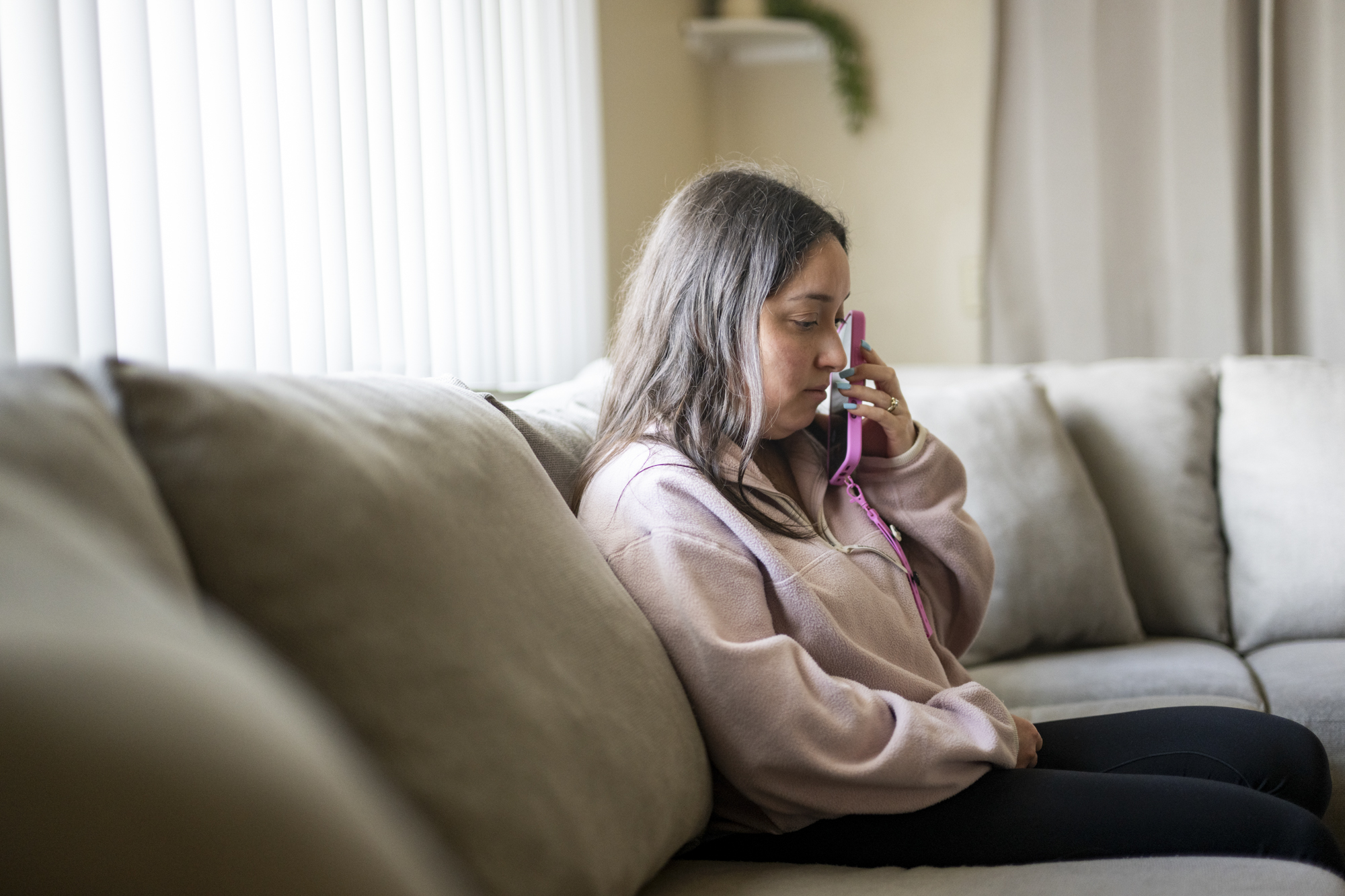
Aby Pena: [00:14:26] It’s really sad here, especially when I look at Lisa’s stuff, like his clothes hanging in the closet, his shoes.
Tyche Hendricks: [00:14:33] Something I really wanted to understand was, yeah, we focus on these moments, these incidents, but then how does that ripple out? How does it unfold going forward for people? And what I found for this family was tremendous upheaval.
Ericka Cruz Guevarra: [00:14:58] Since he was deported in October, Ulises has been living in a room at his aunt’s house in Mexico. He says he lost some of his vision and hearing as a result of his encounter with ICE, and that the right side of his body is largely paralyzed. Ulises doesn’t have health insurance, and it takes him a two-hour bus ride to see a doctor. And all of this has had major ripple effects on his family here in the Bay Area.
Tyche Hendricks: [00:15:37] Aby, who was a stay-at-home mom, had to go back to work now to support the family and pay the rent, and also to support her husband, who can’t support himself at this point.
Aby Pena: [00:15:49] And now she’s almost going to turn five at the end of April and it’s going to be a year since she hasn’t seen her dad.
Tyche Hendricks: [00:15:55] She worked some crazy shifts, 14 hour shifts typically, three of them back to back.
Ericka Cruz Guevarra: [00:16:02] That sounds impossible childcare-wise.
[00:16:04] Right, so what she figured out for childcare was that her parents could take care of Emily, but her parents moved outside of Chico, which is a four hour drive north.
Aby Pena: [00:16:15] So it’s pretty far, so it’s kind of a sacrifice to have her like far away from us.
Tyche Hendricks: [00:16:20] On her days off, she drives four hours up to the Chico area and spends two or three nights maybe to be with her daughter and then drives back and starts the week all over again.
Aby Pena: [00:16:31] It’s hard for me, but it’s probably even harder for her. She doesn’t have me or her dad nearby now. It’s really, really hard.
Tyche Hendricks: [00:16:39] And when you’re four years old, you don’t know what’s Monday or Tuesday or two days a week, or when is mom going to show up again. And when something as traumatic as happened to her father has happened in her life, psychiatrists and psychologists will say it really, developmentally, is a huge rupture in a child’s sense of stability and security that is the foundation for them to grow in a healthy way.
Ericka Cruz Guevarra: [00:17:08] Oh my God, and she’s so young when she witnessed that too. It seems like it’s just left them with a series of difficult choices.
Tyche Hendricks: [00:17:17] Yeah, and not a lot of options. Yeah. And Emily, by all accounts, was a lovely, peaceful, pretty easy child who slept through the night as a three-year-old. And since her dad was arrested, she wakes up screaming pretty much every night, is what they say. And this is a year on now, more than a year since this happened.
Aby Pena: [00:17:48] She was fine before that and this all started with that. So like even when I have her here and when she goes to school and I’m working, it will be tough because she still doesn’t sleep through the night. Like it’s hard.
Ericka Cruz Guevarra: [00:18:04] What is next for this family, Tyche? I mean, do they plan to fight Ulises’ deportation? I mean what do they planned to do here?
Tyche Hendricks: [00:18:15] I think the options are somewhat limited, but they have been fortunate that this call to the Rapid Response Network plugged them in with some legal support that has been like incredibly stalwart. And there are actually two different, you know, nonprofit legal offices involved. One of them is helping Ulysses with his immigration case, and one filed a complaint uh, under a federal law. Against ICE for the harm that they caused him. There is a level of an appeal to the appellate level of the immigration courts, but that would be his last chance to try to return to the U.S. And get some protection to be to live here.
Ericka Cruz Guevarra: [00:19:11] I guess I wanted to ask you this final question too, Tyche, which is what does this story say about how ICE is operating now versus in years past?
Tyche Hendricks: [00:19:23] Donald Trump came into his second term very much on an explicit platform that he was going to wage a campaign of mass deportations. So we are seeing a lot more. And Ulises was, you know, this was in the very first weeks after Trump’s inauguration. One thing that we have also seen is that some of the accountability sort of watchdog agencies within DHS, Homeland Security, ICE, have really been dismantled. And that means that there’s less accountability. And so it becomes easier for behavior, bad actors, excessive use of force to go unremarked. And sort of condoned. Right, yeah. Immigration enforcement is happening twice as often here, and it’s just happening a lot more quietly. We’re not seeing street confrontations or the same kinds of sort of nabbing people out in a public setting. But we did see an arrest of a mother and daughter at SFO just the other day. There have been hundreds of thousands of people deported from the country. And it’s happening, arguably, in a more aggressive and violent way. And this administration has sort of set some benchmarks for how many arrests a day do we want. And that’s leading to a much more aggressive approach to immigration enforcement.
Ericka Cruz Guevarra: [00:21:09] Well, Tyche, thank you so much for joining us on the show. I appreciate it.
Tyche Hendricks: [00:21:12] My pleasure, Ericka.