window.__IS_SSR__=true
window.__INITIAL_STATE__={
"attachmentsReducer": {
"audio_0": {
"type": "attachments",
"id": "audio_0",
"imgSizes": {
"kqedFullSize": {
"file": "https://ww2.kqed.org/news/wp-content/themes/KQED-unified/img/audio_bgs/background0.jpg"
}
}
},
"audio_1": {
"type": "attachments",
"id": "audio_1",
"imgSizes": {
"kqedFullSize": {
"file": "https://ww2.kqed.org/news/wp-content/themes/KQED-unified/img/audio_bgs/background1.jpg"
}
}
},
"audio_2": {
"type": "attachments",
"id": "audio_2",
"imgSizes": {
"kqedFullSize": {
"file": "https://ww2.kqed.org/news/wp-content/themes/KQED-unified/img/audio_bgs/background2.jpg"
}
}
},
"audio_3": {
"type": "attachments",
"id": "audio_3",
"imgSizes": {
"kqedFullSize": {
"file": "https://ww2.kqed.org/news/wp-content/themes/KQED-unified/img/audio_bgs/background3.jpg"
}
}
},
"audio_4": {
"type": "attachments",
"id": "audio_4",
"imgSizes": {
"kqedFullSize": {
"file": "https://ww2.kqed.org/news/wp-content/themes/KQED-unified/img/audio_bgs/background4.jpg"
}
}
},
"placeholder": {
"type": "attachments",
"id": "placeholder",
"imgSizes": {
"thumbnail": {
"file": "https://cdn.kqed.org/wp-content/uploads/2024/12/KQED-Default-Image-816638274-2000x1333-1-160x107.jpg",
"width": 160,
"height": 107,
"mimeType": "image/jpeg"
},
"medium": {
"file": "https://cdn.kqed.org/wp-content/uploads/2024/12/KQED-Default-Image-816638274-2000x1333-1-800x533.jpg",
"width": 800,
"height": 533,
"mimeType": "image/jpeg"
},
"medium_large": {
"file": "https://cdn.kqed.org/wp-content/uploads/2024/12/KQED-Default-Image-816638274-2000x1333-1-768x512.jpg",
"width": 768,
"height": 512,
"mimeType": "image/jpeg"
},
"large": {
"file": "https://cdn.kqed.org/wp-content/uploads/2024/12/KQED-Default-Image-816638274-2000x1333-1-1020x680.jpg",
"width": 1020,
"height": 680,
"mimeType": "image/jpeg"
},
"1536x1536": {
"file": "https://cdn.kqed.org/wp-content/uploads/2024/12/KQED-Default-Image-816638274-2000x1333-1-1536x1024.jpg",
"width": 1536,
"height": 1024,
"mimeType": "image/jpeg"
},
"fd-lrg": {
"file": "https://cdn.kqed.org/wp-content/uploads/2024/12/KQED-Default-Image-816638274-2000x1333-1-1536x1024.jpg",
"width": 1536,
"height": 1024,
"mimeType": "image/jpeg"
},
"fd-med": {
"file": "https://cdn.kqed.org/wp-content/uploads/2024/12/KQED-Default-Image-816638274-2000x1333-1-1020x680.jpg",
"width": 1020,
"height": 680,
"mimeType": "image/jpeg"
},
"fd-sm": {
"file": "https://cdn.kqed.org/wp-content/uploads/2024/12/KQED-Default-Image-816638274-2000x1333-1-800x533.jpg",
"width": 800,
"height": 533,
"mimeType": "image/jpeg"
},
"post-thumbnail": {
"file": "https://cdn.kqed.org/wp-content/uploads/2024/12/KQED-Default-Image-816638274-2000x1333-1-672x372.jpg",
"width": 672,
"height": 372,
"mimeType": "image/jpeg"
},
"twentyfourteen-full-width": {
"file": "https://cdn.kqed.org/wp-content/uploads/2024/12/KQED-Default-Image-816638274-2000x1333-1-1038x576.jpg",
"width": 1038,
"height": 576,
"mimeType": "image/jpeg"
},
"xxsmall": {
"file": "https://cdn.kqed.org/wp-content/uploads/2024/12/KQED-Default-Image-816638274-2000x1333-1-160x107.jpg",
"width": 160,
"height": 107,
"mimeType": "image/jpeg"
},
"xsmall": {
"file": "https://cdn.kqed.org/wp-content/uploads/2024/12/KQED-Default-Image-816638274-2000x1333-1-672x372.jpg",
"width": 672,
"height": 372,
"mimeType": "image/jpeg"
},
"small": {
"file": "https://cdn.kqed.org/wp-content/uploads/2024/12/KQED-Default-Image-816638274-2000x1333-1-672x372.jpg",
"width": 672,
"height": 372,
"mimeType": "image/jpeg"
},
"xlarge": {
"file": "https://cdn.kqed.org/wp-content/uploads/2024/12/KQED-Default-Image-816638274-2000x1333-1-1020x680.jpg",
"width": 1020,
"height": 680,
"mimeType": "image/jpeg"
},
"full-width": {
"file": "https://cdn.kqed.org/wp-content/uploads/2024/12/KQED-Default-Image-816638274-2000x1333-1-1920x1280.jpg",
"width": 1920,
"height": 1280,
"mimeType": "image/jpeg"
},
"guest-author-32": {
"file": "https://cdn.kqed.org/wp-content/uploads/2025/01/KQED-Default-Image-816638274-1333x1333-1-160x160.jpg",
"width": 32,
"height": 32,
"mimeType": "image/jpeg"
},
"guest-author-50": {
"file": "https://cdn.kqed.org/wp-content/uploads/2025/01/KQED-Default-Image-816638274-1333x1333-1-160x160.jpg",
"width": 50,
"height": 50,
"mimeType": "image/jpeg"
},
"guest-author-64": {
"file": "https://cdn.kqed.org/wp-content/uploads/2025/01/KQED-Default-Image-816638274-1333x1333-1-160x160.jpg",
"width": 64,
"height": 64,
"mimeType": "image/jpeg"
},
"guest-author-96": {
"file": "https://cdn.kqed.org/wp-content/uploads/2025/01/KQED-Default-Image-816638274-1333x1333-1-160x160.jpg",
"width": 96,
"height": 96,
"mimeType": "image/jpeg"
},
"guest-author-128": {
"file": "https://cdn.kqed.org/wp-content/uploads/2025/01/KQED-Default-Image-816638274-1333x1333-1-160x160.jpg",
"width": 128,
"height": 128,
"mimeType": "image/jpeg"
},
"detail": {
"file": "https://cdn.kqed.org/wp-content/uploads/2025/01/KQED-Default-Image-816638274-1333x1333-1-160x160.jpg",
"width": 160,
"height": 160,
"mimeType": "image/jpeg"
},
"kqedFullSize": {
"file": "https://cdn.kqed.org/wp-content/uploads/2024/12/KQED-Default-Image-816638274-2000x1333-1.jpg",
"width": 2000,
"height": 1333
}
}
},
"news_12030712": {
"type": "attachments",
"id": "news_12030712",
"meta": {
"index": "attachments_1716263798",
"site": "news",
"id": "12030712",
"found": true
},
"title": "California Governor Porter",
"publishDate": 1741705079,
"status": "inherit",
"parent": 12030710,
"modified": 1758832591,
"caption": "Former U.S. Rep. Katie Porter (D-Irvine) smiles as she prepares to address supporters at an election night party, Tuesday, March 5, 2024, in Long Beach, California.",
"credit": "Damian Dovarganes/Associated Press",
"altTag": null,
"description": null,
"imgSizes": {
"medium": {
"file": "https://cdn.kqed.org/wp-content/uploads/sites/10/2025/03/AP25069706250720-800x533.jpg",
"width": 800,
"height": 533,
"mimeType": "image/jpeg"
},
"large": {
"file": "https://cdn.kqed.org/wp-content/uploads/sites/10/2025/03/AP25069706250720-1020x680.jpg",
"width": 1020,
"height": 680,
"mimeType": "image/jpeg"
},
"thumbnail": {
"file": "https://cdn.kqed.org/wp-content/uploads/sites/10/2025/03/AP25069706250720-160x107.jpg",
"width": 160,
"height": 107,
"mimeType": "image/jpeg"
},
"1536x1536": {
"file": "https://cdn.kqed.org/wp-content/uploads/sites/10/2025/03/AP25069706250720-1536x1024.jpg",
"width": 1536,
"height": 1024,
"mimeType": "image/jpeg"
},
"post-thumbnail": {
"file": "https://cdn.kqed.org/wp-content/uploads/sites/10/2025/03/AP25069706250720-672x372.jpg",
"width": 672,
"height": 372,
"mimeType": "image/jpeg"
},
"twentyfourteen-full-width": {
"file": "https://cdn.kqed.org/wp-content/uploads/sites/10/2025/03/AP25069706250720-1038x576.jpg",
"width": 1038,
"height": 576,
"mimeType": "image/jpeg"
},
"kqedFullSize": {
"file": "https://cdn.kqed.org/wp-content/uploads/sites/10/2025/03/AP25069706250720.jpg",
"width": 1920,
"height": 1280
}
},
"isLoading": false,
"fetchFailed": false
},
"news_12030519": {
"type": "attachments",
"id": "news_12030519",
"meta": {
"index": "attachments_1716263798",
"site": "news",
"id": "12030519",
"found": true
},
"title": "carddeck_mentlahealthparity_AW_082119_01",
"publishDate": 1741546520,
"status": "inherit",
"parent": 12030516,
"modified": 1741546586,
"caption": "Humboldt County Department of Health and Human Services 24-hour mental health crisis services on August 21, 2019. Photo by Anne Wernikoff for CalMatters",
"credit": "Anne Wernikoff/CalMatters",
"altTag": "A white and blue sign that reads \"Crisis Services Press button next to door once and wait.\" There is a blue arrow pointing right.",
"description": null,
"imgSizes": {
"medium": {
"file": "https://cdn.kqed.org/wp-content/uploads/sites/10/2025/03/carddeck_mentlahealthparity_AW_082119_01-800x533.jpg",
"width": 800,
"height": 533,
"mimeType": "image/jpeg"
},
"large": {
"file": "https://cdn.kqed.org/wp-content/uploads/sites/10/2025/03/carddeck_mentlahealthparity_AW_082119_01-1020x680.jpg",
"width": 1020,
"height": 680,
"mimeType": "image/jpeg"
},
"thumbnail": {
"file": "https://cdn.kqed.org/wp-content/uploads/sites/10/2025/03/carddeck_mentlahealthparity_AW_082119_01-160x107.jpg",
"width": 160,
"height": 107,
"mimeType": "image/jpeg"
},
"1536x1536": {
"file": "https://cdn.kqed.org/wp-content/uploads/sites/10/2025/03/carddeck_mentlahealthparity_AW_082119_01-1536x1024.jpg",
"width": 1536,
"height": 1024,
"mimeType": "image/jpeg"
},
"post-thumbnail": {
"file": "https://cdn.kqed.org/wp-content/uploads/sites/10/2025/03/carddeck_mentlahealthparity_AW_082119_01-672x372.jpg",
"width": 672,
"height": 372,
"mimeType": "image/jpeg"
},
"twentyfourteen-full-width": {
"file": "https://cdn.kqed.org/wp-content/uploads/sites/10/2025/03/carddeck_mentlahealthparity_AW_082119_01-1038x576.jpg",
"width": 1038,
"height": 576,
"mimeType": "image/jpeg"
},
"full-width": {
"file": "https://cdn.kqed.org/wp-content/uploads/sites/10/2025/03/carddeck_mentlahealthparity_AW_082119_01-1920x1280.jpg",
"width": 1920,
"height": 1280,
"mimeType": "image/jpeg"
},
"kqedFullSize": {
"file": "https://cdn.kqed.org/wp-content/uploads/sites/10/2025/03/carddeck_mentlahealthparity_AW_082119_01.jpg",
"width": 2000,
"height": 1333
}
},
"isLoading": false,
"fetchFailed": false
},
"news_12030059": {
"type": "attachments",
"id": "news_12030059",
"meta": {
"index": "attachments_1716263798",
"site": "news",
"id": "12030059",
"found": true
},
"title": "US California Governor Wildfires",
"publishDate": 1741285002,
"status": "inherit",
"parent": 12030057,
"modified": 1741306392,
"caption": "Gov. Gavin Newsom holds a fireside chat with Stephen Cheung, the President and Chief Executive Officer of the Los Angeles County Economic Development Corporation (LAEDC) and its subsidiary, the World Trade Center Los Angeles (WTCLA), at the 2025 Economic Forecast and Industry Outlook convening on Wednesday, Feb. 26, 2025, at the East LA College in Los Angeles.",
"credit": "Damian Dovarganes/AP Photo",
"altTag": null,
"description": null,
"imgSizes": {
"medium": {
"file": "https://cdn.kqed.org/wp-content/uploads/sites/10/2025/03/GavinNewsom2025AP-800x533.jpg",
"width": 800,
"height": 533,
"mimeType": "image/jpeg"
},
"large": {
"file": "https://cdn.kqed.org/wp-content/uploads/sites/10/2025/03/GavinNewsom2025AP-1020x680.jpg",
"width": 1020,
"height": 680,
"mimeType": "image/jpeg"
},
"thumbnail": {
"file": "https://cdn.kqed.org/wp-content/uploads/sites/10/2025/03/GavinNewsom2025AP-160x107.jpg",
"width": 160,
"height": 107,
"mimeType": "image/jpeg"
},
"1536x1536": {
"file": "https://cdn.kqed.org/wp-content/uploads/sites/10/2025/03/GavinNewsom2025AP-1536x1024.jpg",
"width": 1536,
"height": 1024,
"mimeType": "image/jpeg"
},
"post-thumbnail": {
"file": "https://cdn.kqed.org/wp-content/uploads/sites/10/2025/03/GavinNewsom2025AP-672x372.jpg",
"width": 672,
"height": 372,
"mimeType": "image/jpeg"
},
"twentyfourteen-full-width": {
"file": "https://cdn.kqed.org/wp-content/uploads/sites/10/2025/03/GavinNewsom2025AP-1038x576.jpg",
"width": 1038,
"height": 576,
"mimeType": "image/jpeg"
},
"full-width": {
"file": "https://cdn.kqed.org/wp-content/uploads/sites/10/2025/03/GavinNewsom2025AP-1920x1280.jpg",
"width": 1920,
"height": 1280,
"mimeType": "image/jpeg"
},
"kqedFullSize": {
"file": "https://cdn.kqed.org/wp-content/uploads/sites/10/2025/03/GavinNewsom2025AP.jpg",
"width": 2000,
"height": 1333
}
},
"isLoading": false,
"fetchFailed": false
},
"news_12019091": {
"type": "attachments",
"id": "news_12019091",
"meta": {
"index": "attachments_1716263798",
"site": "news",
"id": "12019091",
"found": true
},
"title": "The Park Fire burns along Route 32 northeast of Chico on July 26, 2024.",
"publishDate": 1734641171,
"status": "inherit",
"parent": 0,
"modified": 1734661036,
"caption": "The Park Fire burns along Highway 32 northeast of Chico on July 26, 2024.",
"credit": "Beth LaBerge/KQED",
"altTag": null,
"description": null,
"imgSizes": {
"medium": {
"file": "https://cdn.kqed.org/wp-content/uploads/sites/10/2024/12/15_240726-ParkFire-137-BL-800x533.jpg",
"width": 800,
"height": 533,
"mimeType": "image/jpeg"
},
"large": {
"file": "https://cdn.kqed.org/wp-content/uploads/sites/10/2024/12/15_240726-ParkFire-137-BL-1020x680.jpg",
"width": 1020,
"height": 680,
"mimeType": "image/jpeg"
},
"thumbnail": {
"file": "https://cdn.kqed.org/wp-content/uploads/sites/10/2024/12/15_240726-ParkFire-137-BL-160x107.jpg",
"width": 160,
"height": 107,
"mimeType": "image/jpeg"
},
"1536x1536": {
"file": "https://cdn.kqed.org/wp-content/uploads/sites/10/2024/12/15_240726-ParkFire-137-BL-1536x1024.jpg",
"width": 1536,
"height": 1024,
"mimeType": "image/jpeg"
},
"2048x2048": {
"file": "https://cdn.kqed.org/wp-content/uploads/sites/10/2024/12/15_240726-ParkFire-137-BL-2048x1365.jpg",
"width": 2048,
"height": 1365,
"mimeType": "image/jpeg"
},
"post-thumbnail": {
"file": "https://cdn.kqed.org/wp-content/uploads/sites/10/2024/12/15_240726-ParkFire-137-BL-672x372.jpg",
"width": 672,
"height": 372,
"mimeType": "image/jpeg"
},
"twentyfourteen-full-width": {
"file": "https://cdn.kqed.org/wp-content/uploads/sites/10/2024/12/15_240726-ParkFire-137-BL-1038x576.jpg",
"width": 1038,
"height": 576,
"mimeType": "image/jpeg"
},
"full-width": {
"file": "https://cdn.kqed.org/wp-content/uploads/sites/10/2024/12/15_240726-ParkFire-137-BL-1920x1280.jpg",
"width": 1920,
"height": 1280,
"mimeType": "image/jpeg"
},
"kqedFullSize": {
"file": "https://cdn.kqed.org/wp-content/uploads/sites/10/2024/12/15_240726-ParkFire-137-BL-scaled-e1741107952778.jpg",
"width": 2000,
"height": 1334
}
},
"isLoading": false,
"fetchFailed": false
},
"news_12029409": {
"type": "attachments",
"id": "news_12029409",
"meta": {
"index": "attachments_1716263798",
"site": "news",
"id": "12029409",
"found": true
},
"title": "110423_Donna-Yutzy_MO_CM_01",
"publishDate": 1740946983,
"status": "inherit",
"parent": 12029400,
"modified": 1740947073,
"caption": "A cement sidewalk was built within five feet of Donna Yutzy’s house to meet state regulations. Nov. 4, 2023.",
"credit": "Manuel Orbegozo/CalMatters",
"altTag": "A view of the side of a home with a forest full of trees to the right.",
"description": null,
"imgSizes": {
"medium": {
"file": "https://cdn.kqed.org/wp-content/uploads/sites/10/2025/03/110423_Donna-Yutzy_MO_CM_01-800x533.jpg",
"width": 800,
"height": 533,
"mimeType": "image/jpeg"
},
"large": {
"file": "https://cdn.kqed.org/wp-content/uploads/sites/10/2025/03/110423_Donna-Yutzy_MO_CM_01-1020x680.jpg",
"width": 1020,
"height": 680,
"mimeType": "image/jpeg"
},
"thumbnail": {
"file": "https://cdn.kqed.org/wp-content/uploads/sites/10/2025/03/110423_Donna-Yutzy_MO_CM_01-160x107.jpg",
"width": 160,
"height": 107,
"mimeType": "image/jpeg"
},
"1536x1536": {
"file": "https://cdn.kqed.org/wp-content/uploads/sites/10/2025/03/110423_Donna-Yutzy_MO_CM_01-1536x1024.jpg",
"width": 1536,
"height": 1024,
"mimeType": "image/jpeg"
},
"post-thumbnail": {
"file": "https://cdn.kqed.org/wp-content/uploads/sites/10/2025/03/110423_Donna-Yutzy_MO_CM_01-672x372.jpg",
"width": 672,
"height": 372,
"mimeType": "image/jpeg"
},
"twentyfourteen-full-width": {
"file": "https://cdn.kqed.org/wp-content/uploads/sites/10/2025/03/110423_Donna-Yutzy_MO_CM_01-1038x576.jpg",
"width": 1038,
"height": 576,
"mimeType": "image/jpeg"
},
"full-width": {
"file": "https://cdn.kqed.org/wp-content/uploads/sites/10/2025/03/110423_Donna-Yutzy_MO_CM_01-1920x1280.jpg",
"width": 1920,
"height": 1280,
"mimeType": "image/jpeg"
},
"kqedFullSize": {
"file": "https://cdn.kqed.org/wp-content/uploads/sites/10/2025/03/110423_Donna-Yutzy_MO_CM_01.jpg",
"width": 2000,
"height": 1333
}
},
"isLoading": false,
"fetchFailed": false
},
"news_12026903": {
"type": "attachments",
"id": "news_12026903",
"meta": {
"index": "attachments_1716263798",
"site": "news",
"id": "12026903",
"found": true
},
"title": "FIREAID Benefit Concert For California Fire Relief - Intuit Dome",
"publishDate": 1739469461,
"status": "inherit",
"parent": 12026900,
"modified": 1739497016,
"caption": "Former Vice President Kamala Harris and Doug Emhoff attend the FIREAID Benefit Concert for California Fire Relief at Intuit Dome on Jan. 30, 2025 in Inglewood, California. ",
"credit": "Amy Sussman/Getty Images for FIREAID",
"altTag": null,
"description": null,
"imgSizes": {
"medium": {
"file": "https://cdn.kqed.org/wp-content/uploads/sites/10/2025/02/GettyImages-2196870022-800x533.jpg",
"width": 800,
"height": 533,
"mimeType": "image/jpeg"
},
"large": {
"file": "https://cdn.kqed.org/wp-content/uploads/sites/10/2025/02/GettyImages-2196870022-1020x680.jpg",
"width": 1020,
"height": 680,
"mimeType": "image/jpeg"
},
"thumbnail": {
"file": "https://cdn.kqed.org/wp-content/uploads/sites/10/2025/02/GettyImages-2196870022-160x107.jpg",
"width": 160,
"height": 107,
"mimeType": "image/jpeg"
},
"1536x1536": {
"file": "https://cdn.kqed.org/wp-content/uploads/sites/10/2025/02/GettyImages-2196870022-1536x1024.jpg",
"width": 1536,
"height": 1024,
"mimeType": "image/jpeg"
},
"2048x2048": {
"file": "https://cdn.kqed.org/wp-content/uploads/sites/10/2025/02/GettyImages-2196870022-2048x1365.jpg",
"width": 2048,
"height": 1365,
"mimeType": "image/jpeg"
},
"post-thumbnail": {
"file": "https://cdn.kqed.org/wp-content/uploads/sites/10/2025/02/GettyImages-2196870022-672x372.jpg",
"width": 672,
"height": 372,
"mimeType": "image/jpeg"
},
"twentyfourteen-full-width": {
"file": "https://cdn.kqed.org/wp-content/uploads/sites/10/2025/02/GettyImages-2196870022-1038x576.jpg",
"width": 1038,
"height": 576,
"mimeType": "image/jpeg"
},
"full-width": {
"file": "https://cdn.kqed.org/wp-content/uploads/sites/10/2025/02/GettyImages-2196870022-1920x1280.jpg",
"width": 1920,
"height": 1280,
"mimeType": "image/jpeg"
},
"kqedFullSize": {
"file": "https://cdn.kqed.org/wp-content/uploads/sites/10/2025/02/GettyImages-2196870022-scaled.jpg",
"width": 2560,
"height": 1707
}
},
"isLoading": false,
"fetchFailed": false
},
"news_11933076": {
"type": "attachments",
"id": "news_11933076",
"meta": {
"index": "attachments_1716263798",
"site": "news",
"id": "11933076",
"found": true
},
"parent": 11933052,
"imgSizes": {
"twentyfourteen-full-width": {
"file": "https://ww2.kqed.org/app/uploads/sites/10/2022/11/RS60430_039_KQED_BlodgettForestResearch_10282022-qut-1038x576.jpg",
"width": 1038,
"mimeType": "image/jpeg",
"height": 576
},
"thumbnail": {
"file": "https://ww2.kqed.org/app/uploads/sites/10/2022/11/RS60430_039_KQED_BlodgettForestResearch_10282022-qut-160x107.jpg",
"width": 160,
"mimeType": "image/jpeg",
"height": 107
},
"post-thumbnail": {
"file": "https://ww2.kqed.org/app/uploads/sites/10/2022/11/RS60430_039_KQED_BlodgettForestResearch_10282022-qut-672x372.jpg",
"width": 672,
"mimeType": "image/jpeg",
"height": 372
},
"kqedFullSize": {
"file": "https://ww2.kqed.org/app/uploads/sites/10/2022/11/RS60430_039_KQED_BlodgettForestResearch_10282022-qut.jpg",
"width": 1920,
"height": 1280
},
"large": {
"file": "https://ww2.kqed.org/app/uploads/sites/10/2022/11/RS60430_039_KQED_BlodgettForestResearch_10282022-qut-1020x680.jpg",
"width": 1020,
"mimeType": "image/jpeg",
"height": 680
},
"1536x1536": {
"file": "https://ww2.kqed.org/app/uploads/sites/10/2022/11/RS60430_039_KQED_BlodgettForestResearch_10282022-qut-1536x1024.jpg",
"width": 1536,
"mimeType": "image/jpeg",
"height": 1024
},
"medium": {
"file": "https://ww2.kqed.org/app/uploads/sites/10/2022/11/RS60430_039_KQED_BlodgettForestResearch_10282022-qut-800x533.jpg",
"width": 800,
"mimeType": "image/jpeg",
"height": 533
}
},
"publishDate": 1669153588,
"modified": 1669165494,
"caption": "Light streams through an area burned by the Mosquito Fire at the UC Berkeley Blodgett Forest Research Station in Georgetown, Calif., on Oct. 28, 2022.",
"description": null,
"title": "RS60430_039_KQED_BlodgettForestResearch_10282022-qut",
"credit": "Beth LaBerge/KQED",
"status": "inherit",
"altTag": "light streams through redwood trees",
"isLoading": false,
"fetchFailed": false
},
"news_12013407": {
"type": "attachments",
"id": "news_12013407",
"meta": {
"index": "attachments_1716263798",
"site": "news",
"id": "12013407",
"found": true
},
"title": "Gavin Newsom, Donald Trump, Jerry Brown",
"publishDate": 1731002743,
"status": "inherit",
"parent": 12013395,
"modified": 1739131345,
"caption": "President Donald Trump talks with Gov. Gavin Newsom (left) during a visit to a neighborhood impacted by the wildfires in Paradise on Nov. 17, 2018.",
"credit": "Evan Vucci/AP Photo",
"altTag": "Two men wearing jackets and the man on the right points while wearing a black hat stand near each other talking.",
"description": null,
"imgSizes": {
"medium": {
"file": "https://cdn.kqed.org/wp-content/uploads/sites/10/2024/11/NewsomTrump2018AP-800x533.jpg",
"width": 800,
"height": 533,
"mimeType": "image/jpeg"
},
"large": {
"file": "https://cdn.kqed.org/wp-content/uploads/sites/10/2024/11/NewsomTrump2018AP-1020x680.jpg",
"width": 1020,
"height": 680,
"mimeType": "image/jpeg"
},
"thumbnail": {
"file": "https://cdn.kqed.org/wp-content/uploads/sites/10/2024/11/NewsomTrump2018AP-160x107.jpg",
"width": 160,
"height": 107,
"mimeType": "image/jpeg"
},
"1536x1536": {
"file": "https://cdn.kqed.org/wp-content/uploads/sites/10/2024/11/NewsomTrump2018AP-1536x1024.jpg",
"width": 1536,
"height": 1024,
"mimeType": "image/jpeg"
},
"post-thumbnail": {
"file": "https://cdn.kqed.org/wp-content/uploads/sites/10/2024/11/NewsomTrump2018AP-672x372.jpg",
"width": 672,
"height": 372,
"mimeType": "image/jpeg"
},
"twentyfourteen-full-width": {
"file": "https://cdn.kqed.org/wp-content/uploads/sites/10/2024/11/NewsomTrump2018AP-1038x576.jpg",
"width": 1038,
"height": 576,
"mimeType": "image/jpeg"
},
"full-width": {
"file": "https://cdn.kqed.org/wp-content/uploads/sites/10/2024/11/NewsomTrump2018AP-1920x1280.jpg",
"width": 1920,
"height": 1280,
"mimeType": "image/jpeg"
},
"kqedFullSize": {
"file": "https://cdn.kqed.org/wp-content/uploads/sites/10/2024/11/NewsomTrump2018AP.jpg",
"width": 2000,
"height": 1333
}
},
"isLoading": false,
"fetchFailed": false
},
"news_12024152": {
"type": "attachments",
"id": "news_12024152",
"meta": {
"index": "attachments_1716263798",
"site": "news",
"id": "12024152",
"found": true
},
"title": "102425-Newsom-Trump-LA-Fires-AP-CM-03 copy",
"publishDate": 1737836365,
"status": "inherit",
"parent": 12024151,
"modified": 1739130531,
"caption": "President Donald Trump talks with Gov. Gavin Newsom after arriving on Air Force One at Los Angeles International Airport in Los Angeles, on Jan. 24, 2025. \n",
"credit": "Mark Schiefelbein/AP Photo",
"altTag": "Two men wearing jackets and the man on the right wearing a black hat stand near each other talking.",
"description": null,
"imgSizes": {
"medium": {
"file": "https://cdn.kqed.org/wp-content/uploads/sites/10/2025/01/102425-Newsom-Trump-LA-Fires-AP-CM-03-copy-800x534.jpg",
"width": 800,
"height": 534,
"mimeType": "image/jpeg"
},
"large": {
"file": "https://cdn.kqed.org/wp-content/uploads/sites/10/2025/01/102425-Newsom-Trump-LA-Fires-AP-CM-03-copy-1020x681.jpg",
"width": 1020,
"height": 681,
"mimeType": "image/jpeg"
},
"thumbnail": {
"file": "https://cdn.kqed.org/wp-content/uploads/sites/10/2025/01/102425-Newsom-Trump-LA-Fires-AP-CM-03-copy-160x107.jpg",
"width": 160,
"height": 107,
"mimeType": "image/jpeg"
},
"1536x1536": {
"file": "https://cdn.kqed.org/wp-content/uploads/sites/10/2025/01/102425-Newsom-Trump-LA-Fires-AP-CM-03-copy-1536x1026.jpg",
"width": 1536,
"height": 1026,
"mimeType": "image/jpeg"
},
"post-thumbnail": {
"file": "https://cdn.kqed.org/wp-content/uploads/sites/10/2025/01/102425-Newsom-Trump-LA-Fires-AP-CM-03-copy-672x372.jpg",
"width": 672,
"height": 372,
"mimeType": "image/jpeg"
},
"twentyfourteen-full-width": {
"file": "https://cdn.kqed.org/wp-content/uploads/sites/10/2025/01/102425-Newsom-Trump-LA-Fires-AP-CM-03-copy-1038x576.jpg",
"width": 1038,
"height": 576,
"mimeType": "image/jpeg"
},
"full-width": {
"file": "https://cdn.kqed.org/wp-content/uploads/sites/10/2025/01/102425-Newsom-Trump-LA-Fires-AP-CM-03-copy-1920x1283.jpg",
"width": 1920,
"height": 1283,
"mimeType": "image/jpeg"
},
"kqedFullSize": {
"file": "https://cdn.kqed.org/wp-content/uploads/sites/10/2025/01/102425-Newsom-Trump-LA-Fires-AP-CM-03-copy.jpg",
"width": 2000,
"height": 1336
}
},
"isLoading": false,
"fetchFailed": false
},
"news_12006082": {
"type": "attachments",
"id": "news_12006082",
"meta": {
"index": "attachments_1716263798",
"site": "news",
"id": "12006082",
"found": true
},
"title": "US Flag",
"publishDate": 1727134596,
"status": "inherit",
"parent": 12005901,
"modified": 1727134637,
"caption": "A new poll shows Democrats leading in four of six competitive House races in California, but experts caution these closely contested seats could still swing Republican.",
"credit": "Studio One-One/Getty Images",
"altTag": null,
"description": null,
"imgSizes": {
"medium": {
"file": "https://cdn.kqed.org/wp-content/uploads/sites/10/2024/09/US-and-California-Flags-Getty-800x533.jpg",
"width": 800,
"height": 533,
"mimeType": "image/jpeg"
},
"large": {
"file": "https://cdn.kqed.org/wp-content/uploads/sites/10/2024/09/US-and-California-Flags-Getty-1020x680.jpg",
"width": 1020,
"height": 680,
"mimeType": "image/jpeg"
},
"thumbnail": {
"file": "https://cdn.kqed.org/wp-content/uploads/sites/10/2024/09/US-and-California-Flags-Getty-160x107.jpg",
"width": 160,
"height": 107,
"mimeType": "image/jpeg"
},
"1536x1536": {
"file": "https://cdn.kqed.org/wp-content/uploads/sites/10/2024/09/US-and-California-Flags-Getty-1536x1024.jpg",
"width": 1536,
"height": 1024,
"mimeType": "image/jpeg"
},
"post-thumbnail": {
"file": "https://cdn.kqed.org/wp-content/uploads/sites/10/2024/09/US-and-California-Flags-Getty-672x372.jpg",
"width": 672,
"height": 372,
"mimeType": "image/jpeg"
},
"twentyfourteen-full-width": {
"file": "https://cdn.kqed.org/wp-content/uploads/sites/10/2024/09/US-and-California-Flags-Getty-1038x576.jpg",
"width": 1038,
"height": 576,
"mimeType": "image/jpeg"
},
"full-width": {
"file": "https://cdn.kqed.org/wp-content/uploads/sites/10/2024/09/US-and-California-Flags-Getty-1920x1280.jpg",
"width": 1920,
"height": 1280,
"mimeType": "image/jpeg"
},
"kqedFullSize": {
"file": "https://cdn.kqed.org/wp-content/uploads/sites/10/2024/09/US-and-California-Flags-Getty.jpg",
"width": 2000,
"height": 1333
}
},
"isLoading": false,
"fetchFailed": false
},
"news_12018839": {
"type": "attachments",
"id": "news_12018839",
"meta": {
"index": "attachments_1716263798",
"site": "news",
"id": "12018839",
"found": true
},
"title": "Governor Gavin Newsom signs legislation related to oversight of oil and gas wells, and community protections",
"publishDate": 1734551670,
"status": "inherit",
"parent": 12018836,
"modified": 1734556744,
"caption": "Gov. Gavin Newsom speaks at a press conference on Sept. 25, 2024, in Los Angeles. ",
"credit": "Jason Armond/Los Angeles Times via Getty Images",
"altTag": null,
"description": null,
"imgSizes": {
"medium": {
"file": "https://cdn.kqed.org/wp-content/uploads/sites/10/2024/12/GavinNewsomGetty-800x555.jpg",
"width": 800,
"height": 555,
"mimeType": "image/jpeg"
},
"large": {
"file": "https://cdn.kqed.org/wp-content/uploads/sites/10/2024/12/GavinNewsomGetty-1020x707.jpg",
"width": 1020,
"height": 707,
"mimeType": "image/jpeg"
},
"thumbnail": {
"file": "https://cdn.kqed.org/wp-content/uploads/sites/10/2024/12/GavinNewsomGetty-160x111.jpg",
"width": 160,
"height": 111,
"mimeType": "image/jpeg"
},
"1536x1536": {
"file": "https://cdn.kqed.org/wp-content/uploads/sites/10/2024/12/GavinNewsomGetty-1536x1065.jpg",
"width": 1536,
"height": 1065,
"mimeType": "image/jpeg"
},
"post-thumbnail": {
"file": "https://cdn.kqed.org/wp-content/uploads/sites/10/2024/12/GavinNewsomGetty-672x372.jpg",
"width": 672,
"height": 372,
"mimeType": "image/jpeg"
},
"twentyfourteen-full-width": {
"file": "https://cdn.kqed.org/wp-content/uploads/sites/10/2024/12/GavinNewsomGetty-1038x576.jpg",
"width": 1038,
"height": 576,
"mimeType": "image/jpeg"
},
"full-width": {
"file": "https://cdn.kqed.org/wp-content/uploads/sites/10/2024/12/GavinNewsomGetty-1920x1332.jpg",
"width": 1920,
"height": 1332,
"mimeType": "image/jpeg"
},
"kqedFullSize": {
"file": "https://cdn.kqed.org/wp-content/uploads/sites/10/2024/12/GavinNewsomGetty.jpg",
"width": 2000,
"height": 1387
}
},
"isLoading": false,
"fetchFailed": false
}
},
"audioPlayerReducer": {
"postId": "stream_live",
"isPaused": true,
"isPlaying": false,
"pfsActive": false,
"pledgeModalIsOpen": true,
"playerDrawerIsOpen": false,
"liveAudioPlayStartedAt": 0,
"liveAudioPlayContext": ""
},
"authorsReducer": {
"byline_news_12030710": {
"type": "authors",
"id": "byline_news_12030710",
"meta": {
"override": true
},
"slug": "byline_news_12030710",
"name": "Michael R. Blood, Associated Press",
"isLoading": false
},
"byline_news_12030516": {
"type": "authors",
"id": "byline_news_12030516",
"meta": {
"override": true
},
"slug": "byline_news_12030516",
"name": "\u003ca href=\"https://calmatters.org/author/kristen-hwang\">Kristen Hwang, \u003c/a>CalMatters",
"isLoading": false
},
"byline_news_12029400": {
"type": "authors",
"id": "byline_news_12029400",
"meta": {
"override": true
},
"slug": "byline_news_12029400",
"name": "\u003ca href=\"https://calmatters.org/author/sameea-kamal/\">Sameea Kamal, \u003c/a>CalMatters",
"isLoading": false
},
"byline_news_12027096": {
"type": "authors",
"id": "byline_news_12027096",
"meta": {
"override": true
},
"slug": "byline_news_12027096",
"name": "Claire Rush, Matthew Brown and Chris Megerian, Associated Press",
"isLoading": false
},
"byline_news_12026410": {
"type": "authors",
"id": "byline_news_12026410",
"meta": {
"override": true
},
"slug": "byline_news_12026410",
"name": "\u003ca href=\"https://calmatters.org/author/alexei-koseff\">Alexei Koseff, \u003c/a>CalMatters",
"isLoading": false
},
"byline_news_12024151": {
"type": "authors",
"id": "byline_news_12024151",
"meta": {
"override": true
},
"slug": "byline_news_12024151",
"name": "\u003ca>Alexei Koseff\u003c/a>, CalMatters",
"isLoading": false
},
"gmarzorati": {
"type": "authors",
"id": "227",
"meta": {
"index": "authors_1716337520",
"id": "227",
"found": true
},
"name": "Guy Marzorati",
"firstName": "Guy",
"lastName": "Marzorati",
"slug": "gmarzorati",
"email": "gmarzorati@KQED.org",
"display_author_email": true,
"staff_mastheads": [
"news"
],
"title": "Correspondent",
"bio": "Guy Marzorati is a correspondent on KQED's California Politics and Government Desk, based in San Jose. A graduate of Santa Clara University, Guy joined KQED in 2013. He reports on state and local politics and produces KQED's digital voter guide.",
"avatar": "https://secure.gravatar.com/avatar/e7038b8dbfd55b104369b76b1cd0b9de?s=600&d=blank&r=g",
"twitter": "guymarzorati",
"facebook": null,
"instagram": null,
"linkedin": null,
"sites": [
{
"site": "",
"roles": [
"editor"
]
},
{
"site": "news",
"roles": [
"editor"
]
},
{
"site": "science",
"roles": [
"editor"
]
},
{
"site": "forum",
"roles": [
"editor"
]
},
{
"site": "elections",
"roles": [
"editor"
]
},
{
"site": "liveblog",
"roles": [
"editor"
]
}
],
"headData": {
"title": "Guy Marzorati | KQED",
"description": "Correspondent",
"ogImgSrc": "https://secure.gravatar.com/avatar/e7038b8dbfd55b104369b76b1cd0b9de?s=600&d=blank&r=g",
"twImgSrc": "https://secure.gravatar.com/avatar/e7038b8dbfd55b104369b76b1cd0b9de?s=600&d=blank&r=g"
},
"isLoading": false,
"link": "/author/gmarzorati"
},
"scottshafer": {
"type": "authors",
"id": "255",
"meta": {
"index": "authors_1716337520",
"id": "255",
"found": true
},
"name": "Scott Shafer",
"firstName": "Scott",
"lastName": "Shafer",
"slug": "scottshafer",
"email": "sshafer@kqed.org",
"display_author_email": false,
"staff_mastheads": [
"news"
],
"title": "KQED Contributor",
"bio": "Scott Shafer is a senior editor with the KQED Politics and Government desk. He is co-host of Political Breakdown, the award-winning radio show and podcast with a personal take on the world of politics. Scott came to KQED in 1998 to host the statewide\u003cem> California Report\u003c/em>. Prior to that he had extended stints in politics and government\u003cem>.\u003c/em> He uses that inside experience at KQED in his, reporting, hosting and analysis for the politics desk. Scott collaborated \u003cem>Political Breakdown a\u003c/em>nd on \u003cem>The Political Mind of Jerry Brown, \u003c/em>an eight-part series about the life and extraordinary political career of the former governor. For fun, he plays water polo with the San Francisco Tsunami.",
"avatar": "https://secure.gravatar.com/avatar/a62ebae45b79d7aed1a39a0e3bf68104?s=600&d=blank&r=g",
"twitter": "scottshafer",
"bluesky": null,
"facebook": null,
"instagram": null,
"linkedin": null,
"sites": [
{
"site": "news",
"roles": [
"editor"
]
},
{
"site": "stateofhealth",
"roles": [
"author"
]
},
{
"site": "science",
"roles": [
"author"
]
},
{
"site": "forum",
"roles": [
"subscriber"
]
},
{
"site": "liveblog",
"roles": [
"author"
]
}
],
"headData": {
"title": "Scott Shafer | KQED",
"description": "KQED Contributor",
"ogImgSrc": "https://secure.gravatar.com/avatar/a62ebae45b79d7aed1a39a0e3bf68104?s=600&d=blank&r=g",
"twImgSrc": "https://secure.gravatar.com/avatar/a62ebae45b79d7aed1a39a0e3bf68104?s=600&d=blank&r=g"
},
"isLoading": false,
"link": "/author/scottshafer"
},
"mlagos": {
"type": "authors",
"id": "3239",
"meta": {
"index": "authors_1716337520",
"id": "3239",
"found": true
},
"name": "Marisa Lagos",
"firstName": "Marisa",
"lastName": "Lagos",
"slug": "mlagos",
"email": "mlagos@kqed.org",
"display_author_email": false,
"staff_mastheads": [
"news"
],
"title": "KQED Contributor",
"bio": "Marisa Lagos is a correspondent for KQED’s California Politics and Government Desk and co-hosts the award-winning show and podcast, Political Breakdown. At KQED, Lagos also conducts reporting, analysis and investigations into state, local and national politics for radio, TV, online and onstage. In 2022, she and co-host, Scott Shafer, moderated the only gubernatorial debate in California. In 2020, the \u003ci>Washington Post\u003c/i> named her one of the top political journalists in California; she was nominated for a Peabody and won several other awards for her work investigating the 2017 California wildfires. She has worked at the \u003ci>San Francisco Chronicle\u003c/i>, \u003ci>San Francisco Examiner\u003c/i> and \u003ci>Los Angeles Times\u003c/i>. A UC Santa Barbara graduate, she lives in San Francisco with her two sons and husband.",
"avatar": "https://secure.gravatar.com/avatar/a261a0d3696fc066871ef96b85b5e7d2?s=600&d=blank&r=g",
"twitter": "@mlagos",
"facebook": null,
"instagram": null,
"linkedin": null,
"sites": [
{
"site": "arts",
"roles": [
"author"
]
},
{
"site": "news",
"roles": [
"editor"
]
},
{
"site": "science",
"roles": [
"editor"
]
},
{
"site": "forum",
"roles": [
"author"
]
},
{
"site": "liveblog",
"roles": [
"author"
]
}
],
"headData": {
"title": "Marisa Lagos | KQED",
"description": "KQED Contributor",
"ogImgSrc": "https://secure.gravatar.com/avatar/a261a0d3696fc066871ef96b85b5e7d2?s=600&d=blank&r=g",
"twImgSrc": "https://secure.gravatar.com/avatar/a261a0d3696fc066871ef96b85b5e7d2?s=600&d=blank&r=g"
},
"isLoading": false,
"link": "/author/mlagos"
},
"dventon": {
"type": "authors",
"id": "11088",
"meta": {
"index": "authors_1716337520",
"id": "11088",
"found": true
},
"name": "Danielle Venton",
"firstName": "Danielle",
"lastName": "Venton",
"slug": "dventon",
"email": "dventon@kqed.org",
"display_author_email": true,
"staff_mastheads": [
"science"
],
"title": "Science reporter",
"bio": "Danielle Venton is a reporter for KQED Science. She covers wildfires, space and oceans (though she is prone to sea sickness).\r\n\r\nBefore joining KQED in 2015, Danielle was a staff reporter at KRCB in Sonoma County and a freelancer. She studied science communication at UC Santa Cruz and formerly worked at CERN in Geneva, Switzerland where she wrote about computing. She lives in Sonoma County and enjoys backpacking.",
"avatar": "https://secure.gravatar.com/avatar/37b292b5c40c8d93959c4f48d73b5286f41b7abd8588277e941905a3ed4c801c?s=600&d=blank&r=g",
"twitter": "DanielleVenton",
"bluesky": null,
"facebook": null,
"instagram": null,
"linkedin": null,
"sites": [
{
"site": "arts",
"roles": [
"contributor"
]
},
{
"site": "news",
"roles": [
"editor"
]
},
{
"site": "futureofyou",
"roles": [
"editor"
]
},
{
"site": "science",
"roles": [
"editor"
]
},
{
"site": "liveblog",
"roles": [
"contributor"
]
}
],
"headData": {
"title": "Danielle Venton | KQED",
"description": "Science reporter",
"ogImgSrc": "https://secure.gravatar.com/avatar/37b292b5c40c8d93959c4f48d73b5286f41b7abd8588277e941905a3ed4c801c?s=600&d=blank&r=g",
"twImgSrc": "https://secure.gravatar.com/avatar/37b292b5c40c8d93959c4f48d73b5286f41b7abd8588277e941905a3ed4c801c?s=600&d=blank&r=g"
},
"isLoading": false,
"link": "/author/dventon"
},
"vrancano": {
"type": "authors",
"id": "11276",
"meta": {
"index": "authors_1716337520",
"id": "11276",
"found": true
},
"name": "Vanessa Rancaño",
"firstName": "Vanessa",
"lastName": "Rancaño",
"slug": "vrancano",
"email": "vrancano@kqed.org",
"display_author_email": false,
"staff_mastheads": [
"news"
],
"title": "Reporter",
"bio": "Vanessa Rancaño is a features reporter for KQED. She’s also covered homelessness and education for the station and reported from the Central Valley. Her work has aired across public radio, from flagship national news shows to longform narrative podcasts. Before taking up a mic, she worked as a freelance print journalist. She’s been recognized with a number of national and regional awards. Vanessa grew up in California's Central Valley. She's a former NPR Kroc Fellow, and a graduate of the UC Berkeley Graduate School of Journalism.",
"avatar": "https://secure.gravatar.com/avatar/b3a383dfb0e7ee1c17568f2cf067904ab654d6e3de9743fc661f3c788ade1bed?s=600&d=blank&r=g",
"twitter": "vanessarancano",
"bluesky": null,
"facebook": null,
"instagram": null,
"linkedin": null,
"sites": [
{
"site": "arts",
"roles": [
"editor"
]
},
{
"site": "news",
"roles": [
"editor"
]
},
{
"site": "liveblog",
"roles": [
"contributor"
]
}
],
"headData": {
"title": "Vanessa Rancaño | KQED",
"description": "Reporter",
"ogImgSrc": "https://secure.gravatar.com/avatar/b3a383dfb0e7ee1c17568f2cf067904ab654d6e3de9743fc661f3c788ade1bed?s=600&d=blank&r=g",
"twImgSrc": "https://secure.gravatar.com/avatar/b3a383dfb0e7ee1c17568f2cf067904ab654d6e3de9743fc661f3c788ade1bed?s=600&d=blank&r=g"
},
"isLoading": false,
"link": "/author/vrancano"
}
},
"pagesReducer": {
"news_tag_gavin-newsom": {
"type": "terms",
"id": "news_16",
"meta": {
"index": "terms_1716263798",
"site": "news",
"id": "16",
"score": 8.936871
},
"featImg": null,
"name": "Gavin Newsom",
"description": null,
"taxonomy": "tag",
"headData": {
"twImgId": null,
"twTitle": null,
"ogTitle": null,
"ogImgId": null,
"twDescription": null,
"description": null,
"title": "Gavin Newsom Archives | KQED News",
"ogDescription": null
},
"ttid": 16,
"slug": "gavin-newsom",
"isLoading": false,
"title": "Gavin Newsom",
"pageMeta": {
"site": "news",
"WpPageTemplate": "page-topic-editorial",
"currentPage": 22
},
"blocks": [
{
"blockName": "kqed/post-list",
"attrs": {
"layout": "cardArticle2",
"query": "posts/news?tag=gavin-newsom",
"seeMore": false,
"paginated": true,
"page": 22
}
},
{
"blockName": "kqed/ad"
}
]
}
},
"pfsSessionReducer": {},
"postsReducer": {
"stream_live": {
"type": "live",
"id": "stream_live",
"audioUrl": "https://streams.kqed.org/kqedradio",
"title": "Live Stream",
"excerpt": "Live Stream information currently unavailable.",
"link": "/radio",
"featImg": "",
"label": {
"name": "KQED Live",
"link": "/"
}
},
"stream_kqedNewscast": {
"type": "posts",
"id": "stream_kqedNewscast",
"audioUrl": "https://www.kqed.org/.stream/anon/radio/RDnews/newscast.mp3?_=1",
"title": "KQED Newscast",
"featImg": "",
"label": {
"name": "88.5 FM",
"link": "/"
}
},
"news_12030710": {
"type": "posts",
"id": "news_12030710",
"meta": {
"index": "posts_1716263798",
"site": "news",
"id": "12030710",
"score": null,
"sort": [
1741705331000
]
},
"guestAuthors": [],
"slug": "former-southern-california-rep-katie-porter-enters-governors-race",
"title": "Former Southern California Rep. Katie Porter Enters Governor's Race",
"publishDate": 1741705331,
"format": "standard",
"headTitle": "Former Southern California Rep. Katie Porter Enters Governor’s Race | KQED",
"labelTerm": {
"site": "news"
},
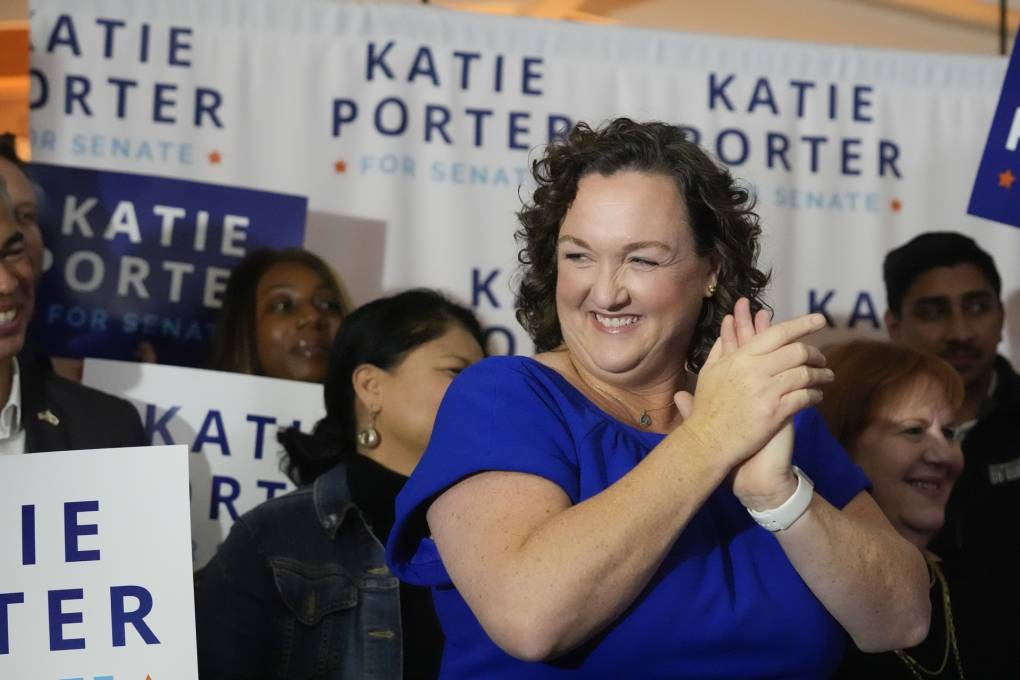
"content": "\u003cp>LOS ANGELES (AP) — Former Democratic U.S. House member \u003ca href=\"https://www.kqed.org/news/tag/katie-porter\">Katie Porter\u003c/a> announced Tuesday that she is entering the 2026 contest for California governor, joining a crowded field of candidates that could be upended if \u003ca href=\"https://www.kqed.org/news/tag/kamala-harris\">former Vice President Kamala Harris\u003c/a> joins the race.\u003c/p>\n\u003cp>Porter, who became a social media celebrity by brandishing a white board at congressional hearings while grilling CEOs, promised in a campaign \u003ca href=\"https://x.com/katieporteroc/status/1899445119218024591\">launch video\u003c/a> to be an aggressive counterweight to President Donald Trump’s administration at a time when the heavily Democratic state has clashed with the White House over issues from \u003ca href=\"https://www.kqed.org/news/12024194/trump-tries-another-grab-californias-water-what-comes-next\">water management\u003c/a> to \u003ca href=\"https://www.kqed.org/news/12026443/trumps-shock-and-awe-immigration-orders-are-creating-fear-experts-say-thats-the-point\">immigrant rights\u003c/a>.\u003c/p>\n\u003cp>“In Congress, I held the Trump administration’s feet to the fire when they hurt Americans. As governor, I won’t ever back down when Trump hurts Californians — whether he’s holding up disaster relief, attacking our rights or our communities, or screwing over working families to benefit himself and his cronies,” Porter said.\u003c/p>\n\u003cp>[ad fullwidth]\u003c/p>\n\u003cp>The contest to replace \u003ca href=\"https://www.kqed.org/news/tag/gavin-newsom\">term-limited Democratic Gov. Gavin Newsom\u003c/a> already has lured a large scrum of announced and likely candidates that would be upended if Harris \u003ca href=\"https://www.kqed.org/news/12026900/could-kamala-harris-shake-up-californias-governor-race-democrats-weigh-in\">decides to seek the state’s top office\u003c/a>.\u003c/p>\n\u003cp>Harris, a former state attorney general and U.S. senator, has not ruled out seeking the governorship since she left Washington in January after a failed presidential bid. Porter is friendly with the former vice president and has indicated she would step aside if Harris joins the race. In 2012, Harris, then California’s attorney general, appointed Porter to be the state’s independent bank monitor in a multibillion-dollar nationwide mortgage settlement.\u003c/p>\n\u003cp>If Harris gets in the race “there are very few politicians who would want to take her on,” said Claremont McKenna College political scientist Jack Pitney. “She’d be likely to win the Democratic nomination and Democrats are likely to win the governorship.”\u003c/p>\n\u003cp>Porter, who made an unsuccessful run for U.S. Senate last year and also is known for her small-dollar fundraising prowess, becomes one of the best-known candidates, joining former Los Angeles Mayor Antonio Villaraigosa and Lt. Gov. Eleni Kounalakis, among others, on the Democratic side.\u003c/p>\n\u003cp>Democrats are expected to easily hold the seat in a state where they outnumber registered Republicans by nearly 2-to-1. Republicans have not won a statewide election in California in nearly two decades.\u003c/p>\n\u003cp>On the GOP side, Riverside County Sheriff Chad Bianco last month became \u003ca href=\"https://apnews.com/article/california-governor-race-riverside-county-sheriff-9f251ca0f09a16344ae3902c7ffe009e\">the first major Republican\u003c/a> to announce a bid to replace Newsom, whose term runs through early January 2027. He blamed Democrats for the ongoing homelessness crisis and runaway housing prices.\u003c/p>\n\u003cp>[aside postID=news_12026900 hero='https://cdn.kqed.org/wp-content/uploads/sites/10/2025/02/GettyImages-2196870022-1020x680.jpg']\u003c/p>\n\u003cp>Even if Harris gets in the race, the state’s open primary system can be unpredictable — all candidates appear on a single ballot, regardless of party, and only the top two vote-getters advance to the November general election. Trump-aligned candidates could enter on the GOP side, generating conservative interest, or a wealthy candidate could emerge with the funds to rattle the expected order.\u003c/p>\n\u003cp>“These open primaries are hard to handicap,” said Democratic consultant Andrew Acosta. “It just makes it harder to predict.”\u003c/p>\n\u003cp>Porter, a progressive favorite, created an \u003ca href=\"https://apnews.com/article/california-senate-schiff-garvey-porter-democrats-b12c0742e3eca3a0784199b263ffed97\">online backlash\u003c/a> after losing the 2024 \u003ca href=\"https://apnews.com/article/2022-midterm-elections-politics-california-dianne-feinstein-united-states-senate-172759fa83faa0a70a2195a91dedb6f3\">Senate race\u003c/a>, when she faulted “billionaires spending millions to rig this election.” She finished third in the primary — behind Democrat and now-Sen. \u003ca href=\"https://www.kqed.org/news/tag/adam-schiff\">Adam Schiff\u003c/a> and Republican Steve Garvey — and did not advance to the November election.\u003c/p>\n\u003cp>Some likened her words to Trump’s baseless claims of election fraud in 2020. Porter later clarified her initial statement to say she didn’t believe the California vote count or election process had been compromised but she didn’t recant her earlier remarks. Rigged, she said in a follow-up, “means manipulated by dishonest means.”\u003c/p>\n\u003cp>She has been an active fundraiser since leaving her Southern California House district in January and returned to teaching at the UC Irvine School of Law.\u003c/p>\n\u003cp>A consumer protection attorney before her election to the House, Porter became known in Congress for her unsparing interrogations of business leaders and other committee witnesses, often using her whiteboard to break down complex figures while using plainspoken language to assail corporate greed.\u003c/p>\n\u003cp>First elected to Congress in 2018, Porter said in her video that “I first ran for office to hold Trump accountable. I feel that same call to serve now to stop him from hurting Californians.”\u003c/p>\n\u003cp>\u003c/p>\n",
"blocks": [],
"excerpt": "Katie Porter said she is entering the 2026 contest for California governor, joining a crowded field that could be upended if former Vice President Kamala Harris joins the race.",
"status": "publish",
"parent": 0,
"modified": 1741712319,
"stats": {
"hasAudio": false,
"hasVideo": false,
"hasChartOrMap": false,
"iframeSrcs": [],
"hasGoogleForm": false,
"hasGallery": false,
"hasHearkenModule": false,
"hasPolis": false,
"paragraphCount": 19,
"wordCount": 789
},
"headData": {
"title": "Former Southern California Rep. Katie Porter Enters Governor's Race | KQED",
"description": "Katie Porter said she is entering the 2026 contest for California governor, joining a crowded field that could be upended if former Vice President Kamala Harris joins the race.",
"ogTitle": "",
"ogDescription": "",
"ogImgId": "",
"twTitle": "",
"twDescription": "",
"twImgId": "",
"schema": {
"@context": "https://schema.org",
"@type": "NewsArticle",
"headline": "Former Southern California Rep. Katie Porter Enters Governor's Race",
"datePublished": "2025-03-11T08:02:11-07:00",
"dateModified": "2025-03-11T09:58:39-07:00",
"image": "https://cdn.kqed.org/wp-content/uploads/2020/02/KQED-OG-Image@1x.png",
"isAccessibleForFree": "True",
"publisher": {
"@type": "NewsMediaOrganization",
"@id": "https://www.kqed.org/#organization",
"name": "KQED",
"logo": "https://cdn.kqed.org/wp-content/uploads/2020/02/KQED-OG-Image@1x.png",
"url": "https://www.kqed.org",
"sameAs": [
"https://www.facebook.com/KQED",
"https://twitter.com/KQED",
"https://www.instagram.com/kqed/",
"https://www.tiktok.com/@kqedofficial",
"https://www.linkedin.com/company/kqed",
"https://www.youtube.com/channel/UCeC0IOo7i1P_61zVUWbJ4nw"
]
}
}
},
"sticky": false,
"nprByline": "Michael R. Blood, Associated Press",
"nprStoryId": "kqed-12030710",
"templateType": "standard",
"featuredImageType": "standard",
"excludeFromSiteSearch": "Include",
"showOnAuthorArchivePages": "No",
"articleAge": "0",
"path": "/news/12030710/former-southern-california-rep-katie-porter-enters-governors-race",
"audioTrackLength": null,
"parsedContent": [
{
"type": "contentString",
"content": "\u003cdiv class=\"post-body\">\u003cp>\u003cp>LOS ANGELES (AP) — Former Democratic U.S. House member \u003ca href=\"https://www.kqed.org/news/tag/katie-porter\">Katie Porter\u003c/a> announced Tuesday that she is entering the 2026 contest for California governor, joining a crowded field of candidates that could be upended if \u003ca href=\"https://www.kqed.org/news/tag/kamala-harris\">former Vice President Kamala Harris\u003c/a> joins the race.\u003c/p>\n\u003cp>Porter, who became a social media celebrity by brandishing a white board at congressional hearings while grilling CEOs, promised in a campaign \u003ca href=\"https://x.com/katieporteroc/status/1899445119218024591\">launch video\u003c/a> to be an aggressive counterweight to President Donald Trump’s administration at a time when the heavily Democratic state has clashed with the White House over issues from \u003ca href=\"https://www.kqed.org/news/12024194/trump-tries-another-grab-californias-water-what-comes-next\">water management\u003c/a> to \u003ca href=\"https://www.kqed.org/news/12026443/trumps-shock-and-awe-immigration-orders-are-creating-fear-experts-say-thats-the-point\">immigrant rights\u003c/a>.\u003c/p>\n\u003cp>“In Congress, I held the Trump administration’s feet to the fire when they hurt Americans. As governor, I won’t ever back down when Trump hurts Californians — whether he’s holding up disaster relief, attacking our rights or our communities, or screwing over working families to benefit himself and his cronies,” Porter said.\u003c/p>\n\u003cp>\u003c/p>\u003c/div>",
"attributes": {
"named": {},
"numeric": []
}
},
{
"type": "component",
"content": "",
"name": "ad",
"attributes": {
"named": {
"label": "fullwidth"
},
"numeric": [
"fullwidth"
]
}
},
{
"type": "contentString",
"content": "\u003cdiv class=\"post-body\">\u003cp>\u003c/p>\n\u003cp>The contest to replace \u003ca href=\"https://www.kqed.org/news/tag/gavin-newsom\">term-limited Democratic Gov. Gavin Newsom\u003c/a> already has lured a large scrum of announced and likely candidates that would be upended if Harris \u003ca href=\"https://www.kqed.org/news/12026900/could-kamala-harris-shake-up-californias-governor-race-democrats-weigh-in\">decides to seek the state’s top office\u003c/a>.\u003c/p>\n\u003cp>Harris, a former state attorney general and U.S. senator, has not ruled out seeking the governorship since she left Washington in January after a failed presidential bid. Porter is friendly with the former vice president and has indicated she would step aside if Harris joins the race. In 2012, Harris, then California’s attorney general, appointed Porter to be the state’s independent bank monitor in a multibillion-dollar nationwide mortgage settlement.\u003c/p>\n\u003cp>If Harris gets in the race “there are very few politicians who would want to take her on,” said Claremont McKenna College political scientist Jack Pitney. “She’d be likely to win the Democratic nomination and Democrats are likely to win the governorship.”\u003c/p>\n\u003cp>Porter, who made an unsuccessful run for U.S. Senate last year and also is known for her small-dollar fundraising prowess, becomes one of the best-known candidates, joining former Los Angeles Mayor Antonio Villaraigosa and Lt. Gov. Eleni Kounalakis, among others, on the Democratic side.\u003c/p>\n\u003cp>Democrats are expected to easily hold the seat in a state where they outnumber registered Republicans by nearly 2-to-1. Republicans have not won a statewide election in California in nearly two decades.\u003c/p>\n\u003cp>On the GOP side, Riverside County Sheriff Chad Bianco last month became \u003ca href=\"https://apnews.com/article/california-governor-race-riverside-county-sheriff-9f251ca0f09a16344ae3902c7ffe009e\">the first major Republican\u003c/a> to announce a bid to replace Newsom, whose term runs through early January 2027. He blamed Democrats for the ongoing homelessness crisis and runaway housing prices.\u003c/p>\n\u003cp>\u003c/p>\u003c/div>",
"attributes": {
"named": {},
"numeric": []
}
},
{
"type": "component",
"content": "",
"name": "aside",
"attributes": {
"named": {
"postid": "news_12026900",
"hero": "https://cdn.kqed.org/wp-content/uploads/sites/10/2025/02/GettyImages-2196870022-1020x680.jpg",
"label": ""
},
"numeric": []
}
},
{
"type": "contentString",
"content": "\u003cdiv class=\"post-body\">\u003cp>\u003c/p>\n\u003cp>Even if Harris gets in the race, the state’s open primary system can be unpredictable — all candidates appear on a single ballot, regardless of party, and only the top two vote-getters advance to the November general election. Trump-aligned candidates could enter on the GOP side, generating conservative interest, or a wealthy candidate could emerge with the funds to rattle the expected order.\u003c/p>\n\u003cp>“These open primaries are hard to handicap,” said Democratic consultant Andrew Acosta. “It just makes it harder to predict.”\u003c/p>\n\u003cp>Porter, a progressive favorite, created an \u003ca href=\"https://apnews.com/article/california-senate-schiff-garvey-porter-democrats-b12c0742e3eca3a0784199b263ffed97\">online backlash\u003c/a> after losing the 2024 \u003ca href=\"https://apnews.com/article/2022-midterm-elections-politics-california-dianne-feinstein-united-states-senate-172759fa83faa0a70a2195a91dedb6f3\">Senate race\u003c/a>, when she faulted “billionaires spending millions to rig this election.” She finished third in the primary — behind Democrat and now-Sen. \u003ca href=\"https://www.kqed.org/news/tag/adam-schiff\">Adam Schiff\u003c/a> and Republican Steve Garvey — and did not advance to the November election.\u003c/p>\n\u003cp>Some likened her words to Trump’s baseless claims of election fraud in 2020. Porter later clarified her initial statement to say she didn’t believe the California vote count or election process had been compromised but she didn’t recant her earlier remarks. Rigged, she said in a follow-up, “means manipulated by dishonest means.”\u003c/p>\n\u003cp>She has been an active fundraiser since leaving her Southern California House district in January and returned to teaching at the UC Irvine School of Law.\u003c/p>\n\u003cp>A consumer protection attorney before her election to the House, Porter became known in Congress for her unsparing interrogations of business leaders and other committee witnesses, often using her whiteboard to break down complex figures while using plainspoken language to assail corporate greed.\u003c/p>\n\u003cp>First elected to Congress in 2018, Porter said in her video that “I first ran for office to hold Trump accountable. I feel that same call to serve now to stop him from hurting Californians.”\u003c/p>\n\u003cp>\u003c/p>\n\u003c/div>\u003c/p>",
"attributes": {
"named": {},
"numeric": []
}
}
],
"link": "/news/12030710/former-southern-california-rep-katie-porter-enters-governors-race",
"authors": [
"byline_news_12030710"
],
"categories": [
"news_31795",
"news_8",
"news_13"
],
"tags": [
"news_29125",
"news_34377",
"news_16",
"news_2601",
"news_24206",
"news_17968"
],
"featImg": "news_12030712",
"label": "news"
},
"news_12030516": {
"type": "posts",
"id": "news_12030516",
"meta": {
"index": "posts_1716263798",
"site": "news",
"id": "12030516",
"score": null,
"sort": [
1741554017000
]
},
"guestAuthors": [],
"slug": "california-is-spending-6-4-billion-on-mental-health-housing-will-it-reach-those-who-need-it-most",
"title": "California Is Spending $6.4 Billion on Mental Health Housing. Will It Reach Those Who Need It Most?",
"publishDate": 1741554017,
"format": "standard",
"headTitle": "California Is Spending $6.4 Billion on Mental Health Housing. Will It Reach Those Who Need It Most? | KQED",
"labelTerm": {
"term": 18481,
"site": "news"
},
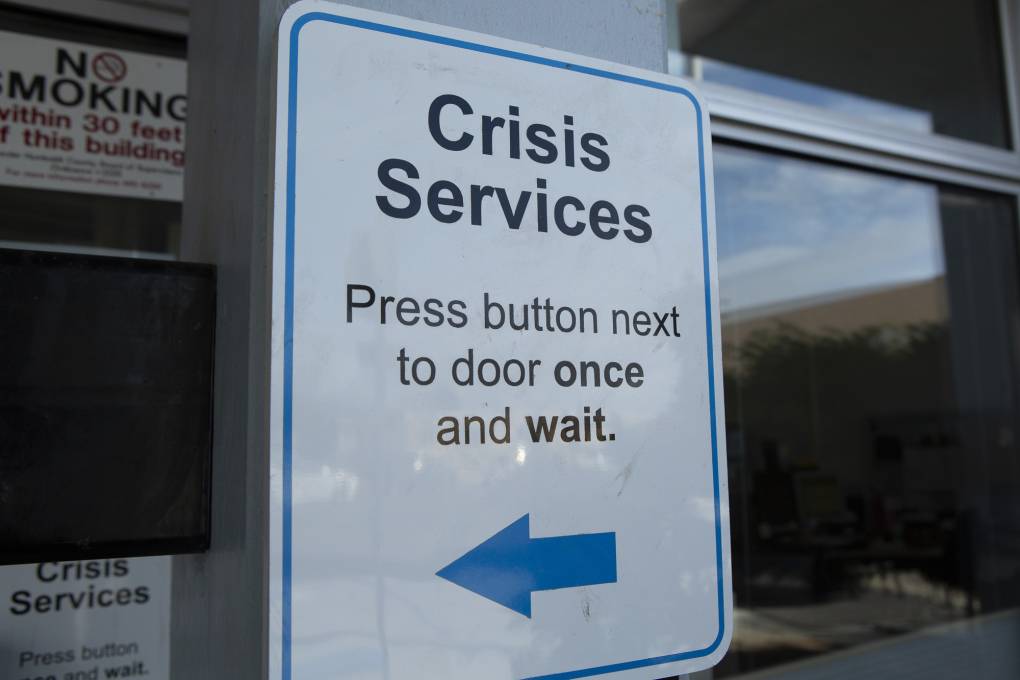
"content": "\u003cp>The Newsom administration is moving swiftly to distribute by May billions of dollars from the 2024 mental health bond narrowly approved by voters, but concerns are emerging about whether areas of the state that have the greatest need will be left behind, according to testimony at legislative oversight hearing this week.\u003c/p>\n\u003cp>\u003ca href=\"https://calmatters.org/health/mental-health/2024/03/proposition-1-gavin-newsom-2/\" target=\"_blank\" rel=\"noreferrer noopener\">Proposition 1\u003c/a>, championed by Gov. Gavin Newsom, pledged to inject $6.4 billion into the state’s overburdened mental health and addiction treatment system. Newsom promised voters the move would help the state address its \u003ca href=\"https://calmatters.org/housing/homelessness/2025/01/hud-pit-count-2024/#:~:text=The%20number%20of%20homeless%20Californians,state%20as%20of%20January%202024.\" target=\"_blank\" rel=\"noreferrer noopener\">homelessness crisis\u003c/a>, which is often publicly associated with \u003ca href=\"https://calmatters.org/housing/homelessness/2024/07/california-homelessness-myths/\" target=\"_blank\" rel=\"noreferrer noopener\">unaddressed mental health and substance use issues\u003c/a>.\u003c/p>\n\u003cp>A majority of the money, $4.4 billion, would be used to build treatment facilities to help meet the state’s estimated \u003ca href=\"https://www.rand.org/pubs/research_reports/RRA1824-1-v2.html\" target=\"_blank\" rel=\"noreferrer noopener\">10,000-bed shortage\u003c/a>. The rest of the bond money would be used on housing and managed by the state’s housing department.\u003c/p>\n\u003cp>[ad fullwidth]\u003c/p>\n\u003cp>Newsom wanted to move as fast as possible. Last year, he announced the state would \u003ca href=\"https://calmatters.org/health/mental-health/2024/05/mental-health-housing-proposition-1/\" target=\"_blank\" rel=\"noreferrer noopener\">release the bond money months ahead of schedule\u003c/a>. During a press conference last year, Newsom told counties to move with a “sense of urgency.”\u003c/p>\n\u003cp>“You’re either part of the problem or you’re not. Period,” he said at the time.\u003c/p>\n\u003cp>But that timeline could neglect counties that have the fewest mental health resources.\u003c/p>\n\u003cp>“Moving this money out fast does come at a cost, because there will be some who are left behind,” said Susan Holt, Fresno County Behavioral Health director, during the Tuesday Assembly Health Committee hearing.\u003c/p>\n\u003cp>Small and rural counties say they simply don’t have the manpower or expertise to navigate the complex grant requirements governing this one-time, multibillion-dollar investment. A recent \u003ca href=\"https://lao.ca.gov/reports/2025/4954/Building-CA-Behavorial-Health-Infrastructure-Progress-Update-020525.pdf\">Legislative Analyst’s Office report (PDF)\u003c/a> found that a majority of money distributed from programs similar to Prop. 1 in the past went to regions of the state that need it least. The area with the highest unmet need, the southern San Joaquin Valley, didn’t get any state money in previous rounds of funding.\u003c/p>\n\u003cp>To meet the population need, the region needs to nearly triple its capacity.\u003c/p>\n\u003cp>Prior to Prop. 1, Holt testified that Fresno County submitted nine grant applications for primarily acute care beds and did not receive any money from the state.\u003c/p>\n\u003cp>“I can speak with conviction and assurance that we understand the urgency,” Holt said. “Sometimes with this much money we need to go a little bit slower in order to go faster in the end.”\u003c/p>\n\u003cp>Counties are also concerned that the state has provided money for treatment facilities but not for workforce or services.\u003c/p>\n\u003cp>Ryan Miller, an analyst from the Legislative Analyst’s Office, examined how the state spent similar building funds in the past. His analysis found that the state has historically awarded funds to “launch ready” projects that can be completed on a quick timeline, a criteria that gives an advantage to more sophisticated counties.\u003c/p>\n\u003ch2>Which regions got more mental health funding?\u003c/h2>\n\u003cp>For example, a 2022 RAND study found that Los Angeles and the greater Sacramento region have sufficient adult acute care capacity, yet collectively those areas received nearly three-fourths of the funding distributed for acute care beds, roughly $130 million, according to the analyst’s office. Instead, those areas have a higher need for sub-acute care and community residential treatment.\u003c/p>\n\u003cp>“A great deal of resources and staff are needed to put together a compelling launch ready project,” Miller said.\u003c/p>\n\u003cp>Other areas of the state that received less money than expected based on need were the Inland Empire, Central Coast and Bay Area, Miller said.\u003c/p>\n\u003cp>Assemblymember Jacqui Irwin, who authored the legislation that put Prop. 1 on the ballot, said voters were very skeptical about how the state spends its money and that promises were made to get the money to counties quickly. But the Democrat from Thousand Oaks also questioned whether the accelerated timeline was sensible.\u003c/p>\n\u003cp>\u003ca href=\"https://calmatters.org/politics/elections/2024/03/election-result-proposition-1/\" target=\"_blank\" rel=\"noreferrer noopener\">Prop. 1 passed\u003c/a> by the narrowest of margins last year, 50.2% to 49.8%.\u003c/p>\n\u003cp>“Do you think the administration’s … implementation has been too aggressive, or are the goals realistic?” Irwin said.\u003c/p>\n\u003ch2>State backs projects it believes will succeed\u003c/h2>\n\u003cp>Marlise Perez, a division chief for the Department of Health Care Services, pushed back against the notion that awards would leave small counties behind.\u003c/p>\n\u003cp>“I don’t want it to appear that we’re only awarding the shiniest applications,” Perez said, pointing to almost $200 million in grants that were awarded to small counties prior to Prop. 1.\u003c/p>\n\u003cp>At the same time, the administration must support projects that can actually be completed, Perez said.\u003c/p>\n\u003cp>According to the analyst’s office, 18 small counties received no funding in previous grant rounds. According to Perez, 16 of them didn’t apply. [aside postID=\"science_1995393,news_11986218,news_11980415\" label=\"Related Stories\"]\u003c/p>\n\u003cp>“Unfortunately we can only award who applies. That has been a challenge,” Perez said.\u003c/p>\n\u003cp>Her office is helping those counties with the application and now expects seven to apply for the next round of funding. One of the more difficult grant requirements is that facilities guarantee they can provide services for the next 30 years.\u003c/p>\n\u003cp>Still with more than $3.3 billion rolling out in two months, there’s little room to pivot how the money will be targeted. This round of grants will focus once again on “launch ready” projects. The remaining $1.1 billion will be awarded by early 2026.\u003c/p>\n\u003cp>Applicants have submitted projects totaling more than $8.8 billion, double the amount of money available, an indication of the severe needs across the state.\u003c/p>\n\u003cp>Assemblymember Joaquin Arambula, a Fresno Democrat, said when the system rewards those who have historically been able to provide services there is a risk of “baking in historical inequities and disparities.”\u003c/p>\n\u003cp>\u003c/p>\n",
"blocks": [],
"excerpt": "Gov. Gavin Newsom wants to see tangible results from the $6.4 billion mental health bond voters approved last year. Moving fast carries a risk of neglecting under-resourced communities.",
"status": "publish",
"parent": 0,
"modified": 1742597926,
"stats": {
"hasAudio": false,
"hasVideo": false,
"hasChartOrMap": false,
"iframeSrcs": [],
"hasGoogleForm": false,
"hasGallery": false,
"hasHearkenModule": false,
"hasPolis": false,
"paragraphCount": 30,
"wordCount": 992
},
"headData": {
"title": "California Is Spending $6.4 Billion on Mental Health Housing. Will It Reach Those Who Need It Most? | KQED",
"description": "Gov. Gavin Newsom wants to see tangible results from the $6.4 billion mental health bond voters approved last year. Moving fast carries a risk of neglecting under-resourced communities.",
"ogTitle": "",
"ogDescription": "",
"ogImgId": "",
"twTitle": "",
"twDescription": "",
"twImgId": "",
"schema": {
"@context": "https://schema.org",
"@type": "NewsArticle",
"headline": "California Is Spending $6.4 Billion on Mental Health Housing. Will It Reach Those Who Need It Most?",
"datePublished": "2025-03-09T14:00:17-07:00",
"dateModified": "2025-03-21T15:58:46-07:00",
"image": "https://cdn.kqed.org/wp-content/uploads/2020/02/KQED-OG-Image@1x.png",
"isAccessibleForFree": "True",
"publisher": {
"@type": "NewsMediaOrganization",
"@id": "https://www.kqed.org/#organization",
"name": "KQED",
"logo": "https://cdn.kqed.org/wp-content/uploads/2020/02/KQED-OG-Image@1x.png",
"url": "https://www.kqed.org",
"sameAs": [
"https://www.facebook.com/KQED",
"https://twitter.com/KQED",
"https://www.instagram.com/kqed/",
"https://www.tiktok.com/@kqedofficial",
"https://www.linkedin.com/company/kqed",
"https://www.youtube.com/channel/UCeC0IOo7i1P_61zVUWbJ4nw"
]
}
}
},
"sticky": false,
"nprByline": "\u003ca href=\"https://calmatters.org/author/kristen-hwang\">Kristen Hwang, \u003c/a>CalMatters",
"nprStoryId": "kqed-12030516",
"templateType": "standard",
"featuredImageType": "standard",
"excludeFromSiteSearch": "Include",
"showOnAuthorArchivePages": "No",
"articleAge": "0",
"path": "/news/12030516/california-is-spending-6-4-billion-on-mental-health-housing-will-it-reach-those-who-need-it-most",
"audioTrackLength": null,
"parsedContent": [
{
"type": "contentString",
"content": "\u003cdiv class=\"post-body\">\u003cp>\u003cp>The Newsom administration is moving swiftly to distribute by May billions of dollars from the 2024 mental health bond narrowly approved by voters, but concerns are emerging about whether areas of the state that have the greatest need will be left behind, according to testimony at legislative oversight hearing this week.\u003c/p>\n\u003cp>\u003ca href=\"https://calmatters.org/health/mental-health/2024/03/proposition-1-gavin-newsom-2/\" target=\"_blank\" rel=\"noreferrer noopener\">Proposition 1\u003c/a>, championed by Gov. Gavin Newsom, pledged to inject $6.4 billion into the state’s overburdened mental health and addiction treatment system. Newsom promised voters the move would help the state address its \u003ca href=\"https://calmatters.org/housing/homelessness/2025/01/hud-pit-count-2024/#:~:text=The%20number%20of%20homeless%20Californians,state%20as%20of%20January%202024.\" target=\"_blank\" rel=\"noreferrer noopener\">homelessness crisis\u003c/a>, which is often publicly associated with \u003ca href=\"https://calmatters.org/housing/homelessness/2024/07/california-homelessness-myths/\" target=\"_blank\" rel=\"noreferrer noopener\">unaddressed mental health and substance use issues\u003c/a>.\u003c/p>\n\u003cp>A majority of the money, $4.4 billion, would be used to build treatment facilities to help meet the state’s estimated \u003ca href=\"https://www.rand.org/pubs/research_reports/RRA1824-1-v2.html\" target=\"_blank\" rel=\"noreferrer noopener\">10,000-bed shortage\u003c/a>. The rest of the bond money would be used on housing and managed by the state’s housing department.\u003c/p>\n\u003cp>\u003c/p>\u003c/div>",
"attributes": {
"named": {},
"numeric": []
}
},
{
"type": "component",
"content": "",
"name": "ad",
"attributes": {
"named": {
"label": "fullwidth"
},
"numeric": [
"fullwidth"
]
}
},
{
"type": "contentString",
"content": "\u003cdiv class=\"post-body\">\u003cp>\u003c/p>\n\u003cp>Newsom wanted to move as fast as possible. Last year, he announced the state would \u003ca href=\"https://calmatters.org/health/mental-health/2024/05/mental-health-housing-proposition-1/\" target=\"_blank\" rel=\"noreferrer noopener\">release the bond money months ahead of schedule\u003c/a>. During a press conference last year, Newsom told counties to move with a “sense of urgency.”\u003c/p>\n\u003cp>“You’re either part of the problem or you’re not. Period,” he said at the time.\u003c/p>\n\u003cp>But that timeline could neglect counties that have the fewest mental health resources.\u003c/p>\n\u003cp>“Moving this money out fast does come at a cost, because there will be some who are left behind,” said Susan Holt, Fresno County Behavioral Health director, during the Tuesday Assembly Health Committee hearing.\u003c/p>\n\u003cp>Small and rural counties say they simply don’t have the manpower or expertise to navigate the complex grant requirements governing this one-time, multibillion-dollar investment. A recent \u003ca href=\"https://lao.ca.gov/reports/2025/4954/Building-CA-Behavorial-Health-Infrastructure-Progress-Update-020525.pdf\">Legislative Analyst’s Office report (PDF)\u003c/a> found that a majority of money distributed from programs similar to Prop. 1 in the past went to regions of the state that need it least. The area with the highest unmet need, the southern San Joaquin Valley, didn’t get any state money in previous rounds of funding.\u003c/p>\n\u003cp>To meet the population need, the region needs to nearly triple its capacity.\u003c/p>\n\u003cp>Prior to Prop. 1, Holt testified that Fresno County submitted nine grant applications for primarily acute care beds and did not receive any money from the state.\u003c/p>\n\u003cp>“I can speak with conviction and assurance that we understand the urgency,” Holt said. “Sometimes with this much money we need to go a little bit slower in order to go faster in the end.”\u003c/p>\n\u003cp>Counties are also concerned that the state has provided money for treatment facilities but not for workforce or services.\u003c/p>\n\u003cp>Ryan Miller, an analyst from the Legislative Analyst’s Office, examined how the state spent similar building funds in the past. His analysis found that the state has historically awarded funds to “launch ready” projects that can be completed on a quick timeline, a criteria that gives an advantage to more sophisticated counties.\u003c/p>\n\u003ch2>Which regions got more mental health funding?\u003c/h2>\n\u003cp>For example, a 2022 RAND study found that Los Angeles and the greater Sacramento region have sufficient adult acute care capacity, yet collectively those areas received nearly three-fourths of the funding distributed for acute care beds, roughly $130 million, according to the analyst’s office. Instead, those areas have a higher need for sub-acute care and community residential treatment.\u003c/p>\n\u003cp>“A great deal of resources and staff are needed to put together a compelling launch ready project,” Miller said.\u003c/p>\n\u003cp>Other areas of the state that received less money than expected based on need were the Inland Empire, Central Coast and Bay Area, Miller said.\u003c/p>\n\u003cp>Assemblymember Jacqui Irwin, who authored the legislation that put Prop. 1 on the ballot, said voters were very skeptical about how the state spends its money and that promises were made to get the money to counties quickly. But the Democrat from Thousand Oaks also questioned whether the accelerated timeline was sensible.\u003c/p>\n\u003cp>\u003ca href=\"https://calmatters.org/politics/elections/2024/03/election-result-proposition-1/\" target=\"_blank\" rel=\"noreferrer noopener\">Prop. 1 passed\u003c/a> by the narrowest of margins last year, 50.2% to 49.8%.\u003c/p>\n\u003cp>“Do you think the administration’s … implementation has been too aggressive, or are the goals realistic?” Irwin said.\u003c/p>\n\u003ch2>State backs projects it believes will succeed\u003c/h2>\n\u003cp>Marlise Perez, a division chief for the Department of Health Care Services, pushed back against the notion that awards would leave small counties behind.\u003c/p>\n\u003cp>“I don’t want it to appear that we’re only awarding the shiniest applications,” Perez said, pointing to almost $200 million in grants that were awarded to small counties prior to Prop. 1.\u003c/p>\n\u003cp>At the same time, the administration must support projects that can actually be completed, Perez said.\u003c/p>\n\u003cp>According to the analyst’s office, 18 small counties received no funding in previous grant rounds. According to Perez, 16 of them didn’t apply. \u003c/p>\u003c/div>",
"attributes": {
"named": {},
"numeric": []
}
},
{
"type": "component",
"content": "",
"name": "aside",
"attributes": {
"named": {
"postid": "science_1995393,news_11986218,news_11980415",
"label": "Related Stories "
},
"numeric": []
}
},
{
"type": "contentString",
"content": "\u003cdiv class=\"post-body\">\u003cp>\u003c/p>\n\u003cp>“Unfortunately we can only award who applies. That has been a challenge,” Perez said.\u003c/p>\n\u003cp>Her office is helping those counties with the application and now expects seven to apply for the next round of funding. One of the more difficult grant requirements is that facilities guarantee they can provide services for the next 30 years.\u003c/p>\n\u003cp>Still with more than $3.3 billion rolling out in two months, there’s little room to pivot how the money will be targeted. This round of grants will focus once again on “launch ready” projects. The remaining $1.1 billion will be awarded by early 2026.\u003c/p>\n\u003cp>Applicants have submitted projects totaling more than $8.8 billion, double the amount of money available, an indication of the severe needs across the state.\u003c/p>\n\u003cp>Assemblymember Joaquin Arambula, a Fresno Democrat, said when the system rewards those who have historically been able to provide services there is a risk of “baking in historical inequities and disparities.”\u003c/p>\n\u003cp>\u003c/p>\n\u003c/div>\u003c/p>",
"attributes": {
"named": {},
"numeric": []
}
}
],
"link": "/news/12030516/california-is-spending-6-4-billion-on-mental-health-housing-will-it-reach-those-who-need-it-most",
"authors": [
"byline_news_12030516"
],
"categories": [
"news_6266",
"news_8"
],
"tags": [
"news_16",
"news_1775",
"news_2109",
"news_17101"
],
"affiliates": [
"news_18481"
],
"featImg": "news_12030519",
"label": "news_18481"
},
"news_12030057": {
"type": "posts",
"id": "news_12030057",
"meta": {
"index": "posts_1716263798",
"site": "news",
"id": "12030057",
"score": null,
"sort": [
1741356029000
]
},
"guestAuthors": [],
"slug": "state-report-throws-shade-on-one-of-newsoms-key-encampment-clearing-policies",
"title": "Report: California Should Pause Funding for One of Newsom’s Key Programs to Clear Encampments",
"publishDate": 1741356029,
"format": "standard",
"headTitle": "Report: California Should Pause Funding for One of Newsom’s Key Programs to Clear Encampments | KQED",
"labelTerm": {
"site": "news"
},
"content": "\u003cp>Lawmakers should hit the brakes on one of Gov. Gavin Newsom’s signature programs for cleaning up homeless encampments, \u003ca href=\"https://lao.ca.gov/Publications/Report/5007\">according to a report\u003c/a> out Wednesday from the Legislative Analyst’s Office (LAO).\u003c/p>\n\u003cp>The LAO found lawmakers lack the basic information needed to assess how well the effort — called Encampment Resolution Funding Program — is working and should hold off on further investment until it’s given “compelling evidence that program goals are being met.”\u003c/p>\n\u003cp>Newsom and legislators \u003ca href=\"https://www.gov.ca.gov/2021/10/29/california-launches-encampment-resolution-grant-program/\">rolled out the competitive grant in 2021\u003c/a> to help local governments address “specific, persistent encampments” with the aim of moving people into permanent housing or temporary shelter until long-term housing becomes available.\u003c/p>\n\u003cp>[ad fullwidth]\u003c/p>\n\u003cp>The state invested $900 million in the program since its launch, according to the report.\u003c/p>\n\u003cp>“In some communities, this is a really important tool,” said Susannah Parsons, director of policy and legislation for the nonprofit, All Home, “and certainly a means by which local jurisdictions can respond to intense political pressure.”\u003c/p>\n\u003cp>Newsom last year \u003ca href=\"https://www.kqed.org/news/11997352/newsom-orders-state-agencies-to-dismantle-homeless-encampments-across-california\">ordered state agencies\u003c/a> to clear encampments and urged local governments to do the same. The order seized on an \u003ca href=\"https://www.kqed.org/news/11991340/supreme-court-says-laws-criminalizing-homeless-camping-do-not-violate-constitution\">opening from the Supreme Court\u003c/a>, which issued a ruling that gave cities greater leeway to fine and jail people for camping illegally, even when no alternative shelter is available.\u003c/p>\n\u003cp>Parsons agrees that better data on outcomes is essential, but she said holding back new funding could hamper efforts to address homelessness.\u003c/p>\n\u003cp>“The prospect of losing access to that funding … is a big deal,” she said, noting that the uniquely flexible dollars are used for everything from medical care to emergency rental subsidies. “And it’s in the context of a funding landscape that is really uncertain, and that is making it really difficult for us to see the kind of progress that we need.”[aside postID=news_12030023 hero='https://cdn.kqed.org/wp-content/uploads/sites/10/2025/03/20250210_Unhoused-Ban_DMB_00270_qed-1020x680.jpg']The analyst’s recommendation, part of its 2025–26 budget assessment, echoes a report from the \u003ca href=\"https://www.kqed.org/news/11982237/california-audit-questions-state-homelessness-spending-san-jose\">state auditor last year\u003c/a> that found California has little idea how effective the billions it’s spent addressing homelessness have been.\u003c/p>\n\u003cp>Newsom and legislators have since put an \u003ca href=\"https://www.kqed.org/news/12011525/newsom-announces-830-million-in-homelessness-spending-with-strings\">emphasis on accountability\u003c/a>, but when it comes to this program, those efforts have yet to come to fruition. His office did not return requests for comment.\u003c/p>\n\u003cp>Lawmakers haven’t received data on how many people have been housed using the money or even how many encampments have been addressed, according to the LAO, which provides nonpartisan policy advice to the Legislature.\u003c/p>\n\u003cp>Without that data, the analyst points out, the Legislature can’t determine whether the funding is resulting in an encampment “resolution” or encampment sweeps, which simply move people from one corner to the next.\u003c/p>\n\u003cp>According to the report, 70% of grant funds have yet to be spent. Of the $258 million that has been, about a third was used on temporary shelter, with the remainder spent on street outreach, services and permanent housing, among other uses.\u003c/p>\n\u003cp>“We know what’s most effective — it’s helping people back into housing and providing services to support that transition, instead of measures that just move them around,” Alex Visotzky, Senior California Policy Fellow with the National Alliance to End Homelessness, said. “Voters and folks experiencing homelessness want to see public dollars spent on what works.”\u003c/p>\n\u003cp>Legislators added new reporting requirements for the program last year, but those progress reports aren’t due until next month. Until lawmakers have those in hand, the LAO suggests they use spring budget hearings to press the administration for any available data.\u003c/p>\n\u003cp>\u003c/p>\n",
"blocks": [],
"excerpt": "Lawmakers lack the basic information needed to assess how well one of Gov. Gavin Newsom’s signature programs for clearing homeless encampments is working and should hold off on further funding, according to a new report from the legislature’s policy analyst.",
"status": "publish",
"parent": 0,
"modified": 1741406930,
"stats": {
"hasAudio": false,
"hasVideo": false,
"hasChartOrMap": false,
"iframeSrcs": [],
"hasGoogleForm": false,
"hasGallery": false,
"hasHearkenModule": false,
"hasPolis": false,
"paragraphCount": 16,
"wordCount": 630
},
"headData": {
"title": "Report: California Should Pause Funding for One of Newsom’s Key Programs to Clear Encampments | KQED",
"description": "Lawmakers lack the basic information needed to assess how well one of Gov. Gavin Newsom’s signature programs for clearing homeless encampments is working and should hold off on further funding, according to a new report from the legislature’s policy analyst.",
"ogTitle": "",
"ogDescription": "",
"ogImgId": "",
"twTitle": "",
"twDescription": "",
"twImgId": "",
"schema": {
"@context": "https://schema.org",
"@type": "NewsArticle",
"headline": "Report: California Should Pause Funding for One of Newsom’s Key Programs to Clear Encampments",
"datePublished": "2025-03-07T06:00:29-08:00",
"dateModified": "2025-03-07T20:08:50-08:00",
"image": "https://cdn.kqed.org/wp-content/uploads/2020/02/KQED-OG-Image@1x.png",
"isAccessibleForFree": "True",
"publisher": {
"@type": "NewsMediaOrganization",
"@id": "https://www.kqed.org/#organization",
"name": "KQED",
"logo": "https://cdn.kqed.org/wp-content/uploads/2020/02/KQED-OG-Image@1x.png",
"url": "https://www.kqed.org",
"sameAs": [
"https://www.facebook.com/KQED",
"https://twitter.com/KQED",
"https://www.instagram.com/kqed/",
"https://www.tiktok.com/@kqedofficial",
"https://www.linkedin.com/company/kqed",
"https://www.youtube.com/channel/UCeC0IOo7i1P_61zVUWbJ4nw"
]
}
}
},
"sticky": false,
"nprStoryId": "kqed-12030057",
"templateType": "standard",
"featuredImageType": "standard",
"excludeFromSiteSearch": "Include",
"articleAge": "0",
"path": "/news/12030057/state-report-throws-shade-on-one-of-newsoms-key-encampment-clearing-policies",
"audioTrackLength": null,
"parsedContent": [
{
"type": "contentString",
"content": "\u003cdiv class=\"post-body\">\u003cp>\u003cp>Lawmakers should hit the brakes on one of Gov. Gavin Newsom’s signature programs for cleaning up homeless encampments, \u003ca href=\"https://lao.ca.gov/Publications/Report/5007\">according to a report\u003c/a> out Wednesday from the Legislative Analyst’s Office (LAO).\u003c/p>\n\u003cp>The LAO found lawmakers lack the basic information needed to assess how well the effort — called Encampment Resolution Funding Program — is working and should hold off on further investment until it’s given “compelling evidence that program goals are being met.”\u003c/p>\n\u003cp>Newsom and legislators \u003ca href=\"https://www.gov.ca.gov/2021/10/29/california-launches-encampment-resolution-grant-program/\">rolled out the competitive grant in 2021\u003c/a> to help local governments address “specific, persistent encampments” with the aim of moving people into permanent housing or temporary shelter until long-term housing becomes available.\u003c/p>\n\u003cp>\u003c/p>\u003c/div>",
"attributes": {
"named": {},
"numeric": []
}
},
{
"type": "component",
"content": "",
"name": "ad",
"attributes": {
"named": {
"label": "fullwidth"
},
"numeric": [
"fullwidth"
]
}
},
{
"type": "contentString",
"content": "\u003cdiv class=\"post-body\">\u003cp>\u003c/p>\n\u003cp>The state invested $900 million in the program since its launch, according to the report.\u003c/p>\n\u003cp>“In some communities, this is a really important tool,” said Susannah Parsons, director of policy and legislation for the nonprofit, All Home, “and certainly a means by which local jurisdictions can respond to intense political pressure.”\u003c/p>\n\u003cp>Newsom last year \u003ca href=\"https://www.kqed.org/news/11997352/newsom-orders-state-agencies-to-dismantle-homeless-encampments-across-california\">ordered state agencies\u003c/a> to clear encampments and urged local governments to do the same. The order seized on an \u003ca href=\"https://www.kqed.org/news/11991340/supreme-court-says-laws-criminalizing-homeless-camping-do-not-violate-constitution\">opening from the Supreme Court\u003c/a>, which issued a ruling that gave cities greater leeway to fine and jail people for camping illegally, even when no alternative shelter is available.\u003c/p>\n\u003cp>Parsons agrees that better data on outcomes is essential, but she said holding back new funding could hamper efforts to address homelessness.\u003c/p>\n\u003cp>“The prospect of losing access to that funding … is a big deal,” she said, noting that the uniquely flexible dollars are used for everything from medical care to emergency rental subsidies. “And it’s in the context of a funding landscape that is really uncertain, and that is making it really difficult for us to see the kind of progress that we need.”\u003c/p>\u003c/div>",
"attributes": {
"named": {},
"numeric": []
}
},
{
"type": "component",
"content": "",
"name": "aside",
"attributes": {
"named": {
"postid": "news_12030023",
"hero": "https://cdn.kqed.org/wp-content/uploads/sites/10/2025/03/20250210_Unhoused-Ban_DMB_00270_qed-1020x680.jpg",
"label": ""
},
"numeric": []
}
},
{
"type": "contentString",
"content": "\u003cdiv class=\"post-body\">\u003cp>The analyst’s recommendation, part of its 2025–26 budget assessment, echoes a report from the \u003ca href=\"https://www.kqed.org/news/11982237/california-audit-questions-state-homelessness-spending-san-jose\">state auditor last year\u003c/a> that found California has little idea how effective the billions it’s spent addressing homelessness have been.\u003c/p>\n\u003cp>Newsom and legislators have since put an \u003ca href=\"https://www.kqed.org/news/12011525/newsom-announces-830-million-in-homelessness-spending-with-strings\">emphasis on accountability\u003c/a>, but when it comes to this program, those efforts have yet to come to fruition. His office did not return requests for comment.\u003c/p>\n\u003cp>Lawmakers haven’t received data on how many people have been housed using the money or even how many encampments have been addressed, according to the LAO, which provides nonpartisan policy advice to the Legislature.\u003c/p>\n\u003cp>Without that data, the analyst points out, the Legislature can’t determine whether the funding is resulting in an encampment “resolution” or encampment sweeps, which simply move people from one corner to the next.\u003c/p>\n\u003cp>According to the report, 70% of grant funds have yet to be spent. Of the $258 million that has been, about a third was used on temporary shelter, with the remainder spent on street outreach, services and permanent housing, among other uses.\u003c/p>\n\u003cp>“We know what’s most effective — it’s helping people back into housing and providing services to support that transition, instead of measures that just move them around,” Alex Visotzky, Senior California Policy Fellow with the National Alliance to End Homelessness, said. “Voters and folks experiencing homelessness want to see public dollars spent on what works.”\u003c/p>\n\u003cp>Legislators added new reporting requirements for the program last year, but those progress reports aren’t due until next month. Until lawmakers have those in hand, the LAO suggests they use spring budget hearings to press the administration for any available data.\u003c/p>\n\u003cp>\u003c/p>\n\u003c/div>\u003c/p>",
"attributes": {
"named": {},
"numeric": []
}
}
],
"link": "/news/12030057/state-report-throws-shade-on-one-of-newsoms-key-encampment-clearing-policies",
"authors": [
"11276"
],
"categories": [
"news_31795",
"news_6266",
"news_8"
],
"tags": [
"news_3921",
"news_18538",
"news_35094",
"news_16",
"news_21214",
"news_1775"
],
"featImg": "news_12030059",
"label": "news"
},
"news_12029182": {
"type": "posts",
"id": "news_12029182",
"meta": {
"index": "posts_1716263798",
"site": "news",
"id": "12029182",
"score": null,
"sort": [
1741089600000
]
},
"guestAuthors": [],
"slug": "federal-policy-turmoil-threatens-californias-wildfire-prevention-efforts",
"title": "Federal Policy Turmoil Threatens California's Wildfire Prevention Efforts",
"publishDate": 1741089600,
"format": "standard",
"headTitle": "Federal Policy Turmoil Threatens California’s Wildfire Prevention Efforts | KQED",
"labelTerm": {
"site": "news"
},
"content": "\u003cp>When the politics of Sacramento oppose the politics of Washington, \u003ca href=\"https://www.kqed.org/news/tag/california\">California\u003c/a> is able to insulate itself. The state’s environmental laws, agencies and funding streams allow it — to a certain extent — to set its own agenda.\u003c/p>\n\u003cp>For example, California can set its own clean car targets, clean water standards and goals for prescribed burning. In — or more literally on — about half of the state, that’s not the case because the federal government owns it.\u003c/p>\n\u003cp>Here, on this land, federal policies apply.\u003c/p>\n\u003cp>The U.S. Department of Agriculture’s Forest Service is the biggest landowner, holding 43% of all federal land within California’s borders. Next is the Bureau of Land Management, with 32%. The National Park Service controls 16%. The state of California, comparatively, holds just 3% of the state’s landmass, so those who care about California’s public lands and about limiting explosive wildfires also care about federal policy.\u003c/p>\n\u003cp>[ad fullwidth]\u003c/p>\n\u003cp>And yet policy on federal public lands is currently in chaos. \u003ca href=\"https://www.kqed.org/news/12029178/trumps-mass-layoffs-noaa-cut-into-bay-area-weather-service\">Firings\u003c/a>, \u003ca href=\"https://www.kqed.org/news/12026447/judge-blocks-trump-plan-cut-research-funding-after-california-other-states-sue\">funding freezes\u003c/a>, emails that demand employees list five things they accomplished during the week and high-profile resignations have caused \u003ca href=\"https://www.kqed.org/news/12027914/wide-us-forest-service-layoffs-leave-safety-projects-delayed-fire-crews-depleted\">upheaval and bewilderment \u003c/a>for the people entrusted to care for public lands.\u003c/p>\n\u003cp>Current and former federal and state employees told KQED they were concerned about delayed fire safety projects, canceled training for fire responders, slow response times to fires, and depleted ranks of firefighters and firefighting support staff. The trickle-down effects could mean communities are left at a higher fire risk of wildfire while public lands are neglected and ill-managed.\u003c/p>\n\u003cp>“When we manage large fires, about half the positions are actually suppression,” said Dan Munsey, San Bernardino County’s fire chief, referring to firefighters who directly engage with the fires.\u003c/p>\n\u003cfigure id=\"attachment_12029490\" class=\"wp-caption aligncenter\" style=\"max-width: 2000px\">\u003cimg loading=\"lazy\" decoding=\"async\" class=\"size-full wp-image-12029490\" src=\"https://cdn.kqed.org/wp-content/uploads/sites/10/2025/03/CaliforniaPublicLandGetty2.jpg\" alt=\"\" width=\"2000\" height=\"1335\" srcset=\"https://cdn.kqed.org/wp-content/uploads/sites/10/2025/03/CaliforniaPublicLandGetty2.jpg 2000w, https://cdn.kqed.org/wp-content/uploads/sites/10/2025/03/CaliforniaPublicLandGetty2-800x534.jpg 800w, https://cdn.kqed.org/wp-content/uploads/sites/10/2025/03/CaliforniaPublicLandGetty2-1020x681.jpg 1020w, https://cdn.kqed.org/wp-content/uploads/sites/10/2025/03/CaliforniaPublicLandGetty2-160x107.jpg 160w, https://cdn.kqed.org/wp-content/uploads/sites/10/2025/03/CaliforniaPublicLandGetty2-1536x1025.jpg 1536w, https://cdn.kqed.org/wp-content/uploads/sites/10/2025/03/CaliforniaPublicLandGetty2-1920x1282.jpg 1920w\" sizes=\"auto, (max-width: 2000px) 100vw, 2000px\">\u003cfigcaption class=\"wp-caption-text\">People demonstrate against federal employee layoffs at Yosemite National Park on March 1, 2025. \u003ccite>(Laure Andrillon/AFP via Getty)\u003c/cite>\u003c/figcaption>\u003c/figure>\n\u003cp>The other half, he said, are support positions — fire modelers, map makers, logistics. Many positions have been cut.\u003c/p>\n\u003cp>“When you reduce positions in the Forest Service and other federal agencies, it’ll very likely have a direct impact,” Munsey said.\u003c/p>\n\u003cp>Wildland firefighters are concerned about travel restrictions announced last week that could mean delays if a serious fire erupted and a call was issued for aid. The emailed guidance, reviewed by KQED, stipulated that even travel related to national security, public safety and immigration enforcement had to be approved by the Department of the Interior.\u003c/p>\n\u003cp>\u003c!-- iframe plugin v.4.3 wordpress.org/plugins/iframe/ -->\u003cbr>\n\u003ciframe loading=\"lazy\" src=\"https://kqedsf.maps.arcgis.com/apps/instant/media/index.html?appid=76a7a35148c4486bb2069a5ead8d421f\" width=\"1200\" height=\"750\" frameborder=\"0\" style=\"border:0\" scrolling=\"yes\" class=\"iframe-class\">\u003c/iframe>\u003c/p>\n\u003cp style=\"font-size: 14px\">\u003ci>Map by Matthew Green/KQED\u003c/i>\u003c/p>\n\u003cp>Riva Duncan, a longtime Forest Service employee who is now spokesperson for the nonprofit advocacy group Grassroots Wildland Firefighters, expressed doubt that agency heads would allow firefighter travel to be delayed but said the confusion was understandable and that direction from the federal government was not clear.\u003c/p>\n\u003cp>Some wildfire safety projects around the state have been put on hold. Sometimes, the projects, which already take so long that the community the project was meant to protect, \u003ca href=\"https://www.capradio.org/articles/2022/08/16/stalled-us-forest-service-project-could-have-protected-california-town-from-caldor-fire-destruction/\">get burned before it gets completed\u003c/a>, as did the town of Grizzly Flats in the 2021 Caldor Fire.\u003c/p>\n\u003cfigure id=\"attachment_11929377\" class=\"wp-caption aligncenter\" style=\"max-width: 1920px\">\u003cimg loading=\"lazy\" decoding=\"async\" class=\"size-full wp-image-11929377\" src=\"https://cdn.kqed.org/wp-content/uploads/sites/10/2022/10/RS51299_067_Meyers_CaldorFire_08312021-qut.jpg\" alt=\"A smoke-filled view of woods with a fire truck on one side of the road.\" width=\"1920\" height=\"1280\" srcset=\"https://cdn.kqed.org/wp-content/uploads/sites/10/2022/10/RS51299_067_Meyers_CaldorFire_08312021-qut.jpg 1920w, https://cdn.kqed.org/wp-content/uploads/sites/10/2022/10/RS51299_067_Meyers_CaldorFire_08312021-qut-800x533.jpg 800w, https://cdn.kqed.org/wp-content/uploads/sites/10/2022/10/RS51299_067_Meyers_CaldorFire_08312021-qut-1020x680.jpg 1020w, https://cdn.kqed.org/wp-content/uploads/sites/10/2022/10/RS51299_067_Meyers_CaldorFire_08312021-qut-160x107.jpg 160w, https://cdn.kqed.org/wp-content/uploads/sites/10/2022/10/RS51299_067_Meyers_CaldorFire_08312021-qut-1536x1024.jpg 1536w\" sizes=\"auto, (max-width: 1920px) 100vw, 1920px\">\u003cfigcaption class=\"wp-caption-text\">A Cal Fire truck drives on a smoke-filled Highway 50 between Pollock Pines and Strawberry on Tuesday, Aug. 31, 2021, as the Caldor Fire burns nearby. \u003ccite>(Beth LaBerge/KQED)\u003c/cite>\u003c/figcaption>\u003c/figure>\n\u003cp>Contractors working on a plan to prepare communities for wildfire in Shasta County, as well as a project assessing wildfire hazards in the wildland-urban interface in Plumas County, have been told to stop work until USDA Community Wildfire Defense grants are unfrozen.\u003c/p>\n\u003cp>Ben Vizzachero, who was fired from his job as a Los Padres National Forest biologist, was contributing work to wildfire protection plans for Ohai, Santa Barbara, Montecito and Monterey. He’s handed the work to a colleague, who already has a full plate.\u003c/p>\n\u003cp>Agencies such as the National Weather Service also assist in fire response. An annual training for incident meteorologists, who interpret how forecasted weather conditions will impact fire and responding crews, was canceled last week with short notice.\u003c/p>\n\u003cp>“[W]e have no choice but to cancel,” said the email from a director at the NWS, which KQED reviewed, owing to travel and spending restrictions and short staffing. “[We] understand and appreciate that many [incident meteorologists] were still willing to make it work, but we cannot ask them to do that given the risks and impacts to their home offices.”\u003c/p>\n\u003cp>Some wildfire prevention work is proceeding. Last week, a public-private partnership in the works for months that will bring 400 miles of fire breaks to the area between Oregon and California was announced. It’s funded by the American Relief Act, which passed in December. And several planned prescribed burns have gone forward. KQED spoke to one firefighter from the site of a pile burn in Yosemite.\u003c/p>\n\u003cfigure id=\"attachment_11955379\" class=\"wp-caption aligncenter\" style=\"max-width: 2000px\">\u003cimg loading=\"lazy\" decoding=\"async\" class=\"size-full wp-image-11955379\" src=\"https://cdn.kqed.org/wp-content/uploads/sites/10/2023/07/RS66691_230627-HousingNevadaCoWildfire-12-BL-KQED.jpg\" alt=\"Three people in fire fighter's clothing walk through a recently burned patch of forest.\" width=\"2000\" height=\"1333\" srcset=\"https://cdn.kqed.org/wp-content/uploads/sites/10/2023/07/RS66691_230627-HousingNevadaCoWildfire-12-BL-KQED.jpg 2000w, https://cdn.kqed.org/wp-content/uploads/sites/10/2023/07/RS66691_230627-HousingNevadaCoWildfire-12-BL-KQED-800x533.jpg 800w, https://cdn.kqed.org/wp-content/uploads/sites/10/2023/07/RS66691_230627-HousingNevadaCoWildfire-12-BL-KQED-1020x680.jpg 1020w, https://cdn.kqed.org/wp-content/uploads/sites/10/2023/07/RS66691_230627-HousingNevadaCoWildfire-12-BL-KQED-160x107.jpg 160w, https://cdn.kqed.org/wp-content/uploads/sites/10/2023/07/RS66691_230627-HousingNevadaCoWildfire-12-BL-KQED-1536x1024.jpg 1536w, https://cdn.kqed.org/wp-content/uploads/sites/10/2023/07/RS66691_230627-HousingNevadaCoWildfire-12-BL-KQED-1920x1280.jpg 1920w\" sizes=\"auto, (max-width: 2000px) 100vw, 2000px\">\u003cfigcaption class=\"wp-caption-text\">U.S. Forest Service firefighters walk through a prescribed burn area along the San Juan Ridge near Nevada City, California, on June 27, 2023, days after the fire to ensure the fire is completely out. The area is heavily forested and borders the Yuba River near historic towns that date to the 1849 California Gold Rush. \u003ccite>(Beth LaBerge/KQED)\u003c/cite>\u003c/figcaption>\u003c/figure>\n\u003cp>In a letter dated Feb. 26, Congressional representatives from California and Oregon wrote to Department of Agriculture Secretary Brooke Rollins and \u003ca href=\"https://www.kqed.org/news/tag/donald-trump\">President Donald Trump\u003c/a> expressing concern over the firings and funding freezes, noting the “loss of skilled employees, many of whom possess specialized training in modern wildfire prevention techniques, will have lasting effects on the U.S. Forest Service’s ability to respond to the growing threat of wildfires.”\u003c/p>\n\u003cp>“It is particularly concerning that many of those laid off were probationary employees who were actively involved in these critical projects,” the letter said. “Their departure, along with the broader staff reductions, leaves the agency dangerously understaffed as we head into another fire season.”\u003c/p>\n\u003cp>The ranks among federal firefighters were thin, even before the recent layoffs. Munsey \u003ca href=\"https://sbcsentinel.com/2024/03/munsey-asks-congress-for-federal-aid-to-fund-firefighting-efforts-in-desert-mountain-areas/\">testified before Congress\u003c/a> in 2024 that he does not feel the Forest Service has been a good public safety partner. Over 80% of land within county boundaries is federally owned, but his department responds to a majority of calls that occur.\u003c/p>\n\u003cp>“That represents 8,550 calls last year,” Munsey told KQED. “This is taking away from our local government and subsidizing the federal system.”\u003c/p>\n\u003cp>Last year, he decided not to sign the annual local mutual aid agreement with the Forest Service. He said he will continue to respond to emergency calls.\u003c/p>\n\u003cfigure id=\"attachment_11053456\" class=\"wp-caption aligncenter\" style=\"max-width: 1920px\">\u003cimg loading=\"lazy\" decoding=\"async\" class=\"size-full wp-image-11053456\" src=\"https://cdn.kqed.org/wp-content/uploads/sites/10/2016/08/RS20762_160816_ClaytonFire_bhs19.jpg\" alt=\"\" width=\"1920\" height=\"1280\" srcset=\"https://cdn.kqed.org/wp-content/uploads/sites/10/2016/08/RS20762_160816_ClaytonFire_bhs19.jpg 1920w, https://cdn.kqed.org/wp-content/uploads/sites/10/2016/08/RS20762_160816_ClaytonFire_bhs19-400x267.jpg 400w, https://cdn.kqed.org/wp-content/uploads/sites/10/2016/08/RS20762_160816_ClaytonFire_bhs19-800x533.jpg 800w, https://cdn.kqed.org/wp-content/uploads/sites/10/2016/08/RS20762_160816_ClaytonFire_bhs19-1180x787.jpg 1180w, https://cdn.kqed.org/wp-content/uploads/sites/10/2016/08/RS20762_160816_ClaytonFire_bhs19-960x640.jpg 960w\" sizes=\"auto, (max-width: 1920px) 100vw, 1920px\">\u003cfigcaption class=\"wp-caption-text\">Forest Service crews work to cut down hazard trees in Lower Lake, California, on Aug. 16, 2016, following the Clayton fire. \u003ccite>(Brittany Hosea-Small/KQED)\u003c/cite>\u003c/figcaption>\u003c/figure>\n\u003cp>“[When we sign], we’re saying we’re going to send you resources to support you on your land and, theoretically, they’re supposed to send us resources to support us on our land. But it’s been very imbalanced,” Munsey said. “Local government has given resources to the federal government at a much higher scale. That costs our local citizens over $14 million of local tax funds to mitigate these emergencies on federal land.”\u003c/p>\n\u003cp>Last year, 13 of the 25 Forest Service fire stations in the county were not staffed, he said. The Forest Service has lost almost \u003ca href=\"https://www.propublica.org/article/wildfires-forest-service-firefighters-preparedness-level-five\">half its permanent employees\u003c/a> since 2020.\u003c/p>\n\u003cp>“The message to [the federal government] is, ‘We’re not going to sign a reciprocal agreement until you staff all your fire stations,’” Munsey said. “When you staff your fire stations, then I’ll sign it.”\u003c/p>\n\u003cp>He’s worried fire response this season will be significantly impacted if some of the lost positions don’t return.\u003c/p>\n\u003cp>“Now, it’s really unbalanced because you won’t staff your positions that are required to keep our community safe,” Munsey said, adding that some representatives have told him they think the positions will return. “I’m hopeful this is just a reset, but it’s really hard to tell where it’s going.”\u003c/p>\n\u003cfigure id=\"attachment_12027921\" class=\"wp-caption aligncenter\" style=\"max-width: 2000px\">\u003cimg loading=\"lazy\" decoding=\"async\" class=\"size-full wp-image-12027921\" src=\"https://cdn.kqed.org/wp-content/uploads/sites/10/2025/02/230815-BlueForestInitiative-24-BL_qed.jpg\" alt=\"\" width=\"2000\" height=\"1333\" srcset=\"https://cdn.kqed.org/wp-content/uploads/sites/10/2025/02/230815-BlueForestInitiative-24-BL_qed.jpg 2000w, https://cdn.kqed.org/wp-content/uploads/sites/10/2025/02/230815-BlueForestInitiative-24-BL_qed-800x533.jpg 800w, https://cdn.kqed.org/wp-content/uploads/sites/10/2025/02/230815-BlueForestInitiative-24-BL_qed-1020x680.jpg 1020w, https://cdn.kqed.org/wp-content/uploads/sites/10/2025/02/230815-BlueForestInitiative-24-BL_qed-160x107.jpg 160w, https://cdn.kqed.org/wp-content/uploads/sites/10/2025/02/230815-BlueForestInitiative-24-BL_qed-1536x1024.jpg 1536w, https://cdn.kqed.org/wp-content/uploads/sites/10/2025/02/230815-BlueForestInitiative-24-BL_qed-1920x1280.jpg 1920w\" sizes=\"auto, (max-width: 2000px) 100vw, 2000px\">\u003cfigcaption class=\"wp-caption-text\">A view of New Bullards Bar Reservoir in the Tahoe National Forest near Camptonville, California, on Aug. 15, 2023. \u003ccite>(Beth LaBerge/KQED)\u003c/cite>\u003c/figcaption>\u003c/figure>\n\u003cp>For years, federal wildland firefighters have called for improved pay and working conditions. The Infrastructure Investment and Jobs Act, passed in 2021, boosted pay for wildland firefighters by about $20,000 a year, a bump that is still in effect. However, the raise will sunset on March 14 unless Congress extends it. Representatives have also introduced a flurry of legislation designed to fix forests and federal firefighter pay.\u003c/p>\n\u003cp>One proposed bill with bipartisan support is the creation of a \u003ca href=\"https://www.congress.gov/bill/119th-congress/senate-bill/441?q=%7B%22search%22%3A%22sheehy%22%7D&s=7&r=2\">single federal wildfire service\u003c/a>. This could be good, said Duncan of Grassroots Wildland Firefighters. But the bill doesn’t have a lot of substance. One thing it does specify is that the director of the service would be a political appointee.\u003c/p>\n\u003cp>“We strongly oppose that,” Duncan said. “We don’t think that those kinds of positions should be a political appointee. They should be an experienced fire manager coming from in the ranks, who is being put in the job for their skills and experience, not for their political party.”\u003c/p>\n\u003cp>[aside postID=news_12028548 hero='https://cdn.kqed.org/wp-content/uploads/sites/10/2025/02/ButteCountyFireGetty-1020x663.jpg']\u003c/p>\n\u003cp>However, Duncan thinks the time is right for a discussion about how things should be done differently. Land management agencies, she points out, are now nearly overwhelmed with fire.\u003c/p>\n\u003cp>“It’s become such a huge part of their budgets,” she said. “It was never supposed to be that way. And I believe other resource areas have suffered because of that.”\u003c/p>\n\u003cp>Amanda Monthei, a former hotshot wildland firefighter who is a writer and host of the \u003ca href=\"https://lifewithfirepodcast.com/\">Life with Fire\u003c/a> podcast, has mixed feelings about the proposal.\u003c/p>\n\u003cp>“My first instinct is that this is a great idea. Then my secondary instinct is, like, what are they trying to pull?” she said.\u003c/p>\n\u003cp>Monthei wondered if the creation of a new agency was an excuse to corral money for firefighters, who are always politically popular, and then cut money for managing trees, wildlife and water.\u003c/p>\n\u003cp>“There’s been talk for a long time about either turning over federal lands to states, and there are some states pushing for that because they feel like they can do it better,” Duncan said. “And then there’s also discussion about privatization. Not going to state agencies but to the highest bidder.”\u003c/p>\n\u003cp>The author of the chapter about the Department of the Interior in \u003ca href=\"https://static.project2025.org/2025_MandateForLeadership_CHAPTER-16.pdf\">Project 2025\u003c/a>, a document outlining a far-right vision for remaking the federal government, was William Perry Pendley. He was never confirmed but served as acting director of the Bureau of Land Management during Trump’s first administration. In past statements, he argued that the federal government \u003ca href=\"https://www.washingtonpost.com/climate-environment/trumps-pick-for-managing-federal-lands-doesnt-believe-the-government-should-have-any/2019/07/31/0bc1118c-b2cf-11e9-8949-5f36ff92706e_story.html\">shouldn’t even own land,\u003c/a> and instead, the resources on public land should be available to companies to extract for profit. Trump distanced himself from Project 2025 during the campaign but now is executing a lot of what the document outlined.\u003c/p>\n\u003cp>“There are some people worried that this firing of all these employees in the land management agencies is the first step to then cripple the agencies so they can go, ‘See? They can’t do it. We told you,’” Duncan said.\u003c/p>\n\u003cp>Hunters, anglers and conservation groups oppose public land privatization.\u003c/p>\n\u003cp>Last week, Randy Moore, the former Forest Service chief and an employee of the agency for 45 years, announced his resignation. The following day, Tom Shultz was announced as the new chief. At the Idaho Forest Group, Shultz was vice president of resources and government affairs, where he led timber procurement, and he previously served as director of the Idaho Department of Public Lands.\u003c/p>\n\u003cp>On March 1, Trump signed an \u003ca href=\"https://www.whitehouse.gov/presidential-actions/2025/03/immediate-expansion-of-american-timber-production/\">executive order\u003c/a> calling for the “immediate expansion of American timber production.”\u003c/p>\n\u003cp>[ad floatright]\u003c/p>\n",
"blocks": [],
"excerpt": "Federal land policies on California public lands affect wildfire prevention, forest management, and wildfire risk, with federal agencies controlling most of the state’s land.",
"status": "publish",
"parent": 0,
"modified": 1744749064,
"stats": {
"hasAudio": false,
"hasVideo": false,
"hasChartOrMap": true,
"iframeSrcs": [
"https://kqedsf.maps.arcgis.com/apps/instant/media/index.html"
],
"hasGoogleForm": false,
"hasGallery": false,
"hasHearkenModule": false,
"hasPolis": false,
"paragraphCount": 45,
"wordCount": 2024
},
"headData": {
"title": "Federal Policy Turmoil Threatens California's Wildfire Prevention Efforts | KQED",
"description": "Federal land policies on California public lands affect wildfire prevention, forest management, and wildfire risk, with federal agencies controlling most of the state’s land.",
"ogTitle": "",
"ogDescription": "",
"ogImgId": "",
"twTitle": "",
"twDescription": "",
"twImgId": "",
"schema": {
"@context": "https://schema.org",
"@type": "NewsArticle",
"headline": "Federal Policy Turmoil Threatens California's Wildfire Prevention Efforts",
"datePublished": "2025-03-04T04:00:00-08:00",
"dateModified": "2025-04-15T13:31:04-07:00",
"image": "https://cdn.kqed.org/wp-content/uploads/2020/02/KQED-OG-Image@1x.png",
"isAccessibleForFree": "True",
"publisher": {
"@type": "NewsMediaOrganization",
"@id": "https://www.kqed.org/#organization",
"name": "KQED",
"logo": "https://cdn.kqed.org/wp-content/uploads/2020/02/KQED-OG-Image@1x.png",
"url": "https://www.kqed.org",
"sameAs": [
"https://www.facebook.com/KQED",
"https://twitter.com/KQED",
"https://www.instagram.com/kqed/",
"https://www.tiktok.com/@kqedofficial",
"https://www.linkedin.com/company/kqed",
"https://www.youtube.com/channel/UCeC0IOo7i1P_61zVUWbJ4nw"
]
}
}
},
"sticky": false,
"nprStoryId": "kqed-12029182",
"templateType": "standard",
"featuredImageType": "standard",
"excludeFromSiteSearch": "Include",
"articleAge": "0",
"path": "/news/12029182/federal-policy-turmoil-threatens-californias-wildfire-prevention-efforts",
"audioTrackLength": null,
"parsedContent": [
{
"type": "contentString",
"content": "\u003cdiv class=\"post-body\">\u003cp>\u003cp>When the politics of Sacramento oppose the politics of Washington, \u003ca href=\"https://www.kqed.org/news/tag/california\">California\u003c/a> is able to insulate itself. The state’s environmental laws, agencies and funding streams allow it — to a certain extent — to set its own agenda.\u003c/p>\n\u003cp>For example, California can set its own clean car targets, clean water standards and goals for prescribed burning. In — or more literally on — about half of the state, that’s not the case because the federal government owns it.\u003c/p>\n\u003cp>Here, on this land, federal policies apply.\u003c/p>\n\u003cp>The U.S. Department of Agriculture’s Forest Service is the biggest landowner, holding 43% of all federal land within California’s borders. Next is the Bureau of Land Management, with 32%. The National Park Service controls 16%. The state of California, comparatively, holds just 3% of the state’s landmass, so those who care about California’s public lands and about limiting explosive wildfires also care about federal policy.\u003c/p>\n\u003cp>\u003c/p>\u003c/div>",
"attributes": {
"named": {},
"numeric": []
}
},
{
"type": "component",
"content": "",
"name": "ad",
"attributes": {
"named": {
"label": "fullwidth"
},
"numeric": [
"fullwidth"
]
}
},
{
"type": "contentString",
"content": "\u003cdiv class=\"post-body\">\u003cp>\u003c/p>\n\u003cp>And yet policy on federal public lands is currently in chaos. \u003ca href=\"https://www.kqed.org/news/12029178/trumps-mass-layoffs-noaa-cut-into-bay-area-weather-service\">Firings\u003c/a>, \u003ca href=\"https://www.kqed.org/news/12026447/judge-blocks-trump-plan-cut-research-funding-after-california-other-states-sue\">funding freezes\u003c/a>, emails that demand employees list five things they accomplished during the week and high-profile resignations have caused \u003ca href=\"https://www.kqed.org/news/12027914/wide-us-forest-service-layoffs-leave-safety-projects-delayed-fire-crews-depleted\">upheaval and bewilderment \u003c/a>for the people entrusted to care for public lands.\u003c/p>\n\u003cp>Current and former federal and state employees told KQED they were concerned about delayed fire safety projects, canceled training for fire responders, slow response times to fires, and depleted ranks of firefighters and firefighting support staff. The trickle-down effects could mean communities are left at a higher fire risk of wildfire while public lands are neglected and ill-managed.\u003c/p>\n\u003cp>“When we manage large fires, about half the positions are actually suppression,” said Dan Munsey, San Bernardino County’s fire chief, referring to firefighters who directly engage with the fires.\u003c/p>\n\u003cfigure id=\"attachment_12029490\" class=\"wp-caption aligncenter\" style=\"max-width: 2000px\">\u003cimg loading=\"lazy\" decoding=\"async\" class=\"size-full wp-image-12029490\" src=\"https://cdn.kqed.org/wp-content/uploads/sites/10/2025/03/CaliforniaPublicLandGetty2.jpg\" alt=\"\" width=\"2000\" height=\"1335\" srcset=\"https://cdn.kqed.org/wp-content/uploads/sites/10/2025/03/CaliforniaPublicLandGetty2.jpg 2000w, https://cdn.kqed.org/wp-content/uploads/sites/10/2025/03/CaliforniaPublicLandGetty2-800x534.jpg 800w, https://cdn.kqed.org/wp-content/uploads/sites/10/2025/03/CaliforniaPublicLandGetty2-1020x681.jpg 1020w, https://cdn.kqed.org/wp-content/uploads/sites/10/2025/03/CaliforniaPublicLandGetty2-160x107.jpg 160w, https://cdn.kqed.org/wp-content/uploads/sites/10/2025/03/CaliforniaPublicLandGetty2-1536x1025.jpg 1536w, https://cdn.kqed.org/wp-content/uploads/sites/10/2025/03/CaliforniaPublicLandGetty2-1920x1282.jpg 1920w\" sizes=\"auto, (max-width: 2000px) 100vw, 2000px\">\u003cfigcaption class=\"wp-caption-text\">People demonstrate against federal employee layoffs at Yosemite National Park on March 1, 2025. \u003ccite>(Laure Andrillon/AFP via Getty)\u003c/cite>\u003c/figcaption>\u003c/figure>\n\u003cp>The other half, he said, are support positions — fire modelers, map makers, logistics. Many positions have been cut.\u003c/p>\n\u003cp>“When you reduce positions in the Forest Service and other federal agencies, it’ll very likely have a direct impact,” Munsey said.\u003c/p>\n\u003cp>Wildland firefighters are concerned about travel restrictions announced last week that could mean delays if a serious fire erupted and a call was issued for aid. The emailed guidance, reviewed by KQED, stipulated that even travel related to national security, public safety and immigration enforcement had to be approved by the Department of the Interior.\u003c/p>\n\u003cp>\u003c!-- iframe plugin v.4.3 wordpress.org/plugins/iframe/ -->\u003cbr>\n\u003ciframe loading=\"lazy\" src=\"https://kqedsf.maps.arcgis.com/apps/instant/media/index.html?appid=76a7a35148c4486bb2069a5ead8d421f\" width=\"1200\" height=\"750\" frameborder=\"0\" style=\"border:0\" scrolling=\"yes\" class=\"iframe-class\">\u003c/iframe>\u003c/p>\n\u003cp style=\"font-size: 14px\">\u003ci>Map by Matthew Green/KQED\u003c/i>\u003c/p>\n\u003cp>Riva Duncan, a longtime Forest Service employee who is now spokesperson for the nonprofit advocacy group Grassroots Wildland Firefighters, expressed doubt that agency heads would allow firefighter travel to be delayed but said the confusion was understandable and that direction from the federal government was not clear.\u003c/p>\n\u003cp>Some wildfire safety projects around the state have been put on hold. Sometimes, the projects, which already take so long that the community the project was meant to protect, \u003ca href=\"https://www.capradio.org/articles/2022/08/16/stalled-us-forest-service-project-could-have-protected-california-town-from-caldor-fire-destruction/\">get burned before it gets completed\u003c/a>, as did the town of Grizzly Flats in the 2021 Caldor Fire.\u003c/p>\n\u003cfigure id=\"attachment_11929377\" class=\"wp-caption aligncenter\" style=\"max-width: 1920px\">\u003cimg loading=\"lazy\" decoding=\"async\" class=\"size-full wp-image-11929377\" src=\"https://cdn.kqed.org/wp-content/uploads/sites/10/2022/10/RS51299_067_Meyers_CaldorFire_08312021-qut.jpg\" alt=\"A smoke-filled view of woods with a fire truck on one side of the road.\" width=\"1920\" height=\"1280\" srcset=\"https://cdn.kqed.org/wp-content/uploads/sites/10/2022/10/RS51299_067_Meyers_CaldorFire_08312021-qut.jpg 1920w, https://cdn.kqed.org/wp-content/uploads/sites/10/2022/10/RS51299_067_Meyers_CaldorFire_08312021-qut-800x533.jpg 800w, https://cdn.kqed.org/wp-content/uploads/sites/10/2022/10/RS51299_067_Meyers_CaldorFire_08312021-qut-1020x680.jpg 1020w, https://cdn.kqed.org/wp-content/uploads/sites/10/2022/10/RS51299_067_Meyers_CaldorFire_08312021-qut-160x107.jpg 160w, https://cdn.kqed.org/wp-content/uploads/sites/10/2022/10/RS51299_067_Meyers_CaldorFire_08312021-qut-1536x1024.jpg 1536w\" sizes=\"auto, (max-width: 1920px) 100vw, 1920px\">\u003cfigcaption class=\"wp-caption-text\">A Cal Fire truck drives on a smoke-filled Highway 50 between Pollock Pines and Strawberry on Tuesday, Aug. 31, 2021, as the Caldor Fire burns nearby. \u003ccite>(Beth LaBerge/KQED)\u003c/cite>\u003c/figcaption>\u003c/figure>\n\u003cp>Contractors working on a plan to prepare communities for wildfire in Shasta County, as well as a project assessing wildfire hazards in the wildland-urban interface in Plumas County, have been told to stop work until USDA Community Wildfire Defense grants are unfrozen.\u003c/p>\n\u003cp>Ben Vizzachero, who was fired from his job as a Los Padres National Forest biologist, was contributing work to wildfire protection plans for Ohai, Santa Barbara, Montecito and Monterey. He’s handed the work to a colleague, who already has a full plate.\u003c/p>\n\u003cp>Agencies such as the National Weather Service also assist in fire response. An annual training for incident meteorologists, who interpret how forecasted weather conditions will impact fire and responding crews, was canceled last week with short notice.\u003c/p>\n\u003cp>“[W]e have no choice but to cancel,” said the email from a director at the NWS, which KQED reviewed, owing to travel and spending restrictions and short staffing. “[We] understand and appreciate that many [incident meteorologists] were still willing to make it work, but we cannot ask them to do that given the risks and impacts to their home offices.”\u003c/p>\n\u003cp>Some wildfire prevention work is proceeding. Last week, a public-private partnership in the works for months that will bring 400 miles of fire breaks to the area between Oregon and California was announced. It’s funded by the American Relief Act, which passed in December. And several planned prescribed burns have gone forward. KQED spoke to one firefighter from the site of a pile burn in Yosemite.\u003c/p>\n\u003cfigure id=\"attachment_11955379\" class=\"wp-caption aligncenter\" style=\"max-width: 2000px\">\u003cimg loading=\"lazy\" decoding=\"async\" class=\"size-full wp-image-11955379\" src=\"https://cdn.kqed.org/wp-content/uploads/sites/10/2023/07/RS66691_230627-HousingNevadaCoWildfire-12-BL-KQED.jpg\" alt=\"Three people in fire fighter's clothing walk through a recently burned patch of forest.\" width=\"2000\" height=\"1333\" srcset=\"https://cdn.kqed.org/wp-content/uploads/sites/10/2023/07/RS66691_230627-HousingNevadaCoWildfire-12-BL-KQED.jpg 2000w, https://cdn.kqed.org/wp-content/uploads/sites/10/2023/07/RS66691_230627-HousingNevadaCoWildfire-12-BL-KQED-800x533.jpg 800w, https://cdn.kqed.org/wp-content/uploads/sites/10/2023/07/RS66691_230627-HousingNevadaCoWildfire-12-BL-KQED-1020x680.jpg 1020w, https://cdn.kqed.org/wp-content/uploads/sites/10/2023/07/RS66691_230627-HousingNevadaCoWildfire-12-BL-KQED-160x107.jpg 160w, https://cdn.kqed.org/wp-content/uploads/sites/10/2023/07/RS66691_230627-HousingNevadaCoWildfire-12-BL-KQED-1536x1024.jpg 1536w, https://cdn.kqed.org/wp-content/uploads/sites/10/2023/07/RS66691_230627-HousingNevadaCoWildfire-12-BL-KQED-1920x1280.jpg 1920w\" sizes=\"auto, (max-width: 2000px) 100vw, 2000px\">\u003cfigcaption class=\"wp-caption-text\">U.S. Forest Service firefighters walk through a prescribed burn area along the San Juan Ridge near Nevada City, California, on June 27, 2023, days after the fire to ensure the fire is completely out. The area is heavily forested and borders the Yuba River near historic towns that date to the 1849 California Gold Rush. \u003ccite>(Beth LaBerge/KQED)\u003c/cite>\u003c/figcaption>\u003c/figure>\n\u003cp>In a letter dated Feb. 26, Congressional representatives from California and Oregon wrote to Department of Agriculture Secretary Brooke Rollins and \u003ca href=\"https://www.kqed.org/news/tag/donald-trump\">President Donald Trump\u003c/a> expressing concern over the firings and funding freezes, noting the “loss of skilled employees, many of whom possess specialized training in modern wildfire prevention techniques, will have lasting effects on the U.S. Forest Service’s ability to respond to the growing threat of wildfires.”\u003c/p>\n\u003cp>“It is particularly concerning that many of those laid off were probationary employees who were actively involved in these critical projects,” the letter said. “Their departure, along with the broader staff reductions, leaves the agency dangerously understaffed as we head into another fire season.”\u003c/p>\n\u003cp>The ranks among federal firefighters were thin, even before the recent layoffs. Munsey \u003ca href=\"https://sbcsentinel.com/2024/03/munsey-asks-congress-for-federal-aid-to-fund-firefighting-efforts-in-desert-mountain-areas/\">testified before Congress\u003c/a> in 2024 that he does not feel the Forest Service has been a good public safety partner. Over 80% of land within county boundaries is federally owned, but his department responds to a majority of calls that occur.\u003c/p>\n\u003cp>“That represents 8,550 calls last year,” Munsey told KQED. “This is taking away from our local government and subsidizing the federal system.”\u003c/p>\n\u003cp>Last year, he decided not to sign the annual local mutual aid agreement with the Forest Service. He said he will continue to respond to emergency calls.\u003c/p>\n\u003cfigure id=\"attachment_11053456\" class=\"wp-caption aligncenter\" style=\"max-width: 1920px\">\u003cimg loading=\"lazy\" decoding=\"async\" class=\"size-full wp-image-11053456\" src=\"https://cdn.kqed.org/wp-content/uploads/sites/10/2016/08/RS20762_160816_ClaytonFire_bhs19.jpg\" alt=\"\" width=\"1920\" height=\"1280\" srcset=\"https://cdn.kqed.org/wp-content/uploads/sites/10/2016/08/RS20762_160816_ClaytonFire_bhs19.jpg 1920w, https://cdn.kqed.org/wp-content/uploads/sites/10/2016/08/RS20762_160816_ClaytonFire_bhs19-400x267.jpg 400w, https://cdn.kqed.org/wp-content/uploads/sites/10/2016/08/RS20762_160816_ClaytonFire_bhs19-800x533.jpg 800w, https://cdn.kqed.org/wp-content/uploads/sites/10/2016/08/RS20762_160816_ClaytonFire_bhs19-1180x787.jpg 1180w, https://cdn.kqed.org/wp-content/uploads/sites/10/2016/08/RS20762_160816_ClaytonFire_bhs19-960x640.jpg 960w\" sizes=\"auto, (max-width: 1920px) 100vw, 1920px\">\u003cfigcaption class=\"wp-caption-text\">Forest Service crews work to cut down hazard trees in Lower Lake, California, on Aug. 16, 2016, following the Clayton fire. \u003ccite>(Brittany Hosea-Small/KQED)\u003c/cite>\u003c/figcaption>\u003c/figure>\n\u003cp>“[When we sign], we’re saying we’re going to send you resources to support you on your land and, theoretically, they’re supposed to send us resources to support us on our land. But it’s been very imbalanced,” Munsey said. “Local government has given resources to the federal government at a much higher scale. That costs our local citizens over $14 million of local tax funds to mitigate these emergencies on federal land.”\u003c/p>\n\u003cp>Last year, 13 of the 25 Forest Service fire stations in the county were not staffed, he said. The Forest Service has lost almost \u003ca href=\"https://www.propublica.org/article/wildfires-forest-service-firefighters-preparedness-level-five\">half its permanent employees\u003c/a> since 2020.\u003c/p>\n\u003cp>“The message to [the federal government] is, ‘We’re not going to sign a reciprocal agreement until you staff all your fire stations,’” Munsey said. “When you staff your fire stations, then I’ll sign it.”\u003c/p>\n\u003cp>He’s worried fire response this season will be significantly impacted if some of the lost positions don’t return.\u003c/p>\n\u003cp>“Now, it’s really unbalanced because you won’t staff your positions that are required to keep our community safe,” Munsey said, adding that some representatives have told him they think the positions will return. “I’m hopeful this is just a reset, but it’s really hard to tell where it’s going.”\u003c/p>\n\u003cfigure id=\"attachment_12027921\" class=\"wp-caption aligncenter\" style=\"max-width: 2000px\">\u003cimg loading=\"lazy\" decoding=\"async\" class=\"size-full wp-image-12027921\" src=\"https://cdn.kqed.org/wp-content/uploads/sites/10/2025/02/230815-BlueForestInitiative-24-BL_qed.jpg\" alt=\"\" width=\"2000\" height=\"1333\" srcset=\"https://cdn.kqed.org/wp-content/uploads/sites/10/2025/02/230815-BlueForestInitiative-24-BL_qed.jpg 2000w, https://cdn.kqed.org/wp-content/uploads/sites/10/2025/02/230815-BlueForestInitiative-24-BL_qed-800x533.jpg 800w, https://cdn.kqed.org/wp-content/uploads/sites/10/2025/02/230815-BlueForestInitiative-24-BL_qed-1020x680.jpg 1020w, https://cdn.kqed.org/wp-content/uploads/sites/10/2025/02/230815-BlueForestInitiative-24-BL_qed-160x107.jpg 160w, https://cdn.kqed.org/wp-content/uploads/sites/10/2025/02/230815-BlueForestInitiative-24-BL_qed-1536x1024.jpg 1536w, https://cdn.kqed.org/wp-content/uploads/sites/10/2025/02/230815-BlueForestInitiative-24-BL_qed-1920x1280.jpg 1920w\" sizes=\"auto, (max-width: 2000px) 100vw, 2000px\">\u003cfigcaption class=\"wp-caption-text\">A view of New Bullards Bar Reservoir in the Tahoe National Forest near Camptonville, California, on Aug. 15, 2023. \u003ccite>(Beth LaBerge/KQED)\u003c/cite>\u003c/figcaption>\u003c/figure>\n\u003cp>For years, federal wildland firefighters have called for improved pay and working conditions. The Infrastructure Investment and Jobs Act, passed in 2021, boosted pay for wildland firefighters by about $20,000 a year, a bump that is still in effect. However, the raise will sunset on March 14 unless Congress extends it. Representatives have also introduced a flurry of legislation designed to fix forests and federal firefighter pay.\u003c/p>\n\u003cp>One proposed bill with bipartisan support is the creation of a \u003ca href=\"https://www.congress.gov/bill/119th-congress/senate-bill/441?q=%7B%22search%22%3A%22sheehy%22%7D&s=7&r=2\">single federal wildfire service\u003c/a>. This could be good, said Duncan of Grassroots Wildland Firefighters. But the bill doesn’t have a lot of substance. One thing it does specify is that the director of the service would be a political appointee.\u003c/p>\n\u003cp>“We strongly oppose that,” Duncan said. “We don’t think that those kinds of positions should be a political appointee. They should be an experienced fire manager coming from in the ranks, who is being put in the job for their skills and experience, not for their political party.”\u003c/p>\n\u003cp>\u003c/p>\u003c/div>",
"attributes": {
"named": {},
"numeric": []
}
},
{
"type": "component",
"content": "",
"name": "aside",
"attributes": {
"named": {
"postid": "news_12028548",
"hero": "https://cdn.kqed.org/wp-content/uploads/sites/10/2025/02/ButteCountyFireGetty-1020x663.jpg",
"label": ""
},
"numeric": []
}
},
{
"type": "contentString",
"content": "\u003cdiv class=\"post-body\">\u003cp>\u003c/p>\n\u003cp>However, Duncan thinks the time is right for a discussion about how things should be done differently. Land management agencies, she points out, are now nearly overwhelmed with fire.\u003c/p>\n\u003cp>“It’s become such a huge part of their budgets,” she said. “It was never supposed to be that way. And I believe other resource areas have suffered because of that.”\u003c/p>\n\u003cp>Amanda Monthei, a former hotshot wildland firefighter who is a writer and host of the \u003ca href=\"https://lifewithfirepodcast.com/\">Life with Fire\u003c/a> podcast, has mixed feelings about the proposal.\u003c/p>\n\u003cp>“My first instinct is that this is a great idea. Then my secondary instinct is, like, what are they trying to pull?” she said.\u003c/p>\n\u003cp>Monthei wondered if the creation of a new agency was an excuse to corral money for firefighters, who are always politically popular, and then cut money for managing trees, wildlife and water.\u003c/p>\n\u003cp>“There’s been talk for a long time about either turning over federal lands to states, and there are some states pushing for that because they feel like they can do it better,” Duncan said. “And then there’s also discussion about privatization. Not going to state agencies but to the highest bidder.”\u003c/p>\n\u003cp>The author of the chapter about the Department of the Interior in \u003ca href=\"https://static.project2025.org/2025_MandateForLeadership_CHAPTER-16.pdf\">Project 2025\u003c/a>, a document outlining a far-right vision for remaking the federal government, was William Perry Pendley. He was never confirmed but served as acting director of the Bureau of Land Management during Trump’s first administration. In past statements, he argued that the federal government \u003ca href=\"https://www.washingtonpost.com/climate-environment/trumps-pick-for-managing-federal-lands-doesnt-believe-the-government-should-have-any/2019/07/31/0bc1118c-b2cf-11e9-8949-5f36ff92706e_story.html\">shouldn’t even own land,\u003c/a> and instead, the resources on public land should be available to companies to extract for profit. Trump distanced himself from Project 2025 during the campaign but now is executing a lot of what the document outlined.\u003c/p>\n\u003cp>“There are some people worried that this firing of all these employees in the land management agencies is the first step to then cripple the agencies so they can go, ‘See? They can’t do it. We told you,’” Duncan said.\u003c/p>\n\u003cp>Hunters, anglers and conservation groups oppose public land privatization.\u003c/p>\n\u003cp>Last week, Randy Moore, the former Forest Service chief and an employee of the agency for 45 years, announced his resignation. The following day, Tom Shultz was announced as the new chief. At the Idaho Forest Group, Shultz was vice president of resources and government affairs, where he led timber procurement, and he previously served as director of the Idaho Department of Public Lands.\u003c/p>\n\u003cp>On March 1, Trump signed an \u003ca href=\"https://www.whitehouse.gov/presidential-actions/2025/03/immediate-expansion-of-american-timber-production/\">executive order\u003c/a> calling for the “immediate expansion of American timber production.”\u003c/p>\n\u003cp>\u003c/p>\u003c/div>",
"attributes": {
"named": {},
"numeric": []
}
},
{
"type": "component",
"content": "",
"name": "ad",
"attributes": {
"named": {
"label": "floatright"
},
"numeric": [
"floatright"
]
}
},
{
"type": "contentString",
"content": "\u003cdiv class=\"post-body\">\u003cp>\u003c/p>\n\u003c/div>\u003c/p>",
"attributes": {
"named": {},
"numeric": []
}
}
],
"link": "/news/12029182/federal-policy-turmoil-threatens-californias-wildfire-prevention-efforts",
"authors": [
"11088"
],
"categories": [
"news_31795",
"news_8",
"news_13"
],
"tags": [
"news_18538",
"news_34076",
"news_1323",
"news_27626",
"news_34377",
"news_28199",
"news_23932",
"news_16",
"news_17968",
"news_20792",
"news_4463"
],
"featImg": "news_12019091",
"label": "news"
},
"news_12029400": {
"type": "posts",
"id": "news_12029400",
"meta": {
"index": "posts_1716263798",
"site": "news",
"id": "12029400",
"score": null,
"sort": [
1740952855000
]
},
"guestAuthors": [],
"slug": "californians-approved-1-5-billion-for-wildfire-prevention-how-will-the-state-spend-it",
"title": "Californians Approved $1.5 Billion for Wildfire Prevention. How Will the State Spend it?",
"publishDate": 1740952855,
"format": "standard",
"headTitle": "Californians Approved $1.5 Billion for Wildfire Prevention. How Will the State Spend it? | KQED",
"labelTerm": {
"term": 18481,
"site": "news"
},
"content": "\u003cp>Go broad or go deep? That’s one of the big questions state lawmakers are debating as they grapple with how to most effectively use $\u003ca href=\"https://lao.ca.gov/Publications/Report/4958\">1.5 billion \u003c/a>that voters approved last year for projects to reduce the impact of California wildfires.\u003c/p>\n\u003cp>That money comes from \u003ca href=\"https://calmatters.org/politics/elections/2024/11/california-election-news-proposition-4-environment/\">Proposition 4\u003c/a>, the November ballot measure that authorized a $10 billion bond to pay for climate-related projects such as water systems and wildfire mitigation.\u003c/p>\n\u003cp>In his January budget proposal, Gov. \u003ca href=\"https://calmatters.org/tag/gavin-newsom/\">Gavin Newsom\u003c/a> recommended that $325 million of the bond money should be allocated in the upcoming fiscal year to a variety of wildfire prevention programs. The remainder would be spent over the next five years.\u003c/p>\n\u003cp>But Democratic Assemblymember \u003ca href=\"https://calmatters.digitaldemocracy.org/legislators/steve-bennett-165417\">Steve Bennett\u003c/a>, chair of the budget subcommittee on climate, energy and transportation, told the administration in a hearing on Wednesday that the state should pursue a focused strategy to make the most use of limited resources.\u003c/p>\n\u003cp>“It can’t be a little bit here, and a little bit here, and a little bit here,” said Bennett, who represents Oxnard. “We need a comprehensive plan to say these are the resources we have; by linking these things together, this is how we could maximize our effectiveness.”\u003c/p>\n\u003cp>[ad fullwidth]\u003c/p>\n\u003cp>Robyn Fennig, assistant director for Hazard Mitigation for the state’s Office of Emergency Services, described the proposal for the upcoming fiscal year as one part of a broader strategy that might include trying to secure matching federal funds.\u003c/p>\n\u003cp>Bennett also noted that the state faces an enormous challenge to address the threats from climate change.\u003c/p>\n\u003cp>“There has been a sea change in terms of what’s happening as a result of climate change,” Bennett said. “The home insurance crisis was serious, but it’s now going to be unmanageable for California if we don’t find a way to decrease our losses when these wildfires sweep it near or into communities.”\u003c/p>\n\u003cp>State Fire Marshal Daniel Berlant, defended the administration’s approach.\u003c/p>\n\u003cp>“I completely agree that [home-hardening] has to be a focal point, but our strategy has to be doing all of these things together,” he told lawmakers. “If we’re not managing the forest, we’re going to have large forest fires that burn right into our communities. ”\u003c/p>\n\u003cp>The bond measure language, approved by the Legislature last year, offers some flexibility on how to spend the money, Rachel Ehlers, a policy analyst with the Legislative Analyst’s Office, said at the hearing.\u003c/p>\n\u003cp>But that flexibility leaves some questions for lawmakers, she said, flagging a proposal in the governor’s budget plan to add an additional $9 million to a pilot program that gives homeowners financial assistance to make their homes more fire-resistant. [aside postID=\"news_12016417,news_12023814\" label=\"Related Stories\"]\u003c/p>\n\u003cp>“Do you want the funding to go deep and have fewer structures that are protected, but have more of them covered? Or do you want it wide, where you’re giving smaller grants that won’t protect the whole structure, but maybe more properties get access to it? What regions of the state do you want to focus on?”\u003c/p>\n\u003cp>For the pilot program, established in 2019,the administration’s approach was to target the most vulnerable communities, Berlant said.\u003c/p>\n\u003cp>Six counties currently are participating in it, based on factors including population health and age, as well as wildfire risk and other climate data. The state reports 17 homes have completed the fire-proofing process and another 23 are in progress. The additional money could expand the program to two more counties.\u003c/p>\n\u003cp>The selection process could be similar for one of the new programs proposed under the Prop. 4 funding: providing financial assistance to vulnerable Californians to create a five-foot zone around their home that could protect it from burning down.\u003c/p>\n\u003cp>“You talked about, how do we prioritize? We can’t help everybody,” said Berlant. “We can educate everybody, but those that are most vulnerable who can’t physically do this work, who can’t financially afford to do this work, this program will provide funding to assist them.”\u003c/p>\n\u003cp>The administration noted that Newsom’s budget proposal is a work in progress — one that was drafted prior to the Southern California wildfires.\u003c/p>\n\u003cp>\u003c/p>\n\u003cp>“I recognize we have to do all the above and I recognize it is fiendishly difficult to try to figure out, “Do we do 10% here, etcetera there,” Bennett said at the hearing. “In my mind, there has not been enough focus yet on (home) hardening and I think we’re starting to recognize that.”\u003c/p>\n\n",
"blocks": [],
"excerpt": "The governor has proposed spending climate bond money dedicated to wildfire mitigation in various ways. Some lawmakers think a focused strategy would be more effective.",
"status": "publish",
"parent": 0,
"modified": 1740948124,
"stats": {
"hasAudio": false,
"hasVideo": false,
"hasChartOrMap": false,
"iframeSrcs": [],
"hasGoogleForm": false,
"hasGallery": false,
"hasHearkenModule": false,
"hasPolis": false,
"paragraphCount": 21,
"wordCount": 796
},
"headData": {
"title": "Californians Approved $1.5 Billion for Wildfire Prevention. How Will the State Spend it? | KQED",
"description": "The governor has proposed spending climate bond money dedicated to wildfire mitigation in various ways. Some lawmakers think a focused strategy would be more effective.",
"ogTitle": "",
"ogDescription": "",
"ogImgId": "",
"twTitle": "",
"twDescription": "",
"twImgId": "",
"schema": {
"@context": "https://schema.org",
"@type": "NewsArticle",
"headline": "Californians Approved $1.5 Billion for Wildfire Prevention. How Will the State Spend it?",
"datePublished": "2025-03-02T14:00:55-08:00",
"dateModified": "2025-03-02T12:42:04-08:00",
"image": "https://cdn.kqed.org/wp-content/uploads/2020/02/KQED-OG-Image@1x.png",
"isAccessibleForFree": "True",
"publisher": {
"@type": "NewsMediaOrganization",
"@id": "https://www.kqed.org/#organization",
"name": "KQED",
"logo": "https://cdn.kqed.org/wp-content/uploads/2020/02/KQED-OG-Image@1x.png",
"url": "https://www.kqed.org",
"sameAs": [
"https://www.facebook.com/KQED",
"https://twitter.com/KQED",
"https://www.instagram.com/kqed/",
"https://www.tiktok.com/@kqedofficial",
"https://www.linkedin.com/company/kqed",
"https://www.youtube.com/channel/UCeC0IOo7i1P_61zVUWbJ4nw"
]
}
}
},
"sticky": false,
"nprByline": "\u003ca href=\"https://calmatters.org/author/sameea-kamal/\">Sameea Kamal, \u003c/a>CalMatters",
"templateType": "standard",
"featuredImageType": "standard",
"excludeFromSiteSearch": "Include",
"showOnAuthorArchivePages": "No",
"articleAge": "0",
"path": "/news/12029400/californians-approved-1-5-billion-for-wildfire-prevention-how-will-the-state-spend-it",
"audioTrackLength": null,
"parsedContent": [
{
"type": "contentString",
"content": "\u003cdiv class=\"post-body\">\u003cp>\u003cp>Go broad or go deep? That’s one of the big questions state lawmakers are debating as they grapple with how to most effectively use $\u003ca href=\"https://lao.ca.gov/Publications/Report/4958\">1.5 billion \u003c/a>that voters approved last year for projects to reduce the impact of California wildfires.\u003c/p>\n\u003cp>That money comes from \u003ca href=\"https://calmatters.org/politics/elections/2024/11/california-election-news-proposition-4-environment/\">Proposition 4\u003c/a>, the November ballot measure that authorized a $10 billion bond to pay for climate-related projects such as water systems and wildfire mitigation.\u003c/p>\n\u003cp>In his January budget proposal, Gov. \u003ca href=\"https://calmatters.org/tag/gavin-newsom/\">Gavin Newsom\u003c/a> recommended that $325 million of the bond money should be allocated in the upcoming fiscal year to a variety of wildfire prevention programs. The remainder would be spent over the next five years.\u003c/p>\n\u003cp>But Democratic Assemblymember \u003ca href=\"https://calmatters.digitaldemocracy.org/legislators/steve-bennett-165417\">Steve Bennett\u003c/a>, chair of the budget subcommittee on climate, energy and transportation, told the administration in a hearing on Wednesday that the state should pursue a focused strategy to make the most use of limited resources.\u003c/p>\n\u003cp>“It can’t be a little bit here, and a little bit here, and a little bit here,” said Bennett, who represents Oxnard. “We need a comprehensive plan to say these are the resources we have; by linking these things together, this is how we could maximize our effectiveness.”\u003c/p>\n\u003cp>\u003c/p>\u003c/div>",
"attributes": {
"named": {},
"numeric": []
}
},
{
"type": "component",
"content": "",
"name": "ad",
"attributes": {
"named": {
"label": "fullwidth"
},
"numeric": [
"fullwidth"
]
}
},
{
"type": "contentString",
"content": "\u003cdiv class=\"post-body\">\u003cp>\u003c/p>\n\u003cp>Robyn Fennig, assistant director for Hazard Mitigation for the state’s Office of Emergency Services, described the proposal for the upcoming fiscal year as one part of a broader strategy that might include trying to secure matching federal funds.\u003c/p>\n\u003cp>Bennett also noted that the state faces an enormous challenge to address the threats from climate change.\u003c/p>\n\u003cp>“There has been a sea change in terms of what’s happening as a result of climate change,” Bennett said. “The home insurance crisis was serious, but it’s now going to be unmanageable for California if we don’t find a way to decrease our losses when these wildfires sweep it near or into communities.”\u003c/p>\n\u003cp>State Fire Marshal Daniel Berlant, defended the administration’s approach.\u003c/p>\n\u003cp>“I completely agree that [home-hardening] has to be a focal point, but our strategy has to be doing all of these things together,” he told lawmakers. “If we’re not managing the forest, we’re going to have large forest fires that burn right into our communities. ”\u003c/p>\n\u003cp>The bond measure language, approved by the Legislature last year, offers some flexibility on how to spend the money, Rachel Ehlers, a policy analyst with the Legislative Analyst’s Office, said at the hearing.\u003c/p>\n\u003cp>But that flexibility leaves some questions for lawmakers, she said, flagging a proposal in the governor’s budget plan to add an additional $9 million to a pilot program that gives homeowners financial assistance to make their homes more fire-resistant. \u003c/p>\u003c/div>",
"attributes": {
"named": {},
"numeric": []
}
},
{
"type": "component",
"content": "",
"name": "aside",
"attributes": {
"named": {
"postid": "news_12016417,news_12023814",
"label": "Related Stories "
},
"numeric": []
}
},
{
"type": "contentString",
"content": "\u003cdiv class=\"post-body\">\u003cp>\u003c/p>\n\u003cp>“Do you want the funding to go deep and have fewer structures that are protected, but have more of them covered? Or do you want it wide, where you’re giving smaller grants that won’t protect the whole structure, but maybe more properties get access to it? What regions of the state do you want to focus on?”\u003c/p>\n\u003cp>For the pilot program, established in 2019,the administration’s approach was to target the most vulnerable communities, Berlant said.\u003c/p>\n\u003cp>Six counties currently are participating in it, based on factors including population health and age, as well as wildfire risk and other climate data. The state reports 17 homes have completed the fire-proofing process and another 23 are in progress. The additional money could expand the program to two more counties.\u003c/p>\n\u003cp>The selection process could be similar for one of the new programs proposed under the Prop. 4 funding: providing financial assistance to vulnerable Californians to create a five-foot zone around their home that could protect it from burning down.\u003c/p>\n\u003cp>“You talked about, how do we prioritize? We can’t help everybody,” said Berlant. “We can educate everybody, but those that are most vulnerable who can’t physically do this work, who can’t financially afford to do this work, this program will provide funding to assist them.”\u003c/p>\n\u003cp>The administration noted that Newsom’s budget proposal is a work in progress — one that was drafted prior to the Southern California wildfires.\u003c/p>\n\u003cp>\u003c/p>\n\u003cp>“I recognize we have to do all the above and I recognize it is fiendishly difficult to try to figure out, “Do we do 10% here, etcetera there,” Bennett said at the hearing. “In my mind, there has not been enough focus yet on (home) hardening and I think we’re starting to recognize that.”\u003c/p>\n\n\u003c/div>\u003c/p>",
"attributes": {
"named": {},
"numeric": []
}
}
],
"link": "/news/12029400/californians-approved-1-5-billion-for-wildfire-prevention-how-will-the-state-spend-it",
"authors": [
"byline_news_12029400"
],
"categories": [
"news_19906",
"news_8"
],
"tags": [
"news_402",
"news_16",
"news_34559",
"news_34684"
],
"affiliates": [
"news_18481"
],
"featImg": "news_12029409",
"label": "news_18481"
},
"news_12026900": {
"type": "posts",
"id": "news_12026900",
"meta": {
"index": "posts_1716263798",
"site": "news",
"id": "12026900",
"score": null,
"sort": [
1739541657000
]
},
"guestAuthors": [],
"slug": "could-kamala-harris-shake-up-californias-governor-race-democrats-weigh-in",
"title": "Could Kamala Harris Shake Up California’s Governor Race? Democrats Weigh In",
"publishDate": 1739541657,
"format": "standard",
"headTitle": "Could Kamala Harris Shake Up California’s Governor Race? Democrats Weigh In | KQED",
"labelTerm": {},
"content": "\u003cp>\u003cem>\u003cstrong>This column was reported for Political Breakdown, a bi-monthly newsletter offering analysis and context on Bay Area and California political news. \u003ca href=\"https://www.kqed.org/newsletters/political-breakdown\">Click here to subscribe\u003c/a>.\u003c/strong>\u003c/em>\u003c/p>\n\u003cp>It’s not surprising that just three weeks into \u003ca href=\"https://www.kqed.org/news/tag/donald-trump\">President Donald Trump’s\u003c/a> second term, California finds itself in the crosshairs over \u003ca href=\"https://www.kqed.org/news/12026179/san-francisco-leads-lawsuit-against-trumps-threats-to-punish-sanctuary-cities\">sanctuary laws\u003c/a>, \u003ca href=\"https://www.kqed.org/news/12026189/transgender-athletes-face-new-hurdles-as-ncaa-adopts-stricter-policy-citing-trump-order\">transgender athletes\u003c/a>, climate change and \u003ca href=\"https://www.kqed.org/news/12023248/trump-again-wades-into-california-water-use-fight-drawing-skepticism-from-experts\">water policies\u003c/a>, to name just a few.\u003c/p>\n\u003cp>It has forced Gov. Gavin Newsom, in light of the \u003ca href=\"https://www.kqed.org/news/tag/wildfire\">devastation from fires in Los Angeles\u003c/a>, to exchange his years of anti-Trump rhetoric for something more akin to \u003ca href=\"https://www.kqed.org/news/12026230/after-years-of-attacks-newsom-tries-flattery-on-trump\">kissing the ring\u003c/a> of a president who is acting like a king hellbent on settling scores and punishing political enemies.\u003c/p>\n\u003cp>California is fighting back in the courts. Attorney General Rob Bonta joined blue state attorneys general in seeking to stop Trump orders to \u003ca href=\"https://www.kqed.org/news/12026447/judge-blocks-trump-plan-cut-research-funding-after-california-other-states-sue\">freeze federal funding\u003c/a>, including grants funding research at public and private universities in California.\u003c/p>\n\u003cp>All this comes as the announced candidates for the 2026 gubernatorial election await a decision from a possible contender: former \u003ca href=\"https://www.kqed.org/news/tag/kamala-harris\">Vice President Kamala Harris\u003c/a>.\u003c/p>\n\u003cp>[ad fullwidth]\u003c/p>\n\u003cp>Last week, California Attorney General Rob Bonta told \u003cem>Politico’s\u003c/em> Dustin Gardiner that \u003ca href=\"https://www.politico.com/news/2025/02/05/california-governor-ag-newsom-00202528\">he won’t run for governor\u003c/a> as had been widely expected. Gardiner shared details of his conversation with Bonta on \u003ca href=\"https://www.kqed.org/news/12026230/after-years-of-attacks-newsom-tries-flattery-on-trump\">\u003cem>Political Breakdown\u003c/em>\u003c/a>.\u003c/p>\n\u003cp>Bonta, who has known Harris for years, told \u003cem>Politico\u003c/em> he thought she’d be “a great governor.”\u003c/p>\n\u003cp>“I would support her if she ran,” Bonta said. “I’ve always supported her in everything she’s done.”\u003c/p>\n\u003cp>Harris and her husband, Doug Emhoff, toured the devastation from the Los Angeles wildfires. She met with first responders and people who lost their homes and businesses. They served meals at a shelter.\u003c/p>\n\u003cp>“I have been home for two weeks and three days. My plans are to be in touch with my community, to be in touch with the leaders and figure out what I can do to support them,” Harris said when asked if she was running.\u003c/p>\n\u003cp>Clearly, Harris is keeping her options open. And why shouldn’t she?\u003c/p>\n\u003cfigure id=\"attachment_12002212\" class=\"wp-caption aligncenter\" style=\"max-width: 2560px\">\u003cimg loading=\"lazy\" decoding=\"async\" class=\"size-full wp-image-12002212\" src=\"https://cdn.kqed.org/wp-content/uploads/sites/10/2024/08/GettyImages-2167484927-scaled.jpg\" alt=\"\" width=\"2560\" height=\"1707\" srcset=\"https://cdn.kqed.org/wp-content/uploads/sites/10/2024/08/GettyImages-2167484927-scaled.jpg 2560w, https://cdn.kqed.org/wp-content/uploads/sites/10/2024/08/GettyImages-2167484927-800x533.jpg 800w, https://cdn.kqed.org/wp-content/uploads/sites/10/2024/08/GettyImages-2167484927-1020x680.jpg 1020w, https://cdn.kqed.org/wp-content/uploads/sites/10/2024/08/GettyImages-2167484927-160x107.jpg 160w, https://cdn.kqed.org/wp-content/uploads/sites/10/2024/08/GettyImages-2167484927-1536x1024.jpg 1536w, https://cdn.kqed.org/wp-content/uploads/sites/10/2024/08/GettyImages-2167484927-2048x1365.jpg 2048w, https://cdn.kqed.org/wp-content/uploads/sites/10/2024/08/GettyImages-2167484927-1920x1280.jpg 1920w\" sizes=\"auto, (max-width: 2560px) 100vw, 2560px\">\u003cfigcaption class=\"wp-caption-text\">Former Vice President Kamala Harris at the first day of the Democratic National Convention at the United Center on Aug. 19, 2024, in Chicago, Illinois. (Chip Somodevilla/Getty Images) \u003ccite>(Chip Somodevilla/Getty Images)\u003c/cite>\u003c/figcaption>\u003c/figure>\n\u003cp>A \u003ca href=\"https://escholarship.org/uc/item/97b1p0sq\">Berkeley IGS poll\u003c/a> cosponsored by the \u003cem>Los Angeles Times\u003c/em> that was published in November found Harris would have clear advantages over the likely field of candidates.\u003c/p>\n\u003cp>In the survey, taken in October before the 2024 election, voters were asked whether they would consider supporting Harris for governor. Forty-six percent said they were either very or somewhat likely to consider voting for her.\u003c/p>\n\u003cp>By comparison, even without Harris in the race, no candidate received more than the 13% when voters were asked to name their first or second choice for governor.\u003c/p>\n\u003cp>“Ten years ago, I said to her, I thought she would make a great governor. And I think the same thing today,” said Brian Brokaw, a political strategist who worked for Harris in her successful runs for state attorney general and the U.S. Senate, as well as her failed run for president in 2019.\u003c/p>\n\u003cp>Brokaw, who said he hasn’t talked to Harris recently, expects her to announce a decision “within a month or two.”\u003c/p>\n\u003cp>“She is always taking her time and coming to these big types of life decisions. And then once she makes a decision, she doesn’t stop,” Brokaw said.\u003c/p>\n\u003cp>Even without Bonta in the race, Democrats have a potentially strong field of gubernatorial candidates already. The list includes Lt. Gov. Eleni Kounalakis, former Los Angeles Mayor Antonio Villaraigosa, former Assembly Speaker and Senate President Toni Atkins and state Superintendent of Public Instruction Tony Thurmond.\u003c/p>\n\u003cp>“I think Kamala Harris’ entry into the race would be an earthquake that would have, you know, all sorts of aftershocks down the ballot,” Brokaw said.\u003c/p>\n\u003cp>Harris knows most of the candidates, some of them quite well. And that could be awkward.\u003c/p>\n\u003cp>“I think one of the challenges is that (Harris) and Eleni Kounalakis are very close friends,” said Democratic fundraiser Mark Buell, adding that Kounalakis “is pretty well out there in the race.”\u003c/p>\n\u003cfigure id=\"attachment_12026794\" class=\"wp-caption aligncenter\" style=\"max-width: 2000px\">\u003cimg loading=\"lazy\" decoding=\"async\" class=\"size-full wp-image-12026794\" src=\"https://cdn.kqed.org/wp-content/uploads/sites/10/2025/02/250212-KOUNALAKIS-ON-PB-MD-03-KQED-11.jpg\" alt=\"\" width=\"2000\" height=\"1333\" srcset=\"https://cdn.kqed.org/wp-content/uploads/sites/10/2025/02/250212-KOUNALAKIS-ON-PB-MD-03-KQED-11.jpg 2000w, https://cdn.kqed.org/wp-content/uploads/sites/10/2025/02/250212-KOUNALAKIS-ON-PB-MD-03-KQED-11-800x533.jpg 800w, https://cdn.kqed.org/wp-content/uploads/sites/10/2025/02/250212-KOUNALAKIS-ON-PB-MD-03-KQED-11-1020x680.jpg 1020w, https://cdn.kqed.org/wp-content/uploads/sites/10/2025/02/250212-KOUNALAKIS-ON-PB-MD-03-KQED-11-160x107.jpg 160w, https://cdn.kqed.org/wp-content/uploads/sites/10/2025/02/250212-KOUNALAKIS-ON-PB-MD-03-KQED-11-1536x1024.jpg 1536w, https://cdn.kqed.org/wp-content/uploads/sites/10/2025/02/250212-KOUNALAKIS-ON-PB-MD-03-KQED-11-1920x1280.jpg 1920w\" sizes=\"auto, (max-width: 2000px) 100vw, 2000px\">\u003cfigcaption class=\"wp-caption-text\">California Lt. Gov. Eleni Kounalakis on Political Breakdown on Feb. 12, 2025. \u003ccite>(Martin do Nascimento/KQED)\u003c/cite>\u003c/figcaption>\u003c/figure>\n\u003cp>Kounalakis, who was on \u003ca href=\"https://www.kqed.org/news/12026783/what-hungarys-authoritarian-regime-can-teach-us-now\">\u003cem>Political Breakdown\u003c/em> on Thursday\u003c/a>, has racked up support for her campaign from a few prominent Democrats, including Hillary Clinton and former U.S. Sen. Barbara Boxer.\u003c/p>\n\u003cp>“I think (Harris) has an incredibly important leadership role to play in the future, should she choose to take one. And I suspect that she is adjusting and processing,” Kounalakis said. “I think that things are going to change probably in the next couple of weeks.\u003c/p>\n\u003cp>“So I’m waiting, just like most of my supporters and others who I hope will be my supporters are kind of waiting to see what happens.”\u003c/p>\n\u003cp>Boxer, who has also endorsed Villaraigosa, admits Harris “would be so formidable.” She said the first question Harris has to answer is whether she wants to run for president in 2028.\u003c/p>\n\u003cp>“If you’re just doing it (running for governor) because you lost another race, people get it,” Boxer said. “The voters are very smart. They want you to be enthused, excited.”\u003c/p>\n\u003cp>In other words, if it seems like Harris views the governor’s job as a consolation prize to the presidency, it won’t help her candidacy. Running for governor and winning would essentially foreclose another run for president.\u003c/p>\n\u003cp>“I haven’t talked to anybody that said they hope she doesn’t run (for governor),” Buell said. “And there’s enough of a base that I think that there are people who would like to see her do it.”\u003c/p>\n\u003cp>At the same time, Buell said, there was considerably less enthusiasm for another Harris option: Another run for president.\u003c/p>\n\u003cp>“I would tell you that the party leaders that I’ve talked to don’t see her as the most viable (candidate) four years from now,” Buell said.\u003c/p>\n\u003cp>Throughout her political career, Harris has often been criticized for seeming to lack authenticity while campaigning. She is cautious and often guarded.\u003c/p>\n\u003cp>“If she runs, I would expect her to wage a much more personal campaign for governor of her home state,” said Dan Schnur, who teaches political communication at UC Berkeley and the University of Southern California.\u003c/p>\n\u003cp>Schnur, who called Harris “one of the most risk-averse politicians in the country,” said a run for governor would give her a chance to campaign in friendlier political territory than she often experienced in her 100-day run for president — and on issues where she is more personally comfortable.[aside postID=news_12019149 hero='https://cdn.kqed.org/wp-content/uploads/sites/10/2024/10/GETTYIMAGES-2181827064-KQED.jpg']\u003c/p>\n\u003cp>California has never had a female governor, and Harris, as well as the other women running, could break that barrier. Aimee Allison, whose organization She the People advocates for electing more women of color, said at this moment, that alone is not enough for any candidate.\u003c/p>\n\u003cp>“Even more important than representation, they have to make an argument that the old guard and the old way of politicking isn’t going to work in Trump’s America, not Trump 2.0,” Allison said. “There’s too many attacks, and they’re coming from so many different places.”\u003c/p>\n\u003cp>While Newsom has pivoted from criticizing Trump to figuring out how to flatter him enough to get what California needs in disaster relief, Allison said accommodation is not an option for the next governor.\u003c/p>\n\u003cp>“You have to be willing to get into the arena, set your agenda and fight like hell. That’s who we want right now,” Allison said.\u003c/p>\n\u003cp>Harris would not be the first former vice president who ran for president and lost, then turned around and ran for governor of California two years later. Richard Nixon did it in 1962 after losing a razor-thin race to John F. Kennedy. Nixon lost a bitter campaign to Pat Brown, the incumbent Democratic governor.\u003c/p>\n\u003cp>After saying he was done with politics, Nixon reemerged eight years later and was elected president.\u003c/p>\n\u003cp>Asked what the downsides of Harris running for governor were, Schnur’s answer was simple.\u003c/p>\n\u003cp>[ad floatright]\u003c/p>\n\u003cp>“She could lose,” he said.\u003c/p>\n\n",
"blocks": [],
"excerpt": "The announced candidates for the 2026 election to replace Gov. Gavin Newsom are waiting for former Vice President Kamala Harris to make a decision.",
"status": "publish",
"parent": 0,
"modified": 1740176784,
"stats": {
"hasAudio": false,
"hasVideo": false,
"hasChartOrMap": false,
"iframeSrcs": [],
"hasGoogleForm": false,
"hasGallery": false,
"hasHearkenModule": false,
"hasPolis": false,
"paragraphCount": 43,
"wordCount": 1440
},
"headData": {
"title": "Could Kamala Harris Shake Up California’s Governor Race? Democrats Weigh In | KQED",
"description": "The announced candidates for the 2026 election to replace Gov. Gavin Newsom are waiting for former Vice President Kamala Harris to make a decision.",
"ogTitle": "",
"ogDescription": "",
"ogImgId": "",
"twTitle": "",
"twDescription": "",
"twImgId": "",
"schema": {
"@context": "https://schema.org",
"@type": "NewsArticle",
"headline": "Could Kamala Harris Shake Up California’s Governor Race? Democrats Weigh In",
"datePublished": "2025-02-14T06:00:57-08:00",
"dateModified": "2025-02-21T14:26:24-08:00",
"image": "https://cdn.kqed.org/wp-content/uploads/2020/02/KQED-OG-Image@1x.png",
"isAccessibleForFree": "True",
"publisher": {
"@type": "NewsMediaOrganization",
"@id": "https://www.kqed.org/#organization",
"name": "KQED",
"logo": "https://cdn.kqed.org/wp-content/uploads/2020/02/KQED-OG-Image@1x.png",
"url": "https://www.kqed.org",
"sameAs": [
"https://www.facebook.com/KQED",
"https://twitter.com/KQED",
"https://www.instagram.com/kqed/",
"https://www.tiktok.com/@kqedofficial",
"https://www.linkedin.com/company/kqed",
"https://www.youtube.com/channel/UCeC0IOo7i1P_61zVUWbJ4nw"
]
}
}
},
"source": "COMMENTARY",
"audioUrl": "https://traffic.omny.fm/d/clips/0af137ef-751e-4b19-a055-aaef00d2d578/ffca7e9f-6831-41c5-bcaf-aaef00f5a073/71772666-9103-40a3-848b-b28a010d73d4/audio.mp3",
"sticky": false,
"nprStoryId": "kqed-12026900",
"excludeFromSiteSearch": "Include",
"articleAge": "0",
"path": "/news/12026900/could-kamala-harris-shake-up-californias-governor-race-democrats-weigh-in",
"audioTrackLength": null,
"parsedContent": [
{
"type": "contentString",
"content": "\u003cdiv class=\"post-body\">\u003cp>\u003cp>\u003cem>\u003cstrong>This column was reported for Political Breakdown, a bi-monthly newsletter offering analysis and context on Bay Area and California political news. \u003ca href=\"https://www.kqed.org/newsletters/political-breakdown\">Click here to subscribe\u003c/a>.\u003c/strong>\u003c/em>\u003c/p>\n\u003cp>It’s not surprising that just three weeks into \u003ca href=\"https://www.kqed.org/news/tag/donald-trump\">President Donald Trump’s\u003c/a> second term, California finds itself in the crosshairs over \u003ca href=\"https://www.kqed.org/news/12026179/san-francisco-leads-lawsuit-against-trumps-threats-to-punish-sanctuary-cities\">sanctuary laws\u003c/a>, \u003ca href=\"https://www.kqed.org/news/12026189/transgender-athletes-face-new-hurdles-as-ncaa-adopts-stricter-policy-citing-trump-order\">transgender athletes\u003c/a>, climate change and \u003ca href=\"https://www.kqed.org/news/12023248/trump-again-wades-into-california-water-use-fight-drawing-skepticism-from-experts\">water policies\u003c/a>, to name just a few.\u003c/p>\n\u003cp>It has forced Gov. Gavin Newsom, in light of the \u003ca href=\"https://www.kqed.org/news/tag/wildfire\">devastation from fires in Los Angeles\u003c/a>, to exchange his years of anti-Trump rhetoric for something more akin to \u003ca href=\"https://www.kqed.org/news/12026230/after-years-of-attacks-newsom-tries-flattery-on-trump\">kissing the ring\u003c/a> of a president who is acting like a king hellbent on settling scores and punishing political enemies.\u003c/p>\n\u003cp>California is fighting back in the courts. Attorney General Rob Bonta joined blue state attorneys general in seeking to stop Trump orders to \u003ca href=\"https://www.kqed.org/news/12026447/judge-blocks-trump-plan-cut-research-funding-after-california-other-states-sue\">freeze federal funding\u003c/a>, including grants funding research at public and private universities in California.\u003c/p>\n\u003cp>All this comes as the announced candidates for the 2026 gubernatorial election await a decision from a possible contender: former \u003ca href=\"https://www.kqed.org/news/tag/kamala-harris\">Vice President Kamala Harris\u003c/a>.\u003c/p>\n\u003cp>\u003c/p>\u003c/div>",
"attributes": {
"named": {},
"numeric": []
}
},
{
"type": "component",
"content": "",
"name": "ad",
"attributes": {
"named": {
"label": "fullwidth"
},
"numeric": [
"fullwidth"
]
}
},
{
"type": "contentString",
"content": "\u003cdiv class=\"post-body\">\u003cp>\u003c/p>\n\u003cp>Last week, California Attorney General Rob Bonta told \u003cem>Politico’s\u003c/em> Dustin Gardiner that \u003ca href=\"https://www.politico.com/news/2025/02/05/california-governor-ag-newsom-00202528\">he won’t run for governor\u003c/a> as had been widely expected. Gardiner shared details of his conversation with Bonta on \u003ca href=\"https://www.kqed.org/news/12026230/after-years-of-attacks-newsom-tries-flattery-on-trump\">\u003cem>Political Breakdown\u003c/em>\u003c/a>.\u003c/p>\n\u003cp>Bonta, who has known Harris for years, told \u003cem>Politico\u003c/em> he thought she’d be “a great governor.”\u003c/p>\n\u003cp>“I would support her if she ran,” Bonta said. “I’ve always supported her in everything she’s done.”\u003c/p>\n\u003cp>Harris and her husband, Doug Emhoff, toured the devastation from the Los Angeles wildfires. She met with first responders and people who lost their homes and businesses. They served meals at a shelter.\u003c/p>\n\u003cp>“I have been home for two weeks and three days. My plans are to be in touch with my community, to be in touch with the leaders and figure out what I can do to support them,” Harris said when asked if she was running.\u003c/p>\n\u003cp>Clearly, Harris is keeping her options open. And why shouldn’t she?\u003c/p>\n\u003cfigure id=\"attachment_12002212\" class=\"wp-caption aligncenter\" style=\"max-width: 2560px\">\u003cimg loading=\"lazy\" decoding=\"async\" class=\"size-full wp-image-12002212\" src=\"https://cdn.kqed.org/wp-content/uploads/sites/10/2024/08/GettyImages-2167484927-scaled.jpg\" alt=\"\" width=\"2560\" height=\"1707\" srcset=\"https://cdn.kqed.org/wp-content/uploads/sites/10/2024/08/GettyImages-2167484927-scaled.jpg 2560w, https://cdn.kqed.org/wp-content/uploads/sites/10/2024/08/GettyImages-2167484927-800x533.jpg 800w, https://cdn.kqed.org/wp-content/uploads/sites/10/2024/08/GettyImages-2167484927-1020x680.jpg 1020w, https://cdn.kqed.org/wp-content/uploads/sites/10/2024/08/GettyImages-2167484927-160x107.jpg 160w, https://cdn.kqed.org/wp-content/uploads/sites/10/2024/08/GettyImages-2167484927-1536x1024.jpg 1536w, https://cdn.kqed.org/wp-content/uploads/sites/10/2024/08/GettyImages-2167484927-2048x1365.jpg 2048w, https://cdn.kqed.org/wp-content/uploads/sites/10/2024/08/GettyImages-2167484927-1920x1280.jpg 1920w\" sizes=\"auto, (max-width: 2560px) 100vw, 2560px\">\u003cfigcaption class=\"wp-caption-text\">Former Vice President Kamala Harris at the first day of the Democratic National Convention at the United Center on Aug. 19, 2024, in Chicago, Illinois. (Chip Somodevilla/Getty Images) \u003ccite>(Chip Somodevilla/Getty Images)\u003c/cite>\u003c/figcaption>\u003c/figure>\n\u003cp>A \u003ca href=\"https://escholarship.org/uc/item/97b1p0sq\">Berkeley IGS poll\u003c/a> cosponsored by the \u003cem>Los Angeles Times\u003c/em> that was published in November found Harris would have clear advantages over the likely field of candidates.\u003c/p>\n\u003cp>In the survey, taken in October before the 2024 election, voters were asked whether they would consider supporting Harris for governor. Forty-six percent said they were either very or somewhat likely to consider voting for her.\u003c/p>\n\u003cp>By comparison, even without Harris in the race, no candidate received more than the 13% when voters were asked to name their first or second choice for governor.\u003c/p>\n\u003cp>“Ten years ago, I said to her, I thought she would make a great governor. And I think the same thing today,” said Brian Brokaw, a political strategist who worked for Harris in her successful runs for state attorney general and the U.S. Senate, as well as her failed run for president in 2019.\u003c/p>\n\u003cp>Brokaw, who said he hasn’t talked to Harris recently, expects her to announce a decision “within a month or two.”\u003c/p>\n\u003cp>“She is always taking her time and coming to these big types of life decisions. And then once she makes a decision, she doesn’t stop,” Brokaw said.\u003c/p>\n\u003cp>Even without Bonta in the race, Democrats have a potentially strong field of gubernatorial candidates already. The list includes Lt. Gov. Eleni Kounalakis, former Los Angeles Mayor Antonio Villaraigosa, former Assembly Speaker and Senate President Toni Atkins and state Superintendent of Public Instruction Tony Thurmond.\u003c/p>\n\u003cp>“I think Kamala Harris’ entry into the race would be an earthquake that would have, you know, all sorts of aftershocks down the ballot,” Brokaw said.\u003c/p>\n\u003cp>Harris knows most of the candidates, some of them quite well. And that could be awkward.\u003c/p>\n\u003cp>“I think one of the challenges is that (Harris) and Eleni Kounalakis are very close friends,” said Democratic fundraiser Mark Buell, adding that Kounalakis “is pretty well out there in the race.”\u003c/p>\n\u003cfigure id=\"attachment_12026794\" class=\"wp-caption aligncenter\" style=\"max-width: 2000px\">\u003cimg loading=\"lazy\" decoding=\"async\" class=\"size-full wp-image-12026794\" src=\"https://cdn.kqed.org/wp-content/uploads/sites/10/2025/02/250212-KOUNALAKIS-ON-PB-MD-03-KQED-11.jpg\" alt=\"\" width=\"2000\" height=\"1333\" srcset=\"https://cdn.kqed.org/wp-content/uploads/sites/10/2025/02/250212-KOUNALAKIS-ON-PB-MD-03-KQED-11.jpg 2000w, https://cdn.kqed.org/wp-content/uploads/sites/10/2025/02/250212-KOUNALAKIS-ON-PB-MD-03-KQED-11-800x533.jpg 800w, https://cdn.kqed.org/wp-content/uploads/sites/10/2025/02/250212-KOUNALAKIS-ON-PB-MD-03-KQED-11-1020x680.jpg 1020w, https://cdn.kqed.org/wp-content/uploads/sites/10/2025/02/250212-KOUNALAKIS-ON-PB-MD-03-KQED-11-160x107.jpg 160w, https://cdn.kqed.org/wp-content/uploads/sites/10/2025/02/250212-KOUNALAKIS-ON-PB-MD-03-KQED-11-1536x1024.jpg 1536w, https://cdn.kqed.org/wp-content/uploads/sites/10/2025/02/250212-KOUNALAKIS-ON-PB-MD-03-KQED-11-1920x1280.jpg 1920w\" sizes=\"auto, (max-width: 2000px) 100vw, 2000px\">\u003cfigcaption class=\"wp-caption-text\">California Lt. Gov. Eleni Kounalakis on Political Breakdown on Feb. 12, 2025. \u003ccite>(Martin do Nascimento/KQED)\u003c/cite>\u003c/figcaption>\u003c/figure>\n\u003cp>Kounalakis, who was on \u003ca href=\"https://www.kqed.org/news/12026783/what-hungarys-authoritarian-regime-can-teach-us-now\">\u003cem>Political Breakdown\u003c/em> on Thursday\u003c/a>, has racked up support for her campaign from a few prominent Democrats, including Hillary Clinton and former U.S. Sen. Barbara Boxer.\u003c/p>\n\u003cp>“I think (Harris) has an incredibly important leadership role to play in the future, should she choose to take one. And I suspect that she is adjusting and processing,” Kounalakis said. “I think that things are going to change probably in the next couple of weeks.\u003c/p>\n\u003cp>“So I’m waiting, just like most of my supporters and others who I hope will be my supporters are kind of waiting to see what happens.”\u003c/p>\n\u003cp>Boxer, who has also endorsed Villaraigosa, admits Harris “would be so formidable.” She said the first question Harris has to answer is whether she wants to run for president in 2028.\u003c/p>\n\u003cp>“If you’re just doing it (running for governor) because you lost another race, people get it,” Boxer said. “The voters are very smart. They want you to be enthused, excited.”\u003c/p>\n\u003cp>In other words, if it seems like Harris views the governor’s job as a consolation prize to the presidency, it won’t help her candidacy. Running for governor and winning would essentially foreclose another run for president.\u003c/p>\n\u003cp>“I haven’t talked to anybody that said they hope she doesn’t run (for governor),” Buell said. “And there’s enough of a base that I think that there are people who would like to see her do it.”\u003c/p>\n\u003cp>At the same time, Buell said, there was considerably less enthusiasm for another Harris option: Another run for president.\u003c/p>\n\u003cp>“I would tell you that the party leaders that I’ve talked to don’t see her as the most viable (candidate) four years from now,” Buell said.\u003c/p>\n\u003cp>Throughout her political career, Harris has often been criticized for seeming to lack authenticity while campaigning. She is cautious and often guarded.\u003c/p>\n\u003cp>“If she runs, I would expect her to wage a much more personal campaign for governor of her home state,” said Dan Schnur, who teaches political communication at UC Berkeley and the University of Southern California.\u003c/p>\n\u003cp>Schnur, who called Harris “one of the most risk-averse politicians in the country,” said a run for governor would give her a chance to campaign in friendlier political territory than she often experienced in her 100-day run for president — and on issues where she is more personally comfortable.\u003c/p>\u003c/div>",
"attributes": {
"named": {},
"numeric": []
}
},
{
"type": "component",
"content": "",
"name": "aside",
"attributes": {
"named": {
"postid": "news_12019149",
"hero": "https://cdn.kqed.org/wp-content/uploads/sites/10/2024/10/GETTYIMAGES-2181827064-KQED.jpg",
"label": ""
},
"numeric": []
}
},
{
"type": "contentString",
"content": "\u003cdiv class=\"post-body\">\u003cp>\u003c/p>\n\u003cp>California has never had a female governor, and Harris, as well as the other women running, could break that barrier. Aimee Allison, whose organization She the People advocates for electing more women of color, said at this moment, that alone is not enough for any candidate.\u003c/p>\n\u003cp>“Even more important than representation, they have to make an argument that the old guard and the old way of politicking isn’t going to work in Trump’s America, not Trump 2.0,” Allison said. “There’s too many attacks, and they’re coming from so many different places.”\u003c/p>\n\u003cp>While Newsom has pivoted from criticizing Trump to figuring out how to flatter him enough to get what California needs in disaster relief, Allison said accommodation is not an option for the next governor.\u003c/p>\n\u003cp>“You have to be willing to get into the arena, set your agenda and fight like hell. That’s who we want right now,” Allison said.\u003c/p>\n\u003cp>Harris would not be the first former vice president who ran for president and lost, then turned around and ran for governor of California two years later. Richard Nixon did it in 1962 after losing a razor-thin race to John F. Kennedy. Nixon lost a bitter campaign to Pat Brown, the incumbent Democratic governor.\u003c/p>\n\u003cp>After saying he was done with politics, Nixon reemerged eight years later and was elected president.\u003c/p>\n\u003cp>Asked what the downsides of Harris running for governor were, Schnur’s answer was simple.\u003c/p>\n\u003cp>\u003c/p>\u003c/div>",
"attributes": {
"named": {},
"numeric": []
}
},
{
"type": "component",
"content": "",
"name": "ad",
"attributes": {
"named": {
"label": "floatright"
},
"numeric": [
"floatright"
]
}
},
{
"type": "contentString",
"content": "\u003cdiv class=\"post-body\">\u003cp>\u003c/p>\n\u003cp>“She could lose,” he said.\u003c/p>\n\n\u003c/div>\u003c/p>",
"attributes": {
"named": {},
"numeric": []
}
}
],
"link": "/news/12026900/could-kamala-harris-shake-up-californias-governor-race-democrats-weigh-in",
"authors": [
"255"
],
"categories": [
"news_31795",
"news_8",
"news_13"
],
"tags": [
"news_18538",
"news_20251",
"news_1323",
"news_34377",
"news_16",
"news_61",
"news_17968"
],
"featImg": "news_12026903",
"label": "source_news_12026900"
},
"news_12027096": {
"type": "posts",
"id": "news_12027096",
"meta": {
"index": "posts_1716263798",
"site": "news",
"id": "12027096",
"score": null,
"sort": [
1739496621000
]
},
"guestAuthors": [],
"slug": "trump-wants-states-to-clean-up-forests-to-stop-wildfires-but-his-administration-cut-off-funds",
"title": "Trump Wants States to Clean Up Forests to Stop Wildfires. But His Administration Cut Off Funds",
"publishDate": 1739496621,
"format": "standard",
"headTitle": "Trump Wants States to Clean Up Forests to Stop Wildfires. But His Administration Cut Off Funds | KQED",
"labelTerm": {
"site": "news"
},
"content": "\u003cp>PORTLAND, Ore. — President Donald Trump’s administration is holding up money for wildfire mitigation projects funded through legislation championed by his Democratic predecessor, threatening efforts to prevent catastrophic blazes like the ones that recently \u003ca href=\"https://apnews.com/article/california-los-angeles-wildfires-eaton-palisides-urban-area-a162c86589b9102a85c510246539ab72\">ripped through Southern California\u003c/a>.\u003c/p>\n\u003cp>The decision undermines Trump’s repeated insistence that communities need to clear combustible materials like fallen branches and undergrowth — “it’s called management of the floor,” he said while visiting Los Angeles last month — to guard against wildfires.\u003c/p>\n\u003cp>Elizabeth Peace, a spokesperson for the Interior Department, said via email that mitigation work is “currently undergoing review to ensure consistency” with Trump’s executive orders.\u003c/p>\n\u003cp>The scrutiny is being applied only to projects using money from the Bipartisan Infrastructure Law and the Inflation Reduction Act, two centerpieces of former President Joe Biden’s administration. They included roughly $3 billion for wildfire mitigation efforts, often known as hazardous fuels reduction programs.\u003c/p>\n\u003cp>[ad fullwidth]\u003c/p>\n\u003cp>Peace said those programs are continuing if funded by other congressional appropriations.\u003c/p>\n\u003cp>Lomakatsi Restoration Project, a forest management nonprofit that develops and implements programs to reduce hazardous fuels and wildfire threat in Oregon, northern California and Idaho, has stopped work on projects funded by Biden’s legislation, which provides 65% of its $17 million budget.\u003c/p>\n\u003cp>Executive director Marko Bey said he laid off 15 full-time employees after being told by federal officials the funding was frozen pending review, with no information on when it would be released.\u003c/p>\n\u003cp>“It just doesn’t make good business sense to keep operating, not knowing if we’re going to get paid or if at some point the administration is going to rescind some of this,” Bey said. He called it a “really challenging situation.”\u003c/p>\n\u003cp>Mitigation work, which includes removing small and dead trees with logging equipment or through controlled burns, can prevent forests from becoming tinderboxes. It often takes place in winter and spring in preparation for warmer months when fires can be more severe. Wildfire season traditionally starts in May and ends in November, though blazes can occur year-round because of warmer, drier conditions exacerbated by climate change.\u003c/p>\n\u003cp>The latest example came last month in the Los Angeles area, where fires killed at least 29 people and destroyed nearly 17,000 structures in what is projected to be among the \u003ca href=\"https://apnews.com/article/california-wildfires-natural-disasters-losses-insurance-recovery-d2f24e44d75503118643151eaee947fb\">costliest natural disasters in U.S. history\u003c/a>.\u003c/p>\n\u003cp>Trump has talked about forest management since his first term, when he visited California after the Camp Fire killed 85 people in 2018.\u003c/p>\n\u003cp>“You’ve got to take care of the floors,” he said. “You know, the floors of the forest, very important.” In Finland, he said, “they spend a lot of time on raking and cleaning and doing things.”\u003c/p>\n\u003cfigure id=\"attachment_12021743\" class=\"wp-caption aligncenter\" style=\"max-width: 1568px\">\u003cimg loading=\"lazy\" decoding=\"async\" class=\"size-full wp-image-12021743\" src=\"https://cdn.kqed.org/wp-content/uploads/sites/10/2025/01/111718_Newsom-Trump-Fire_REUTERS_CM_01-copy.jpg\" alt=\"A group of people stand and talk in a brunt out part of a forested area.\" width=\"1568\" height=\"1045\" srcset=\"https://cdn.kqed.org/wp-content/uploads/sites/10/2025/01/111718_Newsom-Trump-Fire_REUTERS_CM_01-copy.jpg 1568w, https://cdn.kqed.org/wp-content/uploads/sites/10/2025/01/111718_Newsom-Trump-Fire_REUTERS_CM_01-copy-800x533.jpg 800w, https://cdn.kqed.org/wp-content/uploads/sites/10/2025/01/111718_Newsom-Trump-Fire_REUTERS_CM_01-copy-1020x680.jpg 1020w, https://cdn.kqed.org/wp-content/uploads/sites/10/2025/01/111718_Newsom-Trump-Fire_REUTERS_CM_01-copy-160x107.jpg 160w, https://cdn.kqed.org/wp-content/uploads/sites/10/2025/01/111718_Newsom-Trump-Fire_REUTERS_CM_01-copy-1536x1024.jpg 1536w\" sizes=\"auto, (max-width: 1568px) 100vw, 1568px\">\u003cfigcaption class=\"wp-caption-text\">President Donald Trump visits the charred wreckage of Skyway Villa Mobile Home and RV Park with then Governor-elect Gavin Newsom, FEMA Administrator Brock Long, Paradise Mayor Jody Jones and then-Gov. Jerry Brown in Paradise on Nov. 17, 2018. \u003ccite>(Leah Millis/Reuters)\u003c/cite>\u003c/figcaption>\u003c/figure>\n\u003cp>He issued an executive order intended to \u003ca href=\"https://apnews.com/article/donald-trump-us-news-wildfires-forests-trees-907e413d06d8ef05dbd99815f4bb6503\">improve management of federal lands\u003c/a>, and in 2020 he complained about California officials.\u003c/p>\n\u003cp>“I said, you gotta clean your floors, you gotta clean your forests,” he said. “There are many, many years of leaves and broken trees, and they’re like, like, so flammable, you touch them and it goes up.”\u003c/p>\n\u003cp>“Maybe we’re just going to have to make them pay for it,” he added, “because they don’t listen to us.”\u003c/p>\n\u003cp>Democratic lawmakers have called for federal funding to resume.\u003c/p>\n\u003cp>“Halting these payments is not only unlawful but also endangers our rural communities by removing a vital component of their economies and delaying critical work to mitigate the threat of wildfire,” Sens. Martin Heinrich New Mexico, Patty Murray of Washington, Jeff Merkley of Oregon and Amy Klobuchar of Minnesota said Tuesday in a letter to the administration.\u003c/p>\n\u003cp>Harrison Fields, a deputy press secretary at the White House, defended the administration’s approach.\u003c/p>\n\u003cp>“Just because there’s a review doesn’t mean there’s not a desire for this work to get done,” he said. “Proper oversight of the dollars is just as important as ensuring that California gets restored.”\u003c/p>\n\u003cp>Fields also said that “there has been no bigger advocate for restoring California to its natural beauty than President Trump, which is why he made it a point to visit the region in his first week in office and he’s continuing to put tremendous pressure on state and local government to reduce the barriers in restoring the area.”\u003c/p>\n\u003cp>The review ordered by Trump is also disrupting a $1 billion grant program that helps local jurisdictions better prepare for fires through neighborhood risk assessments and community outreach programs.\u003c/p>\n\u003cp>Kimiko Barrett of Headwaters Economics in Bozeman, Montana, who worked with counties in the state to secure Community Wildfire Defense Grants, said grant recipients were told Monday that payments had been paused for at least 10 days.\u003c/p>\n\u003cp>“Coming out of Los Angeles, we have learned that this is a crisis involving very specific risk reduction efforts,” Barrett said. “Without this program communities will not have the tools to continue the very important mitigation work that’s needed.”[aside label=\"Related Stories\" postID=\"science_1993130,news_12024151,news_12024085\"]There are also concerns about how Trump’s recent executive order on downsizing the federal workforce could affect seasonal wildland firefighters.\u003c/p>\n\u003cp>McLaurine Pinover, a spokesperson for the Office of Personnel Management, said firefighters are exempt from the order as public safety workers.\u003c/p>\n\u003cp>But confusion has caused delays. Ben McLane, a fire crew captain for the U.S. Forest Service in Washington state, said uncertainty over whether firefighters are exempt from the freeze stalled the hiring process for seasonal wildland firefighter positions.\u003c/p>\n\u003cp>Applicants whom McLane has selected for his crew have received some of the information they need to complete — such as medical and drug tests and fingerprinting — in order to be officially hired. But the process has not been completed because human resources lacks agency permission to move forward, he said.\u003c/p>\n\u003cp>“We’re very confused, and we’re not being told anything,” he said. “I don’t know whose job it is to say that firefighters are an essential aspect for public safety and are exempt from the hiring freeze. But whoever’s job it is, they need to say it, because if they don’t, then there will be situations where people call 911 and there aren’t enough firefighters to go around.”\u003c/p>\n\u003cp>The Bipartisan Infrastructure Law allowed for some small increases to the 18,700 federal firefighters in 2022, but issues with workforce understaffing and retention remain. The attrition rate for firefighters at the U.S. Forest Service has been 45% over the past four years, a group of Democratic senators said in a second letter to the administration this week.\u003c/p>\n\u003cp>“We therefore need to focus on recruitment and retention of this critically important workforce, rather than place more uncertainty within it through an arbitrary freeze,” the lawmakers wrote.\u003c/p>\n\u003cp>\u003cem>Brown reported from Billings, Montana, and Megerian from Washington. Associated Press writer Matthew Daly in Washington contributed.\u003c/em>\u003c/p>\n\u003cp>[ad floatright]\u003c/p>\n",
"blocks": [],
"excerpt": "The decision undermines Trump’s insistence that communities need to clear combustible materials from forests to guard against wildfires.",
"status": "publish",
"parent": 0,
"modified": 1739496851,
"stats": {
"hasAudio": false,
"hasVideo": false,
"hasChartOrMap": false,
"iframeSrcs": [],
"hasGoogleForm": false,
"hasGallery": false,
"hasHearkenModule": false,
"hasPolis": false,
"paragraphCount": 32,
"wordCount": 1241
},
"headData": {
"title": "Trump Wants States to Clean Up Forests to Stop Wildfires. But His Administration Cut Off Funds | KQED",
"description": "The decision undermines Trump’s insistence that communities need to clear combustible materials from forests to guard against wildfires.",
"ogTitle": "",
"ogDescription": "",
"ogImgId": "",
"twTitle": "",
"twDescription": "",
"twImgId": "",
"schema": {
"@context": "https://schema.org",
"@type": "NewsArticle",
"headline": "Trump Wants States to Clean Up Forests to Stop Wildfires. But His Administration Cut Off Funds",
"datePublished": "2025-02-13T17:30:21-08:00",
"dateModified": "2025-02-13T17:34:11-08:00",
"image": "https://cdn.kqed.org/wp-content/uploads/2020/02/KQED-OG-Image@1x.png",
"isAccessibleForFree": "True",
"publisher": {
"@type": "NewsMediaOrganization",
"@id": "https://www.kqed.org/#organization",
"name": "KQED",
"logo": "https://cdn.kqed.org/wp-content/uploads/2020/02/KQED-OG-Image@1x.png",
"url": "https://www.kqed.org",
"sameAs": [
"https://www.facebook.com/KQED",
"https://twitter.com/KQED",
"https://www.instagram.com/kqed/",
"https://www.tiktok.com/@kqedofficial",
"https://www.linkedin.com/company/kqed",
"https://www.youtube.com/channel/UCeC0IOo7i1P_61zVUWbJ4nw"
]
}
}
},
"sticky": false,
"nprByline": "Claire Rush, Matthew Brown and Chris Megerian, Associated Press",
"nprStoryId": "kqed-12027096",
"excludeFromSiteSearch": "Include",
"showOnAuthorArchivePages": "No",
"articleAge": "0",
"path": "/news/12027096/trump-wants-states-to-clean-up-forests-to-stop-wildfires-but-his-administration-cut-off-funds",
"audioTrackLength": null,
"parsedContent": [
{
"type": "contentString",
"content": "\u003cdiv class=\"post-body\">\u003cp>\u003cp>PORTLAND, Ore. — President Donald Trump’s administration is holding up money for wildfire mitigation projects funded through legislation championed by his Democratic predecessor, threatening efforts to prevent catastrophic blazes like the ones that recently \u003ca href=\"https://apnews.com/article/california-los-angeles-wildfires-eaton-palisides-urban-area-a162c86589b9102a85c510246539ab72\">ripped through Southern California\u003c/a>.\u003c/p>\n\u003cp>The decision undermines Trump’s repeated insistence that communities need to clear combustible materials like fallen branches and undergrowth — “it’s called management of the floor,” he said while visiting Los Angeles last month — to guard against wildfires.\u003c/p>\n\u003cp>Elizabeth Peace, a spokesperson for the Interior Department, said via email that mitigation work is “currently undergoing review to ensure consistency” with Trump’s executive orders.\u003c/p>\n\u003cp>The scrutiny is being applied only to projects using money from the Bipartisan Infrastructure Law and the Inflation Reduction Act, two centerpieces of former President Joe Biden’s administration. They included roughly $3 billion for wildfire mitigation efforts, often known as hazardous fuels reduction programs.\u003c/p>\n\u003cp>\u003c/p>\u003c/div>",
"attributes": {
"named": {},
"numeric": []
}
},
{
"type": "component",
"content": "",
"name": "ad",
"attributes": {
"named": {
"label": "fullwidth"
},
"numeric": [
"fullwidth"
]
}
},
{
"type": "contentString",
"content": "\u003cdiv class=\"post-body\">\u003cp>\u003c/p>\n\u003cp>Peace said those programs are continuing if funded by other congressional appropriations.\u003c/p>\n\u003cp>Lomakatsi Restoration Project, a forest management nonprofit that develops and implements programs to reduce hazardous fuels and wildfire threat in Oregon, northern California and Idaho, has stopped work on projects funded by Biden’s legislation, which provides 65% of its $17 million budget.\u003c/p>\n\u003cp>Executive director Marko Bey said he laid off 15 full-time employees after being told by federal officials the funding was frozen pending review, with no information on when it would be released.\u003c/p>\n\u003cp>“It just doesn’t make good business sense to keep operating, not knowing if we’re going to get paid or if at some point the administration is going to rescind some of this,” Bey said. He called it a “really challenging situation.”\u003c/p>\n\u003cp>Mitigation work, which includes removing small and dead trees with logging equipment or through controlled burns, can prevent forests from becoming tinderboxes. It often takes place in winter and spring in preparation for warmer months when fires can be more severe. Wildfire season traditionally starts in May and ends in November, though blazes can occur year-round because of warmer, drier conditions exacerbated by climate change.\u003c/p>\n\u003cp>The latest example came last month in the Los Angeles area, where fires killed at least 29 people and destroyed nearly 17,000 structures in what is projected to be among the \u003ca href=\"https://apnews.com/article/california-wildfires-natural-disasters-losses-insurance-recovery-d2f24e44d75503118643151eaee947fb\">costliest natural disasters in U.S. history\u003c/a>.\u003c/p>\n\u003cp>Trump has talked about forest management since his first term, when he visited California after the Camp Fire killed 85 people in 2018.\u003c/p>\n\u003cp>“You’ve got to take care of the floors,” he said. “You know, the floors of the forest, very important.” In Finland, he said, “they spend a lot of time on raking and cleaning and doing things.”\u003c/p>\n\u003cfigure id=\"attachment_12021743\" class=\"wp-caption aligncenter\" style=\"max-width: 1568px\">\u003cimg loading=\"lazy\" decoding=\"async\" class=\"size-full wp-image-12021743\" src=\"https://cdn.kqed.org/wp-content/uploads/sites/10/2025/01/111718_Newsom-Trump-Fire_REUTERS_CM_01-copy.jpg\" alt=\"A group of people stand and talk in a brunt out part of a forested area.\" width=\"1568\" height=\"1045\" srcset=\"https://cdn.kqed.org/wp-content/uploads/sites/10/2025/01/111718_Newsom-Trump-Fire_REUTERS_CM_01-copy.jpg 1568w, https://cdn.kqed.org/wp-content/uploads/sites/10/2025/01/111718_Newsom-Trump-Fire_REUTERS_CM_01-copy-800x533.jpg 800w, https://cdn.kqed.org/wp-content/uploads/sites/10/2025/01/111718_Newsom-Trump-Fire_REUTERS_CM_01-copy-1020x680.jpg 1020w, https://cdn.kqed.org/wp-content/uploads/sites/10/2025/01/111718_Newsom-Trump-Fire_REUTERS_CM_01-copy-160x107.jpg 160w, https://cdn.kqed.org/wp-content/uploads/sites/10/2025/01/111718_Newsom-Trump-Fire_REUTERS_CM_01-copy-1536x1024.jpg 1536w\" sizes=\"auto, (max-width: 1568px) 100vw, 1568px\">\u003cfigcaption class=\"wp-caption-text\">President Donald Trump visits the charred wreckage of Skyway Villa Mobile Home and RV Park with then Governor-elect Gavin Newsom, FEMA Administrator Brock Long, Paradise Mayor Jody Jones and then-Gov. Jerry Brown in Paradise on Nov. 17, 2018. \u003ccite>(Leah Millis/Reuters)\u003c/cite>\u003c/figcaption>\u003c/figure>\n\u003cp>He issued an executive order intended to \u003ca href=\"https://apnews.com/article/donald-trump-us-news-wildfires-forests-trees-907e413d06d8ef05dbd99815f4bb6503\">improve management of federal lands\u003c/a>, and in 2020 he complained about California officials.\u003c/p>\n\u003cp>“I said, you gotta clean your floors, you gotta clean your forests,” he said. “There are many, many years of leaves and broken trees, and they’re like, like, so flammable, you touch them and it goes up.”\u003c/p>\n\u003cp>“Maybe we’re just going to have to make them pay for it,” he added, “because they don’t listen to us.”\u003c/p>\n\u003cp>Democratic lawmakers have called for federal funding to resume.\u003c/p>\n\u003cp>“Halting these payments is not only unlawful but also endangers our rural communities by removing a vital component of their economies and delaying critical work to mitigate the threat of wildfire,” Sens. Martin Heinrich New Mexico, Patty Murray of Washington, Jeff Merkley of Oregon and Amy Klobuchar of Minnesota said Tuesday in a letter to the administration.\u003c/p>\n\u003cp>Harrison Fields, a deputy press secretary at the White House, defended the administration’s approach.\u003c/p>\n\u003cp>“Just because there’s a review doesn’t mean there’s not a desire for this work to get done,” he said. “Proper oversight of the dollars is just as important as ensuring that California gets restored.”\u003c/p>\n\u003cp>Fields also said that “there has been no bigger advocate for restoring California to its natural beauty than President Trump, which is why he made it a point to visit the region in his first week in office and he’s continuing to put tremendous pressure on state and local government to reduce the barriers in restoring the area.”\u003c/p>\n\u003cp>The review ordered by Trump is also disrupting a $1 billion grant program that helps local jurisdictions better prepare for fires through neighborhood risk assessments and community outreach programs.\u003c/p>\n\u003cp>Kimiko Barrett of Headwaters Economics in Bozeman, Montana, who worked with counties in the state to secure Community Wildfire Defense Grants, said grant recipients were told Monday that payments had been paused for at least 10 days.\u003c/p>\n\u003cp>“Coming out of Los Angeles, we have learned that this is a crisis involving very specific risk reduction efforts,” Barrett said. “Without this program communities will not have the tools to continue the very important mitigation work that’s needed.”\u003c/p>\u003c/div>",
"attributes": {
"named": {},
"numeric": []
}
},
{
"type": "component",
"content": "",
"name": "aside",
"attributes": {
"named": {
"label": "Related Stories ",
"postid": "science_1993130,news_12024151,news_12024085"
},
"numeric": []
}
},
{
"type": "contentString",
"content": "\u003cdiv class=\"post-body\">\u003cp>There are also concerns about how Trump’s recent executive order on downsizing the federal workforce could affect seasonal wildland firefighters.\u003c/p>\n\u003cp>McLaurine Pinover, a spokesperson for the Office of Personnel Management, said firefighters are exempt from the order as public safety workers.\u003c/p>\n\u003cp>But confusion has caused delays. Ben McLane, a fire crew captain for the U.S. Forest Service in Washington state, said uncertainty over whether firefighters are exempt from the freeze stalled the hiring process for seasonal wildland firefighter positions.\u003c/p>\n\u003cp>Applicants whom McLane has selected for his crew have received some of the information they need to complete — such as medical and drug tests and fingerprinting — in order to be officially hired. But the process has not been completed because human resources lacks agency permission to move forward, he said.\u003c/p>\n\u003cp>“We’re very confused, and we’re not being told anything,” he said. “I don’t know whose job it is to say that firefighters are an essential aspect for public safety and are exempt from the hiring freeze. But whoever’s job it is, they need to say it, because if they don’t, then there will be situations where people call 911 and there aren’t enough firefighters to go around.”\u003c/p>\n\u003cp>The Bipartisan Infrastructure Law allowed for some small increases to the 18,700 federal firefighters in 2022, but issues with workforce understaffing and retention remain. The attrition rate for firefighters at the U.S. Forest Service has been 45% over the past four years, a group of Democratic senators said in a second letter to the administration this week.\u003c/p>\n\u003cp>“We therefore need to focus on recruitment and retention of this critically important workforce, rather than place more uncertainty within it through an arbitrary freeze,” the lawmakers wrote.\u003c/p>\n\u003cp>\u003cem>Brown reported from Billings, Montana, and Megerian from Washington. Associated Press writer Matthew Daly in Washington contributed.\u003c/em>\u003c/p>\n\u003cp>\u003c/p>\u003c/div>",
"attributes": {
"named": {},
"numeric": []
}
},
{
"type": "component",
"content": "",
"name": "ad",
"attributes": {
"named": {
"label": "floatright"
},
"numeric": [
"floatright"
]
}
},
{
"type": "contentString",
"content": "\u003cdiv class=\"post-body\">\u003cp>\u003c/p>\n\u003c/div>\u003c/p>",
"attributes": {
"named": {},
"numeric": []
}
}
],
"link": "/news/12027096/trump-wants-states-to-clean-up-forests-to-stop-wildfires-but-his-administration-cut-off-funds",
"authors": [
"byline_news_12027096"
],
"categories": [
"news_31795",
"news_34165",
"news_19906",
"news_8",
"news_13",
"news_356"
],
"tags": [
"news_25135",
"news_1323",
"news_23932",
"news_16",
"news_4463"
],
"featImg": "news_11933076",
"label": "news"
},
"news_12026410": {
"type": "posts",
"id": "news_12026410",
"meta": {
"index": "posts_1716263798",
"site": "news",
"id": "12026410",
"score": null,
"sort": [
1739142001000
]
},
"guestAuthors": [],
"slug": "newsom-approves-25-million-for-californias-legal-fight-against-trump",
"title": "Newsom Approves $25 Million for California's Legal Fight Against Trump",
"publishDate": 1739142001,
"format": "standard",
"headTitle": "Newsom Approves $25 Million for California’s Legal Fight Against Trump | KQED",
"labelTerm": {},
"content": "\u003cp>\u003cem>\u003cstrong>[Feb. 10: KQED’s Guy Marzorati reported on how $50 million was approved by the state Legislature to fight Trump in court — and why it’s become harder for California to confront the president. \u003ca href=\"https://www.kqed.org/news/12025617/confronting-trump-gotten-harder-california-legislature\">Read the story here\u003c/a>.]\u003c/strong>\u003c/em>\u003c/p>\n\u003cp>Gov. Gavin Newsom approved $25 million for anticipated legal challenges against the Trump administration, positioning California to once again lead the resistance to the MAGA movement — just as the state is seeking federal assistance for the Los Angeles region’s recovery from devastating fires.\u003c/p>\n\u003cp>When Newsom first unveiled what came to be known as the state’s “Trump-proofing” plan, he did so with a \u003ca href=\"https://calmatters.org/politics/capitol/2024/11/gavin-newsom-special-session-trump-resistance/\">high-profile announcement\u003c/a> just two days after the November election. But he signed the funding bill today in decidedly more low-key fashion, eschewing a public ceremony and issuing only a brief press release late on a Friday afternoon, a traditional dumping ground for news. It included no signing statement from the governor.\u003c/p>\n\u003cp>The decision to underplay what initially seemed to be a major priority for Newsom — one set to catapult him to the \u003ca href=\"https://calmatters.org/politics/2024/11/gavin-newsom-trump-president/\">forefront of the Democratic ranks\u003c/a> as the party struggled to respond to President Donald Trump’s re-election — underscores the awkward position that the governor now finds himself in.\u003c/p>\n\u003cp>Newsom \u003ca href=\"https://calmatters.org/politics/2025/02/gavin-newsom-la-fire-aid-trump/\">flew to Washington, D.C., to lobby for disaster aid\u003c/a>, which Trump and other Republican leaders have repeatedly threatened to withhold \u003ca href=\"https://calmatters.org/politics/2025/01/trump-la-fires-newsom/\">unless California overhauls its water and elections policies\u003c/a>. Newsom told the \u003cem>Los Angeles Times\u003c/em> that he \u003ca href=\"https://www.latimes.com/california/story/2025-02-06/newsom-trump-meeting-white-house\">discussed the legal funding\u003c/a> with the president during a lengthy meeting at the White House on Wednesday, though he declined to share how Trump responded when Newsom warned that he would sign the bill.\u003c/p>\n\u003cp>[ad fullwidth]\u003c/p>\n\u003cp>“As you would expect,” the governor said. “I won’t get into it. But it’s why it was an extended period of conversation.”\u003c/p>\n\u003cp>Newsom returned from his trip touting “a strong path forward for disaster aid,” but with no firm commitments from the federal government to help Los Angeles, which experienced tens of billions of dollars in damage. Congressional Republicans appear to still be \u003ca href=\"https://www.sacbee.com/news/politics-government/capitol-alert/article299925119.html#campaignName=sacramento_breaking_newsletter\">adamant about setting conditions for any aid\u003c/a>. [aside postID=\"news_12021740,news_12022978,news_12024151\" label=\"Related Stories\"]\u003c/p>\n\u003cp>Though not unexpected, it means Newsom will likely have to continue playing nice with Trump for at least a while longer, even as other Democrats across the country increasingly speak out against the president.\u003c/p>\n\u003cp>In California, Attorney General Rob Bonta, whose office will receive the $25 million lawsuit fund, has recently taken the lead. He sued twice during Trump’s first two weeks in office, over executive orders to eliminate birthright citizenship and freeze all federal funding.\u003c/p>\n\u003cp>Newsom signed a second bill today that provides another $25 million for legal services for people caught up in the Trump administration’s crackdown on immigration.\u003c/p>\n\u003cp>Republicans have fiercely criticized both measures, which received final approval from the Legislature on Monday, arguing that they unnecessarily poke at Trump when the state needs his help.\u003c/p>\n\u003cp>“This slush fund isn’t about solving any real problems — it’s a political stunt designed to distract from the urgent issues our state faces and it won’t bode well for fire victims,” Senate Republican Leader Brian Jones of San Diego said in a statement.\u003c/p>\n\u003cp>When Newsom called for a special legislative session in November to “safeguard California values,” the money was supposed to be appropriated before Trump took office last month. But with dozens of new members getting their bearings, hesitation among Democrats about \u003ca href=\"https://calmatters.org/politics/capitol/2024/12/california-legislature-rivas-mcguire-newsom/\">how much to lean into opposing a president\u003c/a> who gained some ground in California this election, and the holidays looming, the Legislature was slow to take action. By the time members returned to Sacramento in January to begin work, the fires were breaking out in Los Angeles and the focus of the entire state government shifted.\u003c/p>\n\u003cp>Seeking to repair his relationship with the president — whom he spoke with for the first time in years when Trump \u003ca href=\"https://calmatters.org/politics/2025/01/trump-la-fires-newsom/\">briefly visited Los Angeles\u003c/a> last month to survey the fire damage — Newsom has taken pains to distance himself from the “Trump-proofing” label.\u003c/p>\n\u003cp>But he and other Democratic leaders in California continue to defend the funding, which they contend is a sensible precautionary measure given Trump’s history of attacking California and the policies that it supports. The state \u003ca href=\"https://calmatters.org/politics/2025/01/california-lawsuits-against-donald-trump/\">sued more than 120 times\u003c/a> during his first term, winning about two-thirds of the cases.\u003c/p>\n\u003cp>“Our job, above all else, is to protect our residents,” Assembly Speaker Robert Rivas, a Salinas Democrat, said in a floor speech before Monday’s vote. “And let me be blunt: Right now, Californians are being threatened by an out-of-control administration in Washington that doesn’t care about the Constitution, that thinks there are no limits to its power.”\u003c/p>\n\u003cp>\u003c/p>\n\u003cp>“We must ensure that our residents receive the federal services, the federal benefits, that they have contributed to and that they deserve,” he added. “Given the many executive orders that have been issued over the past two weeks, I can say with clarity: We do not trust President Donald Trump.”\u003c/p>\n\n",
"blocks": [],
"excerpt": "Gov. Gavin Newsom approved $25 million for anticipated legal challenges against the Trump administration, positioning California to once again lead the resistance to the MAGA movement.",
"status": "publish",
"parent": 0,
"modified": 1739209286,
"stats": {
"hasAudio": false,
"hasVideo": false,
"hasChartOrMap": false,
"iframeSrcs": [],
"hasGoogleForm": false,
"hasGallery": false,
"hasHearkenModule": false,
"hasPolis": false,
"paragraphCount": 19,
"wordCount": 883
},
"headData": {
"title": "Newsom Approves $25 Million for California's Legal Fight Against Trump | KQED",
"description": "Gov. Gavin Newsom approved $25 million for anticipated legal challenges against the Trump administration, positioning California to once again lead the resistance to the MAGA movement.",
"ogTitle": "",
"ogDescription": "",
"ogImgId": "",
"twTitle": "",
"twDescription": "",
"twImgId": "",
"schema": {
"@context": "https://schema.org",
"@type": "NewsArticle",
"headline": "Newsom Approves $25 Million for California's Legal Fight Against Trump",
"datePublished": "2025-02-09T15:00:01-08:00",
"dateModified": "2025-02-10T09:41:26-08:00",
"image": "https://cdn.kqed.org/wp-content/uploads/2020/02/KQED-OG-Image@1x.png",
"isAccessibleForFree": "True",
"publisher": {
"@type": "NewsMediaOrganization",
"@id": "https://www.kqed.org/#organization",
"name": "KQED",
"logo": "https://cdn.kqed.org/wp-content/uploads/2020/02/KQED-OG-Image@1x.png",
"url": "https://www.kqed.org",
"sameAs": [
"https://www.facebook.com/KQED",
"https://twitter.com/KQED",
"https://www.instagram.com/kqed/",
"https://www.tiktok.com/@kqedofficial",
"https://www.linkedin.com/company/kqed",
"https://www.youtube.com/channel/UCeC0IOo7i1P_61zVUWbJ4nw"
]
}
}
},
"source": "CalMatters",
"sourceUrl": "https://calmatters.org/",
"sticky": false,
"nprByline": "\u003ca href=\"https://calmatters.org/author/alexei-koseff\">Alexei Koseff, \u003c/a>CalMatters",
"nprStoryId": "kqed-12026410",
"excludeFromSiteSearch": "Include",
"showOnAuthorArchivePages": "No",
"articleAge": "0",
"path": "/news/12026410/newsom-approves-25-million-for-californias-legal-fight-against-trump",
"audioTrackLength": null,
"parsedContent": [
{
"type": "contentString",
"content": "\u003cdiv class=\"post-body\">\u003cp>\u003cp>\u003cem>\u003cstrong>[Feb. 10: KQED’s Guy Marzorati reported on how $50 million was approved by the state Legislature to fight Trump in court — and why it’s become harder for California to confront the president. \u003ca href=\"https://www.kqed.org/news/12025617/confronting-trump-gotten-harder-california-legislature\">Read the story here\u003c/a>.]\u003c/strong>\u003c/em>\u003c/p>\n\u003cp>Gov. Gavin Newsom approved $25 million for anticipated legal challenges against the Trump administration, positioning California to once again lead the resistance to the MAGA movement — just as the state is seeking federal assistance for the Los Angeles region’s recovery from devastating fires.\u003c/p>\n\u003cp>When Newsom first unveiled what came to be known as the state’s “Trump-proofing” plan, he did so with a \u003ca href=\"https://calmatters.org/politics/capitol/2024/11/gavin-newsom-special-session-trump-resistance/\">high-profile announcement\u003c/a> just two days after the November election. But he signed the funding bill today in decidedly more low-key fashion, eschewing a public ceremony and issuing only a brief press release late on a Friday afternoon, a traditional dumping ground for news. It included no signing statement from the governor.\u003c/p>\n\u003cp>The decision to underplay what initially seemed to be a major priority for Newsom — one set to catapult him to the \u003ca href=\"https://calmatters.org/politics/2024/11/gavin-newsom-trump-president/\">forefront of the Democratic ranks\u003c/a> as the party struggled to respond to President Donald Trump’s re-election — underscores the awkward position that the governor now finds himself in.\u003c/p>\n\u003cp>Newsom \u003ca href=\"https://calmatters.org/politics/2025/02/gavin-newsom-la-fire-aid-trump/\">flew to Washington, D.C., to lobby for disaster aid\u003c/a>, which Trump and other Republican leaders have repeatedly threatened to withhold \u003ca href=\"https://calmatters.org/politics/2025/01/trump-la-fires-newsom/\">unless California overhauls its water and elections policies\u003c/a>. Newsom told the \u003cem>Los Angeles Times\u003c/em> that he \u003ca href=\"https://www.latimes.com/california/story/2025-02-06/newsom-trump-meeting-white-house\">discussed the legal funding\u003c/a> with the president during a lengthy meeting at the White House on Wednesday, though he declined to share how Trump responded when Newsom warned that he would sign the bill.\u003c/p>\n\u003cp>\u003c/p>\u003c/div>",
"attributes": {
"named": {},
"numeric": []
}
},
{
"type": "component",
"content": "",
"name": "ad",
"attributes": {
"named": {
"label": "fullwidth"
},
"numeric": [
"fullwidth"
]
}
},
{
"type": "contentString",
"content": "\u003cdiv class=\"post-body\">\u003cp>\u003c/p>\n\u003cp>“As you would expect,” the governor said. “I won’t get into it. But it’s why it was an extended period of conversation.”\u003c/p>\n\u003cp>Newsom returned from his trip touting “a strong path forward for disaster aid,” but with no firm commitments from the federal government to help Los Angeles, which experienced tens of billions of dollars in damage. Congressional Republicans appear to still be \u003ca href=\"https://www.sacbee.com/news/politics-government/capitol-alert/article299925119.html#campaignName=sacramento_breaking_newsletter\">adamant about setting conditions for any aid\u003c/a>. \u003c/p>\u003c/div>",
"attributes": {
"named": {},
"numeric": []
}
},
{
"type": "component",
"content": "",
"name": "aside",
"attributes": {
"named": {
"postid": "news_12021740,news_12022978,news_12024151",
"label": "Related Stories "
},
"numeric": []
}
},
{
"type": "contentString",
"content": "\u003cdiv class=\"post-body\">\u003cp>\u003c/p>\n\u003cp>Though not unexpected, it means Newsom will likely have to continue playing nice with Trump for at least a while longer, even as other Democrats across the country increasingly speak out against the president.\u003c/p>\n\u003cp>In California, Attorney General Rob Bonta, whose office will receive the $25 million lawsuit fund, has recently taken the lead. He sued twice during Trump’s first two weeks in office, over executive orders to eliminate birthright citizenship and freeze all federal funding.\u003c/p>\n\u003cp>Newsom signed a second bill today that provides another $25 million for legal services for people caught up in the Trump administration’s crackdown on immigration.\u003c/p>\n\u003cp>Republicans have fiercely criticized both measures, which received final approval from the Legislature on Monday, arguing that they unnecessarily poke at Trump when the state needs his help.\u003c/p>\n\u003cp>“This slush fund isn’t about solving any real problems — it’s a political stunt designed to distract from the urgent issues our state faces and it won’t bode well for fire victims,” Senate Republican Leader Brian Jones of San Diego said in a statement.\u003c/p>\n\u003cp>When Newsom called for a special legislative session in November to “safeguard California values,” the money was supposed to be appropriated before Trump took office last month. But with dozens of new members getting their bearings, hesitation among Democrats about \u003ca href=\"https://calmatters.org/politics/capitol/2024/12/california-legislature-rivas-mcguire-newsom/\">how much to lean into opposing a president\u003c/a> who gained some ground in California this election, and the holidays looming, the Legislature was slow to take action. By the time members returned to Sacramento in January to begin work, the fires were breaking out in Los Angeles and the focus of the entire state government shifted.\u003c/p>\n\u003cp>Seeking to repair his relationship with the president — whom he spoke with for the first time in years when Trump \u003ca href=\"https://calmatters.org/politics/2025/01/trump-la-fires-newsom/\">briefly visited Los Angeles\u003c/a> last month to survey the fire damage — Newsom has taken pains to distance himself from the “Trump-proofing” label.\u003c/p>\n\u003cp>But he and other Democratic leaders in California continue to defend the funding, which they contend is a sensible precautionary measure given Trump’s history of attacking California and the policies that it supports. The state \u003ca href=\"https://calmatters.org/politics/2025/01/california-lawsuits-against-donald-trump/\">sued more than 120 times\u003c/a> during his first term, winning about two-thirds of the cases.\u003c/p>\n\u003cp>“Our job, above all else, is to protect our residents,” Assembly Speaker Robert Rivas, a Salinas Democrat, said in a floor speech before Monday’s vote. “And let me be blunt: Right now, Californians are being threatened by an out-of-control administration in Washington that doesn’t care about the Constitution, that thinks there are no limits to its power.”\u003c/p>\n\u003cp>\u003c/p>\n\u003cp>“We must ensure that our residents receive the federal services, the federal benefits, that they have contributed to and that they deserve,” he added. “Given the many executive orders that have been issued over the past two weeks, I can say with clarity: We do not trust President Donald Trump.”\u003c/p>\n\n\u003c/div>\u003c/p>",
"attributes": {
"named": {},
"numeric": []
}
}
],
"link": "/news/12026410/newsom-approves-25-million-for-californias-legal-fight-against-trump",
"authors": [
"byline_news_12026410"
],
"categories": [
"news_8"
],
"tags": [
"news_1323",
"news_16",
"news_21891",
"news_17968"
],
"affiliates": [
"news_18481"
],
"featImg": "news_12013407",
"label": "source_news_12026410"
},
"news_12026230": {
"type": "posts",
"id": "news_12026230",
"meta": {
"index": "posts_1716263798",
"site": "news",
"id": "12026230",
"score": null,
"sort": [
1738975638000
]
},
"guestAuthors": [],
"slug": "after-years-of-attacks-newsom-tries-flattery-on-trump",
"title": "After Years of Attacks, Newsom Tries Flattery on Trump",
"publishDate": 1738975638,
"format": "audio",
"headTitle": "After Years of Attacks, Newsom Tries Flattery on Trump | KQED",
"labelTerm": {},
"content": "\u003cp>\u003cspan style=\"font-weight: 400\">After years of attacking President Donald Trump, Governor Gavin Newsom heads to Washington D.C. with compliments, gratitude and a request for Los Angeles wildfire recovery money.\u003c/span>\u003c/p>\n\u003cp>Plus, Attorney General Rob Bonta announced he won’t run for governor, saying he’s got his hands full taking on Trump. Scott and Marisa talk with Dustin Gardiner, co-author of Politico’s California Playbook.\u003c/p>\n\u003cp>[ad fullwidth]\u003c/p>\u003cp>\u003c/p>\n",
"blocks": [],
"excerpt": null,
"status": "publish",
"parent": 0,
"modified": 1738975638,
"stats": {
"hasAudio": false,
"hasVideo": false,
"hasChartOrMap": false,
"iframeSrcs": [],
"hasGoogleForm": false,
"hasGallery": false,
"hasHearkenModule": false,
"hasPolis": false,
"paragraphCount": 4,
"wordCount": 68
},
"headData": {
"title": "After Years of Attacks, Newsom Tries Flattery on Trump | KQED",
"description": "After years of attacking President Donald Trump, Governor Gavin Newsom heads to Washington D.C. with compliments, gratitude and a request for Los Angeles wildfire recovery money. Plus, Attorney General Rob Bonta announced he won't run for governor, saying he's got his hands full taking on Trump. Scott and Marisa talk with Dustin Gardiner, co-author of Politico's California Playbook.",
"ogTitle": "",
"ogDescription": "",
"ogImgId": "",
"twTitle": "",
"twDescription": "",
"twImgId": "",
"schema": {
"@context": "https://schema.org",
"@type": "NewsArticle",
"headline": "After Years of Attacks, Newsom Tries Flattery on Trump",
"datePublished": "2025-02-07T16:47:18-08:00",
"dateModified": "2025-02-07T16:47:18-08:00",
"image": "https://cdn.kqed.org/wp-content/uploads/2020/02/KQED-OG-Image@1x.png",
"isAccessibleForFree": "True",
"publisher": {
"@type": "NewsMediaOrganization",
"@id": "https://www.kqed.org/#organization",
"name": "KQED",
"logo": "https://cdn.kqed.org/wp-content/uploads/2020/02/KQED-OG-Image@1x.png",
"url": "https://www.kqed.org",
"sameAs": [
"https://www.facebook.com/KQED",
"https://twitter.com/KQED",
"https://www.instagram.com/kqed/",
"https://www.tiktok.com/@kqedofficial",
"https://www.linkedin.com/company/kqed",
"https://www.youtube.com/channel/UCeC0IOo7i1P_61zVUWbJ4nw"
]
}
}
},
"source": "Political Breakdown",
"audioUrl": "https://www.podtrac.com/pts/redirect.mp3/chrt.fm/track/G6C7C3/traffic.megaphone.fm/KQINC6622328558.mp3?updated=1738973310",
"sticky": false,
"nprStoryId": "kqed-12026230",
"excludeFromSiteSearch": "Include",
"articleAge": "0",
"path": "/news/12026230/after-years-of-attacks-newsom-tries-flattery-on-trump",
"audioTrackLength": null,
"parsedContent": [
{
"type": "contentString",
"content": "\u003cdiv class=\"post-body\">\u003cp>\u003cp>\u003cspan style=\"font-weight: 400\">After years of attacking President Donald Trump, Governor Gavin Newsom heads to Washington D.C. with compliments, gratitude and a request for Los Angeles wildfire recovery money.\u003c/span>\u003c/p>\n\u003cp>Plus, Attorney General Rob Bonta announced he won’t run for governor, saying he’s got his hands full taking on Trump. Scott and Marisa talk with Dustin Gardiner, co-author of Politico’s California Playbook.\u003c/p>\n\u003cp>\u003c/p>\u003c/div>",
"attributes": {
"named": {},
"numeric": []
}
},
{
"type": "component",
"content": "",
"name": "ad",
"attributes": {
"named": {
"label": "fullwidth"
},
"numeric": [
"fullwidth"
]
}
},
{
"type": "contentString",
"content": "\u003cdiv class=\"post-body\">\u003cp>\u003c/p>\u003cp>\u003c/p>\n\u003c/div>\u003c/p>",
"attributes": {
"named": {},
"numeric": []
}
}
],
"link": "/news/12026230/after-years-of-attacks-newsom-tries-flattery-on-trump",
"authors": [
"255",
"3239"
],
"programs": [
"news_33544"
],
"categories": [
"news_21291"
],
"tags": [
"news_16",
"news_22235",
"news_17968",
"news_34624",
"news_3674"
],
"featImg": "news_12024152",
"label": "source_news_12026230"
},
"news_12025617": {
"type": "posts",
"id": "news_12025617",
"meta": {
"index": "posts_1716263798",
"site": "news",
"id": "12025617",
"score": null,
"sort": [
1738767634000
]
},
"guestAuthors": [],
"slug": "confronting-trump-gotten-harder-california-legislature",
"title": "Here’s Why Confronting Trump Has Gotten Harder for the California Legislature",
"publishDate": 1738767634,
"format": "standard",
"headTitle": "Here’s Why Confronting Trump Has Gotten Harder for the California Legislature | KQED",
"labelTerm": {
"site": "news"
},
"content": "\u003cp>California Democrats passed a key first test of party unity in their confrontation with \u003ca href=\"https://www.kqed.org/news/tag/donald-trump\">President Donald Trump’s\u003c/a> administration this week. The state Assembly \u003ca href=\"https://www.kqed.org/news/12024851/california-legislature-approves-50m-to-fight-trump-administration-in-court\">voted along party lines\u003c/a> on Monday to set aside money for legal battles against the White House, sending the bills to Gov. Gavin Newsom.\u003c/p>\n\u003cp>Approving the $50 million legal aid plan was not straightforward, however.\u003c/p>\n\u003cp>Antipathy toward Trump helped Democrats in California gain a supermajority in both houses of the Legislature in 2016 — and swell their ranks throughout his first term. However, a KQED analysis of district-level election results — using data from the Secretary of State’s office and nonpartisan research firm California Target Book — reveals that Trump’s recent gains in blue districts have complicated the Democratic playbook for resistance in his second term.\u003c/p>\n\u003cp>[ad fullwidth]\u003c/p>\n\u003cp>Assembly Speaker Robert Rivas and Senate President Pro Tem Mike McGuire face the challenge of uniting their caucuses while navigating an aggressive White House agenda and California’s shifting political map. \u003ca href=\"https://www.kqed.org/news/12025063/california-assembly-delay-votes-on-50-million-funding-bills-amid-trump-legal-battle\">Despite hurdles along the way\u003c/a>, the funding plan cleared both houses of the Legislature with just a single Democratic vote in opposition.\u003c/p>\n\u003cp>The party cohesion is especially impressive when comparing the makeup of this supermajority to the one that took office in the aftermath of Trump’s first victory in 2016.\u003c/p>\n\u003cfigure id=\"attachment_11279418\" class=\"wp-caption aligncenter\" style=\"max-width: 1920px\">\u003cimg loading=\"lazy\" decoding=\"async\" class=\"size-full wp-image-11279418\" src=\"https://cdn.kqed.org/wp-content/uploads/sites/10/2017/01/GettyImages-632202066-e1484966703442.jpg\" alt=\"\" width=\"1920\" height=\"1279\">\u003cfigcaption class=\"wp-caption-text\">The U.S. Capitol as President Trump gave his inaugural address on Friday, Jan. 20, 2017. \u003ccite>(Alex Wong/Getty Images)\u003c/cite>\u003c/figcaption>\u003c/figure>\n\u003cp>Back then, Democrats held 27 of 40 seats in the state Senate and 55 of 80 seats in the state Assembly. Strikingly, all 82 Democrats represented districts where Hillary Clinton’s margin of victory over Trump was at least 10 points.\u003c/p>\n\u003cp>The supermajority is even larger today: Democrats hold 60 seats in the Assembly and 30 in the Senate. Backlash to Trump, particularly in Orange County, led to Democrats unseating many swing-district Republicans during his first term.\u003c/p>\n\u003cp>But while the caucus has grown, the politics have become more complex. Now, 11 Democrats hold seats where the margin between Trump and \u003ca href=\"https://www.kqed.org/news/tag/kamala-harris\">Kamala Harris\u003c/a> fell within single digits, including two members — Sen. Melissa Hurtado of Bakersfield and Assemblymember Esmeralda Soria of Merced — who represent districts that Trump won. Another Assemblymember, Jasmeet Bains, represents a Bakersfield district that went for Harris by just 363 votes.\u003c/p>\n\u003cp>Andrew Acosta, a Democratic political consultant, said legislators representing Trump-trending districts “have to create that lane of independence for themselves” as they navigate confrontations between California and Trump.\u003c/p>\n\u003cp>[aside postID=news_12024851 hero='https://cdn.kqed.org/wp-content/uploads/sites/10/2024/12/GavinNewsomGetty-1020x707.jpg']\u003c/p>\n\u003cp>“They’re not running against Newsom per se, but they’re running against some of the caucus policies,” Acosta said. “I’m assuming they’re still going to be against the Trump overall agenda, but like Soria and probably Jasmeet Bains … they’re going to pick and choose their battles on some of this.”\u003c/p>\n\u003cp>Those calculations spilled into the open after Newsom \u003ca href=\"https://www.kqed.org/news/12013395/newsom-calls-special-session-prepare-california-legal-fight-against-trump\">called a special session\u003c/a> days after the election to approve Trump-related legal aid. The plan sets aside up to $25 million for the state’s attorney general to battle the Trump administration in court and another $25 million for legal nonprofits to defend residents facing detention or deportation from federal actions.\u003c/p>\n\u003cp>Newsom initially pressed lawmakers to approve the funding before Trump took office, but the Legislature was consumed with responding to the \u003ca href=\"https://www.kqed.org/news/tag/wildfire\">deadly Los Angeles fires\u003c/a>.\u003c/p>\n\u003cp>That delay proved to be an asset for Democrats. By the time the bills came up for a vote, moderates were armed with examples of Trump pushing the limits of constitutional law with moves \u003ca href=\"https://www.kqed.org/news/12024387/california-22-other-states-sue-to-block-trumps-federal-funding-freeze\">to halt federal funding\u003c/a> and \u003ca href=\"https://www.kqed.org/news/12023126/california-leaders-to-sue-trump-over-birthright-citizenship-border-policies\">end recognition of birthright citizenship\u003c/a>.\u003c/p>\n\u003cfigure id=\"attachment_12003637\" class=\"wp-caption aligncenter\" style=\"max-width: 2000px\">\u003cimg loading=\"lazy\" decoding=\"async\" class=\"wp-image-12003637 size-full\" src=\"https://cdn.kqed.org/wp-content/uploads/sites/10/2024/09/07132023-Assembly-Floor-Session-RL-CM-16.jpg\" alt=\"A woman wearing a business suit looks off camera with a woman's head in the foreground.\" width=\"2000\" height=\"1333\" srcset=\"https://cdn.kqed.org/wp-content/uploads/sites/10/2024/09/07132023-Assembly-Floor-Session-RL-CM-16.jpg 2000w, https://cdn.kqed.org/wp-content/uploads/sites/10/2024/09/07132023-Assembly-Floor-Session-RL-CM-16-800x533.jpg 800w, https://cdn.kqed.org/wp-content/uploads/sites/10/2024/09/07132023-Assembly-Floor-Session-RL-CM-16-1020x680.jpg 1020w, https://cdn.kqed.org/wp-content/uploads/sites/10/2024/09/07132023-Assembly-Floor-Session-RL-CM-16-160x107.jpg 160w, https://cdn.kqed.org/wp-content/uploads/sites/10/2024/09/07132023-Assembly-Floor-Session-RL-CM-16-1536x1024.jpg 1536w, https://cdn.kqed.org/wp-content/uploads/sites/10/2024/09/07132023-Assembly-Floor-Session-RL-CM-16-1920x1280.jpg 1920w\" sizes=\"auto, (max-width: 2000px) 100vw, 2000px\">\u003cfigcaption class=\"wp-caption-text\">Assemblymember Jasmeet Bains, a Delano Democrat on the Assembly Floor, during a session at the state Capitol in Sacramento on July 13, 2023. \u003ccite>(Rahul Lal/CalMatters)\u003c/cite>\u003c/figcaption>\u003c/figure>\n\u003cp>“When this bill was first put forward, I had real questions about whether we were responding to a serious threat or simply trying to score some cheap political points,” Bains said on the Assembly floor before the vote. “But this new administration has erased any doubts that I may have had.”\u003c/p>\n\u003cp>There were still speed bumps for both bills on the way to Newsom’s desk.\u003c/p>\n\u003cp>In the Senate, Hurtado supported the nonprofit legal aid but was the lone Democrat to vote against the money for state lawyers. Her 16th District seat swung toward Trump by a 53%–44% margin after residents there had voted for Joe Biden by eight points in 2020.\u003c/p>\n\u003cp>“I feel personally that Trump-proofing is a missed opportunity to urge the president for meaningful change,” Hurtado said on the Senate floor. “We should be working with the president to ensure public safety deportations are targeted.”\u003c/p>\n\u003cfigure id=\"attachment_12024757\" class=\"wp-caption aligncenter\" style=\"max-width: 2000px\">\u003cimg loading=\"lazy\" decoding=\"async\" class=\"wp-image-12024757 size-full\" src=\"https://cdn.kqed.org/wp-content/uploads/sites/10/2025/01/20250125_Immigration-Forum_DB_00985.jpg\" alt=\"\" width=\"2000\" height=\"1333\" srcset=\"https://cdn.kqed.org/wp-content/uploads/sites/10/2025/01/20250125_Immigration-Forum_DB_00985.jpg 2000w, https://cdn.kqed.org/wp-content/uploads/sites/10/2025/01/20250125_Immigration-Forum_DB_00985-800x533.jpg 800w, https://cdn.kqed.org/wp-content/uploads/sites/10/2025/01/20250125_Immigration-Forum_DB_00985-1020x680.jpg 1020w, https://cdn.kqed.org/wp-content/uploads/sites/10/2025/01/20250125_Immigration-Forum_DB_00985-160x107.jpg 160w, https://cdn.kqed.org/wp-content/uploads/sites/10/2025/01/20250125_Immigration-Forum_DB_00985-1536x1024.jpg 1536w, https://cdn.kqed.org/wp-content/uploads/sites/10/2025/01/20250125_Immigration-Forum_DB_00985-1920x1280.jpg 1920w\" sizes=\"auto, (max-width: 2000px) 100vw, 2000px\">\u003cfigcaption class=\"wp-caption-text\">People wait in line to register and enter an informational session about immigration services at Willow Cove Elementary in Pittsburg, California, on Jan. 29, 2025. More than 300 people attended the event organized by Stand Together Contra Costa and the Pittsburg Unified School District, which offered free, private consultation with immigration attorneys, medical services and a resource fair. \u003ccite>(David M. Barreda/KQED)\u003c/cite>\u003c/figcaption>\u003c/figure>\n\u003cp>Sensing a vulnerability on the issue of immigration, Republicans in the Assembly pushed for a vote last week on an amendment to clarify that the legal aid money could not be used to defend a person convicted of a felony.\u003c/p>\n\u003cp>Democrats responded by delaying the vote until Monday. When the proposal was finally brought up, Bains joined Republicans in supporting the amendment, while swing district Democrats Pilar Schiavo and Darshana Patel abstained from voting.[aside postID=news_12024816 hero='https://cdn.kqed.org/wp-content/uploads/sites/10/2025/01/20250130_Pelosi_DB_01393-1020x680.jpg']Meanwhile, Democratic leaders must still contend with the caucus’ imposing left flank. Seven in 10 Democrats in the Assembly represent districts that resoundingly rejected Trump in November, voting for Harris by a margin of at least 20 points. Rivas seemed to channel the desires of those members to take a more pugilistic stance when he took the rare step of addressing the entire Assembly from the rostrum before Monday’s vote.\u003c/p>\n\u003cp>“Let me be blunt — right now, Californians are being threatened by an out-of-control administration in Washington that doesn’t care about the Constitution, that thinks there are no limits to its power,” Rivas said.\u003c/p>\n\u003cp>What appeared to unite the caucus behind the special session bills was Trump’s flurry of executive actions in his first two weeks in office. Bains spoke of Trump’s threats to withhold wildfire disaster aid. Schiavo focused her remarks on the directive to freeze federal funding, which was rescinded.\u003c/p>\n\u003cp>Bill Wong, who led the campaign operation for the Assembly Democrats from 2017–22, argued the caucus would be wise to position any resistance around tangible programs coming under fire from Washington.\u003c/p>\n\u003cp>“If all of a sudden Meals on Wheels disappears, we go to war because people depend on that,” Wong said. “And we don’t need to add all of this other extraneous, performative lingo on how we do it. That’s all unnecessary, and that’s also off-putting to voters.”\u003c/p>\n\u003cp>[ad floatright]\u003c/p>\n",
"blocks": [],
"excerpt": "California Democrats approved $50 million to fight President Donald Trump in court, but his gains in blue districts are complicating their resistance strategy for his second term.",
"status": "publish",
"parent": 0,
"modified": 1738721034,
"stats": {
"hasAudio": false,
"hasVideo": false,
"hasChartOrMap": false,
"iframeSrcs": [],
"hasGoogleForm": false,
"hasGallery": false,
"hasHearkenModule": false,
"hasPolis": false,
"paragraphCount": 26,
"wordCount": 1229
},
"headData": {
"title": "Here’s Why Confronting Trump Has Gotten Harder for the California Legislature | KQED",
"description": "California Democrats approved $50 million to fight President Donald Trump in court, but his gains in blue districts are complicating their resistance strategy for his second term.",
"ogTitle": "",
"ogDescription": "",
"ogImgId": "",
"twTitle": "",
"twDescription": "",
"twImgId": "",
"schema": {
"@context": "https://schema.org",
"@type": "NewsArticle",
"headline": "Here’s Why Confronting Trump Has Gotten Harder for the California Legislature",
"datePublished": "2025-02-05T07:00:34-08:00",
"dateModified": "2025-02-04T18:03:54-08:00",
"image": "https://cdn.kqed.org/wp-content/uploads/2020/02/KQED-OG-Image@1x.png",
"isAccessibleForFree": "True",
"publisher": {
"@type": "NewsMediaOrganization",
"@id": "https://www.kqed.org/#organization",
"name": "KQED",
"logo": "https://cdn.kqed.org/wp-content/uploads/2020/02/KQED-OG-Image@1x.png",
"url": "https://www.kqed.org",
"sameAs": [
"https://www.facebook.com/KQED",
"https://twitter.com/KQED",
"https://www.instagram.com/kqed/",
"https://www.tiktok.com/@kqedofficial",
"https://www.linkedin.com/company/kqed",
"https://www.youtube.com/channel/UCeC0IOo7i1P_61zVUWbJ4nw"
]
}
}
},
"sticky": false,
"excludeFromSiteSearch": "Include",
"articleAge": "0",
"path": "/news/12025617/confronting-trump-gotten-harder-california-legislature",
"audioTrackLength": null,
"parsedContent": [
{
"type": "contentString",
"content": "\u003cdiv class=\"post-body\">\u003cp>\u003cp>California Democrats passed a key first test of party unity in their confrontation with \u003ca href=\"https://www.kqed.org/news/tag/donald-trump\">President Donald Trump’s\u003c/a> administration this week. The state Assembly \u003ca href=\"https://www.kqed.org/news/12024851/california-legislature-approves-50m-to-fight-trump-administration-in-court\">voted along party lines\u003c/a> on Monday to set aside money for legal battles against the White House, sending the bills to Gov. Gavin Newsom.\u003c/p>\n\u003cp>Approving the $50 million legal aid plan was not straightforward, however.\u003c/p>\n\u003cp>Antipathy toward Trump helped Democrats in California gain a supermajority in both houses of the Legislature in 2016 — and swell their ranks throughout his first term. However, a KQED analysis of district-level election results — using data from the Secretary of State’s office and nonpartisan research firm California Target Book — reveals that Trump’s recent gains in blue districts have complicated the Democratic playbook for resistance in his second term.\u003c/p>\n\u003cp>\u003c/p>\u003c/div>",
"attributes": {
"named": {},
"numeric": []
}
},
{
"type": "component",
"content": "",
"name": "ad",
"attributes": {
"named": {
"label": "fullwidth"
},
"numeric": [
"fullwidth"
]
}
},
{
"type": "contentString",
"content": "\u003cdiv class=\"post-body\">\u003cp>\u003c/p>\n\u003cp>Assembly Speaker Robert Rivas and Senate President Pro Tem Mike McGuire face the challenge of uniting their caucuses while navigating an aggressive White House agenda and California’s shifting political map. \u003ca href=\"https://www.kqed.org/news/12025063/california-assembly-delay-votes-on-50-million-funding-bills-amid-trump-legal-battle\">Despite hurdles along the way\u003c/a>, the funding plan cleared both houses of the Legislature with just a single Democratic vote in opposition.\u003c/p>\n\u003cp>The party cohesion is especially impressive when comparing the makeup of this supermajority to the one that took office in the aftermath of Trump’s first victory in 2016.\u003c/p>\n\u003cfigure id=\"attachment_11279418\" class=\"wp-caption aligncenter\" style=\"max-width: 1920px\">\u003cimg loading=\"lazy\" decoding=\"async\" class=\"size-full wp-image-11279418\" src=\"https://cdn.kqed.org/wp-content/uploads/sites/10/2017/01/GettyImages-632202066-e1484966703442.jpg\" alt=\"\" width=\"1920\" height=\"1279\">\u003cfigcaption class=\"wp-caption-text\">The U.S. Capitol as President Trump gave his inaugural address on Friday, Jan. 20, 2017. \u003ccite>(Alex Wong/Getty Images)\u003c/cite>\u003c/figcaption>\u003c/figure>\n\u003cp>Back then, Democrats held 27 of 40 seats in the state Senate and 55 of 80 seats in the state Assembly. Strikingly, all 82 Democrats represented districts where Hillary Clinton’s margin of victory over Trump was at least 10 points.\u003c/p>\n\u003cp>The supermajority is even larger today: Democrats hold 60 seats in the Assembly and 30 in the Senate. Backlash to Trump, particularly in Orange County, led to Democrats unseating many swing-district Republicans during his first term.\u003c/p>\n\u003cp>But while the caucus has grown, the politics have become more complex. Now, 11 Democrats hold seats where the margin between Trump and \u003ca href=\"https://www.kqed.org/news/tag/kamala-harris\">Kamala Harris\u003c/a> fell within single digits, including two members — Sen. Melissa Hurtado of Bakersfield and Assemblymember Esmeralda Soria of Merced — who represent districts that Trump won. Another Assemblymember, Jasmeet Bains, represents a Bakersfield district that went for Harris by just 363 votes.\u003c/p>\n\u003cp>Andrew Acosta, a Democratic political consultant, said legislators representing Trump-trending districts “have to create that lane of independence for themselves” as they navigate confrontations between California and Trump.\u003c/p>\n\u003cp>\u003c/p>\u003c/div>",
"attributes": {
"named": {},
"numeric": []
}
},
{
"type": "component",
"content": "",
"name": "aside",
"attributes": {
"named": {
"postid": "news_12024851",
"hero": "https://cdn.kqed.org/wp-content/uploads/sites/10/2024/12/GavinNewsomGetty-1020x707.jpg",
"label": ""
},
"numeric": []
}
},
{
"type": "contentString",
"content": "\u003cdiv class=\"post-body\">\u003cp>\u003c/p>\n\u003cp>“They’re not running against Newsom per se, but they’re running against some of the caucus policies,” Acosta said. “I’m assuming they’re still going to be against the Trump overall agenda, but like Soria and probably Jasmeet Bains … they’re going to pick and choose their battles on some of this.”\u003c/p>\n\u003cp>Those calculations spilled into the open after Newsom \u003ca href=\"https://www.kqed.org/news/12013395/newsom-calls-special-session-prepare-california-legal-fight-against-trump\">called a special session\u003c/a> days after the election to approve Trump-related legal aid. The plan sets aside up to $25 million for the state’s attorney general to battle the Trump administration in court and another $25 million for legal nonprofits to defend residents facing detention or deportation from federal actions.\u003c/p>\n\u003cp>Newsom initially pressed lawmakers to approve the funding before Trump took office, but the Legislature was consumed with responding to the \u003ca href=\"https://www.kqed.org/news/tag/wildfire\">deadly Los Angeles fires\u003c/a>.\u003c/p>\n\u003cp>That delay proved to be an asset for Democrats. By the time the bills came up for a vote, moderates were armed with examples of Trump pushing the limits of constitutional law with moves \u003ca href=\"https://www.kqed.org/news/12024387/california-22-other-states-sue-to-block-trumps-federal-funding-freeze\">to halt federal funding\u003c/a> and \u003ca href=\"https://www.kqed.org/news/12023126/california-leaders-to-sue-trump-over-birthright-citizenship-border-policies\">end recognition of birthright citizenship\u003c/a>.\u003c/p>\n\u003cfigure id=\"attachment_12003637\" class=\"wp-caption aligncenter\" style=\"max-width: 2000px\">\u003cimg loading=\"lazy\" decoding=\"async\" class=\"wp-image-12003637 size-full\" src=\"https://cdn.kqed.org/wp-content/uploads/sites/10/2024/09/07132023-Assembly-Floor-Session-RL-CM-16.jpg\" alt=\"A woman wearing a business suit looks off camera with a woman's head in the foreground.\" width=\"2000\" height=\"1333\" srcset=\"https://cdn.kqed.org/wp-content/uploads/sites/10/2024/09/07132023-Assembly-Floor-Session-RL-CM-16.jpg 2000w, https://cdn.kqed.org/wp-content/uploads/sites/10/2024/09/07132023-Assembly-Floor-Session-RL-CM-16-800x533.jpg 800w, https://cdn.kqed.org/wp-content/uploads/sites/10/2024/09/07132023-Assembly-Floor-Session-RL-CM-16-1020x680.jpg 1020w, https://cdn.kqed.org/wp-content/uploads/sites/10/2024/09/07132023-Assembly-Floor-Session-RL-CM-16-160x107.jpg 160w, https://cdn.kqed.org/wp-content/uploads/sites/10/2024/09/07132023-Assembly-Floor-Session-RL-CM-16-1536x1024.jpg 1536w, https://cdn.kqed.org/wp-content/uploads/sites/10/2024/09/07132023-Assembly-Floor-Session-RL-CM-16-1920x1280.jpg 1920w\" sizes=\"auto, (max-width: 2000px) 100vw, 2000px\">\u003cfigcaption class=\"wp-caption-text\">Assemblymember Jasmeet Bains, a Delano Democrat on the Assembly Floor, during a session at the state Capitol in Sacramento on July 13, 2023. \u003ccite>(Rahul Lal/CalMatters)\u003c/cite>\u003c/figcaption>\u003c/figure>\n\u003cp>“When this bill was first put forward, I had real questions about whether we were responding to a serious threat or simply trying to score some cheap political points,” Bains said on the Assembly floor before the vote. “But this new administration has erased any doubts that I may have had.”\u003c/p>\n\u003cp>There were still speed bumps for both bills on the way to Newsom’s desk.\u003c/p>\n\u003cp>In the Senate, Hurtado supported the nonprofit legal aid but was the lone Democrat to vote against the money for state lawyers. Her 16th District seat swung toward Trump by a 53%–44% margin after residents there had voted for Joe Biden by eight points in 2020.\u003c/p>\n\u003cp>“I feel personally that Trump-proofing is a missed opportunity to urge the president for meaningful change,” Hurtado said on the Senate floor. “We should be working with the president to ensure public safety deportations are targeted.”\u003c/p>\n\u003cfigure id=\"attachment_12024757\" class=\"wp-caption aligncenter\" style=\"max-width: 2000px\">\u003cimg loading=\"lazy\" decoding=\"async\" class=\"wp-image-12024757 size-full\" src=\"https://cdn.kqed.org/wp-content/uploads/sites/10/2025/01/20250125_Immigration-Forum_DB_00985.jpg\" alt=\"\" width=\"2000\" height=\"1333\" srcset=\"https://cdn.kqed.org/wp-content/uploads/sites/10/2025/01/20250125_Immigration-Forum_DB_00985.jpg 2000w, https://cdn.kqed.org/wp-content/uploads/sites/10/2025/01/20250125_Immigration-Forum_DB_00985-800x533.jpg 800w, https://cdn.kqed.org/wp-content/uploads/sites/10/2025/01/20250125_Immigration-Forum_DB_00985-1020x680.jpg 1020w, https://cdn.kqed.org/wp-content/uploads/sites/10/2025/01/20250125_Immigration-Forum_DB_00985-160x107.jpg 160w, https://cdn.kqed.org/wp-content/uploads/sites/10/2025/01/20250125_Immigration-Forum_DB_00985-1536x1024.jpg 1536w, https://cdn.kqed.org/wp-content/uploads/sites/10/2025/01/20250125_Immigration-Forum_DB_00985-1920x1280.jpg 1920w\" sizes=\"auto, (max-width: 2000px) 100vw, 2000px\">\u003cfigcaption class=\"wp-caption-text\">People wait in line to register and enter an informational session about immigration services at Willow Cove Elementary in Pittsburg, California, on Jan. 29, 2025. More than 300 people attended the event organized by Stand Together Contra Costa and the Pittsburg Unified School District, which offered free, private consultation with immigration attorneys, medical services and a resource fair. \u003ccite>(David M. Barreda/KQED)\u003c/cite>\u003c/figcaption>\u003c/figure>\n\u003cp>Sensing a vulnerability on the issue of immigration, Republicans in the Assembly pushed for a vote last week on an amendment to clarify that the legal aid money could not be used to defend a person convicted of a felony.\u003c/p>\n\u003cp>Democrats responded by delaying the vote until Monday. When the proposal was finally brought up, Bains joined Republicans in supporting the amendment, while swing district Democrats Pilar Schiavo and Darshana Patel abstained from voting.\u003c/p>\u003c/div>",
"attributes": {
"named": {},
"numeric": []
}
},
{
"type": "component",
"content": "",
"name": "aside",
"attributes": {
"named": {
"postid": "news_12024816",
"hero": "https://cdn.kqed.org/wp-content/uploads/sites/10/2025/01/20250130_Pelosi_DB_01393-1020x680.jpg",
"label": ""
},
"numeric": []
}
},
{
"type": "contentString",
"content": "\u003cdiv class=\"post-body\">\u003cp>Meanwhile, Democratic leaders must still contend with the caucus’ imposing left flank. Seven in 10 Democrats in the Assembly represent districts that resoundingly rejected Trump in November, voting for Harris by a margin of at least 20 points. Rivas seemed to channel the desires of those members to take a more pugilistic stance when he took the rare step of addressing the entire Assembly from the rostrum before Monday’s vote.\u003c/p>\n\u003cp>“Let me be blunt — right now, Californians are being threatened by an out-of-control administration in Washington that doesn’t care about the Constitution, that thinks there are no limits to its power,” Rivas said.\u003c/p>\n\u003cp>What appeared to unite the caucus behind the special session bills was Trump’s flurry of executive actions in his first two weeks in office. Bains spoke of Trump’s threats to withhold wildfire disaster aid. Schiavo focused her remarks on the directive to freeze federal funding, which was rescinded.\u003c/p>\n\u003cp>Bill Wong, who led the campaign operation for the Assembly Democrats from 2017–22, argued the caucus would be wise to position any resistance around tangible programs coming under fire from Washington.\u003c/p>\n\u003cp>“If all of a sudden Meals on Wheels disappears, we go to war because people depend on that,” Wong said. “And we don’t need to add all of this other extraneous, performative lingo on how we do it. That’s all unnecessary, and that’s also off-putting to voters.”\u003c/p>\n\u003cp>\u003c/p>\u003c/div>",
"attributes": {
"named": {},
"numeric": []
}
},
{
"type": "component",
"content": "",
"name": "ad",
"attributes": {
"named": {
"label": "floatright"
},
"numeric": [
"floatright"
]
}
},
{
"type": "contentString",
"content": "\u003cdiv class=\"post-body\">\u003cp>\u003c/p>\n\u003c/div>\u003c/p>",
"attributes": {
"named": {},
"numeric": []
}
}
],
"link": "/news/12025617/confronting-trump-gotten-harder-california-legislature",
"authors": [
"227"
],
"categories": [
"news_31795",
"news_8",
"news_13"
],
"tags": [
"news_18538",
"news_20251",
"news_2704",
"news_176",
"news_1323",
"news_27626",
"news_34377",
"news_16",
"news_17968"
],
"featImg": "news_12006082",
"label": "news"
},
"news_12024851": {
"type": "posts",
"id": "news_12024851",
"meta": {
"index": "posts_1716263798",
"site": "news",
"id": "12024851",
"score": null,
"sort": [
1738632083000
]
},
"guestAuthors": [],
"slug": "california-legislature-approves-50m-to-fight-trump-administration-in-court",
"title": "California Legislature Approves $50 Million to Fight Trump Administration in Court",
"publishDate": 1738632083,
"format": "standard",
"headTitle": "California Legislature Approves $50 Million to Fight Trump Administration in Court | KQED",
"labelTerm": {
"site": "news"
},
"content": "\u003cp>\u003cstrong>\u003cem>[Feb. 6: This story was published on Feb. 3. KQED followed up with more reporting on how the $50 million was approved — and why it’s become harder for the California Legislature to confront Trump. \u003ca href=\"https://www.kqed.org/news/12025617/confronting-trump-gotten-harder-california-legislature\">Read the story here\u003c/a>.]\u003c/em>\u003c/strong>\u003c/p>\n\u003cp>California’s Legislature on Monday \u003ca href=\"https://www.kqed.org/news/12025170/california-democrats-tap-the-breaks-on-funding-to-sue-trump\">approved a plan to fund potential lawsuits\u003c/a> against President Donald Trump’s administration, an action that represents the state’s most direct rebuke to the White House to date.\u003c/p>\n\u003cp>The state Assembly approved a $50 million legal aid package on a party-line vote as part of a special session called by Gov. Gavin Newsom immediately following Trump’s election in November. Heated debate over the bills sparked an afternoon of rhetorical fireworks on the floor of the Assembly, where Democratic and Republican members exchanged broadsides over the state’s relationship with Trump.\u003c/p>\n\u003cp>“Let me be blunt — right now, Californians are being threatened by an out-of-control administration in Washington that doesn’t care about the Constitution and thinks there are no limits to its power,” Assembly Speaker Robert Rivas (D–Hollister) said. “Increasingly, our own residents are being threatened by actions taken by the Trump administration, and it is our duty to rise to the moment.”\u003c/p>\n\u003cp>[ad fullwidth]\u003c/p>\n\u003cp>The two bills now go to Gov. Gavin Newsom, who is expected to quickly sign them into law. One bill would allocate up to $25 million to the state attorney general for court battles with the Trump administration. Another would set aside $25 million for legal nonprofits to defend residents facing detention or deportation as a result of federal actions.\u003c/p>\n\u003cp>In the weeks since Trump took office, the state has joined lawsuits to challenge the president’s executive actions on a \u003ca href=\"https://www.kqed.org/news/12023126/california-leaders-to-sue-trump-over-birthright-citizenship-border-policies\">birthright citizenship ban\u003c/a> and his directive to \u003ca href=\"https://www.kqed.org/news/12024387/california-22-other-states-sue-to-block-trumps-federal-funding-freeze\">freeze disbursements of nearly all federal funding\u003c/a>.\u003c/p>\n\u003cp>However, Republicans have dismissed the legal aid bills as political posturing, arguing that the Legislature’s attention is better focused away from Washington.\u003c/p>\n\u003cp>“For this body to appropriate $50 million to sue and block and obfuscate the president of the United States, I think, is outrageous,” Assemblymember Bill Essayli (R–Corona) said. “We need to be focused on the state of California.”\u003c/p>\n\u003cp>Before debate began on the two bills, Rivas spoke to the entire body at the front of the Assembly, an atypical move that followed days of hand-wringing among Democrats over the special session legislation.\u003c/p>\n\u003cp>“Given the many executive orders that have been issued over the past two weeks, I can say with clarity that we do not trust President Donald Trump,” Rivas said.\u003c/p>\n\u003cp>[aside postID=news_12023126 hero='https://cdn.kqed.org/wp-content/uploads/sites/10/2025/01/20250118_Peoples-March_DMB_00570.jpg']\u003c/p>\n\u003cp>On Jan. 31, Democrats \u003ca href=\"https://www.kqed.org/news/12025063/california-assembly-delay-votes-on-50-million-funding-bills-amid-trump-legal-battle\">scrapped a planned vote\u003c/a> on the bills after a lengthy closed-door caucus meeting. Republicans had planned to force votes on amendments to clarify that the legal aid could not be used to defend immigrants convicted of a felony.\u003c/p>\n\u003cp>“We actually didn’t spend the weekend talking about this amendment at all,” Assemblymember Isaac Bryan (D–Los Angeles) said. “We spent the weekend talking about the message. We were thinking about the message we wanted to send to the millions of undocumented families, including trafficking survivors, who are terrified their cries for asylum and refuge will go unanswered.”\u003c/p>\n\u003cp>On Monday, the authors of the bills, Sen. Scott Wiener (D–San Francisco) and Jesse Gabriel (D–Encino), published a letter to the Chief Clerk of the Assembly stating that none of the funding “is intended to be used for immigration-related services for individuals with serious or violent felony convictions.”\u003c/p>\n\u003cp>Republicans pushed to add the clarification into the language of the bill, arguing that the letter did not provide strong enough guardrails. Democrats voted down an amendment to do that, which would have likely triggered the need for another vote on the bill in the Senate.\u003c/p>\n\u003cp>“Without these amendments, state resources could still flow to organizations that obstruct federal efforts to bring these criminals to justice,” Assemblymember Leticia Castillo (R–Corona) said. “Protecting our communities and ensuring that criminals face the consequences of their actions should not be a partisan issue.”\u003c/p>\n\u003cp>The bills could be the last action taken during the special session that began in December, a move that allows bills signed into law to take effect more quickly. Last month, Newsom expanded the scope of the session to include response to the fires in Los Angeles and \u003ca href=\"https://www.kqed.org/news/12023814/california-approves-2-5-billion-fire-relief-plan-ahead-of-trumps-pacific-palisades-visit\">passed a $2.5 billion fire relief plan\u003c/a>.\u003c/p>\n\u003cp>\u003c/p>\n",
"blocks": [],
"excerpt": "Two bills head to Gov. Gavin Newsom's desk after a debate sparked rhetorical fireworks on the floor of the state Assembly. \r\n",
"status": "publish",
"parent": 0,
"modified": 1738869853,
"stats": {
"hasAudio": false,
"hasVideo": false,
"hasChartOrMap": false,
"iframeSrcs": [],
"hasGoogleForm": false,
"hasGallery": false,
"hasHearkenModule": false,
"hasPolis": false,
"paragraphCount": 19,
"wordCount": 781
},
"headData": {
"title": "California Legislature Approves $50 Million to Fight Trump Administration in Court | KQED",
"description": "Two bills head to Gov. Gavin Newsom's desk after a debate sparked rhetorical fireworks on the floor of the state Assembly. \r\n",
"ogTitle": "",
"ogDescription": "",
"ogImgId": "",
"twTitle": "",
"twDescription": "",
"twImgId": "",
"schema": {
"@context": "https://schema.org",
"@type": "NewsArticle",
"headline": "California Legislature Approves $50 Million to Fight Trump Administration in Court",
"datePublished": "2025-02-03T17:21:23-08:00",
"dateModified": "2025-02-06T11:24:13-08:00",
"image": "https://cdn.kqed.org/wp-content/uploads/2020/02/KQED-OG-Image@1x.png",
"isAccessibleForFree": "True",
"publisher": {
"@type": "NewsMediaOrganization",
"@id": "https://www.kqed.org/#organization",
"name": "KQED",
"logo": "https://cdn.kqed.org/wp-content/uploads/2020/02/KQED-OG-Image@1x.png",
"url": "https://www.kqed.org",
"sameAs": [
"https://www.facebook.com/KQED",
"https://twitter.com/KQED",
"https://www.instagram.com/kqed/",
"https://www.tiktok.com/@kqedofficial",
"https://www.linkedin.com/company/kqed",
"https://www.youtube.com/channel/UCeC0IOo7i1P_61zVUWbJ4nw"
]
}
}
},
"audioUrl": "https://traffic.omny.fm/d/clips/0af137ef-751e-4b19-a055-aaef00d2d578/ffca7e9f-6831-41c5-bcaf-aaef00f5a073/e32d383c-228d-4a48-909a-b27a0111f687/audio.mp3",
"sticky": false,
"nprStoryId": "kqed-12024851",
"excludeFromSiteSearch": "Include",
"articleAge": "0",
"path": "/news/12024851/california-legislature-approves-50m-to-fight-trump-administration-in-court",
"audioTrackLength": null,
"parsedContent": [
{
"type": "contentString",
"content": "\u003cdiv class=\"post-body\">\u003cp>\u003cp>\u003cstrong>\u003cem>[Feb. 6: This story was published on Feb. 3. KQED followed up with more reporting on how the $50 million was approved — and why it’s become harder for the California Legislature to confront Trump. \u003ca href=\"https://www.kqed.org/news/12025617/confronting-trump-gotten-harder-california-legislature\">Read the story here\u003c/a>.]\u003c/em>\u003c/strong>\u003c/p>\n\u003cp>California’s Legislature on Monday \u003ca href=\"https://www.kqed.org/news/12025170/california-democrats-tap-the-breaks-on-funding-to-sue-trump\">approved a plan to fund potential lawsuits\u003c/a> against President Donald Trump’s administration, an action that represents the state’s most direct rebuke to the White House to date.\u003c/p>\n\u003cp>The state Assembly approved a $50 million legal aid package on a party-line vote as part of a special session called by Gov. Gavin Newsom immediately following Trump’s election in November. Heated debate over the bills sparked an afternoon of rhetorical fireworks on the floor of the Assembly, where Democratic and Republican members exchanged broadsides over the state’s relationship with Trump.\u003c/p>\n\u003cp>“Let me be blunt — right now, Californians are being threatened by an out-of-control administration in Washington that doesn’t care about the Constitution and thinks there are no limits to its power,” Assembly Speaker Robert Rivas (D–Hollister) said. “Increasingly, our own residents are being threatened by actions taken by the Trump administration, and it is our duty to rise to the moment.”\u003c/p>\n\u003cp>\u003c/p>\u003c/div>",
"attributes": {
"named": {},
"numeric": []
}
},
{
"type": "component",
"content": "",
"name": "ad",
"attributes": {
"named": {
"label": "fullwidth"
},
"numeric": [
"fullwidth"
]
}
},
{
"type": "contentString",
"content": "\u003cdiv class=\"post-body\">\u003cp>\u003c/p>\n\u003cp>The two bills now go to Gov. Gavin Newsom, who is expected to quickly sign them into law. One bill would allocate up to $25 million to the state attorney general for court battles with the Trump administration. Another would set aside $25 million for legal nonprofits to defend residents facing detention or deportation as a result of federal actions.\u003c/p>\n\u003cp>In the weeks since Trump took office, the state has joined lawsuits to challenge the president’s executive actions on a \u003ca href=\"https://www.kqed.org/news/12023126/california-leaders-to-sue-trump-over-birthright-citizenship-border-policies\">birthright citizenship ban\u003c/a> and his directive to \u003ca href=\"https://www.kqed.org/news/12024387/california-22-other-states-sue-to-block-trumps-federal-funding-freeze\">freeze disbursements of nearly all federal funding\u003c/a>.\u003c/p>\n\u003cp>However, Republicans have dismissed the legal aid bills as political posturing, arguing that the Legislature’s attention is better focused away from Washington.\u003c/p>\n\u003cp>“For this body to appropriate $50 million to sue and block and obfuscate the president of the United States, I think, is outrageous,” Assemblymember Bill Essayli (R–Corona) said. “We need to be focused on the state of California.”\u003c/p>\n\u003cp>Before debate began on the two bills, Rivas spoke to the entire body at the front of the Assembly, an atypical move that followed days of hand-wringing among Democrats over the special session legislation.\u003c/p>\n\u003cp>“Given the many executive orders that have been issued over the past two weeks, I can say with clarity that we do not trust President Donald Trump,” Rivas said.\u003c/p>\n\u003cp>\u003c/p>\u003c/div>",
"attributes": {
"named": {},
"numeric": []
}
},
{
"type": "component",
"content": "",
"name": "aside",
"attributes": {
"named": {
"postid": "news_12023126",
"hero": "https://cdn.kqed.org/wp-content/uploads/sites/10/2025/01/20250118_Peoples-March_DMB_00570.jpg",
"label": ""
},
"numeric": []
}
},
{
"type": "contentString",
"content": "\u003cdiv class=\"post-body\">\u003cp>\u003c/p>\n\u003cp>On Jan. 31, Democrats \u003ca href=\"https://www.kqed.org/news/12025063/california-assembly-delay-votes-on-50-million-funding-bills-amid-trump-legal-battle\">scrapped a planned vote\u003c/a> on the bills after a lengthy closed-door caucus meeting. Republicans had planned to force votes on amendments to clarify that the legal aid could not be used to defend immigrants convicted of a felony.\u003c/p>\n\u003cp>“We actually didn’t spend the weekend talking about this amendment at all,” Assemblymember Isaac Bryan (D–Los Angeles) said. “We spent the weekend talking about the message. We were thinking about the message we wanted to send to the millions of undocumented families, including trafficking survivors, who are terrified their cries for asylum and refuge will go unanswered.”\u003c/p>\n\u003cp>On Monday, the authors of the bills, Sen. Scott Wiener (D–San Francisco) and Jesse Gabriel (D–Encino), published a letter to the Chief Clerk of the Assembly stating that none of the funding “is intended to be used for immigration-related services for individuals with serious or violent felony convictions.”\u003c/p>\n\u003cp>Republicans pushed to add the clarification into the language of the bill, arguing that the letter did not provide strong enough guardrails. Democrats voted down an amendment to do that, which would have likely triggered the need for another vote on the bill in the Senate.\u003c/p>\n\u003cp>“Without these amendments, state resources could still flow to organizations that obstruct federal efforts to bring these criminals to justice,” Assemblymember Leticia Castillo (R–Corona) said. “Protecting our communities and ensuring that criminals face the consequences of their actions should not be a partisan issue.”\u003c/p>\n\u003cp>The bills could be the last action taken during the special session that began in December, a move that allows bills signed into law to take effect more quickly. Last month, Newsom expanded the scope of the session to include response to the fires in Los Angeles and \u003ca href=\"https://www.kqed.org/news/12023814/california-approves-2-5-billion-fire-relief-plan-ahead-of-trumps-pacific-palisades-visit\">passed a $2.5 billion fire relief plan\u003c/a>.\u003c/p>\n\u003cp>\u003c/p>\n\u003c/div>\u003c/p>",
"attributes": {
"named": {},
"numeric": []
}
}
],
"link": "/news/12024851/california-legislature-approves-50m-to-fight-trump-administration-in-court",
"authors": [
"227"
],
"categories": [
"news_31795",
"news_8",
"news_13"
],
"tags": [
"news_18538",
"news_2704",
"news_1323",
"news_27626",
"news_34377",
"news_16",
"news_2582",
"news_17968"
],
"featImg": "news_12018839",
"label": "news"
},
"news_12024151": {
"type": "posts",
"id": "news_12024151",
"meta": {
"index": "posts_1716263798",
"site": "news",
"id": "12024151",
"score": null,
"sort": [
1737837525000
]
},
"guestAuthors": [],
"slug": "trump-and-newsom-embrace-in-fire-ravaged-la-but-the-president-wants-to-tie-federal-aid-to-voter-id",
"title": "Trump and Newsom Embrace in Fire-Ravaged LA, but the President Wants to Tie Federal Aid to Voter ID",
"publishDate": 1737837525,
"format": "standard",
"headTitle": "Trump and Newsom Embrace in Fire-Ravaged LA, but the President Wants to Tie Federal Aid to Voter ID | KQED",
"labelTerm": {
"site": "news"
},
"content": "\u003cp>President Donald Trump has repeatedly railed against California’s governor as “Newscum,” spread misinformation about the causes of the Los Angeles fires and suggested that California \u003ca href=\"https://calmatters.org/environment/wildfires/2025/01/california-fires-donald-trump-money/\">will not receive the typical federal aid\u003c/a> for recovery unless it changes its water policy. Or its \u003ca href=\"https://nypost.com/2025/01/22/us-news/trump-rips-gov-gavin-newsom-for-not-managing-california-forests-before-devastating-la-wildfires-like-a-nuclear-weapon-went-off/\">forestry policy\u003c/a>. Or its \u003ca href=\"https://www.whitehouse.gov/presidential-actions/2025/01/protecting-the-american-people-against-invasion/\">immigration sanctuary policy\u003c/a>.\u003c/p>\n\u003cp>This morning, as he prepared to fly to the fire zone, he added a new one: voter ID.\u003c/p>\n\u003cp>“I just want voter ID as a start, and I want the water to be released,” Trump \u003ca href=\"https://x.com/jwheelertv/status/1882825851827609647?s=46&t=k2NuVvIZrKUCtjcbukymHQ\">told reporters\u003c/a> on the tarmac during a stop in North Carolina. “After that, I will be the greatest president that California has ever seen.”\u003c/p>\n\u003cp>The demand further politicized a fragile situation that has left Gov. Gavin Newsom scrambling to respond to the whims of the president — or even to speak with him at all — to secure billions of dollars from the federal government to help Los Angeles fight an ongoing firestorm and rebuild. For days after Trump announced his intent to travel to Los Angeles to survey fire damage, it was unclear whether the president would invite Newsom to join him.\u003c/p>\n\u003cp>[ad fullwidth]\u003c/p>\n\u003cp>Yet by the time he arrived in California, Trump seemed to have found his West Coast chill. Newsom was indeed waiting for the president on the tarmac at LAX this afternoon and Trump greeted him warmly, shaking his hand, embracing him and repeatedly patting him on the arm as he promised to “take care of things.”\u003c/p>\n\u003cp>“We’re going to get it fixed — though we’ll get it permanently fixed so it can’t happen again,” Trump told reporters. He expressed awe at the scale of the damage, which he compared to the destruction of World War II: “It’s like you got hit by a bomb.”\u003c/p>\n\u003cp>“We’re going to need a lot of federal help,” Newsom said, before brushing off a question about Trump’s voter ID demand. “I have all the confidence in the world we’ll work that out.”\u003c/p>\n\u003cp>The whiplash reflects the complicated balancing act for Newsom as he tries to advocate for his state while simultaneously appeasing a president for whom California has served as a \u003ca href=\"https://calmatters.org/politics/elections/2024/09/trump-harris-california-fact-check/\">frequent political foil\u003c/a>. While the White House did ultimately confirm, a few hours before Trump’s arrival, that Newsom could greet him at the airport, the governor was not included in a tour of Pacific Palisades where Trump met first responders and residents who lost their homes.\u003c/p>\n\u003cp>And when Trump later hosted a televised roundtable discussion with local officials such as Los Angeles Mayor Karen Bass and selected members of California’s congressional delegation, he kept Newsom — \u003ca href=\"https://calmatters.org/politics/2023/11/newsom-desantis-debate/\">a vigorous would-be debater\u003c/a> — out of the room and off TV. That left the president free to attack the state’s environmental policies largely unchallenged, vowing “to override the Coastal Commission. I’m not going to let them get away with their antics.”\u003c/p>\n\u003cp>Tension between the newly reinstalled Republican president and California’s Democratic governor — longtime political nemeses who nevertheless \u003ca href=\"https://calmatters.org/politics/2020/09/newsom-trump-california-meeting/\">routinely worked together on disaster recovery\u003c/a> during Trump’s first term — exploded alongside the fires that have burned through Pacific Palisades, Altadena and other swaths of the Los Angeles region over the past two weeks.\u003c/p>\n\u003cp>The governor had quickly \u003ca href=\"https://calmatters.org/environment/wildfires/2025/01/trump-los-angeles-fire-aid-newsom/\">extended an invitation to Trump\u003c/a> to visit Los Angeles, an effort to lower the temperature as partisan demands soared to punish California for supposedly mismanaging the disaster. But Newsom acknowledged late Thursday afternoon that he had still not heard back from the president, less than a day before his expected touchdown in California.\u003c/p>\n\u003cp>The governor remained outwardly optimistic about the strength of their relationship as he spoke with reporters Thursday, after \u003ca href=\"https://calmatters.org/digital-democracy/2025/01/la-fires-relief-legislature/\">approving $2.5 billion in fire recovery funds\u003c/a> that he hopes will eventually be reimbursed by the federal government.\u003c/p>\n\u003cp>“I’m glad he’s coming out here. I’m grateful that the president’s taking the time,” Newsom said. “And I hope he comes with a spirit of cooperation and collaboration. That’s the spirit to which we welcome him.”\u003c/p>\n\u003ch2>‘More delicate under this president’\u003c/h2>\n\u003cp>It’s common for presidents and governors of opposing political parties to do battle on policy differences and then come together when natural disasters strike, said state Sen. Ben Allen, a Santa Monica Democrat whose district has been badly damaged by the Palisades fire.\u003c/p>\n\u003cp>“It would be a delicate balance under any president and certainly, it’s more delicate under this president,” he told CalMatters. “It may appear a little messy, and perhaps it is, but it’s also an integral part of our federal system.”\u003c/p>\n\u003cp>Trump reportedly invited California’s two Democratic U.S. senators — Alex Padilla and Adam Schiff, whom he dubbed “Shifty Schiff” for investigating him during his first term — to join him in the fire zone, but they stayed in Washington, D.C., for floor votes.[aside label=\"Related Stories\" postID=\"news_12021740,news_12023677,news_12024085\"]“While his continued comments threatening conditions on federal aid and to eliminate FEMA are deeply concerning, we remain hopeful this visit moves the President and Congress closer to focus on relief over partisanship,” they said in a joint statement. “Americans should be able to count on our support to recover and rebuild in the wake of these tragedies, no matter what state they call home.”\u003c/p>\n\u003cp>As for Newsom, he’s at a precarious moment in his relationship with the president. While he initially positioned California at the forefront of a renewed resistance after Trump won a second term in November, even calling a special session to \u003ca href=\"https://calmatters.org/politics/capitol/2024/11/gavin-newsom-special-session-trump-resistance/\">fund litigation against the incoming administration\u003c/a>, Newsom now finds himself dependent on the goodwill of a federal government almost fully under the sway of Trump.\u003c/p>\n\u003cp>It’s unclear how forthcoming federal assistance will be. Since the outbreak of the Los Angeles fires more than two weeks ago, Trump has continued to inaccurately claim \u003ca href=\"https://calmatters.org/environment/wildfires/2025/01/la-fires-donald-trump-fact-check/\">that Los Angeles lacked water\u003c/a> to fight these fires because the state does not send enough water south from Northern California. He has depicted them as Newsom’s fault and even demanded that he resign, although fire and climate experts have repeatedly attributed the blazes to off-the-charts \u003ca href=\"https://calmatters.org/environment/wildfires/2025/01/dry-danger-zone-california-fires-climate-change/\">dry conditions in the face of ferocious Santa Ana winds\u003c/a>.\u003c/p>\n\u003cp>Nonetheless, with the support of many congressional Republicans, the president has threatened to withhold or condition disaster aid.\u003c/p>\n\u003cp>Trump’s interest in voter ID goes back to at least 2016, when he began insisting, without any evidence, that he failed to win the deep blue state of California because \u003ca href=\"https://www.washingtonpost.com/politics/2019/07/23/yet-again-trump-falsely-blames-illegal-voting-getting-walloped-california/\">people who aren’t citizens participated in the presidential election\u003c/a>. A new California law that took effect this year \u003ca href=\"https://calmatters.digitaldemocracy.org/bills/ca_202320240sb1174\">prohibits local governments from requiring voters to present identification\u003c/a> to cast their ballots in an election.\u003c/p>\n\u003cp>In a \u003ca href=\"https://x.com/GovPressOffice/status/1882851719710978552\">post on social media\u003c/a>, Newsom’s press office pointed out that California requires people to present identification when they register to vote and wrote, “Conditioning aid for American citizens is wrong.”\u003c/p>\n\u003cp>Newsom has substantially, though not entirely, pulled his punches against Trump in recent weeks. He largely kept a low profile leading up to the president’s visit, working on fire response from Los Angeles. After the president erroneously complained in Monday’s inauguration speech that the fires were burning “without even a token of defense,” Newsom issued a gentle statement that emphasized “finding common ground and striving toward shared goals” with the Trump administration.\u003c/p>\n\u003cp>“In the face of one of the worst natural disasters in America’s history, this moment underscores the critical need for partnership, a shared commitment to facts, and mutual respect,” Newsom said.\u003c/p>\n\u003cp>Yet he also, on social media, slammed several of Trump’s early executive orders on immigration and climate change, then sent an email to supporters deriding the passage from Trump’s inaugural speech as “nonsense” and “insulting” to firefighters.\u003c/p>\n\u003cp>Meanwhile, the governor’s special session to “safeguard California values” from the Trump administration continues on, with Democrats in the state Senate voting Thursday to advance $25 million for legal fees. Republican lawmakers have lambasted the session as a distraction from wildfire response and an unnecessary poke at the president.\u003c/p>\n\u003cp>Allen, the senator from Santa Monica, said he understood that Trump is fulfilling his campaign promises to the Americans who supported him, but that California politicians would be derelict if they didn’t push back, because voters had elected them with a different vision for how to run the country.\u003c/p>\n\u003cp>“We want, and our constituents want us, to cooperate with the federal government to help on the areas of mutual agreement and need,” he said. “The flip side is, we are also part of the loyal opposition.”\u003c/p>\n\u003cp>Newsom told reporters Thursday that it was important for the state to prepare to fight Trump at the same time that he is courting the president’s help, noting that Trump “already assaulted the Fourteenth Amendment” with his day one executive order challenging birthright citizenship, which \u003ca href=\"https://calmatters.org/newsletter/california-trump-lawsuit-birthright-citizenship/\">California immediately sued to stop\u003c/a>.\u003c/p>\n\u003cp>The governor evoked the “great relationship” he had with Trump during the COVID pandemic, when they spoke nearly every week, and said he did not expect the special session to affect that because it was “nothing personal,” but rather based on “fundamental policy disagreements.”\u003c/p>\n\u003cp>“This is situational. Don’t color it in any more than it needs to be,” Newsom said. “I’m here for the long haul, to support the president where we can, to defend our values where we must.”\u003c/p>\n\u003cp>[ad floatright]\u003c/p>\n",
"blocks": [],
"excerpt": "The president excluded Gov. Newsom from plans for his visit to fire-ravaged Los Angeles today, but the governor showed up on the tarmac anyway, and the two said they would cooperate.",
"status": "publish",
"parent": 0,
"modified": 1737837525,
"stats": {
"hasAudio": false,
"hasVideo": false,
"hasChartOrMap": false,
"iframeSrcs": [],
"hasGoogleForm": false,
"hasGallery": false,
"hasHearkenModule": false,
"hasPolis": false,
"paragraphCount": 32,
"wordCount": 1701
},
"headData": {
"title": "Trump and Newsom Embrace in Fire-Ravaged LA, but the President Wants to Tie Federal Aid to Voter ID | KQED",
"description": "The president excluded Gov. Newsom from plans for his visit to fire-ravaged Los Angeles today, but the governor showed up on the tarmac anyway, and the two said they would cooperate.",
"ogTitle": "",
"ogDescription": "",
"ogImgId": "",
"twTitle": "",
"twDescription": "",
"twImgId": "",
"schema": {
"@context": "https://schema.org",
"@type": "NewsArticle",
"headline": "Trump and Newsom Embrace in Fire-Ravaged LA, but the President Wants to Tie Federal Aid to Voter ID",
"datePublished": "2025-01-25T12:38:45-08:00",
"dateModified": "2025-01-25T12:38:45-08:00",
"image": "https://cdn.kqed.org/wp-content/uploads/2020/02/KQED-OG-Image@1x.png",
"isAccessibleForFree": "True",
"publisher": {
"@type": "NewsMediaOrganization",
"@id": "https://www.kqed.org/#organization",
"name": "KQED",
"logo": "https://cdn.kqed.org/wp-content/uploads/2020/02/KQED-OG-Image@1x.png",
"url": "https://www.kqed.org",
"sameAs": [
"https://www.facebook.com/KQED",
"https://twitter.com/KQED",
"https://www.instagram.com/kqed/",
"https://www.tiktok.com/@kqedofficial",
"https://www.linkedin.com/company/kqed",
"https://www.youtube.com/channel/UCeC0IOo7i1P_61zVUWbJ4nw"
]
}
}
},
"sticky": false,
"nprByline": "\u003ca>Alexei Koseff\u003c/a>, CalMatters",
"nprStoryId": "kqed-12024151",
"excludeFromSiteSearch": "Include",
"showOnAuthorArchivePages": "No",
"articleAge": "0",
"path": "/news/12024151/trump-and-newsom-embrace-in-fire-ravaged-la-but-the-president-wants-to-tie-federal-aid-to-voter-id",
"audioTrackLength": null,
"parsedContent": [
{
"type": "contentString",
"content": "\u003cdiv class=\"post-body\">\u003cp>\u003cp>President Donald Trump has repeatedly railed against California’s governor as “Newscum,” spread misinformation about the causes of the Los Angeles fires and suggested that California \u003ca href=\"https://calmatters.org/environment/wildfires/2025/01/california-fires-donald-trump-money/\">will not receive the typical federal aid\u003c/a> for recovery unless it changes its water policy. Or its \u003ca href=\"https://nypost.com/2025/01/22/us-news/trump-rips-gov-gavin-newsom-for-not-managing-california-forests-before-devastating-la-wildfires-like-a-nuclear-weapon-went-off/\">forestry policy\u003c/a>. Or its \u003ca href=\"https://www.whitehouse.gov/presidential-actions/2025/01/protecting-the-american-people-against-invasion/\">immigration sanctuary policy\u003c/a>.\u003c/p>\n\u003cp>This morning, as he prepared to fly to the fire zone, he added a new one: voter ID.\u003c/p>\n\u003cp>“I just want voter ID as a start, and I want the water to be released,” Trump \u003ca href=\"https://x.com/jwheelertv/status/1882825851827609647?s=46&t=k2NuVvIZrKUCtjcbukymHQ\">told reporters\u003c/a> on the tarmac during a stop in North Carolina. “After that, I will be the greatest president that California has ever seen.”\u003c/p>\n\u003cp>The demand further politicized a fragile situation that has left Gov. Gavin Newsom scrambling to respond to the whims of the president — or even to speak with him at all — to secure billions of dollars from the federal government to help Los Angeles fight an ongoing firestorm and rebuild. For days after Trump announced his intent to travel to Los Angeles to survey fire damage, it was unclear whether the president would invite Newsom to join him.\u003c/p>\n\u003cp>\u003c/p>\u003c/div>",
"attributes": {
"named": {},
"numeric": []
}
},
{
"type": "component",
"content": "",
"name": "ad",
"attributes": {
"named": {
"label": "fullwidth"
},
"numeric": [
"fullwidth"
]
}
},
{
"type": "contentString",
"content": "\u003cdiv class=\"post-body\">\u003cp>\u003c/p>\n\u003cp>Yet by the time he arrived in California, Trump seemed to have found his West Coast chill. Newsom was indeed waiting for the president on the tarmac at LAX this afternoon and Trump greeted him warmly, shaking his hand, embracing him and repeatedly patting him on the arm as he promised to “take care of things.”\u003c/p>\n\u003cp>“We’re going to get it fixed — though we’ll get it permanently fixed so it can’t happen again,” Trump told reporters. He expressed awe at the scale of the damage, which he compared to the destruction of World War II: “It’s like you got hit by a bomb.”\u003c/p>\n\u003cp>“We’re going to need a lot of federal help,” Newsom said, before brushing off a question about Trump’s voter ID demand. “I have all the confidence in the world we’ll work that out.”\u003c/p>\n\u003cp>The whiplash reflects the complicated balancing act for Newsom as he tries to advocate for his state while simultaneously appeasing a president for whom California has served as a \u003ca href=\"https://calmatters.org/politics/elections/2024/09/trump-harris-california-fact-check/\">frequent political foil\u003c/a>. While the White House did ultimately confirm, a few hours before Trump’s arrival, that Newsom could greet him at the airport, the governor was not included in a tour of Pacific Palisades where Trump met first responders and residents who lost their homes.\u003c/p>\n\u003cp>And when Trump later hosted a televised roundtable discussion with local officials such as Los Angeles Mayor Karen Bass and selected members of California’s congressional delegation, he kept Newsom — \u003ca href=\"https://calmatters.org/politics/2023/11/newsom-desantis-debate/\">a vigorous would-be debater\u003c/a> — out of the room and off TV. That left the president free to attack the state’s environmental policies largely unchallenged, vowing “to override the Coastal Commission. I’m not going to let them get away with their antics.”\u003c/p>\n\u003cp>Tension between the newly reinstalled Republican president and California’s Democratic governor — longtime political nemeses who nevertheless \u003ca href=\"https://calmatters.org/politics/2020/09/newsom-trump-california-meeting/\">routinely worked together on disaster recovery\u003c/a> during Trump’s first term — exploded alongside the fires that have burned through Pacific Palisades, Altadena and other swaths of the Los Angeles region over the past two weeks.\u003c/p>\n\u003cp>The governor had quickly \u003ca href=\"https://calmatters.org/environment/wildfires/2025/01/trump-los-angeles-fire-aid-newsom/\">extended an invitation to Trump\u003c/a> to visit Los Angeles, an effort to lower the temperature as partisan demands soared to punish California for supposedly mismanaging the disaster. But Newsom acknowledged late Thursday afternoon that he had still not heard back from the president, less than a day before his expected touchdown in California.\u003c/p>\n\u003cp>The governor remained outwardly optimistic about the strength of their relationship as he spoke with reporters Thursday, after \u003ca href=\"https://calmatters.org/digital-democracy/2025/01/la-fires-relief-legislature/\">approving $2.5 billion in fire recovery funds\u003c/a> that he hopes will eventually be reimbursed by the federal government.\u003c/p>\n\u003cp>“I’m glad he’s coming out here. I’m grateful that the president’s taking the time,” Newsom said. “And I hope he comes with a spirit of cooperation and collaboration. That’s the spirit to which we welcome him.”\u003c/p>\n\u003ch2>‘More delicate under this president’\u003c/h2>\n\u003cp>It’s common for presidents and governors of opposing political parties to do battle on policy differences and then come together when natural disasters strike, said state Sen. Ben Allen, a Santa Monica Democrat whose district has been badly damaged by the Palisades fire.\u003c/p>\n\u003cp>“It would be a delicate balance under any president and certainly, it’s more delicate under this president,” he told CalMatters. “It may appear a little messy, and perhaps it is, but it’s also an integral part of our federal system.”\u003c/p>\n\u003cp>Trump reportedly invited California’s two Democratic U.S. senators — Alex Padilla and Adam Schiff, whom he dubbed “Shifty Schiff” for investigating him during his first term — to join him in the fire zone, but they stayed in Washington, D.C., for floor votes.\u003c/p>\u003c/div>",
"attributes": {
"named": {},
"numeric": []
}
},
{
"type": "component",
"content": "",
"name": "aside",
"attributes": {
"named": {
"label": "Related Stories ",
"postid": "news_12021740,news_12023677,news_12024085"
},
"numeric": []
}
},
{
"type": "contentString",
"content": "\u003cdiv class=\"post-body\">\u003cp>“While his continued comments threatening conditions on federal aid and to eliminate FEMA are deeply concerning, we remain hopeful this visit moves the President and Congress closer to focus on relief over partisanship,” they said in a joint statement. “Americans should be able to count on our support to recover and rebuild in the wake of these tragedies, no matter what state they call home.”\u003c/p>\n\u003cp>As for Newsom, he’s at a precarious moment in his relationship with the president. While he initially positioned California at the forefront of a renewed resistance after Trump won a second term in November, even calling a special session to \u003ca href=\"https://calmatters.org/politics/capitol/2024/11/gavin-newsom-special-session-trump-resistance/\">fund litigation against the incoming administration\u003c/a>, Newsom now finds himself dependent on the goodwill of a federal government almost fully under the sway of Trump.\u003c/p>\n\u003cp>It’s unclear how forthcoming federal assistance will be. Since the outbreak of the Los Angeles fires more than two weeks ago, Trump has continued to inaccurately claim \u003ca href=\"https://calmatters.org/environment/wildfires/2025/01/la-fires-donald-trump-fact-check/\">that Los Angeles lacked water\u003c/a> to fight these fires because the state does not send enough water south from Northern California. He has depicted them as Newsom’s fault and even demanded that he resign, although fire and climate experts have repeatedly attributed the blazes to off-the-charts \u003ca href=\"https://calmatters.org/environment/wildfires/2025/01/dry-danger-zone-california-fires-climate-change/\">dry conditions in the face of ferocious Santa Ana winds\u003c/a>.\u003c/p>\n\u003cp>Nonetheless, with the support of many congressional Republicans, the president has threatened to withhold or condition disaster aid.\u003c/p>\n\u003cp>Trump’s interest in voter ID goes back to at least 2016, when he began insisting, without any evidence, that he failed to win the deep blue state of California because \u003ca href=\"https://www.washingtonpost.com/politics/2019/07/23/yet-again-trump-falsely-blames-illegal-voting-getting-walloped-california/\">people who aren’t citizens participated in the presidential election\u003c/a>. A new California law that took effect this year \u003ca href=\"https://calmatters.digitaldemocracy.org/bills/ca_202320240sb1174\">prohibits local governments from requiring voters to present identification\u003c/a> to cast their ballots in an election.\u003c/p>\n\u003cp>In a \u003ca href=\"https://x.com/GovPressOffice/status/1882851719710978552\">post on social media\u003c/a>, Newsom’s press office pointed out that California requires people to present identification when they register to vote and wrote, “Conditioning aid for American citizens is wrong.”\u003c/p>\n\u003cp>Newsom has substantially, though not entirely, pulled his punches against Trump in recent weeks. He largely kept a low profile leading up to the president’s visit, working on fire response from Los Angeles. After the president erroneously complained in Monday’s inauguration speech that the fires were burning “without even a token of defense,” Newsom issued a gentle statement that emphasized “finding common ground and striving toward shared goals” with the Trump administration.\u003c/p>\n\u003cp>“In the face of one of the worst natural disasters in America’s history, this moment underscores the critical need for partnership, a shared commitment to facts, and mutual respect,” Newsom said.\u003c/p>\n\u003cp>Yet he also, on social media, slammed several of Trump’s early executive orders on immigration and climate change, then sent an email to supporters deriding the passage from Trump’s inaugural speech as “nonsense” and “insulting” to firefighters.\u003c/p>\n\u003cp>Meanwhile, the governor’s special session to “safeguard California values” from the Trump administration continues on, with Democrats in the state Senate voting Thursday to advance $25 million for legal fees. Republican lawmakers have lambasted the session as a distraction from wildfire response and an unnecessary poke at the president.\u003c/p>\n\u003cp>Allen, the senator from Santa Monica, said he understood that Trump is fulfilling his campaign promises to the Americans who supported him, but that California politicians would be derelict if they didn’t push back, because voters had elected them with a different vision for how to run the country.\u003c/p>\n\u003cp>“We want, and our constituents want us, to cooperate with the federal government to help on the areas of mutual agreement and need,” he said. “The flip side is, we are also part of the loyal opposition.”\u003c/p>\n\u003cp>Newsom told reporters Thursday that it was important for the state to prepare to fight Trump at the same time that he is courting the president’s help, noting that Trump “already assaulted the Fourteenth Amendment” with his day one executive order challenging birthright citizenship, which \u003ca href=\"https://calmatters.org/newsletter/california-trump-lawsuit-birthright-citizenship/\">California immediately sued to stop\u003c/a>.\u003c/p>\n\u003cp>The governor evoked the “great relationship” he had with Trump during the COVID pandemic, when they spoke nearly every week, and said he did not expect the special session to affect that because it was “nothing personal,” but rather based on “fundamental policy disagreements.”\u003c/p>\n\u003cp>“This is situational. Don’t color it in any more than it needs to be,” Newsom said. “I’m here for the long haul, to support the president where we can, to defend our values where we must.”\u003c/p>\n\u003cp>\u003c/p>\u003c/div>",
"attributes": {
"named": {},
"numeric": []
}
},
{
"type": "component",
"content": "",
"name": "ad",
"attributes": {
"named": {
"label": "floatright"
},
"numeric": [
"floatright"
]
}
},
{
"type": "contentString",
"content": "\u003cdiv class=\"post-body\">\u003cp>\u003c/p>\n\u003c/div>\u003c/p>",
"attributes": {
"named": {},
"numeric": []
}
}
],
"link": "/news/12024151/trump-and-newsom-embrace-in-fire-ravaged-la-but-the-president-wants-to-tie-federal-aid-to-voter-id",
"authors": [
"byline_news_12024151"
],
"categories": [
"news_31795",
"news_34165",
"news_19906",
"news_8",
"news_13"
],
"tags": [
"news_1323",
"news_21917",
"news_16",
"news_4",
"news_34868"
],
"featImg": "news_12024152",
"label": "news"
}
},
"podcastsReducer": {
"isFetching": false,
"fetchFailed": false,
"hasFetched": false,
"podcasts": {}
},
"radioProgramsReducer": {
"isFetching": false,
"fetchFailed": false,
"hasFetched": false,
"radioPrograms": {}
},
"radioSearchSegmentsReducer": {},
"programsReducer": {
"all-things-considered": {
"id": "all-things-considered",
"title": "All Things Considered",
"info": "Every weekday, \u003cem>All Things Considered\u003c/em> hosts Robert Siegel, Audie Cornish, Ari Shapiro, and Kelly McEvers present the program's trademark mix of news, interviews, commentaries, reviews, and offbeat features. Michel Martin hosts on the weekends.",
"airtime": "MON-FRI 1pm-2pm, 4:30pm-6:30pm\u003cbr />SAT-SUN 5pm-6pm",
"imageSrc": "https://cdn.kqed.org/wp-content/uploads/2024/04/All-Things-Considered-Podcast-Tile-360x360-1.jpg",
"officialWebsiteLink": "https://www.npr.org/programs/all-things-considered/",
"meta": {
"site": "news",
"source": "npr"
},
"link": "/radio/program/all-things-considered"
},
"american-suburb-podcast": {
"id": "american-suburb-podcast",
"title": "American Suburb: The Podcast",
"tagline": "The flip side of gentrification, told through one town",
"info": "Gentrification is changing cities across America, forcing people from neighborhoods they have long called home. Call them the displaced. Now those priced out of the Bay Area are looking for a better life in an unlikely place. American Suburb follows this migration to one California town along the Delta, 45 miles from San Francisco. But is this once sleepy suburb ready for them?",
"imageSrc": "https://cdn.kqed.org/wp-content/uploads/2024/04/American-Suburb-Podcast-Tile-703x703-1.jpg",
"officialWebsiteLink": "/news/series/american-suburb-podcast",
"meta": {
"site": "news",
"source": "kqed",
"order": 19
},
"link": "/news/series/american-suburb-podcast/",
"subscribe": {
"npr": "https://rpb3r.app.goo.gl/RBrW",
"apple": "https://itunes.apple.com/WebObjects/MZStore.woa/wa/viewPodcast?mt=2&id=1287748328",
"tuneIn": "https://tunein.com/radio/American-Suburb-p1086805/",
"rss": "https://ww2.kqed.org/news/series/american-suburb-podcast/feed/podcast",
"google": "https://podcasts.google.com/feed/aHR0cHM6Ly9mZWVkcy5tZWdhcGhvbmUuZm0vS1FJTkMzMDExODgxNjA5"
}
},
"baycurious": {
"id": "baycurious",
"title": "Bay Curious",
"tagline": "Exploring the Bay Area, one question at a time",
"info": "KQED’s new podcast, Bay Curious, gets to the bottom of the mysteries — both profound and peculiar — that give the Bay Area its unique identity. And we’ll do it with your help! You ask the questions. You decide what Bay Curious investigates. And you join us on the journey to find the answers.",
"imageSrc": "https://cdn.kqed.org/wp-content/uploads/2024/04/Bay-Curious-Podcast-Tile-703x703-1.jpg",
"imageAlt": "KQED Bay Curious",
"officialWebsiteLink": "/news/series/baycurious",
"meta": {
"site": "news",
"source": "kqed",
"order": 3
},
"link": "/podcasts/baycurious",
"subscribe": {
"apple": "https://podcasts.apple.com/us/podcast/bay-curious/id1172473406",
"npr": "https://www.npr.org/podcasts/500557090/bay-curious",
"rss": "https://ww2.kqed.org/news/category/bay-curious-podcast/feed/podcast",
"amazon": "https://music.amazon.com/podcasts/9a90d476-aa04-455d-9a4c-0871ed6216d4/bay-curious",
"stitcher": "https://www.stitcher.com/podcast/kqed/bay-curious",
"spotify": "https://open.spotify.com/show/6O76IdmhixfijmhTZLIJ8k"
}
},
"bbc-world-service": {
"id": "bbc-world-service",
"title": "BBC World Service",
"info": "The day's top stories from BBC News compiled twice daily in the week, once at weekends.",
"airtime": "MON-FRI 9pm-10pm, TUE-FRI 1am-2am",
"imageSrc": "https://cdn.kqed.org/wp-content/uploads/2024/04/BBC-World-Service-Podcast-Tile-360x360-1.jpg",
"officialWebsiteLink": "https://www.bbc.co.uk/sounds/play/live:bbc_world_service",
"meta": {
"site": "news",
"source": "BBC World Service"
},
"link": "/radio/program/bbc-world-service",
"subscribe": {
"apple": "https://itunes.apple.com/us/podcast/global-news-podcast/id135067274?mt=2",
"tuneIn": "https://tunein.com/radio/BBC-World-Service-p455581/",
"rss": "https://podcasts.files.bbci.co.uk/p02nq0gn.rss"
}
},
"californiareport": {
"id": "californiareport",
"title": "The California Report",
"tagline": "California, day by day",
"info": "KQED’s statewide radio news program providing daily coverage of issues, trends and public policy decisions.",
"imageSrc": "https://cdn.kqed.org/wp-content/uploads/2024/04/The-California-Report-Podcast-Tile-703x703-1.jpg",
"imageAlt": "KQED The California Report",
"officialWebsiteLink": "/californiareport",
"meta": {
"site": "news",
"source": "kqed",
"order": 8
},
"link": "/californiareport",
"subscribe": {
"apple": "https://podcasts.apple.com/us/podcast/kqeds-the-california-report/id79681292",
"amazon": "https://music.amazon.com/podcasts/26099305-72af-4542-9dde-ac1807fe36d5/kqed-s-the-california-report",
"npr": "https://www.npr.org/podcasts/432285393/the-california-report",
"stitcher": "https://www.stitcher.com/podcast/kqedfm-kqeds-the-california-report-podcast-8838",
"rss": "https://ww2.kqed.org/news/tag/tcram/feed/podcast"
}
},
"californiareportmagazine": {
"id": "californiareportmagazine",
"title": "The California Report Magazine",
"tagline": "Your state, your stories",
"info": "Every week, The California Report Magazine takes you on a road trip for the ears: to visit the places and meet the people who make California unique. The in-depth storytelling podcast from the California Report.",
"airtime": "FRI 4:30pm-5pm, 6:30pm-7pm, 11pm-11:30pm",
"imageSrc": "https://cdn.kqed.org/wp-content/uploads/2024/04/The-California-Report-Magazine-Podcast-Tile-703x703-1.jpg",
"imageAlt": "KQED The California Report Magazine",
"officialWebsiteLink": "/californiareportmagazine",
"meta": {
"site": "news",
"source": "kqed",
"order": 10
},
"link": "/californiareportmagazine",
"subscribe": {
"apple": "https://podcasts.apple.com/us/podcast/the-california-report-magazine/id1314750545",
"google": "https://podcasts.google.com/feed/aHR0cHM6Ly9mZWVkcy5tZWdhcGhvbmUuZm0vS1FJTkM3NjkwNjk1OTAz",
"npr": "https://www.npr.org/podcasts/564733126/the-california-report-magazine",
"stitcher": "https://www.stitcher.com/podcast/kqed/the-california-report-magazine",
"rss": "https://ww2.kqed.org/news/tag/tcrmag/feed/podcast"
}
},
"city-arts": {
"id": "city-arts",
"title": "City Arts & Lectures",
"info": "A one-hour radio program to hear celebrated writers, artists and thinkers address contemporary ideas and values, often discussing the creative process. Please note: tapes or transcripts are not available",
"imageSrc": "https://ww2.kqed.org/radio/wp-content/uploads/sites/50/2018/05/cityartsandlecture-300x300.jpg",
"officialWebsiteLink": "https://www.cityarts.net/",
"airtime": "SUN 1pm-2pm, TUE 10pm, WED 1am",
"meta": {
"site": "news",
"source": "City Arts & Lectures"
},
"link": "https://www.cityarts.net",
"subscribe": {
"tuneIn": "https://tunein.com/radio/City-Arts-and-Lectures-p692/",
"rss": "https://www.cityarts.net/feed/"
}
},
"closealltabs": {
"id": "closealltabs",
"title": "Close All Tabs",
"tagline": "Your irreverent guide to the trends redefining our world",
"info": "Close All Tabs breaks down how digital culture shapes our world through thoughtful insights and irreverent humor.",
"imageSrc": "https://cdn.kqed.org/wp-content/uploads/2025/02/CAT_2_Tile-scaled.jpg",
"imageAlt": "KQED Close All Tabs",
"officialWebsiteLink": "/podcasts/closealltabs",
"meta": {
"site": "news",
"source": "kqed",
"order": 1
},
"link": "/podcasts/closealltabs",
"subscribe": {
"apple": "https://podcasts.apple.com/us/podcast/close-all-tabs/id214663465",
"rss": "https://feeds.megaphone.fm/KQINC6993880386",
"amazon": "https://music.amazon.com/podcasts/92d9d4ac-67a3-4eed-b10a-fb45d45b1ef2/close-all-tabs",
"spotify": "https://open.spotify.com/show/6LAJFHnGK1pYXYzv6SIol6?si=deb0cae19813417c"
}
},
"code-switch-life-kit": {
"id": "code-switch-life-kit",
"title": "Code Switch / Life Kit",
"info": "\u003cem>Code Switch\u003c/em>, which listeners will hear in the first part of the hour, has fearless and much-needed conversations about race. Hosted by journalists of color, the show tackles the subject of race head-on, exploring how it impacts every part of society — from politics and pop culture to history, sports and more.\u003cbr />\u003cbr />\u003cem>Life Kit\u003c/em>, which will be in the second part of the hour, guides you through spaces and feelings no one prepares you for — from finances to mental health, from workplace microaggressions to imposter syndrome, from relationships to parenting. The show features experts with real world experience and shares their knowledge. Because everyone needs a little help being human.\u003cbr />\u003cbr />\u003ca href=\"https://www.npr.org/podcasts/510312/codeswitch\">\u003cem>Code Switch\u003c/em> offical site and podcast\u003c/a>\u003cbr />\u003ca href=\"https://www.npr.org/lifekit\">\u003cem>Life Kit\u003c/em> offical site and podcast\u003c/a>\u003cbr />",
"airtime": "SUN 9pm-10pm",
"imageSrc": "https://cdn.kqed.org/wp-content/uploads/2024/04/Code-Switch-Life-Kit-Podcast-Tile-360x360-1.jpg",
"meta": {
"site": "radio",
"source": "npr"
},
"link": "/radio/program/code-switch-life-kit",
"subscribe": {
"apple": "https://podcasts.apple.com/podcast/1112190608?mt=2&at=11l79Y&ct=nprdirectory",
"google": "https://podcasts.google.com/feed/aHR0cHM6Ly93d3cubnByLm9yZy9yc3MvcG9kY2FzdC5waHA_aWQ9NTEwMzEy",
"spotify": "https://open.spotify.com/show/3bExJ9JQpkwNhoHvaIIuyV",
"rss": "https://feeds.npr.org/510312/podcast.xml"
}
},
"commonwealth-club": {
"id": "commonwealth-club",
"title": "Commonwealth Club of California Podcast",
"info": "The Commonwealth Club of California is the nation's oldest and largest public affairs forum. As a non-partisan forum, The Club brings to the public airwaves diverse viewpoints on important topics. The Club's weekly radio broadcast - the oldest in the U.S., dating back to 1924 - is carried across the nation on public radio stations and is now podcasting. Our website archive features audio of our recent programs, as well as selected speeches from our long and distinguished history. This podcast feed is usually updated twice a week and is always un-edited.",
"airtime": "THU 10pm, FRI 1am",
"imageSrc": "https://cdn.kqed.org/wp-content/uploads/2024/04/Commonwealth-Club-Podcast-Tile-360x360-1.jpg",
"officialWebsiteLink": "https://www.commonwealthclub.org/podcasts",
"meta": {
"site": "news",
"source": "Commonwealth Club of California"
},
"link": "/radio/program/commonwealth-club",
"subscribe": {
"apple": "https://itunes.apple.com/us/podcast/commonwealth-club-of-california-podcast/id976334034?mt=2",
"google": "https://podcasts.google.com/feed/aHR0cDovL3d3dy5jb21tb253ZWFsdGhjbHViLm9yZy9hdWRpby9wb2RjYXN0L3dlZWtseS54bWw",
"tuneIn": "https://tunein.com/radio/Commonwealth-Club-of-California-p1060/"
}
},
"forum": {
"id": "forum",
"title": "Forum",
"tagline": "The conversation starts here",
"info": "KQED’s live call-in program discussing local, state, national and international issues, as well as in-depth interviews.",
"airtime": "MON-FRI 9am-11am, 10pm-11pm",
"imageSrc": "https://cdn.kqed.org/wp-content/uploads/2024/04/Forum-Podcast-Tile-703x703-1.jpg",
"imageAlt": "KQED Forum with Mina Kim and Alexis Madrigal",
"officialWebsiteLink": "/forum",
"meta": {
"site": "news",
"source": "kqed",
"order": 9
},
"link": "/forum",
"subscribe": {
"apple": "https://podcasts.apple.com/us/podcast/kqeds-forum/id73329719",
"google": "https://podcasts.google.com/feed/aHR0cHM6Ly9mZWVkcy5tZWdhcGhvbmUuZm0vS1FJTkM5NTU3MzgxNjMz",
"npr": "https://www.npr.org/podcasts/432307980/forum",
"stitcher": "https://www.stitcher.com/podcast/kqedfm-kqeds-forum-podcast",
"rss": "https://feeds.megaphone.fm/KQINC9557381633"
}
},
"freakonomics-radio": {
"id": "freakonomics-radio",
"title": "Freakonomics Radio",
"info": "Freakonomics Radio is a one-hour award-winning podcast and public-radio project hosted by Stephen Dubner, with co-author Steve Levitt as a regular guest. It is produced in partnership with WNYC.",
"imageSrc": "https://ww2.kqed.org/news/wp-content/uploads/sites/10/2018/05/freakonomicsRadio.png",
"officialWebsiteLink": "http://freakonomics.com/",
"airtime": "SUN 1am-2am, SAT 3pm-4pm",
"meta": {
"site": "radio",
"source": "WNYC"
},
"link": "/radio/program/freakonomics-radio",
"subscribe": {
"npr": "https://rpb3r.app.goo.gl/4s8b",
"apple": "https://itunes.apple.com/us/podcast/freakonomics-radio/id354668519",
"tuneIn": "https://tunein.com/podcasts/WNYC-Podcasts/Freakonomics-Radio-p272293/",
"rss": "https://feeds.feedburner.com/freakonomicsradio"
}
},
"fresh-air": {
"id": "fresh-air",
"title": "Fresh Air",
"info": "Hosted by Terry Gross, \u003cem>Fresh Air from WHYY\u003c/em> is the Peabody Award-winning weekday magazine of contemporary arts and issues. One of public radio's most popular programs, Fresh Air features intimate conversations with today's biggest luminaries.",
"airtime": "MON-FRI 7pm-8pm",
"imageSrc": "https://cdn.kqed.org/wp-content/uploads/2024/04/Fresh-Air-Podcast-Tile-360x360-1.jpg",
"officialWebsiteLink": "https://www.npr.org/programs/fresh-air/",
"meta": {
"site": "radio",
"source": "npr"
},
"link": "/radio/program/fresh-air",
"subscribe": {
"npr": "https://rpb3r.app.goo.gl/4s8b",
"apple": "https://itunes.apple.com/WebObjects/MZStore.woa/wa/viewPodcast?s=143441&mt=2&id=214089682&at=11l79Y&ct=nprdirectory",
"tuneIn": "https://tunein.com/radio/Fresh-Air-p17/",
"rss": "https://feeds.npr.org/381444908/podcast.xml"
}
},
"here-and-now": {
"id": "here-and-now",
"title": "Here & Now",
"info": "A live production of NPR and WBUR Boston, in collaboration with stations across the country, Here & Now reflects the fluid world of news as it's happening in the middle of the day, with timely, in-depth news, interviews and conversation. Hosted by Robin Young, Jeremy Hobson and Tonya Mosley.",
"airtime": "MON-THU 11am-12pm",
"imageSrc": "https://cdn.kqed.org/wp-content/uploads/2024/04/Here-And-Now-Podcast-Tile-360x360-1.jpg",
"officialWebsiteLink": "http://www.wbur.org/hereandnow",
"meta": {
"site": "news",
"source": "npr"
},
"link": "/radio/program/here-and-now",
"subsdcribe": {
"apple": "https://itunes.apple.com/WebObjects/MZStore.woa/wa/viewPodcast?mt=2&id=426698661",
"tuneIn": "https://tunein.com/radio/Here--Now-p211/",
"rss": "https://feeds.npr.org/510051/podcast.xml"
}
},
"hidden-brain": {
"id": "hidden-brain",
"title": "Hidden Brain",
"info": "Shankar Vedantam uses science and storytelling to reveal the unconscious patterns that drive human behavior, shape our choices and direct our relationships.",
"imageSrc": "https://ww2.kqed.org/radio/wp-content/uploads/sites/50/2018/05/hiddenbrain.jpg",
"officialWebsiteLink": "https://www.npr.org/series/423302056/hidden-brain",
"airtime": "SUN 7pm-8pm",
"meta": {
"site": "news",
"source": "NPR"
},
"link": "/radio/program/hidden-brain",
"subscribe": {
"apple": "https://itunes.apple.com/us/podcast/hidden-brain/id1028908750?mt=2",
"tuneIn": "https://tunein.com/podcasts/Science-Podcasts/Hidden-Brain-p787503/",
"rss": "https://feeds.npr.org/510308/podcast.xml"
}
},
"how-i-built-this": {
"id": "how-i-built-this",
"title": "How I Built This with Guy Raz",
"info": "Guy Raz dives into the stories behind some of the world's best known companies. How I Built This weaves a narrative journey about innovators, entrepreneurs and idealists—and the movements they built.",
"imageSrc": "https://ww2.kqed.org/news/wp-content/uploads/sites/10/2018/05/howIBuiltThis.png",
"officialWebsiteLink": "https://www.npr.org/podcasts/510313/how-i-built-this",
"airtime": "SUN 7:30pm-8pm",
"meta": {
"site": "news",
"source": "npr"
},
"link": "/radio/program/how-i-built-this",
"subscribe": {
"npr": "https://rpb3r.app.goo.gl/3zxy",
"apple": "https://itunes.apple.com/us/podcast/how-i-built-this-with-guy-raz/id1150510297?mt=2",
"tuneIn": "https://tunein.com/podcasts/Arts--Culture-Podcasts/How-I-Built-This-p910896/",
"rss": "https://feeds.npr.org/510313/podcast.xml"
}
},
"hyphenacion": {
"id": "hyphenacion",
"title": "Hyphenación",
"tagline": "Where conversation and cultura meet",
"info": "What kind of no sabo word is Hyphenación? For us, it’s about living within a hyphenation. Like being a third-gen Mexican-American from the Texas border now living that Bay Area Chicano life. Like Xorje! Each week we bring together a couple of hyphenated Latinos to talk all about personal life choices: family, careers, relationships, belonging … everything is on the table. ",
"imageSrc": "https://cdn.kqed.org/wp-content/uploads/2025/03/Hyphenacion_FinalAssets_PodcastTile.png",
"imageAlt": "KQED Hyphenación",
"officialWebsiteLink": "/podcasts/hyphenacion",
"meta": {
"site": "news",
"source": "kqed",
"order": 15
},
"link": "/podcasts/hyphenacion",
"subscribe": {
"apple": "https://podcasts.apple.com/us/podcast/hyphenaci%C3%B3n/id1191591838",
"spotify": "https://open.spotify.com/show/2p3Fifq96nw9BPcmFdIq0o?si=39209f7b25774f38",
"youtube": "https://www.youtube.com/c/kqedarts",
"amazon": "https://music.amazon.com/podcasts/6c3dd23c-93fb-4aab-97ba-1725fa6315f1/hyphenaci%C3%B3n",
"rss": "https://feeds.megaphone.fm/KQINC2275451163"
}
},
"jerrybrown": {
"id": "jerrybrown",
"title": "The Political Mind of Jerry Brown",
"tagline": "Lessons from a lifetime in politics",
"info": "The Political Mind of Jerry Brown brings listeners the wisdom of the former Governor, Mayor, and presidential candidate. Scott Shafer interviewed Brown for more than 40 hours, covering the former governor's life and half-century in the political game – and Brown has some lessons he'd like to share. ",
"imageSrc": "https://cdn.kqed.org/wp-content/uploads/2024/04/The-Political-Mind-of-Jerry-Brown-Podcast-Tile-703x703-1.jpg",
"imageAlt": "KQED The Political Mind of Jerry Brown",
"officialWebsiteLink": "/podcasts/jerrybrown",
"meta": {
"site": "news",
"source": "kqed",
"order": 18
},
"link": "/podcasts/jerrybrown",
"subscribe": {
"npr": "https://www.npr.org/podcasts/790253322/the-political-mind-of-jerry-brown",
"apple": "https://itunes.apple.com/us/podcast/id1492194549",
"rss": "https://ww2.kqed.org/news/series/jerrybrown/feed/podcast/",
"tuneIn": "http://tun.in/pjGcK",
"stitcher": "https://www.stitcher.com/podcast/kqed/the-political-mind-of-jerry-brown",
"spotify": "https://open.spotify.com/show/54C1dmuyFyKMFttY6X2j6r?si=K8SgRCoISNK6ZbjpXrX5-w",
"amazon": "https://music.amazon.com/podcasts/44420f75-3b0e-4301-ab3b-16da6b09e543/the-political-mind-of-jerry-brown"
}
},
"latino-usa": {
"id": "latino-usa",
"title": "Latino USA",
"airtime": "MON 1am-2am, SUN 6pm-7pm",
"info": "Latino USA, the radio journal of news and culture, is the only national, English-language radio program produced from a Latino perspective.",
"imageSrc": "https://ww2.kqed.org/radio/wp-content/uploads/sites/50/2018/04/latinoUsa.jpg",
"officialWebsiteLink": "http://latinousa.org/",
"meta": {
"site": "news",
"source": "npr"
},
"link": "/radio/program/latino-usa",
"subscribe": {
"npr": "https://rpb3r.app.goo.gl/xtTd",
"apple": "https://itunes.apple.com/WebObjects/MZStore.woa/wa/viewPodcast?s=143441&mt=2&id=79681317&at=11l79Y&ct=nprdirectory",
"tuneIn": "https://tunein.com/radio/Latino-USA-p621/",
"rss": "https://feeds.npr.org/510016/podcast.xml"
}
},
"marketplace": {
"id": "marketplace",
"title": "Marketplace",
"info": "Our flagship program, helmed by Kai Ryssdal, examines what the day in money delivered, through stories, conversations, newsworthy numbers and more. Updated Monday through Friday at about 3:30 p.m. PT.",
"airtime": "MON-FRI 4pm-4:30pm, MON-WED 6:30pm-7pm",
"imageSrc": "https://cdn.kqed.org/wp-content/uploads/2024/04/Marketplace-Podcast-Tile-360x360-1.jpg",
"officialWebsiteLink": "https://www.marketplace.org/",
"meta": {
"site": "news",
"source": "American Public Media"
},
"link": "/radio/program/marketplace",
"subscribe": {
"apple": "https://itunes.apple.com/WebObjects/MZStore.woa/wa/viewPodcast?s=143441&mt=2&id=201853034&at=11l79Y&ct=nprdirectory",
"tuneIn": "https://tunein.com/radio/APM-Marketplace-p88/",
"rss": "https://feeds.publicradio.org/public_feeds/marketplace-pm/rss/rss"
}
},
"masters-of-scale": {
"id": "masters-of-scale",
"title": "Masters of Scale",
"info": "Masters of Scale is an original podcast in which LinkedIn co-founder and Greylock Partner Reid Hoffman sets out to describe and prove theories that explain how great entrepreneurs take their companies from zero to a gazillion in ingenious fashion.",
"airtime": "Every other Wednesday June 12 through October 16 at 8pm (repeats Thursdays at 2am)",
"imageSrc": "https://cdn.kqed.org/wp-content/uploads/2024/04/Masters-of-Scale-Podcast-Tile-360x360-1.jpg",
"officialWebsiteLink": "https://mastersofscale.com/",
"meta": {
"site": "radio",
"source": "WaitWhat"
},
"link": "/radio/program/masters-of-scale",
"subscribe": {
"apple": "http://mastersofscale.app.link/",
"rss": "https://rss.art19.com/masters-of-scale"
}
},
"mindshift": {
"id": "mindshift",
"title": "MindShift",
"tagline": "A podcast about the future of learning and how we raise our kids",
"info": "The MindShift podcast explores the innovations in education that are shaping how kids learn. Hosts Ki Sung and Katrina Schwartz introduce listeners to educators, researchers, parents and students who are developing effective ways to improve how kids learn. We cover topics like how fed-up administrators are developing surprising tactics to deal with classroom disruptions; how listening to podcasts are helping kids develop reading skills; the consequences of overparenting; and why interdisciplinary learning can engage students on all ends of the traditional achievement spectrum. This podcast is part of the MindShift education site, a division of KQED News. KQED is an NPR/PBS member station based in San Francisco. You can also visit the MindShift website for episodes and supplemental blog posts or tweet us \u003ca href=\"https://twitter.com/MindShiftKQED\">@MindShiftKQED\u003c/a> or visit us at \u003ca href=\"/mindshift\">MindShift.KQED.org\u003c/a>",
"imageSrc": "https://cdn.kqed.org/wp-content/uploads/2024/04/Mindshift-Podcast-Tile-703x703-1.jpg",
"imageAlt": "KQED MindShift: How We Will Learn",
"officialWebsiteLink": "/mindshift/",
"meta": {
"site": "news",
"source": "kqed",
"order": 12
},
"link": "/podcasts/mindshift",
"subscribe": {
"apple": "https://podcasts.apple.com/us/podcast/mindshift-podcast/id1078765985",
"google": "https://podcasts.google.com/feed/aHR0cHM6Ly9mZWVkcy5tZWdhcGhvbmUuZm0vS1FJTkM1NzY0NjAwNDI5",
"npr": "https://www.npr.org/podcasts/464615685/mind-shift-podcast",
"stitcher": "https://www.stitcher.com/podcast/kqed/stories-teachers-share",
"spotify": "https://open.spotify.com/show/0MxSpNYZKNprFLCl7eEtyx"
}
},
"morning-edition": {
"id": "morning-edition",
"title": "Morning Edition",
"info": "\u003cem>Morning Edition\u003c/em> takes listeners around the country and the world with multi-faceted stories and commentaries every weekday. Hosts Steve Inskeep, David Greene and Rachel Martin bring you the latest breaking news and features to prepare you for the day.",
"airtime": "MON-FRI 3am-9am",
"imageSrc": "https://cdn.kqed.org/wp-content/uploads/2024/04/Morning-Edition-Podcast-Tile-360x360-1.jpg",
"officialWebsiteLink": "https://www.npr.org/programs/morning-edition/",
"meta": {
"site": "news",
"source": "npr"
},
"link": "/radio/program/morning-edition"
},
"onourwatch": {
"id": "onourwatch",
"title": "On Our Watch",
"tagline": "Deeply-reported investigative journalism",
"info": "For decades, the process for how police police themselves has been inconsistent – if not opaque. In some states, like California, these proceedings were completely hidden. After a new police transparency law unsealed scores of internal affairs files, our reporters set out to examine these cases and the shadow world of police discipline. On Our Watch brings listeners into the rooms where officers are questioned and witnesses are interrogated to find out who this system is really protecting. Is it the officers, or the public they've sworn to serve?",
"imageSrc": "https://cdn.kqed.org/wp-content/uploads/2024/04/On-Our-Watch-Podcast-Tile-703x703-1.jpg",
"imageAlt": "On Our Watch from NPR and KQED",
"officialWebsiteLink": "/podcasts/onourwatch",
"meta": {
"site": "news",
"source": "kqed",
"order": 11
},
"link": "/podcasts/onourwatch",
"subscribe": {
"apple": "https://podcasts.apple.com/podcast/id1567098962",
"google": "https://podcasts.google.com/feed/aHR0cHM6Ly9mZWVkcy5ucHIub3JnLzUxMDM2MC9wb2RjYXN0LnhtbD9zYz1nb29nbGVwb2RjYXN0cw",
"npr": "https://rpb3r.app.goo.gl/onourwatch",
"spotify": "https://open.spotify.com/show/0OLWoyizopu6tY1XiuX70x",
"tuneIn": "https://tunein.com/radio/On-Our-Watch-p1436229/",
"stitcher": "https://www.stitcher.com/show/on-our-watch",
"rss": "https://feeds.npr.org/510360/podcast.xml"
}
},
"on-the-media": {
"id": "on-the-media",
"title": "On The Media",
"info": "Our weekly podcast explores how the media 'sausage' is made, casts an incisive eye on fluctuations in the marketplace of ideas, and examines threats to the freedom of information and expression in America and abroad. For one hour a week, the show tries to lift the veil from the process of \"making media,\" especially news media, because it's through that lens that we see the world and the world sees us",
"airtime": "SUN 2pm-3pm, MON 12am-1am",
"imageSrc": "https://ww2.kqed.org/radio/wp-content/uploads/sites/50/2018/04/onTheMedia.png",
"officialWebsiteLink": "https://www.wnycstudios.org/shows/otm",
"meta": {
"site": "news",
"source": "wnyc"
},
"link": "/radio/program/on-the-media",
"subscribe": {
"apple": "https://itunes.apple.com/us/podcast/on-the-media/id73330715?mt=2",
"tuneIn": "https://tunein.com/radio/On-the-Media-p69/",
"rss": "http://feeds.wnyc.org/onthemedia"
}
},
"pbs-newshour": {
"id": "pbs-newshour",
"title": "PBS NewsHour",
"info": "Analysis, background reports and updates from the PBS NewsHour putting today's news in context.",
"airtime": "MON-FRI 3pm-4pm",
"imageSrc": "https://cdn.kqed.org/wp-content/uploads/2024/04/PBS-News-Hour-Podcast-Tile-360x360-1.jpg",
"officialWebsiteLink": "https://www.pbs.org/newshour/",
"meta": {
"site": "news",
"source": "pbs"
},
"link": "/radio/program/pbs-newshour",
"subscribe": {
"apple": "https://itunes.apple.com/us/podcast/pbs-newshour-full-show/id394432287?mt=2",
"tuneIn": "https://tunein.com/radio/PBS-NewsHour---Full-Show-p425698/",
"rss": "https://www.pbs.org/newshour/feeds/rss/podcasts/show"
}
},
"perspectives": {
"id": "perspectives",
"title": "Perspectives",
"tagline": "KQED's series of daily listener commentaries since 1991",
"info": "KQED's series of daily listener commentaries since 1991.",
"imageSrc": "https://cdn.kqed.org/wp-content/uploads/2025/01/Perspectives_Tile_Final.jpg",
"imageAlt": "KQED Perspectives",
"officialWebsiteLink": "/perspectives/",
"meta": {
"site": "radio",
"source": "kqed",
"order": 14
},
"link": "/perspectives",
"subscribe": {
"apple": "https://podcasts.apple.com/us/podcast/id73801135",
"npr": "https://www.npr.org/podcasts/432309616/perspectives",
"rss": "https://ww2.kqed.org/perspectives/category/perspectives/feed/",
"google": "https://podcasts.google.com/feed/aHR0cHM6Ly93dzIua3FlZC5vcmcvcGVyc3BlY3RpdmVzL2NhdGVnb3J5L3BlcnNwZWN0aXZlcy9mZWVkLw"
}
},
"planet-money": {
"id": "planet-money",
"title": "Planet Money",
"info": "The economy explained. Imagine you could call up a friend and say, Meet me at the bar and tell me what's going on with the economy. Now imagine that's actually a fun evening.",
"airtime": "SUN 3pm-4pm",
"imageSrc": "https://ww2.kqed.org/radio/wp-content/uploads/sites/50/2018/04/planetmoney.jpg",
"officialWebsiteLink": "https://www.npr.org/sections/money/",
"meta": {
"site": "news",
"source": "npr"
},
"link": "/radio/program/planet-money",
"subscribe": {
"npr": "https://rpb3r.app.goo.gl/M4f5",
"apple": "https://itunes.apple.com/us/podcast/planet-money/id290783428?mt=2",
"tuneIn": "https://tunein.com/podcasts/Business--Economics-Podcasts/Planet-Money-p164680/",
"rss": "https://feeds.npr.org/510289/podcast.xml"
}
},
"politicalbreakdown": {
"id": "politicalbreakdown",
"title": "Political Breakdown",
"tagline": "Politics from a personal perspective",
"info": "Political Breakdown is a new series that explores the political intersection of California and the nation. Each week hosts Scott Shafer and Marisa Lagos are joined with a new special guest to unpack politics -- with personality — and offer an insider’s glimpse at how politics happens.",
"airtime": "THU 6:30pm-7pm",
"imageSrc": "https://cdn.kqed.org/wp-content/uploads/2024/04/Political-Breakdown-2024-Podcast-Tile-703x703-1.jpg",
"imageAlt": "KQED Political Breakdown",
"officialWebsiteLink": "/podcasts/politicalbreakdown",
"meta": {
"site": "radio",
"source": "kqed",
"order": 5
},
"link": "/podcasts/politicalbreakdown",
"subscribe": {
"apple": "https://podcasts.apple.com/us/podcast/political-breakdown/id1327641087",
"amazon": "https://music.amazon.com/podcasts/e0c2d153-ad36-4c8d-901d-f1da6a724824/political-breakdown",
"npr": "https://www.npr.org/podcasts/572155894/political-breakdown",
"stitcher": "https://www.stitcher.com/podcast/kqed/political-breakdown",
"spotify": "https://open.spotify.com/show/07RVyIjIdk2WDuVehvBMoN",
"rss": "https://ww2.kqed.org/news/tag/political-breakdown/feed/podcast"
}
},
"possible": {
"id": "possible",
"title": "Possible",
"info": "Possible is hosted by entrepreneur Reid Hoffman and writer Aria Finger. Together in Possible, Hoffman and Finger lead enlightening discussions about building a brighter collective future. The show features interviews with visionary guests like Trevor Noah, Sam Altman and Janette Sadik-Khan. Possible paints an optimistic portrait of the world we can create through science, policy, business, art and our shared humanity. It asks: What if everything goes right for once? How can we get there? Each episode also includes a short fiction story generated by advanced AI GPT-4, serving as a thought-provoking springboard to speculate how humanity could leverage technology for good.",
"airtime": "SUN 2pm",
"imageSrc": "https://cdn.kqed.org/wp-content/uploads/2024/04/Possible-Podcast-Tile-360x360-1.jpg",
"officialWebsiteLink": "https://www.possible.fm/",
"meta": {
"site": "news",
"source": "Possible"
},
"link": "/radio/program/possible",
"subscribe": {
"apple": "https://podcasts.apple.com/us/podcast/possible/id1677184070",
"spotify": "https://open.spotify.com/show/730YpdUSNlMyPQwNnyjp4k"
}
},
"pri-the-world": {
"id": "pri-the-world",
"title": "PRI's The World: Latest Edition",
"info": "Each weekday, host Marco Werman and his team of producers bring you the world's most interesting stories in an hour of radio that reminds us just how small our planet really is.",
"airtime": "MON-FRI 2pm-3pm",
"imageSrc": "https://cdn.kqed.org/wp-content/uploads/2024/04/The-World-Podcast-Tile-360x360-1.jpg",
"officialWebsiteLink": "https://www.pri.org/programs/the-world",
"meta": {
"site": "news",
"source": "PRI"
},
"link": "/radio/program/pri-the-world",
"subscribe": {
"apple": "https://itunes.apple.com/us/podcast/pris-the-world-latest-edition/id278196007?mt=2",
"tuneIn": "https://tunein.com/podcasts/News--Politics-Podcasts/PRIs-The-World-p24/",
"rss": "http://feeds.feedburner.com/pri/theworld"
}
},
"radiolab": {
"id": "radiolab",
"title": "Radiolab",
"info": "A two-time Peabody Award-winner, Radiolab is an investigation told through sounds and stories, and centered around one big idea. In the Radiolab world, information sounds like music and science and culture collide. Hosted by Jad Abumrad and Robert Krulwich, the show is designed for listeners who demand skepticism, but appreciate wonder. WNYC Studios is the producer of other leading podcasts including Freakonomics Radio, Death, Sex & Money, On the Media and many more.",
"airtime": "SUN 12am-1am, SAT 2pm-3pm",
"imageSrc": "https://ww2.kqed.org/radio/wp-content/uploads/sites/50/2018/04/radiolab1400.png",
"officialWebsiteLink": "https://www.wnycstudios.org/shows/radiolab/",
"meta": {
"site": "science",
"source": "WNYC"
},
"link": "/radio/program/radiolab",
"subscribe": {
"apple": "https://itunes.apple.com/us/podcast/radiolab/id152249110?mt=2",
"tuneIn": "https://tunein.com/radio/RadioLab-p68032/",
"rss": "https://feeds.wnyc.org/radiolab"
}
},
"reveal": {
"id": "reveal",
"title": "Reveal",
"info": "Created by The Center for Investigative Reporting and PRX, Reveal is public radios first one-hour weekly radio show and podcast dedicated to investigative reporting. Credible, fact based and without a partisan agenda, Reveal combines the power and artistry of driveway moment storytelling with data-rich reporting on critically important issues. The result is stories that inform and inspire, arming our listeners with information to right injustices, hold the powerful accountable and improve lives.Reveal is hosted by Al Letson and showcases the award-winning work of CIR and newsrooms large and small across the nation. In a radio and podcast market crowded with choices, Reveal focuses on important and often surprising stories that illuminate the world for our listeners.",
"airtime": "SAT 4pm-5pm",
"imageSrc": "https://ww2.kqed.org/radio/wp-content/uploads/sites/50/2018/04/reveal300px.png",
"officialWebsiteLink": "https://www.revealnews.org/episodes/",
"meta": {
"site": "news",
"source": "npr"
},
"link": "/radio/program/reveal",
"subscribe": {
"apple": "https://itunes.apple.com/us/podcast/reveal/id886009669",
"tuneIn": "https://tunein.com/radio/Reveal-p679597/",
"rss": "http://feeds.revealradio.org/revealpodcast"
}
},
"rightnowish": {
"id": "rightnowish",
"title": "Rightnowish",
"tagline": "Art is where you find it",
"info": "Rightnowish digs into life in the Bay Area right now… ish. Journalist Pendarvis Harshaw takes us to galleries painted on the sides of liquor stores in West Oakland. We'll dance in warehouses in the Bayview, make smoothies with kids in South Berkeley, and listen to classical music in a 1984 Cutlass Supreme in Richmond. Every week, Pen talks to movers and shakers about how the Bay Area shapes what they create, and how they shape the place we call home.",
"imageSrc": "https://cdn.kqed.org/wp-content/uploads/2024/04/Rightnowish-Podcast-Tile-500x500-1.jpg",
"imageAlt": "KQED Rightnowish with Pendarvis Harshaw",
"officialWebsiteLink": "/podcasts/rightnowish",
"meta": {
"site": "arts",
"source": "kqed",
"order": 16
},
"link": "/podcasts/rightnowish",
"subscribe": {
"npr": "https://www.npr.org/podcasts/721590300/rightnowish",
"rss": "https://ww2.kqed.org/arts/programs/rightnowish/feed/podcast",
"apple": "https://podcasts.apple.com/us/podcast/rightnowish/id1482187648",
"stitcher": "https://www.stitcher.com/podcast/kqed/rightnowish",
"google": "https://podcasts.google.com/feed/aHR0cHM6Ly9mZWVkcy5tZWdhcGhvbmUuZm0vS1FJTkMxMjU5MTY3NDc4",
"spotify": "https://open.spotify.com/show/7kEJuafTzTVan7B78ttz1I"
}
},
"science-friday": {
"id": "science-friday",
"title": "Science Friday",
"info": "Science Friday is a weekly science talk show, broadcast live over public radio stations nationwide. Each week, the show focuses on science topics that are in the news and tries to bring an educated, balanced discussion to bear on the scientific issues at hand. Panels of expert guests join host Ira Flatow, a veteran science journalist, to discuss science and to take questions from listeners during the call-in portion of the program.",
"airtime": "FRI 11am-1pm",
"imageSrc": "https://cdn.kqed.org/wp-content/uploads/2024/04/Science-Friday-Podcast-Tile-360x360-1.jpg",
"officialWebsiteLink": "https://www.wnycstudios.org/shows/science-friday",
"meta": {
"site": "news",
"source": "npr"
},
"link": "/radio/program/science-friday",
"subscribe": {
"apple": "https://itunes.apple.com/WebObjects/MZStore.woa/wa/viewPodcast?s=143441&mt=2&id=73329284&at=11l79Y&ct=nprdirectory",
"tuneIn": "https://tunein.com/radio/Science-Friday-p394/",
"rss": "http://feeds.wnyc.org/science-friday"
}
},
"snap-judgment": {
"id": "snap-judgment",
"title": "Snap Judgment",
"tagline": "Real stories with killer beats",
"info": "The Snap Judgment radio show and podcast mixes real stories with killer beats to produce cinematic, dramatic radio. Snap's musical brand of storytelling dares listeners to see the world through the eyes of another. This is storytelling... with a BEAT!! Snap first aired on public radio stations nationwide in July 2010. Today, Snap Judgment airs on over 450 public radio stations and is brought to the airwaves by KQED & PRX.",
"airtime": "SAT 1pm-2pm, 9pm-10pm",
"imageSrc": "https://cdn.kqed.org/wp-content/uploads/2024/05/Snap-Judgment-Podcast-Tile-703x703-1.jpg",
"imageAlt": "KQED Snap Judgment",
"officialWebsiteLink": "https://snapjudgment.org",
"meta": {
"site": "arts",
"source": "kqed",
"order": 4
},
"link": "https://snapjudgment.org",
"subscribe": {
"apple": "https://podcasts.apple.com/us/podcast/snap-judgment/id283657561",
"npr": "https://www.npr.org/podcasts/449018144/snap-judgment",
"stitcher": "https://www.pandora.com/podcast/snap-judgment/PC:241?source=stitcher-sunset",
"spotify": "https://open.spotify.com/show/3Cct7ZWmxHNAtLgBTqjC5v",
"rss": "https://snap.feed.snapjudgment.org/"
}
},
"soldout": {
"id": "soldout",
"title": "SOLD OUT: Rethinking Housing in America",
"tagline": "A new future for housing",
"info": "Sold Out: Rethinking Housing in America",
"imageSrc": "https://cdn.kqed.org/wp-content/uploads/2024/04/Sold-Out-Podcast-Tile-703x703-1.jpg",
"imageAlt": "KQED Sold Out: Rethinking Housing in America",
"officialWebsiteLink": "/podcasts/soldout",
"meta": {
"site": "news",
"source": "kqed",
"order": 13
},
"link": "/podcasts/soldout",
"subscribe": {
"npr": "https://www.npr.org/podcasts/911586047/s-o-l-d-o-u-t-a-new-future-for-housing",
"apple": "https://podcasts.apple.com/us/podcast/introducing-sold-out-rethinking-housing-in-america/id1531354937",
"rss": "https://feeds.megaphone.fm/soldout",
"spotify": "https://open.spotify.com/show/38dTBSk2ISFoPiyYNoKn1X",
"stitcher": "https://www.stitcher.com/podcast/kqed/sold-out-rethinking-housing-in-america",
"tunein": "https://tunein.com/radio/SOLD-OUT-Rethinking-Housing-in-America-p1365871/"
}
},
"spooked": {
"id": "spooked",
"title": "Spooked",
"tagline": "True-life supernatural stories",
"info": "",
"imageSrc": "https://cdn.kqed.org/wp-content/uploads/2024/10/Spooked-Podcast-Tile-703x703-1.jpg",
"imageAlt": "KQED Spooked",
"officialWebsiteLink": "https://spookedpodcast.org/",
"meta": {
"site": "news",
"source": "kqed",
"order": 7
},
"link": "https://spookedpodcast.org/",
"subscribe": {
"apple": "https://podcasts.apple.com/us/podcast/spooked/id1279361017",
"npr": "https://www.npr.org/podcasts/549547848/snap-judgment-presents-spooked",
"spotify": "https://open.spotify.com/show/76571Rfl3m7PLJQZKQIGCT",
"rss": "https://feeds.simplecast.com/TBotaapn"
}
},
"tech-nation": {
"id": "tech-nation",
"title": "Tech Nation Radio Podcast",
"info": "Tech Nation is a weekly public radio program, hosted by Dr. Moira Gunn. Founded in 1993, it has grown from a simple interview show to a multi-faceted production, featuring conversations with noted technology and science leaders, and a weekly science and technology-related commentary.",
"airtime": "FRI 10pm",
"imageSrc": "https://cdn.kqed.org/wp-content/uploads/2024/04/Tech-Nation-Radio-Podcast-Tile-360x360-1.jpg",
"officialWebsiteLink": "http://technation.podomatic.com/",
"meta": {
"site": "science",
"source": "Tech Nation Media"
},
"link": "/radio/program/tech-nation",
"subscribe": {
"rss": "https://technation.podomatic.com/rss2.xml"
}
},
"ted-radio-hour": {
"id": "ted-radio-hour",
"title": "TED Radio Hour",
"info": "The TED Radio Hour is a journey through fascinating ideas, astonishing inventions, fresh approaches to old problems, and new ways to think and create.",
"airtime": "SUN 3pm-4pm, SAT 10pm-11pm",
"imageSrc": "https://ww2.kqed.org/radio/wp-content/uploads/sites/50/2018/04/tedRadioHour.jpg",
"officialWebsiteLink": "https://www.npr.org/programs/ted-radio-hour/?showDate=2018-06-22",
"meta": {
"site": "news",
"source": "npr"
},
"link": "/radio/program/ted-radio-hour",
"subscribe": {
"npr": "https://rpb3r.app.goo.gl/8vsS",
"apple": "https://itunes.apple.com/WebObjects/MZStore.woa/wa/viewPodcast?s=143441&mt=2&id=523121474&at=11l79Y&ct=nprdirectory",
"tuneIn": "https://tunein.com/radio/TED-Radio-Hour-p418021/",
"rss": "https://feeds.npr.org/510298/podcast.xml"
}
},
"thebay": {
"id": "thebay",
"title": "The Bay",
"tagline": "Local news to keep you rooted",
"info": "Host Devin Katayama walks you through the biggest story of the day with reporters and newsmakers.",
"imageSrc": "https://cdn.kqed.org/wp-content/uploads/2024/04/The-Bay-Podcast-Tile-703x703-1.jpg",
"imageAlt": "KQED The Bay",
"officialWebsiteLink": "/podcasts/thebay",
"meta": {
"site": "radio",
"source": "kqed",
"order": 2
},
"link": "/podcasts/thebay",
"subscribe": {
"apple": "https://podcasts.apple.com/us/podcast/the-bay/id1350043452",
"amazon": "https://music.amazon.com/podcasts/d800ea4c-7a2c-42f2-b861-edaf78a5db0b/the-bay",
"npr": "https://www.npr.org/podcasts/586725995/the-bay",
"stitcher": "https://www.stitcher.com/podcast/kqed/the-bay",
"spotify": "https://open.spotify.com/show/4BIKBKIujizLHlIlBNaAqQ",
"rss": "https://feeds.megaphone.fm/KQINC8259786327"
}
},
"thelatest": {
"id": "thelatest",
"title": "The Latest",
"tagline": "Trusted local news in real time",
"info": "",
"imageSrc": "https://cdn.kqed.org/wp-content/uploads/2025/05/The-Latest-2025-Podcast-Tile-703x703-1.jpg",
"imageAlt": "KQED The Latest",
"officialWebsiteLink": "/thelatest",
"meta": {
"site": "news",
"source": "kqed",
"order": 6
},
"link": "/thelatest",
"subscribe": {
"apple": "https://podcasts.apple.com/us/podcast/the-latest-from-kqed/id1197721799",
"npr": "https://www.npr.org/podcasts/1257949365/the-latest-from-k-q-e-d",
"spotify": "https://open.spotify.com/show/5KIIXMgM9GTi5AepwOYvIZ?si=bd3053fec7244dba",
"rss": "https://feeds.megaphone.fm/KQINC9137121918"
}
},
"theleap": {
"id": "theleap",
"title": "The Leap",
"tagline": "What if you closed your eyes, and jumped?",
"info": "Stories about people making dramatic, risky changes, told by award-winning public radio reporter Judy Campbell.",
"imageSrc": "https://cdn.kqed.org/wp-content/uploads/2024/04/The-Leap-Podcast-Tile-703x703-1.jpg",
"imageAlt": "KQED The Leap",
"officialWebsiteLink": "/podcasts/theleap",
"meta": {
"site": "news",
"source": "kqed",
"order": 17
},
"link": "/podcasts/theleap",
"subscribe": {
"apple": "https://podcasts.apple.com/us/podcast/the-leap/id1046668171",
"npr": "https://www.npr.org/podcasts/447248267/the-leap",
"stitcher": "https://www.stitcher.com/podcast/kqed/the-leap",
"spotify": "https://open.spotify.com/show/3sSlVHHzU0ytLwuGs1SD1U",
"rss": "https://ww2.kqed.org/news/programs/the-leap/feed/podcast"
}
},
"the-moth-radio-hour": {
"id": "the-moth-radio-hour",
"title": "The Moth Radio Hour",
"info": "Since its launch in 1997, The Moth has presented thousands of true stories, told live and without notes, to standing-room-only crowds worldwide. Moth storytellers stand alone, under a spotlight, with only a microphone and a roomful of strangers. The storyteller and the audience embark on a high-wire act of shared experience which is both terrifying and exhilarating. Since 2008, The Moth podcast has featured many of our favorite stories told live on Moth stages around the country. For information on all of our programs and live events, visit themoth.org.",
"airtime": "SAT 8pm-9pm and SUN 11am-12pm",
"imageSrc": "https://ww2.kqed.org/radio/wp-content/uploads/sites/50/2018/04/theMoth.jpg",
"officialWebsiteLink": "https://themoth.org/",
"meta": {
"site": "arts",
"source": "prx"
},
"link": "/radio/program/the-moth-radio-hour",
"subscribe": {
"apple": "https://itunes.apple.com/us/podcast/the-moth-podcast/id275699983?mt=2",
"tuneIn": "https://tunein.com/radio/The-Moth-p273888/",
"rss": "http://feeds.themoth.org/themothpodcast"
}
},
"the-new-yorker-radio-hour": {
"id": "the-new-yorker-radio-hour",
"title": "The New Yorker Radio Hour",
"info": "The New Yorker Radio Hour is a weekly program presented by the magazine's editor, David Remnick, and produced by WNYC Studios and The New Yorker. Each episode features a diverse mix of interviews, profiles, storytelling, and an occasional burst of humor inspired by the magazine, and shaped by its writers, artists, and editors. This isn't a radio version of a magazine, but something all its own, reflecting the rich possibilities of audio storytelling and conversation. Theme music for the show was composed and performed by Merrill Garbus of tUnE-YArDs.",
"airtime": "SAT 10am-11am",
"imageSrc": "https://cdn.kqed.org/wp-content/uploads/2024/04/The-New-Yorker-Podcast-Tile-360x360-1.jpg",
"officialWebsiteLink": "https://www.wnycstudios.org/shows/tnyradiohour",
"meta": {
"site": "arts",
"source": "WNYC"
},
"link": "/radio/program/the-new-yorker-radio-hour",
"subscribe": {
"apple": "https://itunes.apple.com/us/podcast/id1050430296",
"tuneIn": "https://tunein.com/podcasts/WNYC-Podcasts/New-Yorker-Radio-Hour-p803804/",
"rss": "https://feeds.feedburner.com/newyorkerradiohour"
}
},
"the-sam-sanders-show": {
"id": "the-sam-sanders-show",
"title": "The Sam Sanders Show",
"info": "One of public radio's most dynamic voices, Sam Sanders helped launch The NPR Politics Podcast and hosted NPR's hit show It's Been A Minute. Now, the award-winning host returns with something brand new, The Sam Sanders Show. Every week, Sam Sanders and friends dig into the culture that shapes our lives: what's driving the biggest trends, how artists really think, and even the memes you can't stop scrolling past. Sam is beloved for his way of unpacking the world and bringing you up close to fresh currents and engaging conversations. The Sam Sanders Show is smart, funny and always a good time.",
"airtime": "FRI 12-1pm AND SAT 11am-12pm",
"imageSrc": "https://cdn.kqed.org/wp-content/uploads/2025/11/The-Sam-Sanders-Show-Podcast-Tile-400x400-1.jpg",
"officialWebsiteLink": "https://www.kcrw.com/shows/the-sam-sanders-show/latest",
"meta": {
"site": "arts",
"source": "KCRW"
},
"link": "https://www.kcrw.com/shows/the-sam-sanders-show/latest",
"subscribe": {
"rss": "https://feed.cdnstream1.com/zjb/feed/download/ac/28/59/ac28594c-e1d0-4231-8728-61865cdc80e8.xml"
}
},
"the-splendid-table": {
"id": "the-splendid-table",
"title": "The Splendid Table",
"info": "\u003cem>The Splendid Table\u003c/em> hosts our nation's conversations about cooking, sustainability and food culture.",
"imageSrc": "https://cdn.kqed.org/wp-content/uploads/2024/04/The-Splendid-Table-Podcast-Tile-360x360-1.jpg",
"officialWebsiteLink": "https://www.splendidtable.org/",
"airtime": "SUN 10-11 pm",
"meta": {
"site": "radio",
"source": "npr"
},
"link": "/radio/program/the-splendid-table"
},
"this-american-life": {
"id": "this-american-life",
"title": "This American Life",
"info": "This American Life is a weekly public radio show, heard by 2.2 million people on more than 500 stations. Another 2.5 million people download the weekly podcast. It is hosted by Ira Glass, produced in collaboration with Chicago Public Media, delivered to stations by PRX The Public Radio Exchange, and has won all of the major broadcasting awards.",
"airtime": "SAT 12pm-1pm, 7pm-8pm",
"imageSrc": "https://ww2.kqed.org/radio/wp-content/uploads/sites/50/2018/04/thisAmericanLife.png",
"officialWebsiteLink": "https://www.thisamericanlife.org/",
"meta": {
"site": "news",
"source": "wbez"
},
"link": "/radio/program/this-american-life",
"subscribe": {
"apple": "https://itunes.apple.com/WebObjects/MZStore.woa/wa/viewPodcast?s=143441&mt=2&id=201671138&at=11l79Y&ct=nprdirectory",
"rss": "https://www.thisamericanlife.org/podcast/rss.xml"
}
},
"tinydeskradio": {
"id": "tinydeskradio",
"title": "Tiny Desk Radio",
"info": "We're bringing the best of Tiny Desk to the airwaves, only on public radio.",
"airtime": "SUN 8pm and SAT 9pm",
"imageSrc": "https://cdn.kqed.org/wp-content/uploads/2025/04/300x300-For-Member-Station-Logo-Tiny-Desk-Radio-@2x.png",
"officialWebsiteLink": "https://www.npr.org/series/g-s1-52030/tiny-desk-radio",
"meta": {
"site": "news",
"source": "npr"
},
"link": "/radio/program/tinydeskradio",
"subscribe": {
"rss": "https://feeds.npr.org/g-s1-52030/rss.xml"
}
},
"wait-wait-dont-tell-me": {
"id": "wait-wait-dont-tell-me",
"title": "Wait Wait... Don't Tell Me!",
"info": "Peter Sagal and Bill Kurtis host the weekly NPR News quiz show alongside some of the best and brightest news and entertainment personalities.",
"airtime": "SUN 10am-11am, SAT 11am-12pm, SAT 6pm-7pm",
"imageSrc": "https://cdn.kqed.org/wp-content/uploads/2024/04/Wait-Wait-Podcast-Tile-300x300-1.jpg",
"officialWebsiteLink": "https://www.npr.org/programs/wait-wait-dont-tell-me/",
"meta": {
"site": "news",
"source": "npr"
},
"link": "/radio/program/wait-wait-dont-tell-me",
"subscribe": {
"npr": "https://rpb3r.app.goo.gl/Xogv",
"apple": "https://itunes.apple.com/WebObjects/MZStore.woa/wa/viewPodcast?s=143441&mt=2&id=121493804&at=11l79Y&ct=nprdirectory",
"tuneIn": "https://tunein.com/radio/Wait-Wait-Dont-Tell-Me-p46/",
"rss": "https://feeds.npr.org/344098539/podcast.xml"
}
},
"weekend-edition-saturday": {
"id": "weekend-edition-saturday",
"title": "Weekend Edition Saturday",
"info": "Weekend Edition Saturday wraps up the week's news and offers a mix of analysis and features on a wide range of topics, including arts, sports, entertainment, and human interest stories. The two-hour program is hosted by NPR's Peabody Award-winning Scott Simon.",
"airtime": "SAT 5am-10am",
"imageSrc": "https://cdn.kqed.org/wp-content/uploads/2024/04/Weekend-Edition-Podcast-Tile-360x360-1.jpg",
"officialWebsiteLink": "https://www.npr.org/programs/weekend-edition-saturday/",
"meta": {
"site": "news",
"source": "npr"
},
"link": "/radio/program/weekend-edition-saturday"
},
"weekend-edition-sunday": {
"id": "weekend-edition-sunday",
"title": "Weekend Edition Sunday",
"info": "Weekend Edition Sunday features interviews with newsmakers, artists, scientists, politicians, musicians, writers, theologians and historians. The program has covered news events from Nelson Mandela's 1990 release from a South African prison to the capture of Saddam Hussein.",
"airtime": "SUN 5am-10am",
"imageSrc": "https://cdn.kqed.org/wp-content/uploads/2024/04/Weekend-Edition-Podcast-Tile-360x360-1.jpg",
"officialWebsiteLink": "https://www.npr.org/programs/weekend-edition-sunday/",
"meta": {
"site": "news",
"source": "npr"
},
"link": "/radio/program/weekend-edition-sunday"
}
},
"racesReducer": {},
"racesGenElectionReducer": {},
"racesGenElection2026Reducer": {},
"radioSchedulesReducer": {},
"listsReducer": {
"posts/news?tag=gavin-newsom": {
"isFetching": false,
"latestQuery": {
"from": 252,
"size": 12
},
"vitalsOnly": false,
"totalRequested": 12,
"isLoading": false,
"isLoadingMore": true,
"total": {
"value": 1221,
"relation": "eq"
},
"items": [
"news_12030710",
"news_12030516",
"news_12030057",
"news_12029182",
"news_12029400",
"news_12026900",
"news_12027096",
"news_12026410",
"news_12026230",
"news_12025617",
"news_12024851",
"news_12024151"
],
"complete": true
}
},
"recallGuideReducer": {
"intros": {},
"policy": {},
"candidates": {}
},
"savedArticleReducer": {
"articles": [],
"status": {}
},
"newslettersReducer": {
"isFetching": false,
"fetchFailed": false,
"hasFetched": false,
"newsletters": {},
"isSubscribing": false,
"isUnsubscribing": false,
"subscribedNewsletters": {}
},
"termsReducer": {
"about": {
"name": "About",
"type": "terms",
"id": "about",
"slug": "about",
"link": "/about",
"taxonomy": "site"
},
"arts": {
"name": "Arts & Culture",
"grouping": [
"arts",
"pop",
"trulyca"
],
"description": "KQED Arts provides daily in-depth coverage of the Bay Area's music, art, film, performing arts, literature and arts news, as well as cultural commentary and criticism.",
"type": "terms",
"id": "arts",
"slug": "arts",
"link": "/arts",
"taxonomy": "site"
},
"artschool": {
"name": "Art School",
"parent": "arts",
"type": "terms",
"id": "artschool",
"slug": "artschool",
"link": "/artschool",
"taxonomy": "site"
},
"bayareabites": {
"name": "KQED food",
"grouping": [
"food",
"bayareabites",
"checkplease"
],
"parent": "food",
"type": "terms",
"id": "bayareabites",
"slug": "bayareabites",
"link": "/food",
"taxonomy": "site"
},
"bayareahiphop": {
"name": "Bay Area Hiphop",
"type": "terms",
"id": "bayareahiphop",
"slug": "bayareahiphop",
"link": "/bayareahiphop",
"taxonomy": "site"
},
"campaign21": {
"name": "Campaign 21",
"type": "terms",
"id": "campaign21",
"slug": "campaign21",
"link": "/campaign21",
"taxonomy": "site"
},
"careers": {
"name": "Careers",
"type": "terms",
"id": "careers",
"slug": "careers",
"link": "/careers",
"taxonomy": "site"
},
"checkplease": {
"name": "KQED food",
"grouping": [
"food",
"bayareabites",
"checkplease"
],
"parent": "food",
"type": "terms",
"id": "checkplease",
"slug": "checkplease",
"link": "/food",
"taxonomy": "site"
},
"education": {
"name": "Education",
"grouping": [
"education"
],
"type": "terms",
"id": "education",
"slug": "education",
"link": "/education",
"taxonomy": "site"
},
"elections": {
"name": "Elections",
"type": "terms",
"id": "elections",
"slug": "elections",
"link": "/elections",
"taxonomy": "site"
},
"events": {
"name": "Events",
"type": "terms",
"id": "events",
"slug": "events",
"link": "/events",
"taxonomy": "site"
},
"event": {
"name": "Event",
"alias": "events",
"type": "terms",
"id": "event",
"slug": "event",
"link": "/event",
"taxonomy": "site"
},
"filmschoolshorts": {
"name": "Film School Shorts",
"type": "terms",
"id": "filmschoolshorts",
"slug": "filmschoolshorts",
"link": "/filmschoolshorts",
"taxonomy": "site"
},
"food": {
"name": "KQED food",
"grouping": [
"food",
"bayareabites",
"checkplease"
],
"type": "terms",
"id": "food",
"slug": "food",
"link": "/food",
"taxonomy": "site"
},
"forum": {
"name": "Forum",
"relatedContentQuery": "posts/forum?",
"parent": "news",
"type": "terms",
"id": "forum",
"slug": "forum",
"link": "/forum",
"taxonomy": "site"
},
"futureofyou": {
"name": "Future of You",
"grouping": [
"science",
"futureofyou"
],
"parent": "science",
"type": "terms",
"id": "futureofyou",
"slug": "futureofyou",
"link": "/futureofyou",
"taxonomy": "site"
},
"jpepinheart": {
"name": "KQED food",
"relatedContentQuery": "posts/food,bayareabites,checkplease",
"parent": "food",
"type": "terms",
"id": "jpepinheart",
"slug": "jpepinheart",
"link": "/food",
"taxonomy": "site"
},
"liveblog": {
"name": "Live Blog",
"type": "terms",
"id": "liveblog",
"slug": "liveblog",
"link": "/liveblog",
"taxonomy": "site"
},
"livetv": {
"name": "Live TV",
"parent": "tv",
"type": "terms",
"id": "livetv",
"slug": "livetv",
"link": "/livetv",
"taxonomy": "site"
},
"lowdown": {
"name": "The Lowdown",
"relatedContentQuery": "posts/lowdown?",
"parent": "news",
"type": "terms",
"id": "lowdown",
"slug": "lowdown",
"link": "/lowdown",
"taxonomy": "site"
},
"mindshift": {
"name": "Mindshift",
"parent": "news",
"description": "MindShift explores the future of education by highlighting the innovative – and sometimes counterintuitive – ways educators and parents are helping all children succeed.",
"type": "terms",
"id": "mindshift",
"slug": "mindshift",
"link": "/mindshift",
"taxonomy": "site"
},
"news": {
"name": "News",
"grouping": [
"news",
"forum"
],
"type": "terms",
"id": "news",
"slug": "news",
"link": "/news",
"taxonomy": "site"
},
"newsletters": {
"name": "newsletters",
"type": "terms",
"id": "newsletters",
"slug": "newsletters",
"link": "/newsletters",
"taxonomy": "site"
},
"perspectives": {
"name": "Perspectives",
"parent": "radio",
"type": "terms",
"id": "perspectives",
"slug": "perspectives",
"link": "/perspectives",
"taxonomy": "site"
},
"podcasts": {
"name": "Podcasts",
"type": "terms",
"id": "podcasts",
"slug": "podcasts",
"link": "/podcasts",
"taxonomy": "site"
},
"pop": {
"name": "Pop",
"parent": "arts",
"type": "terms",
"id": "pop",
"slug": "pop",
"link": "/pop",
"taxonomy": "site"
},
"pressroom": {
"name": "Pressroom",
"type": "terms",
"id": "pressroom",
"slug": "pressroom",
"link": "/pressroom",
"taxonomy": "site"
},
"quest": {
"name": "Quest",
"parent": "science",
"type": "terms",
"id": "quest",
"slug": "quest",
"link": "/quest",
"taxonomy": "site"
},
"radio": {
"name": "Radio",
"grouping": [
"forum",
"perspectives"
],
"description": "Listen to KQED Public Radio – home of Forum and The California Report – on 88.5 FM in San Francisco, 89.3 FM in Sacramento, 88.3 FM in Santa Rosa and 88.1 FM in Martinez.",
"type": "terms",
"id": "radio",
"slug": "radio",
"link": "/radio",
"taxonomy": "site"
},
"root": {
"name": "KQED",
"image": "https://ww2.kqed.org/app/uploads/2020/02/KQED-OG-Image@1x.png",
"imageWidth": 1200,
"imageHeight": 630,
"headData": {
"title": "KQED | News, Radio, Podcasts, TV | Public Media for Northern California",
"description": "KQED provides public radio, television, and independent reporting on issues that matter to the Bay Area. We’re the NPR and PBS member station for Northern California."
},
"type": "terms",
"id": "root",
"slug": "root",
"link": "/root",
"taxonomy": "site"
},
"science": {
"name": "Science",
"grouping": [
"science",
"futureofyou"
],
"description": "KQED Science brings you award-winning science and environment coverage from the Bay Area and beyond.",
"type": "terms",
"id": "science",
"slug": "science",
"link": "/science",
"taxonomy": "site"
},
"stateofhealth": {
"name": "State of Health",
"parent": "science",
"type": "terms",
"id": "stateofhealth",
"slug": "stateofhealth",
"link": "/stateofhealth",
"taxonomy": "site"
},
"support": {
"name": "Support",
"type": "terms",
"id": "support",
"slug": "support",
"link": "/support",
"taxonomy": "site"
},
"thedolist": {
"name": "The Do List",
"parent": "arts",
"type": "terms",
"id": "thedolist",
"slug": "thedolist",
"link": "/thedolist",
"taxonomy": "site"
},
"trulyca": {
"name": "Truly CA",
"grouping": [
"arts",
"pop",
"trulyca"
],
"parent": "arts",
"type": "terms",
"id": "trulyca",
"slug": "trulyca",
"link": "/trulyca",
"taxonomy": "site"
},
"tv": {
"name": "TV",
"type": "terms",
"id": "tv",
"slug": "tv",
"link": "/tv",
"taxonomy": "site"
},
"voterguide": {
"name": "Voter Guide",
"parent": "elections",
"alias": "elections",
"type": "terms",
"id": "voterguide",
"slug": "voterguide",
"link": "/voterguide",
"taxonomy": "site"
},
"guiaelectoral": {
"name": "Guia Electoral",
"parent": "elections",
"alias": "elections",
"type": "terms",
"id": "guiaelectoral",
"slug": "guiaelectoral",
"link": "/guiaelectoral",
"taxonomy": "site"
},
"news_tag_gavin-newsom": {
"isLoading": true
},
"news_16": {
"type": "terms",
"id": "news_16",
"meta": {
"index": "terms_1716263798",
"site": "news",
"id": "16",
"found": true
},
"relationships": {},
"featImg": null,
"name": "Gavin Newsom",
"description": null,
"taxonomy": "tag",
"headData": {
"twImgId": null,
"twTitle": null,
"ogTitle": null,
"ogImgId": null,
"twDescription": null,
"description": null,
"title": "Gavin Newsom Archives | KQED News",
"ogDescription": null
},
"ttid": 16,
"slug": "gavin-newsom",
"isLoading": false,
"link": "/news/tag/gavin-newsom"
},
"source_news_12026900": {
"type": "terms",
"id": "source_news_12026900",
"meta": {
"override": true
},
"name": "COMMENTARY",
"isLoading": false
},
"source_news_12026410": {
"type": "terms",
"id": "source_news_12026410",
"meta": {
"override": true
},
"name": "CalMatters",
"link": "https://calmatters.org/",
"isLoading": false
},
"source_news_12026230": {
"type": "terms",
"id": "source_news_12026230",
"meta": {
"override": true
},
"name": "Political Breakdown",
"isLoading": false
},
"news_31795": {
"type": "terms",
"id": "news_31795",
"meta": {
"index": "terms_1716263798",
"site": "news",
"id": "31795",
"found": true
},
"relationships": {},
"featImg": null,
"name": "California",
"description": null,
"taxonomy": "category",
"headData": {
"twImgId": null,
"twTitle": null,
"ogTitle": null,
"ogImgId": null,
"twDescription": null,
"description": null,
"title": "California Archives | KQED News",
"ogDescription": null
},
"ttid": 31812,
"slug": "california",
"isLoading": false,
"link": "/news/category/california"
},
"news_8": {
"type": "terms",
"id": "news_8",
"meta": {
"index": "terms_1716263798",
"site": "news",
"id": "8",
"found": true
},
"relationships": {},
"featImg": null,
"name": "News",
"description": null,
"taxonomy": "category",
"headData": {
"twImgId": null,
"twTitle": null,
"ogTitle": null,
"ogImgId": null,
"twDescription": null,
"description": null,
"title": "News Archives | KQED News",
"ogDescription": null
},
"ttid": 8,
"slug": "news",
"isLoading": false,
"link": "/news/category/news"
},
"news_13": {
"type": "terms",
"id": "news_13",
"meta": {
"index": "terms_1716263798",
"site": "news",
"id": "13",
"found": true
},
"relationships": {},
"name": "Politics",
"slug": "politics",
"taxonomy": "category",
"description": null,
"featImg": null,
"headData": {
"title": "Politics | KQED News",
"description": null,
"ogTitle": null,
"ogDescription": null,
"ogImgId": null,
"twTitle": null,
"twDescription": null,
"twImgId": null
},
"ttid": 13,
"isLoading": false,
"link": "/news/category/politics"
},
"news_29125": {
"type": "terms",
"id": "news_29125",
"meta": {
"index": "terms_1716263798",
"site": "news",
"id": "29125",
"found": true
},
"relationships": {},
"featImg": null,
"name": "california governor",
"description": null,
"taxonomy": "tag",
"headData": {
"twImgId": null,
"twTitle": null,
"ogTitle": null,
"ogImgId": null,
"twDescription": null,
"description": null,
"title": "california governor Archives | KQED News",
"ogDescription": null
},
"ttid": 29142,
"slug": "california-governor",
"isLoading": false,
"link": "/news/tag/california-governor"
},
"news_34377": {
"type": "terms",
"id": "news_34377",
"meta": {
"index": "terms_1716263798",
"site": "news",
"id": "34377",
"found": true
},
"relationships": {},
"name": "featured-politics",
"slug": "featured-politics",
"taxonomy": "tag",
"description": null,
"featImg": null,
"headData": {
"title": "featured-politics Archives | KQED News",
"description": null,
"ogTitle": null,
"ogDescription": null,
"ogImgId": null,
"twTitle": null,
"twDescription": null,
"twImgId": null
},
"ttid": 34394,
"isLoading": false,
"link": "/news/tag/featured-politics"
},
"news_2601": {
"type": "terms",
"id": "news_2601",
"meta": {
"index": "terms_1716263798",
"site": "news",
"id": "2601",
"found": true
},
"relationships": {},
"name": "Governor",
"slug": "governor",
"taxonomy": "tag",
"description": null,
"featImg": null,
"headData": {
"title": "Governor | KQED News",
"description": null,
"ogTitle": null,
"ogDescription": null,
"ogImgId": null,
"twTitle": null,
"twDescription": null,
"twImgId": null
},
"ttid": 2617,
"isLoading": false,
"link": "/news/tag/governor"
},
"news_24206": {
"type": "terms",
"id": "news_24206",
"meta": {
"index": "terms_1716263798",
"site": "news",
"id": "24206",
"found": true
},
"relationships": {},
"featImg": null,
"name": "Katie Porter",
"description": null,
"taxonomy": "tag",
"headData": {
"twImgId": null,
"twTitle": null,
"ogTitle": null,
"ogImgId": null,
"twDescription": null,
"description": null,
"title": "Katie Porter Archives | KQED News",
"ogDescription": null
},
"ttid": 24223,
"slug": "katie-porter",
"isLoading": false,
"link": "/news/tag/katie-porter"
},
"news_17968": {
"type": "terms",
"id": "news_17968",
"meta": {
"index": "terms_1716263798",
"site": "news",
"id": "17968",
"found": true
},
"relationships": {},
"name": "Politics",
"slug": "politics",
"taxonomy": "tag",
"description": null,
"featImg": null,
"headData": {
"title": "Politics | KQED News",
"description": null,
"ogTitle": null,
"ogDescription": null,
"ogImgId": null,
"twTitle": null,
"twDescription": null,
"twImgId": null
},
"ttid": 18002,
"isLoading": false,
"link": "/news/tag/politics"
},
"news_33738": {
"type": "terms",
"id": "news_33738",
"meta": {
"index": "terms_1716263798",
"site": "news",
"id": "33738",
"found": true
},
"relationships": {},
"featImg": null,
"name": "California",
"description": null,
"taxonomy": "interest",
"headData": {
"twImgId": null,
"twTitle": null,
"ogTitle": null,
"ogImgId": null,
"twDescription": null,
"description": null,
"title": "California Archives | KQED News",
"ogDescription": null
},
"ttid": 33755,
"slug": "california",
"isLoading": false,
"link": "/news/interest/california"
},
"news_33733": {
"type": "terms",
"id": "news_33733",
"meta": {
"index": "terms_1716263798",
"site": "news",
"id": "33733",
"found": true
},
"relationships": {},
"featImg": null,
"name": "News",
"description": null,
"taxonomy": "interest",
"headData": {
"twImgId": null,
"twTitle": null,
"ogTitle": null,
"ogImgId": null,
"twDescription": null,
"description": null,
"title": "News Archives | KQED News",
"ogDescription": null
},
"ttid": 33750,
"slug": "news",
"isLoading": false,
"link": "/news/interest/news"
},
"news_6266": {
"type": "terms",
"id": "news_6266",
"meta": {
"index": "terms_1716263798",
"site": "news",
"id": "6266",
"found": true
},
"relationships": {},
"featImg": null,
"name": "Housing",
"description": null,
"taxonomy": "category",
"headData": {
"twImgId": null,
"twTitle": null,
"ogTitle": null,
"ogImgId": null,
"twDescription": null,
"description": null,
"title": "Housing Archives | KQED News",
"ogDescription": null
},
"ttid": 6290,
"slug": "housing",
"isLoading": false,
"link": "/news/category/housing"
},
"news_1775": {
"type": "terms",
"id": "news_1775",
"meta": {
"index": "terms_1716263798",
"site": "news",
"id": "1775",
"found": true
},
"relationships": {},
"featImg": null,
"name": "housing",
"description": null,
"taxonomy": "tag",
"headData": {
"twImgId": null,
"twTitle": null,
"ogTitle": null,
"ogImgId": null,
"twDescription": null,
"description": null,
"title": "housing Archives | KQED News",
"ogDescription": null
},
"ttid": 1790,
"slug": "housing",
"isLoading": false,
"link": "/news/tag/housing"
},
"news_2109": {
"type": "terms",
"id": "news_2109",
"meta": {
"index": "terms_1716263798",
"site": "news",
"id": "2109",
"found": true
},
"relationships": {},
"featImg": null,
"name": "mental health",
"description": null,
"taxonomy": "tag",
"headData": {
"twImgId": null,
"twTitle": null,
"ogTitle": null,
"ogImgId": null,
"twDescription": null,
"description": null,
"title": "mental health Archives | KQED News",
"ogDescription": null
},
"ttid": 2124,
"slug": "mental-health",
"isLoading": false,
"link": "/news/tag/mental-health"
},
"news_17101": {
"type": "terms",
"id": "news_17101",
"meta": {
"index": "terms_1716263798",
"site": "news",
"id": "17101",
"found": true
},
"relationships": {},
"featImg": null,
"name": "Proposition 1",
"description": null,
"taxonomy": "tag",
"headData": {
"twImgId": null,
"twTitle": null,
"ogTitle": null,
"ogImgId": null,
"twDescription": null,
"description": null,
"title": "Proposition 1 Archives | KQED News",
"ogDescription": null
},
"ttid": 17130,
"slug": "proposition-1",
"isLoading": false,
"link": "/news/tag/proposition-1"
},
"news_18481": {
"type": "terms",
"id": "news_18481",
"meta": {
"index": "terms_1716263798",
"site": "news",
"id": "18481",
"found": true
},
"relationships": {},
"featImg": null,
"name": "CALmatters",
"description": null,
"taxonomy": "affiliate",
"headData": {
"twImgId": null,
"twTitle": null,
"ogTitle": null,
"ogImgId": null,
"twDescription": null,
"description": null,
"title": "CALmatters Archives | KQED Arts",
"ogDescription": null
},
"ttid": 18515,
"slug": "calmatters",
"isLoading": false,
"link": "/news/affiliate/calmatters"
},
"news_33739": {
"type": "terms",
"id": "news_33739",
"meta": {
"index": "terms_1716263798",
"site": "news",
"id": "33739",
"found": true
},
"relationships": {},
"featImg": null,
"name": "Housing",
"description": null,
"taxonomy": "interest",
"headData": {
"twImgId": null,
"twTitle": null,
"ogTitle": null,
"ogImgId": null,
"twDescription": null,
"description": null,
"title": "Housing Archives | KQED News",
"ogDescription": null
},
"ttid": 33756,
"slug": "housing",
"isLoading": false,
"link": "/news/interest/housing"
},
"news_3921": {
"type": "terms",
"id": "news_3921",
"meta": {
"index": "terms_1716263798",
"site": "news",
"id": "3921",
"found": true
},
"relationships": {},
"featImg": null,
"name": "affordable housing",
"description": null,
"taxonomy": "tag",
"headData": {
"twImgId": null,
"twTitle": null,
"ogTitle": null,
"ogImgId": null,
"twDescription": null,
"description": null,
"title": "affordable housing Archives | KQED News",
"ogDescription": null
},
"ttid": 3940,
"slug": "affordable-housing",
"isLoading": false,
"link": "/news/tag/affordable-housing"
},
"news_18538": {
"type": "terms",
"id": "news_18538",
"meta": {
"index": "terms_1716263798",
"site": "news",
"id": "18538",
"found": true
},
"relationships": {},
"featImg": null,
"name": "California",
"description": null,
"taxonomy": "tag",
"headData": {
"twImgId": null,
"twTitle": null,
"ogTitle": null,
"ogImgId": null,
"twDescription": null,
"description": null,
"title": "California Archives | KQED News",
"ogDescription": null
},
"ttid": 31,
"slug": "california",
"isLoading": false,
"link": "/news/tag/california"
},
"news_35094": {
"type": "terms",
"id": "news_35094",
"meta": {
"index": "terms_1716263798",
"site": "news",
"id": "35094",
"found": true
},
"relationships": {},
"name": "encampment sweeps",
"slug": "encampment-sweeps",
"taxonomy": "tag",
"description": null,
"featImg": null,
"headData": {
"title": "encampment sweeps | KQED News",
"description": null,
"ogTitle": null,
"ogDescription": null,
"ogImgId": null,
"twTitle": null,
"twDescription": null,
"twImgId": null
},
"ttid": 35111,
"isLoading": false,
"link": "/news/tag/encampment-sweeps"
},
"news_21214": {
"type": "terms",
"id": "news_21214",
"meta": {
"index": "terms_1716263798",
"site": "news",
"id": "21214",
"found": true
},
"relationships": {},
"featImg": null,
"name": "homeless encampments",
"description": null,
"taxonomy": "tag",
"headData": {
"twImgId": null,
"twTitle": null,
"ogTitle": null,
"ogImgId": null,
"twDescription": null,
"description": null,
"title": "homeless encampments Archives | KQED News",
"ogDescription": null
},
"ttid": 21231,
"slug": "homeless-encampments",
"isLoading": false,
"link": "/news/tag/homeless-encampments"
},
"news_34076": {
"type": "terms",
"id": "news_34076",
"meta": {
"index": "terms_1716263798",
"site": "news",
"id": "34076",
"found": true
},
"relationships": {},
"featImg": null,
"name": "California coast",
"description": null,
"taxonomy": "tag",
"headData": {
"twImgId": null,
"twTitle": null,
"ogTitle": null,
"ogImgId": null,
"twDescription": null,
"description": null,
"title": "California coast Archives | KQED News",
"ogDescription": null
},
"ttid": 34093,
"slug": "california-coast",
"isLoading": false,
"link": "/news/tag/california-coast"
},
"news_1323": {
"type": "terms",
"id": "news_1323",
"meta": {
"index": "terms_1716263798",
"site": "news",
"id": "1323",
"found": true
},
"relationships": {},
"featImg": null,
"name": "Donald Trump",
"description": null,
"taxonomy": "tag",
"headData": {
"twImgId": null,
"twTitle": null,
"ogTitle": null,
"ogImgId": null,
"twDescription": null,
"description": null,
"title": "Donald Trump Archives | KQED News",
"ogDescription": null
},
"ttid": 1335,
"slug": "donald-trump",
"isLoading": false,
"link": "/news/tag/donald-trump"
},
"news_27626": {
"type": "terms",
"id": "news_27626",
"meta": {
"index": "terms_1716263798",
"site": "news",
"id": "27626",
"found": true
},
"relationships": {},
"featImg": null,
"name": "featured-news",
"description": null,
"taxonomy": "tag",
"headData": {
"twImgId": null,
"twTitle": null,
"ogTitle": null,
"ogImgId": null,
"twDescription": null,
"description": null,
"title": "featured-news Archives | KQED News",
"ogDescription": null
},
"ttid": 27643,
"slug": "featured-news",
"isLoading": false,
"link": "/news/tag/featured-news"
},
"news_28199": {
"type": "terms",
"id": "news_28199",
"meta": {
"index": "terms_1716263798",
"site": "news",
"id": "28199",
"found": true
},
"relationships": {},
"featImg": null,
"name": "featured-science",
"description": null,
"taxonomy": "tag",
"headData": {
"twImgId": null,
"twTitle": null,
"ogTitle": null,
"ogImgId": null,
"twDescription": null,
"description": null,
"title": "featured-science Archives | KQED News",
"ogDescription": null
},
"ttid": 28216,
"slug": "featured-science",
"isLoading": false,
"link": "/news/tag/featured-science"
},
"news_23932": {
"type": "terms",
"id": "news_23932",
"meta": {
"index": "terms_1716263798",
"site": "news",
"id": "23932",
"found": true
},
"relationships": {},
"featImg": null,
"name": "forest management",
"description": null,
"taxonomy": "tag",
"headData": {
"twImgId": null,
"twTitle": null,
"ogTitle": null,
"ogImgId": null,
"twDescription": null,
"description": null,
"title": "forest management Archives | KQED News",
"ogDescription": null
},
"ttid": 23949,
"slug": "forest-management",
"isLoading": false,
"link": "/news/tag/forest-management"
},
"news_20792": {
"type": "terms",
"id": "news_20792",
"meta": {
"index": "terms_1716263798",
"site": "news",
"id": "20792",
"found": true
},
"relationships": {},
"featImg": null,
"name": "U.S. Forest Service",
"description": null,
"taxonomy": "tag",
"headData": {
"twImgId": null,
"twTitle": null,
"ogTitle": null,
"ogImgId": null,
"twDescription": null,
"description": null,
"title": "U.S. Forest Service Archives | KQED News",
"ogDescription": null
},
"ttid": 20809,
"slug": "u-s-forest-service",
"isLoading": false,
"link": "/news/tag/u-s-forest-service"
},
"news_4463": {
"type": "terms",
"id": "news_4463",
"meta": {
"index": "terms_1716263798",
"site": "news",
"id": "4463",
"found": true
},
"relationships": {},
"featImg": null,
"name": "wildfires",
"description": null,
"taxonomy": "tag",
"headData": {
"twImgId": null,
"twTitle": null,
"ogTitle": null,
"ogImgId": null,
"twDescription": null,
"description": null,
"title": "wildfires Archives | KQED News",
"ogDescription": null
},
"ttid": 4482,
"slug": "wildfires",
"isLoading": false,
"link": "/news/tag/wildfires"
},
"news_33734": {
"type": "terms",
"id": "news_33734",
"meta": {
"index": "terms_1716263798",
"site": "news",
"id": "33734",
"found": true
},
"relationships": {},
"featImg": null,
"name": "Local Politics",
"description": null,
"taxonomy": "interest",
"headData": {
"twImgId": null,
"twTitle": null,
"ogTitle": null,
"ogImgId": null,
"twDescription": null,
"description": null,
"title": "Local Politics Archives | KQED News",
"ogDescription": null
},
"ttid": 33751,
"slug": "local-politics",
"isLoading": false,
"link": "/news/interest/local-politics"
},
"news_19906": {
"type": "terms",
"id": "news_19906",
"meta": {
"index": "terms_1716263798",
"site": "news",
"id": "19906",
"found": true
},
"relationships": {},
"featImg": null,
"name": "Environment",
"description": null,
"taxonomy": "category",
"headData": {
"twImgId": null,
"twTitle": null,
"ogTitle": null,
"ogImgId": null,
"twDescription": null,
"description": null,
"title": "Environment Archives | KQED News",
"ogDescription": null
},
"ttid": 19923,
"slug": "environment",
"isLoading": false,
"link": "/news/category/environment"
},
"news_402": {
"type": "terms",
"id": "news_402",
"meta": {
"index": "terms_1716263798",
"site": "news",
"id": "402",
"found": true
},
"relationships": {},
"featImg": null,
"name": "California budget",
"description": null,
"taxonomy": "tag",
"headData": {
"twImgId": null,
"twTitle": null,
"ogTitle": null,
"ogImgId": null,
"twDescription": null,
"description": null,
"title": "California budget Archives | KQED News",
"ogDescription": null
},
"ttid": 410,
"slug": "california-budget",
"isLoading": false,
"link": "/news/tag/california-budget"
},
"news_34559": {
"type": "terms",
"id": "news_34559",
"meta": {
"index": "terms_1716263798",
"site": "news",
"id": "34559",
"found": true
},
"relationships": {},
"name": "proposition 4",
"slug": "proposition-4",
"taxonomy": "tag",
"description": null,
"featImg": null,
"headData": {
"title": "proposition 4 | KQED News",
"description": null,
"ogTitle": null,
"ogDescription": null,
"ogImgId": null,
"twTitle": null,
"twDescription": null,
"twImgId": null
},
"ttid": 34576,
"isLoading": false,
"link": "/news/tag/proposition-4"
},
"news_34684": {
"type": "terms",
"id": "news_34684",
"meta": {
"index": "terms_1716263798",
"site": "news",
"id": "34684",
"found": true
},
"relationships": {},
"name": "wildfire",
"slug": "wildfire",
"taxonomy": "tag",
"description": null,
"featImg": null,
"headData": {
"title": "wildfire | KQED News",
"description": null,
"ogTitle": null,
"ogDescription": null,
"ogImgId": null,
"twTitle": null,
"twDescription": null,
"twImgId": null
},
"ttid": 34701,
"isLoading": false,
"link": "/news/tag/wildfire"
},
"news_33750": {
"type": "terms",
"id": "news_33750",
"meta": {
"index": "terms_1716263798",
"site": "news",
"id": "33750",
"found": true
},
"relationships": {},
"featImg": null,
"name": "Climate",
"description": null,
"taxonomy": "interest",
"headData": {
"twImgId": null,
"twTitle": null,
"ogTitle": null,
"ogImgId": null,
"twDescription": null,
"description": null,
"title": "Climate Archives | KQED News",
"ogDescription": null
},
"ttid": 33767,
"slug": "climate",
"isLoading": false,
"link": "/news/interest/climate"
},
"news_20251": {
"type": "terms",
"id": "news_20251",
"meta": {
"index": "terms_1716263798",
"site": "news",
"id": "20251",
"found": true
},
"relationships": {},
"featImg": null,
"name": "California Democrats",
"description": null,
"taxonomy": "tag",
"headData": {
"twImgId": null,
"twTitle": null,
"ogTitle": null,
"ogImgId": null,
"twDescription": null,
"description": null,
"title": "California Democrats Archives | KQED News",
"ogDescription": null
},
"ttid": 20268,
"slug": "california-democrats",
"isLoading": false,
"link": "/news/tag/california-democrats"
},
"news_61": {
"type": "terms",
"id": "news_61",
"meta": {
"index": "terms_1716263798",
"site": "news",
"id": "61",
"found": true
},
"relationships": {},
"name": "Kamala Harris",
"slug": "kamala-harris",
"taxonomy": "tag",
"description": "Browse all our stories on Vice President Kamala Harris, including archive coverage of her accomplishments — and controversies — during her time in Bay Area and California politics before 2020.\r\n\r\nThe Oakland-born, Berkeley-raised Harris was San Francisco district attorney from 2004–10, California attorney general from 2011–17 and United States senator for California from 2017–21. In 2020, she became the first woman, the first Black woman and the first South Asian woman to be elected to vice president.",
"featImg": null,
"headData": {
"title": "Kamala Harris Archives | KQED News",
"description": "Browse all our stories on Vice President Kamala Harris, including archive coverage of her accomplishments — and controversies — during her time in Bay Area and California politics before 2020. The Oakland-born, Berkeley-raised Harris was San Francisco district attorney from 2004–10, California attorney general from 2011–17 and United States senator for California from 2017–21. In 2020, she became the first woman, the first Black woman and the first South Asian woman to be elected to vice president.",
"ogTitle": null,
"ogDescription": null,
"ogImgId": null,
"twTitle": null,
"twDescription": null,
"twImgId": null
},
"ttid": 62,
"isLoading": false,
"link": "/news/tag/kamala-harris"
},
"news_34165": {
"type": "terms",
"id": "news_34165",
"meta": {
"index": "terms_1716263798",
"site": "news",
"id": "34165",
"found": true
},
"relationships": {},
"name": "Climate",
"slug": "climate",
"taxonomy": "category",
"description": null,
"featImg": null,
"headData": {
"title": "Climate Archives | KQED News",
"description": null,
"ogTitle": null,
"ogDescription": null,
"ogImgId": null,
"twTitle": null,
"twDescription": null,
"twImgId": null
},
"ttid": 34182,
"isLoading": false,
"link": "/news/category/climate"
},
"news_356": {
"type": "terms",
"id": "news_356",
"meta": {
"index": "terms_1716263798",
"site": "news",
"id": "356",
"found": true
},
"relationships": {},
"featImg": null,
"name": "Science",
"description": null,
"taxonomy": "category",
"headData": {
"twImgId": null,
"twTitle": null,
"ogTitle": null,
"ogImgId": null,
"twDescription": null,
"description": null,
"title": "Science Archives | KQED News",
"ogDescription": null
},
"ttid": 364,
"slug": "science",
"isLoading": false,
"link": "/news/category/science"
},
"news_25135": {
"type": "terms",
"id": "news_25135",
"meta": {
"index": "terms_1716263798",
"site": "news",
"id": "25135",
"found": true
},
"relationships": {},
"featImg": null,
"name": "California fires",
"description": null,
"taxonomy": "tag",
"headData": {
"twImgId": null,
"twTitle": null,
"ogTitle": null,
"ogImgId": null,
"twDescription": null,
"description": null,
"title": "California fires Archives | KQED News",
"ogDescription": null
},
"ttid": 25152,
"slug": "california-fires",
"isLoading": false,
"link": "/news/tag/california-fires"
},
"news_21891": {
"type": "terms",
"id": "news_21891",
"meta": {
"index": "terms_1716263798",
"site": "news",
"id": "21891",
"found": true
},
"relationships": {},
"featImg": null,
"name": "lawsuits",
"description": null,
"taxonomy": "tag",
"headData": {
"twImgId": null,
"twTitle": null,
"ogTitle": null,
"ogImgId": null,
"twDescription": null,
"description": null,
"title": "lawsuits Archives | KQED News",
"ogDescription": null
},
"ttid": 21908,
"slug": "lawsuits",
"isLoading": false,
"link": "/news/tag/lawsuits"
},
"news_33544": {
"type": "terms",
"id": "news_33544",
"meta": {
"index": "terms_1716263798",
"site": "news",
"id": "33544",
"found": true
},
"relationships": {},
"featImg": null,
"name": "Political Breakdown",
"description": null,
"taxonomy": "program",
"headData": {
"twImgId": null,
"twTitle": null,
"ogTitle": null,
"ogImgId": null,
"twDescription": null,
"description": null,
"title": "Political Breakdown Archives | KQED News",
"ogDescription": null
},
"ttid": 33561,
"slug": "political-breakdown",
"isLoading": false,
"link": "/news/program/political-breakdown"
},
"news_21291": {
"type": "terms",
"id": "news_21291",
"meta": {
"index": "terms_1716263798",
"site": "news",
"id": "21291",
"found": true
},
"relationships": {},
"featImg": null,
"name": "Uncategorized",
"description": null,
"taxonomy": "category",
"headData": {
"twImgId": null,
"twTitle": null,
"ogTitle": null,
"ogImgId": null,
"twDescription": null,
"description": null,
"title": "Uncategorized Archives | KQED News",
"ogDescription": null
},
"ttid": 21308,
"slug": "uncategorized",
"isLoading": false,
"link": "/news/category/uncategorized"
},
"news_22235": {
"type": "terms",
"id": "news_22235",
"meta": {
"index": "terms_1716263798",
"site": "news",
"id": "22235",
"found": true
},
"relationships": {},
"featImg": null,
"name": "Political Breakdown",
"description": "\u003cimg class=\"alignnone size-medium wp-image-11638190\" src=\"https://ww2.kqed.org/news/wp-content/uploads/sites/10/2018/01/PB-for-FB-links.png\" alt=\"\" />\r\n\r\nJoin hosts\u003cstrong> Scott Shafer\u003c/strong> and \u003cstrong>Marisa Lagos\u003c/strong> as they unpack the week in politics with a California perspective. Featuring interviews with reporters and other insiders involved in the craft of politics—including elected officials, candidates, pollsters, campaign managers, fundraisers, and other political players—\u003ci>Political Breakdown \u003c/i>pulls back the curtain to offer an insider’s glimpse at how politics works today.\r\n\r\n\u003ca href=\"https://itunes.apple.com/us/podcast/political-breakdown/id1327641087?mt=2\">\u003cimg src=\"https://ww2.kqed.org/news/wp-content/uploads/sites/10/2018/01/Listen_on_Apple_Podcasts_sRGB_US-e1515635079510.png\" />\u003c/a>",
"taxonomy": "tag",
"headData": {
"twImgId": null,
"twTitle": null,
"ogTitle": null,
"ogImgId": null,
"twDescription": null,
"description": "Join hosts Scott Shafer and Marisa Lagos as they unpack the week in politics with a California perspective. Featuring interviews with reporters and other insiders involved in the craft of politics—including elected officials, candidates, pollsters, campaign managers, fundraisers, and other political players—Political Breakdown pulls back the curtain to offer an insider’s glimpse at how politics works today.",
"title": "Political Breakdown Archives | KQED News",
"ogDescription": null
},
"ttid": 22252,
"slug": "political-breakdown",
"isLoading": false,
"link": "/news/tag/political-breakdown"
},
"news_34624": {
"type": "terms",
"id": "news_34624",
"meta": {
"index": "terms_1716263798",
"site": "news",
"id": "34624",
"found": true
},
"relationships": {},
"name": "politics featured",
"slug": "politics-featured",
"taxonomy": "tag",
"description": null,
"featImg": null,
"headData": {
"title": "politics featured | KQED News",
"description": null,
"ogTitle": null,
"ogDescription": null,
"ogImgId": null,
"twTitle": null,
"twDescription": null,
"twImgId": null
},
"ttid": 34641,
"isLoading": false,
"link": "/news/tag/politics-featured"
},
"news_3674": {
"type": "terms",
"id": "news_3674",
"meta": {
"index": "terms_1716263798",
"site": "news",
"id": "3674",
"found": true
},
"relationships": {},
"featImg": null,
"name": "Rob Bonta",
"description": null,
"taxonomy": "tag",
"headData": {
"twImgId": null,
"twTitle": null,
"ogTitle": null,
"ogImgId": null,
"twDescription": null,
"description": null,
"title": "Rob Bonta Archives | KQED News",
"ogDescription": null
},
"ttid": 3692,
"slug": "rob-bonta",
"isLoading": false,
"link": "/news/tag/rob-bonta"
},
"news_2704": {
"type": "terms",
"id": "news_2704",
"meta": {
"index": "terms_1716263798",
"site": "news",
"id": "2704",
"found": true
},
"relationships": {},
"featImg": null,
"name": "California Legislature",
"description": null,
"taxonomy": "tag",
"headData": {
"twImgId": null,
"twTitle": null,
"ogTitle": null,
"ogImgId": null,
"twDescription": null,
"description": null,
"title": "California Legislature Archives | KQED News",
"ogDescription": null
},
"ttid": 2722,
"slug": "california-legislature",
"isLoading": false,
"link": "/news/tag/california-legislature"
},
"news_176": {
"type": "terms",
"id": "news_176",
"meta": {
"index": "terms_1716263798",
"site": "news",
"id": "176",
"found": true
},
"relationships": {},
"featImg": null,
"name": "Democrats",
"description": null,
"taxonomy": "tag",
"headData": {
"twImgId": null,
"twTitle": null,
"ogTitle": null,
"ogImgId": null,
"twDescription": null,
"description": null,
"title": "Democrats Archives | KQED News",
"ogDescription": null
},
"ttid": 183,
"slug": "democrats",
"isLoading": false,
"link": "/news/tag/democrats"
},
"news_2582": {
"type": "terms",
"id": "news_2582",
"meta": {
"index": "terms_1716263798",
"site": "news",
"id": "2582",
"found": true
},
"relationships": {},
"featImg": null,
"name": "government",
"description": null,
"taxonomy": "tag",
"headData": {
"twImgId": null,
"twTitle": null,
"ogTitle": null,
"ogImgId": null,
"twDescription": null,
"description": null,
"title": "government Archives | KQED News",
"ogDescription": null
},
"ttid": 2598,
"slug": "government-2",
"isLoading": false,
"link": "/news/tag/government-2"
},
"news_21917": {
"type": "terms",
"id": "news_21917",
"meta": {
"index": "terms_1716263798",
"site": "news",
"id": "21917",
"found": true
},
"relationships": {},
"featImg": null,
"name": "FEMA",
"description": null,
"taxonomy": "tag",
"headData": {
"twImgId": null,
"twTitle": null,
"ogTitle": null,
"ogImgId": null,
"twDescription": null,
"description": null,
"title": "FEMA Archives | KQED News",
"ogDescription": null
},
"ttid": 21934,
"slug": "fema",
"isLoading": false,
"link": "/news/tag/fema"
},
"news_4": {
"type": "terms",
"id": "news_4",
"meta": {
"index": "terms_1716263798",
"site": "news",
"id": "4",
"found": true
},
"relationships": {},
"featImg": null,
"name": "los angeles",
"description": null,
"taxonomy": "tag",
"headData": {
"twImgId": null,
"twTitle": null,
"ogTitle": null,
"ogImgId": null,
"twDescription": null,
"description": null,
"title": "los angeles Archives | KQED News",
"ogDescription": null
},
"ttid": 4,
"slug": "los-angeles",
"isLoading": false,
"link": "/news/tag/los-angeles"
},
"news_34868": {
"type": "terms",
"id": "news_34868",
"meta": {
"index": "terms_1716263798",
"site": "news",
"id": "34868",
"found": true
},
"relationships": {},
"name": "los angeles fires",
"slug": "los-angeles-fires",
"taxonomy": "tag",
"description": null,
"featImg": null,
"headData": {
"title": "los angeles fires | KQED News",
"description": null,
"ogTitle": null,
"ogDescription": null,
"ogImgId": null,
"twTitle": null,
"twDescription": null,
"twImgId": null
},
"ttid": 34885,
"isLoading": false,
"link": "/news/tag/los-angeles-fires"
}
},
"userPermissionsReducer": {
"wpLoggedIn": false
},
"eventsReducer": {},
"fssReducer": {},
"tvDailyScheduleReducer": {},
"tvWeeklyScheduleReducer": {},
"tvPrimetimeScheduleReducer": {},
"tvMonthlyScheduleReducer": {},
"userAccountReducer": {
"user": {
"email": null,
"emailStatus": "EMAIL_UNVALIDATED",
"loggedStatus": "LOGGED_OUT",
"loggingChecked": false,
"articles": [],
"firstName": null,
"lastName": null,
"phoneNumber": null,
"fetchingMembership": false,
"membershipError": false,
"memberships": [
{
"id": null,
"startDate": null,
"firstName": null,
"lastName": null,
"familyNumber": null,
"memberNumber": null,
"memberSince": null,
"expirationDate": null,
"pfsEligible": false,
"isSustaining": false,
"membershipLevel": "Prospect",
"membershipStatus": "Non Member",
"lastGiftDate": null,
"renewalDate": null,
"lastDonationAmount": null
}
]
},
"authModal": {
"isOpen": false,
"view": "LANDING_VIEW"
},
"error": null
},
"youthMediaReducer": {},
"checkPleaseReducer": {
"filterData": {
"region": {
"key": "Restaurant Region",
"filters": [
"Any Region"
]
},
"cuisine": {
"key": "Restaurant Cuisine",
"filters": [
"Any Cuisine"
]
}
},
"restaurantDataById": {},
"restaurantIdsSorted": [],
"error": null
},
"userAgentReducer": {
"userAgent": "Mozilla/5.0 AppleWebKit/537.36 (KHTML, like Gecko; compatible; ClaudeBot/1.0; +claudebot@anthropic.com)",
"isBot": true
},
"requestOutcomesReducer": {
"notFound": []
}
}