window.__IS_SSR__=true
window.__INITIAL_STATE__={
"attachmentsReducer": {
"audio_0": {
"type": "attachments",
"id": "audio_0",
"imgSizes": {
"kqedFullSize": {
"file": "https://ww2.kqed.org/news/wp-content/themes/KQED-unified/img/audio_bgs/background0.jpg"
}
}
},
"audio_1": {
"type": "attachments",
"id": "audio_1",
"imgSizes": {
"kqedFullSize": {
"file": "https://ww2.kqed.org/news/wp-content/themes/KQED-unified/img/audio_bgs/background1.jpg"
}
}
},
"audio_2": {
"type": "attachments",
"id": "audio_2",
"imgSizes": {
"kqedFullSize": {
"file": "https://ww2.kqed.org/news/wp-content/themes/KQED-unified/img/audio_bgs/background2.jpg"
}
}
},
"audio_3": {
"type": "attachments",
"id": "audio_3",
"imgSizes": {
"kqedFullSize": {
"file": "https://ww2.kqed.org/news/wp-content/themes/KQED-unified/img/audio_bgs/background3.jpg"
}
}
},
"audio_4": {
"type": "attachments",
"id": "audio_4",
"imgSizes": {
"kqedFullSize": {
"file": "https://ww2.kqed.org/news/wp-content/themes/KQED-unified/img/audio_bgs/background4.jpg"
}
}
},
"placeholder": {
"type": "attachments",
"id": "placeholder",
"imgSizes": {
"thumbnail": {
"file": "https://cdn.kqed.org/wp-content/uploads/2024/12/KQED-Default-Image-816638274-2000x1333-1-160x107.jpg",
"width": 160,
"height": 107,
"mimeType": "image/jpeg"
},
"medium": {
"file": "https://cdn.kqed.org/wp-content/uploads/2024/12/KQED-Default-Image-816638274-2000x1333-1-800x533.jpg",
"width": 800,
"height": 533,
"mimeType": "image/jpeg"
},
"medium_large": {
"file": "https://cdn.kqed.org/wp-content/uploads/2024/12/KQED-Default-Image-816638274-2000x1333-1-768x512.jpg",
"width": 768,
"height": 512,
"mimeType": "image/jpeg"
},
"large": {
"file": "https://cdn.kqed.org/wp-content/uploads/2024/12/KQED-Default-Image-816638274-2000x1333-1-1020x680.jpg",
"width": 1020,
"height": 680,
"mimeType": "image/jpeg"
},
"1536x1536": {
"file": "https://cdn.kqed.org/wp-content/uploads/2024/12/KQED-Default-Image-816638274-2000x1333-1-1536x1024.jpg",
"width": 1536,
"height": 1024,
"mimeType": "image/jpeg"
},
"fd-lrg": {
"file": "https://cdn.kqed.org/wp-content/uploads/2024/12/KQED-Default-Image-816638274-2000x1333-1-1536x1024.jpg",
"width": 1536,
"height": 1024,
"mimeType": "image/jpeg"
},
"fd-med": {
"file": "https://cdn.kqed.org/wp-content/uploads/2024/12/KQED-Default-Image-816638274-2000x1333-1-1020x680.jpg",
"width": 1020,
"height": 680,
"mimeType": "image/jpeg"
},
"fd-sm": {
"file": "https://cdn.kqed.org/wp-content/uploads/2024/12/KQED-Default-Image-816638274-2000x1333-1-800x533.jpg",
"width": 800,
"height": 533,
"mimeType": "image/jpeg"
},
"post-thumbnail": {
"file": "https://cdn.kqed.org/wp-content/uploads/2024/12/KQED-Default-Image-816638274-2000x1333-1-672x372.jpg",
"width": 672,
"height": 372,
"mimeType": "image/jpeg"
},
"twentyfourteen-full-width": {
"file": "https://cdn.kqed.org/wp-content/uploads/2024/12/KQED-Default-Image-816638274-2000x1333-1-1038x576.jpg",
"width": 1038,
"height": 576,
"mimeType": "image/jpeg"
},
"xxsmall": {
"file": "https://cdn.kqed.org/wp-content/uploads/2024/12/KQED-Default-Image-816638274-2000x1333-1-160x107.jpg",
"width": 160,
"height": 107,
"mimeType": "image/jpeg"
},
"xsmall": {
"file": "https://cdn.kqed.org/wp-content/uploads/2024/12/KQED-Default-Image-816638274-2000x1333-1-672x372.jpg",
"width": 672,
"height": 372,
"mimeType": "image/jpeg"
},
"small": {
"file": "https://cdn.kqed.org/wp-content/uploads/2024/12/KQED-Default-Image-816638274-2000x1333-1-672x372.jpg",
"width": 672,
"height": 372,
"mimeType": "image/jpeg"
},
"xlarge": {
"file": "https://cdn.kqed.org/wp-content/uploads/2024/12/KQED-Default-Image-816638274-2000x1333-1-1020x680.jpg",
"width": 1020,
"height": 680,
"mimeType": "image/jpeg"
},
"full-width": {
"file": "https://cdn.kqed.org/wp-content/uploads/2024/12/KQED-Default-Image-816638274-2000x1333-1-1920x1280.jpg",
"width": 1920,
"height": 1280,
"mimeType": "image/jpeg"
},
"guest-author-32": {
"file": "https://cdn.kqed.org/wp-content/uploads/2025/01/KQED-Default-Image-816638274-1333x1333-1-160x160.jpg",
"width": 32,
"height": 32,
"mimeType": "image/jpeg"
},
"guest-author-50": {
"file": "https://cdn.kqed.org/wp-content/uploads/2025/01/KQED-Default-Image-816638274-1333x1333-1-160x160.jpg",
"width": 50,
"height": 50,
"mimeType": "image/jpeg"
},
"guest-author-64": {
"file": "https://cdn.kqed.org/wp-content/uploads/2025/01/KQED-Default-Image-816638274-1333x1333-1-160x160.jpg",
"width": 64,
"height": 64,
"mimeType": "image/jpeg"
},
"guest-author-96": {
"file": "https://cdn.kqed.org/wp-content/uploads/2025/01/KQED-Default-Image-816638274-1333x1333-1-160x160.jpg",
"width": 96,
"height": 96,
"mimeType": "image/jpeg"
},
"guest-author-128": {
"file": "https://cdn.kqed.org/wp-content/uploads/2025/01/KQED-Default-Image-816638274-1333x1333-1-160x160.jpg",
"width": 128,
"height": 128,
"mimeType": "image/jpeg"
},
"detail": {
"file": "https://cdn.kqed.org/wp-content/uploads/2025/01/KQED-Default-Image-816638274-1333x1333-1-160x160.jpg",
"width": 160,
"height": 160,
"mimeType": "image/jpeg"
},
"kqedFullSize": {
"file": "https://cdn.kqed.org/wp-content/uploads/2024/12/KQED-Default-Image-816638274-2000x1333-1.jpg",
"width": 2000,
"height": 1333
}
}
},
"news_12044135": {
"type": "attachments",
"id": "news_12044135",
"meta": {
"index": "attachments_1716263798",
"site": "news",
"id": "12044135",
"found": true
},
"title": "250610-HEADSTARTPROGRAMS-01-BL-KQED",
"publishDate": 1749833068,
"status": "inherit",
"parent": 12044082,
"modified": 1751327105,
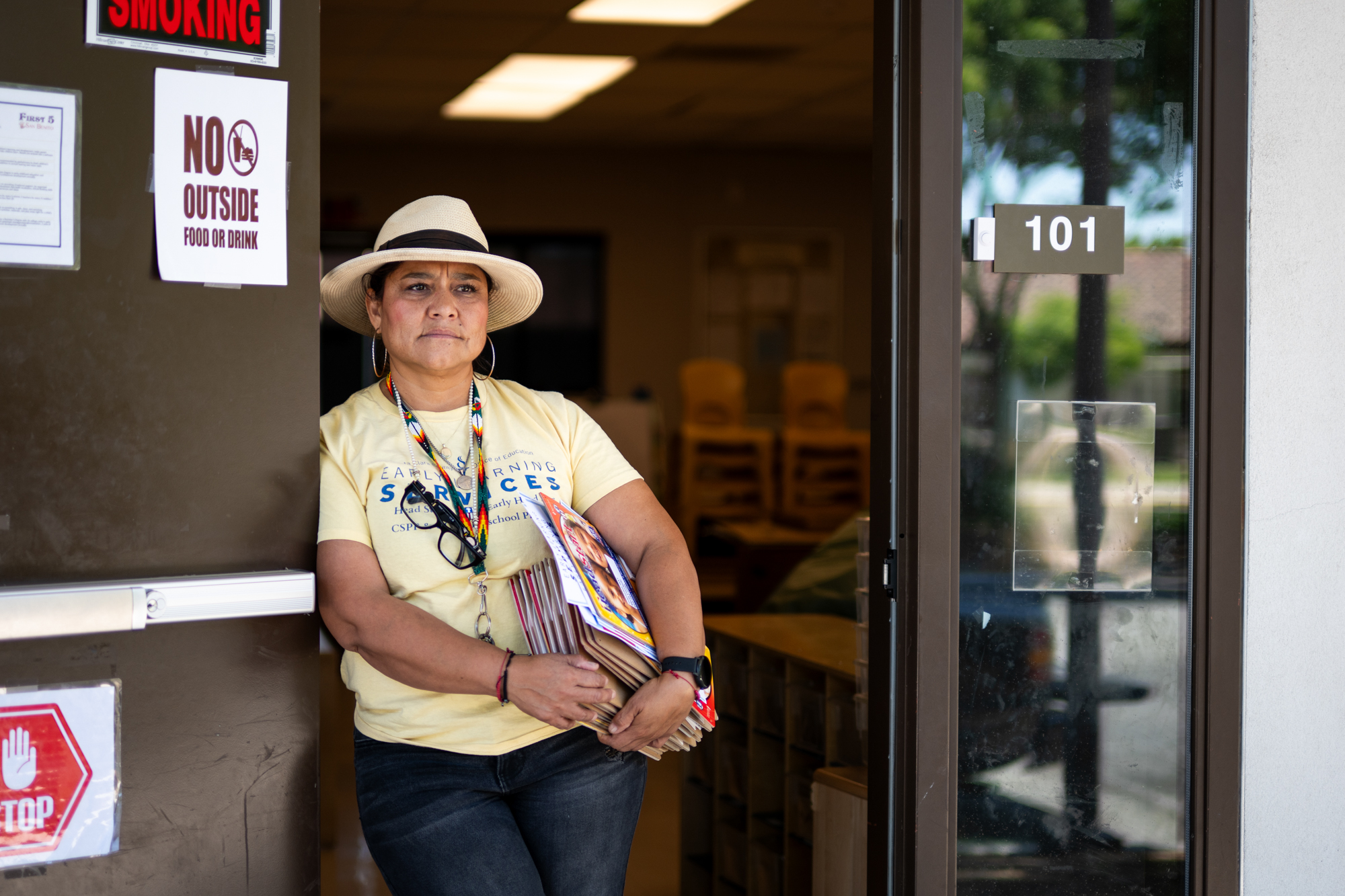
"caption": "Students play on the playground outside of a Head Start in Hollister, California, on June 10, 2025. In Santa Clara County, the superintendent of schools said in an email to staff that federal funds for its Head Start program arrived at the last minute, narrowly avoiding service disruptions for about 1,200 families who rely on the county’s child care program.",
"credit": "Beth LaBerge/KQED",
"altTag": null,
"description": null,
"imgSizes": {
"thumbnail": {
"file": "https://cdn.kqed.org/wp-content/uploads/sites/10/2025/06/250610-HEADSTARTPROGRAMS-01-BL-KQED-160x107.jpg",
"width": 160,
"height": 107,
"mimeType": "image/jpeg"
},
"1536x1536": {
"file": "https://cdn.kqed.org/wp-content/uploads/sites/10/2025/06/250610-HEADSTARTPROGRAMS-01-BL-KQED-1536x1024.jpg",
"width": 1536,
"height": 1024,
"mimeType": "image/jpeg"
},
"post-thumbnail": {
"file": "https://cdn.kqed.org/wp-content/uploads/sites/10/2025/06/250610-HEADSTARTPROGRAMS-01-BL-KQED-672x372.jpg",
"width": 672,
"height": 372,
"mimeType": "image/jpeg"
},
"twentyfourteen-full-width": {
"file": "https://cdn.kqed.org/wp-content/uploads/sites/10/2025/06/250610-HEADSTARTPROGRAMS-01-BL-KQED-1038x576.jpg",
"width": 1038,
"height": 576,
"mimeType": "image/jpeg"
},
"kqedFullSize": {
"file": "https://cdn.kqed.org/wp-content/uploads/sites/10/2025/06/250610-HEADSTARTPROGRAMS-01-BL-KQED.jpg",
"width": 2000,
"height": 1333
}
},
"isLoading": false,
"fetchFailed": false
},
"news_12044141": {
"type": "attachments",
"id": "news_12044141",
"meta": {
"index": "attachments_1716263798",
"site": "news",
"id": "12044141",
"found": true
},
"title": "250610-HEADSTARTPROGRAMS-39-BL-KQED",
"publishDate": 1749833095,
"status": "inherit",
"parent": 0,
"modified": 1749833155,
"caption": "Maria Corchado, a Head Start teacher, stands outside one of the classrooms in Hollister, San Benito County, on June 10, 2025.",
"credit": "Beth LaBerge/KQED",
"altTag": null,
"description": null,
"imgSizes": {
"thumbnail": {
"file": "https://cdn.kqed.org/wp-content/uploads/sites/10/2025/06/250610-HEADSTARTPROGRAMS-39-BL-KQED-160x107.jpg",
"width": 160,
"height": 107,
"mimeType": "image/jpeg"
},
"1536x1536": {
"file": "https://cdn.kqed.org/wp-content/uploads/sites/10/2025/06/250610-HEADSTARTPROGRAMS-39-BL-KQED-1536x1024.jpg",
"width": 1536,
"height": 1024,
"mimeType": "image/jpeg"
},
"post-thumbnail": {
"file": "https://cdn.kqed.org/wp-content/uploads/sites/10/2025/06/250610-HEADSTARTPROGRAMS-39-BL-KQED-672x372.jpg",
"width": 672,
"height": 372,
"mimeType": "image/jpeg"
},
"twentyfourteen-full-width": {
"file": "https://cdn.kqed.org/wp-content/uploads/sites/10/2025/06/250610-HEADSTARTPROGRAMS-39-BL-KQED-1038x576.jpg",
"width": 1038,
"height": 576,
"mimeType": "image/jpeg"
},
"kqedFullSize": {
"file": "https://cdn.kqed.org/wp-content/uploads/sites/10/2025/06/250610-HEADSTARTPROGRAMS-39-BL-KQED.jpg",
"width": 2000,
"height": 1333
}
},
"isLoading": false,
"fetchFailed": false
},
"news_12030543": {
"type": "attachments",
"id": "news_12030543",
"meta": {
"index": "attachments_1716263798",
"site": "news",
"id": "12030543",
"found": true
},
"title": "20250307_ALAMEDACHILDCARE_GC-4-KQED",
"publishDate": 1741613320,
"status": "inherit",
"parent": 12030561,
"modified": 1741648270,
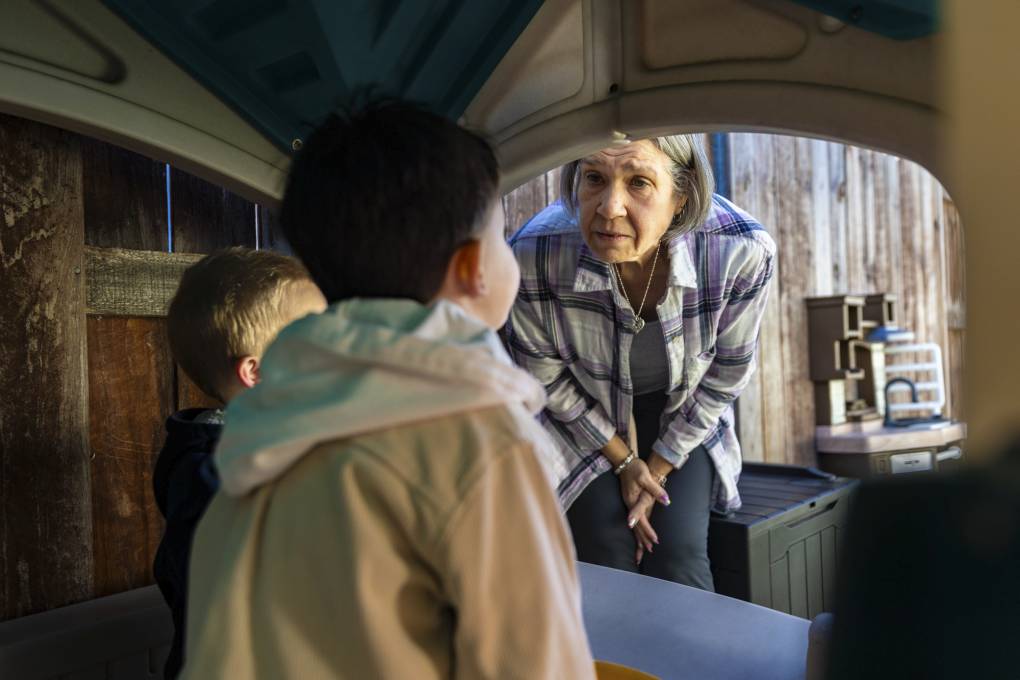
"caption": "Lisa Zarodney speaks to Hudson, 3, at her home in Livermore, where she runs a childcare operation, on March 7, 2025.",
"credit": "Gina Castro/KQED",
"altTag": null,
"description": null,
"imgSizes": {
"medium": {
"file": "https://cdn.kqed.org/wp-content/uploads/sites/10/2025/03/20250307_ALAMEDACHILDCARE_GC-4-KQED-800x533.jpg",
"width": 800,
"height": 533,
"mimeType": "image/jpeg"
},
"large": {
"file": "https://cdn.kqed.org/wp-content/uploads/sites/10/2025/03/20250307_ALAMEDACHILDCARE_GC-4-KQED-1020x680.jpg",
"width": 1020,
"height": 680,
"mimeType": "image/jpeg"
},
"thumbnail": {
"file": "https://cdn.kqed.org/wp-content/uploads/sites/10/2025/03/20250307_ALAMEDACHILDCARE_GC-4-KQED-160x107.jpg",
"width": 160,
"height": 107,
"mimeType": "image/jpeg"
},
"1536x1536": {
"file": "https://cdn.kqed.org/wp-content/uploads/sites/10/2025/03/20250307_ALAMEDACHILDCARE_GC-4-KQED-1536x1024.jpg",
"width": 1536,
"height": 1024,
"mimeType": "image/jpeg"
},
"post-thumbnail": {
"file": "https://cdn.kqed.org/wp-content/uploads/sites/10/2025/03/20250307_ALAMEDACHILDCARE_GC-4-KQED-672x372.jpg",
"width": 672,
"height": 372,
"mimeType": "image/jpeg"
},
"twentyfourteen-full-width": {
"file": "https://cdn.kqed.org/wp-content/uploads/sites/10/2025/03/20250307_ALAMEDACHILDCARE_GC-4-KQED-1038x576.jpg",
"width": 1038,
"height": 576,
"mimeType": "image/jpeg"
},
"full-width": {
"file": "https://cdn.kqed.org/wp-content/uploads/sites/10/2025/03/20250307_ALAMEDACHILDCARE_GC-4-KQED-1920x1280.jpg",
"width": 1920,
"height": 1280,
"mimeType": "image/jpeg"
},
"kqedFullSize": {
"file": "https://cdn.kqed.org/wp-content/uploads/sites/10/2025/03/20250307_ALAMEDACHILDCARE_GC-4-KQED.jpg",
"width": 2000,
"height": 1333
}
},
"isLoading": false,
"fetchFailed": false
},
"news_11988062": {
"type": "attachments",
"id": "news_11988062",
"meta": {
"index": "attachments_1716263798",
"site": "news",
"id": "11988062",
"found": true
},
"title": "240517-TKBilingualLearners-98-BL_qut",
"publishDate": 1717007060,
"status": "inherit",
"parent": 11989465,
"modified": 1717795731,
"caption": "Students raise their hands in a bilingual transitional kindergarten class at Global Family Elementary School in Oakland.",
"credit": "Beth LaBerge/KQED",
"altTag": "A young student stands and raises her hand in class as other students around her remain seated in a classroom",
"description": null,
"imgSizes": {
"medium": {
"file": "https://cdn.kqed.org/wp-content/uploads/sites/10/2024/05/240517-TKBilingualLearners-98-BL_qut-800x533.jpg",
"width": 800,
"height": 533,
"mimeType": "image/jpeg"
},
"large": {
"file": "https://cdn.kqed.org/wp-content/uploads/sites/10/2024/05/240517-TKBilingualLearners-98-BL_qut-1020x680.jpg",
"width": 1020,
"height": 680,
"mimeType": "image/jpeg"
},
"thumbnail": {
"file": "https://cdn.kqed.org/wp-content/uploads/sites/10/2024/05/240517-TKBilingualLearners-98-BL_qut-160x107.jpg",
"width": 160,
"height": 107,
"mimeType": "image/jpeg"
},
"1536x1536": {
"file": "https://cdn.kqed.org/wp-content/uploads/sites/10/2024/05/240517-TKBilingualLearners-98-BL_qut-1536x1024.jpg",
"width": 1536,
"height": 1024,
"mimeType": "image/jpeg"
},
"post-thumbnail": {
"file": "https://cdn.kqed.org/wp-content/uploads/sites/10/2024/05/240517-TKBilingualLearners-98-BL_qut-672x372.jpg",
"width": 672,
"height": 372,
"mimeType": "image/jpeg"
},
"twentyfourteen-full-width": {
"file": "https://cdn.kqed.org/wp-content/uploads/sites/10/2024/05/240517-TKBilingualLearners-98-BL_qut-1038x576.jpg",
"width": 1038,
"height": 576,
"mimeType": "image/jpeg"
},
"kqedFullSize": {
"file": "https://cdn.kqed.org/wp-content/uploads/sites/10/2024/05/240517-TKBilingualLearners-98-BL_qut.jpg",
"width": 1920,
"height": 1280
}
},
"isLoading": false,
"fetchFailed": false
},
"news_12039810": {
"type": "attachments",
"id": "news_12039810",
"meta": {
"index": "attachments_1716263798",
"site": "news",
"id": "12039810",
"found": true
},
"title": "250512-DAY WITHOUT CHILDCARE-MD-01-KQED",
"publishDate": 1747085840,
"status": "inherit",
"parent": 12045220,
"modified": 1750446707,
"caption": "Khulood Jamil (center) and other childcare providers and supporters march to the Federal Building in San José on May 12, 2025.",
"credit": "Martin do Nascimento/KQED",
"altTag": null,
"description": null,
"imgSizes": {
"medium": {
"file": "https://cdn.kqed.org/wp-content/uploads/sites/10/2025/05/250512-DAY-WITHOUT-CHILDCARE-MD-01-KQED-800x534.jpg",
"width": 800,
"height": 534,
"mimeType": "image/jpeg"
},
"large": {
"file": "https://cdn.kqed.org/wp-content/uploads/sites/10/2025/05/250512-DAY-WITHOUT-CHILDCARE-MD-01-KQED-1020x680.jpg",
"width": 1020,
"height": 680,
"mimeType": "image/jpeg"
},
"thumbnail": {
"file": "https://cdn.kqed.org/wp-content/uploads/sites/10/2025/05/250512-DAY-WITHOUT-CHILDCARE-MD-01-KQED-160x107.jpg",
"width": 160,
"height": 107,
"mimeType": "image/jpeg"
},
"1536x1536": {
"file": "https://cdn.kqed.org/wp-content/uploads/sites/10/2025/05/250512-DAY-WITHOUT-CHILDCARE-MD-01-KQED-1536x1025.jpg",
"width": 1536,
"height": 1025,
"mimeType": "image/jpeg"
},
"post-thumbnail": {
"file": "https://cdn.kqed.org/wp-content/uploads/sites/10/2025/05/250512-DAY-WITHOUT-CHILDCARE-MD-01-KQED-672x372.jpg",
"width": 672,
"height": 372,
"mimeType": "image/jpeg"
},
"twentyfourteen-full-width": {
"file": "https://cdn.kqed.org/wp-content/uploads/sites/10/2025/05/250512-DAY-WITHOUT-CHILDCARE-MD-01-KQED-1038x576.jpg",
"width": 1038,
"height": 576,
"mimeType": "image/jpeg"
},
"full-width": {
"file": "https://cdn.kqed.org/wp-content/uploads/sites/10/2025/05/250512-DAY-WITHOUT-CHILDCARE-MD-01-KQED-1920x1281.jpg",
"width": 1920,
"height": 1281,
"mimeType": "image/jpeg"
},
"kqedFullSize": {
"file": "https://cdn.kqed.org/wp-content/uploads/sites/10/2025/05/250512-DAY-WITHOUT-CHILDCARE-MD-01-KQED.jpg",
"width": 2000,
"height": 1334
}
},
"isLoading": false,
"fetchFailed": false
},
"news_11988306": {
"type": "attachments",
"id": "news_11988306",
"meta": {
"index": "attachments_1716263798",
"site": "news",
"id": "11988306",
"found": true
},
"title": "20240524_MobileHeadStart-34_qut",
"publishDate": 1717105688,
"status": "inherit",
"parent": 11992142,
"modified": 1738111838,
"caption": "Families play with their children inside Oakland's Head Start mobile classroom on May 24, 2024.",
"credit": "Gina Castro/KQED",
"altTag": "Two mothers play with their young children on a green rug inside a classroom.",
"description": null,
"imgSizes": {
"medium": {
"file": "https://cdn.kqed.org/wp-content/uploads/sites/10/2024/05/20240524_MobileHeadStart-34_qut-800x533.jpg",
"width": 800,
"height": 533,
"mimeType": "image/jpeg"
},
"large": {
"file": "https://cdn.kqed.org/wp-content/uploads/sites/10/2024/05/20240524_MobileHeadStart-34_qut-1020x680.jpg",
"width": 1020,
"height": 680,
"mimeType": "image/jpeg"
},
"thumbnail": {
"file": "https://cdn.kqed.org/wp-content/uploads/sites/10/2024/05/20240524_MobileHeadStart-34_qut-160x107.jpg",
"width": 160,
"height": 107,
"mimeType": "image/jpeg"
},
"1536x1536": {
"file": "https://cdn.kqed.org/wp-content/uploads/sites/10/2024/05/20240524_MobileHeadStart-34_qut-1536x1024.jpg",
"width": 1536,
"height": 1024,
"mimeType": "image/jpeg"
},
"post-thumbnail": {
"file": "https://cdn.kqed.org/wp-content/uploads/sites/10/2024/05/20240524_MobileHeadStart-34_qut-672x372.jpg",
"width": 672,
"height": 372,
"mimeType": "image/jpeg"
},
"twentyfourteen-full-width": {
"file": "https://cdn.kqed.org/wp-content/uploads/sites/10/2024/05/20240524_MobileHeadStart-34_qut-1038x576.jpg",
"width": 1038,
"height": 576,
"mimeType": "image/jpeg"
},
"kqedFullSize": {
"file": "https://cdn.kqed.org/wp-content/uploads/sites/10/2024/05/20240524_MobileHeadStart-34_qut.jpg",
"width": 1920,
"height": 1280
}
},
"isLoading": false,
"fetchFailed": false
},
"news_12035947": {
"type": "attachments",
"id": "news_12035947",
"meta": {
"index": "attachments_1716263798",
"site": "news",
"id": "12035947",
"found": true
},
"title": "Birdie Winrow in San Leandro on April 14, 2025.",
"publishDate": 1744667393,
"status": "inherit",
"parent": 0,
"modified": 1744667407,
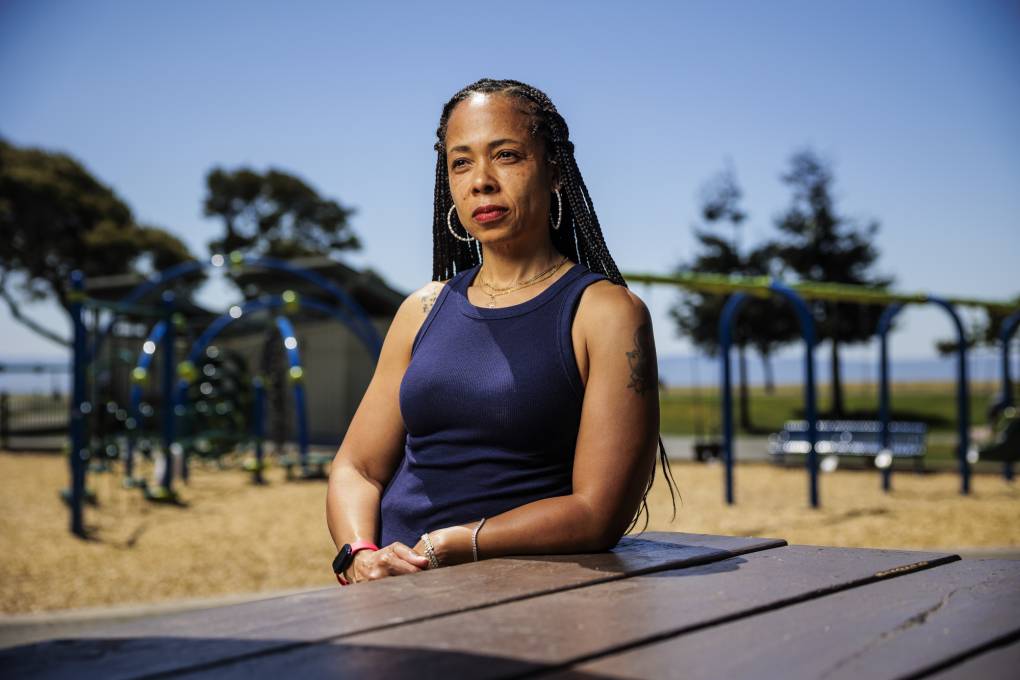
"caption": "Birdie Winrow in San Leandro on April 14, 2025.",
"credit": "Martin do Nascimento/KQED",
"altTag": null,
"description": null,
"imgSizes": {
"medium": {
"file": "https://cdn.kqed.org/wp-content/uploads/sites/10/2025/04/250414-HEAD-START-WORKER-LAID-OFF-MD-01-KQED-800x533.jpg",
"width": 800,
"height": 533,
"mimeType": "image/jpeg"
},
"large": {
"file": "https://cdn.kqed.org/wp-content/uploads/sites/10/2025/04/250414-HEAD-START-WORKER-LAID-OFF-MD-01-KQED-1020x680.jpg",
"width": 1020,
"height": 680,
"mimeType": "image/jpeg"
},
"thumbnail": {
"file": "https://cdn.kqed.org/wp-content/uploads/sites/10/2025/04/250414-HEAD-START-WORKER-LAID-OFF-MD-01-KQED-160x107.jpg",
"width": 160,
"height": 107,
"mimeType": "image/jpeg"
},
"1536x1536": {
"file": "https://cdn.kqed.org/wp-content/uploads/sites/10/2025/04/250414-HEAD-START-WORKER-LAID-OFF-MD-01-KQED-1536x1024.jpg",
"width": 1536,
"height": 1024,
"mimeType": "image/jpeg"
},
"post-thumbnail": {
"file": "https://cdn.kqed.org/wp-content/uploads/sites/10/2025/04/250414-HEAD-START-WORKER-LAID-OFF-MD-01-KQED-672x372.jpg",
"width": 672,
"height": 372,
"mimeType": "image/jpeg"
},
"twentyfourteen-full-width": {
"file": "https://cdn.kqed.org/wp-content/uploads/sites/10/2025/04/250414-HEAD-START-WORKER-LAID-OFF-MD-01-KQED-1038x576.jpg",
"width": 1038,
"height": 576,
"mimeType": "image/jpeg"
},
"full-width": {
"file": "https://cdn.kqed.org/wp-content/uploads/sites/10/2025/04/250414-HEAD-START-WORKER-LAID-OFF-MD-01-KQED-1920x1280.jpg",
"width": 1920,
"height": 1280,
"mimeType": "image/jpeg"
},
"kqedFullSize": {
"file": "https://cdn.kqed.org/wp-content/uploads/sites/10/2025/04/250414-HEAD-START-WORKER-LAID-OFF-MD-01-KQED.jpg",
"width": 2000,
"height": 1333
}
},
"isLoading": false,
"fetchFailed": false
},
"news_12033001": {
"type": "attachments",
"id": "news_12033001",
"meta": {
"index": "attachments_1716263798",
"site": "news",
"id": "12033001",
"found": true
},
"title": "20250325_TEACHERS-FOR-TK_DMB_00048-KQED",
"publishDate": 1742939381,
"status": "inherit",
"parent": 0,
"modified": 1744242147,
"caption": "Angelica Cardenas, of Hayward, poses for a portrait with one of her favorite children's books in the library on the Cal State University East Bay campus in Hayward on March 25, 2025. Cardenas received her Master's degree in Early Childhood Education from Cal State East Bay.",
"credit": "David M. Barreda/KQED",
"altTag": null,
"description": null,
"imgSizes": {
"medium": {
"file": "https://cdn.kqed.org/wp-content/uploads/sites/10/2025/03/20250325_TEACHERS-FOR-TK_DMB_00048-KQED-800x533.jpg",
"width": 800,
"height": 533,
"mimeType": "image/jpeg"
},
"large": {
"file": "https://cdn.kqed.org/wp-content/uploads/sites/10/2025/03/20250325_TEACHERS-FOR-TK_DMB_00048-KQED-1020x680.jpg",
"width": 1020,
"height": 680,
"mimeType": "image/jpeg"
},
"thumbnail": {
"file": "https://cdn.kqed.org/wp-content/uploads/sites/10/2025/03/20250325_TEACHERS-FOR-TK_DMB_00048-KQED-160x107.jpg",
"width": 160,
"height": 107,
"mimeType": "image/jpeg"
},
"1536x1536": {
"file": "https://cdn.kqed.org/wp-content/uploads/sites/10/2025/03/20250325_TEACHERS-FOR-TK_DMB_00048-KQED-1536x1024.jpg",
"width": 1536,
"height": 1024,
"mimeType": "image/jpeg"
},
"post-thumbnail": {
"file": "https://cdn.kqed.org/wp-content/uploads/sites/10/2025/03/20250325_TEACHERS-FOR-TK_DMB_00048-KQED-672x372.jpg",
"width": 672,
"height": 372,
"mimeType": "image/jpeg"
},
"twentyfourteen-full-width": {
"file": "https://cdn.kqed.org/wp-content/uploads/sites/10/2025/03/20250325_TEACHERS-FOR-TK_DMB_00048-KQED-1038x576.jpg",
"width": 1038,
"height": 576,
"mimeType": "image/jpeg"
},
"full-width": {
"file": "https://cdn.kqed.org/wp-content/uploads/sites/10/2025/03/20250325_TEACHERS-FOR-TK_DMB_00048-KQED-1920x1280.jpg",
"width": 1920,
"height": 1280,
"mimeType": "image/jpeg"
},
"kqedFullSize": {
"file": "https://cdn.kqed.org/wp-content/uploads/sites/10/2025/03/20250325_TEACHERS-FOR-TK_DMB_00048-KQED.jpg",
"width": 2000,
"height": 1333
}
},
"isLoading": false,
"fetchFailed": false
},
"news_12030546": {
"type": "attachments",
"id": "news_12030546",
"meta": {
"index": "attachments_1716263798",
"site": "news",
"id": "12030546",
"found": true
},
"title": "20250307_ALAMEDACHILDCARE_GC-16-KQED",
"publishDate": 1741613336,
"status": "inherit",
"parent": 12030561,
"modified": 1742323618,
"caption": "Lisa Zarodney talks to Ryden, 1, Kane, 2, and Hudson, 3, at her home in Livermore, where she runs a child care operation, on March 7, 2025.",
"credit": "Gina Castro/KQED",
"altTag": null,
"description": null,
"imgSizes": {
"medium": {
"file": "https://cdn.kqed.org/wp-content/uploads/sites/10/2025/03/20250307_ALAMEDACHILDCARE_GC-16-KQED-800x533.jpg",
"width": 800,
"height": 533,
"mimeType": "image/jpeg"
},
"large": {
"file": "https://cdn.kqed.org/wp-content/uploads/sites/10/2025/03/20250307_ALAMEDACHILDCARE_GC-16-KQED-1020x680.jpg",
"width": 1020,
"height": 680,
"mimeType": "image/jpeg"
},
"thumbnail": {
"file": "https://cdn.kqed.org/wp-content/uploads/sites/10/2025/03/20250307_ALAMEDACHILDCARE_GC-16-KQED-160x107.jpg",
"width": 160,
"height": 107,
"mimeType": "image/jpeg"
},
"1536x1536": {
"file": "https://cdn.kqed.org/wp-content/uploads/sites/10/2025/03/20250307_ALAMEDACHILDCARE_GC-16-KQED-1536x1024.jpg",
"width": 1536,
"height": 1024,
"mimeType": "image/jpeg"
},
"post-thumbnail": {
"file": "https://cdn.kqed.org/wp-content/uploads/sites/10/2025/03/20250307_ALAMEDACHILDCARE_GC-16-KQED-672x372.jpg",
"width": 672,
"height": 372,
"mimeType": "image/jpeg"
},
"twentyfourteen-full-width": {
"file": "https://cdn.kqed.org/wp-content/uploads/sites/10/2025/03/20250307_ALAMEDACHILDCARE_GC-16-KQED-1038x576.jpg",
"width": 1038,
"height": 576,
"mimeType": "image/jpeg"
},
"full-width": {
"file": "https://cdn.kqed.org/wp-content/uploads/sites/10/2025/03/20250307_ALAMEDACHILDCARE_GC-16-KQED-1920x1280.jpg",
"width": 1920,
"height": 1280,
"mimeType": "image/jpeg"
},
"kqedFullSize": {
"file": "https://cdn.kqed.org/wp-content/uploads/sites/10/2025/03/20250307_ALAMEDACHILDCARE_GC-16-KQED.jpg",
"width": 2000,
"height": 1333
}
},
"isLoading": false,
"fetchFailed": false
},
"news_12031806": {
"type": "attachments",
"id": "news_12031806",
"meta": {
"index": "attachments_1716263798",
"site": "news",
"id": "12031806",
"found": true
},
"title": "TKSF",
"publishDate": 1742314947,
"status": "inherit",
"parent": 12031802,
"modified": 1742315001,
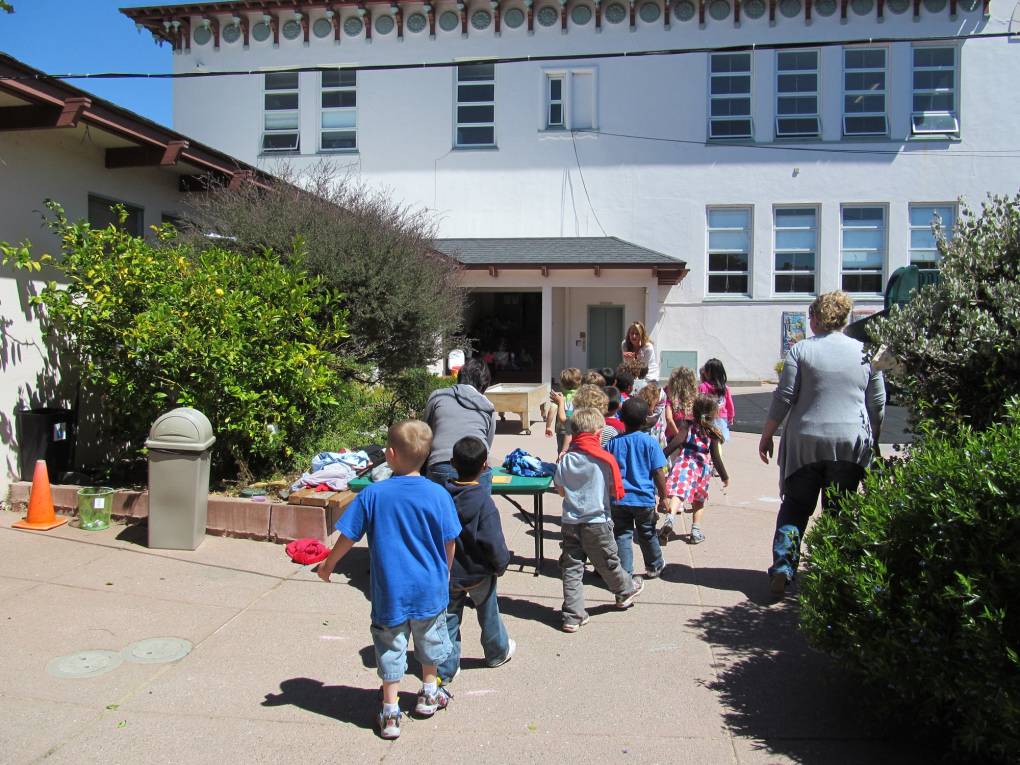
"caption": "Four-year-old students head back to their transitional kindergarten class at Tule Elk Park Early Educational School in San Francisco on Jan. 8, 2001.",
"credit": "Ana Tintocalis/KQED",
"altTag": null,
"description": null,
"imgSizes": {
"medium": {
"file": "https://cdn.kqed.org/wp-content/uploads/sites/10/2025/03/TKSF-800x600.jpg",
"width": 800,
"height": 600,
"mimeType": "image/jpeg"
},
"large": {
"file": "https://cdn.kqed.org/wp-content/uploads/sites/10/2025/03/TKSF-1020x765.jpg",
"width": 1020,
"height": 765,
"mimeType": "image/jpeg"
},
"thumbnail": {
"file": "https://cdn.kqed.org/wp-content/uploads/sites/10/2025/03/TKSF-160x120.jpg",
"width": 160,
"height": 120,
"mimeType": "image/jpeg"
},
"1536x1536": {
"file": "https://cdn.kqed.org/wp-content/uploads/sites/10/2025/03/TKSF-1536x1152.jpg",
"width": 1536,
"height": 1152,
"mimeType": "image/jpeg"
},
"post-thumbnail": {
"file": "https://cdn.kqed.org/wp-content/uploads/sites/10/2025/03/TKSF-672x372.jpg",
"width": 672,
"height": 372,
"mimeType": "image/jpeg"
},
"twentyfourteen-full-width": {
"file": "https://cdn.kqed.org/wp-content/uploads/sites/10/2025/03/TKSF-1038x576.jpg",
"width": 1038,
"height": 576,
"mimeType": "image/jpeg"
},
"full-width": {
"file": "https://cdn.kqed.org/wp-content/uploads/sites/10/2025/03/TKSF-1920x1440.jpg",
"width": 1920,
"height": 1440,
"mimeType": "image/jpeg"
},
"kqedFullSize": {
"file": "https://cdn.kqed.org/wp-content/uploads/sites/10/2025/03/TKSF.jpg",
"width": 2000,
"height": 1500
}
},
"isLoading": false,
"fetchFailed": false
},
"news_12030542": {
"type": "attachments",
"id": "news_12030542",
"meta": {
"index": "attachments_1716263798",
"site": "news",
"id": "12030542",
"found": true
},
"title": "20250307_ALAMEDACHILDCARE_GC-2-KQED",
"publishDate": 1741613314,
"status": "inherit",
"parent": 0,
"modified": 1741613404,
"caption": "Lisa Zarodney lets Hudson, 3, and Ryden, 1, out to play at her home in Livermore, where she runs a childcare operation, on March 7, 2025.",
"credit": "Gina Castro/KQED",
"altTag": null,
"description": null,
"imgSizes": {
"medium": {
"file": "https://cdn.kqed.org/wp-content/uploads/sites/10/2025/03/20250307_ALAMEDACHILDCARE_GC-2-KQED-800x533.jpg",
"width": 800,
"height": 533,
"mimeType": "image/jpeg"
},
"large": {
"file": "https://cdn.kqed.org/wp-content/uploads/sites/10/2025/03/20250307_ALAMEDACHILDCARE_GC-2-KQED-1020x680.jpg",
"width": 1020,
"height": 680,
"mimeType": "image/jpeg"
},
"thumbnail": {
"file": "https://cdn.kqed.org/wp-content/uploads/sites/10/2025/03/20250307_ALAMEDACHILDCARE_GC-2-KQED-160x107.jpg",
"width": 160,
"height": 107,
"mimeType": "image/jpeg"
},
"1536x1536": {
"file": "https://cdn.kqed.org/wp-content/uploads/sites/10/2025/03/20250307_ALAMEDACHILDCARE_GC-2-KQED-1536x1024.jpg",
"width": 1536,
"height": 1024,
"mimeType": "image/jpeg"
},
"post-thumbnail": {
"file": "https://cdn.kqed.org/wp-content/uploads/sites/10/2025/03/20250307_ALAMEDACHILDCARE_GC-2-KQED-672x372.jpg",
"width": 672,
"height": 372,
"mimeType": "image/jpeg"
},
"twentyfourteen-full-width": {
"file": "https://cdn.kqed.org/wp-content/uploads/sites/10/2025/03/20250307_ALAMEDACHILDCARE_GC-2-KQED-1038x576.jpg",
"width": 1038,
"height": 576,
"mimeType": "image/jpeg"
},
"full-width": {
"file": "https://cdn.kqed.org/wp-content/uploads/sites/10/2025/03/20250307_ALAMEDACHILDCARE_GC-2-KQED-1920x1280.jpg",
"width": 1920,
"height": 1280,
"mimeType": "image/jpeg"
},
"kqedFullSize": {
"file": "https://cdn.kqed.org/wp-content/uploads/sites/10/2025/03/20250307_ALAMEDACHILDCARE_GC-2-KQED.jpg",
"width": 2000,
"height": 1333
}
},
"isLoading": false,
"fetchFailed": false
},
"news_12028553": {
"type": "attachments",
"id": "news_12028553",
"meta": {
"index": "attachments_1716263798",
"site": "news",
"id": "12028553",
"found": true
},
"title": "20250224_Mills-Children-School_DMB_00007",
"publishDate": 1740525313,
"status": "inherit",
"parent": 0,
"modified": 1740594593,
"caption": "Katrina Roundfield drops her children off at the Mills College Children's School in Oakland on Feb. 24, 2025. Roundfield said she noticed that Mills College has stopped doing school tours and accepting new students for their Children's School.",
"credit": "David M. Barreda/KQED",
"altTag": null,
"description": null,
"imgSizes": {
"medium": {
"file": "https://cdn.kqed.org/wp-content/uploads/sites/10/2025/02/20250224_Mills-Children-School_DMB_00007-800x533.jpg",
"width": 800,
"height": 533,
"mimeType": "image/jpeg"
},
"large": {
"file": "https://cdn.kqed.org/wp-content/uploads/sites/10/2025/02/20250224_Mills-Children-School_DMB_00007-1020x680.jpg",
"width": 1020,
"height": 680,
"mimeType": "image/jpeg"
},
"thumbnail": {
"file": "https://cdn.kqed.org/wp-content/uploads/sites/10/2025/02/20250224_Mills-Children-School_DMB_00007-160x107.jpg",
"width": 160,
"height": 107,
"mimeType": "image/jpeg"
},
"1536x1536": {
"file": "https://cdn.kqed.org/wp-content/uploads/sites/10/2025/02/20250224_Mills-Children-School_DMB_00007-1536x1024.jpg",
"width": 1536,
"height": 1024,
"mimeType": "image/jpeg"
},
"post-thumbnail": {
"file": "https://cdn.kqed.org/wp-content/uploads/sites/10/2025/02/20250224_Mills-Children-School_DMB_00007-672x372.jpg",
"width": 672,
"height": 372,
"mimeType": "image/jpeg"
},
"twentyfourteen-full-width": {
"file": "https://cdn.kqed.org/wp-content/uploads/sites/10/2025/02/20250224_Mills-Children-School_DMB_00007-1038x576.jpg",
"width": 1038,
"height": 576,
"mimeType": "image/jpeg"
},
"full-width": {
"file": "https://cdn.kqed.org/wp-content/uploads/sites/10/2025/02/20250224_Mills-Children-School_DMB_00007-1920x1280.jpg",
"width": 1920,
"height": 1280,
"mimeType": "image/jpeg"
},
"kqedFullSize": {
"file": "https://cdn.kqed.org/wp-content/uploads/sites/10/2025/02/20250224_Mills-Children-School_DMB_00007.jpg",
"width": 2000,
"height": 1333
}
},
"isLoading": false,
"fetchFailed": false
}
},
"audioPlayerReducer": {
"postId": "stream_live",
"isPaused": true,
"isPlaying": false,
"pfsActive": false,
"pledgeModalIsOpen": true,
"playerDrawerIsOpen": false,
"liveAudioPlayStartedAt": 0,
"liveAudioPlayContext": ""
},
"authorsReducer": {
"byline_news_12033209": {
"type": "authors",
"id": "byline_news_12033209",
"meta": {
"override": true
},
"slug": "byline_news_12033209",
"name": "\u003ca href=\"https://www.kqed.org/author/daisynguyen\" target=\"_blank\" rel=\"noopener noreferrer\">Daisy Nguyen\u003c/a> and \u003ca href=\"https://www.kqed.org/author/ellyyu\" target=\"_blank\" rel=\"noopener noreferrer\">Elly Yu\u003c/a>",
"isLoading": false
},
"daisynguyen": {
"type": "authors",
"id": "11829",
"meta": {
"index": "authors_1716337520",
"id": "11829",
"found": true
},
"name": "Daisy Nguyen",
"firstName": "Daisy",
"lastName": "Nguyen",
"slug": "daisynguyen",
"email": "daisynguyen@kqed.org",
"display_author_email": true,
"staff_mastheads": [
"news"
],
"title": "KQED Contributor",
"bio": "I have covered early childhood education and child care for KQED since 2022. I focus on policies aimed at increasing access to early care and education and how they shape individual lives. I've been a journalist for more than two decades, with most of that time devoted to covering breaking news throughout California for The Associated Press. I grew up in San Francisco and studied at UC Davis and Columbia University's Graduate School of Journalism. I live in Oakland with my husband and two kids.",
"avatar": "https://secure.gravatar.com/avatar/2da2127c27f7143b53ebd419800fd55f?s=600&d=blank&r=g",
"twitter": null,
"facebook": null,
"instagram": null,
"linkedin": "https://www.linkedin.com/in/daisynguyen/",
"sites": [
{
"site": "news",
"roles": [
"author"
]
},
{
"site": "liveblog",
"roles": [
"author"
]
}
],
"headData": {
"title": "Daisy Nguyen | KQED",
"description": "KQED Contributor",
"ogImgSrc": "https://secure.gravatar.com/avatar/2da2127c27f7143b53ebd419800fd55f?s=600&d=blank&r=g",
"twImgSrc": "https://secure.gravatar.com/avatar/2da2127c27f7143b53ebd419800fd55f?s=600&d=blank&r=g"
},
"isLoading": false,
"link": "/author/daisynguyen"
}
},
"pagesReducer": {
"news_tag_early-childhood-education-and-care": {
"type": "terms",
"id": "news_32102",
"meta": {
"index": "terms_1716263798",
"site": "news",
"id": "32102",
"score": 10.404627
},
"featImg": null,
"name": "early childhood education and care",
"description": null,
"taxonomy": "tag",
"headData": {
"twImgId": null,
"twTitle": null,
"ogTitle": null,
"ogImgId": null,
"twDescription": null,
"description": null,
"title": "early childhood education and care Archives | KQED News",
"ogDescription": null
},
"ttid": 32119,
"slug": "early-childhood-education-and-care",
"isLoading": false,
"title": "early childhood education and care",
"pageMeta": {
"site": "news",
"WpPageTemplate": "page-topic-editorial",
"currentPage": 4
},
"blocks": [
{
"blockName": "kqed/post-list",
"attrs": {
"layout": "cardArticle2",
"query": "posts/news?tag=early-childhood-education-and-care",
"seeMore": false,
"paginated": true,
"page": 4
}
},
{
"blockName": "kqed/ad"
}
]
}
},
"pfsSessionReducer": {},
"postsReducer": {
"stream_live": {
"type": "live",
"id": "stream_live",
"audioUrl": "https://streams.kqed.org/kqedradio",
"title": "Live Stream",
"excerpt": "Live Stream information currently unavailable.",
"link": "/radio",
"featImg": "",
"label": {
"name": "KQED Live",
"link": "/"
}
},
"stream_kqedNewscast": {
"type": "posts",
"id": "stream_kqedNewscast",
"audioUrl": "https://www.kqed.org/.stream/anon/radio/RDnews/newscast.mp3?_=1",
"title": "KQED Newscast",
"featImg": "",
"label": {
"name": "88.5 FM",
"link": "/"
}
},
"news_12046588": {
"type": "posts",
"id": "news_12046588",
"meta": {
"index": "posts_1716263798",
"site": "news",
"id": "12046588",
"score": null,
"sort": [
1751327649000
]
},
"guestAuthors": [],
"slug": "layoffs-likely-averted-for-santa-clara-office-of-educations-head-start-staff",
"title": "Layoffs Likely Averted for Santa Clara Office of Education’s Head Start Staff",
"publishDate": 1751327649,
"format": "standard",
"headTitle": "Layoffs Likely Averted for Santa Clara Office of Education’s Head Start Staff | KQED",
"labelTerm": {
"site": "news"
},
"content": "\u003cp>\u003ca href=\"https://www.kqed.org/news/12044082/layoff-threats-weigh-on-head-start-teachers-and-parents-in-hollister\">With funding set to expire Monday\u003c/a> for the Santa Clara County Office of Education’s Head Start program, some 275 laid-off workers showed up in the morning to clean out their desks and collect their last paychecks.\u003c/p>\n\u003cp>But they received a Hail Mary from the county’s superintendent of schools, who emailed at 9:25 a.m. saying that the federal government renewed two grants needed “to continue supporting the program without disruption to services for our youngest learners.”\u003c/p>\n\u003cp>As a result, the Head Start classrooms that were set to close are expected to reopen Tuesday, said Mercedes Hill, who helps administer the program for the SCCOE.\u003c/p>\n\u003cp>[ad fullwidth]\u003c/p>\n\u003cp>She said she felt “huge relief” upon hearing the news.\u003c/p>\n\u003cp>“We kind of knew [funding] was coming, but there was always that piece of [what] if it wasn’t?” she said. “I think the best news is that we don’t have to break services.”\u003c/p>\n\u003cp>The SCCOE cited funding uncertainties under the Trump administration when it issued layoff notices in March, saying it had not heard whether its $38 million grants to operate Head Start and Early Head Start would be renewed.\u003c/p>\n\u003cp>That uncertainty, \u003ca href=\"https://acrobat.adobe.com/id/urn:aaid:sc:US:1b080735-7d1a-4549-bfac-3918fab447ac?viewer%21megaVerb=group-discover\">combined with the reduction in funding\u003c/a> for the office’s migrant education and special education services, meant that about 275 workers (the majority of them Head Start staff members) were told their last day of work would be June 30.[aside postID=news_12044082 hero='https://cdn.kqed.org/wp-content/uploads/sites/10/2025/06/250610-HEADSTARTPROGRAMS-39-BL-KQED.jpg']Veronica Arellano, a parent advocate for Head Start, said as recently as Friday, she was warning parents who were trying to enroll for the new year that the program was still waiting for more funding.\u003c/p>\n\u003cp>“The uncertainty was really hard for families who are part of our year-round program,” Arellano said. “They’re like ‘oh, we’re praying that hopefully you guys don’t close your doors because I really don’t have a Plan B here and it would ultimately have to come down to me staying home with my child.’”\u003c/p>\n\u003cp>In his email, Toston said while the grants ensured continuity for some 1200 low-income families enrolled in Head Start, “some individuals will still be impacted by staffing reductions.”\u003c/p>\n\u003cp>Arellano said that while she was happy to hear her job would most likely be saved, she was angry that the SCCOE put its employees through “a roller coaster of emotions.”\u003c/p>\n\u003cp>Already, the layoff notices prompted some colleagues to retire early or to look for work elsewhere.\u003c/p>\n\u003cp>“I don’t think it was necessary to put our staff and our families through all of that, but hopefully in the future this won’t happen again,” she said.\u003c/p>\n\u003cp>\u003c/p>\n",
"blocks": [],
"excerpt": "In an email to staff, the county’s superintendent of schools said federal funds for the child care program came through at the last minute, avoiding disruption to services to some 1,200 families in the county’s Head Start program.",
"status": "publish",
"parent": 0,
"modified": 1751329616,
"stats": {
"hasAudio": false,
"hasVideo": false,
"hasChartOrMap": false,
"iframeSrcs": [],
"hasGoogleForm": false,
"hasGallery": false,
"hasHearkenModule": false,
"hasPolis": false,
"paragraphCount": 14,
"wordCount": 485
},
"headData": {
"title": "Layoffs Likely Averted for Santa Clara Office of Education’s Head Start Staff | KQED",
"description": "In an email to staff, the county’s superintendent of schools said federal funds for the child care program came through at the last minute, avoiding disruption to services to some 1,200 families in the county’s Head Start program.",
"ogTitle": "",
"ogDescription": "",
"ogImgId": "",
"twTitle": "",
"twDescription": "",
"twImgId": "",
"schema": {
"@context": "https://schema.org",
"@type": "NewsArticle",
"headline": "Layoffs Likely Averted for Santa Clara Office of Education’s Head Start Staff",
"datePublished": "2025-06-30T16:54:09-07:00",
"dateModified": "2025-06-30T17:26:56-07:00",
"image": "https://cdn.kqed.org/wp-content/uploads/2020/02/KQED-OG-Image@1x.png",
"isAccessibleForFree": "True",
"publisher": {
"@type": "NewsMediaOrganization",
"@id": "https://www.kqed.org/#organization",
"name": "KQED",
"logo": "https://cdn.kqed.org/wp-content/uploads/2020/02/KQED-OG-Image@1x.png",
"url": "https://www.kqed.org",
"sameAs": [
"https://www.facebook.com/KQED",
"https://twitter.com/KQED",
"https://www.instagram.com/kqed/",
"https://www.tiktok.com/@kqedofficial",
"https://www.linkedin.com/company/kqed",
"https://www.youtube.com/channel/UCeC0IOo7i1P_61zVUWbJ4nw"
]
}
}
},
"primaryCategory": {
"termId": 8,
"slug": "news",
"name": "News"
},
"sticky": false,
"nprStoryId": "kqed-12046588",
"templateType": "standard",
"featuredImageType": "standard",
"excludeFromSiteSearch": "Include",
"articleAge": "0",
"path": "/news/12046588/layoffs-likely-averted-for-santa-clara-office-of-educations-head-start-staff",
"audioTrackLength": null,
"parsedContent": [
{
"type": "contentString",
"content": "\u003cdiv class=\"post-body\">\u003cp>\u003cp>\u003ca href=\"https://www.kqed.org/news/12044082/layoff-threats-weigh-on-head-start-teachers-and-parents-in-hollister\">With funding set to expire Monday\u003c/a> for the Santa Clara County Office of Education’s Head Start program, some 275 laid-off workers showed up in the morning to clean out their desks and collect their last paychecks.\u003c/p>\n\u003cp>But they received a Hail Mary from the county’s superintendent of schools, who emailed at 9:25 a.m. saying that the federal government renewed two grants needed “to continue supporting the program without disruption to services for our youngest learners.”\u003c/p>\n\u003cp>As a result, the Head Start classrooms that were set to close are expected to reopen Tuesday, said Mercedes Hill, who helps administer the program for the SCCOE.\u003c/p>\n\u003cp>\u003c/p>\u003c/div>",
"attributes": {
"named": {},
"numeric": []
}
},
{
"type": "component",
"content": "",
"name": "ad",
"attributes": {
"named": {
"label": "fullwidth"
},
"numeric": [
"fullwidth"
]
}
},
{
"type": "contentString",
"content": "\u003cdiv class=\"post-body\">\u003cp>\u003c/p>\n\u003cp>She said she felt “huge relief” upon hearing the news.\u003c/p>\n\u003cp>“We kind of knew [funding] was coming, but there was always that piece of [what] if it wasn’t?” she said. “I think the best news is that we don’t have to break services.”\u003c/p>\n\u003cp>The SCCOE cited funding uncertainties under the Trump administration when it issued layoff notices in March, saying it had not heard whether its $38 million grants to operate Head Start and Early Head Start would be renewed.\u003c/p>\n\u003cp>That uncertainty, \u003ca href=\"https://acrobat.adobe.com/id/urn:aaid:sc:US:1b080735-7d1a-4549-bfac-3918fab447ac?viewer%21megaVerb=group-discover\">combined with the reduction in funding\u003c/a> for the office’s migrant education and special education services, meant that about 275 workers (the majority of them Head Start staff members) were told their last day of work would be June 30.\u003c/p>\u003c/div>",
"attributes": {
"named": {},
"numeric": []
}
},
{
"type": "component",
"content": "",
"name": "aside",
"attributes": {
"named": {
"postid": "news_12044082",
"hero": "https://cdn.kqed.org/wp-content/uploads/sites/10/2025/06/250610-HEADSTARTPROGRAMS-39-BL-KQED.jpg",
"label": ""
},
"numeric": []
}
},
{
"type": "contentString",
"content": "\u003cdiv class=\"post-body\">\u003cp>Veronica Arellano, a parent advocate for Head Start, said as recently as Friday, she was warning parents who were trying to enroll for the new year that the program was still waiting for more funding.\u003c/p>\n\u003cp>“The uncertainty was really hard for families who are part of our year-round program,” Arellano said. “They’re like ‘oh, we’re praying that hopefully you guys don’t close your doors because I really don’t have a Plan B here and it would ultimately have to come down to me staying home with my child.’”\u003c/p>\n\u003cp>In his email, Toston said while the grants ensured continuity for some 1200 low-income families enrolled in Head Start, “some individuals will still be impacted by staffing reductions.”\u003c/p>\n\u003cp>Arellano said that while she was happy to hear her job would most likely be saved, she was angry that the SCCOE put its employees through “a roller coaster of emotions.”\u003c/p>\n\u003cp>Already, the layoff notices prompted some colleagues to retire early or to look for work elsewhere.\u003c/p>\n\u003cp>“I don’t think it was necessary to put our staff and our families through all of that, but hopefully in the future this won’t happen again,” she said.\u003c/p>\n\u003cp>\u003c/p>\n\u003c/div>\u003c/p>",
"attributes": {
"named": {},
"numeric": []
}
}
],
"link": "/news/12046588/layoffs-likely-averted-for-santa-clara-office-of-educations-head-start-staff",
"authors": [
"11829"
],
"categories": [
"news_31795",
"news_18540",
"news_8"
],
"tags": [
"news_18538",
"news_1323",
"news_32102",
"news_32928",
"news_29460",
"news_20013",
"news_35063",
"news_34927"
],
"featImg": "news_12044135",
"label": "news"
},
"news_12044082": {
"type": "posts",
"id": "news_12044082",
"meta": {
"index": "posts_1716263798",
"site": "news",
"id": "12044082",
"score": null,
"sort": [
1749834937000
]
},
"guestAuthors": [],
"slug": "layoff-threats-weigh-on-head-start-teachers-and-parents-in-hollister",
"title": "Layoff Threats Weigh on Head Start Teachers and Parents in Hollister",
"publishDate": 1749834937,
"format": "standard",
"headTitle": "Layoff Threats Weigh on Head Start Teachers and Parents in Hollister | KQED",
"labelTerm": {},
"content": "\u003cp>In a park steps away from their \u003ca href=\"https://www.kqed.org/news/tag/head-start\">Head Start\u003c/a> classrooms in Hollister, a group of kids marked the end of their preschool year with a moving-up ceremony. They wore colorful caps and gowns as they were called, one by one, to a balloon archway to receive their certificate of achievement.\u003c/p>\n\u003cp>The kids who are going to kindergarten were born during the pandemic. Though some of them had a challenging start to preschool, their teacher, Maricela Orozco, said they had the social-emotional skills for the next stage of schooling.\u003c/p>\n\u003cp>“They’re more than ready, I can say that, for elementary,” Orozco said.\u003c/p>\n\u003cp>[ad fullwidth]\u003c/p>\n\u003cp>But parents of 4-year-olds who just finished one year of preschool thought their kids would spend another year at Head Start, which uses federal funds to provide educational and other services to lower-income families with children up to 5 years old. They’re upset that the Santa Clara County Office of Education, which runs the Head Start center in this rural community 45 miles southeast of San José, still hasn’t gotten its $38 million federal grant renewed.\u003c/p>\n\u003cp>Without that guarantee, \u003ca href=\"https://acrobat.adobe.com/id/urn:aaid:sc:US:1b080735-7d1a-4549-bfac-3918fab447ac?viewer%21megaVerb=group-discover\">combined with reduced or expired funding\u003c/a> that supported the office’s early learning, migrant education and special education services, nearly 275 workers will be laid off June 30. Some 1200 families enrolled in Head Start will have to look for another child care option.\u003c/p>\n\u003cfigure id=\"attachment_12044137\" class=\"wp-caption aligncenter\" style=\"max-width: 2000px\">\u003cimg loading=\"lazy\" decoding=\"async\" class=\"size-full wp-image-12044137\" src=\"https://cdn.kqed.org/wp-content/uploads/sites/10/2025/06/250610-HEADSTARTPROGRAMS-15-BL-KQED.jpg\" alt=\"\" width=\"2000\" height=\"1333\" srcset=\"https://cdn.kqed.org/wp-content/uploads/sites/10/2025/06/250610-HEADSTARTPROGRAMS-15-BL-KQED.jpg 2000w, https://cdn.kqed.org/wp-content/uploads/sites/10/2025/06/250610-HEADSTARTPROGRAMS-15-BL-KQED-160x107.jpg 160w, https://cdn.kqed.org/wp-content/uploads/sites/10/2025/06/250610-HEADSTARTPROGRAMS-15-BL-KQED-1536x1024.jpg 1536w\" sizes=\"auto, (max-width: 2000px) 100vw, 2000px\">\u003cfigcaption class=\"wp-caption-text\">Maria Corchado, a Head Start teacher in Hollister, San Benito County, sits with parents and students outside the school on June 10, 2025. \u003ccite>(Beth LaBerge/KQED)\u003c/cite>\u003c/figcaption>\u003c/figure>\n\u003cp>In Hollister, where 10% of the population lives below the poverty line, parents rely on Head Start for full-time child care while they go to work.\u003c/p>\n\u003cp>“It’s very frustrating, it’s very hard. Just not knowing has been rough for us,” Vanessa Hernandez said.\u003c/p>\n\u003cp>Her son, Daniel, is old enough to begin transitional kindergarten at an elementary school, but Hernandez said he could benefit from another year at Head Start, where classroom sizes are smaller and students and their parents get more individualized support.[aside postID=news_12039626 hero='https://cdn.kqed.org/wp-content/uploads/sites/10/2025/05/250512-DAY-WITHOUT-CHILDCARE-MD-01-KQED-1020x680.jpg']“With Head Start, you get more time to grow and become more social. In TK, they already expect that of you,” she said. “He needs to be here longer because without the teachers helping him, I don’t know that he’ll succeed for the coming years.”\u003c/p>\n\u003cp>Evelyn Melchor said when her son started at Head Start, he only spoke Spanish and had a hard time communicating with teachers and classmates. But after his first full year of preschool, Melchor said her son “has done a complete 360.”\u003c/p>\n\u003cp>“If I ask him how he’s doing, how his day went, whatever he’s going through, he’s able to tell me everything in English and in Spanish,” she said. “Developmentally, so many things have just changed, and to me, it’s the best thing that could have happened to us.\u003cem>”\u003c/em>\u003c/p>\n\u003cp>Melchor was also counting on sending her younger son to Head Start when he’s old enough to enroll next year, so she could go back to work as a medical assistant. She said she stopped working when she had her second child because she couldn’t keep up with the rising cost of child care.\u003c/p>\n\u003cp>“We did take a hit financially, and it’s been rough,” she said.\u003c/p>\n\u003cp>The uncertainty of the Head Start program in Hollister makes it hard for Melchor to plan for her own future.\u003c/p>\n\u003cfigure id=\"attachment_12044135\" class=\"wp-caption aligncenter\" style=\"max-width: 2000px\">\u003cimg loading=\"lazy\" decoding=\"async\" class=\"size-full wp-image-12044135\" src=\"https://cdn.kqed.org/wp-content/uploads/sites/10/2025/06/250610-HEADSTARTPROGRAMS-01-BL-KQED.jpg\" alt=\"\" width=\"2000\" height=\"1333\" srcset=\"https://cdn.kqed.org/wp-content/uploads/sites/10/2025/06/250610-HEADSTARTPROGRAMS-01-BL-KQED.jpg 2000w, https://cdn.kqed.org/wp-content/uploads/sites/10/2025/06/250610-HEADSTARTPROGRAMS-01-BL-KQED-160x107.jpg 160w, https://cdn.kqed.org/wp-content/uploads/sites/10/2025/06/250610-HEADSTARTPROGRAMS-01-BL-KQED-1536x1024.jpg 1536w\" sizes=\"auto, (max-width: 2000px) 100vw, 2000px\">\u003cfigcaption class=\"wp-caption-text\">Janelle, 6, and Daniel, 4, a current student, play on the playground outside the Head Start in Hollister on June 10, 2025. \u003ccite>(Beth LaBerge/KQED)\u003c/cite>\u003c/figcaption>\u003c/figure>\n\u003cp>“How do I commit [to an employer] if I don’t know what’s gonna happen,” she said.\u003c/p>\n\u003cp>The situation is a fallout of cuts the Trump administration made to the federal workforce, including people who help administer Head Start grants to school districts, nonprofits and other agencies that operate the early childhood education program, said Ed Condon, executive director of the Region 9 Head Start Association, which represents agencies serving Head Start families in the western U.S.\u003c/p>\n\u003cp>He said ever since the Health and Human Services department \u003ca href=\"https://www.kqed.org/news/12035966/i-know-the-power-of-head-start-laid-off-worker-fears-for-programs-future\">closed half of its regional centers\u003c/a>, including one in San Francisco, local programs have faced long delays in getting help and receiving payments.\u003c/p>\n\u003cp>“We are in contact with people from all over the country, and this very unnecessary disruption and uncertainty has all been generated from the regional office consolidation,” Condon said.\u003c/p>\n\u003cfigure id=\"attachment_12044138\" class=\"wp-caption aligncenter\" style=\"max-width: 2000px\">\u003cimg loading=\"lazy\" decoding=\"async\" class=\"size-full wp-image-12044138\" src=\"https://cdn.kqed.org/wp-content/uploads/sites/10/2025/06/250610-HEADSTARTPROGRAMS-21-BL-KQED.jpg\" alt=\"\" width=\"2000\" height=\"1333\" srcset=\"https://cdn.kqed.org/wp-content/uploads/sites/10/2025/06/250610-HEADSTARTPROGRAMS-21-BL-KQED.jpg 2000w, https://cdn.kqed.org/wp-content/uploads/sites/10/2025/06/250610-HEADSTARTPROGRAMS-21-BL-KQED-160x107.jpg 160w, https://cdn.kqed.org/wp-content/uploads/sites/10/2025/06/250610-HEADSTARTPROGRAMS-21-BL-KQED-1536x1024.jpg 1536w\" sizes=\"auto, (max-width: 2000px) 100vw, 2000px\">\u003cfigcaption class=\"wp-caption-text\">Maria Corchado reads to Janelle, 6, on June 10, 2025, outside of the school. \u003ccite>(Beth LaBerge/KQED)\u003c/cite>\u003c/figcaption>\u003c/figure>\n\u003cp>But he said he has also seen the government come through with funding at the last minute, allowing Head Start programs to keep going.\u003c/p>\n\u003cp>“It’s not typical, and it creates a lot of angst for staff and parents in particular, but I think the most harmed are staff because they are left without the reality of a job,” Condon said\u003cem>.\u003c/em>\u003c/p>\n\u003cp>The Administration of Children and Families, which oversees Head Start and other childcare and child welfare programs, told KQED it’s processing the Santa Clara County Office of Education’s grant application and that funding “is being awarded as expeditiously as possible.”\u003c/p>\n\u003cp>In the meantime, teachers must clean out their classrooms and wait to hear their fate.\u003c/p>\n\u003cp>“We hope that we get some good news during the summertime and we can come back and keep serving a lot of families,” Orozco said.\u003c/p>\n\u003cfigure id=\"attachment_12044140\" class=\"wp-caption aligncenter\" style=\"max-width: 2000px\">\u003cimg loading=\"lazy\" decoding=\"async\" class=\"size-full wp-image-12044140\" src=\"https://cdn.kqed.org/wp-content/uploads/sites/10/2025/06/250610-HEADSTARTPROGRAMS-32-BL-KQED.jpg\" alt=\"\" width=\"2000\" height=\"1333\" srcset=\"https://cdn.kqed.org/wp-content/uploads/sites/10/2025/06/250610-HEADSTARTPROGRAMS-32-BL-KQED.jpg 2000w, https://cdn.kqed.org/wp-content/uploads/sites/10/2025/06/250610-HEADSTARTPROGRAMS-32-BL-KQED-160x107.jpg 160w, https://cdn.kqed.org/wp-content/uploads/sites/10/2025/06/250610-HEADSTARTPROGRAMS-32-BL-KQED-1536x1024.jpg 1536w\" sizes=\"auto, (max-width: 2000px) 100vw, 2000px\">\u003cfigcaption class=\"wp-caption-text\">Maria Corchado speaks to a community member while leaving flyers at local businesses on June 10, 2025, to help ensure preschool classes stay full. \u003ccite>(Beth LaBerge/KQED)\u003c/cite>\u003c/figcaption>\u003c/figure>\n\u003cp>Staffers like Maria Corchado said she planned to continue scouting for families with young kids at playgrounds, medical clinics, laundromats and resource centers around Hollister to tell them about Head Start and help them enroll in the program, should it receive more funding.\u003c/p>\n\u003cp>“I promised [the teachers], ‘hey, you guys go on break and I’m going to look for the kids that you need to fill the classrooms in the fall,’” Corchado said.\u003c/p>\n\u003cp>As a parent advocate, Corchado likens her job to being a last-resort safety net for families. She leads classes on financial literacy, mental health awareness and ways to support children as they transition to TK or kindergarten. As part of that, she ensures children undergo dental and health checkups before they enter public schools — going as far as helping parents make appointments and finding transportation to the closest pediatric dentist in Salinas, 25 miles away.\u003c/p>\n\u003cp>She said losing Head Start would hurt working-class families who are already bracing for cuts to Medicaid and food stamps, better known as CalFresh in California.\u003c/p>\n\u003cp>“It’s going to be harder for them to find medical facilities that will take them, and now they may not have a place to take their kids,” Corchado said. “It’s scary for a lot of people.”\u003c/p>\n\u003cp>[ad floatright]\u003c/p>\n",
"blocks": [],
"excerpt": "With funding running out on June 30 and no word on a new grant, parents and staff at a Head Start center in Hollister don’t know if they’ll have a classroom or job to return to in the fall.",
"status": "publish",
"parent": 0,
"modified": 1749836777,
"stats": {
"hasAudio": false,
"hasVideo": false,
"hasChartOrMap": false,
"iframeSrcs": [],
"hasGoogleForm": false,
"hasGallery": false,
"hasHearkenModule": false,
"hasPolis": false,
"paragraphCount": 29,
"wordCount": 1240
},
"headData": {
"title": "Layoff Threats Weigh on Head Start Teachers and Parents in Hollister | KQED",
"description": "With funding running out on June 30 and no word on a new grant, parents and staff at a Head Start center in Hollister don’t know if they’ll have a classroom or job to return to in the fall.",
"ogTitle": "",
"ogDescription": "",
"ogImgId": "",
"twTitle": "",
"twDescription": "",
"twImgId": "",
"schema": {
"@context": "https://schema.org",
"@type": "NewsArticle",
"headline": "Layoff Threats Weigh on Head Start Teachers and Parents in Hollister",
"datePublished": "2025-06-13T10:15:37-07:00",
"dateModified": "2025-06-13T10:46:17-07:00",
"image": "https://cdn.kqed.org/wp-content/uploads/2020/02/KQED-OG-Image@1x.png",
"isAccessibleForFree": "True",
"publisher": {
"@type": "NewsMediaOrganization",
"@id": "https://www.kqed.org/#organization",
"name": "KQED",
"logo": "https://cdn.kqed.org/wp-content/uploads/2020/02/KQED-OG-Image@1x.png",
"url": "https://www.kqed.org",
"sameAs": [
"https://www.facebook.com/KQED",
"https://twitter.com/KQED",
"https://www.instagram.com/kqed/",
"https://www.tiktok.com/@kqedofficial",
"https://www.linkedin.com/company/kqed",
"https://www.youtube.com/channel/UCeC0IOo7i1P_61zVUWbJ4nw"
]
}
}
},
"source": "News",
"audioUrl": "https://traffic.omny.fm/d/clips/0af137ef-751e-4b19-a055-aaef00d2d578/ffca7e9f-6831-41c5-bcaf-aaef00f5a073/605aaf56-1e4d-4ea3-8d64-b2fa010455f5/audio.mp3",
"sticky": false,
"nprStoryId": "kqed-12044082",
"templateType": "standard",
"featuredImageType": "standard",
"excludeFromSiteSearch": "Include",
"articleAge": "0",
"path": "/news/12044082/layoff-threats-weigh-on-head-start-teachers-and-parents-in-hollister",
"audioTrackLength": null,
"parsedContent": [
{
"type": "contentString",
"content": "\u003cdiv class=\"post-body\">\u003cp>\u003cp>In a park steps away from their \u003ca href=\"https://www.kqed.org/news/tag/head-start\">Head Start\u003c/a> classrooms in Hollister, a group of kids marked the end of their preschool year with a moving-up ceremony. They wore colorful caps and gowns as they were called, one by one, to a balloon archway to receive their certificate of achievement.\u003c/p>\n\u003cp>The kids who are going to kindergarten were born during the pandemic. Though some of them had a challenging start to preschool, their teacher, Maricela Orozco, said they had the social-emotional skills for the next stage of schooling.\u003c/p>\n\u003cp>“They’re more than ready, I can say that, for elementary,” Orozco said.\u003c/p>\n\u003cp>\u003c/p>\u003c/div>",
"attributes": {
"named": {},
"numeric": []
}
},
{
"type": "component",
"content": "",
"name": "ad",
"attributes": {
"named": {
"label": "fullwidth"
},
"numeric": [
"fullwidth"
]
}
},
{
"type": "contentString",
"content": "\u003cdiv class=\"post-body\">\u003cp>\u003c/p>\n\u003cp>But parents of 4-year-olds who just finished one year of preschool thought their kids would spend another year at Head Start, which uses federal funds to provide educational and other services to lower-income families with children up to 5 years old. They’re upset that the Santa Clara County Office of Education, which runs the Head Start center in this rural community 45 miles southeast of San José, still hasn’t gotten its $38 million federal grant renewed.\u003c/p>\n\u003cp>Without that guarantee, \u003ca href=\"https://acrobat.adobe.com/id/urn:aaid:sc:US:1b080735-7d1a-4549-bfac-3918fab447ac?viewer%21megaVerb=group-discover\">combined with reduced or expired funding\u003c/a> that supported the office’s early learning, migrant education and special education services, nearly 275 workers will be laid off June 30. Some 1200 families enrolled in Head Start will have to look for another child care option.\u003c/p>\n\u003cfigure id=\"attachment_12044137\" class=\"wp-caption aligncenter\" style=\"max-width: 2000px\">\u003cimg loading=\"lazy\" decoding=\"async\" class=\"size-full wp-image-12044137\" src=\"https://cdn.kqed.org/wp-content/uploads/sites/10/2025/06/250610-HEADSTARTPROGRAMS-15-BL-KQED.jpg\" alt=\"\" width=\"2000\" height=\"1333\" srcset=\"https://cdn.kqed.org/wp-content/uploads/sites/10/2025/06/250610-HEADSTARTPROGRAMS-15-BL-KQED.jpg 2000w, https://cdn.kqed.org/wp-content/uploads/sites/10/2025/06/250610-HEADSTARTPROGRAMS-15-BL-KQED-160x107.jpg 160w, https://cdn.kqed.org/wp-content/uploads/sites/10/2025/06/250610-HEADSTARTPROGRAMS-15-BL-KQED-1536x1024.jpg 1536w\" sizes=\"auto, (max-width: 2000px) 100vw, 2000px\">\u003cfigcaption class=\"wp-caption-text\">Maria Corchado, a Head Start teacher in Hollister, San Benito County, sits with parents and students outside the school on June 10, 2025. \u003ccite>(Beth LaBerge/KQED)\u003c/cite>\u003c/figcaption>\u003c/figure>\n\u003cp>In Hollister, where 10% of the population lives below the poverty line, parents rely on Head Start for full-time child care while they go to work.\u003c/p>\n\u003cp>“It’s very frustrating, it’s very hard. Just not knowing has been rough for us,” Vanessa Hernandez said.\u003c/p>\n\u003cp>Her son, Daniel, is old enough to begin transitional kindergarten at an elementary school, but Hernandez said he could benefit from another year at Head Start, where classroom sizes are smaller and students and their parents get more individualized support.\u003c/p>\u003c/div>",
"attributes": {
"named": {},
"numeric": []
}
},
{
"type": "component",
"content": "",
"name": "aside",
"attributes": {
"named": {
"postid": "news_12039626",
"hero": "https://cdn.kqed.org/wp-content/uploads/sites/10/2025/05/250512-DAY-WITHOUT-CHILDCARE-MD-01-KQED-1020x680.jpg",
"label": ""
},
"numeric": []
}
},
{
"type": "contentString",
"content": "\u003cdiv class=\"post-body\">\u003cp>“With Head Start, you get more time to grow and become more social. In TK, they already expect that of you,” she said. “He needs to be here longer because without the teachers helping him, I don’t know that he’ll succeed for the coming years.”\u003c/p>\n\u003cp>Evelyn Melchor said when her son started at Head Start, he only spoke Spanish and had a hard time communicating with teachers and classmates. But after his first full year of preschool, Melchor said her son “has done a complete 360.”\u003c/p>\n\u003cp>“If I ask him how he’s doing, how his day went, whatever he’s going through, he’s able to tell me everything in English and in Spanish,” she said. “Developmentally, so many things have just changed, and to me, it’s the best thing that could have happened to us.\u003cem>”\u003c/em>\u003c/p>\n\u003cp>Melchor was also counting on sending her younger son to Head Start when he’s old enough to enroll next year, so she could go back to work as a medical assistant. She said she stopped working when she had her second child because she couldn’t keep up with the rising cost of child care.\u003c/p>\n\u003cp>“We did take a hit financially, and it’s been rough,” she said.\u003c/p>\n\u003cp>The uncertainty of the Head Start program in Hollister makes it hard for Melchor to plan for her own future.\u003c/p>\n\u003cfigure id=\"attachment_12044135\" class=\"wp-caption aligncenter\" style=\"max-width: 2000px\">\u003cimg loading=\"lazy\" decoding=\"async\" class=\"size-full wp-image-12044135\" src=\"https://cdn.kqed.org/wp-content/uploads/sites/10/2025/06/250610-HEADSTARTPROGRAMS-01-BL-KQED.jpg\" alt=\"\" width=\"2000\" height=\"1333\" srcset=\"https://cdn.kqed.org/wp-content/uploads/sites/10/2025/06/250610-HEADSTARTPROGRAMS-01-BL-KQED.jpg 2000w, https://cdn.kqed.org/wp-content/uploads/sites/10/2025/06/250610-HEADSTARTPROGRAMS-01-BL-KQED-160x107.jpg 160w, https://cdn.kqed.org/wp-content/uploads/sites/10/2025/06/250610-HEADSTARTPROGRAMS-01-BL-KQED-1536x1024.jpg 1536w\" sizes=\"auto, (max-width: 2000px) 100vw, 2000px\">\u003cfigcaption class=\"wp-caption-text\">Janelle, 6, and Daniel, 4, a current student, play on the playground outside the Head Start in Hollister on June 10, 2025. \u003ccite>(Beth LaBerge/KQED)\u003c/cite>\u003c/figcaption>\u003c/figure>\n\u003cp>“How do I commit [to an employer] if I don’t know what’s gonna happen,” she said.\u003c/p>\n\u003cp>The situation is a fallout of cuts the Trump administration made to the federal workforce, including people who help administer Head Start grants to school districts, nonprofits and other agencies that operate the early childhood education program, said Ed Condon, executive director of the Region 9 Head Start Association, which represents agencies serving Head Start families in the western U.S.\u003c/p>\n\u003cp>He said ever since the Health and Human Services department \u003ca href=\"https://www.kqed.org/news/12035966/i-know-the-power-of-head-start-laid-off-worker-fears-for-programs-future\">closed half of its regional centers\u003c/a>, including one in San Francisco, local programs have faced long delays in getting help and receiving payments.\u003c/p>\n\u003cp>“We are in contact with people from all over the country, and this very unnecessary disruption and uncertainty has all been generated from the regional office consolidation,” Condon said.\u003c/p>\n\u003cfigure id=\"attachment_12044138\" class=\"wp-caption aligncenter\" style=\"max-width: 2000px\">\u003cimg loading=\"lazy\" decoding=\"async\" class=\"size-full wp-image-12044138\" src=\"https://cdn.kqed.org/wp-content/uploads/sites/10/2025/06/250610-HEADSTARTPROGRAMS-21-BL-KQED.jpg\" alt=\"\" width=\"2000\" height=\"1333\" srcset=\"https://cdn.kqed.org/wp-content/uploads/sites/10/2025/06/250610-HEADSTARTPROGRAMS-21-BL-KQED.jpg 2000w, https://cdn.kqed.org/wp-content/uploads/sites/10/2025/06/250610-HEADSTARTPROGRAMS-21-BL-KQED-160x107.jpg 160w, https://cdn.kqed.org/wp-content/uploads/sites/10/2025/06/250610-HEADSTARTPROGRAMS-21-BL-KQED-1536x1024.jpg 1536w\" sizes=\"auto, (max-width: 2000px) 100vw, 2000px\">\u003cfigcaption class=\"wp-caption-text\">Maria Corchado reads to Janelle, 6, on June 10, 2025, outside of the school. \u003ccite>(Beth LaBerge/KQED)\u003c/cite>\u003c/figcaption>\u003c/figure>\n\u003cp>But he said he has also seen the government come through with funding at the last minute, allowing Head Start programs to keep going.\u003c/p>\n\u003cp>“It’s not typical, and it creates a lot of angst for staff and parents in particular, but I think the most harmed are staff because they are left without the reality of a job,” Condon said\u003cem>.\u003c/em>\u003c/p>\n\u003cp>The Administration of Children and Families, which oversees Head Start and other childcare and child welfare programs, told KQED it’s processing the Santa Clara County Office of Education’s grant application and that funding “is being awarded as expeditiously as possible.”\u003c/p>\n\u003cp>In the meantime, teachers must clean out their classrooms and wait to hear their fate.\u003c/p>\n\u003cp>“We hope that we get some good news during the summertime and we can come back and keep serving a lot of families,” Orozco said.\u003c/p>\n\u003cfigure id=\"attachment_12044140\" class=\"wp-caption aligncenter\" style=\"max-width: 2000px\">\u003cimg loading=\"lazy\" decoding=\"async\" class=\"size-full wp-image-12044140\" src=\"https://cdn.kqed.org/wp-content/uploads/sites/10/2025/06/250610-HEADSTARTPROGRAMS-32-BL-KQED.jpg\" alt=\"\" width=\"2000\" height=\"1333\" srcset=\"https://cdn.kqed.org/wp-content/uploads/sites/10/2025/06/250610-HEADSTARTPROGRAMS-32-BL-KQED.jpg 2000w, https://cdn.kqed.org/wp-content/uploads/sites/10/2025/06/250610-HEADSTARTPROGRAMS-32-BL-KQED-160x107.jpg 160w, https://cdn.kqed.org/wp-content/uploads/sites/10/2025/06/250610-HEADSTARTPROGRAMS-32-BL-KQED-1536x1024.jpg 1536w\" sizes=\"auto, (max-width: 2000px) 100vw, 2000px\">\u003cfigcaption class=\"wp-caption-text\">Maria Corchado speaks to a community member while leaving flyers at local businesses on June 10, 2025, to help ensure preschool classes stay full. \u003ccite>(Beth LaBerge/KQED)\u003c/cite>\u003c/figcaption>\u003c/figure>\n\u003cp>Staffers like Maria Corchado said she planned to continue scouting for families with young kids at playgrounds, medical clinics, laundromats and resource centers around Hollister to tell them about Head Start and help them enroll in the program, should it receive more funding.\u003c/p>\n\u003cp>“I promised [the teachers], ‘hey, you guys go on break and I’m going to look for the kids that you need to fill the classrooms in the fall,’” Corchado said.\u003c/p>\n\u003cp>As a parent advocate, Corchado likens her job to being a last-resort safety net for families. She leads classes on financial literacy, mental health awareness and ways to support children as they transition to TK or kindergarten. As part of that, she ensures children undergo dental and health checkups before they enter public schools — going as far as helping parents make appointments and finding transportation to the closest pediatric dentist in Salinas, 25 miles away.\u003c/p>\n\u003cp>She said losing Head Start would hurt working-class families who are already bracing for cuts to Medicaid and food stamps, better known as CalFresh in California.\u003c/p>\n\u003cp>“It’s going to be harder for them to find medical facilities that will take them, and now they may not have a place to take their kids,” Corchado said. “It’s scary for a lot of people.”\u003c/p>\n\u003cp>\u003c/p>\u003c/div>",
"attributes": {
"named": {},
"numeric": []
}
},
{
"type": "component",
"content": "",
"name": "ad",
"attributes": {
"named": {
"label": "floatright"
},
"numeric": [
"floatright"
]
}
},
{
"type": "contentString",
"content": "\u003cdiv class=\"post-body\">\u003cp>\u003c/p>\n\u003c/div>\u003c/p>",
"attributes": {
"named": {},
"numeric": []
}
}
],
"link": "/news/12044082/layoff-threats-weigh-on-head-start-teachers-and-parents-in-hollister",
"authors": [
"11829"
],
"programs": [
"news_26731"
],
"categories": [
"news_31795",
"news_18540",
"news_8"
],
"tags": [
"news_1386",
"news_20754",
"news_1323",
"news_32102",
"news_32928",
"news_20013",
"news_35063",
"news_33388",
"news_17763",
"news_1749",
"news_18188",
"news_21998",
"news_34163"
],
"featImg": "news_12044141",
"label": "source_news_12044082"
},
"news_12043521": {
"type": "posts",
"id": "news_12043521",
"meta": {
"index": "posts_1716263798",
"site": "news",
"id": "12043521",
"score": null,
"sort": [
1749657646000
]
},
"guestAuthors": [],
"slug": "alameda-county-supervisors-approve-long-awaited-child-care-funding",
"title": "Alameda County Supervisors Approve Long-Awaited Child Care Funding",
"publishDate": 1749657646,
"format": "standard",
"headTitle": "Alameda County Supervisors Approve Long-Awaited Child Care Funding | KQED",
"labelTerm": {
"site": "news"
},
"content": "\u003cp>Officials have approved a five-year plan to spend close to $1 billion to boost Alameda County’s early childhood education system and bring much-needed relief for providers and parents struggling to keep pace with the high cost of child care.\u003c/p>\n\u003cp>The county Board of Supervisors’ decision on Tuesday came after a yearslong battle over the validity of Measure C, a half-cent sales tax approved by voters in March 2020, right before COVID-19 hit and devastated the child care industry. A \u003ca href=\"https://www.kqed.org/news/11984169/state-court-upholds-alameda-county-tax-measure-yielding-hundreds-of-millions-for-child-care\">taxpayer group’s lawsuit\u003c/a> and \u003ca href=\"https://www.kqed.org/news/12031853/fearing-legal-threats-alameda-county-supervisors-delay-spending-child-care-funds\">threat over the release of \u003c/a>some of the funds held up the money until now.\u003c/p>\n\u003cp>“Our parents, caregivers and teachers are relieved to receive safety and support from Measure C … it’s going to be such a huge relief for so many members of our community,” said Clarissa Doutherd, executive director of Parent Voices Oakland, who helped lead the effort to get the measure on the ballot.\u003c/p>\n\u003cp>[ad fullwidth]\u003c/p>\n\u003cp>She said she’s excited to see the money get into the hands of child care providers who are at risk of closing their doors.\u003c/p>\n\u003cp>An advisory council appointed by the supervisors has been holding public meetings and surveying families and child care providers to determine how to best use the money.\u003c/p>\n\u003cfigure id=\"attachment_12039813\" class=\"wp-caption aligncenter\" style=\"max-width: 2000px\">\u003ca href=\"https://cdn.kqed.org/wp-content/uploads/sites/10/2025/05/250512-DAY-WITHOUT-CHILDCARE-MD-04-KQED.jpg\">\u003cimg loading=\"lazy\" decoding=\"async\" class=\"size-full wp-image-12039813\" src=\"https://cdn.kqed.org/wp-content/uploads/sites/10/2025/05/250512-DAY-WITHOUT-CHILDCARE-MD-04-KQED.jpg\" alt=\"\" width=\"2000\" height=\"1334\" srcset=\"https://cdn.kqed.org/wp-content/uploads/sites/10/2025/05/250512-DAY-WITHOUT-CHILDCARE-MD-04-KQED.jpg 2000w, https://cdn.kqed.org/wp-content/uploads/sites/10/2025/05/250512-DAY-WITHOUT-CHILDCARE-MD-04-KQED-800x534.jpg 800w, https://cdn.kqed.org/wp-content/uploads/sites/10/2025/05/250512-DAY-WITHOUT-CHILDCARE-MD-04-KQED-1020x680.jpg 1020w, https://cdn.kqed.org/wp-content/uploads/sites/10/2025/05/250512-DAY-WITHOUT-CHILDCARE-MD-04-KQED-160x107.jpg 160w, https://cdn.kqed.org/wp-content/uploads/sites/10/2025/05/250512-DAY-WITHOUT-CHILDCARE-MD-04-KQED-1536x1025.jpg 1536w, https://cdn.kqed.org/wp-content/uploads/sites/10/2025/05/250512-DAY-WITHOUT-CHILDCARE-MD-04-KQED-1920x1281.jpg 1920w\" sizes=\"auto, (max-width: 2000px) 100vw, 2000px\">\u003c/a>\u003cfigcaption class=\"wp-caption-text\">Attendees hold signs at the Day Without Childcare rally in front of the Federal Building in San José on May 12, 2025. \u003ccite>(Martin do Nascimento/KQED)\u003c/cite>\u003c/figcaption>\u003c/figure>\n\u003cp>“Once we have these precious resources, we want to make sure that we’re doing the best we can in service to families and communities in developing a plan and then implementing it to have the most impact,” said Kristin Spanos, CEO of First 5 Alameda County, which will administer the funds.\u003c/p>\n\u003cp>“We think it’s really crucial. This is foundational to the health of our communities and families and kids,” she said.\u003c/p>\n\u003cp>In Alameda County, 90% of infants and toddlers who qualify for subsidized child care do not have access to it, according to \u003ca href=\"https://www.first5alameda.org/wp-content/uploads/2025/06/Measure-C-5-Year-Plan-June-2025.pdf\">a report by First 5\u003c/a>, which points to low pay as one of the main factors behind the shortage of child care providers.\u003c/p>\n\u003cp>Given that a child’s brain undergoes rapid development in the first five years of life, Spanos said it’s crucial to support the early education workforce.\u003c/p>\n\u003cp>The plan calls for spending close to $190 million in the first year to provide emergency relief grants, ranging from $40,000 to $100,000, to home-based Family Child Care providers and child care centers. Providers of subsidized child care or those who are in a census tract with a 5% poverty rate qualify for the grants.[aside postID=news_12033209 hero='https://cdn.kqed.org/wp-content/uploads/sites/10/2025/03/20250325_TEACHERS-FOR-TK_DMB_00048-KQED-1020x680.jpg']A category of caregivers who work outside of the formal childcare system, called license-exempt Family, Friend and Neighbor, can also apply for $4,000 in grants now and $500 monthly vouchers the following year.\u003c/p>\n\u003cp>Spanos said providers can start applying for the grants, and they may receive the money as early as next month.\u003c/p>\n\u003cp>The plan also calls for funding subsidized child care slots for nearly 2,500 children, raising wages for early educators to at least $25 per hour, supporting their professional development and increasing apprenticeship programs.\u003c/p>\n\u003cp>The ultimate goal is to improve young kids’ readiness for school.\u003c/p>\n\u003cp>Since 2008, assessments conducted by parents and educators have found that two out of three children in Alameda County were not ready for kindergarten. Because kindergarten readiness is linked to students’ achievements in later grades, Spanos hopes public investment in early care and education will boost children’s kindergarten readiness.\u003c/p>\n\u003cp>She noted that San Francisco, which has been using funds from a commercial rent tax to improve access to child care, has seen a\u003ca href=\"https://sfdec.org/annual-impact-report-2024/\">n increase in overall kindergarten readiness since 2021\u003c/a>.\u003c/p>\n\u003cfigure id=\"attachment_11929192\" class=\"wp-caption aligncenter\" style=\"max-width: 1920px\">\u003ca href=\"https://cdn.kqed.org/wp-content/uploads/sites/10/2022/10/RS52303_021_SanLeandro_KidConnectPreschool_10222021-qut.jpg\">\u003cimg loading=\"lazy\" decoding=\"async\" class=\"size-full wp-image-11929192\" src=\"https://cdn.kqed.org/wp-content/uploads/sites/10/2022/10/RS52303_021_SanLeandro_KidConnectPreschool_10222021-qut.jpg\" alt=\"a young child in a colorful sweater works on an art project at preschool while a teacher helps\" width=\"1920\" height=\"1280\" srcset=\"https://cdn.kqed.org/wp-content/uploads/sites/10/2022/10/RS52303_021_SanLeandro_KidConnectPreschool_10222021-qut.jpg 1920w, https://cdn.kqed.org/wp-content/uploads/sites/10/2022/10/RS52303_021_SanLeandro_KidConnectPreschool_10222021-qut-800x533.jpg 800w, https://cdn.kqed.org/wp-content/uploads/sites/10/2022/10/RS52303_021_SanLeandro_KidConnectPreschool_10222021-qut-1020x680.jpg 1020w, https://cdn.kqed.org/wp-content/uploads/sites/10/2022/10/RS52303_021_SanLeandro_KidConnectPreschool_10222021-qut-160x107.jpg 160w, https://cdn.kqed.org/wp-content/uploads/sites/10/2022/10/RS52303_021_SanLeandro_KidConnectPreschool_10222021-qut-1536x1024.jpg 1536w\" sizes=\"auto, (max-width: 1920px) 100vw, 1920px\">\u003c/a>\u003cfigcaption class=\"wp-caption-text\">A teacher works with students on an art project at Kids Connect Infant Care and Preschool in San Leandro. \u003ccite>(Beth LaBerge/KQED)\u003c/cite>\u003c/figcaption>\u003c/figure>\n\u003cp>“We hope to do the same and are excited to be in service to families and young kids in Alameda County,” Spanos said.\u003c/p>\n\u003cp>Measure C is expected to raise about $150 million in tax revenue annually over the course of 20 years. But because the money has been accruing in a trust since 2020, First 5 expects to invest close to $1 billion in the next five years in the county’s early childhood education and care system. First 5 is also administering $30 million raised annually from \u003ca href=\"https://www.oaklandca.gov/boards-commissions/childrens-initiative-oversight-commission\">an Oakland parcel tax\u003c/a>, approved by voters in 2018, to expand access to child care.\u003c/p>\n\u003cp>Although the dollars won’t be combined, First 5 will coordinate with the city of Oakland to ensure investments from both funds will make the most impact, Spanos said.\u003c/p>\n\u003cp>About 20% of Measure C funds go toward improving access to pediatric health care. UCSF Benioff Children’s Oakland, which is the only pediatric trauma center in Alameda County, started receiving funds in April to increase staffing for complex surgeries and other trauma-related work, according to UCSF spokeswoman Jess Berthold.\u003c/p>\n\u003cp>\u003c/p>\n",
"blocks": [],
"excerpt": "Nearly $1 billion from Measure C, passed by voters in 2020, will provide relief to both parents and caregivers. \r\n\r\n",
"status": "publish",
"parent": 0,
"modified": 1749604504,
"stats": {
"hasAudio": false,
"hasVideo": false,
"hasChartOrMap": false,
"iframeSrcs": [],
"hasGoogleForm": false,
"hasGallery": false,
"hasHearkenModule": false,
"hasPolis": false,
"paragraphCount": 21,
"wordCount": 871
},
"headData": {
"title": "Alameda County Supervisors Approve Long-Awaited Child Care Funding | KQED",
"description": "Nearly $1 billion from Measure C, passed by voters in 2020, will provide relief to both parents and caregivers. \r\n\r\n",
"ogTitle": "",
"ogDescription": "",
"ogImgId": "",
"twTitle": "",
"twDescription": "",
"twImgId": "",
"schema": {
"@context": "https://schema.org",
"@type": "NewsArticle",
"headline": "Alameda County Supervisors Approve Long-Awaited Child Care Funding",
"datePublished": "2025-06-11T09:00:46-07:00",
"dateModified": "2025-06-10T18:15:04-07:00",
"image": "https://cdn.kqed.org/wp-content/uploads/2020/02/KQED-OG-Image@1x.png",
"isAccessibleForFree": "True",
"publisher": {
"@type": "NewsMediaOrganization",
"@id": "https://www.kqed.org/#organization",
"name": "KQED",
"logo": "https://cdn.kqed.org/wp-content/uploads/2020/02/KQED-OG-Image@1x.png",
"url": "https://www.kqed.org",
"sameAs": [
"https://www.facebook.com/KQED",
"https://twitter.com/KQED",
"https://www.instagram.com/kqed/",
"https://www.tiktok.com/@kqedofficial",
"https://www.linkedin.com/company/kqed",
"https://www.youtube.com/channel/UCeC0IOo7i1P_61zVUWbJ4nw"
]
}
}
},
"sticky": false,
"templateType": "standard",
"featuredImageType": "standard",
"excludeFromSiteSearch": "Include",
"articleAge": "0",
"path": "/news/12043521/alameda-county-supervisors-approve-long-awaited-child-care-funding",
"audioTrackLength": null,
"parsedContent": [
{
"type": "contentString",
"content": "\u003cdiv class=\"post-body\">\u003cp>\u003cp>Officials have approved a five-year plan to spend close to $1 billion to boost Alameda County’s early childhood education system and bring much-needed relief for providers and parents struggling to keep pace with the high cost of child care.\u003c/p>\n\u003cp>The county Board of Supervisors’ decision on Tuesday came after a yearslong battle over the validity of Measure C, a half-cent sales tax approved by voters in March 2020, right before COVID-19 hit and devastated the child care industry. A \u003ca href=\"https://www.kqed.org/news/11984169/state-court-upholds-alameda-county-tax-measure-yielding-hundreds-of-millions-for-child-care\">taxpayer group’s lawsuit\u003c/a> and \u003ca href=\"https://www.kqed.org/news/12031853/fearing-legal-threats-alameda-county-supervisors-delay-spending-child-care-funds\">threat over the release of \u003c/a>some of the funds held up the money until now.\u003c/p>\n\u003cp>“Our parents, caregivers and teachers are relieved to receive safety and support from Measure C … it’s going to be such a huge relief for so many members of our community,” said Clarissa Doutherd, executive director of Parent Voices Oakland, who helped lead the effort to get the measure on the ballot.\u003c/p>\n\u003cp>\u003c/p>\u003c/div>",
"attributes": {
"named": {},
"numeric": []
}
},
{
"type": "component",
"content": "",
"name": "ad",
"attributes": {
"named": {
"label": "fullwidth"
},
"numeric": [
"fullwidth"
]
}
},
{
"type": "contentString",
"content": "\u003cdiv class=\"post-body\">\u003cp>\u003c/p>\n\u003cp>She said she’s excited to see the money get into the hands of child care providers who are at risk of closing their doors.\u003c/p>\n\u003cp>An advisory council appointed by the supervisors has been holding public meetings and surveying families and child care providers to determine how to best use the money.\u003c/p>\n\u003cfigure id=\"attachment_12039813\" class=\"wp-caption aligncenter\" style=\"max-width: 2000px\">\u003ca href=\"https://cdn.kqed.org/wp-content/uploads/sites/10/2025/05/250512-DAY-WITHOUT-CHILDCARE-MD-04-KQED.jpg\">\u003cimg loading=\"lazy\" decoding=\"async\" class=\"size-full wp-image-12039813\" src=\"https://cdn.kqed.org/wp-content/uploads/sites/10/2025/05/250512-DAY-WITHOUT-CHILDCARE-MD-04-KQED.jpg\" alt=\"\" width=\"2000\" height=\"1334\" srcset=\"https://cdn.kqed.org/wp-content/uploads/sites/10/2025/05/250512-DAY-WITHOUT-CHILDCARE-MD-04-KQED.jpg 2000w, https://cdn.kqed.org/wp-content/uploads/sites/10/2025/05/250512-DAY-WITHOUT-CHILDCARE-MD-04-KQED-800x534.jpg 800w, https://cdn.kqed.org/wp-content/uploads/sites/10/2025/05/250512-DAY-WITHOUT-CHILDCARE-MD-04-KQED-1020x680.jpg 1020w, https://cdn.kqed.org/wp-content/uploads/sites/10/2025/05/250512-DAY-WITHOUT-CHILDCARE-MD-04-KQED-160x107.jpg 160w, https://cdn.kqed.org/wp-content/uploads/sites/10/2025/05/250512-DAY-WITHOUT-CHILDCARE-MD-04-KQED-1536x1025.jpg 1536w, https://cdn.kqed.org/wp-content/uploads/sites/10/2025/05/250512-DAY-WITHOUT-CHILDCARE-MD-04-KQED-1920x1281.jpg 1920w\" sizes=\"auto, (max-width: 2000px) 100vw, 2000px\">\u003c/a>\u003cfigcaption class=\"wp-caption-text\">Attendees hold signs at the Day Without Childcare rally in front of the Federal Building in San José on May 12, 2025. \u003ccite>(Martin do Nascimento/KQED)\u003c/cite>\u003c/figcaption>\u003c/figure>\n\u003cp>“Once we have these precious resources, we want to make sure that we’re doing the best we can in service to families and communities in developing a plan and then implementing it to have the most impact,” said Kristin Spanos, CEO of First 5 Alameda County, which will administer the funds.\u003c/p>\n\u003cp>“We think it’s really crucial. This is foundational to the health of our communities and families and kids,” she said.\u003c/p>\n\u003cp>In Alameda County, 90% of infants and toddlers who qualify for subsidized child care do not have access to it, according to \u003ca href=\"https://www.first5alameda.org/wp-content/uploads/2025/06/Measure-C-5-Year-Plan-June-2025.pdf\">a report by First 5\u003c/a>, which points to low pay as one of the main factors behind the shortage of child care providers.\u003c/p>\n\u003cp>Given that a child’s brain undergoes rapid development in the first five years of life, Spanos said it’s crucial to support the early education workforce.\u003c/p>\n\u003cp>The plan calls for spending close to $190 million in the first year to provide emergency relief grants, ranging from $40,000 to $100,000, to home-based Family Child Care providers and child care centers. Providers of subsidized child care or those who are in a census tract with a 5% poverty rate qualify for the grants.\u003c/p>\u003c/div>",
"attributes": {
"named": {},
"numeric": []
}
},
{
"type": "component",
"content": "",
"name": "aside",
"attributes": {
"named": {
"postid": "news_12033209",
"hero": "https://cdn.kqed.org/wp-content/uploads/sites/10/2025/03/20250325_TEACHERS-FOR-TK_DMB_00048-KQED-1020x680.jpg",
"label": ""
},
"numeric": []
}
},
{
"type": "contentString",
"content": "\u003cdiv class=\"post-body\">\u003cp>A category of caregivers who work outside of the formal childcare system, called license-exempt Family, Friend and Neighbor, can also apply for $4,000 in grants now and $500 monthly vouchers the following year.\u003c/p>\n\u003cp>Spanos said providers can start applying for the grants, and they may receive the money as early as next month.\u003c/p>\n\u003cp>The plan also calls for funding subsidized child care slots for nearly 2,500 children, raising wages for early educators to at least $25 per hour, supporting their professional development and increasing apprenticeship programs.\u003c/p>\n\u003cp>The ultimate goal is to improve young kids’ readiness for school.\u003c/p>\n\u003cp>Since 2008, assessments conducted by parents and educators have found that two out of three children in Alameda County were not ready for kindergarten. Because kindergarten readiness is linked to students’ achievements in later grades, Spanos hopes public investment in early care and education will boost children’s kindergarten readiness.\u003c/p>\n\u003cp>She noted that San Francisco, which has been using funds from a commercial rent tax to improve access to child care, has seen a\u003ca href=\"https://sfdec.org/annual-impact-report-2024/\">n increase in overall kindergarten readiness since 2021\u003c/a>.\u003c/p>\n\u003cfigure id=\"attachment_11929192\" class=\"wp-caption aligncenter\" style=\"max-width: 1920px\">\u003ca href=\"https://cdn.kqed.org/wp-content/uploads/sites/10/2022/10/RS52303_021_SanLeandro_KidConnectPreschool_10222021-qut.jpg\">\u003cimg loading=\"lazy\" decoding=\"async\" class=\"size-full wp-image-11929192\" src=\"https://cdn.kqed.org/wp-content/uploads/sites/10/2022/10/RS52303_021_SanLeandro_KidConnectPreschool_10222021-qut.jpg\" alt=\"a young child in a colorful sweater works on an art project at preschool while a teacher helps\" width=\"1920\" height=\"1280\" srcset=\"https://cdn.kqed.org/wp-content/uploads/sites/10/2022/10/RS52303_021_SanLeandro_KidConnectPreschool_10222021-qut.jpg 1920w, https://cdn.kqed.org/wp-content/uploads/sites/10/2022/10/RS52303_021_SanLeandro_KidConnectPreschool_10222021-qut-800x533.jpg 800w, https://cdn.kqed.org/wp-content/uploads/sites/10/2022/10/RS52303_021_SanLeandro_KidConnectPreschool_10222021-qut-1020x680.jpg 1020w, https://cdn.kqed.org/wp-content/uploads/sites/10/2022/10/RS52303_021_SanLeandro_KidConnectPreschool_10222021-qut-160x107.jpg 160w, https://cdn.kqed.org/wp-content/uploads/sites/10/2022/10/RS52303_021_SanLeandro_KidConnectPreschool_10222021-qut-1536x1024.jpg 1536w\" sizes=\"auto, (max-width: 1920px) 100vw, 1920px\">\u003c/a>\u003cfigcaption class=\"wp-caption-text\">A teacher works with students on an art project at Kids Connect Infant Care and Preschool in San Leandro. \u003ccite>(Beth LaBerge/KQED)\u003c/cite>\u003c/figcaption>\u003c/figure>\n\u003cp>“We hope to do the same and are excited to be in service to families and young kids in Alameda County,” Spanos said.\u003c/p>\n\u003cp>Measure C is expected to raise about $150 million in tax revenue annually over the course of 20 years. But because the money has been accruing in a trust since 2020, First 5 expects to invest close to $1 billion in the next five years in the county’s early childhood education and care system. First 5 is also administering $30 million raised annually from \u003ca href=\"https://www.oaklandca.gov/boards-commissions/childrens-initiative-oversight-commission\">an Oakland parcel tax\u003c/a>, approved by voters in 2018, to expand access to child care.\u003c/p>\n\u003cp>Although the dollars won’t be combined, First 5 will coordinate with the city of Oakland to ensure investments from both funds will make the most impact, Spanos said.\u003c/p>\n\u003cp>About 20% of Measure C funds go toward improving access to pediatric health care. UCSF Benioff Children’s Oakland, which is the only pediatric trauma center in Alameda County, started receiving funds in April to increase staffing for complex surgeries and other trauma-related work, according to UCSF spokeswoman Jess Berthold.\u003c/p>\n\u003cp>\u003c/p>\n\u003c/div>\u003c/p>",
"attributes": {
"named": {},
"numeric": []
}
}
],
"link": "/news/12043521/alameda-county-supervisors-approve-long-awaited-child-care-funding",
"authors": [
"11829"
],
"categories": [
"news_18540",
"news_28250",
"news_8"
],
"tags": [
"news_25647",
"news_260",
"news_1386",
"news_18538",
"news_20754",
"news_32768",
"news_25966",
"news_32102",
"news_32928",
"news_20013",
"news_34388"
],
"featImg": "news_12030543",
"label": "news"
},
"news_12041122": {
"type": "posts",
"id": "news_12041122",
"meta": {
"index": "posts_1716263798",
"site": "news",
"id": "12041122",
"score": null,
"sort": [
1747868416000
]
},
"guestAuthors": [],
"slug": "california-public-school-enrollment-continues-post-pandemic-decline",
"title": "California Public School Enrollment Continues Post-Pandemic Decline",
"publishDate": 1747868416,
"format": "standard",
"headTitle": "California Public School Enrollment Continues Post-Pandemic Decline | KQED",
"labelTerm": {
"site": "news"
},
"content": "\u003cp>Enrollment in \u003ca href=\"https://www.kqed.org/news/12027158/how-oakland-and-sf-ended-up-among-7-ca-school-districts-who-cant-pay-their-bills\">California public schools\u003c/a> declined for the seventh straight year, placing continuing financial pressure on school districts to cut staff or close schools to account for the lower number of students in their classrooms.\u003c/p>\n\u003cp>Enrollment for the current school year totaled 5,806,221 students, down 31,469 or 0.54% from the prior year, according to \u003ca href=\"https://dq.cde.ca.gov/dataquest/dqcensus/EnrGrdYears.aspx?cds=00&agglevel=state&year=2024-25\">data released Tuesday\u003c/a> by the California Department of Education. The number is significantly lower than the 6.1 million students enrolled in the state’s public schools in the year before the COVID-19 pandemic hit.\u003c/p>\n\u003cp>“The most striking indication of these latest enrollment data is that … the dramatic exodus of families and students from public schools early in the pandemic has not reversed itself,” said Thomas Dee, an education professor at Stanford University who has been studying public school enrollment since the pandemic.\u003c/p>\n\u003cp>[ad fullwidth]\u003c/p>\n\u003cp>Dee said a substantial amount of enrollment decline is due to lower birth rates, families moving out of the state, and a rise in private school and homeschooling enrollment. The most recent \u003ca href=\"https://www.cde.ca.gov/ds/si/ps/psastatcountsbyyear.asp\">state data shows\u003c/a> enrollment in homeschools almost doubled from 25,423 in 2018–19 to 49,402 in 2023–24, while private school enrollment increased from 521,116 to 551,052.\u003c/p>\n\u003cp>Districts that saw substantial enrollment declines “cannot expect these families to come back anytime soon,” Dee said. “They’ll have to reckon with the financial implications of underpopulated schools that still have the same number of staff.”\u003c/p>\n\u003cfigure id=\"attachment_12031806\" class=\"wp-caption aligncenter\" style=\"max-width: 2000px\">\u003cimg loading=\"lazy\" decoding=\"async\" class=\"size-full wp-image-12031806\" src=\"https://cdn.kqed.org/wp-content/uploads/sites/10/2025/03/TKSF.jpg\" alt=\"\" width=\"2000\" height=\"1500\" srcset=\"https://cdn.kqed.org/wp-content/uploads/sites/10/2025/03/TKSF.jpg 2000w, https://cdn.kqed.org/wp-content/uploads/sites/10/2025/03/TKSF-800x600.jpg 800w, https://cdn.kqed.org/wp-content/uploads/sites/10/2025/03/TKSF-1020x765.jpg 1020w, https://cdn.kqed.org/wp-content/uploads/sites/10/2025/03/TKSF-160x120.jpg 160w, https://cdn.kqed.org/wp-content/uploads/sites/10/2025/03/TKSF-1536x1152.jpg 1536w, https://cdn.kqed.org/wp-content/uploads/sites/10/2025/03/TKSF-1920x1440.jpg 1920w\" sizes=\"auto, (max-width: 2000px) 100vw, 2000px\">\u003cfigcaption class=\"wp-caption-text\">Four-year-old students head back to their transitional kindergarten class at Tule Elk Park Early Educational School in San Francisco on Jan. 8, 2001. \u003ccite>(Ana Tintocalis/KQED)\u003c/cite>\u003c/figcaption>\u003c/figure>\n\u003cp>Growing enrollment for transitional kindergarten and dual language programs slowed the overall decline. The number of TK students grew 17.2%, from 151,491 to 177,570, while most other grade levels saw a dip in enrollment.\u003c/p>\n\u003cp>“While we have more work to do, the dramatic growth in TK is inspiring and shows that providing rigorous and quality programs can be a key ingredient to bringing more families back to our schools,” Tony Thurmond, the state Superintendent of Public Instruction, said in a statement.[aside postID=news_11989955 hero='https://cdn.kqed.org/wp-content/uploads/sites/10/2024/06/240520-TKPARENTSDILEMMA-07-BL-KQED-1020x680.jpg']California is in the middle of expanding this new grade so that by this fall, any child who turns 4 by Sept. 1 can enroll in a free year of pre-kindergarten. San Francisco Unified School District, which is facing a major budget shortfall partly caused by declining enrollment, reported \u003ca href=\"https://www.kqed.org/news/12031802/san-francisco-public-schools-see-surge-applications-thanks-transitional-kindergarten-demand\">a 10% increase in applications\u003c/a> for the 2025-26 school year, with the biggest surge in enrollment for TK.\u003c/p>\n\u003cp>Gov. Gavin Newsom initially proposed spending $3.9 billion in the 2025–26 budget to fully implement the program, anticipating roughly 60,000 additional TK students would enroll. But last week, he \u003ca href=\"https://ebudget.ca.gov/2025-26/pdf/Revised/BudgetSummary/TK-12Education.pdf\">scaled back funding for TK in the May revision \u003c/a>of his proposed budget by $300 million, partly due to a reduction in the state’s projected enrollment for this grade.\u003c/p>\n\u003cp>Proponents of the state’s TK expansion said the growth is worth celebrating.\u003c/p>\n\u003cp>“We’re going to become the state with the largest universal preschool program in the nation,” said Carolyne Crolotte, director of policy at Early Edge California. “We know the importance of early learning in this critical time in children’s life, and we have the opportunity to set them up for success in their K–12 journey and beyond, so this is very exciting.”\u003c/p>\n\u003cp>\u003c/p>\n",
"blocks": [],
"excerpt": "Increased enrollment in transitional kindergarten, which will be available to all 4-year-olds this year, helped slow the overall decline. ",
"status": "publish",
"parent": 0,
"modified": 1747874093,
"stats": {
"hasAudio": false,
"hasVideo": false,
"hasChartOrMap": false,
"iframeSrcs": [],
"hasGoogleForm": false,
"hasGallery": false,
"hasHearkenModule": false,
"hasPolis": false,
"paragraphCount": 12,
"wordCount": 608
},
"headData": {
"title": "California Public School Enrollment Continues Post-Pandemic Decline | KQED",
"description": "Increased enrollment in transitional kindergarten, which will be available to all 4-year-olds this year, helped slow the overall decline. ",
"ogTitle": "",
"ogDescription": "",
"ogImgId": "",
"twTitle": "",
"twDescription": "",
"twImgId": "",
"schema": {
"@context": "https://schema.org",
"@type": "NewsArticle",
"headline": "California Public School Enrollment Continues Post-Pandemic Decline",
"datePublished": "2025-05-21T16:00:16-07:00",
"dateModified": "2025-05-21T17:34:53-07:00",
"image": "https://cdn.kqed.org/wp-content/uploads/2020/02/KQED-OG-Image@1x.png",
"isAccessibleForFree": "True",
"publisher": {
"@type": "NewsMediaOrganization",
"@id": "https://www.kqed.org/#organization",
"name": "KQED",
"logo": "https://cdn.kqed.org/wp-content/uploads/2020/02/KQED-OG-Image@1x.png",
"url": "https://www.kqed.org",
"sameAs": [
"https://www.facebook.com/KQED",
"https://twitter.com/KQED",
"https://www.instagram.com/kqed/",
"https://www.tiktok.com/@kqedofficial",
"https://www.linkedin.com/company/kqed",
"https://www.youtube.com/channel/UCeC0IOo7i1P_61zVUWbJ4nw"
]
}
}
},
"sticky": false,
"nprStoryId": "kqed-12041122",
"templateType": "standard",
"featuredImageType": "standard",
"excludeFromSiteSearch": "Include",
"articleAge": "0",
"path": "/news/12041122/california-public-school-enrollment-continues-post-pandemic-decline",
"audioTrackLength": null,
"parsedContent": [
{
"type": "contentString",
"content": "\u003cdiv class=\"post-body\">\u003cp>\u003cp>Enrollment in \u003ca href=\"https://www.kqed.org/news/12027158/how-oakland-and-sf-ended-up-among-7-ca-school-districts-who-cant-pay-their-bills\">California public schools\u003c/a> declined for the seventh straight year, placing continuing financial pressure on school districts to cut staff or close schools to account for the lower number of students in their classrooms.\u003c/p>\n\u003cp>Enrollment for the current school year totaled 5,806,221 students, down 31,469 or 0.54% from the prior year, according to \u003ca href=\"https://dq.cde.ca.gov/dataquest/dqcensus/EnrGrdYears.aspx?cds=00&agglevel=state&year=2024-25\">data released Tuesday\u003c/a> by the California Department of Education. The number is significantly lower than the 6.1 million students enrolled in the state’s public schools in the year before the COVID-19 pandemic hit.\u003c/p>\n\u003cp>“The most striking indication of these latest enrollment data is that … the dramatic exodus of families and students from public schools early in the pandemic has not reversed itself,” said Thomas Dee, an education professor at Stanford University who has been studying public school enrollment since the pandemic.\u003c/p>\n\u003cp>\u003c/p>\u003c/div>",
"attributes": {
"named": {},
"numeric": []
}
},
{
"type": "component",
"content": "",
"name": "ad",
"attributes": {
"named": {
"label": "fullwidth"
},
"numeric": [
"fullwidth"
]
}
},
{
"type": "contentString",
"content": "\u003cdiv class=\"post-body\">\u003cp>\u003c/p>\n\u003cp>Dee said a substantial amount of enrollment decline is due to lower birth rates, families moving out of the state, and a rise in private school and homeschooling enrollment. The most recent \u003ca href=\"https://www.cde.ca.gov/ds/si/ps/psastatcountsbyyear.asp\">state data shows\u003c/a> enrollment in homeschools almost doubled from 25,423 in 2018–19 to 49,402 in 2023–24, while private school enrollment increased from 521,116 to 551,052.\u003c/p>\n\u003cp>Districts that saw substantial enrollment declines “cannot expect these families to come back anytime soon,” Dee said. “They’ll have to reckon with the financial implications of underpopulated schools that still have the same number of staff.”\u003c/p>\n\u003cfigure id=\"attachment_12031806\" class=\"wp-caption aligncenter\" style=\"max-width: 2000px\">\u003cimg loading=\"lazy\" decoding=\"async\" class=\"size-full wp-image-12031806\" src=\"https://cdn.kqed.org/wp-content/uploads/sites/10/2025/03/TKSF.jpg\" alt=\"\" width=\"2000\" height=\"1500\" srcset=\"https://cdn.kqed.org/wp-content/uploads/sites/10/2025/03/TKSF.jpg 2000w, https://cdn.kqed.org/wp-content/uploads/sites/10/2025/03/TKSF-800x600.jpg 800w, https://cdn.kqed.org/wp-content/uploads/sites/10/2025/03/TKSF-1020x765.jpg 1020w, https://cdn.kqed.org/wp-content/uploads/sites/10/2025/03/TKSF-160x120.jpg 160w, https://cdn.kqed.org/wp-content/uploads/sites/10/2025/03/TKSF-1536x1152.jpg 1536w, https://cdn.kqed.org/wp-content/uploads/sites/10/2025/03/TKSF-1920x1440.jpg 1920w\" sizes=\"auto, (max-width: 2000px) 100vw, 2000px\">\u003cfigcaption class=\"wp-caption-text\">Four-year-old students head back to their transitional kindergarten class at Tule Elk Park Early Educational School in San Francisco on Jan. 8, 2001. \u003ccite>(Ana Tintocalis/KQED)\u003c/cite>\u003c/figcaption>\u003c/figure>\n\u003cp>Growing enrollment for transitional kindergarten and dual language programs slowed the overall decline. The number of TK students grew 17.2%, from 151,491 to 177,570, while most other grade levels saw a dip in enrollment.\u003c/p>\n\u003cp>“While we have more work to do, the dramatic growth in TK is inspiring and shows that providing rigorous and quality programs can be a key ingredient to bringing more families back to our schools,” Tony Thurmond, the state Superintendent of Public Instruction, said in a statement.\u003c/p>\u003c/div>",
"attributes": {
"named": {},
"numeric": []
}
},
{
"type": "component",
"content": "",
"name": "aside",
"attributes": {
"named": {
"postid": "news_11989955",
"hero": "https://cdn.kqed.org/wp-content/uploads/sites/10/2024/06/240520-TKPARENTSDILEMMA-07-BL-KQED-1020x680.jpg",
"label": ""
},
"numeric": []
}
},
{
"type": "contentString",
"content": "\u003cdiv class=\"post-body\">\u003cp>California is in the middle of expanding this new grade so that by this fall, any child who turns 4 by Sept. 1 can enroll in a free year of pre-kindergarten. San Francisco Unified School District, which is facing a major budget shortfall partly caused by declining enrollment, reported \u003ca href=\"https://www.kqed.org/news/12031802/san-francisco-public-schools-see-surge-applications-thanks-transitional-kindergarten-demand\">a 10% increase in applications\u003c/a> for the 2025-26 school year, with the biggest surge in enrollment for TK.\u003c/p>\n\u003cp>Gov. Gavin Newsom initially proposed spending $3.9 billion in the 2025–26 budget to fully implement the program, anticipating roughly 60,000 additional TK students would enroll. But last week, he \u003ca href=\"https://ebudget.ca.gov/2025-26/pdf/Revised/BudgetSummary/TK-12Education.pdf\">scaled back funding for TK in the May revision \u003c/a>of his proposed budget by $300 million, partly due to a reduction in the state’s projected enrollment for this grade.\u003c/p>\n\u003cp>Proponents of the state’s TK expansion said the growth is worth celebrating.\u003c/p>\n\u003cp>“We’re going to become the state with the largest universal preschool program in the nation,” said Carolyne Crolotte, director of policy at Early Edge California. “We know the importance of early learning in this critical time in children’s life, and we have the opportunity to set them up for success in their K–12 journey and beyond, so this is very exciting.”\u003c/p>\n\u003cp>\u003c/p>\n\u003c/div>\u003c/p>",
"attributes": {
"named": {},
"numeric": []
}
}
],
"link": "/news/12041122/california-public-school-enrollment-continues-post-pandemic-decline",
"authors": [
"11829"
],
"categories": [
"news_31795",
"news_18540",
"news_8"
],
"tags": [
"news_25647",
"news_18538",
"news_25612",
"news_20754",
"news_32102",
"news_32928",
"news_20013",
"news_34163"
],
"featImg": "news_11988062",
"label": "news"
},
"news_12039626": {
"type": "posts",
"id": "news_12039626",
"meta": {
"index": "posts_1716263798",
"site": "news",
"id": "12039626",
"score": null,
"sort": [
1747134032000
]
},
"guestAuthors": [],
"slug": "child-care-advocates-denounce-head-start-layoffs-in-santa-clara-county",
"title": "Child Care Advocates Denounce Head Start Layoffs in Santa Clara County",
"publishDate": 1747134032,
"format": "standard",
"headTitle": "Child Care Advocates Denounce Head Start Layoffs in Santa Clara County | KQED",
"labelTerm": {
"site": "news"
},
"content": "\u003cp>Several dozen child care providers and advocates rallied Monday outside the federal building in San José to call on Congress to protect \u003ca href=\"https://www.kqed.org/news/12038904/hundreds-of-pink-slips-prompt-california-lawmakers-to-warn-of-threats-to-head-start\">Head Start\u003c/a> and other programs that support low-income families.\u003c/p>\n\u003cp>“Don’t you dare cut child care!” they chanted as they marched from the building to a nearby park to mark A Day Without Child Care. A handful of childcare providers closed their doors to attend the rally, but there was little evidence of a widespread work stoppage, as national organizers of the event have urged.\u003c/p>\n\u003cp>Advocates used the occasion to denounce the Santa Clara County Office of Education’s decision to lay off more than 250 teachers and staffers and effectively shut services to low-income children enrolled in its Early Head Start, Head Start, migrant education and special education programs.\u003c/p>\n\u003cp>[ad fullwidth]\u003c/p>\n\u003cp>Early Head Start provides care for kids from birth to 3 years old, and Head Start serves kids between 3 and 5 years old. The county serves more than 1,200 families in Santa Clara and San Benito counties, as well as migrant families who live in other Bay Area counties.\u003c/p>\n\u003cp>The SCCOE has cited federal funding uncertainties as the reason for the layoffs. Jennifer Gravem, a spokeswoman for the office, said it has not heard whether its grants to operate Early Head Start, Head Start and the migrant education programs, which are set to expire on June 30, will be renewed.\u003c/p>\n\u003cfigure id=\"attachment_12039811\" class=\"wp-caption aligncenter\" style=\"max-width: 2000px\">\u003cimg loading=\"lazy\" decoding=\"async\" class=\"wp-image-12039811 size-full\" src=\"https://cdn.kqed.org/wp-content/uploads/sites/10/2025/05/250512-DAY-WITHOUT-CHILDCARE-MD-02-KQED.jpg\" alt=\"\" width=\"2000\" height=\"1334\" srcset=\"https://cdn.kqed.org/wp-content/uploads/sites/10/2025/05/250512-DAY-WITHOUT-CHILDCARE-MD-02-KQED.jpg 2000w, https://cdn.kqed.org/wp-content/uploads/sites/10/2025/05/250512-DAY-WITHOUT-CHILDCARE-MD-02-KQED-800x534.jpg 800w, https://cdn.kqed.org/wp-content/uploads/sites/10/2025/05/250512-DAY-WITHOUT-CHILDCARE-MD-02-KQED-1020x680.jpg 1020w, https://cdn.kqed.org/wp-content/uploads/sites/10/2025/05/250512-DAY-WITHOUT-CHILDCARE-MD-02-KQED-160x107.jpg 160w, https://cdn.kqed.org/wp-content/uploads/sites/10/2025/05/250512-DAY-WITHOUT-CHILDCARE-MD-02-KQED-1536x1025.jpg 1536w, https://cdn.kqed.org/wp-content/uploads/sites/10/2025/05/250512-DAY-WITHOUT-CHILDCARE-MD-02-KQED-1920x1281.jpg 1920w\" sizes=\"auto, (max-width: 2000px) 100vw, 2000px\">\u003cfigcaption class=\"wp-caption-text\">Clarissa Doutherd speaks at the Day Without Child Care rally in front of the Federal Building in San José on May 12, 2025. \u003ccite>(Martin do Nascimento/KQED)\u003c/cite>\u003c/figcaption>\u003c/figure>\n\u003cp>“If grants are reduced or eliminated, SCCOE will be unable to sustain these programs,” she said in a statement to KQED last week.\u003c/p>\n\u003cp>That means some of the families enrolled in Head Start’s year-round programs won’t have any child care starting July 1, said Veronica Arellano, who has spent 19 years working as a family advocate at Head Start.\u003c/p>\n\u003cp>“It’s been very nerve-racking and stressful for myself, but more so for our families that really depend on it,” she said.\u003c/p>\n\u003cp>Some Head Start funding has been delayed since the Trump administration closed several regional offices of the Department of Health and Human Services, \u003ca href=\"https://www.kqed.org/news/12035966/i-know-the-power-of-head-start-laid-off-worker-fears-for-programs-future\">including one in San Francisco\u003c/a>, and laid off federal workers who support Head Start.\u003c/p>\n\u003cp>[aside postID=news_12038904 hero='https://cdn.kqed.org/wp-content/uploads/sites/10/2024/05/20240524_MobileHeadStart-34_qut-1020x680.jpg']\u003c/p>\n\u003cp>As a consequence, the SEIU union locals that represent many Head Start workers in California said at least 1,000 of their members have gotten or expect to receive pink slips.\u003c/p>\n\u003cp>Union workers are calling on the SCCOE to rescind the layoff notices before they go into effect May 25.\u003c/p>\n\u003cp>Mercedes Hill, who helps administer Head Start for the SCCOE, pointed out that the Merced County Office of Education has decided to continue paying its workers while it waits for the federal government to renew its Head Start grant, which is also up for renewal soon.\u003c/p>\n\u003cp>Hill said she and her coworkers are “fairly certain” the grant will come through because the county has received funding to operate Head Start for the past 60 years.\u003c/p>\n\u003cp>“It’s just demoralizing to the staff. We just don’t know what we’re going to do come July 1,” she said. “ The potential break in service would be devastating, even if it’s for a day.”\u003c/p>\n\u003cfigure id=\"attachment_12039812\" class=\"wp-caption aligncenter\" style=\"max-width: 2000px\">\u003cimg loading=\"lazy\" decoding=\"async\" class=\"wp-image-12039812 size-full\" src=\"https://cdn.kqed.org/wp-content/uploads/sites/10/2025/05/250512-DAY-WITHOUT-CHILDCARE-MD-03-KQED.jpg\" alt=\"\" width=\"2000\" height=\"1334\" srcset=\"https://cdn.kqed.org/wp-content/uploads/sites/10/2025/05/250512-DAY-WITHOUT-CHILDCARE-MD-03-KQED.jpg 2000w, https://cdn.kqed.org/wp-content/uploads/sites/10/2025/05/250512-DAY-WITHOUT-CHILDCARE-MD-03-KQED-800x534.jpg 800w, https://cdn.kqed.org/wp-content/uploads/sites/10/2025/05/250512-DAY-WITHOUT-CHILDCARE-MD-03-KQED-1020x680.jpg 1020w, https://cdn.kqed.org/wp-content/uploads/sites/10/2025/05/250512-DAY-WITHOUT-CHILDCARE-MD-03-KQED-160x107.jpg 160w, https://cdn.kqed.org/wp-content/uploads/sites/10/2025/05/250512-DAY-WITHOUT-CHILDCARE-MD-03-KQED-1536x1025.jpg 1536w, https://cdn.kqed.org/wp-content/uploads/sites/10/2025/05/250512-DAY-WITHOUT-CHILDCARE-MD-03-KQED-1920x1281.jpg 1920w\" sizes=\"auto, (max-width: 2000px) 100vw, 2000px\">\u003cfigcaption class=\"wp-caption-text\">Diane Nguyen (left) and Yadira Orozco (center) hold their children at the Day Without Child Care rally in front of the Federal Building in San José on May 12, 2025. \u003ccite>(Martin do Nascimento/KQED)\u003c/cite>\u003c/figcaption>\u003c/figure>\n\u003cp>Diane Nguyen, a parent who sends her 4-year-old son to a Head Start center in San José, said if she loses child care, she would have to put her pursuit of a nursing degree on hold. Nguyen credited the teachers and staff at Head Start for supporting her and her son as they coped with the deaths of her mom and best friend.\u003c/p>\n\u003cp>“Head Start is not just another childcare to me, it’s family — the family advocates, the teachers, they’re not just teachers and family advocates. They’re a second mom or an auntie,” she said.\u003c/p>\n\u003cp>KQED’s \u003ca href=\"https://www.kqed.org/author/rcooke\">Riley Cooke\u003c/a> contributed to this report.\u003c/p>\n\u003cp>\u003c/p>\n",
"blocks": [],
"excerpt": "On the 4th annual Day Without Childcare, advocates rallied to denounce the Santa Clara County Office of Education’s decision to lay off more than 250 teachers and staffers.",
"status": "publish",
"parent": 0,
"modified": 1747143096,
"stats": {
"hasAudio": false,
"hasVideo": false,
"hasChartOrMap": false,
"iframeSrcs": [],
"hasGoogleForm": false,
"hasGallery": false,
"hasHearkenModule": false,
"hasPolis": false,
"paragraphCount": 20,
"wordCount": 743
},
"headData": {
"title": "Child Care Advocates Denounce Head Start Layoffs in Santa Clara County | KQED",
"description": "On the 4th annual Day Without Childcare, advocates rallied to denounce the Santa Clara County Office of Education’s decision to lay off more than 250 teachers and staffers.",
"ogTitle": "",
"ogDescription": "",
"ogImgId": "",
"twTitle": "",
"twDescription": "",
"twImgId": "",
"schema": {
"@context": "https://schema.org",
"@type": "NewsArticle",
"headline": "Child Care Advocates Denounce Head Start Layoffs in Santa Clara County",
"datePublished": "2025-05-13T04:00:32-07:00",
"dateModified": "2025-05-13T06:31:36-07:00",
"image": "https://cdn.kqed.org/wp-content/uploads/2020/02/KQED-OG-Image@1x.png",
"isAccessibleForFree": "True",
"publisher": {
"@type": "NewsMediaOrganization",
"@id": "https://www.kqed.org/#organization",
"name": "KQED",
"logo": "https://cdn.kqed.org/wp-content/uploads/2020/02/KQED-OG-Image@1x.png",
"url": "https://www.kqed.org",
"sameAs": [
"https://www.facebook.com/KQED",
"https://twitter.com/KQED",
"https://www.instagram.com/kqed/",
"https://www.tiktok.com/@kqedofficial",
"https://www.linkedin.com/company/kqed",
"https://www.youtube.com/channel/UCeC0IOo7i1P_61zVUWbJ4nw"
]
}
}
},
"sticky": false,
"nprStoryId": "kqed-12039626",
"templateType": "standard",
"featuredImageType": "standard",
"excludeFromSiteSearch": "Include",
"articleAge": "0",
"path": "/news/12039626/child-care-advocates-denounce-head-start-layoffs-in-santa-clara-county",
"audioTrackLength": null,
"parsedContent": [
{
"type": "contentString",
"content": "\u003cdiv class=\"post-body\">\u003cp>\u003cp>Several dozen child care providers and advocates rallied Monday outside the federal building in San José to call on Congress to protect \u003ca href=\"https://www.kqed.org/news/12038904/hundreds-of-pink-slips-prompt-california-lawmakers-to-warn-of-threats-to-head-start\">Head Start\u003c/a> and other programs that support low-income families.\u003c/p>\n\u003cp>“Don’t you dare cut child care!” they chanted as they marched from the building to a nearby park to mark A Day Without Child Care. A handful of childcare providers closed their doors to attend the rally, but there was little evidence of a widespread work stoppage, as national organizers of the event have urged.\u003c/p>\n\u003cp>Advocates used the occasion to denounce the Santa Clara County Office of Education’s decision to lay off more than 250 teachers and staffers and effectively shut services to low-income children enrolled in its Early Head Start, Head Start, migrant education and special education programs.\u003c/p>\n\u003cp>\u003c/p>\u003c/div>",
"attributes": {
"named": {},
"numeric": []
}
},
{
"type": "component",
"content": "",
"name": "ad",
"attributes": {
"named": {
"label": "fullwidth"
},
"numeric": [
"fullwidth"
]
}
},
{
"type": "contentString",
"content": "\u003cdiv class=\"post-body\">\u003cp>\u003c/p>\n\u003cp>Early Head Start provides care for kids from birth to 3 years old, and Head Start serves kids between 3 and 5 years old. The county serves more than 1,200 families in Santa Clara and San Benito counties, as well as migrant families who live in other Bay Area counties.\u003c/p>\n\u003cp>The SCCOE has cited federal funding uncertainties as the reason for the layoffs. Jennifer Gravem, a spokeswoman for the office, said it has not heard whether its grants to operate Early Head Start, Head Start and the migrant education programs, which are set to expire on June 30, will be renewed.\u003c/p>\n\u003cfigure id=\"attachment_12039811\" class=\"wp-caption aligncenter\" style=\"max-width: 2000px\">\u003cimg loading=\"lazy\" decoding=\"async\" class=\"wp-image-12039811 size-full\" src=\"https://cdn.kqed.org/wp-content/uploads/sites/10/2025/05/250512-DAY-WITHOUT-CHILDCARE-MD-02-KQED.jpg\" alt=\"\" width=\"2000\" height=\"1334\" srcset=\"https://cdn.kqed.org/wp-content/uploads/sites/10/2025/05/250512-DAY-WITHOUT-CHILDCARE-MD-02-KQED.jpg 2000w, https://cdn.kqed.org/wp-content/uploads/sites/10/2025/05/250512-DAY-WITHOUT-CHILDCARE-MD-02-KQED-800x534.jpg 800w, https://cdn.kqed.org/wp-content/uploads/sites/10/2025/05/250512-DAY-WITHOUT-CHILDCARE-MD-02-KQED-1020x680.jpg 1020w, https://cdn.kqed.org/wp-content/uploads/sites/10/2025/05/250512-DAY-WITHOUT-CHILDCARE-MD-02-KQED-160x107.jpg 160w, https://cdn.kqed.org/wp-content/uploads/sites/10/2025/05/250512-DAY-WITHOUT-CHILDCARE-MD-02-KQED-1536x1025.jpg 1536w, https://cdn.kqed.org/wp-content/uploads/sites/10/2025/05/250512-DAY-WITHOUT-CHILDCARE-MD-02-KQED-1920x1281.jpg 1920w\" sizes=\"auto, (max-width: 2000px) 100vw, 2000px\">\u003cfigcaption class=\"wp-caption-text\">Clarissa Doutherd speaks at the Day Without Child Care rally in front of the Federal Building in San José on May 12, 2025. \u003ccite>(Martin do Nascimento/KQED)\u003c/cite>\u003c/figcaption>\u003c/figure>\n\u003cp>“If grants are reduced or eliminated, SCCOE will be unable to sustain these programs,” she said in a statement to KQED last week.\u003c/p>\n\u003cp>That means some of the families enrolled in Head Start’s year-round programs won’t have any child care starting July 1, said Veronica Arellano, who has spent 19 years working as a family advocate at Head Start.\u003c/p>\n\u003cp>“It’s been very nerve-racking and stressful for myself, but more so for our families that really depend on it,” she said.\u003c/p>\n\u003cp>Some Head Start funding has been delayed since the Trump administration closed several regional offices of the Department of Health and Human Services, \u003ca href=\"https://www.kqed.org/news/12035966/i-know-the-power-of-head-start-laid-off-worker-fears-for-programs-future\">including one in San Francisco\u003c/a>, and laid off federal workers who support Head Start.\u003c/p>\n\u003cp>\u003c/p>\u003c/div>",
"attributes": {
"named": {},
"numeric": []
}
},
{
"type": "component",
"content": "",
"name": "aside",
"attributes": {
"named": {
"postid": "news_12038904",
"hero": "https://cdn.kqed.org/wp-content/uploads/sites/10/2024/05/20240524_MobileHeadStart-34_qut-1020x680.jpg",
"label": ""
},
"numeric": []
}
},
{
"type": "contentString",
"content": "\u003cdiv class=\"post-body\">\u003cp>\u003c/p>\n\u003cp>As a consequence, the SEIU union locals that represent many Head Start workers in California said at least 1,000 of their members have gotten or expect to receive pink slips.\u003c/p>\n\u003cp>Union workers are calling on the SCCOE to rescind the layoff notices before they go into effect May 25.\u003c/p>\n\u003cp>Mercedes Hill, who helps administer Head Start for the SCCOE, pointed out that the Merced County Office of Education has decided to continue paying its workers while it waits for the federal government to renew its Head Start grant, which is also up for renewal soon.\u003c/p>\n\u003cp>Hill said she and her coworkers are “fairly certain” the grant will come through because the county has received funding to operate Head Start for the past 60 years.\u003c/p>\n\u003cp>“It’s just demoralizing to the staff. We just don’t know what we’re going to do come July 1,” she said. “ The potential break in service would be devastating, even if it’s for a day.”\u003c/p>\n\u003cfigure id=\"attachment_12039812\" class=\"wp-caption aligncenter\" style=\"max-width: 2000px\">\u003cimg loading=\"lazy\" decoding=\"async\" class=\"wp-image-12039812 size-full\" src=\"https://cdn.kqed.org/wp-content/uploads/sites/10/2025/05/250512-DAY-WITHOUT-CHILDCARE-MD-03-KQED.jpg\" alt=\"\" width=\"2000\" height=\"1334\" srcset=\"https://cdn.kqed.org/wp-content/uploads/sites/10/2025/05/250512-DAY-WITHOUT-CHILDCARE-MD-03-KQED.jpg 2000w, https://cdn.kqed.org/wp-content/uploads/sites/10/2025/05/250512-DAY-WITHOUT-CHILDCARE-MD-03-KQED-800x534.jpg 800w, https://cdn.kqed.org/wp-content/uploads/sites/10/2025/05/250512-DAY-WITHOUT-CHILDCARE-MD-03-KQED-1020x680.jpg 1020w, https://cdn.kqed.org/wp-content/uploads/sites/10/2025/05/250512-DAY-WITHOUT-CHILDCARE-MD-03-KQED-160x107.jpg 160w, https://cdn.kqed.org/wp-content/uploads/sites/10/2025/05/250512-DAY-WITHOUT-CHILDCARE-MD-03-KQED-1536x1025.jpg 1536w, https://cdn.kqed.org/wp-content/uploads/sites/10/2025/05/250512-DAY-WITHOUT-CHILDCARE-MD-03-KQED-1920x1281.jpg 1920w\" sizes=\"auto, (max-width: 2000px) 100vw, 2000px\">\u003cfigcaption class=\"wp-caption-text\">Diane Nguyen (left) and Yadira Orozco (center) hold their children at the Day Without Child Care rally in front of the Federal Building in San José on May 12, 2025. \u003ccite>(Martin do Nascimento/KQED)\u003c/cite>\u003c/figcaption>\u003c/figure>\n\u003cp>Diane Nguyen, a parent who sends her 4-year-old son to a Head Start center in San José, said if she loses child care, she would have to put her pursuit of a nursing degree on hold. Nguyen credited the teachers and staff at Head Start for supporting her and her son as they coped with the deaths of her mom and best friend.\u003c/p>\n\u003cp>“Head Start is not just another childcare to me, it’s family — the family advocates, the teachers, they’re not just teachers and family advocates. They’re a second mom or an auntie,” she said.\u003c/p>\n\u003cp>KQED’s \u003ca href=\"https://www.kqed.org/author/rcooke\">Riley Cooke\u003c/a> contributed to this report.\u003c/p>\n\u003cp>\u003c/p>\n\u003c/div>\u003c/p>",
"attributes": {
"named": {},
"numeric": []
}
}
],
"link": "/news/12039626/child-care-advocates-denounce-head-start-layoffs-in-santa-clara-county",
"authors": [
"11829"
],
"categories": [
"news_31795",
"news_18540",
"news_28250",
"news_8"
],
"tags": [
"news_25647",
"news_1386",
"news_18538",
"news_20754",
"news_32768",
"news_25966",
"news_1323",
"news_32102",
"news_32928",
"news_20013",
"news_20466",
"news_27626",
"news_35063",
"news_33388"
],
"featImg": "news_12039810",
"label": "news"
},
"news_12038904": {
"type": "posts",
"id": "news_12038904",
"meta": {
"index": "posts_1716263798",
"site": "news",
"id": "12038904",
"score": null,
"sort": [
1746567493000
]
},
"guestAuthors": [],
"slug": "hundreds-of-pink-slips-prompt-california-lawmakers-to-warn-of-threats-to-head-start",
"title": "Hundreds of Pink Slips Prompt California Lawmakers to Warn of Threats to Head Start",
"publishDate": 1746567493,
"format": "standard",
"headTitle": "Hundreds of Pink Slips Prompt California Lawmakers to Warn of Threats to Head Start | KQED",
"labelTerm": {
"site": "news"
},
"content": "\u003cp>At least 1,000 \u003ca href=\"https://www.kqed.org/news/tag/head-start\">Head Start\u003c/a> teachers and staff members across California have received pink slips due to federal funding uncertainties, according to state lawmakers who warned Tuesday that cuts to the early childhood education program will damage the state’s economy.\u003c/p>\n\u003cp>Although the Trump administration \u003ca href=\"https://nhsa.org/press_release/statement-from-the-national-head-start-association-on-white-house-budget-recommendations/\">did not eliminate funding to Head Start in its 2026 budget proposal\u003c/a> released last week, teachers, families and advocates are worried about the stability of the program, which uses federal funds to provide educational and other services to low-income families with children up to 5 years old.\u003c/p>\n\u003cp>Some funding has been delayed since the administration closed several regional offices of the Department of Health and Human Services, \u003ca href=\"https://www.kqed.org/news/12035966/i-know-the-power-of-head-start-laid-off-worker-fears-for-programs-future\">including one in San Francisco\u003c/a>, and laid off federal workers who support the program.\u003c/p>\n\u003cp>[ad fullwidth]\u003c/p>\n\u003cp>“I’m really thankful that the president’s budget doesn’t suggest cuts to Head Start, but the administration was discussing entirely eliminating this program, and the administration and Congress are planning massive cuts to the federal government spending, many of which have yet to be detailed,” said Assemblymember Patrick Ahrens (D–Sunnyvale), who noted that some of the Head Start workers who received pink slips are in his Silicon Valley district.\u003ca href=\"https://www.paloaltoonline.com/education/2025/03/19/santa-clara-county-cuts-early-education-program/\"> \u003c/a>\u003c/p>\n\u003cp>He was referring to the \u003ca href=\"https://sanjosespotlight.com/santa-clara-county-cuts-early-education-program/\">Santa Clara County Office of Education’s decision\u003c/a> to warn employees that their jobs were at risk because the federal government had yet to indicate whether it would reinstate the office’s Head Start grant.\u003c/p>\n\u003cfigure id=\"attachment_12036030\" class=\"wp-caption aligncenter\" style=\"max-width: 2000px\">\u003ca href=\"https://cdn.kqed.org/wp-content/uploads/sites/10/2025/04/250213-HeadStartFundingInterruption-14-BL_qed.jpg\">\u003cimg loading=\"lazy\" decoding=\"async\" class=\"size-full wp-image-12036030\" src=\"https://cdn.kqed.org/wp-content/uploads/sites/10/2025/04/250213-HeadStartFundingInterruption-14-BL_qed.jpg\" alt=\"\" width=\"2000\" height=\"1333\" srcset=\"https://cdn.kqed.org/wp-content/uploads/sites/10/2025/04/250213-HeadStartFundingInterruption-14-BL_qed.jpg 2000w, https://cdn.kqed.org/wp-content/uploads/sites/10/2025/04/250213-HeadStartFundingInterruption-14-BL_qed-800x533.jpg 800w, https://cdn.kqed.org/wp-content/uploads/sites/10/2025/04/250213-HeadStartFundingInterruption-14-BL_qed-1020x680.jpg 1020w, https://cdn.kqed.org/wp-content/uploads/sites/10/2025/04/250213-HeadStartFundingInterruption-14-BL_qed-160x107.jpg 160w, https://cdn.kqed.org/wp-content/uploads/sites/10/2025/04/250213-HeadStartFundingInterruption-14-BL_qed-1536x1024.jpg 1536w, https://cdn.kqed.org/wp-content/uploads/sites/10/2025/04/250213-HeadStartFundingInterruption-14-BL_qed-1920x1280.jpg 1920w\" sizes=\"auto, (max-width: 2000px) 100vw, 2000px\">\u003c/a>\u003cfigcaption class=\"wp-caption-text\">Children ride bicycles in the playground at a Head Start program in American Canyon, California, on Feb. 13, 2025. \u003ccite>(Beth LaBerge/KQED)\u003c/cite>\u003c/figcaption>\u003c/figure>\n\u003cp>It’s not clear exactly how many employees received pink slips across the state, but the SEIU union locals that represent many Head Start workers in California said about 1,000 of their members have gotten or expect to receive a termination notice.\u003c/p>\n\u003cp>Meanwhile, more than three-quarters of the Legislature signed a bipartisan letter urging California’s congressional delegation to protect funding for Head Start, Ahrens said. The letter noted that school districts and nonprofits in California receive $1.5 billion in federal funding each year to operate local Head Start programs that serve more than 80,000 children and employ nearly 27,000 people.\u003c/p>\n\u003cp>[aside postID=news_12037453 hero='https://cdn.kqed.org/wp-content/uploads/sites/10/2025/04/250414-HEAD-START-WORKER-LAID-OFF-MD-07-KQED-1020x680.jpg']\u003c/p>\n\u003cp>“That money supports not only early education and family services, but thousands of jobs, child care providers, bus drivers, cooks, support staff, many of them right here in rural areas where employment opportunities are already limited,” said Assemblymember Heather Hadwick (R–Modoc County), who said cuts to Head Start would devastate the rural communities she represents in far Northern California.\u003c/p>\n\u003cp>Hadwick said she attended a Head Start center when she was raised by a single mother and called the program “a lifeline” for her family. She said the center was a safe place for her to learn and grow, which gave her mom peace of mind while she worked two jobs to make a living.\u003c/p>\n\u003cp>“I fully believe that we need to cut our budget and cut waste,” she said. “I just hope that we don’t do that on the backs of our low-income working families and our children.”\u003c/p>\n\u003cp>\u003ca href=\"https://www.kqed.org/news/12027906/local-head-start-program-scrambles-to-keep-supporting-kids-amid-trumps-funding-freezes\">Head Start funding\u003c/a> is also critical to school districts and other agencies that use it to supplement California State Preschool and other publicly funded child care programs. Cuts to Head Start funds could lead to reduced child care hours for those programs, said Melanee Cottrill, executive director of Head Start California, an association of Head Start grant recipients in the state.\u003c/p>\n\u003cp>\u003c/p>\n",
"blocks": [],
"excerpt": "At least 1,000 Head Start teachers and staff members across California have received termination notices due to federal funding uncertainties, state lawmakers said. \r\n",
"status": "publish",
"parent": 0,
"modified": 1746568303,
"stats": {
"hasAudio": false,
"hasVideo": false,
"hasChartOrMap": false,
"iframeSrcs": [],
"hasGoogleForm": false,
"hasGallery": false,
"hasHearkenModule": false,
"hasPolis": false,
"paragraphCount": 14,
"wordCount": 630
},
"headData": {
"title": "Hundreds of Pink Slips Prompt California Lawmakers to Warn of Threats to Head Start | KQED",
"description": "At least 1,000 Head Start teachers and staff members across California have received termination notices due to federal funding uncertainties, state lawmakers said. \r\n",
"ogTitle": "",
"ogDescription": "",
"ogImgId": "",
"twTitle": "",
"twDescription": "",
"twImgId": "",
"schema": {
"@context": "https://schema.org",
"@type": "NewsArticle",
"headline": "Hundreds of Pink Slips Prompt California Lawmakers to Warn of Threats to Head Start",
"datePublished": "2025-05-06T14:38:13-07:00",
"dateModified": "2025-05-06T14:51:43-07:00",
"image": "https://cdn.kqed.org/wp-content/uploads/2020/02/KQED-OG-Image@1x.png",
"isAccessibleForFree": "True",
"publisher": {
"@type": "NewsMediaOrganization",
"@id": "https://www.kqed.org/#organization",
"name": "KQED",
"logo": "https://cdn.kqed.org/wp-content/uploads/2020/02/KQED-OG-Image@1x.png",
"url": "https://www.kqed.org",
"sameAs": [
"https://www.facebook.com/KQED",
"https://twitter.com/KQED",
"https://www.instagram.com/kqed/",
"https://www.tiktok.com/@kqedofficial",
"https://www.linkedin.com/company/kqed",
"https://www.youtube.com/channel/UCeC0IOo7i1P_61zVUWbJ4nw"
]
}
}
},
"sticky": false,
"nprStoryId": "kqed-12038904",
"templateType": "standard",
"featuredImageType": "standard",
"excludeFromSiteSearch": "Include",
"articleAge": "0",
"path": "/news/12038904/hundreds-of-pink-slips-prompt-california-lawmakers-to-warn-of-threats-to-head-start",
"audioTrackLength": null,
"parsedContent": [
{
"type": "contentString",
"content": "\u003cdiv class=\"post-body\">\u003cp>\u003cp>At least 1,000 \u003ca href=\"https://www.kqed.org/news/tag/head-start\">Head Start\u003c/a> teachers and staff members across California have received pink slips due to federal funding uncertainties, according to state lawmakers who warned Tuesday that cuts to the early childhood education program will damage the state’s economy.\u003c/p>\n\u003cp>Although the Trump administration \u003ca href=\"https://nhsa.org/press_release/statement-from-the-national-head-start-association-on-white-house-budget-recommendations/\">did not eliminate funding to Head Start in its 2026 budget proposal\u003c/a> released last week, teachers, families and advocates are worried about the stability of the program, which uses federal funds to provide educational and other services to low-income families with children up to 5 years old.\u003c/p>\n\u003cp>Some funding has been delayed since the administration closed several regional offices of the Department of Health and Human Services, \u003ca href=\"https://www.kqed.org/news/12035966/i-know-the-power-of-head-start-laid-off-worker-fears-for-programs-future\">including one in San Francisco\u003c/a>, and laid off federal workers who support the program.\u003c/p>\n\u003cp>\u003c/p>\u003c/div>",
"attributes": {
"named": {},
"numeric": []
}
},
{
"type": "component",
"content": "",
"name": "ad",
"attributes": {
"named": {
"label": "fullwidth"
},
"numeric": [
"fullwidth"
]
}
},
{
"type": "contentString",
"content": "\u003cdiv class=\"post-body\">\u003cp>\u003c/p>\n\u003cp>“I’m really thankful that the president’s budget doesn’t suggest cuts to Head Start, but the administration was discussing entirely eliminating this program, and the administration and Congress are planning massive cuts to the federal government spending, many of which have yet to be detailed,” said Assemblymember Patrick Ahrens (D–Sunnyvale), who noted that some of the Head Start workers who received pink slips are in his Silicon Valley district.\u003ca href=\"https://www.paloaltoonline.com/education/2025/03/19/santa-clara-county-cuts-early-education-program/\"> \u003c/a>\u003c/p>\n\u003cp>He was referring to the \u003ca href=\"https://sanjosespotlight.com/santa-clara-county-cuts-early-education-program/\">Santa Clara County Office of Education’s decision\u003c/a> to warn employees that their jobs were at risk because the federal government had yet to indicate whether it would reinstate the office’s Head Start grant.\u003c/p>\n\u003cfigure id=\"attachment_12036030\" class=\"wp-caption aligncenter\" style=\"max-width: 2000px\">\u003ca href=\"https://cdn.kqed.org/wp-content/uploads/sites/10/2025/04/250213-HeadStartFundingInterruption-14-BL_qed.jpg\">\u003cimg loading=\"lazy\" decoding=\"async\" class=\"size-full wp-image-12036030\" src=\"https://cdn.kqed.org/wp-content/uploads/sites/10/2025/04/250213-HeadStartFundingInterruption-14-BL_qed.jpg\" alt=\"\" width=\"2000\" height=\"1333\" srcset=\"https://cdn.kqed.org/wp-content/uploads/sites/10/2025/04/250213-HeadStartFundingInterruption-14-BL_qed.jpg 2000w, https://cdn.kqed.org/wp-content/uploads/sites/10/2025/04/250213-HeadStartFundingInterruption-14-BL_qed-800x533.jpg 800w, https://cdn.kqed.org/wp-content/uploads/sites/10/2025/04/250213-HeadStartFundingInterruption-14-BL_qed-1020x680.jpg 1020w, https://cdn.kqed.org/wp-content/uploads/sites/10/2025/04/250213-HeadStartFundingInterruption-14-BL_qed-160x107.jpg 160w, https://cdn.kqed.org/wp-content/uploads/sites/10/2025/04/250213-HeadStartFundingInterruption-14-BL_qed-1536x1024.jpg 1536w, https://cdn.kqed.org/wp-content/uploads/sites/10/2025/04/250213-HeadStartFundingInterruption-14-BL_qed-1920x1280.jpg 1920w\" sizes=\"auto, (max-width: 2000px) 100vw, 2000px\">\u003c/a>\u003cfigcaption class=\"wp-caption-text\">Children ride bicycles in the playground at a Head Start program in American Canyon, California, on Feb. 13, 2025. \u003ccite>(Beth LaBerge/KQED)\u003c/cite>\u003c/figcaption>\u003c/figure>\n\u003cp>It’s not clear exactly how many employees received pink slips across the state, but the SEIU union locals that represent many Head Start workers in California said about 1,000 of their members have gotten or expect to receive a termination notice.\u003c/p>\n\u003cp>Meanwhile, more than three-quarters of the Legislature signed a bipartisan letter urging California’s congressional delegation to protect funding for Head Start, Ahrens said. The letter noted that school districts and nonprofits in California receive $1.5 billion in federal funding each year to operate local Head Start programs that serve more than 80,000 children and employ nearly 27,000 people.\u003c/p>\n\u003cp>\u003c/p>\u003c/div>",
"attributes": {
"named": {},
"numeric": []
}
},
{
"type": "component",
"content": "",
"name": "aside",
"attributes": {
"named": {
"postid": "news_12037453",
"hero": "https://cdn.kqed.org/wp-content/uploads/sites/10/2025/04/250414-HEAD-START-WORKER-LAID-OFF-MD-07-KQED-1020x680.jpg",
"label": ""
},
"numeric": []
}
},
{
"type": "contentString",
"content": "\u003cdiv class=\"post-body\">\u003cp>\u003c/p>\n\u003cp>“That money supports not only early education and family services, but thousands of jobs, child care providers, bus drivers, cooks, support staff, many of them right here in rural areas where employment opportunities are already limited,” said Assemblymember Heather Hadwick (R–Modoc County), who said cuts to Head Start would devastate the rural communities she represents in far Northern California.\u003c/p>\n\u003cp>Hadwick said she attended a Head Start center when she was raised by a single mother and called the program “a lifeline” for her family. She said the center was a safe place for her to learn and grow, which gave her mom peace of mind while she worked two jobs to make a living.\u003c/p>\n\u003cp>“I fully believe that we need to cut our budget and cut waste,” she said. “I just hope that we don’t do that on the backs of our low-income working families and our children.”\u003c/p>\n\u003cp>\u003ca href=\"https://www.kqed.org/news/12027906/local-head-start-program-scrambles-to-keep-supporting-kids-amid-trumps-funding-freezes\">Head Start funding\u003c/a> is also critical to school districts and other agencies that use it to supplement California State Preschool and other publicly funded child care programs. Cuts to Head Start funds could lead to reduced child care hours for those programs, said Melanee Cottrill, executive director of Head Start California, an association of Head Start grant recipients in the state.\u003c/p>\n\u003cp>\u003c/p>\n\u003c/div>\u003c/p>",
"attributes": {
"named": {},
"numeric": []
}
}
],
"link": "/news/12038904/hundreds-of-pink-slips-prompt-california-lawmakers-to-warn-of-threats-to-head-start",
"authors": [
"11829"
],
"categories": [
"news_31795",
"news_18540",
"news_8"
],
"tags": [
"news_3854",
"news_18538",
"news_20754",
"news_32768",
"news_23556",
"news_1323",
"news_32102",
"news_32928",
"news_20013",
"news_34377",
"news_33388",
"news_17968"
],
"featImg": "news_11988306",
"label": "news"
},
"news_12035966": {
"type": "posts",
"id": "news_12035966",
"meta": {
"index": "posts_1716263798",
"site": "news",
"id": "12035966",
"score": null,
"sort": [
1744812016000
]
},
"guestAuthors": [],
"slug": "i-know-the-power-of-head-start-laid-off-worker-fears-for-programs-future",
"title": "‘I Know the Power of Head Start’: Laid-Off Worker Fears for the Program’s Future",
"publishDate": 1744812016,
"format": "standard",
"headTitle": "‘I Know the Power of Head Start’: Laid-Off Worker Fears for the Program’s Future | KQED",
"labelTerm": {
"site": "news"
},
"content": "\u003cp>Birdie Winrow was on the verge of buying a home when the \u003ca href=\"https://www.kqed.org/news/tag/donald-trump\">Trump\u003c/a> administration began firing federal workers as part of its push to downsize the government.\u003c/p>\n\u003cp>Winrow, 48, had only been working at the Office of \u003ca href=\"https://www.kqed.org/news/tag/head-start\">Head Start\u003c/a>’s regional office in San Francisco for a month. Although she was spared in the first round of cuts, she sensed that more were on the way, prompting her to walk away from what she described as a sweet deal. The owner was willing to sell her the house in the East Bay city of Antioch below the asking price.\u003c/p>\n\u003cp>“I had been saving for three years to get to this point to buy a house, and so I was really sad about it,” she said.\u003c/p>\n\u003cp>[ad fullwidth]\u003c/p>\n\u003cp>It was a devastating loss for Winrow. The house would’ve been a dream realized through hard work, and with the help of Head Start.\u003c/p>\n\u003cp>She first heard about the federal program nearly 30 years ago, when she was a 19-year-old mom raising two kids in San Francisco. She relied on government assistance programs to get by but was ready to get off welfare and move on with her life. So she enrolled her 3-year-old son at a Head Start center in the Bayview-Hunter’s Point neighborhood so she could look for a job.\u003c/p>\n\u003cfigure id=\"attachment_12035957\" class=\"wp-caption aligncenter\" style=\"max-width: 2000px\">\u003cimg loading=\"lazy\" decoding=\"async\" class=\"size-full wp-image-12035957\" src=\"https://cdn.kqed.org/wp-content/uploads/sites/10/2025/04/250414-HEAD-START-WORKER-LAID-OFF-MD-07-KQED.jpg\" alt=\"\" width=\"2000\" height=\"1333\" srcset=\"https://cdn.kqed.org/wp-content/uploads/sites/10/2025/04/250414-HEAD-START-WORKER-LAID-OFF-MD-07-KQED.jpg 2000w, https://cdn.kqed.org/wp-content/uploads/sites/10/2025/04/250414-HEAD-START-WORKER-LAID-OFF-MD-07-KQED-800x533.jpg 800w, https://cdn.kqed.org/wp-content/uploads/sites/10/2025/04/250414-HEAD-START-WORKER-LAID-OFF-MD-07-KQED-1020x680.jpg 1020w, https://cdn.kqed.org/wp-content/uploads/sites/10/2025/04/250414-HEAD-START-WORKER-LAID-OFF-MD-07-KQED-160x107.jpg 160w, https://cdn.kqed.org/wp-content/uploads/sites/10/2025/04/250414-HEAD-START-WORKER-LAID-OFF-MD-07-KQED-1536x1024.jpg 1536w, https://cdn.kqed.org/wp-content/uploads/sites/10/2025/04/250414-HEAD-START-WORKER-LAID-OFF-MD-07-KQED-1920x1280.jpg 1920w\" sizes=\"auto, (max-width: 2000px) 100vw, 2000px\">\u003cfigcaption class=\"wp-caption-text\">Birdie Winrow in San Leandro on April 14, 2025. \u003ccite>(Martin do Nascimento/KQED)\u003c/cite>\u003c/figcaption>\u003c/figure>\n\u003cp>A worker at the Head Start center told Winrow her son had to undergo a dental exam as part of the enrollment process. That prompted Winrow to take her son to his first dental checkup and to improve her parenting skills.\u003c/p>\n\u003cp>“That was a really profound moment in my teenage mom life to say, ‘Oh, I need to actually brush my baby’s teeth every day, and I have to take him to the dentist,’” she said. “That was my beginning of loving Head Start.”\u003c/p>\n\u003cp>Child care enabled her to pursue work at the San Francisco school district and a drug rehab center. She went on to have two more children, earned college and graduate degrees in human services and human development and established a career in social work and early childhood education.[aside postID=news_12027906 hero='https://cdn.kqed.org/wp-content/uploads/sites/10/2025/02/250213-HEADSTARTFUNDINGINTERRUPTION-03-BL-KQED-1020x680.jpg']She also came back to Head Start to work in various roles, from teacher to manager of several programs in the East Bay.\u003c/p>\n\u003cp>She said her story is proof that Head Start works.\u003c/p>\n\u003cp>The federal program was founded 60 years ago to help America’s poorest families break the cycle of poverty by delivering meals, developmental screenings, and an early education for children from birth to 5 years old while helping their parents pursue financial security.\u003c/p>\n\u003cp>\u003cstrong>“\u003c/strong>I know the power of Head Start because I used the tools that Head Start gave me to be who I am today and have all of these opportunities that I’ve had,” she said.\u003c/p>\n\u003cp>Winrow said she took the job at the regional office because she wanted to make a bigger impact by serving as a federal liaison to local Head Start programs in California, Arizona, Nevada, Hawaii and U.S. territories in the Pacific.\u003c/p>\n\u003cp>But on April 1, she abruptly lost her job when the Department of Health and Human Services shuttered half of its regional offices.\u003c/p>\n\u003cfigure id=\"attachment_12036030\" class=\"wp-caption aligncenter\" style=\"max-width: 2000px\">\u003cimg loading=\"lazy\" decoding=\"async\" class=\"size-full wp-image-12036030\" src=\"https://cdn.kqed.org/wp-content/uploads/sites/10/2025/04/250213-HeadStartFundingInterruption-14-BL_qed.jpg\" alt=\"\" width=\"2000\" height=\"1333\" srcset=\"https://cdn.kqed.org/wp-content/uploads/sites/10/2025/04/250213-HeadStartFundingInterruption-14-BL_qed.jpg 2000w, https://cdn.kqed.org/wp-content/uploads/sites/10/2025/04/250213-HeadStartFundingInterruption-14-BL_qed-800x533.jpg 800w, https://cdn.kqed.org/wp-content/uploads/sites/10/2025/04/250213-HeadStartFundingInterruption-14-BL_qed-1020x680.jpg 1020w, https://cdn.kqed.org/wp-content/uploads/sites/10/2025/04/250213-HeadStartFundingInterruption-14-BL_qed-160x107.jpg 160w, https://cdn.kqed.org/wp-content/uploads/sites/10/2025/04/250213-HeadStartFundingInterruption-14-BL_qed-1536x1024.jpg 1536w, https://cdn.kqed.org/wp-content/uploads/sites/10/2025/04/250213-HeadStartFundingInterruption-14-BL_qed-1920x1280.jpg 1920w\" sizes=\"auto, (max-width: 2000px) 100vw, 2000px\">\u003cfigcaption class=\"wp-caption-text\">Children ride bicycles in the playground at a Head Start program in American Canyon, California, on Feb. 13, 2025. \u003ccite>(Beth LaBerge/KQED)\u003c/cite>\u003c/figcaption>\u003c/figure>\n\u003cp>Laurie Todd-Smith, deputy assistant secretary for Early Childhood Development at HHS, told Head Start providers by email that the government was consolidating 10 regional offices into five to save taxpayers’ money and that the move “will serve multiple goals without impacting critical services.”\u003c/p>\n\u003cp>However, Head Start providers, some of whom \u003ca href=\"https://www.kqed.org/news/12027906/local-head-start-program-scrambles-to-keep-supporting-kids-amid-trumps-funding-freezes\">had problems accessing their funding after Trump took office\u003c/a>, are worried the elimination of the regional offices will delay the release of funds and hinder their ability to serve children and families.\u003c/p>\n\u003cp>“That’s very worrisome, in particular to our small nonprofits who by law, cannot keep a lot of cash on hand and by their nature, don’t have a cash flow,” said Ed Condon, executive director of the Region 9 Head Start Association, which represents 160 agencies serving more than 130,000 Head Start children and families in the western U.S.\u003c/p>\n\u003cp>These nonprofits risk not being able to pay their staff or rent on time, he said.\u003c/p>\n\u003cfigure id=\"attachment_12036037\" class=\"wp-caption aligncenter\" style=\"max-width: 2000px\">\u003cimg loading=\"lazy\" decoding=\"async\" class=\"size-full wp-image-12036037\" src=\"https://cdn.kqed.org/wp-content/uploads/sites/10/2025/04/20240524_MobileHeadStart-50_qed.jpg\" alt=\"\" width=\"2000\" height=\"1333\" srcset=\"https://cdn.kqed.org/wp-content/uploads/sites/10/2025/04/20240524_MobileHeadStart-50_qed.jpg 2000w, https://cdn.kqed.org/wp-content/uploads/sites/10/2025/04/20240524_MobileHeadStart-50_qed-800x533.jpg 800w, https://cdn.kqed.org/wp-content/uploads/sites/10/2025/04/20240524_MobileHeadStart-50_qed-1020x680.jpg 1020w, https://cdn.kqed.org/wp-content/uploads/sites/10/2025/04/20240524_MobileHeadStart-50_qed-160x107.jpg 160w, https://cdn.kqed.org/wp-content/uploads/sites/10/2025/04/20240524_MobileHeadStart-50_qed-1536x1024.jpg 1536w, https://cdn.kqed.org/wp-content/uploads/sites/10/2025/04/20240524_MobileHeadStart-50_qed-1920x1280.jpg 1920w\" sizes=\"auto, (max-width: 2000px) 100vw, 2000px\">\u003cfigcaption class=\"wp-caption-text\">The Oakland Head Start mobile classroom at Lincoln Square Park in Oakland on Friday, May 24, 2024. Last year, the city of Oakland introduced its “Ready, Set, Go” vehicle, an RV converted into a Head Start classroom, which travels to homeless shelters, providing educational and social services to families experiencing housing instability. \u003ccite>(Gina Castro/KQED)\u003c/cite>\u003c/figcaption>\u003c/figure>\n\u003cp>Firing workers at these regional offices eliminates expertise that took decades to build up, he said.\u003c/p>\n\u003cp>Head Start providers have yet to receive a transition plan laying out who they should turn to for support. The email sent by Todd-Smith instructed them to submit urgent questions to an online system that the Office of Head Start staff would monitor.\u003c/p>\n\u003cp>In all, staffing at the Administration of Children and Families, which oversees Head Start and other childcare and child welfare programs, dropped by 40% in just three months, according to a memo by former ACF staffers.\u003c/p>\n\u003cp>They’re concerned the cuts are part of a bigger plan to get rid of Head Start, as outlined in Project 2025, a conservative policy blueprint led by Russel Vought, who Trump appointed to run the White House Office of Management and Budget.[aside postID=news_12031853 hero='https://cdn.kqed.org/wp-content/uploads/sites/10/2025/03/20250307_ALAMEDACHILDCARE_GC-16-KQED-1020x680.jpg']At the San Francisco regional office, Winrow reviewed grant applications to ensure local agencies were meeting Head Start’s quality standards.\u003c/p>\n\u003cp>She said her experiences at Head Start helped her understand the importance of targeting funds to serve the most vulnerable families, whether they’re experiencing homelessness or have a child with developmental delays.\u003c/p>\n\u003cp>“Federal workers are needed because they are directly connected to the recipients who serve our low-income families,” she said.\u003c/p>\n\u003cp>Besides the personal loss of her job and the home she hoped to buy, Winrow is concerned the latest cuts will weaken a program that has done so much for her and her family.\u003c/p>\n\u003cp>Six of her grandkids have gone through Head Start too.\u003c/p>\n\u003cp>She wonders if the children who come behind them will get the same benefits.\u003c/p>\n\u003cp>“I’m a living example of why Head Start matters and why Head Start is important — not only because I worked there, but a lot of times Head Start people … start off maybe as a child or they may start off as a parent, but in the end they give back,” she said.\u003c/p>\n\u003cp>[ad floatright]\u003c/p>\n",
"blocks": [],
"excerpt": "Head Start programs worry that the closure of a federal office in San Francisco could create delays in getting funding requests approved — and weaken their support system.",
"status": "publish",
"parent": 0,
"modified": 1745254903,
"stats": {
"hasAudio": false,
"hasVideo": false,
"hasChartOrMap": false,
"iframeSrcs": [],
"hasGoogleForm": false,
"hasGallery": false,
"hasHearkenModule": false,
"hasPolis": false,
"paragraphCount": 29,
"wordCount": 1188
},
"headData": {
"title": "‘I Know the Power of Head Start’: Laid-Off Worker Fears for the Program’s Future | KQED",
"description": "Head Start programs worry that the closure of a federal office in San Francisco could create delays in getting funding requests approved — and weaken their support system.",
"ogTitle": "",
"ogDescription": "",
"ogImgId": "",
"twTitle": "",
"twDescription": "",
"twImgId": "",
"schema": {
"@context": "https://schema.org",
"@type": "NewsArticle",
"headline": "‘I Know the Power of Head Start’: Laid-Off Worker Fears for the Program’s Future",
"datePublished": "2025-04-16T07:00:16-07:00",
"dateModified": "2025-04-21T10:01:43-07:00",
"image": "https://cdn.kqed.org/wp-content/uploads/2020/02/KQED-OG-Image@1x.png",
"isAccessibleForFree": "True",
"publisher": {
"@type": "NewsMediaOrganization",
"@id": "https://www.kqed.org/#organization",
"name": "KQED",
"logo": "https://cdn.kqed.org/wp-content/uploads/2020/02/KQED-OG-Image@1x.png",
"url": "https://www.kqed.org",
"sameAs": [
"https://www.facebook.com/KQED",
"https://twitter.com/KQED",
"https://www.instagram.com/kqed/",
"https://www.tiktok.com/@kqedofficial",
"https://www.linkedin.com/company/kqed",
"https://www.youtube.com/channel/UCeC0IOo7i1P_61zVUWbJ4nw"
]
}
}
},
"audioUrl": "https://traffic.omny.fm/d/clips/0af137ef-751e-4b19-a055-aaef00d2d578/ffca7e9f-6831-41c5-bcaf-aaef00f5a073/b6f0daab-f2d2-4d4f-8f1f-b2c601037e4b/audio.mp3",
"sticky": false,
"nprStoryId": "kqed-12035966",
"templateType": "standard",
"featuredImageType": "standard",
"excludeFromSiteSearch": "Include",
"articleAge": "0",
"path": "/news/12035966/i-know-the-power-of-head-start-laid-off-worker-fears-for-programs-future",
"audioTrackLength": null,
"parsedContent": [
{
"type": "contentString",
"content": "\u003cdiv class=\"post-body\">\u003cp>\u003cp>Birdie Winrow was on the verge of buying a home when the \u003ca href=\"https://www.kqed.org/news/tag/donald-trump\">Trump\u003c/a> administration began firing federal workers as part of its push to downsize the government.\u003c/p>\n\u003cp>Winrow, 48, had only been working at the Office of \u003ca href=\"https://www.kqed.org/news/tag/head-start\">Head Start\u003c/a>’s regional office in San Francisco for a month. Although she was spared in the first round of cuts, she sensed that more were on the way, prompting her to walk away from what she described as a sweet deal. The owner was willing to sell her the house in the East Bay city of Antioch below the asking price.\u003c/p>\n\u003cp>“I had been saving for three years to get to this point to buy a house, and so I was really sad about it,” she said.\u003c/p>\n\u003cp>\u003c/p>\u003c/div>",
"attributes": {
"named": {},
"numeric": []
}
},
{
"type": "component",
"content": "",
"name": "ad",
"attributes": {
"named": {
"label": "fullwidth"
},
"numeric": [
"fullwidth"
]
}
},
{
"type": "contentString",
"content": "\u003cdiv class=\"post-body\">\u003cp>\u003c/p>\n\u003cp>It was a devastating loss for Winrow. The house would’ve been a dream realized through hard work, and with the help of Head Start.\u003c/p>\n\u003cp>She first heard about the federal program nearly 30 years ago, when she was a 19-year-old mom raising two kids in San Francisco. She relied on government assistance programs to get by but was ready to get off welfare and move on with her life. So she enrolled her 3-year-old son at a Head Start center in the Bayview-Hunter’s Point neighborhood so she could look for a job.\u003c/p>\n\u003cfigure id=\"attachment_12035957\" class=\"wp-caption aligncenter\" style=\"max-width: 2000px\">\u003cimg loading=\"lazy\" decoding=\"async\" class=\"size-full wp-image-12035957\" src=\"https://cdn.kqed.org/wp-content/uploads/sites/10/2025/04/250414-HEAD-START-WORKER-LAID-OFF-MD-07-KQED.jpg\" alt=\"\" width=\"2000\" height=\"1333\" srcset=\"https://cdn.kqed.org/wp-content/uploads/sites/10/2025/04/250414-HEAD-START-WORKER-LAID-OFF-MD-07-KQED.jpg 2000w, https://cdn.kqed.org/wp-content/uploads/sites/10/2025/04/250414-HEAD-START-WORKER-LAID-OFF-MD-07-KQED-800x533.jpg 800w, https://cdn.kqed.org/wp-content/uploads/sites/10/2025/04/250414-HEAD-START-WORKER-LAID-OFF-MD-07-KQED-1020x680.jpg 1020w, https://cdn.kqed.org/wp-content/uploads/sites/10/2025/04/250414-HEAD-START-WORKER-LAID-OFF-MD-07-KQED-160x107.jpg 160w, https://cdn.kqed.org/wp-content/uploads/sites/10/2025/04/250414-HEAD-START-WORKER-LAID-OFF-MD-07-KQED-1536x1024.jpg 1536w, https://cdn.kqed.org/wp-content/uploads/sites/10/2025/04/250414-HEAD-START-WORKER-LAID-OFF-MD-07-KQED-1920x1280.jpg 1920w\" sizes=\"auto, (max-width: 2000px) 100vw, 2000px\">\u003cfigcaption class=\"wp-caption-text\">Birdie Winrow in San Leandro on April 14, 2025. \u003ccite>(Martin do Nascimento/KQED)\u003c/cite>\u003c/figcaption>\u003c/figure>\n\u003cp>A worker at the Head Start center told Winrow her son had to undergo a dental exam as part of the enrollment process. That prompted Winrow to take her son to his first dental checkup and to improve her parenting skills.\u003c/p>\n\u003cp>“That was a really profound moment in my teenage mom life to say, ‘Oh, I need to actually brush my baby’s teeth every day, and I have to take him to the dentist,’” she said. “That was my beginning of loving Head Start.”\u003c/p>\n\u003cp>Child care enabled her to pursue work at the San Francisco school district and a drug rehab center. She went on to have two more children, earned college and graduate degrees in human services and human development and established a career in social work and early childhood education.\u003c/p>\u003c/div>",
"attributes": {
"named": {},
"numeric": []
}
},
{
"type": "component",
"content": "",
"name": "aside",
"attributes": {
"named": {
"postid": "news_12027906",
"hero": "https://cdn.kqed.org/wp-content/uploads/sites/10/2025/02/250213-HEADSTARTFUNDINGINTERRUPTION-03-BL-KQED-1020x680.jpg",
"label": ""
},
"numeric": []
}
},
{
"type": "contentString",
"content": "\u003cdiv class=\"post-body\">\u003cp>She also came back to Head Start to work in various roles, from teacher to manager of several programs in the East Bay.\u003c/p>\n\u003cp>She said her story is proof that Head Start works.\u003c/p>\n\u003cp>The federal program was founded 60 years ago to help America’s poorest families break the cycle of poverty by delivering meals, developmental screenings, and an early education for children from birth to 5 years old while helping their parents pursue financial security.\u003c/p>\n\u003cp>\u003cstrong>“\u003c/strong>I know the power of Head Start because I used the tools that Head Start gave me to be who I am today and have all of these opportunities that I’ve had,” she said.\u003c/p>\n\u003cp>Winrow said she took the job at the regional office because she wanted to make a bigger impact by serving as a federal liaison to local Head Start programs in California, Arizona, Nevada, Hawaii and U.S. territories in the Pacific.\u003c/p>\n\u003cp>But on April 1, she abruptly lost her job when the Department of Health and Human Services shuttered half of its regional offices.\u003c/p>\n\u003cfigure id=\"attachment_12036030\" class=\"wp-caption aligncenter\" style=\"max-width: 2000px\">\u003cimg loading=\"lazy\" decoding=\"async\" class=\"size-full wp-image-12036030\" src=\"https://cdn.kqed.org/wp-content/uploads/sites/10/2025/04/250213-HeadStartFundingInterruption-14-BL_qed.jpg\" alt=\"\" width=\"2000\" height=\"1333\" srcset=\"https://cdn.kqed.org/wp-content/uploads/sites/10/2025/04/250213-HeadStartFundingInterruption-14-BL_qed.jpg 2000w, https://cdn.kqed.org/wp-content/uploads/sites/10/2025/04/250213-HeadStartFundingInterruption-14-BL_qed-800x533.jpg 800w, https://cdn.kqed.org/wp-content/uploads/sites/10/2025/04/250213-HeadStartFundingInterruption-14-BL_qed-1020x680.jpg 1020w, https://cdn.kqed.org/wp-content/uploads/sites/10/2025/04/250213-HeadStartFundingInterruption-14-BL_qed-160x107.jpg 160w, https://cdn.kqed.org/wp-content/uploads/sites/10/2025/04/250213-HeadStartFundingInterruption-14-BL_qed-1536x1024.jpg 1536w, https://cdn.kqed.org/wp-content/uploads/sites/10/2025/04/250213-HeadStartFundingInterruption-14-BL_qed-1920x1280.jpg 1920w\" sizes=\"auto, (max-width: 2000px) 100vw, 2000px\">\u003cfigcaption class=\"wp-caption-text\">Children ride bicycles in the playground at a Head Start program in American Canyon, California, on Feb. 13, 2025. \u003ccite>(Beth LaBerge/KQED)\u003c/cite>\u003c/figcaption>\u003c/figure>\n\u003cp>Laurie Todd-Smith, deputy assistant secretary for Early Childhood Development at HHS, told Head Start providers by email that the government was consolidating 10 regional offices into five to save taxpayers’ money and that the move “will serve multiple goals without impacting critical services.”\u003c/p>\n\u003cp>However, Head Start providers, some of whom \u003ca href=\"https://www.kqed.org/news/12027906/local-head-start-program-scrambles-to-keep-supporting-kids-amid-trumps-funding-freezes\">had problems accessing their funding after Trump took office\u003c/a>, are worried the elimination of the regional offices will delay the release of funds and hinder their ability to serve children and families.\u003c/p>\n\u003cp>“That’s very worrisome, in particular to our small nonprofits who by law, cannot keep a lot of cash on hand and by their nature, don’t have a cash flow,” said Ed Condon, executive director of the Region 9 Head Start Association, which represents 160 agencies serving more than 130,000 Head Start children and families in the western U.S.\u003c/p>\n\u003cp>These nonprofits risk not being able to pay their staff or rent on time, he said.\u003c/p>\n\u003cfigure id=\"attachment_12036037\" class=\"wp-caption aligncenter\" style=\"max-width: 2000px\">\u003cimg loading=\"lazy\" decoding=\"async\" class=\"size-full wp-image-12036037\" src=\"https://cdn.kqed.org/wp-content/uploads/sites/10/2025/04/20240524_MobileHeadStart-50_qed.jpg\" alt=\"\" width=\"2000\" height=\"1333\" srcset=\"https://cdn.kqed.org/wp-content/uploads/sites/10/2025/04/20240524_MobileHeadStart-50_qed.jpg 2000w, https://cdn.kqed.org/wp-content/uploads/sites/10/2025/04/20240524_MobileHeadStart-50_qed-800x533.jpg 800w, https://cdn.kqed.org/wp-content/uploads/sites/10/2025/04/20240524_MobileHeadStart-50_qed-1020x680.jpg 1020w, https://cdn.kqed.org/wp-content/uploads/sites/10/2025/04/20240524_MobileHeadStart-50_qed-160x107.jpg 160w, https://cdn.kqed.org/wp-content/uploads/sites/10/2025/04/20240524_MobileHeadStart-50_qed-1536x1024.jpg 1536w, https://cdn.kqed.org/wp-content/uploads/sites/10/2025/04/20240524_MobileHeadStart-50_qed-1920x1280.jpg 1920w\" sizes=\"auto, (max-width: 2000px) 100vw, 2000px\">\u003cfigcaption class=\"wp-caption-text\">The Oakland Head Start mobile classroom at Lincoln Square Park in Oakland on Friday, May 24, 2024. Last year, the city of Oakland introduced its “Ready, Set, Go” vehicle, an RV converted into a Head Start classroom, which travels to homeless shelters, providing educational and social services to families experiencing housing instability. \u003ccite>(Gina Castro/KQED)\u003c/cite>\u003c/figcaption>\u003c/figure>\n\u003cp>Firing workers at these regional offices eliminates expertise that took decades to build up, he said.\u003c/p>\n\u003cp>Head Start providers have yet to receive a transition plan laying out who they should turn to for support. The email sent by Todd-Smith instructed them to submit urgent questions to an online system that the Office of Head Start staff would monitor.\u003c/p>\n\u003cp>In all, staffing at the Administration of Children and Families, which oversees Head Start and other childcare and child welfare programs, dropped by 40% in just three months, according to a memo by former ACF staffers.\u003c/p>\n\u003cp>They’re concerned the cuts are part of a bigger plan to get rid of Head Start, as outlined in Project 2025, a conservative policy blueprint led by Russel Vought, who Trump appointed to run the White House Office of Management and Budget.\u003c/p>\u003c/div>",
"attributes": {
"named": {},
"numeric": []
}
},
{
"type": "component",
"content": "",
"name": "aside",
"attributes": {
"named": {
"postid": "news_12031853",
"hero": "https://cdn.kqed.org/wp-content/uploads/sites/10/2025/03/20250307_ALAMEDACHILDCARE_GC-16-KQED-1020x680.jpg",
"label": ""
},
"numeric": []
}
},
{
"type": "contentString",
"content": "\u003cdiv class=\"post-body\">\u003cp>At the San Francisco regional office, Winrow reviewed grant applications to ensure local agencies were meeting Head Start’s quality standards.\u003c/p>\n\u003cp>She said her experiences at Head Start helped her understand the importance of targeting funds to serve the most vulnerable families, whether they’re experiencing homelessness or have a child with developmental delays.\u003c/p>\n\u003cp>“Federal workers are needed because they are directly connected to the recipients who serve our low-income families,” she said.\u003c/p>\n\u003cp>Besides the personal loss of her job and the home she hoped to buy, Winrow is concerned the latest cuts will weaken a program that has done so much for her and her family.\u003c/p>\n\u003cp>Six of her grandkids have gone through Head Start too.\u003c/p>\n\u003cp>She wonders if the children who come behind them will get the same benefits.\u003c/p>\n\u003cp>“I’m a living example of why Head Start matters and why Head Start is important — not only because I worked there, but a lot of times Head Start people … start off maybe as a child or they may start off as a parent, but in the end they give back,” she said.\u003c/p>\n\u003cp>\u003c/p>\u003c/div>",
"attributes": {
"named": {},
"numeric": []
}
},
{
"type": "component",
"content": "",
"name": "ad",
"attributes": {
"named": {
"label": "floatright"
},
"numeric": [
"floatright"
]
}
},
{
"type": "contentString",
"content": "\u003cdiv class=\"post-body\">\u003cp>\u003c/p>\n\u003c/div>\u003c/p>",
"attributes": {
"named": {},
"numeric": []
}
}
],
"link": "/news/12035966/i-know-the-power-of-head-start-laid-off-worker-fears-for-programs-future",
"authors": [
"11829"
],
"categories": [
"news_34551",
"news_8",
"news_13"
],
"tags": [
"news_18538",
"news_20754",
"news_29886",
"news_1323",
"news_32102",
"news_32928",
"news_20013",
"news_20466",
"news_27626",
"news_33388",
"news_19904"
],
"featImg": "news_12035947",
"label": "news"
},
"news_12033209": {
"type": "posts",
"id": "news_12033209",
"meta": {
"index": "posts_1716263798",
"site": "news",
"id": "12033209",
"score": null,
"sort": [
1744293651000
]
},
"guestAuthors": [],
"slug": "california-needs-transitional-kindergarten-teachers-preschool-teachers-want-in",
"title": "California Needs Transitional Kindergarten Teachers. Preschool Teachers Want in",
"publishDate": 1744293651,
"format": "standard",
"headTitle": "California Needs Transitional Kindergarten Teachers. Preschool Teachers Want in | KQED",
"labelTerm": {
"site": "news"
},
"content": "\u003cp>When Humberto Estratalán’s daughter started transitional kindergarten last fall in the Coachella Valley city of La Quinta, he was surprised to hear she’d be in a combination class with kindergartners — with only one teacher.\u003c/p>\n\u003cp>He said the classroom held about 30 kids but had no dedicated aide to help the teacher manage them. His daughter would come home, deflated.\u003c/p>\n\u003cp>“She was struggling emotionally. We could tell she was just a little, not herself, not as happy to be at school,” Estratalán said. “She said, ‘Who do I go to when [the teacher] is busy?’”\u003c/p>\n\u003cp>[ad fullwidth]\u003c/p>\n\u003cp>The most upsetting moment was when he picked her up from school one day and noticed her sweatpants were inside out. He said when he asked the school about it, he was told his daughter had an accident and had been sent to an office to change by herself.\u003c/p>\n\u003cp>“Here we have a 4-year-old in the office restroom, sitting on the floor, naked, changing herself,” he said. “That was the last straw.”\u003c/p>\n\u003cp>Estratalán, who is an education policy advocate for the nonprofit UNITE-LA, said he knew that state rules require an adult for every 12 transitional kindergarten students. He complained to the Desert Sands Unified School District, and within two months, the school reassigned teachers from other grades and hired more staff to open up a new transitional kindergarten class with a teacher and aide, where he said his daughter is thriving.\u003c/p>\n\u003cfigure id=\"attachment_12035275\" class=\"wp-caption aligncenter\" style=\"max-width: 1999px\">\u003cimg loading=\"lazy\" decoding=\"async\" class=\"wp-image-12035275 size-full\" src=\"https://cdn.kqed.org/wp-content/uploads/sites/10/2025/04/240517-TKBilingualLearners-125-BL_qed.jpg\" alt=\"\" width=\"1999\" height=\"1333\" srcset=\"https://cdn.kqed.org/wp-content/uploads/sites/10/2025/04/240517-TKBilingualLearners-125-BL_qed.jpg 1999w, https://cdn.kqed.org/wp-content/uploads/sites/10/2025/04/240517-TKBilingualLearners-125-BL_qed-800x533.jpg 800w, https://cdn.kqed.org/wp-content/uploads/sites/10/2025/04/240517-TKBilingualLearners-125-BL_qed-1020x680.jpg 1020w, https://cdn.kqed.org/wp-content/uploads/sites/10/2025/04/240517-TKBilingualLearners-125-BL_qed-160x107.jpg 160w, https://cdn.kqed.org/wp-content/uploads/sites/10/2025/04/240517-TKBilingualLearners-125-BL_qed-1536x1024.jpg 1536w, https://cdn.kqed.org/wp-content/uploads/sites/10/2025/04/240517-TKBilingualLearners-125-BL_qed-1920x1280.jpg 1920w\" sizes=\"auto, (max-width: 1999px) 100vw, 1999px\">\u003cfigcaption class=\"wp-caption-text\">Bilingual exercises hang on a wall in a transitional kindergarten classroom in Oakland, California, on May 17, 2024. Beginning this fall, all California children who turn 4 by Sept. 1 will be eligible for transitional kindergarten, marking the final phase of the state’s four-year rollout of the expanded grade level. \u003ccite>(Beth LaBerge/KQED)\u003c/cite>\u003c/figcaption>\u003c/figure>\n\u003cp>The rough start of the year, however, highlights the staffing challenges some school districts face as they try to keep up with California’s rapid expansion of transitional kindergarten. The state needs a lot more teachers and aides to fill TK classrooms, but advocates say early childhood educators who have the experience and desire to step into those jobs are being deterred by the state’s credentialing system.\u003c/p>\n\u003cp>Starting this fall, any child who turns 4 by Sept. 1 can enroll in TK, marking the final phase of California’s four-year rollout of the new grade. A lot is riding on the success of universal TK: supporters hope that a year of learning through play will \u003ca href=\"https://www.gov.ca.gov/2021/10/05/governor-newsom-signs-early-childhood-legislation-highlights-transformative-investments-in-early-learning/#:~:text=%E2%80%9CEvery%20child%20deserves%20access%20to,Rivas%2C%20author%20of%20AB%201363.\">help give a boost to young kids who may not otherwise have access to preschool.\u003c/a> Districts facing declining enrollment hope that a surge of new students will improve their financial outlook.\u003c/p>\n\u003cp>Gov. Gavin Newsom, who made universal TK a focus of his education policy, is proposing to spend \u003ca href=\"https://ebudget.ca.gov/2025-26/pdf/BudgetSummary/TK-12Education.pdf\">$3.9 billion in the 2025–26 budget \u003c/a>to fully implement the program. Part of that money would go toward lowering the student to teacher staffing ratio from 12-to-1 to 10-to-1. School districts that don’t comply could face a fine or risk losing funding.[aside postID=news_12031802 hero='https://cdn.kqed.org/wp-content/uploads/sites/10/2025/03/TKSF-1020x765.jpg']\u003ca href=\"https://learningpolicyinstitute.org/media/3724/download?inline&file=California_Transitional_Kindergarten_Workforce_REPORT.pdf\">Researchers estimate\u003c/a> that California schools will need 11,900 teachers and at least 16,000 aides to keep TK expansion on track. But amid a shortage of teachers at all levels of public education, some school districts struggle to hire or retain those who have the skills to support the physical, social-emotional, and cognitive development of 4-year-olds, said Naj Alikhan, a spokesman for the Association of California School Administrators.\u003c/p>\n\u003cp>Rural or smaller school districts have a hard time finding a qualified teacher from their local pool of candidates.\u003c/p>\n\u003cp>Desert Sands Unified, where Estratalán’s daughter is enrolled, has hosted job fairs and offered financial incentives to entice teachers.\u003c/p>\n\u003cp>“We don’t have, you know, five universities like the Bay Area right around all these school districts, and it’s difficult,” said Dennis Zink, senior director of certificated personnel at the district.\u003c/p>\n\u003cp>To grow the workforce, the state introduced a new credential for teachers who want to specialize in TK through third grade.\u003c/p>\n\u003cp>But Alikhan said he’s heard anecdotally that not enough people are pursuing the PK–3 credential, and one reason may be the credential’s \u003ca href=\"https://drive.google.com/file/d/17_-_qQGLGSU60cOR_RcZPPQrvEOc2Tk5/view\">stringent requirements\u003c/a>.\u003c/p>\n\u003cfigure id=\"attachment_12035266\" class=\"wp-caption aligncenter\" style=\"max-width: 2000px\">\u003cimg loading=\"lazy\" decoding=\"async\" class=\"size-full wp-image-12035266\" src=\"https://cdn.kqed.org/wp-content/uploads/sites/10/2025/04/ECED-CREDENTIALS-10.jpg\" alt=\"\" width=\"2000\" height=\"1333\" srcset=\"https://cdn.kqed.org/wp-content/uploads/sites/10/2025/04/ECED-CREDENTIALS-10.jpg 2000w, https://cdn.kqed.org/wp-content/uploads/sites/10/2025/04/ECED-CREDENTIALS-10-800x533.jpg 800w, https://cdn.kqed.org/wp-content/uploads/sites/10/2025/04/ECED-CREDENTIALS-10-1020x680.jpg 1020w, https://cdn.kqed.org/wp-content/uploads/sites/10/2025/04/ECED-CREDENTIALS-10-160x107.jpg 160w, https://cdn.kqed.org/wp-content/uploads/sites/10/2025/04/ECED-CREDENTIALS-10-1536x1024.jpg 1536w, https://cdn.kqed.org/wp-content/uploads/sites/10/2025/04/ECED-CREDENTIALS-10-1920x1280.jpg 1920w\" sizes=\"auto, (max-width: 2000px) 100vw, 2000px\">\u003cfigcaption class=\"wp-caption-text\">Students in the early education credential program make mini-lesson plans during their lecture at Cal State Dominguez Hills on April 8, 2025. \u003ccite>(Julie Leopo/LAist)\u003c/cite>\u003c/figcaption>\u003c/figure>\n\u003cp>\u003cstrong>“\u003c/strong>Teachers may want to do it, but it’s the investment of time and investment of money that’s preventing some from moving forward with it,” he said.\u003cstrong> \u003c/strong>\u003c/p>\n\u003cp>Candidates must hold a bachelor’s degree, complete coursework in child development or early childhood education, pass the state’s teacher performance assessment and undergo up to 600 hours of training in classrooms — typically without pay.\u003c/p>\n\u003cp>Critics say those are tough barriers for at least \u003ca href=\"https://cscce.berkeley.edu/publications/data-snapshot/double-or-nothing-potential-tk-wages-for-californias-early-educators/\">17,000 early educators who already teach young kids and have a bachelor’s degree \u003c/a>but aren’t part of the state’s K–12 school system.\u003c/p>\n\u003cp>Angelica Cardenas, who has a master’s degree in early childhood education and 13 years of experience teaching 2- to 5-year-olds in Head Start and state preschool programs in the Bay Area, would still need a credential to teach TK.\u003c/p>\n\u003cfigure id=\"attachment_12033002\" class=\"wp-caption aligncenter\" style=\"max-width: 2000px\">\u003cimg loading=\"lazy\" decoding=\"async\" class=\"wp-image-12033002 size-full\" src=\"https://cdn.kqed.org/wp-content/uploads/sites/10/2025/03/20250325_TEACHERS-FOR-TK_DMB_00058-KQED.jpg\" alt=\"\" width=\"2000\" height=\"1333\" srcset=\"https://cdn.kqed.org/wp-content/uploads/sites/10/2025/03/20250325_TEACHERS-FOR-TK_DMB_00058-KQED.jpg 2000w, https://cdn.kqed.org/wp-content/uploads/sites/10/2025/03/20250325_TEACHERS-FOR-TK_DMB_00058-KQED-800x533.jpg 800w, https://cdn.kqed.org/wp-content/uploads/sites/10/2025/03/20250325_TEACHERS-FOR-TK_DMB_00058-KQED-1020x680.jpg 1020w, https://cdn.kqed.org/wp-content/uploads/sites/10/2025/03/20250325_TEACHERS-FOR-TK_DMB_00058-KQED-160x107.jpg 160w, https://cdn.kqed.org/wp-content/uploads/sites/10/2025/03/20250325_TEACHERS-FOR-TK_DMB_00058-KQED-1536x1024.jpg 1536w, https://cdn.kqed.org/wp-content/uploads/sites/10/2025/03/20250325_TEACHERS-FOR-TK_DMB_00058-KQED-1920x1280.jpg 1920w\" sizes=\"auto, (max-width: 2000px) 100vw, 2000px\">\u003cfigcaption class=\"wp-caption-text\">Angelica Cardenas of Hayward poses for a portrait on the Cal State University East Bay campus in Hayward, March 25, 2025. \u003ccite>(David M. Barreda/KQED)\u003c/cite>\u003c/figcaption>\u003c/figure>\n\u003cp>“People tell me ‘I think you’d be a really good TK teacher,’ and I would love to, but right now, I don’t know if I have the energy to go back to school,” Cardenas said.\u003c/p>\n\u003cp>The state’s credentialing program would also require her to jump through more hoops than a K–12 teacher at a private or public school with no experience teaching 4-year-olds.\u003c/p>\n\u003cp>For example, a preschool teacher with a bachelor’s degree and five years of work experience would still have to undergo classroom training to earn the credential. Those 600 hours amount to at least $10,000 in lost wages, according to researchers at the Center for the Study of Child Care Employment (CSCCE) at UC Berkeley and the California Budget and Policy Center.\u003c/p>\n\u003cp>By comparison, \u003ca href=\"https://www.ctc.ca.gov/credentials/leaflets/Single-Multiple-Subject-Credentials-(CL-834)\">private school\u003c/a> teachers, who are not required to hold a state-issued credential, can shift to TK without additional training or any experience teaching 4-year-olds. State law only requires them and K–12 public school teachers to complete six to eight classes of early childhood education or development.\u003c/p>\n\u003cp>Lea Austin, executive director of the CSCCE, argues that the separate pathways are inequitable for early educators, the majority of whom are women of color. A preschool teacher earns on average $17.66 per hour, which is less than half the salary of an elementary school teacher, according to an analysis of the most recent labor data for California workers.\u003c/p>\n\u003cp>“You can’t use your existing experience and education as evidence that you are a qualified teacher in the same way that anybody teaching kindergarten or older has the opportunity to do that,” Austin said.\u003c/p>\n\u003cfigure id=\"attachment_12035265\" class=\"wp-caption aligncenter\" style=\"max-width: 2000px\">\u003cimg loading=\"lazy\" decoding=\"async\" class=\"size-full wp-image-12035265\" src=\"https://cdn.kqed.org/wp-content/uploads/sites/10/2025/04/ECED-CREDENTIALS-1.jpg\" alt=\"\" width=\"2000\" height=\"1333\" srcset=\"https://cdn.kqed.org/wp-content/uploads/sites/10/2025/04/ECED-CREDENTIALS-1.jpg 2000w, https://cdn.kqed.org/wp-content/uploads/sites/10/2025/04/ECED-CREDENTIALS-1-800x533.jpg 800w, https://cdn.kqed.org/wp-content/uploads/sites/10/2025/04/ECED-CREDENTIALS-1-1020x680.jpg 1020w, https://cdn.kqed.org/wp-content/uploads/sites/10/2025/04/ECED-CREDENTIALS-1-160x107.jpg 160w, https://cdn.kqed.org/wp-content/uploads/sites/10/2025/04/ECED-CREDENTIALS-1-1536x1024.jpg 1536w, https://cdn.kqed.org/wp-content/uploads/sites/10/2025/04/ECED-CREDENTIALS-1-1920x1280.jpg 1920w\" sizes=\"auto, (max-width: 2000px) 100vw, 2000px\">\u003cfigcaption class=\"wp-caption-text\">Assistant professor Yoonjin Esther Nam-Huh teaches early literacy and language trainings at Cal State Dominguez Hills on April 8, 2025. \u003ccite>(Julie Leopo/LAist)\u003c/cite>\u003c/figcaption>\u003c/figure>\n\u003cp>Austin and other advocates have called on the state’s Commission on Teacher Credentialing to offer early educators the same pathway to teaching TK as private school teachers. She said if the state doesn’t improve access, it risks losing a valuable workforce.\u003c/p>\n\u003cp>“It just feels sad and wrong to be losing such experienced educators when there’s a clear need for them and when there should be opportunities for them,” Austin said.\u003c/p>\n\u003cp>Mary Vixie Sandy, director of the Commission, said that policy for private school teachers existed long before the PK–3 credential came along. She urged patience as teacher preparation programs train the first cohorts of PK–3 credential candidates to figure out what worked and what didn’t and consider changes in the future.\u003c/p>\n\u003cp>“We’re not trying to keep a workforce out, not at all. We most certainly want the workforce in,” she said.[aside postID=news_12027906 hero='https://cdn.kqed.org/wp-content/uploads/sites/10/2025/02/250213-HEADSTARTFUNDINGINTERRUPTION-03-BL-KQED-1020x680.jpg']The CTC allows teacher training programs to waive up to 400 hours of training depending on a person’s preschool classroom experience, but requires 200 hours to prepare candidates to teach up to third grade.\u003c/p>\n\u003cp>“The knowledge of someone whose complete experience has been with 3- and 4-year-olds may not be sufficient to be assigned to a third-grade classroom,” she said. “And if they have a credential that authorizes them to serve in those places, we have a fundamental obligation to the public to make sure the people we credential are prepared to do so.”\u003c/p>\n\u003cp>Cardenas, 38, considers herself a lifelong learner and said she would be willing to undergo more professional training, but she can’t afford to take time off work to pursue a credential, at least not without a scholarship or grant.\u003c/p>\n\u003cp>It takes one to two years to complete a teacher preparation program, and the CTC is giving these programs some leeway to waive prior coursework in child development or early childhood education.\u003c/p>\n\u003cp>The state has awarded \u003ca href=\"https://www.lao.ca.gov/Publications/Report/5012#:~:text=Many%20Teacher%20Recruitment%20Grants%20Are%20Targeted%20to,are%20EL/LI%20is%2055%20percent%20or%20greater.\">millions of dollars in grants\u003c/a> to support aspiring TK teachers willing to work in classrooms as they earn their credential. California State University, Dominguez Hills, is \u003ca href=\"https://news.csudh.edu/ballmer-group-gift/\">offering up to $15,000 grants to students pursuing the credential\u003c/a> as part of an effort to increase the early childhood education workforce. It’s also trying to make returning to school easier for preschool teachers who have an associate’s degree by giving them three years to complete their bachelor’s degree and PK–3 credential if they attend full-time.\u003c/p>\n\u003cfigure id=\"attachment_12007557\" class=\"wp-caption aligncenter\" style=\"max-width: 2000px\">\u003cimg loading=\"lazy\" decoding=\"async\" class=\"size-full wp-image-12007557\" src=\"https://cdn.kqed.org/wp-content/uploads/sites/10/2024/10/SanJoseStateUniversityGetty1.jpg\" alt=\"\" width=\"2000\" height=\"1124\" srcset=\"https://cdn.kqed.org/wp-content/uploads/sites/10/2024/10/SanJoseStateUniversityGetty1.jpg 2000w, https://cdn.kqed.org/wp-content/uploads/sites/10/2024/10/SanJoseStateUniversityGetty1-800x450.jpg 800w, https://cdn.kqed.org/wp-content/uploads/sites/10/2024/10/SanJoseStateUniversityGetty1-1020x573.jpg 1020w, https://cdn.kqed.org/wp-content/uploads/sites/10/2024/10/SanJoseStateUniversityGetty1-160x90.jpg 160w, https://cdn.kqed.org/wp-content/uploads/sites/10/2024/10/SanJoseStateUniversityGetty1-1536x863.jpg 1536w, https://cdn.kqed.org/wp-content/uploads/sites/10/2024/10/SanJoseStateUniversityGetty1-1920x1079.jpg 1920w\" sizes=\"auto, (max-width: 2000px) 100vw, 2000px\">\u003cfigcaption class=\"wp-caption-text\">San José State University’s Washington Square Hall located in downtown San José. \u003ccite>(Sundry Photography via Getty Images)\u003c/cite>\u003c/figcaption>\u003c/figure>\n\u003cp>San Jose State University offered to cover the full cost of tuition for up to 28 early educators who enrolled in its PK-3 credentialing program by April 1st, according to Maria Fusaro, a child and adolescent development professor at the university.\u003c/p>\n\u003cp>Fusaro said going through the program takes “a big commitment,” but it’s up to early educators to decide whether the effort is worth the reward of working in a K–12 setting.\u003c/p>\n\u003cp>A single mom of two boys, Cardenas said she’s attracted to the good salary, benefits and summer breaks that come with teaching in public schools. She said she was excited by the prospect of teaching TK when the state began expanding the grade.\u003c/p>\n\u003cp>She knows she has what it takes to teach 4-year-olds — the patience to see them through the potty training and other foundational skills so they’re ready for the next stage of learning.\u003c/p>\n\u003cp>“It saddens me that after all the years of education that I have, all the years of experience, I wouldn’t be able to teach TK even though that’s my jam,” she said.\u003c/p>\n\u003cp>[ad floatright]\u003c/p>\n",
"blocks": [],
"excerpt": "California needs a lot more teachers and aides to fill transitional kindergarten classrooms, but advocates say early childhood educators who have the experience and desire to step into those jobs are deterred by the state’s credentialing system. ",
"status": "publish",
"parent": 0,
"modified": 1744911689,
"stats": {
"hasAudio": false,
"hasVideo": false,
"hasChartOrMap": false,
"iframeSrcs": [],
"hasGoogleForm": false,
"hasGallery": false,
"hasHearkenModule": false,
"hasPolis": false,
"paragraphCount": 39,
"wordCount": 1954
},
"headData": {
"title": "California Needs Transitional Kindergarten Teachers. Preschool Teachers Want in | KQED",
"description": "California needs a lot more teachers and aides to fill transitional kindergarten classrooms, but advocates say early childhood educators who have the experience and desire to step into those jobs are deterred by the state’s credentialing system. ",
"ogTitle": "",
"ogDescription": "",
"ogImgId": "",
"twTitle": "",
"twDescription": "",
"twImgId": "",
"schema": {
"@context": "https://schema.org",
"@type": "NewsArticle",
"headline": "California Needs Transitional Kindergarten Teachers. Preschool Teachers Want in",
"datePublished": "2025-04-10T07:00:51-07:00",
"dateModified": "2025-04-17T10:41:29-07:00",
"image": "https://cdn.kqed.org/wp-content/uploads/2020/02/KQED-OG-Image@1x.png",
"isAccessibleForFree": "True",
"publisher": {
"@type": "NewsMediaOrganization",
"@id": "https://www.kqed.org/#organization",
"name": "KQED",
"logo": "https://cdn.kqed.org/wp-content/uploads/2020/02/KQED-OG-Image@1x.png",
"url": "https://www.kqed.org",
"sameAs": [
"https://www.facebook.com/KQED",
"https://twitter.com/KQED",
"https://www.instagram.com/kqed/",
"https://www.tiktok.com/@kqedofficial",
"https://www.linkedin.com/company/kqed",
"https://www.youtube.com/channel/UCeC0IOo7i1P_61zVUWbJ4nw"
]
}
}
},
"sticky": false,
"nprByline": "\u003ca href=\"https://www.kqed.org/author/daisynguyen\" target=\"_blank\" rel=\"noopener noreferrer\">Daisy Nguyen\u003c/a> and \u003ca href=\"https://www.kqed.org/author/ellyyu\" target=\"_blank\" rel=\"noopener noreferrer\">Elly Yu\u003c/a>",
"nprStoryId": "kqed-12033209",
"templateType": "standard",
"featuredImageType": "standard",
"excludeFromSiteSearch": "Include",
"showOnAuthorArchivePages": "No",
"articleAge": "0",
"path": "/news/12033209/california-needs-transitional-kindergarten-teachers-preschool-teachers-want-in",
"audioTrackLength": null,
"parsedContent": [
{
"type": "contentString",
"content": "\u003cdiv class=\"post-body\">\u003cp>\u003cp>When Humberto Estratalán’s daughter started transitional kindergarten last fall in the Coachella Valley city of La Quinta, he was surprised to hear she’d be in a combination class with kindergartners — with only one teacher.\u003c/p>\n\u003cp>He said the classroom held about 30 kids but had no dedicated aide to help the teacher manage them. His daughter would come home, deflated.\u003c/p>\n\u003cp>“She was struggling emotionally. We could tell she was just a little, not herself, not as happy to be at school,” Estratalán said. “She said, ‘Who do I go to when [the teacher] is busy?’”\u003c/p>\n\u003cp>\u003c/p>\u003c/div>",
"attributes": {
"named": {},
"numeric": []
}
},
{
"type": "component",
"content": "",
"name": "ad",
"attributes": {
"named": {
"label": "fullwidth"
},
"numeric": [
"fullwidth"
]
}
},
{
"type": "contentString",
"content": "\u003cdiv class=\"post-body\">\u003cp>\u003c/p>\n\u003cp>The most upsetting moment was when he picked her up from school one day and noticed her sweatpants were inside out. He said when he asked the school about it, he was told his daughter had an accident and had been sent to an office to change by herself.\u003c/p>\n\u003cp>“Here we have a 4-year-old in the office restroom, sitting on the floor, naked, changing herself,” he said. “That was the last straw.”\u003c/p>\n\u003cp>Estratalán, who is an education policy advocate for the nonprofit UNITE-LA, said he knew that state rules require an adult for every 12 transitional kindergarten students. He complained to the Desert Sands Unified School District, and within two months, the school reassigned teachers from other grades and hired more staff to open up a new transitional kindergarten class with a teacher and aide, where he said his daughter is thriving.\u003c/p>\n\u003cfigure id=\"attachment_12035275\" class=\"wp-caption aligncenter\" style=\"max-width: 1999px\">\u003cimg loading=\"lazy\" decoding=\"async\" class=\"wp-image-12035275 size-full\" src=\"https://cdn.kqed.org/wp-content/uploads/sites/10/2025/04/240517-TKBilingualLearners-125-BL_qed.jpg\" alt=\"\" width=\"1999\" height=\"1333\" srcset=\"https://cdn.kqed.org/wp-content/uploads/sites/10/2025/04/240517-TKBilingualLearners-125-BL_qed.jpg 1999w, https://cdn.kqed.org/wp-content/uploads/sites/10/2025/04/240517-TKBilingualLearners-125-BL_qed-800x533.jpg 800w, https://cdn.kqed.org/wp-content/uploads/sites/10/2025/04/240517-TKBilingualLearners-125-BL_qed-1020x680.jpg 1020w, https://cdn.kqed.org/wp-content/uploads/sites/10/2025/04/240517-TKBilingualLearners-125-BL_qed-160x107.jpg 160w, https://cdn.kqed.org/wp-content/uploads/sites/10/2025/04/240517-TKBilingualLearners-125-BL_qed-1536x1024.jpg 1536w, https://cdn.kqed.org/wp-content/uploads/sites/10/2025/04/240517-TKBilingualLearners-125-BL_qed-1920x1280.jpg 1920w\" sizes=\"auto, (max-width: 1999px) 100vw, 1999px\">\u003cfigcaption class=\"wp-caption-text\">Bilingual exercises hang on a wall in a transitional kindergarten classroom in Oakland, California, on May 17, 2024. Beginning this fall, all California children who turn 4 by Sept. 1 will be eligible for transitional kindergarten, marking the final phase of the state’s four-year rollout of the expanded grade level. \u003ccite>(Beth LaBerge/KQED)\u003c/cite>\u003c/figcaption>\u003c/figure>\n\u003cp>The rough start of the year, however, highlights the staffing challenges some school districts face as they try to keep up with California’s rapid expansion of transitional kindergarten. The state needs a lot more teachers and aides to fill TK classrooms, but advocates say early childhood educators who have the experience and desire to step into those jobs are being deterred by the state’s credentialing system.\u003c/p>\n\u003cp>Starting this fall, any child who turns 4 by Sept. 1 can enroll in TK, marking the final phase of California’s four-year rollout of the new grade. A lot is riding on the success of universal TK: supporters hope that a year of learning through play will \u003ca href=\"https://www.gov.ca.gov/2021/10/05/governor-newsom-signs-early-childhood-legislation-highlights-transformative-investments-in-early-learning/#:~:text=%E2%80%9CEvery%20child%20deserves%20access%20to,Rivas%2C%20author%20of%20AB%201363.\">help give a boost to young kids who may not otherwise have access to preschool.\u003c/a> Districts facing declining enrollment hope that a surge of new students will improve their financial outlook.\u003c/p>\n\u003cp>Gov. Gavin Newsom, who made universal TK a focus of his education policy, is proposing to spend \u003ca href=\"https://ebudget.ca.gov/2025-26/pdf/BudgetSummary/TK-12Education.pdf\">$3.9 billion in the 2025–26 budget \u003c/a>to fully implement the program. Part of that money would go toward lowering the student to teacher staffing ratio from 12-to-1 to 10-to-1. School districts that don’t comply could face a fine or risk losing funding.\u003c/p>\u003c/div>",
"attributes": {
"named": {},
"numeric": []
}
},
{
"type": "component",
"content": "",
"name": "aside",
"attributes": {
"named": {
"postid": "news_12031802",
"hero": "https://cdn.kqed.org/wp-content/uploads/sites/10/2025/03/TKSF-1020x765.jpg",
"label": ""
},
"numeric": []
}
},
{
"type": "contentString",
"content": "\u003cdiv class=\"post-body\">\u003cp>\u003ca href=\"https://learningpolicyinstitute.org/media/3724/download?inline&file=California_Transitional_Kindergarten_Workforce_REPORT.pdf\">Researchers estimate\u003c/a> that California schools will need 11,900 teachers and at least 16,000 aides to keep TK expansion on track. But amid a shortage of teachers at all levels of public education, some school districts struggle to hire or retain those who have the skills to support the physical, social-emotional, and cognitive development of 4-year-olds, said Naj Alikhan, a spokesman for the Association of California School Administrators.\u003c/p>\n\u003cp>Rural or smaller school districts have a hard time finding a qualified teacher from their local pool of candidates.\u003c/p>\n\u003cp>Desert Sands Unified, where Estratalán’s daughter is enrolled, has hosted job fairs and offered financial incentives to entice teachers.\u003c/p>\n\u003cp>“We don’t have, you know, five universities like the Bay Area right around all these school districts, and it’s difficult,” said Dennis Zink, senior director of certificated personnel at the district.\u003c/p>\n\u003cp>To grow the workforce, the state introduced a new credential for teachers who want to specialize in TK through third grade.\u003c/p>\n\u003cp>But Alikhan said he’s heard anecdotally that not enough people are pursuing the PK–3 credential, and one reason may be the credential’s \u003ca href=\"https://drive.google.com/file/d/17_-_qQGLGSU60cOR_RcZPPQrvEOc2Tk5/view\">stringent requirements\u003c/a>.\u003c/p>\n\u003cfigure id=\"attachment_12035266\" class=\"wp-caption aligncenter\" style=\"max-width: 2000px\">\u003cimg loading=\"lazy\" decoding=\"async\" class=\"size-full wp-image-12035266\" src=\"https://cdn.kqed.org/wp-content/uploads/sites/10/2025/04/ECED-CREDENTIALS-10.jpg\" alt=\"\" width=\"2000\" height=\"1333\" srcset=\"https://cdn.kqed.org/wp-content/uploads/sites/10/2025/04/ECED-CREDENTIALS-10.jpg 2000w, https://cdn.kqed.org/wp-content/uploads/sites/10/2025/04/ECED-CREDENTIALS-10-800x533.jpg 800w, https://cdn.kqed.org/wp-content/uploads/sites/10/2025/04/ECED-CREDENTIALS-10-1020x680.jpg 1020w, https://cdn.kqed.org/wp-content/uploads/sites/10/2025/04/ECED-CREDENTIALS-10-160x107.jpg 160w, https://cdn.kqed.org/wp-content/uploads/sites/10/2025/04/ECED-CREDENTIALS-10-1536x1024.jpg 1536w, https://cdn.kqed.org/wp-content/uploads/sites/10/2025/04/ECED-CREDENTIALS-10-1920x1280.jpg 1920w\" sizes=\"auto, (max-width: 2000px) 100vw, 2000px\">\u003cfigcaption class=\"wp-caption-text\">Students in the early education credential program make mini-lesson plans during their lecture at Cal State Dominguez Hills on April 8, 2025. \u003ccite>(Julie Leopo/LAist)\u003c/cite>\u003c/figcaption>\u003c/figure>\n\u003cp>\u003cstrong>“\u003c/strong>Teachers may want to do it, but it’s the investment of time and investment of money that’s preventing some from moving forward with it,” he said.\u003cstrong> \u003c/strong>\u003c/p>\n\u003cp>Candidates must hold a bachelor’s degree, complete coursework in child development or early childhood education, pass the state’s teacher performance assessment and undergo up to 600 hours of training in classrooms — typically without pay.\u003c/p>\n\u003cp>Critics say those are tough barriers for at least \u003ca href=\"https://cscce.berkeley.edu/publications/data-snapshot/double-or-nothing-potential-tk-wages-for-californias-early-educators/\">17,000 early educators who already teach young kids and have a bachelor’s degree \u003c/a>but aren’t part of the state’s K–12 school system.\u003c/p>\n\u003cp>Angelica Cardenas, who has a master’s degree in early childhood education and 13 years of experience teaching 2- to 5-year-olds in Head Start and state preschool programs in the Bay Area, would still need a credential to teach TK.\u003c/p>\n\u003cfigure id=\"attachment_12033002\" class=\"wp-caption aligncenter\" style=\"max-width: 2000px\">\u003cimg loading=\"lazy\" decoding=\"async\" class=\"wp-image-12033002 size-full\" src=\"https://cdn.kqed.org/wp-content/uploads/sites/10/2025/03/20250325_TEACHERS-FOR-TK_DMB_00058-KQED.jpg\" alt=\"\" width=\"2000\" height=\"1333\" srcset=\"https://cdn.kqed.org/wp-content/uploads/sites/10/2025/03/20250325_TEACHERS-FOR-TK_DMB_00058-KQED.jpg 2000w, https://cdn.kqed.org/wp-content/uploads/sites/10/2025/03/20250325_TEACHERS-FOR-TK_DMB_00058-KQED-800x533.jpg 800w, https://cdn.kqed.org/wp-content/uploads/sites/10/2025/03/20250325_TEACHERS-FOR-TK_DMB_00058-KQED-1020x680.jpg 1020w, https://cdn.kqed.org/wp-content/uploads/sites/10/2025/03/20250325_TEACHERS-FOR-TK_DMB_00058-KQED-160x107.jpg 160w, https://cdn.kqed.org/wp-content/uploads/sites/10/2025/03/20250325_TEACHERS-FOR-TK_DMB_00058-KQED-1536x1024.jpg 1536w, https://cdn.kqed.org/wp-content/uploads/sites/10/2025/03/20250325_TEACHERS-FOR-TK_DMB_00058-KQED-1920x1280.jpg 1920w\" sizes=\"auto, (max-width: 2000px) 100vw, 2000px\">\u003cfigcaption class=\"wp-caption-text\">Angelica Cardenas of Hayward poses for a portrait on the Cal State University East Bay campus in Hayward, March 25, 2025. \u003ccite>(David M. Barreda/KQED)\u003c/cite>\u003c/figcaption>\u003c/figure>\n\u003cp>“People tell me ‘I think you’d be a really good TK teacher,’ and I would love to, but right now, I don’t know if I have the energy to go back to school,” Cardenas said.\u003c/p>\n\u003cp>The state’s credentialing program would also require her to jump through more hoops than a K–12 teacher at a private or public school with no experience teaching 4-year-olds.\u003c/p>\n\u003cp>For example, a preschool teacher with a bachelor’s degree and five years of work experience would still have to undergo classroom training to earn the credential. Those 600 hours amount to at least $10,000 in lost wages, according to researchers at the Center for the Study of Child Care Employment (CSCCE) at UC Berkeley and the California Budget and Policy Center.\u003c/p>\n\u003cp>By comparison, \u003ca href=\"https://www.ctc.ca.gov/credentials/leaflets/Single-Multiple-Subject-Credentials-(CL-834)\">private school\u003c/a> teachers, who are not required to hold a state-issued credential, can shift to TK without additional training or any experience teaching 4-year-olds. State law only requires them and K–12 public school teachers to complete six to eight classes of early childhood education or development.\u003c/p>\n\u003cp>Lea Austin, executive director of the CSCCE, argues that the separate pathways are inequitable for early educators, the majority of whom are women of color. A preschool teacher earns on average $17.66 per hour, which is less than half the salary of an elementary school teacher, according to an analysis of the most recent labor data for California workers.\u003c/p>\n\u003cp>“You can’t use your existing experience and education as evidence that you are a qualified teacher in the same way that anybody teaching kindergarten or older has the opportunity to do that,” Austin said.\u003c/p>\n\u003cfigure id=\"attachment_12035265\" class=\"wp-caption aligncenter\" style=\"max-width: 2000px\">\u003cimg loading=\"lazy\" decoding=\"async\" class=\"size-full wp-image-12035265\" src=\"https://cdn.kqed.org/wp-content/uploads/sites/10/2025/04/ECED-CREDENTIALS-1.jpg\" alt=\"\" width=\"2000\" height=\"1333\" srcset=\"https://cdn.kqed.org/wp-content/uploads/sites/10/2025/04/ECED-CREDENTIALS-1.jpg 2000w, https://cdn.kqed.org/wp-content/uploads/sites/10/2025/04/ECED-CREDENTIALS-1-800x533.jpg 800w, https://cdn.kqed.org/wp-content/uploads/sites/10/2025/04/ECED-CREDENTIALS-1-1020x680.jpg 1020w, https://cdn.kqed.org/wp-content/uploads/sites/10/2025/04/ECED-CREDENTIALS-1-160x107.jpg 160w, https://cdn.kqed.org/wp-content/uploads/sites/10/2025/04/ECED-CREDENTIALS-1-1536x1024.jpg 1536w, https://cdn.kqed.org/wp-content/uploads/sites/10/2025/04/ECED-CREDENTIALS-1-1920x1280.jpg 1920w\" sizes=\"auto, (max-width: 2000px) 100vw, 2000px\">\u003cfigcaption class=\"wp-caption-text\">Assistant professor Yoonjin Esther Nam-Huh teaches early literacy and language trainings at Cal State Dominguez Hills on April 8, 2025. \u003ccite>(Julie Leopo/LAist)\u003c/cite>\u003c/figcaption>\u003c/figure>\n\u003cp>Austin and other advocates have called on the state’s Commission on Teacher Credentialing to offer early educators the same pathway to teaching TK as private school teachers. She said if the state doesn’t improve access, it risks losing a valuable workforce.\u003c/p>\n\u003cp>“It just feels sad and wrong to be losing such experienced educators when there’s a clear need for them and when there should be opportunities for them,” Austin said.\u003c/p>\n\u003cp>Mary Vixie Sandy, director of the Commission, said that policy for private school teachers existed long before the PK–3 credential came along. She urged patience as teacher preparation programs train the first cohorts of PK–3 credential candidates to figure out what worked and what didn’t and consider changes in the future.\u003c/p>\n\u003cp>“We’re not trying to keep a workforce out, not at all. We most certainly want the workforce in,” she said.\u003c/p>\u003c/div>",
"attributes": {
"named": {},
"numeric": []
}
},
{
"type": "component",
"content": "",
"name": "aside",
"attributes": {
"named": {
"postid": "news_12027906",
"hero": "https://cdn.kqed.org/wp-content/uploads/sites/10/2025/02/250213-HEADSTARTFUNDINGINTERRUPTION-03-BL-KQED-1020x680.jpg",
"label": ""
},
"numeric": []
}
},
{
"type": "contentString",
"content": "\u003cdiv class=\"post-body\">\u003cp>The CTC allows teacher training programs to waive up to 400 hours of training depending on a person’s preschool classroom experience, but requires 200 hours to prepare candidates to teach up to third grade.\u003c/p>\n\u003cp>“The knowledge of someone whose complete experience has been with 3- and 4-year-olds may not be sufficient to be assigned to a third-grade classroom,” she said. “And if they have a credential that authorizes them to serve in those places, we have a fundamental obligation to the public to make sure the people we credential are prepared to do so.”\u003c/p>\n\u003cp>Cardenas, 38, considers herself a lifelong learner and said she would be willing to undergo more professional training, but she can’t afford to take time off work to pursue a credential, at least not without a scholarship or grant.\u003c/p>\n\u003cp>It takes one to two years to complete a teacher preparation program, and the CTC is giving these programs some leeway to waive prior coursework in child development or early childhood education.\u003c/p>\n\u003cp>The state has awarded \u003ca href=\"https://www.lao.ca.gov/Publications/Report/5012#:~:text=Many%20Teacher%20Recruitment%20Grants%20Are%20Targeted%20to,are%20EL/LI%20is%2055%20percent%20or%20greater.\">millions of dollars in grants\u003c/a> to support aspiring TK teachers willing to work in classrooms as they earn their credential. California State University, Dominguez Hills, is \u003ca href=\"https://news.csudh.edu/ballmer-group-gift/\">offering up to $15,000 grants to students pursuing the credential\u003c/a> as part of an effort to increase the early childhood education workforce. It’s also trying to make returning to school easier for preschool teachers who have an associate’s degree by giving them three years to complete their bachelor’s degree and PK–3 credential if they attend full-time.\u003c/p>\n\u003cfigure id=\"attachment_12007557\" class=\"wp-caption aligncenter\" style=\"max-width: 2000px\">\u003cimg loading=\"lazy\" decoding=\"async\" class=\"size-full wp-image-12007557\" src=\"https://cdn.kqed.org/wp-content/uploads/sites/10/2024/10/SanJoseStateUniversityGetty1.jpg\" alt=\"\" width=\"2000\" height=\"1124\" srcset=\"https://cdn.kqed.org/wp-content/uploads/sites/10/2024/10/SanJoseStateUniversityGetty1.jpg 2000w, https://cdn.kqed.org/wp-content/uploads/sites/10/2024/10/SanJoseStateUniversityGetty1-800x450.jpg 800w, https://cdn.kqed.org/wp-content/uploads/sites/10/2024/10/SanJoseStateUniversityGetty1-1020x573.jpg 1020w, https://cdn.kqed.org/wp-content/uploads/sites/10/2024/10/SanJoseStateUniversityGetty1-160x90.jpg 160w, https://cdn.kqed.org/wp-content/uploads/sites/10/2024/10/SanJoseStateUniversityGetty1-1536x863.jpg 1536w, https://cdn.kqed.org/wp-content/uploads/sites/10/2024/10/SanJoseStateUniversityGetty1-1920x1079.jpg 1920w\" sizes=\"auto, (max-width: 2000px) 100vw, 2000px\">\u003cfigcaption class=\"wp-caption-text\">San José State University’s Washington Square Hall located in downtown San José. \u003ccite>(Sundry Photography via Getty Images)\u003c/cite>\u003c/figcaption>\u003c/figure>\n\u003cp>San Jose State University offered to cover the full cost of tuition for up to 28 early educators who enrolled in its PK-3 credentialing program by April 1st, according to Maria Fusaro, a child and adolescent development professor at the university.\u003c/p>\n\u003cp>Fusaro said going through the program takes “a big commitment,” but it’s up to early educators to decide whether the effort is worth the reward of working in a K–12 setting.\u003c/p>\n\u003cp>A single mom of two boys, Cardenas said she’s attracted to the good salary, benefits and summer breaks that come with teaching in public schools. She said she was excited by the prospect of teaching TK when the state began expanding the grade.\u003c/p>\n\u003cp>She knows she has what it takes to teach 4-year-olds — the patience to see them through the potty training and other foundational skills so they’re ready for the next stage of learning.\u003c/p>\n\u003cp>“It saddens me that after all the years of education that I have, all the years of experience, I wouldn’t be able to teach TK even though that’s my jam,” she said.\u003c/p>\n\u003cp>\u003c/p>\u003c/div>",
"attributes": {
"named": {},
"numeric": []
}
},
{
"type": "component",
"content": "",
"name": "ad",
"attributes": {
"named": {
"label": "floatright"
},
"numeric": [
"floatright"
]
}
},
{
"type": "contentString",
"content": "\u003cdiv class=\"post-body\">\u003cp>\u003c/p>\n\u003c/div>\u003c/p>",
"attributes": {
"named": {},
"numeric": []
}
}
],
"link": "/news/12033209/california-needs-transitional-kindergarten-teachers-preschool-teachers-want-in",
"authors": [
"byline_news_12033209"
],
"categories": [
"news_31795",
"news_18540",
"news_8"
],
"tags": [
"news_18538",
"news_32102",
"news_32928",
"news_29460",
"news_20013",
"news_27626",
"news_16",
"news_19904",
"news_2044",
"news_2252"
],
"featImg": "news_12033001",
"label": "news"
},
"news_12031853": {
"type": "posts",
"id": "news_12031853",
"meta": {
"index": "posts_1716263798",
"site": "news",
"id": "12031853",
"score": null,
"sort": [
1742335171000
]
},
"guestAuthors": [],
"slug": "fearing-legal-threats-alameda-county-supervisors-delay-spending-child-care-funds",
"title": "Fearing Legal Threats, Alameda County Supervisors Delay Spending Child Care Funds",
"publishDate": 1742335171,
"format": "standard",
"headTitle": "Fearing Legal Threats, Alameda County Supervisors Delay Spending Child Care Funds | KQED",
"labelTerm": {
"site": "news"
},
"content": "\u003cp>Alameda County supervisors agreed Tuesday to delay spending some of the $500 million collected from a sales tax measure to support child care providers in order to avoid a potential lawsuit.\u003c/p>\n\u003cp>Providers who are still recovering financially from the pandemic thought they were close to getting some financial relief last month when the supervisors \u003ca href=\"https://www.kqed.org/news/12030561/alameda-county-child-care-providers-wait-anxiously-long-held-relief-funds\">approved spending the first batch of Measure C funds\u003c/a> to support them. However, a lawyer for the Alameda County Taxpayers’ Association threatened to sue the board if it released the funds before vetting a longer-term spending plan for Measure C.\u003c/p>\n\u003cp>Kristin Spanos, the CEO of First 5 Alameda County, which is administering the funds, urged the supervisors to hold onto the money until the agency can present a 5-year plan and budget for Measure C in June.\u003c/p>\n\u003cp>[ad fullwidth]\u003c/p>\n\u003cp>“Such a delay would be minimal compared to the potential delay that could arise from the litigation,” Spanos told the board.\u003c/p>\n\u003cp>She said once the plan is approved, First 5 “will do everything within our powers to disperse the funds as soon as possible.”\u003c/p>\n\u003cp>About a dozen early educators who called into the meeting noted that voters had approved the tax five years ago to improve access to child care and kids’ health care and that \u003ca href=\"https://www.kqed.org/news/11984169/state-court-upholds-alameda-county-tax-measure-yielding-hundreds-of-millions-for-child-care\">a court ruling from a year ago should have settled\u003c/a> the legal fight over the validity of Measure C.[aside postID=news_12030561 hero='https://cdn.kqed.org/wp-content/uploads/sites/10/2025/03/20250307_ALAMEDACHILDCARE_GC-2-KQED-1020x680.jpg']“It really is a disgrace to hold this money up when we have worked so hard to fight for it,” said Nancy Harvey, a family child care provider in West Oakland who helped organize the campaign for the measure. “We’re doing a disservice to all the families and all the children here in our county.”\u003c/p>\n\u003cp>Carolyn Carpenter, who also cares for young kids at her home in Oakland, called for immediate relief funds to keep providers in business.\u003c/p>\n\u003cp>“Waiting ’til June is going to close more doors of more [early education] programs,” she said.\u003c/p>\n\u003cp>Supervisor Nate Miley said he recognized the providers’ desperate need for cash (small family child care providers who serve lower-income families can each qualify for $40,000 in relief grants), but he didn’t want to risk sparking a lawsuit that could tie up county resources.\u003c/p>\n\u003cp>“We want to move forward; we’re just finding ourselves between a rock and a hard spot at this point,” he said.\u003c/p>\n\u003cp>\u003c/p>\n",
"blocks": [],
"excerpt": "A plan to spend the $500 million to improve access to child care and kids' health care could come in June.",
"status": "publish",
"parent": 0,
"modified": 1742336312,
"stats": {
"hasAudio": false,
"hasVideo": false,
"hasChartOrMap": false,
"iframeSrcs": [],
"hasGoogleForm": false,
"hasGallery": false,
"hasHearkenModule": false,
"hasPolis": false,
"paragraphCount": 12,
"wordCount": 433
},
"headData": {
"title": "Fearing Legal Threats, Alameda County Supervisors Delay Spending Child Care Funds | KQED",
"description": "A plan to spend the $500 million to improve access to child care and kids' health care could come in June.",
"ogTitle": "",
"ogDescription": "",
"ogImgId": "",
"twTitle": "",
"twDescription": "",
"twImgId": "",
"schema": {
"@context": "https://schema.org",
"@type": "NewsArticle",
"headline": "Fearing Legal Threats, Alameda County Supervisors Delay Spending Child Care Funds",
"datePublished": "2025-03-18T14:59:31-07:00",
"dateModified": "2025-03-18T15:18:32-07:00",
"image": "https://cdn.kqed.org/wp-content/uploads/2020/02/KQED-OG-Image@1x.png",
"isAccessibleForFree": "True",
"publisher": {
"@type": "NewsMediaOrganization",
"@id": "https://www.kqed.org/#organization",
"name": "KQED",
"logo": "https://cdn.kqed.org/wp-content/uploads/2020/02/KQED-OG-Image@1x.png",
"url": "https://www.kqed.org",
"sameAs": [
"https://www.facebook.com/KQED",
"https://twitter.com/KQED",
"https://www.instagram.com/kqed/",
"https://www.tiktok.com/@kqedofficial",
"https://www.linkedin.com/company/kqed",
"https://www.youtube.com/channel/UCeC0IOo7i1P_61zVUWbJ4nw"
]
}
}
},
"sticky": false,
"nprStoryId": "kqed-12031853",
"templateType": "standard",
"featuredImageType": "standard",
"excludeFromSiteSearch": "Include",
"articleAge": "0",
"path": "/news/12031853/fearing-legal-threats-alameda-county-supervisors-delay-spending-child-care-funds",
"audioTrackLength": null,
"parsedContent": [
{
"type": "contentString",
"content": "\u003cdiv class=\"post-body\">\u003cp>\u003cp>Alameda County supervisors agreed Tuesday to delay spending some of the $500 million collected from a sales tax measure to support child care providers in order to avoid a potential lawsuit.\u003c/p>\n\u003cp>Providers who are still recovering financially from the pandemic thought they were close to getting some financial relief last month when the supervisors \u003ca href=\"https://www.kqed.org/news/12030561/alameda-county-child-care-providers-wait-anxiously-long-held-relief-funds\">approved spending the first batch of Measure C funds\u003c/a> to support them. However, a lawyer for the Alameda County Taxpayers’ Association threatened to sue the board if it released the funds before vetting a longer-term spending plan for Measure C.\u003c/p>\n\u003cp>Kristin Spanos, the CEO of First 5 Alameda County, which is administering the funds, urged the supervisors to hold onto the money until the agency can present a 5-year plan and budget for Measure C in June.\u003c/p>\n\u003cp>\u003c/p>\u003c/div>",
"attributes": {
"named": {},
"numeric": []
}
},
{
"type": "component",
"content": "",
"name": "ad",
"attributes": {
"named": {
"label": "fullwidth"
},
"numeric": [
"fullwidth"
]
}
},
{
"type": "contentString",
"content": "\u003cdiv class=\"post-body\">\u003cp>\u003c/p>\n\u003cp>“Such a delay would be minimal compared to the potential delay that could arise from the litigation,” Spanos told the board.\u003c/p>\n\u003cp>She said once the plan is approved, First 5 “will do everything within our powers to disperse the funds as soon as possible.”\u003c/p>\n\u003cp>About a dozen early educators who called into the meeting noted that voters had approved the tax five years ago to improve access to child care and kids’ health care and that \u003ca href=\"https://www.kqed.org/news/11984169/state-court-upholds-alameda-county-tax-measure-yielding-hundreds-of-millions-for-child-care\">a court ruling from a year ago should have settled\u003c/a> the legal fight over the validity of Measure C.\u003c/p>\u003c/div>",
"attributes": {
"named": {},
"numeric": []
}
},
{
"type": "component",
"content": "",
"name": "aside",
"attributes": {
"named": {
"postid": "news_12030561",
"hero": "https://cdn.kqed.org/wp-content/uploads/sites/10/2025/03/20250307_ALAMEDACHILDCARE_GC-2-KQED-1020x680.jpg",
"label": ""
},
"numeric": []
}
},
{
"type": "contentString",
"content": "\u003cdiv class=\"post-body\">\u003cp>“It really is a disgrace to hold this money up when we have worked so hard to fight for it,” said Nancy Harvey, a family child care provider in West Oakland who helped organize the campaign for the measure. “We’re doing a disservice to all the families and all the children here in our county.”\u003c/p>\n\u003cp>Carolyn Carpenter, who also cares for young kids at her home in Oakland, called for immediate relief funds to keep providers in business.\u003c/p>\n\u003cp>“Waiting ’til June is going to close more doors of more [early education] programs,” she said.\u003c/p>\n\u003cp>Supervisor Nate Miley said he recognized the providers’ desperate need for cash (small family child care providers who serve lower-income families can each qualify for $40,000 in relief grants), but he didn’t want to risk sparking a lawsuit that could tie up county resources.\u003c/p>\n\u003cp>“We want to move forward; we’re just finding ourselves between a rock and a hard spot at this point,” he said.\u003c/p>\n\u003cp>\u003c/p>\n\u003c/div>\u003c/p>",
"attributes": {
"named": {},
"numeric": []
}
}
],
"link": "/news/12031853/fearing-legal-threats-alameda-county-supervisors-delay-spending-child-care-funds",
"authors": [
"11829"
],
"categories": [
"news_31795",
"news_18540",
"news_8"
],
"tags": [
"news_25647",
"news_260",
"news_18538",
"news_20754",
"news_32768",
"news_25966",
"news_32102",
"news_32928",
"news_20013"
],
"featImg": "news_12030546",
"label": "news"
},
"news_12031802": {
"type": "posts",
"id": "news_12031802",
"meta": {
"index": "posts_1716263798",
"site": "news",
"id": "12031802",
"score": null,
"sort": [
1742317254000
]
},
"guestAuthors": [],
"slug": "san-francisco-public-schools-see-surge-applications-thanks-transitional-kindergarten-demand",
"title": "San Francisco Public Schools See Surge of Applications, Thanks to Transitional Kindergarten Demand",
"publishDate": 1742317254,
"format": "standard",
"headTitle": "San Francisco Public Schools See Surge of Applications, Thanks to Transitional Kindergarten Demand | KQED",
"labelTerm": {
"site": "news"
},
"content": "\u003cp>San Francisco public schools received the largest number of applications in more than a decade thanks to a statewide initiative to offer \u003ca href=\"https://www.kqed.org/news/11989955/what-to-expect-when-enrolling-your-child-in-transitional-kindergarten\">a free year of prekindergarten to all 4-year-olds this fall\u003c/a>.\u003c/p>\n\u003cp>The district announced Monday first-round school assignments for the 2025–26 school year for nearly 15,500 applicants, a 10% increase in applications compared to last year, said Lauren Koehler, executive director of San Francisco Unified School District’s enrollment center.\u003c/p>\n\u003cp>It’s a bit of good news for a district facing \u003ca href=\"https://www.kqed.org/news/12031347/san-francisco-schools-may-cut-staff-face-backlash-over-new-hiring-limits\">a major budget shortfall\u003c/a>, partly caused by declining enrollment trends.\u003c/p>\n\u003cp>[ad fullwidth]\u003c/p>\n\u003cp>While applications for kindergarten, 6th grade and 9th grade went up, the biggest surge in applications was for transitional kindergarten, \u003ca href=\"https://www.sfusd.edu/schools/enroll/student-assignment-policy/annual-assignment-highlights#77792\">according to district data\u003c/a>. SFUSD received nearly 1,990 student applications for TK, which is 673 more than last year.\u003c/p>\n\u003cp>California started adding TK to its sprawling public school system in 2022 and has been gradually accommodating more 4-year-olds based on their birth dates. Starting this fall, all kids who turn 4 by September will be guaranteed a spot in TK. SFUSD is planning to open 18 more classrooms to meet the demand, Koehler said.\u003c/p>\n\u003cp>\u003cstrong>“\u003c/strong>We’re all really excited about the expansion in TK because it makes [preschool] more affordable for many more families,” she said.\u003c/p>\n\u003cp>[aside postID=news_12030561 hero='https://cdn.kqed.org/wp-content/uploads/sites/10/2025/03/20250307_ALAMEDACHILDCARE_GC-2-KQED-1020x680.jpg']\u003c/p>\n\u003cp>To encourage families to enroll in TK, the district changed its assignment policy so that students can continue into kindergarten at the same school without having to reapply. That way, parents don’t have to contend with the assignment process two years in a row, and school staff can nurture students’ social and academic growth over the course of two years.\u003c/p>\n\u003cp>Koehler noted that 90% of TK-to-12th-grade applicants were assigned to one of their requested schools, almost 1,000 more students than last year.\u003c/p>\n\u003cp>“So not only are we having more interest in our schools, we’re also able to assign more kids to schools that they prefer,” she said.\u003c/p>\n\u003cp>Families must accept or decline their assignments by March 27, and a new waitlist system allows them to get results without reapplying for their preferred school.\u003c/p>\n\u003cp>Even though some families may decline their assignments, Koehler expects SFUSD’s overall enrollment to be slightly higher for the coming year than the current \u003ca href=\"https://www.sfusd.edu/about-sfusd/facts-about-sfusd-glance\">50,000 students\u003c/a>.\u003c/p>\n\u003cp>That’s a small bright spot for a district facing enrollment declines in the long term. The city’s public schools lost more than 4,000 students since 2012–13 and are projected to lose 4,600 more students by 2032 due to demographic trends such as declining birth rates, \u003ca href=\"https://drive.google.com/file/d/1LJBGENPuvXFmR8nuko9c1goeW1WijG_I/view\">according to \u003c/a>district forecasts.\u003c/p>\n\u003cp>Last week, SFUSD said it would \u003ca href=\"https://www.kqed.org/news/12031347/san-francisco-schools-may-cut-staff-face-backlash-over-new-hiring-limits\">issue about 170 \u003c/a>preliminary layoff notices to school counselors and paraeducators as it works to close a $113 million budget deficit by year’s end.\u003c/p>\n\u003cp>\u003c/p>\n",
"blocks": [],
"excerpt": "It’s a bit of good news as the San Francisco district faces a budget crisis, partly caused by declining enrollment trends. ",
"status": "publish",
"parent": 0,
"modified": 1742409184,
"stats": {
"hasAudio": false,
"hasVideo": false,
"hasChartOrMap": false,
"iframeSrcs": [],
"hasGoogleForm": false,
"hasGallery": false,
"hasHearkenModule": false,
"hasPolis": false,
"paragraphCount": 16,
"wordCount": 506
},
"headData": {
"title": "San Francisco Public Schools See Surge of Applications, Thanks to Transitional Kindergarten Demand | KQED",
"description": "It’s a bit of good news as the San Francisco district faces a budget crisis, partly caused by declining enrollment trends. ",
"ogTitle": "",
"ogDescription": "",
"ogImgId": "",
"twTitle": "",
"twDescription": "",
"twImgId": "",
"schema": {
"@context": "https://schema.org",
"@type": "NewsArticle",
"headline": "San Francisco Public Schools See Surge of Applications, Thanks to Transitional Kindergarten Demand",
"datePublished": "2025-03-18T10:00:54-07:00",
"dateModified": "2025-03-19T11:33:04-07:00",
"image": "https://cdn.kqed.org/wp-content/uploads/2020/02/KQED-OG-Image@1x.png",
"isAccessibleForFree": "True",
"publisher": {
"@type": "NewsMediaOrganization",
"@id": "https://www.kqed.org/#organization",
"name": "KQED",
"logo": "https://cdn.kqed.org/wp-content/uploads/2020/02/KQED-OG-Image@1x.png",
"url": "https://www.kqed.org",
"sameAs": [
"https://www.facebook.com/KQED",
"https://twitter.com/KQED",
"https://www.instagram.com/kqed/",
"https://www.tiktok.com/@kqedofficial",
"https://www.linkedin.com/company/kqed",
"https://www.youtube.com/channel/UCeC0IOo7i1P_61zVUWbJ4nw"
]
}
}
},
"sticky": false,
"nprStoryId": "kqed-12031802",
"templateType": "standard",
"featuredImageType": "standard",
"excludeFromSiteSearch": "Include",
"articleAge": "0",
"path": "/news/12031802/san-francisco-public-schools-see-surge-applications-thanks-transitional-kindergarten-demand",
"audioTrackLength": null,
"parsedContent": [
{
"type": "contentString",
"content": "\u003cdiv class=\"post-body\">\u003cp>\u003cp>San Francisco public schools received the largest number of applications in more than a decade thanks to a statewide initiative to offer \u003ca href=\"https://www.kqed.org/news/11989955/what-to-expect-when-enrolling-your-child-in-transitional-kindergarten\">a free year of prekindergarten to all 4-year-olds this fall\u003c/a>.\u003c/p>\n\u003cp>The district announced Monday first-round school assignments for the 2025–26 school year for nearly 15,500 applicants, a 10% increase in applications compared to last year, said Lauren Koehler, executive director of San Francisco Unified School District’s enrollment center.\u003c/p>\n\u003cp>It’s a bit of good news for a district facing \u003ca href=\"https://www.kqed.org/news/12031347/san-francisco-schools-may-cut-staff-face-backlash-over-new-hiring-limits\">a major budget shortfall\u003c/a>, partly caused by declining enrollment trends.\u003c/p>\n\u003cp>\u003c/p>\u003c/div>",
"attributes": {
"named": {},
"numeric": []
}
},
{
"type": "component",
"content": "",
"name": "ad",
"attributes": {
"named": {
"label": "fullwidth"
},
"numeric": [
"fullwidth"
]
}
},
{
"type": "contentString",
"content": "\u003cdiv class=\"post-body\">\u003cp>\u003c/p>\n\u003cp>While applications for kindergarten, 6th grade and 9th grade went up, the biggest surge in applications was for transitional kindergarten, \u003ca href=\"https://www.sfusd.edu/schools/enroll/student-assignment-policy/annual-assignment-highlights#77792\">according to district data\u003c/a>. SFUSD received nearly 1,990 student applications for TK, which is 673 more than last year.\u003c/p>\n\u003cp>California started adding TK to its sprawling public school system in 2022 and has been gradually accommodating more 4-year-olds based on their birth dates. Starting this fall, all kids who turn 4 by September will be guaranteed a spot in TK. SFUSD is planning to open 18 more classrooms to meet the demand, Koehler said.\u003c/p>\n\u003cp>\u003cstrong>“\u003c/strong>We’re all really excited about the expansion in TK because it makes [preschool] more affordable for many more families,” she said.\u003c/p>\n\u003cp>\u003c/p>\u003c/div>",
"attributes": {
"named": {},
"numeric": []
}
},
{
"type": "component",
"content": "",
"name": "aside",
"attributes": {
"named": {
"postid": "news_12030561",
"hero": "https://cdn.kqed.org/wp-content/uploads/sites/10/2025/03/20250307_ALAMEDACHILDCARE_GC-2-KQED-1020x680.jpg",
"label": ""
},
"numeric": []
}
},
{
"type": "contentString",
"content": "\u003cdiv class=\"post-body\">\u003cp>\u003c/p>\n\u003cp>To encourage families to enroll in TK, the district changed its assignment policy so that students can continue into kindergarten at the same school without having to reapply. That way, parents don’t have to contend with the assignment process two years in a row, and school staff can nurture students’ social and academic growth over the course of two years.\u003c/p>\n\u003cp>Koehler noted that 90% of TK-to-12th-grade applicants were assigned to one of their requested schools, almost 1,000 more students than last year.\u003c/p>\n\u003cp>“So not only are we having more interest in our schools, we’re also able to assign more kids to schools that they prefer,” she said.\u003c/p>\n\u003cp>Families must accept or decline their assignments by March 27, and a new waitlist system allows them to get results without reapplying for their preferred school.\u003c/p>\n\u003cp>Even though some families may decline their assignments, Koehler expects SFUSD’s overall enrollment to be slightly higher for the coming year than the current \u003ca href=\"https://www.sfusd.edu/about-sfusd/facts-about-sfusd-glance\">50,000 students\u003c/a>.\u003c/p>\n\u003cp>That’s a small bright spot for a district facing enrollment declines in the long term. The city’s public schools lost more than 4,000 students since 2012–13 and are projected to lose 4,600 more students by 2032 due to demographic trends such as declining birth rates, \u003ca href=\"https://drive.google.com/file/d/1LJBGENPuvXFmR8nuko9c1goeW1WijG_I/view\">according to \u003c/a>district forecasts.\u003c/p>\n\u003cp>Last week, SFUSD said it would \u003ca href=\"https://www.kqed.org/news/12031347/san-francisco-schools-may-cut-staff-face-backlash-over-new-hiring-limits\">issue about 170 \u003c/a>preliminary layoff notices to school counselors and paraeducators as it works to close a $113 million budget deficit by year’s end.\u003c/p>\n\u003cp>\u003c/p>\n\u003c/div>\u003c/p>",
"attributes": {
"named": {},
"numeric": []
}
}
],
"link": "/news/12031802/san-francisco-public-schools-see-surge-applications-thanks-transitional-kindergarten-demand",
"authors": [
"11829"
],
"categories": [
"news_31795",
"news_18540",
"news_8"
],
"tags": [
"news_32102",
"news_32928",
"news_20013",
"news_22350",
"news_38",
"news_3946",
"news_1290",
"news_2252"
],
"featImg": "news_12031806",
"label": "news"
},
"news_12030561": {
"type": "posts",
"id": "news_12030561",
"meta": {
"index": "posts_1716263798",
"site": "news",
"id": "12030561",
"score": null,
"sort": [
1741701620000
]
},
"guestAuthors": [],
"slug": "alameda-county-child-care-providers-wait-anxiously-long-held-relief-funds",
"title": "Alameda County Child Care Providers Wait Anxiously for Long-Held Relief Funds",
"publishDate": 1741701620,
"format": "standard",
"headTitle": "Alameda County Child Care Providers Wait Anxiously for Long-Held Relief Funds | KQED",
"labelTerm": {
"site": "news"
},
"content": "\u003cp>Since 2021, Alameda County has collected roughly $500 million in sales tax revenue to improve access to child care and pediatric health care for lower-income families.\u003c/p>\n\u003cp>But not a single dollar has been spent.\u003c/p>\n\u003cp>\u003ca href=\"https://www.first5alameda.org/our-work/strategies-initiatives/the-childrens-health-child-care-initiative-for-alameda-county/\">Voters approved\u003c/a> a half-cent sales tax increase in March 2020 to help address a growing shortage of child care, but a legal challenge by the Alameda County Taxpayers’ Association tied up the funds until last year when\u003ca href=\"https://www.kqed.org/news/11984169/state-court-upholds-alameda-county-tax-measure-yielding-hundreds-of-millions-for-child-care\"> the state Supreme Court upheld the measure\u003c/a>.\u003c/p>\n\u003cp>[ad fullwidth]\u003c/p>\n\u003cp>Frustrated child care providers were hoping county officials would release the first batch of funds after approving spending $165.8 million in emergency funding so they could finally apply for thousands of dollars in relief grants. However, the money appears to be caught up in another legal fight by the taxpayers’ group.\u003c/p>\n\u003cp>“If this doesn’t pass, I don’t even know that I will open by the end of the year,” said Lisa Zarodney, who has provided child care out of her home in Livermore for 27 years.\u003c/p>\n\u003cfigure id=\"attachment_12030546\" class=\"wp-caption aligncenter\" style=\"max-width: 2000px\">\u003cimg loading=\"lazy\" decoding=\"async\" class=\"size-full wp-image-12030546\" src=\"https://cdn.kqed.org/wp-content/uploads/sites/10/2025/03/20250307_ALAMEDACHILDCARE_GC-16-KQED.jpg\" alt=\"\" width=\"2000\" height=\"1333\" srcset=\"https://cdn.kqed.org/wp-content/uploads/sites/10/2025/03/20250307_ALAMEDACHILDCARE_GC-16-KQED.jpg 2000w, https://cdn.kqed.org/wp-content/uploads/sites/10/2025/03/20250307_ALAMEDACHILDCARE_GC-16-KQED-800x533.jpg 800w, https://cdn.kqed.org/wp-content/uploads/sites/10/2025/03/20250307_ALAMEDACHILDCARE_GC-16-KQED-1020x680.jpg 1020w, https://cdn.kqed.org/wp-content/uploads/sites/10/2025/03/20250307_ALAMEDACHILDCARE_GC-16-KQED-160x107.jpg 160w, https://cdn.kqed.org/wp-content/uploads/sites/10/2025/03/20250307_ALAMEDACHILDCARE_GC-16-KQED-1536x1024.jpg 1536w, https://cdn.kqed.org/wp-content/uploads/sites/10/2025/03/20250307_ALAMEDACHILDCARE_GC-16-KQED-1920x1280.jpg 1920w\" sizes=\"auto, (max-width: 2000px) 100vw, 2000px\">\u003cfigcaption class=\"wp-caption-text\">Lisa Zarodney talks to Ryden, 1, Kane, 2, and Hudson, 3, at her home in Livermore, where she runs a childcare operation, on March 7, 2025. \u003ccite>(Gina Castro/KQED)\u003c/cite>\u003c/figcaption>\u003c/figure>\n\u003cp>Zarodney said she has always operated her small business on thin margins and didn’t have much of a financial cushion when the pandemic hit and fewer kids came to her home. She received $5000 in federal pandemic recovery aid, she said, but rising costs for food, electricity and other expenses have only deepened her financial troubles.\u003c/p>\n\u003cp>When temperatures rise in Livermore, and she turns on the air conditioning to keep the kids cool, for example, her electricity bill almost doubles to $600 per month.\u003c/p>\n\u003cp>“You can’t do this business for the money because it’s not a profitable business,” she said. “You have to do it for the love of children, and that’s the whole reason why I do it, to give children and families the help that they need.”\u003c/p>\n\u003cfigure id=\"attachment_12030543\" class=\"wp-caption aligncenter\" style=\"max-width: 2000px\">\u003cimg loading=\"lazy\" decoding=\"async\" class=\"size-full wp-image-12030543\" src=\"https://cdn.kqed.org/wp-content/uploads/sites/10/2025/03/20250307_ALAMEDACHILDCARE_GC-4-KQED.jpg\" alt=\"\" width=\"2000\" height=\"1333\" srcset=\"https://cdn.kqed.org/wp-content/uploads/sites/10/2025/03/20250307_ALAMEDACHILDCARE_GC-4-KQED.jpg 2000w, https://cdn.kqed.org/wp-content/uploads/sites/10/2025/03/20250307_ALAMEDACHILDCARE_GC-4-KQED-800x533.jpg 800w, https://cdn.kqed.org/wp-content/uploads/sites/10/2025/03/20250307_ALAMEDACHILDCARE_GC-4-KQED-1020x680.jpg 1020w, https://cdn.kqed.org/wp-content/uploads/sites/10/2025/03/20250307_ALAMEDACHILDCARE_GC-4-KQED-160x107.jpg 160w, https://cdn.kqed.org/wp-content/uploads/sites/10/2025/03/20250307_ALAMEDACHILDCARE_GC-4-KQED-1536x1024.jpg 1536w, https://cdn.kqed.org/wp-content/uploads/sites/10/2025/03/20250307_ALAMEDACHILDCARE_GC-4-KQED-1920x1280.jpg 1920w\" sizes=\"auto, (max-width: 2000px) 100vw, 2000px\">\u003cfigcaption class=\"wp-caption-text\">Lisa Zarodney speaks to Hudson, 3, at her home in Livermore, where she runs a childcare operation, on March 7, 2025. \u003ccite>(Gina Castro/KQED)\u003c/cite>\u003c/figcaption>\u003c/figure>\n\u003cp>After paying off her bills last month, Zarodney said she had just $200 to cover her own food and other expenses. She’s been drawing from her late husband’s retirement savings to get by, but she said the high taxes and penalties on those withdrawals are unsustainable.\u003c/p>\n\u003cp>Last month, the county Board of Supervisors tentatively approved spending\u003ca href=\"https://www.acgov.org/board/bos_calendar/documents/DocsAgendaReg_02_25_25/HEALTH%20CARE%20SERVICES/Set%20Matter%20Calendar/First%205%20Alameda%20County_383009.pdf\"> some of the Measure C funds\u003c/a> to prop up the county’s early childhood education and care system. Small family child care providers who serve low-income families, like Zarodney, can each qualify for $40,000 in relief grants.\u003c/p>\n\u003cp>A category of caregivers, known as license-exempt Friends, Family and Neighbors, can qualify for $4,000 grants.\u003c/p>\n\u003cfigure id=\"attachment_12030549\" class=\"wp-caption aligncenter\" style=\"max-width: 2000px\">\u003cimg loading=\"lazy\" decoding=\"async\" class=\"size-full wp-image-12030549\" src=\"https://cdn.kqed.org/wp-content/uploads/sites/10/2025/03/20250307_ALAMEDACHILDCARE_GC-31-KQED.jpg\" alt=\"\" width=\"2000\" height=\"1333\" srcset=\"https://cdn.kqed.org/wp-content/uploads/sites/10/2025/03/20250307_ALAMEDACHILDCARE_GC-31-KQED.jpg 2000w, https://cdn.kqed.org/wp-content/uploads/sites/10/2025/03/20250307_ALAMEDACHILDCARE_GC-31-KQED-800x533.jpg 800w, https://cdn.kqed.org/wp-content/uploads/sites/10/2025/03/20250307_ALAMEDACHILDCARE_GC-31-KQED-1020x680.jpg 1020w, https://cdn.kqed.org/wp-content/uploads/sites/10/2025/03/20250307_ALAMEDACHILDCARE_GC-31-KQED-160x107.jpg 160w, https://cdn.kqed.org/wp-content/uploads/sites/10/2025/03/20250307_ALAMEDACHILDCARE_GC-31-KQED-1536x1024.jpg 1536w, https://cdn.kqed.org/wp-content/uploads/sites/10/2025/03/20250307_ALAMEDACHILDCARE_GC-31-KQED-1920x1280.jpg 1920w\" sizes=\"auto, (max-width: 2000px) 100vw, 2000px\">\u003cfigcaption class=\"wp-caption-text\">Gretchen Hernandez poses for a photo at her home in Oakland on March 7, 2025. Hernandez has taken time off of her warehouse job to care for her 2-year-old granddaughter with special needs, Ava. \u003ccite>(Gina Castro/KQED)\u003c/cite>\u003c/figcaption>\u003c/figure>\n\u003cp>That could help Gretchen Hernandez, who has taken time off her job at a warehouse to look after her 2-year-old granddaughter at her home in Oakland. Hernandez said she’s been living off her savings while she cares for the toddler, who requires one-on-one care because she was born with a rare form of Down syndrome.\u003c/p>\n\u003cp>“I have six months left of money, and that’s it, so I have to go back to work because I have no choice,” Hernandez said.\u003c/p>\n\u003cp>But it’s unclear exactly when caregivers can apply for the grants.\u003c/p>\n\u003cp>A lawyer for the taxpayer’s group told the supervisors at the Feb. 25 meeting that by rule, they couldn’t release the emergency funds without approving a 5-year spending plan for Measure C, which is still in the works.\u003c/p>\n\u003cfigure id=\"attachment_12030550\" class=\"wp-caption aligncenter\" style=\"max-width: 2000px\">\u003cimg loading=\"lazy\" decoding=\"async\" class=\"size-full wp-image-12030550\" src=\"https://cdn.kqed.org/wp-content/uploads/sites/10/2025/03/20250307_ALAMEDACHILDCARE_GC-32-KQED.jpg\" alt=\"\" width=\"2000\" height=\"1333\" srcset=\"https://cdn.kqed.org/wp-content/uploads/sites/10/2025/03/20250307_ALAMEDACHILDCARE_GC-32-KQED.jpg 2000w, https://cdn.kqed.org/wp-content/uploads/sites/10/2025/03/20250307_ALAMEDACHILDCARE_GC-32-KQED-800x533.jpg 800w, https://cdn.kqed.org/wp-content/uploads/sites/10/2025/03/20250307_ALAMEDACHILDCARE_GC-32-KQED-1020x680.jpg 1020w, https://cdn.kqed.org/wp-content/uploads/sites/10/2025/03/20250307_ALAMEDACHILDCARE_GC-32-KQED-160x107.jpg 160w, https://cdn.kqed.org/wp-content/uploads/sites/10/2025/03/20250307_ALAMEDACHILDCARE_GC-32-KQED-1536x1024.jpg 1536w, https://cdn.kqed.org/wp-content/uploads/sites/10/2025/03/20250307_ALAMEDACHILDCARE_GC-32-KQED-1920x1280.jpg 1920w\" sizes=\"auto, (max-width: 2000px) 100vw, 2000px\">\u003cfigcaption class=\"wp-caption-text\">A photo of Gretchen Hernandez’s granddaughter, Ava, and communication cards posted on the refrigerator at her home in Oakland on March 7, 2025. \u003ccite>(Gina Castro/KQED)\u003c/cite>\u003c/figcaption>\u003c/figure>\n\u003cp>“Voters were promised a 5-year plan and budget before expenditure of funds,” attorney Jason Bezis said. “It’s like placing the proverbial cart in front of the horse.”\u003c/p>\n\u003cp>He also said a proposal by First 5 Alameda County to spend 15% of the emergency funds to administer the money was “exorbitantly high.”\u003c/p>\n\u003cp>County supervisors tentatively approved the emergency fund as the first phase of the 5-year spending plan but will decide when to distribute the money pending a legal review by the county Counsel Donna Ziegler.\u003c/p>\n\u003cp>[aside postID=news_12028709 hero='https://cdn.kqed.org/wp-content/uploads/sites/10/2025/02/20250224_Mills-Children-School_DMB_00007-1020x680.jpg']\u003c/p>\n\u003cp>Ziegler told the board she would offer her opinion at its next meeting on Tuesday, but the topic does not appear on the agenda. Voicemail messages to the counsel have not been returned.\u003c/p>\n\u003cp>“This is an opportunity to transform the child care ecosystem in Alameda County,” said Mary Hekl, CEO of Hively, a referral agency with offices in Pleasanton, Livermore, Oakland, Fremont and San Leandro.\u003c/p>\n\u003cp>The emergency funds would include $1.5 million in grants for agencies like Hekl’s to help income-eligible families enroll in state-subsidized child care programs and to train the workforce.\u003c/p>\n\u003cp>She said her agency has maxed out the state funding it received this budget year for child care vouchers, but about 1,000 income-eligible families are still on its waitlist for subsidized child care. With more funding from Measure C, she said her agency can refer more families to licensed providers like Zarodney.\u003c/p>\n\u003cp>“I think this is what people voted for in the first place, so a lot more people can have access to child care.”\u003c/p>\n\u003cp>Zarodney said the longer she has to wait for funding, the harder it will be.\u003c/p>\n\u003cp>“If you don’t see a light at the end of the tunnel, or you see it and it gets turned off, it’s very discouraging, it’s really hard to try and keep going,” she said.\u003c/p>\n\u003cp>\u003c/p>\n",
"blocks": [],
"excerpt": "County officials approved spending nearly $166 million to help child care providers who are at risk of closing their businesses, but the money appears caught in another legal fight by a taxpayer’s group.",
"status": "publish",
"parent": 0,
"modified": 1742238649,
"stats": {
"hasAudio": false,
"hasVideo": false,
"hasChartOrMap": false,
"iframeSrcs": [],
"hasGoogleForm": false,
"hasGallery": false,
"hasHearkenModule": false,
"hasPolis": false,
"paragraphCount": 28,
"wordCount": 1053
},
"headData": {
"title": "Alameda County Child Care Providers Wait Anxiously for Long-Held Relief Funds | KQED",
"description": "County officials approved spending nearly $166 million to help child care providers who are at risk of closing their businesses, but the money appears caught in another legal fight by a taxpayer’s group.",
"ogTitle": "",
"ogDescription": "",
"ogImgId": "",
"twTitle": "",
"twDescription": "",
"twImgId": "",
"schema": {
"@context": "https://schema.org",
"@type": "NewsArticle",
"headline": "Alameda County Child Care Providers Wait Anxiously for Long-Held Relief Funds",
"datePublished": "2025-03-11T07:00:20-07:00",
"dateModified": "2025-03-17T12:10:49-07:00",
"image": "https://cdn.kqed.org/wp-content/uploads/2020/02/KQED-OG-Image@1x.png",
"isAccessibleForFree": "True",
"publisher": {
"@type": "NewsMediaOrganization",
"@id": "https://www.kqed.org/#organization",
"name": "KQED",
"logo": "https://cdn.kqed.org/wp-content/uploads/2020/02/KQED-OG-Image@1x.png",
"url": "https://www.kqed.org",
"sameAs": [
"https://www.facebook.com/KQED",
"https://twitter.com/KQED",
"https://www.instagram.com/kqed/",
"https://www.tiktok.com/@kqedofficial",
"https://www.linkedin.com/company/kqed",
"https://www.youtube.com/channel/UCeC0IOo7i1P_61zVUWbJ4nw"
]
}
}
},
"audioUrl": "https://traffic.omny.fm/d/clips/0af137ef-751e-4b19-a055-aaef00d2d578/ffca7e9f-6831-41c5-bcaf-aaef00f5a073/d744981e-b1ea-45b7-bed3-b2a3010c11b5/audio.mp3",
"sticky": false,
"nprStoryId": "kqed-12030561",
"templateType": "standard",
"featuredImageType": "standard",
"excludeFromSiteSearch": "Include",
"articleAge": "0",
"path": "/news/12030561/alameda-county-child-care-providers-wait-anxiously-long-held-relief-funds",
"audioTrackLength": null,
"parsedContent": [
{
"type": "contentString",
"content": "\u003cdiv class=\"post-body\">\u003cp>\u003cp>Since 2021, Alameda County has collected roughly $500 million in sales tax revenue to improve access to child care and pediatric health care for lower-income families.\u003c/p>\n\u003cp>But not a single dollar has been spent.\u003c/p>\n\u003cp>\u003ca href=\"https://www.first5alameda.org/our-work/strategies-initiatives/the-childrens-health-child-care-initiative-for-alameda-county/\">Voters approved\u003c/a> a half-cent sales tax increase in March 2020 to help address a growing shortage of child care, but a legal challenge by the Alameda County Taxpayers’ Association tied up the funds until last year when\u003ca href=\"https://www.kqed.org/news/11984169/state-court-upholds-alameda-county-tax-measure-yielding-hundreds-of-millions-for-child-care\"> the state Supreme Court upheld the measure\u003c/a>.\u003c/p>\n\u003cp>\u003c/p>\u003c/div>",
"attributes": {
"named": {},
"numeric": []
}
},
{
"type": "component",
"content": "",
"name": "ad",
"attributes": {
"named": {
"label": "fullwidth"
},
"numeric": [
"fullwidth"
]
}
},
{
"type": "contentString",
"content": "\u003cdiv class=\"post-body\">\u003cp>\u003c/p>\n\u003cp>Frustrated child care providers were hoping county officials would release the first batch of funds after approving spending $165.8 million in emergency funding so they could finally apply for thousands of dollars in relief grants. However, the money appears to be caught up in another legal fight by the taxpayers’ group.\u003c/p>\n\u003cp>“If this doesn’t pass, I don’t even know that I will open by the end of the year,” said Lisa Zarodney, who has provided child care out of her home in Livermore for 27 years.\u003c/p>\n\u003cfigure id=\"attachment_12030546\" class=\"wp-caption aligncenter\" style=\"max-width: 2000px\">\u003cimg loading=\"lazy\" decoding=\"async\" class=\"size-full wp-image-12030546\" src=\"https://cdn.kqed.org/wp-content/uploads/sites/10/2025/03/20250307_ALAMEDACHILDCARE_GC-16-KQED.jpg\" alt=\"\" width=\"2000\" height=\"1333\" srcset=\"https://cdn.kqed.org/wp-content/uploads/sites/10/2025/03/20250307_ALAMEDACHILDCARE_GC-16-KQED.jpg 2000w, https://cdn.kqed.org/wp-content/uploads/sites/10/2025/03/20250307_ALAMEDACHILDCARE_GC-16-KQED-800x533.jpg 800w, https://cdn.kqed.org/wp-content/uploads/sites/10/2025/03/20250307_ALAMEDACHILDCARE_GC-16-KQED-1020x680.jpg 1020w, https://cdn.kqed.org/wp-content/uploads/sites/10/2025/03/20250307_ALAMEDACHILDCARE_GC-16-KQED-160x107.jpg 160w, https://cdn.kqed.org/wp-content/uploads/sites/10/2025/03/20250307_ALAMEDACHILDCARE_GC-16-KQED-1536x1024.jpg 1536w, https://cdn.kqed.org/wp-content/uploads/sites/10/2025/03/20250307_ALAMEDACHILDCARE_GC-16-KQED-1920x1280.jpg 1920w\" sizes=\"auto, (max-width: 2000px) 100vw, 2000px\">\u003cfigcaption class=\"wp-caption-text\">Lisa Zarodney talks to Ryden, 1, Kane, 2, and Hudson, 3, at her home in Livermore, where she runs a childcare operation, on March 7, 2025. \u003ccite>(Gina Castro/KQED)\u003c/cite>\u003c/figcaption>\u003c/figure>\n\u003cp>Zarodney said she has always operated her small business on thin margins and didn’t have much of a financial cushion when the pandemic hit and fewer kids came to her home. She received $5000 in federal pandemic recovery aid, she said, but rising costs for food, electricity and other expenses have only deepened her financial troubles.\u003c/p>\n\u003cp>When temperatures rise in Livermore, and she turns on the air conditioning to keep the kids cool, for example, her electricity bill almost doubles to $600 per month.\u003c/p>\n\u003cp>“You can’t do this business for the money because it’s not a profitable business,” she said. “You have to do it for the love of children, and that’s the whole reason why I do it, to give children and families the help that they need.”\u003c/p>\n\u003cfigure id=\"attachment_12030543\" class=\"wp-caption aligncenter\" style=\"max-width: 2000px\">\u003cimg loading=\"lazy\" decoding=\"async\" class=\"size-full wp-image-12030543\" src=\"https://cdn.kqed.org/wp-content/uploads/sites/10/2025/03/20250307_ALAMEDACHILDCARE_GC-4-KQED.jpg\" alt=\"\" width=\"2000\" height=\"1333\" srcset=\"https://cdn.kqed.org/wp-content/uploads/sites/10/2025/03/20250307_ALAMEDACHILDCARE_GC-4-KQED.jpg 2000w, https://cdn.kqed.org/wp-content/uploads/sites/10/2025/03/20250307_ALAMEDACHILDCARE_GC-4-KQED-800x533.jpg 800w, https://cdn.kqed.org/wp-content/uploads/sites/10/2025/03/20250307_ALAMEDACHILDCARE_GC-4-KQED-1020x680.jpg 1020w, https://cdn.kqed.org/wp-content/uploads/sites/10/2025/03/20250307_ALAMEDACHILDCARE_GC-4-KQED-160x107.jpg 160w, https://cdn.kqed.org/wp-content/uploads/sites/10/2025/03/20250307_ALAMEDACHILDCARE_GC-4-KQED-1536x1024.jpg 1536w, https://cdn.kqed.org/wp-content/uploads/sites/10/2025/03/20250307_ALAMEDACHILDCARE_GC-4-KQED-1920x1280.jpg 1920w\" sizes=\"auto, (max-width: 2000px) 100vw, 2000px\">\u003cfigcaption class=\"wp-caption-text\">Lisa Zarodney speaks to Hudson, 3, at her home in Livermore, where she runs a childcare operation, on March 7, 2025. \u003ccite>(Gina Castro/KQED)\u003c/cite>\u003c/figcaption>\u003c/figure>\n\u003cp>After paying off her bills last month, Zarodney said she had just $200 to cover her own food and other expenses. She’s been drawing from her late husband’s retirement savings to get by, but she said the high taxes and penalties on those withdrawals are unsustainable.\u003c/p>\n\u003cp>Last month, the county Board of Supervisors tentatively approved spending\u003ca href=\"https://www.acgov.org/board/bos_calendar/documents/DocsAgendaReg_02_25_25/HEALTH%20CARE%20SERVICES/Set%20Matter%20Calendar/First%205%20Alameda%20County_383009.pdf\"> some of the Measure C funds\u003c/a> to prop up the county’s early childhood education and care system. Small family child care providers who serve low-income families, like Zarodney, can each qualify for $40,000 in relief grants.\u003c/p>\n\u003cp>A category of caregivers, known as license-exempt Friends, Family and Neighbors, can qualify for $4,000 grants.\u003c/p>\n\u003cfigure id=\"attachment_12030549\" class=\"wp-caption aligncenter\" style=\"max-width: 2000px\">\u003cimg loading=\"lazy\" decoding=\"async\" class=\"size-full wp-image-12030549\" src=\"https://cdn.kqed.org/wp-content/uploads/sites/10/2025/03/20250307_ALAMEDACHILDCARE_GC-31-KQED.jpg\" alt=\"\" width=\"2000\" height=\"1333\" srcset=\"https://cdn.kqed.org/wp-content/uploads/sites/10/2025/03/20250307_ALAMEDACHILDCARE_GC-31-KQED.jpg 2000w, https://cdn.kqed.org/wp-content/uploads/sites/10/2025/03/20250307_ALAMEDACHILDCARE_GC-31-KQED-800x533.jpg 800w, https://cdn.kqed.org/wp-content/uploads/sites/10/2025/03/20250307_ALAMEDACHILDCARE_GC-31-KQED-1020x680.jpg 1020w, https://cdn.kqed.org/wp-content/uploads/sites/10/2025/03/20250307_ALAMEDACHILDCARE_GC-31-KQED-160x107.jpg 160w, https://cdn.kqed.org/wp-content/uploads/sites/10/2025/03/20250307_ALAMEDACHILDCARE_GC-31-KQED-1536x1024.jpg 1536w, https://cdn.kqed.org/wp-content/uploads/sites/10/2025/03/20250307_ALAMEDACHILDCARE_GC-31-KQED-1920x1280.jpg 1920w\" sizes=\"auto, (max-width: 2000px) 100vw, 2000px\">\u003cfigcaption class=\"wp-caption-text\">Gretchen Hernandez poses for a photo at her home in Oakland on March 7, 2025. Hernandez has taken time off of her warehouse job to care for her 2-year-old granddaughter with special needs, Ava. \u003ccite>(Gina Castro/KQED)\u003c/cite>\u003c/figcaption>\u003c/figure>\n\u003cp>That could help Gretchen Hernandez, who has taken time off her job at a warehouse to look after her 2-year-old granddaughter at her home in Oakland. Hernandez said she’s been living off her savings while she cares for the toddler, who requires one-on-one care because she was born with a rare form of Down syndrome.\u003c/p>\n\u003cp>“I have six months left of money, and that’s it, so I have to go back to work because I have no choice,” Hernandez said.\u003c/p>\n\u003cp>But it’s unclear exactly when caregivers can apply for the grants.\u003c/p>\n\u003cp>A lawyer for the taxpayer’s group told the supervisors at the Feb. 25 meeting that by rule, they couldn’t release the emergency funds without approving a 5-year spending plan for Measure C, which is still in the works.\u003c/p>\n\u003cfigure id=\"attachment_12030550\" class=\"wp-caption aligncenter\" style=\"max-width: 2000px\">\u003cimg loading=\"lazy\" decoding=\"async\" class=\"size-full wp-image-12030550\" src=\"https://cdn.kqed.org/wp-content/uploads/sites/10/2025/03/20250307_ALAMEDACHILDCARE_GC-32-KQED.jpg\" alt=\"\" width=\"2000\" height=\"1333\" srcset=\"https://cdn.kqed.org/wp-content/uploads/sites/10/2025/03/20250307_ALAMEDACHILDCARE_GC-32-KQED.jpg 2000w, https://cdn.kqed.org/wp-content/uploads/sites/10/2025/03/20250307_ALAMEDACHILDCARE_GC-32-KQED-800x533.jpg 800w, https://cdn.kqed.org/wp-content/uploads/sites/10/2025/03/20250307_ALAMEDACHILDCARE_GC-32-KQED-1020x680.jpg 1020w, https://cdn.kqed.org/wp-content/uploads/sites/10/2025/03/20250307_ALAMEDACHILDCARE_GC-32-KQED-160x107.jpg 160w, https://cdn.kqed.org/wp-content/uploads/sites/10/2025/03/20250307_ALAMEDACHILDCARE_GC-32-KQED-1536x1024.jpg 1536w, https://cdn.kqed.org/wp-content/uploads/sites/10/2025/03/20250307_ALAMEDACHILDCARE_GC-32-KQED-1920x1280.jpg 1920w\" sizes=\"auto, (max-width: 2000px) 100vw, 2000px\">\u003cfigcaption class=\"wp-caption-text\">A photo of Gretchen Hernandez’s granddaughter, Ava, and communication cards posted on the refrigerator at her home in Oakland on March 7, 2025. \u003ccite>(Gina Castro/KQED)\u003c/cite>\u003c/figcaption>\u003c/figure>\n\u003cp>“Voters were promised a 5-year plan and budget before expenditure of funds,” attorney Jason Bezis said. “It’s like placing the proverbial cart in front of the horse.”\u003c/p>\n\u003cp>He also said a proposal by First 5 Alameda County to spend 15% of the emergency funds to administer the money was “exorbitantly high.”\u003c/p>\n\u003cp>County supervisors tentatively approved the emergency fund as the first phase of the 5-year spending plan but will decide when to distribute the money pending a legal review by the county Counsel Donna Ziegler.\u003c/p>\n\u003cp>\u003c/p>\u003c/div>",
"attributes": {
"named": {},
"numeric": []
}
},
{
"type": "component",
"content": "",
"name": "aside",
"attributes": {
"named": {
"postid": "news_12028709",
"hero": "https://cdn.kqed.org/wp-content/uploads/sites/10/2025/02/20250224_Mills-Children-School_DMB_00007-1020x680.jpg",
"label": ""
},
"numeric": []
}
},
{
"type": "contentString",
"content": "\u003cdiv class=\"post-body\">\u003cp>\u003c/p>\n\u003cp>Ziegler told the board she would offer her opinion at its next meeting on Tuesday, but the topic does not appear on the agenda. Voicemail messages to the counsel have not been returned.\u003c/p>\n\u003cp>“This is an opportunity to transform the child care ecosystem in Alameda County,” said Mary Hekl, CEO of Hively, a referral agency with offices in Pleasanton, Livermore, Oakland, Fremont and San Leandro.\u003c/p>\n\u003cp>The emergency funds would include $1.5 million in grants for agencies like Hekl’s to help income-eligible families enroll in state-subsidized child care programs and to train the workforce.\u003c/p>\n\u003cp>She said her agency has maxed out the state funding it received this budget year for child care vouchers, but about 1,000 income-eligible families are still on its waitlist for subsidized child care. With more funding from Measure C, she said her agency can refer more families to licensed providers like Zarodney.\u003c/p>\n\u003cp>“I think this is what people voted for in the first place, so a lot more people can have access to child care.”\u003c/p>\n\u003cp>Zarodney said the longer she has to wait for funding, the harder it will be.\u003c/p>\n\u003cp>“If you don’t see a light at the end of the tunnel, or you see it and it gets turned off, it’s very discouraging, it’s really hard to try and keep going,” she said.\u003c/p>\n\u003cp>\u003c/p>\n\u003c/div>\u003c/p>",
"attributes": {
"named": {},
"numeric": []
}
}
],
"link": "/news/12030561/alameda-county-child-care-providers-wait-anxiously-long-held-relief-funds",
"authors": [
"11829"
],
"categories": [
"news_31795",
"news_18540",
"news_8"
],
"tags": [
"news_25647",
"news_18848",
"news_260",
"news_1386",
"news_32887",
"news_20754",
"news_25966",
"news_32102",
"news_32928"
],
"featImg": "news_12030542",
"label": "news"
},
"news_12028709": {
"type": "posts",
"id": "news_12028709",
"meta": {
"index": "posts_1716263798",
"site": "news",
"id": "12028709",
"score": null,
"sort": [
1740600015000
]
},
"guestAuthors": [],
"slug": "enrollment-freeze-signals-trouble-at-mills-college-childrens-school-parents-say",
"title": "Enrollment Freeze Signals Trouble at Mills College Children's School, Parents Say",
"publishDate": 1740600015,
"format": "standard",
"headTitle": "Enrollment Freeze Signals Trouble at Mills College Children’s School, Parents Say | KQED",
"labelTerm": {
"site": "news"
},
"content": "\u003cp>For almost 100 years, the Mills College Children’s School has been educating kids on the grounds of its leafy campus in East Oakland while also serving as a training ground for the next generation of educators.\u003c/p>\n\u003cp>Katrina Roundfield decided to send her 4- and 6-year-old boys to the private school last year because she saw it as an oasis in a neighborhood with slim choices for preschool. She appreciated that the school gave generous financial aid to ensure cultural and socioeconomic diversity among its nearly 90 preschool to fifth-grade students while also offering a low ratio of students per teacher.\u003c/p>\n\u003cp>“When you walk into the school, you see all kinds of beautiful ways that they represent the embracing of many different cultures,” Roundfield said.\u003c/p>\n\u003cp>The school is on the campus of Mills College at Northeastern University, which gives the children access to the college’s lawns, trails and facilities, and allows them to participate in research projects led by professors and students.\u003c/p>\n\u003cp>“And it’s a really wonderful thing to be able to bring your child to a setting that’s that stunning and, you know, just open their mind about what’s possible as a kid growing up in East Oakland.”\u003c/p>\n\u003cp>[ad fullwidth]\u003c/p>\n\u003cp>But lately, Roundfield and several other parents tell KQED they’re concerned about the school’s future after the school canceled tours in the middle of admissions season and stopped enrolling new students for the 2025–26 school year.\u003c/p>\n\u003cp>The parents worry these two things — on top of observations that enrollment hardly grew this year — signal the potential dismantling of a beloved institution. They sought more information from university officials, but their request for a meeting has gone nowhere.\u003c/p>\n\u003cfigure id=\"attachment_12028576\" class=\"wp-caption aligncenter\" style=\"max-width: 2000px\">\u003cimg loading=\"lazy\" decoding=\"async\" class=\"size-full wp-image-12028576\" src=\"https://cdn.kqed.org/wp-content/uploads/sites/10/2025/02/20250221_Mills_DMB_00037.jpg\" alt=\"\" width=\"2000\" height=\"1334\" srcset=\"https://cdn.kqed.org/wp-content/uploads/sites/10/2025/02/20250221_Mills_DMB_00037.jpg 2000w, https://cdn.kqed.org/wp-content/uploads/sites/10/2025/02/20250221_Mills_DMB_00037-800x534.jpg 800w, https://cdn.kqed.org/wp-content/uploads/sites/10/2025/02/20250221_Mills_DMB_00037-1020x680.jpg 1020w, https://cdn.kqed.org/wp-content/uploads/sites/10/2025/02/20250221_Mills_DMB_00037-160x107.jpg 160w, https://cdn.kqed.org/wp-content/uploads/sites/10/2025/02/20250221_Mills_DMB_00037-1536x1025.jpg 1536w, https://cdn.kqed.org/wp-content/uploads/sites/10/2025/02/20250221_Mills_DMB_00037-1920x1281.jpg 1920w\" sizes=\"auto, (max-width: 2000px) 100vw, 2000px\">\u003cfigcaption class=\"wp-caption-text\">The Mills College campus, pictured on Feb. 21. Students at Mills College Children’s School get access to campus lawns, trails and facilities. \u003ccite>(David M. Barreda/KQED)\u003c/cite>\u003c/figcaption>\u003c/figure>\n\u003cp>Instead, Dean Beth Kochly told them by email that the college had no plans for closure in 2025 and would provide “a definitive plan” in the next few weeks after completing an analysis of the Children School’s current operations.\u003c/p>\n\u003cp>Kochly and a spokeswoman for Boston-based Northeastern University, \u003ca href=\"https://www.kqed.org/news/11888178/mills-college-to-merge-with-northeastern-university-after-months-long-court-battle\">which merged with Mills College in 2022\u003c/a>, would not answer questions about what prompted the review. Debra Brown, the longtime head of the Children’s School, turned down a request for an interview.\u003c/p>\n\u003cp>Lindsay Schaeffer, a teacher and one of the leaders of the campus staff union, said the administration’s lack of transparency had left her with an unsettling impression.\u003c/p>\n\u003cp>“I’m in a lot of meetings like bargaining for the contract, so a lot of information that does come out I’m pretty aware of,” she said. “And there’s just been nothing.”\u003c/p>\n\u003cp>She said during a recent open house, she met multiple parents searching for a new school because a nearby charter school called Urban Montessori, which enrolls 300 students,\u003ca href=\"https://oaklandside.org/2025/01/16/these-five-oakland-charter-schools-may-close-this-year/\"> is closing at the end of this year\u003c/a>. The closure presented an opportunity to grow enrollment at the Children’s School, Schaeffer said, which is why she was perplexed to learn the school stopped enrolling new students for next year.\u003c/p>\n\u003cp>[aside label='Related Coverage' tag='early-childhood-education-and-care']Schaeffer has a lot at stake: she earned her teaching credential and master’s degrees from Mills. After a stint teaching middle school for the Oakland Unified School District, she came back to teach at the Children’s School. This year, her daughter is a student in her combined fourth- and fifth-grade class.\u003c/p>\n\u003cp>She said she hopes administrators take into consideration the Children’s School’s role as a cutting-edge laboratory where researchers, college students and young kids learn from each other.\u003c/p>\n\u003cp>Last fall, students in her class participated in a study that found their use of artificial intelligence in a debate project helped build their reasoning skills. The education professor who designed the study \u003ca href=\"https://news.northeastern.edu/2024/12/04/ai-in-education-chatgpt-for-kids/\">told Northeastern’s news site\u003c/a> that he wants to next investigate how working with an AI partner might boost those students’ literacy skills.\u003c/p>\n\u003cp>Schaefer’s students are also experimenting with a video game designed by graduate students in Northeastern’s new game science and design program.\u003c/p>\n\u003cp>“In the face of the uncertainty and fear that people have, myself included, around education in general right now, the last thing we need to do is close a place where kids can be creative, and adults can be creative, and we can teach to question and challenge things,” she said.\u003c/p>\n\u003cp>\u003c/p>\n\u003cp>\u003cem>Correction: This story has been updated to include the proper spelling of Lindsay Schaeffer’s name. \u003c/em>\u003c/p>\n\n",
"blocks": [],
"excerpt": "School administrators say they have no plans for closure in 2025, and that they’ll provide a 'definitive plan' after reviewing the Oakland school’s operations.",
"status": "publish",
"parent": 0,
"modified": 1740697141,
"stats": {
"hasAudio": false,
"hasVideo": false,
"hasChartOrMap": false,
"iframeSrcs": [],
"hasGoogleForm": false,
"hasGallery": false,
"hasHearkenModule": false,
"hasPolis": false,
"paragraphCount": 20,
"wordCount": 806
},
"headData": {
"title": "Enrollment Freeze Signals Trouble at Mills College Children's School, Parents Say | KQED",
"description": "School administrators say they have no plans for closure in 2025, and that they’ll provide a 'definitive plan' after reviewing the Oakland school’s operations.",
"ogTitle": "",
"ogDescription": "",
"ogImgId": "",
"twTitle": "",
"twDescription": "",
"twImgId": "",
"schema": {
"@context": "https://schema.org",
"@type": "NewsArticle",
"headline": "Enrollment Freeze Signals Trouble at Mills College Children's School, Parents Say",
"datePublished": "2025-02-26T12:00:15-08:00",
"dateModified": "2025-02-27T14:59:01-08:00",
"image": "https://cdn.kqed.org/wp-content/uploads/2020/02/KQED-OG-Image@1x.png",
"isAccessibleForFree": "True",
"publisher": {
"@type": "NewsMediaOrganization",
"@id": "https://www.kqed.org/#organization",
"name": "KQED",
"logo": "https://cdn.kqed.org/wp-content/uploads/2020/02/KQED-OG-Image@1x.png",
"url": "https://www.kqed.org",
"sameAs": [
"https://www.facebook.com/KQED",
"https://twitter.com/KQED",
"https://www.instagram.com/kqed/",
"https://www.tiktok.com/@kqedofficial",
"https://www.linkedin.com/company/kqed",
"https://www.youtube.com/channel/UCeC0IOo7i1P_61zVUWbJ4nw"
]
}
}
},
"sticky": false,
"nprStoryId": "kqed-12028709",
"excludeFromSiteSearch": "Include",
"articleAge": "0",
"path": "/news/12028709/enrollment-freeze-signals-trouble-at-mills-college-childrens-school-parents-say",
"audioTrackLength": null,
"parsedContent": [
{
"type": "contentString",
"content": "\u003cdiv class=\"post-body\">\u003cp>\u003cp>For almost 100 years, the Mills College Children’s School has been educating kids on the grounds of its leafy campus in East Oakland while also serving as a training ground for the next generation of educators.\u003c/p>\n\u003cp>Katrina Roundfield decided to send her 4- and 6-year-old boys to the private school last year because she saw it as an oasis in a neighborhood with slim choices for preschool. She appreciated that the school gave generous financial aid to ensure cultural and socioeconomic diversity among its nearly 90 preschool to fifth-grade students while also offering a low ratio of students per teacher.\u003c/p>\n\u003cp>“When you walk into the school, you see all kinds of beautiful ways that they represent the embracing of many different cultures,” Roundfield said.\u003c/p>\n\u003cp>The school is on the campus of Mills College at Northeastern University, which gives the children access to the college’s lawns, trails and facilities, and allows them to participate in research projects led by professors and students.\u003c/p>\n\u003cp>“And it’s a really wonderful thing to be able to bring your child to a setting that’s that stunning and, you know, just open their mind about what’s possible as a kid growing up in East Oakland.”\u003c/p>\n\u003cp>\u003c/p>\u003c/div>",
"attributes": {
"named": {},
"numeric": []
}
},
{
"type": "component",
"content": "",
"name": "ad",
"attributes": {
"named": {
"label": "fullwidth"
},
"numeric": [
"fullwidth"
]
}
},
{
"type": "contentString",
"content": "\u003cdiv class=\"post-body\">\u003cp>\u003c/p>\n\u003cp>But lately, Roundfield and several other parents tell KQED they’re concerned about the school’s future after the school canceled tours in the middle of admissions season and stopped enrolling new students for the 2025–26 school year.\u003c/p>\n\u003cp>The parents worry these two things — on top of observations that enrollment hardly grew this year — signal the potential dismantling of a beloved institution. They sought more information from university officials, but their request for a meeting has gone nowhere.\u003c/p>\n\u003cfigure id=\"attachment_12028576\" class=\"wp-caption aligncenter\" style=\"max-width: 2000px\">\u003cimg loading=\"lazy\" decoding=\"async\" class=\"size-full wp-image-12028576\" src=\"https://cdn.kqed.org/wp-content/uploads/sites/10/2025/02/20250221_Mills_DMB_00037.jpg\" alt=\"\" width=\"2000\" height=\"1334\" srcset=\"https://cdn.kqed.org/wp-content/uploads/sites/10/2025/02/20250221_Mills_DMB_00037.jpg 2000w, https://cdn.kqed.org/wp-content/uploads/sites/10/2025/02/20250221_Mills_DMB_00037-800x534.jpg 800w, https://cdn.kqed.org/wp-content/uploads/sites/10/2025/02/20250221_Mills_DMB_00037-1020x680.jpg 1020w, https://cdn.kqed.org/wp-content/uploads/sites/10/2025/02/20250221_Mills_DMB_00037-160x107.jpg 160w, https://cdn.kqed.org/wp-content/uploads/sites/10/2025/02/20250221_Mills_DMB_00037-1536x1025.jpg 1536w, https://cdn.kqed.org/wp-content/uploads/sites/10/2025/02/20250221_Mills_DMB_00037-1920x1281.jpg 1920w\" sizes=\"auto, (max-width: 2000px) 100vw, 2000px\">\u003cfigcaption class=\"wp-caption-text\">The Mills College campus, pictured on Feb. 21. Students at Mills College Children’s School get access to campus lawns, trails and facilities. \u003ccite>(David M. Barreda/KQED)\u003c/cite>\u003c/figcaption>\u003c/figure>\n\u003cp>Instead, Dean Beth Kochly told them by email that the college had no plans for closure in 2025 and would provide “a definitive plan” in the next few weeks after completing an analysis of the Children School’s current operations.\u003c/p>\n\u003cp>Kochly and a spokeswoman for Boston-based Northeastern University, \u003ca href=\"https://www.kqed.org/news/11888178/mills-college-to-merge-with-northeastern-university-after-months-long-court-battle\">which merged with Mills College in 2022\u003c/a>, would not answer questions about what prompted the review. Debra Brown, the longtime head of the Children’s School, turned down a request for an interview.\u003c/p>\n\u003cp>Lindsay Schaeffer, a teacher and one of the leaders of the campus staff union, said the administration’s lack of transparency had left her with an unsettling impression.\u003c/p>\n\u003cp>“I’m in a lot of meetings like bargaining for the contract, so a lot of information that does come out I’m pretty aware of,” she said. “And there’s just been nothing.”\u003c/p>\n\u003cp>She said during a recent open house, she met multiple parents searching for a new school because a nearby charter school called Urban Montessori, which enrolls 300 students,\u003ca href=\"https://oaklandside.org/2025/01/16/these-five-oakland-charter-schools-may-close-this-year/\"> is closing at the end of this year\u003c/a>. The closure presented an opportunity to grow enrollment at the Children’s School, Schaeffer said, which is why she was perplexed to learn the school stopped enrolling new students for next year.\u003c/p>\n\u003cp>\u003c/p>\u003c/div>",
"attributes": {
"named": {},
"numeric": []
}
},
{
"type": "component",
"content": "",
"name": "aside",
"attributes": {
"named": {
"label": "Related Coverage ",
"tag": "early-childhood-education-and-care"
},
"numeric": []
}
},
{
"type": "contentString",
"content": "\u003cdiv class=\"post-body\">\u003cp>Schaeffer has a lot at stake: she earned her teaching credential and master’s degrees from Mills. After a stint teaching middle school for the Oakland Unified School District, she came back to teach at the Children’s School. This year, her daughter is a student in her combined fourth- and fifth-grade class.\u003c/p>\n\u003cp>She said she hopes administrators take into consideration the Children’s School’s role as a cutting-edge laboratory where researchers, college students and young kids learn from each other.\u003c/p>\n\u003cp>Last fall, students in her class participated in a study that found their use of artificial intelligence in a debate project helped build their reasoning skills. The education professor who designed the study \u003ca href=\"https://news.northeastern.edu/2024/12/04/ai-in-education-chatgpt-for-kids/\">told Northeastern’s news site\u003c/a> that he wants to next investigate how working with an AI partner might boost those students’ literacy skills.\u003c/p>\n\u003cp>Schaefer’s students are also experimenting with a video game designed by graduate students in Northeastern’s new game science and design program.\u003c/p>\n\u003cp>“In the face of the uncertainty and fear that people have, myself included, around education in general right now, the last thing we need to do is close a place where kids can be creative, and adults can be creative, and we can teach to question and challenge things,” she said.\u003c/p>\n\u003cp>\u003c/p>\n\u003cp>\u003cem>Correction: This story has been updated to include the proper spelling of Lindsay Schaeffer’s name. \u003c/em>\u003c/p>\n\n\u003c/div>\u003c/p>",
"attributes": {
"named": {},
"numeric": []
}
}
],
"link": "/news/12028709/enrollment-freeze-signals-trouble-at-mills-college-childrens-school-parents-say",
"authors": [
"11829"
],
"categories": [
"news_18540",
"news_28250",
"news_8"
],
"tags": [
"news_32102",
"news_20013",
"news_6200",
"news_34054"
],
"featImg": "news_12028553",
"label": "news"
}
},
"podcastsReducer": {
"isFetching": false,
"fetchFailed": false,
"hasFetched": false,
"podcasts": {}
},
"radioProgramsReducer": {
"isFetching": false,
"fetchFailed": false,
"hasFetched": false,
"radioPrograms": {}
},
"radioSearchSegmentsReducer": {},
"programsReducer": {
"all-things-considered": {
"id": "all-things-considered",
"title": "All Things Considered",
"info": "Every weekday, \u003cem>All Things Considered\u003c/em> hosts Robert Siegel, Audie Cornish, Ari Shapiro, and Kelly McEvers present the program's trademark mix of news, interviews, commentaries, reviews, and offbeat features. Michel Martin hosts on the weekends.",
"airtime": "MON-FRI 1pm-2pm, 4:30pm-6:30pm\u003cbr />SAT-SUN 5pm-6pm",
"imageSrc": "https://cdn.kqed.org/wp-content/uploads/2024/04/All-Things-Considered-Podcast-Tile-360x360-1.jpg",
"officialWebsiteLink": "https://www.npr.org/programs/all-things-considered/",
"meta": {
"site": "news",
"source": "npr"
},
"link": "/radio/program/all-things-considered"
},
"american-suburb-podcast": {
"id": "american-suburb-podcast",
"title": "American Suburb: The Podcast",
"tagline": "The flip side of gentrification, told through one town",
"info": "Gentrification is changing cities across America, forcing people from neighborhoods they have long called home. Call them the displaced. Now those priced out of the Bay Area are looking for a better life in an unlikely place. American Suburb follows this migration to one California town along the Delta, 45 miles from San Francisco. But is this once sleepy suburb ready for them?",
"imageSrc": "https://cdn.kqed.org/wp-content/uploads/2024/04/American-Suburb-Podcast-Tile-703x703-1.jpg",
"officialWebsiteLink": "/news/series/american-suburb-podcast",
"meta": {
"site": "news",
"source": "kqed",
"order": 19
},
"link": "/news/series/american-suburb-podcast/",
"subscribe": {
"npr": "https://rpb3r.app.goo.gl/RBrW",
"apple": "https://itunes.apple.com/WebObjects/MZStore.woa/wa/viewPodcast?mt=2&id=1287748328",
"tuneIn": "https://tunein.com/radio/American-Suburb-p1086805/",
"rss": "https://ww2.kqed.org/news/series/american-suburb-podcast/feed/podcast",
"google": "https://podcasts.google.com/feed/aHR0cHM6Ly9mZWVkcy5tZWdhcGhvbmUuZm0vS1FJTkMzMDExODgxNjA5"
}
},
"baycurious": {
"id": "baycurious",
"title": "Bay Curious",
"tagline": "Exploring the Bay Area, one question at a time",
"info": "KQED’s new podcast, Bay Curious, gets to the bottom of the mysteries — both profound and peculiar — that give the Bay Area its unique identity. And we’ll do it with your help! You ask the questions. You decide what Bay Curious investigates. And you join us on the journey to find the answers.",
"imageSrc": "https://cdn.kqed.org/wp-content/uploads/2024/04/Bay-Curious-Podcast-Tile-703x703-1.jpg",
"imageAlt": "KQED Bay Curious",
"officialWebsiteLink": "/news/series/baycurious",
"meta": {
"site": "news",
"source": "kqed",
"order": 3
},
"link": "/podcasts/baycurious",
"subscribe": {
"apple": "https://podcasts.apple.com/us/podcast/bay-curious/id1172473406",
"npr": "https://www.npr.org/podcasts/500557090/bay-curious",
"rss": "https://ww2.kqed.org/news/category/bay-curious-podcast/feed/podcast",
"amazon": "https://music.amazon.com/podcasts/9a90d476-aa04-455d-9a4c-0871ed6216d4/bay-curious",
"stitcher": "https://www.stitcher.com/podcast/kqed/bay-curious",
"spotify": "https://open.spotify.com/show/6O76IdmhixfijmhTZLIJ8k"
}
},
"bbc-world-service": {
"id": "bbc-world-service",
"title": "BBC World Service",
"info": "The day's top stories from BBC News compiled twice daily in the week, once at weekends.",
"airtime": "MON-FRI 9pm-10pm, TUE-FRI 1am-2am",
"imageSrc": "https://cdn.kqed.org/wp-content/uploads/2024/04/BBC-World-Service-Podcast-Tile-360x360-1.jpg",
"officialWebsiteLink": "https://www.bbc.co.uk/sounds/play/live:bbc_world_service",
"meta": {
"site": "news",
"source": "BBC World Service"
},
"link": "/radio/program/bbc-world-service",
"subscribe": {
"apple": "https://itunes.apple.com/us/podcast/global-news-podcast/id135067274?mt=2",
"tuneIn": "https://tunein.com/radio/BBC-World-Service-p455581/",
"rss": "https://podcasts.files.bbci.co.uk/p02nq0gn.rss"
}
},
"californiareport": {
"id": "californiareport",
"title": "The California Report",
"tagline": "California, day by day",
"info": "KQED’s statewide radio news program providing daily coverage of issues, trends and public policy decisions.",
"imageSrc": "https://cdn.kqed.org/wp-content/uploads/2024/04/The-California-Report-Podcast-Tile-703x703-1.jpg",
"imageAlt": "KQED The California Report",
"officialWebsiteLink": "/californiareport",
"meta": {
"site": "news",
"source": "kqed",
"order": 8
},
"link": "/californiareport",
"subscribe": {
"apple": "https://podcasts.apple.com/us/podcast/kqeds-the-california-report/id79681292",
"amazon": "https://music.amazon.com/podcasts/26099305-72af-4542-9dde-ac1807fe36d5/kqed-s-the-california-report",
"npr": "https://www.npr.org/podcasts/432285393/the-california-report",
"stitcher": "https://www.stitcher.com/podcast/kqedfm-kqeds-the-california-report-podcast-8838",
"rss": "https://ww2.kqed.org/news/tag/tcram/feed/podcast"
}
},
"californiareportmagazine": {
"id": "californiareportmagazine",
"title": "The California Report Magazine",
"tagline": "Your state, your stories",
"info": "Every week, The California Report Magazine takes you on a road trip for the ears: to visit the places and meet the people who make California unique. The in-depth storytelling podcast from the California Report.",
"airtime": "FRI 4:30pm-5pm, 6:30pm-7pm, 11pm-11:30pm",
"imageSrc": "https://cdn.kqed.org/wp-content/uploads/2024/04/The-California-Report-Magazine-Podcast-Tile-703x703-1.jpg",
"imageAlt": "KQED The California Report Magazine",
"officialWebsiteLink": "/californiareportmagazine",
"meta": {
"site": "news",
"source": "kqed",
"order": 10
},
"link": "/californiareportmagazine",
"subscribe": {
"apple": "https://podcasts.apple.com/us/podcast/the-california-report-magazine/id1314750545",
"google": "https://podcasts.google.com/feed/aHR0cHM6Ly9mZWVkcy5tZWdhcGhvbmUuZm0vS1FJTkM3NjkwNjk1OTAz",
"npr": "https://www.npr.org/podcasts/564733126/the-california-report-magazine",
"stitcher": "https://www.stitcher.com/podcast/kqed/the-california-report-magazine",
"rss": "https://ww2.kqed.org/news/tag/tcrmag/feed/podcast"
}
},
"city-arts": {
"id": "city-arts",
"title": "City Arts & Lectures",
"info": "A one-hour radio program to hear celebrated writers, artists and thinkers address contemporary ideas and values, often discussing the creative process. Please note: tapes or transcripts are not available",
"imageSrc": "https://ww2.kqed.org/radio/wp-content/uploads/sites/50/2018/05/cityartsandlecture-300x300.jpg",
"officialWebsiteLink": "https://www.cityarts.net/",
"airtime": "SUN 1pm-2pm, TUE 10pm, WED 1am",
"meta": {
"site": "news",
"source": "City Arts & Lectures"
},
"link": "https://www.cityarts.net",
"subscribe": {
"tuneIn": "https://tunein.com/radio/City-Arts-and-Lectures-p692/",
"rss": "https://www.cityarts.net/feed/"
}
},
"closealltabs": {
"id": "closealltabs",
"title": "Close All Tabs",
"tagline": "Your irreverent guide to the trends redefining our world",
"info": "Close All Tabs breaks down how digital culture shapes our world through thoughtful insights and irreverent humor.",
"imageSrc": "https://cdn.kqed.org/wp-content/uploads/2025/02/CAT_2_Tile-scaled.jpg",
"imageAlt": "KQED Close All Tabs",
"officialWebsiteLink": "/podcasts/closealltabs",
"meta": {
"site": "news",
"source": "kqed",
"order": 1
},
"link": "/podcasts/closealltabs",
"subscribe": {
"apple": "https://podcasts.apple.com/us/podcast/close-all-tabs/id214663465",
"rss": "https://feeds.megaphone.fm/KQINC6993880386",
"amazon": "https://music.amazon.com/podcasts/92d9d4ac-67a3-4eed-b10a-fb45d45b1ef2/close-all-tabs",
"spotify": "https://open.spotify.com/show/6LAJFHnGK1pYXYzv6SIol6?si=deb0cae19813417c"
}
},
"code-switch-life-kit": {
"id": "code-switch-life-kit",
"title": "Code Switch / Life Kit",
"info": "\u003cem>Code Switch\u003c/em>, which listeners will hear in the first part of the hour, has fearless and much-needed conversations about race. Hosted by journalists of color, the show tackles the subject of race head-on, exploring how it impacts every part of society — from politics and pop culture to history, sports and more.\u003cbr />\u003cbr />\u003cem>Life Kit\u003c/em>, which will be in the second part of the hour, guides you through spaces and feelings no one prepares you for — from finances to mental health, from workplace microaggressions to imposter syndrome, from relationships to parenting. The show features experts with real world experience and shares their knowledge. Because everyone needs a little help being human.\u003cbr />\u003cbr />\u003ca href=\"https://www.npr.org/podcasts/510312/codeswitch\">\u003cem>Code Switch\u003c/em> offical site and podcast\u003c/a>\u003cbr />\u003ca href=\"https://www.npr.org/lifekit\">\u003cem>Life Kit\u003c/em> offical site and podcast\u003c/a>\u003cbr />",
"airtime": "SUN 9pm-10pm",
"imageSrc": "https://cdn.kqed.org/wp-content/uploads/2024/04/Code-Switch-Life-Kit-Podcast-Tile-360x360-1.jpg",
"meta": {
"site": "radio",
"source": "npr"
},
"link": "/radio/program/code-switch-life-kit",
"subscribe": {
"apple": "https://podcasts.apple.com/podcast/1112190608?mt=2&at=11l79Y&ct=nprdirectory",
"google": "https://podcasts.google.com/feed/aHR0cHM6Ly93d3cubnByLm9yZy9yc3MvcG9kY2FzdC5waHA_aWQ9NTEwMzEy",
"spotify": "https://open.spotify.com/show/3bExJ9JQpkwNhoHvaIIuyV",
"rss": "https://feeds.npr.org/510312/podcast.xml"
}
},
"commonwealth-club": {
"id": "commonwealth-club",
"title": "Commonwealth Club of California Podcast",
"info": "The Commonwealth Club of California is the nation's oldest and largest public affairs forum. As a non-partisan forum, The Club brings to the public airwaves diverse viewpoints on important topics. The Club's weekly radio broadcast - the oldest in the U.S., dating back to 1924 - is carried across the nation on public radio stations and is now podcasting. Our website archive features audio of our recent programs, as well as selected speeches from our long and distinguished history. This podcast feed is usually updated twice a week and is always un-edited.",
"airtime": "THU 10pm, FRI 1am",
"imageSrc": "https://cdn.kqed.org/wp-content/uploads/2024/04/Commonwealth-Club-Podcast-Tile-360x360-1.jpg",
"officialWebsiteLink": "https://www.commonwealthclub.org/podcasts",
"meta": {
"site": "news",
"source": "Commonwealth Club of California"
},
"link": "/radio/program/commonwealth-club",
"subscribe": {
"apple": "https://itunes.apple.com/us/podcast/commonwealth-club-of-california-podcast/id976334034?mt=2",
"google": "https://podcasts.google.com/feed/aHR0cDovL3d3dy5jb21tb253ZWFsdGhjbHViLm9yZy9hdWRpby9wb2RjYXN0L3dlZWtseS54bWw",
"tuneIn": "https://tunein.com/radio/Commonwealth-Club-of-California-p1060/"
}
},
"forum": {
"id": "forum",
"title": "Forum",
"tagline": "The conversation starts here",
"info": "KQED’s live call-in program discussing local, state, national and international issues, as well as in-depth interviews.",
"airtime": "MON-FRI 9am-11am, 10pm-11pm",
"imageSrc": "https://cdn.kqed.org/wp-content/uploads/2024/04/Forum-Podcast-Tile-703x703-1.jpg",
"imageAlt": "KQED Forum with Mina Kim and Alexis Madrigal",
"officialWebsiteLink": "/forum",
"meta": {
"site": "news",
"source": "kqed",
"order": 9
},
"link": "/forum",
"subscribe": {
"apple": "https://podcasts.apple.com/us/podcast/kqeds-forum/id73329719",
"google": "https://podcasts.google.com/feed/aHR0cHM6Ly9mZWVkcy5tZWdhcGhvbmUuZm0vS1FJTkM5NTU3MzgxNjMz",
"npr": "https://www.npr.org/podcasts/432307980/forum",
"stitcher": "https://www.stitcher.com/podcast/kqedfm-kqeds-forum-podcast",
"rss": "https://feeds.megaphone.fm/KQINC9557381633"
}
},
"freakonomics-radio": {
"id": "freakonomics-radio",
"title": "Freakonomics Radio",
"info": "Freakonomics Radio is a one-hour award-winning podcast and public-radio project hosted by Stephen Dubner, with co-author Steve Levitt as a regular guest. It is produced in partnership with WNYC.",
"imageSrc": "https://ww2.kqed.org/news/wp-content/uploads/sites/10/2018/05/freakonomicsRadio.png",
"officialWebsiteLink": "http://freakonomics.com/",
"airtime": "SUN 1am-2am, SAT 3pm-4pm",
"meta": {
"site": "radio",
"source": "WNYC"
},
"link": "/radio/program/freakonomics-radio",
"subscribe": {
"npr": "https://rpb3r.app.goo.gl/4s8b",
"apple": "https://itunes.apple.com/us/podcast/freakonomics-radio/id354668519",
"tuneIn": "https://tunein.com/podcasts/WNYC-Podcasts/Freakonomics-Radio-p272293/",
"rss": "https://feeds.feedburner.com/freakonomicsradio"
}
},
"fresh-air": {
"id": "fresh-air",
"title": "Fresh Air",
"info": "Hosted by Terry Gross, \u003cem>Fresh Air from WHYY\u003c/em> is the Peabody Award-winning weekday magazine of contemporary arts and issues. One of public radio's most popular programs, Fresh Air features intimate conversations with today's biggest luminaries.",
"airtime": "MON-FRI 7pm-8pm",
"imageSrc": "https://cdn.kqed.org/wp-content/uploads/2024/04/Fresh-Air-Podcast-Tile-360x360-1.jpg",
"officialWebsiteLink": "https://www.npr.org/programs/fresh-air/",
"meta": {
"site": "radio",
"source": "npr"
},
"link": "/radio/program/fresh-air",
"subscribe": {
"npr": "https://rpb3r.app.goo.gl/4s8b",
"apple": "https://itunes.apple.com/WebObjects/MZStore.woa/wa/viewPodcast?s=143441&mt=2&id=214089682&at=11l79Y&ct=nprdirectory",
"tuneIn": "https://tunein.com/radio/Fresh-Air-p17/",
"rss": "https://feeds.npr.org/381444908/podcast.xml"
}
},
"here-and-now": {
"id": "here-and-now",
"title": "Here & Now",
"info": "A live production of NPR and WBUR Boston, in collaboration with stations across the country, Here & Now reflects the fluid world of news as it's happening in the middle of the day, with timely, in-depth news, interviews and conversation. Hosted by Robin Young, Jeremy Hobson and Tonya Mosley.",
"airtime": "MON-THU 11am-12pm",
"imageSrc": "https://cdn.kqed.org/wp-content/uploads/2024/04/Here-And-Now-Podcast-Tile-360x360-1.jpg",
"officialWebsiteLink": "http://www.wbur.org/hereandnow",
"meta": {
"site": "news",
"source": "npr"
},
"link": "/radio/program/here-and-now",
"subsdcribe": {
"apple": "https://itunes.apple.com/WebObjects/MZStore.woa/wa/viewPodcast?mt=2&id=426698661",
"tuneIn": "https://tunein.com/radio/Here--Now-p211/",
"rss": "https://feeds.npr.org/510051/podcast.xml"
}
},
"hidden-brain": {
"id": "hidden-brain",
"title": "Hidden Brain",
"info": "Shankar Vedantam uses science and storytelling to reveal the unconscious patterns that drive human behavior, shape our choices and direct our relationships.",
"imageSrc": "https://ww2.kqed.org/radio/wp-content/uploads/sites/50/2018/05/hiddenbrain.jpg",
"officialWebsiteLink": "https://www.npr.org/series/423302056/hidden-brain",
"airtime": "SUN 7pm-8pm",
"meta": {
"site": "news",
"source": "NPR"
},
"link": "/radio/program/hidden-brain",
"subscribe": {
"apple": "https://itunes.apple.com/us/podcast/hidden-brain/id1028908750?mt=2",
"tuneIn": "https://tunein.com/podcasts/Science-Podcasts/Hidden-Brain-p787503/",
"rss": "https://feeds.npr.org/510308/podcast.xml"
}
},
"how-i-built-this": {
"id": "how-i-built-this",
"title": "How I Built This with Guy Raz",
"info": "Guy Raz dives into the stories behind some of the world's best known companies. How I Built This weaves a narrative journey about innovators, entrepreneurs and idealists—and the movements they built.",
"imageSrc": "https://ww2.kqed.org/news/wp-content/uploads/sites/10/2018/05/howIBuiltThis.png",
"officialWebsiteLink": "https://www.npr.org/podcasts/510313/how-i-built-this",
"airtime": "SUN 7:30pm-8pm",
"meta": {
"site": "news",
"source": "npr"
},
"link": "/radio/program/how-i-built-this",
"subscribe": {
"npr": "https://rpb3r.app.goo.gl/3zxy",
"apple": "https://itunes.apple.com/us/podcast/how-i-built-this-with-guy-raz/id1150510297?mt=2",
"tuneIn": "https://tunein.com/podcasts/Arts--Culture-Podcasts/How-I-Built-This-p910896/",
"rss": "https://feeds.npr.org/510313/podcast.xml"
}
},
"hyphenacion": {
"id": "hyphenacion",
"title": "Hyphenación",
"tagline": "Where conversation and cultura meet",
"info": "What kind of no sabo word is Hyphenación? For us, it’s about living within a hyphenation. Like being a third-gen Mexican-American from the Texas border now living that Bay Area Chicano life. Like Xorje! Each week we bring together a couple of hyphenated Latinos to talk all about personal life choices: family, careers, relationships, belonging … everything is on the table. ",
"imageSrc": "https://cdn.kqed.org/wp-content/uploads/2025/03/Hyphenacion_FinalAssets_PodcastTile.png",
"imageAlt": "KQED Hyphenación",
"officialWebsiteLink": "/podcasts/hyphenacion",
"meta": {
"site": "news",
"source": "kqed",
"order": 15
},
"link": "/podcasts/hyphenacion",
"subscribe": {
"apple": "https://podcasts.apple.com/us/podcast/hyphenaci%C3%B3n/id1191591838",
"spotify": "https://open.spotify.com/show/2p3Fifq96nw9BPcmFdIq0o?si=39209f7b25774f38",
"youtube": "https://www.youtube.com/c/kqedarts",
"amazon": "https://music.amazon.com/podcasts/6c3dd23c-93fb-4aab-97ba-1725fa6315f1/hyphenaci%C3%B3n",
"rss": "https://feeds.megaphone.fm/KQINC2275451163"
}
},
"jerrybrown": {
"id": "jerrybrown",
"title": "The Political Mind of Jerry Brown",
"tagline": "Lessons from a lifetime in politics",
"info": "The Political Mind of Jerry Brown brings listeners the wisdom of the former Governor, Mayor, and presidential candidate. Scott Shafer interviewed Brown for more than 40 hours, covering the former governor's life and half-century in the political game – and Brown has some lessons he'd like to share. ",
"imageSrc": "https://cdn.kqed.org/wp-content/uploads/2024/04/The-Political-Mind-of-Jerry-Brown-Podcast-Tile-703x703-1.jpg",
"imageAlt": "KQED The Political Mind of Jerry Brown",
"officialWebsiteLink": "/podcasts/jerrybrown",
"meta": {
"site": "news",
"source": "kqed",
"order": 18
},
"link": "/podcasts/jerrybrown",
"subscribe": {
"npr": "https://www.npr.org/podcasts/790253322/the-political-mind-of-jerry-brown",
"apple": "https://itunes.apple.com/us/podcast/id1492194549",
"rss": "https://ww2.kqed.org/news/series/jerrybrown/feed/podcast/",
"tuneIn": "http://tun.in/pjGcK",
"stitcher": "https://www.stitcher.com/podcast/kqed/the-political-mind-of-jerry-brown",
"spotify": "https://open.spotify.com/show/54C1dmuyFyKMFttY6X2j6r?si=K8SgRCoISNK6ZbjpXrX5-w",
"amazon": "https://music.amazon.com/podcasts/44420f75-3b0e-4301-ab3b-16da6b09e543/the-political-mind-of-jerry-brown"
}
},
"latino-usa": {
"id": "latino-usa",
"title": "Latino USA",
"airtime": "MON 1am-2am, SUN 6pm-7pm",
"info": "Latino USA, the radio journal of news and culture, is the only national, English-language radio program produced from a Latino perspective.",
"imageSrc": "https://ww2.kqed.org/radio/wp-content/uploads/sites/50/2018/04/latinoUsa.jpg",
"officialWebsiteLink": "http://latinousa.org/",
"meta": {
"site": "news",
"source": "npr"
},
"link": "/radio/program/latino-usa",
"subscribe": {
"npr": "https://rpb3r.app.goo.gl/xtTd",
"apple": "https://itunes.apple.com/WebObjects/MZStore.woa/wa/viewPodcast?s=143441&mt=2&id=79681317&at=11l79Y&ct=nprdirectory",
"tuneIn": "https://tunein.com/radio/Latino-USA-p621/",
"rss": "https://feeds.npr.org/510016/podcast.xml"
}
},
"marketplace": {
"id": "marketplace",
"title": "Marketplace",
"info": "Our flagship program, helmed by Kai Ryssdal, examines what the day in money delivered, through stories, conversations, newsworthy numbers and more. Updated Monday through Friday at about 3:30 p.m. PT.",
"airtime": "MON-FRI 4pm-4:30pm, MON-WED 6:30pm-7pm",
"imageSrc": "https://cdn.kqed.org/wp-content/uploads/2024/04/Marketplace-Podcast-Tile-360x360-1.jpg",
"officialWebsiteLink": "https://www.marketplace.org/",
"meta": {
"site": "news",
"source": "American Public Media"
},
"link": "/radio/program/marketplace",
"subscribe": {
"apple": "https://itunes.apple.com/WebObjects/MZStore.woa/wa/viewPodcast?s=143441&mt=2&id=201853034&at=11l79Y&ct=nprdirectory",
"tuneIn": "https://tunein.com/radio/APM-Marketplace-p88/",
"rss": "https://feeds.publicradio.org/public_feeds/marketplace-pm/rss/rss"
}
},
"masters-of-scale": {
"id": "masters-of-scale",
"title": "Masters of Scale",
"info": "Masters of Scale is an original podcast in which LinkedIn co-founder and Greylock Partner Reid Hoffman sets out to describe and prove theories that explain how great entrepreneurs take their companies from zero to a gazillion in ingenious fashion.",
"airtime": "Every other Wednesday June 12 through October 16 at 8pm (repeats Thursdays at 2am)",
"imageSrc": "https://cdn.kqed.org/wp-content/uploads/2024/04/Masters-of-Scale-Podcast-Tile-360x360-1.jpg",
"officialWebsiteLink": "https://mastersofscale.com/",
"meta": {
"site": "radio",
"source": "WaitWhat"
},
"link": "/radio/program/masters-of-scale",
"subscribe": {
"apple": "http://mastersofscale.app.link/",
"rss": "https://rss.art19.com/masters-of-scale"
}
},
"mindshift": {
"id": "mindshift",
"title": "MindShift",
"tagline": "A podcast about the future of learning and how we raise our kids",
"info": "The MindShift podcast explores the innovations in education that are shaping how kids learn. Hosts Ki Sung and Katrina Schwartz introduce listeners to educators, researchers, parents and students who are developing effective ways to improve how kids learn. We cover topics like how fed-up administrators are developing surprising tactics to deal with classroom disruptions; how listening to podcasts are helping kids develop reading skills; the consequences of overparenting; and why interdisciplinary learning can engage students on all ends of the traditional achievement spectrum. This podcast is part of the MindShift education site, a division of KQED News. KQED is an NPR/PBS member station based in San Francisco. You can also visit the MindShift website for episodes and supplemental blog posts or tweet us \u003ca href=\"https://twitter.com/MindShiftKQED\">@MindShiftKQED\u003c/a> or visit us at \u003ca href=\"/mindshift\">MindShift.KQED.org\u003c/a>",
"imageSrc": "https://cdn.kqed.org/wp-content/uploads/2024/04/Mindshift-Podcast-Tile-703x703-1.jpg",
"imageAlt": "KQED MindShift: How We Will Learn",
"officialWebsiteLink": "/mindshift/",
"meta": {
"site": "news",
"source": "kqed",
"order": 12
},
"link": "/podcasts/mindshift",
"subscribe": {
"apple": "https://podcasts.apple.com/us/podcast/mindshift-podcast/id1078765985",
"google": "https://podcasts.google.com/feed/aHR0cHM6Ly9mZWVkcy5tZWdhcGhvbmUuZm0vS1FJTkM1NzY0NjAwNDI5",
"npr": "https://www.npr.org/podcasts/464615685/mind-shift-podcast",
"stitcher": "https://www.stitcher.com/podcast/kqed/stories-teachers-share",
"spotify": "https://open.spotify.com/show/0MxSpNYZKNprFLCl7eEtyx"
}
},
"morning-edition": {
"id": "morning-edition",
"title": "Morning Edition",
"info": "\u003cem>Morning Edition\u003c/em> takes listeners around the country and the world with multi-faceted stories and commentaries every weekday. Hosts Steve Inskeep, David Greene and Rachel Martin bring you the latest breaking news and features to prepare you for the day.",
"airtime": "MON-FRI 3am-9am",
"imageSrc": "https://cdn.kqed.org/wp-content/uploads/2024/04/Morning-Edition-Podcast-Tile-360x360-1.jpg",
"officialWebsiteLink": "https://www.npr.org/programs/morning-edition/",
"meta": {
"site": "news",
"source": "npr"
},
"link": "/radio/program/morning-edition"
},
"onourwatch": {
"id": "onourwatch",
"title": "On Our Watch",
"tagline": "Deeply-reported investigative journalism",
"info": "For decades, the process for how police police themselves has been inconsistent – if not opaque. In some states, like California, these proceedings were completely hidden. After a new police transparency law unsealed scores of internal affairs files, our reporters set out to examine these cases and the shadow world of police discipline. On Our Watch brings listeners into the rooms where officers are questioned and witnesses are interrogated to find out who this system is really protecting. Is it the officers, or the public they've sworn to serve?",
"imageSrc": "https://cdn.kqed.org/wp-content/uploads/2024/04/On-Our-Watch-Podcast-Tile-703x703-1.jpg",
"imageAlt": "On Our Watch from NPR and KQED",
"officialWebsiteLink": "/podcasts/onourwatch",
"meta": {
"site": "news",
"source": "kqed",
"order": 11
},
"link": "/podcasts/onourwatch",
"subscribe": {
"apple": "https://podcasts.apple.com/podcast/id1567098962",
"google": "https://podcasts.google.com/feed/aHR0cHM6Ly9mZWVkcy5ucHIub3JnLzUxMDM2MC9wb2RjYXN0LnhtbD9zYz1nb29nbGVwb2RjYXN0cw",
"npr": "https://rpb3r.app.goo.gl/onourwatch",
"spotify": "https://open.spotify.com/show/0OLWoyizopu6tY1XiuX70x",
"tuneIn": "https://tunein.com/radio/On-Our-Watch-p1436229/",
"stitcher": "https://www.stitcher.com/show/on-our-watch",
"rss": "https://feeds.npr.org/510360/podcast.xml"
}
},
"on-the-media": {
"id": "on-the-media",
"title": "On The Media",
"info": "Our weekly podcast explores how the media 'sausage' is made, casts an incisive eye on fluctuations in the marketplace of ideas, and examines threats to the freedom of information and expression in America and abroad. For one hour a week, the show tries to lift the veil from the process of \"making media,\" especially news media, because it's through that lens that we see the world and the world sees us",
"airtime": "SUN 2pm-3pm, MON 12am-1am",
"imageSrc": "https://ww2.kqed.org/radio/wp-content/uploads/sites/50/2018/04/onTheMedia.png",
"officialWebsiteLink": "https://www.wnycstudios.org/shows/otm",
"meta": {
"site": "news",
"source": "wnyc"
},
"link": "/radio/program/on-the-media",
"subscribe": {
"apple": "https://itunes.apple.com/us/podcast/on-the-media/id73330715?mt=2",
"tuneIn": "https://tunein.com/radio/On-the-Media-p69/",
"rss": "http://feeds.wnyc.org/onthemedia"
}
},
"pbs-newshour": {
"id": "pbs-newshour",
"title": "PBS NewsHour",
"info": "Analysis, background reports and updates from the PBS NewsHour putting today's news in context.",
"airtime": "MON-FRI 3pm-4pm",
"imageSrc": "https://cdn.kqed.org/wp-content/uploads/2024/04/PBS-News-Hour-Podcast-Tile-360x360-1.jpg",
"officialWebsiteLink": "https://www.pbs.org/newshour/",
"meta": {
"site": "news",
"source": "pbs"
},
"link": "/radio/program/pbs-newshour",
"subscribe": {
"apple": "https://itunes.apple.com/us/podcast/pbs-newshour-full-show/id394432287?mt=2",
"tuneIn": "https://tunein.com/radio/PBS-NewsHour---Full-Show-p425698/",
"rss": "https://www.pbs.org/newshour/feeds/rss/podcasts/show"
}
},
"perspectives": {
"id": "perspectives",
"title": "Perspectives",
"tagline": "KQED's series of daily listener commentaries since 1991",
"info": "KQED's series of daily listener commentaries since 1991.",
"imageSrc": "https://cdn.kqed.org/wp-content/uploads/2025/01/Perspectives_Tile_Final.jpg",
"imageAlt": "KQED Perspectives",
"officialWebsiteLink": "/perspectives/",
"meta": {
"site": "radio",
"source": "kqed",
"order": 14
},
"link": "/perspectives",
"subscribe": {
"apple": "https://podcasts.apple.com/us/podcast/id73801135",
"npr": "https://www.npr.org/podcasts/432309616/perspectives",
"rss": "https://ww2.kqed.org/perspectives/category/perspectives/feed/",
"google": "https://podcasts.google.com/feed/aHR0cHM6Ly93dzIua3FlZC5vcmcvcGVyc3BlY3RpdmVzL2NhdGVnb3J5L3BlcnNwZWN0aXZlcy9mZWVkLw"
}
},
"planet-money": {
"id": "planet-money",
"title": "Planet Money",
"info": "The economy explained. Imagine you could call up a friend and say, Meet me at the bar and tell me what's going on with the economy. Now imagine that's actually a fun evening.",
"airtime": "SUN 3pm-4pm",
"imageSrc": "https://ww2.kqed.org/radio/wp-content/uploads/sites/50/2018/04/planetmoney.jpg",
"officialWebsiteLink": "https://www.npr.org/sections/money/",
"meta": {
"site": "news",
"source": "npr"
},
"link": "/radio/program/planet-money",
"subscribe": {
"npr": "https://rpb3r.app.goo.gl/M4f5",
"apple": "https://itunes.apple.com/us/podcast/planet-money/id290783428?mt=2",
"tuneIn": "https://tunein.com/podcasts/Business--Economics-Podcasts/Planet-Money-p164680/",
"rss": "https://feeds.npr.org/510289/podcast.xml"
}
},
"politicalbreakdown": {
"id": "politicalbreakdown",
"title": "Political Breakdown",
"tagline": "Politics from a personal perspective",
"info": "Political Breakdown is a new series that explores the political intersection of California and the nation. Each week hosts Scott Shafer and Marisa Lagos are joined with a new special guest to unpack politics -- with personality — and offer an insider’s glimpse at how politics happens.",
"airtime": "THU 6:30pm-7pm",
"imageSrc": "https://cdn.kqed.org/wp-content/uploads/2024/04/Political-Breakdown-2024-Podcast-Tile-703x703-1.jpg",
"imageAlt": "KQED Political Breakdown",
"officialWebsiteLink": "/podcasts/politicalbreakdown",
"meta": {
"site": "radio",
"source": "kqed",
"order": 5
},
"link": "/podcasts/politicalbreakdown",
"subscribe": {
"apple": "https://podcasts.apple.com/us/podcast/political-breakdown/id1327641087",
"amazon": "https://music.amazon.com/podcasts/e0c2d153-ad36-4c8d-901d-f1da6a724824/political-breakdown",
"npr": "https://www.npr.org/podcasts/572155894/political-breakdown",
"stitcher": "https://www.stitcher.com/podcast/kqed/political-breakdown",
"spotify": "https://open.spotify.com/show/07RVyIjIdk2WDuVehvBMoN",
"rss": "https://ww2.kqed.org/news/tag/political-breakdown/feed/podcast"
}
},
"possible": {
"id": "possible",
"title": "Possible",
"info": "Possible is hosted by entrepreneur Reid Hoffman and writer Aria Finger. Together in Possible, Hoffman and Finger lead enlightening discussions about building a brighter collective future. The show features interviews with visionary guests like Trevor Noah, Sam Altman and Janette Sadik-Khan. Possible paints an optimistic portrait of the world we can create through science, policy, business, art and our shared humanity. It asks: What if everything goes right for once? How can we get there? Each episode also includes a short fiction story generated by advanced AI GPT-4, serving as a thought-provoking springboard to speculate how humanity could leverage technology for good.",
"airtime": "SUN 2pm",
"imageSrc": "https://cdn.kqed.org/wp-content/uploads/2024/04/Possible-Podcast-Tile-360x360-1.jpg",
"officialWebsiteLink": "https://www.possible.fm/",
"meta": {
"site": "news",
"source": "Possible"
},
"link": "/radio/program/possible",
"subscribe": {
"apple": "https://podcasts.apple.com/us/podcast/possible/id1677184070",
"spotify": "https://open.spotify.com/show/730YpdUSNlMyPQwNnyjp4k"
}
},
"pri-the-world": {
"id": "pri-the-world",
"title": "PRI's The World: Latest Edition",
"info": "Each weekday, host Marco Werman and his team of producers bring you the world's most interesting stories in an hour of radio that reminds us just how small our planet really is.",
"airtime": "MON-FRI 2pm-3pm",
"imageSrc": "https://cdn.kqed.org/wp-content/uploads/2024/04/The-World-Podcast-Tile-360x360-1.jpg",
"officialWebsiteLink": "https://www.pri.org/programs/the-world",
"meta": {
"site": "news",
"source": "PRI"
},
"link": "/radio/program/pri-the-world",
"subscribe": {
"apple": "https://itunes.apple.com/us/podcast/pris-the-world-latest-edition/id278196007?mt=2",
"tuneIn": "https://tunein.com/podcasts/News--Politics-Podcasts/PRIs-The-World-p24/",
"rss": "http://feeds.feedburner.com/pri/theworld"
}
},
"radiolab": {
"id": "radiolab",
"title": "Radiolab",
"info": "A two-time Peabody Award-winner, Radiolab is an investigation told through sounds and stories, and centered around one big idea. In the Radiolab world, information sounds like music and science and culture collide. Hosted by Jad Abumrad and Robert Krulwich, the show is designed for listeners who demand skepticism, but appreciate wonder. WNYC Studios is the producer of other leading podcasts including Freakonomics Radio, Death, Sex & Money, On the Media and many more.",
"airtime": "SUN 12am-1am, SAT 2pm-3pm",
"imageSrc": "https://ww2.kqed.org/radio/wp-content/uploads/sites/50/2018/04/radiolab1400.png",
"officialWebsiteLink": "https://www.wnycstudios.org/shows/radiolab/",
"meta": {
"site": "science",
"source": "WNYC"
},
"link": "/radio/program/radiolab",
"subscribe": {
"apple": "https://itunes.apple.com/us/podcast/radiolab/id152249110?mt=2",
"tuneIn": "https://tunein.com/radio/RadioLab-p68032/",
"rss": "https://feeds.wnyc.org/radiolab"
}
},
"reveal": {
"id": "reveal",
"title": "Reveal",
"info": "Created by The Center for Investigative Reporting and PRX, Reveal is public radios first one-hour weekly radio show and podcast dedicated to investigative reporting. Credible, fact based and without a partisan agenda, Reveal combines the power and artistry of driveway moment storytelling with data-rich reporting on critically important issues. The result is stories that inform and inspire, arming our listeners with information to right injustices, hold the powerful accountable and improve lives.Reveal is hosted by Al Letson and showcases the award-winning work of CIR and newsrooms large and small across the nation. In a radio and podcast market crowded with choices, Reveal focuses on important and often surprising stories that illuminate the world for our listeners.",
"airtime": "SAT 4pm-5pm",
"imageSrc": "https://ww2.kqed.org/radio/wp-content/uploads/sites/50/2018/04/reveal300px.png",
"officialWebsiteLink": "https://www.revealnews.org/episodes/",
"meta": {
"site": "news",
"source": "npr"
},
"link": "/radio/program/reveal",
"subscribe": {
"apple": "https://itunes.apple.com/us/podcast/reveal/id886009669",
"tuneIn": "https://tunein.com/radio/Reveal-p679597/",
"rss": "http://feeds.revealradio.org/revealpodcast"
}
},
"rightnowish": {
"id": "rightnowish",
"title": "Rightnowish",
"tagline": "Art is where you find it",
"info": "Rightnowish digs into life in the Bay Area right now… ish. Journalist Pendarvis Harshaw takes us to galleries painted on the sides of liquor stores in West Oakland. We'll dance in warehouses in the Bayview, make smoothies with kids in South Berkeley, and listen to classical music in a 1984 Cutlass Supreme in Richmond. Every week, Pen talks to movers and shakers about how the Bay Area shapes what they create, and how they shape the place we call home.",
"imageSrc": "https://cdn.kqed.org/wp-content/uploads/2024/04/Rightnowish-Podcast-Tile-500x500-1.jpg",
"imageAlt": "KQED Rightnowish with Pendarvis Harshaw",
"officialWebsiteLink": "/podcasts/rightnowish",
"meta": {
"site": "arts",
"source": "kqed",
"order": 16
},
"link": "/podcasts/rightnowish",
"subscribe": {
"npr": "https://www.npr.org/podcasts/721590300/rightnowish",
"rss": "https://ww2.kqed.org/arts/programs/rightnowish/feed/podcast",
"apple": "https://podcasts.apple.com/us/podcast/rightnowish/id1482187648",
"stitcher": "https://www.stitcher.com/podcast/kqed/rightnowish",
"google": "https://podcasts.google.com/feed/aHR0cHM6Ly9mZWVkcy5tZWdhcGhvbmUuZm0vS1FJTkMxMjU5MTY3NDc4",
"spotify": "https://open.spotify.com/show/7kEJuafTzTVan7B78ttz1I"
}
},
"science-friday": {
"id": "science-friday",
"title": "Science Friday",
"info": "Science Friday is a weekly science talk show, broadcast live over public radio stations nationwide. Each week, the show focuses on science topics that are in the news and tries to bring an educated, balanced discussion to bear on the scientific issues at hand. Panels of expert guests join host Ira Flatow, a veteran science journalist, to discuss science and to take questions from listeners during the call-in portion of the program.",
"airtime": "FRI 11am-1pm",
"imageSrc": "https://cdn.kqed.org/wp-content/uploads/2024/04/Science-Friday-Podcast-Tile-360x360-1.jpg",
"officialWebsiteLink": "https://www.wnycstudios.org/shows/science-friday",
"meta": {
"site": "news",
"source": "npr"
},
"link": "/radio/program/science-friday",
"subscribe": {
"apple": "https://itunes.apple.com/WebObjects/MZStore.woa/wa/viewPodcast?s=143441&mt=2&id=73329284&at=11l79Y&ct=nprdirectory",
"tuneIn": "https://tunein.com/radio/Science-Friday-p394/",
"rss": "http://feeds.wnyc.org/science-friday"
}
},
"snap-judgment": {
"id": "snap-judgment",
"title": "Snap Judgment",
"tagline": "Real stories with killer beats",
"info": "The Snap Judgment radio show and podcast mixes real stories with killer beats to produce cinematic, dramatic radio. Snap's musical brand of storytelling dares listeners to see the world through the eyes of another. This is storytelling... with a BEAT!! Snap first aired on public radio stations nationwide in July 2010. Today, Snap Judgment airs on over 450 public radio stations and is brought to the airwaves by KQED & PRX.",
"airtime": "SAT 1pm-2pm, 9pm-10pm",
"imageSrc": "https://cdn.kqed.org/wp-content/uploads/2024/05/Snap-Judgment-Podcast-Tile-703x703-1.jpg",
"imageAlt": "KQED Snap Judgment",
"officialWebsiteLink": "https://snapjudgment.org",
"meta": {
"site": "arts",
"source": "kqed",
"order": 4
},
"link": "https://snapjudgment.org",
"subscribe": {
"apple": "https://podcasts.apple.com/us/podcast/snap-judgment/id283657561",
"npr": "https://www.npr.org/podcasts/449018144/snap-judgment",
"stitcher": "https://www.pandora.com/podcast/snap-judgment/PC:241?source=stitcher-sunset",
"spotify": "https://open.spotify.com/show/3Cct7ZWmxHNAtLgBTqjC5v",
"rss": "https://snap.feed.snapjudgment.org/"
}
},
"soldout": {
"id": "soldout",
"title": "SOLD OUT: Rethinking Housing in America",
"tagline": "A new future for housing",
"info": "Sold Out: Rethinking Housing in America",
"imageSrc": "https://cdn.kqed.org/wp-content/uploads/2024/04/Sold-Out-Podcast-Tile-703x703-1.jpg",
"imageAlt": "KQED Sold Out: Rethinking Housing in America",
"officialWebsiteLink": "/podcasts/soldout",
"meta": {
"site": "news",
"source": "kqed",
"order": 13
},
"link": "/podcasts/soldout",
"subscribe": {
"npr": "https://www.npr.org/podcasts/911586047/s-o-l-d-o-u-t-a-new-future-for-housing",
"apple": "https://podcasts.apple.com/us/podcast/introducing-sold-out-rethinking-housing-in-america/id1531354937",
"rss": "https://feeds.megaphone.fm/soldout",
"spotify": "https://open.spotify.com/show/38dTBSk2ISFoPiyYNoKn1X",
"stitcher": "https://www.stitcher.com/podcast/kqed/sold-out-rethinking-housing-in-america",
"tunein": "https://tunein.com/radio/SOLD-OUT-Rethinking-Housing-in-America-p1365871/"
}
},
"spooked": {
"id": "spooked",
"title": "Spooked",
"tagline": "True-life supernatural stories",
"info": "",
"imageSrc": "https://cdn.kqed.org/wp-content/uploads/2024/10/Spooked-Podcast-Tile-703x703-1.jpg",
"imageAlt": "KQED Spooked",
"officialWebsiteLink": "https://spookedpodcast.org/",
"meta": {
"site": "news",
"source": "kqed",
"order": 7
},
"link": "https://spookedpodcast.org/",
"subscribe": {
"apple": "https://podcasts.apple.com/us/podcast/spooked/id1279361017",
"npr": "https://www.npr.org/podcasts/549547848/snap-judgment-presents-spooked",
"spotify": "https://open.spotify.com/show/76571Rfl3m7PLJQZKQIGCT",
"rss": "https://feeds.simplecast.com/TBotaapn"
}
},
"tech-nation": {
"id": "tech-nation",
"title": "Tech Nation Radio Podcast",
"info": "Tech Nation is a weekly public radio program, hosted by Dr. Moira Gunn. Founded in 1993, it has grown from a simple interview show to a multi-faceted production, featuring conversations with noted technology and science leaders, and a weekly science and technology-related commentary.",
"airtime": "FRI 10pm",
"imageSrc": "https://cdn.kqed.org/wp-content/uploads/2024/04/Tech-Nation-Radio-Podcast-Tile-360x360-1.jpg",
"officialWebsiteLink": "http://technation.podomatic.com/",
"meta": {
"site": "science",
"source": "Tech Nation Media"
},
"link": "/radio/program/tech-nation",
"subscribe": {
"rss": "https://technation.podomatic.com/rss2.xml"
}
},
"ted-radio-hour": {
"id": "ted-radio-hour",
"title": "TED Radio Hour",
"info": "The TED Radio Hour is a journey through fascinating ideas, astonishing inventions, fresh approaches to old problems, and new ways to think and create.",
"airtime": "SUN 3pm-4pm, SAT 10pm-11pm",
"imageSrc": "https://ww2.kqed.org/radio/wp-content/uploads/sites/50/2018/04/tedRadioHour.jpg",
"officialWebsiteLink": "https://www.npr.org/programs/ted-radio-hour/?showDate=2018-06-22",
"meta": {
"site": "news",
"source": "npr"
},
"link": "/radio/program/ted-radio-hour",
"subscribe": {
"npr": "https://rpb3r.app.goo.gl/8vsS",
"apple": "https://itunes.apple.com/WebObjects/MZStore.woa/wa/viewPodcast?s=143441&mt=2&id=523121474&at=11l79Y&ct=nprdirectory",
"tuneIn": "https://tunein.com/radio/TED-Radio-Hour-p418021/",
"rss": "https://feeds.npr.org/510298/podcast.xml"
}
},
"thebay": {
"id": "thebay",
"title": "The Bay",
"tagline": "Local news to keep you rooted",
"info": "Host Devin Katayama walks you through the biggest story of the day with reporters and newsmakers.",
"imageSrc": "https://cdn.kqed.org/wp-content/uploads/2024/04/The-Bay-Podcast-Tile-703x703-1.jpg",
"imageAlt": "KQED The Bay",
"officialWebsiteLink": "/podcasts/thebay",
"meta": {
"site": "radio",
"source": "kqed",
"order": 2
},
"link": "/podcasts/thebay",
"subscribe": {
"apple": "https://podcasts.apple.com/us/podcast/the-bay/id1350043452",
"amazon": "https://music.amazon.com/podcasts/d800ea4c-7a2c-42f2-b861-edaf78a5db0b/the-bay",
"npr": "https://www.npr.org/podcasts/586725995/the-bay",
"stitcher": "https://www.stitcher.com/podcast/kqed/the-bay",
"spotify": "https://open.spotify.com/show/4BIKBKIujizLHlIlBNaAqQ",
"rss": "https://feeds.megaphone.fm/KQINC8259786327"
}
},
"thelatest": {
"id": "thelatest",
"title": "The Latest",
"tagline": "Trusted local news in real time",
"info": "",
"imageSrc": "https://cdn.kqed.org/wp-content/uploads/2025/05/The-Latest-2025-Podcast-Tile-703x703-1.jpg",
"imageAlt": "KQED The Latest",
"officialWebsiteLink": "/thelatest",
"meta": {
"site": "news",
"source": "kqed",
"order": 6
},
"link": "/thelatest",
"subscribe": {
"apple": "https://podcasts.apple.com/us/podcast/the-latest-from-kqed/id1197721799",
"npr": "https://www.npr.org/podcasts/1257949365/the-latest-from-k-q-e-d",
"spotify": "https://open.spotify.com/show/5KIIXMgM9GTi5AepwOYvIZ?si=bd3053fec7244dba",
"rss": "https://feeds.megaphone.fm/KQINC9137121918"
}
},
"theleap": {
"id": "theleap",
"title": "The Leap",
"tagline": "What if you closed your eyes, and jumped?",
"info": "Stories about people making dramatic, risky changes, told by award-winning public radio reporter Judy Campbell.",
"imageSrc": "https://cdn.kqed.org/wp-content/uploads/2024/04/The-Leap-Podcast-Tile-703x703-1.jpg",
"imageAlt": "KQED The Leap",
"officialWebsiteLink": "/podcasts/theleap",
"meta": {
"site": "news",
"source": "kqed",
"order": 17
},
"link": "/podcasts/theleap",
"subscribe": {
"apple": "https://podcasts.apple.com/us/podcast/the-leap/id1046668171",
"npr": "https://www.npr.org/podcasts/447248267/the-leap",
"stitcher": "https://www.stitcher.com/podcast/kqed/the-leap",
"spotify": "https://open.spotify.com/show/3sSlVHHzU0ytLwuGs1SD1U",
"rss": "https://ww2.kqed.org/news/programs/the-leap/feed/podcast"
}
},
"the-moth-radio-hour": {
"id": "the-moth-radio-hour",
"title": "The Moth Radio Hour",
"info": "Since its launch in 1997, The Moth has presented thousands of true stories, told live and without notes, to standing-room-only crowds worldwide. Moth storytellers stand alone, under a spotlight, with only a microphone and a roomful of strangers. The storyteller and the audience embark on a high-wire act of shared experience which is both terrifying and exhilarating. Since 2008, The Moth podcast has featured many of our favorite stories told live on Moth stages around the country. For information on all of our programs and live events, visit themoth.org.",
"airtime": "SAT 8pm-9pm and SUN 11am-12pm",
"imageSrc": "https://ww2.kqed.org/radio/wp-content/uploads/sites/50/2018/04/theMoth.jpg",
"officialWebsiteLink": "https://themoth.org/",
"meta": {
"site": "arts",
"source": "prx"
},
"link": "/radio/program/the-moth-radio-hour",
"subscribe": {
"apple": "https://itunes.apple.com/us/podcast/the-moth-podcast/id275699983?mt=2",
"tuneIn": "https://tunein.com/radio/The-Moth-p273888/",
"rss": "http://feeds.themoth.org/themothpodcast"
}
},
"the-new-yorker-radio-hour": {
"id": "the-new-yorker-radio-hour",
"title": "The New Yorker Radio Hour",
"info": "The New Yorker Radio Hour is a weekly program presented by the magazine's editor, David Remnick, and produced by WNYC Studios and The New Yorker. Each episode features a diverse mix of interviews, profiles, storytelling, and an occasional burst of humor inspired by the magazine, and shaped by its writers, artists, and editors. This isn't a radio version of a magazine, but something all its own, reflecting the rich possibilities of audio storytelling and conversation. Theme music for the show was composed and performed by Merrill Garbus of tUnE-YArDs.",
"airtime": "SAT 10am-11am",
"imageSrc": "https://cdn.kqed.org/wp-content/uploads/2024/04/The-New-Yorker-Podcast-Tile-360x360-1.jpg",
"officialWebsiteLink": "https://www.wnycstudios.org/shows/tnyradiohour",
"meta": {
"site": "arts",
"source": "WNYC"
},
"link": "/radio/program/the-new-yorker-radio-hour",
"subscribe": {
"apple": "https://itunes.apple.com/us/podcast/id1050430296",
"tuneIn": "https://tunein.com/podcasts/WNYC-Podcasts/New-Yorker-Radio-Hour-p803804/",
"rss": "https://feeds.feedburner.com/newyorkerradiohour"
}
},
"the-sam-sanders-show": {
"id": "the-sam-sanders-show",
"title": "The Sam Sanders Show",
"info": "One of public radio's most dynamic voices, Sam Sanders helped launch The NPR Politics Podcast and hosted NPR's hit show It's Been A Minute. Now, the award-winning host returns with something brand new, The Sam Sanders Show. Every week, Sam Sanders and friends dig into the culture that shapes our lives: what's driving the biggest trends, how artists really think, and even the memes you can't stop scrolling past. Sam is beloved for his way of unpacking the world and bringing you up close to fresh currents and engaging conversations. The Sam Sanders Show is smart, funny and always a good time.",
"airtime": "FRI 12-1pm AND SAT 11am-12pm",
"imageSrc": "https://cdn.kqed.org/wp-content/uploads/2025/11/The-Sam-Sanders-Show-Podcast-Tile-400x400-1.jpg",
"officialWebsiteLink": "https://www.kcrw.com/shows/the-sam-sanders-show/latest",
"meta": {
"site": "arts",
"source": "KCRW"
},
"link": "https://www.kcrw.com/shows/the-sam-sanders-show/latest",
"subscribe": {
"rss": "https://feed.cdnstream1.com/zjb/feed/download/ac/28/59/ac28594c-e1d0-4231-8728-61865cdc80e8.xml"
}
},
"the-splendid-table": {
"id": "the-splendid-table",
"title": "The Splendid Table",
"info": "\u003cem>The Splendid Table\u003c/em> hosts our nation's conversations about cooking, sustainability and food culture.",
"imageSrc": "https://cdn.kqed.org/wp-content/uploads/2024/04/The-Splendid-Table-Podcast-Tile-360x360-1.jpg",
"officialWebsiteLink": "https://www.splendidtable.org/",
"airtime": "SUN 10-11 pm",
"meta": {
"site": "radio",
"source": "npr"
},
"link": "/radio/program/the-splendid-table"
},
"this-american-life": {
"id": "this-american-life",
"title": "This American Life",
"info": "This American Life is a weekly public radio show, heard by 2.2 million people on more than 500 stations. Another 2.5 million people download the weekly podcast. It is hosted by Ira Glass, produced in collaboration with Chicago Public Media, delivered to stations by PRX The Public Radio Exchange, and has won all of the major broadcasting awards.",
"airtime": "SAT 12pm-1pm, 7pm-8pm",
"imageSrc": "https://ww2.kqed.org/radio/wp-content/uploads/sites/50/2018/04/thisAmericanLife.png",
"officialWebsiteLink": "https://www.thisamericanlife.org/",
"meta": {
"site": "news",
"source": "wbez"
},
"link": "/radio/program/this-american-life",
"subscribe": {
"apple": "https://itunes.apple.com/WebObjects/MZStore.woa/wa/viewPodcast?s=143441&mt=2&id=201671138&at=11l79Y&ct=nprdirectory",
"rss": "https://www.thisamericanlife.org/podcast/rss.xml"
}
},
"tinydeskradio": {
"id": "tinydeskradio",
"title": "Tiny Desk Radio",
"info": "We're bringing the best of Tiny Desk to the airwaves, only on public radio.",
"airtime": "SUN 8pm and SAT 9pm",
"imageSrc": "https://cdn.kqed.org/wp-content/uploads/2025/04/300x300-For-Member-Station-Logo-Tiny-Desk-Radio-@2x.png",
"officialWebsiteLink": "https://www.npr.org/series/g-s1-52030/tiny-desk-radio",
"meta": {
"site": "news",
"source": "npr"
},
"link": "/radio/program/tinydeskradio",
"subscribe": {
"rss": "https://feeds.npr.org/g-s1-52030/rss.xml"
}
},
"wait-wait-dont-tell-me": {
"id": "wait-wait-dont-tell-me",
"title": "Wait Wait... Don't Tell Me!",
"info": "Peter Sagal and Bill Kurtis host the weekly NPR News quiz show alongside some of the best and brightest news and entertainment personalities.",
"airtime": "SUN 10am-11am, SAT 11am-12pm, SAT 6pm-7pm",
"imageSrc": "https://cdn.kqed.org/wp-content/uploads/2024/04/Wait-Wait-Podcast-Tile-300x300-1.jpg",
"officialWebsiteLink": "https://www.npr.org/programs/wait-wait-dont-tell-me/",
"meta": {
"site": "news",
"source": "npr"
},
"link": "/radio/program/wait-wait-dont-tell-me",
"subscribe": {
"npr": "https://rpb3r.app.goo.gl/Xogv",
"apple": "https://itunes.apple.com/WebObjects/MZStore.woa/wa/viewPodcast?s=143441&mt=2&id=121493804&at=11l79Y&ct=nprdirectory",
"tuneIn": "https://tunein.com/radio/Wait-Wait-Dont-Tell-Me-p46/",
"rss": "https://feeds.npr.org/344098539/podcast.xml"
}
},
"weekend-edition-saturday": {
"id": "weekend-edition-saturday",
"title": "Weekend Edition Saturday",
"info": "Weekend Edition Saturday wraps up the week's news and offers a mix of analysis and features on a wide range of topics, including arts, sports, entertainment, and human interest stories. The two-hour program is hosted by NPR's Peabody Award-winning Scott Simon.",
"airtime": "SAT 5am-10am",
"imageSrc": "https://cdn.kqed.org/wp-content/uploads/2024/04/Weekend-Edition-Podcast-Tile-360x360-1.jpg",
"officialWebsiteLink": "https://www.npr.org/programs/weekend-edition-saturday/",
"meta": {
"site": "news",
"source": "npr"
},
"link": "/radio/program/weekend-edition-saturday"
},
"weekend-edition-sunday": {
"id": "weekend-edition-sunday",
"title": "Weekend Edition Sunday",
"info": "Weekend Edition Sunday features interviews with newsmakers, artists, scientists, politicians, musicians, writers, theologians and historians. The program has covered news events from Nelson Mandela's 1990 release from a South African prison to the capture of Saddam Hussein.",
"airtime": "SUN 5am-10am",
"imageSrc": "https://cdn.kqed.org/wp-content/uploads/2024/04/Weekend-Edition-Podcast-Tile-360x360-1.jpg",
"officialWebsiteLink": "https://www.npr.org/programs/weekend-edition-sunday/",
"meta": {
"site": "news",
"source": "npr"
},
"link": "/radio/program/weekend-edition-sunday"
}
},
"racesReducer": {},
"racesGenElectionReducer": {},
"racesGenElection2026Reducer": {},
"racesGenElection2026PresidentialReducer": {},
"radioSchedulesReducer": {},
"listsReducer": {
"posts/news?tag=early-childhood-education-and-care": {
"isFetching": false,
"latestQuery": {
"from": 36,
"size": 12
},
"vitalsOnly": false,
"totalRequested": 12,
"isLoading": false,
"isLoadingMore": true,
"total": {
"value": 112,
"relation": "eq"
},
"items": [
"news_12046588",
"news_12044082",
"news_12043521",
"news_12041122",
"news_12039626",
"news_12038904",
"news_12035966",
"news_12033209",
"news_12031853",
"news_12031802",
"news_12030561",
"news_12028709"
],
"complete": true
}
},
"recallGuideReducer": {
"intros": {},
"policy": {},
"candidates": {}
},
"savedArticleReducer": {
"articles": [],
"status": {}
},
"newslettersReducer": {
"isFetching": false,
"fetchFailed": false,
"hasFetched": false,
"newsletters": {},
"isSubscribing": false,
"isUnsubscribing": false,
"subscribedNewsletters": {}
},
"termsReducer": {
"about": {
"name": "About",
"type": "terms",
"id": "about",
"slug": "about",
"link": "/about",
"taxonomy": "site"
},
"arts": {
"name": "Arts & Culture",
"grouping": [
"arts",
"pop",
"trulyca"
],
"description": "KQED Arts provides daily in-depth coverage of the Bay Area's music, art, film, performing arts, literature and arts news, as well as cultural commentary and criticism.",
"type": "terms",
"id": "arts",
"slug": "arts",
"link": "/arts",
"taxonomy": "site"
},
"artschool": {
"name": "Art School",
"parent": "arts",
"type": "terms",
"id": "artschool",
"slug": "artschool",
"link": "/artschool",
"taxonomy": "site"
},
"bayareabites": {
"name": "KQED food",
"grouping": [
"food",
"bayareabites",
"checkplease"
],
"parent": "food",
"type": "terms",
"id": "bayareabites",
"slug": "bayareabites",
"link": "/food",
"taxonomy": "site"
},
"bayareahiphop": {
"name": "Bay Area Hiphop",
"type": "terms",
"id": "bayareahiphop",
"slug": "bayareahiphop",
"link": "/bayareahiphop",
"taxonomy": "site"
},
"campaign21": {
"name": "Campaign 21",
"type": "terms",
"id": "campaign21",
"slug": "campaign21",
"link": "/campaign21",
"taxonomy": "site"
},
"careers": {
"name": "Careers",
"type": "terms",
"id": "careers",
"slug": "careers",
"link": "/careers",
"taxonomy": "site"
},
"checkplease": {
"name": "KQED food",
"grouping": [
"food",
"bayareabites",
"checkplease"
],
"parent": "food",
"type": "terms",
"id": "checkplease",
"slug": "checkplease",
"link": "/food",
"taxonomy": "site"
},
"education": {
"name": "Education",
"grouping": [
"education"
],
"type": "terms",
"id": "education",
"slug": "education",
"link": "/education",
"taxonomy": "site"
},
"elections": {
"name": "Elections",
"type": "terms",
"id": "elections",
"slug": "elections",
"link": "/elections",
"taxonomy": "site"
},
"events": {
"name": "Events",
"type": "terms",
"id": "events",
"slug": "events",
"link": "/events",
"taxonomy": "site"
},
"event": {
"name": "Event",
"alias": "events",
"type": "terms",
"id": "event",
"slug": "event",
"link": "/event",
"taxonomy": "site"
},
"filmschoolshorts": {
"name": "Film School Shorts",
"type": "terms",
"id": "filmschoolshorts",
"slug": "filmschoolshorts",
"link": "/filmschoolshorts",
"taxonomy": "site"
},
"food": {
"name": "KQED food",
"grouping": [
"food",
"bayareabites",
"checkplease"
],
"type": "terms",
"id": "food",
"slug": "food",
"link": "/food",
"taxonomy": "site"
},
"forum": {
"name": "Forum",
"relatedContentQuery": "posts/forum?",
"parent": "news",
"type": "terms",
"id": "forum",
"slug": "forum",
"link": "/forum",
"taxonomy": "site"
},
"futureofyou": {
"name": "Future of You",
"grouping": [
"science",
"futureofyou"
],
"parent": "science",
"type": "terms",
"id": "futureofyou",
"slug": "futureofyou",
"link": "/futureofyou",
"taxonomy": "site"
},
"jpepinheart": {
"name": "KQED food",
"relatedContentQuery": "posts/food,bayareabites,checkplease",
"parent": "food",
"type": "terms",
"id": "jpepinheart",
"slug": "jpepinheart",
"link": "/food",
"taxonomy": "site"
},
"liveblog": {
"name": "Live Blog",
"type": "terms",
"id": "liveblog",
"slug": "liveblog",
"link": "/liveblog",
"taxonomy": "site"
},
"livetv": {
"name": "Live TV",
"parent": "tv",
"type": "terms",
"id": "livetv",
"slug": "livetv",
"link": "/livetv",
"taxonomy": "site"
},
"lowdown": {
"name": "The Lowdown",
"relatedContentQuery": "posts/lowdown?",
"parent": "news",
"type": "terms",
"id": "lowdown",
"slug": "lowdown",
"link": "/lowdown",
"taxonomy": "site"
},
"mindshift": {
"name": "Mindshift",
"parent": "news",
"description": "MindShift explores the future of education by highlighting the innovative – and sometimes counterintuitive – ways educators and parents are helping all children succeed.",
"type": "terms",
"id": "mindshift",
"slug": "mindshift",
"link": "/mindshift",
"taxonomy": "site"
},
"news": {
"name": "News",
"grouping": [
"news",
"forum"
],
"type": "terms",
"id": "news",
"slug": "news",
"link": "/news",
"taxonomy": "site"
},
"newsletters": {
"name": "newsletters",
"type": "terms",
"id": "newsletters",
"slug": "newsletters",
"link": "/newsletters",
"taxonomy": "site"
},
"perspectives": {
"name": "Perspectives",
"parent": "radio",
"type": "terms",
"id": "perspectives",
"slug": "perspectives",
"link": "/perspectives",
"taxonomy": "site"
},
"podcasts": {
"name": "Podcasts",
"type": "terms",
"id": "podcasts",
"slug": "podcasts",
"link": "/podcasts",
"taxonomy": "site"
},
"pop": {
"name": "Pop",
"parent": "arts",
"type": "terms",
"id": "pop",
"slug": "pop",
"link": "/pop",
"taxonomy": "site"
},
"pressroom": {
"name": "Pressroom",
"type": "terms",
"id": "pressroom",
"slug": "pressroom",
"link": "/pressroom",
"taxonomy": "site"
},
"quest": {
"name": "Quest",
"parent": "science",
"type": "terms",
"id": "quest",
"slug": "quest",
"link": "/quest",
"taxonomy": "site"
},
"radio": {
"name": "Radio",
"grouping": [
"forum",
"perspectives"
],
"description": "Listen to KQED Public Radio – home of Forum and The California Report – on 88.5 FM in San Francisco, 89.3 FM in Sacramento, 88.3 FM in Santa Rosa and 88.1 FM in Martinez.",
"type": "terms",
"id": "radio",
"slug": "radio",
"link": "/radio",
"taxonomy": "site"
},
"root": {
"name": "KQED",
"image": "https://ww2.kqed.org/app/uploads/2020/02/KQED-OG-Image@1x.png",
"imageWidth": 1200,
"imageHeight": 630,
"headData": {
"title": "KQED | News, Radio, Podcasts, TV | Public Media for Northern California",
"description": "KQED provides public radio, television, and independent reporting on issues that matter to the Bay Area. We’re the NPR and PBS member station for Northern California."
},
"type": "terms",
"id": "root",
"slug": "root",
"link": "/root",
"taxonomy": "site"
},
"science": {
"name": "Science",
"grouping": [
"science",
"futureofyou"
],
"description": "KQED Science brings you award-winning science and environment coverage from the Bay Area and beyond.",
"type": "terms",
"id": "science",
"slug": "science",
"link": "/science",
"taxonomy": "site"
},
"stateofhealth": {
"name": "State of Health",
"parent": "science",
"type": "terms",
"id": "stateofhealth",
"slug": "stateofhealth",
"link": "/stateofhealth",
"taxonomy": "site"
},
"support": {
"name": "Support",
"type": "terms",
"id": "support",
"slug": "support",
"link": "/support",
"taxonomy": "site"
},
"thedolist": {
"name": "The Do List",
"parent": "arts",
"type": "terms",
"id": "thedolist",
"slug": "thedolist",
"link": "/thedolist",
"taxonomy": "site"
},
"trulyca": {
"name": "Truly CA",
"grouping": [
"arts",
"pop",
"trulyca"
],
"parent": "arts",
"type": "terms",
"id": "trulyca",
"slug": "trulyca",
"link": "/trulyca",
"taxonomy": "site"
},
"tv": {
"name": "TV",
"type": "terms",
"id": "tv",
"slug": "tv",
"link": "/tv",
"taxonomy": "site"
},
"voterguide": {
"name": "Voter Guide",
"parent": "elections",
"alias": "elections",
"type": "terms",
"id": "voterguide",
"slug": "voterguide",
"link": "/voterguide",
"taxonomy": "site"
},
"guiaelectoral": {
"name": "Guia Electoral",
"parent": "elections",
"alias": "elections",
"type": "terms",
"id": "guiaelectoral",
"slug": "guiaelectoral",
"link": "/guiaelectoral",
"taxonomy": "site"
},
"news_tag_early-childhood-education-and-care": {
"isLoading": true
},
"news_32102": {
"type": "terms",
"id": "news_32102",
"meta": {
"index": "terms_1716263798",
"site": "news",
"id": "32102",
"found": true
},
"relationships": {},
"featImg": null,
"name": "early childhood education and care",
"description": null,
"taxonomy": "tag",
"headData": {
"twImgId": null,
"twTitle": null,
"ogTitle": null,
"ogImgId": null,
"twDescription": null,
"description": null,
"title": "early childhood education and care Archives | KQED News",
"ogDescription": null
},
"ttid": 32119,
"slug": "early-childhood-education-and-care",
"isLoading": false,
"link": "/news/tag/early-childhood-education-and-care"
},
"source_news_12044082": {
"type": "terms",
"id": "source_news_12044082",
"meta": {
"override": true
},
"name": "News",
"isLoading": false
},
"news_31795": {
"type": "terms",
"id": "news_31795",
"meta": {
"index": "terms_1716263798",
"site": "news",
"id": "31795",
"found": true
},
"relationships": {},
"featImg": null,
"name": "California",
"description": null,
"taxonomy": "category",
"headData": {
"twImgId": null,
"twTitle": null,
"ogTitle": null,
"ogImgId": null,
"twDescription": null,
"description": null,
"title": "California Archives | KQED News",
"ogDescription": null
},
"ttid": 31812,
"slug": "california",
"isLoading": false,
"link": "/news/category/california"
},
"news_18540": {
"type": "terms",
"id": "news_18540",
"meta": {
"index": "terms_1716263798",
"site": "news",
"id": "18540",
"found": true
},
"relationships": {},
"featImg": null,
"name": "Education",
"description": null,
"taxonomy": "category",
"headData": {
"twImgId": null,
"twTitle": null,
"ogTitle": null,
"ogImgId": null,
"twDescription": null,
"description": null,
"title": "Education Archives | KQED News",
"ogDescription": null
},
"ttid": 2595,
"slug": "education",
"isLoading": false,
"link": "/news/category/education"
},
"news_8": {
"type": "terms",
"id": "news_8",
"meta": {
"index": "terms_1716263798",
"site": "news",
"id": "8",
"found": true
},
"relationships": {},
"featImg": null,
"name": "News",
"description": null,
"taxonomy": "category",
"headData": {
"twImgId": null,
"twTitle": null,
"ogTitle": null,
"ogImgId": null,
"twDescription": null,
"description": null,
"title": "News Archives | KQED News",
"ogDescription": null
},
"ttid": 8,
"slug": "news",
"isLoading": false,
"link": "/news/category/news"
},
"news_18538": {
"type": "terms",
"id": "news_18538",
"meta": {
"index": "terms_1716263798",
"site": "news",
"id": "18538",
"found": true
},
"relationships": {},
"featImg": null,
"name": "California",
"description": null,
"taxonomy": "tag",
"headData": {
"twImgId": null,
"twTitle": null,
"ogTitle": null,
"ogImgId": null,
"twDescription": null,
"description": null,
"title": "California Archives | KQED News",
"ogDescription": null
},
"ttid": 31,
"slug": "california",
"isLoading": false,
"link": "/news/tag/california"
},
"news_1323": {
"type": "terms",
"id": "news_1323",
"meta": {
"index": "terms_1716263798",
"site": "news",
"id": "1323",
"found": true
},
"relationships": {},
"featImg": null,
"name": "Donald Trump",
"description": null,
"taxonomy": "tag",
"headData": {
"twImgId": null,
"twTitle": null,
"ogTitle": null,
"ogImgId": null,
"twDescription": null,
"description": null,
"title": "Donald Trump Archives | KQED News",
"ogDescription": null
},
"ttid": 1335,
"slug": "donald-trump",
"isLoading": false,
"link": "/news/tag/donald-trump"
},
"news_32928": {
"type": "terms",
"id": "news_32928",
"meta": {
"index": "terms_1716263798",
"site": "news",
"id": "32928",
"found": true
},
"relationships": {},
"featImg": null,
"name": "early childhood services",
"description": null,
"taxonomy": "tag",
"headData": {
"twImgId": null,
"twTitle": null,
"ogTitle": null,
"ogImgId": null,
"twDescription": null,
"description": null,
"title": "early childhood services Archives | KQED News",
"ogDescription": null
},
"ttid": 32945,
"slug": "early-childhood-services",
"isLoading": false,
"link": "/news/tag/early-childhood-services"
},
"news_29460": {
"type": "terms",
"id": "news_29460",
"meta": {
"index": "terms_1716263798",
"site": "news",
"id": "29460",
"found": true
},
"relationships": {},
"featImg": null,
"name": "early education",
"description": null,
"taxonomy": "tag",
"headData": {
"twImgId": null,
"twTitle": null,
"ogTitle": null,
"ogImgId": null,
"twDescription": null,
"description": null,
"title": "early education Archives | KQED News",
"ogDescription": null
},
"ttid": 29477,
"slug": "early-education",
"isLoading": false,
"link": "/news/tag/early-education"
},
"news_20013": {
"type": "terms",
"id": "news_20013",
"meta": {
"index": "terms_1716263798",
"site": "news",
"id": "20013",
"found": true
},
"relationships": {},
"featImg": null,
"name": "education",
"description": null,
"taxonomy": "tag",
"headData": {
"twImgId": null,
"twTitle": null,
"ogTitle": null,
"ogImgId": null,
"twDescription": null,
"description": null,
"title": "education Archives | KQED News",
"ogDescription": null
},
"ttid": 20030,
"slug": "education",
"isLoading": false,
"link": "/news/tag/education"
},
"news_35063": {
"type": "terms",
"id": "news_35063",
"meta": {
"index": "terms_1716263798",
"site": "news",
"id": "35063",
"found": true
},
"relationships": {},
"name": "federal funding",
"slug": "federal-funding",
"taxonomy": "tag",
"description": null,
"featImg": null,
"headData": {
"title": "federal funding | KQED News",
"description": null,
"ogTitle": null,
"ogDescription": null,
"ogImgId": null,
"twTitle": null,
"twDescription": null,
"twImgId": null
},
"ttid": 35080,
"isLoading": false,
"link": "/news/tag/federal-funding"
},
"news_34927": {
"type": "terms",
"id": "news_34927",
"meta": {
"index": "terms_1716263798",
"site": "news",
"id": "34927",
"found": true
},
"relationships": {},
"name": "federal funds",
"slug": "federal-funds",
"taxonomy": "tag",
"description": null,
"featImg": null,
"headData": {
"title": "federal funds | KQED News",
"description": null,
"ogTitle": null,
"ogDescription": null,
"ogImgId": null,
"twTitle": null,
"twDescription": null,
"twImgId": null
},
"ttid": 34944,
"isLoading": false,
"link": "/news/tag/federal-funds"
},
"news_33738": {
"type": "terms",
"id": "news_33738",
"meta": {
"index": "terms_1716263798",
"site": "news",
"id": "33738",
"found": true
},
"relationships": {},
"featImg": null,
"name": "California",
"description": null,
"taxonomy": "interest",
"headData": {
"twImgId": null,
"twTitle": null,
"ogTitle": null,
"ogImgId": null,
"twDescription": null,
"description": null,
"title": "California Archives | KQED News",
"ogDescription": null
},
"ttid": 33755,
"slug": "california",
"isLoading": false,
"link": "/news/interest/california"
},
"news_33746": {
"type": "terms",
"id": "news_33746",
"meta": {
"index": "terms_1716263798",
"site": "news",
"id": "33746",
"found": true
},
"relationships": {},
"featImg": null,
"name": "Education",
"description": null,
"taxonomy": "interest",
"headData": {
"twImgId": null,
"twTitle": null,
"ogTitle": null,
"ogImgId": null,
"twDescription": null,
"description": null,
"title": "Education Archives | KQED News",
"ogDescription": null
},
"ttid": 33763,
"slug": "education",
"isLoading": false,
"link": "/news/interest/education"
},
"news_33733": {
"type": "terms",
"id": "news_33733",
"meta": {
"index": "terms_1716263798",
"site": "news",
"id": "33733",
"found": true
},
"relationships": {},
"featImg": null,
"name": "News",
"description": null,
"taxonomy": "interest",
"headData": {
"twImgId": null,
"twTitle": null,
"ogTitle": null,
"ogImgId": null,
"twDescription": null,
"description": null,
"title": "News Archives | KQED News",
"ogDescription": null
},
"ttid": 33750,
"slug": "news",
"isLoading": false,
"link": "/news/interest/news"
},
"news_26731": {
"type": "terms",
"id": "news_26731",
"meta": {
"index": "terms_1716263798",
"site": "news",
"id": "26731",
"found": true
},
"relationships": {},
"featImg": null,
"name": "The California Report Magazine",
"description": null,
"taxonomy": "program",
"headData": {
"twImgId": null,
"twTitle": null,
"ogTitle": null,
"ogImgId": null,
"twDescription": null,
"description": null,
"title": "The California Report Magazine Archives | KQED News",
"ogDescription": null
},
"ttid": 26748,
"slug": "the-california-report-magazine",
"isLoading": false,
"link": "/news/program/the-california-report-magazine"
},
"news_1386": {
"type": "terms",
"id": "news_1386",
"meta": {
"index": "terms_1716263798",
"site": "news",
"id": "1386",
"found": true
},
"relationships": {},
"featImg": null,
"name": "Bay Area",
"description": null,
"taxonomy": "tag",
"headData": {
"twImgId": null,
"twTitle": null,
"ogTitle": null,
"ogImgId": null,
"twDescription": null,
"description": null,
"title": "Bay Area Archives | KQED News",
"ogDescription": null
},
"ttid": 1398,
"slug": "bay-area",
"isLoading": false,
"link": "/news/tag/bay-area"
},
"news_20754": {
"type": "terms",
"id": "news_20754",
"meta": {
"index": "terms_1716263798",
"site": "news",
"id": "20754",
"found": true
},
"relationships": {},
"featImg": null,
"name": "child care",
"description": null,
"taxonomy": "tag",
"headData": {
"twImgId": null,
"twTitle": null,
"ogTitle": null,
"ogImgId": null,
"twDescription": null,
"description": null,
"title": "child care Archives | KQED News",
"ogDescription": null
},
"ttid": 20771,
"slug": "child-care",
"isLoading": false,
"link": "/news/tag/child-care"
},
"news_33388": {
"type": "terms",
"id": "news_33388",
"meta": {
"index": "terms_1716263798",
"site": "news",
"id": "33388",
"found": true
},
"relationships": {},
"featImg": null,
"name": "Head Start",
"description": null,
"taxonomy": "tag",
"headData": {
"twImgId": null,
"twTitle": null,
"ogTitle": null,
"ogImgId": null,
"twDescription": null,
"description": null,
"title": "Head Start Archives | KQED News",
"ogDescription": null
},
"ttid": 33405,
"slug": "head-start",
"isLoading": false,
"link": "/news/tag/head-start"
},
"news_17763": {
"type": "terms",
"id": "news_17763",
"meta": {
"index": "terms_1716263798",
"site": "news",
"id": "17763",
"found": true
},
"relationships": {},
"featImg": null,
"name": "preschool",
"description": null,
"taxonomy": "tag",
"headData": {
"twImgId": null,
"twTitle": null,
"ogTitle": null,
"ogImgId": null,
"twDescription": null,
"description": null,
"title": "preschool Archives | KQED News",
"ogDescription": null
},
"ttid": 17797,
"slug": "preschool",
"isLoading": false,
"link": "/news/tag/preschool"
},
"news_1749": {
"type": "terms",
"id": "news_1749",
"meta": {
"index": "terms_1716263798",
"site": "news",
"id": "1749",
"found": true
},
"relationships": {},
"featImg": null,
"name": "Santa Clara",
"description": null,
"taxonomy": "tag",
"headData": {
"twImgId": null,
"twTitle": null,
"ogTitle": null,
"ogImgId": null,
"twDescription": null,
"description": null,
"title": "Santa Clara Archives | KQED News",
"ogDescription": null
},
"ttid": 1761,
"slug": "santa-clara",
"isLoading": false,
"link": "/news/tag/santa-clara"
},
"news_18188": {
"type": "terms",
"id": "news_18188",
"meta": {
"index": "terms_1716263798",
"site": "news",
"id": "18188",
"found": true
},
"relationships": {},
"featImg": null,
"name": "Santa Clara County",
"description": null,
"taxonomy": "tag",
"headData": {
"twImgId": null,
"twTitle": null,
"ogTitle": null,
"ogImgId": null,
"twDescription": null,
"description": null,
"title": "Santa Clara County Archives | KQED News",
"ogDescription": null
},
"ttid": 18222,
"slug": "santa-clara-county",
"isLoading": false,
"link": "/news/tag/santa-clara-county"
},
"news_21998": {
"type": "terms",
"id": "news_21998",
"meta": {
"index": "terms_1716263798",
"site": "news",
"id": "21998",
"found": true
},
"relationships": {},
"featImg": null,
"name": "TCRAM",
"description": null,
"taxonomy": "tag",
"headData": {
"twImgId": null,
"twTitle": null,
"ogTitle": null,
"ogImgId": null,
"twDescription": null,
"description": null,
"title": "TCRAM Archives | KQED News",
"ogDescription": null
},
"ttid": 22015,
"slug": "tcram",
"isLoading": false,
"link": "/news/tag/tcram"
},
"news_34163": {
"type": "terms",
"id": "news_34163",
"meta": {
"index": "terms_1716263798",
"site": "news",
"id": "34163",
"found": true
},
"relationships": {},
"name": "TK",
"slug": "tk",
"taxonomy": "tag",
"description": null,
"featImg": null,
"headData": {
"title": "TK Archives | KQED News",
"description": null,
"ogTitle": null,
"ogDescription": null,
"ogImgId": null,
"twTitle": null,
"twDescription": null,
"twImgId": null
},
"ttid": 34180,
"isLoading": false,
"link": "/news/tag/tk"
},
"news_28250": {
"type": "terms",
"id": "news_28250",
"meta": {
"index": "terms_1716263798",
"site": "news",
"id": "28250",
"found": true
},
"relationships": {},
"featImg": null,
"name": "Local",
"description": null,
"taxonomy": "category",
"headData": {
"twImgId": null,
"twTitle": null,
"ogTitle": null,
"ogImgId": null,
"twDescription": null,
"description": null,
"title": "Local Archives | KQED News",
"ogDescription": null
},
"ttid": 28267,
"slug": "local",
"isLoading": false,
"link": "/news/category/local"
},
"news_25647": {
"type": "terms",
"id": "news_25647",
"meta": {
"index": "terms_1716263798",
"site": "news",
"id": "25647",
"found": true
},
"relationships": {},
"name": "affordable child care",
"slug": "affordable-child-care",
"taxonomy": "tag",
"description": null,
"featImg": null,
"headData": {
"title": "affordable child care | KQED News",
"description": null,
"ogTitle": null,
"ogDescription": null,
"ogImgId": null,
"twTitle": null,
"twDescription": null,
"twImgId": null,
"metaRobotsNoIndex": "noindex"
},
"ttid": 25664,
"isLoading": false,
"link": "/news/tag/affordable-child-care"
},
"news_260": {
"type": "terms",
"id": "news_260",
"meta": {
"index": "terms_1716263798",
"site": "news",
"id": "260",
"found": true
},
"relationships": {},
"featImg": null,
"name": "Alameda County",
"description": null,
"taxonomy": "tag",
"headData": {
"twImgId": null,
"twTitle": null,
"ogTitle": null,
"ogImgId": null,
"twDescription": null,
"description": null,
"title": "Alameda County Archives | KQED News",
"ogDescription": null
},
"ttid": 268,
"slug": "alameda-county",
"isLoading": false,
"link": "/news/tag/alameda-county"
},
"news_32768": {
"type": "terms",
"id": "news_32768",
"meta": {
"index": "terms_1716263798",
"site": "news",
"id": "32768",
"found": true
},
"relationships": {},
"featImg": null,
"name": "child care centers",
"description": null,
"taxonomy": "tag",
"headData": {
"twImgId": null,
"twTitle": null,
"ogTitle": null,
"ogImgId": null,
"twDescription": null,
"description": null,
"title": "child care centers Archives | KQED News",
"ogDescription": null
},
"ttid": 32785,
"slug": "child-care-centers",
"isLoading": false,
"link": "/news/tag/child-care-centers"
},
"news_25966": {
"type": "terms",
"id": "news_25966",
"meta": {
"index": "terms_1716263798",
"site": "news",
"id": "25966",
"found": true
},
"relationships": {},
"featImg": null,
"name": "child care providers",
"description": null,
"taxonomy": "tag",
"headData": {
"twImgId": null,
"twTitle": null,
"ogTitle": null,
"ogImgId": null,
"twDescription": null,
"description": null,
"title": "child care providers Archives | KQED News",
"ogDescription": null
},
"ttid": 25983,
"slug": "child-care-providers",
"isLoading": false,
"link": "/news/tag/child-care-providers"
},
"news_34388": {
"type": "terms",
"id": "news_34388",
"meta": {
"index": "terms_1716263798",
"site": "news",
"id": "34388",
"found": true
},
"relationships": {},
"name": "funding",
"slug": "funding",
"taxonomy": "tag",
"description": null,
"featImg": null,
"headData": {
"title": "funding Archives | KQED News",
"description": null,
"ogTitle": null,
"ogDescription": null,
"ogImgId": null,
"twTitle": null,
"twDescription": null,
"twImgId": null
},
"ttid": 34405,
"isLoading": false,
"link": "/news/tag/funding"
},
"news_25612": {
"type": "terms",
"id": "news_25612",
"meta": {
"index": "terms_1716263798",
"site": "news",
"id": "25612",
"found": true
},
"relationships": {},
"featImg": null,
"name": "California Department of Education",
"description": null,
"taxonomy": "tag",
"headData": {
"twImgId": null,
"twTitle": null,
"ogTitle": null,
"ogImgId": null,
"twDescription": null,
"description": null,
"title": "California Department of Education Archives | KQED News",
"ogDescription": null
},
"ttid": 25629,
"slug": "california-department-of-education",
"isLoading": false,
"link": "/news/tag/california-department-of-education"
},
"news_20466": {
"type": "terms",
"id": "news_20466",
"meta": {
"index": "terms_1716263798",
"site": "news",
"id": "20466",
"found": true
},
"relationships": {},
"featImg": null,
"name": "Executive Order",
"description": null,
"taxonomy": "tag",
"headData": {
"twImgId": null,
"twTitle": null,
"ogTitle": null,
"ogImgId": null,
"twDescription": null,
"description": null,
"title": "Executive Order Archives | KQED News",
"ogDescription": null
},
"ttid": 20483,
"slug": "executive-order",
"isLoading": false,
"link": "/news/tag/executive-order"
},
"news_27626": {
"type": "terms",
"id": "news_27626",
"meta": {
"index": "terms_1716263798",
"site": "news",
"id": "27626",
"found": true
},
"relationships": {},
"featImg": null,
"name": "featured-news",
"description": null,
"taxonomy": "tag",
"headData": {
"twImgId": null,
"twTitle": null,
"ogTitle": null,
"ogImgId": null,
"twDescription": null,
"description": null,
"title": "featured-news Archives | KQED News",
"ogDescription": null
},
"ttid": 27643,
"slug": "featured-news",
"isLoading": false,
"link": "/news/tag/featured-news"
},
"news_3854": {
"type": "terms",
"id": "news_3854",
"meta": {
"index": "terms_1716263798",
"site": "news",
"id": "3854",
"found": true
},
"relationships": {},
"featImg": null,
"name": "budget cuts",
"description": null,
"taxonomy": "tag",
"headData": {
"twImgId": null,
"twTitle": null,
"ogTitle": null,
"ogImgId": null,
"twDescription": null,
"description": null,
"title": "budget cuts Archives | KQED News",
"ogDescription": null
},
"ttid": 3873,
"slug": "budget-cuts",
"isLoading": false,
"link": "/news/tag/budget-cuts"
},
"news_23556": {
"type": "terms",
"id": "news_23556",
"meta": {
"index": "terms_1716263798",
"site": "news",
"id": "23556",
"found": true
},
"relationships": {},
"featImg": null,
"name": "Department of Health and Human Services",
"description": null,
"taxonomy": "tag",
"headData": {
"twImgId": null,
"twTitle": null,
"ogTitle": null,
"ogImgId": null,
"twDescription": null,
"description": null,
"title": "Department of Health and Human Services Archives | KQED News",
"ogDescription": null
},
"ttid": 23573,
"slug": "department-of-health-and-human-services",
"isLoading": false,
"link": "/news/tag/department-of-health-and-human-services"
},
"news_34377": {
"type": "terms",
"id": "news_34377",
"meta": {
"index": "terms_1716263798",
"site": "news",
"id": "34377",
"found": true
},
"relationships": {},
"name": "featured-politics",
"slug": "featured-politics",
"taxonomy": "tag",
"description": null,
"featImg": null,
"headData": {
"title": "featured-politics Archives | KQED News",
"description": null,
"ogTitle": null,
"ogDescription": null,
"ogImgId": null,
"twTitle": null,
"twDescription": null,
"twImgId": null
},
"ttid": 34394,
"isLoading": false,
"link": "/news/tag/featured-politics"
},
"news_17968": {
"type": "terms",
"id": "news_17968",
"meta": {
"index": "terms_1716263798",
"site": "news",
"id": "17968",
"found": true
},
"relationships": {},
"name": "Politics",
"slug": "politics",
"taxonomy": "tag",
"description": null,
"featImg": null,
"headData": {
"title": "Politics | KQED News",
"description": null,
"ogTitle": null,
"ogDescription": null,
"ogImgId": null,
"twTitle": null,
"twDescription": null,
"twImgId": null
},
"ttid": 18002,
"isLoading": false,
"link": "/news/tag/politics"
},
"news_34551": {
"type": "terms",
"id": "news_34551",
"meta": {
"index": "terms_1716263798",
"site": "news",
"id": "34551",
"found": true
},
"relationships": {},
"name": "Labor",
"slug": "labor",
"taxonomy": "category",
"description": "We examine worker safety, workplace regulation, employment trends and union organizing.",
"featImg": null,
"headData": {
"title": "Labor | KQED News",
"description": "We examine worker safety, workplace regulation, employment trends and union organizing.",
"ogTitle": null,
"ogDescription": null,
"ogImgId": null,
"twTitle": null,
"twDescription": null,
"twImgId": null
},
"ttid": 34568,
"isLoading": false,
"link": "/news/category/labor"
},
"news_13": {
"type": "terms",
"id": "news_13",
"meta": {
"index": "terms_1716263798",
"site": "news",
"id": "13",
"found": true
},
"relationships": {},
"name": "Politics",
"slug": "politics",
"taxonomy": "category",
"description": null,
"featImg": null,
"headData": {
"title": "Politics | KQED News",
"description": null,
"ogTitle": null,
"ogDescription": null,
"ogImgId": null,
"twTitle": null,
"twDescription": null,
"twImgId": null
},
"ttid": 13,
"isLoading": false,
"link": "/news/category/politics"
},
"news_29886": {
"type": "terms",
"id": "news_29886",
"meta": {
"index": "terms_1716263798",
"site": "news",
"id": "29886",
"found": true
},
"relationships": {},
"featImg": null,
"name": "children's health",
"description": null,
"taxonomy": "tag",
"headData": {
"twImgId": null,
"twTitle": null,
"ogTitle": null,
"ogImgId": null,
"twDescription": null,
"description": null,
"title": "children's health Archives | KQED News",
"ogDescription": null
},
"ttid": 29903,
"slug": "childrens-health",
"isLoading": false,
"link": "/news/tag/childrens-health"
},
"news_19904": {
"type": "terms",
"id": "news_19904",
"meta": {
"index": "terms_1716263798",
"site": "news",
"id": "19904",
"found": true
},
"relationships": {},
"name": "Labor",
"slug": "labor",
"taxonomy": "tag",
"description": null,
"featImg": null,
"headData": {
"title": "Labor | KQED News",
"description": null,
"ogTitle": null,
"ogDescription": null,
"ogImgId": null,
"twTitle": null,
"twDescription": null,
"twImgId": null
},
"ttid": 19921,
"isLoading": false,
"link": "/news/tag/labor"
},
"news_16": {
"type": "terms",
"id": "news_16",
"meta": {
"index": "terms_1716263798",
"site": "news",
"id": "16",
"found": true
},
"relationships": {},
"featImg": null,
"name": "Gavin Newsom",
"description": null,
"taxonomy": "tag",
"headData": {
"twImgId": null,
"twTitle": null,
"ogTitle": null,
"ogImgId": null,
"twDescription": null,
"description": null,
"title": "Gavin Newsom Archives | KQED News",
"ogDescription": null
},
"ttid": 16,
"slug": "gavin-newsom",
"isLoading": false,
"link": "/news/tag/gavin-newsom"
},
"news_2044": {
"type": "terms",
"id": "news_2044",
"meta": {
"index": "terms_1716263798",
"site": "news",
"id": "2044",
"found": true
},
"relationships": {},
"featImg": null,
"name": "teachers",
"description": null,
"taxonomy": "tag",
"headData": {
"twImgId": null,
"twTitle": null,
"ogTitle": null,
"ogImgId": null,
"twDescription": null,
"description": null,
"title": "teachers Archives | KQED News",
"ogDescription": null
},
"ttid": 2059,
"slug": "teachers",
"isLoading": false,
"link": "/news/tag/teachers"
},
"news_2252": {
"type": "terms",
"id": "news_2252",
"meta": {
"index": "terms_1716263798",
"site": "news",
"id": "2252",
"found": true
},
"relationships": {},
"featImg": null,
"name": "transitional kindergarten",
"description": null,
"taxonomy": "tag",
"headData": {
"twImgId": null,
"twTitle": null,
"ogTitle": null,
"ogImgId": null,
"twDescription": null,
"description": null,
"title": "transitional kindergarten Archives | KQED News",
"ogDescription": null
},
"ttid": 2267,
"slug": "transitional-kindergarten",
"isLoading": false,
"link": "/news/tag/transitional-kindergarten"
},
"news_22350": {
"type": "terms",
"id": "news_22350",
"meta": {
"index": "terms_1716263798",
"site": "news",
"id": "22350",
"found": true
},
"relationships": {},
"featImg": null,
"name": "kindergarten",
"description": null,
"taxonomy": "tag",
"headData": {
"twImgId": null,
"twTitle": null,
"ogTitle": null,
"ogImgId": null,
"twDescription": null,
"description": null,
"title": "kindergarten Archives | KQED News",
"ogDescription": null
},
"ttid": 22367,
"slug": "kindergarten",
"isLoading": false,
"link": "/news/tag/kindergarten"
},
"news_38": {
"type": "terms",
"id": "news_38",
"meta": {
"index": "terms_1716263798",
"site": "news",
"id": "38",
"found": true
},
"relationships": {},
"featImg": null,
"name": "San Francisco",
"description": null,
"taxonomy": "tag",
"headData": {
"twImgId": null,
"twTitle": null,
"ogTitle": null,
"ogImgId": null,
"twDescription": null,
"description": null,
"title": "San Francisco Archives | KQED News",
"ogDescription": null
},
"ttid": 58,
"slug": "san-francisco",
"isLoading": false,
"link": "/news/tag/san-francisco"
},
"news_3946": {
"type": "terms",
"id": "news_3946",
"meta": {
"index": "terms_1716263798",
"site": "news",
"id": "3946",
"found": true
},
"relationships": {},
"featImg": null,
"name": "San Francisco Unified School District",
"description": null,
"taxonomy": "tag",
"headData": {
"twImgId": null,
"twTitle": null,
"ogTitle": null,
"ogImgId": null,
"twDescription": null,
"description": null,
"title": "San Francisco Unified School District Archives | KQED News",
"ogDescription": null
},
"ttid": 3965,
"slug": "san-francisco-unified-school-district",
"isLoading": false,
"link": "/news/tag/san-francisco-unified-school-district"
},
"news_1290": {
"type": "terms",
"id": "news_1290",
"meta": {
"index": "terms_1716263798",
"site": "news",
"id": "1290",
"found": true
},
"relationships": {},
"featImg": null,
"name": "SFUSD",
"description": null,
"taxonomy": "tag",
"headData": {
"twImgId": null,
"twTitle": null,
"ogTitle": null,
"ogImgId": null,
"twDescription": null,
"description": null,
"title": "SFUSD Archives | KQED News",
"ogDescription": null
},
"ttid": 1302,
"slug": "sfusd",
"isLoading": false,
"link": "/news/tag/sfusd"
},
"news_33729": {
"type": "terms",
"id": "news_33729",
"meta": {
"index": "terms_1716263798",
"site": "news",
"id": "33729",
"found": true
},
"relationships": {},
"featImg": null,
"name": "San Francisco",
"description": null,
"taxonomy": "interest",
"headData": {
"twImgId": null,
"twTitle": null,
"ogTitle": null,
"ogImgId": null,
"twDescription": null,
"description": null,
"title": "San Francisco Archives | KQED News",
"ogDescription": null
},
"ttid": 33746,
"slug": "san-francisco",
"isLoading": false,
"link": "/news/interest/san-francisco"
},
"news_18848": {
"type": "terms",
"id": "news_18848",
"meta": {
"index": "terms_1716263798",
"site": "news",
"id": "18848",
"found": true
},
"relationships": {},
"featImg": null,
"name": "Alameda",
"description": null,
"taxonomy": "tag",
"headData": {
"twImgId": null,
"twTitle": null,
"ogTitle": null,
"ogImgId": null,
"twDescription": null,
"description": null,
"title": "Alameda Archives | KQED News",
"ogDescription": null
},
"ttid": 18865,
"slug": "alameda",
"isLoading": false,
"link": "/news/tag/alameda"
},
"news_32887": {
"type": "terms",
"id": "news_32887",
"meta": {
"index": "terms_1716263798",
"site": "news",
"id": "32887",
"found": true
},
"relationships": {},
"featImg": null,
"name": "California child care workers",
"description": null,
"taxonomy": "tag",
"headData": {
"twImgId": null,
"twTitle": null,
"ogTitle": null,
"ogImgId": null,
"twDescription": null,
"description": null,
"title": "California child care workers Archives | KQED News",
"ogDescription": null
},
"ttid": 32904,
"slug": "california-child-care-workers",
"isLoading": false,
"link": "/news/tag/california-child-care-workers"
},
"news_33741": {
"type": "terms",
"id": "news_33741",
"meta": {
"index": "terms_1716263798",
"site": "news",
"id": "33741",
"found": true
},
"relationships": {},
"featImg": null,
"name": "East Bay",
"description": null,
"taxonomy": "interest",
"headData": {
"twImgId": null,
"twTitle": null,
"ogTitle": null,
"ogImgId": null,
"twDescription": null,
"description": null,
"title": "East Bay Archives | KQED News",
"ogDescription": null
},
"ttid": 33758,
"slug": "east-bay",
"isLoading": false,
"link": "/news/interest/east-bay"
},
"news_6200": {
"type": "terms",
"id": "news_6200",
"meta": {
"index": "terms_1716263798",
"site": "news",
"id": "6200",
"found": true
},
"relationships": {},
"featImg": null,
"name": "Mills College",
"description": null,
"taxonomy": "tag",
"headData": {
"twImgId": null,
"twTitle": null,
"ogTitle": null,
"ogImgId": null,
"twDescription": null,
"description": null,
"title": "Mills College Archives | KQED News",
"ogDescription": null
},
"ttid": 6224,
"slug": "mills-college",
"isLoading": false,
"link": "/news/tag/mills-college"
},
"news_34054": {
"type": "terms",
"id": "news_34054",
"meta": {
"index": "terms_1716263798",
"site": "news",
"id": "34054",
"found": true
},
"relationships": {},
"featImg": null,
"name": "oakland",
"description": null,
"taxonomy": "tag",
"headData": {
"twImgId": null,
"twTitle": null,
"ogTitle": null,
"ogImgId": null,
"twDescription": null,
"description": null,
"title": "oakland Archives | KQED News",
"ogDescription": null
},
"ttid": 34071,
"slug": "oakland",
"isLoading": false,
"link": "/news/tag/oakland"
}
},
"userPermissionsReducer": {
"wpLoggedIn": false
},
"eventsReducer": {},
"fssReducer": {},
"tvDailyScheduleReducer": {},
"tvWeeklyScheduleReducer": {},
"tvPrimetimeScheduleReducer": {},
"tvMonthlyScheduleReducer": {},
"userAccountReducer": {
"user": {
"email": null,
"emailStatus": "EMAIL_UNVALIDATED",
"loggedStatus": "LOGGED_OUT",
"loggingChecked": false,
"articles": [],
"firstName": null,
"lastName": null,
"phoneNumber": null,
"fetchingMembership": false,
"membershipError": false,
"memberships": [
{
"id": null,
"startDate": null,
"firstName": null,
"lastName": null,
"familyNumber": null,
"memberNumber": null,
"memberSince": null,
"expirationDate": null,
"pfsEligible": false,
"isSustaining": false,
"membershipLevel": "Prospect",
"membershipStatus": "Non Member",
"lastGiftDate": null,
"renewalDate": null,
"lastDonationAmount": null
}
]
},
"authModal": {
"isOpen": false,
"view": "LANDING_VIEW"
},
"error": null
},
"youthMediaReducer": {},
"checkPleaseReducer": {
"filterData": {
"region": {
"key": "Restaurant Region",
"filters": [
"Any Region"
]
},
"cuisine": {
"key": "Restaurant Cuisine",
"filters": [
"Any Cuisine"
]
}
},
"restaurantDataById": {},
"restaurantIdsSorted": [],
"error": null
},
"userAgentReducer": {
"userAgent": "Mozilla/5.0 AppleWebKit/537.36 (KHTML, like Gecko; compatible; ClaudeBot/1.0; +claudebot@anthropic.com)",
"isBot": true
},
"requestOutcomesReducer": {
"notFound": []
}
}