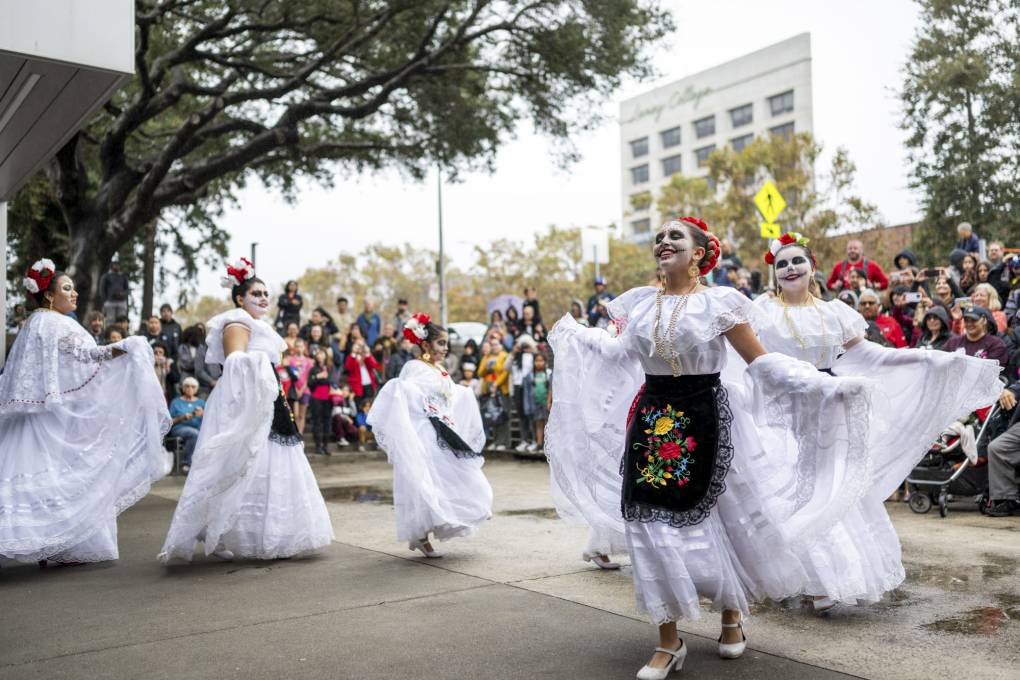
Finding Joy in Grieving Together at a Día de los Muertos Celebration in Oakland
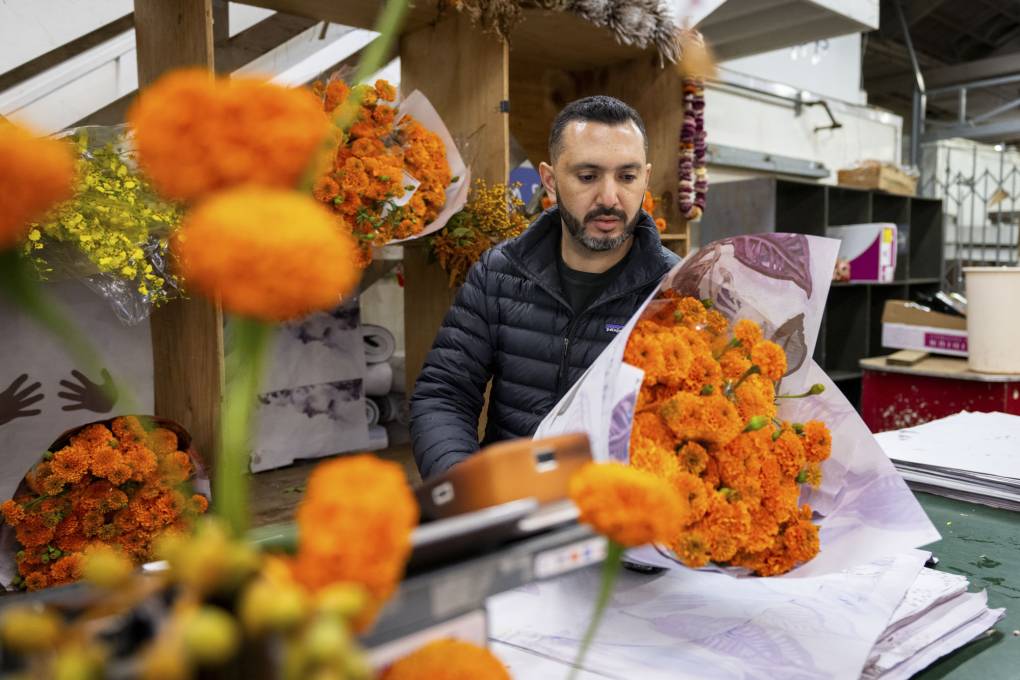
Bay Area Flower Farms Burst with Marigolds for Día de los Muertos
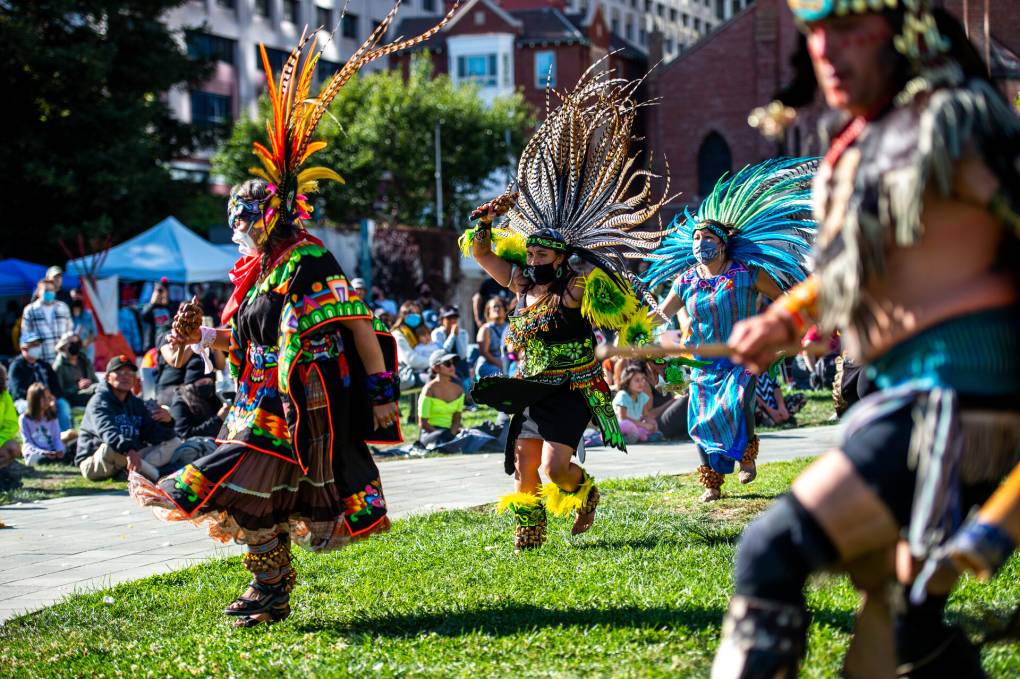
'We Dance United': Aztec Dance Troupes Preserve a Proud Heritage for Bay Area's Latinx Community
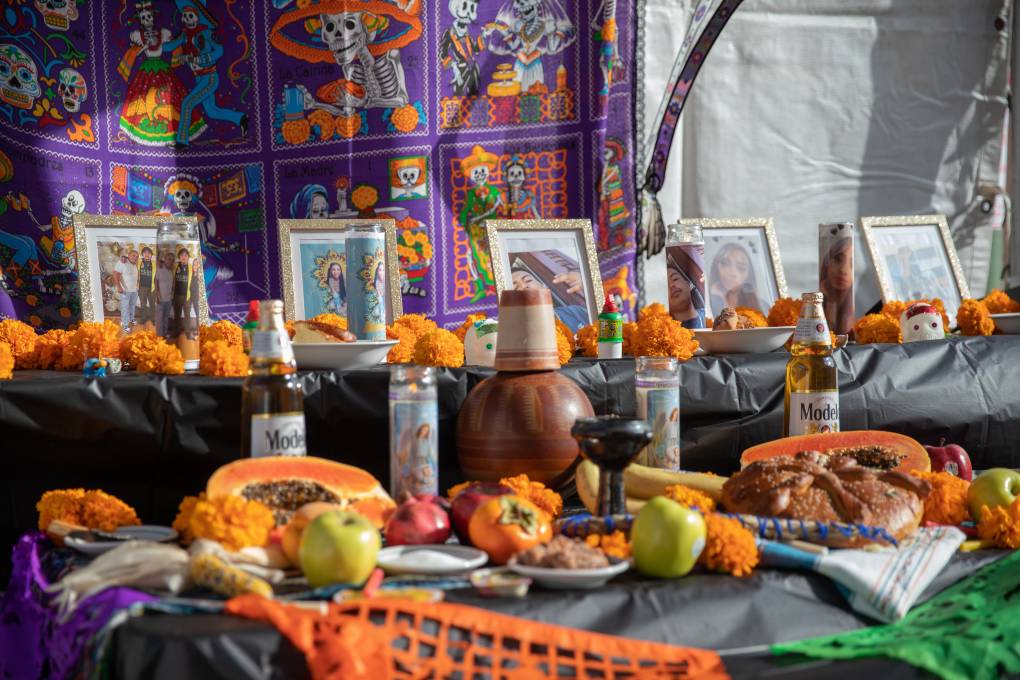
How Fruitvale Honors the Dead During a COVID-Era Día de los Muertos
‘Making Something That’s Our Own’: Día de Los Muertos in the Bay
'We Have a Lot to Grieve About': Día de los Muertos in 2020
Students Honor Their Heritage During Día de los Muertos in SF's Mission District
Where to Celebrate Dia de los Muertos in the Bay Area
Oakland's Día de Los Muertos Honors Dreamers
Sponsored
Player sponsored by
window.__IS_SSR__=true
window.__INITIAL_STATE__={
"attachmentsReducer": {
"audio_0": {
"type": "attachments",
"id": "audio_0",
"imgSizes": {
"kqedFullSize": {
"file": "https://ww2.kqed.org/news/wp-content/themes/KQED-unified/img/audio_bgs/background0.jpg"
}
}
},
"audio_1": {
"type": "attachments",
"id": "audio_1",
"imgSizes": {
"kqedFullSize": {
"file": "https://ww2.kqed.org/news/wp-content/themes/KQED-unified/img/audio_bgs/background1.jpg"
}
}
},
"audio_2": {
"type": "attachments",
"id": "audio_2",
"imgSizes": {
"kqedFullSize": {
"file": "https://ww2.kqed.org/news/wp-content/themes/KQED-unified/img/audio_bgs/background2.jpg"
}
}
},
"audio_3": {
"type": "attachments",
"id": "audio_3",
"imgSizes": {
"kqedFullSize": {
"file": "https://ww2.kqed.org/news/wp-content/themes/KQED-unified/img/audio_bgs/background3.jpg"
}
}
},
"audio_4": {
"type": "attachments",
"id": "audio_4",
"imgSizes": {
"kqedFullSize": {
"file": "https://ww2.kqed.org/news/wp-content/themes/KQED-unified/img/audio_bgs/background4.jpg"
}
}
},
"placeholder": {
"type": "attachments",
"id": "placeholder",
"imgSizes": {
"thumbnail": {
"file": "https://cdn.kqed.org/wp-content/uploads/2024/12/KQED-Default-Image-816638274-2000x1333-1-160x107.jpg",
"width": 160,
"height": 107,
"mimeType": "image/jpeg"
},
"medium": {
"file": "https://cdn.kqed.org/wp-content/uploads/2024/12/KQED-Default-Image-816638274-2000x1333-1-800x533.jpg",
"width": 800,
"height": 533,
"mimeType": "image/jpeg"
},
"medium_large": {
"file": "https://cdn.kqed.org/wp-content/uploads/2024/12/KQED-Default-Image-816638274-2000x1333-1-768x512.jpg",
"width": 768,
"height": 512,
"mimeType": "image/jpeg"
},
"large": {
"file": "https://cdn.kqed.org/wp-content/uploads/2024/12/KQED-Default-Image-816638274-2000x1333-1-1020x680.jpg",
"width": 1020,
"height": 680,
"mimeType": "image/jpeg"
},
"1536x1536": {
"file": "https://cdn.kqed.org/wp-content/uploads/2024/12/KQED-Default-Image-816638274-2000x1333-1-1536x1024.jpg",
"width": 1536,
"height": 1024,
"mimeType": "image/jpeg"
},
"fd-lrg": {
"file": "https://cdn.kqed.org/wp-content/uploads/2024/12/KQED-Default-Image-816638274-2000x1333-1-1536x1024.jpg",
"width": 1536,
"height": 1024,
"mimeType": "image/jpeg"
},
"fd-med": {
"file": "https://cdn.kqed.org/wp-content/uploads/2024/12/KQED-Default-Image-816638274-2000x1333-1-1020x680.jpg",
"width": 1020,
"height": 680,
"mimeType": "image/jpeg"
},
"fd-sm": {
"file": "https://cdn.kqed.org/wp-content/uploads/2024/12/KQED-Default-Image-816638274-2000x1333-1-800x533.jpg",
"width": 800,
"height": 533,
"mimeType": "image/jpeg"
},
"post-thumbnail": {
"file": "https://cdn.kqed.org/wp-content/uploads/2024/12/KQED-Default-Image-816638274-2000x1333-1-672x372.jpg",
"width": 672,
"height": 372,
"mimeType": "image/jpeg"
},
"twentyfourteen-full-width": {
"file": "https://cdn.kqed.org/wp-content/uploads/2024/12/KQED-Default-Image-816638274-2000x1333-1-1038x576.jpg",
"width": 1038,
"height": 576,
"mimeType": "image/jpeg"
},
"xxsmall": {
"file": "https://cdn.kqed.org/wp-content/uploads/2024/12/KQED-Default-Image-816638274-2000x1333-1-160x107.jpg",
"width": 160,
"height": 107,
"mimeType": "image/jpeg"
},
"xsmall": {
"file": "https://cdn.kqed.org/wp-content/uploads/2024/12/KQED-Default-Image-816638274-2000x1333-1-672x372.jpg",
"width": 672,
"height": 372,
"mimeType": "image/jpeg"
},
"small": {
"file": "https://cdn.kqed.org/wp-content/uploads/2024/12/KQED-Default-Image-816638274-2000x1333-1-672x372.jpg",
"width": 672,
"height": 372,
"mimeType": "image/jpeg"
},
"xlarge": {
"file": "https://cdn.kqed.org/wp-content/uploads/2024/12/KQED-Default-Image-816638274-2000x1333-1-1020x680.jpg",
"width": 1020,
"height": 680,
"mimeType": "image/jpeg"
},
"full-width": {
"file": "https://cdn.kqed.org/wp-content/uploads/2024/12/KQED-Default-Image-816638274-2000x1333-1-1920x1280.jpg",
"width": 1920,
"height": 1280,
"mimeType": "image/jpeg"
},
"guest-author-32": {
"file": "https://cdn.kqed.org/wp-content/uploads/2025/01/KQED-Default-Image-816638274-1333x1333-1-160x160.jpg",
"width": 32,
"height": 32,
"mimeType": "image/jpeg"
},
"guest-author-50": {
"file": "https://cdn.kqed.org/wp-content/uploads/2025/01/KQED-Default-Image-816638274-1333x1333-1-160x160.jpg",
"width": 50,
"height": 50,
"mimeType": "image/jpeg"
},
"guest-author-64": {
"file": "https://cdn.kqed.org/wp-content/uploads/2025/01/KQED-Default-Image-816638274-1333x1333-1-160x160.jpg",
"width": 64,
"height": 64,
"mimeType": "image/jpeg"
},
"guest-author-96": {
"file": "https://cdn.kqed.org/wp-content/uploads/2025/01/KQED-Default-Image-816638274-1333x1333-1-160x160.jpg",
"width": 96,
"height": 96,
"mimeType": "image/jpeg"
},
"guest-author-128": {
"file": "https://cdn.kqed.org/wp-content/uploads/2025/01/KQED-Default-Image-816638274-1333x1333-1-160x160.jpg",
"width": 128,
"height": 128,
"mimeType": "image/jpeg"
},
"detail": {
"file": "https://cdn.kqed.org/wp-content/uploads/2025/01/KQED-Default-Image-816638274-1333x1333-1-160x160.jpg",
"width": 160,
"height": 160,
"mimeType": "image/jpeg"
},
"kqedFullSize": {
"file": "https://cdn.kqed.org/wp-content/uploads/2024/12/KQED-Default-Image-816638274-2000x1333-1.jpg",
"width": 2000,
"height": 1333
}
}
},
"news_11965653": {
"type": "attachments",
"id": "news_11965653",
"meta": {
"index": "attachments_1716263798",
"site": "news",
"id": "11965653",
"found": true
},
"parent": 0,
"imgSizes": {
"twentyfourteen-full-width": {
"file": "https://ww2.kqed.org/app/uploads/sites/10/2023/10/231022-DayoftheDeadOMCA-024-BL-KQED-1038x576.jpg",
"width": 1038,
"mimeType": "image/jpeg",
"height": 576
},
"thumbnail": {
"file": "https://ww2.kqed.org/app/uploads/sites/10/2023/10/231022-DayoftheDeadOMCA-024-BL-KQED-160x107.jpg",
"width": 160,
"mimeType": "image/jpeg",
"height": 107
},
"post-thumbnail": {
"file": "https://ww2.kqed.org/app/uploads/sites/10/2023/10/231022-DayoftheDeadOMCA-024-BL-KQED-672x372.jpg",
"width": 672,
"mimeType": "image/jpeg",
"height": 372
},
"kqedFullSize": {
"file": "https://ww2.kqed.org/app/uploads/sites/10/2023/10/231022-DayoftheDeadOMCA-024-BL-KQED.jpg",
"width": 2000,
"height": 1333
},
"large": {
"file": "https://ww2.kqed.org/app/uploads/sites/10/2023/10/231022-DayoftheDeadOMCA-024-BL-KQED-1020x680.jpg",
"width": 1020,
"mimeType": "image/jpeg",
"height": 680
},
"1536x1536": {
"file": "https://ww2.kqed.org/app/uploads/sites/10/2023/10/231022-DayoftheDeadOMCA-024-BL-KQED-1536x1024.jpg",
"width": 1536,
"mimeType": "image/jpeg",
"height": 1024
},
"full-width": {
"file": "https://ww2.kqed.org/app/uploads/sites/10/2023/10/231022-DayoftheDeadOMCA-024-BL-KQED-1920x1280.jpg",
"width": 1920,
"mimeType": "image/jpeg",
"height": 1280
},
"medium": {
"file": "https://ww2.kqed.org/app/uploads/sites/10/2023/10/231022-DayoftheDeadOMCA-024-BL-KQED-800x533.jpg",
"width": 800,
"mimeType": "image/jpeg",
"height": 533
}
},
"publishDate": 1698269170,
"modified": 1698880857,
"caption": "Dancers from Stockton's Ballet Folklórico Raices Mexicanas perform at the Oakland Museum of California's Día de los Muertos celebration on Oct. 22, 2023. ",
"description": null,
"title": "231022-DayoftheDeadOMCA-024-BL-KQED",
"credit": "Beth LaBerge/KQED",
"status": "inherit",
"altTag": "A group of young people in white dresses dance outside in front of a large audience.",
"fetchFailed": false,
"isLoading": false
},
"news_11965706": {
"type": "attachments",
"id": "news_11965706",
"meta": {
"index": "attachments_1716263798",
"site": "news",
"id": "11965706",
"found": true
},
"parent": 0,
"imgSizes": {
"twentyfourteen-full-width": {
"file": "https://ww2.kqed.org/app/uploads/sites/10/2023/10/231026-DayoftheDeadMarigolds-12-BL-KQED-1038x576.jpg",
"width": 1038,
"mimeType": "image/jpeg",
"height": 576
},
"thumbnail": {
"file": "https://ww2.kqed.org/app/uploads/sites/10/2023/10/231026-DayoftheDeadMarigolds-12-BL-KQED-160x107.jpg",
"width": 160,
"mimeType": "image/jpeg",
"height": 107
},
"post-thumbnail": {
"file": "https://ww2.kqed.org/app/uploads/sites/10/2023/10/231026-DayoftheDeadMarigolds-12-BL-KQED-672x372.jpg",
"width": 672,
"mimeType": "image/jpeg",
"height": 372
},
"kqedFullSize": {
"file": "https://ww2.kqed.org/app/uploads/sites/10/2023/10/231026-DayoftheDeadMarigolds-12-BL-KQED.jpg",
"width": 2000,
"height": 1333
},
"large": {
"file": "https://ww2.kqed.org/app/uploads/sites/10/2023/10/231026-DayoftheDeadMarigolds-12-BL-KQED-1020x680.jpg",
"width": 1020,
"mimeType": "image/jpeg",
"height": 680
},
"1536x1536": {
"file": "https://ww2.kqed.org/app/uploads/sites/10/2023/10/231026-DayoftheDeadMarigolds-12-BL-KQED-1536x1024.jpg",
"width": 1536,
"mimeType": "image/jpeg",
"height": 1024
},
"full-width": {
"file": "https://ww2.kqed.org/app/uploads/sites/10/2023/10/231026-DayoftheDeadMarigolds-12-BL-KQED-1920x1280.jpg",
"width": 1920,
"mimeType": "image/jpeg",
"height": 1280
},
"medium": {
"file": "https://ww2.kqed.org/app/uploads/sites/10/2023/10/231026-DayoftheDeadMarigolds-12-BL-KQED-800x533.jpg",
"width": 800,
"mimeType": "image/jpeg",
"height": 533
}
},
"publishDate": 1698347550,
"modified": 1698798039,
"caption": "Raul Dueñas, a wholesaler for Rafa Flowers, wraps marigolds at the San Francisco Flower Market in San Francisco on Oct. 26, 2023.",
"description": null,
"title": "231026-DayoftheDeadMarigolds-12-BL-KQED",
"credit": "Beth LaBerge/KQED",
"status": "inherit",
"altTag": "A person works wrapping marigolds in paper.",
"fetchFailed": false,
"isLoading": false
},
"news_11930974": {
"type": "attachments",
"id": "news_11930974",
"meta": {
"index": "attachments_1716263798",
"site": "news",
"id": "11930974",
"found": true
},
"parent": 11930953,
"imgSizes": {
"twentyfourteen-full-width": {
"file": "https://ww2.kqed.org/app/uploads/sites/10/2022/11/RS51916_089_SanFrancisco_IndigenousPeoplesDay_10112021-qut-1038x576.jpg",
"width": 1038,
"mimeType": "image/jpeg",
"height": 576
},
"thumbnail": {
"file": "https://ww2.kqed.org/app/uploads/sites/10/2022/11/RS51916_089_SanFrancisco_IndigenousPeoplesDay_10112021-qut-160x107.jpg",
"width": 160,
"mimeType": "image/jpeg",
"height": 107
},
"post-thumbnail": {
"file": "https://ww2.kqed.org/app/uploads/sites/10/2022/11/RS51916_089_SanFrancisco_IndigenousPeoplesDay_10112021-qut-672x372.jpg",
"width": 672,
"mimeType": "image/jpeg",
"height": 372
},
"kqedFullSize": {
"file": "https://ww2.kqed.org/app/uploads/sites/10/2022/11/RS51916_089_SanFrancisco_IndigenousPeoplesDay_10112021-qut.jpg",
"width": 1920,
"height": 1278
},
"large": {
"file": "https://ww2.kqed.org/app/uploads/sites/10/2022/11/RS51916_089_SanFrancisco_IndigenousPeoplesDay_10112021-qut-1020x679.jpg",
"width": 1020,
"mimeType": "image/jpeg",
"height": 679
},
"1536x1536": {
"file": "https://ww2.kqed.org/app/uploads/sites/10/2022/11/RS51916_089_SanFrancisco_IndigenousPeoplesDay_10112021-qut-1536x1022.jpg",
"width": 1536,
"mimeType": "image/jpeg",
"height": 1022
},
"medium": {
"file": "https://ww2.kqed.org/app/uploads/sites/10/2022/11/RS51916_089_SanFrancisco_IndigenousPeoplesDay_10112021-qut-800x533.jpg",
"width": 800,
"mimeType": "image/jpeg",
"height": 533
}
},
"publishDate": 1667428399,
"modified": 1667432572,
"caption": "The Teokalli Aztec Dancers from the Bay Area and Mexico City dance during the third annual Indigenous Peoples Day Commemoration at Yerba Buena Gardens in San Francisco on Oct. 11, 2021.",
"description": null,
"title": "RS51916_089_SanFrancisco_IndigenousPeoplesDay_10112021-qut",
"credit": "Beth LaBerge/KQED",
"status": "inherit",
"altTag": "Four Aztec dancers in elaborate colorful garb and feathers dance on a lawn surrounded by onlookers",
"fetchFailed": false,
"isLoading": false
},
"news_11930934": {
"type": "attachments",
"id": "news_11930934",
"meta": {
"index": "attachments_1716263798",
"site": "news",
"id": "11930934",
"found": true
},
"parent": 11930741,
"imgSizes": {
"twentyfourteen-full-width": {
"file": "https://ww2.kqed.org/app/uploads/sites/10/2022/11/20221030FruitvaleFest-1565-1038x576.jpg",
"width": 1038,
"mimeType": "image/jpeg",
"height": 576
},
"thumbnail": {
"file": "https://ww2.kqed.org/app/uploads/sites/10/2022/11/20221030FruitvaleFest-1565-160x107.jpg",
"width": 160,
"mimeType": "image/jpeg",
"height": 107
},
"post-thumbnail": {
"file": "https://ww2.kqed.org/app/uploads/sites/10/2022/11/20221030FruitvaleFest-1565-672x372.jpg",
"width": 672,
"mimeType": "image/jpeg",
"height": 372
},
"kqedFullSize": {
"file": "https://ww2.kqed.org/app/uploads/sites/10/2022/11/20221030FruitvaleFest-1565-scaled-e1667414972744.jpg",
"width": 1980,
"height": 1320
},
"2048x2048": {
"file": "https://ww2.kqed.org/app/uploads/sites/10/2022/11/20221030FruitvaleFest-1565-2048x1365.jpg",
"width": 2048,
"mimeType": "image/jpeg",
"height": 1365
},
"large": {
"file": "https://ww2.kqed.org/app/uploads/sites/10/2022/11/20221030FruitvaleFest-1565-1020x680.jpg",
"width": 1020,
"mimeType": "image/jpeg",
"height": 680
},
"1536x1536": {
"file": "https://ww2.kqed.org/app/uploads/sites/10/2022/11/20221030FruitvaleFest-1565-1536x1024.jpg",
"width": 1536,
"mimeType": "image/jpeg",
"height": 1024
},
"full-width": {
"file": "https://ww2.kqed.org/app/uploads/sites/10/2022/11/20221030FruitvaleFest-1565-1920x1280.jpg",
"width": 1920,
"mimeType": "image/jpeg",
"height": 1280
},
"medium": {
"file": "https://ww2.kqed.org/app/uploads/sites/10/2022/11/20221030FruitvaleFest-1565-800x533.jpg",
"width": 800,
"mimeType": "image/jpeg",
"height": 533
}
},
"publishDate": 1667414946,
"modified": 1667417735,
"caption": "The ofrenda artist, Stephanie Jauregui, wanted to build a public altar to honor the friends she's lost, but on a bigger scale than the altar she's constructed at home.",
"description": null,
"title": "20221030FruitvaleFest-1565",
"credit": "Sebastian Miño-Bucheli/KQED",
"status": "inherit",
"altTag": "Framed photos of deceased loved ones sit behind tall candles also printed with the faces of the deceased. The alter is adorned with offerings from the dead, including fruits, bread, candy and beer. Everything sits on a black table cloth decorated with marigolds.",
"fetchFailed": false,
"isLoading": false
},
"news_11894972": {
"type": "attachments",
"id": "news_11894972",
"meta": {
"index": "attachments_1716263798",
"site": "news",
"id": "11894972",
"found": true
},
"parent": 11894929,
"imgSizes": {
"twentyfourteen-full-width": {
"file": "https://ww2.kqed.org/app/uploads/sites/10/2021/11/RS52357_037_SanFrancisco_DiadelosMuertos_11022021-qut-1038x576.jpg",
"width": 1038,
"mimeType": "image/jpeg",
"height": 576
},
"thumbnail": {
"file": "https://ww2.kqed.org/app/uploads/sites/10/2021/11/RS52357_037_SanFrancisco_DiadelosMuertos_11022021-qut-160x107.jpg",
"width": 160,
"mimeType": "image/jpeg",
"height": 107
},
"post-thumbnail": {
"file": "https://ww2.kqed.org/app/uploads/sites/10/2021/11/RS52357_037_SanFrancisco_DiadelosMuertos_11022021-qut-672x372.jpg",
"width": 672,
"mimeType": "image/jpeg",
"height": 372
},
"kqedFullSize": {
"file": "https://ww2.kqed.org/app/uploads/sites/10/2021/11/RS52357_037_SanFrancisco_DiadelosMuertos_11022021-qut.jpg",
"width": 1920,
"height": 1280
},
"large": {
"file": "https://ww2.kqed.org/app/uploads/sites/10/2021/11/RS52357_037_SanFrancisco_DiadelosMuertos_11022021-qut-1020x680.jpg",
"width": 1020,
"mimeType": "image/jpeg",
"height": 680
},
"1536x1536": {
"file": "https://ww2.kqed.org/app/uploads/sites/10/2021/11/RS52357_037_SanFrancisco_DiadelosMuertos_11022021-qut-1536x1024.jpg",
"width": 1536,
"mimeType": "image/jpeg",
"height": 1024
},
"medium": {
"file": "https://ww2.kqed.org/app/uploads/sites/10/2021/11/RS52357_037_SanFrancisco_DiadelosMuertos_11022021-qut-800x533.jpg",
"width": 800,
"mimeType": "image/jpeg",
"height": 533
}
},
"publishDate": 1635970399,
"modified": 1635983523,
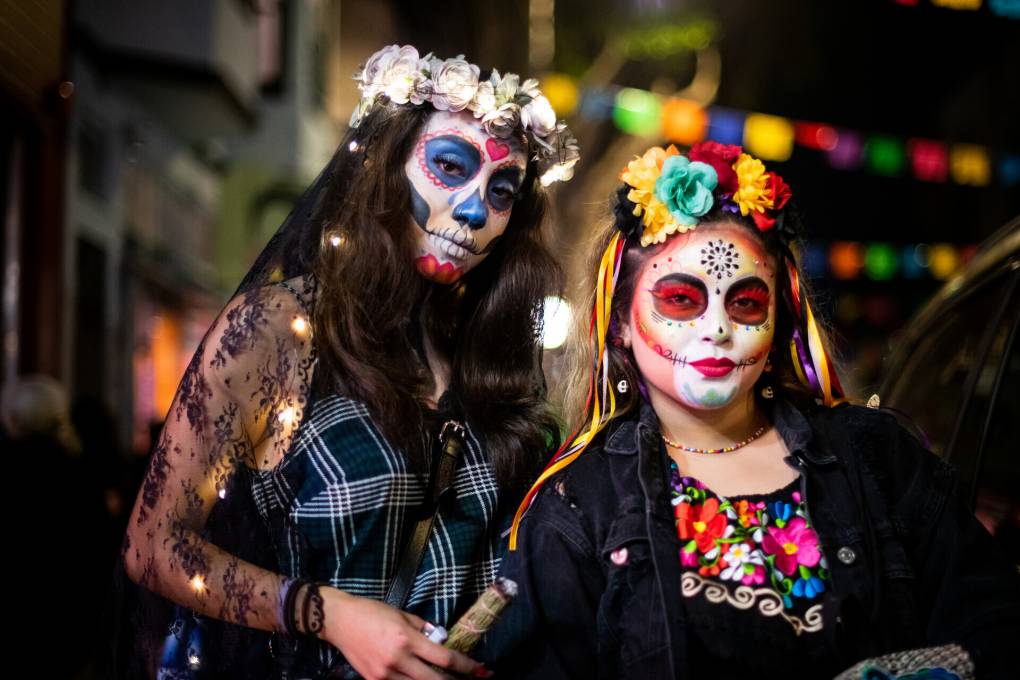
"caption": "Mariah Cativo (left) and Lucy Molina pause for a portrait as they walk along 24th Street in San Francisco's Mission District during a Dia de los Muertos celebration on Nov. 2, 2021. ",
"description": null,
"title": "Mariah Cativo (left) and Lucy Molina",
"credit": "Beth LaBerge/KQED",
"status": "inherit",
"altTag": "Two people wear face paint and flowers in their hair and look at the camera.",
"fetchFailed": false,
"isLoading": false
},
"news_11844739": {
"type": "attachments",
"id": "news_11844739",
"meta": {
"index": "attachments_1716263798",
"site": "news",
"id": "11844739",
"found": true
},
"parent": 11844598,
"imgSizes": {
"apple_news_ca_landscape_5_5": {
"file": "https://ww2.kqed.org/app/uploads/sites/10/2020/10/ddlm-1-1044x783.jpg",
"width": 1044,
"mimeType": "image/jpeg",
"height": 783
},
"apple_news_ca_square_4_0": {
"file": "https://ww2.kqed.org/app/uploads/sites/10/2020/10/ddlm-1-470x470.jpg",
"width": 470,
"mimeType": "image/jpeg",
"height": 470
},
"twentyfourteen-full-width": {
"file": "https://ww2.kqed.org/app/uploads/sites/10/2020/10/ddlm-1-1038x576.jpg",
"width": 1038,
"mimeType": "image/jpeg",
"height": 576
},
"thumbnail": {
"file": "https://ww2.kqed.org/app/uploads/sites/10/2020/10/ddlm-1-160x116.jpg",
"width": 160,
"mimeType": "image/jpeg",
"height": 116
},
"post-thumbnail": {
"file": "https://ww2.kqed.org/app/uploads/sites/10/2020/10/ddlm-1-672x372.jpg",
"width": 672,
"mimeType": "image/jpeg",
"height": 372
},
"kqedFullSize": {
"file": "https://ww2.kqed.org/app/uploads/sites/10/2020/10/ddlm-1.jpg",
"width": 1920,
"height": 1388
},
"apple_news_ca_landscape_4_7": {
"file": "https://ww2.kqed.org/app/uploads/sites/10/2020/10/ddlm-1-632x474.jpg",
"width": 632,
"mimeType": "image/jpeg",
"height": 474
},
"large": {
"file": "https://ww2.kqed.org/app/uploads/sites/10/2020/10/ddlm-1-1020x737.jpg",
"width": 1020,
"mimeType": "image/jpeg",
"height": 737
},
"apple_news_ca_landscape_4_0": {
"file": "https://ww2.kqed.org/app/uploads/sites/10/2020/10/ddlm-1-536x402.jpg",
"width": 536,
"mimeType": "image/jpeg",
"height": 402
},
"apple_news_ca_portrait_12_9": {
"file": "https://ww2.kqed.org/app/uploads/sites/10/2020/10/ddlm-1-1122x1388.jpg",
"width": 1122,
"mimeType": "image/jpeg",
"height": 1388
},
"medium": {
"file": "https://ww2.kqed.org/app/uploads/sites/10/2020/10/ddlm-1-800x578.jpg",
"width": 800,
"mimeType": "image/jpeg",
"height": 578
},
"apple_news_ca_portrait_4_0": {
"file": "https://ww2.kqed.org/app/uploads/sites/10/2020/10/ddlm-1-354x472.jpg",
"width": 354,
"mimeType": "image/jpeg",
"height": 472
},
"apple_news_ca_portrait_9_7": {
"file": "https://ww2.kqed.org/app/uploads/sites/10/2020/10/ddlm-1-840x1120.jpg",
"width": 840,
"mimeType": "image/jpeg",
"height": 1120
},
"apple_news_ca_landscape_12_9": {
"file": "https://ww2.kqed.org/app/uploads/sites/10/2020/10/ddlm-1-1832x1374.jpg",
"width": 1832,
"mimeType": "image/jpeg",
"height": 1374
},
"apple_news_ca_square_9_7": {
"file": "https://ww2.kqed.org/app/uploads/sites/10/2020/10/ddlm-1-1104x1104.jpg",
"width": 1104,
"mimeType": "image/jpeg",
"height": 1104
},
"1536x1536": {
"file": "https://ww2.kqed.org/app/uploads/sites/10/2020/10/ddlm-1-1536x1110.jpg",
"width": 1536,
"mimeType": "image/jpeg",
"height": 1110
},
"apple_news_ca_portrait_4_7": {
"file": "https://ww2.kqed.org/app/uploads/sites/10/2020/10/ddlm-1-414x552.jpg",
"width": 414,
"mimeType": "image/jpeg",
"height": 552
},
"apple_news_ca_square_12_9": {
"file": "https://ww2.kqed.org/app/uploads/sites/10/2020/10/ddlm-1-1472x1388.jpg",
"width": 1472,
"mimeType": "image/jpeg",
"height": 1388
},
"apple_news_ca_portrait_5_5": {
"file": "https://ww2.kqed.org/app/uploads/sites/10/2020/10/ddlm-1-687x916.jpg",
"width": 687,
"mimeType": "image/jpeg",
"height": 916
},
"apple_news_ca_square_4_7": {
"file": "https://ww2.kqed.org/app/uploads/sites/10/2020/10/ddlm-1-550x550.jpg",
"width": 550,
"mimeType": "image/jpeg",
"height": 550
},
"apple_news_ca_landscape_9_7": {
"file": "https://ww2.kqed.org/app/uploads/sites/10/2020/10/ddlm-1-1376x1032.jpg",
"width": 1376,
"mimeType": "image/jpeg",
"height": 1032
},
"apple_news_ca_square_5_5": {
"file": "https://ww2.kqed.org/app/uploads/sites/10/2020/10/ddlm-1-912x912.jpg",
"width": 912,
"mimeType": "image/jpeg",
"height": 912
}
},
"publishDate": 1604097524,
"modified": 1604101149,
"caption": "Ofrenda made by Lilia Olsen called \"Memories\" in Fruitvale 2019. ",
"description": "Ofrenda made by Lilia Olsen called \"Memories\" in Fruitvale 2019. ",
"title": "ddlm-1",
"credit": "Tiffany Camhi/KQED",
"status": "inherit",
"fetchFailed": false,
"isLoading": false
},
"news_11784506": {
"type": "attachments",
"id": "news_11784506",
"meta": {
"index": "attachments_1716263798",
"site": "news",
"id": "11784506",
"found": true
},
"parent": 11784452,
"imgSizes": {
"apple_news_ca_landscape_5_5": {
"file": "https://ww2.kqed.org/app/uploads/sites/10/2019/11/RS40044_DayofDead_Morga_009-qut-1044x783.jpg",
"width": 1044,
"mimeType": "image/jpeg",
"height": 783
},
"apple_news_ca_square_4_0": {
"file": "https://ww2.kqed.org/app/uploads/sites/10/2019/11/RS40044_DayofDead_Morga_009-qut-470x470.jpg",
"width": 470,
"mimeType": "image/jpeg",
"height": 470
},
"twentyfourteen-full-width": {
"file": "https://ww2.kqed.org/app/uploads/sites/10/2019/11/RS40044_DayofDead_Morga_009-qut-1038x576.jpg",
"width": 1038,
"mimeType": "image/jpeg",
"height": 576
},
"thumbnail": {
"file": "https://ww2.kqed.org/app/uploads/sites/10/2019/11/RS40044_DayofDead_Morga_009-qut-160x107.jpg",
"width": 160,
"mimeType": "image/jpeg",
"height": 107
},
"post-thumbnail": {
"file": "https://ww2.kqed.org/app/uploads/sites/10/2019/11/RS40044_DayofDead_Morga_009-qut-672x372.jpg",
"width": 672,
"mimeType": "image/jpeg",
"height": 372
},
"kqedFullSize": {
"file": "https://ww2.kqed.org/app/uploads/sites/10/2019/11/RS40044_DayofDead_Morga_009-qut.jpg",
"width": 1920,
"height": 1280
},
"apple_news_ca_landscape_4_7": {
"file": "https://ww2.kqed.org/app/uploads/sites/10/2019/11/RS40044_DayofDead_Morga_009-qut-632x474.jpg",
"width": 632,
"mimeType": "image/jpeg",
"height": 474
},
"large": {
"file": "https://ww2.kqed.org/app/uploads/sites/10/2019/11/RS40044_DayofDead_Morga_009-qut-1020x680.jpg",
"width": 1020,
"mimeType": "image/jpeg",
"height": 680
},
"complete_open_graph": {
"file": "https://ww2.kqed.org/app/uploads/sites/10/2019/11/RS40044_DayofDead_Morga_009-qut-1200x800.jpg",
"width": 1200,
"mimeType": "image/jpeg",
"height": 800
},
"apple_news_ca_landscape_4_0": {
"file": "https://ww2.kqed.org/app/uploads/sites/10/2019/11/RS40044_DayofDead_Morga_009-qut-536x402.jpg",
"width": 536,
"mimeType": "image/jpeg",
"height": 402
},
"apple_news_ca_portrait_12_9": {
"file": "https://ww2.kqed.org/app/uploads/sites/10/2019/11/RS40044_DayofDead_Morga_009-qut-1122x1280.jpg",
"width": 1122,
"mimeType": "image/jpeg",
"height": 1280
},
"medium": {
"file": "https://ww2.kqed.org/app/uploads/sites/10/2019/11/RS40044_DayofDead_Morga_009-qut-800x533.jpg",
"width": 800,
"mimeType": "image/jpeg",
"height": 533
},
"apple_news_ca_portrait_4_0": {
"file": "https://ww2.kqed.org/app/uploads/sites/10/2019/11/RS40044_DayofDead_Morga_009-qut-354x472.jpg",
"width": 354,
"mimeType": "image/jpeg",
"height": 472
},
"apple_news_ca_portrait_9_7": {
"file": "https://ww2.kqed.org/app/uploads/sites/10/2019/11/RS40044_DayofDead_Morga_009-qut-840x1120.jpg",
"width": 840,
"mimeType": "image/jpeg",
"height": 1120
},
"apple_news_ca_landscape_12_9": {
"file": "https://ww2.kqed.org/app/uploads/sites/10/2019/11/RS40044_DayofDead_Morga_009-qut-1832x1280.jpg",
"width": 1832,
"mimeType": "image/jpeg",
"height": 1280
},
"apple_news_ca_square_9_7": {
"file": "https://ww2.kqed.org/app/uploads/sites/10/2019/11/RS40044_DayofDead_Morga_009-qut-1104x1104.jpg",
"width": 1104,
"mimeType": "image/jpeg",
"height": 1104
},
"apple_news_ca_portrait_4_7": {
"file": "https://ww2.kqed.org/app/uploads/sites/10/2019/11/RS40044_DayofDead_Morga_009-qut-414x552.jpg",
"width": 414,
"mimeType": "image/jpeg",
"height": 552
},
"apple_news_ca_square_12_9": {
"file": "https://ww2.kqed.org/app/uploads/sites/10/2019/11/RS40044_DayofDead_Morga_009-qut-1472x1280.jpg",
"width": 1472,
"mimeType": "image/jpeg",
"height": 1280
},
"apple_news_ca_portrait_5_5": {
"file": "https://ww2.kqed.org/app/uploads/sites/10/2019/11/RS40044_DayofDead_Morga_009-qut-687x916.jpg",
"width": 687,
"mimeType": "image/jpeg",
"height": 916
},
"full-width": {
"file": "https://ww2.kqed.org/app/uploads/sites/10/2019/11/RS40044_DayofDead_Morga_009-qut-1920x1280.jpg",
"width": 1920,
"mimeType": "image/jpeg",
"height": 1280
},
"apple_news_ca_square_4_7": {
"file": "https://ww2.kqed.org/app/uploads/sites/10/2019/11/RS40044_DayofDead_Morga_009-qut-550x550.jpg",
"width": 550,
"mimeType": "image/jpeg",
"height": 550
},
"apple_news_ca_landscape_9_7": {
"file": "https://ww2.kqed.org/app/uploads/sites/10/2019/11/RS40044_DayofDead_Morga_009-qut-1376x1032.jpg",
"width": 1376,
"mimeType": "image/jpeg",
"height": 1032
},
"apple_news_ca_square_5_5": {
"file": "https://ww2.kqed.org/app/uploads/sites/10/2019/11/RS40044_DayofDead_Morga_009-qut-912x912.jpg",
"width": 912,
"mimeType": "image/jpeg",
"height": 912
}
},
"publishDate": 1572654439,
"modified": 1572725664,
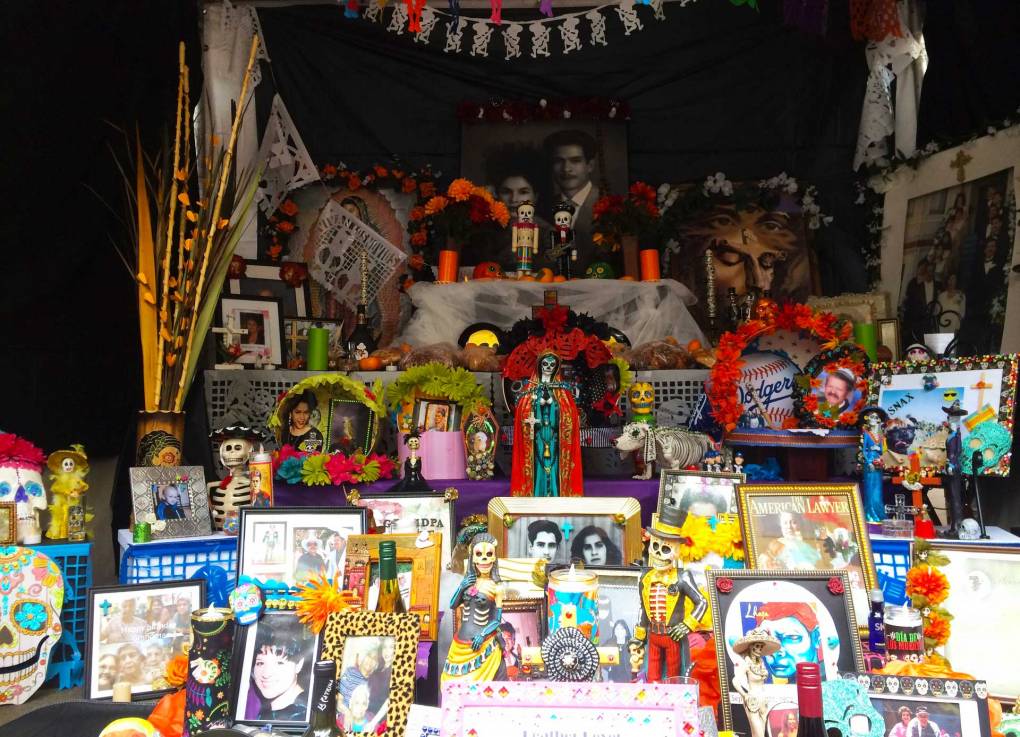
"caption": "Altar for Día de los Muertos at John O'Connell High School.",
"description": null,
"title": "RS40044_DayofDead_Morga_009-qut",
"credit": "Adriana Morga/KQED",
"status": "inherit",
"fetchFailed": false,
"isLoading": false
},
"news_11784068": {
"type": "attachments",
"id": "news_11784068",
"meta": {
"index": "attachments_1716263798",
"site": "news",
"id": "11784068",
"found": true
},
"parent": 11784055,
"imgSizes": {
"apple_news_ca_landscape_5_5": {
"file": "https://ww2.kqed.org/app/uploads/sites/10/2019/10/RS27788_Image-uploaded-from-iOS-25-qut-1044x783.jpg",
"width": 1044,
"mimeType": "image/jpeg",
"height": 783
},
"apple_news_ca_square_4_0": {
"file": "https://ww2.kqed.org/app/uploads/sites/10/2019/10/RS27788_Image-uploaded-from-iOS-25-qut-470x470.jpg",
"width": 470,
"mimeType": "image/jpeg",
"height": 470
},
"twentyfourteen-full-width": {
"file": "https://ww2.kqed.org/app/uploads/sites/10/2019/10/RS27788_Image-uploaded-from-iOS-25-qut-1038x576.jpg",
"width": 1038,
"mimeType": "image/jpeg",
"height": 576
},
"thumbnail": {
"file": "https://ww2.kqed.org/app/uploads/sites/10/2019/10/RS27788_Image-uploaded-from-iOS-25-qut-160x120.jpg",
"width": 160,
"mimeType": "image/jpeg",
"height": 120
},
"post-thumbnail": {
"file": "https://ww2.kqed.org/app/uploads/sites/10/2019/10/RS27788_Image-uploaded-from-iOS-25-qut-672x372.jpg",
"width": 672,
"mimeType": "image/jpeg",
"height": 372
},
"kqedFullSize": {
"file": "https://ww2.kqed.org/app/uploads/sites/10/2019/10/RS27788_Image-uploaded-from-iOS-25-qut.jpg",
"width": 1920,
"height": 1440
},
"apple_news_ca_landscape_4_7": {
"file": "https://ww2.kqed.org/app/uploads/sites/10/2019/10/RS27788_Image-uploaded-from-iOS-25-qut-632x474.jpg",
"width": 632,
"mimeType": "image/jpeg",
"height": 474
},
"large": {
"file": "https://ww2.kqed.org/app/uploads/sites/10/2019/10/RS27788_Image-uploaded-from-iOS-25-qut-1020x765.jpg",
"width": 1020,
"mimeType": "image/jpeg",
"height": 765
},
"complete_open_graph": {
"file": "https://ww2.kqed.org/app/uploads/sites/10/2019/10/RS27788_Image-uploaded-from-iOS-25-qut-1200x900.jpg",
"width": 1200,
"mimeType": "image/jpeg",
"height": 900
},
"apple_news_ca_landscape_4_0": {
"file": "https://ww2.kqed.org/app/uploads/sites/10/2019/10/RS27788_Image-uploaded-from-iOS-25-qut-536x402.jpg",
"width": 536,
"mimeType": "image/jpeg",
"height": 402
},
"apple_news_ca_portrait_12_9": {
"file": "https://ww2.kqed.org/app/uploads/sites/10/2019/10/RS27788_Image-uploaded-from-iOS-25-qut-1122x1440.jpg",
"width": 1122,
"mimeType": "image/jpeg",
"height": 1440
},
"medium": {
"file": "https://ww2.kqed.org/app/uploads/sites/10/2019/10/RS27788_Image-uploaded-from-iOS-25-qut-800x600.jpg",
"width": 800,
"mimeType": "image/jpeg",
"height": 600
},
"apple_news_ca_portrait_4_0": {
"file": "https://ww2.kqed.org/app/uploads/sites/10/2019/10/RS27788_Image-uploaded-from-iOS-25-qut-354x472.jpg",
"width": 354,
"mimeType": "image/jpeg",
"height": 472
},
"apple_news_ca_portrait_9_7": {
"file": "https://ww2.kqed.org/app/uploads/sites/10/2019/10/RS27788_Image-uploaded-from-iOS-25-qut-840x1120.jpg",
"width": 840,
"mimeType": "image/jpeg",
"height": 1120
},
"apple_news_ca_landscape_12_9": {
"file": "https://ww2.kqed.org/app/uploads/sites/10/2019/10/RS27788_Image-uploaded-from-iOS-25-qut-1832x1374.jpg",
"width": 1832,
"mimeType": "image/jpeg",
"height": 1374
},
"apple_news_ca_square_9_7": {
"file": "https://ww2.kqed.org/app/uploads/sites/10/2019/10/RS27788_Image-uploaded-from-iOS-25-qut-1104x1104.jpg",
"width": 1104,
"mimeType": "image/jpeg",
"height": 1104
},
"apple_news_ca_portrait_4_7": {
"file": "https://ww2.kqed.org/app/uploads/sites/10/2019/10/RS27788_Image-uploaded-from-iOS-25-qut-414x552.jpg",
"width": 414,
"mimeType": "image/jpeg",
"height": 552
},
"apple_news_ca_square_12_9": {
"file": "https://ww2.kqed.org/app/uploads/sites/10/2019/10/RS27788_Image-uploaded-from-iOS-25-qut-1472x1440.jpg",
"width": 1472,
"mimeType": "image/jpeg",
"height": 1440
},
"apple_news_ca_portrait_5_5": {
"file": "https://ww2.kqed.org/app/uploads/sites/10/2019/10/RS27788_Image-uploaded-from-iOS-25-qut-687x916.jpg",
"width": 687,
"mimeType": "image/jpeg",
"height": 916
},
"full-width": {
"file": "https://ww2.kqed.org/app/uploads/sites/10/2019/10/RS27788_Image-uploaded-from-iOS-25-qut-1920x1440.jpg",
"width": 1920,
"mimeType": "image/jpeg",
"height": 1440
},
"apple_news_ca_square_4_7": {
"file": "https://ww2.kqed.org/app/uploads/sites/10/2019/10/RS27788_Image-uploaded-from-iOS-25-qut-550x550.jpg",
"width": 550,
"mimeType": "image/jpeg",
"height": 550
},
"apple_news_ca_landscape_9_7": {
"file": "https://ww2.kqed.org/app/uploads/sites/10/2019/10/RS27788_Image-uploaded-from-iOS-25-qut-1376x1032.jpg",
"width": 1376,
"mimeType": "image/jpeg",
"height": 1032
},
"apple_news_ca_square_5_5": {
"file": "https://ww2.kqed.org/app/uploads/sites/10/2019/10/RS27788_Image-uploaded-from-iOS-25-qut-912x912.jpg",
"width": 912,
"mimeType": "image/jpeg",
"height": 912
}
},
"publishDate": 1572551080,
"modified": 1572551168,
"caption": "Tiffany Camhi snapped photos of Festival in the Fruitvale neighborhood of Oakland. Altar made by Lilia Olsen called \"Memories.\"",
"description": null,
"title": "Dia de los Muertos Fruitvale",
"credit": "Tiffany Camhi/KQED",
"status": "inherit",
"fetchFailed": false,
"isLoading": false
},
"news_11703594": {
"type": "attachments",
"id": "news_11703594",
"meta": {
"index": "attachments_1716263798",
"site": "news",
"id": "11703594",
"found": true
},
"parent": 11703577,
"imgSizes": {
"small": {
"file": "https://ww2.kqed.org/app/uploads/sites/10/2018/11/IMG_7004-520x347.jpg",
"width": 520,
"mimeType": "image/jpeg",
"height": 347
},
"twentyfourteen-full-width": {
"file": "https://ww2.kqed.org/app/uploads/sites/10/2018/11/IMG_7004-1038x576.jpg",
"width": 1038,
"mimeType": "image/jpeg",
"height": 576
},
"thumbnail": {
"file": "https://ww2.kqed.org/app/uploads/sites/10/2018/11/IMG_7004-160x107.jpg",
"width": 160,
"mimeType": "image/jpeg",
"height": 107
},
"fd-sm": {
"file": "https://ww2.kqed.org/app/uploads/sites/10/2018/11/IMG_7004-960x640.jpg",
"width": 960,
"mimeType": "image/jpeg",
"height": 640
},
"post-thumbnail": {
"file": "https://ww2.kqed.org/app/uploads/sites/10/2018/11/IMG_7004-672x372.jpg",
"width": 672,
"mimeType": "image/jpeg",
"height": 372
},
"xsmall": {
"file": "https://ww2.kqed.org/app/uploads/sites/10/2018/11/IMG_7004-375x250.jpg",
"width": 375,
"mimeType": "image/jpeg",
"height": 250
},
"kqedFullSize": {
"file": "https://ww2.kqed.org/app/uploads/sites/10/2018/11/IMG_7004.jpg",
"width": 5184,
"height": 3456
},
"large": {
"file": "https://ww2.kqed.org/app/uploads/sites/10/2018/11/IMG_7004-1020x680.jpg",
"width": 1020,
"mimeType": "image/jpeg",
"height": 680
},
"xlarge": {
"file": "https://ww2.kqed.org/app/uploads/sites/10/2018/11/IMG_7004-1180x787.jpg",
"width": 1180,
"mimeType": "image/jpeg",
"height": 787
},
"complete_open_graph": {
"file": "https://ww2.kqed.org/app/uploads/sites/10/2018/11/IMG_7004-1200x800.jpg",
"width": 1200,
"mimeType": "image/jpeg",
"height": 800
},
"guest-author-50": {
"file": "https://ww2.kqed.org/app/uploads/sites/10/2018/11/IMG_7004-50x50.jpg",
"width": 50,
"mimeType": "image/jpeg",
"height": 50
},
"guest-author-96": {
"file": "https://ww2.kqed.org/app/uploads/sites/10/2018/11/IMG_7004-96x96.jpg",
"width": 96,
"mimeType": "image/jpeg",
"height": 96
},
"medium": {
"file": "https://ww2.kqed.org/app/uploads/sites/10/2018/11/IMG_7004-800x533.jpg",
"width": 800,
"mimeType": "image/jpeg",
"height": 533
},
"guest-author-64": {
"file": "https://ww2.kqed.org/app/uploads/sites/10/2018/11/IMG_7004-64x64.jpg",
"width": 64,
"mimeType": "image/jpeg",
"height": 64
},
"guest-author-32": {
"file": "https://ww2.kqed.org/app/uploads/sites/10/2018/11/IMG_7004-32x32.jpg",
"width": 32,
"mimeType": "image/jpeg",
"height": 32
},
"fd-lrg": {
"file": "https://ww2.kqed.org/app/uploads/sites/10/2018/11/IMG_7004-1920x1280.jpg",
"width": 1920,
"mimeType": "image/jpeg",
"height": 1280
},
"fd-med": {
"file": "https://ww2.kqed.org/app/uploads/sites/10/2018/11/IMG_7004-1180x787.jpg",
"width": 1180,
"mimeType": "image/jpeg",
"height": 787
},
"full-width": {
"file": "https://ww2.kqed.org/app/uploads/sites/10/2018/11/IMG_7004-1920x1280.jpg",
"width": 1920,
"mimeType": "image/jpeg",
"height": 1280
},
"detail": {
"file": "https://ww2.kqed.org/app/uploads/sites/10/2018/11/IMG_7004-150x150.jpg",
"width": 150,
"mimeType": "image/jpeg",
"height": 150
},
"guest-author-128": {
"file": "https://ww2.kqed.org/app/uploads/sites/10/2018/11/IMG_7004-128x128.jpg",
"width": 128,
"mimeType": "image/jpeg",
"height": 128
},
"xxsmall": {
"file": "https://ww2.kqed.org/app/uploads/sites/10/2018/11/IMG_7004-240x160.jpg",
"width": 240,
"mimeType": "image/jpeg",
"height": 160
}
},
"publishDate": 1541374852,
"modified": 1541374872,
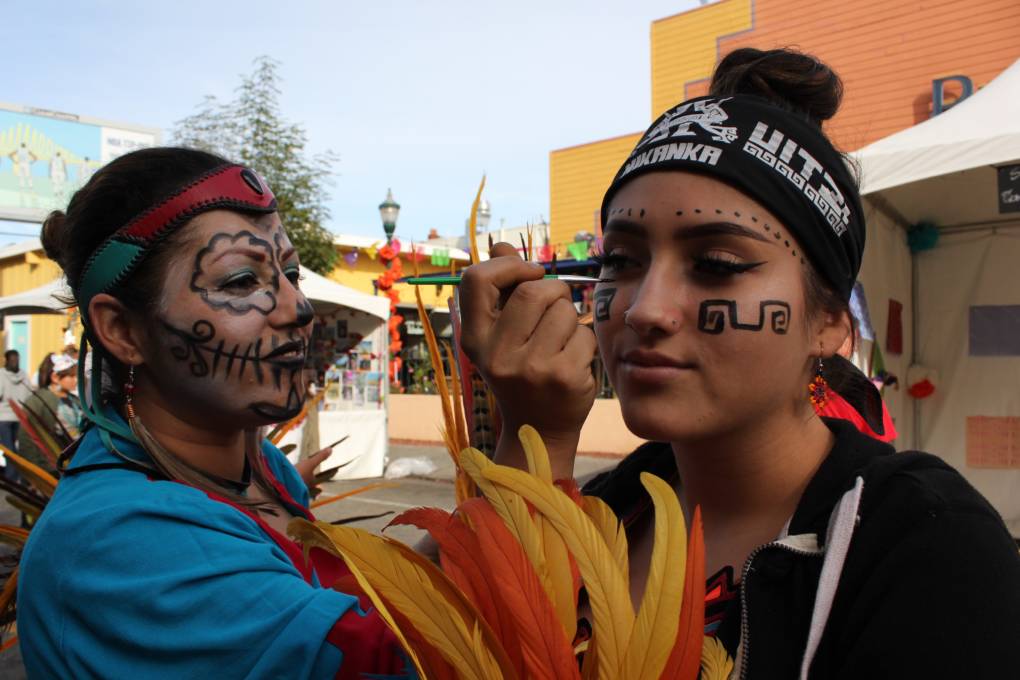
"caption": "Maricela Sandoval of San Jose paints the face of fellow dancer, Estrella Zamudio, also of San Jose.",
"description": null,
"title": "IMG_7004",
"credit": "Sara Hossaini/KQED",
"status": "inherit",
"fetchFailed": false,
"isLoading": false
}
},
"audioPlayerReducer": {
"postId": "stream_live",
"isPaused": true,
"isPlaying": false,
"pfsActive": false,
"pledgeModalIsOpen": true,
"playerDrawerIsOpen": false
},
"authorsReducer": {
"byline_news_11966151": {
"type": "authors",
"id": "byline_news_11966151",
"meta": {
"override": true
},
"slug": "byline_news_11966151",
"name": "Alexander Gonzalez, Anaïs-Ophelia Lino and Beth LaBerge",
"isLoading": false
},
"shossaini": {
"type": "authors",
"id": "3214",
"meta": {
"index": "authors_1716337520",
"id": "3214",
"found": true
},
"name": "Sara Hossaini",
"firstName": "Sara",
"lastName": "Hossaini",
"slug": "shossaini",
"email": "shossaini@kqed.org",
"display_author_email": true,
"staff_mastheads": [
"news"
],
"title": "KQED Reporter",
"bio": "Sara Hossaini came to general assignment reporting at KQED in 2013 after two winters reporting at Wyoming Public Radio. She holds a bachelor's degree in broadcast journalism from the University of Nebraska-Lincoln. Her radio romance began after a bitter breakup with documentary film (Ok, maybe it's still complicated). Her first simultaneous jobs in San Francisco were as Associate Producer on a PBS film series through the Center for Asian American Media and as a butler. She likes to trot, plot and make things with her hands.",
"avatar": "https://secure.gravatar.com/avatar/060e9f56b9554e17942e89f413242774?s=600&d=blank&r=g",
"twitter": "mshossaini",
"facebook": null,
"instagram": null,
"linkedin": null,
"sites": [
{
"site": "news",
"roles": [
"author"
]
},
{
"site": "stateofhealth",
"roles": [
"author"
]
}
],
"headData": {
"title": "Sara Hossaini | KQED",
"description": "KQED Reporter",
"ogImgSrc": "https://secure.gravatar.com/avatar/060e9f56b9554e17942e89f413242774?s=600&d=blank&r=g",
"twImgSrc": "https://secure.gravatar.com/avatar/060e9f56b9554e17942e89f413242774?s=600&d=blank&r=g"
},
"isLoading": false,
"link": "/author/shossaini"
},
"carlysevern": {
"type": "authors",
"id": "3243",
"meta": {
"index": "authors_1716337520",
"id": "3243",
"found": true
},
"name": "Carly Severn",
"firstName": "Carly",
"lastName": "Severn",
"slug": "carlysevern",
"email": "csevern@kqed.org",
"display_author_email": false,
"staff_mastheads": [
"news"
],
"title": "Senior Editor, Audience News ",
"bio": "Carly is KQED's Senior Editor of Audience News on the Digital News team, and has reported for the California Report Magazine, Bay Curious and KQED Arts. She's formerly the host of \u003ca href=\"http://ww2.kqed.org/pop/category/the-cooler/\" rel=\"noopener noreferrer\">The Cooler\u003c/a> podcast.",
"avatar": "https://secure.gravatar.com/avatar/2d8d6765f186e64c798cf7f0c8088a41?s=600&d=blank&r=g",
"twitter": "teacupinthebay",
"facebook": null,
"instagram": null,
"linkedin": null,
"sites": [
{
"site": "",
"roles": [
"editor"
]
},
{
"site": "arts",
"roles": [
"editor"
]
},
{
"site": "news",
"roles": [
"administrator"
]
},
{
"site": "pop",
"roles": [
"editor"
]
},
{
"site": "futureofyou",
"roles": [
"editor"
]
},
{
"site": "about",
"roles": [
"administrator"
]
},
{
"site": "mindshift",
"roles": [
"editor"
]
},
{
"site": "bayareabites",
"roles": [
"editor"
]
},
{
"site": "stateofhealth",
"roles": [
"editor"
]
},
{
"site": "science",
"roles": [
"editor"
]
},
{
"site": "food",
"roles": [
"contributor"
]
},
{
"site": "forum",
"roles": [
"editor"
]
},
{
"site": "perspectives",
"roles": [
"administrator"
]
},
{
"site": "liveblog",
"roles": [
"editor"
]
}
],
"headData": {
"title": "Carly Severn | KQED",
"description": "Senior Editor, Audience News ",
"ogImgSrc": "https://secure.gravatar.com/avatar/2d8d6765f186e64c798cf7f0c8088a41?s=600&d=blank&r=g",
"twImgSrc": "https://secure.gravatar.com/avatar/2d8d6765f186e64c798cf7f0c8088a41?s=600&d=blank&r=g"
},
"isLoading": false,
"link": "/author/carlysevern"
},
"lblanco": {
"type": "authors",
"id": "11357",
"meta": {
"index": "authors_1716337520",
"id": "11357",
"found": true
},
"name": "Lina Blanco",
"firstName": "Lina",
"lastName": "Blanco",
"slug": "lblanco",
"email": "lblanco@kqed.org",
"display_author_email": false,
"staff_mastheads": [],
"title": null,
"bio": "Lina was a Senior Engagement Platforms Manager for KQED News, producing engagement strategies on social media at \u003ca href=\"https://twitter.com/KQEDnews\">@KQEDNews, \u003c/a>via \u003ca href=\"https://www.kqed.org/about/newsletters/\">KQED's daily newsletter\u003c/a> as well as texting campaigns with KQED readers and listeners. She also co-produces for KQED's bilingual news hub \u003ca href=\"https://www.instagram.com/kqedenespanol/\">KQED en Español\u003c/a>.\r\n\r\nLina previously worked for \u003ca href=\"https://kqed.org/arts\">KQED Arts\u003c/a> — supporting audience engagement efforts on the weekly \u003ca href=\"https://www.kqed.org/podcasts/rightnowish\">\u003cem>Rightnowish\u003c/em> \u003c/a>podcast, Webby-winning video series \u003ca href=\"https://www.kqed.org/if-cities-could-dance\">\u003cem>If Cities Could Dance\u003c/em>\u003c/a>, and daily Arts & Culture reporting. She won a \u003ca href=\"https://www.kqed.org/pressroom/10884/murrow\">National 2019 Edward R. Murrow Award for Excellence in Social Media\u003c/a> for KQED's series \u003cem>The Hustle\u003c/em>.\r\n\r\nBefore KQED, Lina worked as a graphic designer and digital storytelling facilitator at the \u003ca href=\"https://www.nativehealth.org/\">Native American Health Center\u003c/a>.\r\n\r\nShe's mom to a senior Chihuahua (plus one black cat) and lives in West Sonoma County on a small farmstead.",
"avatar": "https://secure.gravatar.com/avatar/77ec326d67223c38a436b87bcfd2a2e8?s=600&d=mm&r=g",
"twitter": "LinaBlanco",
"facebook": null,
"instagram": null,
"linkedin": null,
"sites": [
{
"site": "arts",
"roles": [
"subscriber"
]
},
{
"site": "news",
"roles": [
"subscriber"
]
},
{
"site": "pop",
"roles": [
"administrator"
]
},
{
"site": "about",
"roles": [
"administrator"
]
},
{
"site": "bayareabites",
"roles": [
"editor"
]
},
{
"site": "science",
"roles": [
"editor"
]
},
{
"site": "checkplease",
"roles": [
"editor"
]
},
{
"site": "food",
"roles": []
},
{
"site": "perspectives",
"roles": [
"editor"
]
}
],
"headData": {
"title": "Lina Blanco | KQED",
"description": null,
"ogImgSrc": "https://secure.gravatar.com/avatar/77ec326d67223c38a436b87bcfd2a2e8?s=600&d=mm&r=g",
"twImgSrc": "https://secure.gravatar.com/avatar/77ec326d67223c38a436b87bcfd2a2e8?s=600&d=mm&r=g"
},
"isLoading": false,
"link": "/author/lblanco"
},
"mmedina": {
"type": "authors",
"id": "11528",
"meta": {
"index": "authors_1716337520",
"id": "11528",
"found": true
},
"name": "Marisol Medina-Cadena",
"firstName": "Marisol",
"lastName": "Medina-Cadena",
"slug": "mmedina",
"email": "mmedina@KQED.org",
"display_author_email": true,
"staff_mastheads": [],
"title": "Producer, Rightnowish Podcast",
"bio": "Marisol Medina-Cadena is a radio reporter and podcast producer. Before working at KQED, she produced for PBS member station, KCET, in Los Angeles. In 2017, Marisol won an Emmy Award for her work on the televised documentary, \u003cem>City Rising\u003c/em>, examining California's affordable housing crisis and the historical roots of gentrification.",
"avatar": "https://secure.gravatar.com/avatar/6c3db46a1cabb5e1fe9a365b5f4e681e?s=600&d=blank&r=g",
"twitter": "marisolreports",
"facebook": null,
"instagram": null,
"linkedin": null,
"sites": [
{
"site": "arts",
"roles": []
},
{
"site": "news",
"roles": [
"edit_others_posts"
]
}
],
"headData": {
"title": "Marisol Medina-Cadena | KQED",
"description": "Producer, Rightnowish Podcast",
"ogImgSrc": "https://secure.gravatar.com/avatar/6c3db46a1cabb5e1fe9a365b5f4e681e?s=600&d=blank&r=g",
"twImgSrc": "https://secure.gravatar.com/avatar/6c3db46a1cabb5e1fe9a365b5f4e681e?s=600&d=blank&r=g"
},
"isLoading": false,
"link": "/author/mmedina"
},
"amorga": {
"type": "authors",
"id": "11629",
"meta": {
"index": "authors_1716337520",
"id": "11629",
"found": true
},
"name": "Adriana Morga",
"firstName": "Adriana",
"lastName": "Morga",
"slug": "amorga",
"email": "amorga@kqed.org",
"display_author_email": false,
"staff_mastheads": [],
"title": "KQED Contributor",
"bio": "Adriana Morga is an on-call Digital Producer for KQED en Español. She is also completing her journalism degree at San Francisco State University. She has experience working in print and radio. Morga, who was born in Tijuana, Mexico, has spent her developing career covering the Latino community for English and Spanish-language publications including KALW and El Tecolote.",
"avatar": "https://secure.gravatar.com/avatar/9ef1c5a7ff2f2ae1ab05809325f43d03?s=600&d=blank&r=g",
"twitter": null,
"facebook": null,
"instagram": null,
"linkedin": null,
"sites": [
{
"site": "arts",
"roles": []
},
{
"site": "news",
"roles": [
"author"
]
},
{
"site": "science",
"roles": [
"editor"
]
}
],
"headData": {
"title": "Adriana Morga | KQED",
"description": "KQED Contributor",
"ogImgSrc": "https://secure.gravatar.com/avatar/9ef1c5a7ff2f2ae1ab05809325f43d03?s=600&d=blank&r=g",
"twImgSrc": "https://secure.gravatar.com/avatar/9ef1c5a7ff2f2ae1ab05809325f43d03?s=600&d=blank&r=g"
},
"isLoading": false,
"link": "/author/amorga"
},
"amontecillo": {
"type": "authors",
"id": "11649",
"meta": {
"index": "authors_1716337520",
"id": "11649",
"found": true
},
"name": "Alan Montecillo",
"firstName": "Alan",
"lastName": "Montecillo",
"slug": "amontecillo",
"email": "amontecillo@kqed.org",
"display_author_email": false,
"staff_mastheads": [
"news"
],
"title": "KQED Contributor",
"bio": "Alan Montecillo is the senior editor of \u003cem>\u003ca href=\"http://kqed.org/thebay\">The Bay\u003c/a>, \u003c/em> KQED's local news podcast. Before moving to the Bay Area, he worked as a senior talk show producer for WILL in Champaign-Urbana, Illinois and at Oregon Public Broadcasting in Portland, Oregon. He has won journalism awards from the Society of Professional Journalists Northern California, the Public Media Journalists Association, The Signal Awards, and has also received a regional Edward R. Murrow award. Alan is a Filipino American from Hong Kong and a graduate of Reed College.",
"avatar": "https://secure.gravatar.com/avatar/d5e4e7a76481969ccba76f4e2b5ccabc?s=600&d=blank&r=g",
"twitter": "alanmontecillo",
"facebook": null,
"instagram": null,
"linkedin": null,
"sites": [
{
"site": "",
"roles": [
"editor"
]
},
{
"site": "news",
"roles": [
"editor",
"manage_categories"
]
}
],
"headData": {
"title": "Alan Montecillo | KQED",
"description": "KQED Contributor",
"ogImgSrc": "https://secure.gravatar.com/avatar/d5e4e7a76481969ccba76f4e2b5ccabc?s=600&d=blank&r=g",
"twImgSrc": "https://secure.gravatar.com/avatar/d5e4e7a76481969ccba76f4e2b5ccabc?s=600&d=blank&r=g"
},
"isLoading": false,
"link": "/author/amontecillo"
},
"sminobucheli": {
"type": "authors",
"id": "11764",
"meta": {
"index": "authors_1716337520",
"id": "11764",
"found": true
},
"name": "Sebastian Miño-Bucheli",
"firstName": "Sebastian",
"lastName": "Miño-Bucheli",
"slug": "sminobucheli",
"email": "sminobucheli@kqed.org",
"display_author_email": false,
"staff_mastheads": [],
"title": "KQED Contributor",
"bio": "Sebastian Miño-Bucheli is a bilingual multimedia reporter and contributor to KQED Digital News. His reporting has been featured for Bay Curious, the California Report Magazine and KQED Arts. ",
"avatar": "https://secure.gravatar.com/avatar/f9124e32dd53d2b2f9022992c2014fc2?s=600&d=blank&r=g",
"twitter": "@BucheliMino",
"facebook": null,
"instagram": null,
"linkedin": null,
"sites": [
{
"site": "arts",
"roles": []
},
{
"site": "news",
"roles": []
}
],
"headData": {
"title": "Sebastian Miño-Bucheli | KQED",
"description": "KQED Contributor",
"ogImgSrc": "https://secure.gravatar.com/avatar/f9124e32dd53d2b2f9022992c2014fc2?s=600&d=blank&r=g",
"twImgSrc": "https://secure.gravatar.com/avatar/f9124e32dd53d2b2f9022992c2014fc2?s=600&d=blank&r=g"
},
"isLoading": false,
"link": "/author/sminobucheli"
},
"adahlstromeckman": {
"type": "authors",
"id": "11785",
"meta": {
"index": "authors_1716337520",
"id": "11785",
"found": true
},
"name": "Azul Dahlstrom-Eckman",
"firstName": "Azul",
"lastName": "Dahlstrom-Eckman",
"slug": "adahlstromeckman",
"email": "adahlstrom-eckman@kqed.org",
"display_author_email": true,
"staff_mastheads": [],
"title": "Reporter",
"bio": "Azul is a reporter for KQED who focuses on producing sound-rich audio features for KQED's Morning Edition segment and digital features for KQED's online audiences. He previously worked as the Weekend News Editor at KQED, responsible for overseeing radio and digital news on the weekends. He joined KQED in 2021 as an alumna of KALW's Audio Academy radio journalism training program. He was born and raised on Potrero Hill in San Francisco and holds a B.A. in Environmental Studies from the University of Oregon.",
"avatar": "https://secure.gravatar.com/avatar/99c0cfc680078897572931b34e941e1e?s=600&d=blank&r=g",
"twitter": "@zuliemann",
"facebook": null,
"instagram": null,
"linkedin": null,
"sites": [
{
"site": "arts",
"roles": [
"editor"
]
},
{
"site": "news",
"roles": [
"editor"
]
},
{
"site": "science",
"roles": [
"editor"
]
}
],
"headData": {
"title": "Azul Dahlstrom-Eckman | KQED",
"description": "Reporter",
"ogImgSrc": "https://secure.gravatar.com/avatar/99c0cfc680078897572931b34e941e1e?s=600&d=blank&r=g",
"twImgSrc": "https://secure.gravatar.com/avatar/99c0cfc680078897572931b34e941e1e?s=600&d=blank&r=g"
},
"isLoading": false,
"link": "/author/adahlstromeckman"
},
"mesquinca": {
"type": "authors",
"id": "11802",
"meta": {
"index": "authors_1716337520",
"id": "11802",
"found": true
},
"name": "Maria Esquinca",
"firstName": "Maria",
"lastName": "Esquinca",
"slug": "mesquinca",
"email": "mesquinca@kqed.org",
"display_author_email": false,
"staff_mastheads": [],
"title": "Producer, The Bay",
"bio": "María Esquinca is a producer of The Bay. Before that, she was a New York Women’s Foundation IGNITE Fellow at Latino USA. She worked at Radio Bilingue where she covered the San Joaquin Valley. Maria has interned at WLRN, News 21, The New York Times Student Journalism Institute and at Crain’s Detroit Business as a Dow Jones News Fund Business Reporting Intern. She is an MFA graduate from the University of Miami. In 2017, she graduated from the Walter Cronkite School of Journalism and Mass Communication with a Master of Mass Communication. A fronteriza, she was born in Ciudad Juárez, Chihuahua, Mexico and grew up in El Paso, Texas.",
"avatar": "https://secure.gravatar.com/avatar/77cedba18aae91da775038ba06dcd8d0?s=600&d=blank&r=g",
"twitter": "@m_esquinca",
"facebook": null,
"instagram": null,
"linkedin": null,
"sites": [
{
"site": "news",
"roles": []
}
],
"headData": {
"title": "Maria Esquinca | KQED",
"description": "Producer, The Bay",
"ogImgSrc": "https://secure.gravatar.com/avatar/77cedba18aae91da775038ba06dcd8d0?s=600&d=blank&r=g",
"twImgSrc": "https://secure.gravatar.com/avatar/77cedba18aae91da775038ba06dcd8d0?s=600&d=blank&r=g"
},
"isLoading": false,
"link": "/author/mesquinca"
}
},
"breakingNewsReducer": {},
"pagesReducer": {},
"postsReducer": {
"stream_live": {
"type": "live",
"id": "stream_live",
"audioUrl": "https://streams.kqed.org/kqedradio",
"title": "Live Stream",
"excerpt": "Live Stream information currently unavailable.",
"link": "/radio",
"featImg": "",
"label": {
"name": "KQED Live",
"link": "/"
}
},
"stream_kqedNewscast": {
"type": "posts",
"id": "stream_kqedNewscast",
"audioUrl": "https://www.kqed.org/.stream/anon/radio/RDnews/newscast.mp3?_=1",
"title": "KQED Newscast",
"featImg": "",
"label": {
"name": "88.5 FM",
"link": "/"
}
},
"news_11966151": {
"type": "posts",
"id": "news_11966151",
"meta": {
"index": "posts_1716263798",
"site": "news",
"id": "11966151",
"score": null,
"sort": [
1698937254000
]
},
"parent": 0,
"labelTerm": {
"site": "news"
},
"blocks": [],
"publishDate": 1698937254,
"format": "standard",
"title": "Finding Joy in Grieving Together at a Día de los Muertos Celebration in Oakland",
"headTitle": "Finding Joy in Grieving Together at a Día de los Muertos Celebration in Oakland | KQED",
"content": "\u003cp>As a kid growing up in Mexico, Luz Islas’s grandparents taught her to make altars for Día de los Muertos, a holiday typically celebrated Nov. 1-2. They explained the significance of the offerings used to adorn the homages to departed loved ones — the food, incense and flowers meant to bridge the distance between our world and the realm beyond.\u003c/p>\n\u003cfigure id=\"attachment_11965657\" class=\"wp-caption alignnone\" style=\"max-width: 2000px\">\u003ca href=\"https://ww2.kqed.org/app/uploads/sites/10/2023/10/231022-DayoftheDeadOMCA-051-BL-KQED.jpg\">\u003cimg decoding=\"async\" loading=\"lazy\" class=\"size-full wp-image-11965657\" src=\"https://ww2.kqed.org/app/uploads/sites/10/2023/10/231022-DayoftheDeadOMCA-051-BL-KQED.jpg\" alt=\"A colorful altar of candles, photos, flowers and other decorations.\" width=\"2000\" height=\"1333\" srcset=\"https://ww2.kqed.org/app/uploads/sites/10/2023/10/231022-DayoftheDeadOMCA-051-BL-KQED.jpg 2000w, https://ww2.kqed.org/app/uploads/sites/10/2023/10/231022-DayoftheDeadOMCA-051-BL-KQED-800x533.jpg 800w, https://ww2.kqed.org/app/uploads/sites/10/2023/10/231022-DayoftheDeadOMCA-051-BL-KQED-1020x680.jpg 1020w, https://ww2.kqed.org/app/uploads/sites/10/2023/10/231022-DayoftheDeadOMCA-051-BL-KQED-160x107.jpg 160w, https://ww2.kqed.org/app/uploads/sites/10/2023/10/231022-DayoftheDeadOMCA-051-BL-KQED-1536x1024.jpg 1536w, https://ww2.kqed.org/app/uploads/sites/10/2023/10/231022-DayoftheDeadOMCA-051-BL-KQED-1920x1280.jpg 1920w\" sizes=\"(max-width: 2000px) 100vw, 2000px\">\u003c/a>\u003cfigcaption class=\"wp-caption-text\">A colorful altar with traditional ‘ofrendas’ or offerings like corn husks, marigolds and fruits welcomes visitors to the 29th annual Día de Los Muertos celebration at the Oakland Museum on Oct. 22, 2023. \u003ccite>(Beth LaBerge/KQED)\u003c/cite>\u003c/figcaption>\u003c/figure>\n\u003cp>“It’s like feeling them around us,” Islas said, while attending a Día de los Muertos celebration at the Oakland Museum of California in late October, where people viewed the collection of elaborate altars over the melody of mariachi music and the fervent drum beats accompanying a group of Aztec dancers.\u003c/p>\n\u003cp>Every year, Islas, 39, also builds an altar in her home, which she dedicates to her grandparents. She and many other Latinos living in the Bay Area consider the annual custom of making altars and attending community events as key to ensuring this and other cultural holidays are maintained across generations.\u003c/p>\n\u003cfigure id=\"attachment_11965651\" class=\"wp-caption alignnone\" style=\"max-width: 2000px\">\u003ca href=\"https://ww2.kqed.org/app/uploads/sites/10/2023/10/231022-DayoftheDeadOMCA-010-BL-KQED.jpg\">\u003cimg decoding=\"async\" loading=\"lazy\" class=\"size-full wp-image-11965651\" src=\"https://ww2.kqed.org/app/uploads/sites/10/2023/10/231022-DayoftheDeadOMCA-010-BL-KQED.jpg\" alt=\"A person with flowers in their hair smiles in a photograph.\" width=\"2000\" height=\"1333\" srcset=\"https://ww2.kqed.org/app/uploads/sites/10/2023/10/231022-DayoftheDeadOMCA-010-BL-KQED.jpg 2000w, https://ww2.kqed.org/app/uploads/sites/10/2023/10/231022-DayoftheDeadOMCA-010-BL-KQED-800x533.jpg 800w, https://ww2.kqed.org/app/uploads/sites/10/2023/10/231022-DayoftheDeadOMCA-010-BL-KQED-1020x680.jpg 1020w, https://ww2.kqed.org/app/uploads/sites/10/2023/10/231022-DayoftheDeadOMCA-010-BL-KQED-160x107.jpg 160w, https://ww2.kqed.org/app/uploads/sites/10/2023/10/231022-DayoftheDeadOMCA-010-BL-KQED-1536x1024.jpg 1536w, https://ww2.kqed.org/app/uploads/sites/10/2023/10/231022-DayoftheDeadOMCA-010-BL-KQED-1920x1280.jpg 1920w\" sizes=\"(max-width: 2000px) 100vw, 2000px\">\u003c/a>\u003cfigcaption class=\"wp-caption-text\">Luz Islas stands in front of an altar during the Día de los Muertos community celebration at the Oakland Museum of California on Oct. 22, 2023. ‘I grew up celebrating Dia de los Muertos at my grandparent’s house. We would all go to the flower market and get the flowers,’ she said. ‘We would put up the Altar together. So I’m celebrating them today.’ \u003ccite>(Beth LaBerge/KQED)\u003c/cite>\u003c/figcaption>\u003c/figure>\n\u003cp>“Feeling their love and support is like bringing them back to life and having that connection,” Islas said.\u003c/p>\n\u003cp>Celebrating the holiday has become particularly poignant following the intense isolation and loss many experienced during the height of the pandemic, during which communities of color were often \u003ca href=\"https://www.kff.org/coronavirus-covid-19/issue-brief/covid-19-cases-deaths-and-vaccinations-by-race-ethnicity-as-of-winter-2022/\">disproportionately impacted\u003c/a>.\u003c/p>\n\u003cfigure id=\"attachment_11966168\" class=\"wp-caption alignnone\" style=\"max-width: 1920px\">\u003ca href=\"https://ww2.kqed.org/app/uploads/sites/10/2023/11/231022-DayoftheDeadOMCA-016-BL-qut.jpg\">\u003cimg decoding=\"async\" loading=\"lazy\" class=\"size-full wp-image-11966168\" src=\"https://ww2.kqed.org/app/uploads/sites/10/2023/11/231022-DayoftheDeadOMCA-016-BL-qut.jpg\" alt=\"Two mothers stand over their children who work on art projects at a table.\" width=\"1920\" height=\"1280\" srcset=\"https://ww2.kqed.org/app/uploads/sites/10/2023/11/231022-DayoftheDeadOMCA-016-BL-qut.jpg 1920w, https://ww2.kqed.org/app/uploads/sites/10/2023/11/231022-DayoftheDeadOMCA-016-BL-qut-800x533.jpg 800w, https://ww2.kqed.org/app/uploads/sites/10/2023/11/231022-DayoftheDeadOMCA-016-BL-qut-1020x680.jpg 1020w, https://ww2.kqed.org/app/uploads/sites/10/2023/11/231022-DayoftheDeadOMCA-016-BL-qut-160x107.jpg 160w, https://ww2.kqed.org/app/uploads/sites/10/2023/11/231022-DayoftheDeadOMCA-016-BL-qut-1536x1024.jpg 1536w\" sizes=\"(max-width: 1920px) 100vw, 1920px\">\u003c/a>\u003cfigcaption class=\"wp-caption-text\">Ali Trejo (center) decorates sugar skulls with her son, Gunnar, 5, during a Día de los Muertos community celebration at the Oakland Museum of California on Oct. 22, 2023. Trejo recently moved to the Bay Area from Southern California and said she was impressed by the diversity of participants at the event. ‘Something that’s really important for us is teaching our children identity. I think this will form a strong foundation for him as he grows up: knowing where he comes from, who he is, and who he’s going to be.’ \u003ccite>(Beth LaBerge/KQED)\u003c/cite>\u003c/figcaption>\u003c/figure>\n\u003cp>“Being in the community is kinda like finding your tribe,” Islas said. “This means something to me, and it’s important to me.”\u003c/p>\n\u003cp>Martina Ayala, executive director of the Mission Cultural Center for Latino Arts in San Francisco, which hosts several community altars, said they are like works of art – expressions of people’s love for their culture.\u003c/p>\n\u003cfigure id=\"attachment_11965655\" class=\"wp-caption alignnone\" style=\"max-width: 2000px\">\u003ca href=\"https://ww2.kqed.org/app/uploads/sites/10/2023/10/231022-DayoftheDeadOMCA-040-BL-KQED.jpg\">\u003cimg decoding=\"async\" loading=\"lazy\" class=\"size-full wp-image-11965655\" src=\"https://ww2.kqed.org/app/uploads/sites/10/2023/10/231022-DayoftheDeadOMCA-040-BL-KQED.jpg\" alt=\"A person in a bright green dress dances in front of a large audience.\" width=\"2000\" height=\"1333\" srcset=\"https://ww2.kqed.org/app/uploads/sites/10/2023/10/231022-DayoftheDeadOMCA-040-BL-KQED.jpg 2000w, https://ww2.kqed.org/app/uploads/sites/10/2023/10/231022-DayoftheDeadOMCA-040-BL-KQED-800x533.jpg 800w, https://ww2.kqed.org/app/uploads/sites/10/2023/10/231022-DayoftheDeadOMCA-040-BL-KQED-1020x680.jpg 1020w, https://ww2.kqed.org/app/uploads/sites/10/2023/10/231022-DayoftheDeadOMCA-040-BL-KQED-160x107.jpg 160w, https://ww2.kqed.org/app/uploads/sites/10/2023/10/231022-DayoftheDeadOMCA-040-BL-KQED-1536x1024.jpg 1536w, https://ww2.kqed.org/app/uploads/sites/10/2023/10/231022-DayoftheDeadOMCA-040-BL-KQED-1920x1280.jpg 1920w\" sizes=\"(max-width: 2000px) 100vw, 2000px\">\u003c/a>\u003cfigcaption class=\"wp-caption-text\">A crowd of attendees gather to watch Ballet Folklórico Raices Mexicanas dancers at the Oakland Museum of California on Oct. 22, 2023, during a Día de Los Muertos celebration. \u003ccite>(Beth LaBerge/KQED)\u003c/cite>\u003c/figcaption>\u003c/figure>\n\u003cp>“The importance of passing it down to our children, it’s huge. And if you don’t have children, just educating yourself about it, you’re nourishing your cultural self,” she added.\u003c/p>\n\u003cp>These are some of the images from the Oakland Museum’s recent Día de los Muertos celebration that capture the collective joy of those who came to remember and grieve.\u003c/p>\n\u003cfigure id=\"attachment_11965652\" class=\"wp-caption alignnone\" style=\"max-width: 2000px\">\u003ca href=\"https://ww2.kqed.org/app/uploads/sites/10/2023/10/231022-DayoftheDeadOMCA-015-BL-KQED.jpg\">\u003cimg decoding=\"async\" loading=\"lazy\" class=\"size-full wp-image-11965652\" src=\"https://ww2.kqed.org/app/uploads/sites/10/2023/10/231022-DayoftheDeadOMCA-015-BL-KQED.jpg\" alt=\"An adult and a child work closely decorating small circular objects.\" width=\"2000\" height=\"1333\" srcset=\"https://ww2.kqed.org/app/uploads/sites/10/2023/10/231022-DayoftheDeadOMCA-015-BL-KQED.jpg 2000w, https://ww2.kqed.org/app/uploads/sites/10/2023/10/231022-DayoftheDeadOMCA-015-BL-KQED-800x533.jpg 800w, https://ww2.kqed.org/app/uploads/sites/10/2023/10/231022-DayoftheDeadOMCA-015-BL-KQED-1020x680.jpg 1020w, https://ww2.kqed.org/app/uploads/sites/10/2023/10/231022-DayoftheDeadOMCA-015-BL-KQED-160x107.jpg 160w, https://ww2.kqed.org/app/uploads/sites/10/2023/10/231022-DayoftheDeadOMCA-015-BL-KQED-1536x1024.jpg 1536w, https://ww2.kqed.org/app/uploads/sites/10/2023/10/231022-DayoftheDeadOMCA-015-BL-KQED-1920x1280.jpg 1920w\" sizes=\"(max-width: 2000px) 100vw, 2000px\">\u003c/a>\u003cfigcaption class=\"wp-caption-text\">Ana Ruiz decorates sugar skulls with her daughter Emma, 3, during a Día de los Muertos community celebration at the Oakland Museum of California on Oct. 22, 2023. \u003ccite>(Beth LaBerge/KQED)\u003c/cite>\u003c/figcaption>\u003c/figure>\n\u003cfigure id=\"attachment_11965649\" class=\"wp-caption alignnone\" style=\"max-width: 2000px\">\u003ca href=\"https://ww2.kqed.org/app/uploads/sites/10/2023/10/231022-DayoftheDeadOMCA-002-BL-KQED.jpg\">\u003cimg decoding=\"async\" loading=\"lazy\" class=\"size-full wp-image-11965649\" src=\"https://ww2.kqed.org/app/uploads/sites/10/2023/10/231022-DayoftheDeadOMCA-002-BL-KQED.jpg\" alt=\"A person with flowers in their hair sings in front of a group of people.\" width=\"2000\" height=\"1333\" srcset=\"https://ww2.kqed.org/app/uploads/sites/10/2023/10/231022-DayoftheDeadOMCA-002-BL-KQED.jpg 2000w, https://ww2.kqed.org/app/uploads/sites/10/2023/10/231022-DayoftheDeadOMCA-002-BL-KQED-800x533.jpg 800w, https://ww2.kqed.org/app/uploads/sites/10/2023/10/231022-DayoftheDeadOMCA-002-BL-KQED-1020x680.jpg 1020w, https://ww2.kqed.org/app/uploads/sites/10/2023/10/231022-DayoftheDeadOMCA-002-BL-KQED-160x107.jpg 160w, https://ww2.kqed.org/app/uploads/sites/10/2023/10/231022-DayoftheDeadOMCA-002-BL-KQED-1536x1024.jpg 1536w, https://ww2.kqed.org/app/uploads/sites/10/2023/10/231022-DayoftheDeadOMCA-002-BL-KQED-1920x1280.jpg 1920w\" sizes=\"(max-width: 2000px) 100vw, 2000px\">\u003c/a>\u003cfigcaption class=\"wp-caption-text\">Gabriela Sepúlveda performs with Mariachi Mexicanísimo de Raymundo Coronado during a Día de los Muertos community celebration at the Oakland Museum of California on Oct. 22, 2023. \u003ccite>(Beth LaBerge/KQED)\u003c/cite>\u003c/figcaption>\u003c/figure>\n\u003cfigure id=\"attachment_11965654\" class=\"wp-caption alignnone\" style=\"max-width: 2000px\">\u003ca href=\"https://ww2.kqed.org/app/uploads/sites/10/2023/10/231022-DayoftheDeadOMCA-029-BL-KQED.jpg\">\u003cimg decoding=\"async\" loading=\"lazy\" class=\"size-full wp-image-11965654\" src=\"https://ww2.kqed.org/app/uploads/sites/10/2023/10/231022-DayoftheDeadOMCA-029-BL-KQED.jpg\" alt=\"A person crushes corn kernels on a stone surface.\" width=\"2000\" height=\"1333\" srcset=\"https://ww2.kqed.org/app/uploads/sites/10/2023/10/231022-DayoftheDeadOMCA-029-BL-KQED.jpg 2000w, https://ww2.kqed.org/app/uploads/sites/10/2023/10/231022-DayoftheDeadOMCA-029-BL-KQED-800x533.jpg 800w, https://ww2.kqed.org/app/uploads/sites/10/2023/10/231022-DayoftheDeadOMCA-029-BL-KQED-1020x680.jpg 1020w, https://ww2.kqed.org/app/uploads/sites/10/2023/10/231022-DayoftheDeadOMCA-029-BL-KQED-160x107.jpg 160w, https://ww2.kqed.org/app/uploads/sites/10/2023/10/231022-DayoftheDeadOMCA-029-BL-KQED-1536x1024.jpg 1536w, https://ww2.kqed.org/app/uploads/sites/10/2023/10/231022-DayoftheDeadOMCA-029-BL-KQED-1920x1280.jpg 1920w\" sizes=\"(max-width: 2000px) 100vw, 2000px\">\u003c/a>\u003cfigcaption class=\"wp-caption-text\">Wearing a traditional tunic known as a ‘huipil,’ Tatiana Frates demonstrates how to make tortillas during a Día de los Muertos community celebration at the Oakland Museum of California on Oct. 22, 2023. \u003ccite>(Beth LaBerge/KQED)\u003c/cite>\u003c/figcaption>\u003c/figure>\n\u003cfigure id=\"attachment_11966169\" class=\"wp-caption alignnone\" style=\"max-width: 1920px\">\u003ca href=\"https://ww2.kqed.org/app/uploads/sites/10/2023/11/231022-DayoftheDeadOMCA-021-BL-qut.jpg\">\u003cimg decoding=\"async\" loading=\"lazy\" class=\"size-full wp-image-11966169\" src=\"https://ww2.kqed.org/app/uploads/sites/10/2023/11/231022-DayoftheDeadOMCA-021-BL-qut.jpg\" alt=\"A mother and her daughter look at a work of art.\" width=\"1920\" height=\"1280\" srcset=\"https://ww2.kqed.org/app/uploads/sites/10/2023/11/231022-DayoftheDeadOMCA-021-BL-qut.jpg 1920w, https://ww2.kqed.org/app/uploads/sites/10/2023/11/231022-DayoftheDeadOMCA-021-BL-qut-800x533.jpg 800w, https://ww2.kqed.org/app/uploads/sites/10/2023/11/231022-DayoftheDeadOMCA-021-BL-qut-1020x680.jpg 1020w, https://ww2.kqed.org/app/uploads/sites/10/2023/11/231022-DayoftheDeadOMCA-021-BL-qut-160x107.jpg 160w, https://ww2.kqed.org/app/uploads/sites/10/2023/11/231022-DayoftheDeadOMCA-021-BL-qut-1536x1024.jpg 1536w\" sizes=\"(max-width: 1920px) 100vw, 1920px\">\u003c/a>\u003cfigcaption class=\"wp-caption-text\">Kimberly Castillo looks at an altar with her daughter Marina, 8, during a Día de los Muertos community celebration at Oakland Museum of California in Oakland on Oct. 22, 2023. ‘We came to celebrate Dia de los Muertos and see all the beautiful altars and remember all of our loved ones that have passed away,’ she said. \u003ccite>(Beth LaBerge/KQED)\u003c/cite>\u003c/figcaption>\u003c/figure>\n\u003cp>[ad fullwidth]\u003c/p>\n\u003cp>\u003c/p>\n",
"stats": {
"hasVideo": false,
"hasChartOrMap": false,
"hasAudio": false,
"hasPolis": false,
"wordCount": 787,
"hasGoogleForm": false,
"hasGallery": false,
"hasHearkenModule": false,
"iframeSrcs": [],
"paragraphCount": 11
},
"modified": 1698958481,
"excerpt": "A collection of images from a recent Día de los Muertos celebration at the Oakland Museum of California. ",
"headData": {
"twImgId": "",
"twTitle": "",
"ogTitle": "",
"ogImgId": "",
"twDescription": "",
"description": "A collection of images from a recent Día de los Muertos celebration at the Oakland Museum of California. ",
"title": "Finding Joy in Grieving Together at a Día de los Muertos Celebration in Oakland | KQED",
"ogDescription": "",
"schema": {
"@context": "https://schema.org",
"@type": "NewsArticle",
"headline": "Finding Joy in Grieving Together at a Día de los Muertos Celebration in Oakland",
"datePublished": "2023-11-02T08:00:54-07:00",
"dateModified": "2023-11-02T13:54:41-07:00",
"image": "https://cdn.kqed.org/wp-content/uploads/2020/02/KQED-OG-Image@1x.png",
"isAccessibleForFree": "True",
"publisher": {
"@type": "NewsMediaOrganization",
"@id": "https://www.kqed.org/#organization",
"name": "KQED",
"logo": "https://cdn.kqed.org/wp-content/uploads/2020/02/KQED-OG-Image@1x.png",
"url": "https://www.kqed.org",
"sameAs": [
"https://www.facebook.com/KQED",
"https://twitter.com/KQED",
"https://www.instagram.com/kqed/",
"https://www.tiktok.com/@kqedofficial",
"https://www.linkedin.com/company/kqed",
"https://www.youtube.com/channel/UCeC0IOo7i1P_61zVUWbJ4nw"
]
}
}
},
"guestAuthors": [],
"slug": "finding-joy-by-grieving-together-at-a-dia-de-los-muertos-celebration-in-oakland",
"status": "publish",
"audioUrl": "https://traffic.omny.fm/d/clips/0af137ef-751e-4b19-a055-aaef00d2d578/ffca7e9f-6831-41c5-bcaf-aaef00f5a073/06189530-5901-460b-a54a-b0ae010b178e/audio.mp3",
"nprByline": "Alexander Gonzalez, Anaïs-Ophelia Lino and Beth LaBerge",
"excludeFromSiteSearch": "Include",
"showOnAuthorArchivePages": "No",
"articleAge": "0",
"path": "/news/11966151/finding-joy-by-grieving-together-at-a-dia-de-los-muertos-celebration-in-oakland",
"audioTrackLength": null,
"parsedContent": [
{
"type": "contentString",
"content": "\u003cdiv class=\"post-body\">\u003cp>\u003cp>As a kid growing up in Mexico, Luz Islas’s grandparents taught her to make altars for Día de los Muertos, a holiday typically celebrated Nov. 1-2. They explained the significance of the offerings used to adorn the homages to departed loved ones — the food, incense and flowers meant to bridge the distance between our world and the realm beyond.\u003c/p>\n\u003cfigure id=\"attachment_11965657\" class=\"wp-caption alignnone\" style=\"max-width: 2000px\">\u003ca href=\"https://ww2.kqed.org/app/uploads/sites/10/2023/10/231022-DayoftheDeadOMCA-051-BL-KQED.jpg\">\u003cimg decoding=\"async\" loading=\"lazy\" class=\"size-full wp-image-11965657\" src=\"https://ww2.kqed.org/app/uploads/sites/10/2023/10/231022-DayoftheDeadOMCA-051-BL-KQED.jpg\" alt=\"A colorful altar of candles, photos, flowers and other decorations.\" width=\"2000\" height=\"1333\" srcset=\"https://ww2.kqed.org/app/uploads/sites/10/2023/10/231022-DayoftheDeadOMCA-051-BL-KQED.jpg 2000w, https://ww2.kqed.org/app/uploads/sites/10/2023/10/231022-DayoftheDeadOMCA-051-BL-KQED-800x533.jpg 800w, https://ww2.kqed.org/app/uploads/sites/10/2023/10/231022-DayoftheDeadOMCA-051-BL-KQED-1020x680.jpg 1020w, https://ww2.kqed.org/app/uploads/sites/10/2023/10/231022-DayoftheDeadOMCA-051-BL-KQED-160x107.jpg 160w, https://ww2.kqed.org/app/uploads/sites/10/2023/10/231022-DayoftheDeadOMCA-051-BL-KQED-1536x1024.jpg 1536w, https://ww2.kqed.org/app/uploads/sites/10/2023/10/231022-DayoftheDeadOMCA-051-BL-KQED-1920x1280.jpg 1920w\" sizes=\"(max-width: 2000px) 100vw, 2000px\">\u003c/a>\u003cfigcaption class=\"wp-caption-text\">A colorful altar with traditional ‘ofrendas’ or offerings like corn husks, marigolds and fruits welcomes visitors to the 29th annual Día de Los Muertos celebration at the Oakland Museum on Oct. 22, 2023. \u003ccite>(Beth LaBerge/KQED)\u003c/cite>\u003c/figcaption>\u003c/figure>\n\u003cp>“It’s like feeling them around us,” Islas said, while attending a Día de los Muertos celebration at the Oakland Museum of California in late October, where people viewed the collection of elaborate altars over the melody of mariachi music and the fervent drum beats accompanying a group of Aztec dancers.\u003c/p>\n\u003cp>Every year, Islas, 39, also builds an altar in her home, which she dedicates to her grandparents. She and many other Latinos living in the Bay Area consider the annual custom of making altars and attending community events as key to ensuring this and other cultural holidays are maintained across generations.\u003c/p>\n\u003cfigure id=\"attachment_11965651\" class=\"wp-caption alignnone\" style=\"max-width: 2000px\">\u003ca href=\"https://ww2.kqed.org/app/uploads/sites/10/2023/10/231022-DayoftheDeadOMCA-010-BL-KQED.jpg\">\u003cimg decoding=\"async\" loading=\"lazy\" class=\"size-full wp-image-11965651\" src=\"https://ww2.kqed.org/app/uploads/sites/10/2023/10/231022-DayoftheDeadOMCA-010-BL-KQED.jpg\" alt=\"A person with flowers in their hair smiles in a photograph.\" width=\"2000\" height=\"1333\" srcset=\"https://ww2.kqed.org/app/uploads/sites/10/2023/10/231022-DayoftheDeadOMCA-010-BL-KQED.jpg 2000w, https://ww2.kqed.org/app/uploads/sites/10/2023/10/231022-DayoftheDeadOMCA-010-BL-KQED-800x533.jpg 800w, https://ww2.kqed.org/app/uploads/sites/10/2023/10/231022-DayoftheDeadOMCA-010-BL-KQED-1020x680.jpg 1020w, https://ww2.kqed.org/app/uploads/sites/10/2023/10/231022-DayoftheDeadOMCA-010-BL-KQED-160x107.jpg 160w, https://ww2.kqed.org/app/uploads/sites/10/2023/10/231022-DayoftheDeadOMCA-010-BL-KQED-1536x1024.jpg 1536w, https://ww2.kqed.org/app/uploads/sites/10/2023/10/231022-DayoftheDeadOMCA-010-BL-KQED-1920x1280.jpg 1920w\" sizes=\"(max-width: 2000px) 100vw, 2000px\">\u003c/a>\u003cfigcaption class=\"wp-caption-text\">Luz Islas stands in front of an altar during the Día de los Muertos community celebration at the Oakland Museum of California on Oct. 22, 2023. ‘I grew up celebrating Dia de los Muertos at my grandparent’s house. We would all go to the flower market and get the flowers,’ she said. ‘We would put up the Altar together. So I’m celebrating them today.’ \u003ccite>(Beth LaBerge/KQED)\u003c/cite>\u003c/figcaption>\u003c/figure>\n\u003cp>“Feeling their love and support is like bringing them back to life and having that connection,” Islas said.\u003c/p>\n\u003cp>Celebrating the holiday has become particularly poignant following the intense isolation and loss many experienced during the height of the pandemic, during which communities of color were often \u003ca href=\"https://www.kff.org/coronavirus-covid-19/issue-brief/covid-19-cases-deaths-and-vaccinations-by-race-ethnicity-as-of-winter-2022/\">disproportionately impacted\u003c/a>.\u003c/p>\n\u003cfigure id=\"attachment_11966168\" class=\"wp-caption alignnone\" style=\"max-width: 1920px\">\u003ca href=\"https://ww2.kqed.org/app/uploads/sites/10/2023/11/231022-DayoftheDeadOMCA-016-BL-qut.jpg\">\u003cimg decoding=\"async\" loading=\"lazy\" class=\"size-full wp-image-11966168\" src=\"https://ww2.kqed.org/app/uploads/sites/10/2023/11/231022-DayoftheDeadOMCA-016-BL-qut.jpg\" alt=\"Two mothers stand over their children who work on art projects at a table.\" width=\"1920\" height=\"1280\" srcset=\"https://ww2.kqed.org/app/uploads/sites/10/2023/11/231022-DayoftheDeadOMCA-016-BL-qut.jpg 1920w, https://ww2.kqed.org/app/uploads/sites/10/2023/11/231022-DayoftheDeadOMCA-016-BL-qut-800x533.jpg 800w, https://ww2.kqed.org/app/uploads/sites/10/2023/11/231022-DayoftheDeadOMCA-016-BL-qut-1020x680.jpg 1020w, https://ww2.kqed.org/app/uploads/sites/10/2023/11/231022-DayoftheDeadOMCA-016-BL-qut-160x107.jpg 160w, https://ww2.kqed.org/app/uploads/sites/10/2023/11/231022-DayoftheDeadOMCA-016-BL-qut-1536x1024.jpg 1536w\" sizes=\"(max-width: 1920px) 100vw, 1920px\">\u003c/a>\u003cfigcaption class=\"wp-caption-text\">Ali Trejo (center) decorates sugar skulls with her son, Gunnar, 5, during a Día de los Muertos community celebration at the Oakland Museum of California on Oct. 22, 2023. Trejo recently moved to the Bay Area from Southern California and said she was impressed by the diversity of participants at the event. ‘Something that’s really important for us is teaching our children identity. I think this will form a strong foundation for him as he grows up: knowing where he comes from, who he is, and who he’s going to be.’ \u003ccite>(Beth LaBerge/KQED)\u003c/cite>\u003c/figcaption>\u003c/figure>\n\u003cp>“Being in the community is kinda like finding your tribe,” Islas said. “This means something to me, and it’s important to me.”\u003c/p>\n\u003cp>Martina Ayala, executive director of the Mission Cultural Center for Latino Arts in San Francisco, which hosts several community altars, said they are like works of art – expressions of people’s love for their culture.\u003c/p>\n\u003cfigure id=\"attachment_11965655\" class=\"wp-caption alignnone\" style=\"max-width: 2000px\">\u003ca href=\"https://ww2.kqed.org/app/uploads/sites/10/2023/10/231022-DayoftheDeadOMCA-040-BL-KQED.jpg\">\u003cimg decoding=\"async\" loading=\"lazy\" class=\"size-full wp-image-11965655\" src=\"https://ww2.kqed.org/app/uploads/sites/10/2023/10/231022-DayoftheDeadOMCA-040-BL-KQED.jpg\" alt=\"A person in a bright green dress dances in front of a large audience.\" width=\"2000\" height=\"1333\" srcset=\"https://ww2.kqed.org/app/uploads/sites/10/2023/10/231022-DayoftheDeadOMCA-040-BL-KQED.jpg 2000w, https://ww2.kqed.org/app/uploads/sites/10/2023/10/231022-DayoftheDeadOMCA-040-BL-KQED-800x533.jpg 800w, https://ww2.kqed.org/app/uploads/sites/10/2023/10/231022-DayoftheDeadOMCA-040-BL-KQED-1020x680.jpg 1020w, https://ww2.kqed.org/app/uploads/sites/10/2023/10/231022-DayoftheDeadOMCA-040-BL-KQED-160x107.jpg 160w, https://ww2.kqed.org/app/uploads/sites/10/2023/10/231022-DayoftheDeadOMCA-040-BL-KQED-1536x1024.jpg 1536w, https://ww2.kqed.org/app/uploads/sites/10/2023/10/231022-DayoftheDeadOMCA-040-BL-KQED-1920x1280.jpg 1920w\" sizes=\"(max-width: 2000px) 100vw, 2000px\">\u003c/a>\u003cfigcaption class=\"wp-caption-text\">A crowd of attendees gather to watch Ballet Folklórico Raices Mexicanas dancers at the Oakland Museum of California on Oct. 22, 2023, during a Día de Los Muertos celebration. \u003ccite>(Beth LaBerge/KQED)\u003c/cite>\u003c/figcaption>\u003c/figure>\n\u003cp>“The importance of passing it down to our children, it’s huge. And if you don’t have children, just educating yourself about it, you’re nourishing your cultural self,” she added.\u003c/p>\n\u003cp>These are some of the images from the Oakland Museum’s recent Día de los Muertos celebration that capture the collective joy of those who came to remember and grieve.\u003c/p>\n\u003cfigure id=\"attachment_11965652\" class=\"wp-caption alignnone\" style=\"max-width: 2000px\">\u003ca href=\"https://ww2.kqed.org/app/uploads/sites/10/2023/10/231022-DayoftheDeadOMCA-015-BL-KQED.jpg\">\u003cimg decoding=\"async\" loading=\"lazy\" class=\"size-full wp-image-11965652\" src=\"https://ww2.kqed.org/app/uploads/sites/10/2023/10/231022-DayoftheDeadOMCA-015-BL-KQED.jpg\" alt=\"An adult and a child work closely decorating small circular objects.\" width=\"2000\" height=\"1333\" srcset=\"https://ww2.kqed.org/app/uploads/sites/10/2023/10/231022-DayoftheDeadOMCA-015-BL-KQED.jpg 2000w, https://ww2.kqed.org/app/uploads/sites/10/2023/10/231022-DayoftheDeadOMCA-015-BL-KQED-800x533.jpg 800w, https://ww2.kqed.org/app/uploads/sites/10/2023/10/231022-DayoftheDeadOMCA-015-BL-KQED-1020x680.jpg 1020w, https://ww2.kqed.org/app/uploads/sites/10/2023/10/231022-DayoftheDeadOMCA-015-BL-KQED-160x107.jpg 160w, https://ww2.kqed.org/app/uploads/sites/10/2023/10/231022-DayoftheDeadOMCA-015-BL-KQED-1536x1024.jpg 1536w, https://ww2.kqed.org/app/uploads/sites/10/2023/10/231022-DayoftheDeadOMCA-015-BL-KQED-1920x1280.jpg 1920w\" sizes=\"(max-width: 2000px) 100vw, 2000px\">\u003c/a>\u003cfigcaption class=\"wp-caption-text\">Ana Ruiz decorates sugar skulls with her daughter Emma, 3, during a Día de los Muertos community celebration at the Oakland Museum of California on Oct. 22, 2023. \u003ccite>(Beth LaBerge/KQED)\u003c/cite>\u003c/figcaption>\u003c/figure>\n\u003cfigure id=\"attachment_11965649\" class=\"wp-caption alignnone\" style=\"max-width: 2000px\">\u003ca href=\"https://ww2.kqed.org/app/uploads/sites/10/2023/10/231022-DayoftheDeadOMCA-002-BL-KQED.jpg\">\u003cimg decoding=\"async\" loading=\"lazy\" class=\"size-full wp-image-11965649\" src=\"https://ww2.kqed.org/app/uploads/sites/10/2023/10/231022-DayoftheDeadOMCA-002-BL-KQED.jpg\" alt=\"A person with flowers in their hair sings in front of a group of people.\" width=\"2000\" height=\"1333\" srcset=\"https://ww2.kqed.org/app/uploads/sites/10/2023/10/231022-DayoftheDeadOMCA-002-BL-KQED.jpg 2000w, https://ww2.kqed.org/app/uploads/sites/10/2023/10/231022-DayoftheDeadOMCA-002-BL-KQED-800x533.jpg 800w, https://ww2.kqed.org/app/uploads/sites/10/2023/10/231022-DayoftheDeadOMCA-002-BL-KQED-1020x680.jpg 1020w, https://ww2.kqed.org/app/uploads/sites/10/2023/10/231022-DayoftheDeadOMCA-002-BL-KQED-160x107.jpg 160w, https://ww2.kqed.org/app/uploads/sites/10/2023/10/231022-DayoftheDeadOMCA-002-BL-KQED-1536x1024.jpg 1536w, https://ww2.kqed.org/app/uploads/sites/10/2023/10/231022-DayoftheDeadOMCA-002-BL-KQED-1920x1280.jpg 1920w\" sizes=\"(max-width: 2000px) 100vw, 2000px\">\u003c/a>\u003cfigcaption class=\"wp-caption-text\">Gabriela Sepúlveda performs with Mariachi Mexicanísimo de Raymundo Coronado during a Día de los Muertos community celebration at the Oakland Museum of California on Oct. 22, 2023. \u003ccite>(Beth LaBerge/KQED)\u003c/cite>\u003c/figcaption>\u003c/figure>\n\u003cfigure id=\"attachment_11965654\" class=\"wp-caption alignnone\" style=\"max-width: 2000px\">\u003ca href=\"https://ww2.kqed.org/app/uploads/sites/10/2023/10/231022-DayoftheDeadOMCA-029-BL-KQED.jpg\">\u003cimg decoding=\"async\" loading=\"lazy\" class=\"size-full wp-image-11965654\" src=\"https://ww2.kqed.org/app/uploads/sites/10/2023/10/231022-DayoftheDeadOMCA-029-BL-KQED.jpg\" alt=\"A person crushes corn kernels on a stone surface.\" width=\"2000\" height=\"1333\" srcset=\"https://ww2.kqed.org/app/uploads/sites/10/2023/10/231022-DayoftheDeadOMCA-029-BL-KQED.jpg 2000w, https://ww2.kqed.org/app/uploads/sites/10/2023/10/231022-DayoftheDeadOMCA-029-BL-KQED-800x533.jpg 800w, https://ww2.kqed.org/app/uploads/sites/10/2023/10/231022-DayoftheDeadOMCA-029-BL-KQED-1020x680.jpg 1020w, https://ww2.kqed.org/app/uploads/sites/10/2023/10/231022-DayoftheDeadOMCA-029-BL-KQED-160x107.jpg 160w, https://ww2.kqed.org/app/uploads/sites/10/2023/10/231022-DayoftheDeadOMCA-029-BL-KQED-1536x1024.jpg 1536w, https://ww2.kqed.org/app/uploads/sites/10/2023/10/231022-DayoftheDeadOMCA-029-BL-KQED-1920x1280.jpg 1920w\" sizes=\"(max-width: 2000px) 100vw, 2000px\">\u003c/a>\u003cfigcaption class=\"wp-caption-text\">Wearing a traditional tunic known as a ‘huipil,’ Tatiana Frates demonstrates how to make tortillas during a Día de los Muertos community celebration at the Oakland Museum of California on Oct. 22, 2023. \u003ccite>(Beth LaBerge/KQED)\u003c/cite>\u003c/figcaption>\u003c/figure>\n\u003cfigure id=\"attachment_11966169\" class=\"wp-caption alignnone\" style=\"max-width: 1920px\">\u003ca href=\"https://ww2.kqed.org/app/uploads/sites/10/2023/11/231022-DayoftheDeadOMCA-021-BL-qut.jpg\">\u003cimg decoding=\"async\" loading=\"lazy\" class=\"size-full wp-image-11966169\" src=\"https://ww2.kqed.org/app/uploads/sites/10/2023/11/231022-DayoftheDeadOMCA-021-BL-qut.jpg\" alt=\"A mother and her daughter look at a work of art.\" width=\"1920\" height=\"1280\" srcset=\"https://ww2.kqed.org/app/uploads/sites/10/2023/11/231022-DayoftheDeadOMCA-021-BL-qut.jpg 1920w, https://ww2.kqed.org/app/uploads/sites/10/2023/11/231022-DayoftheDeadOMCA-021-BL-qut-800x533.jpg 800w, https://ww2.kqed.org/app/uploads/sites/10/2023/11/231022-DayoftheDeadOMCA-021-BL-qut-1020x680.jpg 1020w, https://ww2.kqed.org/app/uploads/sites/10/2023/11/231022-DayoftheDeadOMCA-021-BL-qut-160x107.jpg 160w, https://ww2.kqed.org/app/uploads/sites/10/2023/11/231022-DayoftheDeadOMCA-021-BL-qut-1536x1024.jpg 1536w\" sizes=\"(max-width: 1920px) 100vw, 1920px\">\u003c/a>\u003cfigcaption class=\"wp-caption-text\">Kimberly Castillo looks at an altar with her daughter Marina, 8, during a Día de los Muertos community celebration at Oakland Museum of California in Oakland on Oct. 22, 2023. ‘We came to celebrate Dia de los Muertos and see all the beautiful altars and remember all of our loved ones that have passed away,’ she said. \u003ccite>(Beth LaBerge/KQED)\u003c/cite>\u003c/figcaption>\u003c/figure>\n\u003cp>\u003c/p>\u003c/div>",
"attributes": {
"named": {},
"numeric": []
}
},
{
"type": "component",
"content": "",
"name": "ad",
"attributes": {
"named": {
"label": "fullwidth"
},
"numeric": [
"fullwidth"
]
}
},
{
"type": "contentString",
"content": "\u003cdiv class=\"post-body\">\u003cp>\u003c/p>\n\u003cp>\u003c/p>\n\u003c/div>\u003c/p>",
"attributes": {
"named": {},
"numeric": []
}
}
],
"link": "/news/11966151/finding-joy-by-grieving-together-at-a-dia-de-los-muertos-celebration-in-oakland",
"authors": [
"byline_news_11966151"
],
"categories": [
"news_29992",
"news_8"
],
"tags": [
"news_20131",
"news_20132",
"news_28952",
"news_2501"
],
"featImg": "news_11965653",
"label": "news"
},
"news_11966024": {
"type": "posts",
"id": "news_11966024",
"meta": {
"index": "posts_1716263798",
"site": "news",
"id": "11966024",
"score": null,
"sort": [
1698859602000
]
},
"guestAuthors": [],
"slug": "bay-area-flower-farms-burst-with-marigolds-for-dia-de-los-muertos",
"title": "Bay Area Flower Farms Burst with Marigolds for Día de los Muertos",
"publishDate": 1698859602,
"format": "standard",
"headTitle": "Bay Area Flower Farms Burst with Marigolds for Día de los Muertos | KQED",
"labelTerm": {
"site": "news"
},
"content": "\u003cp>Like many California flower farmers, Lupe Rico has been in a frenzy over the last few days — cutting most of the 30,000 marigolds he grew on his Colma farm in time to sell for Día de los Muertos celebrations.\u003c/p>\n\u003cp>“This year, we grow a lot because we always come up short,” says Rico, a second-generation farmer. “We put some more this year, and we’re going to see what happens.” [pullquote size=\"medium\" align=\"right\" citation=\"Lupe Rico, second-generation farmer in Colma\"]‘You’re going to see orange everywhere.’[/pullquote]It’s impossible to imagine \u003ca href=\"https://www.kqed.org/news/tag/dia-de-los-muertos\">Día de los Muertos\u003c/a>, which begins Wednesday, without marigolds. These many-petaled flowers adorn the altars made for the holiday. The flowers’ bright orange color and sweet, earthy smell are believed to help lure the souls of the dead from their graves.\u003c/p>\n\u003cp>Rico sells his flowers at the San Francisco Flower Market, a wholesale market housed in a row of cavernous warehouses in the city’s SOMA neighborhood. The market has over 4,000 registered buyers.\u003c/p>\n\u003cp>In the days before the holiday, Rico says, the warehouse will fill up with marigolds.\u003c/p>\n\u003cp>“You’re going to see orange everywhere,” he added.\u003c/p>\n\u003cp>[ad fullwidth]\u003c/p>\n\u003cp>Many regional flower wholesalers say marigold sales have gone up in the past few years. One likely reason is the 2017 Disney film \u003cem>Coco\u003c/em> about Día de los Muertos.\u003c/p>\n\u003cp>“This is kind of funny, but I will say after \u003cem>Coco\u003c/em>, [there’s been an] increase of people interested in the traditional Mexican Day of the Dead. It’s been so popular,” says Raul Dueñas, the account manager for Rafa’s Wholesale Flowers, which also sells at the SF Flower Market.\u003c/p>\n\u003cp>Dueñas, also a floral designer, says a spate of restaurants, schools and hotels have been asking him to install marigold displays this year, and his business expects to sell 2,000 more bunches than they did last year.\u003c/p>\n\u003cfigure id=\"attachment_11965704\" class=\"wp-caption aligncenter\" style=\"max-width: 2000px\">\u003cimg loading=\"lazy\" decoding=\"async\" class=\"size-full wp-image-11965704\" src=\"https://ww2.kqed.org/app/uploads/sites/10/2023/10/231026-DayoftheDeadMarigolds-04-BL-KQED.jpg\" alt=\"Bunches of marigolds in plastic wrapping.\" width=\"2000\" height=\"1333\" srcset=\"https://cdn.kqed.org/wp-content/uploads/sites/10/2023/10/231026-DayoftheDeadMarigolds-04-BL-KQED.jpg 2000w, https://cdn.kqed.org/wp-content/uploads/sites/10/2023/10/231026-DayoftheDeadMarigolds-04-BL-KQED-800x533.jpg 800w, https://cdn.kqed.org/wp-content/uploads/sites/10/2023/10/231026-DayoftheDeadMarigolds-04-BL-KQED-1020x680.jpg 1020w, https://cdn.kqed.org/wp-content/uploads/sites/10/2023/10/231026-DayoftheDeadMarigolds-04-BL-KQED-160x107.jpg 160w, https://cdn.kqed.org/wp-content/uploads/sites/10/2023/10/231026-DayoftheDeadMarigolds-04-BL-KQED-1536x1024.jpg 1536w, https://cdn.kqed.org/wp-content/uploads/sites/10/2023/10/231026-DayoftheDeadMarigolds-04-BL-KQED-1920x1280.jpg 1920w\" sizes=\"(max-width: 2000px) 100vw, 2000px\">\u003cfigcaption class=\"wp-caption-text\">Marigolds sit on display at Rafa’s Wholesale at the San Francisco Flower Market in San Francisco on Oct. 26, 2023. \u003ccite>(Beth LaBerge/KQED)\u003c/cite>\u003c/figcaption>\u003c/figure>\n\u003cp>Lisa Filice, the owner of Regional Farms, a flower wholesaler based in Gilroy, says she’s noticed a notable uptick in marigold sales, too.\u003c/p>\n\u003cp>“If Walmart has Día de los Muertos decorations, it must be big, right?” she says.\u003c/p>\n\u003cp>Among the Bay Area’s rapidly growing Indian population, marigolds are also often used in wedding garlands and for the holiday Diwali, which falls on Nov. 12 this year.\u003c/p>\n\u003cp>“Whether it’s driven by supply or driven by demand, it’s clear that we’re selling more and more marigolds,” says Alexander Peter Bottemanne, a flower industry consultant. [aside postID=news_11930492 hero='https://ww2.kqed.org/app/uploads/sites/10/2021/11/RS52357_037_SanFrancisco_DiadelosMuertos_11022021-qut-1020x680.jpg']According to Bottemanne, in recent years, Ecuador has emerged as a major exporter of marigolds and other flowers that used to be grown in California. He says higher land prices in California have caused many flower farmers to sell their land or switch to more profitable crops than flowers.\u003c/p>\n\u003cp>Despite the uptick, marigolds aren’t driving huge profits for most local florists, like Mauricio Vivas, owner of Tony Rossi and Sons Flower Shop in Oakland’s Fruitvale neighborhood.\u003c/p>\n\u003cp>“Our sales probably go up maybe about 10%,” he says. “It’s not that much of an increase in our sales just because of the price of the flower. It’s not a very expensive flower.”\u003c/p>\n\u003cp>One bunch of marigolds sells for about $10 to $15, as compared to a bunch of roses, which sells for more than twice that amount.\u003c/p>\n\u003cp>But Vivas contends it’s still worth having the festive orange flowers on hand. [pullquote size=\"medium\" align=\"right\" citation=\"Mauricio Vivas, owner, Tony Rossi and Sons Flower Shop in Oakland\"]‘It’s like if I would have been there when my actual ancestors were doing the same rituals that we are doing now. I feel like I was there too.’[/pullquote]“It brings people, and then they buy something else that we have at the store,” he says, pointing to papel picado, candles and other items typically used to decorate community altars and private ones in the neighborhood.\u003c/p>\n\u003cp>Vivas, who is from Michoacán, Mexico, also has a personal connection to marigolds. When he picks up a bunch of them, he says, the hairs on the back of his arm stand up.\u003c/p>\n\u003cp>“It’s like if I would have been there when my actual ancestors were doing the same rituals that we are doing now,” he says. “I feel like I was there too.”\u003c/p>\n\u003cp>Vivas added that he just loves marigolds.\u003c/p>\n\u003cfigure id=\"attachment_11965705\" class=\"wp-caption aligncenter\" style=\"max-width: 2000px\">\u003cimg loading=\"lazy\" decoding=\"async\" class=\"size-full wp-image-11965705\" src=\"https://ww2.kqed.org/app/uploads/sites/10/2023/10/231026-DayoftheDeadMarigolds-07-BL-KQED.jpg\" alt=\"A person reaches for something beween bouquets of marigolds in a large indoor setting.\" width=\"2000\" height=\"1333\" srcset=\"https://cdn.kqed.org/wp-content/uploads/sites/10/2023/10/231026-DayoftheDeadMarigolds-07-BL-KQED.jpg 2000w, https://cdn.kqed.org/wp-content/uploads/sites/10/2023/10/231026-DayoftheDeadMarigolds-07-BL-KQED-800x533.jpg 800w, https://cdn.kqed.org/wp-content/uploads/sites/10/2023/10/231026-DayoftheDeadMarigolds-07-BL-KQED-1020x680.jpg 1020w, https://cdn.kqed.org/wp-content/uploads/sites/10/2023/10/231026-DayoftheDeadMarigolds-07-BL-KQED-160x107.jpg 160w, https://cdn.kqed.org/wp-content/uploads/sites/10/2023/10/231026-DayoftheDeadMarigolds-07-BL-KQED-1536x1024.jpg 1536w, https://cdn.kqed.org/wp-content/uploads/sites/10/2023/10/231026-DayoftheDeadMarigolds-07-BL-KQED-1920x1280.jpg 1920w\" sizes=\"(max-width: 2000px) 100vw, 2000px\">\u003cfigcaption class=\"wp-caption-text\">Lupe Rico helps customers with marigolds at Lupe Farms at the San Francisco Flower Market in San Francisco on Oct. 26, 2023. \u003ccite>(Beth LaBerge/KQED)\u003c/cite>\u003c/figcaption>\u003c/figure>\n\u003cp>“If you see this flower from far away, it will just brighten up your eyes. It’ll just kind of make you happy,” he says. [pullquote size=\"medium\" align=\"right\" citation=\"Lupe Rico, second-generation farmer in Colma\"]‘So when I’m cutting flowers right now, I say, ‘Dad, I’m cutting the flower that you used to cut. I feel in peace.’[/pullquote]Lupe Rico, the farmer from Colma, says he’s made an altar to remember his father, who died this year and whom he worked alongside at their farm for over 40 years.\u003c/p>\n\u003cp>“So when I’m cutting flowers right now, I say, ‘Dad, I’m cutting the flower that you used to cut,’” he says, holding back tears. “I feel in peace.”\u003c/p>\n\u003cp>\u003c/p>\n",
"blocks": [],
"excerpt": "One California flower farmer said he recently cut most of the 30,000 marigolds he grew on his land in Colma just in time to sell for Día de los Muertos celebrations.",
"status": "publish",
"parent": 0,
"modified": 1721157911,
"stats": {
"hasAudio": false,
"hasVideo": false,
"hasChartOrMap": false,
"iframeSrcs": [],
"hasGoogleForm": false,
"hasGallery": false,
"hasHearkenModule": false,
"hasPolis": false,
"paragraphCount": 23,
"wordCount": 998
},
"headData": {
"title": "Bay Area Flower Farms Burst with Marigolds for Día de los Muertos | KQED",
"description": "One California flower farmer said he recently cut most of the 30,000 marigolds he grew on his land in Colma just in time to sell for Día de los Muertos celebrations.",
"ogTitle": "",
"ogDescription": "",
"ogImgId": "",
"twTitle": "",
"twDescription": "",
"twImgId": "",
"schema": {
"@context": "https://schema.org",
"@type": "NewsArticle",
"headline": "Bay Area Flower Farms Burst with Marigolds for Día de los Muertos",
"datePublished": "2023-11-01T10:26:42-07:00",
"dateModified": "2024-07-16T12:25:11-07:00",
"image": "https://cdn.kqed.org/wp-content/uploads/2020/02/KQED-OG-Image@1x.png",
"isAccessibleForFree": "True",
"publisher": {
"@type": "NewsMediaOrganization",
"@id": "https://www.kqed.org/#organization",
"name": "KQED",
"logo": "https://cdn.kqed.org/wp-content/uploads/2020/02/KQED-OG-Image@1x.png",
"url": "https://www.kqed.org",
"sameAs": [
"https://www.facebook.com/KQED",
"https://twitter.com/KQED",
"https://www.instagram.com/kqed/",
"https://www.tiktok.com/@kqedofficial",
"https://www.linkedin.com/company/kqed",
"https://www.youtube.com/channel/UCeC0IOo7i1P_61zVUWbJ4nw"
]
}
}
},
"audioUrl": "https://traffic.omny.fm/d/clips/0af137ef-751e-4b19-a055-aaef00d2d578/ffca7e9f-6831-41c5-bcaf-aaef00f5a073/ef7fa392-830e-43a5-b3bb-b0ad01013d48/audio.mp3",
"sticky": false,
"excludeFromSiteSearch": "Include",
"articleAge": "0",
"path": "/news/11966024/bay-area-flower-farms-burst-with-marigolds-for-dia-de-los-muertos",
"audioTrackLength": null,
"parsedContent": [
{
"type": "contentString",
"content": "\u003cdiv class=\"post-body\">\u003cp>\u003cp>Like many California flower farmers, Lupe Rico has been in a frenzy over the last few days — cutting most of the 30,000 marigolds he grew on his Colma farm in time to sell for Día de los Muertos celebrations.\u003c/p>\n\u003cp>“This year, we grow a lot because we always come up short,” says Rico, a second-generation farmer. “We put some more this year, and we’re going to see what happens.” \u003c/p>\u003c/div>",
"attributes": {
"named": {},
"numeric": []
}
},
{
"type": "component",
"content": "‘You’re going to see orange everywhere.’",
"name": "pullquote",
"attributes": {
"named": {
"size": "medium",
"align": "right",
"citation": "Lupe Rico, second-generation farmer in Colma",
"label": ""
},
"numeric": []
}
},
{
"type": "contentString",
"content": "\u003cdiv class=\"post-body\">\u003cp>It’s impossible to imagine \u003ca href=\"https://www.kqed.org/news/tag/dia-de-los-muertos\">Día de los Muertos\u003c/a>, which begins Wednesday, without marigolds. These many-petaled flowers adorn the altars made for the holiday. The flowers’ bright orange color and sweet, earthy smell are believed to help lure the souls of the dead from their graves.\u003c/p>\n\u003cp>Rico sells his flowers at the San Francisco Flower Market, a wholesale market housed in a row of cavernous warehouses in the city’s SOMA neighborhood. The market has over 4,000 registered buyers.\u003c/p>\n\u003cp>In the days before the holiday, Rico says, the warehouse will fill up with marigolds.\u003c/p>\n\u003cp>“You’re going to see orange everywhere,” he added.\u003c/p>\n\u003cp>\u003c/p>\u003c/div>",
"attributes": {
"named": {},
"numeric": []
}
},
{
"type": "component",
"content": "",
"name": "ad",
"attributes": {
"named": {
"label": "fullwidth"
},
"numeric": [
"fullwidth"
]
}
},
{
"type": "contentString",
"content": "\u003cdiv class=\"post-body\">\u003cp>\u003c/p>\n\u003cp>Many regional flower wholesalers say marigold sales have gone up in the past few years. One likely reason is the 2017 Disney film \u003cem>Coco\u003c/em> about Día de los Muertos.\u003c/p>\n\u003cp>“This is kind of funny, but I will say after \u003cem>Coco\u003c/em>, [there’s been an] increase of people interested in the traditional Mexican Day of the Dead. It’s been so popular,” says Raul Dueñas, the account manager for Rafa’s Wholesale Flowers, which also sells at the SF Flower Market.\u003c/p>\n\u003cp>Dueñas, also a floral designer, says a spate of restaurants, schools and hotels have been asking him to install marigold displays this year, and his business expects to sell 2,000 more bunches than they did last year.\u003c/p>\n\u003cfigure id=\"attachment_11965704\" class=\"wp-caption aligncenter\" style=\"max-width: 2000px\">\u003cimg loading=\"lazy\" decoding=\"async\" class=\"size-full wp-image-11965704\" src=\"https://ww2.kqed.org/app/uploads/sites/10/2023/10/231026-DayoftheDeadMarigolds-04-BL-KQED.jpg\" alt=\"Bunches of marigolds in plastic wrapping.\" width=\"2000\" height=\"1333\" srcset=\"https://cdn.kqed.org/wp-content/uploads/sites/10/2023/10/231026-DayoftheDeadMarigolds-04-BL-KQED.jpg 2000w, https://cdn.kqed.org/wp-content/uploads/sites/10/2023/10/231026-DayoftheDeadMarigolds-04-BL-KQED-800x533.jpg 800w, https://cdn.kqed.org/wp-content/uploads/sites/10/2023/10/231026-DayoftheDeadMarigolds-04-BL-KQED-1020x680.jpg 1020w, https://cdn.kqed.org/wp-content/uploads/sites/10/2023/10/231026-DayoftheDeadMarigolds-04-BL-KQED-160x107.jpg 160w, https://cdn.kqed.org/wp-content/uploads/sites/10/2023/10/231026-DayoftheDeadMarigolds-04-BL-KQED-1536x1024.jpg 1536w, https://cdn.kqed.org/wp-content/uploads/sites/10/2023/10/231026-DayoftheDeadMarigolds-04-BL-KQED-1920x1280.jpg 1920w\" sizes=\"(max-width: 2000px) 100vw, 2000px\">\u003cfigcaption class=\"wp-caption-text\">Marigolds sit on display at Rafa’s Wholesale at the San Francisco Flower Market in San Francisco on Oct. 26, 2023. \u003ccite>(Beth LaBerge/KQED)\u003c/cite>\u003c/figcaption>\u003c/figure>\n\u003cp>Lisa Filice, the owner of Regional Farms, a flower wholesaler based in Gilroy, says she’s noticed a notable uptick in marigold sales, too.\u003c/p>\n\u003cp>“If Walmart has Día de los Muertos decorations, it must be big, right?” she says.\u003c/p>\n\u003cp>Among the Bay Area’s rapidly growing Indian population, marigolds are also often used in wedding garlands and for the holiday Diwali, which falls on Nov. 12 this year.\u003c/p>\n\u003cp>“Whether it’s driven by supply or driven by demand, it’s clear that we’re selling more and more marigolds,” says Alexander Peter Bottemanne, a flower industry consultant. \u003c/p>\u003c/div>",
"attributes": {
"named": {},
"numeric": []
}
},
{
"type": "component",
"content": "",
"name": "aside",
"attributes": {
"named": {
"postid": "news_11930492",
"hero": "https://ww2.kqed.org/app/uploads/sites/10/2021/11/RS52357_037_SanFrancisco_DiadelosMuertos_11022021-qut-1020x680.jpg",
"label": ""
},
"numeric": []
}
},
{
"type": "contentString",
"content": "\u003cdiv class=\"post-body\">\u003cp>According to Bottemanne, in recent years, Ecuador has emerged as a major exporter of marigolds and other flowers that used to be grown in California. He says higher land prices in California have caused many flower farmers to sell their land or switch to more profitable crops than flowers.\u003c/p>\n\u003cp>Despite the uptick, marigolds aren’t driving huge profits for most local florists, like Mauricio Vivas, owner of Tony Rossi and Sons Flower Shop in Oakland’s Fruitvale neighborhood.\u003c/p>\n\u003cp>“Our sales probably go up maybe about 10%,” he says. “It’s not that much of an increase in our sales just because of the price of the flower. It’s not a very expensive flower.”\u003c/p>\n\u003cp>One bunch of marigolds sells for about $10 to $15, as compared to a bunch of roses, which sells for more than twice that amount.\u003c/p>\n\u003cp>But Vivas contends it’s still worth having the festive orange flowers on hand. \u003c/p>\u003c/div>",
"attributes": {
"named": {},
"numeric": []
}
},
{
"type": "component",
"content": "‘It’s like if I would have been there when my actual ancestors were doing the same rituals that we are doing now. I feel like I was there too.’",
"name": "pullquote",
"attributes": {
"named": {
"size": "medium",
"align": "right",
"citation": "Mauricio Vivas, owner, Tony Rossi and Sons Flower Shop in Oakland",
"label": ""
},
"numeric": []
}
},
{
"type": "contentString",
"content": "\u003cdiv class=\"post-body\">\u003cp>“It brings people, and then they buy something else that we have at the store,” he says, pointing to papel picado, candles and other items typically used to decorate community altars and private ones in the neighborhood.\u003c/p>\n\u003cp>Vivas, who is from Michoacán, Mexico, also has a personal connection to marigolds. When he picks up a bunch of them, he says, the hairs on the back of his arm stand up.\u003c/p>\n\u003cp>“It’s like if I would have been there when my actual ancestors were doing the same rituals that we are doing now,” he says. “I feel like I was there too.”\u003c/p>\n\u003cp>Vivas added that he just loves marigolds.\u003c/p>\n\u003cfigure id=\"attachment_11965705\" class=\"wp-caption aligncenter\" style=\"max-width: 2000px\">\u003cimg loading=\"lazy\" decoding=\"async\" class=\"size-full wp-image-11965705\" src=\"https://ww2.kqed.org/app/uploads/sites/10/2023/10/231026-DayoftheDeadMarigolds-07-BL-KQED.jpg\" alt=\"A person reaches for something beween bouquets of marigolds in a large indoor setting.\" width=\"2000\" height=\"1333\" srcset=\"https://cdn.kqed.org/wp-content/uploads/sites/10/2023/10/231026-DayoftheDeadMarigolds-07-BL-KQED.jpg 2000w, https://cdn.kqed.org/wp-content/uploads/sites/10/2023/10/231026-DayoftheDeadMarigolds-07-BL-KQED-800x533.jpg 800w, https://cdn.kqed.org/wp-content/uploads/sites/10/2023/10/231026-DayoftheDeadMarigolds-07-BL-KQED-1020x680.jpg 1020w, https://cdn.kqed.org/wp-content/uploads/sites/10/2023/10/231026-DayoftheDeadMarigolds-07-BL-KQED-160x107.jpg 160w, https://cdn.kqed.org/wp-content/uploads/sites/10/2023/10/231026-DayoftheDeadMarigolds-07-BL-KQED-1536x1024.jpg 1536w, https://cdn.kqed.org/wp-content/uploads/sites/10/2023/10/231026-DayoftheDeadMarigolds-07-BL-KQED-1920x1280.jpg 1920w\" sizes=\"(max-width: 2000px) 100vw, 2000px\">\u003cfigcaption class=\"wp-caption-text\">Lupe Rico helps customers with marigolds at Lupe Farms at the San Francisco Flower Market in San Francisco on Oct. 26, 2023. \u003ccite>(Beth LaBerge/KQED)\u003c/cite>\u003c/figcaption>\u003c/figure>\n\u003cp>“If you see this flower from far away, it will just brighten up your eyes. It’ll just kind of make you happy,” he says. \u003c/p>\u003c/div>",
"attributes": {
"named": {},
"numeric": []
}
},
{
"type": "component",
"content": "‘So when I’m cutting flowers right now, I say, ‘Dad, I’m cutting the flower that you used to cut. I feel in peace.’",
"name": "pullquote",
"attributes": {
"named": {
"size": "medium",
"align": "right",
"citation": "Lupe Rico, second-generation farmer in Colma",
"label": ""
},
"numeric": []
}
},
{
"type": "contentString",
"content": "\u003cdiv class=\"post-body\">\u003cp>Lupe Rico, the farmer from Colma, says he’s made an altar to remember his father, who died this year and whom he worked alongside at their farm for over 40 years.\u003c/p>\n\u003cp>“So when I’m cutting flowers right now, I say, ‘Dad, I’m cutting the flower that you used to cut,’” he says, holding back tears. “I feel in peace.”\u003c/p>\n\u003cp>\u003c/p>\n\u003c/div>\u003c/p>",
"attributes": {
"named": {},
"numeric": []
}
}
],
"link": "/news/11966024/bay-area-flower-farms-burst-with-marigolds-for-dia-de-los-muertos",
"authors": [
"11785"
],
"categories": [
"news_29992",
"news_8"
],
"tags": [
"news_4092",
"news_19133",
"news_18538",
"news_1620",
"news_3070",
"news_22973",
"news_20131",
"news_20132",
"news_20356",
"news_20013",
"news_27626",
"news_85",
"news_25066",
"news_20138",
"news_28736",
"news_38",
"news_20730"
],
"featImg": "news_11965706",
"label": "news"
},
"news_11930996": {
"type": "posts",
"id": "news_11930996",
"meta": {
"index": "posts_1716263798",
"site": "news",
"id": "11930996",
"score": null,
"sort": [
1667499052000
]
},
"parent": 0,
"labelTerm": {},
"blocks": [],
"publishDate": 1667499052,
"format": "standard",
"disqusTitle": "'We Dance United': Aztec Dance Troupes Preserve a Proud Heritage for Bay Area's Latinx Community",
"title": "'We Dance United': Aztec Dance Troupes Preserve a Proud Heritage for Bay Area's Latinx Community",
"headTitle": "The California Report Magazine | KQED News",
"content": "\u003cp>This week, communities across California celebrated Día de los Muertos, or Day of the Dead, with processions and ceremonies honoring the loved ones they've lost. In San Francisco’s Mission District, festivities kicked off with Aztec dance troupes blessing altars on 24th Street.\u003c/p>\n\u003cp>“You were born in these traditions and this is what's going to surround you to the day you die,” said Chabela Sanchez, who performs with Danza Azteca Xitlalli and has danced in events like these for more than 30 years. “You will be surrounded by the ancestors and prayer in this way. So we're going to bless you with the ceremony.”\u003c/p>\n\u003cp>[ad fullwidth]\u003c/p>\n\u003cp>For some Mexican Americans, Aztec dancing helps them feel connected to their Indigenous roots. But if you see a performance and notice a crucifix being held or a guitarist strumming religious hymns in Spanish, those are European symbols and traditions.\u003c/p>\n\u003cp>“So even though there's a Catholic image behind it, there's that syncretism of why it had to be,” said Sanchez. “To be able to survive and be preserved.”[pullquote align=\"right\" size=\"medium\" citation=\"Roberto Vargas, Aztec dancer\"]'Danza represents the cosmos, and the cosmos has an order.'[/pullquote]\u003ca href=\"https://www.mexicolore.co.uk/aztecs/spanish-invasion/syncretism-aztec-christians\">Syncretism\u003c/a>, Sanchez explained, is the blending of two contradictory religious traditions. To keep dance traditions, Aztec performers trying to protect their Indigenous spiritual roots often concealed them under the guise of Catholicism, which helped divert unwanted hostility from Spanish colonizers.\u003c/p>\n\u003cp>These days some Indigenous people with roots in Latin America still practice some aspects of Catholicism as well as Indigenous traditions, and many Aztec troupes reflect a melding of those two religious traditions in their ceremonies throughout the year.\u003c/p>\n\u003ch2>Xilonen ceremony\u003c/h2>\n\u003cp>In addition to Day of the Dead festivities, Aztec dancers perform at ceremonies throughout the year. During the summer solstice, drummers and dancers are key to the Xilonen, or the ceremony of the young corn, which is a coming-of-age ceremony for Latinx teenagers.\u003c/p>\n\u003cp>“It really is kind of an Aztec quinceañera,” said Sanchez. “Our girls run from ages 13 to 17.”\u003c/p>\n\u003cp>At this summer’s Xilonen in the SOMA neighborhood of San Francisco, different dance troupes, each in their own matching Indigenous regalia, performed at a local park as part of an event hosted by Danza Azteca Xitlalli. Five teens in white knee-length dresses donned colorful feathers on their wrists and crowns made of corn husks, as Aztec dancers encircled them.\u003c/p>\n\u003cp>The Xilonen ceremony is one of many annual cultural milestones hosted by an Aztec dance troupe rather than by a family or a church.\u003c/p>\n\u003ch2>Dancing nonstop for 30 hours\u003c/h2>\n\u003cp>At least five Aztec dance troupes in San Francisco perform their own ceremonies throughout the year.\u003c/p>\n\u003cp>It can be a big commitment for the dancers, who sometimes get called at a moment’s notice to support a birth or death ceremony.\u003c/p>\n\u003cp>“One of the kids that grew up here on the street died,” said Louie Gutierrez, director of Danza Azteca Coyolxauhqui, who lives in the Mission. “So they wanted to do a ritual for them, burn some sage, some copal.”\u003c/p>\n\u003cfigure id=\"attachment_11931036\" class=\"wp-caption aligncenter\" style=\"max-width: 2560px\">\u003cimg class=\"size-full wp-image-11931036\" src=\"https://ww2.kqed.org/app/uploads/sites/10/2022/11/012_Calle24_PaseoArtistico_12092017_7693-scaled.jpg\" alt=\"Aztec dancer in traditional dresswith head raised dances with others in a Mission District alley surrounded by colorful murals\" width=\"2560\" height=\"1703\" srcset=\"https://ww2.kqed.org/app/uploads/sites/10/2022/11/012_Calle24_PaseoArtistico_12092017_7693-scaled.jpg 2560w, https://ww2.kqed.org/app/uploads/sites/10/2022/11/012_Calle24_PaseoArtistico_12092017_7693-800x532.jpg 800w, https://ww2.kqed.org/app/uploads/sites/10/2022/11/012_Calle24_PaseoArtistico_12092017_7693-1020x679.jpg 1020w, https://ww2.kqed.org/app/uploads/sites/10/2022/11/012_Calle24_PaseoArtistico_12092017_7693-160x106.jpg 160w, https://ww2.kqed.org/app/uploads/sites/10/2022/11/012_Calle24_PaseoArtistico_12092017_7693-1536x1022.jpg 1536w, https://ww2.kqed.org/app/uploads/sites/10/2022/11/012_Calle24_PaseoArtistico_12092017_7693-2048x1363.jpg 2048w, https://ww2.kqed.org/app/uploads/sites/10/2022/11/012_Calle24_PaseoArtistico_12092017_7693-1920x1278.jpg 1920w\" sizes=\"(max-width: 2560px) 100vw, 2560px\">\u003cfigcaption class=\"wp-caption-text\">Louie Gutierrez (foreground), director of Danza Azteca Coyolxauhqui, and other Aztec dancers commemorate the Day of the Virgin Guadalupe by dancing in front of murals depicting the Virgin of Guadalupe around the Mission District during Paseo \u003cem>Artístico\u003c/em> on Dec. 9, 2017. \u003ccite>(Beth LaBerge/KQED)\u003c/cite>\u003c/figcaption>\u003c/figure>\n\u003cp>For a typical ceremony, performers may dance for 30 hours with breaks for prayer and food. There’s one annual event in December — a Catholic tribute to the Virgin Mary — where Gutierrez and his dancemates dance nonstop for an entire day.\u003c/p>\n\u003cp>Dancers show up for these marathon late-night events and practices while juggling full-time jobs. Gutierrez \u003ca href=\"https://www.facebook.com/profile.php?id=100057615303390\">runs the popular La Reyna bakery in the Mission\u003c/a>. But showing up for his community as a dancer is an unpaid gig.\u003c/p>\n\u003ch2>Generals and captains\u003c/h2>\n\u003cp>Aztec dance groups are organized in \u003ca href=\"https://www.facebook.com/profile.php?id=100057615303390\">strict hierarchies\u003c/a>. Here’s how it works: Each dance group has a sergeant who reports to a regional captain, and the captains report to the highest-ranking position in Aztec dance: an Aztec dance general. That person is usually someone living in Mexico.\u003c/p>\n\u003cp>Sanchez's husband, Roberto Vargas, also a longtime Aztec dancer, explained how the strict militaristic order of command helps everyone dance in unison.[pullquote align=\"right\" size=\"medium\" citation=\"Louie Gutierrez, director, Danza Azteca Coyolxauhqui\"]'The point of dancing is to bring health and well-being.'[/pullquote]“Danza represents the cosmos, and the cosmos has an order,” said Vargas.\u003c/p>\n\u003cp>\u003ca href=\"http://mexicayotl.org/our-board/\">The Aztec dance higher-ups — the generals in Mexico\u003c/a> — set the rules and the tone on how dancing should be performed and on which events dance troupes are allowed to participate in. For a long time, Vargas said, the elders have shied away from participating in political events or protests.\u003c/p>\n\u003cp>“They don't want to align themselves with politicos because somebody could be cool one day and the next day, not cool,” he explained. “So you can't be affiliating with people who are wishy-washy, so it's sort of like the spiritual mission is more important than any political [one].”\u003c/p>\n\u003ch2>A history of violence against dancers\u003c/h2>\n\u003cp>Another big reason why many Azteca dancers have avoided protests is because historical violence has been etched into their memory.\u003c/p>\n\u003cp>Vargas remembers the Tlatelolco massacre in the days before the 1968 Summer Olympics in Mexico. Eyewitnesses say government forces opened fire on student protesters, killing hundreds. \u003ca href=\"https://www.npr.org/templates/story/story.php?storyId=97546687\">The tragedy and its aftermath had a chilling effect on student activists and cultural performers.\u003c/a>\u003c/p>\n\u003cp>“Over there [in Mexico], they have memories of once again people being killed,” said Vargas. “You risk your life standing up against the government.”\u003c/p>\n\u003cp>That comes on top of historical violence against Indigenous people — including dancers — since colonization.\u003c/p>\n\u003cp>“During the early years of bringing the danza out to the public, people were getting attacked and jailed and killed for practicing these traditions,” explained Vargas.\u003c/p>\n\u003cfigure id=\"attachment_11930976\" class=\"wp-caption alignnone\" style=\"max-width: 1920px\">\u003cimg class=\"wp-image-11930976 size-full\" src=\"https://ww2.kqed.org/app/uploads/sites/10/2022/11/RS51910_083_SanFrancisco_IndigenousPeoplesDay_10112021-qut.jpg\" alt=\"An Aztec dancer in colorful feathered head dresses garb plays a traditional percussion instrument as another dancer stands in the background on a lawn surrounded by onlookers\" width=\"1920\" height=\"1278\" srcset=\"https://ww2.kqed.org/app/uploads/sites/10/2022/11/RS51910_083_SanFrancisco_IndigenousPeoplesDay_10112021-qut.jpg 1920w, https://ww2.kqed.org/app/uploads/sites/10/2022/11/RS51910_083_SanFrancisco_IndigenousPeoplesDay_10112021-qut-800x533.jpg 800w, https://ww2.kqed.org/app/uploads/sites/10/2022/11/RS51910_083_SanFrancisco_IndigenousPeoplesDay_10112021-qut-1020x679.jpg 1020w, https://ww2.kqed.org/app/uploads/sites/10/2022/11/RS51910_083_SanFrancisco_IndigenousPeoplesDay_10112021-qut-160x107.jpg 160w, https://ww2.kqed.org/app/uploads/sites/10/2022/11/RS51910_083_SanFrancisco_IndigenousPeoplesDay_10112021-qut-1536x1022.jpg 1536w\" sizes=\"(max-width: 1920px) 100vw, 1920px\">\u003cfigcaption class=\"wp-caption-text\">The Teokalli Aztec Dancers from the Bay Area and Mexico City dance during the third annual Indigenous Peoples Day Commemoration at Yerba Buena Gardens in San Francisco on Oct. 11, 2021. \u003ccite>(Beth LaBerge/KQED)\u003c/cite>\u003c/figcaption>\u003c/figure>\n\u003cp>But in the U.S., Sanchez said, many dancers see performing as an inherently political act because they are reclaiming their Indigenous cultural identity.\u003c/p>\n\u003cp>A number of troupes, for example, performed at the \u003ca href=\"https://www.sfgate.com/bayarea/article/Indians-gather-on-Alcatraz-in-memory-of-occupation-5019944.php\">Indigenous Peoples Day Sunrise Gathering\u003c/a> last month, an event that challenges centuries of colonization and genocide with a gathering on Alcatraz Island that features both Aztec and Native American dancers.\u003c/p>\n\u003cp>“The point of dancing is to bring health and well-being,” said Gutierrez, adding that dancing has helped him focus his energy in a positive direction. It’s a huge part of his quest for a healthier lifestyle and of his spiritual journey.\u003c/p>\n\u003cp>Gutierrez and Sanchez are always keeping an eye out, scouting for the next generation of dancers to carry on this tradition. They know it may take a while for younger dancers to fully understand how vital they are to the community.\u003c/p>\n\u003cp>When you see a Danza Azteca performance and you feel pulled in by the dancers, Sanchez said, that’s your heart being conquered. You want to be a part of it. She recited the motto that guides all Aztec dancers: \"Union, conformidad y conquista.\"\u003c/p>\n\u003cp>Loosely translated, it means: We dance united, we dance together.\u003c/p>\n\u003cp>[ad floatright]\u003c/p>\n",
"disqusIdentifier": "11930996 https://ww2.kqed.org/news/?p=11930996",
"disqusUrl": "https://ww2.kqed.org/news/2022/11/03/we-dance-united-aztec-dance-troupes-preserve-a-proud-heritage-for-bay-areas-latinx-community/",
"stats": {
"hasVideo": false,
"hasChartOrMap": false,
"hasAudio": false,
"hasPolis": false,
"wordCount": 1269,
"hasGoogleForm": false,
"hasGallery": false,
"hasHearkenModule": false,
"iframeSrcs": [],
"paragraphCount": 31
},
"modified": 1667593167,
"excerpt": "As California Latinos celebrate Día de Los Muertos, which remembers loved ones who have died, many processions include a blessing ceremony by Aztec dance troupes.",
"headData": {
"twImgId": "",
"twTitle": "",
"ogTitle": "",
"ogImgId": "",
"twDescription": "",
"description": "As California Latinos celebrate Día de Los Muertos, which remembers loved ones who have died, many processions include a blessing ceremony by Aztec dance troupes.",
"title": "'We Dance United': Aztec Dance Troupes Preserve a Proud Heritage for Bay Area's Latinx Community | KQED",
"ogDescription": "",
"schema": {
"@context": "https://schema.org",
"@type": "NewsArticle",
"headline": "'We Dance United': Aztec Dance Troupes Preserve a Proud Heritage for Bay Area's Latinx Community",
"datePublished": "2022-11-03T11:10:52-07:00",
"dateModified": "2022-11-04T13:19:27-07:00",
"image": "https://cdn.kqed.org/wp-content/uploads/2020/02/KQED-OG-Image@1x.png",
"isAccessibleForFree": "True",
"publisher": {
"@type": "NewsMediaOrganization",
"@id": "https://www.kqed.org/#organization",
"name": "KQED",
"logo": "https://cdn.kqed.org/wp-content/uploads/2020/02/KQED-OG-Image@1x.png",
"url": "https://www.kqed.org",
"sameAs": [
"https://www.facebook.com/KQED",
"https://twitter.com/KQED",
"https://www.instagram.com/kqed/",
"https://www.tiktok.com/@kqedofficial",
"https://www.linkedin.com/company/kqed",
"https://www.youtube.com/channel/UCeC0IOo7i1P_61zVUWbJ4nw"
]
}
}
},
"guestAuthors": [],
"slug": "we-dance-united-aztec-dance-troupes-preserve-a-proud-heritage-for-bay-areas-latinx-community",
"status": "publish",
"audioUrl": "https://traffic.omny.fm/d/clips/0af137ef-751e-4b19-a055-aaef00d2d578/ffca7e9f-6831-41c5-bcaf-aaef00f5a073/cd799103-0cd2-4e1d-93a1-af43014bc832/audio.mp3",
"excludeFromSiteSearch": "Include",
"source": "The California Report Magazine",
"path": "/news/11930996/we-dance-united-aztec-dance-troupes-preserve-a-proud-heritage-for-bay-areas-latinx-community",
"audioTrackLength": null,
"parsedContent": [
{
"type": "contentString",
"content": "\u003cdiv class=\"post-body\">\u003cp>\u003cp>This week, communities across California celebrated Día de los Muertos, or Day of the Dead, with processions and ceremonies honoring the loved ones they've lost. In San Francisco’s Mission District, festivities kicked off with Aztec dance troupes blessing altars on 24th Street.\u003c/p>\n\u003cp>“You were born in these traditions and this is what's going to surround you to the day you die,” said Chabela Sanchez, who performs with Danza Azteca Xitlalli and has danced in events like these for more than 30 years. “You will be surrounded by the ancestors and prayer in this way. So we're going to bless you with the ceremony.”\u003c/p>\n\u003cp>\u003c/p>\u003c/div>",
"attributes": {
"named": {},
"numeric": []
}
},
{
"type": "component",
"content": "",
"name": "ad",
"attributes": {
"named": {
"label": "fullwidth"
},
"numeric": [
"fullwidth"
]
}
},
{
"type": "contentString",
"content": "\u003cdiv class=\"post-body\">\u003cp>\u003c/p>\n\u003cp>For some Mexican Americans, Aztec dancing helps them feel connected to their Indigenous roots. But if you see a performance and notice a crucifix being held or a guitarist strumming religious hymns in Spanish, those are European symbols and traditions.\u003c/p>\n\u003cp>“So even though there's a Catholic image behind it, there's that syncretism of why it had to be,” said Sanchez. “To be able to survive and be preserved.”\u003c/p>\u003c/div>",
"attributes": {
"named": {},
"numeric": []
}
},
{
"type": "component",
"content": "'Danza represents the cosmos, and the cosmos has an order.'",
"name": "pullquote",
"attributes": {
"named": {
"align": "right",
"size": "medium",
"citation": "Roberto Vargas, Aztec dancer",
"label": ""
},
"numeric": []
}
},
{
"type": "contentString",
"content": "\u003cdiv class=\"post-body\">\u003cp>\u003ca href=\"https://www.mexicolore.co.uk/aztecs/spanish-invasion/syncretism-aztec-christians\">Syncretism\u003c/a>, Sanchez explained, is the blending of two contradictory religious traditions. To keep dance traditions, Aztec performers trying to protect their Indigenous spiritual roots often concealed them under the guise of Catholicism, which helped divert unwanted hostility from Spanish colonizers.\u003c/p>\n\u003cp>These days some Indigenous people with roots in Latin America still practice some aspects of Catholicism as well as Indigenous traditions, and many Aztec troupes reflect a melding of those two religious traditions in their ceremonies throughout the year.\u003c/p>\n\u003ch2>Xilonen ceremony\u003c/h2>\n\u003cp>In addition to Day of the Dead festivities, Aztec dancers perform at ceremonies throughout the year. During the summer solstice, drummers and dancers are key to the Xilonen, or the ceremony of the young corn, which is a coming-of-age ceremony for Latinx teenagers.\u003c/p>\n\u003cp>“It really is kind of an Aztec quinceañera,” said Sanchez. “Our girls run from ages 13 to 17.”\u003c/p>\n\u003cp>At this summer’s Xilonen in the SOMA neighborhood of San Francisco, different dance troupes, each in their own matching Indigenous regalia, performed at a local park as part of an event hosted by Danza Azteca Xitlalli. Five teens in white knee-length dresses donned colorful feathers on their wrists and crowns made of corn husks, as Aztec dancers encircled them.\u003c/p>\n\u003cp>The Xilonen ceremony is one of many annual cultural milestones hosted by an Aztec dance troupe rather than by a family or a church.\u003c/p>\n\u003ch2>Dancing nonstop for 30 hours\u003c/h2>\n\u003cp>At least five Aztec dance troupes in San Francisco perform their own ceremonies throughout the year.\u003c/p>\n\u003cp>It can be a big commitment for the dancers, who sometimes get called at a moment’s notice to support a birth or death ceremony.\u003c/p>\n\u003cp>“One of the kids that grew up here on the street died,” said Louie Gutierrez, director of Danza Azteca Coyolxauhqui, who lives in the Mission. “So they wanted to do a ritual for them, burn some sage, some copal.”\u003c/p>\n\u003cfigure id=\"attachment_11931036\" class=\"wp-caption aligncenter\" style=\"max-width: 2560px\">\u003cimg class=\"size-full wp-image-11931036\" src=\"https://ww2.kqed.org/app/uploads/sites/10/2022/11/012_Calle24_PaseoArtistico_12092017_7693-scaled.jpg\" alt=\"Aztec dancer in traditional dresswith head raised dances with others in a Mission District alley surrounded by colorful murals\" width=\"2560\" height=\"1703\" srcset=\"https://ww2.kqed.org/app/uploads/sites/10/2022/11/012_Calle24_PaseoArtistico_12092017_7693-scaled.jpg 2560w, https://ww2.kqed.org/app/uploads/sites/10/2022/11/012_Calle24_PaseoArtistico_12092017_7693-800x532.jpg 800w, https://ww2.kqed.org/app/uploads/sites/10/2022/11/012_Calle24_PaseoArtistico_12092017_7693-1020x679.jpg 1020w, https://ww2.kqed.org/app/uploads/sites/10/2022/11/012_Calle24_PaseoArtistico_12092017_7693-160x106.jpg 160w, https://ww2.kqed.org/app/uploads/sites/10/2022/11/012_Calle24_PaseoArtistico_12092017_7693-1536x1022.jpg 1536w, https://ww2.kqed.org/app/uploads/sites/10/2022/11/012_Calle24_PaseoArtistico_12092017_7693-2048x1363.jpg 2048w, https://ww2.kqed.org/app/uploads/sites/10/2022/11/012_Calle24_PaseoArtistico_12092017_7693-1920x1278.jpg 1920w\" sizes=\"(max-width: 2560px) 100vw, 2560px\">\u003cfigcaption class=\"wp-caption-text\">Louie Gutierrez (foreground), director of Danza Azteca Coyolxauhqui, and other Aztec dancers commemorate the Day of the Virgin Guadalupe by dancing in front of murals depicting the Virgin of Guadalupe around the Mission District during Paseo \u003cem>Artístico\u003c/em> on Dec. 9, 2017. \u003ccite>(Beth LaBerge/KQED)\u003c/cite>\u003c/figcaption>\u003c/figure>\n\u003cp>For a typical ceremony, performers may dance for 30 hours with breaks for prayer and food. There’s one annual event in December — a Catholic tribute to the Virgin Mary — where Gutierrez and his dancemates dance nonstop for an entire day.\u003c/p>\n\u003cp>Dancers show up for these marathon late-night events and practices while juggling full-time jobs. Gutierrez \u003ca href=\"https://www.facebook.com/profile.php?id=100057615303390\">runs the popular La Reyna bakery in the Mission\u003c/a>. But showing up for his community as a dancer is an unpaid gig.\u003c/p>\n\u003ch2>Generals and captains\u003c/h2>\n\u003cp>Aztec dance groups are organized in \u003ca href=\"https://www.facebook.com/profile.php?id=100057615303390\">strict hierarchies\u003c/a>. Here’s how it works: Each dance group has a sergeant who reports to a regional captain, and the captains report to the highest-ranking position in Aztec dance: an Aztec dance general. That person is usually someone living in Mexico.\u003c/p>\n\u003cp>Sanchez's husband, Roberto Vargas, also a longtime Aztec dancer, explained how the strict militaristic order of command helps everyone dance in unison.\u003c/p>\u003c/div>",
"attributes": {
"named": {},
"numeric": []
}
},
{
"type": "component",
"content": "'The point of dancing is to bring health and well-being.'",
"name": "pullquote",
"attributes": {
"named": {
"align": "right",
"size": "medium",
"citation": "Louie Gutierrez, director, Danza Azteca Coyolxauhqui",
"label": ""
},
"numeric": []
}
},
{
"type": "contentString",
"content": "\u003cdiv class=\"post-body\">\u003cp>“Danza represents the cosmos, and the cosmos has an order,” said Vargas.\u003c/p>\n\u003cp>\u003ca href=\"http://mexicayotl.org/our-board/\">The Aztec dance higher-ups — the generals in Mexico\u003c/a> — set the rules and the tone on how dancing should be performed and on which events dance troupes are allowed to participate in. For a long time, Vargas said, the elders have shied away from participating in political events or protests.\u003c/p>\n\u003cp>“They don't want to align themselves with politicos because somebody could be cool one day and the next day, not cool,” he explained. “So you can't be affiliating with people who are wishy-washy, so it's sort of like the spiritual mission is more important than any political [one].”\u003c/p>\n\u003ch2>A history of violence against dancers\u003c/h2>\n\u003cp>Another big reason why many Azteca dancers have avoided protests is because historical violence has been etched into their memory.\u003c/p>\n\u003cp>Vargas remembers the Tlatelolco massacre in the days before the 1968 Summer Olympics in Mexico. Eyewitnesses say government forces opened fire on student protesters, killing hundreds. \u003ca href=\"https://www.npr.org/templates/story/story.php?storyId=97546687\">The tragedy and its aftermath had a chilling effect on student activists and cultural performers.\u003c/a>\u003c/p>\n\u003cp>“Over there [in Mexico], they have memories of once again people being killed,” said Vargas. “You risk your life standing up against the government.”\u003c/p>\n\u003cp>That comes on top of historical violence against Indigenous people — including dancers — since colonization.\u003c/p>\n\u003cp>“During the early years of bringing the danza out to the public, people were getting attacked and jailed and killed for practicing these traditions,” explained Vargas.\u003c/p>\n\u003cfigure id=\"attachment_11930976\" class=\"wp-caption alignnone\" style=\"max-width: 1920px\">\u003cimg class=\"wp-image-11930976 size-full\" src=\"https://ww2.kqed.org/app/uploads/sites/10/2022/11/RS51910_083_SanFrancisco_IndigenousPeoplesDay_10112021-qut.jpg\" alt=\"An Aztec dancer in colorful feathered head dresses garb plays a traditional percussion instrument as another dancer stands in the background on a lawn surrounded by onlookers\" width=\"1920\" height=\"1278\" srcset=\"https://ww2.kqed.org/app/uploads/sites/10/2022/11/RS51910_083_SanFrancisco_IndigenousPeoplesDay_10112021-qut.jpg 1920w, https://ww2.kqed.org/app/uploads/sites/10/2022/11/RS51910_083_SanFrancisco_IndigenousPeoplesDay_10112021-qut-800x533.jpg 800w, https://ww2.kqed.org/app/uploads/sites/10/2022/11/RS51910_083_SanFrancisco_IndigenousPeoplesDay_10112021-qut-1020x679.jpg 1020w, https://ww2.kqed.org/app/uploads/sites/10/2022/11/RS51910_083_SanFrancisco_IndigenousPeoplesDay_10112021-qut-160x107.jpg 160w, https://ww2.kqed.org/app/uploads/sites/10/2022/11/RS51910_083_SanFrancisco_IndigenousPeoplesDay_10112021-qut-1536x1022.jpg 1536w\" sizes=\"(max-width: 1920px) 100vw, 1920px\">\u003cfigcaption class=\"wp-caption-text\">The Teokalli Aztec Dancers from the Bay Area and Mexico City dance during the third annual Indigenous Peoples Day Commemoration at Yerba Buena Gardens in San Francisco on Oct. 11, 2021. \u003ccite>(Beth LaBerge/KQED)\u003c/cite>\u003c/figcaption>\u003c/figure>\n\u003cp>But in the U.S., Sanchez said, many dancers see performing as an inherently political act because they are reclaiming their Indigenous cultural identity.\u003c/p>\n\u003cp>A number of troupes, for example, performed at the \u003ca href=\"https://www.sfgate.com/bayarea/article/Indians-gather-on-Alcatraz-in-memory-of-occupation-5019944.php\">Indigenous Peoples Day Sunrise Gathering\u003c/a> last month, an event that challenges centuries of colonization and genocide with a gathering on Alcatraz Island that features both Aztec and Native American dancers.\u003c/p>\n\u003cp>“The point of dancing is to bring health and well-being,” said Gutierrez, adding that dancing has helped him focus his energy in a positive direction. It’s a huge part of his quest for a healthier lifestyle and of his spiritual journey.\u003c/p>\n\u003cp>Gutierrez and Sanchez are always keeping an eye out, scouting for the next generation of dancers to carry on this tradition. They know it may take a while for younger dancers to fully understand how vital they are to the community.\u003c/p>\n\u003cp>When you see a Danza Azteca performance and you feel pulled in by the dancers, Sanchez said, that’s your heart being conquered. You want to be a part of it. She recited the motto that guides all Aztec dancers: \"Union, conformidad y conquista.\"\u003c/p>\n\u003cp>Loosely translated, it means: We dance united, we dance together.\u003c/p>\n\u003cp>\u003c/p>\u003c/div>",
"attributes": {
"named": {},
"numeric": []
}
},
{
"type": "component",
"content": "",
"name": "ad",
"attributes": {
"named": {
"label": "floatright"
},
"numeric": [
"floatright"
]
}
},
{
"type": "contentString",
"content": "\u003cdiv class=\"post-body\">\u003cp>\u003c/p>\n\u003c/div>\u003c/p>",
"attributes": {
"named": {},
"numeric": []
}
}
],
"link": "/news/11930996/we-dance-united-aztec-dance-troupes-preserve-a-proud-heritage-for-bay-areas-latinx-community",
"authors": [
"11764"
],
"programs": [
"news_72",
"news_26731"
],
"categories": [
"news_223",
"news_8"
],
"tags": [
"news_31941",
"news_31942",
"news_20131",
"news_20132",
"news_27626"
],
"featImg": "news_11930974",
"label": "source_news_11930996"
},
"news_11930741": {
"type": "posts",
"id": "news_11930741",
"meta": {
"index": "posts_1716263798",
"site": "news",
"id": "11930741",
"score": null,
"sort": [
1667418015000
]
},
"parent": 0,
"labelTerm": {
"site": "news"
},
"blocks": [],
"publishDate": 1667418015,
"format": "audio",
"disqusTitle": "How Fruitvale Honors the Dead During a COVID-Era Día de los Muertos",
"title": "How Fruitvale Honors the Dead During a COVID-Era Día de los Muertos",
"headTitle": "KQED News",
"content": "\u003cp>Día de los Muertos celebrations, taking place through Wednesday across the Bay Area, evoke messages of healing and reflection that are particularly resonant as the pandemic stretches well into its third year.\u003c/p>\n\u003cp>One of the biggest events happened Sunday in Oakland’s Fruitvale neighborhood, which is majority Latino and was among \u003ca href=\"https://calmatters.org/projects/california-coronavirus-overcrowded-neighborhoods-homes/\">the ZIP codes facing the highest case rates in California\u003c/a> at the height of the pandemic. The theme was “Honoring Our Essential Workers” — the roles that kept the economy moving during lockdowns and were predominantly \u003ca href=\"https://www.kqed.org/news/11815391/in-bay-area-women-and-people-of-color-shoulder-most-front-line-work-during-pandemic\">made up of people of color\u003c/a>.\u003c/p>\n\u003cp>“The Fruitvale is the land of the essential workers — from our merchants, to small-business owners, our restaurant workers, campesinos, firefighters,” said Caheri Gutierrez, senior manager of communications and external affairs with The Unity Council, which organizes the festival. “Everyone in the Fruitvale is an essential worker, so we’re honoring them and uplifting them.”\u003c/p>\n\u003cp>One of the ofrendas, or altars, along the Fruitvale Village complex was dedicated to farmworkers: A masked skeleton wearing a bright orange shirt, jeans, a straw hat, work gloves and boots tends the soil, with a can adorned in cempasúchil, or marigolds, to hold the maize. The ground, made of real soil, also included a variety of indigenous maize ranging from purple to red.\u003c/p>\n\u003cfigure id=\"attachment_11931053\" class=\"wp-caption alignnone\" style=\"max-width: 800px\">\u003cimg class=\"size-medium wp-image-11931053\" src=\"https://ww2.kqed.org/app/uploads/sites/10/2022/11/20221030FruitvaleFest-1596-800x533.jpg\" alt=\"A person stands to the right wearing a long black dress with matching veil and face mask. Behind them, an ofrenda described in the story with a skeletal worker tending to some corn.\" width=\"800\" height=\"533\" srcset=\"https://ww2.kqed.org/app/uploads/sites/10/2022/11/20221030FruitvaleFest-1596-800x533.jpg 800w, https://ww2.kqed.org/app/uploads/sites/10/2022/11/20221030FruitvaleFest-1596-1020x680.jpg 1020w, https://ww2.kqed.org/app/uploads/sites/10/2022/11/20221030FruitvaleFest-1596-160x107.jpg 160w, https://ww2.kqed.org/app/uploads/sites/10/2022/11/20221030FruitvaleFest-1596-1536x1024.jpg 1536w, https://ww2.kqed.org/app/uploads/sites/10/2022/11/20221030FruitvaleFest-1596-2048x1365.jpg 2048w, https://ww2.kqed.org/app/uploads/sites/10/2022/11/20221030FruitvaleFest-1596-1920x1280.jpg 1920w\" sizes=\"(max-width: 800px) 100vw, 800px\">\u003cfigcaption class=\"wp-caption-text\">The artist of this ofrenda , Nahui Tochtli, dedicates the altar to the farmers workers. Tochtli includes the the farmworker skeleton tending real-life soil and in the foreground viewers can see the with range of different types of corn from domesticated to the multi-color indigenous corn. Photo taken at the Fruitvale Village complex on October 30, 2022. \u003ccite>(Sebastian Miño-Bucheli/KQED)\u003c/cite>\u003c/figcaption>\u003c/figure>\n\u003cp>“In our culture, corn is a very important vegetable because it’s also a symbol of growth,” said Nahui Tochtli, the artist who created this ofrenda, who is dressed as La Catrina, an elegant skeleton associated with the holiday, with a black veil. “It doesn't really die, but it just keeps on living.”\u003c/p>\n\u003cp>[ad fullwidth]\u003c/p>\n\u003cp>Tochtli, who has been participating in the festival for eight years, said her altar this year is inspired in part by her own personal loss. Her uncle died a year ago from COVID-19. He worked two jobs, one as a shoemaker and the second as a farmworker.\u003c/p>\n\u003cp>“He died in a hospital and I didn’t get the chance to see him again,” she said. “None of us were able to go inside the hospital and say their goodbyes or farewells. It was really sad.”\u003c/p>\n\u003cp>Around 25 ofrendas were featured at the festival. They were multisensory, featuring everything from the songs enjoyed by departed loved ones to cinnamon-scented pan de muerto, to sugar skulls in eye-popping colors.\u003c/p>\n\u003cfigure id=\"attachment_11930979\" class=\"wp-caption alignnone\" style=\"max-width: 800px\">\u003cimg class=\"size-medium wp-image-11930979\" src=\"https://ww2.kqed.org/app/uploads/sites/10/2022/11/20221030FruitvaleFest-1634-800x533.jpg\" alt=\"A group of dancers wearing various styles of traditional clothing, several including feathered headpieces, stand in a line side by side. Their arms extended, most appear to hold goblets with smoke coming from them. The performers stand amid a larger crowd of onlookers. \" width=\"800\" height=\"533\">\u003cfigcaption class=\"wp-caption-text\">Marisol Solis Luna's daughter pats for attention during a Danza Azteca performance at Oakland's Día de los Muertos festival in the Fruitvale neighborhood on October 30, 2022. The Aztec Dance performance incorporates all the groups from Oakland to bless the altars or ofrendas. \u003ccite>(Sebastian Miño-Bucheli/KQED)\u003c/cite>\u003c/figcaption>\u003c/figure>\n\u003cp>Stephanie Jauregui, a first-time ofrenda maker, had a cempasúchil flower arrangement and a bottle of Modelo beer honoring youth from Oakland.\u003c/p>\n\u003cp>“Even understanding that, like, students from Oakland, like sometimes we did dabble in like stuff like that,” she said.\u003c/p>\n\u003cp>Jauregui’s altar is dedicated in part to her own personal friends whom she has lost over the years. The 22-year-old youth organizer for Californians for Justice said this tribute doesn’t end on Día de los Muertos.\u003c/p>\n\u003cp>\u003c/p>\n\u003cp>“I just want to honor them in a bigger scale than what I've done, like in my own altar at home,” she said.\u003c/p>\n\u003cfigure id=\"attachment_11931055\" class=\"wp-caption alignnone\" style=\"max-width: 800px\">\u003cimg class=\"size-medium wp-image-11931055\" src=\"https://ww2.kqed.org/app/uploads/sites/10/2022/11/20221030FruitvaleFest-1766-800x533.jpg\" alt=\"A person in a white dress appears to walk toward the camera. They have face paint on half of their face and a headpiece. Behind them, similarly dressed dancers perform on a stage. \" width=\"800\" height=\"533\" srcset=\"https://ww2.kqed.org/app/uploads/sites/10/2022/11/20221030FruitvaleFest-1766-800x533.jpg 800w, https://ww2.kqed.org/app/uploads/sites/10/2022/11/20221030FruitvaleFest-1766-1020x680.jpg 1020w, https://ww2.kqed.org/app/uploads/sites/10/2022/11/20221030FruitvaleFest-1766-160x107.jpg 160w, https://ww2.kqed.org/app/uploads/sites/10/2022/11/20221030FruitvaleFest-1766-1536x1024.jpg 1536w, https://ww2.kqed.org/app/uploads/sites/10/2022/11/20221030FruitvaleFest-1766-2048x1365.jpg 2048w, https://ww2.kqed.org/app/uploads/sites/10/2022/11/20221030FruitvaleFest-1766-1920x1280.jpg 1920w\" sizes=\"(max-width: 800px) 100vw, 800px\">\u003cfigcaption class=\"wp-caption-text\">A dancer from Ballet Folklorico Netzahualcoyotl smiles as their group exits the stage at Oakland's Día de los Muertos festival on October 30, 2022. \u003ccite>(Sebastian Miño-Bucheli/KQED)\u003c/cite>\u003c/figcaption>\u003c/figure>\n\n",
"disqusIdentifier": "11930741 https://ww2.kqed.org/news/?p=11930741",
"disqusUrl": "https://ww2.kqed.org/news/2022/11/02/how-fruitvale-honors-the-dead-during-a-covid-era-dia-de-los-muertos/",
"stats": {
"hasVideo": false,
"hasChartOrMap": false,
"hasAudio": false,
"hasPolis": false,
"wordCount": 677,
"hasGoogleForm": false,
"hasGallery": false,
"hasHearkenModule": false,
"iframeSrcs": [],
"paragraphCount": 14
},
"modified": 1667505922,
"excerpt": "Around 25 ofrendas were featured at the festival. They were multisensory, featuring everything from the songs enjoyed by departed loved ones, to cinnamon-scented pan de muerto, to sugar skulls in eye-popping colors.",
"headData": {
"twImgId": "",
"twTitle": "",
"ogTitle": "",
"ogImgId": "",
"twDescription": "",
"description": "Around 25 ofrendas were featured at the festival. They were multisensory, featuring everything from the songs enjoyed by departed loved ones, to cinnamon-scented pan de muerto, to sugar skulls in eye-popping colors.",
"title": "How Fruitvale Honors the Dead During a COVID-Era Día de los Muertos | KQED",
"ogDescription": "",
"schema": {
"@context": "https://schema.org",
"@type": "NewsArticle",
"headline": "How Fruitvale Honors the Dead During a COVID-Era Día de los Muertos",
"datePublished": "2022-11-02T12:40:15-07:00",
"dateModified": "2022-11-03T13:05:22-07:00",
"image": "https://cdn.kqed.org/wp-content/uploads/2020/02/KQED-OG-Image@1x.png",
"isAccessibleForFree": "True",
"publisher": {
"@type": "NewsMediaOrganization",
"@id": "https://www.kqed.org/#organization",
"name": "KQED",
"logo": "https://cdn.kqed.org/wp-content/uploads/2020/02/KQED-OG-Image@1x.png",
"url": "https://www.kqed.org",
"sameAs": [
"https://www.facebook.com/KQED",
"https://twitter.com/KQED",
"https://www.instagram.com/kqed/",
"https://www.tiktok.com/@kqedofficial",
"https://www.linkedin.com/company/kqed",
"https://www.youtube.com/channel/UCeC0IOo7i1P_61zVUWbJ4nw"
]
}
}
},
"guestAuthors": [],
"slug": "how-fruitvale-honors-the-dead-during-a-covid-era-dia-de-los-muertos",
"status": "publish",
"audioUrl": "https://traffic.omny.fm/d/clips/0af137ef-751e-4b19-a055-aaef00d2d578/ffca7e9f-6831-41c5-bcaf-aaef00f5a073/c79050f6-f092-4f8b-8f9b-af4101292315/audio.mp3",
"excludeFromSiteSearch": "Include",
"path": "/news/11930741/how-fruitvale-honors-the-dead-during-a-covid-era-dia-de-los-muertos",
"audioTrackLength": null,
"parsedContent": [
{
"type": "contentString",
"content": "\u003cdiv class=\"post-body\">\u003cp>\u003cp>Día de los Muertos celebrations, taking place through Wednesday across the Bay Area, evoke messages of healing and reflection that are particularly resonant as the pandemic stretches well into its third year.\u003c/p>\n\u003cp>One of the biggest events happened Sunday in Oakland’s Fruitvale neighborhood, which is majority Latino and was among \u003ca href=\"https://calmatters.org/projects/california-coronavirus-overcrowded-neighborhoods-homes/\">the ZIP codes facing the highest case rates in California\u003c/a> at the height of the pandemic. The theme was “Honoring Our Essential Workers” — the roles that kept the economy moving during lockdowns and were predominantly \u003ca href=\"https://www.kqed.org/news/11815391/in-bay-area-women-and-people-of-color-shoulder-most-front-line-work-during-pandemic\">made up of people of color\u003c/a>.\u003c/p>\n\u003cp>“The Fruitvale is the land of the essential workers — from our merchants, to small-business owners, our restaurant workers, campesinos, firefighters,” said Caheri Gutierrez, senior manager of communications and external affairs with The Unity Council, which organizes the festival. “Everyone in the Fruitvale is an essential worker, so we’re honoring them and uplifting them.”\u003c/p>\n\u003cp>One of the ofrendas, or altars, along the Fruitvale Village complex was dedicated to farmworkers: A masked skeleton wearing a bright orange shirt, jeans, a straw hat, work gloves and boots tends the soil, with a can adorned in cempasúchil, or marigolds, to hold the maize. The ground, made of real soil, also included a variety of indigenous maize ranging from purple to red.\u003c/p>\n\u003cfigure id=\"attachment_11931053\" class=\"wp-caption alignnone\" style=\"max-width: 800px\">\u003cimg class=\"size-medium wp-image-11931053\" src=\"https://ww2.kqed.org/app/uploads/sites/10/2022/11/20221030FruitvaleFest-1596-800x533.jpg\" alt=\"A person stands to the right wearing a long black dress with matching veil and face mask. Behind them, an ofrenda described in the story with a skeletal worker tending to some corn.\" width=\"800\" height=\"533\" srcset=\"https://ww2.kqed.org/app/uploads/sites/10/2022/11/20221030FruitvaleFest-1596-800x533.jpg 800w, https://ww2.kqed.org/app/uploads/sites/10/2022/11/20221030FruitvaleFest-1596-1020x680.jpg 1020w, https://ww2.kqed.org/app/uploads/sites/10/2022/11/20221030FruitvaleFest-1596-160x107.jpg 160w, https://ww2.kqed.org/app/uploads/sites/10/2022/11/20221030FruitvaleFest-1596-1536x1024.jpg 1536w, https://ww2.kqed.org/app/uploads/sites/10/2022/11/20221030FruitvaleFest-1596-2048x1365.jpg 2048w, https://ww2.kqed.org/app/uploads/sites/10/2022/11/20221030FruitvaleFest-1596-1920x1280.jpg 1920w\" sizes=\"(max-width: 800px) 100vw, 800px\">\u003cfigcaption class=\"wp-caption-text\">The artist of this ofrenda , Nahui Tochtli, dedicates the altar to the farmers workers. Tochtli includes the the farmworker skeleton tending real-life soil and in the foreground viewers can see the with range of different types of corn from domesticated to the multi-color indigenous corn. Photo taken at the Fruitvale Village complex on October 30, 2022. \u003ccite>(Sebastian Miño-Bucheli/KQED)\u003c/cite>\u003c/figcaption>\u003c/figure>\n\u003cp>“In our culture, corn is a very important vegetable because it’s also a symbol of growth,” said Nahui Tochtli, the artist who created this ofrenda, who is dressed as La Catrina, an elegant skeleton associated with the holiday, with a black veil. “It doesn't really die, but it just keeps on living.”\u003c/p>\n\u003cp>\u003c/p>\u003c/div>",
"attributes": {
"named": {},
"numeric": []
}
},
{
"type": "component",
"content": "",
"name": "ad",
"attributes": {
"named": {
"label": "fullwidth"
},
"numeric": [
"fullwidth"
]
}
},
{
"type": "contentString",
"content": "\u003cdiv class=\"post-body\">\u003cp>\u003c/p>\n\u003cp>Tochtli, who has been participating in the festival for eight years, said her altar this year is inspired in part by her own personal loss. Her uncle died a year ago from COVID-19. He worked two jobs, one as a shoemaker and the second as a farmworker.\u003c/p>\n\u003cp>“He died in a hospital and I didn’t get the chance to see him again,” she said. “None of us were able to go inside the hospital and say their goodbyes or farewells. It was really sad.”\u003c/p>\n\u003cp>Around 25 ofrendas were featured at the festival. They were multisensory, featuring everything from the songs enjoyed by departed loved ones to cinnamon-scented pan de muerto, to sugar skulls in eye-popping colors.\u003c/p>\n\u003cfigure id=\"attachment_11930979\" class=\"wp-caption alignnone\" style=\"max-width: 800px\">\u003cimg class=\"size-medium wp-image-11930979\" src=\"https://ww2.kqed.org/app/uploads/sites/10/2022/11/20221030FruitvaleFest-1634-800x533.jpg\" alt=\"A group of dancers wearing various styles of traditional clothing, several including feathered headpieces, stand in a line side by side. Their arms extended, most appear to hold goblets with smoke coming from them. The performers stand amid a larger crowd of onlookers. \" width=\"800\" height=\"533\">\u003cfigcaption class=\"wp-caption-text\">Marisol Solis Luna's daughter pats for attention during a Danza Azteca performance at Oakland's Día de los Muertos festival in the Fruitvale neighborhood on October 30, 2022. The Aztec Dance performance incorporates all the groups from Oakland to bless the altars or ofrendas. \u003ccite>(Sebastian Miño-Bucheli/KQED)\u003c/cite>\u003c/figcaption>\u003c/figure>\n\u003cp>Stephanie Jauregui, a first-time ofrenda maker, had a cempasúchil flower arrangement and a bottle of Modelo beer honoring youth from Oakland.\u003c/p>\n\u003cp>“Even understanding that, like, students from Oakland, like sometimes we did dabble in like stuff like that,” she said.\u003c/p>\n\u003cp>Jauregui’s altar is dedicated in part to her own personal friends whom she has lost over the years. The 22-year-old youth organizer for Californians for Justice said this tribute doesn’t end on Día de los Muertos.\u003c/p>\n\u003cp>\u003c/p>\n\u003cp>“I just want to honor them in a bigger scale than what I've done, like in my own altar at home,” she said.\u003c/p>\n\u003cfigure id=\"attachment_11931055\" class=\"wp-caption alignnone\" style=\"max-width: 800px\">\u003cimg class=\"size-medium wp-image-11931055\" src=\"https://ww2.kqed.org/app/uploads/sites/10/2022/11/20221030FruitvaleFest-1766-800x533.jpg\" alt=\"A person in a white dress appears to walk toward the camera. They have face paint on half of their face and a headpiece. Behind them, similarly dressed dancers perform on a stage. \" width=\"800\" height=\"533\" srcset=\"https://ww2.kqed.org/app/uploads/sites/10/2022/11/20221030FruitvaleFest-1766-800x533.jpg 800w, https://ww2.kqed.org/app/uploads/sites/10/2022/11/20221030FruitvaleFest-1766-1020x680.jpg 1020w, https://ww2.kqed.org/app/uploads/sites/10/2022/11/20221030FruitvaleFest-1766-160x107.jpg 160w, https://ww2.kqed.org/app/uploads/sites/10/2022/11/20221030FruitvaleFest-1766-1536x1024.jpg 1536w, https://ww2.kqed.org/app/uploads/sites/10/2022/11/20221030FruitvaleFest-1766-2048x1365.jpg 2048w, https://ww2.kqed.org/app/uploads/sites/10/2022/11/20221030FruitvaleFest-1766-1920x1280.jpg 1920w\" sizes=\"(max-width: 800px) 100vw, 800px\">\u003cfigcaption class=\"wp-caption-text\">A dancer from Ballet Folklorico Netzahualcoyotl smiles as their group exits the stage at Oakland's Día de los Muertos festival on October 30, 2022. \u003ccite>(Sebastian Miño-Bucheli/KQED)\u003c/cite>\u003c/figcaption>\u003c/figure>\n\n\u003c/div>\u003c/p>",
"attributes": {
"named": {},
"numeric": []
}
}
],
"link": "/news/11930741/how-fruitvale-honors-the-dead-during-a-covid-era-dia-de-los-muertos",
"authors": [
"11764"
],
"categories": [
"news_8"
],
"tags": [
"news_20131",
"news_20132",
"news_27698",
"news_85"
],
"featImg": "news_11930934",
"label": "news"
},
"news_11930492": {
"type": "posts",
"id": "news_11930492",
"meta": {
"index": "posts_1716263798",
"site": "news",
"id": "11930492",
"score": null,
"sort": [
1667210424000
]
},
"parent": 0,
"labelTerm": {},
"blocks": [],
"publishDate": 1667210424,
"format": "audio",
"title": "‘Making Something That’s Our Own’: Día de Los Muertos in the Bay",
"headTitle": "‘Making Something That’s Our Own’: Día de Los Muertos in the Bay | KQED",
"content": "\u003cp>The roots of Dia de los Muertos celebrations in San Francisco can be traced back to 1972, when a collective of Chicano artists formed the first day of the dead show not only in California but the entire West Coast.\u003c/p>\n\u003cp>\u003cspan style=\"font-weight: 400\">The collective opened up their own gallery; Galeria La Raza. Inspired by a film that showcased the massive day of the dead altars in Oaxaca, Mexico, Rene Yañez and Ralph Maradiaga set up their own altar outside Galeria la Raza, laying down the foundation for a much larger celebration that would include altars, exhibits, films. In 1981 Rene Yañez organized the first Day of the Dead procession. \u003c/span>\u003c/p>\n\u003cp>\u003cspan style=\"font-weight: 400\">Rio Yañez, the son of Rene Yañez, joins \u003c/span>\u003ci>\u003cspan style=\"font-weight: 400\">Rightnowish\u003c/span>\u003c/i>\u003cspan style=\"font-weight: 400\"> in conversation with Marisol Medina-Cadena. They talk about family legacy, tradition, and commemorating our loved ones. \u003c/span>\u003c/p>\n\u003cdiv class=\"card card--enclosed grey\">\n\u003cp id=\"embed-code\" class=\"inconsolata\">\n\u003c!-- iframe plugin v.4.3 wordpress.org/plugins/iframe/ -->\u003cbr>\n\u003ciframe loading=\"lazy\" frameborder=\"0\" height=\"200\" scrolling=\"no\" src=\"https://playlist.megaphone.fm?e=KQINC4872110537&light=true\" width=\"100%\" class=\"iframe-class\">\u003c/iframe>\n\u003c/p>\n\u003c/div>\n\u003cp>[ad fullwidth]\u003c/p>\u003cp>\u003c/p>\n",
"stats": {
"hasVideo": false,
"hasChartOrMap": false,
"hasAudio": true,
"hasPolis": false,
"wordCount": 145,
"hasGoogleForm": false,
"hasGallery": false,
"hasHearkenModule": false,
"iframeSrcs": [],
"paragraphCount": 5
},
"modified": 1700683069,
"excerpt": null,
"headData": {
"twImgId": "",
"twTitle": "",
"ogTitle": "",
"ogImgId": "",
"twDescription": "",
"description": "The roots of Dia de los Muertos celebrations in San Francisco can be traced back to 1972, when a collective of Chicano artists formed the first day of the dead show not only in California but the entire West Coast. The collective opened up their own gallery; Galeria La Raza. Inspired by a film that",
"title": "‘Making Something That’s Our Own’: Día de Los Muertos in the Bay | KQED",
"ogDescription": "",
"schema": {
"@context": "https://schema.org",
"@type": "NewsArticle",
"headline": "‘Making Something That’s Our Own’: Día de Los Muertos in the Bay",
"datePublished": "2022-10-31T03:00:24-07:00",
"dateModified": "2023-11-22T11:57:49-08:00",
"image": "https://cdn.kqed.org/wp-content/uploads/2020/02/KQED-OG-Image@1x.png",
"isAccessibleForFree": "True",
"publisher": {
"@type": "NewsMediaOrganization",
"@id": "https://www.kqed.org/#organization",
"name": "KQED",
"logo": "https://cdn.kqed.org/wp-content/uploads/2020/02/KQED-OG-Image@1x.png",
"url": "https://www.kqed.org",
"sameAs": [
"https://www.facebook.com/KQED",
"https://twitter.com/KQED",
"https://www.instagram.com/kqed/",
"https://www.tiktok.com/@kqedofficial",
"https://www.linkedin.com/company/kqed",
"https://www.youtube.com/channel/UCeC0IOo7i1P_61zVUWbJ4nw"
]
}
}
},
"guestAuthors": [],
"slug": "making-something-thats-our-own-dia-de-los-muertos-in-the-bay",
"status": "publish",
"sourceUrl": "https://www.kqed.org/podcasts/thebay",
"audioUrl": "https://www.podtrac.com/pts/redirect.mp3/traffic.megaphone.fm/KQINC4872110537.mp3?updated=1666993225",
"excludeFromSiteSearch": "Include",
"source": "The Bay",
"path": "/news/11930492/making-something-thats-our-own-dia-de-los-muertos-in-the-bay",
"audioTrackLength": null,
"parsedContent": [
{
"type": "contentString",
"content": "\u003cdiv class=\"post-body\">\u003cp>\u003cp>The roots of Dia de los Muertos celebrations in San Francisco can be traced back to 1972, when a collective of Chicano artists formed the first day of the dead show not only in California but the entire West Coast.\u003c/p>\n\u003cp>\u003cspan style=\"font-weight: 400\">The collective opened up their own gallery; Galeria La Raza. Inspired by a film that showcased the massive day of the dead altars in Oaxaca, Mexico, Rene Yañez and Ralph Maradiaga set up their own altar outside Galeria la Raza, laying down the foundation for a much larger celebration that would include altars, exhibits, films. In 1981 Rene Yañez organized the first Day of the Dead procession. \u003c/span>\u003c/p>\n\u003cp>\u003cspan style=\"font-weight: 400\">Rio Yañez, the son of Rene Yañez, joins \u003c/span>\u003ci>\u003cspan style=\"font-weight: 400\">Rightnowish\u003c/span>\u003c/i>\u003cspan style=\"font-weight: 400\"> in conversation with Marisol Medina-Cadena. They talk about family legacy, tradition, and commemorating our loved ones. \u003c/span>\u003c/p>\n\u003cdiv class=\"card card--enclosed grey\">\n\u003cp id=\"embed-code\" class=\"inconsolata\">\n\u003c!-- iframe plugin v.4.3 wordpress.org/plugins/iframe/ -->\u003cbr>\n\u003ciframe loading=\"lazy\" frameborder=\"0\" height=\"200\" scrolling=\"no\" src=\"https://playlist.megaphone.fm?e=KQINC4872110537&light=true\" width=\"100%\" class=\"iframe-class\">\u003c/iframe>\n\u003c/p>\n\u003c/div>\n\u003cp>\u003c/p>\u003c/div>",
"attributes": {
"named": {},
"numeric": []
}
},
{
"type": "component",
"content": "",
"name": "ad",
"attributes": {
"named": {
"label": "fullwidth"
},
"numeric": [
"fullwidth"
]
}
},
{
"type": "contentString",
"content": "\u003cdiv class=\"post-body\">\u003cp>\u003c/p>\u003cp>\u003c/p>\n\u003c/div>\u003c/p>",
"attributes": {
"named": {},
"numeric": []
}
}
],
"link": "/news/11930492/making-something-thats-our-own-dia-de-los-muertos-in-the-bay",
"authors": [
"11528",
"11649",
"11802"
],
"programs": [
"news_28779"
],
"categories": [
"news_8",
"news_33520"
],
"tags": [
"news_20131",
"news_20132",
"news_27626",
"news_22598"
],
"featImg": "news_11894972",
"label": "source_news_11930492"
},
"news_11844598": {
"type": "posts",
"id": "news_11844598",
"meta": {
"index": "posts_1716263798",
"site": "news",
"id": "11844598",
"score": null,
"sort": [
1604101361000
]
},
"guestAuthors": [],
"slug": "we-have-a-lot-to-grieve-about-dia-de-los-muertos-in-2020",
"title": "'We Have a Lot to Grieve About': Día de los Muertos in 2020",
"publishDate": 1604101361,
"format": "standard",
"headTitle": "‘We Have a Lot to Grieve About’: Día de los Muertos in 2020 | KQED",
"labelTerm": {
"term": 18537,
"site": "news"
},
"content": "\u003cp>In a year marked heavily by grief — whether wrought by the COVID-19 pandemic, police brutality or state violence — Día de los Muertos carries a renewed power for community healing.\u003c/p>\n\u003cp>And while public officials this fall are discouraging public gatherings, many are encouraging families to find ways to honor loved ones safely from home, like building an altar, sharing stories and playing music in memory of the dead.\u003c/p>\n\u003cp>\u003ca href=\"https://www.kqed.org/forum/2010101880489/pandemic-amplifies-meaning-of-dia-de-los-muertos-this-year\">KQED Forum spoke to Lara Medina\u003c/a>, professor of Chicana and Chicano studies at California State University, Northridge about how many events are finding safe sanctuary from COVID-19 online this year, how the pandemic is sharpening the experience of loss for so many in the Latinx community, and why a society that often prefers to neglect feelings of grief can draw lessons from Día de los Muertos in how to heal, cope and understand death.\u003c/p>\n\u003cp>\u003cem>This interview has been lightly edited for length and clarity.\u003c/em>\u003c/p>\n\u003ch3>Carrying Forth Día de los Muertos in 2020\u003c/h3>\n\u003cp>The majority of us in this society are experiencing grief either from the pandemic or from police and state violence on brown and Black bodies. So we have a lot to grieve about.\u003c/p>\n\u003cp>And even if we’re not going to be involved in an event, virtually, it’s really important that we do this in our living spaces. Even if we’re \u003cem>alone\u003c/em>, we can do it.\u003c/p>\n\u003cp>[pullquote size='medium' align='right' citation='Lara Medina, professor of Chicana and Chicano studies, California State University, Northridge']‘We have a lot to grieve about … it’s really important that we do this in our living spaces. Even if we’re alone, we can do it.’[/pullquote]But creating art is [also] a big part of this tradition. It’s really easy now to just go out to commercial stores and buy ready-made products representing the dead. That really robs us of the practice of creating art for our dead. So I highly recommend that we create art. Simple things. There are so many online resources now, but also [we should] support our independent artists who are making art for the dead.\u003c/p>\n\u003cp>What most organizations and schools are doing — and universities — is doing it virtually, so that their members in their organization or public members are able to actually show their ofrendas through Zoom events. So that we can still have this communal experience. And seeing the ofrendas more up close to the camera, it’s going to be really exciting.\u003c/p>\n\u003cp>UC Berkeley’s Latinx Research Center is going to be doing a virtual event. [Community Arts Center] Self Help Graphics in Los Angeles will be doing a virtual event. At my university, we’re starting with what’s called a noche de ofrenda, where it is a more intimate experience of showing the ofrendas, but also telling a bit of the stories, called testimonials, about who we’re remembering.\u003c/p>\n\u003cp>So, the pandemic is not preventing us from practicing this tradition.\u003c/p>\n\u003ch3>On How Día de los Muertos Brings the Living Closer to the Dead\u003c/h3>\n\u003cp>That is what offers healing: that it allows us to remain in relationship with our dead. I often say it allows us to continue to \u003cem>commune\u003c/em> with our dead. Because through the ofrenda, it’s like a bridge between the living and the dead.\u003c/p>\n\u003cp>The healing that happens as we cross that bridge, or as the dead cross that bridge? That’s ongoing. It just doesn’t last the few days that we call Día de los Muertos. That continues on throughout the year and then annually. We renew it; we renew that relationship; we strengthen the communication. And that’s what makes this healing ongoing.\u003c/p>\n\u003cp>[pullquote size='medium' align='right' citation='Lara Medina, professor of Chicana and Chicano studies, California State University, Northridge']‘The healing that happens as we cross that bridge, or as the dead cross that bridge? That’s ongoing. It just doesn’t last the few days that we call Día de los Muertos.’[/pullquote]It’s a beautiful way to teach family history, particularly to young ones who might not have known those who are being remembered in our families. And so through the photographs or the symbols, we can teach that family history to our young ones.\u003c/p>\n\u003cp>If we have a beautiful ofrenda in our homes or in our communal spaces, the next important part of this tradition is to tell the stories about who we’re remembering in front of the ofrenda. And even if you’re alone, you can do this by recalling the memories.\u003c/p>\n\u003cp>https://twitter.com/ChroniclesOfAzu/status/1320520128748945409\u003c/p>\n\u003cp> \u003c/p>\n\u003ch3>On the Commercialization and Appropriation of Día de los Muertos\u003c/h3>\n\u003cp>This is \u003cem>not\u003c/em> a Mexican Halloween. And it’s really important to state that, because still so many people are confused because of the shared image of the skeleton … yes, all people of all ethnicities can participate in this tradition, and receive its healing properties if they really understand what this tradition is about. And the essential aspects of it, the celebrations for Día de los Muertos, are fine or beautiful — but there has to be a more meditative and reflective aspect to what we do.\u003c/p>\n\u003cp>[pullquote size='medium' align='right' citation='Lara Medina, professor of Chicana and Chicano studies, California State University, Northridge']‘You really have to be careful how this mission is being commercialized. We’re not falling for that.’[/pullquote]I often say one of the biggest challenges right now [around Día de los Muertos] is to retain its authenticity. That doesn’t mean it has to stay the same, or look the same every year. But we have to keep the spiritual essence of it.\u003c/p>\n\u003cp>In terms of a time to raise other political issues, it can be used that way … Rent control, gentrification, police violence, [a statement] can be done through an ofrenda. But you really have to be careful how this mission is being commercialized. We’re not falling for that.\u003c/p>\n\u003cp>[ad fullwidth]\u003c/p>\n\u003cp>\u003c/p>\n",
"blocks": [],
"excerpt": "In a year marked by grief and loss, Día de los Muertos carries renewed power, leaving lessons for individual and collective healing.",
"status": "publish",
"parent": 0,
"modified": 1721156353,
"stats": {
"hasAudio": false,
"hasVideo": false,
"hasChartOrMap": false,
"iframeSrcs": [],
"hasGoogleForm": false,
"hasGallery": false,
"hasHearkenModule": false,
"hasPolis": false,
"paragraphCount": 19,
"wordCount": 1049
},
"headData": {
"title": "'We Have a Lot to Grieve About': Día de los Muertos in 2020 | KQED",
"description": "In a year marked by grief and loss, Día de los Muertos carries renewed power, leaving lessons for individual and collective healing.",
"ogTitle": "",
"ogDescription": "",
"ogImgId": "",
"twTitle": "",
"twDescription": "",
"twImgId": "",
"schema": {
"@context": "https://schema.org",
"@type": "NewsArticle",
"headline": "'We Have a Lot to Grieve About': Día de los Muertos in 2020",
"datePublished": "2020-10-30T16:42:41-07:00",
"dateModified": "2024-07-16T11:59:13-07:00",
"image": "https://cdn.kqed.org/wp-content/uploads/2020/02/KQED-OG-Image@1x.png",
"isAccessibleForFree": "True",
"publisher": {
"@type": "NewsMediaOrganization",
"@id": "https://www.kqed.org/#organization",
"name": "KQED",
"logo": "https://cdn.kqed.org/wp-content/uploads/2020/02/KQED-OG-Image@1x.png",
"url": "https://www.kqed.org",
"sameAs": [
"https://www.facebook.com/KQED",
"https://twitter.com/KQED",
"https://www.instagram.com/kqed/",
"https://www.tiktok.com/@kqedofficial",
"https://www.linkedin.com/company/kqed",
"https://www.youtube.com/channel/UCeC0IOo7i1P_61zVUWbJ4nw"
]
}
}
},
"sticky": false,
"path": "/news/11844598/we-have-a-lot-to-grieve-about-dia-de-los-muertos-in-2020",
"audioTrackLength": null,
"parsedContent": [
{
"type": "contentString",
"content": "\u003cdiv class=\"post-body\">\u003cp>\u003cp>In a year marked heavily by grief — whether wrought by the COVID-19 pandemic, police brutality or state violence — Día de los Muertos carries a renewed power for community healing.\u003c/p>\n\u003cp>And while public officials this fall are discouraging public gatherings, many are encouraging families to find ways to honor loved ones safely from home, like building an altar, sharing stories and playing music in memory of the dead.\u003c/p>\n\u003cp>\u003ca href=\"https://www.kqed.org/forum/2010101880489/pandemic-amplifies-meaning-of-dia-de-los-muertos-this-year\">KQED Forum spoke to Lara Medina\u003c/a>, professor of Chicana and Chicano studies at California State University, Northridge about how many events are finding safe sanctuary from COVID-19 online this year, how the pandemic is sharpening the experience of loss for so many in the Latinx community, and why a society that often prefers to neglect feelings of grief can draw lessons from Día de los Muertos in how to heal, cope and understand death.\u003c/p>\n\u003cp>\u003cem>This interview has been lightly edited for length and clarity.\u003c/em>\u003c/p>\n\u003ch3>Carrying Forth Día de los Muertos in 2020\u003c/h3>\n\u003cp>The majority of us in this society are experiencing grief either from the pandemic or from police and state violence on brown and Black bodies. So we have a lot to grieve about.\u003c/p>\n\u003cp>And even if we’re not going to be involved in an event, virtually, it’s really important that we do this in our living spaces. Even if we’re \u003cem>alone\u003c/em>, we can do it.\u003c/p>\n\u003cp>\u003c/p>\u003c/div>",
"attributes": {
"named": {},
"numeric": []
}
},
{
"type": "component",
"content": "‘We have a lot to grieve about … it’s really important that we do this in our living spaces. Even if we’re alone, we can do it.’",
"name": "pullquote",
"attributes": {
"named": {
"size": "medium",
"align": "right",
"citation": "Lara Medina, professor of Chicana and Chicano studies, California State University, Northridge",
"label": ""
},
"numeric": []
}
},
{
"type": "contentString",
"content": "\u003cdiv class=\"post-body\">\u003cp>But creating art is [also] a big part of this tradition. It’s really easy now to just go out to commercial stores and buy ready-made products representing the dead. That really robs us of the practice of creating art for our dead. So I highly recommend that we create art. Simple things. There are so many online resources now, but also [we should] support our independent artists who are making art for the dead.\u003c/p>\n\u003cp>What most organizations and schools are doing — and universities — is doing it virtually, so that their members in their organization or public members are able to actually show their ofrendas through Zoom events. So that we can still have this communal experience. And seeing the ofrendas more up close to the camera, it’s going to be really exciting.\u003c/p>\n\u003cp>UC Berkeley’s Latinx Research Center is going to be doing a virtual event. [Community Arts Center] Self Help Graphics in Los Angeles will be doing a virtual event. At my university, we’re starting with what’s called a noche de ofrenda, where it is a more intimate experience of showing the ofrendas, but also telling a bit of the stories, called testimonials, about who we’re remembering.\u003c/p>\n\u003cp>So, the pandemic is not preventing us from practicing this tradition.\u003c/p>\n\u003ch3>On How Día de los Muertos Brings the Living Closer to the Dead\u003c/h3>\n\u003cp>That is what offers healing: that it allows us to remain in relationship with our dead. I often say it allows us to continue to \u003cem>commune\u003c/em> with our dead. Because through the ofrenda, it’s like a bridge between the living and the dead.\u003c/p>\n\u003cp>The healing that happens as we cross that bridge, or as the dead cross that bridge? That’s ongoing. It just doesn’t last the few days that we call Día de los Muertos. That continues on throughout the year and then annually. We renew it; we renew that relationship; we strengthen the communication. And that’s what makes this healing ongoing.\u003c/p>\n\u003cp>\u003c/p>\u003c/div>",
"attributes": {
"named": {},
"numeric": []
}
},
{
"type": "component",
"content": "‘The healing that happens as we cross that bridge, or as the dead cross that bridge? That’s ongoing. It just doesn’t last the few days that we call Día de los Muertos.’",
"name": "pullquote",
"attributes": {
"named": {
"size": "medium",
"align": "right",
"citation": "Lara Medina, professor of Chicana and Chicano studies, California State University, Northridge",
"label": ""
},
"numeric": []
}
},
{
"type": "contentString",
"content": "\u003cdiv class=\"post-body\">\u003cp>It’s a beautiful way to teach family history, particularly to young ones who might not have known those who are being remembered in our families. And so through the photographs or the symbols, we can teach that family history to our young ones.\u003c/p>\n\u003cp>If we have a beautiful ofrenda in our homes or in our communal spaces, the next important part of this tradition is to tell the stories about who we’re remembering in front of the ofrenda. And even if you’re alone, you can do this by recalling the memories.\u003c/p>\u003c/p>\u003c/div>",
"attributes": {
"named": {},
"numeric": []
}
},
{
"type": "component",
"content": "",
"name": "singleTwitterStatus",
"attributes": {
"named": {
"id": "1320520128748945409"
},
"numeric": []
}
},
{
"type": "contentString",
"content": "\u003cdiv class=\"post-body\">\u003cp>\n\u003cp> \u003c/p>\n\u003ch3>On the Commercialization and Appropriation of Día de los Muertos\u003c/h3>\n\u003cp>This is \u003cem>not\u003c/em> a Mexican Halloween. And it’s really important to state that, because still so many people are confused because of the shared image of the skeleton … yes, all people of all ethnicities can participate in this tradition, and receive its healing properties if they really understand what this tradition is about. And the essential aspects of it, the celebrations for Día de los Muertos, are fine or beautiful — but there has to be a more meditative and reflective aspect to what we do.\u003c/p>\n\u003cp>\u003c/p>\u003c/div>",
"attributes": {
"named": {},
"numeric": []
}
},
{
"type": "component",
"content": "‘You really have to be careful how this mission is being commercialized. We’re not falling for that.’",
"name": "pullquote",
"attributes": {
"named": {
"size": "medium",
"align": "right",
"citation": "Lara Medina, professor of Chicana and Chicano studies, California State University, Northridge",
"label": ""
},
"numeric": []
}
},
{
"type": "contentString",
"content": "\u003cdiv class=\"post-body\">\u003cp>I often say one of the biggest challenges right now [around Día de los Muertos] is to retain its authenticity. That doesn’t mean it has to stay the same, or look the same every year. But we have to keep the spiritual essence of it.\u003c/p>\n\u003cp>In terms of a time to raise other political issues, it can be used that way … Rent control, gentrification, police violence, [a statement] can be done through an ofrenda. But you really have to be careful how this mission is being commercialized. We’re not falling for that.\u003c/p>\n\u003cp>\u003c/p>\u003c/div>",
"attributes": {
"named": {},
"numeric": []
}
},
{
"type": "component",
"content": "",
"name": "ad",
"attributes": {
"named": {
"label": "fullwidth"
},
"numeric": [
"fullwidth"
]
}
},
{
"type": "contentString",
"content": "\u003cdiv class=\"post-body\">\u003cp>\u003c/p>\n\u003cp>\u003c/p>\n\u003c/div>\u003c/p>",
"attributes": {
"named": {},
"numeric": []
}
}
],
"link": "/news/11844598/we-have-a-lot-to-grieve-about-dia-de-los-muertos-in-2020",
"authors": [
"11357",
"3243"
],
"programs": [
"news_18537"
],
"categories": [
"news_223",
"news_8"
],
"tags": [
"news_20135",
"news_20131",
"news_20132",
"news_25409",
"news_28736"
],
"featImg": "news_11844739",
"label": "news_18537"
},
"news_11784452": {
"type": "posts",
"id": "news_11784452",
"meta": {
"index": "posts_1716263798",
"site": "news",
"id": "11784452",
"score": null,
"sort": [
1572725860000
]
},
"parent": 0,
"labelTerm": {
"site": "news",
"term": 72
},
"blocks": [],
"publishDate": 1572725860,
"format": "image",
"disqusTitle": "Students Honor Their Heritage During Día de los Muertos in SF's Mission District",
"title": "Students Honor Their Heritage During Día de los Muertos in SF's Mission District",
"headTitle": "The California Report | KQED News",
"content": "\u003cp>Rebeca Flores walked through the hallways of the school to the beat of her \u003cem>ayoyotes — \u003c/em>a percussion instrument made of hard shells \u003cem>—\u003c/em> with her bright orange Aztec regalia and a \u003cem>copili\u003c/em> headdress. Flores, the family liaison at John O'Connell High School in San Francisco's Mission District, led the \u003cem>Danza Azteca\u003c/em> at the Latinx Heritage assembly.\u003c/p>\n\u003cp>[aside postID=\"news_11784055\" label=\"\"]\u003c/p>\n\u003cp>On Friday, John O'Connell High School students celebrated their Latinx heritage during \u003cspan style=\"font-weight: 400\">Día\u003c/span> de los Muertos at an event coordinated by the Sueño Latinx student club. The assembly showcased Flores' dance group performing traditional Mexican dances.\u003c/p>\n\u003cfigure id=\"attachment_11784504\" class=\"wp-caption alignnone\" style=\"max-width: 800px\">\u003cimg class=\"wp-image-11784504 size-medium\" src=\"https://ww2.kqed.org/news/wp-content/uploads/sites/10/2019/11/Cropped_DayofDead_Morga_010-qut-800x533.jpg\" alt=\"\" width=\"800\" height=\"533\" srcset=\"https://ww2.kqed.org/app/uploads/sites/10/2019/11/Cropped_DayofDead_Morga_010-qut-800x533.jpg 800w, https://ww2.kqed.org/app/uploads/sites/10/2019/11/Cropped_DayofDead_Morga_010-qut-160x107.jpg 160w, https://ww2.kqed.org/app/uploads/sites/10/2019/11/Cropped_DayofDead_Morga_010-qut-1020x680.jpg 1020w, https://ww2.kqed.org/app/uploads/sites/10/2019/11/Cropped_DayofDead_Morga_010-qut-1200x800.jpg 1200w, https://ww2.kqed.org/app/uploads/sites/10/2019/11/Cropped_DayofDead_Morga_010-qut.jpg 1920w\" sizes=\"(max-width: 800px) 100vw, 800px\">\u003cfigcaption class=\"wp-caption-text\">Leeza Lopez (front) and Alejandra Gutierrez (back) dancing Danza Azteca at John O'Connell High School on Nov. 1. \u003ccite>(Adriana Morga/KQED)\u003c/cite>\u003c/figcaption>\u003c/figure>\n\u003cp>“It is a day when the ancestors come closest to our realm. It is a time to acknowledge them, to commune with them, sing songs to them, offer them food,\" Flores said. \"We offer them our prayer through dance. We stay all night and then we dance in sunrise. That is our offering for them taking care of us.”\u003c/p>\n\u003cfigure id=\"attachment_11784500\" class=\"wp-caption alignnone\" style=\"max-width: 800px\">\u003cimg class=\"size-medium wp-image-11784500\" src=\"https://ww2.kqed.org/news/wp-content/uploads/sites/10/2019/11/DiadelosMuertos_Morga_019-800x533.jpg\" alt=\"\" width=\"800\" height=\"533\" srcset=\"https://ww2.kqed.org/app/uploads/sites/10/2019/11/DiadelosMuertos_Morga_019-800x533.jpg 800w, https://ww2.kqed.org/app/uploads/sites/10/2019/11/DiadelosMuertos_Morga_019-160x107.jpg 160w, https://ww2.kqed.org/app/uploads/sites/10/2019/11/DiadelosMuertos_Morga_019-1020x680.jpg 1020w, https://ww2.kqed.org/app/uploads/sites/10/2019/11/DiadelosMuertos_Morga_019-1200x800.jpg 1200w, https://ww2.kqed.org/app/uploads/sites/10/2019/11/DiadelosMuertos_Morga_019.jpg 1920w\" sizes=\"(max-width: 800px) 100vw, 800px\">\u003cfigcaption class=\"wp-caption-text\">From left to right: Rebeca Flores, Leesa X. Lopez and Angelica Gutierrez pose at John O-Connell High School. \u003ccite>(Adriana Morga/KQED)\u003c/cite>\u003c/figcaption>\u003c/figure>\n\u003cp>Day of the Dead is an\u003ca href=\"https://www.npr.org/sections/thesalt/2012/11/01/163549325/day-of-the-dead-decoded-a-joyful-celebration-of-life-and-food\"> Aztec\u003c/a> tradition that focused on celebrating life instead of mourning death. According to the Aztecs, this holiday is an opportunity from those who reside in the afterlife to come back and visit the people they left behind.\u003c/p>\n\u003cp>[ad fullwidth]\u003c/p>\n\u003cp>On the holiday, people \u003ca href=\"https://www.npr.org/2017/11/02/561527322/mexicos-celebrated-d-a-de-los-muertos-evolves-in-the-u-s\">celebrate\u003c/a> and give \u003cem>ofrendas\u003c/em>, or offerings, to those who have passed — including family, friends or even artists that have stayed in the memory of those who loved them.\u003c/p>\n\u003cfigure id=\"attachment_11784519\" class=\"wp-caption alignnone\" style=\"max-width: 800px\">\u003cimg class=\"size-medium wp-image-11784519\" src=\"https://ww2.kqed.org/news/wp-content/uploads/sites/10/2019/11/RS40059_diadelosmuertos_morga-020-qut-800x533.jpg\" alt=\"\" width=\"800\" height=\"533\" srcset=\"https://ww2.kqed.org/app/uploads/sites/10/2019/11/RS40059_diadelosmuertos_morga-020-qut-800x533.jpg 800w, https://ww2.kqed.org/app/uploads/sites/10/2019/11/RS40059_diadelosmuertos_morga-020-qut-160x107.jpg 160w, https://ww2.kqed.org/app/uploads/sites/10/2019/11/RS40059_diadelosmuertos_morga-020-qut-1020x680.jpg 1020w, https://ww2.kqed.org/app/uploads/sites/10/2019/11/RS40059_diadelosmuertos_morga-020-qut-1200x800.jpg 1200w, https://ww2.kqed.org/app/uploads/sites/10/2019/11/RS40059_diadelosmuertos_morga-020-qut.jpg 1920w\" sizes=\"(max-width: 800px) 100vw, 800px\">\u003cfigcaption class=\"wp-caption-text\">Rebeca Flores performs the music for the Danza Azteca, a native Mexican dance. \u003ccite>(Adriana Morga/KQED)\u003c/cite>\u003c/figcaption>\u003c/figure>\n\u003cfigure id=\"attachment_11784547\" class=\"wp-caption alignnone\" style=\"max-width: 800px\">\u003cimg class=\"size-medium wp-image-11784547\" src=\"https://ww2.kqed.org/news/wp-content/uploads/sites/10/2019/11/RS40064_DSC_0760-qut-800x533.jpg\" alt=\"\" width=\"800\" height=\"533\" srcset=\"https://ww2.kqed.org/app/uploads/sites/10/2019/11/RS40064_DSC_0760-qut-800x533.jpg 800w, https://ww2.kqed.org/app/uploads/sites/10/2019/11/RS40064_DSC_0760-qut-160x107.jpg 160w, https://ww2.kqed.org/app/uploads/sites/10/2019/11/RS40064_DSC_0760-qut-1020x680.jpg 1020w, https://ww2.kqed.org/app/uploads/sites/10/2019/11/RS40064_DSC_0760-qut-1200x800.jpg 1200w, https://ww2.kqed.org/app/uploads/sites/10/2019/11/RS40064_DSC_0760-qut.jpg 1920w\" sizes=\"(max-width: 800px) 100vw, 800px\">\u003cfigcaption class=\"wp-caption-text\">Dancers wear ayoyotes, an Aztec percussion instrument wore in the ankles. \u003ccite>(Adriana Morga/KQED)\u003c/cite>\u003c/figcaption>\u003c/figure>\n\u003cp>\"It is a day to celebrate life with them [the ancestors] and also to remember that death is not an ending it is a transition,\" \u003cspan style=\"font-weight: 400\">said Leeza Lopez, a community health outreach worker at Thurgood Marshall High School and member of Flores' dance group.\u003c/span>\u003c/p>\n\u003cfigure id=\"attachment_11784487\" class=\"wp-caption alignnone\" style=\"max-width: 800px\">\u003cimg class=\"size-medium wp-image-11784487\" src=\"https://ww2.kqed.org/news/wp-content/uploads/sites/10/2019/11/RS40036_DayofDead_Morga_001-qut-800x533.jpg\" alt=\"\" width=\"800\" height=\"533\" srcset=\"https://ww2.kqed.org/app/uploads/sites/10/2019/11/RS40036_DayofDead_Morga_001-qut-800x533.jpg 800w, https://ww2.kqed.org/app/uploads/sites/10/2019/11/RS40036_DayofDead_Morga_001-qut-160x107.jpg 160w, https://ww2.kqed.org/app/uploads/sites/10/2019/11/RS40036_DayofDead_Morga_001-qut-1020x680.jpg 1020w, https://ww2.kqed.org/app/uploads/sites/10/2019/11/RS40036_DayofDead_Morga_001-qut-1200x800.jpg 1200w, https://ww2.kqed.org/app/uploads/sites/10/2019/11/RS40036_DayofDead_Morga_001-qut.jpg 1920w\" sizes=\"(max-width: 800px) 100vw, 800px\">\u003cfigcaption class=\"wp-caption-text\">Dia de los Muertos Altar in John O'Connell High School. \u003ccite>(Adriana Morga/KQED)\u003c/cite>\u003c/figcaption>\u003c/figure>\n\u003cp>This celebration \u003ca href=\"https://www.npr.org/sections/thesalt/2012/11/01/163549325/day-of-the-dead-decoded-a-joyful-celebration-of-life-and-food\">lasts\u003c/a> for two days: On Nov. 1, people remember the youth, and the next day they celebrate elders who passed away. While some materials change depending on who makes the altar, all of them have \u003cem>veladoras \u003c/em>(candles), \u003cem>calaveras de azúcar \u003c/em>(sugar skulls), \u003cem>papel picado \u003c/em>(pecked paper), \u003cem>pan de muerto \u003c/em>(bread) and \u003cem>cempasúchil \u003c/em>flowers.\u003c/p>\n\u003cfigure id=\"attachment_11784490\" class=\"wp-caption alignnone\" style=\"max-width: 800px\">\u003cimg class=\"size-medium wp-image-11784490\" src=\"https://ww2.kqed.org/news/wp-content/uploads/sites/10/2019/11/RS40043_DayofDead_Morga_008-qut-800x533.jpg\" alt=\"\" width=\"800\" height=\"533\" srcset=\"https://ww2.kqed.org/app/uploads/sites/10/2019/11/RS40043_DayofDead_Morga_008-qut-800x533.jpg 800w, https://ww2.kqed.org/app/uploads/sites/10/2019/11/RS40043_DayofDead_Morga_008-qut-160x107.jpg 160w, https://ww2.kqed.org/app/uploads/sites/10/2019/11/RS40043_DayofDead_Morga_008-qut-1020x680.jpg 1020w, https://ww2.kqed.org/app/uploads/sites/10/2019/11/RS40043_DayofDead_Morga_008-qut-1200x800.jpg 1200w, https://ww2.kqed.org/app/uploads/sites/10/2019/11/RS40043_DayofDead_Morga_008-qut.jpg 1920w\" sizes=\"(max-width: 800px) 100vw, 800px\">\u003cfigcaption class=\"wp-caption-text\">Altar for Dia de los Muertos at John O'Connell High School. \u003ccite>(Adriana Morga/KQED)\u003c/cite>\u003c/figcaption>\u003c/figure>\n\u003cp>“The day of the dead is when you bring all your memories of the people that passed away, even though it is sad how they died or how much you miss them,\" said Sissy Daniela Gomez, a Honduran-American student and president of Sueño Latinx club. \"It just brings memories and you feel like that person is next to you all the time, you feel their presence.”\u003c/p>\n\u003cp>Emely Urbina, Vice president of Sueño Latinx club, also performed a poem titled \"Los Muertos,\" or \"The Dead.\" She said that for her, the Day of the Dead is a time to get closer to our past.\u003c/p>\n\u003cfigure id=\"attachment_11784526\" class=\"wp-caption alignnone\" style=\"max-width: 800px\">\u003cimg class=\"wp-image-11784526 size-medium\" src=\"https://ww2.kqed.org/news/wp-content/uploads/sites/10/2019/11/RS40047_DayofDead_Morga_012-qut-800x533.jpg\" alt=\"\" width=\"800\" height=\"533\" srcset=\"https://ww2.kqed.org/app/uploads/sites/10/2019/11/RS40047_DayofDead_Morga_012-qut-800x533.jpg 800w, https://ww2.kqed.org/app/uploads/sites/10/2019/11/RS40047_DayofDead_Morga_012-qut-160x107.jpg 160w, https://ww2.kqed.org/app/uploads/sites/10/2019/11/RS40047_DayofDead_Morga_012-qut-1020x680.jpg 1020w, https://ww2.kqed.org/app/uploads/sites/10/2019/11/RS40047_DayofDead_Morga_012-qut-1200x800.jpg 1200w, https://ww2.kqed.org/app/uploads/sites/10/2019/11/RS40047_DayofDead_Morga_012-qut.jpg 1920w\" sizes=\"(max-width: 800px) 100vw, 800px\">\u003cfigcaption class=\"wp-caption-text\">Emely Urbina performs her poem at the Day of the Dead assembly at John O'Connell High School. \u003ccite>(Adriana Morga/KQED)\u003c/cite>\u003c/figcaption>\u003c/figure>\n\u003cp>In \u003cspan style=\"font-weight: 400\">Día\u003c/span> de los Muertos altars, people often add an object that signifies something that the person loved to do. For Toby Blanco-Arevalo, a student at John O'Connell high school, searching for this item is his favorite part of the celebration.\u003c/p>\n\u003cp>\"My grandpa was a carpenter, so he really liked building things,\" said Blanco-Arevalo. \"My grandma had one of his old tools, so we got it and we put it in the altar.\"\u003c/p>\n\u003cp>For others like Karina Peña, a junior student at John O'Connell, it's a holiday that brings her family together to paint their faces as \u003cem>calaveras\u003c/em> (skulls), while they also celebrate the lives of her aunt and grandmother.\u003c/p>\n\u003cfigure id=\"attachment_11784507\" class=\"wp-caption alignnone\" style=\"max-width: 800px\">\u003cimg class=\"size-medium wp-image-11784507\" src=\"https://ww2.kqed.org/news/wp-content/uploads/sites/10/2019/11/RS40050_DayofDead_Morga_015-qut-800x533.jpg\" alt=\"\" width=\"800\" height=\"533\" srcset=\"https://ww2.kqed.org/app/uploads/sites/10/2019/11/RS40050_DayofDead_Morga_015-qut-800x533.jpg 800w, https://ww2.kqed.org/app/uploads/sites/10/2019/11/RS40050_DayofDead_Morga_015-qut-160x107.jpg 160w, https://ww2.kqed.org/app/uploads/sites/10/2019/11/RS40050_DayofDead_Morga_015-qut-1020x680.jpg 1020w, https://ww2.kqed.org/app/uploads/sites/10/2019/11/RS40050_DayofDead_Morga_015-qut-1200x800.jpg 1200w, https://ww2.kqed.org/app/uploads/sites/10/2019/11/RS40050_DayofDead_Morga_015-qut.jpg 1920w\" sizes=\"(max-width: 800px) 100vw, 800px\">\u003cfigcaption class=\"wp-caption-text\">Karina Peña, student at John O'Connell High School, in front of the school's altar for Día de los Muertos. \u003ccite>(Adriana Morga/KQED)\u003c/cite>\u003c/figcaption>\u003c/figure>\n\u003cp>Leslie De Haro — an 11th and 12th grade counselor and advisor of Sueño Latinx club — wants her students to remember their Latino history and traditions even when they live in the United States.\u003c/p>\n\u003cfigure id=\"attachment_11784508\" class=\"wp-caption alignnone\" style=\"max-width: 800px\">\u003cimg class=\"size-medium wp-image-11784508\" src=\"https://ww2.kqed.org/news/wp-content/uploads/sites/10/2019/11/RS40051_DayofDead_Morga_016-qut-800x533.jpg\" alt=\"\" width=\"800\" height=\"533\" srcset=\"https://ww2.kqed.org/app/uploads/sites/10/2019/11/RS40051_DayofDead_Morga_016-qut-800x533.jpg 800w, https://ww2.kqed.org/app/uploads/sites/10/2019/11/RS40051_DayofDead_Morga_016-qut-160x107.jpg 160w, https://ww2.kqed.org/app/uploads/sites/10/2019/11/RS40051_DayofDead_Morga_016-qut-1020x680.jpg 1020w, https://ww2.kqed.org/app/uploads/sites/10/2019/11/RS40051_DayofDead_Morga_016-qut-1200x800.jpg 1200w, https://ww2.kqed.org/app/uploads/sites/10/2019/11/RS40051_DayofDead_Morga_016-qut.jpg 1920w\" sizes=\"(max-width: 800px) 100vw, 800px\">\u003cfigcaption class=\"wp-caption-text\">Leslie De Haro, school counselor and Sueño Latinx club advisor at John O'Connell high school. \u003ccite>(Adriana Morga/KQED)\u003c/cite>\u003c/figcaption>\u003c/figure>\n\u003cp>De Haro helped found the Sueño Latinx club when she started working at John O'Connell High School five years ago.\u003c/p>\n\u003cp>\u003c/p>\n\u003cp>\u003cspan style=\"font-weight: 400\">“I want my students to remember their ‘why,' a lot of the times our 'why' is our family,\" De Haro said. On Día de los Muertos, she celebrates the life of her dad who passed away when she was a teenager, but who continues to motivate her\u003c/span>\u003cspan style=\"font-weight: 400\">. \"I\u003c/span>\u003cspan style=\"font-weight: 400\">t really hurts when they are no longer with us, but [we're] remembering that they are in us, that we have a purpose and we have to continue going.”\u003c/span>\u003c/p>\n\n",
"disqusIdentifier": "11784452 https://ww2.kqed.org/news/?p=11784452",
"disqusUrl": "https://ww2.kqed.org/news/2019/11/02/students-honor-their-heritage-during-dia-de-los-muertos-in-sfs-mission-district/",
"stats": {
"hasVideo": false,
"hasChartOrMap": false,
"hasAudio": false,
"hasPolis": false,
"wordCount": 915,
"hasGoogleForm": false,
"hasGallery": false,
"hasHearkenModule": false,
"iframeSrcs": [],
"paragraphCount": 18
},
"modified": 1572729337,
"excerpt": "John O'Connell High School students celebrated Día de los Muertos on Friday. “I want my students to remember their 'why,' a lot of the times our 'why' is our family,\" said Leslie De Haro, a school counselor.",
"headData": {
"twImgId": "",
"twTitle": "",
"ogTitle": "",
"ogImgId": "",
"twDescription": "",
"description": "John O'Connell High School students celebrated Día de los Muertos on Friday. “I want my students to remember their 'why,' a lot of the times our 'why' is our family," said Leslie De Haro, a school counselor.",
"title": "Students Honor Their Heritage During Día de los Muertos in SF's Mission District | KQED",
"ogDescription": "",
"schema": {
"@context": "https://schema.org",
"@type": "NewsArticle",
"headline": "Students Honor Their Heritage During Día de los Muertos in SF's Mission District",
"datePublished": "2019-11-02T13:17:40-07:00",
"dateModified": "2019-11-02T14:15:37-07:00",
"image": "https://cdn.kqed.org/wp-content/uploads/2020/02/KQED-OG-Image@1x.png",
"isAccessibleForFree": "True",
"publisher": {
"@type": "NewsMediaOrganization",
"@id": "https://www.kqed.org/#organization",
"name": "KQED",
"logo": "https://cdn.kqed.org/wp-content/uploads/2020/02/KQED-OG-Image@1x.png",
"url": "https://www.kqed.org",
"sameAs": [
"https://www.facebook.com/KQED",
"https://twitter.com/KQED",
"https://www.instagram.com/kqed/",
"https://www.tiktok.com/@kqedofficial",
"https://www.linkedin.com/company/kqed",
"https://www.youtube.com/channel/UCeC0IOo7i1P_61zVUWbJ4nw"
]
}
}
},
"guestAuthors": [],
"slug": "students-honor-their-heritage-during-dia-de-los-muertos-in-sfs-mission-district",
"status": "publish",
"path": "/news/11784452/students-honor-their-heritage-during-dia-de-los-muertos-in-sfs-mission-district",
"audioTrackLength": null,
"parsedContent": [
{
"type": "contentString",
"content": "\u003cdiv class=\"post-body\">\u003cp>\u003cp>Rebeca Flores walked through the hallways of the school to the beat of her \u003cem>ayoyotes — \u003c/em>a percussion instrument made of hard shells \u003cem>—\u003c/em> with her bright orange Aztec regalia and a \u003cem>copili\u003c/em> headdress. Flores, the family liaison at John O'Connell High School in San Francisco's Mission District, led the \u003cem>Danza Azteca\u003c/em> at the Latinx Heritage assembly.\u003c/p>\n\u003cp>\u003c/p>\u003c/div>",
"attributes": {
"named": {},
"numeric": []
}
},
{
"type": "component",
"content": "",
"name": "aside",
"attributes": {
"named": {
"postid": "news_11784055",
"label": ""
},
"numeric": []
}
},
{
"type": "contentString",
"content": "\u003cdiv class=\"post-body\">\u003cp>\u003c/p>\n\u003cp>On Friday, John O'Connell High School students celebrated their Latinx heritage during \u003cspan style=\"font-weight: 400\">Día\u003c/span> de los Muertos at an event coordinated by the Sueño Latinx student club. The assembly showcased Flores' dance group performing traditional Mexican dances.\u003c/p>\n\u003cfigure id=\"attachment_11784504\" class=\"wp-caption alignnone\" style=\"max-width: 800px\">\u003cimg class=\"wp-image-11784504 size-medium\" src=\"https://ww2.kqed.org/news/wp-content/uploads/sites/10/2019/11/Cropped_DayofDead_Morga_010-qut-800x533.jpg\" alt=\"\" width=\"800\" height=\"533\" srcset=\"https://ww2.kqed.org/app/uploads/sites/10/2019/11/Cropped_DayofDead_Morga_010-qut-800x533.jpg 800w, https://ww2.kqed.org/app/uploads/sites/10/2019/11/Cropped_DayofDead_Morga_010-qut-160x107.jpg 160w, https://ww2.kqed.org/app/uploads/sites/10/2019/11/Cropped_DayofDead_Morga_010-qut-1020x680.jpg 1020w, https://ww2.kqed.org/app/uploads/sites/10/2019/11/Cropped_DayofDead_Morga_010-qut-1200x800.jpg 1200w, https://ww2.kqed.org/app/uploads/sites/10/2019/11/Cropped_DayofDead_Morga_010-qut.jpg 1920w\" sizes=\"(max-width: 800px) 100vw, 800px\">\u003cfigcaption class=\"wp-caption-text\">Leeza Lopez (front) and Alejandra Gutierrez (back) dancing Danza Azteca at John O'Connell High School on Nov. 1. \u003ccite>(Adriana Morga/KQED)\u003c/cite>\u003c/figcaption>\u003c/figure>\n\u003cp>“It is a day when the ancestors come closest to our realm. It is a time to acknowledge them, to commune with them, sing songs to them, offer them food,\" Flores said. \"We offer them our prayer through dance. We stay all night and then we dance in sunrise. That is our offering for them taking care of us.”\u003c/p>\n\u003cfigure id=\"attachment_11784500\" class=\"wp-caption alignnone\" style=\"max-width: 800px\">\u003cimg class=\"size-medium wp-image-11784500\" src=\"https://ww2.kqed.org/news/wp-content/uploads/sites/10/2019/11/DiadelosMuertos_Morga_019-800x533.jpg\" alt=\"\" width=\"800\" height=\"533\" srcset=\"https://ww2.kqed.org/app/uploads/sites/10/2019/11/DiadelosMuertos_Morga_019-800x533.jpg 800w, https://ww2.kqed.org/app/uploads/sites/10/2019/11/DiadelosMuertos_Morga_019-160x107.jpg 160w, https://ww2.kqed.org/app/uploads/sites/10/2019/11/DiadelosMuertos_Morga_019-1020x680.jpg 1020w, https://ww2.kqed.org/app/uploads/sites/10/2019/11/DiadelosMuertos_Morga_019-1200x800.jpg 1200w, https://ww2.kqed.org/app/uploads/sites/10/2019/11/DiadelosMuertos_Morga_019.jpg 1920w\" sizes=\"(max-width: 800px) 100vw, 800px\">\u003cfigcaption class=\"wp-caption-text\">From left to right: Rebeca Flores, Leesa X. Lopez and Angelica Gutierrez pose at John O-Connell High School. \u003ccite>(Adriana Morga/KQED)\u003c/cite>\u003c/figcaption>\u003c/figure>\n\u003cp>Day of the Dead is an\u003ca href=\"https://www.npr.org/sections/thesalt/2012/11/01/163549325/day-of-the-dead-decoded-a-joyful-celebration-of-life-and-food\"> Aztec\u003c/a> tradition that focused on celebrating life instead of mourning death. According to the Aztecs, this holiday is an opportunity from those who reside in the afterlife to come back and visit the people they left behind.\u003c/p>\n\u003cp>\u003c/p>\u003c/div>",
"attributes": {
"named": {},
"numeric": []
}
},
{
"type": "component",
"content": "",
"name": "ad",
"attributes": {
"named": {
"label": "fullwidth"
},
"numeric": [
"fullwidth"
]
}
},
{
"type": "contentString",
"content": "\u003cdiv class=\"post-body\">\u003cp>\u003c/p>\n\u003cp>On the holiday, people \u003ca href=\"https://www.npr.org/2017/11/02/561527322/mexicos-celebrated-d-a-de-los-muertos-evolves-in-the-u-s\">celebrate\u003c/a> and give \u003cem>ofrendas\u003c/em>, or offerings, to those who have passed — including family, friends or even artists that have stayed in the memory of those who loved them.\u003c/p>\n\u003cfigure id=\"attachment_11784519\" class=\"wp-caption alignnone\" style=\"max-width: 800px\">\u003cimg class=\"size-medium wp-image-11784519\" src=\"https://ww2.kqed.org/news/wp-content/uploads/sites/10/2019/11/RS40059_diadelosmuertos_morga-020-qut-800x533.jpg\" alt=\"\" width=\"800\" height=\"533\" srcset=\"https://ww2.kqed.org/app/uploads/sites/10/2019/11/RS40059_diadelosmuertos_morga-020-qut-800x533.jpg 800w, https://ww2.kqed.org/app/uploads/sites/10/2019/11/RS40059_diadelosmuertos_morga-020-qut-160x107.jpg 160w, https://ww2.kqed.org/app/uploads/sites/10/2019/11/RS40059_diadelosmuertos_morga-020-qut-1020x680.jpg 1020w, https://ww2.kqed.org/app/uploads/sites/10/2019/11/RS40059_diadelosmuertos_morga-020-qut-1200x800.jpg 1200w, https://ww2.kqed.org/app/uploads/sites/10/2019/11/RS40059_diadelosmuertos_morga-020-qut.jpg 1920w\" sizes=\"(max-width: 800px) 100vw, 800px\">\u003cfigcaption class=\"wp-caption-text\">Rebeca Flores performs the music for the Danza Azteca, a native Mexican dance. \u003ccite>(Adriana Morga/KQED)\u003c/cite>\u003c/figcaption>\u003c/figure>\n\u003cfigure id=\"attachment_11784547\" class=\"wp-caption alignnone\" style=\"max-width: 800px\">\u003cimg class=\"size-medium wp-image-11784547\" src=\"https://ww2.kqed.org/news/wp-content/uploads/sites/10/2019/11/RS40064_DSC_0760-qut-800x533.jpg\" alt=\"\" width=\"800\" height=\"533\" srcset=\"https://ww2.kqed.org/app/uploads/sites/10/2019/11/RS40064_DSC_0760-qut-800x533.jpg 800w, https://ww2.kqed.org/app/uploads/sites/10/2019/11/RS40064_DSC_0760-qut-160x107.jpg 160w, https://ww2.kqed.org/app/uploads/sites/10/2019/11/RS40064_DSC_0760-qut-1020x680.jpg 1020w, https://ww2.kqed.org/app/uploads/sites/10/2019/11/RS40064_DSC_0760-qut-1200x800.jpg 1200w, https://ww2.kqed.org/app/uploads/sites/10/2019/11/RS40064_DSC_0760-qut.jpg 1920w\" sizes=\"(max-width: 800px) 100vw, 800px\">\u003cfigcaption class=\"wp-caption-text\">Dancers wear ayoyotes, an Aztec percussion instrument wore in the ankles. \u003ccite>(Adriana Morga/KQED)\u003c/cite>\u003c/figcaption>\u003c/figure>\n\u003cp>\"It is a day to celebrate life with them [the ancestors] and also to remember that death is not an ending it is a transition,\" \u003cspan style=\"font-weight: 400\">said Leeza Lopez, a community health outreach worker at Thurgood Marshall High School and member of Flores' dance group.\u003c/span>\u003c/p>\n\u003cfigure id=\"attachment_11784487\" class=\"wp-caption alignnone\" style=\"max-width: 800px\">\u003cimg class=\"size-medium wp-image-11784487\" src=\"https://ww2.kqed.org/news/wp-content/uploads/sites/10/2019/11/RS40036_DayofDead_Morga_001-qut-800x533.jpg\" alt=\"\" width=\"800\" height=\"533\" srcset=\"https://ww2.kqed.org/app/uploads/sites/10/2019/11/RS40036_DayofDead_Morga_001-qut-800x533.jpg 800w, https://ww2.kqed.org/app/uploads/sites/10/2019/11/RS40036_DayofDead_Morga_001-qut-160x107.jpg 160w, https://ww2.kqed.org/app/uploads/sites/10/2019/11/RS40036_DayofDead_Morga_001-qut-1020x680.jpg 1020w, https://ww2.kqed.org/app/uploads/sites/10/2019/11/RS40036_DayofDead_Morga_001-qut-1200x800.jpg 1200w, https://ww2.kqed.org/app/uploads/sites/10/2019/11/RS40036_DayofDead_Morga_001-qut.jpg 1920w\" sizes=\"(max-width: 800px) 100vw, 800px\">\u003cfigcaption class=\"wp-caption-text\">Dia de los Muertos Altar in John O'Connell High School. \u003ccite>(Adriana Morga/KQED)\u003c/cite>\u003c/figcaption>\u003c/figure>\n\u003cp>This celebration \u003ca href=\"https://www.npr.org/sections/thesalt/2012/11/01/163549325/day-of-the-dead-decoded-a-joyful-celebration-of-life-and-food\">lasts\u003c/a> for two days: On Nov. 1, people remember the youth, and the next day they celebrate elders who passed away. While some materials change depending on who makes the altar, all of them have \u003cem>veladoras \u003c/em>(candles), \u003cem>calaveras de azúcar \u003c/em>(sugar skulls), \u003cem>papel picado \u003c/em>(pecked paper), \u003cem>pan de muerto \u003c/em>(bread) and \u003cem>cempasúchil \u003c/em>flowers.\u003c/p>\n\u003cfigure id=\"attachment_11784490\" class=\"wp-caption alignnone\" style=\"max-width: 800px\">\u003cimg class=\"size-medium wp-image-11784490\" src=\"https://ww2.kqed.org/news/wp-content/uploads/sites/10/2019/11/RS40043_DayofDead_Morga_008-qut-800x533.jpg\" alt=\"\" width=\"800\" height=\"533\" srcset=\"https://ww2.kqed.org/app/uploads/sites/10/2019/11/RS40043_DayofDead_Morga_008-qut-800x533.jpg 800w, https://ww2.kqed.org/app/uploads/sites/10/2019/11/RS40043_DayofDead_Morga_008-qut-160x107.jpg 160w, https://ww2.kqed.org/app/uploads/sites/10/2019/11/RS40043_DayofDead_Morga_008-qut-1020x680.jpg 1020w, https://ww2.kqed.org/app/uploads/sites/10/2019/11/RS40043_DayofDead_Morga_008-qut-1200x800.jpg 1200w, https://ww2.kqed.org/app/uploads/sites/10/2019/11/RS40043_DayofDead_Morga_008-qut.jpg 1920w\" sizes=\"(max-width: 800px) 100vw, 800px\">\u003cfigcaption class=\"wp-caption-text\">Altar for Dia de los Muertos at John O'Connell High School. \u003ccite>(Adriana Morga/KQED)\u003c/cite>\u003c/figcaption>\u003c/figure>\n\u003cp>“The day of the dead is when you bring all your memories of the people that passed away, even though it is sad how they died or how much you miss them,\" said Sissy Daniela Gomez, a Honduran-American student and president of Sueño Latinx club. \"It just brings memories and you feel like that person is next to you all the time, you feel their presence.”\u003c/p>\n\u003cp>Emely Urbina, Vice president of Sueño Latinx club, also performed a poem titled \"Los Muertos,\" or \"The Dead.\" She said that for her, the Day of the Dead is a time to get closer to our past.\u003c/p>\n\u003cfigure id=\"attachment_11784526\" class=\"wp-caption alignnone\" style=\"max-width: 800px\">\u003cimg class=\"wp-image-11784526 size-medium\" src=\"https://ww2.kqed.org/news/wp-content/uploads/sites/10/2019/11/RS40047_DayofDead_Morga_012-qut-800x533.jpg\" alt=\"\" width=\"800\" height=\"533\" srcset=\"https://ww2.kqed.org/app/uploads/sites/10/2019/11/RS40047_DayofDead_Morga_012-qut-800x533.jpg 800w, https://ww2.kqed.org/app/uploads/sites/10/2019/11/RS40047_DayofDead_Morga_012-qut-160x107.jpg 160w, https://ww2.kqed.org/app/uploads/sites/10/2019/11/RS40047_DayofDead_Morga_012-qut-1020x680.jpg 1020w, https://ww2.kqed.org/app/uploads/sites/10/2019/11/RS40047_DayofDead_Morga_012-qut-1200x800.jpg 1200w, https://ww2.kqed.org/app/uploads/sites/10/2019/11/RS40047_DayofDead_Morga_012-qut.jpg 1920w\" sizes=\"(max-width: 800px) 100vw, 800px\">\u003cfigcaption class=\"wp-caption-text\">Emely Urbina performs her poem at the Day of the Dead assembly at John O'Connell High School. \u003ccite>(Adriana Morga/KQED)\u003c/cite>\u003c/figcaption>\u003c/figure>\n\u003cp>In \u003cspan style=\"font-weight: 400\">Día\u003c/span> de los Muertos altars, people often add an object that signifies something that the person loved to do. For Toby Blanco-Arevalo, a student at John O'Connell high school, searching for this item is his favorite part of the celebration.\u003c/p>\n\u003cp>\"My grandpa was a carpenter, so he really liked building things,\" said Blanco-Arevalo. \"My grandma had one of his old tools, so we got it and we put it in the altar.\"\u003c/p>\n\u003cp>For others like Karina Peña, a junior student at John O'Connell, it's a holiday that brings her family together to paint their faces as \u003cem>calaveras\u003c/em> (skulls), while they also celebrate the lives of her aunt and grandmother.\u003c/p>\n\u003cfigure id=\"attachment_11784507\" class=\"wp-caption alignnone\" style=\"max-width: 800px\">\u003cimg class=\"size-medium wp-image-11784507\" src=\"https://ww2.kqed.org/news/wp-content/uploads/sites/10/2019/11/RS40050_DayofDead_Morga_015-qut-800x533.jpg\" alt=\"\" width=\"800\" height=\"533\" srcset=\"https://ww2.kqed.org/app/uploads/sites/10/2019/11/RS40050_DayofDead_Morga_015-qut-800x533.jpg 800w, https://ww2.kqed.org/app/uploads/sites/10/2019/11/RS40050_DayofDead_Morga_015-qut-160x107.jpg 160w, https://ww2.kqed.org/app/uploads/sites/10/2019/11/RS40050_DayofDead_Morga_015-qut-1020x680.jpg 1020w, https://ww2.kqed.org/app/uploads/sites/10/2019/11/RS40050_DayofDead_Morga_015-qut-1200x800.jpg 1200w, https://ww2.kqed.org/app/uploads/sites/10/2019/11/RS40050_DayofDead_Morga_015-qut.jpg 1920w\" sizes=\"(max-width: 800px) 100vw, 800px\">\u003cfigcaption class=\"wp-caption-text\">Karina Peña, student at John O'Connell High School, in front of the school's altar for Día de los Muertos. \u003ccite>(Adriana Morga/KQED)\u003c/cite>\u003c/figcaption>\u003c/figure>\n\u003cp>Leslie De Haro — an 11th and 12th grade counselor and advisor of Sueño Latinx club — wants her students to remember their Latino history and traditions even when they live in the United States.\u003c/p>\n\u003cfigure id=\"attachment_11784508\" class=\"wp-caption alignnone\" style=\"max-width: 800px\">\u003cimg class=\"size-medium wp-image-11784508\" src=\"https://ww2.kqed.org/news/wp-content/uploads/sites/10/2019/11/RS40051_DayofDead_Morga_016-qut-800x533.jpg\" alt=\"\" width=\"800\" height=\"533\" srcset=\"https://ww2.kqed.org/app/uploads/sites/10/2019/11/RS40051_DayofDead_Morga_016-qut-800x533.jpg 800w, https://ww2.kqed.org/app/uploads/sites/10/2019/11/RS40051_DayofDead_Morga_016-qut-160x107.jpg 160w, https://ww2.kqed.org/app/uploads/sites/10/2019/11/RS40051_DayofDead_Morga_016-qut-1020x680.jpg 1020w, https://ww2.kqed.org/app/uploads/sites/10/2019/11/RS40051_DayofDead_Morga_016-qut-1200x800.jpg 1200w, https://ww2.kqed.org/app/uploads/sites/10/2019/11/RS40051_DayofDead_Morga_016-qut.jpg 1920w\" sizes=\"(max-width: 800px) 100vw, 800px\">\u003cfigcaption class=\"wp-caption-text\">Leslie De Haro, school counselor and Sueño Latinx club advisor at John O'Connell high school. \u003ccite>(Adriana Morga/KQED)\u003c/cite>\u003c/figcaption>\u003c/figure>\n\u003cp>De Haro helped found the Sueño Latinx club when she started working at John O'Connell High School five years ago.\u003c/p>\n\u003cp>\u003c/p>\n\u003cp>\u003cspan style=\"font-weight: 400\">“I want my students to remember their ‘why,' a lot of the times our 'why' is our family,\" De Haro said. On Día de los Muertos, she celebrates the life of her dad who passed away when she was a teenager, but who continues to motivate her\u003c/span>\u003cspan style=\"font-weight: 400\">. \"I\u003c/span>\u003cspan style=\"font-weight: 400\">t really hurts when they are no longer with us, but [we're] remembering that they are in us, that we have a purpose and we have to continue going.”\u003c/span>\u003c/p>\n\n\u003c/div>\u003c/p>",
"attributes": {
"named": {},
"numeric": []
}
}
],
"link": "/news/11784452/students-honor-their-heritage-during-dia-de-los-muertos-in-sfs-mission-district",
"authors": [
"11629"
],
"programs": [
"news_72"
],
"categories": [
"news_223",
"news_18540",
"news_8"
],
"tags": [
"news_20131",
"news_20132"
],
"featImg": "news_11784506",
"label": "news_72"
},
"news_11784055": {
"type": "posts",
"id": "news_11784055",
"meta": {
"index": "posts_1716263798",
"site": "news",
"id": "11784055",
"score": null,
"sort": [
1572609629000
]
},
"guestAuthors": [],
"slug": "where-to-celebrate-dia-de-los-muertos-in-the-bay-area",
"title": "Where to Celebrate Dia de los Muertos in the Bay Area",
"publishDate": 1572609629,
"format": "image",
"headTitle": "Where to Celebrate Dia de los Muertos in the Bay Area | KQED",
"labelTerm": {
"site": "news"
},
"content": "\u003cp>Every year, the Bay Area Latin American community gathers their \u003cem>calaveras\u003c/em> (sugar skulls), \u003cem>papel picado\u003c/em> (pecked paper) and cempasuchil flowers to build altars and remember their loved ones on Nov. 1-2.\u003c/p>\n\u003cp>Día de los Muertos\u003cem>,\u003c/em> or Day of the Dead, is an ancient celebration \u003ca href=\"https://www.npr.org/sections/thesalt/2012/11/01/163549325/day-of-the-dead-decoded-a-joyful-celebration-of-life-and-food\">born\u003c/a> in central Mexico that commemorates people who have passed, but live on through memories. Here is a list of events in the Bay Area if you want to celebrate or learn more about the holiday:\u003c/p>\n\u003cfigure id=\"attachment_11784123\" class=\"wp-caption alignnone\" style=\"max-width: 800px\">\u003cimg loading=\"lazy\" decoding=\"async\" class=\"wp-image-11784123 size-medium\" src=\"https://ww2.kqed.org/news/wp-content/uploads/sites/10/2019/10/RS7407_DiaDe-Muertos_2nov2013_0020_web-800x534.jpg\" alt=\"\" width=\"800\" height=\"534\">\u003cfigcaption class=\"wp-caption-text\">A paper mache skeleton grins at passersby on 24th Street during the Day of the Dead in San Francisco. \u003ccite>(Sara Bloomberg/KQED)\u003c/cite>\u003c/figcaption>\u003c/figure>\n\u003ch3>San Francisco\u003c/h3>\n\u003cp>\u003cstrong>Festival of Altars\u003c/strong>\u003c/p>\n\u003cp>Where: Potrero del Sol Park, 2827 Cesar Chavez St., San Francisco, CA 94110\u003cbr>\nWhen: Nov. 2 from 4 p.m. to 11 p.m.\u003cbr>\n\u003ca href=\"https://www.dayofthedeadsf.org/festival-of-altars\">More information\u003c/a>\u003c/p>\n\u003cfigure id=\"attachment_11784065\" class=\"wp-caption alignnone\" style=\"max-width: 800px\">\u003cimg loading=\"lazy\" decoding=\"async\" class=\"wp-image-11784065 size-medium\" src=\"https://ww2.kqed.org/news/wp-content/uploads/sites/10/2019/10/RS39920_SF-Symphony-Dia-de-los-Muertos-qut-800x534.jpg\" alt=\"\" width=\"800\" height=\"534\" srcset=\"https://cdn.kqed.org/wp-content/uploads/sites/10/2019/10/RS39920_SF-Symphony-Dia-de-los-Muertos-qut-800x534.jpg 800w, https://cdn.kqed.org/wp-content/uploads/sites/10/2019/10/RS39920_SF-Symphony-Dia-de-los-Muertos-qut-160x107.jpg 160w, https://cdn.kqed.org/wp-content/uploads/sites/10/2019/10/RS39920_SF-Symphony-Dia-de-los-Muertos-qut-1020x681.jpg 1020w, https://cdn.kqed.org/wp-content/uploads/sites/10/2019/10/RS39920_SF-Symphony-Dia-de-los-Muertos-qut-1200x801.jpg 1200w, https://cdn.kqed.org/wp-content/uploads/sites/10/2019/10/RS39920_SF-Symphony-Dia-de-los-Muertos-qut.jpg 1920w\" sizes=\"(max-width: 800px) 100vw, 800px\">\u003cfigcaption class=\"wp-caption-text\">Catrinas y Catrines at SF Symphony \u003ccite>(Brandon Patoc/SF Symphony)\u003c/cite>\u003c/figcaption>\u003c/figure>\n\u003cp>\u003cstrong>San Francisco Symphony: Día de los Muertos Community Concert and “Coco” Screening\u003c/strong>\u003c/p>\n\u003cp>Where: Davies Symphony Hall, 201 Van Ness Ave., San Francisco, CA, 94102\u003cbr>\nWhen: “Coco” will be screened on Nov. 1 at 7:30 p.m. and November 2, 2019 at 7:30 p.m. The Día de los Muertos Community Concert is Nov. 2 at 11 a.m. and 2 p.m.\u003cbr>\n\u003ca href=\"https://www.sfsymphony.org/Buy-Tickets/Calendar.aspx#mo=2019:11\">More information\u003c/a>\u003c/p>\n\u003cp>\u003cstrong>Mission Cultural Center for Latino Arts: Cultivando Tiempo\u003c/strong>\u003c/p>\n\u003cp>Where: Mission Cultural Center for Latino Arts, 2868 Mission St., San Francisco, CA, 94110\u003cbr>\nWhen: Nov. 2 from 2 p.m. to 11 p.m.\u003cbr>\n\u003ca href=\"https://missionculturalcenter.org/event/day-of-the-dead/?fbclid=IwAR2qpnZMfAI_Klw_U4RsTL3Zcnb2vL1J4dQ61PzqVSG97JH-4gvRLgPTAZs\">More information\u003c/a>\u003c/p>\n\u003cfigure id=\"attachment_11784105\" class=\"wp-caption alignnone\" style=\"max-width: 800px\">\u003cimg loading=\"lazy\" decoding=\"async\" class=\"size-medium wp-image-11784105\" src=\"https://ww2.kqed.org/news/wp-content/uploads/sites/10/2019/10/RS27789_Image-uploaded-from-iOS-24-qut-800x600.jpg\" alt=\"\" width=\"800\" height=\"600\" srcset=\"https://cdn.kqed.org/wp-content/uploads/sites/10/2019/10/RS27789_Image-uploaded-from-iOS-24-qut-800x600.jpg 800w, https://cdn.kqed.org/wp-content/uploads/sites/10/2019/10/RS27789_Image-uploaded-from-iOS-24-qut-160x120.jpg 160w, https://cdn.kqed.org/wp-content/uploads/sites/10/2019/10/RS27789_Image-uploaded-from-iOS-24-qut-1020x765.jpg 1020w, https://cdn.kqed.org/wp-content/uploads/sites/10/2019/10/RS27789_Image-uploaded-from-iOS-24-qut-1200x900.jpg 1200w, https://cdn.kqed.org/wp-content/uploads/sites/10/2019/10/RS27789_Image-uploaded-from-iOS-24-qut.jpg 1920w, https://cdn.kqed.org/wp-content/uploads/sites/10/2019/10/RS27789_Image-uploaded-from-iOS-24-qut-1832x1374.jpg 1832w, https://cdn.kqed.org/wp-content/uploads/sites/10/2019/10/RS27789_Image-uploaded-from-iOS-24-qut-1376x1032.jpg 1376w, https://cdn.kqed.org/wp-content/uploads/sites/10/2019/10/RS27789_Image-uploaded-from-iOS-24-qut-1044x783.jpg 1044w, https://cdn.kqed.org/wp-content/uploads/sites/10/2019/10/RS27789_Image-uploaded-from-iOS-24-qut-632x474.jpg 632w, https://cdn.kqed.org/wp-content/uploads/sites/10/2019/10/RS27789_Image-uploaded-from-iOS-24-qut-536x402.jpg 536w\" sizes=\"(max-width: 800px) 100vw, 800px\">\u003cfigcaption class=\"wp-caption-text\">Festival in the 2017 Fruitvale neighborhood of Oakland. \u003ccite>(Tiffany Camhi/KQED)\u003c/cite>\u003c/figcaption>\u003c/figure>\n\u003ch1>East Bay\u003c/h1>\n\u003cp>\u003cstrong>The Union Council: 24th Annual Día de los Muertos Festival\u003c/strong>\u003c/p>\n\u003cp>Where: Fruitvale Village, 34th Avenue Oakland, CA 94601\u003cbr>\nWhen: Nov. 2 from 10 a.m. to 5 p.m.\u003cbr>\n\u003ca href=\"https://unitycouncil.org/dia-de-los-muertos/\">More information\u003c/a>\u003c/p>\n\u003cp>\u003cstrong>The Xocolate Bar: Día de los Muertos Chocolate Tasting\u003c/strong>\u003c/p>\n\u003cp>Where: The Xocolate Bar, 1709 Solano Ave., Berkeley, CA 94707\u003cbr>\nWhen: Nov. 2 from 1 p.m. to 3 p.m.\u003cbr>\n\u003ca href=\"https://www.eventbrite.com/e/dia-de-los-muertos-chocolate-tasting-at-1pm-130-2pm-and-230-tickets-71738821747\">More information\u003c/a>\u003c/p>\n\u003cfigure id=\"attachment_11784186\" class=\"wp-caption alignnone\" style=\"max-width: 800px\">\u003cimg loading=\"lazy\" decoding=\"async\" class=\"wp-image-11784186 size-medium\" src=\"https://ww2.kqed.org/news/wp-content/uploads/sites/10/2019/10/RS7408_DiaDe-Muertos_2nov2013_0058_web-800x534.jpg\" alt=\"\" width=\"800\" height=\"534\" srcset=\"https://cdn.kqed.org/wp-content/uploads/sites/10/2019/10/RS7408_DiaDe-Muertos_2nov2013_0058_web-800x534.jpg 800w, https://cdn.kqed.org/wp-content/uploads/sites/10/2019/10/RS7408_DiaDe-Muertos_2nov2013_0058_web-160x107.jpg 160w, https://cdn.kqed.org/wp-content/uploads/sites/10/2019/10/RS7408_DiaDe-Muertos_2nov2013_0058_web.jpg 1000w\" sizes=\"(max-width: 800px) 100vw, 800px\">\u003cfigcaption class=\"wp-caption-text\">Traditional sugar skulls and candles are used in every altar of the Day of the Dead. \u003ccite>(Sara Bloomberg/KQED)\u003c/cite>\u003c/figcaption>\u003c/figure>\n\u003cp>\u003cstrong>Oakland Ballet Company: Luna Mexicana\u003c/strong>\u003c/p>\n\u003cp>Where: Paramount Theater, 2025 Broadway, Oakland, CA 94162\u003cbr>\nWhen: Nov. 1 at 7:30 p.m. and Nov. 2 at 4 p.m.\u003cbr>\n\u003ca href=\"http://oaklandballet.org/wp/luna-mexicana/\">More information\u003c/a>\u003c/p>\n\u003cp>\u003cstrong>Ehrenber Cellars\u003c/strong>\u003c/p>\n\u003cp>Where: Ehrenber Cellars, 346 Earhart Way, Livermore, CA 94550\u003cbr>\nWhen: Nov. 1 from 4 p.m. to 8 p.m.\u003cbr>\n\u003ca href=\"http://ehrenbergcellars.com/\">More information\u003c/a>\u003c/p>\n\u003cfigure id=\"attachment_11784189\" class=\"wp-caption alignnone\" style=\"max-width: 800px\">\u003cimg loading=\"lazy\" decoding=\"async\" class=\"size-medium wp-image-11784189\" src=\"https://ww2.kqed.org/news/wp-content/uploads/sites/10/2019/10/RS27797_Image-uploaded-from-iOS-9-qut-800x600.jpg\" alt=\"\" width=\"800\" height=\"600\" srcset=\"https://cdn.kqed.org/wp-content/uploads/sites/10/2019/10/RS27797_Image-uploaded-from-iOS-9-qut-800x600.jpg 800w, https://cdn.kqed.org/wp-content/uploads/sites/10/2019/10/RS27797_Image-uploaded-from-iOS-9-qut-160x120.jpg 160w, https://cdn.kqed.org/wp-content/uploads/sites/10/2019/10/RS27797_Image-uploaded-from-iOS-9-qut-1020x765.jpg 1020w, https://cdn.kqed.org/wp-content/uploads/sites/10/2019/10/RS27797_Image-uploaded-from-iOS-9-qut-1200x900.jpg 1200w, https://cdn.kqed.org/wp-content/uploads/sites/10/2019/10/RS27797_Image-uploaded-from-iOS-9-qut.jpg 1920w, https://cdn.kqed.org/wp-content/uploads/sites/10/2019/10/RS27797_Image-uploaded-from-iOS-9-qut-1832x1374.jpg 1832w, https://cdn.kqed.org/wp-content/uploads/sites/10/2019/10/RS27797_Image-uploaded-from-iOS-9-qut-1376x1032.jpg 1376w, https://cdn.kqed.org/wp-content/uploads/sites/10/2019/10/RS27797_Image-uploaded-from-iOS-9-qut-1044x783.jpg 1044w, https://cdn.kqed.org/wp-content/uploads/sites/10/2019/10/RS27797_Image-uploaded-from-iOS-9-qut-632x474.jpg 632w, https://cdn.kqed.org/wp-content/uploads/sites/10/2019/10/RS27797_Image-uploaded-from-iOS-9-qut-536x402.jpg 536w\" sizes=\"(max-width: 800px) 100vw, 800px\">\u003cfigcaption class=\"wp-caption-text\">A Traditional Mexican altar for El Dia de los Muertos celebration. \u003ccite>(Tiffany Camhi/KQED)\u003c/cite>\u003c/figcaption>\u003c/figure>\n\u003ch1>North Bay\u003c/h1>\n\u003cp>[aside postID=\"news_11626474\" label=\"\"]\u003c/p>\n\u003cp>\u003cstrong>Napa Valley Latino Heritage: El Día de los Muertos Napa Celebration\u003c/strong>\u003c/p>\n\u003cp>Where: Boys’ & Girls’ Club of Napa, 1515 Pueblo Ave., Napa, CA 94558\u003cbr>\nWhen: Nov. 2 from 1 p.m. to 8 p.m.\u003cbr>\n\u003ca href=\"https://www.facebook.com/events/510383596474757/?active_tab=about\">More information\u003c/a>\u003c/p>\n\u003cp>\u003cstrong>Day of the Dead San Rafael: Día de los Muertos\u003c/strong>\u003c/p>\n\u003cp>Where: Albert J. Boro Community Center, 50 Canal St., San Rafael, CA 94901\u003cbr>\nWhen: Nov. 2 from 3 p.m. to 9 p.m.\u003cbr>\n\u003ca href=\"https://dayofthedeadsr.org/\">More information\u003c/a>\u003c/p>\n\u003cfigure id=\"attachment_11784119\" class=\"wp-caption alignnone\" style=\"max-width: 800px\">\u003cimg loading=\"lazy\" decoding=\"async\" class=\"size-medium wp-image-11784119\" src=\"https://ww2.kqed.org/news/wp-content/uploads/sites/10/2019/10/28131281788_d59c5f4164_k-800x533.jpg\" alt=\"\" width=\"800\" height=\"533\">\u003cfigcaption class=\"wp-caption-text\">Day of the Dead Celebration \u003ccite>(Courtesy of the Children's Discovery Museum of San Jose)\u003c/cite>\u003c/figcaption>\u003c/figure>\n\u003ch1>South Bay\u003c/h1>\n\u003cp>\u003cstrong>The Children’s Discovery Museum of San Jose\u003c/strong>\u003c/p>\n\u003cp>Where: Children’s Discovery Museum of San Jose, 180 Woz Way San Jose, CA 95110\u003cbr>\nWhen: Nov. 3 from 12 p.m. to 4 p.m.\u003cbr>\n\u003ca href=\"https://www.cdm.org/event/dia-de-los-muertos-5/\">More information\u003c/a>\u003c/p>\n\u003cp>\u003cstrong>“Día de los Muertos Celebration” by San Mateo County Parks\u003c/strong>\u003c/p>\n\u003cp>Where: Friendship Park, 290 Huntigton Ave., Redwood City, CA 94063\u003cbr>\nWhen: Nov. 2 from 9 a.m. to 11 a.m.\u003cbr>\n\u003ca href=\"https://parks.smcgov.org/d%C3%ADa-de-los-muertos-celebration\">More information\u003c/a>\u003c/p>\n\u003cp>[ad fullwidth]\u003c/p>\n\u003cp>\u003c/p>\n",
"blocks": [],
"excerpt": "Here is a list of Bay Area events celebrating the Day of the Dead this weekend.",
"status": "publish",
"parent": 0,
"modified": 1721154738,
"stats": {
"hasAudio": false,
"hasVideo": false,
"hasChartOrMap": false,
"iframeSrcs": [],
"hasGoogleForm": false,
"hasGallery": false,
"hasHearkenModule": false,
"hasPolis": false,
"paragraphCount": 27,
"wordCount": 627
},
"headData": {
"title": "Where to Celebrate Dia de los Muertos in the Bay Area | KQED",
"description": "Here is a list of Bay Area events celebrating the Day of the Dead this weekend.",
"ogTitle": "",
"ogDescription": "",
"ogImgId": "",
"twTitle": "",
"twDescription": "",
"twImgId": "",
"schema": {
"@context": "https://schema.org",
"@type": "NewsArticle",
"headline": "Where to Celebrate Dia de los Muertos in the Bay Area",
"datePublished": "2019-11-01T05:00:29-07:00",
"dateModified": "2024-07-16T11:32:18-07:00",
"image": "https://cdn.kqed.org/wp-content/uploads/2020/02/KQED-OG-Image@1x.png",
"isAccessibleForFree": "True",
"publisher": {
"@type": "NewsMediaOrganization",
"@id": "https://www.kqed.org/#organization",
"name": "KQED",
"logo": "https://cdn.kqed.org/wp-content/uploads/2020/02/KQED-OG-Image@1x.png",
"url": "https://www.kqed.org",
"sameAs": [
"https://www.facebook.com/KQED",
"https://twitter.com/KQED",
"https://www.instagram.com/kqed/",
"https://www.tiktok.com/@kqedofficial",
"https://www.linkedin.com/company/kqed",
"https://www.youtube.com/channel/UCeC0IOo7i1P_61zVUWbJ4nw"
]
}
}
},
"sticky": false,
"path": "/news/11784055/where-to-celebrate-dia-de-los-muertos-in-the-bay-area",
"audioTrackLength": null,
"parsedContent": [
{
"type": "contentString",
"content": "\u003cdiv class=\"post-body\">\u003cp>\u003cp>Every year, the Bay Area Latin American community gathers their \u003cem>calaveras\u003c/em> (sugar skulls), \u003cem>papel picado\u003c/em> (pecked paper) and cempasuchil flowers to build altars and remember their loved ones on Nov. 1-2.\u003c/p>\n\u003cp>Día de los Muertos\u003cem>,\u003c/em> or Day of the Dead, is an ancient celebration \u003ca href=\"https://www.npr.org/sections/thesalt/2012/11/01/163549325/day-of-the-dead-decoded-a-joyful-celebration-of-life-and-food\">born\u003c/a> in central Mexico that commemorates people who have passed, but live on through memories. Here is a list of events in the Bay Area if you want to celebrate or learn more about the holiday:\u003c/p>\n\u003cfigure id=\"attachment_11784123\" class=\"wp-caption alignnone\" style=\"max-width: 800px\">\u003cimg loading=\"lazy\" decoding=\"async\" class=\"wp-image-11784123 size-medium\" src=\"https://ww2.kqed.org/news/wp-content/uploads/sites/10/2019/10/RS7407_DiaDe-Muertos_2nov2013_0020_web-800x534.jpg\" alt=\"\" width=\"800\" height=\"534\">\u003cfigcaption class=\"wp-caption-text\">A paper mache skeleton grins at passersby on 24th Street during the Day of the Dead in San Francisco. \u003ccite>(Sara Bloomberg/KQED)\u003c/cite>\u003c/figcaption>\u003c/figure>\n\u003ch3>San Francisco\u003c/h3>\n\u003cp>\u003cstrong>Festival of Altars\u003c/strong>\u003c/p>\n\u003cp>Where: Potrero del Sol Park, 2827 Cesar Chavez St., San Francisco, CA 94110\u003cbr>\nWhen: Nov. 2 from 4 p.m. to 11 p.m.\u003cbr>\n\u003ca href=\"https://www.dayofthedeadsf.org/festival-of-altars\">More information\u003c/a>\u003c/p>\n\u003cfigure id=\"attachment_11784065\" class=\"wp-caption alignnone\" style=\"max-width: 800px\">\u003cimg loading=\"lazy\" decoding=\"async\" class=\"wp-image-11784065 size-medium\" src=\"https://ww2.kqed.org/news/wp-content/uploads/sites/10/2019/10/RS39920_SF-Symphony-Dia-de-los-Muertos-qut-800x534.jpg\" alt=\"\" width=\"800\" height=\"534\" srcset=\"https://cdn.kqed.org/wp-content/uploads/sites/10/2019/10/RS39920_SF-Symphony-Dia-de-los-Muertos-qut-800x534.jpg 800w, https://cdn.kqed.org/wp-content/uploads/sites/10/2019/10/RS39920_SF-Symphony-Dia-de-los-Muertos-qut-160x107.jpg 160w, https://cdn.kqed.org/wp-content/uploads/sites/10/2019/10/RS39920_SF-Symphony-Dia-de-los-Muertos-qut-1020x681.jpg 1020w, https://cdn.kqed.org/wp-content/uploads/sites/10/2019/10/RS39920_SF-Symphony-Dia-de-los-Muertos-qut-1200x801.jpg 1200w, https://cdn.kqed.org/wp-content/uploads/sites/10/2019/10/RS39920_SF-Symphony-Dia-de-los-Muertos-qut.jpg 1920w\" sizes=\"(max-width: 800px) 100vw, 800px\">\u003cfigcaption class=\"wp-caption-text\">Catrinas y Catrines at SF Symphony \u003ccite>(Brandon Patoc/SF Symphony)\u003c/cite>\u003c/figcaption>\u003c/figure>\n\u003cp>\u003cstrong>San Francisco Symphony: Día de los Muertos Community Concert and “Coco” Screening\u003c/strong>\u003c/p>\n\u003cp>Where: Davies Symphony Hall, 201 Van Ness Ave., San Francisco, CA, 94102\u003cbr>\nWhen: “Coco” will be screened on Nov. 1 at 7:30 p.m. and November 2, 2019 at 7:30 p.m. The Día de los Muertos Community Concert is Nov. 2 at 11 a.m. and 2 p.m.\u003cbr>\n\u003ca href=\"https://www.sfsymphony.org/Buy-Tickets/Calendar.aspx#mo=2019:11\">More information\u003c/a>\u003c/p>\n\u003cp>\u003cstrong>Mission Cultural Center for Latino Arts: Cultivando Tiempo\u003c/strong>\u003c/p>\n\u003cp>Where: Mission Cultural Center for Latino Arts, 2868 Mission St., San Francisco, CA, 94110\u003cbr>\nWhen: Nov. 2 from 2 p.m. to 11 p.m.\u003cbr>\n\u003ca href=\"https://missionculturalcenter.org/event/day-of-the-dead/?fbclid=IwAR2qpnZMfAI_Klw_U4RsTL3Zcnb2vL1J4dQ61PzqVSG97JH-4gvRLgPTAZs\">More information\u003c/a>\u003c/p>\n\u003cfigure id=\"attachment_11784105\" class=\"wp-caption alignnone\" style=\"max-width: 800px\">\u003cimg loading=\"lazy\" decoding=\"async\" class=\"size-medium wp-image-11784105\" src=\"https://ww2.kqed.org/news/wp-content/uploads/sites/10/2019/10/RS27789_Image-uploaded-from-iOS-24-qut-800x600.jpg\" alt=\"\" width=\"800\" height=\"600\" srcset=\"https://cdn.kqed.org/wp-content/uploads/sites/10/2019/10/RS27789_Image-uploaded-from-iOS-24-qut-800x600.jpg 800w, https://cdn.kqed.org/wp-content/uploads/sites/10/2019/10/RS27789_Image-uploaded-from-iOS-24-qut-160x120.jpg 160w, https://cdn.kqed.org/wp-content/uploads/sites/10/2019/10/RS27789_Image-uploaded-from-iOS-24-qut-1020x765.jpg 1020w, https://cdn.kqed.org/wp-content/uploads/sites/10/2019/10/RS27789_Image-uploaded-from-iOS-24-qut-1200x900.jpg 1200w, https://cdn.kqed.org/wp-content/uploads/sites/10/2019/10/RS27789_Image-uploaded-from-iOS-24-qut.jpg 1920w, https://cdn.kqed.org/wp-content/uploads/sites/10/2019/10/RS27789_Image-uploaded-from-iOS-24-qut-1832x1374.jpg 1832w, https://cdn.kqed.org/wp-content/uploads/sites/10/2019/10/RS27789_Image-uploaded-from-iOS-24-qut-1376x1032.jpg 1376w, https://cdn.kqed.org/wp-content/uploads/sites/10/2019/10/RS27789_Image-uploaded-from-iOS-24-qut-1044x783.jpg 1044w, https://cdn.kqed.org/wp-content/uploads/sites/10/2019/10/RS27789_Image-uploaded-from-iOS-24-qut-632x474.jpg 632w, https://cdn.kqed.org/wp-content/uploads/sites/10/2019/10/RS27789_Image-uploaded-from-iOS-24-qut-536x402.jpg 536w\" sizes=\"(max-width: 800px) 100vw, 800px\">\u003cfigcaption class=\"wp-caption-text\">Festival in the 2017 Fruitvale neighborhood of Oakland. \u003ccite>(Tiffany Camhi/KQED)\u003c/cite>\u003c/figcaption>\u003c/figure>\n\u003ch1>East Bay\u003c/h1>\n\u003cp>\u003cstrong>The Union Council: 24th Annual Día de los Muertos Festival\u003c/strong>\u003c/p>\n\u003cp>Where: Fruitvale Village, 34th Avenue Oakland, CA 94601\u003cbr>\nWhen: Nov. 2 from 10 a.m. to 5 p.m.\u003cbr>\n\u003ca href=\"https://unitycouncil.org/dia-de-los-muertos/\">More information\u003c/a>\u003c/p>\n\u003cp>\u003cstrong>The Xocolate Bar: Día de los Muertos Chocolate Tasting\u003c/strong>\u003c/p>\n\u003cp>Where: The Xocolate Bar, 1709 Solano Ave., Berkeley, CA 94707\u003cbr>\nWhen: Nov. 2 from 1 p.m. to 3 p.m.\u003cbr>\n\u003ca href=\"https://www.eventbrite.com/e/dia-de-los-muertos-chocolate-tasting-at-1pm-130-2pm-and-230-tickets-71738821747\">More information\u003c/a>\u003c/p>\n\u003cfigure id=\"attachment_11784186\" class=\"wp-caption alignnone\" style=\"max-width: 800px\">\u003cimg loading=\"lazy\" decoding=\"async\" class=\"wp-image-11784186 size-medium\" src=\"https://ww2.kqed.org/news/wp-content/uploads/sites/10/2019/10/RS7408_DiaDe-Muertos_2nov2013_0058_web-800x534.jpg\" alt=\"\" width=\"800\" height=\"534\" srcset=\"https://cdn.kqed.org/wp-content/uploads/sites/10/2019/10/RS7408_DiaDe-Muertos_2nov2013_0058_web-800x534.jpg 800w, https://cdn.kqed.org/wp-content/uploads/sites/10/2019/10/RS7408_DiaDe-Muertos_2nov2013_0058_web-160x107.jpg 160w, https://cdn.kqed.org/wp-content/uploads/sites/10/2019/10/RS7408_DiaDe-Muertos_2nov2013_0058_web.jpg 1000w\" sizes=\"(max-width: 800px) 100vw, 800px\">\u003cfigcaption class=\"wp-caption-text\">Traditional sugar skulls and candles are used in every altar of the Day of the Dead. \u003ccite>(Sara Bloomberg/KQED)\u003c/cite>\u003c/figcaption>\u003c/figure>\n\u003cp>\u003cstrong>Oakland Ballet Company: Luna Mexicana\u003c/strong>\u003c/p>\n\u003cp>Where: Paramount Theater, 2025 Broadway, Oakland, CA 94162\u003cbr>\nWhen: Nov. 1 at 7:30 p.m. and Nov. 2 at 4 p.m.\u003cbr>\n\u003ca href=\"http://oaklandballet.org/wp/luna-mexicana/\">More information\u003c/a>\u003c/p>\n\u003cp>\u003cstrong>Ehrenber Cellars\u003c/strong>\u003c/p>\n\u003cp>Where: Ehrenber Cellars, 346 Earhart Way, Livermore, CA 94550\u003cbr>\nWhen: Nov. 1 from 4 p.m. to 8 p.m.\u003cbr>\n\u003ca href=\"http://ehrenbergcellars.com/\">More information\u003c/a>\u003c/p>\n\u003cfigure id=\"attachment_11784189\" class=\"wp-caption alignnone\" style=\"max-width: 800px\">\u003cimg loading=\"lazy\" decoding=\"async\" class=\"size-medium wp-image-11784189\" src=\"https://ww2.kqed.org/news/wp-content/uploads/sites/10/2019/10/RS27797_Image-uploaded-from-iOS-9-qut-800x600.jpg\" alt=\"\" width=\"800\" height=\"600\" srcset=\"https://cdn.kqed.org/wp-content/uploads/sites/10/2019/10/RS27797_Image-uploaded-from-iOS-9-qut-800x600.jpg 800w, https://cdn.kqed.org/wp-content/uploads/sites/10/2019/10/RS27797_Image-uploaded-from-iOS-9-qut-160x120.jpg 160w, https://cdn.kqed.org/wp-content/uploads/sites/10/2019/10/RS27797_Image-uploaded-from-iOS-9-qut-1020x765.jpg 1020w, https://cdn.kqed.org/wp-content/uploads/sites/10/2019/10/RS27797_Image-uploaded-from-iOS-9-qut-1200x900.jpg 1200w, https://cdn.kqed.org/wp-content/uploads/sites/10/2019/10/RS27797_Image-uploaded-from-iOS-9-qut.jpg 1920w, https://cdn.kqed.org/wp-content/uploads/sites/10/2019/10/RS27797_Image-uploaded-from-iOS-9-qut-1832x1374.jpg 1832w, https://cdn.kqed.org/wp-content/uploads/sites/10/2019/10/RS27797_Image-uploaded-from-iOS-9-qut-1376x1032.jpg 1376w, https://cdn.kqed.org/wp-content/uploads/sites/10/2019/10/RS27797_Image-uploaded-from-iOS-9-qut-1044x783.jpg 1044w, https://cdn.kqed.org/wp-content/uploads/sites/10/2019/10/RS27797_Image-uploaded-from-iOS-9-qut-632x474.jpg 632w, https://cdn.kqed.org/wp-content/uploads/sites/10/2019/10/RS27797_Image-uploaded-from-iOS-9-qut-536x402.jpg 536w\" sizes=\"(max-width: 800px) 100vw, 800px\">\u003cfigcaption class=\"wp-caption-text\">A Traditional Mexican altar for El Dia de los Muertos celebration. \u003ccite>(Tiffany Camhi/KQED)\u003c/cite>\u003c/figcaption>\u003c/figure>\n\u003ch1>North Bay\u003c/h1>\n\u003cp>\u003c/p>\u003c/div>",
"attributes": {
"named": {},
"numeric": []
}
},
{
"type": "component",
"content": "",
"name": "aside",
"attributes": {
"named": {
"postid": "news_11626474",
"label": ""
},
"numeric": []
}
},
{
"type": "contentString",
"content": "\u003cdiv class=\"post-body\">\u003cp>\u003c/p>\n\u003cp>\u003cstrong>Napa Valley Latino Heritage: El Día de los Muertos Napa Celebration\u003c/strong>\u003c/p>\n\u003cp>Where: Boys’ & Girls’ Club of Napa, 1515 Pueblo Ave., Napa, CA 94558\u003cbr>\nWhen: Nov. 2 from 1 p.m. to 8 p.m.\u003cbr>\n\u003ca href=\"https://www.facebook.com/events/510383596474757/?active_tab=about\">More information\u003c/a>\u003c/p>\n\u003cp>\u003cstrong>Day of the Dead San Rafael: Día de los Muertos\u003c/strong>\u003c/p>\n\u003cp>Where: Albert J. Boro Community Center, 50 Canal St., San Rafael, CA 94901\u003cbr>\nWhen: Nov. 2 from 3 p.m. to 9 p.m.\u003cbr>\n\u003ca href=\"https://dayofthedeadsr.org/\">More information\u003c/a>\u003c/p>\n\u003cfigure id=\"attachment_11784119\" class=\"wp-caption alignnone\" style=\"max-width: 800px\">\u003cimg loading=\"lazy\" decoding=\"async\" class=\"size-medium wp-image-11784119\" src=\"https://ww2.kqed.org/news/wp-content/uploads/sites/10/2019/10/28131281788_d59c5f4164_k-800x533.jpg\" alt=\"\" width=\"800\" height=\"533\">\u003cfigcaption class=\"wp-caption-text\">Day of the Dead Celebration \u003ccite>(Courtesy of the Children's Discovery Museum of San Jose)\u003c/cite>\u003c/figcaption>\u003c/figure>\n\u003ch1>South Bay\u003c/h1>\n\u003cp>\u003cstrong>The Children’s Discovery Museum of San Jose\u003c/strong>\u003c/p>\n\u003cp>Where: Children’s Discovery Museum of San Jose, 180 Woz Way San Jose, CA 95110\u003cbr>\nWhen: Nov. 3 from 12 p.m. to 4 p.m.\u003cbr>\n\u003ca href=\"https://www.cdm.org/event/dia-de-los-muertos-5/\">More information\u003c/a>\u003c/p>\n\u003cp>\u003cstrong>“Día de los Muertos Celebration” by San Mateo County Parks\u003c/strong>\u003c/p>\n\u003cp>Where: Friendship Park, 290 Huntigton Ave., Redwood City, CA 94063\u003cbr>\nWhen: Nov. 2 from 9 a.m. to 11 a.m.\u003cbr>\n\u003ca href=\"https://parks.smcgov.org/d%C3%ADa-de-los-muertos-celebration\">More information\u003c/a>\u003c/p>\n\u003cp>\u003c/p>\u003c/div>",
"attributes": {
"named": {},
"numeric": []
}
},
{
"type": "component",
"content": "",
"name": "ad",
"attributes": {
"named": {
"label": "fullwidth"
},
"numeric": [
"fullwidth"
]
}
},
{
"type": "contentString",
"content": "\u003cdiv class=\"post-body\">\u003cp>\u003c/p>\n\u003cp>\u003c/p>\n\u003c/div>\u003c/p>",
"attributes": {
"named": {},
"numeric": []
}
}
],
"link": "/news/11784055/where-to-celebrate-dia-de-los-muertos-in-the-bay-area",
"authors": [
"11629"
],
"categories": [
"news_223",
"news_8"
],
"tags": [
"news_20131",
"news_20132",
"news_2403"
],
"featImg": "news_11784068",
"label": "news"
},
"news_11703577": {
"type": "posts",
"id": "news_11703577",
"meta": {
"index": "posts_1716263798",
"site": "news",
"id": "11703577",
"score": null,
"sort": [
1541377458000
]
},
"parent": 0,
"labelTerm": {
"site": "news"
},
"blocks": [],
"publishDate": 1541377458,
"format": "image",
"disqusTitle": "Oakland's Día de Los Muertos Honors Dreamers",
"title": "Oakland's Día de Los Muertos Honors Dreamers",
"headTitle": "KQED News",
"content": "\u003cp>Oakland's Fruitvale neighborhood is hosting its 23rd annual Día de los Muertos event on Sunday, Nov. 4. It's one of the Bay Area's largest Day of the Dead celebrations. Organizers say this year's event honors the day's ancestral roots while highlighting the current plight of Dreamers and immigrants.\u003c/p>\n\u003cfigure id=\"attachment_11703591\" class=\"wp-caption alignnone\" style=\"max-width: 5184px\">\u003ca href=\"https://ww2.kqed.org/news/wp-content/uploads/sites/10/2018/11/IMG_6996.jpg\">\u003cimg class=\"size-full wp-image-11703591\" src=\"https://ww2.kqed.org/news/wp-content/uploads/sites/10/2018/11/IMG_6996.jpg\" alt=\"\" width=\"5184\" height=\"3456\" srcset=\"https://ww2.kqed.org/app/uploads/sites/10/2018/11/IMG_6996.jpg 5184w, https://ww2.kqed.org/app/uploads/sites/10/2018/11/IMG_6996-160x107.jpg 160w, https://ww2.kqed.org/app/uploads/sites/10/2018/11/IMG_6996-800x533.jpg 800w, https://ww2.kqed.org/app/uploads/sites/10/2018/11/IMG_6996-1020x680.jpg 1020w, https://ww2.kqed.org/app/uploads/sites/10/2018/11/IMG_6996-1200x800.jpg 1200w, https://ww2.kqed.org/app/uploads/sites/10/2018/11/IMG_6996-1920x1280.jpg 1920w, https://ww2.kqed.org/app/uploads/sites/10/2018/11/IMG_6996-1180x787.jpg 1180w, https://ww2.kqed.org/app/uploads/sites/10/2018/11/IMG_6996-960x640.jpg 960w, https://ww2.kqed.org/app/uploads/sites/10/2018/11/IMG_6996-240x160.jpg 240w, https://ww2.kqed.org/app/uploads/sites/10/2018/11/IMG_6996-375x250.jpg 375w, https://ww2.kqed.org/app/uploads/sites/10/2018/11/IMG_6996-520x347.jpg 520w\" sizes=\"(max-width: 5184px) 100vw, 5184px\">\u003c/a>\u003cfigcaption class=\"wp-caption-text\">Chilean American Gonzalo Hidalgo is laying the 'tapete de arena', the ground cover of sand and seeds for his Dia de los Muertos altar honoring Dreamers and other immigrants, all of whom, he says, come with a dream and leave so much behind. He invites people in the crowd to help create the display; the central figure is a monarch butterfly. \"They take four or five generations to make it back to Mexico, and they just know where to go because it's encoded in their DNA. \u003ccite>(Sara Hossaini/KQED)\u003c/cite>\u003c/figcaption>\u003c/figure>\n\u003cfigure id=\"attachment_11703592\" class=\"wp-caption alignnone\" style=\"max-width: 5184px\">\u003ca href=\"https://ww2.kqed.org/news/wp-content/uploads/sites/10/2018/11/IMG_7001.jpg\">\u003cimg class=\"size-full wp-image-11703592\" src=\"https://ww2.kqed.org/news/wp-content/uploads/sites/10/2018/11/IMG_7001.jpg\" alt=\"\" width=\"5184\" height=\"3456\" srcset=\"https://ww2.kqed.org/app/uploads/sites/10/2018/11/IMG_7001.jpg 5184w, https://ww2.kqed.org/app/uploads/sites/10/2018/11/IMG_7001-160x107.jpg 160w, https://ww2.kqed.org/app/uploads/sites/10/2018/11/IMG_7001-800x533.jpg 800w, https://ww2.kqed.org/app/uploads/sites/10/2018/11/IMG_7001-1020x680.jpg 1020w, https://ww2.kqed.org/app/uploads/sites/10/2018/11/IMG_7001-1200x800.jpg 1200w, https://ww2.kqed.org/app/uploads/sites/10/2018/11/IMG_7001-1920x1280.jpg 1920w, https://ww2.kqed.org/app/uploads/sites/10/2018/11/IMG_7001-1180x787.jpg 1180w, https://ww2.kqed.org/app/uploads/sites/10/2018/11/IMG_7001-960x640.jpg 960w, https://ww2.kqed.org/app/uploads/sites/10/2018/11/IMG_7001-240x160.jpg 240w, https://ww2.kqed.org/app/uploads/sites/10/2018/11/IMG_7001-375x250.jpg 375w, https://ww2.kqed.org/app/uploads/sites/10/2018/11/IMG_7001-520x347.jpg 520w\" sizes=\"(max-width: 5184px) 100vw, 5184px\">\u003c/a>\u003cfigcaption class=\"wp-caption-text\">Maricela Sandoval of San Jose puts marigolds on the altar made by the dance group she participates in, called Calpulli Coatlicue. \u003ccite>(Sara Hossaini/KQED)\u003c/cite>\u003c/figcaption>\u003c/figure>\n\u003cfigure id=\"attachment_11703593\" class=\"wp-caption alignnone\" style=\"max-width: 3456px\">\u003ca href=\"https://ww2.kqed.org/news/wp-content/uploads/sites/10/2018/11/IMG_7003.jpg\">\u003cimg class=\"size-full wp-image-11703593\" src=\"https://ww2.kqed.org/news/wp-content/uploads/sites/10/2018/11/IMG_7003.jpg\" alt=\"\" width=\"3456\" height=\"5184\" srcset=\"https://ww2.kqed.org/app/uploads/sites/10/2018/11/IMG_7003.jpg 3456w, https://ww2.kqed.org/app/uploads/sites/10/2018/11/IMG_7003-160x240.jpg 160w, https://ww2.kqed.org/app/uploads/sites/10/2018/11/IMG_7003-800x1200.jpg 800w, https://ww2.kqed.org/app/uploads/sites/10/2018/11/IMG_7003-1020x1530.jpg 1020w, https://ww2.kqed.org/app/uploads/sites/10/2018/11/IMG_7003-1920x2880.jpg 1920w, https://ww2.kqed.org/app/uploads/sites/10/2018/11/IMG_7003-1180x1770.jpg 1180w, https://ww2.kqed.org/app/uploads/sites/10/2018/11/IMG_7003-960x1440.jpg 960w, https://ww2.kqed.org/app/uploads/sites/10/2018/11/IMG_7003-240x360.jpg 240w, https://ww2.kqed.org/app/uploads/sites/10/2018/11/IMG_7003-375x563.jpg 375w, https://ww2.kqed.org/app/uploads/sites/10/2018/11/IMG_7003-520x780.jpg 520w\" sizes=\"(max-width: 3456px) 100vw, 3456px\">\u003c/a>\u003cfigcaption class=\"wp-caption-text\">Frank Cortes, also known as Chicome Malinalli, of Oakland stands next to the photo of his deceased grandfather Mauro Cortes Rosas, whom he visited in Puebla, Mexico. \"He taught me about his native language and so many traditions.\" Cortes started a traditional dance group when he was 9 years old, called Calpulli Coatlicue to keep in touch with friends who were moving away from his neighborhood, which they considered too dangerous. He says of embracing his culture and building community, \"it changed everything\". \u003ccite>(Sara Hossaini/KQED)\u003c/cite>\u003c/figcaption>\u003c/figure>\n\u003cfigure id=\"attachment_11703594\" class=\"wp-caption alignnone\" style=\"max-width: 5184px\">\u003ca href=\"https://ww2.kqed.org/news/wp-content/uploads/sites/10/2018/11/IMG_7004.jpg\">\u003cimg class=\"size-full wp-image-11703594\" src=\"https://ww2.kqed.org/news/wp-content/uploads/sites/10/2018/11/IMG_7004.jpg\" alt=\"\" width=\"5184\" height=\"3456\" srcset=\"https://ww2.kqed.org/app/uploads/sites/10/2018/11/IMG_7004.jpg 5184w, https://ww2.kqed.org/app/uploads/sites/10/2018/11/IMG_7004-160x107.jpg 160w, https://ww2.kqed.org/app/uploads/sites/10/2018/11/IMG_7004-800x533.jpg 800w, https://ww2.kqed.org/app/uploads/sites/10/2018/11/IMG_7004-1020x680.jpg 1020w, https://ww2.kqed.org/app/uploads/sites/10/2018/11/IMG_7004-1200x800.jpg 1200w, https://ww2.kqed.org/app/uploads/sites/10/2018/11/IMG_7004-1920x1280.jpg 1920w, https://ww2.kqed.org/app/uploads/sites/10/2018/11/IMG_7004-1180x787.jpg 1180w, https://ww2.kqed.org/app/uploads/sites/10/2018/11/IMG_7004-960x640.jpg 960w, https://ww2.kqed.org/app/uploads/sites/10/2018/11/IMG_7004-240x160.jpg 240w, https://ww2.kqed.org/app/uploads/sites/10/2018/11/IMG_7004-375x250.jpg 375w, https://ww2.kqed.org/app/uploads/sites/10/2018/11/IMG_7004-520x347.jpg 520w\" sizes=\"(max-width: 5184px) 100vw, 5184px\">\u003c/a>\u003cfigcaption class=\"wp-caption-text\">Maricela Sandoval of San Jose paints the face of fellow dancer, Estrella Zamudio, also of San Jose. \u003ccite>(Sara Hossaini/KQED)\u003c/cite>\u003c/figcaption>\u003c/figure>\n\u003cfigure id=\"attachment_11703595\" class=\"wp-caption alignnone\" style=\"max-width: 5184px\">\u003ca href=\"https://ww2.kqed.org/news/wp-content/uploads/sites/10/2018/11/IMG_7007.jpg\">\u003cimg class=\"wp-image-11703595 size-full\" src=\"https://ww2.kqed.org/news/wp-content/uploads/sites/10/2018/11/IMG_7007.jpg\" alt=\"\" width=\"5184\" height=\"3456\" srcset=\"https://ww2.kqed.org/app/uploads/sites/10/2018/11/IMG_7007.jpg 5184w, https://ww2.kqed.org/app/uploads/sites/10/2018/11/IMG_7007-160x107.jpg 160w, https://ww2.kqed.org/app/uploads/sites/10/2018/11/IMG_7007-800x533.jpg 800w, https://ww2.kqed.org/app/uploads/sites/10/2018/11/IMG_7007-1020x680.jpg 1020w, https://ww2.kqed.org/app/uploads/sites/10/2018/11/IMG_7007-1200x800.jpg 1200w, https://ww2.kqed.org/app/uploads/sites/10/2018/11/IMG_7007-1920x1280.jpg 1920w, https://ww2.kqed.org/app/uploads/sites/10/2018/11/IMG_7007-1180x787.jpg 1180w, https://ww2.kqed.org/app/uploads/sites/10/2018/11/IMG_7007-960x640.jpg 960w, https://ww2.kqed.org/app/uploads/sites/10/2018/11/IMG_7007-240x160.jpg 240w, https://ww2.kqed.org/app/uploads/sites/10/2018/11/IMG_7007-375x250.jpg 375w, https://ww2.kqed.org/app/uploads/sites/10/2018/11/IMG_7007-520x347.jpg 520w\" sizes=\"(max-width: 5184px) 100vw, 5184px\">\u003c/a>\u003cfigcaption class=\"wp-caption-text\">Day of the Dead celebration in Oakland's Fruitvale neighborhood, 2018 \u003ccite>(Sara Hossaini/KQED)\u003c/cite>\u003c/figcaption>\u003c/figure>\n\u003cfigure id=\"attachment_11703596\" class=\"wp-caption alignnone\" style=\"max-width: 5184px\">\u003ca href=\"https://ww2.kqed.org/news/wp-content/uploads/sites/10/2018/11/IMG_7011.jpg\">\u003cimg class=\"size-full wp-image-11703596\" src=\"https://ww2.kqed.org/news/wp-content/uploads/sites/10/2018/11/IMG_7011.jpg\" alt=\"\" width=\"5184\" height=\"3456\" srcset=\"https://ww2.kqed.org/app/uploads/sites/10/2018/11/IMG_7011.jpg 5184w, https://ww2.kqed.org/app/uploads/sites/10/2018/11/IMG_7011-160x107.jpg 160w, https://ww2.kqed.org/app/uploads/sites/10/2018/11/IMG_7011-800x533.jpg 800w, https://ww2.kqed.org/app/uploads/sites/10/2018/11/IMG_7011-1020x680.jpg 1020w, https://ww2.kqed.org/app/uploads/sites/10/2018/11/IMG_7011-1200x800.jpg 1200w, https://ww2.kqed.org/app/uploads/sites/10/2018/11/IMG_7011-1920x1280.jpg 1920w, https://ww2.kqed.org/app/uploads/sites/10/2018/11/IMG_7011-1180x787.jpg 1180w, https://ww2.kqed.org/app/uploads/sites/10/2018/11/IMG_7011-960x640.jpg 960w, https://ww2.kqed.org/app/uploads/sites/10/2018/11/IMG_7011-240x160.jpg 240w, https://ww2.kqed.org/app/uploads/sites/10/2018/11/IMG_7011-375x250.jpg 375w, https://ww2.kqed.org/app/uploads/sites/10/2018/11/IMG_7011-520x347.jpg 520w\" sizes=\"(max-width: 5184px) 100vw, 5184px\">\u003c/a>\u003cfigcaption class=\"wp-caption-text\">Lisette (L, 13) and sister Stephanie (R, 3) of Alameda help decorate butterflies with beans. \u003ccite>(Sara Hossaini/KQED)\u003c/cite>\u003c/figcaption>\u003c/figure>\n\u003cfigure id=\"attachment_11703597\" class=\"wp-caption alignnone\" style=\"max-width: 5184px\">\u003ca href=\"https://ww2.kqed.org/news/wp-content/uploads/sites/10/2018/11/IMG_7020.jpg\">\u003cimg class=\"wp-image-11703597 size-full\" src=\"https://ww2.kqed.org/news/wp-content/uploads/sites/10/2018/11/IMG_7020.jpg\" alt=\"\" width=\"5184\" height=\"3456\" srcset=\"https://ww2.kqed.org/app/uploads/sites/10/2018/11/IMG_7020.jpg 5184w, https://ww2.kqed.org/app/uploads/sites/10/2018/11/IMG_7020-160x107.jpg 160w, https://ww2.kqed.org/app/uploads/sites/10/2018/11/IMG_7020-800x533.jpg 800w, https://ww2.kqed.org/app/uploads/sites/10/2018/11/IMG_7020-1020x680.jpg 1020w, https://ww2.kqed.org/app/uploads/sites/10/2018/11/IMG_7020-1200x800.jpg 1200w, https://ww2.kqed.org/app/uploads/sites/10/2018/11/IMG_7020-1920x1280.jpg 1920w\" sizes=\"(max-width: 5184px) 100vw, 5184px\">\u003c/a>\u003cfigcaption class=\"wp-caption-text\">Day of the Dead celebration in Oakland's Fruitvale neighborhood, 2018 \u003ccite>(Sara Hossaini/KQED)\u003c/cite>\u003c/figcaption>\u003c/figure>\n\u003cfigure id=\"attachment_11703598\" class=\"wp-caption alignnone\" style=\"max-width: 5184px\">\u003ca href=\"https://ww2.kqed.org/news/wp-content/uploads/sites/10/2018/11/IMG_7026.jpg\">\u003cimg class=\"size-full wp-image-11703598\" src=\"https://ww2.kqed.org/news/wp-content/uploads/sites/10/2018/11/IMG_7026.jpg\" alt=\"\" width=\"5184\" height=\"3456\" srcset=\"https://ww2.kqed.org/app/uploads/sites/10/2018/11/IMG_7026.jpg 5184w, https://ww2.kqed.org/app/uploads/sites/10/2018/11/IMG_7026-160x107.jpg 160w, https://ww2.kqed.org/app/uploads/sites/10/2018/11/IMG_7026-800x533.jpg 800w, https://ww2.kqed.org/app/uploads/sites/10/2018/11/IMG_7026-1020x680.jpg 1020w, https://ww2.kqed.org/app/uploads/sites/10/2018/11/IMG_7026-1200x800.jpg 1200w, https://ww2.kqed.org/app/uploads/sites/10/2018/11/IMG_7026-1920x1280.jpg 1920w, https://ww2.kqed.org/app/uploads/sites/10/2018/11/IMG_7026-1180x787.jpg 1180w, https://ww2.kqed.org/app/uploads/sites/10/2018/11/IMG_7026-960x640.jpg 960w, https://ww2.kqed.org/app/uploads/sites/10/2018/11/IMG_7026-240x160.jpg 240w, https://ww2.kqed.org/app/uploads/sites/10/2018/11/IMG_7026-375x250.jpg 375w, https://ww2.kqed.org/app/uploads/sites/10/2018/11/IMG_7026-520x347.jpg 520w\" sizes=\"(max-width: 5184px) 100vw, 5184px\">\u003c/a>\u003cfigcaption class=\"wp-caption-text\">A doll sits imprisoned in a cage at Fruitvale's iconic Dia of the Dead celebration. This year's \"A Dream for All\" theme honors dreamers. \u003ccite>(Sara Hossaini/KQED)\u003c/cite>\u003c/figcaption>\u003c/figure>\n\u003cfigure id=\"attachment_11703599\" class=\"wp-caption alignnone\" style=\"max-width: 5184px\">\u003ca href=\"https://ww2.kqed.org/news/wp-content/uploads/sites/10/2018/11/IMG_7033.jpg\">\u003cimg class=\"wp-image-11703599 size-full\" src=\"https://ww2.kqed.org/news/wp-content/uploads/sites/10/2018/11/IMG_7033.jpg\" alt=\"\" width=\"5184\" height=\"3456\" srcset=\"https://ww2.kqed.org/app/uploads/sites/10/2018/11/IMG_7033.jpg 5184w, https://ww2.kqed.org/app/uploads/sites/10/2018/11/IMG_7033-160x107.jpg 160w, https://ww2.kqed.org/app/uploads/sites/10/2018/11/IMG_7033-800x533.jpg 800w, https://ww2.kqed.org/app/uploads/sites/10/2018/11/IMG_7033-1020x680.jpg 1020w, https://ww2.kqed.org/app/uploads/sites/10/2018/11/IMG_7033-1200x800.jpg 1200w, https://ww2.kqed.org/app/uploads/sites/10/2018/11/IMG_7033-1920x1280.jpg 1920w, https://ww2.kqed.org/app/uploads/sites/10/2018/11/IMG_7033-1180x787.jpg 1180w, https://ww2.kqed.org/app/uploads/sites/10/2018/11/IMG_7033-960x640.jpg 960w, https://ww2.kqed.org/app/uploads/sites/10/2018/11/IMG_7033-240x160.jpg 240w, https://ww2.kqed.org/app/uploads/sites/10/2018/11/IMG_7033-375x250.jpg 375w, https://ww2.kqed.org/app/uploads/sites/10/2018/11/IMG_7033-520x347.jpg 520w\" sizes=\"(max-width: 5184px) 100vw, 5184px\">\u003c/a>\u003cfigcaption class=\"wp-caption-text\">Dancers during the Day of the Dead celebration in Oakland's Fruitvale neighborhood, 2018 \u003ccite>(Sara Hossaini/KQED)\u003c/cite>\u003c/figcaption>\u003c/figure>\n\u003cfigure id=\"attachment_11703600\" class=\"wp-caption alignnone\" style=\"max-width: 5184px\">\u003ca href=\"https://ww2.kqed.org/news/wp-content/uploads/sites/10/2018/11/IMG_7035.jpg\">\u003cimg class=\"wp-image-11703600 size-full\" src=\"https://ww2.kqed.org/news/wp-content/uploads/sites/10/2018/11/IMG_7035.jpg\" alt=\"\" width=\"5184\" height=\"3456\" srcset=\"https://ww2.kqed.org/app/uploads/sites/10/2018/11/IMG_7035.jpg 5184w, https://ww2.kqed.org/app/uploads/sites/10/2018/11/IMG_7035-160x107.jpg 160w, https://ww2.kqed.org/app/uploads/sites/10/2018/11/IMG_7035-800x533.jpg 800w, https://ww2.kqed.org/app/uploads/sites/10/2018/11/IMG_7035-1020x680.jpg 1020w, https://ww2.kqed.org/app/uploads/sites/10/2018/11/IMG_7035-1200x800.jpg 1200w, https://ww2.kqed.org/app/uploads/sites/10/2018/11/IMG_7035-1920x1280.jpg 1920w, https://ww2.kqed.org/app/uploads/sites/10/2018/11/IMG_7035-1180x787.jpg 1180w, https://ww2.kqed.org/app/uploads/sites/10/2018/11/IMG_7035-960x640.jpg 960w, https://ww2.kqed.org/app/uploads/sites/10/2018/11/IMG_7035-240x160.jpg 240w, https://ww2.kqed.org/app/uploads/sites/10/2018/11/IMG_7035-375x250.jpg 375w, https://ww2.kqed.org/app/uploads/sites/10/2018/11/IMG_7035-520x347.jpg 520w\" sizes=\"(max-width: 5184px) 100vw, 5184px\">\u003c/a>\u003cfigcaption class=\"wp-caption-text\">Day of the Dead celebration in Oakland's Fruitvale neighborhood, 2018. This display features a butterfly, the symbol of migration.\u003c/figcaption>\u003c/figure>\n\u003cfigure id=\"attachment_11703601\" class=\"wp-caption alignnone\" style=\"max-width: 3456px\">\u003ca href=\"https://ww2.kqed.org/news/wp-content/uploads/sites/10/2018/11/IMG_7036.jpg\">\u003cimg class=\"wp-image-11703601 size-full\" src=\"https://ww2.kqed.org/news/wp-content/uploads/sites/10/2018/11/IMG_7036.jpg\" alt=\"\" width=\"3456\" height=\"5184\" srcset=\"https://ww2.kqed.org/app/uploads/sites/10/2018/11/IMG_7036.jpg 3456w, https://ww2.kqed.org/app/uploads/sites/10/2018/11/IMG_7036-160x240.jpg 160w, https://ww2.kqed.org/app/uploads/sites/10/2018/11/IMG_7036-800x1200.jpg 800w, https://ww2.kqed.org/app/uploads/sites/10/2018/11/IMG_7036-1020x1530.jpg 1020w, https://ww2.kqed.org/app/uploads/sites/10/2018/11/IMG_7036-1920x2880.jpg 1920w\" sizes=\"(max-width: 3456px) 100vw, 3456px\">\u003c/a>\u003cfigcaption class=\"wp-caption-text\">Day of the Dead celebration in Oakland's Fruitvale neighborhood, 2018 \u003ccite>(Sara Hossaini/KQED)\u003c/cite>\u003c/figcaption>\u003c/figure>\n\u003cfigure id=\"attachment_11703602\" class=\"wp-caption alignnone\" style=\"max-width: 5184px\">\u003ca href=\"https://ww2.kqed.org/news/wp-content/uploads/sites/10/2018/11/IMG_7038.jpg\">\u003cimg class=\"size-full wp-image-11703602\" src=\"https://ww2.kqed.org/news/wp-content/uploads/sites/10/2018/11/IMG_7038.jpg\" alt=\"\" width=\"5184\" height=\"3456\" srcset=\"https://ww2.kqed.org/app/uploads/sites/10/2018/11/IMG_7038.jpg 5184w, https://ww2.kqed.org/app/uploads/sites/10/2018/11/IMG_7038-160x107.jpg 160w, https://ww2.kqed.org/app/uploads/sites/10/2018/11/IMG_7038-800x533.jpg 800w, https://ww2.kqed.org/app/uploads/sites/10/2018/11/IMG_7038-1020x680.jpg 1020w, https://ww2.kqed.org/app/uploads/sites/10/2018/11/IMG_7038-1200x800.jpg 1200w, https://ww2.kqed.org/app/uploads/sites/10/2018/11/IMG_7038-1920x1280.jpg 1920w, https://ww2.kqed.org/app/uploads/sites/10/2018/11/IMG_7038-1180x787.jpg 1180w, https://ww2.kqed.org/app/uploads/sites/10/2018/11/IMG_7038-960x640.jpg 960w, https://ww2.kqed.org/app/uploads/sites/10/2018/11/IMG_7038-240x160.jpg 240w, https://ww2.kqed.org/app/uploads/sites/10/2018/11/IMG_7038-375x250.jpg 375w, https://ww2.kqed.org/app/uploads/sites/10/2018/11/IMG_7038-520x347.jpg 520w\" sizes=\"(max-width: 5184px) 100vw, 5184px\">\u003c/a>\u003cfigcaption class=\"wp-caption-text\">A memorial to a teen victim of bullying. \u003ccite>(Sara Hossaini/KQED)\u003c/cite>\u003c/figcaption>\u003c/figure>\n\u003cfigure id=\"attachment_11703603\" class=\"wp-caption alignnone\" style=\"max-width: 5184px\">\u003ca href=\"https://ww2.kqed.org/news/wp-content/uploads/sites/10/2018/11/IMG_7042.jpg\">\u003cimg class=\"wp-image-11703603 size-full\" src=\"https://ww2.kqed.org/news/wp-content/uploads/sites/10/2018/11/IMG_7042.jpg\" alt=\"\" width=\"5184\" height=\"3456\" srcset=\"https://ww2.kqed.org/app/uploads/sites/10/2018/11/IMG_7042.jpg 5184w, https://ww2.kqed.org/app/uploads/sites/10/2018/11/IMG_7042-160x107.jpg 160w, https://ww2.kqed.org/app/uploads/sites/10/2018/11/IMG_7042-800x533.jpg 800w, https://ww2.kqed.org/app/uploads/sites/10/2018/11/IMG_7042-1020x680.jpg 1020w, https://ww2.kqed.org/app/uploads/sites/10/2018/11/IMG_7042-1200x800.jpg 1200w, https://ww2.kqed.org/app/uploads/sites/10/2018/11/IMG_7042-1920x1280.jpg 1920w, https://ww2.kqed.org/app/uploads/sites/10/2018/11/IMG_7042-1180x787.jpg 1180w, https://ww2.kqed.org/app/uploads/sites/10/2018/11/IMG_7042-960x640.jpg 960w, https://ww2.kqed.org/app/uploads/sites/10/2018/11/IMG_7042-240x160.jpg 240w, https://ww2.kqed.org/app/uploads/sites/10/2018/11/IMG_7042-375x250.jpg 375w, https://ww2.kqed.org/app/uploads/sites/10/2018/11/IMG_7042-520x347.jpg 520w\" sizes=\"(max-width: 5184px) 100vw, 5184px\">\u003c/a>\u003cfigcaption class=\"wp-caption-text\">Day of the Dead celebration in Oakland's Fruitvale neighborhood, 2018 \u003ccite>(Sara Hossaini/KQED)\u003c/cite>\u003c/figcaption>\u003c/figure>\n\u003cfigure id=\"attachment_11703604\" class=\"wp-caption alignnone\" style=\"max-width: 3456px\">\u003ca href=\"https://ww2.kqed.org/news/wp-content/uploads/sites/10/2018/11/IMG_7044.jpg\">\u003cimg class=\"wp-image-11703604 size-full\" src=\"https://ww2.kqed.org/news/wp-content/uploads/sites/10/2018/11/IMG_7044.jpg\" alt=\"\" width=\"3456\" height=\"5184\" srcset=\"https://ww2.kqed.org/app/uploads/sites/10/2018/11/IMG_7044.jpg 3456w, https://ww2.kqed.org/app/uploads/sites/10/2018/11/IMG_7044-160x240.jpg 160w, https://ww2.kqed.org/app/uploads/sites/10/2018/11/IMG_7044-800x1200.jpg 800w, https://ww2.kqed.org/app/uploads/sites/10/2018/11/IMG_7044-1020x1530.jpg 1020w, https://ww2.kqed.org/app/uploads/sites/10/2018/11/IMG_7044-1920x2880.jpg 1920w, https://ww2.kqed.org/app/uploads/sites/10/2018/11/IMG_7044-1180x1770.jpg 1180w, https://ww2.kqed.org/app/uploads/sites/10/2018/11/IMG_7044-960x1440.jpg 960w, https://ww2.kqed.org/app/uploads/sites/10/2018/11/IMG_7044-240x360.jpg 240w, https://ww2.kqed.org/app/uploads/sites/10/2018/11/IMG_7044-375x563.jpg 375w, https://ww2.kqed.org/app/uploads/sites/10/2018/11/IMG_7044-520x780.jpg 520w\" sizes=\"(max-width: 3456px) 100vw, 3456px\">\u003c/a>\u003cfigcaption class=\"wp-caption-text\">Ria Lemena, 3, holds onto her marigold necklace. \u003ccite>(Sara Hossaini/KQED)\u003c/cite>\u003c/figcaption>\u003c/figure>\n\u003cfigure id=\"attachment_11703605\" class=\"wp-caption alignnone\" style=\"max-width: 5184px\">\u003ca href=\"https://ww2.kqed.org/news/wp-content/uploads/sites/10/2018/11/IMG_7046.jpg\">\u003cimg class=\"size-full wp-image-11703605\" src=\"https://ww2.kqed.org/news/wp-content/uploads/sites/10/2018/11/IMG_7046.jpg\" alt=\"\" width=\"5184\" height=\"3456\" srcset=\"https://ww2.kqed.org/app/uploads/sites/10/2018/11/IMG_7046.jpg 5184w, https://ww2.kqed.org/app/uploads/sites/10/2018/11/IMG_7046-160x107.jpg 160w, https://ww2.kqed.org/app/uploads/sites/10/2018/11/IMG_7046-800x533.jpg 800w, https://ww2.kqed.org/app/uploads/sites/10/2018/11/IMG_7046-1020x680.jpg 1020w, https://ww2.kqed.org/app/uploads/sites/10/2018/11/IMG_7046-1200x800.jpg 1200w, https://ww2.kqed.org/app/uploads/sites/10/2018/11/IMG_7046-1920x1280.jpg 1920w\" sizes=\"(max-width: 5184px) 100vw, 5184px\">\u003c/a>\u003cfigcaption class=\"wp-caption-text\">Not quite living or dead, this dressed up auto is part of the car show at Fruitvale's Dia de los Muertos festival. \u003ccite>(Sara Hossaini/KQED)\u003c/cite>\u003c/figcaption>\u003c/figure>\n\u003cfigure id=\"attachment_11703606\" class=\"wp-caption alignnone\" style=\"max-width: 3456px\">\u003ca href=\"https://ww2.kqed.org/news/wp-content/uploads/sites/10/2018/11/IMG_7048.jpg\">\u003cimg class=\"size-full wp-image-11703606\" src=\"https://ww2.kqed.org/news/wp-content/uploads/sites/10/2018/11/IMG_7048.jpg\" alt=\"\" width=\"3456\" height=\"5184\" srcset=\"https://ww2.kqed.org/app/uploads/sites/10/2018/11/IMG_7048.jpg 3456w, https://ww2.kqed.org/app/uploads/sites/10/2018/11/IMG_7048-160x240.jpg 160w, https://ww2.kqed.org/app/uploads/sites/10/2018/11/IMG_7048-800x1200.jpg 800w, https://ww2.kqed.org/app/uploads/sites/10/2018/11/IMG_7048-1020x1530.jpg 1020w, https://ww2.kqed.org/app/uploads/sites/10/2018/11/IMG_7048-1920x2880.jpg 1920w, https://ww2.kqed.org/app/uploads/sites/10/2018/11/IMG_7048-1180x1770.jpg 1180w, https://ww2.kqed.org/app/uploads/sites/10/2018/11/IMG_7048-960x1440.jpg 960w, https://ww2.kqed.org/app/uploads/sites/10/2018/11/IMG_7048-240x360.jpg 240w, https://ww2.kqed.org/app/uploads/sites/10/2018/11/IMG_7048-375x563.jpg 375w, https://ww2.kqed.org/app/uploads/sites/10/2018/11/IMG_7048-520x780.jpg 520w\" sizes=\"(max-width: 3456px) 100vw, 3456px\">\u003c/a>\u003cfigcaption class=\"wp-caption-text\">Alejandra Perez and 7 year old daughter Diana Orozco share makeup and a history of attending Fruitvale's celebration. Perez says Dia de los Muertos is an important observation. \"Son mis tradiciones; They're my traditions,\" she says. \u003ccite>(Sara Hoissaini/KQED)\u003c/cite>\u003c/figcaption>\u003c/figure>\n\u003cp>[ad fullwidth]\u003c/p>\u003cp>\u003c/p>\n",
"disqusIdentifier": "11703577 https://ww2.kqed.org/news/?p=11703577",
"disqusUrl": "https://ww2.kqed.org/news/2018/11/04/oaklands-dia-de-los-muertos-honors-dreamers/",
"stats": {
"hasVideo": false,
"hasChartOrMap": false,
"hasAudio": false,
"hasPolis": false,
"wordCount": 507,
"hasGoogleForm": false,
"hasGallery": false,
"hasHearkenModule": false,
"iframeSrcs": [],
"paragraphCount": 3
},
"modified": 1541377458,
"excerpt": "Organizers honored the day's ancestral roots while highlighting the plight of Dreamers and immigrants.",
"headData": {
"twImgId": "",
"twTitle": "",
"ogTitle": "",
"ogImgId": "",
"twDescription": "",
"description": "Organizers honored the day's ancestral roots while highlighting the plight of Dreamers and immigrants.",
"title": "Oakland's Día de Los Muertos Honors Dreamers | KQED",
"ogDescription": "",
"schema": {
"@context": "https://schema.org",
"@type": "NewsArticle",
"headline": "Oakland's Día de Los Muertos Honors Dreamers",
"datePublished": "2018-11-04T16:24:18-08:00",
"dateModified": "2018-11-04T16:24:18-08:00",
"image": "https://cdn.kqed.org/wp-content/uploads/2020/02/KQED-OG-Image@1x.png",
"isAccessibleForFree": "True",
"publisher": {
"@type": "NewsMediaOrganization",
"@id": "https://www.kqed.org/#organization",
"name": "KQED",
"logo": "https://cdn.kqed.org/wp-content/uploads/2020/02/KQED-OG-Image@1x.png",
"url": "https://www.kqed.org",
"sameAs": [
"https://www.facebook.com/KQED",
"https://twitter.com/KQED",
"https://www.instagram.com/kqed/",
"https://www.tiktok.com/@kqedofficial",
"https://www.linkedin.com/company/kqed",
"https://www.youtube.com/channel/UCeC0IOo7i1P_61zVUWbJ4nw"
]
}
}
},
"guestAuthors": [],
"slug": "oaklands-dia-de-los-muertos-honors-dreamers",
"status": "publish",
"path": "/news/11703577/oaklands-dia-de-los-muertos-honors-dreamers",
"audioTrackLength": null,
"parsedContent": [
{
"type": "contentString",
"content": "\u003cdiv class=\"post-body\">\u003cp>\u003cp>Oakland's Fruitvale neighborhood is hosting its 23rd annual Día de los Muertos event on Sunday, Nov. 4. It's one of the Bay Area's largest Day of the Dead celebrations. Organizers say this year's event honors the day's ancestral roots while highlighting the current plight of Dreamers and immigrants.\u003c/p>\n\u003cfigure id=\"attachment_11703591\" class=\"wp-caption alignnone\" style=\"max-width: 5184px\">\u003ca href=\"https://ww2.kqed.org/news/wp-content/uploads/sites/10/2018/11/IMG_6996.jpg\">\u003cimg class=\"size-full wp-image-11703591\" src=\"https://ww2.kqed.org/news/wp-content/uploads/sites/10/2018/11/IMG_6996.jpg\" alt=\"\" width=\"5184\" height=\"3456\" srcset=\"https://ww2.kqed.org/app/uploads/sites/10/2018/11/IMG_6996.jpg 5184w, https://ww2.kqed.org/app/uploads/sites/10/2018/11/IMG_6996-160x107.jpg 160w, https://ww2.kqed.org/app/uploads/sites/10/2018/11/IMG_6996-800x533.jpg 800w, https://ww2.kqed.org/app/uploads/sites/10/2018/11/IMG_6996-1020x680.jpg 1020w, https://ww2.kqed.org/app/uploads/sites/10/2018/11/IMG_6996-1200x800.jpg 1200w, https://ww2.kqed.org/app/uploads/sites/10/2018/11/IMG_6996-1920x1280.jpg 1920w, https://ww2.kqed.org/app/uploads/sites/10/2018/11/IMG_6996-1180x787.jpg 1180w, https://ww2.kqed.org/app/uploads/sites/10/2018/11/IMG_6996-960x640.jpg 960w, https://ww2.kqed.org/app/uploads/sites/10/2018/11/IMG_6996-240x160.jpg 240w, https://ww2.kqed.org/app/uploads/sites/10/2018/11/IMG_6996-375x250.jpg 375w, https://ww2.kqed.org/app/uploads/sites/10/2018/11/IMG_6996-520x347.jpg 520w\" sizes=\"(max-width: 5184px) 100vw, 5184px\">\u003c/a>\u003cfigcaption class=\"wp-caption-text\">Chilean American Gonzalo Hidalgo is laying the 'tapete de arena', the ground cover of sand and seeds for his Dia de los Muertos altar honoring Dreamers and other immigrants, all of whom, he says, come with a dream and leave so much behind. He invites people in the crowd to help create the display; the central figure is a monarch butterfly. \"They take four or five generations to make it back to Mexico, and they just know where to go because it's encoded in their DNA. \u003ccite>(Sara Hossaini/KQED)\u003c/cite>\u003c/figcaption>\u003c/figure>\n\u003cfigure id=\"attachment_11703592\" class=\"wp-caption alignnone\" style=\"max-width: 5184px\">\u003ca href=\"https://ww2.kqed.org/news/wp-content/uploads/sites/10/2018/11/IMG_7001.jpg\">\u003cimg class=\"size-full wp-image-11703592\" src=\"https://ww2.kqed.org/news/wp-content/uploads/sites/10/2018/11/IMG_7001.jpg\" alt=\"\" width=\"5184\" height=\"3456\" srcset=\"https://ww2.kqed.org/app/uploads/sites/10/2018/11/IMG_7001.jpg 5184w, https://ww2.kqed.org/app/uploads/sites/10/2018/11/IMG_7001-160x107.jpg 160w, https://ww2.kqed.org/app/uploads/sites/10/2018/11/IMG_7001-800x533.jpg 800w, https://ww2.kqed.org/app/uploads/sites/10/2018/11/IMG_7001-1020x680.jpg 1020w, https://ww2.kqed.org/app/uploads/sites/10/2018/11/IMG_7001-1200x800.jpg 1200w, https://ww2.kqed.org/app/uploads/sites/10/2018/11/IMG_7001-1920x1280.jpg 1920w, https://ww2.kqed.org/app/uploads/sites/10/2018/11/IMG_7001-1180x787.jpg 1180w, https://ww2.kqed.org/app/uploads/sites/10/2018/11/IMG_7001-960x640.jpg 960w, https://ww2.kqed.org/app/uploads/sites/10/2018/11/IMG_7001-240x160.jpg 240w, https://ww2.kqed.org/app/uploads/sites/10/2018/11/IMG_7001-375x250.jpg 375w, https://ww2.kqed.org/app/uploads/sites/10/2018/11/IMG_7001-520x347.jpg 520w\" sizes=\"(max-width: 5184px) 100vw, 5184px\">\u003c/a>\u003cfigcaption class=\"wp-caption-text\">Maricela Sandoval of San Jose puts marigolds on the altar made by the dance group she participates in, called Calpulli Coatlicue. \u003ccite>(Sara Hossaini/KQED)\u003c/cite>\u003c/figcaption>\u003c/figure>\n\u003cfigure id=\"attachment_11703593\" class=\"wp-caption alignnone\" style=\"max-width: 3456px\">\u003ca href=\"https://ww2.kqed.org/news/wp-content/uploads/sites/10/2018/11/IMG_7003.jpg\">\u003cimg class=\"size-full wp-image-11703593\" src=\"https://ww2.kqed.org/news/wp-content/uploads/sites/10/2018/11/IMG_7003.jpg\" alt=\"\" width=\"3456\" height=\"5184\" srcset=\"https://ww2.kqed.org/app/uploads/sites/10/2018/11/IMG_7003.jpg 3456w, https://ww2.kqed.org/app/uploads/sites/10/2018/11/IMG_7003-160x240.jpg 160w, https://ww2.kqed.org/app/uploads/sites/10/2018/11/IMG_7003-800x1200.jpg 800w, https://ww2.kqed.org/app/uploads/sites/10/2018/11/IMG_7003-1020x1530.jpg 1020w, https://ww2.kqed.org/app/uploads/sites/10/2018/11/IMG_7003-1920x2880.jpg 1920w, https://ww2.kqed.org/app/uploads/sites/10/2018/11/IMG_7003-1180x1770.jpg 1180w, https://ww2.kqed.org/app/uploads/sites/10/2018/11/IMG_7003-960x1440.jpg 960w, https://ww2.kqed.org/app/uploads/sites/10/2018/11/IMG_7003-240x360.jpg 240w, https://ww2.kqed.org/app/uploads/sites/10/2018/11/IMG_7003-375x563.jpg 375w, https://ww2.kqed.org/app/uploads/sites/10/2018/11/IMG_7003-520x780.jpg 520w\" sizes=\"(max-width: 3456px) 100vw, 3456px\">\u003c/a>\u003cfigcaption class=\"wp-caption-text\">Frank Cortes, also known as Chicome Malinalli, of Oakland stands next to the photo of his deceased grandfather Mauro Cortes Rosas, whom he visited in Puebla, Mexico. \"He taught me about his native language and so many traditions.\" Cortes started a traditional dance group when he was 9 years old, called Calpulli Coatlicue to keep in touch with friends who were moving away from his neighborhood, which they considered too dangerous. He says of embracing his culture and building community, \"it changed everything\". \u003ccite>(Sara Hossaini/KQED)\u003c/cite>\u003c/figcaption>\u003c/figure>\n\u003cfigure id=\"attachment_11703594\" class=\"wp-caption alignnone\" style=\"max-width: 5184px\">\u003ca href=\"https://ww2.kqed.org/news/wp-content/uploads/sites/10/2018/11/IMG_7004.jpg\">\u003cimg class=\"size-full wp-image-11703594\" src=\"https://ww2.kqed.org/news/wp-content/uploads/sites/10/2018/11/IMG_7004.jpg\" alt=\"\" width=\"5184\" height=\"3456\" srcset=\"https://ww2.kqed.org/app/uploads/sites/10/2018/11/IMG_7004.jpg 5184w, https://ww2.kqed.org/app/uploads/sites/10/2018/11/IMG_7004-160x107.jpg 160w, https://ww2.kqed.org/app/uploads/sites/10/2018/11/IMG_7004-800x533.jpg 800w, https://ww2.kqed.org/app/uploads/sites/10/2018/11/IMG_7004-1020x680.jpg 1020w, https://ww2.kqed.org/app/uploads/sites/10/2018/11/IMG_7004-1200x800.jpg 1200w, https://ww2.kqed.org/app/uploads/sites/10/2018/11/IMG_7004-1920x1280.jpg 1920w, https://ww2.kqed.org/app/uploads/sites/10/2018/11/IMG_7004-1180x787.jpg 1180w, https://ww2.kqed.org/app/uploads/sites/10/2018/11/IMG_7004-960x640.jpg 960w, https://ww2.kqed.org/app/uploads/sites/10/2018/11/IMG_7004-240x160.jpg 240w, https://ww2.kqed.org/app/uploads/sites/10/2018/11/IMG_7004-375x250.jpg 375w, https://ww2.kqed.org/app/uploads/sites/10/2018/11/IMG_7004-520x347.jpg 520w\" sizes=\"(max-width: 5184px) 100vw, 5184px\">\u003c/a>\u003cfigcaption class=\"wp-caption-text\">Maricela Sandoval of San Jose paints the face of fellow dancer, Estrella Zamudio, also of San Jose. \u003ccite>(Sara Hossaini/KQED)\u003c/cite>\u003c/figcaption>\u003c/figure>\n\u003cfigure id=\"attachment_11703595\" class=\"wp-caption alignnone\" style=\"max-width: 5184px\">\u003ca href=\"https://ww2.kqed.org/news/wp-content/uploads/sites/10/2018/11/IMG_7007.jpg\">\u003cimg class=\"wp-image-11703595 size-full\" src=\"https://ww2.kqed.org/news/wp-content/uploads/sites/10/2018/11/IMG_7007.jpg\" alt=\"\" width=\"5184\" height=\"3456\" srcset=\"https://ww2.kqed.org/app/uploads/sites/10/2018/11/IMG_7007.jpg 5184w, https://ww2.kqed.org/app/uploads/sites/10/2018/11/IMG_7007-160x107.jpg 160w, https://ww2.kqed.org/app/uploads/sites/10/2018/11/IMG_7007-800x533.jpg 800w, https://ww2.kqed.org/app/uploads/sites/10/2018/11/IMG_7007-1020x680.jpg 1020w, https://ww2.kqed.org/app/uploads/sites/10/2018/11/IMG_7007-1200x800.jpg 1200w, https://ww2.kqed.org/app/uploads/sites/10/2018/11/IMG_7007-1920x1280.jpg 1920w, https://ww2.kqed.org/app/uploads/sites/10/2018/11/IMG_7007-1180x787.jpg 1180w, https://ww2.kqed.org/app/uploads/sites/10/2018/11/IMG_7007-960x640.jpg 960w, https://ww2.kqed.org/app/uploads/sites/10/2018/11/IMG_7007-240x160.jpg 240w, https://ww2.kqed.org/app/uploads/sites/10/2018/11/IMG_7007-375x250.jpg 375w, https://ww2.kqed.org/app/uploads/sites/10/2018/11/IMG_7007-520x347.jpg 520w\" sizes=\"(max-width: 5184px) 100vw, 5184px\">\u003c/a>\u003cfigcaption class=\"wp-caption-text\">Day of the Dead celebration in Oakland's Fruitvale neighborhood, 2018 \u003ccite>(Sara Hossaini/KQED)\u003c/cite>\u003c/figcaption>\u003c/figure>\n\u003cfigure id=\"attachment_11703596\" class=\"wp-caption alignnone\" style=\"max-width: 5184px\">\u003ca href=\"https://ww2.kqed.org/news/wp-content/uploads/sites/10/2018/11/IMG_7011.jpg\">\u003cimg class=\"size-full wp-image-11703596\" src=\"https://ww2.kqed.org/news/wp-content/uploads/sites/10/2018/11/IMG_7011.jpg\" alt=\"\" width=\"5184\" height=\"3456\" srcset=\"https://ww2.kqed.org/app/uploads/sites/10/2018/11/IMG_7011.jpg 5184w, https://ww2.kqed.org/app/uploads/sites/10/2018/11/IMG_7011-160x107.jpg 160w, https://ww2.kqed.org/app/uploads/sites/10/2018/11/IMG_7011-800x533.jpg 800w, https://ww2.kqed.org/app/uploads/sites/10/2018/11/IMG_7011-1020x680.jpg 1020w, https://ww2.kqed.org/app/uploads/sites/10/2018/11/IMG_7011-1200x800.jpg 1200w, https://ww2.kqed.org/app/uploads/sites/10/2018/11/IMG_7011-1920x1280.jpg 1920w, https://ww2.kqed.org/app/uploads/sites/10/2018/11/IMG_7011-1180x787.jpg 1180w, https://ww2.kqed.org/app/uploads/sites/10/2018/11/IMG_7011-960x640.jpg 960w, https://ww2.kqed.org/app/uploads/sites/10/2018/11/IMG_7011-240x160.jpg 240w, https://ww2.kqed.org/app/uploads/sites/10/2018/11/IMG_7011-375x250.jpg 375w, https://ww2.kqed.org/app/uploads/sites/10/2018/11/IMG_7011-520x347.jpg 520w\" sizes=\"(max-width: 5184px) 100vw, 5184px\">\u003c/a>\u003cfigcaption class=\"wp-caption-text\">Lisette (L, 13) and sister Stephanie (R, 3) of Alameda help decorate butterflies with beans. \u003ccite>(Sara Hossaini/KQED)\u003c/cite>\u003c/figcaption>\u003c/figure>\n\u003cfigure id=\"attachment_11703597\" class=\"wp-caption alignnone\" style=\"max-width: 5184px\">\u003ca href=\"https://ww2.kqed.org/news/wp-content/uploads/sites/10/2018/11/IMG_7020.jpg\">\u003cimg class=\"wp-image-11703597 size-full\" src=\"https://ww2.kqed.org/news/wp-content/uploads/sites/10/2018/11/IMG_7020.jpg\" alt=\"\" width=\"5184\" height=\"3456\" srcset=\"https://ww2.kqed.org/app/uploads/sites/10/2018/11/IMG_7020.jpg 5184w, https://ww2.kqed.org/app/uploads/sites/10/2018/11/IMG_7020-160x107.jpg 160w, https://ww2.kqed.org/app/uploads/sites/10/2018/11/IMG_7020-800x533.jpg 800w, https://ww2.kqed.org/app/uploads/sites/10/2018/11/IMG_7020-1020x680.jpg 1020w, https://ww2.kqed.org/app/uploads/sites/10/2018/11/IMG_7020-1200x800.jpg 1200w, https://ww2.kqed.org/app/uploads/sites/10/2018/11/IMG_7020-1920x1280.jpg 1920w\" sizes=\"(max-width: 5184px) 100vw, 5184px\">\u003c/a>\u003cfigcaption class=\"wp-caption-text\">Day of the Dead celebration in Oakland's Fruitvale neighborhood, 2018 \u003ccite>(Sara Hossaini/KQED)\u003c/cite>\u003c/figcaption>\u003c/figure>\n\u003cfigure id=\"attachment_11703598\" class=\"wp-caption alignnone\" style=\"max-width: 5184px\">\u003ca href=\"https://ww2.kqed.org/news/wp-content/uploads/sites/10/2018/11/IMG_7026.jpg\">\u003cimg class=\"size-full wp-image-11703598\" src=\"https://ww2.kqed.org/news/wp-content/uploads/sites/10/2018/11/IMG_7026.jpg\" alt=\"\" width=\"5184\" height=\"3456\" srcset=\"https://ww2.kqed.org/app/uploads/sites/10/2018/11/IMG_7026.jpg 5184w, https://ww2.kqed.org/app/uploads/sites/10/2018/11/IMG_7026-160x107.jpg 160w, https://ww2.kqed.org/app/uploads/sites/10/2018/11/IMG_7026-800x533.jpg 800w, https://ww2.kqed.org/app/uploads/sites/10/2018/11/IMG_7026-1020x680.jpg 1020w, https://ww2.kqed.org/app/uploads/sites/10/2018/11/IMG_7026-1200x800.jpg 1200w, https://ww2.kqed.org/app/uploads/sites/10/2018/11/IMG_7026-1920x1280.jpg 1920w, https://ww2.kqed.org/app/uploads/sites/10/2018/11/IMG_7026-1180x787.jpg 1180w, https://ww2.kqed.org/app/uploads/sites/10/2018/11/IMG_7026-960x640.jpg 960w, https://ww2.kqed.org/app/uploads/sites/10/2018/11/IMG_7026-240x160.jpg 240w, https://ww2.kqed.org/app/uploads/sites/10/2018/11/IMG_7026-375x250.jpg 375w, https://ww2.kqed.org/app/uploads/sites/10/2018/11/IMG_7026-520x347.jpg 520w\" sizes=\"(max-width: 5184px) 100vw, 5184px\">\u003c/a>\u003cfigcaption class=\"wp-caption-text\">A doll sits imprisoned in a cage at Fruitvale's iconic Dia of the Dead celebration. This year's \"A Dream for All\" theme honors dreamers. \u003ccite>(Sara Hossaini/KQED)\u003c/cite>\u003c/figcaption>\u003c/figure>\n\u003cfigure id=\"attachment_11703599\" class=\"wp-caption alignnone\" style=\"max-width: 5184px\">\u003ca href=\"https://ww2.kqed.org/news/wp-content/uploads/sites/10/2018/11/IMG_7033.jpg\">\u003cimg class=\"wp-image-11703599 size-full\" src=\"https://ww2.kqed.org/news/wp-content/uploads/sites/10/2018/11/IMG_7033.jpg\" alt=\"\" width=\"5184\" height=\"3456\" srcset=\"https://ww2.kqed.org/app/uploads/sites/10/2018/11/IMG_7033.jpg 5184w, https://ww2.kqed.org/app/uploads/sites/10/2018/11/IMG_7033-160x107.jpg 160w, https://ww2.kqed.org/app/uploads/sites/10/2018/11/IMG_7033-800x533.jpg 800w, https://ww2.kqed.org/app/uploads/sites/10/2018/11/IMG_7033-1020x680.jpg 1020w, https://ww2.kqed.org/app/uploads/sites/10/2018/11/IMG_7033-1200x800.jpg 1200w, https://ww2.kqed.org/app/uploads/sites/10/2018/11/IMG_7033-1920x1280.jpg 1920w, https://ww2.kqed.org/app/uploads/sites/10/2018/11/IMG_7033-1180x787.jpg 1180w, https://ww2.kqed.org/app/uploads/sites/10/2018/11/IMG_7033-960x640.jpg 960w, https://ww2.kqed.org/app/uploads/sites/10/2018/11/IMG_7033-240x160.jpg 240w, https://ww2.kqed.org/app/uploads/sites/10/2018/11/IMG_7033-375x250.jpg 375w, https://ww2.kqed.org/app/uploads/sites/10/2018/11/IMG_7033-520x347.jpg 520w\" sizes=\"(max-width: 5184px) 100vw, 5184px\">\u003c/a>\u003cfigcaption class=\"wp-caption-text\">Dancers during the Day of the Dead celebration in Oakland's Fruitvale neighborhood, 2018 \u003ccite>(Sara Hossaini/KQED)\u003c/cite>\u003c/figcaption>\u003c/figure>\n\u003cfigure id=\"attachment_11703600\" class=\"wp-caption alignnone\" style=\"max-width: 5184px\">\u003ca href=\"https://ww2.kqed.org/news/wp-content/uploads/sites/10/2018/11/IMG_7035.jpg\">\u003cimg class=\"wp-image-11703600 size-full\" src=\"https://ww2.kqed.org/news/wp-content/uploads/sites/10/2018/11/IMG_7035.jpg\" alt=\"\" width=\"5184\" height=\"3456\" srcset=\"https://ww2.kqed.org/app/uploads/sites/10/2018/11/IMG_7035.jpg 5184w, https://ww2.kqed.org/app/uploads/sites/10/2018/11/IMG_7035-160x107.jpg 160w, https://ww2.kqed.org/app/uploads/sites/10/2018/11/IMG_7035-800x533.jpg 800w, https://ww2.kqed.org/app/uploads/sites/10/2018/11/IMG_7035-1020x680.jpg 1020w, https://ww2.kqed.org/app/uploads/sites/10/2018/11/IMG_7035-1200x800.jpg 1200w, https://ww2.kqed.org/app/uploads/sites/10/2018/11/IMG_7035-1920x1280.jpg 1920w, https://ww2.kqed.org/app/uploads/sites/10/2018/11/IMG_7035-1180x787.jpg 1180w, https://ww2.kqed.org/app/uploads/sites/10/2018/11/IMG_7035-960x640.jpg 960w, https://ww2.kqed.org/app/uploads/sites/10/2018/11/IMG_7035-240x160.jpg 240w, https://ww2.kqed.org/app/uploads/sites/10/2018/11/IMG_7035-375x250.jpg 375w, https://ww2.kqed.org/app/uploads/sites/10/2018/11/IMG_7035-520x347.jpg 520w\" sizes=\"(max-width: 5184px) 100vw, 5184px\">\u003c/a>\u003cfigcaption class=\"wp-caption-text\">Day of the Dead celebration in Oakland's Fruitvale neighborhood, 2018. This display features a butterfly, the symbol of migration.\u003c/figcaption>\u003c/figure>\n\u003cfigure id=\"attachment_11703601\" class=\"wp-caption alignnone\" style=\"max-width: 3456px\">\u003ca href=\"https://ww2.kqed.org/news/wp-content/uploads/sites/10/2018/11/IMG_7036.jpg\">\u003cimg class=\"wp-image-11703601 size-full\" src=\"https://ww2.kqed.org/news/wp-content/uploads/sites/10/2018/11/IMG_7036.jpg\" alt=\"\" width=\"3456\" height=\"5184\" srcset=\"https://ww2.kqed.org/app/uploads/sites/10/2018/11/IMG_7036.jpg 3456w, https://ww2.kqed.org/app/uploads/sites/10/2018/11/IMG_7036-160x240.jpg 160w, https://ww2.kqed.org/app/uploads/sites/10/2018/11/IMG_7036-800x1200.jpg 800w, https://ww2.kqed.org/app/uploads/sites/10/2018/11/IMG_7036-1020x1530.jpg 1020w, https://ww2.kqed.org/app/uploads/sites/10/2018/11/IMG_7036-1920x2880.jpg 1920w\" sizes=\"(max-width: 3456px) 100vw, 3456px\">\u003c/a>\u003cfigcaption class=\"wp-caption-text\">Day of the Dead celebration in Oakland's Fruitvale neighborhood, 2018 \u003ccite>(Sara Hossaini/KQED)\u003c/cite>\u003c/figcaption>\u003c/figure>\n\u003cfigure id=\"attachment_11703602\" class=\"wp-caption alignnone\" style=\"max-width: 5184px\">\u003ca href=\"https://ww2.kqed.org/news/wp-content/uploads/sites/10/2018/11/IMG_7038.jpg\">\u003cimg class=\"size-full wp-image-11703602\" src=\"https://ww2.kqed.org/news/wp-content/uploads/sites/10/2018/11/IMG_7038.jpg\" alt=\"\" width=\"5184\" height=\"3456\" srcset=\"https://ww2.kqed.org/app/uploads/sites/10/2018/11/IMG_7038.jpg 5184w, https://ww2.kqed.org/app/uploads/sites/10/2018/11/IMG_7038-160x107.jpg 160w, https://ww2.kqed.org/app/uploads/sites/10/2018/11/IMG_7038-800x533.jpg 800w, https://ww2.kqed.org/app/uploads/sites/10/2018/11/IMG_7038-1020x680.jpg 1020w, https://ww2.kqed.org/app/uploads/sites/10/2018/11/IMG_7038-1200x800.jpg 1200w, https://ww2.kqed.org/app/uploads/sites/10/2018/11/IMG_7038-1920x1280.jpg 1920w, https://ww2.kqed.org/app/uploads/sites/10/2018/11/IMG_7038-1180x787.jpg 1180w, https://ww2.kqed.org/app/uploads/sites/10/2018/11/IMG_7038-960x640.jpg 960w, https://ww2.kqed.org/app/uploads/sites/10/2018/11/IMG_7038-240x160.jpg 240w, https://ww2.kqed.org/app/uploads/sites/10/2018/11/IMG_7038-375x250.jpg 375w, https://ww2.kqed.org/app/uploads/sites/10/2018/11/IMG_7038-520x347.jpg 520w\" sizes=\"(max-width: 5184px) 100vw, 5184px\">\u003c/a>\u003cfigcaption class=\"wp-caption-text\">A memorial to a teen victim of bullying. \u003ccite>(Sara Hossaini/KQED)\u003c/cite>\u003c/figcaption>\u003c/figure>\n\u003cfigure id=\"attachment_11703603\" class=\"wp-caption alignnone\" style=\"max-width: 5184px\">\u003ca href=\"https://ww2.kqed.org/news/wp-content/uploads/sites/10/2018/11/IMG_7042.jpg\">\u003cimg class=\"wp-image-11703603 size-full\" src=\"https://ww2.kqed.org/news/wp-content/uploads/sites/10/2018/11/IMG_7042.jpg\" alt=\"\" width=\"5184\" height=\"3456\" srcset=\"https://ww2.kqed.org/app/uploads/sites/10/2018/11/IMG_7042.jpg 5184w, https://ww2.kqed.org/app/uploads/sites/10/2018/11/IMG_7042-160x107.jpg 160w, https://ww2.kqed.org/app/uploads/sites/10/2018/11/IMG_7042-800x533.jpg 800w, https://ww2.kqed.org/app/uploads/sites/10/2018/11/IMG_7042-1020x680.jpg 1020w, https://ww2.kqed.org/app/uploads/sites/10/2018/11/IMG_7042-1200x800.jpg 1200w, https://ww2.kqed.org/app/uploads/sites/10/2018/11/IMG_7042-1920x1280.jpg 1920w, https://ww2.kqed.org/app/uploads/sites/10/2018/11/IMG_7042-1180x787.jpg 1180w, https://ww2.kqed.org/app/uploads/sites/10/2018/11/IMG_7042-960x640.jpg 960w, https://ww2.kqed.org/app/uploads/sites/10/2018/11/IMG_7042-240x160.jpg 240w, https://ww2.kqed.org/app/uploads/sites/10/2018/11/IMG_7042-375x250.jpg 375w, https://ww2.kqed.org/app/uploads/sites/10/2018/11/IMG_7042-520x347.jpg 520w\" sizes=\"(max-width: 5184px) 100vw, 5184px\">\u003c/a>\u003cfigcaption class=\"wp-caption-text\">Day of the Dead celebration in Oakland's Fruitvale neighborhood, 2018 \u003ccite>(Sara Hossaini/KQED)\u003c/cite>\u003c/figcaption>\u003c/figure>\n\u003cfigure id=\"attachment_11703604\" class=\"wp-caption alignnone\" style=\"max-width: 3456px\">\u003ca href=\"https://ww2.kqed.org/news/wp-content/uploads/sites/10/2018/11/IMG_7044.jpg\">\u003cimg class=\"wp-image-11703604 size-full\" src=\"https://ww2.kqed.org/news/wp-content/uploads/sites/10/2018/11/IMG_7044.jpg\" alt=\"\" width=\"3456\" height=\"5184\" srcset=\"https://ww2.kqed.org/app/uploads/sites/10/2018/11/IMG_7044.jpg 3456w, https://ww2.kqed.org/app/uploads/sites/10/2018/11/IMG_7044-160x240.jpg 160w, https://ww2.kqed.org/app/uploads/sites/10/2018/11/IMG_7044-800x1200.jpg 800w, https://ww2.kqed.org/app/uploads/sites/10/2018/11/IMG_7044-1020x1530.jpg 1020w, https://ww2.kqed.org/app/uploads/sites/10/2018/11/IMG_7044-1920x2880.jpg 1920w, https://ww2.kqed.org/app/uploads/sites/10/2018/11/IMG_7044-1180x1770.jpg 1180w, https://ww2.kqed.org/app/uploads/sites/10/2018/11/IMG_7044-960x1440.jpg 960w, https://ww2.kqed.org/app/uploads/sites/10/2018/11/IMG_7044-240x360.jpg 240w, https://ww2.kqed.org/app/uploads/sites/10/2018/11/IMG_7044-375x563.jpg 375w, https://ww2.kqed.org/app/uploads/sites/10/2018/11/IMG_7044-520x780.jpg 520w\" sizes=\"(max-width: 3456px) 100vw, 3456px\">\u003c/a>\u003cfigcaption class=\"wp-caption-text\">Ria Lemena, 3, holds onto her marigold necklace. \u003ccite>(Sara Hossaini/KQED)\u003c/cite>\u003c/figcaption>\u003c/figure>\n\u003cfigure id=\"attachment_11703605\" class=\"wp-caption alignnone\" style=\"max-width: 5184px\">\u003ca href=\"https://ww2.kqed.org/news/wp-content/uploads/sites/10/2018/11/IMG_7046.jpg\">\u003cimg class=\"size-full wp-image-11703605\" src=\"https://ww2.kqed.org/news/wp-content/uploads/sites/10/2018/11/IMG_7046.jpg\" alt=\"\" width=\"5184\" height=\"3456\" srcset=\"https://ww2.kqed.org/app/uploads/sites/10/2018/11/IMG_7046.jpg 5184w, https://ww2.kqed.org/app/uploads/sites/10/2018/11/IMG_7046-160x107.jpg 160w, https://ww2.kqed.org/app/uploads/sites/10/2018/11/IMG_7046-800x533.jpg 800w, https://ww2.kqed.org/app/uploads/sites/10/2018/11/IMG_7046-1020x680.jpg 1020w, https://ww2.kqed.org/app/uploads/sites/10/2018/11/IMG_7046-1200x800.jpg 1200w, https://ww2.kqed.org/app/uploads/sites/10/2018/11/IMG_7046-1920x1280.jpg 1920w\" sizes=\"(max-width: 5184px) 100vw, 5184px\">\u003c/a>\u003cfigcaption class=\"wp-caption-text\">Not quite living or dead, this dressed up auto is part of the car show at Fruitvale's Dia de los Muertos festival. \u003ccite>(Sara Hossaini/KQED)\u003c/cite>\u003c/figcaption>\u003c/figure>\n\u003cfigure id=\"attachment_11703606\" class=\"wp-caption alignnone\" style=\"max-width: 3456px\">\u003ca href=\"https://ww2.kqed.org/news/wp-content/uploads/sites/10/2018/11/IMG_7048.jpg\">\u003cimg class=\"size-full wp-image-11703606\" src=\"https://ww2.kqed.org/news/wp-content/uploads/sites/10/2018/11/IMG_7048.jpg\" alt=\"\" width=\"3456\" height=\"5184\" srcset=\"https://ww2.kqed.org/app/uploads/sites/10/2018/11/IMG_7048.jpg 3456w, https://ww2.kqed.org/app/uploads/sites/10/2018/11/IMG_7048-160x240.jpg 160w, https://ww2.kqed.org/app/uploads/sites/10/2018/11/IMG_7048-800x1200.jpg 800w, https://ww2.kqed.org/app/uploads/sites/10/2018/11/IMG_7048-1020x1530.jpg 1020w, https://ww2.kqed.org/app/uploads/sites/10/2018/11/IMG_7048-1920x2880.jpg 1920w, https://ww2.kqed.org/app/uploads/sites/10/2018/11/IMG_7048-1180x1770.jpg 1180w, https://ww2.kqed.org/app/uploads/sites/10/2018/11/IMG_7048-960x1440.jpg 960w, https://ww2.kqed.org/app/uploads/sites/10/2018/11/IMG_7048-240x360.jpg 240w, https://ww2.kqed.org/app/uploads/sites/10/2018/11/IMG_7048-375x563.jpg 375w, https://ww2.kqed.org/app/uploads/sites/10/2018/11/IMG_7048-520x780.jpg 520w\" sizes=\"(max-width: 3456px) 100vw, 3456px\">\u003c/a>\u003cfigcaption class=\"wp-caption-text\">Alejandra Perez and 7 year old daughter Diana Orozco share makeup and a history of attending Fruitvale's celebration. Perez says Dia de los Muertos is an important observation. \"Son mis tradiciones; They're my traditions,\" she says. \u003ccite>(Sara Hoissaini/KQED)\u003c/cite>\u003c/figcaption>\u003c/figure>\n\u003cp>\u003c/p>\u003c/div>",
"attributes": {
"named": {},
"numeric": []
}
},
{
"type": "component",
"content": "",
"name": "ad",
"attributes": {
"named": {
"label": "fullwidth"
},
"numeric": [
"fullwidth"
]
}
},
{
"type": "contentString",
"content": "\u003cdiv class=\"post-body\">\u003cp>\u003c/p>\u003cp>\u003c/p>\n\u003c/div>\u003c/p>",
"attributes": {
"named": {},
"numeric": []
}
}
],
"link": "/news/11703577/oaklands-dia-de-los-muertos-honors-dreamers",
"authors": [
"3214"
],
"categories": [
"news_223",
"news_1169",
"news_8"
],
"tags": [
"news_20131",
"news_20132",
"news_20415",
"news_18"
],
"featImg": "news_11703594",
"label": "news"
}
},
"programsReducer": {
"all-things-considered": {
"id": "all-things-considered",
"title": "All Things Considered",
"info": "Every weekday, \u003cem>All Things Considered\u003c/em> hosts Robert Siegel, Audie Cornish, Ari Shapiro, and Kelly McEvers present the program's trademark mix of news, interviews, commentaries, reviews, and offbeat features. Michel Martin hosts on the weekends.",
"airtime": "MON-FRI 1pm-2pm, 4:30pm-6:30pm\u003cbr />SAT-SUN 5pm-6pm",
"imageSrc": "https://cdn.kqed.org/wp-content/uploads/2024/04/All-Things-Considered-Podcast-Tile-360x360-1.jpg",
"officialWebsiteLink": "https://www.npr.org/programs/all-things-considered/",
"meta": {
"site": "news",
"source": "npr"
},
"link": "/radio/program/all-things-considered"
},
"american-suburb-podcast": {
"id": "american-suburb-podcast",
"title": "American Suburb: The Podcast",
"tagline": "The flip side of gentrification, told through one town",
"info": "Gentrification is changing cities across America, forcing people from neighborhoods they have long called home. Call them the displaced. Now those priced out of the Bay Area are looking for a better life in an unlikely place. American Suburb follows this migration to one California town along the Delta, 45 miles from San Francisco. But is this once sleepy suburb ready for them?",
"imageSrc": "https://cdn.kqed.org/wp-content/uploads/2024/04/American-Suburb-Podcast-Tile-703x703-1.jpg",
"officialWebsiteLink": "/news/series/american-suburb-podcast",
"meta": {
"site": "news",
"source": "kqed",
"order": 19
},
"link": "/news/series/american-suburb-podcast/",
"subscribe": {
"npr": "https://rpb3r.app.goo.gl/RBrW",
"apple": "https://itunes.apple.com/WebObjects/MZStore.woa/wa/viewPodcast?mt=2&id=1287748328",
"tuneIn": "https://tunein.com/radio/American-Suburb-p1086805/",
"rss": "https://ww2.kqed.org/news/series/american-suburb-podcast/feed/podcast",
"google": "https://podcasts.google.com/feed/aHR0cHM6Ly9mZWVkcy5tZWdhcGhvbmUuZm0vS1FJTkMzMDExODgxNjA5"
}
},
"baycurious": {
"id": "baycurious",
"title": "Bay Curious",
"tagline": "Exploring the Bay Area, one question at a time",
"info": "KQED’s new podcast, Bay Curious, gets to the bottom of the mysteries — both profound and peculiar — that give the Bay Area its unique identity. And we’ll do it with your help! You ask the questions. You decide what Bay Curious investigates. And you join us on the journey to find the answers.",
"imageSrc": "https://cdn.kqed.org/wp-content/uploads/2024/04/Bay-Curious-Podcast-Tile-703x703-1.jpg",
"imageAlt": "\"KQED Bay Curious",
"officialWebsiteLink": "/news/series/baycurious",
"meta": {
"site": "news",
"source": "kqed",
"order": 3
},
"link": "/podcasts/baycurious",
"subscribe": {
"apple": "https://podcasts.apple.com/us/podcast/bay-curious/id1172473406",
"npr": "https://www.npr.org/podcasts/500557090/bay-curious",
"rss": "https://ww2.kqed.org/news/category/bay-curious-podcast/feed/podcast",
"google": "https://podcasts.google.com/feed/aHR0cHM6Ly93dzIua3FlZC5vcmcvbmV3cy9jYXRlZ29yeS9iYXktY3VyaW91cy1wb2RjYXN0L2ZlZWQvcG9kY2FzdA",
"stitcher": "https://www.stitcher.com/podcast/kqed/bay-curious",
"spotify": "https://open.spotify.com/show/6O76IdmhixfijmhTZLIJ8k"
}
},
"bbc-world-service": {
"id": "bbc-world-service",
"title": "BBC World Service",
"info": "The day's top stories from BBC News compiled twice daily in the week, once at weekends.",
"airtime": "MON-FRI 9pm-10pm, TUE-FRI 1am-2am",
"imageSrc": "https://cdn.kqed.org/wp-content/uploads/2024/04/BBC-World-Service-Podcast-Tile-360x360-1.jpg",
"officialWebsiteLink": "https://www.bbc.co.uk/sounds/play/live:bbc_world_service",
"meta": {
"site": "news",
"source": "BBC World Service"
},
"link": "/radio/program/bbc-world-service",
"subscribe": {
"apple": "https://itunes.apple.com/us/podcast/global-news-podcast/id135067274?mt=2",
"tuneIn": "https://tunein.com/radio/BBC-World-Service-p455581/",
"rss": "https://podcasts.files.bbci.co.uk/p02nq0gn.rss"
}
},
"californiareport": {
"id": "californiareport",
"title": "The California Report",
"tagline": "California, day by day",
"info": "KQED’s statewide radio news program providing daily coverage of issues, trends and public policy decisions.",
"imageSrc": "https://cdn.kqed.org/wp-content/uploads/2024/04/The-California-Report-Podcast-Tile-703x703-1.jpg",
"imageAlt": "KQED The California Report",
"officialWebsiteLink": "/californiareport",
"meta": {
"site": "news",
"source": "kqed",
"order": 8
},
"link": "/californiareport",
"subscribe": {
"apple": "https://podcasts.apple.com/us/podcast/kqeds-the-california-report/id79681292",
"google": "https://podcasts.google.com/feed/aHR0cHM6Ly9mZWVkcy5tZWdhcGhvbmUuZm0vS1FJTkM1MDAyODE4NTgz",
"npr": "https://www.npr.org/podcasts/432285393/the-california-report",
"stitcher": "https://www.stitcher.com/podcast/kqedfm-kqeds-the-california-report-podcast-8838",
"rss": "https://ww2.kqed.org/news/tag/tcram/feed/podcast"
}
},
"californiareportmagazine": {
"id": "californiareportmagazine",
"title": "The California Report Magazine",
"tagline": "Your state, your stories",
"info": "Every week, The California Report Magazine takes you on a road trip for the ears: to visit the places and meet the people who make California unique. The in-depth storytelling podcast from the California Report.",
"airtime": "FRI 4:30pm-5pm, 6:30pm-7pm, 11pm-11:30pm",
"imageSrc": "https://cdn.kqed.org/wp-content/uploads/2024/04/The-California-Report-Magazine-Podcast-Tile-703x703-1.jpg",
"imageAlt": "KQED The California Report Magazine",
"officialWebsiteLink": "/californiareportmagazine",
"meta": {
"site": "news",
"source": "kqed",
"order": 10
},
"link": "/californiareportmagazine",
"subscribe": {
"apple": "https://podcasts.apple.com/us/podcast/the-california-report-magazine/id1314750545",
"google": "https://podcasts.google.com/feed/aHR0cHM6Ly9mZWVkcy5tZWdhcGhvbmUuZm0vS1FJTkM3NjkwNjk1OTAz",
"npr": "https://www.npr.org/podcasts/564733126/the-california-report-magazine",
"stitcher": "https://www.stitcher.com/podcast/kqed/the-california-report-magazine",
"rss": "https://ww2.kqed.org/news/tag/tcrmag/feed/podcast"
}
},
"city-arts": {
"id": "city-arts",
"title": "City Arts & Lectures",
"info": "A one-hour radio program to hear celebrated writers, artists and thinkers address contemporary ideas and values, often discussing the creative process. Please note: tapes or transcripts are not available",
"imageSrc": "https://ww2.kqed.org/radio/wp-content/uploads/sites/50/2018/05/cityartsandlecture-300x300.jpg",
"officialWebsiteLink": "https://www.cityarts.net/",
"airtime": "SUN 1pm-2pm, TUE 10pm, WED 1am",
"meta": {
"site": "news",
"source": "City Arts & Lectures"
},
"link": "https://www.cityarts.net",
"subscribe": {
"tuneIn": "https://tunein.com/radio/City-Arts-and-Lectures-p692/",
"rss": "https://www.cityarts.net/feed/"
}
},
"closealltabs": {
"id": "closealltabs",
"title": "Close All Tabs",
"tagline": "Your irreverent guide to the trends redefining our world",
"info": "Close All Tabs breaks down how digital culture shapes our world through thoughtful insights and irreverent humor.",
"imageSrc": "https://cdn.kqed.org/wp-content/uploads/2025/02/CAT_2_Tile-scaled.jpg",
"imageAlt": "\"KQED Close All Tabs",
"officialWebsiteLink": "/podcasts/closealltabs",
"meta": {
"site": "news",
"source": "kqed",
"order": 1
},
"link": "/podcasts/closealltabs",
"subscribe": {
"apple": "https://podcasts.apple.com/us/podcast/close-all-tabs/id214663465",
"rss": "https://feeds.megaphone.fm/KQINC6993880386",
"amazon": "https://music.amazon.com/podcasts/92d9d4ac-67a3-4eed-b10a-fb45d45b1ef2/close-all-tabs",
"spotify": "https://open.spotify.com/show/6LAJFHnGK1pYXYzv6SIol6?si=deb0cae19813417c"
}
},
"code-switch-life-kit": {
"id": "code-switch-life-kit",
"title": "Code Switch / Life Kit",
"info": "\u003cem>Code Switch\u003c/em>, which listeners will hear in the first part of the hour, has fearless and much-needed conversations about race. Hosted by journalists of color, the show tackles the subject of race head-on, exploring how it impacts every part of society — from politics and pop culture to history, sports and more.\u003cbr />\u003cbr />\u003cem>Life Kit\u003c/em>, which will be in the second part of the hour, guides you through spaces and feelings no one prepares you for — from finances to mental health, from workplace microaggressions to imposter syndrome, from relationships to parenting. The show features experts with real world experience and shares their knowledge. Because everyone needs a little help being human.\u003cbr />\u003cbr />\u003ca href=\"https://www.npr.org/podcasts/510312/codeswitch\">\u003cem>Code Switch\u003c/em> offical site and podcast\u003c/a>\u003cbr />\u003ca href=\"https://www.npr.org/lifekit\">\u003cem>Life Kit\u003c/em> offical site and podcast\u003c/a>\u003cbr />",
"airtime": "SUN 9pm-10pm",
"imageSrc": "https://cdn.kqed.org/wp-content/uploads/2024/04/Code-Switch-Life-Kit-Podcast-Tile-360x360-1.jpg",
"meta": {
"site": "radio",
"source": "npr"
},
"link": "/radio/program/code-switch-life-kit",
"subscribe": {
"apple": "https://podcasts.apple.com/podcast/1112190608?mt=2&at=11l79Y&ct=nprdirectory",
"google": "https://podcasts.google.com/feed/aHR0cHM6Ly93d3cubnByLm9yZy9yc3MvcG9kY2FzdC5waHA_aWQ9NTEwMzEy",
"spotify": "https://open.spotify.com/show/3bExJ9JQpkwNhoHvaIIuyV",
"rss": "https://feeds.npr.org/510312/podcast.xml"
}
},
"commonwealth-club": {
"id": "commonwealth-club",
"title": "Commonwealth Club of California Podcast",
"info": "The Commonwealth Club of California is the nation's oldest and largest public affairs forum. As a non-partisan forum, The Club brings to the public airwaves diverse viewpoints on important topics. The Club's weekly radio broadcast - the oldest in the U.S., dating back to 1924 - is carried across the nation on public radio stations and is now podcasting. Our website archive features audio of our recent programs, as well as selected speeches from our long and distinguished history. This podcast feed is usually updated twice a week and is always un-edited.",
"airtime": "THU 10pm, FRI 1am",
"imageSrc": "https://cdn.kqed.org/wp-content/uploads/2024/04/Commonwealth-Club-Podcast-Tile-360x360-1.jpg",
"officialWebsiteLink": "https://www.commonwealthclub.org/podcasts",
"meta": {
"site": "news",
"source": "Commonwealth Club of California"
},
"link": "/radio/program/commonwealth-club",
"subscribe": {
"apple": "https://itunes.apple.com/us/podcast/commonwealth-club-of-california-podcast/id976334034?mt=2",
"google": "https://podcasts.google.com/feed/aHR0cDovL3d3dy5jb21tb253ZWFsdGhjbHViLm9yZy9hdWRpby9wb2RjYXN0L3dlZWtseS54bWw",
"tuneIn": "https://tunein.com/radio/Commonwealth-Club-of-California-p1060/"
}
},
"forum": {
"id": "forum",
"title": "Forum",
"tagline": "The conversation starts here",
"info": "KQED’s live call-in program discussing local, state, national and international issues, as well as in-depth interviews.",
"airtime": "MON-FRI 9am-11am, 10pm-11pm",
"imageSrc": "https://cdn.kqed.org/wp-content/uploads/2024/04/Forum-Podcast-Tile-703x703-1.jpg",
"imageAlt": "KQED Forum with Mina Kim and Alexis Madrigal",
"officialWebsiteLink": "/forum",
"meta": {
"site": "news",
"source": "kqed",
"order": 9
},
"link": "/forum",
"subscribe": {
"apple": "https://podcasts.apple.com/us/podcast/kqeds-forum/id73329719",
"google": "https://podcasts.google.com/feed/aHR0cHM6Ly9mZWVkcy5tZWdhcGhvbmUuZm0vS1FJTkM5NTU3MzgxNjMz",
"npr": "https://www.npr.org/podcasts/432307980/forum",
"stitcher": "https://www.stitcher.com/podcast/kqedfm-kqeds-forum-podcast",
"rss": "https://feeds.megaphone.fm/KQINC9557381633"
}
},
"freakonomics-radio": {
"id": "freakonomics-radio",
"title": "Freakonomics Radio",
"info": "Freakonomics Radio is a one-hour award-winning podcast and public-radio project hosted by Stephen Dubner, with co-author Steve Levitt as a regular guest. It is produced in partnership with WNYC.",
"imageSrc": "https://ww2.kqed.org/news/wp-content/uploads/sites/10/2018/05/freakonomicsRadio.png",
"officialWebsiteLink": "http://freakonomics.com/",
"airtime": "SUN 1am-2am, SAT 3pm-4pm",
"meta": {
"site": "radio",
"source": "WNYC"
},
"link": "/radio/program/freakonomics-radio",
"subscribe": {
"npr": "https://rpb3r.app.goo.gl/4s8b",
"apple": "https://itunes.apple.com/us/podcast/freakonomics-radio/id354668519",
"tuneIn": "https://tunein.com/podcasts/WNYC-Podcasts/Freakonomics-Radio-p272293/",
"rss": "https://feeds.feedburner.com/freakonomicsradio"
}
},
"fresh-air": {
"id": "fresh-air",
"title": "Fresh Air",
"info": "Hosted by Terry Gross, \u003cem>Fresh Air from WHYY\u003c/em> is the Peabody Award-winning weekday magazine of contemporary arts and issues. One of public radio's most popular programs, Fresh Air features intimate conversations with today's biggest luminaries.",
"airtime": "MON-FRI 7pm-8pm",
"imageSrc": "https://cdn.kqed.org/wp-content/uploads/2024/04/Fresh-Air-Podcast-Tile-360x360-1.jpg",
"officialWebsiteLink": "https://www.npr.org/programs/fresh-air/",
"meta": {
"site": "radio",
"source": "npr"
},
"link": "/radio/program/fresh-air",
"subscribe": {
"npr": "https://rpb3r.app.goo.gl/4s8b",
"apple": "https://itunes.apple.com/WebObjects/MZStore.woa/wa/viewPodcast?s=143441&mt=2&id=214089682&at=11l79Y&ct=nprdirectory",
"tuneIn": "https://tunein.com/radio/Fresh-Air-p17/",
"rss": "https://feeds.npr.org/381444908/podcast.xml"
}
},
"here-and-now": {
"id": "here-and-now",
"title": "Here & Now",
"info": "A live production of NPR and WBUR Boston, in collaboration with stations across the country, Here & Now reflects the fluid world of news as it's happening in the middle of the day, with timely, in-depth news, interviews and conversation. Hosted by Robin Young, Jeremy Hobson and Tonya Mosley.",
"airtime": "MON-THU 11am-12pm",
"imageSrc": "https://cdn.kqed.org/wp-content/uploads/2024/04/Here-And-Now-Podcast-Tile-360x360-1.jpg",
"officialWebsiteLink": "http://www.wbur.org/hereandnow",
"meta": {
"site": "news",
"source": "npr"
},
"link": "/radio/program/here-and-now",
"subsdcribe": {
"apple": "https://itunes.apple.com/WebObjects/MZStore.woa/wa/viewPodcast?mt=2&id=426698661",
"tuneIn": "https://tunein.com/radio/Here--Now-p211/",
"rss": "https://feeds.npr.org/510051/podcast.xml"
}
},
"hidden-brain": {
"id": "hidden-brain",
"title": "Hidden Brain",
"info": "Shankar Vedantam uses science and storytelling to reveal the unconscious patterns that drive human behavior, shape our choices and direct our relationships.",
"imageSrc": "https://ww2.kqed.org/radio/wp-content/uploads/sites/50/2018/05/hiddenbrain.jpg",
"officialWebsiteLink": "https://www.npr.org/series/423302056/hidden-brain",
"airtime": "SUN 7pm-8pm",
"meta": {
"site": "news",
"source": "NPR"
},
"link": "/radio/program/hidden-brain",
"subscribe": {
"apple": "https://itunes.apple.com/us/podcast/hidden-brain/id1028908750?mt=2",
"tuneIn": "https://tunein.com/podcasts/Science-Podcasts/Hidden-Brain-p787503/",
"rss": "https://feeds.npr.org/510308/podcast.xml"
}
},
"how-i-built-this": {
"id": "how-i-built-this",
"title": "How I Built This with Guy Raz",
"info": "Guy Raz dives into the stories behind some of the world's best known companies. How I Built This weaves a narrative journey about innovators, entrepreneurs and idealists—and the movements they built.",
"imageSrc": "https://ww2.kqed.org/news/wp-content/uploads/sites/10/2018/05/howIBuiltThis.png",
"officialWebsiteLink": "https://www.npr.org/podcasts/510313/how-i-built-this",
"airtime": "SUN 7:30pm-8pm",
"meta": {
"site": "news",
"source": "npr"
},
"link": "/radio/program/how-i-built-this",
"subscribe": {
"npr": "https://rpb3r.app.goo.gl/3zxy",
"apple": "https://itunes.apple.com/us/podcast/how-i-built-this-with-guy-raz/id1150510297?mt=2",
"tuneIn": "https://tunein.com/podcasts/Arts--Culture-Podcasts/How-I-Built-This-p910896/",
"rss": "https://feeds.npr.org/510313/podcast.xml"
}
},
"hyphenacion": {
"id": "hyphenacion",
"title": "Hyphenación",
"tagline": "Where conversation and cultura meet",
"info": "What kind of no sabo word is Hyphenación? For us, it’s about living within a hyphenation. Like being a third-gen Mexican-American from the Texas border now living that Bay Area Chicano life. Like Xorje! Each week we bring together a couple of hyphenated Latinos to talk all about personal life choices: family, careers, relationships, belonging … everything is on the table. ",
"imageSrc": "https://cdn.kqed.org/wp-content/uploads/2025/03/Hyphenacion_FinalAssets_PodcastTile.png",
"imageAlt": "KQED Hyphenación",
"officialWebsiteLink": "/podcasts/hyphenacion",
"meta": {
"site": "news",
"source": "kqed",
"order": 15
},
"link": "/podcasts/hyphenacion",
"subscribe": {
"apple": "https://podcasts.apple.com/us/podcast/hyphenaci%C3%B3n/id1191591838",
"spotify": "https://open.spotify.com/show/2p3Fifq96nw9BPcmFdIq0o?si=39209f7b25774f38",
"youtube": "https://www.youtube.com/c/kqedarts",
"amazon": "https://music.amazon.com/podcasts/6c3dd23c-93fb-4aab-97ba-1725fa6315f1/hyphenaci%C3%B3n",
"rss": "https://feeds.megaphone.fm/KQINC2275451163"
}
},
"jerrybrown": {
"id": "jerrybrown",
"title": "The Political Mind of Jerry Brown",
"tagline": "Lessons from a lifetime in politics",
"info": "The Political Mind of Jerry Brown brings listeners the wisdom of the former Governor, Mayor, and presidential candidate. Scott Shafer interviewed Brown for more than 40 hours, covering the former governor's life and half-century in the political game – and Brown has some lessons he'd like to share. ",
"imageSrc": "https://cdn.kqed.org/wp-content/uploads/2024/04/The-Political-Mind-of-Jerry-Brown-Podcast-Tile-703x703-1.jpg",
"imageAlt": "KQED The Political Mind of Jerry Brown",
"officialWebsiteLink": "/podcasts/jerrybrown",
"meta": {
"site": "news",
"source": "kqed",
"order": 18
},
"link": "/podcasts/jerrybrown",
"subscribe": {
"npr": "https://www.npr.org/podcasts/790253322/the-political-mind-of-jerry-brown",
"apple": "https://itunes.apple.com/us/podcast/id1492194549",
"rss": "https://ww2.kqed.org/news/series/jerrybrown/feed/podcast/",
"tuneIn": "http://tun.in/pjGcK",
"stitcher": "https://www.stitcher.com/podcast/kqed/the-political-mind-of-jerry-brown",
"spotify": "https://open.spotify.com/show/54C1dmuyFyKMFttY6X2j6r?si=K8SgRCoISNK6ZbjpXrX5-w",
"google": "https://podcasts.google.com/feed/aHR0cHM6Ly93dzIua3FlZC5vcmcvbmV3cy9zZXJpZXMvamVycnlicm93bi9mZWVkL3BvZGNhc3Qv"
}
},
"latino-usa": {
"id": "latino-usa",
"title": "Latino USA",
"airtime": "MON 1am-2am, SUN 6pm-7pm",
"info": "Latino USA, the radio journal of news and culture, is the only national, English-language radio program produced from a Latino perspective.",
"imageSrc": "https://ww2.kqed.org/radio/wp-content/uploads/sites/50/2018/04/latinoUsa.jpg",
"officialWebsiteLink": "http://latinousa.org/",
"meta": {
"site": "news",
"source": "npr"
},
"link": "/radio/program/latino-usa",
"subscribe": {
"npr": "https://rpb3r.app.goo.gl/xtTd",
"apple": "https://itunes.apple.com/WebObjects/MZStore.woa/wa/viewPodcast?s=143441&mt=2&id=79681317&at=11l79Y&ct=nprdirectory",
"tuneIn": "https://tunein.com/radio/Latino-USA-p621/",
"rss": "https://feeds.npr.org/510016/podcast.xml"
}
},
"marketplace": {
"id": "marketplace",
"title": "Marketplace",
"info": "Our flagship program, helmed by Kai Ryssdal, examines what the day in money delivered, through stories, conversations, newsworthy numbers and more. Updated Monday through Friday at about 3:30 p.m. PT.",
"airtime": "MON-FRI 4pm-4:30pm, MON-WED 6:30pm-7pm",
"imageSrc": "https://cdn.kqed.org/wp-content/uploads/2024/04/Marketplace-Podcast-Tile-360x360-1.jpg",
"officialWebsiteLink": "https://www.marketplace.org/",
"meta": {
"site": "news",
"source": "American Public Media"
},
"link": "/radio/program/marketplace",
"subscribe": {
"apple": "https://itunes.apple.com/WebObjects/MZStore.woa/wa/viewPodcast?s=143441&mt=2&id=201853034&at=11l79Y&ct=nprdirectory",
"tuneIn": "https://tunein.com/radio/APM-Marketplace-p88/",
"rss": "https://feeds.publicradio.org/public_feeds/marketplace-pm/rss/rss"
}
},
"masters-of-scale": {
"id": "masters-of-scale",
"title": "Masters of Scale",
"info": "Masters of Scale is an original podcast in which LinkedIn co-founder and Greylock Partner Reid Hoffman sets out to describe and prove theories that explain how great entrepreneurs take their companies from zero to a gazillion in ingenious fashion.",
"airtime": "Every other Wednesday June 12 through October 16 at 8pm (repeats Thursdays at 2am)",
"imageSrc": "https://cdn.kqed.org/wp-content/uploads/2024/04/Masters-of-Scale-Podcast-Tile-360x360-1.jpg",
"officialWebsiteLink": "https://mastersofscale.com/",
"meta": {
"site": "radio",
"source": "WaitWhat"
},
"link": "/radio/program/masters-of-scale",
"subscribe": {
"apple": "http://mastersofscale.app.link/",
"rss": "https://rss.art19.com/masters-of-scale"
}
},
"mindshift": {
"id": "mindshift",
"title": "MindShift",
"tagline": "A podcast about the future of learning and how we raise our kids",
"info": "The MindShift podcast explores the innovations in education that are shaping how kids learn. Hosts Ki Sung and Katrina Schwartz introduce listeners to educators, researchers, parents and students who are developing effective ways to improve how kids learn. We cover topics like how fed-up administrators are developing surprising tactics to deal with classroom disruptions; how listening to podcasts are helping kids develop reading skills; the consequences of overparenting; and why interdisciplinary learning can engage students on all ends of the traditional achievement spectrum. This podcast is part of the MindShift education site, a division of KQED News. KQED is an NPR/PBS member station based in San Francisco. You can also visit the MindShift website for episodes and supplemental blog posts or tweet us \u003ca href=\"https://twitter.com/MindShiftKQED\">@MindShiftKQED\u003c/a> or visit us at \u003ca href=\"/mindshift\">MindShift.KQED.org\u003c/a>",
"imageSrc": "https://cdn.kqed.org/wp-content/uploads/2024/04/Mindshift-Podcast-Tile-703x703-1.jpg",
"imageAlt": "KQED MindShift: How We Will Learn",
"officialWebsiteLink": "/mindshift/",
"meta": {
"site": "news",
"source": "kqed",
"order": 12
},
"link": "/podcasts/mindshift",
"subscribe": {
"apple": "https://podcasts.apple.com/us/podcast/mindshift-podcast/id1078765985",
"google": "https://podcasts.google.com/feed/aHR0cHM6Ly9mZWVkcy5tZWdhcGhvbmUuZm0vS1FJTkM1NzY0NjAwNDI5",
"npr": "https://www.npr.org/podcasts/464615685/mind-shift-podcast",
"stitcher": "https://www.stitcher.com/podcast/kqed/stories-teachers-share",
"spotify": "https://open.spotify.com/show/0MxSpNYZKNprFLCl7eEtyx"
}
},
"morning-edition": {
"id": "morning-edition",
"title": "Morning Edition",
"info": "\u003cem>Morning Edition\u003c/em> takes listeners around the country and the world with multi-faceted stories and commentaries every weekday. Hosts Steve Inskeep, David Greene and Rachel Martin bring you the latest breaking news and features to prepare you for the day.",
"airtime": "MON-FRI 3am-9am",
"imageSrc": "https://cdn.kqed.org/wp-content/uploads/2024/04/Morning-Edition-Podcast-Tile-360x360-1.jpg",
"officialWebsiteLink": "https://www.npr.org/programs/morning-edition/",
"meta": {
"site": "news",
"source": "npr"
},
"link": "/radio/program/morning-edition"
},
"onourwatch": {
"id": "onourwatch",
"title": "On Our Watch",
"tagline": "Deeply-reported investigative journalism",
"info": "For decades, the process for how police police themselves has been inconsistent – if not opaque. In some states, like California, these proceedings were completely hidden. After a new police transparency law unsealed scores of internal affairs files, our reporters set out to examine these cases and the shadow world of police discipline. On Our Watch brings listeners into the rooms where officers are questioned and witnesses are interrogated to find out who this system is really protecting. Is it the officers, or the public they've sworn to serve?",
"imageSrc": "https://cdn.kqed.org/wp-content/uploads/2024/04/On-Our-Watch-Podcast-Tile-703x703-1.jpg",
"imageAlt": "On Our Watch from NPR and KQED",
"officialWebsiteLink": "/podcasts/onourwatch",
"meta": {
"site": "news",
"source": "kqed",
"order": 11
},
"link": "/podcasts/onourwatch",
"subscribe": {
"apple": "https://podcasts.apple.com/podcast/id1567098962",
"google": "https://podcasts.google.com/feed/aHR0cHM6Ly9mZWVkcy5ucHIub3JnLzUxMDM2MC9wb2RjYXN0LnhtbD9zYz1nb29nbGVwb2RjYXN0cw",
"npr": "https://rpb3r.app.goo.gl/onourwatch",
"spotify": "https://open.spotify.com/show/0OLWoyizopu6tY1XiuX70x",
"tuneIn": "https://tunein.com/radio/On-Our-Watch-p1436229/",
"stitcher": "https://www.stitcher.com/show/on-our-watch",
"rss": "https://feeds.npr.org/510360/podcast.xml"
}
},
"on-the-media": {
"id": "on-the-media",
"title": "On The Media",
"info": "Our weekly podcast explores how the media 'sausage' is made, casts an incisive eye on fluctuations in the marketplace of ideas, and examines threats to the freedom of information and expression in America and abroad. For one hour a week, the show tries to lift the veil from the process of \"making media,\" especially news media, because it's through that lens that we see the world and the world sees us",
"airtime": "SUN 2pm-3pm, MON 12am-1am",
"imageSrc": "https://ww2.kqed.org/radio/wp-content/uploads/sites/50/2018/04/onTheMedia.png",
"officialWebsiteLink": "https://www.wnycstudios.org/shows/otm",
"meta": {
"site": "news",
"source": "wnyc"
},
"link": "/radio/program/on-the-media",
"subscribe": {
"apple": "https://itunes.apple.com/us/podcast/on-the-media/id73330715?mt=2",
"tuneIn": "https://tunein.com/radio/On-the-Media-p69/",
"rss": "http://feeds.wnyc.org/onthemedia"
}
},
"pbs-newshour": {
"id": "pbs-newshour",
"title": "PBS NewsHour",
"info": "Analysis, background reports and updates from the PBS NewsHour putting today's news in context.",
"airtime": "MON-FRI 3pm-4pm",
"imageSrc": "https://cdn.kqed.org/wp-content/uploads/2024/04/PBS-News-Hour-Podcast-Tile-360x360-1.jpg",
"officialWebsiteLink": "https://www.pbs.org/newshour/",
"meta": {
"site": "news",
"source": "pbs"
},
"link": "/radio/program/pbs-newshour",
"subscribe": {
"apple": "https://itunes.apple.com/us/podcast/pbs-newshour-full-show/id394432287?mt=2",
"tuneIn": "https://tunein.com/radio/PBS-NewsHour---Full-Show-p425698/",
"rss": "https://www.pbs.org/newshour/feeds/rss/podcasts/show"
}
},
"perspectives": {
"id": "perspectives",
"title": "Perspectives",
"tagline": "KQED's series of daily listener commentaries since 1991",
"info": "KQED's series of daily listener commentaries since 1991.",
"imageSrc": "https://cdn.kqed.org/wp-content/uploads/2025/01/Perspectives_Tile_Final.jpg",
"officialWebsiteLink": "/perspectives/",
"meta": {
"site": "radio",
"source": "kqed",
"order": 14
},
"link": "/perspectives",
"subscribe": {
"apple": "https://podcasts.apple.com/us/podcast/id73801135",
"npr": "https://www.npr.org/podcasts/432309616/perspectives",
"rss": "https://ww2.kqed.org/perspectives/category/perspectives/feed/",
"google": "https://podcasts.google.com/feed/aHR0cHM6Ly93dzIua3FlZC5vcmcvcGVyc3BlY3RpdmVzL2NhdGVnb3J5L3BlcnNwZWN0aXZlcy9mZWVkLw"
}
},
"planet-money": {
"id": "planet-money",
"title": "Planet Money",
"info": "The economy explained. Imagine you could call up a friend and say, Meet me at the bar and tell me what's going on with the economy. Now imagine that's actually a fun evening.",
"airtime": "SUN 3pm-4pm",
"imageSrc": "https://ww2.kqed.org/radio/wp-content/uploads/sites/50/2018/04/planetmoney.jpg",
"officialWebsiteLink": "https://www.npr.org/sections/money/",
"meta": {
"site": "news",
"source": "npr"
},
"link": "/radio/program/planet-money",
"subscribe": {
"npr": "https://rpb3r.app.goo.gl/M4f5",
"apple": "https://itunes.apple.com/us/podcast/planet-money/id290783428?mt=2",
"tuneIn": "https://tunein.com/podcasts/Business--Economics-Podcasts/Planet-Money-p164680/",
"rss": "https://feeds.npr.org/510289/podcast.xml"
}
},
"politicalbreakdown": {
"id": "politicalbreakdown",
"title": "Political Breakdown",
"tagline": "Politics from a personal perspective",
"info": "Political Breakdown is a new series that explores the political intersection of California and the nation. Each week hosts Scott Shafer and Marisa Lagos are joined with a new special guest to unpack politics -- with personality — and offer an insider’s glimpse at how politics happens.",
"airtime": "THU 6:30pm-7pm",
"imageSrc": "https://cdn.kqed.org/wp-content/uploads/2024/04/Political-Breakdown-2024-Podcast-Tile-703x703-1.jpg",
"imageAlt": "KQED Political Breakdown",
"officialWebsiteLink": "/podcasts/politicalbreakdown",
"meta": {
"site": "radio",
"source": "kqed",
"order": 5
},
"link": "/podcasts/politicalbreakdown",
"subscribe": {
"apple": "https://podcasts.apple.com/us/podcast/political-breakdown/id1327641087",
"google": "https://podcasts.google.com/feed/aHR0cHM6Ly9mZWVkcy5tZWdhcGhvbmUuZm0vS1FJTkM5Nzk2MzI2MTEx",
"npr": "https://www.npr.org/podcasts/572155894/political-breakdown",
"stitcher": "https://www.stitcher.com/podcast/kqed/political-breakdown",
"spotify": "https://open.spotify.com/show/07RVyIjIdk2WDuVehvBMoN",
"rss": "https://ww2.kqed.org/news/tag/political-breakdown/feed/podcast"
}
},
"possible": {
"id": "possible",
"title": "Possible",
"info": "Possible is hosted by entrepreneur Reid Hoffman and writer Aria Finger. Together in Possible, Hoffman and Finger lead enlightening discussions about building a brighter collective future. The show features interviews with visionary guests like Trevor Noah, Sam Altman and Janette Sadik-Khan. Possible paints an optimistic portrait of the world we can create through science, policy, business, art and our shared humanity. It asks: What if everything goes right for once? How can we get there? Each episode also includes a short fiction story generated by advanced AI GPT-4, serving as a thought-provoking springboard to speculate how humanity could leverage technology for good.",
"airtime": "SUN 2pm",
"imageSrc": "https://cdn.kqed.org/wp-content/uploads/2024/04/Possible-Podcast-Tile-360x360-1.jpg",
"officialWebsiteLink": "https://www.possible.fm/",
"meta": {
"site": "news",
"source": "Possible"
},
"link": "/radio/program/possible",
"subscribe": {
"apple": "https://podcasts.apple.com/us/podcast/possible/id1677184070",
"spotify": "https://open.spotify.com/show/730YpdUSNlMyPQwNnyjp4k"
}
},
"pri-the-world": {
"id": "pri-the-world",
"title": "PRI's The World: Latest Edition",
"info": "Each weekday, host Marco Werman and his team of producers bring you the world's most interesting stories in an hour of radio that reminds us just how small our planet really is.",
"airtime": "MON-FRI 2pm-3pm",
"imageSrc": "https://cdn.kqed.org/wp-content/uploads/2024/04/The-World-Podcast-Tile-360x360-1.jpg",
"officialWebsiteLink": "https://www.pri.org/programs/the-world",
"meta": {
"site": "news",
"source": "PRI"
},
"link": "/radio/program/pri-the-world",
"subscribe": {
"apple": "https://itunes.apple.com/us/podcast/pris-the-world-latest-edition/id278196007?mt=2",
"tuneIn": "https://tunein.com/podcasts/News--Politics-Podcasts/PRIs-The-World-p24/",
"rss": "http://feeds.feedburner.com/pri/theworld"
}
},
"radiolab": {
"id": "radiolab",
"title": "Radiolab",
"info": "A two-time Peabody Award-winner, Radiolab is an investigation told through sounds and stories, and centered around one big idea. In the Radiolab world, information sounds like music and science and culture collide. Hosted by Jad Abumrad and Robert Krulwich, the show is designed for listeners who demand skepticism, but appreciate wonder. WNYC Studios is the producer of other leading podcasts including Freakonomics Radio, Death, Sex & Money, On the Media and many more.",
"airtime": "SUN 12am-1am, SAT 2pm-3pm",
"imageSrc": "https://ww2.kqed.org/radio/wp-content/uploads/sites/50/2018/04/radiolab1400.png",
"officialWebsiteLink": "https://www.wnycstudios.org/shows/radiolab/",
"meta": {
"site": "science",
"source": "WNYC"
},
"link": "/radio/program/radiolab",
"subscribe": {
"apple": "https://itunes.apple.com/us/podcast/radiolab/id152249110?mt=2",
"tuneIn": "https://tunein.com/radio/RadioLab-p68032/",
"rss": "https://feeds.wnyc.org/radiolab"
}
},
"reveal": {
"id": "reveal",
"title": "Reveal",
"info": "Created by The Center for Investigative Reporting and PRX, Reveal is public radios first one-hour weekly radio show and podcast dedicated to investigative reporting. Credible, fact based and without a partisan agenda, Reveal combines the power and artistry of driveway moment storytelling with data-rich reporting on critically important issues. The result is stories that inform and inspire, arming our listeners with information to right injustices, hold the powerful accountable and improve lives.Reveal is hosted by Al Letson and showcases the award-winning work of CIR and newsrooms large and small across the nation. In a radio and podcast market crowded with choices, Reveal focuses on important and often surprising stories that illuminate the world for our listeners.",
"airtime": "SAT 4pm-5pm",
"imageSrc": "https://ww2.kqed.org/radio/wp-content/uploads/sites/50/2018/04/reveal300px.png",
"officialWebsiteLink": "https://www.revealnews.org/episodes/",
"meta": {
"site": "news",
"source": "npr"
},
"link": "/radio/program/reveal",
"subscribe": {
"apple": "https://itunes.apple.com/us/podcast/reveal/id886009669",
"tuneIn": "https://tunein.com/radio/Reveal-p679597/",
"rss": "http://feeds.revealradio.org/revealpodcast"
}
},
"rightnowish": {
"id": "rightnowish",
"title": "Rightnowish",
"tagline": "Art is where you find it",
"info": "Rightnowish digs into life in the Bay Area right now… ish. Journalist Pendarvis Harshaw takes us to galleries painted on the sides of liquor stores in West Oakland. We'll dance in warehouses in the Bayview, make smoothies with kids in South Berkeley, and listen to classical music in a 1984 Cutlass Supreme in Richmond. Every week, Pen talks to movers and shakers about how the Bay Area shapes what they create, and how they shape the place we call home.",
"imageSrc": "https://cdn.kqed.org/wp-content/uploads/2024/04/Rightnowish-Podcast-Tile-500x500-1.jpg",
"imageAlt": "KQED Rightnowish with Pendarvis Harshaw",
"officialWebsiteLink": "/podcasts/rightnowish",
"meta": {
"site": "arts",
"source": "kqed",
"order": 16
},
"link": "/podcasts/rightnowish",
"subscribe": {
"npr": "https://www.npr.org/podcasts/721590300/rightnowish",
"rss": "https://ww2.kqed.org/arts/programs/rightnowish/feed/podcast",
"apple": "https://podcasts.apple.com/us/podcast/rightnowish/id1482187648",
"stitcher": "https://www.stitcher.com/podcast/kqed/rightnowish",
"google": "https://podcasts.google.com/feed/aHR0cHM6Ly9mZWVkcy5tZWdhcGhvbmUuZm0vS1FJTkMxMjU5MTY3NDc4",
"spotify": "https://open.spotify.com/show/7kEJuafTzTVan7B78ttz1I"
}
},
"science-friday": {
"id": "science-friday",
"title": "Science Friday",
"info": "Science Friday is a weekly science talk show, broadcast live over public radio stations nationwide. Each week, the show focuses on science topics that are in the news and tries to bring an educated, balanced discussion to bear on the scientific issues at hand. Panels of expert guests join host Ira Flatow, a veteran science journalist, to discuss science and to take questions from listeners during the call-in portion of the program.",
"airtime": "FRI 11am-1pm",
"imageSrc": "https://cdn.kqed.org/wp-content/uploads/2024/04/Science-Friday-Podcast-Tile-360x360-1.jpg",
"officialWebsiteLink": "https://www.wnycstudios.org/shows/science-friday",
"meta": {
"site": "news",
"source": "npr"
},
"link": "/radio/program/science-friday",
"subscribe": {
"apple": "https://itunes.apple.com/WebObjects/MZStore.woa/wa/viewPodcast?s=143441&mt=2&id=73329284&at=11l79Y&ct=nprdirectory",
"tuneIn": "https://tunein.com/radio/Science-Friday-p394/",
"rss": "http://feeds.wnyc.org/science-friday"
}
},
"snap-judgment": {
"id": "snap-judgment",
"title": "Snap Judgment",
"tagline": "Real stories with killer beats",
"info": "The Snap Judgment radio show and podcast mixes real stories with killer beats to produce cinematic, dramatic radio. Snap's musical brand of storytelling dares listeners to see the world through the eyes of another. This is storytelling... with a BEAT!! Snap first aired on public radio stations nationwide in July 2010. Today, Snap Judgment airs on over 450 public radio stations and is brought to the airwaves by KQED & PRX.",
"airtime": "SAT 1pm-2pm, 9pm-10pm",
"imageSrc": "https://cdn.kqed.org/wp-content/uploads/2024/05/Snap-Judgment-Podcast-Tile-703x703-1.jpg",
"officialWebsiteLink": "https://snapjudgment.org",
"meta": {
"site": "arts",
"source": "kqed",
"order": 4
},
"link": "https://snapjudgment.org",
"subscribe": {
"apple": "https://podcasts.apple.com/us/podcast/snap-judgment/id283657561",
"npr": "https://www.npr.org/podcasts/449018144/snap-judgment",
"stitcher": "https://www.pandora.com/podcast/snap-judgment/PC:241?source=stitcher-sunset",
"spotify": "https://open.spotify.com/show/3Cct7ZWmxHNAtLgBTqjC5v",
"rss": "https://snap.feed.snapjudgment.org/"
}
},
"soldout": {
"id": "soldout",
"title": "SOLD OUT: Rethinking Housing in America",
"tagline": "A new future for housing",
"info": "Sold Out: Rethinking Housing in America",
"imageSrc": "https://cdn.kqed.org/wp-content/uploads/2024/04/Sold-Out-Podcast-Tile-703x703-1.jpg",
"imageAlt": "KQED Sold Out: Rethinking Housing in America",
"officialWebsiteLink": "/podcasts/soldout",
"meta": {
"site": "news",
"source": "kqed",
"order": 13
},
"link": "/podcasts/soldout",
"subscribe": {
"npr": "https://www.npr.org/podcasts/911586047/s-o-l-d-o-u-t-a-new-future-for-housing",
"apple": "https://podcasts.apple.com/us/podcast/introducing-sold-out-rethinking-housing-in-america/id1531354937",
"rss": "https://feeds.megaphone.fm/soldout",
"spotify": "https://open.spotify.com/show/38dTBSk2ISFoPiyYNoKn1X",
"stitcher": "https://www.stitcher.com/podcast/kqed/sold-out-rethinking-housing-in-america",
"tunein": "https://tunein.com/radio/SOLD-OUT-Rethinking-Housing-in-America-p1365871/",
"google": "https://podcasts.google.com/feed/aHR0cHM6Ly9mZWVkcy5tZWdhcGhvbmUuZm0vc29sZG91dA"
}
},
"spooked": {
"id": "spooked",
"title": "Spooked",
"tagline": "True-life supernatural stories",
"info": "",
"imageSrc": "https://cdn.kqed.org/wp-content/uploads/2024/10/Spooked-Podcast-Tile-703x703-1.jpg",
"imageAlt": "",
"officialWebsiteLink": "https://spookedpodcast.org/",
"meta": {
"site": "news",
"source": "kqed",
"order": 7
},
"link": "https://spookedpodcast.org/",
"subscribe": {
"apple": "https://podcasts.apple.com/us/podcast/spooked/id1279361017",
"npr": "https://www.npr.org/podcasts/549547848/snap-judgment-presents-spooked",
"spotify": "https://open.spotify.com/show/76571Rfl3m7PLJQZKQIGCT",
"rss": "https://feeds.simplecast.com/TBotaapn"
}
},
"tech-nation": {
"id": "tech-nation",
"title": "Tech Nation Radio Podcast",
"info": "Tech Nation is a weekly public radio program, hosted by Dr. Moira Gunn. Founded in 1993, it has grown from a simple interview show to a multi-faceted production, featuring conversations with noted technology and science leaders, and a weekly science and technology-related commentary.",
"airtime": "FRI 10pm",
"imageSrc": "https://cdn.kqed.org/wp-content/uploads/2024/04/Tech-Nation-Radio-Podcast-Tile-360x360-1.jpg",
"officialWebsiteLink": "http://technation.podomatic.com/",
"meta": {
"site": "science",
"source": "Tech Nation Media"
},
"link": "/radio/program/tech-nation",
"subscribe": {
"rss": "https://technation.podomatic.com/rss2.xml"
}
},
"ted-radio-hour": {
"id": "ted-radio-hour",
"title": "TED Radio Hour",
"info": "The TED Radio Hour is a journey through fascinating ideas, astonishing inventions, fresh approaches to old problems, and new ways to think and create.",
"airtime": "SUN 3pm-4pm, SAT 10pm-11pm",
"imageSrc": "https://ww2.kqed.org/radio/wp-content/uploads/sites/50/2018/04/tedRadioHour.jpg",
"officialWebsiteLink": "https://www.npr.org/programs/ted-radio-hour/?showDate=2018-06-22",
"meta": {
"site": "news",
"source": "npr"
},
"link": "/radio/program/ted-radio-hour",
"subscribe": {
"npr": "https://rpb3r.app.goo.gl/8vsS",
"apple": "https://itunes.apple.com/WebObjects/MZStore.woa/wa/viewPodcast?s=143441&mt=2&id=523121474&at=11l79Y&ct=nprdirectory",
"tuneIn": "https://tunein.com/radio/TED-Radio-Hour-p418021/",
"rss": "https://feeds.npr.org/510298/podcast.xml"
}
},
"thebay": {
"id": "thebay",
"title": "The Bay",
"tagline": "Local news to keep you rooted",
"info": "Host Devin Katayama walks you through the biggest story of the day with reporters and newsmakers.",
"imageSrc": "https://cdn.kqed.org/wp-content/uploads/2024/04/The-Bay-Podcast-Tile-703x703-1.jpg",
"imageAlt": "KQED The Bay",
"officialWebsiteLink": "/podcasts/thebay",
"meta": {
"site": "radio",
"source": "kqed",
"order": 2
},
"link": "/podcasts/thebay",
"subscribe": {
"apple": "https://podcasts.apple.com/us/podcast/the-bay/id1350043452",
"google": "https://podcasts.google.com/feed/aHR0cHM6Ly9mZWVkcy5tZWdhcGhvbmUuZm0vS1FJTkM4MjU5Nzg2MzI3",
"npr": "https://www.npr.org/podcasts/586725995/the-bay",
"stitcher": "https://www.stitcher.com/podcast/kqed/the-bay",
"spotify": "https://open.spotify.com/show/4BIKBKIujizLHlIlBNaAqQ",
"rss": "https://feeds.megaphone.fm/KQINC8259786327"
}
},
"thelatest": {
"id": "thelatest",
"title": "The Latest",
"tagline": "Trusted local news in real time",
"info": "",
"imageSrc": "https://cdn.kqed.org/wp-content/uploads/2025/05/The-Latest-2025-Podcast-Tile-703x703-1.jpg",
"imageAlt": "KQED The Latest",
"officialWebsiteLink": "/thelatest",
"meta": {
"site": "news",
"source": "kqed",
"order": 6
},
"link": "/thelatest",
"subscribe": {
"apple": "https://podcasts.apple.com/us/podcast/the-latest-from-kqed/id1197721799",
"npr": "https://www.npr.org/podcasts/1257949365/the-latest-from-k-q-e-d",
"spotify": "https://open.spotify.com/show/5KIIXMgM9GTi5AepwOYvIZ?si=bd3053fec7244dba",
"rss": "https://feeds.megaphone.fm/KQINC9137121918"
}
},
"theleap": {
"id": "theleap",
"title": "The Leap",
"tagline": "What if you closed your eyes, and jumped?",
"info": "Stories about people making dramatic, risky changes, told by award-winning public radio reporter Judy Campbell.",
"imageSrc": "https://cdn.kqed.org/wp-content/uploads/2024/04/The-Leap-Podcast-Tile-703x703-1.jpg",
"imageAlt": "KQED The Leap",
"officialWebsiteLink": "/podcasts/theleap",
"meta": {
"site": "news",
"source": "kqed",
"order": 17
},
"link": "/podcasts/theleap",
"subscribe": {
"apple": "https://podcasts.apple.com/us/podcast/the-leap/id1046668171",
"google": "https://podcasts.google.com/feed/aHR0cHM6Ly9mZWVkcy5tZWdhcGhvbmUuZm0vS1FJTkM0NTcwODQ2MjY2",
"npr": "https://www.npr.org/podcasts/447248267/the-leap",
"stitcher": "https://www.stitcher.com/podcast/kqed/the-leap",
"spotify": "https://open.spotify.com/show/3sSlVHHzU0ytLwuGs1SD1U",
"rss": "https://ww2.kqed.org/news/programs/the-leap/feed/podcast"
}
},
"the-moth-radio-hour": {
"id": "the-moth-radio-hour",
"title": "The Moth Radio Hour",
"info": "Since its launch in 1997, The Moth has presented thousands of true stories, told live and without notes, to standing-room-only crowds worldwide. Moth storytellers stand alone, under a spotlight, with only a microphone and a roomful of strangers. The storyteller and the audience embark on a high-wire act of shared experience which is both terrifying and exhilarating. Since 2008, The Moth podcast has featured many of our favorite stories told live on Moth stages around the country. For information on all of our programs and live events, visit themoth.org.",
"airtime": "SAT 8pm-9pm and SUN 11am-12pm",
"imageSrc": "https://ww2.kqed.org/radio/wp-content/uploads/sites/50/2018/04/theMoth.jpg",
"officialWebsiteLink": "https://themoth.org/",
"meta": {
"site": "arts",
"source": "prx"
},
"link": "/radio/program/the-moth-radio-hour",
"subscribe": {
"apple": "https://itunes.apple.com/us/podcast/the-moth-podcast/id275699983?mt=2",
"tuneIn": "https://tunein.com/radio/The-Moth-p273888/",
"rss": "http://feeds.themoth.org/themothpodcast"
}
},
"the-new-yorker-radio-hour": {
"id": "the-new-yorker-radio-hour",
"title": "The New Yorker Radio Hour",
"info": "The New Yorker Radio Hour is a weekly program presented by the magazine's editor, David Remnick, and produced by WNYC Studios and The New Yorker. Each episode features a diverse mix of interviews, profiles, storytelling, and an occasional burst of humor inspired by the magazine, and shaped by its writers, artists, and editors. This isn't a radio version of a magazine, but something all its own, reflecting the rich possibilities of audio storytelling and conversation. Theme music for the show was composed and performed by Merrill Garbus of tUnE-YArDs.",
"airtime": "SAT 10am-11am",
"imageSrc": "https://cdn.kqed.org/wp-content/uploads/2024/04/The-New-Yorker-Podcast-Tile-360x360-1.jpg",
"officialWebsiteLink": "https://www.wnycstudios.org/shows/tnyradiohour",
"meta": {
"site": "arts",
"source": "WNYC"
},
"link": "/radio/program/the-new-yorker-radio-hour",
"subscribe": {
"apple": "https://itunes.apple.com/us/podcast/id1050430296",
"tuneIn": "https://tunein.com/podcasts/WNYC-Podcasts/New-Yorker-Radio-Hour-p803804/",
"rss": "https://feeds.feedburner.com/newyorkerradiohour"
}
},
"the-sam-sanders-show": {
"id": "the-sam-sanders-show",
"title": "The Sam Sanders Show",
"info": "One of public radio's most dynamic voices, Sam Sanders helped launch The NPR Politics Podcast and hosted NPR's hit show It's Been A Minute. Now, the award-winning host returns with something brand new, The Sam Sanders Show. Every week, Sam Sanders and friends dig into the culture that shapes our lives: what's driving the biggest trends, how artists really think, and even the memes you can't stop scrolling past. Sam is beloved for his way of unpacking the world and bringing you up close to fresh currents and engaging conversations. The Sam Sanders Show is smart, funny and always a good time.",
"airtime": "FRI 12-1pm AND SAT 11am-12pm",
"imageSrc": "https://cdn.kqed.org/wp-content/uploads/2025/11/The-Sam-Sanders-Show-Podcast-Tile-400x400-1.jpg",
"officialWebsiteLink": "https://www.kcrw.com/shows/the-sam-sanders-show/latest",
"meta": {
"site": "arts",
"source": "KCRW"
},
"link": "https://www.kcrw.com/shows/the-sam-sanders-show/latest",
"subscribe": {
"rss": "https://feed.cdnstream1.com/zjb/feed/download/ac/28/59/ac28594c-e1d0-4231-8728-61865cdc80e8.xml"
}
},
"the-splendid-table": {
"id": "the-splendid-table",
"title": "The Splendid Table",
"info": "\u003cem>The Splendid Table\u003c/em> hosts our nation's conversations about cooking, sustainability and food culture.",
"imageSrc": "https://cdn.kqed.org/wp-content/uploads/2024/04/The-Splendid-Table-Podcast-Tile-360x360-1.jpg",
"officialWebsiteLink": "https://www.splendidtable.org/",
"airtime": "SUN 10-11 pm",
"meta": {
"site": "radio",
"source": "npr"
},
"link": "/radio/program/the-splendid-table"
},
"this-american-life": {
"id": "this-american-life",
"title": "This American Life",
"info": "This American Life is a weekly public radio show, heard by 2.2 million people on more than 500 stations. Another 2.5 million people download the weekly podcast. It is hosted by Ira Glass, produced in collaboration with Chicago Public Media, delivered to stations by PRX The Public Radio Exchange, and has won all of the major broadcasting awards.",
"airtime": "SAT 12pm-1pm, 7pm-8pm",
"imageSrc": "https://ww2.kqed.org/radio/wp-content/uploads/sites/50/2018/04/thisAmericanLife.png",
"officialWebsiteLink": "https://www.thisamericanlife.org/",
"meta": {
"site": "news",
"source": "wbez"
},
"link": "/radio/program/this-american-life",
"subscribe": {
"apple": "https://itunes.apple.com/WebObjects/MZStore.woa/wa/viewPodcast?s=143441&mt=2&id=201671138&at=11l79Y&ct=nprdirectory",
"rss": "https://www.thisamericanlife.org/podcast/rss.xml"
}
},
"tinydeskradio": {
"id": "tinydeskradio",
"title": "Tiny Desk Radio",
"info": "We're bringing the best of Tiny Desk to the airwaves, only on public radio.",
"airtime": "SUN 8pm and SAT 9pm",
"imageSrc": "https://cdn.kqed.org/wp-content/uploads/2025/04/300x300-For-Member-Station-Logo-Tiny-Desk-Radio-@2x.png",
"officialWebsiteLink": "https://www.npr.org/series/g-s1-52030/tiny-desk-radio",
"meta": {
"site": "news",
"source": "npr"
},
"link": "/radio/program/tinydeskradio",
"subscribe": {
"rss": "https://feeds.npr.org/g-s1-52030/rss.xml"
}
},
"wait-wait-dont-tell-me": {
"id": "wait-wait-dont-tell-me",
"title": "Wait Wait... Don't Tell Me!",
"info": "Peter Sagal and Bill Kurtis host the weekly NPR News quiz show alongside some of the best and brightest news and entertainment personalities.",
"airtime": "SUN 10am-11am, SAT 11am-12pm, SAT 6pm-7pm",
"imageSrc": "https://cdn.kqed.org/wp-content/uploads/2024/04/Wait-Wait-Podcast-Tile-300x300-1.jpg",
"officialWebsiteLink": "https://www.npr.org/programs/wait-wait-dont-tell-me/",
"meta": {
"site": "news",
"source": "npr"
},
"link": "/radio/program/wait-wait-dont-tell-me",
"subscribe": {
"npr": "https://rpb3r.app.goo.gl/Xogv",
"apple": "https://itunes.apple.com/WebObjects/MZStore.woa/wa/viewPodcast?s=143441&mt=2&id=121493804&at=11l79Y&ct=nprdirectory",
"tuneIn": "https://tunein.com/radio/Wait-Wait-Dont-Tell-Me-p46/",
"rss": "https://feeds.npr.org/344098539/podcast.xml"
}
},
"weekend-edition-saturday": {
"id": "weekend-edition-saturday",
"title": "Weekend Edition Saturday",
"info": "Weekend Edition Saturday wraps up the week's news and offers a mix of analysis and features on a wide range of topics, including arts, sports, entertainment, and human interest stories. The two-hour program is hosted by NPR's Peabody Award-winning Scott Simon.",
"airtime": "SAT 5am-10am",
"imageSrc": "https://cdn.kqed.org/wp-content/uploads/2024/04/Weekend-Edition-Podcast-Tile-360x360-1.jpg",
"officialWebsiteLink": "https://www.npr.org/programs/weekend-edition-saturday/",
"meta": {
"site": "news",
"source": "npr"
},
"link": "/radio/program/weekend-edition-saturday"
},
"weekend-edition-sunday": {
"id": "weekend-edition-sunday",
"title": "Weekend Edition Sunday",
"info": "Weekend Edition Sunday features interviews with newsmakers, artists, scientists, politicians, musicians, writers, theologians and historians. The program has covered news events from Nelson Mandela's 1990 release from a South African prison to the capture of Saddam Hussein.",
"airtime": "SUN 5am-10am",
"imageSrc": "https://cdn.kqed.org/wp-content/uploads/2024/04/Weekend-Edition-Podcast-Tile-360x360-1.jpg",
"officialWebsiteLink": "https://www.npr.org/programs/weekend-edition-sunday/",
"meta": {
"site": "news",
"source": "npr"
},
"link": "/radio/program/weekend-edition-sunday"
}
},
"racesReducer": {},
"racesGenElectionReducer": {},
"radioSchedulesReducer": {},
"listsReducer": {
"posts/news?tag=day-of-the-dead": {
"isFetching": false,
"latestQuery": {
"from": 0,
"postsToRender": 9
},
"tag": null,
"vitalsOnly": true,
"totalRequested": 9,
"isLoading": false,
"isLoadingMore": true,
"total": {
"value": 11,
"relation": "eq"
},
"items": [
"news_11966151",
"news_11966024",
"news_11930996",
"news_11930741",
"news_11930492",
"news_11844598",
"news_11784452",
"news_11784055",
"news_11703577"
]
}
},
"recallGuideReducer": {
"intros": {},
"policy": {},
"candidates": {}
},
"savedArticleReducer": {
"articles": [],
"status": {}
},
"pfsSessionReducer": {},
"subscriptionsReducer": {},
"termsReducer": {
"about": {
"name": "About",
"type": "terms",
"id": "about",
"slug": "about",
"link": "/about",
"taxonomy": "site"
},
"arts": {
"name": "Arts & Culture",
"grouping": [
"arts",
"pop",
"trulyca"
],
"description": "KQED Arts provides daily in-depth coverage of the Bay Area's music, art, film, performing arts, literature and arts news, as well as cultural commentary and criticism.",
"type": "terms",
"id": "arts",
"slug": "arts",
"link": "/arts",
"taxonomy": "site"
},
"artschool": {
"name": "Art School",
"parent": "arts",
"type": "terms",
"id": "artschool",
"slug": "artschool",
"link": "/artschool",
"taxonomy": "site"
},
"bayareabites": {
"name": "KQED food",
"grouping": [
"food",
"bayareabites",
"checkplease"
],
"parent": "food",
"type": "terms",
"id": "bayareabites",
"slug": "bayareabites",
"link": "/food",
"taxonomy": "site"
},
"bayareahiphop": {
"name": "Bay Area Hiphop",
"type": "terms",
"id": "bayareahiphop",
"slug": "bayareahiphop",
"link": "/bayareahiphop",
"taxonomy": "site"
},
"campaign21": {
"name": "Campaign 21",
"type": "terms",
"id": "campaign21",
"slug": "campaign21",
"link": "/campaign21",
"taxonomy": "site"
},
"checkplease": {
"name": "KQED food",
"grouping": [
"food",
"bayareabites",
"checkplease"
],
"parent": "food",
"type": "terms",
"id": "checkplease",
"slug": "checkplease",
"link": "/food",
"taxonomy": "site"
},
"education": {
"name": "Education",
"grouping": [
"education"
],
"type": "terms",
"id": "education",
"slug": "education",
"link": "/education",
"taxonomy": "site"
},
"elections": {
"name": "Elections",
"type": "terms",
"id": "elections",
"slug": "elections",
"link": "/elections",
"taxonomy": "site"
},
"events": {
"name": "Events",
"type": "terms",
"id": "events",
"slug": "events",
"link": "/events",
"taxonomy": "site"
},
"event": {
"name": "Event",
"alias": "events",
"type": "terms",
"id": "event",
"slug": "event",
"link": "/event",
"taxonomy": "site"
},
"filmschoolshorts": {
"name": "Film School Shorts",
"type": "terms",
"id": "filmschoolshorts",
"slug": "filmschoolshorts",
"link": "/filmschoolshorts",
"taxonomy": "site"
},
"food": {
"name": "KQED food",
"grouping": [
"food",
"bayareabites",
"checkplease"
],
"type": "terms",
"id": "food",
"slug": "food",
"link": "/food",
"taxonomy": "site"
},
"forum": {
"name": "Forum",
"relatedContentQuery": "posts/forum?",
"parent": "news",
"type": "terms",
"id": "forum",
"slug": "forum",
"link": "/forum",
"taxonomy": "site"
},
"futureofyou": {
"name": "Future of You",
"grouping": [
"science",
"futureofyou"
],
"parent": "science",
"type": "terms",
"id": "futureofyou",
"slug": "futureofyou",
"link": "/futureofyou",
"taxonomy": "site"
},
"jpepinheart": {
"name": "KQED food",
"relatedContentQuery": "posts/food,bayareabites,checkplease",
"parent": "food",
"type": "terms",
"id": "jpepinheart",
"slug": "jpepinheart",
"link": "/food",
"taxonomy": "site"
},
"liveblog": {
"name": "Live Blog",
"type": "terms",
"id": "liveblog",
"slug": "liveblog",
"link": "/liveblog",
"taxonomy": "site"
},
"livetv": {
"name": "Live TV",
"parent": "tv",
"type": "terms",
"id": "livetv",
"slug": "livetv",
"link": "/livetv",
"taxonomy": "site"
},
"lowdown": {
"name": "The Lowdown",
"relatedContentQuery": "posts/lowdown?",
"parent": "news",
"type": "terms",
"id": "lowdown",
"slug": "lowdown",
"link": "/lowdown",
"taxonomy": "site"
},
"mindshift": {
"name": "Mindshift",
"parent": "news",
"description": "MindShift explores the future of education by highlighting the innovative – and sometimes counterintuitive – ways educators and parents are helping all children succeed.",
"type": "terms",
"id": "mindshift",
"slug": "mindshift",
"link": "/mindshift",
"taxonomy": "site"
},
"news": {
"name": "News",
"grouping": [
"news",
"forum"
],
"type": "terms",
"id": "news",
"slug": "news",
"link": "/news",
"taxonomy": "site"
},
"perspectives": {
"name": "Perspectives",
"parent": "radio",
"type": "terms",
"id": "perspectives",
"slug": "perspectives",
"link": "/perspectives",
"taxonomy": "site"
},
"podcasts": {
"name": "Podcasts",
"type": "terms",
"id": "podcasts",
"slug": "podcasts",
"link": "/podcasts",
"taxonomy": "site"
},
"pop": {
"name": "Pop",
"parent": "arts",
"type": "terms",
"id": "pop",
"slug": "pop",
"link": "/pop",
"taxonomy": "site"
},
"pressroom": {
"name": "Pressroom",
"type": "terms",
"id": "pressroom",
"slug": "pressroom",
"link": "/pressroom",
"taxonomy": "site"
},
"quest": {
"name": "Quest",
"parent": "science",
"type": "terms",
"id": "quest",
"slug": "quest",
"link": "/quest",
"taxonomy": "site"
},
"radio": {
"name": "Radio",
"grouping": [
"forum",
"perspectives"
],
"description": "Listen to KQED Public Radio – home of Forum and The California Report – on 88.5 FM in San Francisco, 89.3 FM in Sacramento, 88.3 FM in Santa Rosa and 88.1 FM in Martinez.",
"type": "terms",
"id": "radio",
"slug": "radio",
"link": "/radio",
"taxonomy": "site"
},
"root": {
"name": "KQED",
"image": "https://ww2.kqed.org/app/uploads/2020/02/KQED-OG-Image@1x.png",
"imageWidth": 1200,
"imageHeight": 630,
"headData": {
"title": "KQED | News, Radio, Podcasts, TV | Public Media for Northern California",
"description": "KQED provides public radio, television, and independent reporting on issues that matter to the Bay Area. We’re the NPR and PBS member station for Northern California."
},
"type": "terms",
"id": "root",
"slug": "root",
"link": "/root",
"taxonomy": "site"
},
"science": {
"name": "Science",
"grouping": [
"science",
"futureofyou"
],
"description": "KQED Science brings you award-winning science and environment coverage from the Bay Area and beyond.",
"type": "terms",
"id": "science",
"slug": "science",
"link": "/science",
"taxonomy": "site"
},
"stateofhealth": {
"name": "State of Health",
"parent": "science",
"type": "terms",
"id": "stateofhealth",
"slug": "stateofhealth",
"link": "/stateofhealth",
"taxonomy": "site"
},
"support": {
"name": "Support",
"type": "terms",
"id": "support",
"slug": "support",
"link": "/support",
"taxonomy": "site"
},
"thedolist": {
"name": "The Do List",
"parent": "arts",
"type": "terms",
"id": "thedolist",
"slug": "thedolist",
"link": "/thedolist",
"taxonomy": "site"
},
"trulyca": {
"name": "Truly CA",
"grouping": [
"arts",
"pop",
"trulyca"
],
"parent": "arts",
"type": "terms",
"id": "trulyca",
"slug": "trulyca",
"link": "/trulyca",
"taxonomy": "site"
},
"tv": {
"name": "TV",
"type": "terms",
"id": "tv",
"slug": "tv",
"link": "/tv",
"taxonomy": "site"
},
"voterguide": {
"name": "Voter Guide",
"parent": "elections",
"alias": "elections",
"type": "terms",
"id": "voterguide",
"slug": "voterguide",
"link": "/voterguide",
"taxonomy": "site"
},
"guiaelectoral": {
"name": "Guia Electoral",
"parent": "elections",
"alias": "elections",
"type": "terms",
"id": "guiaelectoral",
"slug": "guiaelectoral",
"link": "/guiaelectoral",
"taxonomy": "site"
},
"news_20131": {
"type": "terms",
"id": "news_20131",
"meta": {
"index": "terms_1716263798",
"site": "news",
"id": "20131",
"found": true
},
"relationships": {},
"featImg": null,
"name": "Day of the Dead",
"description": null,
"taxonomy": "tag",
"headData": {
"twImgId": null,
"twTitle": null,
"ogTitle": null,
"ogImgId": null,
"twDescription": null,
"description": null,
"title": "Day of the Dead Archives | KQED News",
"ogDescription": null,
"imageData": {
"ogImageSize": {
"file": "https://cdn.kqed.org/wp-content/uploads/2020/02/KQED-OG-Image@1x.png",
"width": 1200,
"height": 630
},
"twImageSize": {
"file": "https://cdn.kqed.org/wp-content/uploads/2020/02/KQED-OG-Image@1x.png"
},
"twitterCard": "summary_large_image"
}
},
"ttid": 20148,
"slug": "day-of-the-dead",
"isLoading": false,
"link": "/news/tag/day-of-the-dead"
},
"source_news_11930996": {
"type": "terms",
"id": "source_news_11930996",
"meta": {
"override": true
},
"name": "The California Report Magazine",
"isLoading": false
},
"source_news_11930492": {
"type": "terms",
"id": "source_news_11930492",
"meta": {
"override": true
},
"name": "The Bay",
"link": "https://www.kqed.org/podcasts/thebay",
"isLoading": false
},
"news_29992": {
"type": "terms",
"id": "news_29992",
"meta": {
"index": "terms_1716263798",
"site": "news",
"id": "29992",
"found": true
},
"relationships": {},
"featImg": null,
"name": "Arts",
"description": null,
"taxonomy": "category",
"headData": {
"twImgId": null,
"twTitle": null,
"ogTitle": null,
"ogImgId": null,
"twDescription": null,
"description": null,
"title": "Arts Archives | KQED News",
"ogDescription": null
},
"ttid": 30009,
"slug": "arts",
"isLoading": false,
"link": "/news/category/arts"
},
"news_8": {
"type": "terms",
"id": "news_8",
"meta": {
"index": "terms_1716263798",
"site": "news",
"id": "8",
"found": true
},
"relationships": {},
"featImg": null,
"name": "News",
"description": null,
"taxonomy": "category",
"headData": {
"twImgId": null,
"twTitle": null,
"ogTitle": null,
"ogImgId": null,
"twDescription": null,
"description": null,
"title": "News Archives | KQED News",
"ogDescription": null
},
"ttid": 8,
"slug": "news",
"isLoading": false,
"link": "/news/category/news"
},
"news_20132": {
"type": "terms",
"id": "news_20132",
"meta": {
"index": "terms_1716263798",
"site": "news",
"id": "20132",
"found": true
},
"relationships": {},
"featImg": null,
"name": "Dia de Los Muertos",
"description": null,
"taxonomy": "tag",
"headData": {
"twImgId": null,
"twTitle": null,
"ogTitle": null,
"ogImgId": null,
"twDescription": null,
"description": null,
"title": "Dia de Los Muertos Archives | KQED News",
"ogDescription": null
},
"ttid": 20149,
"slug": "dia-de-los-muertos",
"isLoading": false,
"link": "/news/tag/dia-de-los-muertos"
},
"news_28952": {
"type": "terms",
"id": "news_28952",
"meta": {
"index": "terms_1716263798",
"site": "news",
"id": "28952",
"found": true
},
"relationships": {},
"featImg": null,
"name": "mourning",
"description": null,
"taxonomy": "tag",
"headData": {
"twImgId": null,
"twTitle": null,
"ogTitle": null,
"ogImgId": null,
"twDescription": null,
"description": null,
"title": "mourning Archives | KQED News",
"ogDescription": null
},
"ttid": 28969,
"slug": "mourning",
"isLoading": false,
"link": "/news/tag/mourning"
},
"news_2501": {
"type": "terms",
"id": "news_2501",
"meta": {
"index": "terms_1716263798",
"site": "news",
"id": "2501",
"found": true
},
"relationships": {},
"featImg": null,
"name": "Oakland Museum of California",
"description": null,
"taxonomy": "tag",
"headData": {
"twImgId": null,
"twTitle": null,
"ogTitle": null,
"ogImgId": null,
"twDescription": null,
"description": null,
"title": "Oakland Museum of California Archives | KQED News",
"ogDescription": null
},
"ttid": 2516,
"slug": "oakland-museum-of-california",
"isLoading": false,
"link": "/news/tag/oakland-museum-of-california"
},
"news_4092": {
"type": "terms",
"id": "news_4092",
"meta": {
"index": "terms_1716263798",
"site": "news",
"id": "4092",
"found": true
},
"relationships": {},
"featImg": null,
"name": "agriculture",
"description": null,
"taxonomy": "tag",
"headData": {
"twImgId": null,
"twTitle": null,
"ogTitle": null,
"ogImgId": null,
"twDescription": null,
"description": null,
"title": "agriculture Archives | KQED News",
"ogDescription": null
},
"ttid": 4111,
"slug": "agriculture-2",
"isLoading": false,
"link": "/news/tag/agriculture-2"
},
"news_19133": {
"type": "terms",
"id": "news_19133",
"meta": {
"index": "terms_1716263798",
"site": "news",
"id": "19133",
"found": true
},
"relationships": {},
"featImg": null,
"name": "Arts",
"description": null,
"taxonomy": "tag",
"headData": {
"twImgId": null,
"twTitle": null,
"ogTitle": null,
"ogImgId": null,
"twDescription": null,
"description": null,
"title": "Arts Archives | KQED News",
"ogDescription": null
},
"ttid": 19150,
"slug": "arts",
"isLoading": false,
"link": "/news/tag/arts"
},
"news_18538": {
"type": "terms",
"id": "news_18538",
"meta": {
"index": "terms_1716263798",
"site": "news",
"id": "18538",
"found": true
},
"relationships": {},
"featImg": null,
"name": "California",
"description": null,
"taxonomy": "tag",
"headData": {
"twImgId": null,
"twTitle": null,
"ogTitle": null,
"ogImgId": null,
"twDescription": null,
"description": null,
"title": "California Archives | KQED News",
"ogDescription": null
},
"ttid": 31,
"slug": "california",
"isLoading": false,
"link": "/news/tag/california"
},
"news_1620": {
"type": "terms",
"id": "news_1620",
"meta": {
"index": "terms_1716263798",
"site": "news",
"id": "1620",
"found": true
},
"relationships": {},
"featImg": null,
"name": "celebrations",
"description": null,
"taxonomy": "tag",
"headData": {
"twImgId": null,
"twTitle": null,
"ogTitle": null,
"ogImgId": null,
"twDescription": null,
"description": null,
"title": "celebrations Archives | KQED News",
"ogDescription": null
},
"ttid": 1632,
"slug": "celebrations",
"isLoading": false,
"link": "/news/tag/celebrations"
},
"news_3070": {
"type": "terms",
"id": "news_3070",
"meta": {
"index": "terms_1716263798",
"site": "news",
"id": "3070",
"found": true
},
"relationships": {},
"featImg": null,
"name": "Colma",
"description": null,
"taxonomy": "tag",
"headData": {
"twImgId": null,
"twTitle": null,
"ogTitle": null,
"ogImgId": null,
"twDescription": null,
"description": null,
"title": "Colma Archives | KQED News",
"ogDescription": null
},
"ttid": 3088,
"slug": "colma",
"isLoading": false,
"link": "/news/tag/colma"
},
"news_22973": {
"type": "terms",
"id": "news_22973",
"meta": {
"index": "terms_1716263798",
"site": "news",
"id": "22973",
"found": true
},
"relationships": {},
"featImg": null,
"name": "culture",
"description": null,
"taxonomy": "tag",
"headData": {
"twImgId": null,
"twTitle": null,
"ogTitle": null,
"ogImgId": null,
"twDescription": null,
"description": null,
"title": "culture Archives | KQED News",
"ogDescription": null
},
"ttid": 22990,
"slug": "culture",
"isLoading": false,
"link": "/news/tag/culture"
},
"news_20356": {
"type": "terms",
"id": "news_20356",
"meta": {
"index": "terms_1716263798",
"site": "news",
"id": "20356",
"found": true
},
"relationships": {},
"featImg": null,
"name": "Disney",
"description": null,
"taxonomy": "tag",
"headData": {
"twImgId": null,
"twTitle": null,
"ogTitle": null,
"ogImgId": null,
"twDescription": null,
"description": null,
"title": "Disney Archives | KQED News",
"ogDescription": null
},
"ttid": 20373,
"slug": "disney",
"isLoading": false,
"link": "/news/tag/disney"
},
"news_20013": {
"type": "terms",
"id": "news_20013",
"meta": {
"index": "terms_1716263798",
"site": "news",
"id": "20013",
"found": true
},
"relationships": {},
"featImg": null,
"name": "education",
"description": null,
"taxonomy": "tag",
"headData": {
"twImgId": null,
"twTitle": null,
"ogTitle": null,
"ogImgId": null,
"twDescription": null,
"description": null,
"title": "education Archives | KQED News",
"ogDescription": null
},
"ttid": 20030,
"slug": "education",
"isLoading": false,
"link": "/news/tag/education"
},
"news_27626": {
"type": "terms",
"id": "news_27626",
"meta": {
"index": "terms_1716263798",
"site": "news",
"id": "27626",
"found": true
},
"relationships": {},
"featImg": null,
"name": "featured-news",
"description": null,
"taxonomy": "tag",
"headData": {
"twImgId": null,
"twTitle": null,
"ogTitle": null,
"ogImgId": null,
"twDescription": null,
"description": null,
"title": "featured-news Archives | KQED News",
"ogDescription": null
},
"ttid": 27643,
"slug": "featured-news",
"isLoading": false,
"link": "/news/tag/featured-news"
},
"news_85": {
"type": "terms",
"id": "news_85",
"meta": {
"index": "terms_1716263798",
"site": "news",
"id": "85",
"found": true
},
"relationships": {},
"featImg": null,
"name": "Fruitvale",
"description": null,
"taxonomy": "tag",
"headData": {
"twImgId": null,
"twTitle": null,
"ogTitle": null,
"ogImgId": null,
"twDescription": null,
"description": null,
"title": "Fruitvale Archives | KQED News",
"ogDescription": null
},
"ttid": 87,
"slug": "fruitvale",
"isLoading": false,
"link": "/news/tag/fruitvale"
},
"news_25066": {
"type": "terms",
"id": "news_25066",
"meta": {
"index": "terms_1716263798",
"site": "news",
"id": "25066",
"found": true
},
"relationships": {},
"featImg": null,
"name": "Gilroy",
"description": null,
"taxonomy": "tag",
"headData": {
"twImgId": null,
"twTitle": null,
"ogTitle": null,
"ogImgId": null,
"twDescription": null,
"description": null,
"title": "Gilroy Archives | KQED News",
"ogDescription": null
},
"ttid": 25083,
"slug": "gilroy",
"isLoading": false,
"link": "/news/tag/gilroy"
},
"news_20138": {
"type": "terms",
"id": "news_20138",
"meta": {
"index": "terms_1716263798",
"site": "news",
"id": "20138",
"found": true
},
"relationships": {},
"featImg": null,
"name": "holidays",
"description": null,
"taxonomy": "tag",
"headData": {
"twImgId": null,
"twTitle": null,
"ogTitle": null,
"ogImgId": null,
"twDescription": null,
"description": null,
"title": "holidays Archives | KQED News",
"ogDescription": null
},
"ttid": 20155,
"slug": "holidays",
"isLoading": false,
"link": "/news/tag/holidays"
},
"news_28736": {
"type": "terms",
"id": "news_28736",
"meta": {
"index": "terms_1716263798",
"site": "news",
"id": "28736",
"found": true
},
"relationships": {},
"name": "marigolds",
"slug": "marigolds",
"taxonomy": "tag",
"description": null,
"featImg": null,
"headData": {
"title": "marigolds | KQED News",
"description": null,
"ogTitle": null,
"ogDescription": null,
"ogImgId": null,
"twTitle": null,
"twDescription": null,
"twImgId": null,
"metaRobotsNoIndex": "noindex"
},
"ttid": 28753,
"isLoading": false,
"link": "/news/tag/marigolds"
},
"news_38": {
"type": "terms",
"id": "news_38",
"meta": {
"index": "terms_1716263798",
"site": "news",
"id": "38",
"found": true
},
"relationships": {},
"featImg": null,
"name": "San Francisco",
"description": null,
"taxonomy": "tag",
"headData": {
"twImgId": null,
"twTitle": null,
"ogTitle": null,
"ogImgId": null,
"twDescription": null,
"description": null,
"title": "San Francisco Archives | KQED News",
"ogDescription": null
},
"ttid": 58,
"slug": "san-francisco",
"isLoading": false,
"link": "/news/tag/san-francisco"
},
"news_20730": {
"type": "terms",
"id": "news_20730",
"meta": {
"index": "terms_1716263798",
"site": "news",
"id": "20730",
"found": true
},
"relationships": {},
"featImg": null,
"name": "wildflowers",
"description": null,
"taxonomy": "tag",
"headData": {
"twImgId": null,
"twTitle": null,
"ogTitle": null,
"ogImgId": null,
"twDescription": null,
"description": null,
"title": "wildflowers Archives | KQED News",
"ogDescription": null
},
"ttid": 20747,
"slug": "wildflowers",
"isLoading": false,
"link": "/news/tag/wildflowers"
},
"news_72": {
"type": "terms",
"id": "news_72",
"meta": {
"index": "terms_1716263798",
"site": "news",
"id": "72",
"found": true
},
"relationships": {},
"featImg": "https://ww2.kqed.org/app/uploads/sites/10/2014/10/TCR-2-Logo-Web-Banners-03.png",
"name": "The California Report",
"description": null,
"taxonomy": "program",
"headData": {
"twImgId": null,
"twTitle": null,
"ogTitle": null,
"ogImgId": null,
"twDescription": null,
"description": null,
"title": "The California Report Archives | KQED News",
"ogDescription": null
},
"ttid": 6969,
"slug": "the-california-report",
"isLoading": false,
"link": "/news/program/the-california-report"
},
"news_26731": {
"type": "terms",
"id": "news_26731",
"meta": {
"index": "terms_1716263798",
"site": "news",
"id": "26731",
"found": true
},
"relationships": {},
"featImg": null,
"name": "The California Report Magazine",
"description": null,
"taxonomy": "program",
"headData": {
"twImgId": null,
"twTitle": null,
"ogTitle": null,
"ogImgId": null,
"twDescription": null,
"description": null,
"title": "The California Report Magazine Archives | KQED News",
"ogDescription": null
},
"ttid": 26748,
"slug": "the-california-report-magazine",
"isLoading": false,
"link": "/news/program/the-california-report-magazine"
},
"news_223": {
"type": "terms",
"id": "news_223",
"meta": {
"index": "terms_1716263798",
"site": "news",
"id": "223",
"found": true
},
"relationships": {},
"featImg": null,
"name": "Arts and Culture",
"description": null,
"taxonomy": "category",
"headData": {
"twImgId": null,
"twTitle": null,
"ogTitle": null,
"ogImgId": null,
"twDescription": null,
"description": null,
"title": "Arts and Culture Archives | KQED News",
"ogDescription": null
},
"ttid": 231,
"slug": "arts-and-culture",
"isLoading": false,
"link": "/news/category/arts-and-culture"
},
"news_27698": {
"type": "terms",
"id": "news_27698",
"meta": {
"index": "terms_1716263798",
"site": "news",
"id": "27698",
"found": true
},
"relationships": {},
"featImg": null,
"name": "essential workers",
"description": null,
"taxonomy": "tag",
"headData": {
"twImgId": null,
"twTitle": null,
"ogTitle": null,
"ogImgId": null,
"twDescription": null,
"description": null,
"title": "essential workers Archives | KQED News",
"ogDescription": null
},
"ttid": 27715,
"slug": "essential-workers",
"isLoading": false,
"link": "/news/tag/essential-workers"
},
"news_28779": {
"type": "terms",
"id": "news_28779",
"meta": {
"index": "terms_1716263798",
"site": "news",
"id": "28779",
"found": true
},
"relationships": {},
"featImg": null,
"name": "The Bay",
"description": null,
"taxonomy": "program",
"headData": {
"twImgId": null,
"twTitle": null,
"ogTitle": null,
"ogImgId": null,
"twDescription": null,
"description": "The Bay is a daily news and culture program from KQED that covers the latest headlines, trends, and stories that matter to the Bay Area.",
"title": "The Bay Area Archives | KQED",
"ogDescription": null
},
"ttid": 28796,
"slug": "the-bay",
"isLoading": false,
"link": "/news/program/the-bay"
},
"news_33520": {
"type": "terms",
"id": "news_33520",
"meta": {
"index": "terms_1716263798",
"site": "news",
"id": "33520",
"found": true
},
"relationships": {},
"featImg": null,
"name": "Podcast",
"description": null,
"taxonomy": "category",
"headData": {
"twImgId": null,
"twTitle": null,
"ogTitle": null,
"ogImgId": null,
"twDescription": null,
"description": null,
"title": "Podcast Archives | KQED News",
"ogDescription": null
},
"ttid": 33537,
"slug": "podcast",
"isLoading": false,
"link": "/news/category/podcast"
},
"news_22598": {
"type": "terms",
"id": "news_22598",
"meta": {
"index": "terms_1716263798",
"site": "news",
"id": "22598",
"found": true
},
"relationships": {},
"featImg": null,
"name": "The Bay",
"description": "\u003cimg class=\"alignnone size-medium wp-image-11638190\" src=\"https://ww2.kqed.org/news/wp-content/uploads/sites/10/2018/02/TheBay_1200x6301.png\" alt=\"\" />\r\n\u003cbr/>\r\n\r\nEvery good story starts local. So that’s where we start. \u003ci>The Bay\u003c/i> is storytelling for daily news. KQED host Devin Katayama talks with reporters to help us make sense of what’s happening in the Bay Area. One story. One conversation. One idea.\r\n\r\n\u003cstrong>Subscribe to The Bay:\u003c/strong>\r\n\r\n\u003ca href=\"https://itunes.apple.com/us/podcast/the-bay/id1350043452?mt=2\">\u003cimg src=\"https://ww2.kqed.org/news/wp-content/uploads/sites/10/2018/01/Listen_on_Apple_Podcasts_sRGB_US-e1515635079510.png\" />\u003c/a>",
"taxonomy": "tag",
"headData": {
"twImgId": null,
"twTitle": null,
"ogTitle": null,
"ogImgId": null,
"twDescription": null,
"description": "Every good story starts local. So that’s where we start. The Bay is storytelling for daily news. KQED host Devin Katayama talks with reporters to help us make sense of what’s happening in the Bay Area. One story. One conversation. One idea. Subscribe to The Bay:",
"title": "The Bay Archives | KQED News",
"ogDescription": null
},
"ttid": 22615,
"slug": "the-bay",
"isLoading": false,
"link": "/news/tag/the-bay"
},
"news_18537": {
"type": "terms",
"id": "news_18537",
"meta": {
"index": "terms_1716263798",
"site": "news",
"id": "18537",
"found": true
},
"relationships": {},
"featImg": "https://ww2.kqed.org/app/uploads/sites/10/2014/10/Forum-Logo-Web-Banners-06.png",
"name": "Forum",
"description": null,
"taxonomy": "program",
"headData": {
"twImgId": null,
"twTitle": null,
"ogTitle": null,
"ogImgId": null,
"twDescription": null,
"description": null,
"title": "Forum Archives | KQED News",
"ogDescription": null
},
"ttid": 7076,
"slug": "forum",
"isLoading": false,
"link": "/news/program/forum"
},
"news_20135": {
"type": "terms",
"id": "news_20135",
"meta": {
"index": "terms_1716263798",
"site": "news",
"id": "20135",
"found": true
},
"relationships": {},
"featImg": null,
"name": "Chicano",
"description": null,
"taxonomy": "tag",
"headData": {
"twImgId": null,
"twTitle": null,
"ogTitle": null,
"ogImgId": null,
"twDescription": null,
"description": null,
"title": "Chicano Archives | KQED News",
"ogDescription": null
},
"ttid": 20152,
"slug": "chicano",
"isLoading": false,
"link": "/news/tag/chicano"
},
"news_25409": {
"type": "terms",
"id": "news_25409",
"meta": {
"index": "terms_1716263798",
"site": "news",
"id": "25409",
"found": true
},
"relationships": {},
"featImg": null,
"name": "Latinx",
"description": null,
"taxonomy": "tag",
"headData": {
"twImgId": null,
"twTitle": null,
"ogTitle": null,
"ogImgId": null,
"twDescription": null,
"description": null,
"title": "Latinx Archives | KQED News",
"ogDescription": null
},
"ttid": 25426,
"slug": "latinx",
"isLoading": false,
"link": "/news/tag/latinx"
},
"news_18540": {
"type": "terms",
"id": "news_18540",
"meta": {
"index": "terms_1716263798",
"site": "news",
"id": "18540",
"found": true
},
"relationships": {},
"featImg": null,
"name": "Education",
"description": null,
"taxonomy": "category",
"headData": {
"twImgId": null,
"twTitle": null,
"ogTitle": null,
"ogImgId": null,
"twDescription": null,
"description": null,
"title": "Education Archives | KQED News",
"ogDescription": null
},
"ttid": 2595,
"slug": "education",
"isLoading": false,
"link": "/news/category/education"
},
"news_2403": {
"type": "terms",
"id": "news_2403",
"meta": {
"index": "terms_1716263798",
"site": "news",
"id": "2403",
"found": true
},
"relationships": {},
"featImg": null,
"name": "Mexico",
"description": null,
"taxonomy": "tag",
"headData": {
"twImgId": null,
"twTitle": null,
"ogTitle": null,
"ogImgId": null,
"twDescription": null,
"description": null,
"title": "Mexico Archives | KQED News",
"ogDescription": null
},
"ttid": 2418,
"slug": "mexico",
"isLoading": false,
"link": "/news/tag/mexico"
},
"news_1169": {
"type": "terms",
"id": "news_1169",
"meta": {
"index": "terms_1716263798",
"site": "news",
"id": "1169",
"found": true
},
"relationships": {},
"featImg": null,
"name": "Immigration",
"description": null,
"taxonomy": "category",
"headData": {
"twImgId": null,
"twTitle": null,
"ogTitle": null,
"ogImgId": null,
"twDescription": null,
"description": null,
"title": "Immigration Archives | KQED News",
"ogDescription": null
},
"ttid": 1180,
"slug": "immigration",
"isLoading": false,
"link": "/news/category/immigration"
},
"news_20415": {
"type": "terms",
"id": "news_20415",
"meta": {
"index": "terms_1716263798",
"site": "news",
"id": "20415",
"found": true
},
"relationships": {},
"featImg": null,
"name": "dreamers",
"description": null,
"taxonomy": "tag",
"headData": {
"twImgId": null,
"twTitle": null,
"ogTitle": null,
"ogImgId": null,
"twDescription": null,
"description": null,
"title": "dreamers Archives | KQED News",
"ogDescription": null
},
"ttid": 20432,
"slug": "dreamers",
"isLoading": false,
"link": "/news/tag/dreamers"
}
},
"userAgentReducer": {
"userAgent": "Mozilla/5.0 AppleWebKit/537.36 (KHTML, like Gecko; compatible; ClaudeBot/1.0; +claudebot@anthropic.com)",
"isBot": true
},
"userPermissionsReducer": {
"wpLoggedIn": false
},
"localStorageReducer": {},
"browserHistoryReducer": [],
"eventsReducer": {},
"fssReducer": {},
"tvDailyScheduleReducer": {},
"tvWeeklyScheduleReducer": {},
"tvPrimetimeScheduleReducer": {},
"tvMonthlyScheduleReducer": {},
"userAccountReducer": {
"user": {
"email": null,
"emailStatus": "EMAIL_UNVALIDATED",
"loggedStatus": "LOGGED_OUT",
"loggingChecked": false,
"articles": [],
"firstName": null,
"lastName": null,
"phoneNumber": null,
"fetchingMembership": false,
"membershipError": false,
"memberships": [
{
"id": null,
"startDate": null,
"firstName": null,
"lastName": null,
"familyNumber": null,
"memberNumber": null,
"memberSince": null,
"expirationDate": null,
"pfsEligible": false,
"isSustaining": false,
"membershipLevel": "Prospect",
"membershipStatus": "Non Member",
"lastGiftDate": null,
"renewalDate": null,
"lastDonationAmount": null
}
]
},
"authModal": {
"isOpen": false,
"view": "LANDING_VIEW"
},
"error": null
},
"youthMediaReducer": {},
"checkPleaseReducer": {
"filterData": {},
"restaurantData": []
},
"location": {
"pathname": "/news/tag/day-of-the-dead",
"previousPathname": "/"
}
}