window.__IS_SSR__=true
window.__INITIAL_STATE__={
"attachmentsReducer": {
"audio_0": {
"type": "attachments",
"id": "audio_0",
"imgSizes": {
"kqedFullSize": {
"file": "https://ww2.kqed.org/news/wp-content/themes/KQED-unified/img/audio_bgs/background0.jpg"
}
}
},
"audio_1": {
"type": "attachments",
"id": "audio_1",
"imgSizes": {
"kqedFullSize": {
"file": "https://ww2.kqed.org/news/wp-content/themes/KQED-unified/img/audio_bgs/background1.jpg"
}
}
},
"audio_2": {
"type": "attachments",
"id": "audio_2",
"imgSizes": {
"kqedFullSize": {
"file": "https://ww2.kqed.org/news/wp-content/themes/KQED-unified/img/audio_bgs/background2.jpg"
}
}
},
"audio_3": {
"type": "attachments",
"id": "audio_3",
"imgSizes": {
"kqedFullSize": {
"file": "https://ww2.kqed.org/news/wp-content/themes/KQED-unified/img/audio_bgs/background3.jpg"
}
}
},
"audio_4": {
"type": "attachments",
"id": "audio_4",
"imgSizes": {
"kqedFullSize": {
"file": "https://ww2.kqed.org/news/wp-content/themes/KQED-unified/img/audio_bgs/background4.jpg"
}
}
},
"placeholder": {
"type": "attachments",
"id": "placeholder",
"imgSizes": {
"thumbnail": {
"file": "https://cdn.kqed.org/wp-content/uploads/2024/12/KQED-Default-Image-816638274-2000x1333-1-160x107.jpg",
"width": 160,
"height": 107,
"mimeType": "image/jpeg"
},
"medium": {
"file": "https://cdn.kqed.org/wp-content/uploads/2024/12/KQED-Default-Image-816638274-2000x1333-1-800x533.jpg",
"width": 800,
"height": 533,
"mimeType": "image/jpeg"
},
"medium_large": {
"file": "https://cdn.kqed.org/wp-content/uploads/2024/12/KQED-Default-Image-816638274-2000x1333-1-768x512.jpg",
"width": 768,
"height": 512,
"mimeType": "image/jpeg"
},
"large": {
"file": "https://cdn.kqed.org/wp-content/uploads/2024/12/KQED-Default-Image-816638274-2000x1333-1-1020x680.jpg",
"width": 1020,
"height": 680,
"mimeType": "image/jpeg"
},
"1536x1536": {
"file": "https://cdn.kqed.org/wp-content/uploads/2024/12/KQED-Default-Image-816638274-2000x1333-1-1536x1024.jpg",
"width": 1536,
"height": 1024,
"mimeType": "image/jpeg"
},
"fd-lrg": {
"file": "https://cdn.kqed.org/wp-content/uploads/2024/12/KQED-Default-Image-816638274-2000x1333-1-1536x1024.jpg",
"width": 1536,
"height": 1024,
"mimeType": "image/jpeg"
},
"fd-med": {
"file": "https://cdn.kqed.org/wp-content/uploads/2024/12/KQED-Default-Image-816638274-2000x1333-1-1020x680.jpg",
"width": 1020,
"height": 680,
"mimeType": "image/jpeg"
},
"fd-sm": {
"file": "https://cdn.kqed.org/wp-content/uploads/2024/12/KQED-Default-Image-816638274-2000x1333-1-800x533.jpg",
"width": 800,
"height": 533,
"mimeType": "image/jpeg"
},
"post-thumbnail": {
"file": "https://cdn.kqed.org/wp-content/uploads/2024/12/KQED-Default-Image-816638274-2000x1333-1-672x372.jpg",
"width": 672,
"height": 372,
"mimeType": "image/jpeg"
},
"twentyfourteen-full-width": {
"file": "https://cdn.kqed.org/wp-content/uploads/2024/12/KQED-Default-Image-816638274-2000x1333-1-1038x576.jpg",
"width": 1038,
"height": 576,
"mimeType": "image/jpeg"
},
"xxsmall": {
"file": "https://cdn.kqed.org/wp-content/uploads/2024/12/KQED-Default-Image-816638274-2000x1333-1-160x107.jpg",
"width": 160,
"height": 107,
"mimeType": "image/jpeg"
},
"xsmall": {
"file": "https://cdn.kqed.org/wp-content/uploads/2024/12/KQED-Default-Image-816638274-2000x1333-1-672x372.jpg",
"width": 672,
"height": 372,
"mimeType": "image/jpeg"
},
"small": {
"file": "https://cdn.kqed.org/wp-content/uploads/2024/12/KQED-Default-Image-816638274-2000x1333-1-672x372.jpg",
"width": 672,
"height": 372,
"mimeType": "image/jpeg"
},
"xlarge": {
"file": "https://cdn.kqed.org/wp-content/uploads/2024/12/KQED-Default-Image-816638274-2000x1333-1-1020x680.jpg",
"width": 1020,
"height": 680,
"mimeType": "image/jpeg"
},
"full-width": {
"file": "https://cdn.kqed.org/wp-content/uploads/2024/12/KQED-Default-Image-816638274-2000x1333-1-1920x1280.jpg",
"width": 1920,
"height": 1280,
"mimeType": "image/jpeg"
},
"guest-author-32": {
"file": "https://cdn.kqed.org/wp-content/uploads/2025/01/KQED-Default-Image-816638274-1333x1333-1-160x160.jpg",
"width": 32,
"height": 32,
"mimeType": "image/jpeg"
},
"guest-author-50": {
"file": "https://cdn.kqed.org/wp-content/uploads/2025/01/KQED-Default-Image-816638274-1333x1333-1-160x160.jpg",
"width": 50,
"height": 50,
"mimeType": "image/jpeg"
},
"guest-author-64": {
"file": "https://cdn.kqed.org/wp-content/uploads/2025/01/KQED-Default-Image-816638274-1333x1333-1-160x160.jpg",
"width": 64,
"height": 64,
"mimeType": "image/jpeg"
},
"guest-author-96": {
"file": "https://cdn.kqed.org/wp-content/uploads/2025/01/KQED-Default-Image-816638274-1333x1333-1-160x160.jpg",
"width": 96,
"height": 96,
"mimeType": "image/jpeg"
},
"guest-author-128": {
"file": "https://cdn.kqed.org/wp-content/uploads/2025/01/KQED-Default-Image-816638274-1333x1333-1-160x160.jpg",
"width": 128,
"height": 128,
"mimeType": "image/jpeg"
},
"detail": {
"file": "https://cdn.kqed.org/wp-content/uploads/2025/01/KQED-Default-Image-816638274-1333x1333-1-160x160.jpg",
"width": 160,
"height": 160,
"mimeType": "image/jpeg"
},
"kqedFullSize": {
"file": "https://cdn.kqed.org/wp-content/uploads/2024/12/KQED-Default-Image-816638274-2000x1333-1.jpg",
"width": 2000,
"height": 1333
}
}
},
"news_12041516": {
"type": "attachments",
"id": "news_12041516",
"meta": {
"index": "attachments_1716263798",
"site": "news",
"id": "12041516",
"found": true
},
"title": "CoreCivic Otay Mesa Detention Center",
"publishDate": 1748032296,
"status": "inherit",
"parent": 12041326,
"modified": 1748032401,
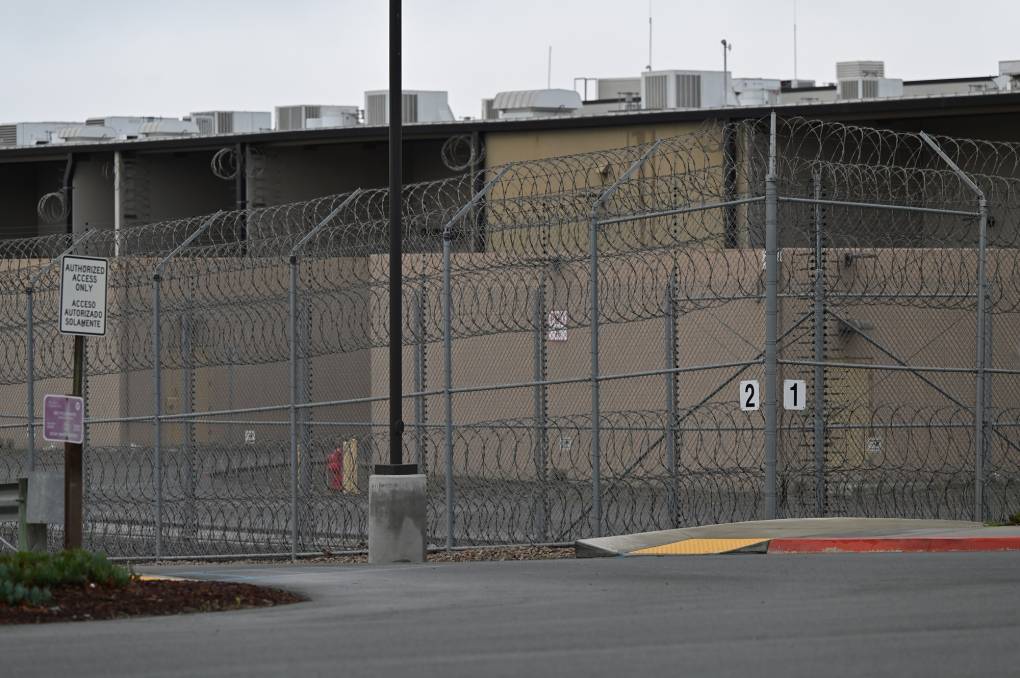
"caption": "A view of the CoreCivic Otay Mesa Detention Center in San Diego, California, on Feb. 7, 2025. The private institution has been plagued by allegations of medical negligence, abusive and retaliatory behavior against immigrants, sexual harassment, poor food and water quality and other dangerous conditions. ",
"credit": "Carlos Moreno/Anadolu via Getty Images",
"altTag": null,
"description": null,
"imgSizes": {
"medium": {
"file": "https://cdn.kqed.org/wp-content/uploads/sites/10/2025/05/CANewsroom1-800x532.jpg",
"width": 800,
"height": 532,
"mimeType": "image/jpeg"
},
"large": {
"file": "https://cdn.kqed.org/wp-content/uploads/sites/10/2025/05/CANewsroom1-1020x678.jpg",
"width": 1020,
"height": 678,
"mimeType": "image/jpeg"
},
"thumbnail": {
"file": "https://cdn.kqed.org/wp-content/uploads/sites/10/2025/05/CANewsroom1-160x106.jpg",
"width": 160,
"height": 106,
"mimeType": "image/jpeg"
},
"1536x1536": {
"file": "https://cdn.kqed.org/wp-content/uploads/sites/10/2025/05/CANewsroom1-1536x1021.jpg",
"width": 1536,
"height": 1021,
"mimeType": "image/jpeg"
},
"post-thumbnail": {
"file": "https://cdn.kqed.org/wp-content/uploads/sites/10/2025/05/CANewsroom1-672x372.jpg",
"width": 672,
"height": 372,
"mimeType": "image/jpeg"
},
"twentyfourteen-full-width": {
"file": "https://cdn.kqed.org/wp-content/uploads/sites/10/2025/05/CANewsroom1-1038x576.jpg",
"width": 1038,
"height": 576,
"mimeType": "image/jpeg"
},
"full-width": {
"file": "https://cdn.kqed.org/wp-content/uploads/sites/10/2025/05/CANewsroom1-1920x1277.jpg",
"width": 1920,
"height": 1277,
"mimeType": "image/jpeg"
},
"kqedFullSize": {
"file": "https://cdn.kqed.org/wp-content/uploads/sites/10/2025/05/CANewsroom1.jpg",
"width": 2000,
"height": 1330
}
},
"isLoading": false,
"fetchFailed": false
},
"news_12029489": {
"type": "attachments",
"id": "news_12029489",
"meta": {
"index": "attachments_1716263798",
"site": "news",
"id": "12029489",
"found": true
},
"title": "US-POLITICS-ENVIRONMENT-NATURE-PARKS-PROTEST",
"publishDate": 1741040569,
"status": "inherit",
"parent": 12029182,
"modified": 1741040606,
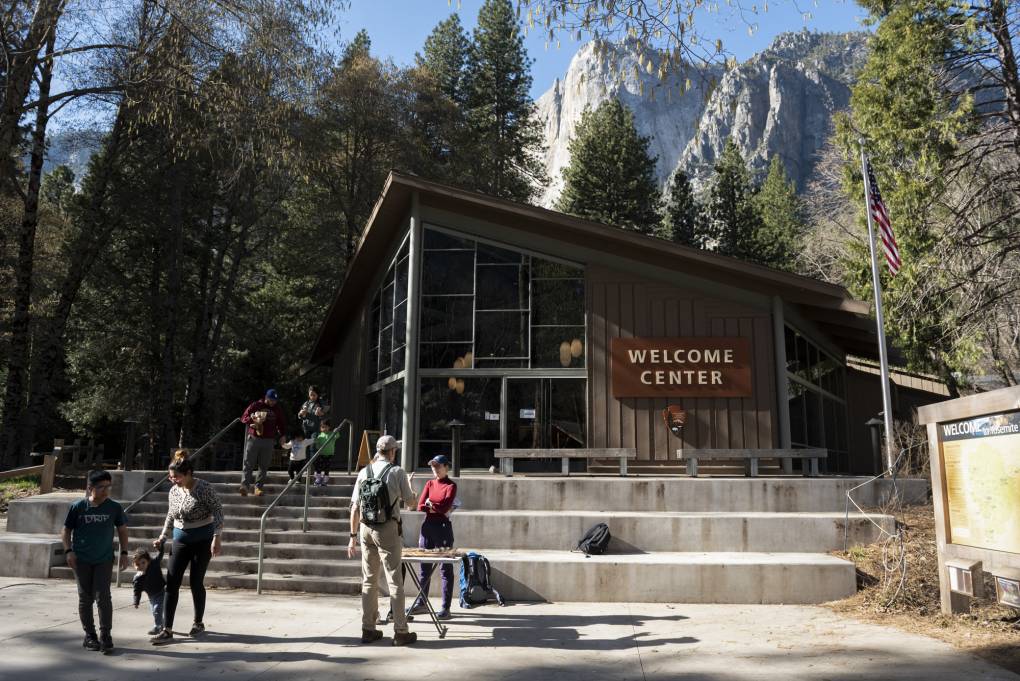
"caption": "A volunteer for the National Park Service welcomes visitors at the Exploration Center in Yosemite Valley, at Yosemite National Park on March 1, 2025.",
"credit": "Laure Andrillon/AFP via Getty",
"altTag": null,
"description": null,
"imgSizes": {
"medium": {
"file": "https://cdn.kqed.org/wp-content/uploads/sites/10/2025/03/CaliforniaPublicLandsGetty1-800x534.jpg",
"width": 800,
"height": 534,
"mimeType": "image/jpeg"
},
"large": {
"file": "https://cdn.kqed.org/wp-content/uploads/sites/10/2025/03/CaliforniaPublicLandsGetty1-1020x681.jpg",
"width": 1020,
"height": 681,
"mimeType": "image/jpeg"
},
"thumbnail": {
"file": "https://cdn.kqed.org/wp-content/uploads/sites/10/2025/03/CaliforniaPublicLandsGetty1-160x107.jpg",
"width": 160,
"height": 107,
"mimeType": "image/jpeg"
},
"1536x1536": {
"file": "https://cdn.kqed.org/wp-content/uploads/sites/10/2025/03/CaliforniaPublicLandsGetty1-1536x1025.jpg",
"width": 1536,
"height": 1025,
"mimeType": "image/jpeg"
},
"post-thumbnail": {
"file": "https://cdn.kqed.org/wp-content/uploads/sites/10/2025/03/CaliforniaPublicLandsGetty1-672x372.jpg",
"width": 672,
"height": 372,
"mimeType": "image/jpeg"
},
"twentyfourteen-full-width": {
"file": "https://cdn.kqed.org/wp-content/uploads/sites/10/2025/03/CaliforniaPublicLandsGetty1-1038x576.jpg",
"width": 1038,
"height": 576,
"mimeType": "image/jpeg"
},
"full-width": {
"file": "https://cdn.kqed.org/wp-content/uploads/sites/10/2025/03/CaliforniaPublicLandsGetty1-1920x1282.jpg",
"width": 1920,
"height": 1282,
"mimeType": "image/jpeg"
},
"kqedFullSize": {
"file": "https://cdn.kqed.org/wp-content/uploads/sites/10/2025/03/CaliforniaPublicLandsGetty1.jpg",
"width": 2000,
"height": 1335
}
},
"isLoading": false,
"fetchFailed": false
},
"news_12031870": {
"type": "attachments",
"id": "news_12031870",
"meta": {
"index": "attachments_1716263798",
"site": "news",
"id": "12031870",
"found": true
},
"title": "US-FRAUD-AUTOMOBILE-INTERNET-MUSK-TWITTER",
"publishDate": 1742324979,
"status": "inherit",
"parent": 12081802,
"modified": 1777579953,
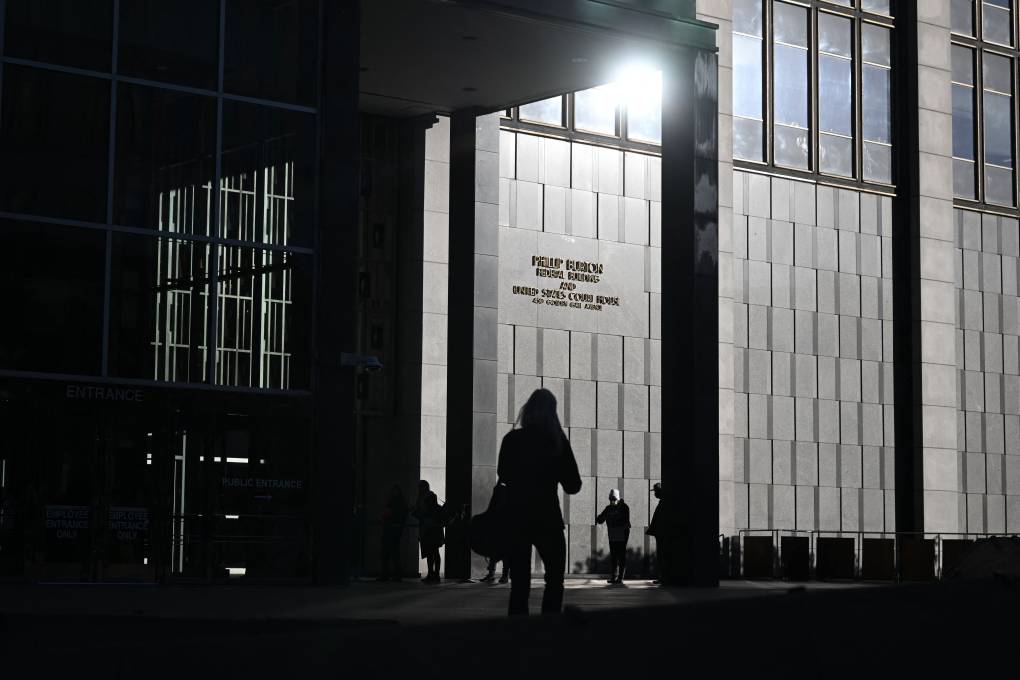
"caption": "The exterior of the Phillip Burton Federal Building and U.S. Courthouse in San Francisco, California, on Jan. 20, 2019. ",
"credit": "Patrick T. Fallon/AFP via Getty Images",
"altTag": null,
"description": null,
"imgSizes": {
"medium": {
"file": "https://cdn.kqed.org/wp-content/uploads/sites/10/2025/03/GettyImages-1246387515-800x533.jpg",
"width": 800,
"height": 533,
"mimeType": "image/jpeg"
},
"large": {
"file": "https://cdn.kqed.org/wp-content/uploads/sites/10/2025/03/GettyImages-1246387515-1020x680.jpg",
"width": 1020,
"height": 680,
"mimeType": "image/jpeg"
},
"thumbnail": {
"file": "https://cdn.kqed.org/wp-content/uploads/sites/10/2025/03/GettyImages-1246387515-160x107.jpg",
"width": 160,
"height": 107,
"mimeType": "image/jpeg"
},
"1536x1536": {
"file": "https://cdn.kqed.org/wp-content/uploads/sites/10/2025/03/GettyImages-1246387515-1536x1024.jpg",
"width": 1536,
"height": 1024,
"mimeType": "image/jpeg"
},
"2048x2048": {
"file": "https://cdn.kqed.org/wp-content/uploads/sites/10/2025/03/GettyImages-1246387515-2048x1365.jpg",
"width": 2048,
"height": 1365,
"mimeType": "image/jpeg"
},
"post-thumbnail": {
"file": "https://cdn.kqed.org/wp-content/uploads/sites/10/2025/03/GettyImages-1246387515-672x372.jpg",
"width": 672,
"height": 372,
"mimeType": "image/jpeg"
},
"twentyfourteen-full-width": {
"file": "https://cdn.kqed.org/wp-content/uploads/sites/10/2025/03/GettyImages-1246387515-1038x576.jpg",
"width": 1038,
"height": 576,
"mimeType": "image/jpeg"
},
"full-width": {
"file": "https://cdn.kqed.org/wp-content/uploads/sites/10/2025/03/GettyImages-1246387515-1920x1280.jpg",
"width": 1920,
"height": 1280,
"mimeType": "image/jpeg"
},
"kqedFullSize": {
"file": "https://cdn.kqed.org/wp-content/uploads/sites/10/2025/03/GettyImages-1246387515-scaled-e1742325160899.jpg",
"width": 2000,
"height": 1334
}
},
"isLoading": false,
"fetchFailed": false
},
"news_12039911": {
"type": "attachments",
"id": "news_12039911",
"meta": {
"index": "attachments_1716263798",
"site": "news",
"id": "12039911",
"found": true
},
"title": "250513-REENA ESMAIL-4-KQED",
"publishDate": 1747156319,
"status": "inherit",
"parent": 12040449,
"modified": 1747867383,
"caption": "Reena Esmail speaking to the orchestra at a rehearsal of Albany Symphony, with conductor David Alan Miller in May 2018. ",
"credit": "Courtesy of Reena Esmail",
"altTag": null,
"description": null,
"imgSizes": {
"medium": {
"file": "https://cdn.kqed.org/wp-content/uploads/sites/10/2025/05/250513-REENA-ESMAIL-4-KQED-800x534.jpg",
"width": 800,
"height": 534,
"mimeType": "image/jpeg"
},
"large": {
"file": "https://cdn.kqed.org/wp-content/uploads/sites/10/2025/05/250513-REENA-ESMAIL-4-KQED-1020x681.jpg",
"width": 1020,
"height": 681,
"mimeType": "image/jpeg"
},
"thumbnail": {
"file": "https://cdn.kqed.org/wp-content/uploads/sites/10/2025/05/250513-REENA-ESMAIL-4-KQED-160x107.jpg",
"width": 160,
"height": 107,
"mimeType": "image/jpeg"
},
"1536x1536": {
"file": "https://cdn.kqed.org/wp-content/uploads/sites/10/2025/05/250513-REENA-ESMAIL-4-KQED-1536x1026.jpg",
"width": 1536,
"height": 1026,
"mimeType": "image/jpeg"
},
"post-thumbnail": {
"file": "https://cdn.kqed.org/wp-content/uploads/sites/10/2025/05/250513-REENA-ESMAIL-4-KQED-672x372.jpg",
"width": 672,
"height": 372,
"mimeType": "image/jpeg"
},
"twentyfourteen-full-width": {
"file": "https://cdn.kqed.org/wp-content/uploads/sites/10/2025/05/250513-REENA-ESMAIL-4-KQED-1038x576.jpg",
"width": 1038,
"height": 576,
"mimeType": "image/jpeg"
},
"kqedFullSize": {
"file": "https://cdn.kqed.org/wp-content/uploads/sites/10/2025/05/250513-REENA-ESMAIL-4-KQED.jpg",
"width": 1682,
"height": 1123
}
},
"isLoading": false,
"fetchFailed": false
},
"news_12041604": {
"type": "attachments",
"id": "news_12041604",
"meta": {
"index": "attachments_1716263798",
"site": "news",
"id": "12041604",
"found": true
},
"title": "jon powell in Berkeley on May 9, 2025.",
"publishDate": 1748090827,
"status": "inherit",
"parent": 12040453,
"modified": 1748090841,
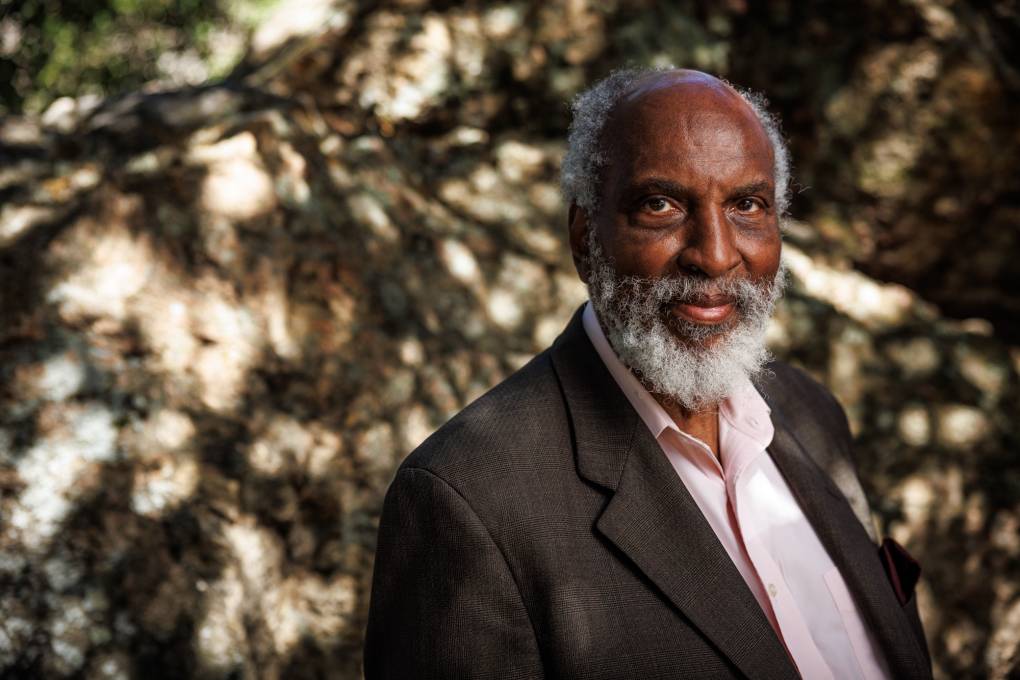
"caption": "jon powell in Berkeley on May 9, 2025.",
"credit": "Martin do Nascimento/KQED",
"altTag": null,
"description": null,
"imgSizes": {
"medium": {
"file": "https://cdn.kqed.org/wp-content/uploads/sites/10/2025/05/250509-JOHN-POWELL-MD-02-KQED-3-800x534.jpg",
"width": 800,
"height": 534,
"mimeType": "image/jpeg"
},
"large": {
"file": "https://cdn.kqed.org/wp-content/uploads/sites/10/2025/05/250509-JOHN-POWELL-MD-02-KQED-3-1020x680.jpg",
"width": 1020,
"height": 680,
"mimeType": "image/jpeg"
},
"thumbnail": {
"file": "https://cdn.kqed.org/wp-content/uploads/sites/10/2025/05/250509-JOHN-POWELL-MD-02-KQED-3-160x107.jpg",
"width": 160,
"height": 107,
"mimeType": "image/jpeg"
},
"1536x1536": {
"file": "https://cdn.kqed.org/wp-content/uploads/sites/10/2025/05/250509-JOHN-POWELL-MD-02-KQED-3-1536x1025.jpg",
"width": 1536,
"height": 1025,
"mimeType": "image/jpeg"
},
"post-thumbnail": {
"file": "https://cdn.kqed.org/wp-content/uploads/sites/10/2025/05/250509-JOHN-POWELL-MD-02-KQED-3-672x372.jpg",
"width": 672,
"height": 372,
"mimeType": "image/jpeg"
},
"twentyfourteen-full-width": {
"file": "https://cdn.kqed.org/wp-content/uploads/sites/10/2025/05/250509-JOHN-POWELL-MD-02-KQED-3-1038x576.jpg",
"width": 1038,
"height": 576,
"mimeType": "image/jpeg"
},
"full-width": {
"file": "https://cdn.kqed.org/wp-content/uploads/sites/10/2025/05/250509-JOHN-POWELL-MD-02-KQED-3-1920x1281.jpg",
"width": 1920,
"height": 1281,
"mimeType": "image/jpeg"
},
"kqedFullSize": {
"file": "https://cdn.kqed.org/wp-content/uploads/sites/10/2025/05/250509-JOHN-POWELL-MD-02-KQED-3.jpg",
"width": 2000,
"height": 1334
}
},
"isLoading": false,
"fetchFailed": false
},
"news_12039908": {
"type": "attachments",
"id": "news_12039908",
"meta": {
"index": "attachments_1716263798",
"site": "news",
"id": "12039908",
"found": true
},
"title": "250513-REENA ESMAIL-1-KQED",
"publishDate": 1747156305,
"status": "inherit",
"parent": 0,
"modified": 1747867909,
"caption": "Composer Reena Esmail speaks at the premiere of her work \"When the Violin\" in September 2018.",
"credit": "Courtesy of Reena Esmail",
"altTag": null,
"description": null,
"imgSizes": {
"medium": {
"file": "https://cdn.kqed.org/wp-content/uploads/sites/10/2025/05/250513-REENA-ESMAIL-1-KQED-800x533.jpg",
"width": 800,
"height": 533,
"mimeType": "image/jpeg"
},
"large": {
"file": "https://cdn.kqed.org/wp-content/uploads/sites/10/2025/05/250513-REENA-ESMAIL-1-KQED-1020x680.jpg",
"width": 1020,
"height": 680,
"mimeType": "image/jpeg"
},
"thumbnail": {
"file": "https://cdn.kqed.org/wp-content/uploads/sites/10/2025/05/250513-REENA-ESMAIL-1-KQED-160x107.jpg",
"width": 160,
"height": 107,
"mimeType": "image/jpeg"
},
"1536x1536": {
"file": "https://cdn.kqed.org/wp-content/uploads/sites/10/2025/05/250513-REENA-ESMAIL-1-KQED-1536x1024.jpg",
"width": 1536,
"height": 1024,
"mimeType": "image/jpeg"
},
"post-thumbnail": {
"file": "https://cdn.kqed.org/wp-content/uploads/sites/10/2025/05/250513-REENA-ESMAIL-1-KQED-672x372.jpg",
"width": 672,
"height": 372,
"mimeType": "image/jpeg"
},
"twentyfourteen-full-width": {
"file": "https://cdn.kqed.org/wp-content/uploads/sites/10/2025/05/250513-REENA-ESMAIL-1-KQED-1038x576.jpg",
"width": 1038,
"height": 576,
"mimeType": "image/jpeg"
},
"full-width": {
"file": "https://cdn.kqed.org/wp-content/uploads/sites/10/2025/05/250513-REENA-ESMAIL-1-KQED-1920x1280.jpg",
"width": 1920,
"height": 1280,
"mimeType": "image/jpeg"
},
"kqedFullSize": {
"file": "https://cdn.kqed.org/wp-content/uploads/sites/10/2025/05/250513-REENA-ESMAIL-1-KQED.jpg",
"width": 2000,
"height": 1333
}
},
"isLoading": false,
"fetchFailed": false
},
"news_11733297": {
"type": "attachments",
"id": "news_11733297",
"meta": {
"index": "attachments_1716263798",
"site": "news",
"id": "11733297",
"found": true
},
"title": "Wet Winter Weather Brings 'Super Bloom' Of Wildflowers To California",
"publishDate": 1552692501,
"status": "inherit",
"parent": 11732758,
"modified": 1747867312,
"caption": "A woman takes in the view of a ‘super bloom’ of wild poppies blanketing the hills of Walker Canyon on March 12, 2019, near Lake Elsinore, California. Heavier-than-normal winter rains in California have caused a ‘super bloom’ of wildflowers in various parts of the state.",
"credit": "Mario Tama/Getty Images",
"altTag": null,
"description": null,
"imgSizes": {
"thumbnail": {
"file": "https://cdn.kqed.org/wp-content/uploads/sites/10/2019/03/super-bloom_golden-poppy_wildflowers_person_california-qut-160x107.jpg",
"width": 160,
"height": 107,
"mimeType": "image/jpeg"
},
"medium": {
"file": "https://cdn.kqed.org/wp-content/uploads/sites/10/2019/03/super-bloom_golden-poppy_wildflowers_person_california-qut-800x533.jpg",
"width": 800,
"height": 533,
"mimeType": "image/jpeg"
},
"large": {
"file": "https://cdn.kqed.org/wp-content/uploads/sites/10/2019/03/super-bloom_golden-poppy_wildflowers_person_california-qut-1020x680.jpg",
"width": 1020,
"height": 680,
"mimeType": "image/jpeg"
},
"complete_open_graph": {
"file": "https://cdn.kqed.org/wp-content/uploads/sites/10/2019/03/super-bloom_golden-poppy_wildflowers_person_california-qut-1200x800.jpg",
"width": 1200,
"height": 800,
"mimeType": "image/jpeg"
},
"post-thumbnail": {
"file": "https://cdn.kqed.org/wp-content/uploads/sites/10/2019/03/super-bloom_golden-poppy_wildflowers_person_california-qut-672x372.jpg",
"width": 672,
"height": 372,
"mimeType": "image/jpeg"
},
"twentyfourteen-full-width": {
"file": "https://cdn.kqed.org/wp-content/uploads/sites/10/2019/03/super-bloom_golden-poppy_wildflowers_person_california-qut-1038x576.jpg",
"width": 1038,
"height": 576,
"mimeType": "image/jpeg"
},
"full-width": {
"file": "https://cdn.kqed.org/wp-content/uploads/sites/10/2019/03/super-bloom_golden-poppy_wildflowers_person_california-qut-1920x1280.jpg",
"width": 1920,
"height": 1280,
"mimeType": "image/jpeg"
},
"guest-author-32": {
"file": "https://cdn.kqed.org/wp-content/uploads/sites/10/2019/03/super-bloom_golden-poppy_wildflowers_person_california-qut-32x32.jpg",
"width": 32,
"height": 32,
"mimeType": "image/jpeg"
},
"guest-author-50": {
"file": "https://cdn.kqed.org/wp-content/uploads/sites/10/2019/03/super-bloom_golden-poppy_wildflowers_person_california-qut-50x50.jpg",
"width": 50,
"height": 50,
"mimeType": "image/jpeg"
},
"guest-author-64": {
"file": "https://cdn.kqed.org/wp-content/uploads/sites/10/2019/03/super-bloom_golden-poppy_wildflowers_person_california-qut-64x64.jpg",
"width": 64,
"height": 64,
"mimeType": "image/jpeg"
},
"guest-author-96": {
"file": "https://cdn.kqed.org/wp-content/uploads/sites/10/2019/03/super-bloom_golden-poppy_wildflowers_person_california-qut-96x96.jpg",
"width": 96,
"height": 96,
"mimeType": "image/jpeg"
},
"guest-author-128": {
"file": "https://cdn.kqed.org/wp-content/uploads/sites/10/2019/03/super-bloom_golden-poppy_wildflowers_person_california-qut-128x128.jpg",
"width": 128,
"height": 128,
"mimeType": "image/jpeg"
},
"kqedFullSize": {
"file": "https://cdn.kqed.org/wp-content/uploads/sites/10/2019/03/super-bloom_golden-poppy_wildflowers_person_california-qut.jpg",
"width": 1920,
"height": 1280
}
},
"isLoading": false,
"fetchFailed": false
},
"news_12030841": {
"type": "attachments",
"id": "news_12030841",
"meta": {
"index": "attachments_1716263798",
"site": "news",
"id": "12030841",
"found": true
},
"title": "Medicaid",
"publishDate": 1741733766,
"status": "inherit",
"parent": 12030830,
"modified": 1757976663,
"caption": "A \"Save Medicaid\" sign is affixed to the podium for the House Democrats' press event to oppose the Republicans' budget on the House steps of the Capitol on Feb. 25, 2024.",
"credit": "Bill Clark/CRoll Call, Inc., via Getty Images",
"altTag": null,
"description": null,
"imgSizes": {
"medium": {
"file": "https://cdn.kqed.org/wp-content/uploads/sites/10/2025/03/GettyImages-2201320740-800x533.jpg",
"width": 800,
"height": 533,
"mimeType": "image/jpeg"
},
"large": {
"file": "https://cdn.kqed.org/wp-content/uploads/sites/10/2025/03/GettyImages-2201320740-1020x680.jpg",
"width": 1020,
"height": 680,
"mimeType": "image/jpeg"
},
"thumbnail": {
"file": "https://cdn.kqed.org/wp-content/uploads/sites/10/2025/03/GettyImages-2201320740-160x107.jpg",
"width": 160,
"height": 107,
"mimeType": "image/jpeg"
},
"1536x1536": {
"file": "https://cdn.kqed.org/wp-content/uploads/sites/10/2025/03/GettyImages-2201320740-1536x1024.jpg",
"width": 1536,
"height": 1024,
"mimeType": "image/jpeg"
},
"post-thumbnail": {
"file": "https://cdn.kqed.org/wp-content/uploads/sites/10/2025/03/GettyImages-2201320740-672x372.jpg",
"width": 672,
"height": 372,
"mimeType": "image/jpeg"
},
"twentyfourteen-full-width": {
"file": "https://cdn.kqed.org/wp-content/uploads/sites/10/2025/03/GettyImages-2201320740-1038x576.jpg",
"width": 1038,
"height": 576,
"mimeType": "image/jpeg"
},
"full-width": {
"file": "https://cdn.kqed.org/wp-content/uploads/sites/10/2025/03/GettyImages-2201320740-1920x1280.jpg",
"width": 1920,
"height": 1280,
"mimeType": "image/jpeg"
},
"kqedFullSize": {
"file": "https://cdn.kqed.org/wp-content/uploads/sites/10/2025/03/GettyImages-2201320740.jpg",
"width": 2000,
"height": 1333
}
},
"isLoading": false,
"fetchFailed": false
},
"news_12041273": {
"type": "attachments",
"id": "news_12041273",
"meta": {
"index": "attachments_1716263798",
"site": "news",
"id": "12041273",
"found": true
},
"title": "APTOPIX Plane-Crash-San-Diego",
"publishDate": 1747935465,
"status": "inherit",
"parent": 12041261,
"modified": 1747935544,
"caption": "Authorities work the scene where a small plane crashed into a San Diego neighborhood, setting several homes on fire and forcing evacuations along many blocks early Thursday, May 22, 2025.",
"credit": "Gregory Bull/AP Photo",
"altTag": null,
"description": null,
"imgSizes": {
"medium": {
"file": "https://cdn.kqed.org/wp-content/uploads/sites/10/2025/05/SanDiegoCrashAP1-800x533.jpg",
"width": 800,
"height": 533,
"mimeType": "image/jpeg"
},
"large": {
"file": "https://cdn.kqed.org/wp-content/uploads/sites/10/2025/05/SanDiegoCrashAP1-1020x680.jpg",
"width": 1020,
"height": 680,
"mimeType": "image/jpeg"
},
"thumbnail": {
"file": "https://cdn.kqed.org/wp-content/uploads/sites/10/2025/05/SanDiegoCrashAP1-160x107.jpg",
"width": 160,
"height": 107,
"mimeType": "image/jpeg"
},
"1536x1536": {
"file": "https://cdn.kqed.org/wp-content/uploads/sites/10/2025/05/SanDiegoCrashAP1-1536x1024.jpg",
"width": 1536,
"height": 1024,
"mimeType": "image/jpeg"
},
"post-thumbnail": {
"file": "https://cdn.kqed.org/wp-content/uploads/sites/10/2025/05/SanDiegoCrashAP1-672x372.jpg",
"width": 672,
"height": 372,
"mimeType": "image/jpeg"
},
"twentyfourteen-full-width": {
"file": "https://cdn.kqed.org/wp-content/uploads/sites/10/2025/05/SanDiegoCrashAP1-1038x576.jpg",
"width": 1038,
"height": 576,
"mimeType": "image/jpeg"
},
"full-width": {
"file": "https://cdn.kqed.org/wp-content/uploads/sites/10/2025/05/SanDiegoCrashAP1-1920x1280.jpg",
"width": 1920,
"height": 1280,
"mimeType": "image/jpeg"
},
"kqedFullSize": {
"file": "https://cdn.kqed.org/wp-content/uploads/sites/10/2025/05/SanDiegoCrashAP1.jpg",
"width": 2000,
"height": 1333
}
},
"isLoading": false,
"fetchFailed": false
},
"news_12020002": {
"type": "attachments",
"id": "news_12020002",
"meta": {
"index": "attachments_1716263798",
"site": "news",
"id": "12020002",
"found": true
},
"title": "241010-RiseEastDeepDown-07-BL",
"publishDate": 1735589948,
"status": "inherit",
"parent": 0,
"modified": 1735590174,
"caption": "Selena Wilson, CEO of the East Oakland Youth Development Center, leads a fundraising walking tour for the Rise East collective along International Boulevard in Oakland on Oct. 10, 2024.",
"credit": "Beth LaBerge/KQED",
"altTag": null,
"description": null,
"imgSizes": {
"medium": {
"file": "https://cdn.kqed.org/wp-content/uploads/sites/10/2024/12/241010-RiseEastDeepDown-07-BL-800x533.jpg",
"width": 800,
"height": 533,
"mimeType": "image/jpeg"
},
"large": {
"file": "https://cdn.kqed.org/wp-content/uploads/sites/10/2024/12/241010-RiseEastDeepDown-07-BL-1020x680.jpg",
"width": 1020,
"height": 680,
"mimeType": "image/jpeg"
},
"thumbnail": {
"file": "https://cdn.kqed.org/wp-content/uploads/sites/10/2024/12/241010-RiseEastDeepDown-07-BL-160x107.jpg",
"width": 160,
"height": 107,
"mimeType": "image/jpeg"
},
"1536x1536": {
"file": "https://cdn.kqed.org/wp-content/uploads/sites/10/2024/12/241010-RiseEastDeepDown-07-BL-1536x1024.jpg",
"width": 1536,
"height": 1024,
"mimeType": "image/jpeg"
},
"post-thumbnail": {
"file": "https://cdn.kqed.org/wp-content/uploads/sites/10/2024/12/241010-RiseEastDeepDown-07-BL-672x372.jpg",
"width": 672,
"height": 372,
"mimeType": "image/jpeg"
},
"twentyfourteen-full-width": {
"file": "https://cdn.kqed.org/wp-content/uploads/sites/10/2024/12/241010-RiseEastDeepDown-07-BL-1038x576.jpg",
"width": 1038,
"height": 576,
"mimeType": "image/jpeg"
},
"full-width": {
"file": "https://cdn.kqed.org/wp-content/uploads/sites/10/2024/12/241010-RiseEastDeepDown-07-BL-1920x1280.jpg",
"width": 1920,
"height": 1280,
"mimeType": "image/jpeg"
},
"kqedFullSize": {
"file": "https://cdn.kqed.org/wp-content/uploads/sites/10/2024/12/241010-RiseEastDeepDown-07-BL.jpg",
"width": 2000,
"height": 1333
}
},
"isLoading": false,
"fetchFailed": false
},
"news_11988062": {
"type": "attachments",
"id": "news_11988062",
"meta": {
"index": "attachments_1716263798",
"site": "news",
"id": "11988062",
"found": true
},
"title": "240517-TKBilingualLearners-98-BL_qut",
"publishDate": 1717007060,
"status": "inherit",
"parent": 11989465,
"modified": 1717795731,
"caption": "Students raise their hands in a bilingual transitional kindergarten class at Global Family Elementary School in Oakland.",
"credit": "Beth LaBerge/KQED",
"altTag": "A young student stands and raises her hand in class as other students around her remain seated in a classroom",
"description": null,
"imgSizes": {
"medium": {
"file": "https://cdn.kqed.org/wp-content/uploads/sites/10/2024/05/240517-TKBilingualLearners-98-BL_qut-800x533.jpg",
"width": 800,
"height": 533,
"mimeType": "image/jpeg"
},
"large": {
"file": "https://cdn.kqed.org/wp-content/uploads/sites/10/2024/05/240517-TKBilingualLearners-98-BL_qut-1020x680.jpg",
"width": 1020,
"height": 680,
"mimeType": "image/jpeg"
},
"thumbnail": {
"file": "https://cdn.kqed.org/wp-content/uploads/sites/10/2024/05/240517-TKBilingualLearners-98-BL_qut-160x107.jpg",
"width": 160,
"height": 107,
"mimeType": "image/jpeg"
},
"1536x1536": {
"file": "https://cdn.kqed.org/wp-content/uploads/sites/10/2024/05/240517-TKBilingualLearners-98-BL_qut-1536x1024.jpg",
"width": 1536,
"height": 1024,
"mimeType": "image/jpeg"
},
"post-thumbnail": {
"file": "https://cdn.kqed.org/wp-content/uploads/sites/10/2024/05/240517-TKBilingualLearners-98-BL_qut-672x372.jpg",
"width": 672,
"height": 372,
"mimeType": "image/jpeg"
},
"twentyfourteen-full-width": {
"file": "https://cdn.kqed.org/wp-content/uploads/sites/10/2024/05/240517-TKBilingualLearners-98-BL_qut-1038x576.jpg",
"width": 1038,
"height": 576,
"mimeType": "image/jpeg"
},
"kqedFullSize": {
"file": "https://cdn.kqed.org/wp-content/uploads/sites/10/2024/05/240517-TKBilingualLearners-98-BL_qut.jpg",
"width": 1920,
"height": 1280
}
},
"isLoading": false,
"fetchFailed": false
},
"news_12040001": {
"type": "attachments",
"id": "news_12040001",
"meta": {
"index": "attachments_1716263798",
"site": "news",
"id": "12040001",
"found": true
},
"title": "250513-HUD FUNDS-MD-05-KQED",
"publishDate": 1747191099,
"status": "inherit",
"parent": 0,
"modified": 1747785109,
"caption": "The courtyard at the Bishop Swing Community House supportive housing center in San Francisco, on May 13, 2025.",
"credit": "Martin do Nascimento/KQED",
"altTag": null,
"description": null,
"imgSizes": {
"medium": {
"file": "https://cdn.kqed.org/wp-content/uploads/sites/10/2025/05/250513-HUD-FUNDS-MD-05-KQED-800x534.jpg",
"width": 800,
"height": 534,
"mimeType": "image/jpeg"
},
"large": {
"file": "https://cdn.kqed.org/wp-content/uploads/sites/10/2025/05/250513-HUD-FUNDS-MD-05-KQED-1020x680.jpg",
"width": 1020,
"height": 680,
"mimeType": "image/jpeg"
},
"thumbnail": {
"file": "https://cdn.kqed.org/wp-content/uploads/sites/10/2025/05/250513-HUD-FUNDS-MD-05-KQED-160x107.jpg",
"width": 160,
"height": 107,
"mimeType": "image/jpeg"
},
"1536x1536": {
"file": "https://cdn.kqed.org/wp-content/uploads/sites/10/2025/05/250513-HUD-FUNDS-MD-05-KQED-1536x1025.jpg",
"width": 1536,
"height": 1025,
"mimeType": "image/jpeg"
},
"post-thumbnail": {
"file": "https://cdn.kqed.org/wp-content/uploads/sites/10/2025/05/250513-HUD-FUNDS-MD-05-KQED-672x372.jpg",
"width": 672,
"height": 372,
"mimeType": "image/jpeg"
},
"twentyfourteen-full-width": {
"file": "https://cdn.kqed.org/wp-content/uploads/sites/10/2025/05/250513-HUD-FUNDS-MD-05-KQED-1038x576.jpg",
"width": 1038,
"height": 576,
"mimeType": "image/jpeg"
},
"full-width": {
"file": "https://cdn.kqed.org/wp-content/uploads/sites/10/2025/05/250513-HUD-FUNDS-MD-05-KQED-1920x1281.jpg",
"width": 1920,
"height": 1281,
"mimeType": "image/jpeg"
},
"kqedFullSize": {
"file": "https://cdn.kqed.org/wp-content/uploads/sites/10/2025/05/250513-HUD-FUNDS-MD-05-KQED.jpg",
"width": 2000,
"height": 1334
}
},
"isLoading": false,
"fetchFailed": false
}
},
"audioPlayerReducer": {
"postId": "stream_live",
"isPaused": true,
"isPlaying": false,
"pfsActive": false,
"pledgeModalIsOpen": true,
"playerDrawerIsOpen": false,
"liveAudioPlayStartedAt": 0,
"liveAudioPlayContext": ""
},
"authorsReducer": {
"byline_news_12041326": {
"type": "authors",
"id": "byline_news_12041326",
"meta": {
"override": true
},
"slug": "byline_news_12041326",
"name": "Mark Betancourt, The California Newsroom",
"isLoading": false
},
"byline_news_12041261": {
"type": "authors",
"id": "byline_news_12041261",
"meta": {
"override": true
},
"slug": "byline_news_12041261",
"name": "Julie Watson, Associated Press",
"isLoading": false
},
"sracho": {
"type": "authors",
"id": "107",
"meta": {
"index": "authors_1716337520",
"id": "107",
"found": true
},
"name": "Suzie Racho",
"firstName": "Suzie",
"lastName": "Racho",
"slug": "sracho",
"email": "SRacho@KQED.org",
"display_author_email": false,
"staff_mastheads": [
"news"
],
"title": "KQED Contributor",
"bio": "Suzie Racho is a correspondent-producer with \u003cem>The California Report Magazine\u003c/em>\u003cem>. S\u003c/em>he has also worked with several other KQED productions, including Bay Curious, Truth Be Told, The Do List and KQED News.\r\n\r\nSuzie came to KQED in 1996 after receiving a BA in journalism from San Francisco State University and spending several years working in the music industry. As part of \u003cem>The California Report\u003c/em> team, her work has been recognized by the Society for Professional Journalists, National Federation of Community Broadcasters and Public Radio News Directors Incorporated, among others. She was recognized with a national Gracie Award in 2019. She spends her free time baking, listening to K-pop and rooting for the Giants and Valkyries.",
"avatar": "https://secure.gravatar.com/avatar/842e457a9830b0f3c1ce3ab70ed3518d616d1e25e315c6292eab8cd611d98601?s=600&d=blank&r=g",
"twitter": null,
"bluesky": null,
"facebook": null,
"instagram": null,
"linkedin": null,
"sites": [
{
"site": "arts",
"roles": [
"editor"
]
},
{
"site": "news",
"roles": [
"editor"
]
}
],
"headData": {
"title": "Suzie Racho | KQED",
"description": "KQED Contributor",
"ogImgSrc": "https://secure.gravatar.com/avatar/842e457a9830b0f3c1ce3ab70ed3518d616d1e25e315c6292eab8cd611d98601?s=600&d=blank&r=g",
"twImgSrc": "https://secure.gravatar.com/avatar/842e457a9830b0f3c1ce3ab70ed3518d616d1e25e315c6292eab8cd611d98601?s=600&d=blank&r=g"
},
"isLoading": false,
"link": "/author/sracho"
},
"gmarzorati": {
"type": "authors",
"id": "227",
"meta": {
"index": "authors_1716337520",
"id": "227",
"found": true
},
"name": "Guy Marzorati",
"firstName": "Guy",
"lastName": "Marzorati",
"slug": "gmarzorati",
"email": "gmarzorati@KQED.org",
"display_author_email": true,
"staff_mastheads": [
"news"
],
"title": "Correspondent",
"bio": "Guy Marzorati is a correspondent on KQED's California Politics and Government Desk, based in San Jose. A graduate of Santa Clara University, Guy joined KQED in 2013. He reports on state and local politics and produces KQED's digital voter guide.",
"avatar": "https://secure.gravatar.com/avatar/e7038b8dbfd55b104369b76b1cd0b9de?s=600&d=blank&r=g",
"twitter": "guymarzorati",
"facebook": null,
"instagram": null,
"linkedin": null,
"sites": [
{
"site": "",
"roles": [
"editor"
]
},
{
"site": "news",
"roles": [
"editor"
]
},
{
"site": "science",
"roles": [
"editor"
]
},
{
"site": "forum",
"roles": [
"editor"
]
},
{
"site": "elections",
"roles": [
"editor"
]
},
{
"site": "liveblog",
"roles": [
"editor"
]
}
],
"headData": {
"title": "Guy Marzorati | KQED",
"description": "Correspondent",
"ogImgSrc": "https://secure.gravatar.com/avatar/e7038b8dbfd55b104369b76b1cd0b9de?s=600&d=blank&r=g",
"twImgSrc": "https://secure.gravatar.com/avatar/e7038b8dbfd55b104369b76b1cd0b9de?s=600&d=blank&r=g"
},
"isLoading": false,
"link": "/author/gmarzorati"
},
"kqed": {
"type": "authors",
"id": "236",
"meta": {
"index": "authors_1716337520",
"id": "236",
"found": true
},
"name": "KQED News Staff",
"firstName": "KQED News Staff",
"lastName": null,
"slug": "kqed",
"email": "faq@kqed.org",
"display_author_email": false,
"staff_mastheads": [],
"title": null,
"bio": null,
"avatar": "https://secure.gravatar.com/avatar/ef0e801a68c4c54afa9180db14084167?s=600&d=blank&r=g",
"twitter": null,
"facebook": null,
"instagram": null,
"linkedin": null,
"sites": [
{
"site": "arts",
"roles": [
"contributor"
]
},
{
"site": "news",
"roles": [
"editor"
]
},
{
"site": "futureofyou",
"roles": [
"author"
]
}
],
"headData": {
"title": "KQED News Staff | KQED",
"description": null,
"ogImgSrc": "https://secure.gravatar.com/avatar/ef0e801a68c4c54afa9180db14084167?s=600&d=blank&r=g",
"twImgSrc": "https://secure.gravatar.com/avatar/ef0e801a68c4c54afa9180db14084167?s=600&d=blank&r=g"
},
"isLoading": false,
"link": "/author/kqed"
},
"minakim": {
"type": "authors",
"id": "243",
"meta": {
"index": "authors_1716337520",
"id": "243",
"found": true
},
"name": "Mina Kim",
"firstName": "Mina",
"lastName": "Kim",
"slug": "minakim",
"email": "mkim@kqed.org",
"display_author_email": false,
"staff_mastheads": [
"news"
],
"title": "Host, Forum",
"bio": "Mina Kim is host of the 10 a.m. statewide hour of Forum; a live daily talk show for curious Californians on issues that matter to the state and nation, with a particular emphasis on race and equity.\r\n\r\nBefore joining the Forum team, Mina was KQED’s evening news anchor, and health reporter for The California Report. Her award-winning work has included natural disasters in Napa and gun violence in Oakland. Mina grew up in St. John’s, Newfoundland.",
"avatar": "https://secure.gravatar.com/avatar/145ce657a2d08cb86d93686beb958982?s=600&d=blank&r=g",
"twitter": "mkimreporter",
"facebook": null,
"instagram": null,
"linkedin": null,
"sites": [
{
"site": "news",
"roles": [
"contributor"
]
},
{
"site": "stateofhealth",
"roles": [
"author"
]
},
{
"site": "forum",
"roles": [
"editor"
]
}
],
"headData": {
"title": "Mina Kim | KQED",
"description": "Host, Forum",
"ogImgSrc": "https://secure.gravatar.com/avatar/145ce657a2d08cb86d93686beb958982?s=600&d=blank&r=g",
"twImgSrc": "https://secure.gravatar.com/avatar/145ce657a2d08cb86d93686beb958982?s=600&d=blank&r=g"
},
"isLoading": false,
"link": "/author/minakim"
},
"sasha-khokha": {
"type": "authors",
"id": "254",
"meta": {
"index": "authors_1716337520",
"id": "254",
"found": true
},
"name": "Sasha Khokha",
"firstName": "Sasha",
"lastName": "Khokha",
"slug": "sasha-khokha",
"email": "skhokha@kqed.org",
"display_author_email": true,
"staff_mastheads": [
"news"
],
"title": "Host, The California Report Magazine",
"bio": "Sasha Khokha is the host of \u003cem>The California Report's \u003c/em> weekly magazine program, which takes listeners on sound-rich excursions to meet the people that make the Golden State unique -- through audio documentaries and long-form stories. As \u003cem>The California Report's\u003c/em> Central Valley Bureau Chief based in Fresno for nearly a dozen years, Sasha brought the lives and concerns of rural Californians to listeners around the state. Her reporting helped expose the hidden price immigrant women janitors and farmworkers may pay to keep their jobs: sexual assault at work. It inspired two new California laws to protect them from sexual harassment. She was a key member of the reporting team for the Frontline film \u003cem>Rape on the Night Shift, \u003c/em>which was nominated for two national Emmys. Sasha has also won a national Edward R. Murrow and a national PRNDI award for investigative reporting, as well as multiple prizes from the Society for Professional Journalists. Sasha is a proud alum of the UC Berkeley Graduate School of Journalism and Brown University and a member of the South Asian Journalists Association.",
"avatar": "https://secure.gravatar.com/avatar/e4b5e1541aaeea2aa356aa1fb2a68950?s=600&d=blank&r=g",
"twitter": "KQEDSashaKhokha",
"facebook": null,
"instagram": null,
"linkedin": null,
"sites": [
{
"site": "news",
"roles": [
"editor"
]
},
{
"site": "stateofhealth",
"roles": [
"author"
]
},
{
"site": "science",
"roles": [
"author"
]
},
{
"site": "quest",
"roles": [
"subscriber"
]
}
],
"headData": {
"title": "Sasha Khokha | KQED",
"description": "Host, The California Report Magazine",
"ogImgSrc": "https://secure.gravatar.com/avatar/e4b5e1541aaeea2aa356aa1fb2a68950?s=600&d=blank&r=g",
"twImgSrc": "https://secure.gravatar.com/avatar/e4b5e1541aaeea2aa356aa1fb2a68950?s=600&d=blank&r=g"
},
"isLoading": false,
"link": "/author/sasha-khokha"
},
"mlagos": {
"type": "authors",
"id": "3239",
"meta": {
"index": "authors_1716337520",
"id": "3239",
"found": true
},
"name": "Marisa Lagos",
"firstName": "Marisa",
"lastName": "Lagos",
"slug": "mlagos",
"email": "mlagos@kqed.org",
"display_author_email": false,
"staff_mastheads": [
"news"
],
"title": "KQED Contributor",
"bio": "Marisa Lagos is a correspondent for KQED’s California Politics and Government Desk and co-hosts the award-winning show and podcast, Political Breakdown. At KQED, Lagos also conducts reporting, analysis and investigations into state, local and national politics for radio, TV, online and onstage. In 2022, she and co-host, Scott Shafer, moderated the only gubernatorial debate in California. In 2020, the \u003ci>Washington Post\u003c/i> named her one of the top political journalists in California; she was nominated for a Peabody and won several other awards for her work investigating the 2017 California wildfires. She has worked at the \u003ci>San Francisco Chronicle\u003c/i>, \u003ci>San Francisco Examiner\u003c/i> and \u003ci>Los Angeles Times\u003c/i>. A UC Santa Barbara graduate, she lives in San Francisco with her two sons and husband.",
"avatar": "https://secure.gravatar.com/avatar/a261a0d3696fc066871ef96b85b5e7d2?s=600&d=blank&r=g",
"twitter": "@mlagos",
"facebook": null,
"instagram": null,
"linkedin": null,
"sites": [
{
"site": "arts",
"roles": [
"author"
]
},
{
"site": "news",
"roles": [
"editor"
]
},
{
"site": "science",
"roles": [
"editor"
]
},
{
"site": "forum",
"roles": [
"author"
]
},
{
"site": "liveblog",
"roles": [
"author"
]
}
],
"headData": {
"title": "Marisa Lagos | KQED",
"description": "KQED Contributor",
"ogImgSrc": "https://secure.gravatar.com/avatar/a261a0d3696fc066871ef96b85b5e7d2?s=600&d=blank&r=g",
"twImgSrc": "https://secure.gravatar.com/avatar/a261a0d3696fc066871ef96b85b5e7d2?s=600&d=blank&r=g"
},
"isLoading": false,
"link": "/author/mlagos"
},
"jsmall": {
"type": "authors",
"id": "6625",
"meta": {
"index": "authors_1716337520",
"id": "6625",
"found": true
},
"name": "Julie Small",
"firstName": "Julie",
"lastName": "Small",
"slug": "jsmall",
"email": "jsmall@kqed.org",
"display_author_email": true,
"staff_mastheads": [
"news"
],
"title": "KQED Contributor",
"bio": "Julie Small reports on criminal justice and immigration.\r\n\r\nShe was part of a team at KQED awarded a regional 2019 Edward R. Murrow award for continuing coverage of the Trump Administration's family separation policy.\r\n\r\nThe Society for Professional Journalists recognized Julie's 2018 \u003ca href=\"https://www.kqed.org/news/11636262/the-officer-tased-him-31-times-the-sheriff-called-his-death-an-accident\">reporting\u003c/a> on the San Joaquin County Sheriff's \u003ca href=\"https://www.kqed.org/news/11634689/autopsy-doctors-sheriff-overrode-death-findings-to-protect-law-enforcement\">interference\u003c/a> in death investigations with an Excellence in Journalism Award for Ongoing Coverage.\r\n\r\nJulie's\u003ca href=\"https://www.kqed.org/news/11039666/two-mentally-ill-inmates-died-one-month-in-santa-clara\"> reporting\u003c/a> with Lisa Pickoff-White on the treatment of mentally ill offenders in California jails earned a 2017 regional Edward R. Murrow Award for news reporting and an investigative reporting award from the SPJ of Northern California.\r\n\r\nBefore joining KQED, Julie covered government and politics in Sacramento for Southern California Public Radio (SCPR). Her 2010 \u003ca href=\"https://www.scpr.org/specials/prisonmedical/\">series\u003c/a> on lapses in California’s prison medical care also won a regional Edward R. Murrow Award for investigative reporting and a Golden Mic Award from the RTNDA of Southern California.\r\n\r\nJulie began her career in journalism in 2000 as the deputy foreign editor for public radio's \u003cem>Marketplace, \u003c/em>while earning her master's degree in journalism from USC’s Annenberg School of Communication.",
"avatar": "https://secure.gravatar.com/avatar/4baedf201468df97be97c2a9dd7585d0?s=600&d=blank&r=g",
"twitter": "@SmallRadio2",
"facebook": null,
"instagram": null,
"linkedin": null,
"sites": [
{
"site": "news",
"roles": [
"editor"
]
},
{
"site": "stateofhealth",
"roles": [
"author"
]
},
{
"site": "science",
"roles": [
"author"
]
}
],
"headData": {
"title": "Julie Small | KQED",
"description": "KQED Contributor",
"ogImgSrc": "https://secure.gravatar.com/avatar/4baedf201468df97be97c2a9dd7585d0?s=600&d=blank&r=g",
"twImgSrc": "https://secure.gravatar.com/avatar/4baedf201468df97be97c2a9dd7585d0?s=600&d=blank&r=g"
},
"isLoading": false,
"link": "/author/jsmall"
},
"otaylor": {
"type": "authors",
"id": "11770",
"meta": {
"index": "authors_1716337520",
"id": "11770",
"found": true
},
"name": "Otis R. Taylor Jr.",
"firstName": "Otis R.",
"lastName": "Taylor Jr.",
"slug": "otaylor",
"email": "otaylor@kqed.org",
"display_author_email": false,
"staff_mastheads": [
"news"
],
"title": "KQED Editor",
"bio": null,
"avatar": "https://secure.gravatar.com/avatar/fe73e14d4842ac8e1c03d57def2530f57f1c5b0ca7d4a987ccc5bd90956cb7c6?s=600&d=mm&r=g",
"twitter": "otisrtaylorjr",
"bluesky": null,
"facebook": null,
"instagram": null,
"linkedin": null,
"sites": [
{
"site": "arts",
"roles": [
"editor"
]
},
{
"site": "news",
"roles": [
"subscriber"
]
},
{
"site": "science",
"roles": [
"subscriber"
]
},
{
"site": "liveblog",
"roles": [
"subscriber"
]
}
],
"headData": {
"title": "Otis R. Taylor Jr. | KQED",
"description": "KQED Editor",
"ogImgSrc": "https://secure.gravatar.com/avatar/fe73e14d4842ac8e1c03d57def2530f57f1c5b0ca7d4a987ccc5bd90956cb7c6?s=600&d=mm&r=g",
"twImgSrc": "https://secure.gravatar.com/avatar/fe73e14d4842ac8e1c03d57def2530f57f1c5b0ca7d4a987ccc5bd90956cb7c6?s=600&d=mm&r=g"
},
"isLoading": false,
"link": "/author/otaylor"
},
"daisynguyen": {
"type": "authors",
"id": "11829",
"meta": {
"index": "authors_1716337520",
"id": "11829",
"found": true
},
"name": "Daisy Nguyen",
"firstName": "Daisy",
"lastName": "Nguyen",
"slug": "daisynguyen",
"email": "daisynguyen@kqed.org",
"display_author_email": true,
"staff_mastheads": [
"news"
],
"title": "KQED Contributor",
"bio": "I have covered early childhood education and child care for KQED since 2022. I focus on policies aimed at increasing access to early care and education and how they shape individual lives. I've been a journalist for more than two decades, with most of that time devoted to covering breaking news throughout California for The Associated Press. I grew up in San Francisco and studied at UC Davis and Columbia University's Graduate School of Journalism. I live in Oakland with my husband and two kids.",
"avatar": "https://secure.gravatar.com/avatar/2da2127c27f7143b53ebd419800fd55f?s=600&d=blank&r=g",
"twitter": null,
"facebook": null,
"instagram": null,
"linkedin": "https://www.linkedin.com/in/daisynguyen/",
"sites": [
{
"site": "news",
"roles": [
"author"
]
},
{
"site": "liveblog",
"roles": [
"author"
]
}
],
"headData": {
"title": "Daisy Nguyen | KQED",
"description": "KQED Contributor",
"ogImgSrc": "https://secure.gravatar.com/avatar/2da2127c27f7143b53ebd419800fd55f?s=600&d=blank&r=g",
"twImgSrc": "https://secure.gravatar.com/avatar/2da2127c27f7143b53ebd419800fd55f?s=600&d=blank&r=g"
},
"isLoading": false,
"link": "/author/daisynguyen"
},
"rcooke": {
"type": "authors",
"id": "11921",
"meta": {
"index": "authors_1716337520",
"id": "11921",
"found": true
},
"name": "Riley Cooke",
"firstName": "Riley",
"lastName": "Cooke",
"slug": "rcooke",
"email": "rcooke@kqed.org",
"display_author_email": true,
"staff_mastheads": [
"news"
],
"title": "KQED Contributor",
"bio": "Riley is a senior at UC Berkeley, where she studies political science and journalism. Her work has appeared in SFGate, NBC Bay Area, Local News Matters and more. She enjoys reporting on politics, housing and homelessness — and using as many em dashes as her editors will allow.",
"avatar": "https://secure.gravatar.com/avatar/792f98c126cc5e270a8a96f77f7224ea?s=600&d=blank&r=g",
"twitter": "rrileycooke",
"facebook": null,
"instagram": null,
"linkedin": null,
"sites": [
{
"site": "arts",
"roles": [
"author"
]
},
{
"site": "news",
"roles": [
"author"
]
}
],
"headData": {
"title": "Riley Cooke | KQED",
"description": "KQED Contributor",
"ogImgSrc": "https://secure.gravatar.com/avatar/792f98c126cc5e270a8a96f77f7224ea?s=600&d=blank&r=g",
"twImgSrc": "https://secure.gravatar.com/avatar/792f98c126cc5e270a8a96f77f7224ea?s=600&d=blank&r=g"
},
"isLoading": false,
"link": "/author/rcooke"
},
"sarahwright": {
"type": "authors",
"id": "11956",
"meta": {
"index": "authors_1716337520",
"id": "11956",
"found": true
},
"name": "Sarah Wright",
"firstName": "Sarah",
"lastName": "Wright",
"slug": "sarahwright",
"email": "swright@kqed.org",
"display_author_email": true,
"staff_mastheads": [],
"title": "Outdoors Engagement Reporter",
"bio": "Sarah Wright is KQED's Outdoors Engagement Reporter. Originally from Lake Tahoe, she completed a thru-hike of the Pacific Crest Trail in 2019 and was a U.S. Fulbright Program grantee to Argentina in 2023. Her journalism has appeared in The Guardian, The San Francisco Standard, The Palo Alto Weekly and the Half Moon Bay Review.",
"avatar": "https://secure.gravatar.com/avatar/c161a3d6441865cba25e6db4fa561099ad665799e9432e34da2b84d7e371524c?s=600&d=blank&r=g",
"twitter": null,
"bluesky": null,
"facebook": null,
"instagram": null,
"linkedin": null,
"sites": [
{
"site": "arts",
"roles": [
"editor"
]
},
{
"site": "news",
"roles": [
"editor"
]
},
{
"site": "science",
"roles": [
"contributor",
"author"
]
},
{
"site": "forum",
"roles": [
"editor"
]
}
],
"headData": {
"title": "Sarah Wright | KQED",
"description": "Outdoors Engagement Reporter",
"ogImgSrc": "https://secure.gravatar.com/avatar/c161a3d6441865cba25e6db4fa561099ad665799e9432e34da2b84d7e371524c?s=600&d=blank&r=g",
"twImgSrc": "https://secure.gravatar.com/avatar/c161a3d6441865cba25e6db4fa561099ad665799e9432e34da2b84d7e371524c?s=600&d=blank&r=g"
},
"isLoading": false,
"link": "/author/sarahwright"
}
},
"pagesReducer": {
"news_tag_california": {
"type": "terms",
"id": "news_18538",
"meta": {
"index": "terms_1716263798",
"site": "news",
"id": "18538",
"score": 6.8457103
},
"featImg": null,
"name": "California",
"description": null,
"taxonomy": "tag",
"headData": {
"twImgId": null,
"twTitle": null,
"ogTitle": null,
"ogImgId": null,
"twDescription": null,
"description": null,
"title": "California Archives | KQED News",
"ogDescription": null
},
"ttid": 31,
"slug": "california",
"isLoading": false,
"title": "California",
"pageMeta": {
"site": "news",
"WpPageTemplate": "page-topic-editorial",
"currentPage": 84
},
"blocks": [
{
"blockName": "kqed/post-list",
"attrs": {
"layout": "cardArticle2",
"query": "posts/news?tag=california",
"seeMore": false,
"paginated": true,
"page": 84
}
},
{
"blockName": "kqed/ad"
}
]
}
},
"pfsSessionReducer": {},
"postsReducer": {
"stream_live": {
"type": "live",
"id": "stream_live",
"audioUrl": "https://streams.kqed.org/kqedradio",
"title": "Live Stream",
"excerpt": "Live Stream information currently unavailable.",
"link": "/radio",
"featImg": "",
"label": {
"name": "KQED Live",
"link": "/"
}
},
"stream_kqedNewscast": {
"type": "posts",
"id": "stream_kqedNewscast",
"audioUrl": "https://www.kqed.org/.stream/anon/radio/RDnews/newscast.mp3?_=1",
"title": "KQED Newscast",
"featImg": "",
"label": {
"name": "88.5 FM",
"link": "/"
}
},
"news_12041326": {
"type": "posts",
"id": "news_12041326",
"meta": {
"index": "posts_1716263798",
"site": "news",
"id": "12041326",
"score": null,
"sort": [
1748347218000
]
},
"guestAuthors": [],
"slug": "this-ethiopian-woman-was-tortured-by-her-government-the-us-is-sending-her-home-anyway",
"title": "This Ethiopian Woman Was Tortured by Her Government. The US is Sending Her Home Anyway",
"publishDate": 1748347218,
"format": "standard",
"headTitle": "This Ethiopian Woman Was Tortured by Her Government. The US is Sending Her Home Anyway | KQED",
"labelTerm": {
"site": "news"
},
"content": "\u003cp>The woman’s story is summarized only briefly in the document that seals her impending deportation: After she inadvertently witnessed an extrajudicial killing by members of the Ethiopian military, she was imprisoned and beaten for more than a week.\u003c/p>\n\u003cp>But that was only the beginning. The witness — as the \u003cem>California Newsroom\u003c/em> has chosen to call her after she asked not to be named due to safety concerns for herself and her family — fled Ethiopia and made her way to Mexico. She was planning to ask for protection in the United States. But by the time she made it to the banks of the Rio Grande, her options had narrowed.\u003c/p>\n\u003cp>President \u003ca href=\"https://www.kqed.org/news/tag/donald-trump\">Donald Trump\u003c/a>, on the day he was inaugurated for the second time, had declared that anyone trying to cross the southern border without prior authorization was part of an “invasion.” The order suspended their right to apply for asylum at the border. So the witness swam across the river to Texas, where she sought out Border Patrol agents to ask for help.\u003c/p>\n\u003cp>She didn’t know it, but there was still a way to avoid being sent home — a narrow form of protection, called the United Nations Convention Against Torture, that applies to people whose governments could torture them or allow them to be tortured. CAT is harder to qualify for than asylum and doesn’t come with the same benefits, like a path to citizenship and the possibility of bringing her family to the U.S. as well. It would, however, stop her from being deported to Ethiopia.\u003c/p>\n\u003cp>[ad fullwidth]\u003c/p>\n\u003cp>But under the president’s order, nearly all of her rights as a CAT applicant — such as the right to bring a lawyer to interviews with asylum officers and to appeal denials — had been quietly and deliberately erased, and what remains of the process now takes place under a veil of secrecy.\u003c/p>\n\u003cp>That’s according to federal guidance produced in a \u003ca href=\"https://www.npr.org/2025/02/03/nx-s1-5285543/aclu-trump-lawsuit-asylum-ban-southern-border-january\">class-action lawsuit\u003c/a> filed by the American Civil Liberties Union, a new report by two prominent human rights organizations, and independent reporting by the \u003cem>California Newsroom\u003c/em>, including nearly a dozen interviews with immigration attorneys and immigrants’ rights advocates around the country, as well as a former asylum officer.\u003c/p>\n\u003cp>The Department of Homeland Security has declined to answer the\u003cem> California Newsroom’s\u003c/em> questions about the witness’s case or how the asylum system — in particular the process of applying for protection under the Convention Against Torture — is currently working.\u003c/p>\n\u003cp>But the changes in practice appear to mean that, for thousands of people fleeing or trying to avoid torture by their own governments, the process of applying for humanitarian protection in the U.S. provides little more than false hope. And its dismantling has been so well hidden that immigration attorneys are only just now starting to catch on.\u003c/p>\n\u003cp>Ginger Jacobs, a senior partner at the San Diego firm that represents the witness, worries that many people who have legitimate claims to humanitarian protection could end up casualties of the Trump administration’s zeal to effect mass deportations.\u003c/p>\n\u003cp>“The danger is that it’s another way to disappear people,” she said.\u003c/p>\n\u003ch2>‘There’s nothing you can do’\u003c/h2>\n\u003cp>Before they can go before an immigration judge to formally plead their cases, applicants for CAT protection must first convince an asylum officer with the U.S. Citizenship and Immigration Services (USCIS) that their fear of torture is credible. For her interview on April 27, the witness spoke with the officer by phone. She sat alone in a tiny booth in the Otay Mesa Detention Center, a massive U.S. Immigration and Customs Enforcement (ICE) facility outside San Diego, where she has been detained since early April.\u003c/p>\n\u003cp>Afterward, the witness was handed the two-page document containing the short summary of what she’d told the asylum officer. A box on the document had been checked to indicate that her story was credible. But further down, another checked box indicated that the witness “did not establish it is more likely than not that she will be tortured in Ethiopia.” There was no explanation of the decision.\u003c/p>\n\u003cp>\u003cimg loading=\"lazy\" decoding=\"async\" class=\"aligncenter size-full wp-image-12041513\" src=\"https://cdn.kqed.org/wp-content/uploads/sites/10/2025/05/CANewsroom3.png\" alt=\"\" width=\"1321\" height=\"171\" srcset=\"https://cdn.kqed.org/wp-content/uploads/sites/10/2025/05/CANewsroom3.png 1321w, https://cdn.kqed.org/wp-content/uploads/sites/10/2025/05/CANewsroom3-800x104.png 800w, https://cdn.kqed.org/wp-content/uploads/sites/10/2025/05/CANewsroom3-1020x132.png 1020w, https://cdn.kqed.org/wp-content/uploads/sites/10/2025/05/CANewsroom3-160x21.png 160w\" sizes=\"auto, (max-width: 1321px) 100vw, 1321px\">\u003c/p>\n\u003cfigure id=\"attachment_12041512\" class=\"wp-caption aligncenter\" style=\"max-width: 1355px\">\u003cimg loading=\"lazy\" decoding=\"async\" class=\"size-full wp-image-12041512\" src=\"https://cdn.kqed.org/wp-content/uploads/sites/10/2025/05/CANewsroom2.jpg\" alt=\"\" width=\"1355\" height=\"181\" srcset=\"https://cdn.kqed.org/wp-content/uploads/sites/10/2025/05/CANewsroom2.jpg 1355w, https://cdn.kqed.org/wp-content/uploads/sites/10/2025/05/CANewsroom2-800x107.jpg 800w, https://cdn.kqed.org/wp-content/uploads/sites/10/2025/05/CANewsroom2-1020x136.jpg 1020w, https://cdn.kqed.org/wp-content/uploads/sites/10/2025/05/CANewsroom2-160x21.jpg 160w\" sizes=\"auto, (max-width: 1355px) 100vw, 1355px\">\u003cfigcaption class=\"wp-caption-text\">U.S. Citizenship and Immigration Services said the witness’s account of torture by the Ethiopian government was credible, but still determined she could be deported back to her country. \u003ccite>(Sydney Johnson, Jacobs & Schlesinger LLP)\u003c/cite>\u003c/figcaption>\u003c/figure>\n\u003cp>Before Jan. 20, that determination could only have been made in court by an immigration judge. Now, that single checkmark, made by an official whom the witness never saw, is the final and uncontestable decision that will send her back to the government that she believes will imprison and torture her, or worse.\u003c/p>\n\u003cp>“Her deportation officer just said, there’s nothing you can do,” said Sydney Johnson, who became the witness’s attorney after the decision was made, referring to the ICE official in charge of arranging the witness’s return to Ethiopia. (Johnson requested that her client not be interviewed directly because ICE records detainee phone calls.)\u003c/p>\n\u003cp>Had the witness arrived in the U.S. before Trump signed his executive order, “\u003ca href=\"https://www.whitehouse.gov/presidential-actions/2025/01/guaranteeing-the-states-protection-against-invasion/\">Guaranteeing the States Protection Against Invasion,”\u003c/a> she would have been given time to find a lawyer before the interview, and been allowed to have the lawyer present on the call. She would have received detailed documentation of how the asylum officer made the decision, and had the right to ask an immigration judge to review and possibly overturn it.\u003c/p>\n\u003cp>However, new \u003ca href=\"https://cdn.kqed.org/wp-content/uploads/sites/10/2025/05/gov.uscourts.dcd_.277039.52.1.pdf\" target=\"_blank\" rel=\"noopener\">federal guidance\u003c/a> for asylum officers, submitted by the U.S. Department of Justice in the ACLU lawsuit, clarifies that those rights no longer exist. In addition to claiming that the president’s suspension of asylum is illegal, the ACLU complaint specifies that his order is “depriving noncitizens of a meaningful opportunity to present CAT claims.”\u003cbr>\n[aside postID=news_12038128 hero='https://cdn.kqed.org/wp-content/uploads/sites/10/2025/04/npr.brightspotcdn-copy-21-1020x680.jpg']A \u003ca href=\"https://humanrightsfirst.org/wp-content/uploads/2025/05/ThisIsAnOrderFromTrumpReport_final1.pdf\">report published in early May\u003c/a> by researchers with Human Rights First and Refugees International calls screenings for CAT applicants a “sham” that is now being used to fast-track deportations. Some who have asked for humanitarian protection at the U.S.-Mexico border are not even granted interviews like the one the witness had, according to the report.\u003c/p>\n\u003cp>Immigration attorneys say that also includes screenings for a form of protection, similar to CAT, called “withholding of removal,” which applies to people who have been threatened or persecuted but are not facing torture. (It’s why the U.S. government was not supposed to send \u003ca href=\"https://www.npr.org/2025/04/01/nx-s1-5347427/maryland-el-salvador-error\">Kilmar Abrego Garcia\u003c/a> back to El Salvador.)\u003c/p>\n\u003cp>Both withholding of removal and CAT are enshrined in international law, and are not up for interpretation by U.S. officials, said Jennifer Scarborough, an immigration attorney who focuses on detained clients at the border and around the country. “Withholding is not discretionary,” she said. “The law says that if you meet those requirements, then the government may not deport you.”\u003c/p>\n\u003cp>If the government isn’t screening people for withholding of removal, Scarborough said, it has no way of knowing whether they meet the requirements.\u003c/p>\n\u003cp>DHS has \u003ca href=\"https://www.uscis.gov/tools/reports-and-studies/semi-monthly-credible-fear-and-reasonable-fear-receipts-and-decisions\">stopped publishing semi-monthly data\u003c/a> about screenings, making it difficult to determine how many people have been denied access to protection since the new rules went into effect.\u003c/p>\n\u003cp>“It’s such a terrifying situation,” said Jennifer Babaie, director of legal services at Las Americas Immigrant Advocacy Center in El Paso, Texas. The organization is a plaintiff in the ACLU lawsuit.\u003c/p>\n\u003cp>A former USCIS asylum officer who routinely conducted screening interviews called the new system “an erosion of due process and these people’s rights.” The person asked not to be named due to fear of reprisal from the current administration.\u003c/p>\n\u003cp>By removing these checks and balances that protect the rights of immigrants, the former asylum officer said, “the Trump administration is behaving in the same way as those governments we offer protection from.”\u003c/p>\n\u003ch2>‘A farce by design’\u003c/h2>\n\u003cp>The night before her phone screening with the asylum officer, the witness had been ill. A chronic medical condition had flared up, and that morning, she was groggy and lethargic after ICE doctors increased the dosage of her medication. She had a splitting headache. According to Johnson, her attorney, the witness said the asylum officer did not ask if she felt up to the screening interview, and the witness didn’t think she had the option to reschedule.\u003c/p>\n\u003cp>The witness told Johnson the interview lasted two hours. Twice, as she told the asylum officer her story — how prison guards had touched her breasts and taunted her as they beat her, how they poured water on her when she urinated on herself — the Amharic interpreter, who had been patched into the call, suddenly dropped off.\u003c/p>\n\u003cp>After the second time, toward the end of the call, the interpreter didn’t come back. The witness said she could continue in English as long as the asylum officer spoke slowly. She told Johnson that throughout the entire screening, the officer asked only “yes” or “no” questions. When the officer finally read back a summary, details were missing, but the witness said she was not allowed to add anything.\u003c/p>\n\u003cp>According to the current guidance under Trump’s order, “at the end of the interview, the AO [Asylum Officer] must review the summary with the individual and give him or her an opportunity to correct errors.” Officers also have the option to reschedule the interview if needed, including if the applicant doesn’t feel well or is having trouble communicating. In fact, officers were previously required to ask whether an applicant felt well enough to be interviewed, and “should avoid communicating” without an interpreter, according to internal USCIS documents reviewed by the \u003cem>California Newsroom\u003c/em>.\u003c/p>\n\u003cfigure id=\"attachment_12041501\" class=\"wp-caption aligncenter\" style=\"max-width: 2000px\">\u003cimg loading=\"lazy\" decoding=\"async\" class=\"size-full wp-image-12041501\" src=\"https://cdn.kqed.org/wp-content/uploads/sites/10/2025/05/InterviewProcedures.jpg\" alt=\"\" width=\"2000\" height=\"1188\" srcset=\"https://cdn.kqed.org/wp-content/uploads/sites/10/2025/05/InterviewProcedures.jpg 2000w, https://cdn.kqed.org/wp-content/uploads/sites/10/2025/05/InterviewProcedures-800x475.jpg 800w, https://cdn.kqed.org/wp-content/uploads/sites/10/2025/05/InterviewProcedures-1020x606.jpg 1020w, https://cdn.kqed.org/wp-content/uploads/sites/10/2025/05/InterviewProcedures-160x95.jpg 160w, https://cdn.kqed.org/wp-content/uploads/sites/10/2025/05/InterviewProcedures-1536x912.jpg 1536w, https://cdn.kqed.org/wp-content/uploads/sites/10/2025/05/InterviewProcedures-1920x1140.jpg 1920w\" sizes=\"auto, (max-width: 2000px) 100vw, 2000px\">\u003cfigcaption class=\"wp-caption-text\">Guidance for asylum officers issued by the U.S. Citizenship and Immigration Services in late January, after President Donald Trump’s executive order. \u003ccite>(Public filing in RAICES v. Noem)\u003c/cite>\u003c/figcaption>\u003c/figure>\n\u003cp>Training documents also recommend that asylum officers cross-check applicants’ fear claims with contextual information about the conditions in their countries.\u003c/p>\n\u003cp>While USCIS has declined to provide documentation of the information used to make the decision in the witness’s case, local reporting shows that since 2018, Ethiopia has been embroiled in \u003ca href=\"https://apnews.com/article/ethiopia-amhara-fano-insurgency-rebels-6108686ebbffee1458f71269380346fc\">ethnically charged fighting\u003c/a> between the government and armed militias. An April 2024 \u003ca href=\"https://upr-info.org/sites/default/files/country-document/2025-04/JS23_UPR47_Ethiopia.pdf\">joint report\u003c/a> from the World Organisation Against Torture and the Ethiopian Human Rights Council says that “enforced disappearance and torture” by government forces and other militant groups are “rampant in most parts of the country.”\u003c/p>\n\u003cp>The most recent \u003ca href=\"https://www.state.gov/reports/2023-country-reports-on-human-rights-practices/ethiopia/\">U.S. State Department report\u003c/a> on humans rights practices in Ethiopia, published in 2023, cites “credible reports of: arbitrary or unlawful killings, including extrajudicial killings; enforced disappearance; torture or cruel, inhuman or degrading treatment or punishment by the government.”\u003c/p>\n\u003cp>The \u003cem>California Newsroom\u003c/em> has omitted some details of the witness’s experience and background to protect her and her family.[aside postID=news_12038327 hero='https://cdn.kqed.org/wp-content/uploads/sites/10/2021/09/GettyImages-1031228044-1020x680.jpg']Johnson said she thinks her client’s illness, along with the incomplete translation, likely muddied what should have been an open-and-shut CAT case. She asked ICE to refer the witness back to USCIS for another interview when the witness felt well enough and proper translation was available. In an email reviewed by the \u003cem>California Newsroom\u003c/em>, an ICE officer wrote that the witness is “not eligible” for a second interview, because she’d already had one.\u003c/p>\n\u003cp>In other words, the asylum officer’s decision was final, and under the new rules, there was no way to appeal it.\u003c/p>\n\u003cp>Advocates for immigrants say there are further signs that the screening process is deteriorating as applicants’ attorneys and judges have been sidelined. Natalie Cadwalader-Schultheis, a San Diego-based attorney with Human Rights First, said screenings used to take anywhere from half an hour to four hours. She now has clients who say their interviews lasted as little as five minutes.\u003c/p>\n\u003cp>According to her organization’s new report, “these torture screenings are a farce by design.”\u003c/p>\n\u003cp>The report also highlights a trend that alarms human rights watchdogs. Some asylum seekers at the border told the researchers that their requests for humanitarian protection were ignored. “In some instances, officers told [asylum seekers] they were being transported to other facilities where they would have asylum interviews, only to be taken to staging areas for their removal,” the report says.\u003c/p>\n\u003cp>The California Newsroom asked DHS about the report’s findings, including the specific anecdotes it cites, and received no response.\u003c/p>\n\u003cp>In one testimonial from the report, a Russian woman refused to board a government flight to Costa Rica, demanding to know why she was being deported. According to the report, officers “falsely stated that there had been a court decision and told her she should just go quietly so as not to traumatize her children, who were crying.”\u003c/p>\n\u003ch2>‘It’s too quiet’\u003c/h2>\n\u003cp>Both ICE and USCIS have refused to give the witness any further documents related to her interview, according to Johnson. In one email to Johnson, reviewed by the \u003cem>California Newsroom\u003c/em>, USCIS implied that either the interview did not happen or that the agency doesn’t have to share the records with detainees’ lawyers. “The whole thing is just this incredibly frustrating cycle where nobody can tell me anything,” Johnson said.\u003c/p>\n\u003cp>When the witness asked to see the detailed notes from her interview, which asylum officers are required to take, an ICE officer suggested she file a Freedom of Information Act request, or FOIA.\u003c/p>\n\u003cp>When told about this suggestion, Scarborough, a veteran immigration attorney, called it “stupid.”\u003c/p>\n\u003cp>“You know how long it takes to get a FOIA response? Two to three months,” she said. “You know what’s going to happen in two to three months? Your client’s going to be deported.”\u003c/p>\n\u003cfigure id=\"attachment_12025344\" class=\"wp-caption aligncenter\" style=\"max-width: 1020px\">\u003cimg loading=\"lazy\" decoding=\"async\" class=\"size-full wp-image-12025344\" src=\"https://cdn.kqed.org/wp-content/uploads/sites/10/2025/02/trump-with-executive-order.jpg\" alt=\"\" width=\"1020\" height=\"680\" srcset=\"https://cdn.kqed.org/wp-content/uploads/sites/10/2025/02/trump-with-executive-order.jpg 1020w, https://cdn.kqed.org/wp-content/uploads/sites/10/2025/02/trump-with-executive-order-800x533.jpg 800w, https://cdn.kqed.org/wp-content/uploads/sites/10/2025/02/trump-with-executive-order-160x107.jpg 160w\" sizes=\"auto, (max-width: 1020px) 100vw, 1020px\">\u003cfigcaption class=\"wp-caption-text\">President Donald Trump signs executive orders in the Oval Office on Jan. 20, 2025, in Washington, DC. \u003ccite>(Anna Moneymaker/Getty Images)\u003c/cite>\u003c/figcaption>\u003c/figure>\n\u003cp>The \u003cem>California Newsroom\u003c/em> spoke with several immigration attorneys around the country who say they’re being stonewalled in similar ways.\u003c/p>\n\u003cp>“The CAT application process has been disappeared from us,” Cadwalader-Schultheis said. “It’s happening absolutely in secret, and they don’t want us understanding how it works. If we did, I think it would be very apparent just how illegal and how much of a sham this whole thing is.”\u003c/p>\n\u003cp>Several of the asylum-focused attorneys the \u003cem>California Newsroom\u003c/em> spoke with convene a weekly phone call to compare cases and try to piece together the administration’s new rules amidst a gaping lack of transparency. “We’re all just trying to figure it out in real time,” said Babaie, the Texas legal services director, who participates in the call.\u003c/p>\n\u003cp>The group seems to be at the bleeding edge of an unfolding situation that even most immigration lawyers have not yet realized, just as even the savviest experts took months to catch on to \u003ca href=\"https://www.theatlantic.com/magazine/archive/2022/09/trump-administration-family-separation-policy-immigration/670604/\">Trump’s family separation policy in 2018\u003c/a>.\u003c/p>\n\u003cp>Tess Feldman, an immigration attorney who directs Southwestern Law School’s Asylum Law Clinic, said she suspects CAT applicants are being rushed through the screening process, if they get one, then being deported quickly. Because the Trump administration has done away with a “consultation period” that previously allowed applicants to contact an attorney before their screening, she thinks many applicants may not be reaching out to lawyers at all. “It’s just silent,” she said. “That doesn’t mean there’s not a problem. In fact, it’s too quiet.”\u003c/p>\n\u003cp>“In 90 days,” she said, “I think we’ll look back and say, how did we not know this was happening in May?”\u003c/p>\n\u003ch2>‘They’re going to know she’s there’\u003c/h2>\n\u003cp>It’s unclear what high-level immigration officials actually know about recent changes to humanitarian protection. In response to questions from the \u003cem>California Newsroom\u003c/em> about what is currently happening when detained migrants express fear of returning to their countries, Matthew Tragesser, the public affairs chief at USCIS, provided links to several websites that don’t reflect the new rules, including that judges no longer review screening decisions.\u003c/p>\n\u003cp>The USCIS did not answer specific questions about the discrepancy, and why public websites that contain outdated information are still online.\u003c/p>\n\u003cp>In its class-action lawsuit, filed in U.S. District Court for the District of Columbia, the ACLU argues that the president does not have the power to broadly suspend protections laid out in law by Congress.\u003c/p>\n\u003cp>If the judge hearing the case rules to suspend the president’s executive order, thousands of asylum seekers could be allowed to stay in the country until they can apply for protection in immigration court. Those like the witness, who have already failed screenings under the order, would be allowed a do-over. But this time, they could have their lawyers present, and they’d have the right to appeal negative decisions.[aside postID=news_12037889 hero='https://cdn.kqed.org/wp-content/uploads/sites/10/2025/04/TravisAirForceBaseGetty-1020x602.jpg']In the meantime, the witness has told Johnson that other detainees at Otay Mesa have also failed their CAT screenings — and that some have disappeared in the middle of the night. The witness said she doesn’t know whether they have been moved to other facilities or deported.\u003c/p>\n\u003cp>ICE officials did not respond to questions from the \u003cem>California Newsroom\u003c/em> about when the witness will be deported. Johnson said ICE told her that the witness will be sent home as soon as the Ethiopian government provides her passport and a flight can be arranged.\u003c/p>\n\u003cp>Jacobs, who has been advising Johnson on the case, said that even by requesting the witness’s travel documents, ICE is putting her in danger. Once she arrives in Ethiopia, Jacobs said, “They’re going to know she’s there. I don’t see how she escapes from just being sent straight back to detention or prison, where she will be tortured again.”\u003c/p>\n\u003cp>This week, Johnson filed a request for an administrative stay, essentially asking ICE not to deport the witness until the ACLU lawsuit is resolved, and also requested that she be released from detention so that she can get proper medical care.\u003c/p>\n\u003cp>According to Johnson, the witness believes that if she is sent back to her country, Ethiopian officials will kill her. “She told me she would rather die here than return to die in Ethiopia,” Johnson said.\u003c/p>\n\u003cp>The witness’s cousin, a U.S. citizen who lives in California, said he knows her as a smart, kind woman who is always easy to talk to. Now, when she calls him from detention, she sounds subdued, nervous and scared. The cousin asked to be referred to only as Negash, his middle name, out of fear that the Ethiopian government would harm him if he were to return.\u003c/p>\n\u003cp>Negash said he was shocked to learn that the witness was denied the opportunity to make her case before a judge.\u003c/p>\n\u003cp>“This is my country,” he said, referring to the United States. “It’s the best country in the world. How are we going to send her to die over there?”\u003c/p>\n\u003cp>\u003ca href=\"https://www.kqed.org/californianewsroom\">\u003cem>The California Newsroom\u003c/em>\u003c/a>\u003cem> is a collaboration of public media outlets throughout the state, with NPR as its national partner.\u003c/em>\u003c/p>\n\u003cp>\u003cem>Anna Sussman contributed to this story\u003c/em>.\u003c/p>\n\u003cp>[ad floatright]\u003c/p>\n",
"blocks": [],
"excerpt": "The Trump Administration has turned the remaining sliver of hope for people fleeing torture into what experts fear is a fast track to deportation. And it’s trying to keep it a secret.",
"status": "publish",
"parent": 0,
"modified": 1748552290,
"stats": {
"hasAudio": false,
"hasVideo": false,
"hasChartOrMap": false,
"iframeSrcs": [],
"hasGoogleForm": false,
"hasGallery": false,
"hasHearkenModule": false,
"hasPolis": false,
"paragraphCount": 63,
"wordCount": 3365
},
"headData": {
"title": "This Ethiopian Woman Was Tortured by Her Government. The US is Sending Her Home Anyway | KQED",
"description": "The Trump Administration has turned the remaining sliver of hope for people fleeing torture into what experts fear is a fast track to deportation. And it’s trying to keep it a secret.",
"ogTitle": "",
"ogDescription": "",
"ogImgId": "",
"twTitle": "",
"twDescription": "",
"twImgId": "",
"schema": {
"@context": "https://schema.org",
"@type": "NewsArticle",
"headline": "This Ethiopian Woman Was Tortured by Her Government. The US is Sending Her Home Anyway",
"datePublished": "2025-05-27T05:00:18-07:00",
"dateModified": "2025-05-29T13:58:10-07:00",
"image": "https://cdn.kqed.org/wp-content/uploads/2020/02/KQED-OG-Image@1x.png",
"isAccessibleForFree": "True",
"publisher": {
"@type": "NewsMediaOrganization",
"@id": "https://www.kqed.org/#organization",
"name": "KQED",
"logo": "https://cdn.kqed.org/wp-content/uploads/2020/02/KQED-OG-Image@1x.png",
"url": "https://www.kqed.org",
"sameAs": [
"https://www.facebook.com/KQED",
"https://twitter.com/KQED",
"https://www.instagram.com/kqed/",
"https://www.tiktok.com/@kqedofficial",
"https://www.linkedin.com/company/kqed",
"https://www.youtube.com/channel/UCeC0IOo7i1P_61zVUWbJ4nw"
]
}
}
},
"sticky": false,
"nprByline": "Mark Betancourt, The California Newsroom",
"nprStoryId": "kqed-12041326",
"templateType": "standard",
"featuredImageType": "standard",
"excludeFromSiteSearch": "Include",
"showOnAuthorArchivePages": "No",
"articleAge": "0",
"path": "/news/12041326/this-ethiopian-woman-was-tortured-by-her-government-the-us-is-sending-her-home-anyway",
"audioTrackLength": null,
"parsedContent": [
{
"type": "contentString",
"content": "\u003cdiv class=\"post-body\">\u003cp>\u003cp>The woman’s story is summarized only briefly in the document that seals her impending deportation: After she inadvertently witnessed an extrajudicial killing by members of the Ethiopian military, she was imprisoned and beaten for more than a week.\u003c/p>\n\u003cp>But that was only the beginning. The witness — as the \u003cem>California Newsroom\u003c/em> has chosen to call her after she asked not to be named due to safety concerns for herself and her family — fled Ethiopia and made her way to Mexico. She was planning to ask for protection in the United States. But by the time she made it to the banks of the Rio Grande, her options had narrowed.\u003c/p>\n\u003cp>President \u003ca href=\"https://www.kqed.org/news/tag/donald-trump\">Donald Trump\u003c/a>, on the day he was inaugurated for the second time, had declared that anyone trying to cross the southern border without prior authorization was part of an “invasion.” The order suspended their right to apply for asylum at the border. So the witness swam across the river to Texas, where she sought out Border Patrol agents to ask for help.\u003c/p>\n\u003cp>She didn’t know it, but there was still a way to avoid being sent home — a narrow form of protection, called the United Nations Convention Against Torture, that applies to people whose governments could torture them or allow them to be tortured. CAT is harder to qualify for than asylum and doesn’t come with the same benefits, like a path to citizenship and the possibility of bringing her family to the U.S. as well. It would, however, stop her from being deported to Ethiopia.\u003c/p>\n\u003cp>\u003c/p>\u003c/div>",
"attributes": {
"named": {},
"numeric": []
}
},
{
"type": "component",
"content": "",
"name": "ad",
"attributes": {
"named": {
"label": "fullwidth"
},
"numeric": [
"fullwidth"
]
}
},
{
"type": "contentString",
"content": "\u003cdiv class=\"post-body\">\u003cp>\u003c/p>\n\u003cp>But under the president’s order, nearly all of her rights as a CAT applicant — such as the right to bring a lawyer to interviews with asylum officers and to appeal denials — had been quietly and deliberately erased, and what remains of the process now takes place under a veil of secrecy.\u003c/p>\n\u003cp>That’s according to federal guidance produced in a \u003ca href=\"https://www.npr.org/2025/02/03/nx-s1-5285543/aclu-trump-lawsuit-asylum-ban-southern-border-january\">class-action lawsuit\u003c/a> filed by the American Civil Liberties Union, a new report by two prominent human rights organizations, and independent reporting by the \u003cem>California Newsroom\u003c/em>, including nearly a dozen interviews with immigration attorneys and immigrants’ rights advocates around the country, as well as a former asylum officer.\u003c/p>\n\u003cp>The Department of Homeland Security has declined to answer the\u003cem> California Newsroom’s\u003c/em> questions about the witness’s case or how the asylum system — in particular the process of applying for protection under the Convention Against Torture — is currently working.\u003c/p>\n\u003cp>But the changes in practice appear to mean that, for thousands of people fleeing or trying to avoid torture by their own governments, the process of applying for humanitarian protection in the U.S. provides little more than false hope. And its dismantling has been so well hidden that immigration attorneys are only just now starting to catch on.\u003c/p>\n\u003cp>Ginger Jacobs, a senior partner at the San Diego firm that represents the witness, worries that many people who have legitimate claims to humanitarian protection could end up casualties of the Trump administration’s zeal to effect mass deportations.\u003c/p>\n\u003cp>“The danger is that it’s another way to disappear people,” she said.\u003c/p>\n\u003ch2>‘There’s nothing you can do’\u003c/h2>\n\u003cp>Before they can go before an immigration judge to formally plead their cases, applicants for CAT protection must first convince an asylum officer with the U.S. Citizenship and Immigration Services (USCIS) that their fear of torture is credible. For her interview on April 27, the witness spoke with the officer by phone. She sat alone in a tiny booth in the Otay Mesa Detention Center, a massive U.S. Immigration and Customs Enforcement (ICE) facility outside San Diego, where she has been detained since early April.\u003c/p>\n\u003cp>Afterward, the witness was handed the two-page document containing the short summary of what she’d told the asylum officer. A box on the document had been checked to indicate that her story was credible. But further down, another checked box indicated that the witness “did not establish it is more likely than not that she will be tortured in Ethiopia.” There was no explanation of the decision.\u003c/p>\n\u003cp>\u003cimg loading=\"lazy\" decoding=\"async\" class=\"aligncenter size-full wp-image-12041513\" src=\"https://cdn.kqed.org/wp-content/uploads/sites/10/2025/05/CANewsroom3.png\" alt=\"\" width=\"1321\" height=\"171\" srcset=\"https://cdn.kqed.org/wp-content/uploads/sites/10/2025/05/CANewsroom3.png 1321w, https://cdn.kqed.org/wp-content/uploads/sites/10/2025/05/CANewsroom3-800x104.png 800w, https://cdn.kqed.org/wp-content/uploads/sites/10/2025/05/CANewsroom3-1020x132.png 1020w, https://cdn.kqed.org/wp-content/uploads/sites/10/2025/05/CANewsroom3-160x21.png 160w\" sizes=\"auto, (max-width: 1321px) 100vw, 1321px\">\u003c/p>\n\u003cfigure id=\"attachment_12041512\" class=\"wp-caption aligncenter\" style=\"max-width: 1355px\">\u003cimg loading=\"lazy\" decoding=\"async\" class=\"size-full wp-image-12041512\" src=\"https://cdn.kqed.org/wp-content/uploads/sites/10/2025/05/CANewsroom2.jpg\" alt=\"\" width=\"1355\" height=\"181\" srcset=\"https://cdn.kqed.org/wp-content/uploads/sites/10/2025/05/CANewsroom2.jpg 1355w, https://cdn.kqed.org/wp-content/uploads/sites/10/2025/05/CANewsroom2-800x107.jpg 800w, https://cdn.kqed.org/wp-content/uploads/sites/10/2025/05/CANewsroom2-1020x136.jpg 1020w, https://cdn.kqed.org/wp-content/uploads/sites/10/2025/05/CANewsroom2-160x21.jpg 160w\" sizes=\"auto, (max-width: 1355px) 100vw, 1355px\">\u003cfigcaption class=\"wp-caption-text\">U.S. Citizenship and Immigration Services said the witness’s account of torture by the Ethiopian government was credible, but still determined she could be deported back to her country. \u003ccite>(Sydney Johnson, Jacobs & Schlesinger LLP)\u003c/cite>\u003c/figcaption>\u003c/figure>\n\u003cp>Before Jan. 20, that determination could only have been made in court by an immigration judge. Now, that single checkmark, made by an official whom the witness never saw, is the final and uncontestable decision that will send her back to the government that she believes will imprison and torture her, or worse.\u003c/p>\n\u003cp>“Her deportation officer just said, there’s nothing you can do,” said Sydney Johnson, who became the witness’s attorney after the decision was made, referring to the ICE official in charge of arranging the witness’s return to Ethiopia. (Johnson requested that her client not be interviewed directly because ICE records detainee phone calls.)\u003c/p>\n\u003cp>Had the witness arrived in the U.S. before Trump signed his executive order, “\u003ca href=\"https://www.whitehouse.gov/presidential-actions/2025/01/guaranteeing-the-states-protection-against-invasion/\">Guaranteeing the States Protection Against Invasion,”\u003c/a> she would have been given time to find a lawyer before the interview, and been allowed to have the lawyer present on the call. She would have received detailed documentation of how the asylum officer made the decision, and had the right to ask an immigration judge to review and possibly overturn it.\u003c/p>\n\u003cp>However, new \u003ca href=\"https://cdn.kqed.org/wp-content/uploads/sites/10/2025/05/gov.uscourts.dcd_.277039.52.1.pdf\" target=\"_blank\" rel=\"noopener\">federal guidance\u003c/a> for asylum officers, submitted by the U.S. Department of Justice in the ACLU lawsuit, clarifies that those rights no longer exist. In addition to claiming that the president’s suspension of asylum is illegal, the ACLU complaint specifies that his order is “depriving noncitizens of a meaningful opportunity to present CAT claims.”\u003cbr>\n\u003c/p>\u003c/div>",
"attributes": {
"named": {},
"numeric": []
}
},
{
"type": "component",
"content": "",
"name": "aside",
"attributes": {
"named": {
"postid": "news_12038128",
"hero": "https://cdn.kqed.org/wp-content/uploads/sites/10/2025/04/npr.brightspotcdn-copy-21-1020x680.jpg",
"label": ""
},
"numeric": []
}
},
{
"type": "contentString",
"content": "\u003cdiv class=\"post-body\">\u003cp>A \u003ca href=\"https://humanrightsfirst.org/wp-content/uploads/2025/05/ThisIsAnOrderFromTrumpReport_final1.pdf\">report published in early May\u003c/a> by researchers with Human Rights First and Refugees International calls screenings for CAT applicants a “sham” that is now being used to fast-track deportations. Some who have asked for humanitarian protection at the U.S.-Mexico border are not even granted interviews like the one the witness had, according to the report.\u003c/p>\n\u003cp>Immigration attorneys say that also includes screenings for a form of protection, similar to CAT, called “withholding of removal,” which applies to people who have been threatened or persecuted but are not facing torture. (It’s why the U.S. government was not supposed to send \u003ca href=\"https://www.npr.org/2025/04/01/nx-s1-5347427/maryland-el-salvador-error\">Kilmar Abrego Garcia\u003c/a> back to El Salvador.)\u003c/p>\n\u003cp>Both withholding of removal and CAT are enshrined in international law, and are not up for interpretation by U.S. officials, said Jennifer Scarborough, an immigration attorney who focuses on detained clients at the border and around the country. “Withholding is not discretionary,” she said. “The law says that if you meet those requirements, then the government may not deport you.”\u003c/p>\n\u003cp>If the government isn’t screening people for withholding of removal, Scarborough said, it has no way of knowing whether they meet the requirements.\u003c/p>\n\u003cp>DHS has \u003ca href=\"https://www.uscis.gov/tools/reports-and-studies/semi-monthly-credible-fear-and-reasonable-fear-receipts-and-decisions\">stopped publishing semi-monthly data\u003c/a> about screenings, making it difficult to determine how many people have been denied access to protection since the new rules went into effect.\u003c/p>\n\u003cp>“It’s such a terrifying situation,” said Jennifer Babaie, director of legal services at Las Americas Immigrant Advocacy Center in El Paso, Texas. The organization is a plaintiff in the ACLU lawsuit.\u003c/p>\n\u003cp>A former USCIS asylum officer who routinely conducted screening interviews called the new system “an erosion of due process and these people’s rights.” The person asked not to be named due to fear of reprisal from the current administration.\u003c/p>\n\u003cp>By removing these checks and balances that protect the rights of immigrants, the former asylum officer said, “the Trump administration is behaving in the same way as those governments we offer protection from.”\u003c/p>\n\u003ch2>‘A farce by design’\u003c/h2>\n\u003cp>The night before her phone screening with the asylum officer, the witness had been ill. A chronic medical condition had flared up, and that morning, she was groggy and lethargic after ICE doctors increased the dosage of her medication. She had a splitting headache. According to Johnson, her attorney, the witness said the asylum officer did not ask if she felt up to the screening interview, and the witness didn’t think she had the option to reschedule.\u003c/p>\n\u003cp>The witness told Johnson the interview lasted two hours. Twice, as she told the asylum officer her story — how prison guards had touched her breasts and taunted her as they beat her, how they poured water on her when she urinated on herself — the Amharic interpreter, who had been patched into the call, suddenly dropped off.\u003c/p>\n\u003cp>After the second time, toward the end of the call, the interpreter didn’t come back. The witness said she could continue in English as long as the asylum officer spoke slowly. She told Johnson that throughout the entire screening, the officer asked only “yes” or “no” questions. When the officer finally read back a summary, details were missing, but the witness said she was not allowed to add anything.\u003c/p>\n\u003cp>According to the current guidance under Trump’s order, “at the end of the interview, the AO [Asylum Officer] must review the summary with the individual and give him or her an opportunity to correct errors.” Officers also have the option to reschedule the interview if needed, including if the applicant doesn’t feel well or is having trouble communicating. In fact, officers were previously required to ask whether an applicant felt well enough to be interviewed, and “should avoid communicating” without an interpreter, according to internal USCIS documents reviewed by the \u003cem>California Newsroom\u003c/em>.\u003c/p>\n\u003cfigure id=\"attachment_12041501\" class=\"wp-caption aligncenter\" style=\"max-width: 2000px\">\u003cimg loading=\"lazy\" decoding=\"async\" class=\"size-full wp-image-12041501\" src=\"https://cdn.kqed.org/wp-content/uploads/sites/10/2025/05/InterviewProcedures.jpg\" alt=\"\" width=\"2000\" height=\"1188\" srcset=\"https://cdn.kqed.org/wp-content/uploads/sites/10/2025/05/InterviewProcedures.jpg 2000w, https://cdn.kqed.org/wp-content/uploads/sites/10/2025/05/InterviewProcedures-800x475.jpg 800w, https://cdn.kqed.org/wp-content/uploads/sites/10/2025/05/InterviewProcedures-1020x606.jpg 1020w, https://cdn.kqed.org/wp-content/uploads/sites/10/2025/05/InterviewProcedures-160x95.jpg 160w, https://cdn.kqed.org/wp-content/uploads/sites/10/2025/05/InterviewProcedures-1536x912.jpg 1536w, https://cdn.kqed.org/wp-content/uploads/sites/10/2025/05/InterviewProcedures-1920x1140.jpg 1920w\" sizes=\"auto, (max-width: 2000px) 100vw, 2000px\">\u003cfigcaption class=\"wp-caption-text\">Guidance for asylum officers issued by the U.S. Citizenship and Immigration Services in late January, after President Donald Trump’s executive order. \u003ccite>(Public filing in RAICES v. Noem)\u003c/cite>\u003c/figcaption>\u003c/figure>\n\u003cp>Training documents also recommend that asylum officers cross-check applicants’ fear claims with contextual information about the conditions in their countries.\u003c/p>\n\u003cp>While USCIS has declined to provide documentation of the information used to make the decision in the witness’s case, local reporting shows that since 2018, Ethiopia has been embroiled in \u003ca href=\"https://apnews.com/article/ethiopia-amhara-fano-insurgency-rebels-6108686ebbffee1458f71269380346fc\">ethnically charged fighting\u003c/a> between the government and armed militias. An April 2024 \u003ca href=\"https://upr-info.org/sites/default/files/country-document/2025-04/JS23_UPR47_Ethiopia.pdf\">joint report\u003c/a> from the World Organisation Against Torture and the Ethiopian Human Rights Council says that “enforced disappearance and torture” by government forces and other militant groups are “rampant in most parts of the country.”\u003c/p>\n\u003cp>The most recent \u003ca href=\"https://www.state.gov/reports/2023-country-reports-on-human-rights-practices/ethiopia/\">U.S. State Department report\u003c/a> on humans rights practices in Ethiopia, published in 2023, cites “credible reports of: arbitrary or unlawful killings, including extrajudicial killings; enforced disappearance; torture or cruel, inhuman or degrading treatment or punishment by the government.”\u003c/p>\n\u003cp>The \u003cem>California Newsroom\u003c/em> has omitted some details of the witness’s experience and background to protect her and her family.\u003c/p>\u003c/div>",
"attributes": {
"named": {},
"numeric": []
}
},
{
"type": "component",
"content": "",
"name": "aside",
"attributes": {
"named": {
"postid": "news_12038327",
"hero": "https://cdn.kqed.org/wp-content/uploads/sites/10/2021/09/GettyImages-1031228044-1020x680.jpg",
"label": ""
},
"numeric": []
}
},
{
"type": "contentString",
"content": "\u003cdiv class=\"post-body\">\u003cp>Johnson said she thinks her client’s illness, along with the incomplete translation, likely muddied what should have been an open-and-shut CAT case. She asked ICE to refer the witness back to USCIS for another interview when the witness felt well enough and proper translation was available. In an email reviewed by the \u003cem>California Newsroom\u003c/em>, an ICE officer wrote that the witness is “not eligible” for a second interview, because she’d already had one.\u003c/p>\n\u003cp>In other words, the asylum officer’s decision was final, and under the new rules, there was no way to appeal it.\u003c/p>\n\u003cp>Advocates for immigrants say there are further signs that the screening process is deteriorating as applicants’ attorneys and judges have been sidelined. Natalie Cadwalader-Schultheis, a San Diego-based attorney with Human Rights First, said screenings used to take anywhere from half an hour to four hours. She now has clients who say their interviews lasted as little as five minutes.\u003c/p>\n\u003cp>According to her organization’s new report, “these torture screenings are a farce by design.”\u003c/p>\n\u003cp>The report also highlights a trend that alarms human rights watchdogs. Some asylum seekers at the border told the researchers that their requests for humanitarian protection were ignored. “In some instances, officers told [asylum seekers] they were being transported to other facilities where they would have asylum interviews, only to be taken to staging areas for their removal,” the report says.\u003c/p>\n\u003cp>The California Newsroom asked DHS about the report’s findings, including the specific anecdotes it cites, and received no response.\u003c/p>\n\u003cp>In one testimonial from the report, a Russian woman refused to board a government flight to Costa Rica, demanding to know why she was being deported. According to the report, officers “falsely stated that there had been a court decision and told her she should just go quietly so as not to traumatize her children, who were crying.”\u003c/p>\n\u003ch2>‘It’s too quiet’\u003c/h2>\n\u003cp>Both ICE and USCIS have refused to give the witness any further documents related to her interview, according to Johnson. In one email to Johnson, reviewed by the \u003cem>California Newsroom\u003c/em>, USCIS implied that either the interview did not happen or that the agency doesn’t have to share the records with detainees’ lawyers. “The whole thing is just this incredibly frustrating cycle where nobody can tell me anything,” Johnson said.\u003c/p>\n\u003cp>When the witness asked to see the detailed notes from her interview, which asylum officers are required to take, an ICE officer suggested she file a Freedom of Information Act request, or FOIA.\u003c/p>\n\u003cp>When told about this suggestion, Scarborough, a veteran immigration attorney, called it “stupid.”\u003c/p>\n\u003cp>“You know how long it takes to get a FOIA response? Two to three months,” she said. “You know what’s going to happen in two to three months? Your client’s going to be deported.”\u003c/p>\n\u003cfigure id=\"attachment_12025344\" class=\"wp-caption aligncenter\" style=\"max-width: 1020px\">\u003cimg loading=\"lazy\" decoding=\"async\" class=\"size-full wp-image-12025344\" src=\"https://cdn.kqed.org/wp-content/uploads/sites/10/2025/02/trump-with-executive-order.jpg\" alt=\"\" width=\"1020\" height=\"680\" srcset=\"https://cdn.kqed.org/wp-content/uploads/sites/10/2025/02/trump-with-executive-order.jpg 1020w, https://cdn.kqed.org/wp-content/uploads/sites/10/2025/02/trump-with-executive-order-800x533.jpg 800w, https://cdn.kqed.org/wp-content/uploads/sites/10/2025/02/trump-with-executive-order-160x107.jpg 160w\" sizes=\"auto, (max-width: 1020px) 100vw, 1020px\">\u003cfigcaption class=\"wp-caption-text\">President Donald Trump signs executive orders in the Oval Office on Jan. 20, 2025, in Washington, DC. \u003ccite>(Anna Moneymaker/Getty Images)\u003c/cite>\u003c/figcaption>\u003c/figure>\n\u003cp>The \u003cem>California Newsroom\u003c/em> spoke with several immigration attorneys around the country who say they’re being stonewalled in similar ways.\u003c/p>\n\u003cp>“The CAT application process has been disappeared from us,” Cadwalader-Schultheis said. “It’s happening absolutely in secret, and they don’t want us understanding how it works. If we did, I think it would be very apparent just how illegal and how much of a sham this whole thing is.”\u003c/p>\n\u003cp>Several of the asylum-focused attorneys the \u003cem>California Newsroom\u003c/em> spoke with convene a weekly phone call to compare cases and try to piece together the administration’s new rules amidst a gaping lack of transparency. “We’re all just trying to figure it out in real time,” said Babaie, the Texas legal services director, who participates in the call.\u003c/p>\n\u003cp>The group seems to be at the bleeding edge of an unfolding situation that even most immigration lawyers have not yet realized, just as even the savviest experts took months to catch on to \u003ca href=\"https://www.theatlantic.com/magazine/archive/2022/09/trump-administration-family-separation-policy-immigration/670604/\">Trump’s family separation policy in 2018\u003c/a>.\u003c/p>\n\u003cp>Tess Feldman, an immigration attorney who directs Southwestern Law School’s Asylum Law Clinic, said she suspects CAT applicants are being rushed through the screening process, if they get one, then being deported quickly. Because the Trump administration has done away with a “consultation period” that previously allowed applicants to contact an attorney before their screening, she thinks many applicants may not be reaching out to lawyers at all. “It’s just silent,” she said. “That doesn’t mean there’s not a problem. In fact, it’s too quiet.”\u003c/p>\n\u003cp>“In 90 days,” she said, “I think we’ll look back and say, how did we not know this was happening in May?”\u003c/p>\n\u003ch2>‘They’re going to know she’s there’\u003c/h2>\n\u003cp>It’s unclear what high-level immigration officials actually know about recent changes to humanitarian protection. In response to questions from the \u003cem>California Newsroom\u003c/em> about what is currently happening when detained migrants express fear of returning to their countries, Matthew Tragesser, the public affairs chief at USCIS, provided links to several websites that don’t reflect the new rules, including that judges no longer review screening decisions.\u003c/p>\n\u003cp>The USCIS did not answer specific questions about the discrepancy, and why public websites that contain outdated information are still online.\u003c/p>\n\u003cp>In its class-action lawsuit, filed in U.S. District Court for the District of Columbia, the ACLU argues that the president does not have the power to broadly suspend protections laid out in law by Congress.\u003c/p>\n\u003cp>If the judge hearing the case rules to suspend the president’s executive order, thousands of asylum seekers could be allowed to stay in the country until they can apply for protection in immigration court. Those like the witness, who have already failed screenings under the order, would be allowed a do-over. But this time, they could have their lawyers present, and they’d have the right to appeal negative decisions.\u003c/p>\u003c/div>",
"attributes": {
"named": {},
"numeric": []
}
},
{
"type": "component",
"content": "",
"name": "aside",
"attributes": {
"named": {
"postid": "news_12037889",
"hero": "https://cdn.kqed.org/wp-content/uploads/sites/10/2025/04/TravisAirForceBaseGetty-1020x602.jpg",
"label": ""
},
"numeric": []
}
},
{
"type": "contentString",
"content": "\u003cdiv class=\"post-body\">\u003cp>In the meantime, the witness has told Johnson that other detainees at Otay Mesa have also failed their CAT screenings — and that some have disappeared in the middle of the night. The witness said she doesn’t know whether they have been moved to other facilities or deported.\u003c/p>\n\u003cp>ICE officials did not respond to questions from the \u003cem>California Newsroom\u003c/em> about when the witness will be deported. Johnson said ICE told her that the witness will be sent home as soon as the Ethiopian government provides her passport and a flight can be arranged.\u003c/p>\n\u003cp>Jacobs, who has been advising Johnson on the case, said that even by requesting the witness’s travel documents, ICE is putting her in danger. Once she arrives in Ethiopia, Jacobs said, “They’re going to know she’s there. I don’t see how she escapes from just being sent straight back to detention or prison, where she will be tortured again.”\u003c/p>\n\u003cp>This week, Johnson filed a request for an administrative stay, essentially asking ICE not to deport the witness until the ACLU lawsuit is resolved, and also requested that she be released from detention so that she can get proper medical care.\u003c/p>\n\u003cp>According to Johnson, the witness believes that if she is sent back to her country, Ethiopian officials will kill her. “She told me she would rather die here than return to die in Ethiopia,” Johnson said.\u003c/p>\n\u003cp>The witness’s cousin, a U.S. citizen who lives in California, said he knows her as a smart, kind woman who is always easy to talk to. Now, when she calls him from detention, she sounds subdued, nervous and scared. The cousin asked to be referred to only as Negash, his middle name, out of fear that the Ethiopian government would harm him if he were to return.\u003c/p>\n\u003cp>Negash said he was shocked to learn that the witness was denied the opportunity to make her case before a judge.\u003c/p>\n\u003cp>“This is my country,” he said, referring to the United States. “It’s the best country in the world. How are we going to send her to die over there?”\u003c/p>\n\u003cp>\u003ca href=\"https://www.kqed.org/californianewsroom\">\u003cem>The California Newsroom\u003c/em>\u003c/a>\u003cem> is a collaboration of public media outlets throughout the state, with NPR as its national partner.\u003c/em>\u003c/p>\n\u003cp>\u003cem>Anna Sussman contributed to this story\u003c/em>.\u003c/p>\n\u003cp>\u003c/p>\u003c/div>",
"attributes": {
"named": {},
"numeric": []
}
},
{
"type": "component",
"content": "",
"name": "ad",
"attributes": {
"named": {
"label": "floatright"
},
"numeric": [
"floatright"
]
}
},
{
"type": "contentString",
"content": "\u003cdiv class=\"post-body\">\u003cp>\u003c/p>\n\u003c/div>\u003c/p>",
"attributes": {
"named": {},
"numeric": []
}
}
],
"link": "/news/12041326/this-ethiopian-woman-was-tortured-by-her-government-the-us-is-sending-her-home-anyway",
"authors": [
"byline_news_12041326"
],
"categories": [
"news_31795",
"news_1169",
"news_8",
"news_13"
],
"tags": [
"news_18538",
"news_1323",
"news_20466",
"news_27626",
"news_34377",
"news_6884",
"news_22215",
"news_20202",
"news_20857",
"news_17968",
"news_20529"
],
"featImg": "news_12041516",
"label": "news"
},
"news_12041320": {
"type": "posts",
"id": "news_12041320",
"meta": {
"index": "posts_1716263798",
"site": "news",
"id": "12041320",
"score": null,
"sort": [
1748269842000
]
},
"guestAuthors": [],
"slug": "in-crisis-mode-former-national-park-leaders-say-cuts-will-hit-public-lands-hard",
"title": "‘In Crisis Mode’: Former National Park Leaders Say Cuts Will Hit Public Lands Hard",
"publishDate": 1748269842,
"format": "standard",
"headTitle": "‘In Crisis Mode’: Former National Park Leaders Say Cuts Will Hit Public Lands Hard | KQED",
"labelTerm": {
"site": "news"
},
"content": "\u003cp>Former \u003ca href=\"https://www.kqed.org/news/tag/national-park-service\">National Park Service\u003c/a> leaders are warning Californians about degrading conditions and safety risks on public lands this summer following the Trump administration’s \u003ca href=\"https://www.kqed.org/news/12030343/layoffs-have-hit-the-beloved-national-park-service-how-will-it-affect-your-visit\">cuts to staffing\u003c/a>.\u003c/p>\n\u003cp>Despite firing 1,000 probationary employees this year and implementing a hiring freeze, the secretary of the interior \u003ca href=\"https://www.doi.gov/document-library/secretary-order/so-3426-ensuring-national-parks-are-open-and-accessible\">ordered all national parks to remain “open and accessible”\u003c/a> — something that Don Neubacher, former superintendent of Yosemite National Park, said is untenable.\u003c/p>\n\u003cp>“You just can’t have more visitors, less staff, less money and do an adequate job,” he said. “This is not possible. So I think you’re going to find long lines, less law enforcement presence, less search and rescue capability, and less visitor centers.”\u003c/p>\n\u003cp>[ad fullwidth]\u003c/p>\n\u003cp>At \u003ca href=\"https://www.kqed.org/science/1996682/yosemite-reservation-system-2025-vehicles-camping\">Yosemite\u003c/a>, he said the quality of service is already declining: the popular High Sierra Camps are closed, and other campgrounds have had to delay their opening ahead of the busy season.\u003c/p>\n\u003cp>Russell Galipeau, who retired as superintendent of Channel Islands National Park in 2018, said he noticed cuts already beginning to affect service in his last few years on the job. However, he added that the recent hiring freeze and additional cuts in the proposed White House budget are unlike anything he has ever seen.\u003c/p>\n\u003cfigure id=\"attachment_11997996\" class=\"wp-caption aligncenter\" style=\"max-width: 2000px\">\u003cimg loading=\"lazy\" decoding=\"async\" class=\"size-full wp-image-11997996\" src=\"https://cdn.kqed.org/wp-content/uploads/sites/10/2024/07/GETTYIMAGES-2021284785-KQED.jpg\" alt=\"\" width=\"2000\" height=\"1333\" srcset=\"https://cdn.kqed.org/wp-content/uploads/sites/10/2024/07/GETTYIMAGES-2021284785-KQED.jpg 2000w, https://cdn.kqed.org/wp-content/uploads/sites/10/2024/07/GETTYIMAGES-2021284785-KQED-800x533.jpg 800w, https://cdn.kqed.org/wp-content/uploads/sites/10/2024/07/GETTYIMAGES-2021284785-KQED-1020x680.jpg 1020w, https://cdn.kqed.org/wp-content/uploads/sites/10/2024/07/GETTYIMAGES-2021284785-KQED-160x107.jpg 160w, https://cdn.kqed.org/wp-content/uploads/sites/10/2024/07/GETTYIMAGES-2021284785-KQED-1536x1024.jpg 1536w, https://cdn.kqed.org/wp-content/uploads/sites/10/2024/07/GETTYIMAGES-2021284785-KQED-1920x1280.jpg 1920w\" sizes=\"auto, (max-width: 2000px) 100vw, 2000px\">\u003cfigcaption class=\"wp-caption-text\">Upper Yosemite Fall is reflected in the Merced River at Swinging Bridge in Yosemite National Park on June 13, 2023. \u003ccite>(Tracy Barbutes for The Washington Post via Getty Images)\u003c/cite>\u003c/figcaption>\u003c/figure>\n\u003cp>“The poor park service is left in a catch-22,” he said. “They want to keep the parks, but they don’t have the human resources or the funding to do it.”\u003c/p>\n\u003cp>Both Neubacher and Galipeau are also members of the executive council of the Coalition to Protect America’s National Parks, a nonprofit organization made up of current and former parks employees.\u003c/p>\n\u003cp>In a statement, the National Park Service said, “It’s not unusual or unique to this year for questions to come up about staffing or for the staffing needs to fluctuate.”\u003c/p>\n\u003cp>But according to Neubacher, the \u003ca href=\"https://www.kqed.org/science/1996198/what-you-should-know-about-visiting-national-parks-right-now\">situation on the ground\u003c/a> is much more severe.\u003c/p>\n\u003cp>“They’re saying everything’s fine, but I don’t think one person in the park service believes that. And all the people I talk to say it’s really traumatic and it’s in crisis mode,” Neubacher said.\u003c/p>\n\u003cp>He added that many park staffers are so demoralized on the job that they are “jumping ship” at the first opportunity.[aside postID=news_12029839 hero='https://cdn.kqed.org/wp-content/uploads/sites/10/2025/03/250224-Presidio-20-BL_qed-1020x680.jpg']Besides longer lines and dirtier facilities, Galipeau said reduced staffing could also endanger park visitors. Fewer staffers will mean longer emergency service response times and less preventive maintenance for roads and trails.\u003c/p>\n\u003cp>“You have a bad experience or you get lost or you get hurt or maybe there’s a crime that occurs in the park, and there’s no one for you to turn to,” Galipeau said. “All this equates to a bad visitor experience, and a bad visitor experience means you won’t go back.”\u003c/p>\n\u003cp>The lack of maintenance also spells trouble for the beginning of the peak wildfire season in California, and Neubacher said the parks are less prepared now than ever.\u003c/p>\n\u003cp>Not only will there be fewer people to maintain vegetation and remove invasive species, but park rangers are also trained medics and firefighters. Galipeau said rangers are often sent to other regions or states to offer disaster aid; as a ranger at Everglades National Park in Florida, he was once sent to help fight fires in Oregon.\u003c/p>\n\u003cp>“If we don’t have those people around, how are we going to help when there’s a catastrophe? We won’t be able to,” Galipeau said.\u003c/p>\n\u003cp>Despite the issues they anticipate, the former park service leaders said that people should still visit the parks this summer — if anything, to see for themselves how bad it is and offer their sympathies to staff.\u003c/p>\n\u003cp>“Go there, enjoy your heritage. That’s why we set these places aside as a country,” Galipeau said. “But then if you see things that are broken, you need to go back home, you need to dial up your member of Congress or your senator and say, ‘You need to stop this.’”\u003c/p>\n\u003cp>\u003c/p>\n",
"blocks": [],
"excerpt": "After the Trump administration’s cuts to National Park Service staffing, former agency leaders warn Californians about degrading conditions and safety risks this summer.",
"status": "publish",
"parent": 0,
"modified": 1748042644,
"stats": {
"hasAudio": false,
"hasVideo": false,
"hasChartOrMap": false,
"iframeSrcs": [],
"hasGoogleForm": false,
"hasGallery": false,
"hasHearkenModule": false,
"hasPolis": false,
"paragraphCount": 19,
"wordCount": 752
},
"headData": {
"title": "‘In Crisis Mode’: Former National Park Leaders Say Cuts Will Hit Public Lands Hard | KQED",
"description": "After the Trump administration’s cuts to National Park Service staffing, former agency leaders warn Californians about degrading conditions and safety risks this summer.",
"ogTitle": "",
"ogDescription": "",
"ogImgId": "",
"twTitle": "",
"twDescription": "",
"twImgId": "",
"schema": {
"@context": "https://schema.org",
"@type": "NewsArticle",
"headline": "‘In Crisis Mode’: Former National Park Leaders Say Cuts Will Hit Public Lands Hard",
"datePublished": "2025-05-26T07:30:42-07:00",
"dateModified": "2025-05-23T16:24:04-07:00",
"image": "https://cdn.kqed.org/wp-content/uploads/2020/02/KQED-OG-Image@1x.png",
"isAccessibleForFree": "True",
"publisher": {
"@type": "NewsMediaOrganization",
"@id": "https://www.kqed.org/#organization",
"name": "KQED",
"logo": "https://cdn.kqed.org/wp-content/uploads/2020/02/KQED-OG-Image@1x.png",
"url": "https://www.kqed.org",
"sameAs": [
"https://www.facebook.com/KQED",
"https://twitter.com/KQED",
"https://www.instagram.com/kqed/",
"https://www.tiktok.com/@kqedofficial",
"https://www.linkedin.com/company/kqed",
"https://www.youtube.com/channel/UCeC0IOo7i1P_61zVUWbJ4nw"
]
}
}
},
"sticky": false,
"templateType": "standard",
"featuredImageType": "standard",
"excludeFromSiteSearch": "Include",
"articleAge": "0",
"path": "/news/12041320/in-crisis-mode-former-national-park-leaders-say-cuts-will-hit-public-lands-hard",
"audioTrackLength": null,
"parsedContent": [
{
"type": "contentString",
"content": "\u003cdiv class=\"post-body\">\u003cp>\u003cp>Former \u003ca href=\"https://www.kqed.org/news/tag/national-park-service\">National Park Service\u003c/a> leaders are warning Californians about degrading conditions and safety risks on public lands this summer following the Trump administration’s \u003ca href=\"https://www.kqed.org/news/12030343/layoffs-have-hit-the-beloved-national-park-service-how-will-it-affect-your-visit\">cuts to staffing\u003c/a>.\u003c/p>\n\u003cp>Despite firing 1,000 probationary employees this year and implementing a hiring freeze, the secretary of the interior \u003ca href=\"https://www.doi.gov/document-library/secretary-order/so-3426-ensuring-national-parks-are-open-and-accessible\">ordered all national parks to remain “open and accessible”\u003c/a> — something that Don Neubacher, former superintendent of Yosemite National Park, said is untenable.\u003c/p>\n\u003cp>“You just can’t have more visitors, less staff, less money and do an adequate job,” he said. “This is not possible. So I think you’re going to find long lines, less law enforcement presence, less search and rescue capability, and less visitor centers.”\u003c/p>\n\u003cp>\u003c/p>\u003c/div>",
"attributes": {
"named": {},
"numeric": []
}
},
{
"type": "component",
"content": "",
"name": "ad",
"attributes": {
"named": {
"label": "fullwidth"
},
"numeric": [
"fullwidth"
]
}
},
{
"type": "contentString",
"content": "\u003cdiv class=\"post-body\">\u003cp>\u003c/p>\n\u003cp>At \u003ca href=\"https://www.kqed.org/science/1996682/yosemite-reservation-system-2025-vehicles-camping\">Yosemite\u003c/a>, he said the quality of service is already declining: the popular High Sierra Camps are closed, and other campgrounds have had to delay their opening ahead of the busy season.\u003c/p>\n\u003cp>Russell Galipeau, who retired as superintendent of Channel Islands National Park in 2018, said he noticed cuts already beginning to affect service in his last few years on the job. However, he added that the recent hiring freeze and additional cuts in the proposed White House budget are unlike anything he has ever seen.\u003c/p>\n\u003cfigure id=\"attachment_11997996\" class=\"wp-caption aligncenter\" style=\"max-width: 2000px\">\u003cimg loading=\"lazy\" decoding=\"async\" class=\"size-full wp-image-11997996\" src=\"https://cdn.kqed.org/wp-content/uploads/sites/10/2024/07/GETTYIMAGES-2021284785-KQED.jpg\" alt=\"\" width=\"2000\" height=\"1333\" srcset=\"https://cdn.kqed.org/wp-content/uploads/sites/10/2024/07/GETTYIMAGES-2021284785-KQED.jpg 2000w, https://cdn.kqed.org/wp-content/uploads/sites/10/2024/07/GETTYIMAGES-2021284785-KQED-800x533.jpg 800w, https://cdn.kqed.org/wp-content/uploads/sites/10/2024/07/GETTYIMAGES-2021284785-KQED-1020x680.jpg 1020w, https://cdn.kqed.org/wp-content/uploads/sites/10/2024/07/GETTYIMAGES-2021284785-KQED-160x107.jpg 160w, https://cdn.kqed.org/wp-content/uploads/sites/10/2024/07/GETTYIMAGES-2021284785-KQED-1536x1024.jpg 1536w, https://cdn.kqed.org/wp-content/uploads/sites/10/2024/07/GETTYIMAGES-2021284785-KQED-1920x1280.jpg 1920w\" sizes=\"auto, (max-width: 2000px) 100vw, 2000px\">\u003cfigcaption class=\"wp-caption-text\">Upper Yosemite Fall is reflected in the Merced River at Swinging Bridge in Yosemite National Park on June 13, 2023. \u003ccite>(Tracy Barbutes for The Washington Post via Getty Images)\u003c/cite>\u003c/figcaption>\u003c/figure>\n\u003cp>“The poor park service is left in a catch-22,” he said. “They want to keep the parks, but they don’t have the human resources or the funding to do it.”\u003c/p>\n\u003cp>Both Neubacher and Galipeau are also members of the executive council of the Coalition to Protect America’s National Parks, a nonprofit organization made up of current and former parks employees.\u003c/p>\n\u003cp>In a statement, the National Park Service said, “It’s not unusual or unique to this year for questions to come up about staffing or for the staffing needs to fluctuate.”\u003c/p>\n\u003cp>But according to Neubacher, the \u003ca href=\"https://www.kqed.org/science/1996198/what-you-should-know-about-visiting-national-parks-right-now\">situation on the ground\u003c/a> is much more severe.\u003c/p>\n\u003cp>“They’re saying everything’s fine, but I don’t think one person in the park service believes that. And all the people I talk to say it’s really traumatic and it’s in crisis mode,” Neubacher said.\u003c/p>\n\u003cp>He added that many park staffers are so demoralized on the job that they are “jumping ship” at the first opportunity.\u003c/p>\u003c/div>",
"attributes": {
"named": {},
"numeric": []
}
},
{
"type": "component",
"content": "",
"name": "aside",
"attributes": {
"named": {
"postid": "news_12029839",
"hero": "https://cdn.kqed.org/wp-content/uploads/sites/10/2025/03/250224-Presidio-20-BL_qed-1020x680.jpg",
"label": ""
},
"numeric": []
}
},
{
"type": "contentString",
"content": "\u003cdiv class=\"post-body\">\u003cp>Besides longer lines and dirtier facilities, Galipeau said reduced staffing could also endanger park visitors. Fewer staffers will mean longer emergency service response times and less preventive maintenance for roads and trails.\u003c/p>\n\u003cp>“You have a bad experience or you get lost or you get hurt or maybe there’s a crime that occurs in the park, and there’s no one for you to turn to,” Galipeau said. “All this equates to a bad visitor experience, and a bad visitor experience means you won’t go back.”\u003c/p>\n\u003cp>The lack of maintenance also spells trouble for the beginning of the peak wildfire season in California, and Neubacher said the parks are less prepared now than ever.\u003c/p>\n\u003cp>Not only will there be fewer people to maintain vegetation and remove invasive species, but park rangers are also trained medics and firefighters. Galipeau said rangers are often sent to other regions or states to offer disaster aid; as a ranger at Everglades National Park in Florida, he was once sent to help fight fires in Oregon.\u003c/p>\n\u003cp>“If we don’t have those people around, how are we going to help when there’s a catastrophe? We won’t be able to,” Galipeau said.\u003c/p>\n\u003cp>Despite the issues they anticipate, the former park service leaders said that people should still visit the parks this summer — if anything, to see for themselves how bad it is and offer their sympathies to staff.\u003c/p>\n\u003cp>“Go there, enjoy your heritage. That’s why we set these places aside as a country,” Galipeau said. “But then if you see things that are broken, you need to go back home, you need to dial up your member of Congress or your senator and say, ‘You need to stop this.’”\u003c/p>\n\u003cp>\u003c/p>\n\u003c/div>\u003c/p>",
"attributes": {
"named": {},
"numeric": []
}
}
],
"link": "/news/12041320/in-crisis-mode-former-national-park-leaders-say-cuts-will-hit-public-lands-hard",
"authors": [
"11921"
],
"categories": [
"news_31795",
"news_8",
"news_13"
],
"tags": [
"news_3854",
"news_18538",
"news_1323",
"news_20466",
"news_27626",
"news_35063",
"news_21370",
"news_2715",
"news_5663",
"news_22456",
"news_4170",
"news_4463",
"news_4746"
],
"featImg": "news_12029489",
"label": "news"
},
"news_12041294": {
"type": "posts",
"id": "news_12041294",
"meta": {
"index": "posts_1716263798",
"site": "news",
"id": "12041294",
"score": null,
"sort": [
1748027254000
]
},
"guestAuthors": [],
"slug": "us-judge-said-trump-administration-exceeded-its-authority-with-federal-layoffs",
"title": "Judge in SF Extends Order Halting Mass Federal Layoffs, Saying Trump Exceeded Authority",
"publishDate": 1748027254,
"format": "standard",
"headTitle": "Judge in SF Extends Order Halting Mass Federal Layoffs, Saying Trump Exceeded Authority | KQED",
"labelTerm": {
"site": "news"
},
"content": "\u003cp>\u003cem>Updated 12:07 p.m. Friday\u003c/em>\u003c/p>\n\u003cp>A federal judge in \u003ca href=\"https://www.kqed.org/news/tag/san-francisco\">San Francisco\u003c/a> extended a court-ordered halt to the \u003ca href=\"https://www.kqed.org/news/tag/donald-trump\">Trump\u003c/a> administration’s mass layoff of federal workers on Thursday evening.\u003c/p>\n\u003cp>U.S. District Judge Susan Illston granted a preliminary injunction that was sought by labor unions and cities — one of multiple legal challenges to Republican President Donald Trump’s efforts to shrink the size of a federal government he calls bloated and expensive.\u003c/p>\n\u003cp>“The evidence before the court suggests that plaintiffs will likely succeed on the merits of their claims that the President, the Office of Management and Budget, the Office of Personnel Management and DOGE, have exceeded their authority by directing large scale reductions in force and reorganizations,” Illston said at the start of a Thursday hearing.\u003c/p>\n\u003cp>[ad fullwidth]\u003c/p>\n\u003cp>An earlier \u003ca href=\"https://www.kqed.org/news/12039690/sf-judge-pauses-much-of-trump-administrations-massive-downsizing-of-federal-agencies\">temporary restraining order\u003c/a> in the case was set to expire on Friday.\u003c/p>\n\u003cp>Illston said a decision to extend the order “remains necessary to preserve the status quo and protect the power of the legislative branch.”\u003c/p>\n\u003cp>Trump has repeatedly said voters gave him a mandate to remake the federal government, and he tapped billionaire Elon Musk to lead the charge through DOGE.\u003c/p>\n\u003cp>Tens of thousands of federal workers have been fired, left their jobs via deferred resignation programs or have been placed on leave as a result of Trump’s government-shrinking efforts.[aside postID=news_12041305 hero='https://cdn.kqed.org/wp-content/uploads/sites/10/2025/03/GettyImages-2201320740-1020x680.jpg']There is \u003ca href=\"https://apnews.com/article/doge-firings-layoffs-federal-government-workers-musk-d33cdd7872d64d2bdd8fe70c28652654\">no official figure for the job cuts\u003c/a>, but at least 75,000 federal employees took deferred resignation, according to the White House, and thousands of probationary workers have already been let go.\u003c/p>\n\u003cp>The judge also moved to apply the injunction retrospectively to workers who’ve already been placed on administrative leave, but she paused that from taking effect pending a decision in the case, to prevent workers from being “ping-ponged” on and off the job.\u003c/p>\n\u003cp>Attorneys for The American Federation of Government Employees and the AFL-CIO have also asked the court to require the Trump administration to provide detailed reports on how they are complying with the temporary injunction.\u003c/p>\n\u003cp>In making her decision, Illston said she considered 1,500 pages of evidence from attorneys of federal employees. The government chose not to present evidence to support its position that the mass firings and reorganizations were legal.\u003c/p>\n\u003cp>“ Upon receiving a fuller evidentiary record, my conclusions may change,” Illston said, “but the evidence before the court today strongly suggests that the recent actions of the executive branch usurp the constitutional powers of Congress.”\u003c/p>\n\u003cp>On Friday, the Trump administration appealed to the U.S. Supreme Court to lift Illston’s previous order.\u003c/p>\n\u003cp>\u003c/p>\n",
"blocks": [],
"excerpt": "The federal judge in San Francisco granted a preliminary injunction to block mass layoffs, as the Trump administration seeks Supreme Court intervention on her earlier ruling. ",
"status": "publish",
"parent": 0,
"modified": 1748027247,
"stats": {
"hasAudio": false,
"hasVideo": false,
"hasChartOrMap": false,
"iframeSrcs": [],
"hasGoogleForm": false,
"hasGallery": false,
"hasHearkenModule": false,
"hasPolis": false,
"paragraphCount": 15,
"wordCount": 463
},
"headData": {
"title": "Judge in SF Extends Order Halting Mass Federal Layoffs, Saying Trump Exceeded Authority | KQED",
"description": "The federal judge in San Francisco granted a preliminary injunction to block mass layoffs, as the Trump administration seeks Supreme Court intervention on her earlier ruling. ",
"ogTitle": "",
"ogDescription": "",
"ogImgId": "",
"twTitle": "",
"twDescription": "",
"twImgId": "",
"schema": {
"@context": "https://schema.org",
"@type": "NewsArticle",
"headline": "Judge in SF Extends Order Halting Mass Federal Layoffs, Saying Trump Exceeded Authority",
"datePublished": "2025-05-23T12:07:34-07:00",
"dateModified": "2025-05-23T12:07:27-07:00",
"image": "https://cdn.kqed.org/wp-content/uploads/2020/02/KQED-OG-Image@1x.png",
"isAccessibleForFree": "True",
"publisher": {
"@type": "NewsMediaOrganization",
"@id": "https://www.kqed.org/#organization",
"name": "KQED",
"logo": "https://cdn.kqed.org/wp-content/uploads/2020/02/KQED-OG-Image@1x.png",
"url": "https://www.kqed.org",
"sameAs": [
"https://www.facebook.com/KQED",
"https://twitter.com/KQED",
"https://www.instagram.com/kqed/",
"https://www.tiktok.com/@kqedofficial",
"https://www.linkedin.com/company/kqed",
"https://www.youtube.com/channel/UCeC0IOo7i1P_61zVUWbJ4nw"
]
}
}
},
"sticky": false,
"nprStoryId": "kqed-12041294",
"templateType": "standard",
"featuredImageType": "standard",
"excludeFromSiteSearch": "Include",
"articleAge": "0",
"path": "/news/12041294/us-judge-said-trump-administration-exceeded-its-authority-with-federal-layoffs",
"audioTrackLength": null,
"parsedContent": [
{
"type": "contentString",
"content": "\u003cdiv class=\"post-body\">\u003cp>\u003cp>\u003cem>Updated 12:07 p.m. Friday\u003c/em>\u003c/p>\n\u003cp>A federal judge in \u003ca href=\"https://www.kqed.org/news/tag/san-francisco\">San Francisco\u003c/a> extended a court-ordered halt to the \u003ca href=\"https://www.kqed.org/news/tag/donald-trump\">Trump\u003c/a> administration’s mass layoff of federal workers on Thursday evening.\u003c/p>\n\u003cp>U.S. District Judge Susan Illston granted a preliminary injunction that was sought by labor unions and cities — one of multiple legal challenges to Republican President Donald Trump’s efforts to shrink the size of a federal government he calls bloated and expensive.\u003c/p>\n\u003cp>“The evidence before the court suggests that plaintiffs will likely succeed on the merits of their claims that the President, the Office of Management and Budget, the Office of Personnel Management and DOGE, have exceeded their authority by directing large scale reductions in force and reorganizations,” Illston said at the start of a Thursday hearing.\u003c/p>\n\u003cp>\u003c/p>\u003c/div>",
"attributes": {
"named": {},
"numeric": []
}
},
{
"type": "component",
"content": "",
"name": "ad",
"attributes": {
"named": {
"label": "fullwidth"
},
"numeric": [
"fullwidth"
]
}
},
{
"type": "contentString",
"content": "\u003cdiv class=\"post-body\">\u003cp>\u003c/p>\n\u003cp>An earlier \u003ca href=\"https://www.kqed.org/news/12039690/sf-judge-pauses-much-of-trump-administrations-massive-downsizing-of-federal-agencies\">temporary restraining order\u003c/a> in the case was set to expire on Friday.\u003c/p>\n\u003cp>Illston said a decision to extend the order “remains necessary to preserve the status quo and protect the power of the legislative branch.”\u003c/p>\n\u003cp>Trump has repeatedly said voters gave him a mandate to remake the federal government, and he tapped billionaire Elon Musk to lead the charge through DOGE.\u003c/p>\n\u003cp>Tens of thousands of federal workers have been fired, left their jobs via deferred resignation programs or have been placed on leave as a result of Trump’s government-shrinking efforts.\u003c/p>\u003c/div>",
"attributes": {
"named": {},
"numeric": []
}
},
{
"type": "component",
"content": "",
"name": "aside",
"attributes": {
"named": {
"postid": "news_12041305",
"hero": "https://cdn.kqed.org/wp-content/uploads/sites/10/2025/03/GettyImages-2201320740-1020x680.jpg",
"label": ""
},
"numeric": []
}
},
{
"type": "contentString",
"content": "\u003cdiv class=\"post-body\">\u003cp>There is \u003ca href=\"https://apnews.com/article/doge-firings-layoffs-federal-government-workers-musk-d33cdd7872d64d2bdd8fe70c28652654\">no official figure for the job cuts\u003c/a>, but at least 75,000 federal employees took deferred resignation, according to the White House, and thousands of probationary workers have already been let go.\u003c/p>\n\u003cp>The judge also moved to apply the injunction retrospectively to workers who’ve already been placed on administrative leave, but she paused that from taking effect pending a decision in the case, to prevent workers from being “ping-ponged” on and off the job.\u003c/p>\n\u003cp>Attorneys for The American Federation of Government Employees and the AFL-CIO have also asked the court to require the Trump administration to provide detailed reports on how they are complying with the temporary injunction.\u003c/p>\n\u003cp>In making her decision, Illston said she considered 1,500 pages of evidence from attorneys of federal employees. The government chose not to present evidence to support its position that the mass firings and reorganizations were legal.\u003c/p>\n\u003cp>“ Upon receiving a fuller evidentiary record, my conclusions may change,” Illston said, “but the evidence before the court today strongly suggests that the recent actions of the executive branch usurp the constitutional powers of Congress.”\u003c/p>\n\u003cp>On Friday, the Trump administration appealed to the U.S. Supreme Court to lift Illston’s previous order.\u003c/p>\n\u003cp>\u003c/p>\n\u003c/div>\u003c/p>",
"attributes": {
"named": {},
"numeric": []
}
}
],
"link": "/news/12041294/us-judge-said-trump-administration-exceeded-its-authority-with-federal-layoffs",
"authors": [
"6625"
],
"categories": [
"news_34551",
"news_8",
"news_13"
],
"tags": [
"news_18538",
"news_1323",
"news_20466",
"news_34377",
"news_34974",
"news_19904",
"news_352",
"news_17968",
"news_38"
],
"featImg": "news_12031870",
"label": "news"
},
"news_12041148": {
"type": "posts",
"id": "news_12041148",
"meta": {
"index": "posts_1716263798",
"site": "news",
"id": "12041148",
"score": null,
"sort": [
1748026839000
]
},
"guestAuthors": [],
"slug": "an-l-a-composers-multicultural-music-the-professor-confronting-division-with-bridging-and-belonging",
"title": "An L.A. Composer's Multicultural Music; The Professor Confronting Division With Bridging and Belonging",
"publishDate": 1748026839,
"format": "standard",
"headTitle": "An L.A. Composer’s Multicultural Music; The Professor Confronting Division With Bridging and Belonging | KQED",
"labelTerm": {},
"content": "\u003cp>\u003cem>\u003ca href=\"http://itunes.apple.com/us/podcast/the-california-report-magazine/id1314750545?mt=2\" target=\"_blank\" rel=\"noopener noreferrer\">Listen to this and more in-depth storytelling by subscribing to The California Report Magazine podcast.\u003c/a>\u003c/em>\u003c/p>\n\u003ch2 class=\"routes-Site-routes-Post-Title-__Title__title\">\u003ca href=\"https://www.kqed.org/news/12040449/can-a-raga-bring-rain-to-la-reena-esmail-makes-music-for-drought-wildfire\">Sitars and Symphonies: LA Composer Reena Esmail Fuses Indian Ragas with Western Rhythms\u003c/a>\u003cb>\u003c/b>\u003c/h2>\n\u003cp>We continue our series on California composers with Reena Esmail. Her childhood in Los Angeles had two soundtracks: the Western classical music her parents loved, and the old, scratchy Bollywood tapes her paternal grandparents would play over and over. Those multicultural influences shaped what would become the driving question of her work: how do you invite people from different cultures onto the same stage to build a relationship and create music together? Composing is how Esmail has made her mark — by putting Western classical musicians in conversation with Indian artists, building bridges between violinists and sitar players, tabla drummers and western singers. She’s an artist in residence with the Los Angeles Master Chorale, has composed with unhoused singers from Skid Row, and her music has been performed by major orchestras and choirs all over the world.\u003cspan style=\"font-weight: 400\">\u003cbr>\n\u003c/span>\u003c/p>\n\u003ch2>\u003ca href=\"https://www.kqed.org/news/12040453/how-a-uc-berkeley-professor-confronts-division-with-a-vision-for-belonging\">How a UC Berkeley Professor Confronts Division With a Vision for Belonging\u003c/a>\u003c/h2>\n\u003cp>Professor john a. powell spent much of his early life feeling like he didn’t belong. At just 11 years old, he became estranged from his deeply religious family. After questioning church doctrine and not getting the answers he was looking for, powell — who spells his name in lowercase — left the church, and his father did not speak to him for five years. But that pivotal moment was the beginning of the path that led him to his life’s work. powell is the director of the Othering and Belonging Institute at UC Berkeley, where he’s also a professor of law, African American studies and ethnic studies. He’s the author of two recent books, “Belonging Without Othering,” and “The Power of Bridging.” powell spoke with host Sasha Khokha as part of our series on Californians and resilience.\u003c/p>\n\u003cp>[ad fullwidth]\u003c/p>\u003cp>\u003c/p>\n",
"blocks": [],
"excerpt": null,
"status": "publish",
"parent": 0,
"modified": 1748027933,
"stats": {
"hasAudio": false,
"hasVideo": false,
"hasChartOrMap": false,
"iframeSrcs": [],
"hasGoogleForm": false,
"hasGallery": false,
"hasHearkenModule": false,
"hasPolis": false,
"paragraphCount": 5,
"wordCount": 331
},
"headData": {
"title": "An L.A. Composer's Multicultural Music; The Professor Confronting Division With Bridging and Belonging | KQED",
"description": "Listen to this and more in-depth storytelling by subscribing to The California Report Magazine podcast. Sitars and Symphonies: LA Composer Reena Esmail Fuses Indian Ragas with Western Rhythms We continue our series on California composers with Reena Esmail. Her childhood in Los Angeles had two soundtracks: the Western classical music her parents loved, and the old, scratchy Bollywood tapes her paternal grandparents would play over and over. Those multicultural influences shaped what would become the driving question of her work: how do you invite people from different cultures onto the same stage to build a relationship and create music together?",
"ogTitle": "",
"ogDescription": "",
"ogImgId": "",
"twTitle": "",
"twDescription": "",
"twImgId": "",
"schema": {
"@context": "https://schema.org",
"@type": "NewsArticle",
"headline": "An L.A. Composer's Multicultural Music; The Professor Confronting Division With Bridging and Belonging",
"datePublished": "2025-05-23T12:00:39-07:00",
"dateModified": "2025-05-23T12:18:53-07:00",
"image": "https://cdn.kqed.org/wp-content/uploads/2020/02/KQED-OG-Image@1x.png",
"isAccessibleForFree": "True",
"publisher": {
"@type": "NewsMediaOrganization",
"@id": "https://www.kqed.org/#organization",
"name": "KQED",
"logo": "https://cdn.kqed.org/wp-content/uploads/2020/02/KQED-OG-Image@1x.png",
"url": "https://www.kqed.org",
"sameAs": [
"https://www.facebook.com/KQED",
"https://twitter.com/KQED",
"https://www.instagram.com/kqed/",
"https://www.tiktok.com/@kqedofficial",
"https://www.linkedin.com/company/kqed",
"https://www.youtube.com/channel/UCeC0IOo7i1P_61zVUWbJ4nw"
]
}
}
},
"source": "The California Report Magazine",
"sourceUrl": "https://www.kqed.org/news/tag/tcrmag/ ",
"audioUrl": "https://www.podtrac.com/pts/redirect.mp3/chrt.fm/track/G6C7C3/traffic.megaphone.fm/KQINC2971900820.mp3?updated=1747870927",
"sticky": false,
"templateType": "standard",
"featuredImageType": "standard",
"excludeFromSiteSearch": "Include",
"articleAge": "0",
"path": "/news/12041148/an-l-a-composers-multicultural-music-the-professor-confronting-division-with-bridging-and-belonging",
"audioTrackLength": null,
"parsedContent": [
{
"type": "contentString",
"content": "\u003cdiv class=\"post-body\">\u003cp>\u003cp>\u003cem>\u003ca href=\"http://itunes.apple.com/us/podcast/the-california-report-magazine/id1314750545?mt=2\" target=\"_blank\" rel=\"noopener noreferrer\">Listen to this and more in-depth storytelling by subscribing to The California Report Magazine podcast.\u003c/a>\u003c/em>\u003c/p>\n\u003ch2 class=\"routes-Site-routes-Post-Title-__Title__title\">\u003ca href=\"https://www.kqed.org/news/12040449/can-a-raga-bring-rain-to-la-reena-esmail-makes-music-for-drought-wildfire\">Sitars and Symphonies: LA Composer Reena Esmail Fuses Indian Ragas with Western Rhythms\u003c/a>\u003cb>\u003c/b>\u003c/h2>\n\u003cp>We continue our series on California composers with Reena Esmail. Her childhood in Los Angeles had two soundtracks: the Western classical music her parents loved, and the old, scratchy Bollywood tapes her paternal grandparents would play over and over. Those multicultural influences shaped what would become the driving question of her work: how do you invite people from different cultures onto the same stage to build a relationship and create music together? Composing is how Esmail has made her mark — by putting Western classical musicians in conversation with Indian artists, building bridges between violinists and sitar players, tabla drummers and western singers. She’s an artist in residence with the Los Angeles Master Chorale, has composed with unhoused singers from Skid Row, and her music has been performed by major orchestras and choirs all over the world.\u003cspan style=\"font-weight: 400\">\u003cbr>\n\u003c/span>\u003c/p>\n\u003ch2>\u003ca href=\"https://www.kqed.org/news/12040453/how-a-uc-berkeley-professor-confronts-division-with-a-vision-for-belonging\">How a UC Berkeley Professor Confronts Division With a Vision for Belonging\u003c/a>\u003c/h2>\n\u003cp>Professor john a. powell spent much of his early life feeling like he didn’t belong. At just 11 years old, he became estranged from his deeply religious family. After questioning church doctrine and not getting the answers he was looking for, powell — who spells his name in lowercase — left the church, and his father did not speak to him for five years. But that pivotal moment was the beginning of the path that led him to his life’s work. powell is the director of the Othering and Belonging Institute at UC Berkeley, where he’s also a professor of law, African American studies and ethnic studies. He’s the author of two recent books, “Belonging Without Othering,” and “The Power of Bridging.” powell spoke with host Sasha Khokha as part of our series on Californians and resilience.\u003c/p>\n\u003cp>\u003c/p>\u003c/div>",
"attributes": {
"named": {},
"numeric": []
}
},
{
"type": "component",
"content": "",
"name": "ad",
"attributes": {
"named": {
"label": "fullwidth"
},
"numeric": [
"fullwidth"
]
}
},
{
"type": "contentString",
"content": "\u003cdiv class=\"post-body\">\u003cp>\u003c/p>\u003cp>\u003c/p>\n\u003c/div>\u003c/p>",
"attributes": {
"named": {},
"numeric": []
}
}
],
"link": "/news/12041148/an-l-a-composers-multicultural-music-the-professor-confronting-division-with-bridging-and-belonging",
"authors": [
"236"
],
"programs": [
"news_72",
"news_26731"
],
"categories": [
"news_31795",
"news_33520"
],
"tags": [
"news_18538",
"news_27563",
"news_22060",
"news_34878"
],
"featImg": "news_12039911",
"label": "source_news_12041148"
},
"news_12040453": {
"type": "posts",
"id": "news_12040453",
"meta": {
"index": "posts_1716263798",
"site": "news",
"id": "12040453",
"score": null,
"sort": [
1748019616000
]
},
"guestAuthors": [],
"slug": "how-a-uc-berkeley-professor-confronts-division-with-a-vision-for-belonging",
"title": "How a UC Berkeley Professor Confronts Division With a Vision for Belonging",
"publishDate": 1748019616,
"format": "standard",
"headTitle": "How a UC Berkeley Professor Confronts Division With a Vision for Belonging | KQED",
"labelTerm": {
"term": 26731,
"site": "news"
},
"content": "\u003cp>\u003cem>This story is part of The California Report Magazine’s \u003ca href=\"https://www.kqed.org/news/tag/resilience\">series about resilient Californians\u003c/a>, and what lessons they may have for the rest of us.\u003c/em>\u003c/p>\n\u003cp>\u003ca href=\"https://www.kqed.org/forum/2010101907966/john-a-powell-on-polarization-and-the-power-of-bridging\">Professor john a. powell\u003c/a> spent much of his early life feeling like he didn’t belong.\u003c/p>\n\u003cp>At just 11 years old, he became estranged from his deeply religious family. After questioning church doctrine and not getting the answers he was looking for, powell — who spells his name in lowercase — left the church, and his father did not speak to him for five years.\u003c/p>\n\u003cp>But that pivotal moment was the beginning of the path that led him to his life’s work. powell is the director of the Othering and Belonging Institute at \u003ca href=\"https://www.kqed.org/news/tag/uc-berkeley\">UC Berkeley\u003c/a>, where he’s also a professor of law, African American studies and ethnic studies. He’s the author of two recent books, \u003cem>\u003ca href=\"https://belonging.berkeley.edu/belonging-without-othering\">Belonging Without Othering\u003c/a>\u003c/em> and \u003cem>\u003ca href=\"https://belonging.berkeley.edu/power-bridging\">The Power of Bridging\u003c/a>.\u003c/em>\u003c/p>\n\u003cp>[ad fullwidth]\u003c/p>\n\u003cp>powell spoke with \u003ca href=\"https://www.kqed.org/californiareportmagazine\">The California Report Magazine\u003c/a> host Sasha Khokha as part of a series on Californians and resilience.\u003c/p>\n\u003cp>Below are excerpts from their conversation, edited for brevity and clarity. For the full interview, listen to the audio linked at the top of this story.\u003c/p>\n\u003ch2>On what ‘bridging’ means:\u003c/h2>\n\u003cp>A simple way of thinking about it is just that it brings people together. We’re willing to be present with someone, we’re willing to listen to someone, not because we think they’re right, not because we’re gonna change our mind or change their mind, but because they’re human.\u003c/p>\n\u003cp>We recognize, even in those apparent differences, we share something. So bridging is willingness to see each other, not to become each other, to see each other. It requires being present and being curious. And it requires listening with the heart, not with the mind.\u003c/p>\n\u003cp>The mind is always listening to be right and prove the other person wrong. Whereas the heart is listening to build relationships. It’s like, “Tell me about your fears. Tell me about your kids. Tell me about what’s important to you.”\u003c/p>\n\u003ch2>On belonging and othering:\u003c/h2>\n\u003cp>We oftentimes create our sense of coolness or belonging by dissing other people. If you want to be in this group, you’ve got to hate that group. And that’s one reason that the title of the first book was called \u003cem>Belonging Without Othering.\u003c/em>\u003c/p>\n\u003cp>Because belonging \u003cem>with\u003c/em> othering is a normal staple practice in many religions, and much of nation-building and race-building. “You are OK if you’re part of us, and those beings over there are not even people, they’re not even human.”\u003c/p>\n\u003cp>If you think about the United States, the Constitution starts off, “We the people.” But then for the next 250 years — and I would say even today — we’ve been fighting about who is that “we”?\u003c/p>\n\u003ch2>On the relationship between bridging and resilience:\u003c/h2>\n\u003cp>Resilience is largely a team sport. So if you’re by yourself, isolated, it’s hard to be resilient. And part of being resilient… is being recognized. Bridging is where we recognize the humanity in each other.\u003c/p>\n\u003cp>[aside postID=news_12039743 hero='https://cdn.kqed.org/wp-content/uploads/sites/10/2025/05/Kid-Poems-Resilience_2--1020x659.jpg']\u003c/p>\n\u003cp>I walked into a coffee shop yesterday in Berkeley. And there was a guy sitting in the coffee shop. He probably was, I’d say, 60 or 70.\u003c/p>\n\u003cp>And I just said, “Excuse me, sir, what is that you’re reading?” And he tells me it’s about the history of ideas and history of religion. But then, he doesn’t want me to go. And basically what he said is that he’s lonely.\u003c/p>\n\u003cp>[Loneliness]creates fragileness. It creates the opposite of resilience. Bridging is the willingness to actually see ourselves and see the other person. And the deeper we bridge, the more resilient we are.\u003c/p>\n\u003cp>It doesn’t mean we won’t have challenges, but we know we’re not in it alone. So bridging invites that human care, human interest and human curiosity.\u003c/p>\n\u003ch2>On whether bridging is always possible:\u003c/h2>\n\u003cp>Each person has to derive the answer to that question themselves. They have to sit with that question.\u003c/p>\n\u003cp>I think initially, because we’re feeling a lot of fear, and that fear is sometimes well-founded, so there are certain conditions.[aside postID=news_12039754 hero='https://cdn.kqed.org/wp-content/uploads/sites/10/2024/11/20241029_CAREGIVINGPOETS_GC-11-KQED-1020x680.jpg']We actually help bring people together sometimes, and when we do, we frequently don’t start with the most difficult issue. We start with human issues. And sometimes what comes out is loneliness.\u003c/p>\n\u003cp>Is that a liberal issue, a conservative issue? It’s a human issue. So, what we say is that if you can’t bridge, and there may be certain conditions you can’t, try not to break. And breaking is where it’s not simply where you don’t interact with someone; it’s where you denigrate them, where you assume that they are a threat, where you call them evil.\u003c/p>\n\u003cp>So, if you’re not gonna bridge, if you’re not gonna reach across and be present with the person, could you at least not denigrate them? Could you at least not dehumanize them? Could you at least still just say, “I’m not comfortable, I’m too raw, I’m traumatized, I don’t feel safe, but I’m not assuming that you’re all things evil.”\u003c/p>\n\u003ch2>On how to begin to bridge with someone you don’t agree with:\u003c/h2>\n\u003cp>Start with something that’s immediate. Start with something this doable.\u003c/p>\n\u003cp>If you can’t bridge with someone who’s on the opposite side of the political spectrum you are, bridge with your cousin. Bridge with someone who you share the same language, the same food, the same religion — maybe the same parents.\u003c/p>\n\u003cp>But it doesn’t mean it will be easy. Sometimes the people who are close to us know how to really hurt us. But as we get better at bridging, we’re not only gaining resilience, but the muscle gets better.\u003c/p>\n\u003cp>And if it gets to be too much, stop. It doesn’t mean you have to win it or you have to get it all done in the first sitting.\u003c/p>\n\u003cp>[ad floatright]\u003c/p>\n",
"blocks": [],
"excerpt": "The director of UC Berkeley’s Othering & Belonging Institute offers wisdom about the many divisions in our society and how to bridge them.",
"status": "publish",
"parent": 0,
"modified": 1758141554,
"stats": {
"hasAudio": false,
"hasVideo": false,
"hasChartOrMap": false,
"iframeSrcs": [],
"hasGoogleForm": false,
"hasGallery": false,
"hasHearkenModule": false,
"hasPolis": false,
"paragraphCount": 28,
"wordCount": 1118
},
"headData": {
"title": "How a UC Berkeley Professor Confronts Division With a Vision for Belonging | KQED",
"description": "The director of UC Berkeley’s Othering & Belonging Institute offers wisdom about the many divisions in our society and how to bridge them.",
"ogTitle": "",
"ogDescription": "",
"ogImgId": "",
"twTitle": "",
"twDescription": "",
"twImgId": "",
"schema": {
"@context": "https://schema.org",
"@type": "NewsArticle",
"headline": "How a UC Berkeley Professor Confronts Division With a Vision for Belonging",
"datePublished": "2025-05-23T10:00:16-07:00",
"dateModified": "2025-09-17T13:39:14-07:00",
"image": "https://cdn.kqed.org/wp-content/uploads/2020/02/KQED-OG-Image@1x.png",
"isAccessibleForFree": "True",
"publisher": {
"@type": "NewsMediaOrganization",
"@id": "https://www.kqed.org/#organization",
"name": "KQED",
"logo": "https://cdn.kqed.org/wp-content/uploads/2020/02/KQED-OG-Image@1x.png",
"url": "https://www.kqed.org",
"sameAs": [
"https://www.facebook.com/KQED",
"https://twitter.com/KQED",
"https://www.instagram.com/kqed/",
"https://www.tiktok.com/@kqedofficial",
"https://www.linkedin.com/company/kqed",
"https://www.youtube.com/channel/UCeC0IOo7i1P_61zVUWbJ4nw"
]
}
}
},
"primaryCategory": {
"termId": 8,
"slug": "news",
"name": "News"
},
"audioUrl": "https://traffic.omny.fm/d/clips/0af137ef-751e-4b19-a055-aaef00d2d578/ffca7e9f-6831-41c5-bcaf-aaef00f5a073/91c45f21-797d-426f-9c0e-b2e4016c698d/audio.mp3",
"sticky": false,
"WpOldSlug": "the-eaton-fire-hit-caltech-scientists-close-to-home-now-theyre-studying-the-toxic-aftermath-2",
"nprStoryId": "kqed-12040453",
"templateType": "standard",
"featuredImageType": "standard",
"excludeFromSiteSearch": "Include",
"showOnAuthorArchivePages": "No",
"articleAge": "0",
"path": "/news/12040453/how-a-uc-berkeley-professor-confronts-division-with-a-vision-for-belonging",
"audioTrackLength": null,
"parsedContent": [
{
"type": "contentString",
"content": "\u003cdiv class=\"post-body\">\u003cp>\u003cp>\u003cem>This story is part of The California Report Magazine’s \u003ca href=\"https://www.kqed.org/news/tag/resilience\">series about resilient Californians\u003c/a>, and what lessons they may have for the rest of us.\u003c/em>\u003c/p>\n\u003cp>\u003ca href=\"https://www.kqed.org/forum/2010101907966/john-a-powell-on-polarization-and-the-power-of-bridging\">Professor john a. powell\u003c/a> spent much of his early life feeling like he didn’t belong.\u003c/p>\n\u003cp>At just 11 years old, he became estranged from his deeply religious family. After questioning church doctrine and not getting the answers he was looking for, powell — who spells his name in lowercase — left the church, and his father did not speak to him for five years.\u003c/p>\n\u003cp>But that pivotal moment was the beginning of the path that led him to his life’s work. powell is the director of the Othering and Belonging Institute at \u003ca href=\"https://www.kqed.org/news/tag/uc-berkeley\">UC Berkeley\u003c/a>, where he’s also a professor of law, African American studies and ethnic studies. He’s the author of two recent books, \u003cem>\u003ca href=\"https://belonging.berkeley.edu/belonging-without-othering\">Belonging Without Othering\u003c/a>\u003c/em> and \u003cem>\u003ca href=\"https://belonging.berkeley.edu/power-bridging\">The Power of Bridging\u003c/a>.\u003c/em>\u003c/p>\n\u003cp>\u003c/p>\u003c/div>",
"attributes": {
"named": {},
"numeric": []
}
},
{
"type": "component",
"content": "",
"name": "ad",
"attributes": {
"named": {
"label": "fullwidth"
},
"numeric": [
"fullwidth"
]
}
},
{
"type": "contentString",
"content": "\u003cdiv class=\"post-body\">\u003cp>\u003c/p>\n\u003cp>powell spoke with \u003ca href=\"https://www.kqed.org/californiareportmagazine\">The California Report Magazine\u003c/a> host Sasha Khokha as part of a series on Californians and resilience.\u003c/p>\n\u003cp>Below are excerpts from their conversation, edited for brevity and clarity. For the full interview, listen to the audio linked at the top of this story.\u003c/p>\n\u003ch2>On what ‘bridging’ means:\u003c/h2>\n\u003cp>A simple way of thinking about it is just that it brings people together. We’re willing to be present with someone, we’re willing to listen to someone, not because we think they’re right, not because we’re gonna change our mind or change their mind, but because they’re human.\u003c/p>\n\u003cp>We recognize, even in those apparent differences, we share something. So bridging is willingness to see each other, not to become each other, to see each other. It requires being present and being curious. And it requires listening with the heart, not with the mind.\u003c/p>\n\u003cp>The mind is always listening to be right and prove the other person wrong. Whereas the heart is listening to build relationships. It’s like, “Tell me about your fears. Tell me about your kids. Tell me about what’s important to you.”\u003c/p>\n\u003ch2>On belonging and othering:\u003c/h2>\n\u003cp>We oftentimes create our sense of coolness or belonging by dissing other people. If you want to be in this group, you’ve got to hate that group. And that’s one reason that the title of the first book was called \u003cem>Belonging Without Othering.\u003c/em>\u003c/p>\n\u003cp>Because belonging \u003cem>with\u003c/em> othering is a normal staple practice in many religions, and much of nation-building and race-building. “You are OK if you’re part of us, and those beings over there are not even people, they’re not even human.”\u003c/p>\n\u003cp>If you think about the United States, the Constitution starts off, “We the people.” But then for the next 250 years — and I would say even today — we’ve been fighting about who is that “we”?\u003c/p>\n\u003ch2>On the relationship between bridging and resilience:\u003c/h2>\n\u003cp>Resilience is largely a team sport. So if you’re by yourself, isolated, it’s hard to be resilient. And part of being resilient… is being recognized. Bridging is where we recognize the humanity in each other.\u003c/p>\n\u003cp>\u003c/p>\u003c/div>",
"attributes": {
"named": {},
"numeric": []
}
},
{
"type": "component",
"content": "",
"name": "aside",
"attributes": {
"named": {
"postid": "news_12039743",
"hero": "https://cdn.kqed.org/wp-content/uploads/sites/10/2025/05/Kid-Poems-Resilience_2--1020x659.jpg",
"label": ""
},
"numeric": []
}
},
{
"type": "contentString",
"content": "\u003cdiv class=\"post-body\">\u003cp>\u003c/p>\n\u003cp>I walked into a coffee shop yesterday in Berkeley. And there was a guy sitting in the coffee shop. He probably was, I’d say, 60 or 70.\u003c/p>\n\u003cp>And I just said, “Excuse me, sir, what is that you’re reading?” And he tells me it’s about the history of ideas and history of religion. But then, he doesn’t want me to go. And basically what he said is that he’s lonely.\u003c/p>\n\u003cp>[Loneliness]creates fragileness. It creates the opposite of resilience. Bridging is the willingness to actually see ourselves and see the other person. And the deeper we bridge, the more resilient we are.\u003c/p>\n\u003cp>It doesn’t mean we won’t have challenges, but we know we’re not in it alone. So bridging invites that human care, human interest and human curiosity.\u003c/p>\n\u003ch2>On whether bridging is always possible:\u003c/h2>\n\u003cp>Each person has to derive the answer to that question themselves. They have to sit with that question.\u003c/p>\n\u003cp>I think initially, because we’re feeling a lot of fear, and that fear is sometimes well-founded, so there are certain conditions.\u003c/p>\u003c/div>",
"attributes": {
"named": {},
"numeric": []
}
},
{
"type": "component",
"content": "",
"name": "aside",
"attributes": {
"named": {
"postid": "news_12039754",
"hero": "https://cdn.kqed.org/wp-content/uploads/sites/10/2024/11/20241029_CAREGIVINGPOETS_GC-11-KQED-1020x680.jpg",
"label": ""
},
"numeric": []
}
},
{
"type": "contentString",
"content": "\u003cdiv class=\"post-body\">\u003cp>We actually help bring people together sometimes, and when we do, we frequently don’t start with the most difficult issue. We start with human issues. And sometimes what comes out is loneliness.\u003c/p>\n\u003cp>Is that a liberal issue, a conservative issue? It’s a human issue. So, what we say is that if you can’t bridge, and there may be certain conditions you can’t, try not to break. And breaking is where it’s not simply where you don’t interact with someone; it’s where you denigrate them, where you assume that they are a threat, where you call them evil.\u003c/p>\n\u003cp>So, if you’re not gonna bridge, if you’re not gonna reach across and be present with the person, could you at least not denigrate them? Could you at least not dehumanize them? Could you at least still just say, “I’m not comfortable, I’m too raw, I’m traumatized, I don’t feel safe, but I’m not assuming that you’re all things evil.”\u003c/p>\n\u003ch2>On how to begin to bridge with someone you don’t agree with:\u003c/h2>\n\u003cp>Start with something that’s immediate. Start with something this doable.\u003c/p>\n\u003cp>If you can’t bridge with someone who’s on the opposite side of the political spectrum you are, bridge with your cousin. Bridge with someone who you share the same language, the same food, the same religion — maybe the same parents.\u003c/p>\n\u003cp>But it doesn’t mean it will be easy. Sometimes the people who are close to us know how to really hurt us. But as we get better at bridging, we’re not only gaining resilience, but the muscle gets better.\u003c/p>\n\u003cp>And if it gets to be too much, stop. It doesn’t mean you have to win it or you have to get it all done in the first sitting.\u003c/p>\n\u003cp>\u003c/p>\u003c/div>",
"attributes": {
"named": {},
"numeric": []
}
},
{
"type": "component",
"content": "",
"name": "ad",
"attributes": {
"named": {
"label": "floatright"
},
"numeric": [
"floatright"
]
}
},
{
"type": "contentString",
"content": "\u003cdiv class=\"post-body\">\u003cp>\u003c/p>\n\u003c/div>\u003c/p>",
"attributes": {
"named": {},
"numeric": []
}
}
],
"link": "/news/12040453/how-a-uc-berkeley-professor-confronts-division-with-a-vision-for-belonging",
"authors": [
"107"
],
"programs": [
"news_72",
"news_26731"
],
"categories": [
"news_31795",
"news_8",
"news_34018"
],
"tags": [
"news_18538",
"news_20013",
"news_17996",
"news_17968",
"news_20219",
"news_35872",
"news_35871",
"news_20851",
"news_30162",
"news_17597"
],
"featImg": "news_12041604",
"label": "news_26731"
},
"news_12040449": {
"type": "posts",
"id": "news_12040449",
"meta": {
"index": "posts_1716263798",
"site": "news",
"id": "12040449",
"score": null,
"sort": [
1748012422000
]
},
"guestAuthors": [],
"slug": "can-a-raga-bring-rain-to-la-reena-esmail-makes-music-for-drought-wildfire",
"title": "Sitars and Symphonies: LA Composer Reena Esmail Fuses Indian Ragas with Western Rhythms",
"publishDate": 1748012422,
"format": "standard",
"headTitle": "Sitars and Symphonies: LA Composer Reena Esmail Fuses Indian Ragas with Western Rhythms | KQED",
"labelTerm": {
"term": 26731,
"site": "news"
},
"content": "\u003cp>\u003cem>This story is part of The California Report Magazine’s series about \u003c/em>\u003ca href=\"https://www.kqed.org/news/tag/california-composers\">\u003cem>California composers\u003c/em>\u003c/a>\u003cem>. You can hear Esmail’s compositions and learn more about her work by listening to the audio story above, or by \u003c/em>\u003ca href=\"http://itunes.apple.com/us/podcast/the-california-report-magazine/id1314750545?mt=2\">\u003cem>subscribing\u003c/em>\u003c/a>\u003cem> to The California Report Magazine podcast.\u003c/em>\u003c/p>\n\u003cp>Reena Esmail’s childhood in Los Angeles had two soundtracks: the Western classical music her parents loved, and the old, scratchy Bollywood tapes her paternal grandparents would play over and over.\u003c/p>\n\u003cp>Western classical music was Esmail’s first love, inherited from her mom’s side. That branch of the family — Catholics from Goa, a part of India once colonized by Portugal — eventually relocated to Kenya.\u003c/p>\n\u003cp>“It would be some really hot night in Mombasa. And my grandfather would turn off all the lights and put on a record of a Beethoven symphony,” Esmail recalled. “He would just sit in the dark and listen as if it was a religious experience.”\u003c/p>\n\u003cp>[ad fullwidth]\u003c/p>\n\u003cp>Meanwhile, her dad’s parents, who lived with her in L.A., loved Bollywood soundtracks.\u003c/p>\n\u003cp>Those multicultural influences shaped what would become the driving question of her work: how do you invite people from different cultures onto the same stage to build a relationship and create music together?\u003c/p>\n\u003cfigure id=\"attachment_12039910\" class=\"wp-caption aligncenter\" style=\"max-width: 1772px\">\u003ca href=\"https://cdn.kqed.org/wp-content/uploads/sites/10/2025/05/250513-REENA-ESMAIL-3-KQED.jpg\">\u003cimg loading=\"lazy\" decoding=\"async\" class=\"size-full wp-image-12039910\" src=\"https://cdn.kqed.org/wp-content/uploads/sites/10/2025/05/250513-REENA-ESMAIL-3-KQED.jpg\" alt=\"\" width=\"1772\" height=\"1182\" srcset=\"https://cdn.kqed.org/wp-content/uploads/sites/10/2025/05/250513-REENA-ESMAIL-3-KQED.jpg 1772w, https://cdn.kqed.org/wp-content/uploads/sites/10/2025/05/250513-REENA-ESMAIL-3-KQED-800x534.jpg 800w, https://cdn.kqed.org/wp-content/uploads/sites/10/2025/05/250513-REENA-ESMAIL-3-KQED-1020x680.jpg 1020w, https://cdn.kqed.org/wp-content/uploads/sites/10/2025/05/250513-REENA-ESMAIL-3-KQED-160x107.jpg 160w, https://cdn.kqed.org/wp-content/uploads/sites/10/2025/05/250513-REENA-ESMAIL-3-KQED-1536x1025.jpg 1536w\" sizes=\"auto, (max-width: 1772px) 100vw, 1772px\">\u003c/a>\u003cfigcaption class=\"wp-caption-text\">A photograph taken in 1997, after Esmail’s first time playing a piano concerto with an orchestra at age 14, with her grandparents, Zaitoon Esmail and Esmail Abdul Kader. \u003ccite>(Courtesy of Reena Esmail/Ozair Esmail)\u003c/cite>\u003c/figcaption>\u003c/figure>\n\u003cp>“It starts the dialogue because you’ve both already created beauty together,” she said.\u003c/p>\n\u003cp>As an elementary school student, Esmail would beg her parents to tag along to classical music concerts. It was too heavy, they told her. She wouldn’t appreciate it.\u003c/p>\n\u003cp>Esmail’s response? “I will appreciate it. I will figure out how to appreciate it.\u003c/p>\n\u003cp>“I remember thinking, ‘I need to figure out how this music works,” she added.\u003c/p>\n\u003cp>Esmail’s talent soon became clear. She began playing piano at age 11.\u003c/p>\n\u003cp>“I had a practice curfew. My dad would kick me off the piano at 11:00 p.m. every night, [saying] ‘You have to be done. We need to go to sleep.’”\u003c/p>\n\u003cfigure id=\"attachment_12039918\" class=\"wp-caption alignright\" style=\"max-width: 1331px\">\u003ca href=\"https://cdn.kqed.org/wp-content/uploads/sites/10/2025/05/250513-REENA-ESMAIL-5-KQED.jpg\">\u003cimg loading=\"lazy\" decoding=\"async\" class=\"size-full wp-image-12039918\" src=\"https://cdn.kqed.org/wp-content/uploads/sites/10/2025/05/250513-REENA-ESMAIL-5-KQED.jpg\" alt=\"\" width=\"1331\" height=\"2000\" srcset=\"https://cdn.kqed.org/wp-content/uploads/sites/10/2025/05/250513-REENA-ESMAIL-5-KQED.jpg 1331w, https://cdn.kqed.org/wp-content/uploads/sites/10/2025/05/250513-REENA-ESMAIL-5-KQED-800x1202.jpg 800w, https://cdn.kqed.org/wp-content/uploads/sites/10/2025/05/250513-REENA-ESMAIL-5-KQED-1020x1533.jpg 1020w, https://cdn.kqed.org/wp-content/uploads/sites/10/2025/05/250513-REENA-ESMAIL-5-KQED-160x240.jpg 160w, https://cdn.kqed.org/wp-content/uploads/sites/10/2025/05/250513-REENA-ESMAIL-5-KQED-1022x1536.jpg 1022w\" sizes=\"auto, (max-width: 1331px) 100vw, 1331px\">\u003c/a>\u003cfigcaption class=\"wp-caption-text\">Reena Esmail studied Western classical music at Juilliard and Yale, and spent time as a Fulbright scholar studying Hindustani music in India. She’s drawn on both of those influences in her work over the past two decades. \u003ccite>(Hannah Arista)\u003c/cite>\u003c/figcaption>\u003c/figure>\n\u003cp>But performing on stage was a different story.\u003c/p>\n\u003cp>“My arms would shake. My legs would be shaking. Sometimes when you panic, your fingers get sweaty and then your hands are sliding off the keys,” Esmail recalled. “Just an avalanche of disaster.”\u003c/p>\n\u003cp>“You are terrified every time you have to play in front of people,” she recalls her parents telling her. “Are you sure you want to do this for the rest of your life?”\u003c/p>\n\u003cp>Her teachers at the L.A. County High School for the Arts encouraged her to consider a different way of making music without having to perform on stage: composing. Her early compositions got her into Juilliard, earned her a Fulbright in India and launched a career that’s earned her countless accolades, including her current stint as \u003ca href=\"https://lamasterchorale.org/artist-details/117/reena-esmail\">artist-in-residence with the L.A. Master Chorale.\u003c/a>\u003c/p>\n\u003cp>Composing is how Esmail has made her mark — by putting Western classical musicians in conversation with Indian artists, building bridges between violinists and sitar players, tabla drummers and Western singers. Her music has been performed by major orchestras and choirs all over the world.\u003c/p>\n\u003cp>“I just feel like I’m living my dream because as a young child, there were so many times where I couldn’t rectify the cultures that I was living in,” Esmail said. Now, her music is helping others bridge those worlds.\u003c/p>\n\u003cp>“[Indian American] teenagers… now actually say to me, ‘We had that same feeling. We felt like we couldn’t rectify these cultures. And then we heard your music and it was everything that we are in one piece.’”\u003c/p>\n\u003cfigure id=\"attachment_12041201\" class=\"wp-caption aligncenter\" style=\"max-width: 1296px\">\u003ca href=\"https://cdn.kqed.org/wp-content/uploads/sites/10/2025/05/Tarekita.jpg\">\u003cimg loading=\"lazy\" decoding=\"async\" class=\"size-full wp-image-12041201\" src=\"https://cdn.kqed.org/wp-content/uploads/sites/10/2025/05/Tarekita.jpg\" alt=\"\" width=\"1296\" height=\"864\" srcset=\"https://cdn.kqed.org/wp-content/uploads/sites/10/2025/05/Tarekita.jpg 1296w, https://cdn.kqed.org/wp-content/uploads/sites/10/2025/05/Tarekita-800x533.jpg 800w, https://cdn.kqed.org/wp-content/uploads/sites/10/2025/05/Tarekita-1020x680.jpg 1020w, https://cdn.kqed.org/wp-content/uploads/sites/10/2025/05/Tarekita-160x107.jpg 160w\" sizes=\"auto, (max-width: 1296px) 100vw, 1296px\">\u003c/a>\u003cfigcaption class=\"wp-caption-text\">Reena Esmail performs “Tarekita” with the Urban Voices Project in 2016. They are a choir of people who are currently or have recently experienced homelessness on Skid Row in Los Angeles. \u003ccite>(Photo courtesy of Reena Esmail)\u003c/cite>\u003c/figcaption>\u003c/figure>\n\u003cp>One of her most-performed compositions is a piece called \u003ca href=\"https://www.reenaesmail.com/catalog-item/tarekita/\">Ta Re Ki Ta\u003c/a>, originally created with singers from the \u003ca href=\"https://urbanvoicesproject.org/\">Urban Voices Project\u003c/a> who have currently or recently experienced being unhoused on L.A.’s Skid Row.\u003c/p>\n\u003cp>“How [do] these people who have so many major life concerns find the time to sing?” Esmail remembers wondering. “Then when you meet them,” Esmail said, “you realize this is how they’re getting through all those things.”\u003c/p>\n\u003cp>Esmail taught the singers onomatopoeic sounds that imitate the sound of a tabla, kind of like scatting in jazz. Today, choirs around the world can follow Esmail’s instructions to pronounce the syllables using different parts of the mouth and tongue.\u003c/p>\n\u003cp>https://www.youtube.com/watch?v=rKK1YKfcGAw\u003c/p>\n\u003cp>One of Esmail’s most ambitious works for the L.A. Master Chorale, called \u003ca href=\"https://www.reenaesmail.com/catalog-item/malhaar-requiem-for-water/\">Malhaar,\u003c/a> focuses on drought and water in California.\u003c/p>\n\u003cp>The project is inspired by music Esmail heard while attending Catholic church, listening to requiems, or songs of mourning.[aside postID=news_12000787 hero='https://cdn.kqed.org/wp-content/uploads/sites/10/2024/06/240611-DestinyMuhammad-10-BL_qut-1020x680.jpg'] To capture the sense of loss she felt when thinking about drought and climate change, she chose lyrics by \u003ca href=\"https://williamodaly.com/bio/\">William O’Daly\u003c/a> — a poet and translator — who also worked for the state’s Department of Water Resources as lead author of the recent California Water Plan.\u003c/p>\n\u003cp>The piece brings together choral singers with a tabla player and a Hindustani singer performing ragas, a traditional melodic framework for improvisation in Indian music.\u003c/p>\n\u003cp>“Malhaar is a family of ragas that are supposed to beckon rain,” Esmail said. “The lore goes that if it is the driest desert and someone sings the most perfect Malhaar, suddenly water droplets are going to form in the air.”\u003c/p>\n\u003cp>In fact, on the day of Malhaar’s premiere at the Walt Disney Concert Hall in 2023, L.A. was drenched in a record rainstorm, as the choir sang: \u003cem>“Without you, how will we weep when we need to? How will the earth smell after the last drops of rain?”\u003cbr>\n\u003c/em>\u003c/p>\n\u003cp>https://www.youtube.com/watch?v=zNYsF550DUM\u003c/p>\n\u003cp>“It’s this slow march towards grief that will just flatten you and change you,” Esmail said. “Without water, how can we actually cry tears?”\u003c/p>\n\u003cp>Esmail lives in\u003ca href=\"https://www.kqed.org/news/12038756/an-historic-altadena-church-lost-to-the-eaton-fire-begins-the-long-journey-to-resurrection\"> Altadena, a community full of grief\u003c/a> right now. Luckily, the house she shares with her husband, violinist Vijay Gupta, is still standing after the Eaton Fire.\u003c/p>\n\u003cp>Esmail kept returning to that line: how will the earth smell after the last drops of rain? Now, she said, she knows. It’s the smell of ash in the air after a fire has torn through a drought-stricken landscape.\u003c/p>\n\u003cp>These days, Esmail is working on a harp concerto about wildfire. The piece ends with the harpist holding a light in her hand. While fire can easily destroy everything in its path, Esmail said, it can also help find a way forward as it lights the path to whatever comes next.\u003c/p>\n\u003cp>[ad floatright]\u003c/p>\n",
"blocks": [],
"excerpt": "Esmail, a Los Angeles-based composer makes multicultural music inspired by her South Asian heritage, dedicated to the emotions of California's drought and wildfire. ",
"status": "publish",
"parent": 0,
"modified": 1753738994,
"stats": {
"hasAudio": false,
"hasVideo": true,
"hasChartOrMap": false,
"iframeSrcs": [],
"hasGoogleForm": false,
"hasGallery": false,
"hasHearkenModule": false,
"hasPolis": false,
"paragraphCount": 33,
"wordCount": 1273
},
"headData": {
"title": "Sitars and Symphonies: LA Composer Reena Esmail Fuses Indian Ragas with Western Rhythms | KQED",
"description": "Esmail, a Los Angeles-based composer makes multicultural music inspired by her South Asian heritage, dedicated to the emotions of California's drought and wildfire. ",
"ogTitle": "",
"ogDescription": "",
"ogImgId": "",
"twTitle": "",
"twDescription": "",
"twImgId": "",
"schema": {
"@context": "https://schema.org",
"@type": "NewsArticle",
"headline": "Sitars and Symphonies: LA Composer Reena Esmail Fuses Indian Ragas with Western Rhythms",
"datePublished": "2025-05-23T08:00:22-07:00",
"dateModified": "2025-07-28T14:43:14-07:00",
"image": "https://cdn.kqed.org/wp-content/uploads/2020/02/KQED-OG-Image@1x.png",
"isAccessibleForFree": "True",
"publisher": {
"@type": "NewsMediaOrganization",
"@id": "https://www.kqed.org/#organization",
"name": "KQED",
"logo": "https://cdn.kqed.org/wp-content/uploads/2020/02/KQED-OG-Image@1x.png",
"url": "https://www.kqed.org",
"sameAs": [
"https://www.facebook.com/KQED",
"https://twitter.com/KQED",
"https://www.instagram.com/kqed/",
"https://www.tiktok.com/@kqedofficial",
"https://www.linkedin.com/company/kqed",
"https://www.youtube.com/channel/UCeC0IOo7i1P_61zVUWbJ4nw"
]
}
}
},
"primaryCategory": {
"termId": 8,
"slug": "news",
"name": "News"
},
"audioUrl": "https://traffic.omny.fm/d/clips/0af137ef-751e-4b19-a055-aaef00d2d578/ffca7e9f-6831-41c5-bcaf-aaef00f5a073/0c07e839-07be-4eec-b440-b2e4016c6998/audio.mp3",
"sticky": false,
"WpOldSlug": "the-eaton-fire-hit-caltech-scientists-close-to-home-now-theyre-studying-the-toxic-aftermath-2",
"nprStoryId": "kqed-12040449",
"templateType": "standard",
"featuredImageType": "standard",
"excludeFromSiteSearch": "Include",
"showOnAuthorArchivePages": "No",
"articleAge": "0",
"path": "/news/12040449/can-a-raga-bring-rain-to-la-reena-esmail-makes-music-for-drought-wildfire",
"audioTrackLength": null,
"parsedContent": [
{
"type": "contentString",
"content": "\u003cdiv class=\"post-body\">\u003cp>\u003cp>\u003cem>This story is part of The California Report Magazine’s series about \u003c/em>\u003ca href=\"https://www.kqed.org/news/tag/california-composers\">\u003cem>California composers\u003c/em>\u003c/a>\u003cem>. You can hear Esmail’s compositions and learn more about her work by listening to the audio story above, or by \u003c/em>\u003ca href=\"http://itunes.apple.com/us/podcast/the-california-report-magazine/id1314750545?mt=2\">\u003cem>subscribing\u003c/em>\u003c/a>\u003cem> to The California Report Magazine podcast.\u003c/em>\u003c/p>\n\u003cp>Reena Esmail’s childhood in Los Angeles had two soundtracks: the Western classical music her parents loved, and the old, scratchy Bollywood tapes her paternal grandparents would play over and over.\u003c/p>\n\u003cp>Western classical music was Esmail’s first love, inherited from her mom’s side. That branch of the family — Catholics from Goa, a part of India once colonized by Portugal — eventually relocated to Kenya.\u003c/p>\n\u003cp>“It would be some really hot night in Mombasa. And my grandfather would turn off all the lights and put on a record of a Beethoven symphony,” Esmail recalled. “He would just sit in the dark and listen as if it was a religious experience.”\u003c/p>\n\u003cp>\u003c/p>\u003c/div>",
"attributes": {
"named": {},
"numeric": []
}
},
{
"type": "component",
"content": "",
"name": "ad",
"attributes": {
"named": {
"label": "fullwidth"
},
"numeric": [
"fullwidth"
]
}
},
{
"type": "contentString",
"content": "\u003cdiv class=\"post-body\">\u003cp>\u003c/p>\n\u003cp>Meanwhile, her dad’s parents, who lived with her in L.A., loved Bollywood soundtracks.\u003c/p>\n\u003cp>Those multicultural influences shaped what would become the driving question of her work: how do you invite people from different cultures onto the same stage to build a relationship and create music together?\u003c/p>\n\u003cfigure id=\"attachment_12039910\" class=\"wp-caption aligncenter\" style=\"max-width: 1772px\">\u003ca href=\"https://cdn.kqed.org/wp-content/uploads/sites/10/2025/05/250513-REENA-ESMAIL-3-KQED.jpg\">\u003cimg loading=\"lazy\" decoding=\"async\" class=\"size-full wp-image-12039910\" src=\"https://cdn.kqed.org/wp-content/uploads/sites/10/2025/05/250513-REENA-ESMAIL-3-KQED.jpg\" alt=\"\" width=\"1772\" height=\"1182\" srcset=\"https://cdn.kqed.org/wp-content/uploads/sites/10/2025/05/250513-REENA-ESMAIL-3-KQED.jpg 1772w, https://cdn.kqed.org/wp-content/uploads/sites/10/2025/05/250513-REENA-ESMAIL-3-KQED-800x534.jpg 800w, https://cdn.kqed.org/wp-content/uploads/sites/10/2025/05/250513-REENA-ESMAIL-3-KQED-1020x680.jpg 1020w, https://cdn.kqed.org/wp-content/uploads/sites/10/2025/05/250513-REENA-ESMAIL-3-KQED-160x107.jpg 160w, https://cdn.kqed.org/wp-content/uploads/sites/10/2025/05/250513-REENA-ESMAIL-3-KQED-1536x1025.jpg 1536w\" sizes=\"auto, (max-width: 1772px) 100vw, 1772px\">\u003c/a>\u003cfigcaption class=\"wp-caption-text\">A photograph taken in 1997, after Esmail’s first time playing a piano concerto with an orchestra at age 14, with her grandparents, Zaitoon Esmail and Esmail Abdul Kader. \u003ccite>(Courtesy of Reena Esmail/Ozair Esmail)\u003c/cite>\u003c/figcaption>\u003c/figure>\n\u003cp>“It starts the dialogue because you’ve both already created beauty together,” she said.\u003c/p>\n\u003cp>As an elementary school student, Esmail would beg her parents to tag along to classical music concerts. It was too heavy, they told her. She wouldn’t appreciate it.\u003c/p>\n\u003cp>Esmail’s response? “I will appreciate it. I will figure out how to appreciate it.\u003c/p>\n\u003cp>“I remember thinking, ‘I need to figure out how this music works,” she added.\u003c/p>\n\u003cp>Esmail’s talent soon became clear. She began playing piano at age 11.\u003c/p>\n\u003cp>“I had a practice curfew. My dad would kick me off the piano at 11:00 p.m. every night, [saying] ‘You have to be done. We need to go to sleep.’”\u003c/p>\n\u003cfigure id=\"attachment_12039918\" class=\"wp-caption alignright\" style=\"max-width: 1331px\">\u003ca href=\"https://cdn.kqed.org/wp-content/uploads/sites/10/2025/05/250513-REENA-ESMAIL-5-KQED.jpg\">\u003cimg loading=\"lazy\" decoding=\"async\" class=\"size-full wp-image-12039918\" src=\"https://cdn.kqed.org/wp-content/uploads/sites/10/2025/05/250513-REENA-ESMAIL-5-KQED.jpg\" alt=\"\" width=\"1331\" height=\"2000\" srcset=\"https://cdn.kqed.org/wp-content/uploads/sites/10/2025/05/250513-REENA-ESMAIL-5-KQED.jpg 1331w, https://cdn.kqed.org/wp-content/uploads/sites/10/2025/05/250513-REENA-ESMAIL-5-KQED-800x1202.jpg 800w, https://cdn.kqed.org/wp-content/uploads/sites/10/2025/05/250513-REENA-ESMAIL-5-KQED-1020x1533.jpg 1020w, https://cdn.kqed.org/wp-content/uploads/sites/10/2025/05/250513-REENA-ESMAIL-5-KQED-160x240.jpg 160w, https://cdn.kqed.org/wp-content/uploads/sites/10/2025/05/250513-REENA-ESMAIL-5-KQED-1022x1536.jpg 1022w\" sizes=\"auto, (max-width: 1331px) 100vw, 1331px\">\u003c/a>\u003cfigcaption class=\"wp-caption-text\">Reena Esmail studied Western classical music at Juilliard and Yale, and spent time as a Fulbright scholar studying Hindustani music in India. She’s drawn on both of those influences in her work over the past two decades. \u003ccite>(Hannah Arista)\u003c/cite>\u003c/figcaption>\u003c/figure>\n\u003cp>But performing on stage was a different story.\u003c/p>\n\u003cp>“My arms would shake. My legs would be shaking. Sometimes when you panic, your fingers get sweaty and then your hands are sliding off the keys,” Esmail recalled. “Just an avalanche of disaster.”\u003c/p>\n\u003cp>“You are terrified every time you have to play in front of people,” she recalls her parents telling her. “Are you sure you want to do this for the rest of your life?”\u003c/p>\n\u003cp>Her teachers at the L.A. County High School for the Arts encouraged her to consider a different way of making music without having to perform on stage: composing. Her early compositions got her into Juilliard, earned her a Fulbright in India and launched a career that’s earned her countless accolades, including her current stint as \u003ca href=\"https://lamasterchorale.org/artist-details/117/reena-esmail\">artist-in-residence with the L.A. Master Chorale.\u003c/a>\u003c/p>\n\u003cp>Composing is how Esmail has made her mark — by putting Western classical musicians in conversation with Indian artists, building bridges between violinists and sitar players, tabla drummers and Western singers. Her music has been performed by major orchestras and choirs all over the world.\u003c/p>\n\u003cp>“I just feel like I’m living my dream because as a young child, there were so many times where I couldn’t rectify the cultures that I was living in,” Esmail said. Now, her music is helping others bridge those worlds.\u003c/p>\n\u003cp>“[Indian American] teenagers… now actually say to me, ‘We had that same feeling. We felt like we couldn’t rectify these cultures. And then we heard your music and it was everything that we are in one piece.’”\u003c/p>\n\u003cfigure id=\"attachment_12041201\" class=\"wp-caption aligncenter\" style=\"max-width: 1296px\">\u003ca href=\"https://cdn.kqed.org/wp-content/uploads/sites/10/2025/05/Tarekita.jpg\">\u003cimg loading=\"lazy\" decoding=\"async\" class=\"size-full wp-image-12041201\" src=\"https://cdn.kqed.org/wp-content/uploads/sites/10/2025/05/Tarekita.jpg\" alt=\"\" width=\"1296\" height=\"864\" srcset=\"https://cdn.kqed.org/wp-content/uploads/sites/10/2025/05/Tarekita.jpg 1296w, https://cdn.kqed.org/wp-content/uploads/sites/10/2025/05/Tarekita-800x533.jpg 800w, https://cdn.kqed.org/wp-content/uploads/sites/10/2025/05/Tarekita-1020x680.jpg 1020w, https://cdn.kqed.org/wp-content/uploads/sites/10/2025/05/Tarekita-160x107.jpg 160w\" sizes=\"auto, (max-width: 1296px) 100vw, 1296px\">\u003c/a>\u003cfigcaption class=\"wp-caption-text\">Reena Esmail performs “Tarekita” with the Urban Voices Project in 2016. They are a choir of people who are currently or have recently experienced homelessness on Skid Row in Los Angeles. \u003ccite>(Photo courtesy of Reena Esmail)\u003c/cite>\u003c/figcaption>\u003c/figure>\n\u003cp>One of her most-performed compositions is a piece called \u003ca href=\"https://www.reenaesmail.com/catalog-item/tarekita/\">Ta Re Ki Ta\u003c/a>, originally created with singers from the \u003ca href=\"https://urbanvoicesproject.org/\">Urban Voices Project\u003c/a> who have currently or recently experienced being unhoused on L.A.’s Skid Row.\u003c/p>\n\u003cp>“How [do] these people who have so many major life concerns find the time to sing?” Esmail remembers wondering. “Then when you meet them,” Esmail said, “you realize this is how they’re getting through all those things.”\u003c/p>\n\u003cp>Esmail taught the singers onomatopoeic sounds that imitate the sound of a tabla, kind of like scatting in jazz. Today, choirs around the world can follow Esmail’s instructions to pronounce the syllables using different parts of the mouth and tongue.\u003c/p>\u003c/p>\u003cp>\u003cspan class='utils-parseShortcode-shortcodes-__youtubeShortcode__embedYoutube'>\n \u003cspan class='utils-parseShortcode-shortcodes-__youtubeShortcode__embedYoutubeInside'>\n \u003ciframe\n loading='lazy'\n class='utils-parseShortcode-shortcodes-__youtubeShortcode__youtubePlayer'\n type='text/html'\n src='//www.youtube.com/embed/rKK1YKfcGAw'\n title='//www.youtube.com/embed/rKK1YKfcGAw'\n allowfullscreen='true'\n style='border:0;'>\u003c/iframe>\n \u003c/span>\n \u003c/span>\u003c/p>\u003cp>\u003cp>One of Esmail’s most ambitious works for the L.A. Master Chorale, called \u003ca href=\"https://www.reenaesmail.com/catalog-item/malhaar-requiem-for-water/\">Malhaar,\u003c/a> focuses on drought and water in California.\u003c/p>\n\u003cp>The project is inspired by music Esmail heard while attending Catholic church, listening to requiems, or songs of mourning.\u003c/p>\u003c/div>",
"attributes": {
"named": {},
"numeric": []
}
},
{
"type": "component",
"content": "",
"name": "aside",
"attributes": {
"named": {
"postid": "news_12000787",
"hero": "https://cdn.kqed.org/wp-content/uploads/sites/10/2024/06/240611-DestinyMuhammad-10-BL_qut-1020x680.jpg",
"label": ""
},
"numeric": []
}
},
{
"type": "contentString",
"content": "\u003cdiv class=\"post-body\">\u003cp> To capture the sense of loss she felt when thinking about drought and climate change, she chose lyrics by \u003ca href=\"https://williamodaly.com/bio/\">William O’Daly\u003c/a> — a poet and translator — who also worked for the state’s Department of Water Resources as lead author of the recent California Water Plan.\u003c/p>\n\u003cp>The piece brings together choral singers with a tabla player and a Hindustani singer performing ragas, a traditional melodic framework for improvisation in Indian music.\u003c/p>\n\u003cp>“Malhaar is a family of ragas that are supposed to beckon rain,” Esmail said. “The lore goes that if it is the driest desert and someone sings the most perfect Malhaar, suddenly water droplets are going to form in the air.”\u003c/p>\n\u003cp>In fact, on the day of Malhaar’s premiere at the Walt Disney Concert Hall in 2023, L.A. was drenched in a record rainstorm, as the choir sang: \u003cem>“Without you, how will we weep when we need to? How will the earth smell after the last drops of rain?”\u003cbr>\n\u003c/em>\u003c/p>\u003c/p>\u003cp>\u003cspan class='utils-parseShortcode-shortcodes-__youtubeShortcode__embedYoutube'>\n \u003cspan class='utils-parseShortcode-shortcodes-__youtubeShortcode__embedYoutubeInside'>\n \u003ciframe\n loading='lazy'\n class='utils-parseShortcode-shortcodes-__youtubeShortcode__youtubePlayer'\n type='text/html'\n src='//www.youtube.com/embed/zNYsF550DUM'\n title='//www.youtube.com/embed/zNYsF550DUM'\n allowfullscreen='true'\n style='border:0;'>\u003c/iframe>\n \u003c/span>\n \u003c/span>\u003c/p>\u003cp>\u003cp>“It’s this slow march towards grief that will just flatten you and change you,” Esmail said. “Without water, how can we actually cry tears?”\u003c/p>\n\u003cp>Esmail lives in\u003ca href=\"https://www.kqed.org/news/12038756/an-historic-altadena-church-lost-to-the-eaton-fire-begins-the-long-journey-to-resurrection\"> Altadena, a community full of grief\u003c/a> right now. Luckily, the house she shares with her husband, violinist Vijay Gupta, is still standing after the Eaton Fire.\u003c/p>\n\u003cp>Esmail kept returning to that line: how will the earth smell after the last drops of rain? Now, she said, she knows. It’s the smell of ash in the air after a fire has torn through a drought-stricken landscape.\u003c/p>\n\u003cp>These days, Esmail is working on a harp concerto about wildfire. The piece ends with the harpist holding a light in her hand. While fire can easily destroy everything in its path, Esmail said, it can also help find a way forward as it lights the path to whatever comes next.\u003c/p>\n\u003cp>\u003c/p>\u003c/div>",
"attributes": {
"named": {},
"numeric": []
}
},
{
"type": "component",
"content": "",
"name": "ad",
"attributes": {
"named": {
"label": "floatright"
},
"numeric": [
"floatright"
]
}
},
{
"type": "contentString",
"content": "\u003cdiv class=\"post-body\">\u003cp>\u003c/p>\n\u003c/div>\u003c/p>",
"attributes": {
"named": {},
"numeric": []
}
}
],
"link": "/news/12040449/can-a-raga-bring-rain-to-la-reena-esmail-makes-music-for-drought-wildfire",
"authors": [
"254"
],
"programs": [
"news_72",
"news_26731"
],
"categories": [
"news_223",
"news_31795",
"news_8",
"news_34018"
],
"tags": [
"news_18538",
"news_34341",
"news_17996",
"news_20851",
"news_30162"
],
"featImg": "news_12039908",
"label": "news_26731"
},
"news_12041142": {
"type": "posts",
"id": "news_12041142",
"meta": {
"index": "posts_1716263798",
"site": "news",
"id": "12041142",
"score": null,
"sort": [
1748008848000
]
},
"guestAuthors": [],
"slug": "why-do-bay-area-allergies-feel-worse-this-spring",
"title": "Why Do Bay Area Allergies Feel Worse This Spring?",
"publishDate": 1748008848,
"format": "standard",
"headTitle": "Why Do Bay Area Allergies Feel Worse This Spring? | KQED",
"labelTerm": {
"site": "news"
},
"content": "\u003cp>It’s not your imagination — your allergies may feel worse this spring. And climate change is partially to blame.\u003c/p>\n\u003cp>However, taking small steps to reduce your exposure and acting quickly to treat allergies can make a huge difference in your day-to-day life.\u003c/p>\n\u003cp>\u003ca href=\"https://www.kqed.org/forum/2010101909922/what-are-your-allergy-season-questions\">KQED \u003cem>Forum\u003c/em>\u003c/a> spoke with the following experts about why your allergies might feel different this year, the science behind how you’re feeling and what you can do to find some relief:\u003c/p>\n\u003cul>\n\u003cli style=\"list-style-type: none\">\n\u003cul>\n\u003cli>\u003cstrong>Dr. Sayantani Sindher\u003c/strong>, clinical associate professor of Allergy and Immunology at Stanford University School of Medicine\u003c/li>\n\u003cli>\u003cstrong>Dr. Maria Garcia-Lloret\u003c/strong>, associate professor of pediatrics and fellowship program director in the Division of Pediatric Allergy, Immunology and Rheumatology at UCLA David Geffen School of Medicine\u003c/li>\n\u003c/ul>\n\u003c/li>\n\u003c/ul>\n\u003cp>[ad fullwidth]\u003cbr>\n\u003cem>This interview has been edited for brevity and clarity.\u003c/em>\u003c/p>\n\u003ch2>Is allergy season really worse this year? And is climate to blame?\u003c/h2>\n\u003cp>\u003cstrong>Dr. Sayantani Sindher:\u003c/strong> It definitely feels more severe — stronger, with more people being affected. Every year for the past several years, each year has felt worse than the preceding year.\u003c/p>\n\u003cfigure id=\"attachment_12041147\" class=\"wp-caption aligncenter\" style=\"max-width: 2000px\">\u003ca href=\"https://cdn.kqed.org/wp-content/uploads/sites/10/2025/05/GettyImages-1241866236-scaled-e1747865276270.jpg\">\u003cimg loading=\"lazy\" decoding=\"async\" class=\"size-full wp-image-12041147\" src=\"https://cdn.kqed.org/wp-content/uploads/sites/10/2025/05/GettyImages-1241866236-scaled-e1747865276270.jpg\" alt=\"\" width=\"2000\" height=\"1334\">\u003c/a>\u003cfigcaption class=\"wp-caption-text\">A bee collects pollen from prickly poppies (Argemone munita) blooming in a landscape that burned in the 2020 El Dorado Fire, on July 12, 2022, in the San Gorgonio Wilderness near Angelus Oaks, California. \u003ccite>(Photo by David McNew/Getty Images)\u003c/cite>\u003c/figcaption>\u003c/figure>\n\u003cp>It’s really hard to track that from year to year. However, there have been some publications that look at it from a much larger perspective, looking at pollen levels, looking at the change in temperature, looking at carbon dioxide.\u003c/p>\n\u003cp>There was a \u003ca href=\"https://www.frontiersin.org/journals/allergy/articles/10.3389/falgy.2022.887672/full\">paper in 2022 published in the journal \u003cem>Frontiers in Allergy\u003c/em>\u003c/a> that tracked oak and ragweed pollen and just how much it’s been going up over time, and they tied it directly to temperature change and an increase in CO\u003csub>2\u003c/sub> levels.\u003c/p>\n\u003cp>\u003cstrong>Dr. Maria Garcia-Lloret:\u003c/strong> There is no doubt that in the last 40 years, there has been a progressive increase in respiratory and food allergies. In some parts of the country, you can grow tomatoes in May, but you can also grow them in December. \u003ca href=\"https://www.capradio.org/articles/2024/09/09/california-farmers-turn-to-agave-amid-drought-conditions-and-climate-change/\">So the growing season and the pollen season have increased. \u003c/a>\u003c/p>\n\u003cp>In Southern California, last year was a particularly tough year because we had relatively unseasonal and strong rains in the month of January that compounded the problem of allergies with a certain degree of mold and pollen exposure.\u003c/p>\n\u003cp>\u003cstrong>Dr. Sindher: \u003c/strong>In the past several decades, [pollen season] has extended out by about 20 days. So the seasons themselves, the timing of the pollination, is extended, and that is directly tied to the increase in temperature.\u003c/p>\n\u003cp>[aside postID=news_12040892 hero='https://cdn.kqed.org/wp-content/uploads/sites/10/2025/05/best-hikes-bay-area-memorial-day-1020x679.png']\u003c/p>\n\u003cp>\u003ca href=\"https://pubmed.ncbi.nlm.nih.gov/34140579/\">We have a physician who has been doing pollen counts since 2002\u003c/a> … We found that over time, he was seeing the same kind of pattern where [the seasons for] tree pollen — as well as some mold and wheat pollen — were extending much more than other allergens.\u003c/p>\n\u003cp>\u003ca href=\"https://www.kqed.org/science/1995420/climate-scientists-warn-of-growing-whiplash-effect-on-weather-patterns\">Not only is [wind] distributing the pollen,\u003c/a> the allergies themselves have become more allergenic, so they’re almost stronger than they used to be in the past. If you think of some areas that are in the valley — notably Sacramento and Fresno that are very impacted by allergies, because of their topographical nature — the allergen almost can’t leave. So the winds kind of keep it in there, and they can’t disperse.\u003c/p>\n\u003ch2>Is it allergies, or am I sick?\u003c/h2>\n\u003cp>\u003cstrong>Dr. Garcia-Lloret:\u003c/strong> \u003ca href=\"https://www.kqed.org/news/11968709/cold-flu-or-rsv-how-to-tell-which-virus-you-might-have-from-testing-to-symptoms\">Cold season usually starts in September and peters out by March\u003c/a>, and then … the pollen season overlaps somewhat.\u003c/p>\n\u003cp>Allergies can cause body aches, but are usually more associated during flu season with the flu. And then sometimes, [your cold-like symptoms are actually] the therapeutic effect of allergy medicine. \u003ca href=\"https://www.kqed.org/news/11961481/after-panel-finds-no-evidence-for-leading-drug-in-cold-meds-doctors-warn-other-remedies-also-lack-proven-effectiveness\">A cold is not going to respond to the standard antihistamine.\u003c/a>\u003c/p>\n\u003cp>It’s also important for people to know that allergies make you more predisposed [to a cold] or make your cold last longer. It’s one of the questions I usually have to ask my allergic patients: “Do you cling to your cold?” Because the allergic inflammation that many times we have year-round makes us \u003cem>more \u003c/em>vulnerable to respiratory infections.\u003c/p>\n\u003cp>So, is this a cold or is this an allergy? Many times it’s going to be both.\u003c/p>\n\u003ch2>What’s the science behind my allergies?\u003c/h2>\n\u003cp>\u003cstrong>Dr. Sindher:\u003c/strong> Generally, when we’re allergic to something, it essentially means our body has formed these preformed \u003ca href=\"https://www.aaaai.org/tools-for-the-public/allergy,-asthma-immunology-glossary/immunoglobulin-e-(ige)-defined\">allergen-specific IgE antibodies. \u003c/a>\u003c/p>\n\u003cp>We’ll use grass as an example: That means your body has already created grass-specific IgE antibodies. And so when you come into exposure to the grass pollen, it attaches to those antibodies which are connected to these allergy cells called mast cells, and these contain your histamine, tryptase, all the preformed and mediators that get created that lead to an inflammatory response.\u003c/p>\n\u003cfigure id=\"attachment_11919856\" class=\"wp-caption aligncenter\" style=\"max-width: 1920px\">\u003ca href=\"https://cdn.kqed.org/wp-content/uploads/sites/10/2022/07/RS56366_053_KQED_BigBasinRedwoods_05262022-qut.jpg\">\u003cimg loading=\"lazy\" decoding=\"async\" class=\"size-full wp-image-11919856\" src=\"https://cdn.kqed.org/wp-content/uploads/sites/10/2022/07/RS56366_053_KQED_BigBasinRedwoods_05262022-qut.jpg\" alt=\"\" width=\"1920\" height=\"1280\" srcset=\"https://cdn.kqed.org/wp-content/uploads/sites/10/2022/07/RS56366_053_KQED_BigBasinRedwoods_05262022-qut.jpg 1920w, https://cdn.kqed.org/wp-content/uploads/sites/10/2022/07/RS56366_053_KQED_BigBasinRedwoods_05262022-qut-800x533.jpg 800w, https://cdn.kqed.org/wp-content/uploads/sites/10/2022/07/RS56366_053_KQED_BigBasinRedwoods_05262022-qut-1020x680.jpg 1020w, https://cdn.kqed.org/wp-content/uploads/sites/10/2022/07/RS56366_053_KQED_BigBasinRedwoods_05262022-qut-160x107.jpg 160w, https://cdn.kqed.org/wp-content/uploads/sites/10/2022/07/RS56366_053_KQED_BigBasinRedwoods_05262022-qut-1536x1024.jpg 1536w\" sizes=\"auto, (max-width: 1920px) 100vw, 1920px\">\u003c/a>\u003cfigcaption class=\"wp-caption-text\">Tall grass and wildflowers grow in a meadow at Big Basin Redwoods State Park on May 26, 2022. \u003ccite>(Beth LaBerge/KQED)\u003c/cite>\u003c/figcaption>\u003c/figure>\n\u003cp>\u003ca href=\"https://www.aaaai.org/tools-for-the-public/allergy,-asthma-immunology-glossary/immune-system-defined\">So once your mast cells or basophils get activated\u003c/a>, and it releases all these mediators, they contribute to that inflammatory allergic response.\u003c/p>\n\u003cp>It’s not just the immediate response: they also recruit more allergy cells to have a much later-stage or longer-lasting course of symptoms.\u003c/p>\n\u003ch2>Who is most at risk from allergies?\u003c/h2>\n\u003cp>\u003cstrong>Dr. Garcia-Lloret: \u003c/strong>Allergy is a disease of the young. You start showing your propensity to develop allergies at a very young age, although the pattern changes.\u003c/p>\n\u003cp>Early on, your skin allergies are a bit more manifest. You partially outgrow that, and the food allergy comes along.\u003c/p>\n\u003cp>And then, when you think you’re getting rid of your food allergy, the respiratory allergy catches you.\u003c/p>\n\u003cp>\u003cstrong>Dr. Sindher:\u003c/strong> What I tell my patients is: “Even though we’re focusing on the allergy, it is the whole person.” So if you are sleep deprived, if you have a lot of stress, if you’re not eating well, if there’s a lot going on, \u003ca href=\"https://www.kqed.org/science/1995393/9-unexpected-things-we-learned-about-mental-health-and-our-brains-in-2024\">all symptoms can be much worse than if you take care of yourself. \u003c/a>\u003c/p>\n\u003cp>You need to take care of your body and you in all other arenas, so that as we are treating your food allergy, the symptoms are better managed. There is something to be said for treating the person as a whole, and not just focusing on allergy by itself, but all the other elements that might be that might be stressing out the immune system.\u003c/p>\n\u003ch2>What allergy medicines actually work?\u003c/h2>\n\u003cp>\u003cstrong>Dr. Sindher:\u003c/strong> One is just mitigation and reducing your exposure: sitting indoors when possible, limiting activities that might trigger your symptoms. So, for instance, if you’re very grass allergic, maybe don’t mow the lawn yourself in the midst of grass allergy season.[aside postID=news_12040516 hero='https://cdn.kqed.org/wp-content/uploads/sites/10/2024/05/240526-CarnavalParade-08-BL-1020x680.jpg']If you must be outdoors and your symptoms are very bad, \u003ca href=\"https://pmc.ncbi.nlm.nih.gov/articles/PMC7467086/\">you can potentially use an N95 or a KN95. \u003c/a>\u003c/p>\n\u003cp>When you’re indoors, keep your windows closed, if you can, and run air purifiers. If you have air conditioning, just make sure the filter is also changed.\u003c/p>\n\u003cp>If you are outdoors — which most of my patients are — when you come in, change out your shoes. Change your clothes, take a shower, rinse off as much of that as you can.\u003c/p>\n\u003cp>And the earlier you can start your allergy medications, the better your symptoms will be. Don’t wait until your symptoms are unbearable before you start your treatment regimen.\u003c/p>\n\u003cp>Easy over-the-counter ones are \u003ca href=\"https://www.mayoclinic.org/diseases-conditions/allergies/in-depth/allergy-medications/art-20047403\">antihistamines \u003c/a>such as loratadine, Claritin, or Zyrtec, cetirizine, and then Allegra — which is fexofenadine — are excellent choices.\u003c/p>\n\u003cp>You can also use saline rinses or a \u003ca href=\"https://www.fda.gov/consumers/consumer-updates/rinsing-your-sinuses-neti-pots-safe\">Neti pot\u003c/a>, and then nasal sprays, which have a very low-dose steroid that can calm down the inflammation and swelling inside your nasal passages.\u003c/p>\n\u003cp>If that doesn’t do the trick and you are working with an allergist, they can do allergy shots that can be personalized to the individual’s allergic profile and what they’re allergic to.\u003c/p>\n\u003cp>And then for certain allergens, there’s also a sublingual immunotherapy option, and there are \u003ca href=\"https://aafa.org/allergies/allergy-treatments/\">some biologics or medications that are being explored in clinical trials right now.\u003c/a> So, hopefully, more options down the line in a few years.\u003c/p>\n\u003cp>\u003cstrong>Dr. Garcia-Lloret: \u003c/strong>Just about the only good thing about getting old is that your allergies don’t get worse. In fact, you get better.\u003c/p>\n\u003cp>https://docs.google.com/forms/d/e/1FAIpQLSeCeDp_MY_h4G6VWj_-VPl-BJlQ3Uya2H0vxRZZd_47BpXwVA/viewform?embedded=true\u003c/p>\n\u003cp>[ad floatright]\u003c/p>\n",
"blocks": [],
"excerpt": "Two specialists discuss the science behind heightened allergies and what you can do to reduce all that itching and sneezing.",
"status": "publish",
"parent": 0,
"modified": 1747868918,
"stats": {
"hasAudio": false,
"hasVideo": false,
"hasChartOrMap": false,
"iframeSrcs": [],
"hasGoogleForm": true,
"hasGallery": false,
"hasHearkenModule": false,
"hasPolis": false,
"paragraphCount": 36,
"wordCount": 1474
},
"headData": {
"title": "Why Do Bay Area Allergies Feel Worse This Spring? | KQED",
"description": "Two specialists discuss the science behind heightened allergies and what you can do to reduce all that itching and sneezing.",
"ogTitle": "",
"ogDescription": "",
"ogImgId": "",
"twTitle": "",
"twDescription": "",
"twImgId": "",
"schema": {
"@context": "https://schema.org",
"@type": "NewsArticle",
"headline": "Why Do Bay Area Allergies Feel Worse This Spring?",
"datePublished": "2025-05-23T07:00:48-07:00",
"dateModified": "2025-05-21T16:08:38-07:00",
"image": "https://cdn.kqed.org/wp-content/uploads/2020/02/KQED-OG-Image@1x.png",
"isAccessibleForFree": "True",
"publisher": {
"@type": "NewsMediaOrganization",
"@id": "https://www.kqed.org/#organization",
"name": "KQED",
"logo": "https://cdn.kqed.org/wp-content/uploads/2020/02/KQED-OG-Image@1x.png",
"url": "https://www.kqed.org",
"sameAs": [
"https://www.facebook.com/KQED",
"https://twitter.com/KQED",
"https://www.instagram.com/kqed/",
"https://www.tiktok.com/@kqedofficial",
"https://www.linkedin.com/company/kqed",
"https://www.youtube.com/channel/UCeC0IOo7i1P_61zVUWbJ4nw"
]
}
}
},
"sticky": false,
"templateType": "standard",
"featuredImageType": "standard",
"excludeFromSiteSearch": "Include",
"articleAge": "0",
"path": "/news/12041142/why-do-bay-area-allergies-feel-worse-this-spring",
"audioTrackLength": null,
"parsedContent": [
{
"type": "contentString",
"content": "\u003cdiv class=\"post-body\">\u003cp>\u003cp>It’s not your imagination — your allergies may feel worse this spring. And climate change is partially to blame.\u003c/p>\n\u003cp>However, taking small steps to reduce your exposure and acting quickly to treat allergies can make a huge difference in your day-to-day life.\u003c/p>\n\u003cp>\u003ca href=\"https://www.kqed.org/forum/2010101909922/what-are-your-allergy-season-questions\">KQED \u003cem>Forum\u003c/em>\u003c/a> spoke with the following experts about why your allergies might feel different this year, the science behind how you’re feeling and what you can do to find some relief:\u003c/p>\n\u003cul>\n\u003cli style=\"list-style-type: none\">\n\u003cul>\n\u003cli>\u003cstrong>Dr. Sayantani Sindher\u003c/strong>, clinical associate professor of Allergy and Immunology at Stanford University School of Medicine\u003c/li>\n\u003cli>\u003cstrong>Dr. Maria Garcia-Lloret\u003c/strong>, associate professor of pediatrics and fellowship program director in the Division of Pediatric Allergy, Immunology and Rheumatology at UCLA David Geffen School of Medicine\u003c/li>\n\u003c/ul>\n\u003c/li>\n\u003c/ul>\n\u003cp>\u003c/p>\u003c/div>",
"attributes": {
"named": {},
"numeric": []
}
},
{
"type": "component",
"content": "",
"name": "ad",
"attributes": {
"named": {
"label": "fullwidth"
},
"numeric": [
"fullwidth"
]
}
},
{
"type": "contentString",
"content": "\u003cdiv class=\"post-body\">\u003cp>\u003cbr>\n\u003cem>This interview has been edited for brevity and clarity.\u003c/em>\u003c/p>\n\u003ch2>Is allergy season really worse this year? And is climate to blame?\u003c/h2>\n\u003cp>\u003cstrong>Dr. Sayantani Sindher:\u003c/strong> It definitely feels more severe — stronger, with more people being affected. Every year for the past several years, each year has felt worse than the preceding year.\u003c/p>\n\u003cfigure id=\"attachment_12041147\" class=\"wp-caption aligncenter\" style=\"max-width: 2000px\">\u003ca href=\"https://cdn.kqed.org/wp-content/uploads/sites/10/2025/05/GettyImages-1241866236-scaled-e1747865276270.jpg\">\u003cimg loading=\"lazy\" decoding=\"async\" class=\"size-full wp-image-12041147\" src=\"https://cdn.kqed.org/wp-content/uploads/sites/10/2025/05/GettyImages-1241866236-scaled-e1747865276270.jpg\" alt=\"\" width=\"2000\" height=\"1334\">\u003c/a>\u003cfigcaption class=\"wp-caption-text\">A bee collects pollen from prickly poppies (Argemone munita) blooming in a landscape that burned in the 2020 El Dorado Fire, on July 12, 2022, in the San Gorgonio Wilderness near Angelus Oaks, California. \u003ccite>(Photo by David McNew/Getty Images)\u003c/cite>\u003c/figcaption>\u003c/figure>\n\u003cp>It’s really hard to track that from year to year. However, there have been some publications that look at it from a much larger perspective, looking at pollen levels, looking at the change in temperature, looking at carbon dioxide.\u003c/p>\n\u003cp>There was a \u003ca href=\"https://www.frontiersin.org/journals/allergy/articles/10.3389/falgy.2022.887672/full\">paper in 2022 published in the journal \u003cem>Frontiers in Allergy\u003c/em>\u003c/a> that tracked oak and ragweed pollen and just how much it’s been going up over time, and they tied it directly to temperature change and an increase in CO\u003csub>2\u003c/sub> levels.\u003c/p>\n\u003cp>\u003cstrong>Dr. Maria Garcia-Lloret:\u003c/strong> There is no doubt that in the last 40 years, there has been a progressive increase in respiratory and food allergies. In some parts of the country, you can grow tomatoes in May, but you can also grow them in December. \u003ca href=\"https://www.capradio.org/articles/2024/09/09/california-farmers-turn-to-agave-amid-drought-conditions-and-climate-change/\">So the growing season and the pollen season have increased. \u003c/a>\u003c/p>\n\u003cp>In Southern California, last year was a particularly tough year because we had relatively unseasonal and strong rains in the month of January that compounded the problem of allergies with a certain degree of mold and pollen exposure.\u003c/p>\n\u003cp>\u003cstrong>Dr. Sindher: \u003c/strong>In the past several decades, [pollen season] has extended out by about 20 days. So the seasons themselves, the timing of the pollination, is extended, and that is directly tied to the increase in temperature.\u003c/p>\n\u003cp>\u003c/p>\u003c/div>",
"attributes": {
"named": {},
"numeric": []
}
},
{
"type": "component",
"content": "",
"name": "aside",
"attributes": {
"named": {
"postid": "news_12040892",
"hero": "https://cdn.kqed.org/wp-content/uploads/sites/10/2025/05/best-hikes-bay-area-memorial-day-1020x679.png",
"label": ""
},
"numeric": []
}
},
{
"type": "contentString",
"content": "\u003cdiv class=\"post-body\">\u003cp>\u003c/p>\n\u003cp>\u003ca href=\"https://pubmed.ncbi.nlm.nih.gov/34140579/\">We have a physician who has been doing pollen counts since 2002\u003c/a> … We found that over time, he was seeing the same kind of pattern where [the seasons for] tree pollen — as well as some mold and wheat pollen — were extending much more than other allergens.\u003c/p>\n\u003cp>\u003ca href=\"https://www.kqed.org/science/1995420/climate-scientists-warn-of-growing-whiplash-effect-on-weather-patterns\">Not only is [wind] distributing the pollen,\u003c/a> the allergies themselves have become more allergenic, so they’re almost stronger than they used to be in the past. If you think of some areas that are in the valley — notably Sacramento and Fresno that are very impacted by allergies, because of their topographical nature — the allergen almost can’t leave. So the winds kind of keep it in there, and they can’t disperse.\u003c/p>\n\u003ch2>Is it allergies, or am I sick?\u003c/h2>\n\u003cp>\u003cstrong>Dr. Garcia-Lloret:\u003c/strong> \u003ca href=\"https://www.kqed.org/news/11968709/cold-flu-or-rsv-how-to-tell-which-virus-you-might-have-from-testing-to-symptoms\">Cold season usually starts in September and peters out by March\u003c/a>, and then … the pollen season overlaps somewhat.\u003c/p>\n\u003cp>Allergies can cause body aches, but are usually more associated during flu season with the flu. And then sometimes, [your cold-like symptoms are actually] the therapeutic effect of allergy medicine. \u003ca href=\"https://www.kqed.org/news/11961481/after-panel-finds-no-evidence-for-leading-drug-in-cold-meds-doctors-warn-other-remedies-also-lack-proven-effectiveness\">A cold is not going to respond to the standard antihistamine.\u003c/a>\u003c/p>\n\u003cp>It’s also important for people to know that allergies make you more predisposed [to a cold] or make your cold last longer. It’s one of the questions I usually have to ask my allergic patients: “Do you cling to your cold?” Because the allergic inflammation that many times we have year-round makes us \u003cem>more \u003c/em>vulnerable to respiratory infections.\u003c/p>\n\u003cp>So, is this a cold or is this an allergy? Many times it’s going to be both.\u003c/p>\n\u003ch2>What’s the science behind my allergies?\u003c/h2>\n\u003cp>\u003cstrong>Dr. Sindher:\u003c/strong> Generally, when we’re allergic to something, it essentially means our body has formed these preformed \u003ca href=\"https://www.aaaai.org/tools-for-the-public/allergy,-asthma-immunology-glossary/immunoglobulin-e-(ige)-defined\">allergen-specific IgE antibodies. \u003c/a>\u003c/p>\n\u003cp>We’ll use grass as an example: That means your body has already created grass-specific IgE antibodies. And so when you come into exposure to the grass pollen, it attaches to those antibodies which are connected to these allergy cells called mast cells, and these contain your histamine, tryptase, all the preformed and mediators that get created that lead to an inflammatory response.\u003c/p>\n\u003cfigure id=\"attachment_11919856\" class=\"wp-caption aligncenter\" style=\"max-width: 1920px\">\u003ca href=\"https://cdn.kqed.org/wp-content/uploads/sites/10/2022/07/RS56366_053_KQED_BigBasinRedwoods_05262022-qut.jpg\">\u003cimg loading=\"lazy\" decoding=\"async\" class=\"size-full wp-image-11919856\" src=\"https://cdn.kqed.org/wp-content/uploads/sites/10/2022/07/RS56366_053_KQED_BigBasinRedwoods_05262022-qut.jpg\" alt=\"\" width=\"1920\" height=\"1280\" srcset=\"https://cdn.kqed.org/wp-content/uploads/sites/10/2022/07/RS56366_053_KQED_BigBasinRedwoods_05262022-qut.jpg 1920w, https://cdn.kqed.org/wp-content/uploads/sites/10/2022/07/RS56366_053_KQED_BigBasinRedwoods_05262022-qut-800x533.jpg 800w, https://cdn.kqed.org/wp-content/uploads/sites/10/2022/07/RS56366_053_KQED_BigBasinRedwoods_05262022-qut-1020x680.jpg 1020w, https://cdn.kqed.org/wp-content/uploads/sites/10/2022/07/RS56366_053_KQED_BigBasinRedwoods_05262022-qut-160x107.jpg 160w, https://cdn.kqed.org/wp-content/uploads/sites/10/2022/07/RS56366_053_KQED_BigBasinRedwoods_05262022-qut-1536x1024.jpg 1536w\" sizes=\"auto, (max-width: 1920px) 100vw, 1920px\">\u003c/a>\u003cfigcaption class=\"wp-caption-text\">Tall grass and wildflowers grow in a meadow at Big Basin Redwoods State Park on May 26, 2022. \u003ccite>(Beth LaBerge/KQED)\u003c/cite>\u003c/figcaption>\u003c/figure>\n\u003cp>\u003ca href=\"https://www.aaaai.org/tools-for-the-public/allergy,-asthma-immunology-glossary/immune-system-defined\">So once your mast cells or basophils get activated\u003c/a>, and it releases all these mediators, they contribute to that inflammatory allergic response.\u003c/p>\n\u003cp>It’s not just the immediate response: they also recruit more allergy cells to have a much later-stage or longer-lasting course of symptoms.\u003c/p>\n\u003ch2>Who is most at risk from allergies?\u003c/h2>\n\u003cp>\u003cstrong>Dr. Garcia-Lloret: \u003c/strong>Allergy is a disease of the young. You start showing your propensity to develop allergies at a very young age, although the pattern changes.\u003c/p>\n\u003cp>Early on, your skin allergies are a bit more manifest. You partially outgrow that, and the food allergy comes along.\u003c/p>\n\u003cp>And then, when you think you’re getting rid of your food allergy, the respiratory allergy catches you.\u003c/p>\n\u003cp>\u003cstrong>Dr. Sindher:\u003c/strong> What I tell my patients is: “Even though we’re focusing on the allergy, it is the whole person.” So if you are sleep deprived, if you have a lot of stress, if you’re not eating well, if there’s a lot going on, \u003ca href=\"https://www.kqed.org/science/1995393/9-unexpected-things-we-learned-about-mental-health-and-our-brains-in-2024\">all symptoms can be much worse than if you take care of yourself. \u003c/a>\u003c/p>\n\u003cp>You need to take care of your body and you in all other arenas, so that as we are treating your food allergy, the symptoms are better managed. There is something to be said for treating the person as a whole, and not just focusing on allergy by itself, but all the other elements that might be that might be stressing out the immune system.\u003c/p>\n\u003ch2>What allergy medicines actually work?\u003c/h2>\n\u003cp>\u003cstrong>Dr. Sindher:\u003c/strong> One is just mitigation and reducing your exposure: sitting indoors when possible, limiting activities that might trigger your symptoms. So, for instance, if you’re very grass allergic, maybe don’t mow the lawn yourself in the midst of grass allergy season.\u003c/p>\u003c/div>",
"attributes": {
"named": {},
"numeric": []
}
},
{
"type": "component",
"content": "",
"name": "aside",
"attributes": {
"named": {
"postid": "news_12040516",
"hero": "https://cdn.kqed.org/wp-content/uploads/sites/10/2024/05/240526-CarnavalParade-08-BL-1020x680.jpg",
"label": ""
},
"numeric": []
}
},
{
"type": "contentString",
"content": "\u003cdiv class=\"post-body\">\u003cp>If you must be outdoors and your symptoms are very bad, \u003ca href=\"https://pmc.ncbi.nlm.nih.gov/articles/PMC7467086/\">you can potentially use an N95 or a KN95. \u003c/a>\u003c/p>\n\u003cp>When you’re indoors, keep your windows closed, if you can, and run air purifiers. If you have air conditioning, just make sure the filter is also changed.\u003c/p>\n\u003cp>If you are outdoors — which most of my patients are — when you come in, change out your shoes. Change your clothes, take a shower, rinse off as much of that as you can.\u003c/p>\n\u003cp>And the earlier you can start your allergy medications, the better your symptoms will be. Don’t wait until your symptoms are unbearable before you start your treatment regimen.\u003c/p>\n\u003cp>Easy over-the-counter ones are \u003ca href=\"https://www.mayoclinic.org/diseases-conditions/allergies/in-depth/allergy-medications/art-20047403\">antihistamines \u003c/a>such as loratadine, Claritin, or Zyrtec, cetirizine, and then Allegra — which is fexofenadine — are excellent choices.\u003c/p>\n\u003cp>You can also use saline rinses or a \u003ca href=\"https://www.fda.gov/consumers/consumer-updates/rinsing-your-sinuses-neti-pots-safe\">Neti pot\u003c/a>, and then nasal sprays, which have a very low-dose steroid that can calm down the inflammation and swelling inside your nasal passages.\u003c/p>\n\u003cp>If that doesn’t do the trick and you are working with an allergist, they can do allergy shots that can be personalized to the individual’s allergic profile and what they’re allergic to.\u003c/p>\n\u003cp>And then for certain allergens, there’s also a sublingual immunotherapy option, and there are \u003ca href=\"https://aafa.org/allergies/allergy-treatments/\">some biologics or medications that are being explored in clinical trials right now.\u003c/a> So, hopefully, more options down the line in a few years.\u003c/p>\n\u003cp>\u003cstrong>Dr. Garcia-Lloret: \u003c/strong>Just about the only good thing about getting old is that your allergies don’t get worse. In fact, you get better.\u003c/p>\u003c/p>\u003cp>\u003cdiv class='utils-parseShortcode-shortcodes-__shortcodes__shortcodeWrapper'>\n \u003ciframe\n src='https://docs.google.com/forms/d/e/1FAIpQLSeCeDp_MY_h4G6VWj_-VPl-BJlQ3Uya2H0vxRZZd_47BpXwVA/viewform?embedded=true?embedded=true'\n title='https://docs.google.com/forms/d/e/1FAIpQLSeCeDp_MY_h4G6VWj_-VPl-BJlQ3Uya2H0vxRZZd_47BpXwVA/viewform?embedded=true'\n width='760' height='500'\n frameborder='0'\n marginheight='0' marginwidth='0'>\u003c/iframe>\u003c/div>\u003c/p>\u003cp>\u003cp>\u003c/p>\u003c/div>",
"attributes": {
"named": {},
"numeric": []
}
},
{
"type": "component",
"content": "",
"name": "ad",
"attributes": {
"named": {
"label": "floatright"
},
"numeric": [
"floatright"
]
}
},
{
"type": "contentString",
"content": "\u003cdiv class=\"post-body\">\u003cp>\u003c/p>\n\u003c/div>\u003c/p>",
"attributes": {
"named": {},
"numeric": []
}
}
],
"link": "/news/12041142/why-do-bay-area-allergies-feel-worse-this-spring",
"authors": [
"243",
"11956"
],
"categories": [
"news_34165",
"news_19906",
"news_8"
],
"tags": [
"news_32707",
"news_1386",
"news_18538",
"news_255",
"news_20023",
"news_18543"
],
"featImg": "news_11733297",
"label": "news"
},
"news_12041305": {
"type": "posts",
"id": "news_12041305",
"meta": {
"index": "posts_1716263798",
"site": "news",
"id": "12041305",
"score": null,
"sort": [
1747947602000
]
},
"guestAuthors": [],
"slug": "californias-members-congress-vote-along-party-lines-house-budget-bill",
"title": "California’s Members of Congress Vote Along Party Lines on House Budget Bill",
"publishDate": 1747947602,
"format": "standard",
"headTitle": "California’s Members of Congress Vote Along Party Lines on House Budget Bill | KQED",
"labelTerm": {
"site": "news"
},
"content": "\u003cp>California’s congressional delegation split along party lines early Thursday morning, as the U.S. House of Representatives passed a sweeping budget plan on a \u003ca href=\"https://clerk.house.gov/Votes/2025145\">narrow\u003c/a> 215–214 vote.\u003c/p>\n\u003cp>The One Big Beautiful Act contains much of President Donald Trump’s legislative agenda, including an extension of the 2017 tax cuts, which are partially offset by cuts to health care, food assistance and clean energy programs. Key pieces of the bill will have an outsized impact on California — such as \u003ca href=\"https://www.kqed.org/news/12039102/californians-worried-about-medi-cal-congressional-republicans-consider-cuts\">cuts to Medicaid\u003c/a> and the expansion of the state and local tax deduction — and will likely feature prominently in next year’s midterm congressional campaigns.\u003c/p>\n\u003cp>California is home to a dozen congressional districts deemed “competitive” by the Cook Political Report — more than any other state — putting a microscope on the vote of many swing-district members. In the end, all 43 California Democrats in the House voted against the bill, while the state’s nine Republican representatives voted in support. The legislation now heads to the U.S. Senate, where it can pass with a simple majority vote under budget reconciliation rules.\u003c/p>\n\u003cp>[ad fullwidth]\u003c/p>\n\u003cp>Republicans in California touted the bill’s extension of income tax cuts that are set to expire at the end of the year, in addition to new tax breaks on tips and overtime, and increased funding for border security.\u003c/p>\n\u003cp>“By this time next year, Americans could be experiencing one of the most explosive periods of growth in our history,” Rep. Tom McClintock, a Republican from the Sierra foothills, said early Thursday on the House floor. “All of that means secure borders, safer communities, lower taxes, abundant energy, more and better jobs, a higher standard of living and a better quality of life.”\u003c/p>\n\u003cp>Democrats focused much of their criticism on the bill’s cuts to Medicaid, which provides healthcare coverage for Americans with low incomes and disabilities, as well as covering nursing home costs. Los Angeles Democratic Rep. Sydney Kamlager-Dove called the legislation a “backstabbing billionaire bill” during the House debate.\u003c/p>\n\u003cfigure id=\"attachment_12041312\" class=\"wp-caption aligncenter\" style=\"max-width: 2000px\">\u003cimg loading=\"lazy\" decoding=\"async\" class=\"size-full wp-image-12041312\" src=\"https://cdn.kqed.org/wp-content/uploads/sites/10/2025/05/Sydney-Kamlager-Dove-Getty.jpg\" alt=\"\" width=\"2000\" height=\"1600\" srcset=\"https://cdn.kqed.org/wp-content/uploads/sites/10/2025/05/Sydney-Kamlager-Dove-Getty.jpg 2000w, https://cdn.kqed.org/wp-content/uploads/sites/10/2025/05/Sydney-Kamlager-Dove-Getty-800x640.jpg 800w, https://cdn.kqed.org/wp-content/uploads/sites/10/2025/05/Sydney-Kamlager-Dove-Getty-1020x816.jpg 1020w, https://cdn.kqed.org/wp-content/uploads/sites/10/2025/05/Sydney-Kamlager-Dove-Getty-160x128.jpg 160w, https://cdn.kqed.org/wp-content/uploads/sites/10/2025/05/Sydney-Kamlager-Dove-Getty-1536x1229.jpg 1536w, https://cdn.kqed.org/wp-content/uploads/sites/10/2025/05/Sydney-Kamlager-Dove-Getty-1920x1536.jpg 1920w\" sizes=\"auto, (max-width: 2000px) 100vw, 2000px\">\u003cfigcaption class=\"wp-caption-text\">U.S. Representative Sydney Kamlager-Dove, D-CA, speaks as bipartisan lawmakers mark the end of Second Chance Month with Federal Clean Slate Legislation on April 30, 2025, in Washington, D.C. \u003ccite>(Shannon Finney/Getty Images for The Clean Slate Initiative)\u003c/cite>\u003c/figcaption>\u003c/figure>\n\u003cp>“My constituents call my office asking me to protect their Medicaid,” she said. “They don’t ask that their life-saving benefits be taken away and given to the 1%.”\u003c/p>\n\u003cp>The largest cuts to Medicaid spending, known as Medi-Cal in California, will come through the implementation of new requirements that adults ages 19–64 document 80 hours of monthly work, volunteering or education in order to receive health care coverage. People with disabilities, pregnant women and caregivers will be exempted from the requirements.\u003c/p>\n\u003cp>The Center on Budget on Policy Priorities \u003ca href=\"https://www.cbpp.org/research/health/harsh-work-requirements-in-house-republican-bill-would-take-away-medicaid-coverage\">estimated\u003c/a> that the new documentation requirements could lead to health care coverage loss for between 2.2 million and 3.4 million Californians, depending on how strictly the state implements the law.[aside postID=news_12040842 hero='https://cdn.kqed.org/wp-content/uploads/sites/10/2025/05/npr.brightspotcdn-1020x680.jpg']Their study found that “much of the coverage loss due to work requirements would occur among people who work or should qualify for an exemption but nevertheless would lose coverage due to red tape.”\u003c/p>\n\u003cp>Another provision of the bill would punish California more directly by reducing federal payments to states that allow undocumented residents to enroll in Medicaid or have expanded health coverage to children and pregnant women who have green cards. California has expanded Medi-Cal coverage eligibility to all residents, regardless of immigration status, and does so with state funds. The Center on Budget on Policy Priorities found the penalty could \u003ca href=\"https://www.cbpp.org/research/health/house-republican-bill-grows-even-harsher-cutting-medicaid-funding-to-states-that\">cost California\u003c/a> $27 billion between 2028 and 2034.\u003c/p>\n\u003cp>“Our constituents lose, our hospitals and our clinics close, our veterans’ communities lose — this is a bad bill,” said Rep. Mike Thompson, a Democrat from Napa.\u003c/p>\n\u003cp>The cuts to Medi-Cal could be a particularly vulnerable issue for Republicans in California. A \u003ca href=\"https://www.kqed.org/news/12033802/how-cuts-medicaid-republican-gains-california\">KQED analysis\u003c/a> found that the congressional districts that moved the most toward President Trump in last year’s election also rely disproportionately on Medi-Cal.\u003c/p>\n\u003cp>While the health care cuts will have an outsized impact in working-class political battlegrounds, including many communities in the Central Valley, the GOP will likely tout a provision of the budget bill that expands the state and local tax (SALT) deduction limit — a boon to residents in competitive suburban districts.\u003c/p>\n\u003cp>The SALT deduction allows taxpayers to subtract what they owe in state and local taxes, such as property taxes, from their federal tax bill. The legislation passed by the House raises the limit on that deduction from $10,000 to $40,000. In 2022, 15% of California taxpayers \u003ca href=\"https://bipartisanpolicy.org/explainer/which-states-benefit-most-from-the-salt-deduction/\">utilized\u003c/a> the SALT deduction, the second-highest share of any state, according to the Bipartisan Policy Center.\u003c/p>\n\u003cp>“Increasing the SALT cap means bringing vital tax relief for hardworking, middle-class families I represent who face double taxation,” Orange County Republican Rep. Young Kim wrote on the social media platform X on Wednesday.\u003c/p>\n\u003cp>\u003c/p>\n",
"blocks": [],
"excerpt": "The Medi-Cal cuts and SALT deduction changes in the One Big Beautiful Act have far-reaching consequences for California. ",
"status": "publish",
"parent": 0,
"modified": 1747951028,
"stats": {
"hasAudio": false,
"hasVideo": false,
"hasChartOrMap": false,
"iframeSrcs": [],
"hasGoogleForm": false,
"hasGallery": false,
"hasHearkenModule": false,
"hasPolis": false,
"paragraphCount": 17,
"wordCount": 882
},
"headData": {
"title": "California’s Members of Congress Vote Along Party Lines on House Budget Bill | KQED",
"description": "The Medi-Cal cuts and SALT deduction changes in the One Big Beautiful Act have far-reaching consequences for California. ",
"ogTitle": "",
"ogDescription": "",
"ogImgId": "",
"twTitle": "",
"twDescription": "",
"twImgId": "",
"schema": {
"@context": "https://schema.org",
"@type": "NewsArticle",
"headline": "California’s Members of Congress Vote Along Party Lines on House Budget Bill",
"datePublished": "2025-05-22T14:00:02-07:00",
"dateModified": "2025-05-22T14:57:08-07:00",
"image": "https://cdn.kqed.org/wp-content/uploads/2020/02/KQED-OG-Image@1x.png",
"isAccessibleForFree": "True",
"publisher": {
"@type": "NewsMediaOrganization",
"@id": "https://www.kqed.org/#organization",
"name": "KQED",
"logo": "https://cdn.kqed.org/wp-content/uploads/2020/02/KQED-OG-Image@1x.png",
"url": "https://www.kqed.org",
"sameAs": [
"https://www.facebook.com/KQED",
"https://twitter.com/KQED",
"https://www.instagram.com/kqed/",
"https://www.tiktok.com/@kqedofficial",
"https://www.linkedin.com/company/kqed",
"https://www.youtube.com/channel/UCeC0IOo7i1P_61zVUWbJ4nw"
]
}
}
},
"sticky": false,
"nprStoryId": "kqed-12041305",
"templateType": "standard",
"featuredImageType": "standard",
"excludeFromSiteSearch": "Include",
"articleAge": "0",
"path": "/news/12041305/californias-members-congress-vote-along-party-lines-house-budget-bill",
"audioTrackLength": null,
"parsedContent": [
{
"type": "contentString",
"content": "\u003cdiv class=\"post-body\">\u003cp>\u003cp>California’s congressional delegation split along party lines early Thursday morning, as the U.S. House of Representatives passed a sweeping budget plan on a \u003ca href=\"https://clerk.house.gov/Votes/2025145\">narrow\u003c/a> 215–214 vote.\u003c/p>\n\u003cp>The One Big Beautiful Act contains much of President Donald Trump’s legislative agenda, including an extension of the 2017 tax cuts, which are partially offset by cuts to health care, food assistance and clean energy programs. Key pieces of the bill will have an outsized impact on California — such as \u003ca href=\"https://www.kqed.org/news/12039102/californians-worried-about-medi-cal-congressional-republicans-consider-cuts\">cuts to Medicaid\u003c/a> and the expansion of the state and local tax deduction — and will likely feature prominently in next year’s midterm congressional campaigns.\u003c/p>\n\u003cp>California is home to a dozen congressional districts deemed “competitive” by the Cook Political Report — more than any other state — putting a microscope on the vote of many swing-district members. In the end, all 43 California Democrats in the House voted against the bill, while the state’s nine Republican representatives voted in support. The legislation now heads to the U.S. Senate, where it can pass with a simple majority vote under budget reconciliation rules.\u003c/p>\n\u003cp>\u003c/p>\u003c/div>",
"attributes": {
"named": {},
"numeric": []
}
},
{
"type": "component",
"content": "",
"name": "ad",
"attributes": {
"named": {
"label": "fullwidth"
},
"numeric": [
"fullwidth"
]
}
},
{
"type": "contentString",
"content": "\u003cdiv class=\"post-body\">\u003cp>\u003c/p>\n\u003cp>Republicans in California touted the bill’s extension of income tax cuts that are set to expire at the end of the year, in addition to new tax breaks on tips and overtime, and increased funding for border security.\u003c/p>\n\u003cp>“By this time next year, Americans could be experiencing one of the most explosive periods of growth in our history,” Rep. Tom McClintock, a Republican from the Sierra foothills, said early Thursday on the House floor. “All of that means secure borders, safer communities, lower taxes, abundant energy, more and better jobs, a higher standard of living and a better quality of life.”\u003c/p>\n\u003cp>Democrats focused much of their criticism on the bill’s cuts to Medicaid, which provides healthcare coverage for Americans with low incomes and disabilities, as well as covering nursing home costs. Los Angeles Democratic Rep. Sydney Kamlager-Dove called the legislation a “backstabbing billionaire bill” during the House debate.\u003c/p>\n\u003cfigure id=\"attachment_12041312\" class=\"wp-caption aligncenter\" style=\"max-width: 2000px\">\u003cimg loading=\"lazy\" decoding=\"async\" class=\"size-full wp-image-12041312\" src=\"https://cdn.kqed.org/wp-content/uploads/sites/10/2025/05/Sydney-Kamlager-Dove-Getty.jpg\" alt=\"\" width=\"2000\" height=\"1600\" srcset=\"https://cdn.kqed.org/wp-content/uploads/sites/10/2025/05/Sydney-Kamlager-Dove-Getty.jpg 2000w, https://cdn.kqed.org/wp-content/uploads/sites/10/2025/05/Sydney-Kamlager-Dove-Getty-800x640.jpg 800w, https://cdn.kqed.org/wp-content/uploads/sites/10/2025/05/Sydney-Kamlager-Dove-Getty-1020x816.jpg 1020w, https://cdn.kqed.org/wp-content/uploads/sites/10/2025/05/Sydney-Kamlager-Dove-Getty-160x128.jpg 160w, https://cdn.kqed.org/wp-content/uploads/sites/10/2025/05/Sydney-Kamlager-Dove-Getty-1536x1229.jpg 1536w, https://cdn.kqed.org/wp-content/uploads/sites/10/2025/05/Sydney-Kamlager-Dove-Getty-1920x1536.jpg 1920w\" sizes=\"auto, (max-width: 2000px) 100vw, 2000px\">\u003cfigcaption class=\"wp-caption-text\">U.S. Representative Sydney Kamlager-Dove, D-CA, speaks as bipartisan lawmakers mark the end of Second Chance Month with Federal Clean Slate Legislation on April 30, 2025, in Washington, D.C. \u003ccite>(Shannon Finney/Getty Images for The Clean Slate Initiative)\u003c/cite>\u003c/figcaption>\u003c/figure>\n\u003cp>“My constituents call my office asking me to protect their Medicaid,” she said. “They don’t ask that their life-saving benefits be taken away and given to the 1%.”\u003c/p>\n\u003cp>The largest cuts to Medicaid spending, known as Medi-Cal in California, will come through the implementation of new requirements that adults ages 19–64 document 80 hours of monthly work, volunteering or education in order to receive health care coverage. People with disabilities, pregnant women and caregivers will be exempted from the requirements.\u003c/p>\n\u003cp>The Center on Budget on Policy Priorities \u003ca href=\"https://www.cbpp.org/research/health/harsh-work-requirements-in-house-republican-bill-would-take-away-medicaid-coverage\">estimated\u003c/a> that the new documentation requirements could lead to health care coverage loss for between 2.2 million and 3.4 million Californians, depending on how strictly the state implements the law.\u003c/p>\u003c/div>",
"attributes": {
"named": {},
"numeric": []
}
},
{
"type": "component",
"content": "",
"name": "aside",
"attributes": {
"named": {
"postid": "news_12040842",
"hero": "https://cdn.kqed.org/wp-content/uploads/sites/10/2025/05/npr.brightspotcdn-1020x680.jpg",
"label": ""
},
"numeric": []
}
},
{
"type": "contentString",
"content": "\u003cdiv class=\"post-body\">\u003cp>Their study found that “much of the coverage loss due to work requirements would occur among people who work or should qualify for an exemption but nevertheless would lose coverage due to red tape.”\u003c/p>\n\u003cp>Another provision of the bill would punish California more directly by reducing federal payments to states that allow undocumented residents to enroll in Medicaid or have expanded health coverage to children and pregnant women who have green cards. California has expanded Medi-Cal coverage eligibility to all residents, regardless of immigration status, and does so with state funds. The Center on Budget on Policy Priorities found the penalty could \u003ca href=\"https://www.cbpp.org/research/health/house-republican-bill-grows-even-harsher-cutting-medicaid-funding-to-states-that\">cost California\u003c/a> $27 billion between 2028 and 2034.\u003c/p>\n\u003cp>“Our constituents lose, our hospitals and our clinics close, our veterans’ communities lose — this is a bad bill,” said Rep. Mike Thompson, a Democrat from Napa.\u003c/p>\n\u003cp>The cuts to Medi-Cal could be a particularly vulnerable issue for Republicans in California. A \u003ca href=\"https://www.kqed.org/news/12033802/how-cuts-medicaid-republican-gains-california\">KQED analysis\u003c/a> found that the congressional districts that moved the most toward President Trump in last year’s election also rely disproportionately on Medi-Cal.\u003c/p>\n\u003cp>While the health care cuts will have an outsized impact in working-class political battlegrounds, including many communities in the Central Valley, the GOP will likely tout a provision of the budget bill that expands the state and local tax (SALT) deduction limit — a boon to residents in competitive suburban districts.\u003c/p>\n\u003cp>The SALT deduction allows taxpayers to subtract what they owe in state and local taxes, such as property taxes, from their federal tax bill. The legislation passed by the House raises the limit on that deduction from $10,000 to $40,000. In 2022, 15% of California taxpayers \u003ca href=\"https://bipartisanpolicy.org/explainer/which-states-benefit-most-from-the-salt-deduction/\">utilized\u003c/a> the SALT deduction, the second-highest share of any state, according to the Bipartisan Policy Center.\u003c/p>\n\u003cp>“Increasing the SALT cap means bringing vital tax relief for hardworking, middle-class families I represent who face double taxation,” Orange County Republican Rep. Young Kim wrote on the social media platform X on Wednesday.\u003c/p>\n\u003cp>\u003c/p>\n\u003c/div>\u003c/p>",
"attributes": {
"named": {},
"numeric": []
}
}
],
"link": "/news/12041305/californias-members-congress-vote-along-party-lines-house-budget-bill",
"authors": [
"227"
],
"categories": [
"news_31795",
"news_457",
"news_8",
"news_13"
],
"tags": [
"news_18538",
"news_20251",
"news_3976",
"news_1323",
"news_34377",
"news_18543",
"news_35118",
"news_2605",
"news_30761",
"news_20666",
"news_17968",
"news_237"
],
"featImg": "news_12030841",
"label": "news"
},
"news_12041261": {
"type": "posts",
"id": "news_12041261",
"meta": {
"index": "posts_1716263798",
"site": "news",
"id": "12041261",
"score": null,
"sort": [
1747935741000
]
},
"guestAuthors": [],
"slug": "fatal-san-diego-jet-crash-sparks-fire-in-military-housing-area",
"title": "Fatal San Diego Jet Crash Sparks Fire in Military Housing Area",
"publishDate": 1747935741,
"format": "standard",
"headTitle": "Fatal San Diego Jet Crash Sparks Fire in Military Housing Area | KQED",
"labelTerm": {
"site": "news"
},
"content": "\u003cp>A private jet crashed into military housing in \u003ca href=\"https://www.kqed.org/news/tag/san-diego\">San Diego\u003c/a> during foggy weather early Thursday, igniting cars parked along a suburban neighborhood block and killing multiple people on board the plane, authorities said.\u003c/p>\n\u003cp>The plane could hold eight to 10 people, but it’s not yet known how many were on the aircraft, Assistant San Diego Fire Chief Dan Eddy said at a news conference. Authorities will be investigating whether the plane hit a power line, he said.\u003c/p>\n\u003cp>The aircraft crashed just before 4 a.m. into the U.S. military’s largest housing neighborhood. It appeared to strike at least one home that had a charred and collapsed roof and smash through half a dozen vehicles. About 10 homes suffered damage.\u003c/p>\n\u003cp>[ad fullwidth]\u003c/p>\n\u003cp>Authorities initially said no one was transported by emergency crews from the military housing. But after a morning news conference, San Diego police officer Anthony Carrasco said five people from a single family were hospitalized for smoke inhalation. Another person was treated at a hospital for injuries sustained while climbing out of a window trying to flee. Two others were treated for minor injuries at the scene, Carrasco said.\u003c/p>\n\u003cp>San Diego officials haven’t released details about the plane but said it was a flight from the Midwest. The flight tracking site FlightAware lists a Cessna Citation II jet scheduled to arrive at the Montgomery-Gibbs Executive airport in San Diego at 3:47 a.m. from the small Colonel James Jabara Airport in Wichita, Kansas. Officials at the Kansas airport said it made a fueling stop in Wichita. The flight originated Wednesday night in Teterboro, New Jersey, according to FlightAware.\u003c/p>\n\u003cfigure id=\"attachment_12041274\" class=\"wp-caption aligncenter\" style=\"max-width: 2000px\">\u003cimg loading=\"lazy\" decoding=\"async\" class=\"size-full wp-image-12041274\" src=\"https://cdn.kqed.org/wp-content/uploads/sites/10/2025/05/SanDiegoCrashAP2.jpg\" alt=\"\" width=\"2000\" height=\"1333\" srcset=\"https://cdn.kqed.org/wp-content/uploads/sites/10/2025/05/SanDiegoCrashAP2.jpg 2000w, https://cdn.kqed.org/wp-content/uploads/sites/10/2025/05/SanDiegoCrashAP2-800x533.jpg 800w, https://cdn.kqed.org/wp-content/uploads/sites/10/2025/05/SanDiegoCrashAP2-1020x680.jpg 1020w, https://cdn.kqed.org/wp-content/uploads/sites/10/2025/05/SanDiegoCrashAP2-160x107.jpg 160w, https://cdn.kqed.org/wp-content/uploads/sites/10/2025/05/SanDiegoCrashAP2-1536x1024.jpg 1536w, https://cdn.kqed.org/wp-content/uploads/sites/10/2025/05/SanDiegoCrashAP2-1920x1280.jpg 1920w\" sizes=\"auto, (max-width: 2000px) 100vw, 2000px\">\u003cfigcaption class=\"wp-caption-text\">Authorities work the scene where a small plane crashed into a San Diego neighborhood, setting several homes on fire and forcing evacuations on May 22, 2025. \u003ccite>(Gregory Bull/AP Photo)\u003c/cite>\u003c/figcaption>\u003c/figure>\n\u003cp>The airport in Teterboro is about 6 miles from Manhattan and is frequently used by private and corporate jets.\u003c/p>\n\u003cp>In the San Diego neighborhood, the smell of jet fuel lingered in the air hours after the crash while authorities worked to extinguish one stubborn car fire. They described a frightening scene in the aftermath of the crash.\u003c/p>\n\u003cp>“I can’t quite put words to describe what the scene looks like, but with the jet fuel going down the street, and everything on fire all at once, it was pretty horrific to see,” San Diego Police Chief Scott Wahl said.\u003c/p>\n\u003cp>Chunks of metal from the aircraft littered the street, but no discernible part of the plane could be seen. Half a dozen fully charred cars sat on the street, and tree limbs, glass and pieces of white and blue metal were scattered around. At the end of the street, black smoke billowed as a car continued to burn.\u003c/p>\n\u003cp>Wahl said more than 50 police officers were on the scene within minutes and began evacuating homes. At least 100 residents were displaced to an evacuation center at a nearby elementary school.\u003c/p>\n\u003cp>Christopher Moore, who lives one street over from the crash site, said he and his wife were awakened by a loud bang. He saw smoke out the window.[aside postID=news_12033338 hero='https://cdn.kqed.org/wp-content/uploads/sites/10/2025/03/GettyImages-1243270396-1-1020x680.jpg']They grabbed their three young boys and ran out of the house. On their way out of the neighborhood, they saw a car engulfed in flames.\u003c/p>\n\u003cp>“It was definitely horrifying for sure, but sometimes you’ve just got to drop your head and get to safety,” he said.\u003c/p>\n\u003cp>Police officers were rescuing multiple animals, including three husky puppies that were rolled away from the crash scene in a wagon. A few blocks away, families, including Moore’s, stood in their pajamas in a parking lot waiting for word on when they could return to their homes.\u003c/p>\n\u003cp>The neighborhood is made up of single-family homes and townhomes. Montgomery-Gibbs airport is about 2 miles away.\u003c/p>\n\u003cp>Eddy said it was very foggy at the time the private plane crashed. “You could barely see in front of you,” he said. Officials were looking into whether the plane clipped a power line before crashing into the neighborhood on land owned by the U.S. Navy.\u003c/p>\n\u003cp>The Federal Aviation Administration said the National Transportation Safety Board will lead the investigation.\u003c/p>\n\u003cp>In October 2021, a twin-engine plane \u003ca href=\"https://apnews.com/article/san-diego-yuma-arizona-california-air-traffic-control-7907d92abae8e3bb50ebfa64da18a669\">plowed into a San Diego suburb\u003c/a>, killing the pilot and a UPS delivery driver on the ground and burning homes. It was preparing to land at the airport.\u003c/p>\n\u003cp>In December 2008, a U.S. Marine Corps fighter jet slammed into a house in San Diego’s University City neighborhood, causing an explosion that killed four people inside. The Marine Corps blamed the crash on mechanical failure and human error.\u003c/p>\n\u003cp>\u003cem>Associated Press writers Christopher Weber in Los Angeles; Kathy McCormack in Concord, New Hampshire; and Josh Funk in Omaha, Nebraska, contributed to this report.\u003c/em>\u003c/p>\n\u003cp>\u003c/p>\n",
"blocks": [],
"excerpt": "A private jet crashed into military housing in San Diego during heavy fog, killing several on board. Authorities are investigating whether it hit a power line.",
"status": "publish",
"parent": 0,
"modified": 1747935741,
"stats": {
"hasAudio": false,
"hasVideo": false,
"hasChartOrMap": false,
"iframeSrcs": [],
"hasGoogleForm": false,
"hasGallery": false,
"hasHearkenModule": false,
"hasPolis": false,
"paragraphCount": 21,
"wordCount": 832
},
"headData": {
"title": "Fatal San Diego Jet Crash Sparks Fire in Military Housing Area | KQED",
"description": "A private jet crashed into military housing in San Diego during heavy fog, killing several on board. Authorities are investigating whether it hit a power line.",
"ogTitle": "",
"ogDescription": "",
"ogImgId": "",
"twTitle": "",
"twDescription": "",
"twImgId": "",
"schema": {
"@context": "https://schema.org",
"@type": "NewsArticle",
"headline": "Fatal San Diego Jet Crash Sparks Fire in Military Housing Area",
"datePublished": "2025-05-22T10:42:21-07:00",
"dateModified": "2025-05-22T10:42:21-07:00",
"image": "https://cdn.kqed.org/wp-content/uploads/2020/02/KQED-OG-Image@1x.png",
"isAccessibleForFree": "True",
"publisher": {
"@type": "NewsMediaOrganization",
"@id": "https://www.kqed.org/#organization",
"name": "KQED",
"logo": "https://cdn.kqed.org/wp-content/uploads/2020/02/KQED-OG-Image@1x.png",
"url": "https://www.kqed.org",
"sameAs": [
"https://www.facebook.com/KQED",
"https://twitter.com/KQED",
"https://www.instagram.com/kqed/",
"https://www.tiktok.com/@kqedofficial",
"https://www.linkedin.com/company/kqed",
"https://www.youtube.com/channel/UCeC0IOo7i1P_61zVUWbJ4nw"
]
}
}
},
"sticky": false,
"nprByline": "Julie Watson, Associated Press",
"nprStoryId": "kqed-12041261",
"templateType": "standard",
"featuredImageType": "standard",
"excludeFromSiteSearch": "Include",
"showOnAuthorArchivePages": "No",
"articleAge": "0",
"path": "/news/12041261/fatal-san-diego-jet-crash-sparks-fire-in-military-housing-area",
"audioTrackLength": null,
"parsedContent": [
{
"type": "contentString",
"content": "\u003cdiv class=\"post-body\">\u003cp>\u003cp>A private jet crashed into military housing in \u003ca href=\"https://www.kqed.org/news/tag/san-diego\">San Diego\u003c/a> during foggy weather early Thursday, igniting cars parked along a suburban neighborhood block and killing multiple people on board the plane, authorities said.\u003c/p>\n\u003cp>The plane could hold eight to 10 people, but it’s not yet known how many were on the aircraft, Assistant San Diego Fire Chief Dan Eddy said at a news conference. Authorities will be investigating whether the plane hit a power line, he said.\u003c/p>\n\u003cp>The aircraft crashed just before 4 a.m. into the U.S. military’s largest housing neighborhood. It appeared to strike at least one home that had a charred and collapsed roof and smash through half a dozen vehicles. About 10 homes suffered damage.\u003c/p>\n\u003cp>\u003c/p>\u003c/div>",
"attributes": {
"named": {},
"numeric": []
}
},
{
"type": "component",
"content": "",
"name": "ad",
"attributes": {
"named": {
"label": "fullwidth"
},
"numeric": [
"fullwidth"
]
}
},
{
"type": "contentString",
"content": "\u003cdiv class=\"post-body\">\u003cp>\u003c/p>\n\u003cp>Authorities initially said no one was transported by emergency crews from the military housing. But after a morning news conference, San Diego police officer Anthony Carrasco said five people from a single family were hospitalized for smoke inhalation. Another person was treated at a hospital for injuries sustained while climbing out of a window trying to flee. Two others were treated for minor injuries at the scene, Carrasco said.\u003c/p>\n\u003cp>San Diego officials haven’t released details about the plane but said it was a flight from the Midwest. The flight tracking site FlightAware lists a Cessna Citation II jet scheduled to arrive at the Montgomery-Gibbs Executive airport in San Diego at 3:47 a.m. from the small Colonel James Jabara Airport in Wichita, Kansas. Officials at the Kansas airport said it made a fueling stop in Wichita. The flight originated Wednesday night in Teterboro, New Jersey, according to FlightAware.\u003c/p>\n\u003cfigure id=\"attachment_12041274\" class=\"wp-caption aligncenter\" style=\"max-width: 2000px\">\u003cimg loading=\"lazy\" decoding=\"async\" class=\"size-full wp-image-12041274\" src=\"https://cdn.kqed.org/wp-content/uploads/sites/10/2025/05/SanDiegoCrashAP2.jpg\" alt=\"\" width=\"2000\" height=\"1333\" srcset=\"https://cdn.kqed.org/wp-content/uploads/sites/10/2025/05/SanDiegoCrashAP2.jpg 2000w, https://cdn.kqed.org/wp-content/uploads/sites/10/2025/05/SanDiegoCrashAP2-800x533.jpg 800w, https://cdn.kqed.org/wp-content/uploads/sites/10/2025/05/SanDiegoCrashAP2-1020x680.jpg 1020w, https://cdn.kqed.org/wp-content/uploads/sites/10/2025/05/SanDiegoCrashAP2-160x107.jpg 160w, https://cdn.kqed.org/wp-content/uploads/sites/10/2025/05/SanDiegoCrashAP2-1536x1024.jpg 1536w, https://cdn.kqed.org/wp-content/uploads/sites/10/2025/05/SanDiegoCrashAP2-1920x1280.jpg 1920w\" sizes=\"auto, (max-width: 2000px) 100vw, 2000px\">\u003cfigcaption class=\"wp-caption-text\">Authorities work the scene where a small plane crashed into a San Diego neighborhood, setting several homes on fire and forcing evacuations on May 22, 2025. \u003ccite>(Gregory Bull/AP Photo)\u003c/cite>\u003c/figcaption>\u003c/figure>\n\u003cp>The airport in Teterboro is about 6 miles from Manhattan and is frequently used by private and corporate jets.\u003c/p>\n\u003cp>In the San Diego neighborhood, the smell of jet fuel lingered in the air hours after the crash while authorities worked to extinguish one stubborn car fire. They described a frightening scene in the aftermath of the crash.\u003c/p>\n\u003cp>“I can’t quite put words to describe what the scene looks like, but with the jet fuel going down the street, and everything on fire all at once, it was pretty horrific to see,” San Diego Police Chief Scott Wahl said.\u003c/p>\n\u003cp>Chunks of metal from the aircraft littered the street, but no discernible part of the plane could be seen. Half a dozen fully charred cars sat on the street, and tree limbs, glass and pieces of white and blue metal were scattered around. At the end of the street, black smoke billowed as a car continued to burn.\u003c/p>\n\u003cp>Wahl said more than 50 police officers were on the scene within minutes and began evacuating homes. At least 100 residents were displaced to an evacuation center at a nearby elementary school.\u003c/p>\n\u003cp>Christopher Moore, who lives one street over from the crash site, said he and his wife were awakened by a loud bang. He saw smoke out the window.\u003c/p>\u003c/div>",
"attributes": {
"named": {},
"numeric": []
}
},
{
"type": "component",
"content": "",
"name": "aside",
"attributes": {
"named": {
"postid": "news_12033338",
"hero": "https://cdn.kqed.org/wp-content/uploads/sites/10/2025/03/GettyImages-1243270396-1-1020x680.jpg",
"label": ""
},
"numeric": []
}
},
{
"type": "contentString",
"content": "\u003cdiv class=\"post-body\">\u003cp>They grabbed their three young boys and ran out of the house. On their way out of the neighborhood, they saw a car engulfed in flames.\u003c/p>\n\u003cp>“It was definitely horrifying for sure, but sometimes you’ve just got to drop your head and get to safety,” he said.\u003c/p>\n\u003cp>Police officers were rescuing multiple animals, including three husky puppies that were rolled away from the crash scene in a wagon. A few blocks away, families, including Moore’s, stood in their pajamas in a parking lot waiting for word on when they could return to their homes.\u003c/p>\n\u003cp>The neighborhood is made up of single-family homes and townhomes. Montgomery-Gibbs airport is about 2 miles away.\u003c/p>\n\u003cp>Eddy said it was very foggy at the time the private plane crashed. “You could barely see in front of you,” he said. Officials were looking into whether the plane clipped a power line before crashing into the neighborhood on land owned by the U.S. Navy.\u003c/p>\n\u003cp>The Federal Aviation Administration said the National Transportation Safety Board will lead the investigation.\u003c/p>\n\u003cp>In October 2021, a twin-engine plane \u003ca href=\"https://apnews.com/article/san-diego-yuma-arizona-california-air-traffic-control-7907d92abae8e3bb50ebfa64da18a669\">plowed into a San Diego suburb\u003c/a>, killing the pilot and a UPS delivery driver on the ground and burning homes. It was preparing to land at the airport.\u003c/p>\n\u003cp>In December 2008, a U.S. Marine Corps fighter jet slammed into a house in San Diego’s University City neighborhood, causing an explosion that killed four people inside. The Marine Corps blamed the crash on mechanical failure and human error.\u003c/p>\n\u003cp>\u003cem>Associated Press writers Christopher Weber in Los Angeles; Kathy McCormack in Concord, New Hampshire; and Josh Funk in Omaha, Nebraska, contributed to this report.\u003c/em>\u003c/p>\n\u003cp>\u003c/p>\n\u003c/div>\u003c/p>",
"attributes": {
"named": {},
"numeric": []
}
}
],
"link": "/news/12041261/fatal-san-diego-jet-crash-sparks-fire-in-military-housing-area",
"authors": [
"byline_news_12041261"
],
"categories": [
"news_31795",
"news_34165",
"news_8",
"news_1397"
],
"tags": [
"news_20281",
"news_18538",
"news_22434",
"news_22456",
"news_4486",
"news_18355"
],
"featImg": "news_12041273",
"label": "news"
},
"news_12021914": {
"type": "posts",
"id": "news_12021914",
"meta": {
"index": "posts_1716263798",
"site": "news",
"id": "12021914",
"score": null,
"sort": [
1747929639000
]
},
"guestAuthors": [],
"slug": "rise-east-unlocks-100-million-to-reimagine-east-oakland",
"title": "Rise East Unlocks $100 Million to Reimagine East Oakland",
"publishDate": 1747929639,
"format": "video",
"headTitle": "Rise East Unlocks $100 Million to Reimagine East Oakland | KQED",
"labelTerm": {
"site": "news"
},
"content": "\u003cp>\u003cstrong>Rise East\u003c/strong> did \u003cem>it\u003c/em>.\u003c/p>\n\u003cp>In 2023, Rise East — anchored by a collective of nonprofits known as the 40×40 Council — received a $50 million grant from \u003cstrong>Blue Meridian Partners\u003c/strong>, a national philanthropic organization. But there was a catch: The money could only be unlocked if Rise East raised $50 million from local donors.\u003c/p>\n\u003cp>On the \u003ca href=\"https://www.kqed.org/forum/2010101909974/live-from-east-oakland-can-100-million-revitalize-oaklands-black-community\">Thursday episode of \u003cstrong>\u003cem>Forum\u003c/em>\u003c/strong>\u003c/a>, Rise East formally announced it had surpassed the goal. The work of investing $100 million in East Oakland to drive systemic change — with a focus on education, public safety and housing — has already begun.\u003c/p>\n\u003cp>What we’re talking about is a 40-square-block area — roughly from Interstate 580 to the San Francisco Bay and from Seminary Avenue to the San Leandro border — that has the densest concentration of Black people in Oakland. It’s where our shared history of disinvestment in Black communities can’t hide.\u003c/p>\n\u003cp>[ad fullwidth]\u003c/p>\n\u003cp>Rise East has a \u003ca href=\"https://www.riseeast.org/\">10-year plan\u003c/a> to address decades of harm. And it’s East Oakland natives who are leading the effort with hopes of keeping Black families in the neighborhood while encouraging the return of those displaced by economic barriers and systemic disinvestment.\u003c/p>\n\u003cp>\u003cstrong>Carolyn Johnson\u003c/strong>, CEO of the \u003cstrong>Black Cultural Zone,\u003c/strong> which, among other things, addresses the displacement of Black People and Black businesses in Oakland, emphasizes the need for affordable housing and job creation. For a community to exist and thrive, there has to be a place reserved for the community.\u003c/p>\n\u003cp>“There hasn’t been an effort like this that actually has the voices of folks who are born and raised in the area to be a part of the conversation,” Johnson told my colleague \u003cstrong>Brian Watt\u003c/strong> in November. “My vision is to see commercial corridors that are thriving, that are vibrant, that are filled with cultural artisans, makers.”\u003c/p>\n\u003cp>https://www.youtube.com/watch?v=lfO3NRN8jig\u003c/p>\n\u003cp>The Liberation Park project, a formerly abandoned lot that has been converted into a cultural hub, and the 8321 International Welcome Center are key Rise East initiatives. Johnson, who grew up in East Oakland, said Rise East is focused on healing and strengthening the Black community.\u003c/p>\n\u003cp>“If we don’t hold ‘place,’ we won’t be here,” she said. “So real estate is an important part, and really giving people opportunities to build economic wealth is critical.”\u003c/p>\n\u003cp>The $100 million is an investment in the health, safety and prosperity of East Oakland. It’s not enough to cure systemic inequities, but it can change the fortunes of a neighborhood and city.\u003c/p>\n\u003cp>The $100 million experiment offers a glimpse of \u003ca href=\"https://www.kqed.org/reparations\">what reparations could look like\u003c/a> — not as a payout, but as an investment in public safety, a response to the decades of mass incarceration that undermined a generation of Black and brown families and destabilized their communities. Ballooning police budgets won’t solve what that kind of harm has done.\u003c/p>\n\u003cfigure id=\"attachment_12020008\" class=\"wp-caption aligncenter\" style=\"max-width: 2000px\">\u003cimg loading=\"lazy\" decoding=\"async\" class=\"size-full wp-image-12020008\" src=\"https://cdn.kqed.org/wp-content/uploads/sites/10/2024/12/241010-RiseEastDeepDown-33-BL.jpg\" alt=\"\" width=\"2000\" height=\"1333\" srcset=\"https://cdn.kqed.org/wp-content/uploads/sites/10/2024/12/241010-RiseEastDeepDown-33-BL.jpg 2000w, https://cdn.kqed.org/wp-content/uploads/sites/10/2024/12/241010-RiseEastDeepDown-33-BL-800x533.jpg 800w, https://cdn.kqed.org/wp-content/uploads/sites/10/2024/12/241010-RiseEastDeepDown-33-BL-1020x680.jpg 1020w, https://cdn.kqed.org/wp-content/uploads/sites/10/2024/12/241010-RiseEastDeepDown-33-BL-160x107.jpg 160w, https://cdn.kqed.org/wp-content/uploads/sites/10/2024/12/241010-RiseEastDeepDown-33-BL-1536x1024.jpg 1536w, https://cdn.kqed.org/wp-content/uploads/sites/10/2024/12/241010-RiseEastDeepDown-33-BL-1920x1280.jpg 1920w\" sizes=\"auto, (max-width: 2000px) 100vw, 2000px\">\u003cfigcaption class=\"wp-caption-text\">Carolyn Johnson (center right), CEO of Black Culture Zone, leads a fundraising walking tour for the Rise East collective along International Boulevard in Oakland on Oct. 10, 2024. \u003ccite>(Beth LaBerge/KQED)\u003c/cite>\u003c/figcaption>\u003c/figure>\n\u003cp>Oakland residents deserve \u003ca href=\"https://www.kqed.org/news/12040935/barbara-lee-sworn-in-as-oaklands-mayor-says-today-marks-a-new-era\">hope that doesn’t hinge on an election\u003c/a>. Oakland is the birthplace and home of much of the \u003ca href=\"https://www.kqed.org/bayareahiphop\">Bay Area’s culture\u003c/a>. Just ask the people rooted there; the people determined to build the future they want to see. For KQED, \u003ca href=\"https://www.sfchronicle.com/author/olivia-cruz-mayeda/\">\u003cstrong>Olivia Cruz Mayeda\u003c/strong>\u003c/a> chronicled how the $100 million investment could bring its long-time residents relief in \u003cstrong>\u003cem>Deep Down\u003c/em>\u003c/strong>, \u003ca href=\"https://www.instagram.com/kqedarts/reel/DABtsbHyy2l/\">a five-part Instagram video series\u003c/a>.\u003c/p>\n\u003cp>\u003cem>Deep Down\u003c/em> captured the beauty and realness of East Oakland, as well as the artists, business owners, community leaders and residents who dream of a better future. The series centered East Oakland’s cultural intersections — \u003ca href=\"https://www.sfchronicle.com/eastbay/article/east-oakland-neighborhood-diversity-20279937.php\">Black, Japanese, Filipino, Indigenous and Latino families\u003c/a> living next to each other — that cracked under the weight of history.[aside postID=news_12008909 hero='https://cdn.kqed.org/wp-content/uploads/sites/10/2024/10/Deep-Down-1020x680.jpg']For a November 2023 \u003ca href=\"https://www.kqed.org/newsletters/political-breakdown\">\u003cstrong>\u003cem>Political Breakdown\u003c/em>\u003c/strong>\u003c/a> newsletter, I wrote about the disinvestment in East Oakland that began when the General Motors assembly plant closed and moved to Fremont in 1963. The closure started an exodus of resources, and white residents fled the city for the suburbs, attracted by low-interest housing loans and newly-built highways that made it easier to commute to work in downtown Oakland, San Francisco or the South Bay.\u003c/p>\n\u003cp>\u003ca href=\"https://www.kqed.org/news/11943263/americas-highway-system-is-a-monument-to-environmental-racism-and-a-history-of-inequity\">Black neighborhoods in Oakland were bulldozed to make room for the highways\u003c/a>. Urban renewal, redlining and police violence contributed to East Oakland’s decline. Predatory check-cashing stores replaced banks. The one-two punch of the foreclosure crisis and the Great Recession crushed Black homeowners. Between 2007 and 2011, more than 10,500 Oakland homes were foreclosed.\u003c/p>\n\u003cp>Rise East plans to focus on investments in education, community safety, health care, affordable housing and boosting the local economy — you know, the areas that simply can’t be addressed through a tough-on-crime approach. The decade-long, community-led effort will be driven by local nonprofits and leaders rooted in East Oakland.\u003c/p>\n\u003cfigure id=\"attachment_12020003\" class=\"wp-caption aligncenter\" style=\"max-width: 2000px\">\u003cimg loading=\"lazy\" decoding=\"async\" class=\"size-full wp-image-12020003\" src=\"https://cdn.kqed.org/wp-content/uploads/sites/10/2024/12/241010-RiseEastDeepDown-56-BL.jpg\" alt=\"\" width=\"2000\" height=\"1333\" srcset=\"https://cdn.kqed.org/wp-content/uploads/sites/10/2024/12/241010-RiseEastDeepDown-56-BL.jpg 2000w, https://cdn.kqed.org/wp-content/uploads/sites/10/2024/12/241010-RiseEastDeepDown-56-BL-800x533.jpg 800w, https://cdn.kqed.org/wp-content/uploads/sites/10/2024/12/241010-RiseEastDeepDown-56-BL-1020x680.jpg 1020w, https://cdn.kqed.org/wp-content/uploads/sites/10/2024/12/241010-RiseEastDeepDown-56-BL-160x107.jpg 160w, https://cdn.kqed.org/wp-content/uploads/sites/10/2024/12/241010-RiseEastDeepDown-56-BL-1536x1024.jpg 1536w, https://cdn.kqed.org/wp-content/uploads/sites/10/2024/12/241010-RiseEastDeepDown-56-BL-1920x1280.jpg 1920w\" sizes=\"auto, (max-width: 2000px) 100vw, 2000px\">\u003cfigcaption class=\"wp-caption-text\">The East Oakland Youth Development Center in Oakland on Oct. 10, 2024. \u003ccite>(Beth LaBerge/KQED)\u003c/cite>\u003c/figcaption>\u003c/figure>\n\u003cp>When I talked to \u003cstrong>Selena Wilson\u003c/strong>, CEO of the \u003ca href=\"https://eoydc.org/\">East Oakland Youth Development Center\u003c/a>, for the \u003cem>Political Breakdown\u003c/em> newsletter, she told me Rise East would succeed in raising $50 million. When we talked earlier this week, we reflected on how much Oakland — and the country — has changed in less than two years.\u003c/p>\n\u003cp>Oakland is in a \u003ca href=\"https://www.kqed.org/news/12038739/oakland-budget-keeps-fire-stations-closed-police-cuts-in-place-despite-new-sales-tax\">budget crisis\u003c/a> — and it could get worse. Same with the \u003ca href=\"https://www.kqed.org/news/12040189/ousd-after-school-programs-could-be-cut-by-at-least-50\">school district\u003c/a>. \u003ca href=\"https://www.kqed.org/news/12041026/new-trump-administration-rules-could-cut-off-crucial-federal-homelessness-funding\">Federal dollars are drying up\u003c/a>, and the cuts are coming fast. Philanthropy, once eager in the wake of George Floyd’s murder five years ago, is stepping back — cautious now, quiet.\u003c/p>\n\u003cp>\u003ca href=\"https://www.kqed.org/news/12034699/racial-justice-advocates-stay-course-dei-faces-mounting-attacks\">DEI has become a dirty word\u003c/a> in some circles, an easy target for people who’ve stopped pretending to care about systemic inequality. And \u003ca href=\"https://www.kqed.org/news/12033818/lgbtq-activists-rally-at-newsoms-home-demand-stronger-trans-rights-commitment\">queer and trans people are being demonized\u003c/a> — their existence politicized, their rights rolled back, their humanity debated like policy.\u003c/p>\n\u003cp>“The marginalized communities that we’re centering in this work are literally under attack in a different way, and so in that way the need has become even greater,” Wilson, an East Oakland native, said. “It’s kind of one of those two steps forward, three steps back, but we shall persist.”\u003c/p>\n\u003cp>We’re witnessing the renaissance of East Oakland.\u003c/p>\n\u003cp>“We are undeterred. We are not discouraged. We are lionized, if anything, to triple down,” Wilson said.\u003c/p>\n\u003cp>[ad floatright]\u003c/p>\n",
"blocks": [],
"excerpt": "Rise East successfully raised $50 million to unlock a matching grant to invest in a decade-long, community-led effort to rebuild and revitalize East Oakland through education, housing, public safety, and economic opportunity.",
"status": "publish",
"parent": 0,
"modified": 1747922628,
"stats": {
"hasAudio": false,
"hasVideo": true,
"hasChartOrMap": false,
"iframeSrcs": [],
"hasGoogleForm": false,
"hasGallery": false,
"hasHearkenModule": false,
"hasPolis": false,
"paragraphCount": 23,
"wordCount": 1120
},
"headData": {
"title": "Rise East Unlocks $100 Million to Reimagine East Oakland | KQED",
"description": "Rise East successfully raised $50 million to unlock a matching grant to invest in a decade-long, community-led effort to rebuild and revitalize East Oakland through education, housing, public safety, and economic opportunity.",
"ogTitle": "",
"ogDescription": "",
"ogImgId": "",
"twTitle": "",
"twDescription": "",
"twImgId": "",
"schema": {
"@context": "https://schema.org",
"@type": "NewsArticle",
"headline": "Rise East Unlocks $100 Million to Reimagine East Oakland",
"datePublished": "2025-05-22T09:00:39-07:00",
"dateModified": "2025-05-22T07:03:48-07:00",
"image": "https://cdn.kqed.org/wp-content/uploads/2020/02/KQED-OG-Image@1x.png",
"isAccessibleForFree": "True",
"publisher": {
"@type": "NewsMediaOrganization",
"@id": "https://www.kqed.org/#organization",
"name": "KQED",
"logo": "https://cdn.kqed.org/wp-content/uploads/2020/02/KQED-OG-Image@1x.png",
"url": "https://www.kqed.org",
"sameAs": [
"https://www.facebook.com/KQED",
"https://twitter.com/KQED",
"https://www.instagram.com/kqed/",
"https://www.tiktok.com/@kqedofficial",
"https://www.linkedin.com/company/kqed",
"https://www.youtube.com/channel/UCeC0IOo7i1P_61zVUWbJ4nw"
]
}
}
},
"videoEmbed": "https://youtu.be/tywuT0z_WY0",
"sticky": false,
"templateType": "standard",
"featuredImageType": "standard",
"excludeFromSiteSearch": "Include",
"articleAge": "0",
"path": "/news/12021914/rise-east-unlocks-100-million-to-reimagine-east-oakland",
"audioTrackLength": null,
"parsedContent": [
{
"type": "contentString",
"content": "\u003cdiv class=\"post-body\">\u003cp>\u003cp>\u003cstrong>Rise East\u003c/strong> did \u003cem>it\u003c/em>.\u003c/p>\n\u003cp>In 2023, Rise East — anchored by a collective of nonprofits known as the 40×40 Council — received a $50 million grant from \u003cstrong>Blue Meridian Partners\u003c/strong>, a national philanthropic organization. But there was a catch: The money could only be unlocked if Rise East raised $50 million from local donors.\u003c/p>\n\u003cp>On the \u003ca href=\"https://www.kqed.org/forum/2010101909974/live-from-east-oakland-can-100-million-revitalize-oaklands-black-community\">Thursday episode of \u003cstrong>\u003cem>Forum\u003c/em>\u003c/strong>\u003c/a>, Rise East formally announced it had surpassed the goal. The work of investing $100 million in East Oakland to drive systemic change — with a focus on education, public safety and housing — has already begun.\u003c/p>\n\u003cp>What we’re talking about is a 40-square-block area — roughly from Interstate 580 to the San Francisco Bay and from Seminary Avenue to the San Leandro border — that has the densest concentration of Black people in Oakland. It’s where our shared history of disinvestment in Black communities can’t hide.\u003c/p>\n\u003cp>\u003c/p>\u003c/div>",
"attributes": {
"named": {},
"numeric": []
}
},
{
"type": "component",
"content": "",
"name": "ad",
"attributes": {
"named": {
"label": "fullwidth"
},
"numeric": [
"fullwidth"
]
}
},
{
"type": "contentString",
"content": "\u003cdiv class=\"post-body\">\u003cp>\u003c/p>\n\u003cp>Rise East has a \u003ca href=\"https://www.riseeast.org/\">10-year plan\u003c/a> to address decades of harm. And it’s East Oakland natives who are leading the effort with hopes of keeping Black families in the neighborhood while encouraging the return of those displaced by economic barriers and systemic disinvestment.\u003c/p>\n\u003cp>\u003cstrong>Carolyn Johnson\u003c/strong>, CEO of the \u003cstrong>Black Cultural Zone,\u003c/strong> which, among other things, addresses the displacement of Black People and Black businesses in Oakland, emphasizes the need for affordable housing and job creation. For a community to exist and thrive, there has to be a place reserved for the community.\u003c/p>\n\u003cp>“There hasn’t been an effort like this that actually has the voices of folks who are born and raised in the area to be a part of the conversation,” Johnson told my colleague \u003cstrong>Brian Watt\u003c/strong> in November. “My vision is to see commercial corridors that are thriving, that are vibrant, that are filled with cultural artisans, makers.”\u003c/p>\u003c/p>\u003cp>\u003cspan class='utils-parseShortcode-shortcodes-__youtubeShortcode__embedYoutube'>\n \u003cspan class='utils-parseShortcode-shortcodes-__youtubeShortcode__embedYoutubeInside'>\n \u003ciframe\n loading='lazy'\n class='utils-parseShortcode-shortcodes-__youtubeShortcode__youtubePlayer'\n type='text/html'\n src='//www.youtube.com/embed/lfO3NRN8jig'\n title='//www.youtube.com/embed/lfO3NRN8jig'\n allowfullscreen='true'\n style='border:0;'>\u003c/iframe>\n \u003c/span>\n \u003c/span>\u003c/p>\u003cp>\u003cp>The Liberation Park project, a formerly abandoned lot that has been converted into a cultural hub, and the 8321 International Welcome Center are key Rise East initiatives. Johnson, who grew up in East Oakland, said Rise East is focused on healing and strengthening the Black community.\u003c/p>\n\u003cp>“If we don’t hold ‘place,’ we won’t be here,” she said. “So real estate is an important part, and really giving people opportunities to build economic wealth is critical.”\u003c/p>\n\u003cp>The $100 million is an investment in the health, safety and prosperity of East Oakland. It’s not enough to cure systemic inequities, but it can change the fortunes of a neighborhood and city.\u003c/p>\n\u003cp>The $100 million experiment offers a glimpse of \u003ca href=\"https://www.kqed.org/reparations\">what reparations could look like\u003c/a> — not as a payout, but as an investment in public safety, a response to the decades of mass incarceration that undermined a generation of Black and brown families and destabilized their communities. Ballooning police budgets won’t solve what that kind of harm has done.\u003c/p>\n\u003cfigure id=\"attachment_12020008\" class=\"wp-caption aligncenter\" style=\"max-width: 2000px\">\u003cimg loading=\"lazy\" decoding=\"async\" class=\"size-full wp-image-12020008\" src=\"https://cdn.kqed.org/wp-content/uploads/sites/10/2024/12/241010-RiseEastDeepDown-33-BL.jpg\" alt=\"\" width=\"2000\" height=\"1333\" srcset=\"https://cdn.kqed.org/wp-content/uploads/sites/10/2024/12/241010-RiseEastDeepDown-33-BL.jpg 2000w, https://cdn.kqed.org/wp-content/uploads/sites/10/2024/12/241010-RiseEastDeepDown-33-BL-800x533.jpg 800w, https://cdn.kqed.org/wp-content/uploads/sites/10/2024/12/241010-RiseEastDeepDown-33-BL-1020x680.jpg 1020w, https://cdn.kqed.org/wp-content/uploads/sites/10/2024/12/241010-RiseEastDeepDown-33-BL-160x107.jpg 160w, https://cdn.kqed.org/wp-content/uploads/sites/10/2024/12/241010-RiseEastDeepDown-33-BL-1536x1024.jpg 1536w, https://cdn.kqed.org/wp-content/uploads/sites/10/2024/12/241010-RiseEastDeepDown-33-BL-1920x1280.jpg 1920w\" sizes=\"auto, (max-width: 2000px) 100vw, 2000px\">\u003cfigcaption class=\"wp-caption-text\">Carolyn Johnson (center right), CEO of Black Culture Zone, leads a fundraising walking tour for the Rise East collective along International Boulevard in Oakland on Oct. 10, 2024. \u003ccite>(Beth LaBerge/KQED)\u003c/cite>\u003c/figcaption>\u003c/figure>\n\u003cp>Oakland residents deserve \u003ca href=\"https://www.kqed.org/news/12040935/barbara-lee-sworn-in-as-oaklands-mayor-says-today-marks-a-new-era\">hope that doesn’t hinge on an election\u003c/a>. Oakland is the birthplace and home of much of the \u003ca href=\"https://www.kqed.org/bayareahiphop\">Bay Area’s culture\u003c/a>. Just ask the people rooted there; the people determined to build the future they want to see. For KQED, \u003ca href=\"https://www.sfchronicle.com/author/olivia-cruz-mayeda/\">\u003cstrong>Olivia Cruz Mayeda\u003c/strong>\u003c/a> chronicled how the $100 million investment could bring its long-time residents relief in \u003cstrong>\u003cem>Deep Down\u003c/em>\u003c/strong>, \u003ca href=\"https://www.instagram.com/kqedarts/reel/DABtsbHyy2l/\">a five-part Instagram video series\u003c/a>.\u003c/p>\n\u003cp>\u003cem>Deep Down\u003c/em> captured the beauty and realness of East Oakland, as well as the artists, business owners, community leaders and residents who dream of a better future. The series centered East Oakland’s cultural intersections — \u003ca href=\"https://www.sfchronicle.com/eastbay/article/east-oakland-neighborhood-diversity-20279937.php\">Black, Japanese, Filipino, Indigenous and Latino families\u003c/a> living next to each other — that cracked under the weight of history.\u003c/p>\u003c/div>",
"attributes": {
"named": {},
"numeric": []
}
},
{
"type": "component",
"content": "",
"name": "aside",
"attributes": {
"named": {
"postid": "news_12008909",
"hero": "https://cdn.kqed.org/wp-content/uploads/sites/10/2024/10/Deep-Down-1020x680.jpg",
"label": ""
},
"numeric": []
}
},
{
"type": "contentString",
"content": "\u003cdiv class=\"post-body\">\u003cp>For a November 2023 \u003ca href=\"https://www.kqed.org/newsletters/political-breakdown\">\u003cstrong>\u003cem>Political Breakdown\u003c/em>\u003c/strong>\u003c/a> newsletter, I wrote about the disinvestment in East Oakland that began when the General Motors assembly plant closed and moved to Fremont in 1963. The closure started an exodus of resources, and white residents fled the city for the suburbs, attracted by low-interest housing loans and newly-built highways that made it easier to commute to work in downtown Oakland, San Francisco or the South Bay.\u003c/p>\n\u003cp>\u003ca href=\"https://www.kqed.org/news/11943263/americas-highway-system-is-a-monument-to-environmental-racism-and-a-history-of-inequity\">Black neighborhoods in Oakland were bulldozed to make room for the highways\u003c/a>. Urban renewal, redlining and police violence contributed to East Oakland’s decline. Predatory check-cashing stores replaced banks. The one-two punch of the foreclosure crisis and the Great Recession crushed Black homeowners. Between 2007 and 2011, more than 10,500 Oakland homes were foreclosed.\u003c/p>\n\u003cp>Rise East plans to focus on investments in education, community safety, health care, affordable housing and boosting the local economy — you know, the areas that simply can’t be addressed through a tough-on-crime approach. The decade-long, community-led effort will be driven by local nonprofits and leaders rooted in East Oakland.\u003c/p>\n\u003cfigure id=\"attachment_12020003\" class=\"wp-caption aligncenter\" style=\"max-width: 2000px\">\u003cimg loading=\"lazy\" decoding=\"async\" class=\"size-full wp-image-12020003\" src=\"https://cdn.kqed.org/wp-content/uploads/sites/10/2024/12/241010-RiseEastDeepDown-56-BL.jpg\" alt=\"\" width=\"2000\" height=\"1333\" srcset=\"https://cdn.kqed.org/wp-content/uploads/sites/10/2024/12/241010-RiseEastDeepDown-56-BL.jpg 2000w, https://cdn.kqed.org/wp-content/uploads/sites/10/2024/12/241010-RiseEastDeepDown-56-BL-800x533.jpg 800w, https://cdn.kqed.org/wp-content/uploads/sites/10/2024/12/241010-RiseEastDeepDown-56-BL-1020x680.jpg 1020w, https://cdn.kqed.org/wp-content/uploads/sites/10/2024/12/241010-RiseEastDeepDown-56-BL-160x107.jpg 160w, https://cdn.kqed.org/wp-content/uploads/sites/10/2024/12/241010-RiseEastDeepDown-56-BL-1536x1024.jpg 1536w, https://cdn.kqed.org/wp-content/uploads/sites/10/2024/12/241010-RiseEastDeepDown-56-BL-1920x1280.jpg 1920w\" sizes=\"auto, (max-width: 2000px) 100vw, 2000px\">\u003cfigcaption class=\"wp-caption-text\">The East Oakland Youth Development Center in Oakland on Oct. 10, 2024. \u003ccite>(Beth LaBerge/KQED)\u003c/cite>\u003c/figcaption>\u003c/figure>\n\u003cp>When I talked to \u003cstrong>Selena Wilson\u003c/strong>, CEO of the \u003ca href=\"https://eoydc.org/\">East Oakland Youth Development Center\u003c/a>, for the \u003cem>Political Breakdown\u003c/em> newsletter, she told me Rise East would succeed in raising $50 million. When we talked earlier this week, we reflected on how much Oakland — and the country — has changed in less than two years.\u003c/p>\n\u003cp>Oakland is in a \u003ca href=\"https://www.kqed.org/news/12038739/oakland-budget-keeps-fire-stations-closed-police-cuts-in-place-despite-new-sales-tax\">budget crisis\u003c/a> — and it could get worse. Same with the \u003ca href=\"https://www.kqed.org/news/12040189/ousd-after-school-programs-could-be-cut-by-at-least-50\">school district\u003c/a>. \u003ca href=\"https://www.kqed.org/news/12041026/new-trump-administration-rules-could-cut-off-crucial-federal-homelessness-funding\">Federal dollars are drying up\u003c/a>, and the cuts are coming fast. Philanthropy, once eager in the wake of George Floyd’s murder five years ago, is stepping back — cautious now, quiet.\u003c/p>\n\u003cp>\u003ca href=\"https://www.kqed.org/news/12034699/racial-justice-advocates-stay-course-dei-faces-mounting-attacks\">DEI has become a dirty word\u003c/a> in some circles, an easy target for people who’ve stopped pretending to care about systemic inequality. And \u003ca href=\"https://www.kqed.org/news/12033818/lgbtq-activists-rally-at-newsoms-home-demand-stronger-trans-rights-commitment\">queer and trans people are being demonized\u003c/a> — their existence politicized, their rights rolled back, their humanity debated like policy.\u003c/p>\n\u003cp>“The marginalized communities that we’re centering in this work are literally under attack in a different way, and so in that way the need has become even greater,” Wilson, an East Oakland native, said. “It’s kind of one of those two steps forward, three steps back, but we shall persist.”\u003c/p>\n\u003cp>We’re witnessing the renaissance of East Oakland.\u003c/p>\n\u003cp>“We are undeterred. We are not discouraged. We are lionized, if anything, to triple down,” Wilson said.\u003c/p>\n\u003cp>\u003c/p>\u003c/div>",
"attributes": {
"named": {},
"numeric": []
}
},
{
"type": "component",
"content": "",
"name": "ad",
"attributes": {
"named": {
"label": "floatright"
},
"numeric": [
"floatright"
]
}
},
{
"type": "contentString",
"content": "\u003cdiv class=\"post-body\">\u003cp>\u003c/p>\n\u003c/div>\u003c/p>",
"attributes": {
"named": {},
"numeric": []
}
}
],
"link": "/news/12021914/rise-east-unlocks-100-million-to-reimagine-east-oakland",
"authors": [
"11770"
],
"categories": [
"news_31795",
"news_28250",
"news_8"
],
"tags": [
"news_1386",
"news_28272",
"news_18538",
"news_22960",
"news_34638",
"news_18352",
"news_18066",
"news_33935",
"news_27626",
"news_5605",
"news_3424",
"news_34054",
"news_28497"
],
"featImg": "news_12020002",
"label": "news"
},
"news_12041122": {
"type": "posts",
"id": "news_12041122",
"meta": {
"index": "posts_1716263798",
"site": "news",
"id": "12041122",
"score": null,
"sort": [
1747868416000
]
},
"guestAuthors": [],
"slug": "california-public-school-enrollment-continues-post-pandemic-decline",
"title": "California Public School Enrollment Continues Post-Pandemic Decline",
"publishDate": 1747868416,
"format": "standard",
"headTitle": "California Public School Enrollment Continues Post-Pandemic Decline | KQED",
"labelTerm": {
"site": "news"
},
"content": "\u003cp>Enrollment in \u003ca href=\"https://www.kqed.org/news/12027158/how-oakland-and-sf-ended-up-among-7-ca-school-districts-who-cant-pay-their-bills\">California public schools\u003c/a> declined for the seventh straight year, placing continuing financial pressure on school districts to cut staff or close schools to account for the lower number of students in their classrooms.\u003c/p>\n\u003cp>Enrollment for the current school year totaled 5,806,221 students, down 31,469 or 0.54% from the prior year, according to \u003ca href=\"https://dq.cde.ca.gov/dataquest/dqcensus/EnrGrdYears.aspx?cds=00&agglevel=state&year=2024-25\">data released Tuesday\u003c/a> by the California Department of Education. The number is significantly lower than the 6.1 million students enrolled in the state’s public schools in the year before the COVID-19 pandemic hit.\u003c/p>\n\u003cp>“The most striking indication of these latest enrollment data is that … the dramatic exodus of families and students from public schools early in the pandemic has not reversed itself,” said Thomas Dee, an education professor at Stanford University who has been studying public school enrollment since the pandemic.\u003c/p>\n\u003cp>[ad fullwidth]\u003c/p>\n\u003cp>Dee said a substantial amount of enrollment decline is due to lower birth rates, families moving out of the state, and a rise in private school and homeschooling enrollment. The most recent \u003ca href=\"https://www.cde.ca.gov/ds/si/ps/psastatcountsbyyear.asp\">state data shows\u003c/a> enrollment in homeschools almost doubled from 25,423 in 2018–19 to 49,402 in 2023–24, while private school enrollment increased from 521,116 to 551,052.\u003c/p>\n\u003cp>Districts that saw substantial enrollment declines “cannot expect these families to come back anytime soon,” Dee said. “They’ll have to reckon with the financial implications of underpopulated schools that still have the same number of staff.”\u003c/p>\n\u003cfigure id=\"attachment_12031806\" class=\"wp-caption aligncenter\" style=\"max-width: 2000px\">\u003cimg loading=\"lazy\" decoding=\"async\" class=\"size-full wp-image-12031806\" src=\"https://cdn.kqed.org/wp-content/uploads/sites/10/2025/03/TKSF.jpg\" alt=\"\" width=\"2000\" height=\"1500\" srcset=\"https://cdn.kqed.org/wp-content/uploads/sites/10/2025/03/TKSF.jpg 2000w, https://cdn.kqed.org/wp-content/uploads/sites/10/2025/03/TKSF-800x600.jpg 800w, https://cdn.kqed.org/wp-content/uploads/sites/10/2025/03/TKSF-1020x765.jpg 1020w, https://cdn.kqed.org/wp-content/uploads/sites/10/2025/03/TKSF-160x120.jpg 160w, https://cdn.kqed.org/wp-content/uploads/sites/10/2025/03/TKSF-1536x1152.jpg 1536w, https://cdn.kqed.org/wp-content/uploads/sites/10/2025/03/TKSF-1920x1440.jpg 1920w\" sizes=\"auto, (max-width: 2000px) 100vw, 2000px\">\u003cfigcaption class=\"wp-caption-text\">Four-year-old students head back to their transitional kindergarten class at Tule Elk Park Early Educational School in San Francisco on Jan. 8, 2001. \u003ccite>(Ana Tintocalis/KQED)\u003c/cite>\u003c/figcaption>\u003c/figure>\n\u003cp>Growing enrollment for transitional kindergarten and dual language programs slowed the overall decline. The number of TK students grew 17.2%, from 151,491 to 177,570, while most other grade levels saw a dip in enrollment.\u003c/p>\n\u003cp>“While we have more work to do, the dramatic growth in TK is inspiring and shows that providing rigorous and quality programs can be a key ingredient to bringing more families back to our schools,” Tony Thurmond, the state Superintendent of Public Instruction, said in a statement.[aside postID=news_11989955 hero='https://cdn.kqed.org/wp-content/uploads/sites/10/2024/06/240520-TKPARENTSDILEMMA-07-BL-KQED-1020x680.jpg']California is in the middle of expanding this new grade so that by this fall, any child who turns 4 by Sept. 1 can enroll in a free year of pre-kindergarten. San Francisco Unified School District, which is facing a major budget shortfall partly caused by declining enrollment, reported \u003ca href=\"https://www.kqed.org/news/12031802/san-francisco-public-schools-see-surge-applications-thanks-transitional-kindergarten-demand\">a 10% increase in applications\u003c/a> for the 2025-26 school year, with the biggest surge in enrollment for TK.\u003c/p>\n\u003cp>Gov. Gavin Newsom initially proposed spending $3.9 billion in the 2025–26 budget to fully implement the program, anticipating roughly 60,000 additional TK students would enroll. But last week, he \u003ca href=\"https://ebudget.ca.gov/2025-26/pdf/Revised/BudgetSummary/TK-12Education.pdf\">scaled back funding for TK in the May revision \u003c/a>of his proposed budget by $300 million, partly due to a reduction in the state’s projected enrollment for this grade.\u003c/p>\n\u003cp>Proponents of the state’s TK expansion said the growth is worth celebrating.\u003c/p>\n\u003cp>“We’re going to become the state with the largest universal preschool program in the nation,” said Carolyne Crolotte, director of policy at Early Edge California. “We know the importance of early learning in this critical time in children’s life, and we have the opportunity to set them up for success in their K–12 journey and beyond, so this is very exciting.”\u003c/p>\n\u003cp>\u003c/p>\n",
"blocks": [],
"excerpt": "Increased enrollment in transitional kindergarten, which will be available to all 4-year-olds this year, helped slow the overall decline. ",
"status": "publish",
"parent": 0,
"modified": 1747874093,
"stats": {
"hasAudio": false,
"hasVideo": false,
"hasChartOrMap": false,
"iframeSrcs": [],
"hasGoogleForm": false,
"hasGallery": false,
"hasHearkenModule": false,
"hasPolis": false,
"paragraphCount": 12,
"wordCount": 608
},
"headData": {
"title": "California Public School Enrollment Continues Post-Pandemic Decline | KQED",
"description": "Increased enrollment in transitional kindergarten, which will be available to all 4-year-olds this year, helped slow the overall decline. ",
"ogTitle": "",
"ogDescription": "",
"ogImgId": "",
"twTitle": "",
"twDescription": "",
"twImgId": "",
"schema": {
"@context": "https://schema.org",
"@type": "NewsArticle",
"headline": "California Public School Enrollment Continues Post-Pandemic Decline",
"datePublished": "2025-05-21T16:00:16-07:00",
"dateModified": "2025-05-21T17:34:53-07:00",
"image": "https://cdn.kqed.org/wp-content/uploads/2020/02/KQED-OG-Image@1x.png",
"isAccessibleForFree": "True",
"publisher": {
"@type": "NewsMediaOrganization",
"@id": "https://www.kqed.org/#organization",
"name": "KQED",
"logo": "https://cdn.kqed.org/wp-content/uploads/2020/02/KQED-OG-Image@1x.png",
"url": "https://www.kqed.org",
"sameAs": [
"https://www.facebook.com/KQED",
"https://twitter.com/KQED",
"https://www.instagram.com/kqed/",
"https://www.tiktok.com/@kqedofficial",
"https://www.linkedin.com/company/kqed",
"https://www.youtube.com/channel/UCeC0IOo7i1P_61zVUWbJ4nw"
]
}
}
},
"sticky": false,
"nprStoryId": "kqed-12041122",
"templateType": "standard",
"featuredImageType": "standard",
"excludeFromSiteSearch": "Include",
"articleAge": "0",
"path": "/news/12041122/california-public-school-enrollment-continues-post-pandemic-decline",
"audioTrackLength": null,
"parsedContent": [
{
"type": "contentString",
"content": "\u003cdiv class=\"post-body\">\u003cp>\u003cp>Enrollment in \u003ca href=\"https://www.kqed.org/news/12027158/how-oakland-and-sf-ended-up-among-7-ca-school-districts-who-cant-pay-their-bills\">California public schools\u003c/a> declined for the seventh straight year, placing continuing financial pressure on school districts to cut staff or close schools to account for the lower number of students in their classrooms.\u003c/p>\n\u003cp>Enrollment for the current school year totaled 5,806,221 students, down 31,469 or 0.54% from the prior year, according to \u003ca href=\"https://dq.cde.ca.gov/dataquest/dqcensus/EnrGrdYears.aspx?cds=00&agglevel=state&year=2024-25\">data released Tuesday\u003c/a> by the California Department of Education. The number is significantly lower than the 6.1 million students enrolled in the state’s public schools in the year before the COVID-19 pandemic hit.\u003c/p>\n\u003cp>“The most striking indication of these latest enrollment data is that … the dramatic exodus of families and students from public schools early in the pandemic has not reversed itself,” said Thomas Dee, an education professor at Stanford University who has been studying public school enrollment since the pandemic.\u003c/p>\n\u003cp>\u003c/p>\u003c/div>",
"attributes": {
"named": {},
"numeric": []
}
},
{
"type": "component",
"content": "",
"name": "ad",
"attributes": {
"named": {
"label": "fullwidth"
},
"numeric": [
"fullwidth"
]
}
},
{
"type": "contentString",
"content": "\u003cdiv class=\"post-body\">\u003cp>\u003c/p>\n\u003cp>Dee said a substantial amount of enrollment decline is due to lower birth rates, families moving out of the state, and a rise in private school and homeschooling enrollment. The most recent \u003ca href=\"https://www.cde.ca.gov/ds/si/ps/psastatcountsbyyear.asp\">state data shows\u003c/a> enrollment in homeschools almost doubled from 25,423 in 2018–19 to 49,402 in 2023–24, while private school enrollment increased from 521,116 to 551,052.\u003c/p>\n\u003cp>Districts that saw substantial enrollment declines “cannot expect these families to come back anytime soon,” Dee said. “They’ll have to reckon with the financial implications of underpopulated schools that still have the same number of staff.”\u003c/p>\n\u003cfigure id=\"attachment_12031806\" class=\"wp-caption aligncenter\" style=\"max-width: 2000px\">\u003cimg loading=\"lazy\" decoding=\"async\" class=\"size-full wp-image-12031806\" src=\"https://cdn.kqed.org/wp-content/uploads/sites/10/2025/03/TKSF.jpg\" alt=\"\" width=\"2000\" height=\"1500\" srcset=\"https://cdn.kqed.org/wp-content/uploads/sites/10/2025/03/TKSF.jpg 2000w, https://cdn.kqed.org/wp-content/uploads/sites/10/2025/03/TKSF-800x600.jpg 800w, https://cdn.kqed.org/wp-content/uploads/sites/10/2025/03/TKSF-1020x765.jpg 1020w, https://cdn.kqed.org/wp-content/uploads/sites/10/2025/03/TKSF-160x120.jpg 160w, https://cdn.kqed.org/wp-content/uploads/sites/10/2025/03/TKSF-1536x1152.jpg 1536w, https://cdn.kqed.org/wp-content/uploads/sites/10/2025/03/TKSF-1920x1440.jpg 1920w\" sizes=\"auto, (max-width: 2000px) 100vw, 2000px\">\u003cfigcaption class=\"wp-caption-text\">Four-year-old students head back to their transitional kindergarten class at Tule Elk Park Early Educational School in San Francisco on Jan. 8, 2001. \u003ccite>(Ana Tintocalis/KQED)\u003c/cite>\u003c/figcaption>\u003c/figure>\n\u003cp>Growing enrollment for transitional kindergarten and dual language programs slowed the overall decline. The number of TK students grew 17.2%, from 151,491 to 177,570, while most other grade levels saw a dip in enrollment.\u003c/p>\n\u003cp>“While we have more work to do, the dramatic growth in TK is inspiring and shows that providing rigorous and quality programs can be a key ingredient to bringing more families back to our schools,” Tony Thurmond, the state Superintendent of Public Instruction, said in a statement.\u003c/p>\u003c/div>",
"attributes": {
"named": {},
"numeric": []
}
},
{
"type": "component",
"content": "",
"name": "aside",
"attributes": {
"named": {
"postid": "news_11989955",
"hero": "https://cdn.kqed.org/wp-content/uploads/sites/10/2024/06/240520-TKPARENTSDILEMMA-07-BL-KQED-1020x680.jpg",
"label": ""
},
"numeric": []
}
},
{
"type": "contentString",
"content": "\u003cdiv class=\"post-body\">\u003cp>California is in the middle of expanding this new grade so that by this fall, any child who turns 4 by Sept. 1 can enroll in a free year of pre-kindergarten. San Francisco Unified School District, which is facing a major budget shortfall partly caused by declining enrollment, reported \u003ca href=\"https://www.kqed.org/news/12031802/san-francisco-public-schools-see-surge-applications-thanks-transitional-kindergarten-demand\">a 10% increase in applications\u003c/a> for the 2025-26 school year, with the biggest surge in enrollment for TK.\u003c/p>\n\u003cp>Gov. Gavin Newsom initially proposed spending $3.9 billion in the 2025–26 budget to fully implement the program, anticipating roughly 60,000 additional TK students would enroll. But last week, he \u003ca href=\"https://ebudget.ca.gov/2025-26/pdf/Revised/BudgetSummary/TK-12Education.pdf\">scaled back funding for TK in the May revision \u003c/a>of his proposed budget by $300 million, partly due to a reduction in the state’s projected enrollment for this grade.\u003c/p>\n\u003cp>Proponents of the state’s TK expansion said the growth is worth celebrating.\u003c/p>\n\u003cp>“We’re going to become the state with the largest universal preschool program in the nation,” said Carolyne Crolotte, director of policy at Early Edge California. “We know the importance of early learning in this critical time in children’s life, and we have the opportunity to set them up for success in their K–12 journey and beyond, so this is very exciting.”\u003c/p>\n\u003cp>\u003c/p>\n\u003c/div>\u003c/p>",
"attributes": {
"named": {},
"numeric": []
}
}
],
"link": "/news/12041122/california-public-school-enrollment-continues-post-pandemic-decline",
"authors": [
"11829"
],
"categories": [
"news_31795",
"news_18540",
"news_8"
],
"tags": [
"news_25647",
"news_18538",
"news_25612",
"news_20754",
"news_32102",
"news_32928",
"news_20013",
"news_34163"
],
"featImg": "news_11988062",
"label": "news"
},
"news_12041026": {
"type": "posts",
"id": "news_12041026",
"meta": {
"index": "posts_1716263798",
"site": "news",
"id": "12041026",
"score": null,
"sort": [
1747836035000
]
},
"guestAuthors": [],
"slug": "new-trump-administration-rules-could-cut-off-crucial-federal-homelessness-funding",
"title": "New Trump Administration Rules Could Cut Off Crucial Federal Homelessness Funding",
"publishDate": 1747836035,
"format": "standard",
"headTitle": "New Trump Administration Rules Could Cut Off Crucial Federal Homelessness Funding | KQED",
"labelTerm": {
"site": "news"
},
"content": "\u003cp>Since taking office in January, \u003ca href=\"https://www.kqed.org/news/tag/donald-trump\">President Donald Trump\u003c/a> and his administration \u003ca href=\"https://www.kqed.org/news/12024387/california-22-other-states-sue-to-block-trumps-federal-funding-freeze\">have repeatedly\u003c/a> moved \u003ca href=\"https://www.kqed.org/news/12037376/sf-santa-clara-counties-ask-us-court-halt-trumps-sanctuary-city-funding-freeze\">to cut off funding\u003c/a> to \u003ca href=\"https://www.kqed.org/arts/13975661/national-endowment-for-the-arts-grants-canceled-nonprofits\">cities and counties\u003c/a> that have \u003ca href=\"https://www.kqed.org/news/12027607/sfs-long-history-as-sanctuary-city-faces-renewed-challenges-under-trump\">policies counter\u003c/a> to the president’s agenda — leaving people like R.J. Sloan caught in the middle.\u003c/p>\n\u003cp>Twenty years ago, Sloan didn’t think he would need government help to keep his life on track. He was living the American Dream: working for a giant pharmaceutical company and owning two homes. Then a health issue triggered a bout of depression that led to more serious mental health challenges — and eventually, a psychotic break.\u003c/p>\n\u003cp>“I started running away from helicopters, trying to read my thoughts, I was certain they were the CIA,” he recalled. “I left my apartment, lost everything, including my two dogs. … And I started running around San Francisco, living in Golden Gate Park, eating out of trash cans.”\u003c/p>\n\u003cp>[ad fullwidth]\u003c/p>\n\u003cp>After several years living on the streets, Sloan, now age 60, connected with Episcopal Community Services, a nonprofit that operates 23 permanent supportive housing sites around the Bay Area, serving more than 2,300 people.\u003c/p>\n\u003cp>He secured an apartment at Bishop Swing Community House, a 134-unit supportive housing development in San Francisco’s South of Market District.\u003c/p>\n\u003cp>Initially, just surviving was a struggle.\u003c/p>\n\u003cp>“My first five years here, I wore the same clothes every single day. I never changed my clothes. I rarely showered or brushed my teeth. I was in such a bottomed-out phase of life,” he said.\u003c/p>\n\u003cfigure id=\"attachment_12040771\" class=\"wp-caption aligncenter\" style=\"max-width: 2000px\">\u003cimg loading=\"lazy\" decoding=\"async\" class=\"size-full wp-image-12040771\" src=\"https://cdn.kqed.org/wp-content/uploads/sites/10/2025/05/250513-HUD-FUNDS-MD-11-KQED-1.jpg\" alt=\"\" width=\"2000\" height=\"1334\" srcset=\"https://cdn.kqed.org/wp-content/uploads/sites/10/2025/05/250513-HUD-FUNDS-MD-11-KQED-1.jpg 2000w, https://cdn.kqed.org/wp-content/uploads/sites/10/2025/05/250513-HUD-FUNDS-MD-11-KQED-1-800x534.jpg 800w, https://cdn.kqed.org/wp-content/uploads/sites/10/2025/05/250513-HUD-FUNDS-MD-11-KQED-1-1020x680.jpg 1020w, https://cdn.kqed.org/wp-content/uploads/sites/10/2025/05/250513-HUD-FUNDS-MD-11-KQED-1-160x107.jpg 160w, https://cdn.kqed.org/wp-content/uploads/sites/10/2025/05/250513-HUD-FUNDS-MD-11-KQED-1-1536x1025.jpg 1536w, https://cdn.kqed.org/wp-content/uploads/sites/10/2025/05/250513-HUD-FUNDS-MD-11-KQED-1-1920x1281.jpg 1920w\" sizes=\"auto, (max-width: 2000px) 100vw, 2000px\">\u003cfigcaption class=\"wp-caption-text\">R. J. Sloan, who requested that his face not be shown, stands in the patio of the Bishop Swing Community House supportive housing center in San Francisco on May 13, 2025. \u003ccite>(Martin do Nascimento/KQED)\u003c/cite>\u003c/figcaption>\u003c/figure>\n\u003cp>But over time — and with a lot of help — Sloan said he’s been able to rebuild his life. He credits the resources available at Bishop Swing Community House.\u003c/p>\n\u003cp>These kinds of supportive housing developments don’t just provide a safe place to live: they offer mental health services, medical care, and, crucially for Sloan, case managers who encouraged him to move forward — when he was ready.\u003c/p>\n\u003cp>“The supportive part of supportive housing is crucial,” he said. ”You’re encouraged to make your appointments and you’re encouraged to keep up with the goals that you set. Every six months, we set new goals. You know, what are you capable of now, R.J.? Of course, you couldn’t do this 10 years ago, but you know what, I have a feeling you could do this now.”[aside postID=news_12039730 hero='https://cdn.kqed.org/wp-content/uploads/sites/10/2024/08/080924-ENCAMPMENT-SWEEP-MD-01-KQED-1020x680.jpg']Eventually, Sloan started working part-time as a front desk clerk at a nearby homeless shelter — work that now helps pay for his apartment. However, the bulk of his rent is covered by the federal government through a U.S. Department of Housing and Urban Development program known as \u003ca href=\"https://www.hudexchange.info/programs/coc/\">Continuum of Care\u003c/a> — a key source of funding for local governments and nonprofits trying to tackle homelessness.\u003c/p>\n\u003cp>The program helps cover housing costs and support services for thousands of homeless individuals like Sloan.\u003c/p>\n\u003cp>Santa Clara County receives around $34 million a year. San Francisco gets about $50 million annually.\u003c/p>\n\u003cp>However, that funding is now at risk as the Trump administration moves to impose new conditions on the federal money. It’s part of a \u003ca href=\"https://www.kqed.org/news/12026179/san-francisco-leads-lawsuit-against-trumps-threats-to-punish-sanctuary-cities\">broader pattern of the Trump administration seeking to withhold money\u003c/a> to pressure democratically led cities and counties to change policies the administration doesn’t like.\u003c/p>\n\u003cp>Earlier this year, when HUD sent out grant applications, local officials balked. Under the new rules, local governments must certify that they do not have diversity, equity and inclusion (DEI) programs, don’t promote “gender ideology,” and don’t have sanctuary immigration policies.\u003c/p>\n\u003cfigure id=\"attachment_12039999\" class=\"wp-caption aligncenter\" style=\"max-width: 2000px\">\u003cimg loading=\"lazy\" decoding=\"async\" class=\"size-full wp-image-12039999\" src=\"https://cdn.kqed.org/wp-content/uploads/sites/10/2025/05/250513-HUD-FUNDS-MD-02-KQED.jpg\" alt=\"\" width=\"2000\" height=\"1334\" srcset=\"https://cdn.kqed.org/wp-content/uploads/sites/10/2025/05/250513-HUD-FUNDS-MD-02-KQED.jpg 2000w, https://cdn.kqed.org/wp-content/uploads/sites/10/2025/05/250513-HUD-FUNDS-MD-02-KQED-800x534.jpg 800w, https://cdn.kqed.org/wp-content/uploads/sites/10/2025/05/250513-HUD-FUNDS-MD-02-KQED-1020x680.jpg 1020w, https://cdn.kqed.org/wp-content/uploads/sites/10/2025/05/250513-HUD-FUNDS-MD-02-KQED-160x107.jpg 160w, https://cdn.kqed.org/wp-content/uploads/sites/10/2025/05/250513-HUD-FUNDS-MD-02-KQED-1536x1025.jpg 1536w, https://cdn.kqed.org/wp-content/uploads/sites/10/2025/05/250513-HUD-FUNDS-MD-02-KQED-1920x1281.jpg 1920w\" sizes=\"auto, (max-width: 2000px) 100vw, 2000px\">\u003cfigcaption class=\"wp-caption-text\">A studio unit in the Bishop Swing Community House supportive housing center in San Francisco on May 13, 2025. \u003ccite>(Martin do Nascimento/KQED)\u003c/cite>\u003c/figcaption>\u003c/figure>\n\u003cp>San Francisco and Santa Clara joined six other counties in suing the Trump administration over these new conditions. Earlier this month, they won a temporary restraining order halting the new grant conditions. Today, the counties return to court where the same judge will consider a permanent injunction as the case moves forward.\u003c/p>\n\u003cp>“We’ve seen this kind of dynamic with the Trump administration again and again, where they’re placing unlawful and unconstitutional conditions on federal funding,” Santa Clara County Counsel Tony LoPresti said. “They’re essentially weaponizing federal funding to force locals to take action that they cannot force local governments to take.”\u003c/p>\n\u003cp>HUD did not respond to a request for comment, but in March, HUD Secretary Scott Turner \u003ca href=\"https://x.com/SecretaryTurner/status/1900257331184570703\">defended the change on the social media site X\u003c/a>.\u003c/p>\n\u003cp>“HUD’s Continuum of Care Program was meant to provide funds to end homelessness, unfortunately, it was used as a tool by the left to push a woke agenda at the expense of people in need,” Turner wrote.\u003c/p>\n\u003cp>LoPresti, however, insists that the new conditions are illegal, partly because they exceed what Congress outlined when authorizing the program. He also notes that many of the requirements are so vague that they’re impossible to comply with.\u003c/p>\n\u003cfigure id=\"attachment_12039998\" class=\"wp-caption aligncenter\" style=\"max-width: 2000px\">\u003cimg loading=\"lazy\" decoding=\"async\" class=\"size-full wp-image-12039998\" src=\"https://cdn.kqed.org/wp-content/uploads/sites/10/2025/05/250513-HUD-FUNDS-MD-01-KQED.jpg\" alt=\"\" width=\"2000\" height=\"1334\" srcset=\"https://cdn.kqed.org/wp-content/uploads/sites/10/2025/05/250513-HUD-FUNDS-MD-01-KQED.jpg 2000w, https://cdn.kqed.org/wp-content/uploads/sites/10/2025/05/250513-HUD-FUNDS-MD-01-KQED-800x534.jpg 800w, https://cdn.kqed.org/wp-content/uploads/sites/10/2025/05/250513-HUD-FUNDS-MD-01-KQED-1020x680.jpg 1020w, https://cdn.kqed.org/wp-content/uploads/sites/10/2025/05/250513-HUD-FUNDS-MD-01-KQED-160x107.jpg 160w, https://cdn.kqed.org/wp-content/uploads/sites/10/2025/05/250513-HUD-FUNDS-MD-01-KQED-1536x1025.jpg 1536w, https://cdn.kqed.org/wp-content/uploads/sites/10/2025/05/250513-HUD-FUNDS-MD-01-KQED-1920x1281.jpg 1920w\" sizes=\"auto, (max-width: 2000px) 100vw, 2000px\">\u003cfigcaption class=\"wp-caption-text\">The Bishop Swing Community House supportive housing center in San Francisco on May 13, 2025. \u003ccite>(Martin do Nascimento/KQED)\u003c/cite>\u003c/figcaption>\u003c/figure>\n\u003cp>“The ongoing focus around diversity, equity, and inclusion is a great example of that,” he said, noting that there’s no clear definition of what qualifies as DEI.\u003c/p>\n\u003cp>The lawsuit also highlights that while the new grants prohibit recipients from recognizing transgender people, “HUD’s own regulations mandate ‘equal access’ to CoC ‘programs, shelters, other buildings and facilities, benefits, services, and accommodations is provided to an individual in accordance with the individual’s gender identity.’”\u003c/p>\n\u003cp>LoPresti said the stakes are incredibly high.\u003c/p>\n\u003cp>“Our ability to really make progress in combating homelessness and making sure that those families have not only shelter, but the services that they need, really hinges in large part on our ability to access these federal funds,” he said.\u003c/p>\n\u003cp>Homelessness in the expensive Bay Area is a problem that leaders have struggled to address for decades. \u003ca href=\"https://www.kqed.org/news/11986620/san-francisco-homelessness-up-7-despite-decline-in-street-camping#:~:text=The%20overall%20number%20of%20people,the%20Point%20in%20Time%20Count.\">More than 8,000 people are unhoused in San Francisco\u003c/a>, a number that’s ticked up slightly in recent years. Santa Clara County \u003ca href=\"https://www.kqed.org/news/11977258/despite-progress-santa-clara-county-sees-sharp-rise-in-first-time-homelessness\">has also struggled to curb homelessness\u003c/a> and saw a sizable increase in the number of unhoused people in its last count in 2024.\u003c/p>\n\u003cp>Beth Stokes, executive director of Episcopal Community Services, warned that cutting off funding to developments like Bishop Swing Community House would be incredibly shortsighted.\u003c/p>\n\u003cfigure id=\"attachment_12040747\" class=\"wp-caption aligncenter\" style=\"max-width: 2000px\">\u003cimg loading=\"lazy\" decoding=\"async\" class=\"size-full wp-image-12040747\" src=\"https://cdn.kqed.org/wp-content/uploads/sites/10/2025/05/250513-HUD-FUNDS-MD-08-KQED-1.jpg\" alt=\"\" width=\"2000\" height=\"1334\" srcset=\"https://cdn.kqed.org/wp-content/uploads/sites/10/2025/05/250513-HUD-FUNDS-MD-08-KQED-1.jpg 2000w, https://cdn.kqed.org/wp-content/uploads/sites/10/2025/05/250513-HUD-FUNDS-MD-08-KQED-1-800x534.jpg 800w, https://cdn.kqed.org/wp-content/uploads/sites/10/2025/05/250513-HUD-FUNDS-MD-08-KQED-1-1020x680.jpg 1020w, https://cdn.kqed.org/wp-content/uploads/sites/10/2025/05/250513-HUD-FUNDS-MD-08-KQED-1-160x107.jpg 160w, https://cdn.kqed.org/wp-content/uploads/sites/10/2025/05/250513-HUD-FUNDS-MD-08-KQED-1-1536x1025.jpg 1536w, https://cdn.kqed.org/wp-content/uploads/sites/10/2025/05/250513-HUD-FUNDS-MD-08-KQED-1-1920x1281.jpg 1920w\" sizes=\"auto, (max-width: 2000px) 100vw, 2000px\">\u003cfigcaption class=\"wp-caption-text\">Beth Stokes, Executive Director at Episcopal Community Services, at the Bishop Swing Community House supportive housing center run in San Francisco on May 13, 2025. \u003ccite>(Martin do Nascimento/KQED)\u003c/cite>\u003c/figcaption>\u003c/figure>\n\u003cp>“Would you rather have people on the street, suffering, their health completely deteriorating, with no quality of life?” she asked, “Versus being here — this is stable. This is peaceful. People get well here. And it’s actually a better bargain for the taxpayers.”\u003c/p>\n\u003cp>Stokes said if the new grant conditions go through, she is hopeful that her organization will be able to find other funding sources to help cover Sloan and other residents’ rent. However, she acknowledged that they might have to delay other projects aimed at getting even more homeless people off the streets.\u003c/p>\n\u003cp>Sloan, the Bishop Swing Community House resident, said he cannot imagine a world without the supportive housing he’s relied on for 15 years.\u003c/p>\n\u003cp>Without it, he said, “I would have entered homelessness, exited and entered and exited, and entered homelessness many, many times.”\u003c/p>\n\u003cp>“I can’t imagine not living here, to be honest with you. I’m scared to death of that third psychotic break. I don’t know what caused the first two. So I think I’d like to age in place right here,” he said.\u003c/p>\n\u003cp>[ad floatright]\u003c/p>\n",
"blocks": [],
"excerpt": "The Trump administration wants blue cities and counties to renounce DEI and immigration policies or lose crucial homelessness funding. Formerly unhoused people like R.J. Sloan are the ones who would suffer.",
"status": "publish",
"parent": 0,
"modified": 1747848759,
"stats": {
"hasAudio": false,
"hasVideo": false,
"hasChartOrMap": false,
"iframeSrcs": [],
"hasGoogleForm": false,
"hasGallery": false,
"hasHearkenModule": false,
"hasPolis": false,
"paragraphCount": 32,
"wordCount": 1377
},
"headData": {
"title": "New Trump Administration Rules Could Cut Off Crucial Federal Homelessness Funding | KQED",
"description": "The Trump administration wants blue cities and counties to renounce DEI and immigration policies or lose crucial homelessness funding. Formerly unhoused people like R.J. Sloan are the ones who would suffer.",
"ogTitle": "",
"ogDescription": "",
"ogImgId": "",
"twTitle": "",
"twDescription": "",
"twImgId": "",
"schema": {
"@context": "https://schema.org",
"@type": "NewsArticle",
"headline": "New Trump Administration Rules Could Cut Off Crucial Federal Homelessness Funding",
"datePublished": "2025-05-21T07:00:35-07:00",
"dateModified": "2025-05-21T10:32:39-07:00",
"image": "https://cdn.kqed.org/wp-content/uploads/2020/02/KQED-OG-Image@1x.png",
"isAccessibleForFree": "True",
"publisher": {
"@type": "NewsMediaOrganization",
"@id": "https://www.kqed.org/#organization",
"name": "KQED",
"logo": "https://cdn.kqed.org/wp-content/uploads/2020/02/KQED-OG-Image@1x.png",
"url": "https://www.kqed.org",
"sameAs": [
"https://www.facebook.com/KQED",
"https://twitter.com/KQED",
"https://www.instagram.com/kqed/",
"https://www.tiktok.com/@kqedofficial",
"https://www.linkedin.com/company/kqed",
"https://www.youtube.com/channel/UCeC0IOo7i1P_61zVUWbJ4nw"
]
}
}
},
"audioUrl": "https://traffic.omny.fm/d/clips/0af137ef-751e-4b19-a055-aaef00d2d578/ffca7e9f-6831-4[…]f-aaef00f5a073/dbd629e8-0a3b-4b03-8199-b2e40104a3d6/audio.mp3",
"sticky": false,
"nprStoryId": "kqed-12041026",
"templateType": "standard",
"featuredImageType": "standard",
"excludeFromSiteSearch": "Include",
"articleAge": "0",
"path": "/news/12041026/new-trump-administration-rules-could-cut-off-crucial-federal-homelessness-funding",
"audioTrackLength": null,
"parsedContent": [
{
"type": "contentString",
"content": "\u003cdiv class=\"post-body\">\u003cp>\u003cp>Since taking office in January, \u003ca href=\"https://www.kqed.org/news/tag/donald-trump\">President Donald Trump\u003c/a> and his administration \u003ca href=\"https://www.kqed.org/news/12024387/california-22-other-states-sue-to-block-trumps-federal-funding-freeze\">have repeatedly\u003c/a> moved \u003ca href=\"https://www.kqed.org/news/12037376/sf-santa-clara-counties-ask-us-court-halt-trumps-sanctuary-city-funding-freeze\">to cut off funding\u003c/a> to \u003ca href=\"https://www.kqed.org/arts/13975661/national-endowment-for-the-arts-grants-canceled-nonprofits\">cities and counties\u003c/a> that have \u003ca href=\"https://www.kqed.org/news/12027607/sfs-long-history-as-sanctuary-city-faces-renewed-challenges-under-trump\">policies counter\u003c/a> to the president’s agenda — leaving people like R.J. Sloan caught in the middle.\u003c/p>\n\u003cp>Twenty years ago, Sloan didn’t think he would need government help to keep his life on track. He was living the American Dream: working for a giant pharmaceutical company and owning two homes. Then a health issue triggered a bout of depression that led to more serious mental health challenges — and eventually, a psychotic break.\u003c/p>\n\u003cp>“I started running away from helicopters, trying to read my thoughts, I was certain they were the CIA,” he recalled. “I left my apartment, lost everything, including my two dogs. … And I started running around San Francisco, living in Golden Gate Park, eating out of trash cans.”\u003c/p>\n\u003cp>\u003c/p>\u003c/div>",
"attributes": {
"named": {},
"numeric": []
}
},
{
"type": "component",
"content": "",
"name": "ad",
"attributes": {
"named": {
"label": "fullwidth"
},
"numeric": [
"fullwidth"
]
}
},
{
"type": "contentString",
"content": "\u003cdiv class=\"post-body\">\u003cp>\u003c/p>\n\u003cp>After several years living on the streets, Sloan, now age 60, connected with Episcopal Community Services, a nonprofit that operates 23 permanent supportive housing sites around the Bay Area, serving more than 2,300 people.\u003c/p>\n\u003cp>He secured an apartment at Bishop Swing Community House, a 134-unit supportive housing development in San Francisco’s South of Market District.\u003c/p>\n\u003cp>Initially, just surviving was a struggle.\u003c/p>\n\u003cp>“My first five years here, I wore the same clothes every single day. I never changed my clothes. I rarely showered or brushed my teeth. I was in such a bottomed-out phase of life,” he said.\u003c/p>\n\u003cfigure id=\"attachment_12040771\" class=\"wp-caption aligncenter\" style=\"max-width: 2000px\">\u003cimg loading=\"lazy\" decoding=\"async\" class=\"size-full wp-image-12040771\" src=\"https://cdn.kqed.org/wp-content/uploads/sites/10/2025/05/250513-HUD-FUNDS-MD-11-KQED-1.jpg\" alt=\"\" width=\"2000\" height=\"1334\" srcset=\"https://cdn.kqed.org/wp-content/uploads/sites/10/2025/05/250513-HUD-FUNDS-MD-11-KQED-1.jpg 2000w, https://cdn.kqed.org/wp-content/uploads/sites/10/2025/05/250513-HUD-FUNDS-MD-11-KQED-1-800x534.jpg 800w, https://cdn.kqed.org/wp-content/uploads/sites/10/2025/05/250513-HUD-FUNDS-MD-11-KQED-1-1020x680.jpg 1020w, https://cdn.kqed.org/wp-content/uploads/sites/10/2025/05/250513-HUD-FUNDS-MD-11-KQED-1-160x107.jpg 160w, https://cdn.kqed.org/wp-content/uploads/sites/10/2025/05/250513-HUD-FUNDS-MD-11-KQED-1-1536x1025.jpg 1536w, https://cdn.kqed.org/wp-content/uploads/sites/10/2025/05/250513-HUD-FUNDS-MD-11-KQED-1-1920x1281.jpg 1920w\" sizes=\"auto, (max-width: 2000px) 100vw, 2000px\">\u003cfigcaption class=\"wp-caption-text\">R. J. Sloan, who requested that his face not be shown, stands in the patio of the Bishop Swing Community House supportive housing center in San Francisco on May 13, 2025. \u003ccite>(Martin do Nascimento/KQED)\u003c/cite>\u003c/figcaption>\u003c/figure>\n\u003cp>But over time — and with a lot of help — Sloan said he’s been able to rebuild his life. He credits the resources available at Bishop Swing Community House.\u003c/p>\n\u003cp>These kinds of supportive housing developments don’t just provide a safe place to live: they offer mental health services, medical care, and, crucially for Sloan, case managers who encouraged him to move forward — when he was ready.\u003c/p>\n\u003cp>“The supportive part of supportive housing is crucial,” he said. ”You’re encouraged to make your appointments and you’re encouraged to keep up with the goals that you set. Every six months, we set new goals. You know, what are you capable of now, R.J.? Of course, you couldn’t do this 10 years ago, but you know what, I have a feeling you could do this now.”\u003c/p>\u003c/div>",
"attributes": {
"named": {},
"numeric": []
}
},
{
"type": "component",
"content": "",
"name": "aside",
"attributes": {
"named": {
"postid": "news_12039730",
"hero": "https://cdn.kqed.org/wp-content/uploads/sites/10/2024/08/080924-ENCAMPMENT-SWEEP-MD-01-KQED-1020x680.jpg",
"label": ""
},
"numeric": []
}
},
{
"type": "contentString",
"content": "\u003cdiv class=\"post-body\">\u003cp>Eventually, Sloan started working part-time as a front desk clerk at a nearby homeless shelter — work that now helps pay for his apartment. However, the bulk of his rent is covered by the federal government through a U.S. Department of Housing and Urban Development program known as \u003ca href=\"https://www.hudexchange.info/programs/coc/\">Continuum of Care\u003c/a> — a key source of funding for local governments and nonprofits trying to tackle homelessness.\u003c/p>\n\u003cp>The program helps cover housing costs and support services for thousands of homeless individuals like Sloan.\u003c/p>\n\u003cp>Santa Clara County receives around $34 million a year. San Francisco gets about $50 million annually.\u003c/p>\n\u003cp>However, that funding is now at risk as the Trump administration moves to impose new conditions on the federal money. It’s part of a \u003ca href=\"https://www.kqed.org/news/12026179/san-francisco-leads-lawsuit-against-trumps-threats-to-punish-sanctuary-cities\">broader pattern of the Trump administration seeking to withhold money\u003c/a> to pressure democratically led cities and counties to change policies the administration doesn’t like.\u003c/p>\n\u003cp>Earlier this year, when HUD sent out grant applications, local officials balked. Under the new rules, local governments must certify that they do not have diversity, equity and inclusion (DEI) programs, don’t promote “gender ideology,” and don’t have sanctuary immigration policies.\u003c/p>\n\u003cfigure id=\"attachment_12039999\" class=\"wp-caption aligncenter\" style=\"max-width: 2000px\">\u003cimg loading=\"lazy\" decoding=\"async\" class=\"size-full wp-image-12039999\" src=\"https://cdn.kqed.org/wp-content/uploads/sites/10/2025/05/250513-HUD-FUNDS-MD-02-KQED.jpg\" alt=\"\" width=\"2000\" height=\"1334\" srcset=\"https://cdn.kqed.org/wp-content/uploads/sites/10/2025/05/250513-HUD-FUNDS-MD-02-KQED.jpg 2000w, https://cdn.kqed.org/wp-content/uploads/sites/10/2025/05/250513-HUD-FUNDS-MD-02-KQED-800x534.jpg 800w, https://cdn.kqed.org/wp-content/uploads/sites/10/2025/05/250513-HUD-FUNDS-MD-02-KQED-1020x680.jpg 1020w, https://cdn.kqed.org/wp-content/uploads/sites/10/2025/05/250513-HUD-FUNDS-MD-02-KQED-160x107.jpg 160w, https://cdn.kqed.org/wp-content/uploads/sites/10/2025/05/250513-HUD-FUNDS-MD-02-KQED-1536x1025.jpg 1536w, https://cdn.kqed.org/wp-content/uploads/sites/10/2025/05/250513-HUD-FUNDS-MD-02-KQED-1920x1281.jpg 1920w\" sizes=\"auto, (max-width: 2000px) 100vw, 2000px\">\u003cfigcaption class=\"wp-caption-text\">A studio unit in the Bishop Swing Community House supportive housing center in San Francisco on May 13, 2025. \u003ccite>(Martin do Nascimento/KQED)\u003c/cite>\u003c/figcaption>\u003c/figure>\n\u003cp>San Francisco and Santa Clara joined six other counties in suing the Trump administration over these new conditions. Earlier this month, they won a temporary restraining order halting the new grant conditions. Today, the counties return to court where the same judge will consider a permanent injunction as the case moves forward.\u003c/p>\n\u003cp>“We’ve seen this kind of dynamic with the Trump administration again and again, where they’re placing unlawful and unconstitutional conditions on federal funding,” Santa Clara County Counsel Tony LoPresti said. “They’re essentially weaponizing federal funding to force locals to take action that they cannot force local governments to take.”\u003c/p>\n\u003cp>HUD did not respond to a request for comment, but in March, HUD Secretary Scott Turner \u003ca href=\"https://x.com/SecretaryTurner/status/1900257331184570703\">defended the change on the social media site X\u003c/a>.\u003c/p>\n\u003cp>“HUD’s Continuum of Care Program was meant to provide funds to end homelessness, unfortunately, it was used as a tool by the left to push a woke agenda at the expense of people in need,” Turner wrote.\u003c/p>\n\u003cp>LoPresti, however, insists that the new conditions are illegal, partly because they exceed what Congress outlined when authorizing the program. He also notes that many of the requirements are so vague that they’re impossible to comply with.\u003c/p>\n\u003cfigure id=\"attachment_12039998\" class=\"wp-caption aligncenter\" style=\"max-width: 2000px\">\u003cimg loading=\"lazy\" decoding=\"async\" class=\"size-full wp-image-12039998\" src=\"https://cdn.kqed.org/wp-content/uploads/sites/10/2025/05/250513-HUD-FUNDS-MD-01-KQED.jpg\" alt=\"\" width=\"2000\" height=\"1334\" srcset=\"https://cdn.kqed.org/wp-content/uploads/sites/10/2025/05/250513-HUD-FUNDS-MD-01-KQED.jpg 2000w, https://cdn.kqed.org/wp-content/uploads/sites/10/2025/05/250513-HUD-FUNDS-MD-01-KQED-800x534.jpg 800w, https://cdn.kqed.org/wp-content/uploads/sites/10/2025/05/250513-HUD-FUNDS-MD-01-KQED-1020x680.jpg 1020w, https://cdn.kqed.org/wp-content/uploads/sites/10/2025/05/250513-HUD-FUNDS-MD-01-KQED-160x107.jpg 160w, https://cdn.kqed.org/wp-content/uploads/sites/10/2025/05/250513-HUD-FUNDS-MD-01-KQED-1536x1025.jpg 1536w, https://cdn.kqed.org/wp-content/uploads/sites/10/2025/05/250513-HUD-FUNDS-MD-01-KQED-1920x1281.jpg 1920w\" sizes=\"auto, (max-width: 2000px) 100vw, 2000px\">\u003cfigcaption class=\"wp-caption-text\">The Bishop Swing Community House supportive housing center in San Francisco on May 13, 2025. \u003ccite>(Martin do Nascimento/KQED)\u003c/cite>\u003c/figcaption>\u003c/figure>\n\u003cp>“The ongoing focus around diversity, equity, and inclusion is a great example of that,” he said, noting that there’s no clear definition of what qualifies as DEI.\u003c/p>\n\u003cp>The lawsuit also highlights that while the new grants prohibit recipients from recognizing transgender people, “HUD’s own regulations mandate ‘equal access’ to CoC ‘programs, shelters, other buildings and facilities, benefits, services, and accommodations is provided to an individual in accordance with the individual’s gender identity.’”\u003c/p>\n\u003cp>LoPresti said the stakes are incredibly high.\u003c/p>\n\u003cp>“Our ability to really make progress in combating homelessness and making sure that those families have not only shelter, but the services that they need, really hinges in large part on our ability to access these federal funds,” he said.\u003c/p>\n\u003cp>Homelessness in the expensive Bay Area is a problem that leaders have struggled to address for decades. \u003ca href=\"https://www.kqed.org/news/11986620/san-francisco-homelessness-up-7-despite-decline-in-street-camping#:~:text=The%20overall%20number%20of%20people,the%20Point%20in%20Time%20Count.\">More than 8,000 people are unhoused in San Francisco\u003c/a>, a number that’s ticked up slightly in recent years. Santa Clara County \u003ca href=\"https://www.kqed.org/news/11977258/despite-progress-santa-clara-county-sees-sharp-rise-in-first-time-homelessness\">has also struggled to curb homelessness\u003c/a> and saw a sizable increase in the number of unhoused people in its last count in 2024.\u003c/p>\n\u003cp>Beth Stokes, executive director of Episcopal Community Services, warned that cutting off funding to developments like Bishop Swing Community House would be incredibly shortsighted.\u003c/p>\n\u003cfigure id=\"attachment_12040747\" class=\"wp-caption aligncenter\" style=\"max-width: 2000px\">\u003cimg loading=\"lazy\" decoding=\"async\" class=\"size-full wp-image-12040747\" src=\"https://cdn.kqed.org/wp-content/uploads/sites/10/2025/05/250513-HUD-FUNDS-MD-08-KQED-1.jpg\" alt=\"\" width=\"2000\" height=\"1334\" srcset=\"https://cdn.kqed.org/wp-content/uploads/sites/10/2025/05/250513-HUD-FUNDS-MD-08-KQED-1.jpg 2000w, https://cdn.kqed.org/wp-content/uploads/sites/10/2025/05/250513-HUD-FUNDS-MD-08-KQED-1-800x534.jpg 800w, https://cdn.kqed.org/wp-content/uploads/sites/10/2025/05/250513-HUD-FUNDS-MD-08-KQED-1-1020x680.jpg 1020w, https://cdn.kqed.org/wp-content/uploads/sites/10/2025/05/250513-HUD-FUNDS-MD-08-KQED-1-160x107.jpg 160w, https://cdn.kqed.org/wp-content/uploads/sites/10/2025/05/250513-HUD-FUNDS-MD-08-KQED-1-1536x1025.jpg 1536w, https://cdn.kqed.org/wp-content/uploads/sites/10/2025/05/250513-HUD-FUNDS-MD-08-KQED-1-1920x1281.jpg 1920w\" sizes=\"auto, (max-width: 2000px) 100vw, 2000px\">\u003cfigcaption class=\"wp-caption-text\">Beth Stokes, Executive Director at Episcopal Community Services, at the Bishop Swing Community House supportive housing center run in San Francisco on May 13, 2025. \u003ccite>(Martin do Nascimento/KQED)\u003c/cite>\u003c/figcaption>\u003c/figure>\n\u003cp>“Would you rather have people on the street, suffering, their health completely deteriorating, with no quality of life?” she asked, “Versus being here — this is stable. This is peaceful. People get well here. And it’s actually a better bargain for the taxpayers.”\u003c/p>\n\u003cp>Stokes said if the new grant conditions go through, she is hopeful that her organization will be able to find other funding sources to help cover Sloan and other residents’ rent. However, she acknowledged that they might have to delay other projects aimed at getting even more homeless people off the streets.\u003c/p>\n\u003cp>Sloan, the Bishop Swing Community House resident, said he cannot imagine a world without the supportive housing he’s relied on for 15 years.\u003c/p>\n\u003cp>Without it, he said, “I would have entered homelessness, exited and entered and exited, and entered homelessness many, many times.”\u003c/p>\n\u003cp>“I can’t imagine not living here, to be honest with you. I’m scared to death of that third psychotic break. I don’t know what caused the first two. So I think I’d like to age in place right here,” he said.\u003c/p>\n\u003cp>\u003c/p>\u003c/div>",
"attributes": {
"named": {},
"numeric": []
}
},
{
"type": "component",
"content": "",
"name": "ad",
"attributes": {
"named": {
"label": "floatright"
},
"numeric": [
"floatright"
]
}
},
{
"type": "contentString",
"content": "\u003cdiv class=\"post-body\">\u003cp>\u003c/p>\n\u003c/div>\u003c/p>",
"attributes": {
"named": {},
"numeric": []
}
}
],
"link": "/news/12041026/new-trump-administration-rules-could-cut-off-crucial-federal-homelessness-funding",
"authors": [
"3239"
],
"categories": [
"news_31795",
"news_6266",
"news_8",
"news_13"
],
"tags": [
"news_3921",
"news_18538",
"news_1323",
"news_35095",
"news_20466",
"news_34377",
"news_35063",
"news_35129",
"news_4020",
"news_1775",
"news_17968"
],
"featImg": "news_12040001",
"label": "news"
}
},
"podcastsReducer": {
"isFetching": false,
"fetchFailed": false,
"hasFetched": false,
"podcasts": {}
},
"radioProgramsReducer": {
"isFetching": false,
"fetchFailed": false,
"hasFetched": false,
"radioPrograms": {}
},
"programsReducer": {
"all-things-considered": {
"id": "all-things-considered",
"title": "All Things Considered",
"info": "Every weekday, \u003cem>All Things Considered\u003c/em> hosts Robert Siegel, Audie Cornish, Ari Shapiro, and Kelly McEvers present the program's trademark mix of news, interviews, commentaries, reviews, and offbeat features. Michel Martin hosts on the weekends.",
"airtime": "MON-FRI 1pm-2pm, 4:30pm-6:30pm\u003cbr />SAT-SUN 5pm-6pm",
"imageSrc": "https://cdn.kqed.org/wp-content/uploads/2024/04/All-Things-Considered-Podcast-Tile-360x360-1.jpg",
"officialWebsiteLink": "https://www.npr.org/programs/all-things-considered/",
"meta": {
"site": "news",
"source": "npr"
},
"link": "/radio/program/all-things-considered"
},
"american-suburb-podcast": {
"id": "american-suburb-podcast",
"title": "American Suburb: The Podcast",
"tagline": "The flip side of gentrification, told through one town",
"info": "Gentrification is changing cities across America, forcing people from neighborhoods they have long called home. Call them the displaced. Now those priced out of the Bay Area are looking for a better life in an unlikely place. American Suburb follows this migration to one California town along the Delta, 45 miles from San Francisco. But is this once sleepy suburb ready for them?",
"imageSrc": "https://cdn.kqed.org/wp-content/uploads/2024/04/American-Suburb-Podcast-Tile-703x703-1.jpg",
"officialWebsiteLink": "/news/series/american-suburb-podcast",
"meta": {
"site": "news",
"source": "kqed",
"order": 19
},
"link": "/news/series/american-suburb-podcast/",
"subscribe": {
"npr": "https://rpb3r.app.goo.gl/RBrW",
"apple": "https://itunes.apple.com/WebObjects/MZStore.woa/wa/viewPodcast?mt=2&id=1287748328",
"tuneIn": "https://tunein.com/radio/American-Suburb-p1086805/",
"rss": "https://ww2.kqed.org/news/series/american-suburb-podcast/feed/podcast",
"google": "https://podcasts.google.com/feed/aHR0cHM6Ly9mZWVkcy5tZWdhcGhvbmUuZm0vS1FJTkMzMDExODgxNjA5"
}
},
"baycurious": {
"id": "baycurious",
"title": "Bay Curious",
"tagline": "Exploring the Bay Area, one question at a time",
"info": "KQED’s new podcast, Bay Curious, gets to the bottom of the mysteries — both profound and peculiar — that give the Bay Area its unique identity. And we’ll do it with your help! You ask the questions. You decide what Bay Curious investigates. And you join us on the journey to find the answers.",
"imageSrc": "https://cdn.kqed.org/wp-content/uploads/2024/04/Bay-Curious-Podcast-Tile-703x703-1.jpg",
"imageAlt": "KQED Bay Curious",
"officialWebsiteLink": "/news/series/baycurious",
"meta": {
"site": "news",
"source": "kqed",
"order": 3
},
"link": "/podcasts/baycurious",
"subscribe": {
"apple": "https://podcasts.apple.com/us/podcast/bay-curious/id1172473406",
"npr": "https://www.npr.org/podcasts/500557090/bay-curious",
"rss": "https://ww2.kqed.org/news/category/bay-curious-podcast/feed/podcast",
"amazon": "https://music.amazon.com/podcasts/9a90d476-aa04-455d-9a4c-0871ed6216d4/bay-curious",
"stitcher": "https://www.stitcher.com/podcast/kqed/bay-curious",
"spotify": "https://open.spotify.com/show/6O76IdmhixfijmhTZLIJ8k"
}
},
"bbc-world-service": {
"id": "bbc-world-service",
"title": "BBC World Service",
"info": "The day's top stories from BBC News compiled twice daily in the week, once at weekends.",
"airtime": "MON-FRI 9pm-10pm, TUE-FRI 1am-2am",
"imageSrc": "https://cdn.kqed.org/wp-content/uploads/2024/04/BBC-World-Service-Podcast-Tile-360x360-1.jpg",
"officialWebsiteLink": "https://www.bbc.co.uk/sounds/play/live:bbc_world_service",
"meta": {
"site": "news",
"source": "BBC World Service"
},
"link": "/radio/program/bbc-world-service",
"subscribe": {
"apple": "https://itunes.apple.com/us/podcast/global-news-podcast/id135067274?mt=2",
"tuneIn": "https://tunein.com/radio/BBC-World-Service-p455581/",
"rss": "https://podcasts.files.bbci.co.uk/p02nq0gn.rss"
}
},
"californiareport": {
"id": "californiareport",
"title": "The California Report",
"tagline": "California, day by day",
"info": "KQED’s statewide radio news program providing daily coverage of issues, trends and public policy decisions.",
"imageSrc": "https://cdn.kqed.org/wp-content/uploads/2024/04/The-California-Report-Podcast-Tile-703x703-1.jpg",
"imageAlt": "KQED The California Report",
"officialWebsiteLink": "/californiareport",
"meta": {
"site": "news",
"source": "kqed",
"order": 8
},
"link": "/californiareport",
"subscribe": {
"apple": "https://podcasts.apple.com/us/podcast/kqeds-the-california-report/id79681292",
"amazon": "https://music.amazon.com/podcasts/26099305-72af-4542-9dde-ac1807fe36d5/kqed-s-the-california-report",
"npr": "https://www.npr.org/podcasts/432285393/the-california-report",
"stitcher": "https://www.stitcher.com/podcast/kqedfm-kqeds-the-california-report-podcast-8838",
"rss": "https://ww2.kqed.org/news/tag/tcram/feed/podcast"
}
},
"californiareportmagazine": {
"id": "californiareportmagazine",
"title": "The California Report Magazine",
"tagline": "Your state, your stories",
"info": "Every week, The California Report Magazine takes you on a road trip for the ears: to visit the places and meet the people who make California unique. The in-depth storytelling podcast from the California Report.",
"airtime": "FRI 4:30pm-5pm, 6:30pm-7pm, 11pm-11:30pm",
"imageSrc": "https://cdn.kqed.org/wp-content/uploads/2024/04/The-California-Report-Magazine-Podcast-Tile-703x703-1.jpg",
"imageAlt": "KQED The California Report Magazine",
"officialWebsiteLink": "/californiareportmagazine",
"meta": {
"site": "news",
"source": "kqed",
"order": 10
},
"link": "/californiareportmagazine",
"subscribe": {
"apple": "https://podcasts.apple.com/us/podcast/the-california-report-magazine/id1314750545",
"google": "https://podcasts.google.com/feed/aHR0cHM6Ly9mZWVkcy5tZWdhcGhvbmUuZm0vS1FJTkM3NjkwNjk1OTAz",
"npr": "https://www.npr.org/podcasts/564733126/the-california-report-magazine",
"stitcher": "https://www.stitcher.com/podcast/kqed/the-california-report-magazine",
"rss": "https://ww2.kqed.org/news/tag/tcrmag/feed/podcast"
}
},
"city-arts": {
"id": "city-arts",
"title": "City Arts & Lectures",
"info": "A one-hour radio program to hear celebrated writers, artists and thinkers address contemporary ideas and values, often discussing the creative process. Please note: tapes or transcripts are not available",
"imageSrc": "https://ww2.kqed.org/radio/wp-content/uploads/sites/50/2018/05/cityartsandlecture-300x300.jpg",
"officialWebsiteLink": "https://www.cityarts.net/",
"airtime": "SUN 1pm-2pm, TUE 10pm, WED 1am",
"meta": {
"site": "news",
"source": "City Arts & Lectures"
},
"link": "https://www.cityarts.net",
"subscribe": {
"tuneIn": "https://tunein.com/radio/City-Arts-and-Lectures-p692/",
"rss": "https://www.cityarts.net/feed/"
}
},
"closealltabs": {
"id": "closealltabs",
"title": "Close All Tabs",
"tagline": "Your irreverent guide to the trends redefining our world",
"info": "Close All Tabs breaks down how digital culture shapes our world through thoughtful insights and irreverent humor.",
"imageSrc": "https://cdn.kqed.org/wp-content/uploads/2025/02/CAT_2_Tile-scaled.jpg",
"imageAlt": "KQED Close All Tabs",
"officialWebsiteLink": "/podcasts/closealltabs",
"meta": {
"site": "news",
"source": "kqed",
"order": 1
},
"link": "/podcasts/closealltabs",
"subscribe": {
"apple": "https://podcasts.apple.com/us/podcast/close-all-tabs/id214663465",
"rss": "https://feeds.megaphone.fm/KQINC6993880386",
"amazon": "https://music.amazon.com/podcasts/92d9d4ac-67a3-4eed-b10a-fb45d45b1ef2/close-all-tabs",
"spotify": "https://open.spotify.com/show/6LAJFHnGK1pYXYzv6SIol6?si=deb0cae19813417c"
}
},
"code-switch-life-kit": {
"id": "code-switch-life-kit",
"title": "Code Switch / Life Kit",
"info": "\u003cem>Code Switch\u003c/em>, which listeners will hear in the first part of the hour, has fearless and much-needed conversations about race. Hosted by journalists of color, the show tackles the subject of race head-on, exploring how it impacts every part of society — from politics and pop culture to history, sports and more.\u003cbr />\u003cbr />\u003cem>Life Kit\u003c/em>, which will be in the second part of the hour, guides you through spaces and feelings no one prepares you for — from finances to mental health, from workplace microaggressions to imposter syndrome, from relationships to parenting. The show features experts with real world experience and shares their knowledge. Because everyone needs a little help being human.\u003cbr />\u003cbr />\u003ca href=\"https://www.npr.org/podcasts/510312/codeswitch\">\u003cem>Code Switch\u003c/em> offical site and podcast\u003c/a>\u003cbr />\u003ca href=\"https://www.npr.org/lifekit\">\u003cem>Life Kit\u003c/em> offical site and podcast\u003c/a>\u003cbr />",
"airtime": "SUN 9pm-10pm",
"imageSrc": "https://cdn.kqed.org/wp-content/uploads/2024/04/Code-Switch-Life-Kit-Podcast-Tile-360x360-1.jpg",
"meta": {
"site": "radio",
"source": "npr"
},
"link": "/radio/program/code-switch-life-kit",
"subscribe": {
"apple": "https://podcasts.apple.com/podcast/1112190608?mt=2&at=11l79Y&ct=nprdirectory",
"google": "https://podcasts.google.com/feed/aHR0cHM6Ly93d3cubnByLm9yZy9yc3MvcG9kY2FzdC5waHA_aWQ9NTEwMzEy",
"spotify": "https://open.spotify.com/show/3bExJ9JQpkwNhoHvaIIuyV",
"rss": "https://feeds.npr.org/510312/podcast.xml"
}
},
"commonwealth-club": {
"id": "commonwealth-club",
"title": "Commonwealth Club of California Podcast",
"info": "The Commonwealth Club of California is the nation's oldest and largest public affairs forum. As a non-partisan forum, The Club brings to the public airwaves diverse viewpoints on important topics. The Club's weekly radio broadcast - the oldest in the U.S., dating back to 1924 - is carried across the nation on public radio stations and is now podcasting. Our website archive features audio of our recent programs, as well as selected speeches from our long and distinguished history. This podcast feed is usually updated twice a week and is always un-edited.",
"airtime": "THU 10pm, FRI 1am",
"imageSrc": "https://cdn.kqed.org/wp-content/uploads/2024/04/Commonwealth-Club-Podcast-Tile-360x360-1.jpg",
"officialWebsiteLink": "https://www.commonwealthclub.org/podcasts",
"meta": {
"site": "news",
"source": "Commonwealth Club of California"
},
"link": "/radio/program/commonwealth-club",
"subscribe": {
"apple": "https://itunes.apple.com/us/podcast/commonwealth-club-of-california-podcast/id976334034?mt=2",
"google": "https://podcasts.google.com/feed/aHR0cDovL3d3dy5jb21tb253ZWFsdGhjbHViLm9yZy9hdWRpby9wb2RjYXN0L3dlZWtseS54bWw",
"tuneIn": "https://tunein.com/radio/Commonwealth-Club-of-California-p1060/"
}
},
"forum": {
"id": "forum",
"title": "Forum",
"tagline": "The conversation starts here",
"info": "KQED’s live call-in program discussing local, state, national and international issues, as well as in-depth interviews.",
"airtime": "MON-FRI 9am-11am, 10pm-11pm",
"imageSrc": "https://cdn.kqed.org/wp-content/uploads/2024/04/Forum-Podcast-Tile-703x703-1.jpg",
"imageAlt": "KQED Forum with Mina Kim and Alexis Madrigal",
"officialWebsiteLink": "/forum",
"meta": {
"site": "news",
"source": "kqed",
"order": 9
},
"link": "/forum",
"subscribe": {
"apple": "https://podcasts.apple.com/us/podcast/kqeds-forum/id73329719",
"google": "https://podcasts.google.com/feed/aHR0cHM6Ly9mZWVkcy5tZWdhcGhvbmUuZm0vS1FJTkM5NTU3MzgxNjMz",
"npr": "https://www.npr.org/podcasts/432307980/forum",
"stitcher": "https://www.stitcher.com/podcast/kqedfm-kqeds-forum-podcast",
"rss": "https://feeds.megaphone.fm/KQINC9557381633"
}
},
"freakonomics-radio": {
"id": "freakonomics-radio",
"title": "Freakonomics Radio",
"info": "Freakonomics Radio is a one-hour award-winning podcast and public-radio project hosted by Stephen Dubner, with co-author Steve Levitt as a regular guest. It is produced in partnership with WNYC.",
"imageSrc": "https://ww2.kqed.org/news/wp-content/uploads/sites/10/2018/05/freakonomicsRadio.png",
"officialWebsiteLink": "http://freakonomics.com/",
"airtime": "SUN 1am-2am, SAT 3pm-4pm",
"meta": {
"site": "radio",
"source": "WNYC"
},
"link": "/radio/program/freakonomics-radio",
"subscribe": {
"npr": "https://rpb3r.app.goo.gl/4s8b",
"apple": "https://itunes.apple.com/us/podcast/freakonomics-radio/id354668519",
"tuneIn": "https://tunein.com/podcasts/WNYC-Podcasts/Freakonomics-Radio-p272293/",
"rss": "https://feeds.feedburner.com/freakonomicsradio"
}
},
"fresh-air": {
"id": "fresh-air",
"title": "Fresh Air",
"info": "Hosted by Terry Gross, \u003cem>Fresh Air from WHYY\u003c/em> is the Peabody Award-winning weekday magazine of contemporary arts and issues. One of public radio's most popular programs, Fresh Air features intimate conversations with today's biggest luminaries.",
"airtime": "MON-FRI 7pm-8pm",
"imageSrc": "https://cdn.kqed.org/wp-content/uploads/2024/04/Fresh-Air-Podcast-Tile-360x360-1.jpg",
"officialWebsiteLink": "https://www.npr.org/programs/fresh-air/",
"meta": {
"site": "radio",
"source": "npr"
},
"link": "/radio/program/fresh-air",
"subscribe": {
"npr": "https://rpb3r.app.goo.gl/4s8b",
"apple": "https://itunes.apple.com/WebObjects/MZStore.woa/wa/viewPodcast?s=143441&mt=2&id=214089682&at=11l79Y&ct=nprdirectory",
"tuneIn": "https://tunein.com/radio/Fresh-Air-p17/",
"rss": "https://feeds.npr.org/381444908/podcast.xml"
}
},
"here-and-now": {
"id": "here-and-now",
"title": "Here & Now",
"info": "A live production of NPR and WBUR Boston, in collaboration with stations across the country, Here & Now reflects the fluid world of news as it's happening in the middle of the day, with timely, in-depth news, interviews and conversation. Hosted by Robin Young, Jeremy Hobson and Tonya Mosley.",
"airtime": "MON-THU 11am-12pm",
"imageSrc": "https://cdn.kqed.org/wp-content/uploads/2024/04/Here-And-Now-Podcast-Tile-360x360-1.jpg",
"officialWebsiteLink": "http://www.wbur.org/hereandnow",
"meta": {
"site": "news",
"source": "npr"
},
"link": "/radio/program/here-and-now",
"subsdcribe": {
"apple": "https://itunes.apple.com/WebObjects/MZStore.woa/wa/viewPodcast?mt=2&id=426698661",
"tuneIn": "https://tunein.com/radio/Here--Now-p211/",
"rss": "https://feeds.npr.org/510051/podcast.xml"
}
},
"hidden-brain": {
"id": "hidden-brain",
"title": "Hidden Brain",
"info": "Shankar Vedantam uses science and storytelling to reveal the unconscious patterns that drive human behavior, shape our choices and direct our relationships.",
"imageSrc": "https://ww2.kqed.org/radio/wp-content/uploads/sites/50/2018/05/hiddenbrain.jpg",
"officialWebsiteLink": "https://www.npr.org/series/423302056/hidden-brain",
"airtime": "SUN 7pm-8pm",
"meta": {
"site": "news",
"source": "NPR"
},
"link": "/radio/program/hidden-brain",
"subscribe": {
"apple": "https://itunes.apple.com/us/podcast/hidden-brain/id1028908750?mt=2",
"tuneIn": "https://tunein.com/podcasts/Science-Podcasts/Hidden-Brain-p787503/",
"rss": "https://feeds.npr.org/510308/podcast.xml"
}
},
"how-i-built-this": {
"id": "how-i-built-this",
"title": "How I Built This with Guy Raz",
"info": "Guy Raz dives into the stories behind some of the world's best known companies. How I Built This weaves a narrative journey about innovators, entrepreneurs and idealists—and the movements they built.",
"imageSrc": "https://ww2.kqed.org/news/wp-content/uploads/sites/10/2018/05/howIBuiltThis.png",
"officialWebsiteLink": "https://www.npr.org/podcasts/510313/how-i-built-this",
"airtime": "SUN 7:30pm-8pm",
"meta": {
"site": "news",
"source": "npr"
},
"link": "/radio/program/how-i-built-this",
"subscribe": {
"npr": "https://rpb3r.app.goo.gl/3zxy",
"apple": "https://itunes.apple.com/us/podcast/how-i-built-this-with-guy-raz/id1150510297?mt=2",
"tuneIn": "https://tunein.com/podcasts/Arts--Culture-Podcasts/How-I-Built-This-p910896/",
"rss": "https://feeds.npr.org/510313/podcast.xml"
}
},
"hyphenacion": {
"id": "hyphenacion",
"title": "Hyphenación",
"tagline": "Where conversation and cultura meet",
"info": "What kind of no sabo word is Hyphenación? For us, it’s about living within a hyphenation. Like being a third-gen Mexican-American from the Texas border now living that Bay Area Chicano life. Like Xorje! Each week we bring together a couple of hyphenated Latinos to talk all about personal life choices: family, careers, relationships, belonging … everything is on the table. ",
"imageSrc": "https://cdn.kqed.org/wp-content/uploads/2025/03/Hyphenacion_FinalAssets_PodcastTile.png",
"imageAlt": "KQED Hyphenación",
"officialWebsiteLink": "/podcasts/hyphenacion",
"meta": {
"site": "news",
"source": "kqed",
"order": 15
},
"link": "/podcasts/hyphenacion",
"subscribe": {
"apple": "https://podcasts.apple.com/us/podcast/hyphenaci%C3%B3n/id1191591838",
"spotify": "https://open.spotify.com/show/2p3Fifq96nw9BPcmFdIq0o?si=39209f7b25774f38",
"youtube": "https://www.youtube.com/c/kqedarts",
"amazon": "https://music.amazon.com/podcasts/6c3dd23c-93fb-4aab-97ba-1725fa6315f1/hyphenaci%C3%B3n",
"rss": "https://feeds.megaphone.fm/KQINC2275451163"
}
},
"jerrybrown": {
"id": "jerrybrown",
"title": "The Political Mind of Jerry Brown",
"tagline": "Lessons from a lifetime in politics",
"info": "The Political Mind of Jerry Brown brings listeners the wisdom of the former Governor, Mayor, and presidential candidate. Scott Shafer interviewed Brown for more than 40 hours, covering the former governor's life and half-century in the political game – and Brown has some lessons he'd like to share. ",
"imageSrc": "https://cdn.kqed.org/wp-content/uploads/2024/04/The-Political-Mind-of-Jerry-Brown-Podcast-Tile-703x703-1.jpg",
"imageAlt": "KQED The Political Mind of Jerry Brown",
"officialWebsiteLink": "/podcasts/jerrybrown",
"meta": {
"site": "news",
"source": "kqed",
"order": 18
},
"link": "/podcasts/jerrybrown",
"subscribe": {
"npr": "https://www.npr.org/podcasts/790253322/the-political-mind-of-jerry-brown",
"apple": "https://itunes.apple.com/us/podcast/id1492194549",
"rss": "https://ww2.kqed.org/news/series/jerrybrown/feed/podcast/",
"tuneIn": "http://tun.in/pjGcK",
"stitcher": "https://www.stitcher.com/podcast/kqed/the-political-mind-of-jerry-brown",
"spotify": "https://open.spotify.com/show/54C1dmuyFyKMFttY6X2j6r?si=K8SgRCoISNK6ZbjpXrX5-w",
"amazon": "https://music.amazon.com/podcasts/44420f75-3b0e-4301-ab3b-16da6b09e543/the-political-mind-of-jerry-brown"
}
},
"latino-usa": {
"id": "latino-usa",
"title": "Latino USA",
"airtime": "MON 1am-2am, SUN 6pm-7pm",
"info": "Latino USA, the radio journal of news and culture, is the only national, English-language radio program produced from a Latino perspective.",
"imageSrc": "https://ww2.kqed.org/radio/wp-content/uploads/sites/50/2018/04/latinoUsa.jpg",
"officialWebsiteLink": "http://latinousa.org/",
"meta": {
"site": "news",
"source": "npr"
},
"link": "/radio/program/latino-usa",
"subscribe": {
"npr": "https://rpb3r.app.goo.gl/xtTd",
"apple": "https://itunes.apple.com/WebObjects/MZStore.woa/wa/viewPodcast?s=143441&mt=2&id=79681317&at=11l79Y&ct=nprdirectory",
"tuneIn": "https://tunein.com/radio/Latino-USA-p621/",
"rss": "https://feeds.npr.org/510016/podcast.xml"
}
},
"marketplace": {
"id": "marketplace",
"title": "Marketplace",
"info": "Our flagship program, helmed by Kai Ryssdal, examines what the day in money delivered, through stories, conversations, newsworthy numbers and more. Updated Monday through Friday at about 3:30 p.m. PT.",
"airtime": "MON-FRI 4pm-4:30pm, MON-WED 6:30pm-7pm",
"imageSrc": "https://cdn.kqed.org/wp-content/uploads/2024/04/Marketplace-Podcast-Tile-360x360-1.jpg",
"officialWebsiteLink": "https://www.marketplace.org/",
"meta": {
"site": "news",
"source": "American Public Media"
},
"link": "/radio/program/marketplace",
"subscribe": {
"apple": "https://itunes.apple.com/WebObjects/MZStore.woa/wa/viewPodcast?s=143441&mt=2&id=201853034&at=11l79Y&ct=nprdirectory",
"tuneIn": "https://tunein.com/radio/APM-Marketplace-p88/",
"rss": "https://feeds.publicradio.org/public_feeds/marketplace-pm/rss/rss"
}
},
"masters-of-scale": {
"id": "masters-of-scale",
"title": "Masters of Scale",
"info": "Masters of Scale is an original podcast in which LinkedIn co-founder and Greylock Partner Reid Hoffman sets out to describe and prove theories that explain how great entrepreneurs take their companies from zero to a gazillion in ingenious fashion.",
"airtime": "Every other Wednesday June 12 through October 16 at 8pm (repeats Thursdays at 2am)",
"imageSrc": "https://cdn.kqed.org/wp-content/uploads/2024/04/Masters-of-Scale-Podcast-Tile-360x360-1.jpg",
"officialWebsiteLink": "https://mastersofscale.com/",
"meta": {
"site": "radio",
"source": "WaitWhat"
},
"link": "/radio/program/masters-of-scale",
"subscribe": {
"apple": "http://mastersofscale.app.link/",
"rss": "https://rss.art19.com/masters-of-scale"
}
},
"mindshift": {
"id": "mindshift",
"title": "MindShift",
"tagline": "A podcast about the future of learning and how we raise our kids",
"info": "The MindShift podcast explores the innovations in education that are shaping how kids learn. Hosts Ki Sung and Katrina Schwartz introduce listeners to educators, researchers, parents and students who are developing effective ways to improve how kids learn. We cover topics like how fed-up administrators are developing surprising tactics to deal with classroom disruptions; how listening to podcasts are helping kids develop reading skills; the consequences of overparenting; and why interdisciplinary learning can engage students on all ends of the traditional achievement spectrum. This podcast is part of the MindShift education site, a division of KQED News. KQED is an NPR/PBS member station based in San Francisco. You can also visit the MindShift website for episodes and supplemental blog posts or tweet us \u003ca href=\"https://twitter.com/MindShiftKQED\">@MindShiftKQED\u003c/a> or visit us at \u003ca href=\"/mindshift\">MindShift.KQED.org\u003c/a>",
"imageSrc": "https://cdn.kqed.org/wp-content/uploads/2024/04/Mindshift-Podcast-Tile-703x703-1.jpg",
"imageAlt": "KQED MindShift: How We Will Learn",
"officialWebsiteLink": "/mindshift/",
"meta": {
"site": "news",
"source": "kqed",
"order": 12
},
"link": "/podcasts/mindshift",
"subscribe": {
"apple": "https://podcasts.apple.com/us/podcast/mindshift-podcast/id1078765985",
"google": "https://podcasts.google.com/feed/aHR0cHM6Ly9mZWVkcy5tZWdhcGhvbmUuZm0vS1FJTkM1NzY0NjAwNDI5",
"npr": "https://www.npr.org/podcasts/464615685/mind-shift-podcast",
"stitcher": "https://www.stitcher.com/podcast/kqed/stories-teachers-share",
"spotify": "https://open.spotify.com/show/0MxSpNYZKNprFLCl7eEtyx"
}
},
"morning-edition": {
"id": "morning-edition",
"title": "Morning Edition",
"info": "\u003cem>Morning Edition\u003c/em> takes listeners around the country and the world with multi-faceted stories and commentaries every weekday. Hosts Steve Inskeep, David Greene and Rachel Martin bring you the latest breaking news and features to prepare you for the day.",
"airtime": "MON-FRI 3am-9am",
"imageSrc": "https://cdn.kqed.org/wp-content/uploads/2024/04/Morning-Edition-Podcast-Tile-360x360-1.jpg",
"officialWebsiteLink": "https://www.npr.org/programs/morning-edition/",
"meta": {
"site": "news",
"source": "npr"
},
"link": "/radio/program/morning-edition"
},
"onourwatch": {
"id": "onourwatch",
"title": "On Our Watch",
"tagline": "Deeply-reported investigative journalism",
"info": "For decades, the process for how police police themselves has been inconsistent – if not opaque. In some states, like California, these proceedings were completely hidden. After a new police transparency law unsealed scores of internal affairs files, our reporters set out to examine these cases and the shadow world of police discipline. On Our Watch brings listeners into the rooms where officers are questioned and witnesses are interrogated to find out who this system is really protecting. Is it the officers, or the public they've sworn to serve?",
"imageSrc": "https://cdn.kqed.org/wp-content/uploads/2024/04/On-Our-Watch-Podcast-Tile-703x703-1.jpg",
"imageAlt": "On Our Watch from NPR and KQED",
"officialWebsiteLink": "/podcasts/onourwatch",
"meta": {
"site": "news",
"source": "kqed",
"order": 11
},
"link": "/podcasts/onourwatch",
"subscribe": {
"apple": "https://podcasts.apple.com/podcast/id1567098962",
"google": "https://podcasts.google.com/feed/aHR0cHM6Ly9mZWVkcy5ucHIub3JnLzUxMDM2MC9wb2RjYXN0LnhtbD9zYz1nb29nbGVwb2RjYXN0cw",
"npr": "https://rpb3r.app.goo.gl/onourwatch",
"spotify": "https://open.spotify.com/show/0OLWoyizopu6tY1XiuX70x",
"tuneIn": "https://tunein.com/radio/On-Our-Watch-p1436229/",
"stitcher": "https://www.stitcher.com/show/on-our-watch",
"rss": "https://feeds.npr.org/510360/podcast.xml"
}
},
"on-the-media": {
"id": "on-the-media",
"title": "On The Media",
"info": "Our weekly podcast explores how the media 'sausage' is made, casts an incisive eye on fluctuations in the marketplace of ideas, and examines threats to the freedom of information and expression in America and abroad. For one hour a week, the show tries to lift the veil from the process of \"making media,\" especially news media, because it's through that lens that we see the world and the world sees us",
"airtime": "SUN 2pm-3pm, MON 12am-1am",
"imageSrc": "https://ww2.kqed.org/radio/wp-content/uploads/sites/50/2018/04/onTheMedia.png",
"officialWebsiteLink": "https://www.wnycstudios.org/shows/otm",
"meta": {
"site": "news",
"source": "wnyc"
},
"link": "/radio/program/on-the-media",
"subscribe": {
"apple": "https://itunes.apple.com/us/podcast/on-the-media/id73330715?mt=2",
"tuneIn": "https://tunein.com/radio/On-the-Media-p69/",
"rss": "http://feeds.wnyc.org/onthemedia"
}
},
"pbs-newshour": {
"id": "pbs-newshour",
"title": "PBS NewsHour",
"info": "Analysis, background reports and updates from the PBS NewsHour putting today's news in context.",
"airtime": "MON-FRI 3pm-4pm",
"imageSrc": "https://cdn.kqed.org/wp-content/uploads/2024/04/PBS-News-Hour-Podcast-Tile-360x360-1.jpg",
"officialWebsiteLink": "https://www.pbs.org/newshour/",
"meta": {
"site": "news",
"source": "pbs"
},
"link": "/radio/program/pbs-newshour",
"subscribe": {
"apple": "https://itunes.apple.com/us/podcast/pbs-newshour-full-show/id394432287?mt=2",
"tuneIn": "https://tunein.com/radio/PBS-NewsHour---Full-Show-p425698/",
"rss": "https://www.pbs.org/newshour/feeds/rss/podcasts/show"
}
},
"perspectives": {
"id": "perspectives",
"title": "Perspectives",
"tagline": "KQED's series of daily listener commentaries since 1991",
"info": "KQED's series of daily listener commentaries since 1991.",
"imageSrc": "https://cdn.kqed.org/wp-content/uploads/2025/01/Perspectives_Tile_Final.jpg",
"imageAlt": "KQED Perspectives",
"officialWebsiteLink": "/perspectives/",
"meta": {
"site": "radio",
"source": "kqed",
"order": 14
},
"link": "/perspectives",
"subscribe": {
"apple": "https://podcasts.apple.com/us/podcast/id73801135",
"npr": "https://www.npr.org/podcasts/432309616/perspectives",
"rss": "https://ww2.kqed.org/perspectives/category/perspectives/feed/",
"google": "https://podcasts.google.com/feed/aHR0cHM6Ly93dzIua3FlZC5vcmcvcGVyc3BlY3RpdmVzL2NhdGVnb3J5L3BlcnNwZWN0aXZlcy9mZWVkLw"
}
},
"planet-money": {
"id": "planet-money",
"title": "Planet Money",
"info": "The economy explained. Imagine you could call up a friend and say, Meet me at the bar and tell me what's going on with the economy. Now imagine that's actually a fun evening.",
"airtime": "SUN 3pm-4pm",
"imageSrc": "https://ww2.kqed.org/radio/wp-content/uploads/sites/50/2018/04/planetmoney.jpg",
"officialWebsiteLink": "https://www.npr.org/sections/money/",
"meta": {
"site": "news",
"source": "npr"
},
"link": "/radio/program/planet-money",
"subscribe": {
"npr": "https://rpb3r.app.goo.gl/M4f5",
"apple": "https://itunes.apple.com/us/podcast/planet-money/id290783428?mt=2",
"tuneIn": "https://tunein.com/podcasts/Business--Economics-Podcasts/Planet-Money-p164680/",
"rss": "https://feeds.npr.org/510289/podcast.xml"
}
},
"politicalbreakdown": {
"id": "politicalbreakdown",
"title": "Political Breakdown",
"tagline": "Politics from a personal perspective",
"info": "Political Breakdown is a new series that explores the political intersection of California and the nation. Each week hosts Scott Shafer and Marisa Lagos are joined with a new special guest to unpack politics -- with personality — and offer an insider’s glimpse at how politics happens.",
"airtime": "THU 6:30pm-7pm",
"imageSrc": "https://cdn.kqed.org/wp-content/uploads/2024/04/Political-Breakdown-2024-Podcast-Tile-703x703-1.jpg",
"imageAlt": "KQED Political Breakdown",
"officialWebsiteLink": "/podcasts/politicalbreakdown",
"meta": {
"site": "radio",
"source": "kqed",
"order": 5
},
"link": "/podcasts/politicalbreakdown",
"subscribe": {
"apple": "https://podcasts.apple.com/us/podcast/political-breakdown/id1327641087",
"amazon": "https://music.amazon.com/podcasts/e0c2d153-ad36-4c8d-901d-f1da6a724824/political-breakdown",
"npr": "https://www.npr.org/podcasts/572155894/political-breakdown",
"stitcher": "https://www.stitcher.com/podcast/kqed/political-breakdown",
"spotify": "https://open.spotify.com/show/07RVyIjIdk2WDuVehvBMoN",
"rss": "https://ww2.kqed.org/news/tag/political-breakdown/feed/podcast"
}
},
"possible": {
"id": "possible",
"title": "Possible",
"info": "Possible is hosted by entrepreneur Reid Hoffman and writer Aria Finger. Together in Possible, Hoffman and Finger lead enlightening discussions about building a brighter collective future. The show features interviews with visionary guests like Trevor Noah, Sam Altman and Janette Sadik-Khan. Possible paints an optimistic portrait of the world we can create through science, policy, business, art and our shared humanity. It asks: What if everything goes right for once? How can we get there? Each episode also includes a short fiction story generated by advanced AI GPT-4, serving as a thought-provoking springboard to speculate how humanity could leverage technology for good.",
"airtime": "SUN 2pm",
"imageSrc": "https://cdn.kqed.org/wp-content/uploads/2024/04/Possible-Podcast-Tile-360x360-1.jpg",
"officialWebsiteLink": "https://www.possible.fm/",
"meta": {
"site": "news",
"source": "Possible"
},
"link": "/radio/program/possible",
"subscribe": {
"apple": "https://podcasts.apple.com/us/podcast/possible/id1677184070",
"spotify": "https://open.spotify.com/show/730YpdUSNlMyPQwNnyjp4k"
}
},
"pri-the-world": {
"id": "pri-the-world",
"title": "PRI's The World: Latest Edition",
"info": "Each weekday, host Marco Werman and his team of producers bring you the world's most interesting stories in an hour of radio that reminds us just how small our planet really is.",
"airtime": "MON-FRI 2pm-3pm",
"imageSrc": "https://cdn.kqed.org/wp-content/uploads/2024/04/The-World-Podcast-Tile-360x360-1.jpg",
"officialWebsiteLink": "https://www.pri.org/programs/the-world",
"meta": {
"site": "news",
"source": "PRI"
},
"link": "/radio/program/pri-the-world",
"subscribe": {
"apple": "https://itunes.apple.com/us/podcast/pris-the-world-latest-edition/id278196007?mt=2",
"tuneIn": "https://tunein.com/podcasts/News--Politics-Podcasts/PRIs-The-World-p24/",
"rss": "http://feeds.feedburner.com/pri/theworld"
}
},
"radiolab": {
"id": "radiolab",
"title": "Radiolab",
"info": "A two-time Peabody Award-winner, Radiolab is an investigation told through sounds and stories, and centered around one big idea. In the Radiolab world, information sounds like music and science and culture collide. Hosted by Jad Abumrad and Robert Krulwich, the show is designed for listeners who demand skepticism, but appreciate wonder. WNYC Studios is the producer of other leading podcasts including Freakonomics Radio, Death, Sex & Money, On the Media and many more.",
"airtime": "SUN 12am-1am, SAT 2pm-3pm",
"imageSrc": "https://ww2.kqed.org/radio/wp-content/uploads/sites/50/2018/04/radiolab1400.png",
"officialWebsiteLink": "https://www.wnycstudios.org/shows/radiolab/",
"meta": {
"site": "science",
"source": "WNYC"
},
"link": "/radio/program/radiolab",
"subscribe": {
"apple": "https://itunes.apple.com/us/podcast/radiolab/id152249110?mt=2",
"tuneIn": "https://tunein.com/radio/RadioLab-p68032/",
"rss": "https://feeds.wnyc.org/radiolab"
}
},
"reveal": {
"id": "reveal",
"title": "Reveal",
"info": "Created by The Center for Investigative Reporting and PRX, Reveal is public radios first one-hour weekly radio show and podcast dedicated to investigative reporting. Credible, fact based and without a partisan agenda, Reveal combines the power and artistry of driveway moment storytelling with data-rich reporting on critically important issues. The result is stories that inform and inspire, arming our listeners with information to right injustices, hold the powerful accountable and improve lives.Reveal is hosted by Al Letson and showcases the award-winning work of CIR and newsrooms large and small across the nation. In a radio and podcast market crowded with choices, Reveal focuses on important and often surprising stories that illuminate the world for our listeners.",
"airtime": "SAT 4pm-5pm",
"imageSrc": "https://ww2.kqed.org/radio/wp-content/uploads/sites/50/2018/04/reveal300px.png",
"officialWebsiteLink": "https://www.revealnews.org/episodes/",
"meta": {
"site": "news",
"source": "npr"
},
"link": "/radio/program/reveal",
"subscribe": {
"apple": "https://itunes.apple.com/us/podcast/reveal/id886009669",
"tuneIn": "https://tunein.com/radio/Reveal-p679597/",
"rss": "http://feeds.revealradio.org/revealpodcast"
}
},
"rightnowish": {
"id": "rightnowish",
"title": "Rightnowish",
"tagline": "Art is where you find it",
"info": "Rightnowish digs into life in the Bay Area right now… ish. Journalist Pendarvis Harshaw takes us to galleries painted on the sides of liquor stores in West Oakland. We'll dance in warehouses in the Bayview, make smoothies with kids in South Berkeley, and listen to classical music in a 1984 Cutlass Supreme in Richmond. Every week, Pen talks to movers and shakers about how the Bay Area shapes what they create, and how they shape the place we call home.",
"imageSrc": "https://cdn.kqed.org/wp-content/uploads/2024/04/Rightnowish-Podcast-Tile-500x500-1.jpg",
"imageAlt": "KQED Rightnowish with Pendarvis Harshaw",
"officialWebsiteLink": "/podcasts/rightnowish",
"meta": {
"site": "arts",
"source": "kqed",
"order": 16
},
"link": "/podcasts/rightnowish",
"subscribe": {
"npr": "https://www.npr.org/podcasts/721590300/rightnowish",
"rss": "https://ww2.kqed.org/arts/programs/rightnowish/feed/podcast",
"apple": "https://podcasts.apple.com/us/podcast/rightnowish/id1482187648",
"stitcher": "https://www.stitcher.com/podcast/kqed/rightnowish",
"google": "https://podcasts.google.com/feed/aHR0cHM6Ly9mZWVkcy5tZWdhcGhvbmUuZm0vS1FJTkMxMjU5MTY3NDc4",
"spotify": "https://open.spotify.com/show/7kEJuafTzTVan7B78ttz1I"
}
},
"science-friday": {
"id": "science-friday",
"title": "Science Friday",
"info": "Science Friday is a weekly science talk show, broadcast live over public radio stations nationwide. Each week, the show focuses on science topics that are in the news and tries to bring an educated, balanced discussion to bear on the scientific issues at hand. Panels of expert guests join host Ira Flatow, a veteran science journalist, to discuss science and to take questions from listeners during the call-in portion of the program.",
"airtime": "FRI 11am-1pm",
"imageSrc": "https://cdn.kqed.org/wp-content/uploads/2024/04/Science-Friday-Podcast-Tile-360x360-1.jpg",
"officialWebsiteLink": "https://www.wnycstudios.org/shows/science-friday",
"meta": {
"site": "news",
"source": "npr"
},
"link": "/radio/program/science-friday",
"subscribe": {
"apple": "https://itunes.apple.com/WebObjects/MZStore.woa/wa/viewPodcast?s=143441&mt=2&id=73329284&at=11l79Y&ct=nprdirectory",
"tuneIn": "https://tunein.com/radio/Science-Friday-p394/",
"rss": "http://feeds.wnyc.org/science-friday"
}
},
"snap-judgment": {
"id": "snap-judgment",
"title": "Snap Judgment",
"tagline": "Real stories with killer beats",
"info": "The Snap Judgment radio show and podcast mixes real stories with killer beats to produce cinematic, dramatic radio. Snap's musical brand of storytelling dares listeners to see the world through the eyes of another. This is storytelling... with a BEAT!! Snap first aired on public radio stations nationwide in July 2010. Today, Snap Judgment airs on over 450 public radio stations and is brought to the airwaves by KQED & PRX.",
"airtime": "SAT 1pm-2pm, 9pm-10pm",
"imageSrc": "https://cdn.kqed.org/wp-content/uploads/2024/05/Snap-Judgment-Podcast-Tile-703x703-1.jpg",
"imageAlt": "KQED Snap Judgment",
"officialWebsiteLink": "https://snapjudgment.org",
"meta": {
"site": "arts",
"source": "kqed",
"order": 4
},
"link": "https://snapjudgment.org",
"subscribe": {
"apple": "https://podcasts.apple.com/us/podcast/snap-judgment/id283657561",
"npr": "https://www.npr.org/podcasts/449018144/snap-judgment",
"stitcher": "https://www.pandora.com/podcast/snap-judgment/PC:241?source=stitcher-sunset",
"spotify": "https://open.spotify.com/show/3Cct7ZWmxHNAtLgBTqjC5v",
"rss": "https://snap.feed.snapjudgment.org/"
}
},
"soldout": {
"id": "soldout",
"title": "SOLD OUT: Rethinking Housing in America",
"tagline": "A new future for housing",
"info": "Sold Out: Rethinking Housing in America",
"imageSrc": "https://cdn.kqed.org/wp-content/uploads/2024/04/Sold-Out-Podcast-Tile-703x703-1.jpg",
"imageAlt": "KQED Sold Out: Rethinking Housing in America",
"officialWebsiteLink": "/podcasts/soldout",
"meta": {
"site": "news",
"source": "kqed",
"order": 13
},
"link": "/podcasts/soldout",
"subscribe": {
"npr": "https://www.npr.org/podcasts/911586047/s-o-l-d-o-u-t-a-new-future-for-housing",
"apple": "https://podcasts.apple.com/us/podcast/introducing-sold-out-rethinking-housing-in-america/id1531354937",
"rss": "https://feeds.megaphone.fm/soldout",
"spotify": "https://open.spotify.com/show/38dTBSk2ISFoPiyYNoKn1X",
"stitcher": "https://www.stitcher.com/podcast/kqed/sold-out-rethinking-housing-in-america",
"tunein": "https://tunein.com/radio/SOLD-OUT-Rethinking-Housing-in-America-p1365871/"
}
},
"spooked": {
"id": "spooked",
"title": "Spooked",
"tagline": "True-life supernatural stories",
"info": "",
"imageSrc": "https://cdn.kqed.org/wp-content/uploads/2024/10/Spooked-Podcast-Tile-703x703-1.jpg",
"imageAlt": "KQED Spooked",
"officialWebsiteLink": "https://spookedpodcast.org/",
"meta": {
"site": "news",
"source": "kqed",
"order": 7
},
"link": "https://spookedpodcast.org/",
"subscribe": {
"apple": "https://podcasts.apple.com/us/podcast/spooked/id1279361017",
"npr": "https://www.npr.org/podcasts/549547848/snap-judgment-presents-spooked",
"spotify": "https://open.spotify.com/show/76571Rfl3m7PLJQZKQIGCT",
"rss": "https://feeds.simplecast.com/TBotaapn"
}
},
"tech-nation": {
"id": "tech-nation",
"title": "Tech Nation Radio Podcast",
"info": "Tech Nation is a weekly public radio program, hosted by Dr. Moira Gunn. Founded in 1993, it has grown from a simple interview show to a multi-faceted production, featuring conversations with noted technology and science leaders, and a weekly science and technology-related commentary.",
"airtime": "FRI 10pm",
"imageSrc": "https://cdn.kqed.org/wp-content/uploads/2024/04/Tech-Nation-Radio-Podcast-Tile-360x360-1.jpg",
"officialWebsiteLink": "http://technation.podomatic.com/",
"meta": {
"site": "science",
"source": "Tech Nation Media"
},
"link": "/radio/program/tech-nation",
"subscribe": {
"rss": "https://technation.podomatic.com/rss2.xml"
}
},
"ted-radio-hour": {
"id": "ted-radio-hour",
"title": "TED Radio Hour",
"info": "The TED Radio Hour is a journey through fascinating ideas, astonishing inventions, fresh approaches to old problems, and new ways to think and create.",
"airtime": "SUN 3pm-4pm, SAT 10pm-11pm",
"imageSrc": "https://ww2.kqed.org/radio/wp-content/uploads/sites/50/2018/04/tedRadioHour.jpg",
"officialWebsiteLink": "https://www.npr.org/programs/ted-radio-hour/?showDate=2018-06-22",
"meta": {
"site": "news",
"source": "npr"
},
"link": "/radio/program/ted-radio-hour",
"subscribe": {
"npr": "https://rpb3r.app.goo.gl/8vsS",
"apple": "https://itunes.apple.com/WebObjects/MZStore.woa/wa/viewPodcast?s=143441&mt=2&id=523121474&at=11l79Y&ct=nprdirectory",
"tuneIn": "https://tunein.com/radio/TED-Radio-Hour-p418021/",
"rss": "https://feeds.npr.org/510298/podcast.xml"
}
},
"thebay": {
"id": "thebay",
"title": "The Bay",
"tagline": "Local news to keep you rooted",
"info": "Host Devin Katayama walks you through the biggest story of the day with reporters and newsmakers.",
"imageSrc": "https://cdn.kqed.org/wp-content/uploads/2024/04/The-Bay-Podcast-Tile-703x703-1.jpg",
"imageAlt": "KQED The Bay",
"officialWebsiteLink": "/podcasts/thebay",
"meta": {
"site": "radio",
"source": "kqed",
"order": 2
},
"link": "/podcasts/thebay",
"subscribe": {
"apple": "https://podcasts.apple.com/us/podcast/the-bay/id1350043452",
"amazon": "https://music.amazon.com/podcasts/d800ea4c-7a2c-42f2-b861-edaf78a5db0b/the-bay",
"npr": "https://www.npr.org/podcasts/586725995/the-bay",
"stitcher": "https://www.stitcher.com/podcast/kqed/the-bay",
"spotify": "https://open.spotify.com/show/4BIKBKIujizLHlIlBNaAqQ",
"rss": "https://feeds.megaphone.fm/KQINC8259786327"
}
},
"thelatest": {
"id": "thelatest",
"title": "The Latest",
"tagline": "Trusted local news in real time",
"info": "",
"imageSrc": "https://cdn.kqed.org/wp-content/uploads/2025/05/The-Latest-2025-Podcast-Tile-703x703-1.jpg",
"imageAlt": "KQED The Latest",
"officialWebsiteLink": "/thelatest",
"meta": {
"site": "news",
"source": "kqed",
"order": 6
},
"link": "/thelatest",
"subscribe": {
"apple": "https://podcasts.apple.com/us/podcast/the-latest-from-kqed/id1197721799",
"npr": "https://www.npr.org/podcasts/1257949365/the-latest-from-k-q-e-d",
"spotify": "https://open.spotify.com/show/5KIIXMgM9GTi5AepwOYvIZ?si=bd3053fec7244dba",
"rss": "https://feeds.megaphone.fm/KQINC9137121918"
}
},
"theleap": {
"id": "theleap",
"title": "The Leap",
"tagline": "What if you closed your eyes, and jumped?",
"info": "Stories about people making dramatic, risky changes, told by award-winning public radio reporter Judy Campbell.",
"imageSrc": "https://cdn.kqed.org/wp-content/uploads/2024/04/The-Leap-Podcast-Tile-703x703-1.jpg",
"imageAlt": "KQED The Leap",
"officialWebsiteLink": "/podcasts/theleap",
"meta": {
"site": "news",
"source": "kqed",
"order": 17
},
"link": "/podcasts/theleap",
"subscribe": {
"apple": "https://podcasts.apple.com/us/podcast/the-leap/id1046668171",
"npr": "https://www.npr.org/podcasts/447248267/the-leap",
"stitcher": "https://www.stitcher.com/podcast/kqed/the-leap",
"spotify": "https://open.spotify.com/show/3sSlVHHzU0ytLwuGs1SD1U",
"rss": "https://ww2.kqed.org/news/programs/the-leap/feed/podcast"
}
},
"the-moth-radio-hour": {
"id": "the-moth-radio-hour",
"title": "The Moth Radio Hour",
"info": "Since its launch in 1997, The Moth has presented thousands of true stories, told live and without notes, to standing-room-only crowds worldwide. Moth storytellers stand alone, under a spotlight, with only a microphone and a roomful of strangers. The storyteller and the audience embark on a high-wire act of shared experience which is both terrifying and exhilarating. Since 2008, The Moth podcast has featured many of our favorite stories told live on Moth stages around the country. For information on all of our programs and live events, visit themoth.org.",
"airtime": "SAT 8pm-9pm and SUN 11am-12pm",
"imageSrc": "https://ww2.kqed.org/radio/wp-content/uploads/sites/50/2018/04/theMoth.jpg",
"officialWebsiteLink": "https://themoth.org/",
"meta": {
"site": "arts",
"source": "prx"
},
"link": "/radio/program/the-moth-radio-hour",
"subscribe": {
"apple": "https://itunes.apple.com/us/podcast/the-moth-podcast/id275699983?mt=2",
"tuneIn": "https://tunein.com/radio/The-Moth-p273888/",
"rss": "http://feeds.themoth.org/themothpodcast"
}
},
"the-new-yorker-radio-hour": {
"id": "the-new-yorker-radio-hour",
"title": "The New Yorker Radio Hour",
"info": "The New Yorker Radio Hour is a weekly program presented by the magazine's editor, David Remnick, and produced by WNYC Studios and The New Yorker. Each episode features a diverse mix of interviews, profiles, storytelling, and an occasional burst of humor inspired by the magazine, and shaped by its writers, artists, and editors. This isn't a radio version of a magazine, but something all its own, reflecting the rich possibilities of audio storytelling and conversation. Theme music for the show was composed and performed by Merrill Garbus of tUnE-YArDs.",
"airtime": "SAT 10am-11am",
"imageSrc": "https://cdn.kqed.org/wp-content/uploads/2024/04/The-New-Yorker-Podcast-Tile-360x360-1.jpg",
"officialWebsiteLink": "https://www.wnycstudios.org/shows/tnyradiohour",
"meta": {
"site": "arts",
"source": "WNYC"
},
"link": "/radio/program/the-new-yorker-radio-hour",
"subscribe": {
"apple": "https://itunes.apple.com/us/podcast/id1050430296",
"tuneIn": "https://tunein.com/podcasts/WNYC-Podcasts/New-Yorker-Radio-Hour-p803804/",
"rss": "https://feeds.feedburner.com/newyorkerradiohour"
}
},
"the-sam-sanders-show": {
"id": "the-sam-sanders-show",
"title": "The Sam Sanders Show",
"info": "One of public radio's most dynamic voices, Sam Sanders helped launch The NPR Politics Podcast and hosted NPR's hit show It's Been A Minute. Now, the award-winning host returns with something brand new, The Sam Sanders Show. Every week, Sam Sanders and friends dig into the culture that shapes our lives: what's driving the biggest trends, how artists really think, and even the memes you can't stop scrolling past. Sam is beloved for his way of unpacking the world and bringing you up close to fresh currents and engaging conversations. The Sam Sanders Show is smart, funny and always a good time.",
"airtime": "FRI 12-1pm AND SAT 11am-12pm",
"imageSrc": "https://cdn.kqed.org/wp-content/uploads/2025/11/The-Sam-Sanders-Show-Podcast-Tile-400x400-1.jpg",
"officialWebsiteLink": "https://www.kcrw.com/shows/the-sam-sanders-show/latest",
"meta": {
"site": "arts",
"source": "KCRW"
},
"link": "https://www.kcrw.com/shows/the-sam-sanders-show/latest",
"subscribe": {
"rss": "https://feed.cdnstream1.com/zjb/feed/download/ac/28/59/ac28594c-e1d0-4231-8728-61865cdc80e8.xml"
}
},
"the-splendid-table": {
"id": "the-splendid-table",
"title": "The Splendid Table",
"info": "\u003cem>The Splendid Table\u003c/em> hosts our nation's conversations about cooking, sustainability and food culture.",
"imageSrc": "https://cdn.kqed.org/wp-content/uploads/2024/04/The-Splendid-Table-Podcast-Tile-360x360-1.jpg",
"officialWebsiteLink": "https://www.splendidtable.org/",
"airtime": "SUN 10-11 pm",
"meta": {
"site": "radio",
"source": "npr"
},
"link": "/radio/program/the-splendid-table"
},
"this-american-life": {
"id": "this-american-life",
"title": "This American Life",
"info": "This American Life is a weekly public radio show, heard by 2.2 million people on more than 500 stations. Another 2.5 million people download the weekly podcast. It is hosted by Ira Glass, produced in collaboration with Chicago Public Media, delivered to stations by PRX The Public Radio Exchange, and has won all of the major broadcasting awards.",
"airtime": "SAT 12pm-1pm, 7pm-8pm",
"imageSrc": "https://ww2.kqed.org/radio/wp-content/uploads/sites/50/2018/04/thisAmericanLife.png",
"officialWebsiteLink": "https://www.thisamericanlife.org/",
"meta": {
"site": "news",
"source": "wbez"
},
"link": "/radio/program/this-american-life",
"subscribe": {
"apple": "https://itunes.apple.com/WebObjects/MZStore.woa/wa/viewPodcast?s=143441&mt=2&id=201671138&at=11l79Y&ct=nprdirectory",
"rss": "https://www.thisamericanlife.org/podcast/rss.xml"
}
},
"tinydeskradio": {
"id": "tinydeskradio",
"title": "Tiny Desk Radio",
"info": "We're bringing the best of Tiny Desk to the airwaves, only on public radio.",
"airtime": "SUN 8pm and SAT 9pm",
"imageSrc": "https://cdn.kqed.org/wp-content/uploads/2025/04/300x300-For-Member-Station-Logo-Tiny-Desk-Radio-@2x.png",
"officialWebsiteLink": "https://www.npr.org/series/g-s1-52030/tiny-desk-radio",
"meta": {
"site": "news",
"source": "npr"
},
"link": "/radio/program/tinydeskradio",
"subscribe": {
"rss": "https://feeds.npr.org/g-s1-52030/rss.xml"
}
},
"wait-wait-dont-tell-me": {
"id": "wait-wait-dont-tell-me",
"title": "Wait Wait... Don't Tell Me!",
"info": "Peter Sagal and Bill Kurtis host the weekly NPR News quiz show alongside some of the best and brightest news and entertainment personalities.",
"airtime": "SUN 10am-11am, SAT 11am-12pm, SAT 6pm-7pm",
"imageSrc": "https://cdn.kqed.org/wp-content/uploads/2024/04/Wait-Wait-Podcast-Tile-300x300-1.jpg",
"officialWebsiteLink": "https://www.npr.org/programs/wait-wait-dont-tell-me/",
"meta": {
"site": "news",
"source": "npr"
},
"link": "/radio/program/wait-wait-dont-tell-me",
"subscribe": {
"npr": "https://rpb3r.app.goo.gl/Xogv",
"apple": "https://itunes.apple.com/WebObjects/MZStore.woa/wa/viewPodcast?s=143441&mt=2&id=121493804&at=11l79Y&ct=nprdirectory",
"tuneIn": "https://tunein.com/radio/Wait-Wait-Dont-Tell-Me-p46/",
"rss": "https://feeds.npr.org/344098539/podcast.xml"
}
},
"weekend-edition-saturday": {
"id": "weekend-edition-saturday",
"title": "Weekend Edition Saturday",
"info": "Weekend Edition Saturday wraps up the week's news and offers a mix of analysis and features on a wide range of topics, including arts, sports, entertainment, and human interest stories. The two-hour program is hosted by NPR's Peabody Award-winning Scott Simon.",
"airtime": "SAT 5am-10am",
"imageSrc": "https://cdn.kqed.org/wp-content/uploads/2024/04/Weekend-Edition-Podcast-Tile-360x360-1.jpg",
"officialWebsiteLink": "https://www.npr.org/programs/weekend-edition-saturday/",
"meta": {
"site": "news",
"source": "npr"
},
"link": "/radio/program/weekend-edition-saturday"
},
"weekend-edition-sunday": {
"id": "weekend-edition-sunday",
"title": "Weekend Edition Sunday",
"info": "Weekend Edition Sunday features interviews with newsmakers, artists, scientists, politicians, musicians, writers, theologians and historians. The program has covered news events from Nelson Mandela's 1990 release from a South African prison to the capture of Saddam Hussein.",
"airtime": "SUN 5am-10am",
"imageSrc": "https://cdn.kqed.org/wp-content/uploads/2024/04/Weekend-Edition-Podcast-Tile-360x360-1.jpg",
"officialWebsiteLink": "https://www.npr.org/programs/weekend-edition-sunday/",
"meta": {
"site": "news",
"source": "npr"
},
"link": "/radio/program/weekend-edition-sunday"
}
},
"racesReducer": {},
"racesGenElectionReducer": {},
"racesGenElection2026Reducer": {},
"radioSchedulesReducer": {},
"listsReducer": {
"posts/news?tag=california": {
"isFetching": false,
"latestQuery": {
"from": 996,
"size": 12
},
"vitalsOnly": false,
"totalRequested": 12,
"isLoading": false,
"isLoadingMore": true,
"total": {
"value": 2773,
"relation": "eq"
},
"items": [
"news_12041326",
"news_12041320",
"news_12041294",
"news_12041148",
"news_12040453",
"news_12040449",
"news_12041142",
"news_12041305",
"news_12041261",
"news_12021914",
"news_12041122",
"news_12041026"
],
"complete": true
}
},
"recallGuideReducer": {
"intros": {},
"policy": {},
"candidates": {}
},
"savedArticleReducer": {
"articles": [],
"status": {}
},
"newslettersReducer": {
"isFetching": false,
"fetchFailed": false,
"hasFetched": false,
"newsletters": {},
"isSubscribing": false,
"isUnsubscribing": false,
"subscribedNewsletters": {}
},
"termsReducer": {
"about": {
"name": "About",
"type": "terms",
"id": "about",
"slug": "about",
"link": "/about",
"taxonomy": "site"
},
"arts": {
"name": "Arts & Culture",
"grouping": [
"arts",
"pop",
"trulyca"
],
"description": "KQED Arts provides daily in-depth coverage of the Bay Area's music, art, film, performing arts, literature and arts news, as well as cultural commentary and criticism.",
"type": "terms",
"id": "arts",
"slug": "arts",
"link": "/arts",
"taxonomy": "site"
},
"artschool": {
"name": "Art School",
"parent": "arts",
"type": "terms",
"id": "artschool",
"slug": "artschool",
"link": "/artschool",
"taxonomy": "site"
},
"bayareabites": {
"name": "KQED food",
"grouping": [
"food",
"bayareabites",
"checkplease"
],
"parent": "food",
"type": "terms",
"id": "bayareabites",
"slug": "bayareabites",
"link": "/food",
"taxonomy": "site"
},
"bayareahiphop": {
"name": "Bay Area Hiphop",
"type": "terms",
"id": "bayareahiphop",
"slug": "bayareahiphop",
"link": "/bayareahiphop",
"taxonomy": "site"
},
"campaign21": {
"name": "Campaign 21",
"type": "terms",
"id": "campaign21",
"slug": "campaign21",
"link": "/campaign21",
"taxonomy": "site"
},
"careers": {
"name": "Careers",
"type": "terms",
"id": "careers",
"slug": "careers",
"link": "/careers",
"taxonomy": "site"
},
"checkplease": {
"name": "KQED food",
"grouping": [
"food",
"bayareabites",
"checkplease"
],
"parent": "food",
"type": "terms",
"id": "checkplease",
"slug": "checkplease",
"link": "/food",
"taxonomy": "site"
},
"education": {
"name": "Education",
"grouping": [
"education"
],
"type": "terms",
"id": "education",
"slug": "education",
"link": "/education",
"taxonomy": "site"
},
"elections": {
"name": "Elections",
"type": "terms",
"id": "elections",
"slug": "elections",
"link": "/elections",
"taxonomy": "site"
},
"events": {
"name": "Events",
"type": "terms",
"id": "events",
"slug": "events",
"link": "/events",
"taxonomy": "site"
},
"event": {
"name": "Event",
"alias": "events",
"type": "terms",
"id": "event",
"slug": "event",
"link": "/event",
"taxonomy": "site"
},
"filmschoolshorts": {
"name": "Film School Shorts",
"type": "terms",
"id": "filmschoolshorts",
"slug": "filmschoolshorts",
"link": "/filmschoolshorts",
"taxonomy": "site"
},
"food": {
"name": "KQED food",
"grouping": [
"food",
"bayareabites",
"checkplease"
],
"type": "terms",
"id": "food",
"slug": "food",
"link": "/food",
"taxonomy": "site"
},
"forum": {
"name": "Forum",
"relatedContentQuery": "posts/forum?",
"parent": "news",
"type": "terms",
"id": "forum",
"slug": "forum",
"link": "/forum",
"taxonomy": "site"
},
"futureofyou": {
"name": "Future of You",
"grouping": [
"science",
"futureofyou"
],
"parent": "science",
"type": "terms",
"id": "futureofyou",
"slug": "futureofyou",
"link": "/futureofyou",
"taxonomy": "site"
},
"jpepinheart": {
"name": "KQED food",
"relatedContentQuery": "posts/food,bayareabites,checkplease",
"parent": "food",
"type": "terms",
"id": "jpepinheart",
"slug": "jpepinheart",
"link": "/food",
"taxonomy": "site"
},
"liveblog": {
"name": "Live Blog",
"type": "terms",
"id": "liveblog",
"slug": "liveblog",
"link": "/liveblog",
"taxonomy": "site"
},
"livetv": {
"name": "Live TV",
"parent": "tv",
"type": "terms",
"id": "livetv",
"slug": "livetv",
"link": "/livetv",
"taxonomy": "site"
},
"lowdown": {
"name": "The Lowdown",
"relatedContentQuery": "posts/lowdown?",
"parent": "news",
"type": "terms",
"id": "lowdown",
"slug": "lowdown",
"link": "/lowdown",
"taxonomy": "site"
},
"mindshift": {
"name": "Mindshift",
"parent": "news",
"description": "MindShift explores the future of education by highlighting the innovative – and sometimes counterintuitive – ways educators and parents are helping all children succeed.",
"type": "terms",
"id": "mindshift",
"slug": "mindshift",
"link": "/mindshift",
"taxonomy": "site"
},
"news": {
"name": "News",
"grouping": [
"news",
"forum"
],
"type": "terms",
"id": "news",
"slug": "news",
"link": "/news",
"taxonomy": "site"
},
"newsletters": {
"name": "newsletters",
"type": "terms",
"id": "newsletters",
"slug": "newsletters",
"link": "/newsletters",
"taxonomy": "site"
},
"perspectives": {
"name": "Perspectives",
"parent": "radio",
"type": "terms",
"id": "perspectives",
"slug": "perspectives",
"link": "/perspectives",
"taxonomy": "site"
},
"podcasts": {
"name": "Podcasts",
"type": "terms",
"id": "podcasts",
"slug": "podcasts",
"link": "/podcasts",
"taxonomy": "site"
},
"pop": {
"name": "Pop",
"parent": "arts",
"type": "terms",
"id": "pop",
"slug": "pop",
"link": "/pop",
"taxonomy": "site"
},
"pressroom": {
"name": "Pressroom",
"type": "terms",
"id": "pressroom",
"slug": "pressroom",
"link": "/pressroom",
"taxonomy": "site"
},
"quest": {
"name": "Quest",
"parent": "science",
"type": "terms",
"id": "quest",
"slug": "quest",
"link": "/quest",
"taxonomy": "site"
},
"radio": {
"name": "Radio",
"grouping": [
"forum",
"perspectives"
],
"description": "Listen to KQED Public Radio – home of Forum and The California Report – on 88.5 FM in San Francisco, 89.3 FM in Sacramento, 88.3 FM in Santa Rosa and 88.1 FM in Martinez.",
"type": "terms",
"id": "radio",
"slug": "radio",
"link": "/radio",
"taxonomy": "site"
},
"root": {
"name": "KQED",
"image": "https://ww2.kqed.org/app/uploads/2020/02/KQED-OG-Image@1x.png",
"imageWidth": 1200,
"imageHeight": 630,
"headData": {
"title": "KQED | News, Radio, Podcasts, TV | Public Media for Northern California",
"description": "KQED provides public radio, television, and independent reporting on issues that matter to the Bay Area. We’re the NPR and PBS member station for Northern California."
},
"type": "terms",
"id": "root",
"slug": "root",
"link": "/root",
"taxonomy": "site"
},
"science": {
"name": "Science",
"grouping": [
"science",
"futureofyou"
],
"description": "KQED Science brings you award-winning science and environment coverage from the Bay Area and beyond.",
"type": "terms",
"id": "science",
"slug": "science",
"link": "/science",
"taxonomy": "site"
},
"stateofhealth": {
"name": "State of Health",
"parent": "science",
"type": "terms",
"id": "stateofhealth",
"slug": "stateofhealth",
"link": "/stateofhealth",
"taxonomy": "site"
},
"support": {
"name": "Support",
"type": "terms",
"id": "support",
"slug": "support",
"link": "/support",
"taxonomy": "site"
},
"thedolist": {
"name": "The Do List",
"parent": "arts",
"type": "terms",
"id": "thedolist",
"slug": "thedolist",
"link": "/thedolist",
"taxonomy": "site"
},
"trulyca": {
"name": "Truly CA",
"grouping": [
"arts",
"pop",
"trulyca"
],
"parent": "arts",
"type": "terms",
"id": "trulyca",
"slug": "trulyca",
"link": "/trulyca",
"taxonomy": "site"
},
"tv": {
"name": "TV",
"type": "terms",
"id": "tv",
"slug": "tv",
"link": "/tv",
"taxonomy": "site"
},
"voterguide": {
"name": "Voter Guide",
"parent": "elections",
"alias": "elections",
"type": "terms",
"id": "voterguide",
"slug": "voterguide",
"link": "/voterguide",
"taxonomy": "site"
},
"guiaelectoral": {
"name": "Guia Electoral",
"parent": "elections",
"alias": "elections",
"type": "terms",
"id": "guiaelectoral",
"slug": "guiaelectoral",
"link": "/guiaelectoral",
"taxonomy": "site"
},
"news_tag_california": {
"isLoading": true
},
"news_18538": {
"type": "terms",
"id": "news_18538",
"meta": {
"index": "terms_1716263798",
"site": "news",
"id": "18538",
"found": true
},
"relationships": {},
"featImg": null,
"name": "California",
"description": null,
"taxonomy": "tag",
"headData": {
"twImgId": null,
"twTitle": null,
"ogTitle": null,
"ogImgId": null,
"twDescription": null,
"description": null,
"title": "California Archives | KQED News",
"ogDescription": null
},
"ttid": 31,
"slug": "california",
"isLoading": false,
"link": "/news/tag/california"
},
"source_news_12041148": {
"type": "terms",
"id": "source_news_12041148",
"meta": {
"override": true
},
"name": "The California Report Magazine",
"link": "https://www.kqed.org/news/tag/tcrmag/ ",
"isLoading": false
},
"news_31795": {
"type": "terms",
"id": "news_31795",
"meta": {
"index": "terms_1716263798",
"site": "news",
"id": "31795",
"found": true
},
"relationships": {},
"featImg": null,
"name": "California",
"description": null,
"taxonomy": "category",
"headData": {
"twImgId": null,
"twTitle": null,
"ogTitle": null,
"ogImgId": null,
"twDescription": null,
"description": null,
"title": "California Archives | KQED News",
"ogDescription": null
},
"ttid": 31812,
"slug": "california",
"isLoading": false,
"link": "/news/category/california"
},
"news_1169": {
"type": "terms",
"id": "news_1169",
"meta": {
"index": "terms_1716263798",
"site": "news",
"id": "1169",
"found": true
},
"relationships": {},
"featImg": null,
"name": "Immigration",
"description": null,
"taxonomy": "category",
"headData": {
"twImgId": null,
"twTitle": null,
"ogTitle": null,
"ogImgId": null,
"twDescription": null,
"description": null,
"title": "Immigration Archives | KQED News",
"ogDescription": null
},
"ttid": 1180,
"slug": "immigration",
"isLoading": false,
"link": "/news/category/immigration"
},
"news_8": {
"type": "terms",
"id": "news_8",
"meta": {
"index": "terms_1716263798",
"site": "news",
"id": "8",
"found": true
},
"relationships": {},
"featImg": null,
"name": "News",
"description": null,
"taxonomy": "category",
"headData": {
"twImgId": null,
"twTitle": null,
"ogTitle": null,
"ogImgId": null,
"twDescription": null,
"description": null,
"title": "News Archives | KQED News",
"ogDescription": null
},
"ttid": 8,
"slug": "news",
"isLoading": false,
"link": "/news/category/news"
},
"news_13": {
"type": "terms",
"id": "news_13",
"meta": {
"index": "terms_1716263798",
"site": "news",
"id": "13",
"found": true
},
"relationships": {},
"name": "Politics",
"slug": "politics",
"taxonomy": "category",
"description": null,
"featImg": null,
"headData": {
"title": "Politics | KQED News",
"description": null,
"ogTitle": null,
"ogDescription": null,
"ogImgId": null,
"twTitle": null,
"twDescription": null,
"twImgId": null
},
"ttid": 13,
"isLoading": false,
"link": "/news/category/politics"
},
"news_1323": {
"type": "terms",
"id": "news_1323",
"meta": {
"index": "terms_1716263798",
"site": "news",
"id": "1323",
"found": true
},
"relationships": {},
"featImg": null,
"name": "Donald Trump",
"description": null,
"taxonomy": "tag",
"headData": {
"twImgId": null,
"twTitle": null,
"ogTitle": null,
"ogImgId": null,
"twDescription": null,
"description": null,
"title": "Donald Trump Archives | KQED News",
"ogDescription": null
},
"ttid": 1335,
"slug": "donald-trump",
"isLoading": false,
"link": "/news/tag/donald-trump"
},
"news_20466": {
"type": "terms",
"id": "news_20466",
"meta": {
"index": "terms_1716263798",
"site": "news",
"id": "20466",
"found": true
},
"relationships": {},
"featImg": null,
"name": "Executive Order",
"description": null,
"taxonomy": "tag",
"headData": {
"twImgId": null,
"twTitle": null,
"ogTitle": null,
"ogImgId": null,
"twDescription": null,
"description": null,
"title": "Executive Order Archives | KQED News",
"ogDescription": null
},
"ttid": 20483,
"slug": "executive-order",
"isLoading": false,
"link": "/news/tag/executive-order"
},
"news_27626": {
"type": "terms",
"id": "news_27626",
"meta": {
"index": "terms_1716263798",
"site": "news",
"id": "27626",
"found": true
},
"relationships": {},
"featImg": null,
"name": "featured-news",
"description": null,
"taxonomy": "tag",
"headData": {
"twImgId": null,
"twTitle": null,
"ogTitle": null,
"ogImgId": null,
"twDescription": null,
"description": null,
"title": "featured-news Archives | KQED News",
"ogDescription": null
},
"ttid": 27643,
"slug": "featured-news",
"isLoading": false,
"link": "/news/tag/featured-news"
},
"news_34377": {
"type": "terms",
"id": "news_34377",
"meta": {
"index": "terms_1716263798",
"site": "news",
"id": "34377",
"found": true
},
"relationships": {},
"name": "featured-politics",
"slug": "featured-politics",
"taxonomy": "tag",
"description": null,
"featImg": null,
"headData": {
"title": "featured-politics Archives | KQED News",
"description": null,
"ogTitle": null,
"ogDescription": null,
"ogImgId": null,
"twTitle": null,
"twDescription": null,
"twImgId": null
},
"ttid": 34394,
"isLoading": false,
"link": "/news/tag/featured-politics"
},
"news_6884": {
"type": "terms",
"id": "news_6884",
"meta": {
"index": "terms_1716263798",
"site": "news",
"id": "6884",
"found": true
},
"relationships": {},
"featImg": null,
"name": "ICE detention",
"description": null,
"taxonomy": "tag",
"headData": {
"twImgId": null,
"twTitle": null,
"ogTitle": null,
"ogImgId": null,
"twDescription": null,
"description": null,
"title": "ICE detention Archives | KQED News",
"ogDescription": null
},
"ttid": 6908,
"slug": "ice-detention",
"isLoading": false,
"link": "/news/tag/ice-detention"
},
"news_22215": {
"type": "terms",
"id": "news_22215",
"meta": {
"index": "terms_1716263798",
"site": "news",
"id": "22215",
"found": true
},
"relationships": {},
"featImg": null,
"name": "immigrant detention centers",
"description": null,
"taxonomy": "tag",
"headData": {
"twImgId": null,
"twTitle": null,
"ogTitle": null,
"ogImgId": null,
"twDescription": null,
"description": null,
"title": "immigrant detention centers Archives | KQED News",
"ogDescription": null
},
"ttid": 22232,
"slug": "immigrant-detention-centers",
"isLoading": false,
"link": "/news/tag/immigrant-detention-centers"
},
"news_20202": {
"type": "terms",
"id": "news_20202",
"meta": {
"index": "terms_1716263798",
"site": "news",
"id": "20202",
"found": true
},
"relationships": {},
"featImg": null,
"name": "immigration",
"description": null,
"taxonomy": "tag",
"headData": {
"twImgId": null,
"twTitle": null,
"ogTitle": null,
"ogImgId": null,
"twDescription": null,
"description": null,
"title": "immigration Archives | KQED News",
"ogDescription": null
},
"ttid": 20219,
"slug": "immigration",
"isLoading": false,
"link": "/news/tag/immigration"
},
"news_20857": {
"type": "terms",
"id": "news_20857",
"meta": {
"index": "terms_1716263798",
"site": "news",
"id": "20857",
"found": true
},
"relationships": {},
"featImg": null,
"name": "Immigration Customs and Enforcement",
"description": null,
"taxonomy": "tag",
"headData": {
"twImgId": null,
"twTitle": null,
"ogTitle": null,
"ogImgId": null,
"twDescription": null,
"description": null,
"title": "Immigration Customs and Enforcement Archives | KQED News",
"ogDescription": null
},
"ttid": 20874,
"slug": "immigration-customs-and-enforcement",
"isLoading": false,
"link": "/news/tag/immigration-customs-and-enforcement"
},
"news_17968": {
"type": "terms",
"id": "news_17968",
"meta": {
"index": "terms_1716263798",
"site": "news",
"id": "17968",
"found": true
},
"relationships": {},
"name": "Politics",
"slug": "politics",
"taxonomy": "tag",
"description": null,
"featImg": null,
"headData": {
"title": "Politics | KQED News",
"description": null,
"ogTitle": null,
"ogDescription": null,
"ogImgId": null,
"twTitle": null,
"twDescription": null,
"twImgId": null
},
"ttid": 18002,
"isLoading": false,
"link": "/news/tag/politics"
},
"news_20529": {
"type": "terms",
"id": "news_20529",
"meta": {
"index": "terms_1716263798",
"site": "news",
"id": "20529",
"found": true
},
"relationships": {},
"featImg": null,
"name": "U.S. Immigration and Customs Enforcement",
"description": null,
"taxonomy": "tag",
"headData": {
"twImgId": null,
"twTitle": null,
"ogTitle": null,
"ogImgId": null,
"twDescription": null,
"description": null,
"title": "U.S. Immigration and Customs Enforcement Archives | KQED News",
"ogDescription": null
},
"ttid": 20546,
"slug": "u-s-immigration-and-customs-enforcement",
"isLoading": false,
"link": "/news/tag/u-s-immigration-and-customs-enforcement"
},
"news_33748": {
"type": "terms",
"id": "news_33748",
"meta": {
"index": "terms_1716263798",
"site": "news",
"id": "33748",
"found": true
},
"relationships": {},
"featImg": null,
"name": "Immigration",
"description": null,
"taxonomy": "interest",
"headData": {
"twImgId": null,
"twTitle": null,
"ogTitle": null,
"ogImgId": null,
"twDescription": null,
"description": null,
"title": "Immigration Archives | KQED News",
"ogDescription": null
},
"ttid": 33765,
"slug": "immigration",
"isLoading": false,
"link": "/news/interest/immigration"
},
"news_33734": {
"type": "terms",
"id": "news_33734",
"meta": {
"index": "terms_1716263798",
"site": "news",
"id": "33734",
"found": true
},
"relationships": {},
"featImg": null,
"name": "Local Politics",
"description": null,
"taxonomy": "interest",
"headData": {
"twImgId": null,
"twTitle": null,
"ogTitle": null,
"ogImgId": null,
"twDescription": null,
"description": null,
"title": "Local Politics Archives | KQED News",
"ogDescription": null
},
"ttid": 33751,
"slug": "local-politics",
"isLoading": false,
"link": "/news/interest/local-politics"
},
"news_33733": {
"type": "terms",
"id": "news_33733",
"meta": {
"index": "terms_1716263798",
"site": "news",
"id": "33733",
"found": true
},
"relationships": {},
"featImg": null,
"name": "News",
"description": null,
"taxonomy": "interest",
"headData": {
"twImgId": null,
"twTitle": null,
"ogTitle": null,
"ogImgId": null,
"twDescription": null,
"description": null,
"title": "News Archives | KQED News",
"ogDescription": null
},
"ttid": 33750,
"slug": "news",
"isLoading": false,
"link": "/news/interest/news"
},
"news_3854": {
"type": "terms",
"id": "news_3854",
"meta": {
"index": "terms_1716263798",
"site": "news",
"id": "3854",
"found": true
},
"relationships": {},
"featImg": null,
"name": "budget cuts",
"description": null,
"taxonomy": "tag",
"headData": {
"twImgId": null,
"twTitle": null,
"ogTitle": null,
"ogImgId": null,
"twDescription": null,
"description": null,
"title": "budget cuts Archives | KQED News",
"ogDescription": null
},
"ttid": 3873,
"slug": "budget-cuts",
"isLoading": false,
"link": "/news/tag/budget-cuts"
},
"news_35063": {
"type": "terms",
"id": "news_35063",
"meta": {
"index": "terms_1716263798",
"site": "news",
"id": "35063",
"found": true
},
"relationships": {},
"name": "federal funding",
"slug": "federal-funding",
"taxonomy": "tag",
"description": null,
"featImg": null,
"headData": {
"title": "federal funding | KQED News",
"description": null,
"ogTitle": null,
"ogDescription": null,
"ogImgId": null,
"twTitle": null,
"twDescription": null,
"twImgId": null
},
"ttid": 35080,
"isLoading": false,
"link": "/news/tag/federal-funding"
},
"news_21370": {
"type": "terms",
"id": "news_21370",
"meta": {
"index": "terms_1716263798",
"site": "news",
"id": "21370",
"found": true
},
"relationships": {},
"featImg": null,
"name": "Joshua Tree National Park",
"description": null,
"taxonomy": "tag",
"headData": {
"twImgId": null,
"twTitle": null,
"ogTitle": null,
"ogImgId": null,
"twDescription": null,
"description": null,
"title": "Joshua Tree National Park Archives | KQED News",
"ogDescription": null
},
"ttid": 21387,
"slug": "joshua-tree-national-park",
"isLoading": false,
"link": "/news/tag/joshua-tree-national-park"
},
"news_2715": {
"type": "terms",
"id": "news_2715",
"meta": {
"index": "terms_1716263798",
"site": "news",
"id": "2715",
"found": true
},
"relationships": {},
"featImg": null,
"name": "national parks",
"description": null,
"taxonomy": "tag",
"headData": {
"twImgId": null,
"twTitle": null,
"ogTitle": null,
"ogImgId": null,
"twDescription": null,
"description": null,
"title": "national parks Archives | KQED News",
"ogDescription": null
},
"ttid": 2733,
"slug": "national-parks",
"isLoading": false,
"link": "/news/tag/national-parks"
},
"news_5663": {
"type": "terms",
"id": "news_5663",
"meta": {
"index": "terms_1716263798",
"site": "news",
"id": "5663",
"found": true
},
"relationships": {},
"featImg": null,
"name": "Presidio",
"description": null,
"taxonomy": "tag",
"headData": {
"twImgId": null,
"twTitle": null,
"ogTitle": null,
"ogImgId": null,
"twDescription": null,
"description": null,
"title": "Presidio Archives | KQED News",
"ogDescription": null
},
"ttid": 5687,
"slug": "presidio",
"isLoading": false,
"link": "/news/tag/presidio"
},
"news_22456": {
"type": "terms",
"id": "news_22456",
"meta": {
"index": "terms_1716263798",
"site": "news",
"id": "22456",
"found": true
},
"relationships": {},
"featImg": null,
"name": "public safety",
"description": null,
"taxonomy": "tag",
"headData": {
"twImgId": null,
"twTitle": null,
"ogTitle": null,
"ogImgId": null,
"twDescription": null,
"description": null,
"title": "public safety Archives | KQED News",
"ogDescription": null
},
"ttid": 22473,
"slug": "public-safety",
"isLoading": false,
"link": "/news/tag/public-safety"
},
"news_4170": {
"type": "terms",
"id": "news_4170",
"meta": {
"index": "terms_1716263798",
"site": "news",
"id": "4170",
"found": true
},
"relationships": {},
"featImg": null,
"name": "the Presidio",
"description": null,
"taxonomy": "tag",
"headData": {
"twImgId": null,
"twTitle": null,
"ogTitle": null,
"ogImgId": null,
"twDescription": null,
"description": null,
"title": "the Presidio Archives | KQED News",
"ogDescription": null
},
"ttid": 4189,
"slug": "the-presidio",
"isLoading": false,
"link": "/news/tag/the-presidio"
},
"news_4463": {
"type": "terms",
"id": "news_4463",
"meta": {
"index": "terms_1716263798",
"site": "news",
"id": "4463",
"found": true
},
"relationships": {},
"featImg": null,
"name": "wildfires",
"description": null,
"taxonomy": "tag",
"headData": {
"twImgId": null,
"twTitle": null,
"ogTitle": null,
"ogImgId": null,
"twDescription": null,
"description": null,
"title": "wildfires Archives | KQED News",
"ogDescription": null
},
"ttid": 4482,
"slug": "wildfires",
"isLoading": false,
"link": "/news/tag/wildfires"
},
"news_4746": {
"type": "terms",
"id": "news_4746",
"meta": {
"index": "terms_1716263798",
"site": "news",
"id": "4746",
"found": true
},
"relationships": {},
"featImg": null,
"name": "Yosemite National Park",
"description": null,
"taxonomy": "tag",
"headData": {
"twImgId": null,
"twTitle": null,
"ogTitle": null,
"ogImgId": null,
"twDescription": null,
"description": null,
"title": "Yosemite National Park Archives | KQED News",
"ogDescription": null
},
"ttid": 4765,
"slug": "yosemite-national-park",
"isLoading": false,
"link": "/news/tag/yosemite-national-park"
},
"news_33738": {
"type": "terms",
"id": "news_33738",
"meta": {
"index": "terms_1716263798",
"site": "news",
"id": "33738",
"found": true
},
"relationships": {},
"featImg": null,
"name": "California",
"description": null,
"taxonomy": "interest",
"headData": {
"twImgId": null,
"twTitle": null,
"ogTitle": null,
"ogImgId": null,
"twDescription": null,
"description": null,
"title": "California Archives | KQED News",
"ogDescription": null
},
"ttid": 33755,
"slug": "california",
"isLoading": false,
"link": "/news/interest/california"
},
"news_34551": {
"type": "terms",
"id": "news_34551",
"meta": {
"index": "terms_1716263798",
"site": "news",
"id": "34551",
"found": true
},
"relationships": {},
"name": "Labor",
"slug": "labor",
"taxonomy": "category",
"description": "We examine worker safety, workplace regulation, employment trends and union organizing.",
"featImg": null,
"headData": {
"title": "Labor | KQED News",
"description": "We examine worker safety, workplace regulation, employment trends and union organizing.",
"ogTitle": null,
"ogDescription": null,
"ogImgId": null,
"twTitle": null,
"twDescription": null,
"twImgId": null
},
"ttid": 34568,
"isLoading": false,
"link": "/news/category/labor"
},
"news_34974": {
"type": "terms",
"id": "news_34974",
"meta": {
"index": "terms_1716263798",
"site": "news",
"id": "34974",
"found": true
},
"relationships": {},
"name": "federal workers",
"slug": "federal-workers",
"taxonomy": "tag",
"description": null,
"featImg": null,
"headData": {
"title": "federal workers | KQED News",
"description": null,
"ogTitle": null,
"ogDescription": null,
"ogImgId": null,
"twTitle": null,
"twDescription": null,
"twImgId": null
},
"ttid": 34991,
"isLoading": false,
"link": "/news/tag/federal-workers"
},
"news_19904": {
"type": "terms",
"id": "news_19904",
"meta": {
"index": "terms_1716263798",
"site": "news",
"id": "19904",
"found": true
},
"relationships": {},
"name": "Labor",
"slug": "labor",
"taxonomy": "tag",
"description": null,
"featImg": null,
"headData": {
"title": "Labor | KQED News",
"description": null,
"ogTitle": null,
"ogDescription": null,
"ogImgId": null,
"twTitle": null,
"twDescription": null,
"twImgId": null
},
"ttid": 19921,
"isLoading": false,
"link": "/news/tag/labor"
},
"news_352": {
"type": "terms",
"id": "news_352",
"meta": {
"index": "terms_1716263798",
"site": "news",
"id": "352",
"found": true
},
"relationships": {},
"featImg": null,
"name": "layoffs",
"description": null,
"taxonomy": "tag",
"headData": {
"twImgId": null,
"twTitle": null,
"ogTitle": null,
"ogImgId": null,
"twDescription": null,
"description": null,
"title": "layoffs Archives | KQED News",
"ogDescription": null
},
"ttid": 360,
"slug": "layoffs",
"isLoading": false,
"link": "/news/tag/layoffs"
},
"news_38": {
"type": "terms",
"id": "news_38",
"meta": {
"index": "terms_1716263798",
"site": "news",
"id": "38",
"found": true
},
"relationships": {},
"featImg": null,
"name": "San Francisco",
"description": null,
"taxonomy": "tag",
"headData": {
"twImgId": null,
"twTitle": null,
"ogTitle": null,
"ogImgId": null,
"twDescription": null,
"description": null,
"title": "San Francisco Archives | KQED News",
"ogDescription": null
},
"ttid": 58,
"slug": "san-francisco",
"isLoading": false,
"link": "/news/tag/san-francisco"
},
"news_33729": {
"type": "terms",
"id": "news_33729",
"meta": {
"index": "terms_1716263798",
"site": "news",
"id": "33729",
"found": true
},
"relationships": {},
"featImg": null,
"name": "San Francisco",
"description": null,
"taxonomy": "interest",
"headData": {
"twImgId": null,
"twTitle": null,
"ogTitle": null,
"ogImgId": null,
"twDescription": null,
"description": null,
"title": "San Francisco Archives | KQED News",
"ogDescription": null
},
"ttid": 33746,
"slug": "san-francisco",
"isLoading": false,
"link": "/news/interest/san-francisco"
},
"news_72": {
"type": "terms",
"id": "news_72",
"meta": {
"index": "terms_1716263798",
"site": "news",
"id": "72",
"found": true
},
"relationships": {},
"featImg": "https://ww2.kqed.org/app/uploads/sites/10/2014/10/TCR-2-Logo-Web-Banners-03.png",
"name": "The California Report",
"description": null,
"taxonomy": "program",
"headData": {
"twImgId": null,
"twTitle": null,
"ogTitle": null,
"ogImgId": null,
"twDescription": null,
"description": null,
"title": "The California Report Archives | KQED News",
"ogDescription": null
},
"ttid": 6969,
"slug": "the-california-report",
"isLoading": false,
"link": "/news/program/the-california-report"
},
"news_26731": {
"type": "terms",
"id": "news_26731",
"meta": {
"index": "terms_1716263798",
"site": "news",
"id": "26731",
"found": true
},
"relationships": {},
"featImg": null,
"name": "The California Report Magazine",
"description": null,
"taxonomy": "program",
"headData": {
"twImgId": null,
"twTitle": null,
"ogTitle": null,
"ogImgId": null,
"twDescription": null,
"description": null,
"title": "The California Report Magazine Archives | KQED News",
"ogDescription": null
},
"ttid": 26748,
"slug": "the-california-report-magazine",
"isLoading": false,
"link": "/news/program/the-california-report-magazine"
},
"news_33520": {
"type": "terms",
"id": "news_33520",
"meta": {
"index": "terms_1716263798",
"site": "news",
"id": "33520",
"found": true
},
"relationships": {},
"featImg": null,
"name": "Podcast",
"description": null,
"taxonomy": "category",
"headData": {
"twImgId": null,
"twTitle": null,
"ogTitle": null,
"ogImgId": null,
"twDescription": null,
"description": null,
"title": "Podcast Archives | KQED News",
"ogDescription": null
},
"ttid": 33537,
"slug": "podcast",
"isLoading": false,
"link": "/news/category/podcast"
},
"news_27563": {
"type": "terms",
"id": "news_27563",
"meta": {
"index": "terms_1716263798",
"site": "news",
"id": "27563",
"found": true
},
"relationships": {},
"featImg": null,
"name": "Catalina Island",
"description": null,
"taxonomy": "tag",
"headData": {
"twImgId": null,
"twTitle": null,
"ogTitle": null,
"ogImgId": null,
"twDescription": null,
"description": null,
"title": "Catalina Island Archives | KQED News",
"ogDescription": null
},
"ttid": 27580,
"slug": "catalina-island",
"isLoading": false,
"link": "/news/tag/catalina-island"
},
"news_22060": {
"type": "terms",
"id": "news_22060",
"meta": {
"index": "terms_1716263798",
"site": "news",
"id": "22060",
"found": true
},
"relationships": {},
"featImg": null,
"name": "church",
"description": null,
"taxonomy": "tag",
"headData": {
"twImgId": null,
"twTitle": null,
"ogTitle": null,
"ogImgId": null,
"twDescription": null,
"description": null,
"title": "church Archives | KQED News",
"ogDescription": null
},
"ttid": 22077,
"slug": "church",
"isLoading": false,
"link": "/news/tag/church"
},
"news_34878": {
"type": "terms",
"id": "news_34878",
"meta": {
"index": "terms_1716263798",
"site": "news",
"id": "34878",
"found": true
},
"relationships": {},
"name": "Eaton Fire",
"slug": "eaton-fire",
"taxonomy": "tag",
"description": null,
"featImg": null,
"headData": {
"title": "Eaton Fire | KQED News",
"description": null,
"ogTitle": null,
"ogDescription": null,
"ogImgId": null,
"twTitle": null,
"twDescription": null,
"twImgId": null
},
"ttid": 34895,
"isLoading": false,
"link": "/news/tag/eaton-fire"
},
"news_34018": {
"type": "terms",
"id": "news_34018",
"meta": {
"index": "terms_1716263798",
"site": "news",
"id": "34018",
"found": true
},
"relationships": {},
"featImg": null,
"name": "tcr",
"description": null,
"taxonomy": "category",
"headData": {
"twImgId": null,
"twTitle": null,
"ogTitle": null,
"ogImgId": null,
"twDescription": null,
"description": null,
"title": "tcr Archives | KQED News",
"ogDescription": null
},
"ttid": 34035,
"slug": "tcr",
"isLoading": false,
"link": "/news/category/tcr"
},
"news_20013": {
"type": "terms",
"id": "news_20013",
"meta": {
"index": "terms_1716263798",
"site": "news",
"id": "20013",
"found": true
},
"relationships": {},
"featImg": null,
"name": "education",
"description": null,
"taxonomy": "tag",
"headData": {
"twImgId": null,
"twTitle": null,
"ogTitle": null,
"ogImgId": null,
"twDescription": null,
"description": null,
"title": "education Archives | KQED News",
"ogDescription": null
},
"ttid": 20030,
"slug": "education",
"isLoading": false,
"link": "/news/tag/education"
},
"news_17996": {
"type": "terms",
"id": "news_17996",
"meta": {
"index": "terms_1716263798",
"site": "news",
"id": "17996",
"found": true
},
"relationships": {},
"featImg": null,
"name": "News",
"description": null,
"taxonomy": "tag",
"headData": {
"twImgId": null,
"twTitle": null,
"ogTitle": null,
"ogImgId": null,
"twDescription": null,
"description": null,
"title": "News Archives | KQED News",
"ogDescription": null
},
"ttid": 18030,
"slug": "news",
"isLoading": false,
"link": "/news/tag/news"
},
"news_20219": {
"type": "terms",
"id": "news_20219",
"meta": {
"index": "terms_1716263798",
"site": "news",
"id": "20219",
"found": true
},
"relationships": {},
"featImg": null,
"name": "race",
"description": null,
"taxonomy": "tag",
"headData": {
"twImgId": null,
"twTitle": null,
"ogTitle": null,
"ogImgId": null,
"twDescription": null,
"description": null,
"title": "race Archives | KQED News",
"ogDescription": null
},
"ttid": 20236,
"slug": "race",
"isLoading": false,
"link": "/news/tag/race"
},
"news_35872": {
"type": "terms",
"id": "news_35872",
"meta": {
"index": "terms_1716263798",
"site": "news",
"id": "35872",
"found": true
},
"relationships": {},
"name": "Resilience",
"slug": "resilience",
"taxonomy": "tag",
"description": "This story is part of The California Report Magazine’s series about resilient Californians, and what lessons they may have for the rest of us.",
"featImg": null,
"headData": {
"title": "Resilience | KQED News",
"description": "This story is part of The California Report Magazine’s series about resilient Californians, and what lessons they may have for the rest of us.",
"ogTitle": null,
"ogDescription": null,
"ogImgId": null,
"twTitle": null,
"twDescription": null,
"twImgId": null
},
"ttid": 35889,
"isLoading": false,
"link": "/news/tag/resilience"
},
"news_35871": {
"type": "terms",
"id": "news_35871",
"meta": {
"index": "terms_1716263798",
"site": "news",
"id": "35871",
"found": true
},
"relationships": {},
"name": "ResilientCA",
"slug": "resilientca",
"taxonomy": "tag",
"description": null,
"featImg": null,
"headData": {
"title": "ResilientCA | KQED News",
"description": null,
"ogTitle": null,
"ogDescription": null,
"ogImgId": null,
"twTitle": null,
"twDescription": null,
"twImgId": null
},
"ttid": 35888,
"isLoading": false,
"link": "/news/tag/resilientca"
},
"news_20851": {
"type": "terms",
"id": "news_20851",
"meta": {
"index": "terms_1716263798",
"site": "news",
"id": "20851",
"found": true
},
"relationships": {},
"featImg": null,
"name": "The California Report",
"description": null,
"taxonomy": "tag",
"headData": {
"twImgId": null,
"twTitle": null,
"ogTitle": null,
"ogImgId": null,
"twDescription": null,
"description": null,
"title": "The California Report Archives | KQED News",
"ogDescription": null
},
"ttid": 20868,
"slug": "the-california-report",
"isLoading": false,
"link": "/news/tag/the-california-report"
},
"news_30162": {
"type": "terms",
"id": "news_30162",
"meta": {
"index": "terms_1716263798",
"site": "news",
"id": "30162",
"found": true
},
"relationships": {},
"featImg": null,
"name": "The California Report Magazine",
"description": null,
"taxonomy": "tag",
"headData": {
"twImgId": null,
"twTitle": null,
"ogTitle": null,
"ogImgId": null,
"twDescription": null,
"description": null,
"title": "The California Report Magazine Archives | KQED News",
"ogDescription": null
},
"ttid": 30179,
"slug": "the-california-report-magazine",
"isLoading": false,
"link": "/news/tag/the-california-report-magazine"
},
"news_17597": {
"type": "terms",
"id": "news_17597",
"meta": {
"index": "terms_1716263798",
"site": "news",
"id": "17597",
"found": true
},
"relationships": {},
"featImg": null,
"name": "UC Berkeley",
"description": null,
"taxonomy": "tag",
"headData": {
"twImgId": null,
"twTitle": null,
"ogTitle": null,
"ogImgId": null,
"twDescription": null,
"description": null,
"title": "UC Berkeley Archives | KQED News",
"ogDescription": null
},
"ttid": 17631,
"slug": "uc-berkeley",
"isLoading": false,
"link": "/news/tag/uc-berkeley"
},
"news_33746": {
"type": "terms",
"id": "news_33746",
"meta": {
"index": "terms_1716263798",
"site": "news",
"id": "33746",
"found": true
},
"relationships": {},
"featImg": null,
"name": "Education",
"description": null,
"taxonomy": "interest",
"headData": {
"twImgId": null,
"twTitle": null,
"ogTitle": null,
"ogImgId": null,
"twDescription": null,
"description": null,
"title": "Education Archives | KQED News",
"ogDescription": null
},
"ttid": 33763,
"slug": "education",
"isLoading": false,
"link": "/news/interest/education"
},
"news_223": {
"type": "terms",
"id": "news_223",
"meta": {
"index": "terms_1716263798",
"site": "news",
"id": "223",
"found": true
},
"relationships": {},
"featImg": null,
"name": "Arts and Culture",
"description": null,
"taxonomy": "category",
"headData": {
"twImgId": null,
"twTitle": null,
"ogTitle": null,
"ogImgId": null,
"twDescription": null,
"description": null,
"title": "Arts and Culture Archives | KQED News",
"ogDescription": null
},
"ttid": 231,
"slug": "arts-and-culture",
"isLoading": false,
"link": "/news/category/arts-and-culture"
},
"news_34341": {
"type": "terms",
"id": "news_34341",
"meta": {
"index": "terms_1716263798",
"site": "news",
"id": "34341",
"found": true
},
"relationships": {},
"name": "California composers",
"slug": "california-composers",
"taxonomy": "tag",
"description": null,
"featImg": null,
"headData": {
"title": "California composers Archives | KQED News",
"description": null,
"ogTitle": null,
"ogDescription": null,
"ogImgId": null,
"twTitle": null,
"twDescription": null,
"twImgId": null
},
"ttid": 34358,
"isLoading": false,
"link": "/news/tag/california-composers"
},
"news_33736": {
"type": "terms",
"id": "news_33736",
"meta": {
"index": "terms_1716263798",
"site": "news",
"id": "33736",
"found": true
},
"relationships": {},
"featImg": null,
"name": "Arts and Culture",
"description": null,
"taxonomy": "interest",
"headData": {
"twImgId": null,
"twTitle": null,
"ogTitle": null,
"ogImgId": null,
"twDescription": null,
"description": null,
"title": "Arts and Culture Archives | KQED News",
"ogDescription": null
},
"ttid": 33753,
"slug": "arts-and-culture",
"isLoading": false,
"link": "/news/interest/arts-and-culture"
},
"news_34165": {
"type": "terms",
"id": "news_34165",
"meta": {
"index": "terms_1716263798",
"site": "news",
"id": "34165",
"found": true
},
"relationships": {},
"name": "Climate",
"slug": "climate",
"taxonomy": "category",
"description": null,
"featImg": null,
"headData": {
"title": "Climate Archives | KQED News",
"description": null,
"ogTitle": null,
"ogDescription": null,
"ogImgId": null,
"twTitle": null,
"twDescription": null,
"twImgId": null
},
"ttid": 34182,
"isLoading": false,
"link": "/news/category/climate"
},
"news_19906": {
"type": "terms",
"id": "news_19906",
"meta": {
"index": "terms_1716263798",
"site": "news",
"id": "19906",
"found": true
},
"relationships": {},
"featImg": null,
"name": "Environment",
"description": null,
"taxonomy": "category",
"headData": {
"twImgId": null,
"twTitle": null,
"ogTitle": null,
"ogImgId": null,
"twDescription": null,
"description": null,
"title": "Environment Archives | KQED News",
"ogDescription": null
},
"ttid": 19923,
"slug": "environment",
"isLoading": false,
"link": "/news/category/environment"
},
"news_32707": {
"type": "terms",
"id": "news_32707",
"meta": {
"index": "terms_1716263798",
"site": "news",
"id": "32707",
"found": true
},
"relationships": {},
"featImg": null,
"name": "audience-news",
"description": null,
"taxonomy": "tag",
"headData": {
"twImgId": null,
"twTitle": null,
"ogTitle": null,
"ogImgId": null,
"twDescription": null,
"description": null,
"title": "audience-news Archives | KQED News",
"ogDescription": null
},
"ttid": 32724,
"slug": "audience-news",
"isLoading": false,
"link": "/news/tag/audience-news"
},
"news_1386": {
"type": "terms",
"id": "news_1386",
"meta": {
"index": "terms_1716263798",
"site": "news",
"id": "1386",
"found": true
},
"relationships": {},
"featImg": null,
"name": "Bay Area",
"description": null,
"taxonomy": "tag",
"headData": {
"twImgId": null,
"twTitle": null,
"ogTitle": null,
"ogImgId": null,
"twDescription": null,
"description": null,
"title": "Bay Area Archives | KQED News",
"ogDescription": null
},
"ttid": 1398,
"slug": "bay-area",
"isLoading": false,
"link": "/news/tag/bay-area"
},
"news_255": {
"type": "terms",
"id": "news_255",
"meta": {
"index": "terms_1716263798",
"site": "news",
"id": "255",
"found": true
},
"relationships": {},
"featImg": null,
"name": "climate change",
"description": null,
"taxonomy": "tag",
"headData": {
"twImgId": null,
"twTitle": null,
"ogTitle": null,
"ogImgId": null,
"twDescription": null,
"description": null,
"title": "climate change Archives | KQED News",
"ogDescription": null
},
"ttid": 263,
"slug": "climate-change",
"isLoading": false,
"link": "/news/tag/climate-change"
},
"news_20023": {
"type": "terms",
"id": "news_20023",
"meta": {
"index": "terms_1716263798",
"site": "news",
"id": "20023",
"found": true
},
"relationships": {},
"featImg": null,
"name": "environment",
"description": null,
"taxonomy": "tag",
"headData": {
"twImgId": null,
"twTitle": null,
"ogTitle": null,
"ogImgId": null,
"twDescription": null,
"description": null,
"title": "environment Archives | KQED News",
"ogDescription": null
},
"ttid": 20040,
"slug": "environment",
"isLoading": false,
"link": "/news/tag/environment"
},
"news_18543": {
"type": "terms",
"id": "news_18543",
"meta": {
"index": "terms_1716263798",
"site": "news",
"id": "18543",
"found": true
},
"relationships": {},
"featImg": null,
"name": "Health",
"description": null,
"taxonomy": "tag",
"headData": {
"twImgId": null,
"twTitle": null,
"ogTitle": null,
"ogImgId": null,
"twDescription": null,
"description": null,
"title": "Health Archives | KQED News",
"ogDescription": null
},
"ttid": 466,
"slug": "health",
"isLoading": false,
"link": "/news/tag/health"
},
"news_33750": {
"type": "terms",
"id": "news_33750",
"meta": {
"index": "terms_1716263798",
"site": "news",
"id": "33750",
"found": true
},
"relationships": {},
"featImg": null,
"name": "Climate",
"description": null,
"taxonomy": "interest",
"headData": {
"twImgId": null,
"twTitle": null,
"ogTitle": null,
"ogImgId": null,
"twDescription": null,
"description": null,
"title": "Climate Archives | KQED News",
"ogDescription": null
},
"ttid": 33767,
"slug": "climate",
"isLoading": false,
"link": "/news/interest/climate"
},
"news_457": {
"type": "terms",
"id": "news_457",
"meta": {
"index": "terms_1716263798",
"site": "news",
"id": "457",
"found": true
},
"relationships": {},
"featImg": null,
"name": "Health",
"description": null,
"taxonomy": "category",
"headData": {
"twImgId": null,
"twTitle": null,
"ogTitle": null,
"ogImgId": null,
"twDescription": null,
"description": null,
"title": "Health Archives | KQED News",
"ogDescription": null
},
"ttid": 16998,
"slug": "health",
"isLoading": false,
"link": "/news/category/health"
},
"news_20251": {
"type": "terms",
"id": "news_20251",
"meta": {
"index": "terms_1716263798",
"site": "news",
"id": "20251",
"found": true
},
"relationships": {},
"featImg": null,
"name": "California Democrats",
"description": null,
"taxonomy": "tag",
"headData": {
"twImgId": null,
"twTitle": null,
"ogTitle": null,
"ogImgId": null,
"twDescription": null,
"description": null,
"title": "California Democrats Archives | KQED News",
"ogDescription": null
},
"ttid": 20268,
"slug": "california-democrats",
"isLoading": false,
"link": "/news/tag/california-democrats"
},
"news_3976": {
"type": "terms",
"id": "news_3976",
"meta": {
"index": "terms_1716263798",
"site": "news",
"id": "3976",
"found": true
},
"relationships": {},
"featImg": null,
"name": "California Republicans",
"description": null,
"taxonomy": "tag",
"headData": {
"twImgId": null,
"twTitle": null,
"ogTitle": null,
"ogImgId": null,
"twDescription": null,
"description": null,
"title": "California Republicans Archives | KQED News",
"ogDescription": null
},
"ttid": 3995,
"slug": "california-republicans",
"isLoading": false,
"link": "/news/tag/california-republicans"
},
"news_35118": {
"type": "terms",
"id": "news_35118",
"meta": {
"index": "terms_1716263798",
"site": "news",
"id": "35118",
"found": true
},
"relationships": {},
"name": "health care",
"slug": "health-care",
"taxonomy": "tag",
"description": null,
"featImg": null,
"headData": {
"title": "health care | KQED News",
"description": null,
"ogTitle": null,
"ogDescription": null,
"ogImgId": null,
"twTitle": null,
"twDescription": null,
"twImgId": null
},
"ttid": 35135,
"isLoading": false,
"link": "/news/tag/health-care"
},
"news_2605": {
"type": "terms",
"id": "news_2605",
"meta": {
"index": "terms_1716263798",
"site": "news",
"id": "2605",
"found": true
},
"relationships": {},
"featImg": null,
"name": "Medi-Cal",
"description": null,
"taxonomy": "tag",
"headData": {
"twImgId": null,
"twTitle": null,
"ogTitle": null,
"ogImgId": null,
"twDescription": null,
"description": null,
"title": "Medi-Cal Archives | KQED News",
"ogDescription": null
},
"ttid": 2621,
"slug": "medi-cal",
"isLoading": false,
"link": "/news/tag/medi-cal"
},
"news_30761": {
"type": "terms",
"id": "news_30761",
"meta": {
"index": "terms_1716263798",
"site": "news",
"id": "30761",
"found": true
},
"relationships": {},
"featImg": null,
"name": "Medi-Cal coverage",
"description": null,
"taxonomy": "tag",
"headData": {
"twImgId": null,
"twTitle": null,
"ogTitle": null,
"ogImgId": null,
"twDescription": null,
"description": null,
"title": "Medi-Cal coverage Archives | KQED News",
"ogDescription": null
},
"ttid": 30778,
"slug": "medi-cal-coverage",
"isLoading": false,
"link": "/news/tag/medi-cal-coverage"
},
"news_20666": {
"type": "terms",
"id": "news_20666",
"meta": {
"index": "terms_1716263798",
"site": "news",
"id": "20666",
"found": true
},
"relationships": {},
"featImg": null,
"name": "Medicaid",
"description": null,
"taxonomy": "tag",
"headData": {
"twImgId": null,
"twTitle": null,
"ogTitle": null,
"ogImgId": null,
"twDescription": null,
"description": null,
"title": "Medicaid Archives | KQED News",
"ogDescription": null
},
"ttid": 20683,
"slug": "medicaid",
"isLoading": false,
"link": "/news/tag/medicaid"
},
"news_237": {
"type": "terms",
"id": "news_237",
"meta": {
"index": "terms_1716263798",
"site": "news",
"id": "237",
"found": true
},
"relationships": {},
"featImg": null,
"name": "veterans",
"description": null,
"taxonomy": "tag",
"headData": {
"twImgId": null,
"twTitle": null,
"ogTitle": null,
"ogImgId": null,
"twDescription": null,
"description": null,
"title": "veterans Archives | KQED News",
"ogDescription": null
},
"ttid": 245,
"slug": "veterans",
"isLoading": false,
"link": "/news/tag/veterans"
},
"news_33747": {
"type": "terms",
"id": "news_33747",
"meta": {
"index": "terms_1716263798",
"site": "news",
"id": "33747",
"found": true
},
"relationships": {},
"featImg": null,
"name": "Health",
"description": null,
"taxonomy": "interest",
"headData": {
"twImgId": null,
"twTitle": null,
"ogTitle": null,
"ogImgId": null,
"twDescription": null,
"description": null,
"title": "Health Archives | KQED News",
"ogDescription": null
},
"ttid": 33764,
"slug": "health",
"isLoading": false,
"link": "/news/interest/health"
},
"news_1397": {
"type": "terms",
"id": "news_1397",
"meta": {
"index": "terms_1716263798",
"site": "news",
"id": "1397",
"found": true
},
"relationships": {},
"featImg": null,
"name": "Transportation",
"description": null,
"taxonomy": "category",
"headData": {
"twImgId": null,
"twTitle": null,
"ogTitle": null,
"ogImgId": null,
"twDescription": null,
"description": null,
"title": "Transportation Archives | KQED News",
"ogDescription": null
},
"ttid": 1409,
"slug": "transportation",
"isLoading": false,
"link": "/news/category/transportation"
},
"news_20281": {
"type": "terms",
"id": "news_20281",
"meta": {
"index": "terms_1716263798",
"site": "news",
"id": "20281",
"found": true
},
"relationships": {},
"featImg": null,
"name": "air travel",
"description": null,
"taxonomy": "tag",
"headData": {
"twImgId": null,
"twTitle": null,
"ogTitle": null,
"ogImgId": null,
"twDescription": null,
"description": null,
"title": "air travel Archives | KQED News",
"ogDescription": null
},
"ttid": 20298,
"slug": "air-travel",
"isLoading": false,
"link": "/news/tag/air-travel"
},
"news_22434": {
"type": "terms",
"id": "news_22434",
"meta": {
"index": "terms_1716263798",
"site": "news",
"id": "22434",
"found": true
},
"relationships": {},
"featImg": null,
"name": "death",
"description": null,
"taxonomy": "tag",
"headData": {
"twImgId": null,
"twTitle": null,
"ogTitle": null,
"ogImgId": null,
"twDescription": null,
"description": null,
"title": "death Archives | KQED News",
"ogDescription": null
},
"ttid": 22451,
"slug": "death",
"isLoading": false,
"link": "/news/tag/death"
},
"news_4486": {
"type": "terms",
"id": "news_4486",
"meta": {
"index": "terms_1716263798",
"site": "news",
"id": "4486",
"found": true
},
"relationships": {},
"featImg": null,
"name": "San Diego",
"description": null,
"taxonomy": "tag",
"headData": {
"twImgId": null,
"twTitle": null,
"ogTitle": null,
"ogImgId": null,
"twDescription": null,
"description": null,
"title": "San Diego Archives | KQED News",
"ogDescription": null
},
"ttid": 4505,
"slug": "san-diego",
"isLoading": false,
"link": "/news/tag/san-diego"
},
"news_18355": {
"type": "terms",
"id": "news_18355",
"meta": {
"index": "terms_1716263798",
"site": "news",
"id": "18355",
"found": true
},
"relationships": {},
"featImg": null,
"name": "Southern California",
"description": null,
"taxonomy": "tag",
"headData": {
"twImgId": null,
"twTitle": null,
"ogTitle": null,
"ogImgId": null,
"twDescription": null,
"description": null,
"title": "Southern California Archives | KQED News",
"ogDescription": null
},
"ttid": 18389,
"slug": "southern-california",
"isLoading": false,
"link": "/news/tag/southern-california"
},
"news_28250": {
"type": "terms",
"id": "news_28250",
"meta": {
"index": "terms_1716263798",
"site": "news",
"id": "28250",
"found": true
},
"relationships": {},
"featImg": null,
"name": "Local",
"description": null,
"taxonomy": "category",
"headData": {
"twImgId": null,
"twTitle": null,
"ogTitle": null,
"ogImgId": null,
"twDescription": null,
"description": null,
"title": "Local Archives | KQED News",
"ogDescription": null
},
"ttid": 28267,
"slug": "local",
"isLoading": false,
"link": "/news/category/local"
},
"news_28272": {
"type": "terms",
"id": "news_28272",
"meta": {
"index": "terms_1716263798",
"site": "news",
"id": "28272",
"found": true
},
"relationships": {},
"featImg": null,
"name": "black californians",
"description": null,
"taxonomy": "tag",
"headData": {
"twImgId": null,
"twTitle": null,
"ogTitle": null,
"ogImgId": null,
"twDescription": null,
"description": null,
"title": "black californians Archives | KQED News",
"ogDescription": null
},
"ttid": 28289,
"slug": "black-californians",
"isLoading": false,
"link": "/news/tag/black-californians"
},
"news_22960": {
"type": "terms",
"id": "news_22960",
"meta": {
"index": "terms_1716263798",
"site": "news",
"id": "22960",
"found": true
},
"relationships": {},
"featImg": null,
"name": "community",
"description": null,
"taxonomy": "tag",
"headData": {
"twImgId": null,
"twTitle": null,
"ogTitle": null,
"ogImgId": null,
"twDescription": null,
"description": null,
"title": "community Archives | KQED News",
"ogDescription": null
},
"ttid": 22977,
"slug": "community",
"isLoading": false,
"link": "/news/tag/community"
},
"news_34638": {
"type": "terms",
"id": "news_34638",
"meta": {
"index": "terms_1716263798",
"site": "news",
"id": "34638",
"found": true
},
"relationships": {},
"name": "deep east oakland",
"slug": "deep-east-oakland",
"taxonomy": "tag",
"description": null,
"featImg": null,
"headData": {
"title": "deep east oakland | KQED News",
"description": null,
"ogTitle": null,
"ogDescription": null,
"ogImgId": null,
"twTitle": null,
"twDescription": null,
"twImgId": null
},
"ttid": 34655,
"isLoading": false,
"link": "/news/tag/deep-east-oakland"
},
"news_18352": {
"type": "terms",
"id": "news_18352",
"meta": {
"index": "terms_1716263798",
"site": "news",
"id": "18352",
"found": true
},
"relationships": {},
"featImg": null,
"name": "East Bay",
"description": null,
"taxonomy": "tag",
"headData": {
"twImgId": null,
"twTitle": null,
"ogTitle": null,
"ogImgId": null,
"twDescription": null,
"description": null,
"title": "East Bay Archives | KQED News",
"ogDescription": null
},
"ttid": 18386,
"slug": "east-bay",
"isLoading": false,
"link": "/news/tag/east-bay"
},
"news_18066": {
"type": "terms",
"id": "news_18066",
"meta": {
"index": "terms_1716263798",
"site": "news",
"id": "18066",
"found": true
},
"relationships": {},
"featImg": null,
"name": "east oakland",
"description": null,
"taxonomy": "tag",
"headData": {
"twImgId": null,
"twTitle": null,
"ogTitle": null,
"ogImgId": null,
"twDescription": null,
"description": null,
"title": "east oakland Archives | KQED News",
"ogDescription": null
},
"ttid": 18100,
"slug": "east-oakland",
"isLoading": false,
"link": "/news/tag/east-oakland"
},
"news_33935": {
"type": "terms",
"id": "news_33935",
"meta": {
"index": "terms_1716263798",
"site": "news",
"id": "33935",
"found": true
},
"relationships": {},
"featImg": null,
"name": "featured-california-reparations",
"description": null,
"taxonomy": "tag",
"headData": {
"twImgId": null,
"twTitle": null,
"ogTitle": null,
"ogImgId": null,
"twDescription": null,
"description": null,
"title": "featured-california-reparations Archives | KQED News",
"ogDescription": null
},
"ttid": 33952,
"slug": "featured-california-reparations",
"isLoading": false,
"link": "/news/tag/featured-california-reparations"
},
"news_5605": {
"type": "terms",
"id": "news_5605",
"meta": {
"index": "terms_1716263798",
"site": "news",
"id": "5605",
"found": true
},
"relationships": {},
"featImg": null,
"name": "inequality",
"description": null,
"taxonomy": "tag",
"headData": {
"twImgId": null,
"twTitle": null,
"ogTitle": null,
"ogImgId": null,
"twDescription": null,
"description": null,
"title": "inequality Archives | KQED News",
"ogDescription": null
},
"ttid": 5629,
"slug": "inequality",
"isLoading": false,
"link": "/news/tag/inequality"
},
"news_3424": {
"type": "terms",
"id": "news_3424",
"meta": {
"index": "terms_1716263798",
"site": "news",
"id": "3424",
"found": true
},
"relationships": {},
"featImg": null,
"name": "nonprofits",
"description": null,
"taxonomy": "tag",
"headData": {
"twImgId": null,
"twTitle": null,
"ogTitle": null,
"ogImgId": null,
"twDescription": null,
"description": null,
"title": "nonprofits Archives | KQED News",
"ogDescription": null
},
"ttid": 3442,
"slug": "nonprofits",
"isLoading": false,
"link": "/news/tag/nonprofits"
},
"news_34054": {
"type": "terms",
"id": "news_34054",
"meta": {
"index": "terms_1716263798",
"site": "news",
"id": "34054",
"found": true
},
"relationships": {},
"featImg": null,
"name": "oakland",
"description": null,
"taxonomy": "tag",
"headData": {
"twImgId": null,
"twTitle": null,
"ogTitle": null,
"ogImgId": null,
"twDescription": null,
"description": null,
"title": "oakland Archives | KQED News",
"ogDescription": null
},
"ttid": 34071,
"slug": "oakland",
"isLoading": false,
"link": "/news/tag/oakland"
},
"news_28497": {
"type": "terms",
"id": "news_28497",
"meta": {
"index": "terms_1716263798",
"site": "news",
"id": "28497",
"found": true
},
"relationships": {},
"featImg": null,
"name": "systemic racism",
"description": null,
"taxonomy": "tag",
"headData": {
"twImgId": null,
"twTitle": null,
"ogTitle": null,
"ogImgId": null,
"twDescription": null,
"description": null,
"title": "systemic racism Archives | KQED News",
"ogDescription": null
},
"ttid": 28514,
"slug": "systemic-racism",
"isLoading": false,
"link": "/news/tag/systemic-racism"
},
"news_33741": {
"type": "terms",
"id": "news_33741",
"meta": {
"index": "terms_1716263798",
"site": "news",
"id": "33741",
"found": true
},
"relationships": {},
"featImg": null,
"name": "East Bay",
"description": null,
"taxonomy": "interest",
"headData": {
"twImgId": null,
"twTitle": null,
"ogTitle": null,
"ogImgId": null,
"twDescription": null,
"description": null,
"title": "East Bay Archives | KQED News",
"ogDescription": null
},
"ttid": 33758,
"slug": "east-bay",
"isLoading": false,
"link": "/news/interest/east-bay"
},
"news_33730": {
"type": "terms",
"id": "news_33730",
"meta": {
"index": "terms_1716263798",
"site": "news",
"id": "33730",
"found": true
},
"relationships": {},
"featImg": null,
"name": "Oakland",
"description": null,
"taxonomy": "interest",
"headData": {
"twImgId": null,
"twTitle": null,
"ogTitle": null,
"ogImgId": null,
"twDescription": null,
"description": null,
"title": "Oakland Archives | KQED News",
"ogDescription": null
},
"ttid": 33747,
"slug": "oakland",
"isLoading": false,
"link": "/news/interest/oakland"
},
"news_18540": {
"type": "terms",
"id": "news_18540",
"meta": {
"index": "terms_1716263798",
"site": "news",
"id": "18540",
"found": true
},
"relationships": {},
"featImg": null,
"name": "Education",
"description": null,
"taxonomy": "category",
"headData": {
"twImgId": null,
"twTitle": null,
"ogTitle": null,
"ogImgId": null,
"twDescription": null,
"description": null,
"title": "Education Archives | KQED News",
"ogDescription": null
},
"ttid": 2595,
"slug": "education",
"isLoading": false,
"link": "/news/category/education"
},
"news_25647": {
"type": "terms",
"id": "news_25647",
"meta": {
"index": "terms_1716263798",
"site": "news",
"id": "25647",
"found": true
},
"relationships": {},
"name": "affordable child care",
"slug": "affordable-child-care",
"taxonomy": "tag",
"description": null,
"featImg": null,
"headData": {
"title": "affordable child care | KQED News",
"description": null,
"ogTitle": null,
"ogDescription": null,
"ogImgId": null,
"twTitle": null,
"twDescription": null,
"twImgId": null,
"metaRobotsNoIndex": "noindex"
},
"ttid": 25664,
"isLoading": false,
"link": "/news/tag/affordable-child-care"
},
"news_25612": {
"type": "terms",
"id": "news_25612",
"meta": {
"index": "terms_1716263798",
"site": "news",
"id": "25612",
"found": true
},
"relationships": {},
"featImg": null,
"name": "California Department of Education",
"description": null,
"taxonomy": "tag",
"headData": {
"twImgId": null,
"twTitle": null,
"ogTitle": null,
"ogImgId": null,
"twDescription": null,
"description": null,
"title": "California Department of Education Archives | KQED News",
"ogDescription": null
},
"ttid": 25629,
"slug": "california-department-of-education",
"isLoading": false,
"link": "/news/tag/california-department-of-education"
},
"news_20754": {
"type": "terms",
"id": "news_20754",
"meta": {
"index": "terms_1716263798",
"site": "news",
"id": "20754",
"found": true
},
"relationships": {},
"featImg": null,
"name": "child care",
"description": null,
"taxonomy": "tag",
"headData": {
"twImgId": null,
"twTitle": null,
"ogTitle": null,
"ogImgId": null,
"twDescription": null,
"description": null,
"title": "child care Archives | KQED News",
"ogDescription": null
},
"ttid": 20771,
"slug": "child-care",
"isLoading": false,
"link": "/news/tag/child-care"
},
"news_32102": {
"type": "terms",
"id": "news_32102",
"meta": {
"index": "terms_1716263798",
"site": "news",
"id": "32102",
"found": true
},
"relationships": {},
"featImg": null,
"name": "early childhood education and care",
"description": null,
"taxonomy": "tag",
"headData": {
"twImgId": null,
"twTitle": null,
"ogTitle": null,
"ogImgId": null,
"twDescription": null,
"description": null,
"title": "early childhood education and care Archives | KQED News",
"ogDescription": null
},
"ttid": 32119,
"slug": "early-childhood-education-and-care",
"isLoading": false,
"link": "/news/tag/early-childhood-education-and-care"
},
"news_32928": {
"type": "terms",
"id": "news_32928",
"meta": {
"index": "terms_1716263798",
"site": "news",
"id": "32928",
"found": true
},
"relationships": {},
"featImg": null,
"name": "early childhood services",
"description": null,
"taxonomy": "tag",
"headData": {
"twImgId": null,
"twTitle": null,
"ogTitle": null,
"ogImgId": null,
"twDescription": null,
"description": null,
"title": "early childhood services Archives | KQED News",
"ogDescription": null
},
"ttid": 32945,
"slug": "early-childhood-services",
"isLoading": false,
"link": "/news/tag/early-childhood-services"
},
"news_34163": {
"type": "terms",
"id": "news_34163",
"meta": {
"index": "terms_1716263798",
"site": "news",
"id": "34163",
"found": true
},
"relationships": {},
"name": "TK",
"slug": "tk",
"taxonomy": "tag",
"description": null,
"featImg": null,
"headData": {
"title": "TK Archives | KQED News",
"description": null,
"ogTitle": null,
"ogDescription": null,
"ogImgId": null,
"twTitle": null,
"twDescription": null,
"twImgId": null
},
"ttid": 34180,
"isLoading": false,
"link": "/news/tag/tk"
},
"news_6266": {
"type": "terms",
"id": "news_6266",
"meta": {
"index": "terms_1716263798",
"site": "news",
"id": "6266",
"found": true
},
"relationships": {},
"featImg": null,
"name": "Housing",
"description": null,
"taxonomy": "category",
"headData": {
"twImgId": null,
"twTitle": null,
"ogTitle": null,
"ogImgId": null,
"twDescription": null,
"description": null,
"title": "Housing Archives | KQED News",
"ogDescription": null
},
"ttid": 6290,
"slug": "housing",
"isLoading": false,
"link": "/news/category/housing"
},
"news_3921": {
"type": "terms",
"id": "news_3921",
"meta": {
"index": "terms_1716263798",
"site": "news",
"id": "3921",
"found": true
},
"relationships": {},
"featImg": null,
"name": "affordable housing",
"description": null,
"taxonomy": "tag",
"headData": {
"twImgId": null,
"twTitle": null,
"ogTitle": null,
"ogImgId": null,
"twDescription": null,
"description": null,
"title": "affordable housing Archives | KQED News",
"ogDescription": null
},
"ttid": 3940,
"slug": "affordable-housing",
"isLoading": false,
"link": "/news/tag/affordable-housing"
},
"news_35095": {
"type": "terms",
"id": "news_35095",
"meta": {
"index": "terms_1716263798",
"site": "news",
"id": "35095",
"found": true
},
"relationships": {},
"name": "encampments",
"slug": "encampments",
"taxonomy": "tag",
"description": null,
"featImg": null,
"headData": {
"title": "encampments | KQED News",
"description": null,
"ogTitle": null,
"ogDescription": null,
"ogImgId": null,
"twTitle": null,
"twDescription": null,
"twImgId": null
},
"ttid": 35112,
"isLoading": false,
"link": "/news/tag/encampments"
},
"news_35129": {
"type": "terms",
"id": "news_35129",
"meta": {
"index": "terms_1716263798",
"site": "news",
"id": "35129",
"found": true
},
"relationships": {},
"name": "homeless",
"slug": "homeless",
"taxonomy": "tag",
"description": null,
"featImg": null,
"headData": {
"title": "homeless | KQED News",
"description": null,
"ogTitle": null,
"ogDescription": null,
"ogImgId": null,
"twTitle": null,
"twDescription": null,
"twImgId": null
},
"ttid": 35146,
"isLoading": false,
"link": "/news/tag/homeless"
},
"news_4020": {
"type": "terms",
"id": "news_4020",
"meta": {
"index": "terms_1716263798",
"site": "news",
"id": "4020",
"found": true
},
"relationships": {},
"name": "Homelessness",
"slug": "homelessness",
"taxonomy": "tag",
"description": null,
"featImg": null,
"headData": {
"title": "Homelessness | KQED News",
"description": null,
"ogTitle": null,
"ogDescription": null,
"ogImgId": null,
"twTitle": null,
"twDescription": null,
"twImgId": null,
"metaRobotsNoIndex": "index"
},
"ttid": 4039,
"isLoading": false,
"link": "/news/tag/homelessness"
},
"news_1775": {
"type": "terms",
"id": "news_1775",
"meta": {
"index": "terms_1716263798",
"site": "news",
"id": "1775",
"found": true
},
"relationships": {},
"featImg": null,
"name": "housing",
"description": null,
"taxonomy": "tag",
"headData": {
"twImgId": null,
"twTitle": null,
"ogTitle": null,
"ogImgId": null,
"twDescription": null,
"description": null,
"title": "housing Archives | KQED News",
"ogDescription": null
},
"ttid": 1790,
"slug": "housing",
"isLoading": false,
"link": "/news/tag/housing"
}
},
"userPermissionsReducer": {
"wpLoggedIn": false
},
"eventsReducer": {},
"fssReducer": {},
"tvDailyScheduleReducer": {},
"tvWeeklyScheduleReducer": {},
"tvPrimetimeScheduleReducer": {},
"tvMonthlyScheduleReducer": {},
"userAccountReducer": {
"user": {
"email": null,
"emailStatus": "EMAIL_UNVALIDATED",
"loggedStatus": "LOGGED_OUT",
"loggingChecked": false,
"articles": [],
"firstName": null,
"lastName": null,
"phoneNumber": null,
"fetchingMembership": false,
"membershipError": false,
"memberships": [
{
"id": null,
"startDate": null,
"firstName": null,
"lastName": null,
"familyNumber": null,
"memberNumber": null,
"memberSince": null,
"expirationDate": null,
"pfsEligible": false,
"isSustaining": false,
"membershipLevel": "Prospect",
"membershipStatus": "Non Member",
"lastGiftDate": null,
"renewalDate": null,
"lastDonationAmount": null
}
]
},
"authModal": {
"isOpen": false,
"view": "LANDING_VIEW"
},
"error": null
},
"youthMediaReducer": {},
"checkPleaseReducer": {
"filterData": {
"region": {
"key": "Restaurant Region",
"filters": [
"Any Region"
]
},
"cuisine": {
"key": "Restaurant Cuisine",
"filters": [
"Any Cuisine"
]
}
},
"restaurantDataById": {},
"restaurantIdsSorted": [],
"error": null
},
"userAgentReducer": {
"userAgent": "Mozilla/5.0 AppleWebKit/537.36 (KHTML, like Gecko; compatible; ClaudeBot/1.0; +claudebot@anthropic.com)",
"isBot": true
}
}