window.__IS_SSR__=true
window.__INITIAL_STATE__={
"attachmentsReducer": {
"audio_0": {
"type": "attachments",
"id": "audio_0",
"imgSizes": {
"kqedFullSize": {
"file": "https://ww2.kqed.org/news/wp-content/themes/KQED-unified/img/audio_bgs/background0.jpg"
}
}
},
"audio_1": {
"type": "attachments",
"id": "audio_1",
"imgSizes": {
"kqedFullSize": {
"file": "https://ww2.kqed.org/news/wp-content/themes/KQED-unified/img/audio_bgs/background1.jpg"
}
}
},
"audio_2": {
"type": "attachments",
"id": "audio_2",
"imgSizes": {
"kqedFullSize": {
"file": "https://ww2.kqed.org/news/wp-content/themes/KQED-unified/img/audio_bgs/background2.jpg"
}
}
},
"audio_3": {
"type": "attachments",
"id": "audio_3",
"imgSizes": {
"kqedFullSize": {
"file": "https://ww2.kqed.org/news/wp-content/themes/KQED-unified/img/audio_bgs/background3.jpg"
}
}
},
"audio_4": {
"type": "attachments",
"id": "audio_4",
"imgSizes": {
"kqedFullSize": {
"file": "https://ww2.kqed.org/news/wp-content/themes/KQED-unified/img/audio_bgs/background4.jpg"
}
}
},
"placeholder": {
"type": "attachments",
"id": "placeholder",
"imgSizes": {
"thumbnail": {
"file": "https://cdn.kqed.org/wp-content/uploads/2024/12/KQED-Default-Image-816638274-2000x1333-1-160x107.jpg",
"width": 160,
"height": 107,
"mimeType": "image/jpeg"
},
"medium": {
"file": "https://cdn.kqed.org/wp-content/uploads/2024/12/KQED-Default-Image-816638274-2000x1333-1-800x533.jpg",
"width": 800,
"height": 533,
"mimeType": "image/jpeg"
},
"medium_large": {
"file": "https://cdn.kqed.org/wp-content/uploads/2024/12/KQED-Default-Image-816638274-2000x1333-1-768x512.jpg",
"width": 768,
"height": 512,
"mimeType": "image/jpeg"
},
"large": {
"file": "https://cdn.kqed.org/wp-content/uploads/2024/12/KQED-Default-Image-816638274-2000x1333-1-1020x680.jpg",
"width": 1020,
"height": 680,
"mimeType": "image/jpeg"
},
"1536x1536": {
"file": "https://cdn.kqed.org/wp-content/uploads/2024/12/KQED-Default-Image-816638274-2000x1333-1-1536x1024.jpg",
"width": 1536,
"height": 1024,
"mimeType": "image/jpeg"
},
"fd-lrg": {
"file": "https://cdn.kqed.org/wp-content/uploads/2024/12/KQED-Default-Image-816638274-2000x1333-1-1536x1024.jpg",
"width": 1536,
"height": 1024,
"mimeType": "image/jpeg"
},
"fd-med": {
"file": "https://cdn.kqed.org/wp-content/uploads/2024/12/KQED-Default-Image-816638274-2000x1333-1-1020x680.jpg",
"width": 1020,
"height": 680,
"mimeType": "image/jpeg"
},
"fd-sm": {
"file": "https://cdn.kqed.org/wp-content/uploads/2024/12/KQED-Default-Image-816638274-2000x1333-1-800x533.jpg",
"width": 800,
"height": 533,
"mimeType": "image/jpeg"
},
"post-thumbnail": {
"file": "https://cdn.kqed.org/wp-content/uploads/2024/12/KQED-Default-Image-816638274-2000x1333-1-672x372.jpg",
"width": 672,
"height": 372,
"mimeType": "image/jpeg"
},
"twentyfourteen-full-width": {
"file": "https://cdn.kqed.org/wp-content/uploads/2024/12/KQED-Default-Image-816638274-2000x1333-1-1038x576.jpg",
"width": 1038,
"height": 576,
"mimeType": "image/jpeg"
},
"xxsmall": {
"file": "https://cdn.kqed.org/wp-content/uploads/2024/12/KQED-Default-Image-816638274-2000x1333-1-160x107.jpg",
"width": 160,
"height": 107,
"mimeType": "image/jpeg"
},
"xsmall": {
"file": "https://cdn.kqed.org/wp-content/uploads/2024/12/KQED-Default-Image-816638274-2000x1333-1-672x372.jpg",
"width": 672,
"height": 372,
"mimeType": "image/jpeg"
},
"small": {
"file": "https://cdn.kqed.org/wp-content/uploads/2024/12/KQED-Default-Image-816638274-2000x1333-1-672x372.jpg",
"width": 672,
"height": 372,
"mimeType": "image/jpeg"
},
"xlarge": {
"file": "https://cdn.kqed.org/wp-content/uploads/2024/12/KQED-Default-Image-816638274-2000x1333-1-1020x680.jpg",
"width": 1020,
"height": 680,
"mimeType": "image/jpeg"
},
"full-width": {
"file": "https://cdn.kqed.org/wp-content/uploads/2024/12/KQED-Default-Image-816638274-2000x1333-1-1920x1280.jpg",
"width": 1920,
"height": 1280,
"mimeType": "image/jpeg"
},
"guest-author-32": {
"file": "https://cdn.kqed.org/wp-content/uploads/2025/01/KQED-Default-Image-816638274-1333x1333-1-160x160.jpg",
"width": 32,
"height": 32,
"mimeType": "image/jpeg"
},
"guest-author-50": {
"file": "https://cdn.kqed.org/wp-content/uploads/2025/01/KQED-Default-Image-816638274-1333x1333-1-160x160.jpg",
"width": 50,
"height": 50,
"mimeType": "image/jpeg"
},
"guest-author-64": {
"file": "https://cdn.kqed.org/wp-content/uploads/2025/01/KQED-Default-Image-816638274-1333x1333-1-160x160.jpg",
"width": 64,
"height": 64,
"mimeType": "image/jpeg"
},
"guest-author-96": {
"file": "https://cdn.kqed.org/wp-content/uploads/2025/01/KQED-Default-Image-816638274-1333x1333-1-160x160.jpg",
"width": 96,
"height": 96,
"mimeType": "image/jpeg"
},
"guest-author-128": {
"file": "https://cdn.kqed.org/wp-content/uploads/2025/01/KQED-Default-Image-816638274-1333x1333-1-160x160.jpg",
"width": 128,
"height": 128,
"mimeType": "image/jpeg"
},
"detail": {
"file": "https://cdn.kqed.org/wp-content/uploads/2025/01/KQED-Default-Image-816638274-1333x1333-1-160x160.jpg",
"width": 160,
"height": 160,
"mimeType": "image/jpeg"
},
"kqedFullSize": {
"file": "https://cdn.kqed.org/wp-content/uploads/2024/12/KQED-Default-Image-816638274-2000x1333-1.jpg",
"width": 2000,
"height": 1333
}
}
},
"news_12044917": {
"type": "attachments",
"id": "news_12044917",
"meta": {
"index": "attachments_1716263798",
"site": "news",
"id": "12044917",
"found": true
},
"title": "Used needles are collected and exchanged for clean ones by the Tenderloin AIDS Resource Center in S",
"publishDate": 1750270116,
"status": "inherit",
"parent": 0,
"modified": 1750270134,
"caption": "Used needles are collected and exchanged for clean ones by the Tenderloin AIDS Resource Center in San Francisco. In Sonoma County, 12 people have died from drug overdoses over the past 2 weeks, prompting public health officials to warn care providers and outreach workers about a potentially more dangerous street drug supply.",
"credit": "Bryan Chan/Los Angeles Times via Getty Images",
"altTag": null,
"description": null,
"imgSizes": {
"thumbnail": {
"file": "https://cdn.kqed.org/wp-content/uploads/sites/10/2025/06/GETTYIMAGES-564026777-KQED-160x107.jpg",
"width": 160,
"height": 107,
"mimeType": "image/jpeg"
},
"1536x1536": {
"file": "https://cdn.kqed.org/wp-content/uploads/sites/10/2025/06/GETTYIMAGES-564026777-KQED-1536x1024.jpg",
"width": 1536,
"height": 1024,
"mimeType": "image/jpeg"
},
"post-thumbnail": {
"file": "https://cdn.kqed.org/wp-content/uploads/sites/10/2025/06/GETTYIMAGES-564026777-KQED-672x372.jpg",
"width": 672,
"height": 372,
"mimeType": "image/jpeg"
},
"twentyfourteen-full-width": {
"file": "https://cdn.kqed.org/wp-content/uploads/sites/10/2025/06/GETTYIMAGES-564026777-KQED-1038x576.jpg",
"width": 1038,
"height": 576,
"mimeType": "image/jpeg"
},
"kqedFullSize": {
"file": "https://cdn.kqed.org/wp-content/uploads/sites/10/2025/06/GETTYIMAGES-564026777-KQED.jpg",
"width": 2000,
"height": 1333
}
},
"isLoading": false,
"fetchFailed": false
},
"news_12044772": {
"type": "attachments",
"id": "news_12044772",
"meta": {
"index": "attachments_1716263798",
"site": "news",
"id": "12044772",
"found": true
},
"title": "250421-SFUSDCentralCuts-07-BL_qed",
"publishDate": 1750192751,
"status": "inherit",
"parent": 12044768,
"modified": 1750192759,
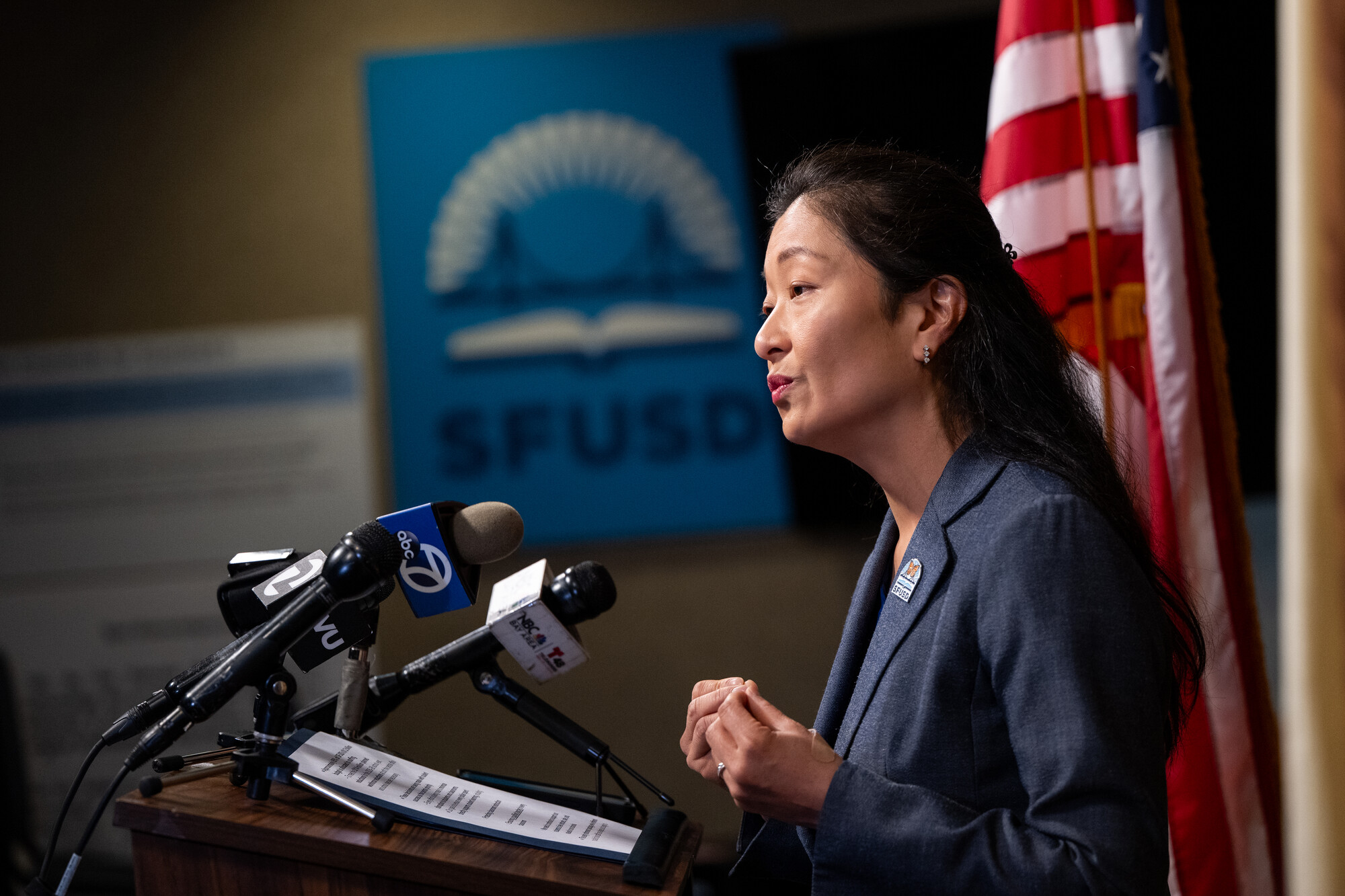
"caption": "San Francisco Unified School District Superintendent Dr. Maria Su speaks during a press conference at the school district offices in San Francisco on April 21, 2025.",
"credit": "Beth LaBerge/KQED",
"altTag": null,
"description": null,
"imgSizes": {
"thumbnail": {
"file": "https://cdn.kqed.org/wp-content/uploads/sites/10/2025/06/250421-SFUSDCentralCuts-07-BL_qed-160x107.jpg",
"width": 160,
"height": 107,
"mimeType": "image/jpeg"
},
"1536x1536": {
"file": "https://cdn.kqed.org/wp-content/uploads/sites/10/2025/06/250421-SFUSDCentralCuts-07-BL_qed-1536x1024.jpg",
"width": 1536,
"height": 1024,
"mimeType": "image/jpeg"
},
"post-thumbnail": {
"file": "https://cdn.kqed.org/wp-content/uploads/sites/10/2025/06/250421-SFUSDCentralCuts-07-BL_qed-672x372.jpg",
"width": 672,
"height": 372,
"mimeType": "image/jpeg"
},
"twentyfourteen-full-width": {
"file": "https://cdn.kqed.org/wp-content/uploads/sites/10/2025/06/250421-SFUSDCentralCuts-07-BL_qed-1038x576.jpg",
"width": 1038,
"height": 576,
"mimeType": "image/jpeg"
},
"kqedFullSize": {
"file": "https://cdn.kqed.org/wp-content/uploads/sites/10/2025/06/250421-SFUSDCentralCuts-07-BL_qed.jpg",
"width": 2000,
"height": 1333
}
},
"isLoading": false,
"fetchFailed": false
},
"news_12044643": {
"type": "attachments",
"id": "news_12044643",
"meta": {
"index": "attachments_1716263798",
"site": "news",
"id": "12044643",
"found": true
},
"title": "$12m Reparations Illustration",
"publishDate": 1750179912,
"status": "inherit",
"parent": 0,
"modified": 1750180537,
"caption": "One year ago, Gov. Gavin Newsom set aside $12 million for reparations legislation. The dispersal of the money remains stalled amid disagreements over how it should be used.",
"credit": "Darren Tu/KQED",
"altTag": null,
"description": null,
"imgSizes": {
"thumbnail": {
"file": "https://cdn.kqed.org/wp-content/uploads/sites/10/2025/06/12m-Reparations-1-160x103.jpg",
"width": 160,
"height": 103,
"mimeType": "image/jpeg"
},
"1536x1536": {
"file": "https://cdn.kqed.org/wp-content/uploads/sites/10/2025/06/12m-Reparations-1-1536x992.jpg",
"width": 1536,
"height": 992,
"mimeType": "image/jpeg"
},
"post-thumbnail": {
"file": "https://cdn.kqed.org/wp-content/uploads/sites/10/2025/06/12m-Reparations-1-672x372.jpg",
"width": 672,
"height": 372,
"mimeType": "image/jpeg"
},
"twentyfourteen-full-width": {
"file": "https://cdn.kqed.org/wp-content/uploads/sites/10/2025/06/12m-Reparations-1-1038x576.jpg",
"width": 1038,
"height": 576,
"mimeType": "image/jpeg"
},
"kqedFullSize": {
"file": "https://cdn.kqed.org/wp-content/uploads/sites/10/2025/06/12m-Reparations-1.jpg",
"width": 1920,
"height": 1240
}
},
"isLoading": false,
"fetchFailed": false
},
"news_12044809": {
"type": "attachments",
"id": "news_12044809",
"meta": {
"index": "attachments_1716263798",
"site": "news",
"id": "12044809",
"found": true
},
"title": "250617-FOODBANKS-JG-06_qed",
"publishDate": 1750200928,
"status": "inherit",
"parent": 12044713,
"modified": 1750200944,
"caption": "Volunteers pack potatoes and carrots into food boxes inside the Second Harvest of Silicon Valley warehouse in San José on June 17, 2025.",
"credit": "Joseph Geha/KQED",
"altTag": null,
"description": null,
"imgSizes": {
"thumbnail": {
"file": "https://cdn.kqed.org/wp-content/uploads/sites/10/2025/06/250617-FOODBANKS-JG-06_qed-160x107.jpg",
"width": 160,
"height": 107,
"mimeType": "image/jpeg"
},
"1536x1536": {
"file": "https://cdn.kqed.org/wp-content/uploads/sites/10/2025/06/250617-FOODBANKS-JG-06_qed-1536x1024.jpg",
"width": 1536,
"height": 1024,
"mimeType": "image/jpeg"
},
"post-thumbnail": {
"file": "https://cdn.kqed.org/wp-content/uploads/sites/10/2025/06/250617-FOODBANKS-JG-06_qed-672x372.jpg",
"width": 672,
"height": 372,
"mimeType": "image/jpeg"
},
"twentyfourteen-full-width": {
"file": "https://cdn.kqed.org/wp-content/uploads/sites/10/2025/06/250617-FOODBANKS-JG-06_qed-1038x576.jpg",
"width": 1038,
"height": 576,
"mimeType": "image/jpeg"
},
"kqedFullSize": {
"file": "https://cdn.kqed.org/wp-content/uploads/sites/10/2025/06/250617-FOODBANKS-JG-06_qed.jpg",
"width": 1999,
"height": 1333
}
},
"isLoading": false,
"fetchFailed": false
},
"news_12044791": {
"type": "attachments",
"id": "news_12044791",
"meta": {
"index": "attachments_1716263798",
"site": "news",
"id": "12044791",
"found": true
},
"title": "US-POLITICS-IMMIGRATION-ICE",
"publishDate": 1750196649,
"status": "inherit",
"parent": 12044748,
"modified": 1776108571,
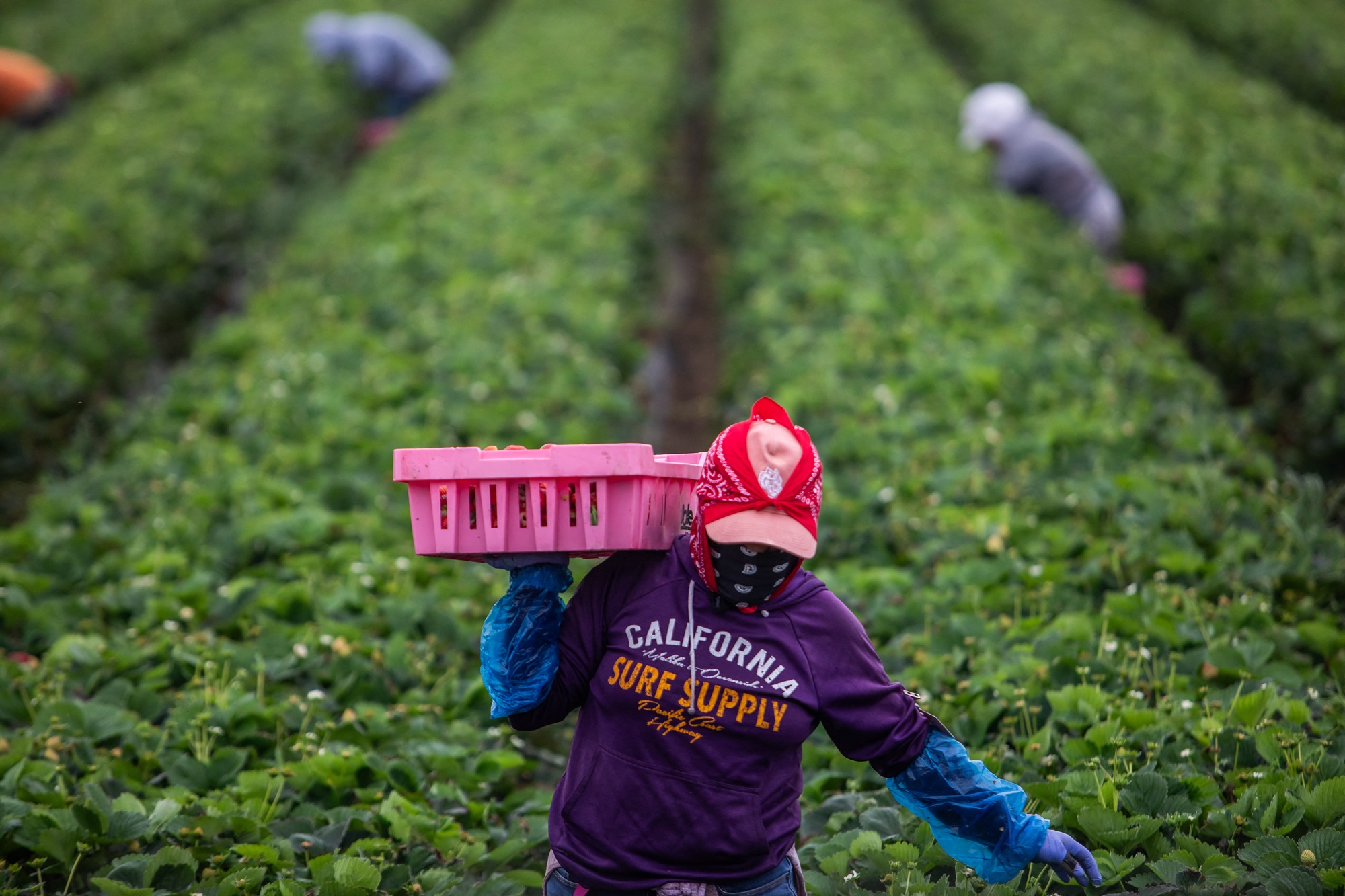
"caption": "A farmworker works in a strawberry field on June 12, 2025, in Oxnard, California. Anti-immigration crackdowns ordered by President Donald Trump have seen federal authorities target factories and work sites since June 6, sparking days of angry protests in Los Angeles. ",
"credit": "Apu Gomes/AFP via Getty Images",
"altTag": null,
"description": null,
"imgSizes": {
"thumbnail": {
"file": "https://cdn.kqed.org/wp-content/uploads/sites/10/2025/06/CaliforniaFarmworkersGetty-160x107.jpg",
"width": 160,
"height": 107,
"mimeType": "image/jpeg"
},
"1536x1536": {
"file": "https://cdn.kqed.org/wp-content/uploads/sites/10/2025/06/CaliforniaFarmworkersGetty-1536x1024.jpg",
"width": 1536,
"height": 1024,
"mimeType": "image/jpeg"
},
"post-thumbnail": {
"file": "https://cdn.kqed.org/wp-content/uploads/sites/10/2025/06/CaliforniaFarmworkersGetty-672x372.jpg",
"width": 672,
"height": 372,
"mimeType": "image/jpeg"
},
"twentyfourteen-full-width": {
"file": "https://cdn.kqed.org/wp-content/uploads/sites/10/2025/06/CaliforniaFarmworkersGetty-1038x576.jpg",
"width": 1038,
"height": 576,
"mimeType": "image/jpeg"
},
"kqedFullSize": {
"file": "https://cdn.kqed.org/wp-content/uploads/sites/10/2025/06/CaliforniaFarmworkersGetty.jpg",
"width": 2000,
"height": 1333
}
},
"isLoading": false,
"fetchFailed": false
},
"news_11975030": {
"type": "attachments",
"id": "news_11975030",
"meta": {
"index": "attachments_1716263798",
"site": "news",
"id": "11975030",
"found": true
},
"parent": 11975904,
"imgSizes": {
"twentyfourteen-full-width": {
"file": "https://cdn.kqed.org/wp-content/uploads/sites/10/2024/02/240206-IMMIGRATIONCOURT-26-BL-KQED-1038x576.jpg",
"width": 1038,
"mimeType": "image/jpeg",
"height": 576
},
"thumbnail": {
"file": "https://cdn.kqed.org/wp-content/uploads/sites/10/2024/02/240206-IMMIGRATIONCOURT-26-BL-KQED-160x107.jpg",
"width": 160,
"mimeType": "image/jpeg",
"height": 107
},
"post-thumbnail": {
"file": "https://cdn.kqed.org/wp-content/uploads/sites/10/2024/02/240206-IMMIGRATIONCOURT-26-BL-KQED-672x372.jpg",
"width": 672,
"mimeType": "image/jpeg",
"height": 372
},
"kqedFullSize": {
"file": "https://cdn.kqed.org/wp-content/uploads/sites/10/2024/02/240206-IMMIGRATIONCOURT-26-BL-KQED.jpg",
"width": 2000,
"height": 1333
},
"large": {
"file": "https://cdn.kqed.org/wp-content/uploads/sites/10/2024/02/240206-IMMIGRATIONCOURT-26-BL-KQED-1020x680.jpg",
"width": 1020,
"mimeType": "image/jpeg",
"height": 680
},
"1536x1536": {
"file": "https://cdn.kqed.org/wp-content/uploads/sites/10/2024/02/240206-IMMIGRATIONCOURT-26-BL-KQED-1536x1024.jpg",
"width": 1536,
"mimeType": "image/jpeg",
"height": 1024
},
"full-width": {
"file": "https://cdn.kqed.org/wp-content/uploads/sites/10/2024/02/240206-IMMIGRATIONCOURT-26-BL-KQED-1920x1280.jpg",
"width": 1920,
"mimeType": "image/jpeg",
"height": 1280
},
"medium": {
"file": "https://cdn.kqed.org/wp-content/uploads/sites/10/2024/02/240206-IMMIGRATIONCOURT-26-BL-KQED-800x533.jpg",
"width": 800,
"mimeType": "image/jpeg",
"height": 533
}
},
"publishDate": 1707340047,
"modified": 1707941989,
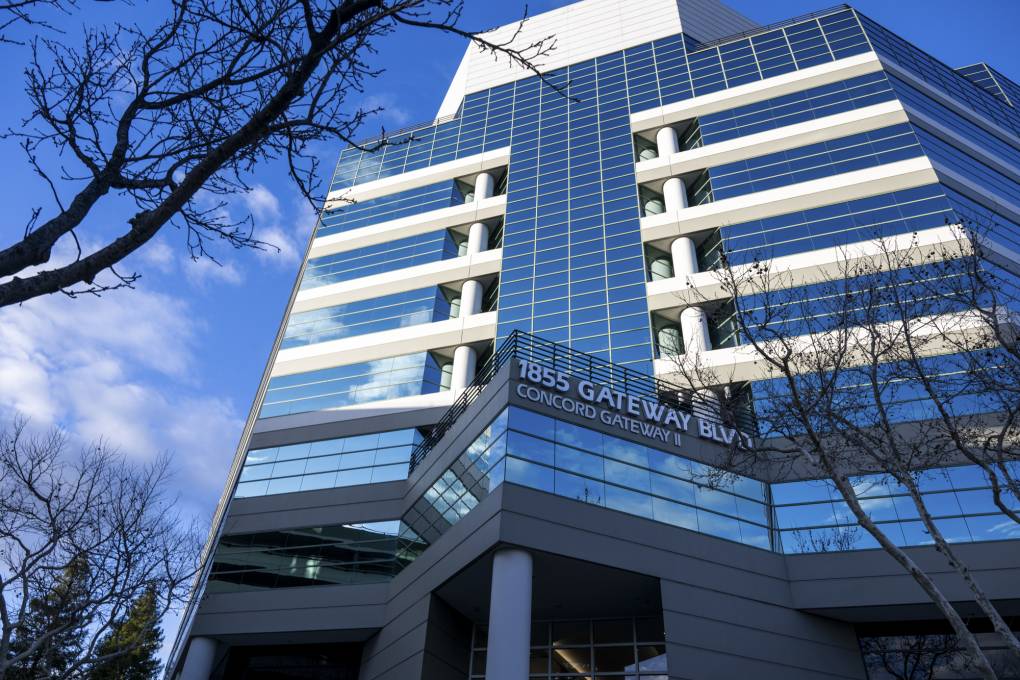
"caption": "The site of a new immigration court at 1855 Concord Gateway in Concord on Feb. 6, 2024.",
"description": null,
"title": "240206-IMMIGRATIONCOURT-26-BL-KQED",
"credit": "Beth LaBerge/KQED",
"status": "inherit",
"altTag": "A view looking up at a building.",
"isLoading": false,
"fetchFailed": false
},
"news_12044603": {
"type": "attachments",
"id": "news_12044603",
"meta": {
"index": "attachments_1716263798",
"site": "news",
"id": "12044603",
"found": true
},
"title": "Balboa Cafe",
"publishDate": 1750115944,
"status": "inherit",
"parent": 12044599,
"modified": 1750115980,
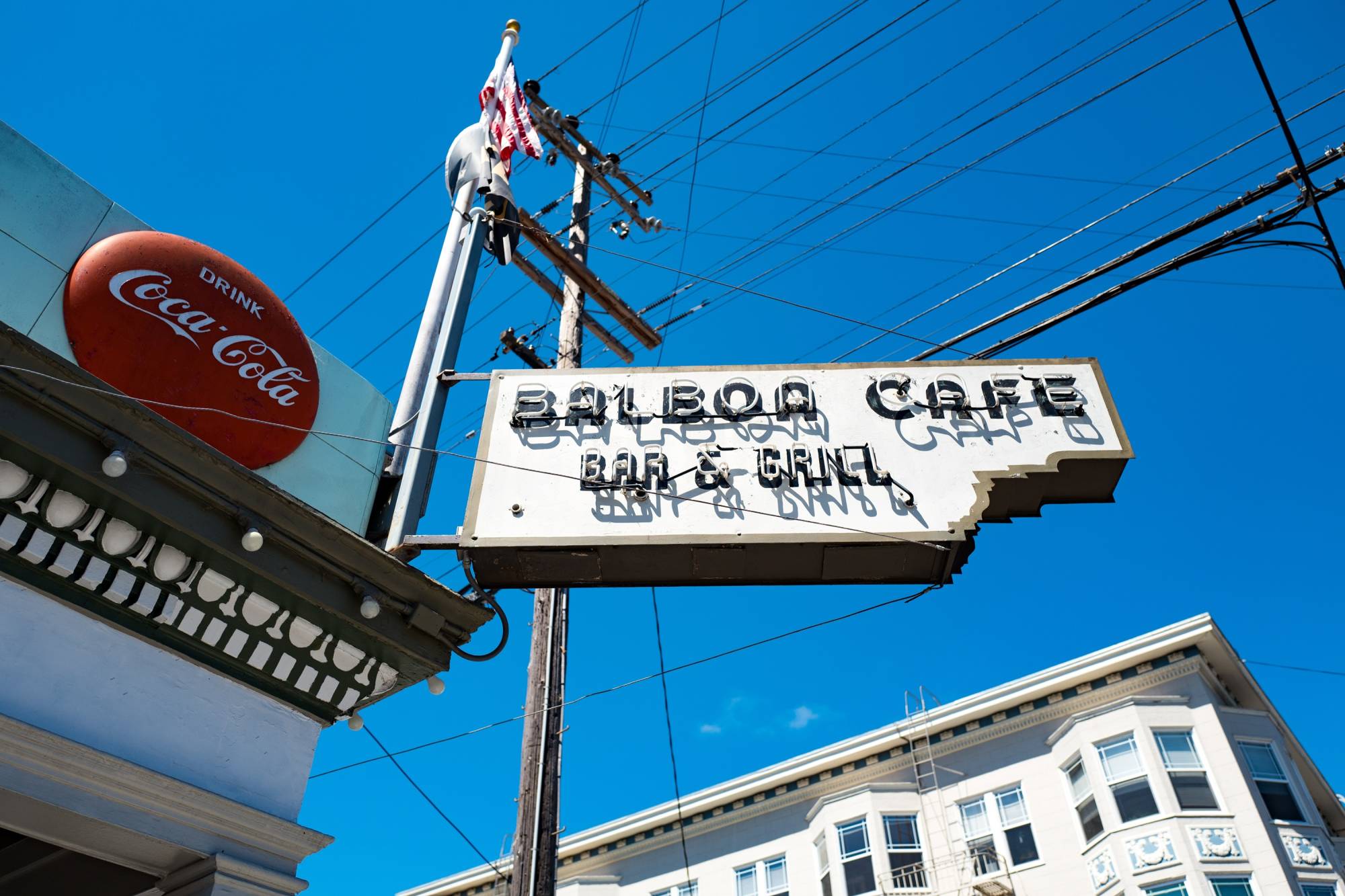
"caption": "Balboa Cafe in the Cow Hollow neighborhood of San Francisco, California, on Aug. 28, 2016. ",
"credit": "Smith Collection/Gado/Getty Images",
"altTag": null,
"description": null,
"imgSizes": {
"medium": {
"file": "https://cdn.kqed.org/wp-content/uploads/sites/10/2025/06/BalboaCafeSFGetty-2000x1333.jpg",
"width": 2000,
"height": 1333,
"mimeType": "image/jpeg"
},
"large": {
"file": "https://cdn.kqed.org/wp-content/uploads/sites/10/2025/06/BalboaCafeSFGetty-2000x1333.jpg",
"width": 2000,
"height": 1333,
"mimeType": "image/jpeg"
},
"thumbnail": {
"file": "https://cdn.kqed.org/wp-content/uploads/sites/10/2025/06/BalboaCafeSFGetty-160x107.jpg",
"width": 160,
"height": 107,
"mimeType": "image/jpeg"
},
"1536x1536": {
"file": "https://cdn.kqed.org/wp-content/uploads/sites/10/2025/06/BalboaCafeSFGetty-1536x1024.jpg",
"width": 1536,
"height": 1024,
"mimeType": "image/jpeg"
},
"2048x2048": {
"file": "https://cdn.kqed.org/wp-content/uploads/sites/10/2025/06/BalboaCafeSFGetty-2048x1365.jpg",
"width": 2048,
"height": 1365,
"mimeType": "image/jpeg"
},
"post-thumbnail": {
"file": "https://cdn.kqed.org/wp-content/uploads/sites/10/2025/06/BalboaCafeSFGetty-672x372.jpg",
"width": 672,
"height": 372,
"mimeType": "image/jpeg"
},
"twentyfourteen-full-width": {
"file": "https://cdn.kqed.org/wp-content/uploads/sites/10/2025/06/BalboaCafeSFGetty-1038x576.jpg",
"width": 1038,
"height": 576,
"mimeType": "image/jpeg"
},
"full-width": {
"file": "https://cdn.kqed.org/wp-content/uploads/sites/10/2025/06/BalboaCafeSFGetty-2000x1333.jpg",
"width": 2000,
"height": 1333,
"mimeType": "image/jpeg"
},
"kqedFullSize": {
"file": "https://cdn.kqed.org/wp-content/uploads/sites/10/2025/06/BalboaCafeSFGetty-scaled.jpg",
"width": 2560,
"height": 1707
}
},
"isLoading": false,
"fetchFailed": false
},
"news_12044597": {
"type": "attachments",
"id": "news_12044597",
"meta": {
"index": "attachments_1716263798",
"site": "news",
"id": "12044597",
"found": true
},
"title": "ICE agents raid to arrest illigal immigrants.",
"publishDate": 1750111616,
"status": "inherit",
"parent": 0,
"modified": 1750114363,
"caption": "Immigration and Customs Enforcement agents apprehend an undocumented immigrant with criminal record, in an early morning raid at home on Sept. 8, 2022 in Los Angeles.",
"credit": "Irfan Khan/Los Angeles Times via Getty Images",
"altTag": null,
"description": null,
"imgSizes": {
"thumbnail": {
"file": "https://cdn.kqed.org/wp-content/uploads/sites/10/2025/06/GETTYIMAGES-1243313067-KQED-160x107.jpg",
"width": 160,
"height": 107,
"mimeType": "image/jpeg"
},
"1536x1536": {
"file": "https://cdn.kqed.org/wp-content/uploads/sites/10/2025/06/GETTYIMAGES-1243313067-KQED-1536x1024.jpg",
"width": 1536,
"height": 1024,
"mimeType": "image/jpeg"
},
"post-thumbnail": {
"file": "https://cdn.kqed.org/wp-content/uploads/sites/10/2025/06/GETTYIMAGES-1243313067-KQED-672x372.jpg",
"width": 672,
"height": 372,
"mimeType": "image/jpeg"
},
"twentyfourteen-full-width": {
"file": "https://cdn.kqed.org/wp-content/uploads/sites/10/2025/06/GETTYIMAGES-1243313067-KQED-1038x576.jpg",
"width": 1038,
"height": 576,
"mimeType": "image/jpeg"
},
"kqedFullSize": {
"file": "https://cdn.kqed.org/wp-content/uploads/sites/10/2025/06/GETTYIMAGES-1243313067-KQED.jpg",
"width": 2000,
"height": 1333
}
},
"isLoading": false,
"fetchFailed": false
},
"news_12042809": {
"type": "attachments",
"id": "news_12042809",
"meta": {
"index": "attachments_1716263798",
"site": "news",
"id": "12042809",
"found": true
},
"title": "250530-DUBLINEMPLOYEES-52-BL-KQED",
"publishDate": 1749079934,
"status": "inherit",
"parent": 0,
"modified": 1749080006,
"caption": "A neighborhood of mobile homes next to the now-closed Federal Correctional Institution, Dublin, on May 30, 2025. Many prison employees bought homes on the property, forming a small community of staff and their families beside the facility.",
"credit": "Beth LaBerge/KQED",
"altTag": null,
"description": null,
"imgSizes": {
"medium": {
"file": "https://cdn.kqed.org/wp-content/uploads/sites/10/2025/06/250530-DUBLINEMPLOYEES-52-BL-KQED-800x533.jpg",
"width": 800,
"height": 533,
"mimeType": "image/jpeg"
},
"large": {
"file": "https://cdn.kqed.org/wp-content/uploads/sites/10/2025/06/250530-DUBLINEMPLOYEES-52-BL-KQED-1020x680.jpg",
"width": 1020,
"height": 680,
"mimeType": "image/jpeg"
},
"thumbnail": {
"file": "https://cdn.kqed.org/wp-content/uploads/sites/10/2025/06/250530-DUBLINEMPLOYEES-52-BL-KQED-160x107.jpg",
"width": 160,
"height": 107,
"mimeType": "image/jpeg"
},
"1536x1536": {
"file": "https://cdn.kqed.org/wp-content/uploads/sites/10/2025/06/250530-DUBLINEMPLOYEES-52-BL-KQED-1536x1024.jpg",
"width": 1536,
"height": 1024,
"mimeType": "image/jpeg"
},
"post-thumbnail": {
"file": "https://cdn.kqed.org/wp-content/uploads/sites/10/2025/06/250530-DUBLINEMPLOYEES-52-BL-KQED-672x372.jpg",
"width": 672,
"height": 372,
"mimeType": "image/jpeg"
},
"twentyfourteen-full-width": {
"file": "https://cdn.kqed.org/wp-content/uploads/sites/10/2025/06/250530-DUBLINEMPLOYEES-52-BL-KQED-1038x576.jpg",
"width": 1038,
"height": 576,
"mimeType": "image/jpeg"
},
"full-width": {
"file": "https://cdn.kqed.org/wp-content/uploads/sites/10/2025/06/250530-DUBLINEMPLOYEES-52-BL-KQED-1920x1280.jpg",
"width": 1920,
"height": 1280,
"mimeType": "image/jpeg"
},
"kqedFullSize": {
"file": "https://cdn.kqed.org/wp-content/uploads/sites/10/2025/06/250530-DUBLINEMPLOYEES-52-BL-KQED.jpg",
"width": 2000,
"height": 1333
}
},
"isLoading": false,
"fetchFailed": false
},
"news_12043264": {
"type": "attachments",
"id": "news_12043264",
"meta": {
"index": "attachments_1716263798",
"site": "news",
"id": "12043264",
"found": true
},
"title": "250608-ICE OUT OF THE BAY-AC-04-KQED",
"publishDate": 1749445597,
"status": "inherit",
"parent": 12043544,
"modified": 1749860292,
"caption": "Protesters face off with SFPD during an anti-ICE protest in San Francisco on June 8, 2025.",
"credit": "Aryk Copley for KQED",
"altTag": null,
"description": null,
"imgSizes": {
"thumbnail": {
"file": "https://cdn.kqed.org/wp-content/uploads/sites/10/2025/06/250608-ICE-OUT-OF-THE-BAY-AC-04-KQED-160x107.jpg",
"width": 160,
"height": 107,
"mimeType": "image/jpeg"
},
"1536x1536": {
"file": "https://cdn.kqed.org/wp-content/uploads/sites/10/2025/06/250608-ICE-OUT-OF-THE-BAY-AC-04-KQED-1536x1024.jpg",
"width": 1536,
"height": 1024,
"mimeType": "image/jpeg"
},
"post-thumbnail": {
"file": "https://cdn.kqed.org/wp-content/uploads/sites/10/2025/06/250608-ICE-OUT-OF-THE-BAY-AC-04-KQED-672x372.jpg",
"width": 672,
"height": 372,
"mimeType": "image/jpeg"
},
"twentyfourteen-full-width": {
"file": "https://cdn.kqed.org/wp-content/uploads/sites/10/2025/06/250608-ICE-OUT-OF-THE-BAY-AC-04-KQED-1038x576.jpg",
"width": 1038,
"height": 576,
"mimeType": "image/jpeg"
},
"kqedFullSize": {
"file": "https://cdn.kqed.org/wp-content/uploads/sites/10/2025/06/250608-ICE-OUT-OF-THE-BAY-AC-04-KQED.jpg",
"width": 2000,
"height": 1333
}
},
"isLoading": false,
"fetchFailed": false
},
"news_12044278": {
"type": "attachments",
"id": "news_12044278",
"meta": {
"index": "attachments_1716263798",
"site": "news",
"id": "12044278",
"found": true
},
"title": "031523-ICE-Arrest-AP-CM-01 copy",
"publishDate": 1749847621,
"status": "inherit",
"parent": 12048205,
"modified": 1761160605,
"caption": "Immigration and Customs Enforcement officers escort a man detained at an immigration and customs processing facility in San Diego, California, on March 15, 2023. ",
"credit": "Gregory Bull/AP Photo",
"altTag": null,
"description": null,
"imgSizes": {
"thumbnail": {
"file": "https://cdn.kqed.org/wp-content/uploads/sites/10/2025/06/031523-ICE-Arrest-AP-CM-01-copy-160x107.jpg",
"width": 160,
"height": 107,
"mimeType": "image/jpeg"
},
"1536x1536": {
"file": "https://cdn.kqed.org/wp-content/uploads/sites/10/2025/06/031523-ICE-Arrest-AP-CM-01-copy-1536x1024.jpg",
"width": 1536,
"height": 1024,
"mimeType": "image/jpeg"
},
"post-thumbnail": {
"file": "https://cdn.kqed.org/wp-content/uploads/sites/10/2025/06/031523-ICE-Arrest-AP-CM-01-copy-672x372.jpg",
"width": 672,
"height": 372,
"mimeType": "image/jpeg"
},
"twentyfourteen-full-width": {
"file": "https://cdn.kqed.org/wp-content/uploads/sites/10/2025/06/031523-ICE-Arrest-AP-CM-01-copy-1038x576.jpg",
"width": 1038,
"height": 576,
"mimeType": "image/jpeg"
},
"kqedFullSize": {
"file": "https://cdn.kqed.org/wp-content/uploads/sites/10/2025/06/031523-ICE-Arrest-AP-CM-01-copy.jpg",
"width": 2000,
"height": 1333
}
},
"isLoading": false,
"fetchFailed": false
},
"news_12044152": {
"type": "attachments",
"id": "news_12044152",
"meta": {
"index": "attachments_1716263798",
"site": "news",
"id": "12044152",
"found": true
},
"title": "20250612_CRICKETCOLISEUM_GC-13-KQED",
"publishDate": 1749833606,
"status": "inherit",
"parent": 0,
"modified": 1749833737,
"caption": "San Francisco Unicorns top order batter, Finn Allen (16), bats during their opening Major League Cricket game against the Washington Freedom at the Oakland Coliseum on June 12, 2025.",
"credit": "Gina Castro/KQED",
"altTag": null,
"description": null,
"imgSizes": {
"thumbnail": {
"file": "https://cdn.kqed.org/wp-content/uploads/sites/10/2025/06/20250612_CRICKETCOLISEUM_GC-13-KQED-160x101.jpg",
"width": 160,
"height": 101,
"mimeType": "image/jpeg"
},
"1536x1536": {
"file": "https://cdn.kqed.org/wp-content/uploads/sites/10/2025/06/20250612_CRICKETCOLISEUM_GC-13-KQED-1536x966.jpg",
"width": 1536,
"height": 966,
"mimeType": "image/jpeg"
},
"post-thumbnail": {
"file": "https://cdn.kqed.org/wp-content/uploads/sites/10/2025/06/20250612_CRICKETCOLISEUM_GC-13-KQED-672x372.jpg",
"width": 672,
"height": 372,
"mimeType": "image/jpeg"
},
"twentyfourteen-full-width": {
"file": "https://cdn.kqed.org/wp-content/uploads/sites/10/2025/06/20250612_CRICKETCOLISEUM_GC-13-KQED-1038x576.jpg",
"width": 1038,
"height": 576,
"mimeType": "image/jpeg"
},
"kqedFullSize": {
"file": "https://cdn.kqed.org/wp-content/uploads/sites/10/2025/06/20250612_CRICKETCOLISEUM_GC-13-KQED.jpg",
"width": 2000,
"height": 1258
}
},
"isLoading": false,
"fetchFailed": false
}
},
"audioPlayerReducer": {
"postId": "stream_live",
"isPaused": true,
"isPlaying": false,
"pfsActive": false,
"pledgeModalIsOpen": true,
"playerDrawerIsOpen": false,
"liveAudioPlayStartedAt": 0,
"liveAudioPlayContext": ""
},
"authorsReducer": {
"ahall": {
"type": "authors",
"id": "11490",
"meta": {
"index": "authors_1716337520",
"id": "11490",
"found": true
},
"name": "Alex Hall",
"firstName": "Alex",
"lastName": "Hall",
"slug": "ahall",
"email": "ahall@kqed.org",
"display_author_email": false,
"staff_mastheads": [
"news"
],
"title": "KQED Enterprise & Accountability Reporter",
"bio": "Alex Hall is KQED's Enterprise and Accountability Reporter. She previously covered the Central Valley for five years from KQED's bureau in Fresno. Before joining KQED, Alex was an investigative reporting fellow at Wisconsin Public Radio and the Wisconsin Center for Investigative Journalism. She has also worked as a bilingual producer for NPR's investigative unit and freelance video producer for Reuters TV on the Latin America desk. She got her start in journalism in South America, where she worked as a radio producer and Spanish-English translator for CNN Chile. Her documentary and investigation into the series of deadly COVID-19 outbreaks at Foster Farms won a national Edward R. Murrow award and was named an Investigative Reporters & Editors award finalist. Alex's reporting for Reveal on the Wisconsin dairy industry's reliance on undocumented immigrant labor was made into a film, Los Lecheros, which won a regional Edward R. Murrow award for best news documentary.",
"avatar": "https://secure.gravatar.com/avatar/defcbeb88b0bf591ff9af41f22644051?s=600&d=blank&r=g",
"twitter": "@chalexhall",
"facebook": null,
"instagram": null,
"linkedin": null,
"sites": [
{
"site": "news",
"roles": [
"editor"
]
},
{
"site": "liveblog",
"roles": [
"author"
]
}
],
"headData": {
"title": "Alex Hall | KQED",
"description": "KQED Enterprise & Accountability Reporter",
"ogImgSrc": "https://secure.gravatar.com/avatar/defcbeb88b0bf591ff9af41f22644051?s=600&d=blank&r=g",
"twImgSrc": "https://secure.gravatar.com/avatar/defcbeb88b0bf591ff9af41f22644051?s=600&d=blank&r=g"
},
"isLoading": false,
"link": "/author/ahall"
},
"agonzalez": {
"type": "authors",
"id": "11724",
"meta": {
"index": "authors_1716337520",
"id": "11724",
"found": true
},
"name": "Alexander Gonzalez",
"firstName": "Alexander",
"lastName": "Gonzalez",
"slug": "agonzalez",
"email": "AlexanderGonzalez@KQED.org",
"display_author_email": false,
"staff_mastheads": [
"news"
],
"title": "KQED Contributor",
"bio": null,
"avatar": "https://secure.gravatar.com/avatar/9e291ed34e154df4c662edf858b641d70b4859939bfe40be478408f9dfd057d2?s=600&d=blank&r=g",
"twitter": null,
"bluesky": null,
"facebook": null,
"instagram": null,
"linkedin": null,
"sites": [
{
"site": "arts",
"roles": [
"editor"
]
},
{
"site": "news",
"roles": [
"editor"
]
},
{
"site": "science",
"roles": [
"editor"
]
}
],
"headData": {
"title": "Alexander Gonzalez | KQED",
"description": "KQED Contributor",
"ogImgSrc": "https://secure.gravatar.com/avatar/9e291ed34e154df4c662edf858b641d70b4859939bfe40be478408f9dfd057d2?s=600&d=blank&r=g",
"twImgSrc": "https://secure.gravatar.com/avatar/9e291ed34e154df4c662edf858b641d70b4859939bfe40be478408f9dfd057d2?s=600&d=blank&r=g"
},
"isLoading": false,
"link": "/author/agonzalez"
},
"adahlstromeckman": {
"type": "authors",
"id": "11785",
"meta": {
"index": "authors_1716337520",
"id": "11785",
"found": true
},
"name": "Azul Dahlstrom-Eckman",
"firstName": "Azul",
"lastName": "Dahlstrom-Eckman",
"slug": "adahlstromeckman",
"email": "adahlstrom-eckman@kqed.org",
"display_author_email": true,
"staff_mastheads": [],
"title": "Reporter",
"bio": "Azul is a reporter for KQED focusing on transportation and features. He joined KQED in 2021 as an alumna of KALW's Audio Academy radio journalism training program.",
"avatar": "https://secure.gravatar.com/avatar/9cb750298435add7815a777f55bf1f46845c1386bb8452555c60a7b820b5aba3?s=600&d=blank&r=g",
"twitter": "@zuliemann",
"bluesky": "@azul415.bsky.social",
"facebook": null,
"instagram": null,
"linkedin": null,
"sites": [
{
"site": "arts",
"roles": [
"editor"
]
},
{
"site": "news",
"roles": [
"editor"
]
},
{
"site": "science",
"roles": [
"editor"
]
},
{
"site": "liveblog",
"roles": [
"author"
]
}
],
"headData": {
"title": "Azul Dahlstrom-Eckman | KQED",
"description": "Reporter",
"ogImgSrc": "https://secure.gravatar.com/avatar/9cb750298435add7815a777f55bf1f46845c1386bb8452555c60a7b820b5aba3?s=600&d=blank&r=g",
"twImgSrc": "https://secure.gravatar.com/avatar/9cb750298435add7815a777f55bf1f46845c1386bb8452555c60a7b820b5aba3?s=600&d=blank&r=g"
},
"isLoading": false,
"link": "/author/adahlstromeckman"
},
"nkhan": {
"type": "authors",
"id": "11867",
"meta": {
"index": "authors_1716337520",
"id": "11867",
"found": true
},
"name": "Nisa Khan",
"firstName": "Nisa",
"lastName": "Khan",
"slug": "nkhan",
"email": "nkhan@kqed.org",
"display_author_email": false,
"staff_mastheads": [],
"title": "KQED Contributor",
"bio": "Nisa Khan is a reporter for KQED's Audience News Desk. She was formerly a data reporter at Michigan Radio. She earned a Bachelor of Science in Information from the University of Michigan and a Master of Arts in Communication from Stanford University.",
"avatar": "https://secure.gravatar.com/avatar/a3bf1efcfbe7658d13a434cc54d0b2e3?s=600&d=blank&r=g",
"twitter": "mnisakhan",
"bluesky": null,
"facebook": null,
"instagram": null,
"linkedin": null,
"sites": [
{
"site": "arts",
"roles": [
"editor"
]
},
{
"site": "news",
"roles": [
"editor"
]
},
{
"site": "science",
"roles": [
"editor",
"author"
]
},
{
"site": "forum",
"roles": [
"editor"
]
},
{
"site": "liveblog",
"roles": [
"contributor"
]
}
],
"headData": {
"title": "Nisa Khan | KQED",
"description": "KQED Contributor",
"ogImgSrc": "https://secure.gravatar.com/avatar/a3bf1efcfbe7658d13a434cc54d0b2e3?s=600&d=blank&r=g",
"twImgSrc": "https://secure.gravatar.com/avatar/a3bf1efcfbe7658d13a434cc54d0b2e3?s=600&d=blank&r=g"
},
"isLoading": false,
"link": "/author/nkhan"
},
"jgeha": {
"type": "authors",
"id": "11906",
"meta": {
"index": "authors_1716337520",
"id": "11906",
"found": true
},
"name": "Joseph Geha",
"firstName": "Joseph",
"lastName": "Geha",
"slug": "jgeha",
"email": "jgeha@kqed.org",
"display_author_email": false,
"staff_mastheads": [
"news",
"science"
],
"title": "KQED Contributor",
"bio": null,
"avatar": "https://secure.gravatar.com/avatar/ea84d2b6dd93d6369d453edf19dd583f117cd1759d2d9c9c92f9de77017354fe?s=600&d=blank&r=g",
"twitter": null,
"bluesky": null,
"facebook": null,
"instagram": null,
"linkedin": null,
"sites": [
{
"site": "news",
"roles": [
"editor"
]
},
{
"site": "liveblog",
"roles": [
"author"
]
}
],
"headData": {
"title": "Joseph Geha | KQED",
"description": "KQED Contributor",
"ogImgSrc": "https://secure.gravatar.com/avatar/ea84d2b6dd93d6369d453edf19dd583f117cd1759d2d9c9c92f9de77017354fe?s=600&d=blank&r=g",
"twImgSrc": "https://secure.gravatar.com/avatar/ea84d2b6dd93d6369d453edf19dd583f117cd1759d2d9c9c92f9de77017354fe?s=600&d=blank&r=g"
},
"isLoading": false,
"link": "/author/jgeha"
},
"kdebenedetti": {
"type": "authors",
"id": "11913",
"meta": {
"index": "authors_1716337520",
"id": "11913",
"found": true
},
"name": "Katie DeBenedetti",
"firstName": "Katie",
"lastName": "DeBenedetti",
"slug": "kdebenedetti",
"email": "kdebenedetti@kqed.org",
"display_author_email": false,
"staff_mastheads": [
"news",
"science"
],
"title": "KQED Contributor",
"bio": "Katie DeBenedetti is a digital reporter covering daily news for the Express Desk. Prior to joining KQED as a culture reporting intern in January 2024, she covered education and city government for the Napa Valley Register.",
"avatar": "https://secure.gravatar.com/avatar/6e31073cb8f7e4214ab03f42771d0f45?s=600&d=blank&r=g",
"twitter": null,
"facebook": null,
"instagram": null,
"linkedin": null,
"sites": [
{
"site": "news",
"roles": [
"author"
]
},
{
"site": "science",
"roles": [
"author"
]
},
{
"site": "liveblog",
"roles": [
"author"
]
}
],
"headData": {
"title": "Katie DeBenedetti | KQED",
"description": "KQED Contributor",
"ogImgSrc": "https://secure.gravatar.com/avatar/6e31073cb8f7e4214ab03f42771d0f45?s=600&d=blank&r=g",
"twImgSrc": "https://secure.gravatar.com/avatar/6e31073cb8f7e4214ab03f42771d0f45?s=600&d=blank&r=g"
},
"isLoading": false,
"link": "/author/kdebenedetti"
},
"slim": {
"type": "authors",
"id": "11920",
"meta": {
"index": "authors_1716337520",
"id": "11920",
"found": true
},
"name": "Samantha Lim",
"firstName": "Samantha",
"lastName": "Lim",
"slug": "slim",
"email": "slim@KQED.org",
"display_author_email": false,
"staff_mastheads": [],
"title": "KQED Contributor",
"bio": null,
"avatar": "https://secure.gravatar.com/avatar/82e592e6c15fe1a04d385e8ad0fb0b4e?s=600&d=blank&r=g",
"twitter": null,
"facebook": null,
"instagram": null,
"linkedin": null,
"sites": [
{
"site": "news",
"roles": []
}
],
"headData": {
"title": "Samantha Lim | KQED",
"description": "KQED Contributor",
"ogImgSrc": "https://secure.gravatar.com/avatar/82e592e6c15fe1a04d385e8ad0fb0b4e?s=600&d=blank&r=g",
"twImgSrc": "https://secure.gravatar.com/avatar/82e592e6c15fe1a04d385e8ad0fb0b4e?s=600&d=blank&r=g"
},
"isLoading": false,
"link": "/author/slim"
},
"bkrans": {
"type": "authors",
"id": "11923",
"meta": {
"index": "authors_1716337520",
"id": "11923",
"found": true
},
"name": "Brian Krans",
"firstName": "Brian",
"lastName": "Krans",
"slug": "bkrans",
"email": "bkrans@kqed.org",
"display_author_email": false,
"staff_mastheads": [
"news"
],
"title": "KQED Contributing Reporter",
"bio": "Brian Krans is an award-winning local news and investigative reporter who has been proudly working as a general assignment reporter for KQED since August 2023. He lives in Richmond, where he also reports on air pollution for Richmondside. He is also a founding member of the Vallejo Sun.",
"avatar": "https://secure.gravatar.com/avatar/d1014d604089314a94807d2c4f2d3e06?s=600&d=blank&r=g",
"twitter": "citizenkrans",
"facebook": null,
"instagram": null,
"linkedin": null,
"sites": [
{
"site": "news",
"roles": [
"editor"
]
}
],
"headData": {
"title": "Brian Krans | KQED",
"description": "KQED Contributing Reporter",
"ogImgSrc": "https://secure.gravatar.com/avatar/d1014d604089314a94807d2c4f2d3e06?s=600&d=blank&r=g",
"twImgSrc": "https://secure.gravatar.com/avatar/d1014d604089314a94807d2c4f2d3e06?s=600&d=blank&r=g"
},
"isLoading": false,
"link": "/author/bkrans"
},
"emanoukian": {
"type": "authors",
"id": "11925",
"meta": {
"index": "authors_1716337520",
"id": "11925",
"found": true
},
"name": "Elize Manoukian",
"firstName": "Elize",
"lastName": "Manoukian",
"slug": "emanoukian",
"email": "emanoukian@KQED.org",
"display_author_email": false,
"staff_mastheads": [
"news"
],
"title": "Digital Producer",
"bio": null,
"avatar": "https://secure.gravatar.com/avatar/4525f1a8e46ccb30933b32653d9772064cfefe3fa655eb45b3b3a80341f6bdad?s=600&d=blank&r=g",
"twitter": null,
"bluesky": null,
"facebook": null,
"instagram": null,
"linkedin": null,
"sites": [
{
"site": "arts",
"roles": [
"editor"
]
},
{
"site": "news",
"roles": [
"editor"
]
},
{
"site": "science",
"roles": [
"editor"
]
}
],
"headData": {
"title": "Elize Manoukian | KQED",
"description": "Digital Producer",
"ogImgSrc": "https://secure.gravatar.com/avatar/4525f1a8e46ccb30933b32653d9772064cfefe3fa655eb45b3b3a80341f6bdad?s=600&d=blank&r=g",
"twImgSrc": "https://secure.gravatar.com/avatar/4525f1a8e46ccb30933b32653d9772064cfefe3fa655eb45b3b3a80341f6bdad?s=600&d=blank&r=g"
},
"isLoading": false,
"link": "/author/emanoukian"
}
},
"pagesReducer": {
"news_tag_california": {
"type": "terms",
"id": "news_18538",
"meta": {
"index": "terms_1716263798",
"site": "news",
"id": "18538",
"score": 6.8457103
},
"featImg": null,
"name": "California",
"description": null,
"taxonomy": "tag",
"headData": {
"twImgId": null,
"twTitle": null,
"ogTitle": null,
"ogImgId": null,
"twDescription": null,
"description": null,
"title": "California Archives | KQED News",
"ogDescription": null
},
"ttid": 31,
"slug": "california",
"isLoading": false,
"title": "California",
"pageMeta": {
"site": "news",
"WpPageTemplate": "page-topic-editorial",
"currentPage": 79
},
"blocks": [
{
"blockName": "kqed/post-list",
"attrs": {
"layout": "cardArticle2",
"query": "posts/news?tag=california",
"seeMore": false,
"paginated": true,
"page": 79
}
},
{
"blockName": "kqed/ad"
}
]
}
},
"pfsSessionReducer": {},
"postsReducer": {
"stream_live": {
"type": "live",
"id": "stream_live",
"audioUrl": "https://streams.kqed.org/kqedradio",
"title": "Live Stream",
"excerpt": "Live Stream information currently unavailable.",
"link": "/radio",
"featImg": "",
"label": {
"name": "KQED Live",
"link": "/"
}
},
"stream_kqedNewscast": {
"type": "posts",
"id": "stream_kqedNewscast",
"audioUrl": "https://www.kqed.org/.stream/anon/radio/RDnews/newscast.mp3?_=1",
"title": "KQED Newscast",
"featImg": "",
"label": {
"name": "88.5 FM",
"link": "/"
}
},
"news_12044896": {
"type": "posts",
"id": "news_12044896",
"meta": {
"index": "posts_1716263798",
"site": "news",
"id": "12044896",
"score": null,
"sort": [
1750289530000
]
},
"guestAuthors": [],
"slug": "health-officials-urge-caution-as-sonoma-county-sees-surge-in-suspected-overdose-deaths",
"title": "Health Officials Urge Caution as Sonoma County Sees Surge in Suspected Overdose Deaths",
"publishDate": 1750289530,
"format": "standard",
"headTitle": "Health Officials Urge Caution as Sonoma County Sees Surge in Suspected Overdose Deaths | KQED",
"labelTerm": {
"site": "news"
},
"content": "\u003cp>\u003ca href=\"https://www.kqed.org/news/tag/sonoma-county\">Sonoma County\u003c/a> health officials are concerned that drug-related fatalities may be on the rise after a dozen people died of suspected overdoses this month.\u003c/p>\n\u003cp>Service providers in the county who offer drug addiction treatment are being urged to spread the word and warn clients of possible dangers in the local drug supply, according to an email sent to organizations by the Department of Health Services.\u003c/p>\n\u003cp>“We’re getting overdose deaths that we’d typically see in a month in two weeks,” said Will Gayowski, a section manager for Sonoma County’s substance use and community recovery division. “If we’re doing outreach and there’s something potentially dangerous out in the community, we need to get the word out and have our providers be aware.”\u003c/p>\n\u003cp>[ad fullwidth]\u003c/p>\n\u003cp>The 12 overdose victims were men ranging in age from 19 to 59 years old, the county announced. No other information has been released to the public, and there is not enough data to determine whether the uptick in deaths is temporary or the start of a trend, according to Gayowski.\u003c/p>\n\u003cp>It’s possible that the numbers will go down to normal levels in the near future, he said.\u003c/p>\n\u003cp>After fatal overdoses spiked during the COVID-19 pandemic, Sonoma County began experiencing a gradual decline, Gayowski said. In 2020 and 2021, the county recorded overdose deaths in the low 140s and 160s. In 2022 and 2023, those numbers dropped to 123 and 135, though they still exceed pre-pandemic levels.\u003c/p>\n\u003cp>Jenny Mercado, an epidemiologist with the county’s Department of Health Services, said the number of overdose deaths this year has been about average. While no one can say for certain whether that will be the case over the next few months, there’s no reason to think otherwise, she said.[aside postID=news_12033622 hero='https://cdn.kqed.org/wp-content/uploads/sites/10/2025/01/240903-OverdoseResponse-56-BL_qed-1020x680.jpg']“Just be aware of what you are doing,” Mercado said. “The numbers suggest that drugs right now are really lethal. Make sure you know what you’re getting into.”\u003c/p>\n\u003cp>Epidemiologists are still trying to determine what caused the recent spike. Some experts speculate it could be a result of multiple factors, including increased drug potency and fentanyl contamination.\u003c/p>\n\u003cp>Keanan Joyner, an assistant professor of psychology at UC Berkeley, said a large number of overdoses are also caused by mixing opioids with alcohol and other drugs. He urged public health officials to think about preventative measures, including more support systems for people who do consume substances.\u003c/p>\n\u003cp>“It’s not necessarily supporting drug use. It is not saying that it’s a good thing to do, but it is saying we don’t want people to overdose,” Joyner said. “We need more robust testing of drug supplies and a lot more funding dedicated towards supporting health and safety.”\u003c/p>\n\u003cp>According to Gayowski, there are several things that people can do to stay safe. For those who are struggling with addiction, following harm reduction strategies such as using test strips or having a sober buddy can be instrumental for staying safe, he added.\u003c/p>\n\u003cp>In Sonoma County, residents have access to free \u003ca href=\"https://sonomacounty.ca.gov/new-health-to-go-public-health-vending-machines-provide-free-essential-resources-when-theyre-needed#:~:text=Sonoma%20County%20residents%20can%20now,Go%20public%20health%20vending%20machines.\">vending machines\u003c/a> stocked with critical health supplies such as Narcan and fentanyl test strips. They are located at the Russian River Health and Wellness Center, Santa Rosa Junior College and Sonoma County Public Health Offices.\u003c/p>\n\u003cp>Timing is also everything, Gayowski said.\u003c/p>\n\u003cp>“If there’s an event where someone did overdose … call emergency responders right away,” he said. “Get someone out there. It’s precious seconds.”\u003c/p>\n\u003cp>\u003c/p>\n",
"blocks": [],
"excerpt": "The 12 overdose victims were men and ranged in age from 19 to 59 years old, according to Sonoma County health officials.",
"status": "publish",
"parent": 0,
"modified": 1750290362,
"stats": {
"hasAudio": false,
"hasVideo": false,
"hasChartOrMap": false,
"iframeSrcs": [],
"hasGoogleForm": false,
"hasGallery": false,
"hasHearkenModule": false,
"hasPolis": false,
"paragraphCount": 16,
"wordCount": 623
},
"headData": {
"title": "Health Officials Urge Caution as Sonoma County Sees Surge in Suspected Overdose Deaths | KQED",
"description": "The 12 overdose victims were men and ranged in age from 19 to 59 years old, according to Sonoma County health officials.",
"ogTitle": "",
"ogDescription": "",
"ogImgId": "",
"twTitle": "",
"twDescription": "",
"twImgId": "",
"schema": {
"@context": "https://schema.org",
"@type": "NewsArticle",
"headline": "Health Officials Urge Caution as Sonoma County Sees Surge in Suspected Overdose Deaths",
"datePublished": "2025-06-18T16:32:10-07:00",
"dateModified": "2025-06-18T16:46:02-07:00",
"image": "https://cdn.kqed.org/wp-content/uploads/2020/02/KQED-OG-Image@1x.png",
"isAccessibleForFree": "True",
"publisher": {
"@type": "NewsMediaOrganization",
"@id": "https://www.kqed.org/#organization",
"name": "KQED",
"logo": "https://cdn.kqed.org/wp-content/uploads/2020/02/KQED-OG-Image@1x.png",
"url": "https://www.kqed.org",
"sameAs": [
"https://www.facebook.com/KQED",
"https://twitter.com/KQED",
"https://www.instagram.com/kqed/",
"https://www.tiktok.com/@kqedofficial",
"https://www.linkedin.com/company/kqed",
"https://www.youtube.com/channel/UCeC0IOo7i1P_61zVUWbJ4nw"
]
}
}
},
"sticky": false,
"nprStoryId": "kqed-12044896",
"templateType": "standard",
"featuredImageType": "standard",
"excludeFromSiteSearch": "Include",
"articleAge": "0",
"path": "/news/12044896/health-officials-urge-caution-as-sonoma-county-sees-surge-in-suspected-overdose-deaths",
"audioTrackLength": null,
"parsedContent": [
{
"type": "contentString",
"content": "\u003cdiv class=\"post-body\">\u003cp>\u003cp>\u003ca href=\"https://www.kqed.org/news/tag/sonoma-county\">Sonoma County\u003c/a> health officials are concerned that drug-related fatalities may be on the rise after a dozen people died of suspected overdoses this month.\u003c/p>\n\u003cp>Service providers in the county who offer drug addiction treatment are being urged to spread the word and warn clients of possible dangers in the local drug supply, according to an email sent to organizations by the Department of Health Services.\u003c/p>\n\u003cp>“We’re getting overdose deaths that we’d typically see in a month in two weeks,” said Will Gayowski, a section manager for Sonoma County’s substance use and community recovery division. “If we’re doing outreach and there’s something potentially dangerous out in the community, we need to get the word out and have our providers be aware.”\u003c/p>\n\u003cp>\u003c/p>\u003c/div>",
"attributes": {
"named": {},
"numeric": []
}
},
{
"type": "component",
"content": "",
"name": "ad",
"attributes": {
"named": {
"label": "fullwidth"
},
"numeric": [
"fullwidth"
]
}
},
{
"type": "contentString",
"content": "\u003cdiv class=\"post-body\">\u003cp>\u003c/p>\n\u003cp>The 12 overdose victims were men ranging in age from 19 to 59 years old, the county announced. No other information has been released to the public, and there is not enough data to determine whether the uptick in deaths is temporary or the start of a trend, according to Gayowski.\u003c/p>\n\u003cp>It’s possible that the numbers will go down to normal levels in the near future, he said.\u003c/p>\n\u003cp>After fatal overdoses spiked during the COVID-19 pandemic, Sonoma County began experiencing a gradual decline, Gayowski said. In 2020 and 2021, the county recorded overdose deaths in the low 140s and 160s. In 2022 and 2023, those numbers dropped to 123 and 135, though they still exceed pre-pandemic levels.\u003c/p>\n\u003cp>Jenny Mercado, an epidemiologist with the county’s Department of Health Services, said the number of overdose deaths this year has been about average. While no one can say for certain whether that will be the case over the next few months, there’s no reason to think otherwise, she said.\u003c/p>\u003c/div>",
"attributes": {
"named": {},
"numeric": []
}
},
{
"type": "component",
"content": "",
"name": "aside",
"attributes": {
"named": {
"postid": "news_12033622",
"hero": "https://cdn.kqed.org/wp-content/uploads/sites/10/2025/01/240903-OverdoseResponse-56-BL_qed-1020x680.jpg",
"label": ""
},
"numeric": []
}
},
{
"type": "contentString",
"content": "\u003cdiv class=\"post-body\">\u003cp>“Just be aware of what you are doing,” Mercado said. “The numbers suggest that drugs right now are really lethal. Make sure you know what you’re getting into.”\u003c/p>\n\u003cp>Epidemiologists are still trying to determine what caused the recent spike. Some experts speculate it could be a result of multiple factors, including increased drug potency and fentanyl contamination.\u003c/p>\n\u003cp>Keanan Joyner, an assistant professor of psychology at UC Berkeley, said a large number of overdoses are also caused by mixing opioids with alcohol and other drugs. He urged public health officials to think about preventative measures, including more support systems for people who do consume substances.\u003c/p>\n\u003cp>“It’s not necessarily supporting drug use. It is not saying that it’s a good thing to do, but it is saying we don’t want people to overdose,” Joyner said. “We need more robust testing of drug supplies and a lot more funding dedicated towards supporting health and safety.”\u003c/p>\n\u003cp>According to Gayowski, there are several things that people can do to stay safe. For those who are struggling with addiction, following harm reduction strategies such as using test strips or having a sober buddy can be instrumental for staying safe, he added.\u003c/p>\n\u003cp>In Sonoma County, residents have access to free \u003ca href=\"https://sonomacounty.ca.gov/new-health-to-go-public-health-vending-machines-provide-free-essential-resources-when-theyre-needed#:~:text=Sonoma%20County%20residents%20can%20now,Go%20public%20health%20vending%20machines.\">vending machines\u003c/a> stocked with critical health supplies such as Narcan and fentanyl test strips. They are located at the Russian River Health and Wellness Center, Santa Rosa Junior College and Sonoma County Public Health Offices.\u003c/p>\n\u003cp>Timing is also everything, Gayowski said.\u003c/p>\n\u003cp>“If there’s an event where someone did overdose … call emergency responders right away,” he said. “Get someone out there. It’s precious seconds.”\u003c/p>\n\u003cp>\u003c/p>\n\u003c/div>\u003c/p>",
"attributes": {
"named": {},
"numeric": []
}
}
],
"link": "/news/12044896/health-officials-urge-caution-as-sonoma-county-sees-surge-in-suspected-overdose-deaths",
"authors": [
"11920"
],
"categories": [
"news_31795",
"news_457",
"news_28250",
"news_8"
],
"tags": [
"news_18538",
"news_30249",
"news_18543",
"news_19960",
"news_21766",
"news_4981"
],
"featImg": "news_12044917",
"label": "news"
},
"news_12044768": {
"type": "posts",
"id": "news_12044768",
"meta": {
"index": "posts_1716263798",
"site": "news",
"id": "12044768",
"score": null,
"sort": [
1750280174000
]
},
"guestAuthors": [],
"slug": "sf-school-district-unveils-balanced-budget-after-cutting-over-110-million-in-spending",
"title": "SF School District Unveils Balanced Budget After Cutting Over $110 Million in Spending",
"publishDate": 1750280174,
"format": "standard",
"headTitle": "SF School District Unveils Balanced Budget After Cutting Over $110 Million in Spending | KQED",
"labelTerm": {
"site": "news"
},
"content": "\u003cp>After months of budget wrangling, buyouts and the threat of state takeover, \u003ca href=\"https://www.kqed.org/news/tag/san-francisco-unified-school-district\">San Francisco’s school district\u003c/a> will deliver a balanced budget, according to Superintendent Maria Su.\u003c/p>\n\u003cp>As the San Francisco Unified School District nears the end of its fiscal year, Su on Tuesday unveiled the financial plan she was \u003ca href=\"https://www.kqed.org/news/12017631/embattled-sf-school-district-offer-hundreds-buyouts-potential-layoffs\">brought into the embattled system to deliver\u003c/a> last fall. The budget eliminates a $113 million deficit, focuses more spending on school campuses, \u003ca href=\"https://www.kqed.org/news/12040756/sfusd-reverses-over-150-layoffs-but-hiring-teachers-may-still-be-an-uphill-battle\">avoids teacher layoffs\u003c/a> and cuts down nearly half of the district’s deficit spending.\u003c/p>\n\u003cp>“We have made a lot of really, really tough decisions and all of those necessary cuts that need to be made to support our budget and, of course, to maintain local control,” Su told reporters last week.\u003c/p>\n\u003cp>[ad fullwidth]\u003c/p>\n\u003cp>The district’s budget focus will be three-pronged, she said: improving student learning, creating strong and supported schools, and prioritizing effective governance.\u003c/p>\n\u003cp>“We have worked really hard to strategically invest in what we know our students need the most,” she continued.\u003c/p>\n\u003cp>The biggest cuts will be in staffing. Nearly 400 positions are being eliminated across school sites and \u003ca href=\"https://www.kqed.org/news/12036914/more-sfusd-layoffs-to-target-central-office-bringing-budget-gap-closer-to-zero\">the central office\u003c/a>, and 345 more positions are being vacated by retiring staffers who took a \u003ca href=\"https://www.kqed.org/news/12017631/embattled-sf-school-district-offer-hundreds-buyouts-potential-layoffs\">voluntary buyout\u003c/a> earlier this year. Of those, 315 positions will be filled by mostly lower-paid — and less experienced — workers.\u003c/p>\n\u003cfigure id=\"attachment_12036911\" class=\"wp-caption aligncenter\" style=\"max-width: 2000px\">\u003cimg loading=\"lazy\" decoding=\"async\" class=\"size-full wp-image-12036911\" src=\"https://cdn.kqed.org/wp-content/uploads/sites/10/2025/04/250418-SFUSD-06-BL-KQED.jpg\" alt=\"\" width=\"2000\" height=\"1333\" srcset=\"https://cdn.kqed.org/wp-content/uploads/sites/10/2025/04/250418-SFUSD-06-BL-KQED.jpg 2000w, https://cdn.kqed.org/wp-content/uploads/sites/10/2025/04/250418-SFUSD-06-BL-KQED-800x533.jpg 800w, https://cdn.kqed.org/wp-content/uploads/sites/10/2025/04/250418-SFUSD-06-BL-KQED-1020x680.jpg 1020w, https://cdn.kqed.org/wp-content/uploads/sites/10/2025/04/250418-SFUSD-06-BL-KQED-160x107.jpg 160w, https://cdn.kqed.org/wp-content/uploads/sites/10/2025/04/250418-SFUSD-06-BL-KQED-1536x1024.jpg 1536w, https://cdn.kqed.org/wp-content/uploads/sites/10/2025/04/250418-SFUSD-06-BL-KQED-1920x1280.jpg 1920w\" sizes=\"auto, (max-width: 2000px) 100vw, 2000px\">\u003cfigcaption class=\"wp-caption-text\">The San Francisco Unified School District administrative offices in San Francisco on April 18, 2025. \u003ccite>(Beth LaBerge/KQED)\u003c/cite>\u003c/figcaption>\u003c/figure>\n\u003cp>About 180 of the eliminated positions involve employees who work on school campuses, according to district documents, though their exact roles have not been made clear.\u003c/p>\n\u003cp>Frank Lara, vice president of the SFUSD teachers union, said most were “special assignment” roles that many experienced teachers had moved into to focus on English language learning, reforms to teaching and curriculum, or reducing class sizes.\u003c/p>\n\u003cp>The district said every school site will have a principal, clerk and classroom teachers for each grade level, but those specialized staffers, along with assistant principals and higher-than-mandated numbers of paraeducators, counselors and social workers, are not guaranteed.\u003c/p>\n\u003cp>“We’re really facing a major disruption to how schools serve students,” without those jobs, but the effects won’t be fully known until next year, Lara said.[aside postID=news_12040756 hero='https://cdn.kqed.org/wp-content/uploads/sites/10/2025/05/250204-WeCantWait-04-BL_qed-1020x680.jpg']Su said last week that the district was focused on making sure schools still have access to enrichment courses in the arts and physical education, along with language immersion opportunities and improved food options — a hot topic with students, she told reporters.\u003c/p>\n\u003cp>In the central office, the gaps could be more glaring.\u003c/p>\n\u003cp>About 190 roles have been eliminated there, which will extend wait times for technology needs and force the office to prioritize certain communications and digital resources that are aligned with curriculum, according to the district. With the reductions, spending on the central office will be about 16% of the district’s total budget, down from 25% five years ago and lower than similar districts in the state.\u003c/p>\n\u003cp>“That shows the commitment to our students, our schools, our families, and it’s much appreciated,” said board member Matt Alexander.\u003c/p>\n\u003cp>Union leaders have long said the district spends too much of its resources on the administrative office staff, and they urged for cuts to be kept away from school sites.\u003c/p>\n\u003cp>Lara said it was a positive step, but he added that the union is continuing to monitor if, and how, central office positions are reintroduced.\u003c/p>\n\u003cp>In the next year, Su said further reductions will be needed, especially after the district reported that it will receive about $8 million less revenue in state and attendance-related funding than it budgeted for in a fiscal update last month.\u003c/p>\n\u003cp>The district is also continuing to try to curb deficit spending, which is down from more than $90 million to $47 million this year. Projections for future years show the district continuing to overspend by about the same amount, meaning it will need to take additional steps to reach longer-term stability.\u003c/p>\n\u003cp>Su said that could mean discussing whether school closures are needed, investing in changes to \u003ca href=\"https://www.kqed.org/news/12031802/san-francisco-public-schools-see-surge-applications-thanks-transitional-kindergarten-demand\">transitional kindergarten\u003c/a> and special education services, and making additional reductions in some programs.\u003c/p>\n\u003cp>A clearer picture of next year’s budget outlook will come into focus next week, when the district plans to present a fiscal stabilization plan for the 2026–2027 school year.\u003c/p>\n\u003cp>\u003c/p>\n",
"blocks": [],
"excerpt": "San Francisco schools Superintendent Maria Su unveiled the financial plan she was brought into the embattled district to deliver, saying officials had to make 'tough decisions.'",
"status": "publish",
"parent": 0,
"modified": 1750281129,
"stats": {
"hasAudio": false,
"hasVideo": false,
"hasChartOrMap": false,
"iframeSrcs": [],
"hasGoogleForm": false,
"hasGallery": false,
"hasHearkenModule": false,
"hasPolis": false,
"paragraphCount": 21,
"wordCount": 759
},
"headData": {
"title": "SF School District Unveils Balanced Budget After Cutting Over $110 Million in Spending | KQED",
"description": "San Francisco schools Superintendent Maria Su unveiled the financial plan she was brought into the embattled district to deliver, saying officials had to make 'tough decisions.'",
"ogTitle": "",
"ogDescription": "",
"ogImgId": "",
"twTitle": "",
"twDescription": "",
"twImgId": "",
"schema": {
"@context": "https://schema.org",
"@type": "NewsArticle",
"headline": "SF School District Unveils Balanced Budget After Cutting Over $110 Million in Spending",
"datePublished": "2025-06-18T13:56:14-07:00",
"dateModified": "2025-06-18T14:12:09-07:00",
"image": "https://cdn.kqed.org/wp-content/uploads/2020/02/KQED-OG-Image@1x.png",
"isAccessibleForFree": "True",
"publisher": {
"@type": "NewsMediaOrganization",
"@id": "https://www.kqed.org/#organization",
"name": "KQED",
"logo": "https://cdn.kqed.org/wp-content/uploads/2020/02/KQED-OG-Image@1x.png",
"url": "https://www.kqed.org",
"sameAs": [
"https://www.facebook.com/KQED",
"https://twitter.com/KQED",
"https://www.instagram.com/kqed/",
"https://www.tiktok.com/@kqedofficial",
"https://www.linkedin.com/company/kqed",
"https://www.youtube.com/channel/UCeC0IOo7i1P_61zVUWbJ4nw"
]
}
}
},
"sticky": false,
"nprStoryId": "kqed-12044768",
"templateType": "standard",
"featuredImageType": "standard",
"excludeFromSiteSearch": "Include",
"articleAge": "0",
"path": "/news/12044768/sf-school-district-unveils-balanced-budget-after-cutting-over-110-million-in-spending",
"audioTrackLength": null,
"parsedContent": [
{
"type": "contentString",
"content": "\u003cdiv class=\"post-body\">\u003cp>\u003cp>After months of budget wrangling, buyouts and the threat of state takeover, \u003ca href=\"https://www.kqed.org/news/tag/san-francisco-unified-school-district\">San Francisco’s school district\u003c/a> will deliver a balanced budget, according to Superintendent Maria Su.\u003c/p>\n\u003cp>As the San Francisco Unified School District nears the end of its fiscal year, Su on Tuesday unveiled the financial plan she was \u003ca href=\"https://www.kqed.org/news/12017631/embattled-sf-school-district-offer-hundreds-buyouts-potential-layoffs\">brought into the embattled system to deliver\u003c/a> last fall. The budget eliminates a $113 million deficit, focuses more spending on school campuses, \u003ca href=\"https://www.kqed.org/news/12040756/sfusd-reverses-over-150-layoffs-but-hiring-teachers-may-still-be-an-uphill-battle\">avoids teacher layoffs\u003c/a> and cuts down nearly half of the district’s deficit spending.\u003c/p>\n\u003cp>“We have made a lot of really, really tough decisions and all of those necessary cuts that need to be made to support our budget and, of course, to maintain local control,” Su told reporters last week.\u003c/p>\n\u003cp>\u003c/p>\u003c/div>",
"attributes": {
"named": {},
"numeric": []
}
},
{
"type": "component",
"content": "",
"name": "ad",
"attributes": {
"named": {
"label": "fullwidth"
},
"numeric": [
"fullwidth"
]
}
},
{
"type": "contentString",
"content": "\u003cdiv class=\"post-body\">\u003cp>\u003c/p>\n\u003cp>The district’s budget focus will be three-pronged, she said: improving student learning, creating strong and supported schools, and prioritizing effective governance.\u003c/p>\n\u003cp>“We have worked really hard to strategically invest in what we know our students need the most,” she continued.\u003c/p>\n\u003cp>The biggest cuts will be in staffing. Nearly 400 positions are being eliminated across school sites and \u003ca href=\"https://www.kqed.org/news/12036914/more-sfusd-layoffs-to-target-central-office-bringing-budget-gap-closer-to-zero\">the central office\u003c/a>, and 345 more positions are being vacated by retiring staffers who took a \u003ca href=\"https://www.kqed.org/news/12017631/embattled-sf-school-district-offer-hundreds-buyouts-potential-layoffs\">voluntary buyout\u003c/a> earlier this year. Of those, 315 positions will be filled by mostly lower-paid — and less experienced — workers.\u003c/p>\n\u003cfigure id=\"attachment_12036911\" class=\"wp-caption aligncenter\" style=\"max-width: 2000px\">\u003cimg loading=\"lazy\" decoding=\"async\" class=\"size-full wp-image-12036911\" src=\"https://cdn.kqed.org/wp-content/uploads/sites/10/2025/04/250418-SFUSD-06-BL-KQED.jpg\" alt=\"\" width=\"2000\" height=\"1333\" srcset=\"https://cdn.kqed.org/wp-content/uploads/sites/10/2025/04/250418-SFUSD-06-BL-KQED.jpg 2000w, https://cdn.kqed.org/wp-content/uploads/sites/10/2025/04/250418-SFUSD-06-BL-KQED-800x533.jpg 800w, https://cdn.kqed.org/wp-content/uploads/sites/10/2025/04/250418-SFUSD-06-BL-KQED-1020x680.jpg 1020w, https://cdn.kqed.org/wp-content/uploads/sites/10/2025/04/250418-SFUSD-06-BL-KQED-160x107.jpg 160w, https://cdn.kqed.org/wp-content/uploads/sites/10/2025/04/250418-SFUSD-06-BL-KQED-1536x1024.jpg 1536w, https://cdn.kqed.org/wp-content/uploads/sites/10/2025/04/250418-SFUSD-06-BL-KQED-1920x1280.jpg 1920w\" sizes=\"auto, (max-width: 2000px) 100vw, 2000px\">\u003cfigcaption class=\"wp-caption-text\">The San Francisco Unified School District administrative offices in San Francisco on April 18, 2025. \u003ccite>(Beth LaBerge/KQED)\u003c/cite>\u003c/figcaption>\u003c/figure>\n\u003cp>About 180 of the eliminated positions involve employees who work on school campuses, according to district documents, though their exact roles have not been made clear.\u003c/p>\n\u003cp>Frank Lara, vice president of the SFUSD teachers union, said most were “special assignment” roles that many experienced teachers had moved into to focus on English language learning, reforms to teaching and curriculum, or reducing class sizes.\u003c/p>\n\u003cp>The district said every school site will have a principal, clerk and classroom teachers for each grade level, but those specialized staffers, along with assistant principals and higher-than-mandated numbers of paraeducators, counselors and social workers, are not guaranteed.\u003c/p>\n\u003cp>“We’re really facing a major disruption to how schools serve students,” without those jobs, but the effects won’t be fully known until next year, Lara said.\u003c/p>\u003c/div>",
"attributes": {
"named": {},
"numeric": []
}
},
{
"type": "component",
"content": "",
"name": "aside",
"attributes": {
"named": {
"postid": "news_12040756",
"hero": "https://cdn.kqed.org/wp-content/uploads/sites/10/2025/05/250204-WeCantWait-04-BL_qed-1020x680.jpg",
"label": ""
},
"numeric": []
}
},
{
"type": "contentString",
"content": "\u003cdiv class=\"post-body\">\u003cp>Su said last week that the district was focused on making sure schools still have access to enrichment courses in the arts and physical education, along with language immersion opportunities and improved food options — a hot topic with students, she told reporters.\u003c/p>\n\u003cp>In the central office, the gaps could be more glaring.\u003c/p>\n\u003cp>About 190 roles have been eliminated there, which will extend wait times for technology needs and force the office to prioritize certain communications and digital resources that are aligned with curriculum, according to the district. With the reductions, spending on the central office will be about 16% of the district’s total budget, down from 25% five years ago and lower than similar districts in the state.\u003c/p>\n\u003cp>“That shows the commitment to our students, our schools, our families, and it’s much appreciated,” said board member Matt Alexander.\u003c/p>\n\u003cp>Union leaders have long said the district spends too much of its resources on the administrative office staff, and they urged for cuts to be kept away from school sites.\u003c/p>\n\u003cp>Lara said it was a positive step, but he added that the union is continuing to monitor if, and how, central office positions are reintroduced.\u003c/p>\n\u003cp>In the next year, Su said further reductions will be needed, especially after the district reported that it will receive about $8 million less revenue in state and attendance-related funding than it budgeted for in a fiscal update last month.\u003c/p>\n\u003cp>The district is also continuing to try to curb deficit spending, which is down from more than $90 million to $47 million this year. Projections for future years show the district continuing to overspend by about the same amount, meaning it will need to take additional steps to reach longer-term stability.\u003c/p>\n\u003cp>Su said that could mean discussing whether school closures are needed, investing in changes to \u003ca href=\"https://www.kqed.org/news/12031802/san-francisco-public-schools-see-surge-applications-thanks-transitional-kindergarten-demand\">transitional kindergarten\u003c/a> and special education services, and making additional reductions in some programs.\u003c/p>\n\u003cp>A clearer picture of next year’s budget outlook will come into focus next week, when the district plans to present a fiscal stabilization plan for the 2026–2027 school year.\u003c/p>\n\u003cp>\u003c/p>\n\u003c/div>\u003c/p>",
"attributes": {
"named": {},
"numeric": []
}
}
],
"link": "/news/12044768/sf-school-district-unveils-balanced-budget-after-cutting-over-110-million-in-spending",
"authors": [
"11913"
],
"categories": [
"news_18540",
"news_34551",
"news_8"
],
"tags": [
"news_3854",
"news_18538",
"news_30911",
"news_20013",
"news_20516",
"news_38",
"news_3946",
"news_1290"
],
"featImg": "news_12044772",
"label": "news"
},
"news_12044638": {
"type": "posts",
"id": "news_12044638",
"meta": {
"index": "posts_1716263798",
"site": "news",
"id": "12044638",
"score": null,
"sort": [
1750255215000
]
},
"guestAuthors": [],
"slug": "california-reparations-bills-definition-12-million-explainer",
"title": "Newsom Pledged $12 Million for Racial Justice in California. What Now?",
"publishDate": 1750255215,
"format": "standard",
"headTitle": "Newsom Pledged $12 Million for Racial Justice in California. What Now? | KQED",
"labelTerm": {},
"content": "\u003cp>In June 2024, Gov. Gavin Newsom set aside \u003ca href=\"https://www.kqed.org/news/11992846/california-sets-aside-up-to-12-million-for-reparations-bills-to-make-amends-for-racist-legacy\">$12 million\u003c/a> to spend on reparations legislation, a historic move by the state to atone for its legacy of racism and discrimination against Black residents.\u003c/p>\n\u003cp>While the dispersal of the money is still being decided in the state Legislature, disagreements over how it should be used have surfaced between politicians, academics and reparative justice advocates.\u003c/p>\n\u003cp>With the state budget deadline approaching, some restorative justice advocates see an opportunity to advance the movement — despite efforts by the Trump administration to curtail conversations about race and accountability. Three bills backed by reparative justice advocates — and based on recommendations from the \u003ca href=\"https://www.kqed.org/reparations\">California Reparations Task Force\u003c/a> — are set to be voted on this year, with a recently passed bill creating a new state agency to oversee restitution for descendants of enslaved people.\u003c/p>\n\u003cp>KQED spoke to lawmakers, academics and advocates to figure out what is happening with the $12 million, how we got here and what the future holds for the reparations movement.\u003c/p>\n\u003cp>[ad fullwidth]\u003c/p>\n\u003cul>\n\u003cli>\u003cstrong>Jump to:\u003c/strong>\u003cstrong> \u003ca href=\"#california-reparations-future\">What does the future of reparations in California look like?\u003c/a>\u003c/strong>\u003c/li>\n\u003c/ul>\n\u003ch2>\u003ca id=\"Understandingthe$12million\">\u003c/a>What is the $12 million for?\u003c/h2>\n\u003cp>The $12 million is coming from the state’s \u003ca href=\"https://leginfo.legislature.ca.gov/faces/billNavClient.xhtml?bill_id=202320240SB108\">general fund\u003c/a>. It’s a small slice of the fiscal year’s \u003ca href=\"https://ebudget.ca.gov/budget/publication/#/e/2024-25/Home\">$297.9 billion budget\u003c/a>, approximately 0.004%, but the state is grappling with \u003ca href=\"https://www.kqed.org/news/12040025/newsom-blames-trump-california-budget-deficit-aims-cap-undocumented-health-care\">a projected shortfall of billions of dollars\u003c/a> and proposed cuts to services such as health care for undocumented people.\u003c/p>\n\u003cp>As former state Sen. Steven Bradford, who was on the task force, said \u003ca href=\"https://www.npr.org/2024/07/07/nx-s1-5030141/what-could-reparations-look-like-in-california#:~:text=Earlier%20this%20month%2C%20California%20lawmakers,%2C%20politically%2C%20it's%20been%20tough.\">to NPR last year\u003c/a>, the $12 million does not “come close to healing or addressing all the massive wrongs and continued vestiges of slavery and discrimination,” but “it lets folks know that we’re serious about it.”\u003c/p>\n\u003cp>“It’s a beginning,” he said.\u003c/p>\n\u003cfigure id=\"attachment_11942341\" class=\"wp-caption aligncenter\" style=\"max-width: 1920px\">\u003cimg loading=\"lazy\" decoding=\"async\" class=\"size-full wp-image-11942341\" src=\"https://cdn.kqed.org/wp-content/uploads/sites/10/2024/03/IMG_4305.jpg\" alt=\"A Black man wearing a jacket and tie, sitting at a desk.\" width=\"1920\" height=\"1371\" srcset=\"https://cdn.kqed.org/wp-content/uploads/sites/10/2024/03/IMG_4305.jpg 1920w, https://cdn.kqed.org/wp-content/uploads/sites/10/2024/03/IMG_4305-800x571.jpg 800w, https://cdn.kqed.org/wp-content/uploads/sites/10/2024/03/IMG_4305-1020x728.jpg 1020w, https://cdn.kqed.org/wp-content/uploads/sites/10/2024/03/IMG_4305-160x114.jpg 160w, https://cdn.kqed.org/wp-content/uploads/sites/10/2024/03/IMG_4305-1536x1097.jpg 1536w\" sizes=\"auto, (max-width: 1920px) 100vw, 1920px\">\u003cfigcaption class=\"wp-caption-text\">California state Sen. Steven Bradford (D-Gardena), a member of California’s reparations task force, in his office in Sacramento on Aug. 10, 2022. \u003ccite>(Guy Marzorati/KQED)\u003c/cite>\u003c/figcaption>\u003c/figure>\n\u003ch2>\u003cstrong>Will there be cash payments?\u003c/strong>\u003c/h2>\n\u003cp>Reparations are often associated with direct payments to individuals.\u003c/p>\n\u003cp>After the abolishment of slavery in the United States, a government program promised to provide “40 Acres and a Mule” to formerly enslaved people. But the promise was never fulfilled. The few Black families who were given property had it swiftly taken away after President Abraham Lincoln’s assassination, according to \u003ca href=\"https://www.motherjones.com/politics/2024/06/40-acres-and-a-lie/\">an investigation by \u003cem>Mother Jones\u003c/em>, the Center of Public Integrity and \u003cem>Reveal\u003c/em>\u003c/a>.\u003c/p>\n\u003cp>“Reparation was never about a check. It was about land. It was about property ownership,” Bradford, who was also the vice chair of the California Legislative Black Caucus, said. “But if it were to be a check, the minimum it should be is \u003ca href=\"https://www.youtube.com/watch?v=oTES5mX9-Co\">[around $350,000]\u003c/a>, because that was clearly identified through leading economists of what the wealth gap is between African American families and their white counterparts. That should be the floor, not the ceiling.”[aside postID=arts_13976970 hero='https://cdn.kqed.org/wp-content/uploads/sites/2/2025/06/20240619_JuneteenthCookout_GC-5_qed-1020x680.jpg']“I don’t think this state — or this nation — can ever fully compensate those descendants of slavery who built this country,” Bradford added. “It’s not enough money in our coffers to do so, but we can make amends and provide some kind of level of recognition.”\u003c/p>\n\u003cp>The government has doled out cash payments for reparations before. In 1988, demand pushed the United States government to distribute \u003ca href=\"https://www.kqed.org/news/11906015/how-japanese-americans-in-the-bay-area-are-carrying-forward-the-legacy-of-reparations\">reparations to around 82,000 people\u003c/a> for the mass incarceration of people of Japanese ancestry during World War II. In 2024, some Californian women who were \u003ca href=\"https://www.kqed.org/news/12008246/i-would-have-been-a-great-mom-california-finally-pays-reparations-to-woman-it-sterilized\">forcibly sterilized in prison\u003c/a> received payments from the state.\u003c/p>\n\u003cp>One of the top recommendations from the California Reparations Task Force was \u003ca href=\"https://calmatters.org/california-divide/2023/05/california-payment-calculator-reparations/\">direct cash payments\u003c/a> — totaling hundreds of thousands of dollars — to descendants of enslaved people.\u003c/p>\n\u003cp>But the idea of payments has been difficult to get support from political figures, like Newsom, who cite \u003ca href=\"https://www.npr.org/2024/07/07/nx-s1-5030141/what-could-reparations-look-like-in-california#:~:text=Earlier%20this%20month%2C%20California%20lawmakers,%2C%20politically%2C%20it's%20been%20tough.\">budgetary issues\u003c/a>.\u003c/p>\n\u003cp>The $12 million has been allotted for “\u003ca href=\"https://leginfo.legislature.ca.gov/faces/billNavClient.xhtml?bill_id=202320240SB108\">the implementation of reparations legislation that is enacted into law\u003c/a>,” meaning any bills or proposals that pass through the state government.\u003c/p>\n\u003cfigure id=\"attachment_12020007\" class=\"wp-caption aligncenter\" style=\"max-width: 2000px\">\u003cimg loading=\"lazy\" decoding=\"async\" class=\"size-full wp-image-12020007\" src=\"https://cdn.kqed.org/wp-content/uploads/sites/10/2024/12/241010-RiseEastDeepDown-35-BL.jpg\" alt=\"\" width=\"2000\" height=\"1333\" srcset=\"https://cdn.kqed.org/wp-content/uploads/sites/10/2024/12/241010-RiseEastDeepDown-35-BL.jpg 2000w, https://cdn.kqed.org/wp-content/uploads/sites/10/2024/12/241010-RiseEastDeepDown-35-BL-800x533.jpg 800w, https://cdn.kqed.org/wp-content/uploads/sites/10/2024/12/241010-RiseEastDeepDown-35-BL-1020x680.jpg 1020w, https://cdn.kqed.org/wp-content/uploads/sites/10/2024/12/241010-RiseEastDeepDown-35-BL-160x107.jpg 160w, https://cdn.kqed.org/wp-content/uploads/sites/10/2024/12/241010-RiseEastDeepDown-35-BL-1536x1024.jpg 1536w, https://cdn.kqed.org/wp-content/uploads/sites/10/2024/12/241010-RiseEastDeepDown-35-BL-1920x1280.jpg 1920w\" sizes=\"auto, (max-width: 2000px) 100vw, 2000px\">\u003cfigcaption class=\"wp-caption-text\">Carolyn Johnson, CEO of Black Culture Zone, discusses plans to remake part of the Allen Temple Baptist Church into a community space during a fundraising walking tour for the Rise East collective along International Boulevard in Oakland on Oct. 10, 2024. \u003ccite>(Beth LaBerge/KQED)\u003c/cite>\u003c/figcaption>\u003c/figure>\n\u003cp>“The intent is for the Administration to work with the Legislature on the allocation of these funds,” a spokesperson for the California Department of Finance said in a statement to KQED.\u003c/p>\n\u003cp>The spokesperson said that there are no requirements for the bill at present, and there is no specific timeline associated with appropriation of the money.\u003c/p>\n\u003cp>The Bay Area will see a glimpse of how reparations can work when invested in public infrastructure. In East Oakland, a collective of nonprofits called Rise East unlocked a $50 million grant from Blue Meridian Partners, a national philanthropic organization, by \u003ca href=\"https://www.kqed.org/news/12021914/rise-east-unlocks-100-million-to-reimagine-east-oakland\">raising a matching $50 million\u003c/a>. The money will be used for Rise East’s \u003ca href=\"https://www.riseeast.org/\">10-year plan to address decades of harm\u003c/a>.\u003c/p>\n\u003ch2>How did we get here?\u003c/h2>\n\u003cp>Although California entered the union as a free state in 1850, it did not ratify the 14th and 15th Amendments — granting citizenship and voting rights, respectively — for more than a century. After the abolishment of slavery, attacks on Black people continued. In the 1920s, the Ku Klux Klan had a sizable presence in California, and discriminatory housing laws and redlining dismantled neighborhoods like \u003ca href=\"https://www.kqed.org/news/11825401/how-urban-renewal-decimated-the-fillmore-district-and-took-jazz-with-it\">San Francisco’s Fillmore District\u003c/a>.\u003c/p>\n\u003cp>As the reparations task force noted in its report, the life expectancy gap between Black Californians and their white counterparts can be “interpreted as the cumulative effect of unequal treatment.”\u003c/p>\n\u003cfigure id=\"attachment_11942566\" class=\"wp-caption aligncenter\" style=\"max-width: 1920px\">\u003cimg loading=\"lazy\" decoding=\"async\" class=\"size-full wp-image-11942566\" src=\"https://cdn.kqed.org/wp-content/uploads/sites/10/2023/03/RS63355_048_KQED_CAReparationsTaskForceSac_03032023-qut.jpg\" alt=\"Three African American men have a standing conversation.\" width=\"1920\" height=\"1280\" srcset=\"https://cdn.kqed.org/wp-content/uploads/sites/10/2023/03/RS63355_048_KQED_CAReparationsTaskForceSac_03032023-qut.jpg 1920w, https://cdn.kqed.org/wp-content/uploads/sites/10/2023/03/RS63355_048_KQED_CAReparationsTaskForceSac_03032023-qut-800x533.jpg 800w, https://cdn.kqed.org/wp-content/uploads/sites/10/2023/03/RS63355_048_KQED_CAReparationsTaskForceSac_03032023-qut-1020x680.jpg 1020w, https://cdn.kqed.org/wp-content/uploads/sites/10/2023/03/RS63355_048_KQED_CAReparationsTaskForceSac_03032023-qut-160x107.jpg 160w, https://cdn.kqed.org/wp-content/uploads/sites/10/2023/03/RS63355_048_KQED_CAReparationsTaskForceSac_03032023-qut-1536x1024.jpg 1536w\" sizes=\"auto, (max-width: 1920px) 100vw, 1920px\">\u003cfigcaption class=\"wp-caption-text\">State Sen. Steven Bradford (D-Gardena) speaks with attendees during a California Reparations Task Force meeting in Sacramento on March 3, 2023. \u003ccite>(Beth LaBerge/KQED)\u003c/cite>\u003c/figcaption>\u003c/figure>\n\u003cp>“Reparations were never a handout,” Bradford said to KQED. “It was never charity. It was what was promised and what was owed and what’s 160 years overdue — whether it’s in the form of a check, continued education, ongoing health care, homebuyers assistance, tax exemptions for a period of time, business loans.\u003c/p>\n\u003cp>“It’s many ways that we can provide opportunities to folks who have been disenfranchised in this country simply because of the color of their skin.”\u003c/p>\n\u003cp>Reparations gained momentum across the United States after the \u003ca href=\"https://www.kqed.org/news/11987911/how-george-floyds-murder-ignited-solidarity-in-the-streets-and-californias-reparations-movement\">murder of George Floyd\u003c/a> by Minneapolis officers five years ago, as protests against police brutality and anti-Black racism \u003ca href=\"https://www.kqed.org/news/tag/george-floyd-protests\">blossomed in California and across the country\u003c/a>.\u003c/p>\n\u003cp>The social upheaval from four years ago provided the legislative support for Assembly Bill 3121, which created \u003ca href=\"https://www.kqed.org/news/11948198/examining-reparations-and-the-historical-harms-of-slavery-and-racism-in-california\">the reparations task force\u003c/a> — the first statewide body to study reparative measures for Black people.\u003c/p>\n\u003cp>In June 2023, after two years of research, the task force \u003ca href=\"https://www.kqed.org/news/11953025/reparations-task-forces-final-report-covers-much-more-than-money\">released a final report\u003c/a> of more than 1,000 pages outlining policies to help close racial gaps in housing, education and health — including a K–12 Black studies curriculum, wellness centers in Black communities and free tuition at California public colleges and universities.\u003c/p>\n\u003cp>In addition to direct payments, another major recommendation was the creation of the \u003ca href=\"https://oag.ca.gov/system/files/media/ch18-ca-reparations.pdf\" target=\"_blank\" rel=\"noopener\">California American Freedman Affairs Agency (PDF)\u003c/a>, which would administer reparations, offer legal services and operate a genealogy office.\u003c/p>\n\u003ch2>\u003cstrong>How genealogy comes into play\u003c/strong>\u003c/h2>\n\u003cp>One major point of contention the reparations task force addressed was determining who would be eligible for reparations. While some members of the task force were in favor of limiting restitution to those who can prove they are the descendants of an enslaved person, others argued for race-based eligibility. Under the latter, any Black person in the state would be eligible for reparations regardless of descendancy.\u003c/p>\n\u003cp>In 2022, the task force voted 5–4 to \u003ca href=\"https://www.kqed.org/news/11909471/unpacking-reparations-eligibility-in-california\">limit its compensation eligibility\u003c/a> to people whose lineage can be traced to an enslaved person. While some of the recommendations in the task force’s final report addressed systemic issues that affect all Black Californians, the decision to limit eligibility for direct compensation was controversial.\u003c/p>\n\u003cfigure id=\"attachment_12044680\" class=\"wp-caption aligncenter\" style=\"max-width: 1999px\">\u003cimg loading=\"lazy\" decoding=\"async\" class=\"size-full wp-image-12044680\" src=\"https://cdn.kqed.org/wp-content/uploads/sites/10/2025/06/031_KQED_CAReparationsTaskForce_04142022_qed.jpg\" alt=\"\" width=\"1999\" height=\"1333\" srcset=\"https://cdn.kqed.org/wp-content/uploads/sites/10/2025/06/031_KQED_CAReparationsTaskForce_04142022_qed.jpg 1999w, https://cdn.kqed.org/wp-content/uploads/sites/10/2025/06/031_KQED_CAReparationsTaskForce_04142022_qed-160x107.jpg 160w, https://cdn.kqed.org/wp-content/uploads/sites/10/2025/06/031_KQED_CAReparationsTaskForce_04142022_qed-1536x1024.jpg 1536w\" sizes=\"auto, (max-width: 1999px) 100vw, 1999px\">\u003cfigcaption class=\"wp-caption-text\">Task force members Lisa Holder and Don Tamaki speak during the 2nd day of an in-person meeting of the California Reparations Task Force at the Third Baptist Church in San Francisco on April 14, 2022. \u003ccite>(Beth LaBerge/KQED)\u003c/cite>\u003c/figcaption>\u003c/figure>\n\u003cp>Lisa Holder, a task force member and president of the Oakland-based Equal Justice Society, said she supports race-based reparations because the harm experienced by Black people did not end with the abolition of slavery.\u003c/p>\n\u003cp>Holder said decades of segregation in the United States, along with its history of colonization in Africa and the Caribbean, have denied many Black and African people the opportunities they should have had access to. Discriminatory practices in the educational system and the United States’ financial institutions, as well as abuses by law enforcement, have also perpetuated a continued cycle of race-based harm, she added.\u003c/p>\n\u003cp>“Black people throughout the diaspora have been harmed by anti-Black animus and anti-Black hate,” Holder said. “All Black people deserve repair.”\u003c/p>\n\u003cp>Other task force members and reparations advocates expressed concern that race-based reparations could be more vulnerable to legal challenges.\u003c/p>\n\u003cfigure id=\"attachment_12042500\" class=\"wp-caption aligncenter\" style=\"max-width: 2000px\">\u003cimg loading=\"lazy\" decoding=\"async\" class=\"wp-image-12042500 size-full\" src=\"https://cdn.kqed.org/wp-content/uploads/sites/10/2025/06/ErwinChemerinskyGetty.jpg\" alt=\"\" width=\"2000\" height=\"1373\" srcset=\"https://cdn.kqed.org/wp-content/uploads/sites/10/2025/06/ErwinChemerinskyGetty.jpg 2000w, https://cdn.kqed.org/wp-content/uploads/sites/10/2025/06/ErwinChemerinskyGetty-800x549.jpg 800w, https://cdn.kqed.org/wp-content/uploads/sites/10/2025/06/ErwinChemerinskyGetty-1020x700.jpg 1020w, https://cdn.kqed.org/wp-content/uploads/sites/10/2025/06/ErwinChemerinskyGetty-160x110.jpg 160w, https://cdn.kqed.org/wp-content/uploads/sites/10/2025/06/ErwinChemerinskyGetty-1536x1054.jpg 1536w, https://cdn.kqed.org/wp-content/uploads/sites/10/2025/06/ErwinChemerinskyGetty-1920x1318.jpg 1920w\" sizes=\"auto, (max-width: 2000px) 100vw, 2000px\">\u003cfigcaption class=\"wp-caption-text\">UC Berkeley law school dean Erwin Chemerinsky at his home in Oakland, on Jan. 19, 2021. \u003ccite>(Carlos Avila Gonzalez/The San Francisco Chronicle via Getty Images)\u003c/cite>\u003c/figcaption>\u003c/figure>\n\u003cp>Erwin Chemerinsky, dean of the UC Berkeley School of Law, said the Supreme Court has made it clear that it is hostile to policies that include “racial preference,” even those that are meant to remediate past instances of discrimination. They could be declared unconstitutional, he said.\u003c/p>\n\u003cp>Chemerinsky, who testified before the task force in 2022, said a reparations package based on lineage would be more likely to hold up in court because it avoids the kind of racial classifications that have undermined policies like affirmative action.\u003c/p>\n\u003cp>“Although most enslaved individuals were Black individuals, there were also individuals who were not Black who were enslaved,” Chemerinsky told KQED.\u003c/p>\n\u003cp>It’s not a matter of the greatest social good, but rather what will most likely survive judicial examination, he said. Racial considerations were used for recommendations that look at broader systemic change, according to Holder.\u003c/p>\n\u003cp>“It’s not just about a check in the mail,” Holder said. “It is about rehabilitating our systems.\u003c/p>\n\u003cp>“The reparations package and the 115 bills that we introduced as a task force toggle back and forth between direct payments and financial compensation and systemic repair. All Black people — frankly, all people — are eligible for that.”\u003c/p>\n\u003ch2>What bills were on the table in 2024?\u003c/h2>\n\u003cp>Last year, the California Legislative Black Caucus introduced a slate of bills incorporating many of the task force’s policy proposals.\u003c/p>\n\u003cp>Gov. Gavin Newsom \u003ca href=\"https://www.kqed.org/news/11981271/track-the-success-of-californias-14-reparations-bills-for-black-residents\">signed six of the 14 bills\u003c/a>, including one that requires the state to issue a formal apology for its \u003ca href=\"https://www.kqed.org/news/12006819/california-to-issue-apology-for-slavery-as-newsom-signs-reparations-bills\">role in harming Black residents\u003c/a> through racist and oppressive policies. Under Assembly Bill 3089, a plaque displaying the official apology is set to be installed in the State Capitol Building in Sacramento, though no action has been taken yet.\u003c/p>\n\u003cfigure id=\"attachment_12040807\" class=\"wp-caption aligncenter\" style=\"max-width: 2000px\">\u003cimg loading=\"lazy\" decoding=\"async\" class=\"size-full wp-image-12040807\" src=\"https://cdn.kqed.org/wp-content/uploads/sites/10/2025/05/250506-SACRAMENTOFILE-11-BL-KQED.jpg\" alt=\"\" width=\"2000\" height=\"1333\" srcset=\"https://cdn.kqed.org/wp-content/uploads/sites/10/2025/05/250506-SACRAMENTOFILE-11-BL-KQED.jpg 2000w, https://cdn.kqed.org/wp-content/uploads/sites/10/2025/05/250506-SACRAMENTOFILE-11-BL-KQED-800x533.jpg 800w, https://cdn.kqed.org/wp-content/uploads/sites/10/2025/05/250506-SACRAMENTOFILE-11-BL-KQED-1020x680.jpg 1020w, https://cdn.kqed.org/wp-content/uploads/sites/10/2025/05/250506-SACRAMENTOFILE-11-BL-KQED-160x107.jpg 160w, https://cdn.kqed.org/wp-content/uploads/sites/10/2025/05/250506-SACRAMENTOFILE-11-BL-KQED-1536x1024.jpg 1536w, https://cdn.kqed.org/wp-content/uploads/sites/10/2025/05/250506-SACRAMENTOFILE-11-BL-KQED-1920x1280.jpg 1920w\" sizes=\"auto, (max-width: 2000px) 100vw, 2000px\">\u003cfigcaption class=\"wp-caption-text\">The California State Capitol in Sacramento on May 6, 2025. \u003ccite>(Beth LaBerge/KQED)\u003c/cite>\u003c/figcaption>\u003c/figure>\n\u003cp>The Department of General Services \u003ca href=\"https://bcp.dof.ca.gov/2526/FY2526_ORG7760_BCP7787.pdf\" target=\"_blank\" rel=\"noopener\">requested $500,000 (PDF)\u003c/a> for the plaque, which the Department of Finance said is separate from the $12 million. According to the Department of General Services, there is no timeline on the plaque until the item is approved by the state Legislature and the budget is signed.\u003c/p>\n\u003cp>Other bills signed by Newsom last year include:\u003c/p>\n\u003cul>\n\u003cli>\u003cstrong>Assembly Bill 1815\u003c/strong>: Prohibits discrimination based on certain traits associated with race, such as hair texture or style.\u003c/li>\n\u003cli>\u003cstrong>Senate Bill 1089\u003c/strong>: Requires grocery stores and pharmacies to provide employees, county officials and surrounding communities with advanced notice of their impending closures.\u003c/li>\n\u003cli>\u003cstrong>Assembly Bill 1986\u003c/strong>: Allows the Department of Corrections and Rehabilitation’s Office of the Inspector General to track and publicize which books are banned in state prisons.\u003c/li>\n\u003cli>\u003cstrong>Assembly Bill 1929\u003c/strong>: Requires data tracking of who receives state technical education grants to be disaggregated by race.\u003c/li>\n\u003cli>\u003cstrong>Assembly Bill 3131\u003c/strong>: Requires the state Department of Education to prioritize socioeconomically disadvantaged communities in historically redlined communities for career education grants.\u003c/li>\n\u003c/ul>\n\u003cp>\u003c!-- iframe plugin v.4.3 wordpress.org/plugins/iframe/ -->\u003cbr>\n\u003ciframe loading=\"lazy\" title=\"Reparations (and reparations-adjacent) bills in California\" aria-label=\"Table\" id=\"datawrapper-chart-BvlhD\" src=\"https://datawrapper.dwcdn.net/BvlhD/2/\" scrolling=\"no\" frameborder=\"0\" style=\"width: 0; min-width: 100% !important; border: none;\" height=\"900\" data-external=\"1\" width=\"100%\" class=\"iframe-class\">\u003c/iframe>\u003c/p>\n\u003ch2>Tensions rising\u003c/h2>\n\u003cp>For many organizers and reparations advocates, it was not enough.\u003c/p>\n\u003cp>The reparations task force “did a really good job of working out the mechanics,” said Kamilah Moore, the former chair of the task force. “I’ve been trying to stay optimistic, but it is a bit disconcerting — even upsetting — given that the task force ended June ’23. It’ll be almost two years, and there hasn’t been much progress.”\u003c/p>\n\u003cp>Former state Sen. Steven Bradford introduced three bills last year that many in the movement saw as the centerpiece of the CLBC’s reparations package. All three failed.\u003c/p>\n\u003cfigure id=\"attachment_11948415\" class=\"wp-caption aligncenter\" style=\"max-width: 1920px\">\u003cimg loading=\"lazy\" decoding=\"async\" class=\"size-full wp-image-11948415\" src=\"https://cdn.kqed.org/wp-content/uploads/sites/10/2023/05/RS55334_044_KQED_CAReparationsTaskForce_04142022-qut.jpg\" alt=\"A Black woman wearing glasses, a navy blue jacket and yellow and black designed shirt, shakes hands with a Black woman wearing a patterned hat and black shirt in a building with other people in the background.\" width=\"1920\" height=\"1280\" srcset=\"https://cdn.kqed.org/wp-content/uploads/sites/10/2023/05/RS55334_044_KQED_CAReparationsTaskForce_04142022-qut.jpg 1920w, https://cdn.kqed.org/wp-content/uploads/sites/10/2023/05/RS55334_044_KQED_CAReparationsTaskForce_04142022-qut-800x533.jpg 800w, https://cdn.kqed.org/wp-content/uploads/sites/10/2023/05/RS55334_044_KQED_CAReparationsTaskForce_04142022-qut-1020x680.jpg 1020w, https://cdn.kqed.org/wp-content/uploads/sites/10/2023/05/RS55334_044_KQED_CAReparationsTaskForce_04142022-qut-160x107.jpg 160w, https://cdn.kqed.org/wp-content/uploads/sites/10/2023/05/RS55334_044_KQED_CAReparationsTaskForce_04142022-qut-1536x1024.jpg 1536w\" sizes=\"auto, (max-width: 1920px) 100vw, 1920px\">\u003cfigcaption class=\"wp-caption-text\">Task force chair Kamilah Moore speaks with attendees during the 2nd day of an in-person meeting of the California Reparations Task Force at the Third Baptist Church in San Francisco on April 14, 2022. \u003ccite>(Beth LaBerge/KQED)\u003c/cite>\u003c/figcaption>\u003c/figure>\n\u003cp>Senate Bill 1403 would have created the California American Freedmen Agency to implement the reparations task force’s recommendations, while Senate Bill 1331 would have funded it. Both bills were ultimately pulled off the floor by members of the Black Caucus before they could be voted on after \u003ca href=\"https://www.kqed.org/news/12002804/centerpiece-reparations-bill-derailed-by-newsoms-late-request-heres-why\">pressure from Newsom’s office\u003c/a>, sparking backlash from reparations activists who criticized members of the Black Caucus.\u003c/p>\n\u003cp>Many were frustrated by what they felt was a unilateral decision to reject Bradford’s bills, despite what constituents were calling for.\u003c/p>\n\u003cp>“I’m living in Sacramento. There’s no Black Caucus member that represents the Sacramento area,” said Chris Lodgson, an organizer with the Coalition for a Just and Equitable California, or CJEC. “I can’t vote against them if I don’t like what they do.”\u003c/p>\n\u003cfigure id=\"attachment_12044684\" class=\"wp-caption aligncenter\" style=\"max-width: 2000px\">\u003cimg loading=\"lazy\" decoding=\"async\" class=\"size-full wp-image-12044684\" src=\"https://cdn.kqed.org/wp-content/uploads/sites/10/2025/06/241022-Prop36-15-BL_qed.jpg\" alt=\"\" width=\"2000\" height=\"1333\" srcset=\"https://cdn.kqed.org/wp-content/uploads/sites/10/2025/06/241022-Prop36-15-BL_qed.jpg 2000w, https://cdn.kqed.org/wp-content/uploads/sites/10/2025/06/241022-Prop36-15-BL_qed-160x107.jpg 160w, https://cdn.kqed.org/wp-content/uploads/sites/10/2025/06/241022-Prop36-15-BL_qed-1536x1024.jpg 1536w\" sizes=\"auto, (max-width: 2000px) 100vw, 2000px\">\u003cfigcaption class=\"wp-caption-text\">Chris Lodgson, an organizer with the Coalition for a Just and Equitable California, a reparations advocacy group, speaks during a rally against Proposition 36 at the Upper Haight bookstore, Booksmith, in San Francisco on Oct. 22, 2024. \u003ccite>(Beth LaBerge/KQED)\u003c/cite>\u003c/figcaption>\u003c/figure>\n\u003cp>Senate Bill 1050, which would have provided compensation to people affected by racist land seizures, received approval from both legislative houses but was vetoed. According to Newsom, there is no existing agency that could implement the bill, though SB 1403 would have created one.\u003c/p>\n\u003cp>In May 2024, \u003ca href=\"https://x.com/wendyfry_/status/1836047838217904612?s=46\">\u003cem>CalMatters\u003c/em> reported\u003c/a> that members of the CLBC sent a letter to Newsom asking that $6 million of the $12 million allocation be sent to the California Black Freedom Fund, a $100 million initiative dedicated to funding nonprofits that support Black communities and tackle anti-Blackness.\u003c/p>\n\u003cp>According to Moore, community organizations such as the ones supported by the fund can be difficult to track and oversee.\u003c/p>\n\u003cp>“We’re not denigrating the utility of nonprofits or the work that they’ve done for our communities,” Moore said. “But this is a reparations commission. … The state should not outsource the solutions to nonprofits.”\u003c/p>\n\u003ch2>What are the bills in play right now in 2025?\u003c/h2>\n\u003cp>While there is only one bill that seeks funding from the $12 million, there are several bills in session meant to address the harms of institutional racism that have attracted the attention of reparations activists.\u003c/p>\n\u003cfigure id=\"attachment_11841803\" class=\"wp-caption aligncenter\" style=\"max-width: 960px\">\u003cimg loading=\"lazy\" decoding=\"async\" class=\"size-full wp-image-11841803\" src=\"https://cdn.kqed.org/wp-content/uploads/sites/10/2020/10/RepNowMural.jpg\" alt=\"A street mural on Ellis Street in South Berkeley spells out 'Reparations Now!'\" width=\"960\" height=\"720\" srcset=\"https://cdn.kqed.org/wp-content/uploads/sites/10/2020/10/RepNowMural.jpg 960w, https://cdn.kqed.org/wp-content/uploads/sites/10/2020/10/RepNowMural-800x600.jpg 800w, https://cdn.kqed.org/wp-content/uploads/sites/10/2020/10/RepNowMural-160x120.jpg 160w, https://cdn.kqed.org/wp-content/uploads/sites/10/2020/10/RepNowMural-632x474.jpg 632w, https://cdn.kqed.org/wp-content/uploads/sites/10/2020/10/RepNowMural-536x402.jpg 536w\" sizes=\"auto, (max-width: 960px) 100vw, 960px\">\u003cfigcaption class=\"wp-caption-text\">A street mural on Ellis Street in South Berkeley spells out ‘Reparations Now!’ \u003ccite>(Courtesy of Todd Matthews)\u003c/cite>\u003c/figcaption>\u003c/figure>\n\u003cp>\u003cstrong>\u003cu>Senate Bill 518 \u003c/u>\u003c/strong>\u003c/p>\n\u003cp>\u003cstrong>Status: \u003c/strong>Passed\u003c/p>\n\u003cp>\u003cstrong>Who introduced the bill? \u003c/strong>State Sen. Akilah Weber Pierson (D-San Diego).\u003c/p>\n\u003cp>\u003cstrong>What does it do? \u003c/strong>This bill would create a \u003ca href=\"https://leginfo.legislature.ca.gov/faces/billNavClient.xhtml?bill_id=202520260SB518\">Bureau for Descendants of American Slavery\u003c/a> within the Department of Justice. The leader of the bureau would be appointed by the attorney general and confirmed by the Senate. The bureau would “determine how an individual’s status as a descendant would be confirmed.”\u003c/p>\n\u003cp>\u003cstrong>What is the discussion around it? \u003c/strong> Newsom signed the bill into law on Oct. 10.\u003c/p>\n\u003cp>“California is not just confronting the past. We are investing in the future,” Weber Pierson said in \u003ca href=\"https://blackcaucus.legislature.ca.gov/news/governor-newsom-signs-landmark-bill-creating-slavery-descendants-bureau\">a news release\u003c/a>. “With SB 518, we have created a model for how states can move from study to structure, from intention to action. This is about building something permanent that honors the truth and restores dignity to the descendants of those who endured generations of injustice.”\u003c/p>\n\u003cp>CJEC pushed back on the bureau’s language in June, saying the bill would open services to non-descendants of slavery.\u003c/p>\n\u003cp>“I don’t want to have to go to the state’s top law enforcement body to do my reparations claims. Or have my genealogy data sitting with the state’s top police,” Lodgson added. “That is crazy to me.”\u003c/p>\n\u003cp>\u003cstrong>\u003cu>Senate Bill 437\u003c/u>\u003c/strong>\u003c/p>\n\u003cp>\u003cstrong>Status: \u003c/strong>In progress\u003c/p>\n\u003cp>\u003cstrong>Who introduced the bill? \u003c/strong>Weber Pierson (D-San Diego)\u003c/p>\n\u003cp>\u003cstrong>What does it do? \u003c/strong>It seeks $6 million to enable “the California State University to conduct research in furtherance of the recommendations of the task force, thereby making an appropriation.” Citing the task force, the guidelines of the bill would propose research to conduct and determine ways to confirm an individual’s status as a descendant of an enslaved person.\u003c/p>\n\u003cp>\u003cstrong>What is the discussion around it? \u003c/strong>Some critics argue that the bill is redundant. Last year, Newsom’s administration offered the same language as an amendment to one of Bradford’s bills, which he rejected, saying it recreated what the task force had already done.\u003c/p>\n\u003cp>“The task force studied reparations for two years,” Bradford said. “No disrespect to the CSUs … [but] they would just further meat on the bone, so to speak, on how it would be structured. But not the implementation of reparations. There are professional genealogists out there already.”\u003c/p>\n\u003cp>Lodgson agreed, saying that the task force’s recommendation to provide genealogy services is “very different from giving the CSU $6 million to research how to do genealogy.”\u003c/p>\n\u003cfigure id=\"attachment_12006891\" class=\"wp-caption aligncenter\" style=\"max-width: 2000px\">\u003cimg loading=\"lazy\" decoding=\"async\" class=\"size-full wp-image-12006891\" src=\"https://cdn.kqed.org/wp-content/uploads/sites/10/2024/09/ReparationsOaklandAP.jpg\" alt=\"\" width=\"2000\" height=\"1333\" srcset=\"https://cdn.kqed.org/wp-content/uploads/sites/10/2024/09/ReparationsOaklandAP.jpg 2000w, https://cdn.kqed.org/wp-content/uploads/sites/10/2024/09/ReparationsOaklandAP-800x533.jpg 800w, https://cdn.kqed.org/wp-content/uploads/sites/10/2024/09/ReparationsOaklandAP-1020x680.jpg 1020w, https://cdn.kqed.org/wp-content/uploads/sites/10/2024/09/ReparationsOaklandAP-160x107.jpg 160w, https://cdn.kqed.org/wp-content/uploads/sites/10/2024/09/ReparationsOaklandAP-1536x1024.jpg 1536w, https://cdn.kqed.org/wp-content/uploads/sites/10/2024/09/ReparationsOaklandAP-1920x1280.jpg 1920w\" sizes=\"auto, (max-width: 2000px) 100vw, 2000px\">\u003cfigcaption class=\"wp-caption-text\">Morris Griffin holds up a sign during a meeting by the Task Force to Study and Develop Reparation Proposals for African Americans in Oakland, Dec. 14, 2022. \u003ccite>(Jeff Chiu/AP Photo)\u003c/cite>\u003c/figcaption>\u003c/figure>\n\u003cp>\u003cspan style=\"text-decoration: underline\">\u003cstrong>Assembly Bill 1315\u003c/strong>\u003c/span>\u003c/p>\n\u003cp>\u003cstrong>Status: \u003c/strong>In progress\u003c/p>\n\u003cp>\u003cstrong>Who introduced the bill? \u003c/strong>Former Assemblymember Bill Essayli, who is currently the interim United States attorney for the Central District of California. The bill needs a new author, Lodgson said.\u003c/p>\n\u003cp>\u003cstrong>What does it do? \u003c/strong>This bill would create a California American Freedmen Affairs Agency within the state government. The leader of the agency would be appointed by the governor and confirmed by the Senate. The \u003ca href=\"https://leginfo.legislature.ca.gov/faces/billTextClient.xhtml?bill_id=202520260AB1315\">purpose\u003c/a> of the agency is to “verify a resident’s status as an American Freedman, as defined, and create and maintain an accurate database registry of American Freedmen residents.”\u003c/p>\n\u003cp>\u003cstrong>What is the discussion around it? \u003c/strong>As described by Lodgson, the legislation is “in direct competition” with Weber Pierson’s bill and was brought to Essayli by the CJEC. Lodgson defended working with a Republican lawmaker, saying it follows what the task force recommended more closely. Moore \u003ca href=\"https://www.kcra.com/article/california-fight-for-reparations-unexpected-pair/63965892\">agreed\u003c/a>.\u003c/p>\n\u003cp>In mid-October, Gov. Gavin Newsom \u003ca href=\"https://www.kqed.org/news/12059600/newsom-vetoes-stall-californias-reparations-push-for-black-descendants\">vetoed several reparations-related bills\u003c/a>, arguing they were unnecessary, would strain state resources or posed legal risks. The measures included:\u003c/p>\n\u003cul>\n\u003cli>\u003cstrong>AB 7\u003c/strong>, which would have allowed descendants of enslaved people to receive preference in university admissions, business licenses and first-time homebuyer loans.\u003c/li>\n\u003cli>\u003cstrong>AB 57\u003c/strong>, which proposed setting aside 10% of funds in the California Dream for All Program for descendants of enslaved people.\u003c/li>\n\u003cli>\u003cstrong>AB 62\u003c/strong>, which would have allowed residents who lost property through racist eminent domain policies to petition the state for compensation.\u003c/li>\n\u003cli>\u003cstrong>AB 742\u003c/strong>, which sought to prioritize professional license applications for descendants of enslaved people.\u003c/li>\n\u003c/ul>\n\u003ch2>\u003ca id=\"california-reparations-future\">\u003c/a>What does the future of reparations in California look like?\u003c/h2>\n\u003cp>For many racial justice advocates, the mass protests following George Floyd’s murder in 2020 marked a moment of racial reckoning for institutions across the United States.\u003c/p>\n\u003cp>Politicians and government agencies, media outlets and corporations responded with urgency, issuing \u003ca href=\"https://www.washingtonpost.com/business/2020/06/13/after-years-marginalizing-black-employees-customers-corporate-america-says-black-lives-matter/\">statements of solidarity\u003c/a> and introducing initiatives that would increase diversity, equity and inclusion.\u003c/p>\n\u003cfigure id=\"attachment_11879375\" class=\"wp-caption aligncenter\" style=\"max-width: 1920px\">\u003cimg loading=\"lazy\" decoding=\"async\" class=\"size-full wp-image-11879375\" src=\"https://cdn.kqed.org/wp-content/uploads/sites/10/2021/06/gettyimages-1325462782-11cedddb24505af92a60e86c49c305934cf5ab34-scaled-e1624651309323.jpg\" alt=\"\" width=\"1920\" height=\"1440\">\u003cfigcaption class=\"wp-caption-text\">Two children view a mural of George Floyd in Minneapolis on Friday, as a Hennepin County court weighed the sentence to impose on former police officer Derek Chauvin. \u003ccite>(Brandon Bell/Getty Images)\u003c/cite>\u003c/figcaption>\u003c/figure>\n\u003cp>“Some of it was meaningful,” Eric Garcia, co-director of Detour Productions in San Francisco, told \u003ca href=\"https://www.kqed.org/arts/13977200/the-great-quiet-quitting-of-dei-in-bay-area-arts\">KQED Arts.\u003c/a> “A lot of it was reactive, short-lived and ultimately self-serving.”\u003c/p>\n\u003cp>Five years later, the political landscape in the United States has taken a sharp, rightward turn. As the Trump administration continues to condemn efforts to improve diversity and equity in both the public and private sectors, reparations advocates are searching for new ways to \u003ca href=\"https://www.kqed.org/news/12034699/racial-justice-advocates-stay-course-dei-faces-mounting-attacks\">advance the racial justice movement\u003c/a>.\u003c/p>\n\u003cp>“There is tremendous hostility from the White House to civil rights,” said Chemerinsky, the dean of the UC Berkeley School of Law. “It’s impossible at this moment to know how successful the Trump administration will be in undermining civil rights law, but there’s no doubt that they’re engaged in a concerted effort to do so.”[aside postID=news_11944986 hero='https://ww2.kqed.org/app/uploads/sites/10/2023/03/RS63478_005_KQED_AlisonFordBerkeley_03022023-qut-1020x680.jpg']It has also impacted how policymakers approach racial justice policies. Black legislators in California, for example, have avoided using the term “reparations” in bills due to its association with direct cash payments, according to a \u003ca href=\"https://www.politico.com/newsletters/california-playbook-pm/2025/02/20/black-caucus-reparations-00205352\">report\u003c/a> by \u003cem>Politico\u003c/em>.\u003c/p>\n\u003cp>“I feel the California Legislative Black Caucus is very much committed to this issue and committed to staying with the issue for more than one legislative session,” said Holder. “This is not a one-and-done program. This is not about trying to fix 400 years of harm in 15 minutes. That’s unrealistic and that will be unsuccessful.”\u003c/p>\n\u003cp>She continued: “In this moment, when we are dealing essentially with an apex predator who’s attacking democracy and who has hijacked our federal government and our resources, we have to really be strategic.”\u003c/p>\n\u003cp>Lodgson argued that not much has changed for him, as the bills he supported failed under a Democratic administration.\u003c/p>\n\u003cp>“Democrats and Republicans — none of these administrations supported reparations at the federal level. None of them,” he said.\u003c/p>\n\u003cp>Bradford said California missed a critical opportunity last year to enact reparations.\u003c/p>\n\u003cp>“We first must understand the history and understand why, when it comes to African Americans, we always continue to have to take a back seat and say, ‘Get over it’ or ‘It’s not a priority,’” he said. “It’s still a priority. It still needs to be addressed.”\u003c/p>\n\u003cp>\u003ci data-stringify-type=\"italic\">KQED’s \u003c/i>\u003ci data-stringify-type=\"italic\">\u003ca class=\"c-link\" href=\"https://www.kqed.org/author/gmarzorati\" target=\"_blank\" rel=\"noopener noreferrer\" data-stringify-link=\"https://www.kqed.org/author/gmarzorati\" data-sk=\"tooltip_parent\">Guy Marzorati\u003c/a>\u003c/i>\u003ci data-stringify-type=\"italic\"> contributed to this report.\u003c/i>\u003c/p>\n\u003ch2>What questions do you have?\u003c/h2>\n\u003cp>At KQED News, we aim to publish guides that dispel confusion and answer burning questions.\u003c/p>\n\u003cp>If you have more inquiries about reparations or racial justice, please let us know, and we’ll do our best to answer. It will make our reporting stronger and will help us decide what to cover.\u003c/p>\n\u003cp>https://docs.google.com/forms/d/e/1FAIpQLScwcbTYMD7fA9T1Tm7VvQfBTB1KZpCweq-RO5DfwzU5rfk2mQ/viewform?embedded=true\u003c/p>\n\u003cp>[ad floatright]\u003c/p>\n",
"blocks": [],
"excerpt": "KQED spoke with lawmakers, academics and advocates to uncover what’s happening with the $12 million California set aside for reparations legislation. The short answer: not much.",
"status": "publish",
"parent": 0,
"modified": 1760463656,
"stats": {
"hasAudio": false,
"hasVideo": false,
"hasChartOrMap": true,
"iframeSrcs": [
"https://datawrapper.dwcdn.net/BvlhD/2/"
],
"hasGoogleForm": true,
"hasGallery": false,
"hasHearkenModule": false,
"hasPolis": false,
"paragraphCount": 90,
"wordCount": 3943
},
"headData": {
"title": "Newsom Pledged $12 Million for Racial Justice in California. What Now? | KQED",
"description": "KQED spoke with lawmakers, academics and advocates to uncover what’s happening with the $12 million California set aside for reparations legislation. The short answer: not much.",
"ogTitle": "",
"ogDescription": "",
"ogImgId": "",
"twTitle": "",
"twDescription": "",
"twImgId": "",
"schema": {
"@context": "https://schema.org",
"@type": "NewsArticle",
"headline": "Newsom Pledged $12 Million for Racial Justice in California. What Now?",
"datePublished": "2025-06-18T07:00:15-07:00",
"dateModified": "2025-10-14T10:40:56-07:00",
"image": "https://cdn.kqed.org/wp-content/uploads/2020/02/KQED-OG-Image@1x.png",
"isAccessibleForFree": "True",
"publisher": {
"@type": "NewsMediaOrganization",
"@id": "https://www.kqed.org/#organization",
"name": "KQED",
"logo": "https://cdn.kqed.org/wp-content/uploads/2020/02/KQED-OG-Image@1x.png",
"url": "https://www.kqed.org",
"sameAs": [
"https://www.facebook.com/KQED",
"https://twitter.com/KQED",
"https://www.instagram.com/kqed/",
"https://www.tiktok.com/@kqedofficial",
"https://www.linkedin.com/company/kqed",
"https://www.youtube.com/channel/UCeC0IOo7i1P_61zVUWbJ4nw"
]
}
}
},
"primaryCategory": {
"termId": 8,
"slug": "news",
"name": "News"
},
"source": "Reparations",
"sourceUrl": "https://www.kqed.org/news/tag/reparations",
"sticky": false,
"nprStoryId": "kqed-12044638",
"templateType": "standard",
"featuredImageType": "standard",
"excludeFromSiteSearch": "Include",
"articleAge": "0",
"path": "/news/12044638/california-reparations-bills-definition-12-million-explainer",
"audioTrackLength": null,
"parsedContent": [
{
"type": "contentString",
"content": "\u003cdiv class=\"post-body\">\u003cp>\u003cp>In June 2024, Gov. Gavin Newsom set aside \u003ca href=\"https://www.kqed.org/news/11992846/california-sets-aside-up-to-12-million-for-reparations-bills-to-make-amends-for-racist-legacy\">$12 million\u003c/a> to spend on reparations legislation, a historic move by the state to atone for its legacy of racism and discrimination against Black residents.\u003c/p>\n\u003cp>While the dispersal of the money is still being decided in the state Legislature, disagreements over how it should be used have surfaced between politicians, academics and reparative justice advocates.\u003c/p>\n\u003cp>With the state budget deadline approaching, some restorative justice advocates see an opportunity to advance the movement — despite efforts by the Trump administration to curtail conversations about race and accountability. Three bills backed by reparative justice advocates — and based on recommendations from the \u003ca href=\"https://www.kqed.org/reparations\">California Reparations Task Force\u003c/a> — are set to be voted on this year, with a recently passed bill creating a new state agency to oversee restitution for descendants of enslaved people.\u003c/p>\n\u003cp>KQED spoke to lawmakers, academics and advocates to figure out what is happening with the $12 million, how we got here and what the future holds for the reparations movement.\u003c/p>\n\u003cp>\u003c/p>\u003c/div>",
"attributes": {
"named": {},
"numeric": []
}
},
{
"type": "component",
"content": "",
"name": "ad",
"attributes": {
"named": {
"label": "fullwidth"
},
"numeric": [
"fullwidth"
]
}
},
{
"type": "contentString",
"content": "\u003cdiv class=\"post-body\">\u003cp>\u003c/p>\n\u003cul>\n\u003cli>\u003cstrong>Jump to:\u003c/strong>\u003cstrong> \u003ca href=\"#california-reparations-future\">What does the future of reparations in California look like?\u003c/a>\u003c/strong>\u003c/li>\n\u003c/ul>\n\u003ch2>\u003ca id=\"Understandingthe$12million\">\u003c/a>What is the $12 million for?\u003c/h2>\n\u003cp>The $12 million is coming from the state’s \u003ca href=\"https://leginfo.legislature.ca.gov/faces/billNavClient.xhtml?bill_id=202320240SB108\">general fund\u003c/a>. It’s a small slice of the fiscal year’s \u003ca href=\"https://ebudget.ca.gov/budget/publication/#/e/2024-25/Home\">$297.9 billion budget\u003c/a>, approximately 0.004%, but the state is grappling with \u003ca href=\"https://www.kqed.org/news/12040025/newsom-blames-trump-california-budget-deficit-aims-cap-undocumented-health-care\">a projected shortfall of billions of dollars\u003c/a> and proposed cuts to services such as health care for undocumented people.\u003c/p>\n\u003cp>As former state Sen. Steven Bradford, who was on the task force, said \u003ca href=\"https://www.npr.org/2024/07/07/nx-s1-5030141/what-could-reparations-look-like-in-california#:~:text=Earlier%20this%20month%2C%20California%20lawmakers,%2C%20politically%2C%20it's%20been%20tough.\">to NPR last year\u003c/a>, the $12 million does not “come close to healing or addressing all the massive wrongs and continued vestiges of slavery and discrimination,” but “it lets folks know that we’re serious about it.”\u003c/p>\n\u003cp>“It’s a beginning,” he said.\u003c/p>\n\u003cfigure id=\"attachment_11942341\" class=\"wp-caption aligncenter\" style=\"max-width: 1920px\">\u003cimg loading=\"lazy\" decoding=\"async\" class=\"size-full wp-image-11942341\" src=\"https://cdn.kqed.org/wp-content/uploads/sites/10/2024/03/IMG_4305.jpg\" alt=\"A Black man wearing a jacket and tie, sitting at a desk.\" width=\"1920\" height=\"1371\" srcset=\"https://cdn.kqed.org/wp-content/uploads/sites/10/2024/03/IMG_4305.jpg 1920w, https://cdn.kqed.org/wp-content/uploads/sites/10/2024/03/IMG_4305-800x571.jpg 800w, https://cdn.kqed.org/wp-content/uploads/sites/10/2024/03/IMG_4305-1020x728.jpg 1020w, https://cdn.kqed.org/wp-content/uploads/sites/10/2024/03/IMG_4305-160x114.jpg 160w, https://cdn.kqed.org/wp-content/uploads/sites/10/2024/03/IMG_4305-1536x1097.jpg 1536w\" sizes=\"auto, (max-width: 1920px) 100vw, 1920px\">\u003cfigcaption class=\"wp-caption-text\">California state Sen. Steven Bradford (D-Gardena), a member of California’s reparations task force, in his office in Sacramento on Aug. 10, 2022. \u003ccite>(Guy Marzorati/KQED)\u003c/cite>\u003c/figcaption>\u003c/figure>\n\u003ch2>\u003cstrong>Will there be cash payments?\u003c/strong>\u003c/h2>\n\u003cp>Reparations are often associated with direct payments to individuals.\u003c/p>\n\u003cp>After the abolishment of slavery in the United States, a government program promised to provide “40 Acres and a Mule” to formerly enslaved people. But the promise was never fulfilled. The few Black families who were given property had it swiftly taken away after President Abraham Lincoln’s assassination, according to \u003ca href=\"https://www.motherjones.com/politics/2024/06/40-acres-and-a-lie/\">an investigation by \u003cem>Mother Jones\u003c/em>, the Center of Public Integrity and \u003cem>Reveal\u003c/em>\u003c/a>.\u003c/p>\n\u003cp>“Reparation was never about a check. It was about land. It was about property ownership,” Bradford, who was also the vice chair of the California Legislative Black Caucus, said. “But if it were to be a check, the minimum it should be is \u003ca href=\"https://www.youtube.com/watch?v=oTES5mX9-Co\">[around $350,000]\u003c/a>, because that was clearly identified through leading economists of what the wealth gap is between African American families and their white counterparts. That should be the floor, not the ceiling.”\u003c/p>\u003c/div>",
"attributes": {
"named": {},
"numeric": []
}
},
{
"type": "component",
"content": "",
"name": "aside",
"attributes": {
"named": {
"postid": "arts_13976970",
"hero": "https://cdn.kqed.org/wp-content/uploads/sites/2/2025/06/20240619_JuneteenthCookout_GC-5_qed-1020x680.jpg",
"label": ""
},
"numeric": []
}
},
{
"type": "contentString",
"content": "\u003cdiv class=\"post-body\">\u003cp>“I don’t think this state — or this nation — can ever fully compensate those descendants of slavery who built this country,” Bradford added. “It’s not enough money in our coffers to do so, but we can make amends and provide some kind of level of recognition.”\u003c/p>\n\u003cp>The government has doled out cash payments for reparations before. In 1988, demand pushed the United States government to distribute \u003ca href=\"https://www.kqed.org/news/11906015/how-japanese-americans-in-the-bay-area-are-carrying-forward-the-legacy-of-reparations\">reparations to around 82,000 people\u003c/a> for the mass incarceration of people of Japanese ancestry during World War II. In 2024, some Californian women who were \u003ca href=\"https://www.kqed.org/news/12008246/i-would-have-been-a-great-mom-california-finally-pays-reparations-to-woman-it-sterilized\">forcibly sterilized in prison\u003c/a> received payments from the state.\u003c/p>\n\u003cp>One of the top recommendations from the California Reparations Task Force was \u003ca href=\"https://calmatters.org/california-divide/2023/05/california-payment-calculator-reparations/\">direct cash payments\u003c/a> — totaling hundreds of thousands of dollars — to descendants of enslaved people.\u003c/p>\n\u003cp>But the idea of payments has been difficult to get support from political figures, like Newsom, who cite \u003ca href=\"https://www.npr.org/2024/07/07/nx-s1-5030141/what-could-reparations-look-like-in-california#:~:text=Earlier%20this%20month%2C%20California%20lawmakers,%2C%20politically%2C%20it's%20been%20tough.\">budgetary issues\u003c/a>.\u003c/p>\n\u003cp>The $12 million has been allotted for “\u003ca href=\"https://leginfo.legislature.ca.gov/faces/billNavClient.xhtml?bill_id=202320240SB108\">the implementation of reparations legislation that is enacted into law\u003c/a>,” meaning any bills or proposals that pass through the state government.\u003c/p>\n\u003cfigure id=\"attachment_12020007\" class=\"wp-caption aligncenter\" style=\"max-width: 2000px\">\u003cimg loading=\"lazy\" decoding=\"async\" class=\"size-full wp-image-12020007\" src=\"https://cdn.kqed.org/wp-content/uploads/sites/10/2024/12/241010-RiseEastDeepDown-35-BL.jpg\" alt=\"\" width=\"2000\" height=\"1333\" srcset=\"https://cdn.kqed.org/wp-content/uploads/sites/10/2024/12/241010-RiseEastDeepDown-35-BL.jpg 2000w, https://cdn.kqed.org/wp-content/uploads/sites/10/2024/12/241010-RiseEastDeepDown-35-BL-800x533.jpg 800w, https://cdn.kqed.org/wp-content/uploads/sites/10/2024/12/241010-RiseEastDeepDown-35-BL-1020x680.jpg 1020w, https://cdn.kqed.org/wp-content/uploads/sites/10/2024/12/241010-RiseEastDeepDown-35-BL-160x107.jpg 160w, https://cdn.kqed.org/wp-content/uploads/sites/10/2024/12/241010-RiseEastDeepDown-35-BL-1536x1024.jpg 1536w, https://cdn.kqed.org/wp-content/uploads/sites/10/2024/12/241010-RiseEastDeepDown-35-BL-1920x1280.jpg 1920w\" sizes=\"auto, (max-width: 2000px) 100vw, 2000px\">\u003cfigcaption class=\"wp-caption-text\">Carolyn Johnson, CEO of Black Culture Zone, discusses plans to remake part of the Allen Temple Baptist Church into a community space during a fundraising walking tour for the Rise East collective along International Boulevard in Oakland on Oct. 10, 2024. \u003ccite>(Beth LaBerge/KQED)\u003c/cite>\u003c/figcaption>\u003c/figure>\n\u003cp>“The intent is for the Administration to work with the Legislature on the allocation of these funds,” a spokesperson for the California Department of Finance said in a statement to KQED.\u003c/p>\n\u003cp>The spokesperson said that there are no requirements for the bill at present, and there is no specific timeline associated with appropriation of the money.\u003c/p>\n\u003cp>The Bay Area will see a glimpse of how reparations can work when invested in public infrastructure. In East Oakland, a collective of nonprofits called Rise East unlocked a $50 million grant from Blue Meridian Partners, a national philanthropic organization, by \u003ca href=\"https://www.kqed.org/news/12021914/rise-east-unlocks-100-million-to-reimagine-east-oakland\">raising a matching $50 million\u003c/a>. The money will be used for Rise East’s \u003ca href=\"https://www.riseeast.org/\">10-year plan to address decades of harm\u003c/a>.\u003c/p>\n\u003ch2>How did we get here?\u003c/h2>\n\u003cp>Although California entered the union as a free state in 1850, it did not ratify the 14th and 15th Amendments — granting citizenship and voting rights, respectively — for more than a century. After the abolishment of slavery, attacks on Black people continued. In the 1920s, the Ku Klux Klan had a sizable presence in California, and discriminatory housing laws and redlining dismantled neighborhoods like \u003ca href=\"https://www.kqed.org/news/11825401/how-urban-renewal-decimated-the-fillmore-district-and-took-jazz-with-it\">San Francisco’s Fillmore District\u003c/a>.\u003c/p>\n\u003cp>As the reparations task force noted in its report, the life expectancy gap between Black Californians and their white counterparts can be “interpreted as the cumulative effect of unequal treatment.”\u003c/p>\n\u003cfigure id=\"attachment_11942566\" class=\"wp-caption aligncenter\" style=\"max-width: 1920px\">\u003cimg loading=\"lazy\" decoding=\"async\" class=\"size-full wp-image-11942566\" src=\"https://cdn.kqed.org/wp-content/uploads/sites/10/2023/03/RS63355_048_KQED_CAReparationsTaskForceSac_03032023-qut.jpg\" alt=\"Three African American men have a standing conversation.\" width=\"1920\" height=\"1280\" srcset=\"https://cdn.kqed.org/wp-content/uploads/sites/10/2023/03/RS63355_048_KQED_CAReparationsTaskForceSac_03032023-qut.jpg 1920w, https://cdn.kqed.org/wp-content/uploads/sites/10/2023/03/RS63355_048_KQED_CAReparationsTaskForceSac_03032023-qut-800x533.jpg 800w, https://cdn.kqed.org/wp-content/uploads/sites/10/2023/03/RS63355_048_KQED_CAReparationsTaskForceSac_03032023-qut-1020x680.jpg 1020w, https://cdn.kqed.org/wp-content/uploads/sites/10/2023/03/RS63355_048_KQED_CAReparationsTaskForceSac_03032023-qut-160x107.jpg 160w, https://cdn.kqed.org/wp-content/uploads/sites/10/2023/03/RS63355_048_KQED_CAReparationsTaskForceSac_03032023-qut-1536x1024.jpg 1536w\" sizes=\"auto, (max-width: 1920px) 100vw, 1920px\">\u003cfigcaption class=\"wp-caption-text\">State Sen. Steven Bradford (D-Gardena) speaks with attendees during a California Reparations Task Force meeting in Sacramento on March 3, 2023. \u003ccite>(Beth LaBerge/KQED)\u003c/cite>\u003c/figcaption>\u003c/figure>\n\u003cp>“Reparations were never a handout,” Bradford said to KQED. “It was never charity. It was what was promised and what was owed and what’s 160 years overdue — whether it’s in the form of a check, continued education, ongoing health care, homebuyers assistance, tax exemptions for a period of time, business loans.\u003c/p>\n\u003cp>“It’s many ways that we can provide opportunities to folks who have been disenfranchised in this country simply because of the color of their skin.”\u003c/p>\n\u003cp>Reparations gained momentum across the United States after the \u003ca href=\"https://www.kqed.org/news/11987911/how-george-floyds-murder-ignited-solidarity-in-the-streets-and-californias-reparations-movement\">murder of George Floyd\u003c/a> by Minneapolis officers five years ago, as protests against police brutality and anti-Black racism \u003ca href=\"https://www.kqed.org/news/tag/george-floyd-protests\">blossomed in California and across the country\u003c/a>.\u003c/p>\n\u003cp>The social upheaval from four years ago provided the legislative support for Assembly Bill 3121, which created \u003ca href=\"https://www.kqed.org/news/11948198/examining-reparations-and-the-historical-harms-of-slavery-and-racism-in-california\">the reparations task force\u003c/a> — the first statewide body to study reparative measures for Black people.\u003c/p>\n\u003cp>In June 2023, after two years of research, the task force \u003ca href=\"https://www.kqed.org/news/11953025/reparations-task-forces-final-report-covers-much-more-than-money\">released a final report\u003c/a> of more than 1,000 pages outlining policies to help close racial gaps in housing, education and health — including a K–12 Black studies curriculum, wellness centers in Black communities and free tuition at California public colleges and universities.\u003c/p>\n\u003cp>In addition to direct payments, another major recommendation was the creation of the \u003ca href=\"https://oag.ca.gov/system/files/media/ch18-ca-reparations.pdf\" target=\"_blank\" rel=\"noopener\">California American Freedman Affairs Agency (PDF)\u003c/a>, which would administer reparations, offer legal services and operate a genealogy office.\u003c/p>\n\u003ch2>\u003cstrong>How genealogy comes into play\u003c/strong>\u003c/h2>\n\u003cp>One major point of contention the reparations task force addressed was determining who would be eligible for reparations. While some members of the task force were in favor of limiting restitution to those who can prove they are the descendants of an enslaved person, others argued for race-based eligibility. Under the latter, any Black person in the state would be eligible for reparations regardless of descendancy.\u003c/p>\n\u003cp>In 2022, the task force voted 5–4 to \u003ca href=\"https://www.kqed.org/news/11909471/unpacking-reparations-eligibility-in-california\">limit its compensation eligibility\u003c/a> to people whose lineage can be traced to an enslaved person. While some of the recommendations in the task force’s final report addressed systemic issues that affect all Black Californians, the decision to limit eligibility for direct compensation was controversial.\u003c/p>\n\u003cfigure id=\"attachment_12044680\" class=\"wp-caption aligncenter\" style=\"max-width: 1999px\">\u003cimg loading=\"lazy\" decoding=\"async\" class=\"size-full wp-image-12044680\" src=\"https://cdn.kqed.org/wp-content/uploads/sites/10/2025/06/031_KQED_CAReparationsTaskForce_04142022_qed.jpg\" alt=\"\" width=\"1999\" height=\"1333\" srcset=\"https://cdn.kqed.org/wp-content/uploads/sites/10/2025/06/031_KQED_CAReparationsTaskForce_04142022_qed.jpg 1999w, https://cdn.kqed.org/wp-content/uploads/sites/10/2025/06/031_KQED_CAReparationsTaskForce_04142022_qed-160x107.jpg 160w, https://cdn.kqed.org/wp-content/uploads/sites/10/2025/06/031_KQED_CAReparationsTaskForce_04142022_qed-1536x1024.jpg 1536w\" sizes=\"auto, (max-width: 1999px) 100vw, 1999px\">\u003cfigcaption class=\"wp-caption-text\">Task force members Lisa Holder and Don Tamaki speak during the 2nd day of an in-person meeting of the California Reparations Task Force at the Third Baptist Church in San Francisco on April 14, 2022. \u003ccite>(Beth LaBerge/KQED)\u003c/cite>\u003c/figcaption>\u003c/figure>\n\u003cp>Lisa Holder, a task force member and president of the Oakland-based Equal Justice Society, said she supports race-based reparations because the harm experienced by Black people did not end with the abolition of slavery.\u003c/p>\n\u003cp>Holder said decades of segregation in the United States, along with its history of colonization in Africa and the Caribbean, have denied many Black and African people the opportunities they should have had access to. Discriminatory practices in the educational system and the United States’ financial institutions, as well as abuses by law enforcement, have also perpetuated a continued cycle of race-based harm, she added.\u003c/p>\n\u003cp>“Black people throughout the diaspora have been harmed by anti-Black animus and anti-Black hate,” Holder said. “All Black people deserve repair.”\u003c/p>\n\u003cp>Other task force members and reparations advocates expressed concern that race-based reparations could be more vulnerable to legal challenges.\u003c/p>\n\u003cfigure id=\"attachment_12042500\" class=\"wp-caption aligncenter\" style=\"max-width: 2000px\">\u003cimg loading=\"lazy\" decoding=\"async\" class=\"wp-image-12042500 size-full\" src=\"https://cdn.kqed.org/wp-content/uploads/sites/10/2025/06/ErwinChemerinskyGetty.jpg\" alt=\"\" width=\"2000\" height=\"1373\" srcset=\"https://cdn.kqed.org/wp-content/uploads/sites/10/2025/06/ErwinChemerinskyGetty.jpg 2000w, https://cdn.kqed.org/wp-content/uploads/sites/10/2025/06/ErwinChemerinskyGetty-800x549.jpg 800w, https://cdn.kqed.org/wp-content/uploads/sites/10/2025/06/ErwinChemerinskyGetty-1020x700.jpg 1020w, https://cdn.kqed.org/wp-content/uploads/sites/10/2025/06/ErwinChemerinskyGetty-160x110.jpg 160w, https://cdn.kqed.org/wp-content/uploads/sites/10/2025/06/ErwinChemerinskyGetty-1536x1054.jpg 1536w, https://cdn.kqed.org/wp-content/uploads/sites/10/2025/06/ErwinChemerinskyGetty-1920x1318.jpg 1920w\" sizes=\"auto, (max-width: 2000px) 100vw, 2000px\">\u003cfigcaption class=\"wp-caption-text\">UC Berkeley law school dean Erwin Chemerinsky at his home in Oakland, on Jan. 19, 2021. \u003ccite>(Carlos Avila Gonzalez/The San Francisco Chronicle via Getty Images)\u003c/cite>\u003c/figcaption>\u003c/figure>\n\u003cp>Erwin Chemerinsky, dean of the UC Berkeley School of Law, said the Supreme Court has made it clear that it is hostile to policies that include “racial preference,” even those that are meant to remediate past instances of discrimination. They could be declared unconstitutional, he said.\u003c/p>\n\u003cp>Chemerinsky, who testified before the task force in 2022, said a reparations package based on lineage would be more likely to hold up in court because it avoids the kind of racial classifications that have undermined policies like affirmative action.\u003c/p>\n\u003cp>“Although most enslaved individuals were Black individuals, there were also individuals who were not Black who were enslaved,” Chemerinsky told KQED.\u003c/p>\n\u003cp>It’s not a matter of the greatest social good, but rather what will most likely survive judicial examination, he said. Racial considerations were used for recommendations that look at broader systemic change, according to Holder.\u003c/p>\n\u003cp>“It’s not just about a check in the mail,” Holder said. “It is about rehabilitating our systems.\u003c/p>\n\u003cp>“The reparations package and the 115 bills that we introduced as a task force toggle back and forth between direct payments and financial compensation and systemic repair. All Black people — frankly, all people — are eligible for that.”\u003c/p>\n\u003ch2>What bills were on the table in 2024?\u003c/h2>\n\u003cp>Last year, the California Legislative Black Caucus introduced a slate of bills incorporating many of the task force’s policy proposals.\u003c/p>\n\u003cp>Gov. Gavin Newsom \u003ca href=\"https://www.kqed.org/news/11981271/track-the-success-of-californias-14-reparations-bills-for-black-residents\">signed six of the 14 bills\u003c/a>, including one that requires the state to issue a formal apology for its \u003ca href=\"https://www.kqed.org/news/12006819/california-to-issue-apology-for-slavery-as-newsom-signs-reparations-bills\">role in harming Black residents\u003c/a> through racist and oppressive policies. Under Assembly Bill 3089, a plaque displaying the official apology is set to be installed in the State Capitol Building in Sacramento, though no action has been taken yet.\u003c/p>\n\u003cfigure id=\"attachment_12040807\" class=\"wp-caption aligncenter\" style=\"max-width: 2000px\">\u003cimg loading=\"lazy\" decoding=\"async\" class=\"size-full wp-image-12040807\" src=\"https://cdn.kqed.org/wp-content/uploads/sites/10/2025/05/250506-SACRAMENTOFILE-11-BL-KQED.jpg\" alt=\"\" width=\"2000\" height=\"1333\" srcset=\"https://cdn.kqed.org/wp-content/uploads/sites/10/2025/05/250506-SACRAMENTOFILE-11-BL-KQED.jpg 2000w, https://cdn.kqed.org/wp-content/uploads/sites/10/2025/05/250506-SACRAMENTOFILE-11-BL-KQED-800x533.jpg 800w, https://cdn.kqed.org/wp-content/uploads/sites/10/2025/05/250506-SACRAMENTOFILE-11-BL-KQED-1020x680.jpg 1020w, https://cdn.kqed.org/wp-content/uploads/sites/10/2025/05/250506-SACRAMENTOFILE-11-BL-KQED-160x107.jpg 160w, https://cdn.kqed.org/wp-content/uploads/sites/10/2025/05/250506-SACRAMENTOFILE-11-BL-KQED-1536x1024.jpg 1536w, https://cdn.kqed.org/wp-content/uploads/sites/10/2025/05/250506-SACRAMENTOFILE-11-BL-KQED-1920x1280.jpg 1920w\" sizes=\"auto, (max-width: 2000px) 100vw, 2000px\">\u003cfigcaption class=\"wp-caption-text\">The California State Capitol in Sacramento on May 6, 2025. \u003ccite>(Beth LaBerge/KQED)\u003c/cite>\u003c/figcaption>\u003c/figure>\n\u003cp>The Department of General Services \u003ca href=\"https://bcp.dof.ca.gov/2526/FY2526_ORG7760_BCP7787.pdf\" target=\"_blank\" rel=\"noopener\">requested $500,000 (PDF)\u003c/a> for the plaque, which the Department of Finance said is separate from the $12 million. According to the Department of General Services, there is no timeline on the plaque until the item is approved by the state Legislature and the budget is signed.\u003c/p>\n\u003cp>Other bills signed by Newsom last year include:\u003c/p>\n\u003cul>\n\u003cli>\u003cstrong>Assembly Bill 1815\u003c/strong>: Prohibits discrimination based on certain traits associated with race, such as hair texture or style.\u003c/li>\n\u003cli>\u003cstrong>Senate Bill 1089\u003c/strong>: Requires grocery stores and pharmacies to provide employees, county officials and surrounding communities with advanced notice of their impending closures.\u003c/li>\n\u003cli>\u003cstrong>Assembly Bill 1986\u003c/strong>: Allows the Department of Corrections and Rehabilitation’s Office of the Inspector General to track and publicize which books are banned in state prisons.\u003c/li>\n\u003cli>\u003cstrong>Assembly Bill 1929\u003c/strong>: Requires data tracking of who receives state technical education grants to be disaggregated by race.\u003c/li>\n\u003cli>\u003cstrong>Assembly Bill 3131\u003c/strong>: Requires the state Department of Education to prioritize socioeconomically disadvantaged communities in historically redlined communities for career education grants.\u003c/li>\n\u003c/ul>\n\u003cp>\u003c!-- iframe plugin v.4.3 wordpress.org/plugins/iframe/ -->\u003cbr>\n\u003ciframe loading=\"lazy\" title=\"Reparations (and reparations-adjacent) bills in California\" aria-label=\"Table\" id=\"datawrapper-chart-BvlhD\" src=\"https://datawrapper.dwcdn.net/BvlhD/2/\" scrolling=\"no\" frameborder=\"0\" style=\"width: 0; min-width: 100% !important; border: none;\" height=\"900\" data-external=\"1\" width=\"100%\" class=\"iframe-class\">\u003c/iframe>\u003c/p>\n\u003ch2>Tensions rising\u003c/h2>\n\u003cp>For many organizers and reparations advocates, it was not enough.\u003c/p>\n\u003cp>The reparations task force “did a really good job of working out the mechanics,” said Kamilah Moore, the former chair of the task force. “I’ve been trying to stay optimistic, but it is a bit disconcerting — even upsetting — given that the task force ended June ’23. It’ll be almost two years, and there hasn’t been much progress.”\u003c/p>\n\u003cp>Former state Sen. Steven Bradford introduced three bills last year that many in the movement saw as the centerpiece of the CLBC’s reparations package. All three failed.\u003c/p>\n\u003cfigure id=\"attachment_11948415\" class=\"wp-caption aligncenter\" style=\"max-width: 1920px\">\u003cimg loading=\"lazy\" decoding=\"async\" class=\"size-full wp-image-11948415\" src=\"https://cdn.kqed.org/wp-content/uploads/sites/10/2023/05/RS55334_044_KQED_CAReparationsTaskForce_04142022-qut.jpg\" alt=\"A Black woman wearing glasses, a navy blue jacket and yellow and black designed shirt, shakes hands with a Black woman wearing a patterned hat and black shirt in a building with other people in the background.\" width=\"1920\" height=\"1280\" srcset=\"https://cdn.kqed.org/wp-content/uploads/sites/10/2023/05/RS55334_044_KQED_CAReparationsTaskForce_04142022-qut.jpg 1920w, https://cdn.kqed.org/wp-content/uploads/sites/10/2023/05/RS55334_044_KQED_CAReparationsTaskForce_04142022-qut-800x533.jpg 800w, https://cdn.kqed.org/wp-content/uploads/sites/10/2023/05/RS55334_044_KQED_CAReparationsTaskForce_04142022-qut-1020x680.jpg 1020w, https://cdn.kqed.org/wp-content/uploads/sites/10/2023/05/RS55334_044_KQED_CAReparationsTaskForce_04142022-qut-160x107.jpg 160w, https://cdn.kqed.org/wp-content/uploads/sites/10/2023/05/RS55334_044_KQED_CAReparationsTaskForce_04142022-qut-1536x1024.jpg 1536w\" sizes=\"auto, (max-width: 1920px) 100vw, 1920px\">\u003cfigcaption class=\"wp-caption-text\">Task force chair Kamilah Moore speaks with attendees during the 2nd day of an in-person meeting of the California Reparations Task Force at the Third Baptist Church in San Francisco on April 14, 2022. \u003ccite>(Beth LaBerge/KQED)\u003c/cite>\u003c/figcaption>\u003c/figure>\n\u003cp>Senate Bill 1403 would have created the California American Freedmen Agency to implement the reparations task force’s recommendations, while Senate Bill 1331 would have funded it. Both bills were ultimately pulled off the floor by members of the Black Caucus before they could be voted on after \u003ca href=\"https://www.kqed.org/news/12002804/centerpiece-reparations-bill-derailed-by-newsoms-late-request-heres-why\">pressure from Newsom’s office\u003c/a>, sparking backlash from reparations activists who criticized members of the Black Caucus.\u003c/p>\n\u003cp>Many were frustrated by what they felt was a unilateral decision to reject Bradford’s bills, despite what constituents were calling for.\u003c/p>\n\u003cp>“I’m living in Sacramento. There’s no Black Caucus member that represents the Sacramento area,” said Chris Lodgson, an organizer with the Coalition for a Just and Equitable California, or CJEC. “I can’t vote against them if I don’t like what they do.”\u003c/p>\n\u003cfigure id=\"attachment_12044684\" class=\"wp-caption aligncenter\" style=\"max-width: 2000px\">\u003cimg loading=\"lazy\" decoding=\"async\" class=\"size-full wp-image-12044684\" src=\"https://cdn.kqed.org/wp-content/uploads/sites/10/2025/06/241022-Prop36-15-BL_qed.jpg\" alt=\"\" width=\"2000\" height=\"1333\" srcset=\"https://cdn.kqed.org/wp-content/uploads/sites/10/2025/06/241022-Prop36-15-BL_qed.jpg 2000w, https://cdn.kqed.org/wp-content/uploads/sites/10/2025/06/241022-Prop36-15-BL_qed-160x107.jpg 160w, https://cdn.kqed.org/wp-content/uploads/sites/10/2025/06/241022-Prop36-15-BL_qed-1536x1024.jpg 1536w\" sizes=\"auto, (max-width: 2000px) 100vw, 2000px\">\u003cfigcaption class=\"wp-caption-text\">Chris Lodgson, an organizer with the Coalition for a Just and Equitable California, a reparations advocacy group, speaks during a rally against Proposition 36 at the Upper Haight bookstore, Booksmith, in San Francisco on Oct. 22, 2024. \u003ccite>(Beth LaBerge/KQED)\u003c/cite>\u003c/figcaption>\u003c/figure>\n\u003cp>Senate Bill 1050, which would have provided compensation to people affected by racist land seizures, received approval from both legislative houses but was vetoed. According to Newsom, there is no existing agency that could implement the bill, though SB 1403 would have created one.\u003c/p>\n\u003cp>In May 2024, \u003ca href=\"https://x.com/wendyfry_/status/1836047838217904612?s=46\">\u003cem>CalMatters\u003c/em> reported\u003c/a> that members of the CLBC sent a letter to Newsom asking that $6 million of the $12 million allocation be sent to the California Black Freedom Fund, a $100 million initiative dedicated to funding nonprofits that support Black communities and tackle anti-Blackness.\u003c/p>\n\u003cp>According to Moore, community organizations such as the ones supported by the fund can be difficult to track and oversee.\u003c/p>\n\u003cp>“We’re not denigrating the utility of nonprofits or the work that they’ve done for our communities,” Moore said. “But this is a reparations commission. … The state should not outsource the solutions to nonprofits.”\u003c/p>\n\u003ch2>What are the bills in play right now in 2025?\u003c/h2>\n\u003cp>While there is only one bill that seeks funding from the $12 million, there are several bills in session meant to address the harms of institutional racism that have attracted the attention of reparations activists.\u003c/p>\n\u003cfigure id=\"attachment_11841803\" class=\"wp-caption aligncenter\" style=\"max-width: 960px\">\u003cimg loading=\"lazy\" decoding=\"async\" class=\"size-full wp-image-11841803\" src=\"https://cdn.kqed.org/wp-content/uploads/sites/10/2020/10/RepNowMural.jpg\" alt=\"A street mural on Ellis Street in South Berkeley spells out 'Reparations Now!'\" width=\"960\" height=\"720\" srcset=\"https://cdn.kqed.org/wp-content/uploads/sites/10/2020/10/RepNowMural.jpg 960w, https://cdn.kqed.org/wp-content/uploads/sites/10/2020/10/RepNowMural-800x600.jpg 800w, https://cdn.kqed.org/wp-content/uploads/sites/10/2020/10/RepNowMural-160x120.jpg 160w, https://cdn.kqed.org/wp-content/uploads/sites/10/2020/10/RepNowMural-632x474.jpg 632w, https://cdn.kqed.org/wp-content/uploads/sites/10/2020/10/RepNowMural-536x402.jpg 536w\" sizes=\"auto, (max-width: 960px) 100vw, 960px\">\u003cfigcaption class=\"wp-caption-text\">A street mural on Ellis Street in South Berkeley spells out ‘Reparations Now!’ \u003ccite>(Courtesy of Todd Matthews)\u003c/cite>\u003c/figcaption>\u003c/figure>\n\u003cp>\u003cstrong>\u003cu>Senate Bill 518 \u003c/u>\u003c/strong>\u003c/p>\n\u003cp>\u003cstrong>Status: \u003c/strong>Passed\u003c/p>\n\u003cp>\u003cstrong>Who introduced the bill? \u003c/strong>State Sen. Akilah Weber Pierson (D-San Diego).\u003c/p>\n\u003cp>\u003cstrong>What does it do? \u003c/strong>This bill would create a \u003ca href=\"https://leginfo.legislature.ca.gov/faces/billNavClient.xhtml?bill_id=202520260SB518\">Bureau for Descendants of American Slavery\u003c/a> within the Department of Justice. The leader of the bureau would be appointed by the attorney general and confirmed by the Senate. The bureau would “determine how an individual’s status as a descendant would be confirmed.”\u003c/p>\n\u003cp>\u003cstrong>What is the discussion around it? \u003c/strong> Newsom signed the bill into law on Oct. 10.\u003c/p>\n\u003cp>“California is not just confronting the past. We are investing in the future,” Weber Pierson said in \u003ca href=\"https://blackcaucus.legislature.ca.gov/news/governor-newsom-signs-landmark-bill-creating-slavery-descendants-bureau\">a news release\u003c/a>. “With SB 518, we have created a model for how states can move from study to structure, from intention to action. This is about building something permanent that honors the truth and restores dignity to the descendants of those who endured generations of injustice.”\u003c/p>\n\u003cp>CJEC pushed back on the bureau’s language in June, saying the bill would open services to non-descendants of slavery.\u003c/p>\n\u003cp>“I don’t want to have to go to the state’s top law enforcement body to do my reparations claims. Or have my genealogy data sitting with the state’s top police,” Lodgson added. “That is crazy to me.”\u003c/p>\n\u003cp>\u003cstrong>\u003cu>Senate Bill 437\u003c/u>\u003c/strong>\u003c/p>\n\u003cp>\u003cstrong>Status: \u003c/strong>In progress\u003c/p>\n\u003cp>\u003cstrong>Who introduced the bill? \u003c/strong>Weber Pierson (D-San Diego)\u003c/p>\n\u003cp>\u003cstrong>What does it do? \u003c/strong>It seeks $6 million to enable “the California State University to conduct research in furtherance of the recommendations of the task force, thereby making an appropriation.” Citing the task force, the guidelines of the bill would propose research to conduct and determine ways to confirm an individual’s status as a descendant of an enslaved person.\u003c/p>\n\u003cp>\u003cstrong>What is the discussion around it? \u003c/strong>Some critics argue that the bill is redundant. Last year, Newsom’s administration offered the same language as an amendment to one of Bradford’s bills, which he rejected, saying it recreated what the task force had already done.\u003c/p>\n\u003cp>“The task force studied reparations for two years,” Bradford said. “No disrespect to the CSUs … [but] they would just further meat on the bone, so to speak, on how it would be structured. But not the implementation of reparations. There are professional genealogists out there already.”\u003c/p>\n\u003cp>Lodgson agreed, saying that the task force’s recommendation to provide genealogy services is “very different from giving the CSU $6 million to research how to do genealogy.”\u003c/p>\n\u003cfigure id=\"attachment_12006891\" class=\"wp-caption aligncenter\" style=\"max-width: 2000px\">\u003cimg loading=\"lazy\" decoding=\"async\" class=\"size-full wp-image-12006891\" src=\"https://cdn.kqed.org/wp-content/uploads/sites/10/2024/09/ReparationsOaklandAP.jpg\" alt=\"\" width=\"2000\" height=\"1333\" srcset=\"https://cdn.kqed.org/wp-content/uploads/sites/10/2024/09/ReparationsOaklandAP.jpg 2000w, https://cdn.kqed.org/wp-content/uploads/sites/10/2024/09/ReparationsOaklandAP-800x533.jpg 800w, https://cdn.kqed.org/wp-content/uploads/sites/10/2024/09/ReparationsOaklandAP-1020x680.jpg 1020w, https://cdn.kqed.org/wp-content/uploads/sites/10/2024/09/ReparationsOaklandAP-160x107.jpg 160w, https://cdn.kqed.org/wp-content/uploads/sites/10/2024/09/ReparationsOaklandAP-1536x1024.jpg 1536w, https://cdn.kqed.org/wp-content/uploads/sites/10/2024/09/ReparationsOaklandAP-1920x1280.jpg 1920w\" sizes=\"auto, (max-width: 2000px) 100vw, 2000px\">\u003cfigcaption class=\"wp-caption-text\">Morris Griffin holds up a sign during a meeting by the Task Force to Study and Develop Reparation Proposals for African Americans in Oakland, Dec. 14, 2022. \u003ccite>(Jeff Chiu/AP Photo)\u003c/cite>\u003c/figcaption>\u003c/figure>\n\u003cp>\u003cspan style=\"text-decoration: underline\">\u003cstrong>Assembly Bill 1315\u003c/strong>\u003c/span>\u003c/p>\n\u003cp>\u003cstrong>Status: \u003c/strong>In progress\u003c/p>\n\u003cp>\u003cstrong>Who introduced the bill? \u003c/strong>Former Assemblymember Bill Essayli, who is currently the interim United States attorney for the Central District of California. The bill needs a new author, Lodgson said.\u003c/p>\n\u003cp>\u003cstrong>What does it do? \u003c/strong>This bill would create a California American Freedmen Affairs Agency within the state government. The leader of the agency would be appointed by the governor and confirmed by the Senate. The \u003ca href=\"https://leginfo.legislature.ca.gov/faces/billTextClient.xhtml?bill_id=202520260AB1315\">purpose\u003c/a> of the agency is to “verify a resident’s status as an American Freedman, as defined, and create and maintain an accurate database registry of American Freedmen residents.”\u003c/p>\n\u003cp>\u003cstrong>What is the discussion around it? \u003c/strong>As described by Lodgson, the legislation is “in direct competition” with Weber Pierson’s bill and was brought to Essayli by the CJEC. Lodgson defended working with a Republican lawmaker, saying it follows what the task force recommended more closely. Moore \u003ca href=\"https://www.kcra.com/article/california-fight-for-reparations-unexpected-pair/63965892\">agreed\u003c/a>.\u003c/p>\n\u003cp>In mid-October, Gov. Gavin Newsom \u003ca href=\"https://www.kqed.org/news/12059600/newsom-vetoes-stall-californias-reparations-push-for-black-descendants\">vetoed several reparations-related bills\u003c/a>, arguing they were unnecessary, would strain state resources or posed legal risks. The measures included:\u003c/p>\n\u003cul>\n\u003cli>\u003cstrong>AB 7\u003c/strong>, which would have allowed descendants of enslaved people to receive preference in university admissions, business licenses and first-time homebuyer loans.\u003c/li>\n\u003cli>\u003cstrong>AB 57\u003c/strong>, which proposed setting aside 10% of funds in the California Dream for All Program for descendants of enslaved people.\u003c/li>\n\u003cli>\u003cstrong>AB 62\u003c/strong>, which would have allowed residents who lost property through racist eminent domain policies to petition the state for compensation.\u003c/li>\n\u003cli>\u003cstrong>AB 742\u003c/strong>, which sought to prioritize professional license applications for descendants of enslaved people.\u003c/li>\n\u003c/ul>\n\u003ch2>\u003ca id=\"california-reparations-future\">\u003c/a>What does the future of reparations in California look like?\u003c/h2>\n\u003cp>For many racial justice advocates, the mass protests following George Floyd’s murder in 2020 marked a moment of racial reckoning for institutions across the United States.\u003c/p>\n\u003cp>Politicians and government agencies, media outlets and corporations responded with urgency, issuing \u003ca href=\"https://www.washingtonpost.com/business/2020/06/13/after-years-marginalizing-black-employees-customers-corporate-america-says-black-lives-matter/\">statements of solidarity\u003c/a> and introducing initiatives that would increase diversity, equity and inclusion.\u003c/p>\n\u003cfigure id=\"attachment_11879375\" class=\"wp-caption aligncenter\" style=\"max-width: 1920px\">\u003cimg loading=\"lazy\" decoding=\"async\" class=\"size-full wp-image-11879375\" src=\"https://cdn.kqed.org/wp-content/uploads/sites/10/2021/06/gettyimages-1325462782-11cedddb24505af92a60e86c49c305934cf5ab34-scaled-e1624651309323.jpg\" alt=\"\" width=\"1920\" height=\"1440\">\u003cfigcaption class=\"wp-caption-text\">Two children view a mural of George Floyd in Minneapolis on Friday, as a Hennepin County court weighed the sentence to impose on former police officer Derek Chauvin. \u003ccite>(Brandon Bell/Getty Images)\u003c/cite>\u003c/figcaption>\u003c/figure>\n\u003cp>“Some of it was meaningful,” Eric Garcia, co-director of Detour Productions in San Francisco, told \u003ca href=\"https://www.kqed.org/arts/13977200/the-great-quiet-quitting-of-dei-in-bay-area-arts\">KQED Arts.\u003c/a> “A lot of it was reactive, short-lived and ultimately self-serving.”\u003c/p>\n\u003cp>Five years later, the political landscape in the United States has taken a sharp, rightward turn. As the Trump administration continues to condemn efforts to improve diversity and equity in both the public and private sectors, reparations advocates are searching for new ways to \u003ca href=\"https://www.kqed.org/news/12034699/racial-justice-advocates-stay-course-dei-faces-mounting-attacks\">advance the racial justice movement\u003c/a>.\u003c/p>\n\u003cp>“There is tremendous hostility from the White House to civil rights,” said Chemerinsky, the dean of the UC Berkeley School of Law. “It’s impossible at this moment to know how successful the Trump administration will be in undermining civil rights law, but there’s no doubt that they’re engaged in a concerted effort to do so.”\u003c/p>\u003c/div>",
"attributes": {
"named": {},
"numeric": []
}
},
{
"type": "component",
"content": "",
"name": "aside",
"attributes": {
"named": {
"postid": "news_11944986",
"hero": "https://ww2.kqed.org/app/uploads/sites/10/2023/03/RS63478_005_KQED_AlisonFordBerkeley_03022023-qut-1020x680.jpg",
"label": ""
},
"numeric": []
}
},
{
"type": "contentString",
"content": "\u003cdiv class=\"post-body\">\u003cp>It has also impacted how policymakers approach racial justice policies. Black legislators in California, for example, have avoided using the term “reparations” in bills due to its association with direct cash payments, according to a \u003ca href=\"https://www.politico.com/newsletters/california-playbook-pm/2025/02/20/black-caucus-reparations-00205352\">report\u003c/a> by \u003cem>Politico\u003c/em>.\u003c/p>\n\u003cp>“I feel the California Legislative Black Caucus is very much committed to this issue and committed to staying with the issue for more than one legislative session,” said Holder. “This is not a one-and-done program. This is not about trying to fix 400 years of harm in 15 minutes. That’s unrealistic and that will be unsuccessful.”\u003c/p>\n\u003cp>She continued: “In this moment, when we are dealing essentially with an apex predator who’s attacking democracy and who has hijacked our federal government and our resources, we have to really be strategic.”\u003c/p>\n\u003cp>Lodgson argued that not much has changed for him, as the bills he supported failed under a Democratic administration.\u003c/p>\n\u003cp>“Democrats and Republicans — none of these administrations supported reparations at the federal level. None of them,” he said.\u003c/p>\n\u003cp>Bradford said California missed a critical opportunity last year to enact reparations.\u003c/p>\n\u003cp>“We first must understand the history and understand why, when it comes to African Americans, we always continue to have to take a back seat and say, ‘Get over it’ or ‘It’s not a priority,’” he said. “It’s still a priority. It still needs to be addressed.”\u003c/p>\n\u003cp>\u003ci data-stringify-type=\"italic\">KQED’s \u003c/i>\u003ci data-stringify-type=\"italic\">\u003ca class=\"c-link\" href=\"https://www.kqed.org/author/gmarzorati\" target=\"_blank\" rel=\"noopener noreferrer\" data-stringify-link=\"https://www.kqed.org/author/gmarzorati\" data-sk=\"tooltip_parent\">Guy Marzorati\u003c/a>\u003c/i>\u003ci data-stringify-type=\"italic\"> contributed to this report.\u003c/i>\u003c/p>\n\u003ch2>What questions do you have?\u003c/h2>\n\u003cp>At KQED News, we aim to publish guides that dispel confusion and answer burning questions.\u003c/p>\n\u003cp>If you have more inquiries about reparations or racial justice, please let us know, and we’ll do our best to answer. It will make our reporting stronger and will help us decide what to cover.\u003c/p>\u003c/p>\u003cp>\u003cdiv class='utils-parseShortcode-shortcodes-__shortcodes__shortcodeWrapper'>\n \u003ciframe\n src='https://docs.google.com/forms/d/e/1FAIpQLScwcbTYMD7fA9T1Tm7VvQfBTB1KZpCweq-RO5DfwzU5rfk2mQ/viewform?embedded=true?embedded=true'\n title='https://docs.google.com/forms/d/e/1FAIpQLScwcbTYMD7fA9T1Tm7VvQfBTB1KZpCweq-RO5DfwzU5rfk2mQ/viewform?embedded=true'\n width='760' height='500'\n frameborder='0'\n marginheight='0' marginwidth='0'>\u003c/iframe>\u003c/div>\u003c/p>\u003cp>\u003cp>\u003c/p>\u003c/div>",
"attributes": {
"named": {},
"numeric": []
}
},
{
"type": "component",
"content": "",
"name": "ad",
"attributes": {
"named": {
"label": "floatright"
},
"numeric": [
"floatright"
]
}
},
{
"type": "contentString",
"content": "\u003cdiv class=\"post-body\">\u003cp>\u003c/p>\n\u003c/div>\u003c/p>",
"attributes": {
"named": {},
"numeric": []
}
}
],
"link": "/news/12044638/california-reparations-bills-definition-12-million-explainer",
"authors": [
"11867",
"11920"
],
"categories": [
"news_8",
"news_34199"
],
"tags": [
"news_32487",
"news_18538",
"news_30345",
"news_30652",
"news_33935",
"news_27626",
"news_34377",
"news_34512",
"news_16",
"news_23528",
"news_17968",
"news_2923"
],
"featImg": "news_12044643",
"label": "source_news_12044638"
},
"news_12044713": {
"type": "posts",
"id": "news_12044713",
"meta": {
"index": "posts_1716263798",
"site": "news",
"id": "12044713",
"score": null,
"sort": [
1750201471000
]
},
"guestAuthors": [],
"slug": "food-stamps-at-risk-in-trump-budget-bill-bay-area-food-banks-warn",
"title": "Food Stamps at Risk in Trump Budget Bill, Bay Area Food Banks Warn",
"publishDate": 1750201471,
"format": "standard",
"headTitle": "Food Stamps at Risk in Trump Budget Bill, Bay Area Food Banks Warn | KQED",
"labelTerm": {
"site": "news"
},
"content": "\u003cp>Leaders of five major \u003ca href=\"https://www.kqed.org/news/11847203/food-banks-in-the-bay-area-how-to-find-and-support-your-local-facility\">Bay Area food banks\u003c/a> are sounding the alarm about massive and unprecedented cuts to a critical federal food assistance program.\u003c/p>\n\u003cp>As members of Congress wrestle over how to defray the costs of\u003ca href=\"https://www.kqed.org/news/12033802/how-cuts-medicaid-republican-gains-california\"> President Donald Trump’s tax cut plan,\u003c/a> the federal\u003ca href=\"https://www.kqed.org/news/12032878/gop-cuts-to-medicaid-snap-would-shrink-californias-economy-by-17-billion-and-kill-nearly-140000-jobs-new-study-finds\"> Supplemental Nutrition Assistance Program\u003c/a>, known as SNAP — or CalFresh in California — is at risk of a nearly $300 billion cut.\u003c/p>\n\u003cp>Leslie Bacho, CEO of Second Harvest of Silicon Valley, called it “the greatest rollback of food assistance that we have seen in our modern U.S. history.”\u003c/p>\n\u003cp>[ad fullwidth]\u003c/p>\n\u003cp>Such a large slashing could severely hamper the program, reducing or ending benefits for nearly 700,000 people in the Bay Area alone, and roughly 40 million across the U.S., forcing even greater reliance on food banks that are already stretched thin.\u003c/p>\n\u003cp>“We are committed to serving anyone who needs food. We are committed to showing up every day, but we cannot replace a gutted federal safety net,” Bacho said during a news conference Tuesday.\u003c/p>\n\u003cfigure id=\"attachment_12044810\" class=\"wp-caption aligncenter\" style=\"max-width: 1999px\">\u003cimg loading=\"lazy\" decoding=\"async\" class=\"size-full wp-image-12044810\" src=\"https://cdn.kqed.org/wp-content/uploads/sites/10/2025/06/250617-FOODBANKS-JG-14_qed.jpg\" alt=\"\" width=\"1999\" height=\"1333\" srcset=\"https://cdn.kqed.org/wp-content/uploads/sites/10/2025/06/250617-FOODBANKS-JG-14_qed.jpg 1999w, https://cdn.kqed.org/wp-content/uploads/sites/10/2025/06/250617-FOODBANKS-JG-14_qed-160x107.jpg 160w, https://cdn.kqed.org/wp-content/uploads/sites/10/2025/06/250617-FOODBANKS-JG-14_qed-1536x1024.jpg 1536w\" sizes=\"auto, (max-width: 1999px) 100vw, 1999px\">\u003cfigcaption class=\"wp-caption-text\">Leslie Bacho, the CEO of Second Harvest of Silicon Valley, speaks during a press conference in San José on June 17, 2025, about potential cuts to the federal SNAP program. \u003ccite>(Joseph Geha/KQED)\u003c/cite>\u003c/figcaption>\u003c/figure>\n\u003cp>Across the Bay Area, food bank leaders said demand for the supplemental nutrition they provide is already at or near all-time highs.\u003c/p>\n\u003cp>Tanis Crosby, executive director of the San Francisco-Marin Food Bank, said a December 2023 \u003ca href=\"https://www.sfmfoodbank.org/hunger-report-2023/\">survey \u003c/a>showed its clients were already struggling with historic levels of food insecurity, even before pandemic benefits ended and inflation more harshly pushed up prices on so many basic foods.\u003c/p>\n\u003cp>“And now we’re facing this, the most consequential cut to SNAP in our lifetimes. And it’s a choice. It’s a policy choice that this government has,” Crosby told KQED. “We need to reject this bill. We need to reject these cuts. They are not necessary, and it’s going to leave tens of thousands of people without the benefits that they rely on to survive.”[aside postID=news_12032878 hero='https://cdn.kqed.org/wp-content/uploads/sites/10/2021/08/pexels-matheus-cenali-2733918-1020x680.jpeg']Historically, when SNAP benefits are reduced, such as when increased pandemic-era assistance ended, more people struggling to make ends meet and put food on the table lean on the network of pantries and organizations that distribute healthy staples from regional food banks into communities.\u003c/p>\n\u003cp>Second Harvest, for example, serves both Santa Clara and San Mateo counties, and officials say the nonprofit is currently providing meals to about 500,000 people every month, or roughly one out of every six people in the region.\u003c/p>\n\u003cp>Regi Young, the executive director of Alameda County Community Food Bank, said one in every four people is struggling with food insecurity in the East Bay.\u003c/p>\n\u003cp>“The truth is that most of the families that receive food from us are already working families, but they don’t make enough money to be able to thrive in, quite frankly, one of the most expensive places in the country,” Young said in an interview.\u003c/p>\n\u003cp>“And so we have a lot of families who are leveraging the monetary value of the food that they receive in order to supplement other costs — their rents, their utilities, their child care,” he said.\u003c/p>\n\u003cfigure id=\"attachment_12044813\" class=\"wp-caption aligncenter\" style=\"max-width: 2000px\">\u003cimg loading=\"lazy\" decoding=\"async\" class=\"wp-image-12044813 size-full\" src=\"https://cdn.kqed.org/wp-content/uploads/sites/10/2025/06/250617-FOODBANKS-JG-10_qed.jpg\" alt=\"\" width=\"2000\" height=\"1333\" srcset=\"https://cdn.kqed.org/wp-content/uploads/sites/10/2025/06/250617-FOODBANKS-JG-10_qed.jpg 2000w, https://cdn.kqed.org/wp-content/uploads/sites/10/2025/06/250617-FOODBANKS-JG-10_qed-160x107.jpg 160w, https://cdn.kqed.org/wp-content/uploads/sites/10/2025/06/250617-FOODBANKS-JG-10_qed-1536x1024.jpg 1536w\" sizes=\"auto, (max-width: 2000px) 100vw, 2000px\">\u003cfigcaption class=\"wp-caption-text\">Regi Young, the executive director of the Alameda County Community Food Bank, speaks during a press conference in San José on June 17, 2025, about potential cuts to the federal SNAP program. \u003ccite>(Joseph Geha/KQED)\u003c/cite>\u003c/figcaption>\u003c/figure>\n\u003cp>The federal benefits go by several names, including SNAP, CalFresh, EBT, or food stamps, and often come in the form of a reloadable debit card that people can use to purchase groceries and snacks at grocery stores, retailers and farmers markets. In California, anyone earning up to 200% of the\u003ca href=\"https://aspe.hhs.gov/sites/default/files/documents/dd73d4f00d8a819d10b2fdb70d254f7b/detailed-guidelines-2025.pdf\" target=\"_blank\" rel=\"noopener\"> federal poverty (PDF)\u003c/a> level is eligible, which for a family of four would be up to $64,300 each year.\u003c/p>\n\u003cp>“It boggles my mind that in the wealthiest country in the world, that we would actively dismantle our most successful hunger relief program and take away vital resources from communities that need it the most in order to support tax cuts for the wealthiest members of our communities,” Young said during the news conference.\u003c/p>\n\u003cp>Food bank leaders say the benefits not only help those most in need, such as working-class families, students, people with disabilities and seniors, but also support local economies.\u003c/p>\n\u003cp>“A dollar of SNAP is generating $1.80 of economic benefit to that local community,” said Allison Goodwin, the president and CEO of Redwood Empire Food Bank in Santa Rosa. “So not only are those families with young children given money into their pocket to purchase groceries, those dollars are going back out to those local retailers, grocers, food producers, the drivers that get it there.”\u003c/p>\n\u003cfigure id=\"attachment_12044816\" class=\"wp-caption aligncenter\" style=\"max-width: 1999px\">\u003cimg loading=\"lazy\" decoding=\"async\" class=\"size-full wp-image-12044816\" src=\"https://cdn.kqed.org/wp-content/uploads/sites/10/2025/06/250617-FOODBANKS-JG-05_qed.jpg\" alt=\"\" width=\"1999\" height=\"1333\" srcset=\"https://cdn.kqed.org/wp-content/uploads/sites/10/2025/06/250617-FOODBANKS-JG-05_qed.jpg 1999w, https://cdn.kqed.org/wp-content/uploads/sites/10/2025/06/250617-FOODBANKS-JG-05_qed-160x107.jpg 160w, https://cdn.kqed.org/wp-content/uploads/sites/10/2025/06/250617-FOODBANKS-JG-05_qed-1536x1024.jpg 1536w\" sizes=\"auto, (max-width: 1999px) 100vw, 1999px\">\u003cfigcaption class=\"wp-caption-text\">A staff member carts away a pallet of boxes filled with mixed fruit and vegetables at the Second Harvest of Silicon Valley warehouse in San José on June 17, 2025. \u003ccite>(Joseph Geha/KQED)\u003c/cite>\u003c/figcaption>\u003c/figure>\n\u003cp>The proposed cuts to SNAP are the equivalent of roughly 9.5 billion meals annually, local officials said, which is far more than the entire charitable food system across the U.S. provides each year, at about 6.5 billion meals.\u003c/p>\n\u003cp>Caitlin Sly, the president and CEO of the Food Bank of Contra Costa and Solano, said food banks have faced many crises before, such as the 2008 recession and the pandemic in recent years.\u003c/p>\n\u003cp>“And every single time, our federal government has come through to help us weather those storms,” Sly said. “Unfortunately, right now, our federal government is creating a crisis.”\u003c/p>\n\u003cp>Preserving SNAP benefits isn’t just about preventing more people from going hungry, Bacho added.\u003c/p>\n\u003cp>“It is also about dignity, and it’s about stability,” she said. “It is about the basic human right to survive in a country that has the means to do better.”\u003c/p>\n\u003cp>\u003c/p>\n",
"blocks": [],
"excerpt": "Big changes proposed in the federal food aid program could add to the strain on Bay Area food banks, as part of President Donald Trump’s tax cut legislation.",
"status": "publish",
"parent": 0,
"modified": 1750203469,
"stats": {
"hasAudio": false,
"hasVideo": false,
"hasChartOrMap": false,
"iframeSrcs": [],
"hasGoogleForm": false,
"hasGallery": false,
"hasHearkenModule": false,
"hasPolis": false,
"paragraphCount": 23,
"wordCount": 1027
},
"headData": {
"title": "Food Stamps at Risk in Trump Budget Bill, Bay Area Food Banks Warn | KQED",
"description": "Big changes proposed in the federal food aid program could add to the strain on Bay Area food banks, as part of President Donald Trump’s tax cut legislation.",
"ogTitle": "",
"ogDescription": "",
"ogImgId": "",
"twTitle": "",
"twDescription": "",
"twImgId": "",
"schema": {
"@context": "https://schema.org",
"@type": "NewsArticle",
"headline": "Food Stamps at Risk in Trump Budget Bill, Bay Area Food Banks Warn",
"datePublished": "2025-06-17T16:04:31-07:00",
"dateModified": "2025-06-17T16:37:49-07:00",
"image": "https://cdn.kqed.org/wp-content/uploads/2020/02/KQED-OG-Image@1x.png",
"isAccessibleForFree": "True",
"publisher": {
"@type": "NewsMediaOrganization",
"@id": "https://www.kqed.org/#organization",
"name": "KQED",
"logo": "https://cdn.kqed.org/wp-content/uploads/2020/02/KQED-OG-Image@1x.png",
"url": "https://www.kqed.org",
"sameAs": [
"https://www.facebook.com/KQED",
"https://twitter.com/KQED",
"https://www.instagram.com/kqed/",
"https://www.tiktok.com/@kqedofficial",
"https://www.linkedin.com/company/kqed",
"https://www.youtube.com/channel/UCeC0IOo7i1P_61zVUWbJ4nw"
]
}
}
},
"sticky": false,
"nprStoryId": "kqed-12044713",
"templateType": "standard",
"featuredImageType": "standard",
"excludeFromSiteSearch": "Include",
"articleAge": "0",
"path": "/news/12044713/food-stamps-at-risk-in-trump-budget-bill-bay-area-food-banks-warn",
"audioTrackLength": null,
"parsedContent": [
{
"type": "contentString",
"content": "\u003cdiv class=\"post-body\">\u003cp>\u003cp>Leaders of five major \u003ca href=\"https://www.kqed.org/news/11847203/food-banks-in-the-bay-area-how-to-find-and-support-your-local-facility\">Bay Area food banks\u003c/a> are sounding the alarm about massive and unprecedented cuts to a critical federal food assistance program.\u003c/p>\n\u003cp>As members of Congress wrestle over how to defray the costs of\u003ca href=\"https://www.kqed.org/news/12033802/how-cuts-medicaid-republican-gains-california\"> President Donald Trump’s tax cut plan,\u003c/a> the federal\u003ca href=\"https://www.kqed.org/news/12032878/gop-cuts-to-medicaid-snap-would-shrink-californias-economy-by-17-billion-and-kill-nearly-140000-jobs-new-study-finds\"> Supplemental Nutrition Assistance Program\u003c/a>, known as SNAP — or CalFresh in California — is at risk of a nearly $300 billion cut.\u003c/p>\n\u003cp>Leslie Bacho, CEO of Second Harvest of Silicon Valley, called it “the greatest rollback of food assistance that we have seen in our modern U.S. history.”\u003c/p>\n\u003cp>\u003c/p>\u003c/div>",
"attributes": {
"named": {},
"numeric": []
}
},
{
"type": "component",
"content": "",
"name": "ad",
"attributes": {
"named": {
"label": "fullwidth"
},
"numeric": [
"fullwidth"
]
}
},
{
"type": "contentString",
"content": "\u003cdiv class=\"post-body\">\u003cp>\u003c/p>\n\u003cp>Such a large slashing could severely hamper the program, reducing or ending benefits for nearly 700,000 people in the Bay Area alone, and roughly 40 million across the U.S., forcing even greater reliance on food banks that are already stretched thin.\u003c/p>\n\u003cp>“We are committed to serving anyone who needs food. We are committed to showing up every day, but we cannot replace a gutted federal safety net,” Bacho said during a news conference Tuesday.\u003c/p>\n\u003cfigure id=\"attachment_12044810\" class=\"wp-caption aligncenter\" style=\"max-width: 1999px\">\u003cimg loading=\"lazy\" decoding=\"async\" class=\"size-full wp-image-12044810\" src=\"https://cdn.kqed.org/wp-content/uploads/sites/10/2025/06/250617-FOODBANKS-JG-14_qed.jpg\" alt=\"\" width=\"1999\" height=\"1333\" srcset=\"https://cdn.kqed.org/wp-content/uploads/sites/10/2025/06/250617-FOODBANKS-JG-14_qed.jpg 1999w, https://cdn.kqed.org/wp-content/uploads/sites/10/2025/06/250617-FOODBANKS-JG-14_qed-160x107.jpg 160w, https://cdn.kqed.org/wp-content/uploads/sites/10/2025/06/250617-FOODBANKS-JG-14_qed-1536x1024.jpg 1536w\" sizes=\"auto, (max-width: 1999px) 100vw, 1999px\">\u003cfigcaption class=\"wp-caption-text\">Leslie Bacho, the CEO of Second Harvest of Silicon Valley, speaks during a press conference in San José on June 17, 2025, about potential cuts to the federal SNAP program. \u003ccite>(Joseph Geha/KQED)\u003c/cite>\u003c/figcaption>\u003c/figure>\n\u003cp>Across the Bay Area, food bank leaders said demand for the supplemental nutrition they provide is already at or near all-time highs.\u003c/p>\n\u003cp>Tanis Crosby, executive director of the San Francisco-Marin Food Bank, said a December 2023 \u003ca href=\"https://www.sfmfoodbank.org/hunger-report-2023/\">survey \u003c/a>showed its clients were already struggling with historic levels of food insecurity, even before pandemic benefits ended and inflation more harshly pushed up prices on so many basic foods.\u003c/p>\n\u003cp>“And now we’re facing this, the most consequential cut to SNAP in our lifetimes. And it’s a choice. It’s a policy choice that this government has,” Crosby told KQED. “We need to reject this bill. We need to reject these cuts. They are not necessary, and it’s going to leave tens of thousands of people without the benefits that they rely on to survive.”\u003c/p>\u003c/div>",
"attributes": {
"named": {},
"numeric": []
}
},
{
"type": "component",
"content": "",
"name": "aside",
"attributes": {
"named": {
"postid": "news_12032878",
"hero": "https://cdn.kqed.org/wp-content/uploads/sites/10/2021/08/pexels-matheus-cenali-2733918-1020x680.jpeg",
"label": ""
},
"numeric": []
}
},
{
"type": "contentString",
"content": "\u003cdiv class=\"post-body\">\u003cp>Historically, when SNAP benefits are reduced, such as when increased pandemic-era assistance ended, more people struggling to make ends meet and put food on the table lean on the network of pantries and organizations that distribute healthy staples from regional food banks into communities.\u003c/p>\n\u003cp>Second Harvest, for example, serves both Santa Clara and San Mateo counties, and officials say the nonprofit is currently providing meals to about 500,000 people every month, or roughly one out of every six people in the region.\u003c/p>\n\u003cp>Regi Young, the executive director of Alameda County Community Food Bank, said one in every four people is struggling with food insecurity in the East Bay.\u003c/p>\n\u003cp>“The truth is that most of the families that receive food from us are already working families, but they don’t make enough money to be able to thrive in, quite frankly, one of the most expensive places in the country,” Young said in an interview.\u003c/p>\n\u003cp>“And so we have a lot of families who are leveraging the monetary value of the food that they receive in order to supplement other costs — their rents, their utilities, their child care,” he said.\u003c/p>\n\u003cfigure id=\"attachment_12044813\" class=\"wp-caption aligncenter\" style=\"max-width: 2000px\">\u003cimg loading=\"lazy\" decoding=\"async\" class=\"wp-image-12044813 size-full\" src=\"https://cdn.kqed.org/wp-content/uploads/sites/10/2025/06/250617-FOODBANKS-JG-10_qed.jpg\" alt=\"\" width=\"2000\" height=\"1333\" srcset=\"https://cdn.kqed.org/wp-content/uploads/sites/10/2025/06/250617-FOODBANKS-JG-10_qed.jpg 2000w, https://cdn.kqed.org/wp-content/uploads/sites/10/2025/06/250617-FOODBANKS-JG-10_qed-160x107.jpg 160w, https://cdn.kqed.org/wp-content/uploads/sites/10/2025/06/250617-FOODBANKS-JG-10_qed-1536x1024.jpg 1536w\" sizes=\"auto, (max-width: 2000px) 100vw, 2000px\">\u003cfigcaption class=\"wp-caption-text\">Regi Young, the executive director of the Alameda County Community Food Bank, speaks during a press conference in San José on June 17, 2025, about potential cuts to the federal SNAP program. \u003ccite>(Joseph Geha/KQED)\u003c/cite>\u003c/figcaption>\u003c/figure>\n\u003cp>The federal benefits go by several names, including SNAP, CalFresh, EBT, or food stamps, and often come in the form of a reloadable debit card that people can use to purchase groceries and snacks at grocery stores, retailers and farmers markets. In California, anyone earning up to 200% of the\u003ca href=\"https://aspe.hhs.gov/sites/default/files/documents/dd73d4f00d8a819d10b2fdb70d254f7b/detailed-guidelines-2025.pdf\" target=\"_blank\" rel=\"noopener\"> federal poverty (PDF)\u003c/a> level is eligible, which for a family of four would be up to $64,300 each year.\u003c/p>\n\u003cp>“It boggles my mind that in the wealthiest country in the world, that we would actively dismantle our most successful hunger relief program and take away vital resources from communities that need it the most in order to support tax cuts for the wealthiest members of our communities,” Young said during the news conference.\u003c/p>\n\u003cp>Food bank leaders say the benefits not only help those most in need, such as working-class families, students, people with disabilities and seniors, but also support local economies.\u003c/p>\n\u003cp>“A dollar of SNAP is generating $1.80 of economic benefit to that local community,” said Allison Goodwin, the president and CEO of Redwood Empire Food Bank in Santa Rosa. “So not only are those families with young children given money into their pocket to purchase groceries, those dollars are going back out to those local retailers, grocers, food producers, the drivers that get it there.”\u003c/p>\n\u003cfigure id=\"attachment_12044816\" class=\"wp-caption aligncenter\" style=\"max-width: 1999px\">\u003cimg loading=\"lazy\" decoding=\"async\" class=\"size-full wp-image-12044816\" src=\"https://cdn.kqed.org/wp-content/uploads/sites/10/2025/06/250617-FOODBANKS-JG-05_qed.jpg\" alt=\"\" width=\"1999\" height=\"1333\" srcset=\"https://cdn.kqed.org/wp-content/uploads/sites/10/2025/06/250617-FOODBANKS-JG-05_qed.jpg 1999w, https://cdn.kqed.org/wp-content/uploads/sites/10/2025/06/250617-FOODBANKS-JG-05_qed-160x107.jpg 160w, https://cdn.kqed.org/wp-content/uploads/sites/10/2025/06/250617-FOODBANKS-JG-05_qed-1536x1024.jpg 1536w\" sizes=\"auto, (max-width: 1999px) 100vw, 1999px\">\u003cfigcaption class=\"wp-caption-text\">A staff member carts away a pallet of boxes filled with mixed fruit and vegetables at the Second Harvest of Silicon Valley warehouse in San José on June 17, 2025. \u003ccite>(Joseph Geha/KQED)\u003c/cite>\u003c/figcaption>\u003c/figure>\n\u003cp>The proposed cuts to SNAP are the equivalent of roughly 9.5 billion meals annually, local officials said, which is far more than the entire charitable food system across the U.S. provides each year, at about 6.5 billion meals.\u003c/p>\n\u003cp>Caitlin Sly, the president and CEO of the Food Bank of Contra Costa and Solano, said food banks have faced many crises before, such as the 2008 recession and the pandemic in recent years.\u003c/p>\n\u003cp>“And every single time, our federal government has come through to help us weather those storms,” Sly said. “Unfortunately, right now, our federal government is creating a crisis.”\u003c/p>\n\u003cp>Preserving SNAP benefits isn’t just about preventing more people from going hungry, Bacho added.\u003c/p>\n\u003cp>“It is also about dignity, and it’s about stability,” she said. “It is about the basic human right to survive in a country that has the means to do better.”\u003c/p>\n\u003cp>\u003c/p>\n\u003c/div>\u003c/p>",
"attributes": {
"named": {},
"numeric": []
}
}
],
"link": "/news/12044713/food-stamps-at-risk-in-trump-budget-bill-bay-area-food-banks-warn",
"authors": [
"11906"
],
"categories": [
"news_31795",
"news_457",
"news_28250",
"news_8"
],
"tags": [
"news_1386",
"news_18538",
"news_1323",
"news_35063",
"news_23122",
"news_20337",
"news_19994",
"news_19960",
"news_22992",
"news_21285"
],
"featImg": "news_12044809",
"label": "news"
},
"news_12044748": {
"type": "posts",
"id": "news_12044748",
"meta": {
"index": "posts_1716263798",
"site": "news",
"id": "12044748",
"score": null,
"sort": [
1750197090000
]
},
"guestAuthors": [],
"slug": "mass-deportations-would-take-a-major-toll-on-california-economy-report-finds",
"title": "Mass Deportations Would Take a Major Toll on California Economy, Report Finds",
"publishDate": 1750197090,
"format": "standard",
"headTitle": "Mass Deportations Would Take a Major Toll on California Economy, Report Finds | KQED",
"labelTerm": {
"site": "news"
},
"content": "\u003cp>As the federal government continues to crack down on immigration, a new report by the Bay Area Council Economic Institute suggests that \u003ca href=\"https://www.kqed.org/news/tag/mass-deportations\">mass deportations\u003c/a> pose a significant threat to California’s economy.\u003c/p>\n\u003cp>The \u003ca href=\"https://www.bayareaeconomy.org/report/economic-impact-of-mass-deportation-in-california/https:/www.bayareaeconomy.org/report/economic-impact-of-mass-deportation-in-california/\">study\u003c/a> released Tuesday details the degree to which immigrants are critical to the state’s economic health. Undocumented residents make up 8% of the California workforce, according to the report, which found that federal policies focused on deportations could cost the state’s gross domestic product output $275 billion in wages and “other direct and indirect economic activity.”\u003c/p>\n\u003cp>“This pretty astronomical amount really surprised us. We knew it would be big, but I don’t think we realized how far-reaching the role undocumented workers play in sustaining the economy in California would be,” said Abby Raisz, research director at the Economic Institute and an author of the report.\u003c/p>\n\u003cp>[ad fullwidth]\u003c/p>\n\u003cp>The scale of the worst-case deportation scenario is so significant that it would drop California’s global economic ranking two places, putting the state behind the United Kingdom and India, according to the study.\u003c/p>\n\u003cp>The findings point to several industries, such as construction and agriculture, that would suffer greatly from a dramatic drop in immigrant workers. Without undocumented labor, GDP generated by California’s construction industry would shrink by 16%, and agriculture would take a 14% hit.\u003c/p>\n\u003cfigure id=\"attachment_11958488\" class=\"wp-caption aligncenter\" style=\"max-width: 2000px\">\u003cimg loading=\"lazy\" decoding=\"async\" class=\"size-full wp-image-11958488\" src=\"https://cdn.kqed.org/wp-content/uploads/sites/10/2023/08/230817-PETALUMA-VINEYARD-FARMWORKERS-AP-ER-KQED.jpg\" alt=\"Two people wearing long sleeves, hats and face coverings work in a large outdoor field of grape vines on a sunny day.\" width=\"2000\" height=\"1333\" srcset=\"https://cdn.kqed.org/wp-content/uploads/sites/10/2023/08/230817-PETALUMA-VINEYARD-FARMWORKERS-AP-ER-KQED.jpg 2000w, https://cdn.kqed.org/wp-content/uploads/sites/10/2023/08/230817-PETALUMA-VINEYARD-FARMWORKERS-AP-ER-KQED-800x533.jpg 800w, https://cdn.kqed.org/wp-content/uploads/sites/10/2023/08/230817-PETALUMA-VINEYARD-FARMWORKERS-AP-ER-KQED-1020x680.jpg 1020w, https://cdn.kqed.org/wp-content/uploads/sites/10/2023/08/230817-PETALUMA-VINEYARD-FARMWORKERS-AP-ER-KQED-160x107.jpg 160w, https://cdn.kqed.org/wp-content/uploads/sites/10/2023/08/230817-PETALUMA-VINEYARD-FARMWORKERS-AP-ER-KQED-1536x1024.jpg 1536w, https://cdn.kqed.org/wp-content/uploads/sites/10/2023/08/230817-PETALUMA-VINEYARD-FARMWORKERS-AP-ER-KQED-1920x1280.jpg 1920w\" sizes=\"auto, (max-width: 2000px) 100vw, 2000px\">\u003cfigcaption class=\"wp-caption-text\">Workers trim leaves on Pinot Noir vines in Petaluma on May 21, 2018. \u003ccite>(Eric Risberg/AP Photo)\u003c/cite>\u003c/figcaption>\u003c/figure>\n\u003cp>“We’re talking about workers who are essential to our agricultural industry in our country, who have been working in agriculture for decades. This is not the way we need to treat this workforce,” said Teresa Romero, the first Latina and first immigrant woman to serve as president of the national United Farm Workers union. “Without this workforce … small farms are going to go out of business.”\u003c/p>\n\u003cp>The White House has recently taken note of the toll that increased immigration raids and arrests have had on several sectors. President Donald Trump \u003ca href=\"https://www.pbs.org/newshour/show/trump-administration-pauses-immigration-raids-on-farms-hotels-and-restaurants\">signaled\u003c/a> that the federal government would pause raids at hotels, restaurants and farms, acknowledging that the agriculture and hospitality industries rely heavily on immigrant workers.\u003c/p>\n\u003cp>“It’s a welcome move, but just making the exception for farm workers, hotel workers, or folks at restaurants isn’t enough. The reality is immigrants are a central part of California and the United States,” said Masih Fouladi, executive director of the California Immigrant Policy Center, an immigrant rights advocacy organization.[aside postID=news_12044621 hero='https://cdn.kqed.org/wp-content/uploads/sites/10/2025/06/GettyImages-2218796587-2000x1333.jpg']“Let’s be mindful of the folks being targeted who are in the grocery stores that make sure that we can buy those produce from farms,” Fouladi said. “The folks who make sure that we are safe in hospitals and clinics are being targeted.”\u003c/p>\n\u003cp>The Bay Area Council’s report shows that 63% of the state’s agricultural workers are immigrants, and almost 26% are undocumented. In construction, 41% of workers are immigrants and 14% are undocumented.\u003c/p>\n\u003cp>“In the case of the Bay Area, a lot of that would be concentrated in industries that are really already struggling to find workers, especially in a post-COVID environment where we’re seeing sales tax revenue at an all-time low,” Raisz said. “We’re still struggling to recoup the pre-pandemic economic activity and foot traffic that we experienced before COVID hit.”\u003c/p>\n\u003cp>In addition to labor impacts, the study finds that the average undocumented immigrant pays $7,000 in state, local and federal taxes. Loss of tax revenue from mass deportations would cost local, state and federal budgets a combined $23 billion annually.\u003c/p>\n\u003cp>In addition to a variety of data sources, the report drew on direct interviews with dozens of employers, workers, trade groups and elected officials. They urged continued advocacy to oppose mass deportation efforts, increased state protections and eventually federal reforms that would create pathways to citizenship.\u003c/p>\n\u003cp>“There needs to be a lot of comprehensive immigration reform, and right now, we’re in a crisis moment, and how do we make sure that we don’t fall into a total state of disarray and destabilize all of our industries that keep the state, and frankly, the country, running,” Raisz said.\u003c/p>\n\u003cp>\u003c/p>\n",
"blocks": [],
"excerpt": "A new study by the Bay Area Council Economic Institute finds that undocumented immigrant workers contribute hundreds of billions of dollars in economic activity.",
"status": "publish",
"parent": 0,
"modified": 1750266737,
"stats": {
"hasAudio": false,
"hasVideo": false,
"hasChartOrMap": false,
"iframeSrcs": [],
"hasGoogleForm": false,
"hasGallery": false,
"hasHearkenModule": false,
"hasPolis": false,
"paragraphCount": 15,
"wordCount": 744
},
"headData": {
"title": "Mass Deportations Would Take a Major Toll on California Economy, Report Finds | KQED",
"description": "A new study by the Bay Area Council Economic Institute finds that undocumented immigrant workers contribute hundreds of billions of dollars in economic activity.",
"ogTitle": "",
"ogDescription": "",
"ogImgId": "",
"twTitle": "",
"twDescription": "",
"twImgId": "",
"schema": {
"@context": "https://schema.org",
"@type": "NewsArticle",
"headline": "Mass Deportations Would Take a Major Toll on California Economy, Report Finds",
"datePublished": "2025-06-17T14:51:30-07:00",
"dateModified": "2025-06-18T10:12:17-07:00",
"image": "https://cdn.kqed.org/wp-content/uploads/2020/02/KQED-OG-Image@1x.png",
"isAccessibleForFree": "True",
"publisher": {
"@type": "NewsMediaOrganization",
"@id": "https://www.kqed.org/#organization",
"name": "KQED",
"logo": "https://cdn.kqed.org/wp-content/uploads/2020/02/KQED-OG-Image@1x.png",
"url": "https://www.kqed.org",
"sameAs": [
"https://www.facebook.com/KQED",
"https://twitter.com/KQED",
"https://www.instagram.com/kqed/",
"https://www.tiktok.com/@kqedofficial",
"https://www.linkedin.com/company/kqed",
"https://www.youtube.com/channel/UCeC0IOo7i1P_61zVUWbJ4nw"
]
}
}
},
"audioUrl": "https://traffic.omny.fm/d/clips/0af137ef-751e-4b19-a055-aaef00d2d578/ffca7e9f-6831-41c5-bcaf-aaef00f5a073/917aef14-3611-476b-bd9f-b30001029042/audio.mp3",
"sticky": false,
"nprStoryId": "kqed-12044748",
"templateType": "standard",
"featuredImageType": "standard",
"excludeFromSiteSearch": "Include",
"articleAge": "0",
"path": "/news/12044748/mass-deportations-would-take-a-major-toll-on-california-economy-report-finds",
"audioTrackLength": null,
"parsedContent": [
{
"type": "contentString",
"content": "\u003cdiv class=\"post-body\">\u003cp>\u003cp>As the federal government continues to crack down on immigration, a new report by the Bay Area Council Economic Institute suggests that \u003ca href=\"https://www.kqed.org/news/tag/mass-deportations\">mass deportations\u003c/a> pose a significant threat to California’s economy.\u003c/p>\n\u003cp>The \u003ca href=\"https://www.bayareaeconomy.org/report/economic-impact-of-mass-deportation-in-california/https:/www.bayareaeconomy.org/report/economic-impact-of-mass-deportation-in-california/\">study\u003c/a> released Tuesday details the degree to which immigrants are critical to the state’s economic health. Undocumented residents make up 8% of the California workforce, according to the report, which found that federal policies focused on deportations could cost the state’s gross domestic product output $275 billion in wages and “other direct and indirect economic activity.”\u003c/p>\n\u003cp>“This pretty astronomical amount really surprised us. We knew it would be big, but I don’t think we realized how far-reaching the role undocumented workers play in sustaining the economy in California would be,” said Abby Raisz, research director at the Economic Institute and an author of the report.\u003c/p>\n\u003cp>\u003c/p>\u003c/div>",
"attributes": {
"named": {},
"numeric": []
}
},
{
"type": "component",
"content": "",
"name": "ad",
"attributes": {
"named": {
"label": "fullwidth"
},
"numeric": [
"fullwidth"
]
}
},
{
"type": "contentString",
"content": "\u003cdiv class=\"post-body\">\u003cp>\u003c/p>\n\u003cp>The scale of the worst-case deportation scenario is so significant that it would drop California’s global economic ranking two places, putting the state behind the United Kingdom and India, according to the study.\u003c/p>\n\u003cp>The findings point to several industries, such as construction and agriculture, that would suffer greatly from a dramatic drop in immigrant workers. Without undocumented labor, GDP generated by California’s construction industry would shrink by 16%, and agriculture would take a 14% hit.\u003c/p>\n\u003cfigure id=\"attachment_11958488\" class=\"wp-caption aligncenter\" style=\"max-width: 2000px\">\u003cimg loading=\"lazy\" decoding=\"async\" class=\"size-full wp-image-11958488\" src=\"https://cdn.kqed.org/wp-content/uploads/sites/10/2023/08/230817-PETALUMA-VINEYARD-FARMWORKERS-AP-ER-KQED.jpg\" alt=\"Two people wearing long sleeves, hats and face coverings work in a large outdoor field of grape vines on a sunny day.\" width=\"2000\" height=\"1333\" srcset=\"https://cdn.kqed.org/wp-content/uploads/sites/10/2023/08/230817-PETALUMA-VINEYARD-FARMWORKERS-AP-ER-KQED.jpg 2000w, https://cdn.kqed.org/wp-content/uploads/sites/10/2023/08/230817-PETALUMA-VINEYARD-FARMWORKERS-AP-ER-KQED-800x533.jpg 800w, https://cdn.kqed.org/wp-content/uploads/sites/10/2023/08/230817-PETALUMA-VINEYARD-FARMWORKERS-AP-ER-KQED-1020x680.jpg 1020w, https://cdn.kqed.org/wp-content/uploads/sites/10/2023/08/230817-PETALUMA-VINEYARD-FARMWORKERS-AP-ER-KQED-160x107.jpg 160w, https://cdn.kqed.org/wp-content/uploads/sites/10/2023/08/230817-PETALUMA-VINEYARD-FARMWORKERS-AP-ER-KQED-1536x1024.jpg 1536w, https://cdn.kqed.org/wp-content/uploads/sites/10/2023/08/230817-PETALUMA-VINEYARD-FARMWORKERS-AP-ER-KQED-1920x1280.jpg 1920w\" sizes=\"auto, (max-width: 2000px) 100vw, 2000px\">\u003cfigcaption class=\"wp-caption-text\">Workers trim leaves on Pinot Noir vines in Petaluma on May 21, 2018. \u003ccite>(Eric Risberg/AP Photo)\u003c/cite>\u003c/figcaption>\u003c/figure>\n\u003cp>“We’re talking about workers who are essential to our agricultural industry in our country, who have been working in agriculture for decades. This is not the way we need to treat this workforce,” said Teresa Romero, the first Latina and first immigrant woman to serve as president of the national United Farm Workers union. “Without this workforce … small farms are going to go out of business.”\u003c/p>\n\u003cp>The White House has recently taken note of the toll that increased immigration raids and arrests have had on several sectors. President Donald Trump \u003ca href=\"https://www.pbs.org/newshour/show/trump-administration-pauses-immigration-raids-on-farms-hotels-and-restaurants\">signaled\u003c/a> that the federal government would pause raids at hotels, restaurants and farms, acknowledging that the agriculture and hospitality industries rely heavily on immigrant workers.\u003c/p>\n\u003cp>“It’s a welcome move, but just making the exception for farm workers, hotel workers, or folks at restaurants isn’t enough. The reality is immigrants are a central part of California and the United States,” said Masih Fouladi, executive director of the California Immigrant Policy Center, an immigrant rights advocacy organization.\u003c/p>\u003c/div>",
"attributes": {
"named": {},
"numeric": []
}
},
{
"type": "component",
"content": "",
"name": "aside",
"attributes": {
"named": {
"postid": "news_12044621",
"hero": "https://cdn.kqed.org/wp-content/uploads/sites/10/2025/06/GettyImages-2218796587-2000x1333.jpg",
"label": ""
},
"numeric": []
}
},
{
"type": "contentString",
"content": "\u003cdiv class=\"post-body\">\u003cp>“Let’s be mindful of the folks being targeted who are in the grocery stores that make sure that we can buy those produce from farms,” Fouladi said. “The folks who make sure that we are safe in hospitals and clinics are being targeted.”\u003c/p>\n\u003cp>The Bay Area Council’s report shows that 63% of the state’s agricultural workers are immigrants, and almost 26% are undocumented. In construction, 41% of workers are immigrants and 14% are undocumented.\u003c/p>\n\u003cp>“In the case of the Bay Area, a lot of that would be concentrated in industries that are really already struggling to find workers, especially in a post-COVID environment where we’re seeing sales tax revenue at an all-time low,” Raisz said. “We’re still struggling to recoup the pre-pandemic economic activity and foot traffic that we experienced before COVID hit.”\u003c/p>\n\u003cp>In addition to labor impacts, the study finds that the average undocumented immigrant pays $7,000 in state, local and federal taxes. Loss of tax revenue from mass deportations would cost local, state and federal budgets a combined $23 billion annually.\u003c/p>\n\u003cp>In addition to a variety of data sources, the report drew on direct interviews with dozens of employers, workers, trade groups and elected officials. They urged continued advocacy to oppose mass deportation efforts, increased state protections and eventually federal reforms that would create pathways to citizenship.\u003c/p>\n\u003cp>“There needs to be a lot of comprehensive immigration reform, and right now, we’re in a crisis moment, and how do we make sure that we don’t fall into a total state of disarray and destabilize all of our industries that keep the state, and frankly, the country, running,” Raisz said.\u003c/p>\n\u003cp>\u003c/p>\n\u003c/div>\u003c/p>",
"attributes": {
"named": {},
"numeric": []
}
}
],
"link": "/news/12044748/mass-deportations-would-take-a-major-toll-on-california-economy-report-finds",
"authors": [
"11724"
],
"categories": [
"news_1169",
"news_8",
"news_13"
],
"tags": [
"news_1386",
"news_18538",
"news_3651",
"news_20098",
"news_1323",
"news_18545",
"news_18269",
"news_20202",
"news_79",
"news_20529",
"news_244"
],
"featImg": "news_12044791",
"label": "news"
},
"news_12044592": {
"type": "posts",
"id": "news_12044592",
"meta": {
"index": "posts_1716263798",
"site": "news",
"id": "12044592",
"score": null,
"sort": [
1750118244000
]
},
"guestAuthors": [],
"slug": "bay-area-lawmaker-demands-answers-after-ice-arrests-at-immigration-courts",
"title": "Bay Area Lawmaker Demands Answers After ICE Arrests at Immigration Courts",
"publishDate": 1750118244,
"format": "standard",
"headTitle": "Bay Area Lawmaker Demands Answers After ICE Arrests at Immigration Courts | KQED",
"labelTerm": {
"site": "news"
},
"content": "\u003cp>Inside an \u003ca href=\"https://www.kqed.org/news/12041473/unprecedented-ice-officers-operating-inside-bay-area-immigration-courts-lawyers-say\">immigration courtroom\u003c/a> in \u003ca href=\"https://www.kqed.org/news/tag/concord\">Concord\u003c/a> on Monday, Judge Jacob Stender called the hearing to order.\u003c/p>\n\u003cp>The room, located inside a nondescript office building on Gateway Boulevard, contained nearly two dozen people. About half a dozen were accused of being in the United States unlawfully.\u003c/p>\n\u003cp>Some of them were alone and others had children — one mother had to gently shush her wiggly toddler several times. All of them had claimed asylum, a distinction given to immigrants who fear persecution if they return to their countries of origin.\u003c/p>\n\u003cp>[ad fullwidth]\u003c/p>\n\u003cp>Last week, several \u003ca href=\"https://www.kqed.org/news/12043596/protesters-swarm-sf-immigration-court-after-more-ice-arrests\">asylum seekers\u003c/a> at the Concord Immigration Court were unexpectedly arrested by Immigration and Customs Enforcement agents after they appeared at their regularly scheduled hearings. The same thing happened at an immigration court in San Francisco, and hundreds of people rallied in opposition. Both courts were \u003ca href=\"https://www.kqed.org/news/12043596/protesters-swarm-sf-immigration-court-after-more-ice-arrests\">shut down because of the demonstrations\u003c/a>.\u003c/p>\n\u003cp>In a letter issued a few days later, U.S. Rep. \u003ca href=\"https://www.kqed.org/news/tag/mark-desaulnier\">Mark DeSaulnier\u003c/a> (D-Concord) demanded that ICE provide his office with answers about its activity in Concord, including the number of people who have been arrested at the Concord Immigration Court and where they are currently being held.\u003c/p>\n\u003cp>“I want to make sure [immigration enforcement is] following the law,” DeSaulnier, who attended the hearing, told KQED. “I only know what I’ve heard from advocates and the press. ICE has not contacted my office in four or five months.”[aside postID=news_12044570 hero='https://cdn.kqed.org/wp-content/uploads/sites/10/2025/06/GETTYIMAGES-1243313067-KQED.jpg']An ICE spokesperson said in a statement that the people being detained are under active judges’ orders for removal from the country due to noncompliance with the legal process. People who have been \u003ca href=\"https://www.kqed.org/news/12044426/no-kings-protests-draw-thousands-across-the-bay-area-to-rally-against-president-trump\">protesting immigration raids\u003c/a> argue that the fact they are being arrested at courthouses is evidence of compliance.\u003c/p>\n\u003cp>According to DeSaulnier, his priority is to hold immigration agents accountable.\u003c/p>\n\u003cp>Some federal immigration officers will \u003ca href=\"https://www.kqed.org/news/12044570/california-bill-would-prohibit-ice-officers-from-wearing-masks-in-the-state\">wear masks or plain clothes\u003c/a> during their raids, and it can be difficult for people to determine the officer’s true identity, he said. It is totally unacceptable, DeSaulnier added.\u003c/p>\n\u003cp>On Monday, DeSaulnier sat in Stender’s courtroom and listened to the asylum process.\u003c/p>\n\u003cp>“I saw people gathering in an American court to be part of the American judicial system,” DeSaulnier said. “All those stories behind each of those individual lives … inspiring.”\u003c/p>\n\u003cp>As more reports of ICE activity in the city emerge, DeSaulnier said he’s concerned that the agency’s courthouse operations could further deter people from attending scheduled immigration proceedings.\u003c/p>\n\u003cp>“As many individuals who need to use these courts are already living in fear, we should be encouraging immigrants to attend court as instructed, not making them even more afraid to appear,” DeSaulnier wrote in his letter to ICE’s acting director.\u003c/p>\n\u003cp>“These kinds of underhanded enforcement actions also call into question the [Trump administration’s] commitment to the American ideals of law and order and the right to due process.”\u003c/p>\n\u003cp>Back in the courtroom, Stender finished explaining what responsibilities and paperwork the asylum seekers needed to complete. An attorney remained to offer them free legal advice.\u003c/p>\n\u003cp>A few seconds before he closed the hearing, Stender reminded the room one more time: “Attend your next court date, no matter what.”\u003c/p>\n\u003cp>\u003c/p>\n",
"blocks": [],
"excerpt": "In a letter, Mark DeSaulnier demanded that ICE provide answers about its activity in Concord. On Monday, he attended an immigration hearing in the East Bay city.",
"status": "publish",
"parent": 0,
"modified": 1750118868,
"stats": {
"hasAudio": false,
"hasVideo": false,
"hasChartOrMap": false,
"iframeSrcs": [],
"hasGoogleForm": false,
"hasGallery": false,
"hasHearkenModule": false,
"hasPolis": false,
"paragraphCount": 17,
"wordCount": 566
},
"headData": {
"title": "Bay Area Lawmaker Demands Answers After ICE Arrests at Immigration Courts | KQED",
"description": "In a letter, Mark DeSaulnier demanded that ICE provide answers about its activity in Concord. On Monday, he attended an immigration hearing in the East Bay city.",
"ogTitle": "",
"ogDescription": "",
"ogImgId": "",
"twTitle": "",
"twDescription": "",
"twImgId": "",
"schema": {
"@context": "https://schema.org",
"@type": "NewsArticle",
"headline": "Bay Area Lawmaker Demands Answers After ICE Arrests at Immigration Courts",
"datePublished": "2025-06-16T16:57:24-07:00",
"dateModified": "2025-06-16T17:07:48-07:00",
"image": "https://cdn.kqed.org/wp-content/uploads/2020/02/KQED-OG-Image@1x.png",
"isAccessibleForFree": "True",
"publisher": {
"@type": "NewsMediaOrganization",
"@id": "https://www.kqed.org/#organization",
"name": "KQED",
"logo": "https://cdn.kqed.org/wp-content/uploads/2020/02/KQED-OG-Image@1x.png",
"url": "https://www.kqed.org",
"sameAs": [
"https://www.facebook.com/KQED",
"https://twitter.com/KQED",
"https://www.instagram.com/kqed/",
"https://www.tiktok.com/@kqedofficial",
"https://www.linkedin.com/company/kqed",
"https://www.youtube.com/channel/UCeC0IOo7i1P_61zVUWbJ4nw"
]
}
}
},
"sticky": false,
"nprStoryId": "kqed-12044592",
"templateType": "standard",
"featuredImageType": "standard",
"excludeFromSiteSearch": "Include",
"articleAge": "0",
"path": "/news/12044592/bay-area-lawmaker-demands-answers-after-ice-arrests-at-immigration-courts",
"audioTrackLength": null,
"parsedContent": [
{
"type": "contentString",
"content": "\u003cdiv class=\"post-body\">\u003cp>\u003cp>Inside an \u003ca href=\"https://www.kqed.org/news/12041473/unprecedented-ice-officers-operating-inside-bay-area-immigration-courts-lawyers-say\">immigration courtroom\u003c/a> in \u003ca href=\"https://www.kqed.org/news/tag/concord\">Concord\u003c/a> on Monday, Judge Jacob Stender called the hearing to order.\u003c/p>\n\u003cp>The room, located inside a nondescript office building on Gateway Boulevard, contained nearly two dozen people. About half a dozen were accused of being in the United States unlawfully.\u003c/p>\n\u003cp>Some of them were alone and others had children — one mother had to gently shush her wiggly toddler several times. All of them had claimed asylum, a distinction given to immigrants who fear persecution if they return to their countries of origin.\u003c/p>\n\u003cp>\u003c/p>\u003c/div>",
"attributes": {
"named": {},
"numeric": []
}
},
{
"type": "component",
"content": "",
"name": "ad",
"attributes": {
"named": {
"label": "fullwidth"
},
"numeric": [
"fullwidth"
]
}
},
{
"type": "contentString",
"content": "\u003cdiv class=\"post-body\">\u003cp>\u003c/p>\n\u003cp>Last week, several \u003ca href=\"https://www.kqed.org/news/12043596/protesters-swarm-sf-immigration-court-after-more-ice-arrests\">asylum seekers\u003c/a> at the Concord Immigration Court were unexpectedly arrested by Immigration and Customs Enforcement agents after they appeared at their regularly scheduled hearings. The same thing happened at an immigration court in San Francisco, and hundreds of people rallied in opposition. Both courts were \u003ca href=\"https://www.kqed.org/news/12043596/protesters-swarm-sf-immigration-court-after-more-ice-arrests\">shut down because of the demonstrations\u003c/a>.\u003c/p>\n\u003cp>In a letter issued a few days later, U.S. Rep. \u003ca href=\"https://www.kqed.org/news/tag/mark-desaulnier\">Mark DeSaulnier\u003c/a> (D-Concord) demanded that ICE provide his office with answers about its activity in Concord, including the number of people who have been arrested at the Concord Immigration Court and where they are currently being held.\u003c/p>\n\u003cp>“I want to make sure [immigration enforcement is] following the law,” DeSaulnier, who attended the hearing, told KQED. “I only know what I’ve heard from advocates and the press. ICE has not contacted my office in four or five months.”\u003c/p>\u003c/div>",
"attributes": {
"named": {},
"numeric": []
}
},
{
"type": "component",
"content": "",
"name": "aside",
"attributes": {
"named": {
"postid": "news_12044570",
"hero": "https://cdn.kqed.org/wp-content/uploads/sites/10/2025/06/GETTYIMAGES-1243313067-KQED.jpg",
"label": ""
},
"numeric": []
}
},
{
"type": "contentString",
"content": "\u003cdiv class=\"post-body\">\u003cp>An ICE spokesperson said in a statement that the people being detained are under active judges’ orders for removal from the country due to noncompliance with the legal process. People who have been \u003ca href=\"https://www.kqed.org/news/12044426/no-kings-protests-draw-thousands-across-the-bay-area-to-rally-against-president-trump\">protesting immigration raids\u003c/a> argue that the fact they are being arrested at courthouses is evidence of compliance.\u003c/p>\n\u003cp>According to DeSaulnier, his priority is to hold immigration agents accountable.\u003c/p>\n\u003cp>Some federal immigration officers will \u003ca href=\"https://www.kqed.org/news/12044570/california-bill-would-prohibit-ice-officers-from-wearing-masks-in-the-state\">wear masks or plain clothes\u003c/a> during their raids, and it can be difficult for people to determine the officer’s true identity, he said. It is totally unacceptable, DeSaulnier added.\u003c/p>\n\u003cp>On Monday, DeSaulnier sat in Stender’s courtroom and listened to the asylum process.\u003c/p>\n\u003cp>“I saw people gathering in an American court to be part of the American judicial system,” DeSaulnier said. “All those stories behind each of those individual lives … inspiring.”\u003c/p>\n\u003cp>As more reports of ICE activity in the city emerge, DeSaulnier said he’s concerned that the agency’s courthouse operations could further deter people from attending scheduled immigration proceedings.\u003c/p>\n\u003cp>“As many individuals who need to use these courts are already living in fear, we should be encouraging immigrants to attend court as instructed, not making them even more afraid to appear,” DeSaulnier wrote in his letter to ICE’s acting director.\u003c/p>\n\u003cp>“These kinds of underhanded enforcement actions also call into question the [Trump administration’s] commitment to the American ideals of law and order and the right to due process.”\u003c/p>\n\u003cp>Back in the courtroom, Stender finished explaining what responsibilities and paperwork the asylum seekers needed to complete. An attorney remained to offer them free legal advice.\u003c/p>\n\u003cp>A few seconds before he closed the hearing, Stender reminded the room one more time: “Attend your next court date, no matter what.”\u003c/p>\n\u003cp>\u003c/p>\n\u003c/div>\u003c/p>",
"attributes": {
"named": {},
"numeric": []
}
}
],
"link": "/news/12044592/bay-area-lawmaker-demands-answers-after-ice-arrests-at-immigration-courts",
"authors": [
"11920",
"11923"
],
"categories": [
"news_1169",
"news_8",
"news_13"
],
"tags": [
"news_1386",
"news_18538",
"news_18053",
"news_1467",
"news_1323",
"news_18352",
"news_34377",
"news_20202",
"news_6883",
"news_21729",
"news_17968",
"news_20529"
],
"featImg": "news_11975030",
"label": "news"
},
"news_12044599": {
"type": "posts",
"id": "news_12044599",
"meta": {
"index": "posts_1716263798",
"site": "news",
"id": "12044599",
"score": null,
"sort": [
1750116109000
]
},
"guestAuthors": [],
"slug": "sf-police-investigate-marina-district-assault-as-hate-crime-after-antisemitic-slurs",
"title": "SF Police Investigate Marina District Assault as Hate Crime After Antisemitic Slurs",
"publishDate": 1750116109,
"format": "standard",
"headTitle": "SF Police Investigate Marina District Assault as Hate Crime After Antisemitic Slurs | KQED",
"labelTerm": {
"site": "news"
},
"content": "\u003cp>\u003cem>Updated 11:30 a.m. Tuesday\u003c/em>\u003c/p>\n\u003cp>\u003ca href=\"https://www.kqed.org/news/tag/san-francisco\">San Francisco\u003c/a> police said Monday that they’ve launched a hate crime investigation into an attack in the city’s Marina District after reports the assailants spewed antisemitic speech.\u003c/p>\n\u003cp>An unidentified man was waiting for an Uber with a friend at 2:20 a.m. Friday near Fillmore and Moulton streets when a man near them reportedly started shouting, “F— Jews, free Palestine.”\u003c/p>\n\u003cp>The remarks were shouted by the unidentified man for about a minute before a woman, who is a friend of the victim, told the man that she was Jewish and asked him to leave, the\u003cem> San Francisco Chronicle\u003c/em> reported\u003cem>. \u003c/em>\u003c/p>\n\u003cp>[ad fullwidth]\u003c/p>\n\u003cp>When the victim’s friend tried to pull him away, the situation quickly escalated into an unprovoked assault, police said. Other men jumped in and kicked the victim, repeating the anti-Jewish remarks and laughing, the friend told the \u003cem>Chronicle\u003c/em>.\u003c/p>\n\u003cp>The men also pushed to the ground and kicked an employee from the nearby Balboa Cafe who tried to intervene, the woman said, adding that the attack lasted about 30 seconds.\u003c/p>\n\u003cp>The victim suffered a swollen lip from multiple blows to the head.\u003c/p>\n\u003cp>Teresa Drenick, deputy director of the American Jewish Committee, said the country is currently experiencing the worst surge of anti-Jewish hate in decades.\u003c/p>\n\u003cp>\u003ca href=\"https://www.kqed.org/news/12042393/in-the-wake-of-colorado-attack-bay-area-jewish-community-fears-a-rise-in-violence\">Two weeks ago\u003c/a> in Boulder, Colorado, a man hurled Molotov cocktails into a crowd of marchers who were calling for the release of Israeli hostages.[aside postID=news_12042393 hero='https://cdn.kqed.org/wp-content/uploads/sites/10/2025/06/BoulderColoradoAttackGetty-1020x680.jpg']Less than two weeks earlier, a young couple was shot to death while leaving an event at the Jewish Museum in Washington. And after last week’s anti-ICE protests in San Francisco, Manny’s — a cafe, bar and event space — was vandalized with graffiti and smashed windows.\u003c/p>\n\u003cp>“The Jewish community that I speak to here in the Bay Area is terrified,” Drenick said. “We are seeing the vandalism. We are seeing hate speech. We’re seeing the assaults that are taking place across the country and here at home — looking at the FBI data — reading what is happening in the news, and it culminates into this sense of our community being targeted.”\u003c/p>\n\u003cp>Antisemitic hate crimes more than doubled between 2021 and 2023, according to the FBI.\u003c/p>\n\u003cp>Drenick called for the Bay Area to join together and condemn the attacks.\u003c/p>\n\u003cp>“We need our allies, our elected representatives, our faith leaders and our neighbors to stand up and say this is not acceptable and this form of hate and bigotry is dangerous and must be condemned in the strongest of words,” she said.\u003c/p>\n\u003cp>SFPD arrested Juan Diazrivas, 36, in association with the attack and booked him in county jail on assault charges. Another man, who was not identified, was also arrested.\u003c/p>\n\u003cp>\u003c/p>\n",
"blocks": [],
"excerpt": "Teresa Drenick, deputy director of the American Jewish Committee, said the country is experiencing a surge in anti-Jewish hate.",
"status": "publish",
"parent": 0,
"modified": 1750185120,
"stats": {
"hasAudio": false,
"hasVideo": false,
"hasChartOrMap": false,
"iframeSrcs": [],
"hasGoogleForm": false,
"hasGallery": false,
"hasHearkenModule": false,
"hasPolis": false,
"paragraphCount": 16,
"wordCount": 490
},
"headData": {
"title": "SF Police Investigate Marina District Assault as Hate Crime After Antisemitic Slurs | KQED",
"description": "Teresa Drenick, deputy director of the American Jewish Committee, said the country is experiencing a surge in anti-Jewish hate.",
"ogTitle": "",
"ogDescription": "",
"ogImgId": "",
"twTitle": "",
"twDescription": "",
"twImgId": "",
"schema": {
"@context": "https://schema.org",
"@type": "NewsArticle",
"headline": "SF Police Investigate Marina District Assault as Hate Crime After Antisemitic Slurs",
"datePublished": "2025-06-16T16:21:49-07:00",
"dateModified": "2025-06-17T11:32:00-07:00",
"image": "https://cdn.kqed.org/wp-content/uploads/2020/02/KQED-OG-Image@1x.png",
"isAccessibleForFree": "True",
"publisher": {
"@type": "NewsMediaOrganization",
"@id": "https://www.kqed.org/#organization",
"name": "KQED",
"logo": "https://cdn.kqed.org/wp-content/uploads/2020/02/KQED-OG-Image@1x.png",
"url": "https://www.kqed.org",
"sameAs": [
"https://www.facebook.com/KQED",
"https://twitter.com/KQED",
"https://www.instagram.com/kqed/",
"https://www.tiktok.com/@kqedofficial",
"https://www.linkedin.com/company/kqed",
"https://www.youtube.com/channel/UCeC0IOo7i1P_61zVUWbJ4nw"
]
}
}
},
"sticky": false,
"nprStoryId": "kqed-12044599",
"templateType": "standard",
"featuredImageType": "standard",
"excludeFromSiteSearch": "Include",
"articleAge": "0",
"path": "/news/12044599/sf-police-investigate-marina-district-assault-as-hate-crime-after-antisemitic-slurs",
"audioTrackLength": null,
"parsedContent": [
{
"type": "contentString",
"content": "\u003cdiv class=\"post-body\">\u003cp>\u003cp>\u003cem>Updated 11:30 a.m. Tuesday\u003c/em>\u003c/p>\n\u003cp>\u003ca href=\"https://www.kqed.org/news/tag/san-francisco\">San Francisco\u003c/a> police said Monday that they’ve launched a hate crime investigation into an attack in the city’s Marina District after reports the assailants spewed antisemitic speech.\u003c/p>\n\u003cp>An unidentified man was waiting for an Uber with a friend at 2:20 a.m. Friday near Fillmore and Moulton streets when a man near them reportedly started shouting, “F— Jews, free Palestine.”\u003c/p>\n\u003cp>The remarks were shouted by the unidentified man for about a minute before a woman, who is a friend of the victim, told the man that she was Jewish and asked him to leave, the\u003cem> San Francisco Chronicle\u003c/em> reported\u003cem>. \u003c/em>\u003c/p>\n\u003cp>\u003c/p>\u003c/div>",
"attributes": {
"named": {},
"numeric": []
}
},
{
"type": "component",
"content": "",
"name": "ad",
"attributes": {
"named": {
"label": "fullwidth"
},
"numeric": [
"fullwidth"
]
}
},
{
"type": "contentString",
"content": "\u003cdiv class=\"post-body\">\u003cp>\u003c/p>\n\u003cp>When the victim’s friend tried to pull him away, the situation quickly escalated into an unprovoked assault, police said. Other men jumped in and kicked the victim, repeating the anti-Jewish remarks and laughing, the friend told the \u003cem>Chronicle\u003c/em>.\u003c/p>\n\u003cp>The men also pushed to the ground and kicked an employee from the nearby Balboa Cafe who tried to intervene, the woman said, adding that the attack lasted about 30 seconds.\u003c/p>\n\u003cp>The victim suffered a swollen lip from multiple blows to the head.\u003c/p>\n\u003cp>Teresa Drenick, deputy director of the American Jewish Committee, said the country is currently experiencing the worst surge of anti-Jewish hate in decades.\u003c/p>\n\u003cp>\u003ca href=\"https://www.kqed.org/news/12042393/in-the-wake-of-colorado-attack-bay-area-jewish-community-fears-a-rise-in-violence\">Two weeks ago\u003c/a> in Boulder, Colorado, a man hurled Molotov cocktails into a crowd of marchers who were calling for the release of Israeli hostages.\u003c/p>\u003c/div>",
"attributes": {
"named": {},
"numeric": []
}
},
{
"type": "component",
"content": "",
"name": "aside",
"attributes": {
"named": {
"postid": "news_12042393",
"hero": "https://cdn.kqed.org/wp-content/uploads/sites/10/2025/06/BoulderColoradoAttackGetty-1020x680.jpg",
"label": ""
},
"numeric": []
}
},
{
"type": "contentString",
"content": "\u003cdiv class=\"post-body\">\u003cp>Less than two weeks earlier, a young couple was shot to death while leaving an event at the Jewish Museum in Washington. And after last week’s anti-ICE protests in San Francisco, Manny’s — a cafe, bar and event space — was vandalized with graffiti and smashed windows.\u003c/p>\n\u003cp>“The Jewish community that I speak to here in the Bay Area is terrified,” Drenick said. “We are seeing the vandalism. We are seeing hate speech. We’re seeing the assaults that are taking place across the country and here at home — looking at the FBI data — reading what is happening in the news, and it culminates into this sense of our community being targeted.”\u003c/p>\n\u003cp>Antisemitic hate crimes more than doubled between 2021 and 2023, according to the FBI.\u003c/p>\n\u003cp>Drenick called for the Bay Area to join together and condemn the attacks.\u003c/p>\n\u003cp>“We need our allies, our elected representatives, our faith leaders and our neighbors to stand up and say this is not acceptable and this form of hate and bigotry is dangerous and must be condemned in the strongest of words,” she said.\u003c/p>\n\u003cp>SFPD arrested Juan Diazrivas, 36, in association with the attack and booked him in county jail on assault charges. Another man, who was not identified, was also arrested.\u003c/p>\n\u003cp>\u003c/p>\n\u003c/div>\u003c/p>",
"attributes": {
"named": {},
"numeric": []
}
}
],
"link": "/news/12044599/sf-police-investigate-marina-district-assault-as-hate-crime-after-antisemitic-slurs",
"authors": [
"11925"
],
"categories": [
"news_31795",
"news_34167",
"news_8"
],
"tags": [
"news_24276",
"news_1386",
"news_18538",
"news_17725",
"news_4273",
"news_20310",
"news_38",
"news_545"
],
"featImg": "news_12044603",
"label": "news"
},
"news_12044570": {
"type": "posts",
"id": "news_12044570",
"meta": {
"index": "posts_1716263798",
"site": "news",
"id": "12044570",
"score": null,
"sort": [
1750109620000
]
},
"guestAuthors": [],
"slug": "california-bill-would-prohibit-ice-officers-from-wearing-masks-in-the-state",
"title": "California Bill Would Prohibit ICE Officers From Wearing Masks in the State",
"publishDate": 1750109620,
"format": "standard",
"headTitle": "California Bill Would Prohibit ICE Officers From Wearing Masks in the State | KQED",
"labelTerm": {
"site": "news"
},
"content": "\u003cp>Masked federal officers, \u003ca href=\"https://www.kqed.org/news/12043596/protesters-swarm-sf-immigration-court-after-more-ice-arrests\">descending on workplaces and immigration courts\u003c/a> in dramatic scenes across the country, have drawn comparisons to secret police in authoritarian regimes.\u003c/p>\n\u003cp>But under a new state bill from two Bay Area lawmakers, Immigrations and Customs Enforcement officers and others would have to identify themselves while working in California. The legislation introduced Monday by state Sens. Scott Wiener (D–San Francisco) and Jesse Arreguín (D–Berkeley) would prevent police at all levels from covering their faces with masks or balaclavas while working — and would require them to be identifiable via uniform.\u003c/p>\n\u003cp>“We are seeing more and more law enforcement officers, particularly at the federal level, be in our community covering their faces entirely, not identifying themselves at all,” Wiener said at a press conference at San Francisco City Hall. “You can’t tell — are these law enforcement officers or a vigilante militia?”\u003c/p>\n\u003cp>[ad fullwidth]\u003c/p>\n\u003cp>Senate Bill 627, dubbed the No Secret Police Act, comes as tensions have escalated between the state and the Trump administration, which has vowed to carry out the \u003ca href=\"https://truthsocial.com/@realDonaldTrump/posts/114690267066155731\">largest deportation\u003c/a> campaign in U.S. history.\u003c/p>\n\u003cp>No specific federal law requires law enforcement to wear uniforms or show their faces during arrests. Meanwhile, images of masked ICE agents forcing people into unmarked police vans have proliferated on social media, catalyzing debate over whether such arrest tactics are a form of intimidation.\u003c/p>\n\u003cfigure id=\"attachment_12023544\" class=\"wp-caption aligncenter\" style=\"max-width: 2000px\">\u003cimg loading=\"lazy\" decoding=\"async\" class=\"size-full wp-image-12023544\" src=\"https://cdn.kqed.org/wp-content/uploads/sites/10/2025/01/250122-OaklandImmigrants-22-BL.jpg\" alt=\"\" width=\"2000\" height=\"1333\" srcset=\"https://cdn.kqed.org/wp-content/uploads/sites/10/2025/01/250122-OaklandImmigrants-22-BL.jpg 2000w, https://cdn.kqed.org/wp-content/uploads/sites/10/2025/01/250122-OaklandImmigrants-22-BL-800x533.jpg 800w, https://cdn.kqed.org/wp-content/uploads/sites/10/2025/01/250122-OaklandImmigrants-22-BL-1020x680.jpg 1020w, https://cdn.kqed.org/wp-content/uploads/sites/10/2025/01/250122-OaklandImmigrants-22-BL-160x107.jpg 160w, https://cdn.kqed.org/wp-content/uploads/sites/10/2025/01/250122-OaklandImmigrants-22-BL-1536x1024.jpg 1536w, https://cdn.kqed.org/wp-content/uploads/sites/10/2025/01/250122-OaklandImmigrants-22-BL-1920x1280.jpg 1920w\" sizes=\"auto, (max-width: 2000px) 100vw, 2000px\">\u003cfigcaption class=\"wp-caption-text\">Sen. Jesse Arreguín speaks during a press conference with leaders from community groups throughout Alameda County in the Fruitvale neighborhood of Oakland on Jan. 22, 2025, to discuss support for immigrant families in the Bay Area after President Donald Trump promised mass deportations. \u003ccite>(Beth LaBerge/KQED)\u003c/cite>\u003c/figcaption>\u003c/figure>\n\u003cp>Arreguín and Wiener say the masks allow officers to evade accountability for their actions, adding that more transparency is needed around who is conducting these immigration operations.\u003c/p>\n\u003cp>“People covering their faces, impersonating police officers — it erodes trust in law enforcement and it undermines community safety,” Arreguín said.\u003c/p>\n\u003cp>ICE declined to comment on the bill, saying that the agency does not comment on pending legislation. But in an emailed statement, an ICE spokesperson maintained that masks and other anonymizing practices are essential to prevent “doxxing,” or the collection of someone’s information online to shame or harass them, following high-profile ICE raids in Los Angeles and the mass protests that followed.\u003c/p>\n\u003cp>“U.S. Immigration and Customs Enforcement fully respects the Constitutional rights of all people to express their opinions peacefully,” the statement said. “That being said, ICE remains committed to performing its immigration enforcement mission professionally in a manner consistent with federal law and agency policy.”\u003c/p>\n\u003cp>Recently, a North Texas man was charged in federal court for threatening to shoot and kill ICE agents on April 7, the spokesperson added.[aside postID=news_12044206 hero='https://cdn.kqed.org/wp-content/uploads/sites/10/2025/06/250608-ICE-OUT-OF-THE-BAY-AC-04-KQED.jpg']In San Francisco, \u003ca href=\"https://www.kqed.org/news/12042197/an-sf-journalist-took-photos-of-ice-officers-then-he-was-asked-to-blur-their-faces\">ICE has requested journalists blur officers’ faces\u003c/a> after a \u003cem>San Francisco Standard\u003c/em> reporter took cellphone images of arrests outside immigration court and published those images.\u003c/p>\n\u003cp>Critics have been quick to point out what they say is hypocrisy surrounding ICE officers’ tendency to wear masks.\u003c/p>\n\u003cp>On June 8, President Trump posted on his social media platform \u003ca href=\"https://truthsocial.com/@realDonaldTrump/posts/114646378582957392\">Truth Social\u003c/a> that protesters should not be allowed to wear masks, asking, “What do these people have to hide, and why?”\u003c/p>\n\u003cp>His administration has also criticized student protesters for wearing masks while protesting the war in Gaza.\u003c/p>\n\u003cp>Masked immigration officers can create a lot of “confusion,” the state lawmakers behind the new bill said.\u003c/p>\n\u003cp>“It is critically important that people know who they’re interacting with and that they’re interacting with actual law enforcement officers,” Wiener said.\u003c/p>\n\u003cp>Meanwhile, a federal bill introduced in Congress this month by Rep. Mike Thompson (D–St. Helena) would prohibit immigration officers from wearing clothing that \u003ca href=\"https://www.kqed.org/news/12044352/proposed-legislation-would-prohibit-immigration-officials-from-posing-as-police\">bears the word “police.”\u003c/a>\u003c/p>\n\u003cp>According to the National Immigrant Justice Center, immigration enforcement will often introduce themselves as police officers even though they are not legally considered to be so. That can confuse immigrant communities and sour the relationship with local police, Thompson argued.\u003c/p>\n\u003cp>News of the California bill also followed what authorities have labeled a political assassination in Minnesota by a man posing as a police officer.\u003c/p>\n\u003cp>Vance Boelter, 57, is accused of targeting two politicians, fatally shooting Democratic Rep. Melissa Holtman and her husband, Mark. Boelter currently faces federal murder charges for the attacks.\u003c/p>\n\u003cp>Some critics have raised concerns that immigration officers operating in masks and unmarked vehicles could sow distrust and make it easier for bad actors to pose as law enforcement.\u003c/p>\n\u003cp>\u003c/p>\n",
"blocks": [],
"excerpt": "The proposal from two Bay Area lawmakers would prevent police at all levels from covering their faces and require them to be identifiable via uniform.",
"status": "publish",
"parent": 0,
"modified": 1750114365,
"stats": {
"hasAudio": false,
"hasVideo": false,
"hasChartOrMap": false,
"iframeSrcs": [],
"hasGoogleForm": false,
"hasGallery": false,
"hasHearkenModule": false,
"hasPolis": false,
"paragraphCount": 22,
"wordCount": 802
},
"headData": {
"title": "California Bill Would Prohibit ICE Officers From Wearing Masks in the State | KQED",
"description": "The proposal from two Bay Area lawmakers would prevent police at all levels from covering their faces and require them to be identifiable via uniform.",
"ogTitle": "",
"ogDescription": "",
"ogImgId": "",
"twTitle": "",
"twDescription": "",
"twImgId": "",
"schema": {
"@context": "https://schema.org",
"@type": "NewsArticle",
"headline": "California Bill Would Prohibit ICE Officers From Wearing Masks in the State",
"datePublished": "2025-06-16T14:33:40-07:00",
"dateModified": "2025-06-16T15:52:45-07:00",
"image": "https://cdn.kqed.org/wp-content/uploads/2020/02/KQED-OG-Image@1x.png",
"isAccessibleForFree": "True",
"publisher": {
"@type": "NewsMediaOrganization",
"@id": "https://www.kqed.org/#organization",
"name": "KQED",
"logo": "https://cdn.kqed.org/wp-content/uploads/2020/02/KQED-OG-Image@1x.png",
"url": "https://www.kqed.org",
"sameAs": [
"https://www.facebook.com/KQED",
"https://twitter.com/KQED",
"https://www.instagram.com/kqed/",
"https://www.tiktok.com/@kqedofficial",
"https://www.linkedin.com/company/kqed",
"https://www.youtube.com/channel/UCeC0IOo7i1P_61zVUWbJ4nw"
]
}
}
},
"sticky": false,
"nprStoryId": "kqed-12044570",
"templateType": "standard",
"featuredImageType": "standard",
"excludeFromSiteSearch": "Include",
"articleAge": "0",
"path": "/news/12044570/california-bill-would-prohibit-ice-officers-from-wearing-masks-in-the-state",
"audioTrackLength": null,
"parsedContent": [
{
"type": "contentString",
"content": "\u003cdiv class=\"post-body\">\u003cp>\u003cp>Masked federal officers, \u003ca href=\"https://www.kqed.org/news/12043596/protesters-swarm-sf-immigration-court-after-more-ice-arrests\">descending on workplaces and immigration courts\u003c/a> in dramatic scenes across the country, have drawn comparisons to secret police in authoritarian regimes.\u003c/p>\n\u003cp>But under a new state bill from two Bay Area lawmakers, Immigrations and Customs Enforcement officers and others would have to identify themselves while working in California. The legislation introduced Monday by state Sens. Scott Wiener (D–San Francisco) and Jesse Arreguín (D–Berkeley) would prevent police at all levels from covering their faces with masks or balaclavas while working — and would require them to be identifiable via uniform.\u003c/p>\n\u003cp>“We are seeing more and more law enforcement officers, particularly at the federal level, be in our community covering their faces entirely, not identifying themselves at all,” Wiener said at a press conference at San Francisco City Hall. “You can’t tell — are these law enforcement officers or a vigilante militia?”\u003c/p>\n\u003cp>\u003c/p>\u003c/div>",
"attributes": {
"named": {},
"numeric": []
}
},
{
"type": "component",
"content": "",
"name": "ad",
"attributes": {
"named": {
"label": "fullwidth"
},
"numeric": [
"fullwidth"
]
}
},
{
"type": "contentString",
"content": "\u003cdiv class=\"post-body\">\u003cp>\u003c/p>\n\u003cp>Senate Bill 627, dubbed the No Secret Police Act, comes as tensions have escalated between the state and the Trump administration, which has vowed to carry out the \u003ca href=\"https://truthsocial.com/@realDonaldTrump/posts/114690267066155731\">largest deportation\u003c/a> campaign in U.S. history.\u003c/p>\n\u003cp>No specific federal law requires law enforcement to wear uniforms or show their faces during arrests. Meanwhile, images of masked ICE agents forcing people into unmarked police vans have proliferated on social media, catalyzing debate over whether such arrest tactics are a form of intimidation.\u003c/p>\n\u003cfigure id=\"attachment_12023544\" class=\"wp-caption aligncenter\" style=\"max-width: 2000px\">\u003cimg loading=\"lazy\" decoding=\"async\" class=\"size-full wp-image-12023544\" src=\"https://cdn.kqed.org/wp-content/uploads/sites/10/2025/01/250122-OaklandImmigrants-22-BL.jpg\" alt=\"\" width=\"2000\" height=\"1333\" srcset=\"https://cdn.kqed.org/wp-content/uploads/sites/10/2025/01/250122-OaklandImmigrants-22-BL.jpg 2000w, https://cdn.kqed.org/wp-content/uploads/sites/10/2025/01/250122-OaklandImmigrants-22-BL-800x533.jpg 800w, https://cdn.kqed.org/wp-content/uploads/sites/10/2025/01/250122-OaklandImmigrants-22-BL-1020x680.jpg 1020w, https://cdn.kqed.org/wp-content/uploads/sites/10/2025/01/250122-OaklandImmigrants-22-BL-160x107.jpg 160w, https://cdn.kqed.org/wp-content/uploads/sites/10/2025/01/250122-OaklandImmigrants-22-BL-1536x1024.jpg 1536w, https://cdn.kqed.org/wp-content/uploads/sites/10/2025/01/250122-OaklandImmigrants-22-BL-1920x1280.jpg 1920w\" sizes=\"auto, (max-width: 2000px) 100vw, 2000px\">\u003cfigcaption class=\"wp-caption-text\">Sen. Jesse Arreguín speaks during a press conference with leaders from community groups throughout Alameda County in the Fruitvale neighborhood of Oakland on Jan. 22, 2025, to discuss support for immigrant families in the Bay Area after President Donald Trump promised mass deportations. \u003ccite>(Beth LaBerge/KQED)\u003c/cite>\u003c/figcaption>\u003c/figure>\n\u003cp>Arreguín and Wiener say the masks allow officers to evade accountability for their actions, adding that more transparency is needed around who is conducting these immigration operations.\u003c/p>\n\u003cp>“People covering their faces, impersonating police officers — it erodes trust in law enforcement and it undermines community safety,” Arreguín said.\u003c/p>\n\u003cp>ICE declined to comment on the bill, saying that the agency does not comment on pending legislation. But in an emailed statement, an ICE spokesperson maintained that masks and other anonymizing practices are essential to prevent “doxxing,” or the collection of someone’s information online to shame or harass them, following high-profile ICE raids in Los Angeles and the mass protests that followed.\u003c/p>\n\u003cp>“U.S. Immigration and Customs Enforcement fully respects the Constitutional rights of all people to express their opinions peacefully,” the statement said. “That being said, ICE remains committed to performing its immigration enforcement mission professionally in a manner consistent with federal law and agency policy.”\u003c/p>\n\u003cp>Recently, a North Texas man was charged in federal court for threatening to shoot and kill ICE agents on April 7, the spokesperson added.\u003c/p>\u003c/div>",
"attributes": {
"named": {},
"numeric": []
}
},
{
"type": "component",
"content": "",
"name": "aside",
"attributes": {
"named": {
"postid": "news_12044206",
"hero": "https://cdn.kqed.org/wp-content/uploads/sites/10/2025/06/250608-ICE-OUT-OF-THE-BAY-AC-04-KQED.jpg",
"label": ""
},
"numeric": []
}
},
{
"type": "contentString",
"content": "\u003cdiv class=\"post-body\">\u003cp>In San Francisco, \u003ca href=\"https://www.kqed.org/news/12042197/an-sf-journalist-took-photos-of-ice-officers-then-he-was-asked-to-blur-their-faces\">ICE has requested journalists blur officers’ faces\u003c/a> after a \u003cem>San Francisco Standard\u003c/em> reporter took cellphone images of arrests outside immigration court and published those images.\u003c/p>\n\u003cp>Critics have been quick to point out what they say is hypocrisy surrounding ICE officers’ tendency to wear masks.\u003c/p>\n\u003cp>On June 8, President Trump posted on his social media platform \u003ca href=\"https://truthsocial.com/@realDonaldTrump/posts/114646378582957392\">Truth Social\u003c/a> that protesters should not be allowed to wear masks, asking, “What do these people have to hide, and why?”\u003c/p>\n\u003cp>His administration has also criticized student protesters for wearing masks while protesting the war in Gaza.\u003c/p>\n\u003cp>Masked immigration officers can create a lot of “confusion,” the state lawmakers behind the new bill said.\u003c/p>\n\u003cp>“It is critically important that people know who they’re interacting with and that they’re interacting with actual law enforcement officers,” Wiener said.\u003c/p>\n\u003cp>Meanwhile, a federal bill introduced in Congress this month by Rep. Mike Thompson (D–St. Helena) would prohibit immigration officers from wearing clothing that \u003ca href=\"https://www.kqed.org/news/12044352/proposed-legislation-would-prohibit-immigration-officials-from-posing-as-police\">bears the word “police.”\u003c/a>\u003c/p>\n\u003cp>According to the National Immigrant Justice Center, immigration enforcement will often introduce themselves as police officers even though they are not legally considered to be so. That can confuse immigrant communities and sour the relationship with local police, Thompson argued.\u003c/p>\n\u003cp>News of the California bill also followed what authorities have labeled a political assassination in Minnesota by a man posing as a police officer.\u003c/p>\n\u003cp>Vance Boelter, 57, is accused of targeting two politicians, fatally shooting Democratic Rep. Melissa Holtman and her husband, Mark. Boelter currently faces federal murder charges for the attacks.\u003c/p>\n\u003cp>Some critics have raised concerns that immigration officers operating in masks and unmarked vehicles could sow distrust and make it easier for bad actors to pose as law enforcement.\u003c/p>\n\u003cp>\u003c/p>\n\u003c/div>\u003c/p>",
"attributes": {
"named": {},
"numeric": []
}
}
],
"link": "/news/12044570/california-bill-would-prohibit-ice-officers-from-wearing-masks-in-the-state",
"authors": [
"11925"
],
"categories": [
"news_1169",
"news_8",
"news_13"
],
"tags": [
"news_1386",
"news_18538",
"news_4750",
"news_1323",
"news_27626",
"news_34377",
"news_20202",
"news_6243",
"news_19903",
"news_4",
"news_17968",
"news_1217",
"news_20529",
"news_244"
],
"featImg": "news_12044597",
"label": "news"
},
"news_12043352": {
"type": "posts",
"id": "news_12043352",
"meta": {
"index": "posts_1716263798",
"site": "news",
"id": "12043352",
"score": null,
"sort": [
1750078825000
]
},
"guestAuthors": [],
"slug": "fci-dublin-staff-bought-homes-on-site-then-the-prison-shut-down",
"title": "FCI Dublin Staff Bought Homes On-Site. Then the Prison Shut Down",
"publishDate": 1750078825,
"format": "image",
"headTitle": "FCI Dublin Staff Bought Homes On-Site. Then the Prison Shut Down | KQED",
"labelTerm": {
"site": "news"
},
"content": "\u003cp>When Mallory Myers’ wife was offered a job at \u003ca href=\"https://www.kqed.org/news/tag/fci-dublin\">Federal Correctional Institution Dublin\u003c/a> in the summer of 2023, the option to live in on-site housing was an attractive incentive.\u003c/p>\n\u003cp>The staff housing area, a community of around 20 to 25 manufactured homes tucked just behind the prison’s rear barbed wire fence, offered a rare and affordable exception to one of the most expensive housing markets in the country.\u003c/p>\n\u003cp>The couple purchased a three-bedroom, two-bathroom home from another employee for $136,700, packed up their belongings and moved from the East Coast in September of that year.\u003c/p>\n\u003cp>They quickly grew to love their neighborhood.\u003c/p>\n\u003cp>[ad fullwidth]\u003c/p>\n\u003cp>\u003cstrong>“\u003c/strong>We had patrol vehicles that were 24–7,” Myers said, looking back. “They have to do perimeter checks constantly,” Myers said. “So it was very safe, very quiet. The neighbors are wonderful people.”\u003c/p>\n\u003cp>But the following spring, FCI Dublin abruptly shut down after years of turmoil that saw the prison’s former warden and seven other officers charged with crimes related to the sexual abuse of inmates. All but one were convicted. In December, the Bureau of Prisons announced the facility would not reopen.\u003c/p>\n\u003cp>This month, Myers and her wife were one of 21 households to receive an official eviction notice ordering them to remove their homes from the government’s land by September, according to a union representative.\u003c/p>\n\u003cfigure id=\"attachment_12042803\" class=\"wp-caption aligncenter\" style=\"max-width: 2000px\">\u003cimg loading=\"lazy\" decoding=\"async\" class=\"wp-image-12042803 size-full\" src=\"https://cdn.kqed.org/wp-content/uploads/sites/10/2025/06/250530-DUBLINEMPLOYEES-08-BL-KQED.jpg\" alt=\"\" width=\"2000\" height=\"1333\" srcset=\"https://cdn.kqed.org/wp-content/uploads/sites/10/2025/06/250530-DUBLINEMPLOYEES-08-BL-KQED.jpg 2000w, https://cdn.kqed.org/wp-content/uploads/sites/10/2025/06/250530-DUBLINEMPLOYEES-08-BL-KQED-800x533.jpg 800w, https://cdn.kqed.org/wp-content/uploads/sites/10/2025/06/250530-DUBLINEMPLOYEES-08-BL-KQED-1020x680.jpg 1020w, https://cdn.kqed.org/wp-content/uploads/sites/10/2025/06/250530-DUBLINEMPLOYEES-08-BL-KQED-160x107.jpg 160w, https://cdn.kqed.org/wp-content/uploads/sites/10/2025/06/250530-DUBLINEMPLOYEES-08-BL-KQED-1536x1024.jpg 1536w, https://cdn.kqed.org/wp-content/uploads/sites/10/2025/06/250530-DUBLINEMPLOYEES-08-BL-KQED-1920x1280.jpg 1920w\" sizes=\"auto, (max-width: 2000px) 100vw, 2000px\">\u003cfigcaption class=\"wp-caption-text\">Mallory Myers, the spouse of a staff member, pets her dog at their home next to the now-closed Federal Correctional Institution, Dublin, on May 30, 2025. \u003ccite>(Beth LaBerge/KQED)\u003c/cite>\u003c/figcaption>\u003c/figure>\n\u003cp>But because manufactured homes are expensive to move, and many mobile home parks won’t accept them, the couple is faced with accepting a fraction of the home’s initial price from someone who will haul it away.\u003c/p>\n\u003cp>On a recent hot summer day, they and other neighbors gathered on the porch of a home within sight of the now deserted prison yard and shared their stories. They had jumped at what appeared to be a wise investment, and were now scrambling to find a way to minimize the financial damage.\u003c/p>\n\u003cp>“Even when we sell this house, we are still going to take a huge hit. We’re going to be paying on this house for many years,” said Tammy LaMirand, who worked in food service at the prison and said she got a loan from a family member to buy her home next door to Myers. “There’s a few of us in that situation. But the people that got [loans] from the banks, they’re going to have to go through foreclosure.”\u003c/p>\n\u003cp>The wife of a prison chaplain said their family purchased a home for $95,000 within two months of Dublin closing.[aside postID=news_12041857 hero='https://cdn.kqed.org/wp-content/uploads/sites/10/2024/09/240408-FCIDublin-009-BL_qed-1020x680.jpg']The chaplain has since transferred to another prison while his family continues living at FCI Dublin and while they figure out what to do next, said the woman, who asked to be identified as “Shef,” an abbreviation of her first name.\u003c/p>\n\u003cp>“The financial stress, it’s already expensive here,” she said. “Now you have to pay two mortgages. It’s a lot to bear.”\u003c/p>\n\u003cp>One employee, who asked not to be named for fear of retaliation, told KQED he purchased his home six months before Dublin shut down. He recently transferred to work at another prison in a county that won’t allow manufactured homes more than 20 years old.\u003c/p>\n\u003cp>He now owes more than $175,000 and is going through the foreclosure process.\u003c/p>\n\u003cp>“The agency basically put us in the position of inviting us to acquire a decades-old manufactured home that was dilapidated,” the employee said. “But then announcing to us six months later, oh by the way we’re closing, and we’ve been planning on closing for years.”\u003c/p>\n\u003cp>“It had a significant emotional, mental, physical toll on me and my family,” he said.\u003c/p>\n\u003cfigure id=\"attachment_12044245\" class=\"wp-caption aligncenter\" style=\"max-width: 2560px\">\u003cimg loading=\"lazy\" decoding=\"async\" class=\"size-full wp-image-12044245\" src=\"https://cdn.kqed.org/wp-content/uploads/sites/10/2025/06/250530-DublinEmployees-21-BL-scaled.jpg\" alt=\"\" width=\"2560\" height=\"1707\" srcset=\"https://cdn.kqed.org/wp-content/uploads/sites/10/2025/06/250530-DublinEmployees-21-BL-scaled.jpg 2560w, https://cdn.kqed.org/wp-content/uploads/sites/10/2025/06/250530-DublinEmployees-21-BL-2000x1333.jpg 2000w, https://cdn.kqed.org/wp-content/uploads/sites/10/2025/06/250530-DublinEmployees-21-BL-160x107.jpg 160w, https://cdn.kqed.org/wp-content/uploads/sites/10/2025/06/250530-DublinEmployees-21-BL-1536x1024.jpg 1536w, https://cdn.kqed.org/wp-content/uploads/sites/10/2025/06/250530-DublinEmployees-21-BL-2048x1365.jpg 2048w\" sizes=\"auto, (max-width: 2560px) 100vw, 2560px\">\u003cfigcaption class=\"wp-caption-text\">A neighborhood of mobile homes next to the now-closed Federal Correctional Institution, Dublin, on May 30, 2025. \u003ccite>(Beth LaBerge/KQED)\u003c/cite>\u003c/figcaption>\u003c/figure>\n\u003cp>Last week, local union representatives contacted attorneys with the American Federation of Government Employees seeking support in filing a federal lawsuit in an attempt to prevent the evictions and around 80 to 90 employee layoffs.\u003c/p>\n\u003cp>Edward Canales, president of the Council of Prison Locals C-33, local 3584, said some staff are waiting to hear what union attorneys say before moving their homes, in the hopes they will be able to stay.\u003c/p>\n\u003cp>“Most people, as of now, are not leaving,” Canales told KQED in a text message. “So far, no mobile home has been moved from [the] lot.”\u003c/p>\n\u003cp>A spokesperson for the American Federation of Government Employees, AFL-CIO, declined to comment on any potential legal action.\u003c/p>\n\u003cp>For years, the staff housing at FCI Dublin provided a mutually beneficial exchange between the Bureau of Prisons and the prison’s employees.\u003c/p>\n\u003cfigure id=\"attachment_12042810\" class=\"wp-caption aligncenter\" style=\"max-width: 2000px\">\u003cimg loading=\"lazy\" decoding=\"async\" class=\"size-full wp-image-12042810\" src=\"https://cdn.kqed.org/wp-content/uploads/sites/10/2025/06/250530-DUBLINEMPLOYEES-55-BL-KQED.jpg\" alt=\"\" width=\"2000\" height=\"1333\" srcset=\"https://cdn.kqed.org/wp-content/uploads/sites/10/2025/06/250530-DUBLINEMPLOYEES-55-BL-KQED.jpg 2000w, https://cdn.kqed.org/wp-content/uploads/sites/10/2025/06/250530-DUBLINEMPLOYEES-55-BL-KQED-800x533.jpg 800w, https://cdn.kqed.org/wp-content/uploads/sites/10/2025/06/250530-DUBLINEMPLOYEES-55-BL-KQED-1020x680.jpg 1020w, https://cdn.kqed.org/wp-content/uploads/sites/10/2025/06/250530-DUBLINEMPLOYEES-55-BL-KQED-160x107.jpg 160w, https://cdn.kqed.org/wp-content/uploads/sites/10/2025/06/250530-DUBLINEMPLOYEES-55-BL-KQED-1536x1024.jpg 1536w, https://cdn.kqed.org/wp-content/uploads/sites/10/2025/06/250530-DUBLINEMPLOYEES-55-BL-KQED-1920x1280.jpg 1920w\" sizes=\"auto, (max-width: 2000px) 100vw, 2000px\">\u003cfigcaption class=\"wp-caption-text\">The now-closed Federal Correctional Institution, Dublin, on May 30, 2025. The prison was a low-security women’s facility with a history of staff sexual abuse scandals. \u003ccite>(Beth LaBerge/KQED)\u003c/cite>\u003c/figcaption>\u003c/figure>\n\u003cp>Incoming hires purchased mobile homes from departing staff and rented the land beneath them from the government with the expectation that they could one day sell the homes to another employee once they left.\u003c/p>\n\u003cp>The system afforded FCI Dublin’s teachers, maintenance workers, correctional officers and other staff an affordable housing investment. And with many workers commuting to Dublin because of the high cost of living in the area, it gave the perpetually short-staffed prison a reliable resource: nearby employees who could respond quickly should the need arise during off hours.\u003c/p>\n\u003cp>But the homes, and the employees’ investment in them, only held their worth while the prison operated.\u003c/p>\n\u003cp>In an \u003ca href=\"https://www.documentcloud.org/documents/25969931-april-2024-brief/\">April 2024 brief filed in federal court\u003c/a> as part of a class action lawsuit, attorneys for the Bureau of Prisons disclosed the agency had “been considering the closure of FCI Dublin for many years.”\u003c/p>\n\u003cp>Employees say that information was never shared with prospective hires who were offered a chance to purchase on-site mobile homes. As FCI Dublin shuts down permanently, some say the agency took advantage of them by allowing them to purchase homes attached to a facility they knew could close.\u003c/p>\n\u003cfigure id=\"attachment_12042807\" class=\"wp-caption aligncenter\" style=\"max-width: 2000px\">\u003cimg loading=\"lazy\" decoding=\"async\" class=\"size-full wp-image-12042807\" src=\"https://cdn.kqed.org/wp-content/uploads/sites/10/2025/06/250530-DUBLINEMPLOYEES-24-BL-KQED.jpg\" alt=\"\" width=\"2000\" height=\"1333\" srcset=\"https://cdn.kqed.org/wp-content/uploads/sites/10/2025/06/250530-DUBLINEMPLOYEES-24-BL-KQED.jpg 2000w, https://cdn.kqed.org/wp-content/uploads/sites/10/2025/06/250530-DUBLINEMPLOYEES-24-BL-KQED-800x533.jpg 800w, https://cdn.kqed.org/wp-content/uploads/sites/10/2025/06/250530-DUBLINEMPLOYEES-24-BL-KQED-1020x680.jpg 1020w, https://cdn.kqed.org/wp-content/uploads/sites/10/2025/06/250530-DUBLINEMPLOYEES-24-BL-KQED-160x107.jpg 160w, https://cdn.kqed.org/wp-content/uploads/sites/10/2025/06/250530-DUBLINEMPLOYEES-24-BL-KQED-1536x1024.jpg 1536w, https://cdn.kqed.org/wp-content/uploads/sites/10/2025/06/250530-DUBLINEMPLOYEES-24-BL-KQED-1920x1280.jpg 1920w\" sizes=\"auto, (max-width: 2000px) 100vw, 2000px\">\u003cfigcaption class=\"wp-caption-text\">The spouse of a correctional officer washes dishes at their home in the mobile home community next to the now-closed Federal Correctional Institution, Dublin, on May 30, 2025. \u003ccite>(Beth LaBerge/KQED)\u003c/cite>\u003c/figcaption>\u003c/figure>\n\u003cp>Asked about the employees’ claims, a BOP spokesperson said the office does not comment on matters subject to legal proceedings or that are pending before the court.\u003c/p>\n\u003cp>\u003cstrong>“\u003c/strong>They could have told them two years ago, hey, we were going to be shutting down staff housing and gave all these people ample time to do what they needed to do for their families and make these adjustments,” said Susan Canales, the union local’s secretary treasurer and Edward Canales’ wife.\u003c/p>\n\u003cp>Had she known the prison would close, Myers said, she and her wife would have never moved to Dublin.\u003c/p>\n\u003cp>“We feel scammed and victimized for having been allowed to move here under the guise of this incentive,” Myers said. “You know, there were so many times that they could have just provided us even a slip of paper saying that, hey, there’s a chance this place is going to close.”\u003c/p>\n\u003ch2>‘We’re collateral damage’\u003c/h2>\n\u003cp>The staff housing area at FCI Dublin is made up of two neat rows of manufactured homes and a basketball court and a picnic table area surrounded by dried grass. At the end of one road, a section of the fence that fell down months ago serves as a reminder of the maintenance that’s been abandoned since the inmates left last year.\u003c/p>\n\u003cp>In April 2024, amidst a federal class action lawsuit filed on behalf of women at the prison, \u003ca href=\"https://www.kqed.org/news/11982014/judge-chooses-top-pick-for-special-master-to-oversee-womens-prison-following-rampant-abuse\">a federal judge appointed a special master\u003c/a> to oversee Dublin and gave her full access to the facility and its records.\u003c/p>\n\u003cp>Ten days later, the Bureau abruptly announced it was \u003ca href=\"https://www.kqed.org/news/11983151/infamous-womens-prison-plagued-by-sex-abuse-closes\">shutting the prison down\u003c/a>.\u003c/p>\n\u003cfigure id=\"attachment_12042808\" class=\"wp-caption aligncenter\" style=\"max-width: 2000px\">\u003cimg loading=\"lazy\" decoding=\"async\" class=\"size-full wp-image-12042808\" src=\"https://cdn.kqed.org/wp-content/uploads/sites/10/2025/06/250530-DUBLINEMPLOYEES-39-BL-KQED.jpg\" alt=\"\" width=\"2000\" height=\"1333\" srcset=\"https://cdn.kqed.org/wp-content/uploads/sites/10/2025/06/250530-DUBLINEMPLOYEES-39-BL-KQED.jpg 2000w, https://cdn.kqed.org/wp-content/uploads/sites/10/2025/06/250530-DUBLINEMPLOYEES-39-BL-KQED-800x533.jpg 800w, https://cdn.kqed.org/wp-content/uploads/sites/10/2025/06/250530-DUBLINEMPLOYEES-39-BL-KQED-1020x680.jpg 1020w, https://cdn.kqed.org/wp-content/uploads/sites/10/2025/06/250530-DUBLINEMPLOYEES-39-BL-KQED-160x107.jpg 160w, https://cdn.kqed.org/wp-content/uploads/sites/10/2025/06/250530-DUBLINEMPLOYEES-39-BL-KQED-1536x1024.jpg 1536w, https://cdn.kqed.org/wp-content/uploads/sites/10/2025/06/250530-DUBLINEMPLOYEES-39-BL-KQED-1920x1280.jpg 1920w\" sizes=\"auto, (max-width: 2000px) 100vw, 2000px\">\u003cfigcaption class=\"wp-caption-text\">A neighborhood of mobile homes next to the now-closed Federal Correctional Institution, Dublin, on May 30, 2025. \u003ccite>(Beth LaBerge/KQED)\u003c/cite>\u003c/figcaption>\u003c/figure>\n\u003cp>In a statement, the Bureau’s then-Director Collette S. Peters said the agency had provided a tremendous amount of resources to address FCI Dublin’s culture, recruitment and retention, aging infrastructure and employee misconduct.\u003c/p>\n\u003cp>“Despite these steps and resources, we have determined that FCI Dublin is not meeting expected standards and that the best course of action is to close the facility. This decision is being made after ongoing evaluation of the effectiveness of those unprecedented steps and additional resources.”\u003c/p>\n\u003cp>Peters said the agency was committed to mitigating the impact on inmates, employees and external stakeholders.\u003c/p>\n\u003cp>“No employees will lose their jobs as a result of this action,” Peters said.\u003c/p>\n\u003cp>At the time, there were around 185–200 employees at the facility, the union said. Some left for other institutions. Those who stayed continued doing different tasks with the expectation — and hope — that it would be used for another purpose.\u003c/p>\n\u003cfigure id=\"attachment_12044246\" class=\"wp-caption aligncenter\" style=\"max-width: 2560px\">\u003cimg loading=\"lazy\" decoding=\"async\" class=\"size-full wp-image-12044246\" src=\"https://cdn.kqed.org/wp-content/uploads/sites/10/2025/06/250530-DublinEmployees-35-BL-scaled.jpg\" alt=\"\" width=\"2560\" height=\"1707\" srcset=\"https://cdn.kqed.org/wp-content/uploads/sites/10/2025/06/250530-DublinEmployees-35-BL-scaled.jpg 2560w, https://cdn.kqed.org/wp-content/uploads/sites/10/2025/06/250530-DublinEmployees-35-BL-2000x1333.jpg 2000w, https://cdn.kqed.org/wp-content/uploads/sites/10/2025/06/250530-DublinEmployees-35-BL-160x107.jpg 160w, https://cdn.kqed.org/wp-content/uploads/sites/10/2025/06/250530-DublinEmployees-35-BL-1536x1024.jpg 1536w, https://cdn.kqed.org/wp-content/uploads/sites/10/2025/06/250530-DublinEmployees-35-BL-2048x1365.jpg 2048w\" sizes=\"auto, (max-width: 2560px) 100vw, 2560px\">\u003cfigcaption class=\"wp-caption-text\">A view of the now-closed Federal Correctional Institution, Dublin, visible from a mobile home community in Dublin on May 30, 2025. \u003ccite>(Beth LaBerge/KQED)\u003c/cite>\u003c/figcaption>\u003c/figure>\n\u003cp>But in December, the agency announced the closure was permanent, citing a very difficult budget situation and significant maintenance and repair backlogs.\u003c/p>\n\u003cp>Six other facilities across the country would also deactivate, according to a press release.\u003c/p>\n\u003cp>“As a result of this decision, the position you occupy has been identified to be abolished and you will be considered a potentially displaced employee,” Acting Warden Charles Hubbard wrote in a Dec. 5 letter to Dublin’s remaining 151 employees.\u003c/p>\n\u003cp>Some staff said they believe another factor was at play in the closure: the agency’s desire to eliminate the stigma of years of officer misconduct and bad press.\u003c/p>\n\u003cp>“You have a lot of cases in other institutions, the same type of cases, and they’re still open. But here, the warden was incarcerated, and they want everything to go away,” said one employee who worked as an educator at the prison and who asked not to be named. “They don’t want to hold themselves accountable for what happened here. And I don’t think that’s fair.”\u003c/p>\n\u003cfigure id=\"attachment_12042805\" class=\"wp-caption aligncenter\" style=\"max-width: 2000px\">\u003cimg loading=\"lazy\" decoding=\"async\" class=\"size-full wp-image-12042805\" src=\"https://cdn.kqed.org/wp-content/uploads/sites/10/2025/06/250530-DUBLINEMPLOYEES-17-BL-KQED.jpg\" alt=\"\" width=\"2000\" height=\"1333\" srcset=\"https://cdn.kqed.org/wp-content/uploads/sites/10/2025/06/250530-DUBLINEMPLOYEES-17-BL-KQED.jpg 2000w, https://cdn.kqed.org/wp-content/uploads/sites/10/2025/06/250530-DUBLINEMPLOYEES-17-BL-KQED-800x533.jpg 800w, https://cdn.kqed.org/wp-content/uploads/sites/10/2025/06/250530-DUBLINEMPLOYEES-17-BL-KQED-1020x680.jpg 1020w, https://cdn.kqed.org/wp-content/uploads/sites/10/2025/06/250530-DUBLINEMPLOYEES-17-BL-KQED-160x107.jpg 160w, https://cdn.kqed.org/wp-content/uploads/sites/10/2025/06/250530-DUBLINEMPLOYEES-17-BL-KQED-1536x1024.jpg 1536w, https://cdn.kqed.org/wp-content/uploads/sites/10/2025/06/250530-DUBLINEMPLOYEES-17-BL-KQED-1920x1280.jpg 1920w\" sizes=\"auto, (max-width: 2000px) 100vw, 2000px\">\u003cfigcaption class=\"wp-caption-text\">Valentina Stone, 14, gets ready for a school dance with the help of her mother, a correctional officer, at their home in the mobile home community next to the now-closed Federal Correctional Institution, Dublin, on May 30, 2025. \u003ccite>(Beth LaBerge/KQED)\u003c/cite>\u003c/figcaption>\u003c/figure>\n\u003cp>Standing on a neighbor’s porch, she said she didn’t know her plans for the future, but worried she might have to move right before her 14-year-old daughter starts high school in the fall.\u003c/p>\n\u003cp>“I’m her sole provider,” she said. “My goal was to sell my mobile home and get that money and put it down for a down payment for a house. Now I can’t sell it. I don’t have a down payment. It’s her and I up here in the Bay Area.”\u003c/p>\n\u003cp>That night, she helped her daughter get ready for a middle school dance, knowing that it could be one of her last as a student of Dublin schools, after having grown up here.\u003c/p>\n\u003cp>“We follow policy. We pay our taxes. Yet I’m losing my house, my career, my community. She’s losing her high school. How is that fair? It’s not fair. We are hardworking people,” she said. “From the warden down, we were all punished. But what about the warden — up?”\u003c/p>\n\u003cp>In January, Hubbard informed the union that employees with mobile homes on the prison’s property would have to remove them.\u003c/p>\n\u003cfigure id=\"attachment_12042804\" class=\"wp-caption aligncenter\" style=\"max-width: 2000px\">\u003cimg loading=\"lazy\" decoding=\"async\" class=\"size-full wp-image-12042804\" src=\"https://cdn.kqed.org/wp-content/uploads/sites/10/2025/06/250530-DUBLINEMPLOYEES-12-BL-KQED.jpg\" alt=\"\" width=\"2000\" height=\"1333\" srcset=\"https://cdn.kqed.org/wp-content/uploads/sites/10/2025/06/250530-DUBLINEMPLOYEES-12-BL-KQED.jpg 2000w, https://cdn.kqed.org/wp-content/uploads/sites/10/2025/06/250530-DUBLINEMPLOYEES-12-BL-KQED-800x533.jpg 800w, https://cdn.kqed.org/wp-content/uploads/sites/10/2025/06/250530-DUBLINEMPLOYEES-12-BL-KQED-1020x680.jpg 1020w, https://cdn.kqed.org/wp-content/uploads/sites/10/2025/06/250530-DUBLINEMPLOYEES-12-BL-KQED-160x107.jpg 160w, https://cdn.kqed.org/wp-content/uploads/sites/10/2025/06/250530-DUBLINEMPLOYEES-12-BL-KQED-1536x1024.jpg 1536w, https://cdn.kqed.org/wp-content/uploads/sites/10/2025/06/250530-DUBLINEMPLOYEES-12-BL-KQED-1920x1280.jpg 1920w\" sizes=\"auto, (max-width: 2000px) 100vw, 2000px\">\u003cfigcaption class=\"wp-caption-text\">Edward Canales (left), union president for FCI Dublin correctional officers, and Jose Lau, vice president, stand in the prison staff mobile home community next to the now-closed Federal Correctional Institution, Dublin, on May 30, 2025. \u003ccite>(Beth LaBerge/KQED)\u003c/cite>\u003c/figcaption>\u003c/figure>\n\u003cp>“There is no method at this time that would permit me to acquire the mobile homes on behalf of the government,” Hubbard wrote in a follow-up email to Edward Canales.\u003c/p>\n\u003cp>Soon after, union officials reported that Immigration and Customs Enforcement had \u003ca href=\"https://www.kqed.org/news/12027154/ice-weighs-turning-fci-dublin-into-detention-center-union-leaders-say\">conducted an assessment of the facility\u003c/a>. Rumors circulated that ICE or a private prison company could soon convert FCI Dublin into an immigrant detention facility, raising hope that new employees might be interested in taking over the homes.\u003c/p>\n\u003cp>But a BOP spokesperson refuted those rumors this month.\u003c/p>\n\u003cp>“FCI Dublin remains under the jurisdiction of the Department of Justice and there are no plans to reopen it,” Randilee Giamusso told KQED in an email.\u003c/p>\n\u003cp>In recent months, some employees have tried selling their homes.\u003c/p>\n\u003cfigure id=\"attachment_12042802\" class=\"wp-caption aligncenter\" style=\"max-width: 2000px\">\u003cimg loading=\"lazy\" decoding=\"async\" class=\"size-full wp-image-12042802\" src=\"https://cdn.kqed.org/wp-content/uploads/sites/10/2025/06/250530-DUBLINEMPLOYEES-04-BL-KQED.jpg\" alt=\"\" width=\"2000\" height=\"1333\" srcset=\"https://cdn.kqed.org/wp-content/uploads/sites/10/2025/06/250530-DUBLINEMPLOYEES-04-BL-KQED.jpg 2000w, https://cdn.kqed.org/wp-content/uploads/sites/10/2025/06/250530-DUBLINEMPLOYEES-04-BL-KQED-800x533.jpg 800w, https://cdn.kqed.org/wp-content/uploads/sites/10/2025/06/250530-DUBLINEMPLOYEES-04-BL-KQED-1020x680.jpg 1020w, https://cdn.kqed.org/wp-content/uploads/sites/10/2025/06/250530-DUBLINEMPLOYEES-04-BL-KQED-160x107.jpg 160w, https://cdn.kqed.org/wp-content/uploads/sites/10/2025/06/250530-DUBLINEMPLOYEES-04-BL-KQED-1536x1024.jpg 1536w, https://cdn.kqed.org/wp-content/uploads/sites/10/2025/06/250530-DUBLINEMPLOYEES-04-BL-KQED-1920x1280.jpg 1920w\" sizes=\"auto, (max-width: 2000px) 100vw, 2000px\">\u003cfigcaption class=\"wp-caption-text\">Mallory Myers, the spouse of a staff member, stands in the half-renovated bathroom at their home next to the now-closed Federal Correctional Institution, Dublin, on May 30, 2025. \u003ccite>(Beth LaBerge/KQED)\u003c/cite>\u003c/figcaption>\u003c/figure>\n\u003cp>Zillow ads posted in April show bright photos of two of the \u003ca href=\"https://www.zillow.com/homedetails/6700-Goodfellow-Ave-APT-11-Dublin-CA-94568/153076247_zpid/\">staff’s mobile homes\u003c/a> and \u003ca href=\"https://www.zillow.com/homedetails/6700-Goodfellow-Rd-23-Dublin-CA-94568/449414793_zpid/\">asking prices that are fractions\u003c/a> of those of other nearby homes.\u003c/p>\n\u003cp>Below are images of side-by-side bathroom sinks, wood laminate flooring and clean carpet. One of the ads boasts new windows, new siding, granite countertops and plenty of lighting — with the caveat: this home must be moved from its current location.\u003c/p>\n\u003cp>“Nobody wants to come and buy it and move; they want to buy it and stay,” said Shef, the wife of a former FCI Dublin chaplain. “So anybody that comes in and shows interest, if they find out we have to move it, then they lose interest. So we can’t sell it to anybody.”\u003c/p>\n\u003cp>Despite the name, most mobile homes — or manufactured homes as they’re referred to if built after 1975 — are difficult and expensive to relocate. And many mobile home parks won’t accept homes that have been moved from another lot.\u003c/p>\n\u003cp>\u003cstrong>“\u003c/strong>There’s no available spaces. Almost all parks are full. And if there are available spaces, many parks will only take newer homes,” said Bruce Stanton, an attorney specializing in mobile home law. “That’s a real problem. That’s why very few homes, once they’re sited in a park, are ever moved.”[aside postID=news_12027154 hero='https://cdn.kqed.org/wp-content/uploads/sites/10/2024/07/240408-FCIDublin-012-BL_qed-1020x680.jpg']“It’s also very expensive to move homes. It could cost $15,000 to $20,000 to disassemble a home, truck it someplace else and reset it,” Stanton said. “Mobile homes are not really mobile.”\u003c/p>\n\u003cp>Last month, the employees started boarding buses daily to work at USP Atwater, a high-security federal prison for men just outside the Central Valley town of Merced. They would ride the bus for nearly two hours, work for three and then come back.\u003c/p>\n\u003cp>The agency offered employees 15-minute meetings with human resources staff to help identify other jobs they might be interested in.\u003c/p>\n\u003cp>The remaining 80 to 90 employees at Dublin received Reduction in Force notices on or around June 4, a union representative said.\u003c/p>\n\u003cp>“While most of our staff have accepted positions at other BOP institutions, retired, or resigned, approximately 30 staff have yet to act and will be impacted,” a BOP spokesperson said in a statement.\u003c/p>\n\u003cp>Employees in the staff housing area received notices that same day, saying their housing was being terminated and that they must have their houses emptied of their personal property and vacated on or before Sept. 5.\u003c/p>\n\u003cp>As they consider their options, some have reached out to attorneys seeking legal advice.\u003c/p>\n\u003cp>“The majority of people, I’d say 70%, are saying that they’re going to wait to see as far as what our attorneys say,” Edward Canales said. “They’re also looking for other attorneys that might take the case.”\u003c/p>\n\u003cp>In the meantime, LaMirand, Myers and one other employee told KQED they are considering selling their homes to a Southern California company that has offered to purchase them for a fraction of their value.\u003c/p>\n\u003cp>“I just want to come out not owing anything. That’s taking away from my kids’ college,” LaMirand said. “This hits us financially. It hits everybody financially, but this really hits us — hard. So, yeah, we’re collateral damage.”\u003c/p>\n\u003cp>[ad floatright]\u003c/p>\n",
"blocks": [],
"excerpt": "In interviews with KQED, nine current and former FCI Dublin employees or their family members shared the toll that the prison’s closure is taking on their finances. ",
"status": "publish",
"parent": 0,
"modified": 1750192391,
"stats": {
"hasAudio": false,
"hasVideo": false,
"hasChartOrMap": false,
"iframeSrcs": [],
"hasGoogleForm": false,
"hasGallery": false,
"hasHearkenModule": false,
"hasPolis": false,
"paragraphCount": 69,
"wordCount": 2861
},
"headData": {
"title": "FCI Dublin Staff Bought Homes On-Site. Then the Prison Shut Down | KQED",
"description": "In interviews with KQED, nine current and former FCI Dublin employees or their family members shared the toll that the prison’s closure is taking on their finances. ",
"ogTitle": "",
"ogDescription": "",
"ogImgId": "",
"twTitle": "",
"twDescription": "",
"twImgId": "",
"schema": {
"@context": "https://schema.org",
"@type": "NewsArticle",
"headline": "FCI Dublin Staff Bought Homes On-Site. Then the Prison Shut Down",
"datePublished": "2025-06-16T06:00:25-07:00",
"dateModified": "2025-06-17T13:33:11-07:00",
"image": "https://cdn.kqed.org/wp-content/uploads/2020/02/KQED-OG-Image@1x.png",
"isAccessibleForFree": "True",
"publisher": {
"@type": "NewsMediaOrganization",
"@id": "https://www.kqed.org/#organization",
"name": "KQED",
"logo": "https://cdn.kqed.org/wp-content/uploads/2020/02/KQED-OG-Image@1x.png",
"url": "https://www.kqed.org",
"sameAs": [
"https://www.facebook.com/KQED",
"https://twitter.com/KQED",
"https://www.instagram.com/kqed/",
"https://www.tiktok.com/@kqedofficial",
"https://www.linkedin.com/company/kqed",
"https://www.youtube.com/channel/UCeC0IOo7i1P_61zVUWbJ4nw"
]
}
}
},
"audioUrl": "https://traffic.omny.fm/d/clips/0af137ef-751e-4b19-a055-aaef00d2d578/ffca7e9f-6831-41c5-bcaf-aaef00f5a073/c0081e5e-d362-433b-a9ff-b2ff011671de/audio.mp3",
"sticky": false,
"nprStoryId": "kqed-12043352",
"templateType": "standard",
"featuredImageType": "standard",
"excludeFromSiteSearch": "Include",
"articleAge": "0",
"path": "/news/12043352/fci-dublin-staff-bought-homes-on-site-then-the-prison-shut-down",
"audioTrackLength": null,
"parsedContent": [
{
"type": "contentString",
"content": "\u003cdiv class=\"post-body\">\u003cp>\u003cp>When Mallory Myers’ wife was offered a job at \u003ca href=\"https://www.kqed.org/news/tag/fci-dublin\">Federal Correctional Institution Dublin\u003c/a> in the summer of 2023, the option to live in on-site housing was an attractive incentive.\u003c/p>\n\u003cp>The staff housing area, a community of around 20 to 25 manufactured homes tucked just behind the prison’s rear barbed wire fence, offered a rare and affordable exception to one of the most expensive housing markets in the country.\u003c/p>\n\u003cp>The couple purchased a three-bedroom, two-bathroom home from another employee for $136,700, packed up their belongings and moved from the East Coast in September of that year.\u003c/p>\n\u003cp>They quickly grew to love their neighborhood.\u003c/p>\n\u003cp>\u003c/p>\u003c/div>",
"attributes": {
"named": {},
"numeric": []
}
},
{
"type": "component",
"content": "",
"name": "ad",
"attributes": {
"named": {
"label": "fullwidth"
},
"numeric": [
"fullwidth"
]
}
},
{
"type": "contentString",
"content": "\u003cdiv class=\"post-body\">\u003cp>\u003c/p>\n\u003cp>\u003cstrong>“\u003c/strong>We had patrol vehicles that were 24–7,” Myers said, looking back. “They have to do perimeter checks constantly,” Myers said. “So it was very safe, very quiet. The neighbors are wonderful people.”\u003c/p>\n\u003cp>But the following spring, FCI Dublin abruptly shut down after years of turmoil that saw the prison’s former warden and seven other officers charged with crimes related to the sexual abuse of inmates. All but one were convicted. In December, the Bureau of Prisons announced the facility would not reopen.\u003c/p>\n\u003cp>This month, Myers and her wife were one of 21 households to receive an official eviction notice ordering them to remove their homes from the government’s land by September, according to a union representative.\u003c/p>\n\u003cfigure id=\"attachment_12042803\" class=\"wp-caption aligncenter\" style=\"max-width: 2000px\">\u003cimg loading=\"lazy\" decoding=\"async\" class=\"wp-image-12042803 size-full\" src=\"https://cdn.kqed.org/wp-content/uploads/sites/10/2025/06/250530-DUBLINEMPLOYEES-08-BL-KQED.jpg\" alt=\"\" width=\"2000\" height=\"1333\" srcset=\"https://cdn.kqed.org/wp-content/uploads/sites/10/2025/06/250530-DUBLINEMPLOYEES-08-BL-KQED.jpg 2000w, https://cdn.kqed.org/wp-content/uploads/sites/10/2025/06/250530-DUBLINEMPLOYEES-08-BL-KQED-800x533.jpg 800w, https://cdn.kqed.org/wp-content/uploads/sites/10/2025/06/250530-DUBLINEMPLOYEES-08-BL-KQED-1020x680.jpg 1020w, https://cdn.kqed.org/wp-content/uploads/sites/10/2025/06/250530-DUBLINEMPLOYEES-08-BL-KQED-160x107.jpg 160w, https://cdn.kqed.org/wp-content/uploads/sites/10/2025/06/250530-DUBLINEMPLOYEES-08-BL-KQED-1536x1024.jpg 1536w, https://cdn.kqed.org/wp-content/uploads/sites/10/2025/06/250530-DUBLINEMPLOYEES-08-BL-KQED-1920x1280.jpg 1920w\" sizes=\"auto, (max-width: 2000px) 100vw, 2000px\">\u003cfigcaption class=\"wp-caption-text\">Mallory Myers, the spouse of a staff member, pets her dog at their home next to the now-closed Federal Correctional Institution, Dublin, on May 30, 2025. \u003ccite>(Beth LaBerge/KQED)\u003c/cite>\u003c/figcaption>\u003c/figure>\n\u003cp>But because manufactured homes are expensive to move, and many mobile home parks won’t accept them, the couple is faced with accepting a fraction of the home’s initial price from someone who will haul it away.\u003c/p>\n\u003cp>On a recent hot summer day, they and other neighbors gathered on the porch of a home within sight of the now deserted prison yard and shared their stories. They had jumped at what appeared to be a wise investment, and were now scrambling to find a way to minimize the financial damage.\u003c/p>\n\u003cp>“Even when we sell this house, we are still going to take a huge hit. We’re going to be paying on this house for many years,” said Tammy LaMirand, who worked in food service at the prison and said she got a loan from a family member to buy her home next door to Myers. “There’s a few of us in that situation. But the people that got [loans] from the banks, they’re going to have to go through foreclosure.”\u003c/p>\n\u003cp>The wife of a prison chaplain said their family purchased a home for $95,000 within two months of Dublin closing.\u003c/p>\u003c/div>",
"attributes": {
"named": {},
"numeric": []
}
},
{
"type": "component",
"content": "",
"name": "aside",
"attributes": {
"named": {
"postid": "news_12041857",
"hero": "https://cdn.kqed.org/wp-content/uploads/sites/10/2024/09/240408-FCIDublin-009-BL_qed-1020x680.jpg",
"label": ""
},
"numeric": []
}
},
{
"type": "contentString",
"content": "\u003cdiv class=\"post-body\">\u003cp>The chaplain has since transferred to another prison while his family continues living at FCI Dublin and while they figure out what to do next, said the woman, who asked to be identified as “Shef,” an abbreviation of her first name.\u003c/p>\n\u003cp>“The financial stress, it’s already expensive here,” she said. “Now you have to pay two mortgages. It’s a lot to bear.”\u003c/p>\n\u003cp>One employee, who asked not to be named for fear of retaliation, told KQED he purchased his home six months before Dublin shut down. He recently transferred to work at another prison in a county that won’t allow manufactured homes more than 20 years old.\u003c/p>\n\u003cp>He now owes more than $175,000 and is going through the foreclosure process.\u003c/p>\n\u003cp>“The agency basically put us in the position of inviting us to acquire a decades-old manufactured home that was dilapidated,” the employee said. “But then announcing to us six months later, oh by the way we’re closing, and we’ve been planning on closing for years.”\u003c/p>\n\u003cp>“It had a significant emotional, mental, physical toll on me and my family,” he said.\u003c/p>\n\u003cfigure id=\"attachment_12044245\" class=\"wp-caption aligncenter\" style=\"max-width: 2560px\">\u003cimg loading=\"lazy\" decoding=\"async\" class=\"size-full wp-image-12044245\" src=\"https://cdn.kqed.org/wp-content/uploads/sites/10/2025/06/250530-DublinEmployees-21-BL-scaled.jpg\" alt=\"\" width=\"2560\" height=\"1707\" srcset=\"https://cdn.kqed.org/wp-content/uploads/sites/10/2025/06/250530-DublinEmployees-21-BL-scaled.jpg 2560w, https://cdn.kqed.org/wp-content/uploads/sites/10/2025/06/250530-DublinEmployees-21-BL-2000x1333.jpg 2000w, https://cdn.kqed.org/wp-content/uploads/sites/10/2025/06/250530-DublinEmployees-21-BL-160x107.jpg 160w, https://cdn.kqed.org/wp-content/uploads/sites/10/2025/06/250530-DublinEmployees-21-BL-1536x1024.jpg 1536w, https://cdn.kqed.org/wp-content/uploads/sites/10/2025/06/250530-DublinEmployees-21-BL-2048x1365.jpg 2048w\" sizes=\"auto, (max-width: 2560px) 100vw, 2560px\">\u003cfigcaption class=\"wp-caption-text\">A neighborhood of mobile homes next to the now-closed Federal Correctional Institution, Dublin, on May 30, 2025. \u003ccite>(Beth LaBerge/KQED)\u003c/cite>\u003c/figcaption>\u003c/figure>\n\u003cp>Last week, local union representatives contacted attorneys with the American Federation of Government Employees seeking support in filing a federal lawsuit in an attempt to prevent the evictions and around 80 to 90 employee layoffs.\u003c/p>\n\u003cp>Edward Canales, president of the Council of Prison Locals C-33, local 3584, said some staff are waiting to hear what union attorneys say before moving their homes, in the hopes they will be able to stay.\u003c/p>\n\u003cp>“Most people, as of now, are not leaving,” Canales told KQED in a text message. “So far, no mobile home has been moved from [the] lot.”\u003c/p>\n\u003cp>A spokesperson for the American Federation of Government Employees, AFL-CIO, declined to comment on any potential legal action.\u003c/p>\n\u003cp>For years, the staff housing at FCI Dublin provided a mutually beneficial exchange between the Bureau of Prisons and the prison’s employees.\u003c/p>\n\u003cfigure id=\"attachment_12042810\" class=\"wp-caption aligncenter\" style=\"max-width: 2000px\">\u003cimg loading=\"lazy\" decoding=\"async\" class=\"size-full wp-image-12042810\" src=\"https://cdn.kqed.org/wp-content/uploads/sites/10/2025/06/250530-DUBLINEMPLOYEES-55-BL-KQED.jpg\" alt=\"\" width=\"2000\" height=\"1333\" srcset=\"https://cdn.kqed.org/wp-content/uploads/sites/10/2025/06/250530-DUBLINEMPLOYEES-55-BL-KQED.jpg 2000w, https://cdn.kqed.org/wp-content/uploads/sites/10/2025/06/250530-DUBLINEMPLOYEES-55-BL-KQED-800x533.jpg 800w, https://cdn.kqed.org/wp-content/uploads/sites/10/2025/06/250530-DUBLINEMPLOYEES-55-BL-KQED-1020x680.jpg 1020w, https://cdn.kqed.org/wp-content/uploads/sites/10/2025/06/250530-DUBLINEMPLOYEES-55-BL-KQED-160x107.jpg 160w, https://cdn.kqed.org/wp-content/uploads/sites/10/2025/06/250530-DUBLINEMPLOYEES-55-BL-KQED-1536x1024.jpg 1536w, https://cdn.kqed.org/wp-content/uploads/sites/10/2025/06/250530-DUBLINEMPLOYEES-55-BL-KQED-1920x1280.jpg 1920w\" sizes=\"auto, (max-width: 2000px) 100vw, 2000px\">\u003cfigcaption class=\"wp-caption-text\">The now-closed Federal Correctional Institution, Dublin, on May 30, 2025. The prison was a low-security women’s facility with a history of staff sexual abuse scandals. \u003ccite>(Beth LaBerge/KQED)\u003c/cite>\u003c/figcaption>\u003c/figure>\n\u003cp>Incoming hires purchased mobile homes from departing staff and rented the land beneath them from the government with the expectation that they could one day sell the homes to another employee once they left.\u003c/p>\n\u003cp>The system afforded FCI Dublin’s teachers, maintenance workers, correctional officers and other staff an affordable housing investment. And with many workers commuting to Dublin because of the high cost of living in the area, it gave the perpetually short-staffed prison a reliable resource: nearby employees who could respond quickly should the need arise during off hours.\u003c/p>\n\u003cp>But the homes, and the employees’ investment in them, only held their worth while the prison operated.\u003c/p>\n\u003cp>In an \u003ca href=\"https://www.documentcloud.org/documents/25969931-april-2024-brief/\">April 2024 brief filed in federal court\u003c/a> as part of a class action lawsuit, attorneys for the Bureau of Prisons disclosed the agency had “been considering the closure of FCI Dublin for many years.”\u003c/p>\n\u003cp>Employees say that information was never shared with prospective hires who were offered a chance to purchase on-site mobile homes. As FCI Dublin shuts down permanently, some say the agency took advantage of them by allowing them to purchase homes attached to a facility they knew could close.\u003c/p>\n\u003cfigure id=\"attachment_12042807\" class=\"wp-caption aligncenter\" style=\"max-width: 2000px\">\u003cimg loading=\"lazy\" decoding=\"async\" class=\"size-full wp-image-12042807\" src=\"https://cdn.kqed.org/wp-content/uploads/sites/10/2025/06/250530-DUBLINEMPLOYEES-24-BL-KQED.jpg\" alt=\"\" width=\"2000\" height=\"1333\" srcset=\"https://cdn.kqed.org/wp-content/uploads/sites/10/2025/06/250530-DUBLINEMPLOYEES-24-BL-KQED.jpg 2000w, https://cdn.kqed.org/wp-content/uploads/sites/10/2025/06/250530-DUBLINEMPLOYEES-24-BL-KQED-800x533.jpg 800w, https://cdn.kqed.org/wp-content/uploads/sites/10/2025/06/250530-DUBLINEMPLOYEES-24-BL-KQED-1020x680.jpg 1020w, https://cdn.kqed.org/wp-content/uploads/sites/10/2025/06/250530-DUBLINEMPLOYEES-24-BL-KQED-160x107.jpg 160w, https://cdn.kqed.org/wp-content/uploads/sites/10/2025/06/250530-DUBLINEMPLOYEES-24-BL-KQED-1536x1024.jpg 1536w, https://cdn.kqed.org/wp-content/uploads/sites/10/2025/06/250530-DUBLINEMPLOYEES-24-BL-KQED-1920x1280.jpg 1920w\" sizes=\"auto, (max-width: 2000px) 100vw, 2000px\">\u003cfigcaption class=\"wp-caption-text\">The spouse of a correctional officer washes dishes at their home in the mobile home community next to the now-closed Federal Correctional Institution, Dublin, on May 30, 2025. \u003ccite>(Beth LaBerge/KQED)\u003c/cite>\u003c/figcaption>\u003c/figure>\n\u003cp>Asked about the employees’ claims, a BOP spokesperson said the office does not comment on matters subject to legal proceedings or that are pending before the court.\u003c/p>\n\u003cp>\u003cstrong>“\u003c/strong>They could have told them two years ago, hey, we were going to be shutting down staff housing and gave all these people ample time to do what they needed to do for their families and make these adjustments,” said Susan Canales, the union local’s secretary treasurer and Edward Canales’ wife.\u003c/p>\n\u003cp>Had she known the prison would close, Myers said, she and her wife would have never moved to Dublin.\u003c/p>\n\u003cp>“We feel scammed and victimized for having been allowed to move here under the guise of this incentive,” Myers said. “You know, there were so many times that they could have just provided us even a slip of paper saying that, hey, there’s a chance this place is going to close.”\u003c/p>\n\u003ch2>‘We’re collateral damage’\u003c/h2>\n\u003cp>The staff housing area at FCI Dublin is made up of two neat rows of manufactured homes and a basketball court and a picnic table area surrounded by dried grass. At the end of one road, a section of the fence that fell down months ago serves as a reminder of the maintenance that’s been abandoned since the inmates left last year.\u003c/p>\n\u003cp>In April 2024, amidst a federal class action lawsuit filed on behalf of women at the prison, \u003ca href=\"https://www.kqed.org/news/11982014/judge-chooses-top-pick-for-special-master-to-oversee-womens-prison-following-rampant-abuse\">a federal judge appointed a special master\u003c/a> to oversee Dublin and gave her full access to the facility and its records.\u003c/p>\n\u003cp>Ten days later, the Bureau abruptly announced it was \u003ca href=\"https://www.kqed.org/news/11983151/infamous-womens-prison-plagued-by-sex-abuse-closes\">shutting the prison down\u003c/a>.\u003c/p>\n\u003cfigure id=\"attachment_12042808\" class=\"wp-caption aligncenter\" style=\"max-width: 2000px\">\u003cimg loading=\"lazy\" decoding=\"async\" class=\"size-full wp-image-12042808\" src=\"https://cdn.kqed.org/wp-content/uploads/sites/10/2025/06/250530-DUBLINEMPLOYEES-39-BL-KQED.jpg\" alt=\"\" width=\"2000\" height=\"1333\" srcset=\"https://cdn.kqed.org/wp-content/uploads/sites/10/2025/06/250530-DUBLINEMPLOYEES-39-BL-KQED.jpg 2000w, https://cdn.kqed.org/wp-content/uploads/sites/10/2025/06/250530-DUBLINEMPLOYEES-39-BL-KQED-800x533.jpg 800w, https://cdn.kqed.org/wp-content/uploads/sites/10/2025/06/250530-DUBLINEMPLOYEES-39-BL-KQED-1020x680.jpg 1020w, https://cdn.kqed.org/wp-content/uploads/sites/10/2025/06/250530-DUBLINEMPLOYEES-39-BL-KQED-160x107.jpg 160w, https://cdn.kqed.org/wp-content/uploads/sites/10/2025/06/250530-DUBLINEMPLOYEES-39-BL-KQED-1536x1024.jpg 1536w, https://cdn.kqed.org/wp-content/uploads/sites/10/2025/06/250530-DUBLINEMPLOYEES-39-BL-KQED-1920x1280.jpg 1920w\" sizes=\"auto, (max-width: 2000px) 100vw, 2000px\">\u003cfigcaption class=\"wp-caption-text\">A neighborhood of mobile homes next to the now-closed Federal Correctional Institution, Dublin, on May 30, 2025. \u003ccite>(Beth LaBerge/KQED)\u003c/cite>\u003c/figcaption>\u003c/figure>\n\u003cp>In a statement, the Bureau’s then-Director Collette S. Peters said the agency had provided a tremendous amount of resources to address FCI Dublin’s culture, recruitment and retention, aging infrastructure and employee misconduct.\u003c/p>\n\u003cp>“Despite these steps and resources, we have determined that FCI Dublin is not meeting expected standards and that the best course of action is to close the facility. This decision is being made after ongoing evaluation of the effectiveness of those unprecedented steps and additional resources.”\u003c/p>\n\u003cp>Peters said the agency was committed to mitigating the impact on inmates, employees and external stakeholders.\u003c/p>\n\u003cp>“No employees will lose their jobs as a result of this action,” Peters said.\u003c/p>\n\u003cp>At the time, there were around 185–200 employees at the facility, the union said. Some left for other institutions. Those who stayed continued doing different tasks with the expectation — and hope — that it would be used for another purpose.\u003c/p>\n\u003cfigure id=\"attachment_12044246\" class=\"wp-caption aligncenter\" style=\"max-width: 2560px\">\u003cimg loading=\"lazy\" decoding=\"async\" class=\"size-full wp-image-12044246\" src=\"https://cdn.kqed.org/wp-content/uploads/sites/10/2025/06/250530-DublinEmployees-35-BL-scaled.jpg\" alt=\"\" width=\"2560\" height=\"1707\" srcset=\"https://cdn.kqed.org/wp-content/uploads/sites/10/2025/06/250530-DublinEmployees-35-BL-scaled.jpg 2560w, https://cdn.kqed.org/wp-content/uploads/sites/10/2025/06/250530-DublinEmployees-35-BL-2000x1333.jpg 2000w, https://cdn.kqed.org/wp-content/uploads/sites/10/2025/06/250530-DublinEmployees-35-BL-160x107.jpg 160w, https://cdn.kqed.org/wp-content/uploads/sites/10/2025/06/250530-DublinEmployees-35-BL-1536x1024.jpg 1536w, https://cdn.kqed.org/wp-content/uploads/sites/10/2025/06/250530-DublinEmployees-35-BL-2048x1365.jpg 2048w\" sizes=\"auto, (max-width: 2560px) 100vw, 2560px\">\u003cfigcaption class=\"wp-caption-text\">A view of the now-closed Federal Correctional Institution, Dublin, visible from a mobile home community in Dublin on May 30, 2025. \u003ccite>(Beth LaBerge/KQED)\u003c/cite>\u003c/figcaption>\u003c/figure>\n\u003cp>But in December, the agency announced the closure was permanent, citing a very difficult budget situation and significant maintenance and repair backlogs.\u003c/p>\n\u003cp>Six other facilities across the country would also deactivate, according to a press release.\u003c/p>\n\u003cp>“As a result of this decision, the position you occupy has been identified to be abolished and you will be considered a potentially displaced employee,” Acting Warden Charles Hubbard wrote in a Dec. 5 letter to Dublin’s remaining 151 employees.\u003c/p>\n\u003cp>Some staff said they believe another factor was at play in the closure: the agency’s desire to eliminate the stigma of years of officer misconduct and bad press.\u003c/p>\n\u003cp>“You have a lot of cases in other institutions, the same type of cases, and they’re still open. But here, the warden was incarcerated, and they want everything to go away,” said one employee who worked as an educator at the prison and who asked not to be named. “They don’t want to hold themselves accountable for what happened here. And I don’t think that’s fair.”\u003c/p>\n\u003cfigure id=\"attachment_12042805\" class=\"wp-caption aligncenter\" style=\"max-width: 2000px\">\u003cimg loading=\"lazy\" decoding=\"async\" class=\"size-full wp-image-12042805\" src=\"https://cdn.kqed.org/wp-content/uploads/sites/10/2025/06/250530-DUBLINEMPLOYEES-17-BL-KQED.jpg\" alt=\"\" width=\"2000\" height=\"1333\" srcset=\"https://cdn.kqed.org/wp-content/uploads/sites/10/2025/06/250530-DUBLINEMPLOYEES-17-BL-KQED.jpg 2000w, https://cdn.kqed.org/wp-content/uploads/sites/10/2025/06/250530-DUBLINEMPLOYEES-17-BL-KQED-800x533.jpg 800w, https://cdn.kqed.org/wp-content/uploads/sites/10/2025/06/250530-DUBLINEMPLOYEES-17-BL-KQED-1020x680.jpg 1020w, https://cdn.kqed.org/wp-content/uploads/sites/10/2025/06/250530-DUBLINEMPLOYEES-17-BL-KQED-160x107.jpg 160w, https://cdn.kqed.org/wp-content/uploads/sites/10/2025/06/250530-DUBLINEMPLOYEES-17-BL-KQED-1536x1024.jpg 1536w, https://cdn.kqed.org/wp-content/uploads/sites/10/2025/06/250530-DUBLINEMPLOYEES-17-BL-KQED-1920x1280.jpg 1920w\" sizes=\"auto, (max-width: 2000px) 100vw, 2000px\">\u003cfigcaption class=\"wp-caption-text\">Valentina Stone, 14, gets ready for a school dance with the help of her mother, a correctional officer, at their home in the mobile home community next to the now-closed Federal Correctional Institution, Dublin, on May 30, 2025. \u003ccite>(Beth LaBerge/KQED)\u003c/cite>\u003c/figcaption>\u003c/figure>\n\u003cp>Standing on a neighbor’s porch, she said she didn’t know her plans for the future, but worried she might have to move right before her 14-year-old daughter starts high school in the fall.\u003c/p>\n\u003cp>“I’m her sole provider,” she said. “My goal was to sell my mobile home and get that money and put it down for a down payment for a house. Now I can’t sell it. I don’t have a down payment. It’s her and I up here in the Bay Area.”\u003c/p>\n\u003cp>That night, she helped her daughter get ready for a middle school dance, knowing that it could be one of her last as a student of Dublin schools, after having grown up here.\u003c/p>\n\u003cp>“We follow policy. We pay our taxes. Yet I’m losing my house, my career, my community. She’s losing her high school. How is that fair? It’s not fair. We are hardworking people,” she said. “From the warden down, we were all punished. But what about the warden — up?”\u003c/p>\n\u003cp>In January, Hubbard informed the union that employees with mobile homes on the prison’s property would have to remove them.\u003c/p>\n\u003cfigure id=\"attachment_12042804\" class=\"wp-caption aligncenter\" style=\"max-width: 2000px\">\u003cimg loading=\"lazy\" decoding=\"async\" class=\"size-full wp-image-12042804\" src=\"https://cdn.kqed.org/wp-content/uploads/sites/10/2025/06/250530-DUBLINEMPLOYEES-12-BL-KQED.jpg\" alt=\"\" width=\"2000\" height=\"1333\" srcset=\"https://cdn.kqed.org/wp-content/uploads/sites/10/2025/06/250530-DUBLINEMPLOYEES-12-BL-KQED.jpg 2000w, https://cdn.kqed.org/wp-content/uploads/sites/10/2025/06/250530-DUBLINEMPLOYEES-12-BL-KQED-800x533.jpg 800w, https://cdn.kqed.org/wp-content/uploads/sites/10/2025/06/250530-DUBLINEMPLOYEES-12-BL-KQED-1020x680.jpg 1020w, https://cdn.kqed.org/wp-content/uploads/sites/10/2025/06/250530-DUBLINEMPLOYEES-12-BL-KQED-160x107.jpg 160w, https://cdn.kqed.org/wp-content/uploads/sites/10/2025/06/250530-DUBLINEMPLOYEES-12-BL-KQED-1536x1024.jpg 1536w, https://cdn.kqed.org/wp-content/uploads/sites/10/2025/06/250530-DUBLINEMPLOYEES-12-BL-KQED-1920x1280.jpg 1920w\" sizes=\"auto, (max-width: 2000px) 100vw, 2000px\">\u003cfigcaption class=\"wp-caption-text\">Edward Canales (left), union president for FCI Dublin correctional officers, and Jose Lau, vice president, stand in the prison staff mobile home community next to the now-closed Federal Correctional Institution, Dublin, on May 30, 2025. \u003ccite>(Beth LaBerge/KQED)\u003c/cite>\u003c/figcaption>\u003c/figure>\n\u003cp>“There is no method at this time that would permit me to acquire the mobile homes on behalf of the government,” Hubbard wrote in a follow-up email to Edward Canales.\u003c/p>\n\u003cp>Soon after, union officials reported that Immigration and Customs Enforcement had \u003ca href=\"https://www.kqed.org/news/12027154/ice-weighs-turning-fci-dublin-into-detention-center-union-leaders-say\">conducted an assessment of the facility\u003c/a>. Rumors circulated that ICE or a private prison company could soon convert FCI Dublin into an immigrant detention facility, raising hope that new employees might be interested in taking over the homes.\u003c/p>\n\u003cp>But a BOP spokesperson refuted those rumors this month.\u003c/p>\n\u003cp>“FCI Dublin remains under the jurisdiction of the Department of Justice and there are no plans to reopen it,” Randilee Giamusso told KQED in an email.\u003c/p>\n\u003cp>In recent months, some employees have tried selling their homes.\u003c/p>\n\u003cfigure id=\"attachment_12042802\" class=\"wp-caption aligncenter\" style=\"max-width: 2000px\">\u003cimg loading=\"lazy\" decoding=\"async\" class=\"size-full wp-image-12042802\" src=\"https://cdn.kqed.org/wp-content/uploads/sites/10/2025/06/250530-DUBLINEMPLOYEES-04-BL-KQED.jpg\" alt=\"\" width=\"2000\" height=\"1333\" srcset=\"https://cdn.kqed.org/wp-content/uploads/sites/10/2025/06/250530-DUBLINEMPLOYEES-04-BL-KQED.jpg 2000w, https://cdn.kqed.org/wp-content/uploads/sites/10/2025/06/250530-DUBLINEMPLOYEES-04-BL-KQED-800x533.jpg 800w, https://cdn.kqed.org/wp-content/uploads/sites/10/2025/06/250530-DUBLINEMPLOYEES-04-BL-KQED-1020x680.jpg 1020w, https://cdn.kqed.org/wp-content/uploads/sites/10/2025/06/250530-DUBLINEMPLOYEES-04-BL-KQED-160x107.jpg 160w, https://cdn.kqed.org/wp-content/uploads/sites/10/2025/06/250530-DUBLINEMPLOYEES-04-BL-KQED-1536x1024.jpg 1536w, https://cdn.kqed.org/wp-content/uploads/sites/10/2025/06/250530-DUBLINEMPLOYEES-04-BL-KQED-1920x1280.jpg 1920w\" sizes=\"auto, (max-width: 2000px) 100vw, 2000px\">\u003cfigcaption class=\"wp-caption-text\">Mallory Myers, the spouse of a staff member, stands in the half-renovated bathroom at their home next to the now-closed Federal Correctional Institution, Dublin, on May 30, 2025. \u003ccite>(Beth LaBerge/KQED)\u003c/cite>\u003c/figcaption>\u003c/figure>\n\u003cp>Zillow ads posted in April show bright photos of two of the \u003ca href=\"https://www.zillow.com/homedetails/6700-Goodfellow-Ave-APT-11-Dublin-CA-94568/153076247_zpid/\">staff’s mobile homes\u003c/a> and \u003ca href=\"https://www.zillow.com/homedetails/6700-Goodfellow-Rd-23-Dublin-CA-94568/449414793_zpid/\">asking prices that are fractions\u003c/a> of those of other nearby homes.\u003c/p>\n\u003cp>Below are images of side-by-side bathroom sinks, wood laminate flooring and clean carpet. One of the ads boasts new windows, new siding, granite countertops and plenty of lighting — with the caveat: this home must be moved from its current location.\u003c/p>\n\u003cp>“Nobody wants to come and buy it and move; they want to buy it and stay,” said Shef, the wife of a former FCI Dublin chaplain. “So anybody that comes in and shows interest, if they find out we have to move it, then they lose interest. So we can’t sell it to anybody.”\u003c/p>\n\u003cp>Despite the name, most mobile homes — or manufactured homes as they’re referred to if built after 1975 — are difficult and expensive to relocate. And many mobile home parks won’t accept homes that have been moved from another lot.\u003c/p>\n\u003cp>\u003cstrong>“\u003c/strong>There’s no available spaces. Almost all parks are full. And if there are available spaces, many parks will only take newer homes,” said Bruce Stanton, an attorney specializing in mobile home law. “That’s a real problem. That’s why very few homes, once they’re sited in a park, are ever moved.”\u003c/p>\u003c/div>",
"attributes": {
"named": {},
"numeric": []
}
},
{
"type": "component",
"content": "",
"name": "aside",
"attributes": {
"named": {
"postid": "news_12027154",
"hero": "https://cdn.kqed.org/wp-content/uploads/sites/10/2024/07/240408-FCIDublin-012-BL_qed-1020x680.jpg",
"label": ""
},
"numeric": []
}
},
{
"type": "contentString",
"content": "\u003cdiv class=\"post-body\">\u003cp>“It’s also very expensive to move homes. It could cost $15,000 to $20,000 to disassemble a home, truck it someplace else and reset it,” Stanton said. “Mobile homes are not really mobile.”\u003c/p>\n\u003cp>Last month, the employees started boarding buses daily to work at USP Atwater, a high-security federal prison for men just outside the Central Valley town of Merced. They would ride the bus for nearly two hours, work for three and then come back.\u003c/p>\n\u003cp>The agency offered employees 15-minute meetings with human resources staff to help identify other jobs they might be interested in.\u003c/p>\n\u003cp>The remaining 80 to 90 employees at Dublin received Reduction in Force notices on or around June 4, a union representative said.\u003c/p>\n\u003cp>“While most of our staff have accepted positions at other BOP institutions, retired, or resigned, approximately 30 staff have yet to act and will be impacted,” a BOP spokesperson said in a statement.\u003c/p>\n\u003cp>Employees in the staff housing area received notices that same day, saying their housing was being terminated and that they must have their houses emptied of their personal property and vacated on or before Sept. 5.\u003c/p>\n\u003cp>As they consider their options, some have reached out to attorneys seeking legal advice.\u003c/p>\n\u003cp>“The majority of people, I’d say 70%, are saying that they’re going to wait to see as far as what our attorneys say,” Edward Canales said. “They’re also looking for other attorneys that might take the case.”\u003c/p>\n\u003cp>In the meantime, LaMirand, Myers and one other employee told KQED they are considering selling their homes to a Southern California company that has offered to purchase them for a fraction of their value.\u003c/p>\n\u003cp>“I just want to come out not owing anything. That’s taking away from my kids’ college,” LaMirand said. “This hits us financially. It hits everybody financially, but this really hits us — hard. So, yeah, we’re collateral damage.”\u003c/p>\n\u003cp>\u003c/p>\u003c/div>",
"attributes": {
"named": {},
"numeric": []
}
},
{
"type": "component",
"content": "",
"name": "ad",
"attributes": {
"named": {
"label": "floatright"
},
"numeric": [
"floatright"
]
}
},
{
"type": "contentString",
"content": "\u003cdiv class=\"post-body\">\u003cp>\u003c/p>\n\u003c/div>\u003c/p>",
"attributes": {
"named": {},
"numeric": []
}
}
],
"link": "/news/12043352/fci-dublin-staff-bought-homes-on-site-then-the-prison-shut-down",
"authors": [
"11490"
],
"categories": [
"news_31795",
"news_34551",
"news_8"
],
"tags": [
"news_3921",
"news_18538",
"news_616",
"news_3543",
"news_18352",
"news_33723",
"news_33888",
"news_1775",
"news_19904",
"news_2672",
"news_32043"
],
"featImg": "news_12042809",
"label": "news"
},
"news_12044206": {
"type": "posts",
"id": "news_12044206",
"meta": {
"index": "posts_1716263798",
"site": "news",
"id": "12044206",
"score": null,
"sort": [
1749906058000
]
},
"guestAuthors": [],
"slug": "sfpds-protest-response-raises-press-freedom-concerns-ahead-of-anti-trump-march",
"title": "SFPD’s Protest Response Raises Press Freedom Concerns Ahead of Anti-Trump March",
"publishDate": 1749906058,
"format": "standard",
"headTitle": "SFPD’s Protest Response Raises Press Freedom Concerns Ahead of Anti-Trump March | KQED",
"labelTerm": {
"site": "news"
},
"content": "\u003cp>“We’re student journalists. We’re press.”\u003c/p>\n\u003cp>For the second night in a row, as part of their coverage of \u003ca href=\"https://www.kqed.org/news/12043653/hundreds-rally-in-oakland-to-protest-ice-raids-support-immigrant-communities\">immigration protests\u003c/a> in downtown San Francisco, UC Berkeley students Aarya Mukherjee and Sam Grotenstein found themselves detained by police.\u003c/p>\n\u003cp>“SFPD has kennelled us,” Mukherjee, a journalist for the university’s \u003cem>Daily Californian\u003c/em> student newspaper, posted on the social media platform \u003ca href=\"https://x.com/Aarya_Muk/status/1932306723785842718\">X\u003c/a> on June 9. “We have announced that we are press and they are not letting us leave.”\u003c/p>\n\u003cp>Their experience was not unique.\u003c/p>\n\u003cp>[ad fullwidth]\u003c/p>\n\u003cp>Press freedom groups are raising alarms about police interference with journalists’ First Amendment rights ahead of Saturday’s planned mass protests against the Trump administration’s immigration crackdown.\u003c/p>\n\u003cp>In the last week, the San Francisco Police Department detained “numerous journalists” covering protests, “halting their ability to report the news,” according to a letter sent Wednesday to interim Police Chief Paul Yep by the Society of Professional Journalists and the First Amendment Coalition.\u003c/p>\n\u003cp>Some were kettled into barricaded areas, like Mukherjee and Grotenstein, despite displaying their badges and identifying themselves as press. Others were restricted from crossing police lines, obstructing their view of newsworthy events.\u003c/p>\n\u003cfigure id=\"attachment_12044364\" class=\"wp-caption aligncenter\" style=\"max-width: 2000px\">\u003cimg loading=\"lazy\" decoding=\"async\" class=\"wp-image-12044364 size-full\" src=\"https://cdn.kqed.org/wp-content/uploads/sites/10/2025/06/FirstAmendment.jpg\" alt=\"\" width=\"2000\" height=\"1500\" srcset=\"https://cdn.kqed.org/wp-content/uploads/sites/10/2025/06/FirstAmendment.jpg 2000w, https://cdn.kqed.org/wp-content/uploads/sites/10/2025/06/FirstAmendment-160x120.jpg 160w, https://cdn.kqed.org/wp-content/uploads/sites/10/2025/06/FirstAmendment-1536x1152.jpg 1536w\" sizes=\"auto, (max-width: 2000px) 100vw, 2000px\">\u003cfigcaption class=\"wp-caption-text\">Press badges and homemade helmets identifying UC Berkeley student journalists detained by the San Francisco Police Department, on June 13, 2025, in Berkeley, California. \u003ccite>(Courtesy of Aarya Mukherjee)\u003c/cite>\u003c/figcaption>\u003c/figure>\n\u003cp>Aldo Toledo, a \u003cem>San Francisco Chronicle\u003c/em> reporter, was reportedly “shoved” to the ground, his phone knocked out of his hand as he tried to record police, the letter said.\u003c/p>\n\u003cp>Press freedom advocates condemned these actions by law enforcement, which they said trampled on journalists’ rights under state law.\u003c/p>\n\u003cp>“The press should not be singled out by officers to be kept away from a protest or a scene,” said Chessie Thacher, senior staff attorney at the ACLU of Northern California. “That’s actually unlawful in California, and it is questionable under the First Amendment in California’s free speech rights.”\u003c/p>\n\u003cp>In 2022, California significantly expanded legal protections for the press, spurred by numerous injuries to journalists and arrests during coverage of the protests following the murder of George Floyd.[aside postID=news_12043596 hero='https://cdn.kqed.org/wp-content/uploads/sites/10/2025/06/250609-SF-IMMIGRATION-PROTESTS-MD-12-KQED.jpg']The new law explicitly allows journalists access behind police lines during an emergency and prohibits police from interfering with newsgathering or citing journalists for failing to disperse. The law also gives journalists the right to challenge any detention with a supervisor on the scene.\u003c/p>\n\u003cp>But as tensions have escalated between the Trump administration and California, journalists have increasingly found themselves caught in the crossfire.\u003c/p>\n\u003cp>In Los Angeles, several journalists covering the protests against ramped-up immigration enforcement have been injured, including an Australian TV broadcaster who police shot with a less-lethal projectile while she was live on air.\u003c/p>\n\u003cp>It is not immediately clear what led to the incidents involving journalists in San Francisco, and the SFPD did not respond to requests for comment in time for publication of this story.\u003c/p>\n\u003cp>Tracy McCray, head of the San Francisco Police Officers Association, said it can be difficult in a tense environment to identify who is a journalist and who is a protester “with a phone.”\u003c/p>\n\u003cp>“The press has a right to do their job and report on this. That helps everyone. But there needs to be a better way to identify them,” McCray told KQED. “Because people can say anything, right? And sometimes we can’t take their word for it.”\u003c/p>\n\u003cfigure id=\"attachment_12043375\" class=\"wp-caption aligncenter\" style=\"max-width: 2000px\">\u003cimg loading=\"lazy\" decoding=\"async\" class=\"wp-image-12043375 size-full\" src=\"https://cdn.kqed.org/wp-content/uploads/sites/10/2025/06/250608-ICE-OUT-OF-THE-BAY-AC-18-KQED.jpg\" alt=\"\" width=\"2000\" height=\"1333\" srcset=\"https://cdn.kqed.org/wp-content/uploads/sites/10/2025/06/250608-ICE-OUT-OF-THE-BAY-AC-18-KQED.jpg 2000w, https://cdn.kqed.org/wp-content/uploads/sites/10/2025/06/250608-ICE-OUT-OF-THE-BAY-AC-18-KQED-160x107.jpg 160w, https://cdn.kqed.org/wp-content/uploads/sites/10/2025/06/250608-ICE-OUT-OF-THE-BAY-AC-18-KQED-1536x1024.jpg 1536w\" sizes=\"auto, (max-width: 2000px) 100vw, 2000px\">\u003cfigcaption class=\"wp-caption-text\">SFPD officers advance a line toward anti-ICE protesters during a demonstration outside the ICE offices in San Francisco on June 8, 2025. \u003ccite>(Aryk Copley for KQED)\u003c/cite>\u003c/figcaption>\u003c/figure>\n\u003cp>Mukherjee and Grotenstein were both wearing their student press badges and hard hats with “Press” and “Daily Cal” written on them, Mukherjee told KQED.\u003c/p>\n\u003cp>“On some level I understand that they are working and it’s an intense situation, but so far as detaining us for an hour, on two separate days, behind an SFPD line, when we’re repeatedly asking to speak to a supervisor … they’re putting our safety at risk,” said Mukherjee, 20. “And on a level I care about more, they’re impeding our ability to do our work and report on the events happening — it impedes both of those things.\u003c/p>\n\u003cp>While past anti-Trump protests in San Francisco have been relatively peaceful, including an April 5 protest called “Hands Off,” heightened tensions over the past week have led some to wonder if the protest could escalate. A safety advisory published by \u003ca href=\"https://bridgingdivides.princeton.edu/sites/g/files/toruqf6646/files/documents/BDI_Advisory_No%20Kings%20Protests%20June%202025.pdf\">Princeton University’s\u003c/a> Bridging Divides Initiative reported that the recent developments in Los Angeles may contribute to increased “contention” on Saturday.\u003c/p>\n\u003cp>Indivisible SF’s Liliana Soroceanu, an organizer of the upcoming protest, said she expects that the escalation in L.A. would bring more than the 4,000 currently registered attendees out into the streets “to express their dissatisfaction with what’s going on in America.”\u003c/p>\n\u003cp>Members of her organization have been in touch with SFPD and the mayor’s office to come up with a safety plan for the event.\u003c/p>\n\u003cp>“Our hope is that this will be a joyful, peaceful event, and the police will basically keep us safe,” she said.\u003c/p>\n\u003cp>\u003c/p>\n",
"blocks": [],
"excerpt": "Journalists and advocates say San Francisco police detained multiple reporters and interfered with First Amendment rights during recent protests against immigration raids.",
"status": "publish",
"parent": 0,
"modified": 1749861483,
"stats": {
"hasAudio": false,
"hasVideo": false,
"hasChartOrMap": false,
"iframeSrcs": [],
"hasGoogleForm": false,
"hasGallery": false,
"hasHearkenModule": false,
"hasPolis": false,
"paragraphCount": 24,
"wordCount": 920
},
"headData": {
"title": "SFPD’s Protest Response Raises Press Freedom Concerns Ahead of Anti-Trump March | KQED",
"description": "Journalists and advocates say San Francisco police detained multiple reporters and interfered with First Amendment rights during recent protests against immigration raids.",
"ogTitle": "",
"ogDescription": "",
"ogImgId": "",
"twTitle": "",
"twDescription": "",
"twImgId": "",
"schema": {
"@context": "https://schema.org",
"@type": "NewsArticle",
"headline": "SFPD’s Protest Response Raises Press Freedom Concerns Ahead of Anti-Trump March",
"datePublished": "2025-06-14T06:00:58-07:00",
"dateModified": "2025-06-13T17:38:03-07:00",
"image": "https://cdn.kqed.org/wp-content/uploads/2020/02/KQED-OG-Image@1x.png",
"isAccessibleForFree": "True",
"publisher": {
"@type": "NewsMediaOrganization",
"@id": "https://www.kqed.org/#organization",
"name": "KQED",
"logo": "https://cdn.kqed.org/wp-content/uploads/2020/02/KQED-OG-Image@1x.png",
"url": "https://www.kqed.org",
"sameAs": [
"https://www.facebook.com/KQED",
"https://twitter.com/KQED",
"https://www.instagram.com/kqed/",
"https://www.tiktok.com/@kqedofficial",
"https://www.linkedin.com/company/kqed",
"https://www.youtube.com/channel/UCeC0IOo7i1P_61zVUWbJ4nw"
]
}
}
},
"sticky": false,
"templateType": "standard",
"featuredImageType": "standard",
"excludeFromSiteSearch": "Include",
"articleAge": "0",
"path": "/news/12044206/sfpds-protest-response-raises-press-freedom-concerns-ahead-of-anti-trump-march",
"audioTrackLength": null,
"parsedContent": [
{
"type": "contentString",
"content": "\u003cdiv class=\"post-body\">\u003cp>\u003cp>“We’re student journalists. We’re press.”\u003c/p>\n\u003cp>For the second night in a row, as part of their coverage of \u003ca href=\"https://www.kqed.org/news/12043653/hundreds-rally-in-oakland-to-protest-ice-raids-support-immigrant-communities\">immigration protests\u003c/a> in downtown San Francisco, UC Berkeley students Aarya Mukherjee and Sam Grotenstein found themselves detained by police.\u003c/p>\n\u003cp>“SFPD has kennelled us,” Mukherjee, a journalist for the university’s \u003cem>Daily Californian\u003c/em> student newspaper, posted on the social media platform \u003ca href=\"https://x.com/Aarya_Muk/status/1932306723785842718\">X\u003c/a> on June 9. “We have announced that we are press and they are not letting us leave.”\u003c/p>\n\u003cp>Their experience was not unique.\u003c/p>\n\u003cp>\u003c/p>\u003c/div>",
"attributes": {
"named": {},
"numeric": []
}
},
{
"type": "component",
"content": "",
"name": "ad",
"attributes": {
"named": {
"label": "fullwidth"
},
"numeric": [
"fullwidth"
]
}
},
{
"type": "contentString",
"content": "\u003cdiv class=\"post-body\">\u003cp>\u003c/p>\n\u003cp>Press freedom groups are raising alarms about police interference with journalists’ First Amendment rights ahead of Saturday’s planned mass protests against the Trump administration’s immigration crackdown.\u003c/p>\n\u003cp>In the last week, the San Francisco Police Department detained “numerous journalists” covering protests, “halting their ability to report the news,” according to a letter sent Wednesday to interim Police Chief Paul Yep by the Society of Professional Journalists and the First Amendment Coalition.\u003c/p>\n\u003cp>Some were kettled into barricaded areas, like Mukherjee and Grotenstein, despite displaying their badges and identifying themselves as press. Others were restricted from crossing police lines, obstructing their view of newsworthy events.\u003c/p>\n\u003cfigure id=\"attachment_12044364\" class=\"wp-caption aligncenter\" style=\"max-width: 2000px\">\u003cimg loading=\"lazy\" decoding=\"async\" class=\"wp-image-12044364 size-full\" src=\"https://cdn.kqed.org/wp-content/uploads/sites/10/2025/06/FirstAmendment.jpg\" alt=\"\" width=\"2000\" height=\"1500\" srcset=\"https://cdn.kqed.org/wp-content/uploads/sites/10/2025/06/FirstAmendment.jpg 2000w, https://cdn.kqed.org/wp-content/uploads/sites/10/2025/06/FirstAmendment-160x120.jpg 160w, https://cdn.kqed.org/wp-content/uploads/sites/10/2025/06/FirstAmendment-1536x1152.jpg 1536w\" sizes=\"auto, (max-width: 2000px) 100vw, 2000px\">\u003cfigcaption class=\"wp-caption-text\">Press badges and homemade helmets identifying UC Berkeley student journalists detained by the San Francisco Police Department, on June 13, 2025, in Berkeley, California. \u003ccite>(Courtesy of Aarya Mukherjee)\u003c/cite>\u003c/figcaption>\u003c/figure>\n\u003cp>Aldo Toledo, a \u003cem>San Francisco Chronicle\u003c/em> reporter, was reportedly “shoved” to the ground, his phone knocked out of his hand as he tried to record police, the letter said.\u003c/p>\n\u003cp>Press freedom advocates condemned these actions by law enforcement, which they said trampled on journalists’ rights under state law.\u003c/p>\n\u003cp>“The press should not be singled out by officers to be kept away from a protest or a scene,” said Chessie Thacher, senior staff attorney at the ACLU of Northern California. “That’s actually unlawful in California, and it is questionable under the First Amendment in California’s free speech rights.”\u003c/p>\n\u003cp>In 2022, California significantly expanded legal protections for the press, spurred by numerous injuries to journalists and arrests during coverage of the protests following the murder of George Floyd.\u003c/p>\u003c/div>",
"attributes": {
"named": {},
"numeric": []
}
},
{
"type": "component",
"content": "",
"name": "aside",
"attributes": {
"named": {
"postid": "news_12043596",
"hero": "https://cdn.kqed.org/wp-content/uploads/sites/10/2025/06/250609-SF-IMMIGRATION-PROTESTS-MD-12-KQED.jpg",
"label": ""
},
"numeric": []
}
},
{
"type": "contentString",
"content": "\u003cdiv class=\"post-body\">\u003cp>The new law explicitly allows journalists access behind police lines during an emergency and prohibits police from interfering with newsgathering or citing journalists for failing to disperse. The law also gives journalists the right to challenge any detention with a supervisor on the scene.\u003c/p>\n\u003cp>But as tensions have escalated between the Trump administration and California, journalists have increasingly found themselves caught in the crossfire.\u003c/p>\n\u003cp>In Los Angeles, several journalists covering the protests against ramped-up immigration enforcement have been injured, including an Australian TV broadcaster who police shot with a less-lethal projectile while she was live on air.\u003c/p>\n\u003cp>It is not immediately clear what led to the incidents involving journalists in San Francisco, and the SFPD did not respond to requests for comment in time for publication of this story.\u003c/p>\n\u003cp>Tracy McCray, head of the San Francisco Police Officers Association, said it can be difficult in a tense environment to identify who is a journalist and who is a protester “with a phone.”\u003c/p>\n\u003cp>“The press has a right to do their job and report on this. That helps everyone. But there needs to be a better way to identify them,” McCray told KQED. “Because people can say anything, right? And sometimes we can’t take their word for it.”\u003c/p>\n\u003cfigure id=\"attachment_12043375\" class=\"wp-caption aligncenter\" style=\"max-width: 2000px\">\u003cimg loading=\"lazy\" decoding=\"async\" class=\"wp-image-12043375 size-full\" src=\"https://cdn.kqed.org/wp-content/uploads/sites/10/2025/06/250608-ICE-OUT-OF-THE-BAY-AC-18-KQED.jpg\" alt=\"\" width=\"2000\" height=\"1333\" srcset=\"https://cdn.kqed.org/wp-content/uploads/sites/10/2025/06/250608-ICE-OUT-OF-THE-BAY-AC-18-KQED.jpg 2000w, https://cdn.kqed.org/wp-content/uploads/sites/10/2025/06/250608-ICE-OUT-OF-THE-BAY-AC-18-KQED-160x107.jpg 160w, https://cdn.kqed.org/wp-content/uploads/sites/10/2025/06/250608-ICE-OUT-OF-THE-BAY-AC-18-KQED-1536x1024.jpg 1536w\" sizes=\"auto, (max-width: 2000px) 100vw, 2000px\">\u003cfigcaption class=\"wp-caption-text\">SFPD officers advance a line toward anti-ICE protesters during a demonstration outside the ICE offices in San Francisco on June 8, 2025. \u003ccite>(Aryk Copley for KQED)\u003c/cite>\u003c/figcaption>\u003c/figure>\n\u003cp>Mukherjee and Grotenstein were both wearing their student press badges and hard hats with “Press” and “Daily Cal” written on them, Mukherjee told KQED.\u003c/p>\n\u003cp>“On some level I understand that they are working and it’s an intense situation, but so far as detaining us for an hour, on two separate days, behind an SFPD line, when we’re repeatedly asking to speak to a supervisor … they’re putting our safety at risk,” said Mukherjee, 20. “And on a level I care about more, they’re impeding our ability to do our work and report on the events happening — it impedes both of those things.\u003c/p>\n\u003cp>While past anti-Trump protests in San Francisco have been relatively peaceful, including an April 5 protest called “Hands Off,” heightened tensions over the past week have led some to wonder if the protest could escalate. A safety advisory published by \u003ca href=\"https://bridgingdivides.princeton.edu/sites/g/files/toruqf6646/files/documents/BDI_Advisory_No%20Kings%20Protests%20June%202025.pdf\">Princeton University’s\u003c/a> Bridging Divides Initiative reported that the recent developments in Los Angeles may contribute to increased “contention” on Saturday.\u003c/p>\n\u003cp>Indivisible SF’s Liliana Soroceanu, an organizer of the upcoming protest, said she expects that the escalation in L.A. would bring more than the 4,000 currently registered attendees out into the streets “to express their dissatisfaction with what’s going on in America.”\u003c/p>\n\u003cp>Members of her organization have been in touch with SFPD and the mayor’s office to come up with a safety plan for the event.\u003c/p>\n\u003cp>“Our hope is that this will be a joyful, peaceful event, and the police will basically keep us safe,” she said.\u003c/p>\n\u003cp>\u003c/p>\n\u003c/div>\u003c/p>",
"attributes": {
"named": {},
"numeric": []
}
}
],
"link": "/news/12044206/sfpds-protest-response-raises-press-freedom-concerns-ahead-of-anti-trump-march",
"authors": [
"11925"
],
"categories": [
"news_1169",
"news_28250",
"news_8",
"news_13"
],
"tags": [
"news_18538",
"news_4750",
"news_34055",
"news_1323",
"news_27626",
"news_34377",
"news_23960",
"news_16",
"news_20202",
"news_19903",
"news_17968",
"news_745",
"news_38",
"news_545",
"news_20331",
"news_244"
],
"featImg": "news_12043264",
"label": "news"
},
"news_12044352": {
"type": "posts",
"id": "news_12044352",
"meta": {
"index": "posts_1716263798",
"site": "news",
"id": "12044352",
"score": null,
"sort": [
1749859270000
]
},
"guestAuthors": [],
"slug": "proposed-legislation-would-prohibit-immigration-officials-from-posing-as-police",
"title": "Proposed Legislation Would Prohibit Immigration Officials From Posing as Police",
"publishDate": 1749859270,
"format": "standard",
"headTitle": "Proposed Legislation Would Prohibit Immigration Officials From Posing as Police | KQED",
"labelTerm": {
"site": "news"
},
"content": "\u003cp>As the Trump administration escalates its attacks on \u003ca href=\"https://www.kqed.org/immigration\">immigrant communities\u003c/a> across the state, a bill introduced in Congress last week could prohibit immigration officials from posing as local law enforcement.\u003c/p>\n\u003cp>Under the \u003ca href=\"https://velazquez.house.gov/sites/evo-subsites/velazquez.house.gov/files/evo-media-document/police-not-ice-text.pdf\">bill\u003c/a>, officers with Immigration and Customs Enforcement, the Department of Homeland Security and Customs and Border Protection are barred from wearing clothing that bears the word police. State Rep. Mike Thompson, who co-authored the bill with Rep. Nydia Velázquez, D-New York, said the goal of the legislation is to ease mistrust of local police among immigrant families.\u003c/p>\n\u003cp>“When immigrant communities see ‘police’ on an ICE individual’s uniform … it creates problems. It puts people at risk,” Thompson told KQED. “If there’s an immigrant who is a victim of a crime, they’re reluctant to report it. If the police are trying to question an immigrant that’s a witness to a crime, they’re reluctant to get involved.”\u003c/p>\n\u003cp>[ad fullwidth]\u003c/p>\n\u003cp>According to the National Immigrant Justice Center, immigration enforcement will often introduce themselves as police officers even though they are not legally considered to be so. The resulting confusion can be detrimental to public safety, Thompson argued.\u003c/p>\n\u003cp>When people are unsure of whether a police officer is actually an immigration official, it sours the relationship between local law enforcement and the communities they’re supposed to serve, he said. By prohibiting ICE agents and other officials from wearing uniforms that say ‘police,’ the trust between police officers and community members can be rebuilt.\u003c/p>\n\u003cp>[aside postID=news_12044042 hero='https://cdn.kqed.org/wp-content/uploads/sites/10/2025/06/20250129_UCBerkeleyRally_GC-44_qed.jpg']\u003c/p>\n\u003cp>Tensions between state residents and immigration enforcement have grown over the last few weeks as President Donald Trump continues his calls for the \u003ca href=\"https://www.kqed.org/news/12024178/trumps-executive-orders-on-immigration-and-the-real-life-impacts-in-the-central-valley\">mass deportation\u003c/a> of undocumented people.\u003c/p>\n\u003cp>When widespread protests against federal immigration raids broke out last week, Trump responded by deploying \u003ca href=\"https://www.kqed.org/news/12043453/trump-mobilizes-marines-for-duty-in-los-angeles\">thousands of National Guard troops and Marines\u003c/a> to Los Angeles. The result: fear, panic and a \u003ca href=\"https://www.kqed.org/news/12043920/judge-weighs-californias-lawsuit-over-trumps-troop-deployment-in-la\">lawsuit\u003c/a> filed by Gov. Gavin Newsom against Trump for what he alleges to be the president’s unconstitutional actions.\u003c/p>\n\u003cp>On Thursday, a judge ruled that Trump had overstepped his authority by seizing the state’s National Guard without notifying the governor. Hours later, the Ninth Circuit Court of Appeals reversed the decision and scheduled a follow-up hearing for next week.\u003c/p>\n\u003cp>“Immigrant communities live in fear of one day being deported and never seeing their family members again,” Velázquez said in a statement.\u003c/p>\n\u003cp>“While we resist the threat of raids and mass deportations, it’s equally important to curb actions that fuel distrust between law enforcement and immigrant communities, like ICE agents posing as local police officers.”\u003c/p>\n\u003cp>Similar legislation has been introduced in Congress before. In 2022, Sen. Corey Booker, D-New Jersey, worked with Velázquez on a \u003ca href=\"https://www.booker.senate.gov/imo/media/doc/booker_re-introduces_bill_to_block_ice_cbp_officers_from_identifying_as_local_police.pdf\">bill\u003c/a> with language identical to Thompson and Velázquez’s. The most recent bill was introduced to the House of Representatives on June 6.\u003c/p>\n\u003cp>The Trump “administration has squarely taken aim at immigrant communities,” Thompson said. “We need to build an interest in passing something like this, and we’re hopeful that we’ll be able to do that.”\u003c/p>\n\u003cp>\u003cem>KQED’s \u003c/em>\u003ca href=\"https://www.kqed.org/author/rpalmer\">\u003cem>Riley Palmer\u003c/em>\u003c/a>\u003cem> contributed to this report.\u003c/em>\u003c/p>\n\u003cp>\u003c/p>\n",
"blocks": [],
"excerpt": "A bill introduced in Congress last week would bar immigration officials from wearing clothing that bears the word ‘police’ to ease mistrust of local law enforcement among immigrant families. ",
"status": "publish",
"parent": 0,
"modified": 1749862851,
"stats": {
"hasAudio": false,
"hasVideo": false,
"hasChartOrMap": false,
"iframeSrcs": [],
"hasGoogleForm": false,
"hasGallery": false,
"hasHearkenModule": false,
"hasPolis": false,
"paragraphCount": 16,
"wordCount": 567
},
"headData": {
"title": "Proposed Legislation Would Prohibit Immigration Officials From Posing as Police | KQED",
"description": "A bill introduced in Congress last week would bar immigration officials from wearing clothing that bears the word ‘police’ to ease mistrust of local law enforcement among immigrant families. ",
"ogTitle": "",
"ogDescription": "",
"ogImgId": "",
"twTitle": "",
"twDescription": "",
"twImgId": "",
"schema": {
"@context": "https://schema.org",
"@type": "NewsArticle",
"headline": "Proposed Legislation Would Prohibit Immigration Officials From Posing as Police",
"datePublished": "2025-06-13T17:01:10-07:00",
"dateModified": "2025-06-13T18:00:51-07:00",
"image": "https://cdn.kqed.org/wp-content/uploads/2020/02/KQED-OG-Image@1x.png",
"isAccessibleForFree": "True",
"publisher": {
"@type": "NewsMediaOrganization",
"@id": "https://www.kqed.org/#organization",
"name": "KQED",
"logo": "https://cdn.kqed.org/wp-content/uploads/2020/02/KQED-OG-Image@1x.png",
"url": "https://www.kqed.org",
"sameAs": [
"https://www.facebook.com/KQED",
"https://twitter.com/KQED",
"https://www.instagram.com/kqed/",
"https://www.tiktok.com/@kqedofficial",
"https://www.linkedin.com/company/kqed",
"https://www.youtube.com/channel/UCeC0IOo7i1P_61zVUWbJ4nw"
]
}
}
},
"sticky": false,
"nprStoryId": "kqed-12044352",
"templateType": "standard",
"featuredImageType": "standard",
"excludeFromSiteSearch": "Include",
"articleAge": "0",
"path": "/news/12044352/proposed-legislation-would-prohibit-immigration-officials-from-posing-as-police",
"audioTrackLength": null,
"parsedContent": [
{
"type": "contentString",
"content": "\u003cdiv class=\"post-body\">\u003cp>\u003cp>As the Trump administration escalates its attacks on \u003ca href=\"https://www.kqed.org/immigration\">immigrant communities\u003c/a> across the state, a bill introduced in Congress last week could prohibit immigration officials from posing as local law enforcement.\u003c/p>\n\u003cp>Under the \u003ca href=\"https://velazquez.house.gov/sites/evo-subsites/velazquez.house.gov/files/evo-media-document/police-not-ice-text.pdf\">bill\u003c/a>, officers with Immigration and Customs Enforcement, the Department of Homeland Security and Customs and Border Protection are barred from wearing clothing that bears the word police. State Rep. Mike Thompson, who co-authored the bill with Rep. Nydia Velázquez, D-New York, said the goal of the legislation is to ease mistrust of local police among immigrant families.\u003c/p>\n\u003cp>“When immigrant communities see ‘police’ on an ICE individual’s uniform … it creates problems. It puts people at risk,” Thompson told KQED. “If there’s an immigrant who is a victim of a crime, they’re reluctant to report it. If the police are trying to question an immigrant that’s a witness to a crime, they’re reluctant to get involved.”\u003c/p>\n\u003cp>\u003c/p>\u003c/div>",
"attributes": {
"named": {},
"numeric": []
}
},
{
"type": "component",
"content": "",
"name": "ad",
"attributes": {
"named": {
"label": "fullwidth"
},
"numeric": [
"fullwidth"
]
}
},
{
"type": "contentString",
"content": "\u003cdiv class=\"post-body\">\u003cp>\u003c/p>\n\u003cp>According to the National Immigrant Justice Center, immigration enforcement will often introduce themselves as police officers even though they are not legally considered to be so. The resulting confusion can be detrimental to public safety, Thompson argued.\u003c/p>\n\u003cp>When people are unsure of whether a police officer is actually an immigration official, it sours the relationship between local law enforcement and the communities they’re supposed to serve, he said. By prohibiting ICE agents and other officials from wearing uniforms that say ‘police,’ the trust between police officers and community members can be rebuilt.\u003c/p>\n\u003cp>\u003c/p>\u003c/div>",
"attributes": {
"named": {},
"numeric": []
}
},
{
"type": "component",
"content": "",
"name": "aside",
"attributes": {
"named": {
"postid": "news_12044042",
"hero": "https://cdn.kqed.org/wp-content/uploads/sites/10/2025/06/20250129_UCBerkeleyRally_GC-44_qed.jpg",
"label": ""
},
"numeric": []
}
},
{
"type": "contentString",
"content": "\u003cdiv class=\"post-body\">\u003cp>\u003c/p>\n\u003cp>Tensions between state residents and immigration enforcement have grown over the last few weeks as President Donald Trump continues his calls for the \u003ca href=\"https://www.kqed.org/news/12024178/trumps-executive-orders-on-immigration-and-the-real-life-impacts-in-the-central-valley\">mass deportation\u003c/a> of undocumented people.\u003c/p>\n\u003cp>When widespread protests against federal immigration raids broke out last week, Trump responded by deploying \u003ca href=\"https://www.kqed.org/news/12043453/trump-mobilizes-marines-for-duty-in-los-angeles\">thousands of National Guard troops and Marines\u003c/a> to Los Angeles. The result: fear, panic and a \u003ca href=\"https://www.kqed.org/news/12043920/judge-weighs-californias-lawsuit-over-trumps-troop-deployment-in-la\">lawsuit\u003c/a> filed by Gov. Gavin Newsom against Trump for what he alleges to be the president’s unconstitutional actions.\u003c/p>\n\u003cp>On Thursday, a judge ruled that Trump had overstepped his authority by seizing the state’s National Guard without notifying the governor. Hours later, the Ninth Circuit Court of Appeals reversed the decision and scheduled a follow-up hearing for next week.\u003c/p>\n\u003cp>“Immigrant communities live in fear of one day being deported and never seeing their family members again,” Velázquez said in a statement.\u003c/p>\n\u003cp>“While we resist the threat of raids and mass deportations, it’s equally important to curb actions that fuel distrust between law enforcement and immigrant communities, like ICE agents posing as local police officers.”\u003c/p>\n\u003cp>Similar legislation has been introduced in Congress before. In 2022, Sen. Corey Booker, D-New Jersey, worked with Velázquez on a \u003ca href=\"https://www.booker.senate.gov/imo/media/doc/booker_re-introduces_bill_to_block_ice_cbp_officers_from_identifying_as_local_police.pdf\">bill\u003c/a> with language identical to Thompson and Velázquez’s. The most recent bill was introduced to the House of Representatives on June 6.\u003c/p>\n\u003cp>The Trump “administration has squarely taken aim at immigrant communities,” Thompson said. “We need to build an interest in passing something like this, and we’re hopeful that we’ll be able to do that.”\u003c/p>\n\u003cp>\u003cem>KQED’s \u003c/em>\u003ca href=\"https://www.kqed.org/author/rpalmer\">\u003cem>Riley Palmer\u003c/em>\u003c/a>\u003cem> contributed to this report.\u003c/em>\u003c/p>\n\u003cp>\u003c/p>\n\u003c/div>\u003c/p>",
"attributes": {
"named": {},
"numeric": []
}
}
],
"link": "/news/12044352/proposed-legislation-would-prohibit-immigration-officials-from-posing-as-police",
"authors": [
"11920"
],
"categories": [
"news_31795",
"news_1169",
"news_8"
],
"tags": [
"news_18538",
"news_1323",
"news_34377",
"news_23687",
"news_20202",
"news_21791",
"news_17968",
"news_20529"
],
"featImg": "news_12044278",
"label": "news"
},
"news_12044302": {
"type": "posts",
"id": "news_12044302",
"meta": {
"index": "posts_1716263798",
"site": "news",
"id": "12044302",
"score": null,
"sort": [
1749851459000
]
},
"guestAuthors": [],
"slug": "oakland-coliseum-in-its-2nd-life-hosts-major-league-crickets-west-coast-debut",
"title": "Oakland Coliseum, in Its Second Life, Hosts Major League Cricket’s West Coast Debut",
"publishDate": 1749851459,
"format": "standard",
"headTitle": "Oakland Coliseum, in Its Second Life, Hosts Major League Cricket’s West Coast Debut | KQED",
"labelTerm": {
"site": "news"
},
"content": "\u003cp>The sweet sound of the crack of a wooden bat once again filled the Oakland Coliseum on Thursday night as Major League Cricket \u003ca href=\"http://kqed.org/news/12032881/oakland-coliseum-host-major-league-cricket-could-2028-la-olympics-be-next\">made its debut\u003c/a> at the stadium.\u003c/p>\n\u003cp>More than 5,000 fans came to cheer and wave orange flags as the San Francisco Unicorns took on the Washington Freedom in the 2025 MLC season opener.\u003c/p>\n\u003cfigure id=\"attachment_12044154\" class=\"wp-caption aligncenter\" style=\"max-width: 2000px\">\u003cimg loading=\"lazy\" decoding=\"async\" class=\"size-full wp-image-12044154\" src=\"https://cdn.kqed.org/wp-content/uploads/sites/10/2025/06/20250612_CRICKETCOLISEUM_GC-19-KQED.jpg\" alt=\"\" width=\"2000\" height=\"1333\" srcset=\"https://cdn.kqed.org/wp-content/uploads/sites/10/2025/06/20250612_CRICKETCOLISEUM_GC-19-KQED.jpg 2000w, https://cdn.kqed.org/wp-content/uploads/sites/10/2025/06/20250612_CRICKETCOLISEUM_GC-19-KQED-160x107.jpg 160w, https://cdn.kqed.org/wp-content/uploads/sites/10/2025/06/20250612_CRICKETCOLISEUM_GC-19-KQED-1536x1024.jpg 1536w\" sizes=\"auto, (max-width: 2000px) 100vw, 2000px\">\u003cfigcaption class=\"wp-caption-text\">San Francisco Unicorns fans celebrate a 6 during the San Francisco Unicorns opening Major League Cricket game against the Washington Freedom at the Oakland Coliseum on June 12, 2025. \u003ccite>(Gina Castro/KQED)\u003c/cite>\u003c/figcaption>\u003c/figure>\n\u003cp>Major League Cricket is only in its third season in the United States, where the second-most-watched sport in the world is hoping to establish a foothold.\u003c/p>\n\u003cp>[ad fullwidth]\u003c/p>\n\u003cp>“ Cricket is a religion in India,” said Shripad Gokhale, who traveled with his wife, son and daughter from Arizona to attend the match.\u003c/p>\n\u003cp>Hours before the game, fans dressed in Banana costumes (just for fun) set up their own friendly cricket match in the Coliseum parking lot. Amid the crack of beer cans and music, people took turns bowling cricket balls and batting in front of a plastic wicket.\u003c/p>\n\u003cfigure id=\"attachment_12044146\" class=\"wp-caption aligncenter\" style=\"max-width: 2000px\">\u003cimg loading=\"lazy\" decoding=\"async\" class=\"size-full wp-image-12044146\" src=\"https://cdn.kqed.org/wp-content/uploads/sites/10/2025/06/20250612_CRICKETCOLISEUM_GC-1-KQED.jpg\" alt=\"\" width=\"2000\" height=\"1333\" srcset=\"https://cdn.kqed.org/wp-content/uploads/sites/10/2025/06/20250612_CRICKETCOLISEUM_GC-1-KQED.jpg 2000w, https://cdn.kqed.org/wp-content/uploads/sites/10/2025/06/20250612_CRICKETCOLISEUM_GC-1-KQED-160x107.jpg 160w, https://cdn.kqed.org/wp-content/uploads/sites/10/2025/06/20250612_CRICKETCOLISEUM_GC-1-KQED-1536x1024.jpg 1536w\" sizes=\"auto, (max-width: 2000px) 100vw, 2000px\">\u003cfigcaption class=\"wp-caption-text\">Fans, dressed as bananas, play a game of cricket in the parking lot at the Oakland Coliseum, ahead of the inaugural Major League Cricket game between the San Francisco Unicorns and Washington Freedom, on June 12, 2025. \u003ccite>(Gina Castro/KQED)\u003c/cite>\u003c/figcaption>\u003c/figure>\n\u003cp>“ Cricket’s part of our bloodline in Australia, it’s pretty huge. So it’s pretty exciting to see cricket here in the states,” said Bobby Bent, who drove up from Fresno to catch the first match.\u003c/p>\n\u003cp>While cricket has a reputation for matches that can last up to five days — sometimes without a clear winner — MLC plays a faster-paced version, called T20, in which games last around three hours.\u003c/p>\n\u003cfigure id=\"attachment_12044156\" class=\"wp-caption aligncenter\" style=\"max-width: 2000px\">\u003cimg loading=\"lazy\" decoding=\"async\" class=\"size-full wp-image-12044156\" src=\"https://cdn.kqed.org/wp-content/uploads/sites/10/2025/06/20250612_CRICKETCOLISEUM_GC-25-KQED.jpg\" alt=\"\" width=\"2000\" height=\"1333\" srcset=\"https://cdn.kqed.org/wp-content/uploads/sites/10/2025/06/20250612_CRICKETCOLISEUM_GC-25-KQED.jpg 2000w, https://cdn.kqed.org/wp-content/uploads/sites/10/2025/06/20250612_CRICKETCOLISEUM_GC-25-KQED-160x107.jpg 160w, https://cdn.kqed.org/wp-content/uploads/sites/10/2025/06/20250612_CRICKETCOLISEUM_GC-25-KQED-1536x1024.jpg 1536w\" sizes=\"auto, (max-width: 2000px) 100vw, 2000px\">\u003cfigcaption class=\"wp-caption-text\">The San Francisco Unicorns play Washington Freedom during their opening Major League Cricket game at the Oakland Coliseum on June 12, 2025. \u003ccite>(Gina Castro/KQED)\u003c/cite>\u003c/figcaption>\u003c/figure>\n\u003cp>Thursday night’s matchup was a rematch of last year’s MLC finals, which saw the Freedom walk away with the trophy over the Unicorns. But this time the Unicorns prevailed, besting the Freedom by 123 runs, in a final score of 269–146.[aside postID=news_12039317 hero='https://cdn.kqed.org/wp-content/uploads/sites/10/2021/10/IMG_1625-1020x765.jpg']The game was a slugfest, with the Unicorns breaking multiple MLC records. Unicorns opener Finn Allen hit a league record 19 sixes (that’s the cricket equivalent of a home run), in a game that saw the Unicorns also break the league record for the widest margin of victory.\u003c/p>\n\u003cp>Unlike other major league sports in the U.S., MLC does not have a home-and-away stadium format. Instead, the six teams in the league play tournament-style.\u003c/p>\n\u003cp>The Coliseum is set to host nine matches over the next week before the tournament moves to Texas and Florida for the remainder of the season.\u003c/p>\n\u003cp>With the arrival of cricket at the Coliseum, the MLC hopes to tap into dedicated fans in the Bay Area as it seeks to grow the sport’s reach in the United States. The sport is particularly popular among the \u003ca href=\"https://www.kqed.org/news/11935325/cricket-one-of-the-worlds-most-popular-sports-goes-to-bat-in-the-tri-valley\">Bay Area’s South Asian communities\u003c/a>.\u003c/p>\n\u003cfigure id=\"attachment_12044157\" class=\"wp-caption aligncenter\" style=\"max-width: 2000px\">\u003cimg loading=\"lazy\" decoding=\"async\" class=\"size-full wp-image-12044157\" src=\"https://cdn.kqed.org/wp-content/uploads/sites/10/2025/06/20250612_CRICKETCOLISEUM_GC-26-KQED.jpg\" alt=\"\" width=\"2000\" height=\"1333\" srcset=\"https://cdn.kqed.org/wp-content/uploads/sites/10/2025/06/20250612_CRICKETCOLISEUM_GC-26-KQED.jpg 2000w, https://cdn.kqed.org/wp-content/uploads/sites/10/2025/06/20250612_CRICKETCOLISEUM_GC-26-KQED-160x107.jpg 160w, https://cdn.kqed.org/wp-content/uploads/sites/10/2025/06/20250612_CRICKETCOLISEUM_GC-26-KQED-1536x1024.jpg 1536w\" sizes=\"auto, (max-width: 2000px) 100vw, 2000px\">\u003cfigcaption class=\"wp-caption-text\">Fans wave San Francisco Unicorns flags during the Unicorns’ opening game of Major League Cricket, against the Washington Freedom, at the Oakland Coliseum on June 12, 2025. \u003ccite>(Gina Castro/KQED)\u003c/cite>\u003c/figcaption>\u003c/figure>\n\u003cp>“ You can walk through any park in the city of Fremont on a weekend, and you’ll see that the fields are packed,” Fremont Mayor Raj Salwan said during a news conference on Wednesday at the Coliseum. “ This is more than just a game. It’s a celebration of our diversity, and a dream come true for so many local fans.”\u003c/p>\n\u003cfigure id=\"attachment_12044155\" class=\"wp-caption aligncenter\" style=\"max-width: 2000px\">\u003cimg loading=\"lazy\" decoding=\"async\" class=\"size-full wp-image-12044155\" src=\"https://cdn.kqed.org/wp-content/uploads/sites/10/2025/06/20250612_CRICKETCOLISEUM_GC-23-KQED.jpg\" alt=\"\" width=\"2000\" height=\"1333\" srcset=\"https://cdn.kqed.org/wp-content/uploads/sites/10/2025/06/20250612_CRICKETCOLISEUM_GC-23-KQED.jpg 2000w, https://cdn.kqed.org/wp-content/uploads/sites/10/2025/06/20250612_CRICKETCOLISEUM_GC-23-KQED-160x107.jpg 160w, https://cdn.kqed.org/wp-content/uploads/sites/10/2025/06/20250612_CRICKETCOLISEUM_GC-23-KQED-1536x1024.jpg 1536w\" sizes=\"auto, (max-width: 2000px) 100vw, 2000px\">\u003cfigcaption class=\"wp-caption-text\">Fans wave flags as the San Francisco Unicorns play the Washington Freedom during their opening Major League Cricket game at the Oakland Coliseum on June 12, 2025. \u003ccite>(Gina Castro/KQED)\u003c/cite>\u003c/figcaption>\u003c/figure>\n\u003cp>Subbu Kuchibhotla, who plays in a weekend league in Fremont, said he’s seen cricket grow exponentially in the South Bay in recent years.\u003c/p>\n\u003cp>“There’s about six or seven leagues across San Ramon, Fremont, Sunnyvale, you name it. It’s pretty competitive,” Kuchibhotla said.\u003c/p>\n\u003cp>The Coliseum games mark a bittersweet moment for the city of Oakland, which has seen the departure of the Warriors, the Raiders and most recently the A’s. The stadium has had a second life, hosting other local professional sports teams, such as the Oakland Roots and Soul soccer clubs.\u003c/p>\n\u003cp>Mikey Seraydarian of Oakland said he’s recently gotten into cricket and is just excited to see a sports team call the Coliseum home again.\u003c/p>\n\u003cp>“I’ll take any chance to be in the Coliseum again. Even just like walking over the BART bridge, I got chills,” Seraydarian said.\u003c/p>\n\u003cfigure id=\"attachment_12044148\" class=\"wp-caption aligncenter\" style=\"max-width: 2000px\">\u003cimg loading=\"lazy\" decoding=\"async\" class=\"size-full wp-image-12044148\" src=\"https://cdn.kqed.org/wp-content/uploads/sites/10/2025/06/20250612_CRICKETCOLISEUM_GC-6-KQED.jpg\" alt=\"\" width=\"2000\" height=\"1325\" srcset=\"https://cdn.kqed.org/wp-content/uploads/sites/10/2025/06/20250612_CRICKETCOLISEUM_GC-6-KQED.jpg 2000w, https://cdn.kqed.org/wp-content/uploads/sites/10/2025/06/20250612_CRICKETCOLISEUM_GC-6-KQED-160x106.jpg 160w, https://cdn.kqed.org/wp-content/uploads/sites/10/2025/06/20250612_CRICKETCOLISEUM_GC-6-KQED-1536x1018.jpg 1536w\" sizes=\"auto, (max-width: 2000px) 100vw, 2000px\">\u003cfigcaption class=\"wp-caption-text\">A San Francisco Unicorns player practices bowling ahead of their opening Major League Cricket game against the Washington Freedom at the Oakland Coliseum on June 12, 2025. \u003ccite>(Gina Castro/KQED)\u003c/cite>\u003c/figcaption>\u003c/figure>\n\u003cp>During the Wednesday news conference, Oakland Mayor Barbara Lee thanked MLC for investing $3 million into improvements to the Coliseum to help make it ready for cricket. These efforts included trucking in a pitch — the hard grassy surface similar to an infield in baseball — from the East Coast and bringing in cricket groundskeeping experts from Australia.\u003c/p>\n\u003cp>“ We are deeply grateful. That’s jobs. That’s economic activity. That’s energy and momentum for this part of town, and that’s what our residents need the most,” Lee said.\u003c/p>\n\u003cfigure id=\"attachment_12044158\" class=\"wp-caption aligncenter\" style=\"max-width: 2000px\">\u003cimg loading=\"lazy\" decoding=\"async\" class=\"size-full wp-image-12044158\" src=\"https://cdn.kqed.org/wp-content/uploads/sites/10/2025/06/20250612_CRICKETCOLISEUM_GC-32-KQED.jpg\" alt=\"\" width=\"2000\" height=\"1333\" srcset=\"https://cdn.kqed.org/wp-content/uploads/sites/10/2025/06/20250612_CRICKETCOLISEUM_GC-32-KQED.jpg 2000w, https://cdn.kqed.org/wp-content/uploads/sites/10/2025/06/20250612_CRICKETCOLISEUM_GC-32-KQED-160x107.jpg 160w, https://cdn.kqed.org/wp-content/uploads/sites/10/2025/06/20250612_CRICKETCOLISEUM_GC-32-KQED-1536x1024.jpg 1536w\" sizes=\"auto, (max-width: 2000px) 100vw, 2000px\">\u003cfigcaption class=\"wp-caption-text\">The San Francisco Unicorns celebrate during their opening Major League Cricket game against the Washington Freedom at the Oakland Coliseum on June 12, 2025. \u003ccite>(Gina Castro/KQED)\u003c/cite>\u003c/figcaption>\u003c/figure>\n\u003cp>According to city officials, the MLC games at the Coliseum are an opportunity to showcase the venue as a probable host for cricket matches in the 2028 Olympics. The sport is set to return to the Summer Games for only the second time in Olympic history, after a 128-year hiatus.\u003c/p>\n\u003cp>All six teams in the MLC have an obligation to build a home stadium in the coming years. Whether MLC will return to the Coliseum next season is still up in the air, as \u003ca href=\"https://www.kqed.org/news/12041329/oaklands-army-base-redevelopment-was-a-win-for-locals-can-the-coliseum-be-the-same\">is the future ownership of the Coliseum itself.\u003c/a>\u003c/p>\n\u003cp>The unicorns said in a statement to KQED: “As we look to the future, we’re actively exploring all options for a permanent home for Bay Area cricket fans to enjoy for generations to come.”\u003c/p>\n\u003cp>[ad floatright]\u003c/p>\n",
"blocks": [],
"excerpt": "After losing the A’s, the Oakland Coliseum was once again filled with the sound of the crack of a wooden bat as thousands of fans cheered on the San Francisco Unicorns.",
"status": "publish",
"parent": 0,
"modified": 1750291433,
"stats": {
"hasAudio": false,
"hasVideo": false,
"hasChartOrMap": false,
"iframeSrcs": [],
"hasGoogleForm": false,
"hasGallery": false,
"hasHearkenModule": false,
"hasPolis": false,
"paragraphCount": 24,
"wordCount": 1124
},
"headData": {
"title": "Oakland Coliseum, in Its Second Life, Hosts Major League Cricket’s West Coast Debut | KQED",
"description": "After losing the A’s, the Oakland Coliseum was once again filled with the sound of the crack of a wooden bat as thousands of fans cheered on the San Francisco Unicorns.",
"ogTitle": "",
"ogDescription": "",
"ogImgId": "",
"twTitle": "",
"twDescription": "",
"twImgId": "",
"schema": {
"@context": "https://schema.org",
"@type": "NewsArticle",
"headline": "Oakland Coliseum, in Its Second Life, Hosts Major League Cricket’s West Coast Debut",
"datePublished": "2025-06-13T14:50:59-07:00",
"dateModified": "2025-06-18T17:03:53-07:00",
"image": "https://cdn.kqed.org/wp-content/uploads/2020/02/KQED-OG-Image@1x.png",
"isAccessibleForFree": "True",
"publisher": {
"@type": "NewsMediaOrganization",
"@id": "https://www.kqed.org/#organization",
"name": "KQED",
"logo": "https://cdn.kqed.org/wp-content/uploads/2020/02/KQED-OG-Image@1x.png",
"url": "https://www.kqed.org",
"sameAs": [
"https://www.facebook.com/KQED",
"https://twitter.com/KQED",
"https://www.instagram.com/kqed/",
"https://www.tiktok.com/@kqedofficial",
"https://www.linkedin.com/company/kqed",
"https://www.youtube.com/channel/UCeC0IOo7i1P_61zVUWbJ4nw"
]
}
}
},
"audioUrl": "https://traffic.omny.fm/d/clips/0af137ef-751e-4b19-a055-aaef00d2d578/ffca7e9f-6831-41c5-bcaf-aaef00f5a073/830b7d31-ecb6-494b-b6d1-b2fb01095b38/audio.mp3",
"sticky": false,
"nprStoryId": "kqed-12044302",
"templateType": "standard",
"featuredImageType": "standard",
"excludeFromSiteSearch": "Include",
"articleAge": "0",
"path": "/news/12044302/oakland-coliseum-in-its-2nd-life-hosts-major-league-crickets-west-coast-debut",
"audioTrackLength": null,
"parsedContent": [
{
"type": "contentString",
"content": "\u003cdiv class=\"post-body\">\u003cp>\u003cp>The sweet sound of the crack of a wooden bat once again filled the Oakland Coliseum on Thursday night as Major League Cricket \u003ca href=\"http://kqed.org/news/12032881/oakland-coliseum-host-major-league-cricket-could-2028-la-olympics-be-next\">made its debut\u003c/a> at the stadium.\u003c/p>\n\u003cp>More than 5,000 fans came to cheer and wave orange flags as the San Francisco Unicorns took on the Washington Freedom in the 2025 MLC season opener.\u003c/p>\n\u003cfigure id=\"attachment_12044154\" class=\"wp-caption aligncenter\" style=\"max-width: 2000px\">\u003cimg loading=\"lazy\" decoding=\"async\" class=\"size-full wp-image-12044154\" src=\"https://cdn.kqed.org/wp-content/uploads/sites/10/2025/06/20250612_CRICKETCOLISEUM_GC-19-KQED.jpg\" alt=\"\" width=\"2000\" height=\"1333\" srcset=\"https://cdn.kqed.org/wp-content/uploads/sites/10/2025/06/20250612_CRICKETCOLISEUM_GC-19-KQED.jpg 2000w, https://cdn.kqed.org/wp-content/uploads/sites/10/2025/06/20250612_CRICKETCOLISEUM_GC-19-KQED-160x107.jpg 160w, https://cdn.kqed.org/wp-content/uploads/sites/10/2025/06/20250612_CRICKETCOLISEUM_GC-19-KQED-1536x1024.jpg 1536w\" sizes=\"auto, (max-width: 2000px) 100vw, 2000px\">\u003cfigcaption class=\"wp-caption-text\">San Francisco Unicorns fans celebrate a 6 during the San Francisco Unicorns opening Major League Cricket game against the Washington Freedom at the Oakland Coliseum on June 12, 2025. \u003ccite>(Gina Castro/KQED)\u003c/cite>\u003c/figcaption>\u003c/figure>\n\u003cp>Major League Cricket is only in its third season in the United States, where the second-most-watched sport in the world is hoping to establish a foothold.\u003c/p>\n\u003cp>\u003c/p>\u003c/div>",
"attributes": {
"named": {},
"numeric": []
}
},
{
"type": "component",
"content": "",
"name": "ad",
"attributes": {
"named": {
"label": "fullwidth"
},
"numeric": [
"fullwidth"
]
}
},
{
"type": "contentString",
"content": "\u003cdiv class=\"post-body\">\u003cp>\u003c/p>\n\u003cp>“ Cricket is a religion in India,” said Shripad Gokhale, who traveled with his wife, son and daughter from Arizona to attend the match.\u003c/p>\n\u003cp>Hours before the game, fans dressed in Banana costumes (just for fun) set up their own friendly cricket match in the Coliseum parking lot. Amid the crack of beer cans and music, people took turns bowling cricket balls and batting in front of a plastic wicket.\u003c/p>\n\u003cfigure id=\"attachment_12044146\" class=\"wp-caption aligncenter\" style=\"max-width: 2000px\">\u003cimg loading=\"lazy\" decoding=\"async\" class=\"size-full wp-image-12044146\" src=\"https://cdn.kqed.org/wp-content/uploads/sites/10/2025/06/20250612_CRICKETCOLISEUM_GC-1-KQED.jpg\" alt=\"\" width=\"2000\" height=\"1333\" srcset=\"https://cdn.kqed.org/wp-content/uploads/sites/10/2025/06/20250612_CRICKETCOLISEUM_GC-1-KQED.jpg 2000w, https://cdn.kqed.org/wp-content/uploads/sites/10/2025/06/20250612_CRICKETCOLISEUM_GC-1-KQED-160x107.jpg 160w, https://cdn.kqed.org/wp-content/uploads/sites/10/2025/06/20250612_CRICKETCOLISEUM_GC-1-KQED-1536x1024.jpg 1536w\" sizes=\"auto, (max-width: 2000px) 100vw, 2000px\">\u003cfigcaption class=\"wp-caption-text\">Fans, dressed as bananas, play a game of cricket in the parking lot at the Oakland Coliseum, ahead of the inaugural Major League Cricket game between the San Francisco Unicorns and Washington Freedom, on June 12, 2025. \u003ccite>(Gina Castro/KQED)\u003c/cite>\u003c/figcaption>\u003c/figure>\n\u003cp>“ Cricket’s part of our bloodline in Australia, it’s pretty huge. So it’s pretty exciting to see cricket here in the states,” said Bobby Bent, who drove up from Fresno to catch the first match.\u003c/p>\n\u003cp>While cricket has a reputation for matches that can last up to five days — sometimes without a clear winner — MLC plays a faster-paced version, called T20, in which games last around three hours.\u003c/p>\n\u003cfigure id=\"attachment_12044156\" class=\"wp-caption aligncenter\" style=\"max-width: 2000px\">\u003cimg loading=\"lazy\" decoding=\"async\" class=\"size-full wp-image-12044156\" src=\"https://cdn.kqed.org/wp-content/uploads/sites/10/2025/06/20250612_CRICKETCOLISEUM_GC-25-KQED.jpg\" alt=\"\" width=\"2000\" height=\"1333\" srcset=\"https://cdn.kqed.org/wp-content/uploads/sites/10/2025/06/20250612_CRICKETCOLISEUM_GC-25-KQED.jpg 2000w, https://cdn.kqed.org/wp-content/uploads/sites/10/2025/06/20250612_CRICKETCOLISEUM_GC-25-KQED-160x107.jpg 160w, https://cdn.kqed.org/wp-content/uploads/sites/10/2025/06/20250612_CRICKETCOLISEUM_GC-25-KQED-1536x1024.jpg 1536w\" sizes=\"auto, (max-width: 2000px) 100vw, 2000px\">\u003cfigcaption class=\"wp-caption-text\">The San Francisco Unicorns play Washington Freedom during their opening Major League Cricket game at the Oakland Coliseum on June 12, 2025. \u003ccite>(Gina Castro/KQED)\u003c/cite>\u003c/figcaption>\u003c/figure>\n\u003cp>Thursday night’s matchup was a rematch of last year’s MLC finals, which saw the Freedom walk away with the trophy over the Unicorns. But this time the Unicorns prevailed, besting the Freedom by 123 runs, in a final score of 269–146.\u003c/p>\u003c/div>",
"attributes": {
"named": {},
"numeric": []
}
},
{
"type": "component",
"content": "",
"name": "aside",
"attributes": {
"named": {
"postid": "news_12039317",
"hero": "https://cdn.kqed.org/wp-content/uploads/sites/10/2021/10/IMG_1625-1020x765.jpg",
"label": ""
},
"numeric": []
}
},
{
"type": "contentString",
"content": "\u003cdiv class=\"post-body\">\u003cp>The game was a slugfest, with the Unicorns breaking multiple MLC records. Unicorns opener Finn Allen hit a league record 19 sixes (that’s the cricket equivalent of a home run), in a game that saw the Unicorns also break the league record for the widest margin of victory.\u003c/p>\n\u003cp>Unlike other major league sports in the U.S., MLC does not have a home-and-away stadium format. Instead, the six teams in the league play tournament-style.\u003c/p>\n\u003cp>The Coliseum is set to host nine matches over the next week before the tournament moves to Texas and Florida for the remainder of the season.\u003c/p>\n\u003cp>With the arrival of cricket at the Coliseum, the MLC hopes to tap into dedicated fans in the Bay Area as it seeks to grow the sport’s reach in the United States. The sport is particularly popular among the \u003ca href=\"https://www.kqed.org/news/11935325/cricket-one-of-the-worlds-most-popular-sports-goes-to-bat-in-the-tri-valley\">Bay Area’s South Asian communities\u003c/a>.\u003c/p>\n\u003cfigure id=\"attachment_12044157\" class=\"wp-caption aligncenter\" style=\"max-width: 2000px\">\u003cimg loading=\"lazy\" decoding=\"async\" class=\"size-full wp-image-12044157\" src=\"https://cdn.kqed.org/wp-content/uploads/sites/10/2025/06/20250612_CRICKETCOLISEUM_GC-26-KQED.jpg\" alt=\"\" width=\"2000\" height=\"1333\" srcset=\"https://cdn.kqed.org/wp-content/uploads/sites/10/2025/06/20250612_CRICKETCOLISEUM_GC-26-KQED.jpg 2000w, https://cdn.kqed.org/wp-content/uploads/sites/10/2025/06/20250612_CRICKETCOLISEUM_GC-26-KQED-160x107.jpg 160w, https://cdn.kqed.org/wp-content/uploads/sites/10/2025/06/20250612_CRICKETCOLISEUM_GC-26-KQED-1536x1024.jpg 1536w\" sizes=\"auto, (max-width: 2000px) 100vw, 2000px\">\u003cfigcaption class=\"wp-caption-text\">Fans wave San Francisco Unicorns flags during the Unicorns’ opening game of Major League Cricket, against the Washington Freedom, at the Oakland Coliseum on June 12, 2025. \u003ccite>(Gina Castro/KQED)\u003c/cite>\u003c/figcaption>\u003c/figure>\n\u003cp>“ You can walk through any park in the city of Fremont on a weekend, and you’ll see that the fields are packed,” Fremont Mayor Raj Salwan said during a news conference on Wednesday at the Coliseum. “ This is more than just a game. It’s a celebration of our diversity, and a dream come true for so many local fans.”\u003c/p>\n\u003cfigure id=\"attachment_12044155\" class=\"wp-caption aligncenter\" style=\"max-width: 2000px\">\u003cimg loading=\"lazy\" decoding=\"async\" class=\"size-full wp-image-12044155\" src=\"https://cdn.kqed.org/wp-content/uploads/sites/10/2025/06/20250612_CRICKETCOLISEUM_GC-23-KQED.jpg\" alt=\"\" width=\"2000\" height=\"1333\" srcset=\"https://cdn.kqed.org/wp-content/uploads/sites/10/2025/06/20250612_CRICKETCOLISEUM_GC-23-KQED.jpg 2000w, https://cdn.kqed.org/wp-content/uploads/sites/10/2025/06/20250612_CRICKETCOLISEUM_GC-23-KQED-160x107.jpg 160w, https://cdn.kqed.org/wp-content/uploads/sites/10/2025/06/20250612_CRICKETCOLISEUM_GC-23-KQED-1536x1024.jpg 1536w\" sizes=\"auto, (max-width: 2000px) 100vw, 2000px\">\u003cfigcaption class=\"wp-caption-text\">Fans wave flags as the San Francisco Unicorns play the Washington Freedom during their opening Major League Cricket game at the Oakland Coliseum on June 12, 2025. \u003ccite>(Gina Castro/KQED)\u003c/cite>\u003c/figcaption>\u003c/figure>\n\u003cp>Subbu Kuchibhotla, who plays in a weekend league in Fremont, said he’s seen cricket grow exponentially in the South Bay in recent years.\u003c/p>\n\u003cp>“There’s about six or seven leagues across San Ramon, Fremont, Sunnyvale, you name it. It’s pretty competitive,” Kuchibhotla said.\u003c/p>\n\u003cp>The Coliseum games mark a bittersweet moment for the city of Oakland, which has seen the departure of the Warriors, the Raiders and most recently the A’s. The stadium has had a second life, hosting other local professional sports teams, such as the Oakland Roots and Soul soccer clubs.\u003c/p>\n\u003cp>Mikey Seraydarian of Oakland said he’s recently gotten into cricket and is just excited to see a sports team call the Coliseum home again.\u003c/p>\n\u003cp>“I’ll take any chance to be in the Coliseum again. Even just like walking over the BART bridge, I got chills,” Seraydarian said.\u003c/p>\n\u003cfigure id=\"attachment_12044148\" class=\"wp-caption aligncenter\" style=\"max-width: 2000px\">\u003cimg loading=\"lazy\" decoding=\"async\" class=\"size-full wp-image-12044148\" src=\"https://cdn.kqed.org/wp-content/uploads/sites/10/2025/06/20250612_CRICKETCOLISEUM_GC-6-KQED.jpg\" alt=\"\" width=\"2000\" height=\"1325\" srcset=\"https://cdn.kqed.org/wp-content/uploads/sites/10/2025/06/20250612_CRICKETCOLISEUM_GC-6-KQED.jpg 2000w, https://cdn.kqed.org/wp-content/uploads/sites/10/2025/06/20250612_CRICKETCOLISEUM_GC-6-KQED-160x106.jpg 160w, https://cdn.kqed.org/wp-content/uploads/sites/10/2025/06/20250612_CRICKETCOLISEUM_GC-6-KQED-1536x1018.jpg 1536w\" sizes=\"auto, (max-width: 2000px) 100vw, 2000px\">\u003cfigcaption class=\"wp-caption-text\">A San Francisco Unicorns player practices bowling ahead of their opening Major League Cricket game against the Washington Freedom at the Oakland Coliseum on June 12, 2025. \u003ccite>(Gina Castro/KQED)\u003c/cite>\u003c/figcaption>\u003c/figure>\n\u003cp>During the Wednesday news conference, Oakland Mayor Barbara Lee thanked MLC for investing $3 million into improvements to the Coliseum to help make it ready for cricket. These efforts included trucking in a pitch — the hard grassy surface similar to an infield in baseball — from the East Coast and bringing in cricket groundskeeping experts from Australia.\u003c/p>\n\u003cp>“ We are deeply grateful. That’s jobs. That’s economic activity. That’s energy and momentum for this part of town, and that’s what our residents need the most,” Lee said.\u003c/p>\n\u003cfigure id=\"attachment_12044158\" class=\"wp-caption aligncenter\" style=\"max-width: 2000px\">\u003cimg loading=\"lazy\" decoding=\"async\" class=\"size-full wp-image-12044158\" src=\"https://cdn.kqed.org/wp-content/uploads/sites/10/2025/06/20250612_CRICKETCOLISEUM_GC-32-KQED.jpg\" alt=\"\" width=\"2000\" height=\"1333\" srcset=\"https://cdn.kqed.org/wp-content/uploads/sites/10/2025/06/20250612_CRICKETCOLISEUM_GC-32-KQED.jpg 2000w, https://cdn.kqed.org/wp-content/uploads/sites/10/2025/06/20250612_CRICKETCOLISEUM_GC-32-KQED-160x107.jpg 160w, https://cdn.kqed.org/wp-content/uploads/sites/10/2025/06/20250612_CRICKETCOLISEUM_GC-32-KQED-1536x1024.jpg 1536w\" sizes=\"auto, (max-width: 2000px) 100vw, 2000px\">\u003cfigcaption class=\"wp-caption-text\">The San Francisco Unicorns celebrate during their opening Major League Cricket game against the Washington Freedom at the Oakland Coliseum on June 12, 2025. \u003ccite>(Gina Castro/KQED)\u003c/cite>\u003c/figcaption>\u003c/figure>\n\u003cp>According to city officials, the MLC games at the Coliseum are an opportunity to showcase the venue as a probable host for cricket matches in the 2028 Olympics. The sport is set to return to the Summer Games for only the second time in Olympic history, after a 128-year hiatus.\u003c/p>\n\u003cp>All six teams in the MLC have an obligation to build a home stadium in the coming years. Whether MLC will return to the Coliseum next season is still up in the air, as \u003ca href=\"https://www.kqed.org/news/12041329/oaklands-army-base-redevelopment-was-a-win-for-locals-can-the-coliseum-be-the-same\">is the future ownership of the Coliseum itself.\u003c/a>\u003c/p>\n\u003cp>The unicorns said in a statement to KQED: “As we look to the future, we’re actively exploring all options for a permanent home for Bay Area cricket fans to enjoy for generations to come.”\u003c/p>\n\u003cp>\u003c/p>\u003c/div>",
"attributes": {
"named": {},
"numeric": []
}
},
{
"type": "component",
"content": "",
"name": "ad",
"attributes": {
"named": {
"label": "floatright"
},
"numeric": [
"floatright"
]
}
},
{
"type": "contentString",
"content": "\u003cdiv class=\"post-body\">\u003cp>\u003c/p>\n\u003c/div>\u003c/p>",
"attributes": {
"named": {},
"numeric": []
}
}
],
"link": "/news/12044302/oakland-coliseum-in-its-2nd-life-hosts-major-league-crickets-west-coast-debut",
"authors": [
"11785"
],
"categories": [
"news_31795",
"news_28250",
"news_8",
"news_10"
],
"tags": [
"news_33130",
"news_18538",
"news_18352",
"news_34054",
"news_17596",
"news_2672",
"news_38",
"news_34078"
],
"featImg": "news_12044152",
"label": "news"
}
},
"podcastsReducer": {
"isFetching": false,
"fetchFailed": false,
"hasFetched": false,
"podcasts": {}
},
"radioProgramsReducer": {
"isFetching": false,
"fetchFailed": false,
"hasFetched": false,
"radioPrograms": {}
},
"programsReducer": {
"all-things-considered": {
"id": "all-things-considered",
"title": "All Things Considered",
"info": "Every weekday, \u003cem>All Things Considered\u003c/em> hosts Robert Siegel, Audie Cornish, Ari Shapiro, and Kelly McEvers present the program's trademark mix of news, interviews, commentaries, reviews, and offbeat features. Michel Martin hosts on the weekends.",
"airtime": "MON-FRI 1pm-2pm, 4:30pm-6:30pm\u003cbr />SAT-SUN 5pm-6pm",
"imageSrc": "https://cdn.kqed.org/wp-content/uploads/2024/04/All-Things-Considered-Podcast-Tile-360x360-1.jpg",
"officialWebsiteLink": "https://www.npr.org/programs/all-things-considered/",
"meta": {
"site": "news",
"source": "npr"
},
"link": "/radio/program/all-things-considered"
},
"american-suburb-podcast": {
"id": "american-suburb-podcast",
"title": "American Suburb: The Podcast",
"tagline": "The flip side of gentrification, told through one town",
"info": "Gentrification is changing cities across America, forcing people from neighborhoods they have long called home. Call them the displaced. Now those priced out of the Bay Area are looking for a better life in an unlikely place. American Suburb follows this migration to one California town along the Delta, 45 miles from San Francisco. But is this once sleepy suburb ready for them?",
"imageSrc": "https://cdn.kqed.org/wp-content/uploads/2024/04/American-Suburb-Podcast-Tile-703x703-1.jpg",
"officialWebsiteLink": "/news/series/american-suburb-podcast",
"meta": {
"site": "news",
"source": "kqed",
"order": 19
},
"link": "/news/series/american-suburb-podcast/",
"subscribe": {
"npr": "https://rpb3r.app.goo.gl/RBrW",
"apple": "https://itunes.apple.com/WebObjects/MZStore.woa/wa/viewPodcast?mt=2&id=1287748328",
"tuneIn": "https://tunein.com/radio/American-Suburb-p1086805/",
"rss": "https://ww2.kqed.org/news/series/american-suburb-podcast/feed/podcast",
"google": "https://podcasts.google.com/feed/aHR0cHM6Ly9mZWVkcy5tZWdhcGhvbmUuZm0vS1FJTkMzMDExODgxNjA5"
}
},
"baycurious": {
"id": "baycurious",
"title": "Bay Curious",
"tagline": "Exploring the Bay Area, one question at a time",
"info": "KQED’s new podcast, Bay Curious, gets to the bottom of the mysteries — both profound and peculiar — that give the Bay Area its unique identity. And we’ll do it with your help! You ask the questions. You decide what Bay Curious investigates. And you join us on the journey to find the answers.",
"imageSrc": "https://cdn.kqed.org/wp-content/uploads/2024/04/Bay-Curious-Podcast-Tile-703x703-1.jpg",
"imageAlt": "KQED Bay Curious",
"officialWebsiteLink": "/news/series/baycurious",
"meta": {
"site": "news",
"source": "kqed",
"order": 3
},
"link": "/podcasts/baycurious",
"subscribe": {
"apple": "https://podcasts.apple.com/us/podcast/bay-curious/id1172473406",
"npr": "https://www.npr.org/podcasts/500557090/bay-curious",
"rss": "https://ww2.kqed.org/news/category/bay-curious-podcast/feed/podcast",
"amazon": "https://music.amazon.com/podcasts/9a90d476-aa04-455d-9a4c-0871ed6216d4/bay-curious",
"stitcher": "https://www.stitcher.com/podcast/kqed/bay-curious",
"spotify": "https://open.spotify.com/show/6O76IdmhixfijmhTZLIJ8k"
}
},
"bbc-world-service": {
"id": "bbc-world-service",
"title": "BBC World Service",
"info": "The day's top stories from BBC News compiled twice daily in the week, once at weekends.",
"airtime": "MON-FRI 9pm-10pm, TUE-FRI 1am-2am",
"imageSrc": "https://cdn.kqed.org/wp-content/uploads/2024/04/BBC-World-Service-Podcast-Tile-360x360-1.jpg",
"officialWebsiteLink": "https://www.bbc.co.uk/sounds/play/live:bbc_world_service",
"meta": {
"site": "news",
"source": "BBC World Service"
},
"link": "/radio/program/bbc-world-service",
"subscribe": {
"apple": "https://itunes.apple.com/us/podcast/global-news-podcast/id135067274?mt=2",
"tuneIn": "https://tunein.com/radio/BBC-World-Service-p455581/",
"rss": "https://podcasts.files.bbci.co.uk/p02nq0gn.rss"
}
},
"californiareport": {
"id": "californiareport",
"title": "The California Report",
"tagline": "California, day by day",
"info": "KQED’s statewide radio news program providing daily coverage of issues, trends and public policy decisions.",
"imageSrc": "https://cdn.kqed.org/wp-content/uploads/2024/04/The-California-Report-Podcast-Tile-703x703-1.jpg",
"imageAlt": "KQED The California Report",
"officialWebsiteLink": "/californiareport",
"meta": {
"site": "news",
"source": "kqed",
"order": 8
},
"link": "/californiareport",
"subscribe": {
"apple": "https://podcasts.apple.com/us/podcast/kqeds-the-california-report/id79681292",
"amazon": "https://music.amazon.com/podcasts/26099305-72af-4542-9dde-ac1807fe36d5/kqed-s-the-california-report",
"npr": "https://www.npr.org/podcasts/432285393/the-california-report",
"stitcher": "https://www.stitcher.com/podcast/kqedfm-kqeds-the-california-report-podcast-8838",
"rss": "https://ww2.kqed.org/news/tag/tcram/feed/podcast"
}
},
"californiareportmagazine": {
"id": "californiareportmagazine",
"title": "The California Report Magazine",
"tagline": "Your state, your stories",
"info": "Every week, The California Report Magazine takes you on a road trip for the ears: to visit the places and meet the people who make California unique. The in-depth storytelling podcast from the California Report.",
"airtime": "FRI 4:30pm-5pm, 6:30pm-7pm, 11pm-11:30pm",
"imageSrc": "https://cdn.kqed.org/wp-content/uploads/2024/04/The-California-Report-Magazine-Podcast-Tile-703x703-1.jpg",
"imageAlt": "KQED The California Report Magazine",
"officialWebsiteLink": "/californiareportmagazine",
"meta": {
"site": "news",
"source": "kqed",
"order": 10
},
"link": "/californiareportmagazine",
"subscribe": {
"apple": "https://podcasts.apple.com/us/podcast/the-california-report-magazine/id1314750545",
"google": "https://podcasts.google.com/feed/aHR0cHM6Ly9mZWVkcy5tZWdhcGhvbmUuZm0vS1FJTkM3NjkwNjk1OTAz",
"npr": "https://www.npr.org/podcasts/564733126/the-california-report-magazine",
"stitcher": "https://www.stitcher.com/podcast/kqed/the-california-report-magazine",
"rss": "https://ww2.kqed.org/news/tag/tcrmag/feed/podcast"
}
},
"city-arts": {
"id": "city-arts",
"title": "City Arts & Lectures",
"info": "A one-hour radio program to hear celebrated writers, artists and thinkers address contemporary ideas and values, often discussing the creative process. Please note: tapes or transcripts are not available",
"imageSrc": "https://ww2.kqed.org/radio/wp-content/uploads/sites/50/2018/05/cityartsandlecture-300x300.jpg",
"officialWebsiteLink": "https://www.cityarts.net/",
"airtime": "SUN 1pm-2pm, TUE 10pm, WED 1am",
"meta": {
"site": "news",
"source": "City Arts & Lectures"
},
"link": "https://www.cityarts.net",
"subscribe": {
"tuneIn": "https://tunein.com/radio/City-Arts-and-Lectures-p692/",
"rss": "https://www.cityarts.net/feed/"
}
},
"closealltabs": {
"id": "closealltabs",
"title": "Close All Tabs",
"tagline": "Your irreverent guide to the trends redefining our world",
"info": "Close All Tabs breaks down how digital culture shapes our world through thoughtful insights and irreverent humor.",
"imageSrc": "https://cdn.kqed.org/wp-content/uploads/2025/02/CAT_2_Tile-scaled.jpg",
"imageAlt": "KQED Close All Tabs",
"officialWebsiteLink": "/podcasts/closealltabs",
"meta": {
"site": "news",
"source": "kqed",
"order": 1
},
"link": "/podcasts/closealltabs",
"subscribe": {
"apple": "https://podcasts.apple.com/us/podcast/close-all-tabs/id214663465",
"rss": "https://feeds.megaphone.fm/KQINC6993880386",
"amazon": "https://music.amazon.com/podcasts/92d9d4ac-67a3-4eed-b10a-fb45d45b1ef2/close-all-tabs",
"spotify": "https://open.spotify.com/show/6LAJFHnGK1pYXYzv6SIol6?si=deb0cae19813417c"
}
},
"code-switch-life-kit": {
"id": "code-switch-life-kit",
"title": "Code Switch / Life Kit",
"info": "\u003cem>Code Switch\u003c/em>, which listeners will hear in the first part of the hour, has fearless and much-needed conversations about race. Hosted by journalists of color, the show tackles the subject of race head-on, exploring how it impacts every part of society — from politics and pop culture to history, sports and more.\u003cbr />\u003cbr />\u003cem>Life Kit\u003c/em>, which will be in the second part of the hour, guides you through spaces and feelings no one prepares you for — from finances to mental health, from workplace microaggressions to imposter syndrome, from relationships to parenting. The show features experts with real world experience and shares their knowledge. Because everyone needs a little help being human.\u003cbr />\u003cbr />\u003ca href=\"https://www.npr.org/podcasts/510312/codeswitch\">\u003cem>Code Switch\u003c/em> offical site and podcast\u003c/a>\u003cbr />\u003ca href=\"https://www.npr.org/lifekit\">\u003cem>Life Kit\u003c/em> offical site and podcast\u003c/a>\u003cbr />",
"airtime": "SUN 9pm-10pm",
"imageSrc": "https://cdn.kqed.org/wp-content/uploads/2024/04/Code-Switch-Life-Kit-Podcast-Tile-360x360-1.jpg",
"meta": {
"site": "radio",
"source": "npr"
},
"link": "/radio/program/code-switch-life-kit",
"subscribe": {
"apple": "https://podcasts.apple.com/podcast/1112190608?mt=2&at=11l79Y&ct=nprdirectory",
"google": "https://podcasts.google.com/feed/aHR0cHM6Ly93d3cubnByLm9yZy9yc3MvcG9kY2FzdC5waHA_aWQ9NTEwMzEy",
"spotify": "https://open.spotify.com/show/3bExJ9JQpkwNhoHvaIIuyV",
"rss": "https://feeds.npr.org/510312/podcast.xml"
}
},
"commonwealth-club": {
"id": "commonwealth-club",
"title": "Commonwealth Club of California Podcast",
"info": "The Commonwealth Club of California is the nation's oldest and largest public affairs forum. As a non-partisan forum, The Club brings to the public airwaves diverse viewpoints on important topics. The Club's weekly radio broadcast - the oldest in the U.S., dating back to 1924 - is carried across the nation on public radio stations and is now podcasting. Our website archive features audio of our recent programs, as well as selected speeches from our long and distinguished history. This podcast feed is usually updated twice a week and is always un-edited.",
"airtime": "THU 10pm, FRI 1am",
"imageSrc": "https://cdn.kqed.org/wp-content/uploads/2024/04/Commonwealth-Club-Podcast-Tile-360x360-1.jpg",
"officialWebsiteLink": "https://www.commonwealthclub.org/podcasts",
"meta": {
"site": "news",
"source": "Commonwealth Club of California"
},
"link": "/radio/program/commonwealth-club",
"subscribe": {
"apple": "https://itunes.apple.com/us/podcast/commonwealth-club-of-california-podcast/id976334034?mt=2",
"google": "https://podcasts.google.com/feed/aHR0cDovL3d3dy5jb21tb253ZWFsdGhjbHViLm9yZy9hdWRpby9wb2RjYXN0L3dlZWtseS54bWw",
"tuneIn": "https://tunein.com/radio/Commonwealth-Club-of-California-p1060/"
}
},
"forum": {
"id": "forum",
"title": "Forum",
"tagline": "The conversation starts here",
"info": "KQED’s live call-in program discussing local, state, national and international issues, as well as in-depth interviews.",
"airtime": "MON-FRI 9am-11am, 10pm-11pm",
"imageSrc": "https://cdn.kqed.org/wp-content/uploads/2024/04/Forum-Podcast-Tile-703x703-1.jpg",
"imageAlt": "KQED Forum with Mina Kim and Alexis Madrigal",
"officialWebsiteLink": "/forum",
"meta": {
"site": "news",
"source": "kqed",
"order": 9
},
"link": "/forum",
"subscribe": {
"apple": "https://podcasts.apple.com/us/podcast/kqeds-forum/id73329719",
"google": "https://podcasts.google.com/feed/aHR0cHM6Ly9mZWVkcy5tZWdhcGhvbmUuZm0vS1FJTkM5NTU3MzgxNjMz",
"npr": "https://www.npr.org/podcasts/432307980/forum",
"stitcher": "https://www.stitcher.com/podcast/kqedfm-kqeds-forum-podcast",
"rss": "https://feeds.megaphone.fm/KQINC9557381633"
}
},
"freakonomics-radio": {
"id": "freakonomics-radio",
"title": "Freakonomics Radio",
"info": "Freakonomics Radio is a one-hour award-winning podcast and public-radio project hosted by Stephen Dubner, with co-author Steve Levitt as a regular guest. It is produced in partnership with WNYC.",
"imageSrc": "https://ww2.kqed.org/news/wp-content/uploads/sites/10/2018/05/freakonomicsRadio.png",
"officialWebsiteLink": "http://freakonomics.com/",
"airtime": "SUN 1am-2am, SAT 3pm-4pm",
"meta": {
"site": "radio",
"source": "WNYC"
},
"link": "/radio/program/freakonomics-radio",
"subscribe": {
"npr": "https://rpb3r.app.goo.gl/4s8b",
"apple": "https://itunes.apple.com/us/podcast/freakonomics-radio/id354668519",
"tuneIn": "https://tunein.com/podcasts/WNYC-Podcasts/Freakonomics-Radio-p272293/",
"rss": "https://feeds.feedburner.com/freakonomicsradio"
}
},
"fresh-air": {
"id": "fresh-air",
"title": "Fresh Air",
"info": "Hosted by Terry Gross, \u003cem>Fresh Air from WHYY\u003c/em> is the Peabody Award-winning weekday magazine of contemporary arts and issues. One of public radio's most popular programs, Fresh Air features intimate conversations with today's biggest luminaries.",
"airtime": "MON-FRI 7pm-8pm",
"imageSrc": "https://cdn.kqed.org/wp-content/uploads/2024/04/Fresh-Air-Podcast-Tile-360x360-1.jpg",
"officialWebsiteLink": "https://www.npr.org/programs/fresh-air/",
"meta": {
"site": "radio",
"source": "npr"
},
"link": "/radio/program/fresh-air",
"subscribe": {
"npr": "https://rpb3r.app.goo.gl/4s8b",
"apple": "https://itunes.apple.com/WebObjects/MZStore.woa/wa/viewPodcast?s=143441&mt=2&id=214089682&at=11l79Y&ct=nprdirectory",
"tuneIn": "https://tunein.com/radio/Fresh-Air-p17/",
"rss": "https://feeds.npr.org/381444908/podcast.xml"
}
},
"here-and-now": {
"id": "here-and-now",
"title": "Here & Now",
"info": "A live production of NPR and WBUR Boston, in collaboration with stations across the country, Here & Now reflects the fluid world of news as it's happening in the middle of the day, with timely, in-depth news, interviews and conversation. Hosted by Robin Young, Jeremy Hobson and Tonya Mosley.",
"airtime": "MON-THU 11am-12pm",
"imageSrc": "https://cdn.kqed.org/wp-content/uploads/2024/04/Here-And-Now-Podcast-Tile-360x360-1.jpg",
"officialWebsiteLink": "http://www.wbur.org/hereandnow",
"meta": {
"site": "news",
"source": "npr"
},
"link": "/radio/program/here-and-now",
"subsdcribe": {
"apple": "https://itunes.apple.com/WebObjects/MZStore.woa/wa/viewPodcast?mt=2&id=426698661",
"tuneIn": "https://tunein.com/radio/Here--Now-p211/",
"rss": "https://feeds.npr.org/510051/podcast.xml"
}
},
"hidden-brain": {
"id": "hidden-brain",
"title": "Hidden Brain",
"info": "Shankar Vedantam uses science and storytelling to reveal the unconscious patterns that drive human behavior, shape our choices and direct our relationships.",
"imageSrc": "https://ww2.kqed.org/radio/wp-content/uploads/sites/50/2018/05/hiddenbrain.jpg",
"officialWebsiteLink": "https://www.npr.org/series/423302056/hidden-brain",
"airtime": "SUN 7pm-8pm",
"meta": {
"site": "news",
"source": "NPR"
},
"link": "/radio/program/hidden-brain",
"subscribe": {
"apple": "https://itunes.apple.com/us/podcast/hidden-brain/id1028908750?mt=2",
"tuneIn": "https://tunein.com/podcasts/Science-Podcasts/Hidden-Brain-p787503/",
"rss": "https://feeds.npr.org/510308/podcast.xml"
}
},
"how-i-built-this": {
"id": "how-i-built-this",
"title": "How I Built This with Guy Raz",
"info": "Guy Raz dives into the stories behind some of the world's best known companies. How I Built This weaves a narrative journey about innovators, entrepreneurs and idealists—and the movements they built.",
"imageSrc": "https://ww2.kqed.org/news/wp-content/uploads/sites/10/2018/05/howIBuiltThis.png",
"officialWebsiteLink": "https://www.npr.org/podcasts/510313/how-i-built-this",
"airtime": "SUN 7:30pm-8pm",
"meta": {
"site": "news",
"source": "npr"
},
"link": "/radio/program/how-i-built-this",
"subscribe": {
"npr": "https://rpb3r.app.goo.gl/3zxy",
"apple": "https://itunes.apple.com/us/podcast/how-i-built-this-with-guy-raz/id1150510297?mt=2",
"tuneIn": "https://tunein.com/podcasts/Arts--Culture-Podcasts/How-I-Built-This-p910896/",
"rss": "https://feeds.npr.org/510313/podcast.xml"
}
},
"hyphenacion": {
"id": "hyphenacion",
"title": "Hyphenación",
"tagline": "Where conversation and cultura meet",
"info": "What kind of no sabo word is Hyphenación? For us, it’s about living within a hyphenation. Like being a third-gen Mexican-American from the Texas border now living that Bay Area Chicano life. Like Xorje! Each week we bring together a couple of hyphenated Latinos to talk all about personal life choices: family, careers, relationships, belonging … everything is on the table. ",
"imageSrc": "https://cdn.kqed.org/wp-content/uploads/2025/03/Hyphenacion_FinalAssets_PodcastTile.png",
"imageAlt": "KQED Hyphenación",
"officialWebsiteLink": "/podcasts/hyphenacion",
"meta": {
"site": "news",
"source": "kqed",
"order": 15
},
"link": "/podcasts/hyphenacion",
"subscribe": {
"apple": "https://podcasts.apple.com/us/podcast/hyphenaci%C3%B3n/id1191591838",
"spotify": "https://open.spotify.com/show/2p3Fifq96nw9BPcmFdIq0o?si=39209f7b25774f38",
"youtube": "https://www.youtube.com/c/kqedarts",
"amazon": "https://music.amazon.com/podcasts/6c3dd23c-93fb-4aab-97ba-1725fa6315f1/hyphenaci%C3%B3n",
"rss": "https://feeds.megaphone.fm/KQINC2275451163"
}
},
"jerrybrown": {
"id": "jerrybrown",
"title": "The Political Mind of Jerry Brown",
"tagline": "Lessons from a lifetime in politics",
"info": "The Political Mind of Jerry Brown brings listeners the wisdom of the former Governor, Mayor, and presidential candidate. Scott Shafer interviewed Brown for more than 40 hours, covering the former governor's life and half-century in the political game – and Brown has some lessons he'd like to share. ",
"imageSrc": "https://cdn.kqed.org/wp-content/uploads/2024/04/The-Political-Mind-of-Jerry-Brown-Podcast-Tile-703x703-1.jpg",
"imageAlt": "KQED The Political Mind of Jerry Brown",
"officialWebsiteLink": "/podcasts/jerrybrown",
"meta": {
"site": "news",
"source": "kqed",
"order": 18
},
"link": "/podcasts/jerrybrown",
"subscribe": {
"npr": "https://www.npr.org/podcasts/790253322/the-political-mind-of-jerry-brown",
"apple": "https://itunes.apple.com/us/podcast/id1492194549",
"rss": "https://ww2.kqed.org/news/series/jerrybrown/feed/podcast/",
"tuneIn": "http://tun.in/pjGcK",
"stitcher": "https://www.stitcher.com/podcast/kqed/the-political-mind-of-jerry-brown",
"spotify": "https://open.spotify.com/show/54C1dmuyFyKMFttY6X2j6r?si=K8SgRCoISNK6ZbjpXrX5-w",
"amazon": "https://music.amazon.com/podcasts/44420f75-3b0e-4301-ab3b-16da6b09e543/the-political-mind-of-jerry-brown"
}
},
"latino-usa": {
"id": "latino-usa",
"title": "Latino USA",
"airtime": "MON 1am-2am, SUN 6pm-7pm",
"info": "Latino USA, the radio journal of news and culture, is the only national, English-language radio program produced from a Latino perspective.",
"imageSrc": "https://ww2.kqed.org/radio/wp-content/uploads/sites/50/2018/04/latinoUsa.jpg",
"officialWebsiteLink": "http://latinousa.org/",
"meta": {
"site": "news",
"source": "npr"
},
"link": "/radio/program/latino-usa",
"subscribe": {
"npr": "https://rpb3r.app.goo.gl/xtTd",
"apple": "https://itunes.apple.com/WebObjects/MZStore.woa/wa/viewPodcast?s=143441&mt=2&id=79681317&at=11l79Y&ct=nprdirectory",
"tuneIn": "https://tunein.com/radio/Latino-USA-p621/",
"rss": "https://feeds.npr.org/510016/podcast.xml"
}
},
"marketplace": {
"id": "marketplace",
"title": "Marketplace",
"info": "Our flagship program, helmed by Kai Ryssdal, examines what the day in money delivered, through stories, conversations, newsworthy numbers and more. Updated Monday through Friday at about 3:30 p.m. PT.",
"airtime": "MON-FRI 4pm-4:30pm, MON-WED 6:30pm-7pm",
"imageSrc": "https://cdn.kqed.org/wp-content/uploads/2024/04/Marketplace-Podcast-Tile-360x360-1.jpg",
"officialWebsiteLink": "https://www.marketplace.org/",
"meta": {
"site": "news",
"source": "American Public Media"
},
"link": "/radio/program/marketplace",
"subscribe": {
"apple": "https://itunes.apple.com/WebObjects/MZStore.woa/wa/viewPodcast?s=143441&mt=2&id=201853034&at=11l79Y&ct=nprdirectory",
"tuneIn": "https://tunein.com/radio/APM-Marketplace-p88/",
"rss": "https://feeds.publicradio.org/public_feeds/marketplace-pm/rss/rss"
}
},
"masters-of-scale": {
"id": "masters-of-scale",
"title": "Masters of Scale",
"info": "Masters of Scale is an original podcast in which LinkedIn co-founder and Greylock Partner Reid Hoffman sets out to describe and prove theories that explain how great entrepreneurs take their companies from zero to a gazillion in ingenious fashion.",
"airtime": "Every other Wednesday June 12 through October 16 at 8pm (repeats Thursdays at 2am)",
"imageSrc": "https://cdn.kqed.org/wp-content/uploads/2024/04/Masters-of-Scale-Podcast-Tile-360x360-1.jpg",
"officialWebsiteLink": "https://mastersofscale.com/",
"meta": {
"site": "radio",
"source": "WaitWhat"
},
"link": "/radio/program/masters-of-scale",
"subscribe": {
"apple": "http://mastersofscale.app.link/",
"rss": "https://rss.art19.com/masters-of-scale"
}
},
"mindshift": {
"id": "mindshift",
"title": "MindShift",
"tagline": "A podcast about the future of learning and how we raise our kids",
"info": "The MindShift podcast explores the innovations in education that are shaping how kids learn. Hosts Ki Sung and Katrina Schwartz introduce listeners to educators, researchers, parents and students who are developing effective ways to improve how kids learn. We cover topics like how fed-up administrators are developing surprising tactics to deal with classroom disruptions; how listening to podcasts are helping kids develop reading skills; the consequences of overparenting; and why interdisciplinary learning can engage students on all ends of the traditional achievement spectrum. This podcast is part of the MindShift education site, a division of KQED News. KQED is an NPR/PBS member station based in San Francisco. You can also visit the MindShift website for episodes and supplemental blog posts or tweet us \u003ca href=\"https://twitter.com/MindShiftKQED\">@MindShiftKQED\u003c/a> or visit us at \u003ca href=\"/mindshift\">MindShift.KQED.org\u003c/a>",
"imageSrc": "https://cdn.kqed.org/wp-content/uploads/2024/04/Mindshift-Podcast-Tile-703x703-1.jpg",
"imageAlt": "KQED MindShift: How We Will Learn",
"officialWebsiteLink": "/mindshift/",
"meta": {
"site": "news",
"source": "kqed",
"order": 12
},
"link": "/podcasts/mindshift",
"subscribe": {
"apple": "https://podcasts.apple.com/us/podcast/mindshift-podcast/id1078765985",
"google": "https://podcasts.google.com/feed/aHR0cHM6Ly9mZWVkcy5tZWdhcGhvbmUuZm0vS1FJTkM1NzY0NjAwNDI5",
"npr": "https://www.npr.org/podcasts/464615685/mind-shift-podcast",
"stitcher": "https://www.stitcher.com/podcast/kqed/stories-teachers-share",
"spotify": "https://open.spotify.com/show/0MxSpNYZKNprFLCl7eEtyx"
}
},
"morning-edition": {
"id": "morning-edition",
"title": "Morning Edition",
"info": "\u003cem>Morning Edition\u003c/em> takes listeners around the country and the world with multi-faceted stories and commentaries every weekday. Hosts Steve Inskeep, David Greene and Rachel Martin bring you the latest breaking news and features to prepare you for the day.",
"airtime": "MON-FRI 3am-9am",
"imageSrc": "https://cdn.kqed.org/wp-content/uploads/2024/04/Morning-Edition-Podcast-Tile-360x360-1.jpg",
"officialWebsiteLink": "https://www.npr.org/programs/morning-edition/",
"meta": {
"site": "news",
"source": "npr"
},
"link": "/radio/program/morning-edition"
},
"onourwatch": {
"id": "onourwatch",
"title": "On Our Watch",
"tagline": "Deeply-reported investigative journalism",
"info": "For decades, the process for how police police themselves has been inconsistent – if not opaque. In some states, like California, these proceedings were completely hidden. After a new police transparency law unsealed scores of internal affairs files, our reporters set out to examine these cases and the shadow world of police discipline. On Our Watch brings listeners into the rooms where officers are questioned and witnesses are interrogated to find out who this system is really protecting. Is it the officers, or the public they've sworn to serve?",
"imageSrc": "https://cdn.kqed.org/wp-content/uploads/2024/04/On-Our-Watch-Podcast-Tile-703x703-1.jpg",
"imageAlt": "On Our Watch from NPR and KQED",
"officialWebsiteLink": "/podcasts/onourwatch",
"meta": {
"site": "news",
"source": "kqed",
"order": 11
},
"link": "/podcasts/onourwatch",
"subscribe": {
"apple": "https://podcasts.apple.com/podcast/id1567098962",
"google": "https://podcasts.google.com/feed/aHR0cHM6Ly9mZWVkcy5ucHIub3JnLzUxMDM2MC9wb2RjYXN0LnhtbD9zYz1nb29nbGVwb2RjYXN0cw",
"npr": "https://rpb3r.app.goo.gl/onourwatch",
"spotify": "https://open.spotify.com/show/0OLWoyizopu6tY1XiuX70x",
"tuneIn": "https://tunein.com/radio/On-Our-Watch-p1436229/",
"stitcher": "https://www.stitcher.com/show/on-our-watch",
"rss": "https://feeds.npr.org/510360/podcast.xml"
}
},
"on-the-media": {
"id": "on-the-media",
"title": "On The Media",
"info": "Our weekly podcast explores how the media 'sausage' is made, casts an incisive eye on fluctuations in the marketplace of ideas, and examines threats to the freedom of information and expression in America and abroad. For one hour a week, the show tries to lift the veil from the process of \"making media,\" especially news media, because it's through that lens that we see the world and the world sees us",
"airtime": "SUN 2pm-3pm, MON 12am-1am",
"imageSrc": "https://ww2.kqed.org/radio/wp-content/uploads/sites/50/2018/04/onTheMedia.png",
"officialWebsiteLink": "https://www.wnycstudios.org/shows/otm",
"meta": {
"site": "news",
"source": "wnyc"
},
"link": "/radio/program/on-the-media",
"subscribe": {
"apple": "https://itunes.apple.com/us/podcast/on-the-media/id73330715?mt=2",
"tuneIn": "https://tunein.com/radio/On-the-Media-p69/",
"rss": "http://feeds.wnyc.org/onthemedia"
}
},
"pbs-newshour": {
"id": "pbs-newshour",
"title": "PBS NewsHour",
"info": "Analysis, background reports and updates from the PBS NewsHour putting today's news in context.",
"airtime": "MON-FRI 3pm-4pm",
"imageSrc": "https://cdn.kqed.org/wp-content/uploads/2024/04/PBS-News-Hour-Podcast-Tile-360x360-1.jpg",
"officialWebsiteLink": "https://www.pbs.org/newshour/",
"meta": {
"site": "news",
"source": "pbs"
},
"link": "/radio/program/pbs-newshour",
"subscribe": {
"apple": "https://itunes.apple.com/us/podcast/pbs-newshour-full-show/id394432287?mt=2",
"tuneIn": "https://tunein.com/radio/PBS-NewsHour---Full-Show-p425698/",
"rss": "https://www.pbs.org/newshour/feeds/rss/podcasts/show"
}
},
"perspectives": {
"id": "perspectives",
"title": "Perspectives",
"tagline": "KQED's series of daily listener commentaries since 1991",
"info": "KQED's series of daily listener commentaries since 1991.",
"imageSrc": "https://cdn.kqed.org/wp-content/uploads/2025/01/Perspectives_Tile_Final.jpg",
"imageAlt": "KQED Perspectives",
"officialWebsiteLink": "/perspectives/",
"meta": {
"site": "radio",
"source": "kqed",
"order": 14
},
"link": "/perspectives",
"subscribe": {
"apple": "https://podcasts.apple.com/us/podcast/id73801135",
"npr": "https://www.npr.org/podcasts/432309616/perspectives",
"rss": "https://ww2.kqed.org/perspectives/category/perspectives/feed/",
"google": "https://podcasts.google.com/feed/aHR0cHM6Ly93dzIua3FlZC5vcmcvcGVyc3BlY3RpdmVzL2NhdGVnb3J5L3BlcnNwZWN0aXZlcy9mZWVkLw"
}
},
"planet-money": {
"id": "planet-money",
"title": "Planet Money",
"info": "The economy explained. Imagine you could call up a friend and say, Meet me at the bar and tell me what's going on with the economy. Now imagine that's actually a fun evening.",
"airtime": "SUN 3pm-4pm",
"imageSrc": "https://ww2.kqed.org/radio/wp-content/uploads/sites/50/2018/04/planetmoney.jpg",
"officialWebsiteLink": "https://www.npr.org/sections/money/",
"meta": {
"site": "news",
"source": "npr"
},
"link": "/radio/program/planet-money",
"subscribe": {
"npr": "https://rpb3r.app.goo.gl/M4f5",
"apple": "https://itunes.apple.com/us/podcast/planet-money/id290783428?mt=2",
"tuneIn": "https://tunein.com/podcasts/Business--Economics-Podcasts/Planet-Money-p164680/",
"rss": "https://feeds.npr.org/510289/podcast.xml"
}
},
"politicalbreakdown": {
"id": "politicalbreakdown",
"title": "Political Breakdown",
"tagline": "Politics from a personal perspective",
"info": "Political Breakdown is a new series that explores the political intersection of California and the nation. Each week hosts Scott Shafer and Marisa Lagos are joined with a new special guest to unpack politics -- with personality — and offer an insider’s glimpse at how politics happens.",
"airtime": "THU 6:30pm-7pm",
"imageSrc": "https://cdn.kqed.org/wp-content/uploads/2024/04/Political-Breakdown-2024-Podcast-Tile-703x703-1.jpg",
"imageAlt": "KQED Political Breakdown",
"officialWebsiteLink": "/podcasts/politicalbreakdown",
"meta": {
"site": "radio",
"source": "kqed",
"order": 5
},
"link": "/podcasts/politicalbreakdown",
"subscribe": {
"apple": "https://podcasts.apple.com/us/podcast/political-breakdown/id1327641087",
"amazon": "https://music.amazon.com/podcasts/e0c2d153-ad36-4c8d-901d-f1da6a724824/political-breakdown",
"npr": "https://www.npr.org/podcasts/572155894/political-breakdown",
"stitcher": "https://www.stitcher.com/podcast/kqed/political-breakdown",
"spotify": "https://open.spotify.com/show/07RVyIjIdk2WDuVehvBMoN",
"rss": "https://ww2.kqed.org/news/tag/political-breakdown/feed/podcast"
}
},
"possible": {
"id": "possible",
"title": "Possible",
"info": "Possible is hosted by entrepreneur Reid Hoffman and writer Aria Finger. Together in Possible, Hoffman and Finger lead enlightening discussions about building a brighter collective future. The show features interviews with visionary guests like Trevor Noah, Sam Altman and Janette Sadik-Khan. Possible paints an optimistic portrait of the world we can create through science, policy, business, art and our shared humanity. It asks: What if everything goes right for once? How can we get there? Each episode also includes a short fiction story generated by advanced AI GPT-4, serving as a thought-provoking springboard to speculate how humanity could leverage technology for good.",
"airtime": "SUN 2pm",
"imageSrc": "https://cdn.kqed.org/wp-content/uploads/2024/04/Possible-Podcast-Tile-360x360-1.jpg",
"officialWebsiteLink": "https://www.possible.fm/",
"meta": {
"site": "news",
"source": "Possible"
},
"link": "/radio/program/possible",
"subscribe": {
"apple": "https://podcasts.apple.com/us/podcast/possible/id1677184070",
"spotify": "https://open.spotify.com/show/730YpdUSNlMyPQwNnyjp4k"
}
},
"pri-the-world": {
"id": "pri-the-world",
"title": "PRI's The World: Latest Edition",
"info": "Each weekday, host Marco Werman and his team of producers bring you the world's most interesting stories in an hour of radio that reminds us just how small our planet really is.",
"airtime": "MON-FRI 2pm-3pm",
"imageSrc": "https://cdn.kqed.org/wp-content/uploads/2024/04/The-World-Podcast-Tile-360x360-1.jpg",
"officialWebsiteLink": "https://www.pri.org/programs/the-world",
"meta": {
"site": "news",
"source": "PRI"
},
"link": "/radio/program/pri-the-world",
"subscribe": {
"apple": "https://itunes.apple.com/us/podcast/pris-the-world-latest-edition/id278196007?mt=2",
"tuneIn": "https://tunein.com/podcasts/News--Politics-Podcasts/PRIs-The-World-p24/",
"rss": "http://feeds.feedburner.com/pri/theworld"
}
},
"radiolab": {
"id": "radiolab",
"title": "Radiolab",
"info": "A two-time Peabody Award-winner, Radiolab is an investigation told through sounds and stories, and centered around one big idea. In the Radiolab world, information sounds like music and science and culture collide. Hosted by Jad Abumrad and Robert Krulwich, the show is designed for listeners who demand skepticism, but appreciate wonder. WNYC Studios is the producer of other leading podcasts including Freakonomics Radio, Death, Sex & Money, On the Media and many more.",
"airtime": "SUN 12am-1am, SAT 2pm-3pm",
"imageSrc": "https://ww2.kqed.org/radio/wp-content/uploads/sites/50/2018/04/radiolab1400.png",
"officialWebsiteLink": "https://www.wnycstudios.org/shows/radiolab/",
"meta": {
"site": "science",
"source": "WNYC"
},
"link": "/radio/program/radiolab",
"subscribe": {
"apple": "https://itunes.apple.com/us/podcast/radiolab/id152249110?mt=2",
"tuneIn": "https://tunein.com/radio/RadioLab-p68032/",
"rss": "https://feeds.wnyc.org/radiolab"
}
},
"reveal": {
"id": "reveal",
"title": "Reveal",
"info": "Created by The Center for Investigative Reporting and PRX, Reveal is public radios first one-hour weekly radio show and podcast dedicated to investigative reporting. Credible, fact based and without a partisan agenda, Reveal combines the power and artistry of driveway moment storytelling with data-rich reporting on critically important issues. The result is stories that inform and inspire, arming our listeners with information to right injustices, hold the powerful accountable and improve lives.Reveal is hosted by Al Letson and showcases the award-winning work of CIR and newsrooms large and small across the nation. In a radio and podcast market crowded with choices, Reveal focuses on important and often surprising stories that illuminate the world for our listeners.",
"airtime": "SAT 4pm-5pm",
"imageSrc": "https://ww2.kqed.org/radio/wp-content/uploads/sites/50/2018/04/reveal300px.png",
"officialWebsiteLink": "https://www.revealnews.org/episodes/",
"meta": {
"site": "news",
"source": "npr"
},
"link": "/radio/program/reveal",
"subscribe": {
"apple": "https://itunes.apple.com/us/podcast/reveal/id886009669",
"tuneIn": "https://tunein.com/radio/Reveal-p679597/",
"rss": "http://feeds.revealradio.org/revealpodcast"
}
},
"rightnowish": {
"id": "rightnowish",
"title": "Rightnowish",
"tagline": "Art is where you find it",
"info": "Rightnowish digs into life in the Bay Area right now… ish. Journalist Pendarvis Harshaw takes us to galleries painted on the sides of liquor stores in West Oakland. We'll dance in warehouses in the Bayview, make smoothies with kids in South Berkeley, and listen to classical music in a 1984 Cutlass Supreme in Richmond. Every week, Pen talks to movers and shakers about how the Bay Area shapes what they create, and how they shape the place we call home.",
"imageSrc": "https://cdn.kqed.org/wp-content/uploads/2024/04/Rightnowish-Podcast-Tile-500x500-1.jpg",
"imageAlt": "KQED Rightnowish with Pendarvis Harshaw",
"officialWebsiteLink": "/podcasts/rightnowish",
"meta": {
"site": "arts",
"source": "kqed",
"order": 16
},
"link": "/podcasts/rightnowish",
"subscribe": {
"npr": "https://www.npr.org/podcasts/721590300/rightnowish",
"rss": "https://ww2.kqed.org/arts/programs/rightnowish/feed/podcast",
"apple": "https://podcasts.apple.com/us/podcast/rightnowish/id1482187648",
"stitcher": "https://www.stitcher.com/podcast/kqed/rightnowish",
"google": "https://podcasts.google.com/feed/aHR0cHM6Ly9mZWVkcy5tZWdhcGhvbmUuZm0vS1FJTkMxMjU5MTY3NDc4",
"spotify": "https://open.spotify.com/show/7kEJuafTzTVan7B78ttz1I"
}
},
"science-friday": {
"id": "science-friday",
"title": "Science Friday",
"info": "Science Friday is a weekly science talk show, broadcast live over public radio stations nationwide. Each week, the show focuses on science topics that are in the news and tries to bring an educated, balanced discussion to bear on the scientific issues at hand. Panels of expert guests join host Ira Flatow, a veteran science journalist, to discuss science and to take questions from listeners during the call-in portion of the program.",
"airtime": "FRI 11am-1pm",
"imageSrc": "https://cdn.kqed.org/wp-content/uploads/2024/04/Science-Friday-Podcast-Tile-360x360-1.jpg",
"officialWebsiteLink": "https://www.wnycstudios.org/shows/science-friday",
"meta": {
"site": "news",
"source": "npr"
},
"link": "/radio/program/science-friday",
"subscribe": {
"apple": "https://itunes.apple.com/WebObjects/MZStore.woa/wa/viewPodcast?s=143441&mt=2&id=73329284&at=11l79Y&ct=nprdirectory",
"tuneIn": "https://tunein.com/radio/Science-Friday-p394/",
"rss": "http://feeds.wnyc.org/science-friday"
}
},
"snap-judgment": {
"id": "snap-judgment",
"title": "Snap Judgment",
"tagline": "Real stories with killer beats",
"info": "The Snap Judgment radio show and podcast mixes real stories with killer beats to produce cinematic, dramatic radio. Snap's musical brand of storytelling dares listeners to see the world through the eyes of another. This is storytelling... with a BEAT!! Snap first aired on public radio stations nationwide in July 2010. Today, Snap Judgment airs on over 450 public radio stations and is brought to the airwaves by KQED & PRX.",
"airtime": "SAT 1pm-2pm, 9pm-10pm",
"imageSrc": "https://cdn.kqed.org/wp-content/uploads/2024/05/Snap-Judgment-Podcast-Tile-703x703-1.jpg",
"imageAlt": "KQED Snap Judgment",
"officialWebsiteLink": "https://snapjudgment.org",
"meta": {
"site": "arts",
"source": "kqed",
"order": 4
},
"link": "https://snapjudgment.org",
"subscribe": {
"apple": "https://podcasts.apple.com/us/podcast/snap-judgment/id283657561",
"npr": "https://www.npr.org/podcasts/449018144/snap-judgment",
"stitcher": "https://www.pandora.com/podcast/snap-judgment/PC:241?source=stitcher-sunset",
"spotify": "https://open.spotify.com/show/3Cct7ZWmxHNAtLgBTqjC5v",
"rss": "https://snap.feed.snapjudgment.org/"
}
},
"soldout": {
"id": "soldout",
"title": "SOLD OUT: Rethinking Housing in America",
"tagline": "A new future for housing",
"info": "Sold Out: Rethinking Housing in America",
"imageSrc": "https://cdn.kqed.org/wp-content/uploads/2024/04/Sold-Out-Podcast-Tile-703x703-1.jpg",
"imageAlt": "KQED Sold Out: Rethinking Housing in America",
"officialWebsiteLink": "/podcasts/soldout",
"meta": {
"site": "news",
"source": "kqed",
"order": 13
},
"link": "/podcasts/soldout",
"subscribe": {
"npr": "https://www.npr.org/podcasts/911586047/s-o-l-d-o-u-t-a-new-future-for-housing",
"apple": "https://podcasts.apple.com/us/podcast/introducing-sold-out-rethinking-housing-in-america/id1531354937",
"rss": "https://feeds.megaphone.fm/soldout",
"spotify": "https://open.spotify.com/show/38dTBSk2ISFoPiyYNoKn1X",
"stitcher": "https://www.stitcher.com/podcast/kqed/sold-out-rethinking-housing-in-america",
"tunein": "https://tunein.com/radio/SOLD-OUT-Rethinking-Housing-in-America-p1365871/"
}
},
"spooked": {
"id": "spooked",
"title": "Spooked",
"tagline": "True-life supernatural stories",
"info": "",
"imageSrc": "https://cdn.kqed.org/wp-content/uploads/2024/10/Spooked-Podcast-Tile-703x703-1.jpg",
"imageAlt": "KQED Spooked",
"officialWebsiteLink": "https://spookedpodcast.org/",
"meta": {
"site": "news",
"source": "kqed",
"order": 7
},
"link": "https://spookedpodcast.org/",
"subscribe": {
"apple": "https://podcasts.apple.com/us/podcast/spooked/id1279361017",
"npr": "https://www.npr.org/podcasts/549547848/snap-judgment-presents-spooked",
"spotify": "https://open.spotify.com/show/76571Rfl3m7PLJQZKQIGCT",
"rss": "https://feeds.simplecast.com/TBotaapn"
}
},
"tech-nation": {
"id": "tech-nation",
"title": "Tech Nation Radio Podcast",
"info": "Tech Nation is a weekly public radio program, hosted by Dr. Moira Gunn. Founded in 1993, it has grown from a simple interview show to a multi-faceted production, featuring conversations with noted technology and science leaders, and a weekly science and technology-related commentary.",
"airtime": "FRI 10pm",
"imageSrc": "https://cdn.kqed.org/wp-content/uploads/2024/04/Tech-Nation-Radio-Podcast-Tile-360x360-1.jpg",
"officialWebsiteLink": "http://technation.podomatic.com/",
"meta": {
"site": "science",
"source": "Tech Nation Media"
},
"link": "/radio/program/tech-nation",
"subscribe": {
"rss": "https://technation.podomatic.com/rss2.xml"
}
},
"ted-radio-hour": {
"id": "ted-radio-hour",
"title": "TED Radio Hour",
"info": "The TED Radio Hour is a journey through fascinating ideas, astonishing inventions, fresh approaches to old problems, and new ways to think and create.",
"airtime": "SUN 3pm-4pm, SAT 10pm-11pm",
"imageSrc": "https://ww2.kqed.org/radio/wp-content/uploads/sites/50/2018/04/tedRadioHour.jpg",
"officialWebsiteLink": "https://www.npr.org/programs/ted-radio-hour/?showDate=2018-06-22",
"meta": {
"site": "news",
"source": "npr"
},
"link": "/radio/program/ted-radio-hour",
"subscribe": {
"npr": "https://rpb3r.app.goo.gl/8vsS",
"apple": "https://itunes.apple.com/WebObjects/MZStore.woa/wa/viewPodcast?s=143441&mt=2&id=523121474&at=11l79Y&ct=nprdirectory",
"tuneIn": "https://tunein.com/radio/TED-Radio-Hour-p418021/",
"rss": "https://feeds.npr.org/510298/podcast.xml"
}
},
"thebay": {
"id": "thebay",
"title": "The Bay",
"tagline": "Local news to keep you rooted",
"info": "Host Devin Katayama walks you through the biggest story of the day with reporters and newsmakers.",
"imageSrc": "https://cdn.kqed.org/wp-content/uploads/2024/04/The-Bay-Podcast-Tile-703x703-1.jpg",
"imageAlt": "KQED The Bay",
"officialWebsiteLink": "/podcasts/thebay",
"meta": {
"site": "radio",
"source": "kqed",
"order": 2
},
"link": "/podcasts/thebay",
"subscribe": {
"apple": "https://podcasts.apple.com/us/podcast/the-bay/id1350043452",
"amazon": "https://music.amazon.com/podcasts/d800ea4c-7a2c-42f2-b861-edaf78a5db0b/the-bay",
"npr": "https://www.npr.org/podcasts/586725995/the-bay",
"stitcher": "https://www.stitcher.com/podcast/kqed/the-bay",
"spotify": "https://open.spotify.com/show/4BIKBKIujizLHlIlBNaAqQ",
"rss": "https://feeds.megaphone.fm/KQINC8259786327"
}
},
"thelatest": {
"id": "thelatest",
"title": "The Latest",
"tagline": "Trusted local news in real time",
"info": "",
"imageSrc": "https://cdn.kqed.org/wp-content/uploads/2025/05/The-Latest-2025-Podcast-Tile-703x703-1.jpg",
"imageAlt": "KQED The Latest",
"officialWebsiteLink": "/thelatest",
"meta": {
"site": "news",
"source": "kqed",
"order": 6
},
"link": "/thelatest",
"subscribe": {
"apple": "https://podcasts.apple.com/us/podcast/the-latest-from-kqed/id1197721799",
"npr": "https://www.npr.org/podcasts/1257949365/the-latest-from-k-q-e-d",
"spotify": "https://open.spotify.com/show/5KIIXMgM9GTi5AepwOYvIZ?si=bd3053fec7244dba",
"rss": "https://feeds.megaphone.fm/KQINC9137121918"
}
},
"theleap": {
"id": "theleap",
"title": "The Leap",
"tagline": "What if you closed your eyes, and jumped?",
"info": "Stories about people making dramatic, risky changes, told by award-winning public radio reporter Judy Campbell.",
"imageSrc": "https://cdn.kqed.org/wp-content/uploads/2024/04/The-Leap-Podcast-Tile-703x703-1.jpg",
"imageAlt": "KQED The Leap",
"officialWebsiteLink": "/podcasts/theleap",
"meta": {
"site": "news",
"source": "kqed",
"order": 17
},
"link": "/podcasts/theleap",
"subscribe": {
"apple": "https://podcasts.apple.com/us/podcast/the-leap/id1046668171",
"npr": "https://www.npr.org/podcasts/447248267/the-leap",
"stitcher": "https://www.stitcher.com/podcast/kqed/the-leap",
"spotify": "https://open.spotify.com/show/3sSlVHHzU0ytLwuGs1SD1U",
"rss": "https://ww2.kqed.org/news/programs/the-leap/feed/podcast"
}
},
"the-moth-radio-hour": {
"id": "the-moth-radio-hour",
"title": "The Moth Radio Hour",
"info": "Since its launch in 1997, The Moth has presented thousands of true stories, told live and without notes, to standing-room-only crowds worldwide. Moth storytellers stand alone, under a spotlight, with only a microphone and a roomful of strangers. The storyteller and the audience embark on a high-wire act of shared experience which is both terrifying and exhilarating. Since 2008, The Moth podcast has featured many of our favorite stories told live on Moth stages around the country. For information on all of our programs and live events, visit themoth.org.",
"airtime": "SAT 8pm-9pm and SUN 11am-12pm",
"imageSrc": "https://ww2.kqed.org/radio/wp-content/uploads/sites/50/2018/04/theMoth.jpg",
"officialWebsiteLink": "https://themoth.org/",
"meta": {
"site": "arts",
"source": "prx"
},
"link": "/radio/program/the-moth-radio-hour",
"subscribe": {
"apple": "https://itunes.apple.com/us/podcast/the-moth-podcast/id275699983?mt=2",
"tuneIn": "https://tunein.com/radio/The-Moth-p273888/",
"rss": "http://feeds.themoth.org/themothpodcast"
}
},
"the-new-yorker-radio-hour": {
"id": "the-new-yorker-radio-hour",
"title": "The New Yorker Radio Hour",
"info": "The New Yorker Radio Hour is a weekly program presented by the magazine's editor, David Remnick, and produced by WNYC Studios and The New Yorker. Each episode features a diverse mix of interviews, profiles, storytelling, and an occasional burst of humor inspired by the magazine, and shaped by its writers, artists, and editors. This isn't a radio version of a magazine, but something all its own, reflecting the rich possibilities of audio storytelling and conversation. Theme music for the show was composed and performed by Merrill Garbus of tUnE-YArDs.",
"airtime": "SAT 10am-11am",
"imageSrc": "https://cdn.kqed.org/wp-content/uploads/2024/04/The-New-Yorker-Podcast-Tile-360x360-1.jpg",
"officialWebsiteLink": "https://www.wnycstudios.org/shows/tnyradiohour",
"meta": {
"site": "arts",
"source": "WNYC"
},
"link": "/radio/program/the-new-yorker-radio-hour",
"subscribe": {
"apple": "https://itunes.apple.com/us/podcast/id1050430296",
"tuneIn": "https://tunein.com/podcasts/WNYC-Podcasts/New-Yorker-Radio-Hour-p803804/",
"rss": "https://feeds.feedburner.com/newyorkerradiohour"
}
},
"the-sam-sanders-show": {
"id": "the-sam-sanders-show",
"title": "The Sam Sanders Show",
"info": "One of public radio's most dynamic voices, Sam Sanders helped launch The NPR Politics Podcast and hosted NPR's hit show It's Been A Minute. Now, the award-winning host returns with something brand new, The Sam Sanders Show. Every week, Sam Sanders and friends dig into the culture that shapes our lives: what's driving the biggest trends, how artists really think, and even the memes you can't stop scrolling past. Sam is beloved for his way of unpacking the world and bringing you up close to fresh currents and engaging conversations. The Sam Sanders Show is smart, funny and always a good time.",
"airtime": "FRI 12-1pm AND SAT 11am-12pm",
"imageSrc": "https://cdn.kqed.org/wp-content/uploads/2025/11/The-Sam-Sanders-Show-Podcast-Tile-400x400-1.jpg",
"officialWebsiteLink": "https://www.kcrw.com/shows/the-sam-sanders-show/latest",
"meta": {
"site": "arts",
"source": "KCRW"
},
"link": "https://www.kcrw.com/shows/the-sam-sanders-show/latest",
"subscribe": {
"rss": "https://feed.cdnstream1.com/zjb/feed/download/ac/28/59/ac28594c-e1d0-4231-8728-61865cdc80e8.xml"
}
},
"the-splendid-table": {
"id": "the-splendid-table",
"title": "The Splendid Table",
"info": "\u003cem>The Splendid Table\u003c/em> hosts our nation's conversations about cooking, sustainability and food culture.",
"imageSrc": "https://cdn.kqed.org/wp-content/uploads/2024/04/The-Splendid-Table-Podcast-Tile-360x360-1.jpg",
"officialWebsiteLink": "https://www.splendidtable.org/",
"airtime": "SUN 10-11 pm",
"meta": {
"site": "radio",
"source": "npr"
},
"link": "/radio/program/the-splendid-table"
},
"this-american-life": {
"id": "this-american-life",
"title": "This American Life",
"info": "This American Life is a weekly public radio show, heard by 2.2 million people on more than 500 stations. Another 2.5 million people download the weekly podcast. It is hosted by Ira Glass, produced in collaboration with Chicago Public Media, delivered to stations by PRX The Public Radio Exchange, and has won all of the major broadcasting awards.",
"airtime": "SAT 12pm-1pm, 7pm-8pm",
"imageSrc": "https://ww2.kqed.org/radio/wp-content/uploads/sites/50/2018/04/thisAmericanLife.png",
"officialWebsiteLink": "https://www.thisamericanlife.org/",
"meta": {
"site": "news",
"source": "wbez"
},
"link": "/radio/program/this-american-life",
"subscribe": {
"apple": "https://itunes.apple.com/WebObjects/MZStore.woa/wa/viewPodcast?s=143441&mt=2&id=201671138&at=11l79Y&ct=nprdirectory",
"rss": "https://www.thisamericanlife.org/podcast/rss.xml"
}
},
"tinydeskradio": {
"id": "tinydeskradio",
"title": "Tiny Desk Radio",
"info": "We're bringing the best of Tiny Desk to the airwaves, only on public radio.",
"airtime": "SUN 8pm and SAT 9pm",
"imageSrc": "https://cdn.kqed.org/wp-content/uploads/2025/04/300x300-For-Member-Station-Logo-Tiny-Desk-Radio-@2x.png",
"officialWebsiteLink": "https://www.npr.org/series/g-s1-52030/tiny-desk-radio",
"meta": {
"site": "news",
"source": "npr"
},
"link": "/radio/program/tinydeskradio",
"subscribe": {
"rss": "https://feeds.npr.org/g-s1-52030/rss.xml"
}
},
"wait-wait-dont-tell-me": {
"id": "wait-wait-dont-tell-me",
"title": "Wait Wait... Don't Tell Me!",
"info": "Peter Sagal and Bill Kurtis host the weekly NPR News quiz show alongside some of the best and brightest news and entertainment personalities.",
"airtime": "SUN 10am-11am, SAT 11am-12pm, SAT 6pm-7pm",
"imageSrc": "https://cdn.kqed.org/wp-content/uploads/2024/04/Wait-Wait-Podcast-Tile-300x300-1.jpg",
"officialWebsiteLink": "https://www.npr.org/programs/wait-wait-dont-tell-me/",
"meta": {
"site": "news",
"source": "npr"
},
"link": "/radio/program/wait-wait-dont-tell-me",
"subscribe": {
"npr": "https://rpb3r.app.goo.gl/Xogv",
"apple": "https://itunes.apple.com/WebObjects/MZStore.woa/wa/viewPodcast?s=143441&mt=2&id=121493804&at=11l79Y&ct=nprdirectory",
"tuneIn": "https://tunein.com/radio/Wait-Wait-Dont-Tell-Me-p46/",
"rss": "https://feeds.npr.org/344098539/podcast.xml"
}
},
"weekend-edition-saturday": {
"id": "weekend-edition-saturday",
"title": "Weekend Edition Saturday",
"info": "Weekend Edition Saturday wraps up the week's news and offers a mix of analysis and features on a wide range of topics, including arts, sports, entertainment, and human interest stories. The two-hour program is hosted by NPR's Peabody Award-winning Scott Simon.",
"airtime": "SAT 5am-10am",
"imageSrc": "https://cdn.kqed.org/wp-content/uploads/2024/04/Weekend-Edition-Podcast-Tile-360x360-1.jpg",
"officialWebsiteLink": "https://www.npr.org/programs/weekend-edition-saturday/",
"meta": {
"site": "news",
"source": "npr"
},
"link": "/radio/program/weekend-edition-saturday"
},
"weekend-edition-sunday": {
"id": "weekend-edition-sunday",
"title": "Weekend Edition Sunday",
"info": "Weekend Edition Sunday features interviews with newsmakers, artists, scientists, politicians, musicians, writers, theologians and historians. The program has covered news events from Nelson Mandela's 1990 release from a South African prison to the capture of Saddam Hussein.",
"airtime": "SUN 5am-10am",
"imageSrc": "https://cdn.kqed.org/wp-content/uploads/2024/04/Weekend-Edition-Podcast-Tile-360x360-1.jpg",
"officialWebsiteLink": "https://www.npr.org/programs/weekend-edition-sunday/",
"meta": {
"site": "news",
"source": "npr"
},
"link": "/radio/program/weekend-edition-sunday"
}
},
"racesReducer": {},
"racesGenElectionReducer": {},
"racesGenElection2026Reducer": {},
"radioSchedulesReducer": {},
"listsReducer": {
"posts/news?tag=california": {
"isFetching": false,
"latestQuery": {
"from": 936,
"size": 12
},
"vitalsOnly": false,
"totalRequested": 12,
"isLoading": false,
"isLoadingMore": true,
"total": {
"value": 2773,
"relation": "eq"
},
"items": [
"news_12044896",
"news_12044768",
"news_12044638",
"news_12044713",
"news_12044748",
"news_12044592",
"news_12044599",
"news_12044570",
"news_12043352",
"news_12044206",
"news_12044352",
"news_12044302"
],
"complete": true
}
},
"recallGuideReducer": {
"intros": {},
"policy": {},
"candidates": {}
},
"savedArticleReducer": {
"articles": [],
"status": {}
},
"newslettersReducer": {
"isFetching": false,
"fetchFailed": false,
"hasFetched": false,
"newsletters": {},
"isSubscribing": false,
"isUnsubscribing": false,
"subscribedNewsletters": {}
},
"termsReducer": {
"about": {
"name": "About",
"type": "terms",
"id": "about",
"slug": "about",
"link": "/about",
"taxonomy": "site"
},
"arts": {
"name": "Arts & Culture",
"grouping": [
"arts",
"pop",
"trulyca"
],
"description": "KQED Arts provides daily in-depth coverage of the Bay Area's music, art, film, performing arts, literature and arts news, as well as cultural commentary and criticism.",
"type": "terms",
"id": "arts",
"slug": "arts",
"link": "/arts",
"taxonomy": "site"
},
"artschool": {
"name": "Art School",
"parent": "arts",
"type": "terms",
"id": "artschool",
"slug": "artschool",
"link": "/artschool",
"taxonomy": "site"
},
"bayareabites": {
"name": "KQED food",
"grouping": [
"food",
"bayareabites",
"checkplease"
],
"parent": "food",
"type": "terms",
"id": "bayareabites",
"slug": "bayareabites",
"link": "/food",
"taxonomy": "site"
},
"bayareahiphop": {
"name": "Bay Area Hiphop",
"type": "terms",
"id": "bayareahiphop",
"slug": "bayareahiphop",
"link": "/bayareahiphop",
"taxonomy": "site"
},
"campaign21": {
"name": "Campaign 21",
"type": "terms",
"id": "campaign21",
"slug": "campaign21",
"link": "/campaign21",
"taxonomy": "site"
},
"careers": {
"name": "Careers",
"type": "terms",
"id": "careers",
"slug": "careers",
"link": "/careers",
"taxonomy": "site"
},
"checkplease": {
"name": "KQED food",
"grouping": [
"food",
"bayareabites",
"checkplease"
],
"parent": "food",
"type": "terms",
"id": "checkplease",
"slug": "checkplease",
"link": "/food",
"taxonomy": "site"
},
"education": {
"name": "Education",
"grouping": [
"education"
],
"type": "terms",
"id": "education",
"slug": "education",
"link": "/education",
"taxonomy": "site"
},
"elections": {
"name": "Elections",
"type": "terms",
"id": "elections",
"slug": "elections",
"link": "/elections",
"taxonomy": "site"
},
"events": {
"name": "Events",
"type": "terms",
"id": "events",
"slug": "events",
"link": "/events",
"taxonomy": "site"
},
"event": {
"name": "Event",
"alias": "events",
"type": "terms",
"id": "event",
"slug": "event",
"link": "/event",
"taxonomy": "site"
},
"filmschoolshorts": {
"name": "Film School Shorts",
"type": "terms",
"id": "filmschoolshorts",
"slug": "filmschoolshorts",
"link": "/filmschoolshorts",
"taxonomy": "site"
},
"food": {
"name": "KQED food",
"grouping": [
"food",
"bayareabites",
"checkplease"
],
"type": "terms",
"id": "food",
"slug": "food",
"link": "/food",
"taxonomy": "site"
},
"forum": {
"name": "Forum",
"relatedContentQuery": "posts/forum?",
"parent": "news",
"type": "terms",
"id": "forum",
"slug": "forum",
"link": "/forum",
"taxonomy": "site"
},
"futureofyou": {
"name": "Future of You",
"grouping": [
"science",
"futureofyou"
],
"parent": "science",
"type": "terms",
"id": "futureofyou",
"slug": "futureofyou",
"link": "/futureofyou",
"taxonomy": "site"
},
"jpepinheart": {
"name": "KQED food",
"relatedContentQuery": "posts/food,bayareabites,checkplease",
"parent": "food",
"type": "terms",
"id": "jpepinheart",
"slug": "jpepinheart",
"link": "/food",
"taxonomy": "site"
},
"liveblog": {
"name": "Live Blog",
"type": "terms",
"id": "liveblog",
"slug": "liveblog",
"link": "/liveblog",
"taxonomy": "site"
},
"livetv": {
"name": "Live TV",
"parent": "tv",
"type": "terms",
"id": "livetv",
"slug": "livetv",
"link": "/livetv",
"taxonomy": "site"
},
"lowdown": {
"name": "The Lowdown",
"relatedContentQuery": "posts/lowdown?",
"parent": "news",
"type": "terms",
"id": "lowdown",
"slug": "lowdown",
"link": "/lowdown",
"taxonomy": "site"
},
"mindshift": {
"name": "Mindshift",
"parent": "news",
"description": "MindShift explores the future of education by highlighting the innovative – and sometimes counterintuitive – ways educators and parents are helping all children succeed.",
"type": "terms",
"id": "mindshift",
"slug": "mindshift",
"link": "/mindshift",
"taxonomy": "site"
},
"news": {
"name": "News",
"grouping": [
"news",
"forum"
],
"type": "terms",
"id": "news",
"slug": "news",
"link": "/news",
"taxonomy": "site"
},
"newsletters": {
"name": "newsletters",
"type": "terms",
"id": "newsletters",
"slug": "newsletters",
"link": "/newsletters",
"taxonomy": "site"
},
"perspectives": {
"name": "Perspectives",
"parent": "radio",
"type": "terms",
"id": "perspectives",
"slug": "perspectives",
"link": "/perspectives",
"taxonomy": "site"
},
"podcasts": {
"name": "Podcasts",
"type": "terms",
"id": "podcasts",
"slug": "podcasts",
"link": "/podcasts",
"taxonomy": "site"
},
"pop": {
"name": "Pop",
"parent": "arts",
"type": "terms",
"id": "pop",
"slug": "pop",
"link": "/pop",
"taxonomy": "site"
},
"pressroom": {
"name": "Pressroom",
"type": "terms",
"id": "pressroom",
"slug": "pressroom",
"link": "/pressroom",
"taxonomy": "site"
},
"quest": {
"name": "Quest",
"parent": "science",
"type": "terms",
"id": "quest",
"slug": "quest",
"link": "/quest",
"taxonomy": "site"
},
"radio": {
"name": "Radio",
"grouping": [
"forum",
"perspectives"
],
"description": "Listen to KQED Public Radio – home of Forum and The California Report – on 88.5 FM in San Francisco, 89.3 FM in Sacramento, 88.3 FM in Santa Rosa and 88.1 FM in Martinez.",
"type": "terms",
"id": "radio",
"slug": "radio",
"link": "/radio",
"taxonomy": "site"
},
"root": {
"name": "KQED",
"image": "https://ww2.kqed.org/app/uploads/2020/02/KQED-OG-Image@1x.png",
"imageWidth": 1200,
"imageHeight": 630,
"headData": {
"title": "KQED | News, Radio, Podcasts, TV | Public Media for Northern California",
"description": "KQED provides public radio, television, and independent reporting on issues that matter to the Bay Area. We’re the NPR and PBS member station for Northern California."
},
"type": "terms",
"id": "root",
"slug": "root",
"link": "/root",
"taxonomy": "site"
},
"science": {
"name": "Science",
"grouping": [
"science",
"futureofyou"
],
"description": "KQED Science brings you award-winning science and environment coverage from the Bay Area and beyond.",
"type": "terms",
"id": "science",
"slug": "science",
"link": "/science",
"taxonomy": "site"
},
"stateofhealth": {
"name": "State of Health",
"parent": "science",
"type": "terms",
"id": "stateofhealth",
"slug": "stateofhealth",
"link": "/stateofhealth",
"taxonomy": "site"
},
"support": {
"name": "Support",
"type": "terms",
"id": "support",
"slug": "support",
"link": "/support",
"taxonomy": "site"
},
"thedolist": {
"name": "The Do List",
"parent": "arts",
"type": "terms",
"id": "thedolist",
"slug": "thedolist",
"link": "/thedolist",
"taxonomy": "site"
},
"trulyca": {
"name": "Truly CA",
"grouping": [
"arts",
"pop",
"trulyca"
],
"parent": "arts",
"type": "terms",
"id": "trulyca",
"slug": "trulyca",
"link": "/trulyca",
"taxonomy": "site"
},
"tv": {
"name": "TV",
"type": "terms",
"id": "tv",
"slug": "tv",
"link": "/tv",
"taxonomy": "site"
},
"voterguide": {
"name": "Voter Guide",
"parent": "elections",
"alias": "elections",
"type": "terms",
"id": "voterguide",
"slug": "voterguide",
"link": "/voterguide",
"taxonomy": "site"
},
"guiaelectoral": {
"name": "Guia Electoral",
"parent": "elections",
"alias": "elections",
"type": "terms",
"id": "guiaelectoral",
"slug": "guiaelectoral",
"link": "/guiaelectoral",
"taxonomy": "site"
},
"news_tag_california": {
"isLoading": true
},
"news_18538": {
"type": "terms",
"id": "news_18538",
"meta": {
"index": "terms_1716263798",
"site": "news",
"id": "18538",
"found": true
},
"relationships": {},
"featImg": null,
"name": "California",
"description": null,
"taxonomy": "tag",
"headData": {
"twImgId": null,
"twTitle": null,
"ogTitle": null,
"ogImgId": null,
"twDescription": null,
"description": null,
"title": "California Archives | KQED News",
"ogDescription": null
},
"ttid": 31,
"slug": "california",
"isLoading": false,
"link": "/news/tag/california"
},
"source_news_12044638": {
"type": "terms",
"id": "source_news_12044638",
"meta": {
"override": true
},
"name": "Reparations",
"link": "https://www.kqed.org/news/tag/reparations",
"isLoading": false
},
"news_31795": {
"type": "terms",
"id": "news_31795",
"meta": {
"index": "terms_1716263798",
"site": "news",
"id": "31795",
"found": true
},
"relationships": {},
"featImg": null,
"name": "California",
"description": null,
"taxonomy": "category",
"headData": {
"twImgId": null,
"twTitle": null,
"ogTitle": null,
"ogImgId": null,
"twDescription": null,
"description": null,
"title": "California Archives | KQED News",
"ogDescription": null
},
"ttid": 31812,
"slug": "california",
"isLoading": false,
"link": "/news/category/california"
},
"news_457": {
"type": "terms",
"id": "news_457",
"meta": {
"index": "terms_1716263798",
"site": "news",
"id": "457",
"found": true
},
"relationships": {},
"featImg": null,
"name": "Health",
"description": null,
"taxonomy": "category",
"headData": {
"twImgId": null,
"twTitle": null,
"ogTitle": null,
"ogImgId": null,
"twDescription": null,
"description": null,
"title": "Health Archives | KQED News",
"ogDescription": null
},
"ttid": 16998,
"slug": "health",
"isLoading": false,
"link": "/news/category/health"
},
"news_28250": {
"type": "terms",
"id": "news_28250",
"meta": {
"index": "terms_1716263798",
"site": "news",
"id": "28250",
"found": true
},
"relationships": {},
"featImg": null,
"name": "Local",
"description": null,
"taxonomy": "category",
"headData": {
"twImgId": null,
"twTitle": null,
"ogTitle": null,
"ogImgId": null,
"twDescription": null,
"description": null,
"title": "Local Archives | KQED News",
"ogDescription": null
},
"ttid": 28267,
"slug": "local",
"isLoading": false,
"link": "/news/category/local"
},
"news_8": {
"type": "terms",
"id": "news_8",
"meta": {
"index": "terms_1716263798",
"site": "news",
"id": "8",
"found": true
},
"relationships": {},
"featImg": null,
"name": "News",
"description": null,
"taxonomy": "category",
"headData": {
"twImgId": null,
"twTitle": null,
"ogTitle": null,
"ogImgId": null,
"twDescription": null,
"description": null,
"title": "News Archives | KQED News",
"ogDescription": null
},
"ttid": 8,
"slug": "news",
"isLoading": false,
"link": "/news/category/news"
},
"news_30249": {
"type": "terms",
"id": "news_30249",
"meta": {
"index": "terms_1716263798",
"site": "news",
"id": "30249",
"found": true
},
"relationships": {},
"featImg": null,
"name": "drug overdoses",
"description": null,
"taxonomy": "tag",
"headData": {
"twImgId": null,
"twTitle": null,
"ogTitle": null,
"ogImgId": null,
"twDescription": null,
"description": null,
"title": "drug overdoses Archives | KQED News",
"ogDescription": null
},
"ttid": 30266,
"slug": "drug-overdoses",
"isLoading": false,
"link": "/news/tag/drug-overdoses"
},
"news_18543": {
"type": "terms",
"id": "news_18543",
"meta": {
"index": "terms_1716263798",
"site": "news",
"id": "18543",
"found": true
},
"relationships": {},
"featImg": null,
"name": "Health",
"description": null,
"taxonomy": "tag",
"headData": {
"twImgId": null,
"twTitle": null,
"ogTitle": null,
"ogImgId": null,
"twDescription": null,
"description": null,
"title": "Health Archives | KQED News",
"ogDescription": null
},
"ttid": 466,
"slug": "health",
"isLoading": false,
"link": "/news/tag/health"
},
"news_19960": {
"type": "terms",
"id": "news_19960",
"meta": {
"index": "terms_1716263798",
"site": "news",
"id": "19960",
"found": true
},
"relationships": {},
"featImg": null,
"name": "public health",
"description": null,
"taxonomy": "tag",
"headData": {
"twImgId": null,
"twTitle": null,
"ogTitle": null,
"ogImgId": null,
"twDescription": null,
"description": null,
"title": "public health Archives | KQED News",
"ogDescription": null
},
"ttid": 19977,
"slug": "public-health",
"isLoading": false,
"link": "/news/tag/public-health"
},
"news_21766": {
"type": "terms",
"id": "news_21766",
"meta": {
"index": "terms_1716263798",
"site": "news",
"id": "21766",
"found": true
},
"relationships": {},
"featImg": null,
"name": "Sonoma",
"description": null,
"taxonomy": "tag",
"headData": {
"twImgId": null,
"twTitle": null,
"ogTitle": null,
"ogImgId": null,
"twDescription": null,
"description": null,
"title": "Sonoma Archives | KQED News",
"ogDescription": null
},
"ttid": 21783,
"slug": "sonoma",
"isLoading": false,
"link": "/news/tag/sonoma"
},
"news_4981": {
"type": "terms",
"id": "news_4981",
"meta": {
"index": "terms_1716263798",
"site": "news",
"id": "4981",
"found": true
},
"relationships": {},
"featImg": null,
"name": "Sonoma County",
"description": null,
"taxonomy": "tag",
"headData": {
"twImgId": null,
"twTitle": null,
"ogTitle": null,
"ogImgId": null,
"twDescription": null,
"description": null,
"title": "Sonoma County Archives | KQED News",
"ogDescription": null
},
"ttid": 5000,
"slug": "sonoma-county",
"isLoading": false,
"link": "/news/tag/sonoma-county"
},
"news_33738": {
"type": "terms",
"id": "news_33738",
"meta": {
"index": "terms_1716263798",
"site": "news",
"id": "33738",
"found": true
},
"relationships": {},
"featImg": null,
"name": "California",
"description": null,
"taxonomy": "interest",
"headData": {
"twImgId": null,
"twTitle": null,
"ogTitle": null,
"ogImgId": null,
"twDescription": null,
"description": null,
"title": "California Archives | KQED News",
"ogDescription": null
},
"ttid": 33755,
"slug": "california",
"isLoading": false,
"link": "/news/interest/california"
},
"news_33747": {
"type": "terms",
"id": "news_33747",
"meta": {
"index": "terms_1716263798",
"site": "news",
"id": "33747",
"found": true
},
"relationships": {},
"featImg": null,
"name": "Health",
"description": null,
"taxonomy": "interest",
"headData": {
"twImgId": null,
"twTitle": null,
"ogTitle": null,
"ogImgId": null,
"twDescription": null,
"description": null,
"title": "Health Archives | KQED News",
"ogDescription": null
},
"ttid": 33764,
"slug": "health",
"isLoading": false,
"link": "/news/interest/health"
},
"news_33733": {
"type": "terms",
"id": "news_33733",
"meta": {
"index": "terms_1716263798",
"site": "news",
"id": "33733",
"found": true
},
"relationships": {},
"featImg": null,
"name": "News",
"description": null,
"taxonomy": "interest",
"headData": {
"twImgId": null,
"twTitle": null,
"ogTitle": null,
"ogImgId": null,
"twDescription": null,
"description": null,
"title": "News Archives | KQED News",
"ogDescription": null
},
"ttid": 33750,
"slug": "news",
"isLoading": false,
"link": "/news/interest/news"
},
"news_18540": {
"type": "terms",
"id": "news_18540",
"meta": {
"index": "terms_1716263798",
"site": "news",
"id": "18540",
"found": true
},
"relationships": {},
"featImg": null,
"name": "Education",
"description": null,
"taxonomy": "category",
"headData": {
"twImgId": null,
"twTitle": null,
"ogTitle": null,
"ogImgId": null,
"twDescription": null,
"description": null,
"title": "Education Archives | KQED News",
"ogDescription": null
},
"ttid": 2595,
"slug": "education",
"isLoading": false,
"link": "/news/category/education"
},
"news_34551": {
"type": "terms",
"id": "news_34551",
"meta": {
"index": "terms_1716263798",
"site": "news",
"id": "34551",
"found": true
},
"relationships": {},
"name": "Labor",
"slug": "labor",
"taxonomy": "category",
"description": "We examine worker safety, workplace regulation, employment trends and union organizing.",
"featImg": null,
"headData": {
"title": "Labor | KQED News",
"description": "We examine worker safety, workplace regulation, employment trends and union organizing.",
"ogTitle": null,
"ogDescription": null,
"ogImgId": null,
"twTitle": null,
"twDescription": null,
"twImgId": null
},
"ttid": 34568,
"isLoading": false,
"link": "/news/category/labor"
},
"news_3854": {
"type": "terms",
"id": "news_3854",
"meta": {
"index": "terms_1716263798",
"site": "news",
"id": "3854",
"found": true
},
"relationships": {},
"featImg": null,
"name": "budget cuts",
"description": null,
"taxonomy": "tag",
"headData": {
"twImgId": null,
"twTitle": null,
"ogTitle": null,
"ogImgId": null,
"twDescription": null,
"description": null,
"title": "budget cuts Archives | KQED News",
"ogDescription": null
},
"ttid": 3873,
"slug": "budget-cuts",
"isLoading": false,
"link": "/news/tag/budget-cuts"
},
"news_30911": {
"type": "terms",
"id": "news_30911",
"meta": {
"index": "terms_1716263798",
"site": "news",
"id": "30911",
"found": true
},
"relationships": {},
"featImg": null,
"name": "california schools",
"description": null,
"taxonomy": "tag",
"headData": {
"twImgId": null,
"twTitle": null,
"ogTitle": null,
"ogImgId": null,
"twDescription": null,
"description": null,
"title": "california schools Archives | KQED News",
"ogDescription": null
},
"ttid": 30928,
"slug": "california-schools",
"isLoading": false,
"link": "/news/tag/california-schools"
},
"news_20013": {
"type": "terms",
"id": "news_20013",
"meta": {
"index": "terms_1716263798",
"site": "news",
"id": "20013",
"found": true
},
"relationships": {},
"featImg": null,
"name": "education",
"description": null,
"taxonomy": "tag",
"headData": {
"twImgId": null,
"twTitle": null,
"ogTitle": null,
"ogImgId": null,
"twDescription": null,
"description": null,
"title": "education Archives | KQED News",
"ogDescription": null
},
"ttid": 20030,
"slug": "education",
"isLoading": false,
"link": "/news/tag/education"
},
"news_20516": {
"type": "terms",
"id": "news_20516",
"meta": {
"index": "terms_1716263798",
"site": "news",
"id": "20516",
"found": true
},
"relationships": {},
"featImg": null,
"name": "public schools",
"description": null,
"taxonomy": "tag",
"headData": {
"twImgId": null,
"twTitle": null,
"ogTitle": null,
"ogImgId": null,
"twDescription": null,
"description": null,
"title": "public schools Archives | KQED News",
"ogDescription": null
},
"ttid": 20533,
"slug": "public-schools",
"isLoading": false,
"link": "/news/tag/public-schools"
},
"news_38": {
"type": "terms",
"id": "news_38",
"meta": {
"index": "terms_1716263798",
"site": "news",
"id": "38",
"found": true
},
"relationships": {},
"featImg": null,
"name": "San Francisco",
"description": null,
"taxonomy": "tag",
"headData": {
"twImgId": null,
"twTitle": null,
"ogTitle": null,
"ogImgId": null,
"twDescription": null,
"description": null,
"title": "San Francisco Archives | KQED News",
"ogDescription": null
},
"ttid": 58,
"slug": "san-francisco",
"isLoading": false,
"link": "/news/tag/san-francisco"
},
"news_3946": {
"type": "terms",
"id": "news_3946",
"meta": {
"index": "terms_1716263798",
"site": "news",
"id": "3946",
"found": true
},
"relationships": {},
"featImg": null,
"name": "San Francisco Unified School District",
"description": null,
"taxonomy": "tag",
"headData": {
"twImgId": null,
"twTitle": null,
"ogTitle": null,
"ogImgId": null,
"twDescription": null,
"description": null,
"title": "San Francisco Unified School District Archives | KQED News",
"ogDescription": null
},
"ttid": 3965,
"slug": "san-francisco-unified-school-district",
"isLoading": false,
"link": "/news/tag/san-francisco-unified-school-district"
},
"news_1290": {
"type": "terms",
"id": "news_1290",
"meta": {
"index": "terms_1716263798",
"site": "news",
"id": "1290",
"found": true
},
"relationships": {},
"featImg": null,
"name": "SFUSD",
"description": null,
"taxonomy": "tag",
"headData": {
"twImgId": null,
"twTitle": null,
"ogTitle": null,
"ogImgId": null,
"twDescription": null,
"description": null,
"title": "SFUSD Archives | KQED News",
"ogDescription": null
},
"ttid": 1302,
"slug": "sfusd",
"isLoading": false,
"link": "/news/tag/sfusd"
},
"news_33746": {
"type": "terms",
"id": "news_33746",
"meta": {
"index": "terms_1716263798",
"site": "news",
"id": "33746",
"found": true
},
"relationships": {},
"featImg": null,
"name": "Education",
"description": null,
"taxonomy": "interest",
"headData": {
"twImgId": null,
"twTitle": null,
"ogTitle": null,
"ogImgId": null,
"twDescription": null,
"description": null,
"title": "Education Archives | KQED News",
"ogDescription": null
},
"ttid": 33763,
"slug": "education",
"isLoading": false,
"link": "/news/interest/education"
},
"news_33729": {
"type": "terms",
"id": "news_33729",
"meta": {
"index": "terms_1716263798",
"site": "news",
"id": "33729",
"found": true
},
"relationships": {},
"featImg": null,
"name": "San Francisco",
"description": null,
"taxonomy": "interest",
"headData": {
"twImgId": null,
"twTitle": null,
"ogTitle": null,
"ogImgId": null,
"twDescription": null,
"description": null,
"title": "San Francisco Archives | KQED News",
"ogDescription": null
},
"ttid": 33746,
"slug": "san-francisco",
"isLoading": false,
"link": "/news/interest/san-francisco"
},
"news_34199": {
"type": "terms",
"id": "news_34199",
"meta": {
"index": "terms_1716263798",
"site": "news",
"id": "34199",
"found": true
},
"relationships": {},
"name": "Reparations",
"slug": "reparations",
"taxonomy": "category",
"description": null,
"featImg": null,
"headData": {
"title": "Reparations Archives | KQED News",
"description": null,
"ogTitle": null,
"ogDescription": null,
"ogImgId": null,
"twTitle": null,
"twDescription": null,
"twImgId": null
},
"ttid": 34216,
"isLoading": false,
"link": "/news/category/reparations"
},
"news_32487": {
"type": "terms",
"id": "news_32487",
"meta": {
"index": "terms_1716263798",
"site": "news",
"id": "32487",
"found": true
},
"relationships": {},
"featImg": null,
"name": "Black reparations",
"description": null,
"taxonomy": "tag",
"headData": {
"twImgId": null,
"twTitle": null,
"ogTitle": null,
"ogImgId": null,
"twDescription": null,
"description": null,
"title": "Black reparations Archives | KQED News",
"ogDescription": null
},
"ttid": 32504,
"slug": "black-reparations",
"isLoading": false,
"link": "/news/tag/black-reparations"
},
"news_30345": {
"type": "terms",
"id": "news_30345",
"meta": {
"index": "terms_1716263798",
"site": "news",
"id": "30345",
"found": true
},
"relationships": {},
"featImg": null,
"name": "California reparations task force",
"description": null,
"taxonomy": "tag",
"headData": {
"twImgId": null,
"twTitle": null,
"ogTitle": null,
"ogImgId": null,
"twDescription": null,
"description": null,
"title": "California reparations task force Archives | KQED News",
"ogDescription": null
},
"ttid": 30362,
"slug": "california-reparations-task-force",
"isLoading": false,
"link": "/news/tag/california-reparations-task-force"
},
"news_30652": {
"type": "terms",
"id": "news_30652",
"meta": {
"index": "terms_1716263798",
"site": "news",
"id": "30652",
"found": true
},
"relationships": {},
"featImg": null,
"name": "california-reparations",
"description": null,
"taxonomy": "tag",
"headData": {
"twImgId": null,
"twTitle": null,
"ogTitle": null,
"ogImgId": null,
"twDescription": null,
"description": null,
"title": "california-reparations Archives | KQED News",
"ogDescription": null
},
"ttid": 30669,
"slug": "california-reparations",
"isLoading": false,
"link": "/news/tag/california-reparations"
},
"news_33935": {
"type": "terms",
"id": "news_33935",
"meta": {
"index": "terms_1716263798",
"site": "news",
"id": "33935",
"found": true
},
"relationships": {},
"featImg": null,
"name": "featured-california-reparations",
"description": null,
"taxonomy": "tag",
"headData": {
"twImgId": null,
"twTitle": null,
"ogTitle": null,
"ogImgId": null,
"twDescription": null,
"description": null,
"title": "featured-california-reparations Archives | KQED News",
"ogDescription": null
},
"ttid": 33952,
"slug": "featured-california-reparations",
"isLoading": false,
"link": "/news/tag/featured-california-reparations"
},
"news_27626": {
"type": "terms",
"id": "news_27626",
"meta": {
"index": "terms_1716263798",
"site": "news",
"id": "27626",
"found": true
},
"relationships": {},
"featImg": null,
"name": "featured-news",
"description": null,
"taxonomy": "tag",
"headData": {
"twImgId": null,
"twTitle": null,
"ogTitle": null,
"ogImgId": null,
"twDescription": null,
"description": null,
"title": "featured-news Archives | KQED News",
"ogDescription": null
},
"ttid": 27643,
"slug": "featured-news",
"isLoading": false,
"link": "/news/tag/featured-news"
},
"news_34377": {
"type": "terms",
"id": "news_34377",
"meta": {
"index": "terms_1716263798",
"site": "news",
"id": "34377",
"found": true
},
"relationships": {},
"name": "featured-politics",
"slug": "featured-politics",
"taxonomy": "tag",
"description": null,
"featImg": null,
"headData": {
"title": "featured-politics Archives | KQED News",
"description": null,
"ogTitle": null,
"ogDescription": null,
"ogImgId": null,
"twTitle": null,
"twDescription": null,
"twImgId": null
},
"ttid": 34394,
"isLoading": false,
"link": "/news/tag/featured-politics"
},
"news_34512": {
"type": "terms",
"id": "news_34512",
"meta": {
"index": "terms_1716263798",
"site": "news",
"id": "34512",
"found": true
},
"relationships": {},
"name": "featured-reparations",
"slug": "featured-reparations",
"taxonomy": "tag",
"description": null,
"featImg": null,
"headData": {
"title": "featured-reparations | KQED News",
"description": null,
"ogTitle": null,
"ogDescription": null,
"ogImgId": null,
"twTitle": null,
"twDescription": null,
"twImgId": null
},
"ttid": 34529,
"isLoading": false,
"link": "/news/tag/featured-reparations"
},
"news_16": {
"type": "terms",
"id": "news_16",
"meta": {
"index": "terms_1716263798",
"site": "news",
"id": "16",
"found": true
},
"relationships": {},
"featImg": null,
"name": "Gavin Newsom",
"description": null,
"taxonomy": "tag",
"headData": {
"twImgId": null,
"twTitle": null,
"ogTitle": null,
"ogImgId": null,
"twDescription": null,
"description": null,
"title": "Gavin Newsom Archives | KQED News",
"ogDescription": null
},
"ttid": 16,
"slug": "gavin-newsom",
"isLoading": false,
"link": "/news/tag/gavin-newsom"
},
"news_23528": {
"type": "terms",
"id": "news_23528",
"meta": {
"index": "terms_1716263798",
"site": "news",
"id": "23528",
"found": true
},
"relationships": {},
"featImg": null,
"name": "Juneteenth",
"description": null,
"taxonomy": "tag",
"headData": {
"twImgId": null,
"twTitle": null,
"ogTitle": null,
"ogImgId": null,
"twDescription": null,
"description": null,
"title": "Juneteenth Archives | KQED News",
"ogDescription": null
},
"ttid": 23545,
"slug": "juneteenth",
"isLoading": false,
"link": "/news/tag/juneteenth"
},
"news_17968": {
"type": "terms",
"id": "news_17968",
"meta": {
"index": "terms_1716263798",
"site": "news",
"id": "17968",
"found": true
},
"relationships": {},
"name": "Politics",
"slug": "politics",
"taxonomy": "tag",
"description": null,
"featImg": null,
"headData": {
"title": "Politics | KQED News",
"description": null,
"ogTitle": null,
"ogDescription": null,
"ogImgId": null,
"twTitle": null,
"twDescription": null,
"twImgId": null
},
"ttid": 18002,
"isLoading": false,
"link": "/news/tag/politics"
},
"news_2923": {
"type": "terms",
"id": "news_2923",
"meta": {
"index": "terms_1716263798",
"site": "news",
"id": "2923",
"found": true
},
"relationships": {},
"featImg": null,
"name": "reparations",
"description": null,
"taxonomy": "tag",
"headData": {
"twImgId": null,
"twTitle": null,
"ogTitle": null,
"ogImgId": null,
"twDescription": null,
"description": null,
"title": "reparations Archives | KQED News",
"ogDescription": null
},
"ttid": 2941,
"slug": "reparations",
"isLoading": false,
"link": "/news/tag/reparations"
},
"news_33734": {
"type": "terms",
"id": "news_33734",
"meta": {
"index": "terms_1716263798",
"site": "news",
"id": "33734",
"found": true
},
"relationships": {},
"featImg": null,
"name": "Local Politics",
"description": null,
"taxonomy": "interest",
"headData": {
"twImgId": null,
"twTitle": null,
"ogTitle": null,
"ogImgId": null,
"twDescription": null,
"description": null,
"title": "Local Politics Archives | KQED News",
"ogDescription": null
},
"ttid": 33751,
"slug": "local-politics",
"isLoading": false,
"link": "/news/interest/local-politics"
},
"news_1386": {
"type": "terms",
"id": "news_1386",
"meta": {
"index": "terms_1716263798",
"site": "news",
"id": "1386",
"found": true
},
"relationships": {},
"featImg": null,
"name": "Bay Area",
"description": null,
"taxonomy": "tag",
"headData": {
"twImgId": null,
"twTitle": null,
"ogTitle": null,
"ogImgId": null,
"twDescription": null,
"description": null,
"title": "Bay Area Archives | KQED News",
"ogDescription": null
},
"ttid": 1398,
"slug": "bay-area",
"isLoading": false,
"link": "/news/tag/bay-area"
},
"news_1323": {
"type": "terms",
"id": "news_1323",
"meta": {
"index": "terms_1716263798",
"site": "news",
"id": "1323",
"found": true
},
"relationships": {},
"featImg": null,
"name": "Donald Trump",
"description": null,
"taxonomy": "tag",
"headData": {
"twImgId": null,
"twTitle": null,
"ogTitle": null,
"ogImgId": null,
"twDescription": null,
"description": null,
"title": "Donald Trump Archives | KQED News",
"ogDescription": null
},
"ttid": 1335,
"slug": "donald-trump",
"isLoading": false,
"link": "/news/tag/donald-trump"
},
"news_35063": {
"type": "terms",
"id": "news_35063",
"meta": {
"index": "terms_1716263798",
"site": "news",
"id": "35063",
"found": true
},
"relationships": {},
"name": "federal funding",
"slug": "federal-funding",
"taxonomy": "tag",
"description": null,
"featImg": null,
"headData": {
"title": "federal funding | KQED News",
"description": null,
"ogTitle": null,
"ogDescription": null,
"ogImgId": null,
"twTitle": null,
"twDescription": null,
"twImgId": null
},
"ttid": 35080,
"isLoading": false,
"link": "/news/tag/federal-funding"
},
"news_23122": {
"type": "terms",
"id": "news_23122",
"meta": {
"index": "terms_1716263798",
"site": "news",
"id": "23122",
"found": true
},
"relationships": {},
"featImg": null,
"name": "food assistance",
"description": null,
"taxonomy": "tag",
"headData": {
"twImgId": null,
"twTitle": null,
"ogTitle": null,
"ogImgId": null,
"twDescription": null,
"description": null,
"title": "food assistance Archives | KQED News",
"ogDescription": null
},
"ttid": 23139,
"slug": "food-assistance",
"isLoading": false,
"link": "/news/tag/food-assistance"
},
"news_20337": {
"type": "terms",
"id": "news_20337",
"meta": {
"index": "terms_1716263798",
"site": "news",
"id": "20337",
"found": true
},
"relationships": {},
"featImg": null,
"name": "food banks",
"description": null,
"taxonomy": "tag",
"headData": {
"twImgId": null,
"twTitle": null,
"ogTitle": null,
"ogImgId": null,
"twDescription": null,
"description": null,
"title": "food banks Archives | KQED News",
"ogDescription": null
},
"ttid": 20354,
"slug": "food-banks",
"isLoading": false,
"link": "/news/tag/food-banks"
},
"news_19994": {
"type": "terms",
"id": "news_19994",
"meta": {
"index": "terms_1716263798",
"site": "news",
"id": "19994",
"found": true
},
"relationships": {},
"featImg": null,
"name": "food stamps",
"description": null,
"taxonomy": "tag",
"headData": {
"twImgId": null,
"twTitle": null,
"ogTitle": null,
"ogImgId": null,
"twDescription": null,
"description": null,
"title": "food stamps Archives | KQED News",
"ogDescription": null
},
"ttid": 20011,
"slug": "food-stamps",
"isLoading": false,
"link": "/news/tag/food-stamps"
},
"news_22992": {
"type": "terms",
"id": "news_22992",
"meta": {
"index": "terms_1716263798",
"site": "news",
"id": "22992",
"found": true
},
"relationships": {},
"featImg": null,
"name": "snap",
"description": null,
"taxonomy": "tag",
"headData": {
"twImgId": null,
"twTitle": null,
"ogTitle": null,
"ogImgId": null,
"twDescription": null,
"description": null,
"title": "snap Archives | KQED News",
"ogDescription": null
},
"ttid": 23009,
"slug": "snap",
"isLoading": false,
"link": "/news/tag/snap"
},
"news_21285": {
"type": "terms",
"id": "news_21285",
"meta": {
"index": "terms_1716263798",
"site": "news",
"id": "21285",
"found": true
},
"relationships": {},
"featImg": null,
"name": "South Bay",
"description": null,
"taxonomy": "tag",
"headData": {
"twImgId": null,
"twTitle": null,
"ogTitle": null,
"ogImgId": null,
"twDescription": null,
"description": null,
"title": "South Bay Archives | KQED News",
"ogDescription": null
},
"ttid": 21302,
"slug": "south-bay",
"isLoading": false,
"link": "/news/tag/south-bay"
},
"news_1169": {
"type": "terms",
"id": "news_1169",
"meta": {
"index": "terms_1716263798",
"site": "news",
"id": "1169",
"found": true
},
"relationships": {},
"featImg": null,
"name": "Immigration",
"description": null,
"taxonomy": "category",
"headData": {
"twImgId": null,
"twTitle": null,
"ogTitle": null,
"ogImgId": null,
"twDescription": null,
"description": null,
"title": "Immigration Archives | KQED News",
"ogDescription": null
},
"ttid": 1180,
"slug": "immigration",
"isLoading": false,
"link": "/news/category/immigration"
},
"news_13": {
"type": "terms",
"id": "news_13",
"meta": {
"index": "terms_1716263798",
"site": "news",
"id": "13",
"found": true
},
"relationships": {},
"name": "Politics",
"slug": "politics",
"taxonomy": "category",
"description": null,
"featImg": null,
"headData": {
"title": "Politics | KQED News",
"description": null,
"ogTitle": null,
"ogDescription": null,
"ogImgId": null,
"twTitle": null,
"twDescription": null,
"twImgId": null
},
"ttid": 13,
"isLoading": false,
"link": "/news/category/politics"
},
"news_3651": {
"type": "terms",
"id": "news_3651",
"meta": {
"index": "terms_1716263798",
"site": "news",
"id": "3651",
"found": true
},
"relationships": {},
"featImg": null,
"name": "California economy",
"description": null,
"taxonomy": "tag",
"headData": {
"twImgId": null,
"twTitle": null,
"ogTitle": null,
"ogImgId": null,
"twDescription": null,
"description": null,
"title": "California economy Archives | KQED News",
"ogDescription": null
},
"ttid": 3669,
"slug": "california-economy",
"isLoading": false,
"link": "/news/tag/california-economy"
},
"news_20098": {
"type": "terms",
"id": "news_20098",
"meta": {
"index": "terms_1716263798",
"site": "news",
"id": "20098",
"found": true
},
"relationships": {},
"featImg": null,
"name": "California National Guard",
"description": null,
"taxonomy": "tag",
"headData": {
"twImgId": null,
"twTitle": null,
"ogTitle": null,
"ogImgId": null,
"twDescription": null,
"description": null,
"title": "California National Guard Archives | KQED News",
"ogDescription": null
},
"ttid": 20115,
"slug": "california-national-guard",
"isLoading": false,
"link": "/news/tag/california-national-guard"
},
"news_18545": {
"type": "terms",
"id": "news_18545",
"meta": {
"index": "terms_1716263798",
"site": "news",
"id": "18545",
"found": true
},
"relationships": {},
"featImg": null,
"name": "Economy",
"description": null,
"taxonomy": "tag",
"headData": {
"twImgId": null,
"twTitle": null,
"ogTitle": null,
"ogImgId": null,
"twDescription": null,
"description": null,
"title": "Economy Archives | KQED News",
"ogDescription": null
},
"ttid": 1771,
"slug": "economy",
"isLoading": false,
"link": "/news/tag/economy"
},
"news_18269": {
"type": "terms",
"id": "news_18269",
"meta": {
"index": "terms_1716263798",
"site": "news",
"id": "18269",
"found": true
},
"relationships": {},
"featImg": null,
"name": "farmworkers",
"description": null,
"taxonomy": "tag",
"headData": {
"twImgId": null,
"twTitle": null,
"ogTitle": null,
"ogImgId": null,
"twDescription": null,
"description": null,
"title": "farmworkers Archives | KQED News",
"ogDescription": null
},
"ttid": 18303,
"slug": "farmworkers",
"isLoading": false,
"link": "/news/tag/farmworkers"
},
"news_20202": {
"type": "terms",
"id": "news_20202",
"meta": {
"index": "terms_1716263798",
"site": "news",
"id": "20202",
"found": true
},
"relationships": {},
"featImg": null,
"name": "immigration",
"description": null,
"taxonomy": "tag",
"headData": {
"twImgId": null,
"twTitle": null,
"ogTitle": null,
"ogImgId": null,
"twDescription": null,
"description": null,
"title": "immigration Archives | KQED News",
"ogDescription": null
},
"ttid": 20219,
"slug": "immigration",
"isLoading": false,
"link": "/news/tag/immigration"
},
"news_79": {
"type": "terms",
"id": "news_79",
"meta": {
"index": "terms_1716263798",
"site": "news",
"id": "79",
"found": true
},
"relationships": {},
"featImg": null,
"name": "National Guard",
"description": null,
"taxonomy": "tag",
"headData": {
"twImgId": null,
"twTitle": null,
"ogTitle": null,
"ogImgId": null,
"twDescription": null,
"description": null,
"title": "National Guard Archives | KQED News",
"ogDescription": null
},
"ttid": 80,
"slug": "national-guard",
"isLoading": false,
"link": "/news/tag/national-guard"
},
"news_20529": {
"type": "terms",
"id": "news_20529",
"meta": {
"index": "terms_1716263798",
"site": "news",
"id": "20529",
"found": true
},
"relationships": {},
"featImg": null,
"name": "U.S. Immigration and Customs Enforcement",
"description": null,
"taxonomy": "tag",
"headData": {
"twImgId": null,
"twTitle": null,
"ogTitle": null,
"ogImgId": null,
"twDescription": null,
"description": null,
"title": "U.S. Immigration and Customs Enforcement Archives | KQED News",
"ogDescription": null
},
"ttid": 20546,
"slug": "u-s-immigration-and-customs-enforcement",
"isLoading": false,
"link": "/news/tag/u-s-immigration-and-customs-enforcement"
},
"news_244": {
"type": "terms",
"id": "news_244",
"meta": {
"index": "terms_1716263798",
"site": "news",
"id": "244",
"found": true
},
"relationships": {},
"featImg": null,
"name": "undocumented immigrants",
"description": null,
"taxonomy": "tag",
"headData": {
"twImgId": null,
"twTitle": null,
"ogTitle": null,
"ogImgId": null,
"twDescription": null,
"description": null,
"title": "undocumented immigrants Archives | KQED News",
"ogDescription": null
},
"ttid": 252,
"slug": "undocumented-immigrants",
"isLoading": false,
"link": "/news/tag/undocumented-immigrants"
},
"news_33748": {
"type": "terms",
"id": "news_33748",
"meta": {
"index": "terms_1716263798",
"site": "news",
"id": "33748",
"found": true
},
"relationships": {},
"featImg": null,
"name": "Immigration",
"description": null,
"taxonomy": "interest",
"headData": {
"twImgId": null,
"twTitle": null,
"ogTitle": null,
"ogImgId": null,
"twDescription": null,
"description": null,
"title": "Immigration Archives | KQED News",
"ogDescription": null
},
"ttid": 33765,
"slug": "immigration",
"isLoading": false,
"link": "/news/interest/immigration"
},
"news_18053": {
"type": "terms",
"id": "news_18053",
"meta": {
"index": "terms_1716263798",
"site": "news",
"id": "18053",
"found": true
},
"relationships": {},
"featImg": null,
"name": "Concord",
"description": null,
"taxonomy": "tag",
"headData": {
"twImgId": null,
"twTitle": null,
"ogTitle": null,
"ogImgId": null,
"twDescription": null,
"description": null,
"title": "Concord Archives | KQED News",
"ogDescription": null
},
"ttid": 18087,
"slug": "concord",
"isLoading": false,
"link": "/news/tag/concord"
},
"news_1467": {
"type": "terms",
"id": "news_1467",
"meta": {
"index": "terms_1716263798",
"site": "news",
"id": "1467",
"found": true
},
"relationships": {},
"featImg": null,
"name": "Contra Costa County",
"description": null,
"taxonomy": "tag",
"headData": {
"twImgId": null,
"twTitle": null,
"ogTitle": null,
"ogImgId": null,
"twDescription": null,
"description": null,
"title": "Contra Costa County Archives | KQED News",
"ogDescription": null
},
"ttid": 1479,
"slug": "contra-costa-county",
"isLoading": false,
"link": "/news/tag/contra-costa-county"
},
"news_18352": {
"type": "terms",
"id": "news_18352",
"meta": {
"index": "terms_1716263798",
"site": "news",
"id": "18352",
"found": true
},
"relationships": {},
"featImg": null,
"name": "East Bay",
"description": null,
"taxonomy": "tag",
"headData": {
"twImgId": null,
"twTitle": null,
"ogTitle": null,
"ogImgId": null,
"twDescription": null,
"description": null,
"title": "East Bay Archives | KQED News",
"ogDescription": null
},
"ttid": 18386,
"slug": "east-bay",
"isLoading": false,
"link": "/news/tag/east-bay"
},
"news_6883": {
"type": "terms",
"id": "news_6883",
"meta": {
"index": "terms_1716263798",
"site": "news",
"id": "6883",
"found": true
},
"relationships": {},
"featImg": null,
"name": "immigration courts",
"description": null,
"taxonomy": "tag",
"headData": {
"twImgId": null,
"twTitle": null,
"ogTitle": null,
"ogImgId": null,
"twDescription": null,
"description": null,
"title": "immigration courts Archives | KQED News",
"ogDescription": null
},
"ttid": 6907,
"slug": "immigration-courts",
"isLoading": false,
"link": "/news/tag/immigration-courts"
},
"news_21729": {
"type": "terms",
"id": "news_21729",
"meta": {
"index": "terms_1716263798",
"site": "news",
"id": "21729",
"found": true
},
"relationships": {},
"featImg": null,
"name": "Mark DeSaulnier",
"description": null,
"taxonomy": "tag",
"headData": {
"twImgId": null,
"twTitle": null,
"ogTitle": null,
"ogImgId": null,
"twDescription": null,
"description": null,
"title": "Mark DeSaulnier Archives | KQED News",
"ogDescription": null
},
"ttid": 21746,
"slug": "mark-desaulnier",
"isLoading": false,
"link": "/news/tag/mark-desaulnier"
},
"news_34167": {
"type": "terms",
"id": "news_34167",
"meta": {
"index": "terms_1716263798",
"site": "news",
"id": "34167",
"found": true
},
"relationships": {},
"name": "Criminal Justice",
"slug": "criminal-justice",
"taxonomy": "category",
"description": null,
"featImg": null,
"headData": {
"title": "Criminal Justice Archives | KQED News",
"description": null,
"ogTitle": null,
"ogDescription": null,
"ogImgId": null,
"twTitle": null,
"twDescription": null,
"twImgId": null
},
"ttid": 34184,
"isLoading": false,
"link": "/news/category/criminal-justice"
},
"news_24276": {
"type": "terms",
"id": "news_24276",
"meta": {
"index": "terms_1716263798",
"site": "news",
"id": "24276",
"found": true
},
"relationships": {},
"featImg": null,
"name": "Anti-Semitism",
"description": null,
"taxonomy": "tag",
"headData": {
"twImgId": null,
"twTitle": null,
"ogTitle": null,
"ogImgId": null,
"twDescription": null,
"description": null,
"title": "Anti-Semitism Archives | KQED News",
"ogDescription": null
},
"ttid": 24293,
"slug": "anti-semitism",
"isLoading": false,
"link": "/news/tag/anti-semitism"
},
"news_17725": {
"type": "terms",
"id": "news_17725",
"meta": {
"index": "terms_1716263798",
"site": "news",
"id": "17725",
"found": true
},
"relationships": {},
"featImg": null,
"name": "criminal justice",
"description": null,
"taxonomy": "tag",
"headData": {
"twImgId": null,
"twTitle": null,
"ogTitle": null,
"ogImgId": null,
"twDescription": null,
"description": null,
"title": "criminal justice Archives | KQED News",
"ogDescription": null
},
"ttid": 17759,
"slug": "criminal-justice",
"isLoading": false,
"link": "/news/tag/criminal-justice"
},
"news_4273": {
"type": "terms",
"id": "news_4273",
"meta": {
"index": "terms_1716263798",
"site": "news",
"id": "4273",
"found": true
},
"relationships": {},
"featImg": null,
"name": "hate crimes",
"description": null,
"taxonomy": "tag",
"headData": {
"twImgId": null,
"twTitle": null,
"ogTitle": null,
"ogImgId": null,
"twDescription": null,
"description": null,
"title": "hate crimes Archives | KQED News",
"ogDescription": null
},
"ttid": 4292,
"slug": "hate-crimes",
"isLoading": false,
"link": "/news/tag/hate-crimes"
},
"news_20310": {
"type": "terms",
"id": "news_20310",
"meta": {
"index": "terms_1716263798",
"site": "news",
"id": "20310",
"found": true
},
"relationships": {},
"featImg": null,
"name": "Jewish",
"description": null,
"taxonomy": "tag",
"headData": {
"twImgId": null,
"twTitle": null,
"ogTitle": null,
"ogImgId": null,
"twDescription": null,
"description": null,
"title": "Jewish Archives | KQED News",
"ogDescription": null
},
"ttid": 20327,
"slug": "jewish",
"isLoading": false,
"link": "/news/tag/jewish"
},
"news_545": {
"type": "terms",
"id": "news_545",
"meta": {
"index": "terms_1716263798",
"site": "news",
"id": "545",
"found": true
},
"relationships": {},
"featImg": null,
"name": "San Francisco Police Department",
"description": null,
"taxonomy": "tag",
"headData": {
"twImgId": null,
"twTitle": null,
"ogTitle": null,
"ogImgId": null,
"twDescription": null,
"description": null,
"title": "San Francisco Police Department Archives | KQED News",
"ogDescription": null
},
"ttid": 554,
"slug": "san-francisco-police-department",
"isLoading": false,
"link": "/news/tag/san-francisco-police-department"
},
"news_33745": {
"type": "terms",
"id": "news_33745",
"meta": {
"index": "terms_1716263798",
"site": "news",
"id": "33745",
"found": true
},
"relationships": {},
"featImg": null,
"name": "Criminal Justice",
"description": null,
"taxonomy": "interest",
"headData": {
"twImgId": null,
"twTitle": null,
"ogTitle": null,
"ogImgId": null,
"twDescription": null,
"description": null,
"title": "Criminal Justice Archives | KQED News",
"ogDescription": null
},
"ttid": 33762,
"slug": "criminal-justice",
"isLoading": false,
"link": "/news/interest/criminal-justice"
},
"news_4750": {
"type": "terms",
"id": "news_4750",
"meta": {
"index": "terms_1716263798",
"site": "news",
"id": "4750",
"found": true
},
"relationships": {},
"featImg": null,
"name": "civil rights",
"description": null,
"taxonomy": "tag",
"headData": {
"twImgId": null,
"twTitle": null,
"ogTitle": null,
"ogImgId": null,
"twDescription": null,
"description": null,
"title": "civil rights Archives | KQED News",
"ogDescription": null
},
"ttid": 4769,
"slug": "civil-rights",
"isLoading": false,
"link": "/news/tag/civil-rights"
},
"news_6243": {
"type": "terms",
"id": "news_6243",
"meta": {
"index": "terms_1716263798",
"site": "news",
"id": "6243",
"found": true
},
"relationships": {},
"featImg": null,
"name": "Jesse Arreguin",
"description": null,
"taxonomy": "tag",
"headData": {
"twImgId": null,
"twTitle": null,
"ogTitle": null,
"ogImgId": null,
"twDescription": null,
"description": null,
"title": "Jesse Arreguin Archives | KQED News",
"ogDescription": null
},
"ttid": 6267,
"slug": "jesse-arreguin",
"isLoading": false,
"link": "/news/tag/jesse-arreguin"
},
"news_19903": {
"type": "terms",
"id": "news_19903",
"meta": {
"index": "terms_1716263798",
"site": "news",
"id": "19903",
"found": true
},
"relationships": {},
"featImg": null,
"name": "law enforcement",
"description": null,
"taxonomy": "tag",
"headData": {
"twImgId": null,
"twTitle": null,
"ogTitle": null,
"ogImgId": null,
"twDescription": null,
"description": null,
"title": "law enforcement Archives | KQED News",
"ogDescription": null
},
"ttid": 19920,
"slug": "law-enforcement",
"isLoading": false,
"link": "/news/tag/law-enforcement"
},
"news_4": {
"type": "terms",
"id": "news_4",
"meta": {
"index": "terms_1716263798",
"site": "news",
"id": "4",
"found": true
},
"relationships": {},
"featImg": null,
"name": "los angeles",
"description": null,
"taxonomy": "tag",
"headData": {
"twImgId": null,
"twTitle": null,
"ogTitle": null,
"ogImgId": null,
"twDescription": null,
"description": null,
"title": "los angeles Archives | KQED News",
"ogDescription": null
},
"ttid": 4,
"slug": "los-angeles",
"isLoading": false,
"link": "/news/tag/los-angeles"
},
"news_1217": {
"type": "terms",
"id": "news_1217",
"meta": {
"index": "terms_1716263798",
"site": "news",
"id": "1217",
"found": true
},
"relationships": {},
"featImg": null,
"name": "Scott Wiener",
"description": null,
"taxonomy": "tag",
"headData": {
"twImgId": null,
"twTitle": null,
"ogTitle": null,
"ogImgId": null,
"twDescription": null,
"description": null,
"title": "Scott Wiener Archives | KQED News",
"ogDescription": null
},
"ttid": 1229,
"slug": "scott-wiener",
"isLoading": false,
"link": "/news/tag/scott-wiener"
},
"news_3921": {
"type": "terms",
"id": "news_3921",
"meta": {
"index": "terms_1716263798",
"site": "news",
"id": "3921",
"found": true
},
"relationships": {},
"featImg": null,
"name": "affordable housing",
"description": null,
"taxonomy": "tag",
"headData": {
"twImgId": null,
"twTitle": null,
"ogTitle": null,
"ogImgId": null,
"twDescription": null,
"description": null,
"title": "affordable housing Archives | KQED News",
"ogDescription": null
},
"ttid": 3940,
"slug": "affordable-housing",
"isLoading": false,
"link": "/news/tag/affordable-housing"
},
"news_616": {
"type": "terms",
"id": "news_616",
"meta": {
"index": "terms_1716263798",
"site": "news",
"id": "616",
"found": true
},
"relationships": {},
"featImg": null,
"name": "California prisons",
"description": null,
"taxonomy": "tag",
"headData": {
"twImgId": null,
"twTitle": null,
"ogTitle": null,
"ogImgId": null,
"twDescription": null,
"description": null,
"title": "California prisons Archives | KQED News",
"ogDescription": null
},
"ttid": 625,
"slug": "california-prisons",
"isLoading": false,
"link": "/news/tag/california-prisons"
},
"news_3543": {
"type": "terms",
"id": "news_3543",
"meta": {
"index": "terms_1716263798",
"site": "news",
"id": "3543",
"found": true
},
"relationships": {},
"featImg": null,
"name": "Dublin",
"description": null,
"taxonomy": "tag",
"headData": {
"twImgId": null,
"twTitle": null,
"ogTitle": null,
"ogImgId": null,
"twDescription": null,
"description": null,
"title": "Dublin Archives | KQED News",
"ogDescription": null
},
"ttid": 3561,
"slug": "dublin",
"isLoading": false,
"link": "/news/tag/dublin"
},
"news_33723": {
"type": "terms",
"id": "news_33723",
"meta": {
"index": "terms_1716263798",
"site": "news",
"id": "33723",
"found": true
},
"relationships": {},
"featImg": null,
"name": "fci dublin",
"description": null,
"taxonomy": "tag",
"headData": {
"twImgId": null,
"twTitle": null,
"ogTitle": null,
"ogImgId": null,
"twDescription": null,
"description": null,
"title": "fci dublin Archives | KQED News",
"ogDescription": null
},
"ttid": 33740,
"slug": "fci-dublin",
"isLoading": false,
"link": "/news/tag/fci-dublin"
},
"news_33888": {
"type": "terms",
"id": "news_33888",
"meta": {
"index": "terms_1716263798",
"site": "news",
"id": "33888",
"found": true
},
"relationships": {},
"featImg": null,
"name": "Federal Correctional Institution in Dublin",
"description": null,
"taxonomy": "tag",
"headData": {
"twImgId": null,
"twTitle": null,
"ogTitle": null,
"ogImgId": null,
"twDescription": null,
"description": null,
"title": "Federal Correctional Institution in Dublin Archives | KQED News",
"ogDescription": null
},
"ttid": 33905,
"slug": "federal-correctional-institution-in-dublin",
"isLoading": false,
"link": "/news/tag/federal-correctional-institution-in-dublin"
},
"news_1775": {
"type": "terms",
"id": "news_1775",
"meta": {
"index": "terms_1716263798",
"site": "news",
"id": "1775",
"found": true
},
"relationships": {},
"featImg": null,
"name": "housing",
"description": null,
"taxonomy": "tag",
"headData": {
"twImgId": null,
"twTitle": null,
"ogTitle": null,
"ogImgId": null,
"twDescription": null,
"description": null,
"title": "housing Archives | KQED News",
"ogDescription": null
},
"ttid": 1790,
"slug": "housing",
"isLoading": false,
"link": "/news/tag/housing"
},
"news_19904": {
"type": "terms",
"id": "news_19904",
"meta": {
"index": "terms_1716263798",
"site": "news",
"id": "19904",
"found": true
},
"relationships": {},
"name": "Labor",
"slug": "labor",
"taxonomy": "tag",
"description": null,
"featImg": null,
"headData": {
"title": "Labor | KQED News",
"description": null,
"ogTitle": null,
"ogDescription": null,
"ogImgId": null,
"twTitle": null,
"twDescription": null,
"twImgId": null
},
"ttid": 19921,
"isLoading": false,
"link": "/news/tag/labor"
},
"news_2672": {
"type": "terms",
"id": "news_2672",
"meta": {
"index": "terms_1716263798",
"site": "news",
"id": "2672",
"found": true
},
"relationships": {},
"featImg": null,
"name": "Photography",
"description": "Witness the Bay Area through captivating images and compelling narratives. Explore the latest visually-driven storytelling by KQED and immerse yourself in the heart of our community.",
"taxonomy": "tag",
"headData": {
"twImgId": null,
"twTitle": null,
"ogTitle": null,
"ogImgId": null,
"twDescription": null,
"description": "Witness the Bay Area through captivating images and compelling narratives. Explore the latest visually-driven storytelling by KQED and immerse yourself in the heart of our community.",
"title": "Photography Archives | KQED News",
"ogDescription": null
},
"ttid": 2689,
"slug": "photography",
"isLoading": false,
"link": "/news/tag/photography"
},
"news_32043": {
"type": "terms",
"id": "news_32043",
"meta": {
"index": "terms_1716263798",
"site": "news",
"id": "32043",
"found": true
},
"relationships": {},
"featImg": null,
"name": "women's prison",
"description": null,
"taxonomy": "tag",
"headData": {
"twImgId": null,
"twTitle": null,
"ogTitle": null,
"ogImgId": null,
"twDescription": null,
"description": null,
"title": "women's prison Archives | KQED News",
"ogDescription": null
},
"ttid": 32060,
"slug": "womens-prison",
"isLoading": false,
"link": "/news/tag/womens-prison"
},
"news_33741": {
"type": "terms",
"id": "news_33741",
"meta": {
"index": "terms_1716263798",
"site": "news",
"id": "33741",
"found": true
},
"relationships": {},
"featImg": null,
"name": "East Bay",
"description": null,
"taxonomy": "interest",
"headData": {
"twImgId": null,
"twTitle": null,
"ogTitle": null,
"ogImgId": null,
"twDescription": null,
"description": null,
"title": "East Bay Archives | KQED News",
"ogDescription": null
},
"ttid": 33758,
"slug": "east-bay",
"isLoading": false,
"link": "/news/interest/east-bay"
},
"news_34055": {
"type": "terms",
"id": "news_34055",
"meta": {
"index": "terms_1716263798",
"site": "news",
"id": "34055",
"found": true
},
"relationships": {},
"name": "Daniel Lurie",
"slug": "daniel-lurie",
"taxonomy": "tag",
"description": null,
"featImg": null,
"headData": {
"title": "Daniel Lurie | KQED News",
"description": null,
"ogTitle": null,
"ogDescription": null,
"ogImgId": null,
"twTitle": null,
"twDescription": null,
"twImgId": null
},
"ttid": 34072,
"isLoading": false,
"link": "/news/tag/daniel-lurie"
},
"news_23960": {
"type": "terms",
"id": "news_23960",
"meta": {
"index": "terms_1716263798",
"site": "news",
"id": "23960",
"found": true
},
"relationships": {},
"featImg": null,
"name": "First Amendment",
"description": null,
"taxonomy": "tag",
"headData": {
"twImgId": null,
"twTitle": null,
"ogTitle": null,
"ogImgId": null,
"twDescription": null,
"description": null,
"title": "First Amendment Archives | KQED News",
"ogDescription": null
},
"ttid": 23977,
"slug": "first-amendment",
"isLoading": false,
"link": "/news/tag/first-amendment"
},
"news_745": {
"type": "terms",
"id": "news_745",
"meta": {
"index": "terms_1716263798",
"site": "news",
"id": "745",
"found": true
},
"relationships": {},
"featImg": null,
"name": "protests",
"description": null,
"taxonomy": "tag",
"headData": {
"twImgId": null,
"twTitle": null,
"ogTitle": null,
"ogImgId": null,
"twDescription": null,
"description": null,
"title": "protests Archives | KQED News",
"ogDescription": null
},
"ttid": 754,
"slug": "protests",
"isLoading": false,
"link": "/news/tag/protests"
},
"news_20331": {
"type": "terms",
"id": "news_20331",
"meta": {
"index": "terms_1716263798",
"site": "news",
"id": "20331",
"found": true
},
"relationships": {},
"featImg": null,
"name": "SFPD",
"description": null,
"taxonomy": "tag",
"headData": {
"twImgId": null,
"twTitle": null,
"ogTitle": null,
"ogImgId": null,
"twDescription": null,
"description": null,
"title": "SFPD Archives | KQED News",
"ogDescription": null
},
"ttid": 20348,
"slug": "sfpd",
"isLoading": false,
"link": "/news/tag/sfpd"
},
"news_23687": {
"type": "terms",
"id": "news_23687",
"meta": {
"index": "terms_1716263798",
"site": "news",
"id": "23687",
"found": true
},
"relationships": {},
"featImg": null,
"name": "immigrant detention",
"description": null,
"taxonomy": "tag",
"headData": {
"twImgId": null,
"twTitle": null,
"ogTitle": null,
"ogImgId": null,
"twDescription": null,
"description": null,
"title": "immigrant detention Archives | KQED News",
"ogDescription": null
},
"ttid": 23704,
"slug": "immigrant-detention",
"isLoading": false,
"link": "/news/tag/immigrant-detention"
},
"news_21791": {
"type": "terms",
"id": "news_21791",
"meta": {
"index": "terms_1716263798",
"site": "news",
"id": "21791",
"found": true
},
"relationships": {},
"featImg": null,
"name": "immigration enforcement",
"description": null,
"taxonomy": "tag",
"headData": {
"twImgId": null,
"twTitle": null,
"ogTitle": null,
"ogImgId": null,
"twDescription": null,
"description": null,
"title": "immigration enforcement Archives | KQED News",
"ogDescription": null
},
"ttid": 21808,
"slug": "immigration-enforcement",
"isLoading": false,
"link": "/news/tag/immigration-enforcement"
},
"news_10": {
"type": "terms",
"id": "news_10",
"meta": {
"index": "terms_1716263798",
"site": "news",
"id": "10",
"found": true
},
"relationships": {},
"featImg": null,
"name": "Sports",
"description": null,
"taxonomy": "category",
"headData": {
"twImgId": null,
"twTitle": null,
"ogTitle": null,
"ogImgId": null,
"twDescription": null,
"description": null,
"title": "Sports Archives | KQED News",
"ogDescription": null
},
"ttid": 10,
"slug": "sports",
"isLoading": false,
"link": "/news/category/sports"
},
"news_33130": {
"type": "terms",
"id": "news_33130",
"meta": {
"index": "terms_1716263798",
"site": "news",
"id": "33130",
"found": true
},
"relationships": {},
"featImg": null,
"name": "Bay Area sports",
"description": null,
"taxonomy": "tag",
"headData": {
"twImgId": null,
"twTitle": null,
"ogTitle": null,
"ogImgId": null,
"twDescription": null,
"description": null,
"title": "Bay Area sports Archives | KQED News",
"ogDescription": null
},
"ttid": 33147,
"slug": "bay-area-sports",
"isLoading": false,
"link": "/news/tag/bay-area-sports"
},
"news_34054": {
"type": "terms",
"id": "news_34054",
"meta": {
"index": "terms_1716263798",
"site": "news",
"id": "34054",
"found": true
},
"relationships": {},
"featImg": null,
"name": "oakland",
"description": null,
"taxonomy": "tag",
"headData": {
"twImgId": null,
"twTitle": null,
"ogTitle": null,
"ogImgId": null,
"twDescription": null,
"description": null,
"title": "oakland Archives | KQED News",
"ogDescription": null
},
"ttid": 34071,
"slug": "oakland",
"isLoading": false,
"link": "/news/tag/oakland"
},
"news_17596": {
"type": "terms",
"id": "news_17596",
"meta": {
"index": "terms_1716263798",
"site": "news",
"id": "17596",
"found": true
},
"relationships": {},
"featImg": null,
"name": "Oakland Coliseum",
"description": null,
"taxonomy": "tag",
"headData": {
"twImgId": null,
"twTitle": null,
"ogTitle": null,
"ogImgId": null,
"twDescription": null,
"description": null,
"title": "Oakland Coliseum Archives | KQED News",
"ogDescription": null
},
"ttid": 17630,
"slug": "oakland-coliseum",
"isLoading": false,
"link": "/news/tag/oakland-coliseum"
},
"news_34078": {
"type": "terms",
"id": "news_34078",
"meta": {
"index": "terms_1716263798",
"site": "news",
"id": "34078",
"found": true
},
"relationships": {},
"featImg": null,
"name": "sports",
"description": null,
"taxonomy": "tag",
"headData": {
"twImgId": null,
"twTitle": null,
"ogTitle": null,
"ogImgId": null,
"twDescription": null,
"description": null,
"title": "sports Archives | KQED News",
"ogDescription": null
},
"ttid": 34095,
"slug": "sports",
"isLoading": false,
"link": "/news/tag/sports"
},
"news_33749": {
"type": "terms",
"id": "news_33749",
"meta": {
"index": "terms_1716263798",
"site": "news",
"id": "33749",
"found": true
},
"relationships": {},
"featImg": null,
"name": "Entertainment",
"description": null,
"taxonomy": "interest",
"headData": {
"twImgId": null,
"twTitle": null,
"ogTitle": null,
"ogImgId": null,
"twDescription": null,
"description": null,
"title": "Entertainment Archives | KQED News",
"ogDescription": null
},
"ttid": 33766,
"slug": "entertainment",
"isLoading": false,
"link": "/news/interest/entertainment"
},
"news_33730": {
"type": "terms",
"id": "news_33730",
"meta": {
"index": "terms_1716263798",
"site": "news",
"id": "33730",
"found": true
},
"relationships": {},
"featImg": null,
"name": "Oakland",
"description": null,
"taxonomy": "interest",
"headData": {
"twImgId": null,
"twTitle": null,
"ogTitle": null,
"ogImgId": null,
"twDescription": null,
"description": null,
"title": "Oakland Archives | KQED News",
"ogDescription": null
},
"ttid": 33747,
"slug": "oakland",
"isLoading": false,
"link": "/news/interest/oakland"
}
},
"userPermissionsReducer": {
"wpLoggedIn": false
},
"eventsReducer": {},
"fssReducer": {},
"tvDailyScheduleReducer": {},
"tvWeeklyScheduleReducer": {},
"tvPrimetimeScheduleReducer": {},
"tvMonthlyScheduleReducer": {},
"userAccountReducer": {
"user": {
"email": null,
"emailStatus": "EMAIL_UNVALIDATED",
"loggedStatus": "LOGGED_OUT",
"loggingChecked": false,
"articles": [],
"firstName": null,
"lastName": null,
"phoneNumber": null,
"fetchingMembership": false,
"membershipError": false,
"memberships": [
{
"id": null,
"startDate": null,
"firstName": null,
"lastName": null,
"familyNumber": null,
"memberNumber": null,
"memberSince": null,
"expirationDate": null,
"pfsEligible": false,
"isSustaining": false,
"membershipLevel": "Prospect",
"membershipStatus": "Non Member",
"lastGiftDate": null,
"renewalDate": null,
"lastDonationAmount": null
}
]
},
"authModal": {
"isOpen": false,
"view": "LANDING_VIEW"
},
"error": null
},
"youthMediaReducer": {},
"checkPleaseReducer": {
"filterData": {
"region": {
"key": "Restaurant Region",
"filters": [
"Any Region"
]
},
"cuisine": {
"key": "Restaurant Cuisine",
"filters": [
"Any Cuisine"
]
}
},
"restaurantDataById": {},
"restaurantIdsSorted": [],
"error": null
},
"userAgentReducer": {
"userAgent": "Mozilla/5.0 AppleWebKit/537.36 (KHTML, like Gecko; compatible; ClaudeBot/1.0; +claudebot@anthropic.com)",
"isBot": true
}
}