window.__IS_SSR__=true
window.__INITIAL_STATE__={
"attachmentsReducer": {
"audio_0": {
"type": "attachments",
"id": "audio_0",
"imgSizes": {
"kqedFullSize": {
"file": "https://ww2.kqed.org/news/wp-content/themes/KQED-unified/img/audio_bgs/background0.jpg"
}
}
},
"audio_1": {
"type": "attachments",
"id": "audio_1",
"imgSizes": {
"kqedFullSize": {
"file": "https://ww2.kqed.org/news/wp-content/themes/KQED-unified/img/audio_bgs/background1.jpg"
}
}
},
"audio_2": {
"type": "attachments",
"id": "audio_2",
"imgSizes": {
"kqedFullSize": {
"file": "https://ww2.kqed.org/news/wp-content/themes/KQED-unified/img/audio_bgs/background2.jpg"
}
}
},
"audio_3": {
"type": "attachments",
"id": "audio_3",
"imgSizes": {
"kqedFullSize": {
"file": "https://ww2.kqed.org/news/wp-content/themes/KQED-unified/img/audio_bgs/background3.jpg"
}
}
},
"audio_4": {
"type": "attachments",
"id": "audio_4",
"imgSizes": {
"kqedFullSize": {
"file": "https://ww2.kqed.org/news/wp-content/themes/KQED-unified/img/audio_bgs/background4.jpg"
}
}
},
"placeholder": {
"type": "attachments",
"id": "placeholder",
"imgSizes": {
"thumbnail": {
"file": "https://cdn.kqed.org/wp-content/uploads/2024/12/KQED-Default-Image-816638274-2000x1333-1-160x107.jpg",
"width": 160,
"height": 107,
"mimeType": "image/jpeg"
},
"medium": {
"file": "https://cdn.kqed.org/wp-content/uploads/2024/12/KQED-Default-Image-816638274-2000x1333-1-800x533.jpg",
"width": 800,
"height": 533,
"mimeType": "image/jpeg"
},
"medium_large": {
"file": "https://cdn.kqed.org/wp-content/uploads/2024/12/KQED-Default-Image-816638274-2000x1333-1-768x512.jpg",
"width": 768,
"height": 512,
"mimeType": "image/jpeg"
},
"large": {
"file": "https://cdn.kqed.org/wp-content/uploads/2024/12/KQED-Default-Image-816638274-2000x1333-1-1020x680.jpg",
"width": 1020,
"height": 680,
"mimeType": "image/jpeg"
},
"1536x1536": {
"file": "https://cdn.kqed.org/wp-content/uploads/2024/12/KQED-Default-Image-816638274-2000x1333-1-1536x1024.jpg",
"width": 1536,
"height": 1024,
"mimeType": "image/jpeg"
},
"fd-lrg": {
"file": "https://cdn.kqed.org/wp-content/uploads/2024/12/KQED-Default-Image-816638274-2000x1333-1-1536x1024.jpg",
"width": 1536,
"height": 1024,
"mimeType": "image/jpeg"
},
"fd-med": {
"file": "https://cdn.kqed.org/wp-content/uploads/2024/12/KQED-Default-Image-816638274-2000x1333-1-1020x680.jpg",
"width": 1020,
"height": 680,
"mimeType": "image/jpeg"
},
"fd-sm": {
"file": "https://cdn.kqed.org/wp-content/uploads/2024/12/KQED-Default-Image-816638274-2000x1333-1-800x533.jpg",
"width": 800,
"height": 533,
"mimeType": "image/jpeg"
},
"post-thumbnail": {
"file": "https://cdn.kqed.org/wp-content/uploads/2024/12/KQED-Default-Image-816638274-2000x1333-1-672x372.jpg",
"width": 672,
"height": 372,
"mimeType": "image/jpeg"
},
"twentyfourteen-full-width": {
"file": "https://cdn.kqed.org/wp-content/uploads/2024/12/KQED-Default-Image-816638274-2000x1333-1-1038x576.jpg",
"width": 1038,
"height": 576,
"mimeType": "image/jpeg"
},
"xxsmall": {
"file": "https://cdn.kqed.org/wp-content/uploads/2024/12/KQED-Default-Image-816638274-2000x1333-1-160x107.jpg",
"width": 160,
"height": 107,
"mimeType": "image/jpeg"
},
"xsmall": {
"file": "https://cdn.kqed.org/wp-content/uploads/2024/12/KQED-Default-Image-816638274-2000x1333-1-672x372.jpg",
"width": 672,
"height": 372,
"mimeType": "image/jpeg"
},
"small": {
"file": "https://cdn.kqed.org/wp-content/uploads/2024/12/KQED-Default-Image-816638274-2000x1333-1-672x372.jpg",
"width": 672,
"height": 372,
"mimeType": "image/jpeg"
},
"xlarge": {
"file": "https://cdn.kqed.org/wp-content/uploads/2024/12/KQED-Default-Image-816638274-2000x1333-1-1020x680.jpg",
"width": 1020,
"height": 680,
"mimeType": "image/jpeg"
},
"full-width": {
"file": "https://cdn.kqed.org/wp-content/uploads/2024/12/KQED-Default-Image-816638274-2000x1333-1-1920x1280.jpg",
"width": 1920,
"height": 1280,
"mimeType": "image/jpeg"
},
"guest-author-32": {
"file": "https://cdn.kqed.org/wp-content/uploads/2025/01/KQED-Default-Image-816638274-1333x1333-1-160x160.jpg",
"width": 32,
"height": 32,
"mimeType": "image/jpeg"
},
"guest-author-50": {
"file": "https://cdn.kqed.org/wp-content/uploads/2025/01/KQED-Default-Image-816638274-1333x1333-1-160x160.jpg",
"width": 50,
"height": 50,
"mimeType": "image/jpeg"
},
"guest-author-64": {
"file": "https://cdn.kqed.org/wp-content/uploads/2025/01/KQED-Default-Image-816638274-1333x1333-1-160x160.jpg",
"width": 64,
"height": 64,
"mimeType": "image/jpeg"
},
"guest-author-96": {
"file": "https://cdn.kqed.org/wp-content/uploads/2025/01/KQED-Default-Image-816638274-1333x1333-1-160x160.jpg",
"width": 96,
"height": 96,
"mimeType": "image/jpeg"
},
"guest-author-128": {
"file": "https://cdn.kqed.org/wp-content/uploads/2025/01/KQED-Default-Image-816638274-1333x1333-1-160x160.jpg",
"width": 128,
"height": 128,
"mimeType": "image/jpeg"
},
"detail": {
"file": "https://cdn.kqed.org/wp-content/uploads/2025/01/KQED-Default-Image-816638274-1333x1333-1-160x160.jpg",
"width": 160,
"height": 160,
"mimeType": "image/jpeg"
},
"kqedFullSize": {
"file": "https://cdn.kqed.org/wp-content/uploads/2024/12/KQED-Default-Image-816638274-2000x1333-1.jpg",
"width": 2000,
"height": 1333
}
}
},
"news_12045801": {
"type": "attachments",
"id": "news_12045801",
"meta": {
"index": "attachments_1716263798",
"site": "news",
"id": "12045801",
"found": true
},
"title": "SandyStone",
"publishDate": 1750807175,
"status": "inherit",
"parent": 12045788,
"modified": 1750807209,
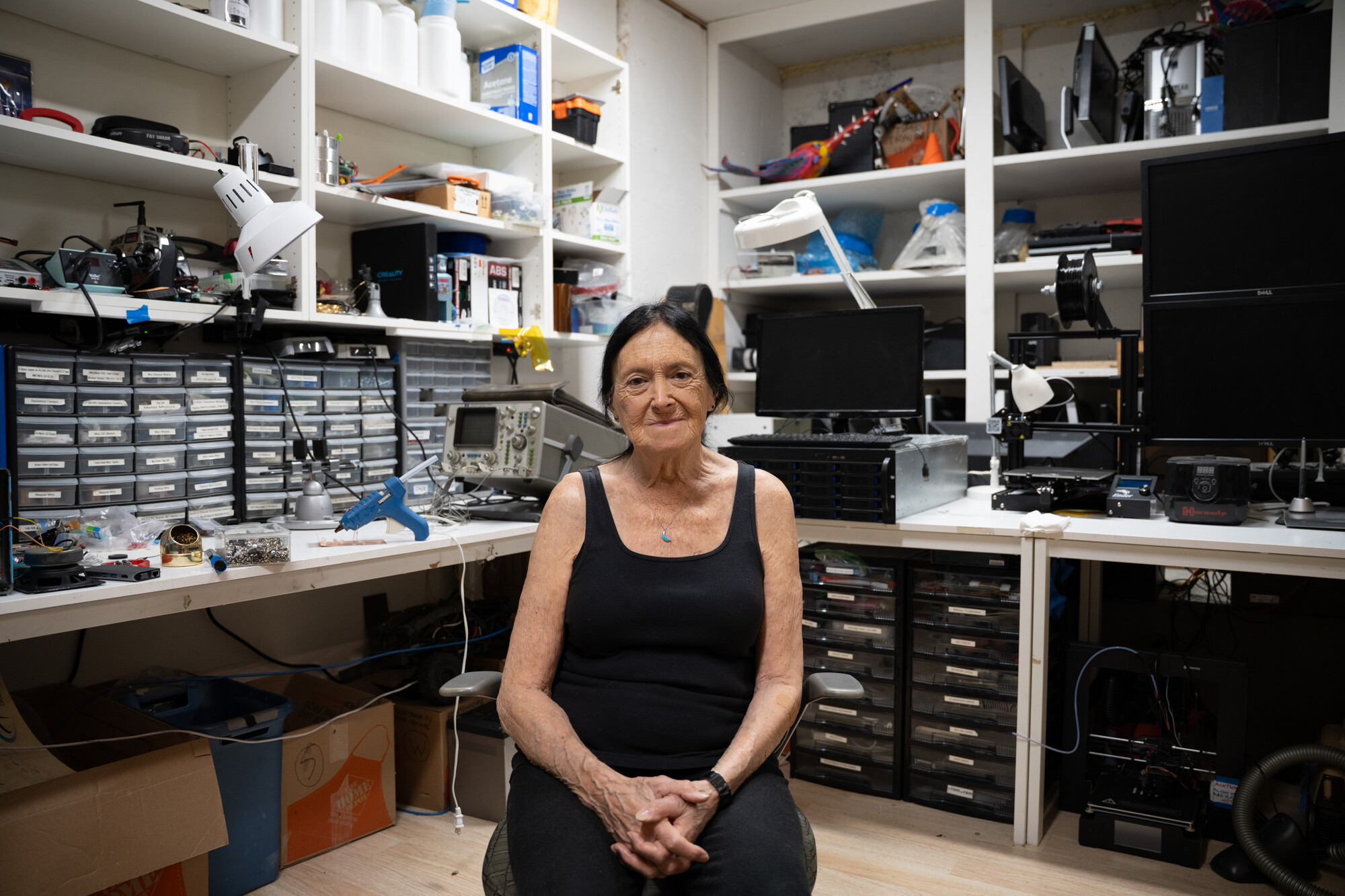
"caption": "Sandy Stone, 88-year-old legendary audio engineer and trans woman who worked with rock ’n’ roll greats and was the in-house engineer at feminist label Olivia Records in the 1970s, in her home in Aptos on April 14, 2025. (Florence Middleton for KQED)",
"credit": "Florence Middleton for KQED",
"altTag": null,
"description": null,
"imgSizes": {
"thumbnail": {
"file": "https://cdn.kqed.org/wp-content/uploads/sites/10/2025/06/2025.04.14_Middleton_SandyStone_16_qed-160x107.jpg",
"width": 160,
"height": 107,
"mimeType": "image/jpeg"
},
"1536x1536": {
"file": "https://cdn.kqed.org/wp-content/uploads/sites/10/2025/06/2025.04.14_Middleton_SandyStone_16_qed-1536x1024.jpg",
"width": 1536,
"height": 1024,
"mimeType": "image/jpeg"
},
"post-thumbnail": {
"file": "https://cdn.kqed.org/wp-content/uploads/sites/10/2025/06/2025.04.14_Middleton_SandyStone_16_qed-672x372.jpg",
"width": 672,
"height": 372,
"mimeType": "image/jpeg"
},
"twentyfourteen-full-width": {
"file": "https://cdn.kqed.org/wp-content/uploads/sites/10/2025/06/2025.04.14_Middleton_SandyStone_16_qed-1038x576.jpg",
"width": 1038,
"height": 576,
"mimeType": "image/jpeg"
},
"kqedFullSize": {
"file": "https://cdn.kqed.org/wp-content/uploads/sites/10/2025/06/2025.04.14_Middleton_SandyStone_16_qed.jpg",
"width": 2000,
"height": 1333
}
},
"isLoading": false,
"fetchFailed": false
},
"news_12046313": {
"type": "attachments",
"id": "news_12046313",
"meta": {
"index": "attachments_1716263798",
"site": "news",
"id": "12046313",
"found": true
},
"title": "Gavin Newsom Lawsuit Against President Trump",
"publishDate": 1751046084,
"status": "inherit",
"parent": 12046271,
"modified": 1751046156,
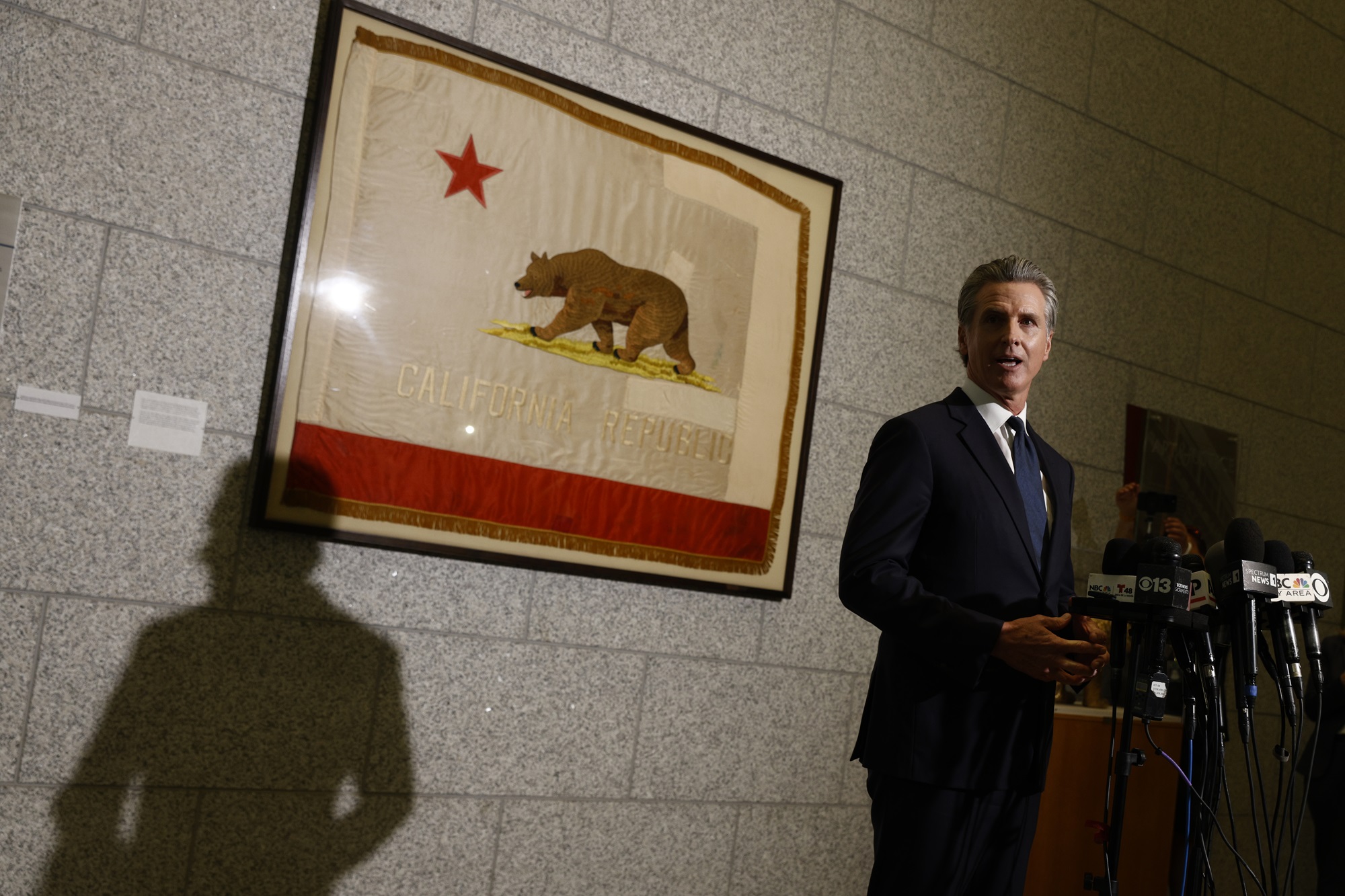
"caption": "Gov. Gavin Newsom speaks after U.S. District Judge Charles Breyer granted an emergency temporary restraining order to stop President Trump's deployment of the California National Guard, on Thursday, June 12, 2025, at the California State Supreme Court building in San Francisco. ",
"credit": "Santiago Mejia/San Francisco Chronicle via Getty Images",
"altTag": null,
"description": null,
"imgSizes": {
"thumbnail": {
"file": "https://cdn.kqed.org/wp-content/uploads/sites/10/2025/06/GavinNewsomGetty2-160x107.jpg",
"width": 160,
"height": 107,
"mimeType": "image/jpeg"
},
"1536x1536": {
"file": "https://cdn.kqed.org/wp-content/uploads/sites/10/2025/06/GavinNewsomGetty2-1536x1024.jpg",
"width": 1536,
"height": 1024,
"mimeType": "image/jpeg"
},
"post-thumbnail": {
"file": "https://cdn.kqed.org/wp-content/uploads/sites/10/2025/06/GavinNewsomGetty2-672x372.jpg",
"width": 672,
"height": 372,
"mimeType": "image/jpeg"
},
"twentyfourteen-full-width": {
"file": "https://cdn.kqed.org/wp-content/uploads/sites/10/2025/06/GavinNewsomGetty2-1038x576.jpg",
"width": 1038,
"height": 576,
"mimeType": "image/jpeg"
},
"kqedFullSize": {
"file": "https://cdn.kqed.org/wp-content/uploads/sites/10/2025/06/GavinNewsomGetty2.jpg",
"width": 2000,
"height": 1333
}
},
"isLoading": false,
"fetchFailed": false
},
"news_12046267": {
"type": "attachments",
"id": "news_12046267",
"meta": {
"index": "attachments_1716263798",
"site": "news",
"id": "12046267",
"found": true
},
"title": "Trump Administration Asks Supreme Court To Block Order To Return Mistakenly Deported Man",
"publishDate": 1751036305,
"status": "inherit",
"parent": 12046266,
"modified": 1772572584,
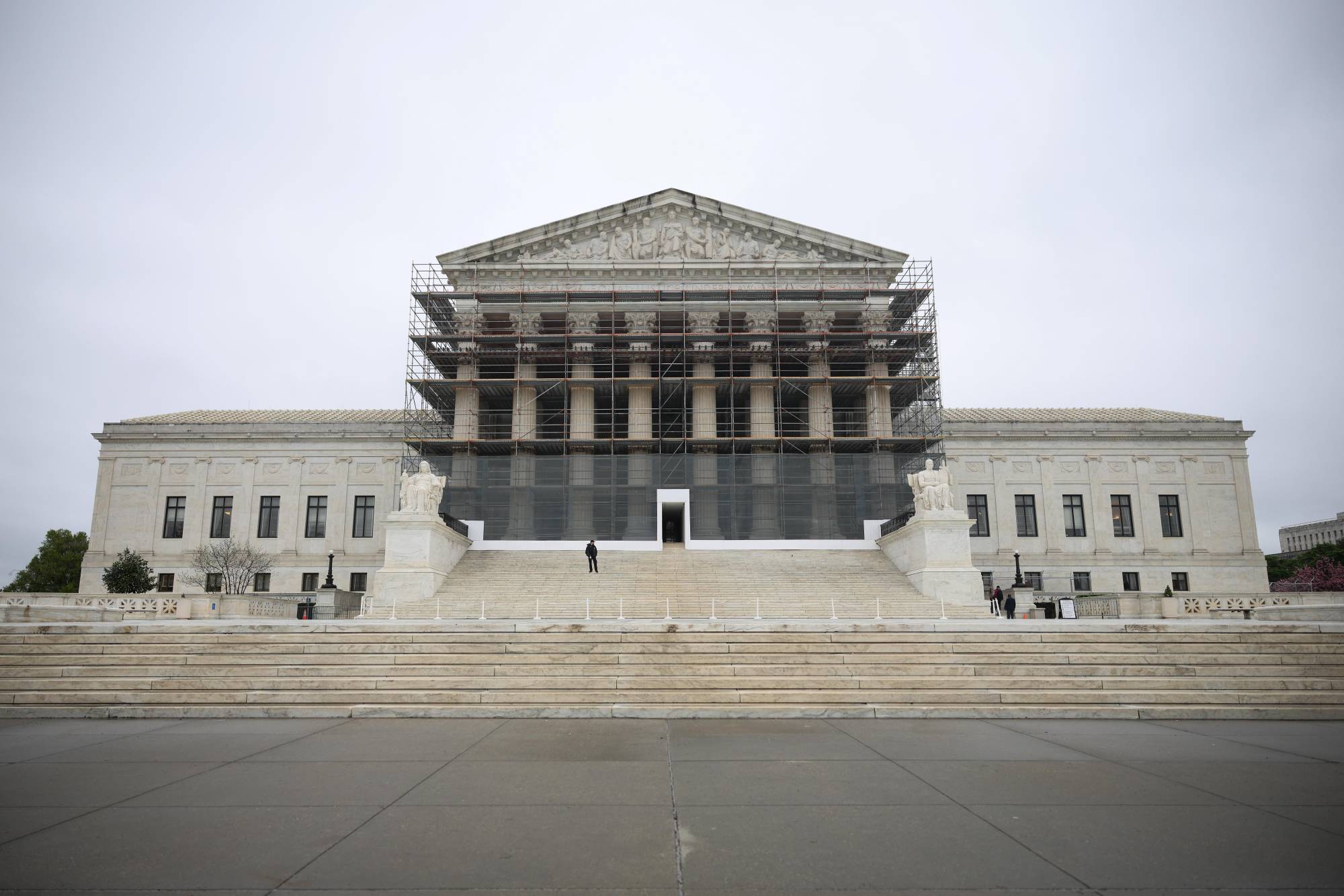
"caption": "The U.S. Supreme Court on April 7, 2025, in Washington, D.C.",
"credit": "Kayla Bartkowski/Getty Images",
"altTag": "The U.S. Supreme Court",
"description": "The U.S. Supreme Court is seen on April 07, 2025 in Washington, D.C.",
"imgSizes": {
"medium": {
"file": "https://cdn.kqed.org/wp-content/uploads/sites/10/2025/06/gettyimages-2209056030-4-2000x1334.jpeg",
"width": 2000,
"height": 1334,
"mimeType": "image/jpeg"
},
"large": {
"file": "https://cdn.kqed.org/wp-content/uploads/sites/10/2025/06/gettyimages-2209056030-4-2000x1334.jpeg",
"width": 2000,
"height": 1334,
"mimeType": "image/jpeg"
},
"thumbnail": {
"file": "https://cdn.kqed.org/wp-content/uploads/sites/10/2025/06/gettyimages-2209056030-4-160x107.jpeg",
"width": 160,
"height": 107,
"mimeType": "image/jpeg"
},
"1536x1536": {
"file": "https://cdn.kqed.org/wp-content/uploads/sites/10/2025/06/gettyimages-2209056030-4-1536x1025.jpeg",
"width": 1536,
"height": 1025,
"mimeType": "image/jpeg"
},
"2048x2048": {
"file": "https://cdn.kqed.org/wp-content/uploads/sites/10/2025/06/gettyimages-2209056030-4-2048x1366.jpeg",
"width": 2048,
"height": 1366,
"mimeType": "image/jpeg"
},
"post-thumbnail": {
"file": "https://cdn.kqed.org/wp-content/uploads/sites/10/2025/06/gettyimages-2209056030-4-672x372.jpeg",
"width": 672,
"height": 372,
"mimeType": "image/jpeg"
},
"twentyfourteen-full-width": {
"file": "https://cdn.kqed.org/wp-content/uploads/sites/10/2025/06/gettyimages-2209056030-4-1038x576.jpeg",
"width": 1038,
"height": 576,
"mimeType": "image/jpeg"
},
"full-width": {
"file": "https://cdn.kqed.org/wp-content/uploads/sites/10/2025/06/gettyimages-2209056030-4-2000x1334.jpeg",
"width": 2000,
"height": 1334,
"mimeType": "image/jpeg"
},
"kqedFullSize": {
"file": "https://cdn.kqed.org/wp-content/uploads/sites/10/2025/06/gettyimages-2209056030-4-scaled-e1772572598710.jpeg",
"width": 2000,
"height": 1334
}
},
"isLoading": false,
"fetchFailed": false
},
"news_12046209": {
"type": "attachments",
"id": "news_12046209",
"meta": {
"index": "attachments_1716263798",
"site": "news",
"id": "12046209",
"found": true
},
"title": "IMG_1062",
"publishDate": 1750976420,
"status": "inherit",
"parent": 12045988,
"modified": 1750976436,
"caption": null,
"credit": "Illustration by Anna Vignet",
"altTag": null,
"description": null,
"imgSizes": {
"medium": {
"file": "https://cdn.kqed.org/wp-content/uploads/sites/10/2025/06/IMG_1062-2000x1500.jpg",
"width": 2000,
"height": 1500,
"mimeType": "image/jpeg"
},
"large": {
"file": "https://cdn.kqed.org/wp-content/uploads/sites/10/2025/06/IMG_1062-2000x1500.jpg",
"width": 2000,
"height": 1500,
"mimeType": "image/jpeg"
},
"thumbnail": {
"file": "https://cdn.kqed.org/wp-content/uploads/sites/10/2025/06/IMG_1062-160x120.jpg",
"width": 160,
"height": 120,
"mimeType": "image/jpeg"
},
"1536x1536": {
"file": "https://cdn.kqed.org/wp-content/uploads/sites/10/2025/06/IMG_1062-1536x1152.jpg",
"width": 1536,
"height": 1152,
"mimeType": "image/jpeg"
},
"2048x2048": {
"file": "https://cdn.kqed.org/wp-content/uploads/sites/10/2025/06/IMG_1062-2048x1536.jpg",
"width": 2048,
"height": 1536,
"mimeType": "image/jpeg"
},
"post-thumbnail": {
"file": "https://cdn.kqed.org/wp-content/uploads/sites/10/2025/06/IMG_1062-672x372.jpg",
"width": 672,
"height": 372,
"mimeType": "image/jpeg"
},
"twentyfourteen-full-width": {
"file": "https://cdn.kqed.org/wp-content/uploads/sites/10/2025/06/IMG_1062-1038x576.jpg",
"width": 1038,
"height": 576,
"mimeType": "image/jpeg"
},
"full-width": {
"file": "https://cdn.kqed.org/wp-content/uploads/sites/10/2025/06/IMG_1062-2000x1500.jpg",
"width": 2000,
"height": 1500,
"mimeType": "image/jpeg"
},
"kqedFullSize": {
"file": "https://cdn.kqed.org/wp-content/uploads/sites/10/2025/06/IMG_1062.jpg",
"width": 2560,
"height": 1920
}
},
"isLoading": false,
"fetchFailed": false
},
"news_12043922": {
"type": "attachments",
"id": "news_12043922",
"meta": {
"index": "attachments_1716263798",
"site": "news",
"id": "12043922",
"found": true
},
"title": "Immigration Protests Los Angeles",
"publishDate": 1749749041,
"status": "inherit",
"parent": 12043920,
"modified": 1749757600,
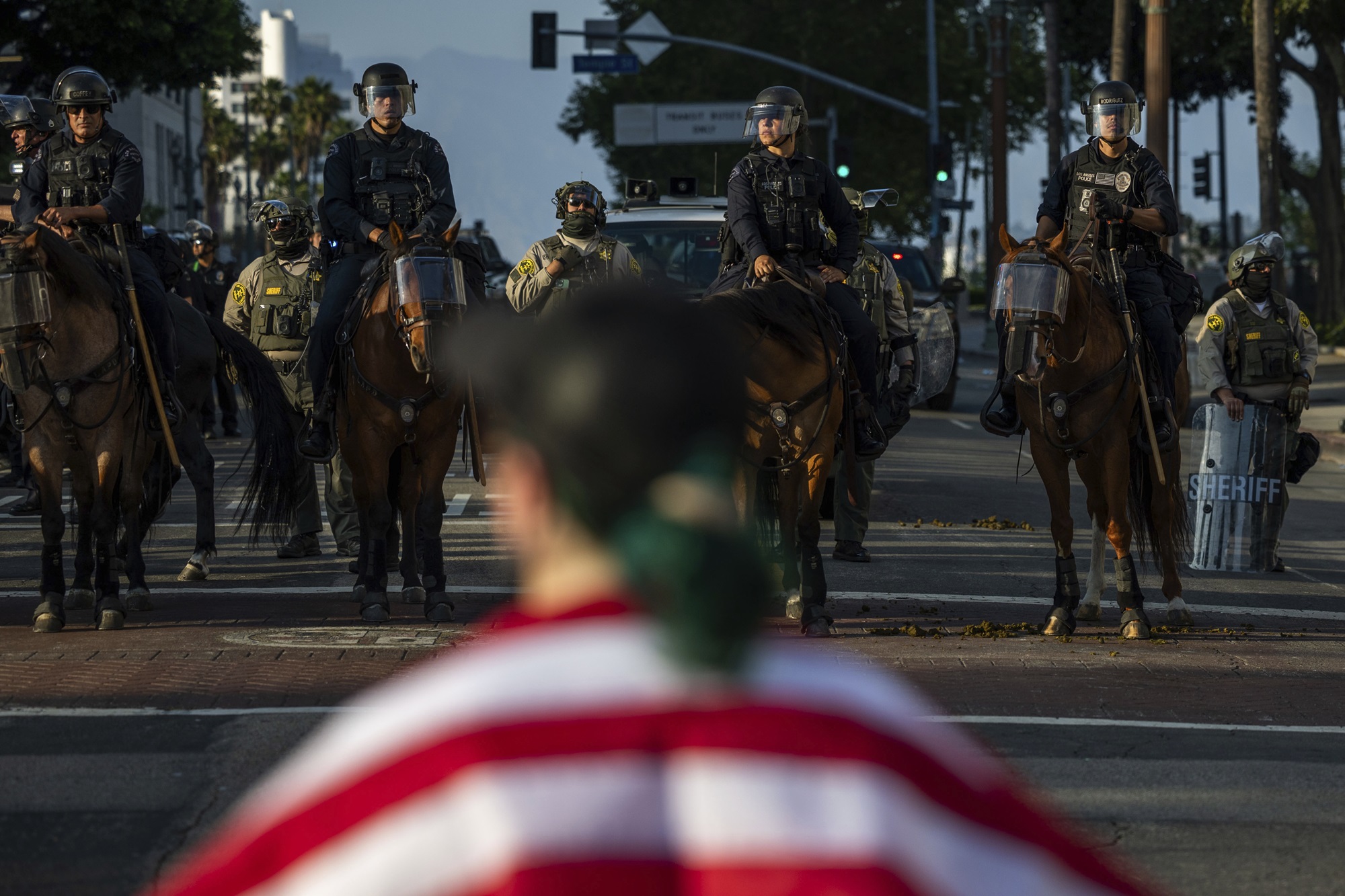
"caption": "Police confront protesters outside City Hall during protests over federal immigration enforcement raids on Wednesday, June 11, 2025, in Los Angeles. ",
"credit": "Ethan Swope/AP Photo",
"altTag": null,
"description": null,
"imgSizes": {
"thumbnail": {
"file": "https://cdn.kqed.org/wp-content/uploads/sites/10/2025/06/LosAngelesImmigrationRaidAP-160x107.jpg",
"width": 160,
"height": 107,
"mimeType": "image/jpeg"
},
"1536x1536": {
"file": "https://cdn.kqed.org/wp-content/uploads/sites/10/2025/06/LosAngelesImmigrationRaidAP-1536x1024.jpg",
"width": 1536,
"height": 1024,
"mimeType": "image/jpeg"
},
"post-thumbnail": {
"file": "https://cdn.kqed.org/wp-content/uploads/sites/10/2025/06/LosAngelesImmigrationRaidAP-672x372.jpg",
"width": 672,
"height": 372,
"mimeType": "image/jpeg"
},
"twentyfourteen-full-width": {
"file": "https://cdn.kqed.org/wp-content/uploads/sites/10/2025/06/LosAngelesImmigrationRaidAP-1038x576.jpg",
"width": 1038,
"height": 576,
"mimeType": "image/jpeg"
},
"kqedFullSize": {
"file": "https://cdn.kqed.org/wp-content/uploads/sites/10/2025/06/LosAngelesImmigrationRaidAP.jpg",
"width": 2000,
"height": 1333
}
},
"isLoading": false,
"fetchFailed": false
},
"news_12046175": {
"type": "attachments",
"id": "news_12046175",
"meta": {
"index": "attachments_1716263798",
"site": "news",
"id": "12046175",
"found": true
},
"title": "Homeless people struggle during heavy rain in San Francisco, California",
"publishDate": 1750970923,
"status": "inherit",
"parent": 12087973,
"modified": 1781737864,
"caption": "A homeless encampment near Polk Street in San Francisco on Feb. 6, 2025.",
"credit": "Tayfun Coskun/Anadolu via Getty Images",
"altTag": null,
"description": null,
"imgSizes": {
"thumbnail": {
"file": "https://cdn.kqed.org/wp-content/uploads/sites/10/2025/06/GETTYIMAGES-2197492442-KQED-160x101.jpg",
"width": 160,
"height": 101,
"mimeType": "image/jpeg"
},
"1536x1536": {
"file": "https://cdn.kqed.org/wp-content/uploads/sites/10/2025/06/GETTYIMAGES-2197492442-KQED-1536x969.jpg",
"width": 1536,
"height": 969,
"mimeType": "image/jpeg"
},
"post-thumbnail": {
"file": "https://cdn.kqed.org/wp-content/uploads/sites/10/2025/06/GETTYIMAGES-2197492442-KQED-672x372.jpg",
"width": 672,
"height": 372,
"mimeType": "image/jpeg"
},
"twentyfourteen-full-width": {
"file": "https://cdn.kqed.org/wp-content/uploads/sites/10/2025/06/GETTYIMAGES-2197492442-KQED-1038x576.jpg",
"width": 1038,
"height": 576,
"mimeType": "image/jpeg"
},
"kqedFullSize": {
"file": "https://cdn.kqed.org/wp-content/uploads/sites/10/2025/06/GETTYIMAGES-2197492442-KQED.jpg",
"width": 2000,
"height": 1262
}
},
"isLoading": false,
"fetchFailed": false
},
"news_12045778": {
"type": "attachments",
"id": "news_12045778",
"meta": {
"index": "attachments_1716263798",
"site": "news",
"id": "12045778",
"found": true
},
"title": "The homeless encampment at Ohlone Park in Berkeley on May 29, 2025.",
"publishDate": 1750804544,
"status": "inherit",
"parent": 12045673,
"modified": 1750804554,
"caption": "The homeless encampment at Ohlone Park in Berkeley on May 29, 2025.",
"credit": "Gina Castro/KQED",
"altTag": null,
"description": null,
"imgSizes": {
"thumbnail": {
"file": "https://cdn.kqed.org/wp-content/uploads/sites/10/2025/06/20250529_OhloneParkEncampment_GC-17_qed-1-160x107.jpg",
"width": 160,
"height": 107,
"mimeType": "image/jpeg"
},
"1536x1536": {
"file": "https://cdn.kqed.org/wp-content/uploads/sites/10/2025/06/20250529_OhloneParkEncampment_GC-17_qed-1-1536x1024.jpg",
"width": 1536,
"height": 1024,
"mimeType": "image/jpeg"
},
"post-thumbnail": {
"file": "https://cdn.kqed.org/wp-content/uploads/sites/10/2025/06/20250529_OhloneParkEncampment_GC-17_qed-1-672x372.jpg",
"width": 672,
"height": 372,
"mimeType": "image/jpeg"
},
"twentyfourteen-full-width": {
"file": "https://cdn.kqed.org/wp-content/uploads/sites/10/2025/06/20250529_OhloneParkEncampment_GC-17_qed-1-1038x576.jpg",
"width": 1038,
"height": 576,
"mimeType": "image/jpeg"
},
"kqedFullSize": {
"file": "https://cdn.kqed.org/wp-content/uploads/sites/10/2025/06/20250529_OhloneParkEncampment_GC-17_qed-1.jpg",
"width": 2000,
"height": 1333
}
},
"isLoading": false,
"fetchFailed": false
},
"news_12045595": {
"type": "attachments",
"id": "news_12045595",
"meta": {
"index": "attachments_1716263798",
"site": "news",
"id": "12045595",
"found": true
},
"title": "250623-BERKELEYMIDDLEHOUSING-03-BL-KQED",
"publishDate": 1750715458,
"status": "inherit",
"parent": 0,
"modified": 1750715524,
"caption": "Aimee Baldwin, whose Chinese American family has lived in Berkeley since the early 1900s, at her home in Berkeley on June 23, 2025. As the city considers a proposal to allow small apartment buildings in single-family neighborhoods, Baldwin says addressing past exclusion will require more than zoning changes.",
"credit": "Beth LaBerge/KQED",
"altTag": null,
"description": null,
"imgSizes": {
"thumbnail": {
"file": "https://cdn.kqed.org/wp-content/uploads/sites/10/2025/06/250623-BERKELEYMIDDLEHOUSING-03-BL-KQED-160x107.jpg",
"width": 160,
"height": 107,
"mimeType": "image/jpeg"
},
"1536x1536": {
"file": "https://cdn.kqed.org/wp-content/uploads/sites/10/2025/06/250623-BERKELEYMIDDLEHOUSING-03-BL-KQED-1536x1024.jpg",
"width": 1536,
"height": 1024,
"mimeType": "image/jpeg"
},
"post-thumbnail": {
"file": "https://cdn.kqed.org/wp-content/uploads/sites/10/2025/06/250623-BERKELEYMIDDLEHOUSING-03-BL-KQED-672x372.jpg",
"width": 672,
"height": 372,
"mimeType": "image/jpeg"
},
"twentyfourteen-full-width": {
"file": "https://cdn.kqed.org/wp-content/uploads/sites/10/2025/06/250623-BERKELEYMIDDLEHOUSING-03-BL-KQED-1038x576.jpg",
"width": 1038,
"height": 576,
"mimeType": "image/jpeg"
},
"kqedFullSize": {
"file": "https://cdn.kqed.org/wp-content/uploads/sites/10/2025/06/250623-BERKELEYMIDDLEHOUSING-03-BL-KQED.jpg",
"width": 2000,
"height": 1333
}
},
"isLoading": false,
"fetchFailed": false
},
"news_12044939": {
"type": "attachments",
"id": "news_12044939",
"meta": {
"index": "attachments_1716263798",
"site": "news",
"id": "12044939",
"found": true
},
"title": "Gabby Chavez-LopezAnthony Tordillos",
"publishDate": 1750273269,
"status": "inherit",
"parent": 12044929,
"modified": 1750273454,
"caption": "San José City Council District 3 candidates Gabby Chavez-Lopez and Anthony Tordillos speak at a candidates forum at the San José Women’s Club in San José on March 6, 2025.",
"credit": "Gina Castro/KQED",
"altTag": null,
"description": null,
"imgSizes": {
"thumbnail": {
"file": "https://cdn.kqed.org/wp-content/uploads/sites/10/2025/06/Gabby-Chavez-LopezAnthony-Tordillos-160x107.jpg",
"width": 160,
"height": 107,
"mimeType": "image/jpeg"
},
"1536x1536": {
"file": "https://cdn.kqed.org/wp-content/uploads/sites/10/2025/06/Gabby-Chavez-LopezAnthony-Tordillos-1536x1024.jpg",
"width": 1536,
"height": 1024,
"mimeType": "image/jpeg"
},
"post-thumbnail": {
"file": "https://cdn.kqed.org/wp-content/uploads/sites/10/2025/06/Gabby-Chavez-LopezAnthony-Tordillos-672x372.jpg",
"width": 672,
"height": 372,
"mimeType": "image/jpeg"
},
"twentyfourteen-full-width": {
"file": "https://cdn.kqed.org/wp-content/uploads/sites/10/2025/06/Gabby-Chavez-LopezAnthony-Tordillos-1038x576.jpg",
"width": 1038,
"height": 576,
"mimeType": "image/jpeg"
},
"kqedFullSize": {
"file": "https://cdn.kqed.org/wp-content/uploads/sites/10/2025/06/Gabby-Chavez-LopezAnthony-Tordillos.jpg",
"width": 2000,
"height": 1333
}
},
"isLoading": false,
"fetchFailed": false
},
"news_12045714": {
"type": "attachments",
"id": "news_12045714",
"meta": {
"index": "attachments_1716263798",
"site": "news",
"id": "12045714",
"found": true
},
"title": "Lake Tahoe Boat Capsize",
"publishDate": 1750791061,
"status": "inherit",
"parent": 12045712,
"modified": 1750791149,
"caption": "Washoe County Sheriffs conduct a search at D.L. Bliss State Park after a weekend incident in which a boat capsized, killing several people, on Monday, June 23, 2025, in Lake Tahoe, California.",
"credit": "Brooke Hess-Homeier/AP Photo",
"altTag": null,
"description": null,
"imgSizes": {
"thumbnail": {
"file": "https://cdn.kqed.org/wp-content/uploads/sites/10/2025/06/LakeTahoeAP-160x107.jpg",
"width": 160,
"height": 107,
"mimeType": "image/jpeg"
},
"1536x1536": {
"file": "https://cdn.kqed.org/wp-content/uploads/sites/10/2025/06/LakeTahoeAP-1536x1024.jpg",
"width": 1536,
"height": 1024,
"mimeType": "image/jpeg"
},
"post-thumbnail": {
"file": "https://cdn.kqed.org/wp-content/uploads/sites/10/2025/06/LakeTahoeAP-672x372.jpg",
"width": 672,
"height": 372,
"mimeType": "image/jpeg"
},
"twentyfourteen-full-width": {
"file": "https://cdn.kqed.org/wp-content/uploads/sites/10/2025/06/LakeTahoeAP-1038x576.jpg",
"width": 1038,
"height": 576,
"mimeType": "image/jpeg"
},
"kqedFullSize": {
"file": "https://cdn.kqed.org/wp-content/uploads/sites/10/2025/06/LakeTahoeAP.jpg",
"width": 2000,
"height": 1333
}
},
"isLoading": false,
"fetchFailed": false
},
"news_12045571": {
"type": "attachments",
"id": "news_12045571",
"meta": {
"index": "attachments_1716263798",
"site": "news",
"id": "12045571",
"found": true
},
"title": "REVAMOS_BROWN-67-MO-KQED",
"publishDate": 1750709805,
"status": "inherit",
"parent": 0,
"modified": 1750710015,
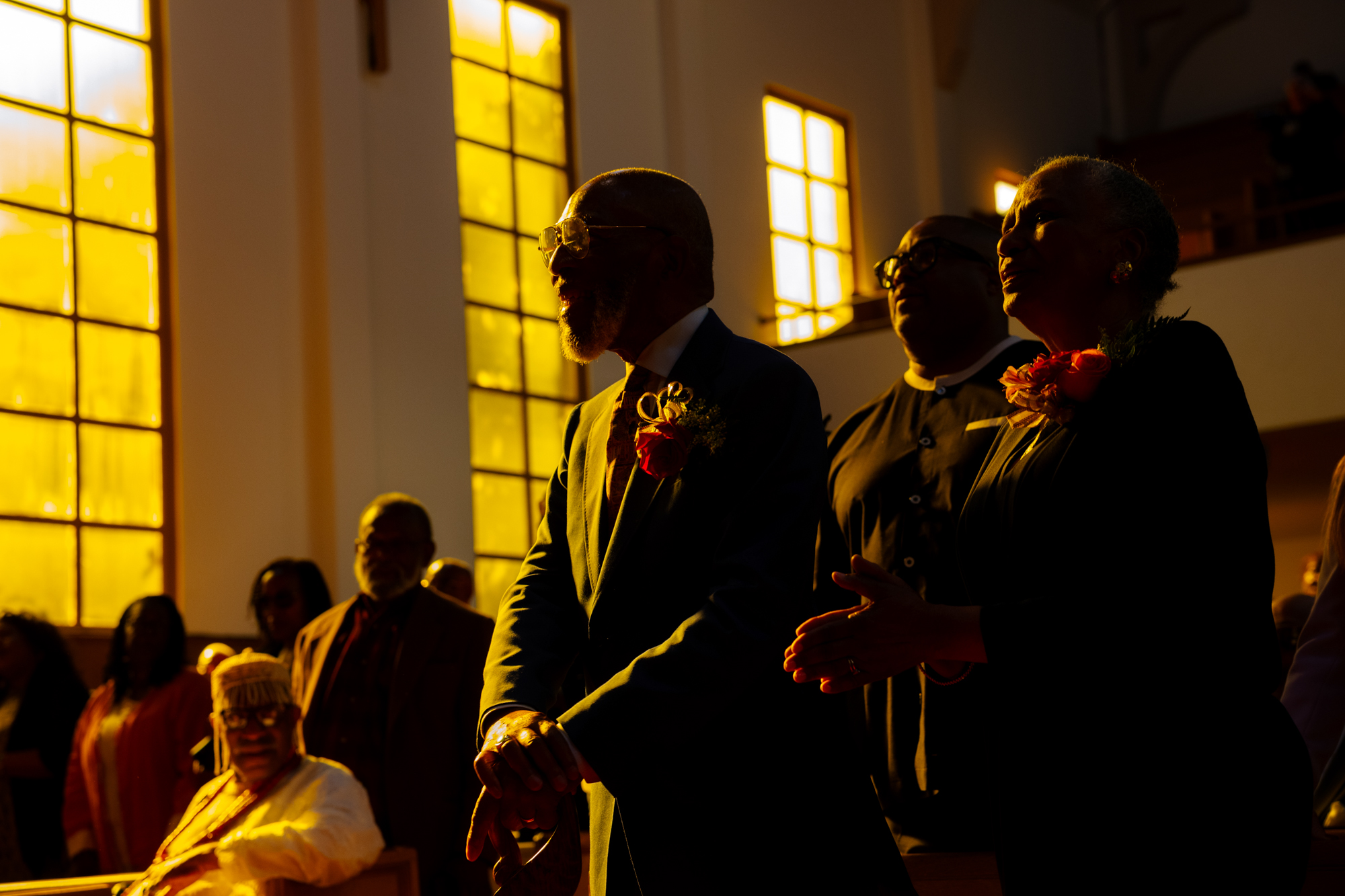
"caption": "Family, politicians and congregants gather at of the Third Baptist church for Pastor Emeritus Designation Service ceremony in honor of Rev. Amos Brown in San Francisco, Sunday, June 22, 2025. Photo by Manuel Orbegozo for KQED.",
"credit": "Manuel Orbegozo for KQED",
"altTag": null,
"description": null,
"imgSizes": {
"thumbnail": {
"file": "https://cdn.kqed.org/wp-content/uploads/sites/10/2025/06/REVAMOS_BROWN-67-MO-KQED-160x107.jpg",
"width": 160,
"height": 107,
"mimeType": "image/jpeg"
},
"1536x1536": {
"file": "https://cdn.kqed.org/wp-content/uploads/sites/10/2025/06/REVAMOS_BROWN-67-MO-KQED-1536x1024.jpg",
"width": 1536,
"height": 1024,
"mimeType": "image/jpeg"
},
"post-thumbnail": {
"file": "https://cdn.kqed.org/wp-content/uploads/sites/10/2025/06/REVAMOS_BROWN-67-MO-KQED-672x372.jpg",
"width": 672,
"height": 372,
"mimeType": "image/jpeg"
},
"twentyfourteen-full-width": {
"file": "https://cdn.kqed.org/wp-content/uploads/sites/10/2025/06/REVAMOS_BROWN-67-MO-KQED-1038x576.jpg",
"width": 1038,
"height": 576,
"mimeType": "image/jpeg"
},
"kqedFullSize": {
"file": "https://cdn.kqed.org/wp-content/uploads/sites/10/2025/06/REVAMOS_BROWN-67-MO-KQED.jpg",
"width": 2000,
"height": 1333
}
},
"isLoading": false,
"fetchFailed": false
},
"news_11947189": {
"type": "attachments",
"id": "news_11947189",
"meta": {
"index": "attachments_1716263798",
"site": "news",
"id": "11947189",
"found": true
},
"title": "013_KQED_UCSFBenioffChildrensHospStrike_04192023",
"publishDate": 1681947424,
"status": "inherit",
"parent": 11947102,
"modified": 1750719406,
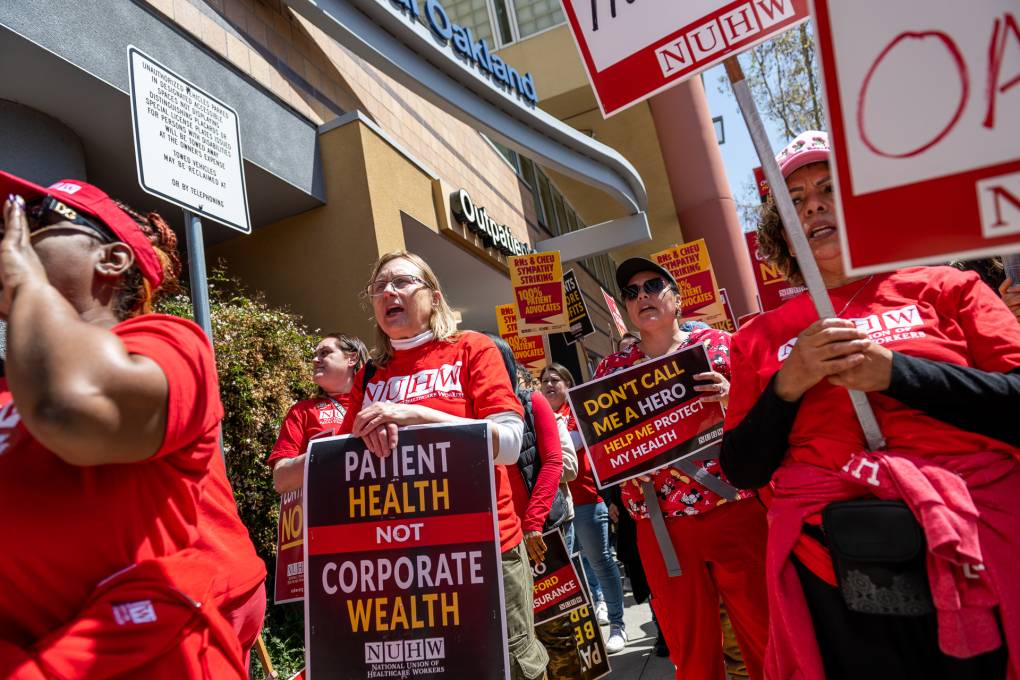
"caption": "Hospital employees and supporters gather for a rally outside of the UCSF Benioff Children's Hospital in Oakland on April 19, 2023, during a one-day strike authorized by more than 1,200 members of the National Union of Healthcare Workers at the Oakland and Walnut Creek hospitals.",
"credit": "Beth LaBerge/KQED",
"altTag": "Hundreds of protesters in red T-shirts hold red and yellow picket signs outside of UCSF Benioff Children's Hospital Oakland.",
"description": null,
"imgSizes": {
"medium": {
"file": "https://cdn.kqed.org/wp-content/uploads/sites/10/2023/04/013_KQED_UCSFBenioffChildrensHospStrike_04192023-800x533.jpg",
"width": 800,
"height": 533,
"mimeType": "image/jpeg"
},
"large": {
"file": "https://cdn.kqed.org/wp-content/uploads/sites/10/2023/04/013_KQED_UCSFBenioffChildrensHospStrike_04192023-1020x680.jpg",
"width": 1020,
"height": 680,
"mimeType": "image/jpeg"
},
"thumbnail": {
"file": "https://cdn.kqed.org/wp-content/uploads/sites/10/2023/04/013_KQED_UCSFBenioffChildrensHospStrike_04192023-160x107.jpg",
"width": 160,
"height": 107,
"mimeType": "image/jpeg"
},
"1536x1536": {
"file": "https://cdn.kqed.org/wp-content/uploads/sites/10/2023/04/013_KQED_UCSFBenioffChildrensHospStrike_04192023-1536x1024.jpg",
"width": 1536,
"height": 1024,
"mimeType": "image/jpeg"
},
"post-thumbnail": {
"file": "https://cdn.kqed.org/wp-content/uploads/sites/10/2023/04/013_KQED_UCSFBenioffChildrensHospStrike_04192023-672x372.jpg",
"width": 672,
"height": 372,
"mimeType": "image/jpeg"
},
"twentyfourteen-full-width": {
"file": "https://cdn.kqed.org/wp-content/uploads/sites/10/2023/04/013_KQED_UCSFBenioffChildrensHospStrike_04192023-1038x576.jpg",
"width": 1038,
"height": 576,
"mimeType": "image/jpeg"
},
"kqedFullSize": {
"file": "https://cdn.kqed.org/wp-content/uploads/sites/10/2023/04/013_KQED_UCSFBenioffChildrensHospStrike_04192023.jpg",
"width": 1920,
"height": 1280
}
},
"isLoading": false,
"fetchFailed": false
}
},
"audioPlayerReducer": {
"postId": "stream_live",
"isPaused": true,
"isPlaying": false,
"pfsActive": false,
"pledgeModalIsOpen": true,
"playerDrawerIsOpen": false,
"liveAudioPlayStartedAt": 0,
"liveAudioPlayContext": ""
},
"authorsReducer": {
"byline_news_12044886": {
"type": "authors",
"id": "byline_news_12044886",
"meta": {
"override": true
},
"slug": "byline_news_12044886",
"name": "Nina Totenberg, NPR",
"isLoading": false
},
"gmarzorati": {
"type": "authors",
"id": "227",
"meta": {
"index": "authors_1716337520",
"id": "227",
"found": true
},
"name": "Guy Marzorati",
"firstName": "Guy",
"lastName": "Marzorati",
"slug": "gmarzorati",
"email": "gmarzorati@KQED.org",
"display_author_email": true,
"staff_mastheads": [
"news"
],
"title": "Correspondent",
"bio": "Guy Marzorati is a correspondent on KQED's California Politics and Government Desk, based in San Jose. A graduate of Santa Clara University, Guy joined KQED in 2013. He reports on state and local politics and produces KQED's digital voter guide.",
"avatar": "https://secure.gravatar.com/avatar/e7038b8dbfd55b104369b76b1cd0b9de?s=600&d=blank&r=g",
"twitter": "guymarzorati",
"facebook": null,
"instagram": null,
"linkedin": null,
"sites": [
{
"site": "",
"roles": [
"editor"
]
},
{
"site": "news",
"roles": [
"editor"
]
},
{
"site": "science",
"roles": [
"editor"
]
},
{
"site": "forum",
"roles": [
"editor"
]
},
{
"site": "elections",
"roles": [
"editor"
]
},
{
"site": "liveblog",
"roles": [
"editor"
]
}
],
"headData": {
"title": "Guy Marzorati | KQED",
"description": "Correspondent",
"ogImgSrc": "https://secure.gravatar.com/avatar/e7038b8dbfd55b104369b76b1cd0b9de?s=600&d=blank&r=g",
"twImgSrc": "https://secure.gravatar.com/avatar/e7038b8dbfd55b104369b76b1cd0b9de?s=600&d=blank&r=g"
},
"isLoading": false,
"link": "/author/gmarzorati"
},
"kqed": {
"type": "authors",
"id": "236",
"meta": {
"index": "authors_1716337520",
"id": "236",
"found": true
},
"name": "KQED News Staff",
"firstName": "KQED News Staff",
"lastName": null,
"slug": "kqed",
"email": "faq@kqed.org",
"display_author_email": false,
"staff_mastheads": [],
"title": null,
"bio": null,
"avatar": "https://secure.gravatar.com/avatar/ef0e801a68c4c54afa9180db14084167?s=600&d=blank&r=g",
"twitter": null,
"facebook": null,
"instagram": null,
"linkedin": null,
"sites": [
{
"site": "arts",
"roles": [
"contributor"
]
},
{
"site": "news",
"roles": [
"editor"
]
},
{
"site": "futureofyou",
"roles": [
"author"
]
}
],
"headData": {
"title": "KQED News Staff | KQED",
"description": null,
"ogImgSrc": "https://secure.gravatar.com/avatar/ef0e801a68c4c54afa9180db14084167?s=600&d=blank&r=g",
"twImgSrc": "https://secure.gravatar.com/avatar/ef0e801a68c4c54afa9180db14084167?s=600&d=blank&r=g"
},
"isLoading": false,
"link": "/author/kqed"
},
"matthewgreen": {
"type": "authors",
"id": "1263",
"meta": {
"index": "authors_1716337520",
"id": "1263",
"found": true
},
"name": "Matthew Green",
"firstName": "Matthew",
"lastName": "Green",
"slug": "matthewgreen",
"email": "mgreen@kqed.org",
"display_author_email": false,
"staff_mastheads": [],
"title": "KQED Editor/Reporter",
"bio": "Matthew Green is a digital media producer for KQED News. He previously produced \u003ca href=\"http://www.kqed.org/lowdown\">The Lowdown\u003c/a>, KQED’s multimedia news education blog. Matthew's written for numerous Bay Area publications, including the Oakland Tribune and San Francisco Chronicle. He also taught journalism classes at Fremont High School in East Oakland.\r\n\r\nEmail: mgreen@kqed.org; Twitter: @MGreenKQED",
"avatar": "https://secure.gravatar.com/avatar/3bf498d1267ca02c8494f33d8cfc575e?s=600&d=blank&r=g",
"twitter": "MGreenKQED",
"facebook": null,
"instagram": null,
"linkedin": null,
"sites": [
{
"site": "news",
"roles": []
},
{
"site": "lowdown",
"roles": []
},
{
"site": "science",
"roles": []
},
{
"site": "education",
"roles": []
},
{
"site": "quest",
"roles": []
},
{
"site": "liveblog",
"roles": []
}
],
"headData": {
"title": "Matthew Green | KQED",
"description": "KQED Editor/Reporter",
"ogImgSrc": "https://secure.gravatar.com/avatar/3bf498d1267ca02c8494f33d8cfc575e?s=600&d=blank&r=g",
"twImgSrc": "https://secure.gravatar.com/avatar/3bf498d1267ca02c8494f33d8cfc575e?s=600&d=blank&r=g"
},
"isLoading": false,
"link": "/author/matthewgreen"
},
"mlagos": {
"type": "authors",
"id": "3239",
"meta": {
"index": "authors_1716337520",
"id": "3239",
"found": true
},
"name": "Marisa Lagos",
"firstName": "Marisa",
"lastName": "Lagos",
"slug": "mlagos",
"email": "mlagos@kqed.org",
"display_author_email": false,
"staff_mastheads": [
"news"
],
"title": "KQED Contributor",
"bio": "Marisa Lagos is a correspondent for KQED’s California Politics and Government Desk and co-hosts the award-winning show and podcast, Political Breakdown. At KQED, Lagos also conducts reporting, analysis and investigations into state, local and national politics for radio, TV, online and onstage. In 2022, she and co-host, Scott Shafer, moderated the only gubernatorial debate in California. In 2020, the \u003ci>Washington Post\u003c/i> named her one of the top political journalists in California; she was nominated for a Peabody and won several other awards for her work investigating the 2017 California wildfires. She has worked at the \u003ci>San Francisco Chronicle\u003c/i>, \u003ci>San Francisco Examiner\u003c/i> and \u003ci>Los Angeles Times\u003c/i>. A UC Santa Barbara graduate, she lives in San Francisco with her two sons and husband.",
"avatar": "https://secure.gravatar.com/avatar/a261a0d3696fc066871ef96b85b5e7d2?s=600&d=blank&r=g",
"twitter": "@mlagos",
"facebook": null,
"instagram": null,
"linkedin": null,
"sites": [
{
"site": "arts",
"roles": [
"author"
]
},
{
"site": "news",
"roles": [
"editor"
]
},
{
"site": "science",
"roles": [
"editor"
]
},
{
"site": "forum",
"roles": [
"author"
]
},
{
"site": "liveblog",
"roles": [
"author"
]
}
],
"headData": {
"title": "Marisa Lagos | KQED",
"description": "KQED Contributor",
"ogImgSrc": "https://secure.gravatar.com/avatar/a261a0d3696fc066871ef96b85b5e7d2?s=600&d=blank&r=g",
"twImgSrc": "https://secure.gravatar.com/avatar/a261a0d3696fc066871ef96b85b5e7d2?s=600&d=blank&r=g"
},
"isLoading": false,
"link": "/author/mlagos"
},
"ebaldassari": {
"type": "authors",
"id": "11652",
"meta": {
"index": "authors_1716337520",
"id": "11652",
"found": true
},
"name": "Erin Baldassari",
"firstName": "Erin",
"lastName": "Baldassari",
"slug": "ebaldassari",
"email": "ebaldassari@KQED.org",
"display_author_email": true,
"staff_mastheads": [
"news"
],
"title": "Staff Writer",
"bio": "Erin Baldassari covers housing for KQED. She's a former print journalist and most recently worked as the transportation reporter for the \u003cem>Mercury News\u003c/em> and \u003cem>East Bay Times. \u003c/em>There, she focused on how the Bay Area’s housing shortage has changed the way people move around the region. She also served on the \u003cem>East Bay Times\u003c/em>’ 2017 Pulitzer Prize-winning team for coverage of the Ghost Ship Fire in Oakland. Prior to that, Erin worked as a breaking news and general assignment reporter for a variety of outlets in the Bay Area and the greater Boston area. A Tufts University alumna, Erin grew up in the foothills of the Sierra Nevada mountains and in Sonoma County. She is a life-long KQED listener.",
"avatar": "https://secure.gravatar.com/avatar/660ce35d088ca54ad606d7e941abc652?s=600&d=mm&r=g",
"twitter": "e_baldi",
"facebook": null,
"instagram": null,
"linkedin": null,
"sites": [
{
"site": "news",
"roles": [
"edit_others_posts",
"editor"
]
},
{
"site": "science",
"roles": [
"editor"
]
},
{
"site": "liveblog",
"roles": [
"editor"
]
}
],
"headData": {
"title": "Erin Baldassari | KQED",
"description": "Staff Writer",
"ogImgSrc": "https://secure.gravatar.com/avatar/660ce35d088ca54ad606d7e941abc652?s=600&d=mm&r=g",
"twImgSrc": "https://secure.gravatar.com/avatar/660ce35d088ca54ad606d7e941abc652?s=600&d=mm&r=g"
},
"isLoading": false,
"link": "/author/ebaldassari"
},
"abandlamudi": {
"type": "authors",
"id": "11672",
"meta": {
"index": "authors_1716337520",
"id": "11672",
"found": true
},
"name": "Adhiti Bandlamudi",
"firstName": "Adhiti",
"lastName": "Bandlamudi",
"slug": "abandlamudi",
"email": "abandlamudi@kqed.org",
"display_author_email": false,
"staff_mastheads": [
"news"
],
"title": "KQED Housing Reporter",
"bio": "Adhiti Bandlamudi reports for KQED's Housing desk. She focuses on how housing gets built across the Bay Area. Before joining KQED in 2020, she reported for WUNC in Durham, North Carolina, WABE in Atlanta, Georgia and Capital Public Radio in Sacramento. In 2017, she was awarded a Kroc Fellowship at NPR where she reported on everything from sprinkles to the Golden State Killer's arrest. When she's not reporting, she's baking new recipes in her kitchen or watching movies with friends and family. She's originally from Georgia and has strong opinions about Great British Bake Off.",
"avatar": "https://secure.gravatar.com/avatar/868129c8b257bb99a3500e2c86a65400?s=600&d=mm&r=g",
"twitter": "oddity_adhiti",
"facebook": null,
"instagram": null,
"linkedin": null,
"sites": [
{
"site": "arts",
"roles": [
"author"
]
},
{
"site": "news",
"roles": [
"editor"
]
},
{
"site": "liveblog",
"roles": [
"author"
]
}
],
"headData": {
"title": "Adhiti Bandlamudi | KQED",
"description": "KQED Housing Reporter",
"ogImgSrc": "https://secure.gravatar.com/avatar/868129c8b257bb99a3500e2c86a65400?s=600&d=mm&r=g",
"twImgSrc": "https://secure.gravatar.com/avatar/868129c8b257bb99a3500e2c86a65400?s=600&d=mm&r=g"
},
"isLoading": false,
"link": "/author/abandlamudi"
},
"ccabreralomeli": {
"type": "authors",
"id": "11708",
"meta": {
"index": "authors_1716337520",
"id": "11708",
"found": true
},
"name": "Carlos Cabrera-Lomelí",
"firstName": "Carlos",
"lastName": "Cabrera-Lomelí",
"slug": "ccabreralomeli",
"email": "ccabreralomeli@KQED.org",
"display_author_email": true,
"staff_mastheads": [
"news"
],
"title": "Community Reporter",
"bio": "Carlos Cabrera-Lomelí is a community reporter with KQED's digital engagement team. He also reports and co-produces for KQED's bilingual news hub KQED en Español. He grew up in San Francisco's Mission District and has previously worked with Univision, 48 Hills and REFORMA in Mexico City.",
"avatar": "https://secure.gravatar.com/avatar/c309be9665e484f887b818c89e273ecc673004f426f36b24d00a4d813a2e0518?s=600&d=blank&r=g",
"twitter": "@LomeliCabrera",
"bluesky": null,
"facebook": null,
"instagram": null,
"linkedin": null,
"sites": [
{
"site": "arts",
"roles": [
"editor"
]
},
{
"site": "news",
"roles": [
"editor"
]
},
{
"site": "about",
"roles": [
"editor"
]
},
{
"site": "science",
"roles": [
"editor"
]
},
{
"site": "perspectives",
"roles": [
"editor"
]
},
{
"site": "elections",
"roles": [
"editor"
]
},
{
"site": "liveblog",
"roles": [
"contributor"
]
}
],
"headData": {
"title": "Carlos Cabrera-Lomelí | KQED",
"description": "Community Reporter",
"ogImgSrc": "https://secure.gravatar.com/avatar/c309be9665e484f887b818c89e273ecc673004f426f36b24d00a4d813a2e0518?s=600&d=blank&r=g",
"twImgSrc": "https://secure.gravatar.com/avatar/c309be9665e484f887b818c89e273ecc673004f426f36b24d00a4d813a2e0518?s=600&d=blank&r=g"
},
"isLoading": false,
"link": "/author/ccabreralomeli"
},
"sjohnson": {
"type": "authors",
"id": "11840",
"meta": {
"index": "authors_1716337520",
"id": "11840",
"found": true
},
"name": "Sydney Johnson",
"firstName": "Sydney",
"lastName": "Johnson",
"slug": "sjohnson",
"email": "sjohnson@kqed.org",
"display_author_email": false,
"staff_mastheads": [
"news"
],
"title": "KQED Reporter",
"bio": "Sydney Johnson is a general assignment reporter at KQED. She previously reported on public health and city government at the San Francisco Examiner, and before that, she covered statewide education policy for EdSource. Her reporting has won multiple local, state and national awards. Sydney is a graduate of the University of California, Berkeley and lives in San Francisco.",
"avatar": "https://secure.gravatar.com/avatar/97855f2719b72ad6190b7c535fe642c8?s=600&d=blank&r=g",
"twitter": "sydneyfjohnson",
"facebook": null,
"instagram": null,
"linkedin": null,
"sites": [
{
"site": "news",
"roles": [
"editor"
]
}
],
"headData": {
"title": "Sydney Johnson | KQED",
"description": "KQED Reporter",
"ogImgSrc": "https://secure.gravatar.com/avatar/97855f2719b72ad6190b7c535fe642c8?s=600&d=blank&r=g",
"twImgSrc": "https://secure.gravatar.com/avatar/97855f2719b72ad6190b7c535fe642c8?s=600&d=blank&r=g"
},
"isLoading": false,
"link": "/author/sjohnson"
},
"kdebenedetti": {
"type": "authors",
"id": "11913",
"meta": {
"index": "authors_1716337520",
"id": "11913",
"found": true
},
"name": "Katie DeBenedetti",
"firstName": "Katie",
"lastName": "DeBenedetti",
"slug": "kdebenedetti",
"email": "kdebenedetti@kqed.org",
"display_author_email": false,
"staff_mastheads": [
"news",
"science"
],
"title": "KQED Contributor",
"bio": "Katie DeBenedetti is a digital reporter covering daily news for the Express Desk. Prior to joining KQED as a culture reporting intern in January 2024, she covered education and city government for the Napa Valley Register.",
"avatar": "https://secure.gravatar.com/avatar/6e31073cb8f7e4214ab03f42771d0f45?s=600&d=blank&r=g",
"twitter": null,
"facebook": null,
"instagram": null,
"linkedin": null,
"sites": [
{
"site": "news",
"roles": [
"author"
]
},
{
"site": "science",
"roles": [
"author"
]
},
{
"site": "liveblog",
"roles": [
"author"
]
}
],
"headData": {
"title": "Katie DeBenedetti | KQED",
"description": "KQED Contributor",
"ogImgSrc": "https://secure.gravatar.com/avatar/6e31073cb8f7e4214ab03f42771d0f45?s=600&d=blank&r=g",
"twImgSrc": "https://secure.gravatar.com/avatar/6e31073cb8f7e4214ab03f42771d0f45?s=600&d=blank&r=g"
},
"isLoading": false,
"link": "/author/kdebenedetti"
},
"mmitchell": {
"type": "authors",
"id": "12012",
"meta": {
"index": "authors_1716337520",
"id": "12012",
"found": true
},
"name": "Meaghan Mitchell",
"firstName": "Meaghan",
"lastName": "Mitchell",
"slug": "mmitchell",
"email": "meaghanmitchell@gmail.com",
"display_author_email": false,
"staff_mastheads": [],
"title": "KQED Contributor",
"bio": null,
"avatar": "https://secure.gravatar.com/avatar/f5382d86673790e07dd22c71f8411f7ee82a8c4cd863732b646b3fc5cbb5894d?s=600&d=blank&r=g",
"twitter": null,
"bluesky": null,
"facebook": null,
"instagram": null,
"linkedin": null,
"sites": [
{
"site": "arts",
"roles": [
"contributor"
]
}
],
"headData": {
"title": "Meaghan Mitchell | KQED",
"description": "KQED Contributor",
"ogImgSrc": "https://secure.gravatar.com/avatar/f5382d86673790e07dd22c71f8411f7ee82a8c4cd863732b646b3fc5cbb5894d?s=600&d=blank&r=g",
"twImgSrc": "https://secure.gravatar.com/avatar/f5382d86673790e07dd22c71f8411f7ee82a8c4cd863732b646b3fc5cbb5894d?s=600&d=blank&r=g"
},
"isLoading": false,
"link": "/author/mmitchell"
}
},
"pagesReducer": {
"news_tag_california": {
"type": "terms",
"id": "news_18538",
"meta": {
"index": "terms_1716263798",
"site": "news",
"id": "18538",
"score": 6.845124
},
"featImg": null,
"name": "California",
"description": null,
"taxonomy": "tag",
"headData": {
"twImgId": null,
"twTitle": null,
"ogTitle": null,
"ogImgId": null,
"twDescription": null,
"description": null,
"title": "California Archives | KQED News",
"ogDescription": null
},
"ttid": 31,
"slug": "california",
"isLoading": false,
"title": "California",
"pageMeta": {
"site": "news",
"WpPageTemplate": "page-topic-editorial",
"currentPage": 77
},
"blocks": [
{
"blockName": "kqed/post-list",
"attrs": {
"layout": "cardArticle2",
"query": "posts/news?tag=california",
"seeMore": false,
"paginated": true,
"page": 77
}
},
{
"blockName": "kqed/ad"
}
]
}
},
"pfsSessionReducer": {},
"postsReducer": {
"stream_live": {
"type": "live",
"id": "stream_live",
"audioUrl": "https://streams.kqed.org/kqedradio",
"title": "Live Stream",
"excerpt": "Live Stream information currently unavailable.",
"link": "/radio",
"featImg": "",
"label": {
"name": "KQED Live",
"link": "/"
}
},
"stream_kqedNewscast": {
"type": "posts",
"id": "stream_kqedNewscast",
"audioUrl": "https://www.kqed.org/.stream/anon/radio/RDnews/newscast.mp3?_=1",
"title": "KQED Newscast",
"featImg": "",
"label": {
"name": "88.5 FM",
"link": "/"
}
},
"news_12045788": {
"type": "posts",
"id": "news_12045788",
"meta": {
"index": "posts_1716263798",
"site": "news",
"id": "12045788",
"score": null,
"sort": [
1751047233000
]
},
"guestAuthors": [],
"slug": "she-survived-transphobic-backlash-and-made-history-how-ai-saved-one-womans-voice",
"title": "She Survived Transphobic Backlash and Made History; How AI Saved One Woman's Voice",
"publishDate": 1751047233,
"format": "standard",
"headTitle": "She Survived Transphobic Backlash and Made History; How AI Saved One Woman’s Voice | KQED",
"labelTerm": {},
"content": "\u003cp>\u003cem>\u003ca href=\"http://itunes.apple.com/us/podcast/the-california-report-magazine/id1314750545?mt=2\" target=\"_blank\" rel=\"noopener noreferrer\">Listen to this and more in-depth storytelling by subscribing to The California Report Magazine podcast.\u003c/a>\u003c/em>\u003c/p>\n\u003ch2>\u003ca href=\"https://www.kqed.org/arts/13977595/sandy-stone-olivia-records-jimi-hendrix-girl-island-documentary\">\u003cb>88-Year-Old Audio Engineer Sandy Stone Survived Transphobic Backlash and Made History\u003c/b>\u003c/a>\u003c/h2>\n\u003cp>\u003cspan style=\"font-weight: 400\">Audio engineer Sandy Stone got her start working alongside Jimi Hendrix, the Grateful Dead and Crosby, Stills & Nash. When she joined the California lesbian music label Olivia Records, some feminists wanted to kick her, and\u003c/span>\u003cspan style=\"font-weight: 400\"> all\u003c/span>\u003cspan style=\"font-weight: 400\"> trans women, out of women’s spaces. But Stone went on to become the first openly transgender woman inducted into the National Women’s Hall of Fame. KQED Arts Editor Nastia Voynovskaya brings us this profile of Stone, who became a world-class academic and paved the way for the field of transgender studies. \u003c/span>\u003c/p>\n\u003ch2>\u003ca href=\"https://www.kqed.org/science/1996818/she-lost-her-tongue-to-cancer-found-her-voice-through-ai\">\u003cb>Cancer Stole Her Voice. Curse Words, Children’s Books and AI Saved It\u003c/b>\u003c/a>\u003c/h2>\n\u003cp>\u003cspan style=\"font-weight: 400\">You can hear AI-generated voices when you call into a customer service line, read news articles online, and watch movies. Now some tech companies are starting to use the technology to help people who’ve lost the ability to speak due to ALS or oral cancer. KQED’s health correspondent April Dembosky has the story of one woman’s journey to find her natural-sounding voice again.\u003c/span>\u003cspan style=\"font-weight: 400\">\u003cbr>\n\u003c/span>\u003c/p>\n\u003ch2>\u003cspan style=\"font-weight: 400\">\u003ca href=\"https://www.kqed.org/news/11919818/hidden-gems-the-pirate-ship-on-big-bear-lake\">\u003cb>Hidden Gems: The Pirate Ship on Big Bear Lake\u003c/b>\u003c/a>\u003cbr>\n\u003c/span>\u003c/h2>\n\u003cp>\u003cspan style=\"font-weight: 400\">Set in the San Bernardino Mountains, Big Bear Lake is a popular tourist destination for Southern California families looking for lakeside recreation in the summer. One of the attractions? A pirate ship called the Time Bandit. In this story from our Hidden Gems archives, reporter Amanda Font set sail on this historic vessel. \u003c/span>\u003c/p>\n\u003cp>\u003cb>\u003cbr>\n\u003c/b>\u003cbr>\n\u003cb>\u003c/b>\u003c/p>\n\u003ch2>\u003c/h2>\n\u003cp>[ad fullwidth]\u003c/p>\u003cp>\u003c/p>\n",
"blocks": [],
"excerpt": null,
"status": "publish",
"parent": 0,
"modified": 1750967341,
"stats": {
"hasAudio": false,
"hasVideo": false,
"hasChartOrMap": false,
"iframeSrcs": [],
"hasGoogleForm": false,
"hasGallery": false,
"hasHearkenModule": false,
"hasPolis": false,
"paragraphCount": 7,
"wordCount": 275
},
"headData": {
"title": "She Survived Transphobic Backlash and Made History; How AI Saved One Woman's Voice | KQED",
"description": "Listen to this and more in-depth storytelling by subscribing to The California Report Magazine podcast. 88-Year-Old Audio Engineer Sandy Stone Survived Transphobic Backlash and Made History Audio engineer Sandy Stone got her start working alongside Jimi Hendrix, the Grateful Dead and Crosby, Stills & Nash. When she joined the California lesbian music label Olivia Records,",
"ogTitle": "",
"ogDescription": "",
"ogImgId": "",
"twTitle": "",
"twDescription": "",
"twImgId": "",
"schema": {
"@context": "https://schema.org",
"@type": "NewsArticle",
"headline": "She Survived Transphobic Backlash and Made History; How AI Saved One Woman's Voice",
"datePublished": "2025-06-27T11:00:33-07:00",
"dateModified": "2025-06-26T12:49:01-07:00",
"image": "https://cdn.kqed.org/wp-content/uploads/2020/02/KQED-OG-Image@1x.png",
"isAccessibleForFree": "True",
"publisher": {
"@type": "NewsMediaOrganization",
"@id": "https://www.kqed.org/#organization",
"name": "KQED",
"logo": "https://cdn.kqed.org/wp-content/uploads/2020/02/KQED-OG-Image@1x.png",
"url": "https://www.kqed.org",
"sameAs": [
"https://www.facebook.com/KQED",
"https://twitter.com/KQED",
"https://www.instagram.com/kqed/",
"https://www.tiktok.com/@kqedofficial",
"https://www.linkedin.com/company/kqed",
"https://www.youtube.com/channel/UCeC0IOo7i1P_61zVUWbJ4nw"
]
}
}
},
"primaryCategory": {
"termId": 31795,
"slug": "california",
"name": "California"
},
"source": "The California Report Magazine",
"sourceUrl": "https://www.kqed.org/news/tag/tcrmag/ ",
"audioUrl": "https://www.podtrac.com/pts/redirect.mp3/chrt.fm/track/G6C7C3/traffic.megaphone.fm/KQINC8349557932.mp3?updated=1750967317",
"sticky": false,
"templateType": "standard",
"featuredImageType": "standard",
"excludeFromSiteSearch": "Include",
"articleAge": "0",
"path": "/news/12045788/she-survived-transphobic-backlash-and-made-history-how-ai-saved-one-womans-voice",
"audioTrackLength": null,
"parsedContent": [
{
"type": "contentString",
"content": "\u003cdiv class=\"post-body\">\u003cp>\u003cp>\u003cem>\u003ca href=\"http://itunes.apple.com/us/podcast/the-california-report-magazine/id1314750545?mt=2\" target=\"_blank\" rel=\"noopener noreferrer\">Listen to this and more in-depth storytelling by subscribing to The California Report Magazine podcast.\u003c/a>\u003c/em>\u003c/p>\n\u003ch2>\u003ca href=\"https://www.kqed.org/arts/13977595/sandy-stone-olivia-records-jimi-hendrix-girl-island-documentary\">\u003cb>88-Year-Old Audio Engineer Sandy Stone Survived Transphobic Backlash and Made History\u003c/b>\u003c/a>\u003c/h2>\n\u003cp>\u003cspan style=\"font-weight: 400\">Audio engineer Sandy Stone got her start working alongside Jimi Hendrix, the Grateful Dead and Crosby, Stills & Nash. When she joined the California lesbian music label Olivia Records, some feminists wanted to kick her, and\u003c/span>\u003cspan style=\"font-weight: 400\"> all\u003c/span>\u003cspan style=\"font-weight: 400\"> trans women, out of women’s spaces. But Stone went on to become the first openly transgender woman inducted into the National Women’s Hall of Fame. KQED Arts Editor Nastia Voynovskaya brings us this profile of Stone, who became a world-class academic and paved the way for the field of transgender studies. \u003c/span>\u003c/p>\n\u003ch2>\u003ca href=\"https://www.kqed.org/science/1996818/she-lost-her-tongue-to-cancer-found-her-voice-through-ai\">\u003cb>Cancer Stole Her Voice. Curse Words, Children’s Books and AI Saved It\u003c/b>\u003c/a>\u003c/h2>\n\u003cp>\u003cspan style=\"font-weight: 400\">You can hear AI-generated voices when you call into a customer service line, read news articles online, and watch movies. Now some tech companies are starting to use the technology to help people who’ve lost the ability to speak due to ALS or oral cancer. KQED’s health correspondent April Dembosky has the story of one woman’s journey to find her natural-sounding voice again.\u003c/span>\u003cspan style=\"font-weight: 400\">\u003cbr>\n\u003c/span>\u003c/p>\n\u003ch2>\u003cspan style=\"font-weight: 400\">\u003ca href=\"https://www.kqed.org/news/11919818/hidden-gems-the-pirate-ship-on-big-bear-lake\">\u003cb>Hidden Gems: The Pirate Ship on Big Bear Lake\u003c/b>\u003c/a>\u003cbr>\n\u003c/span>\u003c/h2>\n\u003cp>\u003cspan style=\"font-weight: 400\">Set in the San Bernardino Mountains, Big Bear Lake is a popular tourist destination for Southern California families looking for lakeside recreation in the summer. One of the attractions? A pirate ship called the Time Bandit. In this story from our Hidden Gems archives, reporter Amanda Font set sail on this historic vessel. \u003c/span>\u003c/p>\n\u003cp>\u003cb>\u003cbr>\n\u003c/b>\u003cbr>\n\u003cb>\u003c/b>\u003c/p>\n\u003ch2>\u003c/h2>\n\u003cp>\u003c/p>\u003c/div>",
"attributes": {
"named": {},
"numeric": []
}
},
{
"type": "component",
"content": "",
"name": "ad",
"attributes": {
"named": {
"label": "fullwidth"
},
"numeric": [
"fullwidth"
]
}
},
{
"type": "contentString",
"content": "\u003cdiv class=\"post-body\">\u003cp>\u003c/p>\u003cp>\u003c/p>\n\u003c/div>\u003c/p>",
"attributes": {
"named": {},
"numeric": []
}
}
],
"link": "/news/12045788/she-survived-transphobic-backlash-and-made-history-how-ai-saved-one-womans-voice",
"authors": [
"236"
],
"programs": [
"news_72",
"news_26731"
],
"categories": [
"news_31795",
"news_33520"
],
"tags": [
"news_18538",
"news_2109",
"news_3123"
],
"featImg": "news_12045801",
"label": "source_news_12045788"
},
"news_12046271": {
"type": "posts",
"id": "news_12046271",
"meta": {
"index": "posts_1716263798",
"site": "news",
"id": "12046271",
"score": null,
"sort": [
1751046383000
]
},
"guestAuthors": [],
"slug": "newsom-sues-fox-news-for-787-million-saying-it-lied-about-trump-phone-call",
"title": "Newsom Sues Fox News for $787 Million, Saying It Lied About Trump Phone Call",
"publishDate": 1751046383,
"format": "standard",
"headTitle": "Newsom Sues Fox News for $787 Million, Saying It Lied About Trump Phone Call | KQED",
"labelTerm": {
"site": "news"
},
"content": "\u003cp>\u003cem>Updated 12:20 p.m. Friday\u003c/em>\u003c/p>\n\u003cp>Gov. \u003ca href=\"https://www.kqed.org/news/tag/gavin-newsom\">Gavin Newsom\u003c/a> filed a defamation lawsuit on Friday against Fox News and one of its hosts, claiming the network lied about the timing of a phone call with President Donald Trump to protect the president and damage the governor politically.\u003c/p>\n\u003cp>The dispute stems from a phone call in early June \u003ca href=\"https://www.kqed.org/news/12043221/protesters-and-immigration-authorities-face-off-for-a-2nd-day-in-la-area-after-arrests\">as immigration raids and protests swept Los Angeles\u003c/a> and the president \u003ca href=\"https://www.kqed.org/news/12043453/trump-mobilizes-marines-for-duty-in-los-angeles\">deployed armed troops\u003c/a> to the city over the governor’s objections.\u003c/p>\n\u003cp>The lawsuit seeks damages of $787 million — the same amount Fox News paid to settle a lawsuit brought by Dominion Voting Systems over false election conspiracies. In a letter to the network, Newsom’s lawyers offer to dismiss the suit if Fox retracts the claim and both the network and host Jesse Watters issue on-air apologies.\u003c/p>\n\u003cp>[ad fullwidth]\u003c/p>\n\u003cp>The suit marks \u003ca href=\"https://www.kqed.org/news/12043766/newsom-tries-to-find-political-footing-in-clash-with-trump\">an increasingly aggressive posture\u003c/a> by the Democratic governor against Trump and his allies. Newsom, in the past, has relished high-profile dust-ups with the president and Fox News but has been careful not to overtly antagonize Trump in his second term. The L.A. troop confrontation seems to have changed that.\u003c/p>\n\u003cp>In a conversation broadcast on his \u003ca href=\"https://substack.com/@gavinnewsom\">Substack\u003c/a> today, Newsom said he’s been attacked on Fox for years but that this situation “crossed a red line.” He said he just wants an apology.\u003c/p>\n\u003cp>“The beef is you can’t maliciously slander someone, you can’t defame someone by altering facts, editing facts, knowingly doing that,” he said. “Look, we all know Fox is a propaganda network, but it’s under the guise of being a news organization, being journalists. And there’s rules of engagement as it relates to that.”\u003c/p>\n\u003cp>In a statement, a Fox News spokesperson lashed out at Newsom and promised to fight the suit.\u003c/p>\n\u003cp>“Gov. Newsom’s transparent publicity stunt is frivolous and designed to chill free speech critical of him. We will defend this case vigorously and look forward to it being dismissed,” the statement read.[aside postID=news_12046217 hero='https://cdn.kqed.org/wp-content/uploads/sites/10/2025/03/npr.brightspotcdn-copy-13-1020x680.jpg']The lawsuit, filed in Delaware, accuses Fox News and Watters of lying about when the phone call between Newsom and Trump took place. The network then accused Newsom of lying about the call on air.\u003c/p>\n\u003cp>“It is perhaps unsurprising that a near-octogenarian with a history of delusionary public statements and unhinged late-night social media screeds might confuse the dates. But Fox’s decision to cover up for President Trump’s error cannot be so easily dismissed,” the suit states.\u003c/p>\n\u003cp>Newsom said he gave Fox News call logs showing that the call took place the night of June 6 — June 7 in Washington, D.C., while Trump claimed they talked “a day ago” on June 10. The lawsuit states that a different Fox News host, John Roberts, first “intentionally altered” how he presented Trump’s comment about the call’s timing to “obscure President Trump’s false statement of fact.”\u003c/p>\n\u003cp>Watters later played an edited clip of Trump’s statement and asked, “Why would Newsom lie and claim Trump never called him? Why would he do that?”\u003c/p>\n\u003cp>In an email, a Fox News spokesperson said Roberts made clear the call log was from June 7th in his segment.\u003c/p>\n\u003cp>The suit states that the matter is “not trivial,” and “is about more than just misremembering a day or two regarding routine phone calls,” claiming that the four-day period in question “represented an unprecedented moment.”\u003c/p>\n\u003cp>“The President of the United States illegally commandeered the California National Guard and deployed uniformed troops onto the streets of Los Angeles over the Governor’s objections. Every hour, every Truth Social post, and every presidential utterance mattered,” the suit states. “History was occurring in real time. It is precisely why reporters asked President Trump the very question that prompted this matter: When did he last speak with Governor Newsom?”\u003c/p>\n\u003cp>\u003c/p>\n",
"blocks": [],
"excerpt": "Gov. Gavin Newsom’s defamation lawsuit claims Fox News lied about when he spoke with President Donald Trump about the immigration raids and protests in Los Angeles.",
"status": "publish",
"parent": 0,
"modified": 1751052103,
"stats": {
"hasAudio": false,
"hasVideo": false,
"hasChartOrMap": false,
"iframeSrcs": [],
"hasGoogleForm": false,
"hasGallery": false,
"hasHearkenModule": false,
"hasPolis": false,
"paragraphCount": 17,
"wordCount": 705
},
"headData": {
"title": "Newsom Sues Fox News for $787 Million, Saying It Lied About Trump Phone Call | KQED",
"description": "Gov. Gavin Newsom’s defamation lawsuit claims Fox News lied about when he spoke with President Donald Trump about the immigration raids and protests in Los Angeles.",
"ogTitle": "",
"ogDescription": "",
"ogImgId": "",
"twTitle": "",
"twDescription": "",
"twImgId": "",
"schema": {
"@context": "https://schema.org",
"@type": "NewsArticle",
"headline": "Newsom Sues Fox News for $787 Million, Saying It Lied About Trump Phone Call",
"datePublished": "2025-06-27T10:46:23-07:00",
"dateModified": "2025-06-27T12:21:43-07:00",
"image": "https://cdn.kqed.org/wp-content/uploads/2020/02/KQED-OG-Image@1x.png",
"isAccessibleForFree": "True",
"publisher": {
"@type": "NewsMediaOrganization",
"@id": "https://www.kqed.org/#organization",
"name": "KQED",
"logo": "https://cdn.kqed.org/wp-content/uploads/2020/02/KQED-OG-Image@1x.png",
"url": "https://www.kqed.org",
"sameAs": [
"https://www.facebook.com/KQED",
"https://twitter.com/KQED",
"https://www.instagram.com/kqed/",
"https://www.tiktok.com/@kqedofficial",
"https://www.linkedin.com/company/kqed",
"https://www.youtube.com/channel/UCeC0IOo7i1P_61zVUWbJ4nw"
]
}
}
},
"primaryCategory": {
"termId": 8,
"slug": "news",
"name": "News"
},
"sticky": false,
"nprStoryId": "kqed-12046271",
"templateType": "standard",
"featuredImageType": "standard",
"excludeFromSiteSearch": "Include",
"articleAge": "0",
"path": "/news/12046271/newsom-sues-fox-news-for-787-million-saying-it-lied-about-trump-phone-call",
"audioTrackLength": null,
"parsedContent": [
{
"type": "contentString",
"content": "\u003cdiv class=\"post-body\">\u003cp>\u003cp>\u003cem>Updated 12:20 p.m. Friday\u003c/em>\u003c/p>\n\u003cp>Gov. \u003ca href=\"https://www.kqed.org/news/tag/gavin-newsom\">Gavin Newsom\u003c/a> filed a defamation lawsuit on Friday against Fox News and one of its hosts, claiming the network lied about the timing of a phone call with President Donald Trump to protect the president and damage the governor politically.\u003c/p>\n\u003cp>The dispute stems from a phone call in early June \u003ca href=\"https://www.kqed.org/news/12043221/protesters-and-immigration-authorities-face-off-for-a-2nd-day-in-la-area-after-arrests\">as immigration raids and protests swept Los Angeles\u003c/a> and the president \u003ca href=\"https://www.kqed.org/news/12043453/trump-mobilizes-marines-for-duty-in-los-angeles\">deployed armed troops\u003c/a> to the city over the governor’s objections.\u003c/p>\n\u003cp>The lawsuit seeks damages of $787 million — the same amount Fox News paid to settle a lawsuit brought by Dominion Voting Systems over false election conspiracies. In a letter to the network, Newsom’s lawyers offer to dismiss the suit if Fox retracts the claim and both the network and host Jesse Watters issue on-air apologies.\u003c/p>\n\u003cp>\u003c/p>\u003c/div>",
"attributes": {
"named": {},
"numeric": []
}
},
{
"type": "component",
"content": "",
"name": "ad",
"attributes": {
"named": {
"label": "fullwidth"
},
"numeric": [
"fullwidth"
]
}
},
{
"type": "contentString",
"content": "\u003cdiv class=\"post-body\">\u003cp>\u003c/p>\n\u003cp>The suit marks \u003ca href=\"https://www.kqed.org/news/12043766/newsom-tries-to-find-political-footing-in-clash-with-trump\">an increasingly aggressive posture\u003c/a> by the Democratic governor against Trump and his allies. Newsom, in the past, has relished high-profile dust-ups with the president and Fox News but has been careful not to overtly antagonize Trump in his second term. The L.A. troop confrontation seems to have changed that.\u003c/p>\n\u003cp>In a conversation broadcast on his \u003ca href=\"https://substack.com/@gavinnewsom\">Substack\u003c/a> today, Newsom said he’s been attacked on Fox for years but that this situation “crossed a red line.” He said he just wants an apology.\u003c/p>\n\u003cp>“The beef is you can’t maliciously slander someone, you can’t defame someone by altering facts, editing facts, knowingly doing that,” he said. “Look, we all know Fox is a propaganda network, but it’s under the guise of being a news organization, being journalists. And there’s rules of engagement as it relates to that.”\u003c/p>\n\u003cp>In a statement, a Fox News spokesperson lashed out at Newsom and promised to fight the suit.\u003c/p>\n\u003cp>“Gov. Newsom’s transparent publicity stunt is frivolous and designed to chill free speech critical of him. We will defend this case vigorously and look forward to it being dismissed,” the statement read.\u003c/p>\u003c/div>",
"attributes": {
"named": {},
"numeric": []
}
},
{
"type": "component",
"content": "",
"name": "aside",
"attributes": {
"named": {
"postid": "news_12046217",
"hero": "https://cdn.kqed.org/wp-content/uploads/sites/10/2025/03/npr.brightspotcdn-copy-13-1020x680.jpg",
"label": ""
},
"numeric": []
}
},
{
"type": "contentString",
"content": "\u003cdiv class=\"post-body\">\u003cp>The lawsuit, filed in Delaware, accuses Fox News and Watters of lying about when the phone call between Newsom and Trump took place. The network then accused Newsom of lying about the call on air.\u003c/p>\n\u003cp>“It is perhaps unsurprising that a near-octogenarian with a history of delusionary public statements and unhinged late-night social media screeds might confuse the dates. But Fox’s decision to cover up for President Trump’s error cannot be so easily dismissed,” the suit states.\u003c/p>\n\u003cp>Newsom said he gave Fox News call logs showing that the call took place the night of June 6 — June 7 in Washington, D.C., while Trump claimed they talked “a day ago” on June 10. The lawsuit states that a different Fox News host, John Roberts, first “intentionally altered” how he presented Trump’s comment about the call’s timing to “obscure President Trump’s false statement of fact.”\u003c/p>\n\u003cp>Watters later played an edited clip of Trump’s statement and asked, “Why would Newsom lie and claim Trump never called him? Why would he do that?”\u003c/p>\n\u003cp>In an email, a Fox News spokesperson said Roberts made clear the call log was from June 7th in his segment.\u003c/p>\n\u003cp>The suit states that the matter is “not trivial,” and “is about more than just misremembering a day or two regarding routine phone calls,” claiming that the four-day period in question “represented an unprecedented moment.”\u003c/p>\n\u003cp>“The President of the United States illegally commandeered the California National Guard and deployed uniformed troops onto the streets of Los Angeles over the Governor’s objections. Every hour, every Truth Social post, and every presidential utterance mattered,” the suit states. “History was occurring in real time. It is precisely why reporters asked President Trump the very question that prompted this matter: When did he last speak with Governor Newsom?”\u003c/p>\n\u003cp>\u003c/p>\n\u003c/div>\u003c/p>",
"attributes": {
"named": {},
"numeric": []
}
}
],
"link": "/news/12046271/newsom-sues-fox-news-for-787-million-saying-it-lied-about-trump-phone-call",
"authors": [
"3239"
],
"categories": [
"news_31795",
"news_8",
"news_13"
],
"tags": [
"news_18538",
"news_1323",
"news_34377",
"news_16",
"news_20202",
"news_21891",
"news_4",
"news_17968"
],
"featImg": "news_12046313",
"label": "news"
},
"news_12044886": {
"type": "posts",
"id": "news_12044886",
"meta": {
"index": "posts_1716263798",
"site": "news",
"id": "12044886",
"score": null,
"sort": [
1751037000000
]
},
"guestAuthors": [],
"slug": "supreme-court-birthright-citizenship-ruling-limits-nationwide-injunctions",
"title": "Supreme Court Limits Nationwide Injunctions in Ruling on Birthright Citizenship Order",
"publishDate": 1751037000,
"format": "standard",
"headTitle": "Supreme Court Limits Nationwide Injunctions in Ruling on Birthright Citizenship Order | KQED",
"labelTerm": {
"term": 253,
"site": "news"
},
"content": "\u003cp>\u003cem>Updated 9:25 a.m. Friday\u003c/em>\u003c/p>\n\u003cp>The Supreme Court, in a 6-3 decision along ideological lines on Friday, sided with the Trump administration’s request to limit universal injunctions issued by federal courts. The opinion in the \u003ca href=\"https://www.kqed.org/news/tag/birthright-citizenship\">birthright citizenship\u003c/a> case was highly anticipated.\u003c/p>\n\u003cp>At issue was \u003ca href=\"https://www.npr.org/2025/05/15/nx-s1-5395840/birthright-citizenship-supreme-court\">how the lower courts should handle\u003c/a> President Trump’s \u003ca href=\"https://www.whitehouse.gov/presidential-actions/2025/01/protecting-the-meaning-and-value-of-american-citizenship/\">executive order\u003c/a>, which declared that the children of parents who enter the U.S. illegally or on a temporary visa are not entitled to automatic citizenship.\u003c/p>\n\u003cp>The majority opinion, written by Justice Amy Coney Barrett, didn’t rule on whether President Trump’s executive order violates the 14th Amendment or the Nationality Act. Instead, it focused on whether federal courts have the power to issue nationwide blocks.\u003c/p>\n\u003cp>[ad fullwidth]\u003c/p>\n\u003cp>“Universal injunctions likely exceed the equitable authority that Congress has given to federal courts,” the conservative majority said. “The Court grants the Government’s applications for a partial stay of the injunctions entered below, but only to the extent that the injunctions are broader than necessary to provide complete relief to each plaintiff with standing to sue.”\u003c/p>\n\u003cp>Friday’s opinion asked the lower courts to reconsider their broad rulings in light of the Supreme Court’s opinion and otherwise “with principles of equity.” However, the opinion also said Trump’s birthright citizenship order can’t take effect for 30 days from Friday’s opinion, giving more time for legal challenges.\u003c/p>\n\u003cfigure id=\"attachment_12045683\" class=\"wp-caption aligncenter\" style=\"max-width: 2560px\">\u003cimg loading=\"lazy\" decoding=\"async\" class=\"size-full wp-image-12045683\" src=\"https://cdn.kqed.org/wp-content/uploads/sites/10/2025/06/GettyImages-2220642625-scaled.jpg\" alt=\"\" width=\"2560\" height=\"1707\" srcset=\"https://cdn.kqed.org/wp-content/uploads/sites/10/2025/06/GettyImages-2220642625-scaled.jpg 2560w, https://cdn.kqed.org/wp-content/uploads/sites/10/2025/06/GettyImages-2220642625-2000x1333.jpg 2000w, https://cdn.kqed.org/wp-content/uploads/sites/10/2025/06/GettyImages-2220642625-160x107.jpg 160w, https://cdn.kqed.org/wp-content/uploads/sites/10/2025/06/GettyImages-2220642625-1536x1024.jpg 1536w, https://cdn.kqed.org/wp-content/uploads/sites/10/2025/06/GettyImages-2220642625-2048x1365.jpg 2048w\" sizes=\"auto, (max-width: 2560px) 100vw, 2560px\">\u003cfigcaption class=\"wp-caption-text\">President Donald Trump addresses the nation, alongside Vice President JD Vance (left), Secretary of State Marco Rubio (second, right) and Secretary of Defense Pete Hegseth (right), from the White House in Washington, D.C. on June 21, 2025. \u003ccite>(Carlos Barria/Pool/AFP via Getty Images )\u003c/cite>\u003c/figcaption>\u003c/figure>\n\u003cp>Dissenting from Friday’s decision were the court’s three liberal justices. Writing for the three of them, Justice Sonia Sotomayor said the government’s rush to limit nationwide injunctions “disregards basic principles of equity as well as the long history of injunctive relief granted to nonparties.”\u003c/p>\n\u003cp>Immigrant rights groups and 22 states had sued over Trump’s birthright citizenship order, and three different federal district court judges invalidated Trump’s order, issuing what are called universal injunctions barring the administration from enforcing the Trump policy anywhere in the country.\u003c/p>\n\u003cp>When the courts of appeal refused to intervene while the litigation proceeded, the Trump administration asked the Supreme Court to block universal injunctions altogether.[aside postID=news_12046217 hero='https://cdn.kqed.org/wp-content/uploads/sites/10/2030/01/GettyImages-1314541146.jpg']While Friday’s decision is procedural, the issue at the center of the case is \u003ca href=\"https://www.npr.org/2025/01/23/nx-s1-5270572/birthright-citizenship-trump-executive-order\">Trump’s long-held, but fringe view\u003c/a> that there is no such thing as automatic citizenship for people born in the U.S. On his first day in office this year, he signed an executive order declaring that babies born in the U.S. may not be citizens if their parents were not here legally or if the parents were here legally but on a temporary basis like a work visa. Trump’s view, however, is directly contradicted by a Supreme Court ruling 127 years ago — a decision that has never been disturbed, and is based on the text of the 14th Amendment to the Constitution.\u003c/p>\n\u003cp>The amendment says: “All persons born or naturalized in the United States, and subject to the jurisdiction thereof, are citizens of the United States.” It was enacted in 1866 after the Civil War and aimed at reversing the Supreme Court’s infamous Dred Scott decision, which had declared that Black people, enslaved or free, could not be citizens. It has always been applied to anyone born in the U.S. And the Supreme Court on Friday did nothing to change that 150-year understanding.\u003c/p>\n\u003cp>President Trump \u003ca href=\"https://truthsocial.com/@realDonaldTrump/posts/114755893176827573\">responded to the decision on Truth Social\u003c/a>, calling it a “giant win.”\u003c/p>\n\u003cp>He implied that immigrants were trying to scam the process to get U.S. citizenship and that the 14th Amendment was only meant to give citizenship to “babies of slaves (same year!)”\u003c/p>\n\u003cp>\u003c/p>\n",
"blocks": [],
"excerpt": "At issue was how the lower courts should handle President Trump's executive order on birthright citizenship, which limited citizenship only to children born of parents with permanent status to be in the U.S.",
"status": "publish",
"parent": 0,
"modified": 1751041750,
"stats": {
"hasAudio": false,
"hasVideo": false,
"hasChartOrMap": false,
"iframeSrcs": [],
"hasGoogleForm": false,
"hasGallery": false,
"hasHearkenModule": false,
"hasPolis": false,
"paragraphCount": 14,
"wordCount": 702
},
"headData": {
"title": "Supreme Court Limits Nationwide Injunctions in Ruling on Birthright Citizenship Order | KQED",
"description": "At issue was how the lower courts should handle President Trump's executive order on birthright citizenship, which limited citizenship only to children born of parents with permanent status to be in the U.S.",
"ogTitle": "",
"ogDescription": "",
"ogImgId": "",
"twTitle": "",
"twDescription": "",
"twImgId": "",
"schema": {
"@context": "https://schema.org",
"@type": "NewsArticle",
"headline": "Supreme Court Limits Nationwide Injunctions in Ruling on Birthright Citizenship Order",
"datePublished": "2025-06-27T08:10:00-07:00",
"dateModified": "2025-06-27T09:29:10-07:00",
"image": "https://cdn.kqed.org/wp-content/uploads/2020/02/KQED-OG-Image@1x.png",
"isAccessibleForFree": "True",
"publisher": {
"@type": "NewsMediaOrganization",
"@id": "https://www.kqed.org/#organization",
"name": "KQED",
"logo": "https://cdn.kqed.org/wp-content/uploads/2020/02/KQED-OG-Image@1x.png",
"url": "https://www.kqed.org",
"sameAs": [
"https://www.facebook.com/KQED",
"https://twitter.com/KQED",
"https://www.instagram.com/kqed/",
"https://www.tiktok.com/@kqedofficial",
"https://www.linkedin.com/company/kqed",
"https://www.youtube.com/channel/UCeC0IOo7i1P_61zVUWbJ4nw"
]
}
}
},
"primaryCategory": {
"termId": 8,
"slug": "news",
"name": "News"
},
"sticky": false,
"nprByline": "Nina Totenberg, NPR",
"nprStoryId": "kqed-12044886",
"templateType": "standard",
"featuredImageType": "standard",
"excludeFromSiteSearch": "Include",
"showOnAuthorArchivePages": "No",
"articleAge": "0",
"path": "/news/12044886/supreme-court-birthright-citizenship-ruling-limits-nationwide-injunctions",
"audioTrackLength": null,
"parsedContent": [
{
"type": "contentString",
"content": "\u003cdiv class=\"post-body\">\u003cp>\u003cp>\u003cem>Updated 9:25 a.m. Friday\u003c/em>\u003c/p>\n\u003cp>The Supreme Court, in a 6-3 decision along ideological lines on Friday, sided with the Trump administration’s request to limit universal injunctions issued by federal courts. The opinion in the \u003ca href=\"https://www.kqed.org/news/tag/birthright-citizenship\">birthright citizenship\u003c/a> case was highly anticipated.\u003c/p>\n\u003cp>At issue was \u003ca href=\"https://www.npr.org/2025/05/15/nx-s1-5395840/birthright-citizenship-supreme-court\">how the lower courts should handle\u003c/a> President Trump’s \u003ca href=\"https://www.whitehouse.gov/presidential-actions/2025/01/protecting-the-meaning-and-value-of-american-citizenship/\">executive order\u003c/a>, which declared that the children of parents who enter the U.S. illegally or on a temporary visa are not entitled to automatic citizenship.\u003c/p>\n\u003cp>The majority opinion, written by Justice Amy Coney Barrett, didn’t rule on whether President Trump’s executive order violates the 14th Amendment or the Nationality Act. Instead, it focused on whether federal courts have the power to issue nationwide blocks.\u003c/p>\n\u003cp>\u003c/p>\u003c/div>",
"attributes": {
"named": {},
"numeric": []
}
},
{
"type": "component",
"content": "",
"name": "ad",
"attributes": {
"named": {
"label": "fullwidth"
},
"numeric": [
"fullwidth"
]
}
},
{
"type": "contentString",
"content": "\u003cdiv class=\"post-body\">\u003cp>\u003c/p>\n\u003cp>“Universal injunctions likely exceed the equitable authority that Congress has given to federal courts,” the conservative majority said. “The Court grants the Government’s applications for a partial stay of the injunctions entered below, but only to the extent that the injunctions are broader than necessary to provide complete relief to each plaintiff with standing to sue.”\u003c/p>\n\u003cp>Friday’s opinion asked the lower courts to reconsider their broad rulings in light of the Supreme Court’s opinion and otherwise “with principles of equity.” However, the opinion also said Trump’s birthright citizenship order can’t take effect for 30 days from Friday’s opinion, giving more time for legal challenges.\u003c/p>\n\u003cfigure id=\"attachment_12045683\" class=\"wp-caption aligncenter\" style=\"max-width: 2560px\">\u003cimg loading=\"lazy\" decoding=\"async\" class=\"size-full wp-image-12045683\" src=\"https://cdn.kqed.org/wp-content/uploads/sites/10/2025/06/GettyImages-2220642625-scaled.jpg\" alt=\"\" width=\"2560\" height=\"1707\" srcset=\"https://cdn.kqed.org/wp-content/uploads/sites/10/2025/06/GettyImages-2220642625-scaled.jpg 2560w, https://cdn.kqed.org/wp-content/uploads/sites/10/2025/06/GettyImages-2220642625-2000x1333.jpg 2000w, https://cdn.kqed.org/wp-content/uploads/sites/10/2025/06/GettyImages-2220642625-160x107.jpg 160w, https://cdn.kqed.org/wp-content/uploads/sites/10/2025/06/GettyImages-2220642625-1536x1024.jpg 1536w, https://cdn.kqed.org/wp-content/uploads/sites/10/2025/06/GettyImages-2220642625-2048x1365.jpg 2048w\" sizes=\"auto, (max-width: 2560px) 100vw, 2560px\">\u003cfigcaption class=\"wp-caption-text\">President Donald Trump addresses the nation, alongside Vice President JD Vance (left), Secretary of State Marco Rubio (second, right) and Secretary of Defense Pete Hegseth (right), from the White House in Washington, D.C. on June 21, 2025. \u003ccite>(Carlos Barria/Pool/AFP via Getty Images )\u003c/cite>\u003c/figcaption>\u003c/figure>\n\u003cp>Dissenting from Friday’s decision were the court’s three liberal justices. Writing for the three of them, Justice Sonia Sotomayor said the government’s rush to limit nationwide injunctions “disregards basic principles of equity as well as the long history of injunctive relief granted to nonparties.”\u003c/p>\n\u003cp>Immigrant rights groups and 22 states had sued over Trump’s birthright citizenship order, and three different federal district court judges invalidated Trump’s order, issuing what are called universal injunctions barring the administration from enforcing the Trump policy anywhere in the country.\u003c/p>\n\u003cp>When the courts of appeal refused to intervene while the litigation proceeded, the Trump administration asked the Supreme Court to block universal injunctions altogether.\u003c/p>\u003c/div>",
"attributes": {
"named": {},
"numeric": []
}
},
{
"type": "component",
"content": "",
"name": "aside",
"attributes": {
"named": {
"postid": "news_12046217",
"hero": "https://cdn.kqed.org/wp-content/uploads/sites/10/2030/01/GettyImages-1314541146.jpg",
"label": ""
},
"numeric": []
}
},
{
"type": "contentString",
"content": "\u003cdiv class=\"post-body\">\u003cp>While Friday’s decision is procedural, the issue at the center of the case is \u003ca href=\"https://www.npr.org/2025/01/23/nx-s1-5270572/birthright-citizenship-trump-executive-order\">Trump’s long-held, but fringe view\u003c/a> that there is no such thing as automatic citizenship for people born in the U.S. On his first day in office this year, he signed an executive order declaring that babies born in the U.S. may not be citizens if their parents were not here legally or if the parents were here legally but on a temporary basis like a work visa. Trump’s view, however, is directly contradicted by a Supreme Court ruling 127 years ago — a decision that has never been disturbed, and is based on the text of the 14th Amendment to the Constitution.\u003c/p>\n\u003cp>The amendment says: “All persons born or naturalized in the United States, and subject to the jurisdiction thereof, are citizens of the United States.” It was enacted in 1866 after the Civil War and aimed at reversing the Supreme Court’s infamous Dred Scott decision, which had declared that Black people, enslaved or free, could not be citizens. It has always been applied to anyone born in the U.S. And the Supreme Court on Friday did nothing to change that 150-year understanding.\u003c/p>\n\u003cp>President Trump \u003ca href=\"https://truthsocial.com/@realDonaldTrump/posts/114755893176827573\">responded to the decision on Truth Social\u003c/a>, calling it a “giant win.”\u003c/p>\n\u003cp>He implied that immigrants were trying to scam the process to get U.S. citizenship and that the 14th Amendment was only meant to give citizenship to “babies of slaves (same year!)”\u003c/p>\n\u003cp>\u003c/p>\n\u003c/div>\u003c/p>",
"attributes": {
"named": {},
"numeric": []
}
}
],
"link": "/news/12044886/supreme-court-birthright-citizenship-ruling-limits-nationwide-injunctions",
"authors": [
"byline_news_12044886"
],
"categories": [
"news_31795",
"news_1169",
"news_8",
"news_13"
],
"tags": [
"news_34903",
"news_18538",
"news_1323",
"news_20202"
],
"affiliates": [
"news_253"
],
"featImg": "news_12046267",
"label": "news_253"
},
"news_12045988": {
"type": "posts",
"id": "news_12045988",
"meta": {
"index": "posts_1716263798",
"site": "news",
"id": "12045988",
"score": null,
"sort": [
1751034634000
]
},
"guestAuthors": [],
"slug": "take-yourself-on-a-self-guided-tour-of-chinatowns-queer-past-and-present",
"title": "Take Yourself on a Self-Guided Tour of Chinatown’s Queer Past and Present",
"publishDate": 1751034634,
"format": "standard",
"headTitle": "Take Yourself on a Self-Guided Tour of Chinatown’s Queer Past and Present | KQED",
"labelTerm": {
"site": "news"
},
"content": "\u003cp>\u003cem>Updated July 2\u003c/em>\u003c/p>\n\u003cp>\u003ca href=\"https://www.kqed.org/news/12046464/55th-annual-sf-pride-parade-focuses-on-queer-joy-as-resistance\">San Francisco’s iconic Pride celebrations\u003c/a> saw community groups and artists organize rallies, concerts and film festivals that explored the spectrum of experiences across the LGBTQ+ community in June.\u003c/p>\n\u003cp>But there’s something you can do in San Francisco any day of the year: a self-guided tour of Chinatown’s historical queer landmarks.\u003c/p>\n\u003cp>Heading out on this independent walking guide is also a particularly good option for anyone who missed the \u003ca href=\"https://www.kqed.org/arts/13976447/chinatown-pride-san-francisco-lgbtq-chinese-culture-center\">second annual Chinatown Pride\u003c/a> back in May, organized by the \u003ca href=\"https://www.cccsf.us/\">Chinese Cultural Center\u003c/a> and contemporary arts organization \u003ca href=\"https://www.edgeonthesquare.org/\">Edge on the Square\u003c/a>. As part of the celebration, drag queens with the \u003ca href=\"https://www.instagram.com/ricerockettes/?hl=en\">Rice Rockettes\u003c/a> and the \u003ca href=\"https://www.gapa.org/\">GLBTQ+ Asian Pacific Alliance\u003c/a> led a procession of hundreds of residents throughout the neighborhood on a six-stop tour of places connected to Chinatown’s LGBTQ+ community.\u003c/p>\n\u003cp>[ad fullwidth]\u003c/p>\n\u003cp>“Chinatown holds so many untold queer stories,” said YY Zhu, director of galleries and programs at CCC, whose team spent months researching and talking to elders in the community to identify the places in the neighborhood where LGBTQ+ individuals lived, connected and organized. “This is really our invitation to people to come to Chinatown and interact with this history,” she said.\u003c/p>\n\u003cp>So, for those who want to recreate this tour for themselves, we chatted to Chinatown Pride’s organizers to learn how folks can follow the procession’s footsteps. Each stop is only one or two blocks from the starting point, so if you are walking, the whole tour should take less than an hour.\u003c/p>\n\u003cfigure id=\"attachment_12041664\" class=\"wp-caption aligncenter\" style=\"max-width: 2000px\">\u003ca href=\"https://cdn.kqed.org/wp-content/uploads/sites/10/2025/05/05242025_CHINATOWNPRIDEWALKINGTOUR_EG060_QED-KQED.jpg\">\u003cimg loading=\"lazy\" decoding=\"async\" class=\"size-full wp-image-12041664\" src=\"https://cdn.kqed.org/wp-content/uploads/sites/10/2025/05/05242025_CHINATOWNPRIDEWALKINGTOUR_EG060_QED-KQED.jpg\" alt=\"\" width=\"2000\" height=\"1333\" srcset=\"https://cdn.kqed.org/wp-content/uploads/sites/10/2025/05/05242025_CHINATOWNPRIDEWALKINGTOUR_EG060_QED-KQED.jpg 2000w, https://cdn.kqed.org/wp-content/uploads/sites/10/2025/05/05242025_CHINATOWNPRIDEWALKINGTOUR_EG060_QED-KQED-800x533.jpg 800w, https://cdn.kqed.org/wp-content/uploads/sites/10/2025/05/05242025_CHINATOWNPRIDEWALKINGTOUR_EG060_QED-KQED-1020x680.jpg 1020w, https://cdn.kqed.org/wp-content/uploads/sites/10/2025/05/05242025_CHINATOWNPRIDEWALKINGTOUR_EG060_QED-KQED-160x107.jpg 160w, https://cdn.kqed.org/wp-content/uploads/sites/10/2025/05/05242025_CHINATOWNPRIDEWALKINGTOUR_EG060_QED-KQED-1536x1024.jpg 1536w, https://cdn.kqed.org/wp-content/uploads/sites/10/2025/05/05242025_CHINATOWNPRIDEWALKINGTOUR_EG060_QED-KQED-1920x1280.jpg 1920w\" sizes=\"auto, (max-width: 2000px) 100vw, 2000px\">\u003c/a>\u003cfigcaption class=\"wp-caption-text\">Peipei Ma’Bilz performs outside of the Chinese Culture Center in San Francisco during the 2025 Chinatown Pride celebration on Saturday, May 24, 2025. \u003ccite>(Estefany Gonzalez for KQED)\u003c/cite>\u003c/figcaption>\u003c/figure>\n\u003cp>“We might not recognize this landscape as queer — but now we do,” said Erika Pallasigue, art and public programs manager at Edge on the Square. “You don’t have to be queer, you don’t have to be Asian, you don’t need to be any of those identities — but think about which parts of \u003cem>you \u003c/em>are coming up as you’re in these spaces.”\u003c/p>\n\u003cp>Keep reading to learn the location of each stop and what motivated organizers to include it in the tour — and use our Google Map below to guide your journey:\u003c/p>\n\u003cp>\u003c!-- iframe plugin v.4.3 wordpress.org/plugins/iframe/ -->\u003cbr>\n\u003ciframe src=\"https://www.google.com/maps/embed?pb=!1m52!1m12!1m3!1d3152.777105925208!2d-122.40876392411549!3d37.79526307198029!2m3!1f0!2f0!3f0!3m2!1i1024!2i768!4f13.1!4m37!3e2!4m5!1s0x8085808b44883cad%3A0xd750b48a84be159b!2s800%20Grant%20Ave%2C%20San%20Francisco%2C%20CA%2094108!3m2!1d37.7943718!2d-122.4062012!4m5!1s0x808580f4b208980f%3A0x79f4a6ea2653f493!2s916%20Grant%20Ave%2C%20San%20Francisco%2C%20CA%2094108!3m2!1d37.795432!2d-122.4063589!4m5!1s0x8085808b4d0a5ab7%3A0x66e0e066e2685cbc!2s743%20Washington%20Street%2C%20San%20Francisco%2C%20CA!3m2!1d37.7950577!2d-122.4062732!4m5!1s0x808580f35bc71103%3A0x5c021c2e2c24075a!2s41%20Ross%20Alley%2C%20San%20Francisco%2C%20CA%2094108!3m2!1d37.795611099999995!2d-122.40751829999999!4m5!1s0x808580f4d3d446af%3A0x3331b3be07e21a26!2s848%20Kearny%20Street%2C%20San%20Francisco%2C%20CA!3m2!1d37.7960717!2d-122.4049677!4m5!1s0x8085808b37612399%3A0xf31611c8c7750f1!2s745%20Kearny%20St%2C%20San%20Francisco%2C%20CA%2094108!3m2!1d37.7948832!2d-122.4054149!5e0!3m2!1sen!2sus!4v1750884488990!5m2!1sen!2sus\" width=\"1920\" height=\"1000\" style=\"border:0;\" allowfullscreen loading=\"lazy\" scrolling=\"yes\" class=\"iframe-class\" frameborder=\"0\">\u003c/iframe>\u003c/p>\n\u003ch2>Stop #1: Edge on the Square, 800 Grant Ave.\u003c/h2>\n\u003cp>A few feet away from Portsmouth Square, Edge on the Square is an art exhibition and performance space that first opened in 2021 — on the same corner once occupied by retail store Asian Image and the iconic Shing Chong market \u003ca href=\"https://www.instagram.com/p/CqlwOixLIge/\">before that\u003c/a>.\u003c/p>\n\u003cp>Edge on the Square is currently hosting the exhibit “All Eyes on Us: Invention & Ingenuity During Artistic Diasporas,” which features artists representing a wide range of mediums. This includes \u003ca href=\"https://www.edgeonthesquare.org/yumei-hou\">Hou Yumei\u003c/a>’s art of paper cutting, installations by \u003ca href=\"https://www.edgeonthesquare.org/sun-park\">Sun Park\u003c/a>, illustrations by Chinatown’s own \u003ca href=\"https://www.edgeonthesquare.org/leland-wong\">Leland Wong\u003c/a> and drawings by \u003ca href=\"https://www.edgeonthesquare.org/jeanette-lazam\">Jeanette Lazam\u003c/a> — who you’ll see again later on in your tour, thanks to her role as \u003ca href=\"https://www.historypin.org/en/manilatown-heritage-foundation-s-collection/manilatown-manang-jeanette-gandiongco-lazam-2/geo/37.796126,-122.404933,17/bounds/37.793722,-122.4071,37.798529,-122.402766/paging/1/project/about\">an openly queer tenant organizer\u003c/a> in the struggle to \u003ca href=\"https://www.instagram.com/kqed/reel/DAt5-VRqL3z/?locale=uken1&hl=en\">save the neighborhood’s International Hotel\u003c/a>.\u003c/p>\n\u003cp>The exhibit, curated by Candace Huey, frames these artists as “hidden dragons,” \u003ca href=\"https://www.edgeonthesquare.org/all-eyes-on-us\">producing their work\u003c/a> while adapting to the challenges of “immigration, assimilation and survival.”\u003c/p>\n\u003cp>While social circumstances may have limited the visibility of some of these artists, Edge on the Square’s Pallasigue encourages visitors to also think about how staying under the radar can serve as a form of protection. “Marginalized communities — not just queer communities — have to negotiate what it means to be out or visible,” she said. “They may choose \u003cem>not \u003c/em>to be out or visible as a form of safety, protection and resilience.”\u003c/p>\n\u003cfigure id=\"attachment_12041654\" class=\"wp-caption aligncenter\" style=\"max-width: 2000px\">\u003ca href=\"https://cdn.kqed.org/wp-content/uploads/sites/10/2025/05/05242025_CHINATOWNPRIDEWALKINGTOUR_EG025_QED-KQED.jpg\">\u003cimg loading=\"lazy\" decoding=\"async\" class=\"size-full wp-image-12041654\" src=\"https://cdn.kqed.org/wp-content/uploads/sites/10/2025/05/05242025_CHINATOWNPRIDEWALKINGTOUR_EG025_QED-KQED.jpg\" alt=\"\" width=\"2000\" height=\"1333\" srcset=\"https://cdn.kqed.org/wp-content/uploads/sites/10/2025/05/05242025_CHINATOWNPRIDEWALKINGTOUR_EG025_QED-KQED.jpg 2000w, https://cdn.kqed.org/wp-content/uploads/sites/10/2025/05/05242025_CHINATOWNPRIDEWALKINGTOUR_EG025_QED-KQED-800x533.jpg 800w, https://cdn.kqed.org/wp-content/uploads/sites/10/2025/05/05242025_CHINATOWNPRIDEWALKINGTOUR_EG025_QED-KQED-1020x680.jpg 1020w, https://cdn.kqed.org/wp-content/uploads/sites/10/2025/05/05242025_CHINATOWNPRIDEWALKINGTOUR_EG025_QED-KQED-160x107.jpg 160w, https://cdn.kqed.org/wp-content/uploads/sites/10/2025/05/05242025_CHINATOWNPRIDEWALKINGTOUR_EG025_QED-KQED-1536x1024.jpg 1536w, https://cdn.kqed.org/wp-content/uploads/sites/10/2025/05/05242025_CHINATOWNPRIDEWALKINGTOUR_EG025_QED-KQED-1920x1280.jpg 1920w\" sizes=\"auto, (max-width: 2000px) 100vw, 2000px\">\u003c/a>\u003cfigcaption class=\"wp-caption-text\">Kotobuki Taiko performs during the inaugural Chinatown Pride procession through San Francisco’s Chinatown on Saturday, May 24, 2025. The event, co-presented by the Chinese Culture Center and Edge on the Square, featured a walking tour highlighting historic queer landmarks and honored the neighborhood’s LGBTQIA+ history dating back to the 1930s. \u003ccite>(Estefany Gonzalez for KQED)\u003c/cite>\u003c/figcaption>\u003c/figure>\n\u003ch2>Stop #2: Bars and shops along Grant Avenue\u003c/h2>\n\u003cp>From Edge on the Square, head north on Grant Avenue. Along these next few blocks, you’ll see staple Chinatown bars Li Po Cocktail Lounge on your right and Buddha Lounge on your left.\u003c/p>\n\u003cp>These spots are remnants of the time when Chinatown was \u003ca href=\"https://www.kqed.org/arts/13904467/chinatown-nightclubs-showgirl-magic-museum\">a big nightlife destination\u003c/a>.\u003c/p>\n\u003cp>From the 1930s to 1960s, clubs like Forbidden City and Chinese Sky Room threw glamorous shows featuring big bands and showgirl troupes — drawing in major celebrities like Frank Sinatra and \u003ca href=\"https://sfmuseum.org/hist10/forbidcity.html\">then-actor President Ronald Reagan\u003c/a>.[aside postID=news_12044243 hero='https://cdn.kqed.org/wp-content/uploads/sites/10/2024/06/017_KQED_SFPrideParade_06262022-1020x680.jpg']“But the queer history here is that there were several underground bars that served as gathering spaces for the community,” Pallasigue said. People who frequented these establishments often had to live a double life, she said, transforming into a version of themselves devoid of queerness during the daytime.\u003c/p>\n\u003cp>“Based on our research, it’s during the 1940s and ’50s that the queer nightlife in Chinatown was thriving,” Zhu said. “Chinatown was the go-to space where you could have a relatively safe environment to hang out and be yourself.”\u003c/p>\n\u003cp>Groups like CCC continue working on recovering the history of these underground bars. In the meantime, if you want to learn more about Chinatown’s nightlife boom and the Asian and Asian American performers behind it, visit the \u003ca href=\"https://www.theclarionsf.org/showgirl-magic-museum\">Showgirl Magic Museum\u003c/a> at 2 Waverly Place, a block away from the Grant and Sacramento street intersection.\u003c/p>\n\u003ch2>Stop #3: East West Bank, formerly the site of Telephone Exchange, 743 Washington St.\u003c/h2>\n\u003cfigure id=\"attachment_12041659\" class=\"wp-caption aligncenter\" style=\"max-width: 2000px\">\u003ca href=\"https://cdn.kqed.org/wp-content/uploads/sites/10/2025/05/05242025_CHINATOWNPRIDEWALKINGTOUR_EG039_QED-KQED.jpg\">\u003cimg loading=\"lazy\" decoding=\"async\" class=\"size-full wp-image-12041659\" src=\"https://cdn.kqed.org/wp-content/uploads/sites/10/2025/05/05242025_CHINATOWNPRIDEWALKINGTOUR_EG039_QED-KQED.jpg\" alt=\"\" width=\"2000\" height=\"1333\" srcset=\"https://cdn.kqed.org/wp-content/uploads/sites/10/2025/05/05242025_CHINATOWNPRIDEWALKINGTOUR_EG039_QED-KQED.jpg 2000w, https://cdn.kqed.org/wp-content/uploads/sites/10/2025/05/05242025_CHINATOWNPRIDEWALKINGTOUR_EG039_QED-KQED-800x533.jpg 800w, https://cdn.kqed.org/wp-content/uploads/sites/10/2025/05/05242025_CHINATOWNPRIDEWALKINGTOUR_EG039_QED-KQED-1020x680.jpg 1020w, https://cdn.kqed.org/wp-content/uploads/sites/10/2025/05/05242025_CHINATOWNPRIDEWALKINGTOUR_EG039_QED-KQED-160x107.jpg 160w, https://cdn.kqed.org/wp-content/uploads/sites/10/2025/05/05242025_CHINATOWNPRIDEWALKINGTOUR_EG039_QED-KQED-1536x1024.jpg 1536w, https://cdn.kqed.org/wp-content/uploads/sites/10/2025/05/05242025_CHINATOWNPRIDEWALKINGTOUR_EG039_QED-KQED-1920x1280.jpg 1920w\" sizes=\"auto, (max-width: 2000px) 100vw, 2000px\">\u003c/a>\u003cfigcaption class=\"wp-caption-text\">Lotus speaks outside of East West Bank on Washington St, the 3rd stop on the Chinatown Pride procession route through San Francisco’s Chinatown on Saturday, May 24, 2025. \u003ccite>(Estefany Gonzalez for KQED)\u003c/cite>\u003c/figcaption>\u003c/figure>\n\u003cp>From Buddha Lounge, cross Washington Street. On your left side, you’ll see a three-tiered pagoda painted in red and green. Now a branch office of East West Bank, this building served \u003ca href=\"https://hoodline.com/2016/04/plugged-in-the-fascinating-history-of-the-chinese-telephone-exchange/\">as the home of the Chinatown Telephone Exchange\u003c/a> from the end of the 19th century till 1949. Before cell phones or even landline telephones with dials, you would have to first call your local telephone exchange and ask the operator — \u003cem>an actual human\u003c/em> — to connect you to the person you were trying to reach.\u003c/p>\n\u003cp>At the Chinatown Telephone Exchange, a team of dozens of women connected the neighborhood’s thousands of residents to the outside world. As part of their jobs, these female operators were required to wear traditional qipao dresses every day and be fluent in multiple languages, Zhu said.[aside postID=arts_13977169 hero='https://cdn.kqed.org/wp-content/uploads/sites/2/2025/06/glbths_1997_13_Box4_DE_PatronsAtComptons-cropped.png']During the Chinatown Pride procession, an elderly woman approached Zhu to share that she herself had worked at a telephone exchange in the city similar to the one located on Washington Street.\u003c/p>\n\u003cp>At work, “she saw women flirting with each other,” Zhu said. “While they connected the outside world to Chinatown, there was this concealed intimacy. She was sure that there were other queer women operators besides her.”\u003c/p>\n\u003cp>The Exchange’s architecture is also a symbol of Chinatown’s ability to transform in order to survive, Pallasigue said. The 1906 earthquake destroyed most of Chinatown and local officials saw that as an opportunity to remove the Chinese community from this part of the city.\u003c/p>\n\u003cp>But Chinese and Chinese American business groups instead proposed that in order to boost tourism, the neighborhood \u003ca href=\"https://www.pbs.org/kqed/chinatown/resourceguide/story.html\">be protected and rebuilt\u003c/a> as an exaggerated version of what Westerners at the time imagined China to be like. Up went the paper lanterns, neon lights and pagodas — including those at the Chinatown Telephone Exchange.\u003c/p>\n\u003cp>“This is built into Chinatown’s DNA,” Pallasigue said: “Being creative with the use of space as a form of resilience in order to preserve the culture and community.”\u003c/p>\n\u003ch2>Stop #4: 41ross, 41 Ross Alley\u003c/h2>\n\u003cfigure id=\"attachment_12041660\" class=\"wp-caption aligncenter\" style=\"max-width: 2000px\">\u003ca href=\"https://cdn.kqed.org/wp-content/uploads/sites/10/2025/05/05242025_CHINATOWNPRIDEWALKINGTOUR_EG042_QED-KQED.jpg\">\u003cimg loading=\"lazy\" decoding=\"async\" class=\"size-full wp-image-12041660\" src=\"https://cdn.kqed.org/wp-content/uploads/sites/10/2025/05/05242025_CHINATOWNPRIDEWALKINGTOUR_EG042_QED-KQED.jpg\" alt=\"\" width=\"2000\" height=\"1333\" srcset=\"https://cdn.kqed.org/wp-content/uploads/sites/10/2025/05/05242025_CHINATOWNPRIDEWALKINGTOUR_EG042_QED-KQED.jpg 2000w, https://cdn.kqed.org/wp-content/uploads/sites/10/2025/05/05242025_CHINATOWNPRIDEWALKINGTOUR_EG042_QED-KQED-800x533.jpg 800w, https://cdn.kqed.org/wp-content/uploads/sites/10/2025/05/05242025_CHINATOWNPRIDEWALKINGTOUR_EG042_QED-KQED-1020x680.jpg 1020w, https://cdn.kqed.org/wp-content/uploads/sites/10/2025/05/05242025_CHINATOWNPRIDEWALKINGTOUR_EG042_QED-KQED-160x107.jpg 160w, https://cdn.kqed.org/wp-content/uploads/sites/10/2025/05/05242025_CHINATOWNPRIDEWALKINGTOUR_EG042_QED-KQED-1536x1024.jpg 1536w, https://cdn.kqed.org/wp-content/uploads/sites/10/2025/05/05242025_CHINATOWNPRIDEWALKINGTOUR_EG042_QED-KQED-1920x1280.jpg 1920w\" sizes=\"auto, (max-width: 2000px) 100vw, 2000px\">\u003c/a>\u003cfigcaption class=\"wp-caption-text\">Kalypso (right) walks to Ross Alley, the 4th stop on the Chinatown Pride procession route through San Francisco’s Chinatown on Saturday, May 24, 2025. \u003ccite>(Estefany Gonzalez for KQED)\u003c/cite>\u003c/figcaption>\u003c/figure>\n\u003cp>From the old Telephone Exchange building, walk up the hill on Washington Street and turn right at Ross Alley. On the left side, you’ll find 41ross, a gallery space managed by CCC that has hosted the work of dozens of LGBTQ+ artists over its 11 years in operation.\u003c/p>\n\u003cp>“The goal for this space is really to support artists and provide a platform for them — not only to showcase their work, but to also sell it,” she said, adding that 41ross includes a design store where visitors can find works by Jeanette Lazam, Hou Yumei, Leland Wong and other artists \u003ca href=\"https://www.edgeonthesquare.org/all-eyes-on-us\">currently featured at Edge on the Square\u003c/a>.\u003c/p>\n\u003cp>In 2024, 41ross collaborated with queer artist-activist Xiangqi Chen \u003ca href=\"https://www.cccsf.us/post/out-%E5%87%BA-museum-a-chinese-queer-museum-%E4%B8%AD%E5%9C%8B%E9%85%B7%E5%85%92%E5%8D%9A%E7%89%A9%E9%A4%A8\">to host “OUT/出 MUSEUM,”\u003c/a> a museum prototype focused on Chinese queer art. Visitors can ask the 41ross staff to learn more about ongoing work to find a permanent home for Chen’s collection.\u003c/p>\n\u003ch2>Stop #5: International Hotel Senior Housing, 848 Kearny St.\u003c/h2>\n\u003cp>Stepping out of 41ross, take a left and then a right on Jackson Street. Walk downhill on Jackson until you reach the intersection with Kearny Street, where you’ll see a tall apartment building behind a Muni bus stop. This is International Hotel Senior Housing, an affordable housing complex that opened in 2005 for lower-income seniors — and it stands on the site of the former \u003ca href=\"https://www.ihotel-sf.org/\">International Hotel\u003c/a> (or I-Hotel), where \u003ca href=\"https://www.ihotel-sf.org/history/\">one of the most extensive struggles\u003c/a> between tenants and developers in the city’s history went down.[aside postID=science_1997508 hero='https://cdn.kqed.org/wp-content/uploads/sites/35/2025/06/250603-QUEERKAYAK-20-BL-KQED.jpg']Since the 1920s, the I-Hotel housed hundreds of elderly and impoverished Filipino and Chinese men who shared cramped living quarters known as single room occupancies, or SROs.\u003c/p>\n\u003cp>When the property owners decided in 1968 that they wanted to turn the hotel into a parking lot and \u003ca href=\"https://www.kqed.org/arts/13964200/violeta-marasigan-bullet-filipina-activist-ihotel-manilatown-san-francisco-marcos\">started handing out eviction notices to residents\u003c/a>, students, activists and other community members quickly rallied in support of the hotel’s tenants, sparking \u003ca href=\"https://www.ihotel-sf.org/timeline/\">a nine-year battle\u003c/a> to prevent evictions. And although the owners ultimately succeeded in removing all residents in 1977, the struggle for the I-Hotel formed a generation of activists in Chinatown, Pallasigue said.\u003c/p>\n\u003cp>“The struggle for the I-Hotel was about displacement, gentrification and the question: who belongs here?,” she said — adding that even within this movement, “there weren’t many queer leaders at the forefront because they tended to be pushed out.”\u003c/p>\n\u003cp>One of the younger I-Hotel tenants at the time of the 1977 evictions was Jeanette Lazam — one of the artists currently featured at Edge on the Square. During the struggle to save the I-Hotel, she \u003ca href=\"https://convergencemag.com/articles/coming-home-jeanette-lazam-returns-to-the-i-hotel/\">pushed for Asian American activists from different generations to work together\u003c/a>, all the while \u003ca href=\"https://vdoc.pub/documents/san-franciscos-international-hotel-mobilizing-the-filipino-american-community-in-the-anti-eviction-movement-asian-american-history-cultu-k9benlnleos0\">defying homophobia and sexism\u003c/a>.\u003c/p>\n\u003cp>And when a group of nonprofits succeeded in transforming the former I-Hotel site into affordable housing, Lazam was one of the few surviving former tenants who returned.\u003c/p>\n\u003ch2>Stop #6: Crossing Portsmouth Square pedestrian bridge, 745 Kearny St.\u003c/h2>\n\u003cfigure id=\"attachment_12041663\" class=\"wp-caption aligncenter\" style=\"max-width: 2000px\">\u003ca href=\"https://cdn.kqed.org/wp-content/uploads/sites/10/2025/05/05242025_CHINATOWNPRIDEWALKINGTOUR_EG054_QED_DUPE1-KQED.jpg\">\u003cimg loading=\"lazy\" decoding=\"async\" class=\"size-full wp-image-12041663\" src=\"https://cdn.kqed.org/wp-content/uploads/sites/10/2025/05/05242025_CHINATOWNPRIDEWALKINGTOUR_EG054_QED_DUPE1-KQED.jpg\" alt=\"\" width=\"2000\" height=\"1333\" srcset=\"https://cdn.kqed.org/wp-content/uploads/sites/10/2025/05/05242025_CHINATOWNPRIDEWALKINGTOUR_EG054_QED_DUPE1-KQED.jpg 2000w, https://cdn.kqed.org/wp-content/uploads/sites/10/2025/05/05242025_CHINATOWNPRIDEWALKINGTOUR_EG054_QED_DUPE1-KQED-800x533.jpg 800w, https://cdn.kqed.org/wp-content/uploads/sites/10/2025/05/05242025_CHINATOWNPRIDEWALKINGTOUR_EG054_QED_DUPE1-KQED-1020x680.jpg 1020w, https://cdn.kqed.org/wp-content/uploads/sites/10/2025/05/05242025_CHINATOWNPRIDEWALKINGTOUR_EG054_QED_DUPE1-KQED-160x107.jpg 160w, https://cdn.kqed.org/wp-content/uploads/sites/10/2025/05/05242025_CHINATOWNPRIDEWALKINGTOUR_EG054_QED_DUPE1-KQED-1536x1024.jpg 1536w, https://cdn.kqed.org/wp-content/uploads/sites/10/2025/05/05242025_CHINATOWNPRIDEWALKINGTOUR_EG054_QED_DUPE1-KQED-1920x1280.jpg 1920w\" sizes=\"auto, (max-width: 2000px) 100vw, 2000px\">\u003c/a>\u003cfigcaption class=\"wp-caption-text\">Alfred Twu and others gather on Portsmouth Square Pedestrian Bridge, the 6th stop on the Chinatown Pride procession route on Saturday, May 24, 2025. \u003ccite>(Estefany Gonzalez for KQED)\u003c/cite>\u003c/figcaption>\u003c/figure>\n\u003cp>To wrap up your tour, head south to Portsmouth Square and step on the pedestrian bridge over Kearny Street. During the procession, Pallasigue and Zhu recalled that drag queens led the crowd across the bridge to the sound of taiko drums, with Pride flags flying high in the air. “This is the immortal runway,” Zhu said.\u003c/p>\n\u003cp>Ending the procession at the bridge was intentional, Zhu said — because this landmark will soon disappear.\u003c/p>\n\u003cp>As part of a city-led improvement project, the bridge is \u003ca href=\"https://sfrecpark.org/CivicAlerts.aspx?AID=1911\">scheduled to be demolished later this year\u003c/a>. But “even if the bridge goes away, even if these landmarks, one day, are physically gone, we still have the fact that we’ve brought all of these different people together — and they’re now telling these stories,” Pallasigue said. “We’ve woven ourselves into it.”\u003c/p>\n\u003cfigure id=\"attachment_12041662\" class=\"wp-caption aligncenter\" style=\"max-width: 2000px\">\u003ca href=\"https://cdn.kqed.org/wp-content/uploads/sites/10/2025/05/05242025_CHINATOWNPRIDEWALKINGTOUR_EG052_QED-KQED.jpg\">\u003cimg loading=\"lazy\" decoding=\"async\" class=\"size-full wp-image-12041662\" src=\"https://cdn.kqed.org/wp-content/uploads/sites/10/2025/05/05242025_CHINATOWNPRIDEWALKINGTOUR_EG052_QED-KQED.jpg\" alt=\"\" width=\"2000\" height=\"1333\" srcset=\"https://cdn.kqed.org/wp-content/uploads/sites/10/2025/05/05242025_CHINATOWNPRIDEWALKINGTOUR_EG052_QED-KQED.jpg 2000w, https://cdn.kqed.org/wp-content/uploads/sites/10/2025/05/05242025_CHINATOWNPRIDEWALKINGTOUR_EG052_QED-KQED-800x533.jpg 800w, https://cdn.kqed.org/wp-content/uploads/sites/10/2025/05/05242025_CHINATOWNPRIDEWALKINGTOUR_EG052_QED-KQED-1020x680.jpg 1020w, https://cdn.kqed.org/wp-content/uploads/sites/10/2025/05/05242025_CHINATOWNPRIDEWALKINGTOUR_EG052_QED-KQED-160x107.jpg 160w, https://cdn.kqed.org/wp-content/uploads/sites/10/2025/05/05242025_CHINATOWNPRIDEWALKINGTOUR_EG052_QED-KQED-1536x1024.jpg 1536w, https://cdn.kqed.org/wp-content/uploads/sites/10/2025/05/05242025_CHINATOWNPRIDEWALKINGTOUR_EG052_QED-KQED-1920x1280.jpg 1920w\" sizes=\"auto, (max-width: 2000px) 100vw, 2000px\">\u003c/a>\u003cfigcaption class=\"wp-caption-text\">Peipei Ma’Bilz (center left) walks across Portsmouth Square Pedestrian Bridge, the 6th stop on the Chinatown Pride procession route on Saturday, May 24, 2025. \u003ccite>(Estefany Gonzalez for KQED)\u003c/cite>\u003c/figcaption>\u003c/figure>\n\u003cp>\u003cem>This story includes reporting from KQED’s Nastia Voynovskaya and Rae Alexandra and NPR’s Chloe Veltman.\u003c/em>\u003c/p>\n\u003cp>[ad floatright]\u003c/p>\n",
"blocks": [],
"excerpt": "For Chinatown Pride 2025, community groups visited the neighborhood’s queer landmarks. You can now follow their steps.",
"status": "publish",
"parent": 0,
"modified": 1751482453,
"stats": {
"hasAudio": false,
"hasVideo": false,
"hasChartOrMap": true,
"iframeSrcs": [
"https://www.google.com/maps/embed"
],
"hasGoogleForm": false,
"hasGallery": false,
"hasHearkenModule": false,
"hasPolis": false,
"paragraphCount": 38,
"wordCount": 2170
},
"headData": {
"title": "Take Yourself on a Self-Guided Tour of Chinatown’s Queer Past and Present | KQED",
"description": "For Chinatown Pride 2025, community groups visited the neighborhood’s queer landmarks. You can now follow their steps.",
"ogTitle": "",
"ogDescription": "",
"ogImgId": "",
"twTitle": "",
"twDescription": "",
"twImgId": "",
"schema": {
"@context": "https://schema.org",
"@type": "NewsArticle",
"headline": "Take Yourself on a Self-Guided Tour of Chinatown’s Queer Past and Present",
"datePublished": "2025-06-27T07:30:34-07:00",
"dateModified": "2025-07-02T11:54:13-07:00",
"image": "https://cdn.kqed.org/wp-content/uploads/2020/02/KQED-OG-Image@1x.png",
"isAccessibleForFree": "True",
"publisher": {
"@type": "NewsMediaOrganization",
"@id": "https://www.kqed.org/#organization",
"name": "KQED",
"logo": "https://cdn.kqed.org/wp-content/uploads/2020/02/KQED-OG-Image@1x.png",
"url": "https://www.kqed.org",
"sameAs": [
"https://www.facebook.com/KQED",
"https://twitter.com/KQED",
"https://www.instagram.com/kqed/",
"https://www.tiktok.com/@kqedofficial",
"https://www.linkedin.com/company/kqed",
"https://www.youtube.com/channel/UCeC0IOo7i1P_61zVUWbJ4nw"
]
}
}
},
"primaryCategory": {
"termId": 34168,
"slug": "guides-and-explainers",
"name": "Guides and Explainers"
},
"sticky": false,
"nprStoryId": "kqed-12045988",
"templateType": "standard",
"featuredImageType": "standard",
"excludeFromSiteSearch": "Include",
"articleAge": "0",
"path": "/news/12045988/take-yourself-on-a-self-guided-tour-of-chinatowns-queer-past-and-present",
"audioTrackLength": null,
"parsedContent": [
{
"type": "contentString",
"content": "\u003cdiv class=\"post-body\">\u003cp>\u003cp>\u003cem>Updated July 2\u003c/em>\u003c/p>\n\u003cp>\u003ca href=\"https://www.kqed.org/news/12046464/55th-annual-sf-pride-parade-focuses-on-queer-joy-as-resistance\">San Francisco’s iconic Pride celebrations\u003c/a> saw community groups and artists organize rallies, concerts and film festivals that explored the spectrum of experiences across the LGBTQ+ community in June.\u003c/p>\n\u003cp>But there’s something you can do in San Francisco any day of the year: a self-guided tour of Chinatown’s historical queer landmarks.\u003c/p>\n\u003cp>Heading out on this independent walking guide is also a particularly good option for anyone who missed the \u003ca href=\"https://www.kqed.org/arts/13976447/chinatown-pride-san-francisco-lgbtq-chinese-culture-center\">second annual Chinatown Pride\u003c/a> back in May, organized by the \u003ca href=\"https://www.cccsf.us/\">Chinese Cultural Center\u003c/a> and contemporary arts organization \u003ca href=\"https://www.edgeonthesquare.org/\">Edge on the Square\u003c/a>. As part of the celebration, drag queens with the \u003ca href=\"https://www.instagram.com/ricerockettes/?hl=en\">Rice Rockettes\u003c/a> and the \u003ca href=\"https://www.gapa.org/\">GLBTQ+ Asian Pacific Alliance\u003c/a> led a procession of hundreds of residents throughout the neighborhood on a six-stop tour of places connected to Chinatown’s LGBTQ+ community.\u003c/p>\n\u003cp>\u003c/p>\u003c/div>",
"attributes": {
"named": {},
"numeric": []
}
},
{
"type": "component",
"content": "",
"name": "ad",
"attributes": {
"named": {
"label": "fullwidth"
},
"numeric": [
"fullwidth"
]
}
},
{
"type": "contentString",
"content": "\u003cdiv class=\"post-body\">\u003cp>\u003c/p>\n\u003cp>“Chinatown holds so many untold queer stories,” said YY Zhu, director of galleries and programs at CCC, whose team spent months researching and talking to elders in the community to identify the places in the neighborhood where LGBTQ+ individuals lived, connected and organized. “This is really our invitation to people to come to Chinatown and interact with this history,” she said.\u003c/p>\n\u003cp>So, for those who want to recreate this tour for themselves, we chatted to Chinatown Pride’s organizers to learn how folks can follow the procession’s footsteps. Each stop is only one or two blocks from the starting point, so if you are walking, the whole tour should take less than an hour.\u003c/p>\n\u003cfigure id=\"attachment_12041664\" class=\"wp-caption aligncenter\" style=\"max-width: 2000px\">\u003ca href=\"https://cdn.kqed.org/wp-content/uploads/sites/10/2025/05/05242025_CHINATOWNPRIDEWALKINGTOUR_EG060_QED-KQED.jpg\">\u003cimg loading=\"lazy\" decoding=\"async\" class=\"size-full wp-image-12041664\" src=\"https://cdn.kqed.org/wp-content/uploads/sites/10/2025/05/05242025_CHINATOWNPRIDEWALKINGTOUR_EG060_QED-KQED.jpg\" alt=\"\" width=\"2000\" height=\"1333\" srcset=\"https://cdn.kqed.org/wp-content/uploads/sites/10/2025/05/05242025_CHINATOWNPRIDEWALKINGTOUR_EG060_QED-KQED.jpg 2000w, https://cdn.kqed.org/wp-content/uploads/sites/10/2025/05/05242025_CHINATOWNPRIDEWALKINGTOUR_EG060_QED-KQED-800x533.jpg 800w, https://cdn.kqed.org/wp-content/uploads/sites/10/2025/05/05242025_CHINATOWNPRIDEWALKINGTOUR_EG060_QED-KQED-1020x680.jpg 1020w, https://cdn.kqed.org/wp-content/uploads/sites/10/2025/05/05242025_CHINATOWNPRIDEWALKINGTOUR_EG060_QED-KQED-160x107.jpg 160w, https://cdn.kqed.org/wp-content/uploads/sites/10/2025/05/05242025_CHINATOWNPRIDEWALKINGTOUR_EG060_QED-KQED-1536x1024.jpg 1536w, https://cdn.kqed.org/wp-content/uploads/sites/10/2025/05/05242025_CHINATOWNPRIDEWALKINGTOUR_EG060_QED-KQED-1920x1280.jpg 1920w\" sizes=\"auto, (max-width: 2000px) 100vw, 2000px\">\u003c/a>\u003cfigcaption class=\"wp-caption-text\">Peipei Ma’Bilz performs outside of the Chinese Culture Center in San Francisco during the 2025 Chinatown Pride celebration on Saturday, May 24, 2025. \u003ccite>(Estefany Gonzalez for KQED)\u003c/cite>\u003c/figcaption>\u003c/figure>\n\u003cp>“We might not recognize this landscape as queer — but now we do,” said Erika Pallasigue, art and public programs manager at Edge on the Square. “You don’t have to be queer, you don’t have to be Asian, you don’t need to be any of those identities — but think about which parts of \u003cem>you \u003c/em>are coming up as you’re in these spaces.”\u003c/p>\n\u003cp>Keep reading to learn the location of each stop and what motivated organizers to include it in the tour — and use our Google Map below to guide your journey:\u003c/p>\n\u003cp>\u003c!-- iframe plugin v.4.3 wordpress.org/plugins/iframe/ -->\u003cbr>\n\u003ciframe src=\"https://www.google.com/maps/embed?pb=!1m52!1m12!1m3!1d3152.777105925208!2d-122.40876392411549!3d37.79526307198029!2m3!1f0!2f0!3f0!3m2!1i1024!2i768!4f13.1!4m37!3e2!4m5!1s0x8085808b44883cad%3A0xd750b48a84be159b!2s800%20Grant%20Ave%2C%20San%20Francisco%2C%20CA%2094108!3m2!1d37.7943718!2d-122.4062012!4m5!1s0x808580f4b208980f%3A0x79f4a6ea2653f493!2s916%20Grant%20Ave%2C%20San%20Francisco%2C%20CA%2094108!3m2!1d37.795432!2d-122.4063589!4m5!1s0x8085808b4d0a5ab7%3A0x66e0e066e2685cbc!2s743%20Washington%20Street%2C%20San%20Francisco%2C%20CA!3m2!1d37.7950577!2d-122.4062732!4m5!1s0x808580f35bc71103%3A0x5c021c2e2c24075a!2s41%20Ross%20Alley%2C%20San%20Francisco%2C%20CA%2094108!3m2!1d37.795611099999995!2d-122.40751829999999!4m5!1s0x808580f4d3d446af%3A0x3331b3be07e21a26!2s848%20Kearny%20Street%2C%20San%20Francisco%2C%20CA!3m2!1d37.7960717!2d-122.4049677!4m5!1s0x8085808b37612399%3A0xf31611c8c7750f1!2s745%20Kearny%20St%2C%20San%20Francisco%2C%20CA%2094108!3m2!1d37.7948832!2d-122.4054149!5e0!3m2!1sen!2sus!4v1750884488990!5m2!1sen!2sus\" width=\"1920\" height=\"1000\" style=\"border:0;\" allowfullscreen loading=\"lazy\" scrolling=\"yes\" class=\"iframe-class\" frameborder=\"0\">\u003c/iframe>\u003c/p>\n\u003ch2>Stop #1: Edge on the Square, 800 Grant Ave.\u003c/h2>\n\u003cp>A few feet away from Portsmouth Square, Edge on the Square is an art exhibition and performance space that first opened in 2021 — on the same corner once occupied by retail store Asian Image and the iconic Shing Chong market \u003ca href=\"https://www.instagram.com/p/CqlwOixLIge/\">before that\u003c/a>.\u003c/p>\n\u003cp>Edge on the Square is currently hosting the exhibit “All Eyes on Us: Invention & Ingenuity During Artistic Diasporas,” which features artists representing a wide range of mediums. This includes \u003ca href=\"https://www.edgeonthesquare.org/yumei-hou\">Hou Yumei\u003c/a>’s art of paper cutting, installations by \u003ca href=\"https://www.edgeonthesquare.org/sun-park\">Sun Park\u003c/a>, illustrations by Chinatown’s own \u003ca href=\"https://www.edgeonthesquare.org/leland-wong\">Leland Wong\u003c/a> and drawings by \u003ca href=\"https://www.edgeonthesquare.org/jeanette-lazam\">Jeanette Lazam\u003c/a> — who you’ll see again later on in your tour, thanks to her role as \u003ca href=\"https://www.historypin.org/en/manilatown-heritage-foundation-s-collection/manilatown-manang-jeanette-gandiongco-lazam-2/geo/37.796126,-122.404933,17/bounds/37.793722,-122.4071,37.798529,-122.402766/paging/1/project/about\">an openly queer tenant organizer\u003c/a> in the struggle to \u003ca href=\"https://www.instagram.com/kqed/reel/DAt5-VRqL3z/?locale=uken1&hl=en\">save the neighborhood’s International Hotel\u003c/a>.\u003c/p>\n\u003cp>The exhibit, curated by Candace Huey, frames these artists as “hidden dragons,” \u003ca href=\"https://www.edgeonthesquare.org/all-eyes-on-us\">producing their work\u003c/a> while adapting to the challenges of “immigration, assimilation and survival.”\u003c/p>\n\u003cp>While social circumstances may have limited the visibility of some of these artists, Edge on the Square’s Pallasigue encourages visitors to also think about how staying under the radar can serve as a form of protection. “Marginalized communities — not just queer communities — have to negotiate what it means to be out or visible,” she said. “They may choose \u003cem>not \u003c/em>to be out or visible as a form of safety, protection and resilience.”\u003c/p>\n\u003cfigure id=\"attachment_12041654\" class=\"wp-caption aligncenter\" style=\"max-width: 2000px\">\u003ca href=\"https://cdn.kqed.org/wp-content/uploads/sites/10/2025/05/05242025_CHINATOWNPRIDEWALKINGTOUR_EG025_QED-KQED.jpg\">\u003cimg loading=\"lazy\" decoding=\"async\" class=\"size-full wp-image-12041654\" src=\"https://cdn.kqed.org/wp-content/uploads/sites/10/2025/05/05242025_CHINATOWNPRIDEWALKINGTOUR_EG025_QED-KQED.jpg\" alt=\"\" width=\"2000\" height=\"1333\" srcset=\"https://cdn.kqed.org/wp-content/uploads/sites/10/2025/05/05242025_CHINATOWNPRIDEWALKINGTOUR_EG025_QED-KQED.jpg 2000w, https://cdn.kqed.org/wp-content/uploads/sites/10/2025/05/05242025_CHINATOWNPRIDEWALKINGTOUR_EG025_QED-KQED-800x533.jpg 800w, https://cdn.kqed.org/wp-content/uploads/sites/10/2025/05/05242025_CHINATOWNPRIDEWALKINGTOUR_EG025_QED-KQED-1020x680.jpg 1020w, https://cdn.kqed.org/wp-content/uploads/sites/10/2025/05/05242025_CHINATOWNPRIDEWALKINGTOUR_EG025_QED-KQED-160x107.jpg 160w, https://cdn.kqed.org/wp-content/uploads/sites/10/2025/05/05242025_CHINATOWNPRIDEWALKINGTOUR_EG025_QED-KQED-1536x1024.jpg 1536w, https://cdn.kqed.org/wp-content/uploads/sites/10/2025/05/05242025_CHINATOWNPRIDEWALKINGTOUR_EG025_QED-KQED-1920x1280.jpg 1920w\" sizes=\"auto, (max-width: 2000px) 100vw, 2000px\">\u003c/a>\u003cfigcaption class=\"wp-caption-text\">Kotobuki Taiko performs during the inaugural Chinatown Pride procession through San Francisco’s Chinatown on Saturday, May 24, 2025. The event, co-presented by the Chinese Culture Center and Edge on the Square, featured a walking tour highlighting historic queer landmarks and honored the neighborhood’s LGBTQIA+ history dating back to the 1930s. \u003ccite>(Estefany Gonzalez for KQED)\u003c/cite>\u003c/figcaption>\u003c/figure>\n\u003ch2>Stop #2: Bars and shops along Grant Avenue\u003c/h2>\n\u003cp>From Edge on the Square, head north on Grant Avenue. Along these next few blocks, you’ll see staple Chinatown bars Li Po Cocktail Lounge on your right and Buddha Lounge on your left.\u003c/p>\n\u003cp>These spots are remnants of the time when Chinatown was \u003ca href=\"https://www.kqed.org/arts/13904467/chinatown-nightclubs-showgirl-magic-museum\">a big nightlife destination\u003c/a>.\u003c/p>\n\u003cp>From the 1930s to 1960s, clubs like Forbidden City and Chinese Sky Room threw glamorous shows featuring big bands and showgirl troupes — drawing in major celebrities like Frank Sinatra and \u003ca href=\"https://sfmuseum.org/hist10/forbidcity.html\">then-actor President Ronald Reagan\u003c/a>.\u003c/p>\u003c/div>",
"attributes": {
"named": {},
"numeric": []
}
},
{
"type": "component",
"content": "",
"name": "aside",
"attributes": {
"named": {
"postid": "news_12044243",
"hero": "https://cdn.kqed.org/wp-content/uploads/sites/10/2024/06/017_KQED_SFPrideParade_06262022-1020x680.jpg",
"label": ""
},
"numeric": []
}
},
{
"type": "contentString",
"content": "\u003cdiv class=\"post-body\">\u003cp>“But the queer history here is that there were several underground bars that served as gathering spaces for the community,” Pallasigue said. People who frequented these establishments often had to live a double life, she said, transforming into a version of themselves devoid of queerness during the daytime.\u003c/p>\n\u003cp>“Based on our research, it’s during the 1940s and ’50s that the queer nightlife in Chinatown was thriving,” Zhu said. “Chinatown was the go-to space where you could have a relatively safe environment to hang out and be yourself.”\u003c/p>\n\u003cp>Groups like CCC continue working on recovering the history of these underground bars. In the meantime, if you want to learn more about Chinatown’s nightlife boom and the Asian and Asian American performers behind it, visit the \u003ca href=\"https://www.theclarionsf.org/showgirl-magic-museum\">Showgirl Magic Museum\u003c/a> at 2 Waverly Place, a block away from the Grant and Sacramento street intersection.\u003c/p>\n\u003ch2>Stop #3: East West Bank, formerly the site of Telephone Exchange, 743 Washington St.\u003c/h2>\n\u003cfigure id=\"attachment_12041659\" class=\"wp-caption aligncenter\" style=\"max-width: 2000px\">\u003ca href=\"https://cdn.kqed.org/wp-content/uploads/sites/10/2025/05/05242025_CHINATOWNPRIDEWALKINGTOUR_EG039_QED-KQED.jpg\">\u003cimg loading=\"lazy\" decoding=\"async\" class=\"size-full wp-image-12041659\" src=\"https://cdn.kqed.org/wp-content/uploads/sites/10/2025/05/05242025_CHINATOWNPRIDEWALKINGTOUR_EG039_QED-KQED.jpg\" alt=\"\" width=\"2000\" height=\"1333\" srcset=\"https://cdn.kqed.org/wp-content/uploads/sites/10/2025/05/05242025_CHINATOWNPRIDEWALKINGTOUR_EG039_QED-KQED.jpg 2000w, https://cdn.kqed.org/wp-content/uploads/sites/10/2025/05/05242025_CHINATOWNPRIDEWALKINGTOUR_EG039_QED-KQED-800x533.jpg 800w, https://cdn.kqed.org/wp-content/uploads/sites/10/2025/05/05242025_CHINATOWNPRIDEWALKINGTOUR_EG039_QED-KQED-1020x680.jpg 1020w, https://cdn.kqed.org/wp-content/uploads/sites/10/2025/05/05242025_CHINATOWNPRIDEWALKINGTOUR_EG039_QED-KQED-160x107.jpg 160w, https://cdn.kqed.org/wp-content/uploads/sites/10/2025/05/05242025_CHINATOWNPRIDEWALKINGTOUR_EG039_QED-KQED-1536x1024.jpg 1536w, https://cdn.kqed.org/wp-content/uploads/sites/10/2025/05/05242025_CHINATOWNPRIDEWALKINGTOUR_EG039_QED-KQED-1920x1280.jpg 1920w\" sizes=\"auto, (max-width: 2000px) 100vw, 2000px\">\u003c/a>\u003cfigcaption class=\"wp-caption-text\">Lotus speaks outside of East West Bank on Washington St, the 3rd stop on the Chinatown Pride procession route through San Francisco’s Chinatown on Saturday, May 24, 2025. \u003ccite>(Estefany Gonzalez for KQED)\u003c/cite>\u003c/figcaption>\u003c/figure>\n\u003cp>From Buddha Lounge, cross Washington Street. On your left side, you’ll see a three-tiered pagoda painted in red and green. Now a branch office of East West Bank, this building served \u003ca href=\"https://hoodline.com/2016/04/plugged-in-the-fascinating-history-of-the-chinese-telephone-exchange/\">as the home of the Chinatown Telephone Exchange\u003c/a> from the end of the 19th century till 1949. Before cell phones or even landline telephones with dials, you would have to first call your local telephone exchange and ask the operator — \u003cem>an actual human\u003c/em> — to connect you to the person you were trying to reach.\u003c/p>\n\u003cp>At the Chinatown Telephone Exchange, a team of dozens of women connected the neighborhood’s thousands of residents to the outside world. As part of their jobs, these female operators were required to wear traditional qipao dresses every day and be fluent in multiple languages, Zhu said.\u003c/p>\u003c/div>",
"attributes": {
"named": {},
"numeric": []
}
},
{
"type": "component",
"content": "",
"name": "aside",
"attributes": {
"named": {
"postid": "arts_13977169",
"hero": "https://cdn.kqed.org/wp-content/uploads/sites/2/2025/06/glbths_1997_13_Box4_DE_PatronsAtComptons-cropped.png",
"label": ""
},
"numeric": []
}
},
{
"type": "contentString",
"content": "\u003cdiv class=\"post-body\">\u003cp>During the Chinatown Pride procession, an elderly woman approached Zhu to share that she herself had worked at a telephone exchange in the city similar to the one located on Washington Street.\u003c/p>\n\u003cp>At work, “she saw women flirting with each other,” Zhu said. “While they connected the outside world to Chinatown, there was this concealed intimacy. She was sure that there were other queer women operators besides her.”\u003c/p>\n\u003cp>The Exchange’s architecture is also a symbol of Chinatown’s ability to transform in order to survive, Pallasigue said. The 1906 earthquake destroyed most of Chinatown and local officials saw that as an opportunity to remove the Chinese community from this part of the city.\u003c/p>\n\u003cp>But Chinese and Chinese American business groups instead proposed that in order to boost tourism, the neighborhood \u003ca href=\"https://www.pbs.org/kqed/chinatown/resourceguide/story.html\">be protected and rebuilt\u003c/a> as an exaggerated version of what Westerners at the time imagined China to be like. Up went the paper lanterns, neon lights and pagodas — including those at the Chinatown Telephone Exchange.\u003c/p>\n\u003cp>“This is built into Chinatown’s DNA,” Pallasigue said: “Being creative with the use of space as a form of resilience in order to preserve the culture and community.”\u003c/p>\n\u003ch2>Stop #4: 41ross, 41 Ross Alley\u003c/h2>\n\u003cfigure id=\"attachment_12041660\" class=\"wp-caption aligncenter\" style=\"max-width: 2000px\">\u003ca href=\"https://cdn.kqed.org/wp-content/uploads/sites/10/2025/05/05242025_CHINATOWNPRIDEWALKINGTOUR_EG042_QED-KQED.jpg\">\u003cimg loading=\"lazy\" decoding=\"async\" class=\"size-full wp-image-12041660\" src=\"https://cdn.kqed.org/wp-content/uploads/sites/10/2025/05/05242025_CHINATOWNPRIDEWALKINGTOUR_EG042_QED-KQED.jpg\" alt=\"\" width=\"2000\" height=\"1333\" srcset=\"https://cdn.kqed.org/wp-content/uploads/sites/10/2025/05/05242025_CHINATOWNPRIDEWALKINGTOUR_EG042_QED-KQED.jpg 2000w, https://cdn.kqed.org/wp-content/uploads/sites/10/2025/05/05242025_CHINATOWNPRIDEWALKINGTOUR_EG042_QED-KQED-800x533.jpg 800w, https://cdn.kqed.org/wp-content/uploads/sites/10/2025/05/05242025_CHINATOWNPRIDEWALKINGTOUR_EG042_QED-KQED-1020x680.jpg 1020w, https://cdn.kqed.org/wp-content/uploads/sites/10/2025/05/05242025_CHINATOWNPRIDEWALKINGTOUR_EG042_QED-KQED-160x107.jpg 160w, https://cdn.kqed.org/wp-content/uploads/sites/10/2025/05/05242025_CHINATOWNPRIDEWALKINGTOUR_EG042_QED-KQED-1536x1024.jpg 1536w, https://cdn.kqed.org/wp-content/uploads/sites/10/2025/05/05242025_CHINATOWNPRIDEWALKINGTOUR_EG042_QED-KQED-1920x1280.jpg 1920w\" sizes=\"auto, (max-width: 2000px) 100vw, 2000px\">\u003c/a>\u003cfigcaption class=\"wp-caption-text\">Kalypso (right) walks to Ross Alley, the 4th stop on the Chinatown Pride procession route through San Francisco’s Chinatown on Saturday, May 24, 2025. \u003ccite>(Estefany Gonzalez for KQED)\u003c/cite>\u003c/figcaption>\u003c/figure>\n\u003cp>From the old Telephone Exchange building, walk up the hill on Washington Street and turn right at Ross Alley. On the left side, you’ll find 41ross, a gallery space managed by CCC that has hosted the work of dozens of LGBTQ+ artists over its 11 years in operation.\u003c/p>\n\u003cp>“The goal for this space is really to support artists and provide a platform for them — not only to showcase their work, but to also sell it,” she said, adding that 41ross includes a design store where visitors can find works by Jeanette Lazam, Hou Yumei, Leland Wong and other artists \u003ca href=\"https://www.edgeonthesquare.org/all-eyes-on-us\">currently featured at Edge on the Square\u003c/a>.\u003c/p>\n\u003cp>In 2024, 41ross collaborated with queer artist-activist Xiangqi Chen \u003ca href=\"https://www.cccsf.us/post/out-%E5%87%BA-museum-a-chinese-queer-museum-%E4%B8%AD%E5%9C%8B%E9%85%B7%E5%85%92%E5%8D%9A%E7%89%A9%E9%A4%A8\">to host “OUT/出 MUSEUM,”\u003c/a> a museum prototype focused on Chinese queer art. Visitors can ask the 41ross staff to learn more about ongoing work to find a permanent home for Chen’s collection.\u003c/p>\n\u003ch2>Stop #5: International Hotel Senior Housing, 848 Kearny St.\u003c/h2>\n\u003cp>Stepping out of 41ross, take a left and then a right on Jackson Street. Walk downhill on Jackson until you reach the intersection with Kearny Street, where you’ll see a tall apartment building behind a Muni bus stop. This is International Hotel Senior Housing, an affordable housing complex that opened in 2005 for lower-income seniors — and it stands on the site of the former \u003ca href=\"https://www.ihotel-sf.org/\">International Hotel\u003c/a> (or I-Hotel), where \u003ca href=\"https://www.ihotel-sf.org/history/\">one of the most extensive struggles\u003c/a> between tenants and developers in the city’s history went down.\u003c/p>\u003c/div>",
"attributes": {
"named": {},
"numeric": []
}
},
{
"type": "component",
"content": "",
"name": "aside",
"attributes": {
"named": {
"postid": "science_1997508",
"hero": "https://cdn.kqed.org/wp-content/uploads/sites/35/2025/06/250603-QUEERKAYAK-20-BL-KQED.jpg",
"label": ""
},
"numeric": []
}
},
{
"type": "contentString",
"content": "\u003cdiv class=\"post-body\">\u003cp>Since the 1920s, the I-Hotel housed hundreds of elderly and impoverished Filipino and Chinese men who shared cramped living quarters known as single room occupancies, or SROs.\u003c/p>\n\u003cp>When the property owners decided in 1968 that they wanted to turn the hotel into a parking lot and \u003ca href=\"https://www.kqed.org/arts/13964200/violeta-marasigan-bullet-filipina-activist-ihotel-manilatown-san-francisco-marcos\">started handing out eviction notices to residents\u003c/a>, students, activists and other community members quickly rallied in support of the hotel’s tenants, sparking \u003ca href=\"https://www.ihotel-sf.org/timeline/\">a nine-year battle\u003c/a> to prevent evictions. And although the owners ultimately succeeded in removing all residents in 1977, the struggle for the I-Hotel formed a generation of activists in Chinatown, Pallasigue said.\u003c/p>\n\u003cp>“The struggle for the I-Hotel was about displacement, gentrification and the question: who belongs here?,” she said — adding that even within this movement, “there weren’t many queer leaders at the forefront because they tended to be pushed out.”\u003c/p>\n\u003cp>One of the younger I-Hotel tenants at the time of the 1977 evictions was Jeanette Lazam — one of the artists currently featured at Edge on the Square. During the struggle to save the I-Hotel, she \u003ca href=\"https://convergencemag.com/articles/coming-home-jeanette-lazam-returns-to-the-i-hotel/\">pushed for Asian American activists from different generations to work together\u003c/a>, all the while \u003ca href=\"https://vdoc.pub/documents/san-franciscos-international-hotel-mobilizing-the-filipino-american-community-in-the-anti-eviction-movement-asian-american-history-cultu-k9benlnleos0\">defying homophobia and sexism\u003c/a>.\u003c/p>\n\u003cp>And when a group of nonprofits succeeded in transforming the former I-Hotel site into affordable housing, Lazam was one of the few surviving former tenants who returned.\u003c/p>\n\u003ch2>Stop #6: Crossing Portsmouth Square pedestrian bridge, 745 Kearny St.\u003c/h2>\n\u003cfigure id=\"attachment_12041663\" class=\"wp-caption aligncenter\" style=\"max-width: 2000px\">\u003ca href=\"https://cdn.kqed.org/wp-content/uploads/sites/10/2025/05/05242025_CHINATOWNPRIDEWALKINGTOUR_EG054_QED_DUPE1-KQED.jpg\">\u003cimg loading=\"lazy\" decoding=\"async\" class=\"size-full wp-image-12041663\" src=\"https://cdn.kqed.org/wp-content/uploads/sites/10/2025/05/05242025_CHINATOWNPRIDEWALKINGTOUR_EG054_QED_DUPE1-KQED.jpg\" alt=\"\" width=\"2000\" height=\"1333\" srcset=\"https://cdn.kqed.org/wp-content/uploads/sites/10/2025/05/05242025_CHINATOWNPRIDEWALKINGTOUR_EG054_QED_DUPE1-KQED.jpg 2000w, https://cdn.kqed.org/wp-content/uploads/sites/10/2025/05/05242025_CHINATOWNPRIDEWALKINGTOUR_EG054_QED_DUPE1-KQED-800x533.jpg 800w, https://cdn.kqed.org/wp-content/uploads/sites/10/2025/05/05242025_CHINATOWNPRIDEWALKINGTOUR_EG054_QED_DUPE1-KQED-1020x680.jpg 1020w, https://cdn.kqed.org/wp-content/uploads/sites/10/2025/05/05242025_CHINATOWNPRIDEWALKINGTOUR_EG054_QED_DUPE1-KQED-160x107.jpg 160w, https://cdn.kqed.org/wp-content/uploads/sites/10/2025/05/05242025_CHINATOWNPRIDEWALKINGTOUR_EG054_QED_DUPE1-KQED-1536x1024.jpg 1536w, https://cdn.kqed.org/wp-content/uploads/sites/10/2025/05/05242025_CHINATOWNPRIDEWALKINGTOUR_EG054_QED_DUPE1-KQED-1920x1280.jpg 1920w\" sizes=\"auto, (max-width: 2000px) 100vw, 2000px\">\u003c/a>\u003cfigcaption class=\"wp-caption-text\">Alfred Twu and others gather on Portsmouth Square Pedestrian Bridge, the 6th stop on the Chinatown Pride procession route on Saturday, May 24, 2025. \u003ccite>(Estefany Gonzalez for KQED)\u003c/cite>\u003c/figcaption>\u003c/figure>\n\u003cp>To wrap up your tour, head south to Portsmouth Square and step on the pedestrian bridge over Kearny Street. During the procession, Pallasigue and Zhu recalled that drag queens led the crowd across the bridge to the sound of taiko drums, with Pride flags flying high in the air. “This is the immortal runway,” Zhu said.\u003c/p>\n\u003cp>Ending the procession at the bridge was intentional, Zhu said — because this landmark will soon disappear.\u003c/p>\n\u003cp>As part of a city-led improvement project, the bridge is \u003ca href=\"https://sfrecpark.org/CivicAlerts.aspx?AID=1911\">scheduled to be demolished later this year\u003c/a>. But “even if the bridge goes away, even if these landmarks, one day, are physically gone, we still have the fact that we’ve brought all of these different people together — and they’re now telling these stories,” Pallasigue said. “We’ve woven ourselves into it.”\u003c/p>\n\u003cfigure id=\"attachment_12041662\" class=\"wp-caption aligncenter\" style=\"max-width: 2000px\">\u003ca href=\"https://cdn.kqed.org/wp-content/uploads/sites/10/2025/05/05242025_CHINATOWNPRIDEWALKINGTOUR_EG052_QED-KQED.jpg\">\u003cimg loading=\"lazy\" decoding=\"async\" class=\"size-full wp-image-12041662\" src=\"https://cdn.kqed.org/wp-content/uploads/sites/10/2025/05/05242025_CHINATOWNPRIDEWALKINGTOUR_EG052_QED-KQED.jpg\" alt=\"\" width=\"2000\" height=\"1333\" srcset=\"https://cdn.kqed.org/wp-content/uploads/sites/10/2025/05/05242025_CHINATOWNPRIDEWALKINGTOUR_EG052_QED-KQED.jpg 2000w, https://cdn.kqed.org/wp-content/uploads/sites/10/2025/05/05242025_CHINATOWNPRIDEWALKINGTOUR_EG052_QED-KQED-800x533.jpg 800w, https://cdn.kqed.org/wp-content/uploads/sites/10/2025/05/05242025_CHINATOWNPRIDEWALKINGTOUR_EG052_QED-KQED-1020x680.jpg 1020w, https://cdn.kqed.org/wp-content/uploads/sites/10/2025/05/05242025_CHINATOWNPRIDEWALKINGTOUR_EG052_QED-KQED-160x107.jpg 160w, https://cdn.kqed.org/wp-content/uploads/sites/10/2025/05/05242025_CHINATOWNPRIDEWALKINGTOUR_EG052_QED-KQED-1536x1024.jpg 1536w, https://cdn.kqed.org/wp-content/uploads/sites/10/2025/05/05242025_CHINATOWNPRIDEWALKINGTOUR_EG052_QED-KQED-1920x1280.jpg 1920w\" sizes=\"auto, (max-width: 2000px) 100vw, 2000px\">\u003c/a>\u003cfigcaption class=\"wp-caption-text\">Peipei Ma’Bilz (center left) walks across Portsmouth Square Pedestrian Bridge, the 6th stop on the Chinatown Pride procession route on Saturday, May 24, 2025. \u003ccite>(Estefany Gonzalez for KQED)\u003c/cite>\u003c/figcaption>\u003c/figure>\n\u003cp>\u003cem>This story includes reporting from KQED’s Nastia Voynovskaya and Rae Alexandra and NPR’s Chloe Veltman.\u003c/em>\u003c/p>\n\u003cp>\u003c/p>\u003c/div>",
"attributes": {
"named": {},
"numeric": []
}
},
{
"type": "component",
"content": "",
"name": "ad",
"attributes": {
"named": {
"label": "floatright"
},
"numeric": [
"floatright"
]
}
},
{
"type": "contentString",
"content": "\u003cdiv class=\"post-body\">\u003cp>\u003c/p>\n\u003c/div>\u003c/p>",
"attributes": {
"named": {},
"numeric": []
}
}
],
"link": "/news/12045988/take-yourself-on-a-self-guided-tour-of-chinatowns-queer-past-and-present",
"authors": [
"11708"
],
"categories": [
"news_31795",
"news_34168",
"news_8"
],
"tags": [
"news_32707",
"news_18538",
"news_26702",
"news_20004",
"news_20003",
"news_3123",
"news_30076",
"news_1579"
],
"featImg": "news_12046209",
"label": "news"
},
"news_12046104": {
"type": "posts",
"id": "news_12046104",
"meta": {
"index": "posts_1716263798",
"site": "news",
"id": "12046104",
"score": null,
"sort": [
1750966252000
]
},
"guestAuthors": [],
"slug": "federal-judge-orders-trump-officials-to-be-deposed-after-national-troops-deployment",
"title": "Federal Judge Orders Trump Officials to Be Deposed After National Troops Deployment",
"publishDate": 1750966252,
"format": "standard",
"headTitle": "Federal Judge Orders Trump Officials to Be Deposed After National Troops Deployment | KQED",
"labelTerm": {
"site": "news"
},
"content": "\u003cp>The state of \u003ca href=\"https://www.kqed.org/news/tag/california\">California\u003c/a> will be allowed to depose key Trump administration officials and seek more details about how thousands of armed troops have been used since their deployment earlier this month to Los Angeles amidst immigration raids and resulting protests.\u003c/p>\n\u003cp>The decision by U.S. District Judge Charles Breyer is the latest legal development in \u003ca href=\"https://www.kqed.org/news/12043548/california-asks-court-to-stop-national-guard-marines-from-patrolling-la-streets\">a case brought by California Gov. Gavin Newsom\u003c/a> over President Donald Trump’s decision to call up \u003ca href=\"https://www.kqed.org/news/12043221/protesters-and-immigration-authorities-face-off-for-a-2nd-day-in-la-area-after-arrests\">4,000 National Guard troops\u003c/a> and \u003ca href=\"https://www.kqed.org/news/12043453/trump-mobilizes-marines-for-duty-in-los-angeles\">700 U.S. Marines\u003c/a> in early June. The president argues that the troops are needed to quell protests and ensure that federal immigration laws can be enforced, while the state maintains that their presence is illegal, unnecessary and likely to provoke more violence.\u003c/p>\n\u003cp>In his ruling late Wednesday, Breyer denied the Trump administration’s request to transfer the case to a different federal court and found that an earlier appeals court ruling siding with the administration over the president’s authority to call up the troops does not preclude him from considering how they can be used.\u003c/p>\n\u003cp>[ad fullwidth]\u003c/p>\n\u003cp>That earlier \u003ca href=\"https://www.kqed.org/news/12045198/judge-delays-hearing-on-troops-in-la-leaving-them-under-trumps-control-for-now\">appeals court ruling\u003c/a> handed the Trump administration a big win, allowing the president to maintain control of the National Guard and keep troops in L.A. while the broader case moves forward.\u003c/p>\n\u003cp>Breyer said Wednesday that he will allow California to depose U.S. Immigration and Customs Enforcement’s Ernesto Santacruz Jr., director of the L.A. Enforcement and Removal Operations field office, and U.S. Army Maj. Gen. Niave F. Knell.\u003c/p>\n\u003cfigure id=\"attachment_12043566\" class=\"wp-caption aligncenter\" style=\"max-width: 2000px\">\u003cimg loading=\"lazy\" decoding=\"async\" class=\"size-full wp-image-12043566\" src=\"https://cdn.kqed.org/wp-content/uploads/sites/10/2025/06/LosAngelesAP.jpg\" alt=\"\" width=\"2000\" height=\"1333\" srcset=\"https://cdn.kqed.org/wp-content/uploads/sites/10/2025/06/LosAngelesAP.jpg 2000w, https://cdn.kqed.org/wp-content/uploads/sites/10/2025/06/LosAngelesAP-160x107.jpg 160w, https://cdn.kqed.org/wp-content/uploads/sites/10/2025/06/LosAngelesAP-1536x1024.jpg 1536w\" sizes=\"auto, (max-width: 2000px) 100vw, 2000px\">\u003cfigcaption class=\"wp-caption-text\">A Los Angeles police officer uses a baton to push back a protester offering them a flower along a street near a federal building in downtown Los Angeles on Monday, June 9, 2025. \u003ccite>(Eric Thayer/AP Photo)\u003c/cite>\u003c/figcaption>\u003c/figure>\n\u003cp>The state can also seek information from the administration on what instructions and rules of engagement were given to the troops, what operations they have conducted in Southern California and whether the circumstances in those first days of protest “justify deployments that are untethered to protection” of federal property and personnel.\u003c/p>\n\u003cp>In response to Trump administration claims, Breyer wrote, “the Court has a difficult time imagining how limited written discovery on less than a month’s worth of enforcement actions could be excessive, let alone ‘unbelievably broad.’”\u003c/p>\n\u003cp>California filed suit shortly after Trump’s deployment of the troops. Breyer initially issued a temporary restraining order that directed Trump to \u003ca href=\"https://www.kqed.org/news/12043920/judge-weighs-californias-lawsuit-over-trumps-troop-deployment-in-la\">hand back control\u003c/a> of the California National Guard troops to Newsom.[aside postID=news_12045579 hero='https://cdn.kqed.org/wp-content/uploads/sites/10/2025/06/gettyimages-2219185144-2000x1334.jpeg']But the 9th U.S. Circuit Court of Appeals blocked Breyer’s TRO within hours of his ruling, and a week later ruled that Trump “likely” acted within his authority when he invoked a rarely used legal provision that allows a president to deploy federal service members if “there is a rebellion or danger of a rebellion against the authority of the Government of the United States.”\u003c/p>\n\u003cp>Breyer is now considering whether to issue a separate preliminary injunction based on questions not addressed in the appeals court ruling, including whether the deployment violates the Posse Comitatus Act, a 147-year-old law that bars using the military against civilians.\u003c/p>\n\u003cp>The White House argued in court filings this week that since the appeals court approved Trump’s authority to call up the troops, he is allowed to decide how to use them. But in his order, Breyer wrote that those claims are premature, and noted that the administration’s reading ignores the key differences between the statute Trump used to federalize the National Guard and the Posse Comitatus Act.\u003c/p>\n\u003cp>“A second reason why Defendants’ argument is premature is that its success may hinge on evidence that would be gathered in the very discovery that Plaintiffs seek,” Breyer wrote. “Plaintiffs’ Posse Comitatus Act claim might remain viable if they can present evidence that Defendants are using the federalized National Guard members to enforce state law or federal law unrelated to ‘those laws’ that justified federalizing the National Guard in the first place.”\u003c/p>\n\u003cp>\u003c/p>\n",
"blocks": [],
"excerpt": "U.S. District Judge Charles Breyer will allow California to question key Trump administration officials and seek details on how national troops have been used since their deployment earlier this month.",
"status": "publish",
"parent": 0,
"modified": 1750969825,
"stats": {
"hasAudio": false,
"hasVideo": false,
"hasChartOrMap": false,
"iframeSrcs": [],
"hasGoogleForm": false,
"hasGallery": false,
"hasHearkenModule": false,
"hasPolis": false,
"paragraphCount": 13,
"wordCount": 705
},
"headData": {
"title": "Federal Judge Orders Trump Officials to Be Deposed After National Troops Deployment | KQED",
"description": "U.S. District Judge Charles Breyer will allow California to question key Trump administration officials and seek details on how national troops have been used since their deployment earlier this month.",
"ogTitle": "",
"ogDescription": "",
"ogImgId": "",
"twTitle": "",
"twDescription": "",
"twImgId": "",
"schema": {
"@context": "https://schema.org",
"@type": "NewsArticle",
"headline": "Federal Judge Orders Trump Officials to Be Deposed After National Troops Deployment",
"datePublished": "2025-06-26T12:30:52-07:00",
"dateModified": "2025-06-26T13:30:25-07:00",
"image": "https://cdn.kqed.org/wp-content/uploads/2020/02/KQED-OG-Image@1x.png",
"isAccessibleForFree": "True",
"publisher": {
"@type": "NewsMediaOrganization",
"@id": "https://www.kqed.org/#organization",
"name": "KQED",
"logo": "https://cdn.kqed.org/wp-content/uploads/2020/02/KQED-OG-Image@1x.png",
"url": "https://www.kqed.org",
"sameAs": [
"https://www.facebook.com/KQED",
"https://twitter.com/KQED",
"https://www.instagram.com/kqed/",
"https://www.tiktok.com/@kqedofficial",
"https://www.linkedin.com/company/kqed",
"https://www.youtube.com/channel/UCeC0IOo7i1P_61zVUWbJ4nw"
]
}
}
},
"primaryCategory": {
"termId": 8,
"slug": "news",
"name": "News"
},
"sticky": false,
"nprStoryId": "kqed-12046104",
"templateType": "standard",
"featuredImageType": "standard",
"excludeFromSiteSearch": "Include",
"articleAge": "0",
"path": "/news/12046104/federal-judge-orders-trump-officials-to-be-deposed-after-national-troops-deployment",
"audioTrackLength": null,
"parsedContent": [
{
"type": "contentString",
"content": "\u003cdiv class=\"post-body\">\u003cp>\u003cp>The state of \u003ca href=\"https://www.kqed.org/news/tag/california\">California\u003c/a> will be allowed to depose key Trump administration officials and seek more details about how thousands of armed troops have been used since their deployment earlier this month to Los Angeles amidst immigration raids and resulting protests.\u003c/p>\n\u003cp>The decision by U.S. District Judge Charles Breyer is the latest legal development in \u003ca href=\"https://www.kqed.org/news/12043548/california-asks-court-to-stop-national-guard-marines-from-patrolling-la-streets\">a case brought by California Gov. Gavin Newsom\u003c/a> over President Donald Trump’s decision to call up \u003ca href=\"https://www.kqed.org/news/12043221/protesters-and-immigration-authorities-face-off-for-a-2nd-day-in-la-area-after-arrests\">4,000 National Guard troops\u003c/a> and \u003ca href=\"https://www.kqed.org/news/12043453/trump-mobilizes-marines-for-duty-in-los-angeles\">700 U.S. Marines\u003c/a> in early June. The president argues that the troops are needed to quell protests and ensure that federal immigration laws can be enforced, while the state maintains that their presence is illegal, unnecessary and likely to provoke more violence.\u003c/p>\n\u003cp>In his ruling late Wednesday, Breyer denied the Trump administration’s request to transfer the case to a different federal court and found that an earlier appeals court ruling siding with the administration over the president’s authority to call up the troops does not preclude him from considering how they can be used.\u003c/p>\n\u003cp>\u003c/p>\u003c/div>",
"attributes": {
"named": {},
"numeric": []
}
},
{
"type": "component",
"content": "",
"name": "ad",
"attributes": {
"named": {
"label": "fullwidth"
},
"numeric": [
"fullwidth"
]
}
},
{
"type": "contentString",
"content": "\u003cdiv class=\"post-body\">\u003cp>\u003c/p>\n\u003cp>That earlier \u003ca href=\"https://www.kqed.org/news/12045198/judge-delays-hearing-on-troops-in-la-leaving-them-under-trumps-control-for-now\">appeals court ruling\u003c/a> handed the Trump administration a big win, allowing the president to maintain control of the National Guard and keep troops in L.A. while the broader case moves forward.\u003c/p>\n\u003cp>Breyer said Wednesday that he will allow California to depose U.S. Immigration and Customs Enforcement’s Ernesto Santacruz Jr., director of the L.A. Enforcement and Removal Operations field office, and U.S. Army Maj. Gen. Niave F. Knell.\u003c/p>\n\u003cfigure id=\"attachment_12043566\" class=\"wp-caption aligncenter\" style=\"max-width: 2000px\">\u003cimg loading=\"lazy\" decoding=\"async\" class=\"size-full wp-image-12043566\" src=\"https://cdn.kqed.org/wp-content/uploads/sites/10/2025/06/LosAngelesAP.jpg\" alt=\"\" width=\"2000\" height=\"1333\" srcset=\"https://cdn.kqed.org/wp-content/uploads/sites/10/2025/06/LosAngelesAP.jpg 2000w, https://cdn.kqed.org/wp-content/uploads/sites/10/2025/06/LosAngelesAP-160x107.jpg 160w, https://cdn.kqed.org/wp-content/uploads/sites/10/2025/06/LosAngelesAP-1536x1024.jpg 1536w\" sizes=\"auto, (max-width: 2000px) 100vw, 2000px\">\u003cfigcaption class=\"wp-caption-text\">A Los Angeles police officer uses a baton to push back a protester offering them a flower along a street near a federal building in downtown Los Angeles on Monday, June 9, 2025. \u003ccite>(Eric Thayer/AP Photo)\u003c/cite>\u003c/figcaption>\u003c/figure>\n\u003cp>The state can also seek information from the administration on what instructions and rules of engagement were given to the troops, what operations they have conducted in Southern California and whether the circumstances in those first days of protest “justify deployments that are untethered to protection” of federal property and personnel.\u003c/p>\n\u003cp>In response to Trump administration claims, Breyer wrote, “the Court has a difficult time imagining how limited written discovery on less than a month’s worth of enforcement actions could be excessive, let alone ‘unbelievably broad.’”\u003c/p>\n\u003cp>California filed suit shortly after Trump’s deployment of the troops. Breyer initially issued a temporary restraining order that directed Trump to \u003ca href=\"https://www.kqed.org/news/12043920/judge-weighs-californias-lawsuit-over-trumps-troop-deployment-in-la\">hand back control\u003c/a> of the California National Guard troops to Newsom.\u003c/p>\u003c/div>",
"attributes": {
"named": {},
"numeric": []
}
},
{
"type": "component",
"content": "",
"name": "aside",
"attributes": {
"named": {
"postid": "news_12045579",
"hero": "https://cdn.kqed.org/wp-content/uploads/sites/10/2025/06/gettyimages-2219185144-2000x1334.jpeg",
"label": ""
},
"numeric": []
}
},
{
"type": "contentString",
"content": "\u003cdiv class=\"post-body\">\u003cp>But the 9th U.S. Circuit Court of Appeals blocked Breyer’s TRO within hours of his ruling, and a week later ruled that Trump “likely” acted within his authority when he invoked a rarely used legal provision that allows a president to deploy federal service members if “there is a rebellion or danger of a rebellion against the authority of the Government of the United States.”\u003c/p>\n\u003cp>Breyer is now considering whether to issue a separate preliminary injunction based on questions not addressed in the appeals court ruling, including whether the deployment violates the Posse Comitatus Act, a 147-year-old law that bars using the military against civilians.\u003c/p>\n\u003cp>The White House argued in court filings this week that since the appeals court approved Trump’s authority to call up the troops, he is allowed to decide how to use them. But in his order, Breyer wrote that those claims are premature, and noted that the administration’s reading ignores the key differences between the statute Trump used to federalize the National Guard and the Posse Comitatus Act.\u003c/p>\n\u003cp>“A second reason why Defendants’ argument is premature is that its success may hinge on evidence that would be gathered in the very discovery that Plaintiffs seek,” Breyer wrote. “Plaintiffs’ Posse Comitatus Act claim might remain viable if they can present evidence that Defendants are using the federalized National Guard members to enforce state law or federal law unrelated to ‘those laws’ that justified federalizing the National Guard in the first place.”\u003c/p>\n\u003cp>\u003c/p>\n\u003c/div>\u003c/p>",
"attributes": {
"named": {},
"numeric": []
}
}
],
"link": "/news/12046104/federal-judge-orders-trump-officials-to-be-deposed-after-national-troops-deployment",
"authors": [
"3239"
],
"categories": [
"news_31795",
"news_1169",
"news_8",
"news_13"
],
"tags": [
"news_18538",
"news_20098",
"news_1323",
"news_34377",
"news_16",
"news_20202",
"news_4",
"news_79",
"news_17968",
"news_20529"
],
"featImg": "news_12043922",
"label": "news"
},
"news_12045893": {
"type": "posts",
"id": "news_12045893",
"meta": {
"index": "posts_1716263798",
"site": "news",
"id": "12045893",
"score": null,
"sort": [
1750963663000
]
},
"guestAuthors": [],
"slug": "sf-supervisors-preserve-millions-for-homeless-prevention-housing-in-budget",
"title": "SF Supervisors Preserve Millions for Homeless Prevention, Housing in Budget",
"publishDate": 1750963663,
"format": "standard",
"headTitle": "SF Supervisors Preserve Millions for Homeless Prevention, Housing in Budget | KQED",
"labelTerm": {
"site": "news"
},
"content": "\u003cp>Mayor \u003ca href=\"https://www.kqed.org/news/tag/daniel-lurie\">Daniel Lurie\u003c/a> is backing down — somewhat — from \u003ca href=\"https://www.kqed.org/news/12044180/spike-in-homelessness-stalled-after-sf-started-these-programs-lurie-is-slashing-them\">his effort\u003c/a> to sweep money set aside for homeless prevention programs and permanent housing to instead fund temporary shelter.\u003c/p>\n\u003cp>The compromise comes after \u003ca href=\"https://www.kqed.org/news/12044717/dozens-of-protesters-disrupt-sf-supervisors-meeting-to-resist-city-job-cuts\">community groups and experts\u003c/a> warned that the mayor’s plan, proposed last month, could inadvertently inflate the need for temporary shelter if more permanent housing is not available for people to move into.\u003c/p>\n\u003cp>“It’s not perfect, but it’s way better than where we started,” said Christin Evans, co-chair of the city’s Homeless Oversight Commission. “If you put all your investment into shelter, you aren’t ending homelessness. You’re perpetuating homelessness and warehousing people. So we need more housing that people can exit shelter into.”\u003c/p>\n\u003cp>[ad fullwidth]\u003c/p>\n\u003cp>After more than 14 hours of tense closed-door negotiations, the city’s Budget and Appropriations Committee at 2 a.m. Thursday voted to move the amended $16 billion budget proposal forward to the full Board of Supervisors.\u003c/p>\n\u003cp>Supervisors also preserved funding for 57 of 100 filled jobs that Lurie had proposed to cut to help balance the city’s nearly $800 million deficit. Lurie had proposed \u003ca href=\"https://www.kqed.org/news/12041773/san-francisco-mayor-daniel-lurie-plans-to-cut-1400-jobs-in-city-budget-proposal\">eliminating around 1,400 positions\u003c/a>, most of which are currently vacant.\u003c/p>\n\u003cp>“Passing this budget also required painful decisions that were, unfortunately, necessary to set up our entire city for success,” Lurie said in a statement on Thursday morning. “Leadership means making those tough decisions, and this group of city leaders did that.”\u003c/p>\n\u003cfigure id=\"attachment_12045897\" class=\"wp-caption aligncenter\" style=\"max-width: 2000px\">\u003cimg loading=\"lazy\" decoding=\"async\" class=\"size-full wp-image-12045897\" src=\"https://cdn.kqed.org/wp-content/uploads/sites/10/2025/06/20250417_Lurie100Days_GC-9_qed.jpg\" alt=\"\" width=\"2000\" height=\"1333\" srcset=\"https://cdn.kqed.org/wp-content/uploads/sites/10/2025/06/20250417_Lurie100Days_GC-9_qed.jpg 2000w, https://cdn.kqed.org/wp-content/uploads/sites/10/2025/06/20250417_Lurie100Days_GC-9_qed-160x107.jpg 160w, https://cdn.kqed.org/wp-content/uploads/sites/10/2025/06/20250417_Lurie100Days_GC-9_qed-1536x1024.jpg 1536w\" sizes=\"auto, (max-width: 2000px) 100vw, 2000px\">\u003cfigcaption class=\"wp-caption-text\">Mayor Daniel Lurie delivers remarks on a progress report of his first 100 days in office at the San Francisco Conservatory of Music in San Francisco on April 17, 2025. \u003ccite>(Gina Castro/KQED)\u003c/cite>\u003c/figcaption>\u003c/figure>\n\u003cp>Lurie’s initial plan would have reappropriated nearly $88 million from the Our City, Our Home fund, created after voters passed Proposition C in 2018 to generate revenue for homeless services by taxing the city’s wealthiest businesses.\u003c/p>\n\u003cp>Currently, about 50% of Proposition C dollars are slated for permanent supportive housing. About 25% is set aside for mental health services, 15% for prevention programs like civil legal aid, and around 10% for shelter and hygiene.\u003c/p>\n\u003cp>After weeks of negotiations and \u003ca href=\"https://www.kqed.org/news/12045555/activists-flood-sf-city-hall-to-protest-immigrant-support-and-legal-aid-cuts\">protests\u003c/a> from community advocates, the mayor and supervisors agreed to reallocate $34 million toward shelter.\u003c/p>\n\u003cp>“There are a lot of services, a lot of restorations that we are used to being able to make possible that won’t be reflective of this budget,” Supervisor Shamann Walton said at the marathon hearing. “But most certainly we did work hard to do everything we could to continue critical services.”[aside postID=news_12045555 hero='https://cdn.kqed.org/wp-content/uploads/sites/10/2025/06/250623-SF-BUDGET-ACTIVISTS-MD-01-KQED-1.jpg']Much of the friction came down to whether Lurie would need a supermajority to make changes to the funding allocations, which were established in the law approved by voters.\u003c/p>\n\u003cp>Critics of the proposal have asserted that the move could potentially violate the law. San Francisco’s city attorney released a memo warning of legal risks.\u003c/p>\n\u003cp>“Is this even legal?” Supervisor Jackie Fielder said at the meeting. “It’s absurd that I have to ask that.”\u003c/p>\n\u003cp>Lurie must still present legislation to the Board of Supervisors in order to shift the funding. The committee ultimately voted to release its power and require only a simple majority in order to reallocate up to $19 million in future revenue from the Our City, Our Home fund.\u003c/p>\n\u003cp>“It is not unreasonable, especially within a limited period of time, to give this new administration a modest amount of flexibility with unanticipated extra funds that may come in,” said Supervisor Rafael Mandelman, who voted in favor of the amendment.\u003c/p>\n\u003cp>Other supervisors fired back at the idea, saying the board was caving to the mayor.\u003c/p>\n\u003cp>“This mayor wants you to give up the last thing we have, which is the will of the voters,” Fielder said. “I’m hearing people say, ‘What’s the big deal?’ The big deal is precedent … The big deal is democracy.”\u003c/p>\n\u003cfigure id=\"attachment_12041396\" class=\"wp-caption aligncenter\" style=\"max-width: 2000px\">\u003cimg loading=\"lazy\" decoding=\"async\" class=\"size-full wp-image-12041396\" src=\"https://cdn.kqed.org/wp-content/uploads/sites/10/2025/05/250128-SFImmigration-25-BL_qed.jpg\" alt=\"\" width=\"2000\" height=\"1333\" srcset=\"https://cdn.kqed.org/wp-content/uploads/sites/10/2025/05/250128-SFImmigration-25-BL_qed.jpg 2000w, https://cdn.kqed.org/wp-content/uploads/sites/10/2025/05/250128-SFImmigration-25-BL_qed-800x533.jpg 800w, https://cdn.kqed.org/wp-content/uploads/sites/10/2025/05/250128-SFImmigration-25-BL_qed-1020x680.jpg 1020w, https://cdn.kqed.org/wp-content/uploads/sites/10/2025/05/250128-SFImmigration-25-BL_qed-160x107.jpg 160w, https://cdn.kqed.org/wp-content/uploads/sites/10/2025/05/250128-SFImmigration-25-BL_qed-1536x1024.jpg 1536w, https://cdn.kqed.org/wp-content/uploads/sites/10/2025/05/250128-SFImmigration-25-BL_qed-1920x1280.jpg 1920w\" sizes=\"auto, (max-width: 2000px) 100vw, 2000px\">\u003cfigcaption class=\"wp-caption-text\">San Francisco Supervisor Jackie Fielder speaks during a press conference with elected and public safety officials and labor leaders in front of City Hall in San Francisco on Tuesday, Jan. 28, 2025, to reaffirm San Francisco’s commitment to being a Sanctuary City. \u003ccite>(Beth LaBerge/KQED)\u003c/cite>\u003c/figcaption>\u003c/figure>\n\u003cp>City officials are unlikely to make substantive changes to the budget after this week’s vote. The entire board will consider the budget on July 15 and must send it to the mayor for his signature before Aug. 1.\u003c/p>\n\u003cp>“You can be assured that, as someone who has been in and out of that room and walking down this hall, this is not everything that Mayor Lurie wants,” said Supervisor Connie Chan, chair of the budget committee. “A great portion of it is really what the board wants, too, for the people who elected us.”\u003c/p>\n\u003cp>Lurie made solving street homelessness a central part of his platform while running for mayor last year. Since taking office in January, he’s launched a handful of initiatives aimed at targeting homelessness from different angles, as part of \u003ca href=\"https://www.kqed.org/news/12031581/first-look-sf-mayor-luries-yearlong-plan-homelessness-response\">his “Breaking the Cycle” plan\u003c/a>. So far, it’s included opening up a \u003ca href=\"https://www.kqed.org/news/12038376/tenderloin-welcomes-mental-health-clinic-demands-broader-city-action-on-homelessness\">drop-in behavioral health site in the Tenderloin\u003c/a>, consolidating street crisis response teams and \u003ca href=\"https://www.kqed.org/news/12034214/san-francisco-ends-health-programs-for-drug-users-not-active-in-treatment\">walking back some publicly-funded overdose prevention programs\u003c/a>.[aside postID=news_12045887 hero='https://cdn.kqed.org/wp-content/uploads/sites/10/2025/06/ggbridge_003_qed.jpg']This spring, Lurie also launched \u003ca href=\"https://www.kqed.org/news/12040581/to-revitalize-downtown-sf-mayor-daniel-lurie-taps-citys-wealthy-elite\">a public-private fund to raise money\u003c/a> for building more temporary shelter beds. Even with private sector support, however, Lurie will not meet a key campaign promise to build 1,500 shelter beds in his first six months in office.\u003c/p>\n\u003cp>The mayor has said the city needs more shelter beds in order to get more people off the street quicker and connected to other resources.\u003c/p>\n\u003cp>“I am confident that this budget answers San Francisco’s call for us to build a safer, cleaner and thriving San Francisco,” Lurie said in a press conference on Thursday morning.\u003c/p>\n\u003cp>About 8,300 people are experiencing homelessness in San Francisco, according to 2024 federal data. More than half are considered unsheltered, meaning they sleep outside in parks, sidewalks or cars, compared with the city’s inventory of 3,228 shelter beds, which are often full.\u003c/p>\n\u003cp>That’s partly because there is not enough housing for people to move into after they land in a shelter. Just 13% of people staying in San Francisco shelters exited into permanent housing, according to a March 2025 report from the City Controller using data from July 2022 to December 2023.\u003c/p>\n\u003cfigure id=\"attachment_12034110\" class=\"wp-caption aligncenter\" style=\"max-width: 1991px\">\u003cimg loading=\"lazy\" decoding=\"async\" class=\"size-full wp-image-12034110\" src=\"https://cdn.kqed.org/wp-content/uploads/sites/10/2025/04/20250211_SFPoliceTriage_GC-16_qed.jpg\" alt=\"\" width=\"1991\" height=\"1333\" srcset=\"https://cdn.kqed.org/wp-content/uploads/sites/10/2025/04/20250211_SFPoliceTriage_GC-16_qed.jpg 1991w, https://cdn.kqed.org/wp-content/uploads/sites/10/2025/04/20250211_SFPoliceTriage_GC-16_qed-800x536.jpg 800w, https://cdn.kqed.org/wp-content/uploads/sites/10/2025/04/20250211_SFPoliceTriage_GC-16_qed-1020x683.jpg 1020w, https://cdn.kqed.org/wp-content/uploads/sites/10/2025/04/20250211_SFPoliceTriage_GC-16_qed-160x107.jpg 160w, https://cdn.kqed.org/wp-content/uploads/sites/10/2025/04/20250211_SFPoliceTriage_GC-16_qed-1536x1028.jpg 1536w, https://cdn.kqed.org/wp-content/uploads/sites/10/2025/04/20250211_SFPoliceTriage_GC-16_qed-1920x1285.jpg 1920w\" sizes=\"auto, (max-width: 1991px) 100vw, 1991px\">\u003cfigcaption class=\"wp-caption-text\">An outdoor triage center at the 469 Stevenson St. parking lot in San Francisco on Feb. 11, 2025. At the site, individuals who were arrested get dropped off, where they can either get treatment, take a bus out of town or go to jail. The center, operating as a 30-day pilot program, also offers resources and food to individuals. \u003ccite>(Gina Castro/KQED)\u003c/cite>\u003c/figcaption>\u003c/figure>\n\u003cp>Advocates feared that stripping money set aside for homeless prevention could cause more people to become homeless, increasing the immediate need for temporary shelters. Without enough permanent supportive housing, advocates said, the city would exacerbate the bottleneck of people entering and exiting the homelessness response system.\u003c/p>\n\u003cp>“It’s about creating balance between shelter and housing,” Evans said. “That’s where we landed, instead of putting all our investments into one part of the system: building shelter.”\u003c/p>\n\u003cp>Many community advocates agree that the city could use more shelter beds. But concerns that funding temporary beds at the expense of prevention programs and housing that people can move into after a shelter stay have been a sticking point in budget negotiations this month, which have also addressed \u003ca href=\"https://www.kqed.org/news/12045555/activists-flood-sf-city-hall-to-protest-immigrant-support-and-legal-aid-cuts#:~:text=Lurie's%20proposal%20balances%20a%20%24782,positions%20across%2040%20different%20departments.\">Lurie’s proposed cuts to nonprofits\u003c/a> and legal services.\u003c/p>\n\u003cp>“There is a deep sense of anger and sadness as nonprofits will have to close their doors. Many services were not saved,” said Anya Worley-Ziegmann, an organizer with the People’s Budget Coalition, a group of around 150 organizations fighting against the proposed layoffs and cuts to community services. “But we are deeply proud of the services we were able to restore, like general legal aid.”\u003c/p>\n\u003cp>[ad floatright]\u003c/p>\n",
"blocks": [],
"excerpt": "San Francisco’s city proposed budget advanced this morning, after supervisors and the mayor agreed to reallocate funding back toward homeless prevention and housing, instead of temporary shelter.",
"status": "publish",
"parent": 0,
"modified": 1750972566,
"stats": {
"hasAudio": false,
"hasVideo": false,
"hasChartOrMap": false,
"iframeSrcs": [],
"hasGoogleForm": false,
"hasGallery": false,
"hasHearkenModule": false,
"hasPolis": false,
"paragraphCount": 29,
"wordCount": 1428
},
"headData": {
"title": "SF Supervisors Preserve Millions for Homeless Prevention, Housing in Budget | KQED",
"description": "San Francisco’s city proposed budget advanced this morning, after supervisors and the mayor agreed to reallocate funding back toward homeless prevention and housing, instead of temporary shelter.",
"ogTitle": "",
"ogDescription": "",
"ogImgId": "",
"twTitle": "",
"twDescription": "",
"twImgId": "",
"schema": {
"@context": "https://schema.org",
"@type": "NewsArticle",
"headline": "SF Supervisors Preserve Millions for Homeless Prevention, Housing in Budget",
"datePublished": "2025-06-26T11:47:43-07:00",
"dateModified": "2025-06-26T14:16:06-07:00",
"image": "https://cdn.kqed.org/wp-content/uploads/2020/02/KQED-OG-Image@1x.png",
"isAccessibleForFree": "True",
"publisher": {
"@type": "NewsMediaOrganization",
"@id": "https://www.kqed.org/#organization",
"name": "KQED",
"logo": "https://cdn.kqed.org/wp-content/uploads/2020/02/KQED-OG-Image@1x.png",
"url": "https://www.kqed.org",
"sameAs": [
"https://www.facebook.com/KQED",
"https://twitter.com/KQED",
"https://www.instagram.com/kqed/",
"https://www.tiktok.com/@kqedofficial",
"https://www.linkedin.com/company/kqed",
"https://www.youtube.com/channel/UCeC0IOo7i1P_61zVUWbJ4nw"
]
}
}
},
"primaryCategory": {
"termId": 8,
"slug": "news",
"name": "News"
},
"sticky": false,
"nprStoryId": "kqed-12045893",
"templateType": "standard",
"featuredImageType": "standard",
"excludeFromSiteSearch": "Include",
"articleAge": "0",
"path": "/news/12045893/sf-supervisors-preserve-millions-for-homeless-prevention-housing-in-budget",
"audioTrackLength": null,
"parsedContent": [
{
"type": "contentString",
"content": "\u003cdiv class=\"post-body\">\u003cp>\u003cp>Mayor \u003ca href=\"https://www.kqed.org/news/tag/daniel-lurie\">Daniel Lurie\u003c/a> is backing down — somewhat — from \u003ca href=\"https://www.kqed.org/news/12044180/spike-in-homelessness-stalled-after-sf-started-these-programs-lurie-is-slashing-them\">his effort\u003c/a> to sweep money set aside for homeless prevention programs and permanent housing to instead fund temporary shelter.\u003c/p>\n\u003cp>The compromise comes after \u003ca href=\"https://www.kqed.org/news/12044717/dozens-of-protesters-disrupt-sf-supervisors-meeting-to-resist-city-job-cuts\">community groups and experts\u003c/a> warned that the mayor’s plan, proposed last month, could inadvertently inflate the need for temporary shelter if more permanent housing is not available for people to move into.\u003c/p>\n\u003cp>“It’s not perfect, but it’s way better than where we started,” said Christin Evans, co-chair of the city’s Homeless Oversight Commission. “If you put all your investment into shelter, you aren’t ending homelessness. You’re perpetuating homelessness and warehousing people. So we need more housing that people can exit shelter into.”\u003c/p>\n\u003cp>\u003c/p>\u003c/div>",
"attributes": {
"named": {},
"numeric": []
}
},
{
"type": "component",
"content": "",
"name": "ad",
"attributes": {
"named": {
"label": "fullwidth"
},
"numeric": [
"fullwidth"
]
}
},
{
"type": "contentString",
"content": "\u003cdiv class=\"post-body\">\u003cp>\u003c/p>\n\u003cp>After more than 14 hours of tense closed-door negotiations, the city’s Budget and Appropriations Committee at 2 a.m. Thursday voted to move the amended $16 billion budget proposal forward to the full Board of Supervisors.\u003c/p>\n\u003cp>Supervisors also preserved funding for 57 of 100 filled jobs that Lurie had proposed to cut to help balance the city’s nearly $800 million deficit. Lurie had proposed \u003ca href=\"https://www.kqed.org/news/12041773/san-francisco-mayor-daniel-lurie-plans-to-cut-1400-jobs-in-city-budget-proposal\">eliminating around 1,400 positions\u003c/a>, most of which are currently vacant.\u003c/p>\n\u003cp>“Passing this budget also required painful decisions that were, unfortunately, necessary to set up our entire city for success,” Lurie said in a statement on Thursday morning. “Leadership means making those tough decisions, and this group of city leaders did that.”\u003c/p>\n\u003cfigure id=\"attachment_12045897\" class=\"wp-caption aligncenter\" style=\"max-width: 2000px\">\u003cimg loading=\"lazy\" decoding=\"async\" class=\"size-full wp-image-12045897\" src=\"https://cdn.kqed.org/wp-content/uploads/sites/10/2025/06/20250417_Lurie100Days_GC-9_qed.jpg\" alt=\"\" width=\"2000\" height=\"1333\" srcset=\"https://cdn.kqed.org/wp-content/uploads/sites/10/2025/06/20250417_Lurie100Days_GC-9_qed.jpg 2000w, https://cdn.kqed.org/wp-content/uploads/sites/10/2025/06/20250417_Lurie100Days_GC-9_qed-160x107.jpg 160w, https://cdn.kqed.org/wp-content/uploads/sites/10/2025/06/20250417_Lurie100Days_GC-9_qed-1536x1024.jpg 1536w\" sizes=\"auto, (max-width: 2000px) 100vw, 2000px\">\u003cfigcaption class=\"wp-caption-text\">Mayor Daniel Lurie delivers remarks on a progress report of his first 100 days in office at the San Francisco Conservatory of Music in San Francisco on April 17, 2025. \u003ccite>(Gina Castro/KQED)\u003c/cite>\u003c/figcaption>\u003c/figure>\n\u003cp>Lurie’s initial plan would have reappropriated nearly $88 million from the Our City, Our Home fund, created after voters passed Proposition C in 2018 to generate revenue for homeless services by taxing the city’s wealthiest businesses.\u003c/p>\n\u003cp>Currently, about 50% of Proposition C dollars are slated for permanent supportive housing. About 25% is set aside for mental health services, 15% for prevention programs like civil legal aid, and around 10% for shelter and hygiene.\u003c/p>\n\u003cp>After weeks of negotiations and \u003ca href=\"https://www.kqed.org/news/12045555/activists-flood-sf-city-hall-to-protest-immigrant-support-and-legal-aid-cuts\">protests\u003c/a> from community advocates, the mayor and supervisors agreed to reallocate $34 million toward shelter.\u003c/p>\n\u003cp>“There are a lot of services, a lot of restorations that we are used to being able to make possible that won’t be reflective of this budget,” Supervisor Shamann Walton said at the marathon hearing. “But most certainly we did work hard to do everything we could to continue critical services.”\u003c/p>\u003c/div>",
"attributes": {
"named": {},
"numeric": []
}
},
{
"type": "component",
"content": "",
"name": "aside",
"attributes": {
"named": {
"postid": "news_12045555",
"hero": "https://cdn.kqed.org/wp-content/uploads/sites/10/2025/06/250623-SF-BUDGET-ACTIVISTS-MD-01-KQED-1.jpg",
"label": ""
},
"numeric": []
}
},
{
"type": "contentString",
"content": "\u003cdiv class=\"post-body\">\u003cp>Much of the friction came down to whether Lurie would need a supermajority to make changes to the funding allocations, which were established in the law approved by voters.\u003c/p>\n\u003cp>Critics of the proposal have asserted that the move could potentially violate the law. San Francisco’s city attorney released a memo warning of legal risks.\u003c/p>\n\u003cp>“Is this even legal?” Supervisor Jackie Fielder said at the meeting. “It’s absurd that I have to ask that.”\u003c/p>\n\u003cp>Lurie must still present legislation to the Board of Supervisors in order to shift the funding. The committee ultimately voted to release its power and require only a simple majority in order to reallocate up to $19 million in future revenue from the Our City, Our Home fund.\u003c/p>\n\u003cp>“It is not unreasonable, especially within a limited period of time, to give this new administration a modest amount of flexibility with unanticipated extra funds that may come in,” said Supervisor Rafael Mandelman, who voted in favor of the amendment.\u003c/p>\n\u003cp>Other supervisors fired back at the idea, saying the board was caving to the mayor.\u003c/p>\n\u003cp>“This mayor wants you to give up the last thing we have, which is the will of the voters,” Fielder said. “I’m hearing people say, ‘What’s the big deal?’ The big deal is precedent … The big deal is democracy.”\u003c/p>\n\u003cfigure id=\"attachment_12041396\" class=\"wp-caption aligncenter\" style=\"max-width: 2000px\">\u003cimg loading=\"lazy\" decoding=\"async\" class=\"size-full wp-image-12041396\" src=\"https://cdn.kqed.org/wp-content/uploads/sites/10/2025/05/250128-SFImmigration-25-BL_qed.jpg\" alt=\"\" width=\"2000\" height=\"1333\" srcset=\"https://cdn.kqed.org/wp-content/uploads/sites/10/2025/05/250128-SFImmigration-25-BL_qed.jpg 2000w, https://cdn.kqed.org/wp-content/uploads/sites/10/2025/05/250128-SFImmigration-25-BL_qed-800x533.jpg 800w, https://cdn.kqed.org/wp-content/uploads/sites/10/2025/05/250128-SFImmigration-25-BL_qed-1020x680.jpg 1020w, https://cdn.kqed.org/wp-content/uploads/sites/10/2025/05/250128-SFImmigration-25-BL_qed-160x107.jpg 160w, https://cdn.kqed.org/wp-content/uploads/sites/10/2025/05/250128-SFImmigration-25-BL_qed-1536x1024.jpg 1536w, https://cdn.kqed.org/wp-content/uploads/sites/10/2025/05/250128-SFImmigration-25-BL_qed-1920x1280.jpg 1920w\" sizes=\"auto, (max-width: 2000px) 100vw, 2000px\">\u003cfigcaption class=\"wp-caption-text\">San Francisco Supervisor Jackie Fielder speaks during a press conference with elected and public safety officials and labor leaders in front of City Hall in San Francisco on Tuesday, Jan. 28, 2025, to reaffirm San Francisco’s commitment to being a Sanctuary City. \u003ccite>(Beth LaBerge/KQED)\u003c/cite>\u003c/figcaption>\u003c/figure>\n\u003cp>City officials are unlikely to make substantive changes to the budget after this week’s vote. The entire board will consider the budget on July 15 and must send it to the mayor for his signature before Aug. 1.\u003c/p>\n\u003cp>“You can be assured that, as someone who has been in and out of that room and walking down this hall, this is not everything that Mayor Lurie wants,” said Supervisor Connie Chan, chair of the budget committee. “A great portion of it is really what the board wants, too, for the people who elected us.”\u003c/p>\n\u003cp>Lurie made solving street homelessness a central part of his platform while running for mayor last year. Since taking office in January, he’s launched a handful of initiatives aimed at targeting homelessness from different angles, as part of \u003ca href=\"https://www.kqed.org/news/12031581/first-look-sf-mayor-luries-yearlong-plan-homelessness-response\">his “Breaking the Cycle” plan\u003c/a>. So far, it’s included opening up a \u003ca href=\"https://www.kqed.org/news/12038376/tenderloin-welcomes-mental-health-clinic-demands-broader-city-action-on-homelessness\">drop-in behavioral health site in the Tenderloin\u003c/a>, consolidating street crisis response teams and \u003ca href=\"https://www.kqed.org/news/12034214/san-francisco-ends-health-programs-for-drug-users-not-active-in-treatment\">walking back some publicly-funded overdose prevention programs\u003c/a>.\u003c/p>\u003c/div>",
"attributes": {
"named": {},
"numeric": []
}
},
{
"type": "component",
"content": "",
"name": "aside",
"attributes": {
"named": {
"postid": "news_12045887",
"hero": "https://cdn.kqed.org/wp-content/uploads/sites/10/2025/06/ggbridge_003_qed.jpg",
"label": ""
},
"numeric": []
}
},
{
"type": "contentString",
"content": "\u003cdiv class=\"post-body\">\u003cp>This spring, Lurie also launched \u003ca href=\"https://www.kqed.org/news/12040581/to-revitalize-downtown-sf-mayor-daniel-lurie-taps-citys-wealthy-elite\">a public-private fund to raise money\u003c/a> for building more temporary shelter beds. Even with private sector support, however, Lurie will not meet a key campaign promise to build 1,500 shelter beds in his first six months in office.\u003c/p>\n\u003cp>The mayor has said the city needs more shelter beds in order to get more people off the street quicker and connected to other resources.\u003c/p>\n\u003cp>“I am confident that this budget answers San Francisco’s call for us to build a safer, cleaner and thriving San Francisco,” Lurie said in a press conference on Thursday morning.\u003c/p>\n\u003cp>About 8,300 people are experiencing homelessness in San Francisco, according to 2024 federal data. More than half are considered unsheltered, meaning they sleep outside in parks, sidewalks or cars, compared with the city’s inventory of 3,228 shelter beds, which are often full.\u003c/p>\n\u003cp>That’s partly because there is not enough housing for people to move into after they land in a shelter. Just 13% of people staying in San Francisco shelters exited into permanent housing, according to a March 2025 report from the City Controller using data from July 2022 to December 2023.\u003c/p>\n\u003cfigure id=\"attachment_12034110\" class=\"wp-caption aligncenter\" style=\"max-width: 1991px\">\u003cimg loading=\"lazy\" decoding=\"async\" class=\"size-full wp-image-12034110\" src=\"https://cdn.kqed.org/wp-content/uploads/sites/10/2025/04/20250211_SFPoliceTriage_GC-16_qed.jpg\" alt=\"\" width=\"1991\" height=\"1333\" srcset=\"https://cdn.kqed.org/wp-content/uploads/sites/10/2025/04/20250211_SFPoliceTriage_GC-16_qed.jpg 1991w, https://cdn.kqed.org/wp-content/uploads/sites/10/2025/04/20250211_SFPoliceTriage_GC-16_qed-800x536.jpg 800w, https://cdn.kqed.org/wp-content/uploads/sites/10/2025/04/20250211_SFPoliceTriage_GC-16_qed-1020x683.jpg 1020w, https://cdn.kqed.org/wp-content/uploads/sites/10/2025/04/20250211_SFPoliceTriage_GC-16_qed-160x107.jpg 160w, https://cdn.kqed.org/wp-content/uploads/sites/10/2025/04/20250211_SFPoliceTriage_GC-16_qed-1536x1028.jpg 1536w, https://cdn.kqed.org/wp-content/uploads/sites/10/2025/04/20250211_SFPoliceTriage_GC-16_qed-1920x1285.jpg 1920w\" sizes=\"auto, (max-width: 1991px) 100vw, 1991px\">\u003cfigcaption class=\"wp-caption-text\">An outdoor triage center at the 469 Stevenson St. parking lot in San Francisco on Feb. 11, 2025. At the site, individuals who were arrested get dropped off, where they can either get treatment, take a bus out of town or go to jail. The center, operating as a 30-day pilot program, also offers resources and food to individuals. \u003ccite>(Gina Castro/KQED)\u003c/cite>\u003c/figcaption>\u003c/figure>\n\u003cp>Advocates feared that stripping money set aside for homeless prevention could cause more people to become homeless, increasing the immediate need for temporary shelters. Without enough permanent supportive housing, advocates said, the city would exacerbate the bottleneck of people entering and exiting the homelessness response system.\u003c/p>\n\u003cp>“It’s about creating balance between shelter and housing,” Evans said. “That’s where we landed, instead of putting all our investments into one part of the system: building shelter.”\u003c/p>\n\u003cp>Many community advocates agree that the city could use more shelter beds. But concerns that funding temporary beds at the expense of prevention programs and housing that people can move into after a shelter stay have been a sticking point in budget negotiations this month, which have also addressed \u003ca href=\"https://www.kqed.org/news/12045555/activists-flood-sf-city-hall-to-protest-immigrant-support-and-legal-aid-cuts#:~:text=Lurie's%20proposal%20balances%20a%20%24782,positions%20across%2040%20different%20departments.\">Lurie’s proposed cuts to nonprofits\u003c/a> and legal services.\u003c/p>\n\u003cp>“There is a deep sense of anger and sadness as nonprofits will have to close their doors. Many services were not saved,” said Anya Worley-Ziegmann, an organizer with the People’s Budget Coalition, a group of around 150 organizations fighting against the proposed layoffs and cuts to community services. “But we are deeply proud of the services we were able to restore, like general legal aid.”\u003c/p>\n\u003cp>\u003c/p>\u003c/div>",
"attributes": {
"named": {},
"numeric": []
}
},
{
"type": "component",
"content": "",
"name": "ad",
"attributes": {
"named": {
"label": "floatright"
},
"numeric": [
"floatright"
]
}
},
{
"type": "contentString",
"content": "\u003cdiv class=\"post-body\">\u003cp>\u003c/p>\n\u003c/div>\u003c/p>",
"attributes": {
"named": {},
"numeric": []
}
}
],
"link": "/news/12045893/sf-supervisors-preserve-millions-for-homeless-prevention-housing-in-budget",
"authors": [
"11840"
],
"categories": [
"news_28250",
"news_8",
"news_13"
],
"tags": [
"news_3921",
"news_24805",
"news_1386",
"news_3854",
"news_18538",
"news_32983",
"news_34055",
"news_34377",
"news_4020",
"news_1775",
"news_17968",
"news_38"
],
"featImg": "news_12046175",
"label": "news"
},
"news_12045673": {
"type": "posts",
"id": "news_12045673",
"meta": {
"index": "posts_1716263798",
"site": "news",
"id": "12045673",
"score": null,
"sort": [
1750861800000
]
},
"guestAuthors": [],
"slug": "newsom-slashes-funding-for-homelessness-in-state-budget-leaving-cities-scrambling",
"title": "California Budget Has No New Funding for Key Statewide Homelessness Program",
"publishDate": 1750861800,
"format": "standard",
"headTitle": "California Budget Has No New Funding for Key Statewide Homelessness Program | KQED",
"labelTerm": {
"site": "news"
},
"content": "\u003cp>\u003cem>Updated at 5:15 p.m. June 26 \u003c/em>\u003c/p>\n\u003cp>Despite Californians widely demanding action on \u003ca href=\"https://www.kqed.org/news/tag/homelessness\">homelessness\u003c/a>, the budget state lawmakers are close to passing for the next fiscal year includes no new funding for one of the state’s largest \u003ca href=\"https://www.hcd.ca.gov/grants-and-funding/programs-active/homeless-housing-assistance-and-prevention-grant-program\">homelessness services programs\u003c/a>.\u003c/p>\n\u003cp>As the state faces a \u003ca href=\"https://www.kqed.org/news/12040025/newsom-blames-trump-california-budget-deficit-aims-cap-undocumented-health-care\">$12 billion shortfall\u003c/a>, the current budget guts the Homeless Housing, Assistance and Prevention grant program, though it does earmark an additional $500 million for the program in the following budget year.\u003c/p>\n\u003cp>Tara Gallegos, a spokesperson for the governor’s office, said the future funding is “contingent on stronger accountability measures.” And she noted that while the state has so far awarded more than $3 billion to the program, only $1.9 billion has been spent.\u003c/p>\n\u003cp>[ad fullwidth]\u003c/p>\n\u003cp>Last year, \u003ca href=\"https://www.kqed.org/news/12011525/newsom-announces-830-million-in-homelessness-spending-with-strings\">Gov. Gavin Newsom urged local governments\u003c/a> across the state to crack down on homeless encampments following a Supreme Court ruling expanding cities’ ability to fine and jail people living outside, even if no shelter is available. And last month, he reiterated that call, urging cities and counties to do more to \u003ca href=\"https://www.kqed.org/news/12039730/newsom-pushes-cities-ban-homeless-encampments-across-california\">clear encampments from streets and sidewalks\u003c/a>.\u003c/p>\n\u003cp>The cuts come as cities and municipalities try to build and preserve shelters and housing for those living on city streets.\u003c/p>\n\u003cp>“The fact is, addressing homelessness is primarily a local issue,” Tara Gallegos, deputy director of communications for Gov. Gavin Newsom, said in a statement to KQED, responding to questions from cities about the elimination of HHAP funding.\u003c/p>\n\u003cfigure id=\"attachment_12036066\" class=\"wp-caption aligncenter\" style=\"max-width: 2000px\">\u003cimg loading=\"lazy\" decoding=\"async\" class=\"size-full wp-image-12036066\" src=\"https://cdn.kqed.org/wp-content/uploads/sites/10/2025/04/GavinNewsom1AP.jpg\" alt=\"\" width=\"2000\" height=\"1333\" srcset=\"https://cdn.kqed.org/wp-content/uploads/sites/10/2025/04/GavinNewsom1AP.jpg 2000w, https://cdn.kqed.org/wp-content/uploads/sites/10/2025/04/GavinNewsom1AP-800x533.jpg 800w, https://cdn.kqed.org/wp-content/uploads/sites/10/2025/04/GavinNewsom1AP-1020x680.jpg 1020w, https://cdn.kqed.org/wp-content/uploads/sites/10/2025/04/GavinNewsom1AP-160x107.jpg 160w, https://cdn.kqed.org/wp-content/uploads/sites/10/2025/04/GavinNewsom1AP-1536x1024.jpg 1536w, https://cdn.kqed.org/wp-content/uploads/sites/10/2025/04/GavinNewsom1AP-1920x1280.jpg 1920w\" sizes=\"auto, (max-width: 2000px) 100vw, 2000px\">\u003cfigcaption class=\"wp-caption-text\">Gov. Gavin Newsom discusses his revised 2024–25 state budget during a news conference in Sacramento, California, on May 10, 2024. \u003ccite>(Rich Pedroncelli/AP Photo)\u003c/cite>\u003c/figcaption>\u003c/figure>\n\u003cp>In a joint statement Wednesday, Carolyn Coleman, CEO and executive director for the League of California Cities, and Graham Knaus, CEO of the California State Association of Counties decried the budget proposal.\u003c/p>\n\u003cp>“Investing no new money this year and only half as much for next year will stop progress in its tracks,” they wrote. “More tents will pop up alongside highways, train tracks and rivers and more families will struggle.”\u003c/p>\n\u003cp>Since its inception six years ago, the HHAP program has provided funding to support constructing permanent housing, improving shelters and \u003ca href=\"https://hacsj.org/2021/04/15/landlord-incentives-for-homeless-veterans-program/\">incentivizing landlords\u003c/a> to rent to people experiencing homelessness, among other services. Carolyn Coleman, CEO and executive director for the League of California Cities, said the program has become an important tool for cities because its funding can support a variety of services.\u003c/p>\n\u003cp>“One of the reasons why HHAP has been so effective is because it has some flexibility that can be tailored to fit the local circumstances,” she said.\u003c/p>\n\u003cp>Luis Alejo, a Monterey County supervisor, said his county has used the grant funding for a number of projects — most recently to partner with the city of Watsonville and open a \u003ca href=\"https://pajaronian.com/tiny-village-project-moves-forward-after-second-appeal-denied/\">navigation center\u003c/a> there, which would provide people experiencing homelessness room and board while they get help from case workers connecting them with public benefits and healthcare. The center is scheduled to open later this year, but Alejo said the project could be at risk if funding dries up.[aside postID=news_12044180 hero='https://cdn.kqed.org/wp-content/uploads/sites/10/2025/06/20250428_WarrantlessSearches_GC-29_qed.jpg']“We had to build working relationships, we had to build trust, but having the resources helped us to help that collaboration transition … into shelters and permanent supportive housing,” he said. “If the legislature continues not having a single dollar for the next round of homelessness funding through HHAP, all these projects and all this collaboration will definitely be at risk in the coming months ahead of us,” he said.\u003c/p>\n\u003cp>According to \u003ca href=\"https://www.hcd.ca.gov/planning-and-community-development/housing-open-data-tools/hhap-data-dashboard-and-downloads\">state data\u003c/a>, local governments received more than $600 million during the first round of HHAP funding in 2019. Most of those dollars went toward opening navigation centers and operating costs for new and existing housing and shelters.\u003c/p>\n\u003cp>During the fifth and latest cycle of funding, the state awarded almost $870 million, though only half of that money has been earmarked for specific uses and a little more than a tenth has been spent already. The sixth cycle, which was budgeted last year, includes \u003ca href=\"https://www.hcd.ca.gov/sites/default/files/docs/grants-and-funding/calich/hhap-6-nofa.pdf\">$760 million\u003c/a> and is expected to be awarded to cities later this year.\u003c/p>\n\u003cp>According to \u003ca href=\"https://www.huduser.gov/portal/sites/default/files/pdf/2024-AHAR-Part-1.pdf\">federal data\u003c/a>, California is home to the largest number of people experiencing homelessness, but earlier this year, Newsom \u003ca href=\"https://www.gov.ca.gov/2025/02/24/governor-newsom-announces-stronger-accountability-measures-launches-new-tool-measuring-local-progress-in-tackling-homelessness/#:~:text=Reversing%20decades%20of%20inaction,seen%20during%20the%20Newsom%20Administration.\">announced\u003c/a> the state had dramatically slowed the increase in people living on the streets to 3% last year — far lower than the national increase of 18%.\u003c/p>\n\u003cp>Edie Irons, a spokesperson for the homelessness policy organization, All Home, said those numbers aren’t cause for celebration but they do demonstrate the state’s investments are beginning to work. For the first year since 2018, the number of people sleeping outside, as opposed to in a shelter, held relatively \u003ca href=\"https://www.huduser.gov/portal/sites/default/files/pdf/2024-AHAR-Part-1.pdf\">steady\u003c/a> between 2023 and 2024, increasing less than half a percent.\u003c/p>\n\u003cp>Newsom wants local governments to use the money that has been doled out before the state sets aside additional funds. So far, the state has awarded more than $3 billion to the program, with only $1.9 billion spent so far.\u003c/p>\n\u003cfigure id=\"attachment_12045783\" class=\"wp-caption aligncenter\" style=\"max-width: 2000px\">\u003cimg loading=\"lazy\" decoding=\"async\" class=\"size-full wp-image-12045783\" src=\"https://cdn.kqed.org/wp-content/uploads/sites/10/2025/06/250304-OaklandHighStreetEncampment-14-BL_qed.jpg\" alt=\"\" width=\"2000\" height=\"1333\" srcset=\"https://cdn.kqed.org/wp-content/uploads/sites/10/2025/06/250304-OaklandHighStreetEncampment-14-BL_qed.jpg 2000w, https://cdn.kqed.org/wp-content/uploads/sites/10/2025/06/250304-OaklandHighStreetEncampment-14-BL_qed-160x107.jpg 160w, https://cdn.kqed.org/wp-content/uploads/sites/10/2025/06/250304-OaklandHighStreetEncampment-14-BL_qed-1536x1024.jpg 1536w\" sizes=\"auto, (max-width: 2000px) 100vw, 2000px\">\u003cfigcaption class=\"wp-caption-text\">A section of an encampment on Alameda Avenue in Oakland is cleared on March 4, 2025. A shipping container barrier now surrounds the property. \u003ccite>(Beth LaBerge/KQED)\u003c/cite>\u003c/figcaption>\u003c/figure>\n\u003cp>“The Governor expects local governments to use the unprecedented funding already provided to them — including the billions in funding that has been allocated to locals but not yet spent — to get people off the streets and connected to the help they need,” Gallegos said.\u003c/p>\n\u003cp>Earlier this year, Newsom \u003ca href=\"https://www.gov.ca.gov/2025/02/24/governor-newsom-announces-stronger-accountability-measures-launches-new-tool-measuring-local-progress-in-tackling-homelessness/#:~:text=Reversing%20decades%20of%20inaction,seen%20during%20the%20Newsom%20Administration.\">announced that California had dramatically slowed\u003c/a> the growth of homelessness to a statewide increase of 3%. While the state is still home to the largest number of people experiencing homelessness, according to\u003ca href=\"https://www.huduser.gov/portal/sites/default/files/pdf/2024-AHAR-Part-1.pdf\"> federal data\u003c/a>, its rate is far lower than the national rate of 18%.\u003c/p>\n\u003cp>“It’s not great news — we want to see an actual reduction,” Irons said. “But holding the line in the state with the largest homeless population in the country is an accomplishment, sadly. And we won’t be able to sustain that progress or improve upon it without more funding to continue the solutions that are working.”\u003c/p>\n\u003cp>In the remaining weeks before the budget is finalized, housing advocates are hoping to strike the right deal with lawmakers and the governor to secure HHAP funding for the future.\u003c/p>\n\u003cp>\u003cem>\u003cstrong>Correction:\u003c/strong> A previous version of this story misstated the name of the CEO of the California State Association of Counties. \u003c/em>\u003c/p>\n\u003cp>[ad floatright]\u003c/p>\n",
"blocks": [],
"excerpt": "California lawmakers are preparing to eliminate funding for a key homelessness program, cutting it from $870 million last year to zero this year, with $500 million proposed for next year.",
"status": "publish",
"parent": 0,
"modified": 1750983938,
"stats": {
"hasAudio": false,
"hasVideo": false,
"hasChartOrMap": false,
"iframeSrcs": [],
"hasGoogleForm": false,
"hasGallery": false,
"hasHearkenModule": false,
"hasPolis": false,
"paragraphCount": 24,
"wordCount": 1103
},
"headData": {
"title": "California Budget Has No New Funding for Key Statewide Homelessness Program | KQED",
"description": "California lawmakers are preparing to eliminate funding for a key homelessness program, cutting it from $870 million last year to zero this year, with $500 million proposed for next year.",
"ogTitle": "",
"ogDescription": "",
"ogImgId": "",
"twTitle": "",
"twDescription": "",
"twImgId": "",
"schema": {
"@context": "https://schema.org",
"@type": "NewsArticle",
"headline": "California Budget Has No New Funding for Key Statewide Homelessness Program",
"datePublished": "2025-06-25T07:30:00-07:00",
"dateModified": "2025-06-26T17:25:38-07:00",
"image": "https://cdn.kqed.org/wp-content/uploads/2020/02/KQED-OG-Image@1x.png",
"isAccessibleForFree": "True",
"publisher": {
"@type": "NewsMediaOrganization",
"@id": "https://www.kqed.org/#organization",
"name": "KQED",
"logo": "https://cdn.kqed.org/wp-content/uploads/2020/02/KQED-OG-Image@1x.png",
"url": "https://www.kqed.org",
"sameAs": [
"https://www.facebook.com/KQED",
"https://twitter.com/KQED",
"https://www.instagram.com/kqed/",
"https://www.tiktok.com/@kqedofficial",
"https://www.linkedin.com/company/kqed",
"https://www.youtube.com/channel/UCeC0IOo7i1P_61zVUWbJ4nw"
]
}
}
},
"primaryCategory": {
"termId": 8,
"slug": "news",
"name": "News"
},
"sticky": false,
"nprStoryId": "kqed-12045673",
"templateType": "standard",
"featuredImageType": "standard",
"excludeFromSiteSearch": "Include",
"articleAge": "0",
"path": "/news/12045673/newsom-slashes-funding-for-homelessness-in-state-budget-leaving-cities-scrambling",
"audioTrackLength": null,
"parsedContent": [
{
"type": "contentString",
"content": "\u003cdiv class=\"post-body\">\u003cp>\u003cp>\u003cem>Updated at 5:15 p.m. June 26 \u003c/em>\u003c/p>\n\u003cp>Despite Californians widely demanding action on \u003ca href=\"https://www.kqed.org/news/tag/homelessness\">homelessness\u003c/a>, the budget state lawmakers are close to passing for the next fiscal year includes no new funding for one of the state’s largest \u003ca href=\"https://www.hcd.ca.gov/grants-and-funding/programs-active/homeless-housing-assistance-and-prevention-grant-program\">homelessness services programs\u003c/a>.\u003c/p>\n\u003cp>As the state faces a \u003ca href=\"https://www.kqed.org/news/12040025/newsom-blames-trump-california-budget-deficit-aims-cap-undocumented-health-care\">$12 billion shortfall\u003c/a>, the current budget guts the Homeless Housing, Assistance and Prevention grant program, though it does earmark an additional $500 million for the program in the following budget year.\u003c/p>\n\u003cp>Tara Gallegos, a spokesperson for the governor’s office, said the future funding is “contingent on stronger accountability measures.” And she noted that while the state has so far awarded more than $3 billion to the program, only $1.9 billion has been spent.\u003c/p>\n\u003cp>\u003c/p>\u003c/div>",
"attributes": {
"named": {},
"numeric": []
}
},
{
"type": "component",
"content": "",
"name": "ad",
"attributes": {
"named": {
"label": "fullwidth"
},
"numeric": [
"fullwidth"
]
}
},
{
"type": "contentString",
"content": "\u003cdiv class=\"post-body\">\u003cp>\u003c/p>\n\u003cp>Last year, \u003ca href=\"https://www.kqed.org/news/12011525/newsom-announces-830-million-in-homelessness-spending-with-strings\">Gov. Gavin Newsom urged local governments\u003c/a> across the state to crack down on homeless encampments following a Supreme Court ruling expanding cities’ ability to fine and jail people living outside, even if no shelter is available. And last month, he reiterated that call, urging cities and counties to do more to \u003ca href=\"https://www.kqed.org/news/12039730/newsom-pushes-cities-ban-homeless-encampments-across-california\">clear encampments from streets and sidewalks\u003c/a>.\u003c/p>\n\u003cp>The cuts come as cities and municipalities try to build and preserve shelters and housing for those living on city streets.\u003c/p>\n\u003cp>“The fact is, addressing homelessness is primarily a local issue,” Tara Gallegos, deputy director of communications for Gov. Gavin Newsom, said in a statement to KQED, responding to questions from cities about the elimination of HHAP funding.\u003c/p>\n\u003cfigure id=\"attachment_12036066\" class=\"wp-caption aligncenter\" style=\"max-width: 2000px\">\u003cimg loading=\"lazy\" decoding=\"async\" class=\"size-full wp-image-12036066\" src=\"https://cdn.kqed.org/wp-content/uploads/sites/10/2025/04/GavinNewsom1AP.jpg\" alt=\"\" width=\"2000\" height=\"1333\" srcset=\"https://cdn.kqed.org/wp-content/uploads/sites/10/2025/04/GavinNewsom1AP.jpg 2000w, https://cdn.kqed.org/wp-content/uploads/sites/10/2025/04/GavinNewsom1AP-800x533.jpg 800w, https://cdn.kqed.org/wp-content/uploads/sites/10/2025/04/GavinNewsom1AP-1020x680.jpg 1020w, https://cdn.kqed.org/wp-content/uploads/sites/10/2025/04/GavinNewsom1AP-160x107.jpg 160w, https://cdn.kqed.org/wp-content/uploads/sites/10/2025/04/GavinNewsom1AP-1536x1024.jpg 1536w, https://cdn.kqed.org/wp-content/uploads/sites/10/2025/04/GavinNewsom1AP-1920x1280.jpg 1920w\" sizes=\"auto, (max-width: 2000px) 100vw, 2000px\">\u003cfigcaption class=\"wp-caption-text\">Gov. Gavin Newsom discusses his revised 2024–25 state budget during a news conference in Sacramento, California, on May 10, 2024. \u003ccite>(Rich Pedroncelli/AP Photo)\u003c/cite>\u003c/figcaption>\u003c/figure>\n\u003cp>In a joint statement Wednesday, Carolyn Coleman, CEO and executive director for the League of California Cities, and Graham Knaus, CEO of the California State Association of Counties decried the budget proposal.\u003c/p>\n\u003cp>“Investing no new money this year and only half as much for next year will stop progress in its tracks,” they wrote. “More tents will pop up alongside highways, train tracks and rivers and more families will struggle.”\u003c/p>\n\u003cp>Since its inception six years ago, the HHAP program has provided funding to support constructing permanent housing, improving shelters and \u003ca href=\"https://hacsj.org/2021/04/15/landlord-incentives-for-homeless-veterans-program/\">incentivizing landlords\u003c/a> to rent to people experiencing homelessness, among other services. Carolyn Coleman, CEO and executive director for the League of California Cities, said the program has become an important tool for cities because its funding can support a variety of services.\u003c/p>\n\u003cp>“One of the reasons why HHAP has been so effective is because it has some flexibility that can be tailored to fit the local circumstances,” she said.\u003c/p>\n\u003cp>Luis Alejo, a Monterey County supervisor, said his county has used the grant funding for a number of projects — most recently to partner with the city of Watsonville and open a \u003ca href=\"https://pajaronian.com/tiny-village-project-moves-forward-after-second-appeal-denied/\">navigation center\u003c/a> there, which would provide people experiencing homelessness room and board while they get help from case workers connecting them with public benefits and healthcare. The center is scheduled to open later this year, but Alejo said the project could be at risk if funding dries up.\u003c/p>\u003c/div>",
"attributes": {
"named": {},
"numeric": []
}
},
{
"type": "component",
"content": "",
"name": "aside",
"attributes": {
"named": {
"postid": "news_12044180",
"hero": "https://cdn.kqed.org/wp-content/uploads/sites/10/2025/06/20250428_WarrantlessSearches_GC-29_qed.jpg",
"label": ""
},
"numeric": []
}
},
{
"type": "contentString",
"content": "\u003cdiv class=\"post-body\">\u003cp>“We had to build working relationships, we had to build trust, but having the resources helped us to help that collaboration transition … into shelters and permanent supportive housing,” he said. “If the legislature continues not having a single dollar for the next round of homelessness funding through HHAP, all these projects and all this collaboration will definitely be at risk in the coming months ahead of us,” he said.\u003c/p>\n\u003cp>According to \u003ca href=\"https://www.hcd.ca.gov/planning-and-community-development/housing-open-data-tools/hhap-data-dashboard-and-downloads\">state data\u003c/a>, local governments received more than $600 million during the first round of HHAP funding in 2019. Most of those dollars went toward opening navigation centers and operating costs for new and existing housing and shelters.\u003c/p>\n\u003cp>During the fifth and latest cycle of funding, the state awarded almost $870 million, though only half of that money has been earmarked for specific uses and a little more than a tenth has been spent already. The sixth cycle, which was budgeted last year, includes \u003ca href=\"https://www.hcd.ca.gov/sites/default/files/docs/grants-and-funding/calich/hhap-6-nofa.pdf\">$760 million\u003c/a> and is expected to be awarded to cities later this year.\u003c/p>\n\u003cp>According to \u003ca href=\"https://www.huduser.gov/portal/sites/default/files/pdf/2024-AHAR-Part-1.pdf\">federal data\u003c/a>, California is home to the largest number of people experiencing homelessness, but earlier this year, Newsom \u003ca href=\"https://www.gov.ca.gov/2025/02/24/governor-newsom-announces-stronger-accountability-measures-launches-new-tool-measuring-local-progress-in-tackling-homelessness/#:~:text=Reversing%20decades%20of%20inaction,seen%20during%20the%20Newsom%20Administration.\">announced\u003c/a> the state had dramatically slowed the increase in people living on the streets to 3% last year — far lower than the national increase of 18%.\u003c/p>\n\u003cp>Edie Irons, a spokesperson for the homelessness policy organization, All Home, said those numbers aren’t cause for celebration but they do demonstrate the state’s investments are beginning to work. For the first year since 2018, the number of people sleeping outside, as opposed to in a shelter, held relatively \u003ca href=\"https://www.huduser.gov/portal/sites/default/files/pdf/2024-AHAR-Part-1.pdf\">steady\u003c/a> between 2023 and 2024, increasing less than half a percent.\u003c/p>\n\u003cp>Newsom wants local governments to use the money that has been doled out before the state sets aside additional funds. So far, the state has awarded more than $3 billion to the program, with only $1.9 billion spent so far.\u003c/p>\n\u003cfigure id=\"attachment_12045783\" class=\"wp-caption aligncenter\" style=\"max-width: 2000px\">\u003cimg loading=\"lazy\" decoding=\"async\" class=\"size-full wp-image-12045783\" src=\"https://cdn.kqed.org/wp-content/uploads/sites/10/2025/06/250304-OaklandHighStreetEncampment-14-BL_qed.jpg\" alt=\"\" width=\"2000\" height=\"1333\" srcset=\"https://cdn.kqed.org/wp-content/uploads/sites/10/2025/06/250304-OaklandHighStreetEncampment-14-BL_qed.jpg 2000w, https://cdn.kqed.org/wp-content/uploads/sites/10/2025/06/250304-OaklandHighStreetEncampment-14-BL_qed-160x107.jpg 160w, https://cdn.kqed.org/wp-content/uploads/sites/10/2025/06/250304-OaklandHighStreetEncampment-14-BL_qed-1536x1024.jpg 1536w\" sizes=\"auto, (max-width: 2000px) 100vw, 2000px\">\u003cfigcaption class=\"wp-caption-text\">A section of an encampment on Alameda Avenue in Oakland is cleared on March 4, 2025. A shipping container barrier now surrounds the property. \u003ccite>(Beth LaBerge/KQED)\u003c/cite>\u003c/figcaption>\u003c/figure>\n\u003cp>“The Governor expects local governments to use the unprecedented funding already provided to them — including the billions in funding that has been allocated to locals but not yet spent — to get people off the streets and connected to the help they need,” Gallegos said.\u003c/p>\n\u003cp>Earlier this year, Newsom \u003ca href=\"https://www.gov.ca.gov/2025/02/24/governor-newsom-announces-stronger-accountability-measures-launches-new-tool-measuring-local-progress-in-tackling-homelessness/#:~:text=Reversing%20decades%20of%20inaction,seen%20during%20the%20Newsom%20Administration.\">announced that California had dramatically slowed\u003c/a> the growth of homelessness to a statewide increase of 3%. While the state is still home to the largest number of people experiencing homelessness, according to\u003ca href=\"https://www.huduser.gov/portal/sites/default/files/pdf/2024-AHAR-Part-1.pdf\"> federal data\u003c/a>, its rate is far lower than the national rate of 18%.\u003c/p>\n\u003cp>“It’s not great news — we want to see an actual reduction,” Irons said. “But holding the line in the state with the largest homeless population in the country is an accomplishment, sadly. And we won’t be able to sustain that progress or improve upon it without more funding to continue the solutions that are working.”\u003c/p>\n\u003cp>In the remaining weeks before the budget is finalized, housing advocates are hoping to strike the right deal with lawmakers and the governor to secure HHAP funding for the future.\u003c/p>\n\u003cp>\u003cem>\u003cstrong>Correction:\u003c/strong> A previous version of this story misstated the name of the CEO of the California State Association of Counties. \u003c/em>\u003c/p>\n\u003cp>\u003c/p>\u003c/div>",
"attributes": {
"named": {},
"numeric": []
}
},
{
"type": "component",
"content": "",
"name": "ad",
"attributes": {
"named": {
"label": "floatright"
},
"numeric": [
"floatright"
]
}
},
{
"type": "contentString",
"content": "\u003cdiv class=\"post-body\">\u003cp>\u003c/p>\n\u003c/div>\u003c/p>",
"attributes": {
"named": {},
"numeric": []
}
}
],
"link": "/news/12045673/newsom-slashes-funding-for-homelessness-in-state-budget-leaving-cities-scrambling",
"authors": [
"11672"
],
"categories": [
"news_31795",
"news_6266",
"news_8"
],
"tags": [
"news_3921",
"news_18538",
"news_16",
"news_1775"
],
"featImg": "news_12045778",
"label": "news"
},
"news_12045685": {
"type": "posts",
"id": "news_12045685",
"meta": {
"index": "posts_1716263798",
"site": "news",
"id": "12045685",
"score": null,
"sort": [
1750852800000
]
},
"guestAuthors": [],
"slug": "berkeley-considers-middle-housing-plan-that-could-reshape-neighborhoods",
"title": "Berkeley Considers Middle Housing Plan That Could Reshape Neighborhoods",
"publishDate": 1750852800,
"format": "standard",
"headTitle": "Berkeley Considers Middle Housing Plan That Could Reshape Neighborhoods | KQED",
"labelTerm": {
"site": "news"
},
"content": "\u003cp>Aimee Baldwin is worried her home is in danger of being seen as the “scruffy house” on the block.\u003c/p>\n\u003cp>There’s often a jumble of loose lumber and supplies the artist uses for projects in front of the garage, plants that need to be potted and a sprawling garden she describes as “chaotic” — a mix of California native flowers and shrubs that spill from the front yard and run down the side.\u003c/p>\n\u003cp>In the backyard are the persimmon and Asian pear trees her grandparents, Frank and Jackie Kee, planted after they moved to Francisco Street in the mid-1950s, near what is now the North Berkeley BART station. Back then, it was a blue-collar neighborhood — her grandfather worked as a gardener at a Japanese-owned plant nursery — with a set of train tracks running through the block.\u003c/p>\n\u003cp>[ad fullwidth]\u003c/p>\n\u003cp>Today, those tracks have been converted into a greenway, complete with a pocket community garden Baldwin helps tend. Recently, the 960 square-foot house across from hers sold for $1.1 million, and the new owners are renovating.\u003c/p>\n\u003cp>“I kind of wonder how much are people going to start to look down on me for having things a little funky and weird,” she said, “when other people are clearly working on fixing up their house and fixing up their yard and trying to make it look nice.”\u003c/p>\n\u003cfigure id=\"attachment_12045597\" class=\"wp-caption aligncenter\" style=\"max-width: 2000px\">\u003cimg loading=\"lazy\" decoding=\"async\" class=\"wp-image-12045597 size-full\" src=\"https://cdn.kqed.org/wp-content/uploads/sites/10/2025/06/250623-BERKELEYMIDDLEHOUSING-08-BL-KQED.jpg\" alt=\"\" width=\"2000\" height=\"1333\" srcset=\"https://cdn.kqed.org/wp-content/uploads/sites/10/2025/06/250623-BERKELEYMIDDLEHOUSING-08-BL-KQED.jpg 2000w, https://cdn.kqed.org/wp-content/uploads/sites/10/2025/06/250623-BERKELEYMIDDLEHOUSING-08-BL-KQED-160x107.jpg 160w, https://cdn.kqed.org/wp-content/uploads/sites/10/2025/06/250623-BERKELEYMIDDLEHOUSING-08-BL-KQED-1536x1024.jpg 1536w\" sizes=\"auto, (max-width: 2000px) 100vw, 2000px\">\u003cfigcaption class=\"wp-caption-text\">Aimee Baldwin walks along the West Street Pathway near her home on June 23, 2025. Her neighborhood gardening group helped plant native species along the path. \u003ccite>(Beth LaBerge/KQED)\u003c/cite>\u003c/figcaption>\u003c/figure>\n\u003cp>Baldwin is concerned not only for the changes already underway but also about what might come if the Berkeley City Council votes Thursday to allow more duplexes, fourplexes and small apartments in most neighborhoods throughout the city.\u003c/p>\n\u003cp>If the measure is approved, it would be a historic reversal of more than a century of city planning. In 1916, Berkeley \u003ca href=\"https://babel.hathitrust.org/cgi/pt?id=uc1.c044977650&seq=9&q1=dance\">set aside\u003c/a> parts of the city as single-family neighborhoods, a provision \u003ca href=\"https://www.google.com/books/edition/Planning_Problems_of_Town_City_and_Regio/lnmiAAAAMAAJ?hl=en&gbpv=1&dq=chinese&pg=PA189&printsec=frontcover\">first applied\u003c/a> to Elmwood Park to combat a \u003ca href=\"https://www.google.com/books/edition/Berkeley_Civic_Bulletin/u0reKZelu2MC?hl=en&gbpv=1&dq=elmwood&pg=RA2-PA105&printsec=frontcover\">perceived invasion\u003c/a> “by flats, apartment houses and stores.”\u003c/p>\n\u003cp>While California has already essentially outlawed single-family zoning by allowing homeowners to build both accessory dwelling units, or ADUs, on their properties and \u003ca href=\"https://www.kqed.org/news/11980785/these-california-companies-want-to-buy-your-backyard-and-build-a-house\">subdivide lots to build up to two duplexes\u003c/a> in most urban neighborhoods, Berkeley’s proposed \u003ca href=\"https://berkeleyca.gov/sites/default/files/documents/2025-06-26%20Special%20Item%2001%20Zoning%20Ordinance%20and%20General%20Plan.pdf\">Middle Housing ordinance\u003c/a> would go further. It would allow greater flexibility in home design and increase the number of units permitted in each building.[aside postID=news_11996949 hero='https://cdn.kqed.org/wp-content/uploads/sites/10/2024/07/005_KQED_Housing_Berkeley_ShadowStandards_02272020__qed-1-1020x680.jpg']The ordinance would allow three-story buildings, with the number of units determined by lot size. A typical 5,000-square-foot property could potentially have five to seven units, not including ADUs. Neighborhoods in the Berkeley hills, with steep, narrow, winding roads, are excluded because of fire-safety concerns.\u003c/p>\n\u003cp>Councilmember Rashi Kesarwani, who has long championed the proposal, said the idea is to promote more housing on existing lots, with the expectation that the new homes will be more accessible to middle-income earners who don’t qualify for deed-restricted affordable housing.\u003c/p>\n\u003cp>“The goal is to think about the future of our city and what kind of community we want to be,” Kesarwani said. “I believe that we need to be a city that has housing opportunities for our middle-class workers. And really, the only way we can do that cost-effectively is through middle housing.”\u003c/p>\n\u003cp>Baldwin’s block already has a diverse mix of single-family homes, duplexes and the occasional low-rise apartment building, making it emblematic of the kind of development the city’s proposed Middle Housing ordinance seeks to promote. Despite this mix, the neighborhood maintains a suburban feel, she said. Baldwin is concerned that the plan could pressure the remaining working-class families to sell, driving them out of the city.\u003c/p>\n\u003cp>“What is middle housing getting us, besides what I fear is the opportunity for basically really large profiteering companies to come and strip our neighborhood of the community that we have,” she asked.\u003c/p>\n\u003cfigure id=\"attachment_12045599\" class=\"wp-caption aligncenter\" style=\"max-width: 2000px\">\u003cimg loading=\"lazy\" decoding=\"async\" class=\"size-full wp-image-12045599\" src=\"https://cdn.kqed.org/wp-content/uploads/sites/10/2025/06/250623-BERKELEYMIDDLEHOUSING-14-BL-KQED.jpg\" alt=\"\" width=\"2000\" height=\"1333\" srcset=\"https://cdn.kqed.org/wp-content/uploads/sites/10/2025/06/250623-BERKELEYMIDDLEHOUSING-14-BL-KQED.jpg 2000w, https://cdn.kqed.org/wp-content/uploads/sites/10/2025/06/250623-BERKELEYMIDDLEHOUSING-14-BL-KQED-160x107.jpg 160w, https://cdn.kqed.org/wp-content/uploads/sites/10/2025/06/250623-BERKELEYMIDDLEHOUSING-14-BL-KQED-1536x1024.jpg 1536w\" sizes=\"auto, (max-width: 2000px) 100vw, 2000px\">\u003cfigcaption class=\"wp-caption-text\">An apartment building in Berkeley on June 23, 2025. \u003ccite>(Beth LaBerge/KQED)\u003c/cite>\u003c/figcaption>\u003c/figure>\n\u003cp>Her fears were echoed in \u003ca href=\"https://records.cityofberkeley.info/PublicAccess/api/Document/AY6R0ICLRi%C3%89I234utuTkx9iIqj755tb9wZppF2iGC%C3%81oYukxBg2GzZxdeoyRdXi6G0eZY03AA90QQ6g5%C3%89I%C3%81hjxz0%3D/\">letters sent to the council\u003c/a> ahead of Thursday’s meeting. Some residents, like Clifford Fred, are concerned about the sheer volume of development that could be unleashed, writing: “Berkeley city officials are turning what used to be a beautiful, low-rise, human-scaled city into an ugly warren of high rises and massive buildings stretching relentlessly from the Oakland border to the Albany border.”\u003c/p>\n\u003cp>Others are more apprehensive about where the new homes and apartments would be built. The proposed Middle Housing ordinance would allow greater density in parts of the city that have historically allowed duplexes and apartments, and less density in the city’s existing single-family neighborhoods.\u003c/p>\n\u003cp>This would only further exacerbate disparities in development, wrote a group of residents, including Eugene Turitz of Friends of Adeline and Wilhelimenia Wilson, executive director of Healthy Black Families Inc., in a joint letter.\u003c/p>\n\u003cp>“[Middle Housing] is discriminatory because of its predictable consequences, as neighborhoods in the ‘flats’ become repositories of excessive densities — with no additional amenities like parks or neighborhood-supporting services,” they wrote.\u003c/p>\n\u003cp>It’s unclear, however, how developers will respond to Berkeley’s Middle Housing proposal, should it be adopted. In September, Sacramento \u003ca href=\"https://sacramentocityexpress.com/2024/09/19/sacramento-first-in-california-to-allow-multi-unit-housing-in-every-neighborhood/#:~:text=The%20Missing%20Middle%20Housing%20(MMH,and%20proximity%20to%20public%20transit.\">approved\u003c/a> a similar ordinance, becoming the first in the state to do so, though Santa Rosa is considering a \u003ca href=\"https://www.srcity.org/3495/Missing-Middle-Housing\">proposal\u003c/a> as well.\u003c/p>\n\u003cfigure id=\"attachment_12045600\" class=\"wp-caption aligncenter\" style=\"max-width: 2000px\">\u003cimg loading=\"lazy\" decoding=\"async\" class=\"size-full wp-image-12045600\" src=\"https://cdn.kqed.org/wp-content/uploads/sites/10/2025/06/250623-BERKELEYMIDDLEHOUSING-21-BL-KQED.jpg\" alt=\"\" width=\"2000\" height=\"1333\" srcset=\"https://cdn.kqed.org/wp-content/uploads/sites/10/2025/06/250623-BERKELEYMIDDLEHOUSING-21-BL-KQED.jpg 2000w, https://cdn.kqed.org/wp-content/uploads/sites/10/2025/06/250623-BERKELEYMIDDLEHOUSING-21-BL-KQED-160x107.jpg 160w, https://cdn.kqed.org/wp-content/uploads/sites/10/2025/06/250623-BERKELEYMIDDLEHOUSING-21-BL-KQED-1536x1024.jpg 1536w\" sizes=\"auto, (max-width: 2000px) 100vw, 2000px\">\u003cfigcaption class=\"wp-caption-text\">A house for sale in Berkeley on June 23, 2025. \u003ccite>(Beth LaBerge/KQED)\u003c/cite>\u003c/figcaption>\u003c/figure>\n\u003cp>Since going into effect in October, Sacramento has received 19 applications, most for duplexes with ADUs, Nguyen Nguyen, an associate planner for the city, wrote in an email to KQED. Of those, nine have been approved and six are in progress.\u003c/p>\n\u003cp>Nguyen said staff are seeing projects that otherwise would not have been allowed without the new ordinance, but added that developers tend to prefer projects on vacant lots over properties with existing homes that would first need to be demolished.\u003c/p>\n\u003cp>Builders proposing projects under the ordinance have also tended to be less experienced than typical developers, he said. “They are usually a local property owner or local entrepreneur or small real estate investor who needs extra hand-holding and technical assistance,” he added.\u003c/p>\n\u003cp>Financing is also a challenge, according to Nguyen. Projects proposing three or more units are reviewed under the Commercial Building Code, which creates higher construction and permitting costs. Projects with four or more units require a licensed professional, which adds more cost.\u003c/p>\n\u003cp>Sacramento’s experience, though nascent, aligns with predictions from a study David Garcia \u003ca href=\"https://ternercenter.berkeley.edu/wp-content/uploads/2024/06/Missing-Middle-Development-Math-Final-June-2024.pdf\">published last year\u003c/a> for UC Berkeley’s Terner Center on Housing Innovation. In it, he found that most forms of “middle housing” — buildings with two and 10 units — are not financially feasible, except for duplexes under the right conditions.\u003c/p>\n\u003cfigure id=\"attachment_12045598\" class=\"wp-caption aligncenter\" style=\"max-width: 2000px\">\u003cimg loading=\"lazy\" decoding=\"async\" class=\"size-full wp-image-12045598\" src=\"https://cdn.kqed.org/wp-content/uploads/sites/10/2025/06/250623-BERKELEYMIDDLEHOUSING-12-BL-KQED.jpg\" alt=\"\" width=\"2000\" height=\"1333\" srcset=\"https://cdn.kqed.org/wp-content/uploads/sites/10/2025/06/250623-BERKELEYMIDDLEHOUSING-12-BL-KQED.jpg 2000w, https://cdn.kqed.org/wp-content/uploads/sites/10/2025/06/250623-BERKELEYMIDDLEHOUSING-12-BL-KQED-160x107.jpg 160w, https://cdn.kqed.org/wp-content/uploads/sites/10/2025/06/250623-BERKELEYMIDDLEHOUSING-12-BL-KQED-1536x1024.jpg 1536w\" sizes=\"auto, (max-width: 2000px) 100vw, 2000px\">\u003cfigcaption class=\"wp-caption-text\">A sign promoting homes at North Berkeley BART in Berkeley on June 23, 2025. \u003ccite>(Beth LaBerge/KQED)\u003c/cite>\u003c/figcaption>\u003c/figure>\n\u003cp>“There are so many other factors that go into whether or not a missing middle housing project can work in real life. So, it’s not just the zoning,” Garcia told KQED. “It’s all these other little rules that dictate what can be built on the sites — whether that’s setbacks, height restrictions, roof pitch materials, easements, things like that.”\u003c/p>\n\u003cp>Developers who pursue middle housing projects often find themselves mired in site-by-site problem-solving, Garcia said, making the projects unappealing to large, corporate investors.\u003c/p>\n\u003cp>“There’s no economies of scale there,” Garcia said. “A traditional large developer is not really gonna get out of bed for anything lower than 100 units. And that’s not what we’re talking about here.”\u003c/p>\n\u003cp>Jordan Klein, director of planning and development in Berkeley, thinks it unlikely his department will be overwhelmed with applications. In the first three years after the state’s lot-split law, SB 9, went into effect, developers submitted 17 applications, 12 of which were deemed eligible. Of those dozen, five single-family homes and one ADU have been approved.\u003c/p>\n\u003cp>“If we get 10 middle housing projects a year, I think that’ll be a success,” Klein said. “I think we’ll be excited about that. Adding maybe an average of three units per project. That’s 40 units a year. That would be great.”\u003c/p>\n\u003cp>In fact, some proponents of the ordinance say it doesn’t go far enough and want to see it strengthened by removing density limits to allow for \u003ca href=\"https://records.cityofberkeley.info/PublicAccess/api/Document/AY6R0ICLRi%C3%89I234utuTkx9iIqj755tb9wZppF2iGC%C3%81oYukxBg2GzZxdeoyRdXi6G0eZY03AA90QQ6g5%C3%89I%C3%81hjxz0%3D/\">more units\u003c/a> within the same building envelope.\u003c/p>\n\u003cfigure id=\"attachment_12045601\" class=\"wp-caption aligncenter\" style=\"max-width: 2000px\">\u003cimg loading=\"lazy\" decoding=\"async\" class=\"size-full wp-image-12045601\" src=\"https://cdn.kqed.org/wp-content/uploads/sites/10/2025/06/250623-BERKELEYMIDDLEHOUSING-29-BL-KQED.jpg\" alt=\"\" width=\"2000\" height=\"1333\" srcset=\"https://cdn.kqed.org/wp-content/uploads/sites/10/2025/06/250623-BERKELEYMIDDLEHOUSING-29-BL-KQED.jpg 2000w, https://cdn.kqed.org/wp-content/uploads/sites/10/2025/06/250623-BERKELEYMIDDLEHOUSING-29-BL-KQED-160x107.jpg 160w, https://cdn.kqed.org/wp-content/uploads/sites/10/2025/06/250623-BERKELEYMIDDLEHOUSING-29-BL-KQED-1536x1024.jpg 1536w\" sizes=\"auto, (max-width: 2000px) 100vw, 2000px\">\u003cfigcaption class=\"wp-caption-text\">Deborah Matthews, a longtime Berkeley resident and former candidate for City Council District 3, near her home in Berkeley on June 23, 2025, where she’s been involved in community housing advocacy. \u003ccite>(Beth LaBerge/KQED)\u003c/cite>\u003c/figcaption>\u003c/figure>\n\u003cp>In South Berkeley, resident and real estate agent Deborah Matthews shares concerns about limiting development in the city’s historically exclusionary neighborhoods — but also acknowledges the demographic shift that has already taken place.\u003c/p>\n\u003cp>To her, the city’s \u003ca href=\"https://darrellowens.substack.com/p/the-history-of-gentrification-in\">downzoning efforts\u003c/a> in the 1960s, which limited new apartments in residential neighborhoods, have already driven up home prices and pushed out many lower- and middle-income families, including many Black residents. Berkeley’s Black population peaked in 1970 at \u003ca href=\"https://census.bayareametro.gov/historical-data/1970/berkeley\">about 24%\u003c/a> of the population. In 2024, it was \u003ca href=\"https://www.census.gov/quickfacts/fact/table/berkeleycitycalifornia/PST045223\">just over 7%\u003c/a>.\u003c/p>\n\u003cp>The exodus is felt on Sunday strolls through South Berkeley, as much as it is heard. Where gospel music once rang out from churches, now there is silence.\u003c/p>\n\u003cp>“It was such a wonderful celebration,” Matthews said, recalling her weekly walks some three decades ago. “You would interact with people that would walk by. They’d stop and start talking with you, and people would kind of do a little rhythm dance or hand clapping or just something that they enjoyed about listening to that music.”\u003c/p>\n\u003cp>Over the past 25 years, the price of a “\u003ca href=\"https://www.zillow.com/research/data/\">typical\u003c/a>” Berkeley home rose more than 270%, from around $385,000 in January 2000 to just over $1.4 million in May 2025, according to Zillow.\u003c/p>\n\u003cp>And while the Middle Housing ordinance doesn’t specifically address homeownership, the city is considering separate proposals to allow homeowners to \u003ca href=\"https://berkeleyca.gov/sites/default/files/documents/2024-05-14%20Item%2028%20Increasing%20Entry%20Level%20Homeownership%20Opportunities%20Implementation%20of%20AB%201033_0.pdf\">convert ADUs into condominiums\u003c/a> and to \u003ca href=\"https://berkeleyca.gov/sites/default/files/documents/2025-01-21%20Item%2026%20Expanding%20Homeownership.pdf\">subdivide lots\u003c/a> that don’t qualify under the state’s lot split law. Taken together with Middle Housing, Matthews said, it will allow more opportunity for homeownership.\u003c/p>\n\u003cp>“What I’m hoping is that it will provide an opportunity, first of all, for homeownership and access to people who haven’t had it before, or who feel that they’ve been left out for a number of years — and rightfully so,” she said. “That assumption, that feeling, that lack of being able to participate in the housing market, it has been very accurate.”\u003c/p>\n\u003cp>But she said the final proposal should provide that opportunity throughout the city, rather than concentrating development in areas that have already borne the brunt of it.\u003c/p>\n\u003cp>“Berkeley must implement inclusionary housing development in more than a ceremonial process,” Matthews said. “Middle Housing must be an equitable action throughout our city, providing housing in every district and neighborhood to meet residents’ needs.”\u003c/p>\n\u003cp>[ad floatright]\u003c/p>\n",
"blocks": [],
"excerpt": "Berkeley was the first U.S. city to make some neighborhoods off-limits to anything but single-family homes. Now, it’s considering allowing small apartment buildings in most areas.",
"status": "publish",
"parent": 0,
"modified": 1751475753,
"stats": {
"hasAudio": false,
"hasVideo": false,
"hasChartOrMap": false,
"iframeSrcs": [],
"hasGoogleForm": false,
"hasGallery": false,
"hasHearkenModule": false,
"hasPolis": false,
"paragraphCount": 39,
"wordCount": 1944
},
"headData": {
"title": "Berkeley Considers Middle Housing Plan That Could Reshape Neighborhoods | KQED",
"description": "Berkeley was the first U.S. city to make some neighborhoods off-limits to anything but single-family homes. Now, it’s considering allowing small apartment buildings in most areas.",
"ogTitle": "",
"ogDescription": "",
"ogImgId": "",
"twTitle": "",
"twDescription": "",
"twImgId": "",
"schema": {
"@context": "https://schema.org",
"@type": "NewsArticle",
"headline": "Berkeley Considers Middle Housing Plan That Could Reshape Neighborhoods",
"datePublished": "2025-06-25T05:00:00-07:00",
"dateModified": "2025-07-02T10:02:33-07:00",
"image": "https://cdn.kqed.org/wp-content/uploads/2020/02/KQED-OG-Image@1x.png",
"isAccessibleForFree": "True",
"publisher": {
"@type": "NewsMediaOrganization",
"@id": "https://www.kqed.org/#organization",
"name": "KQED",
"logo": "https://cdn.kqed.org/wp-content/uploads/2020/02/KQED-OG-Image@1x.png",
"url": "https://www.kqed.org",
"sameAs": [
"https://www.facebook.com/KQED",
"https://twitter.com/KQED",
"https://www.instagram.com/kqed/",
"https://www.tiktok.com/@kqedofficial",
"https://www.linkedin.com/company/kqed",
"https://www.youtube.com/channel/UCeC0IOo7i1P_61zVUWbJ4nw"
]
}
}
},
"primaryCategory": {
"termId": 8,
"slug": "news",
"name": "News"
},
"audioUrl": "https://traffic.omny.fm/d/clips/0af137ef-751e-4b19-a055-aaef00d2d578/ffca7e9f-6831-4[…]f-aaef00f5a073/f034c5c2-78c6-4534-8dd3-b308010457dd/audio.mp3",
"sticky": false,
"nprStoryId": "kqed-12045685",
"templateType": "standard",
"featuredImageType": "standard",
"excludeFromSiteSearch": "Include",
"articleAge": "0",
"path": "/news/12045685/berkeley-considers-middle-housing-plan-that-could-reshape-neighborhoods",
"audioTrackLength": null,
"parsedContent": [
{
"type": "contentString",
"content": "\u003cdiv class=\"post-body\">\u003cp>\u003cp>Aimee Baldwin is worried her home is in danger of being seen as the “scruffy house” on the block.\u003c/p>\n\u003cp>There’s often a jumble of loose lumber and supplies the artist uses for projects in front of the garage, plants that need to be potted and a sprawling garden she describes as “chaotic” — a mix of California native flowers and shrubs that spill from the front yard and run down the side.\u003c/p>\n\u003cp>In the backyard are the persimmon and Asian pear trees her grandparents, Frank and Jackie Kee, planted after they moved to Francisco Street in the mid-1950s, near what is now the North Berkeley BART station. Back then, it was a blue-collar neighborhood — her grandfather worked as a gardener at a Japanese-owned plant nursery — with a set of train tracks running through the block.\u003c/p>\n\u003cp>\u003c/p>\u003c/div>",
"attributes": {
"named": {},
"numeric": []
}
},
{
"type": "component",
"content": "",
"name": "ad",
"attributes": {
"named": {
"label": "fullwidth"
},
"numeric": [
"fullwidth"
]
}
},
{
"type": "contentString",
"content": "\u003cdiv class=\"post-body\">\u003cp>\u003c/p>\n\u003cp>Today, those tracks have been converted into a greenway, complete with a pocket community garden Baldwin helps tend. Recently, the 960 square-foot house across from hers sold for $1.1 million, and the new owners are renovating.\u003c/p>\n\u003cp>“I kind of wonder how much are people going to start to look down on me for having things a little funky and weird,” she said, “when other people are clearly working on fixing up their house and fixing up their yard and trying to make it look nice.”\u003c/p>\n\u003cfigure id=\"attachment_12045597\" class=\"wp-caption aligncenter\" style=\"max-width: 2000px\">\u003cimg loading=\"lazy\" decoding=\"async\" class=\"wp-image-12045597 size-full\" src=\"https://cdn.kqed.org/wp-content/uploads/sites/10/2025/06/250623-BERKELEYMIDDLEHOUSING-08-BL-KQED.jpg\" alt=\"\" width=\"2000\" height=\"1333\" srcset=\"https://cdn.kqed.org/wp-content/uploads/sites/10/2025/06/250623-BERKELEYMIDDLEHOUSING-08-BL-KQED.jpg 2000w, https://cdn.kqed.org/wp-content/uploads/sites/10/2025/06/250623-BERKELEYMIDDLEHOUSING-08-BL-KQED-160x107.jpg 160w, https://cdn.kqed.org/wp-content/uploads/sites/10/2025/06/250623-BERKELEYMIDDLEHOUSING-08-BL-KQED-1536x1024.jpg 1536w\" sizes=\"auto, (max-width: 2000px) 100vw, 2000px\">\u003cfigcaption class=\"wp-caption-text\">Aimee Baldwin walks along the West Street Pathway near her home on June 23, 2025. Her neighborhood gardening group helped plant native species along the path. \u003ccite>(Beth LaBerge/KQED)\u003c/cite>\u003c/figcaption>\u003c/figure>\n\u003cp>Baldwin is concerned not only for the changes already underway but also about what might come if the Berkeley City Council votes Thursday to allow more duplexes, fourplexes and small apartments in most neighborhoods throughout the city.\u003c/p>\n\u003cp>If the measure is approved, it would be a historic reversal of more than a century of city planning. In 1916, Berkeley \u003ca href=\"https://babel.hathitrust.org/cgi/pt?id=uc1.c044977650&seq=9&q1=dance\">set aside\u003c/a> parts of the city as single-family neighborhoods, a provision \u003ca href=\"https://www.google.com/books/edition/Planning_Problems_of_Town_City_and_Regio/lnmiAAAAMAAJ?hl=en&gbpv=1&dq=chinese&pg=PA189&printsec=frontcover\">first applied\u003c/a> to Elmwood Park to combat a \u003ca href=\"https://www.google.com/books/edition/Berkeley_Civic_Bulletin/u0reKZelu2MC?hl=en&gbpv=1&dq=elmwood&pg=RA2-PA105&printsec=frontcover\">perceived invasion\u003c/a> “by flats, apartment houses and stores.”\u003c/p>\n\u003cp>While California has already essentially outlawed single-family zoning by allowing homeowners to build both accessory dwelling units, or ADUs, on their properties and \u003ca href=\"https://www.kqed.org/news/11980785/these-california-companies-want-to-buy-your-backyard-and-build-a-house\">subdivide lots to build up to two duplexes\u003c/a> in most urban neighborhoods, Berkeley’s proposed \u003ca href=\"https://berkeleyca.gov/sites/default/files/documents/2025-06-26%20Special%20Item%2001%20Zoning%20Ordinance%20and%20General%20Plan.pdf\">Middle Housing ordinance\u003c/a> would go further. It would allow greater flexibility in home design and increase the number of units permitted in each building.\u003c/p>\u003c/div>",
"attributes": {
"named": {},
"numeric": []
}
},
{
"type": "component",
"content": "",
"name": "aside",
"attributes": {
"named": {
"postid": "news_11996949",
"hero": "https://cdn.kqed.org/wp-content/uploads/sites/10/2024/07/005_KQED_Housing_Berkeley_ShadowStandards_02272020__qed-1-1020x680.jpg",
"label": ""
},
"numeric": []
}
},
{
"type": "contentString",
"content": "\u003cdiv class=\"post-body\">\u003cp>The ordinance would allow three-story buildings, with the number of units determined by lot size. A typical 5,000-square-foot property could potentially have five to seven units, not including ADUs. Neighborhoods in the Berkeley hills, with steep, narrow, winding roads, are excluded because of fire-safety concerns.\u003c/p>\n\u003cp>Councilmember Rashi Kesarwani, who has long championed the proposal, said the idea is to promote more housing on existing lots, with the expectation that the new homes will be more accessible to middle-income earners who don’t qualify for deed-restricted affordable housing.\u003c/p>\n\u003cp>“The goal is to think about the future of our city and what kind of community we want to be,” Kesarwani said. “I believe that we need to be a city that has housing opportunities for our middle-class workers. And really, the only way we can do that cost-effectively is through middle housing.”\u003c/p>\n\u003cp>Baldwin’s block already has a diverse mix of single-family homes, duplexes and the occasional low-rise apartment building, making it emblematic of the kind of development the city’s proposed Middle Housing ordinance seeks to promote. Despite this mix, the neighborhood maintains a suburban feel, she said. Baldwin is concerned that the plan could pressure the remaining working-class families to sell, driving them out of the city.\u003c/p>\n\u003cp>“What is middle housing getting us, besides what I fear is the opportunity for basically really large profiteering companies to come and strip our neighborhood of the community that we have,” she asked.\u003c/p>\n\u003cfigure id=\"attachment_12045599\" class=\"wp-caption aligncenter\" style=\"max-width: 2000px\">\u003cimg loading=\"lazy\" decoding=\"async\" class=\"size-full wp-image-12045599\" src=\"https://cdn.kqed.org/wp-content/uploads/sites/10/2025/06/250623-BERKELEYMIDDLEHOUSING-14-BL-KQED.jpg\" alt=\"\" width=\"2000\" height=\"1333\" srcset=\"https://cdn.kqed.org/wp-content/uploads/sites/10/2025/06/250623-BERKELEYMIDDLEHOUSING-14-BL-KQED.jpg 2000w, https://cdn.kqed.org/wp-content/uploads/sites/10/2025/06/250623-BERKELEYMIDDLEHOUSING-14-BL-KQED-160x107.jpg 160w, https://cdn.kqed.org/wp-content/uploads/sites/10/2025/06/250623-BERKELEYMIDDLEHOUSING-14-BL-KQED-1536x1024.jpg 1536w\" sizes=\"auto, (max-width: 2000px) 100vw, 2000px\">\u003cfigcaption class=\"wp-caption-text\">An apartment building in Berkeley on June 23, 2025. \u003ccite>(Beth LaBerge/KQED)\u003c/cite>\u003c/figcaption>\u003c/figure>\n\u003cp>Her fears were echoed in \u003ca href=\"https://records.cityofberkeley.info/PublicAccess/api/Document/AY6R0ICLRi%C3%89I234utuTkx9iIqj755tb9wZppF2iGC%C3%81oYukxBg2GzZxdeoyRdXi6G0eZY03AA90QQ6g5%C3%89I%C3%81hjxz0%3D/\">letters sent to the council\u003c/a> ahead of Thursday’s meeting. Some residents, like Clifford Fred, are concerned about the sheer volume of development that could be unleashed, writing: “Berkeley city officials are turning what used to be a beautiful, low-rise, human-scaled city into an ugly warren of high rises and massive buildings stretching relentlessly from the Oakland border to the Albany border.”\u003c/p>\n\u003cp>Others are more apprehensive about where the new homes and apartments would be built. The proposed Middle Housing ordinance would allow greater density in parts of the city that have historically allowed duplexes and apartments, and less density in the city’s existing single-family neighborhoods.\u003c/p>\n\u003cp>This would only further exacerbate disparities in development, wrote a group of residents, including Eugene Turitz of Friends of Adeline and Wilhelimenia Wilson, executive director of Healthy Black Families Inc., in a joint letter.\u003c/p>\n\u003cp>“[Middle Housing] is discriminatory because of its predictable consequences, as neighborhoods in the ‘flats’ become repositories of excessive densities — with no additional amenities like parks or neighborhood-supporting services,” they wrote.\u003c/p>\n\u003cp>It’s unclear, however, how developers will respond to Berkeley’s Middle Housing proposal, should it be adopted. In September, Sacramento \u003ca href=\"https://sacramentocityexpress.com/2024/09/19/sacramento-first-in-california-to-allow-multi-unit-housing-in-every-neighborhood/#:~:text=The%20Missing%20Middle%20Housing%20(MMH,and%20proximity%20to%20public%20transit.\">approved\u003c/a> a similar ordinance, becoming the first in the state to do so, though Santa Rosa is considering a \u003ca href=\"https://www.srcity.org/3495/Missing-Middle-Housing\">proposal\u003c/a> as well.\u003c/p>\n\u003cfigure id=\"attachment_12045600\" class=\"wp-caption aligncenter\" style=\"max-width: 2000px\">\u003cimg loading=\"lazy\" decoding=\"async\" class=\"size-full wp-image-12045600\" src=\"https://cdn.kqed.org/wp-content/uploads/sites/10/2025/06/250623-BERKELEYMIDDLEHOUSING-21-BL-KQED.jpg\" alt=\"\" width=\"2000\" height=\"1333\" srcset=\"https://cdn.kqed.org/wp-content/uploads/sites/10/2025/06/250623-BERKELEYMIDDLEHOUSING-21-BL-KQED.jpg 2000w, https://cdn.kqed.org/wp-content/uploads/sites/10/2025/06/250623-BERKELEYMIDDLEHOUSING-21-BL-KQED-160x107.jpg 160w, https://cdn.kqed.org/wp-content/uploads/sites/10/2025/06/250623-BERKELEYMIDDLEHOUSING-21-BL-KQED-1536x1024.jpg 1536w\" sizes=\"auto, (max-width: 2000px) 100vw, 2000px\">\u003cfigcaption class=\"wp-caption-text\">A house for sale in Berkeley on June 23, 2025. \u003ccite>(Beth LaBerge/KQED)\u003c/cite>\u003c/figcaption>\u003c/figure>\n\u003cp>Since going into effect in October, Sacramento has received 19 applications, most for duplexes with ADUs, Nguyen Nguyen, an associate planner for the city, wrote in an email to KQED. Of those, nine have been approved and six are in progress.\u003c/p>\n\u003cp>Nguyen said staff are seeing projects that otherwise would not have been allowed without the new ordinance, but added that developers tend to prefer projects on vacant lots over properties with existing homes that would first need to be demolished.\u003c/p>\n\u003cp>Builders proposing projects under the ordinance have also tended to be less experienced than typical developers, he said. “They are usually a local property owner or local entrepreneur or small real estate investor who needs extra hand-holding and technical assistance,” he added.\u003c/p>\n\u003cp>Financing is also a challenge, according to Nguyen. Projects proposing three or more units are reviewed under the Commercial Building Code, which creates higher construction and permitting costs. Projects with four or more units require a licensed professional, which adds more cost.\u003c/p>\n\u003cp>Sacramento’s experience, though nascent, aligns with predictions from a study David Garcia \u003ca href=\"https://ternercenter.berkeley.edu/wp-content/uploads/2024/06/Missing-Middle-Development-Math-Final-June-2024.pdf\">published last year\u003c/a> for UC Berkeley’s Terner Center on Housing Innovation. In it, he found that most forms of “middle housing” — buildings with two and 10 units — are not financially feasible, except for duplexes under the right conditions.\u003c/p>\n\u003cfigure id=\"attachment_12045598\" class=\"wp-caption aligncenter\" style=\"max-width: 2000px\">\u003cimg loading=\"lazy\" decoding=\"async\" class=\"size-full wp-image-12045598\" src=\"https://cdn.kqed.org/wp-content/uploads/sites/10/2025/06/250623-BERKELEYMIDDLEHOUSING-12-BL-KQED.jpg\" alt=\"\" width=\"2000\" height=\"1333\" srcset=\"https://cdn.kqed.org/wp-content/uploads/sites/10/2025/06/250623-BERKELEYMIDDLEHOUSING-12-BL-KQED.jpg 2000w, https://cdn.kqed.org/wp-content/uploads/sites/10/2025/06/250623-BERKELEYMIDDLEHOUSING-12-BL-KQED-160x107.jpg 160w, https://cdn.kqed.org/wp-content/uploads/sites/10/2025/06/250623-BERKELEYMIDDLEHOUSING-12-BL-KQED-1536x1024.jpg 1536w\" sizes=\"auto, (max-width: 2000px) 100vw, 2000px\">\u003cfigcaption class=\"wp-caption-text\">A sign promoting homes at North Berkeley BART in Berkeley on June 23, 2025. \u003ccite>(Beth LaBerge/KQED)\u003c/cite>\u003c/figcaption>\u003c/figure>\n\u003cp>“There are so many other factors that go into whether or not a missing middle housing project can work in real life. So, it’s not just the zoning,” Garcia told KQED. “It’s all these other little rules that dictate what can be built on the sites — whether that’s setbacks, height restrictions, roof pitch materials, easements, things like that.”\u003c/p>\n\u003cp>Developers who pursue middle housing projects often find themselves mired in site-by-site problem-solving, Garcia said, making the projects unappealing to large, corporate investors.\u003c/p>\n\u003cp>“There’s no economies of scale there,” Garcia said. “A traditional large developer is not really gonna get out of bed for anything lower than 100 units. And that’s not what we’re talking about here.”\u003c/p>\n\u003cp>Jordan Klein, director of planning and development in Berkeley, thinks it unlikely his department will be overwhelmed with applications. In the first three years after the state’s lot-split law, SB 9, went into effect, developers submitted 17 applications, 12 of which were deemed eligible. Of those dozen, five single-family homes and one ADU have been approved.\u003c/p>\n\u003cp>“If we get 10 middle housing projects a year, I think that’ll be a success,” Klein said. “I think we’ll be excited about that. Adding maybe an average of three units per project. That’s 40 units a year. That would be great.”\u003c/p>\n\u003cp>In fact, some proponents of the ordinance say it doesn’t go far enough and want to see it strengthened by removing density limits to allow for \u003ca href=\"https://records.cityofberkeley.info/PublicAccess/api/Document/AY6R0ICLRi%C3%89I234utuTkx9iIqj755tb9wZppF2iGC%C3%81oYukxBg2GzZxdeoyRdXi6G0eZY03AA90QQ6g5%C3%89I%C3%81hjxz0%3D/\">more units\u003c/a> within the same building envelope.\u003c/p>\n\u003cfigure id=\"attachment_12045601\" class=\"wp-caption aligncenter\" style=\"max-width: 2000px\">\u003cimg loading=\"lazy\" decoding=\"async\" class=\"size-full wp-image-12045601\" src=\"https://cdn.kqed.org/wp-content/uploads/sites/10/2025/06/250623-BERKELEYMIDDLEHOUSING-29-BL-KQED.jpg\" alt=\"\" width=\"2000\" height=\"1333\" srcset=\"https://cdn.kqed.org/wp-content/uploads/sites/10/2025/06/250623-BERKELEYMIDDLEHOUSING-29-BL-KQED.jpg 2000w, https://cdn.kqed.org/wp-content/uploads/sites/10/2025/06/250623-BERKELEYMIDDLEHOUSING-29-BL-KQED-160x107.jpg 160w, https://cdn.kqed.org/wp-content/uploads/sites/10/2025/06/250623-BERKELEYMIDDLEHOUSING-29-BL-KQED-1536x1024.jpg 1536w\" sizes=\"auto, (max-width: 2000px) 100vw, 2000px\">\u003cfigcaption class=\"wp-caption-text\">Deborah Matthews, a longtime Berkeley resident and former candidate for City Council District 3, near her home in Berkeley on June 23, 2025, where she’s been involved in community housing advocacy. \u003ccite>(Beth LaBerge/KQED)\u003c/cite>\u003c/figcaption>\u003c/figure>\n\u003cp>In South Berkeley, resident and real estate agent Deborah Matthews shares concerns about limiting development in the city’s historically exclusionary neighborhoods — but also acknowledges the demographic shift that has already taken place.\u003c/p>\n\u003cp>To her, the city’s \u003ca href=\"https://darrellowens.substack.com/p/the-history-of-gentrification-in\">downzoning efforts\u003c/a> in the 1960s, which limited new apartments in residential neighborhoods, have already driven up home prices and pushed out many lower- and middle-income families, including many Black residents. Berkeley’s Black population peaked in 1970 at \u003ca href=\"https://census.bayareametro.gov/historical-data/1970/berkeley\">about 24%\u003c/a> of the population. In 2024, it was \u003ca href=\"https://www.census.gov/quickfacts/fact/table/berkeleycitycalifornia/PST045223\">just over 7%\u003c/a>.\u003c/p>\n\u003cp>The exodus is felt on Sunday strolls through South Berkeley, as much as it is heard. Where gospel music once rang out from churches, now there is silence.\u003c/p>\n\u003cp>“It was such a wonderful celebration,” Matthews said, recalling her weekly walks some three decades ago. “You would interact with people that would walk by. They’d stop and start talking with you, and people would kind of do a little rhythm dance or hand clapping or just something that they enjoyed about listening to that music.”\u003c/p>\n\u003cp>Over the past 25 years, the price of a “\u003ca href=\"https://www.zillow.com/research/data/\">typical\u003c/a>” Berkeley home rose more than 270%, from around $385,000 in January 2000 to just over $1.4 million in May 2025, according to Zillow.\u003c/p>\n\u003cp>And while the Middle Housing ordinance doesn’t specifically address homeownership, the city is considering separate proposals to allow homeowners to \u003ca href=\"https://berkeleyca.gov/sites/default/files/documents/2024-05-14%20Item%2028%20Increasing%20Entry%20Level%20Homeownership%20Opportunities%20Implementation%20of%20AB%201033_0.pdf\">convert ADUs into condominiums\u003c/a> and to \u003ca href=\"https://berkeleyca.gov/sites/default/files/documents/2025-01-21%20Item%2026%20Expanding%20Homeownership.pdf\">subdivide lots\u003c/a> that don’t qualify under the state’s lot split law. Taken together with Middle Housing, Matthews said, it will allow more opportunity for homeownership.\u003c/p>\n\u003cp>“What I’m hoping is that it will provide an opportunity, first of all, for homeownership and access to people who haven’t had it before, or who feel that they’ve been left out for a number of years — and rightfully so,” she said. “That assumption, that feeling, that lack of being able to participate in the housing market, it has been very accurate.”\u003c/p>\n\u003cp>But she said the final proposal should provide that opportunity throughout the city, rather than concentrating development in areas that have already borne the brunt of it.\u003c/p>\n\u003cp>“Berkeley must implement inclusionary housing development in more than a ceremonial process,” Matthews said. “Middle Housing must be an equitable action throughout our city, providing housing in every district and neighborhood to meet residents’ needs.”\u003c/p>\n\u003cp>\u003c/p>\u003c/div>",
"attributes": {
"named": {},
"numeric": []
}
},
{
"type": "component",
"content": "",
"name": "ad",
"attributes": {
"named": {
"label": "floatright"
},
"numeric": [
"floatright"
]
}
},
{
"type": "contentString",
"content": "\u003cdiv class=\"post-body\">\u003cp>\u003c/p>\n\u003c/div>\u003c/p>",
"attributes": {
"named": {},
"numeric": []
}
}
],
"link": "/news/12045685/berkeley-considers-middle-housing-plan-that-could-reshape-neighborhoods",
"authors": [
"11652"
],
"categories": [
"news_6266",
"news_28250",
"news_8"
],
"tags": [
"news_3921",
"news_32945",
"news_129",
"news_18538",
"news_18352",
"news_1775",
"news_30796",
"news_21308"
],
"featImg": "news_12045595",
"label": "news"
},
"news_12045526": {
"type": "posts",
"id": "news_12045526",
"meta": {
"index": "posts_1716263798",
"site": "news",
"id": "12045526",
"score": null,
"sort": [
1750824751000
]
},
"guestAuthors": [],
"slug": "todays-san-jose-runoff-could-shift-balance-of-power-at-city-hall",
"title": "Tordillos Poised to Win San José City Council Seat in Special Election",
"publishDate": 1750824751,
"format": "standard",
"headTitle": "Tordillos Poised to Win San José City Council Seat in Special Election | KQED",
"labelTerm": {
"site": "news"
},
"content": "\u003cp>San José Planning Commission Chair Anthony Tordillos appeared headed to victory Tuesday in a \u003ca href=\"https://www.kqed.org/news/12037469/after-recount-tordillos-advances-to-runoff-election-for-san-jose-council-seat\">special election for the District 3 City Council seat\u003c/a>.\u003c/p>\n\u003cp>After an 11-week runoff campaign marked by heavy political spending, Tordillos led nonprofit executive Gabby Chavez-Lopez 65% to 35% in initial returns released shortly after 8 p.m.\u003c/p>\n\u003cp>Cheers broke out at Tordillos’ election night party as results flashed across two screens above the bar of The Pressroom on Santa Clara Street.\u003c/p>\n\u003cp>Tordillos entered the race with little institutional support — particularly from the city’s powerful labor unions and business groups. But in the runoff campaign he garnered support from business heavyweights, along with a handful of unions.\u003c/p>\n\u003cp>“I think the results tonight show folks are ready for a new type of politics in San José — one that focuses on bridging old divides between business and labor, and one that is really focused on delivering results on housing affordability and homelessness and public safety,” Tordillos told supporters.\u003c/p>\n\u003cp>[ad fullwidth]\u003c/p>\n\u003cp>An intense and \u003ca href=\"https://www.kqed.org/news/12044929/in-san-jose-council-runoff-candidates-aim-to-heal-citys-political-divides\">expensive campaign\u003c/a> for the \u003ca href=\"https://www.kqed.org/news/12030375/san-jose-district-3-special-election-whos-running-and-how-to-vote\">District 3\u003c/a> seat on the San José City Council is nearing the finish line, as Gabby Chavez-Lopez and Anthony Tordillos make their final pitch to voters in the city’s downtown and surrounding neighborhoods.\u003c/p>\n\u003cp>The special election will fill the \u003ca href=\"https://www.kqed.org/news/12031953/san-joses-district-3-is-picking-a-new-city-councilmember-and-the-stakes-are-high\">seat\u003c/a> vacated by former Councilmember \u003ca href=\"https://www.kqed.org/news/12013122/san-jose-councilmember-omar-torres-resigns-arrested\">Omar Torres\u003c/a>, who \u003ca href=\"https://www.kqed.org/news/12014643/omar-torres-resigns-from-san-jose-city-council-is-arrested\">resigned\u003c/a> last year in the face of sexual abuse charges. With the balance of power of City Hall at stake, spending from outside interests has reached eye-popping levels for a single-seat special election.[aside postID=news_12042370 hero='https://cdn.kqed.org/wp-content/uploads/sites/10/2025/06/250529-SJARRESTSHELTERVOTE-06-BL-KQED-1020x680.jpg']\u003c/p>\n\u003cp>In a speech to supporters gathered around standing tables at the Corinthian Ballroom, Chavez-Lopez said, “We live to fight another day.”\u003c/p>\n\u003cp>“Obviously, not the results we wanted to see, but we’re keeping optimistic,” Chavez-Lopez told KQED. “We know we put in the work, we talked to thousands of voters over the last eight months — made relationships, made connections.” \u003c/p>\n\u003cp>Chavez-Lopez and Tordillos were the \u003ca href=\"https://www.kqed.org/news/12034920/san-jose-city-council-election-headed-to-runoff-chavez-lopez-leads\">top finishers\u003c/a> in an initial April 8 election, though neither received a majority of the vote — \u003ca href=\"https://www.kqed.org/news/12037469/after-recount-tordillos-advances-to-runoff-election-for-san-jose-council-seat\">setting up\u003c/a> the Tuesday runoff.\u003c/p>\n\u003cp>Chavez-Lopez, the executive director of the Latina Coalition of Silicon Valley, has touted her connections with local elected officials and said her experience organizing for affordable housing and COVID response will allow her to hit the ground running on the city council. She is supported by the South Bay Labor Council and all five Santa Clara County Supervisors.\u003c/p>\n\u003cp>“This district doesn’t have time to waste. We can’t afford on-the-job training, quite frankly,” Chavez-Lopez told KQED. “We haven’t had a representative in this office for quite some time, and time is moving very fast and things are happening very fast.”\u003c/p>\n\u003cfigure id=\"attachment_11978074\" class=\"wp-caption aligncenter\" style=\"max-width: 1920px\">\u003ca href=\"https://cdn.kqed.org/wp-content/uploads/sites/10/2024/03/IMG_7650.jpeg\">\u003cimg loading=\"lazy\" decoding=\"async\" class=\"size-full wp-image-11978074\" src=\"https://cdn.kqed.org/wp-content/uploads/sites/10/2024/03/IMG_7650.jpeg\" alt=\"\" width=\"1920\" height=\"1280\" srcset=\"https://cdn.kqed.org/wp-content/uploads/sites/10/2024/03/IMG_7650.jpeg 1920w, https://cdn.kqed.org/wp-content/uploads/sites/10/2024/03/IMG_7650-800x533.jpeg 800w, https://cdn.kqed.org/wp-content/uploads/sites/10/2024/03/IMG_7650-1020x680.jpeg 1020w, https://cdn.kqed.org/wp-content/uploads/sites/10/2024/03/IMG_7650-160x107.jpeg 160w, https://cdn.kqed.org/wp-content/uploads/sites/10/2024/03/IMG_7650-1536x1024.jpeg 1536w\" sizes=\"auto, (max-width: 1920px) 100vw, 1920px\">\u003c/a>\u003cfigcaption class=\"wp-caption-text\">Voters fill out their ballots at the Mexican Heritage Plaza polling place in San José on Election Day, Nov. 8, 2022. \u003ccite>(Beth LaBerge/KQED)\u003c/cite>\u003c/figcaption>\u003c/figure>\n\u003cp>Tordillos points to his work as chair of San José’s planning commission as evidence that he will be a champion for more dense development downtown. In addition to being the favored candidate of pro-housing organizations, Tordillos added the support of San José’s Mayor Matt Mahan, after the April 8 election.\u003c/p>\n\u003cp>“Folks are ready for a council member who takes issues of public policy seriously,” Tordillos told KQED. “Someone who’s willing to be collaborative, to engage with people on both sides of the [business-labor] aisle and who are focused on finding and delivering solutions for the people of District 3.”\u003c/p>\n\u003cp>The candidates share similar \u003ca href=\"https://www.kqed.org/news/12031808/homelessness-trust-center-san-jose-district-3-special-election\">priorities\u003c/a> for the district: reducing homelessness, improving public safety, encouraging housing development and invigorating business activity and foot traffic downtown.\u003c/p>\n\u003cp>In the runoff, Tordillos held a significant advantage in political spending, both from his campaign and outside groups. Between the April 8 election and Tuesday’s runoff, Tordillos spent $196,518, compared to $117,666 by Chavez-Lopez. \u003c/p>\n\u003cp>The gap in outside super PAC spending was even wider. The South Bay Labor Council spent $135,229 to support Chavez-Lopez, while groups representing realtors, businesses, police officers, and city maintenance workers spent $365,957 through Monday to support Tordillos.\u003c/p>\n\u003cp>The winner of Tuesday’s election is expected to take their seat when the council returns from summer recess on Aug. 12.\u003c/p>\n\u003cp>\u003c/p>\n",
"blocks": [],
"excerpt": "San José District 3 runoff sees Anthony Tordillos leading Gabby Chavez-Lopez in a costly, high-stakes race focused on housing and public safety.",
"status": "publish",
"parent": 0,
"modified": 1750825557,
"stats": {
"hasAudio": false,
"hasVideo": false,
"hasChartOrMap": false,
"iframeSrcs": [],
"hasGoogleForm": false,
"hasGallery": false,
"hasHearkenModule": false,
"hasPolis": false,
"paragraphCount": 20,
"wordCount": 762
},
"headData": {
"title": "Tordillos Poised to Win San José City Council Seat in Special Election | KQED",
"description": "San José District 3 runoff sees Anthony Tordillos leading Gabby Chavez-Lopez in a costly, high-stakes race focused on housing and public safety.",
"ogTitle": "",
"ogDescription": "",
"ogImgId": "",
"twTitle": "",
"twDescription": "",
"twImgId": "",
"schema": {
"@context": "https://schema.org",
"@type": "NewsArticle",
"headline": "Tordillos Poised to Win San José City Council Seat in Special Election",
"datePublished": "2025-06-24T21:12:31-07:00",
"dateModified": "2025-06-24T21:25:57-07:00",
"image": "https://cdn.kqed.org/wp-content/uploads/2020/02/KQED-OG-Image@1x.png",
"isAccessibleForFree": "True",
"publisher": {
"@type": "NewsMediaOrganization",
"@id": "https://www.kqed.org/#organization",
"name": "KQED",
"logo": "https://cdn.kqed.org/wp-content/uploads/2020/02/KQED-OG-Image@1x.png",
"url": "https://www.kqed.org",
"sameAs": [
"https://www.facebook.com/KQED",
"https://twitter.com/KQED",
"https://www.instagram.com/kqed/",
"https://www.tiktok.com/@kqedofficial",
"https://www.linkedin.com/company/kqed",
"https://www.youtube.com/channel/UCeC0IOo7i1P_61zVUWbJ4nw"
]
}
}
},
"audioUrl": "https://traffic.omny.fm/d/clips/0af137ef-751e-4b19-a055-aaef00d2d578/ffca7e9f-6831-4[…]f-aaef00f5a073/188a261f-b138-4b01-8e97-b305011493c9/audio.mp3",
"sticky": false,
"nprStoryId": "kqed-12045526",
"templateType": "standard",
"featuredImageType": "standard",
"excludeFromSiteSearch": "Include",
"articleAge": "0",
"path": "/news/12045526/todays-san-jose-runoff-could-shift-balance-of-power-at-city-hall",
"audioTrackLength": null,
"parsedContent": [
{
"type": "contentString",
"content": "\u003cdiv class=\"post-body\">\u003cp>\u003cp>San José Planning Commission Chair Anthony Tordillos appeared headed to victory Tuesday in a \u003ca href=\"https://www.kqed.org/news/12037469/after-recount-tordillos-advances-to-runoff-election-for-san-jose-council-seat\">special election for the District 3 City Council seat\u003c/a>.\u003c/p>\n\u003cp>After an 11-week runoff campaign marked by heavy political spending, Tordillos led nonprofit executive Gabby Chavez-Lopez 65% to 35% in initial returns released shortly after 8 p.m.\u003c/p>\n\u003cp>Cheers broke out at Tordillos’ election night party as results flashed across two screens above the bar of The Pressroom on Santa Clara Street.\u003c/p>\n\u003cp>Tordillos entered the race with little institutional support — particularly from the city’s powerful labor unions and business groups. But in the runoff campaign he garnered support from business heavyweights, along with a handful of unions.\u003c/p>\n\u003cp>“I think the results tonight show folks are ready for a new type of politics in San José — one that focuses on bridging old divides between business and labor, and one that is really focused on delivering results on housing affordability and homelessness and public safety,” Tordillos told supporters.\u003c/p>\n\u003cp>\u003c/p>\u003c/div>",
"attributes": {
"named": {},
"numeric": []
}
},
{
"type": "component",
"content": "",
"name": "ad",
"attributes": {
"named": {
"label": "fullwidth"
},
"numeric": [
"fullwidth"
]
}
},
{
"type": "contentString",
"content": "\u003cdiv class=\"post-body\">\u003cp>\u003c/p>\n\u003cp>An intense and \u003ca href=\"https://www.kqed.org/news/12044929/in-san-jose-council-runoff-candidates-aim-to-heal-citys-political-divides\">expensive campaign\u003c/a> for the \u003ca href=\"https://www.kqed.org/news/12030375/san-jose-district-3-special-election-whos-running-and-how-to-vote\">District 3\u003c/a> seat on the San José City Council is nearing the finish line, as Gabby Chavez-Lopez and Anthony Tordillos make their final pitch to voters in the city’s downtown and surrounding neighborhoods.\u003c/p>\n\u003cp>The special election will fill the \u003ca href=\"https://www.kqed.org/news/12031953/san-joses-district-3-is-picking-a-new-city-councilmember-and-the-stakes-are-high\">seat\u003c/a> vacated by former Councilmember \u003ca href=\"https://www.kqed.org/news/12013122/san-jose-councilmember-omar-torres-resigns-arrested\">Omar Torres\u003c/a>, who \u003ca href=\"https://www.kqed.org/news/12014643/omar-torres-resigns-from-san-jose-city-council-is-arrested\">resigned\u003c/a> last year in the face of sexual abuse charges. With the balance of power of City Hall at stake, spending from outside interests has reached eye-popping levels for a single-seat special election.\u003c/p>\u003c/div>",
"attributes": {
"named": {},
"numeric": []
}
},
{
"type": "component",
"content": "",
"name": "aside",
"attributes": {
"named": {
"postid": "news_12042370",
"hero": "https://cdn.kqed.org/wp-content/uploads/sites/10/2025/06/250529-SJARRESTSHELTERVOTE-06-BL-KQED-1020x680.jpg",
"label": ""
},
"numeric": []
}
},
{
"type": "contentString",
"content": "\u003cdiv class=\"post-body\">\u003cp>\u003c/p>\n\u003cp>In a speech to supporters gathered around standing tables at the Corinthian Ballroom, Chavez-Lopez said, “We live to fight another day.”\u003c/p>\n\u003cp>“Obviously, not the results we wanted to see, but we’re keeping optimistic,” Chavez-Lopez told KQED. “We know we put in the work, we talked to thousands of voters over the last eight months — made relationships, made connections.” \u003c/p>\n\u003cp>Chavez-Lopez and Tordillos were the \u003ca href=\"https://www.kqed.org/news/12034920/san-jose-city-council-election-headed-to-runoff-chavez-lopez-leads\">top finishers\u003c/a> in an initial April 8 election, though neither received a majority of the vote — \u003ca href=\"https://www.kqed.org/news/12037469/after-recount-tordillos-advances-to-runoff-election-for-san-jose-council-seat\">setting up\u003c/a> the Tuesday runoff.\u003c/p>\n\u003cp>Chavez-Lopez, the executive director of the Latina Coalition of Silicon Valley, has touted her connections with local elected officials and said her experience organizing for affordable housing and COVID response will allow her to hit the ground running on the city council. She is supported by the South Bay Labor Council and all five Santa Clara County Supervisors.\u003c/p>\n\u003cp>“This district doesn’t have time to waste. We can’t afford on-the-job training, quite frankly,” Chavez-Lopez told KQED. “We haven’t had a representative in this office for quite some time, and time is moving very fast and things are happening very fast.”\u003c/p>\n\u003cfigure id=\"attachment_11978074\" class=\"wp-caption aligncenter\" style=\"max-width: 1920px\">\u003ca href=\"https://cdn.kqed.org/wp-content/uploads/sites/10/2024/03/IMG_7650.jpeg\">\u003cimg loading=\"lazy\" decoding=\"async\" class=\"size-full wp-image-11978074\" src=\"https://cdn.kqed.org/wp-content/uploads/sites/10/2024/03/IMG_7650.jpeg\" alt=\"\" width=\"1920\" height=\"1280\" srcset=\"https://cdn.kqed.org/wp-content/uploads/sites/10/2024/03/IMG_7650.jpeg 1920w, https://cdn.kqed.org/wp-content/uploads/sites/10/2024/03/IMG_7650-800x533.jpeg 800w, https://cdn.kqed.org/wp-content/uploads/sites/10/2024/03/IMG_7650-1020x680.jpeg 1020w, https://cdn.kqed.org/wp-content/uploads/sites/10/2024/03/IMG_7650-160x107.jpeg 160w, https://cdn.kqed.org/wp-content/uploads/sites/10/2024/03/IMG_7650-1536x1024.jpeg 1536w\" sizes=\"auto, (max-width: 1920px) 100vw, 1920px\">\u003c/a>\u003cfigcaption class=\"wp-caption-text\">Voters fill out their ballots at the Mexican Heritage Plaza polling place in San José on Election Day, Nov. 8, 2022. \u003ccite>(Beth LaBerge/KQED)\u003c/cite>\u003c/figcaption>\u003c/figure>\n\u003cp>Tordillos points to his work as chair of San José’s planning commission as evidence that he will be a champion for more dense development downtown. In addition to being the favored candidate of pro-housing organizations, Tordillos added the support of San José’s Mayor Matt Mahan, after the April 8 election.\u003c/p>\n\u003cp>“Folks are ready for a council member who takes issues of public policy seriously,” Tordillos told KQED. “Someone who’s willing to be collaborative, to engage with people on both sides of the [business-labor] aisle and who are focused on finding and delivering solutions for the people of District 3.”\u003c/p>\n\u003cp>The candidates share similar \u003ca href=\"https://www.kqed.org/news/12031808/homelessness-trust-center-san-jose-district-3-special-election\">priorities\u003c/a> for the district: reducing homelessness, improving public safety, encouraging housing development and invigorating business activity and foot traffic downtown.\u003c/p>\n\u003cp>In the runoff, Tordillos held a significant advantage in political spending, both from his campaign and outside groups. Between the April 8 election and Tuesday’s runoff, Tordillos spent $196,518, compared to $117,666 by Chavez-Lopez. \u003c/p>\n\u003cp>The gap in outside super PAC spending was even wider. The South Bay Labor Council spent $135,229 to support Chavez-Lopez, while groups representing realtors, businesses, police officers, and city maintenance workers spent $365,957 through Monday to support Tordillos.\u003c/p>\n\u003cp>The winner of Tuesday’s election is expected to take their seat when the council returns from summer recess on Aug. 12.\u003c/p>\n\u003cp>\u003c/p>\n\u003c/div>\u003c/p>",
"attributes": {
"named": {},
"numeric": []
}
}
],
"link": "/news/12045526/todays-san-jose-runoff-could-shift-balance-of-power-at-city-hall",
"authors": [
"227"
],
"categories": [
"news_8",
"news_13"
],
"tags": [
"news_1386",
"news_18538",
"news_27626",
"news_34377",
"news_2582",
"news_1775",
"news_18541"
],
"featImg": "news_12044939",
"label": "news"
},
"news_12045712": {
"type": "posts",
"id": "news_12045712",
"meta": {
"index": "posts_1716263798",
"site": "news",
"id": "12045712",
"score": null,
"sort": [
1750792708000
]
},
"guestAuthors": [],
"slug": "sf-tech-executive-family-were-celebrating-on-lake-tahoe-before-deadly-boat-accident",
"title": "SF Tech Executive, Family Were Celebrating on Lake Tahoe Before Deadly Boat Accident",
"publishDate": 1750792708,
"format": "standard",
"headTitle": "SF Tech Executive, Family Were Celebrating on Lake Tahoe Before Deadly Boat Accident | KQED",
"labelTerm": {
"site": "news"
},
"content": "\u003cp>\u003cem>Updated 2:53 p.m. Tuesday\u003c/em>\u003c/p>\n\u003cp>The widow of a victim of Saturday’s \u003ca href=\"https://www.kqed.org/news/12045531/lake-tahoe-boat-accidents-7th-victim-is-found-by-divers-1-person-still-missing\">fatal boating accident\u003c/a> on Lake Tahoe said the San Francisco-based DoorDash executive and his parents were having a “joyful time” with friends before a surprise storm capsized their power boat.\u003c/p>\n\u003cp>Josh Pickles, 37, and his parents, Terry Pickles, 73, and Paula Bozinovich, 71, had gone out on the water with friends and family when they were caught by a powerful storm that capsized the boat near D.L. Bliss State Park on the lake’s south shore on Saturday afternoon.\u003c/p>\n\u003cp>Pickles’ widow, Jordan Sugar-Carlsgaard, said she had stayed back at the family’s Lake Tahoe home with their 7-month-old daughter while the group took the 27-foot Chris-Craft Launch 2 out on the water.\u003c/p>\n\u003cp>[ad fullwidth]\u003c/p>\n\u003cp>“No words can express the pain and anguish we feel knowing their lives were lost during what was meant to be a joyful time on the lake,” she said in a statement. “Our hearts go out to those who tragically lost their lives and the two survivors of this unexpected and deadly storm on Lake Tahoe.”\u003c/p>\n\u003cp>Ten people were on the powerboat, which was owned by Pickles and his father, when it flipped. Eight died, and two were rescued and taken to a hospital. Along with Pickles and his parents, who lived in Redwood City, the other victims included Pickles’ uncle Peter Bayes, 72, of Lincoln and Timothy O’Leary, 71, of Auburn, both near Sacramento. The three other victims, Teresa Giullari, 66, James Guck, 69, and Stephen Lindsay, 63, were visiting from upstate New York.\u003c/p>\n\u003cp>Pickles had worked in strategic sourcing and procurement for DoorDash for more than six years, and previously, he had stints with Bay Area-based Salesforce and Cisco. He and Sugar-Carlsgaard have homes both in Tahoe and the Bay Area.\u003c/p>\n\u003cp>Sugar-Carlsgaard, who works as a senior executive assistant for Airbnb CEO Brian Chesky, said that the group was assembled to celebrate Bozinovich’s 71st birthday over the weekend.[aside postID=news_12045531 hero='https://cdn.kqed.org/wp-content/uploads/sites/10/2025/06/Side-by-side-Featured.jpg']They, along with many other boaters out on the lake, found themselves suddenly caught in a microburst storm, which produces a column of sinking air that can bring strong rains and winds.\u003c/p>\n\u003cp>The weather deteriorated suddenly as the storm swept across the lake, according to Michael Cane, who works as a lab director and boat captain of UC Davis’s research center in Tahoe.\u003c/p>\n\u003cp>Winds up to 35 mph blew north to south across the length of the oval-shaped lake, spurring wave heights up to 8 feet along the south shore, where Pickles’ group was boating. The previous week, wave heights in the area hovered below half a foot, according to the UC Davis center’s data.\u003c/p>\n\u003cp>Dozens of other watercraft sank, capsized and washed ashore in the weekend’s perilous conditions.\u003c/p>\n\u003cp>The El Dorado County Sheriff’s Office responded at around 3 p.m. Saturday to calls of the overturned boat that Pickles and his group were on, and officials rescued two people and recovered the bodies of six who had died. The other two victims were found by dive teams from local sheriff’s offices in the following days. The identities or conditions of the two survivors have not been provided.\u003c/p>\n\u003cp>“The El Dorado County Sheriff’s Office extends its deepest heartfelt condolences to the families of those who were lost and all those who have been affected by this tragic event,” the agency said in a statement on Tuesday.\u003c/p>\n\u003cp>Sugar-Carlsgaard expressed gratitude for their rescue efforts, saying, “We are profoundly thankful for their help in the tragic situation.”\u003c/p>\n\u003cp>In a statement, DoorDash Chief Financial Officer Ravi Inukonda said the company was “heartbroken” over the death of Pickles.\u003c/p>\n\u003cp>“Josh loved his team and was an inspiration to everyone who had the privilege of knowing him,” he wrote. “During his nearly seven years at DoorDash, he brought a contagious spirit that lifted those around him. The loss of Josh is immeasurable. We miss him deeply and will carry his memory with us always.”\u003c/p>\n\u003cp>Friends and family of Guck and Giullari, who appeared to be a couple in social media posts, shared photos of the pair on Facebook after the news. Their daughter-in-law, whose Facebook username is Christine Elizabeth, said that the loss was “unimaginable.”\u003c/p>\n\u003cp>“My in-laws and their friends were on this boat,” she wrote Monday. “They were on vacation, living their best life, and it has turned into a nightmare.”\u003c/p>\n\u003cp>“What a lovely couple who enjoyed life. I am shocked and sad,” a commenter wrote under a photo of the pair posted by a friend.\u003c/p>\n\u003cp>Stephen Lindsay’s sister Diane wrote on Facebook that losing her brother has left her family numb and heartbroken.\u003c/p>\n\u003cp>“The hole in our hearts will never be made full again,” she wrote of Lindsay, who she called Zippy. He appears to have been married to Bozinovich’s relative, Julie Bozinovich Lindsay. “My brother was the most amazing person. We cannot stop crying. We miss him so much!”\u003c/p>\n\u003cp>\u003c/p>\n",
"blocks": [],
"excerpt": "DoorDash executive Josh Pickles, 37, and his parents were having a “joyful time” with friends and family before a surprise storm capsized their boat on Saturday, Pickles’ widow said.",
"status": "publish",
"parent": 0,
"modified": 1750802023,
"stats": {
"hasAudio": false,
"hasVideo": false,
"hasChartOrMap": false,
"iframeSrcs": [],
"hasGoogleForm": false,
"hasGallery": false,
"hasHearkenModule": false,
"hasPolis": false,
"paragraphCount": 23,
"wordCount": 903
},
"headData": {
"title": "SF Tech Executive, Family Were Celebrating on Lake Tahoe Before Deadly Boat Accident | KQED",
"description": "DoorDash executive Josh Pickles, 37, and his parents were having a “joyful time” with friends and family before a surprise storm capsized their boat on Saturday, Pickles’ widow said.",
"ogTitle": "",
"ogDescription": "",
"ogImgId": "",
"twTitle": "",
"twDescription": "",
"twImgId": "",
"schema": {
"@context": "https://schema.org",
"@type": "NewsArticle",
"headline": "SF Tech Executive, Family Were Celebrating on Lake Tahoe Before Deadly Boat Accident",
"datePublished": "2025-06-24T12:18:28-07:00",
"dateModified": "2025-06-24T14:53:43-07:00",
"image": "https://cdn.kqed.org/wp-content/uploads/2020/02/KQED-OG-Image@1x.png",
"isAccessibleForFree": "True",
"publisher": {
"@type": "NewsMediaOrganization",
"@id": "https://www.kqed.org/#organization",
"name": "KQED",
"logo": "https://cdn.kqed.org/wp-content/uploads/2020/02/KQED-OG-Image@1x.png",
"url": "https://www.kqed.org",
"sameAs": [
"https://www.facebook.com/KQED",
"https://twitter.com/KQED",
"https://www.instagram.com/kqed/",
"https://www.tiktok.com/@kqedofficial",
"https://www.linkedin.com/company/kqed",
"https://www.youtube.com/channel/UCeC0IOo7i1P_61zVUWbJ4nw"
]
}
}
},
"sticky": false,
"nprStoryId": "kqed-12045712",
"templateType": "standard",
"featuredImageType": "standard",
"excludeFromSiteSearch": "Include",
"articleAge": "0",
"path": "/news/12045712/sf-tech-executive-family-were-celebrating-on-lake-tahoe-before-deadly-boat-accident",
"audioTrackLength": null,
"parsedContent": [
{
"type": "contentString",
"content": "\u003cdiv class=\"post-body\">\u003cp>\u003cp>\u003cem>Updated 2:53 p.m. Tuesday\u003c/em>\u003c/p>\n\u003cp>The widow of a victim of Saturday’s \u003ca href=\"https://www.kqed.org/news/12045531/lake-tahoe-boat-accidents-7th-victim-is-found-by-divers-1-person-still-missing\">fatal boating accident\u003c/a> on Lake Tahoe said the San Francisco-based DoorDash executive and his parents were having a “joyful time” with friends before a surprise storm capsized their power boat.\u003c/p>\n\u003cp>Josh Pickles, 37, and his parents, Terry Pickles, 73, and Paula Bozinovich, 71, had gone out on the water with friends and family when they were caught by a powerful storm that capsized the boat near D.L. Bliss State Park on the lake’s south shore on Saturday afternoon.\u003c/p>\n\u003cp>Pickles’ widow, Jordan Sugar-Carlsgaard, said she had stayed back at the family’s Lake Tahoe home with their 7-month-old daughter while the group took the 27-foot Chris-Craft Launch 2 out on the water.\u003c/p>\n\u003cp>\u003c/p>\u003c/div>",
"attributes": {
"named": {},
"numeric": []
}
},
{
"type": "component",
"content": "",
"name": "ad",
"attributes": {
"named": {
"label": "fullwidth"
},
"numeric": [
"fullwidth"
]
}
},
{
"type": "contentString",
"content": "\u003cdiv class=\"post-body\">\u003cp>\u003c/p>\n\u003cp>“No words can express the pain and anguish we feel knowing their lives were lost during what was meant to be a joyful time on the lake,” she said in a statement. “Our hearts go out to those who tragically lost their lives and the two survivors of this unexpected and deadly storm on Lake Tahoe.”\u003c/p>\n\u003cp>Ten people were on the powerboat, which was owned by Pickles and his father, when it flipped. Eight died, and two were rescued and taken to a hospital. Along with Pickles and his parents, who lived in Redwood City, the other victims included Pickles’ uncle Peter Bayes, 72, of Lincoln and Timothy O’Leary, 71, of Auburn, both near Sacramento. The three other victims, Teresa Giullari, 66, James Guck, 69, and Stephen Lindsay, 63, were visiting from upstate New York.\u003c/p>\n\u003cp>Pickles had worked in strategic sourcing and procurement for DoorDash for more than six years, and previously, he had stints with Bay Area-based Salesforce and Cisco. He and Sugar-Carlsgaard have homes both in Tahoe and the Bay Area.\u003c/p>\n\u003cp>Sugar-Carlsgaard, who works as a senior executive assistant for Airbnb CEO Brian Chesky, said that the group was assembled to celebrate Bozinovich’s 71st birthday over the weekend.\u003c/p>\u003c/div>",
"attributes": {
"named": {},
"numeric": []
}
},
{
"type": "component",
"content": "",
"name": "aside",
"attributes": {
"named": {
"postid": "news_12045531",
"hero": "https://cdn.kqed.org/wp-content/uploads/sites/10/2025/06/Side-by-side-Featured.jpg",
"label": ""
},
"numeric": []
}
},
{
"type": "contentString",
"content": "\u003cdiv class=\"post-body\">\u003cp>They, along with many other boaters out on the lake, found themselves suddenly caught in a microburst storm, which produces a column of sinking air that can bring strong rains and winds.\u003c/p>\n\u003cp>The weather deteriorated suddenly as the storm swept across the lake, according to Michael Cane, who works as a lab director and boat captain of UC Davis’s research center in Tahoe.\u003c/p>\n\u003cp>Winds up to 35 mph blew north to south across the length of the oval-shaped lake, spurring wave heights up to 8 feet along the south shore, where Pickles’ group was boating. The previous week, wave heights in the area hovered below half a foot, according to the UC Davis center’s data.\u003c/p>\n\u003cp>Dozens of other watercraft sank, capsized and washed ashore in the weekend’s perilous conditions.\u003c/p>\n\u003cp>The El Dorado County Sheriff’s Office responded at around 3 p.m. Saturday to calls of the overturned boat that Pickles and his group were on, and officials rescued two people and recovered the bodies of six who had died. The other two victims were found by dive teams from local sheriff’s offices in the following days. The identities or conditions of the two survivors have not been provided.\u003c/p>\n\u003cp>“The El Dorado County Sheriff’s Office extends its deepest heartfelt condolences to the families of those who were lost and all those who have been affected by this tragic event,” the agency said in a statement on Tuesday.\u003c/p>\n\u003cp>Sugar-Carlsgaard expressed gratitude for their rescue efforts, saying, “We are profoundly thankful for their help in the tragic situation.”\u003c/p>\n\u003cp>In a statement, DoorDash Chief Financial Officer Ravi Inukonda said the company was “heartbroken” over the death of Pickles.\u003c/p>\n\u003cp>“Josh loved his team and was an inspiration to everyone who had the privilege of knowing him,” he wrote. “During his nearly seven years at DoorDash, he brought a contagious spirit that lifted those around him. The loss of Josh is immeasurable. We miss him deeply and will carry his memory with us always.”\u003c/p>\n\u003cp>Friends and family of Guck and Giullari, who appeared to be a couple in social media posts, shared photos of the pair on Facebook after the news. Their daughter-in-law, whose Facebook username is Christine Elizabeth, said that the loss was “unimaginable.”\u003c/p>\n\u003cp>“My in-laws and their friends were on this boat,” she wrote Monday. “They were on vacation, living their best life, and it has turned into a nightmare.”\u003c/p>\n\u003cp>“What a lovely couple who enjoyed life. I am shocked and sad,” a commenter wrote under a photo of the pair posted by a friend.\u003c/p>\n\u003cp>Stephen Lindsay’s sister Diane wrote on Facebook that losing her brother has left her family numb and heartbroken.\u003c/p>\n\u003cp>“The hole in our hearts will never be made full again,” she wrote of Lindsay, who she called Zippy. He appears to have been married to Bozinovich’s relative, Julie Bozinovich Lindsay. “My brother was the most amazing person. We cannot stop crying. We miss him so much!”\u003c/p>\n\u003cp>\u003c/p>\n\u003c/div>\u003c/p>",
"attributes": {
"named": {},
"numeric": []
}
}
],
"link": "/news/12045712/sf-tech-executive-family-were-celebrating-on-lake-tahoe-before-deadly-boat-accident",
"authors": [
"11913"
],
"categories": [
"news_31795",
"news_34165",
"news_28250",
"news_8"
],
"tags": [
"news_18538",
"news_23064",
"news_19204",
"news_255",
"news_22434",
"news_26532",
"news_1430",
"news_22456",
"news_38",
"news_25259",
"news_1083",
"news_35370",
"news_3"
],
"featImg": "news_12045714",
"label": "news"
},
"news_12045522": {
"type": "posts",
"id": "news_12045522",
"meta": {
"index": "posts_1716263798",
"site": "news",
"id": "12045522",
"score": null,
"sort": [
1750762807000
]
},
"guestAuthors": [],
"slug": "faith-family-and-fillmore-rev-amos-c-browns-legacy-in-san-francisco",
"title": "'A Pastor's Heart': How Rev. Amos C. Brown Shaped Faith in SF for Nearly 50 Years",
"publishDate": 1750762807,
"format": "standard",
"headTitle": "‘A Pastor’s Heart’: How Rev. Amos C. Brown Shaped Faith in SF for Nearly 50 Years | KQED",
"labelTerm": {},
"content": "\u003cp>I slipped into the Third Baptist Church of \u003ca href=\"https://www.kqed.org/news/tag/san-francisco\">San Francisco\u003c/a> on the first Sunday in June. The usher handed me a program, communion crackers and grape juice.\u003c/p>\n\u003cp>“Oh, thanks,” I said, tearing open the packet and popping the wafer into my mouth.\u003c/p>\n\u003cp>He tapped my shoulder, stifling a laugh. “Not yet,” he whispered.\u003c/p>\n\u003cp>“Oops,” I muttered, spitting the cracker into my palm and quickly pocketing it.\u003c/p>\n\u003cp>[ad fullwidth]\u003c/p>\n\u003cp>I hadn’t been to church in a while. But watching Rev. Dr. Amos C. Brown beam proudly behind his successor, Rev. Devon Jerome Crawford, I realized I wasn’t a visitor. I was home.\u003c/p>\n\u003cp>After delivering his final sermon as pastor of the historic San Francisco church last Sunday, Brown leaves behind more than a pulpit — he leaves a legacy. Over nearly five decades, he helped shape the spiritual, cultural and political life of Black San Francisco, mentoring generations, fighting injustice and anchoring a community amid constant change.\u003c/p>\n\u003cp>His departure marks the end of an era — and the start of a new one.\u003c/p>\n\u003cfigure id=\"attachment_12045573\" class=\"wp-caption aligncenter\" style=\"max-width: 2000px\">\u003ca href=\"https://cdn.kqed.org/wp-content/uploads/sites/10/2025/06/REVAMOS_BROWN-78-MO-KQED.jpg\">\u003cimg loading=\"lazy\" decoding=\"async\" class=\"size-full wp-image-12045573\" src=\"https://cdn.kqed.org/wp-content/uploads/sites/10/2025/06/REVAMOS_BROWN-78-MO-KQED.jpg\" alt=\"\" width=\"2000\" height=\"1333\" srcset=\"https://cdn.kqed.org/wp-content/uploads/sites/10/2025/06/REVAMOS_BROWN-78-MO-KQED.jpg 2000w, https://cdn.kqed.org/wp-content/uploads/sites/10/2025/06/REVAMOS_BROWN-78-MO-KQED-160x107.jpg 160w, https://cdn.kqed.org/wp-content/uploads/sites/10/2025/06/REVAMOS_BROWN-78-MO-KQED-1536x1024.jpg 1536w\" sizes=\"auto, (max-width: 2000px) 100vw, 2000px\">\u003c/a>\u003cfigcaption class=\"wp-caption-text\">Family, politicians and congregants gather at the Third Baptist Church for a ceremony honoring the legacy of Rev. Amos C. Brown in San Francisco on June 22, 2025. \u003ccite>(Manuel Orbegozo for KQED)\u003c/cite>\u003c/figcaption>\u003c/figure>\n\u003cp>As a civil rights icon, spiritual leader and moral compass, his influence is now etched into the fabric of the city — from the pews of a Fillmore church to the chambers of City Hall.\u003c/p>\n\u003cp>The news of Brown’s retirement hit me with an unexpected sadness, the kind that settles deep in your chest and makes you realize how much time you’ve let slip away. As a child growing up in San Francisco, I never had to ask who Brown was. Church was part of my social life. Beyond worshiping on Sunday, it was a cultural hub, a gathering place for political activism, a place to feel safe.[aside postID=news_12003610 hero='https://cdn.kqed.org/wp-content/uploads/sites/10/2024/09/022_KQED_CAReparationsTaskForce_04132022_qed-1020x679.jpg']\u003c/p>\n\u003cp>My grandmother attended Third Baptist Church, sang in the choir and even prepared Sunday dinner for fellow congregants.\u003c/p>\n\u003cp>I have memories woven into the walls of Third Baptist: attending services in my Easter dress as a child, performing with the Touch of Class Choir from Phillip and Sala Burton High School under musical director Gregory Cole as a teen, and showing up to support friends who had lost loved ones.\u003c/p>\n\u003cp>Third Baptist wasn’t just a church. It was the heartbeat of Black San Francisco.\u003c/p>\n\u003cp>But as time passed, gentrification crept in, neighborhoods shifted, elders passed away — and so did the culture of the Black church. As an adult, I realized I hadn’t spent enough time with Brown, learning from him. In this era of generational change in Black leadership, I felt an urgency to support him, to absorb his wisdom while I still could.\u003c/p>\n\u003cp>The weight of our current moment — the cultural chaos, the relentless demands of being Black and resilient in a city that often feels indifferent to our struggles — had left me spiritually depleted. I needed the kind of restoration that only comes from being among your people.\u003c/p>\n\u003cp>After the service, I approached Brown to reintroduce myself.\u003c/p>\n\u003cp>“Where are your grandparents from?” he asked.\u003c/p>\n\u003cp>“My grandpas are from Alabama, and my grandmas are from Houston and Galveston,” I said.\u003c/p>\n\u003cp>He smiled, a quiet recognition in his eyes. “I know you,” he said. “I better see you at church.”\u003c/p>\n\u003cfigure id=\"attachment_12045564\" class=\"wp-caption aligncenter\" style=\"max-width: 2000px\">\u003ca href=\"https://cdn.kqed.org/wp-content/uploads/sites/10/2025/06/REVAMOS_BROWN-25-MO-KQED.jpg\">\u003cimg loading=\"lazy\" decoding=\"async\" class=\"size-full wp-image-12045564\" src=\"https://cdn.kqed.org/wp-content/uploads/sites/10/2025/06/REVAMOS_BROWN-25-MO-KQED.jpg\" alt=\"\" width=\"2000\" height=\"1334\" srcset=\"https://cdn.kqed.org/wp-content/uploads/sites/10/2025/06/REVAMOS_BROWN-25-MO-KQED.jpg 2000w, https://cdn.kqed.org/wp-content/uploads/sites/10/2025/06/REVAMOS_BROWN-25-MO-KQED-160x107.jpg 160w, https://cdn.kqed.org/wp-content/uploads/sites/10/2025/06/REVAMOS_BROWN-25-MO-KQED-1536x1025.jpg 1536w\" sizes=\"auto, (max-width: 2000px) 100vw, 2000px\">\u003c/a>\u003cfigcaption class=\"wp-caption-text\">A new street sign honoring Rev. Amos C. Brown was unveiled outside of Third Baptist Church of San Francisco on June 21, 2025. Photo by Manuel Orbegozo for KQED. \u003ccite>(Manuel Orbegozo for KQED)\u003c/cite>\u003c/figcaption>\u003c/figure>\n\u003ch2>Spread love the Dr. Amos C. Brown Way\u003c/h2>\n\u003cp>When I learned Supervisor Bilal Mahmood had prepared legislation to rename a street in Brown’s honor, I went to City Hall on June 2 to witness the moment.\u003c/p>\n\u003cp>Brown walked into City Hall that afternoon with the quiet confidence of someone who has outlasted empires. His brown suit was pressed crisp, his steps measured and his presence filled the hallway. At 84, he moved like a man who has carried the weight of a community for nearly half a century and was finally ready to set it down.\u003c/p>\n\u003cp>The San Francisco Board of Supervisors’ Land Use and Transportation Committee unanimously advanced legislation to rename the 800 and 900 blocks of Pierce Street as Dr. Amos C. Brown Way.[aside postID=news_11948198 hero='https://ww2.kqed.org/app/uploads/sites/10/2023/05/Rep-Episode-2_Thumbnail_1-1020x574.png']Crawford, Brown’s torchbearer, spoke of walking beside his mentor through the community.\u003c/p>\n\u003cp>“I’ve had the honor of walking with Dr. Brown through the streets of the Fillmore, standing beside him in the sanctuary of Third Baptist Church, getting haircuts and encouraging local youth at the Chicago Barbershop and sitting with grieving families as they prayed over loved ones during their most difficult hours,” he said. “And in every setting, he is the same: a man of integrity, a prophet with a pastor’s heart.”\u003c/p>\n\u003cp>Crawford, who relocated to the Bay Area earlier this year, called the street naming morally essential. “We are honoring a movement of justice, compassion, peace and, ultimately, love that has shaped generations,” he said.\u003c/p>\n\u003cp>Board President Rafael Mandelman embraced Brown after the vote.\u003c/p>\n\u003cp>“In a time when things are so divisive at the federal level, it feels right that we’re doing something decent and unifying here in San Francisco,” he told me.\u003c/p>\n\u003cp>Brown showed me the desk in the Board of Supervisors hearing room where he had carved “Rev. Amos Brown sat here.”\u003c/p>\n\u003cp>On his way out, he tipped his hat with a smile. “I’ll see you in church on Sunday,” said Brown, who served on the board for five years.\u003c/p>\n\u003cfigure id=\"attachment_12045562\" class=\"wp-caption aligncenter\" style=\"max-width: 2000px\">\u003ca href=\"https://cdn.kqed.org/wp-content/uploads/sites/10/2025/06/REVAMOS_BROWN-9-MO-KQED.jpg\">\u003cimg loading=\"lazy\" decoding=\"async\" class=\"size-full wp-image-12045562\" src=\"https://cdn.kqed.org/wp-content/uploads/sites/10/2025/06/REVAMOS_BROWN-9-MO-KQED.jpg\" alt=\"\" width=\"2000\" height=\"1333\" srcset=\"https://cdn.kqed.org/wp-content/uploads/sites/10/2025/06/REVAMOS_BROWN-9-MO-KQED.jpg 2000w, https://cdn.kqed.org/wp-content/uploads/sites/10/2025/06/REVAMOS_BROWN-9-MO-KQED-160x107.jpg 160w, https://cdn.kqed.org/wp-content/uploads/sites/10/2025/06/REVAMOS_BROWN-9-MO-KQED-1536x1024.jpg 1536w\" sizes=\"auto, (max-width: 2000px) 100vw, 2000px\">\u003c/a>\u003cfigcaption class=\"wp-caption-text\">Rev. Amos C. Brown waves to the crowd during a street renaming ceremony outside of the Third Baptist Church in the Fillmore District on June 21, 2025. \u003ccite>(Manuel Orbegozo for KQED)\u003c/cite>\u003c/figcaption>\u003c/figure>\n\u003cp>Supervisor Shamann Walton, who co-authored the street naming legislation, shared a personal detail that underscored his deep connection to Brown: “On his first Sunday as pastor, he christened me when I was one year old at Third Baptist, and we share February as our birthday month,” he said.[aside postID=news_12044638 hero='https://cdn.kqed.org/wp-content/uploads/sites/10/2025/06/12m-Reparations-1.jpg']Brown hasn’t just preached to San Francisco’s Black community; he has taught, inspired, baptized, eulogized and fought for them in boardrooms where they couldn’t get a seat.\u003c/p>\n\u003cp>Among those honored alongside Brown on June 3 was former \u003ca href=\"https://www.kqed.org/news/tag/bill-scott\">Police Chief Bill Scott\u003c/a>, recognized for his decades of public service. When Scott took the podium, he became emotional and acknowledged Brown first, his voice breaking as he spoke about the person who has been “a straight-up champion, in San Francisco and beyond.”\u003c/p>\n\u003cp>“This community owes him a debt of gratitude. I owe him a debt of gratitude,” Scott said. “As an African American man, I’m so proud of that. When I listen to him, and I’ve heard him preach many times, it always brings everybody into the conversation. He wants what’s best for everybody.”\u003c/p>\n\u003cp>Former Assistant Chief David Lazar recalled Brown’s hands-on approach. Twenty-six years ago, when Lazar was a vice officer dealing with prostitution problems in the Mission, Brown — then a member of the Board of Supervisors — insisted on seeing the situation for himself.\u003c/p>\n\u003cp>“He got in the car with me. That was the first time I met him. We went around and looked at everything,” Lazar recalled. “That’s a perfect example of someone on the ground. Here he was, in city government, but he came out to the community to see what was happening.”\u003c/p>\n\u003cfigure id=\"attachment_12045563\" class=\"wp-caption aligncenter\" style=\"max-width: 2000px\">\u003cimg loading=\"lazy\" decoding=\"async\" class=\"size-full wp-image-12045563\" src=\"https://cdn.kqed.org/wp-content/uploads/sites/10/2025/06/REVAMOS_BROWN-22-MO-KQED.jpg\" alt=\"\" width=\"2000\" height=\"1333\" srcset=\"https://cdn.kqed.org/wp-content/uploads/sites/10/2025/06/REVAMOS_BROWN-22-MO-KQED.jpg 2000w, https://cdn.kqed.org/wp-content/uploads/sites/10/2025/06/REVAMOS_BROWN-22-MO-KQED-160x107.jpg 160w, https://cdn.kqed.org/wp-content/uploads/sites/10/2025/06/REVAMOS_BROWN-22-MO-KQED-1536x1024.jpg 1536w\" sizes=\"auto, (max-width: 2000px) 100vw, 2000px\">\u003cfigcaption class=\"wp-caption-text\">Rev. Amos C. Brown stands outside Third Baptist Church in San Francisco on June 21, 2025, for the unveiling of a street sign and ceremony renaming a section of Pierce Street in his honor. \u003ccite>(Manuel Orbegozo for KQED)\u003c/cite>\u003c/figcaption>\u003c/figure>\n\u003cp>That personal approach defined Brown’s ministry. Former Mayor London Breed recalled how during the height of gun violence in the city, “time and again, young Black men were being killed. Families had no place to bury their sons.”\u003c/p>\n\u003cp>Brown never hesitated. “Every single time a call was made to Rev. Brown, he said, ‘Yes.’ Every time,” Breed said. “He wasn’t seeking recognition. Most of the time, he didn’t even want people to know what he had done.”\u003c/p>\n\u003cp>When San Francisco Mayor Daniel Lurie stood alongside Brown on the steps of City Hall on June 12, joined by other faith leaders and community groups, he reaffirmed the city’s commitment to remaining a sanctuary amid a wave of immigration raids and detentions that have \u003ca href=\"https://www.kqed.org/news/12043596/protesters-swarm-sf-immigration-court-after-more-ice-arrests\">sparked protests across California\u003c/a>.\u003c/p>\n\u003cp>The Board of Supervisors unanimously passed the street renaming. Jonathan Butler, the current president of the San Francisco NAACP, said the street renaming is “a legacy carved in concrete.”\u003c/p>\n\u003cp>“It’s an opportunity to teach our students in San Francisco about civil rights and the people who fought for it right here in this city,” he added.\u003c/p>\n\u003cp>At the June 21 unveiling of the Dr. Amos C. Brown Way street sign, Breed spoke about the impact of Brown’s service.\u003c/p>\n\u003cp>“There are even more people who don’t even realize that because of him, they are who they are,” she said. “I’m one of those people.”\u003c/p>\n\u003cfigure id=\"attachment_12045583\" class=\"wp-caption aligncenter\" style=\"max-width: 2560px\">\u003ca href=\"https://cdn.kqed.org/wp-content/uploads/sites/10/2025/06/GettyImages-569336329-scaled.jpg\">\u003cimg loading=\"lazy\" decoding=\"async\" class=\"size-full wp-image-12045583\" src=\"https://cdn.kqed.org/wp-content/uploads/sites/10/2025/06/GettyImages-569336329-scaled.jpg\" alt=\"\" width=\"2560\" height=\"1693\" srcset=\"https://cdn.kqed.org/wp-content/uploads/sites/10/2025/06/GettyImages-569336329-scaled.jpg 2560w, https://cdn.kqed.org/wp-content/uploads/sites/10/2025/06/GettyImages-569336329-2000x1323.jpg 2000w, https://cdn.kqed.org/wp-content/uploads/sites/10/2025/06/GettyImages-569336329-160x106.jpg 160w, https://cdn.kqed.org/wp-content/uploads/sites/10/2025/06/GettyImages-569336329-1536x1016.jpg 1536w, https://cdn.kqed.org/wp-content/uploads/sites/10/2025/06/GettyImages-569336329-2048x1355.jpg 2048w\" sizes=\"auto, (max-width: 2560px) 100vw, 2560px\">\u003c/a>\u003cfigcaption class=\"wp-caption-text\">Former San Francisco Mayor Art Agnos and Rev. Amos C. Brown, then president of the San Francisco NAACP, on Jan. 1, 1990. \u003ccite>(Photo by Clarence Gatson Collection/Gado/Getty Images)\u003c/cite>\u003c/figcaption>\u003c/figure>\n\u003ch2>A sanctuary in the city\u003c/h2>\n\u003cp>The doors of Third Baptist swing open for everyone.\u003c/p>\n\u003cp>Faith is welcome but not required. Your skin color doesn’t matter. Your zip code is irrelevant. What matters is that you come with reverence — for the history held in these walls, the culture that pulses through this community and the movement still unfolding in a space where civil rights and spiritual purpose have always been one.\u003c/p>\n\u003cp>Brown was mentored by Medgar Evers, the NAACP’s field secretary for Mississippi, who was murdered at his home in 1963. Inspired by Evers, a World War II veteran and civil rights activist, Brown founded the NAACP’s first youth council in Jackson, Mississippi.\u003c/p>\n\u003cp>https://www.youtube.com/watch?v=Rnw3ozE43qQ\u003c/p>\n\u003cp>Brown, whose great-grandfather was born enslaved, is one of eight students to take the only college class ever taught by Dr. Martin Luther King Jr. at Morehouse College.\u003c/p>\n\u003cp>After taking over Third Baptist in June 1976, Brown transformed the church into a hub for activism, interfaith coalition-building and empowerment.\u003c/p>\n\u003cfigure id=\"attachment_12045549\" class=\"wp-caption alignright\" style=\"max-width: 930px\">\u003ca href=\"https://cdn.kqed.org/wp-content/uploads/sites/10/2025/06/GettyImages-1321530122.jpg\">\u003cimg loading=\"lazy\" decoding=\"async\" class=\"size-full wp-image-12045549\" src=\"https://cdn.kqed.org/wp-content/uploads/sites/10/2025/06/GettyImages-1321530122.jpg\" alt=\"\" width=\"930\" height=\"1230\" srcset=\"https://cdn.kqed.org/wp-content/uploads/sites/10/2025/06/GettyImages-1321530122.jpg 930w, https://cdn.kqed.org/wp-content/uploads/sites/10/2025/06/GettyImages-1321530122-160x212.jpg 160w\" sizes=\"auto, (max-width: 930px) 100vw, 930px\">\u003c/a>\u003cfigcaption class=\"wp-caption-text\">Rev. Amos C. Brown as a San Francisco supervisor. \u003ccite>(Photo By Liz Hafalia/The San Francisco Chronicle via Getty Images)\u003c/cite>\u003c/figcaption>\u003c/figure>\n\u003cp>He served on the San Francisco Board of Supervisors from 1996 to 2001, first appointed by former Mayor Willie Brown Jr., then elected to the role. As president of the San Francisco NAACP, he led campaigns against police misconduct and government discrimination, pushing for equity in education, housing, public safety and healthcare.\u003c/p>\n\u003cp>“In my efforts to be concerned about the rights of Black people, I didn’t stop with just Black people,” he told me in a recent interview. “I’ve always been committed to equal protection under the law for LGBTQ+ people, for Asians, for Latinos and for immigrants, especially those from Africa and the Caribbean. Our activism must be rooted in justice for all.”\u003c/p>\n\u003cp>The Fillmore, a district once dubbed the Harlem of the West, is where his legacy is most deeply felt. He was one of the earliest and most vocal critics of the urban renewal programs that \u003ca href=\"https://www.kqed.org/news/11961026/thousands-sf-homes-destroyed-decades-ago-rebuilt-under-new-bill\">displaced thousands of Black families\u003c/a> during the 1960s and ‘70s.\u003c/p>\n\u003cp>“San Francisco has often looked at Black folks, but hasn’t truly seen us as worthy of having our watering hole, our gathering place, where we would be able to thrive and survive in this city,” Brown told me.\u003c/p>\n\u003cp>Brown, who served on the California Reparations Task Force, the first statewide body to study and recommend \u003ca href=\"https://www.kqed.org/reparations\">reparative measures for Black people\u003c/a> who suffered racial harm, continues advocating for spaces where the community can gather, celebrate culture and access resources denied by racist policies.\u003c/p>\n\u003cp>As former Vice President Kamala Harris — whose ascension to the highest levels of government began in Oakland and San Francisco — launched her presidential campaign last July, conservative media personalities \u003ca href=\"https://www.kqed.org/news/12003610/kamala-harris-embraced-reparations-5-years-ago-her-sf-pastor-says-criticism-is-unjust\">assailed her position on reparations\u003c/a> as extremist and zeroed in on her relationship with Brown.\u003c/p>\n\u003cp>Brown, who led the closing prayer at the Democratic National Convention on the night Harris accepted the nomination, said those who used reparations to attack Harris were misguided.\u003c/p>\n\u003cp>“They don’t know history,” Brown told KQED. “Anybody who just cancels out and says no, they don’t respect the humanity of Black people, and they have a deep, deep problem. For we are human, and we deserve the same thing that other human beings have received in terms of repair for harms done.\u003c/p>\n\u003cp>“That’s what reparations is all about, repairing the harm that was done to an individual, to a people, to a situation.”\u003c/p>\n\u003cfigure id=\"attachment_12045566\" class=\"wp-caption aligncenter\" style=\"max-width: 2000px\">\u003ca href=\"https://cdn.kqed.org/wp-content/uploads/sites/10/2025/06/REVAMOS_BROWN-51-MO-KQED.jpg\">\u003cimg loading=\"lazy\" decoding=\"async\" class=\"size-full wp-image-12045566\" src=\"https://cdn.kqed.org/wp-content/uploads/sites/10/2025/06/REVAMOS_BROWN-51-MO-KQED.jpg\" alt=\"\" width=\"2000\" height=\"1333\" srcset=\"https://cdn.kqed.org/wp-content/uploads/sites/10/2025/06/REVAMOS_BROWN-51-MO-KQED.jpg 2000w, https://cdn.kqed.org/wp-content/uploads/sites/10/2025/06/REVAMOS_BROWN-51-MO-KQED-160x107.jpg 160w, https://cdn.kqed.org/wp-content/uploads/sites/10/2025/06/REVAMOS_BROWN-51-MO-KQED-1536x1024.jpg 1536w\" sizes=\"auto, (max-width: 2000px) 100vw, 2000px\">\u003c/a>\u003cfigcaption class=\"wp-caption-text\">Rev. Devon Crawford waves to the congregation at Third Baptist Church in San Francisco on June 22. He succeeds Rev. Amos C. Brown, who led the church for nearly 50 years. \u003ccite>(Manuel Orbegozo for KQED)\u003c/cite>\u003c/figcaption>\u003c/figure>\n\u003cp>In retirement, Brown told me he’s working on a book chronicling his journey through faith, civil rights and public service.\u003c/p>\n\u003cp>“Retirement doesn’t mean I’m going to sit in a rocking chair and twiddle my thumbs,” he said. “I’ve always been an activist. I’ll just be working from a different corner of God’s Earth, so to speak.”\u003c/p>\n\u003cp>He’ll continue mentoring the next generation, including Crawford. “He’s got common sense, what we call motherwit. And he’s got empathy,” Brown said.\u003c/p>\n\u003cp>As San Francisco etches his name into concrete and memory, something deeper is happening.\u003c/p>\n\u003cp>This isn’t just about honoring the past — it’s about inheritance, the kind rooted in Sunday morning wisdom and weekday action, and in the understanding that some paths are meant to be walked together.\u003c/p>\n\u003cp>A street now bears Brown’s name, but the true monument lies in the choice to keep walking, to keep showing up, to keep returning to the places that shaped us — and continue the work that defines us.\u003c/p>\n\u003cp>And yes, I’ve been going to church — arriving right on time, communion wafer intact.\u003c/p>\n\u003cp>\u003cem>\u003ca href=\"https://www.linkedin.com/in/meaghanmitchellsf/\">Meaghan Mitchell\u003c/a> is a San Francisco native and narrative journalist whose first-person reporting is deeply rooted in the communities she covers. She was an early team member at the San Francisco Standard and previously served as an editor at Hoodline. Her work has appeared in SFGATE, San Francisco Bay View and SFist, among other outlets. She covers arts, culture and community life in underrepresented neighborhoods — centering stories on engagement, cultural identity, and social equity, while highlighting the resilience of San Francisco’s Black and Brown communities.\u003c/em>\u003c/p>\n\u003cp>[ad floatright]\u003c/p>\n",
"blocks": [],
"excerpt": "After nearly five decades shaping faith, justice and community, Rev. Amos C. Brown stepped down as pastor of Third Baptist Church of San Francisco — leaving behind a legacy now honored with a San Francisco street bearing his name.",
"status": "publish",
"parent": 0,
"modified": 1784161719,
"stats": {
"hasAudio": false,
"hasVideo": true,
"hasChartOrMap": false,
"iframeSrcs": [],
"hasGoogleForm": false,
"hasGallery": false,
"hasHearkenModule": false,
"hasPolis": false,
"paragraphCount": 63,
"wordCount": 2638
},
"headData": {
"title": "'A Pastor's Heart': How Rev. Amos C. Brown Shaped Faith in SF for Nearly 50 Years | KQED",
"description": "After nearly five decades shaping faith, justice and community, Rev. Amos C. Brown stepped down as pastor of Third Baptist Church of San Francisco — leaving behind a legacy now honored with a San Francisco street bearing his name.",
"ogTitle": "",
"ogDescription": "",
"ogImgId": "",
"twTitle": "",
"twDescription": "",
"twImgId": "",
"schema": {
"@context": "https://schema.org",
"@type": "NewsArticle",
"headline": "'A Pastor's Heart': How Rev. Amos C. Brown Shaped Faith in SF for Nearly 50 Years",
"datePublished": "2025-06-24T04:00:07-07:00",
"dateModified": "2026-07-15T17:28:39-07:00",
"image": "https://cdn.kqed.org/wp-content/uploads/2020/02/KQED-OG-Image@1x.png",
"isAccessibleForFree": "True",
"publisher": {
"@type": "NewsMediaOrganization",
"@id": "https://www.kqed.org/#organization",
"name": "KQED",
"logo": "https://cdn.kqed.org/wp-content/uploads/2020/02/KQED-OG-Image@1x.png",
"url": "https://www.kqed.org",
"sameAs": [
"https://www.facebook.com/KQED",
"https://twitter.com/KQED",
"https://www.instagram.com/kqed/",
"https://www.tiktok.com/@kqedofficial",
"https://www.linkedin.com/company/kqed",
"https://www.youtube.com/channel/UCeC0IOo7i1P_61zVUWbJ4nw"
]
}
}
},
"primaryCategory": {
"termId": 8,
"slug": "news",
"name": "News"
},
"source": "Reparations",
"sourceUrl": "https://www.kqed.org/reparations",
"sticky": false,
"nprStoryId": "kqed-12045522",
"templateType": "standard",
"featuredImageType": "standard",
"excludeFromSiteSearch": "Include",
"showOnAuthorArchivePages": "No",
"articleAge": "0",
"path": "/news/12045522/faith-family-and-fillmore-rev-amos-c-browns-legacy-in-san-francisco",
"audioTrackLength": null,
"parsedContent": [
{
"type": "contentString",
"content": "\u003cdiv class=\"post-body\">\u003cp>\u003cp>I slipped into the Third Baptist Church of \u003ca href=\"https://www.kqed.org/news/tag/san-francisco\">San Francisco\u003c/a> on the first Sunday in June. The usher handed me a program, communion crackers and grape juice.\u003c/p>\n\u003cp>“Oh, thanks,” I said, tearing open the packet and popping the wafer into my mouth.\u003c/p>\n\u003cp>He tapped my shoulder, stifling a laugh. “Not yet,” he whispered.\u003c/p>\n\u003cp>“Oops,” I muttered, spitting the cracker into my palm and quickly pocketing it.\u003c/p>\n\u003cp>\u003c/p>\u003c/div>",
"attributes": {
"named": {},
"numeric": []
}
},
{
"type": "component",
"content": "",
"name": "ad",
"attributes": {
"named": {
"label": "fullwidth"
},
"numeric": [
"fullwidth"
]
}
},
{
"type": "contentString",
"content": "\u003cdiv class=\"post-body\">\u003cp>\u003c/p>\n\u003cp>I hadn’t been to church in a while. But watching Rev. Dr. Amos C. Brown beam proudly behind his successor, Rev. Devon Jerome Crawford, I realized I wasn’t a visitor. I was home.\u003c/p>\n\u003cp>After delivering his final sermon as pastor of the historic San Francisco church last Sunday, Brown leaves behind more than a pulpit — he leaves a legacy. Over nearly five decades, he helped shape the spiritual, cultural and political life of Black San Francisco, mentoring generations, fighting injustice and anchoring a community amid constant change.\u003c/p>\n\u003cp>His departure marks the end of an era — and the start of a new one.\u003c/p>\n\u003cfigure id=\"attachment_12045573\" class=\"wp-caption aligncenter\" style=\"max-width: 2000px\">\u003ca href=\"https://cdn.kqed.org/wp-content/uploads/sites/10/2025/06/REVAMOS_BROWN-78-MO-KQED.jpg\">\u003cimg loading=\"lazy\" decoding=\"async\" class=\"size-full wp-image-12045573\" src=\"https://cdn.kqed.org/wp-content/uploads/sites/10/2025/06/REVAMOS_BROWN-78-MO-KQED.jpg\" alt=\"\" width=\"2000\" height=\"1333\" srcset=\"https://cdn.kqed.org/wp-content/uploads/sites/10/2025/06/REVAMOS_BROWN-78-MO-KQED.jpg 2000w, https://cdn.kqed.org/wp-content/uploads/sites/10/2025/06/REVAMOS_BROWN-78-MO-KQED-160x107.jpg 160w, https://cdn.kqed.org/wp-content/uploads/sites/10/2025/06/REVAMOS_BROWN-78-MO-KQED-1536x1024.jpg 1536w\" sizes=\"auto, (max-width: 2000px) 100vw, 2000px\">\u003c/a>\u003cfigcaption class=\"wp-caption-text\">Family, politicians and congregants gather at the Third Baptist Church for a ceremony honoring the legacy of Rev. Amos C. Brown in San Francisco on June 22, 2025. \u003ccite>(Manuel Orbegozo for KQED)\u003c/cite>\u003c/figcaption>\u003c/figure>\n\u003cp>As a civil rights icon, spiritual leader and moral compass, his influence is now etched into the fabric of the city — from the pews of a Fillmore church to the chambers of City Hall.\u003c/p>\n\u003cp>The news of Brown’s retirement hit me with an unexpected sadness, the kind that settles deep in your chest and makes you realize how much time you’ve let slip away. As a child growing up in San Francisco, I never had to ask who Brown was. Church was part of my social life. Beyond worshiping on Sunday, it was a cultural hub, a gathering place for political activism, a place to feel safe.\u003c/p>\u003c/div>",
"attributes": {
"named": {},
"numeric": []
}
},
{
"type": "component",
"content": "",
"name": "aside",
"attributes": {
"named": {
"postid": "news_12003610",
"hero": "https://cdn.kqed.org/wp-content/uploads/sites/10/2024/09/022_KQED_CAReparationsTaskForce_04132022_qed-1020x679.jpg",
"label": ""
},
"numeric": []
}
},
{
"type": "contentString",
"content": "\u003cdiv class=\"post-body\">\u003cp>\u003c/p>\n\u003cp>My grandmother attended Third Baptist Church, sang in the choir and even prepared Sunday dinner for fellow congregants.\u003c/p>\n\u003cp>I have memories woven into the walls of Third Baptist: attending services in my Easter dress as a child, performing with the Touch of Class Choir from Phillip and Sala Burton High School under musical director Gregory Cole as a teen, and showing up to support friends who had lost loved ones.\u003c/p>\n\u003cp>Third Baptist wasn’t just a church. It was the heartbeat of Black San Francisco.\u003c/p>\n\u003cp>But as time passed, gentrification crept in, neighborhoods shifted, elders passed away — and so did the culture of the Black church. As an adult, I realized I hadn’t spent enough time with Brown, learning from him. In this era of generational change in Black leadership, I felt an urgency to support him, to absorb his wisdom while I still could.\u003c/p>\n\u003cp>The weight of our current moment — the cultural chaos, the relentless demands of being Black and resilient in a city that often feels indifferent to our struggles — had left me spiritually depleted. I needed the kind of restoration that only comes from being among your people.\u003c/p>\n\u003cp>After the service, I approached Brown to reintroduce myself.\u003c/p>\n\u003cp>“Where are your grandparents from?” he asked.\u003c/p>\n\u003cp>“My grandpas are from Alabama, and my grandmas are from Houston and Galveston,” I said.\u003c/p>\n\u003cp>He smiled, a quiet recognition in his eyes. “I know you,” he said. “I better see you at church.”\u003c/p>\n\u003cfigure id=\"attachment_12045564\" class=\"wp-caption aligncenter\" style=\"max-width: 2000px\">\u003ca href=\"https://cdn.kqed.org/wp-content/uploads/sites/10/2025/06/REVAMOS_BROWN-25-MO-KQED.jpg\">\u003cimg loading=\"lazy\" decoding=\"async\" class=\"size-full wp-image-12045564\" src=\"https://cdn.kqed.org/wp-content/uploads/sites/10/2025/06/REVAMOS_BROWN-25-MO-KQED.jpg\" alt=\"\" width=\"2000\" height=\"1334\" srcset=\"https://cdn.kqed.org/wp-content/uploads/sites/10/2025/06/REVAMOS_BROWN-25-MO-KQED.jpg 2000w, https://cdn.kqed.org/wp-content/uploads/sites/10/2025/06/REVAMOS_BROWN-25-MO-KQED-160x107.jpg 160w, https://cdn.kqed.org/wp-content/uploads/sites/10/2025/06/REVAMOS_BROWN-25-MO-KQED-1536x1025.jpg 1536w\" sizes=\"auto, (max-width: 2000px) 100vw, 2000px\">\u003c/a>\u003cfigcaption class=\"wp-caption-text\">A new street sign honoring Rev. Amos C. Brown was unveiled outside of Third Baptist Church of San Francisco on June 21, 2025. Photo by Manuel Orbegozo for KQED. \u003ccite>(Manuel Orbegozo for KQED)\u003c/cite>\u003c/figcaption>\u003c/figure>\n\u003ch2>Spread love the Dr. Amos C. Brown Way\u003c/h2>\n\u003cp>When I learned Supervisor Bilal Mahmood had prepared legislation to rename a street in Brown’s honor, I went to City Hall on June 2 to witness the moment.\u003c/p>\n\u003cp>Brown walked into City Hall that afternoon with the quiet confidence of someone who has outlasted empires. His brown suit was pressed crisp, his steps measured and his presence filled the hallway. At 84, he moved like a man who has carried the weight of a community for nearly half a century and was finally ready to set it down.\u003c/p>\n\u003cp>The San Francisco Board of Supervisors’ Land Use and Transportation Committee unanimously advanced legislation to rename the 800 and 900 blocks of Pierce Street as Dr. Amos C. Brown Way.\u003c/p>\u003c/div>",
"attributes": {
"named": {},
"numeric": []
}
},
{
"type": "component",
"content": "",
"name": "aside",
"attributes": {
"named": {
"postid": "news_11948198",
"hero": "https://ww2.kqed.org/app/uploads/sites/10/2023/05/Rep-Episode-2_Thumbnail_1-1020x574.png",
"label": ""
},
"numeric": []
}
},
{
"type": "contentString",
"content": "\u003cdiv class=\"post-body\">\u003cp>Crawford, Brown’s torchbearer, spoke of walking beside his mentor through the community.\u003c/p>\n\u003cp>“I’ve had the honor of walking with Dr. Brown through the streets of the Fillmore, standing beside him in the sanctuary of Third Baptist Church, getting haircuts and encouraging local youth at the Chicago Barbershop and sitting with grieving families as they prayed over loved ones during their most difficult hours,” he said. “And in every setting, he is the same: a man of integrity, a prophet with a pastor’s heart.”\u003c/p>\n\u003cp>Crawford, who relocated to the Bay Area earlier this year, called the street naming morally essential. “We are honoring a movement of justice, compassion, peace and, ultimately, love that has shaped generations,” he said.\u003c/p>\n\u003cp>Board President Rafael Mandelman embraced Brown after the vote.\u003c/p>\n\u003cp>“In a time when things are so divisive at the federal level, it feels right that we’re doing something decent and unifying here in San Francisco,” he told me.\u003c/p>\n\u003cp>Brown showed me the desk in the Board of Supervisors hearing room where he had carved “Rev. Amos Brown sat here.”\u003c/p>\n\u003cp>On his way out, he tipped his hat with a smile. “I’ll see you in church on Sunday,” said Brown, who served on the board for five years.\u003c/p>\n\u003cfigure id=\"attachment_12045562\" class=\"wp-caption aligncenter\" style=\"max-width: 2000px\">\u003ca href=\"https://cdn.kqed.org/wp-content/uploads/sites/10/2025/06/REVAMOS_BROWN-9-MO-KQED.jpg\">\u003cimg loading=\"lazy\" decoding=\"async\" class=\"size-full wp-image-12045562\" src=\"https://cdn.kqed.org/wp-content/uploads/sites/10/2025/06/REVAMOS_BROWN-9-MO-KQED.jpg\" alt=\"\" width=\"2000\" height=\"1333\" srcset=\"https://cdn.kqed.org/wp-content/uploads/sites/10/2025/06/REVAMOS_BROWN-9-MO-KQED.jpg 2000w, https://cdn.kqed.org/wp-content/uploads/sites/10/2025/06/REVAMOS_BROWN-9-MO-KQED-160x107.jpg 160w, https://cdn.kqed.org/wp-content/uploads/sites/10/2025/06/REVAMOS_BROWN-9-MO-KQED-1536x1024.jpg 1536w\" sizes=\"auto, (max-width: 2000px) 100vw, 2000px\">\u003c/a>\u003cfigcaption class=\"wp-caption-text\">Rev. Amos C. Brown waves to the crowd during a street renaming ceremony outside of the Third Baptist Church in the Fillmore District on June 21, 2025. \u003ccite>(Manuel Orbegozo for KQED)\u003c/cite>\u003c/figcaption>\u003c/figure>\n\u003cp>Supervisor Shamann Walton, who co-authored the street naming legislation, shared a personal detail that underscored his deep connection to Brown: “On his first Sunday as pastor, he christened me when I was one year old at Third Baptist, and we share February as our birthday month,” he said.\u003c/p>\u003c/div>",
"attributes": {
"named": {},
"numeric": []
}
},
{
"type": "component",
"content": "",
"name": "aside",
"attributes": {
"named": {
"postid": "news_12044638",
"hero": "https://cdn.kqed.org/wp-content/uploads/sites/10/2025/06/12m-Reparations-1.jpg",
"label": ""
},
"numeric": []
}
},
{
"type": "contentString",
"content": "\u003cdiv class=\"post-body\">\u003cp>Brown hasn’t just preached to San Francisco’s Black community; he has taught, inspired, baptized, eulogized and fought for them in boardrooms where they couldn’t get a seat.\u003c/p>\n\u003cp>Among those honored alongside Brown on June 3 was former \u003ca href=\"https://www.kqed.org/news/tag/bill-scott\">Police Chief Bill Scott\u003c/a>, recognized for his decades of public service. When Scott took the podium, he became emotional and acknowledged Brown first, his voice breaking as he spoke about the person who has been “a straight-up champion, in San Francisco and beyond.”\u003c/p>\n\u003cp>“This community owes him a debt of gratitude. I owe him a debt of gratitude,” Scott said. “As an African American man, I’m so proud of that. When I listen to him, and I’ve heard him preach many times, it always brings everybody into the conversation. He wants what’s best for everybody.”\u003c/p>\n\u003cp>Former Assistant Chief David Lazar recalled Brown’s hands-on approach. Twenty-six years ago, when Lazar was a vice officer dealing with prostitution problems in the Mission, Brown — then a member of the Board of Supervisors — insisted on seeing the situation for himself.\u003c/p>\n\u003cp>“He got in the car with me. That was the first time I met him. We went around and looked at everything,” Lazar recalled. “That’s a perfect example of someone on the ground. Here he was, in city government, but he came out to the community to see what was happening.”\u003c/p>\n\u003cfigure id=\"attachment_12045563\" class=\"wp-caption aligncenter\" style=\"max-width: 2000px\">\u003cimg loading=\"lazy\" decoding=\"async\" class=\"size-full wp-image-12045563\" src=\"https://cdn.kqed.org/wp-content/uploads/sites/10/2025/06/REVAMOS_BROWN-22-MO-KQED.jpg\" alt=\"\" width=\"2000\" height=\"1333\" srcset=\"https://cdn.kqed.org/wp-content/uploads/sites/10/2025/06/REVAMOS_BROWN-22-MO-KQED.jpg 2000w, https://cdn.kqed.org/wp-content/uploads/sites/10/2025/06/REVAMOS_BROWN-22-MO-KQED-160x107.jpg 160w, https://cdn.kqed.org/wp-content/uploads/sites/10/2025/06/REVAMOS_BROWN-22-MO-KQED-1536x1024.jpg 1536w\" sizes=\"auto, (max-width: 2000px) 100vw, 2000px\">\u003cfigcaption class=\"wp-caption-text\">Rev. Amos C. Brown stands outside Third Baptist Church in San Francisco on June 21, 2025, for the unveiling of a street sign and ceremony renaming a section of Pierce Street in his honor. \u003ccite>(Manuel Orbegozo for KQED)\u003c/cite>\u003c/figcaption>\u003c/figure>\n\u003cp>That personal approach defined Brown’s ministry. Former Mayor London Breed recalled how during the height of gun violence in the city, “time and again, young Black men were being killed. Families had no place to bury their sons.”\u003c/p>\n\u003cp>Brown never hesitated. “Every single time a call was made to Rev. Brown, he said, ‘Yes.’ Every time,” Breed said. “He wasn’t seeking recognition. Most of the time, he didn’t even want people to know what he had done.”\u003c/p>\n\u003cp>When San Francisco Mayor Daniel Lurie stood alongside Brown on the steps of City Hall on June 12, joined by other faith leaders and community groups, he reaffirmed the city’s commitment to remaining a sanctuary amid a wave of immigration raids and detentions that have \u003ca href=\"https://www.kqed.org/news/12043596/protesters-swarm-sf-immigration-court-after-more-ice-arrests\">sparked protests across California\u003c/a>.\u003c/p>\n\u003cp>The Board of Supervisors unanimously passed the street renaming. Jonathan Butler, the current president of the San Francisco NAACP, said the street renaming is “a legacy carved in concrete.”\u003c/p>\n\u003cp>“It’s an opportunity to teach our students in San Francisco about civil rights and the people who fought for it right here in this city,” he added.\u003c/p>\n\u003cp>At the June 21 unveiling of the Dr. Amos C. Brown Way street sign, Breed spoke about the impact of Brown’s service.\u003c/p>\n\u003cp>“There are even more people who don’t even realize that because of him, they are who they are,” she said. “I’m one of those people.”\u003c/p>\n\u003cfigure id=\"attachment_12045583\" class=\"wp-caption aligncenter\" style=\"max-width: 2560px\">\u003ca href=\"https://cdn.kqed.org/wp-content/uploads/sites/10/2025/06/GettyImages-569336329-scaled.jpg\">\u003cimg loading=\"lazy\" decoding=\"async\" class=\"size-full wp-image-12045583\" src=\"https://cdn.kqed.org/wp-content/uploads/sites/10/2025/06/GettyImages-569336329-scaled.jpg\" alt=\"\" width=\"2560\" height=\"1693\" srcset=\"https://cdn.kqed.org/wp-content/uploads/sites/10/2025/06/GettyImages-569336329-scaled.jpg 2560w, https://cdn.kqed.org/wp-content/uploads/sites/10/2025/06/GettyImages-569336329-2000x1323.jpg 2000w, https://cdn.kqed.org/wp-content/uploads/sites/10/2025/06/GettyImages-569336329-160x106.jpg 160w, https://cdn.kqed.org/wp-content/uploads/sites/10/2025/06/GettyImages-569336329-1536x1016.jpg 1536w, https://cdn.kqed.org/wp-content/uploads/sites/10/2025/06/GettyImages-569336329-2048x1355.jpg 2048w\" sizes=\"auto, (max-width: 2560px) 100vw, 2560px\">\u003c/a>\u003cfigcaption class=\"wp-caption-text\">Former San Francisco Mayor Art Agnos and Rev. Amos C. Brown, then president of the San Francisco NAACP, on Jan. 1, 1990. \u003ccite>(Photo by Clarence Gatson Collection/Gado/Getty Images)\u003c/cite>\u003c/figcaption>\u003c/figure>\n\u003ch2>A sanctuary in the city\u003c/h2>\n\u003cp>The doors of Third Baptist swing open for everyone.\u003c/p>\n\u003cp>Faith is welcome but not required. Your skin color doesn’t matter. Your zip code is irrelevant. What matters is that you come with reverence — for the history held in these walls, the culture that pulses through this community and the movement still unfolding in a space where civil rights and spiritual purpose have always been one.\u003c/p>\n\u003cp>Brown was mentored by Medgar Evers, the NAACP’s field secretary for Mississippi, who was murdered at his home in 1963. Inspired by Evers, a World War II veteran and civil rights activist, Brown founded the NAACP’s first youth council in Jackson, Mississippi.\u003c/p>\u003c/p>\u003cp>\u003cspan class='utils-parseShortcode-shortcodes-__youtubeShortcode__embedYoutube'>\n \u003cspan class='utils-parseShortcode-shortcodes-__youtubeShortcode__embedYoutubeInside'>\n \u003ciframe\n loading='lazy'\n class='utils-parseShortcode-shortcodes-__youtubeShortcode__youtubePlayer'\n type='text/html'\n src='//www.youtube.com/embed/Rnw3ozE43qQ'\n title='//www.youtube.com/embed/Rnw3ozE43qQ'\n allowfullscreen='true'\n style='border:0;'>\u003c/iframe>\n \u003c/span>\n \u003c/span>\u003c/p>\u003cp>\u003cp>Brown, whose great-grandfather was born enslaved, is one of eight students to take the only college class ever taught by Dr. Martin Luther King Jr. at Morehouse College.\u003c/p>\n\u003cp>After taking over Third Baptist in June 1976, Brown transformed the church into a hub for activism, interfaith coalition-building and empowerment.\u003c/p>\n\u003cfigure id=\"attachment_12045549\" class=\"wp-caption alignright\" style=\"max-width: 930px\">\u003ca href=\"https://cdn.kqed.org/wp-content/uploads/sites/10/2025/06/GettyImages-1321530122.jpg\">\u003cimg loading=\"lazy\" decoding=\"async\" class=\"size-full wp-image-12045549\" src=\"https://cdn.kqed.org/wp-content/uploads/sites/10/2025/06/GettyImages-1321530122.jpg\" alt=\"\" width=\"930\" height=\"1230\" srcset=\"https://cdn.kqed.org/wp-content/uploads/sites/10/2025/06/GettyImages-1321530122.jpg 930w, https://cdn.kqed.org/wp-content/uploads/sites/10/2025/06/GettyImages-1321530122-160x212.jpg 160w\" sizes=\"auto, (max-width: 930px) 100vw, 930px\">\u003c/a>\u003cfigcaption class=\"wp-caption-text\">Rev. Amos C. Brown as a San Francisco supervisor. \u003ccite>(Photo By Liz Hafalia/The San Francisco Chronicle via Getty Images)\u003c/cite>\u003c/figcaption>\u003c/figure>\n\u003cp>He served on the San Francisco Board of Supervisors from 1996 to 2001, first appointed by former Mayor Willie Brown Jr., then elected to the role. As president of the San Francisco NAACP, he led campaigns against police misconduct and government discrimination, pushing for equity in education, housing, public safety and healthcare.\u003c/p>\n\u003cp>“In my efforts to be concerned about the rights of Black people, I didn’t stop with just Black people,” he told me in a recent interview. “I’ve always been committed to equal protection under the law for LGBTQ+ people, for Asians, for Latinos and for immigrants, especially those from Africa and the Caribbean. Our activism must be rooted in justice for all.”\u003c/p>\n\u003cp>The Fillmore, a district once dubbed the Harlem of the West, is where his legacy is most deeply felt. He was one of the earliest and most vocal critics of the urban renewal programs that \u003ca href=\"https://www.kqed.org/news/11961026/thousands-sf-homes-destroyed-decades-ago-rebuilt-under-new-bill\">displaced thousands of Black families\u003c/a> during the 1960s and ‘70s.\u003c/p>\n\u003cp>“San Francisco has often looked at Black folks, but hasn’t truly seen us as worthy of having our watering hole, our gathering place, where we would be able to thrive and survive in this city,” Brown told me.\u003c/p>\n\u003cp>Brown, who served on the California Reparations Task Force, the first statewide body to study and recommend \u003ca href=\"https://www.kqed.org/reparations\">reparative measures for Black people\u003c/a> who suffered racial harm, continues advocating for spaces where the community can gather, celebrate culture and access resources denied by racist policies.\u003c/p>\n\u003cp>As former Vice President Kamala Harris — whose ascension to the highest levels of government began in Oakland and San Francisco — launched her presidential campaign last July, conservative media personalities \u003ca href=\"https://www.kqed.org/news/12003610/kamala-harris-embraced-reparations-5-years-ago-her-sf-pastor-says-criticism-is-unjust\">assailed her position on reparations\u003c/a> as extremist and zeroed in on her relationship with Brown.\u003c/p>\n\u003cp>Brown, who led the closing prayer at the Democratic National Convention on the night Harris accepted the nomination, said those who used reparations to attack Harris were misguided.\u003c/p>\n\u003cp>“They don’t know history,” Brown told KQED. “Anybody who just cancels out and says no, they don’t respect the humanity of Black people, and they have a deep, deep problem. For we are human, and we deserve the same thing that other human beings have received in terms of repair for harms done.\u003c/p>\n\u003cp>“That’s what reparations is all about, repairing the harm that was done to an individual, to a people, to a situation.”\u003c/p>\n\u003cfigure id=\"attachment_12045566\" class=\"wp-caption aligncenter\" style=\"max-width: 2000px\">\u003ca href=\"https://cdn.kqed.org/wp-content/uploads/sites/10/2025/06/REVAMOS_BROWN-51-MO-KQED.jpg\">\u003cimg loading=\"lazy\" decoding=\"async\" class=\"size-full wp-image-12045566\" src=\"https://cdn.kqed.org/wp-content/uploads/sites/10/2025/06/REVAMOS_BROWN-51-MO-KQED.jpg\" alt=\"\" width=\"2000\" height=\"1333\" srcset=\"https://cdn.kqed.org/wp-content/uploads/sites/10/2025/06/REVAMOS_BROWN-51-MO-KQED.jpg 2000w, https://cdn.kqed.org/wp-content/uploads/sites/10/2025/06/REVAMOS_BROWN-51-MO-KQED-160x107.jpg 160w, https://cdn.kqed.org/wp-content/uploads/sites/10/2025/06/REVAMOS_BROWN-51-MO-KQED-1536x1024.jpg 1536w\" sizes=\"auto, (max-width: 2000px) 100vw, 2000px\">\u003c/a>\u003cfigcaption class=\"wp-caption-text\">Rev. Devon Crawford waves to the congregation at Third Baptist Church in San Francisco on June 22. He succeeds Rev. Amos C. Brown, who led the church for nearly 50 years. \u003ccite>(Manuel Orbegozo for KQED)\u003c/cite>\u003c/figcaption>\u003c/figure>\n\u003cp>In retirement, Brown told me he’s working on a book chronicling his journey through faith, civil rights and public service.\u003c/p>\n\u003cp>“Retirement doesn’t mean I’m going to sit in a rocking chair and twiddle my thumbs,” he said. “I’ve always been an activist. I’ll just be working from a different corner of God’s Earth, so to speak.”\u003c/p>\n\u003cp>He’ll continue mentoring the next generation, including Crawford. “He’s got common sense, what we call motherwit. And he’s got empathy,” Brown said.\u003c/p>\n\u003cp>As San Francisco etches his name into concrete and memory, something deeper is happening.\u003c/p>\n\u003cp>This isn’t just about honoring the past — it’s about inheritance, the kind rooted in Sunday morning wisdom and weekday action, and in the understanding that some paths are meant to be walked together.\u003c/p>\n\u003cp>A street now bears Brown’s name, but the true monument lies in the choice to keep walking, to keep showing up, to keep returning to the places that shaped us — and continue the work that defines us.\u003c/p>\n\u003cp>And yes, I’ve been going to church — arriving right on time, communion wafer intact.\u003c/p>\n\u003cp>\u003cem>\u003ca href=\"https://www.linkedin.com/in/meaghanmitchellsf/\">Meaghan Mitchell\u003c/a> is a San Francisco native and narrative journalist whose first-person reporting is deeply rooted in the communities she covers. She was an early team member at the San Francisco Standard and previously served as an editor at Hoodline. Her work has appeared in SFGATE, San Francisco Bay View and SFist, among other outlets. She covers arts, culture and community life in underrepresented neighborhoods — centering stories on engagement, cultural identity, and social equity, while highlighting the resilience of San Francisco’s Black and Brown communities.\u003c/em>\u003c/p>\n\u003cp>\u003c/p>\u003c/div>",
"attributes": {
"named": {},
"numeric": []
}
},
{
"type": "component",
"content": "",
"name": "ad",
"attributes": {
"named": {
"label": "floatright"
},
"numeric": [
"floatright"
]
}
},
{
"type": "contentString",
"content": "\u003cdiv class=\"post-body\">\u003cp>\u003c/p>\n\u003c/div>\u003c/p>",
"attributes": {
"named": {},
"numeric": []
}
}
],
"link": "/news/12045522/faith-family-and-fillmore-rev-amos-c-browns-legacy-in-san-francisco",
"authors": [
"12012"
],
"categories": [
"news_31795",
"news_8",
"news_34199"
],
"tags": [
"news_28272",
"news_18538",
"news_4750",
"news_33935",
"news_27626",
"news_2672",
"news_38"
],
"featImg": "news_12045571",
"label": "source_news_12045522"
},
"news_12045528": {
"type": "posts",
"id": "news_12045528",
"meta": {
"index": "posts_1716263798",
"site": "news",
"id": "12045528",
"score": null,
"sort": [
1750719262000
]
},
"guestAuthors": [],
"slug": "workers-at-childrens-hospital-oakland-extend-strike-into-second-week",
"title": "Workers at Children’s Hospital Oakland Extend Strike Into Second Week",
"publishDate": 1750719262,
"format": "standard",
"headTitle": "Workers at Children’s Hospital Oakland Extend Strike Into Second Week | KQED",
"labelTerm": {
"site": "news"
},
"content": "\u003cp>Chanting “No contract, no peace,” roughly 100 health care workers held the picket line outside \u003ca href=\"https://www.kqed.org/news/11947102/workers-at-oakland-childrens-hospital-stage-1-day-strike-demanding-better-working-conditions-and-services\">UCSF Benioff Children’s Hospital Oakland\u003c/a> on Monday, the sixth day of an open-ended strike over what they call an illegal plan to rip up their union contracts and slash take-home pay.\u003c/p>\n\u003cp>The nursing assistants, medical technicians, cooks and other workers represented by the National Union of Healthcare Workers \u003ca href=\"https://www.kqed.org/news/12044760/health-care-workers-at-childrens-hospital-oakland-launch-strike-over-ucsf-integration\">walked off the job last Wednesday\u003c/a> in response to an “integration” proposal from UCSF, announced in January, to rehire most of them as University of California employees beginning next month. They are currently employed directly by the hospital.\u003c/p>\n\u003cp>As a result of the plan, many workers at the hospital and satellite clinics across the East Bay would be transferred to public sector unions that represent UC employees and work under new contracts that would require them to pay an average of $10,000 a year more toward health and retirement benefits, the union said.\u003c/p>\n\u003cp>[ad fullwidth]\u003c/p>\n\u003cp>“I’ve been here for 24 years. And for whatever reasons, UCSF just decided they wanted to come in and bully us into becoming their employees, which makes no sense,” said Cameron Lewis, a shop steward who works in guest services at the hospital. “Now you’re telling me I have to go over there and start all over again? I’m 60 years old. I don’t have another 20 years in me.”\u003c/p>\n\u003cp>When UCSF became affiliated with the hospital in 2014, the company assured workers the change was in name only and wouldn’t impact their existing labor agreements, he said.\u003c/p>\n\u003cfigure id=\"attachment_12044825\" class=\"wp-caption aligncenter\" style=\"max-width: 2000px\">\u003ca href=\"https://cdn.kqed.org/wp-content/uploads/sites/10/2025/06/032_KQED_UCSFBenioffChildrensHospStrike_04192023_qed.jpg\">\u003cimg loading=\"lazy\" decoding=\"async\" class=\"size-full wp-image-12044825\" src=\"https://cdn.kqed.org/wp-content/uploads/sites/10/2025/06/032_KQED_UCSFBenioffChildrensHospStrike_04192023_qed.jpg\" alt=\"\" width=\"2000\" height=\"1333\" srcset=\"https://cdn.kqed.org/wp-content/uploads/sites/10/2025/06/032_KQED_UCSFBenioffChildrensHospStrike_04192023_qed.jpg 2000w, https://cdn.kqed.org/wp-content/uploads/sites/10/2025/06/032_KQED_UCSFBenioffChildrensHospStrike_04192023_qed-160x107.jpg 160w, https://cdn.kqed.org/wp-content/uploads/sites/10/2025/06/032_KQED_UCSFBenioffChildrensHospStrike_04192023_qed-1536x1024.jpg 1536w\" sizes=\"auto, (max-width: 2000px) 100vw, 2000px\">\u003c/a>\u003cfigcaption class=\"wp-caption-text\">Hospital employees and supporters gather for a rally outside the UCSF Benioff Children’s Hospital in Oakland on April 19, 2023. \u003ccite>(Beth LaBerge/KQED)\u003c/cite>\u003c/figcaption>\u003c/figure>\n\u003cp>“Basically, they’re busting up our union, because our union has a better contract than what’s presently at UCSF,” Lewis said as he stood in the shadow of a giant inflatable rat named Scabby on the corner of Martin Luther King Jr Way and 52nd Street. “We fought for a lot of things with our union over the years that their unions are trying to get. So why would we want to go backwards?”\u003c/p>\n\u003cp>In a statement last week, UCSF called claims that employees were “being fired and rehired … simply false.”\u003c/p>\n\u003cp>“Every employee is being mapped to a position in the appropriate unit at UCSF,” the statement said.\u003c/p>\n\u003cp>In April, 98% of union members voted against integrating with UCSF, according to NUHW, which represents some 1,300 workers at the hospital. The union, which argues that the takeover plan is in violation of its contracts with the hospital, filed a motion to force arbitration as part of a last-ditch effort to block the move.\u003c/p>\n\u003cp>A court hearing on the motion is scheduled for Thursday, just over a week before the transition is set to take effect, on July 6.\u003c/p>\n\u003cp>NUHW president Sal Rosselli said that if the motion is denied, his union would appeal “and continue this struggle.”[aside postID=news_12044760 hero='https://cdn.kqed.org/wp-content/uploads/sites/10/2025/06/250618-CHILDRENSHOSPITALOAKLANDSTRIKE-04-BL-KQED.jpg']“It’s horrible that these folks have to be on strike,” he said, calling UCSF’s plan “a Trumpian move” to force workers out of their union.\u003c/p>\n\u003cp>“Children’s Hospital is a community organization,” Rosselli said. “It’s a rare institution where members’ grandchildren and children work at the hospital. They take care of their kids at the hospital. And this forced integration by UCSF is putting all of that at risk.”\u003c/p>\n\u003cp>A spokesperson for UCSF said the company couldn’t comment on pending litigation, but argued that it had made “multiple good faith offers” to meet with the union to discuss transition concerns and “bargain its effects.”\u003c/p>\n\u003cp>“The Union has refused to conduct any effective bargaining,” Jess Berthold, the UCSF spokesperson, said in an email. “We are disappointed in NUHW’s decision to strike and disrupt the care we provide to our young patients at UCSF Benioff Children’s Hospital Oakland and its clinics.”\u003c/p>\n\u003cp>Berthold said the hospital has taken steps to ensure that patients still have access to important critical care services during the strike, including the emergency department and operating rooms. And she said its Walnut Creek facility, which temporarily shut down last week, has partially reopened to in-person visits.\u003c/p>\n\u003cp>The strike follows a series of \u003ca href=\"https://www.pbs.org/newshour/show/largest-healthcare-strike-in-u-s-history-underway-as-workers-protest-wages-and-staffing#:~:text=The%20largest%20health%20care%20strike,five%20states%20and%20Washington%2C%20D.C.\">major health care labor battles\u003c/a> across the country in recent years, including \u003ca href=\"https://www.kqed.org/news/12038280/on-may-day-bay-area-workers-protest-trump-labor-battles\">several actions this year alone\u003c/a> at UC medical centers throughout California, where workers have staged short strikes over alleged unfair labor practices.\u003c/p>\n\u003cfigure id=\"attachment_12044829\" class=\"wp-caption aligncenter\" style=\"max-width: 2000px\">\u003ca href=\"https://cdn.kqed.org/wp-content/uploads/sites/10/2025/06/010_KQED_UCSFBenioffChildrensHospStrike_04192023_qed.jpg\">\u003cimg loading=\"lazy\" decoding=\"async\" class=\"size-full wp-image-12044829\" src=\"https://cdn.kqed.org/wp-content/uploads/sites/10/2025/06/010_KQED_UCSFBenioffChildrensHospStrike_04192023_qed.jpg\" alt=\"\" width=\"2000\" height=\"1333\" srcset=\"https://cdn.kqed.org/wp-content/uploads/sites/10/2025/06/010_KQED_UCSFBenioffChildrensHospStrike_04192023_qed.jpg 2000w, https://cdn.kqed.org/wp-content/uploads/sites/10/2025/06/010_KQED_UCSFBenioffChildrensHospStrike_04192023_qed-160x107.jpg 160w, https://cdn.kqed.org/wp-content/uploads/sites/10/2025/06/010_KQED_UCSFBenioffChildrensHospStrike_04192023_qed-1536x1024.jpg 1536w\" sizes=\"auto, (max-width: 2000px) 100vw, 2000px\">\u003c/a>\u003cfigcaption class=\"wp-caption-text\">Employees and supporters gather for a rally outside the UCSF Benioff Children’s Hospital in Oakland on April 19, 2023. Health care workers are set to strike again on Wednesday. \u003ccite>(Beth LaBerge/KQED)\u003c/cite>\u003c/figcaption>\u003c/figure>\n\u003cp>For Maggie Lewis (no relation to Cameron), who has been a chef at the hospital for 25 years, the fight is about protecting the rights of the health care workers who have long served this community.\u003c/p>\n\u003cp>“It’s a shame what UCSF is trying to come over and do. It’s also illegal,” said Lewis, who was born and raised in Oakland and was treated at this hospital as a child. “You know, most of these people here, they’ve never had to pay for insurance. Now, you want them to pay for insurance. They can’t afford that.”\u003c/p>\n\u003cp>Lewis said she plans to retire at the end of this year, so the UCSF proposal would have little direct impact on her.\u003c/p>\n\u003cp>“But I still have to fight with my colleagues that I’m going to leave here,” she said. “I’m ex-military. ‘Leave no man behind,’ that’s always been my quote. So that’s my whole thing. I’m gonna fight to the end with my colleagues.”\u003c/p>\n\u003cp>\u003cem>Correction: UCSF did not acquire Children’s Hospital Oakland in 2014, as this article previously stated. Rather, the two institutions became affiliated that year.\u003c/em>\u003c/p>\n\u003cp>\u003cem>KQED’s \u003c/em>\u003ca href=\"https://www.kqed.org/author/jasminegarnett\">\u003cem>Jasmine Garnett\u003c/em>\u003c/a>\u003cem> contributed to this report.\u003c/em>\u003c/p>\n\u003cp>\u003c/p>\n",
"blocks": [],
"excerpt": "Hundreds of hospital workers held the picket line in opposition to UCSF’s plan to soon rehire them as UC employees, which they say would replace their union contracts and cut their take-home pay.",
"status": "publish",
"parent": 0,
"modified": 1750998294,
"stats": {
"hasAudio": false,
"hasVideo": false,
"hasChartOrMap": false,
"iframeSrcs": [],
"hasGoogleForm": false,
"hasGallery": false,
"hasHearkenModule": false,
"hasPolis": false,
"paragraphCount": 24,
"wordCount": 1074
},
"headData": {
"title": "Workers at Children’s Hospital Oakland Extend Strike Into Second Week | KQED",
"description": "Hundreds of hospital workers held the picket line in opposition to UCSF’s plan to soon rehire them as UC employees, which they say would replace their union contracts and cut their take-home pay.",
"ogTitle": "",
"ogDescription": "",
"ogImgId": "",
"twTitle": "",
"twDescription": "",
"twImgId": "",
"schema": {
"@context": "https://schema.org",
"@type": "NewsArticle",
"headline": "Workers at Children’s Hospital Oakland Extend Strike Into Second Week",
"datePublished": "2025-06-23T15:54:22-07:00",
"dateModified": "2025-06-26T21:24:54-07:00",
"image": "https://cdn.kqed.org/wp-content/uploads/2020/02/KQED-OG-Image@1x.png",
"isAccessibleForFree": "True",
"publisher": {
"@type": "NewsMediaOrganization",
"@id": "https://www.kqed.org/#organization",
"name": "KQED",
"logo": "https://cdn.kqed.org/wp-content/uploads/2020/02/KQED-OG-Image@1x.png",
"url": "https://www.kqed.org",
"sameAs": [
"https://www.facebook.com/KQED",
"https://twitter.com/KQED",
"https://www.instagram.com/kqed/",
"https://www.tiktok.com/@kqedofficial",
"https://www.linkedin.com/company/kqed",
"https://www.youtube.com/channel/UCeC0IOo7i1P_61zVUWbJ4nw"
]
}
}
},
"primaryCategory": {
"termId": 8,
"slug": "news",
"name": "News"
},
"sticky": false,
"nprStoryId": "kqed-12045528",
"templateType": "standard",
"featuredImageType": "standard",
"excludeFromSiteSearch": "Include",
"articleAge": "0",
"path": "/news/12045528/workers-at-childrens-hospital-oakland-extend-strike-into-second-week",
"audioTrackLength": null,
"parsedContent": [
{
"type": "contentString",
"content": "\u003cdiv class=\"post-body\">\u003cp>\u003cp>Chanting “No contract, no peace,” roughly 100 health care workers held the picket line outside \u003ca href=\"https://www.kqed.org/news/11947102/workers-at-oakland-childrens-hospital-stage-1-day-strike-demanding-better-working-conditions-and-services\">UCSF Benioff Children’s Hospital Oakland\u003c/a> on Monday, the sixth day of an open-ended strike over what they call an illegal plan to rip up their union contracts and slash take-home pay.\u003c/p>\n\u003cp>The nursing assistants, medical technicians, cooks and other workers represented by the National Union of Healthcare Workers \u003ca href=\"https://www.kqed.org/news/12044760/health-care-workers-at-childrens-hospital-oakland-launch-strike-over-ucsf-integration\">walked off the job last Wednesday\u003c/a> in response to an “integration” proposal from UCSF, announced in January, to rehire most of them as University of California employees beginning next month. They are currently employed directly by the hospital.\u003c/p>\n\u003cp>As a result of the plan, many workers at the hospital and satellite clinics across the East Bay would be transferred to public sector unions that represent UC employees and work under new contracts that would require them to pay an average of $10,000 a year more toward health and retirement benefits, the union said.\u003c/p>\n\u003cp>\u003c/p>\u003c/div>",
"attributes": {
"named": {},
"numeric": []
}
},
{
"type": "component",
"content": "",
"name": "ad",
"attributes": {
"named": {
"label": "fullwidth"
},
"numeric": [
"fullwidth"
]
}
},
{
"type": "contentString",
"content": "\u003cdiv class=\"post-body\">\u003cp>\u003c/p>\n\u003cp>“I’ve been here for 24 years. And for whatever reasons, UCSF just decided they wanted to come in and bully us into becoming their employees, which makes no sense,” said Cameron Lewis, a shop steward who works in guest services at the hospital. “Now you’re telling me I have to go over there and start all over again? I’m 60 years old. I don’t have another 20 years in me.”\u003c/p>\n\u003cp>When UCSF became affiliated with the hospital in 2014, the company assured workers the change was in name only and wouldn’t impact their existing labor agreements, he said.\u003c/p>\n\u003cfigure id=\"attachment_12044825\" class=\"wp-caption aligncenter\" style=\"max-width: 2000px\">\u003ca href=\"https://cdn.kqed.org/wp-content/uploads/sites/10/2025/06/032_KQED_UCSFBenioffChildrensHospStrike_04192023_qed.jpg\">\u003cimg loading=\"lazy\" decoding=\"async\" class=\"size-full wp-image-12044825\" src=\"https://cdn.kqed.org/wp-content/uploads/sites/10/2025/06/032_KQED_UCSFBenioffChildrensHospStrike_04192023_qed.jpg\" alt=\"\" width=\"2000\" height=\"1333\" srcset=\"https://cdn.kqed.org/wp-content/uploads/sites/10/2025/06/032_KQED_UCSFBenioffChildrensHospStrike_04192023_qed.jpg 2000w, https://cdn.kqed.org/wp-content/uploads/sites/10/2025/06/032_KQED_UCSFBenioffChildrensHospStrike_04192023_qed-160x107.jpg 160w, https://cdn.kqed.org/wp-content/uploads/sites/10/2025/06/032_KQED_UCSFBenioffChildrensHospStrike_04192023_qed-1536x1024.jpg 1536w\" sizes=\"auto, (max-width: 2000px) 100vw, 2000px\">\u003c/a>\u003cfigcaption class=\"wp-caption-text\">Hospital employees and supporters gather for a rally outside the UCSF Benioff Children’s Hospital in Oakland on April 19, 2023. \u003ccite>(Beth LaBerge/KQED)\u003c/cite>\u003c/figcaption>\u003c/figure>\n\u003cp>“Basically, they’re busting up our union, because our union has a better contract than what’s presently at UCSF,” Lewis said as he stood in the shadow of a giant inflatable rat named Scabby on the corner of Martin Luther King Jr Way and 52nd Street. “We fought for a lot of things with our union over the years that their unions are trying to get. So why would we want to go backwards?”\u003c/p>\n\u003cp>In a statement last week, UCSF called claims that employees were “being fired and rehired … simply false.”\u003c/p>\n\u003cp>“Every employee is being mapped to a position in the appropriate unit at UCSF,” the statement said.\u003c/p>\n\u003cp>In April, 98% of union members voted against integrating with UCSF, according to NUHW, which represents some 1,300 workers at the hospital. The union, which argues that the takeover plan is in violation of its contracts with the hospital, filed a motion to force arbitration as part of a last-ditch effort to block the move.\u003c/p>\n\u003cp>A court hearing on the motion is scheduled for Thursday, just over a week before the transition is set to take effect, on July 6.\u003c/p>\n\u003cp>NUHW president Sal Rosselli said that if the motion is denied, his union would appeal “and continue this struggle.”\u003c/p>\u003c/div>",
"attributes": {
"named": {},
"numeric": []
}
},
{
"type": "component",
"content": "",
"name": "aside",
"attributes": {
"named": {
"postid": "news_12044760",
"hero": "https://cdn.kqed.org/wp-content/uploads/sites/10/2025/06/250618-CHILDRENSHOSPITALOAKLANDSTRIKE-04-BL-KQED.jpg",
"label": ""
},
"numeric": []
}
},
{
"type": "contentString",
"content": "\u003cdiv class=\"post-body\">\u003cp>“It’s horrible that these folks have to be on strike,” he said, calling UCSF’s plan “a Trumpian move” to force workers out of their union.\u003c/p>\n\u003cp>“Children’s Hospital is a community organization,” Rosselli said. “It’s a rare institution where members’ grandchildren and children work at the hospital. They take care of their kids at the hospital. And this forced integration by UCSF is putting all of that at risk.”\u003c/p>\n\u003cp>A spokesperson for UCSF said the company couldn’t comment on pending litigation, but argued that it had made “multiple good faith offers” to meet with the union to discuss transition concerns and “bargain its effects.”\u003c/p>\n\u003cp>“The Union has refused to conduct any effective bargaining,” Jess Berthold, the UCSF spokesperson, said in an email. “We are disappointed in NUHW’s decision to strike and disrupt the care we provide to our young patients at UCSF Benioff Children’s Hospital Oakland and its clinics.”\u003c/p>\n\u003cp>Berthold said the hospital has taken steps to ensure that patients still have access to important critical care services during the strike, including the emergency department and operating rooms. And she said its Walnut Creek facility, which temporarily shut down last week, has partially reopened to in-person visits.\u003c/p>\n\u003cp>The strike follows a series of \u003ca href=\"https://www.pbs.org/newshour/show/largest-healthcare-strike-in-u-s-history-underway-as-workers-protest-wages-and-staffing#:~:text=The%20largest%20health%20care%20strike,five%20states%20and%20Washington%2C%20D.C.\">major health care labor battles\u003c/a> across the country in recent years, including \u003ca href=\"https://www.kqed.org/news/12038280/on-may-day-bay-area-workers-protest-trump-labor-battles\">several actions this year alone\u003c/a> at UC medical centers throughout California, where workers have staged short strikes over alleged unfair labor practices.\u003c/p>\n\u003cfigure id=\"attachment_12044829\" class=\"wp-caption aligncenter\" style=\"max-width: 2000px\">\u003ca href=\"https://cdn.kqed.org/wp-content/uploads/sites/10/2025/06/010_KQED_UCSFBenioffChildrensHospStrike_04192023_qed.jpg\">\u003cimg loading=\"lazy\" decoding=\"async\" class=\"size-full wp-image-12044829\" src=\"https://cdn.kqed.org/wp-content/uploads/sites/10/2025/06/010_KQED_UCSFBenioffChildrensHospStrike_04192023_qed.jpg\" alt=\"\" width=\"2000\" height=\"1333\" srcset=\"https://cdn.kqed.org/wp-content/uploads/sites/10/2025/06/010_KQED_UCSFBenioffChildrensHospStrike_04192023_qed.jpg 2000w, https://cdn.kqed.org/wp-content/uploads/sites/10/2025/06/010_KQED_UCSFBenioffChildrensHospStrike_04192023_qed-160x107.jpg 160w, https://cdn.kqed.org/wp-content/uploads/sites/10/2025/06/010_KQED_UCSFBenioffChildrensHospStrike_04192023_qed-1536x1024.jpg 1536w\" sizes=\"auto, (max-width: 2000px) 100vw, 2000px\">\u003c/a>\u003cfigcaption class=\"wp-caption-text\">Employees and supporters gather for a rally outside the UCSF Benioff Children’s Hospital in Oakland on April 19, 2023. Health care workers are set to strike again on Wednesday. \u003ccite>(Beth LaBerge/KQED)\u003c/cite>\u003c/figcaption>\u003c/figure>\n\u003cp>For Maggie Lewis (no relation to Cameron), who has been a chef at the hospital for 25 years, the fight is about protecting the rights of the health care workers who have long served this community.\u003c/p>\n\u003cp>“It’s a shame what UCSF is trying to come over and do. It’s also illegal,” said Lewis, who was born and raised in Oakland and was treated at this hospital as a child. “You know, most of these people here, they’ve never had to pay for insurance. Now, you want them to pay for insurance. They can’t afford that.”\u003c/p>\n\u003cp>Lewis said she plans to retire at the end of this year, so the UCSF proposal would have little direct impact on her.\u003c/p>\n\u003cp>“But I still have to fight with my colleagues that I’m going to leave here,” she said. “I’m ex-military. ‘Leave no man behind,’ that’s always been my quote. So that’s my whole thing. I’m gonna fight to the end with my colleagues.”\u003c/p>\n\u003cp>\u003cem>Correction: UCSF did not acquire Children’s Hospital Oakland in 2014, as this article previously stated. Rather, the two institutions became affiliated that year.\u003c/em>\u003c/p>\n\u003cp>\u003cem>KQED’s \u003c/em>\u003ca href=\"https://www.kqed.org/author/jasminegarnett\">\u003cem>Jasmine Garnett\u003c/em>\u003c/a>\u003cem> contributed to this report.\u003c/em>\u003c/p>\n\u003cp>\u003c/p>\n\u003c/div>\u003c/p>",
"attributes": {
"named": {},
"numeric": []
}
}
],
"link": "/news/12045528/workers-at-childrens-hospital-oakland-extend-strike-into-second-week",
"authors": [
"1263"
],
"categories": [
"news_31795",
"news_34551",
"news_8"
],
"tags": [
"news_1386",
"news_18538",
"news_5403",
"news_18352",
"news_19904"
],
"featImg": "news_11947189",
"label": "news"
}
},
"podcastsReducer": {
"isFetching": false,
"fetchFailed": false,
"hasFetched": false,
"podcasts": {}
},
"radioProgramsReducer": {
"isFetching": false,
"fetchFailed": false,
"hasFetched": false,
"radioPrograms": {}
},
"programsReducer": {
"all-things-considered": {
"id": "all-things-considered",
"title": "All Things Considered",
"info": "Every weekday, \u003cem>All Things Considered\u003c/em> hosts Robert Siegel, Audie Cornish, Ari Shapiro, and Kelly McEvers present the program's trademark mix of news, interviews, commentaries, reviews, and offbeat features. Michel Martin hosts on the weekends.",
"airtime": "MON-FRI 1pm-2pm, 4:30pm-6:30pm\u003cbr />SAT-SUN 5pm-6pm",
"imageSrc": "https://cdn.kqed.org/wp-content/uploads/2024/04/All-Things-Considered-Podcast-Tile-360x360-1.jpg",
"officialWebsiteLink": "https://www.npr.org/programs/all-things-considered/",
"meta": {
"site": "news",
"source": "npr"
},
"link": "/radio/program/all-things-considered"
},
"american-suburb-podcast": {
"id": "american-suburb-podcast",
"title": "American Suburb: The Podcast",
"tagline": "The flip side of gentrification, told through one town",
"info": "Gentrification is changing cities across America, forcing people from neighborhoods they have long called home. Call them the displaced. Now those priced out of the Bay Area are looking for a better life in an unlikely place. American Suburb follows this migration to one California town along the Delta, 45 miles from San Francisco. But is this once sleepy suburb ready for them?",
"imageSrc": "https://cdn.kqed.org/wp-content/uploads/2024/04/American-Suburb-Podcast-Tile-703x703-1.jpg",
"officialWebsiteLink": "/news/series/american-suburb-podcast",
"meta": {
"site": "news",
"source": "kqed",
"order": 19
},
"link": "/news/series/american-suburb-podcast/",
"subscribe": {
"npr": "https://rpb3r.app.goo.gl/RBrW",
"apple": "https://itunes.apple.com/WebObjects/MZStore.woa/wa/viewPodcast?mt=2&id=1287748328",
"tuneIn": "https://tunein.com/radio/American-Suburb-p1086805/",
"rss": "https://ww2.kqed.org/news/series/american-suburb-podcast/feed/podcast",
"google": "https://podcasts.google.com/feed/aHR0cHM6Ly9mZWVkcy5tZWdhcGhvbmUuZm0vS1FJTkMzMDExODgxNjA5"
}
},
"baycurious": {
"id": "baycurious",
"title": "Bay Curious",
"tagline": "Exploring the Bay Area, one question at a time",
"info": "KQED’s new podcast, Bay Curious, gets to the bottom of the mysteries — both profound and peculiar — that give the Bay Area its unique identity. And we’ll do it with your help! You ask the questions. You decide what Bay Curious investigates. And you join us on the journey to find the answers.",
"imageSrc": "https://cdn.kqed.org/wp-content/uploads/2024/04/Bay-Curious-Podcast-Tile-703x703-1.jpg",
"imageAlt": "KQED Bay Curious",
"officialWebsiteLink": "/news/series/baycurious",
"meta": {
"site": "news",
"source": "kqed",
"order": 3
},
"link": "/podcasts/baycurious",
"subscribe": {
"apple": "https://podcasts.apple.com/us/podcast/bay-curious/id1172473406",
"npr": "https://www.npr.org/podcasts/500557090/bay-curious",
"rss": "https://ww2.kqed.org/news/category/bay-curious-podcast/feed/podcast",
"amazon": "https://music.amazon.com/podcasts/9a90d476-aa04-455d-9a4c-0871ed6216d4/bay-curious",
"stitcher": "https://www.stitcher.com/podcast/kqed/bay-curious",
"spotify": "https://open.spotify.com/show/6O76IdmhixfijmhTZLIJ8k"
}
},
"bbc-world-service": {
"id": "bbc-world-service",
"title": "BBC World Service",
"info": "The day's top stories from BBC News compiled twice daily in the week, once at weekends.",
"airtime": "MON-FRI 9pm-10pm, TUE-FRI 1am-2am",
"imageSrc": "https://cdn.kqed.org/wp-content/uploads/2024/04/BBC-World-Service-Podcast-Tile-360x360-1.jpg",
"officialWebsiteLink": "https://www.bbc.co.uk/sounds/play/live:bbc_world_service",
"meta": {
"site": "news",
"source": "BBC World Service"
},
"link": "/radio/program/bbc-world-service",
"subscribe": {
"apple": "https://itunes.apple.com/us/podcast/global-news-podcast/id135067274?mt=2",
"tuneIn": "https://tunein.com/radio/BBC-World-Service-p455581/",
"rss": "https://podcasts.files.bbci.co.uk/p02nq0gn.rss"
}
},
"californiareport": {
"id": "californiareport",
"title": "The California Report",
"tagline": "California, day by day",
"info": "KQED’s statewide radio news program providing daily coverage of issues, trends and public policy decisions.",
"imageSrc": "https://cdn.kqed.org/wp-content/uploads/2024/04/The-California-Report-Podcast-Tile-703x703-1.jpg",
"imageAlt": "KQED The California Report",
"officialWebsiteLink": "/californiareport",
"meta": {
"site": "news",
"source": "kqed",
"order": 8
},
"link": "/californiareport",
"subscribe": {
"apple": "https://podcasts.apple.com/us/podcast/kqeds-the-california-report/id79681292",
"amazon": "https://music.amazon.com/podcasts/26099305-72af-4542-9dde-ac1807fe36d5/kqed-s-the-california-report",
"npr": "https://www.npr.org/podcasts/432285393/the-california-report",
"stitcher": "https://www.stitcher.com/podcast/kqedfm-kqeds-the-california-report-podcast-8838",
"rss": "https://ww2.kqed.org/news/tag/tcram/feed/podcast"
}
},
"californiareportmagazine": {
"id": "californiareportmagazine",
"title": "The California Report Magazine",
"tagline": "Your state, your stories",
"info": "Every week, The California Report Magazine takes you on a road trip for the ears: to visit the places and meet the people who make California unique. The in-depth storytelling podcast from the California Report.",
"airtime": "FRI 4:30pm-5pm, 6:30pm-7pm, 11pm-11:30pm",
"imageSrc": "https://cdn.kqed.org/wp-content/uploads/2024/04/The-California-Report-Magazine-Podcast-Tile-703x703-1.jpg",
"imageAlt": "KQED The California Report Magazine",
"officialWebsiteLink": "/californiareportmagazine",
"meta": {
"site": "news",
"source": "kqed",
"order": 10
},
"link": "/californiareportmagazine",
"subscribe": {
"apple": "https://podcasts.apple.com/us/podcast/the-california-report-magazine/id1314750545",
"google": "https://podcasts.google.com/feed/aHR0cHM6Ly9mZWVkcy5tZWdhcGhvbmUuZm0vS1FJTkM3NjkwNjk1OTAz",
"npr": "https://www.npr.org/podcasts/564733126/the-california-report-magazine",
"stitcher": "https://www.stitcher.com/podcast/kqed/the-california-report-magazine",
"rss": "https://ww2.kqed.org/news/tag/tcrmag/feed/podcast"
}
},
"city-arts": {
"id": "city-arts",
"title": "City Arts & Lectures",
"info": "A one-hour radio program to hear celebrated writers, artists and thinkers address contemporary ideas and values, often discussing the creative process. Please note: tapes or transcripts are not available",
"imageSrc": "https://ww2.kqed.org/radio/wp-content/uploads/sites/50/2018/05/cityartsandlecture-300x300.jpg",
"officialWebsiteLink": "https://www.cityarts.net/",
"airtime": "SUN 1pm-2pm, TUE 10pm, WED 1am",
"meta": {
"site": "news",
"source": "City Arts & Lectures"
},
"link": "https://www.cityarts.net",
"subscribe": {
"tuneIn": "https://tunein.com/radio/City-Arts-and-Lectures-p692/",
"rss": "https://www.cityarts.net/feed/"
}
},
"closealltabs": {
"id": "closealltabs",
"title": "Close All Tabs",
"tagline": "Your irreverent guide to the trends redefining our world",
"info": "Close All Tabs breaks down how digital culture shapes our world through thoughtful insights and irreverent humor.",
"imageSrc": "https://cdn.kqed.org/wp-content/uploads/2025/02/CAT_2_Tile-scaled.jpg",
"imageAlt": "KQED Close All Tabs",
"officialWebsiteLink": "/podcasts/closealltabs",
"meta": {
"site": "news",
"source": "kqed",
"order": 1
},
"link": "/podcasts/closealltabs",
"subscribe": {
"apple": "https://podcasts.apple.com/us/podcast/close-all-tabs/id214663465",
"rss": "https://feeds.megaphone.fm/KQINC6993880386",
"amazon": "https://music.amazon.com/podcasts/92d9d4ac-67a3-4eed-b10a-fb45d45b1ef2/close-all-tabs",
"spotify": "https://open.spotify.com/show/6LAJFHnGK1pYXYzv6SIol6?si=deb0cae19813417c"
}
},
"code-switch-life-kit": {
"id": "code-switch-life-kit",
"title": "Code Switch / Life Kit",
"info": "\u003cem>Code Switch\u003c/em>, which listeners will hear in the first part of the hour, has fearless and much-needed conversations about race. Hosted by journalists of color, the show tackles the subject of race head-on, exploring how it impacts every part of society — from politics and pop culture to history, sports and more.\u003cbr />\u003cbr />\u003cem>Life Kit\u003c/em>, which will be in the second part of the hour, guides you through spaces and feelings no one prepares you for — from finances to mental health, from workplace microaggressions to imposter syndrome, from relationships to parenting. The show features experts with real world experience and shares their knowledge. Because everyone needs a little help being human.\u003cbr />\u003cbr />\u003ca href=\"https://www.npr.org/podcasts/510312/codeswitch\">\u003cem>Code Switch\u003c/em> offical site and podcast\u003c/a>\u003cbr />\u003ca href=\"https://www.npr.org/lifekit\">\u003cem>Life Kit\u003c/em> offical site and podcast\u003c/a>\u003cbr />",
"airtime": "SUN 9pm-10pm",
"imageSrc": "https://cdn.kqed.org/wp-content/uploads/2024/04/Code-Switch-Life-Kit-Podcast-Tile-360x360-1.jpg",
"meta": {
"site": "radio",
"source": "npr"
},
"link": "/radio/program/code-switch-life-kit",
"subscribe": {
"apple": "https://podcasts.apple.com/podcast/1112190608?mt=2&at=11l79Y&ct=nprdirectory",
"google": "https://podcasts.google.com/feed/aHR0cHM6Ly93d3cubnByLm9yZy9yc3MvcG9kY2FzdC5waHA_aWQ9NTEwMzEy",
"spotify": "https://open.spotify.com/show/3bExJ9JQpkwNhoHvaIIuyV",
"rss": "https://feeds.npr.org/510312/podcast.xml"
}
},
"commonwealth-club": {
"id": "commonwealth-club",
"title": "Commonwealth Club of California Podcast",
"info": "The Commonwealth Club of California is the nation's oldest and largest public affairs forum. As a non-partisan forum, The Club brings to the public airwaves diverse viewpoints on important topics. The Club's weekly radio broadcast - the oldest in the U.S., dating back to 1924 - is carried across the nation on public radio stations and is now podcasting. Our website archive features audio of our recent programs, as well as selected speeches from our long and distinguished history. This podcast feed is usually updated twice a week and is always un-edited.",
"airtime": "THU 10pm, FRI 1am",
"imageSrc": "https://cdn.kqed.org/wp-content/uploads/2024/04/Commonwealth-Club-Podcast-Tile-360x360-1.jpg",
"officialWebsiteLink": "https://www.commonwealthclub.org/podcasts",
"meta": {
"site": "news",
"source": "Commonwealth Club of California"
},
"link": "/radio/program/commonwealth-club",
"subscribe": {
"apple": "https://itunes.apple.com/us/podcast/commonwealth-club-of-california-podcast/id976334034?mt=2",
"google": "https://podcasts.google.com/feed/aHR0cDovL3d3dy5jb21tb253ZWFsdGhjbHViLm9yZy9hdWRpby9wb2RjYXN0L3dlZWtseS54bWw",
"tuneIn": "https://tunein.com/radio/Commonwealth-Club-of-California-p1060/"
}
},
"forum": {
"id": "forum",
"title": "Forum",
"tagline": "The conversation starts here",
"info": "KQED’s live call-in program discussing local, state, national and international issues, as well as in-depth interviews.",
"airtime": "MON-FRI 9am-11am, 10pm-11pm",
"imageSrc": "https://cdn.kqed.org/wp-content/uploads/2024/04/Forum-Podcast-Tile-703x703-1.jpg",
"imageAlt": "KQED Forum with Mina Kim and Alexis Madrigal",
"officialWebsiteLink": "/forum",
"meta": {
"site": "news",
"source": "kqed",
"order": 9
},
"link": "/forum",
"subscribe": {
"apple": "https://podcasts.apple.com/us/podcast/kqeds-forum/id73329719",
"google": "https://podcasts.google.com/feed/aHR0cHM6Ly9mZWVkcy5tZWdhcGhvbmUuZm0vS1FJTkM5NTU3MzgxNjMz",
"npr": "https://www.npr.org/podcasts/432307980/forum",
"stitcher": "https://www.stitcher.com/podcast/kqedfm-kqeds-forum-podcast",
"rss": "https://feeds.megaphone.fm/KQINC9557381633"
}
},
"freakonomics-radio": {
"id": "freakonomics-radio",
"title": "Freakonomics Radio",
"info": "Freakonomics Radio is a one-hour award-winning podcast and public-radio project hosted by Stephen Dubner, with co-author Steve Levitt as a regular guest. It is produced in partnership with WNYC.",
"imageSrc": "https://ww2.kqed.org/news/wp-content/uploads/sites/10/2018/05/freakonomicsRadio.png",
"officialWebsiteLink": "http://freakonomics.com/",
"airtime": "SUN 1am-2am, SAT 3pm-4pm",
"meta": {
"site": "radio",
"source": "WNYC"
},
"link": "/radio/program/freakonomics-radio",
"subscribe": {
"npr": "https://rpb3r.app.goo.gl/4s8b",
"apple": "https://itunes.apple.com/us/podcast/freakonomics-radio/id354668519",
"tuneIn": "https://tunein.com/podcasts/WNYC-Podcasts/Freakonomics-Radio-p272293/",
"rss": "https://feeds.feedburner.com/freakonomicsradio"
}
},
"fresh-air": {
"id": "fresh-air",
"title": "Fresh Air",
"info": "Hosted by Terry Gross, \u003cem>Fresh Air from WHYY\u003c/em> is the Peabody Award-winning weekday magazine of contemporary arts and issues. One of public radio's most popular programs, Fresh Air features intimate conversations with today's biggest luminaries.",
"airtime": "MON-FRI 7pm-8pm",
"imageSrc": "https://cdn.kqed.org/wp-content/uploads/2024/04/Fresh-Air-Podcast-Tile-360x360-1.jpg",
"officialWebsiteLink": "https://www.npr.org/programs/fresh-air/",
"meta": {
"site": "radio",
"source": "npr"
},
"link": "/radio/program/fresh-air",
"subscribe": {
"npr": "https://rpb3r.app.goo.gl/4s8b",
"apple": "https://itunes.apple.com/WebObjects/MZStore.woa/wa/viewPodcast?s=143441&mt=2&id=214089682&at=11l79Y&ct=nprdirectory",
"tuneIn": "https://tunein.com/radio/Fresh-Air-p17/",
"rss": "https://feeds.npr.org/381444908/podcast.xml"
}
},
"here-and-now": {
"id": "here-and-now",
"title": "Here & Now",
"info": "A live production of NPR and WBUR Boston, in collaboration with stations across the country, Here & Now reflects the fluid world of news as it's happening in the middle of the day, with timely, in-depth news, interviews and conversation. Hosted by Robin Young, Jeremy Hobson and Tonya Mosley.",
"airtime": "MON-THU 11am-12pm",
"imageSrc": "https://cdn.kqed.org/wp-content/uploads/2024/04/Here-And-Now-Podcast-Tile-360x360-1.jpg",
"officialWebsiteLink": "http://www.wbur.org/hereandnow",
"meta": {
"site": "news",
"source": "npr"
},
"link": "/radio/program/here-and-now",
"subsdcribe": {
"apple": "https://itunes.apple.com/WebObjects/MZStore.woa/wa/viewPodcast?mt=2&id=426698661",
"tuneIn": "https://tunein.com/radio/Here--Now-p211/",
"rss": "https://feeds.npr.org/510051/podcast.xml"
}
},
"hidden-brain": {
"id": "hidden-brain",
"title": "Hidden Brain",
"info": "Shankar Vedantam uses science and storytelling to reveal the unconscious patterns that drive human behavior, shape our choices and direct our relationships.",
"imageSrc": "https://ww2.kqed.org/radio/wp-content/uploads/sites/50/2018/05/hiddenbrain.jpg",
"officialWebsiteLink": "https://www.npr.org/series/423302056/hidden-brain",
"airtime": "SUN 7pm-8pm",
"meta": {
"site": "news",
"source": "NPR"
},
"link": "/radio/program/hidden-brain",
"subscribe": {
"apple": "https://itunes.apple.com/us/podcast/hidden-brain/id1028908750?mt=2",
"tuneIn": "https://tunein.com/podcasts/Science-Podcasts/Hidden-Brain-p787503/",
"rss": "https://feeds.npr.org/510308/podcast.xml"
}
},
"how-i-built-this": {
"id": "how-i-built-this",
"title": "How I Built This with Guy Raz",
"info": "Guy Raz dives into the stories behind some of the world's best known companies. How I Built This weaves a narrative journey about innovators, entrepreneurs and idealists—and the movements they built.",
"imageSrc": "https://ww2.kqed.org/news/wp-content/uploads/sites/10/2018/05/howIBuiltThis.png",
"officialWebsiteLink": "https://www.npr.org/podcasts/510313/how-i-built-this",
"airtime": "SUN 7:30pm-8pm",
"meta": {
"site": "news",
"source": "npr"
},
"link": "/radio/program/how-i-built-this",
"subscribe": {
"npr": "https://rpb3r.app.goo.gl/3zxy",
"apple": "https://itunes.apple.com/us/podcast/how-i-built-this-with-guy-raz/id1150510297?mt=2",
"tuneIn": "https://tunein.com/podcasts/Arts--Culture-Podcasts/How-I-Built-This-p910896/",
"rss": "https://feeds.npr.org/510313/podcast.xml"
}
},
"hyphenacion": {
"id": "hyphenacion",
"title": "Hyphenación",
"tagline": "Where conversation and cultura meet",
"info": "What kind of no sabo word is Hyphenación? For us, it’s about living within a hyphenation. Like being a third-gen Mexican-American from the Texas border now living that Bay Area Chicano life. Like Xorje! Each week we bring together a couple of hyphenated Latinos to talk all about personal life choices: family, careers, relationships, belonging … everything is on the table. ",
"imageSrc": "https://cdn.kqed.org/wp-content/uploads/2025/03/Hyphenacion_FinalAssets_PodcastTile.png",
"imageAlt": "KQED Hyphenación",
"officialWebsiteLink": "/podcasts/hyphenacion",
"meta": {
"site": "news",
"source": "kqed",
"order": 15
},
"link": "/podcasts/hyphenacion",
"subscribe": {
"apple": "https://podcasts.apple.com/us/podcast/hyphenaci%C3%B3n/id1191591838",
"spotify": "https://open.spotify.com/show/2p3Fifq96nw9BPcmFdIq0o?si=39209f7b25774f38",
"youtube": "https://www.youtube.com/c/kqedarts",
"amazon": "https://music.amazon.com/podcasts/6c3dd23c-93fb-4aab-97ba-1725fa6315f1/hyphenaci%C3%B3n",
"rss": "https://feeds.megaphone.fm/KQINC2275451163"
}
},
"jerrybrown": {
"id": "jerrybrown",
"title": "The Political Mind of Jerry Brown",
"tagline": "Lessons from a lifetime in politics",
"info": "The Political Mind of Jerry Brown brings listeners the wisdom of the former Governor, Mayor, and presidential candidate. Scott Shafer interviewed Brown for more than 40 hours, covering the former governor's life and half-century in the political game – and Brown has some lessons he'd like to share. ",
"imageSrc": "https://cdn.kqed.org/wp-content/uploads/2024/04/The-Political-Mind-of-Jerry-Brown-Podcast-Tile-703x703-1.jpg",
"imageAlt": "KQED The Political Mind of Jerry Brown",
"officialWebsiteLink": "/podcasts/jerrybrown",
"meta": {
"site": "news",
"source": "kqed",
"order": 18
},
"link": "/podcasts/jerrybrown",
"subscribe": {
"npr": "https://www.npr.org/podcasts/790253322/the-political-mind-of-jerry-brown",
"apple": "https://itunes.apple.com/us/podcast/id1492194549",
"rss": "https://ww2.kqed.org/news/series/jerrybrown/feed/podcast/",
"tuneIn": "http://tun.in/pjGcK",
"stitcher": "https://www.stitcher.com/podcast/kqed/the-political-mind-of-jerry-brown",
"spotify": "https://open.spotify.com/show/54C1dmuyFyKMFttY6X2j6r?si=K8SgRCoISNK6ZbjpXrX5-w",
"amazon": "https://music.amazon.com/podcasts/44420f75-3b0e-4301-ab3b-16da6b09e543/the-political-mind-of-jerry-brown"
}
},
"latino-usa": {
"id": "latino-usa",
"title": "Latino USA",
"airtime": "MON 1am-2am, SUN 6pm-7pm",
"info": "Latino USA, the radio journal of news and culture, is the only national, English-language radio program produced from a Latino perspective.",
"imageSrc": "https://ww2.kqed.org/radio/wp-content/uploads/sites/50/2018/04/latinoUsa.jpg",
"officialWebsiteLink": "http://latinousa.org/",
"meta": {
"site": "news",
"source": "npr"
},
"link": "/radio/program/latino-usa",
"subscribe": {
"npr": "https://rpb3r.app.goo.gl/xtTd",
"apple": "https://itunes.apple.com/WebObjects/MZStore.woa/wa/viewPodcast?s=143441&mt=2&id=79681317&at=11l79Y&ct=nprdirectory",
"tuneIn": "https://tunein.com/radio/Latino-USA-p621/",
"rss": "https://feeds.npr.org/510016/podcast.xml"
}
},
"marketplace": {
"id": "marketplace",
"title": "Marketplace",
"info": "Our flagship program, helmed by Kai Ryssdal, examines what the day in money delivered, through stories, conversations, newsworthy numbers and more. Updated Monday through Friday at about 3:30 p.m. PT.",
"airtime": "MON-FRI 4pm-4:30pm, MON-WED 6:30pm-7pm",
"imageSrc": "https://cdn.kqed.org/wp-content/uploads/2024/04/Marketplace-Podcast-Tile-360x360-1.jpg",
"officialWebsiteLink": "https://www.marketplace.org/",
"meta": {
"site": "news",
"source": "American Public Media"
},
"link": "/radio/program/marketplace",
"subscribe": {
"apple": "https://itunes.apple.com/WebObjects/MZStore.woa/wa/viewPodcast?s=143441&mt=2&id=201853034&at=11l79Y&ct=nprdirectory",
"tuneIn": "https://tunein.com/radio/APM-Marketplace-p88/",
"rss": "https://feeds.publicradio.org/public_feeds/marketplace-pm/rss/rss"
}
},
"masters-of-scale": {
"id": "masters-of-scale",
"title": "Masters of Scale",
"info": "Masters of Scale is an original podcast in which LinkedIn co-founder and Greylock Partner Reid Hoffman sets out to describe and prove theories that explain how great entrepreneurs take their companies from zero to a gazillion in ingenious fashion.",
"airtime": "Every other Wednesday June 12 through October 16 at 8pm (repeats Thursdays at 2am)",
"imageSrc": "https://cdn.kqed.org/wp-content/uploads/2024/04/Masters-of-Scale-Podcast-Tile-360x360-1.jpg",
"officialWebsiteLink": "https://mastersofscale.com/",
"meta": {
"site": "radio",
"source": "WaitWhat"
},
"link": "/radio/program/masters-of-scale",
"subscribe": {
"apple": "http://mastersofscale.app.link/",
"rss": "https://rss.art19.com/masters-of-scale"
}
},
"mindshift": {
"id": "mindshift",
"title": "MindShift",
"tagline": "A podcast about the future of learning and how we raise our kids",
"info": "The MindShift podcast explores the innovations in education that are shaping how kids learn. Hosts Ki Sung and Katrina Schwartz introduce listeners to educators, researchers, parents and students who are developing effective ways to improve how kids learn. We cover topics like how fed-up administrators are developing surprising tactics to deal with classroom disruptions; how listening to podcasts are helping kids develop reading skills; the consequences of overparenting; and why interdisciplinary learning can engage students on all ends of the traditional achievement spectrum. This podcast is part of the MindShift education site, a division of KQED News. KQED is an NPR/PBS member station based in San Francisco. You can also visit the MindShift website for episodes and supplemental blog posts or tweet us \u003ca href=\"https://twitter.com/MindShiftKQED\">@MindShiftKQED\u003c/a> or visit us at \u003ca href=\"/mindshift\">MindShift.KQED.org\u003c/a>",
"imageSrc": "https://cdn.kqed.org/wp-content/uploads/2024/04/Mindshift-Podcast-Tile-703x703-1.jpg",
"imageAlt": "KQED MindShift: How We Will Learn",
"officialWebsiteLink": "/mindshift/",
"meta": {
"site": "news",
"source": "kqed",
"order": 12
},
"link": "/podcasts/mindshift",
"subscribe": {
"apple": "https://podcasts.apple.com/us/podcast/mindshift-podcast/id1078765985",
"google": "https://podcasts.google.com/feed/aHR0cHM6Ly9mZWVkcy5tZWdhcGhvbmUuZm0vS1FJTkM1NzY0NjAwNDI5",
"npr": "https://www.npr.org/podcasts/464615685/mind-shift-podcast",
"stitcher": "https://www.stitcher.com/podcast/kqed/stories-teachers-share",
"spotify": "https://open.spotify.com/show/0MxSpNYZKNprFLCl7eEtyx"
}
},
"morning-edition": {
"id": "morning-edition",
"title": "Morning Edition",
"info": "\u003cem>Morning Edition\u003c/em> takes listeners around the country and the world with multi-faceted stories and commentaries every weekday. Hosts Steve Inskeep, David Greene and Rachel Martin bring you the latest breaking news and features to prepare you for the day.",
"airtime": "MON-FRI 3am-9am",
"imageSrc": "https://cdn.kqed.org/wp-content/uploads/2024/04/Morning-Edition-Podcast-Tile-360x360-1.jpg",
"officialWebsiteLink": "https://www.npr.org/programs/morning-edition/",
"meta": {
"site": "news",
"source": "npr"
},
"link": "/radio/program/morning-edition"
},
"onourwatch": {
"id": "onourwatch",
"title": "On Our Watch",
"tagline": "Deeply-reported investigative journalism",
"info": "For decades, the process for how police police themselves has been inconsistent – if not opaque. In some states, like California, these proceedings were completely hidden. After a new police transparency law unsealed scores of internal affairs files, our reporters set out to examine these cases and the shadow world of police discipline. On Our Watch brings listeners into the rooms where officers are questioned and witnesses are interrogated to find out who this system is really protecting. Is it the officers, or the public they've sworn to serve?",
"imageSrc": "https://cdn.kqed.org/wp-content/uploads/2024/04/On-Our-Watch-Podcast-Tile-703x703-1.jpg",
"imageAlt": "On Our Watch from NPR and KQED",
"officialWebsiteLink": "/podcasts/onourwatch",
"meta": {
"site": "news",
"source": "kqed",
"order": 11
},
"link": "/podcasts/onourwatch",
"subscribe": {
"apple": "https://podcasts.apple.com/podcast/id1567098962",
"google": "https://podcasts.google.com/feed/aHR0cHM6Ly9mZWVkcy5ucHIub3JnLzUxMDM2MC9wb2RjYXN0LnhtbD9zYz1nb29nbGVwb2RjYXN0cw",
"npr": "https://rpb3r.app.goo.gl/onourwatch",
"spotify": "https://open.spotify.com/show/0OLWoyizopu6tY1XiuX70x",
"tuneIn": "https://tunein.com/radio/On-Our-Watch-p1436229/",
"stitcher": "https://www.stitcher.com/show/on-our-watch",
"rss": "https://feeds.npr.org/510360/podcast.xml"
}
},
"on-the-media": {
"id": "on-the-media",
"title": "On The Media",
"info": "Our weekly podcast explores how the media 'sausage' is made, casts an incisive eye on fluctuations in the marketplace of ideas, and examines threats to the freedom of information and expression in America and abroad. For one hour a week, the show tries to lift the veil from the process of \"making media,\" especially news media, because it's through that lens that we see the world and the world sees us",
"airtime": "SUN 2pm-3pm, MON 12am-1am",
"imageSrc": "https://ww2.kqed.org/radio/wp-content/uploads/sites/50/2018/04/onTheMedia.png",
"officialWebsiteLink": "https://www.wnycstudios.org/shows/otm",
"meta": {
"site": "news",
"source": "wnyc"
},
"link": "/radio/program/on-the-media",
"subscribe": {
"apple": "https://itunes.apple.com/us/podcast/on-the-media/id73330715?mt=2",
"tuneIn": "https://tunein.com/radio/On-the-Media-p69/",
"rss": "http://feeds.wnyc.org/onthemedia"
}
},
"pbs-newshour": {
"id": "pbs-newshour",
"title": "PBS NewsHour",
"info": "Analysis, background reports and updates from the PBS NewsHour putting today's news in context.",
"airtime": "MON-FRI 3pm-4pm",
"imageSrc": "https://cdn.kqed.org/wp-content/uploads/2024/04/PBS-News-Hour-Podcast-Tile-360x360-1.jpg",
"officialWebsiteLink": "https://www.pbs.org/newshour/",
"meta": {
"site": "news",
"source": "pbs"
},
"link": "/radio/program/pbs-newshour",
"subscribe": {
"apple": "https://itunes.apple.com/us/podcast/pbs-newshour-full-show/id394432287?mt=2",
"tuneIn": "https://tunein.com/radio/PBS-NewsHour---Full-Show-p425698/",
"rss": "https://www.pbs.org/newshour/feeds/rss/podcasts/show"
}
},
"perspectives": {
"id": "perspectives",
"title": "Perspectives",
"tagline": "KQED's series of daily listener commentaries since 1991",
"info": "KQED's series of daily listener commentaries since 1991.",
"imageSrc": "https://cdn.kqed.org/wp-content/uploads/2025/01/Perspectives_Tile_Final.jpg",
"imageAlt": "KQED Perspectives",
"officialWebsiteLink": "/perspectives/",
"meta": {
"site": "radio",
"source": "kqed",
"order": 14
},
"link": "/perspectives",
"subscribe": {
"apple": "https://podcasts.apple.com/us/podcast/id73801135",
"npr": "https://www.npr.org/podcasts/432309616/perspectives",
"rss": "https://ww2.kqed.org/perspectives/category/perspectives/feed/",
"google": "https://podcasts.google.com/feed/aHR0cHM6Ly93dzIua3FlZC5vcmcvcGVyc3BlY3RpdmVzL2NhdGVnb3J5L3BlcnNwZWN0aXZlcy9mZWVkLw"
}
},
"planet-money": {
"id": "planet-money",
"title": "Planet Money",
"info": "The economy explained. Imagine you could call up a friend and say, Meet me at the bar and tell me what's going on with the economy. Now imagine that's actually a fun evening.",
"airtime": "SUN 3pm-4pm",
"imageSrc": "https://ww2.kqed.org/radio/wp-content/uploads/sites/50/2018/04/planetmoney.jpg",
"officialWebsiteLink": "https://www.npr.org/sections/money/",
"meta": {
"site": "news",
"source": "npr"
},
"link": "/radio/program/planet-money",
"subscribe": {
"npr": "https://rpb3r.app.goo.gl/M4f5",
"apple": "https://itunes.apple.com/us/podcast/planet-money/id290783428?mt=2",
"tuneIn": "https://tunein.com/podcasts/Business--Economics-Podcasts/Planet-Money-p164680/",
"rss": "https://feeds.npr.org/510289/podcast.xml"
}
},
"politicalbreakdown": {
"id": "politicalbreakdown",
"title": "Political Breakdown",
"tagline": "Politics from a personal perspective",
"info": "Political Breakdown is a new series that explores the political intersection of California and the nation. Each week hosts Scott Shafer and Marisa Lagos are joined with a new special guest to unpack politics -- with personality — and offer an insider’s glimpse at how politics happens.",
"airtime": "THU 6:30pm-7pm",
"imageSrc": "https://cdn.kqed.org/wp-content/uploads/2024/04/Political-Breakdown-2024-Podcast-Tile-703x703-1.jpg",
"imageAlt": "KQED Political Breakdown",
"officialWebsiteLink": "/podcasts/politicalbreakdown",
"meta": {
"site": "radio",
"source": "kqed",
"order": 5
},
"link": "/podcasts/politicalbreakdown",
"subscribe": {
"apple": "https://podcasts.apple.com/us/podcast/political-breakdown/id1327641087",
"amazon": "https://music.amazon.com/podcasts/e0c2d153-ad36-4c8d-901d-f1da6a724824/political-breakdown",
"npr": "https://www.npr.org/podcasts/572155894/political-breakdown",
"stitcher": "https://www.stitcher.com/podcast/kqed/political-breakdown",
"spotify": "https://open.spotify.com/show/07RVyIjIdk2WDuVehvBMoN",
"rss": "https://ww2.kqed.org/news/tag/political-breakdown/feed/podcast"
}
},
"possible": {
"id": "possible",
"title": "Possible",
"info": "Possible is hosted by entrepreneur Reid Hoffman and writer Aria Finger. Together in Possible, Hoffman and Finger lead enlightening discussions about building a brighter collective future. The show features interviews with visionary guests like Trevor Noah, Sam Altman and Janette Sadik-Khan. Possible paints an optimistic portrait of the world we can create through science, policy, business, art and our shared humanity. It asks: What if everything goes right for once? How can we get there? Each episode also includes a short fiction story generated by advanced AI GPT-4, serving as a thought-provoking springboard to speculate how humanity could leverage technology for good.",
"airtime": "SUN 2pm",
"imageSrc": "https://cdn.kqed.org/wp-content/uploads/2024/04/Possible-Podcast-Tile-360x360-1.jpg",
"officialWebsiteLink": "https://www.possible.fm/",
"meta": {
"site": "news",
"source": "Possible"
},
"link": "/radio/program/possible",
"subscribe": {
"apple": "https://podcasts.apple.com/us/podcast/possible/id1677184070",
"spotify": "https://open.spotify.com/show/730YpdUSNlMyPQwNnyjp4k"
}
},
"pri-the-world": {
"id": "pri-the-world",
"title": "PRI's The World: Latest Edition",
"info": "Each weekday, host Marco Werman and his team of producers bring you the world's most interesting stories in an hour of radio that reminds us just how small our planet really is.",
"airtime": "MON-FRI 2pm-3pm",
"imageSrc": "https://cdn.kqed.org/wp-content/uploads/2024/04/The-World-Podcast-Tile-360x360-1.jpg",
"officialWebsiteLink": "https://www.pri.org/programs/the-world",
"meta": {
"site": "news",
"source": "PRI"
},
"link": "/radio/program/pri-the-world",
"subscribe": {
"apple": "https://itunes.apple.com/us/podcast/pris-the-world-latest-edition/id278196007?mt=2",
"tuneIn": "https://tunein.com/podcasts/News--Politics-Podcasts/PRIs-The-World-p24/",
"rss": "http://feeds.feedburner.com/pri/theworld"
}
},
"radiolab": {
"id": "radiolab",
"title": "Radiolab",
"info": "A two-time Peabody Award-winner, Radiolab is an investigation told through sounds and stories, and centered around one big idea. In the Radiolab world, information sounds like music and science and culture collide. Hosted by Jad Abumrad and Robert Krulwich, the show is designed for listeners who demand skepticism, but appreciate wonder. WNYC Studios is the producer of other leading podcasts including Freakonomics Radio, Death, Sex & Money, On the Media and many more.",
"airtime": "SUN 12am-1am, SAT 2pm-3pm",
"imageSrc": "https://ww2.kqed.org/radio/wp-content/uploads/sites/50/2018/04/radiolab1400.png",
"officialWebsiteLink": "https://www.wnycstudios.org/shows/radiolab/",
"meta": {
"site": "science",
"source": "WNYC"
},
"link": "/radio/program/radiolab",
"subscribe": {
"apple": "https://itunes.apple.com/us/podcast/radiolab/id152249110?mt=2",
"tuneIn": "https://tunein.com/radio/RadioLab-p68032/",
"rss": "https://feeds.wnyc.org/radiolab"
}
},
"reveal": {
"id": "reveal",
"title": "Reveal",
"info": "Created by The Center for Investigative Reporting and PRX, Reveal is public radios first one-hour weekly radio show and podcast dedicated to investigative reporting. Credible, fact based and without a partisan agenda, Reveal combines the power and artistry of driveway moment storytelling with data-rich reporting on critically important issues. The result is stories that inform and inspire, arming our listeners with information to right injustices, hold the powerful accountable and improve lives.Reveal is hosted by Al Letson and showcases the award-winning work of CIR and newsrooms large and small across the nation. In a radio and podcast market crowded with choices, Reveal focuses on important and often surprising stories that illuminate the world for our listeners.",
"airtime": "SAT 4pm-5pm",
"imageSrc": "https://ww2.kqed.org/radio/wp-content/uploads/sites/50/2018/04/reveal300px.png",
"officialWebsiteLink": "https://www.revealnews.org/episodes/",
"meta": {
"site": "news",
"source": "npr"
},
"link": "/radio/program/reveal",
"subscribe": {
"apple": "https://itunes.apple.com/us/podcast/reveal/id886009669",
"tuneIn": "https://tunein.com/radio/Reveal-p679597/",
"rss": "http://feeds.revealradio.org/revealpodcast"
}
},
"rightnowish": {
"id": "rightnowish",
"title": "Rightnowish",
"tagline": "Art is where you find it",
"info": "Rightnowish digs into life in the Bay Area right now… ish. Journalist Pendarvis Harshaw takes us to galleries painted on the sides of liquor stores in West Oakland. We'll dance in warehouses in the Bayview, make smoothies with kids in South Berkeley, and listen to classical music in a 1984 Cutlass Supreme in Richmond. Every week, Pen talks to movers and shakers about how the Bay Area shapes what they create, and how they shape the place we call home.",
"imageSrc": "https://cdn.kqed.org/wp-content/uploads/2024/04/Rightnowish-Podcast-Tile-500x500-1.jpg",
"imageAlt": "KQED Rightnowish with Pendarvis Harshaw",
"officialWebsiteLink": "/podcasts/rightnowish",
"meta": {
"site": "arts",
"source": "kqed",
"order": 16
},
"link": "/podcasts/rightnowish",
"subscribe": {
"npr": "https://www.npr.org/podcasts/721590300/rightnowish",
"rss": "https://ww2.kqed.org/arts/programs/rightnowish/feed/podcast",
"apple": "https://podcasts.apple.com/us/podcast/rightnowish/id1482187648",
"stitcher": "https://www.stitcher.com/podcast/kqed/rightnowish",
"google": "https://podcasts.google.com/feed/aHR0cHM6Ly9mZWVkcy5tZWdhcGhvbmUuZm0vS1FJTkMxMjU5MTY3NDc4",
"spotify": "https://open.spotify.com/show/7kEJuafTzTVan7B78ttz1I"
}
},
"science-friday": {
"id": "science-friday",
"title": "Science Friday",
"info": "Science Friday is a weekly science talk show, broadcast live over public radio stations nationwide. Each week, the show focuses on science topics that are in the news and tries to bring an educated, balanced discussion to bear on the scientific issues at hand. Panels of expert guests join host Ira Flatow, a veteran science journalist, to discuss science and to take questions from listeners during the call-in portion of the program.",
"airtime": "FRI 11am-1pm",
"imageSrc": "https://cdn.kqed.org/wp-content/uploads/2024/04/Science-Friday-Podcast-Tile-360x360-1.jpg",
"officialWebsiteLink": "https://www.wnycstudios.org/shows/science-friday",
"meta": {
"site": "news",
"source": "npr"
},
"link": "/radio/program/science-friday",
"subscribe": {
"apple": "https://itunes.apple.com/WebObjects/MZStore.woa/wa/viewPodcast?s=143441&mt=2&id=73329284&at=11l79Y&ct=nprdirectory",
"tuneIn": "https://tunein.com/radio/Science-Friday-p394/",
"rss": "http://feeds.wnyc.org/science-friday"
}
},
"snap-judgment": {
"id": "snap-judgment",
"title": "Snap Judgment",
"tagline": "Real stories with killer beats",
"info": "The Snap Judgment radio show and podcast mixes real stories with killer beats to produce cinematic, dramatic radio. Snap's musical brand of storytelling dares listeners to see the world through the eyes of another. This is storytelling... with a BEAT!! Snap first aired on public radio stations nationwide in July 2010. Today, Snap Judgment airs on over 450 public radio stations and is brought to the airwaves by KQED & PRX.",
"airtime": "SAT 1pm-2pm, 9pm-10pm",
"imageSrc": "https://cdn.kqed.org/wp-content/uploads/2024/05/Snap-Judgment-Podcast-Tile-703x703-1.jpg",
"imageAlt": "KQED Snap Judgment",
"officialWebsiteLink": "https://snapjudgment.org",
"meta": {
"site": "arts",
"source": "kqed",
"order": 4
},
"link": "https://snapjudgment.org",
"subscribe": {
"apple": "https://podcasts.apple.com/us/podcast/snap-judgment/id283657561",
"npr": "https://www.npr.org/podcasts/449018144/snap-judgment",
"stitcher": "https://www.pandora.com/podcast/snap-judgment/PC:241?source=stitcher-sunset",
"spotify": "https://open.spotify.com/show/3Cct7ZWmxHNAtLgBTqjC5v",
"rss": "https://snap.feed.snapjudgment.org/"
}
},
"soldout": {
"id": "soldout",
"title": "SOLD OUT: Rethinking Housing in America",
"tagline": "A new future for housing",
"info": "Sold Out: Rethinking Housing in America",
"imageSrc": "https://cdn.kqed.org/wp-content/uploads/2024/04/Sold-Out-Podcast-Tile-703x703-1.jpg",
"imageAlt": "KQED Sold Out: Rethinking Housing in America",
"officialWebsiteLink": "/podcasts/soldout",
"meta": {
"site": "news",
"source": "kqed",
"order": 13
},
"link": "/podcasts/soldout",
"subscribe": {
"npr": "https://www.npr.org/podcasts/911586047/s-o-l-d-o-u-t-a-new-future-for-housing",
"apple": "https://podcasts.apple.com/us/podcast/introducing-sold-out-rethinking-housing-in-america/id1531354937",
"rss": "https://feeds.megaphone.fm/soldout",
"spotify": "https://open.spotify.com/show/38dTBSk2ISFoPiyYNoKn1X",
"stitcher": "https://www.stitcher.com/podcast/kqed/sold-out-rethinking-housing-in-america",
"tunein": "https://tunein.com/radio/SOLD-OUT-Rethinking-Housing-in-America-p1365871/"
}
},
"spooked": {
"id": "spooked",
"title": "Spooked",
"tagline": "True-life supernatural stories",
"info": "",
"imageSrc": "https://cdn.kqed.org/wp-content/uploads/2024/10/Spooked-Podcast-Tile-703x703-1.jpg",
"imageAlt": "KQED Spooked",
"officialWebsiteLink": "https://spookedpodcast.org/",
"meta": {
"site": "news",
"source": "kqed",
"order": 7
},
"link": "https://spookedpodcast.org/",
"subscribe": {
"apple": "https://podcasts.apple.com/us/podcast/spooked/id1279361017",
"npr": "https://www.npr.org/podcasts/549547848/snap-judgment-presents-spooked",
"spotify": "https://open.spotify.com/show/76571Rfl3m7PLJQZKQIGCT",
"rss": "https://feeds.simplecast.com/TBotaapn"
}
},
"tech-nation": {
"id": "tech-nation",
"title": "Tech Nation Radio Podcast",
"info": "Tech Nation is a weekly public radio program, hosted by Dr. Moira Gunn. Founded in 1993, it has grown from a simple interview show to a multi-faceted production, featuring conversations with noted technology and science leaders, and a weekly science and technology-related commentary.",
"airtime": "FRI 10pm",
"imageSrc": "https://cdn.kqed.org/wp-content/uploads/2024/04/Tech-Nation-Radio-Podcast-Tile-360x360-1.jpg",
"officialWebsiteLink": "http://technation.podomatic.com/",
"meta": {
"site": "science",
"source": "Tech Nation Media"
},
"link": "/radio/program/tech-nation",
"subscribe": {
"rss": "https://technation.podomatic.com/rss2.xml"
}
},
"ted-radio-hour": {
"id": "ted-radio-hour",
"title": "TED Radio Hour",
"info": "The TED Radio Hour is a journey through fascinating ideas, astonishing inventions, fresh approaches to old problems, and new ways to think and create.",
"airtime": "SUN 3pm-4pm, SAT 10pm-11pm",
"imageSrc": "https://ww2.kqed.org/radio/wp-content/uploads/sites/50/2018/04/tedRadioHour.jpg",
"officialWebsiteLink": "https://www.npr.org/programs/ted-radio-hour/?showDate=2018-06-22",
"meta": {
"site": "news",
"source": "npr"
},
"link": "/radio/program/ted-radio-hour",
"subscribe": {
"npr": "https://rpb3r.app.goo.gl/8vsS",
"apple": "https://itunes.apple.com/WebObjects/MZStore.woa/wa/viewPodcast?s=143441&mt=2&id=523121474&at=11l79Y&ct=nprdirectory",
"tuneIn": "https://tunein.com/radio/TED-Radio-Hour-p418021/",
"rss": "https://feeds.npr.org/510298/podcast.xml"
}
},
"thebay": {
"id": "thebay",
"title": "The Bay",
"tagline": "Local news to keep you rooted",
"info": "Host Devin Katayama walks you through the biggest story of the day with reporters and newsmakers.",
"imageSrc": "https://cdn.kqed.org/wp-content/uploads/2024/04/The-Bay-Podcast-Tile-703x703-1.jpg",
"imageAlt": "KQED The Bay",
"officialWebsiteLink": "/podcasts/thebay",
"meta": {
"site": "radio",
"source": "kqed",
"order": 2
},
"link": "/podcasts/thebay",
"subscribe": {
"apple": "https://podcasts.apple.com/us/podcast/the-bay/id1350043452",
"amazon": "https://music.amazon.com/podcasts/d800ea4c-7a2c-42f2-b861-edaf78a5db0b/the-bay",
"npr": "https://www.npr.org/podcasts/586725995/the-bay",
"stitcher": "https://www.stitcher.com/podcast/kqed/the-bay",
"spotify": "https://open.spotify.com/show/4BIKBKIujizLHlIlBNaAqQ",
"rss": "https://feeds.megaphone.fm/KQINC8259786327"
}
},
"thelatest": {
"id": "thelatest",
"title": "The Latest",
"tagline": "Trusted local news in real time",
"info": "",
"imageSrc": "https://cdn.kqed.org/wp-content/uploads/2025/05/The-Latest-2025-Podcast-Tile-703x703-1.jpg",
"imageAlt": "KQED The Latest",
"officialWebsiteLink": "/thelatest",
"meta": {
"site": "news",
"source": "kqed",
"order": 6
},
"link": "/thelatest",
"subscribe": {
"apple": "https://podcasts.apple.com/us/podcast/the-latest-from-kqed/id1197721799",
"npr": "https://www.npr.org/podcasts/1257949365/the-latest-from-k-q-e-d",
"spotify": "https://open.spotify.com/show/5KIIXMgM9GTi5AepwOYvIZ?si=bd3053fec7244dba",
"rss": "https://feeds.megaphone.fm/KQINC9137121918"
}
},
"theleap": {
"id": "theleap",
"title": "The Leap",
"tagline": "What if you closed your eyes, and jumped?",
"info": "Stories about people making dramatic, risky changes, told by award-winning public radio reporter Judy Campbell.",
"imageSrc": "https://cdn.kqed.org/wp-content/uploads/2024/04/The-Leap-Podcast-Tile-703x703-1.jpg",
"imageAlt": "KQED The Leap",
"officialWebsiteLink": "/podcasts/theleap",
"meta": {
"site": "news",
"source": "kqed",
"order": 17
},
"link": "/podcasts/theleap",
"subscribe": {
"apple": "https://podcasts.apple.com/us/podcast/the-leap/id1046668171",
"npr": "https://www.npr.org/podcasts/447248267/the-leap",
"stitcher": "https://www.stitcher.com/podcast/kqed/the-leap",
"spotify": "https://open.spotify.com/show/3sSlVHHzU0ytLwuGs1SD1U",
"rss": "https://ww2.kqed.org/news/programs/the-leap/feed/podcast"
}
},
"the-moth-radio-hour": {
"id": "the-moth-radio-hour",
"title": "The Moth Radio Hour",
"info": "Since its launch in 1997, The Moth has presented thousands of true stories, told live and without notes, to standing-room-only crowds worldwide. Moth storytellers stand alone, under a spotlight, with only a microphone and a roomful of strangers. The storyteller and the audience embark on a high-wire act of shared experience which is both terrifying and exhilarating. Since 2008, The Moth podcast has featured many of our favorite stories told live on Moth stages around the country. For information on all of our programs and live events, visit themoth.org.",
"airtime": "SAT 8pm-9pm and SUN 11am-12pm",
"imageSrc": "https://ww2.kqed.org/radio/wp-content/uploads/sites/50/2018/04/theMoth.jpg",
"officialWebsiteLink": "https://themoth.org/",
"meta": {
"site": "arts",
"source": "prx"
},
"link": "/radio/program/the-moth-radio-hour",
"subscribe": {
"apple": "https://itunes.apple.com/us/podcast/the-moth-podcast/id275699983?mt=2",
"tuneIn": "https://tunein.com/radio/The-Moth-p273888/",
"rss": "http://feeds.themoth.org/themothpodcast"
}
},
"the-new-yorker-radio-hour": {
"id": "the-new-yorker-radio-hour",
"title": "The New Yorker Radio Hour",
"info": "The New Yorker Radio Hour is a weekly program presented by the magazine's editor, David Remnick, and produced by WNYC Studios and The New Yorker. Each episode features a diverse mix of interviews, profiles, storytelling, and an occasional burst of humor inspired by the magazine, and shaped by its writers, artists, and editors. This isn't a radio version of a magazine, but something all its own, reflecting the rich possibilities of audio storytelling and conversation. Theme music for the show was composed and performed by Merrill Garbus of tUnE-YArDs.",
"airtime": "SAT 10am-11am",
"imageSrc": "https://cdn.kqed.org/wp-content/uploads/2024/04/The-New-Yorker-Podcast-Tile-360x360-1.jpg",
"officialWebsiteLink": "https://www.wnycstudios.org/shows/tnyradiohour",
"meta": {
"site": "arts",
"source": "WNYC"
},
"link": "/radio/program/the-new-yorker-radio-hour",
"subscribe": {
"apple": "https://itunes.apple.com/us/podcast/id1050430296",
"tuneIn": "https://tunein.com/podcasts/WNYC-Podcasts/New-Yorker-Radio-Hour-p803804/",
"rss": "https://feeds.feedburner.com/newyorkerradiohour"
}
},
"the-sam-sanders-show": {
"id": "the-sam-sanders-show",
"title": "The Sam Sanders Show",
"info": "One of public radio's most dynamic voices, Sam Sanders helped launch The NPR Politics Podcast and hosted NPR's hit show It's Been A Minute. Now, the award-winning host returns with something brand new, The Sam Sanders Show. Every week, Sam Sanders and friends dig into the culture that shapes our lives: what's driving the biggest trends, how artists really think, and even the memes you can't stop scrolling past. Sam is beloved for his way of unpacking the world and bringing you up close to fresh currents and engaging conversations. The Sam Sanders Show is smart, funny and always a good time.",
"airtime": "FRI 12-1pm AND SAT 11am-12pm",
"imageSrc": "https://cdn.kqed.org/wp-content/uploads/2025/11/The-Sam-Sanders-Show-Podcast-Tile-400x400-1.jpg",
"officialWebsiteLink": "https://www.kcrw.com/shows/the-sam-sanders-show/latest",
"meta": {
"site": "arts",
"source": "KCRW"
},
"link": "https://www.kcrw.com/shows/the-sam-sanders-show/latest",
"subscribe": {
"rss": "https://feed.cdnstream1.com/zjb/feed/download/ac/28/59/ac28594c-e1d0-4231-8728-61865cdc80e8.xml"
}
},
"the-splendid-table": {
"id": "the-splendid-table",
"title": "The Splendid Table",
"info": "\u003cem>The Splendid Table\u003c/em> hosts our nation's conversations about cooking, sustainability and food culture.",
"imageSrc": "https://cdn.kqed.org/wp-content/uploads/2024/04/The-Splendid-Table-Podcast-Tile-360x360-1.jpg",
"officialWebsiteLink": "https://www.splendidtable.org/",
"airtime": "SUN 10-11 pm",
"meta": {
"site": "radio",
"source": "npr"
},
"link": "/radio/program/the-splendid-table"
},
"this-american-life": {
"id": "this-american-life",
"title": "This American Life",
"info": "This American Life is a weekly public radio show, heard by 2.2 million people on more than 500 stations. Another 2.5 million people download the weekly podcast. It is hosted by Ira Glass, produced in collaboration with Chicago Public Media, delivered to stations by PRX The Public Radio Exchange, and has won all of the major broadcasting awards.",
"airtime": "SAT 12pm-1pm, 7pm-8pm",
"imageSrc": "https://ww2.kqed.org/radio/wp-content/uploads/sites/50/2018/04/thisAmericanLife.png",
"officialWebsiteLink": "https://www.thisamericanlife.org/",
"meta": {
"site": "news",
"source": "wbez"
},
"link": "/radio/program/this-american-life",
"subscribe": {
"apple": "https://itunes.apple.com/WebObjects/MZStore.woa/wa/viewPodcast?s=143441&mt=2&id=201671138&at=11l79Y&ct=nprdirectory",
"rss": "https://www.thisamericanlife.org/podcast/rss.xml"
}
},
"tinydeskradio": {
"id": "tinydeskradio",
"title": "Tiny Desk Radio",
"info": "We're bringing the best of Tiny Desk to the airwaves, only on public radio.",
"airtime": "SUN 8pm and SAT 9pm",
"imageSrc": "https://cdn.kqed.org/wp-content/uploads/2025/04/300x300-For-Member-Station-Logo-Tiny-Desk-Radio-@2x.png",
"officialWebsiteLink": "https://www.npr.org/series/g-s1-52030/tiny-desk-radio",
"meta": {
"site": "news",
"source": "npr"
},
"link": "/radio/program/tinydeskradio",
"subscribe": {
"rss": "https://feeds.npr.org/g-s1-52030/rss.xml"
}
},
"wait-wait-dont-tell-me": {
"id": "wait-wait-dont-tell-me",
"title": "Wait Wait... Don't Tell Me!",
"info": "Peter Sagal and Bill Kurtis host the weekly NPR News quiz show alongside some of the best and brightest news and entertainment personalities.",
"airtime": "SUN 10am-11am, SAT 11am-12pm, SAT 6pm-7pm",
"imageSrc": "https://cdn.kqed.org/wp-content/uploads/2024/04/Wait-Wait-Podcast-Tile-300x300-1.jpg",
"officialWebsiteLink": "https://www.npr.org/programs/wait-wait-dont-tell-me/",
"meta": {
"site": "news",
"source": "npr"
},
"link": "/radio/program/wait-wait-dont-tell-me",
"subscribe": {
"npr": "https://rpb3r.app.goo.gl/Xogv",
"apple": "https://itunes.apple.com/WebObjects/MZStore.woa/wa/viewPodcast?s=143441&mt=2&id=121493804&at=11l79Y&ct=nprdirectory",
"tuneIn": "https://tunein.com/radio/Wait-Wait-Dont-Tell-Me-p46/",
"rss": "https://feeds.npr.org/344098539/podcast.xml"
}
},
"weekend-edition-saturday": {
"id": "weekend-edition-saturday",
"title": "Weekend Edition Saturday",
"info": "Weekend Edition Saturday wraps up the week's news and offers a mix of analysis and features on a wide range of topics, including arts, sports, entertainment, and human interest stories. The two-hour program is hosted by NPR's Peabody Award-winning Scott Simon.",
"airtime": "SAT 5am-10am",
"imageSrc": "https://cdn.kqed.org/wp-content/uploads/2024/04/Weekend-Edition-Podcast-Tile-360x360-1.jpg",
"officialWebsiteLink": "https://www.npr.org/programs/weekend-edition-saturday/",
"meta": {
"site": "news",
"source": "npr"
},
"link": "/radio/program/weekend-edition-saturday"
},
"weekend-edition-sunday": {
"id": "weekend-edition-sunday",
"title": "Weekend Edition Sunday",
"info": "Weekend Edition Sunday features interviews with newsmakers, artists, scientists, politicians, musicians, writers, theologians and historians. The program has covered news events from Nelson Mandela's 1990 release from a South African prison to the capture of Saddam Hussein.",
"airtime": "SUN 5am-10am",
"imageSrc": "https://cdn.kqed.org/wp-content/uploads/2024/04/Weekend-Edition-Podcast-Tile-360x360-1.jpg",
"officialWebsiteLink": "https://www.npr.org/programs/weekend-edition-sunday/",
"meta": {
"site": "news",
"source": "npr"
},
"link": "/radio/program/weekend-edition-sunday"
}
},
"racesReducer": {},
"racesGenElectionReducer": {},
"racesGenElection2026Reducer": {},
"radioSchedulesReducer": {},
"listsReducer": {
"posts/news?tag=california": {
"isFetching": false,
"latestQuery": {
"from": 912,
"size": 12
},
"vitalsOnly": false,
"totalRequested": 12,
"isLoading": false,
"isLoadingMore": true,
"total": {
"value": 2773,
"relation": "eq"
},
"items": [
"news_12045788",
"news_12046271",
"news_12044886",
"news_12045988",
"news_12046104",
"news_12045893",
"news_12045673",
"news_12045685",
"news_12045526",
"news_12045712",
"news_12045522",
"news_12045528"
],
"complete": true
}
},
"recallGuideReducer": {
"intros": {},
"policy": {},
"candidates": {}
},
"savedArticleReducer": {
"articles": [],
"status": {}
},
"newslettersReducer": {
"isFetching": false,
"fetchFailed": false,
"hasFetched": false,
"newsletters": {},
"isSubscribing": false,
"isUnsubscribing": false,
"subscribedNewsletters": {}
},
"termsReducer": {
"about": {
"name": "About",
"type": "terms",
"id": "about",
"slug": "about",
"link": "/about",
"taxonomy": "site"
},
"arts": {
"name": "Arts & Culture",
"grouping": [
"arts",
"pop",
"trulyca"
],
"description": "KQED Arts provides daily in-depth coverage of the Bay Area's music, art, film, performing arts, literature and arts news, as well as cultural commentary and criticism.",
"type": "terms",
"id": "arts",
"slug": "arts",
"link": "/arts",
"taxonomy": "site"
},
"artschool": {
"name": "Art School",
"parent": "arts",
"type": "terms",
"id": "artschool",
"slug": "artschool",
"link": "/artschool",
"taxonomy": "site"
},
"bayareabites": {
"name": "KQED food",
"grouping": [
"food",
"bayareabites",
"checkplease"
],
"parent": "food",
"type": "terms",
"id": "bayareabites",
"slug": "bayareabites",
"link": "/food",
"taxonomy": "site"
},
"bayareahiphop": {
"name": "Bay Area Hiphop",
"type": "terms",
"id": "bayareahiphop",
"slug": "bayareahiphop",
"link": "/bayareahiphop",
"taxonomy": "site"
},
"campaign21": {
"name": "Campaign 21",
"type": "terms",
"id": "campaign21",
"slug": "campaign21",
"link": "/campaign21",
"taxonomy": "site"
},
"careers": {
"name": "Careers",
"type": "terms",
"id": "careers",
"slug": "careers",
"link": "/careers",
"taxonomy": "site"
},
"checkplease": {
"name": "KQED food",
"grouping": [
"food",
"bayareabites",
"checkplease"
],
"parent": "food",
"type": "terms",
"id": "checkplease",
"slug": "checkplease",
"link": "/food",
"taxonomy": "site"
},
"education": {
"name": "Education",
"grouping": [
"education"
],
"type": "terms",
"id": "education",
"slug": "education",
"link": "/education",
"taxonomy": "site"
},
"elections": {
"name": "Elections",
"type": "terms",
"id": "elections",
"slug": "elections",
"link": "/elections",
"taxonomy": "site"
},
"events": {
"name": "Events",
"type": "terms",
"id": "events",
"slug": "events",
"link": "/events",
"taxonomy": "site"
},
"event": {
"name": "Event",
"alias": "events",
"type": "terms",
"id": "event",
"slug": "event",
"link": "/event",
"taxonomy": "site"
},
"filmschoolshorts": {
"name": "Film School Shorts",
"type": "terms",
"id": "filmschoolshorts",
"slug": "filmschoolshorts",
"link": "/filmschoolshorts",
"taxonomy": "site"
},
"food": {
"name": "KQED food",
"grouping": [
"food",
"bayareabites",
"checkplease"
],
"type": "terms",
"id": "food",
"slug": "food",
"link": "/food",
"taxonomy": "site"
},
"forum": {
"name": "Forum",
"relatedContentQuery": "posts/forum?",
"parent": "news",
"type": "terms",
"id": "forum",
"slug": "forum",
"link": "/forum",
"taxonomy": "site"
},
"futureofyou": {
"name": "Future of You",
"grouping": [
"science",
"futureofyou"
],
"parent": "science",
"type": "terms",
"id": "futureofyou",
"slug": "futureofyou",
"link": "/futureofyou",
"taxonomy": "site"
},
"jpepinheart": {
"name": "KQED food",
"relatedContentQuery": "posts/food,bayareabites,checkplease",
"parent": "food",
"type": "terms",
"id": "jpepinheart",
"slug": "jpepinheart",
"link": "/food",
"taxonomy": "site"
},
"liveblog": {
"name": "Live Blog",
"type": "terms",
"id": "liveblog",
"slug": "liveblog",
"link": "/liveblog",
"taxonomy": "site"
},
"livetv": {
"name": "Live TV",
"parent": "tv",
"type": "terms",
"id": "livetv",
"slug": "livetv",
"link": "/livetv",
"taxonomy": "site"
},
"lowdown": {
"name": "The Lowdown",
"relatedContentQuery": "posts/lowdown?",
"parent": "news",
"type": "terms",
"id": "lowdown",
"slug": "lowdown",
"link": "/lowdown",
"taxonomy": "site"
},
"mindshift": {
"name": "Mindshift",
"parent": "news",
"description": "MindShift explores the future of education by highlighting the innovative – and sometimes counterintuitive – ways educators and parents are helping all children succeed.",
"type": "terms",
"id": "mindshift",
"slug": "mindshift",
"link": "/mindshift",
"taxonomy": "site"
},
"news": {
"name": "News",
"grouping": [
"news",
"forum"
],
"type": "terms",
"id": "news",
"slug": "news",
"link": "/news",
"taxonomy": "site"
},
"newsletters": {
"name": "newsletters",
"type": "terms",
"id": "newsletters",
"slug": "newsletters",
"link": "/newsletters",
"taxonomy": "site"
},
"perspectives": {
"name": "Perspectives",
"parent": "radio",
"type": "terms",
"id": "perspectives",
"slug": "perspectives",
"link": "/perspectives",
"taxonomy": "site"
},
"podcasts": {
"name": "Podcasts",
"type": "terms",
"id": "podcasts",
"slug": "podcasts",
"link": "/podcasts",
"taxonomy": "site"
},
"pop": {
"name": "Pop",
"parent": "arts",
"type": "terms",
"id": "pop",
"slug": "pop",
"link": "/pop",
"taxonomy": "site"
},
"pressroom": {
"name": "Pressroom",
"type": "terms",
"id": "pressroom",
"slug": "pressroom",
"link": "/pressroom",
"taxonomy": "site"
},
"quest": {
"name": "Quest",
"parent": "science",
"type": "terms",
"id": "quest",
"slug": "quest",
"link": "/quest",
"taxonomy": "site"
},
"radio": {
"name": "Radio",
"grouping": [
"forum",
"perspectives"
],
"description": "Listen to KQED Public Radio – home of Forum and The California Report – on 88.5 FM in San Francisco, 89.3 FM in Sacramento, 88.3 FM in Santa Rosa and 88.1 FM in Martinez.",
"type": "terms",
"id": "radio",
"slug": "radio",
"link": "/radio",
"taxonomy": "site"
},
"root": {
"name": "KQED",
"image": "https://ww2.kqed.org/app/uploads/2020/02/KQED-OG-Image@1x.png",
"imageWidth": 1200,
"imageHeight": 630,
"headData": {
"title": "KQED | News, Radio, Podcasts, TV | Public Media for Northern California",
"description": "KQED provides public radio, television, and independent reporting on issues that matter to the Bay Area. We’re the NPR and PBS member station for Northern California."
},
"type": "terms",
"id": "root",
"slug": "root",
"link": "/root",
"taxonomy": "site"
},
"science": {
"name": "Science",
"grouping": [
"science",
"futureofyou"
],
"description": "KQED Science brings you award-winning science and environment coverage from the Bay Area and beyond.",
"type": "terms",
"id": "science",
"slug": "science",
"link": "/science",
"taxonomy": "site"
},
"stateofhealth": {
"name": "State of Health",
"parent": "science",
"type": "terms",
"id": "stateofhealth",
"slug": "stateofhealth",
"link": "/stateofhealth",
"taxonomy": "site"
},
"support": {
"name": "Support",
"type": "terms",
"id": "support",
"slug": "support",
"link": "/support",
"taxonomy": "site"
},
"thedolist": {
"name": "The Do List",
"parent": "arts",
"type": "terms",
"id": "thedolist",
"slug": "thedolist",
"link": "/thedolist",
"taxonomy": "site"
},
"trulyca": {
"name": "Truly CA",
"grouping": [
"arts",
"pop",
"trulyca"
],
"parent": "arts",
"type": "terms",
"id": "trulyca",
"slug": "trulyca",
"link": "/trulyca",
"taxonomy": "site"
},
"tv": {
"name": "TV",
"type": "terms",
"id": "tv",
"slug": "tv",
"link": "/tv",
"taxonomy": "site"
},
"voterguide": {
"name": "Voter Guide",
"parent": "elections",
"alias": "elections",
"type": "terms",
"id": "voterguide",
"slug": "voterguide",
"link": "/voterguide",
"taxonomy": "site"
},
"guiaelectoral": {
"name": "Guia Electoral",
"parent": "elections",
"alias": "elections",
"type": "terms",
"id": "guiaelectoral",
"slug": "guiaelectoral",
"link": "/guiaelectoral",
"taxonomy": "site"
},
"news_tag_california": {
"isLoading": true
},
"news_18538": {
"type": "terms",
"id": "news_18538",
"meta": {
"index": "terms_1716263798",
"site": "news",
"id": "18538",
"found": true
},
"relationships": {},
"featImg": null,
"name": "California",
"description": null,
"taxonomy": "tag",
"headData": {
"twImgId": null,
"twTitle": null,
"ogTitle": null,
"ogImgId": null,
"twDescription": null,
"description": null,
"title": "California Archives | KQED News",
"ogDescription": null
},
"ttid": 31,
"slug": "california",
"isLoading": false,
"link": "/news/tag/california"
},
"source_news_12045788": {
"type": "terms",
"id": "source_news_12045788",
"meta": {
"override": true
},
"name": "The California Report Magazine",
"link": "https://www.kqed.org/news/tag/tcrmag/ ",
"isLoading": false
},
"source_news_12045522": {
"type": "terms",
"id": "source_news_12045522",
"meta": {
"override": true
},
"name": "Reparations",
"link": "https://www.kqed.org/reparations",
"isLoading": false
},
"news_72": {
"type": "terms",
"id": "news_72",
"meta": {
"index": "terms_1716263798",
"site": "news",
"id": "72",
"found": true
},
"relationships": {},
"featImg": "https://ww2.kqed.org/app/uploads/sites/10/2014/10/TCR-2-Logo-Web-Banners-03.png",
"name": "The California Report",
"description": null,
"taxonomy": "program",
"headData": {
"twImgId": null,
"twTitle": null,
"ogTitle": null,
"ogImgId": null,
"twDescription": null,
"description": null,
"title": "The California Report Archives | KQED News",
"ogDescription": null
},
"ttid": 6969,
"slug": "the-california-report",
"isLoading": false,
"link": "/news/program/the-california-report"
},
"news_26731": {
"type": "terms",
"id": "news_26731",
"meta": {
"index": "terms_1716263798",
"site": "news",
"id": "26731",
"found": true
},
"relationships": {},
"featImg": null,
"name": "The California Report Magazine",
"description": null,
"taxonomy": "program",
"headData": {
"twImgId": null,
"twTitle": null,
"ogTitle": null,
"ogImgId": null,
"twDescription": null,
"description": null,
"title": "The California Report Magazine Archives | KQED News",
"ogDescription": null
},
"ttid": 26748,
"slug": "the-california-report-magazine",
"isLoading": false,
"link": "/news/program/the-california-report-magazine"
},
"news_31795": {
"type": "terms",
"id": "news_31795",
"meta": {
"index": "terms_1716263798",
"site": "news",
"id": "31795",
"found": true
},
"relationships": {},
"featImg": null,
"name": "California",
"description": null,
"taxonomy": "category",
"headData": {
"twImgId": null,
"twTitle": null,
"ogTitle": null,
"ogImgId": null,
"twDescription": null,
"description": null,
"title": "California Archives | KQED News",
"ogDescription": null
},
"ttid": 31812,
"slug": "california",
"isLoading": false,
"link": "/news/category/california"
},
"news_33520": {
"type": "terms",
"id": "news_33520",
"meta": {
"index": "terms_1716263798",
"site": "news",
"id": "33520",
"found": true
},
"relationships": {},
"featImg": null,
"name": "Podcast",
"description": null,
"taxonomy": "category",
"headData": {
"twImgId": null,
"twTitle": null,
"ogTitle": null,
"ogImgId": null,
"twDescription": null,
"description": null,
"title": "Podcast Archives | KQED News",
"ogDescription": null
},
"ttid": 33537,
"slug": "podcast",
"isLoading": false,
"link": "/news/category/podcast"
},
"news_2109": {
"type": "terms",
"id": "news_2109",
"meta": {
"index": "terms_1716263798",
"site": "news",
"id": "2109",
"found": true
},
"relationships": {},
"featImg": null,
"name": "mental health",
"description": null,
"taxonomy": "tag",
"headData": {
"twImgId": null,
"twTitle": null,
"ogTitle": null,
"ogImgId": null,
"twDescription": null,
"description": null,
"title": "mental health Archives | KQED News",
"ogDescription": null
},
"ttid": 2124,
"slug": "mental-health",
"isLoading": false,
"link": "/news/tag/mental-health"
},
"news_3123": {
"type": "terms",
"id": "news_3123",
"meta": {
"index": "terms_1716263798",
"site": "news",
"id": "3123",
"found": true
},
"relationships": {},
"featImg": null,
"name": "pride",
"description": null,
"taxonomy": "tag",
"headData": {
"twImgId": null,
"twTitle": null,
"ogTitle": null,
"ogImgId": null,
"twDescription": null,
"description": null,
"title": "pride Archives | KQED News",
"ogDescription": null
},
"ttid": 3141,
"slug": "pride",
"isLoading": false,
"link": "/news/tag/pride"
},
"news_8": {
"type": "terms",
"id": "news_8",
"meta": {
"index": "terms_1716263798",
"site": "news",
"id": "8",
"found": true
},
"relationships": {},
"featImg": null,
"name": "News",
"description": null,
"taxonomy": "category",
"headData": {
"twImgId": null,
"twTitle": null,
"ogTitle": null,
"ogImgId": null,
"twDescription": null,
"description": null,
"title": "News Archives | KQED News",
"ogDescription": null
},
"ttid": 8,
"slug": "news",
"isLoading": false,
"link": "/news/category/news"
},
"news_13": {
"type": "terms",
"id": "news_13",
"meta": {
"index": "terms_1716263798",
"site": "news",
"id": "13",
"found": true
},
"relationships": {},
"name": "Politics",
"slug": "politics",
"taxonomy": "category",
"description": null,
"featImg": null,
"headData": {
"title": "Politics | KQED News",
"description": null,
"ogTitle": null,
"ogDescription": null,
"ogImgId": null,
"twTitle": null,
"twDescription": null,
"twImgId": null
},
"ttid": 13,
"isLoading": false,
"link": "/news/category/politics"
},
"news_1323": {
"type": "terms",
"id": "news_1323",
"meta": {
"index": "terms_1716263798",
"site": "news",
"id": "1323",
"found": true
},
"relationships": {},
"featImg": null,
"name": "Donald Trump",
"description": null,
"taxonomy": "tag",
"headData": {
"twImgId": null,
"twTitle": null,
"ogTitle": null,
"ogImgId": null,
"twDescription": null,
"description": null,
"title": "Donald Trump Archives | KQED News",
"ogDescription": null
},
"ttid": 1335,
"slug": "donald-trump",
"isLoading": false,
"link": "/news/tag/donald-trump"
},
"news_34377": {
"type": "terms",
"id": "news_34377",
"meta": {
"index": "terms_1716263798",
"site": "news",
"id": "34377",
"found": true
},
"relationships": {},
"name": "featured-politics",
"slug": "featured-politics",
"taxonomy": "tag",
"description": null,
"featImg": null,
"headData": {
"title": "featured-politics Archives | KQED News",
"description": null,
"ogTitle": null,
"ogDescription": null,
"ogImgId": null,
"twTitle": null,
"twDescription": null,
"twImgId": null
},
"ttid": 34394,
"isLoading": false,
"link": "/news/tag/featured-politics"
},
"news_16": {
"type": "terms",
"id": "news_16",
"meta": {
"index": "terms_1716263798",
"site": "news",
"id": "16",
"found": true
},
"relationships": {},
"featImg": null,
"name": "Gavin Newsom",
"description": null,
"taxonomy": "tag",
"headData": {
"twImgId": null,
"twTitle": null,
"ogTitle": null,
"ogImgId": null,
"twDescription": null,
"description": null,
"title": "Gavin Newsom Archives | KQED News",
"ogDescription": null
},
"ttid": 16,
"slug": "gavin-newsom",
"isLoading": false,
"link": "/news/tag/gavin-newsom"
},
"news_20202": {
"type": "terms",
"id": "news_20202",
"meta": {
"index": "terms_1716263798",
"site": "news",
"id": "20202",
"found": true
},
"relationships": {},
"featImg": null,
"name": "immigration",
"description": null,
"taxonomy": "tag",
"headData": {
"twImgId": null,
"twTitle": null,
"ogTitle": null,
"ogImgId": null,
"twDescription": null,
"description": null,
"title": "immigration Archives | KQED News",
"ogDescription": null
},
"ttid": 20219,
"slug": "immigration",
"isLoading": false,
"link": "/news/tag/immigration"
},
"news_21891": {
"type": "terms",
"id": "news_21891",
"meta": {
"index": "terms_1716263798",
"site": "news",
"id": "21891",
"found": true
},
"relationships": {},
"featImg": null,
"name": "lawsuits",
"description": null,
"taxonomy": "tag",
"headData": {
"twImgId": null,
"twTitle": null,
"ogTitle": null,
"ogImgId": null,
"twDescription": null,
"description": null,
"title": "lawsuits Archives | KQED News",
"ogDescription": null
},
"ttid": 21908,
"slug": "lawsuits",
"isLoading": false,
"link": "/news/tag/lawsuits"
},
"news_4": {
"type": "terms",
"id": "news_4",
"meta": {
"index": "terms_1716263798",
"site": "news",
"id": "4",
"found": true
},
"relationships": {},
"featImg": null,
"name": "los angeles",
"description": null,
"taxonomy": "tag",
"headData": {
"twImgId": null,
"twTitle": null,
"ogTitle": null,
"ogImgId": null,
"twDescription": null,
"description": null,
"title": "los angeles Archives | KQED News",
"ogDescription": null
},
"ttid": 4,
"slug": "los-angeles",
"isLoading": false,
"link": "/news/tag/los-angeles"
},
"news_17968": {
"type": "terms",
"id": "news_17968",
"meta": {
"index": "terms_1716263798",
"site": "news",
"id": "17968",
"found": true
},
"relationships": {},
"name": "Politics",
"slug": "politics",
"taxonomy": "tag",
"description": null,
"featImg": null,
"headData": {
"title": "Politics | KQED News",
"description": null,
"ogTitle": null,
"ogDescription": null,
"ogImgId": null,
"twTitle": null,
"twDescription": null,
"twImgId": null
},
"ttid": 18002,
"isLoading": false,
"link": "/news/tag/politics"
},
"news_33738": {
"type": "terms",
"id": "news_33738",
"meta": {
"index": "terms_1716263798",
"site": "news",
"id": "33738",
"found": true
},
"relationships": {},
"featImg": null,
"name": "California",
"description": null,
"taxonomy": "interest",
"headData": {
"twImgId": null,
"twTitle": null,
"ogTitle": null,
"ogImgId": null,
"twDescription": null,
"description": null,
"title": "California Archives | KQED News",
"ogDescription": null
},
"ttid": 33755,
"slug": "california",
"isLoading": false,
"link": "/news/interest/california"
},
"news_33734": {
"type": "terms",
"id": "news_33734",
"meta": {
"index": "terms_1716263798",
"site": "news",
"id": "33734",
"found": true
},
"relationships": {},
"featImg": null,
"name": "Local Politics",
"description": null,
"taxonomy": "interest",
"headData": {
"twImgId": null,
"twTitle": null,
"ogTitle": null,
"ogImgId": null,
"twDescription": null,
"description": null,
"title": "Local Politics Archives | KQED News",
"ogDescription": null
},
"ttid": 33751,
"slug": "local-politics",
"isLoading": false,
"link": "/news/interest/local-politics"
},
"news_33733": {
"type": "terms",
"id": "news_33733",
"meta": {
"index": "terms_1716263798",
"site": "news",
"id": "33733",
"found": true
},
"relationships": {},
"featImg": null,
"name": "News",
"description": null,
"taxonomy": "interest",
"headData": {
"twImgId": null,
"twTitle": null,
"ogTitle": null,
"ogImgId": null,
"twDescription": null,
"description": null,
"title": "News Archives | KQED News",
"ogDescription": null
},
"ttid": 33750,
"slug": "news",
"isLoading": false,
"link": "/news/interest/news"
},
"news_1169": {
"type": "terms",
"id": "news_1169",
"meta": {
"index": "terms_1716263798",
"site": "news",
"id": "1169",
"found": true
},
"relationships": {},
"featImg": null,
"name": "Immigration",
"description": null,
"taxonomy": "category",
"headData": {
"twImgId": null,
"twTitle": null,
"ogTitle": null,
"ogImgId": null,
"twDescription": null,
"description": null,
"title": "Immigration Archives | KQED News",
"ogDescription": null
},
"ttid": 1180,
"slug": "immigration",
"isLoading": false,
"link": "/news/category/immigration"
},
"news_34903": {
"type": "terms",
"id": "news_34903",
"meta": {
"index": "terms_1716263798",
"site": "news",
"id": "34903",
"found": true
},
"relationships": {},
"name": "birthright citizenship",
"slug": "birthright-citizenship",
"taxonomy": "tag",
"description": null,
"featImg": null,
"headData": {
"title": "birthright citizenship | KQED News",
"description": null,
"ogTitle": null,
"ogDescription": null,
"ogImgId": null,
"twTitle": null,
"twDescription": null,
"twImgId": null
},
"ttid": 34920,
"isLoading": false,
"link": "/news/tag/birthright-citizenship"
},
"news_253": {
"type": "terms",
"id": "news_253",
"meta": {
"index": "terms_1716263798",
"site": "news",
"id": "253",
"found": true
},
"relationships": {},
"featImg": null,
"name": "NPR",
"description": null,
"taxonomy": "affiliate",
"headData": {
"twImgId": null,
"twTitle": null,
"ogTitle": null,
"ogImgId": null,
"twDescription": null,
"description": "KQED is the NPR station for the Bay Area, providing award-winning news, programming, and community engagement.",
"title": "NPR Archives - Get the Latest News and Reports from California | KQED",
"ogDescription": null
},
"ttid": 7083,
"slug": "npr",
"isLoading": false,
"link": "/news/affiliate/npr"
},
"news_33748": {
"type": "terms",
"id": "news_33748",
"meta": {
"index": "terms_1716263798",
"site": "news",
"id": "33748",
"found": true
},
"relationships": {},
"featImg": null,
"name": "Immigration",
"description": null,
"taxonomy": "interest",
"headData": {
"twImgId": null,
"twTitle": null,
"ogTitle": null,
"ogImgId": null,
"twDescription": null,
"description": null,
"title": "Immigration Archives | KQED News",
"ogDescription": null
},
"ttid": 33765,
"slug": "immigration",
"isLoading": false,
"link": "/news/interest/immigration"
},
"news_34168": {
"type": "terms",
"id": "news_34168",
"meta": {
"index": "terms_1716263798",
"site": "news",
"id": "34168",
"found": true
},
"relationships": {},
"name": "Guides and Explainers",
"slug": "guides-and-explainers",
"taxonomy": "category",
"description": null,
"featImg": null,
"headData": {
"title": "Guides and Explainers Archives | KQED News",
"description": null,
"ogTitle": null,
"ogDescription": null,
"ogImgId": null,
"twTitle": null,
"twDescription": null,
"twImgId": null
},
"ttid": 34185,
"isLoading": false,
"link": "/news/category/guides-and-explainers"
},
"news_32707": {
"type": "terms",
"id": "news_32707",
"meta": {
"index": "terms_1716263798",
"site": "news",
"id": "32707",
"found": true
},
"relationships": {},
"featImg": null,
"name": "audience-news",
"description": null,
"taxonomy": "tag",
"headData": {
"twImgId": null,
"twTitle": null,
"ogTitle": null,
"ogImgId": null,
"twDescription": null,
"description": null,
"title": "audience-news Archives | KQED News",
"ogDescription": null
},
"ttid": 32724,
"slug": "audience-news",
"isLoading": false,
"link": "/news/tag/audience-news"
},
"news_26702": {
"type": "terms",
"id": "news_26702",
"meta": {
"index": "terms_1716263798",
"site": "news",
"id": "26702",
"found": true
},
"relationships": {},
"featImg": null,
"name": "KQED guides",
"description": null,
"taxonomy": "tag",
"headData": {
"twImgId": null,
"twTitle": null,
"ogTitle": null,
"ogImgId": null,
"twDescription": null,
"description": null,
"title": "KQED guides Archives | KQED News",
"ogDescription": null
},
"ttid": 26719,
"slug": "kqed-guides",
"isLoading": false,
"link": "/news/tag/kqed-guides"
},
"news_20004": {
"type": "terms",
"id": "news_20004",
"meta": {
"index": "terms_1716263798",
"site": "news",
"id": "20004",
"found": true
},
"relationships": {},
"featImg": null,
"name": "LGBTQ",
"description": null,
"taxonomy": "tag",
"headData": {
"twImgId": null,
"twTitle": null,
"ogTitle": null,
"ogImgId": null,
"twDescription": null,
"description": null,
"title": "LGBTQ Archives | KQED News",
"ogDescription": null
},
"ttid": 20021,
"slug": "lgbtq",
"isLoading": false,
"link": "/news/tag/lgbtq"
},
"news_20003": {
"type": "terms",
"id": "news_20003",
"meta": {
"index": "terms_1716263798",
"site": "news",
"id": "20003",
"found": true
},
"relationships": {},
"featImg": null,
"name": "LGBTQ community",
"description": null,
"taxonomy": "tag",
"headData": {
"twImgId": null,
"twTitle": null,
"ogTitle": null,
"ogImgId": null,
"twDescription": null,
"description": null,
"title": "LGBTQ community Archives | KQED News",
"ogDescription": null
},
"ttid": 20020,
"slug": "lgbtq-community",
"isLoading": false,
"link": "/news/tag/lgbtq-community"
},
"news_30076": {
"type": "terms",
"id": "news_30076",
"meta": {
"index": "terms_1716263798",
"site": "news",
"id": "30076",
"found": true
},
"relationships": {},
"featImg": null,
"name": "San Francisco Chinatown",
"description": null,
"taxonomy": "tag",
"headData": {
"twImgId": null,
"twTitle": null,
"ogTitle": null,
"ogImgId": null,
"twDescription": null,
"description": null,
"title": "San Francisco Chinatown Archives | KQED News",
"ogDescription": null
},
"ttid": 30093,
"slug": "san-francisco-chinatown",
"isLoading": false,
"link": "/news/tag/san-francisco-chinatown"
},
"news_1579": {
"type": "terms",
"id": "news_1579",
"meta": {
"index": "terms_1716263798",
"site": "news",
"id": "1579",
"found": true
},
"relationships": {},
"featImg": null,
"name": "San Francisco Pride",
"description": null,
"taxonomy": "tag",
"headData": {
"twImgId": null,
"twTitle": null,
"ogTitle": null,
"ogImgId": null,
"twDescription": null,
"description": null,
"title": "San Francisco Pride Archives | KQED News",
"ogDescription": null
},
"ttid": 1591,
"slug": "san-francisco-pride",
"isLoading": false,
"link": "/news/tag/san-francisco-pride"
},
"news_33729": {
"type": "terms",
"id": "news_33729",
"meta": {
"index": "terms_1716263798",
"site": "news",
"id": "33729",
"found": true
},
"relationships": {},
"featImg": null,
"name": "San Francisco",
"description": null,
"taxonomy": "interest",
"headData": {
"twImgId": null,
"twTitle": null,
"ogTitle": null,
"ogImgId": null,
"twDescription": null,
"description": null,
"title": "San Francisco Archives | KQED News",
"ogDescription": null
},
"ttid": 33746,
"slug": "san-francisco",
"isLoading": false,
"link": "/news/interest/san-francisco"
},
"news_20098": {
"type": "terms",
"id": "news_20098",
"meta": {
"index": "terms_1716263798",
"site": "news",
"id": "20098",
"found": true
},
"relationships": {},
"featImg": null,
"name": "California National Guard",
"description": null,
"taxonomy": "tag",
"headData": {
"twImgId": null,
"twTitle": null,
"ogTitle": null,
"ogImgId": null,
"twDescription": null,
"description": null,
"title": "California National Guard Archives | KQED News",
"ogDescription": null
},
"ttid": 20115,
"slug": "california-national-guard",
"isLoading": false,
"link": "/news/tag/california-national-guard"
},
"news_79": {
"type": "terms",
"id": "news_79",
"meta": {
"index": "terms_1716263798",
"site": "news",
"id": "79",
"found": true
},
"relationships": {},
"featImg": null,
"name": "National Guard",
"description": null,
"taxonomy": "tag",
"headData": {
"twImgId": null,
"twTitle": null,
"ogTitle": null,
"ogImgId": null,
"twDescription": null,
"description": null,
"title": "National Guard Archives | KQED News",
"ogDescription": null
},
"ttid": 80,
"slug": "national-guard",
"isLoading": false,
"link": "/news/tag/national-guard"
},
"news_20529": {
"type": "terms",
"id": "news_20529",
"meta": {
"index": "terms_1716263798",
"site": "news",
"id": "20529",
"found": true
},
"relationships": {},
"featImg": null,
"name": "U.S. Immigration and Customs Enforcement",
"description": null,
"taxonomy": "tag",
"headData": {
"twImgId": null,
"twTitle": null,
"ogTitle": null,
"ogImgId": null,
"twDescription": null,
"description": null,
"title": "U.S. Immigration and Customs Enforcement Archives | KQED News",
"ogDescription": null
},
"ttid": 20546,
"slug": "u-s-immigration-and-customs-enforcement",
"isLoading": false,
"link": "/news/tag/u-s-immigration-and-customs-enforcement"
},
"news_28250": {
"type": "terms",
"id": "news_28250",
"meta": {
"index": "terms_1716263798",
"site": "news",
"id": "28250",
"found": true
},
"relationships": {},
"featImg": null,
"name": "Local",
"description": null,
"taxonomy": "category",
"headData": {
"twImgId": null,
"twTitle": null,
"ogTitle": null,
"ogImgId": null,
"twDescription": null,
"description": null,
"title": "Local Archives | KQED News",
"ogDescription": null
},
"ttid": 28267,
"slug": "local",
"isLoading": false,
"link": "/news/category/local"
},
"news_3921": {
"type": "terms",
"id": "news_3921",
"meta": {
"index": "terms_1716263798",
"site": "news",
"id": "3921",
"found": true
},
"relationships": {},
"featImg": null,
"name": "affordable housing",
"description": null,
"taxonomy": "tag",
"headData": {
"twImgId": null,
"twTitle": null,
"ogTitle": null,
"ogImgId": null,
"twDescription": null,
"description": null,
"title": "affordable housing Archives | KQED News",
"ogDescription": null
},
"ttid": 3940,
"slug": "affordable-housing",
"isLoading": false,
"link": "/news/tag/affordable-housing"
},
"news_24805": {
"type": "terms",
"id": "news_24805",
"meta": {
"index": "terms_1716263798",
"site": "news",
"id": "24805",
"found": true
},
"relationships": {},
"featImg": null,
"name": "affordable housing crisis",
"description": null,
"taxonomy": "tag",
"headData": {
"twImgId": null,
"twTitle": null,
"ogTitle": null,
"ogImgId": null,
"twDescription": null,
"description": null,
"title": "affordable housing crisis Archives | KQED News",
"ogDescription": null
},
"ttid": 24822,
"slug": "affordable-housing-crisis",
"isLoading": false,
"link": "/news/tag/affordable-housing-crisis"
},
"news_1386": {
"type": "terms",
"id": "news_1386",
"meta": {
"index": "terms_1716263798",
"site": "news",
"id": "1386",
"found": true
},
"relationships": {},
"featImg": null,
"name": "Bay Area",
"description": null,
"taxonomy": "tag",
"headData": {
"twImgId": null,
"twTitle": null,
"ogTitle": null,
"ogImgId": null,
"twDescription": null,
"description": null,
"title": "Bay Area Archives | KQED News",
"ogDescription": null
},
"ttid": 1398,
"slug": "bay-area",
"isLoading": false,
"link": "/news/tag/bay-area"
},
"news_3854": {
"type": "terms",
"id": "news_3854",
"meta": {
"index": "terms_1716263798",
"site": "news",
"id": "3854",
"found": true
},
"relationships": {},
"featImg": null,
"name": "budget cuts",
"description": null,
"taxonomy": "tag",
"headData": {
"twImgId": null,
"twTitle": null,
"ogTitle": null,
"ogImgId": null,
"twDescription": null,
"description": null,
"title": "budget cuts Archives | KQED News",
"ogDescription": null
},
"ttid": 3873,
"slug": "budget-cuts",
"isLoading": false,
"link": "/news/tag/budget-cuts"
},
"news_32983": {
"type": "terms",
"id": "news_32983",
"meta": {
"index": "terms_1716263798",
"site": "news",
"id": "32983",
"found": true
},
"relationships": {},
"featImg": null,
"name": "city budgets",
"description": null,
"taxonomy": "tag",
"headData": {
"twImgId": null,
"twTitle": null,
"ogTitle": null,
"ogImgId": null,
"twDescription": null,
"description": null,
"title": "city budgets Archives | KQED News",
"ogDescription": null
},
"ttid": 33000,
"slug": "city-budgets",
"isLoading": false,
"link": "/news/tag/city-budgets"
},
"news_34055": {
"type": "terms",
"id": "news_34055",
"meta": {
"index": "terms_1716263798",
"site": "news",
"id": "34055",
"found": true
},
"relationships": {},
"name": "Daniel Lurie",
"slug": "daniel-lurie",
"taxonomy": "tag",
"description": null,
"featImg": null,
"headData": {
"title": "Daniel Lurie | KQED News",
"description": null,
"ogTitle": null,
"ogDescription": null,
"ogImgId": null,
"twTitle": null,
"twDescription": null,
"twImgId": null
},
"ttid": 34072,
"isLoading": false,
"link": "/news/tag/daniel-lurie"
},
"news_4020": {
"type": "terms",
"id": "news_4020",
"meta": {
"index": "terms_1716263798",
"site": "news",
"id": "4020",
"found": true
},
"relationships": {},
"name": "Homelessness",
"slug": "homelessness",
"taxonomy": "tag",
"description": null,
"featImg": null,
"headData": {
"title": "Homelessness | KQED News",
"description": null,
"ogTitle": null,
"ogDescription": null,
"ogImgId": null,
"twTitle": null,
"twDescription": null,
"twImgId": null,
"metaRobotsNoIndex": "index"
},
"ttid": 4039,
"isLoading": false,
"link": "/news/tag/homelessness"
},
"news_1775": {
"type": "terms",
"id": "news_1775",
"meta": {
"index": "terms_1716263798",
"site": "news",
"id": "1775",
"found": true
},
"relationships": {},
"featImg": null,
"name": "housing",
"description": null,
"taxonomy": "tag",
"headData": {
"twImgId": null,
"twTitle": null,
"ogTitle": null,
"ogImgId": null,
"twDescription": null,
"description": null,
"title": "housing Archives | KQED News",
"ogDescription": null
},
"ttid": 1790,
"slug": "housing",
"isLoading": false,
"link": "/news/tag/housing"
},
"news_38": {
"type": "terms",
"id": "news_38",
"meta": {
"index": "terms_1716263798",
"site": "news",
"id": "38",
"found": true
},
"relationships": {},
"featImg": null,
"name": "San Francisco",
"description": null,
"taxonomy": "tag",
"headData": {
"twImgId": null,
"twTitle": null,
"ogTitle": null,
"ogImgId": null,
"twDescription": null,
"description": null,
"title": "San Francisco Archives | KQED News",
"ogDescription": null
},
"ttid": 58,
"slug": "san-francisco",
"isLoading": false,
"link": "/news/tag/san-francisco"
},
"news_6266": {
"type": "terms",
"id": "news_6266",
"meta": {
"index": "terms_1716263798",
"site": "news",
"id": "6266",
"found": true
},
"relationships": {},
"featImg": null,
"name": "Housing",
"description": null,
"taxonomy": "category",
"headData": {
"twImgId": null,
"twTitle": null,
"ogTitle": null,
"ogImgId": null,
"twDescription": null,
"description": null,
"title": "Housing Archives | KQED News",
"ogDescription": null
},
"ttid": 6290,
"slug": "housing",
"isLoading": false,
"link": "/news/category/housing"
},
"news_33739": {
"type": "terms",
"id": "news_33739",
"meta": {
"index": "terms_1716263798",
"site": "news",
"id": "33739",
"found": true
},
"relationships": {},
"featImg": null,
"name": "Housing",
"description": null,
"taxonomy": "interest",
"headData": {
"twImgId": null,
"twTitle": null,
"ogTitle": null,
"ogImgId": null,
"twDescription": null,
"description": null,
"title": "Housing Archives | KQED News",
"ogDescription": null
},
"ttid": 33756,
"slug": "housing",
"isLoading": false,
"link": "/news/interest/housing"
},
"news_32945": {
"type": "terms",
"id": "news_32945",
"meta": {
"index": "terms_1716263798",
"site": "news",
"id": "32945",
"found": true
},
"relationships": {},
"featImg": null,
"name": "bay area housing",
"description": null,
"taxonomy": "tag",
"headData": {
"twImgId": null,
"twTitle": null,
"ogTitle": null,
"ogImgId": null,
"twDescription": null,
"description": null,
"title": "bay area housing Archives | KQED News",
"ogDescription": null
},
"ttid": 32962,
"slug": "bay-area-housing",
"isLoading": false,
"link": "/news/tag/bay-area-housing"
},
"news_129": {
"type": "terms",
"id": "news_129",
"meta": {
"index": "terms_1716263798",
"site": "news",
"id": "129",
"found": true
},
"relationships": {},
"featImg": null,
"name": "Berkeley",
"description": null,
"taxonomy": "tag",
"headData": {
"twImgId": null,
"twTitle": null,
"ogTitle": null,
"ogImgId": null,
"twDescription": null,
"description": null,
"title": "Berkeley Archives | KQED News",
"ogDescription": null
},
"ttid": 133,
"slug": "berkeley",
"isLoading": false,
"link": "/news/tag/berkeley"
},
"news_18352": {
"type": "terms",
"id": "news_18352",
"meta": {
"index": "terms_1716263798",
"site": "news",
"id": "18352",
"found": true
},
"relationships": {},
"featImg": null,
"name": "East Bay",
"description": null,
"taxonomy": "tag",
"headData": {
"twImgId": null,
"twTitle": null,
"ogTitle": null,
"ogImgId": null,
"twDescription": null,
"description": null,
"title": "East Bay Archives | KQED News",
"ogDescription": null
},
"ttid": 18386,
"slug": "east-bay",
"isLoading": false,
"link": "/news/tag/east-bay"
},
"news_30796": {
"type": "terms",
"id": "news_30796",
"meta": {
"index": "terms_1716263798",
"site": "news",
"id": "30796",
"found": true
},
"relationships": {},
"featImg": null,
"name": "housing market",
"description": null,
"taxonomy": "tag",
"headData": {
"twImgId": null,
"twTitle": null,
"ogTitle": null,
"ogImgId": null,
"twDescription": null,
"description": null,
"title": "housing market Archives | KQED News",
"ogDescription": null
},
"ttid": 30813,
"slug": "housing-market",
"isLoading": false,
"link": "/news/tag/housing-market"
},
"news_21308": {
"type": "terms",
"id": "news_21308",
"meta": {
"index": "terms_1716263798",
"site": "news",
"id": "21308",
"found": true
},
"relationships": {},
"featImg": null,
"name": "low-income",
"description": null,
"taxonomy": "tag",
"headData": {
"twImgId": null,
"twTitle": null,
"ogTitle": null,
"ogImgId": null,
"twDescription": null,
"description": null,
"title": "low-income Archives | KQED News",
"ogDescription": null
},
"ttid": 21325,
"slug": "low-income",
"isLoading": false,
"link": "/news/tag/low-income"
},
"news_33742": {
"type": "terms",
"id": "news_33742",
"meta": {
"index": "terms_1716263798",
"site": "news",
"id": "33742",
"found": true
},
"relationships": {},
"featImg": null,
"name": "Berkeley",
"description": null,
"taxonomy": "interest",
"headData": {
"twImgId": null,
"twTitle": null,
"ogTitle": null,
"ogImgId": null,
"twDescription": null,
"description": null,
"title": "Berkeley Archives | KQED News",
"ogDescription": null
},
"ttid": 33759,
"slug": "berkeley",
"isLoading": false,
"link": "/news/interest/berkeley"
},
"news_27626": {
"type": "terms",
"id": "news_27626",
"meta": {
"index": "terms_1716263798",
"site": "news",
"id": "27626",
"found": true
},
"relationships": {},
"featImg": null,
"name": "featured-news",
"description": null,
"taxonomy": "tag",
"headData": {
"twImgId": null,
"twTitle": null,
"ogTitle": null,
"ogImgId": null,
"twDescription": null,
"description": null,
"title": "featured-news Archives | KQED News",
"ogDescription": null
},
"ttid": 27643,
"slug": "featured-news",
"isLoading": false,
"link": "/news/tag/featured-news"
},
"news_2582": {
"type": "terms",
"id": "news_2582",
"meta": {
"index": "terms_1716263798",
"site": "news",
"id": "2582",
"found": true
},
"relationships": {},
"featImg": null,
"name": "government",
"description": null,
"taxonomy": "tag",
"headData": {
"twImgId": null,
"twTitle": null,
"ogTitle": null,
"ogImgId": null,
"twDescription": null,
"description": null,
"title": "government Archives | KQED News",
"ogDescription": null
},
"ttid": 2598,
"slug": "government-2",
"isLoading": false,
"link": "/news/tag/government-2"
},
"news_18541": {
"type": "terms",
"id": "news_18541",
"meta": {
"index": "terms_1716263798",
"site": "news",
"id": "18541",
"found": true
},
"relationships": {},
"featImg": null,
"name": "San Jose",
"description": null,
"taxonomy": "tag",
"headData": {
"twImgId": null,
"twTitle": null,
"ogTitle": null,
"ogImgId": null,
"twDescription": null,
"description": null,
"title": "San Jose Archives | KQED News",
"ogDescription": null
},
"ttid": 91,
"slug": "san-jose",
"isLoading": false,
"link": "/news/tag/san-jose"
},
"news_33731": {
"type": "terms",
"id": "news_33731",
"meta": {
"index": "terms_1716263798",
"site": "news",
"id": "33731",
"found": true
},
"relationships": {},
"featImg": null,
"name": "South Bay",
"description": null,
"taxonomy": "interest",
"headData": {
"twImgId": null,
"twTitle": null,
"ogTitle": null,
"ogImgId": null,
"twDescription": null,
"description": null,
"title": "South Bay Archives | KQED News",
"ogDescription": null
},
"ttid": 33748,
"slug": "south-bay",
"isLoading": false,
"link": "/news/interest/south-bay"
},
"news_34165": {
"type": "terms",
"id": "news_34165",
"meta": {
"index": "terms_1716263798",
"site": "news",
"id": "34165",
"found": true
},
"relationships": {},
"name": "Climate",
"slug": "climate",
"taxonomy": "category",
"description": null,
"featImg": null,
"headData": {
"title": "Climate Archives | KQED News",
"description": null,
"ogTitle": null,
"ogDescription": null,
"ogImgId": null,
"twTitle": null,
"twDescription": null,
"twImgId": null
},
"ttid": 34182,
"isLoading": false,
"link": "/news/category/climate"
},
"news_23064": {
"type": "terms",
"id": "news_23064",
"meta": {
"index": "terms_1716263798",
"site": "news",
"id": "23064",
"found": true
},
"relationships": {},
"featImg": null,
"name": "California weather",
"description": null,
"taxonomy": "tag",
"headData": {
"twImgId": null,
"twTitle": null,
"ogTitle": null,
"ogImgId": null,
"twDescription": null,
"description": null,
"title": "California weather Archives | KQED News",
"ogDescription": null
},
"ttid": 23081,
"slug": "california-weather",
"isLoading": false,
"link": "/news/tag/california-weather"
},
"news_19204": {
"type": "terms",
"id": "news_19204",
"meta": {
"index": "terms_1716263798",
"site": "news",
"id": "19204",
"found": true
},
"relationships": {},
"featImg": null,
"name": "climate",
"description": null,
"taxonomy": "tag",
"headData": {
"twImgId": null,
"twTitle": null,
"ogTitle": null,
"ogImgId": null,
"twDescription": null,
"description": null,
"title": "climate Archives | KQED News",
"ogDescription": null
},
"ttid": 19221,
"slug": "climate",
"isLoading": false,
"link": "/news/tag/climate"
},
"news_255": {
"type": "terms",
"id": "news_255",
"meta": {
"index": "terms_1716263798",
"site": "news",
"id": "255",
"found": true
},
"relationships": {},
"featImg": null,
"name": "climate change",
"description": null,
"taxonomy": "tag",
"headData": {
"twImgId": null,
"twTitle": null,
"ogTitle": null,
"ogImgId": null,
"twDescription": null,
"description": null,
"title": "climate change Archives | KQED News",
"ogDescription": null
},
"ttid": 263,
"slug": "climate-change",
"isLoading": false,
"link": "/news/tag/climate-change"
},
"news_22434": {
"type": "terms",
"id": "news_22434",
"meta": {
"index": "terms_1716263798",
"site": "news",
"id": "22434",
"found": true
},
"relationships": {},
"featImg": null,
"name": "death",
"description": null,
"taxonomy": "tag",
"headData": {
"twImgId": null,
"twTitle": null,
"ogTitle": null,
"ogImgId": null,
"twDescription": null,
"description": null,
"title": "death Archives | KQED News",
"ogDescription": null
},
"ttid": 22451,
"slug": "death",
"isLoading": false,
"link": "/news/tag/death"
},
"news_26532": {
"type": "terms",
"id": "news_26532",
"meta": {
"index": "terms_1716263798",
"site": "news",
"id": "26532",
"found": true
},
"relationships": {},
"featImg": null,
"name": "doordash",
"description": null,
"taxonomy": "tag",
"headData": {
"twImgId": null,
"twTitle": null,
"ogTitle": null,
"ogImgId": null,
"twDescription": null,
"description": null,
"title": "doordash Archives | KQED News",
"ogDescription": null
},
"ttid": 26549,
"slug": "doordash",
"isLoading": false,
"link": "/news/tag/doordash"
},
"news_1430": {
"type": "terms",
"id": "news_1430",
"meta": {
"index": "terms_1716263798",
"site": "news",
"id": "1430",
"found": true
},
"relationships": {},
"featImg": null,
"name": "Lake Tahoe",
"description": null,
"taxonomy": "tag",
"headData": {
"twImgId": null,
"twTitle": null,
"ogTitle": null,
"ogImgId": null,
"twDescription": null,
"description": null,
"title": "Lake Tahoe Archives | KQED News",
"ogDescription": null
},
"ttid": 1442,
"slug": "lake-tahoe",
"isLoading": false,
"link": "/news/tag/lake-tahoe"
},
"news_22456": {
"type": "terms",
"id": "news_22456",
"meta": {
"index": "terms_1716263798",
"site": "news",
"id": "22456",
"found": true
},
"relationships": {},
"featImg": null,
"name": "public safety",
"description": null,
"taxonomy": "tag",
"headData": {
"twImgId": null,
"twTitle": null,
"ogTitle": null,
"ogImgId": null,
"twDescription": null,
"description": null,
"title": "public safety Archives | KQED News",
"ogDescription": null
},
"ttid": 22473,
"slug": "public-safety",
"isLoading": false,
"link": "/news/tag/public-safety"
},
"news_25259": {
"type": "terms",
"id": "news_25259",
"meta": {
"index": "terms_1716263798",
"site": "news",
"id": "25259",
"found": true
},
"relationships": {},
"featImg": null,
"name": "South Lake Tahoe",
"description": null,
"taxonomy": "tag",
"headData": {
"twImgId": null,
"twTitle": null,
"ogTitle": null,
"ogImgId": null,
"twDescription": null,
"description": null,
"title": "South Lake Tahoe Archives | KQED News",
"ogDescription": null
},
"ttid": 25276,
"slug": "south-lake-tahoe",
"isLoading": false,
"link": "/news/tag/south-lake-tahoe"
},
"news_1083": {
"type": "terms",
"id": "news_1083",
"meta": {
"index": "terms_1716263798",
"site": "news",
"id": "1083",
"found": true
},
"relationships": {},
"featImg": null,
"name": "storm",
"description": null,
"taxonomy": "tag",
"headData": {
"twImgId": null,
"twTitle": null,
"ogTitle": null,
"ogImgId": null,
"twDescription": null,
"description": null,
"title": "storm Archives | KQED News",
"ogDescription": null
},
"ttid": 1094,
"slug": "storm",
"isLoading": false,
"link": "/news/tag/storm"
},
"news_35370": {
"type": "terms",
"id": "news_35370",
"meta": {
"index": "terms_1716263798",
"site": "news",
"id": "35370",
"found": true
},
"relationships": {},
"name": "storms",
"slug": "storms",
"taxonomy": "tag",
"description": null,
"featImg": null,
"headData": {
"title": "storms | KQED News",
"description": null,
"ogTitle": null,
"ogDescription": null,
"ogImgId": null,
"twTitle": null,
"twDescription": null,
"twImgId": null
},
"ttid": 35387,
"isLoading": false,
"link": "/news/tag/storms"
},
"news_3": {
"type": "terms",
"id": "news_3",
"meta": {
"index": "terms_1716263798",
"site": "news",
"id": "3",
"found": true
},
"relationships": {},
"featImg": null,
"name": "weather",
"description": null,
"taxonomy": "tag",
"headData": {
"twImgId": null,
"twTitle": null,
"ogTitle": null,
"ogImgId": null,
"twDescription": null,
"description": null,
"title": "weather Archives | KQED News",
"ogDescription": null
},
"ttid": 3,
"slug": "weather",
"isLoading": false,
"link": "/news/tag/weather"
},
"news_33750": {
"type": "terms",
"id": "news_33750",
"meta": {
"index": "terms_1716263798",
"site": "news",
"id": "33750",
"found": true
},
"relationships": {},
"featImg": null,
"name": "Climate",
"description": null,
"taxonomy": "interest",
"headData": {
"twImgId": null,
"twTitle": null,
"ogTitle": null,
"ogImgId": null,
"twDescription": null,
"description": null,
"title": "Climate Archives | KQED News",
"ogDescription": null
},
"ttid": 33767,
"slug": "climate",
"isLoading": false,
"link": "/news/interest/climate"
},
"news_34199": {
"type": "terms",
"id": "news_34199",
"meta": {
"index": "terms_1716263798",
"site": "news",
"id": "34199",
"found": true
},
"relationships": {},
"name": "Reparations",
"slug": "reparations",
"taxonomy": "category",
"description": null,
"featImg": null,
"headData": {
"title": "Reparations Archives | KQED News",
"description": null,
"ogTitle": null,
"ogDescription": null,
"ogImgId": null,
"twTitle": null,
"twDescription": null,
"twImgId": null
},
"ttid": 34216,
"isLoading": false,
"link": "/news/category/reparations"
},
"news_28272": {
"type": "terms",
"id": "news_28272",
"meta": {
"index": "terms_1716263798",
"site": "news",
"id": "28272",
"found": true
},
"relationships": {},
"featImg": null,
"name": "black californians",
"description": null,
"taxonomy": "tag",
"headData": {
"twImgId": null,
"twTitle": null,
"ogTitle": null,
"ogImgId": null,
"twDescription": null,
"description": null,
"title": "black californians Archives | KQED News",
"ogDescription": null
},
"ttid": 28289,
"slug": "black-californians",
"isLoading": false,
"link": "/news/tag/black-californians"
},
"news_4750": {
"type": "terms",
"id": "news_4750",
"meta": {
"index": "terms_1716263798",
"site": "news",
"id": "4750",
"found": true
},
"relationships": {},
"featImg": null,
"name": "civil rights",
"description": null,
"taxonomy": "tag",
"headData": {
"twImgId": null,
"twTitle": null,
"ogTitle": null,
"ogImgId": null,
"twDescription": null,
"description": null,
"title": "civil rights Archives | KQED News",
"ogDescription": null
},
"ttid": 4769,
"slug": "civil-rights",
"isLoading": false,
"link": "/news/tag/civil-rights"
},
"news_33935": {
"type": "terms",
"id": "news_33935",
"meta": {
"index": "terms_1716263798",
"site": "news",
"id": "33935",
"found": true
},
"relationships": {},
"featImg": null,
"name": "featured-california-reparations",
"description": null,
"taxonomy": "tag",
"headData": {
"twImgId": null,
"twTitle": null,
"ogTitle": null,
"ogImgId": null,
"twDescription": null,
"description": null,
"title": "featured-california-reparations Archives | KQED News",
"ogDescription": null
},
"ttid": 33952,
"slug": "featured-california-reparations",
"isLoading": false,
"link": "/news/tag/featured-california-reparations"
},
"news_2672": {
"type": "terms",
"id": "news_2672",
"meta": {
"index": "terms_1716263798",
"site": "news",
"id": "2672",
"found": true
},
"relationships": {},
"featImg": null,
"name": "Photography",
"description": "Witness the Bay Area through captivating images and compelling narratives. Explore the latest visually-driven storytelling by KQED and immerse yourself in the heart of our community.",
"taxonomy": "tag",
"headData": {
"twImgId": null,
"twTitle": null,
"ogTitle": null,
"ogImgId": null,
"twDescription": null,
"description": "Witness the Bay Area through captivating images and compelling narratives. Explore the latest visually-driven storytelling by KQED and immerse yourself in the heart of our community.",
"title": "Photography Archives | KQED News",
"ogDescription": null
},
"ttid": 2689,
"slug": "photography",
"isLoading": false,
"link": "/news/tag/photography"
},
"news_34551": {
"type": "terms",
"id": "news_34551",
"meta": {
"index": "terms_1716263798",
"site": "news",
"id": "34551",
"found": true
},
"relationships": {},
"name": "Labor",
"slug": "labor",
"taxonomy": "category",
"description": "We examine worker safety, workplace regulation, employment trends and union organizing.",
"featImg": null,
"headData": {
"title": "Labor | KQED News",
"description": "We examine worker safety, workplace regulation, employment trends and union organizing.",
"ogTitle": null,
"ogDescription": null,
"ogImgId": null,
"twTitle": null,
"twDescription": null,
"twImgId": null
},
"ttid": 34568,
"isLoading": false,
"link": "/news/category/labor"
},
"news_5403": {
"type": "terms",
"id": "news_5403",
"meta": {
"index": "terms_1716263798",
"site": "news",
"id": "5403",
"found": true
},
"relationships": {},
"featImg": null,
"name": "Children's Hospital Oakland",
"description": null,
"taxonomy": "tag",
"headData": {
"twImgId": null,
"twTitle": null,
"ogTitle": null,
"ogImgId": null,
"twDescription": null,
"description": null,
"title": "Children's Hospital Oakland Archives | KQED News",
"ogDescription": null
},
"ttid": 5426,
"slug": "childrens-hospital-oakland",
"isLoading": false,
"link": "/news/tag/childrens-hospital-oakland"
},
"news_19904": {
"type": "terms",
"id": "news_19904",
"meta": {
"index": "terms_1716263798",
"site": "news",
"id": "19904",
"found": true
},
"relationships": {},
"name": "Labor",
"slug": "labor",
"taxonomy": "tag",
"description": null,
"featImg": null,
"headData": {
"title": "Labor | KQED News",
"description": null,
"ogTitle": null,
"ogDescription": null,
"ogImgId": null,
"twTitle": null,
"twDescription": null,
"twImgId": null
},
"ttid": 19921,
"isLoading": false,
"link": "/news/tag/labor"
},
"news_33741": {
"type": "terms",
"id": "news_33741",
"meta": {
"index": "terms_1716263798",
"site": "news",
"id": "33741",
"found": true
},
"relationships": {},
"featImg": null,
"name": "East Bay",
"description": null,
"taxonomy": "interest",
"headData": {
"twImgId": null,
"twTitle": null,
"ogTitle": null,
"ogImgId": null,
"twDescription": null,
"description": null,
"title": "East Bay Archives | KQED News",
"ogDescription": null
},
"ttid": 33758,
"slug": "east-bay",
"isLoading": false,
"link": "/news/interest/east-bay"
},
"news_33730": {
"type": "terms",
"id": "news_33730",
"meta": {
"index": "terms_1716263798",
"site": "news",
"id": "33730",
"found": true
},
"relationships": {},
"featImg": null,
"name": "Oakland",
"description": null,
"taxonomy": "interest",
"headData": {
"twImgId": null,
"twTitle": null,
"ogTitle": null,
"ogImgId": null,
"twDescription": null,
"description": null,
"title": "Oakland Archives | KQED News",
"ogDescription": null
},
"ttid": 33747,
"slug": "oakland",
"isLoading": false,
"link": "/news/interest/oakland"
}
},
"userPermissionsReducer": {
"wpLoggedIn": false
},
"eventsReducer": {},
"fssReducer": {},
"tvDailyScheduleReducer": {},
"tvWeeklyScheduleReducer": {},
"tvPrimetimeScheduleReducer": {},
"tvMonthlyScheduleReducer": {},
"userAccountReducer": {
"user": {
"email": null,
"emailStatus": "EMAIL_UNVALIDATED",
"loggedStatus": "LOGGED_OUT",
"loggingChecked": false,
"articles": [],
"firstName": null,
"lastName": null,
"phoneNumber": null,
"fetchingMembership": false,
"membershipError": false,
"memberships": [
{
"id": null,
"startDate": null,
"firstName": null,
"lastName": null,
"familyNumber": null,
"memberNumber": null,
"memberSince": null,
"expirationDate": null,
"pfsEligible": false,
"isSustaining": false,
"membershipLevel": "Prospect",
"membershipStatus": "Non Member",
"lastGiftDate": null,
"renewalDate": null,
"lastDonationAmount": null
}
]
},
"authModal": {
"isOpen": false,
"view": "LANDING_VIEW"
},
"error": null
},
"youthMediaReducer": {},
"checkPleaseReducer": {
"filterData": {
"region": {
"key": "Restaurant Region",
"filters": [
"Any Region"
]
},
"cuisine": {
"key": "Restaurant Cuisine",
"filters": [
"Any Cuisine"
]
}
},
"restaurantDataById": {},
"restaurantIdsSorted": [],
"error": null
},
"userAgentReducer": {
"userAgent": "Mozilla/5.0 AppleWebKit/537.36 (KHTML, like Gecko; compatible; ClaudeBot/1.0; +claudebot@anthropic.com)",
"isBot": true
}
}