window.__IS_SSR__=true
window.__INITIAL_STATE__={
"attachmentsReducer": {
"audio_0": {
"type": "attachments",
"id": "audio_0",
"imgSizes": {
"kqedFullSize": {
"file": "https://ww2.kqed.org/news/wp-content/themes/KQED-unified/img/audio_bgs/background0.jpg"
}
}
},
"audio_1": {
"type": "attachments",
"id": "audio_1",
"imgSizes": {
"kqedFullSize": {
"file": "https://ww2.kqed.org/news/wp-content/themes/KQED-unified/img/audio_bgs/background1.jpg"
}
}
},
"audio_2": {
"type": "attachments",
"id": "audio_2",
"imgSizes": {
"kqedFullSize": {
"file": "https://ww2.kqed.org/news/wp-content/themes/KQED-unified/img/audio_bgs/background2.jpg"
}
}
},
"audio_3": {
"type": "attachments",
"id": "audio_3",
"imgSizes": {
"kqedFullSize": {
"file": "https://ww2.kqed.org/news/wp-content/themes/KQED-unified/img/audio_bgs/background3.jpg"
}
}
},
"audio_4": {
"type": "attachments",
"id": "audio_4",
"imgSizes": {
"kqedFullSize": {
"file": "https://ww2.kqed.org/news/wp-content/themes/KQED-unified/img/audio_bgs/background4.jpg"
}
}
},
"placeholder": {
"type": "attachments",
"id": "placeholder",
"imgSizes": {
"thumbnail": {
"file": "https://cdn.kqed.org/wp-content/uploads/2024/12/KQED-Default-Image-816638274-2000x1333-1-160x107.jpg",
"width": 160,
"height": 107,
"mimeType": "image/jpeg"
},
"medium": {
"file": "https://cdn.kqed.org/wp-content/uploads/2024/12/KQED-Default-Image-816638274-2000x1333-1-800x533.jpg",
"width": 800,
"height": 533,
"mimeType": "image/jpeg"
},
"medium_large": {
"file": "https://cdn.kqed.org/wp-content/uploads/2024/12/KQED-Default-Image-816638274-2000x1333-1-768x512.jpg",
"width": 768,
"height": 512,
"mimeType": "image/jpeg"
},
"large": {
"file": "https://cdn.kqed.org/wp-content/uploads/2024/12/KQED-Default-Image-816638274-2000x1333-1-1020x680.jpg",
"width": 1020,
"height": 680,
"mimeType": "image/jpeg"
},
"1536x1536": {
"file": "https://cdn.kqed.org/wp-content/uploads/2024/12/KQED-Default-Image-816638274-2000x1333-1-1536x1024.jpg",
"width": 1536,
"height": 1024,
"mimeType": "image/jpeg"
},
"fd-lrg": {
"file": "https://cdn.kqed.org/wp-content/uploads/2024/12/KQED-Default-Image-816638274-2000x1333-1-1536x1024.jpg",
"width": 1536,
"height": 1024,
"mimeType": "image/jpeg"
},
"fd-med": {
"file": "https://cdn.kqed.org/wp-content/uploads/2024/12/KQED-Default-Image-816638274-2000x1333-1-1020x680.jpg",
"width": 1020,
"height": 680,
"mimeType": "image/jpeg"
},
"fd-sm": {
"file": "https://cdn.kqed.org/wp-content/uploads/2024/12/KQED-Default-Image-816638274-2000x1333-1-800x533.jpg",
"width": 800,
"height": 533,
"mimeType": "image/jpeg"
},
"post-thumbnail": {
"file": "https://cdn.kqed.org/wp-content/uploads/2024/12/KQED-Default-Image-816638274-2000x1333-1-672x372.jpg",
"width": 672,
"height": 372,
"mimeType": "image/jpeg"
},
"twentyfourteen-full-width": {
"file": "https://cdn.kqed.org/wp-content/uploads/2024/12/KQED-Default-Image-816638274-2000x1333-1-1038x576.jpg",
"width": 1038,
"height": 576,
"mimeType": "image/jpeg"
},
"xxsmall": {
"file": "https://cdn.kqed.org/wp-content/uploads/2024/12/KQED-Default-Image-816638274-2000x1333-1-160x107.jpg",
"width": 160,
"height": 107,
"mimeType": "image/jpeg"
},
"xsmall": {
"file": "https://cdn.kqed.org/wp-content/uploads/2024/12/KQED-Default-Image-816638274-2000x1333-1-672x372.jpg",
"width": 672,
"height": 372,
"mimeType": "image/jpeg"
},
"small": {
"file": "https://cdn.kqed.org/wp-content/uploads/2024/12/KQED-Default-Image-816638274-2000x1333-1-672x372.jpg",
"width": 672,
"height": 372,
"mimeType": "image/jpeg"
},
"xlarge": {
"file": "https://cdn.kqed.org/wp-content/uploads/2024/12/KQED-Default-Image-816638274-2000x1333-1-1020x680.jpg",
"width": 1020,
"height": 680,
"mimeType": "image/jpeg"
},
"full-width": {
"file": "https://cdn.kqed.org/wp-content/uploads/2024/12/KQED-Default-Image-816638274-2000x1333-1-1920x1280.jpg",
"width": 1920,
"height": 1280,
"mimeType": "image/jpeg"
},
"guest-author-32": {
"file": "https://cdn.kqed.org/wp-content/uploads/2025/01/KQED-Default-Image-816638274-1333x1333-1-160x160.jpg",
"width": 32,
"height": 32,
"mimeType": "image/jpeg"
},
"guest-author-50": {
"file": "https://cdn.kqed.org/wp-content/uploads/2025/01/KQED-Default-Image-816638274-1333x1333-1-160x160.jpg",
"width": 50,
"height": 50,
"mimeType": "image/jpeg"
},
"guest-author-64": {
"file": "https://cdn.kqed.org/wp-content/uploads/2025/01/KQED-Default-Image-816638274-1333x1333-1-160x160.jpg",
"width": 64,
"height": 64,
"mimeType": "image/jpeg"
},
"guest-author-96": {
"file": "https://cdn.kqed.org/wp-content/uploads/2025/01/KQED-Default-Image-816638274-1333x1333-1-160x160.jpg",
"width": 96,
"height": 96,
"mimeType": "image/jpeg"
},
"guest-author-128": {
"file": "https://cdn.kqed.org/wp-content/uploads/2025/01/KQED-Default-Image-816638274-1333x1333-1-160x160.jpg",
"width": 128,
"height": 128,
"mimeType": "image/jpeg"
},
"detail": {
"file": "https://cdn.kqed.org/wp-content/uploads/2025/01/KQED-Default-Image-816638274-1333x1333-1-160x160.jpg",
"width": 160,
"height": 160,
"mimeType": "image/jpeg"
},
"kqedFullSize": {
"file": "https://cdn.kqed.org/wp-content/uploads/2024/12/KQED-Default-Image-816638274-2000x1333-1.jpg",
"width": 2000,
"height": 1333
}
}
},
"news_12051881": {
"type": "attachments",
"id": "news_12051881",
"meta": {
"index": "attachments_1716263798",
"site": "news",
"id": "12051881",
"found": true
},
"title": "California Wildfires",
"publishDate": 1755025372,
"status": "inherit",
"parent": 12051870,
"modified": 1755030586,
"caption": "Smoke from the Gifford Fire fills the sky as the sun sets over Los Padres National Forest, California, on Monday, Aug. 4, 2025. Winds overnight and into the morning brought a large plume from the Gifford Fire over the Bay Area, prompting an air quality advisory.",
"credit": "Noah Berger/AP Photo",
"altTag": null,
"description": null,
"imgSizes": {
"thumbnail": {
"file": "https://cdn.kqed.org/wp-content/uploads/sites/10/2025/08/GiffordFireSmokeAP-160x107.jpg",
"width": 160,
"height": 107,
"mimeType": "image/jpeg"
},
"1536x1536": {
"file": "https://cdn.kqed.org/wp-content/uploads/sites/10/2025/08/GiffordFireSmokeAP-1536x1024.jpg",
"width": 1536,
"height": 1024,
"mimeType": "image/jpeg"
},
"post-thumbnail": {
"file": "https://cdn.kqed.org/wp-content/uploads/sites/10/2025/08/GiffordFireSmokeAP-672x372.jpg",
"width": 672,
"height": 372,
"mimeType": "image/jpeg"
},
"twentyfourteen-full-width": {
"file": "https://cdn.kqed.org/wp-content/uploads/sites/10/2025/08/GiffordFireSmokeAP-1038x576.jpg",
"width": 1038,
"height": 576,
"mimeType": "image/jpeg"
},
"kqedFullSize": {
"file": "https://cdn.kqed.org/wp-content/uploads/sites/10/2025/08/GiffordFireSmokeAP.jpg",
"width": 2000,
"height": 1333
}
},
"isLoading": false,
"fetchFailed": false
},
"news_12051869": {
"type": "attachments",
"id": "news_12051869",
"meta": {
"index": "attachments_1716263798",
"site": "news",
"id": "12051869",
"found": true
},
"title": "250418-SFUSD-04-BL_qed",
"publishDate": 1755024187,
"status": "inherit",
"parent": 12051862,
"modified": 1755024198,
"caption": "The San Francisco Unified School District Administrative Offices in San Francisco on April 18, 2025.",
"credit": "Beth LaBerge/KQED",
"altTag": null,
"description": null,
"imgSizes": {
"thumbnail": {
"file": "https://cdn.kqed.org/wp-content/uploads/sites/10/2025/08/250418-SFUSD-04-BL_qed-160x107.jpg",
"width": 160,
"height": 107,
"mimeType": "image/jpeg"
},
"1536x1536": {
"file": "https://cdn.kqed.org/wp-content/uploads/sites/10/2025/08/250418-SFUSD-04-BL_qed-1536x1024.jpg",
"width": 1536,
"height": 1024,
"mimeType": "image/jpeg"
},
"post-thumbnail": {
"file": "https://cdn.kqed.org/wp-content/uploads/sites/10/2025/08/250418-SFUSD-04-BL_qed-672x372.jpg",
"width": 672,
"height": 372,
"mimeType": "image/jpeg"
},
"twentyfourteen-full-width": {
"file": "https://cdn.kqed.org/wp-content/uploads/sites/10/2025/08/250418-SFUSD-04-BL_qed-1038x576.jpg",
"width": 1038,
"height": 576,
"mimeType": "image/jpeg"
},
"kqedFullSize": {
"file": "https://cdn.kqed.org/wp-content/uploads/sites/10/2025/08/250418-SFUSD-04-BL_qed.jpg",
"width": 2000,
"height": 1333
}
},
"isLoading": false,
"fetchFailed": false
},
"news_11988704": {
"type": "attachments",
"id": "news_11988704",
"meta": {
"index": "attachments_1716263798",
"site": "news",
"id": "11988704",
"found": true
},
"title": "240520-TKPARENTSDILEMMA-07-BL-KQED",
"publishDate": 1717439637,
"status": "inherit",
"parent": 11989789,
"modified": 1718138364,
"caption": "Students listen to teacher Gina Viggiano in a transitional kindergarten class at Holbrook Language Academy in Concord on May 20, 2024.",
"credit": "Beth LaBerge/KQED",
"altTag": null,
"description": null,
"imgSizes": {
"medium": {
"file": "https://cdn.kqed.org/wp-content/uploads/sites/10/2024/06/240520-TKPARENTSDILEMMA-07-BL-KQED-800x533.jpg",
"width": 800,
"height": 533,
"mimeType": "image/jpeg"
},
"large": {
"file": "https://cdn.kqed.org/wp-content/uploads/sites/10/2024/06/240520-TKPARENTSDILEMMA-07-BL-KQED-1020x680.jpg",
"width": 1020,
"height": 680,
"mimeType": "image/jpeg"
},
"thumbnail": {
"file": "https://cdn.kqed.org/wp-content/uploads/sites/10/2024/06/240520-TKPARENTSDILEMMA-07-BL-KQED-160x107.jpg",
"width": 160,
"height": 107,
"mimeType": "image/jpeg"
},
"1536x1536": {
"file": "https://cdn.kqed.org/wp-content/uploads/sites/10/2024/06/240520-TKPARENTSDILEMMA-07-BL-KQED-1536x1024.jpg",
"width": 1536,
"height": 1024,
"mimeType": "image/jpeg"
},
"post-thumbnail": {
"file": "https://cdn.kqed.org/wp-content/uploads/sites/10/2024/06/240520-TKPARENTSDILEMMA-07-BL-KQED-672x372.jpg",
"width": 672,
"height": 372,
"mimeType": "image/jpeg"
},
"twentyfourteen-full-width": {
"file": "https://cdn.kqed.org/wp-content/uploads/sites/10/2024/06/240520-TKPARENTSDILEMMA-07-BL-KQED-1038x576.jpg",
"width": 1038,
"height": 576,
"mimeType": "image/jpeg"
},
"full-width": {
"file": "https://cdn.kqed.org/wp-content/uploads/sites/10/2024/06/240520-TKPARENTSDILEMMA-07-BL-KQED-1920x1280.jpg",
"width": 1920,
"height": 1280,
"mimeType": "image/jpeg"
},
"kqedFullSize": {
"file": "https://cdn.kqed.org/wp-content/uploads/sites/10/2024/06/240520-TKPARENTSDILEMMA-07-BL-KQED.jpg",
"width": 2000,
"height": 1333
}
},
"isLoading": false,
"fetchFailed": false
},
"news_12043446": {
"type": "attachments",
"id": "news_12043446",
"meta": {
"index": "attachments_1716263798",
"site": "news",
"id": "12043446",
"found": true
},
"title": "APTOPIX Immigration Raids Los Angeles",
"publishDate": 1749508338,
"status": "inherit",
"parent": 0,
"modified": 1749584939,
"caption": "National Guard members stand guard near the metropolitan detention center Monday, June 9, 2025, in downtown Los Angeles. ",
"credit": "Eric Thayer/AP Photo",
"altTag": null,
"description": null,
"imgSizes": {
"medium": {
"file": "https://cdn.kqed.org/wp-content/uploads/sites/10/2025/06/AP25160742848163-2000x1333.jpg",
"width": 2000,
"height": 1333,
"mimeType": "image/jpeg"
},
"large": {
"file": "https://cdn.kqed.org/wp-content/uploads/sites/10/2025/06/AP25160742848163-2000x1333.jpg",
"width": 2000,
"height": 1333,
"mimeType": "image/jpeg"
},
"thumbnail": {
"file": "https://cdn.kqed.org/wp-content/uploads/sites/10/2025/06/AP25160742848163-160x107.jpg",
"width": 160,
"height": 107,
"mimeType": "image/jpeg"
},
"1536x1536": {
"file": "https://cdn.kqed.org/wp-content/uploads/sites/10/2025/06/AP25160742848163-1536x1024.jpg",
"width": 1536,
"height": 1024,
"mimeType": "image/jpeg"
},
"2048x2048": {
"file": "https://cdn.kqed.org/wp-content/uploads/sites/10/2025/06/AP25160742848163-2048x1365.jpg",
"width": 2048,
"height": 1365,
"mimeType": "image/jpeg"
},
"post-thumbnail": {
"file": "https://cdn.kqed.org/wp-content/uploads/sites/10/2025/06/AP25160742848163-672x372.jpg",
"width": 672,
"height": 372,
"mimeType": "image/jpeg"
},
"twentyfourteen-full-width": {
"file": "https://cdn.kqed.org/wp-content/uploads/sites/10/2025/06/AP25160742848163-1038x576.jpg",
"width": 1038,
"height": 576,
"mimeType": "image/jpeg"
},
"full-width": {
"file": "https://cdn.kqed.org/wp-content/uploads/sites/10/2025/06/AP25160742848163-2000x1333.jpg",
"width": 2000,
"height": 1333,
"mimeType": "image/jpeg"
},
"kqedFullSize": {
"file": "https://cdn.kqed.org/wp-content/uploads/sites/10/2025/06/AP25160742848163-scaled-e1754956080871.jpg",
"width": 2000,
"height": 1334
}
},
"isLoading": false,
"fetchFailed": false
},
"news_12039812": {
"type": "attachments",
"id": "news_12039812",
"meta": {
"index": "attachments_1716263798",
"site": "news",
"id": "12039812",
"found": true
},
"title": "250512-DAY WITHOUT CHILDCARE-MD-03-KQED",
"publishDate": 1747085850,
"status": "inherit",
"parent": 0,
"modified": 1747140567,
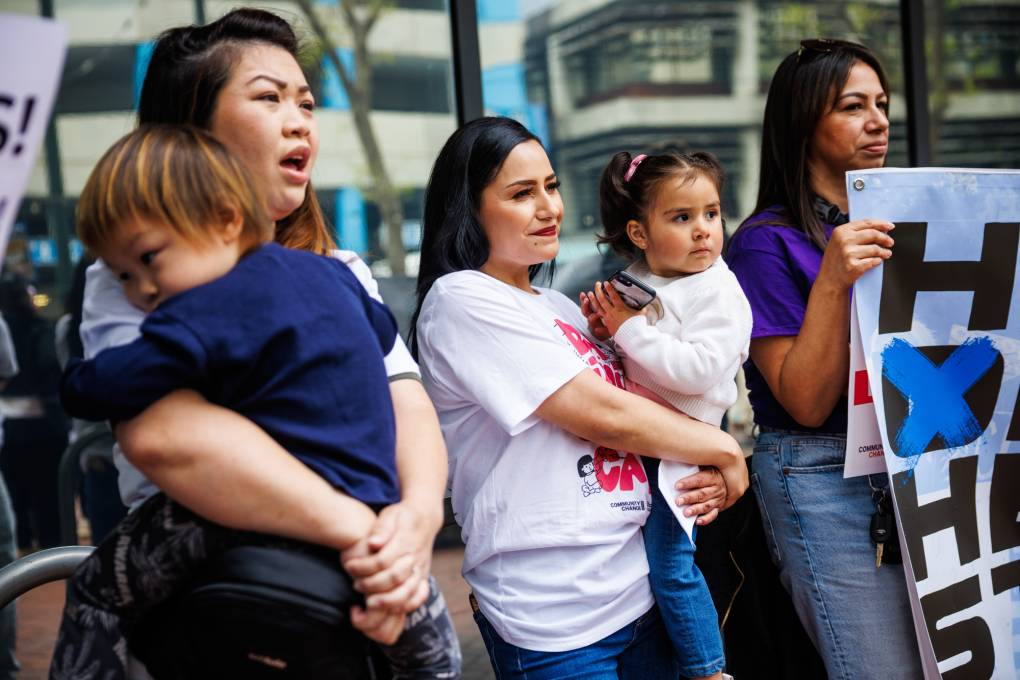
"caption": "Diane Nguyen (left) and Yadira Orozco (center) hold their children at the Day Without Child Care rally in front of the Federal Building in San José on May 12, 2025.",
"credit": "Martin do Nascimento/KQED",
"altTag": null,
"description": null,
"imgSizes": {
"medium": {
"file": "https://cdn.kqed.org/wp-content/uploads/sites/10/2025/05/250512-DAY-WITHOUT-CHILDCARE-MD-03-KQED-800x534.jpg",
"width": 800,
"height": 534,
"mimeType": "image/jpeg"
},
"large": {
"file": "https://cdn.kqed.org/wp-content/uploads/sites/10/2025/05/250512-DAY-WITHOUT-CHILDCARE-MD-03-KQED-1020x680.jpg",
"width": 1020,
"height": 680,
"mimeType": "image/jpeg"
},
"thumbnail": {
"file": "https://cdn.kqed.org/wp-content/uploads/sites/10/2025/05/250512-DAY-WITHOUT-CHILDCARE-MD-03-KQED-160x107.jpg",
"width": 160,
"height": 107,
"mimeType": "image/jpeg"
},
"1536x1536": {
"file": "https://cdn.kqed.org/wp-content/uploads/sites/10/2025/05/250512-DAY-WITHOUT-CHILDCARE-MD-03-KQED-1536x1025.jpg",
"width": 1536,
"height": 1025,
"mimeType": "image/jpeg"
},
"post-thumbnail": {
"file": "https://cdn.kqed.org/wp-content/uploads/sites/10/2025/05/250512-DAY-WITHOUT-CHILDCARE-MD-03-KQED-672x372.jpg",
"width": 672,
"height": 372,
"mimeType": "image/jpeg"
},
"twentyfourteen-full-width": {
"file": "https://cdn.kqed.org/wp-content/uploads/sites/10/2025/05/250512-DAY-WITHOUT-CHILDCARE-MD-03-KQED-1038x576.jpg",
"width": 1038,
"height": 576,
"mimeType": "image/jpeg"
},
"full-width": {
"file": "https://cdn.kqed.org/wp-content/uploads/sites/10/2025/05/250512-DAY-WITHOUT-CHILDCARE-MD-03-KQED-1920x1281.jpg",
"width": 1920,
"height": 1281,
"mimeType": "image/jpeg"
},
"kqedFullSize": {
"file": "https://cdn.kqed.org/wp-content/uploads/sites/10/2025/05/250512-DAY-WITHOUT-CHILDCARE-MD-03-KQED.jpg",
"width": 2000,
"height": 1334
}
},
"isLoading": false,
"fetchFailed": false
},
"news_12051787": {
"type": "attachments",
"id": "news_12051787",
"meta": {
"index": "attachments_1716263798",
"site": "news",
"id": "12051787",
"found": true
},
"title": "250811-ISRAELICONSULATE_00956_TV-KQED",
"publishDate": 1754954122,
"status": "inherit",
"parent": 12082072,
"modified": 1777673158,
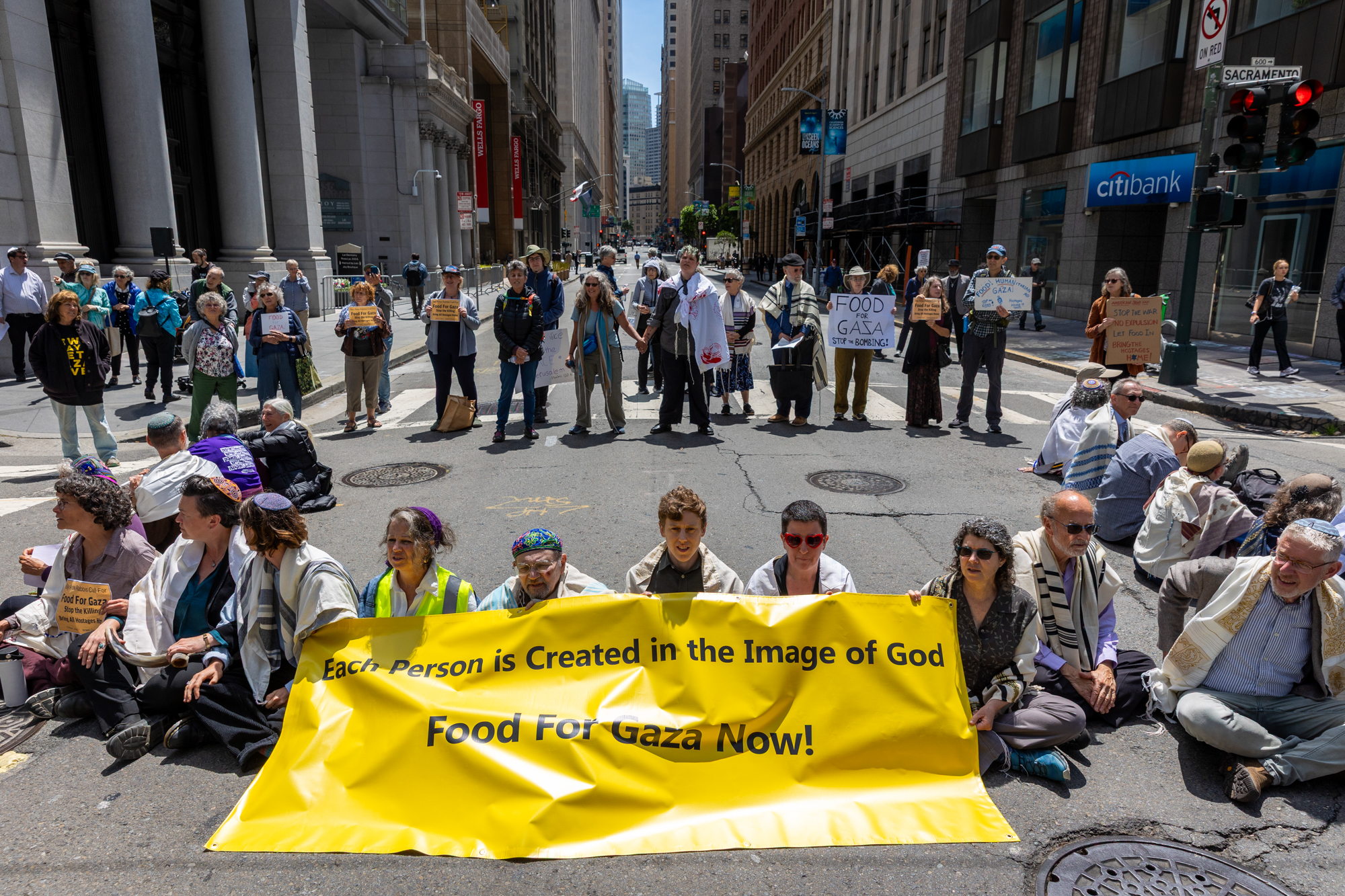
"caption": "Protesters block Montgomery Street outside the Consulate General of Israel to the Pacific Northwest in San Francisco on Aug. 11, 2025. Jewish community members are calling on the Israeli government to let food aid into Palestine as starvation progressively gets worse.",
"credit": "Tâm Vũ/KQED",
"altTag": null,
"description": null,
"imgSizes": {
"thumbnail": {
"file": "https://cdn.kqed.org/wp-content/uploads/sites/10/2025/08/250811-ISRAELICONSULATE_00956_TV-KQED-160x107.jpg",
"width": 160,
"height": 107,
"mimeType": "image/jpeg"
},
"1536x1536": {
"file": "https://cdn.kqed.org/wp-content/uploads/sites/10/2025/08/250811-ISRAELICONSULATE_00956_TV-KQED-1536x1024.jpg",
"width": 1536,
"height": 1024,
"mimeType": "image/jpeg"
},
"post-thumbnail": {
"file": "https://cdn.kqed.org/wp-content/uploads/sites/10/2025/08/250811-ISRAELICONSULATE_00956_TV-KQED-672x372.jpg",
"width": 672,
"height": 372,
"mimeType": "image/jpeg"
},
"twentyfourteen-full-width": {
"file": "https://cdn.kqed.org/wp-content/uploads/sites/10/2025/08/250811-ISRAELICONSULATE_00956_TV-KQED-1038x576.jpg",
"width": 1038,
"height": 576,
"mimeType": "image/jpeg"
},
"kqedFullSize": {
"file": "https://cdn.kqed.org/wp-content/uploads/sites/10/2025/08/250811-ISRAELICONSULATE_00956_TV-KQED.jpg",
"width": 2000,
"height": 1333
}
},
"isLoading": false,
"fetchFailed": false
},
"news_12051700": {
"type": "attachments",
"id": "news_12051700",
"meta": {
"index": "attachments_1716263798",
"site": "news",
"id": "12051700",
"found": true
},
"title": "Election 2026 Redistricting",
"publishDate": 1754931212,
"status": "inherit",
"parent": 12051699,
"modified": 1760555699,
"caption": "Accompanied by California and Texas lawmakers, California Gov. Gavin Newsom speaks in support of the Texas Democratic lawmakers for their nearly weeklong walkout to block a vote on a congressional redistricting plan sought by President Donald Trump, during a news conference in Sacramento, California, on Friday, Aug. 8, 2025.",
"credit": "AP Photo/Rich Pedroncelli",
"altTag": null,
"description": null,
"imgSizes": {
"medium": {
"file": "https://cdn.kqed.org/wp-content/uploads/sites/10/2025/08/AP25221029877312-2000x1333.jpg",
"width": 2000,
"height": 1333,
"mimeType": "image/jpeg"
},
"large": {
"file": "https://cdn.kqed.org/wp-content/uploads/sites/10/2025/08/AP25221029877312-2000x1333.jpg",
"width": 2000,
"height": 1333,
"mimeType": "image/jpeg"
},
"thumbnail": {
"file": "https://cdn.kqed.org/wp-content/uploads/sites/10/2025/08/AP25221029877312-160x107.jpg",
"width": 160,
"height": 107,
"mimeType": "image/jpeg"
},
"1536x1536": {
"file": "https://cdn.kqed.org/wp-content/uploads/sites/10/2025/08/AP25221029877312-1536x1024.jpg",
"width": 1536,
"height": 1024,
"mimeType": "image/jpeg"
},
"2048x2048": {
"file": "https://cdn.kqed.org/wp-content/uploads/sites/10/2025/08/AP25221029877312-2048x1365.jpg",
"width": 2048,
"height": 1365,
"mimeType": "image/jpeg"
},
"post-thumbnail": {
"file": "https://cdn.kqed.org/wp-content/uploads/sites/10/2025/08/AP25221029877312-672x372.jpg",
"width": 672,
"height": 372,
"mimeType": "image/jpeg"
},
"twentyfourteen-full-width": {
"file": "https://cdn.kqed.org/wp-content/uploads/sites/10/2025/08/AP25221029877312-1038x576.jpg",
"width": 1038,
"height": 576,
"mimeType": "image/jpeg"
},
"full-width": {
"file": "https://cdn.kqed.org/wp-content/uploads/sites/10/2025/08/AP25221029877312-2000x1333.jpg",
"width": 2000,
"height": 1333,
"mimeType": "image/jpeg"
},
"kqedFullSize": {
"file": "https://cdn.kqed.org/wp-content/uploads/sites/10/2025/08/AP25221029877312-scaled-e1760554140189.jpg",
"width": 2000,
"height": 1333
}
},
"isLoading": false,
"fetchFailed": false
},
"news_12046790": {
"type": "attachments",
"id": "news_12046790",
"meta": {
"index": "attachments_1716263798",
"site": "news",
"id": "12046790",
"found": true
},
"title": "250626-GRANTSPASSDECISIONANNI-03-BL-KQED",
"publishDate": 1751461673,
"status": "inherit",
"parent": 0,
"modified": 1751461764,
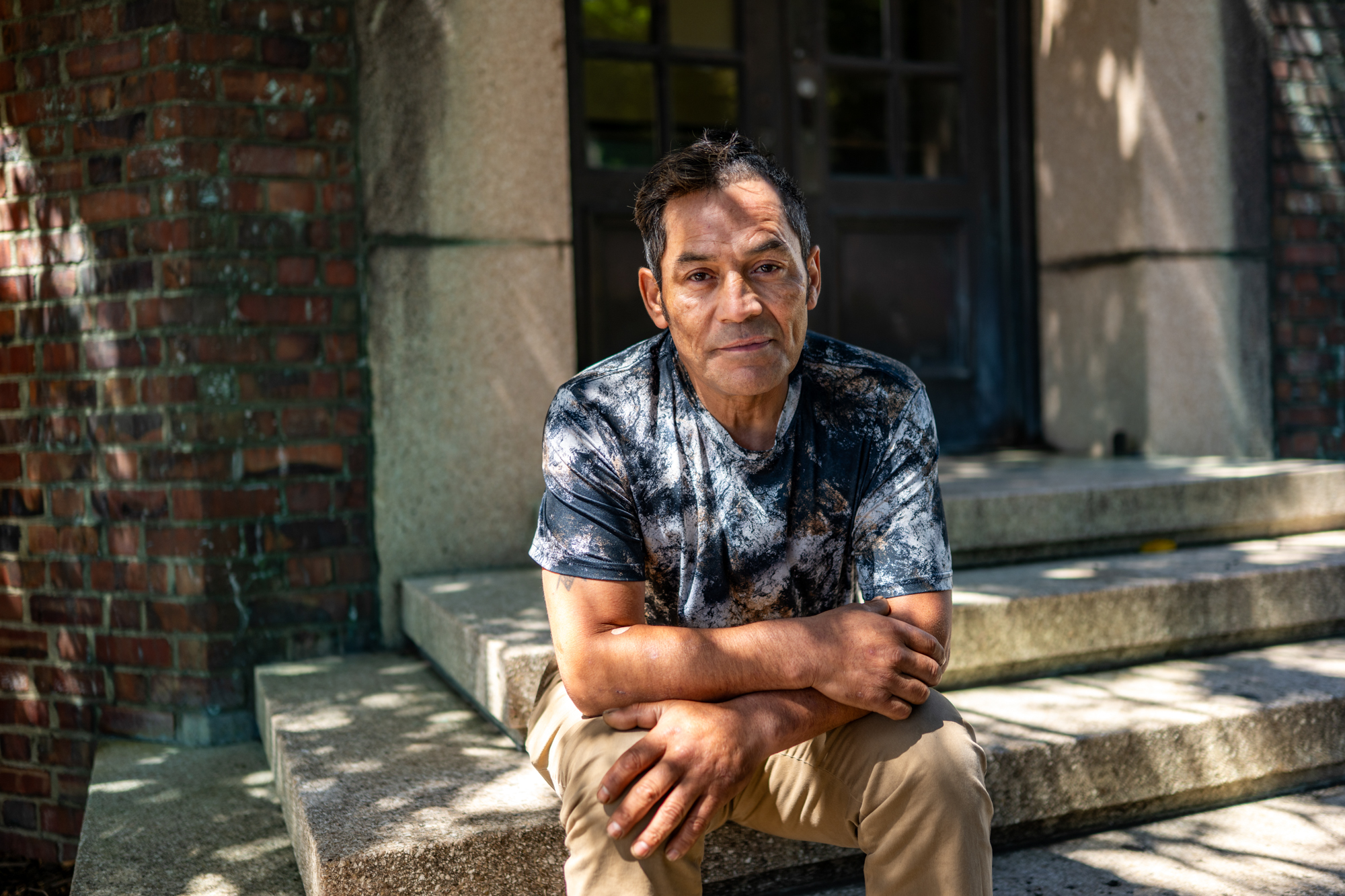
"caption": "Armando Herrera Vargas sits outside Zuckerberg San Francisco General Hospital on June 26, 2025.",
"credit": "Beth LaBerge/KQED",
"altTag": null,
"description": null,
"imgSizes": {
"thumbnail": {
"file": "https://cdn.kqed.org/wp-content/uploads/sites/10/2025/07/250626-GRANTSPASSDECISIONANNI-03-BL-KQED-160x107.jpg",
"width": 160,
"height": 107,
"mimeType": "image/jpeg"
},
"1536x1536": {
"file": "https://cdn.kqed.org/wp-content/uploads/sites/10/2025/07/250626-GRANTSPASSDECISIONANNI-03-BL-KQED-1536x1024.jpg",
"width": 1536,
"height": 1024,
"mimeType": "image/jpeg"
},
"post-thumbnail": {
"file": "https://cdn.kqed.org/wp-content/uploads/sites/10/2025/07/250626-GRANTSPASSDECISIONANNI-03-BL-KQED-672x372.jpg",
"width": 672,
"height": 372,
"mimeType": "image/jpeg"
},
"twentyfourteen-full-width": {
"file": "https://cdn.kqed.org/wp-content/uploads/sites/10/2025/07/250626-GRANTSPASSDECISIONANNI-03-BL-KQED-1038x576.jpg",
"width": 1038,
"height": 576,
"mimeType": "image/jpeg"
},
"kqedFullSize": {
"file": "https://cdn.kqed.org/wp-content/uploads/sites/10/2025/07/250626-GRANTSPASSDECISIONANNI-03-BL-KQED.jpg",
"width": 2000,
"height": 1333
}
},
"isLoading": false,
"fetchFailed": false
},
"news_12051688": {
"type": "attachments",
"id": "news_12051688",
"meta": {
"index": "attachments_1716263798",
"site": "news",
"id": "12051688",
"found": true
},
"title": "060825-Natl-Guard-MDC-DTLA-TS-03",
"publishDate": 1754929382,
"status": "inherit",
"parent": 12051687,
"modified": 1761173536,
"caption": "California National Guard soldiers stand with shields outside the Federal Detention Center in downtown Los Angeles, on June 8, 2025. ",
"credit": "Ted Soqui for CalMatters",
"altTag": null,
"description": null,
"imgSizes": {
"thumbnail": {
"file": "https://cdn.kqed.org/wp-content/uploads/sites/10/2025/08/060825-Natl-Guard-MDC-DTLA-TS-03-160x107.jpg",
"width": 160,
"height": 107,
"mimeType": "image/jpeg"
},
"1536x1536": {
"file": "https://cdn.kqed.org/wp-content/uploads/sites/10/2025/08/060825-Natl-Guard-MDC-DTLA-TS-03-1536x1025.jpg",
"width": 1536,
"height": 1025,
"mimeType": "image/jpeg"
},
"post-thumbnail": {
"file": "https://cdn.kqed.org/wp-content/uploads/sites/10/2025/08/060825-Natl-Guard-MDC-DTLA-TS-03-672x372.jpg",
"width": 672,
"height": 372,
"mimeType": "image/jpeg"
},
"twentyfourteen-full-width": {
"file": "https://cdn.kqed.org/wp-content/uploads/sites/10/2025/08/060825-Natl-Guard-MDC-DTLA-TS-03-1038x576.jpg",
"width": 1038,
"height": 576,
"mimeType": "image/jpeg"
},
"kqedFullSize": {
"file": "https://cdn.kqed.org/wp-content/uploads/sites/10/2025/08/060825-Natl-Guard-MDC-DTLA-TS-03.jpg",
"width": 2000,
"height": 1334
}
},
"isLoading": false,
"fetchFailed": false
},
"news_12051505": {
"type": "attachments",
"id": "news_12051505",
"meta": {
"index": "attachments_1716263798",
"site": "news",
"id": "12051505",
"found": true
},
"title": "Luna Angulo in Richmond on Aug. 8, 2025.",
"publishDate": 1754681165,
"status": "inherit",
"parent": 0,
"modified": 1754681277,
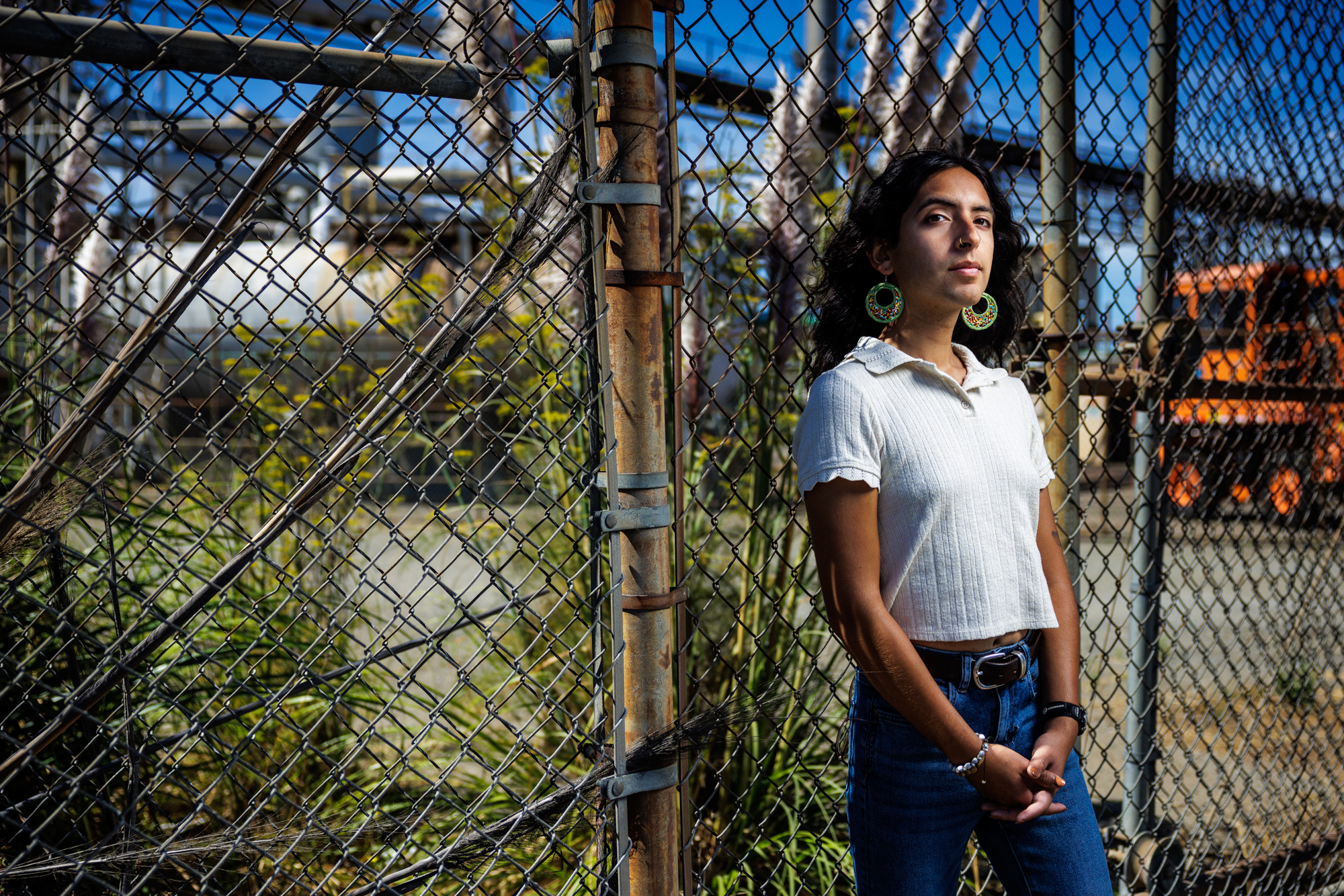
"caption": "Luna Angulo in Richmond on Aug. 8, 2025.",
"credit": "Martin do Nascimento/KQED",
"altTag": null,
"description": null,
"imgSizes": {
"thumbnail": {
"file": "https://cdn.kqed.org/wp-content/uploads/sites/10/2025/08/250808-CAP-AND-TRADE-ENVIRO-JUSTICE-MD-04-KQED-160x107.jpg",
"width": 160,
"height": 107,
"mimeType": "image/jpeg"
},
"1536x1536": {
"file": "https://cdn.kqed.org/wp-content/uploads/sites/10/2025/08/250808-CAP-AND-TRADE-ENVIRO-JUSTICE-MD-04-KQED-1536x1025.jpg",
"width": 1536,
"height": 1025,
"mimeType": "image/jpeg"
},
"post-thumbnail": {
"file": "https://cdn.kqed.org/wp-content/uploads/sites/10/2025/08/250808-CAP-AND-TRADE-ENVIRO-JUSTICE-MD-04-KQED-672x372.jpg",
"width": 672,
"height": 372,
"mimeType": "image/jpeg"
},
"twentyfourteen-full-width": {
"file": "https://cdn.kqed.org/wp-content/uploads/sites/10/2025/08/250808-CAP-AND-TRADE-ENVIRO-JUSTICE-MD-04-KQED-1038x576.jpg",
"width": 1038,
"height": 576,
"mimeType": "image/jpeg"
},
"kqedFullSize": {
"file": "https://cdn.kqed.org/wp-content/uploads/sites/10/2025/08/250808-CAP-AND-TRADE-ENVIRO-JUSTICE-MD-04-KQED.jpg",
"width": 2000,
"height": 1334
}
},
"isLoading": false,
"fetchFailed": false
},
"news_12051653": {
"type": "attachments",
"id": "news_12051653",
"meta": {
"index": "attachments_1716263798",
"site": "news",
"id": "12051653",
"found": true
},
"title": "250808-Casual Carpool-MD-11",
"publishDate": 1754843927,
"status": "inherit",
"parent": 12051907,
"modified": 1755043787,
"caption": "Camille Bermudez in Oakland, near where the Casual Carpool pick-up location will be under the 580 freeway, on Aug. 8, 2025.",
"credit": "Martin do Nascimento/KQED",
"altTag": null,
"description": null,
"imgSizes": {
"thumbnail": {
"file": "https://cdn.kqed.org/wp-content/uploads/sites/10/2025/08/250808-Casual-Carpool-MD-11-160x107.jpg",
"width": 160,
"height": 107,
"mimeType": "image/jpeg"
},
"1536x1536": {
"file": "https://cdn.kqed.org/wp-content/uploads/sites/10/2025/08/250808-Casual-Carpool-MD-11-1536x1025.jpg",
"width": 1536,
"height": 1025,
"mimeType": "image/jpeg"
},
"post-thumbnail": {
"file": "https://cdn.kqed.org/wp-content/uploads/sites/10/2025/08/250808-Casual-Carpool-MD-11-672x372.jpg",
"width": 672,
"height": 372,
"mimeType": "image/jpeg"
},
"twentyfourteen-full-width": {
"file": "https://cdn.kqed.org/wp-content/uploads/sites/10/2025/08/250808-Casual-Carpool-MD-11-1038x576.jpg",
"width": 1038,
"height": 576,
"mimeType": "image/jpeg"
},
"kqedFullSize": {
"file": "https://cdn.kqed.org/wp-content/uploads/sites/10/2025/08/250808-Casual-Carpool-MD-11.jpg",
"width": 2000,
"height": 1334
}
},
"isLoading": false,
"fetchFailed": false
},
"news_12051414": {
"type": "attachments",
"id": "news_12051414",
"meta": {
"index": "attachments_1716263798",
"site": "news",
"id": "12051414",
"found": true
},
"title": "250802-AFROFUTURES_01253_TV-KQED-1",
"publishDate": 1754660438,
"status": "inherit",
"parent": 0,
"modified": 1754672001,
"caption": "Selena Wilson, CEO of the EOYDC, speaks at the Black Futures Ball Banquet hosted by The East Oakland Youth Development Center at Chabot Space and Science Center in Oakland on Aug. 2, 2025.",
"credit": "Tâm Vũ/KQED",
"altTag": null,
"description": null,
"imgSizes": {
"thumbnail": {
"file": "https://cdn.kqed.org/wp-content/uploads/sites/10/2025/08/250802-AFROFUTURES_01253_TV-KQED-1-160x107.jpg",
"width": 160,
"height": 107,
"mimeType": "image/jpeg"
},
"1536x1536": {
"file": "https://cdn.kqed.org/wp-content/uploads/sites/10/2025/08/250802-AFROFUTURES_01253_TV-KQED-1-1536x1024.jpg",
"width": 1536,
"height": 1024,
"mimeType": "image/jpeg"
},
"post-thumbnail": {
"file": "https://cdn.kqed.org/wp-content/uploads/sites/10/2025/08/250802-AFROFUTURES_01253_TV-KQED-1-672x372.jpg",
"width": 672,
"height": 372,
"mimeType": "image/jpeg"
},
"twentyfourteen-full-width": {
"file": "https://cdn.kqed.org/wp-content/uploads/sites/10/2025/08/250802-AFROFUTURES_01253_TV-KQED-1-1038x576.jpg",
"width": 1038,
"height": 576,
"mimeType": "image/jpeg"
},
"kqedFullSize": {
"file": "https://cdn.kqed.org/wp-content/uploads/sites/10/2025/08/250802-AFROFUTURES_01253_TV-KQED-1.jpg",
"width": 2000,
"height": 1333
}
},
"isLoading": false,
"fetchFailed": false
}
},
"audioPlayerReducer": {
"postId": "stream_live",
"isPaused": true,
"isPlaying": false,
"pfsActive": false,
"pledgeModalIsOpen": true,
"playerDrawerIsOpen": false,
"liveAudioPlayStartedAt": 0,
"liveAudioPlayContext": ""
},
"authorsReducer": {
"byline_news_11989955": {
"type": "authors",
"id": "byline_news_11989955",
"meta": {
"override": true
},
"slug": "byline_news_11989955",
"name": "Daisy Nguyen, Blanca Torres and Elly Yu",
"isLoading": false
},
"byline_news_12051687": {
"type": "authors",
"id": "byline_news_12051687",
"meta": {
"override": true
},
"slug": "byline_news_12051687",
"name": "Mikhail Zinshteyn, CalMatters",
"isLoading": false
},
"danbrekke": {
"type": "authors",
"id": "222",
"meta": {
"index": "authors_1716337520",
"id": "222",
"found": true
},
"name": "Dan Brekke",
"firstName": "Dan",
"lastName": "Brekke",
"slug": "danbrekke",
"email": "dbrekke@kqed.org",
"display_author_email": true,
"staff_mastheads": [
"news",
"science"
],
"title": "KQED Editor and Reporter",
"bio": "Dan Brekke is a reporter and editor for KQED News, responsible for coverage of topics ranging from California water issues to the Bay Area's transportation challenges. In a newsroom career that began in Chicago in 1972, Dan has worked for \u003cem>The San Francisco Examiner,\u003c/em> Wired and TechTV and has been published in The New York Times, The New York Times Magazine, Business 2.0, Salon and elsewhere.\r\n\r\nSince joining KQED in 2007, Dan has reported, edited and produced both radio and online features and breaking news pieces. He has shared as both editor and reporter in four Society of Professional Journalists Norcal Excellence in Journalism awards and one Edward R. Murrow regional award. He was chosen for a spring 2017 residency at the Mesa Refuge to advance his research on California salmon.\r\n\r\nEmail Dan at: \u003ca href=\"mailto:dbrekke@kqed.org\">dbrekke@kqed.org\u003c/a>\r\n\r\n\u003cstrong>Twitter:\u003c/strong> \u003ca href=\"https://twitter.com/danbrekke\" rel=\"noopener noreferrer\">twitter.com/danbrekke\u003c/a>\r\n\u003cstrong>Facebook:\u003c/strong> \u003ca href=\"https://www.facebook.com/danbrekke\" rel=\"noopener noreferrer\">www.facebook.com/danbrekke\u003c/a>\r\n\u003cstrong>LinkedIn:\u003c/strong> \u003ca href=\"https://www.linkedin.com/in/danbrekke\" rel=\"noopener noreferrer\">www.linkedin.com/in/danbrekke\u003c/a>",
"avatar": "https://secure.gravatar.com/avatar/c8126230345efca3f7aa89b1a402be45?s=600&d=mm&r=g",
"twitter": "danbrekke",
"facebook": null,
"instagram": "https://www.instagram.com/dan.brekke/",
"linkedin": "https://www.linkedin.com/in/danbrekke/",
"sites": [
{
"site": "news",
"roles": [
"administrator",
"create_posts"
]
},
{
"site": "stateofhealth",
"roles": [
"editor"
]
},
{
"site": "science",
"roles": [
"editor"
]
},
{
"site": "quest",
"roles": [
"contributor"
]
},
{
"site": "food",
"roles": [
"contributor"
]
},
{
"site": "forum",
"roles": [
"contributor"
]
},
{
"site": "liveblog",
"roles": [
"editor"
]
}
],
"headData": {
"title": "Dan Brekke | KQED",
"description": "KQED Editor and Reporter",
"ogImgSrc": "https://secure.gravatar.com/avatar/c8126230345efca3f7aa89b1a402be45?s=600&d=mm&r=g",
"twImgSrc": "https://secure.gravatar.com/avatar/c8126230345efca3f7aa89b1a402be45?s=600&d=mm&r=g"
},
"isLoading": false,
"link": "/author/danbrekke"
},
"gmarzorati": {
"type": "authors",
"id": "227",
"meta": {
"index": "authors_1716337520",
"id": "227",
"found": true
},
"name": "Guy Marzorati",
"firstName": "Guy",
"lastName": "Marzorati",
"slug": "gmarzorati",
"email": "gmarzorati@KQED.org",
"display_author_email": true,
"staff_mastheads": [
"news"
],
"title": "Correspondent",
"bio": "Guy Marzorati is a correspondent on KQED's California Politics and Government Desk, based in San Jose. A graduate of Santa Clara University, Guy joined KQED in 2013. He reports on state and local politics and produces KQED's digital voter guide.",
"avatar": "https://secure.gravatar.com/avatar/e7038b8dbfd55b104369b76b1cd0b9de?s=600&d=blank&r=g",
"twitter": "guymarzorati",
"facebook": null,
"instagram": null,
"linkedin": null,
"sites": [
{
"site": "",
"roles": [
"editor"
]
},
{
"site": "news",
"roles": [
"editor"
]
},
{
"site": "science",
"roles": [
"editor"
]
},
{
"site": "forum",
"roles": [
"editor"
]
},
{
"site": "elections",
"roles": [
"editor"
]
},
{
"site": "liveblog",
"roles": [
"editor"
]
}
],
"headData": {
"title": "Guy Marzorati | KQED",
"description": "Correspondent",
"ogImgSrc": "https://secure.gravatar.com/avatar/e7038b8dbfd55b104369b76b1cd0b9de?s=600&d=blank&r=g",
"twImgSrc": "https://secure.gravatar.com/avatar/e7038b8dbfd55b104369b76b1cd0b9de?s=600&d=blank&r=g"
},
"isLoading": false,
"link": "/author/gmarzorati"
},
"vrancano": {
"type": "authors",
"id": "11276",
"meta": {
"index": "authors_1716337520",
"id": "11276",
"found": true
},
"name": "Vanessa Rancaño",
"firstName": "Vanessa",
"lastName": "Rancaño",
"slug": "vrancano",
"email": "vrancano@kqed.org",
"display_author_email": false,
"staff_mastheads": [
"news"
],
"title": "Reporter",
"bio": "Vanessa Rancaño is a features reporter for KQED. She’s also covered homelessness and education for the station and reported from the Central Valley. Her work has aired across public radio, from flagship national news shows to longform narrative podcasts. Before taking up a mic, she worked as a freelance print journalist. She’s been recognized with a number of national and regional awards. Vanessa grew up in California's Central Valley. She's a former NPR Kroc Fellow, and a graduate of the UC Berkeley Graduate School of Journalism.",
"avatar": "https://secure.gravatar.com/avatar/b3a383dfb0e7ee1c17568f2cf067904ab654d6e3de9743fc661f3c788ade1bed?s=600&d=blank&r=g",
"twitter": "vanessarancano",
"bluesky": null,
"facebook": null,
"instagram": null,
"linkedin": null,
"sites": [
{
"site": "arts",
"roles": [
"editor"
]
},
{
"site": "news",
"roles": [
"editor"
]
},
{
"site": "liveblog",
"roles": [
"contributor"
]
}
],
"headData": {
"title": "Vanessa Rancaño | KQED",
"description": "Reporter",
"ogImgSrc": "https://secure.gravatar.com/avatar/b3a383dfb0e7ee1c17568f2cf067904ab654d6e3de9743fc661f3c788ade1bed?s=600&d=blank&r=g",
"twImgSrc": "https://secure.gravatar.com/avatar/b3a383dfb0e7ee1c17568f2cf067904ab654d6e3de9743fc661f3c788ade1bed?s=600&d=blank&r=g"
},
"isLoading": false,
"link": "/author/vrancano"
},
"daisynguyen": {
"type": "authors",
"id": "11829",
"meta": {
"index": "authors_1716337520",
"id": "11829",
"found": true
},
"name": "Daisy Nguyen",
"firstName": "Daisy",
"lastName": "Nguyen",
"slug": "daisynguyen",
"email": "daisynguyen@kqed.org",
"display_author_email": true,
"staff_mastheads": [
"news"
],
"title": "KQED Contributor",
"bio": "I have covered early childhood education and child care for KQED since 2022. I focus on policies aimed at increasing access to early care and education and how they shape individual lives. I've been a journalist for more than two decades, with most of that time devoted to covering breaking news throughout California for The Associated Press. I grew up in San Francisco and studied at UC Davis and Columbia University's Graduate School of Journalism. I live in Oakland with my husband and two kids.",
"avatar": "https://secure.gravatar.com/avatar/2da2127c27f7143b53ebd419800fd55f?s=600&d=blank&r=g",
"twitter": null,
"facebook": null,
"instagram": null,
"linkedin": "https://www.linkedin.com/in/daisynguyen/",
"sites": [
{
"site": "news",
"roles": [
"author"
]
},
{
"site": "liveblog",
"roles": [
"author"
]
}
],
"headData": {
"title": "Daisy Nguyen | KQED",
"description": "KQED Contributor",
"ogImgSrc": "https://secure.gravatar.com/avatar/2da2127c27f7143b53ebd419800fd55f?s=600&d=blank&r=g",
"twImgSrc": "https://secure.gravatar.com/avatar/2da2127c27f7143b53ebd419800fd55f?s=600&d=blank&r=g"
},
"isLoading": false,
"link": "/author/daisynguyen"
},
"kdebenedetti": {
"type": "authors",
"id": "11913",
"meta": {
"index": "authors_1716337520",
"id": "11913",
"found": true
},
"name": "Katie DeBenedetti",
"firstName": "Katie",
"lastName": "DeBenedetti",
"slug": "kdebenedetti",
"email": "kdebenedetti@kqed.org",
"display_author_email": false,
"staff_mastheads": [
"news",
"science"
],
"title": "KQED Contributor",
"bio": "Katie DeBenedetti is a digital reporter covering daily news for the Express Desk. Prior to joining KQED as a culture reporting intern in January 2024, she covered education and city government for the Napa Valley Register.",
"avatar": "https://secure.gravatar.com/avatar/6e31073cb8f7e4214ab03f42771d0f45?s=600&d=blank&r=g",
"twitter": null,
"facebook": null,
"instagram": null,
"linkedin": null,
"sites": [
{
"site": "news",
"roles": [
"author"
]
},
{
"site": "science",
"roles": [
"author"
]
},
{
"site": "liveblog",
"roles": [
"author"
]
}
],
"headData": {
"title": "Katie DeBenedetti | KQED",
"description": "KQED Contributor",
"ogImgSrc": "https://secure.gravatar.com/avatar/6e31073cb8f7e4214ab03f42771d0f45?s=600&d=blank&r=g",
"twImgSrc": "https://secure.gravatar.com/avatar/6e31073cb8f7e4214ab03f42771d0f45?s=600&d=blank&r=g"
},
"isLoading": false,
"link": "/author/kdebenedetti"
},
"bkrans": {
"type": "authors",
"id": "11923",
"meta": {
"index": "authors_1716337520",
"id": "11923",
"found": true
},
"name": "Brian Krans",
"firstName": "Brian",
"lastName": "Krans",
"slug": "bkrans",
"email": "bkrans@kqed.org",
"display_author_email": false,
"staff_mastheads": [
"news"
],
"title": "KQED Contributing Reporter",
"bio": "Brian Krans is an award-winning local news and investigative reporter who has been proudly working as a general assignment reporter for KQED since August 2023. He lives in Richmond, where he also reports on air pollution for Richmondside. He is also a founding member of the Vallejo Sun.",
"avatar": "https://secure.gravatar.com/avatar/d1014d604089314a94807d2c4f2d3e06?s=600&d=blank&r=g",
"twitter": "citizenkrans",
"facebook": null,
"instagram": null,
"linkedin": null,
"sites": [
{
"site": "news",
"roles": [
"editor"
]
}
],
"headData": {
"title": "Brian Krans | KQED",
"description": "KQED Contributing Reporter",
"ogImgSrc": "https://secure.gravatar.com/avatar/d1014d604089314a94807d2c4f2d3e06?s=600&d=blank&r=g",
"twImgSrc": "https://secure.gravatar.com/avatar/d1014d604089314a94807d2c4f2d3e06?s=600&d=blank&r=g"
},
"isLoading": false,
"link": "/author/bkrans"
},
"gzada": {
"type": "authors",
"id": "11929",
"meta": {
"index": "authors_1716337520",
"id": "11929",
"found": true
},
"name": "Gilare Zada",
"firstName": "Gilare",
"lastName": "Zada",
"slug": "gzada",
"email": "gzada@kqed.org",
"display_author_email": true,
"staff_mastheads": [
"news"
],
"title": null,
"bio": "Gilare Zada is a Kurdish-American from San Diego, CA. Storytelling, fitness, and binge reading are some of her passions outside of news reporting. Her work has appeared in Mission Local, the Peninsula Press, the San Francisco Press Club, and more. She also writes as a class correspondent for the Stanford Magazine - go Card!",
"avatar": "https://secure.gravatar.com/avatar/33a75f2b947669a488a805edec3fbf3838c1cedaedda710e983770633b4d6a75?s=600&d=blank&r=g",
"twitter": null,
"bluesky": null,
"facebook": null,
"instagram": null,
"linkedin": null,
"sites": [
{
"site": "arts",
"roles": [
"editor"
]
},
{
"site": "news",
"roles": [
"editor",
"contributor"
]
},
{
"site": "science",
"roles": [
"editor"
]
}
],
"headData": {
"title": "Gilare Zada | KQED",
"description": null,
"ogImgSrc": "https://secure.gravatar.com/avatar/33a75f2b947669a488a805edec3fbf3838c1cedaedda710e983770633b4d6a75?s=600&d=blank&r=g",
"twImgSrc": "https://secure.gravatar.com/avatar/33a75f2b947669a488a805edec3fbf3838c1cedaedda710e983770633b4d6a75?s=600&d=blank&r=g"
},
"isLoading": false,
"link": "/author/gzada"
},
"skennedy": {
"type": "authors",
"id": "11935",
"meta": {
"index": "authors_1716337520",
"id": "11935",
"found": true
},
"name": "Samantha Kennedy",
"firstName": "Samantha",
"lastName": "Kennedy",
"slug": "skennedy",
"email": "SKennedy@kqed.org",
"display_author_email": false,
"staff_mastheads": [],
"title": "KQED Contributor",
"bio": null,
"avatar": "https://secure.gravatar.com/avatar/adc7b14bf1e801793202a156ecc864d4ad505b0fd63162a2f3da0e5ba57222d0?s=600&d=blank&r=g",
"twitter": null,
"bluesky": null,
"facebook": null,
"instagram": null,
"linkedin": null,
"sites": [
{
"site": "arts",
"roles": [
"author"
]
},
{
"site": "news",
"roles": [
"editor"
]
},
{
"site": "science",
"roles": [
"editor"
]
}
],
"headData": {
"title": "Samantha Kennedy | KQED",
"description": "KQED Contributor",
"ogImgSrc": "https://secure.gravatar.com/avatar/adc7b14bf1e801793202a156ecc864d4ad505b0fd63162a2f3da0e5ba57222d0?s=600&d=blank&r=g",
"twImgSrc": "https://secure.gravatar.com/avatar/adc7b14bf1e801793202a156ecc864d4ad505b0fd63162a2f3da0e5ba57222d0?s=600&d=blank&r=g"
},
"isLoading": false,
"link": "/author/skennedy"
}
},
"pagesReducer": {
"news_tag_california": {
"type": "terms",
"id": "news_18538",
"meta": {
"index": "terms_1716263798",
"site": "news",
"id": "18538",
"score": 6.8456903
},
"featImg": null,
"name": "California",
"description": null,
"taxonomy": "tag",
"headData": {
"twImgId": null,
"twTitle": null,
"ogTitle": null,
"ogImgId": null,
"twDescription": null,
"description": null,
"title": "California Archives | KQED News",
"ogDescription": null
},
"ttid": 31,
"slug": "california",
"isLoading": false,
"title": "California",
"pageMeta": {
"site": "news",
"WpPageTemplate": "page-topic-editorial",
"currentPage": 65
},
"blocks": [
{
"blockName": "kqed/post-list",
"attrs": {
"layout": "cardArticle2",
"query": "posts/news?tag=california",
"seeMore": false,
"paginated": true,
"page": 65
}
},
{
"blockName": "kqed/ad"
}
]
}
},
"pfsSessionReducer": {},
"postsReducer": {
"stream_live": {
"type": "live",
"id": "stream_live",
"audioUrl": "https://streams.kqed.org/kqedradio",
"title": "Live Stream",
"excerpt": "Live Stream information currently unavailable.",
"link": "/radio",
"featImg": "",
"label": {
"name": "KQED Live",
"link": "/"
}
},
"stream_kqedNewscast": {
"type": "posts",
"id": "stream_kqedNewscast",
"audioUrl": "https://www.kqed.org/.stream/anon/radio/RDnews/newscast.mp3?_=1",
"title": "KQED Newscast",
"featImg": "",
"label": {
"name": "88.5 FM",
"link": "/"
}
},
"news_12051870": {
"type": "posts",
"id": "news_12051870",
"meta": {
"index": "posts_1716263798",
"site": "news",
"id": "12051870",
"score": null,
"sort": [
1755028462000
]
},
"guestAuthors": [],
"slug": "smoke-from-californias-largest-wildfire-this-year-is-expected-to-hit-bay-area-today",
"title": "Smoke From California’s Largest Wildfire This Year Is Expected to Hit Bay Area on Tuesday",
"publishDate": 1755028462,
"format": "standard",
"headTitle": "Smoke From California’s Largest Wildfire This Year Is Expected to Hit Bay Area on Tuesday | KQED",
"labelTerm": {
"site": "news"
},
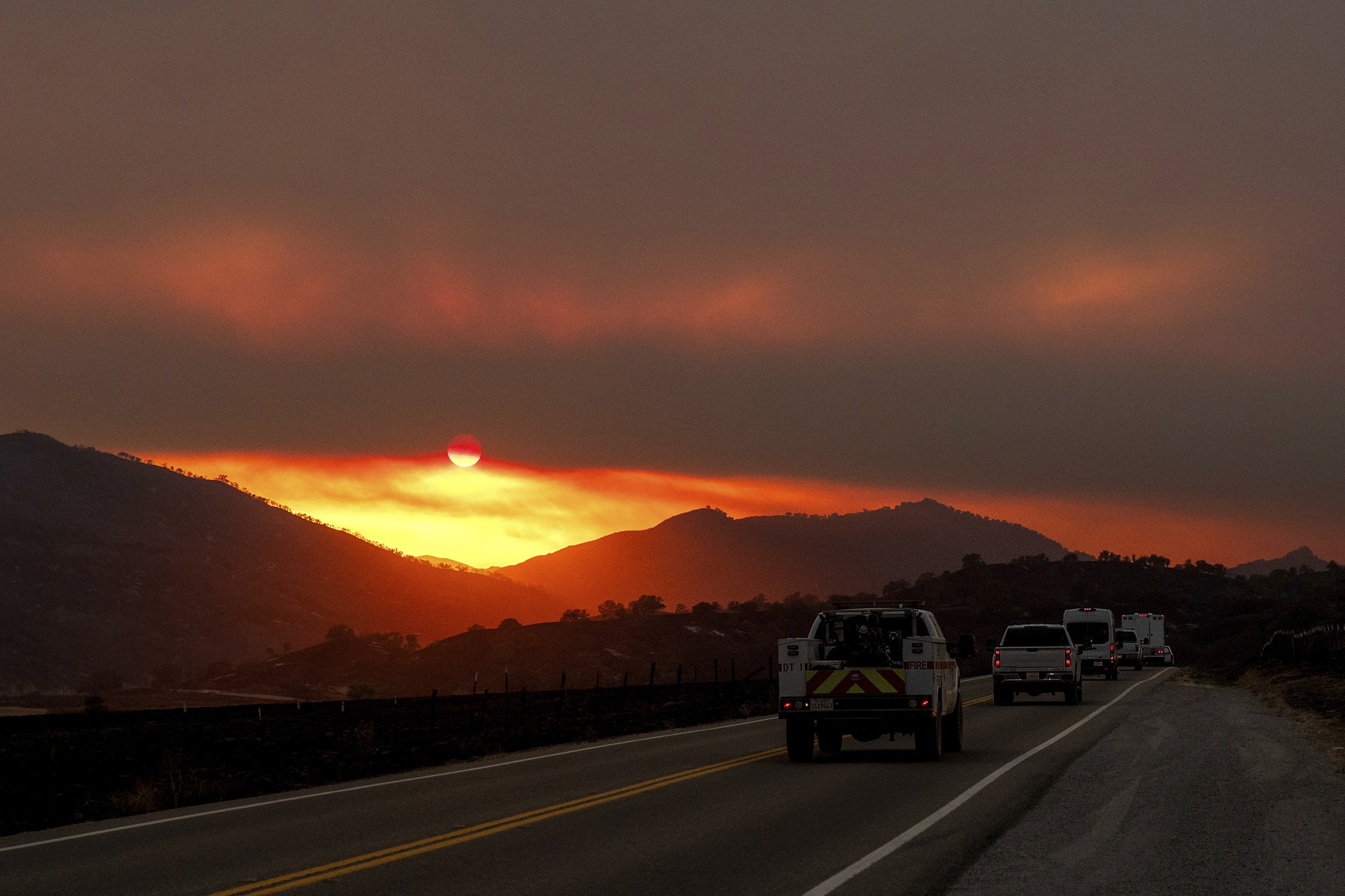
"content": "\u003cp>Smoke from California’s largest \u003ca href=\"https://www.kqed.org/wildfires\">wildfire\u003c/a> this year is expected to move into the Bay Area on Tuesday, prompting an air quality advisory from the Bay Area Air District.\u003c/p>\n\u003cp>The \u003ca href=\"https://www.kqed.org/news/12050852/fire-danger-on-the-rise-this-week-as-crews-battle-multiple-blazes-in-california\">Gifford Fire\u003c/a> is burning about 200 miles away in parts of Santa Barbara and San Luis Obispo counties, but air district spokesperson Aaron Richardson said southern winds overnight and into the morning brought a large plume over the Bay Area. That could result in smoky and hazy skies, and at higher elevations, the air district said the smell of smoke could be present.\u003c/p>\n\u003cp>“We’re not calling a full spare the air alert; we don’t think the impacts at ground level will be too bad,” Richardson said. “We might have some broader air quality, but we don’t expect federal health standards to be exceeded throughout the Bay Area.”\u003c/p>\n\u003cp>[ad fullwidth]\u003c/p>\n\u003cp>Though the advisory covers the entire Bay Area, Richardson said portions of the South Bay and the East Bay are especially expected to see the impacts of the smoke.\u003c/p>\n\u003cp>Wildfire smoke contains fine particulate matter and other harmful pollutants, according to the district, and exposure is unhealthy, “even for short periods of time.”\u003c/p>\n\u003cfigure id=\"attachment_12042385\" class=\"wp-caption aligncenter\" style=\"max-width: 1999px\">\u003cimg loading=\"lazy\" decoding=\"async\" class=\"size-full wp-image-12042385\" src=\"https://cdn.kqed.org/wp-content/uploads/sites/10/2025/06/230920-OAKLAND-AIR-QUALITY-MD-07_qed.jpg\" alt=\"\" width=\"1999\" height=\"1333\" srcset=\"https://cdn.kqed.org/wp-content/uploads/sites/10/2025/06/230920-OAKLAND-AIR-QUALITY-MD-07_qed.jpg 1999w, https://cdn.kqed.org/wp-content/uploads/sites/10/2025/06/230920-OAKLAND-AIR-QUALITY-MD-07_qed-800x533.jpg 800w, https://cdn.kqed.org/wp-content/uploads/sites/10/2025/06/230920-OAKLAND-AIR-QUALITY-MD-07_qed-1020x680.jpg 1020w, https://cdn.kqed.org/wp-content/uploads/sites/10/2025/06/230920-OAKLAND-AIR-QUALITY-MD-07_qed-160x107.jpg 160w, https://cdn.kqed.org/wp-content/uploads/sites/10/2025/06/230920-OAKLAND-AIR-QUALITY-MD-07_qed-1536x1024.jpg 1536w, https://cdn.kqed.org/wp-content/uploads/sites/10/2025/06/230920-OAKLAND-AIR-QUALITY-MD-07_qed-1920x1280.jpg 1920w\" sizes=\"auto, (max-width: 1999px) 100vw, 1999px\">\u003cfigcaption class=\"wp-caption-text\">Downtown Oakland is seen through the wildfire-caused haze in Oakland on Sept. 20, 2023. \u003ccite>(Martin do Nascimento/KQED)\u003c/cite>\u003c/figcaption>\u003c/figure>\n\u003cp>The smoke can irritate eyes, airways and sinuses, which could result in coughing and a scratchy throat. Children, older adults and those with respiratory illnesses are among those especially at risk from the effects of smoke.\u003c/p>\n\u003cp>Richardson said the air district doesn’t expect high concentrations of smoke at ground levels on Tuesday, but it is monitoring the situation to see whether the advisory will need to be extended into Wednesday.[aside postID=news_12051487 hero='https://cdn.kqed.org/wp-content/uploads/sites/10/2025/08/GiffordFireAP.jpg']Conditions can “change rapidly,” and knowing the amount of smoke at ground levels as a result of the wildfire is hard to predict, according to the district.\u003c/p>\n\u003cp>Generally, Richardson said, when wildfire smoke is affecting the region, residents should stay inside with windows and doors closed. If not possible, residents can also reduce smoke exposure by setting their car systems to recirculate, which prevents outside air from getting inside.\u003c/p>\n\u003cp>Bay Area residents can monitor real-time smoke pollution levels in their area on the U.S. Environmental Protection Agency’s online \u003ca href=\"https://fire.airnow.gov/\">fire and smoke map\u003c/a>. The California Air Resources Board also offers a map of clean air centers with filtered air and good ventilation on its \u003ca href=\"https://ww2.arb.ca.gov/cleanaircenters\">website.\u003c/a>\u003c/p>\n\u003cp>The Gifford Fire has grown to 122,065 acres since it started Aug. 1, \u003ca href=\"https://www.fire.ca.gov/incidents/2025/8/1/gifford-fire\">according to Cal Fire\u003c/a>. The wildfire, the largest in the state this year, is 33% contained so far.\u003c/p>\n\u003cp>More than 4,800 personnel have been deployed to respond to the blaze, Cal Fire said. The California Office of Emergency Services said that 19 fire agencies from the Bay Area — including those from the San Francisco and Oakland fire departments — are \u003ca href=\"https://www.kqed.org/news/12051487/bay-area-fire-departments-dispatch-engines-strike-teams-to-fight-gifford-fire-in-slo\">assisting other first responders\u003c/a> with managing the fire.\u003c/p>\n\u003cp>\u003c/p>\n",
"blocks": [],
"excerpt": "Winds overnight and into the morning brought a large plume from the Gifford Fire over the Bay Area, prompting an air quality advisory.",
"status": "publish",
"parent": 0,
"modified": 1755031004,
"stats": {
"hasAudio": false,
"hasVideo": false,
"hasChartOrMap": false,
"iframeSrcs": [],
"hasGoogleForm": false,
"hasGallery": false,
"hasHearkenModule": false,
"hasPolis": false,
"paragraphCount": 13,
"wordCount": 517
},
"headData": {
"title": "Smoke From California’s Largest Wildfire This Year Is Expected to Hit Bay Area on Tuesday | KQED",
"description": "Winds overnight and into the morning brought a large plume from the Gifford Fire over the Bay Area, prompting an air quality advisory.",
"ogTitle": "",
"ogDescription": "",
"ogImgId": "",
"twTitle": "",
"twDescription": "",
"twImgId": "",
"schema": {
"@context": "https://schema.org",
"@type": "NewsArticle",
"headline": "Smoke From California’s Largest Wildfire This Year Is Expected to Hit Bay Area on Tuesday",
"datePublished": "2025-08-12T12:54:22-07:00",
"dateModified": "2025-08-12T13:36:44-07:00",
"image": "https://cdn.kqed.org/wp-content/uploads/2020/02/KQED-OG-Image@1x.png",
"isAccessibleForFree": "True",
"publisher": {
"@type": "NewsMediaOrganization",
"@id": "https://www.kqed.org/#organization",
"name": "KQED",
"logo": "https://cdn.kqed.org/wp-content/uploads/2020/02/KQED-OG-Image@1x.png",
"url": "https://www.kqed.org",
"sameAs": [
"https://www.facebook.com/KQED",
"https://twitter.com/KQED",
"https://www.instagram.com/kqed/",
"https://www.tiktok.com/@kqedofficial",
"https://www.linkedin.com/company/kqed",
"https://www.youtube.com/channel/UCeC0IOo7i1P_61zVUWbJ4nw"
]
}
}
},
"primaryCategory": {
"termId": 8,
"slug": "news",
"name": "News"
},
"sticky": false,
"nprStoryId": "kqed-12051870",
"templateType": "standard",
"featuredImageType": "standard",
"excludeFromSiteSearch": "Include",
"articleAge": "0",
"path": "/news/12051870/smoke-from-californias-largest-wildfire-this-year-is-expected-to-hit-bay-area-today",
"audioTrackLength": null,
"parsedContent": [
{
"type": "contentString",
"content": "\u003cdiv class=\"post-body\">\u003cp>\u003cp>Smoke from California’s largest \u003ca href=\"https://www.kqed.org/wildfires\">wildfire\u003c/a> this year is expected to move into the Bay Area on Tuesday, prompting an air quality advisory from the Bay Area Air District.\u003c/p>\n\u003cp>The \u003ca href=\"https://www.kqed.org/news/12050852/fire-danger-on-the-rise-this-week-as-crews-battle-multiple-blazes-in-california\">Gifford Fire\u003c/a> is burning about 200 miles away in parts of Santa Barbara and San Luis Obispo counties, but air district spokesperson Aaron Richardson said southern winds overnight and into the morning brought a large plume over the Bay Area. That could result in smoky and hazy skies, and at higher elevations, the air district said the smell of smoke could be present.\u003c/p>\n\u003cp>“We’re not calling a full spare the air alert; we don’t think the impacts at ground level will be too bad,” Richardson said. “We might have some broader air quality, but we don’t expect federal health standards to be exceeded throughout the Bay Area.”\u003c/p>\n\u003cp>\u003c/p>\u003c/div>",
"attributes": {
"named": {},
"numeric": []
}
},
{
"type": "component",
"content": "",
"name": "ad",
"attributes": {
"named": {
"label": "fullwidth"
},
"numeric": [
"fullwidth"
]
}
},
{
"type": "contentString",
"content": "\u003cdiv class=\"post-body\">\u003cp>\u003c/p>\n\u003cp>Though the advisory covers the entire Bay Area, Richardson said portions of the South Bay and the East Bay are especially expected to see the impacts of the smoke.\u003c/p>\n\u003cp>Wildfire smoke contains fine particulate matter and other harmful pollutants, according to the district, and exposure is unhealthy, “even for short periods of time.”\u003c/p>\n\u003cfigure id=\"attachment_12042385\" class=\"wp-caption aligncenter\" style=\"max-width: 1999px\">\u003cimg loading=\"lazy\" decoding=\"async\" class=\"size-full wp-image-12042385\" src=\"https://cdn.kqed.org/wp-content/uploads/sites/10/2025/06/230920-OAKLAND-AIR-QUALITY-MD-07_qed.jpg\" alt=\"\" width=\"1999\" height=\"1333\" srcset=\"https://cdn.kqed.org/wp-content/uploads/sites/10/2025/06/230920-OAKLAND-AIR-QUALITY-MD-07_qed.jpg 1999w, https://cdn.kqed.org/wp-content/uploads/sites/10/2025/06/230920-OAKLAND-AIR-QUALITY-MD-07_qed-800x533.jpg 800w, https://cdn.kqed.org/wp-content/uploads/sites/10/2025/06/230920-OAKLAND-AIR-QUALITY-MD-07_qed-1020x680.jpg 1020w, https://cdn.kqed.org/wp-content/uploads/sites/10/2025/06/230920-OAKLAND-AIR-QUALITY-MD-07_qed-160x107.jpg 160w, https://cdn.kqed.org/wp-content/uploads/sites/10/2025/06/230920-OAKLAND-AIR-QUALITY-MD-07_qed-1536x1024.jpg 1536w, https://cdn.kqed.org/wp-content/uploads/sites/10/2025/06/230920-OAKLAND-AIR-QUALITY-MD-07_qed-1920x1280.jpg 1920w\" sizes=\"auto, (max-width: 1999px) 100vw, 1999px\">\u003cfigcaption class=\"wp-caption-text\">Downtown Oakland is seen through the wildfire-caused haze in Oakland on Sept. 20, 2023. \u003ccite>(Martin do Nascimento/KQED)\u003c/cite>\u003c/figcaption>\u003c/figure>\n\u003cp>The smoke can irritate eyes, airways and sinuses, which could result in coughing and a scratchy throat. Children, older adults and those with respiratory illnesses are among those especially at risk from the effects of smoke.\u003c/p>\n\u003cp>Richardson said the air district doesn’t expect high concentrations of smoke at ground levels on Tuesday, but it is monitoring the situation to see whether the advisory will need to be extended into Wednesday.\u003c/p>\u003c/div>",
"attributes": {
"named": {},
"numeric": []
}
},
{
"type": "component",
"content": "",
"name": "aside",
"attributes": {
"named": {
"postid": "news_12051487",
"hero": "https://cdn.kqed.org/wp-content/uploads/sites/10/2025/08/GiffordFireAP.jpg",
"label": ""
},
"numeric": []
}
},
{
"type": "contentString",
"content": "\u003cdiv class=\"post-body\">\u003cp>Conditions can “change rapidly,” and knowing the amount of smoke at ground levels as a result of the wildfire is hard to predict, according to the district.\u003c/p>\n\u003cp>Generally, Richardson said, when wildfire smoke is affecting the region, residents should stay inside with windows and doors closed. If not possible, residents can also reduce smoke exposure by setting their car systems to recirculate, which prevents outside air from getting inside.\u003c/p>\n\u003cp>Bay Area residents can monitor real-time smoke pollution levels in their area on the U.S. Environmental Protection Agency’s online \u003ca href=\"https://fire.airnow.gov/\">fire and smoke map\u003c/a>. The California Air Resources Board also offers a map of clean air centers with filtered air and good ventilation on its \u003ca href=\"https://ww2.arb.ca.gov/cleanaircenters\">website.\u003c/a>\u003c/p>\n\u003cp>The Gifford Fire has grown to 122,065 acres since it started Aug. 1, \u003ca href=\"https://www.fire.ca.gov/incidents/2025/8/1/gifford-fire\">according to Cal Fire\u003c/a>. The wildfire, the largest in the state this year, is 33% contained so far.\u003c/p>\n\u003cp>More than 4,800 personnel have been deployed to respond to the blaze, Cal Fire said. The California Office of Emergency Services said that 19 fire agencies from the Bay Area — including those from the San Francisco and Oakland fire departments — are \u003ca href=\"https://www.kqed.org/news/12051487/bay-area-fire-departments-dispatch-engines-strike-teams-to-fight-gifford-fire-in-slo\">assisting other first responders\u003c/a> with managing the fire.\u003c/p>\n\u003cp>\u003c/p>\n\u003c/div>\u003c/p>",
"attributes": {
"named": {},
"numeric": []
}
}
],
"link": "/news/12051870/smoke-from-californias-largest-wildfire-this-year-is-expected-to-hit-bay-area-today",
"authors": [
"11935"
],
"categories": [
"news_31795",
"news_34165",
"news_19906",
"news_457",
"news_8"
],
"tags": [
"news_2036",
"news_2928",
"news_1386",
"news_18538",
"news_19204",
"news_255",
"news_28199",
"news_16",
"news_18543",
"news_881",
"news_19960",
"news_22456",
"news_21147",
"news_35738",
"news_18044",
"news_21169",
"news_18355",
"news_29851",
"news_4463"
],
"featImg": "news_12051881",
"label": "news"
},
"news_12051862": {
"type": "posts",
"id": "news_12051862",
"meta": {
"index": "posts_1716263798",
"site": "news",
"id": "12051862",
"score": null,
"sort": [
1755024945000
]
},
"guestAuthors": [],
"slug": "sf-teachers-are-yet-again-having-payroll-issues-just-after-launch-of-costly-new-system",
"title": "SF Teachers Are Yet Again Having Payroll Issues, Just After Launch of Costly New System",
"publishDate": 1755024945,
"format": "standard",
"headTitle": "SF Teachers Are Yet Again Having Payroll Issues, Just After Launch of Costly New System | KQED",
"labelTerm": {
"site": "news"
},
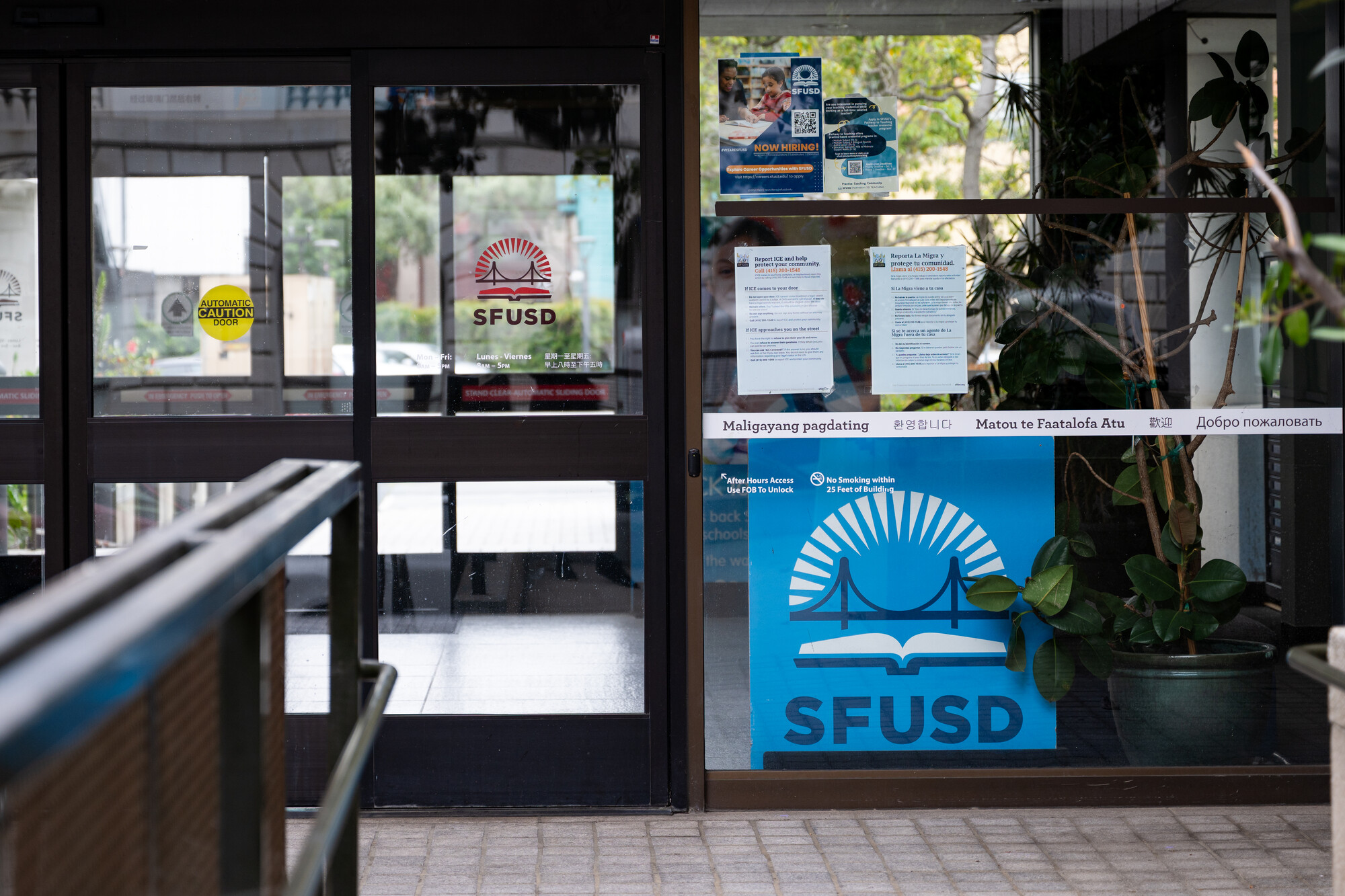
"content": "\u003cp>More than 100 \u003ca href=\"https://www.kqed.org/news/tag/san-francisco\">San Francisco\u003c/a> public school employees haven’t been properly paid for their summer work, union leaders said as teachers return to their classrooms this week, just over a month after the district rolled out a replacement for its \u003ca href=\"https://www.kqed.org/news/11908196/sfusd-teachers-protest-missed-paychecks-and-payroll-glitches-at-headquarters-overnight\">faulty payroll system\u003c/a> at a cost of tens of millions of dollars.\u003c/p>\n\u003cp>According to the teachers’ union’s state labor complaint filed Monday against the \u003ca href=\"https://www.kqed.org/news/tag/san-francisco-unified-school-district\">San Francisco Unified School District\u003c/a>, some members’ paychecks were delayed or missing, their hours were miscalculated or their union dues went undeducted in the first six weeks since the new system launched.\u003c/p>\n\u003cp>“As they processed the first couple of checks for maybe a couple hundred employees who had worked over summer, many of the same excuses started to emerge, which was, ‘We didn’t account for these unique circumstances,’ and all of a sudden, people were not receiving their full pay,” said Frank Lara, the executive vice president of United Educators of San Francisco.\u003c/p>\n\u003cp>[ad fullwidth]\u003c/p>\n\u003cp>Payroll has been \u003ca href=\"https://www.kqed.org/news/11922273/as-new-school-year-begins-some-s-f-teachers-still-havent-been-paid-what-theyre-owed-sfusd\">a thorn in the district’s side\u003c/a> since 2022, when it implemented the costly EMPower system that left some employees with incorrect paychecks, and others without pay at all.\u003c/p>\n\u003cp>Over two years, the district tried to resolve issues with the buggy software, spending more than $30 million and ultimately angering thousands of educators.\u003c/p>\n\u003cp>In total, Lara estimated that at least 3,000 of the union’s members had issues getting paid through EMPower and filed more than 10,000 issue tickets with district staff.\u003c/p>\n\u003cfigure id=\"attachment_12042992\" class=\"wp-caption aligncenter\" style=\"max-width: 2000px\">\u003cimg loading=\"lazy\" decoding=\"async\" class=\"size-full wp-image-12042992\" src=\"https://cdn.kqed.org/wp-content/uploads/sites/10/2025/06/250605-TREASUREISLANDJOBCORPS-21-BL-KQED.jpg\" alt=\"\" width=\"2000\" height=\"1333\" srcset=\"https://cdn.kqed.org/wp-content/uploads/sites/10/2025/06/250605-TREASUREISLANDJOBCORPS-21-BL-KQED.jpg 2000w, https://cdn.kqed.org/wp-content/uploads/sites/10/2025/06/250605-TREASUREISLANDJOBCORPS-21-BL-KQED-160x107.jpg 160w, https://cdn.kqed.org/wp-content/uploads/sites/10/2025/06/250605-TREASUREISLANDJOBCORPS-21-BL-KQED-1536x1024.jpg 1536w\" sizes=\"auto, (max-width: 2000px) 100vw, 2000px\">\u003cfigcaption class=\"wp-caption-text\">Frank Lara, executive vice president of United Educators of San Francisco, speaks during a rally outside the Treasure Island Job Corps Center in San Francisco on June 5, 2025, protesting the facility’s upcoming closure, which they say could leave at-risk youth homeless. \u003ccite>(Beth LaBerge/KQED)\u003c/cite>\u003c/figcaption>\u003c/figure>\n\u003cp>Over the summer, the district rolled out a new system, operated by Frontline and Red Rover, that Superintendent Maria Su assured the school board and district employees would operate more smoothly and reliably. That software cost the \u003ca href=\"https://www.kqed.org/news/12044768/sf-school-district-unveils-balanced-budget-after-cutting-over-110-million-in-spending\">cash-strapped district\u003c/a> $20 million more.\u003c/p>\n\u003cp>“After careful deliberation with our teams, I am pleased to announce that we will be able to proceed with the transition to Frontline as scheduled on July 1,” Su told reporters in June. “And we’ve done all the due diligence to make sure we are going to be able to do it and not have the hiccups of last time.”\u003c/p>\n\u003cp>But since July, Lara said about 150 of the union’s 500 or so members who worked over the summer have had payroll issues.[aside postID=news_12048313 hero='https://cdn.kqed.org/wp-content/uploads/sites/10/2025/07/SanFranciscoK8SchoolGetty.jpg']Some teachers who worked at district-sponsored enrichment programs over the summer didn’t receive pay at all; others never had union dues deducted from their paychecks like they were supposed to.\u003c/p>\n\u003cp>Other employees were paid at the incorrect rate or had their paychecks delayed for weeks, among other issues.\u003c/p>\n\u003cp>“We knew that going into the implementation of Frontline, there were going to be challenges. … with the implementation of any software and program, especially built on top of a system that we know struggled and did not work for our school district,” said Phil Kim, the president of San Francisco’s Board of Education. “The question I think that I’ve been posing to staff and making sure that the superintendent prioritizes is: ‘How fast are we able to resolve these issues?’”\u003c/p>\n\u003cp>So far, the union has been especially disappointed by how the district is handling the problems, Lara said.\u003c/p>\n\u003cp>“When we raised the alarm, we were shocked at how dismissive the staff was in terms of the very real concerns,” he told KQED.\u003c/p>\n\u003cp>“When a problem arises, everybody starts blaming each other. When we talk to the executive director of payroll … they go, ‘That’s probably an HR thing or a labor relations thing.’ So then we go over to the executive director of HR, and they’re like, ‘We raised these concerns a year ago and they didn’t include that into the system,’” he said. “Then who’s managing the system?”\u003c/p>\n\u003cfigure id=\"attachment_12046127\" class=\"wp-caption aligncenter\" style=\"max-width: 2000px\">\u003cimg loading=\"lazy\" decoding=\"async\" class=\"size-full wp-image-12046127\" src=\"https://cdn.kqed.org/wp-content/uploads/sites/10/2025/06/250421-SFUSDCentralCuts-09-BL_qed.jpg\" alt=\"\" width=\"2000\" height=\"1333\" srcset=\"https://cdn.kqed.org/wp-content/uploads/sites/10/2025/06/250421-SFUSDCentralCuts-09-BL_qed.jpg 2000w, https://cdn.kqed.org/wp-content/uploads/sites/10/2025/06/250421-SFUSDCentralCuts-09-BL_qed-160x107.jpg 160w, https://cdn.kqed.org/wp-content/uploads/sites/10/2025/06/250421-SFUSDCentralCuts-09-BL_qed-1536x1024.jpg 1536w\" sizes=\"auto, (max-width: 2000px) 100vw, 2000px\">\u003cfigcaption class=\"wp-caption-text\">San Francisco Unified School District Superintendent Dr. Maria Su speaks during a press conference at the school district offices in San Francisco on April 21, 2025. \u003ccite>(Beth LaBerge/KQED)\u003c/cite>\u003c/figcaption>\u003c/figure>\n\u003cp>Last week, the union sent a cease and desist letter to district leaders, including Su and Kim, detailing the issues employees had been dealing with since July, and informing the district it would file a state labor complaint if the issues were not resolved.\u003c/p>\n\u003cp>On Monday, UESF sent that complaint to California’s Public Employment Relations Board, writing that after spending a year preparing for the transition to Frontline, “the system cannot actually do the things we need it to do.”\u003c/p>\n\u003cp>“UESF’s expectation is that SFUSD is paying all of our members exactly what they are owed exactly when it is owed, that our member’s benefits are fully and completely available … without delay,” the unfair-practice charge reads.\u003c/p>\n\u003cp>In a statement, the district said it is working quickly to resolve any issues that arise and has created a website for employees with information and a way to report payroll concerns.\u003c/p>\n\u003cp>As teachers return to their classrooms on Tuesday before the first day of school next week, union leaders plan to rally outside the district’s office, urging officials to resolve the issues quickly.\u003c/p>\n\u003cp>“We’re really concerned now that 6,000 of our members are coming back, especially substitute teachers, that this is going to be a problem,” Lara said.\u003c/p>\n\u003cp>\u003c/p>\n",
"blocks": [],
"excerpt": "The San Francisco Unified School District spent tens of millions of dollars on a replacement for its faulty payroll system. It’s already having major problems, the teachers union says.",
"status": "publish",
"parent": 0,
"modified": 1755026000,
"stats": {
"hasAudio": false,
"hasVideo": false,
"hasChartOrMap": false,
"iframeSrcs": [],
"hasGoogleForm": false,
"hasGallery": false,
"hasHearkenModule": false,
"hasPolis": false,
"paragraphCount": 22,
"wordCount": 981
},
"headData": {
"title": "SF Teachers Are Yet Again Having Payroll Issues, Just After Launch of Costly New System | KQED",
"description": "The San Francisco Unified School District spent tens of millions of dollars on a replacement for its faulty payroll system. It’s already having major problems, the teachers union says.",
"ogTitle": "",
"ogDescription": "",
"ogImgId": "",
"twTitle": "",
"twDescription": "",
"twImgId": "",
"schema": {
"@context": "https://schema.org",
"@type": "NewsArticle",
"headline": "SF Teachers Are Yet Again Having Payroll Issues, Just After Launch of Costly New System",
"datePublished": "2025-08-12T11:55:45-07:00",
"dateModified": "2025-08-12T12:13:20-07:00",
"image": "https://cdn.kqed.org/wp-content/uploads/2020/02/KQED-OG-Image@1x.png",
"isAccessibleForFree": "True",
"publisher": {
"@type": "NewsMediaOrganization",
"@id": "https://www.kqed.org/#organization",
"name": "KQED",
"logo": "https://cdn.kqed.org/wp-content/uploads/2020/02/KQED-OG-Image@1x.png",
"url": "https://www.kqed.org",
"sameAs": [
"https://www.facebook.com/KQED",
"https://twitter.com/KQED",
"https://www.instagram.com/kqed/",
"https://www.tiktok.com/@kqedofficial",
"https://www.linkedin.com/company/kqed",
"https://www.youtube.com/channel/UCeC0IOo7i1P_61zVUWbJ4nw"
]
}
}
},
"primaryCategory": {
"termId": 8,
"slug": "news",
"name": "News"
},
"sticky": false,
"nprStoryId": "kqed-12051862",
"templateType": "standard",
"featuredImageType": "standard",
"excludeFromSiteSearch": "Include",
"articleAge": "0",
"path": "/news/12051862/sf-teachers-are-yet-again-having-payroll-issues-just-after-launch-of-costly-new-system",
"audioTrackLength": null,
"parsedContent": [
{
"type": "contentString",
"content": "\u003cdiv class=\"post-body\">\u003cp>\u003cp>More than 100 \u003ca href=\"https://www.kqed.org/news/tag/san-francisco\">San Francisco\u003c/a> public school employees haven’t been properly paid for their summer work, union leaders said as teachers return to their classrooms this week, just over a month after the district rolled out a replacement for its \u003ca href=\"https://www.kqed.org/news/11908196/sfusd-teachers-protest-missed-paychecks-and-payroll-glitches-at-headquarters-overnight\">faulty payroll system\u003c/a> at a cost of tens of millions of dollars.\u003c/p>\n\u003cp>According to the teachers’ union’s state labor complaint filed Monday against the \u003ca href=\"https://www.kqed.org/news/tag/san-francisco-unified-school-district\">San Francisco Unified School District\u003c/a>, some members’ paychecks were delayed or missing, their hours were miscalculated or their union dues went undeducted in the first six weeks since the new system launched.\u003c/p>\n\u003cp>“As they processed the first couple of checks for maybe a couple hundred employees who had worked over summer, many of the same excuses started to emerge, which was, ‘We didn’t account for these unique circumstances,’ and all of a sudden, people were not receiving their full pay,” said Frank Lara, the executive vice president of United Educators of San Francisco.\u003c/p>\n\u003cp>\u003c/p>\u003c/div>",
"attributes": {
"named": {},
"numeric": []
}
},
{
"type": "component",
"content": "",
"name": "ad",
"attributes": {
"named": {
"label": "fullwidth"
},
"numeric": [
"fullwidth"
]
}
},
{
"type": "contentString",
"content": "\u003cdiv class=\"post-body\">\u003cp>\u003c/p>\n\u003cp>Payroll has been \u003ca href=\"https://www.kqed.org/news/11922273/as-new-school-year-begins-some-s-f-teachers-still-havent-been-paid-what-theyre-owed-sfusd\">a thorn in the district’s side\u003c/a> since 2022, when it implemented the costly EMPower system that left some employees with incorrect paychecks, and others without pay at all.\u003c/p>\n\u003cp>Over two years, the district tried to resolve issues with the buggy software, spending more than $30 million and ultimately angering thousands of educators.\u003c/p>\n\u003cp>In total, Lara estimated that at least 3,000 of the union’s members had issues getting paid through EMPower and filed more than 10,000 issue tickets with district staff.\u003c/p>\n\u003cfigure id=\"attachment_12042992\" class=\"wp-caption aligncenter\" style=\"max-width: 2000px\">\u003cimg loading=\"lazy\" decoding=\"async\" class=\"size-full wp-image-12042992\" src=\"https://cdn.kqed.org/wp-content/uploads/sites/10/2025/06/250605-TREASUREISLANDJOBCORPS-21-BL-KQED.jpg\" alt=\"\" width=\"2000\" height=\"1333\" srcset=\"https://cdn.kqed.org/wp-content/uploads/sites/10/2025/06/250605-TREASUREISLANDJOBCORPS-21-BL-KQED.jpg 2000w, https://cdn.kqed.org/wp-content/uploads/sites/10/2025/06/250605-TREASUREISLANDJOBCORPS-21-BL-KQED-160x107.jpg 160w, https://cdn.kqed.org/wp-content/uploads/sites/10/2025/06/250605-TREASUREISLANDJOBCORPS-21-BL-KQED-1536x1024.jpg 1536w\" sizes=\"auto, (max-width: 2000px) 100vw, 2000px\">\u003cfigcaption class=\"wp-caption-text\">Frank Lara, executive vice president of United Educators of San Francisco, speaks during a rally outside the Treasure Island Job Corps Center in San Francisco on June 5, 2025, protesting the facility’s upcoming closure, which they say could leave at-risk youth homeless. \u003ccite>(Beth LaBerge/KQED)\u003c/cite>\u003c/figcaption>\u003c/figure>\n\u003cp>Over the summer, the district rolled out a new system, operated by Frontline and Red Rover, that Superintendent Maria Su assured the school board and district employees would operate more smoothly and reliably. That software cost the \u003ca href=\"https://www.kqed.org/news/12044768/sf-school-district-unveils-balanced-budget-after-cutting-over-110-million-in-spending\">cash-strapped district\u003c/a> $20 million more.\u003c/p>\n\u003cp>“After careful deliberation with our teams, I am pleased to announce that we will be able to proceed with the transition to Frontline as scheduled on July 1,” Su told reporters in June. “And we’ve done all the due diligence to make sure we are going to be able to do it and not have the hiccups of last time.”\u003c/p>\n\u003cp>But since July, Lara said about 150 of the union’s 500 or so members who worked over the summer have had payroll issues.\u003c/p>\u003c/div>",
"attributes": {
"named": {},
"numeric": []
}
},
{
"type": "component",
"content": "",
"name": "aside",
"attributes": {
"named": {
"postid": "news_12048313",
"hero": "https://cdn.kqed.org/wp-content/uploads/sites/10/2025/07/SanFranciscoK8SchoolGetty.jpg",
"label": ""
},
"numeric": []
}
},
{
"type": "contentString",
"content": "\u003cdiv class=\"post-body\">\u003cp>Some teachers who worked at district-sponsored enrichment programs over the summer didn’t receive pay at all; others never had union dues deducted from their paychecks like they were supposed to.\u003c/p>\n\u003cp>Other employees were paid at the incorrect rate or had their paychecks delayed for weeks, among other issues.\u003c/p>\n\u003cp>“We knew that going into the implementation of Frontline, there were going to be challenges. … with the implementation of any software and program, especially built on top of a system that we know struggled and did not work for our school district,” said Phil Kim, the president of San Francisco’s Board of Education. “The question I think that I’ve been posing to staff and making sure that the superintendent prioritizes is: ‘How fast are we able to resolve these issues?’”\u003c/p>\n\u003cp>So far, the union has been especially disappointed by how the district is handling the problems, Lara said.\u003c/p>\n\u003cp>“When we raised the alarm, we were shocked at how dismissive the staff was in terms of the very real concerns,” he told KQED.\u003c/p>\n\u003cp>“When a problem arises, everybody starts blaming each other. When we talk to the executive director of payroll … they go, ‘That’s probably an HR thing or a labor relations thing.’ So then we go over to the executive director of HR, and they’re like, ‘We raised these concerns a year ago and they didn’t include that into the system,’” he said. “Then who’s managing the system?”\u003c/p>\n\u003cfigure id=\"attachment_12046127\" class=\"wp-caption aligncenter\" style=\"max-width: 2000px\">\u003cimg loading=\"lazy\" decoding=\"async\" class=\"size-full wp-image-12046127\" src=\"https://cdn.kqed.org/wp-content/uploads/sites/10/2025/06/250421-SFUSDCentralCuts-09-BL_qed.jpg\" alt=\"\" width=\"2000\" height=\"1333\" srcset=\"https://cdn.kqed.org/wp-content/uploads/sites/10/2025/06/250421-SFUSDCentralCuts-09-BL_qed.jpg 2000w, https://cdn.kqed.org/wp-content/uploads/sites/10/2025/06/250421-SFUSDCentralCuts-09-BL_qed-160x107.jpg 160w, https://cdn.kqed.org/wp-content/uploads/sites/10/2025/06/250421-SFUSDCentralCuts-09-BL_qed-1536x1024.jpg 1536w\" sizes=\"auto, (max-width: 2000px) 100vw, 2000px\">\u003cfigcaption class=\"wp-caption-text\">San Francisco Unified School District Superintendent Dr. Maria Su speaks during a press conference at the school district offices in San Francisco on April 21, 2025. \u003ccite>(Beth LaBerge/KQED)\u003c/cite>\u003c/figcaption>\u003c/figure>\n\u003cp>Last week, the union sent a cease and desist letter to district leaders, including Su and Kim, detailing the issues employees had been dealing with since July, and informing the district it would file a state labor complaint if the issues were not resolved.\u003c/p>\n\u003cp>On Monday, UESF sent that complaint to California’s Public Employment Relations Board, writing that after spending a year preparing for the transition to Frontline, “the system cannot actually do the things we need it to do.”\u003c/p>\n\u003cp>“UESF’s expectation is that SFUSD is paying all of our members exactly what they are owed exactly when it is owed, that our member’s benefits are fully and completely available … without delay,” the unfair-practice charge reads.\u003c/p>\n\u003cp>In a statement, the district said it is working quickly to resolve any issues that arise and has created a website for employees with information and a way to report payroll concerns.\u003c/p>\n\u003cp>As teachers return to their classrooms on Tuesday before the first day of school next week, union leaders plan to rally outside the district’s office, urging officials to resolve the issues quickly.\u003c/p>\n\u003cp>“We’re really concerned now that 6,000 of our members are coming back, especially substitute teachers, that this is going to be a problem,” Lara said.\u003c/p>\n\u003cp>\u003c/p>\n\u003c/div>\u003c/p>",
"attributes": {
"named": {},
"numeric": []
}
}
],
"link": "/news/12051862/sf-teachers-are-yet-again-having-payroll-issues-just-after-launch-of-costly-new-system",
"authors": [
"11913"
],
"categories": [
"news_18540",
"news_34551",
"news_28250",
"news_8"
],
"tags": [
"news_1386",
"news_18538",
"news_20013",
"news_27626",
"news_19904",
"news_20516",
"news_30812",
"news_33375",
"news_3946",
"news_1290",
"news_3733"
],
"featImg": "news_12051869",
"label": "news"
},
"news_11989955": {
"type": "posts",
"id": "news_11989955",
"meta": {
"index": "posts_1716263798",
"site": "news",
"id": "11989955",
"score": null,
"sort": [
1755018079000
]
},
"guestAuthors": [],
"slug": "what-to-expect-when-enrolling-your-child-in-transitional-kindergarten",
"title": "What to Expect When Enrolling Your Child in Transitional Kindergarten",
"publishDate": 1755018079,
"format": "standard",
"headTitle": "What to Expect When Enrolling Your Child in Transitional Kindergarten | KQED",
"labelTerm": {
"term": 72,
"site": "news"
},
"content": "\u003cp>\u003cem>Updated 10 a.m. Tuesday — \u003ca href=\"https://www.kqed.org/news/12052579/que-es-kinder-de-transicion-tk-california\">\u003cstrong>Leer en español\u003c/strong>\u003c/a>\u003c/em>\u003c/p>\n\u003cp>This year, every 4-year-old in California can enter transitional kindergarten at their local school district. But fewer parents know about TK, and that it can be an option for their family, than they did just a few years ago, according to \u003ca href=\"https://laist.com/news/education/early-childhood-education-pre-k/california-transitional-kindergarten-awareness-research-stanford\">a survey by the Stanford Center on Early Childhood\u003c/a>.\u003c/p>\n\u003cp>Here are some frequently asked questions about this new grade in \u003ca href=\"https://www.kqed.org/news/11989465/california-teacher-shortage-hinders-transitional-kindergarten-and-bilingual-education-goals\">California’s public school system\u003c/a>.\u003c/p>\n\u003cp>[ad fullwidth]\u003c/p>\n\u003ch2>What is transitional kindergarten?\u003c/h2>\n\u003cp>\u003ca href=\"https://www.kqed.org/forum/2010101906814/can-californias-universal-transitional-kindergarten-plan-make-the-grade\">Transitional kindergarten is part of California’s ambitious plan\u003c/a> to create the nation’s largest free early education program. The state describes TK as the first of a two-year kindergarten program to prepare children for the rigors of elementary school.\u003c/p>\n\u003cp>Starting in 2012, some school districts introduced TK on a limited basis to serve a group of children who narrowly missed the cutoff date to enter kindergarten.\u003c/p>\n\u003cfigure id=\"attachment_11988070\" class=\"wp-caption aligncenter\" style=\"max-width: 1920px\">\u003cimg loading=\"lazy\" decoding=\"async\" class=\"size-full wp-image-11988070\" src=\"https://cdn.kqed.org/wp-content/uploads/sites/10/2024/05/240517-TKBilingualLearners-135-BL_qut.jpg\" alt=\"A woman teacher leans over and smiles at two young students in a classroom\" width=\"1920\" height=\"1280\" srcset=\"https://cdn.kqed.org/wp-content/uploads/sites/10/2024/05/240517-TKBilingualLearners-135-BL_qut.jpg 1920w, https://cdn.kqed.org/wp-content/uploads/sites/10/2024/05/240517-TKBilingualLearners-135-BL_qut-800x533.jpg 800w, https://cdn.kqed.org/wp-content/uploads/sites/10/2024/05/240517-TKBilingualLearners-135-BL_qut-1020x680.jpg 1020w, https://cdn.kqed.org/wp-content/uploads/sites/10/2024/05/240517-TKBilingualLearners-135-BL_qut-160x107.jpg 160w, https://cdn.kqed.org/wp-content/uploads/sites/10/2024/05/240517-TKBilingualLearners-135-BL_qut-1536x1024.jpg 1536w\" sizes=\"auto, (max-width: 1920px) 100vw, 1920px\">\u003cfigcaption class=\"wp-caption-text\">Teacher Erika Vargas checks in on students during playtime during a bilingual transitional kindergarten class at Global Family Elementary School in Oakland on May 17, 2024. \u003ccite>(Beth LaBerge/KQED)\u003c/cite>\u003c/figcaption>\u003c/figure>\n\u003cp>In 2021, they began accepting more 4-year-olds by expanding the birthday cutoffs each year. Starting this school year, all school districts are required to offer universal access to TK. They must also limit classroom sizes to one adult for every ten students.\u003c/p>\n\u003ch2>How do I know if my kid is eligible for TK?\u003c/h2>\n\u003cp>Students who will turn 4 by Sept. 1 of the school year can enroll.\u003c/p>\n\u003ch2>What do kids learn in TK?\u003c/h2>\n\u003cp>TK is a play-based program where children learn through play and interaction with each other. Schools are expected to align with the state’s framework, the \u003ca href=\"https://www.cde.ca.gov/sp/cd/re/psfoundations.asp\">Preschool/Transitional Kindergarten Learning Foundations\u003c/a>, when they set the curriculum for TK.[aside postID=news_11989789 hero='https://cdn.kqed.org/wp-content/uploads/sites/10/2024/06/240610-TKParentsDilemma-24-BL_qut-1020x680.jpg']The document lays out the knowledge and skills that 3- to 5-year-old children can acquire, such as focusing attention and collaborating with others, if given the benefits of a high-quality early education.\u003c/p>\n\u003cp>Erika Vargas, a transitional kindergarten teacher at Global Family Elementary School in Oakland, said a year in TK gives children a “grace period” to learn the routines and expectations of being in school and develop the skills necessary for kindergarten.\u003c/p>\n\u003cp>“Our goal is to expose them to literature, to develop that love of books, reading, writing and drawing,” she said. “Socially, we want them to learn how to make friends and resolve conflicts.”\u003c/p>\n\u003cp>Kids also start on basic skills such as learning the alphabet and numbers, but the focus is more on social and emotional development, said Tanya Harris, director of elementary education for the Alameda Unified School District.\u003c/p>\n\u003ch2>How is TK different from other types of preschool?\u003c/h2>\n\u003cp>TK is the only free school option for all 4-year-olds in California. Two other publicly funded preschool programs — Head Start and the California State Preschool Program — prioritize students based on certain criteria, like income and living situation.\u003c/p>\n\u003cp>Private preschools are businesses or nonprofits that are required to comply with local zoning and health and safety codes. They set their own curriculum.\u003c/p>\n\u003ch2>Why does California want to make TK universal?\u003c/h2>\n\u003cp>Gov. Gavin Newsom said the goal of making TK universal is so that “every 4-year-old in California from here on out can start their schooling on the right track, setting them up for success further down the road.”\u003c/p>\n\u003cfigure id=\"attachment_11988706\" class=\"wp-caption aligncenter\" style=\"max-width: 2000px\">\u003cimg loading=\"lazy\" decoding=\"async\" class=\"size-full wp-image-11988706\" src=\"https://cdn.kqed.org/wp-content/uploads/sites/10/2024/06/240520-TKPARENTSDILEMMA-23-BL-KQED.jpg\" alt=\"\" width=\"2000\" height=\"1333\" srcset=\"https://cdn.kqed.org/wp-content/uploads/sites/10/2024/06/240520-TKPARENTSDILEMMA-23-BL-KQED.jpg 2000w, https://cdn.kqed.org/wp-content/uploads/sites/10/2024/06/240520-TKPARENTSDILEMMA-23-BL-KQED-800x533.jpg 800w, https://cdn.kqed.org/wp-content/uploads/sites/10/2024/06/240520-TKPARENTSDILEMMA-23-BL-KQED-1020x680.jpg 1020w, https://cdn.kqed.org/wp-content/uploads/sites/10/2024/06/240520-TKPARENTSDILEMMA-23-BL-KQED-160x107.jpg 160w, https://cdn.kqed.org/wp-content/uploads/sites/10/2024/06/240520-TKPARENTSDILEMMA-23-BL-KQED-1536x1024.jpg 1536w, https://cdn.kqed.org/wp-content/uploads/sites/10/2024/06/240520-TKPARENTSDILEMMA-23-BL-KQED-1920x1280.jpg 1920w\" sizes=\"auto, (max-width: 2000px) 100vw, 2000px\">\u003cfigcaption class=\"wp-caption-text\">Gina Viggiano teaches a transitional kindergarten class at Holbrook Language Academy in Concord on May 20, 2024. \u003ccite>(Beth LaBerge/KQED)\u003c/cite>\u003c/figcaption>\u003c/figure>\n\u003cp>Experts also say that TK brings students into the K–12 system sooner so that they can acclimate to going to school and feel comfortable in a classroom, while parents benefit from an extra year of free care and education for their children.\u003c/p>\n\u003ch2>Does my child have to attend TK?\u003c/h2>\n\u003cp>No. TK and kindergarten are considered optional in California. Children are not mandated to enroll in school until first grade.\u003c/p>\n\u003ch2>When should I start researching transitional kindergarten options for my child?\u003c/h2>\n\u003cp>Many school districts start enrollment in January for the fall and may give priority to school placement for those who enroll early. Also, schools often hold tours and information sessions in the spring.\u003c/p>\n\u003cp>But don’t expect your local school district to reach out to you with a reminder to sign up for your child. Many parents have told us they find out about TK from other parents and do their research into options and deadlines.\u003c/p>\n\u003ch2>What happens if I wait to enroll my child until right before school starts?\u003c/h2>\n\u003cp>Children can enroll in school at any time, but that may limit your options for which school or program your child can enroll in. Some schools may fill up, which means you will have to look at other options.\u003c/p>\n\u003ch2>How can I assess if transitional kindergarten is right for my child?\u003c/h2>\n\u003cp>Since TK may not cover all the child care hours parents need to fit their work schedule, families must consider if they can make it work logistically and if their child can handle switching from school to an aftercare arrangement.\u003c/p>\n\u003cfigure id=\"attachment_11988053\" class=\"wp-caption aligncenter\" style=\"max-width: 1920px\">\u003cimg loading=\"lazy\" decoding=\"async\" class=\"size-full wp-image-11988053\" src=\"https://cdn.kqed.org/wp-content/uploads/sites/10/2024/05/240517-TKBilingualLearners-15-BL_qut.jpg\" alt=\"A teacher wearing a facemask high-fives a young student at a classroom table\" width=\"1920\" height=\"1280\" srcset=\"https://cdn.kqed.org/wp-content/uploads/sites/10/2024/05/240517-TKBilingualLearners-15-BL_qut.jpg 1920w, https://cdn.kqed.org/wp-content/uploads/sites/10/2024/05/240517-TKBilingualLearners-15-BL_qut-800x533.jpg 800w, https://cdn.kqed.org/wp-content/uploads/sites/10/2024/05/240517-TKBilingualLearners-15-BL_qut-1020x680.jpg 1020w, https://cdn.kqed.org/wp-content/uploads/sites/10/2024/05/240517-TKBilingualLearners-15-BL_qut-160x107.jpg 160w, https://cdn.kqed.org/wp-content/uploads/sites/10/2024/05/240517-TKBilingualLearners-15-BL_qut-1536x1024.jpg 1536w\" sizes=\"auto, (max-width: 1920px) 100vw, 1920px\">\u003cfigcaption class=\"wp-caption-text\">Bernadette Pilar Zermeño, a multilingual early childhood educator, sits with transitional kindergarten students during snack time at the International Community School in Oakland. \u003ccite>(Beth LaBerge/KQED)\u003c/cite>\u003c/figcaption>\u003c/figure>\n\u003cp>Some families prefer to keep their child in a program that can provide full-day care, said Kym Johnson, CEO of Bananas, an agency that refers parents to child care options in Alameda County.\u003c/p>\n\u003cp>On the other hand, some parents want their kids to enter a school environment. “Four-year-olds are at different stages and levels of independence,” Johnson said. “We believe families know what’s best for their kids.”\u003c/p>\n\u003ch2>What should I look for in a TK program?\u003c/h2>\n\u003cp>A high-quality TK classroom ought to have ample space for play-based activities, said Hanna Melnick, senior policy adviser for the Learning Policy Institute based in Palo Alto.[aside postID=news_11989615 hero='https://cdn.kqed.org/wp-content/uploads/sites/10/2024/06/TKBackPack-1020x647.jpg']“You want to see literacy, math and science activities in the classroom that are thoughtfully planned,” Melnick said. “And you want to make sure that the curriculum and assessments are taking into account the needs of the whole child — their social and emotional needs, their physical development as well as what’s more considered traditional academic development in math and reading.”\u003c/p>\n\u003cp>Dale Farran, an early childhood education researcher and emeritus professor at Vanderbilt University, said parents need to look for learning opportunities in the classroom that go beyond basic instruction.\u003c/p>\n\u003cp>“They need to be up, they need to be exploring, they need to be interacting with each other and with the teacher, and they need to have an environment that facilitates all of that happening,” Farran said.\u003c/p>\n\u003ch2>What should I ask the school about how TK is run?\u003c/h2>\n\u003cul>\n\u003cli>What kind of outdoor time do children get, and what do those spaces offer?\u003c/li>\n\u003cli>How do you incorporate play into the curriculum?\u003c/li>\n\u003cli>Are there bathrooms attached to the classroom?\u003c/li>\n\u003cli>If not, is there a bathroom inside the classroom? Where are the closest bathrooms, and how do the children get there?\u003c/li>\n\u003cli>Where will they eat their lunch and snacks? Will it be in the classroom or the cafeteria?\u003c/li>\n\u003cli>Do you have any special additional programs for TK students, e.g., dual immersion?\u003c/li>\n\u003cli>What kind of after-school care do you offer?\u003c/li>\n\u003cli>Can I take a tour?\u003c/li>\n\u003cli>Can I talk to the principal and teacher?\u003c/li>\n\u003c/ul>\n\u003ch2>What are common challenges parents encounter?\u003c/h2>\n\u003cp>Many parents find that arranging pick-up and drop-off can be a huge challenge, depending on their work schedules. The other big challenge is finding before- and after-school care since TK schedules vary in length, anywhere from three to five hours a day.\u003c/p>\n\u003cp>The state has provided funding for schools to add after-school care and enrichment classes in art, STEM or sports, but availability varies from school to school. Some programs charge fees while others are free.\u003c/p>\n\u003ch2>Anything else I should consider?\u003c/h2>\n\u003cp>Napping and toilet training. Some 4-year-olds still nap in the afternoon, which is not part of most TK programs. If that’s a problem, then perhaps you could consider how your child could still nap after school or phase out napping.\u003c/p>\n\u003cfigure id=\"attachment_11988060\" class=\"wp-caption aligncenter\" style=\"max-width: 1920px\">\u003cimg loading=\"lazy\" decoding=\"async\" class=\"size-full wp-image-11988060\" src=\"https://cdn.kqed.org/wp-content/uploads/sites/10/2024/05/240517-TKBilingualLearners-80-BL_qut.jpg\" alt=\"Three young students hold hands outside as they walk away from the camera towards a play gym structure during recess\" width=\"1920\" height=\"1280\" srcset=\"https://cdn.kqed.org/wp-content/uploads/sites/10/2024/05/240517-TKBilingualLearners-80-BL_qut.jpg 1920w, https://cdn.kqed.org/wp-content/uploads/sites/10/2024/05/240517-TKBilingualLearners-80-BL_qut-800x533.jpg 800w, https://cdn.kqed.org/wp-content/uploads/sites/10/2024/05/240517-TKBilingualLearners-80-BL_qut-1020x680.jpg 1020w, https://cdn.kqed.org/wp-content/uploads/sites/10/2024/05/240517-TKBilingualLearners-80-BL_qut-160x107.jpg 160w, https://cdn.kqed.org/wp-content/uploads/sites/10/2024/05/240517-TKBilingualLearners-80-BL_qut-1536x1024.jpg 1536w\" sizes=\"auto, (max-width: 1920px) 100vw, 1920px\">\u003cfigcaption class=\"wp-caption-text\">Transitional kindergarten students play outside during recess at the International Community School in Oakland on May 17, 2024. \u003ccite>(Beth LaBerge/KQED)\u003c/cite>\u003c/figcaption>\u003c/figure>\n\u003cp>Another issue some parents worry about is how prepared their child is to use the bathroom on their own. Marji D. Calbeck, director of elementary support for the Mount Diablo Unified School District, recommends that parents talk with teachers at the start of the school year about any concerns and even pack their kids an extra change of clothes in case they have an accident. Potty accidents happen in school, she said, noting it’s something educators should be equipped to deal with.\u003c/p>\n\u003ch2>What if my child isn’t ready for TK? What are my other options?\u003c/h2>\n\u003cp>California offers several publicly funded early childhood education programs to help meet families’ diverse child care needs.\u003c/p>\n\u003cp>Under the state’s \u003ca href=\"https://cauniversalprek.org/\">Universal Pre-Kindergarten (UPK)\u003c/a> initiative, income-eligible families can enroll in federal Head Start programs, the California State Preschool Program or subsidized early learning programs such as home-based “family child care” or private preschools.\u003c/p>\n\u003cp>CSPP offers part-day and full-day options for 2- to 4-year-olds.\u003c/p>\n\u003cp>\u003ca href=\"https://www.cde.ca.gov/sp/cd/ci/mb2306.asp\">Click here to\u003c/a> find out whether you meet the income requirement to enroll your child in CSPP.\u003c/p>\n\u003ch2>Where can I find more information?\u003c/h2>\n\u003cp>The state has set up a \u003ca href=\"https://cauniversalprek.org/families/\">website with information about UPK\u003c/a>. To find a program in your area, start with your local school district. You can also explore parent forums or groups on social media.\u003c/p>\n\u003cp>Parents can also search for child care that meets their specific needs via \u003ca href=\"http://mychildcareplan.org\">MyChildCarePlan.org\u003c/a>, a search tool supported by California’s network of resource and referral agencies.\u003c/p>\n\u003cp>If there’s a question you have we didn’t include, feel free to reach out to us — \u003ca href=\"mailto:daisynguyen@kqed.org\">Daisy Nguyen \u003c/a>or \u003ca href=\"mailto:eyu@laist.com\">Elly Yu\u003c/a> — and we’ll do our best to find answers.\u003c/p>\n\u003cp>[ad floatright]\u003c/p>\n",
"blocks": [],
"excerpt": "California is offering transitional kindergarten to all 4-year-olds starting this school year. So what is it, and how do you know if it’s right for your child and your family? ",
"status": "publish",
"parent": 0,
"modified": 1755796357,
"stats": {
"hasAudio": false,
"hasVideo": false,
"hasChartOrMap": false,
"iframeSrcs": [],
"hasGoogleForm": false,
"hasGallery": false,
"hasHearkenModule": false,
"hasPolis": false,
"paragraphCount": 38,
"wordCount": 1743
},
"headData": {
"title": "What to Expect When Enrolling Your Child in Transitional Kindergarten | KQED",
"description": "California is offering transitional kindergarten to all 4-year-olds starting this school year. So what is it, and how do you know if it’s right for your child and your family? ",
"ogTitle": "",
"ogDescription": "",
"ogImgId": "",
"twTitle": "",
"twDescription": "",
"twImgId": "",
"translatedArticles": [
{
"path": "/news/11989955/what-to-expect-when-enrolling-your-child-in-transitional-kindergarten",
"lang": "en"
},
{
"path": "/news/12052579/que-es-kinder-de-transicion-tk-california",
"lang": "es"
}
],
"schema": {
"@context": "https://schema.org",
"@type": "NewsArticle",
"headline": "What to Expect When Enrolling Your Child in Transitional Kindergarten",
"datePublished": "2025-08-12T10:01:19-07:00",
"dateModified": "2025-08-21T10:12:37-07:00",
"image": "https://cdn.kqed.org/wp-content/uploads/2020/02/KQED-OG-Image@1x.png",
"isAccessibleForFree": "True",
"publisher": {
"@type": "NewsMediaOrganization",
"@id": "https://www.kqed.org/#organization",
"name": "KQED",
"logo": "https://cdn.kqed.org/wp-content/uploads/2020/02/KQED-OG-Image@1x.png",
"url": "https://www.kqed.org",
"sameAs": [
"https://www.facebook.com/KQED",
"https://twitter.com/KQED",
"https://www.instagram.com/kqed/",
"https://www.tiktok.com/@kqedofficial",
"https://www.linkedin.com/company/kqed",
"https://www.youtube.com/channel/UCeC0IOo7i1P_61zVUWbJ4nw"
]
}
}
},
"primaryCategory": {
"termId": 8,
"slug": "news",
"name": "News"
},
"sticky": false,
"nprByline": "Daisy Nguyen, Blanca Torres and Elly Yu",
"nprStoryId": "kqed-11989955",
"templateType": "standard",
"featuredImageType": "standard",
"excludeFromSiteSearch": "Include",
"showOnAuthorArchivePages": "No",
"articleAge": "0",
"path": "/news/11989955/what-to-expect-when-enrolling-your-child-in-transitional-kindergarten",
"audioTrackLength": null,
"parsedContent": [
{
"type": "contentString",
"content": "\u003cdiv class=\"post-body\">\u003cp>\u003cp>\u003cem>Updated 10 a.m. Tuesday — \u003ca href=\"https://www.kqed.org/news/12052579/que-es-kinder-de-transicion-tk-california\">\u003cstrong>Leer en español\u003c/strong>\u003c/a>\u003c/em>\u003c/p>\n\u003cp>This year, every 4-year-old in California can enter transitional kindergarten at their local school district. But fewer parents know about TK, and that it can be an option for their family, than they did just a few years ago, according to \u003ca href=\"https://laist.com/news/education/early-childhood-education-pre-k/california-transitional-kindergarten-awareness-research-stanford\">a survey by the Stanford Center on Early Childhood\u003c/a>.\u003c/p>\n\u003cp>Here are some frequently asked questions about this new grade in \u003ca href=\"https://www.kqed.org/news/11989465/california-teacher-shortage-hinders-transitional-kindergarten-and-bilingual-education-goals\">California’s public school system\u003c/a>.\u003c/p>\n\u003cp>\u003c/p>\u003c/div>",
"attributes": {
"named": {},
"numeric": []
}
},
{
"type": "component",
"content": "",
"name": "ad",
"attributes": {
"named": {
"label": "fullwidth"
},
"numeric": [
"fullwidth"
]
}
},
{
"type": "contentString",
"content": "\u003cdiv class=\"post-body\">\u003cp>\u003c/p>\n\u003ch2>What is transitional kindergarten?\u003c/h2>\n\u003cp>\u003ca href=\"https://www.kqed.org/forum/2010101906814/can-californias-universal-transitional-kindergarten-plan-make-the-grade\">Transitional kindergarten is part of California’s ambitious plan\u003c/a> to create the nation’s largest free early education program. The state describes TK as the first of a two-year kindergarten program to prepare children for the rigors of elementary school.\u003c/p>\n\u003cp>Starting in 2012, some school districts introduced TK on a limited basis to serve a group of children who narrowly missed the cutoff date to enter kindergarten.\u003c/p>\n\u003cfigure id=\"attachment_11988070\" class=\"wp-caption aligncenter\" style=\"max-width: 1920px\">\u003cimg loading=\"lazy\" decoding=\"async\" class=\"size-full wp-image-11988070\" src=\"https://cdn.kqed.org/wp-content/uploads/sites/10/2024/05/240517-TKBilingualLearners-135-BL_qut.jpg\" alt=\"A woman teacher leans over and smiles at two young students in a classroom\" width=\"1920\" height=\"1280\" srcset=\"https://cdn.kqed.org/wp-content/uploads/sites/10/2024/05/240517-TKBilingualLearners-135-BL_qut.jpg 1920w, https://cdn.kqed.org/wp-content/uploads/sites/10/2024/05/240517-TKBilingualLearners-135-BL_qut-800x533.jpg 800w, https://cdn.kqed.org/wp-content/uploads/sites/10/2024/05/240517-TKBilingualLearners-135-BL_qut-1020x680.jpg 1020w, https://cdn.kqed.org/wp-content/uploads/sites/10/2024/05/240517-TKBilingualLearners-135-BL_qut-160x107.jpg 160w, https://cdn.kqed.org/wp-content/uploads/sites/10/2024/05/240517-TKBilingualLearners-135-BL_qut-1536x1024.jpg 1536w\" sizes=\"auto, (max-width: 1920px) 100vw, 1920px\">\u003cfigcaption class=\"wp-caption-text\">Teacher Erika Vargas checks in on students during playtime during a bilingual transitional kindergarten class at Global Family Elementary School in Oakland on May 17, 2024. \u003ccite>(Beth LaBerge/KQED)\u003c/cite>\u003c/figcaption>\u003c/figure>\n\u003cp>In 2021, they began accepting more 4-year-olds by expanding the birthday cutoffs each year. Starting this school year, all school districts are required to offer universal access to TK. They must also limit classroom sizes to one adult for every ten students.\u003c/p>\n\u003ch2>How do I know if my kid is eligible for TK?\u003c/h2>\n\u003cp>Students who will turn 4 by Sept. 1 of the school year can enroll.\u003c/p>\n\u003ch2>What do kids learn in TK?\u003c/h2>\n\u003cp>TK is a play-based program where children learn through play and interaction with each other. Schools are expected to align with the state’s framework, the \u003ca href=\"https://www.cde.ca.gov/sp/cd/re/psfoundations.asp\">Preschool/Transitional Kindergarten Learning Foundations\u003c/a>, when they set the curriculum for TK.\u003c/p>\u003c/div>",
"attributes": {
"named": {},
"numeric": []
}
},
{
"type": "component",
"content": "",
"name": "aside",
"attributes": {
"named": {
"postid": "news_11989789",
"hero": "https://cdn.kqed.org/wp-content/uploads/sites/10/2024/06/240610-TKParentsDilemma-24-BL_qut-1020x680.jpg",
"label": ""
},
"numeric": []
}
},
{
"type": "contentString",
"content": "\u003cdiv class=\"post-body\">\u003cp>The document lays out the knowledge and skills that 3- to 5-year-old children can acquire, such as focusing attention and collaborating with others, if given the benefits of a high-quality early education.\u003c/p>\n\u003cp>Erika Vargas, a transitional kindergarten teacher at Global Family Elementary School in Oakland, said a year in TK gives children a “grace period” to learn the routines and expectations of being in school and develop the skills necessary for kindergarten.\u003c/p>\n\u003cp>“Our goal is to expose them to literature, to develop that love of books, reading, writing and drawing,” she said. “Socially, we want them to learn how to make friends and resolve conflicts.”\u003c/p>\n\u003cp>Kids also start on basic skills such as learning the alphabet and numbers, but the focus is more on social and emotional development, said Tanya Harris, director of elementary education for the Alameda Unified School District.\u003c/p>\n\u003ch2>How is TK different from other types of preschool?\u003c/h2>\n\u003cp>TK is the only free school option for all 4-year-olds in California. Two other publicly funded preschool programs — Head Start and the California State Preschool Program — prioritize students based on certain criteria, like income and living situation.\u003c/p>\n\u003cp>Private preschools are businesses or nonprofits that are required to comply with local zoning and health and safety codes. They set their own curriculum.\u003c/p>\n\u003ch2>Why does California want to make TK universal?\u003c/h2>\n\u003cp>Gov. Gavin Newsom said the goal of making TK universal is so that “every 4-year-old in California from here on out can start their schooling on the right track, setting them up for success further down the road.”\u003c/p>\n\u003cfigure id=\"attachment_11988706\" class=\"wp-caption aligncenter\" style=\"max-width: 2000px\">\u003cimg loading=\"lazy\" decoding=\"async\" class=\"size-full wp-image-11988706\" src=\"https://cdn.kqed.org/wp-content/uploads/sites/10/2024/06/240520-TKPARENTSDILEMMA-23-BL-KQED.jpg\" alt=\"\" width=\"2000\" height=\"1333\" srcset=\"https://cdn.kqed.org/wp-content/uploads/sites/10/2024/06/240520-TKPARENTSDILEMMA-23-BL-KQED.jpg 2000w, https://cdn.kqed.org/wp-content/uploads/sites/10/2024/06/240520-TKPARENTSDILEMMA-23-BL-KQED-800x533.jpg 800w, https://cdn.kqed.org/wp-content/uploads/sites/10/2024/06/240520-TKPARENTSDILEMMA-23-BL-KQED-1020x680.jpg 1020w, https://cdn.kqed.org/wp-content/uploads/sites/10/2024/06/240520-TKPARENTSDILEMMA-23-BL-KQED-160x107.jpg 160w, https://cdn.kqed.org/wp-content/uploads/sites/10/2024/06/240520-TKPARENTSDILEMMA-23-BL-KQED-1536x1024.jpg 1536w, https://cdn.kqed.org/wp-content/uploads/sites/10/2024/06/240520-TKPARENTSDILEMMA-23-BL-KQED-1920x1280.jpg 1920w\" sizes=\"auto, (max-width: 2000px) 100vw, 2000px\">\u003cfigcaption class=\"wp-caption-text\">Gina Viggiano teaches a transitional kindergarten class at Holbrook Language Academy in Concord on May 20, 2024. \u003ccite>(Beth LaBerge/KQED)\u003c/cite>\u003c/figcaption>\u003c/figure>\n\u003cp>Experts also say that TK brings students into the K–12 system sooner so that they can acclimate to going to school and feel comfortable in a classroom, while parents benefit from an extra year of free care and education for their children.\u003c/p>\n\u003ch2>Does my child have to attend TK?\u003c/h2>\n\u003cp>No. TK and kindergarten are considered optional in California. Children are not mandated to enroll in school until first grade.\u003c/p>\n\u003ch2>When should I start researching transitional kindergarten options for my child?\u003c/h2>\n\u003cp>Many school districts start enrollment in January for the fall and may give priority to school placement for those who enroll early. Also, schools often hold tours and information sessions in the spring.\u003c/p>\n\u003cp>But don’t expect your local school district to reach out to you with a reminder to sign up for your child. Many parents have told us they find out about TK from other parents and do their research into options and deadlines.\u003c/p>\n\u003ch2>What happens if I wait to enroll my child until right before school starts?\u003c/h2>\n\u003cp>Children can enroll in school at any time, but that may limit your options for which school or program your child can enroll in. Some schools may fill up, which means you will have to look at other options.\u003c/p>\n\u003ch2>How can I assess if transitional kindergarten is right for my child?\u003c/h2>\n\u003cp>Since TK may not cover all the child care hours parents need to fit their work schedule, families must consider if they can make it work logistically and if their child can handle switching from school to an aftercare arrangement.\u003c/p>\n\u003cfigure id=\"attachment_11988053\" class=\"wp-caption aligncenter\" style=\"max-width: 1920px\">\u003cimg loading=\"lazy\" decoding=\"async\" class=\"size-full wp-image-11988053\" src=\"https://cdn.kqed.org/wp-content/uploads/sites/10/2024/05/240517-TKBilingualLearners-15-BL_qut.jpg\" alt=\"A teacher wearing a facemask high-fives a young student at a classroom table\" width=\"1920\" height=\"1280\" srcset=\"https://cdn.kqed.org/wp-content/uploads/sites/10/2024/05/240517-TKBilingualLearners-15-BL_qut.jpg 1920w, https://cdn.kqed.org/wp-content/uploads/sites/10/2024/05/240517-TKBilingualLearners-15-BL_qut-800x533.jpg 800w, https://cdn.kqed.org/wp-content/uploads/sites/10/2024/05/240517-TKBilingualLearners-15-BL_qut-1020x680.jpg 1020w, https://cdn.kqed.org/wp-content/uploads/sites/10/2024/05/240517-TKBilingualLearners-15-BL_qut-160x107.jpg 160w, https://cdn.kqed.org/wp-content/uploads/sites/10/2024/05/240517-TKBilingualLearners-15-BL_qut-1536x1024.jpg 1536w\" sizes=\"auto, (max-width: 1920px) 100vw, 1920px\">\u003cfigcaption class=\"wp-caption-text\">Bernadette Pilar Zermeño, a multilingual early childhood educator, sits with transitional kindergarten students during snack time at the International Community School in Oakland. \u003ccite>(Beth LaBerge/KQED)\u003c/cite>\u003c/figcaption>\u003c/figure>\n\u003cp>Some families prefer to keep their child in a program that can provide full-day care, said Kym Johnson, CEO of Bananas, an agency that refers parents to child care options in Alameda County.\u003c/p>\n\u003cp>On the other hand, some parents want their kids to enter a school environment. “Four-year-olds are at different stages and levels of independence,” Johnson said. “We believe families know what’s best for their kids.”\u003c/p>\n\u003ch2>What should I look for in a TK program?\u003c/h2>\n\u003cp>A high-quality TK classroom ought to have ample space for play-based activities, said Hanna Melnick, senior policy adviser for the Learning Policy Institute based in Palo Alto.\u003c/p>\u003c/div>",
"attributes": {
"named": {},
"numeric": []
}
},
{
"type": "component",
"content": "",
"name": "aside",
"attributes": {
"named": {
"postid": "news_11989615",
"hero": "https://cdn.kqed.org/wp-content/uploads/sites/10/2024/06/TKBackPack-1020x647.jpg",
"label": ""
},
"numeric": []
}
},
{
"type": "contentString",
"content": "\u003cdiv class=\"post-body\">\u003cp>“You want to see literacy, math and science activities in the classroom that are thoughtfully planned,” Melnick said. “And you want to make sure that the curriculum and assessments are taking into account the needs of the whole child — their social and emotional needs, their physical development as well as what’s more considered traditional academic development in math and reading.”\u003c/p>\n\u003cp>Dale Farran, an early childhood education researcher and emeritus professor at Vanderbilt University, said parents need to look for learning opportunities in the classroom that go beyond basic instruction.\u003c/p>\n\u003cp>“They need to be up, they need to be exploring, they need to be interacting with each other and with the teacher, and they need to have an environment that facilitates all of that happening,” Farran said.\u003c/p>\n\u003ch2>What should I ask the school about how TK is run?\u003c/h2>\n\u003cul>\n\u003cli>What kind of outdoor time do children get, and what do those spaces offer?\u003c/li>\n\u003cli>How do you incorporate play into the curriculum?\u003c/li>\n\u003cli>Are there bathrooms attached to the classroom?\u003c/li>\n\u003cli>If not, is there a bathroom inside the classroom? Where are the closest bathrooms, and how do the children get there?\u003c/li>\n\u003cli>Where will they eat their lunch and snacks? Will it be in the classroom or the cafeteria?\u003c/li>\n\u003cli>Do you have any special additional programs for TK students, e.g., dual immersion?\u003c/li>\n\u003cli>What kind of after-school care do you offer?\u003c/li>\n\u003cli>Can I take a tour?\u003c/li>\n\u003cli>Can I talk to the principal and teacher?\u003c/li>\n\u003c/ul>\n\u003ch2>What are common challenges parents encounter?\u003c/h2>\n\u003cp>Many parents find that arranging pick-up and drop-off can be a huge challenge, depending on their work schedules. The other big challenge is finding before- and after-school care since TK schedules vary in length, anywhere from three to five hours a day.\u003c/p>\n\u003cp>The state has provided funding for schools to add after-school care and enrichment classes in art, STEM or sports, but availability varies from school to school. Some programs charge fees while others are free.\u003c/p>\n\u003ch2>Anything else I should consider?\u003c/h2>\n\u003cp>Napping and toilet training. Some 4-year-olds still nap in the afternoon, which is not part of most TK programs. If that’s a problem, then perhaps you could consider how your child could still nap after school or phase out napping.\u003c/p>\n\u003cfigure id=\"attachment_11988060\" class=\"wp-caption aligncenter\" style=\"max-width: 1920px\">\u003cimg loading=\"lazy\" decoding=\"async\" class=\"size-full wp-image-11988060\" src=\"https://cdn.kqed.org/wp-content/uploads/sites/10/2024/05/240517-TKBilingualLearners-80-BL_qut.jpg\" alt=\"Three young students hold hands outside as they walk away from the camera towards a play gym structure during recess\" width=\"1920\" height=\"1280\" srcset=\"https://cdn.kqed.org/wp-content/uploads/sites/10/2024/05/240517-TKBilingualLearners-80-BL_qut.jpg 1920w, https://cdn.kqed.org/wp-content/uploads/sites/10/2024/05/240517-TKBilingualLearners-80-BL_qut-800x533.jpg 800w, https://cdn.kqed.org/wp-content/uploads/sites/10/2024/05/240517-TKBilingualLearners-80-BL_qut-1020x680.jpg 1020w, https://cdn.kqed.org/wp-content/uploads/sites/10/2024/05/240517-TKBilingualLearners-80-BL_qut-160x107.jpg 160w, https://cdn.kqed.org/wp-content/uploads/sites/10/2024/05/240517-TKBilingualLearners-80-BL_qut-1536x1024.jpg 1536w\" sizes=\"auto, (max-width: 1920px) 100vw, 1920px\">\u003cfigcaption class=\"wp-caption-text\">Transitional kindergarten students play outside during recess at the International Community School in Oakland on May 17, 2024. \u003ccite>(Beth LaBerge/KQED)\u003c/cite>\u003c/figcaption>\u003c/figure>\n\u003cp>Another issue some parents worry about is how prepared their child is to use the bathroom on their own. Marji D. Calbeck, director of elementary support for the Mount Diablo Unified School District, recommends that parents talk with teachers at the start of the school year about any concerns and even pack their kids an extra change of clothes in case they have an accident. Potty accidents happen in school, she said, noting it’s something educators should be equipped to deal with.\u003c/p>\n\u003ch2>What if my child isn’t ready for TK? What are my other options?\u003c/h2>\n\u003cp>California offers several publicly funded early childhood education programs to help meet families’ diverse child care needs.\u003c/p>\n\u003cp>Under the state’s \u003ca href=\"https://cauniversalprek.org/\">Universal Pre-Kindergarten (UPK)\u003c/a> initiative, income-eligible families can enroll in federal Head Start programs, the California State Preschool Program or subsidized early learning programs such as home-based “family child care” or private preschools.\u003c/p>\n\u003cp>CSPP offers part-day and full-day options for 2- to 4-year-olds.\u003c/p>\n\u003cp>\u003ca href=\"https://www.cde.ca.gov/sp/cd/ci/mb2306.asp\">Click here to\u003c/a> find out whether you meet the income requirement to enroll your child in CSPP.\u003c/p>\n\u003ch2>Where can I find more information?\u003c/h2>\n\u003cp>The state has set up a \u003ca href=\"https://cauniversalprek.org/families/\">website with information about UPK\u003c/a>. To find a program in your area, start with your local school district. You can also explore parent forums or groups on social media.\u003c/p>\n\u003cp>Parents can also search for child care that meets their specific needs via \u003ca href=\"http://mychildcareplan.org\">MyChildCarePlan.org\u003c/a>, a search tool supported by California’s network of resource and referral agencies.\u003c/p>\n\u003cp>If there’s a question you have we didn’t include, feel free to reach out to us — \u003ca href=\"mailto:daisynguyen@kqed.org\">Daisy Nguyen \u003c/a>or \u003ca href=\"mailto:eyu@laist.com\">Elly Yu\u003c/a> — and we’ll do our best to find answers.\u003c/p>\n\u003cp>\u003c/p>\u003c/div>",
"attributes": {
"named": {},
"numeric": []
}
},
{
"type": "component",
"content": "",
"name": "ad",
"attributes": {
"named": {
"label": "floatright"
},
"numeric": [
"floatright"
]
}
},
{
"type": "contentString",
"content": "\u003cdiv class=\"post-body\">\u003cp>\u003c/p>\n\u003c/div>\u003c/p>",
"attributes": {
"named": {},
"numeric": []
}
}
],
"link": "/news/11989955/what-to-expect-when-enrolling-your-child-in-transitional-kindergarten",
"authors": [
"byline_news_11989955"
],
"programs": [
"news_72"
],
"categories": [
"news_18540",
"news_34168",
"news_1169",
"news_8",
"news_33520"
],
"tags": [
"news_32707",
"news_18538",
"news_32102",
"news_20013",
"news_27626",
"news_6904",
"news_20202",
"news_25409",
"news_2252"
],
"featImg": "news_11988704",
"label": "news_72"
},
"news_12051797": {
"type": "posts",
"id": "news_12051797",
"meta": {
"index": "posts_1716263798",
"site": "news",
"id": "12051797",
"score": null,
"sort": [
1755007237000
]
},
"guestAuthors": [],
"slug": "california-argues-trumps-use-of-troops-in-l-a-violated-federal-law",
"title": "California Argues Trump’s Use of Troops in LA Violated Federal Law",
"publishDate": 1755007237,
"format": "standard",
"headTitle": "California Argues Trump’s Use of Troops in LA Violated Federal Law | KQED",
"labelTerm": {
"site": "news"
},
"content": "\u003cp>Attorneys for California began presenting their case that President Donald Trump’s deployment of federalized California National Guard troops and U.S. Marines to Los Angeles earlier this summer \u003ca href=\"https://www.kqed.org/news/12043314/california-to-sue-trump-for-sending-national-guard-troops-into-la-after-ice-protests\">violated federal law\u003c/a> that prohibits the military from performing police functions on U.S. soil.\u003c/p>\n\u003cp>Trump called up the National Guard following civil unrest, as his administration began mass deportations and raids across Los Angeles and other cities.\u003c/p>\n\u003cp>Through Attorney General Rob Bonta, Gov. Gavin Newsom is suing Trump and the federal government, claiming the deployment violated the \u003ca href=\"https://policy.defense.gov/portals/11/Documents/hdasa/references/6_USC_466.pdf\">Posse Comitatus Act\u003c/a> by having the U.S. military perform law enforcement duties.\u003c/p>\n\u003cp>[ad fullwidth]\u003c/p>\n\u003cp>The three-day trial opened Monday, the same day Trump ordered a similar military deployment in Washington, D.C., which could be affected by U.S. District Judge Charles Breyer’s ruling in the San Francisco case.\u003c/p>\n\u003cp>State attorneys presented \u003ca href=\"https://x.com/ICEgov/status/1932523385663168688\">social media posts\u003c/a> from Immigration and Customs Enforcement and military photos showing fully armed soldiers standing beside federal agents.\u003c/p>\n\u003cp>Maj. Gen. Scott Sherman, commander of Task Force 51 — the unit federalized at Trump’s orders in June — testified in dress uniform that soldiers and their leaders were instructed not to perform any typical police functions, such as arrests, apprehension, security patrols, or crowd and riot control.[aside postID=news_12051687 hero='https://cdn.kqed.org/wp-content/uploads/sites/10/2025/06/GettyImages-2219434485-scaled-e1753393070287.jpg']Sherman said that if a crowd threatened a federal facility in Los Angeles, federalized troops could protect it. If that crowd posed “any kind of threat” to local law enforcement, troops could “get in front of them.”\u003c/p>\n\u003cp>Sherman and others testified about operations that went viral on social media, including when federal agents and troops \u003ca href=\"https://www.latimes.com/california/story/2025-07-07/immigration-agents-descend-on-macarthur-park\">descended on MacArthur Park\u003c/a> on July 7.\u003c/p>\n\u003cp>An internal memo shown in court said the purpose of having the military in the park was to “demonstrate, through a show of presence, the capacity and freedom of the maneuver of federal law enforcement,” despite no “threat to federal function at this location.”\u003c/p>\n\u003cp>Sherman testified he objected to federal authorities’ request for military help, citing a low risk to law enforcement. But U.S. Border Chief Patrol Agent Gregory Bovino, who is responsible for all immigration enforcement in California, questioned Sherman’s “loyalty to the country.” Sherman said Secretary of Defense Pete Hegseth ultimately approved the deployment.\u003c/p>\n\u003cp>State lawyers also introduced Hegseth statements to the media earlier Monday morning, when he said he was approving military deployment in D.C. and that troops “will stand with their law enforcement partners” because “we did the same thing in Los Angeles.”\u003c/p>\n\u003cp>Judge Breyer pressed Sherman to answer if he would deploy troops to enforce “an unpopular law,” such as immigration or even tax collection, even without a threat of violence.\u003c/p>\n\u003cp>“Absolutely,” Sherman said if the mission was aligned with Trump’s and Hegseth’s orders.\u003c/p>\n\u003cfigure id=\"attachment_12043454\" class=\"wp-caption aligncenter\" style=\"max-width: 2000px\">\u003cimg loading=\"lazy\" decoding=\"async\" class=\"size-full wp-image-12043454\" src=\"https://cdn.kqed.org/wp-content/uploads/sites/10/2025/06/gettyimages-2219185144-scaled-e1750712672253.jpeg\" alt=\"National Guard troops stand outside the Metropolitan Detention Center on Sunday in Los Angeles. Tensions in the city remain high after the Trump administration called in the National Guard against the wishes of city leaders following two days of clashes with police during a series of immigration raids.\" width=\"2000\" height=\"1334\">\u003cfigcaption class=\"wp-caption-text\">National Guard troops stand outside the Metropolitan Detention Center on June 8, 2025, in Los Angeles. \u003ccite>(Spencer Platt/Getty Images)\u003c/cite>\u003c/figcaption>\u003c/figure>\n\u003cp>State attorneys also called William B. Harrington, the Army’s deputy chief of staff for Task Force 51, which oversaw the combined 4,700 National Guard troops and Marines deployed to L.A. That was until Friday, when he was relieved of his duties “because I was coming here.”\u003c/p>\n\u003cp>Harrington testified that troops and leaders were instructed not to perform typical police functions, but only to protect federal property and personnel.\u003c/p>\n\u003cp>The state’s third and final witness was Ernesto Santacruz Jr., field office director for ICE in L.A. He said the Department of Defense did not specify what they meant when they said they were deployed to “protect” federal law enforcement, but said all of his requests for military assistance in ICE enforcement were granted.\u003c/p>\n\u003cp>Santacruz was questioned about the types of operations he requested military backup, which he said were daily ICE detainments and once for protection from protestors at one of their detainment facilities. Santacruz said the military intervention was helpful following a “spike of officer assaults” and large-scale protests against ICE detentions.\u003c/p>\n\u003cp>“They’re presence was definitely a deterrent,” he said.\u003c/p>\n\u003cp>Before the day ended, Deputy Assistant Attorney General Eric Hamilton moved to dismiss the case, arguing the state had failed to prove the federal government violated the Posse Comitatus Act, but Judge Beyer reserved that judgment for later.\u003c/p>\n\u003cp>Sherman is scheduled to take the stand again on Tuesday, but this time on behalf of the federal government.\u003c/p>\n\u003cp>While the courtroom was typically stuffed with more than two dozen lawyers in suits and at least two military members in full dress uniforms, a technical glitch provided a moment of levity. Following a break, after lawyers for the federal government helped the state attorneys so they could project exhibits on computer screens, Judge Breyer made an observation.\u003c/p>\n\u003cp>“It is a wonderful example of federal and state cooperation,” he said, drawing laughter from the courtroom.\u003c/p>\n\u003cp>\u003c/p>\n",
"blocks": [],
"excerpt": "California is challenging the legality of President Donald Trump’s decision to send federalized National Guard troops and Marines to Los Angeles during civil unrest, arguing the move violated the Posse Comitatus Act’s limits on military involvement in civilian law enforcement.",
"status": "publish",
"parent": 0,
"modified": 1755023599,
"stats": {
"hasAudio": false,
"hasVideo": false,
"hasChartOrMap": false,
"iframeSrcs": [],
"hasGoogleForm": false,
"hasGallery": false,
"hasHearkenModule": false,
"hasPolis": false,
"paragraphCount": 23,
"wordCount": 853
},
"headData": {
"title": "California Argues Trump’s Use of Troops in LA Violated Federal Law | KQED",
"description": "California is challenging the legality of President Donald Trump’s decision to send federalized National Guard troops and Marines to Los Angeles during civil unrest, arguing the move violated the Posse Comitatus Act’s limits on military involvement in civilian law enforcement.",
"ogTitle": "",
"ogDescription": "",
"ogImgId": "",
"twTitle": "",
"twDescription": "",
"twImgId": "",
"schema": {
"@context": "https://schema.org",
"@type": "NewsArticle",
"headline": "California Argues Trump’s Use of Troops in LA Violated Federal Law",
"datePublished": "2025-08-12T07:00:37-07:00",
"dateModified": "2025-08-12T11:33:19-07:00",
"image": "https://cdn.kqed.org/wp-content/uploads/2020/02/KQED-OG-Image@1x.png",
"isAccessibleForFree": "True",
"publisher": {
"@type": "NewsMediaOrganization",
"@id": "https://www.kqed.org/#organization",
"name": "KQED",
"logo": "https://cdn.kqed.org/wp-content/uploads/2020/02/KQED-OG-Image@1x.png",
"url": "https://www.kqed.org",
"sameAs": [
"https://www.facebook.com/KQED",
"https://twitter.com/KQED",
"https://www.instagram.com/kqed/",
"https://www.tiktok.com/@kqedofficial",
"https://www.linkedin.com/company/kqed",
"https://www.youtube.com/channel/UCeC0IOo7i1P_61zVUWbJ4nw"
]
}
}
},
"primaryCategory": {
"termId": 8,
"slug": "news",
"name": "News"
},
"audioUrl": "https://traffic.omny.fm/d/clips/0af137ef-751e-4b19-a055-aaef00d2d578/ffca7e9f-6831-41c5-bcaf-aaef00f5a073/211a5422-8b29-47f7-b9d7-b337010f7618/audio.mp3",
"sticky": false,
"nprStoryId": "kqed-12051797",
"templateType": "standard",
"featuredImageType": "standard",
"excludeFromSiteSearch": "Include",
"articleAge": "0",
"path": "/news/12051797/california-argues-trumps-use-of-troops-in-l-a-violated-federal-law",
"audioTrackLength": null,
"parsedContent": [
{
"type": "contentString",
"content": "\u003cdiv class=\"post-body\">\u003cp>\u003cp>Attorneys for California began presenting their case that President Donald Trump’s deployment of federalized California National Guard troops and U.S. Marines to Los Angeles earlier this summer \u003ca href=\"https://www.kqed.org/news/12043314/california-to-sue-trump-for-sending-national-guard-troops-into-la-after-ice-protests\">violated federal law\u003c/a> that prohibits the military from performing police functions on U.S. soil.\u003c/p>\n\u003cp>Trump called up the National Guard following civil unrest, as his administration began mass deportations and raids across Los Angeles and other cities.\u003c/p>\n\u003cp>Through Attorney General Rob Bonta, Gov. Gavin Newsom is suing Trump and the federal government, claiming the deployment violated the \u003ca href=\"https://policy.defense.gov/portals/11/Documents/hdasa/references/6_USC_466.pdf\">Posse Comitatus Act\u003c/a> by having the U.S. military perform law enforcement duties.\u003c/p>\n\u003cp>\u003c/p>\u003c/div>",
"attributes": {
"named": {},
"numeric": []
}
},
{
"type": "component",
"content": "",
"name": "ad",
"attributes": {
"named": {
"label": "fullwidth"
},
"numeric": [
"fullwidth"
]
}
},
{
"type": "contentString",
"content": "\u003cdiv class=\"post-body\">\u003cp>\u003c/p>\n\u003cp>The three-day trial opened Monday, the same day Trump ordered a similar military deployment in Washington, D.C., which could be affected by U.S. District Judge Charles Breyer’s ruling in the San Francisco case.\u003c/p>\n\u003cp>State attorneys presented \u003ca href=\"https://x.com/ICEgov/status/1932523385663168688\">social media posts\u003c/a> from Immigration and Customs Enforcement and military photos showing fully armed soldiers standing beside federal agents.\u003c/p>\n\u003cp>Maj. Gen. Scott Sherman, commander of Task Force 51 — the unit federalized at Trump’s orders in June — testified in dress uniform that soldiers and their leaders were instructed not to perform any typical police functions, such as arrests, apprehension, security patrols, or crowd and riot control.\u003c/p>\u003c/div>",
"attributes": {
"named": {},
"numeric": []
}
},
{
"type": "component",
"content": "",
"name": "aside",
"attributes": {
"named": {
"postid": "news_12051687",
"hero": "https://cdn.kqed.org/wp-content/uploads/sites/10/2025/06/GettyImages-2219434485-scaled-e1753393070287.jpg",
"label": ""
},
"numeric": []
}
},
{
"type": "contentString",
"content": "\u003cdiv class=\"post-body\">\u003cp>Sherman said that if a crowd threatened a federal facility in Los Angeles, federalized troops could protect it. If that crowd posed “any kind of threat” to local law enforcement, troops could “get in front of them.”\u003c/p>\n\u003cp>Sherman and others testified about operations that went viral on social media, including when federal agents and troops \u003ca href=\"https://www.latimes.com/california/story/2025-07-07/immigration-agents-descend-on-macarthur-park\">descended on MacArthur Park\u003c/a> on July 7.\u003c/p>\n\u003cp>An internal memo shown in court said the purpose of having the military in the park was to “demonstrate, through a show of presence, the capacity and freedom of the maneuver of federal law enforcement,” despite no “threat to federal function at this location.”\u003c/p>\n\u003cp>Sherman testified he objected to federal authorities’ request for military help, citing a low risk to law enforcement. But U.S. Border Chief Patrol Agent Gregory Bovino, who is responsible for all immigration enforcement in California, questioned Sherman’s “loyalty to the country.” Sherman said Secretary of Defense Pete Hegseth ultimately approved the deployment.\u003c/p>\n\u003cp>State lawyers also introduced Hegseth statements to the media earlier Monday morning, when he said he was approving military deployment in D.C. and that troops “will stand with their law enforcement partners” because “we did the same thing in Los Angeles.”\u003c/p>\n\u003cp>Judge Breyer pressed Sherman to answer if he would deploy troops to enforce “an unpopular law,” such as immigration or even tax collection, even without a threat of violence.\u003c/p>\n\u003cp>“Absolutely,” Sherman said if the mission was aligned with Trump’s and Hegseth’s orders.\u003c/p>\n\u003cfigure id=\"attachment_12043454\" class=\"wp-caption aligncenter\" style=\"max-width: 2000px\">\u003cimg loading=\"lazy\" decoding=\"async\" class=\"size-full wp-image-12043454\" src=\"https://cdn.kqed.org/wp-content/uploads/sites/10/2025/06/gettyimages-2219185144-scaled-e1750712672253.jpeg\" alt=\"National Guard troops stand outside the Metropolitan Detention Center on Sunday in Los Angeles. Tensions in the city remain high after the Trump administration called in the National Guard against the wishes of city leaders following two days of clashes with police during a series of immigration raids.\" width=\"2000\" height=\"1334\">\u003cfigcaption class=\"wp-caption-text\">National Guard troops stand outside the Metropolitan Detention Center on June 8, 2025, in Los Angeles. \u003ccite>(Spencer Platt/Getty Images)\u003c/cite>\u003c/figcaption>\u003c/figure>\n\u003cp>State attorneys also called William B. Harrington, the Army’s deputy chief of staff for Task Force 51, which oversaw the combined 4,700 National Guard troops and Marines deployed to L.A. That was until Friday, when he was relieved of his duties “because I was coming here.”\u003c/p>\n\u003cp>Harrington testified that troops and leaders were instructed not to perform typical police functions, but only to protect federal property and personnel.\u003c/p>\n\u003cp>The state’s third and final witness was Ernesto Santacruz Jr., field office director for ICE in L.A. He said the Department of Defense did not specify what they meant when they said they were deployed to “protect” federal law enforcement, but said all of his requests for military assistance in ICE enforcement were granted.\u003c/p>\n\u003cp>Santacruz was questioned about the types of operations he requested military backup, which he said were daily ICE detainments and once for protection from protestors at one of their detainment facilities. Santacruz said the military intervention was helpful following a “spike of officer assaults” and large-scale protests against ICE detentions.\u003c/p>\n\u003cp>“They’re presence was definitely a deterrent,” he said.\u003c/p>\n\u003cp>Before the day ended, Deputy Assistant Attorney General Eric Hamilton moved to dismiss the case, arguing the state had failed to prove the federal government violated the Posse Comitatus Act, but Judge Beyer reserved that judgment for later.\u003c/p>\n\u003cp>Sherman is scheduled to take the stand again on Tuesday, but this time on behalf of the federal government.\u003c/p>\n\u003cp>While the courtroom was typically stuffed with more than two dozen lawyers in suits and at least two military members in full dress uniforms, a technical glitch provided a moment of levity. Following a break, after lawyers for the federal government helped the state attorneys so they could project exhibits on computer screens, Judge Breyer made an observation.\u003c/p>\n\u003cp>“It is a wonderful example of federal and state cooperation,” he said, drawing laughter from the courtroom.\u003c/p>\n\u003cp>\u003c/p>\n\u003c/div>\u003c/p>",
"attributes": {
"named": {},
"numeric": []
}
}
],
"link": "/news/12051797/california-argues-trumps-use-of-troops-in-l-a-violated-federal-law",
"authors": [
"11923"
],
"categories": [
"news_31795",
"news_28250",
"news_8",
"news_13"
],
"tags": [
"news_18538",
"news_29125",
"news_1323",
"news_27626",
"news_34377",
"news_16",
"news_79",
"news_38"
],
"featImg": "news_12043446",
"label": "news"
},
"news_12051737": {
"type": "posts",
"id": "news_12051737",
"meta": {
"index": "posts_1716263798",
"site": "news",
"id": "12051737",
"score": null,
"sort": [
1754955160000
]
},
"guestAuthors": [],
"slug": "child-care-union-strikes-deal-to-preserve-benefits-bump-up-pay",
"title": "California Child Care Union Strikes Deal to Preserve Benefits, Bump Up Pay",
"publishDate": 1754955160,
"format": "standard",
"headTitle": "California Child Care Union Strikes Deal to Preserve Benefits, Bump Up Pay | KQED",
"labelTerm": {
"site": "news"
},
"content": "\u003cp>Approximately \u003ca href=\"https://www.kqed.org/early-childhood-education-and-care\">60,000 home-based child care providers\u003c/a> will get to preserve their retirement, health care and training benefits and receive a pay bump under a contract deal their union leaders have struck with the state of California.\u003c/p>\n\u003cp>During months of labor talks, the bargaining team for Child Care Providers United said the state was \u003ca href=\"https://www.kqed.org/news/12045220/after-historic-win-child-care-union-fears-pushback-over-pay-benefits\">threatening to cut back some of the benefits and postpone implementing a plan\u003c/a> to bring their payments up to the “true cost of care.”\u003c/p>\n\u003cp>But under the tentative agreement, those benefits will be preserved over the next three years, union leaders said Monday.\u003c/p>\n\u003cp>[ad fullwidth]\u003c/p>\n\u003cp>“In these times in which healthcare is under attack by the federal government in the form of Medicaid cuts, which of course is Medi-Cal for us, it’s significant to have a benefit like that so they can take care of themselves and their families as they continue to do this work,” said Max Arias, chief negotiator for the union.\u003c/p>\n\u003cp>He encouraged members to enroll in the CCPU Health Fund to get reimbursed for out-of-pocket expenses and possibly monthly premiums.\u003c/p>\n\u003cfigure id=\"attachment_11935478\" class=\"wp-caption aligncenter\" style=\"max-width: 1920px\">\u003ca href=\"https://cdn.kqed.org/wp-content/uploads/sites/10/2022/12/RS61674_029_KQED_DaycareYolandaThomas_12142022-qut.jpg\">\u003cimg loading=\"lazy\" decoding=\"async\" class=\"size-full wp-image-11935478\" src=\"https://cdn.kqed.org/wp-content/uploads/sites/10/2022/12/RS61674_029_KQED_DaycareYolandaThomas_12142022-qut.jpg\" alt='A Black woman wearing a purple t-shirt that says \"Child care\" stands outside.' width=\"1920\" height=\"1280\" srcset=\"https://cdn.kqed.org/wp-content/uploads/sites/10/2022/12/RS61674_029_KQED_DaycareYolandaThomas_12142022-qut.jpg 1920w, https://cdn.kqed.org/wp-content/uploads/sites/10/2022/12/RS61674_029_KQED_DaycareYolandaThomas_12142022-qut-800x533.jpg 800w, https://cdn.kqed.org/wp-content/uploads/sites/10/2022/12/RS61674_029_KQED_DaycareYolandaThomas_12142022-qut-1020x680.jpg 1020w, https://cdn.kqed.org/wp-content/uploads/sites/10/2022/12/RS61674_029_KQED_DaycareYolandaThomas_12142022-qut-160x107.jpg 160w, https://cdn.kqed.org/wp-content/uploads/sites/10/2022/12/RS61674_029_KQED_DaycareYolandaThomas_12142022-qut-1536x1024.jpg 1536w\" sizes=\"auto, (max-width: 1920px) 100vw, 1920px\">\u003c/a>\u003cfigcaption class=\"wp-caption-text\">Yolanda Thomas stands outside her Pittsburg home, where she runs a daycare, on Dec. 14, 2022. \u003ccite>(Beth LaBerge/KQED)\u003c/cite>\u003c/figcaption>\u003c/figure>\n\u003cp>The state also offered a cost-of-living adjustment that amounts to a 1.5% subsidy rate increase and $90 million in one-time “stabilization payments” per child, per month, while the two sides work toward implementing the payment plan.\u003c/p>\n\u003cp>“The stabilization payments means that the state of California recognizes the \u003ca href=\"https://www.kqed.org/news/11935433/all-work-and-low-pay-the-struggle-of-californias-in-home-child-care-providers\">severe financial pressure we face\u003c/a> and they’re taking action to inject direct funds into the system,” said Yolanda Thomas, owner of Best Beginnings Day Care in Pittsburg and a member of the bargaining team.\u003c/p>\n\u003cp>As small-business owners, home-based child care providers like Thomas don’t have access to employer-provided benefits. In 2019, they won the right to collectively bargain because many of them receive reimbursements from the state to serve lower-income families.[aside postID=news_12046588 hero='https://cdn.kqed.org/wp-content/uploads/sites/10/2025/06/250610-HEADSTARTPROGRAMS-01-BL-KQED.jpg']For years, the providers complained that the state doesn’t pay them enough to cover the costs of care, putting them at a much \u003ca href=\"https://www.ppic.org/publication/californias-changing-child-care-landscape-understanding-costs-and-supply/\">higher risk\u003c/a> of closing their doors than child care centers, which destabilizes the child care market.\u003c/p>\n\u003cp>Thomas is licensed to provide care for up to 14 children out of her home, but she’s currently serving 12 with her husband’s help — although soon he’ll have other work to do. She said the funds will allow her to hire an assistant and serve more families, and help cover the cost of online classes she’s about to begin taking to earn a bachelor’s degree in early childhood education through \u003ca href=\"https://www.edvance.edu/\">EDvance College\u003c/a>.\u003c/p>\n\u003cp>Thomas has been a child care provider since 2001, but she said she was motivated to continue her professional development so she can earn a living wage.\u003c/p>\n\u003cp>“The way we do that is by furthering our education, making sure that the state and parents know that we’re not just babysitters,” she said. “We don’t sit on babies. We teach babies, we make sure they are ready for their brick-and-mortar school.”\u003c/p>\n\u003cp>Members will be asked to ratify the deal in several weeks, the union said.\u003c/p>\n\u003cp>\u003c/p>\n",
"blocks": [],
"excerpt": "California will increase pay to home-based child care providers and preserve retirement and health care benefits, the union said. ",
"status": "publish",
"parent": 0,
"modified": 1754958894,
"stats": {
"hasAudio": false,
"hasVideo": false,
"hasChartOrMap": false,
"iframeSrcs": [],
"hasGoogleForm": false,
"hasGallery": false,
"hasHearkenModule": false,
"hasPolis": false,
"paragraphCount": 14,
"wordCount": 580
},
"headData": {
"title": "California Child Care Union Strikes Deal to Preserve Benefits, Bump Up Pay | KQED",
"description": "California will increase pay to home-based child care providers and preserve retirement and health care benefits, the union said. ",
"ogTitle": "",
"ogDescription": "",
"ogImgId": "",
"twTitle": "",
"twDescription": "",
"twImgId": "",
"schema": {
"@context": "https://schema.org",
"@type": "NewsArticle",
"headline": "California Child Care Union Strikes Deal to Preserve Benefits, Bump Up Pay",
"datePublished": "2025-08-11T16:32:40-07:00",
"dateModified": "2025-08-11T17:34:54-07:00",
"image": "https://cdn.kqed.org/wp-content/uploads/2020/02/KQED-OG-Image@1x.png",
"isAccessibleForFree": "True",
"publisher": {
"@type": "NewsMediaOrganization",
"@id": "https://www.kqed.org/#organization",
"name": "KQED",
"logo": "https://cdn.kqed.org/wp-content/uploads/2020/02/KQED-OG-Image@1x.png",
"url": "https://www.kqed.org",
"sameAs": [
"https://www.facebook.com/KQED",
"https://twitter.com/KQED",
"https://www.instagram.com/kqed/",
"https://www.tiktok.com/@kqedofficial",
"https://www.linkedin.com/company/kqed",
"https://www.youtube.com/channel/UCeC0IOo7i1P_61zVUWbJ4nw"
]
}
}
},
"primaryCategory": {
"termId": 8,
"slug": "news",
"name": "News"
},
"sticky": false,
"nprStoryId": "kqed-12051737",
"templateType": "standard",
"featuredImageType": "standard",
"excludeFromSiteSearch": "Include",
"articleAge": "0",
"path": "/news/12051737/child-care-union-strikes-deal-to-preserve-benefits-bump-up-pay",
"audioTrackLength": null,
"parsedContent": [
{
"type": "contentString",
"content": "\u003cdiv class=\"post-body\">\u003cp>\u003cp>Approximately \u003ca href=\"https://www.kqed.org/early-childhood-education-and-care\">60,000 home-based child care providers\u003c/a> will get to preserve their retirement, health care and training benefits and receive a pay bump under a contract deal their union leaders have struck with the state of California.\u003c/p>\n\u003cp>During months of labor talks, the bargaining team for Child Care Providers United said the state was \u003ca href=\"https://www.kqed.org/news/12045220/after-historic-win-child-care-union-fears-pushback-over-pay-benefits\">threatening to cut back some of the benefits and postpone implementing a plan\u003c/a> to bring their payments up to the “true cost of care.”\u003c/p>\n\u003cp>But under the tentative agreement, those benefits will be preserved over the next three years, union leaders said Monday.\u003c/p>\n\u003cp>\u003c/p>\u003c/div>",
"attributes": {
"named": {},
"numeric": []
}
},
{
"type": "component",
"content": "",
"name": "ad",
"attributes": {
"named": {
"label": "fullwidth"
},
"numeric": [
"fullwidth"
]
}
},
{
"type": "contentString",
"content": "\u003cdiv class=\"post-body\">\u003cp>\u003c/p>\n\u003cp>“In these times in which healthcare is under attack by the federal government in the form of Medicaid cuts, which of course is Medi-Cal for us, it’s significant to have a benefit like that so they can take care of themselves and their families as they continue to do this work,” said Max Arias, chief negotiator for the union.\u003c/p>\n\u003cp>He encouraged members to enroll in the CCPU Health Fund to get reimbursed for out-of-pocket expenses and possibly monthly premiums.\u003c/p>\n\u003cfigure id=\"attachment_11935478\" class=\"wp-caption aligncenter\" style=\"max-width: 1920px\">\u003ca href=\"https://cdn.kqed.org/wp-content/uploads/sites/10/2022/12/RS61674_029_KQED_DaycareYolandaThomas_12142022-qut.jpg\">\u003cimg loading=\"lazy\" decoding=\"async\" class=\"size-full wp-image-11935478\" src=\"https://cdn.kqed.org/wp-content/uploads/sites/10/2022/12/RS61674_029_KQED_DaycareYolandaThomas_12142022-qut.jpg\" alt='A Black woman wearing a purple t-shirt that says \"Child care\" stands outside.' width=\"1920\" height=\"1280\" srcset=\"https://cdn.kqed.org/wp-content/uploads/sites/10/2022/12/RS61674_029_KQED_DaycareYolandaThomas_12142022-qut.jpg 1920w, https://cdn.kqed.org/wp-content/uploads/sites/10/2022/12/RS61674_029_KQED_DaycareYolandaThomas_12142022-qut-800x533.jpg 800w, https://cdn.kqed.org/wp-content/uploads/sites/10/2022/12/RS61674_029_KQED_DaycareYolandaThomas_12142022-qut-1020x680.jpg 1020w, https://cdn.kqed.org/wp-content/uploads/sites/10/2022/12/RS61674_029_KQED_DaycareYolandaThomas_12142022-qut-160x107.jpg 160w, https://cdn.kqed.org/wp-content/uploads/sites/10/2022/12/RS61674_029_KQED_DaycareYolandaThomas_12142022-qut-1536x1024.jpg 1536w\" sizes=\"auto, (max-width: 1920px) 100vw, 1920px\">\u003c/a>\u003cfigcaption class=\"wp-caption-text\">Yolanda Thomas stands outside her Pittsburg home, where she runs a daycare, on Dec. 14, 2022. \u003ccite>(Beth LaBerge/KQED)\u003c/cite>\u003c/figcaption>\u003c/figure>\n\u003cp>The state also offered a cost-of-living adjustment that amounts to a 1.5% subsidy rate increase and $90 million in one-time “stabilization payments” per child, per month, while the two sides work toward implementing the payment plan.\u003c/p>\n\u003cp>“The stabilization payments means that the state of California recognizes the \u003ca href=\"https://www.kqed.org/news/11935433/all-work-and-low-pay-the-struggle-of-californias-in-home-child-care-providers\">severe financial pressure we face\u003c/a> and they’re taking action to inject direct funds into the system,” said Yolanda Thomas, owner of Best Beginnings Day Care in Pittsburg and a member of the bargaining team.\u003c/p>\n\u003cp>As small-business owners, home-based child care providers like Thomas don’t have access to employer-provided benefits. In 2019, they won the right to collectively bargain because many of them receive reimbursements from the state to serve lower-income families.\u003c/p>\u003c/div>",
"attributes": {
"named": {},
"numeric": []
}
},
{
"type": "component",
"content": "",
"name": "aside",
"attributes": {
"named": {
"postid": "news_12046588",
"hero": "https://cdn.kqed.org/wp-content/uploads/sites/10/2025/06/250610-HEADSTARTPROGRAMS-01-BL-KQED.jpg",
"label": ""
},
"numeric": []
}
},
{
"type": "contentString",
"content": "\u003cdiv class=\"post-body\">\u003cp>For years, the providers complained that the state doesn’t pay them enough to cover the costs of care, putting them at a much \u003ca href=\"https://www.ppic.org/publication/californias-changing-child-care-landscape-understanding-costs-and-supply/\">higher risk\u003c/a> of closing their doors than child care centers, which destabilizes the child care market.\u003c/p>\n\u003cp>Thomas is licensed to provide care for up to 14 children out of her home, but she’s currently serving 12 with her husband’s help — although soon he’ll have other work to do. She said the funds will allow her to hire an assistant and serve more families, and help cover the cost of online classes she’s about to begin taking to earn a bachelor’s degree in early childhood education through \u003ca href=\"https://www.edvance.edu/\">EDvance College\u003c/a>.\u003c/p>\n\u003cp>Thomas has been a child care provider since 2001, but she said she was motivated to continue her professional development so she can earn a living wage.\u003c/p>\n\u003cp>“The way we do that is by furthering our education, making sure that the state and parents know that we’re not just babysitters,” she said. “We don’t sit on babies. We teach babies, we make sure they are ready for their brick-and-mortar school.”\u003c/p>\n\u003cp>Members will be asked to ratify the deal in several weeks, the union said.\u003c/p>\n\u003cp>\u003c/p>\n\u003c/div>\u003c/p>",
"attributes": {
"named": {},
"numeric": []
}
}
],
"link": "/news/12051737/child-care-union-strikes-deal-to-preserve-benefits-bump-up-pay",
"authors": [
"11829"
],
"categories": [
"news_31795",
"news_18540",
"news_8"
],
"tags": [
"news_18538",
"news_32102",
"news_32928",
"news_29460",
"news_20013",
"news_35063",
"news_34927"
],
"featImg": "news_12039812",
"label": "news"
},
"news_12051743": {
"type": "posts",
"id": "news_12051743",
"meta": {
"index": "posts_1716263798",
"site": "news",
"id": "12051743",
"score": null,
"sort": [
1754954199000
]
},
"guestAuthors": [],
"slug": "bay-area-rabbis-jewish-leaders-demand-israel-let-aid-into-gaza-as-crisis-persists",
"title": "Bay Area Rabbis, Jewish Leaders Demand Israel Let Aid Into Gaza as Crisis Persists",
"publishDate": 1754954199,
"format": "standard",
"headTitle": "Bay Area Rabbis, Jewish Leaders Demand Israel Let Aid Into Gaza as Crisis Persists | KQED",
"labelTerm": {
"site": "news"
},
"content": "\u003cp>\u003cem>Updated 1:35 p.m. Tuesday, Aug. 12\u003c/em>\u003c/p>\n\u003cp>A group of Bay Area rabbis and Jewish activists gathered Monday near the Israeli Consulate in San Francisco to call on Israel to cease military action in Gaza and facilitate \u003ca href=\"https://www.kqed.org/news/12049575/bay-area-leaders-call-for-humanitarian-aid-in-gaza-as-global-criticism-of-israel-grows\">humanitarian aid\u003c/a> into the 25-mile strip.\u003c/p>\n\u003cp>The group of around 50 emphasized the mounting evidence of famine in the Palestinian territory, as well as the Israeli blockade that they say has prevented critical supplies of food, fuel and medical resources for the civilian population.\u003c/p>\n\u003cp>“We find ourselves here, in hope, in prayer,” the group sang and chanted. “All of the children rise!”\u003c/p>\n\u003cp>[ad fullwidth]\u003c/p>\n\u003cp>Rabbi Andrew Straus, one of the lead organizers of the rally, said the group had three main demands: food for Gaza, an end to the killing, and the release of all hostages.\u003c/p>\n\u003cp>Their actions follow a worldwide effort by other rabbis and Jewish leaders who this month signed a public \u003ca href=\"https://www.ljs.org/1000rabbis\">letter\u003c/a> asking that Israel allow extensive humanitarian aid into Gaza.\u003c/p>\n\u003cp>The letter calls on Prime Minister Benjamin Netanyahu to “stop at once the use and threat of starvation as a weapon of war” and to guard against theft or control of that aid by Hamas.\u003c/p>\n\u003cfigure id=\"attachment_12051780\" class=\"wp-caption aligncenter\" style=\"max-width: 2000px\">\u003cimg loading=\"lazy\" decoding=\"async\" class=\"wp-image-12051780 size-full\" src=\"https://cdn.kqed.org/wp-content/uploads/sites/10/2025/08/250811-israeliconsulate_01009_TV_qed.jpg\" alt=\"\" width=\"2000\" height=\"1333\" srcset=\"https://cdn.kqed.org/wp-content/uploads/sites/10/2025/08/250811-israeliconsulate_01009_TV_qed.jpg 2000w, https://cdn.kqed.org/wp-content/uploads/sites/10/2025/08/250811-israeliconsulate_01009_TV_qed-160x107.jpg 160w, https://cdn.kqed.org/wp-content/uploads/sites/10/2025/08/250811-israeliconsulate_01009_TV_qed-1536x1024.jpg 1536w\" sizes=\"auto, (max-width: 2000px) 100vw, 2000px\">\u003cfigcaption class=\"wp-caption-text\">Protesters rally outside the Consulate General of Israel to the Pacific Northwest in San Francisco on Aug. 11, 2025. \u003ccite>(Tâm Vũ/KQED)\u003c/cite>\u003c/figcaption>\u003c/figure>\n\u003cp>As of Saturday, according to the Gaza Health Ministry, at least 212 people in Gaza have \u003ca href=\"https://www.kqed.org/forum/2010101910823/starvation-in-gaza-persists-despite-increased-aid-deliveries\">died\u003c/a> of starvation, nearly half of them children. Gaza health officials estimate that more than 60,000 Palestinians, including around 18,000 children, have been killed in Israeli attacks on Gaza since Oct. 7, 2023, when Hamas-led militants killed 1,200 people, mostly civilians, in Israel and took over 200 hostage.\u003c/p>\n\u003cp>Near the consulate in San Francisco, the rabbis and leaders formed a line, bearing a sweeping yellow banner that read “Each Person is Created in the Image of God! Food for Gaza Now!”\u003c/p>\n\u003cp>“Israel continues in its relentless campaign of bombing,” Rabbi Cat Zavis from Beyt Tikkun Synagogue told KQED. “We are here today as rabbis from diverse backgrounds to say stop all killings.”\u003c/p>\n\u003cp>Zavis, a self-described anti-Zionist rabbi from Oakland, said this message especially applies to the five Al Jazeera press staffers who were killed over the weekend in a targeted strike by the Israeli military.[aside postID=news_12050908 hero='https://cdn.kqed.org/wp-content/uploads/sites/10/2025/08/250806-PALESTINIANCHILDREN-05-KQED.jpg']In a statement to KQED, a spokesperson for the Israeli Consulate said it “is deeply regrettable that in the 675 days since the October 7th Massacre, these protesters never called for the release of the Israeli hostages” — a point that the organizers explicitly denied.\u003c/p>\n\u003cp>She also said that “despite the Hamas disinformation campaign, there is food in Gaza and Israel continues to flood Gaza with food and humanitarian aid.”\u003c/p>\n\u003cp>Rabbi David Cooper at Kehilla Community Synagogue said those who gathered Monday would have stood directly in front of the Israeli Consulate for their demonstration if not for the barriers that went up in anticipation of the act of protest.\u003c/p>\n\u003cp>Cooper called them “the barriers that have been put up to try and silence us, but we won’t be silenced.”\u003c/p>\n\u003cp>Cooper said the group wrote a letter to Israeli Consul General Marco Sermoneta last week, asking to arrange a meeting there on Monday to discuss these issues. But, he said, the group received a polite response that Sermoneta was unable to meet.\u003c/p>\n\u003cp>“We will take advantage of that offer, but the situation in Gaza and in the West Bank has become too dire,” Cooper said. “Starvation in Gaza continues unabated every moment.”\u003c/p>\n\u003cp>He also mentioned his friend Awdah Al-Hathaleen, the Palestinian human rights activist who was denied entry at San Francisco International Airport in June, and subsequently \u003ca href=\"https://www.kqed.org/news/12050131/activists-mourn-palestinian-man-killed-in-west-bank-after-being-denied-entry-at-sfo\">killed\u003c/a> by an Israeli settler in the occupied West Bank come late July.\u003c/p>\n\u003cp>“His known killer is walking free,” Cooper said. “We are here under a holy obligation to take action.”\u003c/p>\n\u003cp>The group said they expected to be arrested for civil disobedience, but ultimately were not.\u003c/p>\n\u003cp>\u003cem>Aug. 12: This article was updated after one of the rally’s lead organizers clarified that the activists’ three main demands included the release of all hostages, pushing back against a quote from the Israeli Consulate.\u003c/em>\u003c/p>\n\u003cp>\u003c/p>\n",
"blocks": [],
"excerpt": "Activists rallied outside the Israeli Consulate in San Francisco to call for Israel to facilitate an immediate ceasefire, as well as food and emergency aid into the Gaza Strip.",
"status": "publish",
"parent": 0,
"modified": 1755030918,
"stats": {
"hasAudio": false,
"hasVideo": false,
"hasChartOrMap": false,
"iframeSrcs": [],
"hasGoogleForm": false,
"hasGallery": false,
"hasHearkenModule": false,
"hasPolis": false,
"paragraphCount": 22,
"wordCount": 750
},
"headData": {
"title": "Bay Area Rabbis, Jewish Leaders Demand Israel Let Aid Into Gaza as Crisis Persists | KQED",
"description": "Activists rallied outside the Israeli Consulate in San Francisco to call for Israel to facilitate an immediate ceasefire, as well as food and emergency aid into the Gaza Strip.",
"ogTitle": "",
"ogDescription": "",
"ogImgId": "",
"twTitle": "",
"twDescription": "",
"twImgId": "",
"schema": {
"@context": "https://schema.org",
"@type": "NewsArticle",
"headline": "Bay Area Rabbis, Jewish Leaders Demand Israel Let Aid Into Gaza as Crisis Persists",
"datePublished": "2025-08-11T16:16:39-07:00",
"dateModified": "2025-08-12T13:35:18-07:00",
"image": "https://cdn.kqed.org/wp-content/uploads/2020/02/KQED-OG-Image@1x.png",
"isAccessibleForFree": "True",
"publisher": {
"@type": "NewsMediaOrganization",
"@id": "https://www.kqed.org/#organization",
"name": "KQED",
"logo": "https://cdn.kqed.org/wp-content/uploads/2020/02/KQED-OG-Image@1x.png",
"url": "https://www.kqed.org",
"sameAs": [
"https://www.facebook.com/KQED",
"https://twitter.com/KQED",
"https://www.instagram.com/kqed/",
"https://www.tiktok.com/@kqedofficial",
"https://www.linkedin.com/company/kqed",
"https://www.youtube.com/channel/UCeC0IOo7i1P_61zVUWbJ4nw"
]
}
}
},
"primaryCategory": {
"termId": 8,
"slug": "news",
"name": "News"
},
"sticky": false,
"nprStoryId": "kqed-12051743",
"templateType": "standard",
"featuredImageType": "standard",
"excludeFromSiteSearch": "Include",
"articleAge": "0",
"path": "/news/12051743/bay-area-rabbis-jewish-leaders-demand-israel-let-aid-into-gaza-as-crisis-persists",
"audioTrackLength": null,
"parsedContent": [
{
"type": "contentString",
"content": "\u003cdiv class=\"post-body\">\u003cp>\u003cp>\u003cem>Updated 1:35 p.m. Tuesday, Aug. 12\u003c/em>\u003c/p>\n\u003cp>A group of Bay Area rabbis and Jewish activists gathered Monday near the Israeli Consulate in San Francisco to call on Israel to cease military action in Gaza and facilitate \u003ca href=\"https://www.kqed.org/news/12049575/bay-area-leaders-call-for-humanitarian-aid-in-gaza-as-global-criticism-of-israel-grows\">humanitarian aid\u003c/a> into the 25-mile strip.\u003c/p>\n\u003cp>The group of around 50 emphasized the mounting evidence of famine in the Palestinian territory, as well as the Israeli blockade that they say has prevented critical supplies of food, fuel and medical resources for the civilian population.\u003c/p>\n\u003cp>“We find ourselves here, in hope, in prayer,” the group sang and chanted. “All of the children rise!”\u003c/p>\n\u003cp>\u003c/p>\u003c/div>",
"attributes": {
"named": {},
"numeric": []
}
},
{
"type": "component",
"content": "",
"name": "ad",
"attributes": {
"named": {
"label": "fullwidth"
},
"numeric": [
"fullwidth"
]
}
},
{
"type": "contentString",
"content": "\u003cdiv class=\"post-body\">\u003cp>\u003c/p>\n\u003cp>Rabbi Andrew Straus, one of the lead organizers of the rally, said the group had three main demands: food for Gaza, an end to the killing, and the release of all hostages.\u003c/p>\n\u003cp>Their actions follow a worldwide effort by other rabbis and Jewish leaders who this month signed a public \u003ca href=\"https://www.ljs.org/1000rabbis\">letter\u003c/a> asking that Israel allow extensive humanitarian aid into Gaza.\u003c/p>\n\u003cp>The letter calls on Prime Minister Benjamin Netanyahu to “stop at once the use and threat of starvation as a weapon of war” and to guard against theft or control of that aid by Hamas.\u003c/p>\n\u003cfigure id=\"attachment_12051780\" class=\"wp-caption aligncenter\" style=\"max-width: 2000px\">\u003cimg loading=\"lazy\" decoding=\"async\" class=\"wp-image-12051780 size-full\" src=\"https://cdn.kqed.org/wp-content/uploads/sites/10/2025/08/250811-israeliconsulate_01009_TV_qed.jpg\" alt=\"\" width=\"2000\" height=\"1333\" srcset=\"https://cdn.kqed.org/wp-content/uploads/sites/10/2025/08/250811-israeliconsulate_01009_TV_qed.jpg 2000w, https://cdn.kqed.org/wp-content/uploads/sites/10/2025/08/250811-israeliconsulate_01009_TV_qed-160x107.jpg 160w, https://cdn.kqed.org/wp-content/uploads/sites/10/2025/08/250811-israeliconsulate_01009_TV_qed-1536x1024.jpg 1536w\" sizes=\"auto, (max-width: 2000px) 100vw, 2000px\">\u003cfigcaption class=\"wp-caption-text\">Protesters rally outside the Consulate General of Israel to the Pacific Northwest in San Francisco on Aug. 11, 2025. \u003ccite>(Tâm Vũ/KQED)\u003c/cite>\u003c/figcaption>\u003c/figure>\n\u003cp>As of Saturday, according to the Gaza Health Ministry, at least 212 people in Gaza have \u003ca href=\"https://www.kqed.org/forum/2010101910823/starvation-in-gaza-persists-despite-increased-aid-deliveries\">died\u003c/a> of starvation, nearly half of them children. Gaza health officials estimate that more than 60,000 Palestinians, including around 18,000 children, have been killed in Israeli attacks on Gaza since Oct. 7, 2023, when Hamas-led militants killed 1,200 people, mostly civilians, in Israel and took over 200 hostage.\u003c/p>\n\u003cp>Near the consulate in San Francisco, the rabbis and leaders formed a line, bearing a sweeping yellow banner that read “Each Person is Created in the Image of God! Food for Gaza Now!”\u003c/p>\n\u003cp>“Israel continues in its relentless campaign of bombing,” Rabbi Cat Zavis from Beyt Tikkun Synagogue told KQED. “We are here today as rabbis from diverse backgrounds to say stop all killings.”\u003c/p>\n\u003cp>Zavis, a self-described anti-Zionist rabbi from Oakland, said this message especially applies to the five Al Jazeera press staffers who were killed over the weekend in a targeted strike by the Israeli military.\u003c/p>\u003c/div>",
"attributes": {
"named": {},
"numeric": []
}
},
{
"type": "component",
"content": "",
"name": "aside",
"attributes": {
"named": {
"postid": "news_12050908",
"hero": "https://cdn.kqed.org/wp-content/uploads/sites/10/2025/08/250806-PALESTINIANCHILDREN-05-KQED.jpg",
"label": ""
},
"numeric": []
}
},
{
"type": "contentString",
"content": "\u003cdiv class=\"post-body\">\u003cp>In a statement to KQED, a spokesperson for the Israeli Consulate said it “is deeply regrettable that in the 675 days since the October 7th Massacre, these protesters never called for the release of the Israeli hostages” — a point that the organizers explicitly denied.\u003c/p>\n\u003cp>She also said that “despite the Hamas disinformation campaign, there is food in Gaza and Israel continues to flood Gaza with food and humanitarian aid.”\u003c/p>\n\u003cp>Rabbi David Cooper at Kehilla Community Synagogue said those who gathered Monday would have stood directly in front of the Israeli Consulate for their demonstration if not for the barriers that went up in anticipation of the act of protest.\u003c/p>\n\u003cp>Cooper called them “the barriers that have been put up to try and silence us, but we won’t be silenced.”\u003c/p>\n\u003cp>Cooper said the group wrote a letter to Israeli Consul General Marco Sermoneta last week, asking to arrange a meeting there on Monday to discuss these issues. But, he said, the group received a polite response that Sermoneta was unable to meet.\u003c/p>\n\u003cp>“We will take advantage of that offer, but the situation in Gaza and in the West Bank has become too dire,” Cooper said. “Starvation in Gaza continues unabated every moment.”\u003c/p>\n\u003cp>He also mentioned his friend Awdah Al-Hathaleen, the Palestinian human rights activist who was denied entry at San Francisco International Airport in June, and subsequently \u003ca href=\"https://www.kqed.org/news/12050131/activists-mourn-palestinian-man-killed-in-west-bank-after-being-denied-entry-at-sfo\">killed\u003c/a> by an Israeli settler in the occupied West Bank come late July.\u003c/p>\n\u003cp>“His known killer is walking free,” Cooper said. “We are here under a holy obligation to take action.”\u003c/p>\n\u003cp>The group said they expected to be arrested for civil disobedience, but ultimately were not.\u003c/p>\n\u003cp>\u003cem>Aug. 12: This article was updated after one of the rally’s lead organizers clarified that the activists’ three main demands included the release of all hostages, pushing back against a quote from the Israeli Consulate.\u003c/em>\u003c/p>\n\u003cp>\u003c/p>\n\u003c/div>\u003c/p>",
"attributes": {
"named": {},
"numeric": []
}
}
],
"link": "/news/12051743/bay-area-rabbis-jewish-leaders-demand-israel-let-aid-into-gaza-as-crisis-persists",
"authors": [
"11929"
],
"categories": [
"news_31795",
"news_8",
"news_13"
],
"tags": [
"news_1386",
"news_18538",
"news_33333",
"news_17996",
"news_856",
"news_38"
],
"featImg": "news_12051787",
"label": "news"
},
"news_12051699": {
"type": "posts",
"id": "news_12051699",
"meta": {
"index": "posts_1716263798",
"site": "news",
"id": "12051699",
"score": null,
"sort": [
1754941519000
]
},
"guestAuthors": [],
"slug": "newsom-tells-trump-theres-a-way-out-of-this-redistricting-battle",
"title": "Newsom Tells Trump: There’s a Way Out of This Redistricting Battle",
"publishDate": 1754941519,
"format": "standard",
"headTitle": "Newsom Tells Trump: There’s a Way Out of This Redistricting Battle | KQED",
"labelTerm": {
"site": "news"
},
"content": "\u003cp>Gov. Gavin Newsom is offering President Donald Trump an out of his \u003ca href=\"https://www.kqed.org/news/12049973/newsoms-break-the-glass-plan-sets-up-california-midterm-redistricting-fight\">expedited redistricting plan\u003c/a>, promising to back off a Democratic gerrymander if red states aiming to pick up Republican seats ahead of the 2026 midterm election do the same.\u003c/p>\n\u003cp>In a letter sent to Trump on Monday, Newsom said he would call off his effort to enact special California congressional maps favoring Democrats if Trump directs Texas to abandon its new “hyperpartisan” maps that could flip five seats for Republicans.\u003c/p>\n\u003cp>“You are playing with fire, risking the destabilization of our democracy, while knowing that California can neutralize any gains you hope to make,” Newsom wrote in the letter. “Attempting to rig congressional maps to hold onto power before a single vote is cast in the 2026 election is an affront to American democracy.”\u003c/p>\n\u003cp>[ad fullwidth]\u003c/p>\n\u003cp>Newsom has been \u003ca href=\"https://www.kqed.org/news/12051462\">threatening to move forward\u003c/a> with a mid-decade redistricting plan since July, when Texas Gov. Greg Abbott called the state’s legislature into a special session to redraw congressional maps for 2026. The move breaks from states’ regular redistricting schedule, which calls for revising congressional lines at the start of each decade based on the U.S. Census.\u003c/p>\n\u003cp>While voting maps in Texas — and many states — are determined by their legislatures, California’s are drawn by an independent, citizen-led commission made up of an equal number of Democrats and Republicans. For Newsom’s plan to become reality, Californians would have to vote to approve temporarily ditching the commission-drafted districts in favor of new ones drawn up by the Legislature for the next three election cycles.\u003c/p>\n\u003cfigure id=\"attachment_12051467\" class=\"wp-caption aligncenter\" style=\"max-width: 2560px\">\u003ca href=\"https://cdn.kqed.org/wp-content/uploads/sites/10/2025/08/GettyImages-2228948736-scaled.jpg\">\u003cimg loading=\"lazy\" decoding=\"async\" class=\"size-full wp-image-12051467\" src=\"https://cdn.kqed.org/wp-content/uploads/sites/10/2025/08/GettyImages-2228948736-scaled.jpg\" alt=\"\" width=\"2560\" height=\"1704\" srcset=\"https://cdn.kqed.org/wp-content/uploads/sites/10/2025/08/GettyImages-2228948736-scaled.jpg 2560w, https://cdn.kqed.org/wp-content/uploads/sites/10/2025/08/GettyImages-2228948736-2000x1331.jpg 2000w, https://cdn.kqed.org/wp-content/uploads/sites/10/2025/08/GettyImages-2228948736-160x106.jpg 160w, https://cdn.kqed.org/wp-content/uploads/sites/10/2025/08/GettyImages-2228948736-1536x1022.jpg 1536w, https://cdn.kqed.org/wp-content/uploads/sites/10/2025/08/GettyImages-2228948736-2048x1363.jpg 2048w\" sizes=\"auto, (max-width: 2560px) 100vw, 2560px\">\u003c/a>\u003cfigcaption class=\"wp-caption-text\">Attendees view a map during a Senate Special Committee on Congressional Redistricting public testimony hearing on Aug.7, 2025, in Austin, Texas. Last week, Texas Democratic lawmakers fled the state in an attempt to protest and deny quorum for votes on the proposed Republican redistricting plan, leading Gov. Greg Abbott to threaten to remove lawmakers who do not return and ask the Texas Supreme Court to expel House Democratic leaders who fled the state. \u003ccite>(Photo by Brandon Bell/Getty Images)\u003c/cite>\u003c/figcaption>\u003c/figure>\n\u003cp>Newsom has a short runway, since the secretary of state’s office has given representatives a deadline of Aug. 22 to approve a November special election measure to temporarily enact maps redrawn by the Legislature for the 2026, 2028 and 2030 elections.\u003c/p>\n\u003cp>Garnering enough voter support in just a few months could be difficult, and even if the measure passes, lawmakers would likely have to pass additional legislation to ensure new maps would only be drawn if red states’ gerrymandered maps move forward. The Legislature would also have to approve the redrawn congressional lines.\u003c/p>\n\u003cp>At the same time, Rep. Kevin Kiley, a Republican who represents areas northeast of Sacramento and a large stretch of the Eastern Sierra and would likely be vulnerable to losing his seat under gerrymandered maps, is \u003ca href=\"https://www.kqed.org/news/12050983/californias-political-maps-are-drawn-independently-will-newsom-change-that\">mounting a fight against mid-decade redistricting\u003c/a> nationwide.\u003c/p>\n\u003cp>Some of California’s Democratic state representatives were also initially skeptical of the plan.[aside postID=news_12050983 hero='https://cdn.kqed.org/wp-content/uploads/sites/10/2025/08/GavinNewsomSacramentoAug2025AP.jpg']Voters overwhelmingly favored California’s independent redistricting commission when a 2010 ballot measure created it, and many believe the nonpartisan model is the best way to ensure fair elections.\u003c/p>\n\u003cp>But Newsom picked up momentum on Friday, when Rep. Zoe Lofgren, who represents the South Bay and heads California’s Democratic congressional caucus, announced that he had the \u003ca href=\"https://www.kqed.org/news/12051494/california-democrats-back-newsom-plan-to-redraw-congressional-maps-for-2026\">unanimous support of the state’s Democratic lawmakers\u003c/a>.\u003c/p>\n\u003cp>“We cannot stand here and just shrug as Trump and the Republicans try to rig the rules so they can avoid responsibility for the damage that they have done to this country,” she said at a press conference, standing alongside Texas’s Democratic state representatives, who fled last week to try to stall a vote on their state’s redrawn maps.\u003c/p>\n\u003cp>Newsom said in Monday’s letter that he believes in independent redistricting but would not back down from a fight to neutralize Republicans’ gains in red states if they move forward. The Trump administration has yet to respond publicly.\u003c/p>\n\u003cp>“If you will not stand down, I will be forced to lead an effort to redraw the maps in California to offset the rigging of maps in red states,” Newsom wrote. “But if the other states call off their redistricting efforts, we will happily do the same. And American democracy will be better for it.”\u003c/p>\n\u003cp>\u003c/p>\n",
"blocks": [],
"excerpt": "Gov. Gavin Newsom said he would back off efforts for a Democratic gerrymander if red states do the same, warning President Donald Trump that he is “risking the destabilization of our democracy.”",
"status": "publish",
"parent": 0,
"modified": 1754943519,
"stats": {
"hasAudio": false,
"hasVideo": false,
"hasChartOrMap": false,
"iframeSrcs": [],
"hasGoogleForm": false,
"hasGallery": false,
"hasHearkenModule": false,
"hasPolis": false,
"paragraphCount": 15,
"wordCount": 763
},
"headData": {
"title": "Newsom Tells Trump: There’s a Way Out of This Redistricting Battle | KQED",
"description": "Gov. Gavin Newsom said he would back off efforts for a Democratic gerrymander if red states do the same, warning President Donald Trump that he is “risking the destabilization of our democracy.”",
"ogTitle": "",
"ogDescription": "",
"ogImgId": "",
"twTitle": "",
"twDescription": "",
"twImgId": "",
"schema": {
"@context": "https://schema.org",
"@type": "NewsArticle",
"headline": "Newsom Tells Trump: There’s a Way Out of This Redistricting Battle",
"datePublished": "2025-08-11T12:45:19-07:00",
"dateModified": "2025-08-11T13:18:39-07:00",
"image": "https://cdn.kqed.org/wp-content/uploads/2020/02/KQED-OG-Image@1x.png",
"isAccessibleForFree": "True",
"publisher": {
"@type": "NewsMediaOrganization",
"@id": "https://www.kqed.org/#organization",
"name": "KQED",
"logo": "https://cdn.kqed.org/wp-content/uploads/2020/02/KQED-OG-Image@1x.png",
"url": "https://www.kqed.org",
"sameAs": [
"https://www.facebook.com/KQED",
"https://twitter.com/KQED",
"https://www.instagram.com/kqed/",
"https://www.tiktok.com/@kqedofficial",
"https://www.linkedin.com/company/kqed",
"https://www.youtube.com/channel/UCeC0IOo7i1P_61zVUWbJ4nw"
]
}
}
},
"primaryCategory": {
"termId": 8,
"slug": "news",
"name": "News"
},
"sticky": false,
"nprStoryId": "kqed-12051699",
"templateType": "standard",
"featuredImageType": "standard",
"excludeFromSiteSearch": "Include",
"articleAge": "0",
"path": "/news/12051699/newsom-tells-trump-theres-a-way-out-of-this-redistricting-battle",
"audioTrackLength": null,
"parsedContent": [
{
"type": "contentString",
"content": "\u003cdiv class=\"post-body\">\u003cp>\u003cp>Gov. Gavin Newsom is offering President Donald Trump an out of his \u003ca href=\"https://www.kqed.org/news/12049973/newsoms-break-the-glass-plan-sets-up-california-midterm-redistricting-fight\">expedited redistricting plan\u003c/a>, promising to back off a Democratic gerrymander if red states aiming to pick up Republican seats ahead of the 2026 midterm election do the same.\u003c/p>\n\u003cp>In a letter sent to Trump on Monday, Newsom said he would call off his effort to enact special California congressional maps favoring Democrats if Trump directs Texas to abandon its new “hyperpartisan” maps that could flip five seats for Republicans.\u003c/p>\n\u003cp>“You are playing with fire, risking the destabilization of our democracy, while knowing that California can neutralize any gains you hope to make,” Newsom wrote in the letter. “Attempting to rig congressional maps to hold onto power before a single vote is cast in the 2026 election is an affront to American democracy.”\u003c/p>\n\u003cp>\u003c/p>\u003c/div>",
"attributes": {
"named": {},
"numeric": []
}
},
{
"type": "component",
"content": "",
"name": "ad",
"attributes": {
"named": {
"label": "fullwidth"
},
"numeric": [
"fullwidth"
]
}
},
{
"type": "contentString",
"content": "\u003cdiv class=\"post-body\">\u003cp>\u003c/p>\n\u003cp>Newsom has been \u003ca href=\"https://www.kqed.org/news/12051462\">threatening to move forward\u003c/a> with a mid-decade redistricting plan since July, when Texas Gov. Greg Abbott called the state’s legislature into a special session to redraw congressional maps for 2026. The move breaks from states’ regular redistricting schedule, which calls for revising congressional lines at the start of each decade based on the U.S. Census.\u003c/p>\n\u003cp>While voting maps in Texas — and many states — are determined by their legislatures, California’s are drawn by an independent, citizen-led commission made up of an equal number of Democrats and Republicans. For Newsom’s plan to become reality, Californians would have to vote to approve temporarily ditching the commission-drafted districts in favor of new ones drawn up by the Legislature for the next three election cycles.\u003c/p>\n\u003cfigure id=\"attachment_12051467\" class=\"wp-caption aligncenter\" style=\"max-width: 2560px\">\u003ca href=\"https://cdn.kqed.org/wp-content/uploads/sites/10/2025/08/GettyImages-2228948736-scaled.jpg\">\u003cimg loading=\"lazy\" decoding=\"async\" class=\"size-full wp-image-12051467\" src=\"https://cdn.kqed.org/wp-content/uploads/sites/10/2025/08/GettyImages-2228948736-scaled.jpg\" alt=\"\" width=\"2560\" height=\"1704\" srcset=\"https://cdn.kqed.org/wp-content/uploads/sites/10/2025/08/GettyImages-2228948736-scaled.jpg 2560w, https://cdn.kqed.org/wp-content/uploads/sites/10/2025/08/GettyImages-2228948736-2000x1331.jpg 2000w, https://cdn.kqed.org/wp-content/uploads/sites/10/2025/08/GettyImages-2228948736-160x106.jpg 160w, https://cdn.kqed.org/wp-content/uploads/sites/10/2025/08/GettyImages-2228948736-1536x1022.jpg 1536w, https://cdn.kqed.org/wp-content/uploads/sites/10/2025/08/GettyImages-2228948736-2048x1363.jpg 2048w\" sizes=\"auto, (max-width: 2560px) 100vw, 2560px\">\u003c/a>\u003cfigcaption class=\"wp-caption-text\">Attendees view a map during a Senate Special Committee on Congressional Redistricting public testimony hearing on Aug.7, 2025, in Austin, Texas. Last week, Texas Democratic lawmakers fled the state in an attempt to protest and deny quorum for votes on the proposed Republican redistricting plan, leading Gov. Greg Abbott to threaten to remove lawmakers who do not return and ask the Texas Supreme Court to expel House Democratic leaders who fled the state. \u003ccite>(Photo by Brandon Bell/Getty Images)\u003c/cite>\u003c/figcaption>\u003c/figure>\n\u003cp>Newsom has a short runway, since the secretary of state’s office has given representatives a deadline of Aug. 22 to approve a November special election measure to temporarily enact maps redrawn by the Legislature for the 2026, 2028 and 2030 elections.\u003c/p>\n\u003cp>Garnering enough voter support in just a few months could be difficult, and even if the measure passes, lawmakers would likely have to pass additional legislation to ensure new maps would only be drawn if red states’ gerrymandered maps move forward. The Legislature would also have to approve the redrawn congressional lines.\u003c/p>\n\u003cp>At the same time, Rep. Kevin Kiley, a Republican who represents areas northeast of Sacramento and a large stretch of the Eastern Sierra and would likely be vulnerable to losing his seat under gerrymandered maps, is \u003ca href=\"https://www.kqed.org/news/12050983/californias-political-maps-are-drawn-independently-will-newsom-change-that\">mounting a fight against mid-decade redistricting\u003c/a> nationwide.\u003c/p>\n\u003cp>Some of California’s Democratic state representatives were also initially skeptical of the plan.\u003c/p>\u003c/div>",
"attributes": {
"named": {},
"numeric": []
}
},
{
"type": "component",
"content": "",
"name": "aside",
"attributes": {
"named": {
"postid": "news_12050983",
"hero": "https://cdn.kqed.org/wp-content/uploads/sites/10/2025/08/GavinNewsomSacramentoAug2025AP.jpg",
"label": ""
},
"numeric": []
}
},
{
"type": "contentString",
"content": "\u003cdiv class=\"post-body\">\u003cp>Voters overwhelmingly favored California’s independent redistricting commission when a 2010 ballot measure created it, and many believe the nonpartisan model is the best way to ensure fair elections.\u003c/p>\n\u003cp>But Newsom picked up momentum on Friday, when Rep. Zoe Lofgren, who represents the South Bay and heads California’s Democratic congressional caucus, announced that he had the \u003ca href=\"https://www.kqed.org/news/12051494/california-democrats-back-newsom-plan-to-redraw-congressional-maps-for-2026\">unanimous support of the state’s Democratic lawmakers\u003c/a>.\u003c/p>\n\u003cp>“We cannot stand here and just shrug as Trump and the Republicans try to rig the rules so they can avoid responsibility for the damage that they have done to this country,” she said at a press conference, standing alongside Texas’s Democratic state representatives, who fled last week to try to stall a vote on their state’s redrawn maps.\u003c/p>\n\u003cp>Newsom said in Monday’s letter that he believes in independent redistricting but would not back down from a fight to neutralize Republicans’ gains in red states if they move forward. The Trump administration has yet to respond publicly.\u003c/p>\n\u003cp>“If you will not stand down, I will be forced to lead an effort to redraw the maps in California to offset the rigging of maps in red states,” Newsom wrote. “But if the other states call off their redistricting efforts, we will happily do the same. And American democracy will be better for it.”\u003c/p>\n\u003cp>\u003c/p>\n\u003c/div>\u003c/p>",
"attributes": {
"named": {},
"numeric": []
}
}
],
"link": "/news/12051699/newsom-tells-trump-theres-a-way-out-of-this-redistricting-battle",
"authors": [
"11913"
],
"categories": [
"news_31795",
"news_8",
"news_13"
],
"tags": [
"news_18538",
"news_1323",
"news_27626",
"news_16",
"news_17996",
"news_17968",
"news_282",
"news_35732"
],
"featImg": "news_12051700",
"label": "news"
},
"news_12051236": {
"type": "posts",
"id": "news_12051236",
"meta": {
"index": "posts_1716263798",
"site": "news",
"id": "12051236",
"score": null,
"sort": [
1754937058000
]
},
"guestAuthors": [],
"slug": "an-unhoused-san-francisco-resident-navigates-a-new-era-of-street-enforcement",
"title": "How An Unhoused San Francisco Resident Navigates a New Era of Street Enforcement",
"publishDate": 1754937058,
"format": "standard",
"headTitle": "How An Unhoused San Francisco Resident Navigates a New Era of Street Enforcement | KQED",
"labelTerm": {
"term": 26731,
"site": "news"
},
"content": "\u003cp>When Armando Herrera got out of drug treatment last year, he returned to the streets of\u003ca href=\"https://www.kqed.org/news/tag/san-francisco\"> San Francisco\u003c/a> — still unhoused, but in a better place than he’d been in years.\u003c/p>\n\u003cp>He’d kicked his addiction to alcohol and meth, regained a sense of confidence and reconnected with his kids. Ten months away from the chaos of street life had given him something like stability. But back outside, he found the ground had shifted.\u003c/p>\n\u003cp>Before rehab, he could set up his tent in one spot and leave it there for weeks. Now, the rules of survival had changed.\u003c/p>\n\u003cp>[ad fullwidth]\u003c/p>\n\u003cp>“You can’t leave [your tent],” he said. “The first time, they give you a warning. The second time, they give you a ticket. The third time you go to jail.”\u003c/p>\n\u003cp>So these days, he camps near an industrial building with two others, but never for very long. They arrive late, set up after dark and break down again before sunrise in a daily cycle of, as he puts it, “Go and come back, go and come back, go and come back.”\u003c/p>\n\u003cfigure id=\"attachment_12046792\" class=\"wp-caption aligncenter\" style=\"max-width: 2000px\">\u003ca href=\"https://cdn.kqed.org/wp-content/uploads/sites/10/2025/07/250701-GRANTSPASS-03-BL-KQED.jpg\">\u003cimg loading=\"lazy\" decoding=\"async\" class=\"size-full wp-image-12046792\" src=\"https://cdn.kqed.org/wp-content/uploads/sites/10/2025/07/250701-GRANTSPASS-03-BL-KQED.jpg\" alt=\"\" width=\"2000\" height=\"1333\" srcset=\"https://cdn.kqed.org/wp-content/uploads/sites/10/2025/07/250701-GRANTSPASS-03-BL-KQED.jpg 2000w, https://cdn.kqed.org/wp-content/uploads/sites/10/2025/07/250701-GRANTSPASS-03-BL-KQED-160x107.jpg 160w, https://cdn.kqed.org/wp-content/uploads/sites/10/2025/07/250701-GRANTSPASS-03-BL-KQED-1536x1024.jpg 1536w\" sizes=\"auto, (max-width: 2000px) 100vw, 2000px\">\u003c/a>\u003cfigcaption class=\"wp-caption-text\">Armando Herrera Vargas (left) talks with a friend at The Gubbio Project in San Francisco on July 1, 2025, with his belongings nearby. The project provides a safe place for unhoused people to rest during the day inside local churches. \u003ccite>(Beth LaBerge/KQED)\u003c/cite>\u003c/figcaption>\u003c/figure>\n\u003cp>That routine has kept Herrera out of jail, but it hasn’t \u003ca href=\"https://www.kqed.org/housing\">gotten him off the street\u003c/a>.\u003c/p>\n\u003cp>A decade into homelessness, he’s navigating a new and \u003ca href=\"https://www.kqed.org/news/12046259\">more aggressive era of street enforcement\u003c/a> in San Francisco, one shaped by last year’s \u003ca href=\"https://www.kqed.org/news/11991340/supreme-court-says-laws-criminalizing-homeless-camping-do-not-violate-constitution\">U.S. Supreme Court ruling\u003c/a> giving cities broad authority to punish people for sleeping outside, even when there are no shelter beds available.\u003c/p>\n\u003cp>Since then, some 50 cities statewide have passed or strengthened anti-camping ordinances, according to a \u003ca href=\"https://papers.ssrn.com/sol3/papers.cfm?abstract_id=5257640\">May report\u003c/a> from UC Berkeley. San Francisco has \u003ca href=\"https://www.npr.org/2024/09/30/nx-s1-5094930/supreme-court-homeless-camps-san-francisco\">leaned into a tougher stance\u003c/a>.\u003c/p>\n\u003cp>Since July of last year, the city conducted at least 471 encampment sweeps and placed over 900 people into shelters. Meanwhile, police arrested more than 1,100 people for “lodging without permission,” essentially public camping, and the city’s district attorney \u003ca href=\"https://data.sfgov.org/Public-Safety/District-Attorney-Cases-Prosecuted/dcjk-vw8q/data_preview\">filed charges\u003c/a> in just over 250 of those cases. So far, about 100 \u003ca href=\"https://data.sfgov.org/Public-Safety/District-Attorney-Case-Resolutions/ynfy-z5kt/data_preview\">have been resolved\u003c/a>, most through diversion programs that allow people to avoid a criminal record if they meet certain conditions.[aside postID=news_12050701 hero='https://cdn.kqed.org/wp-content/uploads/sites/10/2025/07/250722-SHELTERFAMILIES-08-BL-KQED.jpg']Those efforts have reshaped the streets and changed the lives of unhoused residents like Herrera.\u003c/p>\n\u003cp>Herrera has a warm, slightly weary demeanor, with a smile that reveals straight white teeth and deep creases around his brown eyes. He’s 53 and has lived in San Francisco for three decades. He said he moved here from Mexico City and married an American citizen. He had three kids, a home and a furniture restoration business. Then it all unraveled.\u003c/p>\n\u003cp>“It’s been kinda like chaos for the last 15 years,” he said.\u003c/p>\n\u003cp>The details and timeline of his story are a little murky. He said after the 2008 financial crisis, his business failed, then he worked for someone else in the furniture business until a job injury ended that, too. He said his wife died, and he lost contact with his kids. His disability benefits provided enough income to pay for a place to live or for food and essentials, but not both. In 2014, he lost his home.\u003c/p>\n\u003cp>For a while, he got by in cheap hotels, selling what he had until there was nothing left.\u003c/p>\n\u003cp>“That’s when I started seeing people putting tents everywhere,” he said. “I was like, ‘Well, might as well do the same,’ since I really got no place to go.”\u003c/p>\n\u003cfigure id=\"attachment_11998912\" class=\"wp-caption aligncenter\" style=\"max-width: 2000px\">\u003ca href=\"https://cdn.kqed.org/wp-content/uploads/sites/10/2024/08/240801-ENCAMPMENT-SWEEPS-MD-01_qed.jpg\">\u003cimg loading=\"lazy\" decoding=\"async\" class=\"size-full wp-image-11998912\" src=\"https://cdn.kqed.org/wp-content/uploads/sites/10/2024/08/240801-ENCAMPMENT-SWEEPS-MD-01_qed.jpg\" alt=\"\" width=\"2000\" height=\"1333\" srcset=\"https://cdn.kqed.org/wp-content/uploads/sites/10/2024/08/240801-ENCAMPMENT-SWEEPS-MD-01_qed.jpg 2000w, https://cdn.kqed.org/wp-content/uploads/sites/10/2024/08/240801-ENCAMPMENT-SWEEPS-MD-01_qed-800x533.jpg 800w, https://cdn.kqed.org/wp-content/uploads/sites/10/2024/08/240801-ENCAMPMENT-SWEEPS-MD-01_qed-1020x680.jpg 1020w, https://cdn.kqed.org/wp-content/uploads/sites/10/2024/08/240801-ENCAMPMENT-SWEEPS-MD-01_qed-160x107.jpg 160w, https://cdn.kqed.org/wp-content/uploads/sites/10/2024/08/240801-ENCAMPMENT-SWEEPS-MD-01_qed-1536x1024.jpg 1536w, https://cdn.kqed.org/wp-content/uploads/sites/10/2024/08/240801-ENCAMPMENT-SWEEPS-MD-01_qed-1920x1280.jpg 1920w\" sizes=\"auto, (max-width: 2000px) 100vw, 2000px\">\u003c/a>\u003cfigcaption class=\"wp-caption-text\">A man experiencing homelessness packs up his belongings in anticipation of an encampment sweep by San Francisco’s Department of Public Works around Showplace Square on Aug. 1, 2024. \u003ccite>(Martin do Nascimento/KQED)\u003c/cite>\u003c/figcaption>\u003c/figure>\n\u003cp>He camped with others for safety and a sense of belonging. “Being homeless and then being alone, you just feel like you don’t belong,” he said. “That’s when depression comes.”\u003c/p>\n\u003cp>Eventually, he was arrested for possessing a stolen bike — something he said he bought off the street. From jail, he entered a diversion program, which led him to rehab. That’s where he was when the Supreme Court handed down its decision.\u003c/p>\n\u003cp>Then-Mayor London Breed was among the first in the state to begin enforcing a crackdown on public camping, vowing to make people sleeping outside “so uncomfortable on the streets of San Francisco that they have to take our offer [of shelter]” in part by authorizing police to issue citations, which could lead to misdemeanors.[aside postID=news_12050263 hero='https://cdn.kqed.org/wp-content/uploads/sites/10/2025/07/250722-ShelterFamilies-09-BL_qed.jpg']Back outside, Herrera found fewer tents and fewer familiar faces. “All the people that I knew back then, they’re gone,” he said. “I don’t know if it’s because they have housing now … they just totally disappear.”\u003c/p>\n\u003cp>To keep from getting ticketed, Herrera learned to stay mobile. He got a storage unit and bought an electric scooter, lashing a city garbage can to it so he could haul his supplies.\u003c/p>\n\u003cp>“You have to carry all the stuff everywhere you go,” he said. “It’s a pain in the butt being in the street and not being comfortable and not being in a place where you can lay your head and take a nap.” He said it’s exhausting to be around people constantly.\u003c/p>\n\u003cp>For all the ways the new era has made Herrera’s life harder, he said there are some upsides.\u003c/p>\n\u003cp>The crackdown on encampments has changed the way housed residents treat him. In the past, when he had a messy camp near businesses, he said owners dumped water on his tent, and once, he suspects, even set fire to it. “They were always calling the cops,” he said.\u003c/p>\n\u003cp>Now that he moves his tent daily, he said some of those same business owners smile at him. “They do treat me differently,” he said. “They always say hi.”\u003c/p>\n\u003cfigure id=\"attachment_12046789\" class=\"wp-caption aligncenter\" style=\"max-width: 2000px\">\u003ca href=\"https://cdn.kqed.org/wp-content/uploads/sites/10/2025/07/250617-GRANTSPASSDECISIONANNI-03-BL-KQED.jpg\">\u003cimg loading=\"lazy\" decoding=\"async\" class=\"size-full wp-image-12046789\" src=\"https://cdn.kqed.org/wp-content/uploads/sites/10/2025/07/250617-GRANTSPASSDECISIONANNI-03-BL-KQED.jpg\" alt=\"\" width=\"2000\" height=\"1333\" srcset=\"https://cdn.kqed.org/wp-content/uploads/sites/10/2025/07/250617-GRANTSPASSDECISIONANNI-03-BL-KQED.jpg 2000w, https://cdn.kqed.org/wp-content/uploads/sites/10/2025/07/250617-GRANTSPASSDECISIONANNI-03-BL-KQED-160x107.jpg 160w, https://cdn.kqed.org/wp-content/uploads/sites/10/2025/07/250617-GRANTSPASSDECISIONANNI-03-BL-KQED-1536x1024.jpg 1536w\" sizes=\"auto, (max-width: 2000px) 100vw, 2000px\">\u003c/a>\u003cfigcaption class=\"wp-caption-text\">Kathy Vaughn, a tenant organizer and peer counselor with Tenderloin Housing Clinic, stands near her apartment in the Tenderloin neighborhood of San Francisco on June 17, 2025. \u003ccite>(Beth LaBerge/KQED)\u003c/cite>\u003c/figcaption>\u003c/figure>\n\u003cp>In the parts of the city hardest hit by homelessness, business owners and residents have long said encampments make their lives miserable — driving away customers and forcing them to dodge syringes and human waste on the sidewalk. Some say things have improved since the sweeps ramped up. Others say not much has changed.\u003c/p>\n\u003cp>For Kathy Vaughn, a Tenderloin resident, the difference is personal.\u003c/p>\n\u003cp>“I just felt like nobody gave a damn,” she said.\u003c/p>\n\u003cp>Before, she had to walk in the street, dodging cars, to avoid the tents that stretched from her doorway to the corner store. “It was like literally a nightmare to try to get through this neighborhood,” she said.[aside postID=news_12049612 hero='https://cdn.kqed.org/wp-content/uploads/sites/10/2025/07/250723-SHELTERFAMILIES-05-BL-KQED.jpg']Vaughn was homeless herself once, and said she has empathy for unhoused people, but she supports the city’s more aggressive approach. “I love my neighborhood. I love the people,” she said. “I wanna see it even better.”\u003c/p>\n\u003cp>Herrera said he didn’t like the old status quo either. He hated feeling like a nuisance.\u003c/p>\n\u003cp>“It’s better for both of us. I never thought it was a good thing,” he said of setting up camp in front of businesses and apartment buildings. “I did it because I needed it.”\u003c/p>\n\u003cp>While he may be keeping a lower profile now and making life easier for business owners and housed residents, he’s still homeless. He said he wants to work. He had a job with the Salvation Army for a few months, and eventually hopes to get back to restoring furniture.\u003c/p>\n\u003cp>“I need a place I can stay so I can go on with my life,” he said.\u003c/p>\n\u003cp>He recently got a break: his social worker told him some housing had finally opened up.\u003c/p>\n\u003cp>“I was like ‘No, I can’t believe it!’ I almost started crying,” he said. “I gave her a big hug.”\u003c/p>\n\u003cp>Herrera had few details about the offer at the time, but was expecting to move in within the next few weeks. It’s not clear if that happened. He hasn’t answered his phone since.\u003c/p>\n\u003cp>[ad floatright]\u003c/p>\n",
"blocks": [],
"excerpt": "A year after the Supreme Court reshaped how cities can police homelessness, San Francisco’s new era of enforcement has changed the rules of street survival. ",
"status": "publish",
"parent": 0,
"modified": 1754937154,
"stats": {
"hasAudio": false,
"hasVideo": false,
"hasChartOrMap": false,
"iframeSrcs": [],
"hasGoogleForm": false,
"hasGallery": false,
"hasHearkenModule": false,
"hasPolis": false,
"paragraphCount": 35,
"wordCount": 1515
},
"headData": {
"title": "How An Unhoused San Francisco Resident Navigates a New Era of Street Enforcement | KQED",
"description": "A year after the Supreme Court reshaped how cities can police homelessness, San Francisco’s new era of enforcement has changed the rules of street survival. ",
"ogTitle": "",
"ogDescription": "",
"ogImgId": "",
"twTitle": "",
"twDescription": "",
"twImgId": "",
"schema": {
"@context": "https://schema.org",
"@type": "NewsArticle",
"headline": "How An Unhoused San Francisco Resident Navigates a New Era of Street Enforcement",
"datePublished": "2025-08-11T11:30:58-07:00",
"dateModified": "2025-08-11T11:32:34-07:00",
"image": "https://cdn.kqed.org/wp-content/uploads/2020/02/KQED-OG-Image@1x.png",
"isAccessibleForFree": "True",
"publisher": {
"@type": "NewsMediaOrganization",
"@id": "https://www.kqed.org/#organization",
"name": "KQED",
"logo": "https://cdn.kqed.org/wp-content/uploads/2020/02/KQED-OG-Image@1x.png",
"url": "https://www.kqed.org",
"sameAs": [
"https://www.facebook.com/KQED",
"https://twitter.com/KQED",
"https://www.instagram.com/kqed/",
"https://www.tiktok.com/@kqedofficial",
"https://www.linkedin.com/company/kqed",
"https://www.youtube.com/channel/UCeC0IOo7i1P_61zVUWbJ4nw"
]
}
}
},
"primaryCategory": {
"termId": 31795,
"slug": "california",
"name": "California"
},
"audioUrl": "https://traffic.omny.fm/d/clips/0af137ef-751e-4b19-a055-aaef00d2d578/ffca7e9f-6831-41c5-bcaf-aaef00f5a073/384d6b7c-4e6b-4245-8d0e-b3310177fb72/audio.mp3?accessToken=eyJhbGciOiJIUzI1NiIsImtpZCI6IjlzYTZ6N20wdUVtT0VhcnZBUGdxVHciLCJ0eXAiOiJKV1QifQ.eyJjbGlwIjoiMzg0ZDZiN2MtNGU2Yi00MjQ1LThkMGUtYjMzMTAxNzdmYjcyIiwiYWRzIjowfQ.2mjW_T0svByJMIkUnqvSpGoOhqNmmTgI_UOgVGtmHkw",
"sticky": false,
"nprStoryId": "kqed-12051236",
"templateType": "standard",
"featuredImageType": "standard",
"excludeFromSiteSearch": "Include",
"showOnAuthorArchivePages": "No",
"articleAge": "0",
"path": "/news/12051236/an-unhoused-san-francisco-resident-navigates-a-new-era-of-street-enforcement",
"audioTrackLength": null,
"parsedContent": [
{
"type": "contentString",
"content": "\u003cdiv class=\"post-body\">\u003cp>\u003cp>When Armando Herrera got out of drug treatment last year, he returned to the streets of\u003ca href=\"https://www.kqed.org/news/tag/san-francisco\"> San Francisco\u003c/a> — still unhoused, but in a better place than he’d been in years.\u003c/p>\n\u003cp>He’d kicked his addiction to alcohol and meth, regained a sense of confidence and reconnected with his kids. Ten months away from the chaos of street life had given him something like stability. But back outside, he found the ground had shifted.\u003c/p>\n\u003cp>Before rehab, he could set up his tent in one spot and leave it there for weeks. Now, the rules of survival had changed.\u003c/p>\n\u003cp>\u003c/p>\u003c/div>",
"attributes": {
"named": {},
"numeric": []
}
},
{
"type": "component",
"content": "",
"name": "ad",
"attributes": {
"named": {
"label": "fullwidth"
},
"numeric": [
"fullwidth"
]
}
},
{
"type": "contentString",
"content": "\u003cdiv class=\"post-body\">\u003cp>\u003c/p>\n\u003cp>“You can’t leave [your tent],” he said. “The first time, they give you a warning. The second time, they give you a ticket. The third time you go to jail.”\u003c/p>\n\u003cp>So these days, he camps near an industrial building with two others, but never for very long. They arrive late, set up after dark and break down again before sunrise in a daily cycle of, as he puts it, “Go and come back, go and come back, go and come back.”\u003c/p>\n\u003cfigure id=\"attachment_12046792\" class=\"wp-caption aligncenter\" style=\"max-width: 2000px\">\u003ca href=\"https://cdn.kqed.org/wp-content/uploads/sites/10/2025/07/250701-GRANTSPASS-03-BL-KQED.jpg\">\u003cimg loading=\"lazy\" decoding=\"async\" class=\"size-full wp-image-12046792\" src=\"https://cdn.kqed.org/wp-content/uploads/sites/10/2025/07/250701-GRANTSPASS-03-BL-KQED.jpg\" alt=\"\" width=\"2000\" height=\"1333\" srcset=\"https://cdn.kqed.org/wp-content/uploads/sites/10/2025/07/250701-GRANTSPASS-03-BL-KQED.jpg 2000w, https://cdn.kqed.org/wp-content/uploads/sites/10/2025/07/250701-GRANTSPASS-03-BL-KQED-160x107.jpg 160w, https://cdn.kqed.org/wp-content/uploads/sites/10/2025/07/250701-GRANTSPASS-03-BL-KQED-1536x1024.jpg 1536w\" sizes=\"auto, (max-width: 2000px) 100vw, 2000px\">\u003c/a>\u003cfigcaption class=\"wp-caption-text\">Armando Herrera Vargas (left) talks with a friend at The Gubbio Project in San Francisco on July 1, 2025, with his belongings nearby. The project provides a safe place for unhoused people to rest during the day inside local churches. \u003ccite>(Beth LaBerge/KQED)\u003c/cite>\u003c/figcaption>\u003c/figure>\n\u003cp>That routine has kept Herrera out of jail, but it hasn’t \u003ca href=\"https://www.kqed.org/housing\">gotten him off the street\u003c/a>.\u003c/p>\n\u003cp>A decade into homelessness, he’s navigating a new and \u003ca href=\"https://www.kqed.org/news/12046259\">more aggressive era of street enforcement\u003c/a> in San Francisco, one shaped by last year’s \u003ca href=\"https://www.kqed.org/news/11991340/supreme-court-says-laws-criminalizing-homeless-camping-do-not-violate-constitution\">U.S. Supreme Court ruling\u003c/a> giving cities broad authority to punish people for sleeping outside, even when there are no shelter beds available.\u003c/p>\n\u003cp>Since then, some 50 cities statewide have passed or strengthened anti-camping ordinances, according to a \u003ca href=\"https://papers.ssrn.com/sol3/papers.cfm?abstract_id=5257640\">May report\u003c/a> from UC Berkeley. San Francisco has \u003ca href=\"https://www.npr.org/2024/09/30/nx-s1-5094930/supreme-court-homeless-camps-san-francisco\">leaned into a tougher stance\u003c/a>.\u003c/p>\n\u003cp>Since July of last year, the city conducted at least 471 encampment sweeps and placed over 900 people into shelters. Meanwhile, police arrested more than 1,100 people for “lodging without permission,” essentially public camping, and the city’s district attorney \u003ca href=\"https://data.sfgov.org/Public-Safety/District-Attorney-Cases-Prosecuted/dcjk-vw8q/data_preview\">filed charges\u003c/a> in just over 250 of those cases. So far, about 100 \u003ca href=\"https://data.sfgov.org/Public-Safety/District-Attorney-Case-Resolutions/ynfy-z5kt/data_preview\">have been resolved\u003c/a>, most through diversion programs that allow people to avoid a criminal record if they meet certain conditions.\u003c/p>\u003c/div>",
"attributes": {
"named": {},
"numeric": []
}
},
{
"type": "component",
"content": "",
"name": "aside",
"attributes": {
"named": {
"postid": "news_12050701",
"hero": "https://cdn.kqed.org/wp-content/uploads/sites/10/2025/07/250722-SHELTERFAMILIES-08-BL-KQED.jpg",
"label": ""
},
"numeric": []
}
},
{
"type": "contentString",
"content": "\u003cdiv class=\"post-body\">\u003cp>Those efforts have reshaped the streets and changed the lives of unhoused residents like Herrera.\u003c/p>\n\u003cp>Herrera has a warm, slightly weary demeanor, with a smile that reveals straight white teeth and deep creases around his brown eyes. He’s 53 and has lived in San Francisco for three decades. He said he moved here from Mexico City and married an American citizen. He had three kids, a home and a furniture restoration business. Then it all unraveled.\u003c/p>\n\u003cp>“It’s been kinda like chaos for the last 15 years,” he said.\u003c/p>\n\u003cp>The details and timeline of his story are a little murky. He said after the 2008 financial crisis, his business failed, then he worked for someone else in the furniture business until a job injury ended that, too. He said his wife died, and he lost contact with his kids. His disability benefits provided enough income to pay for a place to live or for food and essentials, but not both. In 2014, he lost his home.\u003c/p>\n\u003cp>For a while, he got by in cheap hotels, selling what he had until there was nothing left.\u003c/p>\n\u003cp>“That’s when I started seeing people putting tents everywhere,” he said. “I was like, ‘Well, might as well do the same,’ since I really got no place to go.”\u003c/p>\n\u003cfigure id=\"attachment_11998912\" class=\"wp-caption aligncenter\" style=\"max-width: 2000px\">\u003ca href=\"https://cdn.kqed.org/wp-content/uploads/sites/10/2024/08/240801-ENCAMPMENT-SWEEPS-MD-01_qed.jpg\">\u003cimg loading=\"lazy\" decoding=\"async\" class=\"size-full wp-image-11998912\" src=\"https://cdn.kqed.org/wp-content/uploads/sites/10/2024/08/240801-ENCAMPMENT-SWEEPS-MD-01_qed.jpg\" alt=\"\" width=\"2000\" height=\"1333\" srcset=\"https://cdn.kqed.org/wp-content/uploads/sites/10/2024/08/240801-ENCAMPMENT-SWEEPS-MD-01_qed.jpg 2000w, https://cdn.kqed.org/wp-content/uploads/sites/10/2024/08/240801-ENCAMPMENT-SWEEPS-MD-01_qed-800x533.jpg 800w, https://cdn.kqed.org/wp-content/uploads/sites/10/2024/08/240801-ENCAMPMENT-SWEEPS-MD-01_qed-1020x680.jpg 1020w, https://cdn.kqed.org/wp-content/uploads/sites/10/2024/08/240801-ENCAMPMENT-SWEEPS-MD-01_qed-160x107.jpg 160w, https://cdn.kqed.org/wp-content/uploads/sites/10/2024/08/240801-ENCAMPMENT-SWEEPS-MD-01_qed-1536x1024.jpg 1536w, https://cdn.kqed.org/wp-content/uploads/sites/10/2024/08/240801-ENCAMPMENT-SWEEPS-MD-01_qed-1920x1280.jpg 1920w\" sizes=\"auto, (max-width: 2000px) 100vw, 2000px\">\u003c/a>\u003cfigcaption class=\"wp-caption-text\">A man experiencing homelessness packs up his belongings in anticipation of an encampment sweep by San Francisco’s Department of Public Works around Showplace Square on Aug. 1, 2024. \u003ccite>(Martin do Nascimento/KQED)\u003c/cite>\u003c/figcaption>\u003c/figure>\n\u003cp>He camped with others for safety and a sense of belonging. “Being homeless and then being alone, you just feel like you don’t belong,” he said. “That’s when depression comes.”\u003c/p>\n\u003cp>Eventually, he was arrested for possessing a stolen bike — something he said he bought off the street. From jail, he entered a diversion program, which led him to rehab. That’s where he was when the Supreme Court handed down its decision.\u003c/p>\n\u003cp>Then-Mayor London Breed was among the first in the state to begin enforcing a crackdown on public camping, vowing to make people sleeping outside “so uncomfortable on the streets of San Francisco that they have to take our offer [of shelter]” in part by authorizing police to issue citations, which could lead to misdemeanors.\u003c/p>\u003c/div>",
"attributes": {
"named": {},
"numeric": []
}
},
{
"type": "component",
"content": "",
"name": "aside",
"attributes": {
"named": {
"postid": "news_12050263",
"hero": "https://cdn.kqed.org/wp-content/uploads/sites/10/2025/07/250722-ShelterFamilies-09-BL_qed.jpg",
"label": ""
},
"numeric": []
}
},
{
"type": "contentString",
"content": "\u003cdiv class=\"post-body\">\u003cp>Back outside, Herrera found fewer tents and fewer familiar faces. “All the people that I knew back then, they’re gone,” he said. “I don’t know if it’s because they have housing now … they just totally disappear.”\u003c/p>\n\u003cp>To keep from getting ticketed, Herrera learned to stay mobile. He got a storage unit and bought an electric scooter, lashing a city garbage can to it so he could haul his supplies.\u003c/p>\n\u003cp>“You have to carry all the stuff everywhere you go,” he said. “It’s a pain in the butt being in the street and not being comfortable and not being in a place where you can lay your head and take a nap.” He said it’s exhausting to be around people constantly.\u003c/p>\n\u003cp>For all the ways the new era has made Herrera’s life harder, he said there are some upsides.\u003c/p>\n\u003cp>The crackdown on encampments has changed the way housed residents treat him. In the past, when he had a messy camp near businesses, he said owners dumped water on his tent, and once, he suspects, even set fire to it. “They were always calling the cops,” he said.\u003c/p>\n\u003cp>Now that he moves his tent daily, he said some of those same business owners smile at him. “They do treat me differently,” he said. “They always say hi.”\u003c/p>\n\u003cfigure id=\"attachment_12046789\" class=\"wp-caption aligncenter\" style=\"max-width: 2000px\">\u003ca href=\"https://cdn.kqed.org/wp-content/uploads/sites/10/2025/07/250617-GRANTSPASSDECISIONANNI-03-BL-KQED.jpg\">\u003cimg loading=\"lazy\" decoding=\"async\" class=\"size-full wp-image-12046789\" src=\"https://cdn.kqed.org/wp-content/uploads/sites/10/2025/07/250617-GRANTSPASSDECISIONANNI-03-BL-KQED.jpg\" alt=\"\" width=\"2000\" height=\"1333\" srcset=\"https://cdn.kqed.org/wp-content/uploads/sites/10/2025/07/250617-GRANTSPASSDECISIONANNI-03-BL-KQED.jpg 2000w, https://cdn.kqed.org/wp-content/uploads/sites/10/2025/07/250617-GRANTSPASSDECISIONANNI-03-BL-KQED-160x107.jpg 160w, https://cdn.kqed.org/wp-content/uploads/sites/10/2025/07/250617-GRANTSPASSDECISIONANNI-03-BL-KQED-1536x1024.jpg 1536w\" sizes=\"auto, (max-width: 2000px) 100vw, 2000px\">\u003c/a>\u003cfigcaption class=\"wp-caption-text\">Kathy Vaughn, a tenant organizer and peer counselor with Tenderloin Housing Clinic, stands near her apartment in the Tenderloin neighborhood of San Francisco on June 17, 2025. \u003ccite>(Beth LaBerge/KQED)\u003c/cite>\u003c/figcaption>\u003c/figure>\n\u003cp>In the parts of the city hardest hit by homelessness, business owners and residents have long said encampments make their lives miserable — driving away customers and forcing them to dodge syringes and human waste on the sidewalk. Some say things have improved since the sweeps ramped up. Others say not much has changed.\u003c/p>\n\u003cp>For Kathy Vaughn, a Tenderloin resident, the difference is personal.\u003c/p>\n\u003cp>“I just felt like nobody gave a damn,” she said.\u003c/p>\n\u003cp>Before, she had to walk in the street, dodging cars, to avoid the tents that stretched from her doorway to the corner store. “It was like literally a nightmare to try to get through this neighborhood,” she said.\u003c/p>\u003c/div>",
"attributes": {
"named": {},
"numeric": []
}
},
{
"type": "component",
"content": "",
"name": "aside",
"attributes": {
"named": {
"postid": "news_12049612",
"hero": "https://cdn.kqed.org/wp-content/uploads/sites/10/2025/07/250723-SHELTERFAMILIES-05-BL-KQED.jpg",
"label": ""
},
"numeric": []
}
},
{
"type": "contentString",
"content": "\u003cdiv class=\"post-body\">\u003cp>Vaughn was homeless herself once, and said she has empathy for unhoused people, but she supports the city’s more aggressive approach. “I love my neighborhood. I love the people,” she said. “I wanna see it even better.”\u003c/p>\n\u003cp>Herrera said he didn’t like the old status quo either. He hated feeling like a nuisance.\u003c/p>\n\u003cp>“It’s better for both of us. I never thought it was a good thing,” he said of setting up camp in front of businesses and apartment buildings. “I did it because I needed it.”\u003c/p>\n\u003cp>While he may be keeping a lower profile now and making life easier for business owners and housed residents, he’s still homeless. He said he wants to work. He had a job with the Salvation Army for a few months, and eventually hopes to get back to restoring furniture.\u003c/p>\n\u003cp>“I need a place I can stay so I can go on with my life,” he said.\u003c/p>\n\u003cp>He recently got a break: his social worker told him some housing had finally opened up.\u003c/p>\n\u003cp>“I was like ‘No, I can’t believe it!’ I almost started crying,” he said. “I gave her a big hug.”\u003c/p>\n\u003cp>Herrera had few details about the offer at the time, but was expecting to move in within the next few weeks. It’s not clear if that happened. He hasn’t answered his phone since.\u003c/p>\n\u003cp>\u003c/p>\u003c/div>",
"attributes": {
"named": {},
"numeric": []
}
},
{
"type": "component",
"content": "",
"name": "ad",
"attributes": {
"named": {
"label": "floatright"
},
"numeric": [
"floatright"
]
}
},
{
"type": "contentString",
"content": "\u003cdiv class=\"post-body\">\u003cp>\u003c/p>\n\u003c/div>\u003c/p>",
"attributes": {
"named": {},
"numeric": []
}
}
],
"link": "/news/12051236/an-unhoused-san-francisco-resident-navigates-a-new-era-of-street-enforcement",
"authors": [
"11276"
],
"programs": [
"news_72",
"news_26731"
],
"categories": [
"news_31795",
"news_6266",
"news_1169",
"news_8",
"news_34018"
],
"tags": [
"news_18538",
"news_27626",
"news_4020",
"news_1775",
"news_17996",
"news_38",
"news_1172"
],
"featImg": "news_12046790",
"label": "news_26731"
},
"news_12051687": {
"type": "posts",
"id": "news_12051687",
"meta": {
"index": "posts_1716263798",
"site": "news",
"id": "12051687",
"score": null,
"sort": [
1754929870000
]
},
"guestAuthors": [],
"slug": "5-things-to-know-as-newsom-and-trump-go-back-to-court-over-the-national-guard-in-la",
"title": "5 Things to Know as Newsom and Trump Go Back to Court Over the National Guard in LA",
"publishDate": 1754929870,
"format": "standard",
"headTitle": "5 Things to Know as Newsom and Trump Go Back to Court Over the National Guard in LA | KQED",
"labelTerm": {},
"content": "\u003cp>\u003cem>This story was originally published by \u003ca href=\"https://calmatters.org/\">CalMatters\u003c/a>. \u003ca href=\"https://calmatters.org/subscribe-to-calmatters/\">Sign up\u003c/a> for their newsletters.\u003c/em>\u003c/p>\n\u003cp>Did the U.S. military illegally engage in civilian law enforcement when they were deployed to Los Angeles in June under the orders of President \u003ca href=\"https://calmatters.org/tag/donald-trump/\">Donald Trump\u003c/a> and Secretary of Defense Pete Hegseth?\u003c/p>\n\u003cp>California Gov. \u003ca href=\"https://calmatters.org/tag/gavin-newsom\">Gavin Newsom\u003c/a> and Attorney General Rob Bonta say yes. Trump’s Department of Justice says no. The three-day trial to answer this question is scheduled to \u003ca href=\"https://storage.courtlistener.com/recap/gov.uscourts.cand.450934/gov.uscourts.cand.450934.123.0_3.pdf\">commence today at 10 a.m\u003c/a>. in a California federal district court, with implications for the country as Trump continues to signal a desire to deploy troops to patrol domestic city streets.\u003c/p>\n\u003cp>The president has appointed himself chair of a task force on the 2028 Olympic Games in Los Angeles, \u003ca href=\"https://www.latimes.com/politics/story/2025-08-05/trump-l-a-2028-olympics-task-force-billion-dollar-security-effort\">telling reporters\u003c/a> that “we’ll do anything necessary to keep the Olympics safe, including using our National Guard or military, OK?”\u003c/p>\n\u003cp>[ad fullwidth]\u003c/p>\n\u003cp>Relatedly, the Department of Defense issued a \u003ca href=\"https://storage.courtlistener.com/recap/gov.uscourts.cand.450934/gov.uscourts.cand.450934.140.2.pdf\">new activation order\u003c/a> to deploy troops in California for another 90 days on Aug. 5, California lawyers told the court in a filing. That came two weeks after the Marines \u003ca href=\"https://www.pbs.org/newshour/nation/pentagon-withdraws-700-marines-from-los-angeles\">deployed to Los Angeles left\u003c/a> and a week after the Trump administration \u003ca href=\"https://www.gov.ca.gov/2025/07/31/nearly-all-national-guard-soldiers-in-los-angeles-are-demobilizing-governor-newsom-demands-those-remaining-be-released/\">demobilized most of the National Guard\u003c/a>.\u003c/p>\n\u003cp>California’s lawyers assert evidence in their briefs, often redacted \u003ca href=\"https://storage.courtlistener.com/recap/gov.uscourts.cand.450934/gov.uscourts.cand.450934.114.0_1.pdf\">because of a court order\u003c/a>, that the military took part in law enforcement in violation of 19th Century law called the Posse Comitatus Act. They want a judge to order the Trump administration to permanently \u003ca href=\"https://oag.ca.gov/news/press-releases/ahead-trial-attorney-general-bonta-lays-out-case-against-trump-administration%E2%80%99s\">halt those actions\u003c/a>. \u003c/p>\n\u003cfigure id=\"attachment_12046313\" class=\"wp-caption aligncenter\" style=\"max-width: 2000px\">\u003ca href=\"https://cdn.kqed.org/wp-content/uploads/sites/10/2025/06/GavinNewsomGetty2.jpg\">\u003cimg loading=\"lazy\" decoding=\"async\" src=\"https://cdn.kqed.org/wp-content/uploads/sites/10/2025/06/GavinNewsomGetty2.jpg\" alt=\"\" width=\"2000\" height=\"1333\" class=\"size-full wp-image-12046313\" srcset=\"https://cdn.kqed.org/wp-content/uploads/sites/10/2025/06/GavinNewsomGetty2.jpg 2000w, https://cdn.kqed.org/wp-content/uploads/sites/10/2025/06/GavinNewsomGetty2-160x107.jpg 160w, https://cdn.kqed.org/wp-content/uploads/sites/10/2025/06/GavinNewsomGetty2-1536x1024.jpg 1536w\" sizes=\"auto, (max-width: 2000px) 100vw, 2000px\">\u003c/a>\u003cfigcaption class=\"wp-caption-text\">Gov. Gavin Newsom speaks after U.S. District Judge Charles Breyer granted an emergency temporary restraining order to stop President Trump’s deployment of the California National Guard, on Thursday, June 12, 2025, at the California State Supreme Court building in San Francisco. \u003ccite>(Santiago Mejia/San Francisco Chronicle via Getty Images)\u003c/cite>\u003c/figcaption>\u003c/figure>\n\u003cp>The Trump Department of Justice counters that those engagements don’t count as law enforcement, but rather fall under the category of supporting immigration law enforcement agents or protecting federal buildings.\u003c/p>\n\u003cp>Trump has not invoked the \u003ca href=\"https://www.brennancenter.org/our-work/analysis-opinion/unpacking-trumps-order-authorizing-domestic-deployment-military\">Insurrection Act\u003c/a>, a law that would allow the military to engage in \u003ca href=\"https://www.lawfaremedia.org/article/unpacking-the-protective-power\">law enforcement activity\u003c/a>.\u003c/p>\n\u003ch2>\u003cstrong>How did we get here?\u003c/strong>\u003c/h2>\n\u003cp>This trial is an extension of the \u003ca href=\"https://calmatters.org/justice/2025/06/los-angeles-marines-newsom-lawsuit/\">June lawsuit\u003c/a> that Newsom filed against Trump after the president took over California’s National Guard. Trump did that in response to protests that broke out in the Los Angeles area after immigration law enforcement agents began workforce raids \u003ca href=\"http://google.com/search?q=sergio+olmos+calmatters+mexico+bus+stop&rlz=1C5GCEM_enUS1146US1146&oq=sergio+olmos+calmatters+mexico+bus+stop&gs_lcrp=EgZjaHJvbWUyBggAEEUYOTIHCAEQIRigATIHCAIQIRigATIHCAMQIRigATIHCAQQIRigATIHCAUQIRiPAtIBCTE5MDY1ajBqN6gCALACAA&sourceid=chrome&ie=UTF-8\">to apprehend individuals\u003c/a> allegedly in the U.S. without proper authorization.\u003c/p>\n\u003cp>Ultimately, about 4,000 troops from the California National Guard and 700 U.S. Marines were deployed to Los Angeles.\u003c/p>\n\u003cp>That month marked a new nadir in the relations between Newsom and Trump. The governor likened the president to \u003ca href=\"https://www.gov.ca.gov/2025/06/10/governor-newsoms-address-to-california-democracy-at-a-crossroads/\">failed dictators.\u003c/a> Trump \u003ca href=\"https://www.youtube.com/watch?v=zeJCrSyEMyk\">endorsed the idea of arresting Newsom\u003c/a>.[aside postID=news_12051521 hero='https://cdn.kqed.org/wp-content/uploads/sites/10/2025/08/UCLAAP.jpg']Charles Breyer, the judge in Monday’s case and oversaw the June hearings, initially sided with Newsom, ordering that Trump return the National Guard to the governor. A three-judge panel on the 9th Circuit Court of Appeals \u003ca href=\"https://calmatters.org/justice/2025/06/9th-circuit-los-angeles-national-guard/\">blocked that move\u003c/a>. They found that the Trump administration legitimately called up troops to protect federal buildings and federal employees \u003ca href=\"https://storage.courtlistener.com/recap/gov.uscourts.cand.450934/gov.uscourts.cand.450934.116.0.pdf#page=3\">from some protesters\u003c/a> who tossed chunks of concrete and used trash dumpsters as battering rams. California lawyers said the troops’ presence inflamed the protests.\u003c/p>\n\u003cp>The June protests lasted about a week and were largely isolated to a handful of city blocks in the downtown area; Los Angeles is roughly 500 square miles.\u003c/p>\n\u003cp>Breyer then allowed California’s lawyers \u003ca href=\"https://storage.courtlistener.com/recap/gov.uscourts.cand.450934/gov.uscourts.cand.450934.101.0_1.pdf\">to depose Trump officials\u003c/a> and gather documents to argue California’s case that the Trump administration was violating the law barring the military from acting as a police force. Trump’s Department of Justice lawyers \u003ca href=\"https://storage.courtlistener.com/recap/gov.uscourts.cand.450934/gov.uscourts.cand.450934.137.0_1.pdf\">tried to cancel the trial but failed\u003c/a>.\u003c/p>\n\u003ch2>\u003cstrong>What is California’s latest allegation?\u003c/strong>\u003c/h2>\n\u003cp>That Los Angeles residents were “\u003ca href=\"https://storage.courtlistener.com/recap/gov.uscourts.cand.450934/gov.uscourts.cand.450934.127.0.pdf\">subjected to a form of military occupation\u003c/a>” as federal troops worked alongside federal immigration agents, “often indistinguishable from each other.”\u003c/p>\n\u003cp>The lawyers \u003ca href=\"https://storage.courtlistener.com/recap/gov.uscourts.cand.450934/gov.uscourts.cand.450934.140.0.pdf\">say that\u003c/a> “never before, in the history of the Nation, has the federal government utilized the military for domestic law enforcement in this manner.”\u003c/p>\n\u003cfigure id=\"attachment_12048135\" class=\"wp-caption aligncenter\" style=\"max-width: 2000px\">\u003ca href=\"https://cdn.kqed.org/wp-content/uploads/sites/10/2025/07/GettyImages-2220045842-scaled-e1752857672682.jpg\">\u003cimg loading=\"lazy\" decoding=\"async\" src=\"https://cdn.kqed.org/wp-content/uploads/sites/10/2025/07/GettyImages-2220045842-scaled-e1752857672682.jpg\" alt=\"\" width=\"2000\" height=\"1334\" class=\"size-full wp-image-12048135\">\u003c/a>\u003cfigcaption class=\"wp-caption-text\">Federal agents guard outside of a federal building and Immigration and Customs Enforcement (ICE) detention center in downtown Los Angeles as demonstrations continue after a series of immigration raids began last Friday on June 13, 2025, in Los Angeles, California. Tensions in the city remain high after the Trump administration called in the National Guard and the Marines against the wishes of city leaders. \u003ccite>(Spencer Platt/Getty Images)\u003c/cite>\u003c/figcaption>\u003c/figure>\n\u003cp>The Trump administration’s “insistence that perimeters, blockades, and other security functions are permissible makes clear they will continue to engage in these activities,” California lawyers with the state attorney general’s office \u003ca href=\"https://storage.courtlistener.com/recap/gov.uscourts.cand.450934/gov.uscourts.cand.450934.140.0.pdf#page=19\">wrote to Breyer\u003c/a>.\u003c/p>\n\u003cp>The lawyers argued that if military forces can accompany U.S. Immigration and Customs Enforcement agents in their raids and arrests, as had been unfolding in Los Angeles, “there would be no logical basis to preclude members of the Armed Forces from accompanying other law enforcement agents when performing their duties,” \u003ca href=\"https://storage.courtlistener.com/recap/gov.uscourts.cand.450934/gov.uscourts.cand.450934.127.0.pdf#page=20\">the California lawyers wrote\u003c/a>. Military personnel could accompany federal food safety inspectors, medical fraud investigators or accompany federal voting rights officials to “monitor” election polling places, they wrote.\u003c/p>\n\u003ch2>\u003cstrong>What are California’s examples of the military acting as police?\u003c/strong>\u003c/h2>\n\u003cp>Attorneys representing the state pointed to several instances in which they allege troops went too far and violated the 1878 Posse Comitatus Act, which limits the use of the military in civilian settings:\u003c/p>\n\u003cul>\n\u003cli>California attorneys deposed an Immigration and Customs Enforcement field director \u003ca href=\"https://calmatters.org/wp-content/uploads/2025/08/127-2.pdf#page=16\">who said\u003c/a> National Guard soldiers accompanied immigration officers on as many as 75% of their missions.\u003c/li>\n\u003cli>Troops accompanied a federal agency during a “\u003ca href=\"https://storage.courtlistener.com/recap/gov.uscourts.cand.450934/gov.uscourts.cand.450934.127.0.pdf#page=6\">law enforcement operation\u003c/a>” at a cannabis facility in Riverside County and formed a security perimeter that prevented people from leaving the site. \u003c/li>\n\u003cli>Troops allegedly \u003ca href=\"https://storage.courtlistener.com/recap/gov.uscourts.cand.450934/gov.uscourts.cand.450934.127.0.pdf#page=7\">formed security perimeters\u003c/a> on July 7 during a demonstration at MacArthur Park in Los Angeles during raids at cannabis farms in Ventura County.\u003c/li>\n\u003cli>In \u003ca href=\"https://storage.courtlistener.com/recap/gov.uscourts.cand.450934/gov.uscourts.cand.450934.127.0.pdf#page=7\">two incidents\u003c/a>, military service members detained civilians, the California lawyers wrote. One took place in Carpinteria in Santa Barbara County, where National Guard troops allegedly “apprehended” a protester. In the other, a Marine on June 13 allegedly detained someone at the Wilshire Federal Building in Los Angeles.\u003c/li>\n\u003cli>California attorneys collected testimony from the deputy chief of staff of the military unit in Los Angeles who said the National Guard \u003ca href=\"https://storage.courtlistener.com/recap/gov.uscourts.cand.450934/gov.uscourts.cand.450934.150.0.pdf#page=4\">is subject\u003c/a> to Posse Comitatus and cannot engage in civilian law enforcement. \u003c/li>\n\u003cli>The attorneys point to military-issued guidance that “directly providing ‘security functions’ for civilian law enforcement agents is a violation of the Posse Comitatus Act,” \u003ca href=\"https://storage.courtlistener.com/recap/gov.uscourts.cand.450934/gov.uscourts.cand.450934.127.0.pdf#page=12\">per their summary\u003c/a>. But, the lawyers note, the military unit in L.A. was ordered to “actively provide security during civil law enforcement operations on a near-continuous basis since the deployment began,” the California lawyers wrote. \u003c/li>\n\u003c/ul>\n\u003ch2>\u003cstrong>How does the federal government respond?\u003c/strong>\u003c/h2>\n\u003cp>\u003ca href=\"https://storage.courtlistener.com/recap/gov.uscourts.cand.450934/gov.uscourts.cand.450934.136.0.pdf\">The federal government says\u003c/a> California is wrong for four reasons. Some are disputes over technical court procedure and some disputing the facts California’s legal team is presenting.\u003c/p>\n\u003cul>\n\u003cli>Federal lawyers wrote that Posse Comitatus is \u003ca href=\"https://storage.courtlistener.com/recap/gov.uscourts.cand.450934/gov.uscourts.cand.450934.136.0.pdf#page=7\">a criminal statute\u003c/a>, which cannot be used in a civil case, and the lawsuit is civil, not criminal. \u003c/li>\n\u003cli>They dispute that the president or the Department of Defense exceeded its authority in ordering the troops to assist federal immigration law enforcement in apprehensions. “As Supreme Court precedent makes clear, the (Posse Comitatus Act) does not prohibit the President from using troops to protect federal personnel and property,” the \u003ca href=\"https://storage.courtlistener.com/recap/gov.uscourts.cand.450934/gov.uscourts.cand.450934.136.0.pdf#page=8\">Trump administration lawyers wrote\u003c/a>.\u003c/li>\n\u003cli>The federal lawyers also say California has \u003ca href=\"https://storage.courtlistener.com/recap/gov.uscourts.cand.450934/gov.uscourts.cand.450934.136.0.pdf#page=17\">no standing to sue\u003c/a>. (California’s attorneys \u003ca href=\"https://storage.courtlistener.com/recap/gov.uscourts.cand.450934/gov.uscourts.cand.450934.140.0.pdf#page=12\">dispute this\u003c/a>.)\u003c/li>\n\u003cli>Fourth, the lawyers say that the National Guard can act as a police force because the law Trump cited to federalize them \u003ca href=\"https://storage.courtlistener.com/recap/gov.uscourts.cand.450934/gov.uscourts.cand.450934.136.0.pdf#page=8\">permits the National Guard\u003c/a> to “execute the laws of the United States” if the president is unable to do that with “regular forces,” which at minimum \u003ca href=\"https://storage.courtlistener.com/recap/gov.uscourts.cand.450934/gov.uscourts.cand.450934.136.0.pdf#page=19\">means enforcing\u003c/a> “federal immigration laws as well as laws forbidding interference with federal functions or assaults on federal officers and property,” the federal lawyers wrote.\u003c/li>\n\u003c/ul>\n\u003cp>The lawyers also dispute that the military’s role counts as law enforcement. California’s lawyers say the Marines “briefly detained” a protester. But the \u003ca href=\"https://storage.courtlistener.com/recap/gov.uscourts.cand.450934/gov.uscourts.cand.450934.84.0.pdf#page=29\">federal lawyers wrote\u003c/a> that action “was in protection of federal property (the individual had attempted to enter a restricted area on federal property multiple times) and the Marines turned that individual over to the LAPD minutes later.”\u003c/p>\n\u003cp>And providing a perimeter for federal immigration law enforcement also doesn’t violate Posse Comitatus, because, as a previous federal court found, “Posse Comitatus Act does not apply to federal troops playing ‘a passive role in civilian enforcement activities,’” \u003ca href=\"https://storage.courtlistener.com/recap/gov.uscourts.cand.450934/gov.uscourts.cand.450934.84.0.pdf#page=29\">the federal lawyers wrote\u003c/a>.\u003c/p>\n\u003ch2>\u003cstrong>What is likely to happen after this trial?\u003c/strong>\u003c/h2>\n\u003cp>How Breyer will rule is impossible to forecast. He sided with California already only to have a three-judge panel in the 9th Circuit Court of Appeals block his orders.\u003c/p>\n\u003cp>Nor is the military the main force acting on the Trump administration’s interpretation of immigration law. The Department of Homeland Security has that role through its various agencies, including Immigration and Customs Enforcement and Border Patrol.\u003c/p>\n\u003cp>Those agencies were \u003ca href=\"https://calmatters.org/justice/2025/07/la-immigration-restraining-order/\">temporarily blocked\u003c/a> by a lower district court judge from making apprehensions in Southern California based on race, ethnicity, language, and location or employment. The move sought to block “roving” immigration stops in California’s most populous region. \u003c/p>\n\u003cp>A panel on the 9th Circuit Court of Appeals upheld that block. Last week the Trump administration\u003ca href=\"https://calmatters.org/justice/2025/08/trump-appeals-ban-on-la-immigration-raids/\"> appealed to the Supreme Court of the United States\u003c/a> to lift the lower court’s restraining order.\u003c/p>\n\u003cp>This article was \u003ca href=\"https://calmatters.org/justice/2025/08/newsom-vs-trump-national-guard/\">originally published on CalMatters\u003c/a> and was republished under the \u003ca href=\"https://creativecommons.org/licenses/by-nc-nd/4.0/\">Creative Commons Attribution-NonCommercial-NoDerivatives\u003c/a> license.\u003c/p>\n\u003cp>[ad floatright]\u003c/p>\n",
"blocks": [],
"excerpt": "Gov. Gavin Newsom alleges the Trump administration broke a 19th century law called the Posse Comitatus Act when it deployed military units to Los Angeles in June.",
"status": "publish",
"parent": 0,
"modified": 1754929870,
"stats": {
"hasAudio": false,
"hasVideo": false,
"hasChartOrMap": false,
"iframeSrcs": [],
"hasGoogleForm": false,
"hasGallery": false,
"hasHearkenModule": false,
"hasPolis": false,
"paragraphCount": 28,
"wordCount": 1692
},
"headData": {
"title": "5 Things to Know as Newsom and Trump Go Back to Court Over the National Guard in LA | KQED",
"description": "Gov. Gavin Newsom alleges the Trump administration broke a 19th century law called the Posse Comitatus Act when it deployed military units to Los Angeles in June.",
"ogTitle": "",
"ogDescription": "",
"ogImgId": "",
"twTitle": "",
"twDescription": "",
"twImgId": "",
"schema": {
"@context": "https://schema.org",
"@type": "NewsArticle",
"headline": "5 Things to Know as Newsom and Trump Go Back to Court Over the National Guard in LA",
"datePublished": "2025-08-11T09:31:10-07:00",
"dateModified": "2025-08-11T09:31:10-07:00",
"image": "https://cdn.kqed.org/wp-content/uploads/2020/02/KQED-OG-Image@1x.png",
"isAccessibleForFree": "True",
"publisher": {
"@type": "NewsMediaOrganization",
"@id": "https://www.kqed.org/#organization",
"name": "KQED",
"logo": "https://cdn.kqed.org/wp-content/uploads/2020/02/KQED-OG-Image@1x.png",
"url": "https://www.kqed.org",
"sameAs": [
"https://www.facebook.com/KQED",
"https://twitter.com/KQED",
"https://www.instagram.com/kqed/",
"https://www.tiktok.com/@kqedofficial",
"https://www.linkedin.com/company/kqed",
"https://www.youtube.com/channel/UCeC0IOo7i1P_61zVUWbJ4nw"
]
}
}
},
"primaryCategory": {
"termId": 8,
"slug": "news",
"name": "News"
},
"source": "CalMatters",
"sourceUrl": "https://calmatters.org/",
"sticky": false,
"nprByline": "Mikhail Zinshteyn, CalMatters",
"nprStoryId": "kqed-12051687",
"templateType": "standard",
"featuredImageType": "standard",
"excludeFromSiteSearch": "Include",
"showOnAuthorArchivePages": "No",
"articleAge": "0",
"path": "/news/12051687/5-things-to-know-as-newsom-and-trump-go-back-to-court-over-the-national-guard-in-la",
"audioTrackLength": null,
"parsedContent": [
{
"type": "contentString",
"content": "\u003cdiv class=\"post-body\">\u003cp>\u003cp>\u003cem>This story was originally published by \u003ca href=\"https://calmatters.org/\">CalMatters\u003c/a>. \u003ca href=\"https://calmatters.org/subscribe-to-calmatters/\">Sign up\u003c/a> for their newsletters.\u003c/em>\u003c/p>\n\u003cp>Did the U.S. military illegally engage in civilian law enforcement when they were deployed to Los Angeles in June under the orders of President \u003ca href=\"https://calmatters.org/tag/donald-trump/\">Donald Trump\u003c/a> and Secretary of Defense Pete Hegseth?\u003c/p>\n\u003cp>California Gov. \u003ca href=\"https://calmatters.org/tag/gavin-newsom\">Gavin Newsom\u003c/a> and Attorney General Rob Bonta say yes. Trump’s Department of Justice says no. The three-day trial to answer this question is scheduled to \u003ca href=\"https://storage.courtlistener.com/recap/gov.uscourts.cand.450934/gov.uscourts.cand.450934.123.0_3.pdf\">commence today at 10 a.m\u003c/a>. in a California federal district court, with implications for the country as Trump continues to signal a desire to deploy troops to patrol domestic city streets.\u003c/p>\n\u003cp>The president has appointed himself chair of a task force on the 2028 Olympic Games in Los Angeles, \u003ca href=\"https://www.latimes.com/politics/story/2025-08-05/trump-l-a-2028-olympics-task-force-billion-dollar-security-effort\">telling reporters\u003c/a> that “we’ll do anything necessary to keep the Olympics safe, including using our National Guard or military, OK?”\u003c/p>\n\u003cp>\u003c/p>\u003c/div>",
"attributes": {
"named": {},
"numeric": []
}
},
{
"type": "component",
"content": "",
"name": "ad",
"attributes": {
"named": {
"label": "fullwidth"
},
"numeric": [
"fullwidth"
]
}
},
{
"type": "contentString",
"content": "\u003cdiv class=\"post-body\">\u003cp>\u003c/p>\n\u003cp>Relatedly, the Department of Defense issued a \u003ca href=\"https://storage.courtlistener.com/recap/gov.uscourts.cand.450934/gov.uscourts.cand.450934.140.2.pdf\">new activation order\u003c/a> to deploy troops in California for another 90 days on Aug. 5, California lawyers told the court in a filing. That came two weeks after the Marines \u003ca href=\"https://www.pbs.org/newshour/nation/pentagon-withdraws-700-marines-from-los-angeles\">deployed to Los Angeles left\u003c/a> and a week after the Trump administration \u003ca href=\"https://www.gov.ca.gov/2025/07/31/nearly-all-national-guard-soldiers-in-los-angeles-are-demobilizing-governor-newsom-demands-those-remaining-be-released/\">demobilized most of the National Guard\u003c/a>.\u003c/p>\n\u003cp>California’s lawyers assert evidence in their briefs, often redacted \u003ca href=\"https://storage.courtlistener.com/recap/gov.uscourts.cand.450934/gov.uscourts.cand.450934.114.0_1.pdf\">because of a court order\u003c/a>, that the military took part in law enforcement in violation of 19th Century law called the Posse Comitatus Act. They want a judge to order the Trump administration to permanently \u003ca href=\"https://oag.ca.gov/news/press-releases/ahead-trial-attorney-general-bonta-lays-out-case-against-trump-administration%E2%80%99s\">halt those actions\u003c/a>. \u003c/p>\n\u003cfigure id=\"attachment_12046313\" class=\"wp-caption aligncenter\" style=\"max-width: 2000px\">\u003ca href=\"https://cdn.kqed.org/wp-content/uploads/sites/10/2025/06/GavinNewsomGetty2.jpg\">\u003cimg loading=\"lazy\" decoding=\"async\" src=\"https://cdn.kqed.org/wp-content/uploads/sites/10/2025/06/GavinNewsomGetty2.jpg\" alt=\"\" width=\"2000\" height=\"1333\" class=\"size-full wp-image-12046313\" srcset=\"https://cdn.kqed.org/wp-content/uploads/sites/10/2025/06/GavinNewsomGetty2.jpg 2000w, https://cdn.kqed.org/wp-content/uploads/sites/10/2025/06/GavinNewsomGetty2-160x107.jpg 160w, https://cdn.kqed.org/wp-content/uploads/sites/10/2025/06/GavinNewsomGetty2-1536x1024.jpg 1536w\" sizes=\"auto, (max-width: 2000px) 100vw, 2000px\">\u003c/a>\u003cfigcaption class=\"wp-caption-text\">Gov. Gavin Newsom speaks after U.S. District Judge Charles Breyer granted an emergency temporary restraining order to stop President Trump’s deployment of the California National Guard, on Thursday, June 12, 2025, at the California State Supreme Court building in San Francisco. \u003ccite>(Santiago Mejia/San Francisco Chronicle via Getty Images)\u003c/cite>\u003c/figcaption>\u003c/figure>\n\u003cp>The Trump Department of Justice counters that those engagements don’t count as law enforcement, but rather fall under the category of supporting immigration law enforcement agents or protecting federal buildings.\u003c/p>\n\u003cp>Trump has not invoked the \u003ca href=\"https://www.brennancenter.org/our-work/analysis-opinion/unpacking-trumps-order-authorizing-domestic-deployment-military\">Insurrection Act\u003c/a>, a law that would allow the military to engage in \u003ca href=\"https://www.lawfaremedia.org/article/unpacking-the-protective-power\">law enforcement activity\u003c/a>.\u003c/p>\n\u003ch2>\u003cstrong>How did we get here?\u003c/strong>\u003c/h2>\n\u003cp>This trial is an extension of the \u003ca href=\"https://calmatters.org/justice/2025/06/los-angeles-marines-newsom-lawsuit/\">June lawsuit\u003c/a> that Newsom filed against Trump after the president took over California’s National Guard. Trump did that in response to protests that broke out in the Los Angeles area after immigration law enforcement agents began workforce raids \u003ca href=\"http://google.com/search?q=sergio+olmos+calmatters+mexico+bus+stop&rlz=1C5GCEM_enUS1146US1146&oq=sergio+olmos+calmatters+mexico+bus+stop&gs_lcrp=EgZjaHJvbWUyBggAEEUYOTIHCAEQIRigATIHCAIQIRigATIHCAMQIRigATIHCAQQIRigATIHCAUQIRiPAtIBCTE5MDY1ajBqN6gCALACAA&sourceid=chrome&ie=UTF-8\">to apprehend individuals\u003c/a> allegedly in the U.S. without proper authorization.\u003c/p>\n\u003cp>Ultimately, about 4,000 troops from the California National Guard and 700 U.S. Marines were deployed to Los Angeles.\u003c/p>\n\u003cp>That month marked a new nadir in the relations between Newsom and Trump. The governor likened the president to \u003ca href=\"https://www.gov.ca.gov/2025/06/10/governor-newsoms-address-to-california-democracy-at-a-crossroads/\">failed dictators.\u003c/a> Trump \u003ca href=\"https://www.youtube.com/watch?v=zeJCrSyEMyk\">endorsed the idea of arresting Newsom\u003c/a>.\u003c/p>\u003c/div>",
"attributes": {
"named": {},
"numeric": []
}
},
{
"type": "component",
"content": "",
"name": "aside",
"attributes": {
"named": {
"postid": "news_12051521",
"hero": "https://cdn.kqed.org/wp-content/uploads/sites/10/2025/08/UCLAAP.jpg",
"label": ""
},
"numeric": []
}
},
{
"type": "contentString",
"content": "\u003cdiv class=\"post-body\">\u003cp>Charles Breyer, the judge in Monday’s case and oversaw the June hearings, initially sided with Newsom, ordering that Trump return the National Guard to the governor. A three-judge panel on the 9th Circuit Court of Appeals \u003ca href=\"https://calmatters.org/justice/2025/06/9th-circuit-los-angeles-national-guard/\">blocked that move\u003c/a>. They found that the Trump administration legitimately called up troops to protect federal buildings and federal employees \u003ca href=\"https://storage.courtlistener.com/recap/gov.uscourts.cand.450934/gov.uscourts.cand.450934.116.0.pdf#page=3\">from some protesters\u003c/a> who tossed chunks of concrete and used trash dumpsters as battering rams. California lawyers said the troops’ presence inflamed the protests.\u003c/p>\n\u003cp>The June protests lasted about a week and were largely isolated to a handful of city blocks in the downtown area; Los Angeles is roughly 500 square miles.\u003c/p>\n\u003cp>Breyer then allowed California’s lawyers \u003ca href=\"https://storage.courtlistener.com/recap/gov.uscourts.cand.450934/gov.uscourts.cand.450934.101.0_1.pdf\">to depose Trump officials\u003c/a> and gather documents to argue California’s case that the Trump administration was violating the law barring the military from acting as a police force. Trump’s Department of Justice lawyers \u003ca href=\"https://storage.courtlistener.com/recap/gov.uscourts.cand.450934/gov.uscourts.cand.450934.137.0_1.pdf\">tried to cancel the trial but failed\u003c/a>.\u003c/p>\n\u003ch2>\u003cstrong>What is California’s latest allegation?\u003c/strong>\u003c/h2>\n\u003cp>That Los Angeles residents were “\u003ca href=\"https://storage.courtlistener.com/recap/gov.uscourts.cand.450934/gov.uscourts.cand.450934.127.0.pdf\">subjected to a form of military occupation\u003c/a>” as federal troops worked alongside federal immigration agents, “often indistinguishable from each other.”\u003c/p>\n\u003cp>The lawyers \u003ca href=\"https://storage.courtlistener.com/recap/gov.uscourts.cand.450934/gov.uscourts.cand.450934.140.0.pdf\">say that\u003c/a> “never before, in the history of the Nation, has the federal government utilized the military for domestic law enforcement in this manner.”\u003c/p>\n\u003cfigure id=\"attachment_12048135\" class=\"wp-caption aligncenter\" style=\"max-width: 2000px\">\u003ca href=\"https://cdn.kqed.org/wp-content/uploads/sites/10/2025/07/GettyImages-2220045842-scaled-e1752857672682.jpg\">\u003cimg loading=\"lazy\" decoding=\"async\" src=\"https://cdn.kqed.org/wp-content/uploads/sites/10/2025/07/GettyImages-2220045842-scaled-e1752857672682.jpg\" alt=\"\" width=\"2000\" height=\"1334\" class=\"size-full wp-image-12048135\">\u003c/a>\u003cfigcaption class=\"wp-caption-text\">Federal agents guard outside of a federal building and Immigration and Customs Enforcement (ICE) detention center in downtown Los Angeles as demonstrations continue after a series of immigration raids began last Friday on June 13, 2025, in Los Angeles, California. Tensions in the city remain high after the Trump administration called in the National Guard and the Marines against the wishes of city leaders. \u003ccite>(Spencer Platt/Getty Images)\u003c/cite>\u003c/figcaption>\u003c/figure>\n\u003cp>The Trump administration’s “insistence that perimeters, blockades, and other security functions are permissible makes clear they will continue to engage in these activities,” California lawyers with the state attorney general’s office \u003ca href=\"https://storage.courtlistener.com/recap/gov.uscourts.cand.450934/gov.uscourts.cand.450934.140.0.pdf#page=19\">wrote to Breyer\u003c/a>.\u003c/p>\n\u003cp>The lawyers argued that if military forces can accompany U.S. Immigration and Customs Enforcement agents in their raids and arrests, as had been unfolding in Los Angeles, “there would be no logical basis to preclude members of the Armed Forces from accompanying other law enforcement agents when performing their duties,” \u003ca href=\"https://storage.courtlistener.com/recap/gov.uscourts.cand.450934/gov.uscourts.cand.450934.127.0.pdf#page=20\">the California lawyers wrote\u003c/a>. Military personnel could accompany federal food safety inspectors, medical fraud investigators or accompany federal voting rights officials to “monitor” election polling places, they wrote.\u003c/p>\n\u003ch2>\u003cstrong>What are California’s examples of the military acting as police?\u003c/strong>\u003c/h2>\n\u003cp>Attorneys representing the state pointed to several instances in which they allege troops went too far and violated the 1878 Posse Comitatus Act, which limits the use of the military in civilian settings:\u003c/p>\n\u003cul>\n\u003cli>California attorneys deposed an Immigration and Customs Enforcement field director \u003ca href=\"https://calmatters.org/wp-content/uploads/2025/08/127-2.pdf#page=16\">who said\u003c/a> National Guard soldiers accompanied immigration officers on as many as 75% of their missions.\u003c/li>\n\u003cli>Troops accompanied a federal agency during a “\u003ca href=\"https://storage.courtlistener.com/recap/gov.uscourts.cand.450934/gov.uscourts.cand.450934.127.0.pdf#page=6\">law enforcement operation\u003c/a>” at a cannabis facility in Riverside County and formed a security perimeter that prevented people from leaving the site. \u003c/li>\n\u003cli>Troops allegedly \u003ca href=\"https://storage.courtlistener.com/recap/gov.uscourts.cand.450934/gov.uscourts.cand.450934.127.0.pdf#page=7\">formed security perimeters\u003c/a> on July 7 during a demonstration at MacArthur Park in Los Angeles during raids at cannabis farms in Ventura County.\u003c/li>\n\u003cli>In \u003ca href=\"https://storage.courtlistener.com/recap/gov.uscourts.cand.450934/gov.uscourts.cand.450934.127.0.pdf#page=7\">two incidents\u003c/a>, military service members detained civilians, the California lawyers wrote. One took place in Carpinteria in Santa Barbara County, where National Guard troops allegedly “apprehended” a protester. In the other, a Marine on June 13 allegedly detained someone at the Wilshire Federal Building in Los Angeles.\u003c/li>\n\u003cli>California attorneys collected testimony from the deputy chief of staff of the military unit in Los Angeles who said the National Guard \u003ca href=\"https://storage.courtlistener.com/recap/gov.uscourts.cand.450934/gov.uscourts.cand.450934.150.0.pdf#page=4\">is subject\u003c/a> to Posse Comitatus and cannot engage in civilian law enforcement. \u003c/li>\n\u003cli>The attorneys point to military-issued guidance that “directly providing ‘security functions’ for civilian law enforcement agents is a violation of the Posse Comitatus Act,” \u003ca href=\"https://storage.courtlistener.com/recap/gov.uscourts.cand.450934/gov.uscourts.cand.450934.127.0.pdf#page=12\">per their summary\u003c/a>. But, the lawyers note, the military unit in L.A. was ordered to “actively provide security during civil law enforcement operations on a near-continuous basis since the deployment began,” the California lawyers wrote. \u003c/li>\n\u003c/ul>\n\u003ch2>\u003cstrong>How does the federal government respond?\u003c/strong>\u003c/h2>\n\u003cp>\u003ca href=\"https://storage.courtlistener.com/recap/gov.uscourts.cand.450934/gov.uscourts.cand.450934.136.0.pdf\">The federal government says\u003c/a> California is wrong for four reasons. Some are disputes over technical court procedure and some disputing the facts California’s legal team is presenting.\u003c/p>\n\u003cul>\n\u003cli>Federal lawyers wrote that Posse Comitatus is \u003ca href=\"https://storage.courtlistener.com/recap/gov.uscourts.cand.450934/gov.uscourts.cand.450934.136.0.pdf#page=7\">a criminal statute\u003c/a>, which cannot be used in a civil case, and the lawsuit is civil, not criminal. \u003c/li>\n\u003cli>They dispute that the president or the Department of Defense exceeded its authority in ordering the troops to assist federal immigration law enforcement in apprehensions. “As Supreme Court precedent makes clear, the (Posse Comitatus Act) does not prohibit the President from using troops to protect federal personnel and property,” the \u003ca href=\"https://storage.courtlistener.com/recap/gov.uscourts.cand.450934/gov.uscourts.cand.450934.136.0.pdf#page=8\">Trump administration lawyers wrote\u003c/a>.\u003c/li>\n\u003cli>The federal lawyers also say California has \u003ca href=\"https://storage.courtlistener.com/recap/gov.uscourts.cand.450934/gov.uscourts.cand.450934.136.0.pdf#page=17\">no standing to sue\u003c/a>. (California’s attorneys \u003ca href=\"https://storage.courtlistener.com/recap/gov.uscourts.cand.450934/gov.uscourts.cand.450934.140.0.pdf#page=12\">dispute this\u003c/a>.)\u003c/li>\n\u003cli>Fourth, the lawyers say that the National Guard can act as a police force because the law Trump cited to federalize them \u003ca href=\"https://storage.courtlistener.com/recap/gov.uscourts.cand.450934/gov.uscourts.cand.450934.136.0.pdf#page=8\">permits the National Guard\u003c/a> to “execute the laws of the United States” if the president is unable to do that with “regular forces,” which at minimum \u003ca href=\"https://storage.courtlistener.com/recap/gov.uscourts.cand.450934/gov.uscourts.cand.450934.136.0.pdf#page=19\">means enforcing\u003c/a> “federal immigration laws as well as laws forbidding interference with federal functions or assaults on federal officers and property,” the federal lawyers wrote.\u003c/li>\n\u003c/ul>\n\u003cp>The lawyers also dispute that the military’s role counts as law enforcement. California’s lawyers say the Marines “briefly detained” a protester. But the \u003ca href=\"https://storage.courtlistener.com/recap/gov.uscourts.cand.450934/gov.uscourts.cand.450934.84.0.pdf#page=29\">federal lawyers wrote\u003c/a> that action “was in protection of federal property (the individual had attempted to enter a restricted area on federal property multiple times) and the Marines turned that individual over to the LAPD minutes later.”\u003c/p>\n\u003cp>And providing a perimeter for federal immigration law enforcement also doesn’t violate Posse Comitatus, because, as a previous federal court found, “Posse Comitatus Act does not apply to federal troops playing ‘a passive role in civilian enforcement activities,’” \u003ca href=\"https://storage.courtlistener.com/recap/gov.uscourts.cand.450934/gov.uscourts.cand.450934.84.0.pdf#page=29\">the federal lawyers wrote\u003c/a>.\u003c/p>\n\u003ch2>\u003cstrong>What is likely to happen after this trial?\u003c/strong>\u003c/h2>\n\u003cp>How Breyer will rule is impossible to forecast. He sided with California already only to have a three-judge panel in the 9th Circuit Court of Appeals block his orders.\u003c/p>\n\u003cp>Nor is the military the main force acting on the Trump administration’s interpretation of immigration law. The Department of Homeland Security has that role through its various agencies, including Immigration and Customs Enforcement and Border Patrol.\u003c/p>\n\u003cp>Those agencies were \u003ca href=\"https://calmatters.org/justice/2025/07/la-immigration-restraining-order/\">temporarily blocked\u003c/a> by a lower district court judge from making apprehensions in Southern California based on race, ethnicity, language, and location or employment. The move sought to block “roving” immigration stops in California’s most populous region. \u003c/p>\n\u003cp>A panel on the 9th Circuit Court of Appeals upheld that block. Last week the Trump administration\u003ca href=\"https://calmatters.org/justice/2025/08/trump-appeals-ban-on-la-immigration-raids/\"> appealed to the Supreme Court of the United States\u003c/a> to lift the lower court’s restraining order.\u003c/p>\n\u003cp>This article was \u003ca href=\"https://calmatters.org/justice/2025/08/newsom-vs-trump-national-guard/\">originally published on CalMatters\u003c/a> and was republished under the \u003ca href=\"https://creativecommons.org/licenses/by-nc-nd/4.0/\">Creative Commons Attribution-NonCommercial-NoDerivatives\u003c/a> license.\u003c/p>\n\u003cp>\u003c/p>\u003c/div>",
"attributes": {
"named": {},
"numeric": []
}
},
{
"type": "component",
"content": "",
"name": "ad",
"attributes": {
"named": {
"label": "floatright"
},
"numeric": [
"floatright"
]
}
},
{
"type": "contentString",
"content": "\u003cdiv class=\"post-body\">\u003cp>\u003c/p>\n\u003c/div>\u003c/p>",
"attributes": {
"named": {},
"numeric": []
}
}
],
"link": "/news/12051687/5-things-to-know-as-newsom-and-trump-go-back-to-court-over-the-national-guard-in-la",
"authors": [
"byline_news_12051687"
],
"categories": [
"news_31795",
"news_8",
"news_13"
],
"tags": [
"news_18538",
"news_1323",
"news_16",
"news_20202"
],
"featImg": "news_12051688",
"label": "source_news_12051687"
},
"news_12050096": {
"type": "posts",
"id": "news_12050096",
"meta": {
"index": "posts_1716263798",
"site": "news",
"id": "12050096",
"score": null,
"sort": [
1754917202000
]
},
"guestAuthors": [],
"slug": "californias-clean-air-program-for-polluted-communities-faces-crossroads",
"title": "California’s Clean-Air Program for Polluted Communities Faces Crossroads",
"publishDate": 1754917202,
"format": "standard",
"headTitle": "California’s Clean-Air Program for Polluted Communities Faces Crossroads | KQED",
"labelTerm": {
"site": "news"
},
"content": "\u003cp>On Aug. 6, 2012, a fire \u003ca href=\"https://www.kqed.org/news/73746/new-photos-chevron-refinery-fire-and-its-aftermath\">broke out\u003c/a> at the Chevron refinery in Richmond. Liquid hydrocarbon spewed from a leaky pipe in the crude unit and ignited, sending smoke plumes into the air that could be seen across the Bay.\u003c/p>\n\u003cp>Nearby residents struggled to breathe and reported headaches, chest pains and itchy eyes. More than 15,000 people sought medical help. For Luna Angulo, then in middle school, it was an awakening.\u003c/p>\n\u003cp>“As someone who is 12 and you see the sky suddenly turn black, you’re like — the city is on fire,” Angulo, now 25, said. “What is this about? What is going on?”\u003c/p>\n\u003cp>[ad fullwidth]\u003c/p>\n\u003cp>Chevron later \u003ca href=\"https://www.dir.ca.gov/DIRNews/2017/2017-62.pdf\">agreed\u003c/a> to upgrade the refinery, which was first established in 1902, and pay more than $1 million in fines. The company also \u003ca href=\"https://www.kqed.org/news/11665999/chevron-richmond-move-to-settle-lawsuit-over-2012-refinery-fire-that-sickened-thousands\">settled a lawsuit\u003c/a> with the city of Richmond for $5 million.\u003c/p>\n\u003cp>For Angulo, the flames revealed the human cost of living in the shadow of California’s third-largest refinery.\u003c/p>\n\u003cp>“The 2012 fire in particular was a big catalyzing moment for me in terms of how I saw the role of Chevron in Richmond,” Angulo said. “But I think also for a lot of the youth from Richmond that I organized with, it was a big ‘Oh s—’ moment.”\u003c/p>\n\u003cfigure id=\"attachment_12051503\" class=\"wp-caption aligncenter\" style=\"max-width: 2000px\">\u003cimg loading=\"lazy\" decoding=\"async\" class=\"size-full wp-image-12051503\" src=\"https://cdn.kqed.org/wp-content/uploads/sites/10/2025/08/250808-CAP-AND-TRADE-ENVIRO-JUSTICE-MD-01-KQED.jpg\" alt=\"\" width=\"2000\" height=\"1333\" srcset=\"https://cdn.kqed.org/wp-content/uploads/sites/10/2025/08/250808-CAP-AND-TRADE-ENVIRO-JUSTICE-MD-01-KQED.jpg 2000w, https://cdn.kqed.org/wp-content/uploads/sites/10/2025/08/250808-CAP-AND-TRADE-ENVIRO-JUSTICE-MD-01-KQED-160x107.jpg 160w, https://cdn.kqed.org/wp-content/uploads/sites/10/2025/08/250808-CAP-AND-TRADE-ENVIRO-JUSTICE-MD-01-KQED-1536x1024.jpg 1536w\" sizes=\"auto, (max-width: 2000px) 100vw, 2000px\">\u003cfigcaption class=\"wp-caption-text\">Luna Angulo looks at the Chevron Refinery from the Wildcat Marsh Staging Area in Richmond on Aug. 8, 2025. \u003ccite>(Martin do Nascimento/KQED)\u003c/cite>\u003c/figcaption>\u003c/figure>\n\u003cp>The 2012 Chevron fire was a key flashpoint in the yearslong effort to empower frontline communities like Richmond to fight for cleaner air. That work culminated in the Path to Clean Air — a hyperlocal pollution-reduction roadmap that places decision-making in the hands of residents, not regulators. With such lofty goals, the Path to Clean Air could be a community-powered blueprint that dramatically reshapes Richmond’s local economy and the health of its residents. Or it could collect dust.\u003c/p>\n\u003cp>Over the next decade, Angulo became deeply involved in local activism, often pressing state and regional agencies to adopt tougher regulations on Chevron. Then, in 2021, she heard about an opportunity to claim a seat at the table.\u003c/p>\n\u003cp>Four years earlier, Gov. Jerry Brown had signed Assembly Bill 617, aimed at improving air quality in California’s most polluted communities. Crucially, the law created local steering committees — made up of residents, not experts — with the power to craft plans to measure and reduce air pollution.[aside postID=news_12040941 hero='https://cdn.kqed.org/wp-content/uploads/sites/10/2025/05/250509-BeniciaRefinery-30-BL_qed-1020x680.jpg']“It’s a sick concept — you’re putting decision-making power in the hands of community members in this very direct way,” Angulo, 25, said. “And I was like, ‘This is incredible.’”\u003c/p>\n\u003cp>Many local activists saw AB 617 as a breakthrough for community power-building. But statewide environmental justice organizations viewed it as a half-measure, meant to win support from progressive Democrats for Brown’s true priority: extending California’s landmark environmental program known as cap-and-trade.\u003c/p>\n\u003cp>Cap-and-trade sets a declining limit on greenhouse gas emissions from industries such as refineries, power plants and factories. But it does not require reductions at specific sites, such as Chevron’s Richmond refinery, and it only regulates climate-warming greenhouse gases, not local air pollutants like particulate matter.\u003c/p>\n\u003cp>“Cap-and-trade is really looking at the broader scale, looking at overall greenhouse gas emissions at the statewide scale,” said Jonathan London, a UC Davis professor who has spent years studying the AB 617 program. “So local communities that are facing these significant air quality burdens can sometimes not be on the map and not actually show up as a key topic of concern when things are at that really broad level.”\u003c/p>\n\u003cp>Assemblymember Cristina Garcia hoped to spotlight local air pollution when she brought Brown \u003ca href=\"https://x.com/AsmGarcia/status/867123969140285441\">on a 2017 tour\u003c/a> of her hometown of Bell Gardens. She walked with the governor along freeway overpasses above backlogged trucks spewing exhaust and invited him to speak with local environmental activists. After \u003ca href=\"https://www.kqed.org/news/11473247/state-democrats-have-new-leverage-in-effort-to-curb-greenhouse-gases\">months of negotiations\u003c/a>, Brown and legislative leaders included AB 617, written by Garcia, in the \u003ca href=\"https://www.kqed.org/news/11573588/california-lawmakers-approve-plan-to-extend-cap-and-trade-system\">deal to renew\u003c/a> cap-and-trade.\u003c/p>\n\u003cfigure id=\"attachment_12051504\" class=\"wp-caption aligncenter\" style=\"max-width: 2000px\">\u003cimg loading=\"lazy\" decoding=\"async\" class=\"size-full wp-image-12051504\" src=\"https://cdn.kqed.org/wp-content/uploads/sites/10/2025/08/250808-CAP-AND-TRADE-ENVIRO-JUSTICE-MD-03-KQED.jpg\" alt=\"\" width=\"2000\" height=\"1334\" srcset=\"https://cdn.kqed.org/wp-content/uploads/sites/10/2025/08/250808-CAP-AND-TRADE-ENVIRO-JUSTICE-MD-03-KQED.jpg 2000w, https://cdn.kqed.org/wp-content/uploads/sites/10/2025/08/250808-CAP-AND-TRADE-ENVIRO-JUSTICE-MD-03-KQED-160x107.jpg 160w, https://cdn.kqed.org/wp-content/uploads/sites/10/2025/08/250808-CAP-AND-TRADE-ENVIRO-JUSTICE-MD-03-KQED-1536x1025.jpg 1536w\" sizes=\"auto, (max-width: 2000px) 100vw, 2000px\">\u003cfigcaption class=\"wp-caption-text\">A sign for a petroleum pipeline in Richmond on Aug. 8, 2025. \u003ccite>(Martin do Nascimento/KQED)\u003c/cite>\u003c/figcaption>\u003c/figure>\n\u003cp>Eight years later, leaders like Angulo have used AB 617 to create local plans for reducing pollution. But those plans lack real enforcement power, making it difficult to gauge how much AB 617 has actually reduced pollution in the frontline communities it was designed to help.\u003c/p>\n\u003cp>Now, Gov. Gavin Newsom and state legislators are weighing another renewal of cap-and-trade, which could change the way AB 617 is funded. Environmental justice advocates view the negotiations as a chance to strengthen the program and deliver on the promise of clean air in California’s most polluted neighborhoods.\u003c/p>\n\u003cp>Ten communities were selected in 2018 for the program’s rollout by the California Air Resources Board. These were predominantly Black and Latino neighborhoods — such as West Oakland, Carson and East Los Angeles — where decades of discriminatory planning had placed backyards near industrial facilities.\u003c/p>\n\u003cp>The goal was for local steering committees to work with regional air districts to monitor pollution and draft community emission reduction plans, or CERPs.[aside postID=news_12000170 hero='https://cdn.kqed.org/wp-content/uploads/sites/10/2024/08/017_Richmond_ChevronRefinery_01132022_qed-1020x680.jpg']The rollout was rocky.\u003c/p>\n\u003cp>In West Oakland, established environmental justice advocates were ready to use new state funding and authority to push for emissions cuts from trucks at the Port of Oakland.\u003c/p>\n\u003cp>But in Richmond, North Richmond and San Pablo, London found the Bay Area Air District still largely controlled the steering committee process. Local environmental justice groups did not participate because of their opposition to AB 617, and residents who did join struggled with procedural hurdles.\u003c/p>\n\u003cp>“We had to make ‘motions,’ get ‘seconds,’ make a ‘friendly amendment,’” Angulo remembered. “We operate under consensus very much in these community spaces — no one knows how to make a motion.”\u003c/p>\n\u003cp>In a 2020 survey, London asked members of the 10 steering committees if they believed the process benefited their communities. Richmond’s steering committee members gave themselves the lowest score.\u003c/p>\n\u003cp>Gradually, through turnover and years of monthly meetings, the steering committee found its footing. Data from AB 617’s expanded air monitoring helped identify local pollution hotspots — from highways to rail yards to auto body shops. Angulo pushed through a change to the committee rules to give community members more control over meetings and agendas.\u003c/p>\n\u003cfigure id=\"attachment_12037033\" class=\"wp-caption aligncenter\" style=\"max-width: 1586px\">\u003cimg loading=\"lazy\" decoding=\"async\" class=\"size-full wp-image-12037033\" src=\"https://cdn.kqed.org/wp-content/uploads/sites/10/2025/04/PHOTO-2-Chevron-RUPTURED-PIPELINE-CSB.png\" alt=\"\" width=\"1586\" height=\"1084\" srcset=\"https://cdn.kqed.org/wp-content/uploads/sites/10/2025/04/PHOTO-2-Chevron-RUPTURED-PIPELINE-CSB.png 1586w, https://cdn.kqed.org/wp-content/uploads/sites/10/2025/04/PHOTO-2-Chevron-RUPTURED-PIPELINE-CSB-800x547.png 800w, https://cdn.kqed.org/wp-content/uploads/sites/10/2025/04/PHOTO-2-Chevron-RUPTURED-PIPELINE-CSB-1020x697.png 1020w, https://cdn.kqed.org/wp-content/uploads/sites/10/2025/04/PHOTO-2-Chevron-RUPTURED-PIPELINE-CSB-160x109.png 160w, https://cdn.kqed.org/wp-content/uploads/sites/10/2025/04/PHOTO-2-Chevron-RUPTURED-PIPELINE-CSB-1536x1050.png 1536w\" sizes=\"auto, (max-width: 1586px) 100vw, 1586px\">\u003cfigcaption class=\"wp-caption-text\">The Aug. 6, 2012, fire at the Chevron Oil Refinery in Richmond, California, began near the rupture of this 8-inch pipe, shown in this photo included in the U.S. Chemical Safety Board’s final investigative report. \u003ccite>(Courtesy of U.S. Chemical Safety Board)\u003c/cite>\u003c/figcaption>\u003c/figure>\n\u003cp>“Issues that we found early on … many of those really have been addressed,” London said. “Fixes have been put in to improve community engagement, to ensure that community priorities are well reflected in the eventual emission reduction plans.”\u003c/p>\n\u003cp>Richmond’s CERP, called The Path to Clean Air, was finalized in November, years behind schedule. It calls for the Bay Area Air District to adopt new rules limiting refinery emissions, invest fines collected from polluters back into Richmond and neighboring San Pablo, and move toward a “just transition” away from fossil fuels.\u003c/p>\n\u003cp>A large focus, to no surprise, is Chevron, which the roadmap cited as “by far the largest single generator of emissions in the Path to Clean Air community for many air pollutants,” including PM 2.5 — microscopic particles linked to asthma and emphysema.[aside postID=news_12040286 hero='https://cdn.kqed.org/wp-content/uploads/sites/10/2025/05/20250203_MartinezRefineryFolo_GC-26_qed-1020x680.jpg']“The [Path to Clean Air] community is a frontline community that has long been subject to historical and systematic racist policies and impacted by the largest refinery in Northern California, the Chevron Richmond Refinery,” the report reads. “In order to reach our climate and equity goals, we must end the refining and combustion of fossil fuels as soon as possible.”\u003c/p>\n\u003cp>That’s an audacious goal for a city whose local economy and tax base have long been tied to Chevron.\u003c/p>\n\u003cp>The company participated in the process as a non-voting member of the steering committee. It declined an interview request but said in a statement that it “values the program described in AB 617 as an important initiative to address local air quality.”\u003c/p>\n\u003cp>“We believe the AB 617 framework is important to the program’s success, including inclusive engagement, data-driven assessments, and clear objectives to cost-effectively reduce local emissions,” Chevron spokesperson Caitlin Powell said. “For the past few decades, California’s energy policies have discouraged investment, reduced fuel reliability, and ultimately hurt consumers through higher prices and broader economic strain.\u003c/p>\n\u003cp>“It is crucial that policies aimed at reducing emissions do not unduly burden California families.”\u003c/p>\n\u003cp>But in a 2024 email to the Bay Area Air District, Chevron manager Kris Battleson criticized the CERP’s call for a just transition.\u003c/p>\n\u003cfigure id=\"attachment_12051541\" class=\"wp-caption aligncenter\" style=\"max-width: 2000px\">\u003cimg loading=\"lazy\" decoding=\"async\" class=\"size-full wp-image-12051541\" src=\"https://cdn.kqed.org/wp-content/uploads/sites/10/2025/08/250603-PollutersPay-21-BL_qed.jpg\" alt=\"\" width=\"2000\" height=\"1333\" srcset=\"https://cdn.kqed.org/wp-content/uploads/sites/10/2025/08/250603-PollutersPay-21-BL_qed.jpg 2000w, https://cdn.kqed.org/wp-content/uploads/sites/10/2025/08/250603-PollutersPay-21-BL_qed-160x107.jpg 160w, https://cdn.kqed.org/wp-content/uploads/sites/10/2025/08/250603-PollutersPay-21-BL_qed-1536x1024.jpg 1536w\" sizes=\"auto, (max-width: 2000px) 100vw, 2000px\">\u003cfigcaption class=\"wp-caption-text\">The Chevron Richmond Refinery, seen from the Point Richmond neighborhood in Richmond on June 3, 2025. \u003ccite>(Beth LaBerge/KQED)\u003c/cite>\u003c/figcaption>\u003c/figure>\n\u003cp>“The concept of a ‘just transition’ does not relate to emission reductions and is more akin to providing a safety net for workers and residents impacted by the State’s goals of eliminating an entire industry,” he wrote.\u003c/p>\n\u003cp>BK White, a former Chevron refinery operator and current policy director for Richmond’s mayor, said the plan is not a “shot” at Chevron, but responsible planning for a future in which demand for gasoline refined in California is projected to decline.\u003c/p>\n\u003cp>“Any city that is too dependent on one industry — we’ve seen it with coal, with the automobile industry in the Midwest — you have to transition your tax base to where you’re more diversified,” White said.\u003c/p>\n\u003cp>Bay Area air regulators have said the local CERPS have driven the rules they make to limit pollution. But a core flaw of AB 617 is that the community plans carry no legal weight, said Dan Ress, attorney at the Center on Race, Poverty and the Environment.\u003c/p>\n\u003cp>“They put together these really thoughtful and nuanced plans,” Ress said. “And then they’re told, ‘Well, that’s really a nice document you put together, gold star.’”\u003c/p>\n\u003cfigure id=\"attachment_12051551\" class=\"wp-caption aligncenter\" style=\"max-width: 2000px\">\u003cimg loading=\"lazy\" decoding=\"async\" class=\"size-full wp-image-12051551\" src=\"https://cdn.kqed.org/wp-content/uploads/sites/10/2025/08/20140709_184808_qed.jpg\" alt=\"\" width=\"2000\" height=\"1125\" srcset=\"https://cdn.kqed.org/wp-content/uploads/sites/10/2025/08/20140709_184808_qed.jpg 2000w, https://cdn.kqed.org/wp-content/uploads/sites/10/2025/08/20140709_184808_qed-160x90.jpg 160w, https://cdn.kqed.org/wp-content/uploads/sites/10/2025/08/20140709_184808_qed-1536x864.jpg 1536w\" sizes=\"auto, (max-width: 2000px) 100vw, 2000px\">\u003cfigcaption class=\"wp-caption-text\">More than 300 people attended the Richmond Planning Commission’s meeting on July 9, 2014, to weigh in on the environmental impact of a proposed upgrade to the Chevron refinery in the city. \u003ccite>(Alex Emslie/KQED)\u003c/cite>\u003c/figcaption>\u003c/figure>\n\u003cp>While Ress praised the work of residents on the 617 steering committees, he warned that the lack of enforcement could erode trust.\u003c/p>\n\u003cp>“I think that causes some real problems where you’re saying, ‘Community members, tell us what you want. OK, cool, we’re going to ignore that now,’” he said.\u003c/p>\n\u003cp>In Shafter, a Central Valley AB 617 community, members demanded earlier notice before pesticides were sprayed on local fields. With an advanced heads-up, parents could keep their children inside on a day when chemicals were being sprayed in the area.\u003c/p>\n\u003cp>The Kern County agricultural commissioner refused, even though the data was already available. The steering committee turned to state regulators, and after a five-year campaign, California launched a statewide pesticide notification program earlier this year.\u003c/p>\n\u003cp>“So we see both the main benefit of 617 in that organizing and power building,” Ress said. “And the main drawback in its lack of weight.”\u003c/p>\n\u003cfigure id=\"attachment_12051554\" class=\"wp-caption aligncenter\" style=\"max-width: 1999px\">\u003cimg loading=\"lazy\" decoding=\"async\" class=\"size-full wp-image-12051554\" src=\"https://cdn.kqed.org/wp-content/uploads/sites/10/2025/08/250603-PollutersPay-07-BL_qed-1.jpg\" alt=\"\" width=\"1999\" height=\"1333\" srcset=\"https://cdn.kqed.org/wp-content/uploads/sites/10/2025/08/250603-PollutersPay-07-BL_qed-1.jpg 1999w, https://cdn.kqed.org/wp-content/uploads/sites/10/2025/08/250603-PollutersPay-07-BL_qed-1-160x107.jpg 160w, https://cdn.kqed.org/wp-content/uploads/sites/10/2025/08/250603-PollutersPay-07-BL_qed-1-1536x1024.jpg 1536w\" sizes=\"auto, (max-width: 1999px) 100vw, 1999px\">\u003cfigcaption class=\"wp-caption-text\">Part of the Chevron Richmond Refinery, seen from the Point Richmond neighborhood in Richmond on June 3, 2025. \u003ccite>(Beth LaBerge/KQED)\u003c/cite>\u003c/figcaption>\u003c/figure>\n\u003cp>Advocates want lawmakers to expand the program beyond the current 19 communities, add environmental justice-aligned regulators to local air boards and give the local plans real enforcement power.\u003c/p>\n\u003cp>“The core concern is that [AB 617] pits disadvantaged communities against each other in competing to get into the program,” Ress said. “Then once they’re in the program, it takes a ton of resources and focused effort with relatively small payback for that effort.”\u003c/p>\n\u003cp>The program’s future may hinge on the upcoming cap-and-trade negotiations, which are expected to intensify when the Legislature returns from recess on Aug. 18.\u003c/p>\n\u003cp>A key point of debate is how to allocate the revenue generated from the sale of emissions credits purchased. Since 2017, the Legislature has dedicated $1.4 billion in support of AB 617. The funds have paid for EV charging stations, bike paths, urban greening programs and staff support for the local steering committees.\u003c/p>\n\u003cp>Newsom has touted the AB 617 projects as a reason to renew cap-and-trade, which he is proposing to rename Cap-and-Invest.\u003c/p>\n\u003cfigure id=\"attachment_12008449\" class=\"wp-caption aligncenter\" style=\"max-width: 2000px\">\u003cimg loading=\"lazy\" decoding=\"async\" class=\"size-full wp-image-12008449\" src=\"https://cdn.kqed.org/wp-content/uploads/sites/10/2024/10/GavinNewsomAP3.jpg\" alt=\"\" width=\"2000\" height=\"1333\" srcset=\"https://cdn.kqed.org/wp-content/uploads/sites/10/2024/10/GavinNewsomAP3.jpg 2000w, https://cdn.kqed.org/wp-content/uploads/sites/10/2024/10/GavinNewsomAP3-800x533.jpg 800w, https://cdn.kqed.org/wp-content/uploads/sites/10/2024/10/GavinNewsomAP3-1020x680.jpg 1020w, https://cdn.kqed.org/wp-content/uploads/sites/10/2024/10/GavinNewsomAP3-160x107.jpg 160w, https://cdn.kqed.org/wp-content/uploads/sites/10/2024/10/GavinNewsomAP3-1536x1024.jpg 1536w, https://cdn.kqed.org/wp-content/uploads/sites/10/2024/10/GavinNewsomAP3-1920x1280.jpg 1920w\" sizes=\"auto, (max-width: 2000px) 100vw, 2000px\">\u003cfigcaption class=\"wp-caption-text\">Gov. Gavin Newsom speaks during a press conference in Los Angeles on Wednesday, Sept. 25, 2024. \u003ccite>(Eric Thayer/AP Photo)\u003c/cite>\u003c/figcaption>\u003c/figure>\n\u003cp>“We’re cutting harmful pollution across California with a special focus on communities that have some of the dirtiest air in our state,” Newsom said in a statement. “Thanks to Cap-and-Invest, we’ve invested hundreds of millions of dollars in projects that are proven to clean the air.”\u003c/p>\n\u003cp>But Newsom and legislative leaders also want to use cap-and-trade funds for other \u003ca href=\"https://www.kqed.org/news/12040286/how-california-cap-and-trade-works-and-how-newsom-wants-to-change-it\">priorities\u003c/a>, such as funding high-speed rail, firefighting and lowering electricity bills. A Chevron executive \u003ca href=\"https://www.politico.com/newsletters/california-climate/2025/08/01/chevrons-andy-walz-isnt-satisfied-00490144\">told \u003cem>Politico\u003c/em>\u003c/a> that cap-and-trade should be paused for up to 20 years to avoid harming refineries.\u003c/p>\n\u003cp>Supporters of AB 617 argue that cutting the funding would break the promise that communities breathing the dirtiest air would not be left behind on the state’s path to global climate leadership.\u003c/p>\n\u003cp>“This program was made with the intention of using this polluter money to help reduce the impact of these industrial facilities,” said Angulo. “If we’re not using that money to fund programs like these — that are putting decision-making power directly into the hands of community members —what are we doing?”\u003c/p>\n\u003cp>[ad floatright]\u003c/p>\n",
"blocks": [],
"excerpt": "Touted as an environmental justice companion to California’s cap-and-trade system, AB 617 promised cleaner air for frontline communities like Richmond — but has it actually delivered?",
"status": "publish",
"parent": 0,
"modified": 1755113130,
"stats": {
"hasAudio": false,
"hasVideo": false,
"hasChartOrMap": false,
"iframeSrcs": [],
"hasGoogleForm": false,
"hasGallery": false,
"hasHearkenModule": false,
"hasPolis": false,
"paragraphCount": 51,
"wordCount": 2439
},
"headData": {
"title": "California’s Clean-Air Program for Polluted Communities Faces Crossroads | KQED",
"description": "Touted as an environmental justice companion to California’s cap-and-trade system, AB 617 promised cleaner air for frontline communities like Richmond — but has it actually delivered?",
"ogTitle": "",
"ogDescription": "",
"ogImgId": "",
"twTitle": "",
"twDescription": "",
"twImgId": "",
"schema": {
"@context": "https://schema.org",
"@type": "NewsArticle",
"headline": "California’s Clean-Air Program for Polluted Communities Faces Crossroads",
"datePublished": "2025-08-11T06:00:02-07:00",
"dateModified": "2025-08-13T12:25:30-07:00",
"image": "https://cdn.kqed.org/wp-content/uploads/2020/02/KQED-OG-Image@1x.png",
"isAccessibleForFree": "True",
"publisher": {
"@type": "NewsMediaOrganization",
"@id": "https://www.kqed.org/#organization",
"name": "KQED",
"logo": "https://cdn.kqed.org/wp-content/uploads/2020/02/KQED-OG-Image@1x.png",
"url": "https://www.kqed.org",
"sameAs": [
"https://www.facebook.com/KQED",
"https://twitter.com/KQED",
"https://www.instagram.com/kqed/",
"https://www.tiktok.com/@kqedofficial",
"https://www.linkedin.com/company/kqed",
"https://www.youtube.com/channel/UCeC0IOo7i1P_61zVUWbJ4nw"
]
}
}
},
"primaryCategory": {
"termId": 8,
"slug": "news",
"name": "News"
},
"audioUrl": "https://traffic.omny.fm/d/clips/0af137ef-751e-4b19-a055-aaef00d2d578/ffca7e9f-6831-41c5-bcaf-aaef00f5a073/0a53db9f-f9a1-4f16-8b1f-b33801114319/audio.mp3",
"sticky": false,
"nprStoryId": "kqed-12050096",
"templateType": "standard",
"featuredImageType": "standard",
"excludeFromSiteSearch": "Include",
"articleAge": "0",
"path": "/news/12050096/californias-clean-air-program-for-polluted-communities-faces-crossroads",
"audioTrackLength": null,
"parsedContent": [
{
"type": "contentString",
"content": "\u003cdiv class=\"post-body\">\u003cp>\u003cp>On Aug. 6, 2012, a fire \u003ca href=\"https://www.kqed.org/news/73746/new-photos-chevron-refinery-fire-and-its-aftermath\">broke out\u003c/a> at the Chevron refinery in Richmond. Liquid hydrocarbon spewed from a leaky pipe in the crude unit and ignited, sending smoke plumes into the air that could be seen across the Bay.\u003c/p>\n\u003cp>Nearby residents struggled to breathe and reported headaches, chest pains and itchy eyes. More than 15,000 people sought medical help. For Luna Angulo, then in middle school, it was an awakening.\u003c/p>\n\u003cp>“As someone who is 12 and you see the sky suddenly turn black, you’re like — the city is on fire,” Angulo, now 25, said. “What is this about? What is going on?”\u003c/p>\n\u003cp>\u003c/p>\u003c/div>",
"attributes": {
"named": {},
"numeric": []
}
},
{
"type": "component",
"content": "",
"name": "ad",
"attributes": {
"named": {
"label": "fullwidth"
},
"numeric": [
"fullwidth"
]
}
},
{
"type": "contentString",
"content": "\u003cdiv class=\"post-body\">\u003cp>\u003c/p>\n\u003cp>Chevron later \u003ca href=\"https://www.dir.ca.gov/DIRNews/2017/2017-62.pdf\">agreed\u003c/a> to upgrade the refinery, which was first established in 1902, and pay more than $1 million in fines. The company also \u003ca href=\"https://www.kqed.org/news/11665999/chevron-richmond-move-to-settle-lawsuit-over-2012-refinery-fire-that-sickened-thousands\">settled a lawsuit\u003c/a> with the city of Richmond for $5 million.\u003c/p>\n\u003cp>For Angulo, the flames revealed the human cost of living in the shadow of California’s third-largest refinery.\u003c/p>\n\u003cp>“The 2012 fire in particular was a big catalyzing moment for me in terms of how I saw the role of Chevron in Richmond,” Angulo said. “But I think also for a lot of the youth from Richmond that I organized with, it was a big ‘Oh s—’ moment.”\u003c/p>\n\u003cfigure id=\"attachment_12051503\" class=\"wp-caption aligncenter\" style=\"max-width: 2000px\">\u003cimg loading=\"lazy\" decoding=\"async\" class=\"size-full wp-image-12051503\" src=\"https://cdn.kqed.org/wp-content/uploads/sites/10/2025/08/250808-CAP-AND-TRADE-ENVIRO-JUSTICE-MD-01-KQED.jpg\" alt=\"\" width=\"2000\" height=\"1333\" srcset=\"https://cdn.kqed.org/wp-content/uploads/sites/10/2025/08/250808-CAP-AND-TRADE-ENVIRO-JUSTICE-MD-01-KQED.jpg 2000w, https://cdn.kqed.org/wp-content/uploads/sites/10/2025/08/250808-CAP-AND-TRADE-ENVIRO-JUSTICE-MD-01-KQED-160x107.jpg 160w, https://cdn.kqed.org/wp-content/uploads/sites/10/2025/08/250808-CAP-AND-TRADE-ENVIRO-JUSTICE-MD-01-KQED-1536x1024.jpg 1536w\" sizes=\"auto, (max-width: 2000px) 100vw, 2000px\">\u003cfigcaption class=\"wp-caption-text\">Luna Angulo looks at the Chevron Refinery from the Wildcat Marsh Staging Area in Richmond on Aug. 8, 2025. \u003ccite>(Martin do Nascimento/KQED)\u003c/cite>\u003c/figcaption>\u003c/figure>\n\u003cp>The 2012 Chevron fire was a key flashpoint in the yearslong effort to empower frontline communities like Richmond to fight for cleaner air. That work culminated in the Path to Clean Air — a hyperlocal pollution-reduction roadmap that places decision-making in the hands of residents, not regulators. With such lofty goals, the Path to Clean Air could be a community-powered blueprint that dramatically reshapes Richmond’s local economy and the health of its residents. Or it could collect dust.\u003c/p>\n\u003cp>Over the next decade, Angulo became deeply involved in local activism, often pressing state and regional agencies to adopt tougher regulations on Chevron. Then, in 2021, she heard about an opportunity to claim a seat at the table.\u003c/p>\n\u003cp>Four years earlier, Gov. Jerry Brown had signed Assembly Bill 617, aimed at improving air quality in California’s most polluted communities. Crucially, the law created local steering committees — made up of residents, not experts — with the power to craft plans to measure and reduce air pollution.\u003c/p>\u003c/div>",
"attributes": {
"named": {},
"numeric": []
}
},
{
"type": "component",
"content": "",
"name": "aside",
"attributes": {
"named": {
"postid": "news_12040941",
"hero": "https://cdn.kqed.org/wp-content/uploads/sites/10/2025/05/250509-BeniciaRefinery-30-BL_qed-1020x680.jpg",
"label": ""
},
"numeric": []
}
},
{
"type": "contentString",
"content": "\u003cdiv class=\"post-body\">\u003cp>“It’s a sick concept — you’re putting decision-making power in the hands of community members in this very direct way,” Angulo, 25, said. “And I was like, ‘This is incredible.’”\u003c/p>\n\u003cp>Many local activists saw AB 617 as a breakthrough for community power-building. But statewide environmental justice organizations viewed it as a half-measure, meant to win support from progressive Democrats for Brown’s true priority: extending California’s landmark environmental program known as cap-and-trade.\u003c/p>\n\u003cp>Cap-and-trade sets a declining limit on greenhouse gas emissions from industries such as refineries, power plants and factories. But it does not require reductions at specific sites, such as Chevron’s Richmond refinery, and it only regulates climate-warming greenhouse gases, not local air pollutants like particulate matter.\u003c/p>\n\u003cp>“Cap-and-trade is really looking at the broader scale, looking at overall greenhouse gas emissions at the statewide scale,” said Jonathan London, a UC Davis professor who has spent years studying the AB 617 program. “So local communities that are facing these significant air quality burdens can sometimes not be on the map and not actually show up as a key topic of concern when things are at that really broad level.”\u003c/p>\n\u003cp>Assemblymember Cristina Garcia hoped to spotlight local air pollution when she brought Brown \u003ca href=\"https://x.com/AsmGarcia/status/867123969140285441\">on a 2017 tour\u003c/a> of her hometown of Bell Gardens. She walked with the governor along freeway overpasses above backlogged trucks spewing exhaust and invited him to speak with local environmental activists. After \u003ca href=\"https://www.kqed.org/news/11473247/state-democrats-have-new-leverage-in-effort-to-curb-greenhouse-gases\">months of negotiations\u003c/a>, Brown and legislative leaders included AB 617, written by Garcia, in the \u003ca href=\"https://www.kqed.org/news/11573588/california-lawmakers-approve-plan-to-extend-cap-and-trade-system\">deal to renew\u003c/a> cap-and-trade.\u003c/p>\n\u003cfigure id=\"attachment_12051504\" class=\"wp-caption aligncenter\" style=\"max-width: 2000px\">\u003cimg loading=\"lazy\" decoding=\"async\" class=\"size-full wp-image-12051504\" src=\"https://cdn.kqed.org/wp-content/uploads/sites/10/2025/08/250808-CAP-AND-TRADE-ENVIRO-JUSTICE-MD-03-KQED.jpg\" alt=\"\" width=\"2000\" height=\"1334\" srcset=\"https://cdn.kqed.org/wp-content/uploads/sites/10/2025/08/250808-CAP-AND-TRADE-ENVIRO-JUSTICE-MD-03-KQED.jpg 2000w, https://cdn.kqed.org/wp-content/uploads/sites/10/2025/08/250808-CAP-AND-TRADE-ENVIRO-JUSTICE-MD-03-KQED-160x107.jpg 160w, https://cdn.kqed.org/wp-content/uploads/sites/10/2025/08/250808-CAP-AND-TRADE-ENVIRO-JUSTICE-MD-03-KQED-1536x1025.jpg 1536w\" sizes=\"auto, (max-width: 2000px) 100vw, 2000px\">\u003cfigcaption class=\"wp-caption-text\">A sign for a petroleum pipeline in Richmond on Aug. 8, 2025. \u003ccite>(Martin do Nascimento/KQED)\u003c/cite>\u003c/figcaption>\u003c/figure>\n\u003cp>Eight years later, leaders like Angulo have used AB 617 to create local plans for reducing pollution. But those plans lack real enforcement power, making it difficult to gauge how much AB 617 has actually reduced pollution in the frontline communities it was designed to help.\u003c/p>\n\u003cp>Now, Gov. Gavin Newsom and state legislators are weighing another renewal of cap-and-trade, which could change the way AB 617 is funded. Environmental justice advocates view the negotiations as a chance to strengthen the program and deliver on the promise of clean air in California’s most polluted neighborhoods.\u003c/p>\n\u003cp>Ten communities were selected in 2018 for the program’s rollout by the California Air Resources Board. These were predominantly Black and Latino neighborhoods — such as West Oakland, Carson and East Los Angeles — where decades of discriminatory planning had placed backyards near industrial facilities.\u003c/p>\n\u003cp>The goal was for local steering committees to work with regional air districts to monitor pollution and draft community emission reduction plans, or CERPs.\u003c/p>\u003c/div>",
"attributes": {
"named": {},
"numeric": []
}
},
{
"type": "component",
"content": "",
"name": "aside",
"attributes": {
"named": {
"postid": "news_12000170",
"hero": "https://cdn.kqed.org/wp-content/uploads/sites/10/2024/08/017_Richmond_ChevronRefinery_01132022_qed-1020x680.jpg",
"label": ""
},
"numeric": []
}
},
{
"type": "contentString",
"content": "\u003cdiv class=\"post-body\">\u003cp>The rollout was rocky.\u003c/p>\n\u003cp>In West Oakland, established environmental justice advocates were ready to use new state funding and authority to push for emissions cuts from trucks at the Port of Oakland.\u003c/p>\n\u003cp>But in Richmond, North Richmond and San Pablo, London found the Bay Area Air District still largely controlled the steering committee process. Local environmental justice groups did not participate because of their opposition to AB 617, and residents who did join struggled with procedural hurdles.\u003c/p>\n\u003cp>“We had to make ‘motions,’ get ‘seconds,’ make a ‘friendly amendment,’” Angulo remembered. “We operate under consensus very much in these community spaces — no one knows how to make a motion.”\u003c/p>\n\u003cp>In a 2020 survey, London asked members of the 10 steering committees if they believed the process benefited their communities. Richmond’s steering committee members gave themselves the lowest score.\u003c/p>\n\u003cp>Gradually, through turnover and years of monthly meetings, the steering committee found its footing. Data from AB 617’s expanded air monitoring helped identify local pollution hotspots — from highways to rail yards to auto body shops. Angulo pushed through a change to the committee rules to give community members more control over meetings and agendas.\u003c/p>\n\u003cfigure id=\"attachment_12037033\" class=\"wp-caption aligncenter\" style=\"max-width: 1586px\">\u003cimg loading=\"lazy\" decoding=\"async\" class=\"size-full wp-image-12037033\" src=\"https://cdn.kqed.org/wp-content/uploads/sites/10/2025/04/PHOTO-2-Chevron-RUPTURED-PIPELINE-CSB.png\" alt=\"\" width=\"1586\" height=\"1084\" srcset=\"https://cdn.kqed.org/wp-content/uploads/sites/10/2025/04/PHOTO-2-Chevron-RUPTURED-PIPELINE-CSB.png 1586w, https://cdn.kqed.org/wp-content/uploads/sites/10/2025/04/PHOTO-2-Chevron-RUPTURED-PIPELINE-CSB-800x547.png 800w, https://cdn.kqed.org/wp-content/uploads/sites/10/2025/04/PHOTO-2-Chevron-RUPTURED-PIPELINE-CSB-1020x697.png 1020w, https://cdn.kqed.org/wp-content/uploads/sites/10/2025/04/PHOTO-2-Chevron-RUPTURED-PIPELINE-CSB-160x109.png 160w, https://cdn.kqed.org/wp-content/uploads/sites/10/2025/04/PHOTO-2-Chevron-RUPTURED-PIPELINE-CSB-1536x1050.png 1536w\" sizes=\"auto, (max-width: 1586px) 100vw, 1586px\">\u003cfigcaption class=\"wp-caption-text\">The Aug. 6, 2012, fire at the Chevron Oil Refinery in Richmond, California, began near the rupture of this 8-inch pipe, shown in this photo included in the U.S. Chemical Safety Board’s final investigative report. \u003ccite>(Courtesy of U.S. Chemical Safety Board)\u003c/cite>\u003c/figcaption>\u003c/figure>\n\u003cp>“Issues that we found early on … many of those really have been addressed,” London said. “Fixes have been put in to improve community engagement, to ensure that community priorities are well reflected in the eventual emission reduction plans.”\u003c/p>\n\u003cp>Richmond’s CERP, called The Path to Clean Air, was finalized in November, years behind schedule. It calls for the Bay Area Air District to adopt new rules limiting refinery emissions, invest fines collected from polluters back into Richmond and neighboring San Pablo, and move toward a “just transition” away from fossil fuels.\u003c/p>\n\u003cp>A large focus, to no surprise, is Chevron, which the roadmap cited as “by far the largest single generator of emissions in the Path to Clean Air community for many air pollutants,” including PM 2.5 — microscopic particles linked to asthma and emphysema.\u003c/p>\u003c/div>",
"attributes": {
"named": {},
"numeric": []
}
},
{
"type": "component",
"content": "",
"name": "aside",
"attributes": {
"named": {
"postid": "news_12040286",
"hero": "https://cdn.kqed.org/wp-content/uploads/sites/10/2025/05/20250203_MartinezRefineryFolo_GC-26_qed-1020x680.jpg",
"label": ""
},
"numeric": []
}
},
{
"type": "contentString",
"content": "\u003cdiv class=\"post-body\">\u003cp>“The [Path to Clean Air] community is a frontline community that has long been subject to historical and systematic racist policies and impacted by the largest refinery in Northern California, the Chevron Richmond Refinery,” the report reads. “In order to reach our climate and equity goals, we must end the refining and combustion of fossil fuels as soon as possible.”\u003c/p>\n\u003cp>That’s an audacious goal for a city whose local economy and tax base have long been tied to Chevron.\u003c/p>\n\u003cp>The company participated in the process as a non-voting member of the steering committee. It declined an interview request but said in a statement that it “values the program described in AB 617 as an important initiative to address local air quality.”\u003c/p>\n\u003cp>“We believe the AB 617 framework is important to the program’s success, including inclusive engagement, data-driven assessments, and clear objectives to cost-effectively reduce local emissions,” Chevron spokesperson Caitlin Powell said. “For the past few decades, California’s energy policies have discouraged investment, reduced fuel reliability, and ultimately hurt consumers through higher prices and broader economic strain.\u003c/p>\n\u003cp>“It is crucial that policies aimed at reducing emissions do not unduly burden California families.”\u003c/p>\n\u003cp>But in a 2024 email to the Bay Area Air District, Chevron manager Kris Battleson criticized the CERP’s call for a just transition.\u003c/p>\n\u003cfigure id=\"attachment_12051541\" class=\"wp-caption aligncenter\" style=\"max-width: 2000px\">\u003cimg loading=\"lazy\" decoding=\"async\" class=\"size-full wp-image-12051541\" src=\"https://cdn.kqed.org/wp-content/uploads/sites/10/2025/08/250603-PollutersPay-21-BL_qed.jpg\" alt=\"\" width=\"2000\" height=\"1333\" srcset=\"https://cdn.kqed.org/wp-content/uploads/sites/10/2025/08/250603-PollutersPay-21-BL_qed.jpg 2000w, https://cdn.kqed.org/wp-content/uploads/sites/10/2025/08/250603-PollutersPay-21-BL_qed-160x107.jpg 160w, https://cdn.kqed.org/wp-content/uploads/sites/10/2025/08/250603-PollutersPay-21-BL_qed-1536x1024.jpg 1536w\" sizes=\"auto, (max-width: 2000px) 100vw, 2000px\">\u003cfigcaption class=\"wp-caption-text\">The Chevron Richmond Refinery, seen from the Point Richmond neighborhood in Richmond on June 3, 2025. \u003ccite>(Beth LaBerge/KQED)\u003c/cite>\u003c/figcaption>\u003c/figure>\n\u003cp>“The concept of a ‘just transition’ does not relate to emission reductions and is more akin to providing a safety net for workers and residents impacted by the State’s goals of eliminating an entire industry,” he wrote.\u003c/p>\n\u003cp>BK White, a former Chevron refinery operator and current policy director for Richmond’s mayor, said the plan is not a “shot” at Chevron, but responsible planning for a future in which demand for gasoline refined in California is projected to decline.\u003c/p>\n\u003cp>“Any city that is too dependent on one industry — we’ve seen it with coal, with the automobile industry in the Midwest — you have to transition your tax base to where you’re more diversified,” White said.\u003c/p>\n\u003cp>Bay Area air regulators have said the local CERPS have driven the rules they make to limit pollution. But a core flaw of AB 617 is that the community plans carry no legal weight, said Dan Ress, attorney at the Center on Race, Poverty and the Environment.\u003c/p>\n\u003cp>“They put together these really thoughtful and nuanced plans,” Ress said. “And then they’re told, ‘Well, that’s really a nice document you put together, gold star.’”\u003c/p>\n\u003cfigure id=\"attachment_12051551\" class=\"wp-caption aligncenter\" style=\"max-width: 2000px\">\u003cimg loading=\"lazy\" decoding=\"async\" class=\"size-full wp-image-12051551\" src=\"https://cdn.kqed.org/wp-content/uploads/sites/10/2025/08/20140709_184808_qed.jpg\" alt=\"\" width=\"2000\" height=\"1125\" srcset=\"https://cdn.kqed.org/wp-content/uploads/sites/10/2025/08/20140709_184808_qed.jpg 2000w, https://cdn.kqed.org/wp-content/uploads/sites/10/2025/08/20140709_184808_qed-160x90.jpg 160w, https://cdn.kqed.org/wp-content/uploads/sites/10/2025/08/20140709_184808_qed-1536x864.jpg 1536w\" sizes=\"auto, (max-width: 2000px) 100vw, 2000px\">\u003cfigcaption class=\"wp-caption-text\">More than 300 people attended the Richmond Planning Commission’s meeting on July 9, 2014, to weigh in on the environmental impact of a proposed upgrade to the Chevron refinery in the city. \u003ccite>(Alex Emslie/KQED)\u003c/cite>\u003c/figcaption>\u003c/figure>\n\u003cp>While Ress praised the work of residents on the 617 steering committees, he warned that the lack of enforcement could erode trust.\u003c/p>\n\u003cp>“I think that causes some real problems where you’re saying, ‘Community members, tell us what you want. OK, cool, we’re going to ignore that now,’” he said.\u003c/p>\n\u003cp>In Shafter, a Central Valley AB 617 community, members demanded earlier notice before pesticides were sprayed on local fields. With an advanced heads-up, parents could keep their children inside on a day when chemicals were being sprayed in the area.\u003c/p>\n\u003cp>The Kern County agricultural commissioner refused, even though the data was already available. The steering committee turned to state regulators, and after a five-year campaign, California launched a statewide pesticide notification program earlier this year.\u003c/p>\n\u003cp>“So we see both the main benefit of 617 in that organizing and power building,” Ress said. “And the main drawback in its lack of weight.”\u003c/p>\n\u003cfigure id=\"attachment_12051554\" class=\"wp-caption aligncenter\" style=\"max-width: 1999px\">\u003cimg loading=\"lazy\" decoding=\"async\" class=\"size-full wp-image-12051554\" src=\"https://cdn.kqed.org/wp-content/uploads/sites/10/2025/08/250603-PollutersPay-07-BL_qed-1.jpg\" alt=\"\" width=\"1999\" height=\"1333\" srcset=\"https://cdn.kqed.org/wp-content/uploads/sites/10/2025/08/250603-PollutersPay-07-BL_qed-1.jpg 1999w, https://cdn.kqed.org/wp-content/uploads/sites/10/2025/08/250603-PollutersPay-07-BL_qed-1-160x107.jpg 160w, https://cdn.kqed.org/wp-content/uploads/sites/10/2025/08/250603-PollutersPay-07-BL_qed-1-1536x1024.jpg 1536w\" sizes=\"auto, (max-width: 1999px) 100vw, 1999px\">\u003cfigcaption class=\"wp-caption-text\">Part of the Chevron Richmond Refinery, seen from the Point Richmond neighborhood in Richmond on June 3, 2025. \u003ccite>(Beth LaBerge/KQED)\u003c/cite>\u003c/figcaption>\u003c/figure>\n\u003cp>Advocates want lawmakers to expand the program beyond the current 19 communities, add environmental justice-aligned regulators to local air boards and give the local plans real enforcement power.\u003c/p>\n\u003cp>“The core concern is that [AB 617] pits disadvantaged communities against each other in competing to get into the program,” Ress said. “Then once they’re in the program, it takes a ton of resources and focused effort with relatively small payback for that effort.”\u003c/p>\n\u003cp>The program’s future may hinge on the upcoming cap-and-trade negotiations, which are expected to intensify when the Legislature returns from recess on Aug. 18.\u003c/p>\n\u003cp>A key point of debate is how to allocate the revenue generated from the sale of emissions credits purchased. Since 2017, the Legislature has dedicated $1.4 billion in support of AB 617. The funds have paid for EV charging stations, bike paths, urban greening programs and staff support for the local steering committees.\u003c/p>\n\u003cp>Newsom has touted the AB 617 projects as a reason to renew cap-and-trade, which he is proposing to rename Cap-and-Invest.\u003c/p>\n\u003cfigure id=\"attachment_12008449\" class=\"wp-caption aligncenter\" style=\"max-width: 2000px\">\u003cimg loading=\"lazy\" decoding=\"async\" class=\"size-full wp-image-12008449\" src=\"https://cdn.kqed.org/wp-content/uploads/sites/10/2024/10/GavinNewsomAP3.jpg\" alt=\"\" width=\"2000\" height=\"1333\" srcset=\"https://cdn.kqed.org/wp-content/uploads/sites/10/2024/10/GavinNewsomAP3.jpg 2000w, https://cdn.kqed.org/wp-content/uploads/sites/10/2024/10/GavinNewsomAP3-800x533.jpg 800w, https://cdn.kqed.org/wp-content/uploads/sites/10/2024/10/GavinNewsomAP3-1020x680.jpg 1020w, https://cdn.kqed.org/wp-content/uploads/sites/10/2024/10/GavinNewsomAP3-160x107.jpg 160w, https://cdn.kqed.org/wp-content/uploads/sites/10/2024/10/GavinNewsomAP3-1536x1024.jpg 1536w, https://cdn.kqed.org/wp-content/uploads/sites/10/2024/10/GavinNewsomAP3-1920x1280.jpg 1920w\" sizes=\"auto, (max-width: 2000px) 100vw, 2000px\">\u003cfigcaption class=\"wp-caption-text\">Gov. Gavin Newsom speaks during a press conference in Los Angeles on Wednesday, Sept. 25, 2024. \u003ccite>(Eric Thayer/AP Photo)\u003c/cite>\u003c/figcaption>\u003c/figure>\n\u003cp>“We’re cutting harmful pollution across California with a special focus on communities that have some of the dirtiest air in our state,” Newsom said in a statement. “Thanks to Cap-and-Invest, we’ve invested hundreds of millions of dollars in projects that are proven to clean the air.”\u003c/p>\n\u003cp>But Newsom and legislative leaders also want to use cap-and-trade funds for other \u003ca href=\"https://www.kqed.org/news/12040286/how-california-cap-and-trade-works-and-how-newsom-wants-to-change-it\">priorities\u003c/a>, such as funding high-speed rail, firefighting and lowering electricity bills. A Chevron executive \u003ca href=\"https://www.politico.com/newsletters/california-climate/2025/08/01/chevrons-andy-walz-isnt-satisfied-00490144\">told \u003cem>Politico\u003c/em>\u003c/a> that cap-and-trade should be paused for up to 20 years to avoid harming refineries.\u003c/p>\n\u003cp>Supporters of AB 617 argue that cutting the funding would break the promise that communities breathing the dirtiest air would not be left behind on the state’s path to global climate leadership.\u003c/p>\n\u003cp>“This program was made with the intention of using this polluter money to help reduce the impact of these industrial facilities,” said Angulo. “If we’re not using that money to fund programs like these — that are putting decision-making power directly into the hands of community members —what are we doing?”\u003c/p>\n\u003cp>\u003c/p>\u003c/div>",
"attributes": {
"named": {},
"numeric": []
}
},
{
"type": "component",
"content": "",
"name": "ad",
"attributes": {
"named": {
"label": "floatright"
},
"numeric": [
"floatright"
]
}
},
{
"type": "contentString",
"content": "\u003cdiv class=\"post-body\">\u003cp>\u003c/p>\n\u003c/div>\u003c/p>",
"attributes": {
"named": {},
"numeric": []
}
}
],
"link": "/news/12050096/californias-clean-air-program-for-polluted-communities-faces-crossroads",
"authors": [
"227"
],
"categories": [
"news_31795",
"news_8",
"news_13"
],
"tags": [
"news_2036",
"news_18538",
"news_782",
"news_29152",
"news_255",
"news_1323",
"news_18299",
"news_31830",
"news_27626",
"news_34377",
"news_21107",
"news_17968",
"news_26179",
"news_579",
"news_4276",
"news_23011",
"news_2318"
],
"featImg": "news_12051505",
"label": "news"
},
"news_12051292": {
"type": "posts",
"id": "news_12051292",
"meta": {
"index": "posts_1716263798",
"site": "news",
"id": "12051292",
"score": null,
"sort": [
1754834442000
]
},
"guestAuthors": [],
"slug": "casual-carpool-the-bay-areas-quirkiest-commute-is-having-a-2025-revival-relaunch",
"title": "Casual Carpool, the Bay Area’s Quirkiest Commute, Is Having a 2025 Revival Relaunch",
"publishDate": 1754834442,
"format": "standard",
"headTitle": "Casual Carpool, the Bay Area’s Quirkiest Commute, Is Having a 2025 Revival Relaunch | KQED",
"labelTerm": {
"site": "news"
},
"content": "\u003cp>If you’ve been waiting for\u003ca href=\"https://www.kqed.org/news/11934347/will-casual-carpool-ever-come-back\"> the return of the casual carpool\u003c/a>, or if you’ve been dying to try it out, this is your moment.\u003c/p>\n\u003cp>On Tuesday, a campaign to bring back the Bay Area tradition — a completely organic system of riding with strangers to get across the bridge faster and for cheap — after a five-year hiatus caused by the pandemic is staging a relaunch at a single location in Oakland’s Grand Lake neighborhood.\u003c/p>\n\u003cp>The effort’s main organizer said she hopes — and believes — it will be the start of a renaissance for the communal commute mode in which San Francisco-bound drivers once picked up complete strangers from East Bay street corners to take advantage of carpool lanes to and around the Bay Bridge toll plaza.\u003c/p>\n\u003cp>[ad fullwidth]\u003c/p>\n\u003cp>Camille Bermudez, a merchandiser for a San Francisco apparel company, started casual carpooling as a teenager, riding across the bay to her San Francisco high school with her father, Carlos. She said her fond memories of that experience, and the desire to have more commute options from her home in Alameda, drove her to try to resurrect carpooling.\u003c/p>\n\u003cp>Earlier efforts\u003ca href=\"https://www.kqed.org/news/11934347/will-casual-carpool-ever-come-back\"> to attract drivers and riders\u003c/a> back to casual carpooling came up short. But Bermudez said a number of factors are coming together to make the time ripe for a revival.\u003c/p>\n\u003cfigure id=\"attachment_12051481\" class=\"wp-caption aligncenter\" style=\"max-width: 2000px\">\u003cimg loading=\"lazy\" decoding=\"async\" class=\"size-full wp-image-12051481\" src=\"https://cdn.kqed.org/wp-content/uploads/sites/10/2025/08/250808-CASUAL-CARPOOL-MD-03-KQED.jpg\" alt=\"\" width=\"2000\" height=\"1333\" srcset=\"https://cdn.kqed.org/wp-content/uploads/sites/10/2025/08/250808-CASUAL-CARPOOL-MD-03-KQED.jpg 2000w, https://cdn.kqed.org/wp-content/uploads/sites/10/2025/08/250808-CASUAL-CARPOOL-MD-03-KQED-160x107.jpg 160w, https://cdn.kqed.org/wp-content/uploads/sites/10/2025/08/250808-CASUAL-CARPOOL-MD-03-KQED-1536x1024.jpg 1536w\" sizes=\"auto, (max-width: 2000px) 100vw, 2000px\">\u003cfigcaption class=\"wp-caption-text\">Cars drive along the 580 freeway in Oakland on Aug. 8, 2025. \u003ccite>(Martin do Nascimento/KQED)\u003c/cite>\u003c/figcaption>\u003c/figure>\n\u003cp>“Part of what’s changing now is that there are a lot more return-to-office mandates,” she said in an interview. “So just as we were told 5 years ago to stay home, we’re also now being told, ‘Time to start coming back into the office.’ That’s part of why we think now is the perfect time to bring casual carpool back.”\u003c/p>\n\u003cp>She also points to the fact that solo commuters driving electric cars will lose their privileged access to carpool lanes next month. She said she thinks that rising bridge tolls are making people more open to a famously low-cost commute option that, on its best days, is faster than public transit across the bay.[aside postID=news_12050256 hero='https://cdn.kqed.org/wp-content/uploads/sites/10/2025/07/250319-SF-SPEED-CAMERAS-MD-06_qed.jpg']Carpool drivers pay half of the current Bay Bridge toll of $4. Depending on the driver, riders may kick in a dollar for their ride and often pay nothing.\u003c/p>\n\u003cp>“So time savings, flexibility, cost savings — all reasons for casual carpool and its return,” Bermudez said.\u003c/p>\n\u003cp>She said she’s encouraged by the \u003ca href=\"https://www.reddit.com/r/bayarea/comments/1m7s1il/casual_carpool_update_survey_period_is_done_and\">results\u003c/a> of a \u003ca href=\"https://docs.google.com/forms/d/e/1FAIpQLSe6r9mCOAtzZr0HAbq6cIfjv0k7QQ70VSrRclCkcxJFis4SAg/viewform\">survey\u003c/a> she posted on Reddit earlier this summer that indicated wide interest in trying casual carpooling, including among those who have never taken a ride-with-a-stranger trip.\u003c/p>\n\u003cp>The feedback Bermudez got from the survey led her to set Aug. 12 as the relaunch date, initially for two locations in Oakland and one in Berkeley. She’s since narrowed the focus for Casual Carpool 2.0 to a single site — the parking lot at Lake Park and Lakeshore Avenue in Oakland’s Grand Lake neighborhood. She said her survey showed that location had the highest number of potential drivers and riders.\u003c/p>\n\u003cp>Bermudez said she’ll consider the effort successful if that first pickup point is “up and running, and running beautifully — where both driver and passenger can find somebody to do their ad hoc carpool.”\u003c/p>\n\u003cp>Over the longer term, she envisions a community-driven effort to resurrect more of the area’s \u003ca href=\"https://511.org/carpool/casual\">20-plus former carpool spots\u003c/a> and for the system to become self-sustaining, just like in pre-pandemic days.\u003c/p>\n\u003cp>\u003c/p>\n",
"blocks": [],
"excerpt": "A longtime Bay Area resident and rider said the time is right to bring back the decades-old local commuting tradition.",
"status": "publish",
"parent": 0,
"modified": 1754843970,
"stats": {
"hasAudio": false,
"hasVideo": false,
"hasChartOrMap": false,
"iframeSrcs": [],
"hasGoogleForm": false,
"hasGallery": false,
"hasHearkenModule": false,
"hasPolis": false,
"paragraphCount": 14,
"wordCount": 635
},
"headData": {
"title": "Casual Carpool, the Bay Area’s Quirkiest Commute, Is Having a 2025 Revival Relaunch | KQED",
"description": "A longtime Bay Area resident and rider said the time is right to bring back the decades-old local commuting tradition.",
"ogTitle": "",
"ogDescription": "",
"ogImgId": "",
"twTitle": "",
"twDescription": "",
"twImgId": "",
"schema": {
"@context": "https://schema.org",
"@type": "NewsArticle",
"headline": "Casual Carpool, the Bay Area’s Quirkiest Commute, Is Having a 2025 Revival Relaunch",
"datePublished": "2025-08-10T07:00:42-07:00",
"dateModified": "2025-08-10T09:39:30-07:00",
"image": "https://cdn.kqed.org/wp-content/uploads/2020/02/KQED-OG-Image@1x.png",
"isAccessibleForFree": "True",
"publisher": {
"@type": "NewsMediaOrganization",
"@id": "https://www.kqed.org/#organization",
"name": "KQED",
"logo": "https://cdn.kqed.org/wp-content/uploads/2020/02/KQED-OG-Image@1x.png",
"url": "https://www.kqed.org",
"sameAs": [
"https://www.facebook.com/KQED",
"https://twitter.com/KQED",
"https://www.instagram.com/kqed/",
"https://www.tiktok.com/@kqedofficial",
"https://www.linkedin.com/company/kqed",
"https://www.youtube.com/channel/UCeC0IOo7i1P_61zVUWbJ4nw"
]
}
}
},
"primaryCategory": {
"termId": 8,
"slug": "news",
"name": "News"
},
"audioUrl": "https://traffic.omny.fm/d/clips/0af137ef-751e-4b19-a055-aaef00d2d578/ffca7e9f-6831-41c5-bcaf-aaef00f5a073/abc97bb2-5de8-4ba5-9ea7-b333010154b4/audio.mp3",
"sticky": false,
"nprStoryId": "kqed-12051292",
"templateType": "standard",
"featuredImageType": "standard",
"excludeFromSiteSearch": "Include",
"articleAge": "0",
"path": "/news/12051292/casual-carpool-the-bay-areas-quirkiest-commute-is-having-a-2025-revival-relaunch",
"audioTrackLength": null,
"parsedContent": [
{
"type": "contentString",
"content": "\u003cdiv class=\"post-body\">\u003cp>\u003cp>If you’ve been waiting for\u003ca href=\"https://www.kqed.org/news/11934347/will-casual-carpool-ever-come-back\"> the return of the casual carpool\u003c/a>, or if you’ve been dying to try it out, this is your moment.\u003c/p>\n\u003cp>On Tuesday, a campaign to bring back the Bay Area tradition — a completely organic system of riding with strangers to get across the bridge faster and for cheap — after a five-year hiatus caused by the pandemic is staging a relaunch at a single location in Oakland’s Grand Lake neighborhood.\u003c/p>\n\u003cp>The effort’s main organizer said she hopes — and believes — it will be the start of a renaissance for the communal commute mode in which San Francisco-bound drivers once picked up complete strangers from East Bay street corners to take advantage of carpool lanes to and around the Bay Bridge toll plaza.\u003c/p>\n\u003cp>\u003c/p>\u003c/div>",
"attributes": {
"named": {},
"numeric": []
}
},
{
"type": "component",
"content": "",
"name": "ad",
"attributes": {
"named": {
"label": "fullwidth"
},
"numeric": [
"fullwidth"
]
}
},
{
"type": "contentString",
"content": "\u003cdiv class=\"post-body\">\u003cp>\u003c/p>\n\u003cp>Camille Bermudez, a merchandiser for a San Francisco apparel company, started casual carpooling as a teenager, riding across the bay to her San Francisco high school with her father, Carlos. She said her fond memories of that experience, and the desire to have more commute options from her home in Alameda, drove her to try to resurrect carpooling.\u003c/p>\n\u003cp>Earlier efforts\u003ca href=\"https://www.kqed.org/news/11934347/will-casual-carpool-ever-come-back\"> to attract drivers and riders\u003c/a> back to casual carpooling came up short. But Bermudez said a number of factors are coming together to make the time ripe for a revival.\u003c/p>\n\u003cfigure id=\"attachment_12051481\" class=\"wp-caption aligncenter\" style=\"max-width: 2000px\">\u003cimg loading=\"lazy\" decoding=\"async\" class=\"size-full wp-image-12051481\" src=\"https://cdn.kqed.org/wp-content/uploads/sites/10/2025/08/250808-CASUAL-CARPOOL-MD-03-KQED.jpg\" alt=\"\" width=\"2000\" height=\"1333\" srcset=\"https://cdn.kqed.org/wp-content/uploads/sites/10/2025/08/250808-CASUAL-CARPOOL-MD-03-KQED.jpg 2000w, https://cdn.kqed.org/wp-content/uploads/sites/10/2025/08/250808-CASUAL-CARPOOL-MD-03-KQED-160x107.jpg 160w, https://cdn.kqed.org/wp-content/uploads/sites/10/2025/08/250808-CASUAL-CARPOOL-MD-03-KQED-1536x1024.jpg 1536w\" sizes=\"auto, (max-width: 2000px) 100vw, 2000px\">\u003cfigcaption class=\"wp-caption-text\">Cars drive along the 580 freeway in Oakland on Aug. 8, 2025. \u003ccite>(Martin do Nascimento/KQED)\u003c/cite>\u003c/figcaption>\u003c/figure>\n\u003cp>“Part of what’s changing now is that there are a lot more return-to-office mandates,” she said in an interview. “So just as we were told 5 years ago to stay home, we’re also now being told, ‘Time to start coming back into the office.’ That’s part of why we think now is the perfect time to bring casual carpool back.”\u003c/p>\n\u003cp>She also points to the fact that solo commuters driving electric cars will lose their privileged access to carpool lanes next month. She said she thinks that rising bridge tolls are making people more open to a famously low-cost commute option that, on its best days, is faster than public transit across the bay.\u003c/p>\u003c/div>",
"attributes": {
"named": {},
"numeric": []
}
},
{
"type": "component",
"content": "",
"name": "aside",
"attributes": {
"named": {
"postid": "news_12050256",
"hero": "https://cdn.kqed.org/wp-content/uploads/sites/10/2025/07/250319-SF-SPEED-CAMERAS-MD-06_qed.jpg",
"label": ""
},
"numeric": []
}
},
{
"type": "contentString",
"content": "\u003cdiv class=\"post-body\">\u003cp>Carpool drivers pay half of the current Bay Bridge toll of $4. Depending on the driver, riders may kick in a dollar for their ride and often pay nothing.\u003c/p>\n\u003cp>“So time savings, flexibility, cost savings — all reasons for casual carpool and its return,” Bermudez said.\u003c/p>\n\u003cp>She said she’s encouraged by the \u003ca href=\"https://www.reddit.com/r/bayarea/comments/1m7s1il/casual_carpool_update_survey_period_is_done_and\">results\u003c/a> of a \u003ca href=\"https://docs.google.com/forms/d/e/1FAIpQLSe6r9mCOAtzZr0HAbq6cIfjv0k7QQ70VSrRclCkcxJFis4SAg/viewform\">survey\u003c/a> she posted on Reddit earlier this summer that indicated wide interest in trying casual carpooling, including among those who have never taken a ride-with-a-stranger trip.\u003c/p>\n\u003cp>The feedback Bermudez got from the survey led her to set Aug. 12 as the relaunch date, initially for two locations in Oakland and one in Berkeley. She’s since narrowed the focus for Casual Carpool 2.0 to a single site — the parking lot at Lake Park and Lakeshore Avenue in Oakland’s Grand Lake neighborhood. She said her survey showed that location had the highest number of potential drivers and riders.\u003c/p>\n\u003cp>Bermudez said she’ll consider the effort successful if that first pickup point is “up and running, and running beautifully — where both driver and passenger can find somebody to do their ad hoc carpool.”\u003c/p>\n\u003cp>Over the longer term, she envisions a community-driven effort to resurrect more of the area’s \u003ca href=\"https://511.org/carpool/casual\">20-plus former carpool spots\u003c/a> and for the system to become self-sustaining, just like in pre-pandemic days.\u003c/p>\n\u003cp>\u003c/p>\n\u003c/div>\u003c/p>",
"attributes": {
"named": {},
"numeric": []
}
}
],
"link": "/news/12051292/casual-carpool-the-bay-areas-quirkiest-commute-is-having-a-2025-revival-relaunch",
"authors": [
"222"
],
"categories": [
"news_31795",
"news_28250",
"news_8",
"news_1397"
],
"tags": [
"news_1386",
"news_18538",
"news_3651",
"news_17768",
"news_18352",
"news_18545",
"news_27626",
"news_34054",
"news_38",
"news_20517"
],
"featImg": "news_12051653",
"label": "news"
},
"news_12050844": {
"type": "posts",
"id": "news_12050844",
"meta": {
"index": "posts_1716263798",
"site": "news",
"id": "12050844",
"score": null,
"sort": [
1754751617000
]
},
"guestAuthors": [],
"slug": "where-past-meets-possible-black-futures-ball-illuminates-dreams-in-oakland",
"title": "Where Past Meets Possible: Black Futures Ball Illuminates Dreams in Oakland",
"publishDate": 1754751617,
"format": "standard",
"headTitle": "Where Past Meets Possible: Black Futures Ball Illuminates Dreams in Oakland | KQED",
"labelTerm": {
"site": "news"
},
"content": "\u003cp>On the first Saturday night in August, the sun set on the Chabot Space and Science Center in \u003ca href=\"https://www.kqed.org/news/tag/oakland\">Oakland\u003c/a>, a steel-framed, futuristic campus reaching toward the sky.\u003c/p>\n\u003cp>At one of the entrances, a line formed. Spilling down the center’s stairs were patrons dressed head to toe in glittering silvers and golds, some in radiant fabrics that beamed like Technicolor.\u003c/p>\n\u003cp>A passerby might have mistaken the scene for a mini Met Gala — women sashaying in golden sun-shaped crowns, men in silver suits that caught the light and scattered it in a cascade.\u003c/p>\n\u003cp>[ad fullwidth]\u003c/p>\n\u003cp>But this wasn’t the Met Gala — it was the 2025 Black Futures Ball, an annual fundraiser hosted by the East Oakland Youth Development Center. Since its founding in 1978, the EOYDC has stood as a beacon of hope and support for Oakland’s youth, offering resources in career development, wellness, college preparation and arts programming.\u003c/p>\n\u003cp>The gala took place amid a rising tide of investment in East Oakland’s future — most notably, a $100 million community-led initiative known as \u003ca href=\"https://www.kqed.org/news/12021914/rise-east-unlocks-100-million-to-reimagine-east-oakland\">Rise East\u003c/a>, aimed at reversing generations of disinvestment. Powered by local leaders and a national funder, the effort centers Black and brown families and aims to transform a 40-block stretch of East Oakland through long-term support for housing, education and public safety.\u003c/p>\n\u003cfigure id=\"attachment_12051410\" class=\"wp-caption aligncenter\" style=\"max-width: 2000px\">\u003cimg loading=\"lazy\" decoding=\"async\" class=\"size-full wp-image-12051410\" src=\"https://cdn.kqed.org/wp-content/uploads/sites/10/2025/08/250802-AFROFUTURES_01096_TV-KQED.jpg\" alt=\"\" width=\"2000\" height=\"1333\" srcset=\"https://cdn.kqed.org/wp-content/uploads/sites/10/2025/08/250802-AFROFUTURES_01096_TV-KQED.jpg 2000w, https://cdn.kqed.org/wp-content/uploads/sites/10/2025/08/250802-AFROFUTURES_01096_TV-KQED-160x107.jpg 160w, https://cdn.kqed.org/wp-content/uploads/sites/10/2025/08/250802-AFROFUTURES_01096_TV-KQED-1536x1024.jpg 1536w\" sizes=\"auto, (max-width: 2000px) 100vw, 2000px\">\u003cfigcaption class=\"wp-caption-text\">Guests dance together at the Black Futures Ball hosted by The East Oakland Youth Development Center at Chabot Space and Science Center in Oakland on Aug. 2, 2025. \u003ccite>(Tâm Vũ/KQED)\u003c/cite>\u003c/figcaption>\u003c/figure>\n\u003cp>The EOYDC is part of the 40×40 Council, a coalition of community-based organizations working to improve health and quality of life in East Oakland.\u003c/p>\n\u003cp>One key EOYDC initiative is the Pathway to College and Careers Program, which helps prospective college students navigate the application process and provides financial scholarships to support their journeys.\u003c/p>\n\u003cp>This was the fourth year of the Black Futures Ball, which the EOYDC hosts to celebrate those scholars and raise funds to help ensure future generations dream big.[aside postID=news_12021914 hero='https://cdn.kqed.org/wp-content/uploads/sites/10/2024/12/241010-RiseEastDeepDown-07-BL-672x372.jpg']On Aug. 2, the past, present and future converged at the gala with the theme Space is the Place — Visionary Dreamwork. Many donors and attendees were once EOYDC participants themselves, giving youth a glimpse of what might await them — futures already mapped among the stars.\u003c/p>\n\u003cp>Selena Wilson, the EOYDC’s CEO, said the ball’s theme — while futuristic — is grounded in Oakland’s history. She said the 1974 Afrofuturist film \u003cem>Space is the Place \u003c/em>inspired her\u003cem>,\u003c/em> which starred \u003ca href=\"https://www.kqed.org/arts/13931735/sun-ra-where-to-begin\">jazz legend Sun Ra\u003c/a> and was largely shot in Oakland.\u003c/p>\n\u003cp>“We wanted to lean into radical imagination,” Wilson told KQED. “Making space for joy.”\u003c/p>\n\u003cp>The theme’s double meaning, Wilson said, is about embracing ambition and breaking boundaries, while also making room to uplift and celebrate each other.\u003c/p>\n\u003cp>To Jada White, a rising senior at UCLA and an EOYDC scholar, the theme takes on many meanings.\u003c/p>\n\u003cfigure id=\"attachment_12051407\" class=\"wp-caption aligncenter\" style=\"max-width: 2000px\">\u003cimg loading=\"lazy\" decoding=\"async\" class=\"wp-image-12051407 size-full\" src=\"https://cdn.kqed.org/wp-content/uploads/sites/10/2025/08/250802-AFROFUTURES_00907_TV-KQED.jpg\" alt=\"\" width=\"2000\" height=\"1333\" srcset=\"https://cdn.kqed.org/wp-content/uploads/sites/10/2025/08/250802-AFROFUTURES_00907_TV-KQED.jpg 2000w, https://cdn.kqed.org/wp-content/uploads/sites/10/2025/08/250802-AFROFUTURES_00907_TV-KQED-160x107.jpg 160w, https://cdn.kqed.org/wp-content/uploads/sites/10/2025/08/250802-AFROFUTURES_00907_TV-KQED-1536x1024.jpg 1536w\" sizes=\"auto, (max-width: 2000px) 100vw, 2000px\">\u003cfigcaption class=\"wp-caption-text\">(L-R) Kahnetah Thomas, Shoshonie Torres, Erin Dixon, and Alexandria Rivera pose for a portrait together at the Black Futures Ball hosted by The East Oakland Youth Development Center at Chabot Space and Science Center in Oakland on Aug. 2, 2025. \u003ccite>(Tâm Vũ/KQED)\u003c/cite>\u003c/figcaption>\u003c/figure>\n\u003cp>“As a Black student, I think I have to remind myself that my journey has a lot more obstacles than somebody else,” White, 21, said. “Me being in the same room as them is a feat within itself.”\u003c/p>\n\u003cp>Still, White added, it’s not just about taking up space — it’s about “making sure that we’re allowing space for others like us to enter.”\u003c/p>\n\u003cp>“That’s why it’s really important to have events like this, because most of these donors are Black scholars,” White said. “They were in our shoes before, and I think that seeing that as a scholar is kind of inspiring and endearing.”\u003c/p>\n\u003cfigure id=\"attachment_12051388\" class=\"wp-caption aligncenter\" style=\"max-width: 2000px\">\u003cimg loading=\"lazy\" decoding=\"async\" class=\"size-full wp-image-12051388\" src=\"https://cdn.kqed.org/wp-content/uploads/sites/10/2025/08/250802-AFROFUTURES_00394_TV-KQED.jpg\" alt=\"\" width=\"2000\" height=\"1333\" srcset=\"https://cdn.kqed.org/wp-content/uploads/sites/10/2025/08/250802-AFROFUTURES_00394_TV-KQED.jpg 2000w, https://cdn.kqed.org/wp-content/uploads/sites/10/2025/08/250802-AFROFUTURES_00394_TV-KQED-160x107.jpg 160w, https://cdn.kqed.org/wp-content/uploads/sites/10/2025/08/250802-AFROFUTURES_00394_TV-KQED-1536x1024.jpg 1536w\" sizes=\"auto, (max-width: 2000px) 100vw, 2000px\">\u003cfigcaption class=\"wp-caption-text\">Charlene Richardson (left) and Charlette Richardson (right), also known as The LoveLove Twins, pose for a portrait at the Black Futures Ball hosted by The East Oakland Youth Development Center at Chabot Space and Science Center in Oakland on Aug. 2, 2025. \u003ccite>(Tâm Vũ/KQED)\u003c/cite>\u003c/figcaption>\u003c/figure>\n\u003cp>Leila Fite, an incoming freshman at Temple University, said radical imagination helped shape her future in public health. At Skyline High School, where many of the scholars attended, Fite did her senior project on Black maternal health and was connected to resources through the EOYDC.\u003c/p>\n\u003cp>“I got to talk to a whole bunch of Black women in very different, specific medical fields that I had never even heard of,” Fite said. “It really just opened up a whole new scope of possibilities for me.”\u003c/p>\n\u003cp>Inside the banquet hall, students shared their college plans and majors with families and donors before hearing from guest speakers. This year’s honorary guests included Oakland Mayor Barbara Lee and Dolores Huerta, the labor leader and activist whose name is synonymous with the national farm workers movement.\u003c/p>\n\u003cfigure id=\"attachment_12051394\" class=\"wp-caption aligncenter\" style=\"max-width: 2000px\">\u003cimg loading=\"lazy\" decoding=\"async\" class=\"size-full wp-image-12051394\" src=\"https://cdn.kqed.org/wp-content/uploads/sites/10/2025/08/250802-AFROFUTURES_00563_TV-KQED.jpg\" alt=\"\" width=\"2000\" height=\"1333\" srcset=\"https://cdn.kqed.org/wp-content/uploads/sites/10/2025/08/250802-AFROFUTURES_00563_TV-KQED.jpg 2000w, https://cdn.kqed.org/wp-content/uploads/sites/10/2025/08/250802-AFROFUTURES_00563_TV-KQED-160x107.jpg 160w, https://cdn.kqed.org/wp-content/uploads/sites/10/2025/08/250802-AFROFUTURES_00563_TV-KQED-1536x1024.jpg 1536w\" sizes=\"auto, (max-width: 2000px) 100vw, 2000px\">\u003cfigcaption class=\"wp-caption-text\">Oakland Mayor Barbara Lee (left) and Dolores Huerta (right) pose for a photo at the Black Futures Ball banquet hosted by The East Oakland Youth Development Center at Chabot Space and Science Center in Oakland on Aug. 2, 2025. \u003ccite>(Tâm Vũ/KQED)\u003c/cite>\u003c/figcaption>\u003c/figure>\n\u003cp>Tears fell when a scholarship was announced in the memory of Marvin Boomer, a \u003ca href=\"https://www.kqed.org/news/12043904/oakland-watchdogs-say-chp-should-follow-opd-pursuit-policy-following-deadly-crash\">beloved Castlemont High School teacher\u003c/a> who was killed in June when he was struck by a driver fleeing from the California Highway Patrol.\u003c/p>\n\u003cp>Tears fell again when Rev. Dereca Blackmon led a libation ceremony.\u003c/p>\n\u003cp>She called forth the ancestors “not just to remember them, but to invite them to be with us right here, right now, to bless us as we’ve carved new spaces for our children and our communities.”\u003c/p>\n\u003cp>She also invoked “the young ones who are yet to be born, that they may call our names with pride.”\u003c/p>\n\u003cfigure id=\"attachment_12051392\" class=\"wp-caption aligncenter\" style=\"max-width: 2000px\">\u003cimg loading=\"lazy\" decoding=\"async\" class=\"size-full wp-image-12051392\" src=\"https://cdn.kqed.org/wp-content/uploads/sites/10/2025/08/250802-AFROFUTURES_00517_TV-KQED.jpg\" alt=\"\" width=\"2000\" height=\"1333\" srcset=\"https://cdn.kqed.org/wp-content/uploads/sites/10/2025/08/250802-AFROFUTURES_00517_TV-KQED.jpg 2000w, https://cdn.kqed.org/wp-content/uploads/sites/10/2025/08/250802-AFROFUTURES_00517_TV-KQED-160x107.jpg 160w, https://cdn.kqed.org/wp-content/uploads/sites/10/2025/08/250802-AFROFUTURES_00517_TV-KQED-1536x1024.jpg 1536w\" sizes=\"auto, (max-width: 2000px) 100vw, 2000px\">\u003cfigcaption class=\"wp-caption-text\">Oakland Mayor Barbara Lee walks up to the stage with a mayoral proclamation at the Black Futures Ball banquet hosted by The East Oakland Youth Development Center at Chabot Space and Science Center in Oakland on Aug. 2, 2025. \u003ccite>(Tâm Vũ/KQED)\u003c/cite>\u003c/figcaption>\u003c/figure>\n\u003cp>Lee presented the Ida Louise Jackson Award. She knew the trailblazing educator and philanthropist personally and called the moment “Sankofa” — a Ghanaian concept of reflecting on one’s history and heritage to look toward the future.\u003c/p>\n\u003cp>“Just know that those who had the vision are proud,” Lee told the scholars. “You all are making sure that the world survives, and you are secure in the world, for the future.”\u003c/p>\n\u003cp>When Huerta, now 95, made her way to the podium, the room fell silent.\u003c/p>\n\u003cfigure id=\"attachment_12051393\" class=\"wp-caption aligncenter\" style=\"max-width: 2000px\">\u003cimg loading=\"lazy\" decoding=\"async\" class=\"size-full wp-image-12051393\" src=\"https://cdn.kqed.org/wp-content/uploads/sites/10/2025/08/250802-AFROFUTURES_00554_TV-KQED.jpg\" alt=\"\" width=\"2000\" height=\"1333\" srcset=\"https://cdn.kqed.org/wp-content/uploads/sites/10/2025/08/250802-AFROFUTURES_00554_TV-KQED.jpg 2000w, https://cdn.kqed.org/wp-content/uploads/sites/10/2025/08/250802-AFROFUTURES_00554_TV-KQED-160x107.jpg 160w, https://cdn.kqed.org/wp-content/uploads/sites/10/2025/08/250802-AFROFUTURES_00554_TV-KQED-1536x1024.jpg 1536w\" sizes=\"auto, (max-width: 2000px) 100vw, 2000px\">\u003cfigcaption class=\"wp-caption-text\">Ryan Nicole Austin (left) helps Dolores Huerta (right) walk to the stage at the Black Futures Ball banquet hosted by The East Oakland Youth Development Center at Chabot Space and Science Center in Oakland on Aug. 2, 2025. \u003ccite>(Tâm Vũ/KQED)\u003c/cite>\u003c/figcaption>\u003c/figure>\n\u003cp>She reminded the audience of the importance of education and awareness — especially in a time when the federal government has placed those keystone values on a chopping block. Racial and religious divisions, she said, are bolstered by withholding education.\u003c/p>\n\u003cp>“Si Se Puede,” Huerta said, and the entire room bellowed back: “YES YOU CAN!”\u003c/p>\n\u003cp>Other speakers included Tajai and DJ Toure from the Oakland hip-hop collective Hieroglyphics. Tajai described “the beautiful vortex” of movements born in the Bay Area — the Black Panthers, hippies, disability rights — and the homegrown talent that Oakland has gifted the world.\u003c/p>\n\u003cp>“Y’all are the people that are gonna save us,” he said.\u003c/p>\n\u003cfigure id=\"attachment_12051398\" class=\"wp-caption aligncenter\" style=\"max-width: 2000px\">\u003cimg loading=\"lazy\" decoding=\"async\" class=\"size-full wp-image-12051398\" src=\"https://cdn.kqed.org/wp-content/uploads/sites/10/2025/08/250802-AFROFUTURES_00748_TV-KQED.jpg\" alt=\"\" width=\"2000\" height=\"1333\" srcset=\"https://cdn.kqed.org/wp-content/uploads/sites/10/2025/08/250802-AFROFUTURES_00748_TV-KQED.jpg 2000w, https://cdn.kqed.org/wp-content/uploads/sites/10/2025/08/250802-AFROFUTURES_00748_TV-KQED-160x107.jpg 160w, https://cdn.kqed.org/wp-content/uploads/sites/10/2025/08/250802-AFROFUTURES_00748_TV-KQED-1536x1024.jpg 1536w\" sizes=\"auto, (max-width: 2000px) 100vw, 2000px\">\u003cfigcaption class=\"wp-caption-text\">Charlay King hugs a friend at the Black Futures Ball hosted by The East Oakland Youth Development Center at Chabot Space and Science Center in Oakland on Aug. 2, 2025. \u003ccite>(Tâm Vũ/KQED)\u003c/cite>\u003c/figcaption>\u003c/figure>\n\u003cp>After the speeches and fundraising, the crowd poured onto the dance floor. Lights bounced off space helmets and NASA decals. A brilliant dome glowed overhead.\u003c/p>\n\u003cp>The crowd, blending in a mix of silver and neon, traditional African dress and elaborate face paint, bestows upon the present an insignia, the past marrying the future. Local Black and POC artisans filled tables with jewelry, desserts and more in celebration of abundance, art and joy.\u003c/p>\n\u003cp>Alyce Kareem, an incoming sophomore at Xavier University of Louisiana, has big dreams. A Skyline graduate and lifelong EOYDC participant, Kareem told KQED she wants to pursue both filmmaking and medicine — two passions she is certain can be blended into one path.\u003c/p>\n\u003cfigure id=\"attachment_12051403\" class=\"wp-caption aligncenter\" style=\"max-width: 2000px\">\u003cimg loading=\"lazy\" decoding=\"async\" class=\"size-full wp-image-12051403\" src=\"https://cdn.kqed.org/wp-content/uploads/sites/10/2025/08/250802-AFROFUTURES_00828_TV-KQED.jpg\" alt=\"\" width=\"2000\" height=\"1333\" srcset=\"https://cdn.kqed.org/wp-content/uploads/sites/10/2025/08/250802-AFROFUTURES_00828_TV-KQED.jpg 2000w, https://cdn.kqed.org/wp-content/uploads/sites/10/2025/08/250802-AFROFUTURES_00828_TV-KQED-160x107.jpg 160w, https://cdn.kqed.org/wp-content/uploads/sites/10/2025/08/250802-AFROFUTURES_00828_TV-KQED-1536x1024.jpg 1536w\" sizes=\"auto, (max-width: 2000px) 100vw, 2000px\">\u003cfigcaption class=\"wp-caption-text\">Sabrina Melton poses for a portrait showing off her jewelry at the Black Futures Ball hosted by The East Oakland Youth Development Center at Chabot Space and Science Center in Oakland on Aug. 2, 2025. \u003ccite>(Tâm Vũ/KQED)\u003c/cite>\u003c/figcaption>\u003c/figure>\n\u003cp>“These spaces push me to express myself and not put myself in a box,” Kareem said, gesturing to the flickering strobe lights and the crowd dancing near her.\u003c/p>\n\u003cp>When asked about her night and her time at the EOYDC, she simply said: “A dream of mine came true.”\u003c/p>\n\u003cp>As the midnight fog settled over Skyline Boulevard, the Chabot Center still glowed — lights and music spilling from every door — as though the night sky itself were alive and full of stars.\u003c/p>\n\u003cp>[ad floatright]\u003c/p>\n",
"blocks": [],
"excerpt": "The East Oakland Youth Development Center’s fourth annual gala fused Afrofuturism, legacy and the empowerment of Oakland youth to raise scholarship funds and celebrate the next generation of Black leaders.",
"status": "publish",
"parent": 0,
"modified": 1754758631,
"stats": {
"hasAudio": false,
"hasVideo": false,
"hasChartOrMap": false,
"iframeSrcs": [],
"hasGoogleForm": false,
"hasGallery": false,
"hasHearkenModule": false,
"hasPolis": false,
"paragraphCount": 37,
"wordCount": 1613
},
"headData": {
"title": "Where Past Meets Possible: Black Futures Ball Illuminates Dreams in Oakland | KQED",
"description": "The East Oakland Youth Development Center’s fourth annual gala fused Afrofuturism, legacy and the empowerment of Oakland youth to raise scholarship funds and celebrate the next generation of Black leaders.",
"ogTitle": "",
"ogDescription": "",
"ogImgId": "",
"twTitle": "",
"twDescription": "",
"twImgId": "",
"schema": {
"@context": "https://schema.org",
"@type": "NewsArticle",
"headline": "Where Past Meets Possible: Black Futures Ball Illuminates Dreams in Oakland",
"datePublished": "2025-08-09T08:00:17-07:00",
"dateModified": "2025-08-09T09:57:11-07:00",
"image": "https://cdn.kqed.org/wp-content/uploads/2020/02/KQED-OG-Image@1x.png",
"isAccessibleForFree": "True",
"publisher": {
"@type": "NewsMediaOrganization",
"@id": "https://www.kqed.org/#organization",
"name": "KQED",
"logo": "https://cdn.kqed.org/wp-content/uploads/2020/02/KQED-OG-Image@1x.png",
"url": "https://www.kqed.org",
"sameAs": [
"https://www.facebook.com/KQED",
"https://twitter.com/KQED",
"https://www.instagram.com/kqed/",
"https://www.tiktok.com/@kqedofficial",
"https://www.linkedin.com/company/kqed",
"https://www.youtube.com/channel/UCeC0IOo7i1P_61zVUWbJ4nw"
]
}
}
},
"primaryCategory": {
"termId": 8,
"slug": "news",
"name": "News"
},
"sticky": false,
"nprStoryId": "kqed-12050844",
"templateType": "standard",
"featuredImageType": "standard",
"excludeFromSiteSearch": "Include",
"articleAge": "0",
"path": "/news/12050844/where-past-meets-possible-black-futures-ball-illuminates-dreams-in-oakland",
"audioTrackLength": null,
"parsedContent": [
{
"type": "contentString",
"content": "\u003cdiv class=\"post-body\">\u003cp>\u003cp>On the first Saturday night in August, the sun set on the Chabot Space and Science Center in \u003ca href=\"https://www.kqed.org/news/tag/oakland\">Oakland\u003c/a>, a steel-framed, futuristic campus reaching toward the sky.\u003c/p>\n\u003cp>At one of the entrances, a line formed. Spilling down the center’s stairs were patrons dressed head to toe in glittering silvers and golds, some in radiant fabrics that beamed like Technicolor.\u003c/p>\n\u003cp>A passerby might have mistaken the scene for a mini Met Gala — women sashaying in golden sun-shaped crowns, men in silver suits that caught the light and scattered it in a cascade.\u003c/p>\n\u003cp>\u003c/p>\u003c/div>",
"attributes": {
"named": {},
"numeric": []
}
},
{
"type": "component",
"content": "",
"name": "ad",
"attributes": {
"named": {
"label": "fullwidth"
},
"numeric": [
"fullwidth"
]
}
},
{
"type": "contentString",
"content": "\u003cdiv class=\"post-body\">\u003cp>\u003c/p>\n\u003cp>But this wasn’t the Met Gala — it was the 2025 Black Futures Ball, an annual fundraiser hosted by the East Oakland Youth Development Center. Since its founding in 1978, the EOYDC has stood as a beacon of hope and support for Oakland’s youth, offering resources in career development, wellness, college preparation and arts programming.\u003c/p>\n\u003cp>The gala took place amid a rising tide of investment in East Oakland’s future — most notably, a $100 million community-led initiative known as \u003ca href=\"https://www.kqed.org/news/12021914/rise-east-unlocks-100-million-to-reimagine-east-oakland\">Rise East\u003c/a>, aimed at reversing generations of disinvestment. Powered by local leaders and a national funder, the effort centers Black and brown families and aims to transform a 40-block stretch of East Oakland through long-term support for housing, education and public safety.\u003c/p>\n\u003cfigure id=\"attachment_12051410\" class=\"wp-caption aligncenter\" style=\"max-width: 2000px\">\u003cimg loading=\"lazy\" decoding=\"async\" class=\"size-full wp-image-12051410\" src=\"https://cdn.kqed.org/wp-content/uploads/sites/10/2025/08/250802-AFROFUTURES_01096_TV-KQED.jpg\" alt=\"\" width=\"2000\" height=\"1333\" srcset=\"https://cdn.kqed.org/wp-content/uploads/sites/10/2025/08/250802-AFROFUTURES_01096_TV-KQED.jpg 2000w, https://cdn.kqed.org/wp-content/uploads/sites/10/2025/08/250802-AFROFUTURES_01096_TV-KQED-160x107.jpg 160w, https://cdn.kqed.org/wp-content/uploads/sites/10/2025/08/250802-AFROFUTURES_01096_TV-KQED-1536x1024.jpg 1536w\" sizes=\"auto, (max-width: 2000px) 100vw, 2000px\">\u003cfigcaption class=\"wp-caption-text\">Guests dance together at the Black Futures Ball hosted by The East Oakland Youth Development Center at Chabot Space and Science Center in Oakland on Aug. 2, 2025. \u003ccite>(Tâm Vũ/KQED)\u003c/cite>\u003c/figcaption>\u003c/figure>\n\u003cp>The EOYDC is part of the 40×40 Council, a coalition of community-based organizations working to improve health and quality of life in East Oakland.\u003c/p>\n\u003cp>One key EOYDC initiative is the Pathway to College and Careers Program, which helps prospective college students navigate the application process and provides financial scholarships to support their journeys.\u003c/p>\n\u003cp>This was the fourth year of the Black Futures Ball, which the EOYDC hosts to celebrate those scholars and raise funds to help ensure future generations dream big.\u003c/p>\u003c/div>",
"attributes": {
"named": {},
"numeric": []
}
},
{
"type": "component",
"content": "",
"name": "aside",
"attributes": {
"named": {
"postid": "news_12021914",
"hero": "https://cdn.kqed.org/wp-content/uploads/sites/10/2024/12/241010-RiseEastDeepDown-07-BL-672x372.jpg",
"label": ""
},
"numeric": []
}
},
{
"type": "contentString",
"content": "\u003cdiv class=\"post-body\">\u003cp>On Aug. 2, the past, present and future converged at the gala with the theme Space is the Place — Visionary Dreamwork. Many donors and attendees were once EOYDC participants themselves, giving youth a glimpse of what might await them — futures already mapped among the stars.\u003c/p>\n\u003cp>Selena Wilson, the EOYDC’s CEO, said the ball’s theme — while futuristic — is grounded in Oakland’s history. She said the 1974 Afrofuturist film \u003cem>Space is the Place \u003c/em>inspired her\u003cem>,\u003c/em> which starred \u003ca href=\"https://www.kqed.org/arts/13931735/sun-ra-where-to-begin\">jazz legend Sun Ra\u003c/a> and was largely shot in Oakland.\u003c/p>\n\u003cp>“We wanted to lean into radical imagination,” Wilson told KQED. “Making space for joy.”\u003c/p>\n\u003cp>The theme’s double meaning, Wilson said, is about embracing ambition and breaking boundaries, while also making room to uplift and celebrate each other.\u003c/p>\n\u003cp>To Jada White, a rising senior at UCLA and an EOYDC scholar, the theme takes on many meanings.\u003c/p>\n\u003cfigure id=\"attachment_12051407\" class=\"wp-caption aligncenter\" style=\"max-width: 2000px\">\u003cimg loading=\"lazy\" decoding=\"async\" class=\"wp-image-12051407 size-full\" src=\"https://cdn.kqed.org/wp-content/uploads/sites/10/2025/08/250802-AFROFUTURES_00907_TV-KQED.jpg\" alt=\"\" width=\"2000\" height=\"1333\" srcset=\"https://cdn.kqed.org/wp-content/uploads/sites/10/2025/08/250802-AFROFUTURES_00907_TV-KQED.jpg 2000w, https://cdn.kqed.org/wp-content/uploads/sites/10/2025/08/250802-AFROFUTURES_00907_TV-KQED-160x107.jpg 160w, https://cdn.kqed.org/wp-content/uploads/sites/10/2025/08/250802-AFROFUTURES_00907_TV-KQED-1536x1024.jpg 1536w\" sizes=\"auto, (max-width: 2000px) 100vw, 2000px\">\u003cfigcaption class=\"wp-caption-text\">(L-R) Kahnetah Thomas, Shoshonie Torres, Erin Dixon, and Alexandria Rivera pose for a portrait together at the Black Futures Ball hosted by The East Oakland Youth Development Center at Chabot Space and Science Center in Oakland on Aug. 2, 2025. \u003ccite>(Tâm Vũ/KQED)\u003c/cite>\u003c/figcaption>\u003c/figure>\n\u003cp>“As a Black student, I think I have to remind myself that my journey has a lot more obstacles than somebody else,” White, 21, said. “Me being in the same room as them is a feat within itself.”\u003c/p>\n\u003cp>Still, White added, it’s not just about taking up space — it’s about “making sure that we’re allowing space for others like us to enter.”\u003c/p>\n\u003cp>“That’s why it’s really important to have events like this, because most of these donors are Black scholars,” White said. “They were in our shoes before, and I think that seeing that as a scholar is kind of inspiring and endearing.”\u003c/p>\n\u003cfigure id=\"attachment_12051388\" class=\"wp-caption aligncenter\" style=\"max-width: 2000px\">\u003cimg loading=\"lazy\" decoding=\"async\" class=\"size-full wp-image-12051388\" src=\"https://cdn.kqed.org/wp-content/uploads/sites/10/2025/08/250802-AFROFUTURES_00394_TV-KQED.jpg\" alt=\"\" width=\"2000\" height=\"1333\" srcset=\"https://cdn.kqed.org/wp-content/uploads/sites/10/2025/08/250802-AFROFUTURES_00394_TV-KQED.jpg 2000w, https://cdn.kqed.org/wp-content/uploads/sites/10/2025/08/250802-AFROFUTURES_00394_TV-KQED-160x107.jpg 160w, https://cdn.kqed.org/wp-content/uploads/sites/10/2025/08/250802-AFROFUTURES_00394_TV-KQED-1536x1024.jpg 1536w\" sizes=\"auto, (max-width: 2000px) 100vw, 2000px\">\u003cfigcaption class=\"wp-caption-text\">Charlene Richardson (left) and Charlette Richardson (right), also known as The LoveLove Twins, pose for a portrait at the Black Futures Ball hosted by The East Oakland Youth Development Center at Chabot Space and Science Center in Oakland on Aug. 2, 2025. \u003ccite>(Tâm Vũ/KQED)\u003c/cite>\u003c/figcaption>\u003c/figure>\n\u003cp>Leila Fite, an incoming freshman at Temple University, said radical imagination helped shape her future in public health. At Skyline High School, where many of the scholars attended, Fite did her senior project on Black maternal health and was connected to resources through the EOYDC.\u003c/p>\n\u003cp>“I got to talk to a whole bunch of Black women in very different, specific medical fields that I had never even heard of,” Fite said. “It really just opened up a whole new scope of possibilities for me.”\u003c/p>\n\u003cp>Inside the banquet hall, students shared their college plans and majors with families and donors before hearing from guest speakers. This year’s honorary guests included Oakland Mayor Barbara Lee and Dolores Huerta, the labor leader and activist whose name is synonymous with the national farm workers movement.\u003c/p>\n\u003cfigure id=\"attachment_12051394\" class=\"wp-caption aligncenter\" style=\"max-width: 2000px\">\u003cimg loading=\"lazy\" decoding=\"async\" class=\"size-full wp-image-12051394\" src=\"https://cdn.kqed.org/wp-content/uploads/sites/10/2025/08/250802-AFROFUTURES_00563_TV-KQED.jpg\" alt=\"\" width=\"2000\" height=\"1333\" srcset=\"https://cdn.kqed.org/wp-content/uploads/sites/10/2025/08/250802-AFROFUTURES_00563_TV-KQED.jpg 2000w, https://cdn.kqed.org/wp-content/uploads/sites/10/2025/08/250802-AFROFUTURES_00563_TV-KQED-160x107.jpg 160w, https://cdn.kqed.org/wp-content/uploads/sites/10/2025/08/250802-AFROFUTURES_00563_TV-KQED-1536x1024.jpg 1536w\" sizes=\"auto, (max-width: 2000px) 100vw, 2000px\">\u003cfigcaption class=\"wp-caption-text\">Oakland Mayor Barbara Lee (left) and Dolores Huerta (right) pose for a photo at the Black Futures Ball banquet hosted by The East Oakland Youth Development Center at Chabot Space and Science Center in Oakland on Aug. 2, 2025. \u003ccite>(Tâm Vũ/KQED)\u003c/cite>\u003c/figcaption>\u003c/figure>\n\u003cp>Tears fell when a scholarship was announced in the memory of Marvin Boomer, a \u003ca href=\"https://www.kqed.org/news/12043904/oakland-watchdogs-say-chp-should-follow-opd-pursuit-policy-following-deadly-crash\">beloved Castlemont High School teacher\u003c/a> who was killed in June when he was struck by a driver fleeing from the California Highway Patrol.\u003c/p>\n\u003cp>Tears fell again when Rev. Dereca Blackmon led a libation ceremony.\u003c/p>\n\u003cp>She called forth the ancestors “not just to remember them, but to invite them to be with us right here, right now, to bless us as we’ve carved new spaces for our children and our communities.”\u003c/p>\n\u003cp>She also invoked “the young ones who are yet to be born, that they may call our names with pride.”\u003c/p>\n\u003cfigure id=\"attachment_12051392\" class=\"wp-caption aligncenter\" style=\"max-width: 2000px\">\u003cimg loading=\"lazy\" decoding=\"async\" class=\"size-full wp-image-12051392\" src=\"https://cdn.kqed.org/wp-content/uploads/sites/10/2025/08/250802-AFROFUTURES_00517_TV-KQED.jpg\" alt=\"\" width=\"2000\" height=\"1333\" srcset=\"https://cdn.kqed.org/wp-content/uploads/sites/10/2025/08/250802-AFROFUTURES_00517_TV-KQED.jpg 2000w, https://cdn.kqed.org/wp-content/uploads/sites/10/2025/08/250802-AFROFUTURES_00517_TV-KQED-160x107.jpg 160w, https://cdn.kqed.org/wp-content/uploads/sites/10/2025/08/250802-AFROFUTURES_00517_TV-KQED-1536x1024.jpg 1536w\" sizes=\"auto, (max-width: 2000px) 100vw, 2000px\">\u003cfigcaption class=\"wp-caption-text\">Oakland Mayor Barbara Lee walks up to the stage with a mayoral proclamation at the Black Futures Ball banquet hosted by The East Oakland Youth Development Center at Chabot Space and Science Center in Oakland on Aug. 2, 2025. \u003ccite>(Tâm Vũ/KQED)\u003c/cite>\u003c/figcaption>\u003c/figure>\n\u003cp>Lee presented the Ida Louise Jackson Award. She knew the trailblazing educator and philanthropist personally and called the moment “Sankofa” — a Ghanaian concept of reflecting on one’s history and heritage to look toward the future.\u003c/p>\n\u003cp>“Just know that those who had the vision are proud,” Lee told the scholars. “You all are making sure that the world survives, and you are secure in the world, for the future.”\u003c/p>\n\u003cp>When Huerta, now 95, made her way to the podium, the room fell silent.\u003c/p>\n\u003cfigure id=\"attachment_12051393\" class=\"wp-caption aligncenter\" style=\"max-width: 2000px\">\u003cimg loading=\"lazy\" decoding=\"async\" class=\"size-full wp-image-12051393\" src=\"https://cdn.kqed.org/wp-content/uploads/sites/10/2025/08/250802-AFROFUTURES_00554_TV-KQED.jpg\" alt=\"\" width=\"2000\" height=\"1333\" srcset=\"https://cdn.kqed.org/wp-content/uploads/sites/10/2025/08/250802-AFROFUTURES_00554_TV-KQED.jpg 2000w, https://cdn.kqed.org/wp-content/uploads/sites/10/2025/08/250802-AFROFUTURES_00554_TV-KQED-160x107.jpg 160w, https://cdn.kqed.org/wp-content/uploads/sites/10/2025/08/250802-AFROFUTURES_00554_TV-KQED-1536x1024.jpg 1536w\" sizes=\"auto, (max-width: 2000px) 100vw, 2000px\">\u003cfigcaption class=\"wp-caption-text\">Ryan Nicole Austin (left) helps Dolores Huerta (right) walk to the stage at the Black Futures Ball banquet hosted by The East Oakland Youth Development Center at Chabot Space and Science Center in Oakland on Aug. 2, 2025. \u003ccite>(Tâm Vũ/KQED)\u003c/cite>\u003c/figcaption>\u003c/figure>\n\u003cp>She reminded the audience of the importance of education and awareness — especially in a time when the federal government has placed those keystone values on a chopping block. Racial and religious divisions, she said, are bolstered by withholding education.\u003c/p>\n\u003cp>“Si Se Puede,” Huerta said, and the entire room bellowed back: “YES YOU CAN!”\u003c/p>\n\u003cp>Other speakers included Tajai and DJ Toure from the Oakland hip-hop collective Hieroglyphics. Tajai described “the beautiful vortex” of movements born in the Bay Area — the Black Panthers, hippies, disability rights — and the homegrown talent that Oakland has gifted the world.\u003c/p>\n\u003cp>“Y’all are the people that are gonna save us,” he said.\u003c/p>\n\u003cfigure id=\"attachment_12051398\" class=\"wp-caption aligncenter\" style=\"max-width: 2000px\">\u003cimg loading=\"lazy\" decoding=\"async\" class=\"size-full wp-image-12051398\" src=\"https://cdn.kqed.org/wp-content/uploads/sites/10/2025/08/250802-AFROFUTURES_00748_TV-KQED.jpg\" alt=\"\" width=\"2000\" height=\"1333\" srcset=\"https://cdn.kqed.org/wp-content/uploads/sites/10/2025/08/250802-AFROFUTURES_00748_TV-KQED.jpg 2000w, https://cdn.kqed.org/wp-content/uploads/sites/10/2025/08/250802-AFROFUTURES_00748_TV-KQED-160x107.jpg 160w, https://cdn.kqed.org/wp-content/uploads/sites/10/2025/08/250802-AFROFUTURES_00748_TV-KQED-1536x1024.jpg 1536w\" sizes=\"auto, (max-width: 2000px) 100vw, 2000px\">\u003cfigcaption class=\"wp-caption-text\">Charlay King hugs a friend at the Black Futures Ball hosted by The East Oakland Youth Development Center at Chabot Space and Science Center in Oakland on Aug. 2, 2025. \u003ccite>(Tâm Vũ/KQED)\u003c/cite>\u003c/figcaption>\u003c/figure>\n\u003cp>After the speeches and fundraising, the crowd poured onto the dance floor. Lights bounced off space helmets and NASA decals. A brilliant dome glowed overhead.\u003c/p>\n\u003cp>The crowd, blending in a mix of silver and neon, traditional African dress and elaborate face paint, bestows upon the present an insignia, the past marrying the future. Local Black and POC artisans filled tables with jewelry, desserts and more in celebration of abundance, art and joy.\u003c/p>\n\u003cp>Alyce Kareem, an incoming sophomore at Xavier University of Louisiana, has big dreams. A Skyline graduate and lifelong EOYDC participant, Kareem told KQED she wants to pursue both filmmaking and medicine — two passions she is certain can be blended into one path.\u003c/p>\n\u003cfigure id=\"attachment_12051403\" class=\"wp-caption aligncenter\" style=\"max-width: 2000px\">\u003cimg loading=\"lazy\" decoding=\"async\" class=\"size-full wp-image-12051403\" src=\"https://cdn.kqed.org/wp-content/uploads/sites/10/2025/08/250802-AFROFUTURES_00828_TV-KQED.jpg\" alt=\"\" width=\"2000\" height=\"1333\" srcset=\"https://cdn.kqed.org/wp-content/uploads/sites/10/2025/08/250802-AFROFUTURES_00828_TV-KQED.jpg 2000w, https://cdn.kqed.org/wp-content/uploads/sites/10/2025/08/250802-AFROFUTURES_00828_TV-KQED-160x107.jpg 160w, https://cdn.kqed.org/wp-content/uploads/sites/10/2025/08/250802-AFROFUTURES_00828_TV-KQED-1536x1024.jpg 1536w\" sizes=\"auto, (max-width: 2000px) 100vw, 2000px\">\u003cfigcaption class=\"wp-caption-text\">Sabrina Melton poses for a portrait showing off her jewelry at the Black Futures Ball hosted by The East Oakland Youth Development Center at Chabot Space and Science Center in Oakland on Aug. 2, 2025. \u003ccite>(Tâm Vũ/KQED)\u003c/cite>\u003c/figcaption>\u003c/figure>\n\u003cp>“These spaces push me to express myself and not put myself in a box,” Kareem said, gesturing to the flickering strobe lights and the crowd dancing near her.\u003c/p>\n\u003cp>When asked about her night and her time at the EOYDC, she simply said: “A dream of mine came true.”\u003c/p>\n\u003cp>As the midnight fog settled over Skyline Boulevard, the Chabot Center still glowed — lights and music spilling from every door — as though the night sky itself were alive and full of stars.\u003c/p>\n\u003cp>\u003c/p>\u003c/div>",
"attributes": {
"named": {},
"numeric": []
}
},
{
"type": "component",
"content": "",
"name": "ad",
"attributes": {
"named": {
"label": "floatright"
},
"numeric": [
"floatright"
]
}
},
{
"type": "contentString",
"content": "\u003cdiv class=\"post-body\">\u003cp>\u003c/p>\n\u003c/div>\u003c/p>",
"attributes": {
"named": {},
"numeric": []
}
}
],
"link": "/news/12050844/where-past-meets-possible-black-futures-ball-illuminates-dreams-in-oakland",
"authors": [
"11929"
],
"categories": [
"news_223",
"news_28250",
"news_8"
],
"tags": [
"news_19133",
"news_32662",
"news_22185",
"news_32487",
"news_18538",
"news_30652",
"news_22973",
"news_34638",
"news_886",
"news_18066",
"news_20013",
"news_33935",
"news_27626",
"news_34512",
"news_34054",
"news_2672",
"news_2923",
"news_3578"
],
"featImg": "news_12051414",
"label": "news"
}
},
"podcastsReducer": {
"isFetching": false,
"fetchFailed": false,
"hasFetched": false,
"podcasts": {}
},
"radioProgramsReducer": {
"isFetching": false,
"fetchFailed": false,
"hasFetched": false,
"radioPrograms": {}
},
"programsReducer": {
"all-things-considered": {
"id": "all-things-considered",
"title": "All Things Considered",
"info": "Every weekday, \u003cem>All Things Considered\u003c/em> hosts Robert Siegel, Audie Cornish, Ari Shapiro, and Kelly McEvers present the program's trademark mix of news, interviews, commentaries, reviews, and offbeat features. Michel Martin hosts on the weekends.",
"airtime": "MON-FRI 1pm-2pm, 4:30pm-6:30pm\u003cbr />SAT-SUN 5pm-6pm",
"imageSrc": "https://cdn.kqed.org/wp-content/uploads/2024/04/All-Things-Considered-Podcast-Tile-360x360-1.jpg",
"officialWebsiteLink": "https://www.npr.org/programs/all-things-considered/",
"meta": {
"site": "news",
"source": "npr"
},
"link": "/radio/program/all-things-considered"
},
"american-suburb-podcast": {
"id": "american-suburb-podcast",
"title": "American Suburb: The Podcast",
"tagline": "The flip side of gentrification, told through one town",
"info": "Gentrification is changing cities across America, forcing people from neighborhoods they have long called home. Call them the displaced. Now those priced out of the Bay Area are looking for a better life in an unlikely place. American Suburb follows this migration to one California town along the Delta, 45 miles from San Francisco. But is this once sleepy suburb ready for them?",
"imageSrc": "https://cdn.kqed.org/wp-content/uploads/2024/04/American-Suburb-Podcast-Tile-703x703-1.jpg",
"officialWebsiteLink": "/news/series/american-suburb-podcast",
"meta": {
"site": "news",
"source": "kqed",
"order": 19
},
"link": "/news/series/american-suburb-podcast/",
"subscribe": {
"npr": "https://rpb3r.app.goo.gl/RBrW",
"apple": "https://itunes.apple.com/WebObjects/MZStore.woa/wa/viewPodcast?mt=2&id=1287748328",
"tuneIn": "https://tunein.com/radio/American-Suburb-p1086805/",
"rss": "https://ww2.kqed.org/news/series/american-suburb-podcast/feed/podcast",
"google": "https://podcasts.google.com/feed/aHR0cHM6Ly9mZWVkcy5tZWdhcGhvbmUuZm0vS1FJTkMzMDExODgxNjA5"
}
},
"baycurious": {
"id": "baycurious",
"title": "Bay Curious",
"tagline": "Exploring the Bay Area, one question at a time",
"info": "KQED’s new podcast, Bay Curious, gets to the bottom of the mysteries — both profound and peculiar — that give the Bay Area its unique identity. And we’ll do it with your help! You ask the questions. You decide what Bay Curious investigates. And you join us on the journey to find the answers.",
"imageSrc": "https://cdn.kqed.org/wp-content/uploads/2024/04/Bay-Curious-Podcast-Tile-703x703-1.jpg",
"imageAlt": "KQED Bay Curious",
"officialWebsiteLink": "/news/series/baycurious",
"meta": {
"site": "news",
"source": "kqed",
"order": 3
},
"link": "/podcasts/baycurious",
"subscribe": {
"apple": "https://podcasts.apple.com/us/podcast/bay-curious/id1172473406",
"npr": "https://www.npr.org/podcasts/500557090/bay-curious",
"rss": "https://ww2.kqed.org/news/category/bay-curious-podcast/feed/podcast",
"amazon": "https://music.amazon.com/podcasts/9a90d476-aa04-455d-9a4c-0871ed6216d4/bay-curious",
"stitcher": "https://www.stitcher.com/podcast/kqed/bay-curious",
"spotify": "https://open.spotify.com/show/6O76IdmhixfijmhTZLIJ8k"
}
},
"bbc-world-service": {
"id": "bbc-world-service",
"title": "BBC World Service",
"info": "The day's top stories from BBC News compiled twice daily in the week, once at weekends.",
"airtime": "MON-FRI 9pm-10pm, TUE-FRI 1am-2am",
"imageSrc": "https://cdn.kqed.org/wp-content/uploads/2024/04/BBC-World-Service-Podcast-Tile-360x360-1.jpg",
"officialWebsiteLink": "https://www.bbc.co.uk/sounds/play/live:bbc_world_service",
"meta": {
"site": "news",
"source": "BBC World Service"
},
"link": "/radio/program/bbc-world-service",
"subscribe": {
"apple": "https://itunes.apple.com/us/podcast/global-news-podcast/id135067274?mt=2",
"tuneIn": "https://tunein.com/radio/BBC-World-Service-p455581/",
"rss": "https://podcasts.files.bbci.co.uk/p02nq0gn.rss"
}
},
"californiareport": {
"id": "californiareport",
"title": "The California Report",
"tagline": "California, day by day",
"info": "KQED’s statewide radio news program providing daily coverage of issues, trends and public policy decisions.",
"imageSrc": "https://cdn.kqed.org/wp-content/uploads/2024/04/The-California-Report-Podcast-Tile-703x703-1.jpg",
"imageAlt": "KQED The California Report",
"officialWebsiteLink": "/californiareport",
"meta": {
"site": "news",
"source": "kqed",
"order": 8
},
"link": "/californiareport",
"subscribe": {
"apple": "https://podcasts.apple.com/us/podcast/kqeds-the-california-report/id79681292",
"amazon": "https://music.amazon.com/podcasts/26099305-72af-4542-9dde-ac1807fe36d5/kqed-s-the-california-report",
"npr": "https://www.npr.org/podcasts/432285393/the-california-report",
"stitcher": "https://www.stitcher.com/podcast/kqedfm-kqeds-the-california-report-podcast-8838",
"rss": "https://ww2.kqed.org/news/tag/tcram/feed/podcast"
}
},
"californiareportmagazine": {
"id": "californiareportmagazine",
"title": "The California Report Magazine",
"tagline": "Your state, your stories",
"info": "Every week, The California Report Magazine takes you on a road trip for the ears: to visit the places and meet the people who make California unique. The in-depth storytelling podcast from the California Report.",
"airtime": "FRI 4:30pm-5pm, 6:30pm-7pm, 11pm-11:30pm",
"imageSrc": "https://cdn.kqed.org/wp-content/uploads/2024/04/The-California-Report-Magazine-Podcast-Tile-703x703-1.jpg",
"imageAlt": "KQED The California Report Magazine",
"officialWebsiteLink": "/californiareportmagazine",
"meta": {
"site": "news",
"source": "kqed",
"order": 10
},
"link": "/californiareportmagazine",
"subscribe": {
"apple": "https://podcasts.apple.com/us/podcast/the-california-report-magazine/id1314750545",
"google": "https://podcasts.google.com/feed/aHR0cHM6Ly9mZWVkcy5tZWdhcGhvbmUuZm0vS1FJTkM3NjkwNjk1OTAz",
"npr": "https://www.npr.org/podcasts/564733126/the-california-report-magazine",
"stitcher": "https://www.stitcher.com/podcast/kqed/the-california-report-magazine",
"rss": "https://ww2.kqed.org/news/tag/tcrmag/feed/podcast"
}
},
"city-arts": {
"id": "city-arts",
"title": "City Arts & Lectures",
"info": "A one-hour radio program to hear celebrated writers, artists and thinkers address contemporary ideas and values, often discussing the creative process. Please note: tapes or transcripts are not available",
"imageSrc": "https://ww2.kqed.org/radio/wp-content/uploads/sites/50/2018/05/cityartsandlecture-300x300.jpg",
"officialWebsiteLink": "https://www.cityarts.net/",
"airtime": "SUN 1pm-2pm, TUE 10pm, WED 1am",
"meta": {
"site": "news",
"source": "City Arts & Lectures"
},
"link": "https://www.cityarts.net",
"subscribe": {
"tuneIn": "https://tunein.com/radio/City-Arts-and-Lectures-p692/",
"rss": "https://www.cityarts.net/feed/"
}
},
"closealltabs": {
"id": "closealltabs",
"title": "Close All Tabs",
"tagline": "Your irreverent guide to the trends redefining our world",
"info": "Close All Tabs breaks down how digital culture shapes our world through thoughtful insights and irreverent humor.",
"imageSrc": "https://cdn.kqed.org/wp-content/uploads/2025/02/CAT_2_Tile-scaled.jpg",
"imageAlt": "KQED Close All Tabs",
"officialWebsiteLink": "/podcasts/closealltabs",
"meta": {
"site": "news",
"source": "kqed",
"order": 1
},
"link": "/podcasts/closealltabs",
"subscribe": {
"apple": "https://podcasts.apple.com/us/podcast/close-all-tabs/id214663465",
"rss": "https://feeds.megaphone.fm/KQINC6993880386",
"amazon": "https://music.amazon.com/podcasts/92d9d4ac-67a3-4eed-b10a-fb45d45b1ef2/close-all-tabs",
"spotify": "https://open.spotify.com/show/6LAJFHnGK1pYXYzv6SIol6?si=deb0cae19813417c"
}
},
"code-switch-life-kit": {
"id": "code-switch-life-kit",
"title": "Code Switch / Life Kit",
"info": "\u003cem>Code Switch\u003c/em>, which listeners will hear in the first part of the hour, has fearless and much-needed conversations about race. Hosted by journalists of color, the show tackles the subject of race head-on, exploring how it impacts every part of society — from politics and pop culture to history, sports and more.\u003cbr />\u003cbr />\u003cem>Life Kit\u003c/em>, which will be in the second part of the hour, guides you through spaces and feelings no one prepares you for — from finances to mental health, from workplace microaggressions to imposter syndrome, from relationships to parenting. The show features experts with real world experience and shares their knowledge. Because everyone needs a little help being human.\u003cbr />\u003cbr />\u003ca href=\"https://www.npr.org/podcasts/510312/codeswitch\">\u003cem>Code Switch\u003c/em> offical site and podcast\u003c/a>\u003cbr />\u003ca href=\"https://www.npr.org/lifekit\">\u003cem>Life Kit\u003c/em> offical site and podcast\u003c/a>\u003cbr />",
"airtime": "SUN 9pm-10pm",
"imageSrc": "https://cdn.kqed.org/wp-content/uploads/2024/04/Code-Switch-Life-Kit-Podcast-Tile-360x360-1.jpg",
"meta": {
"site": "radio",
"source": "npr"
},
"link": "/radio/program/code-switch-life-kit",
"subscribe": {
"apple": "https://podcasts.apple.com/podcast/1112190608?mt=2&at=11l79Y&ct=nprdirectory",
"google": "https://podcasts.google.com/feed/aHR0cHM6Ly93d3cubnByLm9yZy9yc3MvcG9kY2FzdC5waHA_aWQ9NTEwMzEy",
"spotify": "https://open.spotify.com/show/3bExJ9JQpkwNhoHvaIIuyV",
"rss": "https://feeds.npr.org/510312/podcast.xml"
}
},
"commonwealth-club": {
"id": "commonwealth-club",
"title": "Commonwealth Club of California Podcast",
"info": "The Commonwealth Club of California is the nation's oldest and largest public affairs forum. As a non-partisan forum, The Club brings to the public airwaves diverse viewpoints on important topics. The Club's weekly radio broadcast - the oldest in the U.S., dating back to 1924 - is carried across the nation on public radio stations and is now podcasting. Our website archive features audio of our recent programs, as well as selected speeches from our long and distinguished history. This podcast feed is usually updated twice a week and is always un-edited.",
"airtime": "THU 10pm, FRI 1am",
"imageSrc": "https://cdn.kqed.org/wp-content/uploads/2024/04/Commonwealth-Club-Podcast-Tile-360x360-1.jpg",
"officialWebsiteLink": "https://www.commonwealthclub.org/podcasts",
"meta": {
"site": "news",
"source": "Commonwealth Club of California"
},
"link": "/radio/program/commonwealth-club",
"subscribe": {
"apple": "https://itunes.apple.com/us/podcast/commonwealth-club-of-california-podcast/id976334034?mt=2",
"google": "https://podcasts.google.com/feed/aHR0cDovL3d3dy5jb21tb253ZWFsdGhjbHViLm9yZy9hdWRpby9wb2RjYXN0L3dlZWtseS54bWw",
"tuneIn": "https://tunein.com/radio/Commonwealth-Club-of-California-p1060/"
}
},
"forum": {
"id": "forum",
"title": "Forum",
"tagline": "The conversation starts here",
"info": "KQED’s live call-in program discussing local, state, national and international issues, as well as in-depth interviews.",
"airtime": "MON-FRI 9am-11am, 10pm-11pm",
"imageSrc": "https://cdn.kqed.org/wp-content/uploads/2024/04/Forum-Podcast-Tile-703x703-1.jpg",
"imageAlt": "KQED Forum with Mina Kim and Alexis Madrigal",
"officialWebsiteLink": "/forum",
"meta": {
"site": "news",
"source": "kqed",
"order": 9
},
"link": "/forum",
"subscribe": {
"apple": "https://podcasts.apple.com/us/podcast/kqeds-forum/id73329719",
"google": "https://podcasts.google.com/feed/aHR0cHM6Ly9mZWVkcy5tZWdhcGhvbmUuZm0vS1FJTkM5NTU3MzgxNjMz",
"npr": "https://www.npr.org/podcasts/432307980/forum",
"stitcher": "https://www.stitcher.com/podcast/kqedfm-kqeds-forum-podcast",
"rss": "https://feeds.megaphone.fm/KQINC9557381633"
}
},
"freakonomics-radio": {
"id": "freakonomics-radio",
"title": "Freakonomics Radio",
"info": "Freakonomics Radio is a one-hour award-winning podcast and public-radio project hosted by Stephen Dubner, with co-author Steve Levitt as a regular guest. It is produced in partnership with WNYC.",
"imageSrc": "https://ww2.kqed.org/news/wp-content/uploads/sites/10/2018/05/freakonomicsRadio.png",
"officialWebsiteLink": "http://freakonomics.com/",
"airtime": "SUN 1am-2am, SAT 3pm-4pm",
"meta": {
"site": "radio",
"source": "WNYC"
},
"link": "/radio/program/freakonomics-radio",
"subscribe": {
"npr": "https://rpb3r.app.goo.gl/4s8b",
"apple": "https://itunes.apple.com/us/podcast/freakonomics-radio/id354668519",
"tuneIn": "https://tunein.com/podcasts/WNYC-Podcasts/Freakonomics-Radio-p272293/",
"rss": "https://feeds.feedburner.com/freakonomicsradio"
}
},
"fresh-air": {
"id": "fresh-air",
"title": "Fresh Air",
"info": "Hosted by Terry Gross, \u003cem>Fresh Air from WHYY\u003c/em> is the Peabody Award-winning weekday magazine of contemporary arts and issues. One of public radio's most popular programs, Fresh Air features intimate conversations with today's biggest luminaries.",
"airtime": "MON-FRI 7pm-8pm",
"imageSrc": "https://cdn.kqed.org/wp-content/uploads/2024/04/Fresh-Air-Podcast-Tile-360x360-1.jpg",
"officialWebsiteLink": "https://www.npr.org/programs/fresh-air/",
"meta": {
"site": "radio",
"source": "npr"
},
"link": "/radio/program/fresh-air",
"subscribe": {
"npr": "https://rpb3r.app.goo.gl/4s8b",
"apple": "https://itunes.apple.com/WebObjects/MZStore.woa/wa/viewPodcast?s=143441&mt=2&id=214089682&at=11l79Y&ct=nprdirectory",
"tuneIn": "https://tunein.com/radio/Fresh-Air-p17/",
"rss": "https://feeds.npr.org/381444908/podcast.xml"
}
},
"here-and-now": {
"id": "here-and-now",
"title": "Here & Now",
"info": "A live production of NPR and WBUR Boston, in collaboration with stations across the country, Here & Now reflects the fluid world of news as it's happening in the middle of the day, with timely, in-depth news, interviews and conversation. Hosted by Robin Young, Jeremy Hobson and Tonya Mosley.",
"airtime": "MON-THU 11am-12pm",
"imageSrc": "https://cdn.kqed.org/wp-content/uploads/2024/04/Here-And-Now-Podcast-Tile-360x360-1.jpg",
"officialWebsiteLink": "http://www.wbur.org/hereandnow",
"meta": {
"site": "news",
"source": "npr"
},
"link": "/radio/program/here-and-now",
"subsdcribe": {
"apple": "https://itunes.apple.com/WebObjects/MZStore.woa/wa/viewPodcast?mt=2&id=426698661",
"tuneIn": "https://tunein.com/radio/Here--Now-p211/",
"rss": "https://feeds.npr.org/510051/podcast.xml"
}
},
"hidden-brain": {
"id": "hidden-brain",
"title": "Hidden Brain",
"info": "Shankar Vedantam uses science and storytelling to reveal the unconscious patterns that drive human behavior, shape our choices and direct our relationships.",
"imageSrc": "https://ww2.kqed.org/radio/wp-content/uploads/sites/50/2018/05/hiddenbrain.jpg",
"officialWebsiteLink": "https://www.npr.org/series/423302056/hidden-brain",
"airtime": "SUN 7pm-8pm",
"meta": {
"site": "news",
"source": "NPR"
},
"link": "/radio/program/hidden-brain",
"subscribe": {
"apple": "https://itunes.apple.com/us/podcast/hidden-brain/id1028908750?mt=2",
"tuneIn": "https://tunein.com/podcasts/Science-Podcasts/Hidden-Brain-p787503/",
"rss": "https://feeds.npr.org/510308/podcast.xml"
}
},
"how-i-built-this": {
"id": "how-i-built-this",
"title": "How I Built This with Guy Raz",
"info": "Guy Raz dives into the stories behind some of the world's best known companies. How I Built This weaves a narrative journey about innovators, entrepreneurs and idealists—and the movements they built.",
"imageSrc": "https://ww2.kqed.org/news/wp-content/uploads/sites/10/2018/05/howIBuiltThis.png",
"officialWebsiteLink": "https://www.npr.org/podcasts/510313/how-i-built-this",
"airtime": "SUN 7:30pm-8pm",
"meta": {
"site": "news",
"source": "npr"
},
"link": "/radio/program/how-i-built-this",
"subscribe": {
"npr": "https://rpb3r.app.goo.gl/3zxy",
"apple": "https://itunes.apple.com/us/podcast/how-i-built-this-with-guy-raz/id1150510297?mt=2",
"tuneIn": "https://tunein.com/podcasts/Arts--Culture-Podcasts/How-I-Built-This-p910896/",
"rss": "https://feeds.npr.org/510313/podcast.xml"
}
},
"hyphenacion": {
"id": "hyphenacion",
"title": "Hyphenación",
"tagline": "Where conversation and cultura meet",
"info": "What kind of no sabo word is Hyphenación? For us, it’s about living within a hyphenation. Like being a third-gen Mexican-American from the Texas border now living that Bay Area Chicano life. Like Xorje! Each week we bring together a couple of hyphenated Latinos to talk all about personal life choices: family, careers, relationships, belonging … everything is on the table. ",
"imageSrc": "https://cdn.kqed.org/wp-content/uploads/2025/03/Hyphenacion_FinalAssets_PodcastTile.png",
"imageAlt": "KQED Hyphenación",
"officialWebsiteLink": "/podcasts/hyphenacion",
"meta": {
"site": "news",
"source": "kqed",
"order": 15
},
"link": "/podcasts/hyphenacion",
"subscribe": {
"apple": "https://podcasts.apple.com/us/podcast/hyphenaci%C3%B3n/id1191591838",
"spotify": "https://open.spotify.com/show/2p3Fifq96nw9BPcmFdIq0o?si=39209f7b25774f38",
"youtube": "https://www.youtube.com/c/kqedarts",
"amazon": "https://music.amazon.com/podcasts/6c3dd23c-93fb-4aab-97ba-1725fa6315f1/hyphenaci%C3%B3n",
"rss": "https://feeds.megaphone.fm/KQINC2275451163"
}
},
"jerrybrown": {
"id": "jerrybrown",
"title": "The Political Mind of Jerry Brown",
"tagline": "Lessons from a lifetime in politics",
"info": "The Political Mind of Jerry Brown brings listeners the wisdom of the former Governor, Mayor, and presidential candidate. Scott Shafer interviewed Brown for more than 40 hours, covering the former governor's life and half-century in the political game – and Brown has some lessons he'd like to share. ",
"imageSrc": "https://cdn.kqed.org/wp-content/uploads/2024/04/The-Political-Mind-of-Jerry-Brown-Podcast-Tile-703x703-1.jpg",
"imageAlt": "KQED The Political Mind of Jerry Brown",
"officialWebsiteLink": "/podcasts/jerrybrown",
"meta": {
"site": "news",
"source": "kqed",
"order": 18
},
"link": "/podcasts/jerrybrown",
"subscribe": {
"npr": "https://www.npr.org/podcasts/790253322/the-political-mind-of-jerry-brown",
"apple": "https://itunes.apple.com/us/podcast/id1492194549",
"rss": "https://ww2.kqed.org/news/series/jerrybrown/feed/podcast/",
"tuneIn": "http://tun.in/pjGcK",
"stitcher": "https://www.stitcher.com/podcast/kqed/the-political-mind-of-jerry-brown",
"spotify": "https://open.spotify.com/show/54C1dmuyFyKMFttY6X2j6r?si=K8SgRCoISNK6ZbjpXrX5-w",
"amazon": "https://music.amazon.com/podcasts/44420f75-3b0e-4301-ab3b-16da6b09e543/the-political-mind-of-jerry-brown"
}
},
"latino-usa": {
"id": "latino-usa",
"title": "Latino USA",
"airtime": "MON 1am-2am, SUN 6pm-7pm",
"info": "Latino USA, the radio journal of news and culture, is the only national, English-language radio program produced from a Latino perspective.",
"imageSrc": "https://ww2.kqed.org/radio/wp-content/uploads/sites/50/2018/04/latinoUsa.jpg",
"officialWebsiteLink": "http://latinousa.org/",
"meta": {
"site": "news",
"source": "npr"
},
"link": "/radio/program/latino-usa",
"subscribe": {
"npr": "https://rpb3r.app.goo.gl/xtTd",
"apple": "https://itunes.apple.com/WebObjects/MZStore.woa/wa/viewPodcast?s=143441&mt=2&id=79681317&at=11l79Y&ct=nprdirectory",
"tuneIn": "https://tunein.com/radio/Latino-USA-p621/",
"rss": "https://feeds.npr.org/510016/podcast.xml"
}
},
"marketplace": {
"id": "marketplace",
"title": "Marketplace",
"info": "Our flagship program, helmed by Kai Ryssdal, examines what the day in money delivered, through stories, conversations, newsworthy numbers and more. Updated Monday through Friday at about 3:30 p.m. PT.",
"airtime": "MON-FRI 4pm-4:30pm, MON-WED 6:30pm-7pm",
"imageSrc": "https://cdn.kqed.org/wp-content/uploads/2024/04/Marketplace-Podcast-Tile-360x360-1.jpg",
"officialWebsiteLink": "https://www.marketplace.org/",
"meta": {
"site": "news",
"source": "American Public Media"
},
"link": "/radio/program/marketplace",
"subscribe": {
"apple": "https://itunes.apple.com/WebObjects/MZStore.woa/wa/viewPodcast?s=143441&mt=2&id=201853034&at=11l79Y&ct=nprdirectory",
"tuneIn": "https://tunein.com/radio/APM-Marketplace-p88/",
"rss": "https://feeds.publicradio.org/public_feeds/marketplace-pm/rss/rss"
}
},
"masters-of-scale": {
"id": "masters-of-scale",
"title": "Masters of Scale",
"info": "Masters of Scale is an original podcast in which LinkedIn co-founder and Greylock Partner Reid Hoffman sets out to describe and prove theories that explain how great entrepreneurs take their companies from zero to a gazillion in ingenious fashion.",
"airtime": "Every other Wednesday June 12 through October 16 at 8pm (repeats Thursdays at 2am)",
"imageSrc": "https://cdn.kqed.org/wp-content/uploads/2024/04/Masters-of-Scale-Podcast-Tile-360x360-1.jpg",
"officialWebsiteLink": "https://mastersofscale.com/",
"meta": {
"site": "radio",
"source": "WaitWhat"
},
"link": "/radio/program/masters-of-scale",
"subscribe": {
"apple": "http://mastersofscale.app.link/",
"rss": "https://rss.art19.com/masters-of-scale"
}
},
"mindshift": {
"id": "mindshift",
"title": "MindShift",
"tagline": "A podcast about the future of learning and how we raise our kids",
"info": "The MindShift podcast explores the innovations in education that are shaping how kids learn. Hosts Ki Sung and Katrina Schwartz introduce listeners to educators, researchers, parents and students who are developing effective ways to improve how kids learn. We cover topics like how fed-up administrators are developing surprising tactics to deal with classroom disruptions; how listening to podcasts are helping kids develop reading skills; the consequences of overparenting; and why interdisciplinary learning can engage students on all ends of the traditional achievement spectrum. This podcast is part of the MindShift education site, a division of KQED News. KQED is an NPR/PBS member station based in San Francisco. You can also visit the MindShift website for episodes and supplemental blog posts or tweet us \u003ca href=\"https://twitter.com/MindShiftKQED\">@MindShiftKQED\u003c/a> or visit us at \u003ca href=\"/mindshift\">MindShift.KQED.org\u003c/a>",
"imageSrc": "https://cdn.kqed.org/wp-content/uploads/2024/04/Mindshift-Podcast-Tile-703x703-1.jpg",
"imageAlt": "KQED MindShift: How We Will Learn",
"officialWebsiteLink": "/mindshift/",
"meta": {
"site": "news",
"source": "kqed",
"order": 12
},
"link": "/podcasts/mindshift",
"subscribe": {
"apple": "https://podcasts.apple.com/us/podcast/mindshift-podcast/id1078765985",
"google": "https://podcasts.google.com/feed/aHR0cHM6Ly9mZWVkcy5tZWdhcGhvbmUuZm0vS1FJTkM1NzY0NjAwNDI5",
"npr": "https://www.npr.org/podcasts/464615685/mind-shift-podcast",
"stitcher": "https://www.stitcher.com/podcast/kqed/stories-teachers-share",
"spotify": "https://open.spotify.com/show/0MxSpNYZKNprFLCl7eEtyx"
}
},
"morning-edition": {
"id": "morning-edition",
"title": "Morning Edition",
"info": "\u003cem>Morning Edition\u003c/em> takes listeners around the country and the world with multi-faceted stories and commentaries every weekday. Hosts Steve Inskeep, David Greene and Rachel Martin bring you the latest breaking news and features to prepare you for the day.",
"airtime": "MON-FRI 3am-9am",
"imageSrc": "https://cdn.kqed.org/wp-content/uploads/2024/04/Morning-Edition-Podcast-Tile-360x360-1.jpg",
"officialWebsiteLink": "https://www.npr.org/programs/morning-edition/",
"meta": {
"site": "news",
"source": "npr"
},
"link": "/radio/program/morning-edition"
},
"onourwatch": {
"id": "onourwatch",
"title": "On Our Watch",
"tagline": "Deeply-reported investigative journalism",
"info": "For decades, the process for how police police themselves has been inconsistent – if not opaque. In some states, like California, these proceedings were completely hidden. After a new police transparency law unsealed scores of internal affairs files, our reporters set out to examine these cases and the shadow world of police discipline. On Our Watch brings listeners into the rooms where officers are questioned and witnesses are interrogated to find out who this system is really protecting. Is it the officers, or the public they've sworn to serve?",
"imageSrc": "https://cdn.kqed.org/wp-content/uploads/2024/04/On-Our-Watch-Podcast-Tile-703x703-1.jpg",
"imageAlt": "On Our Watch from NPR and KQED",
"officialWebsiteLink": "/podcasts/onourwatch",
"meta": {
"site": "news",
"source": "kqed",
"order": 11
},
"link": "/podcasts/onourwatch",
"subscribe": {
"apple": "https://podcasts.apple.com/podcast/id1567098962",
"google": "https://podcasts.google.com/feed/aHR0cHM6Ly9mZWVkcy5ucHIub3JnLzUxMDM2MC9wb2RjYXN0LnhtbD9zYz1nb29nbGVwb2RjYXN0cw",
"npr": "https://rpb3r.app.goo.gl/onourwatch",
"spotify": "https://open.spotify.com/show/0OLWoyizopu6tY1XiuX70x",
"tuneIn": "https://tunein.com/radio/On-Our-Watch-p1436229/",
"stitcher": "https://www.stitcher.com/show/on-our-watch",
"rss": "https://feeds.npr.org/510360/podcast.xml"
}
},
"on-the-media": {
"id": "on-the-media",
"title": "On The Media",
"info": "Our weekly podcast explores how the media 'sausage' is made, casts an incisive eye on fluctuations in the marketplace of ideas, and examines threats to the freedom of information and expression in America and abroad. For one hour a week, the show tries to lift the veil from the process of \"making media,\" especially news media, because it's through that lens that we see the world and the world sees us",
"airtime": "SUN 2pm-3pm, MON 12am-1am",
"imageSrc": "https://ww2.kqed.org/radio/wp-content/uploads/sites/50/2018/04/onTheMedia.png",
"officialWebsiteLink": "https://www.wnycstudios.org/shows/otm",
"meta": {
"site": "news",
"source": "wnyc"
},
"link": "/radio/program/on-the-media",
"subscribe": {
"apple": "https://itunes.apple.com/us/podcast/on-the-media/id73330715?mt=2",
"tuneIn": "https://tunein.com/radio/On-the-Media-p69/",
"rss": "http://feeds.wnyc.org/onthemedia"
}
},
"pbs-newshour": {
"id": "pbs-newshour",
"title": "PBS NewsHour",
"info": "Analysis, background reports and updates from the PBS NewsHour putting today's news in context.",
"airtime": "MON-FRI 3pm-4pm",
"imageSrc": "https://cdn.kqed.org/wp-content/uploads/2024/04/PBS-News-Hour-Podcast-Tile-360x360-1.jpg",
"officialWebsiteLink": "https://www.pbs.org/newshour/",
"meta": {
"site": "news",
"source": "pbs"
},
"link": "/radio/program/pbs-newshour",
"subscribe": {
"apple": "https://itunes.apple.com/us/podcast/pbs-newshour-full-show/id394432287?mt=2",
"tuneIn": "https://tunein.com/radio/PBS-NewsHour---Full-Show-p425698/",
"rss": "https://www.pbs.org/newshour/feeds/rss/podcasts/show"
}
},
"perspectives": {
"id": "perspectives",
"title": "Perspectives",
"tagline": "KQED's series of daily listener commentaries since 1991",
"info": "KQED's series of daily listener commentaries since 1991.",
"imageSrc": "https://cdn.kqed.org/wp-content/uploads/2025/01/Perspectives_Tile_Final.jpg",
"imageAlt": "KQED Perspectives",
"officialWebsiteLink": "/perspectives/",
"meta": {
"site": "radio",
"source": "kqed",
"order": 14
},
"link": "/perspectives",
"subscribe": {
"apple": "https://podcasts.apple.com/us/podcast/id73801135",
"npr": "https://www.npr.org/podcasts/432309616/perspectives",
"rss": "https://ww2.kqed.org/perspectives/category/perspectives/feed/",
"google": "https://podcasts.google.com/feed/aHR0cHM6Ly93dzIua3FlZC5vcmcvcGVyc3BlY3RpdmVzL2NhdGVnb3J5L3BlcnNwZWN0aXZlcy9mZWVkLw"
}
},
"planet-money": {
"id": "planet-money",
"title": "Planet Money",
"info": "The economy explained. Imagine you could call up a friend and say, Meet me at the bar and tell me what's going on with the economy. Now imagine that's actually a fun evening.",
"airtime": "SUN 3pm-4pm",
"imageSrc": "https://ww2.kqed.org/radio/wp-content/uploads/sites/50/2018/04/planetmoney.jpg",
"officialWebsiteLink": "https://www.npr.org/sections/money/",
"meta": {
"site": "news",
"source": "npr"
},
"link": "/radio/program/planet-money",
"subscribe": {
"npr": "https://rpb3r.app.goo.gl/M4f5",
"apple": "https://itunes.apple.com/us/podcast/planet-money/id290783428?mt=2",
"tuneIn": "https://tunein.com/podcasts/Business--Economics-Podcasts/Planet-Money-p164680/",
"rss": "https://feeds.npr.org/510289/podcast.xml"
}
},
"politicalbreakdown": {
"id": "politicalbreakdown",
"title": "Political Breakdown",
"tagline": "Politics from a personal perspective",
"info": "Political Breakdown is a new series that explores the political intersection of California and the nation. Each week hosts Scott Shafer and Marisa Lagos are joined with a new special guest to unpack politics -- with personality — and offer an insider’s glimpse at how politics happens.",
"airtime": "THU 6:30pm-7pm",
"imageSrc": "https://cdn.kqed.org/wp-content/uploads/2024/04/Political-Breakdown-2024-Podcast-Tile-703x703-1.jpg",
"imageAlt": "KQED Political Breakdown",
"officialWebsiteLink": "/podcasts/politicalbreakdown",
"meta": {
"site": "radio",
"source": "kqed",
"order": 5
},
"link": "/podcasts/politicalbreakdown",
"subscribe": {
"apple": "https://podcasts.apple.com/us/podcast/political-breakdown/id1327641087",
"amazon": "https://music.amazon.com/podcasts/e0c2d153-ad36-4c8d-901d-f1da6a724824/political-breakdown",
"npr": "https://www.npr.org/podcasts/572155894/political-breakdown",
"stitcher": "https://www.stitcher.com/podcast/kqed/political-breakdown",
"spotify": "https://open.spotify.com/show/07RVyIjIdk2WDuVehvBMoN",
"rss": "https://ww2.kqed.org/news/tag/political-breakdown/feed/podcast"
}
},
"possible": {
"id": "possible",
"title": "Possible",
"info": "Possible is hosted by entrepreneur Reid Hoffman and writer Aria Finger. Together in Possible, Hoffman and Finger lead enlightening discussions about building a brighter collective future. The show features interviews with visionary guests like Trevor Noah, Sam Altman and Janette Sadik-Khan. Possible paints an optimistic portrait of the world we can create through science, policy, business, art and our shared humanity. It asks: What if everything goes right for once? How can we get there? Each episode also includes a short fiction story generated by advanced AI GPT-4, serving as a thought-provoking springboard to speculate how humanity could leverage technology for good.",
"airtime": "SUN 2pm",
"imageSrc": "https://cdn.kqed.org/wp-content/uploads/2024/04/Possible-Podcast-Tile-360x360-1.jpg",
"officialWebsiteLink": "https://www.possible.fm/",
"meta": {
"site": "news",
"source": "Possible"
},
"link": "/radio/program/possible",
"subscribe": {
"apple": "https://podcasts.apple.com/us/podcast/possible/id1677184070",
"spotify": "https://open.spotify.com/show/730YpdUSNlMyPQwNnyjp4k"
}
},
"pri-the-world": {
"id": "pri-the-world",
"title": "PRI's The World: Latest Edition",
"info": "Each weekday, host Marco Werman and his team of producers bring you the world's most interesting stories in an hour of radio that reminds us just how small our planet really is.",
"airtime": "MON-FRI 2pm-3pm",
"imageSrc": "https://cdn.kqed.org/wp-content/uploads/2024/04/The-World-Podcast-Tile-360x360-1.jpg",
"officialWebsiteLink": "https://www.pri.org/programs/the-world",
"meta": {
"site": "news",
"source": "PRI"
},
"link": "/radio/program/pri-the-world",
"subscribe": {
"apple": "https://itunes.apple.com/us/podcast/pris-the-world-latest-edition/id278196007?mt=2",
"tuneIn": "https://tunein.com/podcasts/News--Politics-Podcasts/PRIs-The-World-p24/",
"rss": "http://feeds.feedburner.com/pri/theworld"
}
},
"radiolab": {
"id": "radiolab",
"title": "Radiolab",
"info": "A two-time Peabody Award-winner, Radiolab is an investigation told through sounds and stories, and centered around one big idea. In the Radiolab world, information sounds like music and science and culture collide. Hosted by Jad Abumrad and Robert Krulwich, the show is designed for listeners who demand skepticism, but appreciate wonder. WNYC Studios is the producer of other leading podcasts including Freakonomics Radio, Death, Sex & Money, On the Media and many more.",
"airtime": "SUN 12am-1am, SAT 2pm-3pm",
"imageSrc": "https://ww2.kqed.org/radio/wp-content/uploads/sites/50/2018/04/radiolab1400.png",
"officialWebsiteLink": "https://www.wnycstudios.org/shows/radiolab/",
"meta": {
"site": "science",
"source": "WNYC"
},
"link": "/radio/program/radiolab",
"subscribe": {
"apple": "https://itunes.apple.com/us/podcast/radiolab/id152249110?mt=2",
"tuneIn": "https://tunein.com/radio/RadioLab-p68032/",
"rss": "https://feeds.wnyc.org/radiolab"
}
},
"reveal": {
"id": "reveal",
"title": "Reveal",
"info": "Created by The Center for Investigative Reporting and PRX, Reveal is public radios first one-hour weekly radio show and podcast dedicated to investigative reporting. Credible, fact based and without a partisan agenda, Reveal combines the power and artistry of driveway moment storytelling with data-rich reporting on critically important issues. The result is stories that inform and inspire, arming our listeners with information to right injustices, hold the powerful accountable and improve lives.Reveal is hosted by Al Letson and showcases the award-winning work of CIR and newsrooms large and small across the nation. In a radio and podcast market crowded with choices, Reveal focuses on important and often surprising stories that illuminate the world for our listeners.",
"airtime": "SAT 4pm-5pm",
"imageSrc": "https://ww2.kqed.org/radio/wp-content/uploads/sites/50/2018/04/reveal300px.png",
"officialWebsiteLink": "https://www.revealnews.org/episodes/",
"meta": {
"site": "news",
"source": "npr"
},
"link": "/radio/program/reveal",
"subscribe": {
"apple": "https://itunes.apple.com/us/podcast/reveal/id886009669",
"tuneIn": "https://tunein.com/radio/Reveal-p679597/",
"rss": "http://feeds.revealradio.org/revealpodcast"
}
},
"rightnowish": {
"id": "rightnowish",
"title": "Rightnowish",
"tagline": "Art is where you find it",
"info": "Rightnowish digs into life in the Bay Area right now… ish. Journalist Pendarvis Harshaw takes us to galleries painted on the sides of liquor stores in West Oakland. We'll dance in warehouses in the Bayview, make smoothies with kids in South Berkeley, and listen to classical music in a 1984 Cutlass Supreme in Richmond. Every week, Pen talks to movers and shakers about how the Bay Area shapes what they create, and how they shape the place we call home.",
"imageSrc": "https://cdn.kqed.org/wp-content/uploads/2024/04/Rightnowish-Podcast-Tile-500x500-1.jpg",
"imageAlt": "KQED Rightnowish with Pendarvis Harshaw",
"officialWebsiteLink": "/podcasts/rightnowish",
"meta": {
"site": "arts",
"source": "kqed",
"order": 16
},
"link": "/podcasts/rightnowish",
"subscribe": {
"npr": "https://www.npr.org/podcasts/721590300/rightnowish",
"rss": "https://ww2.kqed.org/arts/programs/rightnowish/feed/podcast",
"apple": "https://podcasts.apple.com/us/podcast/rightnowish/id1482187648",
"stitcher": "https://www.stitcher.com/podcast/kqed/rightnowish",
"google": "https://podcasts.google.com/feed/aHR0cHM6Ly9mZWVkcy5tZWdhcGhvbmUuZm0vS1FJTkMxMjU5MTY3NDc4",
"spotify": "https://open.spotify.com/show/7kEJuafTzTVan7B78ttz1I"
}
},
"science-friday": {
"id": "science-friday",
"title": "Science Friday",
"info": "Science Friday is a weekly science talk show, broadcast live over public radio stations nationwide. Each week, the show focuses on science topics that are in the news and tries to bring an educated, balanced discussion to bear on the scientific issues at hand. Panels of expert guests join host Ira Flatow, a veteran science journalist, to discuss science and to take questions from listeners during the call-in portion of the program.",
"airtime": "FRI 11am-1pm",
"imageSrc": "https://cdn.kqed.org/wp-content/uploads/2024/04/Science-Friday-Podcast-Tile-360x360-1.jpg",
"officialWebsiteLink": "https://www.wnycstudios.org/shows/science-friday",
"meta": {
"site": "news",
"source": "npr"
},
"link": "/radio/program/science-friday",
"subscribe": {
"apple": "https://itunes.apple.com/WebObjects/MZStore.woa/wa/viewPodcast?s=143441&mt=2&id=73329284&at=11l79Y&ct=nprdirectory",
"tuneIn": "https://tunein.com/radio/Science-Friday-p394/",
"rss": "http://feeds.wnyc.org/science-friday"
}
},
"snap-judgment": {
"id": "snap-judgment",
"title": "Snap Judgment",
"tagline": "Real stories with killer beats",
"info": "The Snap Judgment radio show and podcast mixes real stories with killer beats to produce cinematic, dramatic radio. Snap's musical brand of storytelling dares listeners to see the world through the eyes of another. This is storytelling... with a BEAT!! Snap first aired on public radio stations nationwide in July 2010. Today, Snap Judgment airs on over 450 public radio stations and is brought to the airwaves by KQED & PRX.",
"airtime": "SAT 1pm-2pm, 9pm-10pm",
"imageSrc": "https://cdn.kqed.org/wp-content/uploads/2024/05/Snap-Judgment-Podcast-Tile-703x703-1.jpg",
"imageAlt": "KQED Snap Judgment",
"officialWebsiteLink": "https://snapjudgment.org",
"meta": {
"site": "arts",
"source": "kqed",
"order": 4
},
"link": "https://snapjudgment.org",
"subscribe": {
"apple": "https://podcasts.apple.com/us/podcast/snap-judgment/id283657561",
"npr": "https://www.npr.org/podcasts/449018144/snap-judgment",
"stitcher": "https://www.pandora.com/podcast/snap-judgment/PC:241?source=stitcher-sunset",
"spotify": "https://open.spotify.com/show/3Cct7ZWmxHNAtLgBTqjC5v",
"rss": "https://snap.feed.snapjudgment.org/"
}
},
"soldout": {
"id": "soldout",
"title": "SOLD OUT: Rethinking Housing in America",
"tagline": "A new future for housing",
"info": "Sold Out: Rethinking Housing in America",
"imageSrc": "https://cdn.kqed.org/wp-content/uploads/2024/04/Sold-Out-Podcast-Tile-703x703-1.jpg",
"imageAlt": "KQED Sold Out: Rethinking Housing in America",
"officialWebsiteLink": "/podcasts/soldout",
"meta": {
"site": "news",
"source": "kqed",
"order": 13
},
"link": "/podcasts/soldout",
"subscribe": {
"npr": "https://www.npr.org/podcasts/911586047/s-o-l-d-o-u-t-a-new-future-for-housing",
"apple": "https://podcasts.apple.com/us/podcast/introducing-sold-out-rethinking-housing-in-america/id1531354937",
"rss": "https://feeds.megaphone.fm/soldout",
"spotify": "https://open.spotify.com/show/38dTBSk2ISFoPiyYNoKn1X",
"stitcher": "https://www.stitcher.com/podcast/kqed/sold-out-rethinking-housing-in-america",
"tunein": "https://tunein.com/radio/SOLD-OUT-Rethinking-Housing-in-America-p1365871/"
}
},
"spooked": {
"id": "spooked",
"title": "Spooked",
"tagline": "True-life supernatural stories",
"info": "",
"imageSrc": "https://cdn.kqed.org/wp-content/uploads/2024/10/Spooked-Podcast-Tile-703x703-1.jpg",
"imageAlt": "KQED Spooked",
"officialWebsiteLink": "https://spookedpodcast.org/",
"meta": {
"site": "news",
"source": "kqed",
"order": 7
},
"link": "https://spookedpodcast.org/",
"subscribe": {
"apple": "https://podcasts.apple.com/us/podcast/spooked/id1279361017",
"npr": "https://www.npr.org/podcasts/549547848/snap-judgment-presents-spooked",
"spotify": "https://open.spotify.com/show/76571Rfl3m7PLJQZKQIGCT",
"rss": "https://feeds.simplecast.com/TBotaapn"
}
},
"tech-nation": {
"id": "tech-nation",
"title": "Tech Nation Radio Podcast",
"info": "Tech Nation is a weekly public radio program, hosted by Dr. Moira Gunn. Founded in 1993, it has grown from a simple interview show to a multi-faceted production, featuring conversations with noted technology and science leaders, and a weekly science and technology-related commentary.",
"airtime": "FRI 10pm",
"imageSrc": "https://cdn.kqed.org/wp-content/uploads/2024/04/Tech-Nation-Radio-Podcast-Tile-360x360-1.jpg",
"officialWebsiteLink": "http://technation.podomatic.com/",
"meta": {
"site": "science",
"source": "Tech Nation Media"
},
"link": "/radio/program/tech-nation",
"subscribe": {
"rss": "https://technation.podomatic.com/rss2.xml"
}
},
"ted-radio-hour": {
"id": "ted-radio-hour",
"title": "TED Radio Hour",
"info": "The TED Radio Hour is a journey through fascinating ideas, astonishing inventions, fresh approaches to old problems, and new ways to think and create.",
"airtime": "SUN 3pm-4pm, SAT 10pm-11pm",
"imageSrc": "https://ww2.kqed.org/radio/wp-content/uploads/sites/50/2018/04/tedRadioHour.jpg",
"officialWebsiteLink": "https://www.npr.org/programs/ted-radio-hour/?showDate=2018-06-22",
"meta": {
"site": "news",
"source": "npr"
},
"link": "/radio/program/ted-radio-hour",
"subscribe": {
"npr": "https://rpb3r.app.goo.gl/8vsS",
"apple": "https://itunes.apple.com/WebObjects/MZStore.woa/wa/viewPodcast?s=143441&mt=2&id=523121474&at=11l79Y&ct=nprdirectory",
"tuneIn": "https://tunein.com/radio/TED-Radio-Hour-p418021/",
"rss": "https://feeds.npr.org/510298/podcast.xml"
}
},
"thebay": {
"id": "thebay",
"title": "The Bay",
"tagline": "Local news to keep you rooted",
"info": "Host Devin Katayama walks you through the biggest story of the day with reporters and newsmakers.",
"imageSrc": "https://cdn.kqed.org/wp-content/uploads/2024/04/The-Bay-Podcast-Tile-703x703-1.jpg",
"imageAlt": "KQED The Bay",
"officialWebsiteLink": "/podcasts/thebay",
"meta": {
"site": "radio",
"source": "kqed",
"order": 2
},
"link": "/podcasts/thebay",
"subscribe": {
"apple": "https://podcasts.apple.com/us/podcast/the-bay/id1350043452",
"amazon": "https://music.amazon.com/podcasts/d800ea4c-7a2c-42f2-b861-edaf78a5db0b/the-bay",
"npr": "https://www.npr.org/podcasts/586725995/the-bay",
"stitcher": "https://www.stitcher.com/podcast/kqed/the-bay",
"spotify": "https://open.spotify.com/show/4BIKBKIujizLHlIlBNaAqQ",
"rss": "https://feeds.megaphone.fm/KQINC8259786327"
}
},
"thelatest": {
"id": "thelatest",
"title": "The Latest",
"tagline": "Trusted local news in real time",
"info": "",
"imageSrc": "https://cdn.kqed.org/wp-content/uploads/2025/05/The-Latest-2025-Podcast-Tile-703x703-1.jpg",
"imageAlt": "KQED The Latest",
"officialWebsiteLink": "/thelatest",
"meta": {
"site": "news",
"source": "kqed",
"order": 6
},
"link": "/thelatest",
"subscribe": {
"apple": "https://podcasts.apple.com/us/podcast/the-latest-from-kqed/id1197721799",
"npr": "https://www.npr.org/podcasts/1257949365/the-latest-from-k-q-e-d",
"spotify": "https://open.spotify.com/show/5KIIXMgM9GTi5AepwOYvIZ?si=bd3053fec7244dba",
"rss": "https://feeds.megaphone.fm/KQINC9137121918"
}
},
"theleap": {
"id": "theleap",
"title": "The Leap",
"tagline": "What if you closed your eyes, and jumped?",
"info": "Stories about people making dramatic, risky changes, told by award-winning public radio reporter Judy Campbell.",
"imageSrc": "https://cdn.kqed.org/wp-content/uploads/2024/04/The-Leap-Podcast-Tile-703x703-1.jpg",
"imageAlt": "KQED The Leap",
"officialWebsiteLink": "/podcasts/theleap",
"meta": {
"site": "news",
"source": "kqed",
"order": 17
},
"link": "/podcasts/theleap",
"subscribe": {
"apple": "https://podcasts.apple.com/us/podcast/the-leap/id1046668171",
"npr": "https://www.npr.org/podcasts/447248267/the-leap",
"stitcher": "https://www.stitcher.com/podcast/kqed/the-leap",
"spotify": "https://open.spotify.com/show/3sSlVHHzU0ytLwuGs1SD1U",
"rss": "https://ww2.kqed.org/news/programs/the-leap/feed/podcast"
}
},
"the-moth-radio-hour": {
"id": "the-moth-radio-hour",
"title": "The Moth Radio Hour",
"info": "Since its launch in 1997, The Moth has presented thousands of true stories, told live and without notes, to standing-room-only crowds worldwide. Moth storytellers stand alone, under a spotlight, with only a microphone and a roomful of strangers. The storyteller and the audience embark on a high-wire act of shared experience which is both terrifying and exhilarating. Since 2008, The Moth podcast has featured many of our favorite stories told live on Moth stages around the country. For information on all of our programs and live events, visit themoth.org.",
"airtime": "SAT 8pm-9pm and SUN 11am-12pm",
"imageSrc": "https://ww2.kqed.org/radio/wp-content/uploads/sites/50/2018/04/theMoth.jpg",
"officialWebsiteLink": "https://themoth.org/",
"meta": {
"site": "arts",
"source": "prx"
},
"link": "/radio/program/the-moth-radio-hour",
"subscribe": {
"apple": "https://itunes.apple.com/us/podcast/the-moth-podcast/id275699983?mt=2",
"tuneIn": "https://tunein.com/radio/The-Moth-p273888/",
"rss": "http://feeds.themoth.org/themothpodcast"
}
},
"the-new-yorker-radio-hour": {
"id": "the-new-yorker-radio-hour",
"title": "The New Yorker Radio Hour",
"info": "The New Yorker Radio Hour is a weekly program presented by the magazine's editor, David Remnick, and produced by WNYC Studios and The New Yorker. Each episode features a diverse mix of interviews, profiles, storytelling, and an occasional burst of humor inspired by the magazine, and shaped by its writers, artists, and editors. This isn't a radio version of a magazine, but something all its own, reflecting the rich possibilities of audio storytelling and conversation. Theme music for the show was composed and performed by Merrill Garbus of tUnE-YArDs.",
"airtime": "SAT 10am-11am",
"imageSrc": "https://cdn.kqed.org/wp-content/uploads/2024/04/The-New-Yorker-Podcast-Tile-360x360-1.jpg",
"officialWebsiteLink": "https://www.wnycstudios.org/shows/tnyradiohour",
"meta": {
"site": "arts",
"source": "WNYC"
},
"link": "/radio/program/the-new-yorker-radio-hour",
"subscribe": {
"apple": "https://itunes.apple.com/us/podcast/id1050430296",
"tuneIn": "https://tunein.com/podcasts/WNYC-Podcasts/New-Yorker-Radio-Hour-p803804/",
"rss": "https://feeds.feedburner.com/newyorkerradiohour"
}
},
"the-sam-sanders-show": {
"id": "the-sam-sanders-show",
"title": "The Sam Sanders Show",
"info": "One of public radio's most dynamic voices, Sam Sanders helped launch The NPR Politics Podcast and hosted NPR's hit show It's Been A Minute. Now, the award-winning host returns with something brand new, The Sam Sanders Show. Every week, Sam Sanders and friends dig into the culture that shapes our lives: what's driving the biggest trends, how artists really think, and even the memes you can't stop scrolling past. Sam is beloved for his way of unpacking the world and bringing you up close to fresh currents and engaging conversations. The Sam Sanders Show is smart, funny and always a good time.",
"airtime": "FRI 12-1pm AND SAT 11am-12pm",
"imageSrc": "https://cdn.kqed.org/wp-content/uploads/2025/11/The-Sam-Sanders-Show-Podcast-Tile-400x400-1.jpg",
"officialWebsiteLink": "https://www.kcrw.com/shows/the-sam-sanders-show/latest",
"meta": {
"site": "arts",
"source": "KCRW"
},
"link": "https://www.kcrw.com/shows/the-sam-sanders-show/latest",
"subscribe": {
"rss": "https://feed.cdnstream1.com/zjb/feed/download/ac/28/59/ac28594c-e1d0-4231-8728-61865cdc80e8.xml"
}
},
"the-splendid-table": {
"id": "the-splendid-table",
"title": "The Splendid Table",
"info": "\u003cem>The Splendid Table\u003c/em> hosts our nation's conversations about cooking, sustainability and food culture.",
"imageSrc": "https://cdn.kqed.org/wp-content/uploads/2024/04/The-Splendid-Table-Podcast-Tile-360x360-1.jpg",
"officialWebsiteLink": "https://www.splendidtable.org/",
"airtime": "SUN 10-11 pm",
"meta": {
"site": "radio",
"source": "npr"
},
"link": "/radio/program/the-splendid-table"
},
"this-american-life": {
"id": "this-american-life",
"title": "This American Life",
"info": "This American Life is a weekly public radio show, heard by 2.2 million people on more than 500 stations. Another 2.5 million people download the weekly podcast. It is hosted by Ira Glass, produced in collaboration with Chicago Public Media, delivered to stations by PRX The Public Radio Exchange, and has won all of the major broadcasting awards.",
"airtime": "SAT 12pm-1pm, 7pm-8pm",
"imageSrc": "https://ww2.kqed.org/radio/wp-content/uploads/sites/50/2018/04/thisAmericanLife.png",
"officialWebsiteLink": "https://www.thisamericanlife.org/",
"meta": {
"site": "news",
"source": "wbez"
},
"link": "/radio/program/this-american-life",
"subscribe": {
"apple": "https://itunes.apple.com/WebObjects/MZStore.woa/wa/viewPodcast?s=143441&mt=2&id=201671138&at=11l79Y&ct=nprdirectory",
"rss": "https://www.thisamericanlife.org/podcast/rss.xml"
}
},
"tinydeskradio": {
"id": "tinydeskradio",
"title": "Tiny Desk Radio",
"info": "We're bringing the best of Tiny Desk to the airwaves, only on public radio.",
"airtime": "SUN 8pm and SAT 9pm",
"imageSrc": "https://cdn.kqed.org/wp-content/uploads/2025/04/300x300-For-Member-Station-Logo-Tiny-Desk-Radio-@2x.png",
"officialWebsiteLink": "https://www.npr.org/series/g-s1-52030/tiny-desk-radio",
"meta": {
"site": "news",
"source": "npr"
},
"link": "/radio/program/tinydeskradio",
"subscribe": {
"rss": "https://feeds.npr.org/g-s1-52030/rss.xml"
}
},
"wait-wait-dont-tell-me": {
"id": "wait-wait-dont-tell-me",
"title": "Wait Wait... Don't Tell Me!",
"info": "Peter Sagal and Bill Kurtis host the weekly NPR News quiz show alongside some of the best and brightest news and entertainment personalities.",
"airtime": "SUN 10am-11am, SAT 11am-12pm, SAT 6pm-7pm",
"imageSrc": "https://cdn.kqed.org/wp-content/uploads/2024/04/Wait-Wait-Podcast-Tile-300x300-1.jpg",
"officialWebsiteLink": "https://www.npr.org/programs/wait-wait-dont-tell-me/",
"meta": {
"site": "news",
"source": "npr"
},
"link": "/radio/program/wait-wait-dont-tell-me",
"subscribe": {
"npr": "https://rpb3r.app.goo.gl/Xogv",
"apple": "https://itunes.apple.com/WebObjects/MZStore.woa/wa/viewPodcast?s=143441&mt=2&id=121493804&at=11l79Y&ct=nprdirectory",
"tuneIn": "https://tunein.com/radio/Wait-Wait-Dont-Tell-Me-p46/",
"rss": "https://feeds.npr.org/344098539/podcast.xml"
}
},
"weekend-edition-saturday": {
"id": "weekend-edition-saturday",
"title": "Weekend Edition Saturday",
"info": "Weekend Edition Saturday wraps up the week's news and offers a mix of analysis and features on a wide range of topics, including arts, sports, entertainment, and human interest stories. The two-hour program is hosted by NPR's Peabody Award-winning Scott Simon.",
"airtime": "SAT 5am-10am",
"imageSrc": "https://cdn.kqed.org/wp-content/uploads/2024/04/Weekend-Edition-Podcast-Tile-360x360-1.jpg",
"officialWebsiteLink": "https://www.npr.org/programs/weekend-edition-saturday/",
"meta": {
"site": "news",
"source": "npr"
},
"link": "/radio/program/weekend-edition-saturday"
},
"weekend-edition-sunday": {
"id": "weekend-edition-sunday",
"title": "Weekend Edition Sunday",
"info": "Weekend Edition Sunday features interviews with newsmakers, artists, scientists, politicians, musicians, writers, theologians and historians. The program has covered news events from Nelson Mandela's 1990 release from a South African prison to the capture of Saddam Hussein.",
"airtime": "SUN 5am-10am",
"imageSrc": "https://cdn.kqed.org/wp-content/uploads/2024/04/Weekend-Edition-Podcast-Tile-360x360-1.jpg",
"officialWebsiteLink": "https://www.npr.org/programs/weekend-edition-sunday/",
"meta": {
"site": "news",
"source": "npr"
},
"link": "/radio/program/weekend-edition-sunday"
}
},
"racesReducer": {},
"racesGenElectionReducer": {},
"racesGenElection2026Reducer": {},
"radioSchedulesReducer": {},
"listsReducer": {
"posts/news?tag=california": {
"isFetching": false,
"latestQuery": {
"from": 768,
"size": 12
},
"vitalsOnly": false,
"totalRequested": 12,
"isLoading": false,
"isLoadingMore": true,
"total": {
"value": 2771,
"relation": "eq"
},
"items": [
"news_12051870",
"news_12051862",
"news_11989955",
"news_12051797",
"news_12051737",
"news_12051743",
"news_12051699",
"news_12051236",
"news_12051687",
"news_12050096",
"news_12051292",
"news_12050844"
],
"complete": true
}
},
"recallGuideReducer": {
"intros": {},
"policy": {},
"candidates": {}
},
"savedArticleReducer": {
"articles": [],
"status": {}
},
"newslettersReducer": {
"isFetching": false,
"fetchFailed": false,
"hasFetched": false,
"newsletters": {},
"isSubscribing": false,
"isUnsubscribing": false,
"subscribedNewsletters": {}
},
"termsReducer": {
"about": {
"name": "About",
"type": "terms",
"id": "about",
"slug": "about",
"link": "/about",
"taxonomy": "site"
},
"arts": {
"name": "Arts & Culture",
"grouping": [
"arts",
"pop",
"trulyca"
],
"description": "KQED Arts provides daily in-depth coverage of the Bay Area's music, art, film, performing arts, literature and arts news, as well as cultural commentary and criticism.",
"type": "terms",
"id": "arts",
"slug": "arts",
"link": "/arts",
"taxonomy": "site"
},
"artschool": {
"name": "Art School",
"parent": "arts",
"type": "terms",
"id": "artschool",
"slug": "artschool",
"link": "/artschool",
"taxonomy": "site"
},
"bayareabites": {
"name": "KQED food",
"grouping": [
"food",
"bayareabites",
"checkplease"
],
"parent": "food",
"type": "terms",
"id": "bayareabites",
"slug": "bayareabites",
"link": "/food",
"taxonomy": "site"
},
"bayareahiphop": {
"name": "Bay Area Hiphop",
"type": "terms",
"id": "bayareahiphop",
"slug": "bayareahiphop",
"link": "/bayareahiphop",
"taxonomy": "site"
},
"campaign21": {
"name": "Campaign 21",
"type": "terms",
"id": "campaign21",
"slug": "campaign21",
"link": "/campaign21",
"taxonomy": "site"
},
"careers": {
"name": "Careers",
"type": "terms",
"id": "careers",
"slug": "careers",
"link": "/careers",
"taxonomy": "site"
},
"checkplease": {
"name": "KQED food",
"grouping": [
"food",
"bayareabites",
"checkplease"
],
"parent": "food",
"type": "terms",
"id": "checkplease",
"slug": "checkplease",
"link": "/food",
"taxonomy": "site"
},
"education": {
"name": "Education",
"grouping": [
"education"
],
"type": "terms",
"id": "education",
"slug": "education",
"link": "/education",
"taxonomy": "site"
},
"elections": {
"name": "Elections",
"type": "terms",
"id": "elections",
"slug": "elections",
"link": "/elections",
"taxonomy": "site"
},
"events": {
"name": "Events",
"type": "terms",
"id": "events",
"slug": "events",
"link": "/events",
"taxonomy": "site"
},
"event": {
"name": "Event",
"alias": "events",
"type": "terms",
"id": "event",
"slug": "event",
"link": "/event",
"taxonomy": "site"
},
"filmschoolshorts": {
"name": "Film School Shorts",
"type": "terms",
"id": "filmschoolshorts",
"slug": "filmschoolshorts",
"link": "/filmschoolshorts",
"taxonomy": "site"
},
"food": {
"name": "KQED food",
"grouping": [
"food",
"bayareabites",
"checkplease"
],
"type": "terms",
"id": "food",
"slug": "food",
"link": "/food",
"taxonomy": "site"
},
"forum": {
"name": "Forum",
"relatedContentQuery": "posts/forum?",
"parent": "news",
"type": "terms",
"id": "forum",
"slug": "forum",
"link": "/forum",
"taxonomy": "site"
},
"futureofyou": {
"name": "Future of You",
"grouping": [
"science",
"futureofyou"
],
"parent": "science",
"type": "terms",
"id": "futureofyou",
"slug": "futureofyou",
"link": "/futureofyou",
"taxonomy": "site"
},
"jpepinheart": {
"name": "KQED food",
"relatedContentQuery": "posts/food,bayareabites,checkplease",
"parent": "food",
"type": "terms",
"id": "jpepinheart",
"slug": "jpepinheart",
"link": "/food",
"taxonomy": "site"
},
"liveblog": {
"name": "Live Blog",
"type": "terms",
"id": "liveblog",
"slug": "liveblog",
"link": "/liveblog",
"taxonomy": "site"
},
"livetv": {
"name": "Live TV",
"parent": "tv",
"type": "terms",
"id": "livetv",
"slug": "livetv",
"link": "/livetv",
"taxonomy": "site"
},
"lowdown": {
"name": "The Lowdown",
"relatedContentQuery": "posts/lowdown?",
"parent": "news",
"type": "terms",
"id": "lowdown",
"slug": "lowdown",
"link": "/lowdown",
"taxonomy": "site"
},
"mindshift": {
"name": "Mindshift",
"parent": "news",
"description": "MindShift explores the future of education by highlighting the innovative – and sometimes counterintuitive – ways educators and parents are helping all children succeed.",
"type": "terms",
"id": "mindshift",
"slug": "mindshift",
"link": "/mindshift",
"taxonomy": "site"
},
"news": {
"name": "News",
"grouping": [
"news",
"forum"
],
"type": "terms",
"id": "news",
"slug": "news",
"link": "/news",
"taxonomy": "site"
},
"newsletters": {
"name": "newsletters",
"type": "terms",
"id": "newsletters",
"slug": "newsletters",
"link": "/newsletters",
"taxonomy": "site"
},
"perspectives": {
"name": "Perspectives",
"parent": "radio",
"type": "terms",
"id": "perspectives",
"slug": "perspectives",
"link": "/perspectives",
"taxonomy": "site"
},
"podcasts": {
"name": "Podcasts",
"type": "terms",
"id": "podcasts",
"slug": "podcasts",
"link": "/podcasts",
"taxonomy": "site"
},
"pop": {
"name": "Pop",
"parent": "arts",
"type": "terms",
"id": "pop",
"slug": "pop",
"link": "/pop",
"taxonomy": "site"
},
"pressroom": {
"name": "Pressroom",
"type": "terms",
"id": "pressroom",
"slug": "pressroom",
"link": "/pressroom",
"taxonomy": "site"
},
"quest": {
"name": "Quest",
"parent": "science",
"type": "terms",
"id": "quest",
"slug": "quest",
"link": "/quest",
"taxonomy": "site"
},
"radio": {
"name": "Radio",
"grouping": [
"forum",
"perspectives"
],
"description": "Listen to KQED Public Radio – home of Forum and The California Report – on 88.5 FM in San Francisco, 89.3 FM in Sacramento, 88.3 FM in Santa Rosa and 88.1 FM in Martinez.",
"type": "terms",
"id": "radio",
"slug": "radio",
"link": "/radio",
"taxonomy": "site"
},
"root": {
"name": "KQED",
"image": "https://ww2.kqed.org/app/uploads/2020/02/KQED-OG-Image@1x.png",
"imageWidth": 1200,
"imageHeight": 630,
"headData": {
"title": "KQED | News, Radio, Podcasts, TV | Public Media for Northern California",
"description": "KQED provides public radio, television, and independent reporting on issues that matter to the Bay Area. We’re the NPR and PBS member station for Northern California."
},
"type": "terms",
"id": "root",
"slug": "root",
"link": "/root",
"taxonomy": "site"
},
"science": {
"name": "Science",
"grouping": [
"science",
"futureofyou"
],
"description": "KQED Science brings you award-winning science and environment coverage from the Bay Area and beyond.",
"type": "terms",
"id": "science",
"slug": "science",
"link": "/science",
"taxonomy": "site"
},
"stateofhealth": {
"name": "State of Health",
"parent": "science",
"type": "terms",
"id": "stateofhealth",
"slug": "stateofhealth",
"link": "/stateofhealth",
"taxonomy": "site"
},
"support": {
"name": "Support",
"type": "terms",
"id": "support",
"slug": "support",
"link": "/support",
"taxonomy": "site"
},
"thedolist": {
"name": "The Do List",
"parent": "arts",
"type": "terms",
"id": "thedolist",
"slug": "thedolist",
"link": "/thedolist",
"taxonomy": "site"
},
"trulyca": {
"name": "Truly CA",
"grouping": [
"arts",
"pop",
"trulyca"
],
"parent": "arts",
"type": "terms",
"id": "trulyca",
"slug": "trulyca",
"link": "/trulyca",
"taxonomy": "site"
},
"tv": {
"name": "TV",
"type": "terms",
"id": "tv",
"slug": "tv",
"link": "/tv",
"taxonomy": "site"
},
"voterguide": {
"name": "Voter Guide",
"parent": "elections",
"alias": "elections",
"type": "terms",
"id": "voterguide",
"slug": "voterguide",
"link": "/voterguide",
"taxonomy": "site"
},
"guiaelectoral": {
"name": "Guia Electoral",
"parent": "elections",
"alias": "elections",
"type": "terms",
"id": "guiaelectoral",
"slug": "guiaelectoral",
"link": "/guiaelectoral",
"taxonomy": "site"
},
"news_tag_california": {
"isLoading": true
},
"news_18538": {
"type": "terms",
"id": "news_18538",
"meta": {
"index": "terms_1716263798",
"site": "news",
"id": "18538",
"found": true
},
"relationships": {},
"featImg": null,
"name": "California",
"description": null,
"taxonomy": "tag",
"headData": {
"twImgId": null,
"twTitle": null,
"ogTitle": null,
"ogImgId": null,
"twDescription": null,
"description": null,
"title": "California Archives | KQED News",
"ogDescription": null
},
"ttid": 31,
"slug": "california",
"isLoading": false,
"link": "/news/tag/california"
},
"source_news_12051687": {
"type": "terms",
"id": "source_news_12051687",
"meta": {
"override": true
},
"name": "CalMatters",
"link": "https://calmatters.org/",
"isLoading": false
},
"news_31795": {
"type": "terms",
"id": "news_31795",
"meta": {
"index": "terms_1716263798",
"site": "news",
"id": "31795",
"found": true
},
"relationships": {},
"featImg": null,
"name": "California",
"description": null,
"taxonomy": "category",
"headData": {
"twImgId": null,
"twTitle": null,
"ogTitle": null,
"ogImgId": null,
"twDescription": null,
"description": null,
"title": "California Archives | KQED News",
"ogDescription": null
},
"ttid": 31812,
"slug": "california",
"isLoading": false,
"link": "/news/category/california"
},
"news_34165": {
"type": "terms",
"id": "news_34165",
"meta": {
"index": "terms_1716263798",
"site": "news",
"id": "34165",
"found": true
},
"relationships": {},
"name": "Climate",
"slug": "climate",
"taxonomy": "category",
"description": null,
"featImg": null,
"headData": {
"title": "Climate Archives | KQED News",
"description": null,
"ogTitle": null,
"ogDescription": null,
"ogImgId": null,
"twTitle": null,
"twDescription": null,
"twImgId": null
},
"ttid": 34182,
"isLoading": false,
"link": "/news/category/climate"
},
"news_19906": {
"type": "terms",
"id": "news_19906",
"meta": {
"index": "terms_1716263798",
"site": "news",
"id": "19906",
"found": true
},
"relationships": {},
"featImg": null,
"name": "Environment",
"description": null,
"taxonomy": "category",
"headData": {
"twImgId": null,
"twTitle": null,
"ogTitle": null,
"ogImgId": null,
"twDescription": null,
"description": null,
"title": "Environment Archives | KQED News",
"ogDescription": null
},
"ttid": 19923,
"slug": "environment",
"isLoading": false,
"link": "/news/category/environment"
},
"news_457": {
"type": "terms",
"id": "news_457",
"meta": {
"index": "terms_1716263798",
"site": "news",
"id": "457",
"found": true
},
"relationships": {},
"featImg": null,
"name": "Health",
"description": null,
"taxonomy": "category",
"headData": {
"twImgId": null,
"twTitle": null,
"ogTitle": null,
"ogImgId": null,
"twDescription": null,
"description": null,
"title": "Health Archives | KQED News",
"ogDescription": null
},
"ttid": 16998,
"slug": "health",
"isLoading": false,
"link": "/news/category/health"
},
"news_8": {
"type": "terms",
"id": "news_8",
"meta": {
"index": "terms_1716263798",
"site": "news",
"id": "8",
"found": true
},
"relationships": {},
"featImg": null,
"name": "News",
"description": null,
"taxonomy": "category",
"headData": {
"twImgId": null,
"twTitle": null,
"ogTitle": null,
"ogImgId": null,
"twDescription": null,
"description": null,
"title": "News Archives | KQED News",
"ogDescription": null
},
"ttid": 8,
"slug": "news",
"isLoading": false,
"link": "/news/category/news"
},
"news_2036": {
"type": "terms",
"id": "news_2036",
"meta": {
"index": "terms_1716263798",
"site": "news",
"id": "2036",
"found": true
},
"relationships": {},
"featImg": null,
"name": "air pollution",
"description": null,
"taxonomy": "tag",
"headData": {
"twImgId": null,
"twTitle": null,
"ogTitle": null,
"ogImgId": null,
"twDescription": null,
"description": null,
"title": "air pollution Archives | KQED News",
"ogDescription": null
},
"ttid": 2051,
"slug": "air-pollution",
"isLoading": false,
"link": "/news/tag/air-pollution"
},
"news_2928": {
"type": "terms",
"id": "news_2928",
"meta": {
"index": "terms_1716263798",
"site": "news",
"id": "2928",
"found": true
},
"relationships": {},
"featImg": null,
"name": "air quality",
"description": null,
"taxonomy": "tag",
"headData": {
"twImgId": null,
"twTitle": null,
"ogTitle": null,
"ogImgId": null,
"twDescription": null,
"description": null,
"title": "air quality Archives | KQED News",
"ogDescription": null
},
"ttid": 2946,
"slug": "air-quality",
"isLoading": false,
"link": "/news/tag/air-quality"
},
"news_1386": {
"type": "terms",
"id": "news_1386",
"meta": {
"index": "terms_1716263798",
"site": "news",
"id": "1386",
"found": true
},
"relationships": {},
"featImg": null,
"name": "Bay Area",
"description": null,
"taxonomy": "tag",
"headData": {
"twImgId": null,
"twTitle": null,
"ogTitle": null,
"ogImgId": null,
"twDescription": null,
"description": null,
"title": "Bay Area Archives | KQED News",
"ogDescription": null
},
"ttid": 1398,
"slug": "bay-area",
"isLoading": false,
"link": "/news/tag/bay-area"
},
"news_19204": {
"type": "terms",
"id": "news_19204",
"meta": {
"index": "terms_1716263798",
"site": "news",
"id": "19204",
"found": true
},
"relationships": {},
"featImg": null,
"name": "climate",
"description": null,
"taxonomy": "tag",
"headData": {
"twImgId": null,
"twTitle": null,
"ogTitle": null,
"ogImgId": null,
"twDescription": null,
"description": null,
"title": "climate Archives | KQED News",
"ogDescription": null
},
"ttid": 19221,
"slug": "climate",
"isLoading": false,
"link": "/news/tag/climate"
},
"news_255": {
"type": "terms",
"id": "news_255",
"meta": {
"index": "terms_1716263798",
"site": "news",
"id": "255",
"found": true
},
"relationships": {},
"featImg": null,
"name": "climate change",
"description": null,
"taxonomy": "tag",
"headData": {
"twImgId": null,
"twTitle": null,
"ogTitle": null,
"ogImgId": null,
"twDescription": null,
"description": null,
"title": "climate change Archives | KQED News",
"ogDescription": null
},
"ttid": 263,
"slug": "climate-change",
"isLoading": false,
"link": "/news/tag/climate-change"
},
"news_28199": {
"type": "terms",
"id": "news_28199",
"meta": {
"index": "terms_1716263798",
"site": "news",
"id": "28199",
"found": true
},
"relationships": {},
"featImg": null,
"name": "featured-science",
"description": null,
"taxonomy": "tag",
"headData": {
"twImgId": null,
"twTitle": null,
"ogTitle": null,
"ogImgId": null,
"twDescription": null,
"description": null,
"title": "featured-science Archives | KQED News",
"ogDescription": null
},
"ttid": 28216,
"slug": "featured-science",
"isLoading": false,
"link": "/news/tag/featured-science"
},
"news_16": {
"type": "terms",
"id": "news_16",
"meta": {
"index": "terms_1716263798",
"site": "news",
"id": "16",
"found": true
},
"relationships": {},
"featImg": null,
"name": "Gavin Newsom",
"description": null,
"taxonomy": "tag",
"headData": {
"twImgId": null,
"twTitle": null,
"ogTitle": null,
"ogImgId": null,
"twDescription": null,
"description": null,
"title": "Gavin Newsom Archives | KQED News",
"ogDescription": null
},
"ttid": 16,
"slug": "gavin-newsom",
"isLoading": false,
"link": "/news/tag/gavin-newsom"
},
"news_18543": {
"type": "terms",
"id": "news_18543",
"meta": {
"index": "terms_1716263798",
"site": "news",
"id": "18543",
"found": true
},
"relationships": {},
"featImg": null,
"name": "Health",
"description": null,
"taxonomy": "tag",
"headData": {
"twImgId": null,
"twTitle": null,
"ogTitle": null,
"ogImgId": null,
"twDescription": null,
"description": null,
"title": "Health Archives | KQED News",
"ogDescription": null
},
"ttid": 466,
"slug": "health",
"isLoading": false,
"link": "/news/tag/health"
},
"news_881": {
"type": "terms",
"id": "news_881",
"meta": {
"index": "terms_1716263798",
"site": "news",
"id": "881",
"found": true
},
"relationships": {},
"featImg": null,
"name": "Natural Disasters",
"description": null,
"taxonomy": "tag",
"headData": {
"twImgId": null,
"twTitle": null,
"ogTitle": null,
"ogImgId": null,
"twDescription": null,
"description": null,
"title": "Natural Disasters Archives | KQED News",
"ogDescription": null
},
"ttid": 891,
"slug": "natural-disasters",
"isLoading": false,
"link": "/news/tag/natural-disasters"
},
"news_19960": {
"type": "terms",
"id": "news_19960",
"meta": {
"index": "terms_1716263798",
"site": "news",
"id": "19960",
"found": true
},
"relationships": {},
"featImg": null,
"name": "public health",
"description": null,
"taxonomy": "tag",
"headData": {
"twImgId": null,
"twTitle": null,
"ogTitle": null,
"ogImgId": null,
"twDescription": null,
"description": null,
"title": "public health Archives | KQED News",
"ogDescription": null
},
"ttid": 19977,
"slug": "public-health",
"isLoading": false,
"link": "/news/tag/public-health"
},
"news_22456": {
"type": "terms",
"id": "news_22456",
"meta": {
"index": "terms_1716263798",
"site": "news",
"id": "22456",
"found": true
},
"relationships": {},
"featImg": null,
"name": "public safety",
"description": null,
"taxonomy": "tag",
"headData": {
"twImgId": null,
"twTitle": null,
"ogTitle": null,
"ogImgId": null,
"twDescription": null,
"description": null,
"title": "public safety Archives | KQED News",
"ogDescription": null
},
"ttid": 22473,
"slug": "public-safety",
"isLoading": false,
"link": "/news/tag/public-safety"
},
"news_21147": {
"type": "terms",
"id": "news_21147",
"meta": {
"index": "terms_1716263798",
"site": "news",
"id": "21147",
"found": true
},
"relationships": {},
"featImg": null,
"name": "San Luis Obispo",
"description": null,
"taxonomy": "tag",
"headData": {
"twImgId": null,
"twTitle": null,
"ogTitle": null,
"ogImgId": null,
"twDescription": null,
"description": null,
"title": "San Luis Obispo Archives | KQED News",
"ogDescription": null
},
"ttid": 21164,
"slug": "san-luis-obispo",
"isLoading": false,
"link": "/news/tag/san-luis-obispo"
},
"news_35738": {
"type": "terms",
"id": "news_35738",
"meta": {
"index": "terms_1716263798",
"site": "news",
"id": "35738",
"found": true
},
"relationships": {},
"name": "San Luis Obispo County",
"slug": "san-luis-obispo-county",
"taxonomy": "tag",
"description": null,
"featImg": null,
"headData": {
"title": "San Luis Obispo County | KQED News",
"description": null,
"ogTitle": null,
"ogDescription": null,
"ogImgId": null,
"twTitle": null,
"twDescription": null,
"twImgId": null
},
"ttid": 35755,
"isLoading": false,
"link": "/news/tag/san-luis-obispo-county"
},
"news_18044": {
"type": "terms",
"id": "news_18044",
"meta": {
"index": "terms_1716263798",
"site": "news",
"id": "18044",
"found": true
},
"relationships": {},
"featImg": null,
"name": "Santa Barbara",
"description": null,
"taxonomy": "tag",
"headData": {
"twImgId": null,
"twTitle": null,
"ogTitle": null,
"ogImgId": null,
"twDescription": null,
"description": null,
"title": "Santa Barbara Archives | KQED News",
"ogDescription": null
},
"ttid": 18078,
"slug": "santa-barbara",
"isLoading": false,
"link": "/news/tag/santa-barbara"
},
"news_21169": {
"type": "terms",
"id": "news_21169",
"meta": {
"index": "terms_1716263798",
"site": "news",
"id": "21169",
"found": true
},
"relationships": {},
"featImg": null,
"name": "Santa Barbara County",
"description": null,
"taxonomy": "tag",
"headData": {
"twImgId": null,
"twTitle": null,
"ogTitle": null,
"ogImgId": null,
"twDescription": null,
"description": null,
"title": "Santa Barbara County Archives | KQED News",
"ogDescription": null
},
"ttid": 21186,
"slug": "santa-barbara-county",
"isLoading": false,
"link": "/news/tag/santa-barbara-county"
},
"news_18355": {
"type": "terms",
"id": "news_18355",
"meta": {
"index": "terms_1716263798",
"site": "news",
"id": "18355",
"found": true
},
"relationships": {},
"featImg": null,
"name": "Southern California",
"description": null,
"taxonomy": "tag",
"headData": {
"twImgId": null,
"twTitle": null,
"ogTitle": null,
"ogImgId": null,
"twDescription": null,
"description": null,
"title": "Southern California Archives | KQED News",
"ogDescription": null
},
"ttid": 18389,
"slug": "southern-california",
"isLoading": false,
"link": "/news/tag/southern-california"
},
"news_29851": {
"type": "terms",
"id": "news_29851",
"meta": {
"index": "terms_1716263798",
"site": "news",
"id": "29851",
"found": true
},
"relationships": {},
"featImg": null,
"name": "wildfire smoke",
"description": null,
"taxonomy": "tag",
"headData": {
"twImgId": null,
"twTitle": null,
"ogTitle": null,
"ogImgId": null,
"twDescription": null,
"description": null,
"title": "wildfire smoke Archives | KQED News",
"ogDescription": null
},
"ttid": 29868,
"slug": "wildfire-smoke",
"isLoading": false,
"link": "/news/tag/wildfire-smoke"
},
"news_4463": {
"type": "terms",
"id": "news_4463",
"meta": {
"index": "terms_1716263798",
"site": "news",
"id": "4463",
"found": true
},
"relationships": {},
"featImg": null,
"name": "wildfires",
"description": null,
"taxonomy": "tag",
"headData": {
"twImgId": null,
"twTitle": null,
"ogTitle": null,
"ogImgId": null,
"twDescription": null,
"description": null,
"title": "wildfires Archives | KQED News",
"ogDescription": null
},
"ttid": 4482,
"slug": "wildfires",
"isLoading": false,
"link": "/news/tag/wildfires"
},
"news_33738": {
"type": "terms",
"id": "news_33738",
"meta": {
"index": "terms_1716263798",
"site": "news",
"id": "33738",
"found": true
},
"relationships": {},
"featImg": null,
"name": "California",
"description": null,
"taxonomy": "interest",
"headData": {
"twImgId": null,
"twTitle": null,
"ogTitle": null,
"ogImgId": null,
"twDescription": null,
"description": null,
"title": "California Archives | KQED News",
"ogDescription": null
},
"ttid": 33755,
"slug": "california",
"isLoading": false,
"link": "/news/interest/california"
},
"news_33747": {
"type": "terms",
"id": "news_33747",
"meta": {
"index": "terms_1716263798",
"site": "news",
"id": "33747",
"found": true
},
"relationships": {},
"featImg": null,
"name": "Health",
"description": null,
"taxonomy": "interest",
"headData": {
"twImgId": null,
"twTitle": null,
"ogTitle": null,
"ogImgId": null,
"twDescription": null,
"description": null,
"title": "Health Archives | KQED News",
"ogDescription": null
},
"ttid": 33764,
"slug": "health",
"isLoading": false,
"link": "/news/interest/health"
},
"news_33733": {
"type": "terms",
"id": "news_33733",
"meta": {
"index": "terms_1716263798",
"site": "news",
"id": "33733",
"found": true
},
"relationships": {},
"featImg": null,
"name": "News",
"description": null,
"taxonomy": "interest",
"headData": {
"twImgId": null,
"twTitle": null,
"ogTitle": null,
"ogImgId": null,
"twDescription": null,
"description": null,
"title": "News Archives | KQED News",
"ogDescription": null
},
"ttid": 33750,
"slug": "news",
"isLoading": false,
"link": "/news/interest/news"
},
"news_18540": {
"type": "terms",
"id": "news_18540",
"meta": {
"index": "terms_1716263798",
"site": "news",
"id": "18540",
"found": true
},
"relationships": {},
"featImg": null,
"name": "Education",
"description": null,
"taxonomy": "category",
"headData": {
"twImgId": null,
"twTitle": null,
"ogTitle": null,
"ogImgId": null,
"twDescription": null,
"description": null,
"title": "Education Archives | KQED News",
"ogDescription": null
},
"ttid": 2595,
"slug": "education",
"isLoading": false,
"link": "/news/category/education"
},
"news_34551": {
"type": "terms",
"id": "news_34551",
"meta": {
"index": "terms_1716263798",
"site": "news",
"id": "34551",
"found": true
},
"relationships": {},
"name": "Labor",
"slug": "labor",
"taxonomy": "category",
"description": "We examine worker safety, workplace regulation, employment trends and union organizing.",
"featImg": null,
"headData": {
"title": "Labor | KQED News",
"description": "We examine worker safety, workplace regulation, employment trends and union organizing.",
"ogTitle": null,
"ogDescription": null,
"ogImgId": null,
"twTitle": null,
"twDescription": null,
"twImgId": null
},
"ttid": 34568,
"isLoading": false,
"link": "/news/category/labor"
},
"news_28250": {
"type": "terms",
"id": "news_28250",
"meta": {
"index": "terms_1716263798",
"site": "news",
"id": "28250",
"found": true
},
"relationships": {},
"featImg": null,
"name": "Local",
"description": null,
"taxonomy": "category",
"headData": {
"twImgId": null,
"twTitle": null,
"ogTitle": null,
"ogImgId": null,
"twDescription": null,
"description": null,
"title": "Local Archives | KQED News",
"ogDescription": null
},
"ttid": 28267,
"slug": "local",
"isLoading": false,
"link": "/news/category/local"
},
"news_20013": {
"type": "terms",
"id": "news_20013",
"meta": {
"index": "terms_1716263798",
"site": "news",
"id": "20013",
"found": true
},
"relationships": {},
"featImg": null,
"name": "education",
"description": null,
"taxonomy": "tag",
"headData": {
"twImgId": null,
"twTitle": null,
"ogTitle": null,
"ogImgId": null,
"twDescription": null,
"description": null,
"title": "education Archives | KQED News",
"ogDescription": null
},
"ttid": 20030,
"slug": "education",
"isLoading": false,
"link": "/news/tag/education"
},
"news_27626": {
"type": "terms",
"id": "news_27626",
"meta": {
"index": "terms_1716263798",
"site": "news",
"id": "27626",
"found": true
},
"relationships": {},
"featImg": null,
"name": "featured-news",
"description": null,
"taxonomy": "tag",
"headData": {
"twImgId": null,
"twTitle": null,
"ogTitle": null,
"ogImgId": null,
"twDescription": null,
"description": null,
"title": "featured-news Archives | KQED News",
"ogDescription": null
},
"ttid": 27643,
"slug": "featured-news",
"isLoading": false,
"link": "/news/tag/featured-news"
},
"news_19904": {
"type": "terms",
"id": "news_19904",
"meta": {
"index": "terms_1716263798",
"site": "news",
"id": "19904",
"found": true
},
"relationships": {},
"name": "Labor",
"slug": "labor",
"taxonomy": "tag",
"description": null,
"featImg": null,
"headData": {
"title": "Labor | KQED News",
"description": null,
"ogTitle": null,
"ogDescription": null,
"ogImgId": null,
"twTitle": null,
"twDescription": null,
"twImgId": null
},
"ttid": 19921,
"isLoading": false,
"link": "/news/tag/labor"
},
"news_20516": {
"type": "terms",
"id": "news_20516",
"meta": {
"index": "terms_1716263798",
"site": "news",
"id": "20516",
"found": true
},
"relationships": {},
"featImg": null,
"name": "public schools",
"description": null,
"taxonomy": "tag",
"headData": {
"twImgId": null,
"twTitle": null,
"ogTitle": null,
"ogImgId": null,
"twDescription": null,
"description": null,
"title": "public schools Archives | KQED News",
"ogDescription": null
},
"ttid": 20533,
"slug": "public-schools",
"isLoading": false,
"link": "/news/tag/public-schools"
},
"news_30812": {
"type": "terms",
"id": "news_30812",
"meta": {
"index": "terms_1716263798",
"site": "news",
"id": "30812",
"found": true
},
"relationships": {},
"featImg": null,
"name": "san francisco teachers",
"description": null,
"taxonomy": "tag",
"headData": {
"twImgId": null,
"twTitle": null,
"ogTitle": null,
"ogImgId": null,
"twDescription": null,
"description": null,
"title": "san francisco teachers Archives | KQED News",
"ogDescription": null
},
"ttid": 30829,
"slug": "san-francisco-teachers",
"isLoading": false,
"link": "/news/tag/san-francisco-teachers"
},
"news_33375": {
"type": "terms",
"id": "news_33375",
"meta": {
"index": "terms_1716263798",
"site": "news",
"id": "33375",
"found": true
},
"relationships": {},
"featImg": null,
"name": "san francisco teachers' union",
"description": null,
"taxonomy": "tag",
"headData": {
"twImgId": null,
"twTitle": null,
"ogTitle": null,
"ogImgId": null,
"twDescription": null,
"description": null,
"title": "san francisco teachers' union Archives | KQED News",
"ogDescription": null
},
"ttid": 33392,
"slug": "san-francisco-teachers-union",
"isLoading": false,
"link": "/news/tag/san-francisco-teachers-union"
},
"news_3946": {
"type": "terms",
"id": "news_3946",
"meta": {
"index": "terms_1716263798",
"site": "news",
"id": "3946",
"found": true
},
"relationships": {},
"featImg": null,
"name": "San Francisco Unified School District",
"description": null,
"taxonomy": "tag",
"headData": {
"twImgId": null,
"twTitle": null,
"ogTitle": null,
"ogImgId": null,
"twDescription": null,
"description": null,
"title": "San Francisco Unified School District Archives | KQED News",
"ogDescription": null
},
"ttid": 3965,
"slug": "san-francisco-unified-school-district",
"isLoading": false,
"link": "/news/tag/san-francisco-unified-school-district"
},
"news_1290": {
"type": "terms",
"id": "news_1290",
"meta": {
"index": "terms_1716263798",
"site": "news",
"id": "1290",
"found": true
},
"relationships": {},
"featImg": null,
"name": "SFUSD",
"description": null,
"taxonomy": "tag",
"headData": {
"twImgId": null,
"twTitle": null,
"ogTitle": null,
"ogImgId": null,
"twDescription": null,
"description": null,
"title": "SFUSD Archives | KQED News",
"ogDescription": null
},
"ttid": 1302,
"slug": "sfusd",
"isLoading": false,
"link": "/news/tag/sfusd"
},
"news_3733": {
"type": "terms",
"id": "news_3733",
"meta": {
"index": "terms_1716263798",
"site": "news",
"id": "3733",
"found": true
},
"relationships": {},
"featImg": null,
"name": "wages",
"description": null,
"taxonomy": "tag",
"headData": {
"twImgId": null,
"twTitle": null,
"ogTitle": null,
"ogImgId": null,
"twDescription": null,
"description": null,
"title": "wages Archives | KQED News",
"ogDescription": null
},
"ttid": 3751,
"slug": "wages",
"isLoading": false,
"link": "/news/tag/wages"
},
"news_33746": {
"type": "terms",
"id": "news_33746",
"meta": {
"index": "terms_1716263798",
"site": "news",
"id": "33746",
"found": true
},
"relationships": {},
"featImg": null,
"name": "Education",
"description": null,
"taxonomy": "interest",
"headData": {
"twImgId": null,
"twTitle": null,
"ogTitle": null,
"ogImgId": null,
"twDescription": null,
"description": null,
"title": "Education Archives | KQED News",
"ogDescription": null
},
"ttid": 33763,
"slug": "education",
"isLoading": false,
"link": "/news/interest/education"
},
"news_33729": {
"type": "terms",
"id": "news_33729",
"meta": {
"index": "terms_1716263798",
"site": "news",
"id": "33729",
"found": true
},
"relationships": {},
"featImg": null,
"name": "San Francisco",
"description": null,
"taxonomy": "interest",
"headData": {
"twImgId": null,
"twTitle": null,
"ogTitle": null,
"ogImgId": null,
"twDescription": null,
"description": null,
"title": "San Francisco Archives | KQED News",
"ogDescription": null
},
"ttid": 33746,
"slug": "san-francisco",
"isLoading": false,
"link": "/news/interest/san-francisco"
},
"news_72": {
"type": "terms",
"id": "news_72",
"meta": {
"index": "terms_1716263798",
"site": "news",
"id": "72",
"found": true
},
"relationships": {},
"featImg": "https://ww2.kqed.org/app/uploads/sites/10/2014/10/TCR-2-Logo-Web-Banners-03.png",
"name": "The California Report",
"description": null,
"taxonomy": "program",
"headData": {
"twImgId": null,
"twTitle": null,
"ogTitle": null,
"ogImgId": null,
"twDescription": null,
"description": null,
"title": "The California Report Archives | KQED News",
"ogDescription": null
},
"ttid": 6969,
"slug": "the-california-report",
"isLoading": false,
"link": "/news/program/the-california-report"
},
"news_34168": {
"type": "terms",
"id": "news_34168",
"meta": {
"index": "terms_1716263798",
"site": "news",
"id": "34168",
"found": true
},
"relationships": {},
"name": "Guides and Explainers",
"slug": "guides-and-explainers",
"taxonomy": "category",
"description": null,
"featImg": null,
"headData": {
"title": "Guides and Explainers Archives | KQED News",
"description": null,
"ogTitle": null,
"ogDescription": null,
"ogImgId": null,
"twTitle": null,
"twDescription": null,
"twImgId": null
},
"ttid": 34185,
"isLoading": false,
"link": "/news/category/guides-and-explainers"
},
"news_1169": {
"type": "terms",
"id": "news_1169",
"meta": {
"index": "terms_1716263798",
"site": "news",
"id": "1169",
"found": true
},
"relationships": {},
"featImg": null,
"name": "Immigration",
"description": null,
"taxonomy": "category",
"headData": {
"twImgId": null,
"twTitle": null,
"ogTitle": null,
"ogImgId": null,
"twDescription": null,
"description": null,
"title": "Immigration Archives | KQED News",
"ogDescription": null
},
"ttid": 1180,
"slug": "immigration",
"isLoading": false,
"link": "/news/category/immigration"
},
"news_33520": {
"type": "terms",
"id": "news_33520",
"meta": {
"index": "terms_1716263798",
"site": "news",
"id": "33520",
"found": true
},
"relationships": {},
"featImg": null,
"name": "Podcast",
"description": null,
"taxonomy": "category",
"headData": {
"twImgId": null,
"twTitle": null,
"ogTitle": null,
"ogImgId": null,
"twDescription": null,
"description": null,
"title": "Podcast Archives | KQED News",
"ogDescription": null
},
"ttid": 33537,
"slug": "podcast",
"isLoading": false,
"link": "/news/category/podcast"
},
"news_32707": {
"type": "terms",
"id": "news_32707",
"meta": {
"index": "terms_1716263798",
"site": "news",
"id": "32707",
"found": true
},
"relationships": {},
"featImg": null,
"name": "audience-news",
"description": null,
"taxonomy": "tag",
"headData": {
"twImgId": null,
"twTitle": null,
"ogTitle": null,
"ogImgId": null,
"twDescription": null,
"description": null,
"title": "audience-news Archives | KQED News",
"ogDescription": null
},
"ttid": 32724,
"slug": "audience-news",
"isLoading": false,
"link": "/news/tag/audience-news"
},
"news_32102": {
"type": "terms",
"id": "news_32102",
"meta": {
"index": "terms_1716263798",
"site": "news",
"id": "32102",
"found": true
},
"relationships": {},
"featImg": null,
"name": "early childhood education and care",
"description": null,
"taxonomy": "tag",
"headData": {
"twImgId": null,
"twTitle": null,
"ogTitle": null,
"ogImgId": null,
"twDescription": null,
"description": null,
"title": "early childhood education and care Archives | KQED News",
"ogDescription": null
},
"ttid": 32119,
"slug": "early-childhood-education-and-care",
"isLoading": false,
"link": "/news/tag/early-childhood-education-and-care"
},
"news_6904": {
"type": "terms",
"id": "news_6904",
"meta": {
"index": "terms_1716263798",
"site": "news",
"id": "6904",
"found": true
},
"relationships": {},
"featImg": null,
"name": "immigrant children",
"description": null,
"taxonomy": "tag",
"headData": {
"twImgId": null,
"twTitle": null,
"ogTitle": null,
"ogImgId": null,
"twDescription": null,
"description": null,
"title": "immigrant children Archives | KQED News",
"ogDescription": null
},
"ttid": 6928,
"slug": "immigrant-children",
"isLoading": false,
"link": "/news/tag/immigrant-children"
},
"news_20202": {
"type": "terms",
"id": "news_20202",
"meta": {
"index": "terms_1716263798",
"site": "news",
"id": "20202",
"found": true
},
"relationships": {},
"featImg": null,
"name": "immigration",
"description": null,
"taxonomy": "tag",
"headData": {
"twImgId": null,
"twTitle": null,
"ogTitle": null,
"ogImgId": null,
"twDescription": null,
"description": null,
"title": "immigration Archives | KQED News",
"ogDescription": null
},
"ttid": 20219,
"slug": "immigration",
"isLoading": false,
"link": "/news/tag/immigration"
},
"news_25409": {
"type": "terms",
"id": "news_25409",
"meta": {
"index": "terms_1716263798",
"site": "news",
"id": "25409",
"found": true
},
"relationships": {},
"featImg": null,
"name": "Latinx",
"description": null,
"taxonomy": "tag",
"headData": {
"twImgId": null,
"twTitle": null,
"ogTitle": null,
"ogImgId": null,
"twDescription": null,
"description": null,
"title": "Latinx Archives | KQED News",
"ogDescription": null
},
"ttid": 25426,
"slug": "latinx",
"isLoading": false,
"link": "/news/tag/latinx"
},
"news_2252": {
"type": "terms",
"id": "news_2252",
"meta": {
"index": "terms_1716263798",
"site": "news",
"id": "2252",
"found": true
},
"relationships": {},
"featImg": null,
"name": "transitional kindergarten",
"description": null,
"taxonomy": "tag",
"headData": {
"twImgId": null,
"twTitle": null,
"ogTitle": null,
"ogImgId": null,
"twDescription": null,
"description": null,
"title": "transitional kindergarten Archives | KQED News",
"ogDescription": null
},
"ttid": 2267,
"slug": "transitional-kindergarten",
"isLoading": false,
"link": "/news/tag/transitional-kindergarten"
},
"news_13": {
"type": "terms",
"id": "news_13",
"meta": {
"index": "terms_1716263798",
"site": "news",
"id": "13",
"found": true
},
"relationships": {},
"name": "Politics",
"slug": "politics",
"taxonomy": "category",
"description": null,
"featImg": null,
"headData": {
"title": "Politics | KQED News",
"description": null,
"ogTitle": null,
"ogDescription": null,
"ogImgId": null,
"twTitle": null,
"twDescription": null,
"twImgId": null
},
"ttid": 13,
"isLoading": false,
"link": "/news/category/politics"
},
"news_29125": {
"type": "terms",
"id": "news_29125",
"meta": {
"index": "terms_1716263798",
"site": "news",
"id": "29125",
"found": true
},
"relationships": {},
"featImg": null,
"name": "california governor",
"description": null,
"taxonomy": "tag",
"headData": {
"twImgId": null,
"twTitle": null,
"ogTitle": null,
"ogImgId": null,
"twDescription": null,
"description": null,
"title": "california governor Archives | KQED News",
"ogDescription": null
},
"ttid": 29142,
"slug": "california-governor",
"isLoading": false,
"link": "/news/tag/california-governor"
},
"news_1323": {
"type": "terms",
"id": "news_1323",
"meta": {
"index": "terms_1716263798",
"site": "news",
"id": "1323",
"found": true
},
"relationships": {},
"featImg": null,
"name": "Donald Trump",
"description": null,
"taxonomy": "tag",
"headData": {
"twImgId": null,
"twTitle": null,
"ogTitle": null,
"ogImgId": null,
"twDescription": null,
"description": null,
"title": "Donald Trump Archives | KQED News",
"ogDescription": null
},
"ttid": 1335,
"slug": "donald-trump",
"isLoading": false,
"link": "/news/tag/donald-trump"
},
"news_34377": {
"type": "terms",
"id": "news_34377",
"meta": {
"index": "terms_1716263798",
"site": "news",
"id": "34377",
"found": true
},
"relationships": {},
"name": "featured-politics",
"slug": "featured-politics",
"taxonomy": "tag",
"description": null,
"featImg": null,
"headData": {
"title": "featured-politics Archives | KQED News",
"description": null,
"ogTitle": null,
"ogDescription": null,
"ogImgId": null,
"twTitle": null,
"twDescription": null,
"twImgId": null
},
"ttid": 34394,
"isLoading": false,
"link": "/news/tag/featured-politics"
},
"news_79": {
"type": "terms",
"id": "news_79",
"meta": {
"index": "terms_1716263798",
"site": "news",
"id": "79",
"found": true
},
"relationships": {},
"featImg": null,
"name": "National Guard",
"description": null,
"taxonomy": "tag",
"headData": {
"twImgId": null,
"twTitle": null,
"ogTitle": null,
"ogImgId": null,
"twDescription": null,
"description": null,
"title": "National Guard Archives | KQED News",
"ogDescription": null
},
"ttid": 80,
"slug": "national-guard",
"isLoading": false,
"link": "/news/tag/national-guard"
},
"news_38": {
"type": "terms",
"id": "news_38",
"meta": {
"index": "terms_1716263798",
"site": "news",
"id": "38",
"found": true
},
"relationships": {},
"featImg": null,
"name": "San Francisco",
"description": null,
"taxonomy": "tag",
"headData": {
"twImgId": null,
"twTitle": null,
"ogTitle": null,
"ogImgId": null,
"twDescription": null,
"description": null,
"title": "San Francisco Archives | KQED News",
"ogDescription": null
},
"ttid": 58,
"slug": "san-francisco",
"isLoading": false,
"link": "/news/tag/san-francisco"
},
"news_33734": {
"type": "terms",
"id": "news_33734",
"meta": {
"index": "terms_1716263798",
"site": "news",
"id": "33734",
"found": true
},
"relationships": {},
"featImg": null,
"name": "Local Politics",
"description": null,
"taxonomy": "interest",
"headData": {
"twImgId": null,
"twTitle": null,
"ogTitle": null,
"ogImgId": null,
"twDescription": null,
"description": null,
"title": "Local Politics Archives | KQED News",
"ogDescription": null
},
"ttid": 33751,
"slug": "local-politics",
"isLoading": false,
"link": "/news/interest/local-politics"
},
"news_32928": {
"type": "terms",
"id": "news_32928",
"meta": {
"index": "terms_1716263798",
"site": "news",
"id": "32928",
"found": true
},
"relationships": {},
"featImg": null,
"name": "early childhood services",
"description": null,
"taxonomy": "tag",
"headData": {
"twImgId": null,
"twTitle": null,
"ogTitle": null,
"ogImgId": null,
"twDescription": null,
"description": null,
"title": "early childhood services Archives | KQED News",
"ogDescription": null
},
"ttid": 32945,
"slug": "early-childhood-services",
"isLoading": false,
"link": "/news/tag/early-childhood-services"
},
"news_29460": {
"type": "terms",
"id": "news_29460",
"meta": {
"index": "terms_1716263798",
"site": "news",
"id": "29460",
"found": true
},
"relationships": {},
"featImg": null,
"name": "early education",
"description": null,
"taxonomy": "tag",
"headData": {
"twImgId": null,
"twTitle": null,
"ogTitle": null,
"ogImgId": null,
"twDescription": null,
"description": null,
"title": "early education Archives | KQED News",
"ogDescription": null
},
"ttid": 29477,
"slug": "early-education",
"isLoading": false,
"link": "/news/tag/early-education"
},
"news_35063": {
"type": "terms",
"id": "news_35063",
"meta": {
"index": "terms_1716263798",
"site": "news",
"id": "35063",
"found": true
},
"relationships": {},
"name": "federal funding",
"slug": "federal-funding",
"taxonomy": "tag",
"description": null,
"featImg": null,
"headData": {
"title": "federal funding | KQED News",
"description": null,
"ogTitle": null,
"ogDescription": null,
"ogImgId": null,
"twTitle": null,
"twDescription": null,
"twImgId": null
},
"ttid": 35080,
"isLoading": false,
"link": "/news/tag/federal-funding"
},
"news_34927": {
"type": "terms",
"id": "news_34927",
"meta": {
"index": "terms_1716263798",
"site": "news",
"id": "34927",
"found": true
},
"relationships": {},
"name": "federal funds",
"slug": "federal-funds",
"taxonomy": "tag",
"description": null,
"featImg": null,
"headData": {
"title": "federal funds | KQED News",
"description": null,
"ogTitle": null,
"ogDescription": null,
"ogImgId": null,
"twTitle": null,
"twDescription": null,
"twImgId": null
},
"ttid": 34944,
"isLoading": false,
"link": "/news/tag/federal-funds"
},
"news_33333": {
"type": "terms",
"id": "news_33333",
"meta": {
"index": "terms_1716263798",
"site": "news",
"id": "33333",
"found": true
},
"relationships": {},
"featImg": null,
"name": "Israel-Hamas War",
"description": null,
"taxonomy": "tag",
"headData": {
"twImgId": null,
"twTitle": null,
"ogTitle": null,
"ogImgId": null,
"twDescription": null,
"description": null,
"title": "Israel-Hamas War Archives | KQED News",
"ogDescription": null
},
"ttid": 33350,
"slug": "israel-hamas-war",
"isLoading": false,
"link": "/news/tag/israel-hamas-war"
},
"news_17996": {
"type": "terms",
"id": "news_17996",
"meta": {
"index": "terms_1716263798",
"site": "news",
"id": "17996",
"found": true
},
"relationships": {},
"featImg": null,
"name": "News",
"description": null,
"taxonomy": "tag",
"headData": {
"twImgId": null,
"twTitle": null,
"ogTitle": null,
"ogImgId": null,
"twDescription": null,
"description": null,
"title": "News Archives | KQED News",
"ogDescription": null
},
"ttid": 18030,
"slug": "news",
"isLoading": false,
"link": "/news/tag/news"
},
"news_856": {
"type": "terms",
"id": "news_856",
"meta": {
"index": "terms_1716263798",
"site": "news",
"id": "856",
"found": true
},
"relationships": {},
"featImg": null,
"name": "Religion",
"description": null,
"taxonomy": "tag",
"headData": {
"twImgId": null,
"twTitle": null,
"ogTitle": null,
"ogImgId": null,
"twDescription": null,
"description": null,
"title": "Religion Archives | KQED News",
"ogDescription": null
},
"ttid": 866,
"slug": "religion",
"isLoading": false,
"link": "/news/tag/religion"
},
"news_17968": {
"type": "terms",
"id": "news_17968",
"meta": {
"index": "terms_1716263798",
"site": "news",
"id": "17968",
"found": true
},
"relationships": {},
"name": "Politics",
"slug": "politics",
"taxonomy": "tag",
"description": null,
"featImg": null,
"headData": {
"title": "Politics | KQED News",
"description": null,
"ogTitle": null,
"ogDescription": null,
"ogImgId": null,
"twTitle": null,
"twDescription": null,
"twImgId": null
},
"ttid": 18002,
"isLoading": false,
"link": "/news/tag/politics"
},
"news_282": {
"type": "terms",
"id": "news_282",
"meta": {
"index": "terms_1716263798",
"site": "news",
"id": "282",
"found": true
},
"relationships": {},
"featImg": null,
"name": "redistricting",
"description": null,
"taxonomy": "tag",
"headData": {
"twImgId": null,
"twTitle": null,
"ogTitle": null,
"ogImgId": null,
"twDescription": null,
"description": null,
"title": "redistricting Archives | KQED News",
"ogDescription": null
},
"ttid": 290,
"slug": "redistricting",
"isLoading": false,
"link": "/news/tag/redistricting"
},
"news_35732": {
"type": "terms",
"id": "news_35732",
"meta": {
"index": "terms_1716263798",
"site": "news",
"id": "35732",
"found": true
},
"relationships": {},
"name": "texas redistricting",
"slug": "texas-redistricting",
"taxonomy": "tag",
"description": null,
"featImg": null,
"headData": {
"title": "texas redistricting | KQED News",
"description": null,
"ogTitle": null,
"ogDescription": null,
"ogImgId": null,
"twTitle": null,
"twDescription": null,
"twImgId": null
},
"ttid": 35749,
"isLoading": false,
"link": "/news/tag/texas-redistricting"
},
"news_26731": {
"type": "terms",
"id": "news_26731",
"meta": {
"index": "terms_1716263798",
"site": "news",
"id": "26731",
"found": true
},
"relationships": {},
"featImg": null,
"name": "The California Report Magazine",
"description": null,
"taxonomy": "program",
"headData": {
"twImgId": null,
"twTitle": null,
"ogTitle": null,
"ogImgId": null,
"twDescription": null,
"description": null,
"title": "The California Report Magazine Archives | KQED News",
"ogDescription": null
},
"ttid": 26748,
"slug": "the-california-report-magazine",
"isLoading": false,
"link": "/news/program/the-california-report-magazine"
},
"news_6266": {
"type": "terms",
"id": "news_6266",
"meta": {
"index": "terms_1716263798",
"site": "news",
"id": "6266",
"found": true
},
"relationships": {},
"featImg": null,
"name": "Housing",
"description": null,
"taxonomy": "category",
"headData": {
"twImgId": null,
"twTitle": null,
"ogTitle": null,
"ogImgId": null,
"twDescription": null,
"description": null,
"title": "Housing Archives | KQED News",
"ogDescription": null
},
"ttid": 6290,
"slug": "housing",
"isLoading": false,
"link": "/news/category/housing"
},
"news_34018": {
"type": "terms",
"id": "news_34018",
"meta": {
"index": "terms_1716263798",
"site": "news",
"id": "34018",
"found": true
},
"relationships": {},
"featImg": null,
"name": "tcr",
"description": null,
"taxonomy": "category",
"headData": {
"twImgId": null,
"twTitle": null,
"ogTitle": null,
"ogImgId": null,
"twDescription": null,
"description": null,
"title": "tcr Archives | KQED News",
"ogDescription": null
},
"ttid": 34035,
"slug": "tcr",
"isLoading": false,
"link": "/news/category/tcr"
},
"news_4020": {
"type": "terms",
"id": "news_4020",
"meta": {
"index": "terms_1716263798",
"site": "news",
"id": "4020",
"found": true
},
"relationships": {},
"name": "Homelessness",
"slug": "homelessness",
"taxonomy": "tag",
"description": null,
"featImg": null,
"headData": {
"title": "Homelessness | KQED News",
"description": null,
"ogTitle": null,
"ogDescription": null,
"ogImgId": null,
"twTitle": null,
"twDescription": null,
"twImgId": null,
"metaRobotsNoIndex": "index"
},
"ttid": 4039,
"isLoading": false,
"link": "/news/tag/homelessness"
},
"news_1775": {
"type": "terms",
"id": "news_1775",
"meta": {
"index": "terms_1716263798",
"site": "news",
"id": "1775",
"found": true
},
"relationships": {},
"featImg": null,
"name": "housing",
"description": null,
"taxonomy": "tag",
"headData": {
"twImgId": null,
"twTitle": null,
"ogTitle": null,
"ogImgId": null,
"twDescription": null,
"description": null,
"title": "housing Archives | KQED News",
"ogDescription": null
},
"ttid": 1790,
"slug": "housing",
"isLoading": false,
"link": "/news/tag/housing"
},
"news_1172": {
"type": "terms",
"id": "news_1172",
"meta": {
"index": "terms_1716263798",
"site": "news",
"id": "1172",
"found": true
},
"relationships": {},
"featImg": null,
"name": "U.S. Supreme Court",
"description": null,
"taxonomy": "tag",
"headData": {
"twImgId": null,
"twTitle": null,
"ogTitle": null,
"ogImgId": null,
"twDescription": null,
"description": null,
"title": "U.S. Supreme Court Archives | KQED News",
"ogDescription": null
},
"ttid": 1183,
"slug": "u-s-supreme-court",
"isLoading": false,
"link": "/news/tag/u-s-supreme-court"
},
"news_33739": {
"type": "terms",
"id": "news_33739",
"meta": {
"index": "terms_1716263798",
"site": "news",
"id": "33739",
"found": true
},
"relationships": {},
"featImg": null,
"name": "Housing",
"description": null,
"taxonomy": "interest",
"headData": {
"twImgId": null,
"twTitle": null,
"ogTitle": null,
"ogImgId": null,
"twDescription": null,
"description": null,
"title": "Housing Archives | KQED News",
"ogDescription": null
},
"ttid": 33756,
"slug": "housing",
"isLoading": false,
"link": "/news/interest/housing"
},
"news_782": {
"type": "terms",
"id": "news_782",
"meta": {
"index": "terms_1716263798",
"site": "news",
"id": "782",
"found": true
},
"relationships": {},
"featImg": null,
"name": "cap and trade",
"description": null,
"taxonomy": "tag",
"headData": {
"twImgId": null,
"twTitle": null,
"ogTitle": null,
"ogImgId": null,
"twDescription": null,
"description": null,
"title": "cap and trade Archives | KQED News",
"ogDescription": null
},
"ttid": 791,
"slug": "cap-and-trade",
"isLoading": false,
"link": "/news/tag/cap-and-trade"
},
"news_29152": {
"type": "terms",
"id": "news_29152",
"meta": {
"index": "terms_1716263798",
"site": "news",
"id": "29152",
"found": true
},
"relationships": {},
"featImg": null,
"name": "Chevron Richmond refinery",
"description": null,
"taxonomy": "tag",
"headData": {
"twImgId": null,
"twTitle": null,
"ogTitle": null,
"ogImgId": null,
"twDescription": null,
"description": null,
"title": "Chevron Richmond refinery Archives | KQED News",
"ogDescription": null
},
"ttid": 29169,
"slug": "chevron-richmond-refinery",
"isLoading": false,
"link": "/news/tag/chevron-richmond-refinery"
},
"news_18299": {
"type": "terms",
"id": "news_18299",
"meta": {
"index": "terms_1716263798",
"site": "news",
"id": "18299",
"found": true
},
"relationships": {},
"featImg": null,
"name": "environmental justice",
"description": null,
"taxonomy": "tag",
"headData": {
"twImgId": null,
"twTitle": null,
"ogTitle": null,
"ogImgId": null,
"twDescription": null,
"description": null,
"title": "environmental justice Archives | KQED News",
"ogDescription": null
},
"ttid": 18333,
"slug": "environmental-justice",
"isLoading": false,
"link": "/news/tag/environmental-justice"
},
"news_31830": {
"type": "terms",
"id": "news_31830",
"meta": {
"index": "terms_1716263798",
"site": "news",
"id": "31830",
"found": true
},
"relationships": {},
"featImg": null,
"name": "environmental pollution",
"description": null,
"taxonomy": "tag",
"headData": {
"twImgId": null,
"twTitle": null,
"ogTitle": null,
"ogImgId": null,
"twDescription": null,
"description": null,
"title": "environmental pollution Archives | KQED News",
"ogDescription": null
},
"ttid": 31847,
"slug": "environmental-pollution",
"isLoading": false,
"link": "/news/tag/environmental-pollution"
},
"news_21107": {
"type": "terms",
"id": "news_21107",
"meta": {
"index": "terms_1716263798",
"site": "news",
"id": "21107",
"found": true
},
"relationships": {},
"featImg": null,
"name": "oil refineries",
"description": null,
"taxonomy": "tag",
"headData": {
"twImgId": null,
"twTitle": null,
"ogTitle": null,
"ogImgId": null,
"twDescription": null,
"description": null,
"title": "oil refineries Archives | KQED News",
"ogDescription": null
},
"ttid": 21124,
"slug": "oil-refineries",
"isLoading": false,
"link": "/news/tag/oil-refineries"
},
"news_26179": {
"type": "terms",
"id": "news_26179",
"meta": {
"index": "terms_1716263798",
"site": "news",
"id": "26179",
"found": true
},
"relationships": {},
"featImg": null,
"name": "refineries",
"description": null,
"taxonomy": "tag",
"headData": {
"twImgId": null,
"twTitle": null,
"ogTitle": null,
"ogImgId": null,
"twDescription": null,
"description": null,
"title": "refineries Archives | KQED News",
"ogDescription": null
},
"ttid": 26196,
"slug": "refineries",
"isLoading": false,
"link": "/news/tag/refineries"
},
"news_579": {
"type": "terms",
"id": "news_579",
"meta": {
"index": "terms_1716263798",
"site": "news",
"id": "579",
"found": true
},
"relationships": {},
"featImg": null,
"name": "Richmond",
"description": null,
"taxonomy": "tag",
"headData": {
"twImgId": null,
"twTitle": null,
"ogTitle": null,
"ogImgId": null,
"twDescription": null,
"description": null,
"title": "Richmond Archives | KQED News",
"ogDescription": null
},
"ttid": 2717,
"slug": "richmond",
"isLoading": false,
"link": "/news/tag/richmond"
},
"news_4276": {
"type": "terms",
"id": "news_4276",
"meta": {
"index": "terms_1716263798",
"site": "news",
"id": "4276",
"found": true
},
"relationships": {},
"featImg": null,
"name": "richmond refinery",
"description": null,
"taxonomy": "tag",
"headData": {
"twImgId": null,
"twTitle": null,
"ogTitle": null,
"ogImgId": null,
"twDescription": null,
"description": null,
"title": "richmond refinery Archives | KQED News",
"ogDescription": null
},
"ttid": 4295,
"slug": "richmond-refinery",
"isLoading": false,
"link": "/news/tag/richmond-refinery"
},
"news_23011": {
"type": "terms",
"id": "news_23011",
"meta": {
"index": "terms_1716263798",
"site": "news",
"id": "23011",
"found": true
},
"relationships": {},
"featImg": null,
"name": "San Pablo",
"description": null,
"taxonomy": "tag",
"headData": {
"twImgId": null,
"twTitle": null,
"ogTitle": null,
"ogImgId": null,
"twDescription": null,
"description": null,
"title": "San Pablo Archives | KQED News",
"ogDescription": null
},
"ttid": 23028,
"slug": "san-pablo",
"isLoading": false,
"link": "/news/tag/san-pablo"
},
"news_2318": {
"type": "terms",
"id": "news_2318",
"meta": {
"index": "terms_1716263798",
"site": "news",
"id": "2318",
"found": true
},
"relationships": {},
"featImg": null,
"name": "West Oakland",
"description": null,
"taxonomy": "tag",
"headData": {
"twImgId": null,
"twTitle": null,
"ogTitle": null,
"ogImgId": null,
"twDescription": null,
"description": null,
"title": "West Oakland Archives | KQED News",
"ogDescription": null
},
"ttid": 2333,
"slug": "west-oakland",
"isLoading": false,
"link": "/news/tag/west-oakland"
},
"news_1397": {
"type": "terms",
"id": "news_1397",
"meta": {
"index": "terms_1716263798",
"site": "news",
"id": "1397",
"found": true
},
"relationships": {},
"featImg": null,
"name": "Transportation",
"description": null,
"taxonomy": "category",
"headData": {
"twImgId": null,
"twTitle": null,
"ogTitle": null,
"ogImgId": null,
"twDescription": null,
"description": null,
"title": "Transportation Archives | KQED News",
"ogDescription": null
},
"ttid": 1409,
"slug": "transportation",
"isLoading": false,
"link": "/news/category/transportation"
},
"news_3651": {
"type": "terms",
"id": "news_3651",
"meta": {
"index": "terms_1716263798",
"site": "news",
"id": "3651",
"found": true
},
"relationships": {},
"featImg": null,
"name": "California economy",
"description": null,
"taxonomy": "tag",
"headData": {
"twImgId": null,
"twTitle": null,
"ogTitle": null,
"ogImgId": null,
"twDescription": null,
"description": null,
"title": "California economy Archives | KQED News",
"ogDescription": null
},
"ttid": 3669,
"slug": "california-economy",
"isLoading": false,
"link": "/news/tag/california-economy"
},
"news_17768": {
"type": "terms",
"id": "news_17768",
"meta": {
"index": "terms_1716263798",
"site": "news",
"id": "17768",
"found": true
},
"relationships": {},
"featImg": null,
"name": "commuting",
"description": null,
"taxonomy": "tag",
"headData": {
"twImgId": null,
"twTitle": null,
"ogTitle": null,
"ogImgId": null,
"twDescription": null,
"description": null,
"title": "commuting Archives | KQED News",
"ogDescription": null
},
"ttid": 17802,
"slug": "commuting",
"isLoading": false,
"link": "/news/tag/commuting"
},
"news_18352": {
"type": "terms",
"id": "news_18352",
"meta": {
"index": "terms_1716263798",
"site": "news",
"id": "18352",
"found": true
},
"relationships": {},
"featImg": null,
"name": "East Bay",
"description": null,
"taxonomy": "tag",
"headData": {
"twImgId": null,
"twTitle": null,
"ogTitle": null,
"ogImgId": null,
"twDescription": null,
"description": null,
"title": "East Bay Archives | KQED News",
"ogDescription": null
},
"ttid": 18386,
"slug": "east-bay",
"isLoading": false,
"link": "/news/tag/east-bay"
},
"news_18545": {
"type": "terms",
"id": "news_18545",
"meta": {
"index": "terms_1716263798",
"site": "news",
"id": "18545",
"found": true
},
"relationships": {},
"featImg": null,
"name": "Economy",
"description": null,
"taxonomy": "tag",
"headData": {
"twImgId": null,
"twTitle": null,
"ogTitle": null,
"ogImgId": null,
"twDescription": null,
"description": null,
"title": "Economy Archives | KQED News",
"ogDescription": null
},
"ttid": 1771,
"slug": "economy",
"isLoading": false,
"link": "/news/tag/economy"
},
"news_34054": {
"type": "terms",
"id": "news_34054",
"meta": {
"index": "terms_1716263798",
"site": "news",
"id": "34054",
"found": true
},
"relationships": {},
"featImg": null,
"name": "oakland",
"description": null,
"taxonomy": "tag",
"headData": {
"twImgId": null,
"twTitle": null,
"ogTitle": null,
"ogImgId": null,
"twDescription": null,
"description": null,
"title": "oakland Archives | KQED News",
"ogDescription": null
},
"ttid": 34071,
"slug": "oakland",
"isLoading": false,
"link": "/news/tag/oakland"
},
"news_20517": {
"type": "terms",
"id": "news_20517",
"meta": {
"index": "terms_1716263798",
"site": "news",
"id": "20517",
"found": true
},
"relationships": {},
"featImg": null,
"name": "transportation",
"description": null,
"taxonomy": "tag",
"headData": {
"twImgId": null,
"twTitle": null,
"ogTitle": null,
"ogImgId": null,
"twDescription": null,
"description": null,
"title": "transportation Archives | KQED News",
"ogDescription": null
},
"ttid": 20534,
"slug": "transportation",
"isLoading": false,
"link": "/news/tag/transportation"
},
"news_33741": {
"type": "terms",
"id": "news_33741",
"meta": {
"index": "terms_1716263798",
"site": "news",
"id": "33741",
"found": true
},
"relationships": {},
"featImg": null,
"name": "East Bay",
"description": null,
"taxonomy": "interest",
"headData": {
"twImgId": null,
"twTitle": null,
"ogTitle": null,
"ogImgId": null,
"twDescription": null,
"description": null,
"title": "East Bay Archives | KQED News",
"ogDescription": null
},
"ttid": 33758,
"slug": "east-bay",
"isLoading": false,
"link": "/news/interest/east-bay"
},
"news_223": {
"type": "terms",
"id": "news_223",
"meta": {
"index": "terms_1716263798",
"site": "news",
"id": "223",
"found": true
},
"relationships": {},
"featImg": null,
"name": "Arts and Culture",
"description": null,
"taxonomy": "category",
"headData": {
"twImgId": null,
"twTitle": null,
"ogTitle": null,
"ogImgId": null,
"twDescription": null,
"description": null,
"title": "Arts and Culture Archives | KQED News",
"ogDescription": null
},
"ttid": 231,
"slug": "arts-and-culture",
"isLoading": false,
"link": "/news/category/arts-and-culture"
},
"news_19133": {
"type": "terms",
"id": "news_19133",
"meta": {
"index": "terms_1716263798",
"site": "news",
"id": "19133",
"found": true
},
"relationships": {},
"featImg": null,
"name": "Arts",
"description": null,
"taxonomy": "tag",
"headData": {
"twImgId": null,
"twTitle": null,
"ogTitle": null,
"ogImgId": null,
"twDescription": null,
"description": null,
"title": "Arts Archives | KQED News",
"ogDescription": null
},
"ttid": 19150,
"slug": "arts",
"isLoading": false,
"link": "/news/tag/arts"
},
"news_32662": {
"type": "terms",
"id": "news_32662",
"meta": {
"index": "terms_1716263798",
"site": "news",
"id": "32662",
"found": true
},
"relationships": {},
"featImg": null,
"name": "arts and culture",
"description": null,
"taxonomy": "tag",
"headData": {
"twImgId": null,
"twTitle": null,
"ogTitle": null,
"ogImgId": null,
"twDescription": null,
"description": null,
"title": "arts and culture Archives | KQED News",
"ogDescription": null
},
"ttid": 32679,
"slug": "arts-and-culture",
"isLoading": false,
"link": "/news/tag/arts-and-culture"
},
"news_22185": {
"type": "terms",
"id": "news_22185",
"meta": {
"index": "terms_1716263798",
"site": "news",
"id": "22185",
"found": true
},
"relationships": {},
"featImg": null,
"name": "Barbara Lee",
"description": null,
"taxonomy": "tag",
"headData": {
"twImgId": null,
"twTitle": null,
"ogTitle": null,
"ogImgId": null,
"twDescription": null,
"description": null,
"title": "Barbara Lee Archives | KQED News",
"ogDescription": null
},
"ttid": 22202,
"slug": "barbara-lee",
"isLoading": false,
"link": "/news/tag/barbara-lee"
},
"news_32487": {
"type": "terms",
"id": "news_32487",
"meta": {
"index": "terms_1716263798",
"site": "news",
"id": "32487",
"found": true
},
"relationships": {},
"featImg": null,
"name": "Black reparations",
"description": null,
"taxonomy": "tag",
"headData": {
"twImgId": null,
"twTitle": null,
"ogTitle": null,
"ogImgId": null,
"twDescription": null,
"description": null,
"title": "Black reparations Archives | KQED News",
"ogDescription": null
},
"ttid": 32504,
"slug": "black-reparations",
"isLoading": false,
"link": "/news/tag/black-reparations"
},
"news_30652": {
"type": "terms",
"id": "news_30652",
"meta": {
"index": "terms_1716263798",
"site": "news",
"id": "30652",
"found": true
},
"relationships": {},
"featImg": null,
"name": "california-reparations",
"description": null,
"taxonomy": "tag",
"headData": {
"twImgId": null,
"twTitle": null,
"ogTitle": null,
"ogImgId": null,
"twDescription": null,
"description": null,
"title": "california-reparations Archives | KQED News",
"ogDescription": null
},
"ttid": 30669,
"slug": "california-reparations",
"isLoading": false,
"link": "/news/tag/california-reparations"
},
"news_22973": {
"type": "terms",
"id": "news_22973",
"meta": {
"index": "terms_1716263798",
"site": "news",
"id": "22973",
"found": true
},
"relationships": {},
"featImg": null,
"name": "culture",
"description": null,
"taxonomy": "tag",
"headData": {
"twImgId": null,
"twTitle": null,
"ogTitle": null,
"ogImgId": null,
"twDescription": null,
"description": null,
"title": "culture Archives | KQED News",
"ogDescription": null
},
"ttid": 22990,
"slug": "culture",
"isLoading": false,
"link": "/news/tag/culture"
},
"news_34638": {
"type": "terms",
"id": "news_34638",
"meta": {
"index": "terms_1716263798",
"site": "news",
"id": "34638",
"found": true
},
"relationships": {},
"name": "deep east oakland",
"slug": "deep-east-oakland",
"taxonomy": "tag",
"description": null,
"featImg": null,
"headData": {
"title": "deep east oakland | KQED News",
"description": null,
"ogTitle": null,
"ogDescription": null,
"ogImgId": null,
"twTitle": null,
"twDescription": null,
"twImgId": null
},
"ttid": 34655,
"isLoading": false,
"link": "/news/tag/deep-east-oakland"
},
"news_886": {
"type": "terms",
"id": "news_886",
"meta": {
"index": "terms_1716263798",
"site": "news",
"id": "886",
"found": true
},
"relationships": {},
"name": "Dolores Huerta",
"slug": "dolores-huerta",
"taxonomy": "tag",
"description": null,
"featImg": null,
"headData": {
"title": "Dolores Huerta | KQED News",
"description": null,
"ogTitle": null,
"ogDescription": null,
"ogImgId": null,
"twTitle": null,
"twDescription": null,
"twImgId": null,
"metaRobotsNoIndex": "noindex"
},
"ttid": 896,
"isLoading": false,
"link": "/news/tag/dolores-huerta"
},
"news_18066": {
"type": "terms",
"id": "news_18066",
"meta": {
"index": "terms_1716263798",
"site": "news",
"id": "18066",
"found": true
},
"relationships": {},
"featImg": null,
"name": "east oakland",
"description": null,
"taxonomy": "tag",
"headData": {
"twImgId": null,
"twTitle": null,
"ogTitle": null,
"ogImgId": null,
"twDescription": null,
"description": null,
"title": "east oakland Archives | KQED News",
"ogDescription": null
},
"ttid": 18100,
"slug": "east-oakland",
"isLoading": false,
"link": "/news/tag/east-oakland"
},
"news_33935": {
"type": "terms",
"id": "news_33935",
"meta": {
"index": "terms_1716263798",
"site": "news",
"id": "33935",
"found": true
},
"relationships": {},
"featImg": null,
"name": "featured-california-reparations",
"description": null,
"taxonomy": "tag",
"headData": {
"twImgId": null,
"twTitle": null,
"ogTitle": null,
"ogImgId": null,
"twDescription": null,
"description": null,
"title": "featured-california-reparations Archives | KQED News",
"ogDescription": null
},
"ttid": 33952,
"slug": "featured-california-reparations",
"isLoading": false,
"link": "/news/tag/featured-california-reparations"
},
"news_34512": {
"type": "terms",
"id": "news_34512",
"meta": {
"index": "terms_1716263798",
"site": "news",
"id": "34512",
"found": true
},
"relationships": {},
"name": "featured-reparations",
"slug": "featured-reparations",
"taxonomy": "tag",
"description": null,
"featImg": null,
"headData": {
"title": "featured-reparations | KQED News",
"description": null,
"ogTitle": null,
"ogDescription": null,
"ogImgId": null,
"twTitle": null,
"twDescription": null,
"twImgId": null
},
"ttid": 34529,
"isLoading": false,
"link": "/news/tag/featured-reparations"
},
"news_2672": {
"type": "terms",
"id": "news_2672",
"meta": {
"index": "terms_1716263798",
"site": "news",
"id": "2672",
"found": true
},
"relationships": {},
"featImg": null,
"name": "Photography",
"description": "Witness the Bay Area through captivating images and compelling narratives. Explore the latest visually-driven storytelling by KQED and immerse yourself in the heart of our community.",
"taxonomy": "tag",
"headData": {
"twImgId": null,
"twTitle": null,
"ogTitle": null,
"ogImgId": null,
"twDescription": null,
"description": "Witness the Bay Area through captivating images and compelling narratives. Explore the latest visually-driven storytelling by KQED and immerse yourself in the heart of our community.",
"title": "Photography Archives | KQED News",
"ogDescription": null
},
"ttid": 2689,
"slug": "photography",
"isLoading": false,
"link": "/news/tag/photography"
},
"news_2923": {
"type": "terms",
"id": "news_2923",
"meta": {
"index": "terms_1716263798",
"site": "news",
"id": "2923",
"found": true
},
"relationships": {},
"featImg": null,
"name": "reparations",
"description": null,
"taxonomy": "tag",
"headData": {
"twImgId": null,
"twTitle": null,
"ogTitle": null,
"ogImgId": null,
"twDescription": null,
"description": null,
"title": "reparations Archives | KQED News",
"ogDescription": null
},
"ttid": 2941,
"slug": "reparations",
"isLoading": false,
"link": "/news/tag/reparations"
},
"news_3578": {
"type": "terms",
"id": "news_3578",
"meta": {
"index": "terms_1716263798",
"site": "news",
"id": "3578",
"found": true
},
"relationships": {},
"featImg": null,
"name": "scholarships",
"description": null,
"taxonomy": "tag",
"headData": {
"twImgId": null,
"twTitle": null,
"ogTitle": null,
"ogImgId": null,
"twDescription": null,
"description": null,
"title": "scholarships Archives | KQED News",
"ogDescription": null
},
"ttid": 3596,
"slug": "scholarships",
"isLoading": false,
"link": "/news/tag/scholarships"
},
"news_33736": {
"type": "terms",
"id": "news_33736",
"meta": {
"index": "terms_1716263798",
"site": "news",
"id": "33736",
"found": true
},
"relationships": {},
"featImg": null,
"name": "Arts and Culture",
"description": null,
"taxonomy": "interest",
"headData": {
"twImgId": null,
"twTitle": null,
"ogTitle": null,
"ogImgId": null,
"twDescription": null,
"description": null,
"title": "Arts and Culture Archives | KQED News",
"ogDescription": null
},
"ttid": 33753,
"slug": "arts-and-culture",
"isLoading": false,
"link": "/news/interest/arts-and-culture"
},
"news_33730": {
"type": "terms",
"id": "news_33730",
"meta": {
"index": "terms_1716263798",
"site": "news",
"id": "33730",
"found": true
},
"relationships": {},
"featImg": null,
"name": "Oakland",
"description": null,
"taxonomy": "interest",
"headData": {
"twImgId": null,
"twTitle": null,
"ogTitle": null,
"ogImgId": null,
"twDescription": null,
"description": null,
"title": "Oakland Archives | KQED News",
"ogDescription": null
},
"ttid": 33747,
"slug": "oakland",
"isLoading": false,
"link": "/news/interest/oakland"
}
},
"userPermissionsReducer": {
"wpLoggedIn": false
},
"eventsReducer": {},
"fssReducer": {},
"tvDailyScheduleReducer": {},
"tvWeeklyScheduleReducer": {},
"tvPrimetimeScheduleReducer": {},
"tvMonthlyScheduleReducer": {},
"userAccountReducer": {
"user": {
"email": null,
"emailStatus": "EMAIL_UNVALIDATED",
"loggedStatus": "LOGGED_OUT",
"loggingChecked": false,
"articles": [],
"firstName": null,
"lastName": null,
"phoneNumber": null,
"fetchingMembership": false,
"membershipError": false,
"memberships": [
{
"id": null,
"startDate": null,
"firstName": null,
"lastName": null,
"familyNumber": null,
"memberNumber": null,
"memberSince": null,
"expirationDate": null,
"pfsEligible": false,
"isSustaining": false,
"membershipLevel": "Prospect",
"membershipStatus": "Non Member",
"lastGiftDate": null,
"renewalDate": null,
"lastDonationAmount": null
}
]
},
"authModal": {
"isOpen": false,
"view": "LANDING_VIEW"
},
"error": null
},
"youthMediaReducer": {},
"checkPleaseReducer": {
"filterData": {
"region": {
"key": "Restaurant Region",
"filters": [
"Any Region"
]
},
"cuisine": {
"key": "Restaurant Cuisine",
"filters": [
"Any Cuisine"
]
}
},
"restaurantDataById": {},
"restaurantIdsSorted": [],
"error": null
},
"userAgentReducer": {
"userAgent": "Mozilla/5.0 AppleWebKit/537.36 (KHTML, like Gecko; compatible; ClaudeBot/1.0; +claudebot@anthropic.com)",
"isBot": true
}
}