window.__IS_SSR__=true
window.__INITIAL_STATE__={
"attachmentsReducer": {
"audio_0": {
"type": "attachments",
"id": "audio_0",
"imgSizes": {
"kqedFullSize": {
"file": "https://ww2.kqed.org/news/wp-content/themes/KQED-unified/img/audio_bgs/background0.jpg"
}
}
},
"audio_1": {
"type": "attachments",
"id": "audio_1",
"imgSizes": {
"kqedFullSize": {
"file": "https://ww2.kqed.org/news/wp-content/themes/KQED-unified/img/audio_bgs/background1.jpg"
}
}
},
"audio_2": {
"type": "attachments",
"id": "audio_2",
"imgSizes": {
"kqedFullSize": {
"file": "https://ww2.kqed.org/news/wp-content/themes/KQED-unified/img/audio_bgs/background2.jpg"
}
}
},
"audio_3": {
"type": "attachments",
"id": "audio_3",
"imgSizes": {
"kqedFullSize": {
"file": "https://ww2.kqed.org/news/wp-content/themes/KQED-unified/img/audio_bgs/background3.jpg"
}
}
},
"audio_4": {
"type": "attachments",
"id": "audio_4",
"imgSizes": {
"kqedFullSize": {
"file": "https://ww2.kqed.org/news/wp-content/themes/KQED-unified/img/audio_bgs/background4.jpg"
}
}
},
"placeholder": {
"type": "attachments",
"id": "placeholder",
"imgSizes": {
"thumbnail": {
"file": "https://cdn.kqed.org/wp-content/uploads/2024/12/KQED-Default-Image-816638274-2000x1333-1-160x107.jpg",
"width": 160,
"height": 107,
"mimeType": "image/jpeg"
},
"medium": {
"file": "https://cdn.kqed.org/wp-content/uploads/2024/12/KQED-Default-Image-816638274-2000x1333-1-800x533.jpg",
"width": 800,
"height": 533,
"mimeType": "image/jpeg"
},
"medium_large": {
"file": "https://cdn.kqed.org/wp-content/uploads/2024/12/KQED-Default-Image-816638274-2000x1333-1-768x512.jpg",
"width": 768,
"height": 512,
"mimeType": "image/jpeg"
},
"large": {
"file": "https://cdn.kqed.org/wp-content/uploads/2024/12/KQED-Default-Image-816638274-2000x1333-1-1020x680.jpg",
"width": 1020,
"height": 680,
"mimeType": "image/jpeg"
},
"1536x1536": {
"file": "https://cdn.kqed.org/wp-content/uploads/2024/12/KQED-Default-Image-816638274-2000x1333-1-1536x1024.jpg",
"width": 1536,
"height": 1024,
"mimeType": "image/jpeg"
},
"fd-lrg": {
"file": "https://cdn.kqed.org/wp-content/uploads/2024/12/KQED-Default-Image-816638274-2000x1333-1-1536x1024.jpg",
"width": 1536,
"height": 1024,
"mimeType": "image/jpeg"
},
"fd-med": {
"file": "https://cdn.kqed.org/wp-content/uploads/2024/12/KQED-Default-Image-816638274-2000x1333-1-1020x680.jpg",
"width": 1020,
"height": 680,
"mimeType": "image/jpeg"
},
"fd-sm": {
"file": "https://cdn.kqed.org/wp-content/uploads/2024/12/KQED-Default-Image-816638274-2000x1333-1-800x533.jpg",
"width": 800,
"height": 533,
"mimeType": "image/jpeg"
},
"post-thumbnail": {
"file": "https://cdn.kqed.org/wp-content/uploads/2024/12/KQED-Default-Image-816638274-2000x1333-1-672x372.jpg",
"width": 672,
"height": 372,
"mimeType": "image/jpeg"
},
"twentyfourteen-full-width": {
"file": "https://cdn.kqed.org/wp-content/uploads/2024/12/KQED-Default-Image-816638274-2000x1333-1-1038x576.jpg",
"width": 1038,
"height": 576,
"mimeType": "image/jpeg"
},
"xxsmall": {
"file": "https://cdn.kqed.org/wp-content/uploads/2024/12/KQED-Default-Image-816638274-2000x1333-1-160x107.jpg",
"width": 160,
"height": 107,
"mimeType": "image/jpeg"
},
"xsmall": {
"file": "https://cdn.kqed.org/wp-content/uploads/2024/12/KQED-Default-Image-816638274-2000x1333-1-672x372.jpg",
"width": 672,
"height": 372,
"mimeType": "image/jpeg"
},
"small": {
"file": "https://cdn.kqed.org/wp-content/uploads/2024/12/KQED-Default-Image-816638274-2000x1333-1-672x372.jpg",
"width": 672,
"height": 372,
"mimeType": "image/jpeg"
},
"xlarge": {
"file": "https://cdn.kqed.org/wp-content/uploads/2024/12/KQED-Default-Image-816638274-2000x1333-1-1020x680.jpg",
"width": 1020,
"height": 680,
"mimeType": "image/jpeg"
},
"full-width": {
"file": "https://cdn.kqed.org/wp-content/uploads/2024/12/KQED-Default-Image-816638274-2000x1333-1-1920x1280.jpg",
"width": 1920,
"height": 1280,
"mimeType": "image/jpeg"
},
"guest-author-32": {
"file": "https://cdn.kqed.org/wp-content/uploads/2025/01/KQED-Default-Image-816638274-1333x1333-1-160x160.jpg",
"width": 32,
"height": 32,
"mimeType": "image/jpeg"
},
"guest-author-50": {
"file": "https://cdn.kqed.org/wp-content/uploads/2025/01/KQED-Default-Image-816638274-1333x1333-1-160x160.jpg",
"width": 50,
"height": 50,
"mimeType": "image/jpeg"
},
"guest-author-64": {
"file": "https://cdn.kqed.org/wp-content/uploads/2025/01/KQED-Default-Image-816638274-1333x1333-1-160x160.jpg",
"width": 64,
"height": 64,
"mimeType": "image/jpeg"
},
"guest-author-96": {
"file": "https://cdn.kqed.org/wp-content/uploads/2025/01/KQED-Default-Image-816638274-1333x1333-1-160x160.jpg",
"width": 96,
"height": 96,
"mimeType": "image/jpeg"
},
"guest-author-128": {
"file": "https://cdn.kqed.org/wp-content/uploads/2025/01/KQED-Default-Image-816638274-1333x1333-1-160x160.jpg",
"width": 128,
"height": 128,
"mimeType": "image/jpeg"
},
"detail": {
"file": "https://cdn.kqed.org/wp-content/uploads/2025/01/KQED-Default-Image-816638274-1333x1333-1-160x160.jpg",
"width": 160,
"height": 160,
"mimeType": "image/jpeg"
},
"kqedFullSize": {
"file": "https://cdn.kqed.org/wp-content/uploads/2024/12/KQED-Default-Image-816638274-2000x1333-1.jpg",
"width": 2000,
"height": 1333
}
}
},
"news_11964882": {
"type": "attachments",
"id": "news_11964882",
"meta": {
"index": "attachments_1716263798",
"site": "news",
"id": "11964882",
"found": true
},
"parent": 0,
"imgSizes": {
"twentyfourteen-full-width": {
"file": "https://ww2.kqed.org/app/uploads/sites/10/2023/10/005_Sharon_230929_076-KQED-1038x576.jpg",
"width": 1038,
"mimeType": "image/jpeg",
"height": 576
},
"thumbnail": {
"file": "https://ww2.kqed.org/app/uploads/sites/10/2023/10/005_Sharon_230929_076-KQED-160x107.jpg",
"width": 160,
"mimeType": "image/jpeg",
"height": 107
},
"post-thumbnail": {
"file": "https://ww2.kqed.org/app/uploads/sites/10/2023/10/005_Sharon_230929_076-KQED-672x372.jpg",
"width": 672,
"mimeType": "image/jpeg",
"height": 372
},
"kqedFullSize": {
"file": "https://ww2.kqed.org/app/uploads/sites/10/2023/10/005_Sharon_230929_076-KQED.jpg",
"width": 2000,
"height": 1334
},
"large": {
"file": "https://ww2.kqed.org/app/uploads/sites/10/2023/10/005_Sharon_230929_076-KQED-1020x680.jpg",
"width": 1020,
"mimeType": "image/jpeg",
"height": 680
},
"1536x1536": {
"file": "https://ww2.kqed.org/app/uploads/sites/10/2023/10/005_Sharon_230929_076-KQED-1536x1025.jpg",
"width": 1536,
"mimeType": "image/jpeg",
"height": 1025
},
"full-width": {
"file": "https://ww2.kqed.org/app/uploads/sites/10/2023/10/005_Sharon_230929_076-KQED-1920x1281.jpg",
"width": 1920,
"mimeType": "image/jpeg",
"height": 1281
},
"medium": {
"file": "https://ww2.kqed.org/app/uploads/sites/10/2023/10/005_Sharon_230929_076-KQED-800x534.jpg",
"width": 800,
"mimeType": "image/jpeg",
"height": 534
}
},
"publishDate": 1697647374,
"modified": 1698781596,
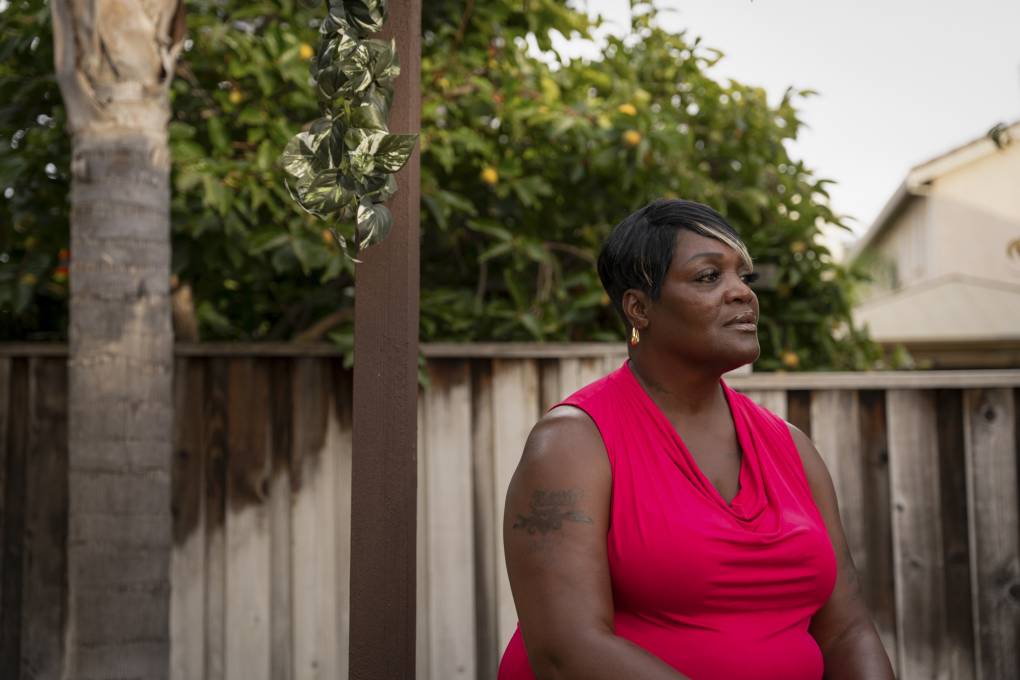
"caption": "Sharon Fennix at her home in Antioch on Sept. 29, 2023. While incarcerated in 2006, a doctor performed a procedure on Fennix called an endometrial ablation. The doctor did not inform Fennix that the procedure would damage her uterine lining, making pregnancy unlikely. ",
"description": null,
"title": "005_Sharon_230929_076-KQED",
"credit": "Courtesy of Florence Middleton",
"status": "inherit",
"altTag": "A person in a pink blouse sits outdoors.",
"isLoading": false,
"fetchFailed": false
},
"news_11965706": {
"type": "attachments",
"id": "news_11965706",
"meta": {
"index": "attachments_1716263798",
"site": "news",
"id": "11965706",
"found": true
},
"parent": 0,
"imgSizes": {
"twentyfourteen-full-width": {
"file": "https://ww2.kqed.org/app/uploads/sites/10/2023/10/231026-DayoftheDeadMarigolds-12-BL-KQED-1038x576.jpg",
"width": 1038,
"mimeType": "image/jpeg",
"height": 576
},
"thumbnail": {
"file": "https://ww2.kqed.org/app/uploads/sites/10/2023/10/231026-DayoftheDeadMarigolds-12-BL-KQED-160x107.jpg",
"width": 160,
"mimeType": "image/jpeg",
"height": 107
},
"post-thumbnail": {
"file": "https://ww2.kqed.org/app/uploads/sites/10/2023/10/231026-DayoftheDeadMarigolds-12-BL-KQED-672x372.jpg",
"width": 672,
"mimeType": "image/jpeg",
"height": 372
},
"kqedFullSize": {
"file": "https://ww2.kqed.org/app/uploads/sites/10/2023/10/231026-DayoftheDeadMarigolds-12-BL-KQED.jpg",
"width": 2000,
"height": 1333
},
"large": {
"file": "https://ww2.kqed.org/app/uploads/sites/10/2023/10/231026-DayoftheDeadMarigolds-12-BL-KQED-1020x680.jpg",
"width": 1020,
"mimeType": "image/jpeg",
"height": 680
},
"1536x1536": {
"file": "https://ww2.kqed.org/app/uploads/sites/10/2023/10/231026-DayoftheDeadMarigolds-12-BL-KQED-1536x1024.jpg",
"width": 1536,
"mimeType": "image/jpeg",
"height": 1024
},
"full-width": {
"file": "https://ww2.kqed.org/app/uploads/sites/10/2023/10/231026-DayoftheDeadMarigolds-12-BL-KQED-1920x1280.jpg",
"width": 1920,
"mimeType": "image/jpeg",
"height": 1280
},
"medium": {
"file": "https://ww2.kqed.org/app/uploads/sites/10/2023/10/231026-DayoftheDeadMarigolds-12-BL-KQED-800x533.jpg",
"width": 800,
"mimeType": "image/jpeg",
"height": 533
}
},
"publishDate": 1698347550,
"modified": 1698798039,
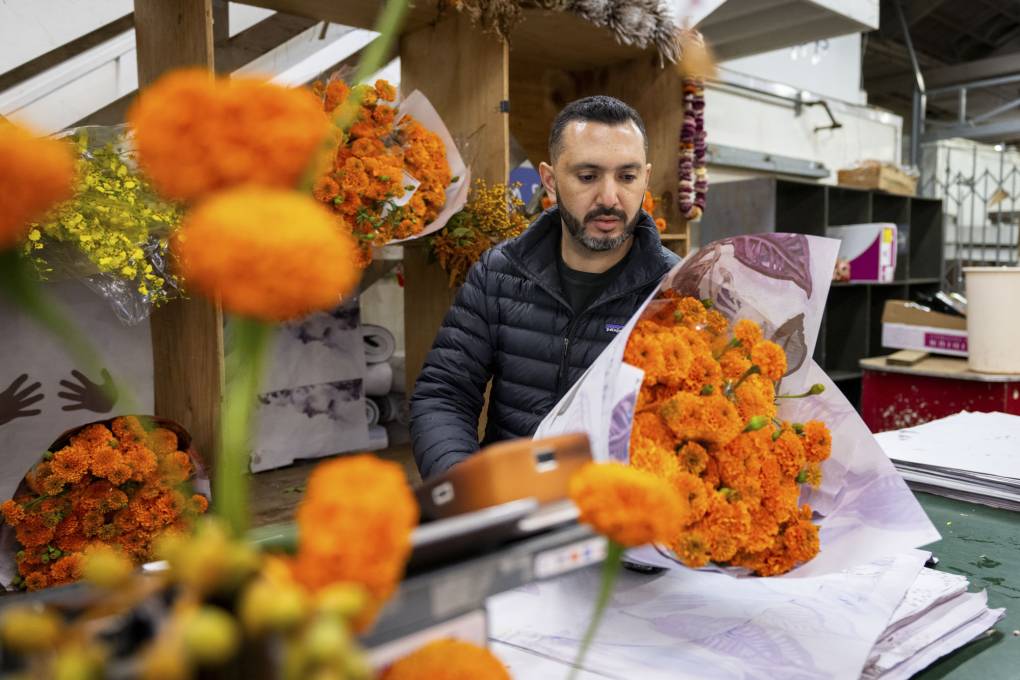
"caption": "Raul Dueñas, a wholesaler for Rafa Flowers, wraps marigolds at the San Francisco Flower Market in San Francisco on Oct. 26, 2023.",
"description": null,
"title": "231026-DayoftheDeadMarigolds-12-BL-KQED",
"credit": "Beth LaBerge/KQED",
"status": "inherit",
"altTag": "A person works wrapping marigolds in paper.",
"isLoading": false,
"fetchFailed": false
},
"news_11965845": {
"type": "attachments",
"id": "news_11965845",
"meta": {
"index": "attachments_1716263798",
"site": "news",
"id": "11965845",
"found": true
},
"title": "Twitter One Year",
"publishDate": 1698450679,
"status": "inherit",
"parent": 12029281,
"modified": 1740789541,
"caption": "Workers install lighting on an \"X\" sign atop the company headquarters, formerly known as Twitter, in San Francisco, on July 28, 2023. Elon Musk began transforming Twitter into what is now known as X in July 2023. The social media platform's domain name change was completed in May 2024.",
"credit": "Noah Berger/AP Photo",
"altTag": "A brightly lit letter X is seen above a building.",
"description": null,
"imgSizes": {
"medium": {
"file": "https://cdn.kqed.org/wp-content/uploads/sites/10/2023/10/AP23299774246124-800x533.jpg",
"width": 800,
"height": 533,
"mimeType": "image/jpeg"
},
"large": {
"file": "https://cdn.kqed.org/wp-content/uploads/sites/10/2023/10/AP23299774246124-1020x680.jpg",
"width": 1020,
"height": 680,
"mimeType": "image/jpeg"
},
"thumbnail": {
"file": "https://cdn.kqed.org/wp-content/uploads/sites/10/2023/10/AP23299774246124-160x107.jpg",
"width": 160,
"height": 107,
"mimeType": "image/jpeg"
},
"1536x1536": {
"file": "https://cdn.kqed.org/wp-content/uploads/sites/10/2023/10/AP23299774246124-1536x1023.jpg",
"width": 1536,
"height": 1023,
"mimeType": "image/jpeg"
},
"post-thumbnail": {
"file": "https://cdn.kqed.org/wp-content/uploads/sites/10/2023/10/AP23299774246124-672x372.jpg",
"width": 672,
"height": 372,
"mimeType": "image/jpeg"
},
"twentyfourteen-full-width": {
"file": "https://cdn.kqed.org/wp-content/uploads/sites/10/2023/10/AP23299774246124-1038x576.jpg",
"width": 1038,
"height": 576,
"mimeType": "image/jpeg"
},
"full-width": {
"file": "https://cdn.kqed.org/wp-content/uploads/sites/10/2023/10/AP23299774246124-1920x1279.jpg",
"width": 1920,
"height": 1279,
"mimeType": "image/jpeg"
},
"kqedFullSize": {
"file": "https://cdn.kqed.org/wp-content/uploads/sites/10/2023/10/AP23299774246124-e1740789537911.jpg",
"width": 2000,
"height": 1333
}
},
"isLoading": false,
"fetchFailed": false
},
"news_11965397": {
"type": "attachments",
"id": "news_11965397",
"meta": {
"index": "attachments_1716263798",
"site": "news",
"id": "11965397",
"found": true
},
"title": "Facebook Parent Company Meta To Lay Off 11,000 Staff",
"publishDate": 1698167473,
"status": "inherit",
"parent": 11965392,
"modified": 1698171606,
"caption": "A lawsuit filed in federal court in California claims that Meta routinely collects data on children under 13 years old without their parents' consent, in violation of federal law. A dozen U.S. states, including New York and Arizona, allege that the social media giant contributes to the youth mental health crisis by knowingly designing features on Instagram and Facebook that addict children to its platforms.",
"credit": "Liu Guanguan/China News Service via Getty Images",
"altTag": "A group of young people stand in front of Meta headquarters and take a selfie in front of the company logo, which is akin to an infinity symbol.",
"description": null,
"imgSizes": {
"medium": {
"file": "https://cdn.kqed.org/wp-content/uploads/sites/10/2023/10/GettyImages-1440405373-800x575.jpg",
"width": 800,
"height": 575,
"mimeType": "image/jpeg"
},
"large": {
"file": "https://cdn.kqed.org/wp-content/uploads/sites/10/2023/10/GettyImages-1440405373-1020x734.jpg",
"width": 1020,
"height": 734,
"mimeType": "image/jpeg"
},
"thumbnail": {
"file": "https://cdn.kqed.org/wp-content/uploads/sites/10/2023/10/GettyImages-1440405373-160x115.jpg",
"width": 160,
"height": 115,
"mimeType": "image/jpeg"
},
"1536x1536": {
"file": "https://cdn.kqed.org/wp-content/uploads/sites/10/2023/10/GettyImages-1440405373-1536x1105.jpg",
"width": 1536,
"height": 1105,
"mimeType": "image/jpeg"
},
"2048x2048": {
"file": "https://cdn.kqed.org/wp-content/uploads/sites/10/2023/10/GettyImages-1440405373-2048x1473.jpg",
"width": 2048,
"height": 1473,
"mimeType": "image/jpeg"
},
"post-thumbnail": {
"file": "https://cdn.kqed.org/wp-content/uploads/sites/10/2023/10/GettyImages-1440405373-672x372.jpg",
"width": 672,
"height": 372,
"mimeType": "image/jpeg"
},
"twentyfourteen-full-width": {
"file": "https://cdn.kqed.org/wp-content/uploads/sites/10/2023/10/GettyImages-1440405373-1038x576.jpg",
"width": 1038,
"height": 576,
"mimeType": "image/jpeg"
},
"full-width": {
"file": "https://cdn.kqed.org/wp-content/uploads/sites/10/2023/10/GettyImages-1440405373-1920x1381.jpg",
"width": 1920,
"height": 1381,
"mimeType": "image/jpeg"
},
"kqedFullSize": {
"file": "https://cdn.kqed.org/wp-content/uploads/sites/10/2023/10/GettyImages-1440405373-e1779298069814.jpg",
"width": 2000,
"height": 1439
}
},
"isLoading": false,
"fetchFailed": false
},
"news_11965337": {
"type": "attachments",
"id": "news_11965337",
"meta": {
"index": "attachments_1716263798",
"site": "news",
"id": "11965337",
"found": true
},
"parent": 0,
"imgSizes": {
"twentyfourteen-full-width": {
"file": "https://ww2.kqed.org/app/uploads/sites/10/2023/10/019_KQED_BerkeleyYMCAEricaDavis_11162022-KQED-1038x576.jpg",
"width": 1038,
"mimeType": "image/jpeg",
"height": 576
},
"thumbnail": {
"file": "https://ww2.kqed.org/app/uploads/sites/10/2023/10/019_KQED_BerkeleyYMCAEricaDavis_11162022-KQED-160x107.jpg",
"width": 160,
"mimeType": "image/jpeg",
"height": 107
},
"post-thumbnail": {
"file": "https://ww2.kqed.org/app/uploads/sites/10/2023/10/019_KQED_BerkeleyYMCAEricaDavis_11162022-KQED-672x372.jpg",
"width": 672,
"mimeType": "image/jpeg",
"height": 372
},
"kqedFullSize": {
"file": "https://ww2.kqed.org/app/uploads/sites/10/2023/10/019_KQED_BerkeleyYMCAEricaDavis_11162022-KQED.jpg",
"width": 2000,
"height": 1333
},
"large": {
"file": "https://ww2.kqed.org/app/uploads/sites/10/2023/10/019_KQED_BerkeleyYMCAEricaDavis_11162022-KQED-1020x680.jpg",
"width": 1020,
"mimeType": "image/jpeg",
"height": 680
},
"1536x1536": {
"file": "https://ww2.kqed.org/app/uploads/sites/10/2023/10/019_KQED_BerkeleyYMCAEricaDavis_11162022-KQED-1536x1024.jpg",
"width": 1536,
"mimeType": "image/jpeg",
"height": 1024
},
"full-width": {
"file": "https://ww2.kqed.org/app/uploads/sites/10/2023/10/019_KQED_BerkeleyYMCAEricaDavis_11162022-KQED-1920x1280.jpg",
"width": 1920,
"mimeType": "image/jpeg",
"height": 1280
},
"medium": {
"file": "https://ww2.kqed.org/app/uploads/sites/10/2023/10/019_KQED_BerkeleyYMCAEricaDavis_11162022-KQED-800x533.jpg",
"width": 800,
"mimeType": "image/jpeg",
"height": 533
}
},
"publishDate": 1698096358,
"modified": 1698096459,
"caption": "Children play during recess in Berkeley on Nov. 16, 2022.",
"description": null,
"title": "Children play during recess in Berkeley on Nov. 16, 2022.",
"credit": "Beth LaBerge/KQED",
"status": "inherit",
"altTag": "Four children play on a playground.",
"isLoading": false,
"fetchFailed": false
},
"news_11965298": {
"type": "attachments",
"id": "news_11965298",
"meta": {
"index": "attachments_1716263798",
"site": "news",
"id": "11965298",
"found": true
},
"parent": 0,
"imgSizes": {
"thumbnail": {
"file": "https://ww2.kqed.org/app/uploads/sites/10/2023/10/kidsatplay01-160x107.jpg",
"width": 160,
"mimeType": "image/jpeg",
"height": 107
},
"post-thumbnail": {
"file": "https://ww2.kqed.org/app/uploads/sites/10/2023/10/kidsatplay01-672x372.jpg",
"width": 672,
"mimeType": "image/jpeg",
"height": 372
},
"kqedFullSize": {
"file": "https://ww2.kqed.org/app/uploads/sites/10/2023/10/kidsatplay01.jpg",
"width": 800,
"height": 534
}
},
"publishDate": 1698089577,
"modified": 1698097061,
"caption": "Child advocates like Playworks, Northern California, Executive Director Laura Medina Quintanar say that recess is incredibly valuable for cognitive, social, emotional and physical activity opportunities.",
"description": null,
"title": "kidsatplay01",
"credit": "Courtesy of Playworks Northern California",
"status": "inherit",
"altTag": "Children are playing at recess on the schoolgrounds.",
"isLoading": false,
"fetchFailed": false
},
"news_11954906": {
"type": "attachments",
"id": "news_11954906",
"meta": {
"index": "attachments_1716263798",
"site": "news",
"id": "11954906",
"found": true
},
"parent": 11970332,
"imgSizes": {
"twentyfourteen-full-width": {
"file": "https://cdn.kqed.org/wp-content/uploads/sites/10/2023/07/230701-FRESNO-UNHOUSED-HEAT-MHN-01-KQED-1038x576.jpg",
"width": 1038,
"mimeType": "image/jpeg",
"height": 576
},
"thumbnail": {
"file": "https://cdn.kqed.org/wp-content/uploads/sites/10/2023/07/230701-FRESNO-UNHOUSED-HEAT-MHN-01-KQED-160x107.jpg",
"width": 160,
"mimeType": "image/jpeg",
"height": 107
},
"post-thumbnail": {
"file": "https://cdn.kqed.org/wp-content/uploads/sites/10/2023/07/230701-FRESNO-UNHOUSED-HEAT-MHN-01-KQED-672x372.jpg",
"width": 672,
"mimeType": "image/jpeg",
"height": 372
},
"kqedFullSize": {
"file": "https://cdn.kqed.org/wp-content/uploads/sites/10/2023/07/230701-FRESNO-UNHOUSED-HEAT-MHN-01-KQED.jpg",
"width": 2000,
"height": 1333
},
"large": {
"file": "https://cdn.kqed.org/wp-content/uploads/sites/10/2023/07/230701-FRESNO-UNHOUSED-HEAT-MHN-01-KQED-1020x680.jpg",
"width": 1020,
"mimeType": "image/jpeg",
"height": 680
},
"1536x1536": {
"file": "https://cdn.kqed.org/wp-content/uploads/sites/10/2023/07/230701-FRESNO-UNHOUSED-HEAT-MHN-01-KQED-1536x1024.jpg",
"width": 1536,
"mimeType": "image/jpeg",
"height": 1024
},
"full-width": {
"file": "https://cdn.kqed.org/wp-content/uploads/sites/10/2023/07/230701-FRESNO-UNHOUSED-HEAT-MHN-01-KQED-1920x1280.jpg",
"width": 1920,
"mimeType": "image/jpeg",
"height": 1280
},
"medium": {
"file": "https://cdn.kqed.org/wp-content/uploads/sites/10/2023/07/230701-FRESNO-UNHOUSED-HEAT-MHN-01-KQED-800x533.jpg",
"width": 800,
"mimeType": "image/jpeg",
"height": 533
}
},
"publishDate": 1688399236,
"modified": 1702936552,
"caption": "A man pushes a cart near downtown Fresno on a 108-degree day. Officials estimate about 1,700 people are currently living on Fresno’s streets. ",
"description": null,
"title": "The Tower District in Fresno on July 1, 2023.",
"credit": "Martin do Nascimento/KQED",
"status": "inherit",
"altTag": "A man in a baseball cap pulls a shopping cart up a sidewalk.",
"isLoading": false,
"fetchFailed": false
},
"news_11964965": {
"type": "attachments",
"id": "news_11964965",
"meta": {
"index": "attachments_1716263798",
"site": "news",
"id": "11964965",
"found": true
},
"parent": 0,
"imgSizes": {
"twentyfourteen-full-width": {
"file": "https://ww2.kqed.org/app/uploads/sites/10/2023/10/06520004-Women-in-field-HORIZ-KQED-1038x576.jpg",
"width": 1038,
"mimeType": "image/jpeg",
"height": 576
},
"thumbnail": {
"file": "https://ww2.kqed.org/app/uploads/sites/10/2023/10/06520004-Women-in-field-HORIZ-KQED-160x107.jpg",
"width": 160,
"mimeType": "image/jpeg",
"height": 107
},
"post-thumbnail": {
"file": "https://ww2.kqed.org/app/uploads/sites/10/2023/10/06520004-Women-in-field-HORIZ-KQED-672x372.jpg",
"width": 672,
"mimeType": "image/jpeg",
"height": 372
},
"kqedFullSize": {
"file": "https://ww2.kqed.org/app/uploads/sites/10/2023/10/06520004-Women-in-field-HORIZ-KQED.jpg",
"width": 2000,
"height": 1333
},
"large": {
"file": "https://ww2.kqed.org/app/uploads/sites/10/2023/10/06520004-Women-in-field-HORIZ-KQED-1020x680.jpg",
"width": 1020,
"mimeType": "image/jpeg",
"height": 680
},
"1536x1536": {
"file": "https://ww2.kqed.org/app/uploads/sites/10/2023/10/06520004-Women-in-field-HORIZ-KQED-1536x1024.jpg",
"width": 1536,
"mimeType": "image/jpeg",
"height": 1024
},
"full-width": {
"file": "https://ww2.kqed.org/app/uploads/sites/10/2023/10/06520004-Women-in-field-HORIZ-KQED-1920x1280.jpg",
"width": 1920,
"mimeType": "image/jpeg",
"height": 1280
},
"medium": {
"file": "https://ww2.kqed.org/app/uploads/sites/10/2023/10/06520004-Women-in-field-HORIZ-KQED-800x533.jpg",
"width": 800,
"mimeType": "image/jpeg",
"height": 533
}
},
"publishDate": 1697740140,
"modified": 1697749037,
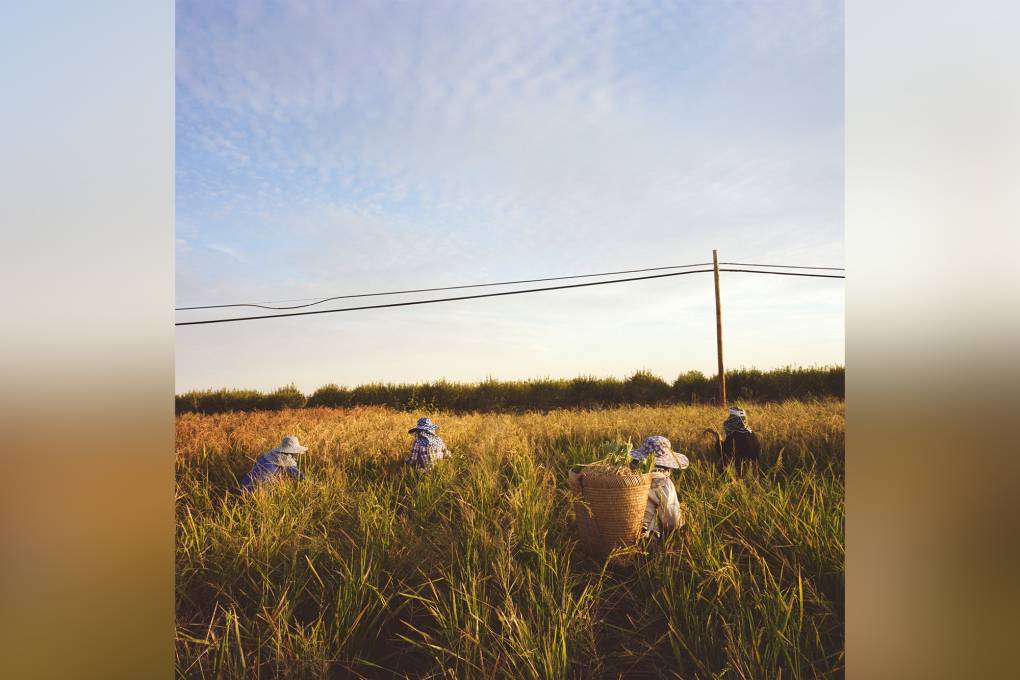
"caption": "Women harvesting at a farm in Fresno. The rice is cut one panicle, or stalk, at a time, then bundled and left to dry in the sun. The next day, the bundles are collected in the farmer’s back basket and taken to be threshed by hand.",
"description": null,
"title": "06520004 Women in field-HORIZ-KQED",
"credit": "Courtesy of Lisa M. Hamilton",
"status": "inherit",
"altTag": "People work in a large field of plants.",
"isLoading": false,
"fetchFailed": false
},
"news_11960958": {
"type": "attachments",
"id": "news_11960958",
"meta": {
"index": "attachments_1716263798",
"site": "news",
"id": "11960958",
"found": true
},
"title": "20230909-DAProtest-37-JY-KQED",
"publishDate": 1694623998,
"status": "inherit",
"parent": 11966518,
"modified": 1717446471,
"caption": "Alameda County District Attorney Pamela Price attends a public safety town hall at Genesis Worship Center in Oakland, California, on Saturday, Sept. 9, 2023.",
"credit": "Juliana Yamada/KQED",
"altTag": "A person in red glasses sits at a table in an indoor setting.",
"description": null,
"imgSizes": {
"medium": {
"file": "https://cdn.kqed.org/wp-content/uploads/sites/10/2023/09/20230909-DAProtest-37-JY-KQED-800x533.jpg",
"width": 800,
"height": 533,
"mimeType": "image/jpeg"
},
"large": {
"file": "https://cdn.kqed.org/wp-content/uploads/sites/10/2023/09/20230909-DAProtest-37-JY-KQED-1020x680.jpg",
"width": 1020,
"height": 680,
"mimeType": "image/jpeg"
},
"thumbnail": {
"file": "https://cdn.kqed.org/wp-content/uploads/sites/10/2023/09/20230909-DAProtest-37-JY-KQED-160x107.jpg",
"width": 160,
"height": 107,
"mimeType": "image/jpeg"
},
"1536x1536": {
"file": "https://cdn.kqed.org/wp-content/uploads/sites/10/2023/09/20230909-DAProtest-37-JY-KQED-1536x1024.jpg",
"width": 1536,
"height": 1024,
"mimeType": "image/jpeg"
},
"post-thumbnail": {
"file": "https://cdn.kqed.org/wp-content/uploads/sites/10/2023/09/20230909-DAProtest-37-JY-KQED-672x372.jpg",
"width": 672,
"height": 372,
"mimeType": "image/jpeg"
},
"twentyfourteen-full-width": {
"file": "https://cdn.kqed.org/wp-content/uploads/sites/10/2023/09/20230909-DAProtest-37-JY-KQED-1038x576.jpg",
"width": 1038,
"height": 576,
"mimeType": "image/jpeg"
},
"full-width": {
"file": "https://cdn.kqed.org/wp-content/uploads/sites/10/2023/09/20230909-DAProtest-37-JY-KQED-1920x1280.jpg",
"width": 1920,
"height": 1280,
"mimeType": "image/jpeg"
},
"kqedFullSize": {
"file": "https://cdn.kqed.org/wp-content/uploads/sites/10/2023/09/20230909-DAProtest-37-JY-KQED.jpg",
"width": 2000,
"height": 1333
}
},
"isLoading": false,
"fetchFailed": false
},
"news_11964796": {
"type": "attachments",
"id": "news_11964796",
"meta": {
"index": "attachments_1716263798",
"site": "news",
"id": "11964796",
"found": true
},
"parent": 11964791,
"imgSizes": {
"twentyfourteen-full-width": {
"file": "https://ww2.kqed.org/app/uploads/sites/10/2023/10/CalMatters01-1038x576.jpg",
"width": 1038,
"mimeType": "image/jpeg",
"height": 576
},
"thumbnail": {
"file": "https://ww2.kqed.org/app/uploads/sites/10/2023/10/CalMatters01-160x107.jpg",
"width": 160,
"mimeType": "image/jpeg",
"height": 107
},
"post-thumbnail": {
"file": "https://ww2.kqed.org/app/uploads/sites/10/2023/10/CalMatters01-672x372.jpg",
"width": 672,
"mimeType": "image/jpeg",
"height": 372
},
"kqedFullSize": {
"file": "https://ww2.kqed.org/app/uploads/sites/10/2023/10/CalMatters01.jpg",
"width": 2000,
"height": 1333
},
"large": {
"file": "https://ww2.kqed.org/app/uploads/sites/10/2023/10/CalMatters01-1020x680.jpg",
"width": 1020,
"mimeType": "image/jpeg",
"height": 680
},
"1536x1536": {
"file": "https://ww2.kqed.org/app/uploads/sites/10/2023/10/CalMatters01-1536x1024.jpg",
"width": 1536,
"mimeType": "image/jpeg",
"height": 1024
},
"full-width": {
"file": "https://ww2.kqed.org/app/uploads/sites/10/2023/10/CalMatters01-1920x1280.jpg",
"width": 1920,
"mimeType": "image/jpeg",
"height": 1280
},
"medium": {
"file": "https://ww2.kqed.org/app/uploads/sites/10/2023/10/CalMatters01-800x533.jpg",
"width": 800,
"mimeType": "image/jpeg",
"height": 533
}
},
"publishDate": 1697561951,
"modified": 1697562044,
"caption": "Striking Kaiser Permanente mental health workers stage a die-in at the Kaiser Headquarters in Oakland on Oct. 7, 2022.",
"description": null,
"title": "CalMatters01",
"credit": "Martin do Nascimento/CalMatters",
"status": "inherit",
"altTag": "Mental health workers in red T-shirts hold signs in protest outside of a Kaiser facility in Oakland.",
"isLoading": false,
"fetchFailed": false
},
"news_11964636": {
"type": "attachments",
"id": "news_11964636",
"meta": {
"index": "attachments_1716263798",
"site": "news",
"id": "11964636",
"found": true
},
"parent": 0,
"imgSizes": {
"twentyfourteen-full-width": {
"file": "https://ww2.kqed.org/app/uploads/sites/10/2023/10/AP23254664703865-1038x576.jpg",
"width": 1038,
"mimeType": "image/jpeg",
"height": 576
},
"thumbnail": {
"file": "https://ww2.kqed.org/app/uploads/sites/10/2023/10/AP23254664703865-160x107.jpg",
"width": 160,
"mimeType": "image/jpeg",
"height": 107
},
"post-thumbnail": {
"file": "https://ww2.kqed.org/app/uploads/sites/10/2023/10/AP23254664703865-672x372.jpg",
"width": 672,
"mimeType": "image/jpeg",
"height": 372
},
"kqedFullSize": {
"file": "https://ww2.kqed.org/app/uploads/sites/10/2023/10/AP23254664703865-scaled.jpg",
"width": 2560,
"height": 1707
},
"2048x2048": {
"file": "https://ww2.kqed.org/app/uploads/sites/10/2023/10/AP23254664703865-2048x1365.jpg",
"width": 2048,
"mimeType": "image/jpeg",
"height": 1365
},
"large": {
"file": "https://ww2.kqed.org/app/uploads/sites/10/2023/10/AP23254664703865-1020x680.jpg",
"width": 1020,
"mimeType": "image/jpeg",
"height": 680
},
"1536x1536": {
"file": "https://ww2.kqed.org/app/uploads/sites/10/2023/10/AP23254664703865-1536x1024.jpg",
"width": 1536,
"mimeType": "image/jpeg",
"height": 1024
},
"full-width": {
"file": "https://ww2.kqed.org/app/uploads/sites/10/2023/10/AP23254664703865-1920x1280.jpg",
"width": 1920,
"mimeType": "image/jpeg",
"height": 1280
},
"medium": {
"file": "https://ww2.kqed.org/app/uploads/sites/10/2023/10/AP23254664703865-800x533.jpg",
"width": 800,
"mimeType": "image/jpeg",
"height": 533
}
},
"publishDate": 1697478118,
"modified": 1697480834,
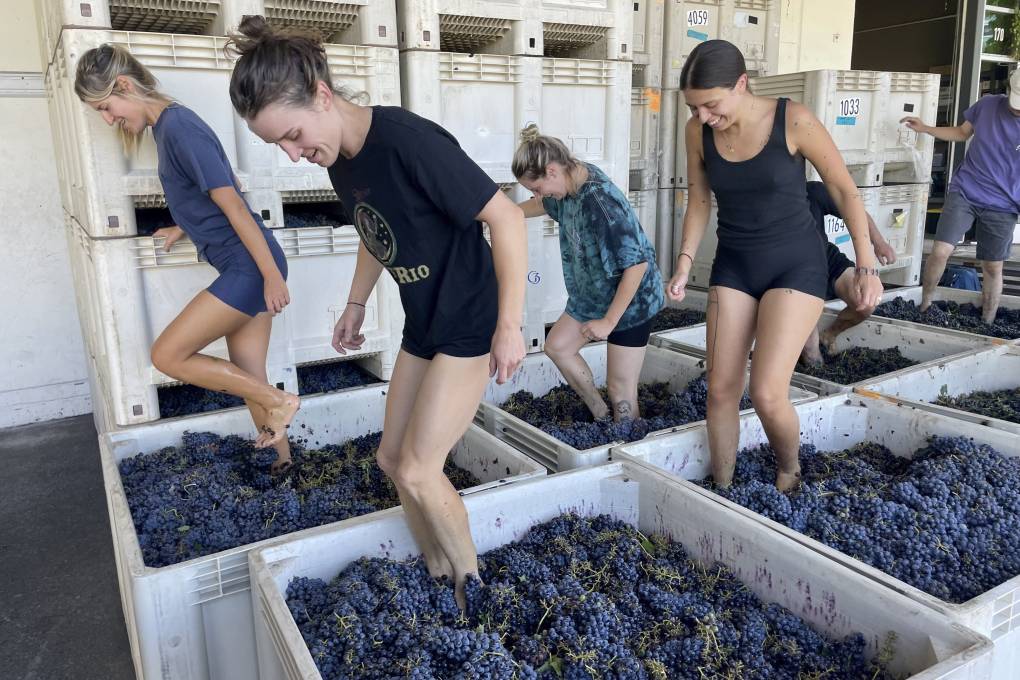
"caption": "Interns at Pax Wines in Sebastopol, Sonoma County, stomp organic grapes with their bare feet in large vats, pulling out the juice to start the fermentation process on Sept. 8, 2023. More wineries and wine bars dedicated exclusively to natural wine are opening in the US, with a focus on a back-to-basics approach, avoiding additives, pesticides and other manipulative techniques. ",
"description": null,
"title": "Natural Wines",
"credit": "Haven Daley/AP",
"status": "inherit",
"altTag": "Women smash grapes in large white boxes with their feet.",
"isLoading": false,
"fetchFailed": false
},
"news_11964310": {
"type": "attachments",
"id": "news_11964310",
"meta": {
"index": "attachments_1716263798",
"site": "news",
"id": "11964310",
"found": true
},
"parent": 0,
"imgSizes": {
"twentyfourteen-full-width": {
"file": "https://ww2.kqed.org/app/uploads/sites/10/2023/10/20231012-Domestic-Workers-011-JY-KQED-1038x576.jpg",
"width": 1038,
"mimeType": "image/jpeg",
"height": 576
},
"thumbnail": {
"file": "https://ww2.kqed.org/app/uploads/sites/10/2023/10/20231012-Domestic-Workers-011-JY-KQED-160x107.jpg",
"width": 160,
"mimeType": "image/jpeg",
"height": 107
},
"post-thumbnail": {
"file": "https://ww2.kqed.org/app/uploads/sites/10/2023/10/20231012-Domestic-Workers-011-JY-KQED-672x372.jpg",
"width": 672,
"mimeType": "image/jpeg",
"height": 372
},
"kqedFullSize": {
"file": "https://ww2.kqed.org/app/uploads/sites/10/2023/10/20231012-Domestic-Workers-011-JY-KQED.jpg",
"width": 2000,
"height": 1333
},
"large": {
"file": "https://ww2.kqed.org/app/uploads/sites/10/2023/10/20231012-Domestic-Workers-011-JY-KQED-1020x680.jpg",
"width": 1020,
"mimeType": "image/jpeg",
"height": 680
},
"1536x1536": {
"file": "https://ww2.kqed.org/app/uploads/sites/10/2023/10/20231012-Domestic-Workers-011-JY-KQED-1536x1024.jpg",
"width": 1536,
"mimeType": "image/jpeg",
"height": 1024
},
"full-width": {
"file": "https://ww2.kqed.org/app/uploads/sites/10/2023/10/20231012-Domestic-Workers-011-JY-KQED-1920x1280.jpg",
"width": 1920,
"mimeType": "image/jpeg",
"height": 1280
},
"medium": {
"file": "https://ww2.kqed.org/app/uploads/sites/10/2023/10/20231012-Domestic-Workers-011-JY-KQED-800x533.jpg",
"width": 800,
"mimeType": "image/jpeg",
"height": 533
}
},
"publishDate": 1697149517,
"modified": 1697153273,
"caption": "Elizabeth Montiel cheers during a rally with the California Domestic Workers Coalition. Employers, domestic workers, and partners gather outside the Earl Warren Building to protest Gov. Gavin Newsom’s veto of SB 686 in San Francisco on Thursday, Oct. 12, 2023. SB 686 would have provided health and safety protections to domestic workers like Montiel, who makes a living cleaning houses.",
"description": null,
"title": "Domestic Workers",
"credit": "Juliana Yamada/KQED",
"status": "inherit",
"altTag": "A group of people cheer and hold up purple signs in an outdoor setting.",
"isLoading": false,
"fetchFailed": false
}
},
"audioPlayerReducer": {
"postId": "stream_live",
"isPaused": true,
"isPlaying": false,
"pfsActive": false,
"pledgeModalIsOpen": true,
"playerDrawerIsOpen": false,
"liveAudioPlayStartedAt": 0,
"liveAudioPlayContext": ""
},
"authorsReducer": {
"byline_news_11965926": {
"type": "authors",
"id": "byline_news_11965926",
"meta": {
"override": true
},
"slug": "byline_news_11965926",
"name": "\u003ca href=\"https://caylamihalovich.com/\">Cayla Mihalovich\u003c/a>",
"isLoading": false
},
"byline_news_11965833": {
"type": "authors",
"id": "byline_news_11965833",
"meta": {
"override": true
},
"slug": "byline_news_11965833",
"name": "\u003ca href=\"https://twitter.com/BarbaraOrtutay\">Barbara Ortutay\u003c/a>\u003cbr>The Associated Press",
"isLoading": false
},
"byline_news_11965392": {
"type": "authors",
"id": "byline_news_11965392",
"meta": {
"override": true
},
"slug": "byline_news_11965392",
"name": "\u003ca href=\"https://twitter.com/BarbaraOrtutay\">Barbara Ortutay\u003c/a>, Associated Press",
"isLoading": false
},
"byline_news_11964791": {
"type": "authors",
"id": "byline_news_11964791",
"meta": {
"override": true
},
"slug": "byline_news_11964791",
"name": "\u003ca href=\"https://calmatters.org/author/jocelyn-wiener/\">Jocelyn Wiener\u003c/a>",
"isLoading": false
},
"byline_news_11964629": {
"type": "authors",
"id": "byline_news_11964629",
"meta": {
"override": true
},
"slug": "byline_news_11964629",
"name": "Dee-Ann Durbin, Haven Daley\u003cbr>The Associated Press",
"isLoading": false
},
"fjhabvala": {
"type": "authors",
"id": "8659",
"meta": {
"index": "authors_1716337520",
"id": "8659",
"found": true
},
"name": "Farida Jhabvala Romero",
"firstName": "Farida",
"lastName": "Jhabvala Romero",
"slug": "fjhabvala",
"email": "fjhabvala@kqed.org",
"display_author_email": true,
"staff_mastheads": [
"news"
],
"title": "KQED Contributor",
"bio": "Farida Jhabvala Romero is a Labor Correspondent for KQED. She previously covered immigration. Farida was \u003ca href=\"https://www.ccnma.org/2022-most-influential-latina-journalists\">named\u003c/a> one of the 10 Most Influential Latina Journalists in California in 2022 by the California Chicano News Media Association. Her work has won awards from the Society of Professional Journalists (Northern California), as well as a national and regional Edward M. Murrow Award for the collaborative reporting projects “Dangerous Air” and “Graying California.” Before joining KQED, Farida worked as a producer at Radio Bilingüe, a national public radio network. Farida earned her master’s degree in journalism from Stanford University.",
"avatar": "https://secure.gravatar.com/avatar/f9f022d4e2609741874222a1e9d41f48fea74011aa7c615eef91d9a50c944ebe?s=600&d=blank&r=g",
"twitter": "FaridaJhabvala",
"bluesky": null,
"facebook": null,
"instagram": null,
"linkedin": "https://www.linkedin.com/in/faridajhabvala/",
"sites": [
{
"site": "news",
"roles": [
"editor"
]
},
{
"site": "stateofhealth",
"roles": [
"author"
]
},
{
"site": "liveblog",
"roles": [
"author"
]
}
],
"headData": {
"title": "Farida Jhabvala Romero | KQED",
"description": "KQED Contributor",
"ogImgSrc": "https://secure.gravatar.com/avatar/f9f022d4e2609741874222a1e9d41f48fea74011aa7c615eef91d9a50c944ebe?s=600&d=blank&r=g",
"twImgSrc": "https://secure.gravatar.com/avatar/f9f022d4e2609741874222a1e9d41f48fea74011aa7c615eef91d9a50c944ebe?s=600&d=blank&r=g"
},
"isLoading": false,
"link": "/author/fjhabvala"
},
"lesleymcclurg": {
"type": "authors",
"id": "11229",
"meta": {
"index": "authors_1716337520",
"id": "11229",
"found": true
},
"name": "Lesley McClurg",
"firstName": "Lesley",
"lastName": "McClurg",
"slug": "lesleymcclurg",
"email": "lmcclurg@KQED.org",
"display_author_email": false,
"staff_mastheads": [
"news",
"science"
],
"title": "KQED Health Correspondent",
"bio": "Lesley McClurg is a health correspondent and fill-in host whose work is regularly rebroadcast on NPR and PBS programs. She’s earned multiple regional Emmy awards, a national and a regional Edward R. Murrow award, and was named Best Beat Reporter by the Association of Health Care Journalists. The Society of Professional Journalists has recognized her work several times, and the Society of Environmental Journalists spotlighted her coverage of California’s historic drought.\r\n\r\nBefore joining KQED in 2016, Lesley covered food and sustainability for Capital Public Radio, environmental issues for Colorado Public Radio, and reported for KUOW and KCTS 9 in Seattle. Away from the newsroom, she loves skiing with her daughter, mountain biking with her partner, and playing with Ollie, the family’s goldendoodle. On deadline, she runs almost entirely on chocolate chips.\r\n\r\n ",
"avatar": "https://secure.gravatar.com/avatar/bab49e972ea10c774fe0f5e29dba1722b158f7c0d58a360923d1389d380b2978?s=600&d=blank&r=g",
"twitter": "lesleywmcclurg",
"bluesky": null,
"facebook": null,
"instagram": null,
"linkedin": null,
"sites": [
{
"site": "arts",
"roles": [
"author"
]
},
{
"site": "news",
"roles": [
"editor"
]
},
{
"site": "futureofyou",
"roles": [
"editor"
]
},
{
"site": "stateofhealth",
"roles": [
"author"
]
},
{
"site": "science",
"roles": [
"editor"
]
},
{
"site": "quest",
"roles": [
"subscriber"
]
},
{
"site": "forum",
"roles": [
"administrator"
]
},
{
"site": "liveblog",
"roles": [
"author"
]
}
],
"headData": {
"title": "Lesley McClurg | KQED",
"description": "KQED Health Correspondent",
"ogImgSrc": "https://secure.gravatar.com/avatar/bab49e972ea10c774fe0f5e29dba1722b158f7c0d58a360923d1389d380b2978?s=600&d=blank&r=g",
"twImgSrc": "https://secure.gravatar.com/avatar/bab49e972ea10c774fe0f5e29dba1722b158f7c0d58a360923d1389d380b2978?s=600&d=blank&r=g"
},
"isLoading": false,
"link": "/author/lesleymcclurg"
},
"bwatt": {
"type": "authors",
"id": "11238",
"meta": {
"index": "authors_1716337520",
"id": "11238",
"found": true
},
"name": "Brian Watt",
"firstName": "Brian",
"lastName": "Watt",
"slug": "bwatt",
"email": "bwatt@KQED.org",
"display_author_email": false,
"staff_mastheads": [
"news"
],
"title": "Morning News Anchor",
"bio": "Brian Watt is KQED's morning radio news anchor. He joined the KQED News team in April of 2016. Prior to that, he worked as a Reporter for KPCC in Los Angeles and a producer at \u003cem>Marketplace.\u003c/em>\r\n\r\nDuring eight years at KPCC, Brian covered business and economics, and his work won several awards. In 2008, he won the Los Angeles Press Club’s first-place award for Business and Financial Reporting, Broadcast. He’s also received honorable mention and been first runner up for the Press Club’s Radio Journalist of the Year. He won two Golden Mike awards from the Radio and TV News Association of Southern California.\r\n\r\nBrian holds degrees in theater from Yale University and the Sorbonne, and has worked as an actor in France, Italy, Brazil, Hungary and . . . Hollywood. He appeared in a few television shows, including \u003cem>The West Wing, Judging Amy\u003c/em> and \u003cem>The District.\u003c/em>\r\n\r\nEmail: bwatt@KQED.org Twitter: @RadioBWatt",
"avatar": "https://secure.gravatar.com/avatar/55393ff57ed34e2be773ba4789dd6a19?s=600&d=blank&r=g",
"twitter": "@RadioBWatt",
"facebook": null,
"instagram": null,
"linkedin": null,
"sites": [
{
"site": "arts",
"roles": [
"contributor"
]
},
{
"site": "news",
"roles": [
"editor"
]
}
],
"headData": {
"title": "Brian Watt | KQED",
"description": "Morning News Anchor",
"ogImgSrc": "https://secure.gravatar.com/avatar/55393ff57ed34e2be773ba4789dd6a19?s=600&d=blank&r=g",
"twImgSrc": "https://secure.gravatar.com/avatar/55393ff57ed34e2be773ba4789dd6a19?s=600&d=blank&r=g"
},
"isLoading": false,
"link": "/author/bwatt"
},
"vrancano": {
"type": "authors",
"id": "11276",
"meta": {
"index": "authors_1716337520",
"id": "11276",
"found": true
},
"name": "Vanessa Rancaño",
"firstName": "Vanessa",
"lastName": "Rancaño",
"slug": "vrancano",
"email": "vrancano@kqed.org",
"display_author_email": false,
"staff_mastheads": [
"news"
],
"title": "Reporter",
"bio": "Vanessa Rancaño is a features reporter for KQED. She’s also covered homelessness and education for the station and reported from the Central Valley. Her work has aired across public radio, from flagship national news shows to longform narrative podcasts. Before taking up a mic, she worked as a freelance print journalist. She’s been recognized with a number of national and regional awards. Vanessa grew up in California's Central Valley. She's a former NPR Kroc Fellow, and a graduate of the UC Berkeley Graduate School of Journalism.",
"avatar": "https://secure.gravatar.com/avatar/b3a383dfb0e7ee1c17568f2cf067904ab654d6e3de9743fc661f3c788ade1bed?s=600&d=blank&r=g",
"twitter": "vanessarancano",
"bluesky": null,
"facebook": null,
"instagram": null,
"linkedin": null,
"sites": [
{
"site": "arts",
"roles": [
"editor"
]
},
{
"site": "news",
"roles": [
"editor"
]
},
{
"site": "liveblog",
"roles": [
"contributor"
]
}
],
"headData": {
"title": "Vanessa Rancaño | KQED",
"description": "Reporter",
"ogImgSrc": "https://secure.gravatar.com/avatar/b3a383dfb0e7ee1c17568f2cf067904ab654d6e3de9743fc661f3c788ade1bed?s=600&d=blank&r=g",
"twImgSrc": "https://secure.gravatar.com/avatar/b3a383dfb0e7ee1c17568f2cf067904ab654d6e3de9743fc661f3c788ade1bed?s=600&d=blank&r=g"
},
"isLoading": false,
"link": "/author/vrancano"
},
"jrodriguez": {
"type": "authors",
"id": "11690",
"meta": {
"index": "authors_1716337520",
"id": "11690",
"found": true
},
"name": "Joe Fitzgerald Rodriguez",
"firstName": "Joe",
"lastName": "Fitzgerald Rodriguez",
"slug": "jrodriguez",
"email": "jrodriguez@kqed.org",
"display_author_email": true,
"staff_mastheads": [
"news"
],
"title": "Reporter and Producer",
"bio": "Joe Fitzgerald Rodriguez is a reporter and digital producer for KQED covering politics. Joe most recently wrote for the \u003cem>San Francisco Examiner\u003c/em> as a political columnist covering The City. He was raised in San Francisco and has spent his reporting career in his beloved, foggy, city by the bay. Joe was 12-years-old when he conducted his first interview in journalism, grilling former San Francisco Mayor Willie Brown for the Marina Middle School newspaper, \u003cem>The Penguin Press, \u003c/em>and he continues to report on the San Francisco Bay Area to this day.",
"avatar": "https://secure.gravatar.com/avatar/2247beb0564c1e9c62228d5649d2edac?s=600&d=blank&r=g",
"twitter": "FitztheReporter",
"facebook": null,
"instagram": "https://www.instagram.com/fitzthereporter/",
"linkedin": null,
"sites": [
{
"site": "",
"roles": [
"editor"
]
},
{
"site": "arts",
"roles": [
"editor"
]
},
{
"site": "news",
"roles": [
"editor"
]
},
{
"site": "science",
"roles": [
"editor"
]
},
{
"site": "elections",
"roles": [
"editor"
]
},
{
"site": "liveblog",
"roles": [
"editor"
]
}
],
"headData": {
"title": "Joe Fitzgerald Rodriguez | KQED",
"description": "Reporter and Producer",
"ogImgSrc": "https://secure.gravatar.com/avatar/2247beb0564c1e9c62228d5649d2edac?s=600&d=blank&r=g",
"twImgSrc": "https://secure.gravatar.com/avatar/2247beb0564c1e9c62228d5649d2edac?s=600&d=blank&r=g"
},
"isLoading": false,
"link": "/author/jrodriguez"
},
"agonzalez": {
"type": "authors",
"id": "11724",
"meta": {
"index": "authors_1716337520",
"id": "11724",
"found": true
},
"name": "Alexander Gonzalez",
"firstName": "Alexander",
"lastName": "Gonzalez",
"slug": "agonzalez",
"email": "AlexanderGonzalez@KQED.org",
"display_author_email": false,
"staff_mastheads": [
"news"
],
"title": "KQED Contributor",
"bio": null,
"avatar": "https://secure.gravatar.com/avatar/9e291ed34e154df4c662edf858b641d70b4859939bfe40be478408f9dfd057d2?s=600&d=blank&r=g",
"twitter": null,
"bluesky": null,
"facebook": null,
"instagram": null,
"linkedin": null,
"sites": [
{
"site": "arts",
"roles": [
"editor"
]
},
{
"site": "news",
"roles": [
"editor"
]
},
{
"site": "science",
"roles": [
"editor"
]
}
],
"headData": {
"title": "Alexander Gonzalez | KQED",
"description": "KQED Contributor",
"ogImgSrc": "https://secure.gravatar.com/avatar/9e291ed34e154df4c662edf858b641d70b4859939bfe40be478408f9dfd057d2?s=600&d=blank&r=g",
"twImgSrc": "https://secure.gravatar.com/avatar/9e291ed34e154df4c662edf858b641d70b4859939bfe40be478408f9dfd057d2?s=600&d=blank&r=g"
},
"isLoading": false,
"link": "/author/agonzalez"
},
"adahlstromeckman": {
"type": "authors",
"id": "11785",
"meta": {
"index": "authors_1716337520",
"id": "11785",
"found": true
},
"name": "Azul Dahlstrom-Eckman",
"firstName": "Azul",
"lastName": "Dahlstrom-Eckman",
"slug": "adahlstromeckman",
"email": "adahlstrom-eckman@kqed.org",
"display_author_email": true,
"staff_mastheads": [],
"title": "Reporter",
"bio": "Azul is a reporter for KQED focusing on transportation and features. He joined KQED in 2021 as an alumna of KALW's Audio Academy radio journalism training program.",
"avatar": "https://secure.gravatar.com/avatar/9cb750298435add7815a777f55bf1f46845c1386bb8452555c60a7b820b5aba3?s=600&d=blank&r=g",
"twitter": "@zuliemann",
"bluesky": "@azul415.bsky.social",
"facebook": null,
"instagram": null,
"linkedin": null,
"sites": [
{
"site": "arts",
"roles": [
"editor"
]
},
{
"site": "news",
"roles": [
"editor"
]
},
{
"site": "science",
"roles": [
"editor"
]
},
{
"site": "liveblog",
"roles": [
"author"
]
}
],
"headData": {
"title": "Azul Dahlstrom-Eckman | KQED",
"description": "Reporter",
"ogImgSrc": "https://secure.gravatar.com/avatar/9cb750298435add7815a777f55bf1f46845c1386bb8452555c60a7b820b5aba3?s=600&d=blank&r=g",
"twImgSrc": "https://secure.gravatar.com/avatar/9cb750298435add7815a777f55bf1f46845c1386bb8452555c60a7b820b5aba3?s=600&d=blank&r=g"
},
"isLoading": false,
"link": "/author/adahlstromeckman"
},
"daisynguyen": {
"type": "authors",
"id": "11829",
"meta": {
"index": "authors_1716337520",
"id": "11829",
"found": true
},
"name": "Daisy Nguyen",
"firstName": "Daisy",
"lastName": "Nguyen",
"slug": "daisynguyen",
"email": "daisynguyen@kqed.org",
"display_author_email": true,
"staff_mastheads": [
"news"
],
"title": "KQED Contributor",
"bio": "I have covered early childhood education and child care for KQED since 2022. I focus on policies aimed at increasing access to early care and education and how they shape individual lives. I've been a journalist for more than two decades, with most of that time devoted to covering breaking news throughout California for The Associated Press. I grew up in San Francisco and studied at UC Davis and Columbia University's Graduate School of Journalism. I live in Oakland with my husband and two kids.",
"avatar": "https://secure.gravatar.com/avatar/2da2127c27f7143b53ebd419800fd55f?s=600&d=blank&r=g",
"twitter": null,
"facebook": null,
"instagram": null,
"linkedin": "https://www.linkedin.com/in/daisynguyen/",
"sites": [
{
"site": "news",
"roles": [
"author"
]
},
{
"site": "liveblog",
"roles": [
"author"
]
}
],
"headData": {
"title": "Daisy Nguyen | KQED",
"description": "KQED Contributor",
"ogImgSrc": "https://secure.gravatar.com/avatar/2da2127c27f7143b53ebd419800fd55f?s=600&d=blank&r=g",
"twImgSrc": "https://secure.gravatar.com/avatar/2da2127c27f7143b53ebd419800fd55f?s=600&d=blank&r=g"
},
"isLoading": false,
"link": "/author/daisynguyen"
}
},
"pagesReducer": {
"news_tag_california": {
"type": "terms",
"id": "news_18538",
"meta": {
"index": "terms_1716263798",
"site": "news",
"id": "18538",
"score": 6.845124
},
"featImg": null,
"name": "California",
"description": null,
"taxonomy": "tag",
"headData": {
"twImgId": null,
"twTitle": null,
"ogTitle": null,
"ogImgId": null,
"twDescription": null,
"description": null,
"title": "California Archives | KQED News",
"ogDescription": null
},
"ttid": 31,
"slug": "california",
"isLoading": false,
"title": "California",
"pageMeta": {
"site": "news",
"WpPageTemplate": "page-topic-editorial",
"currentPage": 147
},
"blocks": [
{
"blockName": "kqed/post-list",
"attrs": {
"layout": "cardArticle2",
"query": "posts/news?tag=california",
"seeMore": false,
"paginated": true,
"page": 147
}
},
{
"blockName": "kqed/ad"
}
]
}
},
"pfsSessionReducer": {},
"postsReducer": {
"stream_live": {
"type": "live",
"id": "stream_live",
"audioUrl": "https://streams.kqed.org/kqedradio",
"title": "Live Stream",
"excerpt": "Live Stream information currently unavailable.",
"link": "/radio",
"featImg": "",
"label": {
"name": "KQED Live",
"link": "/"
}
},
"stream_kqedNewscast": {
"type": "posts",
"id": "stream_kqedNewscast",
"audioUrl": "https://www.kqed.org/.stream/anon/radio/RDnews/newscast.mp3?_=1",
"title": "KQED Newscast",
"featImg": "",
"label": {
"name": "88.5 FM",
"link": "/"
}
},
"news_11965926": {
"type": "posts",
"id": "news_11965926",
"meta": {
"index": "posts_1716263798",
"site": "news",
"id": "11965926",
"score": null,
"sort": [
1698861630000
]
},
"guestAuthors": [],
"slug": "survivors-of-californias-forced-sterilization-denied-reparations",
"title": "Survivors from California’s Period of Forced Sterilization Denied Reparations",
"publishDate": 1698861630,
"format": "standard",
"headTitle": "Survivors from California’s Period of Forced Sterilization Denied Reparations | KQED",
"labelTerm": {
"term": 26731,
"site": "news"
},
"content": "\u003cp>In March 2006, Sharon Fennix, then incarcerated at Valley State Prison in California’s Central Valley, was transported to Madera Community Hospital for surgery.\u003c/p>\n\u003cp>A prison doctor had recommended that she have non-cancerous growths removed from her uterus and, according to Fennix, she was told that the procedure wouldn’t have lasting impacts and recovery would be quick. She was given a dose of anesthesia, and the last thing she remembers was counting backward while two correctional officers wheeled her gurney down a hallway.[pullquote size=\"medium\" align=\"right\" citation=\"Sharon Fennix, a survivor who applied for reparations\"]‘My hope and my dream was always to have a child and be free. To give my son a sister or brother.’[/pullquote]When she woke up from the operation, she said her entire hospital gown was soaked with sweat. She remembers turning to the correctional officer in the room and saying, “I feel like something’s wrong.”\u003c/p>\n\u003cp>Approximately two weeks later, the follow-up visit with the prison doctor who ordered the surgery, Dr. James Heinrich, also left her deeply unsettled. The conversation is carved into her mind.\u003c/p>\n\u003cp>“There was sweating, bleeding and pain,” Fennix recently told KQED. “It plunged me into menopause.”\u003c/p>\n\u003cp>[ad fullwidth]\u003c/p>\n\u003cp>She asked Heinrich how long her side effects would last. Fennix said she was told what she was experiencing was normal and the growths on her uterus might return. Puzzled and upset, she wondered why surgery was necessary if the growths could come back.\u003c/p>\n\u003cp>According to Fennix, she demanded to know what happened to her body during surgery. But the more she probed, the more Heinrich tried to rush her out of his office. Finally, he explained that a surgeon had put a boiling solution in her uterus. Toward the end of the appointment, Fennix said he looked at her file and remarked on the fact that she was serving a life sentence.\u003c/p>\n\u003cp>She would never get out, she recalled Heinrich saying, so she didn’t need children.\u003c/p>\n\u003cp>“He was very cunning the way he said that to me,” Fennix said.\u003c/p>\n\u003cp>It would take nearly a decade for Fennix to fully understand what had happened to her. Before she was released from prison, another doctor explained that she had undergone an endometrial ablation, a procedure that damages the uterine lining.\u003c/p>\n\u003cp>“My hope and my dream was always to have a child and be free,” Fennix said. “To give my son a sister or brother.”\u003c/p>\n\u003cp>But pregnancy would be unlikely.\u003c/p>\n\u003cp>According to the American College of Obstetricians and Gynecologists, if a pregnancy occurs after the procedure, “the risks of miscarriage and other problems are greatly increased.”\u003c/p>\n\u003cfigure id=\"attachment_11964883\" class=\"wp-caption aligncenter\" style=\"max-width: 2000px\">\u003cimg loading=\"lazy\" decoding=\"async\" class=\"size-full wp-image-11964883\" src=\"https://ww2.kqed.org/app/uploads/sites/10/2023/10/009_Sharon_230929_125-KQED.jpg\" alt=\"A person hold a photo of a family in an ornate frame.\" width=\"2000\" height=\"1334\" srcset=\"https://cdn.kqed.org/wp-content/uploads/sites/10/2023/10/009_Sharon_230929_125-KQED.jpg 2000w, https://cdn.kqed.org/wp-content/uploads/sites/10/2023/10/009_Sharon_230929_125-KQED-800x534.jpg 800w, https://cdn.kqed.org/wp-content/uploads/sites/10/2023/10/009_Sharon_230929_125-KQED-1020x680.jpg 1020w, https://cdn.kqed.org/wp-content/uploads/sites/10/2023/10/009_Sharon_230929_125-KQED-160x107.jpg 160w, https://cdn.kqed.org/wp-content/uploads/sites/10/2023/10/009_Sharon_230929_125-KQED-1536x1025.jpg 1536w, https://cdn.kqed.org/wp-content/uploads/sites/10/2023/10/009_Sharon_230929_125-KQED-1920x1281.jpg 1920w\" sizes=\"auto, (max-width: 2000px) 100vw, 2000px\">\u003cfigcaption class=\"wp-caption-text\">Sharon Fennix holds a photo of her son, Dontay Pickettay, center, his wife and their four children. Pickettay hoped for siblings, she said. “My hope and my dream was always to have a child and be free. To give my son a sister or brother,” Fennix said. \u003ccite>(Courtesy of Florence Middleton)\u003c/cite>\u003c/figcaption>\u003c/figure>\n\u003cp>“I would make sure that [a person is] 110% sure that they do not want children before we discuss an ablation,” said Kavita Shah Arora, division director of General Obstetrics, Gynecology and Midwifery at the University of North Carolina at Chapel Hill, and former chair of the ACOG’s national ethics committee. “I think it really boils down to, what informed consent was given? Were patients aware of the impact on future fertility?”\u003c/p>\n\u003cp>Fennix said she never provided informed consent.\u003c/p>\n\u003cp>When the state passed historic legislation in 2021 that provided financial reparations to people who were forcibly or involuntarily sterilized, an advocate from the California Coalition for Women Prisoners thought Fennix had a clear-cut case and persuaded her to apply. Fennix submitted her first application on Jan. 3, 2022, two days after applications opened. Seven months later, she received a denial letter from the state’s Victim Compensation Board, which administers the program.[pullquote size=\"medium\" align=\"right\" citation=\"Kavita Shah Arora, division director, General Obstetrics, Gynecology and Midwifery at the University of North Carolina at Chapel Hill\"]‘I think it really boils down to, what informed consent was given? Were patients aware of the impact on future fertility?’[/pullquote]Fennix, who was 43 when she had the surgery, said she felt insulted by the rejection.\u003c/p>\n\u003cp>“You dehumanized me,” she said. “You took my body. How dare you later on tell me that I don’t deserve to be one of the ones that gets reparations for it?”\u003c/p>\n\u003cp>As the application period for the reparations program \u003ca href=\"https://www.kqed.org/news/11965672/forced-sterilization-survivors-of-california-prisons-face-reparations-deadline\">winds to a close in December\u003c/a>, Fennix and those who received endometrial ablations are at the heart of a dispute over who should be recognized as a survivor of a shameful chapter in California’s history.\u003c/p>\n\u003cp>A year-long investigation by UC Berkeley’s Investigative Reporting Program and KQED found that the compensation board has denied a majority of applicants and repeatedly rejected ablations as a procedure worthy of recognition. The investigation included 30 public records requests, the review of more than 3,000 pages of documents — and interviews with survivors, advocates, medical experts and lawmakers.\u003c/p>\n\u003cp>Among the applicants who volunteered their demographic information, the majority self-identified as Black or African American. Approximately 47% self-identified as male, 40% female and 4% transgender. While reporting this story, KQED spoke with six ablation survivors who were denied reparations.\u003c/p>\n\u003cp>“It feels so clear — based on the spirit of the law, based on the idea of who is perpetuating the harm — that if someone says, ‘I’m not able to have children’ and it’s documented that they had a procedure that limits your ability to have children, that feels like it should be sufficient,” said Jennifer James, an associate professor of sociology at UCSF and member of the California Coalition for Women Prisoners, or CCWP, who has assisted survivors with their applications.\u003c/p>\n\u003cp>Additionally, since 2014, California’s prison health care services have categorized ablations and dozens of other treatments as potentially sterilizing, according to a memo circulated among prison health care leadership.\u003c/p>\n\u003cp>The board declined to respond to specific questions but said in a statement that it has worked “to meet the requirements established in the law.”\u003c/p>\n\u003cp>Fennix appealed her case. That, too, was rejected. She went through the application and appeals process a second time. She was denied at every stage.\u003c/p>\n\u003cp>In rejecting Fennix’s first appeal, the board said that ablations don’t qualify as sterilizations under the law and cited the Mayo Clinic website, writing that pregnancy “can and does occur after an endometrial ablation.” The board left out what followed on the website: “The pregnancy is higher risk to you and the baby.”\u003c/p>\n\u003cp>Next week, Fennix and another formerly incarcerated woman who received an ablation will file a petition in state courts aimed at testing the state’s implementation of the reparations law.\u003c/p>\n\u003cp>Her case, Fennix said, reflects a hole in the state’s efforts to compensate survivors of state-sponsored sterilization.\u003c/p>\n\u003cp>“I’m not able to reproduce,” she said. “And so, how am I not sterilized?”\u003cspan style=\"text-decoration: line-through\"> \u003c/span>\u003c/p>\n\u003ch2>‘It’s another betrayal’\u003c/h2>\n\u003cp>When legislators passed the reparations law, California became the first and only state in the country to publicly recognize its role in prison sterilizations. Through monetary compensation and memorialization efforts, the state aimed to “raise public awareness about the discriminatory harms” survivors of forced sterilization had faced.\u003c/p>\n\u003cp>The state allocated $7.5 million to the two-year program, with $4.5 million earmarked for compensation, $1 million for memorialization and $2 million for program administration and outreach. Each individual whose application is approved receives $15,000. A second and final payment of $20,000, \u003ca href=\"https://leginfo.legislature.ca.gov/faces/billNavClient.xhtml?bill_id=202320240SB143\">signed\u003c/a> into law by Gov. Gavin Newsom in September, will be processed by October 2024. Up to $1 million of any remaining compensation funds could be extended for survivors if legislation is passed in the next few years.\u003c/p>\n\u003cp>As of Oct. 25, 108 out of 510 applications had been approved.[aside postID=news_11965672 hero='https://ww2.kqed.org/app/uploads/sites/10/2023/10/IMG_0468-1020x659.jpg']Those who championed the legislation estimated that there were roughly 600 living survivors of forced or involuntary sterilization. The actual number of survivors, however, may never be known due to various limitations, such as medical records retention policies. A \u003ca href=\"https://www.auditor.ca.gov/pdfs/reports/2013-120.pdf\">2014 state audit\u003c/a> found that at least 794 people in state prisons underwent various procedures that “could have resulted in sterilization” between 2005 and 2013.\u003c/p>\n\u003cp>People who had been forcibly or involuntarily sterilized while incarcerated in state prisons after 1979 or at state-run hospitals, homes and institutions during the eugenics era between 1909 and 1979 could qualify for reparations. But advocates, like CCWP, say that the board is looking for a level of proof that’s unreasonably difficult to meet. For example, they say medical records are more heavily weighted than a personal statement from the survivor, even though the board is required by law to accept multiple forms of documentation to prove that sterilization was more likely than not forcible.\u003c/p>\n\u003cp>“It isn’t gray to us because the stories are so convincing about how people were just pressured into signing the consent and didn’t understand what they were signing,” said Diana Block, a legal advocate at CCWP. “But those are all things that are so difficult and challenging to prove.”\u003c/p>\n\u003cp>A significant hurdle has been the lack of consistency and clarity around the compensation board’s definition of sterilization. According to its own guidelines, which KQED obtained through a public records request, the board describes the condition as “the removal of one’s ability to have biological children through medical procedures.”\u003c/p>\n\u003cp>But the only method medical experts use for sterilization — or what is now called permanent contraception due to the coercive history of sterilization — is a vasectomy or tubal procedure, which cuts, burns, occludes or removes the fallopian tubes.[pullquote size=\"medium\" align=\"right\" citation=\"Carolyn Sufrin, associate professor and OBGYN, Johns Hopkins University\"]‘I believe that people who had this procedure should receive reparations because this is a procedure that, after it, all medical recommendations say, ‘Do not get pregnant after this.’[/pullquote]Medical experts such as Carolyn Sufrin, an associate professor and OBGYN at Johns Hopkins University, also agree that various treatments can profoundly affect fertility.\u003c/p>\n\u003cp>Endometrial ablations, for example, are typically offered when a person is experiencing abnormal uterine bleeding, such as heavy or irregular periods that are not caused by cancer. While experts say an ablation is not clinically defined as sterilization, they contend the procedure should not be done for people who have any desire for future childbearing.\u003c/p>\n\u003cp>“Chances of a pregnancy at all or healthy pregnancy are vastly reduced,” Sufrin said. “I believe that people who had this procedure should receive reparations because this is a procedure that, after it, all medical recommendations say, ‘Do not get pregnant after this.’”\u003c/p>\n\u003cp>Sufrin referenced a patient brochure for NovaSure, one of the most common mechanisms used to perform an endometrial ablation, which states, “A pregnancy after an ablation is very dangerous for both the mother and the fetus since the uterine lining would not be able to properly support fetal development.” Contraception is recommended after ablation because of the dangers associated with a possible pregnancy.\u003c/p>\n\u003cp>According to the denial of Fennix’s second appeal, the compensation board rejected her application because the legislation did not define “sterilization,” so it relied on the “ordinary plain meaning, which is the permanent inability to produce offspring.” The board cited Black’s Law Dictionary.\u003c/p>\n\u003cp>The board also cited a 2014 criminal law that banned procedures that “render an individual permanently incapable of reproducing” except for in a life-or-death situation or when medically necessary. Based on the language of that law, the board said it believed ablations don’t meet the criteria for reparations because legislators “intended sterilization to mean a permanent form of birth control.”\u003c/p>\n\u003cp>Former state Sen. Hannah-Beth Jackson, who authored the 2014 law in response to the state audit on coercive sterilizations, said she suspected the board was narrowly interpreting the reparations law.\u003c/p>\n\u003cp>“If a procedure is so overwhelmingly likely to lead to sterilization, in my opinion, that should entitle someone to reparations,” she said. “But if it means that you have to go back in and identify all of the procedures that could lead to sterilization, then so be it.”\u003c/p>\n\u003cp>Emails obtained through a public records request show the compensation board staff has also questioned how it determines who should receive compensation: “We went round and round about ablations, and we are not doctors. We always felt there should be more medical evidence to support our decision.”[aside postID=news_11964027 hero='https://ww2.kqed.org/app/uploads/sites/10/2023/10/IMG_0434-1020x659.jpg']Cynthia Chandler, the policy chief for Alameda County District Attorney Pamela Price and a lawyer who helped draft the reparations law, first heard about ablations in the early 2000s when her legal organization was contacted by a cluster of people who described a “grotesque” procedure that was sometimes performed without anesthesia.\u003c/p>\n\u003cp>According to Chandler, people reported “the most painful, terrifying experience of their life … and even if some of them were medically necessary, people had no information about what was happening to them.”\u003c/p>\n\u003cp>To Chandler, ablations were an example of the many procedures used to limit incarcerated people’s fertility by a group of unethical physicians. When a coalition of reparation advocates asked her to help draft the bill, she said that she and her colleagues consciously decided not to define sterilization nor list specific qualifying medical procedures because they knew they would not be able to capture them all.\u003c/p>\n\u003cp>Instead, Chandler and her colleagues listed a number of criteria to qualify for compensation. Among the requirements, applicants needed to show that they had been sterilized while incarcerated and that the procedure wasn’t a medical response to a life-or-death situation.\u003c/p>\n\u003cp>Chandler said that if she had known that the board would define sterilization in a way that wasn’t based on “medical realities,” she would have written the legislation differently.\u003cstrong> \u003c/strong>\u003c/p>\n\u003cp>“This is the state’s one and only opportunity to make amends, and this is how they’re behaving with it,” said Chandler, who also drafted the 2014 law that the compensation board referenced in Fennix’s appeal denial. “I’m horrified at how language that I actually wrote could be so weaponized to remove it so far from its actual meaning.”\u003c/p>\n\u003cp>Though the compensation board has declined to view ablations as a form of sterilization for the purposes of reparations, state officials have been aware of its sterilizing potential for at least a decade.\u003c/p>\n\u003cp>On March 19, 2014, three months before the state concluded its audit on forced sterilization in California prisons, Dr. Ricki Barnett, then the deputy medical executive at the California Correctional Health Care Services, sent a memo to top prison health care officials.[pullquote size=\"medium\" align=\"right\" citation=\"Cynthia Chandler, a lawyer who helped draft the reparations law\"]‘This is the state’s one and only opportunity to make amends, and this is how they’re behaving with it. I’m horrified at how language that I actually wrote could be so weaponized to remove it so far from its actual meaning.’[/pullquote]In 2006, the California Department of Corrections division of health care services was put under federal oversight for the state’s 33 institutions after a class-action lawsuit, Plata v. Schwarzenegger. The case brought to light the dire environment of prison medical care in California, which the court ruled was a violation of the Eighth Amendment’s ban on cruel and unusual punishment. Twelve of the state’s institutions remain under federal oversight.\u003c/p>\n\u003cp>The subject line of Barnett’s 2014 memo read, “Prospective Review for Procedures that have Sterilization Risks.” What followed was an urgent message: Effective immediately, all of the procedures that [the health care services] deemed to have “the potential for sterilization or diminished capacity for future conception” must go through a heightened level of review. Ablations were included in this list, along with nearly 50 other procedures.\u003c/p>\n\u003cp>CCHCS and CDCR declined to respond to questions about the memo but said in a statement that when they became aware that “non-medically necessary procedures resulting in sterilization were being performed on patients, the procedures were stopped.”\u003c/p>\n\u003cp>Before the memo was issued, the doctor who ordered Fennix’s ablation, Heinrich, signed off on tubal ligations, hysterectomies, the removal of ovaries and endometrial ablations between 2006 and 2012, \u003ca href=\"https://revealnews.org/article/calif-prison-doctor-linked-to-sterilizations-no-stranger-to-controversy-2/\">according to The Center for Investigative Reporting\u003c/a>, which first reported the illegal sterilizations. According to state prison medical records obtained by KQED, he ordered at least 80 ablations during that time, as the one performed on Fennix.\u003c/p>\n\u003cp>Heinrich told The Center for Investigative Reporting that the state wasn’t paying doctors a significant amount of money for the sterilizations “compared to what you save in welfare paying for these unwanted children — as they procreated more.”\u003c/p>\n\u003cp>Heinrich did not respond to repeated attempts for comment. When a reporter recently knocked on the door of his Castro Valley home, a woman who answered slammed it in the reporter’s face.\u003c/p>\n\u003cp>Clairreatha Brown, who is incarcerated at Central California Women’s Facility in Chowchilla, said Heinrich pressured her into an ablation in 2008 when she was 30. He never mentioned that the procedure would impact her fertility, she said, though his secretary told her she would not have children because of the procedure. But Brown said she was made to feel that there were no other options.\u003c/p>\n\u003cp>Brown’s application for reparations was also denied, catching her off guard.\u003c/p>\n\u003cp>“It’s another betrayal,” Brown said.\u003c/p>\n\u003ch2>‘I’m going to need a second opinion’\u003c/h2>\n\u003cp>Despite Heinrich’s expectations, Fennix was released from prison in 2017. Four years later, she completed her parole.\u003c/p>\n\u003cp>“I am just so ecstatic with this world and not being in that box,” she said.[pullquote size=\"medium\" align=\"right\" citation=\"Sharon Fennix, a survivor who applied for reparations\"]‘These are the times I can cry for the little girl who spent 38 years in prison.’[/pullquote]Fennix, now 60, is the director at a community wellness center and a coordinator at a health care organization for formerly incarcerated people in Northern California. She begins her day at 3 a.m. The morning is the most gratifying time of day because she said she can sit on her porch and watch the sunrise.\u003c/p>\n\u003cp>“These are the times I can cry for the little girl who spent 38 years in prison,” she said.\u003c/p>\n\u003cp>While Fennix was incarcerated, she met Chandler, the attorney who helped write the reparations law, when she had come to the prison to meet with her clients. After Fennix’s first reparations application and appeal were both denied, Chandler introduced her to WookSun Hong, an attorney at the Bay Area Legal Incubator, an organization that supports attorneys who serve underrepresented communities. Hong helped her file a second application.\u003c/p>\n\u003cfigure id=\"attachment_11964881\" class=\"wp-caption aligncenter\" style=\"max-width: 1334px\">\u003cimg loading=\"lazy\" decoding=\"async\" class=\"size-full wp-image-11964881\" src=\"https://ww2.kqed.org/app/uploads/sites/10/2023/10/003_Sharon_230929_056-KQED.jpg\" alt=\"A person in a pink blouse looks out of a window.\" width=\"1334\" height=\"2000\" srcset=\"https://cdn.kqed.org/wp-content/uploads/sites/10/2023/10/003_Sharon_230929_056-KQED.jpg 1334w, https://cdn.kqed.org/wp-content/uploads/sites/10/2023/10/003_Sharon_230929_056-KQED-800x1199.jpg 800w, https://cdn.kqed.org/wp-content/uploads/sites/10/2023/10/003_Sharon_230929_056-KQED-1020x1529.jpg 1020w, https://cdn.kqed.org/wp-content/uploads/sites/10/2023/10/003_Sharon_230929_056-KQED-160x240.jpg 160w, https://cdn.kqed.org/wp-content/uploads/sites/10/2023/10/003_Sharon_230929_056-KQED-1025x1536.jpg 1025w\" sizes=\"auto, (max-width: 1334px) 100vw, 1334px\">\u003cfigcaption class=\"wp-caption-text\">Sharon Fennix, now 60, is the director of a community wellness center and a coordinator at a health care organization for formerly incarcerated people in Northern California. \u003ccite>(Courtesy of Florence Middleton)\u003c/cite>\u003c/figcaption>\u003c/figure>\n\u003cp>This time, the application included a declaration from Amy Huibonhoa, a board-certified OBGYN who noted the serious risks associated with pregnancy after ablation. Huibonhoa stated that it is “imperative” for informed consent to cover those risks, along with its negative impact on fertility. Fennix was still denied.\u003c/p>\n\u003cp>Hong suggested they petition the state court, arguing that the government isn’t adhering to the law. It is slated to be filed next week. According to Hong, the petition is important because he believes the compensation board’s grounds for denials are arbitrary and not based on the law or science.\u003c/p>\n\u003cp>“The whole purpose of the Victim Compensation Board is to compensate the victims,” Hong said. “But it’s almost like they’re acting like insurance adjusters. They are trying to find the excuse to deny the claim.”[pullquote size=\"medium\" align=\"right\" citation=\"WookSun Hong, attorney, Bay Area Legal Incubator\"]‘The whole purpose of the Victim Compensation Board is to compensate the victims. But it’s almost like they’re acting like insurance adjusters. They are trying to find the excuse to deny the claim.’[/pullquote]Continuing to push is Fennix’s way of demanding that the board begin to fully comprehend the extent of the damage that was done to people like her.\u003c/p>\n\u003cp>“I’m hoping [the compensation board] realizes that they sterilized a lot of us and that they should give people options, not just do what they want to do with our bodies,” she said. “It’s not about the money more than it is about the fact that these people don’t want to take accountability, and they don’t want to say that they actually ruined my body based on a procedure that didn’t have to happen.”\u003c/p>\n\u003cp>Fennix said her body continues to feel off-kilter, and the symptoms she experienced after having an ablation have largely remained the same. Now, anytime she needs to have a procedure done, she takes extra time and caution.\u003c/p>\n\u003cp>“I’m going to ask a thousand questions,” she said. “I’m going to need a second opinion.”\u003c/p>\n\u003cp>\u003cem>Cayla Mihalovich is a reporter with the Investigative Reporting Program at the UC Berkeley Graduate School of Journalism.\u003c/em>\u003c/p>\n\u003cp>\u003cem>More information on how to apply for compensation for involuntary sterilization can be found at the California Victim Compensation Board \u003c/em>\u003ca href=\"https://victims.ca.gov/for-victims/fiscp/#How_to_apply\">\u003cem>website\u003c/em>\u003c/a>\u003cem>. Applications are available in English and Spanish. \u003c/em>\u003c/p>\n\u003cp>\u003cem>Anyone needing assistance with the application can call the compensation board’s toll-free helpline at 1-800-777-9229 from 8 a.m.–5 p.m. Monday-Friday.\u003c/em>\u003c/p>\n\u003cp>[ad floatright]\u003c/p>\n",
"blocks": [],
"excerpt": "As of Oct. 25, 70% of applicants were denied reparations. Who qualifies as a survivor in this dark chapter of California's history?",
"status": "publish",
"parent": 0,
"modified": 1738778133,
"stats": {
"hasAudio": false,
"hasVideo": false,
"hasChartOrMap": false,
"iframeSrcs": [],
"hasGoogleForm": false,
"hasGallery": false,
"hasHearkenModule": false,
"hasPolis": false,
"paragraphCount": 72,
"wordCount": 3810
},
"headData": {
"title": "Survivors from California’s Period of Forced Sterilization Denied Reparations | KQED",
"description": "As of Oct. 25, 70% of applicants were denied reparations. Who qualifies as a survivor in this dark chapter of California's history?",
"ogTitle": "",
"ogDescription": "",
"ogImgId": "",
"twTitle": "",
"twDescription": "",
"twImgId": "",
"schema": {
"@context": "https://schema.org",
"@type": "NewsArticle",
"headline": "Survivors from California’s Period of Forced Sterilization Denied Reparations",
"datePublished": "2023-11-01T11:00:30-07:00",
"dateModified": "2025-02-05T09:55:33-08:00",
"image": "https://cdn.kqed.org/wp-content/uploads/2020/02/KQED-OG-Image@1x.png",
"isAccessibleForFree": "True",
"publisher": {
"@type": "NewsMediaOrganization",
"@id": "https://www.kqed.org/#organization",
"name": "KQED",
"logo": "https://cdn.kqed.org/wp-content/uploads/2020/02/KQED-OG-Image@1x.png",
"url": "https://www.kqed.org",
"sameAs": [
"https://www.facebook.com/KQED",
"https://twitter.com/KQED",
"https://www.instagram.com/kqed/",
"https://www.tiktok.com/@kqedofficial",
"https://www.linkedin.com/company/kqed",
"https://www.youtube.com/channel/UCeC0IOo7i1P_61zVUWbJ4nw"
]
}
}
},
"sticky": false,
"nprByline": "\u003ca href=\"https://caylamihalovich.com/\">Cayla Mihalovich\u003c/a>",
"excludeFromSiteSearch": "Include",
"showOnAuthorArchivePages": "No",
"articleAge": "0",
"path": "/news/11965926/survivors-of-californias-forced-sterilization-denied-reparations",
"audioTrackLength": null,
"parsedContent": [
{
"type": "contentString",
"content": "\u003cdiv class=\"post-body\">\u003cp>\u003cp>In March 2006, Sharon Fennix, then incarcerated at Valley State Prison in California’s Central Valley, was transported to Madera Community Hospital for surgery.\u003c/p>\n\u003cp>A prison doctor had recommended that she have non-cancerous growths removed from her uterus and, according to Fennix, she was told that the procedure wouldn’t have lasting impacts and recovery would be quick. She was given a dose of anesthesia, and the last thing she remembers was counting backward while two correctional officers wheeled her gurney down a hallway.\u003c/p>\u003c/div>",
"attributes": {
"named": {},
"numeric": []
}
},
{
"type": "component",
"content": "‘My hope and my dream was always to have a child and be free. To give my son a sister or brother.’",
"name": "pullquote",
"attributes": {
"named": {
"size": "medium",
"align": "right",
"citation": "Sharon Fennix, a survivor who applied for reparations",
"label": ""
},
"numeric": []
}
},
{
"type": "contentString",
"content": "\u003cdiv class=\"post-body\">\u003cp>When she woke up from the operation, she said her entire hospital gown was soaked with sweat. She remembers turning to the correctional officer in the room and saying, “I feel like something’s wrong.”\u003c/p>\n\u003cp>Approximately two weeks later, the follow-up visit with the prison doctor who ordered the surgery, Dr. James Heinrich, also left her deeply unsettled. The conversation is carved into her mind.\u003c/p>\n\u003cp>“There was sweating, bleeding and pain,” Fennix recently told KQED. “It plunged me into menopause.”\u003c/p>\n\u003cp>\u003c/p>\u003c/div>",
"attributes": {
"named": {},
"numeric": []
}
},
{
"type": "component",
"content": "",
"name": "ad",
"attributes": {
"named": {
"label": "fullwidth"
},
"numeric": [
"fullwidth"
]
}
},
{
"type": "contentString",
"content": "\u003cdiv class=\"post-body\">\u003cp>\u003c/p>\n\u003cp>She asked Heinrich how long her side effects would last. Fennix said she was told what she was experiencing was normal and the growths on her uterus might return. Puzzled and upset, she wondered why surgery was necessary if the growths could come back.\u003c/p>\n\u003cp>According to Fennix, she demanded to know what happened to her body during surgery. But the more she probed, the more Heinrich tried to rush her out of his office. Finally, he explained that a surgeon had put a boiling solution in her uterus. Toward the end of the appointment, Fennix said he looked at her file and remarked on the fact that she was serving a life sentence.\u003c/p>\n\u003cp>She would never get out, she recalled Heinrich saying, so she didn’t need children.\u003c/p>\n\u003cp>“He was very cunning the way he said that to me,” Fennix said.\u003c/p>\n\u003cp>It would take nearly a decade for Fennix to fully understand what had happened to her. Before she was released from prison, another doctor explained that she had undergone an endometrial ablation, a procedure that damages the uterine lining.\u003c/p>\n\u003cp>“My hope and my dream was always to have a child and be free,” Fennix said. “To give my son a sister or brother.”\u003c/p>\n\u003cp>But pregnancy would be unlikely.\u003c/p>\n\u003cp>According to the American College of Obstetricians and Gynecologists, if a pregnancy occurs after the procedure, “the risks of miscarriage and other problems are greatly increased.”\u003c/p>\n\u003cfigure id=\"attachment_11964883\" class=\"wp-caption aligncenter\" style=\"max-width: 2000px\">\u003cimg loading=\"lazy\" decoding=\"async\" class=\"size-full wp-image-11964883\" src=\"https://ww2.kqed.org/app/uploads/sites/10/2023/10/009_Sharon_230929_125-KQED.jpg\" alt=\"A person hold a photo of a family in an ornate frame.\" width=\"2000\" height=\"1334\" srcset=\"https://cdn.kqed.org/wp-content/uploads/sites/10/2023/10/009_Sharon_230929_125-KQED.jpg 2000w, https://cdn.kqed.org/wp-content/uploads/sites/10/2023/10/009_Sharon_230929_125-KQED-800x534.jpg 800w, https://cdn.kqed.org/wp-content/uploads/sites/10/2023/10/009_Sharon_230929_125-KQED-1020x680.jpg 1020w, https://cdn.kqed.org/wp-content/uploads/sites/10/2023/10/009_Sharon_230929_125-KQED-160x107.jpg 160w, https://cdn.kqed.org/wp-content/uploads/sites/10/2023/10/009_Sharon_230929_125-KQED-1536x1025.jpg 1536w, https://cdn.kqed.org/wp-content/uploads/sites/10/2023/10/009_Sharon_230929_125-KQED-1920x1281.jpg 1920w\" sizes=\"auto, (max-width: 2000px) 100vw, 2000px\">\u003cfigcaption class=\"wp-caption-text\">Sharon Fennix holds a photo of her son, Dontay Pickettay, center, his wife and their four children. Pickettay hoped for siblings, she said. “My hope and my dream was always to have a child and be free. To give my son a sister or brother,” Fennix said. \u003ccite>(Courtesy of Florence Middleton)\u003c/cite>\u003c/figcaption>\u003c/figure>\n\u003cp>“I would make sure that [a person is] 110% sure that they do not want children before we discuss an ablation,” said Kavita Shah Arora, division director of General Obstetrics, Gynecology and Midwifery at the University of North Carolina at Chapel Hill, and former chair of the ACOG’s national ethics committee. “I think it really boils down to, what informed consent was given? Were patients aware of the impact on future fertility?”\u003c/p>\n\u003cp>Fennix said she never provided informed consent.\u003c/p>\n\u003cp>When the state passed historic legislation in 2021 that provided financial reparations to people who were forcibly or involuntarily sterilized, an advocate from the California Coalition for Women Prisoners thought Fennix had a clear-cut case and persuaded her to apply. Fennix submitted her first application on Jan. 3, 2022, two days after applications opened. Seven months later, she received a denial letter from the state’s Victim Compensation Board, which administers the program.\u003c/p>\u003c/div>",
"attributes": {
"named": {},
"numeric": []
}
},
{
"type": "component",
"content": "‘I think it really boils down to, what informed consent was given? Were patients aware of the impact on future fertility?’",
"name": "pullquote",
"attributes": {
"named": {
"size": "medium",
"align": "right",
"citation": "Kavita Shah Arora, division director, General Obstetrics, Gynecology and Midwifery at the University of North Carolina at Chapel Hill",
"label": ""
},
"numeric": []
}
},
{
"type": "contentString",
"content": "\u003cdiv class=\"post-body\">\u003cp>Fennix, who was 43 when she had the surgery, said she felt insulted by the rejection.\u003c/p>\n\u003cp>“You dehumanized me,” she said. “You took my body. How dare you later on tell me that I don’t deserve to be one of the ones that gets reparations for it?”\u003c/p>\n\u003cp>As the application period for the reparations program \u003ca href=\"https://www.kqed.org/news/11965672/forced-sterilization-survivors-of-california-prisons-face-reparations-deadline\">winds to a close in December\u003c/a>, Fennix and those who received endometrial ablations are at the heart of a dispute over who should be recognized as a survivor of a shameful chapter in California’s history.\u003c/p>\n\u003cp>A year-long investigation by UC Berkeley’s Investigative Reporting Program and KQED found that the compensation board has denied a majority of applicants and repeatedly rejected ablations as a procedure worthy of recognition. The investigation included 30 public records requests, the review of more than 3,000 pages of documents — and interviews with survivors, advocates, medical experts and lawmakers.\u003c/p>\n\u003cp>Among the applicants who volunteered their demographic information, the majority self-identified as Black or African American. Approximately 47% self-identified as male, 40% female and 4% transgender. While reporting this story, KQED spoke with six ablation survivors who were denied reparations.\u003c/p>\n\u003cp>“It feels so clear — based on the spirit of the law, based on the idea of who is perpetuating the harm — that if someone says, ‘I’m not able to have children’ and it’s documented that they had a procedure that limits your ability to have children, that feels like it should be sufficient,” said Jennifer James, an associate professor of sociology at UCSF and member of the California Coalition for Women Prisoners, or CCWP, who has assisted survivors with their applications.\u003c/p>\n\u003cp>Additionally, since 2014, California’s prison health care services have categorized ablations and dozens of other treatments as potentially sterilizing, according to a memo circulated among prison health care leadership.\u003c/p>\n\u003cp>The board declined to respond to specific questions but said in a statement that it has worked “to meet the requirements established in the law.”\u003c/p>\n\u003cp>Fennix appealed her case. That, too, was rejected. She went through the application and appeals process a second time. She was denied at every stage.\u003c/p>\n\u003cp>In rejecting Fennix’s first appeal, the board said that ablations don’t qualify as sterilizations under the law and cited the Mayo Clinic website, writing that pregnancy “can and does occur after an endometrial ablation.” The board left out what followed on the website: “The pregnancy is higher risk to you and the baby.”\u003c/p>\n\u003cp>Next week, Fennix and another formerly incarcerated woman who received an ablation will file a petition in state courts aimed at testing the state’s implementation of the reparations law.\u003c/p>\n\u003cp>Her case, Fennix said, reflects a hole in the state’s efforts to compensate survivors of state-sponsored sterilization.\u003c/p>\n\u003cp>“I’m not able to reproduce,” she said. “And so, how am I not sterilized?”\u003cspan style=\"text-decoration: line-through\"> \u003c/span>\u003c/p>\n\u003ch2>‘It’s another betrayal’\u003c/h2>\n\u003cp>When legislators passed the reparations law, California became the first and only state in the country to publicly recognize its role in prison sterilizations. Through monetary compensation and memorialization efforts, the state aimed to “raise public awareness about the discriminatory harms” survivors of forced sterilization had faced.\u003c/p>\n\u003cp>The state allocated $7.5 million to the two-year program, with $4.5 million earmarked for compensation, $1 million for memorialization and $2 million for program administration and outreach. Each individual whose application is approved receives $15,000. A second and final payment of $20,000, \u003ca href=\"https://leginfo.legislature.ca.gov/faces/billNavClient.xhtml?bill_id=202320240SB143\">signed\u003c/a> into law by Gov. Gavin Newsom in September, will be processed by October 2024. Up to $1 million of any remaining compensation funds could be extended for survivors if legislation is passed in the next few years.\u003c/p>\n\u003cp>As of Oct. 25, 108 out of 510 applications had been approved.\u003c/p>\u003c/div>",
"attributes": {
"named": {},
"numeric": []
}
},
{
"type": "component",
"content": "",
"name": "aside",
"attributes": {
"named": {
"postid": "news_11965672",
"hero": "https://ww2.kqed.org/app/uploads/sites/10/2023/10/IMG_0468-1020x659.jpg",
"label": ""
},
"numeric": []
}
},
{
"type": "contentString",
"content": "\u003cdiv class=\"post-body\">\u003cp>Those who championed the legislation estimated that there were roughly 600 living survivors of forced or involuntary sterilization. The actual number of survivors, however, may never be known due to various limitations, such as medical records retention policies. A \u003ca href=\"https://www.auditor.ca.gov/pdfs/reports/2013-120.pdf\">2014 state audit\u003c/a> found that at least 794 people in state prisons underwent various procedures that “could have resulted in sterilization” between 2005 and 2013.\u003c/p>\n\u003cp>People who had been forcibly or involuntarily sterilized while incarcerated in state prisons after 1979 or at state-run hospitals, homes and institutions during the eugenics era between 1909 and 1979 could qualify for reparations. But advocates, like CCWP, say that the board is looking for a level of proof that’s unreasonably difficult to meet. For example, they say medical records are more heavily weighted than a personal statement from the survivor, even though the board is required by law to accept multiple forms of documentation to prove that sterilization was more likely than not forcible.\u003c/p>\n\u003cp>“It isn’t gray to us because the stories are so convincing about how people were just pressured into signing the consent and didn’t understand what they were signing,” said Diana Block, a legal advocate at CCWP. “But those are all things that are so difficult and challenging to prove.”\u003c/p>\n\u003cp>A significant hurdle has been the lack of consistency and clarity around the compensation board’s definition of sterilization. According to its own guidelines, which KQED obtained through a public records request, the board describes the condition as “the removal of one’s ability to have biological children through medical procedures.”\u003c/p>\n\u003cp>But the only method medical experts use for sterilization — or what is now called permanent contraception due to the coercive history of sterilization — is a vasectomy or tubal procedure, which cuts, burns, occludes or removes the fallopian tubes.\u003c/p>\u003c/div>",
"attributes": {
"named": {},
"numeric": []
}
},
{
"type": "component",
"content": "‘I believe that people who had this procedure should receive reparations because this is a procedure that, after it, all medical recommendations say, ‘Do not get pregnant after this.’",
"name": "pullquote",
"attributes": {
"named": {
"size": "medium",
"align": "right",
"citation": "Carolyn Sufrin, associate professor and OBGYN, Johns Hopkins University",
"label": ""
},
"numeric": []
}
},
{
"type": "contentString",
"content": "\u003cdiv class=\"post-body\">\u003cp>Medical experts such as Carolyn Sufrin, an associate professor and OBGYN at Johns Hopkins University, also agree that various treatments can profoundly affect fertility.\u003c/p>\n\u003cp>Endometrial ablations, for example, are typically offered when a person is experiencing abnormal uterine bleeding, such as heavy or irregular periods that are not caused by cancer. While experts say an ablation is not clinically defined as sterilization, they contend the procedure should not be done for people who have any desire for future childbearing.\u003c/p>\n\u003cp>“Chances of a pregnancy at all or healthy pregnancy are vastly reduced,” Sufrin said. “I believe that people who had this procedure should receive reparations because this is a procedure that, after it, all medical recommendations say, ‘Do not get pregnant after this.’”\u003c/p>\n\u003cp>Sufrin referenced a patient brochure for NovaSure, one of the most common mechanisms used to perform an endometrial ablation, which states, “A pregnancy after an ablation is very dangerous for both the mother and the fetus since the uterine lining would not be able to properly support fetal development.” Contraception is recommended after ablation because of the dangers associated with a possible pregnancy.\u003c/p>\n\u003cp>According to the denial of Fennix’s second appeal, the compensation board rejected her application because the legislation did not define “sterilization,” so it relied on the “ordinary plain meaning, which is the permanent inability to produce offspring.” The board cited Black’s Law Dictionary.\u003c/p>\n\u003cp>The board also cited a 2014 criminal law that banned procedures that “render an individual permanently incapable of reproducing” except for in a life-or-death situation or when medically necessary. Based on the language of that law, the board said it believed ablations don’t meet the criteria for reparations because legislators “intended sterilization to mean a permanent form of birth control.”\u003c/p>\n\u003cp>Former state Sen. Hannah-Beth Jackson, who authored the 2014 law in response to the state audit on coercive sterilizations, said she suspected the board was narrowly interpreting the reparations law.\u003c/p>\n\u003cp>“If a procedure is so overwhelmingly likely to lead to sterilization, in my opinion, that should entitle someone to reparations,” she said. “But if it means that you have to go back in and identify all of the procedures that could lead to sterilization, then so be it.”\u003c/p>\n\u003cp>Emails obtained through a public records request show the compensation board staff has also questioned how it determines who should receive compensation: “We went round and round about ablations, and we are not doctors. We always felt there should be more medical evidence to support our decision.”\u003c/p>\u003c/div>",
"attributes": {
"named": {},
"numeric": []
}
},
{
"type": "component",
"content": "",
"name": "aside",
"attributes": {
"named": {
"postid": "news_11964027",
"hero": "https://ww2.kqed.org/app/uploads/sites/10/2023/10/IMG_0434-1020x659.jpg",
"label": ""
},
"numeric": []
}
},
{
"type": "contentString",
"content": "\u003cdiv class=\"post-body\">\u003cp>Cynthia Chandler, the policy chief for Alameda County District Attorney Pamela Price and a lawyer who helped draft the reparations law, first heard about ablations in the early 2000s when her legal organization was contacted by a cluster of people who described a “grotesque” procedure that was sometimes performed without anesthesia.\u003c/p>\n\u003cp>According to Chandler, people reported “the most painful, terrifying experience of their life … and even if some of them were medically necessary, people had no information about what was happening to them.”\u003c/p>\n\u003cp>To Chandler, ablations were an example of the many procedures used to limit incarcerated people’s fertility by a group of unethical physicians. When a coalition of reparation advocates asked her to help draft the bill, she said that she and her colleagues consciously decided not to define sterilization nor list specific qualifying medical procedures because they knew they would not be able to capture them all.\u003c/p>\n\u003cp>Instead, Chandler and her colleagues listed a number of criteria to qualify for compensation. Among the requirements, applicants needed to show that they had been sterilized while incarcerated and that the procedure wasn’t a medical response to a life-or-death situation.\u003c/p>\n\u003cp>Chandler said that if she had known that the board would define sterilization in a way that wasn’t based on “medical realities,” she would have written the legislation differently.\u003cstrong> \u003c/strong>\u003c/p>\n\u003cp>“This is the state’s one and only opportunity to make amends, and this is how they’re behaving with it,” said Chandler, who also drafted the 2014 law that the compensation board referenced in Fennix’s appeal denial. “I’m horrified at how language that I actually wrote could be so weaponized to remove it so far from its actual meaning.”\u003c/p>\n\u003cp>Though the compensation board has declined to view ablations as a form of sterilization for the purposes of reparations, state officials have been aware of its sterilizing potential for at least a decade.\u003c/p>\n\u003cp>On March 19, 2014, three months before the state concluded its audit on forced sterilization in California prisons, Dr. Ricki Barnett, then the deputy medical executive at the California Correctional Health Care Services, sent a memo to top prison health care officials.\u003c/p>\u003c/div>",
"attributes": {
"named": {},
"numeric": []
}
},
{
"type": "component",
"content": "‘This is the state’s one and only opportunity to make amends, and this is how they’re behaving with it. I’m horrified at how language that I actually wrote could be so weaponized to remove it so far from its actual meaning.’",
"name": "pullquote",
"attributes": {
"named": {
"size": "medium",
"align": "right",
"citation": "Cynthia Chandler, a lawyer who helped draft the reparations law",
"label": ""
},
"numeric": []
}
},
{
"type": "contentString",
"content": "\u003cdiv class=\"post-body\">\u003cp>In 2006, the California Department of Corrections division of health care services was put under federal oversight for the state’s 33 institutions after a class-action lawsuit, Plata v. Schwarzenegger. The case brought to light the dire environment of prison medical care in California, which the court ruled was a violation of the Eighth Amendment’s ban on cruel and unusual punishment. Twelve of the state’s institutions remain under federal oversight.\u003c/p>\n\u003cp>The subject line of Barnett’s 2014 memo read, “Prospective Review for Procedures that have Sterilization Risks.” What followed was an urgent message: Effective immediately, all of the procedures that [the health care services] deemed to have “the potential for sterilization or diminished capacity for future conception” must go through a heightened level of review. Ablations were included in this list, along with nearly 50 other procedures.\u003c/p>\n\u003cp>CCHCS and CDCR declined to respond to questions about the memo but said in a statement that when they became aware that “non-medically necessary procedures resulting in sterilization were being performed on patients, the procedures were stopped.”\u003c/p>\n\u003cp>Before the memo was issued, the doctor who ordered Fennix’s ablation, Heinrich, signed off on tubal ligations, hysterectomies, the removal of ovaries and endometrial ablations between 2006 and 2012, \u003ca href=\"https://revealnews.org/article/calif-prison-doctor-linked-to-sterilizations-no-stranger-to-controversy-2/\">according to The Center for Investigative Reporting\u003c/a>, which first reported the illegal sterilizations. According to state prison medical records obtained by KQED, he ordered at least 80 ablations during that time, as the one performed on Fennix.\u003c/p>\n\u003cp>Heinrich told The Center for Investigative Reporting that the state wasn’t paying doctors a significant amount of money for the sterilizations “compared to what you save in welfare paying for these unwanted children — as they procreated more.”\u003c/p>\n\u003cp>Heinrich did not respond to repeated attempts for comment. When a reporter recently knocked on the door of his Castro Valley home, a woman who answered slammed it in the reporter’s face.\u003c/p>\n\u003cp>Clairreatha Brown, who is incarcerated at Central California Women’s Facility in Chowchilla, said Heinrich pressured her into an ablation in 2008 when she was 30. He never mentioned that the procedure would impact her fertility, she said, though his secretary told her she would not have children because of the procedure. But Brown said she was made to feel that there were no other options.\u003c/p>\n\u003cp>Brown’s application for reparations was also denied, catching her off guard.\u003c/p>\n\u003cp>“It’s another betrayal,” Brown said.\u003c/p>\n\u003ch2>‘I’m going to need a second opinion’\u003c/h2>\n\u003cp>Despite Heinrich’s expectations, Fennix was released from prison in 2017. Four years later, she completed her parole.\u003c/p>\n\u003cp>“I am just so ecstatic with this world and not being in that box,” she said.\u003c/p>\u003c/div>",
"attributes": {
"named": {},
"numeric": []
}
},
{
"type": "component",
"content": "‘These are the times I can cry for the little girl who spent 38 years in prison.’",
"name": "pullquote",
"attributes": {
"named": {
"size": "medium",
"align": "right",
"citation": "Sharon Fennix, a survivor who applied for reparations",
"label": ""
},
"numeric": []
}
},
{
"type": "contentString",
"content": "\u003cdiv class=\"post-body\">\u003cp>Fennix, now 60, is the director at a community wellness center and a coordinator at a health care organization for formerly incarcerated people in Northern California. She begins her day at 3 a.m. The morning is the most gratifying time of day because she said she can sit on her porch and watch the sunrise.\u003c/p>\n\u003cp>“These are the times I can cry for the little girl who spent 38 years in prison,” she said.\u003c/p>\n\u003cp>While Fennix was incarcerated, she met Chandler, the attorney who helped write the reparations law, when she had come to the prison to meet with her clients. After Fennix’s first reparations application and appeal were both denied, Chandler introduced her to WookSun Hong, an attorney at the Bay Area Legal Incubator, an organization that supports attorneys who serve underrepresented communities. Hong helped her file a second application.\u003c/p>\n\u003cfigure id=\"attachment_11964881\" class=\"wp-caption aligncenter\" style=\"max-width: 1334px\">\u003cimg loading=\"lazy\" decoding=\"async\" class=\"size-full wp-image-11964881\" src=\"https://ww2.kqed.org/app/uploads/sites/10/2023/10/003_Sharon_230929_056-KQED.jpg\" alt=\"A person in a pink blouse looks out of a window.\" width=\"1334\" height=\"2000\" srcset=\"https://cdn.kqed.org/wp-content/uploads/sites/10/2023/10/003_Sharon_230929_056-KQED.jpg 1334w, https://cdn.kqed.org/wp-content/uploads/sites/10/2023/10/003_Sharon_230929_056-KQED-800x1199.jpg 800w, https://cdn.kqed.org/wp-content/uploads/sites/10/2023/10/003_Sharon_230929_056-KQED-1020x1529.jpg 1020w, https://cdn.kqed.org/wp-content/uploads/sites/10/2023/10/003_Sharon_230929_056-KQED-160x240.jpg 160w, https://cdn.kqed.org/wp-content/uploads/sites/10/2023/10/003_Sharon_230929_056-KQED-1025x1536.jpg 1025w\" sizes=\"auto, (max-width: 1334px) 100vw, 1334px\">\u003cfigcaption class=\"wp-caption-text\">Sharon Fennix, now 60, is the director of a community wellness center and a coordinator at a health care organization for formerly incarcerated people in Northern California. \u003ccite>(Courtesy of Florence Middleton)\u003c/cite>\u003c/figcaption>\u003c/figure>\n\u003cp>This time, the application included a declaration from Amy Huibonhoa, a board-certified OBGYN who noted the serious risks associated with pregnancy after ablation. Huibonhoa stated that it is “imperative” for informed consent to cover those risks, along with its negative impact on fertility. Fennix was still denied.\u003c/p>\n\u003cp>Hong suggested they petition the state court, arguing that the government isn’t adhering to the law. It is slated to be filed next week. According to Hong, the petition is important because he believes the compensation board’s grounds for denials are arbitrary and not based on the law or science.\u003c/p>\n\u003cp>“The whole purpose of the Victim Compensation Board is to compensate the victims,” Hong said. “But it’s almost like they’re acting like insurance adjusters. They are trying to find the excuse to deny the claim.”\u003c/p>\u003c/div>",
"attributes": {
"named": {},
"numeric": []
}
},
{
"type": "component",
"content": "‘The whole purpose of the Victim Compensation Board is to compensate the victims. But it’s almost like they’re acting like insurance adjusters. They are trying to find the excuse to deny the claim.’",
"name": "pullquote",
"attributes": {
"named": {
"size": "medium",
"align": "right",
"citation": "WookSun Hong, attorney, Bay Area Legal Incubator",
"label": ""
},
"numeric": []
}
},
{
"type": "contentString",
"content": "\u003cdiv class=\"post-body\">\u003cp>Continuing to push is Fennix’s way of demanding that the board begin to fully comprehend the extent of the damage that was done to people like her.\u003c/p>\n\u003cp>“I’m hoping [the compensation board] realizes that they sterilized a lot of us and that they should give people options, not just do what they want to do with our bodies,” she said. “It’s not about the money more than it is about the fact that these people don’t want to take accountability, and they don’t want to say that they actually ruined my body based on a procedure that didn’t have to happen.”\u003c/p>\n\u003cp>Fennix said her body continues to feel off-kilter, and the symptoms she experienced after having an ablation have largely remained the same. Now, anytime she needs to have a procedure done, she takes extra time and caution.\u003c/p>\n\u003cp>“I’m going to ask a thousand questions,” she said. “I’m going to need a second opinion.”\u003c/p>\n\u003cp>\u003cem>Cayla Mihalovich is a reporter with the Investigative Reporting Program at the UC Berkeley Graduate School of Journalism.\u003c/em>\u003c/p>\n\u003cp>\u003cem>More information on how to apply for compensation for involuntary sterilization can be found at the California Victim Compensation Board \u003c/em>\u003ca href=\"https://victims.ca.gov/for-victims/fiscp/#How_to_apply\">\u003cem>website\u003c/em>\u003c/a>\u003cem>. Applications are available in English and Spanish. \u003c/em>\u003c/p>\n\u003cp>\u003cem>Anyone needing assistance with the application can call the compensation board’s toll-free helpline at 1-800-777-9229 from 8 a.m.–5 p.m. Monday-Friday.\u003c/em>\u003c/p>\n\u003cp>\u003c/p>\u003c/div>",
"attributes": {
"named": {},
"numeric": []
}
},
{
"type": "component",
"content": "",
"name": "ad",
"attributes": {
"named": {
"label": "floatright"
},
"numeric": [
"floatright"
]
}
},
{
"type": "contentString",
"content": "\u003cdiv class=\"post-body\">\u003cp>\u003c/p>\n\u003c/div>\u003c/p>",
"attributes": {
"named": {},
"numeric": []
}
}
],
"link": "/news/11965926/survivors-of-californias-forced-sterilization-denied-reparations",
"authors": [
"byline_news_11965926"
],
"programs": [
"news_26731"
],
"series": [
"news_34369"
],
"categories": [
"news_457",
"news_6188",
"news_8"
],
"tags": [
"news_18538",
"news_30652",
"news_1471",
"news_2923"
],
"featImg": "news_11964882",
"label": "news_26731"
},
"news_11966024": {
"type": "posts",
"id": "news_11966024",
"meta": {
"index": "posts_1716263798",
"site": "news",
"id": "11966024",
"score": null,
"sort": [
1698859602000
]
},
"guestAuthors": [],
"slug": "bay-area-flower-farms-burst-with-marigolds-for-dia-de-los-muertos",
"title": "Bay Area Flower Farms Burst with Marigolds for Día de los Muertos",
"publishDate": 1698859602,
"format": "standard",
"headTitle": "Bay Area Flower Farms Burst with Marigolds for Día de los Muertos | KQED",
"labelTerm": {
"site": "news"
},
"content": "\u003cp>Like many California flower farmers, Lupe Rico has been in a frenzy over the last few days — cutting most of the 30,000 marigolds he grew on his Colma farm in time to sell for Día de los Muertos celebrations.\u003c/p>\n\u003cp>“This year, we grow a lot because we always come up short,” says Rico, a second-generation farmer. “We put some more this year, and we’re going to see what happens.” [pullquote size=\"medium\" align=\"right\" citation=\"Lupe Rico, second-generation farmer in Colma\"]‘You’re going to see orange everywhere.’[/pullquote]It’s impossible to imagine \u003ca href=\"https://www.kqed.org/news/tag/dia-de-los-muertos\">Día de los Muertos\u003c/a>, which begins Wednesday, without marigolds. These many-petaled flowers adorn the altars made for the holiday. The flowers’ bright orange color and sweet, earthy smell are believed to help lure the souls of the dead from their graves.\u003c/p>\n\u003cp>Rico sells his flowers at the San Francisco Flower Market, a wholesale market housed in a row of cavernous warehouses in the city’s SOMA neighborhood. The market has over 4,000 registered buyers.\u003c/p>\n\u003cp>In the days before the holiday, Rico says, the warehouse will fill up with marigolds.\u003c/p>\n\u003cp>“You’re going to see orange everywhere,” he added.\u003c/p>\n\u003cp>[ad fullwidth]\u003c/p>\n\u003cp>Many regional flower wholesalers say marigold sales have gone up in the past few years. One likely reason is the 2017 Disney film \u003cem>Coco\u003c/em> about Día de los Muertos.\u003c/p>\n\u003cp>“This is kind of funny, but I will say after \u003cem>Coco\u003c/em>, [there’s been an] increase of people interested in the traditional Mexican Day of the Dead. It’s been so popular,” says Raul Dueñas, the account manager for Rafa’s Wholesale Flowers, which also sells at the SF Flower Market.\u003c/p>\n\u003cp>Dueñas, also a floral designer, says a spate of restaurants, schools and hotels have been asking him to install marigold displays this year, and his business expects to sell 2,000 more bunches than they did last year.\u003c/p>\n\u003cfigure id=\"attachment_11965704\" class=\"wp-caption aligncenter\" style=\"max-width: 2000px\">\u003cimg loading=\"lazy\" decoding=\"async\" class=\"size-full wp-image-11965704\" src=\"https://ww2.kqed.org/app/uploads/sites/10/2023/10/231026-DayoftheDeadMarigolds-04-BL-KQED.jpg\" alt=\"Bunches of marigolds in plastic wrapping.\" width=\"2000\" height=\"1333\" srcset=\"https://cdn.kqed.org/wp-content/uploads/sites/10/2023/10/231026-DayoftheDeadMarigolds-04-BL-KQED.jpg 2000w, https://cdn.kqed.org/wp-content/uploads/sites/10/2023/10/231026-DayoftheDeadMarigolds-04-BL-KQED-800x533.jpg 800w, https://cdn.kqed.org/wp-content/uploads/sites/10/2023/10/231026-DayoftheDeadMarigolds-04-BL-KQED-1020x680.jpg 1020w, https://cdn.kqed.org/wp-content/uploads/sites/10/2023/10/231026-DayoftheDeadMarigolds-04-BL-KQED-160x107.jpg 160w, https://cdn.kqed.org/wp-content/uploads/sites/10/2023/10/231026-DayoftheDeadMarigolds-04-BL-KQED-1536x1024.jpg 1536w, https://cdn.kqed.org/wp-content/uploads/sites/10/2023/10/231026-DayoftheDeadMarigolds-04-BL-KQED-1920x1280.jpg 1920w\" sizes=\"(max-width: 2000px) 100vw, 2000px\">\u003cfigcaption class=\"wp-caption-text\">Marigolds sit on display at Rafa’s Wholesale at the San Francisco Flower Market in San Francisco on Oct. 26, 2023. \u003ccite>(Beth LaBerge/KQED)\u003c/cite>\u003c/figcaption>\u003c/figure>\n\u003cp>Lisa Filice, the owner of Regional Farms, a flower wholesaler based in Gilroy, says she’s noticed a notable uptick in marigold sales, too.\u003c/p>\n\u003cp>“If Walmart has Día de los Muertos decorations, it must be big, right?” she says.\u003c/p>\n\u003cp>Among the Bay Area’s rapidly growing Indian population, marigolds are also often used in wedding garlands and for the holiday Diwali, which falls on Nov. 12 this year.\u003c/p>\n\u003cp>“Whether it’s driven by supply or driven by demand, it’s clear that we’re selling more and more marigolds,” says Alexander Peter Bottemanne, a flower industry consultant. [aside postID=news_11930492 hero='https://ww2.kqed.org/app/uploads/sites/10/2021/11/RS52357_037_SanFrancisco_DiadelosMuertos_11022021-qut-1020x680.jpg']According to Bottemanne, in recent years, Ecuador has emerged as a major exporter of marigolds and other flowers that used to be grown in California. He says higher land prices in California have caused many flower farmers to sell their land or switch to more profitable crops than flowers.\u003c/p>\n\u003cp>Despite the uptick, marigolds aren’t driving huge profits for most local florists, like Mauricio Vivas, owner of Tony Rossi and Sons Flower Shop in Oakland’s Fruitvale neighborhood.\u003c/p>\n\u003cp>“Our sales probably go up maybe about 10%,” he says. “It’s not that much of an increase in our sales just because of the price of the flower. It’s not a very expensive flower.”\u003c/p>\n\u003cp>One bunch of marigolds sells for about $10 to $15, as compared to a bunch of roses, which sells for more than twice that amount.\u003c/p>\n\u003cp>But Vivas contends it’s still worth having the festive orange flowers on hand. [pullquote size=\"medium\" align=\"right\" citation=\"Mauricio Vivas, owner, Tony Rossi and Sons Flower Shop in Oakland\"]‘It’s like if I would have been there when my actual ancestors were doing the same rituals that we are doing now. I feel like I was there too.’[/pullquote]“It brings people, and then they buy something else that we have at the store,” he says, pointing to papel picado, candles and other items typically used to decorate community altars and private ones in the neighborhood.\u003c/p>\n\u003cp>Vivas, who is from Michoacán, Mexico, also has a personal connection to marigolds. When he picks up a bunch of them, he says, the hairs on the back of his arm stand up.\u003c/p>\n\u003cp>“It’s like if I would have been there when my actual ancestors were doing the same rituals that we are doing now,” he says. “I feel like I was there too.”\u003c/p>\n\u003cp>Vivas added that he just loves marigolds.\u003c/p>\n\u003cfigure id=\"attachment_11965705\" class=\"wp-caption aligncenter\" style=\"max-width: 2000px\">\u003cimg loading=\"lazy\" decoding=\"async\" class=\"size-full wp-image-11965705\" src=\"https://ww2.kqed.org/app/uploads/sites/10/2023/10/231026-DayoftheDeadMarigolds-07-BL-KQED.jpg\" alt=\"A person reaches for something beween bouquets of marigolds in a large indoor setting.\" width=\"2000\" height=\"1333\" srcset=\"https://cdn.kqed.org/wp-content/uploads/sites/10/2023/10/231026-DayoftheDeadMarigolds-07-BL-KQED.jpg 2000w, https://cdn.kqed.org/wp-content/uploads/sites/10/2023/10/231026-DayoftheDeadMarigolds-07-BL-KQED-800x533.jpg 800w, https://cdn.kqed.org/wp-content/uploads/sites/10/2023/10/231026-DayoftheDeadMarigolds-07-BL-KQED-1020x680.jpg 1020w, https://cdn.kqed.org/wp-content/uploads/sites/10/2023/10/231026-DayoftheDeadMarigolds-07-BL-KQED-160x107.jpg 160w, https://cdn.kqed.org/wp-content/uploads/sites/10/2023/10/231026-DayoftheDeadMarigolds-07-BL-KQED-1536x1024.jpg 1536w, https://cdn.kqed.org/wp-content/uploads/sites/10/2023/10/231026-DayoftheDeadMarigolds-07-BL-KQED-1920x1280.jpg 1920w\" sizes=\"(max-width: 2000px) 100vw, 2000px\">\u003cfigcaption class=\"wp-caption-text\">Lupe Rico helps customers with marigolds at Lupe Farms at the San Francisco Flower Market in San Francisco on Oct. 26, 2023. \u003ccite>(Beth LaBerge/KQED)\u003c/cite>\u003c/figcaption>\u003c/figure>\n\u003cp>“If you see this flower from far away, it will just brighten up your eyes. It’ll just kind of make you happy,” he says. [pullquote size=\"medium\" align=\"right\" citation=\"Lupe Rico, second-generation farmer in Colma\"]‘So when I’m cutting flowers right now, I say, ‘Dad, I’m cutting the flower that you used to cut. I feel in peace.’[/pullquote]Lupe Rico, the farmer from Colma, says he’s made an altar to remember his father, who died this year and whom he worked alongside at their farm for over 40 years.\u003c/p>\n\u003cp>“So when I’m cutting flowers right now, I say, ‘Dad, I’m cutting the flower that you used to cut,’” he says, holding back tears. “I feel in peace.”\u003c/p>\n\u003cp>\u003c/p>\n",
"blocks": [],
"excerpt": "One California flower farmer said he recently cut most of the 30,000 marigolds he grew on his land in Colma just in time to sell for Día de los Muertos celebrations.",
"status": "publish",
"parent": 0,
"modified": 1721157911,
"stats": {
"hasAudio": false,
"hasVideo": false,
"hasChartOrMap": false,
"iframeSrcs": [],
"hasGoogleForm": false,
"hasGallery": false,
"hasHearkenModule": false,
"hasPolis": false,
"paragraphCount": 23,
"wordCount": 998
},
"headData": {
"title": "Bay Area Flower Farms Burst with Marigolds for Día de los Muertos | KQED",
"description": "One California flower farmer said he recently cut most of the 30,000 marigolds he grew on his land in Colma just in time to sell for Día de los Muertos celebrations.",
"ogTitle": "",
"ogDescription": "",
"ogImgId": "",
"twTitle": "",
"twDescription": "",
"twImgId": "",
"schema": {
"@context": "https://schema.org",
"@type": "NewsArticle",
"headline": "Bay Area Flower Farms Burst with Marigolds for Día de los Muertos",
"datePublished": "2023-11-01T10:26:42-07:00",
"dateModified": "2024-07-16T12:25:11-07:00",
"image": "https://cdn.kqed.org/wp-content/uploads/2020/02/KQED-OG-Image@1x.png",
"isAccessibleForFree": "True",
"publisher": {
"@type": "NewsMediaOrganization",
"@id": "https://www.kqed.org/#organization",
"name": "KQED",
"logo": "https://cdn.kqed.org/wp-content/uploads/2020/02/KQED-OG-Image@1x.png",
"url": "https://www.kqed.org",
"sameAs": [
"https://www.facebook.com/KQED",
"https://twitter.com/KQED",
"https://www.instagram.com/kqed/",
"https://www.tiktok.com/@kqedofficial",
"https://www.linkedin.com/company/kqed",
"https://www.youtube.com/channel/UCeC0IOo7i1P_61zVUWbJ4nw"
]
}
}
},
"audioUrl": "https://traffic.omny.fm/d/clips/0af137ef-751e-4b19-a055-aaef00d2d578/ffca7e9f-6831-41c5-bcaf-aaef00f5a073/ef7fa392-830e-43a5-b3bb-b0ad01013d48/audio.mp3",
"sticky": false,
"excludeFromSiteSearch": "Include",
"articleAge": "0",
"path": "/news/11966024/bay-area-flower-farms-burst-with-marigolds-for-dia-de-los-muertos",
"audioTrackLength": null,
"parsedContent": [
{
"type": "contentString",
"content": "\u003cdiv class=\"post-body\">\u003cp>\u003cp>Like many California flower farmers, Lupe Rico has been in a frenzy over the last few days — cutting most of the 30,000 marigolds he grew on his Colma farm in time to sell for Día de los Muertos celebrations.\u003c/p>\n\u003cp>“This year, we grow a lot because we always come up short,” says Rico, a second-generation farmer. “We put some more this year, and we’re going to see what happens.” \u003c/p>\u003c/div>",
"attributes": {
"named": {},
"numeric": []
}
},
{
"type": "component",
"content": "‘You’re going to see orange everywhere.’",
"name": "pullquote",
"attributes": {
"named": {
"size": "medium",
"align": "right",
"citation": "Lupe Rico, second-generation farmer in Colma",
"label": ""
},
"numeric": []
}
},
{
"type": "contentString",
"content": "\u003cdiv class=\"post-body\">\u003cp>It’s impossible to imagine \u003ca href=\"https://www.kqed.org/news/tag/dia-de-los-muertos\">Día de los Muertos\u003c/a>, which begins Wednesday, without marigolds. These many-petaled flowers adorn the altars made for the holiday. The flowers’ bright orange color and sweet, earthy smell are believed to help lure the souls of the dead from their graves.\u003c/p>\n\u003cp>Rico sells his flowers at the San Francisco Flower Market, a wholesale market housed in a row of cavernous warehouses in the city’s SOMA neighborhood. The market has over 4,000 registered buyers.\u003c/p>\n\u003cp>In the days before the holiday, Rico says, the warehouse will fill up with marigolds.\u003c/p>\n\u003cp>“You’re going to see orange everywhere,” he added.\u003c/p>\n\u003cp>\u003c/p>\u003c/div>",
"attributes": {
"named": {},
"numeric": []
}
},
{
"type": "component",
"content": "",
"name": "ad",
"attributes": {
"named": {
"label": "fullwidth"
},
"numeric": [
"fullwidth"
]
}
},
{
"type": "contentString",
"content": "\u003cdiv class=\"post-body\">\u003cp>\u003c/p>\n\u003cp>Many regional flower wholesalers say marigold sales have gone up in the past few years. One likely reason is the 2017 Disney film \u003cem>Coco\u003c/em> about Día de los Muertos.\u003c/p>\n\u003cp>“This is kind of funny, but I will say after \u003cem>Coco\u003c/em>, [there’s been an] increase of people interested in the traditional Mexican Day of the Dead. It’s been so popular,” says Raul Dueñas, the account manager for Rafa’s Wholesale Flowers, which also sells at the SF Flower Market.\u003c/p>\n\u003cp>Dueñas, also a floral designer, says a spate of restaurants, schools and hotels have been asking him to install marigold displays this year, and his business expects to sell 2,000 more bunches than they did last year.\u003c/p>\n\u003cfigure id=\"attachment_11965704\" class=\"wp-caption aligncenter\" style=\"max-width: 2000px\">\u003cimg loading=\"lazy\" decoding=\"async\" class=\"size-full wp-image-11965704\" src=\"https://ww2.kqed.org/app/uploads/sites/10/2023/10/231026-DayoftheDeadMarigolds-04-BL-KQED.jpg\" alt=\"Bunches of marigolds in plastic wrapping.\" width=\"2000\" height=\"1333\" srcset=\"https://cdn.kqed.org/wp-content/uploads/sites/10/2023/10/231026-DayoftheDeadMarigolds-04-BL-KQED.jpg 2000w, https://cdn.kqed.org/wp-content/uploads/sites/10/2023/10/231026-DayoftheDeadMarigolds-04-BL-KQED-800x533.jpg 800w, https://cdn.kqed.org/wp-content/uploads/sites/10/2023/10/231026-DayoftheDeadMarigolds-04-BL-KQED-1020x680.jpg 1020w, https://cdn.kqed.org/wp-content/uploads/sites/10/2023/10/231026-DayoftheDeadMarigolds-04-BL-KQED-160x107.jpg 160w, https://cdn.kqed.org/wp-content/uploads/sites/10/2023/10/231026-DayoftheDeadMarigolds-04-BL-KQED-1536x1024.jpg 1536w, https://cdn.kqed.org/wp-content/uploads/sites/10/2023/10/231026-DayoftheDeadMarigolds-04-BL-KQED-1920x1280.jpg 1920w\" sizes=\"(max-width: 2000px) 100vw, 2000px\">\u003cfigcaption class=\"wp-caption-text\">Marigolds sit on display at Rafa’s Wholesale at the San Francisco Flower Market in San Francisco on Oct. 26, 2023. \u003ccite>(Beth LaBerge/KQED)\u003c/cite>\u003c/figcaption>\u003c/figure>\n\u003cp>Lisa Filice, the owner of Regional Farms, a flower wholesaler based in Gilroy, says she’s noticed a notable uptick in marigold sales, too.\u003c/p>\n\u003cp>“If Walmart has Día de los Muertos decorations, it must be big, right?” she says.\u003c/p>\n\u003cp>Among the Bay Area’s rapidly growing Indian population, marigolds are also often used in wedding garlands and for the holiday Diwali, which falls on Nov. 12 this year.\u003c/p>\n\u003cp>“Whether it’s driven by supply or driven by demand, it’s clear that we’re selling more and more marigolds,” says Alexander Peter Bottemanne, a flower industry consultant. \u003c/p>\u003c/div>",
"attributes": {
"named": {},
"numeric": []
}
},
{
"type": "component",
"content": "",
"name": "aside",
"attributes": {
"named": {
"postid": "news_11930492",
"hero": "https://ww2.kqed.org/app/uploads/sites/10/2021/11/RS52357_037_SanFrancisco_DiadelosMuertos_11022021-qut-1020x680.jpg",
"label": ""
},
"numeric": []
}
},
{
"type": "contentString",
"content": "\u003cdiv class=\"post-body\">\u003cp>According to Bottemanne, in recent years, Ecuador has emerged as a major exporter of marigolds and other flowers that used to be grown in California. He says higher land prices in California have caused many flower farmers to sell their land or switch to more profitable crops than flowers.\u003c/p>\n\u003cp>Despite the uptick, marigolds aren’t driving huge profits for most local florists, like Mauricio Vivas, owner of Tony Rossi and Sons Flower Shop in Oakland’s Fruitvale neighborhood.\u003c/p>\n\u003cp>“Our sales probably go up maybe about 10%,” he says. “It’s not that much of an increase in our sales just because of the price of the flower. It’s not a very expensive flower.”\u003c/p>\n\u003cp>One bunch of marigolds sells for about $10 to $15, as compared to a bunch of roses, which sells for more than twice that amount.\u003c/p>\n\u003cp>But Vivas contends it’s still worth having the festive orange flowers on hand. \u003c/p>\u003c/div>",
"attributes": {
"named": {},
"numeric": []
}
},
{
"type": "component",
"content": "‘It’s like if I would have been there when my actual ancestors were doing the same rituals that we are doing now. I feel like I was there too.’",
"name": "pullquote",
"attributes": {
"named": {
"size": "medium",
"align": "right",
"citation": "Mauricio Vivas, owner, Tony Rossi and Sons Flower Shop in Oakland",
"label": ""
},
"numeric": []
}
},
{
"type": "contentString",
"content": "\u003cdiv class=\"post-body\">\u003cp>“It brings people, and then they buy something else that we have at the store,” he says, pointing to papel picado, candles and other items typically used to decorate community altars and private ones in the neighborhood.\u003c/p>\n\u003cp>Vivas, who is from Michoacán, Mexico, also has a personal connection to marigolds. When he picks up a bunch of them, he says, the hairs on the back of his arm stand up.\u003c/p>\n\u003cp>“It’s like if I would have been there when my actual ancestors were doing the same rituals that we are doing now,” he says. “I feel like I was there too.”\u003c/p>\n\u003cp>Vivas added that he just loves marigolds.\u003c/p>\n\u003cfigure id=\"attachment_11965705\" class=\"wp-caption aligncenter\" style=\"max-width: 2000px\">\u003cimg loading=\"lazy\" decoding=\"async\" class=\"size-full wp-image-11965705\" src=\"https://ww2.kqed.org/app/uploads/sites/10/2023/10/231026-DayoftheDeadMarigolds-07-BL-KQED.jpg\" alt=\"A person reaches for something beween bouquets of marigolds in a large indoor setting.\" width=\"2000\" height=\"1333\" srcset=\"https://cdn.kqed.org/wp-content/uploads/sites/10/2023/10/231026-DayoftheDeadMarigolds-07-BL-KQED.jpg 2000w, https://cdn.kqed.org/wp-content/uploads/sites/10/2023/10/231026-DayoftheDeadMarigolds-07-BL-KQED-800x533.jpg 800w, https://cdn.kqed.org/wp-content/uploads/sites/10/2023/10/231026-DayoftheDeadMarigolds-07-BL-KQED-1020x680.jpg 1020w, https://cdn.kqed.org/wp-content/uploads/sites/10/2023/10/231026-DayoftheDeadMarigolds-07-BL-KQED-160x107.jpg 160w, https://cdn.kqed.org/wp-content/uploads/sites/10/2023/10/231026-DayoftheDeadMarigolds-07-BL-KQED-1536x1024.jpg 1536w, https://cdn.kqed.org/wp-content/uploads/sites/10/2023/10/231026-DayoftheDeadMarigolds-07-BL-KQED-1920x1280.jpg 1920w\" sizes=\"(max-width: 2000px) 100vw, 2000px\">\u003cfigcaption class=\"wp-caption-text\">Lupe Rico helps customers with marigolds at Lupe Farms at the San Francisco Flower Market in San Francisco on Oct. 26, 2023. \u003ccite>(Beth LaBerge/KQED)\u003c/cite>\u003c/figcaption>\u003c/figure>\n\u003cp>“If you see this flower from far away, it will just brighten up your eyes. It’ll just kind of make you happy,” he says. \u003c/p>\u003c/div>",
"attributes": {
"named": {},
"numeric": []
}
},
{
"type": "component",
"content": "‘So when I’m cutting flowers right now, I say, ‘Dad, I’m cutting the flower that you used to cut. I feel in peace.’",
"name": "pullquote",
"attributes": {
"named": {
"size": "medium",
"align": "right",
"citation": "Lupe Rico, second-generation farmer in Colma",
"label": ""
},
"numeric": []
}
},
{
"type": "contentString",
"content": "\u003cdiv class=\"post-body\">\u003cp>Lupe Rico, the farmer from Colma, says he’s made an altar to remember his father, who died this year and whom he worked alongside at their farm for over 40 years.\u003c/p>\n\u003cp>“So when I’m cutting flowers right now, I say, ‘Dad, I’m cutting the flower that you used to cut,’” he says, holding back tears. “I feel in peace.”\u003c/p>\n\u003cp>\u003c/p>\n\u003c/div>\u003c/p>",
"attributes": {
"named": {},
"numeric": []
}
}
],
"link": "/news/11966024/bay-area-flower-farms-burst-with-marigolds-for-dia-de-los-muertos",
"authors": [
"11785"
],
"categories": [
"news_29992",
"news_8"
],
"tags": [
"news_4092",
"news_19133",
"news_18538",
"news_1620",
"news_3070",
"news_22973",
"news_20131",
"news_20132",
"news_20356",
"news_20013",
"news_27626",
"news_85",
"news_25066",
"news_20138",
"news_28736",
"news_38",
"news_20730"
],
"featImg": "news_11965706",
"label": "news"
},
"news_11965833": {
"type": "posts",
"id": "news_11965833",
"meta": {
"index": "posts_1716263798",
"site": "news",
"id": "11965833",
"score": null,
"sort": [
1698521413000
]
},
"parent": 0,
"labelTerm": {
"site": "news"
},
"blocks": [],
"publishDate": 1698521413,
"format": "standard",
"title": "One Year After Takeover, X Struggles With Misinformation, Advertising and Usage Decline",
"headTitle": "One Year After Takeover, X Struggles With Misinformation, Advertising and Usage Decline | KQED",
"content": "\u003cp>One year ago, billionaire and new owner \u003ca href=\"https://apnews.com/article/elon-musk-twitter-inc-technology-business-san-francisco-ee1e283ff873813524ff21b0a7751b47\">Elon Musk walked into\u003c/a> Twitter’s San Francisco headquarters with a white bathroom sink and a grin, fired its CEO and other top executives and began transforming the social media platform into what is now known as X.\u003c/p>\n\u003cp>X looks and feels something like Twitter, but the more time you spend on it the clearer it becomes that it’s merely an approximation. Musk has dismantled core features of what made Twitter, Twitter — its name and \u003ca href=\"https://apnews.com/article/twitter-x-logo-blue-bird-musk-0689e9a5c3a217afc2fbefeaf0e6d8a8\">blue bird logo\u003c/a>, its \u003ca href=\"https://apnews.com/article/twitter-elon-musk-blue-checkmark-celebrities-544cfd66ed3a62f51a8a80c20e11ac5b\">verification system\u003c/a>, its \u003ca href=\"https://apnews.com/article/elon-musk-twitter-inc-technology-business-a9b795e8050de12319b82b5dd7118cd7\">Trust and Safety advisory group\u003c/a>. Not to mention \u003ca href=\"https://apnews.com/article/elon-musk-twitter-inc-technology-misinformation-social-media-a469130efaebc8ed029a647a149c5049\">content moderation\u003c/a> and \u003ca href=\"https://apnews.com/article/elon-musk-technology-business-government-and-politics-2907d382db132cfd7446152b9309992c\">hate speech\u003c/a> enforcement.\u003c/p>\n\u003cp>[pullquote align=\"right\" size=\"medium\" citation=\"Jasmine Enberg, analyst, Insider Intelligence\"]‘Musk hasn’t managed to make a single meaningful improvement to the platform and is no closer to his vision of an ‘everything app,’ than he was a year ago.’[/pullquote]He also fired, laid off or lost the \u003ca href=\"https://apnews.com/article/elon-musk-twitter-inc-business-layoffs-c0334da78b3af9faf2f43cf3f6e52ffa\">majority of its workforce\u003c/a> — \u003ca href=\"https://apnews.com/article/world-cup-elon-musk-twitter-inc-technology-sports-d9217e91f876794bd7816013fbbc8cbb\">engineers who keep the site running\u003c/a>, \u003ca href=\"https://apnews.com/article/elon-musk-twitter-inc-technology-misinformation-social-media-a469130efaebc8ed029a647a149c5049\">moderators\u003c/a> who keep it from being overrun with hate, \u003ca href=\"https://apnews.com/article/twitter-musk-ella-irwin-resignation-transgender-f57a98e0c3797f1d93b694fc1bbddc2a\">executives\u003c/a> in charge of making rules and enforcing them.\u003c/p>\n\u003cp>The result, long-term Twitter watchers say, has been the end of the platform’s role as an imperfect but useful place to find out what’s going on in the world. What X will become, and whether Musk can achieve his ambition of turning it into an \u003ca href=\"https://apnews.com/article/elon-musk-spacex-twitter-inc-technology-business-ef87ad2c5bbd708900cea36899210a53\">“everything app”\u003c/a> that everyone uses, remains as unclear as it was a year ago.\u003c/p>\n\u003cp>“Musk hasn’t managed to make a single meaningful improvement to the platform and is no closer to his vision of an ‘everything app,’ than he was a year ago,” said Insider Intelligence analyst Jasmine Enberg. “Instead, X has driven away users, advertisers, and now it has lost its primary value proposition in the social media world: Being a central hub for news.”\u003c/p>\n\u003cp>As one of the platform’s most popular and prolific users even before he bought the company, Musk had a unique experience on Twitter that is markedly different from how regular users experience it. But many of the changes he’s introduced to X has been based on his own impressions of the site — in fact, he even \u003ca href=\"https://apnews.com/article/elon-musk-twitter-inc-technology-business-8dac8ae023444ef9c37ca1d8fe1c14df\">polled his millions of followers\u003c/a> for advice on how to run it (they said he should step down).\u003c/p>\n\u003cp>“Musk’s treatment of the platform as a technology company that he could remake in his vision rather than a social network fueled by people and ad dollars has been the single largest cause of the demise of Twitter,” Enberg said.\u003c/p>\n\u003cp>[aside postID=news_11930570 hero='https://ww2.kqed.org/app/uploads/sites/10/2022/10/GettyImages-1244262469-1-1020x578.jpg']The blue checkmarks that once signified that the person or institution behind an account was who they said they were — a celebrity, athlete, journalist from a global or local publication, a nonprofit agency — now merely show that someone \u003ca href=\"https://apnews.com/article/technology-ap-news-alert-business-9912d9704e638c4f66f048eaa66368ee\">pays $8 a month\u003c/a> for a subscription service that boosts their posts above un-checked users. It’s these paying accounts that have been found to spread misinformation on the platform that is often amplified by its algorithms.\u003c/p>\n\u003cp>On Thursday, for instance, a new report from the left-leaning nonprofit Media Matters found that numerous blue-checked X accounts with tens of thousands of followers claimed that the \u003ca href=\"https://apnews.com/article/lewiston-maine-shootings-49da6d06a8b5a15d3b619b3927bc33ff\">mass shooting in Maine\u003c/a> was a “false flag,” planned by the government.\u003c/p>\n\u003cp>Researchers also found such accounts spreading \u003ca href=\"https://apnews.com/article/disinformation-musk-x-twitter-european-union-9f7823726f812bb357ee4225b884354f\">misinformation\u003c/a> and propaganda about the Israel-Hamas war — so much so that the European Commission made a formal, legally binding \u003ca href=\"https://ec.europa.eu/commission/presscorner/detail/en/IP_23_4953\">request for information\u003c/a> to X over its handling of hate speech, misinformation and violent terrorist content related to the war.\u003c/p>\n\u003cp>[ad fullwidth]\u003c/p>\n\u003cp>Ian Bremmer, a prominent foreign policy expert, posted on X this month that the level of disinformation on the Israel-Hamas war “being algorithmically promoted” on the platform “is unlike anything I’ve ever been exposed to in my career as a political scientist.”\u003c/p>\n\u003cp>It’s not just the platform’s identity that’s on shaky ground. Twitter was already struggling financially when Musk purchased it for $44 billion in a deal that closed on Oct. 27, 2022, and the situation appears more precarious today. Musk took the company private, so its books are no longer public — but in July, the Tesla CEO said the company had lost about \u003ca href=\"https://apnews.com/article/twitter-elon-musk-debt-advertising-70f526c407d4c68107f9d1ec4b4e3151\">half of its advertising revenue\u003c/a> and continues to face a large debt load.\u003c/p>\n\u003cfigure id=\"attachment_11965846\" class=\"wp-caption aligncenter\" style=\"max-width: 2560px\">\u003cimg decoding=\"async\" loading=\"lazy\" class=\"wp-image-11965846 size-full\" src=\"https://ww2.kqed.org/app/uploads/sites/10/2023/10/AP23299774367797-scaled.jpg\" alt=\"A lower-cased T-sign is seen on the ground lying atop a w sign.\" width=\"2560\" height=\"1707\" srcset=\"https://ww2.kqed.org/app/uploads/sites/10/2023/10/AP23299774367797-scaled.jpg 2560w, https://ww2.kqed.org/app/uploads/sites/10/2023/10/AP23299774367797-800x533.jpg 800w, https://ww2.kqed.org/app/uploads/sites/10/2023/10/AP23299774367797-1020x680.jpg 1020w, https://ww2.kqed.org/app/uploads/sites/10/2023/10/AP23299774367797-160x107.jpg 160w, https://ww2.kqed.org/app/uploads/sites/10/2023/10/AP23299774367797-1536x1024.jpg 1536w, https://ww2.kqed.org/app/uploads/sites/10/2023/10/AP23299774367797-2048x1365.jpg 2048w, https://ww2.kqed.org/app/uploads/sites/10/2023/10/AP23299774367797-1920x1280.jpg 1920w\" sizes=\"(max-width: 2560px) 100vw, 2560px\">\u003cfigcaption class=\"wp-caption-text\">A pile of characters removed from a sign on the Twitter headquarters building is seen in San Francisco, July 24, 2023. \u003ccite>(Godofredo A.Vásquez/AP Photo)\u003c/cite>\u003c/figcaption>\u003c/figure>\n\u003cp>“We’re still negative cash flow,” he posted on the site on July 14, due to about a “50% drop in advertising revenue plus heavy debt load.”\u003c/p>\n\u003cp>“Need to reach positive cash flow before we have the luxury of anything else,” he said.\u003c/p>\n\u003cp>In May, Musk hired \u003ca href=\"https://apnews.com/article/twitter-x-corp-ceo-linda-yaccarino-elon-musk-0131c61ac296955d424fd057f6b0196d\">Linda Yaccarino\u003c/a>, a former NBC executive with deep ties to the advertising industry in an attempt to lure back top brands, but the effort has been slow to pay off. While some advertisers have returned to X, they are not spending as much as they did in the past — despite a rebound in the online advertising market that boosted the most recent quarterly profits for Facebook parent company, Meta, and Google parent company, Alphabet.\u003c/p>\n\u003cp>[aside label=\"Related Stories\" postID=\"news_11965186,forum_2010101892887,news_11935737\"]Insider Intelligence estimates that X will bring in $1.89 billion in advertising revenue this year, down 54% from 2022. The last time its ad revenue was near this level was in 2015 when it came in at $1.99 billion. In 2022, it was $4.12 billion according to the research firm’s estimates.\u003c/p>\n\u003cp>Outside research also shows that people are using X less.\u003c/p>\n\u003cp>According to research firm Similarweb, global web traffic to Twitter.com was down 14%, year-over-year, and traffic to the ads.twitter.com portal for advertisers was down 16.5%.\u003c/p>\n\u003cp>Performance on mobile was no better, down 17.8% year-over-year based on combined monthly active users for Apple’s iOS and Android.\u003c/p>\n\u003cp>“Even though the cultural relevance of Twitter was already starting to decline,” before Musk took it over, “it’s as if the platform no longer exists. And it’s been a death by a thousand cuts,” Enberg said.\u003c/p>\n\u003cp>“What’s really fascinating is that almost all of the wounds have been self-inflicted. Usually, when a social platform, starts to lose its relevance there are at least some external factors at play, but that’s not the case here.”\u003c/p>\n\u003cp>[ad floatright]\u003c/p>\n",
"stats": {
"hasVideo": false,
"hasChartOrMap": false,
"hasAudio": false,
"hasPolis": false,
"wordCount": 1176,
"hasGoogleForm": false,
"hasGallery": false,
"hasHearkenModule": false,
"iframeSrcs": [],
"paragraphCount": 23
},
"modified": 1698521577,
"excerpt": "A year ago, Elon Musk shook up Twitter, creating X, an evolving social platform. Its future as an 'everything app' remains uncertain. ",
"headData": {
"twImgId": "",
"twTitle": "",
"ogTitle": "",
"ogImgId": "",
"twDescription": "",
"description": "A year ago, Elon Musk shook up Twitter, creating X, an evolving social platform. Its future as an 'everything app' remains uncertain. ",
"title": "One Year After Takeover, X Struggles With Misinformation, Advertising and Usage Decline | KQED",
"ogDescription": "",
"schema": {
"@context": "https://schema.org",
"@type": "NewsArticle",
"headline": "One Year After Takeover, X Struggles With Misinformation, Advertising and Usage Decline",
"datePublished": "2023-10-28T12:30:13-07:00",
"dateModified": "2023-10-28T12:32:57-07:00",
"image": "https://cdn.kqed.org/wp-content/uploads/2020/02/KQED-OG-Image@1x.png",
"isAccessibleForFree": "True",
"publisher": {
"@type": "NewsMediaOrganization",
"@id": "https://www.kqed.org/#organization",
"name": "KQED",
"logo": "https://cdn.kqed.org/wp-content/uploads/2020/02/KQED-OG-Image@1x.png",
"url": "https://www.kqed.org",
"sameAs": [
"https://www.facebook.com/KQED",
"https://twitter.com/KQED",
"https://www.instagram.com/kqed/",
"https://www.tiktok.com/@kqedofficial",
"https://www.linkedin.com/company/kqed",
"https://www.youtube.com/channel/UCeC0IOo7i1P_61zVUWbJ4nw"
]
}
}
},
"guestAuthors": [],
"slug": "one-year-after-takeover-x-struggles-with-misinformation-advertising-and-usage-decline",
"status": "publish",
"nprByline": "\u003ca href=\"https://twitter.com/BarbaraOrtutay\">Barbara Ortutay\u003c/a>\u003cbr>The Associated Press",
"excludeFromSiteSearch": "Include",
"showOnAuthorArchivePages": "No",
"articleAge": "0",
"path": "/news/11965833/one-year-after-takeover-x-struggles-with-misinformation-advertising-and-usage-decline",
"audioTrackLength": null,
"parsedContent": [
{
"type": "contentString",
"content": "\u003cdiv class=\"post-body\">\u003cp>\u003cp>One year ago, billionaire and new owner \u003ca href=\"https://apnews.com/article/elon-musk-twitter-inc-technology-business-san-francisco-ee1e283ff873813524ff21b0a7751b47\">Elon Musk walked into\u003c/a> Twitter’s San Francisco headquarters with a white bathroom sink and a grin, fired its CEO and other top executives and began transforming the social media platform into what is now known as X.\u003c/p>\n\u003cp>X looks and feels something like Twitter, but the more time you spend on it the clearer it becomes that it’s merely an approximation. Musk has dismantled core features of what made Twitter, Twitter — its name and \u003ca href=\"https://apnews.com/article/twitter-x-logo-blue-bird-musk-0689e9a5c3a217afc2fbefeaf0e6d8a8\">blue bird logo\u003c/a>, its \u003ca href=\"https://apnews.com/article/twitter-elon-musk-blue-checkmark-celebrities-544cfd66ed3a62f51a8a80c20e11ac5b\">verification system\u003c/a>, its \u003ca href=\"https://apnews.com/article/elon-musk-twitter-inc-technology-business-a9b795e8050de12319b82b5dd7118cd7\">Trust and Safety advisory group\u003c/a>. Not to mention \u003ca href=\"https://apnews.com/article/elon-musk-twitter-inc-technology-misinformation-social-media-a469130efaebc8ed029a647a149c5049\">content moderation\u003c/a> and \u003ca href=\"https://apnews.com/article/elon-musk-technology-business-government-and-politics-2907d382db132cfd7446152b9309992c\">hate speech\u003c/a> enforcement.\u003c/p>\n\u003cp>\u003c/p>\u003c/div>",
"attributes": {
"named": {},
"numeric": []
}
},
{
"type": "component",
"content": "‘Musk hasn’t managed to make a single meaningful improvement to the platform and is no closer to his vision of an ‘everything app,’ than he was a year ago.’",
"name": "pullquote",
"attributes": {
"named": {
"align": "right",
"size": "medium",
"citation": "Jasmine Enberg, analyst, Insider Intelligence",
"label": ""
},
"numeric": []
}
},
{
"type": "contentString",
"content": "\u003cdiv class=\"post-body\">\u003cp>He also fired, laid off or lost the \u003ca href=\"https://apnews.com/article/elon-musk-twitter-inc-business-layoffs-c0334da78b3af9faf2f43cf3f6e52ffa\">majority of its workforce\u003c/a> — \u003ca href=\"https://apnews.com/article/world-cup-elon-musk-twitter-inc-technology-sports-d9217e91f876794bd7816013fbbc8cbb\">engineers who keep the site running\u003c/a>, \u003ca href=\"https://apnews.com/article/elon-musk-twitter-inc-technology-misinformation-social-media-a469130efaebc8ed029a647a149c5049\">moderators\u003c/a> who keep it from being overrun with hate, \u003ca href=\"https://apnews.com/article/twitter-musk-ella-irwin-resignation-transgender-f57a98e0c3797f1d93b694fc1bbddc2a\">executives\u003c/a> in charge of making rules and enforcing them.\u003c/p>\n\u003cp>The result, long-term Twitter watchers say, has been the end of the platform’s role as an imperfect but useful place to find out what’s going on in the world. What X will become, and whether Musk can achieve his ambition of turning it into an \u003ca href=\"https://apnews.com/article/elon-musk-spacex-twitter-inc-technology-business-ef87ad2c5bbd708900cea36899210a53\">“everything app”\u003c/a> that everyone uses, remains as unclear as it was a year ago.\u003c/p>\n\u003cp>“Musk hasn’t managed to make a single meaningful improvement to the platform and is no closer to his vision of an ‘everything app,’ than he was a year ago,” said Insider Intelligence analyst Jasmine Enberg. “Instead, X has driven away users, advertisers, and now it has lost its primary value proposition in the social media world: Being a central hub for news.”\u003c/p>\n\u003cp>As one of the platform’s most popular and prolific users even before he bought the company, Musk had a unique experience on Twitter that is markedly different from how regular users experience it. But many of the changes he’s introduced to X has been based on his own impressions of the site — in fact, he even \u003ca href=\"https://apnews.com/article/elon-musk-twitter-inc-technology-business-8dac8ae023444ef9c37ca1d8fe1c14df\">polled his millions of followers\u003c/a> for advice on how to run it (they said he should step down).\u003c/p>\n\u003cp>“Musk’s treatment of the platform as a technology company that he could remake in his vision rather than a social network fueled by people and ad dollars has been the single largest cause of the demise of Twitter,” Enberg said.\u003c/p>\n\u003cp>\u003c/p>\u003c/div>",
"attributes": {
"named": {},
"numeric": []
}
},
{
"type": "component",
"content": "",
"name": "aside",
"attributes": {
"named": {
"postid": "news_11930570",
"hero": "https://ww2.kqed.org/app/uploads/sites/10/2022/10/GettyImages-1244262469-1-1020x578.jpg",
"label": ""
},
"numeric": []
}
},
{
"type": "contentString",
"content": "\u003cdiv class=\"post-body\">\u003cp>The blue checkmarks that once signified that the person or institution behind an account was who they said they were — a celebrity, athlete, journalist from a global or local publication, a nonprofit agency — now merely show that someone \u003ca href=\"https://apnews.com/article/technology-ap-news-alert-business-9912d9704e638c4f66f048eaa66368ee\">pays $8 a month\u003c/a> for a subscription service that boosts their posts above un-checked users. It’s these paying accounts that have been found to spread misinformation on the platform that is often amplified by its algorithms.\u003c/p>\n\u003cp>On Thursday, for instance, a new report from the left-leaning nonprofit Media Matters found that numerous blue-checked X accounts with tens of thousands of followers claimed that the \u003ca href=\"https://apnews.com/article/lewiston-maine-shootings-49da6d06a8b5a15d3b619b3927bc33ff\">mass shooting in Maine\u003c/a> was a “false flag,” planned by the government.\u003c/p>\n\u003cp>Researchers also found such accounts spreading \u003ca href=\"https://apnews.com/article/disinformation-musk-x-twitter-european-union-9f7823726f812bb357ee4225b884354f\">misinformation\u003c/a> and propaganda about the Israel-Hamas war — so much so that the European Commission made a formal, legally binding \u003ca href=\"https://ec.europa.eu/commission/presscorner/detail/en/IP_23_4953\">request for information\u003c/a> to X over its handling of hate speech, misinformation and violent terrorist content related to the war.\u003c/p>\n\u003cp>\u003c/p>\u003c/div>",
"attributes": {
"named": {},
"numeric": []
}
},
{
"type": "component",
"content": "",
"name": "ad",
"attributes": {
"named": {
"label": "fullwidth"
},
"numeric": [
"fullwidth"
]
}
},
{
"type": "contentString",
"content": "\u003cdiv class=\"post-body\">\u003cp>\u003c/p>\n\u003cp>Ian Bremmer, a prominent foreign policy expert, posted on X this month that the level of disinformation on the Israel-Hamas war “being algorithmically promoted” on the platform “is unlike anything I’ve ever been exposed to in my career as a political scientist.”\u003c/p>\n\u003cp>It’s not just the platform’s identity that’s on shaky ground. Twitter was already struggling financially when Musk purchased it for $44 billion in a deal that closed on Oct. 27, 2022, and the situation appears more precarious today. Musk took the company private, so its books are no longer public — but in July, the Tesla CEO said the company had lost about \u003ca href=\"https://apnews.com/article/twitter-elon-musk-debt-advertising-70f526c407d4c68107f9d1ec4b4e3151\">half of its advertising revenue\u003c/a> and continues to face a large debt load.\u003c/p>\n\u003cfigure id=\"attachment_11965846\" class=\"wp-caption aligncenter\" style=\"max-width: 2560px\">\u003cimg decoding=\"async\" loading=\"lazy\" class=\"wp-image-11965846 size-full\" src=\"https://ww2.kqed.org/app/uploads/sites/10/2023/10/AP23299774367797-scaled.jpg\" alt=\"A lower-cased T-sign is seen on the ground lying atop a w sign.\" width=\"2560\" height=\"1707\" srcset=\"https://ww2.kqed.org/app/uploads/sites/10/2023/10/AP23299774367797-scaled.jpg 2560w, https://ww2.kqed.org/app/uploads/sites/10/2023/10/AP23299774367797-800x533.jpg 800w, https://ww2.kqed.org/app/uploads/sites/10/2023/10/AP23299774367797-1020x680.jpg 1020w, https://ww2.kqed.org/app/uploads/sites/10/2023/10/AP23299774367797-160x107.jpg 160w, https://ww2.kqed.org/app/uploads/sites/10/2023/10/AP23299774367797-1536x1024.jpg 1536w, https://ww2.kqed.org/app/uploads/sites/10/2023/10/AP23299774367797-2048x1365.jpg 2048w, https://ww2.kqed.org/app/uploads/sites/10/2023/10/AP23299774367797-1920x1280.jpg 1920w\" sizes=\"(max-width: 2560px) 100vw, 2560px\">\u003cfigcaption class=\"wp-caption-text\">A pile of characters removed from a sign on the Twitter headquarters building is seen in San Francisco, July 24, 2023. \u003ccite>(Godofredo A.Vásquez/AP Photo)\u003c/cite>\u003c/figcaption>\u003c/figure>\n\u003cp>“We’re still negative cash flow,” he posted on the site on July 14, due to about a “50% drop in advertising revenue plus heavy debt load.”\u003c/p>\n\u003cp>“Need to reach positive cash flow before we have the luxury of anything else,” he said.\u003c/p>\n\u003cp>In May, Musk hired \u003ca href=\"https://apnews.com/article/twitter-x-corp-ceo-linda-yaccarino-elon-musk-0131c61ac296955d424fd057f6b0196d\">Linda Yaccarino\u003c/a>, a former NBC executive with deep ties to the advertising industry in an attempt to lure back top brands, but the effort has been slow to pay off. While some advertisers have returned to X, they are not spending as much as they did in the past — despite a rebound in the online advertising market that boosted the most recent quarterly profits for Facebook parent company, Meta, and Google parent company, Alphabet.\u003c/p>\n\u003cp>\u003c/p>\u003c/div>",
"attributes": {
"named": {},
"numeric": []
}
},
{
"type": "component",
"content": "",
"name": "aside",
"attributes": {
"named": {
"label": "Related Stories ",
"postid": "news_11965186,forum_2010101892887,news_11935737"
},
"numeric": []
}
},
{
"type": "contentString",
"content": "\u003cdiv class=\"post-body\">\u003cp>Insider Intelligence estimates that X will bring in $1.89 billion in advertising revenue this year, down 54% from 2022. The last time its ad revenue was near this level was in 2015 when it came in at $1.99 billion. In 2022, it was $4.12 billion according to the research firm’s estimates.\u003c/p>\n\u003cp>Outside research also shows that people are using X less.\u003c/p>\n\u003cp>According to research firm Similarweb, global web traffic to Twitter.com was down 14%, year-over-year, and traffic to the ads.twitter.com portal for advertisers was down 16.5%.\u003c/p>\n\u003cp>Performance on mobile was no better, down 17.8% year-over-year based on combined monthly active users for Apple’s iOS and Android.\u003c/p>\n\u003cp>“Even though the cultural relevance of Twitter was already starting to decline,” before Musk took it over, “it’s as if the platform no longer exists. And it’s been a death by a thousand cuts,” Enberg said.\u003c/p>\n\u003cp>“What’s really fascinating is that almost all of the wounds have been self-inflicted. Usually, when a social platform, starts to lose its relevance there are at least some external factors at play, but that’s not the case here.”\u003c/p>\n\u003cp>\u003c/p>\u003c/div>",
"attributes": {
"named": {},
"numeric": []
}
},
{
"type": "component",
"content": "",
"name": "ad",
"attributes": {
"named": {
"label": "floatright"
},
"numeric": [
"floatright"
]
}
},
{
"type": "contentString",
"content": "\u003cdiv class=\"post-body\">\u003cp>\u003c/p>\n\u003c/div>\u003c/p>",
"attributes": {
"named": {},
"numeric": []
}
}
],
"link": "/news/11965833/one-year-after-takeover-x-struggles-with-misinformation-advertising-and-usage-decline",
"authors": [
"byline_news_11965833"
],
"categories": [
"news_8"
],
"tags": [
"news_18538",
"news_3897",
"news_1089",
"news_346",
"news_33393"
],
"featImg": "news_11965845",
"label": "news"
},
"news_11965392": {
"type": "posts",
"id": "news_11965392",
"meta": {
"index": "posts_1716263798",
"site": "news",
"id": "11965392",
"score": null,
"sort": [
1698171618000
]
},
"guestAuthors": [],
"slug": "us-states-sue-meta-for-addictive-apps-fueling-youth-mental-health-crisis",
"title": "US States Sue Meta for Addictive Apps, Fueling Youth Mental Health Crisis",
"publishDate": 1698171618,
"format": "standard",
"headTitle": "US States Sue Meta for Addictive Apps, Fueling Youth Mental Health Crisis | KQED",
"labelTerm": {
"site": "news"
},
"content": "\u003cp>More than three dozen states, including California, New York and the District of Columbia, are filing federal and state lawsuits claiming Facebook and Instagram intentionally — and illegally — manipulate young users.\u003c/p>\n\u003cp>The lawsuit filed in federal court in California also claims that Meta routinely collects data on children under 13 without their parents’ consent, violating federal law.\u003c/p>\n\u003cp>“Meta has harnessed powerful and unprecedented technologies to entice, engage, and ultimately ensnare youth and teens. Its motive is profit, and in seeking to maximize its financial gains, Meta has repeatedly misled the public about the substantial dangers of its social media platforms,” the complaint says. “It has concealed the ways in which these platforms exploit and manipulate its most vulnerable consumers: teenagers and children.”\u003c/p>\n\u003cp>[ad full-width]\u003c/p>\n\u003cp>The lawsuits follow the collapse of settlement talks with the Menlo Park-based Meta, which operates both platforms. It’s also the result of an investigation led by a bipartisan coalition of attorneys general from Florida, Kentucky, Massachusetts, Nebraska, New Jersey, Tennessee, Vermont and more.\u003c/p>\n\u003cp>[ad fullwidth]\u003c/p>\n\u003cp>Attorney General Rob Bonta is part of the coalition of more than 30 AGs filing \u003ca href=\"https://oag.ca.gov/system/files/attachments/press-docs/FINAL%20Meta%20Multistate%20Complaint%2C%20N.D.%20Cal.%20%28REDACTED%2C%20CONFORMED%29.pdf\">the federal lawsuit\u003c/a> in Northern California.\u003c/p>\n\u003cp>“We refuse to allow the company to feign ignorance of the harm it knows it’s causing,” Bonta said in a statement on Tuesday. “We refuse to let it continue business as usual when that business is hurting our children.”\u003c/p>\n\u003cp>In addition to the 33 states, nine other attorneys general are filing in their respective states, bringing the total number of states taking action to 42. [pullquote size=\"medium\" align=\"right\" citation=\"California Attorney General Rob Bonta\"]‘We refuse to allow the company to feign ignorance of the harm it knows it’s causing. We refuse to let it continue business as usual when that business is hurting our children.’[/pullquote]“Kids and teenagers are suffering from record levels of poor mental health and social media companies like Meta are to blame,” New York Attorney General Letitia James said. “Meta has profited from children’s pain by intentionally designing its platforms with manipulative features that make children addicted to their platforms while lowering their self-esteem.”\u003c/p>\n\u003cp>In a statement, Meta said it shares “the attorneys general’s commitment to providing teens with safe, positive experiences online, and have already introduced over 30 tools to support teens and their families.”\u003c/p>\n\u003cp>“We’re disappointed that instead of working productively with companies across the industry to create clear, age-appropriate standards for the many apps teens use, the attorneys general have chosen this path,” the company added.\u003c/p>\n\u003cp>The lawsuits also come on the heels of damning newspaper reports, first published by \u003cem>The Wall Street Journal\u003c/em> in the fall of 2021, based on Meta’s research that found that the company knew about the harms Instagram can cause teenagers — especially teen girls — when it comes to mental health and body image issues. [pullquote size=\"medium\" align=\"right\" citation=\"New York Attorney General Letitia James\"]‘Kids and teenagers are suffering from record levels of poor mental health and social media companies like Meta are to blame.’[/pullquote]One internal study cited 13.5% of teen girls saying Instagram makes thoughts of suicide worse and 17% of teen girls saying it makes eating disorders worse.\u003c/p>\n\u003cp>Following the first reports, a consortium of news organizations, including \u003cem>The Associated Press\u003c/em>, published their findings based on leaked documents from whistleblower Frances Haugen, who has testified before Congress and a British parliamentary committee about what she found.\u003c/p>\n\u003cp>The use of social media among teens is nearly universal in the U.S. and many other parts of the world. Up to 95% of youth ages 13 to 17 in the U.S. report using a social media platform, with more than a third saying they use social media “almost constantly,” according to the Pew Research Center. [aside postID=news_11951924 hero='https://ww2.kqed.org/app/uploads/sites/10/2023/06/060123-Meta-Facebook-Instagram-AP-JC-KQED-1020x680.jpg']To comply with federal regulation, social media companies ban kids under 13 from signing up to their platforms — but children have been shown to easily get around the bans, both with and without their parents’ consent, and many younger kids have social media accounts.\u003c/p>\n\u003cp>Other measures social platforms have taken to address concerns about children’s mental health are also easily circumvented. For instance, TikTok recently introduced a default 60-minute time limit for users under 18. But once the limit is reached, minors can enter a passcode to keep watching.\u003c/p>\n\u003cp>In May, U.S. Surgeon General Dr. Vivek Murthy called on tech companies, parents and caregivers to take “immediate action to protect kids now” from the harms of social media.\u003c/p>\n\u003cp>\u003c/p>\n\u003cp>\u003cem>Associated Press Writers Maysoon Khan in New York and Ashraf Khalil in Washington DC contributed to this story. KQED’s \u003ca href=\"https://www.kqed.org/author/rachael-myrow\">Rachael Myrow\u003c/a> also contributed to this report.\u003c/em>\u003c/p>\n\n",
"blocks": [],
"excerpt": "US states like California, New York and Arizona are suing Meta for harming young people’s mental health, alleging platform addiction and data collection violations.",
"status": "publish",
"parent": 0,
"modified": 1736281884,
"stats": {
"hasAudio": false,
"hasVideo": false,
"hasChartOrMap": false,
"iframeSrcs": [],
"hasGoogleForm": false,
"hasGallery": false,
"hasHearkenModule": false,
"hasPolis": false,
"paragraphCount": 18,
"wordCount": 849
},
"headData": {
"title": "US States Sue Meta for Addictive Apps, Fueling Youth Mental Health Crisis | KQED",
"description": "US states like California, New York and Arizona are suing Meta for harming young people’s mental health, alleging platform addiction and data collection violations.",
"ogTitle": "",
"ogDescription": "",
"ogImgId": "",
"twTitle": "",
"twDescription": "",
"twImgId": "",
"schema": {
"@context": "https://schema.org",
"@type": "NewsArticle",
"headline": "US States Sue Meta for Addictive Apps, Fueling Youth Mental Health Crisis",
"datePublished": "2023-10-24T11:20:18-07:00",
"dateModified": "2025-01-07T12:31:24-08:00",
"image": "https://cdn.kqed.org/wp-content/uploads/2020/02/KQED-OG-Image@1x.png",
"isAccessibleForFree": "True",
"publisher": {
"@type": "NewsMediaOrganization",
"@id": "https://www.kqed.org/#organization",
"name": "KQED",
"logo": "https://cdn.kqed.org/wp-content/uploads/2020/02/KQED-OG-Image@1x.png",
"url": "https://www.kqed.org",
"sameAs": [
"https://www.facebook.com/KQED",
"https://twitter.com/KQED",
"https://www.instagram.com/kqed/",
"https://www.tiktok.com/@kqedofficial",
"https://www.linkedin.com/company/kqed",
"https://www.youtube.com/channel/UCeC0IOo7i1P_61zVUWbJ4nw"
]
}
}
},
"sticky": false,
"nprByline": "\u003ca href=\"https://twitter.com/BarbaraOrtutay\">Barbara Ortutay\u003c/a>, Associated Press",
"excludeFromSiteSearch": "Include",
"showOnAuthorArchivePages": "No",
"articleAge": "0",
"path": "/news/11965392/us-states-sue-meta-for-addictive-apps-fueling-youth-mental-health-crisis",
"audioTrackLength": null,
"parsedContent": [
{
"type": "contentString",
"content": "\u003cdiv class=\"post-body\">\u003cp>\u003cp>More than three dozen states, including California, New York and the District of Columbia, are filing federal and state lawsuits claiming Facebook and Instagram intentionally — and illegally — manipulate young users.\u003c/p>\n\u003cp>The lawsuit filed in federal court in California also claims that Meta routinely collects data on children under 13 without their parents’ consent, violating federal law.\u003c/p>\n\u003cp>“Meta has harnessed powerful and unprecedented technologies to entice, engage, and ultimately ensnare youth and teens. Its motive is profit, and in seeking to maximize its financial gains, Meta has repeatedly misled the public about the substantial dangers of its social media platforms,” the complaint says. “It has concealed the ways in which these platforms exploit and manipulate its most vulnerable consumers: teenagers and children.”\u003c/p>\n\u003cp>\u003c/p>\u003c/div>",
"attributes": {
"named": {},
"numeric": []
}
},
{
"type": "component",
"content": "",
"name": "ad",
"attributes": {
"named": {
"label": "full-width"
},
"numeric": [
"full-width"
]
}
},
{
"type": "contentString",
"content": "\u003cdiv class=\"post-body\">\u003cp>\u003c/p>\n\u003cp>The lawsuits follow the collapse of settlement talks with the Menlo Park-based Meta, which operates both platforms. It’s also the result of an investigation led by a bipartisan coalition of attorneys general from Florida, Kentucky, Massachusetts, Nebraska, New Jersey, Tennessee, Vermont and more.\u003c/p>\n\u003cp>\u003c/p>\u003c/div>",
"attributes": {
"named": {},
"numeric": []
}
},
{
"type": "component",
"content": "",
"name": "ad",
"attributes": {
"named": {
"label": "fullwidth"
},
"numeric": [
"fullwidth"
]
}
},
{
"type": "contentString",
"content": "\u003cdiv class=\"post-body\">\u003cp>\u003c/p>\n\u003cp>Attorney General Rob Bonta is part of the coalition of more than 30 AGs filing \u003ca href=\"https://oag.ca.gov/system/files/attachments/press-docs/FINAL%20Meta%20Multistate%20Complaint%2C%20N.D.%20Cal.%20%28REDACTED%2C%20CONFORMED%29.pdf\">the federal lawsuit\u003c/a> in Northern California.\u003c/p>\n\u003cp>“We refuse to allow the company to feign ignorance of the harm it knows it’s causing,” Bonta said in a statement on Tuesday. “We refuse to let it continue business as usual when that business is hurting our children.”\u003c/p>\n\u003cp>In addition to the 33 states, nine other attorneys general are filing in their respective states, bringing the total number of states taking action to 42. \u003c/p>\u003c/div>",
"attributes": {
"named": {},
"numeric": []
}
},
{
"type": "component",
"content": "‘We refuse to allow the company to feign ignorance of the harm it knows it’s causing. We refuse to let it continue business as usual when that business is hurting our children.’",
"name": "pullquote",
"attributes": {
"named": {
"size": "medium",
"align": "right",
"citation": "California Attorney General Rob Bonta",
"label": ""
},
"numeric": []
}
},
{
"type": "contentString",
"content": "\u003cdiv class=\"post-body\">\u003cp>“Kids and teenagers are suffering from record levels of poor mental health and social media companies like Meta are to blame,” New York Attorney General Letitia James said. “Meta has profited from children’s pain by intentionally designing its platforms with manipulative features that make children addicted to their platforms while lowering their self-esteem.”\u003c/p>\n\u003cp>In a statement, Meta said it shares “the attorneys general’s commitment to providing teens with safe, positive experiences online, and have already introduced over 30 tools to support teens and their families.”\u003c/p>\n\u003cp>“We’re disappointed that instead of working productively with companies across the industry to create clear, age-appropriate standards for the many apps teens use, the attorneys general have chosen this path,” the company added.\u003c/p>\n\u003cp>The lawsuits also come on the heels of damning newspaper reports, first published by \u003cem>The Wall Street Journal\u003c/em> in the fall of 2021, based on Meta’s research that found that the company knew about the harms Instagram can cause teenagers — especially teen girls — when it comes to mental health and body image issues. \u003c/p>\u003c/div>",
"attributes": {
"named": {},
"numeric": []
}
},
{
"type": "component",
"content": "‘Kids and teenagers are suffering from record levels of poor mental health and social media companies like Meta are to blame.’",
"name": "pullquote",
"attributes": {
"named": {
"size": "medium",
"align": "right",
"citation": "New York Attorney General Letitia James",
"label": ""
},
"numeric": []
}
},
{
"type": "contentString",
"content": "\u003cdiv class=\"post-body\">\u003cp>One internal study cited 13.5% of teen girls saying Instagram makes thoughts of suicide worse and 17% of teen girls saying it makes eating disorders worse.\u003c/p>\n\u003cp>Following the first reports, a consortium of news organizations, including \u003cem>The Associated Press\u003c/em>, published their findings based on leaked documents from whistleblower Frances Haugen, who has testified before Congress and a British parliamentary committee about what she found.\u003c/p>\n\u003cp>The use of social media among teens is nearly universal in the U.S. and many other parts of the world. Up to 95% of youth ages 13 to 17 in the U.S. report using a social media platform, with more than a third saying they use social media “almost constantly,” according to the Pew Research Center. \u003c/p>\u003c/div>",
"attributes": {
"named": {},
"numeric": []
}
},
{
"type": "component",
"content": "",
"name": "aside",
"attributes": {
"named": {
"postid": "news_11951924",
"hero": "https://ww2.kqed.org/app/uploads/sites/10/2023/06/060123-Meta-Facebook-Instagram-AP-JC-KQED-1020x680.jpg",
"label": ""
},
"numeric": []
}
},
{
"type": "contentString",
"content": "\u003cdiv class=\"post-body\">\u003cp>To comply with federal regulation, social media companies ban kids under 13 from signing up to their platforms — but children have been shown to easily get around the bans, both with and without their parents’ consent, and many younger kids have social media accounts.\u003c/p>\n\u003cp>Other measures social platforms have taken to address concerns about children’s mental health are also easily circumvented. For instance, TikTok recently introduced a default 60-minute time limit for users under 18. But once the limit is reached, minors can enter a passcode to keep watching.\u003c/p>\n\u003cp>In May, U.S. Surgeon General Dr. Vivek Murthy called on tech companies, parents and caregivers to take “immediate action to protect kids now” from the harms of social media.\u003c/p>\n\u003cp>\u003c/p>\n\u003cp>\u003cem>Associated Press Writers Maysoon Khan in New York and Ashraf Khalil in Washington DC contributed to this story. KQED’s \u003ca href=\"https://www.kqed.org/author/rachael-myrow\">Rachael Myrow\u003c/a> also contributed to this report.\u003c/em>\u003c/p>\n\n\u003c/div>\u003c/p>",
"attributes": {
"named": {},
"numeric": []
}
}
],
"link": "/news/11965392/us-states-sue-meta-for-addictive-apps-fueling-youth-mental-health-crisis",
"authors": [
"byline_news_11965392"
],
"categories": [
"news_457",
"news_8"
],
"tags": [
"news_18538",
"news_2043",
"news_30826",
"news_250",
"news_2109",
"news_30214",
"news_31878",
"news_1089"
],
"featImg": "news_11965397",
"label": "news"
},
"news_11965328": {
"type": "posts",
"id": "news_11965328",
"meta": {
"index": "posts_1716263798",
"site": "news",
"id": "11965328",
"score": null,
"sort": [
1698105601000
]
},
"guestAuthors": [],
"slug": "california-head-start-families-face-transit-challenges-a-new-map-shows",
"title": "California Head Start Families Face Transit Challenges, A New Map Shows",
"publishDate": 1698105601,
"format": "standard",
"headTitle": "California Head Start Families Face Transit Challenges, A New Map Shows | KQED",
"labelTerm": {
"term": 72,
"site": "news"
},
"content": "\u003cp>About 30% of Head Start programs in California are not located within walking distance from a public transit stop, according to \u003ca href=\"https://www.civicmaps.org/head-start-transit-map\">a report and interactive map \u003c/a>released Monday by advocates calling on transit planners to improve access to the nation’s main early childhood education program for lower-income families. [pullquote size=\"medium\" align=\"right\" citation=\"Abigail Seldin, co-founder, Seldin / Haring-Smith Foundation\"]‘Anybody who’s tried to walk 2,000 feet with a squirming toddler understands intuitively, understands viscerally, why this is so important.’[/pullquote]The National Head Start Association and the Seldin / Haring-Smith Foundation’s Civic Mapping Initiative measured the proximity of local transit stops to Head Start centers across the country.\u003c/p>\n\u003cp>In California, almost 600 out of 1,900 Head Start centers are more than 0.2 miles (or 2,000 feet) away from a public transit stop, which researchers consider beyond walking distance for a preschooler.\u003c/p>\n\u003cp>“Anybody who’s tried to walk 2,000 feet with a squirming toddler understands intuitively, understands viscerally, why this is so important,” said Abigail Seldin, a co-founder of the mapping initiative.\u003c/p>\n\u003cp>[ad fullwidth]\u003c/p>\n\u003cp>Lack of transportation was identified as one of the top reasons income-eligible families don’t enroll or stay enrolled, according to a \u003ca href=\"https://nhsa.org/wp-content/uploads/2022/04/Head-Start-United-Removing-Barriers-to-Access-for-Children-and-Families-1.pdf\">nationwide survey of Head Start programs in 2021\u003c/a>.\u003c/p>\n\u003cp>Challenges around transportation access are linked to gentrification. Some Head Start centers built decades ago are in areas that are no longer affordable for families that are income-eligible for the federally subsidized, early learning program, the survey found.\u003c/p>\n\u003cp>\u003c!-- iframe plugin v.4.3 wordpress.org/plugins/iframe/ -->\u003cbr>\n\u003ciframe loading=\"lazy\" src=\"https://www.google.com/maps/d/embed?mid=1rO36W8FQeOoyc2R8_43Mj9Kt8g_1So8&ehbc=2E312F\" width=\"640\" height=\"480\" scrolling=\"no\" frameborder=\"0\" style=\"border:none;\" allowfullscreen=\"allowfullscreen\" class=\"iframe-class\">\u003c/iframe>\u003c/p>\n\u003cp>The analysis also discovered that nationally, 42% of Head Start centers have a transit stop within walking distance for a toddler and that another 19% are located within a mile of a bus stop. It’s close enough that a transit agency could reconfigure a route to accommodate families and Head Start staffers trying to get there. [aside postID=news_11943982 hero='https://ww2.kqed.org/app/uploads/sites/10/2023/02/RS63080_02172023_ksuzuki_tkprogress-121-qut-1-1020x678.jpg']Seldin said she hopes the data will lead transit planners to rethink how they can better serve families with young children, as the Memphis Area Transit Authority in Tennessee has done by moving bus stops nearer to three Head Start centers in their service area.\u003c/p>\n\u003cp>“Why should we make it difficult for families to access the number one anti-poverty program in America,” she said. “Ensuring transit access for families seems like a slam dunk way to ensure the success of families participating in that program.”\u003c/p>\n\u003cp>\u003c/p>\n",
"blocks": [],
"excerpt": "About 30% of California’s Head Start programs lack nearby public transit stops for families with young children. Advocates are urging for improved access.",
"status": "publish",
"parent": 0,
"modified": 1726598178,
"stats": {
"hasAudio": false,
"hasVideo": false,
"hasChartOrMap": true,
"iframeSrcs": [
"https://www.google.com/maps/d/embed"
],
"hasGoogleForm": false,
"hasGallery": false,
"hasHearkenModule": false,
"hasPolis": false,
"paragraphCount": 10,
"wordCount": 433
},
"headData": {
"title": "California Head Start Families Face Transit Challenges, A New Map Shows | KQED",
"description": "About 30% of California’s Head Start programs lack nearby public transit stops for families with young children. Advocates are urging for improved access.",
"ogTitle": "",
"ogDescription": "",
"ogImgId": "",
"twTitle": "",
"twDescription": "",
"twImgId": "",
"schema": {
"@context": "https://schema.org",
"@type": "NewsArticle",
"headline": "California Head Start Families Face Transit Challenges, A New Map Shows",
"datePublished": "2023-10-23T17:00:01-07:00",
"dateModified": "2024-09-17T11:36:18-07:00",
"image": "https://cdn.kqed.org/wp-content/uploads/2020/02/KQED-OG-Image@1x.png",
"isAccessibleForFree": "True",
"publisher": {
"@type": "NewsMediaOrganization",
"@id": "https://www.kqed.org/#organization",
"name": "KQED",
"logo": "https://cdn.kqed.org/wp-content/uploads/2020/02/KQED-OG-Image@1x.png",
"url": "https://www.kqed.org",
"sameAs": [
"https://www.facebook.com/KQED",
"https://twitter.com/KQED",
"https://www.instagram.com/kqed/",
"https://www.tiktok.com/@kqedofficial",
"https://www.linkedin.com/company/kqed",
"https://www.youtube.com/channel/UCeC0IOo7i1P_61zVUWbJ4nw"
]
}
}
},
"audioUrl": "https://traffic.omny.fm/d/clips/0af137ef-751e-4b19-a055-aaef00d2d578/ffca7e9f-6831-41c5-bcaf-aaef00f5a073/50d10338-624c-4754-bef8-b0a400e4d84d/audio.mp3",
"sticky": false,
"excludeFromSiteSearch": "Include",
"articleAge": "0",
"path": "/news/11965328/california-head-start-families-face-transit-challenges-a-new-map-shows",
"audioTrackLength": null,
"parsedContent": [
{
"type": "contentString",
"content": "\u003cdiv class=\"post-body\">\u003cp>\u003cp>About 30% of Head Start programs in California are not located within walking distance from a public transit stop, according to \u003ca href=\"https://www.civicmaps.org/head-start-transit-map\">a report and interactive map \u003c/a>released Monday by advocates calling on transit planners to improve access to the nation’s main early childhood education program for lower-income families. \u003c/p>\u003c/div>",
"attributes": {
"named": {},
"numeric": []
}
},
{
"type": "component",
"content": "‘Anybody who’s tried to walk 2,000 feet with a squirming toddler understands intuitively, understands viscerally, why this is so important.’",
"name": "pullquote",
"attributes": {
"named": {
"size": "medium",
"align": "right",
"citation": "Abigail Seldin, co-founder, Seldin / Haring-Smith Foundation",
"label": ""
},
"numeric": []
}
},
{
"type": "contentString",
"content": "\u003cdiv class=\"post-body\">\u003cp>The National Head Start Association and the Seldin / Haring-Smith Foundation’s Civic Mapping Initiative measured the proximity of local transit stops to Head Start centers across the country.\u003c/p>\n\u003cp>In California, almost 600 out of 1,900 Head Start centers are more than 0.2 miles (or 2,000 feet) away from a public transit stop, which researchers consider beyond walking distance for a preschooler.\u003c/p>\n\u003cp>“Anybody who’s tried to walk 2,000 feet with a squirming toddler understands intuitively, understands viscerally, why this is so important,” said Abigail Seldin, a co-founder of the mapping initiative.\u003c/p>\n\u003cp>\u003c/p>\u003c/div>",
"attributes": {
"named": {},
"numeric": []
}
},
{
"type": "component",
"content": "",
"name": "ad",
"attributes": {
"named": {
"label": "fullwidth"
},
"numeric": [
"fullwidth"
]
}
},
{
"type": "contentString",
"content": "\u003cdiv class=\"post-body\">\u003cp>\u003c/p>\n\u003cp>Lack of transportation was identified as one of the top reasons income-eligible families don’t enroll or stay enrolled, according to a \u003ca href=\"https://nhsa.org/wp-content/uploads/2022/04/Head-Start-United-Removing-Barriers-to-Access-for-Children-and-Families-1.pdf\">nationwide survey of Head Start programs in 2021\u003c/a>.\u003c/p>\n\u003cp>Challenges around transportation access are linked to gentrification. Some Head Start centers built decades ago are in areas that are no longer affordable for families that are income-eligible for the federally subsidized, early learning program, the survey found.\u003c/p>\n\u003cp>\u003c!-- iframe plugin v.4.3 wordpress.org/plugins/iframe/ -->\u003cbr>\n\u003ciframe loading=\"lazy\" src=\"https://www.google.com/maps/d/embed?mid=1rO36W8FQeOoyc2R8_43Mj9Kt8g_1So8&ehbc=2E312F\" width=\"640\" height=\"480\" scrolling=\"no\" frameborder=\"0\" style=\"border:none;\" allowfullscreen=\"allowfullscreen\" class=\"iframe-class\">\u003c/iframe>\u003c/p>\n\u003cp>The analysis also discovered that nationally, 42% of Head Start centers have a transit stop within walking distance for a toddler and that another 19% are located within a mile of a bus stop. It’s close enough that a transit agency could reconfigure a route to accommodate families and Head Start staffers trying to get there. \u003c/p>\u003c/div>",
"attributes": {
"named": {},
"numeric": []
}
},
{
"type": "component",
"content": "",
"name": "aside",
"attributes": {
"named": {
"postid": "news_11943982",
"hero": "https://ww2.kqed.org/app/uploads/sites/10/2023/02/RS63080_02172023_ksuzuki_tkprogress-121-qut-1-1020x678.jpg",
"label": ""
},
"numeric": []
}
},
{
"type": "contentString",
"content": "\u003cdiv class=\"post-body\">\u003cp>Seldin said she hopes the data will lead transit planners to rethink how they can better serve families with young children, as the Memphis Area Transit Authority in Tennessee has done by moving bus stops nearer to three Head Start centers in their service area.\u003c/p>\n\u003cp>“Why should we make it difficult for families to access the number one anti-poverty program in America,” she said. “Ensuring transit access for families seems like a slam dunk way to ensure the success of families participating in that program.”\u003c/p>\n\u003cp>\u003c/p>\n\u003c/div>\u003c/p>",
"attributes": {
"named": {},
"numeric": []
}
}
],
"link": "/news/11965328/california-head-start-families-face-transit-challenges-a-new-map-shows",
"authors": [
"11829"
],
"programs": [
"news_72"
],
"categories": [
"news_18540",
"news_8"
],
"tags": [
"news_18538",
"news_32768",
"news_32102",
"news_33388"
],
"featImg": "news_11965337",
"label": "news_72"
},
"news_11965268": {
"type": "posts",
"id": "news_11965268",
"meta": {
"index": "posts_1716263798",
"site": "news",
"id": "11965268",
"score": null,
"sort": [
1698102007000
]
},
"guestAuthors": [],
"slug": "californias-k-8-students-guaranteed-outdoor-time-with-new-recess-law",
"title": "California’s K-8 Students Guaranteed Outdoor Time with New Recess Law",
"publishDate": 1698102007,
"format": "standard",
"headTitle": "California’s K-8 Students Guaranteed Outdoor Time with New Recess Law | KQED",
"labelTerm": {
"site": "news"
},
"content": "\u003cp>Kids across California are getting a lot more time to play outside. Gov. Gavin Newsom signed \u003ca href=\"https://sd29.senate.ca.gov/news/press-release/new-legislation-would-guarantee-daily-recess-all-california-students-k-8\">Senate Bill 291\u003c/a> into law last week, making a half-hour of recess mandatory for all elementary school students from kindergarten through eighth grade in the state.\u003c/p>\n\u003cp>The new law will also prohibit educators from withholding recess as a form of punishment. Laura Medina Quintanar, executive director of the nonprofit \u003ca href=\"https://www.playworks.org/northern-california/\">Playworks, Northern California\u003c/a>, which encourages kids to stay active while building valuable social and emotional skills through play, sat down with KQED’s Brian Watt to discuss the impacts quality outdoor recess can have on growing minds.\u003c/p>\n\u003cp>She also discussed what parents and educators can expect once the law goes into effect next school year.\u003c/p>\n\u003cp>\u003cem>This conversation has been edited for brevity and clarity.\u003c/em>\u003c/p>\n\u003cp>[ad fullwidth]\u003c/p>\n\u003cp>\u003cstrong>Brian Watt: This law guarantees kids half an hour of playtime outside. Why does that matter?\u003c/strong>\u003c/p>\n\u003cfigure id=\"attachment_11965301\" class=\"wp-caption alignleft\" style=\"max-width: 800px\">\u003cimg loading=\"lazy\" decoding=\"async\" class=\"size-medium wp-image-11965301\" src=\"https://ww2.kqed.org/app/uploads/sites/10/2023/10/Laura-Medina-Quintanar-Playworks-800x1100.jpg\" alt=\"A smiling woman with long brown hair and a hot pink sweatshirt is seen standing on a playground on a sunny afternoon.\" width=\"800\" height=\"1100\" srcset=\"https://cdn.kqed.org/wp-content/uploads/sites/10/2023/10/Laura-Medina-Quintanar-Playworks-800x1100.jpg 800w, https://cdn.kqed.org/wp-content/uploads/sites/10/2023/10/Laura-Medina-Quintanar-Playworks-1020x1402.jpg 1020w, https://cdn.kqed.org/wp-content/uploads/sites/10/2023/10/Laura-Medina-Quintanar-Playworks-160x220.jpg 160w, https://cdn.kqed.org/wp-content/uploads/sites/10/2023/10/Laura-Medina-Quintanar-Playworks-1117x1536.jpg 1117w, https://cdn.kqed.org/wp-content/uploads/sites/10/2023/10/Laura-Medina-Quintanar-Playworks.jpg 1455w\" sizes=\"(max-width: 800px) 100vw, 800px\">\u003cfigcaption class=\"wp-caption-text\">Laura Medina Quintanar is the executive director at the nonprofit Playworks, Northern California. \u003ccite>(Courtesy of Playworks Northern California)\u003c/cite>\u003c/figcaption>\u003c/figure>\n\u003cp>Laura Medina Quintanar: First and foremost, this legislation puts a very needed spotlight on the importance of recess time. A lot of times, we think of recess almost as a throwaway in between that really valuable academic time.\u003c/p>\n\u003cp>But we learned, especially during the pandemic, that recess, and the way that it complements the school day, is incredibly valuable for all kinds of cognitive, social, emotional, and, of course, physical activity opportunities.\u003c/p>\n\u003cp>\u003cstrong>Do you believe that outside playtime is equally important as the classroom learning the children are gaining?\u003c/strong>\u003c/p>\n\u003cp>Oh yes, absolutely. Playworks has over 25 years of experience working directly with schools, with programs helping them build a sustainable capacity for safe and healthy play. What we’ve seen time and time again, is that when there are structures for high-quality recess in place, there are positive benefits that spill over from the recess time into the classroom. So we’re talking about higher retention rates, teachers having easier transitions, greater cooperation and greater collaboration among peers. So you can imagine how that contributes to a positive school climate and, ultimately, to positive life outcomes.\u003c/p>\n\u003cp>\u003cstrong>You mentioned the pandemic earlier — did the social isolation resulting from distance learning significantly contribute to this change?\u003c/strong>\u003c/p>\n\u003cp>One-hundred percent. Students were home for months, and months, and months; a year, even beyond. They didn’t get to learn to be among their peers. Meaning, they didn’t get to play. They didn’t get to practice and learn conflict-resolution strategies.\u003c/p>\n\u003cfigure id=\"attachment_11965300\" class=\"wp-caption aligncenter\" style=\"max-width: 800px\">\u003cimg loading=\"lazy\" decoding=\"async\" class=\"wp-image-11965300 size-full\" src=\"https://ww2.kqed.org/app/uploads/sites/10/2023/10/kidsatplay03.jpg\" alt=\"Children are playing rock, paper, scissors at recess on the schoolgrounds.\" width=\"800\" height=\"534\" srcset=\"https://cdn.kqed.org/wp-content/uploads/sites/10/2023/10/kidsatplay03.jpg 800w, https://cdn.kqed.org/wp-content/uploads/sites/10/2023/10/kidsatplay03-160x107.jpg 160w\" sizes=\"(max-width: 800px) 100vw, 800px\">\u003cfigcaption class=\"wp-caption-text\">Gov. Gavin Newsom signed Senate Bill 291 into law last week, making a half-hour of recess mandatory for all elementary school students from kindergarten through eighth grade in the state. \u003ccite>(Courtesy of Playworks Northern California)\u003c/cite>\u003c/figcaption>\u003c/figure>\n\u003cp>That makes it really hard to all of a sudden be expected to go back into the classroom. In addition to isolation, the trauma that was brought on by the pandemic, that was impacted by the pandemic.\u003c/p>\n\u003cp>It’s a lot to be expected to suddenly perform in this academic setting. Recess is more important than ever to help continue to ease that transition and fill all those gaps that became even larger during the pandemic.\u003c/p>\n\u003cp>\u003cstrong>Is it true that under SB 291, schools will no longer be allowed to deny recess as a form of punishment?\u003c/strong>\u003c/p>\n\u003cp>That’s very good news. We love to hear that. Any time that a student is denied the opportunity to participate in recess, they miss out on all that good stuff: All those social-emotional skill-building opportunities, the physical, the relational.\u003c/p>\n\u003cp>I would also highlight that, disproportionately, it’s students who come from underrepresented communities and low-income backgrounds who most often are held back and get their resources taken away from them.\u003c/p>\n\u003cp>From the lens of equity, it’s also very promising and great news to hear that schools will no longer be able to take away recess as a form of punishment. Instead, I really want to emphasize this: This is an opportunity for schools to really adopt the value of recess, to have the adults step up and make sure that they’re implementing quality recess, so that they can use that time to improve the experience of every student. So we’re definitely glad that it’s not a punitive space anymore.\u003c/p>\n\u003cp>\u003cstrong>This law goes into effect next school year. Are California schools going to be ready to meet this requirement? Are all campuses equipped to hold recess every day?\u003c/strong>\u003c/p>\n\u003cp>It’s going to be a challenge. At Playworks, we definitely know and believe that it is possible for every school to have safe and healthy play, but it definitely takes a lot of work. Here at Playworks, we use what we call a great recess framework, which outlines some indicators of what you might see at a high-quality recess.\u003c/p>\n\u003cfigure id=\"attachment_11965299\" class=\"wp-caption aligncenter\" style=\"max-width: 800px\">\u003cimg loading=\"lazy\" decoding=\"async\" class=\"wp-image-11965299 size-full\" src=\"https://ww2.kqed.org/app/uploads/sites/10/2023/10/kidsatplay02.jpg\" alt=\"Children are running around at recess on the schoolgrounds. A building with painted orange butterflies is seen in the background.\" width=\"800\" height=\"534\" srcset=\"https://cdn.kqed.org/wp-content/uploads/sites/10/2023/10/kidsatplay02.jpg 800w, https://cdn.kqed.org/wp-content/uploads/sites/10/2023/10/kidsatplay02-160x107.jpg 160w\" sizes=\"(max-width: 800px) 100vw, 800px\">\u003cfigcaption class=\"wp-caption-text\">The new law will also prohibit educators from withholding recess as a form of punishment. \u003ccite>(Courtesy of Playworks Northern California)\u003c/cite>\u003c/figcaption>\u003c/figure>\n\u003cp>That looks like having caring, consistent adults who are present to play and engage with youth. It looks like kids having options of many games to play in, and the choice about what they want to do and also leadership within those games. It involves conflict-resolution strategies that are agreed upon by the school culture, but it takes time to build that.\u003c/p>\n\u003cp>I would say that it’s realistically going to be a process. It will be really important for schools and adults to take this new law seriously, not just as adopting the lens that quality matters as much as quantity. So it’s great that students are now going to get recess time. The work is going to be to make sure that they’re getting quality recess time.\u003c/p>\n\u003cp>\u003cstrong>Outside time seems to be very important. Does Playworks Northern California offer strategies for schools when the weather doesn’t allow for kids to play outdoors? \u003c/strong>[aside postID=news_11959904 hero='https://ww2.kqed.org/app/uploads/sites/10/2023/09/RS68797_iStock-684059604-qut.jpg'] We love a sunny recess with a big yard, lots of equipment and lots of teachers. That’s the dream that doesn’t often happen. Schools might be underresourced or they might have all the resources, but surprise, it’s raining. So what happens then?\u003c/p>\n\u003cp>At Playworks, we believe in recess skills as being something that can be transformable and modified into different spaces. So many of the activities that we practice with our students can be adopted by any educator who has the opportunity to participate in our training or takes the time to look at the resources online.\u003c/p>\n\u003cp>You can easily modify a lot of those recess games in the classroom, which is what often happens when it rains. Students usually either stay in their classroom or take turns rotating to the school cafeteria. The benefits of recess, engaging students and those social-emotional practices, the relational pieces, you can do that inside, it’s just a little bit different and takes take some planning.\u003c/p>\n\u003cp>[ad floatright]\u003c/p>\n",
"blocks": [],
"excerpt": "Gov. Gavin Newsom signed SB 291, making recess mandatory for all California elementary students starting in the 2024 school year. It also bans withholding recess as punishment.",
"status": "publish",
"parent": 0,
"modified": 1721130648,
"stats": {
"hasAudio": false,
"hasVideo": false,
"hasChartOrMap": false,
"iframeSrcs": [],
"hasGoogleForm": false,
"hasGallery": false,
"hasHearkenModule": false,
"hasPolis": false,
"paragraphCount": 26,
"wordCount": 1195
},
"headData": {
"title": "California’s K-8 Students Guaranteed Outdoor Time with New Recess Law | KQED",
"description": "Gov. Gavin Newsom signed SB 291, making recess mandatory for all California elementary students starting in the 2024 school year. It also bans withholding recess as punishment.",
"ogTitle": "",
"ogDescription": "",
"ogImgId": "",
"twTitle": "",
"twDescription": "",
"twImgId": "",
"schema": {
"@context": "https://schema.org",
"@type": "NewsArticle",
"headline": "California’s K-8 Students Guaranteed Outdoor Time with New Recess Law",
"datePublished": "2023-10-23T16:00:07-07:00",
"dateModified": "2024-07-16T04:50:48-07:00",
"image": "https://cdn.kqed.org/wp-content/uploads/2020/02/KQED-OG-Image@1x.png",
"isAccessibleForFree": "True",
"publisher": {
"@type": "NewsMediaOrganization",
"@id": "https://www.kqed.org/#organization",
"name": "KQED",
"logo": "https://cdn.kqed.org/wp-content/uploads/2020/02/KQED-OG-Image@1x.png",
"url": "https://www.kqed.org",
"sameAs": [
"https://www.facebook.com/KQED",
"https://twitter.com/KQED",
"https://www.instagram.com/kqed/",
"https://www.tiktok.com/@kqedofficial",
"https://www.linkedin.com/company/kqed",
"https://www.youtube.com/channel/UCeC0IOo7i1P_61zVUWbJ4nw"
]
}
}
},
"audioUrl": "https://traffic.omny.fm/d/clips/0af137ef-751e-4b19-a055-aaef00d2d578/ffca7e9f-6831-41c5-bcaf-aaef00f5a073/bd32ce32-884b-4aa6-af11-b0a10108b323/audio.mp3",
"sticky": false,
"excludeFromSiteSearch": "Include",
"articleAge": "0",
"path": "/news/11965268/californias-k-8-students-guaranteed-outdoor-time-with-new-recess-law",
"audioTrackLength": null,
"parsedContent": [
{
"type": "contentString",
"content": "\u003cdiv class=\"post-body\">\u003cp>\u003cp>Kids across California are getting a lot more time to play outside. Gov. Gavin Newsom signed \u003ca href=\"https://sd29.senate.ca.gov/news/press-release/new-legislation-would-guarantee-daily-recess-all-california-students-k-8\">Senate Bill 291\u003c/a> into law last week, making a half-hour of recess mandatory for all elementary school students from kindergarten through eighth grade in the state.\u003c/p>\n\u003cp>The new law will also prohibit educators from withholding recess as a form of punishment. Laura Medina Quintanar, executive director of the nonprofit \u003ca href=\"https://www.playworks.org/northern-california/\">Playworks, Northern California\u003c/a>, which encourages kids to stay active while building valuable social and emotional skills through play, sat down with KQED’s Brian Watt to discuss the impacts quality outdoor recess can have on growing minds.\u003c/p>\n\u003cp>She also discussed what parents and educators can expect once the law goes into effect next school year.\u003c/p>\n\u003cp>\u003cem>This conversation has been edited for brevity and clarity.\u003c/em>\u003c/p>\n\u003cp>\u003c/p>\u003c/div>",
"attributes": {
"named": {},
"numeric": []
}
},
{
"type": "component",
"content": "",
"name": "ad",
"attributes": {
"named": {
"label": "fullwidth"
},
"numeric": [
"fullwidth"
]
}
},
{
"type": "contentString",
"content": "\u003cdiv class=\"post-body\">\u003cp>\u003c/p>\n\u003cp>\u003cstrong>Brian Watt: This law guarantees kids half an hour of playtime outside. Why does that matter?\u003c/strong>\u003c/p>\n\u003cfigure id=\"attachment_11965301\" class=\"wp-caption alignleft\" style=\"max-width: 800px\">\u003cimg loading=\"lazy\" decoding=\"async\" class=\"size-medium wp-image-11965301\" src=\"https://ww2.kqed.org/app/uploads/sites/10/2023/10/Laura-Medina-Quintanar-Playworks-800x1100.jpg\" alt=\"A smiling woman with long brown hair and a hot pink sweatshirt is seen standing on a playground on a sunny afternoon.\" width=\"800\" height=\"1100\" srcset=\"https://cdn.kqed.org/wp-content/uploads/sites/10/2023/10/Laura-Medina-Quintanar-Playworks-800x1100.jpg 800w, https://cdn.kqed.org/wp-content/uploads/sites/10/2023/10/Laura-Medina-Quintanar-Playworks-1020x1402.jpg 1020w, https://cdn.kqed.org/wp-content/uploads/sites/10/2023/10/Laura-Medina-Quintanar-Playworks-160x220.jpg 160w, https://cdn.kqed.org/wp-content/uploads/sites/10/2023/10/Laura-Medina-Quintanar-Playworks-1117x1536.jpg 1117w, https://cdn.kqed.org/wp-content/uploads/sites/10/2023/10/Laura-Medina-Quintanar-Playworks.jpg 1455w\" sizes=\"(max-width: 800px) 100vw, 800px\">\u003cfigcaption class=\"wp-caption-text\">Laura Medina Quintanar is the executive director at the nonprofit Playworks, Northern California. \u003ccite>(Courtesy of Playworks Northern California)\u003c/cite>\u003c/figcaption>\u003c/figure>\n\u003cp>Laura Medina Quintanar: First and foremost, this legislation puts a very needed spotlight on the importance of recess time. A lot of times, we think of recess almost as a throwaway in between that really valuable academic time.\u003c/p>\n\u003cp>But we learned, especially during the pandemic, that recess, and the way that it complements the school day, is incredibly valuable for all kinds of cognitive, social, emotional, and, of course, physical activity opportunities.\u003c/p>\n\u003cp>\u003cstrong>Do you believe that outside playtime is equally important as the classroom learning the children are gaining?\u003c/strong>\u003c/p>\n\u003cp>Oh yes, absolutely. Playworks has over 25 years of experience working directly with schools, with programs helping them build a sustainable capacity for safe and healthy play. What we’ve seen time and time again, is that when there are structures for high-quality recess in place, there are positive benefits that spill over from the recess time into the classroom. So we’re talking about higher retention rates, teachers having easier transitions, greater cooperation and greater collaboration among peers. So you can imagine how that contributes to a positive school climate and, ultimately, to positive life outcomes.\u003c/p>\n\u003cp>\u003cstrong>You mentioned the pandemic earlier — did the social isolation resulting from distance learning significantly contribute to this change?\u003c/strong>\u003c/p>\n\u003cp>One-hundred percent. Students were home for months, and months, and months; a year, even beyond. They didn’t get to learn to be among their peers. Meaning, they didn’t get to play. They didn’t get to practice and learn conflict-resolution strategies.\u003c/p>\n\u003cfigure id=\"attachment_11965300\" class=\"wp-caption aligncenter\" style=\"max-width: 800px\">\u003cimg loading=\"lazy\" decoding=\"async\" class=\"wp-image-11965300 size-full\" src=\"https://ww2.kqed.org/app/uploads/sites/10/2023/10/kidsatplay03.jpg\" alt=\"Children are playing rock, paper, scissors at recess on the schoolgrounds.\" width=\"800\" height=\"534\" srcset=\"https://cdn.kqed.org/wp-content/uploads/sites/10/2023/10/kidsatplay03.jpg 800w, https://cdn.kqed.org/wp-content/uploads/sites/10/2023/10/kidsatplay03-160x107.jpg 160w\" sizes=\"(max-width: 800px) 100vw, 800px\">\u003cfigcaption class=\"wp-caption-text\">Gov. Gavin Newsom signed Senate Bill 291 into law last week, making a half-hour of recess mandatory for all elementary school students from kindergarten through eighth grade in the state. \u003ccite>(Courtesy of Playworks Northern California)\u003c/cite>\u003c/figcaption>\u003c/figure>\n\u003cp>That makes it really hard to all of a sudden be expected to go back into the classroom. In addition to isolation, the trauma that was brought on by the pandemic, that was impacted by the pandemic.\u003c/p>\n\u003cp>It’s a lot to be expected to suddenly perform in this academic setting. Recess is more important than ever to help continue to ease that transition and fill all those gaps that became even larger during the pandemic.\u003c/p>\n\u003cp>\u003cstrong>Is it true that under SB 291, schools will no longer be allowed to deny recess as a form of punishment?\u003c/strong>\u003c/p>\n\u003cp>That’s very good news. We love to hear that. Any time that a student is denied the opportunity to participate in recess, they miss out on all that good stuff: All those social-emotional skill-building opportunities, the physical, the relational.\u003c/p>\n\u003cp>I would also highlight that, disproportionately, it’s students who come from underrepresented communities and low-income backgrounds who most often are held back and get their resources taken away from them.\u003c/p>\n\u003cp>From the lens of equity, it’s also very promising and great news to hear that schools will no longer be able to take away recess as a form of punishment. Instead, I really want to emphasize this: This is an opportunity for schools to really adopt the value of recess, to have the adults step up and make sure that they’re implementing quality recess, so that they can use that time to improve the experience of every student. So we’re definitely glad that it’s not a punitive space anymore.\u003c/p>\n\u003cp>\u003cstrong>This law goes into effect next school year. Are California schools going to be ready to meet this requirement? Are all campuses equipped to hold recess every day?\u003c/strong>\u003c/p>\n\u003cp>It’s going to be a challenge. At Playworks, we definitely know and believe that it is possible for every school to have safe and healthy play, but it definitely takes a lot of work. Here at Playworks, we use what we call a great recess framework, which outlines some indicators of what you might see at a high-quality recess.\u003c/p>\n\u003cfigure id=\"attachment_11965299\" class=\"wp-caption aligncenter\" style=\"max-width: 800px\">\u003cimg loading=\"lazy\" decoding=\"async\" class=\"wp-image-11965299 size-full\" src=\"https://ww2.kqed.org/app/uploads/sites/10/2023/10/kidsatplay02.jpg\" alt=\"Children are running around at recess on the schoolgrounds. A building with painted orange butterflies is seen in the background.\" width=\"800\" height=\"534\" srcset=\"https://cdn.kqed.org/wp-content/uploads/sites/10/2023/10/kidsatplay02.jpg 800w, https://cdn.kqed.org/wp-content/uploads/sites/10/2023/10/kidsatplay02-160x107.jpg 160w\" sizes=\"(max-width: 800px) 100vw, 800px\">\u003cfigcaption class=\"wp-caption-text\">The new law will also prohibit educators from withholding recess as a form of punishment. \u003ccite>(Courtesy of Playworks Northern California)\u003c/cite>\u003c/figcaption>\u003c/figure>\n\u003cp>That looks like having caring, consistent adults who are present to play and engage with youth. It looks like kids having options of many games to play in, and the choice about what they want to do and also leadership within those games. It involves conflict-resolution strategies that are agreed upon by the school culture, but it takes time to build that.\u003c/p>\n\u003cp>I would say that it’s realistically going to be a process. It will be really important for schools and adults to take this new law seriously, not just as adopting the lens that quality matters as much as quantity. So it’s great that students are now going to get recess time. The work is going to be to make sure that they’re getting quality recess time.\u003c/p>\n\u003cp>\u003cstrong>Outside time seems to be very important. Does Playworks Northern California offer strategies for schools when the weather doesn’t allow for kids to play outdoors? \u003c/strong>\u003c/p>\u003c/div>",
"attributes": {
"named": {},
"numeric": []
}
},
{
"type": "component",
"content": "",
"name": "aside",
"attributes": {
"named": {
"postid": "news_11959904",
"hero": "https://ww2.kqed.org/app/uploads/sites/10/2023/09/RS68797_iStock-684059604-qut.jpg",
"label": ""
},
"numeric": []
}
},
{
"type": "contentString",
"content": "\u003cdiv class=\"post-body\">\u003cp> We love a sunny recess with a big yard, lots of equipment and lots of teachers. That’s the dream that doesn’t often happen. Schools might be underresourced or they might have all the resources, but surprise, it’s raining. So what happens then?\u003c/p>\n\u003cp>At Playworks, we believe in recess skills as being something that can be transformable and modified into different spaces. So many of the activities that we practice with our students can be adopted by any educator who has the opportunity to participate in our training or takes the time to look at the resources online.\u003c/p>\n\u003cp>You can easily modify a lot of those recess games in the classroom, which is what often happens when it rains. Students usually either stay in their classroom or take turns rotating to the school cafeteria. The benefits of recess, engaging students and those social-emotional practices, the relational pieces, you can do that inside, it’s just a little bit different and takes take some planning.\u003c/p>\n\u003cp>\u003c/p>\u003c/div>",
"attributes": {
"named": {},
"numeric": []
}
},
{
"type": "component",
"content": "",
"name": "ad",
"attributes": {
"named": {
"label": "floatright"
},
"numeric": [
"floatright"
]
}
},
{
"type": "contentString",
"content": "\u003cdiv class=\"post-body\">\u003cp>\u003c/p>\n\u003c/div>\u003c/p>",
"attributes": {
"named": {},
"numeric": []
}
}
],
"link": "/news/11965268/californias-k-8-students-guaranteed-outdoor-time-with-new-recess-law",
"authors": [
"11238",
"11724"
],
"categories": [
"news_18540",
"news_8"
],
"tags": [
"news_18538",
"news_30069",
"news_22307",
"news_30911",
"news_20013",
"news_27626",
"news_16"
],
"featImg": "news_11965298",
"label": "news"
},
"news_11965063": {
"type": "posts",
"id": "news_11965063",
"meta": {
"index": "posts_1716263798",
"site": "news",
"id": "11965063",
"score": null,
"sort": [
1698058845000
]
},
"guestAuthors": [],
"slug": "unhoused-californians-are-living-on-the-bleeding-edge-of-climate-change",
"title": "Unhoused Californians Are Living on the 'Bleeding Edge' of Climate Change",
"publishDate": 1698058845,
"format": "standard",
"headTitle": "Unhoused Californians Are Living on the ‘Bleeding Edge’ of Climate Change | KQED",
"labelTerm": {
"term": 33522,
"site": "news"
},
"content": "\u003cp>\u003cem>This story is part of the third season of KQED’s podcast Sold Out: Rethinking Housing in America. You can \u003ca href=\"https://www.kqed.org/podcasts/soldout\">find that series here\u003c/a> and read about why \u003ca href=\"https://www.kqed.org/science/1984697/why-kqed-focused-a-season-of-its-housing-podcast-on-climate-change#:~:text=Sold%20Out%20Is%20Back%20With%20Season%203&text=Host%20Erin%20Baldassari%20leads%20a,an%20affordable%20place%20to%20live.\">KQED chose to focus a season of its housing podcast on climate change\u003c/a>.\u003c/em>\u003c/p>\n\u003cp>[dropcap]W[/dropcap]hen summer temperatures in Fresno break 100 degrees, Deana Everhart cooks. It’s a rare privilege for a woman without a kitchen or a house.\u003c/p>\n\u003cp>Marie Callender’s TV dinners are her favorite, and she puts them on the sidewalk to let the sun do an oven’s work.\u003c/p>\n\u003cp>“They will cook as if they were in a microwave,” she said on a 108-degree day in July. “In about 30 minutes, they’re hot and ready.”\u003c/p>\n\u003cp>It might be the only perk that’s come with the increasingly hellish summers plaguing her hometown.\u003c/p>\n\u003cp>At 61, Everhart has lived about 20 years cycling on and off Fresno’s streets. But as she gets older, and the \u003ca href=\"https://experience.arcgis.com/experience/bdd9567a847a4b52abd20253539143df/page/Weather-and-Climate/?views=All-Climate-Indicators%2CHeat-Waves\">heat waves become more frequent\u003c/a>, it’s harder to survive outside.\u003c/p>\n\u003cp>[ad fullwidth]\u003c/p>\n\u003cp>This past year has been especially challenging as \u003ca href=\"https://www.nesdis.noaa.gov/news/atmospheric-rivers-hit-west-coast\">historic winter storms\u003c/a> gave way to a blistering summer. Now, she’s bracing for yet another potentially drenching winter, thanks to El Niño.\u003c/p>\n\u003cp>Meanwhile, Everhart is caught in the middle of an ever-changing web of policies, put in place by Fresno city leaders who face pressures to reduce street homelessness while mitigating the harm unhoused residents face from deadly weather.\u003c/p>\n\u003cp>It’s a story playing out across California as our climate and housing crises collide. \u003ca href=\"https://www.hudexchange.info/programs/coc/coc-homeless-populations-and-subpopulations-reports/?filter_Year=2019&filter_Scope=State&filter_State=CA&filter_CoC=&program=CoC&group=PopSub\">The number of unsheltered people in California rose 6.5%\u003c/a> from 2019 to 2022. The increase is much steeper in Fresno, where unsheltered homelessness has spiked 48% since 2019, the vast majority of that increase during the first year of the pandemic, according to the city.\u003c/p>\n\u003cp>\u003c!-- iframe plugin v.4.3 wordpress.org/plugins/iframe/ -->\u003cbr>\n\u003ciframe loading=\"lazy\" title=\"Dangerously Hot Days Are on the Rise in Fresno\" aria-label=\"Interactive line chart\" id=\"datawrapper-chart-EbsnW\" src=\"https://datawrapper.dwcdn.net/EbsnW/6/\" scrolling=\"no\" frameborder=\"0\" style=\"border: none;\" width=\"1000\" height=\"600\" data-external=\"1\" class=\"iframe-class\">\u003c/iframe>\u003c/p>\n\u003cp>\u003cem>The heat index is what the temperature feels like to the human body when relative humidity is combined with the air temperature. As the heat index rises, so does the risk of heat-related illness.\u003c/em>\u003c/p>\n\u003cp>At the same time, the number of dangerously hot days in Fresno has \u003ca href=\"https://www.climatecentral.org/graphic/high-heat-index-days-2023?graphicSet=High+Heat+Index+Days&location=Fresno&lang=en\">gone up by 17 days a year\u003c/a> since 1979. The state is \u003ca href=\"https://oehha.ca.gov/climate-change/epic-2022/changes-climate/precipitation\">increasingly yo-yoing between periods of drought and heavy rain\u003c/a>, \u003ca href=\"https://blog.ucsusa.org/pablo-ortiz/climate-change-impacts-on-california-central-valley-the-warning-shot-the-us-is-ignoring/\">a trend that’s particularly pronounced in the Central Valley\u003c/a>, where bursts of heavy precipitation easily lead to flooding.\u003c/p>\n\u003cp>Seniors like Everhart are \u003ca href=\"https://www.cdc.gov/disasters/extremeheat/older-adults-heat.html\">especially vulnerable\u003c/a> to the elements, and \u003ca href=\"https://www.ncbi.nlm.nih.gov/pmc/articles/PMC10061143/#:~:text=The%20cumulative%20disadvantage%20experienced%20by,functional%20and%20cognitive%20impairment%2C%20incontinence\">living on the streets hastens aging\u003c/a>. Dr. Margot Kushel, director of the UCSF Benioff Homelessness and Housing Initiative, compared the physical condition of a 50-year-old living outside to that of a person two to three decades older in the general population.\u003c/p>\n\u003cp>“Folks experiencing homelessness are on the bleeding edge of the health crises that are happening with extremes of temperature,” said Kushel, the lead investigator on a \u003ca href=\"https://homelessness.ucsf.edu/our-impact/our-studies/california-statewide-study-people-experiencing-homelessness\">landmark survey\u003c/a> of houseless Californians released this year.\u003c/p>\n\u003cp>It found that people 50 years and older now represent nearly half of single adults experiencing homelessness.\u003c/p>\n\u003cp>“It’s just hard,” Everhart said. “At my age, everything combined is hard on me.”\u003c/p>\n\u003ch2>‘The most-best shade in all of Fresno’\u003c/h2>\n\u003cp>It was sometime in late spring when Everhart rolled her belongings onto a patch of dirt under an overpass near downtown Fresno. She was thinking about the oncoming heat when she chose the spot, shielded by hundreds of tons of concrete.\u003c/p>\n\u003cp>“This is the most-best shade, I bet, in all of Fresno, right here,” Everhart said.\u003c/p>\n\u003cp>\u003c!-- iframe plugin v.4.3 wordpress.org/plugins/iframe/ -->\u003cbr>\n\u003ciframe loading=\"lazy\" frameborder=\"0\" height=\"200\" scrolling=\"no\" src=\"https://playlist.megaphone.fm/?e=KQINC5564168870&light=true\" width=\"100%\" class=\"iframe-class\">\u003c/iframe>\u003c/p>\n\u003cp>The camp she made there with a longtime friend, Shannon Thom, was a jumble of carts and strollers piled with dozens of bulging plastic bags, chairs in various states of disrepair, empty food containers and a molding sheet cake.\u003c/p>\n\u003cp>“Somebody gave it to us, but it’s already old,” Everhart said. “Out here, you learn to accept stuff.”\u003c/p>\n\u003cfigure id=\"attachment_11954896\" class=\"wp-caption aligncenter\" style=\"max-width: 2000px\">\u003cimg loading=\"lazy\" decoding=\"async\" class=\"wp-image-11954896 size-full\" src=\"https://cdn.kqed.org/wp-content/uploads/sites/10/2023/07/230701-FRESNO-UNHOUSED-HEAT-MHN-06-KQED.jpg\" alt=\"A woman in a pink hat leans on a chainlink fence under a freeway overpass.\" width=\"2000\" height=\"1333\" srcset=\"https://cdn.kqed.org/wp-content/uploads/sites/10/2023/07/230701-FRESNO-UNHOUSED-HEAT-MHN-06-KQED.jpg 2000w, https://cdn.kqed.org/wp-content/uploads/sites/10/2023/07/230701-FRESNO-UNHOUSED-HEAT-MHN-06-KQED-800x533.jpg 800w, https://cdn.kqed.org/wp-content/uploads/sites/10/2023/07/230701-FRESNO-UNHOUSED-HEAT-MHN-06-KQED-1020x680.jpg 1020w, https://cdn.kqed.org/wp-content/uploads/sites/10/2023/07/230701-FRESNO-UNHOUSED-HEAT-MHN-06-KQED-160x107.jpg 160w, https://cdn.kqed.org/wp-content/uploads/sites/10/2023/07/230701-FRESNO-UNHOUSED-HEAT-MHN-06-KQED-1536x1024.jpg 1536w, https://cdn.kqed.org/wp-content/uploads/sites/10/2023/07/230701-FRESNO-UNHOUSED-HEAT-MHN-06-KQED-1920x1280.jpg 1920w\" sizes=\"auto, (max-width: 2000px) 100vw, 2000px\">\u003cfigcaption class=\"wp-caption-text\">Deana Everhart, 61, spent the hottest part of the summer sheltering under an overpass near downtown Fresno. She’s been unhoused on and off for about 20 years. “I remember how scared I was the first time sleeping by myself,” she said of her early days on the streets. Today, it’s hard for her to imagine another way of life. While she said she wants housing, the responsibility that comes with it feels daunting. \u003ccite>(Martin do Nascimento/KQED)\u003c/cite>\u003c/figcaption>\u003c/figure>\n\u003cp>The living arrangement was chaotic but reflected their years of combined street savvy: cell phones, documents, food and clothes concealed by junky-looking bags were less likely to entice thieves. Allowing trash to build up around them was less likely to draw complaints than throwing it into the dumpster outside a nearby apartment complex.\u003c/p>\n\u003cp>Over the years, they’ve camped together and developed a system to keep each other and their things safe.\u003c/p>\n\u003cp>“We take shifts on sleeping because we have to watch the stuff 24/7,” Everhart said.\u003c/p>\n\u003cp>Her skin is tanned and freckled from years of sun, but there’s something girlish about her. She wears her long, dark hair in low pigtails. In her 20s, Everhart played guitar in an all-girl metal band called Sweet Lies — “Like sweet, but not so sweet,” she said. “We were rocker girls.”\u003c/p>\n\u003cp>She still seems to relish the spotlight, but these days, she tends to hold her hand in front of her mouth while she talks because she’s shy about her teeth. She can’t always brush them outside.\u003c/p>\n\u003cp>Everhart’s path to homelessness is entwined with her mental illness. As her obsessive-compulsive disorder became increasingly debilitating, she struggled to hold on to housing. Court records show she has been evicted twice.\u003c/p>\n\u003cp>Everhart now lives on $1,252 a month in Social Security disability benefits, plus food stamps — less than the median rent in Fresno, which spiked in recent years. Between 2017 and 2021, \u003ca href=\"https://www.latimes.com/homeless-housing/story/2021-03-31/fresno-rent-spike-taps-into-california-covid-housing-trends\">rents rose almost 40\u003c/a>%, the biggest increase of any large city in the country. [aside postID=news_11964791 hero='https://ww2.kqed.org/app/uploads/sites/10/2023/10/CalMatters01-1020x680.jpg']Despite her situation, she is less worried about herself than her son, Travis Everhart. He’s 39, has schizophrenia and lives on Fresno’s streets, too.\u003c/p>\n\u003cp>At the camp, she pointed out a box full of his things and the mat where he sleeps beside her when he’s not wandering the city alone.\u003c/p>\n\u003cp>The last time she and Thom, 41, shared a room, they said her son was banned from visiting because his psychosis caused him to yell out. Early last summer, after a string of hot days gave him a nasty sunburn that turned his nose the mottled blue-red of raw hamburger meat, Everhart gave up her housing to be closer to him.\u003c/p>\n\u003cp>“I thought, I’ll go to him,” she said. “I’m trying to keep my son alive.”\u003c/p>\n\u003cp>A few months later, her anxiety about his well-being reached a new level after the death of his friend, Patrick Weaver, who was also unhoused.\u003c/p>\n\u003cp>The two were close in age, shared a love of comic books and a diagnosis of schizophrenia, Everhart said, adding, “It’s hard for my son to find a good friend like that.”\u003c/p>\n\u003cp>Weaver was found dead in a parking lot, according to a city official, at the tail end of a solid month of triple-digit temperatures.\u003c/p>\n\u003cp>“Devastating is the only word I could think of to describe that,” Everhart said.\u003c/p>\n\u003cp>She believes heat played a role in Weaver’s death. He died four days after Fresno reached its second hottest temperature on record: 114 degrees.\u003c/p>\n\u003cp>The Fresno County Sheriff-Coroner’s Office has yet to release his death report to KQED but did confirm the official cause was an overdose. Weaver had methamphetamine and fentanyl in his system. Meth raises a person’s body temperature and contributes \u003ca href=\"https://www.latimes.com/california/story/2023-08-31/california-heat-related-deaths-climate-change-homelessness-methamphetamine\">to heat-related illness and death\u003c/a> across California. \u003ca href=\"https://homelessness.ucsf.edu/our-impact/our-studies/california-statewide-study-people-experiencing-homelessness\">Almost one-third\u003c/a> of unhoused Californians reported using it, according to the UCSF survey Kushel led.\u003c/p>\n\u003cp>Schizophrenia, which is \u003ca href=\"https://bmcpsychiatry.biomedcentral.com/articles/10.1186/s12888-019-2361-7\">vastly more common\u003c/a> among unhoused people than the general population, affects the brain’s ability to regulate body temperature and make reasoned decisions, potentially putting people at a \u003ca href=\"https://www.science.org/content/article/schizophrenia-pinpointed-key-factor-heat-deaths#:~:text=Epidemiologists%20combing%20through%20provincial%20health,increase%20compared%20with%20typical%20summers.\">higher risk of heat-related death\u003c/a>.\u003c/p>\n\u003cp>The number of unhoused people who die due to extreme weather in Fresno, and around California, is hard to know. Historically, most coroners haven’t tracked housing status. KQED public records requests to coroners and medical examiners across the state yielded few results.\u003c/p>\n\u003cp>But people experiencing homelessness are \u003ca href=\"https://bfi.uchicago.edu/wp-content/uploads/2023/03/BFI_WP_2023-41.pdf\">already far more likely to die than their housed counterparts\u003c/a>. Depending on age, studies found that \u003ca href=\"https://jamanetwork.com/journals/jamainternalmedicine/fullarticle/2795475?guestAccessKey=7ac6269d-6dbd-4288-a405-b1ecca6e082e&utm_source=For_The_Media&utm_medium=referral&utm_campaign=ftm_links&utm_content=tfl&utm_term=082922\">death is three\u003c/a> to \u003ca href=\"https://jamanetwork.com/journals/jamainternalmedicine/fullarticle/1556797\">nine times\u003c/a> more common on the streets. And there is some evidence extreme weather worsens those odds.\u003c/p>\n\u003cp>Unhoused people made up almost \u003ca href=\"https://www.latimes.com/california/story/2023-02-19/la-me-homeless-heat-deaths#:~:text=Although%20the%20unhoused%20population%20represents,data%20from%20the%20coroner's%20office.\">half of heat-related deaths in Los Angeles County last year, though they represent less than 1% of the population\u003c/a>. In Sacramento County, the \u003ca href=\"https://www.srceh.org/_files/ugd/ee52bb_c3a8312b492b4ded8980857803c67708.pdf\">death rate among people experiencing homelessness in 2021 from hypothermia was 215.5 times higher than the county rate overall\u003c/a>.\u003c/p>\n\u003ch2>A ‘complete disaster’ or a lifesaver?\u003c/h2>\n\u003cp>Faced with the confluence of increasingly deadly weather and a growing homeless population that’s especially vulnerable to it, Fresno city leaders are being forced to respond. Last year, under pressure from advocates, they \u003ca href=\"https://fresno.legistar.com/View.ashx?M=F&ID=11257222&GUID=51A17E03-0CE8-412D-BA38-6CB5A21A72C1\">expanded the city’s warming and cooling centers\u003c/a>, the primary resource for unhoused people during extreme weather events.\u003c/p>\n\u003cp>Cooling centers now open when temperatures reach 100 degrees, instead of 105, and stay open longer.\u003c/p>\n\u003cp>The bigger change was to warming centers last winter. Because of the heavy rain, city officials \u003ca href=\"https://fresno.legistar.com/View.ashx?M=F&ID=11534615&GUID=D8ADCBC2-BA69-4C93-B820-E5B00A3589CB\">voted to keep certain centers open\u003c/a> for more than three months straight.\u003c/p>\n\u003cp>People crowded in, filling them beyond capacity. The community centers, once home to after-school programs, services for the elderly and adult recreational activities, became de facto homeless shelters.\u003c/p>\n\u003cp>“In response to climate change, we’re having to fundamentally change the use of community centers in neighborhoods,” said City Councilmember Miguel Arias, who represents the district where Everhart and most of the city’s unhoused residents live.\u003c/p>\n\u003cp>The backlash came fast and loud.\u003c/p>\n\u003cfigure id=\"attachment_11954903\" class=\"wp-caption aligncenter\" style=\"max-width: 2000px\">\u003cimg loading=\"lazy\" decoding=\"async\" class=\"wp-image-11954903 size-full\" src=\"https://cdn.kqed.org/wp-content/uploads/sites/10/2023/07/230701-FRESNO-UNHOUSED-HEAT-MHN-11-KQED.jpg\" alt='The doors of a large community center are seen beyond a gate with a sign reading \"cooling center.\"' width=\"2000\" height=\"1333\" srcset=\"https://cdn.kqed.org/wp-content/uploads/sites/10/2023/07/230701-FRESNO-UNHOUSED-HEAT-MHN-11-KQED.jpg 2000w, https://cdn.kqed.org/wp-content/uploads/sites/10/2023/07/230701-FRESNO-UNHOUSED-HEAT-MHN-11-KQED-800x533.jpg 800w, https://cdn.kqed.org/wp-content/uploads/sites/10/2023/07/230701-FRESNO-UNHOUSED-HEAT-MHN-11-KQED-1020x680.jpg 1020w, https://cdn.kqed.org/wp-content/uploads/sites/10/2023/07/230701-FRESNO-UNHOUSED-HEAT-MHN-11-KQED-160x107.jpg 160w, https://cdn.kqed.org/wp-content/uploads/sites/10/2023/07/230701-FRESNO-UNHOUSED-HEAT-MHN-11-KQED-1536x1024.jpg 1536w, https://cdn.kqed.org/wp-content/uploads/sites/10/2023/07/230701-FRESNO-UNHOUSED-HEAT-MHN-11-KQED-1920x1280.jpg 1920w\" sizes=\"auto, (max-width: 2000px) 100vw, 2000px\">\u003cfigcaption class=\"wp-caption-text\">The Ted C. Wills Community Center in Fresno hosts a temporary reprieve during triple-digit heat. In Fresno, like in many cities, warming and cooling centers are the main resource for unhoused people in extreme weather. Changes to Fresno’s centers have generated a backlash from residents in surrounding neighborhoods. \u003ccite>(Martin do Nascimento/KQED)\u003c/cite>\u003c/figcaption>\u003c/figure>\n\u003cp>“It was a complete disaster for our neighborhood,” said Chris Collins, who lives with his family directly next to the Ted C. Wills Community Center, one of four recreation centers that became a warming center last winter.\u003c/p>\n\u003cp>He said someone was living in a tent in the alley behind their house, and more tents lined the sidewalk around the corner. Another person dumped a stroller full of belongings in their front yard, and in the middle of the night, a man pounded on his neighbor’s door and refused to leave until the owner pulled out a gun.\u003c/p>\n\u003cp>Meanwhile, staff at the center were completely overwhelmed, according to one parks department employee who declined to be identified because they aren’t authorized to speak to the media.\u003c/p>\n\u003cp>People brought alcohol and weapons into the sleeping area, used drugs in the bathroom and left huge messes, according to the staffer. They said before the community center’s preschool program was put on pause, a little girl stepped in human waste and ended up smearing it on her clothes.\u003c/p>\n\u003cp>Arias acknowledged the challenges. Almost overnight, he said, employees accustomed to running rec rooms were disinfecting cots and triaging ailments ranging from gangrene to diabetic seizures.\u003c/p>\n\u003cp>“There’s got to be a better solution,” Collins said, adding that neighbors never had a problem with the center operating as it had in the past, a few days at a time. [aside postID=news_11956715 hero='https://ww2.kqed.org/app/uploads/sites/10/2023/07/GettyImages-1557929497-KQED-1020x661.jpg']But as the stretches of wild weather get longer and city leaders are forced to step in, Arias expects this kind of conflict isn’t going away.\u003c/p>\n\u003cp>“This is one of the many unintended consequences of climate change at the local level,” he said. “And residents will continue to push back on local government as we try to adjust and expand services to save lives.”\u003c/p>\n\u003cp>The changes that made Collins and his neighbors miserable made the center lifesaving for Everhart, who stayed there nearly the whole time it was open.\u003c/p>\n\u003cp>“Everybody loved it and most of the people in there were seniors,” she said.\u003c/p>\n\u003cp>In the past, she rarely used the warming centers because the sporadic schedules made them impractical and people weren’t allowed to bring their belongings inside.\u003c/p>\n\u003cp>Last winter, she’s not sure how she would have survived without it. “I was truly scared,” she said.\u003c/p>\n\u003cp>Managing the centers now requires a full-time city employee, and Fresno has already more than doubled what it spends on them, from $300,000 to $800,000, Arias said. By next year, he expects that will rise to $1 million annually.\u003c/p>\n\u003cp>After the controversy last winter, the city is looking for ways to minimize the impact on neighbors and center staff. The plan is to \u003ca href=\"https://www.planetbids.com/Fresno/BMfiles/20230707105523093%20PUBLIC%20NOTICE%2012400023.pdf\">turn over management to nonprofits and churches\u003c/a>, who would run the programs out of the community centers for now, and eventually find alternative facilities, Arias hopes.\u003c/p>\n\u003ch2>A painful family history\u003c/h2>\n\u003cp>Everhart once held jobs, went to community college and had an apartment and a car. There were always signs of her mental illness, but as she grew older, it progressed into a severe case of obsessive-compulsive disorder.\u003c/p>\n\u003cp>By her early 30s, she had four children, no income except what welfare programs supplied and couldn’t manage the responsibilities of parenting or maintaining a home. All of her kids ended up with their grandparents.\u003c/p>\n\u003cp>“She was not capable of raising children because of how her mental illness affected her way to function,” her daughter Carolyn Mercer, 30, wrote in an email.\u003c/p>\n\u003cp>Mercer, who was out of her mother’s care by the time she was 2 years old, described her as neglectful.\u003c/p>\n\u003cfigure id=\"attachment_11954907\" class=\"wp-caption aligncenter\" style=\"max-width: 2000px\">\u003cimg loading=\"lazy\" decoding=\"async\" class=\"wp-image-11954907 size-full\" src=\"https://cdn.kqed.org/wp-content/uploads/sites/10/2023/07/230701-FRESNO-UNHOUSED-HEAT-MHN-04-02-KQED.jpg\" alt=\"A car drives up a street set below a freeway overpass.\" width=\"2000\" height=\"1333\" srcset=\"https://cdn.kqed.org/wp-content/uploads/sites/10/2023/07/230701-FRESNO-UNHOUSED-HEAT-MHN-04-02-KQED.jpg 2000w, https://cdn.kqed.org/wp-content/uploads/sites/10/2023/07/230701-FRESNO-UNHOUSED-HEAT-MHN-04-02-KQED-800x533.jpg 800w, https://cdn.kqed.org/wp-content/uploads/sites/10/2023/07/230701-FRESNO-UNHOUSED-HEAT-MHN-04-02-KQED-1020x680.jpg 1020w, https://cdn.kqed.org/wp-content/uploads/sites/10/2023/07/230701-FRESNO-UNHOUSED-HEAT-MHN-04-02-KQED-160x107.jpg 160w, https://cdn.kqed.org/wp-content/uploads/sites/10/2023/07/230701-FRESNO-UNHOUSED-HEAT-MHN-04-02-KQED-1536x1024.jpg 1536w, https://cdn.kqed.org/wp-content/uploads/sites/10/2023/07/230701-FRESNO-UNHOUSED-HEAT-MHN-04-02-KQED-1920x1280.jpg 1920w\" sizes=\"auto, (max-width: 2000px) 100vw, 2000px\">\u003cfigcaption class=\"wp-caption-text\">An overpass along State Route 180, near the place Deana and Shannon camped during the summer. \u003ccite>(Martin do Nascimento/KQED)\u003c/cite>\u003c/figcaption>\u003c/figure>\n\u003cp>“I know I wasn’t taking as good of care of the kids as I felt I should,” Everhart said, acknowledging she was struggling with her mental health at the time.\u003c/p>\n\u003cp>“Having OCD is like working two or three jobs — it’s mentally exhausting,” she said. “I did the best I could. I needed help.”\u003c/p>\n\u003cp>Since she became homeless, Everhart has only lived indoors for short stretches. She said she lost a room in an SRO because she spent four hours in the shower, convinced she was still covered in soap, and got kicked out of a women’s shelter because she couldn’t keep up with their schedule.\u003c/p>\n\u003cp>She and Thom said they’re on waiting lists for housing, but Everhart finds the obligations that come with being housed daunting. She was hesitant when asked if she’d take what the city might eventually be able to offer: a converted motel room.\u003c/p>\n\u003cp>“I’m not opposed to it, but if I have to be out here I’m OK,” she said, adding that she feels a sense of duty to help care for more severely incapacitated people living on the streets. “Maybe I just feel like I need to be out here to help them.”\u003c/p>\n\u003cp>It’s one responsibility, perhaps the only one, she feels equal to.\u003c/p>\n\u003cfigure id=\"attachment_11954897\" class=\"wp-caption aligncenter\" style=\"max-width: 2000px\">\u003cimg loading=\"lazy\" decoding=\"async\" class=\"wp-image-11954897 size-full\" src=\"https://cdn.kqed.org/wp-content/uploads/sites/10/2023/07/230701-FRESNO-UNHOUSED-HEAT-MHN-07-KQED.jpg\" alt=\"A woman stands in the shade under a freeway overpass grasping the post of a street sign.\" width=\"2000\" height=\"1333\" srcset=\"https://cdn.kqed.org/wp-content/uploads/sites/10/2023/07/230701-FRESNO-UNHOUSED-HEAT-MHN-07-KQED.jpg 2000w, https://cdn.kqed.org/wp-content/uploads/sites/10/2023/07/230701-FRESNO-UNHOUSED-HEAT-MHN-07-KQED-800x533.jpg 800w, https://cdn.kqed.org/wp-content/uploads/sites/10/2023/07/230701-FRESNO-UNHOUSED-HEAT-MHN-07-KQED-1020x680.jpg 1020w, https://cdn.kqed.org/wp-content/uploads/sites/10/2023/07/230701-FRESNO-UNHOUSED-HEAT-MHN-07-KQED-160x107.jpg 160w, https://cdn.kqed.org/wp-content/uploads/sites/10/2023/07/230701-FRESNO-UNHOUSED-HEAT-MHN-07-KQED-1536x1024.jpg 1536w, https://cdn.kqed.org/wp-content/uploads/sites/10/2023/07/230701-FRESNO-UNHOUSED-HEAT-MHN-07-KQED-1920x1280.jpg 1920w\" sizes=\"auto, (max-width: 2000px) 100vw, 2000px\">\u003cfigcaption class=\"wp-caption-text\">Shannon Thom, 41, has camped with Deana for the past several years. Living together allows them to sleep in shifts to keep watch over each other and their things. They take turns using the bathroom at a liquor store, or take short breaks from the heat at a nearby cooling center. Shannon grew up in Fresno, bouncing around apartments with her mother and sister. At one point, she ended up homeless with her mother on L.A.’s Skid Row, she said. After her mother and sister died, she was left without any close relatives. \u003ccite>(Martin do Nascimento/KQED)\u003c/cite>\u003c/figcaption>\u003c/figure>\n\u003cp>In the winter, she and Thom keep extra blankets and jackets from thrift stores to hand out. She found one man’s family on Facebook and reconnected them, and when another young man wandered over to their camp confused and hungry one afternoon, Everhart was eager to help.\u003c/p>\n\u003cp>“Honey, if you wait a minute we’ll go to the store over there and get you a cup o’ noodle and we’ll heat it in the microwave and get you a little soda,” she said. “Do you want that?”\u003c/p>\n\u003cp>All I see in her is a little girl that never got the love and affection she truly deserved from her parents. I wish she would see the little girl in me that needed that same love, but she never will.’[/pullquote]She finds purpose in caring for people on the streets, trying in her way to “mother” them — most of all, her own son.\u003c/p>\n\u003cp>But Everhart’s daughter said she never benefited from this tenderness.\u003c/p>\n\u003cp>“I finally came to the realization that I will never get the mother I always wanted and needed,” she said. Mercer is no longer in contact with her mother.\u003c/p>\n\u003cp>She’s come to understand the pain her mother caused her as a legacy of Everhart’s own abuse and neglect.\u003c/p>\n\u003cp>“All I see in her is a little girl that never got the love and affection she truly deserved from her parents,” she said, speculating that this played a role in the development of Everhart’s mental illness. “I wish she would see the little girl in me that needed that same love, but she never will.”\u003c/p>\n\u003cp>Still, Mercer can’t help but worry about her mother, aging on the streets.\u003c/p>\n\u003cp>“It always keeps me up at night when I’m able to keep warm in my home with a heater in the winter or be comfortable with AC in the summer,” she said. “I always feel a sense of guilt that I never know if she’s ‘comfortable’ and safe from the elements outdoors while I’m able to live comfortably.”\u003c/p>\n\u003ch2>Business as usual\u003c/h2>\n\u003cp>Early this past summer, even as Fresno was expanding cooling centers, city leaders were taking aim at unhoused residents with a \u003ca href=\"https://fresno.legistar.com/View.ashx?M=F&ID=12032871&GUID=50F7141B-5564-4058-A28C-71BC9843868A\">new law restricting access to any place designated a “sensitive area.\u003c/a>”\u003c/p>\n\u003cp>Among the many sites listed as possible targets are overpasses, underpasses and bridges — places where Everhart often finds refuge from heat and rain.\u003c/p>\n\u003cp>Everhart and Thom fretted about where they would go to avoid the new law.\u003c/p>\n\u003cp>“We can’t be under here. We thought they were bad — they went from bad to worse,” Everhart said, referring to the city’s Homeless Assistance Response Team. “We’re very scared now.”\u003c/p>\n\u003cfigure id=\"attachment_11954898\" class=\"wp-caption aligncenter\" style=\"max-width: 2000px\">\u003cimg loading=\"lazy\" decoding=\"async\" class=\"wp-image-11954898 size-full\" src=\"https://cdn.kqed.org/wp-content/uploads/sites/10/2023/07/230701-FRESNO-UNHOUSED-HEAT-MHN-14-KQED.jpg\" alt=\"A man in a light pink button down shirt stands in front of large brown doors.\" width=\"2000\" height=\"1333\" srcset=\"https://cdn.kqed.org/wp-content/uploads/sites/10/2023/07/230701-FRESNO-UNHOUSED-HEAT-MHN-14-KQED.jpg 2000w, https://cdn.kqed.org/wp-content/uploads/sites/10/2023/07/230701-FRESNO-UNHOUSED-HEAT-MHN-14-KQED-800x533.jpg 800w, https://cdn.kqed.org/wp-content/uploads/sites/10/2023/07/230701-FRESNO-UNHOUSED-HEAT-MHN-14-KQED-1020x680.jpg 1020w, https://cdn.kqed.org/wp-content/uploads/sites/10/2023/07/230701-FRESNO-UNHOUSED-HEAT-MHN-14-KQED-160x107.jpg 160w, https://cdn.kqed.org/wp-content/uploads/sites/10/2023/07/230701-FRESNO-UNHOUSED-HEAT-MHN-14-KQED-1536x1024.jpg 1536w, https://cdn.kqed.org/wp-content/uploads/sites/10/2023/07/230701-FRESNO-UNHOUSED-HEAT-MHN-14-KQED-1920x1280.jpg 1920w\" sizes=\"auto, (max-width: 2000px) 100vw, 2000px\">\u003cfigcaption class=\"wp-caption-text\">Fresno City Councilmember Miguel Arias outside the entrance to the cooling center at the Ted C Wills community center. He and other city officials are facing pressure from homeowners and businesses to clean up homelessness while advocates simultaneously demand urgent action to protect unhoused people from increasingly extreme weather. \u003ccite>(Martin do Nascimento/KQED)\u003c/cite>\u003c/figcaption>\u003c/figure>\n\u003cp>Before they could figure out a plan, the Response Team showed up — a visit that had nothing to do with the new law, as far as Everhart could tell. It was just business as usual.\u003c/p>\n\u003cp>It was forecast to hit 110 degrees in Fresno that day, and the National Weather Service was \u003ca href=\"https://x.com/NWSHanford/status/1680213678715723776?s=20\">warning of a “major to extreme risk” for heat-related illnesses\u003c/a>, especially for people with no escape from the elements.\u003c/p>\n\u003cp>Undeterred, city workers cleared the trash surrounding the camp, then told Everhart and Thom to leave the area.\u003c/p>\n\u003cp>“You know, it’s real hot,” Everhart recalled telling one of the police officers with the team that responds to complaints about encampments. “Where can we go? I’m 61 years old. You want me to roll my stuff in the 110-degree [heat] and die?”\u003c/p>\n\u003cp>Sweeps like this one have become routine, but advocates worry the new law, with its heightened restrictions, will make them even more frequent. Fresno city leaders approved the plan despite warnings that the consequences could be dire.\u003c/p>\n\u003cp>“It’s as though the city council looked for places where people go, where they can find shelter, and singled out those places,” said ACLU attorney William Freeman, who \u003ca href=\"https://www.fresnobee.com/news/local/article276239381.html\">urged the city council not to pass the plan\u003c/a>, arguing it violates the constitutions of the United States and California. “Ordinances that essentially require people to constantly be moving and prohibit them from having any fixed place to be just puts tremendous stress on them.”\u003c/p>\n\u003cp>Arias, one of the council members who put the new rule forward, said it was about ensuring unhoused people and their things don’t block public rights of way, a goal another official chalked up to an attempt to avoid a lawsuit similar to the one \u003ca href=\"https://www.sacbee.com/news/local/article272274053.html\">Sacramento is facing\u003c/a> from residents with disabilities who say homeless camps have taken over sidewalks, making it impossible for them to get around the city.\u003c/p>\n\u003cp>And, Arias said, clearing encampments is a public health requirement.\u003c/p>\n\u003cfigure id=\"attachment_11954904\" class=\"wp-caption aligncenter\" style=\"max-width: 2000px\">\u003cimg loading=\"lazy\" decoding=\"async\" class=\"wp-image-11954904 size-full\" src=\"https://cdn.kqed.org/wp-content/uploads/sites/10/2023/07/230701-FRESNO-UNHOUSED-HEAT-MHN-17-KQED.jpg\" alt=\"A hand holds two bottles of cold water.\" width=\"2000\" height=\"1333\" srcset=\"https://cdn.kqed.org/wp-content/uploads/sites/10/2023/07/230701-FRESNO-UNHOUSED-HEAT-MHN-17-KQED.jpg 2000w, https://cdn.kqed.org/wp-content/uploads/sites/10/2023/07/230701-FRESNO-UNHOUSED-HEAT-MHN-17-KQED-800x533.jpg 800w, https://cdn.kqed.org/wp-content/uploads/sites/10/2023/07/230701-FRESNO-UNHOUSED-HEAT-MHN-17-KQED-1020x680.jpg 1020w, https://cdn.kqed.org/wp-content/uploads/sites/10/2023/07/230701-FRESNO-UNHOUSED-HEAT-MHN-17-KQED-160x107.jpg 160w, https://cdn.kqed.org/wp-content/uploads/sites/10/2023/07/230701-FRESNO-UNHOUSED-HEAT-MHN-17-KQED-1536x1024.jpg 1536w, https://cdn.kqed.org/wp-content/uploads/sites/10/2023/07/230701-FRESNO-UNHOUSED-HEAT-MHN-17-KQED-1920x1280.jpg 1920w\" sizes=\"auto, (max-width: 2000px) 100vw, 2000px\">\u003cfigcaption class=\"wp-caption-text\">Nas, an unhoused man in the Tower District in Fresno, holds cold water bottles given to him by\u003cbr>local advocates with the Fresno Homeless Union, Bob and Linda McCloskey, on July 1, 2023. \u003ccite>(Martin do Nascimento/KQED)\u003c/cite>\u003c/figcaption>\u003c/figure>\n\u003cp>“When you have the amount of feces, the amount of drug paraphernalia, the amount of rotting food, all in one location, you get outbreaks of disease,” he said. “That’s why we have to respond.”\u003c/p>\n\u003cp>After city workers left, Everhart and Thom set up their camp again — this time, about 200 feet from where they’d been, still under the same overpass.\u003c/p>\n\u003cp>The city formed the response team last year, \u003ca href=\"https://www.fresnobee.com/news/local/article257698758.html\">pitching it as a more compassionate alternative\u003c/a> to the police department’s former homeless task force. The team includes outreach workers from a local nonprofit, staff from the code enforcement department and police officers. The city rolled it out along with a new 311 line to field complaints about unhoused people.\u003c/p>\n\u003cp>“Everything we do, everything, revolves around them — trying to evade them,” Everhart said.\u003c/p>\n\u003cp>She and Thom said the team has thrown away nearly all their possessions several times, a mental and financial blow that can be especially grave in extreme weather. They’ve lost things they need to survive in the heat and the cold, like blankets, clothes, food and water. By Everhart’s count, the response team has shuffled them around the city seven times in less than a year.\u003c/p>\n\u003cp>Activists here have tried — without success — to get the city to stop sweeps during extreme weather. This past summer, the Sacramento Homeless Union won a \u003ca href=\"https://www.sacbee.com/news/local/article277931013.html\" target=\"_blank\" rel=\"noopener\">temporary injunction\u003c/a> banning the city from cleaning encampments during a heat wave, a case Everhart followed closely when she could charge her phone. [aside label='More Stories on Housing' tag='housing']Advocates are pushing for sanctioned encampments where people can set up tents or RVs with the city’s permission and tiny home villages with air conditioning. Everhart has helped them lobby for dumpsters and porta-potties to solve some of the sanitation concerns about camps. Long term, they are fighting for rent control and more affordable housing.\u003c/p>\n\u003cp>Since 2019, Fresno has spent over $100 million to address homelessness, more than 90% of it on housing, according to the city. It’s permanently housed nearly 1,900 people while sheltering or temporarily putting up more than 3,000.\u003c/p>\n\u003cp>But the city estimates there are still 1,700 people living on its streets. “And that’s because the unhoused numbers continue to grow,” Arias said.\u003c/p>\n\u003ch2>A welcome ‘vacation’\u003c/h2>\n\u003cp>In early September, an infected spider bite sent Everhart to the hospital.\u003c/p>\n\u003cp>She suspects a black widow because she spotted one near where she was sleeping. She had surgery to remove the necrotic flesh on her thumb, and the doctor put in a drain she described as a McDonald’s straw.\u003c/p>\n\u003cp>“My thumb looks like the zombie apocalypse,” she joked from her hospital bed. “I am not exaggerating either. It looks terrible.”\u003c/p>\n\u003cp>A couple of weeks earlier, her son, Travis Everhart, went to jail for property damage and resisting arrest. Everhart’s understanding is that he threw some rocks at a car, “because the car was loud,” she said.\u003c/p>\n\u003cp>She’s glad he’s set to be released in November, but in a way, she’s relieved he’s in jail. At least she knows where he is and that he has food and shelter.\u003c/p>\n\u003cp>Amid of all this, the hospital, with its air conditioning and bed, is almost a welcome vacation.\u003c/p>\n\u003cp>“It’s been nice, I’ll tell you that,” she said. “They bring your food, you lay in this comfortable bed that has lots of pillows.”\u003c/p>\n\u003cp>She met with a social worker there, but when she explained she was already on a waiting list for housing, Everhart said the woman told her there wasn’t much else to do but wait.\u003c/p>\n\u003cp>When she gets released from the hospital, the plan is to have Thom help her tie a plastic bag around her bandaged hand to keep out the dirt. Their camp is alongside a different stretch of freeway now, where they’ll wait for her son to get out of jail. There, under a tarp and umbrella, they’ll try to shelter from the waning heat and the coming rains.\u003c/p>\n\u003cp>[ad floatright]\u003c/p>\n",
"blocks": [],
"excerpt": "KQED follows one woman struggling to survive on the streets of Fresno during a summer of blisteringly hot temperatures.",
"status": "publish",
"parent": 0,
"modified": 1781733790,
"stats": {
"hasAudio": true,
"hasVideo": false,
"hasChartOrMap": true,
"iframeSrcs": [
"https://datawrapper.dwcdn.net/EbsnW/6/"
],
"hasGoogleForm": false,
"hasGallery": false,
"hasHearkenModule": false,
"hasPolis": false,
"paragraphCount": 110,
"wordCount": 4443
},
"headData": {
"title": "Unhoused Californians Are Living on the 'Bleeding Edge' of Climate Change | KQED",
"description": "KQED follows one woman struggling to survive on the streets of Fresno during a summer of blisteringly hot temperatures.",
"ogTitle": "",
"ogDescription": "",
"ogImgId": "",
"twTitle": "",
"twDescription": "",
"twImgId": "",
"schema": {
"@context": "https://schema.org",
"@type": "NewsArticle",
"headline": "Unhoused Californians Are Living on the 'Bleeding Edge' of Climate Change",
"datePublished": "2023-10-23T04:00:45-07:00",
"dateModified": "2026-06-17T15:03:10-07:00",
"image": "https://cdn.kqed.org/wp-content/uploads/2020/02/KQED-OG-Image@1x.png",
"isAccessibleForFree": "True",
"publisher": {
"@type": "NewsMediaOrganization",
"@id": "https://www.kqed.org/#organization",
"name": "KQED",
"logo": "https://cdn.kqed.org/wp-content/uploads/2020/02/KQED-OG-Image@1x.png",
"url": "https://www.kqed.org",
"sameAs": [
"https://www.facebook.com/KQED",
"https://twitter.com/KQED",
"https://www.instagram.com/kqed/",
"https://www.tiktok.com/@kqedofficial",
"https://www.linkedin.com/company/kqed",
"https://www.youtube.com/channel/UCeC0IOo7i1P_61zVUWbJ4nw"
]
}
}
},
"primaryCategory": {
"termId": 8,
"slug": "news",
"name": "News"
},
"sticky": false,
"nprStoryId": "kqed-11965063",
"templateType": "standard",
"featuredImageType": "standard",
"excludeFromSiteSearch": "Include",
"articleAge": "0",
"path": "/news/11965063/unhoused-californians-are-living-on-the-bleeding-edge-of-climate-change",
"audioTrackLength": null,
"parsedContent": [
{
"type": "contentString",
"content": "\u003cdiv class=\"post-body\">\u003cp>\u003cp>\u003cem>This story is part of the third season of KQED’s podcast Sold Out: Rethinking Housing in America. You can \u003ca href=\"https://www.kqed.org/podcasts/soldout\">find that series here\u003c/a> and read about why \u003ca href=\"https://www.kqed.org/science/1984697/why-kqed-focused-a-season-of-its-housing-podcast-on-climate-change#:~:text=Sold%20Out%20Is%20Back%20With%20Season%203&text=Host%20Erin%20Baldassari%20leads%20a,an%20affordable%20place%20to%20live.\">KQED chose to focus a season of its housing podcast on climate change\u003c/a>.\u003c/em>\u003c/p>\n\u003cp>\u003c/p>\u003cp>\u003cspan class=\"utils-parseShortcode-shortcodes-__dropcapShortcode__dropcap\">W\u003c/span>\u003c/p>\u003cp>hen summer temperatures in Fresno break 100 degrees, Deana Everhart cooks. It’s a rare privilege for a woman without a kitchen or a house.\u003c/p>\n\u003cp>Marie Callender’s TV dinners are her favorite, and she puts them on the sidewalk to let the sun do an oven’s work.\u003c/p>\n\u003cp>“They will cook as if they were in a microwave,” she said on a 108-degree day in July. “In about 30 minutes, they’re hot and ready.”\u003c/p>\n\u003cp>It might be the only perk that’s come with the increasingly hellish summers plaguing her hometown.\u003c/p>\n\u003cp>At 61, Everhart has lived about 20 years cycling on and off Fresno’s streets. But as she gets older, and the \u003ca href=\"https://experience.arcgis.com/experience/bdd9567a847a4b52abd20253539143df/page/Weather-and-Climate/?views=All-Climate-Indicators%2CHeat-Waves\">heat waves become more frequent\u003c/a>, it’s harder to survive outside.\u003c/p>\n\u003cp>\u003c/p>\u003c/div>",
"attributes": {
"named": {},
"numeric": []
}
},
{
"type": "component",
"content": "",
"name": "ad",
"attributes": {
"named": {
"label": "fullwidth"
},
"numeric": [
"fullwidth"
]
}
},
{
"type": "contentString",
"content": "\u003cdiv class=\"post-body\">\u003cp>\u003c/p>\n\u003cp>This past year has been especially challenging as \u003ca href=\"https://www.nesdis.noaa.gov/news/atmospheric-rivers-hit-west-coast\">historic winter storms\u003c/a> gave way to a blistering summer. Now, she’s bracing for yet another potentially drenching winter, thanks to El Niño.\u003c/p>\n\u003cp>Meanwhile, Everhart is caught in the middle of an ever-changing web of policies, put in place by Fresno city leaders who face pressures to reduce street homelessness while mitigating the harm unhoused residents face from deadly weather.\u003c/p>\n\u003cp>It’s a story playing out across California as our climate and housing crises collide. \u003ca href=\"https://www.hudexchange.info/programs/coc/coc-homeless-populations-and-subpopulations-reports/?filter_Year=2019&filter_Scope=State&filter_State=CA&filter_CoC=&program=CoC&group=PopSub\">The number of unsheltered people in California rose 6.5%\u003c/a> from 2019 to 2022. The increase is much steeper in Fresno, where unsheltered homelessness has spiked 48% since 2019, the vast majority of that increase during the first year of the pandemic, according to the city.\u003c/p>\n\u003cp>\u003c!-- iframe plugin v.4.3 wordpress.org/plugins/iframe/ -->\u003cbr>\n\u003ciframe loading=\"lazy\" title=\"Dangerously Hot Days Are on the Rise in Fresno\" aria-label=\"Interactive line chart\" id=\"datawrapper-chart-EbsnW\" src=\"https://datawrapper.dwcdn.net/EbsnW/6/\" scrolling=\"no\" frameborder=\"0\" style=\"border: none;\" width=\"1000\" height=\"600\" data-external=\"1\" class=\"iframe-class\">\u003c/iframe>\u003c/p>\n\u003cp>\u003cem>The heat index is what the temperature feels like to the human body when relative humidity is combined with the air temperature. As the heat index rises, so does the risk of heat-related illness.\u003c/em>\u003c/p>\n\u003cp>At the same time, the number of dangerously hot days in Fresno has \u003ca href=\"https://www.climatecentral.org/graphic/high-heat-index-days-2023?graphicSet=High+Heat+Index+Days&location=Fresno&lang=en\">gone up by 17 days a year\u003c/a> since 1979. The state is \u003ca href=\"https://oehha.ca.gov/climate-change/epic-2022/changes-climate/precipitation\">increasingly yo-yoing between periods of drought and heavy rain\u003c/a>, \u003ca href=\"https://blog.ucsusa.org/pablo-ortiz/climate-change-impacts-on-california-central-valley-the-warning-shot-the-us-is-ignoring/\">a trend that’s particularly pronounced in the Central Valley\u003c/a>, where bursts of heavy precipitation easily lead to flooding.\u003c/p>\n\u003cp>Seniors like Everhart are \u003ca href=\"https://www.cdc.gov/disasters/extremeheat/older-adults-heat.html\">especially vulnerable\u003c/a> to the elements, and \u003ca href=\"https://www.ncbi.nlm.nih.gov/pmc/articles/PMC10061143/#:~:text=The%20cumulative%20disadvantage%20experienced%20by,functional%20and%20cognitive%20impairment%2C%20incontinence\">living on the streets hastens aging\u003c/a>. Dr. Margot Kushel, director of the UCSF Benioff Homelessness and Housing Initiative, compared the physical condition of a 50-year-old living outside to that of a person two to three decades older in the general population.\u003c/p>\n\u003cp>“Folks experiencing homelessness are on the bleeding edge of the health crises that are happening with extremes of temperature,” said Kushel, the lead investigator on a \u003ca href=\"https://homelessness.ucsf.edu/our-impact/our-studies/california-statewide-study-people-experiencing-homelessness\">landmark survey\u003c/a> of houseless Californians released this year.\u003c/p>\n\u003cp>It found that people 50 years and older now represent nearly half of single adults experiencing homelessness.\u003c/p>\n\u003cp>“It’s just hard,” Everhart said. “At my age, everything combined is hard on me.”\u003c/p>\n\u003ch2>‘The most-best shade in all of Fresno’\u003c/h2>\n\u003cp>It was sometime in late spring when Everhart rolled her belongings onto a patch of dirt under an overpass near downtown Fresno. She was thinking about the oncoming heat when she chose the spot, shielded by hundreds of tons of concrete.\u003c/p>\n\u003cp>“This is the most-best shade, I bet, in all of Fresno, right here,” Everhart said.\u003c/p>\n\u003cp>\u003c!-- iframe plugin v.4.3 wordpress.org/plugins/iframe/ -->\u003cbr>\n\u003ciframe loading=\"lazy\" frameborder=\"0\" height=\"200\" scrolling=\"no\" src=\"https://playlist.megaphone.fm/?e=KQINC5564168870&light=true\" width=\"100%\" class=\"iframe-class\">\u003c/iframe>\u003c/p>\n\u003cp>The camp she made there with a longtime friend, Shannon Thom, was a jumble of carts and strollers piled with dozens of bulging plastic bags, chairs in various states of disrepair, empty food containers and a molding sheet cake.\u003c/p>\n\u003cp>“Somebody gave it to us, but it’s already old,” Everhart said. “Out here, you learn to accept stuff.”\u003c/p>\n\u003cfigure id=\"attachment_11954896\" class=\"wp-caption aligncenter\" style=\"max-width: 2000px\">\u003cimg loading=\"lazy\" decoding=\"async\" class=\"wp-image-11954896 size-full\" src=\"https://cdn.kqed.org/wp-content/uploads/sites/10/2023/07/230701-FRESNO-UNHOUSED-HEAT-MHN-06-KQED.jpg\" alt=\"A woman in a pink hat leans on a chainlink fence under a freeway overpass.\" width=\"2000\" height=\"1333\" srcset=\"https://cdn.kqed.org/wp-content/uploads/sites/10/2023/07/230701-FRESNO-UNHOUSED-HEAT-MHN-06-KQED.jpg 2000w, https://cdn.kqed.org/wp-content/uploads/sites/10/2023/07/230701-FRESNO-UNHOUSED-HEAT-MHN-06-KQED-800x533.jpg 800w, https://cdn.kqed.org/wp-content/uploads/sites/10/2023/07/230701-FRESNO-UNHOUSED-HEAT-MHN-06-KQED-1020x680.jpg 1020w, https://cdn.kqed.org/wp-content/uploads/sites/10/2023/07/230701-FRESNO-UNHOUSED-HEAT-MHN-06-KQED-160x107.jpg 160w, https://cdn.kqed.org/wp-content/uploads/sites/10/2023/07/230701-FRESNO-UNHOUSED-HEAT-MHN-06-KQED-1536x1024.jpg 1536w, https://cdn.kqed.org/wp-content/uploads/sites/10/2023/07/230701-FRESNO-UNHOUSED-HEAT-MHN-06-KQED-1920x1280.jpg 1920w\" sizes=\"auto, (max-width: 2000px) 100vw, 2000px\">\u003cfigcaption class=\"wp-caption-text\">Deana Everhart, 61, spent the hottest part of the summer sheltering under an overpass near downtown Fresno. She’s been unhoused on and off for about 20 years. “I remember how scared I was the first time sleeping by myself,” she said of her early days on the streets. Today, it’s hard for her to imagine another way of life. While she said she wants housing, the responsibility that comes with it feels daunting. \u003ccite>(Martin do Nascimento/KQED)\u003c/cite>\u003c/figcaption>\u003c/figure>\n\u003cp>The living arrangement was chaotic but reflected their years of combined street savvy: cell phones, documents, food and clothes concealed by junky-looking bags were less likely to entice thieves. Allowing trash to build up around them was less likely to draw complaints than throwing it into the dumpster outside a nearby apartment complex.\u003c/p>\n\u003cp>Over the years, they’ve camped together and developed a system to keep each other and their things safe.\u003c/p>\n\u003cp>“We take shifts on sleeping because we have to watch the stuff 24/7,” Everhart said.\u003c/p>\n\u003cp>Her skin is tanned and freckled from years of sun, but there’s something girlish about her. She wears her long, dark hair in low pigtails. In her 20s, Everhart played guitar in an all-girl metal band called Sweet Lies — “Like sweet, but not so sweet,” she said. “We were rocker girls.”\u003c/p>\n\u003cp>She still seems to relish the spotlight, but these days, she tends to hold her hand in front of her mouth while she talks because she’s shy about her teeth. She can’t always brush them outside.\u003c/p>\n\u003cp>Everhart’s path to homelessness is entwined with her mental illness. As her obsessive-compulsive disorder became increasingly debilitating, she struggled to hold on to housing. Court records show she has been evicted twice.\u003c/p>\n\u003cp>Everhart now lives on $1,252 a month in Social Security disability benefits, plus food stamps — less than the median rent in Fresno, which spiked in recent years. Between 2017 and 2021, \u003ca href=\"https://www.latimes.com/homeless-housing/story/2021-03-31/fresno-rent-spike-taps-into-california-covid-housing-trends\">rents rose almost 40\u003c/a>%, the biggest increase of any large city in the country. \u003c/p>\u003c/div>",
"attributes": {
"named": {},
"numeric": []
}
},
{
"type": "component",
"content": "",
"name": "aside",
"attributes": {
"named": {
"postid": "news_11964791",
"hero": "https://ww2.kqed.org/app/uploads/sites/10/2023/10/CalMatters01-1020x680.jpg",
"label": ""
},
"numeric": []
}
},
{
"type": "contentString",
"content": "\u003cdiv class=\"post-body\">\u003cp>Despite her situation, she is less worried about herself than her son, Travis Everhart. He’s 39, has schizophrenia and lives on Fresno’s streets, too.\u003c/p>\n\u003cp>At the camp, she pointed out a box full of his things and the mat where he sleeps beside her when he’s not wandering the city alone.\u003c/p>\n\u003cp>The last time she and Thom, 41, shared a room, they said her son was banned from visiting because his psychosis caused him to yell out. Early last summer, after a string of hot days gave him a nasty sunburn that turned his nose the mottled blue-red of raw hamburger meat, Everhart gave up her housing to be closer to him.\u003c/p>\n\u003cp>“I thought, I’ll go to him,” she said. “I’m trying to keep my son alive.”\u003c/p>\n\u003cp>A few months later, her anxiety about his well-being reached a new level after the death of his friend, Patrick Weaver, who was also unhoused.\u003c/p>\n\u003cp>The two were close in age, shared a love of comic books and a diagnosis of schizophrenia, Everhart said, adding, “It’s hard for my son to find a good friend like that.”\u003c/p>\n\u003cp>Weaver was found dead in a parking lot, according to a city official, at the tail end of a solid month of triple-digit temperatures.\u003c/p>\n\u003cp>“Devastating is the only word I could think of to describe that,” Everhart said.\u003c/p>\n\u003cp>She believes heat played a role in Weaver’s death. He died four days after Fresno reached its second hottest temperature on record: 114 degrees.\u003c/p>\n\u003cp>The Fresno County Sheriff-Coroner’s Office has yet to release his death report to KQED but did confirm the official cause was an overdose. Weaver had methamphetamine and fentanyl in his system. Meth raises a person’s body temperature and contributes \u003ca href=\"https://www.latimes.com/california/story/2023-08-31/california-heat-related-deaths-climate-change-homelessness-methamphetamine\">to heat-related illness and death\u003c/a> across California. \u003ca href=\"https://homelessness.ucsf.edu/our-impact/our-studies/california-statewide-study-people-experiencing-homelessness\">Almost one-third\u003c/a> of unhoused Californians reported using it, according to the UCSF survey Kushel led.\u003c/p>\n\u003cp>Schizophrenia, which is \u003ca href=\"https://bmcpsychiatry.biomedcentral.com/articles/10.1186/s12888-019-2361-7\">vastly more common\u003c/a> among unhoused people than the general population, affects the brain’s ability to regulate body temperature and make reasoned decisions, potentially putting people at a \u003ca href=\"https://www.science.org/content/article/schizophrenia-pinpointed-key-factor-heat-deaths#:~:text=Epidemiologists%20combing%20through%20provincial%20health,increase%20compared%20with%20typical%20summers.\">higher risk of heat-related death\u003c/a>.\u003c/p>\n\u003cp>The number of unhoused people who die due to extreme weather in Fresno, and around California, is hard to know. Historically, most coroners haven’t tracked housing status. KQED public records requests to coroners and medical examiners across the state yielded few results.\u003c/p>\n\u003cp>But people experiencing homelessness are \u003ca href=\"https://bfi.uchicago.edu/wp-content/uploads/2023/03/BFI_WP_2023-41.pdf\">already far more likely to die than their housed counterparts\u003c/a>. Depending on age, studies found that \u003ca href=\"https://jamanetwork.com/journals/jamainternalmedicine/fullarticle/2795475?guestAccessKey=7ac6269d-6dbd-4288-a405-b1ecca6e082e&utm_source=For_The_Media&utm_medium=referral&utm_campaign=ftm_links&utm_content=tfl&utm_term=082922\">death is three\u003c/a> to \u003ca href=\"https://jamanetwork.com/journals/jamainternalmedicine/fullarticle/1556797\">nine times\u003c/a> more common on the streets. And there is some evidence extreme weather worsens those odds.\u003c/p>\n\u003cp>Unhoused people made up almost \u003ca href=\"https://www.latimes.com/california/story/2023-02-19/la-me-homeless-heat-deaths#:~:text=Although%20the%20unhoused%20population%20represents,data%20from%20the%20coroner's%20office.\">half of heat-related deaths in Los Angeles County last year, though they represent less than 1% of the population\u003c/a>. In Sacramento County, the \u003ca href=\"https://www.srceh.org/_files/ugd/ee52bb_c3a8312b492b4ded8980857803c67708.pdf\">death rate among people experiencing homelessness in 2021 from hypothermia was 215.5 times higher than the county rate overall\u003c/a>.\u003c/p>\n\u003ch2>A ‘complete disaster’ or a lifesaver?\u003c/h2>\n\u003cp>Faced with the confluence of increasingly deadly weather and a growing homeless population that’s especially vulnerable to it, Fresno city leaders are being forced to respond. Last year, under pressure from advocates, they \u003ca href=\"https://fresno.legistar.com/View.ashx?M=F&ID=11257222&GUID=51A17E03-0CE8-412D-BA38-6CB5A21A72C1\">expanded the city’s warming and cooling centers\u003c/a>, the primary resource for unhoused people during extreme weather events.\u003c/p>\n\u003cp>Cooling centers now open when temperatures reach 100 degrees, instead of 105, and stay open longer.\u003c/p>\n\u003cp>The bigger change was to warming centers last winter. Because of the heavy rain, city officials \u003ca href=\"https://fresno.legistar.com/View.ashx?M=F&ID=11534615&GUID=D8ADCBC2-BA69-4C93-B820-E5B00A3589CB\">voted to keep certain centers open\u003c/a> for more than three months straight.\u003c/p>\n\u003cp>People crowded in, filling them beyond capacity. The community centers, once home to after-school programs, services for the elderly and adult recreational activities, became de facto homeless shelters.\u003c/p>\n\u003cp>“In response to climate change, we’re having to fundamentally change the use of community centers in neighborhoods,” said City Councilmember Miguel Arias, who represents the district where Everhart and most of the city’s unhoused residents live.\u003c/p>\n\u003cp>The backlash came fast and loud.\u003c/p>\n\u003cfigure id=\"attachment_11954903\" class=\"wp-caption aligncenter\" style=\"max-width: 2000px\">\u003cimg loading=\"lazy\" decoding=\"async\" class=\"wp-image-11954903 size-full\" src=\"https://cdn.kqed.org/wp-content/uploads/sites/10/2023/07/230701-FRESNO-UNHOUSED-HEAT-MHN-11-KQED.jpg\" alt='The doors of a large community center are seen beyond a gate with a sign reading \"cooling center.\"' width=\"2000\" height=\"1333\" srcset=\"https://cdn.kqed.org/wp-content/uploads/sites/10/2023/07/230701-FRESNO-UNHOUSED-HEAT-MHN-11-KQED.jpg 2000w, https://cdn.kqed.org/wp-content/uploads/sites/10/2023/07/230701-FRESNO-UNHOUSED-HEAT-MHN-11-KQED-800x533.jpg 800w, https://cdn.kqed.org/wp-content/uploads/sites/10/2023/07/230701-FRESNO-UNHOUSED-HEAT-MHN-11-KQED-1020x680.jpg 1020w, https://cdn.kqed.org/wp-content/uploads/sites/10/2023/07/230701-FRESNO-UNHOUSED-HEAT-MHN-11-KQED-160x107.jpg 160w, https://cdn.kqed.org/wp-content/uploads/sites/10/2023/07/230701-FRESNO-UNHOUSED-HEAT-MHN-11-KQED-1536x1024.jpg 1536w, https://cdn.kqed.org/wp-content/uploads/sites/10/2023/07/230701-FRESNO-UNHOUSED-HEAT-MHN-11-KQED-1920x1280.jpg 1920w\" sizes=\"auto, (max-width: 2000px) 100vw, 2000px\">\u003cfigcaption class=\"wp-caption-text\">The Ted C. Wills Community Center in Fresno hosts a temporary reprieve during triple-digit heat. In Fresno, like in many cities, warming and cooling centers are the main resource for unhoused people in extreme weather. Changes to Fresno’s centers have generated a backlash from residents in surrounding neighborhoods. \u003ccite>(Martin do Nascimento/KQED)\u003c/cite>\u003c/figcaption>\u003c/figure>\n\u003cp>“It was a complete disaster for our neighborhood,” said Chris Collins, who lives with his family directly next to the Ted C. Wills Community Center, one of four recreation centers that became a warming center last winter.\u003c/p>\n\u003cp>He said someone was living in a tent in the alley behind their house, and more tents lined the sidewalk around the corner. Another person dumped a stroller full of belongings in their front yard, and in the middle of the night, a man pounded on his neighbor’s door and refused to leave until the owner pulled out a gun.\u003c/p>\n\u003cp>Meanwhile, staff at the center were completely overwhelmed, according to one parks department employee who declined to be identified because they aren’t authorized to speak to the media.\u003c/p>\n\u003cp>People brought alcohol and weapons into the sleeping area, used drugs in the bathroom and left huge messes, according to the staffer. They said before the community center’s preschool program was put on pause, a little girl stepped in human waste and ended up smearing it on her clothes.\u003c/p>\n\u003cp>Arias acknowledged the challenges. Almost overnight, he said, employees accustomed to running rec rooms were disinfecting cots and triaging ailments ranging from gangrene to diabetic seizures.\u003c/p>\n\u003cp>“There’s got to be a better solution,” Collins said, adding that neighbors never had a problem with the center operating as it had in the past, a few days at a time. \u003c/p>\u003c/div>",
"attributes": {
"named": {},
"numeric": []
}
},
{
"type": "component",
"content": "",
"name": "aside",
"attributes": {
"named": {
"postid": "news_11956715",
"hero": "https://ww2.kqed.org/app/uploads/sites/10/2023/07/GettyImages-1557929497-KQED-1020x661.jpg",
"label": ""
},
"numeric": []
}
},
{
"type": "contentString",
"content": "\u003cdiv class=\"post-body\">\u003cp>But as the stretches of wild weather get longer and city leaders are forced to step in, Arias expects this kind of conflict isn’t going away.\u003c/p>\n\u003cp>“This is one of the many unintended consequences of climate change at the local level,” he said. “And residents will continue to push back on local government as we try to adjust and expand services to save lives.”\u003c/p>\n\u003cp>The changes that made Collins and his neighbors miserable made the center lifesaving for Everhart, who stayed there nearly the whole time it was open.\u003c/p>\n\u003cp>“Everybody loved it and most of the people in there were seniors,” she said.\u003c/p>\n\u003cp>In the past, she rarely used the warming centers because the sporadic schedules made them impractical and people weren’t allowed to bring their belongings inside.\u003c/p>\n\u003cp>Last winter, she’s not sure how she would have survived without it. “I was truly scared,” she said.\u003c/p>\n\u003cp>Managing the centers now requires a full-time city employee, and Fresno has already more than doubled what it spends on them, from $300,000 to $800,000, Arias said. By next year, he expects that will rise to $1 million annually.\u003c/p>\n\u003cp>After the controversy last winter, the city is looking for ways to minimize the impact on neighbors and center staff. The plan is to \u003ca href=\"https://www.planetbids.com/Fresno/BMfiles/20230707105523093%20PUBLIC%20NOTICE%2012400023.pdf\">turn over management to nonprofits and churches\u003c/a>, who would run the programs out of the community centers for now, and eventually find alternative facilities, Arias hopes.\u003c/p>\n\u003ch2>A painful family history\u003c/h2>\n\u003cp>Everhart once held jobs, went to community college and had an apartment and a car. There were always signs of her mental illness, but as she grew older, it progressed into a severe case of obsessive-compulsive disorder.\u003c/p>\n\u003cp>By her early 30s, she had four children, no income except what welfare programs supplied and couldn’t manage the responsibilities of parenting or maintaining a home. All of her kids ended up with their grandparents.\u003c/p>\n\u003cp>“She was not capable of raising children because of how her mental illness affected her way to function,” her daughter Carolyn Mercer, 30, wrote in an email.\u003c/p>\n\u003cp>Mercer, who was out of her mother’s care by the time she was 2 years old, described her as neglectful.\u003c/p>\n\u003cfigure id=\"attachment_11954907\" class=\"wp-caption aligncenter\" style=\"max-width: 2000px\">\u003cimg loading=\"lazy\" decoding=\"async\" class=\"wp-image-11954907 size-full\" src=\"https://cdn.kqed.org/wp-content/uploads/sites/10/2023/07/230701-FRESNO-UNHOUSED-HEAT-MHN-04-02-KQED.jpg\" alt=\"A car drives up a street set below a freeway overpass.\" width=\"2000\" height=\"1333\" srcset=\"https://cdn.kqed.org/wp-content/uploads/sites/10/2023/07/230701-FRESNO-UNHOUSED-HEAT-MHN-04-02-KQED.jpg 2000w, https://cdn.kqed.org/wp-content/uploads/sites/10/2023/07/230701-FRESNO-UNHOUSED-HEAT-MHN-04-02-KQED-800x533.jpg 800w, https://cdn.kqed.org/wp-content/uploads/sites/10/2023/07/230701-FRESNO-UNHOUSED-HEAT-MHN-04-02-KQED-1020x680.jpg 1020w, https://cdn.kqed.org/wp-content/uploads/sites/10/2023/07/230701-FRESNO-UNHOUSED-HEAT-MHN-04-02-KQED-160x107.jpg 160w, https://cdn.kqed.org/wp-content/uploads/sites/10/2023/07/230701-FRESNO-UNHOUSED-HEAT-MHN-04-02-KQED-1536x1024.jpg 1536w, https://cdn.kqed.org/wp-content/uploads/sites/10/2023/07/230701-FRESNO-UNHOUSED-HEAT-MHN-04-02-KQED-1920x1280.jpg 1920w\" sizes=\"auto, (max-width: 2000px) 100vw, 2000px\">\u003cfigcaption class=\"wp-caption-text\">An overpass along State Route 180, near the place Deana and Shannon camped during the summer. \u003ccite>(Martin do Nascimento/KQED)\u003c/cite>\u003c/figcaption>\u003c/figure>\n\u003cp>“I know I wasn’t taking as good of care of the kids as I felt I should,” Everhart said, acknowledging she was struggling with her mental health at the time.\u003c/p>\n\u003cp>“Having OCD is like working two or three jobs — it’s mentally exhausting,” she said. “I did the best I could. I needed help.”\u003c/p>\n\u003cp>Since she became homeless, Everhart has only lived indoors for short stretches. She said she lost a room in an SRO because she spent four hours in the shower, convinced she was still covered in soap, and got kicked out of a women’s shelter because she couldn’t keep up with their schedule.\u003c/p>\n\u003cp>She and Thom said they’re on waiting lists for housing, but Everhart finds the obligations that come with being housed daunting. She was hesitant when asked if she’d take what the city might eventually be able to offer: a converted motel room.\u003c/p>\n\u003cp>“I’m not opposed to it, but if I have to be out here I’m OK,” she said, adding that she feels a sense of duty to help care for more severely incapacitated people living on the streets. “Maybe I just feel like I need to be out here to help them.”\u003c/p>\n\u003cp>It’s one responsibility, perhaps the only one, she feels equal to.\u003c/p>\n\u003cfigure id=\"attachment_11954897\" class=\"wp-caption aligncenter\" style=\"max-width: 2000px\">\u003cimg loading=\"lazy\" decoding=\"async\" class=\"wp-image-11954897 size-full\" src=\"https://cdn.kqed.org/wp-content/uploads/sites/10/2023/07/230701-FRESNO-UNHOUSED-HEAT-MHN-07-KQED.jpg\" alt=\"A woman stands in the shade under a freeway overpass grasping the post of a street sign.\" width=\"2000\" height=\"1333\" srcset=\"https://cdn.kqed.org/wp-content/uploads/sites/10/2023/07/230701-FRESNO-UNHOUSED-HEAT-MHN-07-KQED.jpg 2000w, https://cdn.kqed.org/wp-content/uploads/sites/10/2023/07/230701-FRESNO-UNHOUSED-HEAT-MHN-07-KQED-800x533.jpg 800w, https://cdn.kqed.org/wp-content/uploads/sites/10/2023/07/230701-FRESNO-UNHOUSED-HEAT-MHN-07-KQED-1020x680.jpg 1020w, https://cdn.kqed.org/wp-content/uploads/sites/10/2023/07/230701-FRESNO-UNHOUSED-HEAT-MHN-07-KQED-160x107.jpg 160w, https://cdn.kqed.org/wp-content/uploads/sites/10/2023/07/230701-FRESNO-UNHOUSED-HEAT-MHN-07-KQED-1536x1024.jpg 1536w, https://cdn.kqed.org/wp-content/uploads/sites/10/2023/07/230701-FRESNO-UNHOUSED-HEAT-MHN-07-KQED-1920x1280.jpg 1920w\" sizes=\"auto, (max-width: 2000px) 100vw, 2000px\">\u003cfigcaption class=\"wp-caption-text\">Shannon Thom, 41, has camped with Deana for the past several years. Living together allows them to sleep in shifts to keep watch over each other and their things. They take turns using the bathroom at a liquor store, or take short breaks from the heat at a nearby cooling center. Shannon grew up in Fresno, bouncing around apartments with her mother and sister. At one point, she ended up homeless with her mother on L.A.’s Skid Row, she said. After her mother and sister died, she was left without any close relatives. \u003ccite>(Martin do Nascimento/KQED)\u003c/cite>\u003c/figcaption>\u003c/figure>\n\u003cp>In the winter, she and Thom keep extra blankets and jackets from thrift stores to hand out. She found one man’s family on Facebook and reconnected them, and when another young man wandered over to their camp confused and hungry one afternoon, Everhart was eager to help.\u003c/p>\n\u003cp>“Honey, if you wait a minute we’ll go to the store over there and get you a cup o’ noodle and we’ll heat it in the microwave and get you a little soda,” she said. “Do you want that?”\u003c/p>\n\u003cp>All I see in her is a little girl that never got the love and affection she truly deserved from her parents. I wish she would see the little girl in me that needed that same love, but she never will.’[/pullquote]She finds purpose in caring for people on the streets, trying in her way to “mother” them — most of all, her own son.\u003c/p>\n\u003cp>But Everhart’s daughter said she never benefited from this tenderness.\u003c/p>\n\u003cp>“I finally came to the realization that I will never get the mother I always wanted and needed,” she said. Mercer is no longer in contact with her mother.\u003c/p>\n\u003cp>She’s come to understand the pain her mother caused her as a legacy of Everhart’s own abuse and neglect.\u003c/p>\n\u003cp>“All I see in her is a little girl that never got the love and affection she truly deserved from her parents,” she said, speculating that this played a role in the development of Everhart’s mental illness. “I wish she would see the little girl in me that needed that same love, but she never will.”\u003c/p>\n\u003cp>Still, Mercer can’t help but worry about her mother, aging on the streets.\u003c/p>\n\u003cp>“It always keeps me up at night when I’m able to keep warm in my home with a heater in the winter or be comfortable with AC in the summer,” she said. “I always feel a sense of guilt that I never know if she’s ‘comfortable’ and safe from the elements outdoors while I’m able to live comfortably.”\u003c/p>\n\u003ch2>Business as usual\u003c/h2>\n\u003cp>Early this past summer, even as Fresno was expanding cooling centers, city leaders were taking aim at unhoused residents with a \u003ca href=\"https://fresno.legistar.com/View.ashx?M=F&ID=12032871&GUID=50F7141B-5564-4058-A28C-71BC9843868A\">new law restricting access to any place designated a “sensitive area.\u003c/a>”\u003c/p>\n\u003cp>Among the many sites listed as possible targets are overpasses, underpasses and bridges — places where Everhart often finds refuge from heat and rain.\u003c/p>\n\u003cp>Everhart and Thom fretted about where they would go to avoid the new law.\u003c/p>\n\u003cp>“We can’t be under here. We thought they were bad — they went from bad to worse,” Everhart said, referring to the city’s Homeless Assistance Response Team. “We’re very scared now.”\u003c/p>\n\u003cfigure id=\"attachment_11954898\" class=\"wp-caption aligncenter\" style=\"max-width: 2000px\">\u003cimg loading=\"lazy\" decoding=\"async\" class=\"wp-image-11954898 size-full\" src=\"https://cdn.kqed.org/wp-content/uploads/sites/10/2023/07/230701-FRESNO-UNHOUSED-HEAT-MHN-14-KQED.jpg\" alt=\"A man in a light pink button down shirt stands in front of large brown doors.\" width=\"2000\" height=\"1333\" srcset=\"https://cdn.kqed.org/wp-content/uploads/sites/10/2023/07/230701-FRESNO-UNHOUSED-HEAT-MHN-14-KQED.jpg 2000w, https://cdn.kqed.org/wp-content/uploads/sites/10/2023/07/230701-FRESNO-UNHOUSED-HEAT-MHN-14-KQED-800x533.jpg 800w, https://cdn.kqed.org/wp-content/uploads/sites/10/2023/07/230701-FRESNO-UNHOUSED-HEAT-MHN-14-KQED-1020x680.jpg 1020w, https://cdn.kqed.org/wp-content/uploads/sites/10/2023/07/230701-FRESNO-UNHOUSED-HEAT-MHN-14-KQED-160x107.jpg 160w, https://cdn.kqed.org/wp-content/uploads/sites/10/2023/07/230701-FRESNO-UNHOUSED-HEAT-MHN-14-KQED-1536x1024.jpg 1536w, https://cdn.kqed.org/wp-content/uploads/sites/10/2023/07/230701-FRESNO-UNHOUSED-HEAT-MHN-14-KQED-1920x1280.jpg 1920w\" sizes=\"auto, (max-width: 2000px) 100vw, 2000px\">\u003cfigcaption class=\"wp-caption-text\">Fresno City Councilmember Miguel Arias outside the entrance to the cooling center at the Ted C Wills community center. He and other city officials are facing pressure from homeowners and businesses to clean up homelessness while advocates simultaneously demand urgent action to protect unhoused people from increasingly extreme weather. \u003ccite>(Martin do Nascimento/KQED)\u003c/cite>\u003c/figcaption>\u003c/figure>\n\u003cp>Before they could figure out a plan, the Response Team showed up — a visit that had nothing to do with the new law, as far as Everhart could tell. It was just business as usual.\u003c/p>\n\u003cp>It was forecast to hit 110 degrees in Fresno that day, and the National Weather Service was \u003ca href=\"https://x.com/NWSHanford/status/1680213678715723776?s=20\">warning of a “major to extreme risk” for heat-related illnesses\u003c/a>, especially for people with no escape from the elements.\u003c/p>\n\u003cp>Undeterred, city workers cleared the trash surrounding the camp, then told Everhart and Thom to leave the area.\u003c/p>\n\u003cp>“You know, it’s real hot,” Everhart recalled telling one of the police officers with the team that responds to complaints about encampments. “Where can we go? I’m 61 years old. You want me to roll my stuff in the 110-degree [heat] and die?”\u003c/p>\n\u003cp>Sweeps like this one have become routine, but advocates worry the new law, with its heightened restrictions, will make them even more frequent. Fresno city leaders approved the plan despite warnings that the consequences could be dire.\u003c/p>\n\u003cp>“It’s as though the city council looked for places where people go, where they can find shelter, and singled out those places,” said ACLU attorney William Freeman, who \u003ca href=\"https://www.fresnobee.com/news/local/article276239381.html\">urged the city council not to pass the plan\u003c/a>, arguing it violates the constitutions of the United States and California. “Ordinances that essentially require people to constantly be moving and prohibit them from having any fixed place to be just puts tremendous stress on them.”\u003c/p>\n\u003cp>Arias, one of the council members who put the new rule forward, said it was about ensuring unhoused people and their things don’t block public rights of way, a goal another official chalked up to an attempt to avoid a lawsuit similar to the one \u003ca href=\"https://www.sacbee.com/news/local/article272274053.html\">Sacramento is facing\u003c/a> from residents with disabilities who say homeless camps have taken over sidewalks, making it impossible for them to get around the city.\u003c/p>\n\u003cp>And, Arias said, clearing encampments is a public health requirement.\u003c/p>\n\u003cfigure id=\"attachment_11954904\" class=\"wp-caption aligncenter\" style=\"max-width: 2000px\">\u003cimg loading=\"lazy\" decoding=\"async\" class=\"wp-image-11954904 size-full\" src=\"https://cdn.kqed.org/wp-content/uploads/sites/10/2023/07/230701-FRESNO-UNHOUSED-HEAT-MHN-17-KQED.jpg\" alt=\"A hand holds two bottles of cold water.\" width=\"2000\" height=\"1333\" srcset=\"https://cdn.kqed.org/wp-content/uploads/sites/10/2023/07/230701-FRESNO-UNHOUSED-HEAT-MHN-17-KQED.jpg 2000w, https://cdn.kqed.org/wp-content/uploads/sites/10/2023/07/230701-FRESNO-UNHOUSED-HEAT-MHN-17-KQED-800x533.jpg 800w, https://cdn.kqed.org/wp-content/uploads/sites/10/2023/07/230701-FRESNO-UNHOUSED-HEAT-MHN-17-KQED-1020x680.jpg 1020w, https://cdn.kqed.org/wp-content/uploads/sites/10/2023/07/230701-FRESNO-UNHOUSED-HEAT-MHN-17-KQED-160x107.jpg 160w, https://cdn.kqed.org/wp-content/uploads/sites/10/2023/07/230701-FRESNO-UNHOUSED-HEAT-MHN-17-KQED-1536x1024.jpg 1536w, https://cdn.kqed.org/wp-content/uploads/sites/10/2023/07/230701-FRESNO-UNHOUSED-HEAT-MHN-17-KQED-1920x1280.jpg 1920w\" sizes=\"auto, (max-width: 2000px) 100vw, 2000px\">\u003cfigcaption class=\"wp-caption-text\">Nas, an unhoused man in the Tower District in Fresno, holds cold water bottles given to him by\u003cbr>local advocates with the Fresno Homeless Union, Bob and Linda McCloskey, on July 1, 2023. \u003ccite>(Martin do Nascimento/KQED)\u003c/cite>\u003c/figcaption>\u003c/figure>\n\u003cp>“When you have the amount of feces, the amount of drug paraphernalia, the amount of rotting food, all in one location, you get outbreaks of disease,” he said. “That’s why we have to respond.”\u003c/p>\n\u003cp>After city workers left, Everhart and Thom set up their camp again — this time, about 200 feet from where they’d been, still under the same overpass.\u003c/p>\n\u003cp>The city formed the response team last year, \u003ca href=\"https://www.fresnobee.com/news/local/article257698758.html\">pitching it as a more compassionate alternative\u003c/a> to the police department’s former homeless task force. The team includes outreach workers from a local nonprofit, staff from the code enforcement department and police officers. The city rolled it out along with a new 311 line to field complaints about unhoused people.\u003c/p>\n\u003cp>“Everything we do, everything, revolves around them — trying to evade them,” Everhart said.\u003c/p>\n\u003cp>She and Thom said the team has thrown away nearly all their possessions several times, a mental and financial blow that can be especially grave in extreme weather. They’ve lost things they need to survive in the heat and the cold, like blankets, clothes, food and water. By Everhart’s count, the response team has shuffled them around the city seven times in less than a year.\u003c/p>\n\u003cp>Activists here have tried — without success — to get the city to stop sweeps during extreme weather. This past summer, the Sacramento Homeless Union won a \u003ca href=\"https://www.sacbee.com/news/local/article277931013.html\" target=\"_blank\" rel=\"noopener\">temporary injunction\u003c/a> banning the city from cleaning encampments during a heat wave, a case Everhart followed closely when she could charge her phone. \u003c/p>\u003c/div>",
"attributes": {
"named": {},
"numeric": []
}
},
{
"type": "component",
"content": "",
"name": "aside",
"attributes": {
"named": {
"label": "More Stories on Housing ",
"tag": "housing"
},
"numeric": []
}
},
{
"type": "contentString",
"content": "\u003cdiv class=\"post-body\">\u003cp>Advocates are pushing for sanctioned encampments where people can set up tents or RVs with the city’s permission and tiny home villages with air conditioning. Everhart has helped them lobby for dumpsters and porta-potties to solve some of the sanitation concerns about camps. Long term, they are fighting for rent control and more affordable housing.\u003c/p>\n\u003cp>Since 2019, Fresno has spent over $100 million to address homelessness, more than 90% of it on housing, according to the city. It’s permanently housed nearly 1,900 people while sheltering or temporarily putting up more than 3,000.\u003c/p>\n\u003cp>But the city estimates there are still 1,700 people living on its streets. “And that’s because the unhoused numbers continue to grow,” Arias said.\u003c/p>\n\u003ch2>A welcome ‘vacation’\u003c/h2>\n\u003cp>In early September, an infected spider bite sent Everhart to the hospital.\u003c/p>\n\u003cp>She suspects a black widow because she spotted one near where she was sleeping. She had surgery to remove the necrotic flesh on her thumb, and the doctor put in a drain she described as a McDonald’s straw.\u003c/p>\n\u003cp>“My thumb looks like the zombie apocalypse,” she joked from her hospital bed. “I am not exaggerating either. It looks terrible.”\u003c/p>\n\u003cp>A couple of weeks earlier, her son, Travis Everhart, went to jail for property damage and resisting arrest. Everhart’s understanding is that he threw some rocks at a car, “because the car was loud,” she said.\u003c/p>\n\u003cp>She’s glad he’s set to be released in November, but in a way, she’s relieved he’s in jail. At least she knows where he is and that he has food and shelter.\u003c/p>\n\u003cp>Amid of all this, the hospital, with its air conditioning and bed, is almost a welcome vacation.\u003c/p>\n\u003cp>“It’s been nice, I’ll tell you that,” she said. “They bring your food, you lay in this comfortable bed that has lots of pillows.”\u003c/p>\n\u003cp>She met with a social worker there, but when she explained she was already on a waiting list for housing, Everhart said the woman told her there wasn’t much else to do but wait.\u003c/p>\n\u003cp>When she gets released from the hospital, the plan is to have Thom help her tie a plastic bag around her bandaged hand to keep out the dirt. Their camp is alongside a different stretch of freeway now, where they’ll wait for her son to get out of jail. There, under a tarp and umbrella, they’ll try to shelter from the waning heat and the coming rains.\u003c/p>\n\u003cp>\u003c/p>\u003c/div>",
"attributes": {
"named": {},
"numeric": []
}
},
{
"type": "component",
"content": "",
"name": "ad",
"attributes": {
"named": {
"label": "floatright"
},
"numeric": [
"floatright"
]
}
},
{
"type": "contentString",
"content": "\u003cdiv class=\"post-body\">\u003cp>\u003c/p>\n\u003c/div>\u003c/p>",
"attributes": {
"named": {},
"numeric": []
}
}
],
"link": "/news/11965063/unhoused-californians-are-living-on-the-bleeding-edge-of-climate-change",
"authors": [
"11276"
],
"programs": [
"news_33522"
],
"categories": [
"news_6266",
"news_8",
"news_33520",
"news_30302"
],
"tags": [
"news_18538",
"news_27017",
"news_27626",
"news_37",
"news_21216",
"news_21214",
"news_4020",
"news_1775",
"news_2109",
"news_95",
"news_28541",
"news_29607"
],
"featImg": "news_11954906",
"label": "news_33522"
},
"news_11964902": {
"type": "posts",
"id": "news_11964902",
"meta": {
"index": "posts_1716263798",
"site": "news",
"id": "11964902",
"score": null,
"sort": [
1697806895000
]
},
"guestAuthors": [],
"slug": "unearthing-fresnos-hidden-rice-fields-through-one-womans-journey",
"title": "Unearthing Fresno's Hidden Rice Fields Through One Woman's Journey",
"publishDate": 1697806895,
"format": "standard",
"headTitle": "Unearthing Fresno’s Hidden Rice Fields Through One Woman’s Journey | KQED",
"labelTerm": {},
"content": "\u003cp>In 1977, Fresno was home to only one Hmong family. But within a few decades, the Hmong community blossomed into a staggering 35,000 residents, all refugees from Vietnam and Laos. They were resettled in the Central Valley and other parts of California as part of the U.S. State Department relocation program. [pullquote size=\"medium\" align=\"right\" citation=\"Lisa M. Hamilton, author, The Hungry Season: A Journey of War, Love, and Survival\"]‘The only way to really understand what drew me to telling Ia’s story is her persistence and this tenacity that she has. Starting with so little, and then, really losing everything that she loves.’[/pullquote]Ia Moua was one of those resilient refugees, arriving in Fresno with her husband and eight children in 1993. It was long after the Vietnam War ended and they were among thousands of migrants still awaiting resettlement from refugee camps in Thailand. Many, like Moua, didn’t speak English and couldn’t read or write in any language. They felt adrift in their new country.\u003c/p>\n\u003cp>But Moua’s unwavering determination and her deep-rooted connection to her homeland ultimately led her to embark on a remarkable journey — one that author and photographer Lisa M. Hamilton chronicles in her new book, \u003cem>The Hungry Season: A Journey of War, Love, and Survival\u003c/em>. (Hamilton uses a pseudonym for Ia’s last name in the book. For clarity, we are using that last name as well.)\u003c/p>\n\u003cp>“The only way to really understand what drew me to telling Ia’s story is her persistence and this tenacity that she has,” Hamilton said. “Starting with so little, and then, really losing everything that she loves.”\u003c/p>\n\u003cfigure id=\"attachment_11964963\" class=\"wp-caption aligncenter\" style=\"max-width: 800px\">\u003cimg loading=\"lazy\" decoding=\"async\" class=\"size-medium wp-image-11964963\" src=\"https://ww2.kqed.org/app/uploads/sites/10/2023/10/13740006-Woman-kneeling-KQED-800x812.jpg\" alt=\"A person kneels outside of a small hut on a blue tarp as they work.\" width=\"800\" height=\"812\" srcset=\"https://cdn.kqed.org/wp-content/uploads/sites/10/2023/10/13740006-Woman-kneeling-KQED-800x812.jpg 800w, https://cdn.kqed.org/wp-content/uploads/sites/10/2023/10/13740006-Woman-kneeling-KQED-1020x1036.jpg 1020w, https://cdn.kqed.org/wp-content/uploads/sites/10/2023/10/13740006-Woman-kneeling-KQED-160x162.jpg 160w, https://cdn.kqed.org/wp-content/uploads/sites/10/2023/10/13740006-Woman-kneeling-KQED-1513x1536.jpg 1513w, https://cdn.kqed.org/wp-content/uploads/sites/10/2023/10/13740006-Woman-kneeling-KQED-1920x1949.jpg 1920w, https://cdn.kqed.org/wp-content/uploads/sites/10/2023/10/13740006-Woman-kneeling-KQED.jpg 1970w\" sizes=\"(max-width: 800px) 100vw, 800px\">\u003cfigcaption class=\"wp-caption-text\">Threshing rice with a stick, beating the bundles over a wooden stump. \u003ccite>(Courtesy of Lisa M. Hamilton)\u003c/cite>\u003c/figcaption>\u003c/figure>\n\u003cp>Hamilton’s, first book was called \u003ca href=\"https://www.counterpointpress.com/books/deeply-rooted/\">\u003cem>Deeply Rooted: Unconventional Farmers in the Age of Agribusiness\u003c/em>\u003c/a>\u003cem>. \u003c/em>For this project, she’d initially set out to write about rice cultivation worldwide. Her path took an unexpected turn, though, when she discovered a network of Hmong farmers, predominantly women, many of them grandmothers, who were cultivating rice in the Central Valley. When Hamilton met Moua during a chance encounter at a farm in Fresno, the book she was writing quickly turned to focus on Moua’s intimate narrative.\u003c/p>\n\u003cp>[ad fullwidth]\u003c/p>\n\u003cp>“Ia approached me and also the interpreter who I was working with and said, ‘If you guys ever want to come talk to me, I’ve got some stories to tell.’ And I was immediately intrigued,” Hamilton recalled. “We came and visited her the next week, and after that, the book sort of effortlessly became about Ia. The rice receded into the background and Ia’s story became the focus.”\u003c/p>\n\u003ch2>Rice as a bridge from Laos to Fresno\u003c/h2>\n\u003cp>Born in 1964, Moua grew up surrounded by the chaos and violence of war. When U.S. forces retreated from Vietnam in 1975, they left the Hmong, who had allied with them during the war, vulnerable to retribution from the new communist government. The violence, persecution and displacement became unbearable, pushing Moua and many others to flee.\u003c/p>\n\u003cp>At 15 years old and nine months pregnant with her first child, Moua embarked on a harrowing journey to Thailand. Eventually, she and her husband and other family landed in a refugee camp along the Mekong River.\u003c/p>\n\u003cfigure id=\"attachment_11964961\" class=\"wp-caption aligncenter\" style=\"max-width: 800px\">\u003cimg loading=\"lazy\" decoding=\"async\" class=\"size-medium wp-image-11964961\" src=\"https://ww2.kqed.org/app/uploads/sites/10/2023/10/10320007-Pile-of-rice-bundles-KQED-800x812.jpg\" alt=\"A blue tarp with piles of greenery on it.\" width=\"800\" height=\"812\" srcset=\"https://cdn.kqed.org/wp-content/uploads/sites/10/2023/10/10320007-Pile-of-rice-bundles-KQED-800x812.jpg 800w, https://cdn.kqed.org/wp-content/uploads/sites/10/2023/10/10320007-Pile-of-rice-bundles-KQED-1020x1036.jpg 1020w, https://cdn.kqed.org/wp-content/uploads/sites/10/2023/10/10320007-Pile-of-rice-bundles-KQED-160x162.jpg 160w, https://cdn.kqed.org/wp-content/uploads/sites/10/2023/10/10320007-Pile-of-rice-bundles-KQED-1513x1536.jpg 1513w, https://cdn.kqed.org/wp-content/uploads/sites/10/2023/10/10320007-Pile-of-rice-bundles-KQED-1920x1949.jpg 1920w, https://cdn.kqed.org/wp-content/uploads/sites/10/2023/10/10320007-Pile-of-rice-bundles-KQED.jpg 1970w\" sizes=\"(max-width: 800px) 100vw, 800px\">\u003cfigcaption class=\"wp-caption-text\">A pile of rice bundles. \u003ccite>(Courtesy of Lisa M. Hamilton)\u003c/cite>\u003c/figcaption>\u003c/figure>\n\u003cp>During the next 15 years, Moua birthed seven more children in the refugee camp. When the large family eventually boarded a plane to Fresno, Moua’s connection to her homeland and culture remained strong.\u003c/p>\n\u003cp>To bridge the gap between her new life in California and her memories of her family back in Laos, she decided to cultivate \u003cem>mov nplej tshiab. \u003c/em>The name roughly means “fresh rice,” but much is lost in translation. It is unlike any variety sold in U.S. grocery stores.\u003c/p>\n\u003cp>In \u003cem>The Hungry Season\u003c/em>, Hamilton writes about how Moua’s decision to plant 10 rows of \u003cem>mov nplej tshiab\u003c/em> in a Fresno field was a way to connect to her parents back in Laos.\u003c/p>\n\u003cblockquote>\u003cp>\u003cem>“The rice was a medium for memory, a spiritual bridge on which her heart could walk across all that longing and return to when she was with them both [her parents] in person. It happened when the first green shoots poked through the soil. Then when the leaves grew thick and wind rushed through them. When the plants miraculously flowered and then filled out the stomach of each little grain, the past that felt so far away came surging back.” \u003c/em>\u003c/p>\u003c/blockquote>\n\u003cp>Hamilton’s book chronicles how Hmong refugees from all across Fresno arrive at Moua’s field to help pull weeds in floppy hats in searing temperatures. The fields are not just a place for hard labor. They’ve become a gathering ground for the Hmong community in Fresno. In turn, the harvest season is not just about hand-picking the crop. It’s a time for storytelling, socializing and singing.\u003c/p>\n\u003cfigure id=\"attachment_11964960\" class=\"wp-caption aligncenter\" style=\"max-width: 800px\">\u003cimg loading=\"lazy\" decoding=\"async\" class=\"size-medium wp-image-11964960\" src=\"https://ww2.kqed.org/app/uploads/sites/10/2023/10/06540004-Roasting-rice-KQED-800x812.jpg\" alt=\"A hand stirs a large wok filled with grain.\" width=\"800\" height=\"812\" srcset=\"https://cdn.kqed.org/wp-content/uploads/sites/10/2023/10/06540004-Roasting-rice-KQED-800x812.jpg 800w, https://cdn.kqed.org/wp-content/uploads/sites/10/2023/10/06540004-Roasting-rice-KQED-1020x1036.jpg 1020w, https://cdn.kqed.org/wp-content/uploads/sites/10/2023/10/06540004-Roasting-rice-KQED-160x162.jpg 160w, https://cdn.kqed.org/wp-content/uploads/sites/10/2023/10/06540004-Roasting-rice-KQED-1513x1536.jpg 1513w, https://cdn.kqed.org/wp-content/uploads/sites/10/2023/10/06540004-Roasting-rice-KQED-1920x1949.jpg 1920w, https://cdn.kqed.org/wp-content/uploads/sites/10/2023/10/06540004-Roasting-rice-KQED.jpg 1970w\" sizes=\"(max-width: 800px) 100vw, 800px\">\u003cfigcaption class=\"wp-caption-text\">Man roasting rice in farm shed. The woks rest on a handmade clay hearth, and the fire is lit underneath. Fresno. \u003ccite>(Courtesy of Lisa M. Hamilton)\u003c/cite>\u003c/figcaption>\u003c/figure>\n\u003cp>“The rice field, it’s this little postage stamp within Fresno that brings people back again and again,” Hamilton said. “Sometimes, Ia will be there working and she will hear singing. Singing is a way of sort of unburdening themselves, bringing their troubles outside of themselves. And the rice acts as a sort of listener.”\u003c/p>\n\u003cblockquote>\u003cp>\u003cem>People start to appear. On Sunday afternoons especially, there are caravans of minivans and SUVs. People pile out the doors, and right there in the driveway they change their clothes, trading ordinary city outfits for the elaborate puzzle of pleated skirts and fitted jackets and long sashes that their Hmong ancestors once wore every day. Posing with the rice, they click off scores of photos. The best among them sing to the rice while the rest film videos with their phones. \u003c/em>\u003c/p>\u003c/blockquote>\n\u003ch2>Struggling to preserve a tiny family-run farm\u003c/h2>\n\u003cp>The future of small-scale farms is threatened on all sides by industrial-scale Ag giants, and by climate change, which is making summers hotter and winters drier.\u003c/p>\n\u003cfigure id=\"attachment_11964964\" class=\"wp-caption aligncenter\" style=\"max-width: 800px\">\u003cimg loading=\"lazy\" decoding=\"async\" class=\"wp-image-11964964 size-medium\" src=\"https://ww2.kqed.org/app/uploads/sites/10/2023/10/13760007-Scarecrow-KQED-800x812.jpg\" alt=\"Old clothes are hung on a cross to make a scarecrow in a field.\" width=\"800\" height=\"812\" srcset=\"https://cdn.kqed.org/wp-content/uploads/sites/10/2023/10/13760007-Scarecrow-KQED-800x812.jpg 800w, https://cdn.kqed.org/wp-content/uploads/sites/10/2023/10/13760007-Scarecrow-KQED-1020x1036.jpg 1020w, https://cdn.kqed.org/wp-content/uploads/sites/10/2023/10/13760007-Scarecrow-KQED-160x162.jpg 160w, https://cdn.kqed.org/wp-content/uploads/sites/10/2023/10/13760007-Scarecrow-KQED-1513x1536.jpg 1513w, https://cdn.kqed.org/wp-content/uploads/sites/10/2023/10/13760007-Scarecrow-KQED-1920x1949.jpg 1920w, https://cdn.kqed.org/wp-content/uploads/sites/10/2023/10/13760007-Scarecrow-KQED.jpg 1970w\" sizes=\"(max-width: 800px) 100vw, 800px\">\u003cfigcaption class=\"wp-caption-text\">Scarecrow with rice plants. \u003ccite>(Courtesy of Lisa M. Hamilton)\u003c/cite>\u003c/figcaption>\u003c/figure>\n\u003cp>Moua’s children have sought employment indoors at Walmart or the Gap. Moua’s husband worked the graveyard shift at a poultry plant. Yet, amid the struggles, farming their own tiny rice plot provides these refugees a taste of autonomy and a personal sense of fulfillment. [pullquote size=\"medium\" align=\"right\" citation=\"Lisa M. Hamilton, author, The Hungry Season: A Journey of War, Love, and Survival\"]‘I promised [Ia] … that I would raise the money to have [‘The Hungry Season’] translated into Hmong and then record it as an audiobook. When Ia can finally listen to this story, then the book will be complete.’[/pullquote]Hamilton and interpreter Lor Xiong spent six years shadowing Moua in the rice fields. Hamilton learned to cultivate rice while learning Moua’s life story.\u003c/p>\n\u003cp>“I wasn’t sitting at a table across from Ia with a microphone,” Hamilton explained. “It was really important to me that my work not take away from her work. She would continue working and I would work alongside her. So whether she’s planting rice, or harvesting rice or weeding — I was doing the same thing. Following up, following alongside her, Lor would be with us, holding the recorder and interpreting.” [aside postID=news_11956315 hero='https://ww2.kqed.org/app/uploads/sites/10/2021/06/gettyimages-1231093862_wide-4195c57f825738c502a8a11e343c9df96ca71caf-1020x574.jpg']Along the way, the three women, author, subject and translator, cultivated a profound friendship.\u003c/p>\n\u003cp>“Ia and I would be working, and kind of the way you talk to a teenager in the car, so you don’t have to be looking at each other. There is just this sort of ease that comes from just being together,” Hamilton said. “We did this over the course of five years.”\u003c/p>\n\u003cp>One challenge, though, is making sure that Moua can read the biography Hamilton wrote. She doesn’t read or write in Hmong or English.\u003c/p>\n\u003cp>“I promised [Ia], and really myself, that I would raise the money to have [\u003cem>The Hungry Season\u003c/em>] translated into Hmong and then record it as an audiobook, which I intend to distribute for free,” Hamilton said. “When Ia can finally listen to this story, then the book will be complete.”\u003c/p>\n\u003cp>[ad floatright]\u003c/p>\n",
"blocks": [],
"excerpt": "Lisa M. Hamilton's book, ‘The Hungry Season: A Journey of War, Love, and Survival,’ follows Hmong refugees in Fresno uniting during rice harvest season.",
"status": "publish",
"parent": 0,
"modified": 1721151340,
"stats": {
"hasAudio": false,
"hasVideo": false,
"hasChartOrMap": false,
"iframeSrcs": [],
"hasGoogleForm": false,
"hasGallery": false,
"hasHearkenModule": false,
"hasPolis": false,
"paragraphCount": 22,
"wordCount": 1470
},
"headData": {
"title": "Unearthing Fresno's Hidden Rice Fields Through One Woman's Journey | KQED",
"description": "Lisa M. Hamilton's book, ‘The Hungry Season: A Journey of War, Love, and Survival,’ follows Hmong refugees in Fresno uniting during rice harvest season.",
"ogTitle": "",
"ogDescription": "",
"ogImgId": "",
"twTitle": "",
"twDescription": "",
"twImgId": "",
"schema": {
"@context": "https://schema.org",
"@type": "NewsArticle",
"headline": "Unearthing Fresno's Hidden Rice Fields Through One Woman's Journey",
"datePublished": "2023-10-20T06:01:35-07:00",
"dateModified": "2024-07-16T10:35:40-07:00",
"image": "https://cdn.kqed.org/wp-content/uploads/2020/02/KQED-OG-Image@1x.png",
"isAccessibleForFree": "True",
"publisher": {
"@type": "NewsMediaOrganization",
"@id": "https://www.kqed.org/#organization",
"name": "KQED",
"logo": "https://cdn.kqed.org/wp-content/uploads/2020/02/KQED-OG-Image@1x.png",
"url": "https://www.kqed.org",
"sameAs": [
"https://www.facebook.com/KQED",
"https://twitter.com/KQED",
"https://www.instagram.com/kqed/",
"https://www.tiktok.com/@kqedofficial",
"https://www.linkedin.com/company/kqed",
"https://www.youtube.com/channel/UCeC0IOo7i1P_61zVUWbJ4nw"
]
}
}
},
"source": "The California Report Magazine",
"sourceUrl": "https://www.kqed.org/californiareportmagazine",
"audioUrl": "https://traffic.omny.fm/d/clips/0af137ef-751e-4b19-a055-aaef00d2d578/ffca7e9f-6831-41c5-bcaf-aaef00f5a073/ec1c34f6-645f-40b0-80af-b09f016de032/audio.mp3",
"sticky": false,
"excludeFromSiteSearch": "Include",
"articleAge": "0",
"path": "/news/11964902/unearthing-fresnos-hidden-rice-fields-through-one-womans-journey",
"audioTrackLength": null,
"parsedContent": [
{
"type": "contentString",
"content": "\u003cdiv class=\"post-body\">\u003cp>\u003cp>In 1977, Fresno was home to only one Hmong family. But within a few decades, the Hmong community blossomed into a staggering 35,000 residents, all refugees from Vietnam and Laos. They were resettled in the Central Valley and other parts of California as part of the U.S. State Department relocation program. \u003c/p>\u003c/div>",
"attributes": {
"named": {},
"numeric": []
}
},
{
"type": "component",
"content": "‘The only way to really understand what drew me to telling Ia’s story is her persistence and this tenacity that she has. Starting with so little, and then, really losing everything that she loves.’",
"name": "pullquote",
"attributes": {
"named": {
"size": "medium",
"align": "right",
"citation": "Lisa M. Hamilton, author, The Hungry Season: A Journey of War, Love, and Survival",
"label": ""
},
"numeric": []
}
},
{
"type": "contentString",
"content": "\u003cdiv class=\"post-body\">\u003cp>Ia Moua was one of those resilient refugees, arriving in Fresno with her husband and eight children in 1993. It was long after the Vietnam War ended and they were among thousands of migrants still awaiting resettlement from refugee camps in Thailand. Many, like Moua, didn’t speak English and couldn’t read or write in any language. They felt adrift in their new country.\u003c/p>\n\u003cp>But Moua’s unwavering determination and her deep-rooted connection to her homeland ultimately led her to embark on a remarkable journey — one that author and photographer Lisa M. Hamilton chronicles in her new book, \u003cem>The Hungry Season: A Journey of War, Love, and Survival\u003c/em>. (Hamilton uses a pseudonym for Ia’s last name in the book. For clarity, we are using that last name as well.)\u003c/p>\n\u003cp>“The only way to really understand what drew me to telling Ia’s story is her persistence and this tenacity that she has,” Hamilton said. “Starting with so little, and then, really losing everything that she loves.”\u003c/p>\n\u003cfigure id=\"attachment_11964963\" class=\"wp-caption aligncenter\" style=\"max-width: 800px\">\u003cimg loading=\"lazy\" decoding=\"async\" class=\"size-medium wp-image-11964963\" src=\"https://ww2.kqed.org/app/uploads/sites/10/2023/10/13740006-Woman-kneeling-KQED-800x812.jpg\" alt=\"A person kneels outside of a small hut on a blue tarp as they work.\" width=\"800\" height=\"812\" srcset=\"https://cdn.kqed.org/wp-content/uploads/sites/10/2023/10/13740006-Woman-kneeling-KQED-800x812.jpg 800w, https://cdn.kqed.org/wp-content/uploads/sites/10/2023/10/13740006-Woman-kneeling-KQED-1020x1036.jpg 1020w, https://cdn.kqed.org/wp-content/uploads/sites/10/2023/10/13740006-Woman-kneeling-KQED-160x162.jpg 160w, https://cdn.kqed.org/wp-content/uploads/sites/10/2023/10/13740006-Woman-kneeling-KQED-1513x1536.jpg 1513w, https://cdn.kqed.org/wp-content/uploads/sites/10/2023/10/13740006-Woman-kneeling-KQED-1920x1949.jpg 1920w, https://cdn.kqed.org/wp-content/uploads/sites/10/2023/10/13740006-Woman-kneeling-KQED.jpg 1970w\" sizes=\"(max-width: 800px) 100vw, 800px\">\u003cfigcaption class=\"wp-caption-text\">Threshing rice with a stick, beating the bundles over a wooden stump. \u003ccite>(Courtesy of Lisa M. Hamilton)\u003c/cite>\u003c/figcaption>\u003c/figure>\n\u003cp>Hamilton’s, first book was called \u003ca href=\"https://www.counterpointpress.com/books/deeply-rooted/\">\u003cem>Deeply Rooted: Unconventional Farmers in the Age of Agribusiness\u003c/em>\u003c/a>\u003cem>. \u003c/em>For this project, she’d initially set out to write about rice cultivation worldwide. Her path took an unexpected turn, though, when she discovered a network of Hmong farmers, predominantly women, many of them grandmothers, who were cultivating rice in the Central Valley. When Hamilton met Moua during a chance encounter at a farm in Fresno, the book she was writing quickly turned to focus on Moua’s intimate narrative.\u003c/p>\n\u003cp>\u003c/p>\u003c/div>",
"attributes": {
"named": {},
"numeric": []
}
},
{
"type": "component",
"content": "",
"name": "ad",
"attributes": {
"named": {
"label": "fullwidth"
},
"numeric": [
"fullwidth"
]
}
},
{
"type": "contentString",
"content": "\u003cdiv class=\"post-body\">\u003cp>\u003c/p>\n\u003cp>“Ia approached me and also the interpreter who I was working with and said, ‘If you guys ever want to come talk to me, I’ve got some stories to tell.’ And I was immediately intrigued,” Hamilton recalled. “We came and visited her the next week, and after that, the book sort of effortlessly became about Ia. The rice receded into the background and Ia’s story became the focus.”\u003c/p>\n\u003ch2>Rice as a bridge from Laos to Fresno\u003c/h2>\n\u003cp>Born in 1964, Moua grew up surrounded by the chaos and violence of war. When U.S. forces retreated from Vietnam in 1975, they left the Hmong, who had allied with them during the war, vulnerable to retribution from the new communist government. The violence, persecution and displacement became unbearable, pushing Moua and many others to flee.\u003c/p>\n\u003cp>At 15 years old and nine months pregnant with her first child, Moua embarked on a harrowing journey to Thailand. Eventually, she and her husband and other family landed in a refugee camp along the Mekong River.\u003c/p>\n\u003cfigure id=\"attachment_11964961\" class=\"wp-caption aligncenter\" style=\"max-width: 800px\">\u003cimg loading=\"lazy\" decoding=\"async\" class=\"size-medium wp-image-11964961\" src=\"https://ww2.kqed.org/app/uploads/sites/10/2023/10/10320007-Pile-of-rice-bundles-KQED-800x812.jpg\" alt=\"A blue tarp with piles of greenery on it.\" width=\"800\" height=\"812\" srcset=\"https://cdn.kqed.org/wp-content/uploads/sites/10/2023/10/10320007-Pile-of-rice-bundles-KQED-800x812.jpg 800w, https://cdn.kqed.org/wp-content/uploads/sites/10/2023/10/10320007-Pile-of-rice-bundles-KQED-1020x1036.jpg 1020w, https://cdn.kqed.org/wp-content/uploads/sites/10/2023/10/10320007-Pile-of-rice-bundles-KQED-160x162.jpg 160w, https://cdn.kqed.org/wp-content/uploads/sites/10/2023/10/10320007-Pile-of-rice-bundles-KQED-1513x1536.jpg 1513w, https://cdn.kqed.org/wp-content/uploads/sites/10/2023/10/10320007-Pile-of-rice-bundles-KQED-1920x1949.jpg 1920w, https://cdn.kqed.org/wp-content/uploads/sites/10/2023/10/10320007-Pile-of-rice-bundles-KQED.jpg 1970w\" sizes=\"(max-width: 800px) 100vw, 800px\">\u003cfigcaption class=\"wp-caption-text\">A pile of rice bundles. \u003ccite>(Courtesy of Lisa M. Hamilton)\u003c/cite>\u003c/figcaption>\u003c/figure>\n\u003cp>During the next 15 years, Moua birthed seven more children in the refugee camp. When the large family eventually boarded a plane to Fresno, Moua’s connection to her homeland and culture remained strong.\u003c/p>\n\u003cp>To bridge the gap between her new life in California and her memories of her family back in Laos, she decided to cultivate \u003cem>mov nplej tshiab. \u003c/em>The name roughly means “fresh rice,” but much is lost in translation. It is unlike any variety sold in U.S. grocery stores.\u003c/p>\n\u003cp>In \u003cem>The Hungry Season\u003c/em>, Hamilton writes about how Moua’s decision to plant 10 rows of \u003cem>mov nplej tshiab\u003c/em> in a Fresno field was a way to connect to her parents back in Laos.\u003c/p>\n\u003cblockquote>\u003cp>\u003cem>“The rice was a medium for memory, a spiritual bridge on which her heart could walk across all that longing and return to when she was with them both [her parents] in person. It happened when the first green shoots poked through the soil. Then when the leaves grew thick and wind rushed through them. When the plants miraculously flowered and then filled out the stomach of each little grain, the past that felt so far away came surging back.” \u003c/em>\u003c/p>\u003c/blockquote>\n\u003cp>Hamilton’s book chronicles how Hmong refugees from all across Fresno arrive at Moua’s field to help pull weeds in floppy hats in searing temperatures. The fields are not just a place for hard labor. They’ve become a gathering ground for the Hmong community in Fresno. In turn, the harvest season is not just about hand-picking the crop. It’s a time for storytelling, socializing and singing.\u003c/p>\n\u003cfigure id=\"attachment_11964960\" class=\"wp-caption aligncenter\" style=\"max-width: 800px\">\u003cimg loading=\"lazy\" decoding=\"async\" class=\"size-medium wp-image-11964960\" src=\"https://ww2.kqed.org/app/uploads/sites/10/2023/10/06540004-Roasting-rice-KQED-800x812.jpg\" alt=\"A hand stirs a large wok filled with grain.\" width=\"800\" height=\"812\" srcset=\"https://cdn.kqed.org/wp-content/uploads/sites/10/2023/10/06540004-Roasting-rice-KQED-800x812.jpg 800w, https://cdn.kqed.org/wp-content/uploads/sites/10/2023/10/06540004-Roasting-rice-KQED-1020x1036.jpg 1020w, https://cdn.kqed.org/wp-content/uploads/sites/10/2023/10/06540004-Roasting-rice-KQED-160x162.jpg 160w, https://cdn.kqed.org/wp-content/uploads/sites/10/2023/10/06540004-Roasting-rice-KQED-1513x1536.jpg 1513w, https://cdn.kqed.org/wp-content/uploads/sites/10/2023/10/06540004-Roasting-rice-KQED-1920x1949.jpg 1920w, https://cdn.kqed.org/wp-content/uploads/sites/10/2023/10/06540004-Roasting-rice-KQED.jpg 1970w\" sizes=\"(max-width: 800px) 100vw, 800px\">\u003cfigcaption class=\"wp-caption-text\">Man roasting rice in farm shed. The woks rest on a handmade clay hearth, and the fire is lit underneath. Fresno. \u003ccite>(Courtesy of Lisa M. Hamilton)\u003c/cite>\u003c/figcaption>\u003c/figure>\n\u003cp>“The rice field, it’s this little postage stamp within Fresno that brings people back again and again,” Hamilton said. “Sometimes, Ia will be there working and she will hear singing. Singing is a way of sort of unburdening themselves, bringing their troubles outside of themselves. And the rice acts as a sort of listener.”\u003c/p>\n\u003cblockquote>\u003cp>\u003cem>People start to appear. On Sunday afternoons especially, there are caravans of minivans and SUVs. People pile out the doors, and right there in the driveway they change their clothes, trading ordinary city outfits for the elaborate puzzle of pleated skirts and fitted jackets and long sashes that their Hmong ancestors once wore every day. Posing with the rice, they click off scores of photos. The best among them sing to the rice while the rest film videos with their phones. \u003c/em>\u003c/p>\u003c/blockquote>\n\u003ch2>Struggling to preserve a tiny family-run farm\u003c/h2>\n\u003cp>The future of small-scale farms is threatened on all sides by industrial-scale Ag giants, and by climate change, which is making summers hotter and winters drier.\u003c/p>\n\u003cfigure id=\"attachment_11964964\" class=\"wp-caption aligncenter\" style=\"max-width: 800px\">\u003cimg loading=\"lazy\" decoding=\"async\" class=\"wp-image-11964964 size-medium\" src=\"https://ww2.kqed.org/app/uploads/sites/10/2023/10/13760007-Scarecrow-KQED-800x812.jpg\" alt=\"Old clothes are hung on a cross to make a scarecrow in a field.\" width=\"800\" height=\"812\" srcset=\"https://cdn.kqed.org/wp-content/uploads/sites/10/2023/10/13760007-Scarecrow-KQED-800x812.jpg 800w, https://cdn.kqed.org/wp-content/uploads/sites/10/2023/10/13760007-Scarecrow-KQED-1020x1036.jpg 1020w, https://cdn.kqed.org/wp-content/uploads/sites/10/2023/10/13760007-Scarecrow-KQED-160x162.jpg 160w, https://cdn.kqed.org/wp-content/uploads/sites/10/2023/10/13760007-Scarecrow-KQED-1513x1536.jpg 1513w, https://cdn.kqed.org/wp-content/uploads/sites/10/2023/10/13760007-Scarecrow-KQED-1920x1949.jpg 1920w, https://cdn.kqed.org/wp-content/uploads/sites/10/2023/10/13760007-Scarecrow-KQED.jpg 1970w\" sizes=\"(max-width: 800px) 100vw, 800px\">\u003cfigcaption class=\"wp-caption-text\">Scarecrow with rice plants. \u003ccite>(Courtesy of Lisa M. Hamilton)\u003c/cite>\u003c/figcaption>\u003c/figure>\n\u003cp>Moua’s children have sought employment indoors at Walmart or the Gap. Moua’s husband worked the graveyard shift at a poultry plant. Yet, amid the struggles, farming their own tiny rice plot provides these refugees a taste of autonomy and a personal sense of fulfillment. \u003c/p>\u003c/div>",
"attributes": {
"named": {},
"numeric": []
}
},
{
"type": "component",
"content": "‘I promised [Ia] … that I would raise the money to have [‘The Hungry Season’] translated into Hmong and then record it as an audiobook. When Ia can finally listen to this story, then the book will be complete.’",
"name": "pullquote",
"attributes": {
"named": {
"size": "medium",
"align": "right",
"citation": "Lisa M. Hamilton, author, The Hungry Season: A Journey of War, Love, and Survival",
"label": ""
},
"numeric": []
}
},
{
"type": "contentString",
"content": "\u003cdiv class=\"post-body\">\u003cp>Hamilton and interpreter Lor Xiong spent six years shadowing Moua in the rice fields. Hamilton learned to cultivate rice while learning Moua’s life story.\u003c/p>\n\u003cp>“I wasn’t sitting at a table across from Ia with a microphone,” Hamilton explained. “It was really important to me that my work not take away from her work. She would continue working and I would work alongside her. So whether she’s planting rice, or harvesting rice or weeding — I was doing the same thing. Following up, following alongside her, Lor would be with us, holding the recorder and interpreting.” \u003c/p>\u003c/div>",
"attributes": {
"named": {},
"numeric": []
}
},
{
"type": "component",
"content": "",
"name": "aside",
"attributes": {
"named": {
"postid": "news_11956315",
"hero": "https://ww2.kqed.org/app/uploads/sites/10/2021/06/gettyimages-1231093862_wide-4195c57f825738c502a8a11e343c9df96ca71caf-1020x574.jpg",
"label": ""
},
"numeric": []
}
},
{
"type": "contentString",
"content": "\u003cdiv class=\"post-body\">\u003cp>Along the way, the three women, author, subject and translator, cultivated a profound friendship.\u003c/p>\n\u003cp>“Ia and I would be working, and kind of the way you talk to a teenager in the car, so you don’t have to be looking at each other. There is just this sort of ease that comes from just being together,” Hamilton said. “We did this over the course of five years.”\u003c/p>\n\u003cp>One challenge, though, is making sure that Moua can read the biography Hamilton wrote. She doesn’t read or write in Hmong or English.\u003c/p>\n\u003cp>“I promised [Ia], and really myself, that I would raise the money to have [\u003cem>The Hungry Season\u003c/em>] translated into Hmong and then record it as an audiobook, which I intend to distribute for free,” Hamilton said. “When Ia can finally listen to this story, then the book will be complete.”\u003c/p>\n\u003cp>\u003c/p>\u003c/div>",
"attributes": {
"named": {},
"numeric": []
}
},
{
"type": "component",
"content": "",
"name": "ad",
"attributes": {
"named": {
"label": "floatright"
},
"numeric": [
"floatright"
]
}
},
{
"type": "contentString",
"content": "\u003cdiv class=\"post-body\">\u003cp>\u003c/p>\n\u003c/div>\u003c/p>",
"attributes": {
"named": {},
"numeric": []
}
}
],
"link": "/news/11964902/unearthing-fresnos-hidden-rice-fields-through-one-womans-journey",
"authors": [
"11229"
],
"programs": [
"news_72",
"news_26731"
],
"categories": [
"news_29992",
"news_24114",
"news_8"
],
"tags": [
"news_18538",
"news_311",
"news_30976",
"news_20632"
],
"featImg": "news_11964965",
"label": "source_news_11964902"
},
"news_11964884": {
"type": "posts",
"id": "news_11964884",
"meta": {
"index": "posts_1716263798",
"site": "news",
"id": "11964884",
"score": null,
"sort": [
1697659036000
]
},
"guestAuthors": [],
"slug": "alameda-county-recall-laws-may-change-and-pamela-price-could-benefit",
"title": "Alameda County Recall Laws May Change, and Pamela Price Could Benefit",
"publishDate": 1697659036,
"format": "standard",
"headTitle": "Alameda County Recall Laws May Change, and Pamela Price Could Benefit | KQED",
"labelTerm": {
"site": "news"
},
"content": "\u003cp>The Alameda County Registrar of Voters is seeking to amend county recall laws.\u003c/p>\n\u003cp>If approved by voters, the changes may impact the high-profile recall effort of Alameda County District Attorney Pamela Price — even, potentially, shifting the recall to the November presidential election when higher turnout may favor the outcome toward Price, a reform-minded DA.\u003c/p>\n\u003cp>In a Tuesday letter sent to the Alameda County Board of Supervisors, the registrar of voters recommended supervisors adopt an ordinance at their Oct. 24 meeting to put the proposed language before voters in a special election on March 5, the date of California’s primary.\u003c/p>\n\u003cp>The charter amendment would eliminate all of the recall laws on Alameda County’s charter, and replace them with the language, “California state law applicable to the recall of county officers shall govern the recall of county of Alameda elected and appointed officers.”\u003c/p>\n\u003cp>[ad fullwidth]\u003c/p>\n\u003cp>Jim Ross, a political consultant who advised Chesa Boudin’s anti-recall campaign and who has worked on campaigns in Alameda County for years, said it makes sense to align county rules with state law since that’s what most counties do. [pullquote size=\"medium\" align=\"right\" citation=\"Jim Ross, political consultant\"]‘This would be a big win for the Price supporters.’[/pullquote] Ross noted that state law favors giving the registrar more time to count signatures and perform other key election tasks. And the more time that is taken, the more likely the recall vote would be on the same ballot as the presidential election more than a year away.\u003c/p>\n\u003cp>“This would be a big win for the Price supporters,” Ross said.\u003c/p>\n\u003cp>Alameda County Board of Supervisors President Nate Miley said the registrar’s letter makes it clear the charter is “antiquated” when it comes to recalls.\u003c/p>\n\u003cp>“I’m pretty confident the board is going to align our charter with state law,” Miley told KQED.\u003c/p>\n\u003cp>Price’s campaign against the recall did not return a request for comment. Critics have accused Price of contributing to rising crime in Oakland through progressive policies, including not charging minors as adults and seeking lower sentences where possible. Violent crime and property crime are up in Oakland, but experts \u003ca href=\"https://www.kqed.org/news/11906253/violent-crime-soared-during-the-pandemic-but-does-the-political-debate-reflect-the-data\">have found little connection\u003c/a> between the increase in rates and the prosecuting decisions of district attorneys. [aside postID=news_11957036 hero='https://ww2.kqed.org/app/uploads/sites/10/2023/08/RS67051_230713-PAMELA-PRICE-JY-10-qut-1020x680.jpg'] Still, signature gatherers are now canvassing the streets of Alameda County. Roughly 93,000 signatures are needed to qualify for the ballot, according to state recall rules, which were communicated to the recall campaign a few weeks ago.\u003c/p>\n\u003cp>County rules would’ve seen the recall campaign need about 73,000 signatures. Having to gather an additional 20,000 signatures may cost a campaign more than $200,000, Ross estimated.\u003c/p>\n\u003cp>“Signature gathering is all about money,” he said. “If they have the money to hire or pay signature gatherers, then they’ll qualify.”\u003c/p>\n\u003cp>In August, Alameda County Counsel Donna Ziegler released a statement saying the county did not know if it should follow state recall rules, or what is laid out in the county’s charter. The difference between state and county rules is key because each has distinct timelines and signature thresholds for a recall election to take place.\u003c/p>\n\u003cp>Brenda Grisham, a principal officer of the recall effort and a crime victims’ advocate whose 17-year-old son was shot and killed in east Oakland in 2010, said the campaign has more than 1,900 volunteers signed up to gather signatures, though about 50 were deployed just last Saturday. She thinks the campaign is on track to turn signatures in by March, and then see a June special election for the recall.\u003c/p>\n\u003cp>“Unless the registrar of voters put a monkey wrench in it, we are going to be on the ballot in June,” she said.\u003c/p>\n\u003cp>That monkey wrench might be state law. [pullquote size=\"medium\" align=\"right\" citation=\"Brenda Grisham, principal officer of the recall effort\"]‘Unless the registrar of voters put a monkey wrench in it, we are going to be on the ballot in June.’[/pullquote] State law more heavily favors placing a recall on the date of a regularly scheduled election. A recall election can take place 180 days after signatures qualify and a recall is ordered, according to state law.\u003c/p>\n\u003cp>In its letter to supervisors, the registrar of voters wrote that the county’s own laws allow only 10 days to verify signatures, a goal that is “impracticable and likely unattainable.”\u003c/p>\n\u003cp>“The elections official is highly unlikely to verify the signatures needed within the 10-day deadline. The failure to verify signatures timely could lead to costly litigation,” the letter read.\u003c/p>\n\u003cp>State law, by contrast, allows 30 days to verify signatures. It also would allow the county more time to prepare ballots for the recall. The county charter would only allow 35 to 40 days to do so for a special election. State law would give the registrar of voters as much as 180 days to conduct the election.\u003c/p>\n\u003cp>The timing of an election matters, especially in a 2024 presidential election year. Special and primary elections tend to have lower voter turnout than general elections. That was the case in Alameda County in 2022 when 308,000 voters cast a ballot in the June primary compared to 496,000 votes cast in November’s general election.\u003c/p>\n\u003cp>Higher turnout elections see more people of color, younger voters and, generally, more progressive voters. While in low-turnout elections, like a June special election, the voters tend to be homeowners who pay more taxes. [aside label='More on California Politics' tag='california-politics'] According to the registrar of voters, of the 14 counties with their own charters in California, three do not have recall provisions, which makes state rules take precedence, and the remainder otherwise incorporate state recall law. Alameda County is the only county in California whose charter “deviates from” and “is at odds with” the state’s recall laws, the registrar wrote.\u003c/p>\n\u003cp>When asked if he was worried a change to the charter would shift a potential Price recall to November, Miley said he didn’t believe it was a concern.\u003c/p>\n\u003cp>“It’s just a matter of impracticality in the charter, the way the charter outlines it,” he said. “It would be almost an impracticality to put it on a March 5 election. There may be a special election, maybe, but I’m not even sure that will be the case if we’re aligning with a state law.”\u003c/p>\n\u003cp>[ad floatright]\u003c/p>\n",
"blocks": [],
"excerpt": "The Alameda County Registrar of Voters aims to amend county recall laws. If voters approve, the changes could impact the recall effort of District Attorney Pamela Price.",
"status": "publish",
"parent": 0,
"modified": 1728429745,
"stats": {
"hasAudio": false,
"hasVideo": false,
"hasChartOrMap": false,
"iframeSrcs": [],
"hasGoogleForm": false,
"hasGallery": false,
"hasHearkenModule": false,
"hasPolis": false,
"paragraphCount": 24,
"wordCount": 1147
},
"headData": {
"title": "Alameda County Recall Laws May Change, and Pamela Price Could Benefit | KQED",
"description": "The Alameda County Registrar of Voters aims to amend county recall laws. If voters approve, the changes could impact the recall effort of District Attorney Pamela Price.",
"ogTitle": "",
"ogDescription": "",
"ogImgId": "",
"twTitle": "",
"twDescription": "",
"twImgId": "",
"schema": {
"@context": "https://schema.org",
"@type": "NewsArticle",
"headline": "Alameda County Recall Laws May Change, and Pamela Price Could Benefit",
"datePublished": "2023-10-18T12:57:16-07:00",
"dateModified": "2024-10-08T16:22:25-07:00",
"image": "https://cdn.kqed.org/wp-content/uploads/2020/02/KQED-OG-Image@1x.png",
"isAccessibleForFree": "True",
"publisher": {
"@type": "NewsMediaOrganization",
"@id": "https://www.kqed.org/#organization",
"name": "KQED",
"logo": "https://cdn.kqed.org/wp-content/uploads/2020/02/KQED-OG-Image@1x.png",
"url": "https://www.kqed.org",
"sameAs": [
"https://www.facebook.com/KQED",
"https://twitter.com/KQED",
"https://www.instagram.com/kqed/",
"https://www.tiktok.com/@kqedofficial",
"https://www.linkedin.com/company/kqed",
"https://www.youtube.com/channel/UCeC0IOo7i1P_61zVUWbJ4nw"
]
}
}
},
"sticky": false,
"excludeFromSiteSearch": "Include",
"articleAge": "0",
"path": "/news/11964884/alameda-county-recall-laws-may-change-and-pamela-price-could-benefit",
"audioTrackLength": null,
"parsedContent": [
{
"type": "contentString",
"content": "\u003cdiv class=\"post-body\">\u003cp>\u003cp>The Alameda County Registrar of Voters is seeking to amend county recall laws.\u003c/p>\n\u003cp>If approved by voters, the changes may impact the high-profile recall effort of Alameda County District Attorney Pamela Price — even, potentially, shifting the recall to the November presidential election when higher turnout may favor the outcome toward Price, a reform-minded DA.\u003c/p>\n\u003cp>In a Tuesday letter sent to the Alameda County Board of Supervisors, the registrar of voters recommended supervisors adopt an ordinance at their Oct. 24 meeting to put the proposed language before voters in a special election on March 5, the date of California’s primary.\u003c/p>\n\u003cp>The charter amendment would eliminate all of the recall laws on Alameda County’s charter, and replace them with the language, “California state law applicable to the recall of county officers shall govern the recall of county of Alameda elected and appointed officers.”\u003c/p>\n\u003cp>\u003c/p>\u003c/div>",
"attributes": {
"named": {},
"numeric": []
}
},
{
"type": "component",
"content": "",
"name": "ad",
"attributes": {
"named": {
"label": "fullwidth"
},
"numeric": [
"fullwidth"
]
}
},
{
"type": "contentString",
"content": "\u003cdiv class=\"post-body\">\u003cp>\u003c/p>\n\u003cp>Jim Ross, a political consultant who advised Chesa Boudin’s anti-recall campaign and who has worked on campaigns in Alameda County for years, said it makes sense to align county rules with state law since that’s what most counties do. \u003c/p>\u003c/div>",
"attributes": {
"named": {},
"numeric": []
}
},
{
"type": "component",
"content": "‘This would be a big win for the Price supporters.’",
"name": "pullquote",
"attributes": {
"named": {
"size": "medium",
"align": "right",
"citation": "Jim Ross, political consultant",
"label": ""
},
"numeric": []
}
},
{
"type": "contentString",
"content": "\u003cdiv class=\"post-body\">\u003cp> Ross noted that state law favors giving the registrar more time to count signatures and perform other key election tasks. And the more time that is taken, the more likely the recall vote would be on the same ballot as the presidential election more than a year away.\u003c/p>\n\u003cp>“This would be a big win for the Price supporters,” Ross said.\u003c/p>\n\u003cp>Alameda County Board of Supervisors President Nate Miley said the registrar’s letter makes it clear the charter is “antiquated” when it comes to recalls.\u003c/p>\n\u003cp>“I’m pretty confident the board is going to align our charter with state law,” Miley told KQED.\u003c/p>\n\u003cp>Price’s campaign against the recall did not return a request for comment. Critics have accused Price of contributing to rising crime in Oakland through progressive policies, including not charging minors as adults and seeking lower sentences where possible. Violent crime and property crime are up in Oakland, but experts \u003ca href=\"https://www.kqed.org/news/11906253/violent-crime-soared-during-the-pandemic-but-does-the-political-debate-reflect-the-data\">have found little connection\u003c/a> between the increase in rates and the prosecuting decisions of district attorneys. \u003c/p>\u003c/div>",
"attributes": {
"named": {},
"numeric": []
}
},
{
"type": "component",
"content": "",
"name": "aside",
"attributes": {
"named": {
"postid": "news_11957036",
"hero": "https://ww2.kqed.org/app/uploads/sites/10/2023/08/RS67051_230713-PAMELA-PRICE-JY-10-qut-1020x680.jpg",
"label": ""
},
"numeric": []
}
},
{
"type": "contentString",
"content": "\u003cdiv class=\"post-body\">\u003cp> Still, signature gatherers are now canvassing the streets of Alameda County. Roughly 93,000 signatures are needed to qualify for the ballot, according to state recall rules, which were communicated to the recall campaign a few weeks ago.\u003c/p>\n\u003cp>County rules would’ve seen the recall campaign need about 73,000 signatures. Having to gather an additional 20,000 signatures may cost a campaign more than $200,000, Ross estimated.\u003c/p>\n\u003cp>“Signature gathering is all about money,” he said. “If they have the money to hire or pay signature gatherers, then they’ll qualify.”\u003c/p>\n\u003cp>In August, Alameda County Counsel Donna Ziegler released a statement saying the county did not know if it should follow state recall rules, or what is laid out in the county’s charter. The difference between state and county rules is key because each has distinct timelines and signature thresholds for a recall election to take place.\u003c/p>\n\u003cp>Brenda Grisham, a principal officer of the recall effort and a crime victims’ advocate whose 17-year-old son was shot and killed in east Oakland in 2010, said the campaign has more than 1,900 volunteers signed up to gather signatures, though about 50 were deployed just last Saturday. She thinks the campaign is on track to turn signatures in by March, and then see a June special election for the recall.\u003c/p>\n\u003cp>“Unless the registrar of voters put a monkey wrench in it, we are going to be on the ballot in June,” she said.\u003c/p>\n\u003cp>That monkey wrench might be state law. \u003c/p>\u003c/div>",
"attributes": {
"named": {},
"numeric": []
}
},
{
"type": "component",
"content": "‘Unless the registrar of voters put a monkey wrench in it, we are going to be on the ballot in June.’",
"name": "pullquote",
"attributes": {
"named": {
"size": "medium",
"align": "right",
"citation": "Brenda Grisham, principal officer of the recall effort",
"label": ""
},
"numeric": []
}
},
{
"type": "contentString",
"content": "\u003cdiv class=\"post-body\">\u003cp> State law more heavily favors placing a recall on the date of a regularly scheduled election. A recall election can take place 180 days after signatures qualify and a recall is ordered, according to state law.\u003c/p>\n\u003cp>In its letter to supervisors, the registrar of voters wrote that the county’s own laws allow only 10 days to verify signatures, a goal that is “impracticable and likely unattainable.”\u003c/p>\n\u003cp>“The elections official is highly unlikely to verify the signatures needed within the 10-day deadline. The failure to verify signatures timely could lead to costly litigation,” the letter read.\u003c/p>\n\u003cp>State law, by contrast, allows 30 days to verify signatures. It also would allow the county more time to prepare ballots for the recall. The county charter would only allow 35 to 40 days to do so for a special election. State law would give the registrar of voters as much as 180 days to conduct the election.\u003c/p>\n\u003cp>The timing of an election matters, especially in a 2024 presidential election year. Special and primary elections tend to have lower voter turnout than general elections. That was the case in Alameda County in 2022 when 308,000 voters cast a ballot in the June primary compared to 496,000 votes cast in November’s general election.\u003c/p>\n\u003cp>Higher turnout elections see more people of color, younger voters and, generally, more progressive voters. While in low-turnout elections, like a June special election, the voters tend to be homeowners who pay more taxes. \u003c/p>\u003c/div>",
"attributes": {
"named": {},
"numeric": []
}
},
{
"type": "component",
"content": "",
"name": "aside",
"attributes": {
"named": {
"label": "More on California Politics ",
"tag": "california-politics"
},
"numeric": []
}
},
{
"type": "contentString",
"content": "\u003cdiv class=\"post-body\">\u003cp> According to the registrar of voters, of the 14 counties with their own charters in California, three do not have recall provisions, which makes state rules take precedence, and the remainder otherwise incorporate state recall law. Alameda County is the only county in California whose charter “deviates from” and “is at odds with” the state’s recall laws, the registrar wrote.\u003c/p>\n\u003cp>When asked if he was worried a change to the charter would shift a potential Price recall to November, Miley said he didn’t believe it was a concern.\u003c/p>\n\u003cp>“It’s just a matter of impracticality in the charter, the way the charter outlines it,” he said. “It would be almost an impracticality to put it on a March 5 election. There may be a special election, maybe, but I’m not even sure that will be the case if we’re aligning with a state law.”\u003c/p>\n\u003cp>\u003c/p>\u003c/div>",
"attributes": {
"named": {},
"numeric": []
}
},
{
"type": "component",
"content": "",
"name": "ad",
"attributes": {
"named": {
"label": "floatright"
},
"numeric": [
"floatright"
]
}
},
{
"type": "contentString",
"content": "\u003cdiv class=\"post-body\">\u003cp>\u003c/p>\n\u003c/div>\u003c/p>",
"attributes": {
"named": {},
"numeric": []
}
}
],
"link": "/news/11964884/alameda-county-recall-laws-may-change-and-pamela-price-could-benefit",
"authors": [
"11690"
],
"categories": [
"news_8",
"news_13"
],
"tags": [
"news_260",
"news_18538",
"news_6317",
"news_30830",
"news_18352",
"news_32839",
"news_27626",
"news_24461",
"news_17968",
"news_20572",
"news_20147"
],
"featImg": "news_11960958",
"label": "news"
},
"news_11964791": {
"type": "posts",
"id": "news_11964791",
"meta": {
"index": "posts_1716263798",
"site": "news",
"id": "11964791",
"score": null,
"sort": [
1697569223000
]
},
"guestAuthors": [],
"slug": "californias-groundbreaking-mental-health-law-faces-scrutiny",
"title": "California's 'Groundbreaking' Mental Health Law Faces Scrutiny",
"publishDate": 1697569223,
"format": "standard",
"headTitle": "California’s ‘Groundbreaking’ Mental Health Law Faces Scrutiny | KQED",
"labelTerm": {
"term": 18481,
"site": "news"
},
"content": "\u003cp>Three years ago, California leaders passed legislation that promised \u003ca href=\"https://calmatters.org/health/2020/08/california-leader-mental-health/\">the most dramatic expansion \u003c/a>of mental health and addiction care coverage in decades.\u003c/p>\n\u003cp>As the state’s residents struggled with the stress and trauma of a raging pandemic and a record wildfire season, mental health advocates used words like “groundbreaking” to describe the new law. Finally, they said, California was poised to become a national leader in mental health.\u003c/p>\n\u003cp>Their optimism about that law, Senate Bill 855, has been fraying ever since. Advocates say health plans routinely fail to ensure enough mental health providers accept their coverage, making patients wait too long before being seen.\u003c/p>\n\u003cp>Case in point: Last week, the Department of Managed Health Care unveiled news of a historic $200 million settlement with Kaiser Permanente for failing to provide patients with\u003ca href=\"https://calmatters.org/health/2023/10/kaiser-permanente-california-behavioral-health-settlement/\"> timely mental health appointments\u003c/a>, among other issues.\u003c/p>\n\u003cp>[ad fullwidth]\u003c/p>\n\u003cp>Such issues will take center stage on Wednesday at a \u003ca href=\"https://www.senate.ca.gov/mental-health-and-addiction\">special oversight hearing\u003c/a> of the Senate Select Committee on Mental Health and Addiction.\u003c/p>\n\u003cp>Democratic state Sen. Scott Wiener of San Francisco, chair of the committee and author of the California Mental Health Parity Act, says he shares many of the mental health advocates’ concerns. [pullquote size=\"medium\" align=\"right\" citation=\"Sen. Scott Wiener, D-San Francisco\"]‘We know the plans have a long history of finding ways not to cover mental health treatment. The whole purpose of this law is to put an end to that.’[/pullquote] “We know the plans have a long history of finding ways not to cover mental health treatment,” he told CalMatters. “The whole purpose of this law is to put an end to that.”\u003c/p>\n\u003cp>Before the passage of the 2020 law, the state only required health plans to cover medically necessary treatment of nine serious mental illnesses. For years, mental health advocates have tried and failed to \u003ca href=\"https://calmatters.org/projects/california-mental-health-care-parity/\">expand that list\u003c/a>. With Wiener’s law, they were finally triumphant.\u003c/p>\n\u003cp>Beginning in January 2021, the state has required plans to pay for treatment of a much more extensive array of mental health issues, along with substance use disorder and addiction. This state law is separate from a \u003ca href=\"https://www.apa.org/topics/managed-care-insurance/parity-law-resources\">federal mental health parity\u003c/a> law passed in 2008. The concept of “parity” refers to requiring insurers to treat mental and physical health conditions equally.\u003c/p>\n\u003cp>Health plans say they “have been diligently working in good faith” to comply with these laws while facing industry-wide challenges like workforce shortages. They say they are navigating guidelines that are ambiguous and uneven while waiting for the Department of Managed Health Care to finalize regulations.\u003c/p>\n\u003cp>“This creates a situation of moving goalposts for plans, providers, and our enrollees,” said Mary Ellen Grant, spokesperson for the California Association of Health Plans, in an email.\u003c/p>\n\u003ch2>Mental health parity investigations\u003c/h2>\n\u003cp>Mental health advocates have also long criticized the Department of Managed Health Care, which oversees health plans in the state that receive monthly fees to provide health care for their members. And they, too, are concerned that it’s taking so long for the official rules to be decided.\u003c/p>\n\u003cp>This summer, more than a dozen advocacy groups signed a letter of concern to the department, questioning its commitment to enforcing some aspects of\u003ca href=\"https://steinberginstitute.org/wp-content/uploads/2023/08/Comments-to-DMHC-on-BH-Investigations_DRAFT.pdf\"> the new state parity law\u003c/a>. The organizations want the department to publish and publicize its investigations.\u003c/p>\n\u003cp>“It’s still a relatively secret process,” said Lauren Finke, a policy director at The Kennedy Forum, a national organization that cosponsored California’s parity legislation.\u003c/p>\n\u003cfigure id=\"attachment_11964805\" class=\"wp-caption aligncenter\" style=\"max-width: 800px\">\u003cimg loading=\"lazy\" decoding=\"async\" class=\"size-medium wp-image-11964805\" src=\"https://ww2.kqed.org/app/uploads/sites/10/2023/10/231004-KAISER-STRIKE-MD-03-qut-1-800x533.jpg\" alt=\"Kaiser workers on strike in front of a building.\" width=\"800\" height=\"533\" srcset=\"https://cdn.kqed.org/wp-content/uploads/sites/10/2023/10/231004-KAISER-STRIKE-MD-03-qut-1-800x533.jpg 800w, https://cdn.kqed.org/wp-content/uploads/sites/10/2023/10/231004-KAISER-STRIKE-MD-03-qut-1-1020x680.jpg 1020w, https://cdn.kqed.org/wp-content/uploads/sites/10/2023/10/231004-KAISER-STRIKE-MD-03-qut-1-160x107.jpg 160w, https://cdn.kqed.org/wp-content/uploads/sites/10/2023/10/231004-KAISER-STRIKE-MD-03-qut-1-1536x1024.jpg 1536w, https://cdn.kqed.org/wp-content/uploads/sites/10/2023/10/231004-KAISER-STRIKE-MD-03-qut-1.jpg 1920w\" sizes=\"(max-width: 800px) 100vw, 800px\">\u003cfigcaption class=\"wp-caption-text\">Kaiser workers strike in front of the Kaiser Permanente Oakland Medical Center in Oakland on Oct. 2, 2023. \u003ccite>(Martin do Nascimento/KQED)\u003c/cite>\u003c/figcaption>\u003c/figure>\n\u003cp>The Department of Managed Health Care declined to make anyone available to speak with CalMatters until later this fall. In an email, a representative said the department “is committed to ensuring enrollees have appropriate access to behavioral health care when they need it.”\u003c/p>\n\u003cp>In response to advocates’ critiques that the department isn’t adequately analyzing and publicizing how well plans are complying with state parity law, the department said in a statement that it is evaluating health plans’ compliance in other ways; including that analysis in the behavioral health investigations would slow them down too much, the statement said. [pullquote size=\"medium\" align=\"right\" citation=\"Meiram Bendat, attorney and psychotherapist, Santa Barbara\"]‘The historic network inadequacy around the state and the lack of meaningful fines, that’s a real failure on the part of the department.’[/pullquote] Meiram Bendat, a Santa Barbara attorney and psychotherapist who focuses on mental health parity, says that the three-year-old state law has improved patients’ ability to receive mental health care by creating a uniform definition of what is considered “medically necessary.”\u003c/p>\n\u003cp>But when it comes to ensuring that health plans maintain adequate provider networks, he said, the department is “failing miserably.” Too often, plans offer their members only outdated lists of providers who then prove to be unavailable, Bendat said. The Department of Managed Health Care hasn’t adequately held plans accountable for this and other problematic practices, he said.\u003c/p>\n\u003cp>“The historic network inadequacy around the state and the lack of meaningful fines, that’s a real failure on the part of the department,” he said.\u003c/p>\n\u003ch2>Kaiser mental health settlement\u003c/h2>\n\u003cp>Finke, of The Kennedy Forum, called the Kaiser settlement “long overdue” and “a very important first step in the Department holding plans more accountable for their performance [or lack thereof].” The settlement includes a $50 million fine and corrective action plan as well as a commitment by Kaiser to invest an additional $150 million over five years to improve behavioral health services. [aside label='More on Around California' tag='california-law'] But Finke and others also said the settlement itself provides evidence of the department’s failures to enforce a previous \u003ca href=\"https://wpso.dmhc.ca.gov/enfactions/docs/2895/1500394196511.pdf\">settlement agreement\u003c/a> with Kaiser from 2017.\u003c/p>\n\u003cp>“Will DMHC do its job going forward? That’s the big question,” asked Fred Seavey, research director for the National Union of Healthcare Workers. The union represents 2,000 Kaiser mental health workers in Northern California who undertook a 10-week strike last year over heavy clinician workloads and long wait times for appointments.\u003c/p>\n\u003cp>He said he wrote complaints to the Department of Managed Health Care earlier this year, saying that Kaiser in Southern California has been illegally restricting the scope of behavioral health services.\u003c/p>\n\u003cp>Kaiser said, in an emailed statement, that “any accusation that we intentionally limit or restrict needed care is untrue.”\u003c/p>\n\u003cp>Southern California Kaiser members receive a wide range of behavioral health clinical offerings, the statement said. Despite a statewide shortage of clinicians, Kaiser is “doing all that we can” to expand its network of mental health providers.\u003c/p>\n\u003cp>[ad floatright]\u003c/p>\n",
"blocks": [],
"excerpt": "A 2020 California law expanded the number of mental health conditions that insurers must cover. Now, lawmakers are reviewing whether the law is working as intended.",
"status": "publish",
"parent": 0,
"modified": 1726004824,
"stats": {
"hasAudio": false,
"hasVideo": false,
"hasChartOrMap": false,
"iframeSrcs": [],
"hasGoogleForm": false,
"hasGallery": false,
"hasHearkenModule": false,
"hasPolis": false,
"paragraphCount": 24,
"wordCount": 1161
},
"headData": {
"title": "California's 'Groundbreaking' Mental Health Law Faces Scrutiny | KQED",
"description": "A 2020 California law expanded the number of mental health conditions that insurers must cover. Now, lawmakers are reviewing whether the law is working as intended.",
"ogTitle": "",
"ogDescription": "",
"ogImgId": "",
"twTitle": "",
"twDescription": "",
"twImgId": "",
"schema": {
"@context": "https://schema.org",
"@type": "NewsArticle",
"headline": "California's 'Groundbreaking' Mental Health Law Faces Scrutiny",
"datePublished": "2023-10-17T12:00:23-07:00",
"dateModified": "2024-09-10T14:47:04-07:00",
"image": "https://cdn.kqed.org/wp-content/uploads/2020/02/KQED-OG-Image@1x.png",
"isAccessibleForFree": "True",
"publisher": {
"@type": "NewsMediaOrganization",
"@id": "https://www.kqed.org/#organization",
"name": "KQED",
"logo": "https://cdn.kqed.org/wp-content/uploads/2020/02/KQED-OG-Image@1x.png",
"url": "https://www.kqed.org",
"sameAs": [
"https://www.facebook.com/KQED",
"https://twitter.com/KQED",
"https://www.instagram.com/kqed/",
"https://www.tiktok.com/@kqedofficial",
"https://www.linkedin.com/company/kqed",
"https://www.youtube.com/channel/UCeC0IOo7i1P_61zVUWbJ4nw"
]
}
}
},
"sticky": false,
"nprByline": "\u003ca href=\"https://calmatters.org/author/jocelyn-wiener/\">Jocelyn Wiener\u003c/a>",
"excludeFromSiteSearch": "Include",
"showOnAuthorArchivePages": "No",
"articleAge": "0",
"path": "/news/11964791/californias-groundbreaking-mental-health-law-faces-scrutiny",
"audioTrackLength": null,
"parsedContent": [
{
"type": "contentString",
"content": "\u003cdiv class=\"post-body\">\u003cp>\u003cp>Three years ago, California leaders passed legislation that promised \u003ca href=\"https://calmatters.org/health/2020/08/california-leader-mental-health/\">the most dramatic expansion \u003c/a>of mental health and addiction care coverage in decades.\u003c/p>\n\u003cp>As the state’s residents struggled with the stress and trauma of a raging pandemic and a record wildfire season, mental health advocates used words like “groundbreaking” to describe the new law. Finally, they said, California was poised to become a national leader in mental health.\u003c/p>\n\u003cp>Their optimism about that law, Senate Bill 855, has been fraying ever since. Advocates say health plans routinely fail to ensure enough mental health providers accept their coverage, making patients wait too long before being seen.\u003c/p>\n\u003cp>Case in point: Last week, the Department of Managed Health Care unveiled news of a historic $200 million settlement with Kaiser Permanente for failing to provide patients with\u003ca href=\"https://calmatters.org/health/2023/10/kaiser-permanente-california-behavioral-health-settlement/\"> timely mental health appointments\u003c/a>, among other issues.\u003c/p>\n\u003cp>\u003c/p>\u003c/div>",
"attributes": {
"named": {},
"numeric": []
}
},
{
"type": "component",
"content": "",
"name": "ad",
"attributes": {
"named": {
"label": "fullwidth"
},
"numeric": [
"fullwidth"
]
}
},
{
"type": "contentString",
"content": "\u003cdiv class=\"post-body\">\u003cp>\u003c/p>\n\u003cp>Such issues will take center stage on Wednesday at a \u003ca href=\"https://www.senate.ca.gov/mental-health-and-addiction\">special oversight hearing\u003c/a> of the Senate Select Committee on Mental Health and Addiction.\u003c/p>\n\u003cp>Democratic state Sen. Scott Wiener of San Francisco, chair of the committee and author of the California Mental Health Parity Act, says he shares many of the mental health advocates’ concerns. \u003c/p>\u003c/div>",
"attributes": {
"named": {},
"numeric": []
}
},
{
"type": "component",
"content": "‘We know the plans have a long history of finding ways not to cover mental health treatment. The whole purpose of this law is to put an end to that.’",
"name": "pullquote",
"attributes": {
"named": {
"size": "medium",
"align": "right",
"citation": "Sen. Scott Wiener, D-San Francisco",
"label": ""
},
"numeric": []
}
},
{
"type": "contentString",
"content": "\u003cdiv class=\"post-body\">\u003cp> “We know the plans have a long history of finding ways not to cover mental health treatment,” he told CalMatters. “The whole purpose of this law is to put an end to that.”\u003c/p>\n\u003cp>Before the passage of the 2020 law, the state only required health plans to cover medically necessary treatment of nine serious mental illnesses. For years, mental health advocates have tried and failed to \u003ca href=\"https://calmatters.org/projects/california-mental-health-care-parity/\">expand that list\u003c/a>. With Wiener’s law, they were finally triumphant.\u003c/p>\n\u003cp>Beginning in January 2021, the state has required plans to pay for treatment of a much more extensive array of mental health issues, along with substance use disorder and addiction. This state law is separate from a \u003ca href=\"https://www.apa.org/topics/managed-care-insurance/parity-law-resources\">federal mental health parity\u003c/a> law passed in 2008. The concept of “parity” refers to requiring insurers to treat mental and physical health conditions equally.\u003c/p>\n\u003cp>Health plans say they “have been diligently working in good faith” to comply with these laws while facing industry-wide challenges like workforce shortages. They say they are navigating guidelines that are ambiguous and uneven while waiting for the Department of Managed Health Care to finalize regulations.\u003c/p>\n\u003cp>“This creates a situation of moving goalposts for plans, providers, and our enrollees,” said Mary Ellen Grant, spokesperson for the California Association of Health Plans, in an email.\u003c/p>\n\u003ch2>Mental health parity investigations\u003c/h2>\n\u003cp>Mental health advocates have also long criticized the Department of Managed Health Care, which oversees health plans in the state that receive monthly fees to provide health care for their members. And they, too, are concerned that it’s taking so long for the official rules to be decided.\u003c/p>\n\u003cp>This summer, more than a dozen advocacy groups signed a letter of concern to the department, questioning its commitment to enforcing some aspects of\u003ca href=\"https://steinberginstitute.org/wp-content/uploads/2023/08/Comments-to-DMHC-on-BH-Investigations_DRAFT.pdf\"> the new state parity law\u003c/a>. The organizations want the department to publish and publicize its investigations.\u003c/p>\n\u003cp>“It’s still a relatively secret process,” said Lauren Finke, a policy director at The Kennedy Forum, a national organization that cosponsored California’s parity legislation.\u003c/p>\n\u003cfigure id=\"attachment_11964805\" class=\"wp-caption aligncenter\" style=\"max-width: 800px\">\u003cimg loading=\"lazy\" decoding=\"async\" class=\"size-medium wp-image-11964805\" src=\"https://ww2.kqed.org/app/uploads/sites/10/2023/10/231004-KAISER-STRIKE-MD-03-qut-1-800x533.jpg\" alt=\"Kaiser workers on strike in front of a building.\" width=\"800\" height=\"533\" srcset=\"https://cdn.kqed.org/wp-content/uploads/sites/10/2023/10/231004-KAISER-STRIKE-MD-03-qut-1-800x533.jpg 800w, https://cdn.kqed.org/wp-content/uploads/sites/10/2023/10/231004-KAISER-STRIKE-MD-03-qut-1-1020x680.jpg 1020w, https://cdn.kqed.org/wp-content/uploads/sites/10/2023/10/231004-KAISER-STRIKE-MD-03-qut-1-160x107.jpg 160w, https://cdn.kqed.org/wp-content/uploads/sites/10/2023/10/231004-KAISER-STRIKE-MD-03-qut-1-1536x1024.jpg 1536w, https://cdn.kqed.org/wp-content/uploads/sites/10/2023/10/231004-KAISER-STRIKE-MD-03-qut-1.jpg 1920w\" sizes=\"(max-width: 800px) 100vw, 800px\">\u003cfigcaption class=\"wp-caption-text\">Kaiser workers strike in front of the Kaiser Permanente Oakland Medical Center in Oakland on Oct. 2, 2023. \u003ccite>(Martin do Nascimento/KQED)\u003c/cite>\u003c/figcaption>\u003c/figure>\n\u003cp>The Department of Managed Health Care declined to make anyone available to speak with CalMatters until later this fall. In an email, a representative said the department “is committed to ensuring enrollees have appropriate access to behavioral health care when they need it.”\u003c/p>\n\u003cp>In response to advocates’ critiques that the department isn’t adequately analyzing and publicizing how well plans are complying with state parity law, the department said in a statement that it is evaluating health plans’ compliance in other ways; including that analysis in the behavioral health investigations would slow them down too much, the statement said. \u003c/p>\u003c/div>",
"attributes": {
"named": {},
"numeric": []
}
},
{
"type": "component",
"content": "‘The historic network inadequacy around the state and the lack of meaningful fines, that’s a real failure on the part of the department.’",
"name": "pullquote",
"attributes": {
"named": {
"size": "medium",
"align": "right",
"citation": "Meiram Bendat, attorney and psychotherapist, Santa Barbara",
"label": ""
},
"numeric": []
}
},
{
"type": "contentString",
"content": "\u003cdiv class=\"post-body\">\u003cp> Meiram Bendat, a Santa Barbara attorney and psychotherapist who focuses on mental health parity, says that the three-year-old state law has improved patients’ ability to receive mental health care by creating a uniform definition of what is considered “medically necessary.”\u003c/p>\n\u003cp>But when it comes to ensuring that health plans maintain adequate provider networks, he said, the department is “failing miserably.” Too often, plans offer their members only outdated lists of providers who then prove to be unavailable, Bendat said. The Department of Managed Health Care hasn’t adequately held plans accountable for this and other problematic practices, he said.\u003c/p>\n\u003cp>“The historic network inadequacy around the state and the lack of meaningful fines, that’s a real failure on the part of the department,” he said.\u003c/p>\n\u003ch2>Kaiser mental health settlement\u003c/h2>\n\u003cp>Finke, of The Kennedy Forum, called the Kaiser settlement “long overdue” and “a very important first step in the Department holding plans more accountable for their performance [or lack thereof].” The settlement includes a $50 million fine and corrective action plan as well as a commitment by Kaiser to invest an additional $150 million over five years to improve behavioral health services. \u003c/p>\u003c/div>",
"attributes": {
"named": {},
"numeric": []
}
},
{
"type": "component",
"content": "",
"name": "aside",
"attributes": {
"named": {
"label": "More on Around California ",
"tag": "california-law"
},
"numeric": []
}
},
{
"type": "contentString",
"content": "\u003cdiv class=\"post-body\">\u003cp> But Finke and others also said the settlement itself provides evidence of the department’s failures to enforce a previous \u003ca href=\"https://wpso.dmhc.ca.gov/enfactions/docs/2895/1500394196511.pdf\">settlement agreement\u003c/a> with Kaiser from 2017.\u003c/p>\n\u003cp>“Will DMHC do its job going forward? That’s the big question,” asked Fred Seavey, research director for the National Union of Healthcare Workers. The union represents 2,000 Kaiser mental health workers in Northern California who undertook a 10-week strike last year over heavy clinician workloads and long wait times for appointments.\u003c/p>\n\u003cp>He said he wrote complaints to the Department of Managed Health Care earlier this year, saying that Kaiser in Southern California has been illegally restricting the scope of behavioral health services.\u003c/p>\n\u003cp>Kaiser said, in an emailed statement, that “any accusation that we intentionally limit or restrict needed care is untrue.”\u003c/p>\n\u003cp>Southern California Kaiser members receive a wide range of behavioral health clinical offerings, the statement said. Despite a statewide shortage of clinicians, Kaiser is “doing all that we can” to expand its network of mental health providers.\u003c/p>\n\u003cp>\u003c/p>\u003c/div>",
"attributes": {
"named": {},
"numeric": []
}
},
{
"type": "component",
"content": "",
"name": "ad",
"attributes": {
"named": {
"label": "floatright"
},
"numeric": [
"floatright"
]
}
},
{
"type": "contentString",
"content": "\u003cdiv class=\"post-body\">\u003cp>\u003c/p>\n\u003c/div>\u003c/p>",
"attributes": {
"named": {},
"numeric": []
}
}
],
"link": "/news/11964791/californias-groundbreaking-mental-health-law-faces-scrutiny",
"authors": [
"byline_news_11964791"
],
"categories": [
"news_457",
"news_8"
],
"tags": [
"news_18538",
"news_30069",
"news_22307",
"news_18543",
"news_421",
"news_6637",
"news_33310",
"news_19904",
"news_2109"
],
"affiliates": [
"news_18481"
],
"featImg": "news_11964796",
"label": "news_18481"
},
"news_11964629": {
"type": "posts",
"id": "news_11964629",
"meta": {
"index": "posts_1716263798",
"site": "news",
"id": "11964629",
"score": null,
"sort": [
1697482441000
]
},
"parent": 0,
"labelTerm": {},
"blocks": [],
"publishDate": 1697482441,
"format": "standard",
"title": "Natural Wine Sales Rise in US Despite Industry Slump",
"headTitle": "Natural Wine Sales Rise in US Despite Industry Slump | KQED",
"content": "\u003cp>Wine made in ancient ways is gaining new fans.\u003c/p>\n\u003cp>Natural wine — which emphasizes sustainability and minimal processing — is seeing growing interest in the U.S. even though overall wine consumption has been declining since 2015, according to IWSR Drinks Market Analysis, a research firm. While natural and other sustainable wines made up less than 1% of sales in 2021, demand was rising faster than the wine category as a whole, according to alcohol delivery site Drizly.\u003c/p>\n\u003cp>Generally, natural wine is made with handpicked organic grapes that haven’t been sprayed with herbicides or pesticides. Once they’re crushed — sometimes by foot, the way they were crushed by ancient Romans — they are naturally fermented with no added water, yeast or other ingredients. Some natural winemakers add sulfites, a chemical found naturally in grapes, as a preservative; others don’t. Some filter their wines; others leave them cloudy and full of sediment.\u003c/p>\n\u003cp>[ad fullwidth]\u003c/p>\n\u003cp>The result is wines that are earthy, savory and less predictable than many of the wines churned out by big producers.\u003c/p>\n\u003cp>“The first time you taste it, you can tell it’s alive,” said John Keller, the owner and winemaker at Neu Cellars in Northern Michigan.\u003c/p>\n\u003cfigure id=\"attachment_11964635\" class=\"wp-caption aligncenter\" style=\"max-width: 800px\">\u003cimg decoding=\"async\" loading=\"lazy\" class=\"size-medium wp-image-11964635\" src=\"https://ww2.kqed.org/app/uploads/sites/10/2023/10/AP23254664474016-800x533.jpg\" alt=\"Feet smashing grapes.\" width=\"800\" height=\"533\" srcset=\"https://ww2.kqed.org/app/uploads/sites/10/2023/10/AP23254664474016-800x533.jpg 800w, https://ww2.kqed.org/app/uploads/sites/10/2023/10/AP23254664474016-1020x680.jpg 1020w, https://ww2.kqed.org/app/uploads/sites/10/2023/10/AP23254664474016-160x107.jpg 160w, https://ww2.kqed.org/app/uploads/sites/10/2023/10/AP23254664474016-1536x1024.jpg 1536w, https://ww2.kqed.org/app/uploads/sites/10/2023/10/AP23254664474016-2048x1365.jpg 2048w, https://ww2.kqed.org/app/uploads/sites/10/2023/10/AP23254664474016-1920x1280.jpg 1920w\" sizes=\"(max-width: 800px) 100vw, 800px\">\u003cfigcaption class=\"wp-caption-text\">Interns at Pax Wines in Sebastopol stomp organic grapes with their bare feet in large vats, pulling out the juice to start the fermentation process on Sept. 8, 2023. \u003ccite>(Haven Daley/AP)\u003c/cite>\u003c/figcaption>\u003c/figure>\n\u003cp>But natural wine needs to overcome some hurdles that may be hampering its growth. Unlike organic wine — which must be government certified — natural wine has no set definition in the U.S. It’s not easy to find, since most natural wines don’t have the word “natural” on their labels.\u003c/p>\n\u003cp>“Natural just sounds good, but conventional wine is pretty natural too,” said Anita Oberholster, professor of Viticulture and Enology at the University of California, Davis. “If the idea of natural wine is going to grow, we should do research on it and define it.”\u003c/p>\n\u003cp>[pullquote size=\"medium\" align=\"right\" citation=\"John Keller, owner and winemaker, Neu Cellars\"]‘The first time you taste it, you can tell it’s alive.’[/pullquote]Keller, who has a degree in biochemistry, started out working for a big winemaker in California. But he was disillusioned by all the chemical manipulation that went into making each bottle consistent. There are dozens of additives regularly used in the wine industry, including gelatin, oak dust and egg whites.\u003c/p>\n\u003cp>In 2019, Keller and his father opened Neu Cellars to focus on making natural wines. Last year, they produced 3,000 bottles.\u003c/p>\n\u003cp>Natural winemaking is “100% scary,” Keller said. He only gets to practice once a year and he can’t fall back on additives if things go wrong.\u003c/p>\n\u003cp>“It’s how life happens. You can’t really control it. You just have to give it the best conditions for the best outcome you can get,” he said.\u003c/p>\n\u003cfigure id=\"attachment_11964634\" class=\"wp-caption aligncenter\" style=\"max-width: 800px\">\u003cimg decoding=\"async\" loading=\"lazy\" class=\"size-medium wp-image-11964634\" src=\"https://ww2.kqed.org/app/uploads/sites/10/2023/10/AP23254664079461-800x533.jpg\" alt=\"A man watches as grapes turn to grape juice.\" width=\"800\" height=\"533\" srcset=\"https://ww2.kqed.org/app/uploads/sites/10/2023/10/AP23254664079461-800x533.jpg 800w, https://ww2.kqed.org/app/uploads/sites/10/2023/10/AP23254664079461-1020x680.jpg 1020w, https://ww2.kqed.org/app/uploads/sites/10/2023/10/AP23254664079461-160x107.jpg 160w, https://ww2.kqed.org/app/uploads/sites/10/2023/10/AP23254664079461-1536x1024.jpg 1536w, https://ww2.kqed.org/app/uploads/sites/10/2023/10/AP23254664079461-2048x1365.jpg 2048w, https://ww2.kqed.org/app/uploads/sites/10/2023/10/AP23254664079461-1920x1280.jpg 1920w\" sizes=\"(max-width: 800px) 100vw, 800px\">\u003cfigcaption class=\"wp-caption-text\">A worker watches organic grapes being poured into storage containers inside Pax Wines in Sebastopol, on Sept. 8, 2023. \u003ccite>(Haven Daley/AP)\u003c/cite>\u003c/figcaption>\u003c/figure>\n\u003cp>Natural wine is not so much a fad as a return to tradition, said Erin Coburn, the owner of Minimo, a natural wine bar in Oakland. In some countries, like Georgia, winemakers never stopped making natural wine; they still ferment grapes in the egg-shaped clay pots they’ve used for thousands of years.\u003c/p>\n\u003cp>[pullquote size=\"medium\" align=\"right\" citation=\"Anita Oberholster, professor of viticulture and enology, UC Davis\"]‘If the idea of natural wine is going to grow, we should do research on it and define it.’[/pullquote]But others say the line between natural and conventional wines is a very thin one, especially for higher-end wines made with good grapes.\u003c/p>\n\u003cp>Many additives like yeast — which aids fermentation — are natural substances that are found in vineyards already, Oberholster said. And many conventional wines are made without additives.\u003c/p>\n\u003cp>Some in the industry would like to see standards adopted for natural wine. That’s what happened in France, where the wine industry approved the “vin méthode nature” label and certification process in 2020. More than 430 vintages have used the label since then, according to the Union for the Defense of Natural Wines.\u003c/p>\n\u003cfigure id=\"attachment_11964632\" class=\"wp-caption aligncenter\" style=\"max-width: 800px\">\u003cimg decoding=\"async\" loading=\"lazy\" class=\"size-medium wp-image-11964632\" src=\"https://ww2.kqed.org/app/uploads/sites/10/2023/10/AP23254663452327-800x533.jpg\" alt=\"Grape farmers work the vineyard.\" width=\"800\" height=\"533\" srcset=\"https://ww2.kqed.org/app/uploads/sites/10/2023/10/AP23254663452327-800x533.jpg 800w, https://ww2.kqed.org/app/uploads/sites/10/2023/10/AP23254663452327-1020x680.jpg 1020w, https://ww2.kqed.org/app/uploads/sites/10/2023/10/AP23254663452327-160x107.jpg 160w, https://ww2.kqed.org/app/uploads/sites/10/2023/10/AP23254663452327-1536x1024.jpg 1536w, https://ww2.kqed.org/app/uploads/sites/10/2023/10/AP23254663452327-2048x1365.jpg 2048w, https://ww2.kqed.org/app/uploads/sites/10/2023/10/AP23254663452327-1920x1280.jpg 1920w\" sizes=\"(max-width: 800px) 100vw, 800px\">\u003cfigcaption class=\"wp-caption-text\">Workers with Los Paisanos vineyard management company pick organic Pinot Noir grapes in Petaluma, Sonoma County, on Sept. 8, 2023. \u003ccite>(Haven Daley/AP)\u003c/cite>\u003c/figcaption>\u003c/figure>\n\u003cp>Brian Gelb, the vice president of wine for Total Wine, a retail chain with 257 U.S. stores, has been adding natural wines to store shelves in the last two years to meet growing demand. But he isn’t sure how much of Total Wine’s inventory was already considered “natural.”\u003c/p>\n\u003cp>“I would just like to have a consistent set of terms and phrases that can be universally understood,” Gelb said.\u003c/p>\n\u003cp>[aside postID=news_11943742 hero='https://ww2.kqed.org/app/uploads/sites/10/2023/03/RS4055_tractor20120920-1020x680.jpg']Anthony Zhang, the co-founder and CEO of Vinovest, a wine investment company, said some wine brands are taking advantage of the lack of standards and using natural imagery without being transparent about how they define “natural.”\u003c/p>\n\u003cp>That can mislead consumers, who generally pay more for natural wines because they are made by smaller producers. Absentee Red, a natural California red blend, costs around $26 per bottle. Vivino, an online wine merchant, says similar bottles of conventional wine start around $14.\u003c/p>\n\u003cp>Still, winemakers don’t always welcome standards, which come with significant costs and rules. Keller uses organic grapes but says he can’t justify the cost of repeated inspections for an organic label.\u003c/p>\n\u003cfigure id=\"attachment_11964633\" class=\"wp-caption aligncenter\" style=\"max-width: 800px\">\u003cimg decoding=\"async\" loading=\"lazy\" class=\"size-medium wp-image-11964633\" src=\"https://ww2.kqed.org/app/uploads/sites/10/2023/10/AP23254663677240-800x533.jpg\" alt=\"A woman pours grapes into a wooden barrel.\" width=\"800\" height=\"533\" srcset=\"https://ww2.kqed.org/app/uploads/sites/10/2023/10/AP23254663677240-800x533.jpg 800w, https://ww2.kqed.org/app/uploads/sites/10/2023/10/AP23254663677240-1020x680.jpg 1020w, https://ww2.kqed.org/app/uploads/sites/10/2023/10/AP23254663677240-160x107.jpg 160w, https://ww2.kqed.org/app/uploads/sites/10/2023/10/AP23254663677240-1536x1024.jpg 1536w, https://ww2.kqed.org/app/uploads/sites/10/2023/10/AP23254663677240-2048x1365.jpg 2048w, https://ww2.kqed.org/app/uploads/sites/10/2023/10/AP23254663677240-1920x1280.jpg 1920w\" sizes=\"(max-width: 800px) 100vw, 800px\">\u003cfigcaption class=\"wp-caption-text\">Megan Glaab, winemaker at Ryme Cellars in Forestville, Sonoma County, pours white grapes into an amphora, a ceramic container dating back to ancient Greece, to ferment wine naturally on Sept. 8, 2023. \u003ccite>(Haven Daley/AP)\u003c/cite>\u003c/figcaption>\u003c/figure>\n\u003cp>Cheryl Stanley, a senior lecturer of food and beverage management at Cornell University, said standardization would be a challenge since there are so many perceptions of what makes wine “natural.”\u003c/p>\n\u003cp>[pullquote size=\"medium\" align=\"right\" citation=\"Pax Mahle, proprietor and winemaker, Pax Wine Cellars\"]‘I don’t fall into this belief that if you add sulfur you’re kicked out of the clubhouse. I think you should be kicked out of the clubhouse for making bad wine.’[/pullquote]She questions if any wine is truly natural; after all, there is human intervention at every step, from how grapes are trellised to the date they are harvested.\u003c/p>\n\u003cp>Greater transparency on wine labels could be coming soon. Starting in December, wines sold in the European Union will have to carry ingredient labels and nutrition information. Oberholster expects the U.S. to adopt ingredient labels in the next few years as well, which would make it easier to see which wines were made without additives.\u003c/p>\n\u003cp>Pax Mahle, the proprietor and winemaker at Pax Wine Cellars in Sebastopol, Sonoma County, is devoted to natural winemaking; he even crushes his grapes by foot. But he wants the freedom to add a little sugar or acid or sulfur to those grapes if he needs to, and he filters some of his white wines to make them taste cleaner and fresher.\u003c/p>\n\u003cp>“I think that the natural wine movement was never about these absolutes,” Mahle said. “I don’t fall into this belief that if you add sulfur you’re kicked out of the clubhouse. I think you should be kicked out of the clubhouse for making bad wine.”\u003c/p>\n\u003cp>[ad floatright]\u003c/p>\n",
"stats": {
"hasVideo": false,
"hasChartOrMap": false,
"hasAudio": false,
"hasPolis": false,
"wordCount": 1289,
"hasGoogleForm": false,
"hasGallery": false,
"hasHearkenModule": false,
"iframeSrcs": [],
"paragraphCount": 27
},
"modified": 1697482441,
"excerpt": "Natural wine lacks a US definition but typically uses organic grapes and no additives. It faces hurdles due to the absence of certification and labeling.",
"headData": {
"twImgId": "",
"twTitle": "",
"ogTitle": "",
"ogImgId": "",
"twDescription": "",
"description": "Natural wine lacks a US definition but typically uses organic grapes and no additives. It faces hurdles due to the absence of certification and labeling.",
"title": "Natural Wine Sales Rise in US Despite Industry Slump | KQED",
"ogDescription": "",
"schema": {
"@context": "https://schema.org",
"@type": "NewsArticle",
"headline": "Natural Wine Sales Rise in US Despite Industry Slump",
"datePublished": "2023-10-16T11:54:01-07:00",
"dateModified": "2023-10-16T11:54:01-07:00",
"image": "https://cdn.kqed.org/wp-content/uploads/2020/02/KQED-OG-Image@1x.png",
"isAccessibleForFree": "True",
"publisher": {
"@type": "NewsMediaOrganization",
"@id": "https://www.kqed.org/#organization",
"name": "KQED",
"logo": "https://cdn.kqed.org/wp-content/uploads/2020/02/KQED-OG-Image@1x.png",
"url": "https://www.kqed.org",
"sameAs": [
"https://www.facebook.com/KQED",
"https://twitter.com/KQED",
"https://www.instagram.com/kqed/",
"https://www.tiktok.com/@kqedofficial",
"https://www.linkedin.com/company/kqed",
"https://www.youtube.com/channel/UCeC0IOo7i1P_61zVUWbJ4nw"
]
}
}
},
"guestAuthors": [],
"slug": "natural-wine-sales-rise-in-us-despite-industry-slump",
"status": "publish",
"sourceUrl": "https://www.kqed.org/food/",
"nprByline": "Dee-Ann Durbin, Haven Daley\u003cbr>The Associated Press",
"excludeFromSiteSearch": "Include",
"source": "Food",
"showOnAuthorArchivePages": "No",
"articleAge": "0",
"path": "/news/11964629/natural-wine-sales-rise-in-us-despite-industry-slump",
"audioTrackLength": null,
"parsedContent": [
{
"type": "contentString",
"content": "\u003cdiv class=\"post-body\">\u003cp>\u003cp>Wine made in ancient ways is gaining new fans.\u003c/p>\n\u003cp>Natural wine — which emphasizes sustainability and minimal processing — is seeing growing interest in the U.S. even though overall wine consumption has been declining since 2015, according to IWSR Drinks Market Analysis, a research firm. While natural and other sustainable wines made up less than 1% of sales in 2021, demand was rising faster than the wine category as a whole, according to alcohol delivery site Drizly.\u003c/p>\n\u003cp>Generally, natural wine is made with handpicked organic grapes that haven’t been sprayed with herbicides or pesticides. Once they’re crushed — sometimes by foot, the way they were crushed by ancient Romans — they are naturally fermented with no added water, yeast or other ingredients. Some natural winemakers add sulfites, a chemical found naturally in grapes, as a preservative; others don’t. Some filter their wines; others leave them cloudy and full of sediment.\u003c/p>\n\u003cp>\u003c/p>\u003c/div>",
"attributes": {
"named": {},
"numeric": []
}
},
{
"type": "component",
"content": "",
"name": "ad",
"attributes": {
"named": {
"label": "fullwidth"
},
"numeric": [
"fullwidth"
]
}
},
{
"type": "contentString",
"content": "\u003cdiv class=\"post-body\">\u003cp>\u003c/p>\n\u003cp>The result is wines that are earthy, savory and less predictable than many of the wines churned out by big producers.\u003c/p>\n\u003cp>“The first time you taste it, you can tell it’s alive,” said John Keller, the owner and winemaker at Neu Cellars in Northern Michigan.\u003c/p>\n\u003cfigure id=\"attachment_11964635\" class=\"wp-caption aligncenter\" style=\"max-width: 800px\">\u003cimg decoding=\"async\" loading=\"lazy\" class=\"size-medium wp-image-11964635\" src=\"https://ww2.kqed.org/app/uploads/sites/10/2023/10/AP23254664474016-800x533.jpg\" alt=\"Feet smashing grapes.\" width=\"800\" height=\"533\" srcset=\"https://ww2.kqed.org/app/uploads/sites/10/2023/10/AP23254664474016-800x533.jpg 800w, https://ww2.kqed.org/app/uploads/sites/10/2023/10/AP23254664474016-1020x680.jpg 1020w, https://ww2.kqed.org/app/uploads/sites/10/2023/10/AP23254664474016-160x107.jpg 160w, https://ww2.kqed.org/app/uploads/sites/10/2023/10/AP23254664474016-1536x1024.jpg 1536w, https://ww2.kqed.org/app/uploads/sites/10/2023/10/AP23254664474016-2048x1365.jpg 2048w, https://ww2.kqed.org/app/uploads/sites/10/2023/10/AP23254664474016-1920x1280.jpg 1920w\" sizes=\"(max-width: 800px) 100vw, 800px\">\u003cfigcaption class=\"wp-caption-text\">Interns at Pax Wines in Sebastopol stomp organic grapes with their bare feet in large vats, pulling out the juice to start the fermentation process on Sept. 8, 2023. \u003ccite>(Haven Daley/AP)\u003c/cite>\u003c/figcaption>\u003c/figure>\n\u003cp>But natural wine needs to overcome some hurdles that may be hampering its growth. Unlike organic wine — which must be government certified — natural wine has no set definition in the U.S. It’s not easy to find, since most natural wines don’t have the word “natural” on their labels.\u003c/p>\n\u003cp>“Natural just sounds good, but conventional wine is pretty natural too,” said Anita Oberholster, professor of Viticulture and Enology at the University of California, Davis. “If the idea of natural wine is going to grow, we should do research on it and define it.”\u003c/p>\n\u003cp>\u003c/p>\u003c/div>",
"attributes": {
"named": {},
"numeric": []
}
},
{
"type": "component",
"content": "‘The first time you taste it, you can tell it’s alive.’",
"name": "pullquote",
"attributes": {
"named": {
"size": "medium",
"align": "right",
"citation": "John Keller, owner and winemaker, Neu Cellars",
"label": ""
},
"numeric": []
}
},
{
"type": "contentString",
"content": "\u003cdiv class=\"post-body\">\u003cp>Keller, who has a degree in biochemistry, started out working for a big winemaker in California. But he was disillusioned by all the chemical manipulation that went into making each bottle consistent. There are dozens of additives regularly used in the wine industry, including gelatin, oak dust and egg whites.\u003c/p>\n\u003cp>In 2019, Keller and his father opened Neu Cellars to focus on making natural wines. Last year, they produced 3,000 bottles.\u003c/p>\n\u003cp>Natural winemaking is “100% scary,” Keller said. He only gets to practice once a year and he can’t fall back on additives if things go wrong.\u003c/p>\n\u003cp>“It’s how life happens. You can’t really control it. You just have to give it the best conditions for the best outcome you can get,” he said.\u003c/p>\n\u003cfigure id=\"attachment_11964634\" class=\"wp-caption aligncenter\" style=\"max-width: 800px\">\u003cimg decoding=\"async\" loading=\"lazy\" class=\"size-medium wp-image-11964634\" src=\"https://ww2.kqed.org/app/uploads/sites/10/2023/10/AP23254664079461-800x533.jpg\" alt=\"A man watches as grapes turn to grape juice.\" width=\"800\" height=\"533\" srcset=\"https://ww2.kqed.org/app/uploads/sites/10/2023/10/AP23254664079461-800x533.jpg 800w, https://ww2.kqed.org/app/uploads/sites/10/2023/10/AP23254664079461-1020x680.jpg 1020w, https://ww2.kqed.org/app/uploads/sites/10/2023/10/AP23254664079461-160x107.jpg 160w, https://ww2.kqed.org/app/uploads/sites/10/2023/10/AP23254664079461-1536x1024.jpg 1536w, https://ww2.kqed.org/app/uploads/sites/10/2023/10/AP23254664079461-2048x1365.jpg 2048w, https://ww2.kqed.org/app/uploads/sites/10/2023/10/AP23254664079461-1920x1280.jpg 1920w\" sizes=\"(max-width: 800px) 100vw, 800px\">\u003cfigcaption class=\"wp-caption-text\">A worker watches organic grapes being poured into storage containers inside Pax Wines in Sebastopol, on Sept. 8, 2023. \u003ccite>(Haven Daley/AP)\u003c/cite>\u003c/figcaption>\u003c/figure>\n\u003cp>Natural wine is not so much a fad as a return to tradition, said Erin Coburn, the owner of Minimo, a natural wine bar in Oakland. In some countries, like Georgia, winemakers never stopped making natural wine; they still ferment grapes in the egg-shaped clay pots they’ve used for thousands of years.\u003c/p>\n\u003cp>\u003c/p>\u003c/div>",
"attributes": {
"named": {},
"numeric": []
}
},
{
"type": "component",
"content": "‘If the idea of natural wine is going to grow, we should do research on it and define it.’",
"name": "pullquote",
"attributes": {
"named": {
"size": "medium",
"align": "right",
"citation": "Anita Oberholster, professor of viticulture and enology, UC Davis",
"label": ""
},
"numeric": []
}
},
{
"type": "contentString",
"content": "\u003cdiv class=\"post-body\">\u003cp>But others say the line between natural and conventional wines is a very thin one, especially for higher-end wines made with good grapes.\u003c/p>\n\u003cp>Many additives like yeast — which aids fermentation — are natural substances that are found in vineyards already, Oberholster said. And many conventional wines are made without additives.\u003c/p>\n\u003cp>Some in the industry would like to see standards adopted for natural wine. That’s what happened in France, where the wine industry approved the “vin méthode nature” label and certification process in 2020. More than 430 vintages have used the label since then, according to the Union for the Defense of Natural Wines.\u003c/p>\n\u003cfigure id=\"attachment_11964632\" class=\"wp-caption aligncenter\" style=\"max-width: 800px\">\u003cimg decoding=\"async\" loading=\"lazy\" class=\"size-medium wp-image-11964632\" src=\"https://ww2.kqed.org/app/uploads/sites/10/2023/10/AP23254663452327-800x533.jpg\" alt=\"Grape farmers work the vineyard.\" width=\"800\" height=\"533\" srcset=\"https://ww2.kqed.org/app/uploads/sites/10/2023/10/AP23254663452327-800x533.jpg 800w, https://ww2.kqed.org/app/uploads/sites/10/2023/10/AP23254663452327-1020x680.jpg 1020w, https://ww2.kqed.org/app/uploads/sites/10/2023/10/AP23254663452327-160x107.jpg 160w, https://ww2.kqed.org/app/uploads/sites/10/2023/10/AP23254663452327-1536x1024.jpg 1536w, https://ww2.kqed.org/app/uploads/sites/10/2023/10/AP23254663452327-2048x1365.jpg 2048w, https://ww2.kqed.org/app/uploads/sites/10/2023/10/AP23254663452327-1920x1280.jpg 1920w\" sizes=\"(max-width: 800px) 100vw, 800px\">\u003cfigcaption class=\"wp-caption-text\">Workers with Los Paisanos vineyard management company pick organic Pinot Noir grapes in Petaluma, Sonoma County, on Sept. 8, 2023. \u003ccite>(Haven Daley/AP)\u003c/cite>\u003c/figcaption>\u003c/figure>\n\u003cp>Brian Gelb, the vice president of wine for Total Wine, a retail chain with 257 U.S. stores, has been adding natural wines to store shelves in the last two years to meet growing demand. But he isn’t sure how much of Total Wine’s inventory was already considered “natural.”\u003c/p>\n\u003cp>“I would just like to have a consistent set of terms and phrases that can be universally understood,” Gelb said.\u003c/p>\n\u003cp>\u003c/p>\u003c/div>",
"attributes": {
"named": {},
"numeric": []
}
},
{
"type": "component",
"content": "",
"name": "aside",
"attributes": {
"named": {
"postid": "news_11943742",
"hero": "https://ww2.kqed.org/app/uploads/sites/10/2023/03/RS4055_tractor20120920-1020x680.jpg",
"label": ""
},
"numeric": []
}
},
{
"type": "contentString",
"content": "\u003cdiv class=\"post-body\">\u003cp>Anthony Zhang, the co-founder and CEO of Vinovest, a wine investment company, said some wine brands are taking advantage of the lack of standards and using natural imagery without being transparent about how they define “natural.”\u003c/p>\n\u003cp>That can mislead consumers, who generally pay more for natural wines because they are made by smaller producers. Absentee Red, a natural California red blend, costs around $26 per bottle. Vivino, an online wine merchant, says similar bottles of conventional wine start around $14.\u003c/p>\n\u003cp>Still, winemakers don’t always welcome standards, which come with significant costs and rules. Keller uses organic grapes but says he can’t justify the cost of repeated inspections for an organic label.\u003c/p>\n\u003cfigure id=\"attachment_11964633\" class=\"wp-caption aligncenter\" style=\"max-width: 800px\">\u003cimg decoding=\"async\" loading=\"lazy\" class=\"size-medium wp-image-11964633\" src=\"https://ww2.kqed.org/app/uploads/sites/10/2023/10/AP23254663677240-800x533.jpg\" alt=\"A woman pours grapes into a wooden barrel.\" width=\"800\" height=\"533\" srcset=\"https://ww2.kqed.org/app/uploads/sites/10/2023/10/AP23254663677240-800x533.jpg 800w, https://ww2.kqed.org/app/uploads/sites/10/2023/10/AP23254663677240-1020x680.jpg 1020w, https://ww2.kqed.org/app/uploads/sites/10/2023/10/AP23254663677240-160x107.jpg 160w, https://ww2.kqed.org/app/uploads/sites/10/2023/10/AP23254663677240-1536x1024.jpg 1536w, https://ww2.kqed.org/app/uploads/sites/10/2023/10/AP23254663677240-2048x1365.jpg 2048w, https://ww2.kqed.org/app/uploads/sites/10/2023/10/AP23254663677240-1920x1280.jpg 1920w\" sizes=\"(max-width: 800px) 100vw, 800px\">\u003cfigcaption class=\"wp-caption-text\">Megan Glaab, winemaker at Ryme Cellars in Forestville, Sonoma County, pours white grapes into an amphora, a ceramic container dating back to ancient Greece, to ferment wine naturally on Sept. 8, 2023. \u003ccite>(Haven Daley/AP)\u003c/cite>\u003c/figcaption>\u003c/figure>\n\u003cp>Cheryl Stanley, a senior lecturer of food and beverage management at Cornell University, said standardization would be a challenge since there are so many perceptions of what makes wine “natural.”\u003c/p>\n\u003cp>\u003c/p>\u003c/div>",
"attributes": {
"named": {},
"numeric": []
}
},
{
"type": "component",
"content": "‘I don’t fall into this belief that if you add sulfur you’re kicked out of the clubhouse. I think you should be kicked out of the clubhouse for making bad wine.’",
"name": "pullquote",
"attributes": {
"named": {
"size": "medium",
"align": "right",
"citation": "Pax Mahle, proprietor and winemaker, Pax Wine Cellars",
"label": ""
},
"numeric": []
}
},
{
"type": "contentString",
"content": "\u003cdiv class=\"post-body\">\u003cp>She questions if any wine is truly natural; after all, there is human intervention at every step, from how grapes are trellised to the date they are harvested.\u003c/p>\n\u003cp>Greater transparency on wine labels could be coming soon. Starting in December, wines sold in the European Union will have to carry ingredient labels and nutrition information. Oberholster expects the U.S. to adopt ingredient labels in the next few years as well, which would make it easier to see which wines were made without additives.\u003c/p>\n\u003cp>Pax Mahle, the proprietor and winemaker at Pax Wine Cellars in Sebastopol, Sonoma County, is devoted to natural winemaking; he even crushes his grapes by foot. But he wants the freedom to add a little sugar or acid or sulfur to those grapes if he needs to, and he filters some of his white wines to make them taste cleaner and fresher.\u003c/p>\n\u003cp>“I think that the natural wine movement was never about these absolutes,” Mahle said. “I don’t fall into this belief that if you add sulfur you’re kicked out of the clubhouse. I think you should be kicked out of the clubhouse for making bad wine.”\u003c/p>\n\u003cp>\u003c/p>\u003c/div>",
"attributes": {
"named": {},
"numeric": []
}
},
{
"type": "component",
"content": "",
"name": "ad",
"attributes": {
"named": {
"label": "floatright"
},
"numeric": [
"floatright"
]
}
},
{
"type": "contentString",
"content": "\u003cdiv class=\"post-body\">\u003cp>\u003c/p>\n\u003c/div>\u003c/p>",
"attributes": {
"named": {},
"numeric": []
}
}
],
"link": "/news/11964629/natural-wine-sales-rise-in-us-despite-industry-slump",
"authors": [
"byline_news_11964629"
],
"categories": [
"news_24114",
"news_8"
],
"tags": [
"news_18538",
"news_33342",
"news_1275"
],
"featImg": "news_11964636",
"label": "source_news_11964629"
},
"news_11964331": {
"type": "posts",
"id": "news_11964331",
"meta": {
"index": "posts_1716263798",
"site": "news",
"id": "11964331",
"score": null,
"sort": [
1697227924000
]
},
"guestAuthors": [],
"slug": "supporters-of-california-domestic-worker-protections-slam-governors-veto",
"title": "Supporters of California Domestic Worker Protections Slam Governor's Veto",
"publishDate": 1697227924,
"format": "standard",
"headTitle": "Supporters of California Domestic Worker Protections Slam Governor’s Veto | KQED",
"labelTerm": {
"site": "news"
},
"content": "\u003cp>Domestic service workers and employers rallied in San Francisco and Los Angeles Thursday lambasting Gov. Gavin Newsom’s rejection of legislation aimed at preventing injuries and illnesses on the job over concerns that it would be too intrusive for households.\u003c/p>\n\u003cp>Some in the crowd of more than 100 near San Francisco City Hall held signs that read “Newsom: You are on the wrong side of history” and “I deserve a safe workplace.” Chants in Spanish of “Get out Newsom!” rose up periodically. A simultaneous demonstration in Los Angeles drew about 125 people, organizers said.\u003c/p>\n\u003cp>Protesters said they felt frustrated that the governor vetoed — for the second time — a measure to extend state occupational health and safety protections to an estimated 300,000 nannies, home-care aides and cleaners.\u003c/p>\n\u003cp>[ad fullwidth]\u003c/p>\n\u003cp>“We need a safe workplace just like other workers,” said Elizabeth Montiel, 60, adding that she endured a severe muscle injury from lifting heavy furniture and moving a washing machine while cleaning homes in San Francisco. “I am a domestic worker and I deserve respect. We deserve our dignity to be recognized.”\u003c/p>\n\u003cp>California’s labor law explicitly exempts household domestic service from its definition of “employment,” which historians attribute to a legacy of slavery and sexist policies impacting a workforce made up heavily of women of color.\u003c/p>\n\u003cp>[pullquote size=\"medium\" align=\"right\" citation=\"Elizabeth Montiel, domestic worker, Bay Area\"]‘We need a safe workplace just like other workers. I am a domestic worker and I deserve respect. We deserve our dignity to be recognized.’[/pullquote]Because of the legal exclusion, the California Division of Occupational Safety and Health (Cal/OSHA) does not have jurisdiction to issue citations on complaints involving this kind of labor, according to the agency.\u003c/p>\n\u003cp>Montiel and other workers said they’ve pushed for years for equal protections, including by traveling to Sacramento several times to rally and lobby lawmakers.\u003c/p>\n\u003cp>\u003ca href=\"https://leginfo.legislature.ca.gov/faces/billNavClient.xhtml?bill_id=202320240SB686\">SB 686\u003c/a>, introduced by state Sen. Maria Elena Durazo (D-Los Angeles), would have required many household employers to take steps to provide a safer workplace, as is the case in other industries, by Jan. 1, 2025. Publicly funded domestic services and family daycare homes would have remained exempt from job safety regulations.\u003c/p>\n\u003cfigure id=\"attachment_11964311\" class=\"wp-caption aligncenter\" style=\"max-width: 800px\">\u003cimg loading=\"lazy\" decoding=\"async\" class=\"wp-image-11964311 size-medium\" src=\"https://ww2.kqed.org/app/uploads/sites/10/2023/10/20231012-Domestic-Workers-019-JY-KQED-800x533.jpg\" alt='A group of people cheer and hold up signs including one that reads \"Living Wage Coalition\" in an outdoor setting.' width=\"800\" height=\"533\" srcset=\"https://cdn.kqed.org/wp-content/uploads/sites/10/2023/10/20231012-Domestic-Workers-019-JY-KQED-800x533.jpg 800w, https://cdn.kqed.org/wp-content/uploads/sites/10/2023/10/20231012-Domestic-Workers-019-JY-KQED-1020x680.jpg 1020w, https://cdn.kqed.org/wp-content/uploads/sites/10/2023/10/20231012-Domestic-Workers-019-JY-KQED-160x107.jpg 160w, https://cdn.kqed.org/wp-content/uploads/sites/10/2023/10/20231012-Domestic-Workers-019-JY-KQED-1536x1024.jpg 1536w, https://cdn.kqed.org/wp-content/uploads/sites/10/2023/10/20231012-Domestic-Workers-019-JY-KQED-1920x1280.jpg 1920w, https://cdn.kqed.org/wp-content/uploads/sites/10/2023/10/20231012-Domestic-Workers-019-JY-KQED.jpg 2000w\" sizes=\"(max-width: 800px) 100vw, 800px\">\u003cfigcaption class=\"wp-caption-text\">The California Domestic Workers Coalition, domestic workers and employers gather outside the Earl Warren Building to protest Gov. Newsom’s veto of SB 686 in San Francisco on Thursday, Oct. 12, 2023. \u003ccite>(Juliana Yamada/KQED)\u003c/cite>\u003c/figcaption>\u003c/figure>\n\u003cp>Newsom countered that rules meant for businesses would prove too onerous and potentially expensive for private households, particularly lower-income ones, which he said comprise 44% of the homes that employ domestic services.\u003c/p>\n\u003cp>In his Sept. 30 \u003ca href=\"https://www.gov.ca.gov/wp-content/uploads/2023/09/SB-686-Veto-Message.pdf\">veto message (PDF)\u003c/a>, Newsom said SB 686 would make homeowners and renters subject to a “full set” of requirements, such as maintaining an Injury and Illness Prevention Program and providing an eyewash station to workers who use bleach and other chemicals.\u003c/p>\n\u003cp>[pullquote size=\"medium\" align=\"right\" citation=\"California Gov. Gavin Newsom\"]‘While I commend the author for the commitment to the well-being of workers in our state … new laws in this area must recognize that private households and families cannot be regulated in the exact same manner as traditional businesses.’[/pullquote]“While I commend the author for the commitment to the well-being of workers in our state and share the spirit behind the legislation, new laws in this area must recognize that private households and families cannot be regulated in the exact same manner as traditional businesses,” Newsom said.\u003c/p>\n\u003cp>The governor also lamented that the measure did not identify which specific rules employers would be required to follow, or a particular system for enforcement.\u003c/p>\n\u003cp>But supporters pointed out that the bill allowed at least one year for Cal/OSHA to work out industry-specific standards compatible with groundbreaking \u003ca href=\"https://www.kqed.org/news/11939848/a-legacy-of-slavery-for-domestic-workers-californias-new-safety-guidelines-are-long-overdue-say-advocates\">voluntary guidelines\u003c/a> for employers issued by the state last year.\u003c/p>\n\u003cp>Allowing domestic workers to be covered by safety protections was “a necessary first step to beginning this process,” said employers at the Hand in Hand network, which \u003ca href=\"https://domesticemployers.org/domestic-employers-condemn-newsoms-veto-of-domestic-worker-health-safety-bill/\">condemned\u003c/a> the governor’s veto.\u003c/p>\n\u003cp>Oakland resident Jessica Lehman, who uses a wheelchair and employs home attendants to help her get out of bed and prepare meals, said Newsom’s statement was upsetting and “disingenuous.”\u003c/p>\n\u003cp>The 46-year-old believes that making the home workplace safer would also be a gain for people who live there, and help decrease labor shortages in the home-care industry by offering better jobs.\u003c/p>\n\u003cfigure id=\"attachment_11964313\" class=\"wp-caption aligncenter\" style=\"max-width: 800px\">\u003cimg loading=\"lazy\" decoding=\"async\" class=\"wp-image-11964313 size-medium\" src=\"https://ww2.kqed.org/app/uploads/sites/10/2023/10/20231012-Domestic-Workers-021-JY-KQED-800x533.jpg\" alt=\"A group of people cheer and hold up purple signs in an outdoor setting.\" width=\"800\" height=\"533\" srcset=\"https://cdn.kqed.org/wp-content/uploads/sites/10/2023/10/20231012-Domestic-Workers-021-JY-KQED-800x533.jpg 800w, https://cdn.kqed.org/wp-content/uploads/sites/10/2023/10/20231012-Domestic-Workers-021-JY-KQED-1020x680.jpg 1020w, https://cdn.kqed.org/wp-content/uploads/sites/10/2023/10/20231012-Domestic-Workers-021-JY-KQED-160x107.jpg 160w, https://cdn.kqed.org/wp-content/uploads/sites/10/2023/10/20231012-Domestic-Workers-021-JY-KQED-1536x1024.jpg 1536w, https://cdn.kqed.org/wp-content/uploads/sites/10/2023/10/20231012-Domestic-Workers-021-JY-KQED-1920x1280.jpg 1920w, https://cdn.kqed.org/wp-content/uploads/sites/10/2023/10/20231012-Domestic-Workers-021-JY-KQED.jpg 2000w\" sizes=\"(max-width: 800px) 100vw, 800px\">\u003cfigcaption class=\"wp-caption-text\">The California Domestic Workers Coalition, domestic workers and employers gather outside the Earl Warren Building to protest Gov. Newsom’s veto of SB 686 in San Francisco. \u003ccite>(Juliana Yamada/KQED)\u003c/cite>\u003c/figcaption>\u003c/figure>\n\u003cp>“I’m part of that community of people who aren’t rich who employ domestic workers, who know that this is going to benefit all of us. … that this is not going to keep us from getting the care and support we need,” said Lehman, a former executive director at Senior and Disability Action in San Francisco.\u003c/p>\n\u003cp>[pullquote size=\"medium\" align=\"right\" citation=\"Sen. Maria Elena Durazo (D-Los Angeles)\"]‘I’m deeply disappointed that the Governor does not recognize the inherent worth and dignity of the women who care for our homes and families by vetoing SB 686.’[/pullquote]Newsom used “employers as an excuse to veto the bill, rather than actually asking our communities what we want and what we need,” she added.\u003c/p>\n\u003cp>Sen. Durazo authored two other bills aimed at ending the exclusion of people who labor in homes from state safety protections. In 2020, Newsom \u003ca href=\"https://leginfo.legislature.ca.gov/faces/billStatusClient.xhtml?bill_id=201920200SB1257\">vetoed\u003c/a> SB 1257 over similar concerns that regulations would be intrusive and unworkable for employers at residential dwellings.\u003c/p>\n\u003cp>The following year, worker advocates tried again with SB 321, but after negotiations with Newsom’s office, the measure that went into effect led instead to the \u003ca href=\"https://www.dir.ca.gov/dosh/documents/Voluntary-Industry-Guidelines-SB-321.pdf\">voluntary industry guidance (PDF)\u003c/a>.\u003c/p>\n\u003cp>“I’m deeply disappointed that the Governor does not recognize the inherent worth and dignity of the women who care for our homes and families by vetoing SB 686,” Durazo told KQED in a statement after the most recent veto.\u003c/p>\n\u003cp>[aside label='More on Around California' tag='california-law']The home setting may be different from other worksites, but domestic employees perform similar tasks to those of nursing homes, hotel housekeeping or janitorial jobs, said Kevin Riley, who is the director of UCLA’s Labor Occupational Safety & Health Program.\u003c/p>\n\u003cp>He authored an \u003ca href=\"https://www.dir.ca.gov/dosh/doshreg/House-Domestic/Domestic-Work-Hazards-April.29.2022.pdf\">analysis (PDF)\u003c/a> of more than 3,500 California worker compensation claims by housekeepers, nannies and caregivers, which found that the top causes for their injuries included falls, heavy lifting and other repetitive motions.\u003c/p>\n\u003cp>“For people doing those tasks in homes, the same risks apply, and therefore, we should be thinking about similar kinds of measures to provide protections to these folks,” Riley said.\u003c/p>\n\u003cp>[ad floatright]\u003c/p>\n",
"blocks": [],
"excerpt": "Domestic workers in San Francisco and Los Angeles rallied against Gov. Newsom's rejection of extending safety protections to an estimated 300,000 nannies, home-care aides and cleaners.",
"status": "publish",
"parent": 0,
"modified": 1721150351,
"stats": {
"hasAudio": false,
"hasVideo": false,
"hasChartOrMap": false,
"iframeSrcs": [],
"hasGoogleForm": false,
"hasGallery": false,
"hasHearkenModule": false,
"hasPolis": false,
"paragraphCount": 26,
"wordCount": 1172
},
"headData": {
"title": "Supporters of California Domestic Worker Protections Slam Governor's Veto | KQED",
"description": "Domestic workers in San Francisco and Los Angeles rallied against Gov. Newsom's rejection of extending safety protections to an estimated 300,000 nannies, home-care aides and cleaners.",
"ogTitle": "",
"ogDescription": "",
"ogImgId": "",
"twTitle": "",
"twDescription": "",
"twImgId": "",
"schema": {
"@context": "https://schema.org",
"@type": "NewsArticle",
"headline": "Supporters of California Domestic Worker Protections Slam Governor's Veto",
"datePublished": "2023-10-13T13:12:04-07:00",
"dateModified": "2024-07-16T10:19:11-07:00",
"image": "https://cdn.kqed.org/wp-content/uploads/2020/02/KQED-OG-Image@1x.png",
"isAccessibleForFree": "True",
"publisher": {
"@type": "NewsMediaOrganization",
"@id": "https://www.kqed.org/#organization",
"name": "KQED",
"logo": "https://cdn.kqed.org/wp-content/uploads/2020/02/KQED-OG-Image@1x.png",
"url": "https://www.kqed.org",
"sameAs": [
"https://www.facebook.com/KQED",
"https://twitter.com/KQED",
"https://www.instagram.com/kqed/",
"https://www.tiktok.com/@kqedofficial",
"https://www.linkedin.com/company/kqed",
"https://www.youtube.com/channel/UCeC0IOo7i1P_61zVUWbJ4nw"
]
}
}
},
"audioUrl": "https://traffic.omny.fm/d/clips/0af137ef-751e-4b19-a055-aaef00d2d578/ffca7e9f-6831-4[…]f-aaef00f5a073/1654862c-429d-48b1-9460-b09a0104fbec/audio.mp3",
"sticky": false,
"excludeFromSiteSearch": "Include",
"articleAge": "0",
"path": "/news/11964331/supporters-of-california-domestic-worker-protections-slam-governors-veto",
"audioTrackLength": null,
"parsedContent": [
{
"type": "contentString",
"content": "\u003cdiv class=\"post-body\">\u003cp>\u003cp>Domestic service workers and employers rallied in San Francisco and Los Angeles Thursday lambasting Gov. Gavin Newsom’s rejection of legislation aimed at preventing injuries and illnesses on the job over concerns that it would be too intrusive for households.\u003c/p>\n\u003cp>Some in the crowd of more than 100 near San Francisco City Hall held signs that read “Newsom: You are on the wrong side of history” and “I deserve a safe workplace.” Chants in Spanish of “Get out Newsom!” rose up periodically. A simultaneous demonstration in Los Angeles drew about 125 people, organizers said.\u003c/p>\n\u003cp>Protesters said they felt frustrated that the governor vetoed — for the second time — a measure to extend state occupational health and safety protections to an estimated 300,000 nannies, home-care aides and cleaners.\u003c/p>\n\u003cp>\u003c/p>\u003c/div>",
"attributes": {
"named": {},
"numeric": []
}
},
{
"type": "component",
"content": "",
"name": "ad",
"attributes": {
"named": {
"label": "fullwidth"
},
"numeric": [
"fullwidth"
]
}
},
{
"type": "contentString",
"content": "\u003cdiv class=\"post-body\">\u003cp>\u003c/p>\n\u003cp>“We need a safe workplace just like other workers,” said Elizabeth Montiel, 60, adding that she endured a severe muscle injury from lifting heavy furniture and moving a washing machine while cleaning homes in San Francisco. “I am a domestic worker and I deserve respect. We deserve our dignity to be recognized.”\u003c/p>\n\u003cp>California’s labor law explicitly exempts household domestic service from its definition of “employment,” which historians attribute to a legacy of slavery and sexist policies impacting a workforce made up heavily of women of color.\u003c/p>\n\u003cp>\u003c/p>\u003c/div>",
"attributes": {
"named": {},
"numeric": []
}
},
{
"type": "component",
"content": "‘We need a safe workplace just like other workers. I am a domestic worker and I deserve respect. We deserve our dignity to be recognized.’",
"name": "pullquote",
"attributes": {
"named": {
"size": "medium",
"align": "right",
"citation": "Elizabeth Montiel, domestic worker, Bay Area",
"label": ""
},
"numeric": []
}
},
{
"type": "contentString",
"content": "\u003cdiv class=\"post-body\">\u003cp>Because of the legal exclusion, the California Division of Occupational Safety and Health (Cal/OSHA) does not have jurisdiction to issue citations on complaints involving this kind of labor, according to the agency.\u003c/p>\n\u003cp>Montiel and other workers said they’ve pushed for years for equal protections, including by traveling to Sacramento several times to rally and lobby lawmakers.\u003c/p>\n\u003cp>\u003ca href=\"https://leginfo.legislature.ca.gov/faces/billNavClient.xhtml?bill_id=202320240SB686\">SB 686\u003c/a>, introduced by state Sen. Maria Elena Durazo (D-Los Angeles), would have required many household employers to take steps to provide a safer workplace, as is the case in other industries, by Jan. 1, 2025. Publicly funded domestic services and family daycare homes would have remained exempt from job safety regulations.\u003c/p>\n\u003cfigure id=\"attachment_11964311\" class=\"wp-caption aligncenter\" style=\"max-width: 800px\">\u003cimg loading=\"lazy\" decoding=\"async\" class=\"wp-image-11964311 size-medium\" src=\"https://ww2.kqed.org/app/uploads/sites/10/2023/10/20231012-Domestic-Workers-019-JY-KQED-800x533.jpg\" alt='A group of people cheer and hold up signs including one that reads \"Living Wage Coalition\" in an outdoor setting.' width=\"800\" height=\"533\" srcset=\"https://cdn.kqed.org/wp-content/uploads/sites/10/2023/10/20231012-Domestic-Workers-019-JY-KQED-800x533.jpg 800w, https://cdn.kqed.org/wp-content/uploads/sites/10/2023/10/20231012-Domestic-Workers-019-JY-KQED-1020x680.jpg 1020w, https://cdn.kqed.org/wp-content/uploads/sites/10/2023/10/20231012-Domestic-Workers-019-JY-KQED-160x107.jpg 160w, https://cdn.kqed.org/wp-content/uploads/sites/10/2023/10/20231012-Domestic-Workers-019-JY-KQED-1536x1024.jpg 1536w, https://cdn.kqed.org/wp-content/uploads/sites/10/2023/10/20231012-Domestic-Workers-019-JY-KQED-1920x1280.jpg 1920w, https://cdn.kqed.org/wp-content/uploads/sites/10/2023/10/20231012-Domestic-Workers-019-JY-KQED.jpg 2000w\" sizes=\"(max-width: 800px) 100vw, 800px\">\u003cfigcaption class=\"wp-caption-text\">The California Domestic Workers Coalition, domestic workers and employers gather outside the Earl Warren Building to protest Gov. Newsom’s veto of SB 686 in San Francisco on Thursday, Oct. 12, 2023. \u003ccite>(Juliana Yamada/KQED)\u003c/cite>\u003c/figcaption>\u003c/figure>\n\u003cp>Newsom countered that rules meant for businesses would prove too onerous and potentially expensive for private households, particularly lower-income ones, which he said comprise 44% of the homes that employ domestic services.\u003c/p>\n\u003cp>In his Sept. 30 \u003ca href=\"https://www.gov.ca.gov/wp-content/uploads/2023/09/SB-686-Veto-Message.pdf\">veto message (PDF)\u003c/a>, Newsom said SB 686 would make homeowners and renters subject to a “full set” of requirements, such as maintaining an Injury and Illness Prevention Program and providing an eyewash station to workers who use bleach and other chemicals.\u003c/p>\n\u003cp>\u003c/p>\u003c/div>",
"attributes": {
"named": {},
"numeric": []
}
},
{
"type": "component",
"content": "‘While I commend the author for the commitment to the well-being of workers in our state … new laws in this area must recognize that private households and families cannot be regulated in the exact same manner as traditional businesses.’",
"name": "pullquote",
"attributes": {
"named": {
"size": "medium",
"align": "right",
"citation": "California Gov. Gavin Newsom",
"label": ""
},
"numeric": []
}
},
{
"type": "contentString",
"content": "\u003cdiv class=\"post-body\">\u003cp>“While I commend the author for the commitment to the well-being of workers in our state and share the spirit behind the legislation, new laws in this area must recognize that private households and families cannot be regulated in the exact same manner as traditional businesses,” Newsom said.\u003c/p>\n\u003cp>The governor also lamented that the measure did not identify which specific rules employers would be required to follow, or a particular system for enforcement.\u003c/p>\n\u003cp>But supporters pointed out that the bill allowed at least one year for Cal/OSHA to work out industry-specific standards compatible with groundbreaking \u003ca href=\"https://www.kqed.org/news/11939848/a-legacy-of-slavery-for-domestic-workers-californias-new-safety-guidelines-are-long-overdue-say-advocates\">voluntary guidelines\u003c/a> for employers issued by the state last year.\u003c/p>\n\u003cp>Allowing domestic workers to be covered by safety protections was “a necessary first step to beginning this process,” said employers at the Hand in Hand network, which \u003ca href=\"https://domesticemployers.org/domestic-employers-condemn-newsoms-veto-of-domestic-worker-health-safety-bill/\">condemned\u003c/a> the governor’s veto.\u003c/p>\n\u003cp>Oakland resident Jessica Lehman, who uses a wheelchair and employs home attendants to help her get out of bed and prepare meals, said Newsom’s statement was upsetting and “disingenuous.”\u003c/p>\n\u003cp>The 46-year-old believes that making the home workplace safer would also be a gain for people who live there, and help decrease labor shortages in the home-care industry by offering better jobs.\u003c/p>\n\u003cfigure id=\"attachment_11964313\" class=\"wp-caption aligncenter\" style=\"max-width: 800px\">\u003cimg loading=\"lazy\" decoding=\"async\" class=\"wp-image-11964313 size-medium\" src=\"https://ww2.kqed.org/app/uploads/sites/10/2023/10/20231012-Domestic-Workers-021-JY-KQED-800x533.jpg\" alt=\"A group of people cheer and hold up purple signs in an outdoor setting.\" width=\"800\" height=\"533\" srcset=\"https://cdn.kqed.org/wp-content/uploads/sites/10/2023/10/20231012-Domestic-Workers-021-JY-KQED-800x533.jpg 800w, https://cdn.kqed.org/wp-content/uploads/sites/10/2023/10/20231012-Domestic-Workers-021-JY-KQED-1020x680.jpg 1020w, https://cdn.kqed.org/wp-content/uploads/sites/10/2023/10/20231012-Domestic-Workers-021-JY-KQED-160x107.jpg 160w, https://cdn.kqed.org/wp-content/uploads/sites/10/2023/10/20231012-Domestic-Workers-021-JY-KQED-1536x1024.jpg 1536w, https://cdn.kqed.org/wp-content/uploads/sites/10/2023/10/20231012-Domestic-Workers-021-JY-KQED-1920x1280.jpg 1920w, https://cdn.kqed.org/wp-content/uploads/sites/10/2023/10/20231012-Domestic-Workers-021-JY-KQED.jpg 2000w\" sizes=\"(max-width: 800px) 100vw, 800px\">\u003cfigcaption class=\"wp-caption-text\">The California Domestic Workers Coalition, domestic workers and employers gather outside the Earl Warren Building to protest Gov. Newsom’s veto of SB 686 in San Francisco. \u003ccite>(Juliana Yamada/KQED)\u003c/cite>\u003c/figcaption>\u003c/figure>\n\u003cp>“I’m part of that community of people who aren’t rich who employ domestic workers, who know that this is going to benefit all of us. … that this is not going to keep us from getting the care and support we need,” said Lehman, a former executive director at Senior and Disability Action in San Francisco.\u003c/p>\n\u003cp>\u003c/p>\u003c/div>",
"attributes": {
"named": {},
"numeric": []
}
},
{
"type": "component",
"content": "‘I’m deeply disappointed that the Governor does not recognize the inherent worth and dignity of the women who care for our homes and families by vetoing SB 686.’",
"name": "pullquote",
"attributes": {
"named": {
"size": "medium",
"align": "right",
"citation": "Sen. Maria Elena Durazo (D-Los Angeles)",
"label": ""
},
"numeric": []
}
},
{
"type": "contentString",
"content": "\u003cdiv class=\"post-body\">\u003cp>Newsom used “employers as an excuse to veto the bill, rather than actually asking our communities what we want and what we need,” she added.\u003c/p>\n\u003cp>Sen. Durazo authored two other bills aimed at ending the exclusion of people who labor in homes from state safety protections. In 2020, Newsom \u003ca href=\"https://leginfo.legislature.ca.gov/faces/billStatusClient.xhtml?bill_id=201920200SB1257\">vetoed\u003c/a> SB 1257 over similar concerns that regulations would be intrusive and unworkable for employers at residential dwellings.\u003c/p>\n\u003cp>The following year, worker advocates tried again with SB 321, but after negotiations with Newsom’s office, the measure that went into effect led instead to the \u003ca href=\"https://www.dir.ca.gov/dosh/documents/Voluntary-Industry-Guidelines-SB-321.pdf\">voluntary industry guidance (PDF)\u003c/a>.\u003c/p>\n\u003cp>“I’m deeply disappointed that the Governor does not recognize the inherent worth and dignity of the women who care for our homes and families by vetoing SB 686,” Durazo told KQED in a statement after the most recent veto.\u003c/p>\n\u003cp>\u003c/p>\u003c/div>",
"attributes": {
"named": {},
"numeric": []
}
},
{
"type": "component",
"content": "",
"name": "aside",
"attributes": {
"named": {
"label": "More on Around California ",
"tag": "california-law"
},
"numeric": []
}
},
{
"type": "contentString",
"content": "\u003cdiv class=\"post-body\">\u003cp>The home setting may be different from other worksites, but domestic employees perform similar tasks to those of nursing homes, hotel housekeeping or janitorial jobs, said Kevin Riley, who is the director of UCLA’s Labor Occupational Safety & Health Program.\u003c/p>\n\u003cp>He authored an \u003ca href=\"https://www.dir.ca.gov/dosh/doshreg/House-Domestic/Domestic-Work-Hazards-April.29.2022.pdf\">analysis (PDF)\u003c/a> of more than 3,500 California worker compensation claims by housekeepers, nannies and caregivers, which found that the top causes for their injuries included falls, heavy lifting and other repetitive motions.\u003c/p>\n\u003cp>“For people doing those tasks in homes, the same risks apply, and therefore, we should be thinking about similar kinds of measures to provide protections to these folks,” Riley said.\u003c/p>\n\u003cp>\u003c/p>\u003c/div>",
"attributes": {
"named": {},
"numeric": []
}
},
{
"type": "component",
"content": "",
"name": "ad",
"attributes": {
"named": {
"label": "floatright"
},
"numeric": [
"floatright"
]
}
},
{
"type": "contentString",
"content": "\u003cdiv class=\"post-body\">\u003cp>\u003c/p>\n\u003c/div>\u003c/p>",
"attributes": {
"named": {},
"numeric": []
}
}
],
"link": "/news/11964331/supporters-of-california-domestic-worker-protections-slam-governors-veto",
"authors": [
"8659"
],
"categories": [
"news_31795",
"news_8"
],
"tags": [
"news_18538",
"news_30427",
"news_30069",
"news_22307",
"news_26115",
"news_16"
],
"featImg": "news_11964310",
"label": "news"
}
},
"podcastsReducer": {
"isFetching": false,
"fetchFailed": false,
"hasFetched": false,
"podcasts": {}
},
"radioProgramsReducer": {
"isFetching": false,
"fetchFailed": false,
"hasFetched": false,
"radioPrograms": {}
},
"programsReducer": {
"all-things-considered": {
"id": "all-things-considered",
"title": "All Things Considered",
"info": "Every weekday, \u003cem>All Things Considered\u003c/em> hosts Robert Siegel, Audie Cornish, Ari Shapiro, and Kelly McEvers present the program's trademark mix of news, interviews, commentaries, reviews, and offbeat features. Michel Martin hosts on the weekends.",
"airtime": "MON-FRI 1pm-2pm, 4:30pm-6:30pm\u003cbr />SAT-SUN 5pm-6pm",
"imageSrc": "https://cdn.kqed.org/wp-content/uploads/2024/04/All-Things-Considered-Podcast-Tile-360x360-1.jpg",
"officialWebsiteLink": "https://www.npr.org/programs/all-things-considered/",
"meta": {
"site": "news",
"source": "npr"
},
"link": "/radio/program/all-things-considered"
},
"american-suburb-podcast": {
"id": "american-suburb-podcast",
"title": "American Suburb: The Podcast",
"tagline": "The flip side of gentrification, told through one town",
"info": "Gentrification is changing cities across America, forcing people from neighborhoods they have long called home. Call them the displaced. Now those priced out of the Bay Area are looking for a better life in an unlikely place. American Suburb follows this migration to one California town along the Delta, 45 miles from San Francisco. But is this once sleepy suburb ready for them?",
"imageSrc": "https://cdn.kqed.org/wp-content/uploads/2024/04/American-Suburb-Podcast-Tile-703x703-1.jpg",
"officialWebsiteLink": "/news/series/american-suburb-podcast",
"meta": {
"site": "news",
"source": "kqed",
"order": 19
},
"link": "/news/series/american-suburb-podcast/",
"subscribe": {
"npr": "https://rpb3r.app.goo.gl/RBrW",
"apple": "https://itunes.apple.com/WebObjects/MZStore.woa/wa/viewPodcast?mt=2&id=1287748328",
"tuneIn": "https://tunein.com/radio/American-Suburb-p1086805/",
"rss": "https://ww2.kqed.org/news/series/american-suburb-podcast/feed/podcast",
"google": "https://podcasts.google.com/feed/aHR0cHM6Ly9mZWVkcy5tZWdhcGhvbmUuZm0vS1FJTkMzMDExODgxNjA5"
}
},
"baycurious": {
"id": "baycurious",
"title": "Bay Curious",
"tagline": "Exploring the Bay Area, one question at a time",
"info": "KQED’s new podcast, Bay Curious, gets to the bottom of the mysteries — both profound and peculiar — that give the Bay Area its unique identity. And we’ll do it with your help! You ask the questions. You decide what Bay Curious investigates. And you join us on the journey to find the answers.",
"imageSrc": "https://cdn.kqed.org/wp-content/uploads/2024/04/Bay-Curious-Podcast-Tile-703x703-1.jpg",
"imageAlt": "KQED Bay Curious",
"officialWebsiteLink": "/news/series/baycurious",
"meta": {
"site": "news",
"source": "kqed",
"order": 3
},
"link": "/podcasts/baycurious",
"subscribe": {
"apple": "https://podcasts.apple.com/us/podcast/bay-curious/id1172473406",
"npr": "https://www.npr.org/podcasts/500557090/bay-curious",
"rss": "https://ww2.kqed.org/news/category/bay-curious-podcast/feed/podcast",
"amazon": "https://music.amazon.com/podcasts/9a90d476-aa04-455d-9a4c-0871ed6216d4/bay-curious",
"stitcher": "https://www.stitcher.com/podcast/kqed/bay-curious",
"spotify": "https://open.spotify.com/show/6O76IdmhixfijmhTZLIJ8k"
}
},
"bbc-world-service": {
"id": "bbc-world-service",
"title": "BBC World Service",
"info": "The day's top stories from BBC News compiled twice daily in the week, once at weekends.",
"airtime": "MON-FRI 9pm-10pm, TUE-FRI 1am-2am",
"imageSrc": "https://cdn.kqed.org/wp-content/uploads/2024/04/BBC-World-Service-Podcast-Tile-360x360-1.jpg",
"officialWebsiteLink": "https://www.bbc.co.uk/sounds/play/live:bbc_world_service",
"meta": {
"site": "news",
"source": "BBC World Service"
},
"link": "/radio/program/bbc-world-service",
"subscribe": {
"apple": "https://itunes.apple.com/us/podcast/global-news-podcast/id135067274?mt=2",
"tuneIn": "https://tunein.com/radio/BBC-World-Service-p455581/",
"rss": "https://podcasts.files.bbci.co.uk/p02nq0gn.rss"
}
},
"californiareport": {
"id": "californiareport",
"title": "The California Report",
"tagline": "California, day by day",
"info": "KQED’s statewide radio news program providing daily coverage of issues, trends and public policy decisions.",
"imageSrc": "https://cdn.kqed.org/wp-content/uploads/2024/04/The-California-Report-Podcast-Tile-703x703-1.jpg",
"imageAlt": "KQED The California Report",
"officialWebsiteLink": "/californiareport",
"meta": {
"site": "news",
"source": "kqed",
"order": 8
},
"link": "/californiareport",
"subscribe": {
"apple": "https://podcasts.apple.com/us/podcast/kqeds-the-california-report/id79681292",
"amazon": "https://music.amazon.com/podcasts/26099305-72af-4542-9dde-ac1807fe36d5/kqed-s-the-california-report",
"npr": "https://www.npr.org/podcasts/432285393/the-california-report",
"stitcher": "https://www.stitcher.com/podcast/kqedfm-kqeds-the-california-report-podcast-8838",
"rss": "https://ww2.kqed.org/news/tag/tcram/feed/podcast"
}
},
"californiareportmagazine": {
"id": "californiareportmagazine",
"title": "The California Report Magazine",
"tagline": "Your state, your stories",
"info": "Every week, The California Report Magazine takes you on a road trip for the ears: to visit the places and meet the people who make California unique. The in-depth storytelling podcast from the California Report.",
"airtime": "FRI 4:30pm-5pm, 6:30pm-7pm, 11pm-11:30pm",
"imageSrc": "https://cdn.kqed.org/wp-content/uploads/2024/04/The-California-Report-Magazine-Podcast-Tile-703x703-1.jpg",
"imageAlt": "KQED The California Report Magazine",
"officialWebsiteLink": "/californiareportmagazine",
"meta": {
"site": "news",
"source": "kqed",
"order": 10
},
"link": "/californiareportmagazine",
"subscribe": {
"apple": "https://podcasts.apple.com/us/podcast/the-california-report-magazine/id1314750545",
"google": "https://podcasts.google.com/feed/aHR0cHM6Ly9mZWVkcy5tZWdhcGhvbmUuZm0vS1FJTkM3NjkwNjk1OTAz",
"npr": "https://www.npr.org/podcasts/564733126/the-california-report-magazine",
"stitcher": "https://www.stitcher.com/podcast/kqed/the-california-report-magazine",
"rss": "https://ww2.kqed.org/news/tag/tcrmag/feed/podcast"
}
},
"city-arts": {
"id": "city-arts",
"title": "City Arts & Lectures",
"info": "A one-hour radio program to hear celebrated writers, artists and thinkers address contemporary ideas and values, often discussing the creative process. Please note: tapes or transcripts are not available",
"imageSrc": "https://ww2.kqed.org/radio/wp-content/uploads/sites/50/2018/05/cityartsandlecture-300x300.jpg",
"officialWebsiteLink": "https://www.cityarts.net/",
"airtime": "SUN 1pm-2pm, TUE 10pm, WED 1am",
"meta": {
"site": "news",
"source": "City Arts & Lectures"
},
"link": "https://www.cityarts.net",
"subscribe": {
"tuneIn": "https://tunein.com/radio/City-Arts-and-Lectures-p692/",
"rss": "https://www.cityarts.net/feed/"
}
},
"closealltabs": {
"id": "closealltabs",
"title": "Close All Tabs",
"tagline": "Your irreverent guide to the trends redefining our world",
"info": "Close All Tabs breaks down how digital culture shapes our world through thoughtful insights and irreverent humor.",
"imageSrc": "https://cdn.kqed.org/wp-content/uploads/2025/02/CAT_2_Tile-scaled.jpg",
"imageAlt": "KQED Close All Tabs",
"officialWebsiteLink": "/podcasts/closealltabs",
"meta": {
"site": "news",
"source": "kqed",
"order": 1
},
"link": "/podcasts/closealltabs",
"subscribe": {
"apple": "https://podcasts.apple.com/us/podcast/close-all-tabs/id214663465",
"rss": "https://feeds.megaphone.fm/KQINC6993880386",
"amazon": "https://music.amazon.com/podcasts/92d9d4ac-67a3-4eed-b10a-fb45d45b1ef2/close-all-tabs",
"spotify": "https://open.spotify.com/show/6LAJFHnGK1pYXYzv6SIol6?si=deb0cae19813417c"
}
},
"code-switch-life-kit": {
"id": "code-switch-life-kit",
"title": "Code Switch / Life Kit",
"info": "\u003cem>Code Switch\u003c/em>, which listeners will hear in the first part of the hour, has fearless and much-needed conversations about race. Hosted by journalists of color, the show tackles the subject of race head-on, exploring how it impacts every part of society — from politics and pop culture to history, sports and more.\u003cbr />\u003cbr />\u003cem>Life Kit\u003c/em>, which will be in the second part of the hour, guides you through spaces and feelings no one prepares you for — from finances to mental health, from workplace microaggressions to imposter syndrome, from relationships to parenting. The show features experts with real world experience and shares their knowledge. Because everyone needs a little help being human.\u003cbr />\u003cbr />\u003ca href=\"https://www.npr.org/podcasts/510312/codeswitch\">\u003cem>Code Switch\u003c/em> offical site and podcast\u003c/a>\u003cbr />\u003ca href=\"https://www.npr.org/lifekit\">\u003cem>Life Kit\u003c/em> offical site and podcast\u003c/a>\u003cbr />",
"airtime": "SUN 9pm-10pm",
"imageSrc": "https://cdn.kqed.org/wp-content/uploads/2024/04/Code-Switch-Life-Kit-Podcast-Tile-360x360-1.jpg",
"meta": {
"site": "radio",
"source": "npr"
},
"link": "/radio/program/code-switch-life-kit",
"subscribe": {
"apple": "https://podcasts.apple.com/podcast/1112190608?mt=2&at=11l79Y&ct=nprdirectory",
"google": "https://podcasts.google.com/feed/aHR0cHM6Ly93d3cubnByLm9yZy9yc3MvcG9kY2FzdC5waHA_aWQ9NTEwMzEy",
"spotify": "https://open.spotify.com/show/3bExJ9JQpkwNhoHvaIIuyV",
"rss": "https://feeds.npr.org/510312/podcast.xml"
}
},
"commonwealth-club": {
"id": "commonwealth-club",
"title": "Commonwealth Club of California Podcast",
"info": "The Commonwealth Club of California is the nation's oldest and largest public affairs forum. As a non-partisan forum, The Club brings to the public airwaves diverse viewpoints on important topics. The Club's weekly radio broadcast - the oldest in the U.S., dating back to 1924 - is carried across the nation on public radio stations and is now podcasting. Our website archive features audio of our recent programs, as well as selected speeches from our long and distinguished history. This podcast feed is usually updated twice a week and is always un-edited.",
"airtime": "THU 10pm, FRI 1am",
"imageSrc": "https://cdn.kqed.org/wp-content/uploads/2024/04/Commonwealth-Club-Podcast-Tile-360x360-1.jpg",
"officialWebsiteLink": "https://www.commonwealthclub.org/podcasts",
"meta": {
"site": "news",
"source": "Commonwealth Club of California"
},
"link": "/radio/program/commonwealth-club",
"subscribe": {
"apple": "https://itunes.apple.com/us/podcast/commonwealth-club-of-california-podcast/id976334034?mt=2",
"google": "https://podcasts.google.com/feed/aHR0cDovL3d3dy5jb21tb253ZWFsdGhjbHViLm9yZy9hdWRpby9wb2RjYXN0L3dlZWtseS54bWw",
"tuneIn": "https://tunein.com/radio/Commonwealth-Club-of-California-p1060/"
}
},
"forum": {
"id": "forum",
"title": "Forum",
"tagline": "The conversation starts here",
"info": "KQED’s live call-in program discussing local, state, national and international issues, as well as in-depth interviews.",
"airtime": "MON-FRI 9am-11am, 10pm-11pm",
"imageSrc": "https://cdn.kqed.org/wp-content/uploads/2024/04/Forum-Podcast-Tile-703x703-1.jpg",
"imageAlt": "KQED Forum with Mina Kim and Alexis Madrigal",
"officialWebsiteLink": "/forum",
"meta": {
"site": "news",
"source": "kqed",
"order": 9
},
"link": "/forum",
"subscribe": {
"apple": "https://podcasts.apple.com/us/podcast/kqeds-forum/id73329719",
"google": "https://podcasts.google.com/feed/aHR0cHM6Ly9mZWVkcy5tZWdhcGhvbmUuZm0vS1FJTkM5NTU3MzgxNjMz",
"npr": "https://www.npr.org/podcasts/432307980/forum",
"stitcher": "https://www.stitcher.com/podcast/kqedfm-kqeds-forum-podcast",
"rss": "https://feeds.megaphone.fm/KQINC9557381633"
}
},
"freakonomics-radio": {
"id": "freakonomics-radio",
"title": "Freakonomics Radio",
"info": "Freakonomics Radio is a one-hour award-winning podcast and public-radio project hosted by Stephen Dubner, with co-author Steve Levitt as a regular guest. It is produced in partnership with WNYC.",
"imageSrc": "https://ww2.kqed.org/news/wp-content/uploads/sites/10/2018/05/freakonomicsRadio.png",
"officialWebsiteLink": "http://freakonomics.com/",
"airtime": "SUN 1am-2am, SAT 3pm-4pm",
"meta": {
"site": "radio",
"source": "WNYC"
},
"link": "/radio/program/freakonomics-radio",
"subscribe": {
"npr": "https://rpb3r.app.goo.gl/4s8b",
"apple": "https://itunes.apple.com/us/podcast/freakonomics-radio/id354668519",
"tuneIn": "https://tunein.com/podcasts/WNYC-Podcasts/Freakonomics-Radio-p272293/",
"rss": "https://feeds.feedburner.com/freakonomicsradio"
}
},
"fresh-air": {
"id": "fresh-air",
"title": "Fresh Air",
"info": "Hosted by Terry Gross, \u003cem>Fresh Air from WHYY\u003c/em> is the Peabody Award-winning weekday magazine of contemporary arts and issues. One of public radio's most popular programs, Fresh Air features intimate conversations with today's biggest luminaries.",
"airtime": "MON-FRI 7pm-8pm",
"imageSrc": "https://cdn.kqed.org/wp-content/uploads/2024/04/Fresh-Air-Podcast-Tile-360x360-1.jpg",
"officialWebsiteLink": "https://www.npr.org/programs/fresh-air/",
"meta": {
"site": "radio",
"source": "npr"
},
"link": "/radio/program/fresh-air",
"subscribe": {
"npr": "https://rpb3r.app.goo.gl/4s8b",
"apple": "https://itunes.apple.com/WebObjects/MZStore.woa/wa/viewPodcast?s=143441&mt=2&id=214089682&at=11l79Y&ct=nprdirectory",
"tuneIn": "https://tunein.com/radio/Fresh-Air-p17/",
"rss": "https://feeds.npr.org/381444908/podcast.xml"
}
},
"here-and-now": {
"id": "here-and-now",
"title": "Here & Now",
"info": "A live production of NPR and WBUR Boston, in collaboration with stations across the country, Here & Now reflects the fluid world of news as it's happening in the middle of the day, with timely, in-depth news, interviews and conversation. Hosted by Robin Young, Jeremy Hobson and Tonya Mosley.",
"airtime": "MON-THU 11am-12pm",
"imageSrc": "https://cdn.kqed.org/wp-content/uploads/2024/04/Here-And-Now-Podcast-Tile-360x360-1.jpg",
"officialWebsiteLink": "http://www.wbur.org/hereandnow",
"meta": {
"site": "news",
"source": "npr"
},
"link": "/radio/program/here-and-now",
"subsdcribe": {
"apple": "https://itunes.apple.com/WebObjects/MZStore.woa/wa/viewPodcast?mt=2&id=426698661",
"tuneIn": "https://tunein.com/radio/Here--Now-p211/",
"rss": "https://feeds.npr.org/510051/podcast.xml"
}
},
"hidden-brain": {
"id": "hidden-brain",
"title": "Hidden Brain",
"info": "Shankar Vedantam uses science and storytelling to reveal the unconscious patterns that drive human behavior, shape our choices and direct our relationships.",
"imageSrc": "https://ww2.kqed.org/radio/wp-content/uploads/sites/50/2018/05/hiddenbrain.jpg",
"officialWebsiteLink": "https://www.npr.org/series/423302056/hidden-brain",
"airtime": "SUN 7pm-8pm",
"meta": {
"site": "news",
"source": "NPR"
},
"link": "/radio/program/hidden-brain",
"subscribe": {
"apple": "https://itunes.apple.com/us/podcast/hidden-brain/id1028908750?mt=2",
"tuneIn": "https://tunein.com/podcasts/Science-Podcasts/Hidden-Brain-p787503/",
"rss": "https://feeds.npr.org/510308/podcast.xml"
}
},
"how-i-built-this": {
"id": "how-i-built-this",
"title": "How I Built This with Guy Raz",
"info": "Guy Raz dives into the stories behind some of the world's best known companies. How I Built This weaves a narrative journey about innovators, entrepreneurs and idealists—and the movements they built.",
"imageSrc": "https://ww2.kqed.org/news/wp-content/uploads/sites/10/2018/05/howIBuiltThis.png",
"officialWebsiteLink": "https://www.npr.org/podcasts/510313/how-i-built-this",
"airtime": "SUN 7:30pm-8pm",
"meta": {
"site": "news",
"source": "npr"
},
"link": "/radio/program/how-i-built-this",
"subscribe": {
"npr": "https://rpb3r.app.goo.gl/3zxy",
"apple": "https://itunes.apple.com/us/podcast/how-i-built-this-with-guy-raz/id1150510297?mt=2",
"tuneIn": "https://tunein.com/podcasts/Arts--Culture-Podcasts/How-I-Built-This-p910896/",
"rss": "https://feeds.npr.org/510313/podcast.xml"
}
},
"hyphenacion": {
"id": "hyphenacion",
"title": "Hyphenación",
"tagline": "Where conversation and cultura meet",
"info": "What kind of no sabo word is Hyphenación? For us, it’s about living within a hyphenation. Like being a third-gen Mexican-American from the Texas border now living that Bay Area Chicano life. Like Xorje! Each week we bring together a couple of hyphenated Latinos to talk all about personal life choices: family, careers, relationships, belonging … everything is on the table. ",
"imageSrc": "https://cdn.kqed.org/wp-content/uploads/2025/03/Hyphenacion_FinalAssets_PodcastTile.png",
"imageAlt": "KQED Hyphenación",
"officialWebsiteLink": "/podcasts/hyphenacion",
"meta": {
"site": "news",
"source": "kqed",
"order": 15
},
"link": "/podcasts/hyphenacion",
"subscribe": {
"apple": "https://podcasts.apple.com/us/podcast/hyphenaci%C3%B3n/id1191591838",
"spotify": "https://open.spotify.com/show/2p3Fifq96nw9BPcmFdIq0o?si=39209f7b25774f38",
"youtube": "https://www.youtube.com/c/kqedarts",
"amazon": "https://music.amazon.com/podcasts/6c3dd23c-93fb-4aab-97ba-1725fa6315f1/hyphenaci%C3%B3n",
"rss": "https://feeds.megaphone.fm/KQINC2275451163"
}
},
"jerrybrown": {
"id": "jerrybrown",
"title": "The Political Mind of Jerry Brown",
"tagline": "Lessons from a lifetime in politics",
"info": "The Political Mind of Jerry Brown brings listeners the wisdom of the former Governor, Mayor, and presidential candidate. Scott Shafer interviewed Brown for more than 40 hours, covering the former governor's life and half-century in the political game – and Brown has some lessons he'd like to share. ",
"imageSrc": "https://cdn.kqed.org/wp-content/uploads/2024/04/The-Political-Mind-of-Jerry-Brown-Podcast-Tile-703x703-1.jpg",
"imageAlt": "KQED The Political Mind of Jerry Brown",
"officialWebsiteLink": "/podcasts/jerrybrown",
"meta": {
"site": "news",
"source": "kqed",
"order": 18
},
"link": "/podcasts/jerrybrown",
"subscribe": {
"npr": "https://www.npr.org/podcasts/790253322/the-political-mind-of-jerry-brown",
"apple": "https://itunes.apple.com/us/podcast/id1492194549",
"rss": "https://ww2.kqed.org/news/series/jerrybrown/feed/podcast/",
"tuneIn": "http://tun.in/pjGcK",
"stitcher": "https://www.stitcher.com/podcast/kqed/the-political-mind-of-jerry-brown",
"spotify": "https://open.spotify.com/show/54C1dmuyFyKMFttY6X2j6r?si=K8SgRCoISNK6ZbjpXrX5-w",
"amazon": "https://music.amazon.com/podcasts/44420f75-3b0e-4301-ab3b-16da6b09e543/the-political-mind-of-jerry-brown"
}
},
"latino-usa": {
"id": "latino-usa",
"title": "Latino USA",
"airtime": "MON 1am-2am, SUN 6pm-7pm",
"info": "Latino USA, the radio journal of news and culture, is the only national, English-language radio program produced from a Latino perspective.",
"imageSrc": "https://ww2.kqed.org/radio/wp-content/uploads/sites/50/2018/04/latinoUsa.jpg",
"officialWebsiteLink": "http://latinousa.org/",
"meta": {
"site": "news",
"source": "npr"
},
"link": "/radio/program/latino-usa",
"subscribe": {
"npr": "https://rpb3r.app.goo.gl/xtTd",
"apple": "https://itunes.apple.com/WebObjects/MZStore.woa/wa/viewPodcast?s=143441&mt=2&id=79681317&at=11l79Y&ct=nprdirectory",
"tuneIn": "https://tunein.com/radio/Latino-USA-p621/",
"rss": "https://feeds.npr.org/510016/podcast.xml"
}
},
"marketplace": {
"id": "marketplace",
"title": "Marketplace",
"info": "Our flagship program, helmed by Kai Ryssdal, examines what the day in money delivered, through stories, conversations, newsworthy numbers and more. Updated Monday through Friday at about 3:30 p.m. PT.",
"airtime": "MON-FRI 4pm-4:30pm, MON-WED 6:30pm-7pm",
"imageSrc": "https://cdn.kqed.org/wp-content/uploads/2024/04/Marketplace-Podcast-Tile-360x360-1.jpg",
"officialWebsiteLink": "https://www.marketplace.org/",
"meta": {
"site": "news",
"source": "American Public Media"
},
"link": "/radio/program/marketplace",
"subscribe": {
"apple": "https://itunes.apple.com/WebObjects/MZStore.woa/wa/viewPodcast?s=143441&mt=2&id=201853034&at=11l79Y&ct=nprdirectory",
"tuneIn": "https://tunein.com/radio/APM-Marketplace-p88/",
"rss": "https://feeds.publicradio.org/public_feeds/marketplace-pm/rss/rss"
}
},
"masters-of-scale": {
"id": "masters-of-scale",
"title": "Masters of Scale",
"info": "Masters of Scale is an original podcast in which LinkedIn co-founder and Greylock Partner Reid Hoffman sets out to describe and prove theories that explain how great entrepreneurs take their companies from zero to a gazillion in ingenious fashion.",
"airtime": "Every other Wednesday June 12 through October 16 at 8pm (repeats Thursdays at 2am)",
"imageSrc": "https://cdn.kqed.org/wp-content/uploads/2024/04/Masters-of-Scale-Podcast-Tile-360x360-1.jpg",
"officialWebsiteLink": "https://mastersofscale.com/",
"meta": {
"site": "radio",
"source": "WaitWhat"
},
"link": "/radio/program/masters-of-scale",
"subscribe": {
"apple": "http://mastersofscale.app.link/",
"rss": "https://rss.art19.com/masters-of-scale"
}
},
"mindshift": {
"id": "mindshift",
"title": "MindShift",
"tagline": "A podcast about the future of learning and how we raise our kids",
"info": "The MindShift podcast explores the innovations in education that are shaping how kids learn. Hosts Ki Sung and Katrina Schwartz introduce listeners to educators, researchers, parents and students who are developing effective ways to improve how kids learn. We cover topics like how fed-up administrators are developing surprising tactics to deal with classroom disruptions; how listening to podcasts are helping kids develop reading skills; the consequences of overparenting; and why interdisciplinary learning can engage students on all ends of the traditional achievement spectrum. This podcast is part of the MindShift education site, a division of KQED News. KQED is an NPR/PBS member station based in San Francisco. You can also visit the MindShift website for episodes and supplemental blog posts or tweet us \u003ca href=\"https://twitter.com/MindShiftKQED\">@MindShiftKQED\u003c/a> or visit us at \u003ca href=\"/mindshift\">MindShift.KQED.org\u003c/a>",
"imageSrc": "https://cdn.kqed.org/wp-content/uploads/2024/04/Mindshift-Podcast-Tile-703x703-1.jpg",
"imageAlt": "KQED MindShift: How We Will Learn",
"officialWebsiteLink": "/mindshift/",
"meta": {
"site": "news",
"source": "kqed",
"order": 12
},
"link": "/podcasts/mindshift",
"subscribe": {
"apple": "https://podcasts.apple.com/us/podcast/mindshift-podcast/id1078765985",
"google": "https://podcasts.google.com/feed/aHR0cHM6Ly9mZWVkcy5tZWdhcGhvbmUuZm0vS1FJTkM1NzY0NjAwNDI5",
"npr": "https://www.npr.org/podcasts/464615685/mind-shift-podcast",
"stitcher": "https://www.stitcher.com/podcast/kqed/stories-teachers-share",
"spotify": "https://open.spotify.com/show/0MxSpNYZKNprFLCl7eEtyx"
}
},
"morning-edition": {
"id": "morning-edition",
"title": "Morning Edition",
"info": "\u003cem>Morning Edition\u003c/em> takes listeners around the country and the world with multi-faceted stories and commentaries every weekday. Hosts Steve Inskeep, David Greene and Rachel Martin bring you the latest breaking news and features to prepare you for the day.",
"airtime": "MON-FRI 3am-9am",
"imageSrc": "https://cdn.kqed.org/wp-content/uploads/2024/04/Morning-Edition-Podcast-Tile-360x360-1.jpg",
"officialWebsiteLink": "https://www.npr.org/programs/morning-edition/",
"meta": {
"site": "news",
"source": "npr"
},
"link": "/radio/program/morning-edition"
},
"onourwatch": {
"id": "onourwatch",
"title": "On Our Watch",
"tagline": "Deeply-reported investigative journalism",
"info": "For decades, the process for how police police themselves has been inconsistent – if not opaque. In some states, like California, these proceedings were completely hidden. After a new police transparency law unsealed scores of internal affairs files, our reporters set out to examine these cases and the shadow world of police discipline. On Our Watch brings listeners into the rooms where officers are questioned and witnesses are interrogated to find out who this system is really protecting. Is it the officers, or the public they've sworn to serve?",
"imageSrc": "https://cdn.kqed.org/wp-content/uploads/2024/04/On-Our-Watch-Podcast-Tile-703x703-1.jpg",
"imageAlt": "On Our Watch from NPR and KQED",
"officialWebsiteLink": "/podcasts/onourwatch",
"meta": {
"site": "news",
"source": "kqed",
"order": 11
},
"link": "/podcasts/onourwatch",
"subscribe": {
"apple": "https://podcasts.apple.com/podcast/id1567098962",
"google": "https://podcasts.google.com/feed/aHR0cHM6Ly9mZWVkcy5ucHIub3JnLzUxMDM2MC9wb2RjYXN0LnhtbD9zYz1nb29nbGVwb2RjYXN0cw",
"npr": "https://rpb3r.app.goo.gl/onourwatch",
"spotify": "https://open.spotify.com/show/0OLWoyizopu6tY1XiuX70x",
"tuneIn": "https://tunein.com/radio/On-Our-Watch-p1436229/",
"stitcher": "https://www.stitcher.com/show/on-our-watch",
"rss": "https://feeds.npr.org/510360/podcast.xml"
}
},
"on-the-media": {
"id": "on-the-media",
"title": "On The Media",
"info": "Our weekly podcast explores how the media 'sausage' is made, casts an incisive eye on fluctuations in the marketplace of ideas, and examines threats to the freedom of information and expression in America and abroad. For one hour a week, the show tries to lift the veil from the process of \"making media,\" especially news media, because it's through that lens that we see the world and the world sees us",
"airtime": "SUN 2pm-3pm, MON 12am-1am",
"imageSrc": "https://ww2.kqed.org/radio/wp-content/uploads/sites/50/2018/04/onTheMedia.png",
"officialWebsiteLink": "https://www.wnycstudios.org/shows/otm",
"meta": {
"site": "news",
"source": "wnyc"
},
"link": "/radio/program/on-the-media",
"subscribe": {
"apple": "https://itunes.apple.com/us/podcast/on-the-media/id73330715?mt=2",
"tuneIn": "https://tunein.com/radio/On-the-Media-p69/",
"rss": "http://feeds.wnyc.org/onthemedia"
}
},
"pbs-newshour": {
"id": "pbs-newshour",
"title": "PBS NewsHour",
"info": "Analysis, background reports and updates from the PBS NewsHour putting today's news in context.",
"airtime": "MON-FRI 3pm-4pm",
"imageSrc": "https://cdn.kqed.org/wp-content/uploads/2024/04/PBS-News-Hour-Podcast-Tile-360x360-1.jpg",
"officialWebsiteLink": "https://www.pbs.org/newshour/",
"meta": {
"site": "news",
"source": "pbs"
},
"link": "/radio/program/pbs-newshour",
"subscribe": {
"apple": "https://itunes.apple.com/us/podcast/pbs-newshour-full-show/id394432287?mt=2",
"tuneIn": "https://tunein.com/radio/PBS-NewsHour---Full-Show-p425698/",
"rss": "https://www.pbs.org/newshour/feeds/rss/podcasts/show"
}
},
"perspectives": {
"id": "perspectives",
"title": "Perspectives",
"tagline": "KQED's series of daily listener commentaries since 1991",
"info": "KQED's series of daily listener commentaries since 1991.",
"imageSrc": "https://cdn.kqed.org/wp-content/uploads/2025/01/Perspectives_Tile_Final.jpg",
"imageAlt": "KQED Perspectives",
"officialWebsiteLink": "/perspectives/",
"meta": {
"site": "radio",
"source": "kqed",
"order": 14
},
"link": "/perspectives",
"subscribe": {
"apple": "https://podcasts.apple.com/us/podcast/id73801135",
"npr": "https://www.npr.org/podcasts/432309616/perspectives",
"rss": "https://ww2.kqed.org/perspectives/category/perspectives/feed/",
"google": "https://podcasts.google.com/feed/aHR0cHM6Ly93dzIua3FlZC5vcmcvcGVyc3BlY3RpdmVzL2NhdGVnb3J5L3BlcnNwZWN0aXZlcy9mZWVkLw"
}
},
"planet-money": {
"id": "planet-money",
"title": "Planet Money",
"info": "The economy explained. Imagine you could call up a friend and say, Meet me at the bar and tell me what's going on with the economy. Now imagine that's actually a fun evening.",
"airtime": "SUN 3pm-4pm",
"imageSrc": "https://ww2.kqed.org/radio/wp-content/uploads/sites/50/2018/04/planetmoney.jpg",
"officialWebsiteLink": "https://www.npr.org/sections/money/",
"meta": {
"site": "news",
"source": "npr"
},
"link": "/radio/program/planet-money",
"subscribe": {
"npr": "https://rpb3r.app.goo.gl/M4f5",
"apple": "https://itunes.apple.com/us/podcast/planet-money/id290783428?mt=2",
"tuneIn": "https://tunein.com/podcasts/Business--Economics-Podcasts/Planet-Money-p164680/",
"rss": "https://feeds.npr.org/510289/podcast.xml"
}
},
"politicalbreakdown": {
"id": "politicalbreakdown",
"title": "Political Breakdown",
"tagline": "Politics from a personal perspective",
"info": "Political Breakdown is a new series that explores the political intersection of California and the nation. Each week hosts Scott Shafer and Marisa Lagos are joined with a new special guest to unpack politics -- with personality — and offer an insider’s glimpse at how politics happens.",
"airtime": "THU 6:30pm-7pm",
"imageSrc": "https://cdn.kqed.org/wp-content/uploads/2024/04/Political-Breakdown-2024-Podcast-Tile-703x703-1.jpg",
"imageAlt": "KQED Political Breakdown",
"officialWebsiteLink": "/podcasts/politicalbreakdown",
"meta": {
"site": "radio",
"source": "kqed",
"order": 5
},
"link": "/podcasts/politicalbreakdown",
"subscribe": {
"apple": "https://podcasts.apple.com/us/podcast/political-breakdown/id1327641087",
"amazon": "https://music.amazon.com/podcasts/e0c2d153-ad36-4c8d-901d-f1da6a724824/political-breakdown",
"npr": "https://www.npr.org/podcasts/572155894/political-breakdown",
"stitcher": "https://www.stitcher.com/podcast/kqed/political-breakdown",
"spotify": "https://open.spotify.com/show/07RVyIjIdk2WDuVehvBMoN",
"rss": "https://ww2.kqed.org/news/tag/political-breakdown/feed/podcast"
}
},
"possible": {
"id": "possible",
"title": "Possible",
"info": "Possible is hosted by entrepreneur Reid Hoffman and writer Aria Finger. Together in Possible, Hoffman and Finger lead enlightening discussions about building a brighter collective future. The show features interviews with visionary guests like Trevor Noah, Sam Altman and Janette Sadik-Khan. Possible paints an optimistic portrait of the world we can create through science, policy, business, art and our shared humanity. It asks: What if everything goes right for once? How can we get there? Each episode also includes a short fiction story generated by advanced AI GPT-4, serving as a thought-provoking springboard to speculate how humanity could leverage technology for good.",
"airtime": "SUN 2pm",
"imageSrc": "https://cdn.kqed.org/wp-content/uploads/2024/04/Possible-Podcast-Tile-360x360-1.jpg",
"officialWebsiteLink": "https://www.possible.fm/",
"meta": {
"site": "news",
"source": "Possible"
},
"link": "/radio/program/possible",
"subscribe": {
"apple": "https://podcasts.apple.com/us/podcast/possible/id1677184070",
"spotify": "https://open.spotify.com/show/730YpdUSNlMyPQwNnyjp4k"
}
},
"pri-the-world": {
"id": "pri-the-world",
"title": "PRI's The World: Latest Edition",
"info": "Each weekday, host Marco Werman and his team of producers bring you the world's most interesting stories in an hour of radio that reminds us just how small our planet really is.",
"airtime": "MON-FRI 2pm-3pm",
"imageSrc": "https://cdn.kqed.org/wp-content/uploads/2024/04/The-World-Podcast-Tile-360x360-1.jpg",
"officialWebsiteLink": "https://www.pri.org/programs/the-world",
"meta": {
"site": "news",
"source": "PRI"
},
"link": "/radio/program/pri-the-world",
"subscribe": {
"apple": "https://itunes.apple.com/us/podcast/pris-the-world-latest-edition/id278196007?mt=2",
"tuneIn": "https://tunein.com/podcasts/News--Politics-Podcasts/PRIs-The-World-p24/",
"rss": "http://feeds.feedburner.com/pri/theworld"
}
},
"radiolab": {
"id": "radiolab",
"title": "Radiolab",
"info": "A two-time Peabody Award-winner, Radiolab is an investigation told through sounds and stories, and centered around one big idea. In the Radiolab world, information sounds like music and science and culture collide. Hosted by Jad Abumrad and Robert Krulwich, the show is designed for listeners who demand skepticism, but appreciate wonder. WNYC Studios is the producer of other leading podcasts including Freakonomics Radio, Death, Sex & Money, On the Media and many more.",
"airtime": "SUN 12am-1am, SAT 2pm-3pm",
"imageSrc": "https://ww2.kqed.org/radio/wp-content/uploads/sites/50/2018/04/radiolab1400.png",
"officialWebsiteLink": "https://www.wnycstudios.org/shows/radiolab/",
"meta": {
"site": "science",
"source": "WNYC"
},
"link": "/radio/program/radiolab",
"subscribe": {
"apple": "https://itunes.apple.com/us/podcast/radiolab/id152249110?mt=2",
"tuneIn": "https://tunein.com/radio/RadioLab-p68032/",
"rss": "https://feeds.wnyc.org/radiolab"
}
},
"reveal": {
"id": "reveal",
"title": "Reveal",
"info": "Created by The Center for Investigative Reporting and PRX, Reveal is public radios first one-hour weekly radio show and podcast dedicated to investigative reporting. Credible, fact based and without a partisan agenda, Reveal combines the power and artistry of driveway moment storytelling with data-rich reporting on critically important issues. The result is stories that inform and inspire, arming our listeners with information to right injustices, hold the powerful accountable and improve lives.Reveal is hosted by Al Letson and showcases the award-winning work of CIR and newsrooms large and small across the nation. In a radio and podcast market crowded with choices, Reveal focuses on important and often surprising stories that illuminate the world for our listeners.",
"airtime": "SAT 4pm-5pm",
"imageSrc": "https://ww2.kqed.org/radio/wp-content/uploads/sites/50/2018/04/reveal300px.png",
"officialWebsiteLink": "https://www.revealnews.org/episodes/",
"meta": {
"site": "news",
"source": "npr"
},
"link": "/radio/program/reveal",
"subscribe": {
"apple": "https://itunes.apple.com/us/podcast/reveal/id886009669",
"tuneIn": "https://tunein.com/radio/Reveal-p679597/",
"rss": "http://feeds.revealradio.org/revealpodcast"
}
},
"rightnowish": {
"id": "rightnowish",
"title": "Rightnowish",
"tagline": "Art is where you find it",
"info": "Rightnowish digs into life in the Bay Area right now… ish. Journalist Pendarvis Harshaw takes us to galleries painted on the sides of liquor stores in West Oakland. We'll dance in warehouses in the Bayview, make smoothies with kids in South Berkeley, and listen to classical music in a 1984 Cutlass Supreme in Richmond. Every week, Pen talks to movers and shakers about how the Bay Area shapes what they create, and how they shape the place we call home.",
"imageSrc": "https://cdn.kqed.org/wp-content/uploads/2024/04/Rightnowish-Podcast-Tile-500x500-1.jpg",
"imageAlt": "KQED Rightnowish with Pendarvis Harshaw",
"officialWebsiteLink": "/podcasts/rightnowish",
"meta": {
"site": "arts",
"source": "kqed",
"order": 16
},
"link": "/podcasts/rightnowish",
"subscribe": {
"npr": "https://www.npr.org/podcasts/721590300/rightnowish",
"rss": "https://ww2.kqed.org/arts/programs/rightnowish/feed/podcast",
"apple": "https://podcasts.apple.com/us/podcast/rightnowish/id1482187648",
"stitcher": "https://www.stitcher.com/podcast/kqed/rightnowish",
"google": "https://podcasts.google.com/feed/aHR0cHM6Ly9mZWVkcy5tZWdhcGhvbmUuZm0vS1FJTkMxMjU5MTY3NDc4",
"spotify": "https://open.spotify.com/show/7kEJuafTzTVan7B78ttz1I"
}
},
"science-friday": {
"id": "science-friday",
"title": "Science Friday",
"info": "Science Friday is a weekly science talk show, broadcast live over public radio stations nationwide. Each week, the show focuses on science topics that are in the news and tries to bring an educated, balanced discussion to bear on the scientific issues at hand. Panels of expert guests join host Ira Flatow, a veteran science journalist, to discuss science and to take questions from listeners during the call-in portion of the program.",
"airtime": "FRI 11am-1pm",
"imageSrc": "https://cdn.kqed.org/wp-content/uploads/2024/04/Science-Friday-Podcast-Tile-360x360-1.jpg",
"officialWebsiteLink": "https://www.wnycstudios.org/shows/science-friday",
"meta": {
"site": "news",
"source": "npr"
},
"link": "/radio/program/science-friday",
"subscribe": {
"apple": "https://itunes.apple.com/WebObjects/MZStore.woa/wa/viewPodcast?s=143441&mt=2&id=73329284&at=11l79Y&ct=nprdirectory",
"tuneIn": "https://tunein.com/radio/Science-Friday-p394/",
"rss": "http://feeds.wnyc.org/science-friday"
}
},
"snap-judgment": {
"id": "snap-judgment",
"title": "Snap Judgment",
"tagline": "Real stories with killer beats",
"info": "The Snap Judgment radio show and podcast mixes real stories with killer beats to produce cinematic, dramatic radio. Snap's musical brand of storytelling dares listeners to see the world through the eyes of another. This is storytelling... with a BEAT!! Snap first aired on public radio stations nationwide in July 2010. Today, Snap Judgment airs on over 450 public radio stations and is brought to the airwaves by KQED & PRX.",
"airtime": "SAT 1pm-2pm, 9pm-10pm",
"imageSrc": "https://cdn.kqed.org/wp-content/uploads/2024/05/Snap-Judgment-Podcast-Tile-703x703-1.jpg",
"imageAlt": "KQED Snap Judgment",
"officialWebsiteLink": "https://snapjudgment.org",
"meta": {
"site": "arts",
"source": "kqed",
"order": 4
},
"link": "https://snapjudgment.org",
"subscribe": {
"apple": "https://podcasts.apple.com/us/podcast/snap-judgment/id283657561",
"npr": "https://www.npr.org/podcasts/449018144/snap-judgment",
"stitcher": "https://www.pandora.com/podcast/snap-judgment/PC:241?source=stitcher-sunset",
"spotify": "https://open.spotify.com/show/3Cct7ZWmxHNAtLgBTqjC5v",
"rss": "https://snap.feed.snapjudgment.org/"
}
},
"soldout": {
"id": "soldout",
"title": "SOLD OUT: Rethinking Housing in America",
"tagline": "A new future for housing",
"info": "Sold Out: Rethinking Housing in America",
"imageSrc": "https://cdn.kqed.org/wp-content/uploads/2024/04/Sold-Out-Podcast-Tile-703x703-1.jpg",
"imageAlt": "KQED Sold Out: Rethinking Housing in America",
"officialWebsiteLink": "/podcasts/soldout",
"meta": {
"site": "news",
"source": "kqed",
"order": 13
},
"link": "/podcasts/soldout",
"subscribe": {
"npr": "https://www.npr.org/podcasts/911586047/s-o-l-d-o-u-t-a-new-future-for-housing",
"apple": "https://podcasts.apple.com/us/podcast/introducing-sold-out-rethinking-housing-in-america/id1531354937",
"rss": "https://feeds.megaphone.fm/soldout",
"spotify": "https://open.spotify.com/show/38dTBSk2ISFoPiyYNoKn1X",
"stitcher": "https://www.stitcher.com/podcast/kqed/sold-out-rethinking-housing-in-america",
"tunein": "https://tunein.com/radio/SOLD-OUT-Rethinking-Housing-in-America-p1365871/"
}
},
"spooked": {
"id": "spooked",
"title": "Spooked",
"tagline": "True-life supernatural stories",
"info": "",
"imageSrc": "https://cdn.kqed.org/wp-content/uploads/2024/10/Spooked-Podcast-Tile-703x703-1.jpg",
"imageAlt": "KQED Spooked",
"officialWebsiteLink": "https://spookedpodcast.org/",
"meta": {
"site": "news",
"source": "kqed",
"order": 7
},
"link": "https://spookedpodcast.org/",
"subscribe": {
"apple": "https://podcasts.apple.com/us/podcast/spooked/id1279361017",
"npr": "https://www.npr.org/podcasts/549547848/snap-judgment-presents-spooked",
"spotify": "https://open.spotify.com/show/76571Rfl3m7PLJQZKQIGCT",
"rss": "https://feeds.simplecast.com/TBotaapn"
}
},
"tech-nation": {
"id": "tech-nation",
"title": "Tech Nation Radio Podcast",
"info": "Tech Nation is a weekly public radio program, hosted by Dr. Moira Gunn. Founded in 1993, it has grown from a simple interview show to a multi-faceted production, featuring conversations with noted technology and science leaders, and a weekly science and technology-related commentary.",
"airtime": "FRI 10pm",
"imageSrc": "https://cdn.kqed.org/wp-content/uploads/2024/04/Tech-Nation-Radio-Podcast-Tile-360x360-1.jpg",
"officialWebsiteLink": "http://technation.podomatic.com/",
"meta": {
"site": "science",
"source": "Tech Nation Media"
},
"link": "/radio/program/tech-nation",
"subscribe": {
"rss": "https://technation.podomatic.com/rss2.xml"
}
},
"ted-radio-hour": {
"id": "ted-radio-hour",
"title": "TED Radio Hour",
"info": "The TED Radio Hour is a journey through fascinating ideas, astonishing inventions, fresh approaches to old problems, and new ways to think and create.",
"airtime": "SUN 3pm-4pm, SAT 10pm-11pm",
"imageSrc": "https://ww2.kqed.org/radio/wp-content/uploads/sites/50/2018/04/tedRadioHour.jpg",
"officialWebsiteLink": "https://www.npr.org/programs/ted-radio-hour/?showDate=2018-06-22",
"meta": {
"site": "news",
"source": "npr"
},
"link": "/radio/program/ted-radio-hour",
"subscribe": {
"npr": "https://rpb3r.app.goo.gl/8vsS",
"apple": "https://itunes.apple.com/WebObjects/MZStore.woa/wa/viewPodcast?s=143441&mt=2&id=523121474&at=11l79Y&ct=nprdirectory",
"tuneIn": "https://tunein.com/radio/TED-Radio-Hour-p418021/",
"rss": "https://feeds.npr.org/510298/podcast.xml"
}
},
"thebay": {
"id": "thebay",
"title": "The Bay",
"tagline": "Local news to keep you rooted",
"info": "Host Devin Katayama walks you through the biggest story of the day with reporters and newsmakers.",
"imageSrc": "https://cdn.kqed.org/wp-content/uploads/2024/04/The-Bay-Podcast-Tile-703x703-1.jpg",
"imageAlt": "KQED The Bay",
"officialWebsiteLink": "/podcasts/thebay",
"meta": {
"site": "radio",
"source": "kqed",
"order": 2
},
"link": "/podcasts/thebay",
"subscribe": {
"apple": "https://podcasts.apple.com/us/podcast/the-bay/id1350043452",
"amazon": "https://music.amazon.com/podcasts/d800ea4c-7a2c-42f2-b861-edaf78a5db0b/the-bay",
"npr": "https://www.npr.org/podcasts/586725995/the-bay",
"stitcher": "https://www.stitcher.com/podcast/kqed/the-bay",
"spotify": "https://open.spotify.com/show/4BIKBKIujizLHlIlBNaAqQ",
"rss": "https://feeds.megaphone.fm/KQINC8259786327"
}
},
"thelatest": {
"id": "thelatest",
"title": "The Latest",
"tagline": "Trusted local news in real time",
"info": "",
"imageSrc": "https://cdn.kqed.org/wp-content/uploads/2025/05/The-Latest-2025-Podcast-Tile-703x703-1.jpg",
"imageAlt": "KQED The Latest",
"officialWebsiteLink": "/thelatest",
"meta": {
"site": "news",
"source": "kqed",
"order": 6
},
"link": "/thelatest",
"subscribe": {
"apple": "https://podcasts.apple.com/us/podcast/the-latest-from-kqed/id1197721799",
"npr": "https://www.npr.org/podcasts/1257949365/the-latest-from-k-q-e-d",
"spotify": "https://open.spotify.com/show/5KIIXMgM9GTi5AepwOYvIZ?si=bd3053fec7244dba",
"rss": "https://feeds.megaphone.fm/KQINC9137121918"
}
},
"theleap": {
"id": "theleap",
"title": "The Leap",
"tagline": "What if you closed your eyes, and jumped?",
"info": "Stories about people making dramatic, risky changes, told by award-winning public radio reporter Judy Campbell.",
"imageSrc": "https://cdn.kqed.org/wp-content/uploads/2024/04/The-Leap-Podcast-Tile-703x703-1.jpg",
"imageAlt": "KQED The Leap",
"officialWebsiteLink": "/podcasts/theleap",
"meta": {
"site": "news",
"source": "kqed",
"order": 17
},
"link": "/podcasts/theleap",
"subscribe": {
"apple": "https://podcasts.apple.com/us/podcast/the-leap/id1046668171",
"npr": "https://www.npr.org/podcasts/447248267/the-leap",
"stitcher": "https://www.stitcher.com/podcast/kqed/the-leap",
"spotify": "https://open.spotify.com/show/3sSlVHHzU0ytLwuGs1SD1U",
"rss": "https://ww2.kqed.org/news/programs/the-leap/feed/podcast"
}
},
"the-moth-radio-hour": {
"id": "the-moth-radio-hour",
"title": "The Moth Radio Hour",
"info": "Since its launch in 1997, The Moth has presented thousands of true stories, told live and without notes, to standing-room-only crowds worldwide. Moth storytellers stand alone, under a spotlight, with only a microphone and a roomful of strangers. The storyteller and the audience embark on a high-wire act of shared experience which is both terrifying and exhilarating. Since 2008, The Moth podcast has featured many of our favorite stories told live on Moth stages around the country. For information on all of our programs and live events, visit themoth.org.",
"airtime": "SAT 8pm-9pm and SUN 11am-12pm",
"imageSrc": "https://ww2.kqed.org/radio/wp-content/uploads/sites/50/2018/04/theMoth.jpg",
"officialWebsiteLink": "https://themoth.org/",
"meta": {
"site": "arts",
"source": "prx"
},
"link": "/radio/program/the-moth-radio-hour",
"subscribe": {
"apple": "https://itunes.apple.com/us/podcast/the-moth-podcast/id275699983?mt=2",
"tuneIn": "https://tunein.com/radio/The-Moth-p273888/",
"rss": "http://feeds.themoth.org/themothpodcast"
}
},
"the-new-yorker-radio-hour": {
"id": "the-new-yorker-radio-hour",
"title": "The New Yorker Radio Hour",
"info": "The New Yorker Radio Hour is a weekly program presented by the magazine's editor, David Remnick, and produced by WNYC Studios and The New Yorker. Each episode features a diverse mix of interviews, profiles, storytelling, and an occasional burst of humor inspired by the magazine, and shaped by its writers, artists, and editors. This isn't a radio version of a magazine, but something all its own, reflecting the rich possibilities of audio storytelling and conversation. Theme music for the show was composed and performed by Merrill Garbus of tUnE-YArDs.",
"airtime": "SAT 10am-11am",
"imageSrc": "https://cdn.kqed.org/wp-content/uploads/2024/04/The-New-Yorker-Podcast-Tile-360x360-1.jpg",
"officialWebsiteLink": "https://www.wnycstudios.org/shows/tnyradiohour",
"meta": {
"site": "arts",
"source": "WNYC"
},
"link": "/radio/program/the-new-yorker-radio-hour",
"subscribe": {
"apple": "https://itunes.apple.com/us/podcast/id1050430296",
"tuneIn": "https://tunein.com/podcasts/WNYC-Podcasts/New-Yorker-Radio-Hour-p803804/",
"rss": "https://feeds.feedburner.com/newyorkerradiohour"
}
},
"the-sam-sanders-show": {
"id": "the-sam-sanders-show",
"title": "The Sam Sanders Show",
"info": "One of public radio's most dynamic voices, Sam Sanders helped launch The NPR Politics Podcast and hosted NPR's hit show It's Been A Minute. Now, the award-winning host returns with something brand new, The Sam Sanders Show. Every week, Sam Sanders and friends dig into the culture that shapes our lives: what's driving the biggest trends, how artists really think, and even the memes you can't stop scrolling past. Sam is beloved for his way of unpacking the world and bringing you up close to fresh currents and engaging conversations. The Sam Sanders Show is smart, funny and always a good time.",
"airtime": "FRI 12-1pm AND SAT 11am-12pm",
"imageSrc": "https://cdn.kqed.org/wp-content/uploads/2025/11/The-Sam-Sanders-Show-Podcast-Tile-400x400-1.jpg",
"officialWebsiteLink": "https://www.kcrw.com/shows/the-sam-sanders-show/latest",
"meta": {
"site": "arts",
"source": "KCRW"
},
"link": "https://www.kcrw.com/shows/the-sam-sanders-show/latest",
"subscribe": {
"rss": "https://feed.cdnstream1.com/zjb/feed/download/ac/28/59/ac28594c-e1d0-4231-8728-61865cdc80e8.xml"
}
},
"the-splendid-table": {
"id": "the-splendid-table",
"title": "The Splendid Table",
"info": "\u003cem>The Splendid Table\u003c/em> hosts our nation's conversations about cooking, sustainability and food culture.",
"imageSrc": "https://cdn.kqed.org/wp-content/uploads/2024/04/The-Splendid-Table-Podcast-Tile-360x360-1.jpg",
"officialWebsiteLink": "https://www.splendidtable.org/",
"airtime": "SUN 10-11 pm",
"meta": {
"site": "radio",
"source": "npr"
},
"link": "/radio/program/the-splendid-table"
},
"this-american-life": {
"id": "this-american-life",
"title": "This American Life",
"info": "This American Life is a weekly public radio show, heard by 2.2 million people on more than 500 stations. Another 2.5 million people download the weekly podcast. It is hosted by Ira Glass, produced in collaboration with Chicago Public Media, delivered to stations by PRX The Public Radio Exchange, and has won all of the major broadcasting awards.",
"airtime": "SAT 12pm-1pm, 7pm-8pm",
"imageSrc": "https://ww2.kqed.org/radio/wp-content/uploads/sites/50/2018/04/thisAmericanLife.png",
"officialWebsiteLink": "https://www.thisamericanlife.org/",
"meta": {
"site": "news",
"source": "wbez"
},
"link": "/radio/program/this-american-life",
"subscribe": {
"apple": "https://itunes.apple.com/WebObjects/MZStore.woa/wa/viewPodcast?s=143441&mt=2&id=201671138&at=11l79Y&ct=nprdirectory",
"rss": "https://www.thisamericanlife.org/podcast/rss.xml"
}
},
"tinydeskradio": {
"id": "tinydeskradio",
"title": "Tiny Desk Radio",
"info": "We're bringing the best of Tiny Desk to the airwaves, only on public radio.",
"airtime": "SUN 8pm and SAT 9pm",
"imageSrc": "https://cdn.kqed.org/wp-content/uploads/2025/04/300x300-For-Member-Station-Logo-Tiny-Desk-Radio-@2x.png",
"officialWebsiteLink": "https://www.npr.org/series/g-s1-52030/tiny-desk-radio",
"meta": {
"site": "news",
"source": "npr"
},
"link": "/radio/program/tinydeskradio",
"subscribe": {
"rss": "https://feeds.npr.org/g-s1-52030/rss.xml"
}
},
"wait-wait-dont-tell-me": {
"id": "wait-wait-dont-tell-me",
"title": "Wait Wait... Don't Tell Me!",
"info": "Peter Sagal and Bill Kurtis host the weekly NPR News quiz show alongside some of the best and brightest news and entertainment personalities.",
"airtime": "SUN 10am-11am, SAT 11am-12pm, SAT 6pm-7pm",
"imageSrc": "https://cdn.kqed.org/wp-content/uploads/2024/04/Wait-Wait-Podcast-Tile-300x300-1.jpg",
"officialWebsiteLink": "https://www.npr.org/programs/wait-wait-dont-tell-me/",
"meta": {
"site": "news",
"source": "npr"
},
"link": "/radio/program/wait-wait-dont-tell-me",
"subscribe": {
"npr": "https://rpb3r.app.goo.gl/Xogv",
"apple": "https://itunes.apple.com/WebObjects/MZStore.woa/wa/viewPodcast?s=143441&mt=2&id=121493804&at=11l79Y&ct=nprdirectory",
"tuneIn": "https://tunein.com/radio/Wait-Wait-Dont-Tell-Me-p46/",
"rss": "https://feeds.npr.org/344098539/podcast.xml"
}
},
"weekend-edition-saturday": {
"id": "weekend-edition-saturday",
"title": "Weekend Edition Saturday",
"info": "Weekend Edition Saturday wraps up the week's news and offers a mix of analysis and features on a wide range of topics, including arts, sports, entertainment, and human interest stories. The two-hour program is hosted by NPR's Peabody Award-winning Scott Simon.",
"airtime": "SAT 5am-10am",
"imageSrc": "https://cdn.kqed.org/wp-content/uploads/2024/04/Weekend-Edition-Podcast-Tile-360x360-1.jpg",
"officialWebsiteLink": "https://www.npr.org/programs/weekend-edition-saturday/",
"meta": {
"site": "news",
"source": "npr"
},
"link": "/radio/program/weekend-edition-saturday"
},
"weekend-edition-sunday": {
"id": "weekend-edition-sunday",
"title": "Weekend Edition Sunday",
"info": "Weekend Edition Sunday features interviews with newsmakers, artists, scientists, politicians, musicians, writers, theologians and historians. The program has covered news events from Nelson Mandela's 1990 release from a South African prison to the capture of Saddam Hussein.",
"airtime": "SUN 5am-10am",
"imageSrc": "https://cdn.kqed.org/wp-content/uploads/2024/04/Weekend-Edition-Podcast-Tile-360x360-1.jpg",
"officialWebsiteLink": "https://www.npr.org/programs/weekend-edition-sunday/",
"meta": {
"site": "news",
"source": "npr"
},
"link": "/radio/program/weekend-edition-sunday"
}
},
"racesReducer": {},
"racesGenElectionReducer": {},
"racesGenElection2026Reducer": {},
"radioSchedulesReducer": {},
"listsReducer": {
"posts/news?tag=california": {
"isFetching": false,
"latestQuery": {
"from": 1752,
"size": 12
},
"vitalsOnly": false,
"totalRequested": 12,
"isLoading": false,
"isLoadingMore": true,
"total": {
"value": 2773,
"relation": "eq"
},
"items": [
"news_11965926",
"news_11966024",
"news_11965833",
"news_11965392",
"news_11965328",
"news_11965268",
"news_11965063",
"news_11964902",
"news_11964884",
"news_11964791",
"news_11964629",
"news_11964331"
],
"complete": true
}
},
"recallGuideReducer": {
"intros": {},
"policy": {},
"candidates": {}
},
"savedArticleReducer": {
"articles": [],
"status": {}
},
"newslettersReducer": {
"isFetching": false,
"fetchFailed": false,
"hasFetched": false,
"newsletters": {},
"isSubscribing": false,
"isUnsubscribing": false,
"subscribedNewsletters": {}
},
"termsReducer": {
"about": {
"name": "About",
"type": "terms",
"id": "about",
"slug": "about",
"link": "/about",
"taxonomy": "site"
},
"arts": {
"name": "Arts & Culture",
"grouping": [
"arts",
"pop",
"trulyca"
],
"description": "KQED Arts provides daily in-depth coverage of the Bay Area's music, art, film, performing arts, literature and arts news, as well as cultural commentary and criticism.",
"type": "terms",
"id": "arts",
"slug": "arts",
"link": "/arts",
"taxonomy": "site"
},
"artschool": {
"name": "Art School",
"parent": "arts",
"type": "terms",
"id": "artschool",
"slug": "artschool",
"link": "/artschool",
"taxonomy": "site"
},
"bayareabites": {
"name": "KQED food",
"grouping": [
"food",
"bayareabites",
"checkplease"
],
"parent": "food",
"type": "terms",
"id": "bayareabites",
"slug": "bayareabites",
"link": "/food",
"taxonomy": "site"
},
"bayareahiphop": {
"name": "Bay Area Hiphop",
"type": "terms",
"id": "bayareahiphop",
"slug": "bayareahiphop",
"link": "/bayareahiphop",
"taxonomy": "site"
},
"campaign21": {
"name": "Campaign 21",
"type": "terms",
"id": "campaign21",
"slug": "campaign21",
"link": "/campaign21",
"taxonomy": "site"
},
"careers": {
"name": "Careers",
"type": "terms",
"id": "careers",
"slug": "careers",
"link": "/careers",
"taxonomy": "site"
},
"checkplease": {
"name": "KQED food",
"grouping": [
"food",
"bayareabites",
"checkplease"
],
"parent": "food",
"type": "terms",
"id": "checkplease",
"slug": "checkplease",
"link": "/food",
"taxonomy": "site"
},
"education": {
"name": "Education",
"grouping": [
"education"
],
"type": "terms",
"id": "education",
"slug": "education",
"link": "/education",
"taxonomy": "site"
},
"elections": {
"name": "Elections",
"type": "terms",
"id": "elections",
"slug": "elections",
"link": "/elections",
"taxonomy": "site"
},
"events": {
"name": "Events",
"type": "terms",
"id": "events",
"slug": "events",
"link": "/events",
"taxonomy": "site"
},
"event": {
"name": "Event",
"alias": "events",
"type": "terms",
"id": "event",
"slug": "event",
"link": "/event",
"taxonomy": "site"
},
"filmschoolshorts": {
"name": "Film School Shorts",
"type": "terms",
"id": "filmschoolshorts",
"slug": "filmschoolshorts",
"link": "/filmschoolshorts",
"taxonomy": "site"
},
"food": {
"name": "KQED food",
"grouping": [
"food",
"bayareabites",
"checkplease"
],
"type": "terms",
"id": "food",
"slug": "food",
"link": "/food",
"taxonomy": "site"
},
"forum": {
"name": "Forum",
"relatedContentQuery": "posts/forum?",
"parent": "news",
"type": "terms",
"id": "forum",
"slug": "forum",
"link": "/forum",
"taxonomy": "site"
},
"futureofyou": {
"name": "Future of You",
"grouping": [
"science",
"futureofyou"
],
"parent": "science",
"type": "terms",
"id": "futureofyou",
"slug": "futureofyou",
"link": "/futureofyou",
"taxonomy": "site"
},
"jpepinheart": {
"name": "KQED food",
"relatedContentQuery": "posts/food,bayareabites,checkplease",
"parent": "food",
"type": "terms",
"id": "jpepinheart",
"slug": "jpepinheart",
"link": "/food",
"taxonomy": "site"
},
"liveblog": {
"name": "Live Blog",
"type": "terms",
"id": "liveblog",
"slug": "liveblog",
"link": "/liveblog",
"taxonomy": "site"
},
"livetv": {
"name": "Live TV",
"parent": "tv",
"type": "terms",
"id": "livetv",
"slug": "livetv",
"link": "/livetv",
"taxonomy": "site"
},
"lowdown": {
"name": "The Lowdown",
"relatedContentQuery": "posts/lowdown?",
"parent": "news",
"type": "terms",
"id": "lowdown",
"slug": "lowdown",
"link": "/lowdown",
"taxonomy": "site"
},
"mindshift": {
"name": "Mindshift",
"parent": "news",
"description": "MindShift explores the future of education by highlighting the innovative – and sometimes counterintuitive – ways educators and parents are helping all children succeed.",
"type": "terms",
"id": "mindshift",
"slug": "mindshift",
"link": "/mindshift",
"taxonomy": "site"
},
"news": {
"name": "News",
"grouping": [
"news",
"forum"
],
"type": "terms",
"id": "news",
"slug": "news",
"link": "/news",
"taxonomy": "site"
},
"newsletters": {
"name": "newsletters",
"type": "terms",
"id": "newsletters",
"slug": "newsletters",
"link": "/newsletters",
"taxonomy": "site"
},
"perspectives": {
"name": "Perspectives",
"parent": "radio",
"type": "terms",
"id": "perspectives",
"slug": "perspectives",
"link": "/perspectives",
"taxonomy": "site"
},
"podcasts": {
"name": "Podcasts",
"type": "terms",
"id": "podcasts",
"slug": "podcasts",
"link": "/podcasts",
"taxonomy": "site"
},
"pop": {
"name": "Pop",
"parent": "arts",
"type": "terms",
"id": "pop",
"slug": "pop",
"link": "/pop",
"taxonomy": "site"
},
"pressroom": {
"name": "Pressroom",
"type": "terms",
"id": "pressroom",
"slug": "pressroom",
"link": "/pressroom",
"taxonomy": "site"
},
"quest": {
"name": "Quest",
"parent": "science",
"type": "terms",
"id": "quest",
"slug": "quest",
"link": "/quest",
"taxonomy": "site"
},
"radio": {
"name": "Radio",
"grouping": [
"forum",
"perspectives"
],
"description": "Listen to KQED Public Radio – home of Forum and The California Report – on 88.5 FM in San Francisco, 89.3 FM in Sacramento, 88.3 FM in Santa Rosa and 88.1 FM in Martinez.",
"type": "terms",
"id": "radio",
"slug": "radio",
"link": "/radio",
"taxonomy": "site"
},
"root": {
"name": "KQED",
"image": "https://ww2.kqed.org/app/uploads/2020/02/KQED-OG-Image@1x.png",
"imageWidth": 1200,
"imageHeight": 630,
"headData": {
"title": "KQED | News, Radio, Podcasts, TV | Public Media for Northern California",
"description": "KQED provides public radio, television, and independent reporting on issues that matter to the Bay Area. We’re the NPR and PBS member station for Northern California."
},
"type": "terms",
"id": "root",
"slug": "root",
"link": "/root",
"taxonomy": "site"
},
"science": {
"name": "Science",
"grouping": [
"science",
"futureofyou"
],
"description": "KQED Science brings you award-winning science and environment coverage from the Bay Area and beyond.",
"type": "terms",
"id": "science",
"slug": "science",
"link": "/science",
"taxonomy": "site"
},
"stateofhealth": {
"name": "State of Health",
"parent": "science",
"type": "terms",
"id": "stateofhealth",
"slug": "stateofhealth",
"link": "/stateofhealth",
"taxonomy": "site"
},
"support": {
"name": "Support",
"type": "terms",
"id": "support",
"slug": "support",
"link": "/support",
"taxonomy": "site"
},
"thedolist": {
"name": "The Do List",
"parent": "arts",
"type": "terms",
"id": "thedolist",
"slug": "thedolist",
"link": "/thedolist",
"taxonomy": "site"
},
"trulyca": {
"name": "Truly CA",
"grouping": [
"arts",
"pop",
"trulyca"
],
"parent": "arts",
"type": "terms",
"id": "trulyca",
"slug": "trulyca",
"link": "/trulyca",
"taxonomy": "site"
},
"tv": {
"name": "TV",
"type": "terms",
"id": "tv",
"slug": "tv",
"link": "/tv",
"taxonomy": "site"
},
"voterguide": {
"name": "Voter Guide",
"parent": "elections",
"alias": "elections",
"type": "terms",
"id": "voterguide",
"slug": "voterguide",
"link": "/voterguide",
"taxonomy": "site"
},
"guiaelectoral": {
"name": "Guia Electoral",
"parent": "elections",
"alias": "elections",
"type": "terms",
"id": "guiaelectoral",
"slug": "guiaelectoral",
"link": "/guiaelectoral",
"taxonomy": "site"
},
"news_tag_california": {
"isLoading": true
},
"news_18538": {
"type": "terms",
"id": "news_18538",
"meta": {
"index": "terms_1716263798",
"site": "news",
"id": "18538",
"found": true
},
"relationships": {},
"featImg": null,
"name": "California",
"description": null,
"taxonomy": "tag",
"headData": {
"twImgId": null,
"twTitle": null,
"ogTitle": null,
"ogImgId": null,
"twDescription": null,
"description": null,
"title": "California Archives | KQED News",
"ogDescription": null
},
"ttid": 31,
"slug": "california",
"isLoading": false,
"link": "/news/tag/california"
},
"source_news_11964902": {
"type": "terms",
"id": "source_news_11964902",
"meta": {
"override": true
},
"name": "The California Report Magazine",
"link": "https://www.kqed.org/californiareportmagazine",
"isLoading": false
},
"source_news_11964629": {
"type": "terms",
"id": "source_news_11964629",
"meta": {
"override": true
},
"name": "Food",
"link": "https://www.kqed.org/food/",
"isLoading": false
},
"news_26731": {
"type": "terms",
"id": "news_26731",
"meta": {
"index": "terms_1716263798",
"site": "news",
"id": "26731",
"found": true
},
"relationships": {},
"featImg": null,
"name": "The California Report Magazine",
"description": null,
"taxonomy": "program",
"headData": {
"twImgId": null,
"twTitle": null,
"ogTitle": null,
"ogImgId": null,
"twDescription": null,
"description": null,
"title": "The California Report Magazine Archives | KQED News",
"ogDescription": null
},
"ttid": 26748,
"slug": "the-california-report-magazine",
"isLoading": false,
"link": "/news/program/the-california-report-magazine"
},
"news_34369": {
"type": "terms",
"id": "news_34369",
"meta": {
"index": "terms_1716263798",
"site": "news",
"id": "34369",
"found": true
},
"relationships": {},
"name": "Reparations",
"slug": "reparations",
"taxonomy": "series",
"description": null,
"featImg": null,
"headData": {
"title": "Reparations Archives | KQED News",
"description": null,
"ogTitle": null,
"ogDescription": null,
"ogImgId": null,
"twTitle": null,
"twDescription": null,
"twImgId": null
},
"ttid": 34386,
"isLoading": false,
"link": "/news/series/reparations"
},
"news_457": {
"type": "terms",
"id": "news_457",
"meta": {
"index": "terms_1716263798",
"site": "news",
"id": "457",
"found": true
},
"relationships": {},
"featImg": null,
"name": "Health",
"description": null,
"taxonomy": "category",
"headData": {
"twImgId": null,
"twTitle": null,
"ogTitle": null,
"ogImgId": null,
"twDescription": null,
"description": null,
"title": "Health Archives | KQED News",
"ogDescription": null
},
"ttid": 16998,
"slug": "health",
"isLoading": false,
"link": "/news/category/health"
},
"news_6188": {
"type": "terms",
"id": "news_6188",
"meta": {
"index": "terms_1716263798",
"site": "news",
"id": "6188",
"found": true
},
"relationships": {},
"featImg": null,
"name": "Law and Justice",
"description": null,
"taxonomy": "category",
"headData": {
"twImgId": null,
"twTitle": null,
"ogTitle": null,
"ogImgId": null,
"twDescription": null,
"description": null,
"title": "Law and Justice Archives | KQED News",
"ogDescription": null
},
"ttid": 6212,
"slug": "law-and-justice",
"isLoading": false,
"link": "/news/category/law-and-justice"
},
"news_8": {
"type": "terms",
"id": "news_8",
"meta": {
"index": "terms_1716263798",
"site": "news",
"id": "8",
"found": true
},
"relationships": {},
"featImg": null,
"name": "News",
"description": null,
"taxonomy": "category",
"headData": {
"twImgId": null,
"twTitle": null,
"ogTitle": null,
"ogImgId": null,
"twDescription": null,
"description": null,
"title": "News Archives | KQED News",
"ogDescription": null
},
"ttid": 8,
"slug": "news",
"isLoading": false,
"link": "/news/category/news"
},
"news_30652": {
"type": "terms",
"id": "news_30652",
"meta": {
"index": "terms_1716263798",
"site": "news",
"id": "30652",
"found": true
},
"relationships": {},
"featImg": null,
"name": "california-reparations",
"description": null,
"taxonomy": "tag",
"headData": {
"twImgId": null,
"twTitle": null,
"ogTitle": null,
"ogImgId": null,
"twDescription": null,
"description": null,
"title": "california-reparations Archives | KQED News",
"ogDescription": null
},
"ttid": 30669,
"slug": "california-reparations",
"isLoading": false,
"link": "/news/tag/california-reparations"
},
"news_1471": {
"type": "terms",
"id": "news_1471",
"meta": {
"index": "terms_1716263798",
"site": "news",
"id": "1471",
"found": true
},
"relationships": {},
"featImg": null,
"name": "prisons",
"description": null,
"taxonomy": "tag",
"headData": {
"twImgId": null,
"twTitle": null,
"ogTitle": null,
"ogImgId": null,
"twDescription": null,
"description": null,
"title": "prisons Archives | KQED News",
"ogDescription": null
},
"ttid": 1483,
"slug": "prisons",
"isLoading": false,
"link": "/news/tag/prisons"
},
"news_2923": {
"type": "terms",
"id": "news_2923",
"meta": {
"index": "terms_1716263798",
"site": "news",
"id": "2923",
"found": true
},
"relationships": {},
"featImg": null,
"name": "reparations",
"description": null,
"taxonomy": "tag",
"headData": {
"twImgId": null,
"twTitle": null,
"ogTitle": null,
"ogImgId": null,
"twDescription": null,
"description": null,
"title": "reparations Archives | KQED News",
"ogDescription": null
},
"ttid": 2941,
"slug": "reparations",
"isLoading": false,
"link": "/news/tag/reparations"
},
"news_33738": {
"type": "terms",
"id": "news_33738",
"meta": {
"index": "terms_1716263798",
"site": "news",
"id": "33738",
"found": true
},
"relationships": {},
"featImg": null,
"name": "California",
"description": null,
"taxonomy": "interest",
"headData": {
"twImgId": null,
"twTitle": null,
"ogTitle": null,
"ogImgId": null,
"twDescription": null,
"description": null,
"title": "California Archives | KQED News",
"ogDescription": null
},
"ttid": 33755,
"slug": "california",
"isLoading": false,
"link": "/news/interest/california"
},
"news_33745": {
"type": "terms",
"id": "news_33745",
"meta": {
"index": "terms_1716263798",
"site": "news",
"id": "33745",
"found": true
},
"relationships": {},
"featImg": null,
"name": "Criminal Justice",
"description": null,
"taxonomy": "interest",
"headData": {
"twImgId": null,
"twTitle": null,
"ogTitle": null,
"ogImgId": null,
"twDescription": null,
"description": null,
"title": "Criminal Justice Archives | KQED News",
"ogDescription": null
},
"ttid": 33762,
"slug": "criminal-justice",
"isLoading": false,
"link": "/news/interest/criminal-justice"
},
"news_33747": {
"type": "terms",
"id": "news_33747",
"meta": {
"index": "terms_1716263798",
"site": "news",
"id": "33747",
"found": true
},
"relationships": {},
"featImg": null,
"name": "Health",
"description": null,
"taxonomy": "interest",
"headData": {
"twImgId": null,
"twTitle": null,
"ogTitle": null,
"ogImgId": null,
"twDescription": null,
"description": null,
"title": "Health Archives | KQED News",
"ogDescription": null
},
"ttid": 33764,
"slug": "health",
"isLoading": false,
"link": "/news/interest/health"
},
"news_29992": {
"type": "terms",
"id": "news_29992",
"meta": {
"index": "terms_1716263798",
"site": "news",
"id": "29992",
"found": true
},
"relationships": {},
"featImg": null,
"name": "Arts",
"description": null,
"taxonomy": "category",
"headData": {
"twImgId": null,
"twTitle": null,
"ogTitle": null,
"ogImgId": null,
"twDescription": null,
"description": null,
"title": "Arts Archives | KQED News",
"ogDescription": null
},
"ttid": 30009,
"slug": "arts",
"isLoading": false,
"link": "/news/category/arts"
},
"news_4092": {
"type": "terms",
"id": "news_4092",
"meta": {
"index": "terms_1716263798",
"site": "news",
"id": "4092",
"found": true
},
"relationships": {},
"featImg": null,
"name": "agriculture",
"description": null,
"taxonomy": "tag",
"headData": {
"twImgId": null,
"twTitle": null,
"ogTitle": null,
"ogImgId": null,
"twDescription": null,
"description": null,
"title": "agriculture Archives | KQED News",
"ogDescription": null
},
"ttid": 4111,
"slug": "agriculture-2",
"isLoading": false,
"link": "/news/tag/agriculture-2"
},
"news_19133": {
"type": "terms",
"id": "news_19133",
"meta": {
"index": "terms_1716263798",
"site": "news",
"id": "19133",
"found": true
},
"relationships": {},
"featImg": null,
"name": "Arts",
"description": null,
"taxonomy": "tag",
"headData": {
"twImgId": null,
"twTitle": null,
"ogTitle": null,
"ogImgId": null,
"twDescription": null,
"description": null,
"title": "Arts Archives | KQED News",
"ogDescription": null
},
"ttid": 19150,
"slug": "arts",
"isLoading": false,
"link": "/news/tag/arts"
},
"news_1620": {
"type": "terms",
"id": "news_1620",
"meta": {
"index": "terms_1716263798",
"site": "news",
"id": "1620",
"found": true
},
"relationships": {},
"featImg": null,
"name": "celebrations",
"description": null,
"taxonomy": "tag",
"headData": {
"twImgId": null,
"twTitle": null,
"ogTitle": null,
"ogImgId": null,
"twDescription": null,
"description": null,
"title": "celebrations Archives | KQED News",
"ogDescription": null
},
"ttid": 1632,
"slug": "celebrations",
"isLoading": false,
"link": "/news/tag/celebrations"
},
"news_3070": {
"type": "terms",
"id": "news_3070",
"meta": {
"index": "terms_1716263798",
"site": "news",
"id": "3070",
"found": true
},
"relationships": {},
"featImg": null,
"name": "Colma",
"description": null,
"taxonomy": "tag",
"headData": {
"twImgId": null,
"twTitle": null,
"ogTitle": null,
"ogImgId": null,
"twDescription": null,
"description": null,
"title": "Colma Archives | KQED News",
"ogDescription": null
},
"ttid": 3088,
"slug": "colma",
"isLoading": false,
"link": "/news/tag/colma"
},
"news_22973": {
"type": "terms",
"id": "news_22973",
"meta": {
"index": "terms_1716263798",
"site": "news",
"id": "22973",
"found": true
},
"relationships": {},
"featImg": null,
"name": "culture",
"description": null,
"taxonomy": "tag",
"headData": {
"twImgId": null,
"twTitle": null,
"ogTitle": null,
"ogImgId": null,
"twDescription": null,
"description": null,
"title": "culture Archives | KQED News",
"ogDescription": null
},
"ttid": 22990,
"slug": "culture",
"isLoading": false,
"link": "/news/tag/culture"
},
"news_20131": {
"type": "terms",
"id": "news_20131",
"meta": {
"index": "terms_1716263798",
"site": "news",
"id": "20131",
"found": true
},
"relationships": {},
"featImg": null,
"name": "Day of the Dead",
"description": null,
"taxonomy": "tag",
"headData": {
"twImgId": null,
"twTitle": null,
"ogTitle": null,
"ogImgId": null,
"twDescription": null,
"description": null,
"title": "Day of the Dead Archives | KQED News",
"ogDescription": null
},
"ttid": 20148,
"slug": "day-of-the-dead",
"isLoading": false,
"link": "/news/tag/day-of-the-dead"
},
"news_20132": {
"type": "terms",
"id": "news_20132",
"meta": {
"index": "terms_1716263798",
"site": "news",
"id": "20132",
"found": true
},
"relationships": {},
"featImg": null,
"name": "Dia de Los Muertos",
"description": null,
"taxonomy": "tag",
"headData": {
"twImgId": null,
"twTitle": null,
"ogTitle": null,
"ogImgId": null,
"twDescription": null,
"description": null,
"title": "Dia de Los Muertos Archives | KQED News",
"ogDescription": null
},
"ttid": 20149,
"slug": "dia-de-los-muertos",
"isLoading": false,
"link": "/news/tag/dia-de-los-muertos"
},
"news_20356": {
"type": "terms",
"id": "news_20356",
"meta": {
"index": "terms_1716263798",
"site": "news",
"id": "20356",
"found": true
},
"relationships": {},
"featImg": null,
"name": "Disney",
"description": null,
"taxonomy": "tag",
"headData": {
"twImgId": null,
"twTitle": null,
"ogTitle": null,
"ogImgId": null,
"twDescription": null,
"description": null,
"title": "Disney Archives | KQED News",
"ogDescription": null
},
"ttid": 20373,
"slug": "disney",
"isLoading": false,
"link": "/news/tag/disney"
},
"news_20013": {
"type": "terms",
"id": "news_20013",
"meta": {
"index": "terms_1716263798",
"site": "news",
"id": "20013",
"found": true
},
"relationships": {},
"featImg": null,
"name": "education",
"description": null,
"taxonomy": "tag",
"headData": {
"twImgId": null,
"twTitle": null,
"ogTitle": null,
"ogImgId": null,
"twDescription": null,
"description": null,
"title": "education Archives | KQED News",
"ogDescription": null
},
"ttid": 20030,
"slug": "education",
"isLoading": false,
"link": "/news/tag/education"
},
"news_27626": {
"type": "terms",
"id": "news_27626",
"meta": {
"index": "terms_1716263798",
"site": "news",
"id": "27626",
"found": true
},
"relationships": {},
"featImg": null,
"name": "featured-news",
"description": null,
"taxonomy": "tag",
"headData": {
"twImgId": null,
"twTitle": null,
"ogTitle": null,
"ogImgId": null,
"twDescription": null,
"description": null,
"title": "featured-news Archives | KQED News",
"ogDescription": null
},
"ttid": 27643,
"slug": "featured-news",
"isLoading": false,
"link": "/news/tag/featured-news"
},
"news_85": {
"type": "terms",
"id": "news_85",
"meta": {
"index": "terms_1716263798",
"site": "news",
"id": "85",
"found": true
},
"relationships": {},
"featImg": null,
"name": "Fruitvale",
"description": null,
"taxonomy": "tag",
"headData": {
"twImgId": null,
"twTitle": null,
"ogTitle": null,
"ogImgId": null,
"twDescription": null,
"description": null,
"title": "Fruitvale Archives | KQED News",
"ogDescription": null
},
"ttid": 87,
"slug": "fruitvale",
"isLoading": false,
"link": "/news/tag/fruitvale"
},
"news_25066": {
"type": "terms",
"id": "news_25066",
"meta": {
"index": "terms_1716263798",
"site": "news",
"id": "25066",
"found": true
},
"relationships": {},
"featImg": null,
"name": "Gilroy",
"description": null,
"taxonomy": "tag",
"headData": {
"twImgId": null,
"twTitle": null,
"ogTitle": null,
"ogImgId": null,
"twDescription": null,
"description": null,
"title": "Gilroy Archives | KQED News",
"ogDescription": null
},
"ttid": 25083,
"slug": "gilroy",
"isLoading": false,
"link": "/news/tag/gilroy"
},
"news_20138": {
"type": "terms",
"id": "news_20138",
"meta": {
"index": "terms_1716263798",
"site": "news",
"id": "20138",
"found": true
},
"relationships": {},
"featImg": null,
"name": "holidays",
"description": null,
"taxonomy": "tag",
"headData": {
"twImgId": null,
"twTitle": null,
"ogTitle": null,
"ogImgId": null,
"twDescription": null,
"description": null,
"title": "holidays Archives | KQED News",
"ogDescription": null
},
"ttid": 20155,
"slug": "holidays",
"isLoading": false,
"link": "/news/tag/holidays"
},
"news_28736": {
"type": "terms",
"id": "news_28736",
"meta": {
"index": "terms_1716263798",
"site": "news",
"id": "28736",
"found": true
},
"relationships": {},
"name": "marigolds",
"slug": "marigolds",
"taxonomy": "tag",
"description": null,
"featImg": null,
"headData": {
"title": "marigolds | KQED News",
"description": null,
"ogTitle": null,
"ogDescription": null,
"ogImgId": null,
"twTitle": null,
"twDescription": null,
"twImgId": null,
"metaRobotsNoIndex": "noindex"
},
"ttid": 28753,
"isLoading": false,
"link": "/news/tag/marigolds"
},
"news_38": {
"type": "terms",
"id": "news_38",
"meta": {
"index": "terms_1716263798",
"site": "news",
"id": "38",
"found": true
},
"relationships": {},
"featImg": null,
"name": "San Francisco",
"description": null,
"taxonomy": "tag",
"headData": {
"twImgId": null,
"twTitle": null,
"ogTitle": null,
"ogImgId": null,
"twDescription": null,
"description": null,
"title": "San Francisco Archives | KQED News",
"ogDescription": null
},
"ttid": 58,
"slug": "san-francisco",
"isLoading": false,
"link": "/news/tag/san-francisco"
},
"news_20730": {
"type": "terms",
"id": "news_20730",
"meta": {
"index": "terms_1716263798",
"site": "news",
"id": "20730",
"found": true
},
"relationships": {},
"featImg": null,
"name": "wildflowers",
"description": null,
"taxonomy": "tag",
"headData": {
"twImgId": null,
"twTitle": null,
"ogTitle": null,
"ogImgId": null,
"twDescription": null,
"description": null,
"title": "wildflowers Archives | KQED News",
"ogDescription": null
},
"ttid": 20747,
"slug": "wildflowers",
"isLoading": false,
"link": "/news/tag/wildflowers"
},
"news_3897": {
"type": "terms",
"id": "news_3897",
"meta": {
"index": "terms_1716263798",
"site": "news",
"id": "3897",
"found": true
},
"relationships": {},
"featImg": null,
"name": "Elon Musk",
"description": null,
"taxonomy": "tag",
"headData": {
"twImgId": null,
"twTitle": null,
"ogTitle": null,
"ogImgId": null,
"twDescription": null,
"description": null,
"title": "Elon Musk Archives | KQED News",
"ogDescription": null
},
"ttid": 3916,
"slug": "elon-musk",
"isLoading": false,
"link": "/news/tag/elon-musk"
},
"news_1089": {
"type": "terms",
"id": "news_1089",
"meta": {
"index": "terms_1716263798",
"site": "news",
"id": "1089",
"found": true
},
"relationships": {},
"featImg": null,
"name": "social media",
"description": null,
"taxonomy": "tag",
"headData": {
"twImgId": null,
"twTitle": null,
"ogTitle": null,
"ogImgId": null,
"twDescription": null,
"description": null,
"title": "social media Archives | KQED News",
"ogDescription": null
},
"ttid": 1100,
"slug": "social-media",
"isLoading": false,
"link": "/news/tag/social-media"
},
"news_346": {
"type": "terms",
"id": "news_346",
"meta": {
"index": "terms_1716263798",
"site": "news",
"id": "346",
"found": true
},
"relationships": {},
"featImg": null,
"name": "Twitter",
"description": null,
"taxonomy": "tag",
"headData": {
"twImgId": null,
"twTitle": null,
"ogTitle": null,
"ogImgId": null,
"twDescription": null,
"description": null,
"title": "Twitter Archives | KQED News",
"ogDescription": null
},
"ttid": 354,
"slug": "twitter",
"isLoading": false,
"link": "/news/tag/twitter"
},
"news_2043": {
"type": "terms",
"id": "news_2043",
"meta": {
"index": "terms_1716263798",
"site": "news",
"id": "2043",
"found": true
},
"relationships": {},
"featImg": null,
"name": "children",
"description": null,
"taxonomy": "tag",
"headData": {
"twImgId": null,
"twTitle": null,
"ogTitle": null,
"ogImgId": null,
"twDescription": null,
"description": null,
"title": "children Archives | KQED News",
"ogDescription": null
},
"ttid": 2058,
"slug": "children",
"isLoading": false,
"link": "/news/tag/children"
},
"news_30826": {
"type": "terms",
"id": "news_30826",
"meta": {
"index": "terms_1716263798",
"site": "news",
"id": "30826",
"found": true
},
"relationships": {},
"featImg": null,
"name": "children's mental health",
"description": null,
"taxonomy": "tag",
"headData": {
"twImgId": null,
"twTitle": null,
"ogTitle": null,
"ogImgId": null,
"twDescription": null,
"description": null,
"title": "children's mental health Archives | KQED News",
"ogDescription": null
},
"ttid": 30843,
"slug": "childrens-mental-health",
"isLoading": false,
"link": "/news/tag/childrens-mental-health"
},
"news_250": {
"type": "terms",
"id": "news_250",
"meta": {
"index": "terms_1716263798",
"site": "news",
"id": "250",
"found": true
},
"relationships": {},
"featImg": null,
"name": "Mark Zuckerberg",
"description": null,
"taxonomy": "tag",
"headData": {
"twImgId": null,
"twTitle": null,
"ogTitle": null,
"ogImgId": null,
"twDescription": null,
"description": null,
"title": "Mark Zuckerberg Archives | KQED News",
"ogDescription": null
},
"ttid": 258,
"slug": "mark-zuckerberg",
"isLoading": false,
"link": "/news/tag/mark-zuckerberg"
},
"news_2109": {
"type": "terms",
"id": "news_2109",
"meta": {
"index": "terms_1716263798",
"site": "news",
"id": "2109",
"found": true
},
"relationships": {},
"featImg": null,
"name": "mental health",
"description": null,
"taxonomy": "tag",
"headData": {
"twImgId": null,
"twTitle": null,
"ogTitle": null,
"ogImgId": null,
"twDescription": null,
"description": null,
"title": "mental health Archives | KQED News",
"ogDescription": null
},
"ttid": 2124,
"slug": "mental-health",
"isLoading": false,
"link": "/news/tag/mental-health"
},
"news_30214": {
"type": "terms",
"id": "news_30214",
"meta": {
"index": "terms_1716263798",
"site": "news",
"id": "30214",
"found": true
},
"relationships": {},
"featImg": null,
"name": "Meta",
"description": null,
"taxonomy": "tag",
"headData": {
"twImgId": null,
"twTitle": null,
"ogTitle": null,
"ogImgId": null,
"twDescription": null,
"description": null,
"title": "Meta Archives | KQED News",
"ogDescription": null
},
"ttid": 30231,
"slug": "meta",
"isLoading": false,
"link": "/news/tag/meta"
},
"news_31878": {
"type": "terms",
"id": "news_31878",
"meta": {
"index": "terms_1716263798",
"site": "news",
"id": "31878",
"found": true
},
"relationships": {},
"name": "metaverse",
"slug": "metaverse",
"taxonomy": "tag",
"description": null,
"featImg": null,
"headData": {
"title": "metaverse | KQED News",
"description": null,
"ogTitle": null,
"ogDescription": null,
"ogImgId": null,
"twTitle": null,
"twDescription": null,
"twImgId": null,
"metaRobotsNoIndex": "noindex"
},
"ttid": 31895,
"isLoading": false,
"link": "/news/tag/metaverse"
},
"news_72": {
"type": "terms",
"id": "news_72",
"meta": {
"index": "terms_1716263798",
"site": "news",
"id": "72",
"found": true
},
"relationships": {},
"featImg": "https://ww2.kqed.org/app/uploads/sites/10/2014/10/TCR-2-Logo-Web-Banners-03.png",
"name": "The California Report",
"description": null,
"taxonomy": "program",
"headData": {
"twImgId": null,
"twTitle": null,
"ogTitle": null,
"ogImgId": null,
"twDescription": null,
"description": null,
"title": "The California Report Archives | KQED News",
"ogDescription": null
},
"ttid": 6969,
"slug": "the-california-report",
"isLoading": false,
"link": "/news/program/the-california-report"
},
"news_18540": {
"type": "terms",
"id": "news_18540",
"meta": {
"index": "terms_1716263798",
"site": "news",
"id": "18540",
"found": true
},
"relationships": {},
"featImg": null,
"name": "Education",
"description": null,
"taxonomy": "category",
"headData": {
"twImgId": null,
"twTitle": null,
"ogTitle": null,
"ogImgId": null,
"twDescription": null,
"description": null,
"title": "Education Archives | KQED News",
"ogDescription": null
},
"ttid": 2595,
"slug": "education",
"isLoading": false,
"link": "/news/category/education"
},
"news_32768": {
"type": "terms",
"id": "news_32768",
"meta": {
"index": "terms_1716263798",
"site": "news",
"id": "32768",
"found": true
},
"relationships": {},
"featImg": null,
"name": "child care centers",
"description": null,
"taxonomy": "tag",
"headData": {
"twImgId": null,
"twTitle": null,
"ogTitle": null,
"ogImgId": null,
"twDescription": null,
"description": null,
"title": "child care centers Archives | KQED News",
"ogDescription": null
},
"ttid": 32785,
"slug": "child-care-centers",
"isLoading": false,
"link": "/news/tag/child-care-centers"
},
"news_32102": {
"type": "terms",
"id": "news_32102",
"meta": {
"index": "terms_1716263798",
"site": "news",
"id": "32102",
"found": true
},
"relationships": {},
"featImg": null,
"name": "early childhood education and care",
"description": null,
"taxonomy": "tag",
"headData": {
"twImgId": null,
"twTitle": null,
"ogTitle": null,
"ogImgId": null,
"twDescription": null,
"description": null,
"title": "early childhood education and care Archives | KQED News",
"ogDescription": null
},
"ttid": 32119,
"slug": "early-childhood-education-and-care",
"isLoading": false,
"link": "/news/tag/early-childhood-education-and-care"
},
"news_33388": {
"type": "terms",
"id": "news_33388",
"meta": {
"index": "terms_1716263798",
"site": "news",
"id": "33388",
"found": true
},
"relationships": {},
"featImg": null,
"name": "Head Start",
"description": null,
"taxonomy": "tag",
"headData": {
"twImgId": null,
"twTitle": null,
"ogTitle": null,
"ogImgId": null,
"twDescription": null,
"description": null,
"title": "Head Start Archives | KQED News",
"ogDescription": null
},
"ttid": 33405,
"slug": "head-start",
"isLoading": false,
"link": "/news/tag/head-start"
},
"news_30069": {
"type": "terms",
"id": "news_30069",
"meta": {
"index": "terms_1716263798",
"site": "news",
"id": "30069",
"found": true
},
"relationships": {},
"featImg": null,
"name": "california law",
"description": null,
"taxonomy": "tag",
"headData": {
"twImgId": null,
"twTitle": null,
"ogTitle": null,
"ogImgId": null,
"twDescription": null,
"description": null,
"title": "california law Archives | KQED News",
"ogDescription": null
},
"ttid": 30086,
"slug": "california-law",
"isLoading": false,
"link": "/news/tag/california-law"
},
"news_22307": {
"type": "terms",
"id": "news_22307",
"meta": {
"index": "terms_1716263798",
"site": "news",
"id": "22307",
"found": true
},
"relationships": {},
"featImg": null,
"name": "california laws",
"description": null,
"taxonomy": "tag",
"headData": {
"twImgId": null,
"twTitle": null,
"ogTitle": null,
"ogImgId": null,
"twDescription": null,
"description": null,
"title": "california laws Archives | KQED News",
"ogDescription": null
},
"ttid": 22324,
"slug": "california-laws",
"isLoading": false,
"link": "/news/tag/california-laws"
},
"news_30911": {
"type": "terms",
"id": "news_30911",
"meta": {
"index": "terms_1716263798",
"site": "news",
"id": "30911",
"found": true
},
"relationships": {},
"featImg": null,
"name": "california schools",
"description": null,
"taxonomy": "tag",
"headData": {
"twImgId": null,
"twTitle": null,
"ogTitle": null,
"ogImgId": null,
"twDescription": null,
"description": null,
"title": "california schools Archives | KQED News",
"ogDescription": null
},
"ttid": 30928,
"slug": "california-schools",
"isLoading": false,
"link": "/news/tag/california-schools"
},
"news_16": {
"type": "terms",
"id": "news_16",
"meta": {
"index": "terms_1716263798",
"site": "news",
"id": "16",
"found": true
},
"relationships": {},
"featImg": null,
"name": "Gavin Newsom",
"description": null,
"taxonomy": "tag",
"headData": {
"twImgId": null,
"twTitle": null,
"ogTitle": null,
"ogImgId": null,
"twDescription": null,
"description": null,
"title": "Gavin Newsom Archives | KQED News",
"ogDescription": null
},
"ttid": 16,
"slug": "gavin-newsom",
"isLoading": false,
"link": "/news/tag/gavin-newsom"
},
"news_33522": {
"type": "terms",
"id": "news_33522",
"meta": {
"index": "terms_1716263798",
"site": "news",
"id": "33522",
"found": true
},
"relationships": {},
"featImg": null,
"name": "SOLD OUT",
"description": null,
"taxonomy": "program",
"headData": {
"twImgId": null,
"twTitle": null,
"ogTitle": null,
"ogImgId": null,
"twDescription": null,
"description": null,
"title": "SOLD OUT Archives | KQED News",
"ogDescription": null
},
"ttid": 33539,
"slug": "sold-out",
"isLoading": false,
"link": "/news/program/sold-out"
},
"news_6266": {
"type": "terms",
"id": "news_6266",
"meta": {
"index": "terms_1716263798",
"site": "news",
"id": "6266",
"found": true
},
"relationships": {},
"featImg": null,
"name": "Housing",
"description": null,
"taxonomy": "category",
"headData": {
"twImgId": null,
"twTitle": null,
"ogTitle": null,
"ogImgId": null,
"twDescription": null,
"description": null,
"title": "Housing Archives | KQED News",
"ogDescription": null
},
"ttid": 6290,
"slug": "housing",
"isLoading": false,
"link": "/news/category/housing"
},
"news_33520": {
"type": "terms",
"id": "news_33520",
"meta": {
"index": "terms_1716263798",
"site": "news",
"id": "33520",
"found": true
},
"relationships": {},
"featImg": null,
"name": "Podcast",
"description": null,
"taxonomy": "category",
"headData": {
"twImgId": null,
"twTitle": null,
"ogTitle": null,
"ogImgId": null,
"twDescription": null,
"description": null,
"title": "Podcast Archives | KQED News",
"ogDescription": null
},
"ttid": 33537,
"slug": "podcast",
"isLoading": false,
"link": "/news/category/podcast"
},
"news_30302": {
"type": "terms",
"id": "news_30302",
"meta": {
"index": "terms_1716263798",
"site": "news",
"id": "30302",
"found": true
},
"relationships": {},
"featImg": null,
"name": "Sold Out",
"description": null,
"taxonomy": "category",
"headData": {
"twImgId": null,
"twTitle": null,
"ogTitle": null,
"ogImgId": null,
"twDescription": null,
"description": null,
"title": "Sold Out Archives | KQED News",
"ogDescription": null
},
"ttid": 30319,
"slug": "sold-out",
"isLoading": false,
"link": "/news/category/sold-out"
},
"news_27017": {
"type": "terms",
"id": "news_27017",
"meta": {
"index": "terms_1716263798",
"site": "news",
"id": "27017",
"found": true
},
"relationships": {},
"featImg": null,
"name": "emergency preparedness",
"description": null,
"taxonomy": "tag",
"headData": {
"twImgId": null,
"twTitle": null,
"ogTitle": null,
"ogImgId": null,
"twDescription": null,
"description": null,
"title": "emergency preparedness Archives | KQED News",
"ogDescription": null
},
"ttid": 27034,
"slug": "emergency-preparedness",
"isLoading": false,
"link": "/news/tag/emergency-preparedness"
},
"news_37": {
"type": "terms",
"id": "news_37",
"meta": {
"index": "terms_1716263798",
"site": "news",
"id": "37",
"found": true
},
"relationships": {},
"featImg": null,
"name": "Fresno",
"description": null,
"taxonomy": "tag",
"headData": {
"twImgId": null,
"twTitle": null,
"ogTitle": null,
"ogImgId": null,
"twDescription": null,
"description": null,
"title": "Fresno Archives | KQED News",
"ogDescription": null
},
"ttid": 37,
"slug": "fresno",
"isLoading": false,
"link": "/news/tag/fresno"
},
"news_21216": {
"type": "terms",
"id": "news_21216",
"meta": {
"index": "terms_1716263798",
"site": "news",
"id": "21216",
"found": true
},
"relationships": {},
"featImg": null,
"name": "Fresno County",
"description": null,
"taxonomy": "tag",
"headData": {
"twImgId": null,
"twTitle": null,
"ogTitle": null,
"ogImgId": null,
"twDescription": null,
"description": null,
"title": "Fresno County Archives | KQED News",
"ogDescription": null
},
"ttid": 21233,
"slug": "fresno-county",
"isLoading": false,
"link": "/news/tag/fresno-county"
},
"news_21214": {
"type": "terms",
"id": "news_21214",
"meta": {
"index": "terms_1716263798",
"site": "news",
"id": "21214",
"found": true
},
"relationships": {},
"featImg": null,
"name": "homeless encampments",
"description": null,
"taxonomy": "tag",
"headData": {
"twImgId": null,
"twTitle": null,
"ogTitle": null,
"ogImgId": null,
"twDescription": null,
"description": null,
"title": "homeless encampments Archives | KQED News",
"ogDescription": null
},
"ttid": 21231,
"slug": "homeless-encampments",
"isLoading": false,
"link": "/news/tag/homeless-encampments"
},
"news_4020": {
"type": "terms",
"id": "news_4020",
"meta": {
"index": "terms_1716263798",
"site": "news",
"id": "4020",
"found": true
},
"relationships": {},
"name": "Homelessness",
"slug": "homelessness",
"taxonomy": "tag",
"description": null,
"featImg": null,
"headData": {
"title": "Homelessness | KQED News",
"description": null,
"ogTitle": null,
"ogDescription": null,
"ogImgId": null,
"twTitle": null,
"twDescription": null,
"twImgId": null,
"metaRobotsNoIndex": "index"
},
"ttid": 4039,
"isLoading": false,
"link": "/news/tag/homelessness"
},
"news_1775": {
"type": "terms",
"id": "news_1775",
"meta": {
"index": "terms_1716263798",
"site": "news",
"id": "1775",
"found": true
},
"relationships": {},
"featImg": null,
"name": "housing",
"description": null,
"taxonomy": "tag",
"headData": {
"twImgId": null,
"twTitle": null,
"ogTitle": null,
"ogImgId": null,
"twDescription": null,
"description": null,
"title": "housing Archives | KQED News",
"ogDescription": null
},
"ttid": 1790,
"slug": "housing",
"isLoading": false,
"link": "/news/tag/housing"
},
"news_95": {
"type": "terms",
"id": "news_95",
"meta": {
"index": "terms_1716263798",
"site": "news",
"id": "95",
"found": true
},
"relationships": {},
"featImg": null,
"name": "Sacramento",
"description": null,
"taxonomy": "tag",
"headData": {
"twImgId": null,
"twTitle": null,
"ogTitle": null,
"ogImgId": null,
"twDescription": null,
"description": null,
"title": "Sacramento Archives | KQED News",
"ogDescription": null
},
"ttid": 411,
"slug": "sacramento",
"isLoading": false,
"link": "/news/tag/sacramento"
},
"news_28541": {
"type": "terms",
"id": "news_28541",
"meta": {
"index": "terms_1716263798",
"site": "news",
"id": "28541",
"found": true
},
"relationships": {},
"featImg": null,
"name": "sold out",
"description": null,
"taxonomy": "tag",
"headData": {
"twImgId": null,
"twTitle": null,
"ogTitle": null,
"ogImgId": null,
"twDescription": null,
"description": null,
"title": "sold out Archives | KQED News",
"ogDescription": null
},
"ttid": 28558,
"slug": "sold-out",
"isLoading": false,
"link": "/news/tag/sold-out"
},
"news_29607": {
"type": "terms",
"id": "news_29607",
"meta": {
"index": "terms_1716263798",
"site": "news",
"id": "29607",
"found": true
},
"relationships": {},
"featImg": null,
"name": "unhoused",
"description": null,
"taxonomy": "tag",
"headData": {
"twImgId": null,
"twTitle": null,
"ogTitle": null,
"ogImgId": null,
"twDescription": null,
"description": null,
"title": "unhoused Archives | KQED News",
"ogDescription": null
},
"ttid": 29624,
"slug": "unhoused",
"isLoading": false,
"link": "/news/tag/unhoused"
},
"news_24114": {
"type": "terms",
"id": "news_24114",
"meta": {
"index": "terms_1716263798",
"site": "news",
"id": "24114",
"found": true
},
"relationships": {},
"featImg": null,
"name": "Food",
"description": null,
"taxonomy": "category",
"headData": {
"twImgId": null,
"twTitle": null,
"ogTitle": null,
"ogImgId": null,
"twDescription": null,
"description": null,
"title": "Food Archives | KQED News",
"ogDescription": null
},
"ttid": 24131,
"slug": "food",
"isLoading": false,
"link": "/news/category/food"
},
"news_311": {
"type": "terms",
"id": "news_311",
"meta": {
"index": "terms_1716263798",
"site": "news",
"id": "311",
"found": true
},
"relationships": {},
"featImg": null,
"name": "Central Valley",
"description": null,
"taxonomy": "tag",
"headData": {
"twImgId": null,
"twTitle": null,
"ogTitle": null,
"ogImgId": null,
"twDescription": null,
"description": null,
"title": "Central Valley Archives | KQED News",
"ogDescription": null
},
"ttid": 319,
"slug": "central-valley",
"isLoading": false,
"link": "/news/tag/central-valley"
},
"news_30976": {
"type": "terms",
"id": "news_30976",
"meta": {
"index": "terms_1716263798",
"site": "news",
"id": "30976",
"found": true
},
"relationships": {},
"name": "farmland",
"slug": "farmland",
"taxonomy": "tag",
"description": null,
"featImg": null,
"headData": {
"title": "farmland | KQED News",
"description": null,
"ogTitle": null,
"ogDescription": null,
"ogImgId": null,
"twTitle": null,
"twDescription": null,
"twImgId": null,
"metaRobotsNoIndex": "noindex"
},
"ttid": 30993,
"isLoading": false,
"link": "/news/tag/farmland"
},
"news_20632": {
"type": "terms",
"id": "news_20632",
"meta": {
"index": "terms_1716263798",
"site": "news",
"id": "20632",
"found": true
},
"relationships": {},
"featImg": null,
"name": "Hmong",
"description": null,
"taxonomy": "tag",
"headData": {
"twImgId": null,
"twTitle": null,
"ogTitle": null,
"ogImgId": null,
"twDescription": null,
"description": null,
"title": "Hmong Archives | KQED News",
"ogDescription": null
},
"ttid": 20649,
"slug": "hmong",
"isLoading": false,
"link": "/news/tag/hmong"
},
"news_13": {
"type": "terms",
"id": "news_13",
"meta": {
"index": "terms_1716263798",
"site": "news",
"id": "13",
"found": true
},
"relationships": {},
"name": "Politics",
"slug": "politics",
"taxonomy": "category",
"description": null,
"featImg": null,
"headData": {
"title": "Politics | KQED News",
"description": null,
"ogTitle": null,
"ogDescription": null,
"ogImgId": null,
"twTitle": null,
"twDescription": null,
"twImgId": null
},
"ttid": 13,
"isLoading": false,
"link": "/news/category/politics"
},
"news_260": {
"type": "terms",
"id": "news_260",
"meta": {
"index": "terms_1716263798",
"site": "news",
"id": "260",
"found": true
},
"relationships": {},
"featImg": null,
"name": "Alameda County",
"description": null,
"taxonomy": "tag",
"headData": {
"twImgId": null,
"twTitle": null,
"ogTitle": null,
"ogImgId": null,
"twDescription": null,
"description": null,
"title": "Alameda County Archives | KQED News",
"ogDescription": null
},
"ttid": 268,
"slug": "alameda-county",
"isLoading": false,
"link": "/news/tag/alameda-county"
},
"news_6317": {
"type": "terms",
"id": "news_6317",
"meta": {
"index": "terms_1716263798",
"site": "news",
"id": "6317",
"found": true
},
"relationships": {},
"featImg": null,
"name": "California primary",
"description": null,
"taxonomy": "tag",
"headData": {
"twImgId": null,
"twTitle": null,
"ogTitle": null,
"ogImgId": null,
"twDescription": null,
"description": null,
"title": "California primary Archives | KQED News",
"ogDescription": null
},
"ttid": 6341,
"slug": "california-primary",
"isLoading": false,
"link": "/news/tag/california-primary"
},
"news_30830": {
"type": "terms",
"id": "news_30830",
"meta": {
"index": "terms_1716263798",
"site": "news",
"id": "30830",
"found": true
},
"relationships": {},
"featImg": null,
"name": "District Attorney recall",
"description": null,
"taxonomy": "tag",
"headData": {
"twImgId": null,
"twTitle": null,
"ogTitle": null,
"ogImgId": null,
"twDescription": null,
"description": null,
"title": "District Attorney recall Archives | KQED News",
"ogDescription": null
},
"ttid": 30847,
"slug": "district-attorney-recall",
"isLoading": false,
"link": "/news/tag/district-attorney-recall"
},
"news_18352": {
"type": "terms",
"id": "news_18352",
"meta": {
"index": "terms_1716263798",
"site": "news",
"id": "18352",
"found": true
},
"relationships": {},
"featImg": null,
"name": "East Bay",
"description": null,
"taxonomy": "tag",
"headData": {
"twImgId": null,
"twTitle": null,
"ogTitle": null,
"ogImgId": null,
"twDescription": null,
"description": null,
"title": "East Bay Archives | KQED News",
"ogDescription": null
},
"ttid": 18386,
"slug": "east-bay",
"isLoading": false,
"link": "/news/tag/east-bay"
},
"news_32839": {
"type": "terms",
"id": "news_32839",
"meta": {
"index": "terms_1716263798",
"site": "news",
"id": "32839",
"found": true
},
"relationships": {},
"featImg": null,
"name": "Election 2024",
"description": null,
"taxonomy": "tag",
"headData": {
"twImgId": null,
"twTitle": null,
"ogTitle": null,
"ogImgId": null,
"twDescription": null,
"description": null,
"title": "Election 2024 Archives | KQED News",
"ogDescription": null
},
"ttid": 32856,
"slug": "election-2024",
"isLoading": false,
"link": "/news/tag/election-2024"
},
"news_24461": {
"type": "terms",
"id": "news_24461",
"meta": {
"index": "terms_1716263798",
"site": "news",
"id": "24461",
"found": true
},
"relationships": {},
"name": "Pamela Price",
"slug": "pamela-price",
"taxonomy": "tag",
"description": null,
"featImg": null,
"headData": {
"title": "Pamela Price | KQED News",
"description": null,
"ogTitle": null,
"ogDescription": null,
"ogImgId": null,
"twTitle": null,
"twDescription": null,
"twImgId": null
},
"ttid": 24478,
"isLoading": false,
"link": "/news/tag/pamela-price"
},
"news_17968": {
"type": "terms",
"id": "news_17968",
"meta": {
"index": "terms_1716263798",
"site": "news",
"id": "17968",
"found": true
},
"relationships": {},
"name": "Politics",
"slug": "politics",
"taxonomy": "tag",
"description": null,
"featImg": null,
"headData": {
"title": "Politics | KQED News",
"description": null,
"ogTitle": null,
"ogDescription": null,
"ogImgId": null,
"twTitle": null,
"twDescription": null,
"twImgId": null
},
"ttid": 18002,
"isLoading": false,
"link": "/news/tag/politics"
},
"news_20572": {
"type": "terms",
"id": "news_20572",
"meta": {
"index": "terms_1716263798",
"site": "news",
"id": "20572",
"found": true
},
"relationships": {},
"featImg": null,
"name": "voter registration",
"description": null,
"taxonomy": "tag",
"headData": {
"twImgId": null,
"twTitle": null,
"ogTitle": null,
"ogImgId": null,
"twDescription": null,
"description": null,
"title": "voter registration Archives | KQED News",
"ogDescription": null
},
"ttid": 20589,
"slug": "voter-registration",
"isLoading": false,
"link": "/news/tag/voter-registration"
},
"news_20147": {
"type": "terms",
"id": "news_20147",
"meta": {
"index": "terms_1716263798",
"site": "news",
"id": "20147",
"found": true
},
"relationships": {},
"featImg": null,
"name": "voters",
"description": null,
"taxonomy": "tag",
"headData": {
"twImgId": null,
"twTitle": null,
"ogTitle": null,
"ogImgId": null,
"twDescription": null,
"description": null,
"title": "voters Archives | KQED News",
"ogDescription": null
},
"ttid": 20164,
"slug": "voters",
"isLoading": false,
"link": "/news/tag/voters"
},
"news_18543": {
"type": "terms",
"id": "news_18543",
"meta": {
"index": "terms_1716263798",
"site": "news",
"id": "18543",
"found": true
},
"relationships": {},
"featImg": null,
"name": "Health",
"description": null,
"taxonomy": "tag",
"headData": {
"twImgId": null,
"twTitle": null,
"ogTitle": null,
"ogImgId": null,
"twDescription": null,
"description": null,
"title": "Health Archives | KQED News",
"ogDescription": null
},
"ttid": 466,
"slug": "health",
"isLoading": false,
"link": "/news/tag/health"
},
"news_421": {
"type": "terms",
"id": "news_421",
"meta": {
"index": "terms_1716263798",
"site": "news",
"id": "421",
"found": true
},
"relationships": {},
"featImg": null,
"name": "Kaiser Permanente",
"description": null,
"taxonomy": "tag",
"headData": {
"twImgId": null,
"twTitle": null,
"ogTitle": null,
"ogImgId": null,
"twDescription": null,
"description": null,
"title": "Kaiser Permanente Archives | KQED News",
"ogDescription": null
},
"ttid": 430,
"slug": "kaiser-permanente",
"isLoading": false,
"link": "/news/tag/kaiser-permanente"
},
"news_6637": {
"type": "terms",
"id": "news_6637",
"meta": {
"index": "terms_1716263798",
"site": "news",
"id": "6637",
"found": true
},
"relationships": {},
"featImg": null,
"name": "Kaiser Permanente mental health",
"description": null,
"taxonomy": "tag",
"headData": {
"twImgId": null,
"twTitle": null,
"ogTitle": null,
"ogImgId": null,
"twDescription": null,
"description": null,
"title": "Kaiser Permanente mental health Archives | KQED News",
"ogDescription": null
},
"ttid": 6661,
"slug": "kaiser-permanente-mental-health",
"isLoading": false,
"link": "/news/tag/kaiser-permanente-mental-health"
},
"news_33310": {
"type": "terms",
"id": "news_33310",
"meta": {
"index": "terms_1716263798",
"site": "news",
"id": "33310",
"found": true
},
"relationships": {},
"name": "kaiser workers",
"slug": "kaiser-workers",
"taxonomy": "tag",
"description": null,
"featImg": null,
"headData": {
"title": "kaiser workers | KQED News",
"description": null,
"ogTitle": null,
"ogDescription": null,
"ogImgId": null,
"twTitle": null,
"twDescription": null,
"twImgId": null,
"metaRobotsNoIndex": "noindex"
},
"ttid": 33327,
"isLoading": false,
"link": "/news/tag/kaiser-workers"
},
"news_19904": {
"type": "terms",
"id": "news_19904",
"meta": {
"index": "terms_1716263798",
"site": "news",
"id": "19904",
"found": true
},
"relationships": {},
"name": "Labor",
"slug": "labor",
"taxonomy": "tag",
"description": null,
"featImg": null,
"headData": {
"title": "Labor | KQED News",
"description": null,
"ogTitle": null,
"ogDescription": null,
"ogImgId": null,
"twTitle": null,
"twDescription": null,
"twImgId": null
},
"ttid": 19921,
"isLoading": false,
"link": "/news/tag/labor"
},
"news_18481": {
"type": "terms",
"id": "news_18481",
"meta": {
"index": "terms_1716263798",
"site": "news",
"id": "18481",
"found": true
},
"relationships": {},
"featImg": null,
"name": "CALmatters",
"description": null,
"taxonomy": "affiliate",
"headData": {
"twImgId": null,
"twTitle": null,
"ogTitle": null,
"ogImgId": null,
"twDescription": null,
"description": null,
"title": "CALmatters Archives | KQED Arts",
"ogDescription": null
},
"ttid": 18515,
"slug": "calmatters",
"isLoading": false,
"link": "/news/affiliate/calmatters"
},
"news_1275": {
"type": "terms",
"id": "news_1275",
"meta": {
"index": "terms_1716263798",
"site": "news",
"id": "1275",
"found": true
},
"relationships": {},
"featImg": null,
"name": "wine",
"description": null,
"taxonomy": "tag",
"headData": {
"twImgId": null,
"twTitle": null,
"ogTitle": null,
"ogImgId": null,
"twDescription": null,
"description": null,
"title": "wine Archives | KQED News",
"ogDescription": null
},
"ttid": 1287,
"slug": "wine",
"isLoading": false,
"link": "/news/tag/wine"
},
"news_31795": {
"type": "terms",
"id": "news_31795",
"meta": {
"index": "terms_1716263798",
"site": "news",
"id": "31795",
"found": true
},
"relationships": {},
"featImg": null,
"name": "California",
"description": null,
"taxonomy": "category",
"headData": {
"twImgId": null,
"twTitle": null,
"ogTitle": null,
"ogImgId": null,
"twDescription": null,
"description": null,
"title": "California Archives | KQED News",
"ogDescription": null
},
"ttid": 31812,
"slug": "california",
"isLoading": false,
"link": "/news/category/california"
},
"news_30427": {
"type": "terms",
"id": "news_30427",
"meta": {
"index": "terms_1716263798",
"site": "news",
"id": "30427",
"found": true
},
"relationships": {},
"name": "California Domestic Workers Coalition",
"slug": "california-domestic-workers-coalition",
"taxonomy": "tag",
"description": null,
"featImg": null,
"headData": {
"title": "California Domestic Workers Coalition | KQED News",
"description": null,
"ogTitle": null,
"ogDescription": null,
"ogImgId": null,
"twTitle": null,
"twDescription": null,
"twImgId": null,
"metaRobotsNoIndex": "noindex"
},
"ttid": 30444,
"isLoading": false,
"link": "/news/tag/california-domestic-workers-coalition"
},
"news_26115": {
"type": "terms",
"id": "news_26115",
"meta": {
"index": "terms_1716263798",
"site": "news",
"id": "26115",
"found": true
},
"relationships": {},
"featImg": null,
"name": "domestic workers",
"description": null,
"taxonomy": "tag",
"headData": {
"twImgId": null,
"twTitle": null,
"ogTitle": null,
"ogImgId": null,
"twDescription": null,
"description": null,
"title": "domestic workers Archives | KQED News",
"ogDescription": null
},
"ttid": 26132,
"slug": "domestic-workers",
"isLoading": false,
"link": "/news/tag/domestic-workers"
}
},
"userPermissionsReducer": {
"wpLoggedIn": false
},
"eventsReducer": {},
"fssReducer": {},
"tvDailyScheduleReducer": {},
"tvWeeklyScheduleReducer": {},
"tvPrimetimeScheduleReducer": {},
"tvMonthlyScheduleReducer": {},
"userAccountReducer": {
"user": {
"email": null,
"emailStatus": "EMAIL_UNVALIDATED",
"loggedStatus": "LOGGED_OUT",
"loggingChecked": false,
"articles": [],
"firstName": null,
"lastName": null,
"phoneNumber": null,
"fetchingMembership": false,
"membershipError": false,
"memberships": [
{
"id": null,
"startDate": null,
"firstName": null,
"lastName": null,
"familyNumber": null,
"memberNumber": null,
"memberSince": null,
"expirationDate": null,
"pfsEligible": false,
"isSustaining": false,
"membershipLevel": "Prospect",
"membershipStatus": "Non Member",
"lastGiftDate": null,
"renewalDate": null,
"lastDonationAmount": null
}
]
},
"authModal": {
"isOpen": false,
"view": "LANDING_VIEW"
},
"error": null
},
"youthMediaReducer": {},
"checkPleaseReducer": {
"filterData": {
"region": {
"key": "Restaurant Region",
"filters": [
"Any Region"
]
},
"cuisine": {
"key": "Restaurant Cuisine",
"filters": [
"Any Cuisine"
]
}
},
"restaurantDataById": {},
"restaurantIdsSorted": [],
"error": null
},
"userAgentReducer": {
"userAgent": "Mozilla/5.0 AppleWebKit/537.36 (KHTML, like Gecko; compatible; ClaudeBot/1.0; +claudebot@anthropic.com)",
"isBot": true
}
}