window.__IS_SSR__=true
window.__INITIAL_STATE__={
"attachmentsReducer": {
"audio_0": {
"type": "attachments",
"id": "audio_0",
"imgSizes": {
"kqedFullSize": {
"file": "https://ww2.kqed.org/news/wp-content/themes/KQED-unified/img/audio_bgs/background0.jpg"
}
}
},
"audio_1": {
"type": "attachments",
"id": "audio_1",
"imgSizes": {
"kqedFullSize": {
"file": "https://ww2.kqed.org/news/wp-content/themes/KQED-unified/img/audio_bgs/background1.jpg"
}
}
},
"audio_2": {
"type": "attachments",
"id": "audio_2",
"imgSizes": {
"kqedFullSize": {
"file": "https://ww2.kqed.org/news/wp-content/themes/KQED-unified/img/audio_bgs/background2.jpg"
}
}
},
"audio_3": {
"type": "attachments",
"id": "audio_3",
"imgSizes": {
"kqedFullSize": {
"file": "https://ww2.kqed.org/news/wp-content/themes/KQED-unified/img/audio_bgs/background3.jpg"
}
}
},
"audio_4": {
"type": "attachments",
"id": "audio_4",
"imgSizes": {
"kqedFullSize": {
"file": "https://ww2.kqed.org/news/wp-content/themes/KQED-unified/img/audio_bgs/background4.jpg"
}
}
},
"placeholder": {
"type": "attachments",
"id": "placeholder",
"imgSizes": {
"thumbnail": {
"file": "https://cdn.kqed.org/wp-content/uploads/2024/12/KQED-Default-Image-816638274-2000x1333-1-160x107.jpg",
"width": 160,
"height": 107,
"mimeType": "image/jpeg"
},
"medium": {
"file": "https://cdn.kqed.org/wp-content/uploads/2024/12/KQED-Default-Image-816638274-2000x1333-1-800x533.jpg",
"width": 800,
"height": 533,
"mimeType": "image/jpeg"
},
"medium_large": {
"file": "https://cdn.kqed.org/wp-content/uploads/2024/12/KQED-Default-Image-816638274-2000x1333-1-768x512.jpg",
"width": 768,
"height": 512,
"mimeType": "image/jpeg"
},
"large": {
"file": "https://cdn.kqed.org/wp-content/uploads/2024/12/KQED-Default-Image-816638274-2000x1333-1-1020x680.jpg",
"width": 1020,
"height": 680,
"mimeType": "image/jpeg"
},
"1536x1536": {
"file": "https://cdn.kqed.org/wp-content/uploads/2024/12/KQED-Default-Image-816638274-2000x1333-1-1536x1024.jpg",
"width": 1536,
"height": 1024,
"mimeType": "image/jpeg"
},
"fd-lrg": {
"file": "https://cdn.kqed.org/wp-content/uploads/2024/12/KQED-Default-Image-816638274-2000x1333-1-1536x1024.jpg",
"width": 1536,
"height": 1024,
"mimeType": "image/jpeg"
},
"fd-med": {
"file": "https://cdn.kqed.org/wp-content/uploads/2024/12/KQED-Default-Image-816638274-2000x1333-1-1020x680.jpg",
"width": 1020,
"height": 680,
"mimeType": "image/jpeg"
},
"fd-sm": {
"file": "https://cdn.kqed.org/wp-content/uploads/2024/12/KQED-Default-Image-816638274-2000x1333-1-800x533.jpg",
"width": 800,
"height": 533,
"mimeType": "image/jpeg"
},
"post-thumbnail": {
"file": "https://cdn.kqed.org/wp-content/uploads/2024/12/KQED-Default-Image-816638274-2000x1333-1-672x372.jpg",
"width": 672,
"height": 372,
"mimeType": "image/jpeg"
},
"twentyfourteen-full-width": {
"file": "https://cdn.kqed.org/wp-content/uploads/2024/12/KQED-Default-Image-816638274-2000x1333-1-1038x576.jpg",
"width": 1038,
"height": 576,
"mimeType": "image/jpeg"
},
"xxsmall": {
"file": "https://cdn.kqed.org/wp-content/uploads/2024/12/KQED-Default-Image-816638274-2000x1333-1-160x107.jpg",
"width": 160,
"height": 107,
"mimeType": "image/jpeg"
},
"xsmall": {
"file": "https://cdn.kqed.org/wp-content/uploads/2024/12/KQED-Default-Image-816638274-2000x1333-1-672x372.jpg",
"width": 672,
"height": 372,
"mimeType": "image/jpeg"
},
"small": {
"file": "https://cdn.kqed.org/wp-content/uploads/2024/12/KQED-Default-Image-816638274-2000x1333-1-672x372.jpg",
"width": 672,
"height": 372,
"mimeType": "image/jpeg"
},
"xlarge": {
"file": "https://cdn.kqed.org/wp-content/uploads/2024/12/KQED-Default-Image-816638274-2000x1333-1-1020x680.jpg",
"width": 1020,
"height": 680,
"mimeType": "image/jpeg"
},
"full-width": {
"file": "https://cdn.kqed.org/wp-content/uploads/2024/12/KQED-Default-Image-816638274-2000x1333-1-1920x1280.jpg",
"width": 1920,
"height": 1280,
"mimeType": "image/jpeg"
},
"guest-author-32": {
"file": "https://cdn.kqed.org/wp-content/uploads/2025/01/KQED-Default-Image-816638274-1333x1333-1-160x160.jpg",
"width": 32,
"height": 32,
"mimeType": "image/jpeg"
},
"guest-author-50": {
"file": "https://cdn.kqed.org/wp-content/uploads/2025/01/KQED-Default-Image-816638274-1333x1333-1-160x160.jpg",
"width": 50,
"height": 50,
"mimeType": "image/jpeg"
},
"guest-author-64": {
"file": "https://cdn.kqed.org/wp-content/uploads/2025/01/KQED-Default-Image-816638274-1333x1333-1-160x160.jpg",
"width": 64,
"height": 64,
"mimeType": "image/jpeg"
},
"guest-author-96": {
"file": "https://cdn.kqed.org/wp-content/uploads/2025/01/KQED-Default-Image-816638274-1333x1333-1-160x160.jpg",
"width": 96,
"height": 96,
"mimeType": "image/jpeg"
},
"guest-author-128": {
"file": "https://cdn.kqed.org/wp-content/uploads/2025/01/KQED-Default-Image-816638274-1333x1333-1-160x160.jpg",
"width": 128,
"height": 128,
"mimeType": "image/jpeg"
},
"detail": {
"file": "https://cdn.kqed.org/wp-content/uploads/2025/01/KQED-Default-Image-816638274-1333x1333-1-160x160.jpg",
"width": 160,
"height": 160,
"mimeType": "image/jpeg"
},
"kqedFullSize": {
"file": "https://cdn.kqed.org/wp-content/uploads/2024/12/KQED-Default-Image-816638274-2000x1333-1.jpg",
"width": 2000,
"height": 1333
}
}
},
"news_11992793": {
"type": "attachments",
"id": "news_11992793",
"meta": {
"index": "attachments_1716263798",
"site": "news",
"id": "11992793",
"found": true
},
"title": "Donald Trump Gives Speech On Presidential Election In New York",
"publishDate": 1719941295,
"status": "inherit",
"parent": 11992777,
"modified": 1719941598,
"caption": "California Democrats criticized the Supreme Court's decision granting presidents presumptive immunity from prosecution for official acts after leaving office, aligning with dissenting liberal justices who argued it places presidents above the law — a ruling seen as a significant victory for former President Trump in his federal criminal case.",
"credit": "Drew Angerer/Getty Images",
"altTag": null,
"description": null,
"imgSizes": {
"medium": {
"file": "https://cdn.kqed.org/wp-content/uploads/sites/10/2024/07/GettyImages-542134774_qed-800x533.jpg",
"width": 800,
"height": 533,
"mimeType": "image/jpeg"
},
"large": {
"file": "https://cdn.kqed.org/wp-content/uploads/sites/10/2024/07/GettyImages-542134774_qed-1020x680.jpg",
"width": 1020,
"height": 680,
"mimeType": "image/jpeg"
},
"thumbnail": {
"file": "https://cdn.kqed.org/wp-content/uploads/sites/10/2024/07/GettyImages-542134774_qed-160x107.jpg",
"width": 160,
"height": 107,
"mimeType": "image/jpeg"
},
"1536x1536": {
"file": "https://cdn.kqed.org/wp-content/uploads/sites/10/2024/07/GettyImages-542134774_qed-1536x1024.jpg",
"width": 1536,
"height": 1024,
"mimeType": "image/jpeg"
},
"post-thumbnail": {
"file": "https://cdn.kqed.org/wp-content/uploads/sites/10/2024/07/GettyImages-542134774_qed-672x372.jpg",
"width": 672,
"height": 372,
"mimeType": "image/jpeg"
},
"twentyfourteen-full-width": {
"file": "https://cdn.kqed.org/wp-content/uploads/sites/10/2024/07/GettyImages-542134774_qed-1038x576.jpg",
"width": 1038,
"height": 576,
"mimeType": "image/jpeg"
},
"full-width": {
"file": "https://cdn.kqed.org/wp-content/uploads/sites/10/2024/07/GettyImages-542134774_qed-1920x1280.jpg",
"width": 1920,
"height": 1280,
"mimeType": "image/jpeg"
},
"kqedFullSize": {
"file": "https://cdn.kqed.org/wp-content/uploads/sites/10/2024/07/GettyImages-542134774_qed.jpg",
"width": 2000,
"height": 1333
}
},
"isLoading": false,
"fetchFailed": false
},
"news_11992370": {
"type": "attachments",
"id": "news_11992370",
"meta": {
"index": "attachments_1716263798",
"site": "news",
"id": "11992370",
"found": true
},
"title": "Purdue Pharma Still Faces Hundreds Of Lawsuits Related To OxyContin",
"publishDate": 1719592999,
"status": "inherit",
"parent": 11992365,
"modified": 1737657926,
"caption": "Purdue Pharma headquarters in Stamford, Connecticut. Purdue Pharma, the maker of OxyContin, and its owners, the Sackler family, are facing hundreds of lawsuits across the country for the company's alleged role in the opioid epidemic that has killed more than 200,000 Americans over the past 20 years. ",
"credit": "Drew Angerer/Getty Images",
"altTag": null,
"description": null,
"imgSizes": {
"medium": {
"file": "https://cdn.kqed.org/wp-content/uploads/sites/10/2024/06/PurduePharmaHeadquarters01-800x533.jpg",
"width": 800,
"height": 533,
"mimeType": "image/jpeg"
},
"large": {
"file": "https://cdn.kqed.org/wp-content/uploads/sites/10/2024/06/PurduePharmaHeadquarters01-1020x680.jpg",
"width": 1020,
"height": 680,
"mimeType": "image/jpeg"
},
"thumbnail": {
"file": "https://cdn.kqed.org/wp-content/uploads/sites/10/2024/06/PurduePharmaHeadquarters01-160x107.jpg",
"width": 160,
"height": 107,
"mimeType": "image/jpeg"
},
"1536x1536": {
"file": "https://cdn.kqed.org/wp-content/uploads/sites/10/2024/06/PurduePharmaHeadquarters01-1536x1024.jpg",
"width": 1536,
"height": 1024,
"mimeType": "image/jpeg"
},
"post-thumbnail": {
"file": "https://cdn.kqed.org/wp-content/uploads/sites/10/2024/06/PurduePharmaHeadquarters01-672x372.jpg",
"width": 672,
"height": 372,
"mimeType": "image/jpeg"
},
"twentyfourteen-full-width": {
"file": "https://cdn.kqed.org/wp-content/uploads/sites/10/2024/06/PurduePharmaHeadquarters01-1038x576.jpg",
"width": 1038,
"height": 576,
"mimeType": "image/jpeg"
},
"kqedFullSize": {
"file": "https://cdn.kqed.org/wp-content/uploads/sites/10/2024/06/PurduePharmaHeadquarters01.jpg",
"width": 1920,
"height": 1280
}
},
"isLoading": false,
"fetchFailed": false
},
"news_11991361": {
"type": "attachments",
"id": "news_11991361",
"meta": {
"index": "attachments_1716263798",
"site": "news",
"id": "11991361",
"found": true
},
"title": "Tents sit along Coyote Creek in Roosevelt Park in San José on April 9, 2024.",
"publishDate": 1718923276,
"status": "inherit",
"parent": 0,
"modified": 1719345027,
"caption": "Tents sit along Coyote Creek in Roosevelt Park in San José on April 9, 2024. ",
"credit": "Beth LaBerge/KQED",
"altTag": null,
"description": null,
"imgSizes": {
"medium": {
"file": "https://cdn.kqed.org/wp-content/uploads/sites/10/2024/06/240409-SJENCAMPMENTBAN-067-BL-KQED-800x533.jpg",
"width": 800,
"height": 533,
"mimeType": "image/jpeg"
},
"large": {
"file": "https://cdn.kqed.org/wp-content/uploads/sites/10/2024/06/240409-SJENCAMPMENTBAN-067-BL-KQED-1020x680.jpg",
"width": 1020,
"height": 680,
"mimeType": "image/jpeg"
},
"thumbnail": {
"file": "https://cdn.kqed.org/wp-content/uploads/sites/10/2024/06/240409-SJENCAMPMENTBAN-067-BL-KQED-160x107.jpg",
"width": 160,
"height": 107,
"mimeType": "image/jpeg"
},
"1536x1536": {
"file": "https://cdn.kqed.org/wp-content/uploads/sites/10/2024/06/240409-SJENCAMPMENTBAN-067-BL-KQED-1536x1024.jpg",
"width": 1536,
"height": 1024,
"mimeType": "image/jpeg"
},
"post-thumbnail": {
"file": "https://cdn.kqed.org/wp-content/uploads/sites/10/2024/06/240409-SJENCAMPMENTBAN-067-BL-KQED-672x372.jpg",
"width": 672,
"height": 372,
"mimeType": "image/jpeg"
},
"twentyfourteen-full-width": {
"file": "https://cdn.kqed.org/wp-content/uploads/sites/10/2024/06/240409-SJENCAMPMENTBAN-067-BL-KQED-1038x576.jpg",
"width": 1038,
"height": 576,
"mimeType": "image/jpeg"
},
"full-width": {
"file": "https://cdn.kqed.org/wp-content/uploads/sites/10/2024/06/240409-SJENCAMPMENTBAN-067-BL-KQED-1920x1280.jpg",
"width": 1920,
"height": 1280,
"mimeType": "image/jpeg"
},
"kqedFullSize": {
"file": "https://cdn.kqed.org/wp-content/uploads/sites/10/2024/06/240409-SJENCAMPMENTBAN-067-BL-KQED.jpg",
"width": 2000,
"height": 1333
}
},
"isLoading": false,
"fetchFailed": false
},
"news_11992401": {
"type": "attachments",
"id": "news_11992401",
"meta": {
"index": "attachments_1716263798",
"site": "news",
"id": "11992401",
"found": true
},
"title": "Statefarm Raises California Homeowners Insurance Rate By 20 Percent",
"publishDate": 1719602110,
"status": "inherit",
"parent": 11992399,
"modified": 1738616690,
"caption": "A sign is posted in front of a State Farm insurance office on Jan. 3, 2024, in Berkeley, California.",
"credit": "Justin Sullivan/Getty Images",
"altTag": null,
"description": null,
"imgSizes": {
"medium": {
"file": "https://cdn.kqed.org/wp-content/uploads/sites/10/2024/06/StateFarmInsuranceCalifornia01-800x533.jpg",
"width": 800,
"height": 533,
"mimeType": "image/jpeg"
},
"large": {
"file": "https://cdn.kqed.org/wp-content/uploads/sites/10/2024/06/StateFarmInsuranceCalifornia01-1020x680.jpg",
"width": 1020,
"height": 680,
"mimeType": "image/jpeg"
},
"thumbnail": {
"file": "https://cdn.kqed.org/wp-content/uploads/sites/10/2024/06/StateFarmInsuranceCalifornia01-160x107.jpg",
"width": 160,
"height": 107,
"mimeType": "image/jpeg"
},
"1536x1536": {
"file": "https://cdn.kqed.org/wp-content/uploads/sites/10/2024/06/StateFarmInsuranceCalifornia01-1536x1024.jpg",
"width": 1536,
"height": 1024,
"mimeType": "image/jpeg"
},
"post-thumbnail": {
"file": "https://cdn.kqed.org/wp-content/uploads/sites/10/2024/06/StateFarmInsuranceCalifornia01-672x372.jpg",
"width": 672,
"height": 372,
"mimeType": "image/jpeg"
},
"twentyfourteen-full-width": {
"file": "https://cdn.kqed.org/wp-content/uploads/sites/10/2024/06/StateFarmInsuranceCalifornia01-1038x576.jpg",
"width": 1038,
"height": 576,
"mimeType": "image/jpeg"
},
"full-width": {
"file": "https://cdn.kqed.org/wp-content/uploads/sites/10/2024/06/StateFarmInsuranceCalifornia01-1920x1280.jpg",
"width": 1920,
"height": 1280,
"mimeType": "image/jpeg"
},
"kqedFullSize": {
"file": "https://cdn.kqed.org/wp-content/uploads/sites/10/2024/06/StateFarmInsuranceCalifornia01.jpg",
"width": 2000,
"height": 1333
}
},
"isLoading": false,
"fetchFailed": false
},
"news_11991923": {
"type": "attachments",
"id": "news_11991923",
"meta": {
"index": "attachments_1716263798",
"site": "news",
"id": "11991923",
"found": true
},
"title": "PublicHousing01",
"publishDate": 1719354158,
"status": "inherit",
"parent": 11991827,
"modified": 1719354199,
"caption": "Article 34, which requires a public vote for new public housing, has limited affordable housing construction for decades and has long been criticized as discriminatory.",
"credit": "Beth LaBerge/KQED",
"altTag": null,
"description": null,
"imgSizes": {
"medium": {
"file": "https://cdn.kqed.org/wp-content/uploads/sites/10/2024/06/PublicHousing01-800x533.jpg",
"width": 800,
"height": 533,
"mimeType": "image/jpeg"
},
"large": {
"file": "https://cdn.kqed.org/wp-content/uploads/sites/10/2024/06/PublicHousing01-1020x680.jpg",
"width": 1020,
"height": 680,
"mimeType": "image/jpeg"
},
"thumbnail": {
"file": "https://cdn.kqed.org/wp-content/uploads/sites/10/2024/06/PublicHousing01-160x107.jpg",
"width": 160,
"height": 107,
"mimeType": "image/jpeg"
},
"1536x1536": {
"file": "https://cdn.kqed.org/wp-content/uploads/sites/10/2024/06/PublicHousing01-1536x1024.jpg",
"width": 1536,
"height": 1024,
"mimeType": "image/jpeg"
},
"post-thumbnail": {
"file": "https://cdn.kqed.org/wp-content/uploads/sites/10/2024/06/PublicHousing01-672x372.jpg",
"width": 672,
"height": 372,
"mimeType": "image/jpeg"
},
"twentyfourteen-full-width": {
"file": "https://cdn.kqed.org/wp-content/uploads/sites/10/2024/06/PublicHousing01-1038x576.jpg",
"width": 1038,
"height": 576,
"mimeType": "image/jpeg"
},
"kqedFullSize": {
"file": "https://cdn.kqed.org/wp-content/uploads/sites/10/2024/06/PublicHousing01.jpg",
"width": 1920,
"height": 1280
}
},
"isLoading": false,
"fetchFailed": false
},
"news_11991871": {
"type": "attachments",
"id": "news_11991871",
"meta": {
"index": "attachments_1716263798",
"site": "news",
"id": "11991871",
"found": true
},
"title": "005_KQED_SanFrancisco_SafeSleepingVillage_05142020",
"publishDate": 1719343564,
"status": "inherit",
"parent": 11991834,
"modified": 1719343645,
"caption": "The Bay Area needs an additional $9.5 billion to reduce street homelessness by 75% over the next five years, according to a report released Tuesday by the research nonprofit All Home. ",
"credit": "Beth LaBerge/KQED",
"altTag": null,
"description": null,
"imgSizes": {
"medium": {
"file": "https://cdn.kqed.org/wp-content/uploads/sites/10/2024/06/005_KQED_SanFrancisco_SafeSleepingVillage_05142020-800x533.jpg",
"width": 800,
"height": 533,
"mimeType": "image/jpeg"
},
"large": {
"file": "https://cdn.kqed.org/wp-content/uploads/sites/10/2024/06/005_KQED_SanFrancisco_SafeSleepingVillage_05142020-1020x680.jpg",
"width": 1020,
"height": 680,
"mimeType": "image/jpeg"
},
"thumbnail": {
"file": "https://cdn.kqed.org/wp-content/uploads/sites/10/2024/06/005_KQED_SanFrancisco_SafeSleepingVillage_05142020-160x107.jpg",
"width": 160,
"height": 107,
"mimeType": "image/jpeg"
},
"1536x1536": {
"file": "https://cdn.kqed.org/wp-content/uploads/sites/10/2024/06/005_KQED_SanFrancisco_SafeSleepingVillage_05142020-1536x1024.jpg",
"width": 1536,
"height": 1024,
"mimeType": "image/jpeg"
},
"post-thumbnail": {
"file": "https://cdn.kqed.org/wp-content/uploads/sites/10/2024/06/005_KQED_SanFrancisco_SafeSleepingVillage_05142020-672x372.jpg",
"width": 672,
"height": 372,
"mimeType": "image/jpeg"
},
"twentyfourteen-full-width": {
"file": "https://cdn.kqed.org/wp-content/uploads/sites/10/2024/06/005_KQED_SanFrancisco_SafeSleepingVillage_05142020-1038x576.jpg",
"width": 1038,
"height": 576,
"mimeType": "image/jpeg"
},
"kqedFullSize": {
"file": "https://cdn.kqed.org/wp-content/uploads/sites/10/2024/06/005_KQED_SanFrancisco_SafeSleepingVillage_05142020.jpg",
"width": 1920,
"height": 1280
}
},
"isLoading": false,
"fetchFailed": false
},
"news_11991359": {
"type": "attachments",
"id": "news_11991359",
"meta": {
"index": "attachments_1716263798",
"site": "news",
"id": "11991359",
"found": true
},
"title": "240509-MENUDO KING-MD-13-KQED",
"publishDate": 1718922070,
"status": "inherit",
"parent": 0,
"modified": 1718922109,
"caption": "Chef Nolberto Martinez grills corn at Todos restaurant in Oakland on May 11, 2024.",
"credit": "Martin do Nascimento/KQED",
"altTag": null,
"description": null,
"imgSizes": {
"medium": {
"file": "https://cdn.kqed.org/wp-content/uploads/sites/10/2024/06/240509-MENUDO-KING-MD-13-KQED-800x533.jpg",
"width": 800,
"height": 533,
"mimeType": "image/jpeg"
},
"large": {
"file": "https://cdn.kqed.org/wp-content/uploads/sites/10/2024/06/240509-MENUDO-KING-MD-13-KQED-1020x680.jpg",
"width": 1020,
"height": 680,
"mimeType": "image/jpeg"
},
"thumbnail": {
"file": "https://cdn.kqed.org/wp-content/uploads/sites/10/2024/06/240509-MENUDO-KING-MD-13-KQED-160x107.jpg",
"width": 160,
"height": 107,
"mimeType": "image/jpeg"
},
"1536x1536": {
"file": "https://cdn.kqed.org/wp-content/uploads/sites/10/2024/06/240509-MENUDO-KING-MD-13-KQED-1536x1024.jpg",
"width": 1536,
"height": 1024,
"mimeType": "image/jpeg"
},
"post-thumbnail": {
"file": "https://cdn.kqed.org/wp-content/uploads/sites/10/2024/06/240509-MENUDO-KING-MD-13-KQED-672x372.jpg",
"width": 672,
"height": 372,
"mimeType": "image/jpeg"
},
"twentyfourteen-full-width": {
"file": "https://cdn.kqed.org/wp-content/uploads/sites/10/2024/06/240509-MENUDO-KING-MD-13-KQED-1038x576.jpg",
"width": 1038,
"height": 576,
"mimeType": "image/jpeg"
},
"full-width": {
"file": "https://cdn.kqed.org/wp-content/uploads/sites/10/2024/06/240509-MENUDO-KING-MD-13-KQED-1920x1280.jpg",
"width": 1920,
"height": 1280,
"mimeType": "image/jpeg"
},
"kqedFullSize": {
"file": "https://cdn.kqed.org/wp-content/uploads/sites/10/2024/06/240509-MENUDO-KING-MD-13-KQED.jpg",
"width": 2000,
"height": 1333
}
},
"isLoading": false,
"fetchFailed": false
},
"news_11991291": {
"type": "attachments",
"id": "news_11991291",
"meta": {
"index": "attachments_1716263798",
"site": "news",
"id": "11991291",
"found": true
},
"title": "73076353_qut",
"publishDate": 1718909047,
"status": "inherit",
"parent": 11991285,
"modified": 1718914449,
"caption": "A section of the California seal hangs in San Francisco on the front of the State of California Earl Warren building on Jan. 22, 2007. The California Supreme Court blocked a ballot measure that would have required all state and local tax increases to be approved by voters, amounting to a constitutional revision.",
"credit": "Justin Sullivan/Getty Images",
"altTag": null,
"description": null,
"imgSizes": {
"medium": {
"file": "https://cdn.kqed.org/wp-content/uploads/sites/10/2024/06/73076353_qut-800x525.jpg",
"width": 800,
"height": 525,
"mimeType": "image/jpeg"
},
"large": {
"file": "https://cdn.kqed.org/wp-content/uploads/sites/10/2024/06/73076353_qut-1020x670.jpg",
"width": 1020,
"height": 670,
"mimeType": "image/jpeg"
},
"thumbnail": {
"file": "https://cdn.kqed.org/wp-content/uploads/sites/10/2024/06/73076353_qut-160x105.jpg",
"width": 160,
"height": 105,
"mimeType": "image/jpeg"
},
"1536x1536": {
"file": "https://cdn.kqed.org/wp-content/uploads/sites/10/2024/06/73076353_qut-1536x1009.jpg",
"width": 1536,
"height": 1009,
"mimeType": "image/jpeg"
},
"post-thumbnail": {
"file": "https://cdn.kqed.org/wp-content/uploads/sites/10/2024/06/73076353_qut-672x372.jpg",
"width": 672,
"height": 372,
"mimeType": "image/jpeg"
},
"twentyfourteen-full-width": {
"file": "https://cdn.kqed.org/wp-content/uploads/sites/10/2024/06/73076353_qut-1038x576.jpg",
"width": 1038,
"height": 576,
"mimeType": "image/jpeg"
},
"kqedFullSize": {
"file": "https://cdn.kqed.org/wp-content/uploads/sites/10/2024/06/73076353_qut.jpg",
"width": 1920,
"height": 1261
}
},
"isLoading": false,
"fetchFailed": false
},
"news_11988069": {
"type": "attachments",
"id": "news_11988069",
"meta": {
"index": "attachments_1716263798",
"site": "news",
"id": "11988069",
"found": true
},
"title": "240517-TKBilingualLearners-125-BL_qut",
"publishDate": 1717007259,
"status": "inherit",
"parent": 0,
"modified": 1718904839,
"caption": "Bilingual exercises hang on a wall in a classroom at Global Family Elementary School in Oakland.",
"credit": "Beth LaBerge/KQED",
"altTag": "Bilingual classroom materials hang on a wall.",
"description": null,
"imgSizes": {
"medium": {
"file": "https://cdn.kqed.org/wp-content/uploads/sites/10/2024/05/240517-TKBilingualLearners-125-BL_qut-800x533.jpg",
"width": 800,
"height": 533,
"mimeType": "image/jpeg"
},
"large": {
"file": "https://cdn.kqed.org/wp-content/uploads/sites/10/2024/05/240517-TKBilingualLearners-125-BL_qut-1020x680.jpg",
"width": 1020,
"height": 680,
"mimeType": "image/jpeg"
},
"thumbnail": {
"file": "https://cdn.kqed.org/wp-content/uploads/sites/10/2024/05/240517-TKBilingualLearners-125-BL_qut-160x107.jpg",
"width": 160,
"height": 107,
"mimeType": "image/jpeg"
},
"1536x1536": {
"file": "https://cdn.kqed.org/wp-content/uploads/sites/10/2024/05/240517-TKBilingualLearners-125-BL_qut-1536x1024.jpg",
"width": 1536,
"height": 1024,
"mimeType": "image/jpeg"
},
"post-thumbnail": {
"file": "https://cdn.kqed.org/wp-content/uploads/sites/10/2024/05/240517-TKBilingualLearners-125-BL_qut-672x372.jpg",
"width": 672,
"height": 372,
"mimeType": "image/jpeg"
},
"twentyfourteen-full-width": {
"file": "https://cdn.kqed.org/wp-content/uploads/sites/10/2024/05/240517-TKBilingualLearners-125-BL_qut-1038x576.jpg",
"width": 1038,
"height": 576,
"mimeType": "image/jpeg"
},
"kqedFullSize": {
"file": "https://cdn.kqed.org/wp-content/uploads/sites/10/2024/05/240517-TKBilingualLearners-125-BL_qut.jpg",
"width": 1920,
"height": 1280
}
},
"isLoading": false,
"fetchFailed": false
},
"news_11991006": {
"type": "attachments",
"id": "news_11991006",
"meta": {
"index": "attachments_1716263798",
"site": "news",
"id": "11991006",
"found": true
},
"title": "CowellRanchStateBeach-9_qut",
"publishDate": 1718751039,
"status": "inherit",
"parent": 11990997,
"modified": 1718756541,
"caption": "Cowell Ranch State Beach in Half Moon Bay, California, on Nov. 23, 2021. A young humpback whale that washed up onto the shore over the weekend was recovered Monday, June 17, 2024. It was the second dead whale to be found in Bay Area waters this year.",
"credit": "Joyce Tsai/KQED",
"altTag": null,
"description": null,
"imgSizes": {
"medium": {
"file": "https://cdn.kqed.org/wp-content/uploads/sites/10/2024/06/CowellRanchStateBeach-9_qut-800x533.jpg",
"width": 800,
"height": 533,
"mimeType": "image/jpeg"
},
"large": {
"file": "https://cdn.kqed.org/wp-content/uploads/sites/10/2024/06/CowellRanchStateBeach-9_qut-1020x680.jpg",
"width": 1020,
"height": 680,
"mimeType": "image/jpeg"
},
"thumbnail": {
"file": "https://cdn.kqed.org/wp-content/uploads/sites/10/2024/06/CowellRanchStateBeach-9_qut-160x107.jpg",
"width": 160,
"height": 107,
"mimeType": "image/jpeg"
},
"1536x1536": {
"file": "https://cdn.kqed.org/wp-content/uploads/sites/10/2024/06/CowellRanchStateBeach-9_qut-1536x1024.jpg",
"width": 1536,
"height": 1024,
"mimeType": "image/jpeg"
},
"post-thumbnail": {
"file": "https://cdn.kqed.org/wp-content/uploads/sites/10/2024/06/CowellRanchStateBeach-9_qut-672x372.jpg",
"width": 672,
"height": 372,
"mimeType": "image/jpeg"
},
"twentyfourteen-full-width": {
"file": "https://cdn.kqed.org/wp-content/uploads/sites/10/2024/06/CowellRanchStateBeach-9_qut-1038x576.jpg",
"width": 1038,
"height": 576,
"mimeType": "image/jpeg"
},
"kqedFullSize": {
"file": "https://cdn.kqed.org/wp-content/uploads/sites/10/2024/06/CowellRanchStateBeach-9_qut.jpg",
"width": 1920,
"height": 1280
}
},
"isLoading": false,
"fetchFailed": false
},
"news_11990912": {
"type": "attachments",
"id": "news_11990912",
"meta": {
"index": "attachments_1716263798",
"site": "news",
"id": "11990912",
"found": true
},
"title": "Grand Opening Of Amazon Fulfillment Center Features State Of The Art Technology",
"publishDate": 1718735000,
"status": "inherit",
"parent": 11990881,
"modified": 1718741486,
"caption": "Amazon.com workers pack orders at an Amazon fulfillment center on Jan. 20, 2015 in Tracy, California.",
"credit": "Justin Sullivan/Getty Images",
"altTag": null,
"description": null,
"imgSizes": {
"medium": {
"file": "https://cdn.kqed.org/wp-content/uploads/sites/10/2024/06/GettyImages-461843616_qut-800x530.jpg",
"width": 800,
"height": 530,
"mimeType": "image/jpeg"
},
"large": {
"file": "https://cdn.kqed.org/wp-content/uploads/sites/10/2024/06/GettyImages-461843616_qut-1020x676.jpg",
"width": 1020,
"height": 676,
"mimeType": "image/jpeg"
},
"thumbnail": {
"file": "https://cdn.kqed.org/wp-content/uploads/sites/10/2024/06/GettyImages-461843616_qut-160x106.jpg",
"width": 160,
"height": 106,
"mimeType": "image/jpeg"
},
"1536x1536": {
"file": "https://cdn.kqed.org/wp-content/uploads/sites/10/2024/06/GettyImages-461843616_qut-1536x1018.jpg",
"width": 1536,
"height": 1018,
"mimeType": "image/jpeg"
},
"post-thumbnail": {
"file": "https://cdn.kqed.org/wp-content/uploads/sites/10/2024/06/GettyImages-461843616_qut-672x372.jpg",
"width": 672,
"height": 372,
"mimeType": "image/jpeg"
},
"twentyfourteen-full-width": {
"file": "https://cdn.kqed.org/wp-content/uploads/sites/10/2024/06/GettyImages-461843616_qut-1038x576.jpg",
"width": 1038,
"height": 576,
"mimeType": "image/jpeg"
},
"kqedFullSize": {
"file": "https://cdn.kqed.org/wp-content/uploads/sites/10/2024/06/GettyImages-461843616_qut.jpg",
"width": 1920,
"height": 1272
}
},
"isLoading": false,
"fetchFailed": false
},
"news_11990565": {
"type": "attachments",
"id": "news_11990565",
"meta": {
"index": "attachments_1716263798",
"site": "news",
"id": "11990565",
"found": true
},
"title": "Nancy Skinner_web img 02",
"publishDate": 1718421344,
"status": "inherit",
"parent": 11990523,
"modified": 1718421376,
"caption": "California State Senator Nancy Skinner, photographed in 2016. Skinner co-authored the \"Right to Know\" Act, a law enforcement transparency bill that passed in 2018.",
"credit": null,
"altTag": "Portrait of California State Senator Nancy Skinner, a white, middle-aged woman with chin-length brown hair. She is smiling and wearing a gray blazer over a purple top with a necklace. She is standing outside in front of an out-of-focus building. The background surrounding the portrait is blurred with gradient colors from blue to green. The text 'ON OUR WATCH' is written in the lower-left corner.",
"description": null,
"imgSizes": {
"medium": {
"file": "https://cdn.kqed.org/wp-content/uploads/sites/10/2024/06/Nancy-Skinner_web-img-02-800x450.png",
"width": 800,
"height": 450,
"mimeType": "image/png"
},
"large": {
"file": "https://cdn.kqed.org/wp-content/uploads/sites/10/2024/06/Nancy-Skinner_web-img-02-1020x574.png",
"width": 1020,
"height": 574,
"mimeType": "image/png"
},
"thumbnail": {
"file": "https://cdn.kqed.org/wp-content/uploads/sites/10/2024/06/Nancy-Skinner_web-img-02-160x90.png",
"width": 160,
"height": 90,
"mimeType": "image/png"
},
"1536x1536": {
"file": "https://cdn.kqed.org/wp-content/uploads/sites/10/2024/06/Nancy-Skinner_web-img-02-1536x864.png",
"width": 1536,
"height": 864,
"mimeType": "image/png"
},
"post-thumbnail": {
"file": "https://cdn.kqed.org/wp-content/uploads/sites/10/2024/06/Nancy-Skinner_web-img-02-672x372.png",
"width": 672,
"height": 372,
"mimeType": "image/png"
},
"twentyfourteen-full-width": {
"file": "https://cdn.kqed.org/wp-content/uploads/sites/10/2024/06/Nancy-Skinner_web-img-02-1038x576.png",
"width": 1038,
"height": 576,
"mimeType": "image/png"
},
"kqedFullSize": {
"file": "https://cdn.kqed.org/wp-content/uploads/sites/10/2024/06/Nancy-Skinner_web-img-02.png",
"width": 1920,
"height": 1080
}
},
"isLoading": false,
"fetchFailed": false
}
},
"audioPlayerReducer": {
"postId": "stream_live",
"isPaused": true,
"isPlaying": false,
"pfsActive": false,
"pledgeModalIsOpen": true,
"playerDrawerIsOpen": false,
"liveAudioPlayStartedAt": 0,
"liveAudioPlayContext": ""
},
"authorsReducer": {
"kqed": {
"type": "authors",
"id": "236",
"meta": {
"index": "authors_1716337520",
"id": "236",
"found": true
},
"name": "KQED News Staff",
"firstName": "KQED News Staff",
"lastName": null,
"slug": "kqed",
"email": "faq@kqed.org",
"display_author_email": false,
"staff_mastheads": [],
"title": null,
"bio": null,
"avatar": "https://secure.gravatar.com/avatar/ef0e801a68c4c54afa9180db14084167?s=600&d=blank&r=g",
"twitter": null,
"facebook": null,
"instagram": null,
"linkedin": null,
"sites": [
{
"site": "arts",
"roles": [
"contributor"
]
},
{
"site": "news",
"roles": [
"editor"
]
},
{
"site": "futureofyou",
"roles": [
"author"
]
}
],
"headData": {
"title": "KQED News Staff | KQED",
"description": null,
"ogImgSrc": "https://secure.gravatar.com/avatar/ef0e801a68c4c54afa9180db14084167?s=600&d=blank&r=g",
"twImgSrc": "https://secure.gravatar.com/avatar/ef0e801a68c4c54afa9180db14084167?s=600&d=blank&r=g"
},
"isLoading": false,
"link": "/author/kqed"
},
"mlagos": {
"type": "authors",
"id": "3239",
"meta": {
"index": "authors_1716337520",
"id": "3239",
"found": true
},
"name": "Marisa Lagos",
"firstName": "Marisa",
"lastName": "Lagos",
"slug": "mlagos",
"email": "mlagos@kqed.org",
"display_author_email": false,
"staff_mastheads": [
"news"
],
"title": "KQED Contributor",
"bio": "Marisa Lagos is a correspondent for KQED’s California Politics and Government Desk and co-hosts the award-winning show and podcast, Political Breakdown. At KQED, Lagos also conducts reporting, analysis and investigations into state, local and national politics for radio, TV, online and onstage. In 2022, she and co-host, Scott Shafer, moderated the only gubernatorial debate in California. In 2020, the \u003ci>Washington Post\u003c/i> named her one of the top political journalists in California; she was nominated for a Peabody and won several other awards for her work investigating the 2017 California wildfires. She has worked at the \u003ci>San Francisco Chronicle\u003c/i>, \u003ci>San Francisco Examiner\u003c/i> and \u003ci>Los Angeles Times\u003c/i>. A UC Santa Barbara graduate, she lives in San Francisco with her two sons and husband.",
"avatar": "https://secure.gravatar.com/avatar/a261a0d3696fc066871ef96b85b5e7d2?s=600&d=blank&r=g",
"twitter": "@mlagos",
"facebook": null,
"instagram": null,
"linkedin": null,
"sites": [
{
"site": "arts",
"roles": [
"author"
]
},
{
"site": "news",
"roles": [
"editor"
]
},
{
"site": "science",
"roles": [
"editor"
]
},
{
"site": "forum",
"roles": [
"author"
]
},
{
"site": "liveblog",
"roles": [
"author"
]
}
],
"headData": {
"title": "Marisa Lagos | KQED",
"description": "KQED Contributor",
"ogImgSrc": "https://secure.gravatar.com/avatar/a261a0d3696fc066871ef96b85b5e7d2?s=600&d=blank&r=g",
"twImgSrc": "https://secure.gravatar.com/avatar/a261a0d3696fc066871ef96b85b5e7d2?s=600&d=blank&r=g"
},
"isLoading": false,
"link": "/author/mlagos"
},
"fjhabvala": {
"type": "authors",
"id": "8659",
"meta": {
"index": "authors_1716337520",
"id": "8659",
"found": true
},
"name": "Farida Jhabvala Romero",
"firstName": "Farida",
"lastName": "Jhabvala Romero",
"slug": "fjhabvala",
"email": "fjhabvala@kqed.org",
"display_author_email": true,
"staff_mastheads": [
"news"
],
"title": "KQED Contributor",
"bio": "Farida Jhabvala Romero is a Labor Correspondent for KQED. She previously covered immigration. Farida was \u003ca href=\"https://www.ccnma.org/2022-most-influential-latina-journalists\">named\u003c/a> one of the 10 Most Influential Latina Journalists in California in 2022 by the California Chicano News Media Association. Her work has won awards from the Society of Professional Journalists (Northern California), as well as a national and regional Edward M. Murrow Award for the collaborative reporting projects “Dangerous Air” and “Graying California.” Before joining KQED, Farida worked as a producer at Radio Bilingüe, a national public radio network. Farida earned her master’s degree in journalism from Stanford University.",
"avatar": "https://secure.gravatar.com/avatar/f9f022d4e2609741874222a1e9d41f48fea74011aa7c615eef91d9a50c944ebe?s=600&d=blank&r=g",
"twitter": "FaridaJhabvala",
"bluesky": null,
"facebook": null,
"instagram": null,
"linkedin": "https://www.linkedin.com/in/faridajhabvala/",
"sites": [
{
"site": "news",
"roles": [
"editor"
]
},
{
"site": "stateofhealth",
"roles": [
"author"
]
},
{
"site": "liveblog",
"roles": [
"author"
]
}
],
"headData": {
"title": "Farida Jhabvala Romero | KQED",
"description": "KQED Contributor",
"ogImgSrc": "https://secure.gravatar.com/avatar/f9f022d4e2609741874222a1e9d41f48fea74011aa7c615eef91d9a50c944ebe?s=600&d=blank&r=g",
"twImgSrc": "https://secure.gravatar.com/avatar/f9f022d4e2609741874222a1e9d41f48fea74011aa7c615eef91d9a50c944ebe?s=600&d=blank&r=g"
},
"isLoading": false,
"link": "/author/fjhabvala"
},
"slewis": {
"type": "authors",
"id": "8676",
"meta": {
"index": "authors_1716337520",
"id": "8676",
"found": true
},
"name": "Sukey Lewis",
"firstName": "Sukey",
"lastName": "Lewis",
"slug": "slewis",
"email": "slewis@kqed.org",
"display_author_email": true,
"staff_mastheads": [
"news"
],
"title": "KQED Contributor",
"bio": "Sukey Lewis is a criminal justice reporter and host of \u003cem>On Our Watch\u003c/em>, a new podcast from NPR and KQED about the shadow world of police discipline. In 2018, she co-founded the California Reporting Project, a coalition of newsrooms across the state focused on obtaining previously sealed internal affairs records from law enforcement. In addition to her reporting on police accountability, Sukey has investigated the bail bonds industry, California's wildfires and the high cost of prison phone calls. Sukey earned a master's degree in journalism from the University of California at Berkeley. Send news tips to slewis@kqed.org.",
"avatar": "https://secure.gravatar.com/avatar/03fd6b21024f99d8b0a1966654586de7?s=600&d=blank&r=g",
"twitter": "SukeyLewis",
"facebook": null,
"instagram": null,
"linkedin": null,
"sites": [
{
"site": "news",
"roles": [
"author",
"edit_others_posts"
]
}
],
"headData": {
"title": "Sukey Lewis | KQED",
"description": "KQED Contributor",
"ogImgSrc": "https://secure.gravatar.com/avatar/03fd6b21024f99d8b0a1966654586de7?s=600&d=blank&r=g",
"twImgSrc": "https://secure.gravatar.com/avatar/03fd6b21024f99d8b0a1966654586de7?s=600&d=blank&r=g"
},
"isLoading": false,
"link": "/author/slewis"
},
"dventon": {
"type": "authors",
"id": "11088",
"meta": {
"index": "authors_1716337520",
"id": "11088",
"found": true
},
"name": "Danielle Venton",
"firstName": "Danielle",
"lastName": "Venton",
"slug": "dventon",
"email": "dventon@kqed.org",
"display_author_email": true,
"staff_mastheads": [
"science"
],
"title": "Science reporter",
"bio": "Danielle Venton is a reporter for KQED Science. She covers wildfires, space and oceans (though she is prone to sea sickness).\r\n\r\nBefore joining KQED in 2015, Danielle was a staff reporter at KRCB in Sonoma County and a freelancer. She studied science communication at UC Santa Cruz and formerly worked at CERN in Geneva, Switzerland where she wrote about computing. She lives in Sonoma County and enjoys backpacking.",
"avatar": "https://secure.gravatar.com/avatar/ebaf11ee6cfb7bb40329a143d463829e?s=600&d=blank&r=g",
"twitter": "DanielleVenton",
"facebook": null,
"instagram": null,
"linkedin": null,
"sites": [
{
"site": "arts",
"roles": [
"contributor"
]
},
{
"site": "news",
"roles": [
"editor"
]
},
{
"site": "futureofyou",
"roles": [
"editor"
]
},
{
"site": "science",
"roles": [
"editor"
]
},
{
"site": "liveblog",
"roles": [
"contributor"
]
}
],
"headData": {
"title": "Danielle Venton | KQED",
"description": "Science reporter",
"ogImgSrc": "https://secure.gravatar.com/avatar/ebaf11ee6cfb7bb40329a143d463829e?s=600&d=blank&r=g",
"twImgSrc": "https://secure.gravatar.com/avatar/ebaf11ee6cfb7bb40329a143d463829e?s=600&d=blank&r=g"
},
"isLoading": false,
"link": "/author/dventon"
},
"vrancano": {
"type": "authors",
"id": "11276",
"meta": {
"index": "authors_1716337520",
"id": "11276",
"found": true
},
"name": "Vanessa Rancaño",
"firstName": "Vanessa",
"lastName": "Rancaño",
"slug": "vrancano",
"email": "vrancano@kqed.org",
"display_author_email": false,
"staff_mastheads": [
"news"
],
"title": "Reporter",
"bio": "Vanessa Rancaño is a features reporter for KQED. She’s also covered homelessness and education for the station and reported from the Central Valley. Her work has aired across public radio, from flagship national news shows to longform narrative podcasts. Before taking up a mic, she worked as a freelance print journalist. She’s been recognized with a number of national and regional awards. Vanessa grew up in California's Central Valley. She's a former NPR Kroc Fellow, and a graduate of the UC Berkeley Graduate School of Journalism.",
"avatar": "https://secure.gravatar.com/avatar/b3a383dfb0e7ee1c17568f2cf067904ab654d6e3de9743fc661f3c788ade1bed?s=600&d=blank&r=g",
"twitter": "vanessarancano",
"bluesky": null,
"facebook": null,
"instagram": null,
"linkedin": null,
"sites": [
{
"site": "arts",
"roles": [
"editor"
]
},
{
"site": "news",
"roles": [
"editor"
]
},
{
"site": "liveblog",
"roles": [
"contributor"
]
}
],
"headData": {
"title": "Vanessa Rancaño | KQED",
"description": "Reporter",
"ogImgSrc": "https://secure.gravatar.com/avatar/b3a383dfb0e7ee1c17568f2cf067904ab654d6e3de9743fc661f3c788ade1bed?s=600&d=blank&r=g",
"twImgSrc": "https://secure.gravatar.com/avatar/b3a383dfb0e7ee1c17568f2cf067904ab654d6e3de9743fc661f3c788ade1bed?s=600&d=blank&r=g"
},
"isLoading": false,
"link": "/author/vrancano"
},
"daisynguyen": {
"type": "authors",
"id": "11829",
"meta": {
"index": "authors_1716337520",
"id": "11829",
"found": true
},
"name": "Daisy Nguyen",
"firstName": "Daisy",
"lastName": "Nguyen",
"slug": "daisynguyen",
"email": "daisynguyen@kqed.org",
"display_author_email": true,
"staff_mastheads": [
"news"
],
"title": "KQED Contributor",
"bio": "I have covered early childhood education and child care for KQED since 2022. I focus on policies aimed at increasing access to early care and education and how they shape individual lives. I've been a journalist for more than two decades, with most of that time devoted to covering breaking news throughout California for The Associated Press. I grew up in San Francisco and studied at UC Davis and Columbia University's Graduate School of Journalism. I live in Oakland with my husband and two kids.",
"avatar": "https://secure.gravatar.com/avatar/2da2127c27f7143b53ebd419800fd55f?s=600&d=blank&r=g",
"twitter": null,
"facebook": null,
"instagram": null,
"linkedin": "https://www.linkedin.com/in/daisynguyen/",
"sites": [
{
"site": "news",
"roles": [
"author"
]
},
{
"site": "liveblog",
"roles": [
"author"
]
}
],
"headData": {
"title": "Daisy Nguyen | KQED",
"description": "KQED Contributor",
"ogImgSrc": "https://secure.gravatar.com/avatar/2da2127c27f7143b53ebd419800fd55f?s=600&d=blank&r=g",
"twImgSrc": "https://secure.gravatar.com/avatar/2da2127c27f7143b53ebd419800fd55f?s=600&d=blank&r=g"
},
"isLoading": false,
"link": "/author/daisynguyen"
},
"kdebenedetti": {
"type": "authors",
"id": "11913",
"meta": {
"index": "authors_1716337520",
"id": "11913",
"found": true
},
"name": "Katie DeBenedetti",
"firstName": "Katie",
"lastName": "DeBenedetti",
"slug": "kdebenedetti",
"email": "kdebenedetti@kqed.org",
"display_author_email": false,
"staff_mastheads": [
"news",
"science"
],
"title": "KQED Contributor",
"bio": "Katie DeBenedetti is a digital reporter covering daily news for the Express Desk. Prior to joining KQED as a culture reporting intern in January 2024, she covered education and city government for the Napa Valley Register.",
"avatar": "https://secure.gravatar.com/avatar/6e31073cb8f7e4214ab03f42771d0f45?s=600&d=blank&r=g",
"twitter": null,
"facebook": null,
"instagram": null,
"linkedin": null,
"sites": [
{
"site": "news",
"roles": [
"author"
]
},
{
"site": "science",
"roles": [
"author"
]
},
{
"site": "liveblog",
"roles": [
"author"
]
}
],
"headData": {
"title": "Katie DeBenedetti | KQED",
"description": "KQED Contributor",
"ogImgSrc": "https://secure.gravatar.com/avatar/6e31073cb8f7e4214ab03f42771d0f45?s=600&d=blank&r=g",
"twImgSrc": "https://secure.gravatar.com/avatar/6e31073cb8f7e4214ab03f42771d0f45?s=600&d=blank&r=g"
},
"isLoading": false,
"link": "/author/kdebenedetti"
},
"jzuloaga": {
"type": "authors",
"id": "11916",
"meta": {
"index": "authors_1716337520",
"id": "11916",
"found": true
},
"name": "Joseph Zuloaga",
"firstName": "Joseph",
"lastName": "Zuloaga",
"slug": "jzuloaga",
"email": "jzuloaga@KQED.org",
"display_author_email": false,
"staff_mastheads": [
"news"
],
"title": "KQED Contributor",
"bio": null,
"avatar": "https://secure.gravatar.com/avatar/4502d992d5f0fa0cbf521a71e0bbd16a?s=600&d=blank&r=g",
"twitter": null,
"facebook": null,
"instagram": null,
"linkedin": null,
"sites": [
{
"site": "news",
"roles": [
"author"
]
}
],
"headData": {
"title": "Joseph Zuloaga | KQED",
"description": "KQED Contributor",
"ogImgSrc": "https://secure.gravatar.com/avatar/4502d992d5f0fa0cbf521a71e0bbd16a?s=600&d=blank&r=g",
"twImgSrc": "https://secure.gravatar.com/avatar/4502d992d5f0fa0cbf521a71e0bbd16a?s=600&d=blank&r=g"
},
"isLoading": false,
"link": "/author/jzuloaga"
}
},
"pagesReducer": {
"news_tag_california": {
"type": "terms",
"id": "news_18538",
"meta": {
"index": "terms_1716263798",
"site": "news",
"id": "18538",
"score": 6.845124
},
"featImg": null,
"name": "California",
"description": null,
"taxonomy": "tag",
"headData": {
"twImgId": null,
"twTitle": null,
"ogTitle": null,
"ogImgId": null,
"twDescription": null,
"description": null,
"title": "California Archives | KQED News",
"ogDescription": null
},
"ttid": 31,
"slug": "california",
"isLoading": false,
"title": "California",
"pageMeta": {
"site": "news",
"WpPageTemplate": "page-topic-editorial",
"currentPage": 136
},
"blocks": [
{
"blockName": "kqed/post-list",
"attrs": {
"layout": "cardArticle2",
"query": "posts/news?tag=california",
"seeMore": false,
"paginated": true,
"page": 136
}
},
{
"blockName": "kqed/ad"
}
]
}
},
"pfsSessionReducer": {},
"postsReducer": {
"stream_live": {
"type": "live",
"id": "stream_live",
"audioUrl": "https://streams.kqed.org/kqedradio",
"title": "Live Stream",
"excerpt": "Live Stream information currently unavailable.",
"link": "/radio",
"featImg": "",
"label": {
"name": "KQED Live",
"link": "/"
}
},
"stream_kqedNewscast": {
"type": "posts",
"id": "stream_kqedNewscast",
"audioUrl": "https://www.kqed.org/.stream/anon/radio/RDnews/newscast.mp3?_=1",
"title": "KQED Newscast",
"featImg": "",
"label": {
"name": "88.5 FM",
"link": "/"
}
},
"news_11992777": {
"type": "posts",
"id": "news_11992777",
"meta": {
"index": "posts_1716263798",
"site": "news",
"id": "11992777",
"score": null,
"sort": [
1719941741000
]
},
"guestAuthors": [],
"slug": "extreme-court-puts-trump-above-the-law-in-immunity-ruling-california-democrats-say",
"title": "‘Extreme Court’ Puts Trump Above the Law In Immunity Ruling, California Democrats Say",
"publishDate": 1719941741,
"format": "standard",
"headTitle": "‘Extreme Court’ Puts Trump Above the Law In Immunity Ruling, California Democrats Say | KQED",
"labelTerm": {
"site": "news"
},
"content": "\u003cp>The \u003ca href=\"https://www.kqed.org/news/tag/supreme-court\">Supreme Court\u003c/a>’s decision on Monday that presidents have presumptive immunity from prosecution for official acts after leaving office drew sharp words from elected Democrats in the Bay Area and California.\u003c/p>\n\u003cp>Many agreed with the dissenting liberal justices who said the decision places presidents above the law. It was seen as \u003ca href=\"https://www.kqed.org/news/11992718/supreme-court-hands-trump-a-major-win-does-it-undermine-democracy\">a major win for former President Trump\u003c/a> in the federal criminal case over his efforts to overturn the results of the 2020 presidential election.\u003c/p>\n\u003cp>Rep. Nancy Pelosi, speaker of the House during the second half of Trump’s presidency, said the Supreme Court had given Trump a “political gift” and had “gone rogue with its decision, violating the foundational American principle that no one is above the law.”\u003c/p>\n\u003cp>[ad fullwidth]\u003c/p>\n\u003cp>“The former president’s claim of total presidential immunity is an insult to the vision of our founders, who declared independence from a King,” Pelosi said \u003ca href=\"https://pelosi.house.gov/news/press-releases/pelosi-statement-supreme-court-decision-violating-foundational-american\">in a statement\u003c/a>.\u003c/p>\n\u003cp>California Reps. Zoe Lofgren and Adam Schiff, who both served on the House Jan. 6 committee, sharply condemned the decision. Schiff said the decision was “far worse than anything I imagined.”\u003c/p>\n\u003cp>“It would be difficult to overstate how much this opinion shifts the balance of power away from Congress and towards the presidency and how unshackled a corrupt president will now be,” Schiff said \u003ca href=\"https://schiff.house.gov/news/press-releases/statement-rep-schiff-slams-scotus-ruling-on-trumps-claims-of-presidential-immunity\">in a statement\u003c/a>. “The Court gives the president absolute power, and it will corrupt him, absolutely.”\u003c/p>\n\u003cp>In a Monday appearance on MSNBC, Lofgren noted that in last week’s \u003ca href=\"https://www.kqed.org/news/11992512/the-aftermath-of-the-trump-biden-debate\">debate with President Biden\u003c/a>, Trump “would not commit to accepting the election results this November unless he won.”\u003c/p>\n\u003cp>“So we’ve got a problem here if he cannot be accountable if any president cannot be held accountable under the laws that exist,” she said. “That’s a complete departure from our history.”\u003c/p>\n\u003cp>Sen. Alex Padilla said \u003ca href=\"https://www.padilla.senate.gov/newsroom/press-releases/padilla-statement-on-supreme-court-decision-granting-trump-partial-immunity-from-criminal-prosecution/\">in a statement\u003c/a> that the court “afforded future presidents carte blanche to abuse the powers of their office for political and personal gain and laid the foundation for Donald Trump to have absolute authority in a potential second term.”\u003c/p>\n\u003cp>He cast the blame on Trump’s “handpicked justices,” a sentiment echoed by Rep. Anna Eshoo.\u003c/p>\n\u003cp>“We don’t have an activist court; we have an extreme court,” Eshoo told KQED. “To read Justice Sotomayor’s dissent was enough to make any decent American weep. This Fourth of July will, I think, be the saddest of my life.”\u003c/p>\n\u003cp>Notably, Rep. Eric Swalwell said special counsel Jack Smith will make the argument in the election interference case that Trump’s conduct on Jan. 6 didn’t represent “official acts.”\u003c/p>\n\u003cp>“This is not a Trump victory,” he \u003ca href=\"https://x.com/RepSwalwell/status/1807808244263579789\">posted on X\u003c/a>.\u003c/p>\n\u003cp>On this, he seemingly stands alone from his colleagues.\u003c/p>\n\u003cp>\u003cem>KQED’s \u003ca href=\"https://www.kqed.org/author/csmith\">Caroline Smith\u003c/a> contributed to this report.\u003c/em>\u003c/p>\n\u003cp>\u003c/p>\n",
"blocks": [],
"excerpt": "The Supreme Court’s decision that former President Trump has immunity from prosecution for ‘official acts’ drew sharp words from elected Democrats in the Bay Area and California.",
"status": "publish",
"parent": 0,
"modified": 1738096090,
"stats": {
"hasAudio": false,
"hasVideo": false,
"hasChartOrMap": false,
"iframeSrcs": [],
"hasGoogleForm": false,
"hasGallery": false,
"hasHearkenModule": false,
"hasPolis": false,
"paragraphCount": 17,
"wordCount": 496
},
"headData": {
"title": "‘Extreme Court’ Puts Trump Above the Law In Immunity Ruling, California Democrats Say | KQED",
"description": "The Supreme Court’s decision that former President Trump has immunity from prosecution for ‘official acts’ drew sharp words from elected Democrats in the Bay Area and California.",
"ogTitle": "",
"ogDescription": "",
"ogImgId": "",
"twTitle": "",
"twDescription": "",
"twImgId": "",
"schema": {
"@context": "https://schema.org",
"@type": "NewsArticle",
"headline": "‘Extreme Court’ Puts Trump Above the Law In Immunity Ruling, California Democrats Say",
"datePublished": "2024-07-02T10:35:41-07:00",
"dateModified": "2025-01-28T12:28:10-08:00",
"image": "https://cdn.kqed.org/wp-content/uploads/2020/02/KQED-OG-Image@1x.png",
"isAccessibleForFree": "True",
"publisher": {
"@type": "NewsMediaOrganization",
"@id": "https://www.kqed.org/#organization",
"name": "KQED",
"logo": "https://cdn.kqed.org/wp-content/uploads/2020/02/KQED-OG-Image@1x.png",
"url": "https://www.kqed.org",
"sameAs": [
"https://www.facebook.com/KQED",
"https://twitter.com/KQED",
"https://www.instagram.com/kqed/",
"https://www.tiktok.com/@kqedofficial",
"https://www.linkedin.com/company/kqed",
"https://www.youtube.com/channel/UCeC0IOo7i1P_61zVUWbJ4nw"
]
}
}
},
"sticky": false,
"nprStoryId": "kqed-11992777",
"excludeFromSiteSearch": "Include",
"articleAge": "0",
"path": "/news/11992777/extreme-court-puts-trump-above-the-law-in-immunity-ruling-california-democrats-say",
"audioTrackLength": null,
"parsedContent": [
{
"type": "contentString",
"content": "\u003cdiv class=\"post-body\">\u003cp>\u003cp>The \u003ca href=\"https://www.kqed.org/news/tag/supreme-court\">Supreme Court\u003c/a>’s decision on Monday that presidents have presumptive immunity from prosecution for official acts after leaving office drew sharp words from elected Democrats in the Bay Area and California.\u003c/p>\n\u003cp>Many agreed with the dissenting liberal justices who said the decision places presidents above the law. It was seen as \u003ca href=\"https://www.kqed.org/news/11992718/supreme-court-hands-trump-a-major-win-does-it-undermine-democracy\">a major win for former President Trump\u003c/a> in the federal criminal case over his efforts to overturn the results of the 2020 presidential election.\u003c/p>\n\u003cp>Rep. Nancy Pelosi, speaker of the House during the second half of Trump’s presidency, said the Supreme Court had given Trump a “political gift” and had “gone rogue with its decision, violating the foundational American principle that no one is above the law.”\u003c/p>\n\u003cp>\u003c/p>\u003c/div>",
"attributes": {
"named": {},
"numeric": []
}
},
{
"type": "component",
"content": "",
"name": "ad",
"attributes": {
"named": {
"label": "fullwidth"
},
"numeric": [
"fullwidth"
]
}
},
{
"type": "contentString",
"content": "\u003cdiv class=\"post-body\">\u003cp>\u003c/p>\n\u003cp>“The former president’s claim of total presidential immunity is an insult to the vision of our founders, who declared independence from a King,” Pelosi said \u003ca href=\"https://pelosi.house.gov/news/press-releases/pelosi-statement-supreme-court-decision-violating-foundational-american\">in a statement\u003c/a>.\u003c/p>\n\u003cp>California Reps. Zoe Lofgren and Adam Schiff, who both served on the House Jan. 6 committee, sharply condemned the decision. Schiff said the decision was “far worse than anything I imagined.”\u003c/p>\n\u003cp>“It would be difficult to overstate how much this opinion shifts the balance of power away from Congress and towards the presidency and how unshackled a corrupt president will now be,” Schiff said \u003ca href=\"https://schiff.house.gov/news/press-releases/statement-rep-schiff-slams-scotus-ruling-on-trumps-claims-of-presidential-immunity\">in a statement\u003c/a>. “The Court gives the president absolute power, and it will corrupt him, absolutely.”\u003c/p>\n\u003cp>In a Monday appearance on MSNBC, Lofgren noted that in last week’s \u003ca href=\"https://www.kqed.org/news/11992512/the-aftermath-of-the-trump-biden-debate\">debate with President Biden\u003c/a>, Trump “would not commit to accepting the election results this November unless he won.”\u003c/p>\n\u003cp>“So we’ve got a problem here if he cannot be accountable if any president cannot be held accountable under the laws that exist,” she said. “That’s a complete departure from our history.”\u003c/p>\n\u003cp>Sen. Alex Padilla said \u003ca href=\"https://www.padilla.senate.gov/newsroom/press-releases/padilla-statement-on-supreme-court-decision-granting-trump-partial-immunity-from-criminal-prosecution/\">in a statement\u003c/a> that the court “afforded future presidents carte blanche to abuse the powers of their office for political and personal gain and laid the foundation for Donald Trump to have absolute authority in a potential second term.”\u003c/p>\n\u003cp>He cast the blame on Trump’s “handpicked justices,” a sentiment echoed by Rep. Anna Eshoo.\u003c/p>\n\u003cp>“We don’t have an activist court; we have an extreme court,” Eshoo told KQED. “To read Justice Sotomayor’s dissent was enough to make any decent American weep. This Fourth of July will, I think, be the saddest of my life.”\u003c/p>\n\u003cp>Notably, Rep. Eric Swalwell said special counsel Jack Smith will make the argument in the election interference case that Trump’s conduct on Jan. 6 didn’t represent “official acts.”\u003c/p>\n\u003cp>“This is not a Trump victory,” he \u003ca href=\"https://x.com/RepSwalwell/status/1807808244263579789\">posted on X\u003c/a>.\u003c/p>\n\u003cp>On this, he seemingly stands alone from his colleagues.\u003c/p>\n\u003cp>\u003cem>KQED’s \u003ca href=\"https://www.kqed.org/author/csmith\">Caroline Smith\u003c/a> contributed to this report.\u003c/em>\u003c/p>\n\u003cp>\u003c/p>\n\u003c/div>\u003c/p>",
"attributes": {
"named": {},
"numeric": []
}
}
],
"link": "/news/11992777/extreme-court-puts-trump-above-the-law-in-immunity-ruling-california-democrats-say",
"authors": [
"236"
],
"categories": [
"news_8",
"news_13"
],
"tags": [
"news_1386",
"news_18538",
"news_20251",
"news_1323",
"news_717",
"news_17968",
"news_29111",
"news_932",
"news_18037"
],
"featImg": "news_11992793",
"label": "news"
},
"news_11992365": {
"type": "posts",
"id": "news_11992365",
"meta": {
"index": "posts_1716263798",
"site": "news",
"id": "11992365",
"score": null,
"sort": [
1719671448000
]
},
"guestAuthors": [],
"slug": "money-for-californias-opioid-fight-in-limbo-after-u-s-supreme-court-ruling",
"title": "Money for California's Opioid Fight in Limbo After US Supreme Court Ruling",
"publishDate": 1719671448,
"format": "standard",
"headTitle": "Money for California’s Opioid Fight in Limbo After US Supreme Court Ruling | KQED",
"labelTerm": {
"site": "news"
},
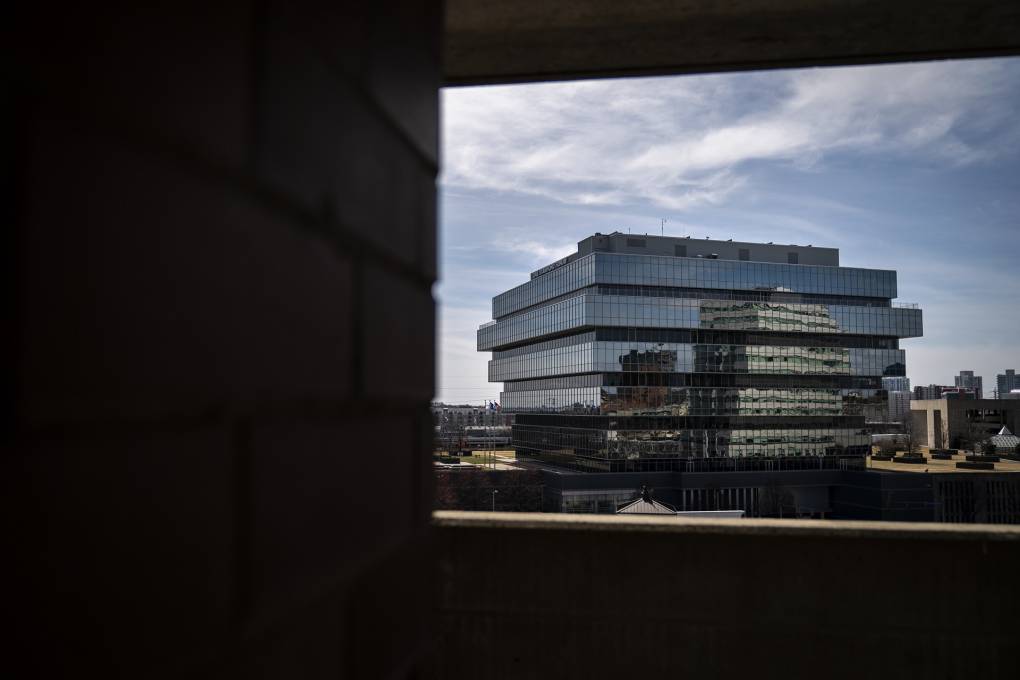
"content": "\u003cp>After a Supreme Court’s decision this week jeopardized a massive nationwide settlement over Purdue Pharma’s role in the U.S. opioid epidemic, hundreds of millions of dollars that the deal earmarked for addiction treatment in California could be in limbo.\u003c/p>\n\u003cp>Some of the funds allocated for the state would go to services in San Francisco, which previously brought its own lawsuit against Purdue Pharma, best known as the manufacturer of OxyContin, and the billionaire Sackler family that owns it.\u003c/p>\n\u003cp>San Francisco’s case was put on pause when Purdue filed for bankruptcy in 2019 — launching settlement negotiations between the company and thousands of plaintiffs, including California. Under the settlement deal that was eventually struck in bankruptcy court, Purdue was dissolved, the Sacklers agreed to pay billions toward addressing the opioid crisis, and members of the family — among the wealthiest in the U.S. — were shielded from future liability. It was that last provision underpinning the deal that the \u003ca href=\"https://www.supremecourt.gov/opinions/23pdf/23-124new_nkp1.pdf\">Supreme Court majority took issue with (PDF)\u003c/a>, given that the Sacklers had never filed for bankruptcy.\u003c/p>\n\u003cp>[ad fullwidth]\u003c/p>\n\u003cp>San Francisco would have only been eligible for funds through the state, which was in line for $486 million, according to Attorney General Rob Bonta. How those funds would be distributed to cities like San Francisco had not yet been determined.\u003c/p>\n\u003cp>What comes next for San Francisco and the thousands of cities, states, tribes and individuals with cases against Purdue and the Sacklers is still up in the air, according to UC Davis law professor John Hunt.\u003c/p>\n\u003cp>The bankruptcy court’s stay on these cases appears to still be in place, he said, and a renegotiation process could happen.\u003c/p>\n\u003cp>If these negotiations fall apart, Hunt said, the Sackler family might declare bankruptcy themselves, which would allow them to enter into a new settlement negotiation with plaintiffs. Otherwise, cases like San Francisco’s could be handled individually.\u003c/p>\n\u003cp>“I would expect that if they’re facing 2,600 individual plaintiffs, plus large cities, I think it’s pretty likely they would go into bankruptcy — that’s kind of what bankruptcy is to deal with,” he said. “On the other hand, they might fight it; they have the means.”\u003c/p>\n\u003cp>Whether entities would get larger payouts from individual cases could vary, Hunt said.\u003c/p>\n\u003cp>The San Francisco city attorney’s office is figuring out what will come next for its case, according to spokesperson Jen Kwart.\u003c/p>\n\u003cp>“We are still evaluating the decision, but it is unlikely to have an immediate impact on San Francisco’s case against Purdue Pharma or the Sackler defendants,” she said. “San Francisco’s case against Purdue and the Sacklers is pending before Judge Charles Breyer.”\u003c/p>\n\u003cp>In the past, money allocated to California in other major opioid settlement cases has been \u003ca href=\"https://californiaopioidresponse.org/opioid-settlements/state-funded-projects/\">used for \u003c/a>distributing naloxone, opioid education training and overdose prevention and harm reduction efforts, among other initiatives.\u003c/p>\n\u003cp>San Francisco has approved opioid abatement \u003ca href=\"https://www.sfcityattorney.org/2023/05/17/san-francisco-city-attorney-announces-230-million-settlement-with-walgreens-after-victory-in-opioid-litigation/\">settlements\u003c/a> with other drug manufacturing and distributing companies totaling more than $350 million. In 2023, the city won a $230 million settlement from Walgreens after a federal judge ruled the pharmacy chain could be held liable for filling hundreds of thousands of “red flag” prescriptions without investigation. The funds gained through that settlement are set to go to addressing the city’s opioid crisis.\u003c/p>\n\u003cp>While the Supreme Court’s decision means settlement negotiations in the Purdue Pharma case could continue and money to plaintiffs will be further delayed, Bonta said the ruling could be a good thing.\u003c/p>\n\u003cp>“Today’s decision will allow those that have suffered at the hands of the Sacklers to hold them accountable for their greed and willful misconduct,” the attorney general said in a statement on Thursday.\u003c/p>\n\u003cp>Last September, he and the attorneys general of Oregon and Connecticut filed a \u003ca href=\"https://oag.ca.gov/system/files/attachments/press-docs/23-124%20Letter%20of%20California%20et%20al.pdf\">letter (PDF)\u003c/a> with the Supreme Court saying they believed nonconsensual third party releases in the Purdue case would be unlawful.\u003c/p>\n\u003cp>\u003c/p>\n",
"blocks": [],
"excerpt": "The Supreme Court struck down a key provision in a massive nationwide settlement over Purdue Pharma’s role in the opioid crisis.",
"status": "publish",
"parent": 0,
"modified": 1738095860,
"stats": {
"hasAudio": false,
"hasVideo": false,
"hasChartOrMap": false,
"iframeSrcs": [],
"hasGoogleForm": false,
"hasGallery": false,
"hasHearkenModule": false,
"hasPolis": false,
"paragraphCount": 18,
"wordCount": 675
},
"headData": {
"title": "Money for California's Opioid Fight in Limbo After US Supreme Court Ruling | KQED",
"description": "The Supreme Court struck down a key provision in a massive nationwide settlement over Purdue Pharma’s role in the opioid crisis.",
"ogTitle": "",
"ogDescription": "",
"ogImgId": "",
"twTitle": "",
"twDescription": "",
"twImgId": "",
"schema": {
"@context": "https://schema.org",
"@type": "NewsArticle",
"headline": "Money for California's Opioid Fight in Limbo After US Supreme Court Ruling",
"datePublished": "2024-06-29T07:30:48-07:00",
"dateModified": "2025-01-28T12:24:20-08:00",
"image": "https://cdn.kqed.org/wp-content/uploads/2020/02/KQED-OG-Image@1x.png",
"isAccessibleForFree": "True",
"publisher": {
"@type": "NewsMediaOrganization",
"@id": "https://www.kqed.org/#organization",
"name": "KQED",
"logo": "https://cdn.kqed.org/wp-content/uploads/2020/02/KQED-OG-Image@1x.png",
"url": "https://www.kqed.org",
"sameAs": [
"https://www.facebook.com/KQED",
"https://twitter.com/KQED",
"https://www.instagram.com/kqed/",
"https://www.tiktok.com/@kqedofficial",
"https://www.linkedin.com/company/kqed",
"https://www.youtube.com/channel/UCeC0IOo7i1P_61zVUWbJ4nw"
]
}
}
},
"sticky": false,
"nprStoryId": "kqed-11992365",
"excludeFromSiteSearch": "Include",
"articleAge": "0",
"path": "/news/11992365/money-for-californias-opioid-fight-in-limbo-after-u-s-supreme-court-ruling",
"audioTrackLength": null,
"parsedContent": [
{
"type": "contentString",
"content": "\u003cdiv class=\"post-body\">\u003cp>\u003cp>After a Supreme Court’s decision this week jeopardized a massive nationwide settlement over Purdue Pharma’s role in the U.S. opioid epidemic, hundreds of millions of dollars that the deal earmarked for addiction treatment in California could be in limbo.\u003c/p>\n\u003cp>Some of the funds allocated for the state would go to services in San Francisco, which previously brought its own lawsuit against Purdue Pharma, best known as the manufacturer of OxyContin, and the billionaire Sackler family that owns it.\u003c/p>\n\u003cp>San Francisco’s case was put on pause when Purdue filed for bankruptcy in 2019 — launching settlement negotiations between the company and thousands of plaintiffs, including California. Under the settlement deal that was eventually struck in bankruptcy court, Purdue was dissolved, the Sacklers agreed to pay billions toward addressing the opioid crisis, and members of the family — among the wealthiest in the U.S. — were shielded from future liability. It was that last provision underpinning the deal that the \u003ca href=\"https://www.supremecourt.gov/opinions/23pdf/23-124new_nkp1.pdf\">Supreme Court majority took issue with (PDF)\u003c/a>, given that the Sacklers had never filed for bankruptcy.\u003c/p>\n\u003cp>\u003c/p>\u003c/div>",
"attributes": {
"named": {},
"numeric": []
}
},
{
"type": "component",
"content": "",
"name": "ad",
"attributes": {
"named": {
"label": "fullwidth"
},
"numeric": [
"fullwidth"
]
}
},
{
"type": "contentString",
"content": "\u003cdiv class=\"post-body\">\u003cp>\u003c/p>\n\u003cp>San Francisco would have only been eligible for funds through the state, which was in line for $486 million, according to Attorney General Rob Bonta. How those funds would be distributed to cities like San Francisco had not yet been determined.\u003c/p>\n\u003cp>What comes next for San Francisco and the thousands of cities, states, tribes and individuals with cases against Purdue and the Sacklers is still up in the air, according to UC Davis law professor John Hunt.\u003c/p>\n\u003cp>The bankruptcy court’s stay on these cases appears to still be in place, he said, and a renegotiation process could happen.\u003c/p>\n\u003cp>If these negotiations fall apart, Hunt said, the Sackler family might declare bankruptcy themselves, which would allow them to enter into a new settlement negotiation with plaintiffs. Otherwise, cases like San Francisco’s could be handled individually.\u003c/p>\n\u003cp>“I would expect that if they’re facing 2,600 individual plaintiffs, plus large cities, I think it’s pretty likely they would go into bankruptcy — that’s kind of what bankruptcy is to deal with,” he said. “On the other hand, they might fight it; they have the means.”\u003c/p>\n\u003cp>Whether entities would get larger payouts from individual cases could vary, Hunt said.\u003c/p>\n\u003cp>The San Francisco city attorney’s office is figuring out what will come next for its case, according to spokesperson Jen Kwart.\u003c/p>\n\u003cp>“We are still evaluating the decision, but it is unlikely to have an immediate impact on San Francisco’s case against Purdue Pharma or the Sackler defendants,” she said. “San Francisco’s case against Purdue and the Sacklers is pending before Judge Charles Breyer.”\u003c/p>\n\u003cp>In the past, money allocated to California in other major opioid settlement cases has been \u003ca href=\"https://californiaopioidresponse.org/opioid-settlements/state-funded-projects/\">used for \u003c/a>distributing naloxone, opioid education training and overdose prevention and harm reduction efforts, among other initiatives.\u003c/p>\n\u003cp>San Francisco has approved opioid abatement \u003ca href=\"https://www.sfcityattorney.org/2023/05/17/san-francisco-city-attorney-announces-230-million-settlement-with-walgreens-after-victory-in-opioid-litigation/\">settlements\u003c/a> with other drug manufacturing and distributing companies totaling more than $350 million. In 2023, the city won a $230 million settlement from Walgreens after a federal judge ruled the pharmacy chain could be held liable for filling hundreds of thousands of “red flag” prescriptions without investigation. The funds gained through that settlement are set to go to addressing the city’s opioid crisis.\u003c/p>\n\u003cp>While the Supreme Court’s decision means settlement negotiations in the Purdue Pharma case could continue and money to plaintiffs will be further delayed, Bonta said the ruling could be a good thing.\u003c/p>\n\u003cp>“Today’s decision will allow those that have suffered at the hands of the Sacklers to hold them accountable for their greed and willful misconduct,” the attorney general said in a statement on Thursday.\u003c/p>\n\u003cp>Last September, he and the attorneys general of Oregon and Connecticut filed a \u003ca href=\"https://oag.ca.gov/system/files/attachments/press-docs/23-124%20Letter%20of%20California%20et%20al.pdf\">letter (PDF)\u003c/a> with the Supreme Court saying they believed nonconsensual third party releases in the Purdue case would be unlawful.\u003c/p>\n\u003cp>\u003c/p>\n\u003c/div>\u003c/p>",
"attributes": {
"named": {},
"numeric": []
}
}
],
"link": "/news/11992365/money-for-californias-opioid-fight-in-limbo-after-u-s-supreme-court-ruling",
"authors": [
"11913"
],
"categories": [
"news_457",
"news_8"
],
"tags": [
"news_28991",
"news_18538",
"news_18543",
"news_22774",
"news_201"
],
"featImg": "news_11992370",
"label": "news"
},
"news_11991340": {
"type": "posts",
"id": "news_11991340",
"meta": {
"index": "posts_1716263798",
"site": "news",
"id": "11991340",
"score": null,
"sort": [
1719615043000
]
},
"guestAuthors": [],
"slug": "supreme-court-says-laws-criminalizing-homeless-camping-do-not-violate-constitution",
"title": "San Francisco Plans to Enforce Homeless Camping Ban After Supreme Court Ruling",
"publishDate": 1719615043,
"format": "standard",
"headTitle": "San Francisco Plans to Enforce Homeless Camping Ban After Supreme Court Ruling | KQED",
"labelTerm": {
"site": "news"
},
"content": "\u003cp>\u003cem>Updated 3:50 p.m. Friday\u003c/em>\u003c/p>\n\u003cp>The Supreme Court on Friday overturned a lower court ruling limiting how far cities can go in policing homelessness, in a case advocates for the unhoused have called the most consequential in a generation.\u003c/p>\n\u003cp>In a \u003ca href=\"https://www.supremecourt.gov/opinions/23pdf/23-175_19m2.pdf\">6–3 decision (PDF)\u003c/a>, the majority found that local laws limiting public camping do not amount to cruel and unusual punishment. The ruling gives cities more power to regulate encampments on sidewalks and public property.\u003c/p>\n\u003cp>In San Francisco, it could change the trajectory of a lawsuit about the city’s approach to homeless encampments that was on pause pending the outcome of the Supreme Court’s decision. Mayor London Breed said the decision would allow the city to enforce its laws when unhoused people reject offers of shelter, adding that “those who refuse our help or those who already have shelter will not be allowed to camp on our streets.”\u003c/p>\n\u003cp>The case before the Supreme Court, \u003ca href=\"https://www.supremecourt.gov/docket/docketfiles/html/public/23-175.html\">City of Grants Pass, Oregon v. Gloria Johnson\u003c/a>, hinged on whether a local government can issue fines and jail people for camping in public spaces when there isn’t enough shelter available. The 9th U.S. Circuit Court of Appeals ruled this was cruel and unusual punishment, prompting the city of Grants Pass to appeal the case to the Supreme Court.\u003c/p>\n\u003cp>Justice Neil Gorsuch wrote the majority opinion, joined by the court’s conservatives.\u003c/p>\n\u003cp>[ad fullwidth]\u003c/p>\n\u003cp>“Homelessness is complex. Its causes are many. So maybe the public policy responses required to address it,” he wrote. “Yes, people will disagree over which policy responses are best. … But in our democracy, that is their right. Nor can a handful of federal judges begin to ‘match’ the collective wisdom the American people possess in deciding ‘how best to handle’ a pressing social question like homelessness.”\u003c/p>\n\u003cp>Justice Sonia Sotomayor, in a dissent, wrote that laws like the one at issue here punish people who don’t have access to shelter, amounting to cruel and unusual punishment. Justices Elena Kagan and Ketanji Brown Jackson joined her dissent.\u003c/p>\n\u003cp>“Sleep is a biological necessity, not a crime,” Sotomayor wrote. “For some people, sleeping outside is their only option.”\u003c/p>\n\u003cp>Justice Clarence Thomas wrote a concurring opinion.\u003c/p>\n\u003cp>For advocates, the ruling came as a crushing blow after years of fighting local governments’ approach to addressing the homelessness crisis. Jesse Rabinowitz, campaign and communications director at the National Homelessness Law Center, called the ruling “inhumane” and warned it would worsen homelessness.\u003c/p>\n\u003cp>“Cities are now even more empowered to neglect proven housing-based solutions and to arrest or fine those with no choice but to sleep outdoors,” he said in a statement. “While we are disappointed, we are not surprised that this Supreme Court ruled against the interests of our poorest neighbors.”\u003c/p>\n\u003cp>National Alliance to End Homelessness CEO Ann Oliva struck a similar tone. The ruling would undermine efforts to solve street homelessness, she said, by removing a requirement on the part of local governments to provide an alternative.\u003c/p>\n\u003cp>“This decision sets a dangerous precedent that will cause undue harm to people experiencing homelessness and give free rein to local officials who prefer pointless and expensive arrests and imprisonment rather than real solutions,” she said in a statement.\u003c/p>\n\u003cp>Others, however, who had argued the lower court’s ruling tied the hands of local governments to respond to a serious public health crisis lauded the decision. In a statement on Friday, Gov. Gavin Newsom said the ruling opens the door to “common-sense measures to protect the safety and well-being of our communities.”\u003c/p>\n\u003cp>“Today’s ruling by the U.S. Supreme Court provides state and local officials the definitive authority to implement and enforce policies to clear unsafe encampments from our streets,” he wrote. “This decision removes the legal ambiguities that have tied the hands of local officials for years.”\u003c/p>\n\u003cp>California Senate Minority Leader Brian W. Jones (R-San Diego) joined Newsom in his assessment, adding that the decision was not about criminalizing homelessness but about ensuring public safety.\u003c/p>\n\u003cp>“Californians should not have to tolerate the encampments that have taken over our communities,” he said in a statement. “With this decision, Democrat politicians can no longer justify allowing this severe public health and safety crisis to persist on our streets. It’s time to clean up California.”\u003c/p>\n\u003cp>State and city leaders under pressure to reduce homelessness had blamed the 9th Circuit ruling for stymieing their efforts to clear encampments. Officials across the political map, including California \u003ca href=\"https://www.supremecourt.gov/DocketPDF/23/23-175/280288/20230922163648635_Amicus%20Brief%20for%20Governor%20Newsom%20-%20Grants%20Pass_Final.pdf\">Newsom (PDF)\u003c/a>, the cities of Los Angeles and San Francisco and a group of \u003ca href=\"https://www.supremecourt.gov/DocketPDF/23/23-175/280428/20230925170042238_No%2023-175_AmicusBrief.pdf\">20 conservative-led states (PDF)\u003c/a>, were among those who encouraged the Supreme Court to take up the case.\u003c/p>\n\u003cp>In their brief before the court, lawyers for the city of Grants Pass argued its policies, which include fines and short jail stints for camping on public property, don’t violate the Eighth Amendment’s prohibition on cruel and unusual punishments and that the courts have overstepped, stripping local governments of their autonomy and limiting their ability to reduce street homelessness.\u003c/p>\n\u003cp>Attorneys and advocates for the unhoused Grants Pass residents argued the lower courts’ rulings allowed cities leeway to regulate encampments and even clear them — but not to ban camps outright. They argued that camping bans and similar policies are expensive and counterproductive because they disrupt connections to services, erode trust in law enforcement and create additional obstacles to finding housing and employment.\u003c/p>\n\u003cp>More than 80 amicus briefs were filed in the case, about evenly split in their support for the two parties.\u003c/p>\n\u003cp>The attorneys general of 24 conservative states, national conservative legal groups like the Cicero Institute, and the California sheriffs and police associations were among those who weighed in on behalf of Grants Pass.\u003c/p>\n\u003cp>Support for the unhoused residents came from the ACLU, several California-based nonprofits and the American Psychiatric Association, among others.\u003c/p>\n\u003cp>Some parties, including the \u003ca href=\"https://www.supremecourt.gov/DocketPDF/23/23-175/302264/20240304183726571_23-175npUnitedStates.pdf\">Biden administration (PDF)\u003c/a>, Newsom and San Francisco City Attorney David Chiu, filed briefs in the case but didn’t back either party, asking instead for clarity about how to interpret the lower courts’ rulings.\u003c/p>\n\u003cp>The decision will have significant implications for San Francisco, where a lawsuit over the city’s homelessness policies has been on pause since February, pending the Supreme Court’s ruling.\u003c/p>\n\u003cp>A district court magistrate relied on the 9th Circuit’s ruling in this case for an injunction restricting camp clearings.\u003c/p>\n\u003cp>“San Francisco has and will continue to take a compassionate, services-first approach to addressing our homelessness crisis,” Chiu said in a statement on Friday. “It will take time to analyze this decision and chart a path forward to change policies on the ground and ensure our litigation catches up with the Supreme Court’s decision today.”\u003c/p>\n\u003cp>Lawyers for the unhoused residents and advocates who filed suit against the city denounced the outcome but said it would not derail their case, emphasizing that only one of the 13 claims in the lawsuit, Coalition on Homelessness v. City of San Francisco, would be affected by the decision. The suit accuses the city of violating unhoused residents’ rights by destroying their property and failing to provide shelter accommodations appropriate for people with disabilities.\u003c/p>\n\u003cp>“We will move forward with making sure that San Francisco follows its own policies and upholds the constitutional rights of our unhoused neighbors,” said the plaintiffs’ attorney, Nisha Kashyap, Program Director of Racial Justice at the Lawyers’ Committee for Civil Rights of the San Francisco Bay Area. “Those claims are unaffected by [the Supreme Court’s] decision and can and will proceed.”\u003c/p>\n\u003cp>The lawsuit is currently expected to go to trial next May.\u003c/p>\n\u003cp>Breed said the city has been preparing for potential outcomes and would adjust its policies to reflect the ruling. Staff will keep making offers of shelter but wouldn’t allow people who turn them down to stay put, the mayor said.\u003c/p>\n\u003cp>“It’s not healthy, safe, or compassionate for people on the street, and it’s not acceptable for our neighborhoods,” she said.\u003c/p>\n\u003cp>Ed Johnson, the litigation director at The Oregon Law Center who filed the Grants Pass suit, said he planned to pursue other means of defending unhoused people against criminalization, including through individual claims, group challenges or class action lawsuits.\u003c/p>\n\u003cp>“There are many legal arguments that can be brought on behalf of homeless individuals who are being punished for being the victims of our failed housing policies,” he said.\u003c/p>\n\u003cp>[ad floatright]\u003c/p>\n",
"blocks": [],
"excerpt": "The 6-3 decision will have major implications for how cities handle homeless encampments, overturning a lower court ruling that said it was unconstitutional to punish people for sleeping outside when there isn’t enough shelter available.",
"status": "publish",
"parent": 0,
"modified": 1740516477,
"stats": {
"hasAudio": false,
"hasVideo": false,
"hasChartOrMap": false,
"iframeSrcs": [],
"hasGoogleForm": false,
"hasGallery": false,
"hasHearkenModule": false,
"hasPolis": false,
"paragraphCount": 37,
"wordCount": 1468
},
"headData": {
"title": "San Francisco Plans to Enforce Homeless Camping Ban After Supreme Court Ruling | KQED",
"description": "The 6-3 decision will have major implications for how cities handle homeless encampments, overturning a lower court ruling that said it was unconstitutional to punish people for sleeping outside when there isn’t enough shelter available.",
"ogTitle": "",
"ogDescription": "",
"ogImgId": "",
"twTitle": "",
"twDescription": "",
"twImgId": "",
"schema": {
"@context": "https://schema.org",
"@type": "NewsArticle",
"headline": "San Francisco Plans to Enforce Homeless Camping Ban After Supreme Court Ruling",
"datePublished": "2024-06-28T15:50:43-07:00",
"dateModified": "2025-02-25T12:47:57-08:00",
"image": "https://cdn.kqed.org/wp-content/uploads/2020/02/KQED-OG-Image@1x.png",
"isAccessibleForFree": "True",
"publisher": {
"@type": "NewsMediaOrganization",
"@id": "https://www.kqed.org/#organization",
"name": "KQED",
"logo": "https://cdn.kqed.org/wp-content/uploads/2020/02/KQED-OG-Image@1x.png",
"url": "https://www.kqed.org",
"sameAs": [
"https://www.facebook.com/KQED",
"https://twitter.com/KQED",
"https://www.instagram.com/kqed/",
"https://www.tiktok.com/@kqedofficial",
"https://www.linkedin.com/company/kqed",
"https://www.youtube.com/channel/UCeC0IOo7i1P_61zVUWbJ4nw"
]
}
}
},
"sticky": false,
"nprStoryId": "kqed-11991340",
"excludeFromSiteSearch": "Include",
"articleAge": "0",
"path": "/news/11991340/supreme-court-says-laws-criminalizing-homeless-camping-do-not-violate-constitution",
"audioTrackLength": null,
"parsedContent": [
{
"type": "contentString",
"content": "\u003cdiv class=\"post-body\">\u003cp>\u003cp>\u003cem>Updated 3:50 p.m. Friday\u003c/em>\u003c/p>\n\u003cp>The Supreme Court on Friday overturned a lower court ruling limiting how far cities can go in policing homelessness, in a case advocates for the unhoused have called the most consequential in a generation.\u003c/p>\n\u003cp>In a \u003ca href=\"https://www.supremecourt.gov/opinions/23pdf/23-175_19m2.pdf\">6–3 decision (PDF)\u003c/a>, the majority found that local laws limiting public camping do not amount to cruel and unusual punishment. The ruling gives cities more power to regulate encampments on sidewalks and public property.\u003c/p>\n\u003cp>In San Francisco, it could change the trajectory of a lawsuit about the city’s approach to homeless encampments that was on pause pending the outcome of the Supreme Court’s decision. Mayor London Breed said the decision would allow the city to enforce its laws when unhoused people reject offers of shelter, adding that “those who refuse our help or those who already have shelter will not be allowed to camp on our streets.”\u003c/p>\n\u003cp>The case before the Supreme Court, \u003ca href=\"https://www.supremecourt.gov/docket/docketfiles/html/public/23-175.html\">City of Grants Pass, Oregon v. Gloria Johnson\u003c/a>, hinged on whether a local government can issue fines and jail people for camping in public spaces when there isn’t enough shelter available. The 9th U.S. Circuit Court of Appeals ruled this was cruel and unusual punishment, prompting the city of Grants Pass to appeal the case to the Supreme Court.\u003c/p>\n\u003cp>Justice Neil Gorsuch wrote the majority opinion, joined by the court’s conservatives.\u003c/p>\n\u003cp>\u003c/p>\u003c/div>",
"attributes": {
"named": {},
"numeric": []
}
},
{
"type": "component",
"content": "",
"name": "ad",
"attributes": {
"named": {
"label": "fullwidth"
},
"numeric": [
"fullwidth"
]
}
},
{
"type": "contentString",
"content": "\u003cdiv class=\"post-body\">\u003cp>\u003c/p>\n\u003cp>“Homelessness is complex. Its causes are many. So maybe the public policy responses required to address it,” he wrote. “Yes, people will disagree over which policy responses are best. … But in our democracy, that is their right. Nor can a handful of federal judges begin to ‘match’ the collective wisdom the American people possess in deciding ‘how best to handle’ a pressing social question like homelessness.”\u003c/p>\n\u003cp>Justice Sonia Sotomayor, in a dissent, wrote that laws like the one at issue here punish people who don’t have access to shelter, amounting to cruel and unusual punishment. Justices Elena Kagan and Ketanji Brown Jackson joined her dissent.\u003c/p>\n\u003cp>“Sleep is a biological necessity, not a crime,” Sotomayor wrote. “For some people, sleeping outside is their only option.”\u003c/p>\n\u003cp>Justice Clarence Thomas wrote a concurring opinion.\u003c/p>\n\u003cp>For advocates, the ruling came as a crushing blow after years of fighting local governments’ approach to addressing the homelessness crisis. Jesse Rabinowitz, campaign and communications director at the National Homelessness Law Center, called the ruling “inhumane” and warned it would worsen homelessness.\u003c/p>\n\u003cp>“Cities are now even more empowered to neglect proven housing-based solutions and to arrest or fine those with no choice but to sleep outdoors,” he said in a statement. “While we are disappointed, we are not surprised that this Supreme Court ruled against the interests of our poorest neighbors.”\u003c/p>\n\u003cp>National Alliance to End Homelessness CEO Ann Oliva struck a similar tone. The ruling would undermine efforts to solve street homelessness, she said, by removing a requirement on the part of local governments to provide an alternative.\u003c/p>\n\u003cp>“This decision sets a dangerous precedent that will cause undue harm to people experiencing homelessness and give free rein to local officials who prefer pointless and expensive arrests and imprisonment rather than real solutions,” she said in a statement.\u003c/p>\n\u003cp>Others, however, who had argued the lower court’s ruling tied the hands of local governments to respond to a serious public health crisis lauded the decision. In a statement on Friday, Gov. Gavin Newsom said the ruling opens the door to “common-sense measures to protect the safety and well-being of our communities.”\u003c/p>\n\u003cp>“Today’s ruling by the U.S. Supreme Court provides state and local officials the definitive authority to implement and enforce policies to clear unsafe encampments from our streets,” he wrote. “This decision removes the legal ambiguities that have tied the hands of local officials for years.”\u003c/p>\n\u003cp>California Senate Minority Leader Brian W. Jones (R-San Diego) joined Newsom in his assessment, adding that the decision was not about criminalizing homelessness but about ensuring public safety.\u003c/p>\n\u003cp>“Californians should not have to tolerate the encampments that have taken over our communities,” he said in a statement. “With this decision, Democrat politicians can no longer justify allowing this severe public health and safety crisis to persist on our streets. It’s time to clean up California.”\u003c/p>\n\u003cp>State and city leaders under pressure to reduce homelessness had blamed the 9th Circuit ruling for stymieing their efforts to clear encampments. Officials across the political map, including California \u003ca href=\"https://www.supremecourt.gov/DocketPDF/23/23-175/280288/20230922163648635_Amicus%20Brief%20for%20Governor%20Newsom%20-%20Grants%20Pass_Final.pdf\">Newsom (PDF)\u003c/a>, the cities of Los Angeles and San Francisco and a group of \u003ca href=\"https://www.supremecourt.gov/DocketPDF/23/23-175/280428/20230925170042238_No%2023-175_AmicusBrief.pdf\">20 conservative-led states (PDF)\u003c/a>, were among those who encouraged the Supreme Court to take up the case.\u003c/p>\n\u003cp>In their brief before the court, lawyers for the city of Grants Pass argued its policies, which include fines and short jail stints for camping on public property, don’t violate the Eighth Amendment’s prohibition on cruel and unusual punishments and that the courts have overstepped, stripping local governments of their autonomy and limiting their ability to reduce street homelessness.\u003c/p>\n\u003cp>Attorneys and advocates for the unhoused Grants Pass residents argued the lower courts’ rulings allowed cities leeway to regulate encampments and even clear them — but not to ban camps outright. They argued that camping bans and similar policies are expensive and counterproductive because they disrupt connections to services, erode trust in law enforcement and create additional obstacles to finding housing and employment.\u003c/p>\n\u003cp>More than 80 amicus briefs were filed in the case, about evenly split in their support for the two parties.\u003c/p>\n\u003cp>The attorneys general of 24 conservative states, national conservative legal groups like the Cicero Institute, and the California sheriffs and police associations were among those who weighed in on behalf of Grants Pass.\u003c/p>\n\u003cp>Support for the unhoused residents came from the ACLU, several California-based nonprofits and the American Psychiatric Association, among others.\u003c/p>\n\u003cp>Some parties, including the \u003ca href=\"https://www.supremecourt.gov/DocketPDF/23/23-175/302264/20240304183726571_23-175npUnitedStates.pdf\">Biden administration (PDF)\u003c/a>, Newsom and San Francisco City Attorney David Chiu, filed briefs in the case but didn’t back either party, asking instead for clarity about how to interpret the lower courts’ rulings.\u003c/p>\n\u003cp>The decision will have significant implications for San Francisco, where a lawsuit over the city’s homelessness policies has been on pause since February, pending the Supreme Court’s ruling.\u003c/p>\n\u003cp>A district court magistrate relied on the 9th Circuit’s ruling in this case for an injunction restricting camp clearings.\u003c/p>\n\u003cp>“San Francisco has and will continue to take a compassionate, services-first approach to addressing our homelessness crisis,” Chiu said in a statement on Friday. “It will take time to analyze this decision and chart a path forward to change policies on the ground and ensure our litigation catches up with the Supreme Court’s decision today.”\u003c/p>\n\u003cp>Lawyers for the unhoused residents and advocates who filed suit against the city denounced the outcome but said it would not derail their case, emphasizing that only one of the 13 claims in the lawsuit, Coalition on Homelessness v. City of San Francisco, would be affected by the decision. The suit accuses the city of violating unhoused residents’ rights by destroying their property and failing to provide shelter accommodations appropriate for people with disabilities.\u003c/p>\n\u003cp>“We will move forward with making sure that San Francisco follows its own policies and upholds the constitutional rights of our unhoused neighbors,” said the plaintiffs’ attorney, Nisha Kashyap, Program Director of Racial Justice at the Lawyers’ Committee for Civil Rights of the San Francisco Bay Area. “Those claims are unaffected by [the Supreme Court’s] decision and can and will proceed.”\u003c/p>\n\u003cp>The lawsuit is currently expected to go to trial next May.\u003c/p>\n\u003cp>Breed said the city has been preparing for potential outcomes and would adjust its policies to reflect the ruling. Staff will keep making offers of shelter but wouldn’t allow people who turn them down to stay put, the mayor said.\u003c/p>\n\u003cp>“It’s not healthy, safe, or compassionate for people on the street, and it’s not acceptable for our neighborhoods,” she said.\u003c/p>\n\u003cp>Ed Johnson, the litigation director at The Oregon Law Center who filed the Grants Pass suit, said he planned to pursue other means of defending unhoused people against criminalization, including through individual claims, group challenges or class action lawsuits.\u003c/p>\n\u003cp>“There are many legal arguments that can be brought on behalf of homeless individuals who are being punished for being the victims of our failed housing policies,” he said.\u003c/p>\n\u003cp>\u003c/p>\u003c/div>",
"attributes": {
"named": {},
"numeric": []
}
},
{
"type": "component",
"content": "",
"name": "ad",
"attributes": {
"named": {
"label": "floatright"
},
"numeric": [
"floatright"
]
}
},
{
"type": "contentString",
"content": "\u003cdiv class=\"post-body\">\u003cp>\u003c/p>\n\u003c/div>\u003c/p>",
"attributes": {
"named": {},
"numeric": []
}
}
],
"link": "/news/11991340/supreme-court-says-laws-criminalizing-homeless-camping-do-not-violate-constitution",
"authors": [
"11276"
],
"categories": [
"news_6266",
"news_8"
],
"tags": [
"news_3921",
"news_18538",
"news_21214",
"news_1775",
"news_1024",
"news_1172",
"news_29607"
],
"featImg": "news_11991361",
"label": "news"
},
"news_11992399": {
"type": "posts",
"id": "news_11992399",
"meta": {
"index": "posts_1716263798",
"site": "news",
"id": "11992399",
"score": null,
"sort": [
1719604568000
]
},
"guestAuthors": [],
"slug": "state-farm-seeks-enormous-rate-increases-in-california-to-prevent-insolvency",
"title": "State Farm Seeks Enormous Rate Increases in California to Prevent Insolvency",
"publishDate": 1719604568,
"format": "standard",
"headTitle": "State Farm Seeks Enormous Rate Increases in California to Prevent Insolvency | KQED",
"labelTerm": {
"site": "news"
},
"content": "\u003cp>State Farm requested massive increases to its California residential insurance rates, which calls its financial stability into doubt amid an ongoing \u003ca href=\"https://www.kqed.org/science/1992401/homeowners-insurance-market-stretched-even-thinner-as-2-more-companies-leave-california\">crisis in the state’s insurance market\u003c/a>.\u003c/p>\n\u003cp>The company’s California subsidiary, State Farm General, the state’s largest writer of homeowners insurance, \u003ca href=\"https://www.iii.org/top-10-writers-of-homeowners-insurance-in-california\">according to the Insurance Information Institute\u003c/a>, submitted a request on Thursday to the California Department of Insurance for the following rate hikes:\u003c/p>\n\u003cul>\n\u003cli>30% increase in homeowners insurance\u003c/li>\n\u003cli>36% increase in condominium owners insurance\u003c/li>\n\u003cli>52% increase in renters insurance\u003c/li>\n\u003c/ul>\n\u003cp>With California’s property insurance market already facing an \u003ca href=\"https://www.kqed.org/science/1992803/newsom-seeks-faster-track-for-home-insurance-rate-hikes-as-market-shrinks\">availability and affordability crisis\u003c/a>, driven largely by \u003ca href=\"https://www.kqed.org/science/1993316/california-shows-where-insurers-would-need-to-boost-coverage-in-fire-prone-areas\">rising wildfire risk\u003c/a>, the timing could hardly be worse.\u003c/p>\n\u003cp>[ad fullwidth]\u003c/p>\n\u003cp>“This has the potential to affect millions of California consumers and the integrity of our residential property insurance market,” California Insurance Commissioner Ricardo Lara said in a statement provided to KQED.\u003c/p>\n\u003cp>The department will closely examine State Farm’s financial stability, Lara said.\u003c/p>\n\u003cp>“Using my authority under Prop. 103, I will investigate State Farm’s financial situation, including a rate hearing on these applications if necessary. My Department’s experts and I have serious questions.”\u003c/p>\n\u003cp>For the last year, State Farm has not written new policies in California, and it has not renewed tens of thousands of existing policies.\u003c/p>\n\u003cp>Documents from AM Best, a company that rates insurance companies’ financial solvency, show a troubled situation for State Farm. Its financial strength was downgraded this spring, and its long-term outlook is considered negative.\u003c/p>\n\u003cp>“Financially speaking, State Farm is very, very much apparently in trouble. And I think that their request for rate increases will be met with a lot of frustration by consumers because the last thing anybody wants is to be paying more money right now,” said Karl Susman, an insurance broker. “And since there’s still not the ability for people to shop around for other options, what are they going to do but pay that higher rate? But I think that it’s probably going to show pretty quickly that it’s necessary to keep State Farm from literally going insolvent.”\u003c/p>\n\u003cp>Lara sought to reassure State Farm policyholders that nothing would change immediately as a result of these filings. Under California’s regulatory process, rate filings should take two months to be reviewed, although they have dragged on for years in some cases — a process set for a \u003ca href=\"https://www.npr.org/2024/06/26/nx-s1-5015738/california-hopes-to-lure-insurance-companies-back-with-extreme-regulation-overhaul\">major overhaul by regulators\u003c/a> this year.\u003c/p>\n\u003cp>Lara also said the Department of Insurance had already made tough decisions in approving significant State Farm rate increases recently, including a March hike averaging 20% across the state.\u003c/p>\n\u003cp>He continued by inviting the public to get involved \u003ca href=\"https://www.insurance.ca.gov/01-consumers/150-other-prog/01-intervenor/\">via the intervenor process\u003c/a>, which allows the public to weigh in on changes to their insurance.\u003c/p>\n\u003cp>Susman predicts the Department of Insurance will have no choice but to approve the requested rate increases.\u003c/p>\n\u003cp>“Because the alternative is literally — what’s the point of having a carrier with lower rates that can’t pay claims?” he said. “And they are basically at that place right now where if they’re not able to get this rate and they’re already in such a bad place financially, I don’t see how we can expect them to possibly weather the storm.”\u003c/p>\n\u003cp>\u003c/p>\n",
"blocks": [],
"excerpt": "The company’s financial stability is in doubt after it requested to raise homeowners insurance rates by 30% and renters insurance by 52%.",
"status": "publish",
"parent": 0,
"modified": 1738783805,
"stats": {
"hasAudio": false,
"hasVideo": false,
"hasChartOrMap": false,
"iframeSrcs": [],
"hasGoogleForm": false,
"hasGallery": false,
"hasHearkenModule": false,
"hasPolis": false,
"paragraphCount": 16,
"wordCount": 564
},
"headData": {
"title": "State Farm Seeks Enormous Rate Increases in California to Prevent Insolvency | KQED",
"description": "The company’s financial stability is in doubt after it requested to raise homeowners insurance rates by 30% and renters insurance by 52%.",
"ogTitle": "",
"ogDescription": "",
"ogImgId": "",
"twTitle": "",
"twDescription": "",
"twImgId": "",
"schema": {
"@context": "https://schema.org",
"@type": "NewsArticle",
"headline": "State Farm Seeks Enormous Rate Increases in California to Prevent Insolvency",
"datePublished": "2024-06-28T12:56:08-07:00",
"dateModified": "2025-02-05T11:30:05-08:00",
"image": "https://cdn.kqed.org/wp-content/uploads/2020/02/KQED-OG-Image@1x.png",
"isAccessibleForFree": "True",
"publisher": {
"@type": "NewsMediaOrganization",
"@id": "https://www.kqed.org/#organization",
"name": "KQED",
"logo": "https://cdn.kqed.org/wp-content/uploads/2020/02/KQED-OG-Image@1x.png",
"url": "https://www.kqed.org",
"sameAs": [
"https://www.facebook.com/KQED",
"https://twitter.com/KQED",
"https://www.instagram.com/kqed/",
"https://www.tiktok.com/@kqedofficial",
"https://www.linkedin.com/company/kqed",
"https://www.youtube.com/channel/UCeC0IOo7i1P_61zVUWbJ4nw"
]
}
}
},
"sticky": false,
"nprStoryId": "kqed-11992399",
"excludeFromSiteSearch": "Include",
"articleAge": "0",
"path": "/news/11992399/state-farm-seeks-enormous-rate-increases-in-california-to-prevent-insolvency",
"audioTrackLength": null,
"parsedContent": [
{
"type": "contentString",
"content": "\u003cdiv class=\"post-body\">\u003cp>\u003cp>State Farm requested massive increases to its California residential insurance rates, which calls its financial stability into doubt amid an ongoing \u003ca href=\"https://www.kqed.org/science/1992401/homeowners-insurance-market-stretched-even-thinner-as-2-more-companies-leave-california\">crisis in the state’s insurance market\u003c/a>.\u003c/p>\n\u003cp>The company’s California subsidiary, State Farm General, the state’s largest writer of homeowners insurance, \u003ca href=\"https://www.iii.org/top-10-writers-of-homeowners-insurance-in-california\">according to the Insurance Information Institute\u003c/a>, submitted a request on Thursday to the California Department of Insurance for the following rate hikes:\u003c/p>\n\u003cul>\n\u003cli>30% increase in homeowners insurance\u003c/li>\n\u003cli>36% increase in condominium owners insurance\u003c/li>\n\u003cli>52% increase in renters insurance\u003c/li>\n\u003c/ul>\n\u003cp>With California’s property insurance market already facing an \u003ca href=\"https://www.kqed.org/science/1992803/newsom-seeks-faster-track-for-home-insurance-rate-hikes-as-market-shrinks\">availability and affordability crisis\u003c/a>, driven largely by \u003ca href=\"https://www.kqed.org/science/1993316/california-shows-where-insurers-would-need-to-boost-coverage-in-fire-prone-areas\">rising wildfire risk\u003c/a>, the timing could hardly be worse.\u003c/p>\n\u003cp>\u003c/p>\u003c/div>",
"attributes": {
"named": {},
"numeric": []
}
},
{
"type": "component",
"content": "",
"name": "ad",
"attributes": {
"named": {
"label": "fullwidth"
},
"numeric": [
"fullwidth"
]
}
},
{
"type": "contentString",
"content": "\u003cdiv class=\"post-body\">\u003cp>\u003c/p>\n\u003cp>“This has the potential to affect millions of California consumers and the integrity of our residential property insurance market,” California Insurance Commissioner Ricardo Lara said in a statement provided to KQED.\u003c/p>\n\u003cp>The department will closely examine State Farm’s financial stability, Lara said.\u003c/p>\n\u003cp>“Using my authority under Prop. 103, I will investigate State Farm’s financial situation, including a rate hearing on these applications if necessary. My Department’s experts and I have serious questions.”\u003c/p>\n\u003cp>For the last year, State Farm has not written new policies in California, and it has not renewed tens of thousands of existing policies.\u003c/p>\n\u003cp>Documents from AM Best, a company that rates insurance companies’ financial solvency, show a troubled situation for State Farm. Its financial strength was downgraded this spring, and its long-term outlook is considered negative.\u003c/p>\n\u003cp>“Financially speaking, State Farm is very, very much apparently in trouble. And I think that their request for rate increases will be met with a lot of frustration by consumers because the last thing anybody wants is to be paying more money right now,” said Karl Susman, an insurance broker. “And since there’s still not the ability for people to shop around for other options, what are they going to do but pay that higher rate? But I think that it’s probably going to show pretty quickly that it’s necessary to keep State Farm from literally going insolvent.”\u003c/p>\n\u003cp>Lara sought to reassure State Farm policyholders that nothing would change immediately as a result of these filings. Under California’s regulatory process, rate filings should take two months to be reviewed, although they have dragged on for years in some cases — a process set for a \u003ca href=\"https://www.npr.org/2024/06/26/nx-s1-5015738/california-hopes-to-lure-insurance-companies-back-with-extreme-regulation-overhaul\">major overhaul by regulators\u003c/a> this year.\u003c/p>\n\u003cp>Lara also said the Department of Insurance had already made tough decisions in approving significant State Farm rate increases recently, including a March hike averaging 20% across the state.\u003c/p>\n\u003cp>He continued by inviting the public to get involved \u003ca href=\"https://www.insurance.ca.gov/01-consumers/150-other-prog/01-intervenor/\">via the intervenor process\u003c/a>, which allows the public to weigh in on changes to their insurance.\u003c/p>\n\u003cp>Susman predicts the Department of Insurance will have no choice but to approve the requested rate increases.\u003c/p>\n\u003cp>“Because the alternative is literally — what’s the point of having a carrier with lower rates that can’t pay claims?” he said. “And they are basically at that place right now where if they’re not able to get this rate and they’re already in such a bad place financially, I don’t see how we can expect them to possibly weather the storm.”\u003c/p>\n\u003cp>\u003c/p>\n\u003c/div>\u003c/p>",
"attributes": {
"named": {},
"numeric": []
}
}
],
"link": "/news/11992399/state-farm-seeks-enormous-rate-increases-in-california-to-prevent-insolvency",
"authors": [
"11088"
],
"categories": [
"news_6266",
"news_8"
],
"tags": [
"news_18538",
"news_27626",
"news_34178",
"news_1775",
"news_4511",
"news_27707"
],
"featImg": "news_11992401",
"label": "news"
},
"news_11991827": {
"type": "posts",
"id": "news_11991827",
"meta": {
"index": "posts_1716263798",
"site": "news",
"id": "11991827",
"score": null,
"sort": [
1719354365000
]
},
"guestAuthors": [],
"slug": "california-shelves-repeal-of-1950-housing-law-that-stoked-racial-tension",
"title": "California Shelves Repeal of 1950 Housing Law That Stoked Racial Tension",
"publishDate": 1719354365,
"format": "standard",
"headTitle": "California Shelves Repeal of 1950 Housing Law That Stoked Racial Tension | KQED",
"labelTerm": {
"site": "news"
},
"content": "\u003cp>The repeal of a constitutional roadblock to building publicly subsidized housing that has long been criticized as discriminatory was delayed — again — after lawmakers voted Monday to withdraw it from the November ballot.\u003c/p>\n\u003cp>Had voters passed it, the measure co-authored by state Sens. Benjamin Allen (D-El Segundo) and Scott Wiener (D-San Francisco), \u003ca href=\"https://elections.cdn.sos.ca.gov/ballot-measures/pdf/sca-2.pdf\">SCA 2,\u003c/a> would have repealed \u003ca href=\"https://www.kqed.org/news/11931068/in-pushing-affordable-housing-measures-local-leaders-ask-voters-to-contend-with-racist-housing-law\">Article 34 of the California Constitution\u003c/a>, a nearly 75-year-old provision that requires local voters to approve new public housing before it gets built. California is the only state in the U.S. with such a provision.\u003c/p>\n\u003cp>Voters previously rejected attempts to repeal Article 34 in 1974, 1977 and 1993. Legislators in 2022 approved putting the latest attempt before voters, but late last month, Allen introduced a measure to remove it from the ballot, saying it lacked the funding required to educate voters about Article 34 and encourage them to approve its repeal.\u003c/p>\n\u003cp>The withdrawal passed on a 60–2 vote, with 17 senators who did not vote.\u003c/p>\n\u003cp>[ad fullwidth]\u003c/p>\n\u003cp>“While SCA 2 was one of many efforts to help address the housing crisis, the November’s ballot will be very crowded, and reaching voters will be difficult and expensive,” Allen said in a statement. “In addition, the legislature recently passed my SB 469, which substantially addresses some of the most significant concerns about how Article 34 might be impacting housing production.”\u003c/p>\n\u003cp>SB 469 clarifies that the use of state affordable housing dollars does not trigger Article 34’s requirement for voter approval. Allen said his focus is on determining whether these efforts are “making a significant dent in addressing the problem,” adding that quickly building more affordable housing is a priority.\u003c/p>\n\u003cp>Backed by the California Real Estate Association, the forerunner to the current California Association of Realtors, Article 34 was first adopted by voters in 1950. Realtors \u003ca href=\"https://www.latimes.com/california/story/2022-03-14/why-killing-article-34-on-affordable-housing-has-been-hard\">played on voters’ fears\u003c/a> that affordable housing would lead to greater racial integration of exclusively white neighborhoods.\u003c/p>\n\u003cp>CAR issued a \u003ca href=\"https://www.car.org/en/aboutus/mediacenter/newsreleases/2022releases/apology#:~:text=CREA%20was%20behind%20Article%2034,Fair%20Housing%20Act%2C%20was%20passed.\">formal apology\u003c/a> in 2022 for its past support of Article 34, with association President Otto Catrina condemning the actions and vowing to address the legacy of its “discriminatory policies and practices.”\u003c/p>\n\u003cp>The organization “remains a strong supporter of the repeal of Article 34 … which adds unnecessary hurdles and costs to the creation of affordable housing,” CAR spokesperson Sanjay Wagle said in a statement.\u003c/p>\n\u003cp>Wagle noted that a majority of Californians support repealing the provision but cited research showing a voter education campaign would be needed to explain the article’s effects.\u003c/p>\n\u003cp>“The cost of such a campaign in an election year with so many initiatives on the ballot made this campaign more costly and difficult, thus making it more logical to pursue a repeal on a future ballot,” Wagle wrote. “We thank Sen. Allen and Sen. Wiener for their efforts on this repeal effort and look forward to working [with] them and other stakeholders on this issue in the future.”\u003c/p>\n\u003cp>\u003c/p>\n",
"blocks": [],
"excerpt": "Article 34, which requires a public vote for new public housing, has limited affordable housing construction for decades and has long been criticized as discriminatory.",
"status": "publish",
"parent": 0,
"modified": 1721068719,
"stats": {
"hasAudio": false,
"hasVideo": false,
"hasChartOrMap": false,
"iframeSrcs": [],
"hasGoogleForm": false,
"hasGallery": false,
"hasHearkenModule": false,
"hasPolis": false,
"paragraphCount": 13,
"wordCount": 510
},
"headData": {
"title": "California Shelves Repeal of 1950 Housing Law That Stoked Racial Tension | KQED",
"description": "Article 34, which requires a public vote for new public housing, has limited affordable housing construction for decades and has long been criticized as discriminatory.",
"ogTitle": "",
"ogDescription": "",
"ogImgId": "",
"twTitle": "",
"twDescription": "",
"twImgId": "",
"schema": {
"@context": "https://schema.org",
"@type": "NewsArticle",
"headline": "California Shelves Repeal of 1950 Housing Law That Stoked Racial Tension",
"datePublished": "2024-06-25T15:26:05-07:00",
"dateModified": "2024-07-15T11:38:39-07:00",
"image": "https://cdn.kqed.org/wp-content/uploads/2020/02/KQED-OG-Image@1x.png",
"isAccessibleForFree": "True",
"publisher": {
"@type": "NewsMediaOrganization",
"@id": "https://www.kqed.org/#organization",
"name": "KQED",
"logo": "https://cdn.kqed.org/wp-content/uploads/2020/02/KQED-OG-Image@1x.png",
"url": "https://www.kqed.org",
"sameAs": [
"https://www.facebook.com/KQED",
"https://twitter.com/KQED",
"https://www.instagram.com/kqed/",
"https://www.tiktok.com/@kqedofficial",
"https://www.linkedin.com/company/kqed",
"https://www.youtube.com/channel/UCeC0IOo7i1P_61zVUWbJ4nw"
]
}
}
},
"sticky": false,
"nprStoryId": "kqed-11991827",
"excludeFromSiteSearch": "Include",
"showOnAuthorArchivePages": "No",
"articleAge": "0",
"path": "/news/11991827/california-shelves-repeal-of-1950-housing-law-that-stoked-racial-tension",
"audioTrackLength": null,
"parsedContent": [
{
"type": "contentString",
"content": "\u003cdiv class=\"post-body\">\u003cp>\u003cp>The repeal of a constitutional roadblock to building publicly subsidized housing that has long been criticized as discriminatory was delayed — again — after lawmakers voted Monday to withdraw it from the November ballot.\u003c/p>\n\u003cp>Had voters passed it, the measure co-authored by state Sens. Benjamin Allen (D-El Segundo) and Scott Wiener (D-San Francisco), \u003ca href=\"https://elections.cdn.sos.ca.gov/ballot-measures/pdf/sca-2.pdf\">SCA 2,\u003c/a> would have repealed \u003ca href=\"https://www.kqed.org/news/11931068/in-pushing-affordable-housing-measures-local-leaders-ask-voters-to-contend-with-racist-housing-law\">Article 34 of the California Constitution\u003c/a>, a nearly 75-year-old provision that requires local voters to approve new public housing before it gets built. California is the only state in the U.S. with such a provision.\u003c/p>\n\u003cp>Voters previously rejected attempts to repeal Article 34 in 1974, 1977 and 1993. Legislators in 2022 approved putting the latest attempt before voters, but late last month, Allen introduced a measure to remove it from the ballot, saying it lacked the funding required to educate voters about Article 34 and encourage them to approve its repeal.\u003c/p>\n\u003cp>The withdrawal passed on a 60–2 vote, with 17 senators who did not vote.\u003c/p>\n\u003cp>\u003c/p>\u003c/div>",
"attributes": {
"named": {},
"numeric": []
}
},
{
"type": "component",
"content": "",
"name": "ad",
"attributes": {
"named": {
"label": "fullwidth"
},
"numeric": [
"fullwidth"
]
}
},
{
"type": "contentString",
"content": "\u003cdiv class=\"post-body\">\u003cp>\u003c/p>\n\u003cp>“While SCA 2 was one of many efforts to help address the housing crisis, the November’s ballot will be very crowded, and reaching voters will be difficult and expensive,” Allen said in a statement. “In addition, the legislature recently passed my SB 469, which substantially addresses some of the most significant concerns about how Article 34 might be impacting housing production.”\u003c/p>\n\u003cp>SB 469 clarifies that the use of state affordable housing dollars does not trigger Article 34’s requirement for voter approval. Allen said his focus is on determining whether these efforts are “making a significant dent in addressing the problem,” adding that quickly building more affordable housing is a priority.\u003c/p>\n\u003cp>Backed by the California Real Estate Association, the forerunner to the current California Association of Realtors, Article 34 was first adopted by voters in 1950. Realtors \u003ca href=\"https://www.latimes.com/california/story/2022-03-14/why-killing-article-34-on-affordable-housing-has-been-hard\">played on voters’ fears\u003c/a> that affordable housing would lead to greater racial integration of exclusively white neighborhoods.\u003c/p>\n\u003cp>CAR issued a \u003ca href=\"https://www.car.org/en/aboutus/mediacenter/newsreleases/2022releases/apology#:~:text=CREA%20was%20behind%20Article%2034,Fair%20Housing%20Act%2C%20was%20passed.\">formal apology\u003c/a> in 2022 for its past support of Article 34, with association President Otto Catrina condemning the actions and vowing to address the legacy of its “discriminatory policies and practices.”\u003c/p>\n\u003cp>The organization “remains a strong supporter of the repeal of Article 34 … which adds unnecessary hurdles and costs to the creation of affordable housing,” CAR spokesperson Sanjay Wagle said in a statement.\u003c/p>\n\u003cp>Wagle noted that a majority of Californians support repealing the provision but cited research showing a voter education campaign would be needed to explain the article’s effects.\u003c/p>\n\u003cp>“The cost of such a campaign in an election year with so many initiatives on the ballot made this campaign more costly and difficult, thus making it more logical to pursue a repeal on a future ballot,” Wagle wrote. “We thank Sen. Allen and Sen. Wiener for their efforts on this repeal effort and look forward to working [with] them and other stakeholders on this issue in the future.”\u003c/p>\n\u003cp>\u003c/p>\n\u003c/div>\u003c/p>",
"attributes": {
"named": {},
"numeric": []
}
}
],
"link": "/news/11991827/california-shelves-repeal-of-1950-housing-law-that-stoked-racial-tension",
"authors": [
"11916"
],
"categories": [
"news_6266",
"news_8"
],
"tags": [
"news_3921",
"news_18538",
"news_30069",
"news_1775",
"news_5813"
],
"featImg": "news_11991923",
"label": "news"
},
"news_11991834": {
"type": "posts",
"id": "news_11991834",
"meta": {
"index": "posts_1716263798",
"site": "news",
"id": "11991834",
"score": null,
"sort": [
1719343815000
]
},
"guestAuthors": [],
"slug": "slashing-bay-area-homelessness-would-cost-9-5-billion-report-says",
"title": "Slashing Bay Area Homelessness Would Cost $9.5 Billion, Report Says",
"publishDate": 1719343815,
"format": "standard",
"headTitle": "Slashing Bay Area Homelessness Would Cost $9.5 Billion, Report Says | KQED",
"labelTerm": {
"site": "news"
},
"content": "\u003cp>What would it cost to dramatically reduce \u003ca href=\"https://www.kqed.org/news/tag/homelessness\">homelessness\u003c/a> in the Bay Area? About $9.5 billion on top of current spending, according to a \u003ca href=\"https://www.allhomeca.org/2024/06/25/what-it-will-take-modeling-solutions-to-homelessness-in-the-bay-area/\">report released Tuesday\u003c/a> from the research and policy nonprofit All Home.\u003c/p>\n\u003cp>That could cut unsheltered homelessness across the Bay Area by 75% over the next five years and reduce the number of new people falling into homelessness by 15%, the nonprofit projects.\u003c/p>\n\u003cp>The projections are part of the nonprofit’s new \u003ca href=\"https://www.allhomeca.org/regionalactionplan/\">Regional Action Plan\u003c/a>, a roadmap for achieving “functional zero,” a state in which homelessness is “rare, brief and one-time.” The organization’s first such plan, \u003ca href=\"https://www.allhomeca.org/wp-content/themes/allhome/library/images/plan/210413_Regional_Action_Plan_Final.pdf\">released in 2021\u003c/a>, laid a roadmap for shrinking the homeless population by three-quarters in three years.\u003c/p>\n\u003cp>Three years later, there are still around 25,000 unsheltered, unhoused people in the region — a 30% drop from All Home’s approximation of 35,000 in 2021 — and the nonprofit estimates that at least three people fall into homelessness for every one person who gets housing.\u003c/p>\n\u003cp>[ad fullwidth]\u003c/p>\n\u003cp>“We just haven’t had the level of resources needed to achieve very significant change,” said Ken Kirkey, chief partnerships officer with All Home.\u003c/p>\n\u003cp>The blueprint emphasizes prevention — for every unit of temporary housing built, the nonprofit calls for two permanent units and four preventive interventions, such as emergency rental assistance to help with a security deposit — and has garnered endorsements from cities and counties across the region. However, the updated report cites several key roadblocks to progress, including a failure to invest in programs aimed at prevention, public frustration that stymies the political will to fund homelessness solutions at scale and inadequate funding.\u003c/p>\n\u003cp>In an effort to chip away at those, the new report comes with an interactive \u003ca href=\"https://www.allhomeca.org/rap-dashboard/\">dashboard\u003c/a> that allows users to see how spending money on one preventive solution affects the overall cost of reducing homelessness.\u003c/p>\n\u003cp>For instance, according to All Home’s modeling, reducing Bay Area homelessness by 75% in five years without spending any money on programs to prevent new homelessness would require some 10,000 units of temporary housing and 47,000 permanent homes at a cost of nearly $11 billion.\u003c/p>\n\u003cp>Spending about $1.4 billion on prevention efforts, the model shows, would reduce the number of new temporary shelter beds needed to about 2,400 and bring down the number of new permanent homes to about 31,000, reducing the total cost to achieve the same decrease in homelessness to about $8.6 billion.\u003c/p>\n\u003cp>“It really highlights that investments in targeted prevention are not only vitally important to helping individuals and households avoid the trauma of experiencing homelessness, but from an administrative standpoint, it is also more cost-effective,” said Adrian Gonzales, deputy chief of programs for All Home.\u003c/p>\n\u003cp>The dashboard allows users to explore costs for individual counties or the entire region. It draws on data from the federal government’s \u003ca href=\"https://www.huduser.gov/portal/datasets/ahar/2023-ahar-part-1-pit-estimates-of-homelessness-in-the-us.html\">Point-In-Time Count\u003c/a> and \u003ca href=\"https://www.hudexchange.info/programs/hmis/\">Homeless Management Information System\u003c/a>.\u003c/p>\n\u003cp>The updated regional plan reflects recommendations from a \u003ca href=\"https://www.kqed.org/news/11982237/california-audit-questions-state-homelessness-spending-san-jose\">recent state audit \u003c/a>that found the state lacks the infrastructure to evaluate how well its response to homelessness works. It includes \u003ca href=\"https://www.allhomeca.org/support-card/\">a tool aimed at helping cities and counties\u003c/a> hold themselves accountable by tracking their progress using key metrics, like the number of people returning to homelessness and the number leaving temporary placements for permanent homes.\u003c/p>\n\u003cp>“We know pretty well what prevents and ends homelessness,” said Ray Bramson, chief operating officer at the nonprofit Destination: Home, who served on an advisory committee that helped shape the action plan.\u003c/p>\n\u003cp>It’s putting those solutions to work at the necessary scale that’s the challenge, he said. “The best way to get those dollars that we need to make these solutions work is to look at a regional level and get all the communities together rowing in the same direction.”\u003c/p>\n\u003cp>Bay Area voters may soon get a chance to do just that. On Wednesday, the Bay Area Housing Finance Authority \u003ca href=\"https://mtc.ca.gov/meetings-events/bay-area-housing-finance-authority-2024-06-26t163500\">is expected to decide\u003c/a> whether to put a $20 billion regional affordable housing bond on the November ballot.\u003c/p>\n\u003cp>Revenue from the bond would be used to create affordable housing for local workers, seniors, veterans and people experiencing homelessness. It would provide funding for all nine counties and region-wide programs.\u003c/p>\n\u003cp>It’s timed to coincide with the statewide vote on a constitutional amendment, ACA 1, that would lower the threshold needed to pass a bond measure to 55% of votes cast instead of two-thirds. If ACA 1 passes, the regional bond measure would be subject to the lower threshold.\u003c/p>\n\u003cp>\u003c/p>\n",
"blocks": [],
"excerpt": "A roadmap to reduce homelessness in the Bay Area by 75% in five years calls for coordination, accountability and a lot of money, with an emphasis on prevention.",
"status": "publish",
"parent": 0,
"modified": 1740516485,
"stats": {
"hasAudio": false,
"hasVideo": false,
"hasChartOrMap": false,
"iframeSrcs": [],
"hasGoogleForm": false,
"hasGallery": false,
"hasHearkenModule": false,
"hasPolis": false,
"paragraphCount": 19,
"wordCount": 776
},
"headData": {
"title": "Slashing Bay Area Homelessness Would Cost $9.5 Billion, Report Says | KQED",
"description": "A roadmap to reduce homelessness in the Bay Area by 75% in five years calls for coordination, accountability and a lot of money, with an emphasis on prevention.",
"ogTitle": "",
"ogDescription": "",
"ogImgId": "",
"twTitle": "",
"twDescription": "",
"twImgId": "",
"schema": {
"@context": "https://schema.org",
"@type": "NewsArticle",
"headline": "Slashing Bay Area Homelessness Would Cost $9.5 Billion, Report Says",
"datePublished": "2024-06-25T12:30:15-07:00",
"dateModified": "2025-02-25T12:48:05-08:00",
"image": "https://cdn.kqed.org/wp-content/uploads/2020/02/KQED-OG-Image@1x.png",
"isAccessibleForFree": "True",
"publisher": {
"@type": "NewsMediaOrganization",
"@id": "https://www.kqed.org/#organization",
"name": "KQED",
"logo": "https://cdn.kqed.org/wp-content/uploads/2020/02/KQED-OG-Image@1x.png",
"url": "https://www.kqed.org",
"sameAs": [
"https://www.facebook.com/KQED",
"https://twitter.com/KQED",
"https://www.instagram.com/kqed/",
"https://www.tiktok.com/@kqedofficial",
"https://www.linkedin.com/company/kqed",
"https://www.youtube.com/channel/UCeC0IOo7i1P_61zVUWbJ4nw"
]
}
}
},
"sticky": false,
"nprStoryId": "kqed-11991834",
"excludeFromSiteSearch": "Include",
"articleAge": "0",
"path": "/news/11991834/slashing-bay-area-homelessness-would-cost-9-5-billion-report-says",
"audioTrackLength": null,
"parsedContent": [
{
"type": "contentString",
"content": "\u003cdiv class=\"post-body\">\u003cp>\u003cp>What would it cost to dramatically reduce \u003ca href=\"https://www.kqed.org/news/tag/homelessness\">homelessness\u003c/a> in the Bay Area? About $9.5 billion on top of current spending, according to a \u003ca href=\"https://www.allhomeca.org/2024/06/25/what-it-will-take-modeling-solutions-to-homelessness-in-the-bay-area/\">report released Tuesday\u003c/a> from the research and policy nonprofit All Home.\u003c/p>\n\u003cp>That could cut unsheltered homelessness across the Bay Area by 75% over the next five years and reduce the number of new people falling into homelessness by 15%, the nonprofit projects.\u003c/p>\n\u003cp>The projections are part of the nonprofit’s new \u003ca href=\"https://www.allhomeca.org/regionalactionplan/\">Regional Action Plan\u003c/a>, a roadmap for achieving “functional zero,” a state in which homelessness is “rare, brief and one-time.” The organization’s first such plan, \u003ca href=\"https://www.allhomeca.org/wp-content/themes/allhome/library/images/plan/210413_Regional_Action_Plan_Final.pdf\">released in 2021\u003c/a>, laid a roadmap for shrinking the homeless population by three-quarters in three years.\u003c/p>\n\u003cp>Three years later, there are still around 25,000 unsheltered, unhoused people in the region — a 30% drop from All Home’s approximation of 35,000 in 2021 — and the nonprofit estimates that at least three people fall into homelessness for every one person who gets housing.\u003c/p>\n\u003cp>\u003c/p>\u003c/div>",
"attributes": {
"named": {},
"numeric": []
}
},
{
"type": "component",
"content": "",
"name": "ad",
"attributes": {
"named": {
"label": "fullwidth"
},
"numeric": [
"fullwidth"
]
}
},
{
"type": "contentString",
"content": "\u003cdiv class=\"post-body\">\u003cp>\u003c/p>\n\u003cp>“We just haven’t had the level of resources needed to achieve very significant change,” said Ken Kirkey, chief partnerships officer with All Home.\u003c/p>\n\u003cp>The blueprint emphasizes prevention — for every unit of temporary housing built, the nonprofit calls for two permanent units and four preventive interventions, such as emergency rental assistance to help with a security deposit — and has garnered endorsements from cities and counties across the region. However, the updated report cites several key roadblocks to progress, including a failure to invest in programs aimed at prevention, public frustration that stymies the political will to fund homelessness solutions at scale and inadequate funding.\u003c/p>\n\u003cp>In an effort to chip away at those, the new report comes with an interactive \u003ca href=\"https://www.allhomeca.org/rap-dashboard/\">dashboard\u003c/a> that allows users to see how spending money on one preventive solution affects the overall cost of reducing homelessness.\u003c/p>\n\u003cp>For instance, according to All Home’s modeling, reducing Bay Area homelessness by 75% in five years without spending any money on programs to prevent new homelessness would require some 10,000 units of temporary housing and 47,000 permanent homes at a cost of nearly $11 billion.\u003c/p>\n\u003cp>Spending about $1.4 billion on prevention efforts, the model shows, would reduce the number of new temporary shelter beds needed to about 2,400 and bring down the number of new permanent homes to about 31,000, reducing the total cost to achieve the same decrease in homelessness to about $8.6 billion.\u003c/p>\n\u003cp>“It really highlights that investments in targeted prevention are not only vitally important to helping individuals and households avoid the trauma of experiencing homelessness, but from an administrative standpoint, it is also more cost-effective,” said Adrian Gonzales, deputy chief of programs for All Home.\u003c/p>\n\u003cp>The dashboard allows users to explore costs for individual counties or the entire region. It draws on data from the federal government’s \u003ca href=\"https://www.huduser.gov/portal/datasets/ahar/2023-ahar-part-1-pit-estimates-of-homelessness-in-the-us.html\">Point-In-Time Count\u003c/a> and \u003ca href=\"https://www.hudexchange.info/programs/hmis/\">Homeless Management Information System\u003c/a>.\u003c/p>\n\u003cp>The updated regional plan reflects recommendations from a \u003ca href=\"https://www.kqed.org/news/11982237/california-audit-questions-state-homelessness-spending-san-jose\">recent state audit \u003c/a>that found the state lacks the infrastructure to evaluate how well its response to homelessness works. It includes \u003ca href=\"https://www.allhomeca.org/support-card/\">a tool aimed at helping cities and counties\u003c/a> hold themselves accountable by tracking their progress using key metrics, like the number of people returning to homelessness and the number leaving temporary placements for permanent homes.\u003c/p>\n\u003cp>“We know pretty well what prevents and ends homelessness,” said Ray Bramson, chief operating officer at the nonprofit Destination: Home, who served on an advisory committee that helped shape the action plan.\u003c/p>\n\u003cp>It’s putting those solutions to work at the necessary scale that’s the challenge, he said. “The best way to get those dollars that we need to make these solutions work is to look at a regional level and get all the communities together rowing in the same direction.”\u003c/p>\n\u003cp>Bay Area voters may soon get a chance to do just that. On Wednesday, the Bay Area Housing Finance Authority \u003ca href=\"https://mtc.ca.gov/meetings-events/bay-area-housing-finance-authority-2024-06-26t163500\">is expected to decide\u003c/a> whether to put a $20 billion regional affordable housing bond on the November ballot.\u003c/p>\n\u003cp>Revenue from the bond would be used to create affordable housing for local workers, seniors, veterans and people experiencing homelessness. It would provide funding for all nine counties and region-wide programs.\u003c/p>\n\u003cp>It’s timed to coincide with the statewide vote on a constitutional amendment, ACA 1, that would lower the threshold needed to pass a bond measure to 55% of votes cast instead of two-thirds. If ACA 1 passes, the regional bond measure would be subject to the lower threshold.\u003c/p>\n\u003cp>\u003c/p>\n\u003c/div>\u003c/p>",
"attributes": {
"named": {},
"numeric": []
}
}
],
"link": "/news/11991834/slashing-bay-area-homelessness-would-cost-9-5-billion-report-says",
"authors": [
"11276"
],
"categories": [
"news_6266",
"news_8"
],
"tags": [
"news_3921",
"news_1386",
"news_18538",
"news_20472",
"news_21214",
"news_4020",
"news_1775",
"news_29607"
],
"featImg": "news_11991871",
"label": "news"
},
"news_11991314": {
"type": "posts",
"id": "news_11991314",
"meta": {
"index": "posts_1716263798",
"site": "news",
"id": "11991314",
"score": null,
"sort": [
1718922569000
]
},
"guestAuthors": [],
"slug": "california-board-approves-long-awaited-heat-protections-for-most-indoor-workers",
"title": "California Board Approves Long-Awaited Heat Protections for Most Indoor Workers",
"publishDate": 1718922569,
"format": "standard",
"headTitle": "California Board Approves Long-Awaited Heat Protections for Most Indoor Workers | KQED",
"labelTerm": {
"site": "news"
},
"content": "\u003cp>California regulators approved new protections from dangerous heat for millions of workers in indoor places of employment, capping a contentious rulemaking process that dragged on for years.\u003c/p>\n\u003cp>The unanimous vote on Thursday by the Occupational Safety and Health Standards Board comes as the state faces what is forecast to be a hotter-than-average summer. With heat hazards for workers in California and beyond expected to intensify due to climate change, workplace safety advocates said the protections were critically urgent.\u003c/p>\n\u003cp>Under the new indoor heat \u003ca href=\"https://www.dir.ca.gov/oshsb/documents/Indoor-Heat-updated-txtbrdconsider.pdf\">regulations\u003c/a>, which will take effect after review by the Office of Administrative Law, most employers must keep workplace temperatures below 87 degrees when feasible. If it’s not feasible, workers’ heat exposure should be reduced by using protective equipment or changing employees’ shifts.\u003c/p>\n\u003cp>[ad fullwidth]\u003c/p>\n\u003cp>California has required employers of outdoor workers to take heat-illness prevention steps for nearly two decades. But a standard that applied to warehouses, restaurants and other indoor workplaces, which should have been proposed by 2019 under a \u003ca href=\"https://leginfo.legislature.ca.gov/faces/billNavClient.xhtml?bill_id=201520160SB1167\">2016 law\u003c/a>, was delayed for years.\u003c/p>\n\u003cp>Excessive heat indoors can be deadly for workers. At least \u003ca href=\"https://www.rand.org/pubs/working_papers/WRA1386-1.html\">seven indoor workers\u003c/a> died in California between 2010 and 2017 from causes related to heat, which can lead to strokes as well as fainting, nausea, cramps and other symptoms.\u003c/p>\n\u003cp>State prisons, employees teleworking at a place of their choice, and emergency operations directly involved in the protection of life and property will not be covered by the new rules.\u003c/p>\n\u003cp>Correctional facilities were exempted after it was revealed in March that Gov. Gavin Newsom’s administration had \u003ca href=\"https://www.kqed.org/news/11980459/california-workers-heat-illness-protections\">withdrawn its support\u003c/a> for the indoor heat rules due to implementation costs, which it said hovered in the billions of dollars.\u003c/p>\n\u003cp>Employers concerned about the extra costs of complying with the standard decried the move as unfair during a public meeting of the workplace safety board the following month.[aside postID=news_11989975 hero='https://cdn.kqed.org/wp-content/uploads/sites/10/2024/06/TacoBellWalkOutSanJose01-1020x765.jpg']“How does an evaluation and analysis from the lens of one employer and one work environment weigh heavier than the rest of us?” asked business advisor Helen Cleary, who directs the Phylmar Regulatory Roundtable. “The implementation burden of the requirements impacts all employers and are not exclusive to state prisons.”\u003c/p>\n\u003cp>Business associations have also contended that some requirements, such as access to “cool-down areas” when temperatures reach 82 degrees or higher, could be too burdensome for very small restaurants and other businesses.\u003c/p>\n\u003cp>Earlier this month, \u003ca href=\"https://www.kqed.org/news/11989885/newsom-dismisses-workplace-safety-regulator-ahead-of-important-vote\">Newsom dismissed\u003c/a> an occupational safety board member and demoted another one from the chairman position. Laura Stock and David Thomas had openly criticized the administration at the board’s meeting in March for seemingly derailing a final vote on the indoor heat standard.\u003c/p>\n\u003cp>During Thursday’s meeting, several members of the public expressed appreciation for Stocks’ and Thomas’ service as well as disappointment at Newsom’s move.\u003c/p>\n\u003cp>“We hope that this decision does not dampen the board’s willingness to continue standing up for workers,” one speaker said.\u003c/p>\n\u003cp>After the standards board’s approval on Thursday, the Office of Administrative Law has 30 working days to review the regulations. The rules could take effect as early as August, according to the board.\u003c/p>\n\u003cp>\u003c/p>\n",
"blocks": [],
"excerpt": "The rules, which were required by a state law passed in 2016, aim to protect millions of indoor workers from dangerous heat as hazards are expected to intensify due to climate change.",
"status": "publish",
"parent": 0,
"modified": 1726004346,
"stats": {
"hasAudio": false,
"hasVideo": false,
"hasChartOrMap": false,
"iframeSrcs": [],
"hasGoogleForm": false,
"hasGallery": false,
"hasHearkenModule": false,
"hasPolis": false,
"paragraphCount": 15,
"wordCount": 554
},
"headData": {
"title": "California Board Approves Long-Awaited Heat Protections for Most Indoor Workers | KQED",
"description": "The rules, which were required by a state law passed in 2016, aim to protect millions of indoor workers from dangerous heat as hazards are expected to intensify due to climate change.",
"ogTitle": "",
"ogDescription": "",
"ogImgId": "",
"twTitle": "",
"twDescription": "",
"twImgId": "",
"schema": {
"@context": "https://schema.org",
"@type": "NewsArticle",
"headline": "California Board Approves Long-Awaited Heat Protections for Most Indoor Workers",
"datePublished": "2024-06-20T15:29:29-07:00",
"dateModified": "2024-09-10T14:39:06-07:00",
"image": "https://cdn.kqed.org/wp-content/uploads/2020/02/KQED-OG-Image@1x.png",
"isAccessibleForFree": "True",
"publisher": {
"@type": "NewsMediaOrganization",
"@id": "https://www.kqed.org/#organization",
"name": "KQED",
"logo": "https://cdn.kqed.org/wp-content/uploads/2020/02/KQED-OG-Image@1x.png",
"url": "https://www.kqed.org",
"sameAs": [
"https://www.facebook.com/KQED",
"https://twitter.com/KQED",
"https://www.instagram.com/kqed/",
"https://www.tiktok.com/@kqedofficial",
"https://www.linkedin.com/company/kqed",
"https://www.youtube.com/channel/UCeC0IOo7i1P_61zVUWbJ4nw"
]
}
}
},
"sticky": false,
"nprStoryId": "kqed-11991314",
"excludeFromSiteSearch": "Include",
"showOnAuthorArchivePages": "No",
"articleAge": "0",
"path": "/news/11991314/california-board-approves-long-awaited-heat-protections-for-most-indoor-workers",
"audioTrackLength": null,
"parsedContent": [
{
"type": "contentString",
"content": "\u003cdiv class=\"post-body\">\u003cp>\u003cp>California regulators approved new protections from dangerous heat for millions of workers in indoor places of employment, capping a contentious rulemaking process that dragged on for years.\u003c/p>\n\u003cp>The unanimous vote on Thursday by the Occupational Safety and Health Standards Board comes as the state faces what is forecast to be a hotter-than-average summer. With heat hazards for workers in California and beyond expected to intensify due to climate change, workplace safety advocates said the protections were critically urgent.\u003c/p>\n\u003cp>Under the new indoor heat \u003ca href=\"https://www.dir.ca.gov/oshsb/documents/Indoor-Heat-updated-txtbrdconsider.pdf\">regulations\u003c/a>, which will take effect after review by the Office of Administrative Law, most employers must keep workplace temperatures below 87 degrees when feasible. If it’s not feasible, workers’ heat exposure should be reduced by using protective equipment or changing employees’ shifts.\u003c/p>\n\u003cp>\u003c/p>\u003c/div>",
"attributes": {
"named": {},
"numeric": []
}
},
{
"type": "component",
"content": "",
"name": "ad",
"attributes": {
"named": {
"label": "fullwidth"
},
"numeric": [
"fullwidth"
]
}
},
{
"type": "contentString",
"content": "\u003cdiv class=\"post-body\">\u003cp>\u003c/p>\n\u003cp>California has required employers of outdoor workers to take heat-illness prevention steps for nearly two decades. But a standard that applied to warehouses, restaurants and other indoor workplaces, which should have been proposed by 2019 under a \u003ca href=\"https://leginfo.legislature.ca.gov/faces/billNavClient.xhtml?bill_id=201520160SB1167\">2016 law\u003c/a>, was delayed for years.\u003c/p>\n\u003cp>Excessive heat indoors can be deadly for workers. At least \u003ca href=\"https://www.rand.org/pubs/working_papers/WRA1386-1.html\">seven indoor workers\u003c/a> died in California between 2010 and 2017 from causes related to heat, which can lead to strokes as well as fainting, nausea, cramps and other symptoms.\u003c/p>\n\u003cp>State prisons, employees teleworking at a place of their choice, and emergency operations directly involved in the protection of life and property will not be covered by the new rules.\u003c/p>\n\u003cp>Correctional facilities were exempted after it was revealed in March that Gov. Gavin Newsom’s administration had \u003ca href=\"https://www.kqed.org/news/11980459/california-workers-heat-illness-protections\">withdrawn its support\u003c/a> for the indoor heat rules due to implementation costs, which it said hovered in the billions of dollars.\u003c/p>\n\u003cp>Employers concerned about the extra costs of complying with the standard decried the move as unfair during a public meeting of the workplace safety board the following month.\u003c/p>\u003c/div>",
"attributes": {
"named": {},
"numeric": []
}
},
{
"type": "component",
"content": "",
"name": "aside",
"attributes": {
"named": {
"postid": "news_11989975",
"hero": "https://cdn.kqed.org/wp-content/uploads/sites/10/2024/06/TacoBellWalkOutSanJose01-1020x765.jpg",
"label": ""
},
"numeric": []
}
},
{
"type": "contentString",
"content": "\u003cdiv class=\"post-body\">\u003cp>“How does an evaluation and analysis from the lens of one employer and one work environment weigh heavier than the rest of us?” asked business advisor Helen Cleary, who directs the Phylmar Regulatory Roundtable. “The implementation burden of the requirements impacts all employers and are not exclusive to state prisons.”\u003c/p>\n\u003cp>Business associations have also contended that some requirements, such as access to “cool-down areas” when temperatures reach 82 degrees or higher, could be too burdensome for very small restaurants and other businesses.\u003c/p>\n\u003cp>Earlier this month, \u003ca href=\"https://www.kqed.org/news/11989885/newsom-dismisses-workplace-safety-regulator-ahead-of-important-vote\">Newsom dismissed\u003c/a> an occupational safety board member and demoted another one from the chairman position. Laura Stock and David Thomas had openly criticized the administration at the board’s meeting in March for seemingly derailing a final vote on the indoor heat standard.\u003c/p>\n\u003cp>During Thursday’s meeting, several members of the public expressed appreciation for Stocks’ and Thomas’ service as well as disappointment at Newsom’s move.\u003c/p>\n\u003cp>“We hope that this decision does not dampen the board’s willingness to continue standing up for workers,” one speaker said.\u003c/p>\n\u003cp>After the standards board’s approval on Thursday, the Office of Administrative Law has 30 working days to review the regulations. The rules could take effect as early as August, according to the board.\u003c/p>\n\u003cp>\u003c/p>\n\u003c/div>\u003c/p>",
"attributes": {
"named": {},
"numeric": []
}
}
],
"link": "/news/11991314/california-board-approves-long-awaited-heat-protections-for-most-indoor-workers",
"authors": [
"8659",
"11916"
],
"categories": [
"news_457",
"news_8"
],
"tags": [
"news_18538",
"news_30069",
"news_29044",
"news_18543",
"news_31551",
"news_19904",
"news_22714",
"news_23063"
],
"featImg": "news_11991359",
"label": "news"
},
"news_11991285": {
"type": "posts",
"id": "news_11991285",
"meta": {
"index": "posts_1716263798",
"site": "news",
"id": "11991285",
"score": null,
"sort": [
1718911119000
]
},
"guestAuthors": [],
"slug": "california-ballot-measure-to-limit-new-taxes-is-blocked-by-supreme-court",
"title": "California Ballot Measure to Limit New Taxes Is Blocked by Supreme Court",
"publishDate": 1718911119,
"format": "standard",
"headTitle": "California Ballot Measure to Limit New Taxes Is Blocked by Supreme Court | KQED",
"labelTerm": {
"site": "news"
},
"content": "\u003cp>\u003cem>Updated 3:05 p.m. Thursday \u003c/em>\u003c/p>\n\u003cp>A sweeping ballot measure that would have made it far more difficult for local and state governments to pass tax increases and raise revenue of all kinds was booted off the November ballot on Thursday by the \u003ca href=\"https://www.kqed.org/news/tag/california-supreme-court\">California Supreme Court\u003c/a>.\u003c/p>\n\u003cp>The measure would have required all state and local tax increases to be approved by voters, even after elected officials approved them. In a unanimous ruling, the court wrote that it must be removed from the ballot because it clearly amounted to a revision of the state Constitution by removing power from lawmakers to approve taxes and by requiring elected leaders to vote on all government fees, like library fines.\u003c/p>\n\u003cp>Under the California Constitution, revisions must be placed on the ballot by either a constitutional convention or a supermajority vote of the state Legislature; this measure was placed on the ballot through the signature-gathering process.\u003c/p>\n\u003cp>[ad fullwidth]\u003c/p>\n\u003cp>“The measure exceeds the scope of power to amend the constitution via citizen initiative,” the justices wrote. “It is within the people’s prerogative to make these changes, but they must be undertaken in a manner commensurate with their gravity: through the process for revision set forth in Article XVIII of the Constitution.”\u003c/p>\n\u003cp>The court wrote that case law has long distinguished between a revision and amendment to the state Constitution — and that a revision makes “far-reaching changes in the nature of our basic governmental plan.”\u003c/p>\n\u003cp>Dubbed the “Taxpayer Protection Act,” the measure was placed on the ballot by the California Business Roundtable, a group of top business executives, as well as the anti-tax Howard Jarvis Taxpayers Association. They criticized the ruling as a “travesty” and vowed to continue pushing anti-tax measures.\u003c/p>\n\u003cp>Rob Lapsley, CEO of the Business Roundtable, said the outcome wasn’t a total loss because just the threat of the initiative prevented local and state tax measures from being placed on the November ballot.\u003c/p>\n\u003cp>“We have major wins,” he said. “We have kept major tax increases off the ballot … because they knew that if this measure passed, it was going to have an impact on all new future taxes.”\u003c/p>\n\u003cp>Democratic leaders, supported by labor unions, sued to have the measure taken off the November ballot, framing it as an existential threat to the government’s ability to provide services. In a statement Thursday, a spokesperson for Gov. Gavin Newsom praised the ruling.\u003c/p>\n\u003cp>“We are grateful the California Supreme Court unanimously removed this unconstitutional measure from the ballot,” said Izzy Gardon. “The Governor believes the initiative process is a sacred part of our democracy, but as the Court’s decision affirmed today, that process does not allow for an illegal constitutional revision.”\u003c/p>\n\u003cp>At oral arguments in May, the justices appeared skeptical of Democrats’ arguments, noting the court’s general reluctance to prevent voters from weighing in on a measure and asking lawyers for the governor why they shouldn’t take up the constitutional question after the election.\u003c/p>\n\u003cp>But in Thursday’s ruling, authored by Justice Goodwin Liu, the court explained its rationale for preventing voters from weighing in at all.\u003c/p>\n\u003cp>“We typically review constitutional challenges to an initiative after an election in order to avoid disrupting the electoral process and the exercise of the franchise,” the ruling stated. “But preelection review is proper for challenges that go to the power of the electorate to adopt the proposal in the first instance.”[aside postID=news_11989237 hero='https://cdn.kqed.org/wp-content/uploads/sites/10/2024/06/240104-PEOPLES-PARK-MD-10_qut-1020x680.jpg']The opinion noted that the ballot measure didn’t only raise the threshold for passing future state and local taxes — it would have retroactively nullified any taxes and fees adopted since Jan. 1, 2022, that did not comply with the measure’s provisions. Those “rollback provisions,” the court wrote, complicated matters and generated uncertainty, prompting justices to determine that it was appropriate to weigh in before voters.\u003c/p>\n\u003cp>And the court rejected arguments by the ballot measure backers’ attorneys that the court could take out only the provisions of the measure that amounted to a revision of the Constitution, saying the thousands of voters who signed petitions to place the measure on the ballot did so with the understanding that the entire initiative would move forward.\u003c/p>\n\u003cp>The ruling was praised by unions and groups representing local governments and slammed by Republicans.\u003c/p>\n\u003cp>Graham Knaus, CEO of the California State Association of Counties, commended the court for protecting Californians “from unlawful changes to our state constitution that would have crippled essential government functions that our communities rely upon.”\u003c/p>\n\u003cp>However, state Sen. Brian Dahle (R-Bieber), who ran to replace Newsom in the unsuccessful 2021 recall attempt against the governor, lashed out at the court.\u003c/p>\n\u003cp>“Today’s ruling is a slap in the face to California citizens as these partisan justices are not only interfering in the initiative process put in place to protect the people’s right to be heard in our democracy, but they’re doing it at the request of the very people who want to raise our taxes time and time again,” he said.\u003c/p>\n\u003cp>\u003c/p>\n",
"blocks": [],
"excerpt": "The ballot measure would have required all state and local tax increases to be approved by voters, amounting to a constitutional revision, the California Supreme Court ruled.",
"status": "publish",
"parent": 0,
"modified": 1725490826,
"stats": {
"hasAudio": false,
"hasVideo": false,
"hasChartOrMap": false,
"iframeSrcs": [],
"hasGoogleForm": false,
"hasGallery": false,
"hasHearkenModule": false,
"hasPolis": false,
"paragraphCount": 21,
"wordCount": 901
},
"headData": {
"title": "California Ballot Measure to Limit New Taxes Is Blocked by Supreme Court | KQED",
"description": "The ballot measure would have required all state and local tax increases to be approved by voters, amounting to a constitutional revision, the California Supreme Court ruled.",
"ogTitle": "",
"ogDescription": "",
"ogImgId": "",
"twTitle": "",
"twDescription": "",
"twImgId": "",
"schema": {
"@context": "https://schema.org",
"@type": "NewsArticle",
"headline": "California Ballot Measure to Limit New Taxes Is Blocked by Supreme Court",
"datePublished": "2024-06-20T12:18:39-07:00",
"dateModified": "2024-09-04T16:00:26-07:00",
"image": "https://cdn.kqed.org/wp-content/uploads/2020/02/KQED-OG-Image@1x.png",
"isAccessibleForFree": "True",
"publisher": {
"@type": "NewsMediaOrganization",
"@id": "https://www.kqed.org/#organization",
"name": "KQED",
"logo": "https://cdn.kqed.org/wp-content/uploads/2020/02/KQED-OG-Image@1x.png",
"url": "https://www.kqed.org",
"sameAs": [
"https://www.facebook.com/KQED",
"https://twitter.com/KQED",
"https://www.instagram.com/kqed/",
"https://www.tiktok.com/@kqedofficial",
"https://www.linkedin.com/company/kqed",
"https://www.youtube.com/channel/UCeC0IOo7i1P_61zVUWbJ4nw"
]
}
}
},
"sticky": false,
"nprStoryId": "kqed-11991285",
"excludeFromSiteSearch": "Include",
"articleAge": "0",
"path": "/news/11991285/california-ballot-measure-to-limit-new-taxes-is-blocked-by-supreme-court",
"audioTrackLength": null,
"parsedContent": [
{
"type": "contentString",
"content": "\u003cdiv class=\"post-body\">\u003cp>\u003cp>\u003cem>Updated 3:05 p.m. Thursday \u003c/em>\u003c/p>\n\u003cp>A sweeping ballot measure that would have made it far more difficult for local and state governments to pass tax increases and raise revenue of all kinds was booted off the November ballot on Thursday by the \u003ca href=\"https://www.kqed.org/news/tag/california-supreme-court\">California Supreme Court\u003c/a>.\u003c/p>\n\u003cp>The measure would have required all state and local tax increases to be approved by voters, even after elected officials approved them. In a unanimous ruling, the court wrote that it must be removed from the ballot because it clearly amounted to a revision of the state Constitution by removing power from lawmakers to approve taxes and by requiring elected leaders to vote on all government fees, like library fines.\u003c/p>\n\u003cp>Under the California Constitution, revisions must be placed on the ballot by either a constitutional convention or a supermajority vote of the state Legislature; this measure was placed on the ballot through the signature-gathering process.\u003c/p>\n\u003cp>\u003c/p>\u003c/div>",
"attributes": {
"named": {},
"numeric": []
}
},
{
"type": "component",
"content": "",
"name": "ad",
"attributes": {
"named": {
"label": "fullwidth"
},
"numeric": [
"fullwidth"
]
}
},
{
"type": "contentString",
"content": "\u003cdiv class=\"post-body\">\u003cp>\u003c/p>\n\u003cp>“The measure exceeds the scope of power to amend the constitution via citizen initiative,” the justices wrote. “It is within the people’s prerogative to make these changes, but they must be undertaken in a manner commensurate with their gravity: through the process for revision set forth in Article XVIII of the Constitution.”\u003c/p>\n\u003cp>The court wrote that case law has long distinguished between a revision and amendment to the state Constitution — and that a revision makes “far-reaching changes in the nature of our basic governmental plan.”\u003c/p>\n\u003cp>Dubbed the “Taxpayer Protection Act,” the measure was placed on the ballot by the California Business Roundtable, a group of top business executives, as well as the anti-tax Howard Jarvis Taxpayers Association. They criticized the ruling as a “travesty” and vowed to continue pushing anti-tax measures.\u003c/p>\n\u003cp>Rob Lapsley, CEO of the Business Roundtable, said the outcome wasn’t a total loss because just the threat of the initiative prevented local and state tax measures from being placed on the November ballot.\u003c/p>\n\u003cp>“We have major wins,” he said. “We have kept major tax increases off the ballot … because they knew that if this measure passed, it was going to have an impact on all new future taxes.”\u003c/p>\n\u003cp>Democratic leaders, supported by labor unions, sued to have the measure taken off the November ballot, framing it as an existential threat to the government’s ability to provide services. In a statement Thursday, a spokesperson for Gov. Gavin Newsom praised the ruling.\u003c/p>\n\u003cp>“We are grateful the California Supreme Court unanimously removed this unconstitutional measure from the ballot,” said Izzy Gardon. “The Governor believes the initiative process is a sacred part of our democracy, but as the Court’s decision affirmed today, that process does not allow for an illegal constitutional revision.”\u003c/p>\n\u003cp>At oral arguments in May, the justices appeared skeptical of Democrats’ arguments, noting the court’s general reluctance to prevent voters from weighing in on a measure and asking lawyers for the governor why they shouldn’t take up the constitutional question after the election.\u003c/p>\n\u003cp>But in Thursday’s ruling, authored by Justice Goodwin Liu, the court explained its rationale for preventing voters from weighing in at all.\u003c/p>\n\u003cp>“We typically review constitutional challenges to an initiative after an election in order to avoid disrupting the electoral process and the exercise of the franchise,” the ruling stated. “But preelection review is proper for challenges that go to the power of the electorate to adopt the proposal in the first instance.”\u003c/p>\u003c/div>",
"attributes": {
"named": {},
"numeric": []
}
},
{
"type": "component",
"content": "",
"name": "aside",
"attributes": {
"named": {
"postid": "news_11989237",
"hero": "https://cdn.kqed.org/wp-content/uploads/sites/10/2024/06/240104-PEOPLES-PARK-MD-10_qut-1020x680.jpg",
"label": ""
},
"numeric": []
}
},
{
"type": "contentString",
"content": "\u003cdiv class=\"post-body\">\u003cp>The opinion noted that the ballot measure didn’t only raise the threshold for passing future state and local taxes — it would have retroactively nullified any taxes and fees adopted since Jan. 1, 2022, that did not comply with the measure’s provisions. Those “rollback provisions,” the court wrote, complicated matters and generated uncertainty, prompting justices to determine that it was appropriate to weigh in before voters.\u003c/p>\n\u003cp>And the court rejected arguments by the ballot measure backers’ attorneys that the court could take out only the provisions of the measure that amounted to a revision of the Constitution, saying the thousands of voters who signed petitions to place the measure on the ballot did so with the understanding that the entire initiative would move forward.\u003c/p>\n\u003cp>The ruling was praised by unions and groups representing local governments and slammed by Republicans.\u003c/p>\n\u003cp>Graham Knaus, CEO of the California State Association of Counties, commended the court for protecting Californians “from unlawful changes to our state constitution that would have crippled essential government functions that our communities rely upon.”\u003c/p>\n\u003cp>However, state Sen. Brian Dahle (R-Bieber), who ran to replace Newsom in the unsuccessful 2021 recall attempt against the governor, lashed out at the court.\u003c/p>\n\u003cp>“Today’s ruling is a slap in the face to California citizens as these partisan justices are not only interfering in the initiative process put in place to protect the people’s right to be heard in our democracy, but they’re doing it at the request of the very people who want to raise our taxes time and time again,” he said.\u003c/p>\n\u003cp>\u003c/p>\n\u003c/div>\u003c/p>",
"attributes": {
"named": {},
"numeric": []
}
}
],
"link": "/news/11991285/california-ballot-measure-to-limit-new-taxes-is-blocked-by-supreme-court",
"authors": [
"3239"
],
"categories": [
"news_8",
"news_13"
],
"tags": [
"news_18538",
"news_548",
"news_25694",
"news_17968",
"news_423"
],
"featImg": "news_11991291",
"label": "news"
},
"news_11990691": {
"type": "posts",
"id": "news_11990691",
"meta": {
"index": "posts_1716263798",
"site": "news",
"id": "11990691",
"score": null,
"sort": [
1718809244000
]
},
"guestAuthors": [],
"slug": "california-school-district-finds-a-way-to-bring-absent-kids-back-to-class",
"title": "California School District Finds a Way to Bring Absent Kids Back to Class",
"publishDate": 1718809244,
"format": "standard",
"headTitle": "California School District Finds a Way to Bring Absent Kids Back to Class | KQED",
"labelTerm": {
"term": 72,
"site": "news"
},
"content": "\u003cp>The number of \u003ca href=\"https://www.ppic.org/blog/exploring-the-spike-in-chronic-absenteeism-among-k-12-students/\">California kids missing too many school days\u003c/a> tripled — from 12% to 30% — during the pandemic, and school districts have been searching for ways to bring them back.\u003c/p>\n\u003cp>The staff at Alvord Unified School District, which serves roughly 16,000 students in Riverside County, turned to technology to help engage with families after staff got overwhelmed tracking attendance and mailing truancy letters to those with three or more unexcused absences.\u003c/p>\n\u003cp>“They were spending a large amount of time just doing clerical work that didn’t allow them to actually do what needed to be done,” said Ian Fish, who oversees attendance as the district’s assistant director of student services.\u003c/p>\n\u003cp>[ad fullwidth]\u003c/p>\n\u003cp>So, at the beginning of the 2022–23 school year, the district hired an outside firm called SchoolStatus to track attendance data and communicate with parents via texts, emails and postcards in multiple languages. Fish said it has freed up his staff to make phone calls or home visits to better understand the reasons behind the absences and offer help such as counseling or connecting families to social services.\u003c/p>\n\u003cp>“Rather than say ‘what’s going on? You’re going to get a citation,’ why not call and say ‘hey, we miss having [your child] in school. How can we get him here? What can we do to support him?’ I think that’s why we’ve seen some progress over the last two years in terms of our attendance,” Fish said, adding that the district’s chronic absenteeism rate improved by 10 percentage points.\u003c/p>\n\u003cp>School districts across California are investing hundreds of thousands of dollars in efforts to detect chronically absent students, \u003ca href=\"https://www.edweek.org/leadership/why-chronic-absenteeism-is-a-budget-problem-too/2024/05\">or to hire firms to do that work for them\u003c/a>, because the amount of state funding they receive depends on enrollment and attendance.\u003c/p>\n\u003cp>Alvord Unified pays School Status $240,0000 annually for its service, using \u003ca href=\"https://www.cde.ca.gov/ls/he/hn/elostrategies.asp\">state funding for post-pandemic learning recovery.\u003c/a> The company said \u003ca href=\"https://www.schoolstatus.com/wp-content/uploads/SchoolStatus_National-K-12-Attendance-Data-Insights.pdf\">in a report released Tuesday\u003c/a> that school districts that use its attendance management strategies saw a 22% reduction in chronic absenteeism between the 2021–22 to 2022–23 school years.\u003c/p>\n\u003cp>“We like to say we’re creating a culture of achievement, starting with creating a culture of showing up,” said Grace Spencer, an attendance expert at SchoolStatus. “It starts with notifying parents in a timely, consistent manner, with positive messaging in their family’s home language.”\u003c/p>\n\u003cp>The messages may start with a notification about how many days their child missed school, how much learning time they missed compared to their classmates, and how students who are chronically absent are likely to struggle academically.\u003c/p>\n\u003cp>If the absences continue, the system will step up its warnings but it tries to focus on encouraging and celebrating attendance, she said.\u003c/p>\n\u003cp>“Postcards that say ‘we love it when you’re in school. We miss you when you’re not here.’ It’s that personal touch [saying] we want you in school, and school is important,” she said.\u003c/p>\n\u003cp>Sending text messages and postcards with language that “stresses common purpose and is more warm than judgmental” might be an effective, low-cost solution to chronic absenteeism, said Stanford University education professor Thomas Dee.[aside label=\"More Education Stories\" tag=\"early-childhood-education\"]However, he said the SchoolStatus report might be overstating the impact of its service since it doesn’t compare the change in chronic absenteeism rate for districts that weren’t using its services.\u003c/p>\n\u003cp>“Messaging is an incredibly promising, important, and underutilized strategy for reducing chronic absenteeism, but I can’t say that this analysis credibly establishes the impact of this service,” Dee said.\u003c/p>\n\u003cp>He said he’d like to see the state make this kind of messaging system available to all districts to help them connect with students and their families.\u003c/p>\n\u003cp>“It is a lot to ask any one district to kind of create the system themselves or contract for themselves, so I think that’s one of the key ways in which California and other states are failing to address the enduring problem we have with our academic recovery from the pandemic,” he said.\u003c/p>\n\u003cp>The California Department of Education didn’t respond immediately to a request for comment.\u003c/p>\n\u003cp>\u003c/p>\n",
"blocks": [],
"excerpt": "To combat chronic absenteeism, one school district in Southern California is turning to technology to positively engage with students and their families.",
"status": "publish",
"parent": 0,
"modified": 1726598103,
"stats": {
"hasAudio": false,
"hasVideo": false,
"hasChartOrMap": false,
"iframeSrcs": [],
"hasGoogleForm": false,
"hasGallery": false,
"hasHearkenModule": false,
"hasPolis": false,
"paragraphCount": 18,
"wordCount": 740
},
"headData": {
"title": "California School District Finds a Way to Bring Absent Kids Back to Class | KQED",
"description": "To combat chronic absenteeism, one school district in Southern California is turning to technology to positively engage with students and their families.",
"ogTitle": "",
"ogDescription": "",
"ogImgId": "",
"twTitle": "",
"twDescription": "",
"twImgId": "",
"schema": {
"@context": "https://schema.org",
"@type": "NewsArticle",
"headline": "California School District Finds a Way to Bring Absent Kids Back to Class",
"datePublished": "2024-06-19T08:00:44-07:00",
"dateModified": "2024-09-17T11:35:03-07:00",
"image": "https://cdn.kqed.org/wp-content/uploads/2020/02/KQED-OG-Image@1x.png",
"isAccessibleForFree": "True",
"publisher": {
"@type": "NewsMediaOrganization",
"@id": "https://www.kqed.org/#organization",
"name": "KQED",
"logo": "https://cdn.kqed.org/wp-content/uploads/2020/02/KQED-OG-Image@1x.png",
"url": "https://www.kqed.org",
"sameAs": [
"https://www.facebook.com/KQED",
"https://twitter.com/KQED",
"https://www.instagram.com/kqed/",
"https://www.tiktok.com/@kqedofficial",
"https://www.linkedin.com/company/kqed",
"https://www.youtube.com/channel/UCeC0IOo7i1P_61zVUWbJ4nw"
]
}
}
},
"sticky": false,
"nprStoryId": "kqed-11990691",
"excludeFromSiteSearch": "Include",
"articleAge": "0",
"path": "/news/11990691/california-school-district-finds-a-way-to-bring-absent-kids-back-to-class",
"audioTrackLength": null,
"parsedContent": [
{
"type": "contentString",
"content": "\u003cdiv class=\"post-body\">\u003cp>\u003cp>The number of \u003ca href=\"https://www.ppic.org/blog/exploring-the-spike-in-chronic-absenteeism-among-k-12-students/\">California kids missing too many school days\u003c/a> tripled — from 12% to 30% — during the pandemic, and school districts have been searching for ways to bring them back.\u003c/p>\n\u003cp>The staff at Alvord Unified School District, which serves roughly 16,000 students in Riverside County, turned to technology to help engage with families after staff got overwhelmed tracking attendance and mailing truancy letters to those with three or more unexcused absences.\u003c/p>\n\u003cp>“They were spending a large amount of time just doing clerical work that didn’t allow them to actually do what needed to be done,” said Ian Fish, who oversees attendance as the district’s assistant director of student services.\u003c/p>\n\u003cp>\u003c/p>\u003c/div>",
"attributes": {
"named": {},
"numeric": []
}
},
{
"type": "component",
"content": "",
"name": "ad",
"attributes": {
"named": {
"label": "fullwidth"
},
"numeric": [
"fullwidth"
]
}
},
{
"type": "contentString",
"content": "\u003cdiv class=\"post-body\">\u003cp>\u003c/p>\n\u003cp>So, at the beginning of the 2022–23 school year, the district hired an outside firm called SchoolStatus to track attendance data and communicate with parents via texts, emails and postcards in multiple languages. Fish said it has freed up his staff to make phone calls or home visits to better understand the reasons behind the absences and offer help such as counseling or connecting families to social services.\u003c/p>\n\u003cp>“Rather than say ‘what’s going on? You’re going to get a citation,’ why not call and say ‘hey, we miss having [your child] in school. How can we get him here? What can we do to support him?’ I think that’s why we’ve seen some progress over the last two years in terms of our attendance,” Fish said, adding that the district’s chronic absenteeism rate improved by 10 percentage points.\u003c/p>\n\u003cp>School districts across California are investing hundreds of thousands of dollars in efforts to detect chronically absent students, \u003ca href=\"https://www.edweek.org/leadership/why-chronic-absenteeism-is-a-budget-problem-too/2024/05\">or to hire firms to do that work for them\u003c/a>, because the amount of state funding they receive depends on enrollment and attendance.\u003c/p>\n\u003cp>Alvord Unified pays School Status $240,0000 annually for its service, using \u003ca href=\"https://www.cde.ca.gov/ls/he/hn/elostrategies.asp\">state funding for post-pandemic learning recovery.\u003c/a> The company said \u003ca href=\"https://www.schoolstatus.com/wp-content/uploads/SchoolStatus_National-K-12-Attendance-Data-Insights.pdf\">in a report released Tuesday\u003c/a> that school districts that use its attendance management strategies saw a 22% reduction in chronic absenteeism between the 2021–22 to 2022–23 school years.\u003c/p>\n\u003cp>“We like to say we’re creating a culture of achievement, starting with creating a culture of showing up,” said Grace Spencer, an attendance expert at SchoolStatus. “It starts with notifying parents in a timely, consistent manner, with positive messaging in their family’s home language.”\u003c/p>\n\u003cp>The messages may start with a notification about how many days their child missed school, how much learning time they missed compared to their classmates, and how students who are chronically absent are likely to struggle academically.\u003c/p>\n\u003cp>If the absences continue, the system will step up its warnings but it tries to focus on encouraging and celebrating attendance, she said.\u003c/p>\n\u003cp>“Postcards that say ‘we love it when you’re in school. We miss you when you’re not here.’ It’s that personal touch [saying] we want you in school, and school is important,” she said.\u003c/p>\n\u003cp>Sending text messages and postcards with language that “stresses common purpose and is more warm than judgmental” might be an effective, low-cost solution to chronic absenteeism, said Stanford University education professor Thomas Dee.\u003c/p>\u003c/div>",
"attributes": {
"named": {},
"numeric": []
}
},
{
"type": "component",
"content": "",
"name": "aside",
"attributes": {
"named": {
"label": "More Education Stories ",
"tag": "early-childhood-education"
},
"numeric": []
}
},
{
"type": "contentString",
"content": "\u003cdiv class=\"post-body\">\u003cp>However, he said the SchoolStatus report might be overstating the impact of its service since it doesn’t compare the change in chronic absenteeism rate for districts that weren’t using its services.\u003c/p>\n\u003cp>“Messaging is an incredibly promising, important, and underutilized strategy for reducing chronic absenteeism, but I can’t say that this analysis credibly establishes the impact of this service,” Dee said.\u003c/p>\n\u003cp>He said he’d like to see the state make this kind of messaging system available to all districts to help them connect with students and their families.\u003c/p>\n\u003cp>“It is a lot to ask any one district to kind of create the system themselves or contract for themselves, so I think that’s one of the key ways in which California and other states are failing to address the enduring problem we have with our academic recovery from the pandemic,” he said.\u003c/p>\n\u003cp>The California Department of Education didn’t respond immediately to a request for comment.\u003c/p>\n\u003cp>\u003c/p>\n\u003c/div>\u003c/p>",
"attributes": {
"named": {},
"numeric": []
}
}
],
"link": "/news/11990691/california-school-district-finds-a-way-to-bring-absent-kids-back-to-class",
"authors": [
"11829"
],
"programs": [
"news_72"
],
"categories": [
"news_8"
],
"tags": [
"news_1386",
"news_18538",
"news_31231",
"news_32102",
"news_20013",
"news_21308"
],
"featImg": "news_11988069",
"label": "news_72"
},
"news_11990997": {
"type": "posts",
"id": "news_11990997",
"meta": {
"index": "posts_1716263798",
"site": "news",
"id": "11990997",
"score": null,
"sort": [
1718751395000
]
},
"guestAuthors": [],
"slug": "young-humpback-washes-ashore-in-2nd-bay-area-whale-death-of-the-year",
"title": "Young Humpback Washes Ashore in 2nd Bay Area Whale Death of the Year",
"publishDate": 1718751395,
"format": "standard",
"headTitle": "Young Humpback Washes Ashore in 2nd Bay Area Whale Death of the Year | KQED",
"labelTerm": {
"site": "news"
},
"content": "\u003cp>A young humpback that washed up on a Half Moon Bay beach over the weekend was the second dead whale to be found in Bay Area waters so far this year.\u003c/p>\n\u003cp>The cetacean was recovered Monday at Cowell Ranch State Beach, about 6 miles north of Eel Rock, where the dead whale was reportedly first seen rolling in the surf on May 28, according to Liz Lindqwister, a spokesperson for the California Academy of Sciences.\u003c/p>\n\u003cp>[ad fullwidth]\u003c/p>\n\u003cp>The rescuers from the California Academy of Sciences and the Marine Mammal Center weren’t able to conduct a necropsy due to the beach’s conditions, Lindqwister said. Using photos taken atop the beach’s bluffs, though, they determined that the whale, which measured between 25 and 30 feet in length, was likely not an adult.\u003c/p>\n\u003cfigure id=\"attachment_11991232\" class=\"wp-caption alignleft\" style=\"max-width: 640px\">\u003cimg loading=\"lazy\" decoding=\"async\" class=\"size-large wp-image-11991232\" src=\"https://cdn.kqed.org/wp-content/uploads/sites/10/2024/06/IMG_5654-1020x1360.jpg\" alt=\"\" width=\"640\" height=\"853\" srcset=\"https://cdn.kqed.org/wp-content/uploads/sites/10/2024/06/IMG_5654-1020x1360.jpg 1020w, https://cdn.kqed.org/wp-content/uploads/sites/10/2024/06/IMG_5654-800x1067.jpg 800w, https://cdn.kqed.org/wp-content/uploads/sites/10/2024/06/IMG_5654-160x213.jpg 160w, https://cdn.kqed.org/wp-content/uploads/sites/10/2024/06/IMG_5654-1152x1536.jpg 1152w, https://cdn.kqed.org/wp-content/uploads/sites/10/2024/06/IMG_5654-1536x2048.jpg 1536w, https://cdn.kqed.org/wp-content/uploads/sites/10/2024/06/IMG_5654-scaled.jpg 1920w\" sizes=\"(max-width: 640px) 100vw, 640px\">\u003cfigcaption class=\"wp-caption-text\">A young humpback whale washed up on Cowell Ranch State Beach near Half Moon Bay on Monday, June 17, 2024. It’s the second dead whale found in Bay Area waters this year, according to the California Academy of Sciences. \u003ccite>(Ezra David Romero/KQED)\u003c/cite>\u003c/figcaption>\u003c/figure>\n\u003cp>While the cause of death is currently unknown, “Academy scientists and responders plan to continue monitoring this whale in the coming days,” Lindqwister told KQED via email.\u003c/p>\n\u003cp>It is hard to say how unusual this death is, she said. Young humpback deaths are not unheard of in the Bay Area — in the fall of 2022, two juvenile humpback whales washed up on the shores of Fort Bragg, farther north on the California coast, according to the \u003cem>Press Democrat\u003c/em>. Earlier that year, \u003cem>The San Francisco Chronicle\u003c/em> reported that another young humpback washed onto a Pacifica beach.\u003c/p>\n\u003cp>More humpback whales tend to hang around the California coast between \u003ca href=\"https://www.santacruzwhalewatching.com/whale-watching-monterey-bay-california\">April and November\u003c/a>, returning from their winter mating spot off the Baja Coast to spend the summer resting and feeding.\u003c/p>\n\u003cp>In late April, a 40-foot gray whale was the first dead whale found in the Bay Area this year. The cetacean found off the coast of Robert W. Crown Memorial State Beach in Alameda was likely killed by blunt force trauma due to a vessel strike, according to a \u003ca href=\"https://www.calacademy.org/press/releases/vessel-strike-is-likely-cause-of-death-for-gray-whale-near-alameda#:~:text=The%20animal's%20death%20marks%20this,consistent%20with%20blunt%20force%20trauma.\">report\u003c/a> from the California Academy of Sciences and the Marine Mammal Center.\u003c/p>\n\u003cp>\u003c/p>\n",
"blocks": [],
"excerpt": "Rescue teams recovered the whale’s body at Cowell Ranch State Beach in Half Moon Bay.",
"status": "publish",
"parent": 0,
"modified": 1721106061,
"stats": {
"hasAudio": false,
"hasVideo": false,
"hasChartOrMap": false,
"iframeSrcs": [],
"hasGoogleForm": false,
"hasGallery": false,
"hasHearkenModule": false,
"hasPolis": false,
"paragraphCount": 9,
"wordCount": 372
},
"headData": {
"title": "Young Humpback Washes Ashore in 2nd Bay Area Whale Death of the Year | KQED",
"description": "Rescue teams recovered the whale’s body at Cowell Ranch State Beach in Half Moon Bay.",
"ogTitle": "",
"ogDescription": "",
"ogImgId": "",
"twTitle": "",
"twDescription": "",
"twImgId": "",
"schema": {
"@context": "https://schema.org",
"@type": "NewsArticle",
"headline": "Young Humpback Washes Ashore in 2nd Bay Area Whale Death of the Year",
"datePublished": "2024-06-18T15:56:35-07:00",
"dateModified": "2024-07-15T22:01:01-07:00",
"image": "https://cdn.kqed.org/wp-content/uploads/2020/02/KQED-OG-Image@1x.png",
"isAccessibleForFree": "True",
"publisher": {
"@type": "NewsMediaOrganization",
"@id": "https://www.kqed.org/#organization",
"name": "KQED",
"logo": "https://cdn.kqed.org/wp-content/uploads/2020/02/KQED-OG-Image@1x.png",
"url": "https://www.kqed.org",
"sameAs": [
"https://www.facebook.com/KQED",
"https://twitter.com/KQED",
"https://www.instagram.com/kqed/",
"https://www.tiktok.com/@kqedofficial",
"https://www.linkedin.com/company/kqed",
"https://www.youtube.com/channel/UCeC0IOo7i1P_61zVUWbJ4nw"
]
}
}
},
"sticky": false,
"nprStoryId": "kqed-11990997",
"excludeFromSiteSearch": "Include",
"showOnAuthorArchivePages": "No",
"articleAge": "0",
"path": "/news/11990997/young-humpback-washes-ashore-in-2nd-bay-area-whale-death-of-the-year",
"audioTrackLength": null,
"parsedContent": [
{
"type": "contentString",
"content": "\u003cdiv class=\"post-body\">\u003cp>\u003cp>A young humpback that washed up on a Half Moon Bay beach over the weekend was the second dead whale to be found in Bay Area waters so far this year.\u003c/p>\n\u003cp>The cetacean was recovered Monday at Cowell Ranch State Beach, about 6 miles north of Eel Rock, where the dead whale was reportedly first seen rolling in the surf on May 28, according to Liz Lindqwister, a spokesperson for the California Academy of Sciences.\u003c/p>\n\u003cp>\u003c/p>\u003c/div>",
"attributes": {
"named": {},
"numeric": []
}
},
{
"type": "component",
"content": "",
"name": "ad",
"attributes": {
"named": {
"label": "fullwidth"
},
"numeric": [
"fullwidth"
]
}
},
{
"type": "contentString",
"content": "\u003cdiv class=\"post-body\">\u003cp>\u003c/p>\n\u003cp>The rescuers from the California Academy of Sciences and the Marine Mammal Center weren’t able to conduct a necropsy due to the beach’s conditions, Lindqwister said. Using photos taken atop the beach’s bluffs, though, they determined that the whale, which measured between 25 and 30 feet in length, was likely not an adult.\u003c/p>\n\u003cfigure id=\"attachment_11991232\" class=\"wp-caption alignleft\" style=\"max-width: 640px\">\u003cimg loading=\"lazy\" decoding=\"async\" class=\"size-large wp-image-11991232\" src=\"https://cdn.kqed.org/wp-content/uploads/sites/10/2024/06/IMG_5654-1020x1360.jpg\" alt=\"\" width=\"640\" height=\"853\" srcset=\"https://cdn.kqed.org/wp-content/uploads/sites/10/2024/06/IMG_5654-1020x1360.jpg 1020w, https://cdn.kqed.org/wp-content/uploads/sites/10/2024/06/IMG_5654-800x1067.jpg 800w, https://cdn.kqed.org/wp-content/uploads/sites/10/2024/06/IMG_5654-160x213.jpg 160w, https://cdn.kqed.org/wp-content/uploads/sites/10/2024/06/IMG_5654-1152x1536.jpg 1152w, https://cdn.kqed.org/wp-content/uploads/sites/10/2024/06/IMG_5654-1536x2048.jpg 1536w, https://cdn.kqed.org/wp-content/uploads/sites/10/2024/06/IMG_5654-scaled.jpg 1920w\" sizes=\"(max-width: 640px) 100vw, 640px\">\u003cfigcaption class=\"wp-caption-text\">A young humpback whale washed up on Cowell Ranch State Beach near Half Moon Bay on Monday, June 17, 2024. It’s the second dead whale found in Bay Area waters this year, according to the California Academy of Sciences. \u003ccite>(Ezra David Romero/KQED)\u003c/cite>\u003c/figcaption>\u003c/figure>\n\u003cp>While the cause of death is currently unknown, “Academy scientists and responders plan to continue monitoring this whale in the coming days,” Lindqwister told KQED via email.\u003c/p>\n\u003cp>It is hard to say how unusual this death is, she said. Young humpback deaths are not unheard of in the Bay Area — in the fall of 2022, two juvenile humpback whales washed up on the shores of Fort Bragg, farther north on the California coast, according to the \u003cem>Press Democrat\u003c/em>. Earlier that year, \u003cem>The San Francisco Chronicle\u003c/em> reported that another young humpback washed onto a Pacifica beach.\u003c/p>\n\u003cp>More humpback whales tend to hang around the California coast between \u003ca href=\"https://www.santacruzwhalewatching.com/whale-watching-monterey-bay-california\">April and November\u003c/a>, returning from their winter mating spot off the Baja Coast to spend the summer resting and feeding.\u003c/p>\n\u003cp>In late April, a 40-foot gray whale was the first dead whale found in the Bay Area this year. The cetacean found off the coast of Robert W. Crown Memorial State Beach in Alameda was likely killed by blunt force trauma due to a vessel strike, according to a \u003ca href=\"https://www.calacademy.org/press/releases/vessel-strike-is-likely-cause-of-death-for-gray-whale-near-alameda#:~:text=The%20animal's%20death%20marks%20this,consistent%20with%20blunt%20force%20trauma.\">report\u003c/a> from the California Academy of Sciences and the Marine Mammal Center.\u003c/p>\n\u003cp>\u003c/p>\n\u003c/div>\u003c/p>",
"attributes": {
"named": {},
"numeric": []
}
}
],
"link": "/news/11990997/young-humpback-washes-ashore-in-2nd-bay-area-whale-death-of-the-year",
"authors": [
"11913"
],
"categories": [
"news_8"
],
"tags": [
"news_18132",
"news_18538",
"news_34076",
"news_1164",
"news_2052"
],
"featImg": "news_11991006",
"label": "news"
},
"news_11990881": {
"type": "posts",
"id": "news_11990881",
"meta": {
"index": "posts_1716263798",
"site": "news",
"id": "11990881",
"score": null,
"sort": [
1718741331000
]
},
"guestAuthors": [],
"slug": "california-fines-amazon-nearly-6-million-for-breaking-warehouse-worker-safety-rules",
"title": "California Fines Amazon Nearly $6 Million for Breaking Warehouse Worker Safety Rules",
"publishDate": 1718741331,
"format": "standard",
"headTitle": "California Fines Amazon Nearly $6 Million for Breaking Warehouse Worker Safety Rules | KQED",
"labelTerm": {
"site": "news"
},
"content": "\u003cp>California cited \u003ca href=\"https://www.kqed.org/news/tag/amazon\">Amazon\u003c/a> $5.9 million for violating labor protections that aim to reduce worker injuries in the warehousing industry, state regulators \u003ca href=\"https://www.dir.ca.gov/DIRNews/2024/2024-46.html\">announced\u003c/a> Tuesday.\u003c/p>\n\u003cp>The online retail giant failed to give thousands of employees at two Inland Empire fulfillment centers written descriptions of production quotas, as required by state law, according to citations issued by the California Labor Commissioner’s Office.\u003c/p>\n\u003cp>Uncertainty among workers about how fast they are expected to complete tasks fuels a competitive and hurried environment that increases the risk of repetitive motion and other injuries, according to safety advocates.\u003c/p>\n\u003cp>[ad fullwidth]\u003c/p>\n\u003cp>Labor Commissioner Lilia García-Brower said the citations resulted from an industry-wide operation in which her agency communicated with more than 1,000 employers and gave those out of compliance with the quota law an opportunity to correct their practices. But Amazon “declined to engage,” she added.\u003c/p>\n\u003cp>“We are not playing a game of ‘gotcha’ here,” García-Brower said during a press conference where she stood alongside Amazon warehouse workers who aided the investigation. “Workers have unfortunately been exposed to unsafe working conditions in the violations of [the law], which only reiterates the importance for workers to understand you’re not alone.\u003cem>”\u003c/em>\u003c/p>\n\u003cp>Since 2022, California has \u003ca href=\"https://leginfo.legislature.ca.gov/faces/billNavClient.xhtml?bill_id=202120220AB701\">required\u003c/a> large warehouse employers to provide workers with information about quotas and the potential consequences if they fail to meet them. Under the regulation, work speeds must not be dangerous or prevent employees from using the bathroom or taking meal and rest breaks.[aside postID=news_11989975 hero='https://cdn.kqed.org/wp-content/uploads/sites/10/2024/06/TacoBellWalkOutSanJose01-1020x765.jpg']New York, Oregon and Washington are among the states that have since adopted similar regulations. A federal \u003ca href=\"https://www.congress.gov/bill/118th-congress/senate-bill/4260/text?s=1&r=1&q=%7B%22search%22%3A%22Warehouse+Worker+protection+Act%22%7D\">bill\u003c/a> introduced in Congress last month would extend the protections to warehouse workers nationwide.\u003c/p>\n\u003cp>Investigators with the California Labor Commissioner found violations at the Amazon.com Services LLC facilities in Moreno Valley and Redlands, impacting nearly 3,000 workers between October 2023 and March 2024. The agency assessed penalties against the company in May for $4.7 million and $1.2 million for the two warehouses.\u003c/p>\n\u003cp>Amazon has appealed the proposed penalties and is awaiting a hearing.\u003c/p>\n\u003cp>“The truth is, we don’t have fixed quotas. At Amazon, individual performance is evaluated over a long period of time in relation to how the entire site’s team is performing,” Amazon spokesperson Maureen Lynch Vogel said in a statement. “Employees can — and are encouraged to — review their performance whenever they wish. They can always talk to a manager if they’re having trouble finding the information.”\u003c/p>\n\u003cp>García-Brower countered that Amazon’s \u003ca href=\"https://www.aboutamazon.com/news/workplace/amazon-fulfillment-centers-employee-safety-well-being\">peer-to-peer evaluation\u003c/a> system is “exactly the kind of system that the warehouse quotas law was put in place to prevent.”\u003c/p>\n\u003cp>In 2021, then-CEO Jeff Bezos announced Amazon would try to become the “\u003ca href=\"https://www.aboutamazon.com/news/operations/update-on-our-vision-to-be-earths-best-employer-and-earths-safest-place-to-work\">Earth’s Safest Place to Work\u003c/a>.” The latest California citations, however, signal the company is falling short of its goal, Mindy Acevedo, an attorney with the Warehouse Worker Resource Center, told KQED.\u003c/p>\n\u003cp>“They keep pushing for faster and faster delivery windows, and they have not actually addressed what’s causing such high injury rates,” said Acevedo, who helped workers alert state authorities about quota concerns. “If they’re not complying with just the notices, then what does that say about their compliance with the rest of the law? Like, can we really trust that their quotas are safe enough?”\u003c/p>\n\u003cp>Studies have shown that workers at Amazon, the largest warehouse employer nationwide, face more dangerous conditions than other companies.\u003c/p>\n\u003cp>In 2023, Amazon employed 35% of all U.S. warehouse workers but was responsible for 53% of all serious injuries in the industry, according to an \u003ca href=\"https://thesoc.org/wp-content/uploads/2024/05/SOC_Same-Day-Injury-Report-May-2024.pdf\">analysis\u003c/a> by the Strategic Organizing Center. The union-backed center found that injury levels spiked during the company’s busiest periods, such as Prime Day and the holiday shopping season.\u003c/p>\n\u003cp>During the press conference on Tuesday, Amazon employees said they worked in fear of losing their jobs if they didn’t move fast enough but were often unaware of what production targets they were expected to meet.\u003c/p>\n\u003cp>“We are humans. Our safety is important to us. But they treat us like one of their robots,” said Nannette Plascencia, 46, who works at the Moreno Valley facility moving large amounts of freight. “These citations give me hope that it is possible to hold Amazon accountable to the people who make their corporation so successful.\u003cem>”\u003c/em>\u003c/p>\n\u003cp>\u003c/p>\n",
"blocks": [],
"excerpt": "In 2021, then-CEO Jeff Bezos announced Amazon would try to become the ‘Earth’s Safest Place to Work.’ But labor advocates say the latest California citations signal the nation’s largest warehouse employer is falling short of its goal.",
"status": "publish",
"parent": 0,
"modified": 1727903291,
"stats": {
"hasAudio": false,
"hasVideo": false,
"hasChartOrMap": false,
"iframeSrcs": [],
"hasGoogleForm": false,
"hasGallery": false,
"hasHearkenModule": false,
"hasPolis": false,
"paragraphCount": 18,
"wordCount": 778
},
"headData": {
"title": "California Fines Amazon Nearly $6 Million for Breaking Warehouse Worker Safety Rules | KQED",
"description": "In 2021, then-CEO Jeff Bezos announced Amazon would try to become the ‘Earth’s Safest Place to Work.’ But labor advocates say the latest California citations signal the nation’s largest warehouse employer is falling short of its goal.",
"ogTitle": "",
"ogDescription": "",
"ogImgId": "",
"twTitle": "",
"twDescription": "",
"twImgId": "",
"schema": {
"@context": "https://schema.org",
"@type": "NewsArticle",
"headline": "California Fines Amazon Nearly $6 Million for Breaking Warehouse Worker Safety Rules",
"datePublished": "2024-06-18T13:08:51-07:00",
"dateModified": "2024-10-02T14:08:11-07:00",
"image": "https://cdn.kqed.org/wp-content/uploads/2020/02/KQED-OG-Image@1x.png",
"isAccessibleForFree": "True",
"publisher": {
"@type": "NewsMediaOrganization",
"@id": "https://www.kqed.org/#organization",
"name": "KQED",
"logo": "https://cdn.kqed.org/wp-content/uploads/2020/02/KQED-OG-Image@1x.png",
"url": "https://www.kqed.org",
"sameAs": [
"https://www.facebook.com/KQED",
"https://twitter.com/KQED",
"https://www.instagram.com/kqed/",
"https://www.tiktok.com/@kqedofficial",
"https://www.linkedin.com/company/kqed",
"https://www.youtube.com/channel/UCeC0IOo7i1P_61zVUWbJ4nw"
]
}
}
},
"sticky": false,
"nprStoryId": "kqed-11990881",
"excludeFromSiteSearch": "Include",
"articleAge": "0",
"path": "/news/11990881/california-fines-amazon-nearly-6-million-for-breaking-warehouse-worker-safety-rules",
"audioTrackLength": null,
"parsedContent": [
{
"type": "contentString",
"content": "\u003cdiv class=\"post-body\">\u003cp>\u003cp>California cited \u003ca href=\"https://www.kqed.org/news/tag/amazon\">Amazon\u003c/a> $5.9 million for violating labor protections that aim to reduce worker injuries in the warehousing industry, state regulators \u003ca href=\"https://www.dir.ca.gov/DIRNews/2024/2024-46.html\">announced\u003c/a> Tuesday.\u003c/p>\n\u003cp>The online retail giant failed to give thousands of employees at two Inland Empire fulfillment centers written descriptions of production quotas, as required by state law, according to citations issued by the California Labor Commissioner’s Office.\u003c/p>\n\u003cp>Uncertainty among workers about how fast they are expected to complete tasks fuels a competitive and hurried environment that increases the risk of repetitive motion and other injuries, according to safety advocates.\u003c/p>\n\u003cp>\u003c/p>\u003c/div>",
"attributes": {
"named": {},
"numeric": []
}
},
{
"type": "component",
"content": "",
"name": "ad",
"attributes": {
"named": {
"label": "fullwidth"
},
"numeric": [
"fullwidth"
]
}
},
{
"type": "contentString",
"content": "\u003cdiv class=\"post-body\">\u003cp>\u003c/p>\n\u003cp>Labor Commissioner Lilia García-Brower said the citations resulted from an industry-wide operation in which her agency communicated with more than 1,000 employers and gave those out of compliance with the quota law an opportunity to correct their practices. But Amazon “declined to engage,” she added.\u003c/p>\n\u003cp>“We are not playing a game of ‘gotcha’ here,” García-Brower said during a press conference where she stood alongside Amazon warehouse workers who aided the investigation. “Workers have unfortunately been exposed to unsafe working conditions in the violations of [the law], which only reiterates the importance for workers to understand you’re not alone.\u003cem>”\u003c/em>\u003c/p>\n\u003cp>Since 2022, California has \u003ca href=\"https://leginfo.legislature.ca.gov/faces/billNavClient.xhtml?bill_id=202120220AB701\">required\u003c/a> large warehouse employers to provide workers with information about quotas and the potential consequences if they fail to meet them. Under the regulation, work speeds must not be dangerous or prevent employees from using the bathroom or taking meal and rest breaks.\u003c/p>\u003c/div>",
"attributes": {
"named": {},
"numeric": []
}
},
{
"type": "component",
"content": "",
"name": "aside",
"attributes": {
"named": {
"postid": "news_11989975",
"hero": "https://cdn.kqed.org/wp-content/uploads/sites/10/2024/06/TacoBellWalkOutSanJose01-1020x765.jpg",
"label": ""
},
"numeric": []
}
},
{
"type": "contentString",
"content": "\u003cdiv class=\"post-body\">\u003cp>New York, Oregon and Washington are among the states that have since adopted similar regulations. A federal \u003ca href=\"https://www.congress.gov/bill/118th-congress/senate-bill/4260/text?s=1&r=1&q=%7B%22search%22%3A%22Warehouse+Worker+protection+Act%22%7D\">bill\u003c/a> introduced in Congress last month would extend the protections to warehouse workers nationwide.\u003c/p>\n\u003cp>Investigators with the California Labor Commissioner found violations at the Amazon.com Services LLC facilities in Moreno Valley and Redlands, impacting nearly 3,000 workers between October 2023 and March 2024. The agency assessed penalties against the company in May for $4.7 million and $1.2 million for the two warehouses.\u003c/p>\n\u003cp>Amazon has appealed the proposed penalties and is awaiting a hearing.\u003c/p>\n\u003cp>“The truth is, we don’t have fixed quotas. At Amazon, individual performance is evaluated over a long period of time in relation to how the entire site’s team is performing,” Amazon spokesperson Maureen Lynch Vogel said in a statement. “Employees can — and are encouraged to — review their performance whenever they wish. They can always talk to a manager if they’re having trouble finding the information.”\u003c/p>\n\u003cp>García-Brower countered that Amazon’s \u003ca href=\"https://www.aboutamazon.com/news/workplace/amazon-fulfillment-centers-employee-safety-well-being\">peer-to-peer evaluation\u003c/a> system is “exactly the kind of system that the warehouse quotas law was put in place to prevent.”\u003c/p>\n\u003cp>In 2021, then-CEO Jeff Bezos announced Amazon would try to become the “\u003ca href=\"https://www.aboutamazon.com/news/operations/update-on-our-vision-to-be-earths-best-employer-and-earths-safest-place-to-work\">Earth’s Safest Place to Work\u003c/a>.” The latest California citations, however, signal the company is falling short of its goal, Mindy Acevedo, an attorney with the Warehouse Worker Resource Center, told KQED.\u003c/p>\n\u003cp>“They keep pushing for faster and faster delivery windows, and they have not actually addressed what’s causing such high injury rates,” said Acevedo, who helped workers alert state authorities about quota concerns. “If they’re not complying with just the notices, then what does that say about their compliance with the rest of the law? Like, can we really trust that their quotas are safe enough?”\u003c/p>\n\u003cp>Studies have shown that workers at Amazon, the largest warehouse employer nationwide, face more dangerous conditions than other companies.\u003c/p>\n\u003cp>In 2023, Amazon employed 35% of all U.S. warehouse workers but was responsible for 53% of all serious injuries in the industry, according to an \u003ca href=\"https://thesoc.org/wp-content/uploads/2024/05/SOC_Same-Day-Injury-Report-May-2024.pdf\">analysis\u003c/a> by the Strategic Organizing Center. The union-backed center found that injury levels spiked during the company’s busiest periods, such as Prime Day and the holiday shopping season.\u003c/p>\n\u003cp>During the press conference on Tuesday, Amazon employees said they worked in fear of losing their jobs if they didn’t move fast enough but were often unaware of what production targets they were expected to meet.\u003c/p>\n\u003cp>“We are humans. Our safety is important to us. But they treat us like one of their robots,” said Nannette Plascencia, 46, who works at the Moreno Valley facility moving large amounts of freight. “These citations give me hope that it is possible to hold Amazon accountable to the people who make their corporation so successful.\u003cem>”\u003c/em>\u003c/p>\n\u003cp>\u003c/p>\n\u003c/div>\u003c/p>",
"attributes": {
"named": {},
"numeric": []
}
}
],
"link": "/news/11990881/california-fines-amazon-nearly-6-million-for-breaking-warehouse-worker-safety-rules",
"authors": [
"8659"
],
"categories": [
"news_8"
],
"tags": [
"news_1611",
"news_18538",
"news_27626",
"news_18180",
"news_19904",
"news_21308",
"news_5556",
"news_3733",
"news_23063"
],
"featImg": "news_11990912",
"label": "news"
},
"news_11990523": {
"type": "posts",
"id": "news_11990523",
"meta": {
"index": "posts_1716263798",
"site": "news",
"id": "11990523",
"score": null,
"sort": [
1718704844000
]
},
"guestAuthors": [],
"slug": "bonus-right-to-know-s2-new-folsom",
"title": "BONUS: Right to Know | S2: New Folsom",
"publishDate": 1718704844,
"format": "audio",
"headTitle": "BONUS: Right to Know | S2: New Folsom | KQED",
"labelTerm": {
"term": 33521,
"site": "news"
},
"content": "\u003cp>\u003ca href=\"#episode-transcript\">\u003ci>\u003cspan style=\"font-weight: 400\">View the full episode transcript.\u003c/span>\u003c/i>\u003c/a>\u003c/p>\n\u003cp>\u003ci>\u003cspan style=\"font-weight: 400\">On Our Watch \u003c/span>\u003c/i>\u003cspan style=\"font-weight: 400\">was made possible by the passage of a groundbreaking law enforcement sunshine bill in 2018. Today we talk to California State Senator Nancy Skinner, who co-authored the state’s “Right to Know Act,” about the legacy of her landmark bill, ongoing obstacles to transparency, and the need for accountability in California prisons.\u003c/span>\u003c/p>\n\u003cp>\u003c!-- iframe plugin v.4.3 wordpress.org/plugins/iframe/ -->\u003cbr>\n\u003ciframe loading=\"lazy\" frameborder=\"0\" height=\"200\" scrolling=\"no\" src=\"https://playlist.megaphone.fm/?e=KQINC4741087741\" width=\"100%\" class=\"iframe-class\">\u003c/iframe>\u003c/p>\n\u003cp> \u003c/p>\n\u003cp>Learn more about Sen. Skinner’s work on law enforcement transparency, including The Right to Know Act (SB 1421) and SB 16, by visiting her \u003ca href=\"https://sd09.senate.ca.gov/\" target=\"_blank\" rel=\"noopener noreferrer\">webpage\u003c/a>. The \u003ca href=\"https://projects.scpr.org/california-reporting-project/\" target=\"_blank\" rel=\"noopener noreferrer\">California Reporting Project\u003c/a>, a coalition of newsrooms, provides insights into how these open-records acts are being implemented.\u003c/p>\n\u003cp> \u003c/p>\n\u003cp>\u003cb>Mental health resources\u003c/b>\u003c/p>\n\u003cp>\u003cspan style=\"font-weight: 400\">If you are currently in crisis, you can dial 988 [U.S.] to reach the National Suicide and Crisis Lifeline.\u003c/span>\u003c/p>\n\u003cp>\u003ca href=\"https://www.samhsa.gov/find-help/national-helpline\">\u003cspan style=\"font-weight: 400\">SAMHSA National Help Line\u003c/span>\u003c/a>\u003cbr>\n\u003ca href=\"https://988lifeline.org/\">\u003cspan style=\"font-weight: 400\">988 Suicide and Crisis Lifeline\u003c/span>\u003c/a>\u003cbr>\n\u003ca href=\"https://www.nami.org/help\">\u003cspan style=\"font-weight: 400\">NAMI (National Alliance on Mental Illness) Helpline\u003c/span>\u003c/a>\u003cbr>\n\u003ca href=\"https://www.hhs.gov/programs/prevention-and-wellness/mental-health-substance-abuse/index.html\">\u003cspan style=\"font-weight: 400\">US Health and Human Services\u003c/span>\u003c/a>\u003cbr>\n\u003ca href=\"https://warmline.org/warmdir.html\">\u003cspan style=\"font-weight: 400\">Warmline Directory\u003c/span>\u003c/a>\u003c/p>\n\u003cp> \u003c/p>\n\u003cp>\u003ci>\u003cspan style=\"font-weight: 400\">The \u003c/span>\u003c/i>\u003ca href=\"https://journalism.berkeley.edu/programs/mj/investigative-reporting/\">\u003ci>\u003cspan style=\"font-weight: 400\">Investigative Reporting Program\u003c/span>\u003c/i>\u003c/a>\u003ci>\u003cspan style=\"font-weight: 400\"> at UC Berkeley’s Graduate School of Journalism was a key partner in making Season 2 of On Our Watch.\u003c/span>\u003c/i>\u003c/p>\n\u003cp>\u003ci>\u003cspan style=\"font-weight: 400\">The records obtained for this project are part of the\u003c/span>\u003c/i>\u003ca href=\"https://projects.scpr.org/california-reporting-project/\">\u003ci>\u003cspan style=\"font-weight: 400\"> California Reporting Project\u003c/span>\u003c/i>\u003c/a>\u003ci>\u003cspan style=\"font-weight: 400\">, a coalition of news organizations in California. If you have tips or feedback about this series please reach out to us at \u003c/span>\u003c/i>\u003ca href=\"mailto:onourwatch@kqed.org\">\u003ci>\u003cspan style=\"font-weight: 400\">onourwatch@kqed.org\u003c/span>\u003c/i>\u003c/a>\u003ci>\u003cspan style=\"font-weight: 400\">. \u003c/span>\u003c/i>\u003c/p>\n\u003cp>[ad fullwidth]\u003c/p>\n\u003cp> \u003c/p>\n\u003ch2 id=\"episode-transcript\">Episode Transcript\u003c/h2>\n\u003cp>\u003cem>This is a computer-generated transcript. While our team has reviewed it, there may be errors.\u003c/em>\u003c/p>\n\u003cp>\u003cb>Chris Egusa: \u003c/b>\u003cspan style=\"font-weight: 400\">Before we start, just wanted to give you a heads up that this episode briefly references violence, sexual assault, and suicide. If you or someone you know needs support, we’ve got links to resources in the episode description. \u003c/span>\u003c/p>\n\u003cp>\u003cb>Sukey Lewis:\u003c/b> \u003cspan style=\"font-weight: 400\">Hey everyone, Sukey here. I’ve got a conversation with a very special guest to share with you in this bonus episode of On Our Watch. Those internal affairs recordings that you heard in this podcast, both in Season One and in Season Two, never would have been made public without California State Senator \u003c/span>\u003cspan style=\"font-weight: 400\">Nancy Skinner\u003c/span>\u003cspan style=\"font-weight: 400\">. She authored a landmark police transparency bill — Senate Bill 1421 — which was signed into law in 2018 as the Right to Know Act. This law finally broke through decades of secrecy in the state, and she further expanded it a few years later with SB 16. Skinner is serving her final term in the legislature this year and joined me to talk about her legacy, the ongoing barriers to transparency, and I was able to share with her some of what we found out about use of force at New Folsom and the crisis among correctional staff. \u003c/span>\u003c/p>\n\u003cp>\u003cspan style=\"font-weight: 400\">Thank you so much for joining me, Senator. As the architect of this law, which has done so much for law enforcement transparency in California, I wanted to bring you on the podcast to reflect on what’s changed in the past five years. You know, where you still see the need for improvement in terms of transparency. But before we get into all that, can you also just give us a little insight into how the law came to be? \u003c/span>\u003c/p>\n\u003cp>\u003cb>Nancy Skinner:\u003c/b> \u003cspan style=\"font-weight: 400\">Certainly, and thank you for doing the podcast and for focusing on this very important issue. Back in the 70s, California passed a law that blocked public access to any and all records related to police conduct. And if you compare that to California’s Public Records Act, where you can pretty much request or receive any info you might want about a city or county employee, whether they’re a librarian or a street sweeper, you can find out anything. It doesn’t even have to be misconduct. But not police. They were the one category of, say, city or county employees, just as an example, where you could get no information. So California had almost a 50 year block and a total secrecy on police records, which made us arguably the least transparent state in the US of A. Which is odd when you consider, you know, what we pride ourselves about. And there were numerous previous attempts by other legislators. And when those efforts came around, when I was in the Assembly, I voted yes on each one of them, but none of them made it. I can tell you a little bit more about then why my staff and I in 2018 decided to act. \u003c/span>\u003c/p>\n\u003cp>\u003cb>Sukey Lewis:\u003c/b> \u003cspan style=\"font-weight: 400\">Yeah, tell me about that. Like what made the conditions kind of ripe for it to to finally go through in 2018? \u003c/span>\u003c/p>\n\u003cp>\u003cb>Nancy Skinner:\u003c/b> \u003cspan style=\"font-weight: 400\">There were a number of well publicized law enforcement incidents, whether it’s Rodney King or other things, Oscar Grant, the shooting at the BART platform on a New Year’s Eve, you know, where the public was like, “Hey, what happened? What went on? And were these people investigated and or did the police act justifiably, you know, what were the conditions?” But we couldn’t find out. So, you know, there’s always been some high profile incidents, but there just seemed to be much more public attention to a number of high profile incidents in 2018, in that time period, where there was an openness for some access to police records. So those were some of the things that then made my staff and I sit down and think, “Okay, if we’re going to attempt this, given that every attempt prior has failed, how are we going to frame it?” And we thought, “All right, we’re going to focus on three specific areas. If an officer kills someone or causes great bodily injury or used a gun on someone, that those are things that of course the public feels like, ‘Hey, I want to know what happened there.’ If there was sexual assault by an officer on a member of the public, or if an officer is engaged in falsifying records or dishonesty, tampering of evidence, that kind of thing.” So we thought, “Those three who could, who could in a justifiably or with their head held up high, argue that those things should not be made publicly available.” \u003c/span>\u003c/p>\n\u003cp>\u003cb>Sukey Lewis:\u003c/b> \u003cspan style=\"font-weight: 400\">The law, The Right to Know Act, went into effect, actually before the killing of George Floyd in Minneapolis and the massive protests, which was really interesting just as a reporter, to be equipped when that happened to begin to respond to questions here in California about police departments, we finally were able to get some answers and to get some transparency. In the last season of this podcast, we were able to find out new details about the killing of Oscar Grant that were really impactful for the family. And also, I think really important and understanding that like seminal incident for you, you know, what’s the most gratifying impact that you’ve seen from the law that you’re the most proud of? \u003c/span>\u003c/p>\n\u003cp>\u003cb>Nancy Skinner:\u003c/b> \u003cspan style=\"font-weight: 400\">Well, let’s talk the Oscar Grant situation. The Fruitvale Bart station is in my district. Oscar Grant was my constituent. I know now his mother very well. His uncle, Uncle Bobby, various other family members. And, when that incident occurred, BART itself did not have good police review. And so that was one of the big issues that people felt like, “Wow, BART doesn’t even have an independent review board of their police. And of course, we can’t get records on this incident.” And of course, the family, I mean, they were kept in the dark until there were the lawsuits. I mean, sure, there were charges taken against the officer who killed Oscar Grant. That officer was Johannes Mehserle. But the only information they got was that which was revealed in court. They had no other information, and it was just horrible to watch that. So I was very, very happy when 1421 passed. That immediately of course, Oscar Grant’s family requested those records. It took a while for BART to release them, but they did finally get them, and it brought a lot of closure for them. \u003c/span>\u003c/p>\n\u003cp>\u003cspan style=\"font-weight: 400\">But now let’s go to: how does public safety work? How do we achieve public safety? It’s not just having police in our communities. It’s that the police have the cooperation and respect from community members. So from my point of view, if we know that our police departments and our law enforcement agencies take misconduct seriously and that they hold officers accountable for misconduct, then we’re going to trust them more. And when we get the records, it lets us know, “Hey, you know, it was officer X accused of anything? And if so, what steps did our police department take in investigating officer X? And then, what consequences were there?” That’s why having access to these records is important. \u003c/span>\u003c/p>\n\u003cp>\u003cb>Sukey Lewis:\u003c/b> \u003cspan style=\"font-weight: 400\">And where is the conversation around law enforcement transparency now? Like what have you heard from your constituents? What are the conversations you have with other lawmakers? \u003c/span>\u003c/p>\n\u003cp>\u003cb>Nancy Skinner:\u003c/b> \u003cspan style=\"font-weight: 400\">Well, you know, we’ve discussed already that 1421, the first attempt that was successful in over 40 years was modest. And then we did SB 16, because we saw, you know, whether it was George Floyd or other incidents — we just saw that look, racial bias is a legitimate thing for the public to know. Are there a set of officers in a particular department that have, you know, umpteen numbers of complaints around racial bias that have been investigated and upheld? And then some of the other things that SB 16 did was look at what other kinds of excessive use of force — so not just the gun. There are many other types of excessive force. Or the other thing we wanted to ensure, let’s say you’re an officer who, under 1421 that you had some falsifying of records, you had committed some dishonesty. And we you know, we want to find out about this. Well, you quit the force before the investigation is completed. So then it’s not on your personnel record and it’s not available to me. So then you go and get hired by another police agency. So basically, by not requiring that records follow the officer and that each agency who hires an officer requests explicitly whether there were, you know, such investigations on that officer — we allow bad apples to move around to different law enforcement agencies. So that was another really important improvement of SB 16. \u003c/span>\u003c/p>\n\u003cp>\u003cspan style=\"font-weight: 400\">But of course, there are probably other legitimate things that the public has the right to know that aren’t covered yet in 1421 or 16. And, you know, we can talk about some of that, I have ideas. Somebody in the future will have to do them. \u003c/span>\u003c/p>\n\u003cp>\u003cb>Sukey Lewis:\u003c/b> \u003cspan style=\"font-weight: 400\">One thing that we’ve seen, you know, in recent years, especially like since the passage of the Right to Know Act, are these memorandums that are being entered into between the employers- the employing agency and the unions, basically giving notice or agreeing to give notice to any officer who is named in their records before they’re released. And, you know, in some lights, like you can see how that makes sense, right? Like, oh, my name is going to go out to the public. I would like to know that as an individual. But I think my concern from a transparency perspective is that it also gives the ability then for the union lawyers to intervene and say, oh, this is actually not a discloseable record. And they get kind of a first shot at claiming that it’s non-discloseable before the public gets a chance to look at the underlying misconduct. And so I just wanted to know if you’ve heard anything about that or you know if you have any thoughts on it. \u003c/span>\u003c/p>\n\u003cp>\u003cb>Nancy Skinner:\u003c/b> \u003cspan style=\"font-weight: 400\">Well I’ve definitely heard some about it. And I’ll preface my next set of comments about it with, look, police officers have a very difficult job. I do not envy police officers. Every time they walk out of their door, meaning, you know, they leave home to go to work in uniform, they take their lives in their hands. I’m careful about the way I do legislation, such as both SB 1421 and SB 16, to legitimately give our officers some right to privacy. Their names should not be disclosed when it’s not appropriate. We don’t need them to be targets if they have not, you know, really engaged in serious misconduct. \u003c/span>\u003c/p>\n\u003cp>\u003cspan style=\"font-weight: 400\">So I’m very, very protective of that privacy. And I also respect their ability to have a collective bargaining unit, to be in a union. Now, on the other hand, it’s I don’t like MOU agreements that unnecessarily or unlawfully delay the release of records that the public have a right to know about. So it is a balance. We want to protect their privacy, but we do not want MOUs that are counter to good laws that we have passed. \u003c/span>\u003c/p>\n\u003cp>\u003cb>Sukey Lewis:\u003c/b> \u003cspan style=\"font-weight: 400\">At my organization, KQED, you know, we’ve really made a push statewide to try and get as many of these internal records as possible to help the public, you know, gain access and understanding of these, you know, key public institutions — our local police departments, state law enforcement agencies. And most recently, my focus has really been on the California Department of Corrections and Rehabilitation, which is the largest employer of peace officers in the state and is also one of the most kind of, obscure, not obscure agencies, but opaque. Yeah, very, you know, hard, hard to see inside of it’s a closed world, literally. You know, with everything happens behind these walls. And, you know, one thing that we were able to find out by, you know, utilizing the public records law by utilizing the Right to Know Act, was the incredibly high number of these very serious use of force incidents at this one prison, California State Prison, Sacramento, which is also kind of colloquially known as New Folsom. And I was just wondering, like in your years kind of on the public Safety Committee and, you know, overseeing CDCR and other, via other committees, if this prison had come to your attention before. \u003c/span>\u003c/p>\n\u003cp>\u003cb>Nancy Skinner:\u003c/b> \u003cspan style=\"font-weight: 400\">Well, first, this is exactly the proof of the validity and the need for bills like 1421 and SB 16 — to enable us to get that information about… If we have a particular prison that has far higher incidence, then we have to wonder, what is it about the culture at that prison that creates this kind of violence? Staff on incarcerated individual violence, which your request of the record seems to indicate. Because we, interestingly, even legislators, I can’t just go to a prison unannounced and visit it. No, there’s all kinds of rules that prohibit. And California now, you know, we already talked about we had the 40 year kind of, 50 year really blackout on these records. Well, we’ve had almost an equivalent number of years where we’ve denied media access to our prisons. \u003c/span>\u003c/p>\n\u003cp>\u003cspan style=\"font-weight: 400\">And again, this is where we are an outlier. Many, many states, Maine, Rhode Island, many others allow much more journalistic access to their prisons than California does. Which is why I’m carrying a bill this year, SB 254, which would restore limited access of news media to our California prisons, as well as access to our judicial branch and legislators to be able to, you know, go in and check out the conditions in our prisons. \u003c/span>\u003c/p>\n\u003cp>\u003cspan style=\"font-weight: 400\">I chair California’s Women’s Caucus, which is now 50 strong. We have 50 women in the legislature out of 120. So we’re really proud of that. But we’ve been focused on there’s two women’s state prisons. And just this year we have a situation where a D.A. in, I believe it’s Madera County, has charged one officer from our facility in Chowchilla — our women’s facility in Chowchilla — charged that officer with 90 counts of sexual assault against some 16 different incarcerated individuals. \u003c/span>\u003c/p>\n\u003cp>\u003cspan style=\"font-weight: 400\">And the horrific part was that he did this sexual assault while these women were waiting to go before the parole board. So here you are. You’re prepping yourself. You know, this is the determination of whether you can go free or not. And this man is taking you into a room and assaulting you. I mean, it is beyond horrific. So the Women’s Caucus, we have gotten very involved in that. We did a trip to that prison. \u003c/span>\u003c/p>\n\u003cp>\u003cspan style=\"font-weight: 400\">So far, we don’t have a comprehensive set of things that we’re trying to enact to change the conditions, but we certainly have strengthened California’s Office of the Inspector General over our prisons, for the incarcerated individuals to get complaints of this sort of behavior to the inspector general rather than just to officials within the prison therein. Because, of course, when you’re in that kind of closed environment, you don’t know, is your complaint even going to be taken seriously? So those are some of the issues that having transparency, getting records, getting journalists into our prisons is going to help us. \u003c/span>\u003c/p>\n\u003cp>\u003cb>Sukey Lewis:\u003c/b> \u003cspan style=\"font-weight: 400\">I have, also in my reporting, talked to quite a few incarcerated women who, you know, experienced things themselves and also just experienced the brokenness of the grievance system. I think one of the, you know, very concerning patterns that we found in our reporting was just how many similar grievances we found piling up against a particular officer. So it was very easy to identify somebody who was repeatedly using very serious use of force and injuring people. And people were filing grievances on this person, but there was no upholding of it. There was no discipline. And a lot of that goes down to kind of the credibility issue that the incarcerated people filing the grievances didn’t have credibility, and it wasn’t captured on camera. And I think for some of the sexual assault instances, it’s been the same where it’s like piled up. \u003c/span>\u003c/p>\n\u003cp>\u003cb>Nancy Skinner:\u003c/b> \u003cspan style=\"font-weight: 400\">Yeah. Well, the the officer I mentioned with the 80 counts against him, his name is Rod- Rodriguez. You know, he took the women in a room. He knew the camera was not there. There was no camera in the room that he took them. And, you know, that was definitely purposefully done. And it was over a number of years, the assaults. And it’s hard to imagine that no one else knew. So the other thing that we have to make sure is that whatever reforms we put in not only go after the perpetrator, but anyone who aids or abets or… Aids or abets the perpetrator or sees it and does nothing about it. \u003c/span>\u003c/p>\n\u003cp>\u003cb>Sukey Lewis:\u003c/b> \u003cspan style=\"font-weight: 400\">Yeah. And I think that is going to be the key, which is also, I think, a really tough nut to crack, you know, which is the issue of the code of silence, the culture of fear inside CDCR. And that that is not just the people who are incarcerated, that’s staff as well. You know, medical staff that I’ve spoken to, psychiatric staff and also correctional officers, and they fear blowing the whistle. They fear coming forward. And they say if they do, you know, they fear that they will be, you know, labeled a rat by their fellow officers and mistreated by them. And then that administrators also, they’ll kind of blacklist them and put them off to the side. It will be very kind of subtle and hard to see retaliation, but that retaliation that they know will come or that they say they know will come. \u003c/span>\u003c/p>\n\u003cp>\u003cb>Nancy Skinner:\u003c/b> \u003cspan style=\"font-weight: 400\">The terrible, terrible irony of this mistreatment — this, in some cases, brutal conditions — in our prison facilities against our incarcerated individuals. The damage is not just the incarcerated individual. Our corrections officers, they have high rates of suicide. They have their average life expectancy is they die before age 60. While they can retire with great retirement benefits at, I think, age 52 or so. They don’t even live past that. And so the level of stress when you’re in a setting like that, where either you are yourself engaged in this, you know, very inhumane conditions, inhumane treatment — or that you are, you know, going against your own moral self to observing it — it damages everyone. \u003c/span>\u003c/p>\n\u003cp>\u003cspan style=\"font-weight: 400\">And this is why I think Governor Newsom has adopted this Norway model. And a number of US legislators have taken trips. And I was one of them, who we’ve gone and seen the prisons in Norway and what they do instead and how they treat it. They look at their prison system as, “Yes, the individual committed a heinous act, however likely that individual at some point is going to go back home, is going to live in our community. So how do we use the time that we have them in custody to best bring them to a circumstance where they can be productive and healthy and contribute to their community instead of hurting it?” So I was very, very happy to see Governor Newsom embrace that. \u003c/span>\u003c/p>\n\u003cp>\u003cb>Sukey Lewis:\u003c/b> \u003cspan style=\"font-weight: 400\">You brought up, you know, officer suicide, which was, you know, a really recurrent theme and and problem that we found in our reporting as well. And I think one thing that really shocked me was just how many suicides there were. You know, we found through talking to the correctional officers union, the CCPOA and other word of mouth sources that 31 officers died over a four year period by suicide between 2020 and 2024. And that was just a pretty staggering number and also not a complete number. And so I went to CDCR and asked them for their numbers, and they said, “We don’t track this.” And the fact that they said they don’t track this problem, which I feel is like the highest level red flag indicator of a mental health crisis in their employee base, I think is very problematic. I don’t know if you can comment on that. \u003c/span>\u003c/p>\n\u003cp>\u003cb>Nancy Skinner:\u003c/b> \u003cspan style=\"font-weight: 400\">Well, they should track it, and I feel that CCPOA should also, because there’s often tension between the legislature and CCPOA, that’s the prison guards union. But I think if- the legislature in general, we don’t want unhealthy work conditions for anyone. And here this is one of our largest base of state workers. And the consequences of bad conditions on the job for them have great consequences, not only on them, as you’ve indicated with the suicides, but also just their, you know, their life expectancy rate. \u003c/span>\u003c/p>\n\u003cp>\u003cspan style=\"font-weight: 400\">But it also has bad consequences on the individuals who are in the prison. And while California hasn’t embraced completely Norway’s sense that, “Look, our role at prisons is not focused really on punishment, but it should be to prepare you to go home.” The reality is the majority of our people go home, too. In other words, the majority of people that we’re holding in a state prison eventually go home. So what good does it do if we send them home damaged? And what good does it do if the employees who are in charge of them in custody are also damaged? None of that is healthy. So it’s one thing I’ve done a lot is engaged with our CCPOA to, you know, really work with them together to kind of embrace, “Hey, we could do it differently and it could be much improved for you, the worker and for that individual who’s being held by us.” \u003c/span>\u003c/p>\n\u003cp>\u003cb>Sukey Lewis:\u003c/b> \u003cspan style=\"font-weight: 400\">All right. I know I’ve taken up a lot of your time, and I just so appreciate it. And I wanted to know, is there anything else that I didn’t ask you about that you want to bring up today or talk about on the podcast? \u003c/span>\u003c/p>\n\u003cp>\u003cb>Nancy Skinner:\u003c/b> \u003cspan style=\"font-weight: 400\">Well, I- this is my last year in the legislature, so I won’t get to, you know, add more police transparency, at least as a legislator for the moment. But I certainly, as chair of the Women’s Caucus, we have engaged more in these issues because I really hope that more of my colleagues that are going to continue in the legislature beyond me, will, will really embrace the importance of, that we have a good carceral system. And I know for some people that just putting those two words together is from their, their point of view, an oxymoron. But public safety is our objective. And having a inhumane system does not help public safety. And I think more of my women colleagues are understanding that. And we’re even- we’ve arranged a trip to Scotland, Northern Ireland and Ireland for some women legislators in September to visit their women’s carceral facilities and to see how they’re doing it differently in those countries, to see what lessons learned we can bring home to California. \u003c/span>\u003c/p>\n\u003cp>\u003cb>Sukey Lewis:\u003c/b> \u003cspan style=\"font-weight: 400\">Thank you so much for your time, Senator. \u003c/span>\u003c/p>\n\u003cp>\u003cb>Nancy Skinner:\u003c/b> \u003cspan style=\"font-weight: 400\">Okay. Thank you. \u003c/span>\u003c/p>\n\u003cp>\u003cb>Sukey Lewis:\u003c/b> \u003cspan style=\"font-weight: 400\">If you want to learn more about the Right to Know Act and other law enforcement transparency bills, we’ll include links in the episode description. Please continue to send tips or feedback about the series to onourwatch@kqed.org. \u003c/span>\u003c/p>\n\u003cp>\u003cspan style=\"font-weight: 400\">This episode was hosted by me, \u003c/span>\u003cspan style=\"font-weight: 400\">Sukey Lewis\u003c/span>\u003cspan style=\"font-weight: 400\">. It was edited by Jen Chien, who is also KQED’s Director of podcasts. It was produced by Chris Egusa, final mixing by Christopher Beale. Original music by Ramtin Arablouei, including our theme song. Additional music from APM Music and Audio Network. Funding for On Our Watch is provided in part by Arnold Ventures and the California Endowment. Thank you to Katie Sprenger, our podcast operations manager; our Managing Editor of News and Enterprise, Otis R. Taylor Jr.; Ethan Toven-Lindsay, our Vice President of News; and KQED Chief Content Officer Holly Kernan. And thanks to all of you for listening. \u003c/span>\u003c/p>\n\u003cp>[ad floatright]\u003c/p>\n",
"blocks": [],
"excerpt": null,
"status": "publish",
"parent": 0,
"modified": 1726870696,
"stats": {
"hasAudio": true,
"hasVideo": false,
"hasChartOrMap": false,
"iframeSrcs": [],
"hasGoogleForm": false,
"hasGallery": false,
"hasHearkenModule": false,
"hasPolis": false,
"paragraphCount": 47,
"wordCount": 4557
},
"headData": {
"title": "BONUS: Right to Know | S2: New Folsom | KQED",
"description": "On Our Watch was made possible by the passage of a groundbreaking law enforcement sunshine bill in 2018. Today we talk to California State Senator Nancy Skinner, who co-authored the state’s “Right to Know Act," about the legacy of her landmark bill, ongoing obstacles to transparency, and the need for accountability in California prisons.",
"ogTitle": "",
"ogDescription": "",
"ogImgId": "",
"twTitle": "",
"twDescription": "",
"twImgId": "",
"socialDescription": "On Our Watch was made possible by the passage of a groundbreaking law enforcement sunshine bill in 2018. Today we talk to California State Senator Nancy Skinner, who co-authored the state’s “Right to Know Act," about the legacy of her landmark bill, ongoing obstacles to transparency, and the need for accountability in California prisons.",
"schema": {
"@context": "https://schema.org",
"@type": "NewsArticle",
"headline": "BONUS: Right to Know | S2: New Folsom",
"datePublished": "2024-06-18T03:00:44-07:00",
"dateModified": "2024-09-20T15:18:16-07:00",
"image": "https://cdn.kqed.org/wp-content/uploads/2020/02/KQED-OG-Image@1x.png",
"isAccessibleForFree": "True",
"publisher": {
"@type": "NewsMediaOrganization",
"@id": "https://www.kqed.org/#organization",
"name": "KQED",
"logo": "https://cdn.kqed.org/wp-content/uploads/2020/02/KQED-OG-Image@1x.png",
"url": "https://www.kqed.org",
"sameAs": [
"https://www.facebook.com/KQED",
"https://twitter.com/KQED",
"https://www.instagram.com/kqed/",
"https://www.tiktok.com/@kqedofficial",
"https://www.linkedin.com/company/kqed",
"https://www.youtube.com/channel/UCeC0IOo7i1P_61zVUWbJ4nw"
]
}
}
},
"audioUrl": "https://chrt.fm/track/G6C7C3/traffic.megaphone.fm/KQINC4741087741.mp3?updated=1718421553",
"sticky": false,
"excludeFromSiteSearch": "Include",
"articleAge": "0",
"path": "/news/11990523/bonus-right-to-know-s2-new-folsom",
"audioTrackLength": null,
"parsedContent": [
{
"type": "contentString",
"content": "\u003cdiv class=\"post-body\">\u003cp>\u003cp>\u003ca href=\"#episode-transcript\">\u003ci>\u003cspan style=\"font-weight: 400\">View the full episode transcript.\u003c/span>\u003c/i>\u003c/a>\u003c/p>\n\u003cp>\u003ci>\u003cspan style=\"font-weight: 400\">On Our Watch \u003c/span>\u003c/i>\u003cspan style=\"font-weight: 400\">was made possible by the passage of a groundbreaking law enforcement sunshine bill in 2018. Today we talk to California State Senator Nancy Skinner, who co-authored the state’s “Right to Know Act,” about the legacy of her landmark bill, ongoing obstacles to transparency, and the need for accountability in California prisons.\u003c/span>\u003c/p>\n\u003cp>\u003c!-- iframe plugin v.4.3 wordpress.org/plugins/iframe/ -->\u003cbr>\n\u003ciframe loading=\"lazy\" frameborder=\"0\" height=\"200\" scrolling=\"no\" src=\"https://playlist.megaphone.fm/?e=KQINC4741087741\" width=\"100%\" class=\"iframe-class\">\u003c/iframe>\u003c/p>\n\u003cp> \u003c/p>\n\u003cp>Learn more about Sen. Skinner’s work on law enforcement transparency, including The Right to Know Act (SB 1421) and SB 16, by visiting her \u003ca href=\"https://sd09.senate.ca.gov/\" target=\"_blank\" rel=\"noopener noreferrer\">webpage\u003c/a>. The \u003ca href=\"https://projects.scpr.org/california-reporting-project/\" target=\"_blank\" rel=\"noopener noreferrer\">California Reporting Project\u003c/a>, a coalition of newsrooms, provides insights into how these open-records acts are being implemented.\u003c/p>\n\u003cp> \u003c/p>\n\u003cp>\u003cb>Mental health resources\u003c/b>\u003c/p>\n\u003cp>\u003cspan style=\"font-weight: 400\">If you are currently in crisis, you can dial 988 [U.S.] to reach the National Suicide and Crisis Lifeline.\u003c/span>\u003c/p>\n\u003cp>\u003ca href=\"https://www.samhsa.gov/find-help/national-helpline\">\u003cspan style=\"font-weight: 400\">SAMHSA National Help Line\u003c/span>\u003c/a>\u003cbr>\n\u003ca href=\"https://988lifeline.org/\">\u003cspan style=\"font-weight: 400\">988 Suicide and Crisis Lifeline\u003c/span>\u003c/a>\u003cbr>\n\u003ca href=\"https://www.nami.org/help\">\u003cspan style=\"font-weight: 400\">NAMI (National Alliance on Mental Illness) Helpline\u003c/span>\u003c/a>\u003cbr>\n\u003ca href=\"https://www.hhs.gov/programs/prevention-and-wellness/mental-health-substance-abuse/index.html\">\u003cspan style=\"font-weight: 400\">US Health and Human Services\u003c/span>\u003c/a>\u003cbr>\n\u003ca href=\"https://warmline.org/warmdir.html\">\u003cspan style=\"font-weight: 400\">Warmline Directory\u003c/span>\u003c/a>\u003c/p>\n\u003cp> \u003c/p>\n\u003cp>\u003ci>\u003cspan style=\"font-weight: 400\">The \u003c/span>\u003c/i>\u003ca href=\"https://journalism.berkeley.edu/programs/mj/investigative-reporting/\">\u003ci>\u003cspan style=\"font-weight: 400\">Investigative Reporting Program\u003c/span>\u003c/i>\u003c/a>\u003ci>\u003cspan style=\"font-weight: 400\"> at UC Berkeley’s Graduate School of Journalism was a key partner in making Season 2 of On Our Watch.\u003c/span>\u003c/i>\u003c/p>\n\u003cp>\u003ci>\u003cspan style=\"font-weight: 400\">The records obtained for this project are part of the\u003c/span>\u003c/i>\u003ca href=\"https://projects.scpr.org/california-reporting-project/\">\u003ci>\u003cspan style=\"font-weight: 400\"> California Reporting Project\u003c/span>\u003c/i>\u003c/a>\u003ci>\u003cspan style=\"font-weight: 400\">, a coalition of news organizations in California. If you have tips or feedback about this series please reach out to us at \u003c/span>\u003c/i>\u003ca href=\"mailto:onourwatch@kqed.org\">\u003ci>\u003cspan style=\"font-weight: 400\">onourwatch@kqed.org\u003c/span>\u003c/i>\u003c/a>\u003ci>\u003cspan style=\"font-weight: 400\">. \u003c/span>\u003c/i>\u003c/p>\n\u003cp>\u003c/p>\u003c/div>",
"attributes": {
"named": {},
"numeric": []
}
},
{
"type": "component",
"content": "",
"name": "ad",
"attributes": {
"named": {
"label": "fullwidth"
},
"numeric": [
"fullwidth"
]
}
},
{
"type": "contentString",
"content": "\u003cdiv class=\"post-body\">\u003c/div>",
"attributes": {
"named": {},
"numeric": []
}
},
{
"type": "contentString",
"content": "\u003cdiv class=\"post-content post-body\">\u003ch2 id=\"episode-transcript\">Episode Transcript\u003c/h2>\n\u003cp>\u003cem>This is a computer-generated transcript. While our team has reviewed it, there may be errors.\u003c/em>\u003c/p>\n\u003cp>\u003cb>Chris Egusa: \u003c/b>\u003cspan style=\"font-weight: 400\">Before we start, just wanted to give you a heads up that this episode briefly references violence, sexual assault, and suicide. If you or someone you know needs support, we’ve got links to resources in the episode description. \u003c/span>\u003c/p>\n\u003cp>\u003cb>Sukey Lewis:\u003c/b> \u003cspan style=\"font-weight: 400\">Hey everyone, Sukey here. I’ve got a conversation with a very special guest to share with you in this bonus episode of On Our Watch. Those internal affairs recordings that you heard in this podcast, both in Season One and in Season Two, never would have been made public without California State Senator \u003c/span>\u003cspan style=\"font-weight: 400\">Nancy Skinner\u003c/span>\u003cspan style=\"font-weight: 400\">. She authored a landmark police transparency bill — Senate Bill 1421 — which was signed into law in 2018 as the Right to Know Act. This law finally broke through decades of secrecy in the state, and she further expanded it a few years later with SB 16. Skinner is serving her final term in the legislature this year and joined me to talk about her legacy, the ongoing barriers to transparency, and I was able to share with her some of what we found out about use of force at New Folsom and the crisis among correctional staff. \u003c/span>\u003c/p>\n\u003cp>\u003cspan style=\"font-weight: 400\">Thank you so much for joining me, Senator. As the architect of this law, which has done so much for law enforcement transparency in California, I wanted to bring you on the podcast to reflect on what’s changed in the past five years. You know, where you still see the need for improvement in terms of transparency. But before we get into all that, can you also just give us a little insight into how the law came to be? \u003c/span>\u003c/p>\n\u003cp>\u003cb>Nancy Skinner:\u003c/b> \u003cspan style=\"font-weight: 400\">Certainly, and thank you for doing the podcast and for focusing on this very important issue. Back in the 70s, California passed a law that blocked public access to any and all records related to police conduct. And if you compare that to California’s Public Records Act, where you can pretty much request or receive any info you might want about a city or county employee, whether they’re a librarian or a street sweeper, you can find out anything. It doesn’t even have to be misconduct. But not police. They were the one category of, say, city or county employees, just as an example, where you could get no information. So California had almost a 50 year block and a total secrecy on police records, which made us arguably the least transparent state in the US of A. Which is odd when you consider, you know, what we pride ourselves about. And there were numerous previous attempts by other legislators. And when those efforts came around, when I was in the Assembly, I voted yes on each one of them, but none of them made it. I can tell you a little bit more about then why my staff and I in 2018 decided to act. \u003c/span>\u003c/p>\n\u003cp>\u003cb>Sukey Lewis:\u003c/b> \u003cspan style=\"font-weight: 400\">Yeah, tell me about that. Like what made the conditions kind of ripe for it to to finally go through in 2018? \u003c/span>\u003c/p>\n\u003cp>\u003cb>Nancy Skinner:\u003c/b> \u003cspan style=\"font-weight: 400\">There were a number of well publicized law enforcement incidents, whether it’s Rodney King or other things, Oscar Grant, the shooting at the BART platform on a New Year’s Eve, you know, where the public was like, “Hey, what happened? What went on? And were these people investigated and or did the police act justifiably, you know, what were the conditions?” But we couldn’t find out. So, you know, there’s always been some high profile incidents, but there just seemed to be much more public attention to a number of high profile incidents in 2018, in that time period, where there was an openness for some access to police records. So those were some of the things that then made my staff and I sit down and think, “Okay, if we’re going to attempt this, given that every attempt prior has failed, how are we going to frame it?” And we thought, “All right, we’re going to focus on three specific areas. If an officer kills someone or causes great bodily injury or used a gun on someone, that those are things that of course the public feels like, ‘Hey, I want to know what happened there.’ If there was sexual assault by an officer on a member of the public, or if an officer is engaged in falsifying records or dishonesty, tampering of evidence, that kind of thing.” So we thought, “Those three who could, who could in a justifiably or with their head held up high, argue that those things should not be made publicly available.” \u003c/span>\u003c/p>\n\u003cp>\u003cb>Sukey Lewis:\u003c/b> \u003cspan style=\"font-weight: 400\">The law, The Right to Know Act, went into effect, actually before the killing of George Floyd in Minneapolis and the massive protests, which was really interesting just as a reporter, to be equipped when that happened to begin to respond to questions here in California about police departments, we finally were able to get some answers and to get some transparency. In the last season of this podcast, we were able to find out new details about the killing of Oscar Grant that were really impactful for the family. And also, I think really important and understanding that like seminal incident for you, you know, what’s the most gratifying impact that you’ve seen from the law that you’re the most proud of? \u003c/span>\u003c/p>\n\u003cp>\u003cb>Nancy Skinner:\u003c/b> \u003cspan style=\"font-weight: 400\">Well, let’s talk the Oscar Grant situation. The Fruitvale Bart station is in my district. Oscar Grant was my constituent. I know now his mother very well. His uncle, Uncle Bobby, various other family members. And, when that incident occurred, BART itself did not have good police review. And so that was one of the big issues that people felt like, “Wow, BART doesn’t even have an independent review board of their police. And of course, we can’t get records on this incident.” And of course, the family, I mean, they were kept in the dark until there were the lawsuits. I mean, sure, there were charges taken against the officer who killed Oscar Grant. That officer was Johannes Mehserle. But the only information they got was that which was revealed in court. They had no other information, and it was just horrible to watch that. So I was very, very happy when 1421 passed. That immediately of course, Oscar Grant’s family requested those records. It took a while for BART to release them, but they did finally get them, and it brought a lot of closure for them. \u003c/span>\u003c/p>\n\u003cp>\u003cspan style=\"font-weight: 400\">But now let’s go to: how does public safety work? How do we achieve public safety? It’s not just having police in our communities. It’s that the police have the cooperation and respect from community members. So from my point of view, if we know that our police departments and our law enforcement agencies take misconduct seriously and that they hold officers accountable for misconduct, then we’re going to trust them more. And when we get the records, it lets us know, “Hey, you know, it was officer X accused of anything? And if so, what steps did our police department take in investigating officer X? And then, what consequences were there?” That’s why having access to these records is important. \u003c/span>\u003c/p>\n\u003cp>\u003cb>Sukey Lewis:\u003c/b> \u003cspan style=\"font-weight: 400\">And where is the conversation around law enforcement transparency now? Like what have you heard from your constituents? What are the conversations you have with other lawmakers? \u003c/span>\u003c/p>\n\u003cp>\u003cb>Nancy Skinner:\u003c/b> \u003cspan style=\"font-weight: 400\">Well, you know, we’ve discussed already that 1421, the first attempt that was successful in over 40 years was modest. And then we did SB 16, because we saw, you know, whether it was George Floyd or other incidents — we just saw that look, racial bias is a legitimate thing for the public to know. Are there a set of officers in a particular department that have, you know, umpteen numbers of complaints around racial bias that have been investigated and upheld? And then some of the other things that SB 16 did was look at what other kinds of excessive use of force — so not just the gun. There are many other types of excessive force. Or the other thing we wanted to ensure, let’s say you’re an officer who, under 1421 that you had some falsifying of records, you had committed some dishonesty. And we you know, we want to find out about this. Well, you quit the force before the investigation is completed. So then it’s not on your personnel record and it’s not available to me. So then you go and get hired by another police agency. So basically, by not requiring that records follow the officer and that each agency who hires an officer requests explicitly whether there were, you know, such investigations on that officer — we allow bad apples to move around to different law enforcement agencies. So that was another really important improvement of SB 16. \u003c/span>\u003c/p>\n\u003cp>\u003cspan style=\"font-weight: 400\">But of course, there are probably other legitimate things that the public has the right to know that aren’t covered yet in 1421 or 16. And, you know, we can talk about some of that, I have ideas. Somebody in the future will have to do them. \u003c/span>\u003c/p>\n\u003cp>\u003cb>Sukey Lewis:\u003c/b> \u003cspan style=\"font-weight: 400\">One thing that we’ve seen, you know, in recent years, especially like since the passage of the Right to Know Act, are these memorandums that are being entered into between the employers- the employing agency and the unions, basically giving notice or agreeing to give notice to any officer who is named in their records before they’re released. And, you know, in some lights, like you can see how that makes sense, right? Like, oh, my name is going to go out to the public. I would like to know that as an individual. But I think my concern from a transparency perspective is that it also gives the ability then for the union lawyers to intervene and say, oh, this is actually not a discloseable record. And they get kind of a first shot at claiming that it’s non-discloseable before the public gets a chance to look at the underlying misconduct. And so I just wanted to know if you’ve heard anything about that or you know if you have any thoughts on it. \u003c/span>\u003c/p>\n\u003cp>\u003cb>Nancy Skinner:\u003c/b> \u003cspan style=\"font-weight: 400\">Well I’ve definitely heard some about it. And I’ll preface my next set of comments about it with, look, police officers have a very difficult job. I do not envy police officers. Every time they walk out of their door, meaning, you know, they leave home to go to work in uniform, they take their lives in their hands. I’m careful about the way I do legislation, such as both SB 1421 and SB 16, to legitimately give our officers some right to privacy. Their names should not be disclosed when it’s not appropriate. We don’t need them to be targets if they have not, you know, really engaged in serious misconduct. \u003c/span>\u003c/p>\n\u003cp>\u003cspan style=\"font-weight: 400\">So I’m very, very protective of that privacy. And I also respect their ability to have a collective bargaining unit, to be in a union. Now, on the other hand, it’s I don’t like MOU agreements that unnecessarily or unlawfully delay the release of records that the public have a right to know about. So it is a balance. We want to protect their privacy, but we do not want MOUs that are counter to good laws that we have passed. \u003c/span>\u003c/p>\n\u003cp>\u003cb>Sukey Lewis:\u003c/b> \u003cspan style=\"font-weight: 400\">At my organization, KQED, you know, we’ve really made a push statewide to try and get as many of these internal records as possible to help the public, you know, gain access and understanding of these, you know, key public institutions — our local police departments, state law enforcement agencies. And most recently, my focus has really been on the California Department of Corrections and Rehabilitation, which is the largest employer of peace officers in the state and is also one of the most kind of, obscure, not obscure agencies, but opaque. Yeah, very, you know, hard, hard to see inside of it’s a closed world, literally. You know, with everything happens behind these walls. And, you know, one thing that we were able to find out by, you know, utilizing the public records law by utilizing the Right to Know Act, was the incredibly high number of these very serious use of force incidents at this one prison, California State Prison, Sacramento, which is also kind of colloquially known as New Folsom. And I was just wondering, like in your years kind of on the public Safety Committee and, you know, overseeing CDCR and other, via other committees, if this prison had come to your attention before. \u003c/span>\u003c/p>\n\u003cp>\u003cb>Nancy Skinner:\u003c/b> \u003cspan style=\"font-weight: 400\">Well, first, this is exactly the proof of the validity and the need for bills like 1421 and SB 16 — to enable us to get that information about… If we have a particular prison that has far higher incidence, then we have to wonder, what is it about the culture at that prison that creates this kind of violence? Staff on incarcerated individual violence, which your request of the record seems to indicate. Because we, interestingly, even legislators, I can’t just go to a prison unannounced and visit it. No, there’s all kinds of rules that prohibit. And California now, you know, we already talked about we had the 40 year kind of, 50 year really blackout on these records. Well, we’ve had almost an equivalent number of years where we’ve denied media access to our prisons. \u003c/span>\u003c/p>\n\u003cp>\u003cspan style=\"font-weight: 400\">And again, this is where we are an outlier. Many, many states, Maine, Rhode Island, many others allow much more journalistic access to their prisons than California does. Which is why I’m carrying a bill this year, SB 254, which would restore limited access of news media to our California prisons, as well as access to our judicial branch and legislators to be able to, you know, go in and check out the conditions in our prisons. \u003c/span>\u003c/p>\n\u003cp>\u003cspan style=\"font-weight: 400\">I chair California’s Women’s Caucus, which is now 50 strong. We have 50 women in the legislature out of 120. So we’re really proud of that. But we’ve been focused on there’s two women’s state prisons. And just this year we have a situation where a D.A. in, I believe it’s Madera County, has charged one officer from our facility in Chowchilla — our women’s facility in Chowchilla — charged that officer with 90 counts of sexual assault against some 16 different incarcerated individuals. \u003c/span>\u003c/p>\n\u003cp>\u003cspan style=\"font-weight: 400\">And the horrific part was that he did this sexual assault while these women were waiting to go before the parole board. So here you are. You’re prepping yourself. You know, this is the determination of whether you can go free or not. And this man is taking you into a room and assaulting you. I mean, it is beyond horrific. So the Women’s Caucus, we have gotten very involved in that. We did a trip to that prison. \u003c/span>\u003c/p>\n\u003cp>\u003cspan style=\"font-weight: 400\">So far, we don’t have a comprehensive set of things that we’re trying to enact to change the conditions, but we certainly have strengthened California’s Office of the Inspector General over our prisons, for the incarcerated individuals to get complaints of this sort of behavior to the inspector general rather than just to officials within the prison therein. Because, of course, when you’re in that kind of closed environment, you don’t know, is your complaint even going to be taken seriously? So those are some of the issues that having transparency, getting records, getting journalists into our prisons is going to help us. \u003c/span>\u003c/p>\n\u003cp>\u003cb>Sukey Lewis:\u003c/b> \u003cspan style=\"font-weight: 400\">I have, also in my reporting, talked to quite a few incarcerated women who, you know, experienced things themselves and also just experienced the brokenness of the grievance system. I think one of the, you know, very concerning patterns that we found in our reporting was just how many similar grievances we found piling up against a particular officer. So it was very easy to identify somebody who was repeatedly using very serious use of force and injuring people. And people were filing grievances on this person, but there was no upholding of it. There was no discipline. And a lot of that goes down to kind of the credibility issue that the incarcerated people filing the grievances didn’t have credibility, and it wasn’t captured on camera. And I think for some of the sexual assault instances, it’s been the same where it’s like piled up. \u003c/span>\u003c/p>\n\u003cp>\u003cb>Nancy Skinner:\u003c/b> \u003cspan style=\"font-weight: 400\">Yeah. Well, the the officer I mentioned with the 80 counts against him, his name is Rod- Rodriguez. You know, he took the women in a room. He knew the camera was not there. There was no camera in the room that he took them. And, you know, that was definitely purposefully done. And it was over a number of years, the assaults. And it’s hard to imagine that no one else knew. So the other thing that we have to make sure is that whatever reforms we put in not only go after the perpetrator, but anyone who aids or abets or… Aids or abets the perpetrator or sees it and does nothing about it. \u003c/span>\u003c/p>\n\u003cp>\u003cb>Sukey Lewis:\u003c/b> \u003cspan style=\"font-weight: 400\">Yeah. And I think that is going to be the key, which is also, I think, a really tough nut to crack, you know, which is the issue of the code of silence, the culture of fear inside CDCR. And that that is not just the people who are incarcerated, that’s staff as well. You know, medical staff that I’ve spoken to, psychiatric staff and also correctional officers, and they fear blowing the whistle. They fear coming forward. And they say if they do, you know, they fear that they will be, you know, labeled a rat by their fellow officers and mistreated by them. And then that administrators also, they’ll kind of blacklist them and put them off to the side. It will be very kind of subtle and hard to see retaliation, but that retaliation that they know will come or that they say they know will come. \u003c/span>\u003c/p>\n\u003cp>\u003cb>Nancy Skinner:\u003c/b> \u003cspan style=\"font-weight: 400\">The terrible, terrible irony of this mistreatment — this, in some cases, brutal conditions — in our prison facilities against our incarcerated individuals. The damage is not just the incarcerated individual. Our corrections officers, they have high rates of suicide. They have their average life expectancy is they die before age 60. While they can retire with great retirement benefits at, I think, age 52 or so. They don’t even live past that. And so the level of stress when you’re in a setting like that, where either you are yourself engaged in this, you know, very inhumane conditions, inhumane treatment — or that you are, you know, going against your own moral self to observing it — it damages everyone. \u003c/span>\u003c/p>\n\u003cp>\u003cspan style=\"font-weight: 400\">And this is why I think Governor Newsom has adopted this Norway model. And a number of US legislators have taken trips. And I was one of them, who we’ve gone and seen the prisons in Norway and what they do instead and how they treat it. They look at their prison system as, “Yes, the individual committed a heinous act, however likely that individual at some point is going to go back home, is going to live in our community. So how do we use the time that we have them in custody to best bring them to a circumstance where they can be productive and healthy and contribute to their community instead of hurting it?” So I was very, very happy to see Governor Newsom embrace that. \u003c/span>\u003c/p>\n\u003cp>\u003cb>Sukey Lewis:\u003c/b> \u003cspan style=\"font-weight: 400\">You brought up, you know, officer suicide, which was, you know, a really recurrent theme and and problem that we found in our reporting as well. And I think one thing that really shocked me was just how many suicides there were. You know, we found through talking to the correctional officers union, the CCPOA and other word of mouth sources that 31 officers died over a four year period by suicide between 2020 and 2024. And that was just a pretty staggering number and also not a complete number. And so I went to CDCR and asked them for their numbers, and they said, “We don’t track this.” And the fact that they said they don’t track this problem, which I feel is like the highest level red flag indicator of a mental health crisis in their employee base, I think is very problematic. I don’t know if you can comment on that. \u003c/span>\u003c/p>\n\u003cp>\u003cb>Nancy Skinner:\u003c/b> \u003cspan style=\"font-weight: 400\">Well, they should track it, and I feel that CCPOA should also, because there’s often tension between the legislature and CCPOA, that’s the prison guards union. But I think if- the legislature in general, we don’t want unhealthy work conditions for anyone. And here this is one of our largest base of state workers. And the consequences of bad conditions on the job for them have great consequences, not only on them, as you’ve indicated with the suicides, but also just their, you know, their life expectancy rate. \u003c/span>\u003c/p>\n\u003cp>\u003cspan style=\"font-weight: 400\">But it also has bad consequences on the individuals who are in the prison. And while California hasn’t embraced completely Norway’s sense that, “Look, our role at prisons is not focused really on punishment, but it should be to prepare you to go home.” The reality is the majority of our people go home, too. In other words, the majority of people that we’re holding in a state prison eventually go home. So what good does it do if we send them home damaged? And what good does it do if the employees who are in charge of them in custody are also damaged? None of that is healthy. So it’s one thing I’ve done a lot is engaged with our CCPOA to, you know, really work with them together to kind of embrace, “Hey, we could do it differently and it could be much improved for you, the worker and for that individual who’s being held by us.” \u003c/span>\u003c/p>\n\u003cp>\u003cb>Sukey Lewis:\u003c/b> \u003cspan style=\"font-weight: 400\">All right. I know I’ve taken up a lot of your time, and I just so appreciate it. And I wanted to know, is there anything else that I didn’t ask you about that you want to bring up today or talk about on the podcast? \u003c/span>\u003c/p>\n\u003cp>\u003cb>Nancy Skinner:\u003c/b> \u003cspan style=\"font-weight: 400\">Well, I- this is my last year in the legislature, so I won’t get to, you know, add more police transparency, at least as a legislator for the moment. But I certainly, as chair of the Women’s Caucus, we have engaged more in these issues because I really hope that more of my colleagues that are going to continue in the legislature beyond me, will, will really embrace the importance of, that we have a good carceral system. And I know for some people that just putting those two words together is from their, their point of view, an oxymoron. But public safety is our objective. And having a inhumane system does not help public safety. And I think more of my women colleagues are understanding that. And we’re even- we’ve arranged a trip to Scotland, Northern Ireland and Ireland for some women legislators in September to visit their women’s carceral facilities and to see how they’re doing it differently in those countries, to see what lessons learned we can bring home to California. \u003c/span>\u003c/p>\n\u003cp>\u003cb>Sukey Lewis:\u003c/b> \u003cspan style=\"font-weight: 400\">Thank you so much for your time, Senator. \u003c/span>\u003c/p>\n\u003cp>\u003cb>Nancy Skinner:\u003c/b> \u003cspan style=\"font-weight: 400\">Okay. Thank you. \u003c/span>\u003c/p>\n\u003cp>\u003cb>Sukey Lewis:\u003c/b> \u003cspan style=\"font-weight: 400\">If you want to learn more about the Right to Know Act and other law enforcement transparency bills, we’ll include links in the episode description. Please continue to send tips or feedback about the series to onourwatch@kqed.org. \u003c/span>\u003c/p>\n\u003cp>\u003cspan style=\"font-weight: 400\">This episode was hosted by me, \u003c/span>\u003cspan style=\"font-weight: 400\">Sukey Lewis\u003c/span>\u003cspan style=\"font-weight: 400\">. It was edited by Jen Chien, who is also KQED’s Director of podcasts. It was produced by Chris Egusa, final mixing by Christopher Beale. Original music by Ramtin Arablouei, including our theme song. Additional music from APM Music and Audio Network. Funding for On Our Watch is provided in part by Arnold Ventures and the California Endowment. Thank you to Katie Sprenger, our podcast operations manager; our Managing Editor of News and Enterprise, Otis R. Taylor Jr.; Ethan Toven-Lindsay, our Vice President of News; and KQED Chief Content Officer Holly Kernan. And thanks to all of you for listening. \u003c/span>\u003c/p>\n\u003cp>\u003c/p>\n\u003c/div>"
}
],
"link": "/news/11990523/bonus-right-to-know-s2-new-folsom",
"authors": [
"8676"
],
"programs": [
"news_33521"
],
"categories": [
"news_31795",
"news_34167",
"news_8",
"news_33520"
],
"tags": [
"news_18538",
"news_17725",
"news_29466",
"news_1471"
],
"featImg": "news_11990565",
"label": "news_33521"
}
},
"podcastsReducer": {
"isFetching": false,
"fetchFailed": false,
"hasFetched": false,
"podcasts": {}
},
"radioProgramsReducer": {
"isFetching": false,
"fetchFailed": false,
"hasFetched": false,
"radioPrograms": {}
},
"programsReducer": {
"all-things-considered": {
"id": "all-things-considered",
"title": "All Things Considered",
"info": "Every weekday, \u003cem>All Things Considered\u003c/em> hosts Robert Siegel, Audie Cornish, Ari Shapiro, and Kelly McEvers present the program's trademark mix of news, interviews, commentaries, reviews, and offbeat features. Michel Martin hosts on the weekends.",
"airtime": "MON-FRI 1pm-2pm, 4:30pm-6:30pm\u003cbr />SAT-SUN 5pm-6pm",
"imageSrc": "https://cdn.kqed.org/wp-content/uploads/2024/04/All-Things-Considered-Podcast-Tile-360x360-1.jpg",
"officialWebsiteLink": "https://www.npr.org/programs/all-things-considered/",
"meta": {
"site": "news",
"source": "npr"
},
"link": "/radio/program/all-things-considered"
},
"american-suburb-podcast": {
"id": "american-suburb-podcast",
"title": "American Suburb: The Podcast",
"tagline": "The flip side of gentrification, told through one town",
"info": "Gentrification is changing cities across America, forcing people from neighborhoods they have long called home. Call them the displaced. Now those priced out of the Bay Area are looking for a better life in an unlikely place. American Suburb follows this migration to one California town along the Delta, 45 miles from San Francisco. But is this once sleepy suburb ready for them?",
"imageSrc": "https://cdn.kqed.org/wp-content/uploads/2024/04/American-Suburb-Podcast-Tile-703x703-1.jpg",
"officialWebsiteLink": "/news/series/american-suburb-podcast",
"meta": {
"site": "news",
"source": "kqed",
"order": 19
},
"link": "/news/series/american-suburb-podcast/",
"subscribe": {
"npr": "https://rpb3r.app.goo.gl/RBrW",
"apple": "https://itunes.apple.com/WebObjects/MZStore.woa/wa/viewPodcast?mt=2&id=1287748328",
"tuneIn": "https://tunein.com/radio/American-Suburb-p1086805/",
"rss": "https://ww2.kqed.org/news/series/american-suburb-podcast/feed/podcast",
"google": "https://podcasts.google.com/feed/aHR0cHM6Ly9mZWVkcy5tZWdhcGhvbmUuZm0vS1FJTkMzMDExODgxNjA5"
}
},
"baycurious": {
"id": "baycurious",
"title": "Bay Curious",
"tagline": "Exploring the Bay Area, one question at a time",
"info": "KQED’s new podcast, Bay Curious, gets to the bottom of the mysteries — both profound and peculiar — that give the Bay Area its unique identity. And we’ll do it with your help! You ask the questions. You decide what Bay Curious investigates. And you join us on the journey to find the answers.",
"imageSrc": "https://cdn.kqed.org/wp-content/uploads/2024/04/Bay-Curious-Podcast-Tile-703x703-1.jpg",
"imageAlt": "KQED Bay Curious",
"officialWebsiteLink": "/news/series/baycurious",
"meta": {
"site": "news",
"source": "kqed",
"order": 3
},
"link": "/podcasts/baycurious",
"subscribe": {
"apple": "https://podcasts.apple.com/us/podcast/bay-curious/id1172473406",
"npr": "https://www.npr.org/podcasts/500557090/bay-curious",
"rss": "https://ww2.kqed.org/news/category/bay-curious-podcast/feed/podcast",
"amazon": "https://music.amazon.com/podcasts/9a90d476-aa04-455d-9a4c-0871ed6216d4/bay-curious",
"stitcher": "https://www.stitcher.com/podcast/kqed/bay-curious",
"spotify": "https://open.spotify.com/show/6O76IdmhixfijmhTZLIJ8k"
}
},
"bbc-world-service": {
"id": "bbc-world-service",
"title": "BBC World Service",
"info": "The day's top stories from BBC News compiled twice daily in the week, once at weekends.",
"airtime": "MON-FRI 9pm-10pm, TUE-FRI 1am-2am",
"imageSrc": "https://cdn.kqed.org/wp-content/uploads/2024/04/BBC-World-Service-Podcast-Tile-360x360-1.jpg",
"officialWebsiteLink": "https://www.bbc.co.uk/sounds/play/live:bbc_world_service",
"meta": {
"site": "news",
"source": "BBC World Service"
},
"link": "/radio/program/bbc-world-service",
"subscribe": {
"apple": "https://itunes.apple.com/us/podcast/global-news-podcast/id135067274?mt=2",
"tuneIn": "https://tunein.com/radio/BBC-World-Service-p455581/",
"rss": "https://podcasts.files.bbci.co.uk/p02nq0gn.rss"
}
},
"californiareport": {
"id": "californiareport",
"title": "The California Report",
"tagline": "California, day by day",
"info": "KQED’s statewide radio news program providing daily coverage of issues, trends and public policy decisions.",
"imageSrc": "https://cdn.kqed.org/wp-content/uploads/2024/04/The-California-Report-Podcast-Tile-703x703-1.jpg",
"imageAlt": "KQED The California Report",
"officialWebsiteLink": "/californiareport",
"meta": {
"site": "news",
"source": "kqed",
"order": 8
},
"link": "/californiareport",
"subscribe": {
"apple": "https://podcasts.apple.com/us/podcast/kqeds-the-california-report/id79681292",
"amazon": "https://music.amazon.com/podcasts/26099305-72af-4542-9dde-ac1807fe36d5/kqed-s-the-california-report",
"npr": "https://www.npr.org/podcasts/432285393/the-california-report",
"stitcher": "https://www.stitcher.com/podcast/kqedfm-kqeds-the-california-report-podcast-8838",
"rss": "https://ww2.kqed.org/news/tag/tcram/feed/podcast"
}
},
"californiareportmagazine": {
"id": "californiareportmagazine",
"title": "The California Report Magazine",
"tagline": "Your state, your stories",
"info": "Every week, The California Report Magazine takes you on a road trip for the ears: to visit the places and meet the people who make California unique. The in-depth storytelling podcast from the California Report.",
"airtime": "FRI 4:30pm-5pm, 6:30pm-7pm, 11pm-11:30pm",
"imageSrc": "https://cdn.kqed.org/wp-content/uploads/2024/04/The-California-Report-Magazine-Podcast-Tile-703x703-1.jpg",
"imageAlt": "KQED The California Report Magazine",
"officialWebsiteLink": "/californiareportmagazine",
"meta": {
"site": "news",
"source": "kqed",
"order": 10
},
"link": "/californiareportmagazine",
"subscribe": {
"apple": "https://podcasts.apple.com/us/podcast/the-california-report-magazine/id1314750545",
"google": "https://podcasts.google.com/feed/aHR0cHM6Ly9mZWVkcy5tZWdhcGhvbmUuZm0vS1FJTkM3NjkwNjk1OTAz",
"npr": "https://www.npr.org/podcasts/564733126/the-california-report-magazine",
"stitcher": "https://www.stitcher.com/podcast/kqed/the-california-report-magazine",
"rss": "https://ww2.kqed.org/news/tag/tcrmag/feed/podcast"
}
},
"city-arts": {
"id": "city-arts",
"title": "City Arts & Lectures",
"info": "A one-hour radio program to hear celebrated writers, artists and thinkers address contemporary ideas and values, often discussing the creative process. Please note: tapes or transcripts are not available",
"imageSrc": "https://ww2.kqed.org/radio/wp-content/uploads/sites/50/2018/05/cityartsandlecture-300x300.jpg",
"officialWebsiteLink": "https://www.cityarts.net/",
"airtime": "SUN 1pm-2pm, TUE 10pm, WED 1am",
"meta": {
"site": "news",
"source": "City Arts & Lectures"
},
"link": "https://www.cityarts.net",
"subscribe": {
"tuneIn": "https://tunein.com/radio/City-Arts-and-Lectures-p692/",
"rss": "https://www.cityarts.net/feed/"
}
},
"closealltabs": {
"id": "closealltabs",
"title": "Close All Tabs",
"tagline": "Your irreverent guide to the trends redefining our world",
"info": "Close All Tabs breaks down how digital culture shapes our world through thoughtful insights and irreverent humor.",
"imageSrc": "https://cdn.kqed.org/wp-content/uploads/2025/02/CAT_2_Tile-scaled.jpg",
"imageAlt": "KQED Close All Tabs",
"officialWebsiteLink": "/podcasts/closealltabs",
"meta": {
"site": "news",
"source": "kqed",
"order": 1
},
"link": "/podcasts/closealltabs",
"subscribe": {
"apple": "https://podcasts.apple.com/us/podcast/close-all-tabs/id214663465",
"rss": "https://feeds.megaphone.fm/KQINC6993880386",
"amazon": "https://music.amazon.com/podcasts/92d9d4ac-67a3-4eed-b10a-fb45d45b1ef2/close-all-tabs",
"spotify": "https://open.spotify.com/show/6LAJFHnGK1pYXYzv6SIol6?si=deb0cae19813417c"
}
},
"code-switch-life-kit": {
"id": "code-switch-life-kit",
"title": "Code Switch / Life Kit",
"info": "\u003cem>Code Switch\u003c/em>, which listeners will hear in the first part of the hour, has fearless and much-needed conversations about race. Hosted by journalists of color, the show tackles the subject of race head-on, exploring how it impacts every part of society — from politics and pop culture to history, sports and more.\u003cbr />\u003cbr />\u003cem>Life Kit\u003c/em>, which will be in the second part of the hour, guides you through spaces and feelings no one prepares you for — from finances to mental health, from workplace microaggressions to imposter syndrome, from relationships to parenting. The show features experts with real world experience and shares their knowledge. Because everyone needs a little help being human.\u003cbr />\u003cbr />\u003ca href=\"https://www.npr.org/podcasts/510312/codeswitch\">\u003cem>Code Switch\u003c/em> offical site and podcast\u003c/a>\u003cbr />\u003ca href=\"https://www.npr.org/lifekit\">\u003cem>Life Kit\u003c/em> offical site and podcast\u003c/a>\u003cbr />",
"airtime": "SUN 9pm-10pm",
"imageSrc": "https://cdn.kqed.org/wp-content/uploads/2024/04/Code-Switch-Life-Kit-Podcast-Tile-360x360-1.jpg",
"meta": {
"site": "radio",
"source": "npr"
},
"link": "/radio/program/code-switch-life-kit",
"subscribe": {
"apple": "https://podcasts.apple.com/podcast/1112190608?mt=2&at=11l79Y&ct=nprdirectory",
"google": "https://podcasts.google.com/feed/aHR0cHM6Ly93d3cubnByLm9yZy9yc3MvcG9kY2FzdC5waHA_aWQ9NTEwMzEy",
"spotify": "https://open.spotify.com/show/3bExJ9JQpkwNhoHvaIIuyV",
"rss": "https://feeds.npr.org/510312/podcast.xml"
}
},
"commonwealth-club": {
"id": "commonwealth-club",
"title": "Commonwealth Club of California Podcast",
"info": "The Commonwealth Club of California is the nation's oldest and largest public affairs forum. As a non-partisan forum, The Club brings to the public airwaves diverse viewpoints on important topics. The Club's weekly radio broadcast - the oldest in the U.S., dating back to 1924 - is carried across the nation on public radio stations and is now podcasting. Our website archive features audio of our recent programs, as well as selected speeches from our long and distinguished history. This podcast feed is usually updated twice a week and is always un-edited.",
"airtime": "THU 10pm, FRI 1am",
"imageSrc": "https://cdn.kqed.org/wp-content/uploads/2024/04/Commonwealth-Club-Podcast-Tile-360x360-1.jpg",
"officialWebsiteLink": "https://www.commonwealthclub.org/podcasts",
"meta": {
"site": "news",
"source": "Commonwealth Club of California"
},
"link": "/radio/program/commonwealth-club",
"subscribe": {
"apple": "https://itunes.apple.com/us/podcast/commonwealth-club-of-california-podcast/id976334034?mt=2",
"google": "https://podcasts.google.com/feed/aHR0cDovL3d3dy5jb21tb253ZWFsdGhjbHViLm9yZy9hdWRpby9wb2RjYXN0L3dlZWtseS54bWw",
"tuneIn": "https://tunein.com/radio/Commonwealth-Club-of-California-p1060/"
}
},
"forum": {
"id": "forum",
"title": "Forum",
"tagline": "The conversation starts here",
"info": "KQED’s live call-in program discussing local, state, national and international issues, as well as in-depth interviews.",
"airtime": "MON-FRI 9am-11am, 10pm-11pm",
"imageSrc": "https://cdn.kqed.org/wp-content/uploads/2024/04/Forum-Podcast-Tile-703x703-1.jpg",
"imageAlt": "KQED Forum with Mina Kim and Alexis Madrigal",
"officialWebsiteLink": "/forum",
"meta": {
"site": "news",
"source": "kqed",
"order": 9
},
"link": "/forum",
"subscribe": {
"apple": "https://podcasts.apple.com/us/podcast/kqeds-forum/id73329719",
"google": "https://podcasts.google.com/feed/aHR0cHM6Ly9mZWVkcy5tZWdhcGhvbmUuZm0vS1FJTkM5NTU3MzgxNjMz",
"npr": "https://www.npr.org/podcasts/432307980/forum",
"stitcher": "https://www.stitcher.com/podcast/kqedfm-kqeds-forum-podcast",
"rss": "https://feeds.megaphone.fm/KQINC9557381633"
}
},
"freakonomics-radio": {
"id": "freakonomics-radio",
"title": "Freakonomics Radio",
"info": "Freakonomics Radio is a one-hour award-winning podcast and public-radio project hosted by Stephen Dubner, with co-author Steve Levitt as a regular guest. It is produced in partnership with WNYC.",
"imageSrc": "https://ww2.kqed.org/news/wp-content/uploads/sites/10/2018/05/freakonomicsRadio.png",
"officialWebsiteLink": "http://freakonomics.com/",
"airtime": "SUN 1am-2am, SAT 3pm-4pm",
"meta": {
"site": "radio",
"source": "WNYC"
},
"link": "/radio/program/freakonomics-radio",
"subscribe": {
"npr": "https://rpb3r.app.goo.gl/4s8b",
"apple": "https://itunes.apple.com/us/podcast/freakonomics-radio/id354668519",
"tuneIn": "https://tunein.com/podcasts/WNYC-Podcasts/Freakonomics-Radio-p272293/",
"rss": "https://feeds.feedburner.com/freakonomicsradio"
}
},
"fresh-air": {
"id": "fresh-air",
"title": "Fresh Air",
"info": "Hosted by Terry Gross, \u003cem>Fresh Air from WHYY\u003c/em> is the Peabody Award-winning weekday magazine of contemporary arts and issues. One of public radio's most popular programs, Fresh Air features intimate conversations with today's biggest luminaries.",
"airtime": "MON-FRI 7pm-8pm",
"imageSrc": "https://cdn.kqed.org/wp-content/uploads/2024/04/Fresh-Air-Podcast-Tile-360x360-1.jpg",
"officialWebsiteLink": "https://www.npr.org/programs/fresh-air/",
"meta": {
"site": "radio",
"source": "npr"
},
"link": "/radio/program/fresh-air",
"subscribe": {
"npr": "https://rpb3r.app.goo.gl/4s8b",
"apple": "https://itunes.apple.com/WebObjects/MZStore.woa/wa/viewPodcast?s=143441&mt=2&id=214089682&at=11l79Y&ct=nprdirectory",
"tuneIn": "https://tunein.com/radio/Fresh-Air-p17/",
"rss": "https://feeds.npr.org/381444908/podcast.xml"
}
},
"here-and-now": {
"id": "here-and-now",
"title": "Here & Now",
"info": "A live production of NPR and WBUR Boston, in collaboration with stations across the country, Here & Now reflects the fluid world of news as it's happening in the middle of the day, with timely, in-depth news, interviews and conversation. Hosted by Robin Young, Jeremy Hobson and Tonya Mosley.",
"airtime": "MON-THU 11am-12pm",
"imageSrc": "https://cdn.kqed.org/wp-content/uploads/2024/04/Here-And-Now-Podcast-Tile-360x360-1.jpg",
"officialWebsiteLink": "http://www.wbur.org/hereandnow",
"meta": {
"site": "news",
"source": "npr"
},
"link": "/radio/program/here-and-now",
"subsdcribe": {
"apple": "https://itunes.apple.com/WebObjects/MZStore.woa/wa/viewPodcast?mt=2&id=426698661",
"tuneIn": "https://tunein.com/radio/Here--Now-p211/",
"rss": "https://feeds.npr.org/510051/podcast.xml"
}
},
"hidden-brain": {
"id": "hidden-brain",
"title": "Hidden Brain",
"info": "Shankar Vedantam uses science and storytelling to reveal the unconscious patterns that drive human behavior, shape our choices and direct our relationships.",
"imageSrc": "https://ww2.kqed.org/radio/wp-content/uploads/sites/50/2018/05/hiddenbrain.jpg",
"officialWebsiteLink": "https://www.npr.org/series/423302056/hidden-brain",
"airtime": "SUN 7pm-8pm",
"meta": {
"site": "news",
"source": "NPR"
},
"link": "/radio/program/hidden-brain",
"subscribe": {
"apple": "https://itunes.apple.com/us/podcast/hidden-brain/id1028908750?mt=2",
"tuneIn": "https://tunein.com/podcasts/Science-Podcasts/Hidden-Brain-p787503/",
"rss": "https://feeds.npr.org/510308/podcast.xml"
}
},
"how-i-built-this": {
"id": "how-i-built-this",
"title": "How I Built This with Guy Raz",
"info": "Guy Raz dives into the stories behind some of the world's best known companies. How I Built This weaves a narrative journey about innovators, entrepreneurs and idealists—and the movements they built.",
"imageSrc": "https://ww2.kqed.org/news/wp-content/uploads/sites/10/2018/05/howIBuiltThis.png",
"officialWebsiteLink": "https://www.npr.org/podcasts/510313/how-i-built-this",
"airtime": "SUN 7:30pm-8pm",
"meta": {
"site": "news",
"source": "npr"
},
"link": "/radio/program/how-i-built-this",
"subscribe": {
"npr": "https://rpb3r.app.goo.gl/3zxy",
"apple": "https://itunes.apple.com/us/podcast/how-i-built-this-with-guy-raz/id1150510297?mt=2",
"tuneIn": "https://tunein.com/podcasts/Arts--Culture-Podcasts/How-I-Built-This-p910896/",
"rss": "https://feeds.npr.org/510313/podcast.xml"
}
},
"hyphenacion": {
"id": "hyphenacion",
"title": "Hyphenación",
"tagline": "Where conversation and cultura meet",
"info": "What kind of no sabo word is Hyphenación? For us, it’s about living within a hyphenation. Like being a third-gen Mexican-American from the Texas border now living that Bay Area Chicano life. Like Xorje! Each week we bring together a couple of hyphenated Latinos to talk all about personal life choices: family, careers, relationships, belonging … everything is on the table. ",
"imageSrc": "https://cdn.kqed.org/wp-content/uploads/2025/03/Hyphenacion_FinalAssets_PodcastTile.png",
"imageAlt": "KQED Hyphenación",
"officialWebsiteLink": "/podcasts/hyphenacion",
"meta": {
"site": "news",
"source": "kqed",
"order": 15
},
"link": "/podcasts/hyphenacion",
"subscribe": {
"apple": "https://podcasts.apple.com/us/podcast/hyphenaci%C3%B3n/id1191591838",
"spotify": "https://open.spotify.com/show/2p3Fifq96nw9BPcmFdIq0o?si=39209f7b25774f38",
"youtube": "https://www.youtube.com/c/kqedarts",
"amazon": "https://music.amazon.com/podcasts/6c3dd23c-93fb-4aab-97ba-1725fa6315f1/hyphenaci%C3%B3n",
"rss": "https://feeds.megaphone.fm/KQINC2275451163"
}
},
"jerrybrown": {
"id": "jerrybrown",
"title": "The Political Mind of Jerry Brown",
"tagline": "Lessons from a lifetime in politics",
"info": "The Political Mind of Jerry Brown brings listeners the wisdom of the former Governor, Mayor, and presidential candidate. Scott Shafer interviewed Brown for more than 40 hours, covering the former governor's life and half-century in the political game – and Brown has some lessons he'd like to share. ",
"imageSrc": "https://cdn.kqed.org/wp-content/uploads/2024/04/The-Political-Mind-of-Jerry-Brown-Podcast-Tile-703x703-1.jpg",
"imageAlt": "KQED The Political Mind of Jerry Brown",
"officialWebsiteLink": "/podcasts/jerrybrown",
"meta": {
"site": "news",
"source": "kqed",
"order": 18
},
"link": "/podcasts/jerrybrown",
"subscribe": {
"npr": "https://www.npr.org/podcasts/790253322/the-political-mind-of-jerry-brown",
"apple": "https://itunes.apple.com/us/podcast/id1492194549",
"rss": "https://ww2.kqed.org/news/series/jerrybrown/feed/podcast/",
"tuneIn": "http://tun.in/pjGcK",
"stitcher": "https://www.stitcher.com/podcast/kqed/the-political-mind-of-jerry-brown",
"spotify": "https://open.spotify.com/show/54C1dmuyFyKMFttY6X2j6r?si=K8SgRCoISNK6ZbjpXrX5-w",
"amazon": "https://music.amazon.com/podcasts/44420f75-3b0e-4301-ab3b-16da6b09e543/the-political-mind-of-jerry-brown"
}
},
"latino-usa": {
"id": "latino-usa",
"title": "Latino USA",
"airtime": "MON 1am-2am, SUN 6pm-7pm",
"info": "Latino USA, the radio journal of news and culture, is the only national, English-language radio program produced from a Latino perspective.",
"imageSrc": "https://ww2.kqed.org/radio/wp-content/uploads/sites/50/2018/04/latinoUsa.jpg",
"officialWebsiteLink": "http://latinousa.org/",
"meta": {
"site": "news",
"source": "npr"
},
"link": "/radio/program/latino-usa",
"subscribe": {
"npr": "https://rpb3r.app.goo.gl/xtTd",
"apple": "https://itunes.apple.com/WebObjects/MZStore.woa/wa/viewPodcast?s=143441&mt=2&id=79681317&at=11l79Y&ct=nprdirectory",
"tuneIn": "https://tunein.com/radio/Latino-USA-p621/",
"rss": "https://feeds.npr.org/510016/podcast.xml"
}
},
"marketplace": {
"id": "marketplace",
"title": "Marketplace",
"info": "Our flagship program, helmed by Kai Ryssdal, examines what the day in money delivered, through stories, conversations, newsworthy numbers and more. Updated Monday through Friday at about 3:30 p.m. PT.",
"airtime": "MON-FRI 4pm-4:30pm, MON-WED 6:30pm-7pm",
"imageSrc": "https://cdn.kqed.org/wp-content/uploads/2024/04/Marketplace-Podcast-Tile-360x360-1.jpg",
"officialWebsiteLink": "https://www.marketplace.org/",
"meta": {
"site": "news",
"source": "American Public Media"
},
"link": "/radio/program/marketplace",
"subscribe": {
"apple": "https://itunes.apple.com/WebObjects/MZStore.woa/wa/viewPodcast?s=143441&mt=2&id=201853034&at=11l79Y&ct=nprdirectory",
"tuneIn": "https://tunein.com/radio/APM-Marketplace-p88/",
"rss": "https://feeds.publicradio.org/public_feeds/marketplace-pm/rss/rss"
}
},
"masters-of-scale": {
"id": "masters-of-scale",
"title": "Masters of Scale",
"info": "Masters of Scale is an original podcast in which LinkedIn co-founder and Greylock Partner Reid Hoffman sets out to describe and prove theories that explain how great entrepreneurs take their companies from zero to a gazillion in ingenious fashion.",
"airtime": "Every other Wednesday June 12 through October 16 at 8pm (repeats Thursdays at 2am)",
"imageSrc": "https://cdn.kqed.org/wp-content/uploads/2024/04/Masters-of-Scale-Podcast-Tile-360x360-1.jpg",
"officialWebsiteLink": "https://mastersofscale.com/",
"meta": {
"site": "radio",
"source": "WaitWhat"
},
"link": "/radio/program/masters-of-scale",
"subscribe": {
"apple": "http://mastersofscale.app.link/",
"rss": "https://rss.art19.com/masters-of-scale"
}
},
"mindshift": {
"id": "mindshift",
"title": "MindShift",
"tagline": "A podcast about the future of learning and how we raise our kids",
"info": "The MindShift podcast explores the innovations in education that are shaping how kids learn. Hosts Ki Sung and Katrina Schwartz introduce listeners to educators, researchers, parents and students who are developing effective ways to improve how kids learn. We cover topics like how fed-up administrators are developing surprising tactics to deal with classroom disruptions; how listening to podcasts are helping kids develop reading skills; the consequences of overparenting; and why interdisciplinary learning can engage students on all ends of the traditional achievement spectrum. This podcast is part of the MindShift education site, a division of KQED News. KQED is an NPR/PBS member station based in San Francisco. You can also visit the MindShift website for episodes and supplemental blog posts or tweet us \u003ca href=\"https://twitter.com/MindShiftKQED\">@MindShiftKQED\u003c/a> or visit us at \u003ca href=\"/mindshift\">MindShift.KQED.org\u003c/a>",
"imageSrc": "https://cdn.kqed.org/wp-content/uploads/2024/04/Mindshift-Podcast-Tile-703x703-1.jpg",
"imageAlt": "KQED MindShift: How We Will Learn",
"officialWebsiteLink": "/mindshift/",
"meta": {
"site": "news",
"source": "kqed",
"order": 12
},
"link": "/podcasts/mindshift",
"subscribe": {
"apple": "https://podcasts.apple.com/us/podcast/mindshift-podcast/id1078765985",
"google": "https://podcasts.google.com/feed/aHR0cHM6Ly9mZWVkcy5tZWdhcGhvbmUuZm0vS1FJTkM1NzY0NjAwNDI5",
"npr": "https://www.npr.org/podcasts/464615685/mind-shift-podcast",
"stitcher": "https://www.stitcher.com/podcast/kqed/stories-teachers-share",
"spotify": "https://open.spotify.com/show/0MxSpNYZKNprFLCl7eEtyx"
}
},
"morning-edition": {
"id": "morning-edition",
"title": "Morning Edition",
"info": "\u003cem>Morning Edition\u003c/em> takes listeners around the country and the world with multi-faceted stories and commentaries every weekday. Hosts Steve Inskeep, David Greene and Rachel Martin bring you the latest breaking news and features to prepare you for the day.",
"airtime": "MON-FRI 3am-9am",
"imageSrc": "https://cdn.kqed.org/wp-content/uploads/2024/04/Morning-Edition-Podcast-Tile-360x360-1.jpg",
"officialWebsiteLink": "https://www.npr.org/programs/morning-edition/",
"meta": {
"site": "news",
"source": "npr"
},
"link": "/radio/program/morning-edition"
},
"onourwatch": {
"id": "onourwatch",
"title": "On Our Watch",
"tagline": "Deeply-reported investigative journalism",
"info": "For decades, the process for how police police themselves has been inconsistent – if not opaque. In some states, like California, these proceedings were completely hidden. After a new police transparency law unsealed scores of internal affairs files, our reporters set out to examine these cases and the shadow world of police discipline. On Our Watch brings listeners into the rooms where officers are questioned and witnesses are interrogated to find out who this system is really protecting. Is it the officers, or the public they've sworn to serve?",
"imageSrc": "https://cdn.kqed.org/wp-content/uploads/2024/04/On-Our-Watch-Podcast-Tile-703x703-1.jpg",
"imageAlt": "On Our Watch from NPR and KQED",
"officialWebsiteLink": "/podcasts/onourwatch",
"meta": {
"site": "news",
"source": "kqed",
"order": 11
},
"link": "/podcasts/onourwatch",
"subscribe": {
"apple": "https://podcasts.apple.com/podcast/id1567098962",
"google": "https://podcasts.google.com/feed/aHR0cHM6Ly9mZWVkcy5ucHIub3JnLzUxMDM2MC9wb2RjYXN0LnhtbD9zYz1nb29nbGVwb2RjYXN0cw",
"npr": "https://rpb3r.app.goo.gl/onourwatch",
"spotify": "https://open.spotify.com/show/0OLWoyizopu6tY1XiuX70x",
"tuneIn": "https://tunein.com/radio/On-Our-Watch-p1436229/",
"stitcher": "https://www.stitcher.com/show/on-our-watch",
"rss": "https://feeds.npr.org/510360/podcast.xml"
}
},
"on-the-media": {
"id": "on-the-media",
"title": "On The Media",
"info": "Our weekly podcast explores how the media 'sausage' is made, casts an incisive eye on fluctuations in the marketplace of ideas, and examines threats to the freedom of information and expression in America and abroad. For one hour a week, the show tries to lift the veil from the process of \"making media,\" especially news media, because it's through that lens that we see the world and the world sees us",
"airtime": "SUN 2pm-3pm, MON 12am-1am",
"imageSrc": "https://ww2.kqed.org/radio/wp-content/uploads/sites/50/2018/04/onTheMedia.png",
"officialWebsiteLink": "https://www.wnycstudios.org/shows/otm",
"meta": {
"site": "news",
"source": "wnyc"
},
"link": "/radio/program/on-the-media",
"subscribe": {
"apple": "https://itunes.apple.com/us/podcast/on-the-media/id73330715?mt=2",
"tuneIn": "https://tunein.com/radio/On-the-Media-p69/",
"rss": "http://feeds.wnyc.org/onthemedia"
}
},
"pbs-newshour": {
"id": "pbs-newshour",
"title": "PBS NewsHour",
"info": "Analysis, background reports and updates from the PBS NewsHour putting today's news in context.",
"airtime": "MON-FRI 3pm-4pm",
"imageSrc": "https://cdn.kqed.org/wp-content/uploads/2024/04/PBS-News-Hour-Podcast-Tile-360x360-1.jpg",
"officialWebsiteLink": "https://www.pbs.org/newshour/",
"meta": {
"site": "news",
"source": "pbs"
},
"link": "/radio/program/pbs-newshour",
"subscribe": {
"apple": "https://itunes.apple.com/us/podcast/pbs-newshour-full-show/id394432287?mt=2",
"tuneIn": "https://tunein.com/radio/PBS-NewsHour---Full-Show-p425698/",
"rss": "https://www.pbs.org/newshour/feeds/rss/podcasts/show"
}
},
"perspectives": {
"id": "perspectives",
"title": "Perspectives",
"tagline": "KQED's series of daily listener commentaries since 1991",
"info": "KQED's series of daily listener commentaries since 1991.",
"imageSrc": "https://cdn.kqed.org/wp-content/uploads/2025/01/Perspectives_Tile_Final.jpg",
"imageAlt": "KQED Perspectives",
"officialWebsiteLink": "/perspectives/",
"meta": {
"site": "radio",
"source": "kqed",
"order": 14
},
"link": "/perspectives",
"subscribe": {
"apple": "https://podcasts.apple.com/us/podcast/id73801135",
"npr": "https://www.npr.org/podcasts/432309616/perspectives",
"rss": "https://ww2.kqed.org/perspectives/category/perspectives/feed/",
"google": "https://podcasts.google.com/feed/aHR0cHM6Ly93dzIua3FlZC5vcmcvcGVyc3BlY3RpdmVzL2NhdGVnb3J5L3BlcnNwZWN0aXZlcy9mZWVkLw"
}
},
"planet-money": {
"id": "planet-money",
"title": "Planet Money",
"info": "The economy explained. Imagine you could call up a friend and say, Meet me at the bar and tell me what's going on with the economy. Now imagine that's actually a fun evening.",
"airtime": "SUN 3pm-4pm",
"imageSrc": "https://ww2.kqed.org/radio/wp-content/uploads/sites/50/2018/04/planetmoney.jpg",
"officialWebsiteLink": "https://www.npr.org/sections/money/",
"meta": {
"site": "news",
"source": "npr"
},
"link": "/radio/program/planet-money",
"subscribe": {
"npr": "https://rpb3r.app.goo.gl/M4f5",
"apple": "https://itunes.apple.com/us/podcast/planet-money/id290783428?mt=2",
"tuneIn": "https://tunein.com/podcasts/Business--Economics-Podcasts/Planet-Money-p164680/",
"rss": "https://feeds.npr.org/510289/podcast.xml"
}
},
"politicalbreakdown": {
"id": "politicalbreakdown",
"title": "Political Breakdown",
"tagline": "Politics from a personal perspective",
"info": "Political Breakdown is a new series that explores the political intersection of California and the nation. Each week hosts Scott Shafer and Marisa Lagos are joined with a new special guest to unpack politics -- with personality — and offer an insider’s glimpse at how politics happens.",
"airtime": "THU 6:30pm-7pm",
"imageSrc": "https://cdn.kqed.org/wp-content/uploads/2024/04/Political-Breakdown-2024-Podcast-Tile-703x703-1.jpg",
"imageAlt": "KQED Political Breakdown",
"officialWebsiteLink": "/podcasts/politicalbreakdown",
"meta": {
"site": "radio",
"source": "kqed",
"order": 5
},
"link": "/podcasts/politicalbreakdown",
"subscribe": {
"apple": "https://podcasts.apple.com/us/podcast/political-breakdown/id1327641087",
"amazon": "https://music.amazon.com/podcasts/e0c2d153-ad36-4c8d-901d-f1da6a724824/political-breakdown",
"npr": "https://www.npr.org/podcasts/572155894/political-breakdown",
"stitcher": "https://www.stitcher.com/podcast/kqed/political-breakdown",
"spotify": "https://open.spotify.com/show/07RVyIjIdk2WDuVehvBMoN",
"rss": "https://ww2.kqed.org/news/tag/political-breakdown/feed/podcast"
}
},
"possible": {
"id": "possible",
"title": "Possible",
"info": "Possible is hosted by entrepreneur Reid Hoffman and writer Aria Finger. Together in Possible, Hoffman and Finger lead enlightening discussions about building a brighter collective future. The show features interviews with visionary guests like Trevor Noah, Sam Altman and Janette Sadik-Khan. Possible paints an optimistic portrait of the world we can create through science, policy, business, art and our shared humanity. It asks: What if everything goes right for once? How can we get there? Each episode also includes a short fiction story generated by advanced AI GPT-4, serving as a thought-provoking springboard to speculate how humanity could leverage technology for good.",
"airtime": "SUN 2pm",
"imageSrc": "https://cdn.kqed.org/wp-content/uploads/2024/04/Possible-Podcast-Tile-360x360-1.jpg",
"officialWebsiteLink": "https://www.possible.fm/",
"meta": {
"site": "news",
"source": "Possible"
},
"link": "/radio/program/possible",
"subscribe": {
"apple": "https://podcasts.apple.com/us/podcast/possible/id1677184070",
"spotify": "https://open.spotify.com/show/730YpdUSNlMyPQwNnyjp4k"
}
},
"pri-the-world": {
"id": "pri-the-world",
"title": "PRI's The World: Latest Edition",
"info": "Each weekday, host Marco Werman and his team of producers bring you the world's most interesting stories in an hour of radio that reminds us just how small our planet really is.",
"airtime": "MON-FRI 2pm-3pm",
"imageSrc": "https://cdn.kqed.org/wp-content/uploads/2024/04/The-World-Podcast-Tile-360x360-1.jpg",
"officialWebsiteLink": "https://www.pri.org/programs/the-world",
"meta": {
"site": "news",
"source": "PRI"
},
"link": "/radio/program/pri-the-world",
"subscribe": {
"apple": "https://itunes.apple.com/us/podcast/pris-the-world-latest-edition/id278196007?mt=2",
"tuneIn": "https://tunein.com/podcasts/News--Politics-Podcasts/PRIs-The-World-p24/",
"rss": "http://feeds.feedburner.com/pri/theworld"
}
},
"radiolab": {
"id": "radiolab",
"title": "Radiolab",
"info": "A two-time Peabody Award-winner, Radiolab is an investigation told through sounds and stories, and centered around one big idea. In the Radiolab world, information sounds like music and science and culture collide. Hosted by Jad Abumrad and Robert Krulwich, the show is designed for listeners who demand skepticism, but appreciate wonder. WNYC Studios is the producer of other leading podcasts including Freakonomics Radio, Death, Sex & Money, On the Media and many more.",
"airtime": "SUN 12am-1am, SAT 2pm-3pm",
"imageSrc": "https://ww2.kqed.org/radio/wp-content/uploads/sites/50/2018/04/radiolab1400.png",
"officialWebsiteLink": "https://www.wnycstudios.org/shows/radiolab/",
"meta": {
"site": "science",
"source": "WNYC"
},
"link": "/radio/program/radiolab",
"subscribe": {
"apple": "https://itunes.apple.com/us/podcast/radiolab/id152249110?mt=2",
"tuneIn": "https://tunein.com/radio/RadioLab-p68032/",
"rss": "https://feeds.wnyc.org/radiolab"
}
},
"reveal": {
"id": "reveal",
"title": "Reveal",
"info": "Created by The Center for Investigative Reporting and PRX, Reveal is public radios first one-hour weekly radio show and podcast dedicated to investigative reporting. Credible, fact based and without a partisan agenda, Reveal combines the power and artistry of driveway moment storytelling with data-rich reporting on critically important issues. The result is stories that inform and inspire, arming our listeners with information to right injustices, hold the powerful accountable and improve lives.Reveal is hosted by Al Letson and showcases the award-winning work of CIR and newsrooms large and small across the nation. In a radio and podcast market crowded with choices, Reveal focuses on important and often surprising stories that illuminate the world for our listeners.",
"airtime": "SAT 4pm-5pm",
"imageSrc": "https://ww2.kqed.org/radio/wp-content/uploads/sites/50/2018/04/reveal300px.png",
"officialWebsiteLink": "https://www.revealnews.org/episodes/",
"meta": {
"site": "news",
"source": "npr"
},
"link": "/radio/program/reveal",
"subscribe": {
"apple": "https://itunes.apple.com/us/podcast/reveal/id886009669",
"tuneIn": "https://tunein.com/radio/Reveal-p679597/",
"rss": "http://feeds.revealradio.org/revealpodcast"
}
},
"rightnowish": {
"id": "rightnowish",
"title": "Rightnowish",
"tagline": "Art is where you find it",
"info": "Rightnowish digs into life in the Bay Area right now… ish. Journalist Pendarvis Harshaw takes us to galleries painted on the sides of liquor stores in West Oakland. We'll dance in warehouses in the Bayview, make smoothies with kids in South Berkeley, and listen to classical music in a 1984 Cutlass Supreme in Richmond. Every week, Pen talks to movers and shakers about how the Bay Area shapes what they create, and how they shape the place we call home.",
"imageSrc": "https://cdn.kqed.org/wp-content/uploads/2024/04/Rightnowish-Podcast-Tile-500x500-1.jpg",
"imageAlt": "KQED Rightnowish with Pendarvis Harshaw",
"officialWebsiteLink": "/podcasts/rightnowish",
"meta": {
"site": "arts",
"source": "kqed",
"order": 16
},
"link": "/podcasts/rightnowish",
"subscribe": {
"npr": "https://www.npr.org/podcasts/721590300/rightnowish",
"rss": "https://ww2.kqed.org/arts/programs/rightnowish/feed/podcast",
"apple": "https://podcasts.apple.com/us/podcast/rightnowish/id1482187648",
"stitcher": "https://www.stitcher.com/podcast/kqed/rightnowish",
"google": "https://podcasts.google.com/feed/aHR0cHM6Ly9mZWVkcy5tZWdhcGhvbmUuZm0vS1FJTkMxMjU5MTY3NDc4",
"spotify": "https://open.spotify.com/show/7kEJuafTzTVan7B78ttz1I"
}
},
"science-friday": {
"id": "science-friday",
"title": "Science Friday",
"info": "Science Friday is a weekly science talk show, broadcast live over public radio stations nationwide. Each week, the show focuses on science topics that are in the news and tries to bring an educated, balanced discussion to bear on the scientific issues at hand. Panels of expert guests join host Ira Flatow, a veteran science journalist, to discuss science and to take questions from listeners during the call-in portion of the program.",
"airtime": "FRI 11am-1pm",
"imageSrc": "https://cdn.kqed.org/wp-content/uploads/2024/04/Science-Friday-Podcast-Tile-360x360-1.jpg",
"officialWebsiteLink": "https://www.wnycstudios.org/shows/science-friday",
"meta": {
"site": "news",
"source": "npr"
},
"link": "/radio/program/science-friday",
"subscribe": {
"apple": "https://itunes.apple.com/WebObjects/MZStore.woa/wa/viewPodcast?s=143441&mt=2&id=73329284&at=11l79Y&ct=nprdirectory",
"tuneIn": "https://tunein.com/radio/Science-Friday-p394/",
"rss": "http://feeds.wnyc.org/science-friday"
}
},
"snap-judgment": {
"id": "snap-judgment",
"title": "Snap Judgment",
"tagline": "Real stories with killer beats",
"info": "The Snap Judgment radio show and podcast mixes real stories with killer beats to produce cinematic, dramatic radio. Snap's musical brand of storytelling dares listeners to see the world through the eyes of another. This is storytelling... with a BEAT!! Snap first aired on public radio stations nationwide in July 2010. Today, Snap Judgment airs on over 450 public radio stations and is brought to the airwaves by KQED & PRX.",
"airtime": "SAT 1pm-2pm, 9pm-10pm",
"imageSrc": "https://cdn.kqed.org/wp-content/uploads/2024/05/Snap-Judgment-Podcast-Tile-703x703-1.jpg",
"imageAlt": "KQED Snap Judgment",
"officialWebsiteLink": "https://snapjudgment.org",
"meta": {
"site": "arts",
"source": "kqed",
"order": 4
},
"link": "https://snapjudgment.org",
"subscribe": {
"apple": "https://podcasts.apple.com/us/podcast/snap-judgment/id283657561",
"npr": "https://www.npr.org/podcasts/449018144/snap-judgment",
"stitcher": "https://www.pandora.com/podcast/snap-judgment/PC:241?source=stitcher-sunset",
"spotify": "https://open.spotify.com/show/3Cct7ZWmxHNAtLgBTqjC5v",
"rss": "https://snap.feed.snapjudgment.org/"
}
},
"soldout": {
"id": "soldout",
"title": "SOLD OUT: Rethinking Housing in America",
"tagline": "A new future for housing",
"info": "Sold Out: Rethinking Housing in America",
"imageSrc": "https://cdn.kqed.org/wp-content/uploads/2024/04/Sold-Out-Podcast-Tile-703x703-1.jpg",
"imageAlt": "KQED Sold Out: Rethinking Housing in America",
"officialWebsiteLink": "/podcasts/soldout",
"meta": {
"site": "news",
"source": "kqed",
"order": 13
},
"link": "/podcasts/soldout",
"subscribe": {
"npr": "https://www.npr.org/podcasts/911586047/s-o-l-d-o-u-t-a-new-future-for-housing",
"apple": "https://podcasts.apple.com/us/podcast/introducing-sold-out-rethinking-housing-in-america/id1531354937",
"rss": "https://feeds.megaphone.fm/soldout",
"spotify": "https://open.spotify.com/show/38dTBSk2ISFoPiyYNoKn1X",
"stitcher": "https://www.stitcher.com/podcast/kqed/sold-out-rethinking-housing-in-america",
"tunein": "https://tunein.com/radio/SOLD-OUT-Rethinking-Housing-in-America-p1365871/"
}
},
"spooked": {
"id": "spooked",
"title": "Spooked",
"tagline": "True-life supernatural stories",
"info": "",
"imageSrc": "https://cdn.kqed.org/wp-content/uploads/2024/10/Spooked-Podcast-Tile-703x703-1.jpg",
"imageAlt": "KQED Spooked",
"officialWebsiteLink": "https://spookedpodcast.org/",
"meta": {
"site": "news",
"source": "kqed",
"order": 7
},
"link": "https://spookedpodcast.org/",
"subscribe": {
"apple": "https://podcasts.apple.com/us/podcast/spooked/id1279361017",
"npr": "https://www.npr.org/podcasts/549547848/snap-judgment-presents-spooked",
"spotify": "https://open.spotify.com/show/76571Rfl3m7PLJQZKQIGCT",
"rss": "https://feeds.simplecast.com/TBotaapn"
}
},
"tech-nation": {
"id": "tech-nation",
"title": "Tech Nation Radio Podcast",
"info": "Tech Nation is a weekly public radio program, hosted by Dr. Moira Gunn. Founded in 1993, it has grown from a simple interview show to a multi-faceted production, featuring conversations with noted technology and science leaders, and a weekly science and technology-related commentary.",
"airtime": "FRI 10pm",
"imageSrc": "https://cdn.kqed.org/wp-content/uploads/2024/04/Tech-Nation-Radio-Podcast-Tile-360x360-1.jpg",
"officialWebsiteLink": "http://technation.podomatic.com/",
"meta": {
"site": "science",
"source": "Tech Nation Media"
},
"link": "/radio/program/tech-nation",
"subscribe": {
"rss": "https://technation.podomatic.com/rss2.xml"
}
},
"ted-radio-hour": {
"id": "ted-radio-hour",
"title": "TED Radio Hour",
"info": "The TED Radio Hour is a journey through fascinating ideas, astonishing inventions, fresh approaches to old problems, and new ways to think and create.",
"airtime": "SUN 3pm-4pm, SAT 10pm-11pm",
"imageSrc": "https://ww2.kqed.org/radio/wp-content/uploads/sites/50/2018/04/tedRadioHour.jpg",
"officialWebsiteLink": "https://www.npr.org/programs/ted-radio-hour/?showDate=2018-06-22",
"meta": {
"site": "news",
"source": "npr"
},
"link": "/radio/program/ted-radio-hour",
"subscribe": {
"npr": "https://rpb3r.app.goo.gl/8vsS",
"apple": "https://itunes.apple.com/WebObjects/MZStore.woa/wa/viewPodcast?s=143441&mt=2&id=523121474&at=11l79Y&ct=nprdirectory",
"tuneIn": "https://tunein.com/radio/TED-Radio-Hour-p418021/",
"rss": "https://feeds.npr.org/510298/podcast.xml"
}
},
"thebay": {
"id": "thebay",
"title": "The Bay",
"tagline": "Local news to keep you rooted",
"info": "Host Devin Katayama walks you through the biggest story of the day with reporters and newsmakers.",
"imageSrc": "https://cdn.kqed.org/wp-content/uploads/2024/04/The-Bay-Podcast-Tile-703x703-1.jpg",
"imageAlt": "KQED The Bay",
"officialWebsiteLink": "/podcasts/thebay",
"meta": {
"site": "radio",
"source": "kqed",
"order": 2
},
"link": "/podcasts/thebay",
"subscribe": {
"apple": "https://podcasts.apple.com/us/podcast/the-bay/id1350043452",
"amazon": "https://music.amazon.com/podcasts/d800ea4c-7a2c-42f2-b861-edaf78a5db0b/the-bay",
"npr": "https://www.npr.org/podcasts/586725995/the-bay",
"stitcher": "https://www.stitcher.com/podcast/kqed/the-bay",
"spotify": "https://open.spotify.com/show/4BIKBKIujizLHlIlBNaAqQ",
"rss": "https://feeds.megaphone.fm/KQINC8259786327"
}
},
"thelatest": {
"id": "thelatest",
"title": "The Latest",
"tagline": "Trusted local news in real time",
"info": "",
"imageSrc": "https://cdn.kqed.org/wp-content/uploads/2025/05/The-Latest-2025-Podcast-Tile-703x703-1.jpg",
"imageAlt": "KQED The Latest",
"officialWebsiteLink": "/thelatest",
"meta": {
"site": "news",
"source": "kqed",
"order": 6
},
"link": "/thelatest",
"subscribe": {
"apple": "https://podcasts.apple.com/us/podcast/the-latest-from-kqed/id1197721799",
"npr": "https://www.npr.org/podcasts/1257949365/the-latest-from-k-q-e-d",
"spotify": "https://open.spotify.com/show/5KIIXMgM9GTi5AepwOYvIZ?si=bd3053fec7244dba",
"rss": "https://feeds.megaphone.fm/KQINC9137121918"
}
},
"theleap": {
"id": "theleap",
"title": "The Leap",
"tagline": "What if you closed your eyes, and jumped?",
"info": "Stories about people making dramatic, risky changes, told by award-winning public radio reporter Judy Campbell.",
"imageSrc": "https://cdn.kqed.org/wp-content/uploads/2024/04/The-Leap-Podcast-Tile-703x703-1.jpg",
"imageAlt": "KQED The Leap",
"officialWebsiteLink": "/podcasts/theleap",
"meta": {
"site": "news",
"source": "kqed",
"order": 17
},
"link": "/podcasts/theleap",
"subscribe": {
"apple": "https://podcasts.apple.com/us/podcast/the-leap/id1046668171",
"npr": "https://www.npr.org/podcasts/447248267/the-leap",
"stitcher": "https://www.stitcher.com/podcast/kqed/the-leap",
"spotify": "https://open.spotify.com/show/3sSlVHHzU0ytLwuGs1SD1U",
"rss": "https://ww2.kqed.org/news/programs/the-leap/feed/podcast"
}
},
"the-moth-radio-hour": {
"id": "the-moth-radio-hour",
"title": "The Moth Radio Hour",
"info": "Since its launch in 1997, The Moth has presented thousands of true stories, told live and without notes, to standing-room-only crowds worldwide. Moth storytellers stand alone, under a spotlight, with only a microphone and a roomful of strangers. The storyteller and the audience embark on a high-wire act of shared experience which is both terrifying and exhilarating. Since 2008, The Moth podcast has featured many of our favorite stories told live on Moth stages around the country. For information on all of our programs and live events, visit themoth.org.",
"airtime": "SAT 8pm-9pm and SUN 11am-12pm",
"imageSrc": "https://ww2.kqed.org/radio/wp-content/uploads/sites/50/2018/04/theMoth.jpg",
"officialWebsiteLink": "https://themoth.org/",
"meta": {
"site": "arts",
"source": "prx"
},
"link": "/radio/program/the-moth-radio-hour",
"subscribe": {
"apple": "https://itunes.apple.com/us/podcast/the-moth-podcast/id275699983?mt=2",
"tuneIn": "https://tunein.com/radio/The-Moth-p273888/",
"rss": "http://feeds.themoth.org/themothpodcast"
}
},
"the-new-yorker-radio-hour": {
"id": "the-new-yorker-radio-hour",
"title": "The New Yorker Radio Hour",
"info": "The New Yorker Radio Hour is a weekly program presented by the magazine's editor, David Remnick, and produced by WNYC Studios and The New Yorker. Each episode features a diverse mix of interviews, profiles, storytelling, and an occasional burst of humor inspired by the magazine, and shaped by its writers, artists, and editors. This isn't a radio version of a magazine, but something all its own, reflecting the rich possibilities of audio storytelling and conversation. Theme music for the show was composed and performed by Merrill Garbus of tUnE-YArDs.",
"airtime": "SAT 10am-11am",
"imageSrc": "https://cdn.kqed.org/wp-content/uploads/2024/04/The-New-Yorker-Podcast-Tile-360x360-1.jpg",
"officialWebsiteLink": "https://www.wnycstudios.org/shows/tnyradiohour",
"meta": {
"site": "arts",
"source": "WNYC"
},
"link": "/radio/program/the-new-yorker-radio-hour",
"subscribe": {
"apple": "https://itunes.apple.com/us/podcast/id1050430296",
"tuneIn": "https://tunein.com/podcasts/WNYC-Podcasts/New-Yorker-Radio-Hour-p803804/",
"rss": "https://feeds.feedburner.com/newyorkerradiohour"
}
},
"the-sam-sanders-show": {
"id": "the-sam-sanders-show",
"title": "The Sam Sanders Show",
"info": "One of public radio's most dynamic voices, Sam Sanders helped launch The NPR Politics Podcast and hosted NPR's hit show It's Been A Minute. Now, the award-winning host returns with something brand new, The Sam Sanders Show. Every week, Sam Sanders and friends dig into the culture that shapes our lives: what's driving the biggest trends, how artists really think, and even the memes you can't stop scrolling past. Sam is beloved for his way of unpacking the world and bringing you up close to fresh currents and engaging conversations. The Sam Sanders Show is smart, funny and always a good time.",
"airtime": "FRI 12-1pm AND SAT 11am-12pm",
"imageSrc": "https://cdn.kqed.org/wp-content/uploads/2025/11/The-Sam-Sanders-Show-Podcast-Tile-400x400-1.jpg",
"officialWebsiteLink": "https://www.kcrw.com/shows/the-sam-sanders-show/latest",
"meta": {
"site": "arts",
"source": "KCRW"
},
"link": "https://www.kcrw.com/shows/the-sam-sanders-show/latest",
"subscribe": {
"rss": "https://feed.cdnstream1.com/zjb/feed/download/ac/28/59/ac28594c-e1d0-4231-8728-61865cdc80e8.xml"
}
},
"the-splendid-table": {
"id": "the-splendid-table",
"title": "The Splendid Table",
"info": "\u003cem>The Splendid Table\u003c/em> hosts our nation's conversations about cooking, sustainability and food culture.",
"imageSrc": "https://cdn.kqed.org/wp-content/uploads/2024/04/The-Splendid-Table-Podcast-Tile-360x360-1.jpg",
"officialWebsiteLink": "https://www.splendidtable.org/",
"airtime": "SUN 10-11 pm",
"meta": {
"site": "radio",
"source": "npr"
},
"link": "/radio/program/the-splendid-table"
},
"this-american-life": {
"id": "this-american-life",
"title": "This American Life",
"info": "This American Life is a weekly public radio show, heard by 2.2 million people on more than 500 stations. Another 2.5 million people download the weekly podcast. It is hosted by Ira Glass, produced in collaboration with Chicago Public Media, delivered to stations by PRX The Public Radio Exchange, and has won all of the major broadcasting awards.",
"airtime": "SAT 12pm-1pm, 7pm-8pm",
"imageSrc": "https://ww2.kqed.org/radio/wp-content/uploads/sites/50/2018/04/thisAmericanLife.png",
"officialWebsiteLink": "https://www.thisamericanlife.org/",
"meta": {
"site": "news",
"source": "wbez"
},
"link": "/radio/program/this-american-life",
"subscribe": {
"apple": "https://itunes.apple.com/WebObjects/MZStore.woa/wa/viewPodcast?s=143441&mt=2&id=201671138&at=11l79Y&ct=nprdirectory",
"rss": "https://www.thisamericanlife.org/podcast/rss.xml"
}
},
"tinydeskradio": {
"id": "tinydeskradio",
"title": "Tiny Desk Radio",
"info": "We're bringing the best of Tiny Desk to the airwaves, only on public radio.",
"airtime": "SUN 8pm and SAT 9pm",
"imageSrc": "https://cdn.kqed.org/wp-content/uploads/2025/04/300x300-For-Member-Station-Logo-Tiny-Desk-Radio-@2x.png",
"officialWebsiteLink": "https://www.npr.org/series/g-s1-52030/tiny-desk-radio",
"meta": {
"site": "news",
"source": "npr"
},
"link": "/radio/program/tinydeskradio",
"subscribe": {
"rss": "https://feeds.npr.org/g-s1-52030/rss.xml"
}
},
"wait-wait-dont-tell-me": {
"id": "wait-wait-dont-tell-me",
"title": "Wait Wait... Don't Tell Me!",
"info": "Peter Sagal and Bill Kurtis host the weekly NPR News quiz show alongside some of the best and brightest news and entertainment personalities.",
"airtime": "SUN 10am-11am, SAT 11am-12pm, SAT 6pm-7pm",
"imageSrc": "https://cdn.kqed.org/wp-content/uploads/2024/04/Wait-Wait-Podcast-Tile-300x300-1.jpg",
"officialWebsiteLink": "https://www.npr.org/programs/wait-wait-dont-tell-me/",
"meta": {
"site": "news",
"source": "npr"
},
"link": "/radio/program/wait-wait-dont-tell-me",
"subscribe": {
"npr": "https://rpb3r.app.goo.gl/Xogv",
"apple": "https://itunes.apple.com/WebObjects/MZStore.woa/wa/viewPodcast?s=143441&mt=2&id=121493804&at=11l79Y&ct=nprdirectory",
"tuneIn": "https://tunein.com/radio/Wait-Wait-Dont-Tell-Me-p46/",
"rss": "https://feeds.npr.org/344098539/podcast.xml"
}
},
"weekend-edition-saturday": {
"id": "weekend-edition-saturday",
"title": "Weekend Edition Saturday",
"info": "Weekend Edition Saturday wraps up the week's news and offers a mix of analysis and features on a wide range of topics, including arts, sports, entertainment, and human interest stories. The two-hour program is hosted by NPR's Peabody Award-winning Scott Simon.",
"airtime": "SAT 5am-10am",
"imageSrc": "https://cdn.kqed.org/wp-content/uploads/2024/04/Weekend-Edition-Podcast-Tile-360x360-1.jpg",
"officialWebsiteLink": "https://www.npr.org/programs/weekend-edition-saturday/",
"meta": {
"site": "news",
"source": "npr"
},
"link": "/radio/program/weekend-edition-saturday"
},
"weekend-edition-sunday": {
"id": "weekend-edition-sunday",
"title": "Weekend Edition Sunday",
"info": "Weekend Edition Sunday features interviews with newsmakers, artists, scientists, politicians, musicians, writers, theologians and historians. The program has covered news events from Nelson Mandela's 1990 release from a South African prison to the capture of Saddam Hussein.",
"airtime": "SUN 5am-10am",
"imageSrc": "https://cdn.kqed.org/wp-content/uploads/2024/04/Weekend-Edition-Podcast-Tile-360x360-1.jpg",
"officialWebsiteLink": "https://www.npr.org/programs/weekend-edition-sunday/",
"meta": {
"site": "news",
"source": "npr"
},
"link": "/radio/program/weekend-edition-sunday"
}
},
"racesReducer": {},
"racesGenElectionReducer": {},
"racesGenElection2026Reducer": {},
"radioSchedulesReducer": {},
"listsReducer": {
"posts/news?tag=california": {
"isFetching": false,
"latestQuery": {
"from": 1620,
"size": 12
},
"vitalsOnly": false,
"totalRequested": 12,
"isLoading": false,
"isLoadingMore": true,
"total": {
"value": 2773,
"relation": "eq"
},
"items": [
"news_11992777",
"news_11992365",
"news_11991340",
"news_11992399",
"news_11991827",
"news_11991834",
"news_11991314",
"news_11991285",
"news_11990691",
"news_11990997",
"news_11990881",
"news_11990523"
],
"complete": true
}
},
"recallGuideReducer": {
"intros": {},
"policy": {},
"candidates": {}
},
"savedArticleReducer": {
"articles": [],
"status": {}
},
"newslettersReducer": {
"isFetching": false,
"fetchFailed": false,
"hasFetched": false,
"newsletters": {},
"isSubscribing": false,
"isUnsubscribing": false,
"subscribedNewsletters": {}
},
"termsReducer": {
"about": {
"name": "About",
"type": "terms",
"id": "about",
"slug": "about",
"link": "/about",
"taxonomy": "site"
},
"arts": {
"name": "Arts & Culture",
"grouping": [
"arts",
"pop",
"trulyca"
],
"description": "KQED Arts provides daily in-depth coverage of the Bay Area's music, art, film, performing arts, literature and arts news, as well as cultural commentary and criticism.",
"type": "terms",
"id": "arts",
"slug": "arts",
"link": "/arts",
"taxonomy": "site"
},
"artschool": {
"name": "Art School",
"parent": "arts",
"type": "terms",
"id": "artschool",
"slug": "artschool",
"link": "/artschool",
"taxonomy": "site"
},
"bayareabites": {
"name": "KQED food",
"grouping": [
"food",
"bayareabites",
"checkplease"
],
"parent": "food",
"type": "terms",
"id": "bayareabites",
"slug": "bayareabites",
"link": "/food",
"taxonomy": "site"
},
"bayareahiphop": {
"name": "Bay Area Hiphop",
"type": "terms",
"id": "bayareahiphop",
"slug": "bayareahiphop",
"link": "/bayareahiphop",
"taxonomy": "site"
},
"campaign21": {
"name": "Campaign 21",
"type": "terms",
"id": "campaign21",
"slug": "campaign21",
"link": "/campaign21",
"taxonomy": "site"
},
"careers": {
"name": "Careers",
"type": "terms",
"id": "careers",
"slug": "careers",
"link": "/careers",
"taxonomy": "site"
},
"checkplease": {
"name": "KQED food",
"grouping": [
"food",
"bayareabites",
"checkplease"
],
"parent": "food",
"type": "terms",
"id": "checkplease",
"slug": "checkplease",
"link": "/food",
"taxonomy": "site"
},
"education": {
"name": "Education",
"grouping": [
"education"
],
"type": "terms",
"id": "education",
"slug": "education",
"link": "/education",
"taxonomy": "site"
},
"elections": {
"name": "Elections",
"type": "terms",
"id": "elections",
"slug": "elections",
"link": "/elections",
"taxonomy": "site"
},
"events": {
"name": "Events",
"type": "terms",
"id": "events",
"slug": "events",
"link": "/events",
"taxonomy": "site"
},
"event": {
"name": "Event",
"alias": "events",
"type": "terms",
"id": "event",
"slug": "event",
"link": "/event",
"taxonomy": "site"
},
"filmschoolshorts": {
"name": "Film School Shorts",
"type": "terms",
"id": "filmschoolshorts",
"slug": "filmschoolshorts",
"link": "/filmschoolshorts",
"taxonomy": "site"
},
"food": {
"name": "KQED food",
"grouping": [
"food",
"bayareabites",
"checkplease"
],
"type": "terms",
"id": "food",
"slug": "food",
"link": "/food",
"taxonomy": "site"
},
"forum": {
"name": "Forum",
"relatedContentQuery": "posts/forum?",
"parent": "news",
"type": "terms",
"id": "forum",
"slug": "forum",
"link": "/forum",
"taxonomy": "site"
},
"futureofyou": {
"name": "Future of You",
"grouping": [
"science",
"futureofyou"
],
"parent": "science",
"type": "terms",
"id": "futureofyou",
"slug": "futureofyou",
"link": "/futureofyou",
"taxonomy": "site"
},
"jpepinheart": {
"name": "KQED food",
"relatedContentQuery": "posts/food,bayareabites,checkplease",
"parent": "food",
"type": "terms",
"id": "jpepinheart",
"slug": "jpepinheart",
"link": "/food",
"taxonomy": "site"
},
"liveblog": {
"name": "Live Blog",
"type": "terms",
"id": "liveblog",
"slug": "liveblog",
"link": "/liveblog",
"taxonomy": "site"
},
"livetv": {
"name": "Live TV",
"parent": "tv",
"type": "terms",
"id": "livetv",
"slug": "livetv",
"link": "/livetv",
"taxonomy": "site"
},
"lowdown": {
"name": "The Lowdown",
"relatedContentQuery": "posts/lowdown?",
"parent": "news",
"type": "terms",
"id": "lowdown",
"slug": "lowdown",
"link": "/lowdown",
"taxonomy": "site"
},
"mindshift": {
"name": "Mindshift",
"parent": "news",
"description": "MindShift explores the future of education by highlighting the innovative – and sometimes counterintuitive – ways educators and parents are helping all children succeed.",
"type": "terms",
"id": "mindshift",
"slug": "mindshift",
"link": "/mindshift",
"taxonomy": "site"
},
"news": {
"name": "News",
"grouping": [
"news",
"forum"
],
"type": "terms",
"id": "news",
"slug": "news",
"link": "/news",
"taxonomy": "site"
},
"newsletters": {
"name": "newsletters",
"type": "terms",
"id": "newsletters",
"slug": "newsletters",
"link": "/newsletters",
"taxonomy": "site"
},
"perspectives": {
"name": "Perspectives",
"parent": "radio",
"type": "terms",
"id": "perspectives",
"slug": "perspectives",
"link": "/perspectives",
"taxonomy": "site"
},
"podcasts": {
"name": "Podcasts",
"type": "terms",
"id": "podcasts",
"slug": "podcasts",
"link": "/podcasts",
"taxonomy": "site"
},
"pop": {
"name": "Pop",
"parent": "arts",
"type": "terms",
"id": "pop",
"slug": "pop",
"link": "/pop",
"taxonomy": "site"
},
"pressroom": {
"name": "Pressroom",
"type": "terms",
"id": "pressroom",
"slug": "pressroom",
"link": "/pressroom",
"taxonomy": "site"
},
"quest": {
"name": "Quest",
"parent": "science",
"type": "terms",
"id": "quest",
"slug": "quest",
"link": "/quest",
"taxonomy": "site"
},
"radio": {
"name": "Radio",
"grouping": [
"forum",
"perspectives"
],
"description": "Listen to KQED Public Radio – home of Forum and The California Report – on 88.5 FM in San Francisco, 89.3 FM in Sacramento, 88.3 FM in Santa Rosa and 88.1 FM in Martinez.",
"type": "terms",
"id": "radio",
"slug": "radio",
"link": "/radio",
"taxonomy": "site"
},
"root": {
"name": "KQED",
"image": "https://ww2.kqed.org/app/uploads/2020/02/KQED-OG-Image@1x.png",
"imageWidth": 1200,
"imageHeight": 630,
"headData": {
"title": "KQED | News, Radio, Podcasts, TV | Public Media for Northern California",
"description": "KQED provides public radio, television, and independent reporting on issues that matter to the Bay Area. We’re the NPR and PBS member station for Northern California."
},
"type": "terms",
"id": "root",
"slug": "root",
"link": "/root",
"taxonomy": "site"
},
"science": {
"name": "Science",
"grouping": [
"science",
"futureofyou"
],
"description": "KQED Science brings you award-winning science and environment coverage from the Bay Area and beyond.",
"type": "terms",
"id": "science",
"slug": "science",
"link": "/science",
"taxonomy": "site"
},
"stateofhealth": {
"name": "State of Health",
"parent": "science",
"type": "terms",
"id": "stateofhealth",
"slug": "stateofhealth",
"link": "/stateofhealth",
"taxonomy": "site"
},
"support": {
"name": "Support",
"type": "terms",
"id": "support",
"slug": "support",
"link": "/support",
"taxonomy": "site"
},
"thedolist": {
"name": "The Do List",
"parent": "arts",
"type": "terms",
"id": "thedolist",
"slug": "thedolist",
"link": "/thedolist",
"taxonomy": "site"
},
"trulyca": {
"name": "Truly CA",
"grouping": [
"arts",
"pop",
"trulyca"
],
"parent": "arts",
"type": "terms",
"id": "trulyca",
"slug": "trulyca",
"link": "/trulyca",
"taxonomy": "site"
},
"tv": {
"name": "TV",
"type": "terms",
"id": "tv",
"slug": "tv",
"link": "/tv",
"taxonomy": "site"
},
"voterguide": {
"name": "Voter Guide",
"parent": "elections",
"alias": "elections",
"type": "terms",
"id": "voterguide",
"slug": "voterguide",
"link": "/voterguide",
"taxonomy": "site"
},
"guiaelectoral": {
"name": "Guia Electoral",
"parent": "elections",
"alias": "elections",
"type": "terms",
"id": "guiaelectoral",
"slug": "guiaelectoral",
"link": "/guiaelectoral",
"taxonomy": "site"
},
"news_tag_california": {
"isLoading": true
},
"news_18538": {
"type": "terms",
"id": "news_18538",
"meta": {
"index": "terms_1716263798",
"site": "news",
"id": "18538",
"found": true
},
"relationships": {},
"featImg": null,
"name": "California",
"description": null,
"taxonomy": "tag",
"headData": {
"twImgId": null,
"twTitle": null,
"ogTitle": null,
"ogImgId": null,
"twDescription": null,
"description": null,
"title": "California Archives | KQED News",
"ogDescription": null
},
"ttid": 31,
"slug": "california",
"isLoading": false,
"link": "/news/tag/california"
},
"news_8": {
"type": "terms",
"id": "news_8",
"meta": {
"index": "terms_1716263798",
"site": "news",
"id": "8",
"found": true
},
"relationships": {},
"featImg": null,
"name": "News",
"description": null,
"taxonomy": "category",
"headData": {
"twImgId": null,
"twTitle": null,
"ogTitle": null,
"ogImgId": null,
"twDescription": null,
"description": null,
"title": "News Archives | KQED News",
"ogDescription": null
},
"ttid": 8,
"slug": "news",
"isLoading": false,
"link": "/news/category/news"
},
"news_13": {
"type": "terms",
"id": "news_13",
"meta": {
"index": "terms_1716263798",
"site": "news",
"id": "13",
"found": true
},
"relationships": {},
"name": "Politics",
"slug": "politics",
"taxonomy": "category",
"description": null,
"featImg": null,
"headData": {
"title": "Politics | KQED News",
"description": null,
"ogTitle": null,
"ogDescription": null,
"ogImgId": null,
"twTitle": null,
"twDescription": null,
"twImgId": null
},
"ttid": 13,
"isLoading": false,
"link": "/news/category/politics"
},
"news_1386": {
"type": "terms",
"id": "news_1386",
"meta": {
"index": "terms_1716263798",
"site": "news",
"id": "1386",
"found": true
},
"relationships": {},
"featImg": null,
"name": "Bay Area",
"description": null,
"taxonomy": "tag",
"headData": {
"twImgId": null,
"twTitle": null,
"ogTitle": null,
"ogImgId": null,
"twDescription": null,
"description": null,
"title": "Bay Area Archives | KQED News",
"ogDescription": null
},
"ttid": 1398,
"slug": "bay-area",
"isLoading": false,
"link": "/news/tag/bay-area"
},
"news_20251": {
"type": "terms",
"id": "news_20251",
"meta": {
"index": "terms_1716263798",
"site": "news",
"id": "20251",
"found": true
},
"relationships": {},
"featImg": null,
"name": "California Democrats",
"description": null,
"taxonomy": "tag",
"headData": {
"twImgId": null,
"twTitle": null,
"ogTitle": null,
"ogImgId": null,
"twDescription": null,
"description": null,
"title": "California Democrats Archives | KQED News",
"ogDescription": null
},
"ttid": 20268,
"slug": "california-democrats",
"isLoading": false,
"link": "/news/tag/california-democrats"
},
"news_1323": {
"type": "terms",
"id": "news_1323",
"meta": {
"index": "terms_1716263798",
"site": "news",
"id": "1323",
"found": true
},
"relationships": {},
"featImg": null,
"name": "Donald Trump",
"description": null,
"taxonomy": "tag",
"headData": {
"twImgId": null,
"twTitle": null,
"ogTitle": null,
"ogImgId": null,
"twDescription": null,
"description": null,
"title": "Donald Trump Archives | KQED News",
"ogDescription": null
},
"ttid": 1335,
"slug": "donald-trump",
"isLoading": false,
"link": "/news/tag/donald-trump"
},
"news_717": {
"type": "terms",
"id": "news_717",
"meta": {
"index": "terms_1716263798",
"site": "news",
"id": "717",
"found": true
},
"relationships": {},
"featImg": null,
"name": "Joe Biden",
"description": null,
"taxonomy": "tag",
"headData": {
"twImgId": null,
"twTitle": null,
"ogTitle": null,
"ogImgId": null,
"twDescription": null,
"description": null,
"title": "Joe Biden Archives | KQED News",
"ogDescription": null
},
"ttid": 726,
"slug": "joe-biden",
"isLoading": false,
"link": "/news/tag/joe-biden"
},
"news_17968": {
"type": "terms",
"id": "news_17968",
"meta": {
"index": "terms_1716263798",
"site": "news",
"id": "17968",
"found": true
},
"relationships": {},
"name": "Politics",
"slug": "politics",
"taxonomy": "tag",
"description": null,
"featImg": null,
"headData": {
"title": "Politics | KQED News",
"description": null,
"ogTitle": null,
"ogDescription": null,
"ogImgId": null,
"twTitle": null,
"twDescription": null,
"twImgId": null
},
"ttid": 18002,
"isLoading": false,
"link": "/news/tag/politics"
},
"news_29111": {
"type": "terms",
"id": "news_29111",
"meta": {
"index": "terms_1716263798",
"site": "news",
"id": "29111",
"found": true
},
"relationships": {},
"name": "Presidential Election",
"slug": "presidential-election",
"taxonomy": "tag",
"description": null,
"featImg": null,
"headData": {
"title": "Presidential Election Archives | KQED News",
"description": null,
"ogTitle": null,
"ogDescription": null,
"ogImgId": null,
"twTitle": null,
"twDescription": null,
"twImgId": null
},
"ttid": 29128,
"isLoading": false,
"link": "/news/tag/presidential-election"
},
"news_932": {
"type": "terms",
"id": "news_932",
"meta": {
"index": "terms_1716263798",
"site": "news",
"id": "932",
"found": true
},
"relationships": {},
"featImg": null,
"name": "supreme court",
"description": null,
"taxonomy": "tag",
"headData": {
"twImgId": null,
"twTitle": null,
"ogTitle": null,
"ogImgId": null,
"twDescription": null,
"description": null,
"title": "supreme court Archives | KQED News",
"ogDescription": null
},
"ttid": 942,
"slug": "supreme-court",
"isLoading": false,
"link": "/news/tag/supreme-court"
},
"news_18037": {
"type": "terms",
"id": "news_18037",
"meta": {
"index": "terms_1716263798",
"site": "news",
"id": "18037",
"found": true
},
"relationships": {},
"featImg": null,
"name": "Supreme Court of the United States",
"description": null,
"taxonomy": "tag",
"headData": {
"twImgId": null,
"twTitle": null,
"ogTitle": null,
"ogImgId": null,
"twDescription": null,
"description": null,
"title": "Supreme Court of the United States Archives | KQED News",
"ogDescription": null
},
"ttid": 18071,
"slug": "supreme-court-of-the-united-states",
"isLoading": false,
"link": "/news/tag/supreme-court-of-the-united-states"
},
"news_33738": {
"type": "terms",
"id": "news_33738",
"meta": {
"index": "terms_1716263798",
"site": "news",
"id": "33738",
"found": true
},
"relationships": {},
"featImg": null,
"name": "California",
"description": null,
"taxonomy": "interest",
"headData": {
"twImgId": null,
"twTitle": null,
"ogTitle": null,
"ogImgId": null,
"twDescription": null,
"description": null,
"title": "California Archives | KQED News",
"ogDescription": null
},
"ttid": 33755,
"slug": "california",
"isLoading": false,
"link": "/news/interest/california"
},
"news_33734": {
"type": "terms",
"id": "news_33734",
"meta": {
"index": "terms_1716263798",
"site": "news",
"id": "33734",
"found": true
},
"relationships": {},
"featImg": null,
"name": "Local Politics",
"description": null,
"taxonomy": "interest",
"headData": {
"twImgId": null,
"twTitle": null,
"ogTitle": null,
"ogImgId": null,
"twDescription": null,
"description": null,
"title": "Local Politics Archives | KQED News",
"ogDescription": null
},
"ttid": 33751,
"slug": "local-politics",
"isLoading": false,
"link": "/news/interest/local-politics"
},
"news_33733": {
"type": "terms",
"id": "news_33733",
"meta": {
"index": "terms_1716263798",
"site": "news",
"id": "33733",
"found": true
},
"relationships": {},
"featImg": null,
"name": "News",
"description": null,
"taxonomy": "interest",
"headData": {
"twImgId": null,
"twTitle": null,
"ogTitle": null,
"ogImgId": null,
"twDescription": null,
"description": null,
"title": "News Archives | KQED News",
"ogDescription": null
},
"ttid": 33750,
"slug": "news",
"isLoading": false,
"link": "/news/interest/news"
},
"news_457": {
"type": "terms",
"id": "news_457",
"meta": {
"index": "terms_1716263798",
"site": "news",
"id": "457",
"found": true
},
"relationships": {},
"featImg": null,
"name": "Health",
"description": null,
"taxonomy": "category",
"headData": {
"twImgId": null,
"twTitle": null,
"ogTitle": null,
"ogImgId": null,
"twDescription": null,
"description": null,
"title": "Health Archives | KQED News",
"ogDescription": null
},
"ttid": 16998,
"slug": "health",
"isLoading": false,
"link": "/news/category/health"
},
"news_28991": {
"type": "terms",
"id": "news_28991",
"meta": {
"index": "terms_1716263798",
"site": "news",
"id": "28991",
"found": true
},
"relationships": {},
"featImg": null,
"name": "addiction treatment",
"description": null,
"taxonomy": "tag",
"headData": {
"twImgId": null,
"twTitle": null,
"ogTitle": null,
"ogImgId": null,
"twDescription": null,
"description": null,
"title": "addiction treatment Archives | KQED News",
"ogDescription": null
},
"ttid": 29008,
"slug": "addiction-treatment",
"isLoading": false,
"link": "/news/tag/addiction-treatment"
},
"news_18543": {
"type": "terms",
"id": "news_18543",
"meta": {
"index": "terms_1716263798",
"site": "news",
"id": "18543",
"found": true
},
"relationships": {},
"featImg": null,
"name": "Health",
"description": null,
"taxonomy": "tag",
"headData": {
"twImgId": null,
"twTitle": null,
"ogTitle": null,
"ogImgId": null,
"twDescription": null,
"description": null,
"title": "Health Archives | KQED News",
"ogDescription": null
},
"ttid": 466,
"slug": "health",
"isLoading": false,
"link": "/news/tag/health"
},
"news_22774": {
"type": "terms",
"id": "news_22774",
"meta": {
"index": "terms_1716263798",
"site": "news",
"id": "22774",
"found": true
},
"relationships": {},
"featImg": null,
"name": "opioids",
"description": null,
"taxonomy": "tag",
"headData": {
"twImgId": null,
"twTitle": null,
"ogTitle": null,
"ogImgId": null,
"twDescription": null,
"description": null,
"title": "opioids Archives | KQED News",
"ogDescription": null
},
"ttid": 22791,
"slug": "opioids",
"isLoading": false,
"link": "/news/tag/opioids"
},
"news_201": {
"type": "terms",
"id": "news_201",
"meta": {
"index": "terms_1716263798",
"site": "news",
"id": "201",
"found": true
},
"relationships": {},
"featImg": null,
"name": "SCOTUS",
"description": null,
"taxonomy": "tag",
"headData": {
"twImgId": null,
"twTitle": null,
"ogTitle": null,
"ogImgId": null,
"twDescription": null,
"description": null,
"title": "SCOTUS Archives | KQED News",
"ogDescription": null
},
"ttid": 209,
"slug": "scotus",
"isLoading": false,
"link": "/news/tag/scotus"
},
"news_33747": {
"type": "terms",
"id": "news_33747",
"meta": {
"index": "terms_1716263798",
"site": "news",
"id": "33747",
"found": true
},
"relationships": {},
"featImg": null,
"name": "Health",
"description": null,
"taxonomy": "interest",
"headData": {
"twImgId": null,
"twTitle": null,
"ogTitle": null,
"ogImgId": null,
"twDescription": null,
"description": null,
"title": "Health Archives | KQED News",
"ogDescription": null
},
"ttid": 33764,
"slug": "health",
"isLoading": false,
"link": "/news/interest/health"
},
"news_6266": {
"type": "terms",
"id": "news_6266",
"meta": {
"index": "terms_1716263798",
"site": "news",
"id": "6266",
"found": true
},
"relationships": {},
"featImg": null,
"name": "Housing",
"description": null,
"taxonomy": "category",
"headData": {
"twImgId": null,
"twTitle": null,
"ogTitle": null,
"ogImgId": null,
"twDescription": null,
"description": null,
"title": "Housing Archives | KQED News",
"ogDescription": null
},
"ttid": 6290,
"slug": "housing",
"isLoading": false,
"link": "/news/category/housing"
},
"news_3921": {
"type": "terms",
"id": "news_3921",
"meta": {
"index": "terms_1716263798",
"site": "news",
"id": "3921",
"found": true
},
"relationships": {},
"featImg": null,
"name": "affordable housing",
"description": null,
"taxonomy": "tag",
"headData": {
"twImgId": null,
"twTitle": null,
"ogTitle": null,
"ogImgId": null,
"twDescription": null,
"description": null,
"title": "affordable housing Archives | KQED News",
"ogDescription": null
},
"ttid": 3940,
"slug": "affordable-housing",
"isLoading": false,
"link": "/news/tag/affordable-housing"
},
"news_21214": {
"type": "terms",
"id": "news_21214",
"meta": {
"index": "terms_1716263798",
"site": "news",
"id": "21214",
"found": true
},
"relationships": {},
"featImg": null,
"name": "homeless encampments",
"description": null,
"taxonomy": "tag",
"headData": {
"twImgId": null,
"twTitle": null,
"ogTitle": null,
"ogImgId": null,
"twDescription": null,
"description": null,
"title": "homeless encampments Archives | KQED News",
"ogDescription": null
},
"ttid": 21231,
"slug": "homeless-encampments",
"isLoading": false,
"link": "/news/tag/homeless-encampments"
},
"news_1775": {
"type": "terms",
"id": "news_1775",
"meta": {
"index": "terms_1716263798",
"site": "news",
"id": "1775",
"found": true
},
"relationships": {},
"featImg": null,
"name": "housing",
"description": null,
"taxonomy": "tag",
"headData": {
"twImgId": null,
"twTitle": null,
"ogTitle": null,
"ogImgId": null,
"twDescription": null,
"description": null,
"title": "housing Archives | KQED News",
"ogDescription": null
},
"ttid": 1790,
"slug": "housing",
"isLoading": false,
"link": "/news/tag/housing"
},
"news_1024": {
"type": "terms",
"id": "news_1024",
"meta": {
"index": "terms_1716263798",
"site": "news",
"id": "1024",
"found": true
},
"relationships": {},
"featImg": null,
"name": "oregon",
"description": null,
"taxonomy": "tag",
"headData": {
"twImgId": null,
"twTitle": null,
"ogTitle": null,
"ogImgId": null,
"twDescription": null,
"description": null,
"title": "oregon Archives | KQED News",
"ogDescription": null
},
"ttid": 1034,
"slug": "oregon",
"isLoading": false,
"link": "/news/tag/oregon"
},
"news_1172": {
"type": "terms",
"id": "news_1172",
"meta": {
"index": "terms_1716263798",
"site": "news",
"id": "1172",
"found": true
},
"relationships": {},
"featImg": null,
"name": "U.S. Supreme Court",
"description": null,
"taxonomy": "tag",
"headData": {
"twImgId": null,
"twTitle": null,
"ogTitle": null,
"ogImgId": null,
"twDescription": null,
"description": null,
"title": "U.S. Supreme Court Archives | KQED News",
"ogDescription": null
},
"ttid": 1183,
"slug": "u-s-supreme-court",
"isLoading": false,
"link": "/news/tag/u-s-supreme-court"
},
"news_29607": {
"type": "terms",
"id": "news_29607",
"meta": {
"index": "terms_1716263798",
"site": "news",
"id": "29607",
"found": true
},
"relationships": {},
"featImg": null,
"name": "unhoused",
"description": null,
"taxonomy": "tag",
"headData": {
"twImgId": null,
"twTitle": null,
"ogTitle": null,
"ogImgId": null,
"twDescription": null,
"description": null,
"title": "unhoused Archives | KQED News",
"ogDescription": null
},
"ttid": 29624,
"slug": "unhoused",
"isLoading": false,
"link": "/news/tag/unhoused"
},
"news_33739": {
"type": "terms",
"id": "news_33739",
"meta": {
"index": "terms_1716263798",
"site": "news",
"id": "33739",
"found": true
},
"relationships": {},
"featImg": null,
"name": "Housing",
"description": null,
"taxonomy": "interest",
"headData": {
"twImgId": null,
"twTitle": null,
"ogTitle": null,
"ogImgId": null,
"twDescription": null,
"description": null,
"title": "Housing Archives | KQED News",
"ogDescription": null
},
"ttid": 33756,
"slug": "housing",
"isLoading": false,
"link": "/news/interest/housing"
},
"news_27626": {
"type": "terms",
"id": "news_27626",
"meta": {
"index": "terms_1716263798",
"site": "news",
"id": "27626",
"found": true
},
"relationships": {},
"featImg": null,
"name": "featured-news",
"description": null,
"taxonomy": "tag",
"headData": {
"twImgId": null,
"twTitle": null,
"ogTitle": null,
"ogImgId": null,
"twDescription": null,
"description": null,
"title": "featured-news Archives | KQED News",
"ogDescription": null
},
"ttid": 27643,
"slug": "featured-news",
"isLoading": false,
"link": "/news/tag/featured-news"
},
"news_34178": {
"type": "terms",
"id": "news_34178",
"meta": {
"index": "terms_1716263798",
"site": "news",
"id": "34178",
"found": true
},
"relationships": {},
"name": "home insurance",
"slug": "home-insurance",
"taxonomy": "tag",
"description": null,
"featImg": null,
"headData": {
"title": "home insurance Archives | KQED News",
"description": null,
"ogTitle": null,
"ogDescription": null,
"ogImgId": null,
"twTitle": null,
"twDescription": null,
"twImgId": null
},
"ttid": 34195,
"isLoading": false,
"link": "/news/tag/home-insurance"
},
"news_4511": {
"type": "terms",
"id": "news_4511",
"meta": {
"index": "terms_1716263798",
"site": "news",
"id": "4511",
"found": true
},
"relationships": {},
"featImg": null,
"name": "rate increase",
"description": null,
"taxonomy": "tag",
"headData": {
"twImgId": null,
"twTitle": null,
"ogTitle": null,
"ogImgId": null,
"twDescription": null,
"description": null,
"title": "rate increase Archives | KQED News",
"ogDescription": null
},
"ttid": 4530,
"slug": "rate-increase",
"isLoading": false,
"link": "/news/tag/rate-increase"
},
"news_27707": {
"type": "terms",
"id": "news_27707",
"meta": {
"index": "terms_1716263798",
"site": "news",
"id": "27707",
"found": true
},
"relationships": {},
"featImg": null,
"name": "tenants",
"description": null,
"taxonomy": "tag",
"headData": {
"twImgId": null,
"twTitle": null,
"ogTitle": null,
"ogImgId": null,
"twDescription": null,
"description": null,
"title": "tenants Archives | KQED News",
"ogDescription": null
},
"ttid": 27724,
"slug": "tenants",
"isLoading": false,
"link": "/news/tag/tenants"
},
"news_30069": {
"type": "terms",
"id": "news_30069",
"meta": {
"index": "terms_1716263798",
"site": "news",
"id": "30069",
"found": true
},
"relationships": {},
"featImg": null,
"name": "california law",
"description": null,
"taxonomy": "tag",
"headData": {
"twImgId": null,
"twTitle": null,
"ogTitle": null,
"ogImgId": null,
"twDescription": null,
"description": null,
"title": "california law Archives | KQED News",
"ogDescription": null
},
"ttid": 30086,
"slug": "california-law",
"isLoading": false,
"link": "/news/tag/california-law"
},
"news_5813": {
"type": "terms",
"id": "news_5813",
"meta": {
"index": "terms_1716263798",
"site": "news",
"id": "5813",
"found": true
},
"relationships": {},
"featImg": null,
"name": "Public Housing",
"description": null,
"taxonomy": "tag",
"headData": {
"twImgId": null,
"twTitle": null,
"ogTitle": null,
"ogImgId": null,
"twDescription": null,
"description": null,
"title": "Public Housing Archives | KQED News",
"ogDescription": null
},
"ttid": 5837,
"slug": "public-housing",
"isLoading": false,
"link": "/news/tag/public-housing"
},
"news_20472": {
"type": "terms",
"id": "news_20472",
"meta": {
"index": "terms_1716263798",
"site": "news",
"id": "20472",
"found": true
},
"relationships": {},
"featImg": null,
"name": "california housing",
"description": null,
"taxonomy": "tag",
"headData": {
"twImgId": null,
"twTitle": null,
"ogTitle": null,
"ogImgId": null,
"twDescription": null,
"description": null,
"title": "california housing Archives | KQED News",
"ogDescription": null
},
"ttid": 20489,
"slug": "california-housing",
"isLoading": false,
"link": "/news/tag/california-housing"
},
"news_4020": {
"type": "terms",
"id": "news_4020",
"meta": {
"index": "terms_1716263798",
"site": "news",
"id": "4020",
"found": true
},
"relationships": {},
"name": "Homelessness",
"slug": "homelessness",
"taxonomy": "tag",
"description": null,
"featImg": null,
"headData": {
"title": "Homelessness | KQED News",
"description": null,
"ogTitle": null,
"ogDescription": null,
"ogImgId": null,
"twTitle": null,
"twDescription": null,
"twImgId": null,
"metaRobotsNoIndex": "index"
},
"ttid": 4039,
"isLoading": false,
"link": "/news/tag/homelessness"
},
"news_29044": {
"type": "terms",
"id": "news_29044",
"meta": {
"index": "terms_1716263798",
"site": "news",
"id": "29044",
"found": true
},
"relationships": {},
"featImg": null,
"name": "fast food workers",
"description": null,
"taxonomy": "tag",
"headData": {
"twImgId": null,
"twTitle": null,
"ogTitle": null,
"ogImgId": null,
"twDescription": null,
"description": null,
"title": "fast food workers Archives | KQED News",
"ogDescription": null
},
"ttid": 29061,
"slug": "fast-food-workers",
"isLoading": false,
"link": "/news/tag/fast-food-workers"
},
"news_31551": {
"type": "terms",
"id": "news_31551",
"meta": {
"index": "terms_1716263798",
"site": "news",
"id": "31551",
"found": true
},
"relationships": {},
"featImg": null,
"name": "heat illness",
"description": null,
"taxonomy": "tag",
"headData": {
"twImgId": null,
"twTitle": null,
"ogTitle": null,
"ogImgId": null,
"twDescription": null,
"description": null,
"title": "heat illness Archives | KQED News",
"ogDescription": null
},
"ttid": 31568,
"slug": "heat-illness",
"isLoading": false,
"link": "/news/tag/heat-illness"
},
"news_19904": {
"type": "terms",
"id": "news_19904",
"meta": {
"index": "terms_1716263798",
"site": "news",
"id": "19904",
"found": true
},
"relationships": {},
"name": "Labor",
"slug": "labor",
"taxonomy": "tag",
"description": null,
"featImg": null,
"headData": {
"title": "Labor | KQED News",
"description": null,
"ogTitle": null,
"ogDescription": null,
"ogImgId": null,
"twTitle": null,
"twDescription": null,
"twImgId": null
},
"ttid": 19921,
"isLoading": false,
"link": "/news/tag/labor"
},
"news_22714": {
"type": "terms",
"id": "news_22714",
"meta": {
"index": "terms_1716263798",
"site": "news",
"id": "22714",
"found": true
},
"relationships": {},
"featImg": null,
"name": "restaurants",
"description": null,
"taxonomy": "tag",
"headData": {
"twImgId": null,
"twTitle": null,
"ogTitle": null,
"ogImgId": null,
"twDescription": null,
"description": null,
"title": "restaurants Archives | KQED News",
"ogDescription": null
},
"ttid": 22731,
"slug": "restaurants",
"isLoading": false,
"link": "/news/tag/restaurants"
},
"news_23063": {
"type": "terms",
"id": "news_23063",
"meta": {
"index": "terms_1716263798",
"site": "news",
"id": "23063",
"found": true
},
"relationships": {},
"featImg": null,
"name": "workplace safety",
"description": null,
"taxonomy": "tag",
"headData": {
"twImgId": null,
"twTitle": null,
"ogTitle": null,
"ogImgId": null,
"twDescription": null,
"description": null,
"title": "workplace safety Archives | KQED News",
"ogDescription": null
},
"ttid": 23080,
"slug": "workplace-safety",
"isLoading": false,
"link": "/news/tag/workplace-safety"
},
"news_548": {
"type": "terms",
"id": "news_548",
"meta": {
"index": "terms_1716263798",
"site": "news",
"id": "548",
"found": true
},
"relationships": {},
"featImg": null,
"name": "California Supreme Court",
"description": null,
"taxonomy": "tag",
"headData": {
"twImgId": null,
"twTitle": null,
"ogTitle": null,
"ogImgId": null,
"twDescription": null,
"description": null,
"title": "California Supreme Court Archives | KQED News",
"ogDescription": null
},
"ttid": 557,
"slug": "california-supreme-court",
"isLoading": false,
"link": "/news/tag/california-supreme-court"
},
"news_25694": {
"type": "terms",
"id": "news_25694",
"meta": {
"index": "terms_1716263798",
"site": "news",
"id": "25694",
"found": true
},
"relationships": {},
"featImg": null,
"name": "income taxes",
"description": null,
"taxonomy": "tag",
"headData": {
"twImgId": null,
"twTitle": null,
"ogTitle": null,
"ogImgId": null,
"twDescription": null,
"description": null,
"title": "income taxes Archives | KQED News",
"ogDescription": null
},
"ttid": 25711,
"slug": "income-taxes",
"isLoading": false,
"link": "/news/tag/income-taxes"
},
"news_423": {
"type": "terms",
"id": "news_423",
"meta": {
"index": "terms_1716263798",
"site": "news",
"id": "423",
"found": true
},
"relationships": {},
"featImg": null,
"name": "taxes",
"description": null,
"taxonomy": "tag",
"headData": {
"twImgId": null,
"twTitle": null,
"ogTitle": null,
"ogImgId": null,
"twDescription": null,
"description": null,
"title": "taxes Archives | KQED News",
"ogDescription": null
},
"ttid": 432,
"slug": "taxes",
"isLoading": false,
"link": "/news/tag/taxes"
},
"news_72": {
"type": "terms",
"id": "news_72",
"meta": {
"index": "terms_1716263798",
"site": "news",
"id": "72",
"found": true
},
"relationships": {},
"featImg": "https://ww2.kqed.org/app/uploads/sites/10/2014/10/TCR-2-Logo-Web-Banners-03.png",
"name": "The California Report",
"description": null,
"taxonomy": "program",
"headData": {
"twImgId": null,
"twTitle": null,
"ogTitle": null,
"ogImgId": null,
"twDescription": null,
"description": null,
"title": "The California Report Archives | KQED News",
"ogDescription": null
},
"ttid": 6969,
"slug": "the-california-report",
"isLoading": false,
"link": "/news/program/the-california-report"
},
"news_31231": {
"type": "terms",
"id": "news_31231",
"meta": {
"index": "terms_1716263798",
"site": "news",
"id": "31231",
"found": true
},
"relationships": {},
"name": "chronic absenteeism",
"slug": "chronic-absenteeism",
"taxonomy": "tag",
"description": null,
"featImg": null,
"headData": {
"title": "chronic absenteeism | KQED News",
"description": null,
"ogTitle": null,
"ogDescription": null,
"ogImgId": null,
"twTitle": null,
"twDescription": null,
"twImgId": null,
"metaRobotsNoIndex": "noindex"
},
"ttid": 31248,
"isLoading": false,
"link": "/news/tag/chronic-absenteeism"
},
"news_32102": {
"type": "terms",
"id": "news_32102",
"meta": {
"index": "terms_1716263798",
"site": "news",
"id": "32102",
"found": true
},
"relationships": {},
"featImg": null,
"name": "early childhood education and care",
"description": null,
"taxonomy": "tag",
"headData": {
"twImgId": null,
"twTitle": null,
"ogTitle": null,
"ogImgId": null,
"twDescription": null,
"description": null,
"title": "early childhood education and care Archives | KQED News",
"ogDescription": null
},
"ttid": 32119,
"slug": "early-childhood-education-and-care",
"isLoading": false,
"link": "/news/tag/early-childhood-education-and-care"
},
"news_20013": {
"type": "terms",
"id": "news_20013",
"meta": {
"index": "terms_1716263798",
"site": "news",
"id": "20013",
"found": true
},
"relationships": {},
"featImg": null,
"name": "education",
"description": null,
"taxonomy": "tag",
"headData": {
"twImgId": null,
"twTitle": null,
"ogTitle": null,
"ogImgId": null,
"twDescription": null,
"description": null,
"title": "education Archives | KQED News",
"ogDescription": null
},
"ttid": 20030,
"slug": "education",
"isLoading": false,
"link": "/news/tag/education"
},
"news_21308": {
"type": "terms",
"id": "news_21308",
"meta": {
"index": "terms_1716263798",
"site": "news",
"id": "21308",
"found": true
},
"relationships": {},
"featImg": null,
"name": "low-income",
"description": null,
"taxonomy": "tag",
"headData": {
"twImgId": null,
"twTitle": null,
"ogTitle": null,
"ogImgId": null,
"twDescription": null,
"description": null,
"title": "low-income Archives | KQED News",
"ogDescription": null
},
"ttid": 21325,
"slug": "low-income",
"isLoading": false,
"link": "/news/tag/low-income"
},
"news_33746": {
"type": "terms",
"id": "news_33746",
"meta": {
"index": "terms_1716263798",
"site": "news",
"id": "33746",
"found": true
},
"relationships": {},
"featImg": null,
"name": "Education",
"description": null,
"taxonomy": "interest",
"headData": {
"twImgId": null,
"twTitle": null,
"ogTitle": null,
"ogImgId": null,
"twDescription": null,
"description": null,
"title": "Education Archives | KQED News",
"ogDescription": null
},
"ttid": 33763,
"slug": "education",
"isLoading": false,
"link": "/news/interest/education"
},
"news_18132": {
"type": "terms",
"id": "news_18132",
"meta": {
"index": "terms_1716263798",
"site": "news",
"id": "18132",
"found": true
},
"relationships": {},
"featImg": null,
"name": "animals",
"description": null,
"taxonomy": "tag",
"headData": {
"twImgId": null,
"twTitle": null,
"ogTitle": null,
"ogImgId": null,
"twDescription": null,
"description": null,
"title": "animals Archives | KQED News",
"ogDescription": null
},
"ttid": 18166,
"slug": "animals",
"isLoading": false,
"link": "/news/tag/animals"
},
"news_34076": {
"type": "terms",
"id": "news_34076",
"meta": {
"index": "terms_1716263798",
"site": "news",
"id": "34076",
"found": true
},
"relationships": {},
"featImg": null,
"name": "California coast",
"description": null,
"taxonomy": "tag",
"headData": {
"twImgId": null,
"twTitle": null,
"ogTitle": null,
"ogImgId": null,
"twDescription": null,
"description": null,
"title": "California coast Archives | KQED News",
"ogDescription": null
},
"ttid": 34093,
"slug": "california-coast",
"isLoading": false,
"link": "/news/tag/california-coast"
},
"news_1164": {
"type": "terms",
"id": "news_1164",
"meta": {
"index": "terms_1716263798",
"site": "news",
"id": "1164",
"found": true
},
"relationships": {},
"featImg": null,
"name": "Half Moon Bay",
"description": null,
"taxonomy": "tag",
"headData": {
"twImgId": null,
"twTitle": null,
"ogTitle": null,
"ogImgId": null,
"twDescription": null,
"description": null,
"title": "Half Moon Bay Archives | KQED News",
"ogDescription": null
},
"ttid": 1175,
"slug": "half-moon-bay",
"isLoading": false,
"link": "/news/tag/half-moon-bay"
},
"news_2052": {
"type": "terms",
"id": "news_2052",
"meta": {
"index": "terms_1716263798",
"site": "news",
"id": "2052",
"found": true
},
"relationships": {},
"featImg": null,
"name": "humpback whales",
"description": null,
"taxonomy": "tag",
"headData": {
"twImgId": null,
"twTitle": null,
"ogTitle": null,
"ogImgId": null,
"twDescription": null,
"description": null,
"title": "humpback whales Archives | KQED News",
"ogDescription": null
},
"ttid": 2067,
"slug": "humpback-whales",
"isLoading": false,
"link": "/news/tag/humpback-whales"
},
"news_1611": {
"type": "terms",
"id": "news_1611",
"meta": {
"index": "terms_1716263798",
"site": "news",
"id": "1611",
"found": true
},
"relationships": {},
"featImg": null,
"name": "Amazon",
"description": null,
"taxonomy": "tag",
"headData": {
"twImgId": null,
"twTitle": null,
"ogTitle": null,
"ogImgId": null,
"twDescription": null,
"description": null,
"title": "Amazon Archives | KQED News",
"ogDescription": null
},
"ttid": 1623,
"slug": "amazon",
"isLoading": false,
"link": "/news/tag/amazon"
},
"news_18180": {
"type": "terms",
"id": "news_18180",
"meta": {
"index": "terms_1716263798",
"site": "news",
"id": "18180",
"found": true
},
"relationships": {},
"featImg": null,
"name": "Inland Empire",
"description": null,
"taxonomy": "tag",
"headData": {
"twImgId": null,
"twTitle": null,
"ogTitle": null,
"ogImgId": null,
"twDescription": null,
"description": null,
"title": "Inland Empire Archives | KQED News",
"ogDescription": null
},
"ttid": 18214,
"slug": "inland-empire",
"isLoading": false,
"link": "/news/tag/inland-empire"
},
"news_5556": {
"type": "terms",
"id": "news_5556",
"meta": {
"index": "terms_1716263798",
"site": "news",
"id": "5556",
"found": true
},
"relationships": {},
"name": "wage law",
"slug": "wage-law",
"taxonomy": "tag",
"description": null,
"featImg": null,
"headData": {
"title": "wage law | KQED News",
"description": null,
"ogTitle": null,
"ogDescription": null,
"ogImgId": null,
"twTitle": null,
"twDescription": null,
"twImgId": null,
"metaRobotsNoIndex": "noindex"
},
"ttid": 5579,
"isLoading": false,
"link": "/news/tag/wage-law"
},
"news_3733": {
"type": "terms",
"id": "news_3733",
"meta": {
"index": "terms_1716263798",
"site": "news",
"id": "3733",
"found": true
},
"relationships": {},
"featImg": null,
"name": "wages",
"description": null,
"taxonomy": "tag",
"headData": {
"twImgId": null,
"twTitle": null,
"ogTitle": null,
"ogImgId": null,
"twDescription": null,
"description": null,
"title": "wages Archives | KQED News",
"ogDescription": null
},
"ttid": 3751,
"slug": "wages",
"isLoading": false,
"link": "/news/tag/wages"
},
"news_33521": {
"type": "terms",
"id": "news_33521",
"meta": {
"index": "terms_1716263798",
"site": "news",
"id": "33521",
"found": true
},
"relationships": {},
"featImg": null,
"name": "On Our Watch",
"description": null,
"taxonomy": "program",
"headData": {
"twImgId": null,
"twTitle": null,
"ogTitle": null,
"ogImgId": null,
"twDescription": null,
"description": null,
"title": "On Our Watch Archives | KQED News",
"ogDescription": null
},
"ttid": 33538,
"slug": "on-our-watch",
"isLoading": false,
"link": "/news/program/on-our-watch"
},
"news_31795": {
"type": "terms",
"id": "news_31795",
"meta": {
"index": "terms_1716263798",
"site": "news",
"id": "31795",
"found": true
},
"relationships": {},
"featImg": null,
"name": "California",
"description": null,
"taxonomy": "category",
"headData": {
"twImgId": null,
"twTitle": null,
"ogTitle": null,
"ogImgId": null,
"twDescription": null,
"description": null,
"title": "California Archives | KQED News",
"ogDescription": null
},
"ttid": 31812,
"slug": "california",
"isLoading": false,
"link": "/news/category/california"
},
"news_34167": {
"type": "terms",
"id": "news_34167",
"meta": {
"index": "terms_1716263798",
"site": "news",
"id": "34167",
"found": true
},
"relationships": {},
"name": "Criminal Justice",
"slug": "criminal-justice",
"taxonomy": "category",
"description": null,
"featImg": null,
"headData": {
"title": "Criminal Justice Archives | KQED News",
"description": null,
"ogTitle": null,
"ogDescription": null,
"ogImgId": null,
"twTitle": null,
"twDescription": null,
"twImgId": null
},
"ttid": 34184,
"isLoading": false,
"link": "/news/category/criminal-justice"
},
"news_33520": {
"type": "terms",
"id": "news_33520",
"meta": {
"index": "terms_1716263798",
"site": "news",
"id": "33520",
"found": true
},
"relationships": {},
"featImg": null,
"name": "Podcast",
"description": null,
"taxonomy": "category",
"headData": {
"twImgId": null,
"twTitle": null,
"ogTitle": null,
"ogImgId": null,
"twDescription": null,
"description": null,
"title": "Podcast Archives | KQED News",
"ogDescription": null
},
"ttid": 33537,
"slug": "podcast",
"isLoading": false,
"link": "/news/category/podcast"
},
"news_17725": {
"type": "terms",
"id": "news_17725",
"meta": {
"index": "terms_1716263798",
"site": "news",
"id": "17725",
"found": true
},
"relationships": {},
"featImg": null,
"name": "criminal justice",
"description": null,
"taxonomy": "tag",
"headData": {
"twImgId": null,
"twTitle": null,
"ogTitle": null,
"ogImgId": null,
"twDescription": null,
"description": null,
"title": "criminal justice Archives | KQED News",
"ogDescription": null
},
"ttid": 17759,
"slug": "criminal-justice",
"isLoading": false,
"link": "/news/tag/criminal-justice"
},
"news_29466": {
"type": "terms",
"id": "news_29466",
"meta": {
"index": "terms_1716263798",
"site": "news",
"id": "29466",
"found": true
},
"relationships": {},
"featImg": null,
"name": "onourwatch",
"description": null,
"taxonomy": "tag",
"headData": {
"twImgId": null,
"twTitle": null,
"ogTitle": null,
"ogImgId": null,
"twDescription": null,
"description": null,
"title": "onourwatch Archives | KQED News",
"ogDescription": null
},
"ttid": 29483,
"slug": "onourwatch",
"isLoading": false,
"link": "/news/tag/onourwatch"
},
"news_1471": {
"type": "terms",
"id": "news_1471",
"meta": {
"index": "terms_1716263798",
"site": "news",
"id": "1471",
"found": true
},
"relationships": {},
"featImg": null,
"name": "prisons",
"description": null,
"taxonomy": "tag",
"headData": {
"twImgId": null,
"twTitle": null,
"ogTitle": null,
"ogImgId": null,
"twDescription": null,
"description": null,
"title": "prisons Archives | KQED News",
"ogDescription": null
},
"ttid": 1483,
"slug": "prisons",
"isLoading": false,
"link": "/news/tag/prisons"
},
"news_33745": {
"type": "terms",
"id": "news_33745",
"meta": {
"index": "terms_1716263798",
"site": "news",
"id": "33745",
"found": true
},
"relationships": {},
"featImg": null,
"name": "Criminal Justice",
"description": null,
"taxonomy": "interest",
"headData": {
"twImgId": null,
"twTitle": null,
"ogTitle": null,
"ogImgId": null,
"twDescription": null,
"description": null,
"title": "Criminal Justice Archives | KQED News",
"ogDescription": null
},
"ttid": 33762,
"slug": "criminal-justice",
"isLoading": false,
"link": "/news/interest/criminal-justice"
}
},
"userPermissionsReducer": {
"wpLoggedIn": false
},
"eventsReducer": {},
"fssReducer": {},
"tvDailyScheduleReducer": {},
"tvWeeklyScheduleReducer": {},
"tvPrimetimeScheduleReducer": {},
"tvMonthlyScheduleReducer": {},
"userAccountReducer": {
"user": {
"email": null,
"emailStatus": "EMAIL_UNVALIDATED",
"loggedStatus": "LOGGED_OUT",
"loggingChecked": false,
"articles": [],
"firstName": null,
"lastName": null,
"phoneNumber": null,
"fetchingMembership": false,
"membershipError": false,
"memberships": [
{
"id": null,
"startDate": null,
"firstName": null,
"lastName": null,
"familyNumber": null,
"memberNumber": null,
"memberSince": null,
"expirationDate": null,
"pfsEligible": false,
"isSustaining": false,
"membershipLevel": "Prospect",
"membershipStatus": "Non Member",
"lastGiftDate": null,
"renewalDate": null,
"lastDonationAmount": null
}
]
},
"authModal": {
"isOpen": false,
"view": "LANDING_VIEW"
},
"error": null
},
"youthMediaReducer": {},
"checkPleaseReducer": {
"filterData": {
"region": {
"key": "Restaurant Region",
"filters": [
"Any Region"
]
},
"cuisine": {
"key": "Restaurant Cuisine",
"filters": [
"Any Cuisine"
]
}
},
"restaurantDataById": {},
"restaurantIdsSorted": [],
"error": null
},
"userAgentReducer": {
"userAgent": "Mozilla/5.0 AppleWebKit/537.36 (KHTML, like Gecko; compatible; ClaudeBot/1.0; +claudebot@anthropic.com)",
"isBot": true
}
}