window.__IS_SSR__=true
window.__INITIAL_STATE__={
"attachmentsReducer": {
"audio_0": {
"type": "attachments",
"id": "audio_0",
"imgSizes": {
"kqedFullSize": {
"file": "https://ww2.kqed.org/news/wp-content/themes/KQED-unified/img/audio_bgs/background0.jpg"
}
}
},
"audio_1": {
"type": "attachments",
"id": "audio_1",
"imgSizes": {
"kqedFullSize": {
"file": "https://ww2.kqed.org/news/wp-content/themes/KQED-unified/img/audio_bgs/background1.jpg"
}
}
},
"audio_2": {
"type": "attachments",
"id": "audio_2",
"imgSizes": {
"kqedFullSize": {
"file": "https://ww2.kqed.org/news/wp-content/themes/KQED-unified/img/audio_bgs/background2.jpg"
}
}
},
"audio_3": {
"type": "attachments",
"id": "audio_3",
"imgSizes": {
"kqedFullSize": {
"file": "https://ww2.kqed.org/news/wp-content/themes/KQED-unified/img/audio_bgs/background3.jpg"
}
}
},
"audio_4": {
"type": "attachments",
"id": "audio_4",
"imgSizes": {
"kqedFullSize": {
"file": "https://ww2.kqed.org/news/wp-content/themes/KQED-unified/img/audio_bgs/background4.jpg"
}
}
},
"placeholder": {
"type": "attachments",
"id": "placeholder",
"imgSizes": {
"thumbnail": {
"file": "https://cdn.kqed.org/wp-content/uploads/2024/12/KQED-Default-Image-816638274-2000x1333-1-160x107.jpg",
"width": 160,
"height": 107,
"mimeType": "image/jpeg"
},
"medium": {
"file": "https://cdn.kqed.org/wp-content/uploads/2024/12/KQED-Default-Image-816638274-2000x1333-1-800x533.jpg",
"width": 800,
"height": 533,
"mimeType": "image/jpeg"
},
"medium_large": {
"file": "https://cdn.kqed.org/wp-content/uploads/2024/12/KQED-Default-Image-816638274-2000x1333-1-768x512.jpg",
"width": 768,
"height": 512,
"mimeType": "image/jpeg"
},
"large": {
"file": "https://cdn.kqed.org/wp-content/uploads/2024/12/KQED-Default-Image-816638274-2000x1333-1-1020x680.jpg",
"width": 1020,
"height": 680,
"mimeType": "image/jpeg"
},
"1536x1536": {
"file": "https://cdn.kqed.org/wp-content/uploads/2024/12/KQED-Default-Image-816638274-2000x1333-1-1536x1024.jpg",
"width": 1536,
"height": 1024,
"mimeType": "image/jpeg"
},
"fd-lrg": {
"file": "https://cdn.kqed.org/wp-content/uploads/2024/12/KQED-Default-Image-816638274-2000x1333-1-1536x1024.jpg",
"width": 1536,
"height": 1024,
"mimeType": "image/jpeg"
},
"fd-med": {
"file": "https://cdn.kqed.org/wp-content/uploads/2024/12/KQED-Default-Image-816638274-2000x1333-1-1020x680.jpg",
"width": 1020,
"height": 680,
"mimeType": "image/jpeg"
},
"fd-sm": {
"file": "https://cdn.kqed.org/wp-content/uploads/2024/12/KQED-Default-Image-816638274-2000x1333-1-800x533.jpg",
"width": 800,
"height": 533,
"mimeType": "image/jpeg"
},
"post-thumbnail": {
"file": "https://cdn.kqed.org/wp-content/uploads/2024/12/KQED-Default-Image-816638274-2000x1333-1-672x372.jpg",
"width": 672,
"height": 372,
"mimeType": "image/jpeg"
},
"twentyfourteen-full-width": {
"file": "https://cdn.kqed.org/wp-content/uploads/2024/12/KQED-Default-Image-816638274-2000x1333-1-1038x576.jpg",
"width": 1038,
"height": 576,
"mimeType": "image/jpeg"
},
"xxsmall": {
"file": "https://cdn.kqed.org/wp-content/uploads/2024/12/KQED-Default-Image-816638274-2000x1333-1-160x107.jpg",
"width": 160,
"height": 107,
"mimeType": "image/jpeg"
},
"xsmall": {
"file": "https://cdn.kqed.org/wp-content/uploads/2024/12/KQED-Default-Image-816638274-2000x1333-1-672x372.jpg",
"width": 672,
"height": 372,
"mimeType": "image/jpeg"
},
"small": {
"file": "https://cdn.kqed.org/wp-content/uploads/2024/12/KQED-Default-Image-816638274-2000x1333-1-672x372.jpg",
"width": 672,
"height": 372,
"mimeType": "image/jpeg"
},
"xlarge": {
"file": "https://cdn.kqed.org/wp-content/uploads/2024/12/KQED-Default-Image-816638274-2000x1333-1-1020x680.jpg",
"width": 1020,
"height": 680,
"mimeType": "image/jpeg"
},
"full-width": {
"file": "https://cdn.kqed.org/wp-content/uploads/2024/12/KQED-Default-Image-816638274-2000x1333-1-1920x1280.jpg",
"width": 1920,
"height": 1280,
"mimeType": "image/jpeg"
},
"guest-author-32": {
"file": "https://cdn.kqed.org/wp-content/uploads/2025/01/KQED-Default-Image-816638274-1333x1333-1-160x160.jpg",
"width": 32,
"height": 32,
"mimeType": "image/jpeg"
},
"guest-author-50": {
"file": "https://cdn.kqed.org/wp-content/uploads/2025/01/KQED-Default-Image-816638274-1333x1333-1-160x160.jpg",
"width": 50,
"height": 50,
"mimeType": "image/jpeg"
},
"guest-author-64": {
"file": "https://cdn.kqed.org/wp-content/uploads/2025/01/KQED-Default-Image-816638274-1333x1333-1-160x160.jpg",
"width": 64,
"height": 64,
"mimeType": "image/jpeg"
},
"guest-author-96": {
"file": "https://cdn.kqed.org/wp-content/uploads/2025/01/KQED-Default-Image-816638274-1333x1333-1-160x160.jpg",
"width": 96,
"height": 96,
"mimeType": "image/jpeg"
},
"guest-author-128": {
"file": "https://cdn.kqed.org/wp-content/uploads/2025/01/KQED-Default-Image-816638274-1333x1333-1-160x160.jpg",
"width": 128,
"height": 128,
"mimeType": "image/jpeg"
},
"detail": {
"file": "https://cdn.kqed.org/wp-content/uploads/2025/01/KQED-Default-Image-816638274-1333x1333-1-160x160.jpg",
"width": 160,
"height": 160,
"mimeType": "image/jpeg"
},
"kqedFullSize": {
"file": "https://cdn.kqed.org/wp-content/uploads/2024/12/KQED-Default-Image-816638274-2000x1333-1.jpg",
"width": 2000,
"height": 1333
}
}
},
"news_11990314": {
"type": "attachments",
"id": "news_11990314",
"meta": {
"index": "attachments_1716263798",
"site": "news",
"id": "11990314",
"found": true
},
"title": "Aerial view of the Diablo Canyon Nuclear",
"publishDate": 1718320407,
"status": "inherit",
"parent": 11990312,
"modified": 1718324494,
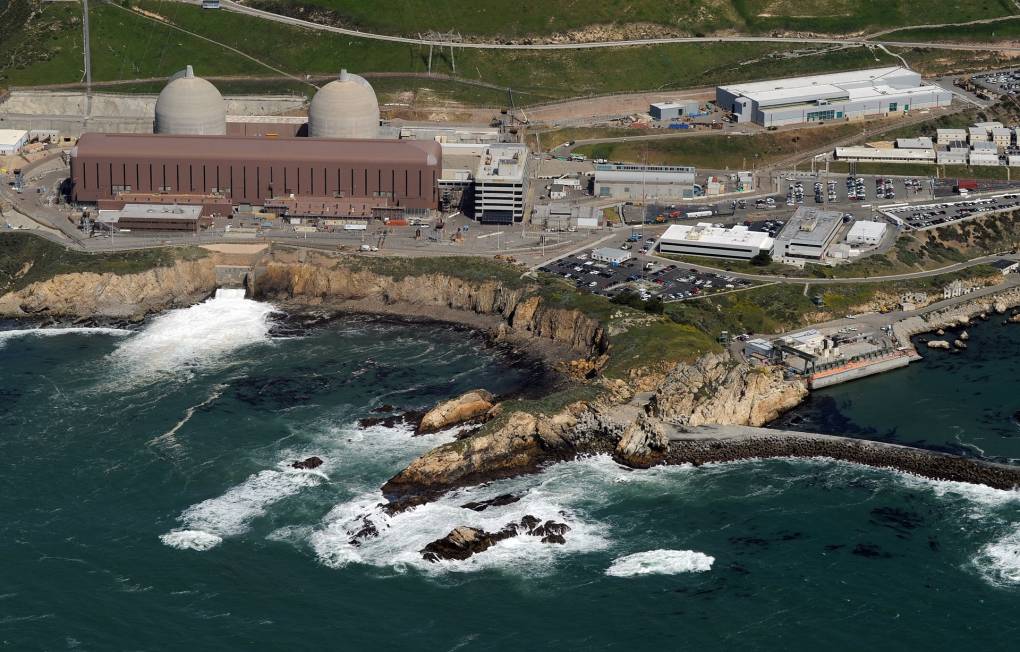
"caption": "Aerial view of the Diablo Canyon Nuclear Power Plant, which sits on the edge of the Pacific Ocean at Avila Beach in San Luis Obispo County, California, on March 17, 2011.",
"credit": "Mark Ralston/AFP/Getty Images",
"altTag": null,
"description": null,
"imgSizes": {
"medium": {
"file": "https://cdn.kqed.org/wp-content/uploads/sites/10/2024/06/DiabloCanyonNuclear-800x511.jpg",
"width": 800,
"height": 511,
"mimeType": "image/jpeg"
},
"large": {
"file": "https://cdn.kqed.org/wp-content/uploads/sites/10/2024/06/DiabloCanyonNuclear-1020x652.jpg",
"width": 1020,
"height": 652,
"mimeType": "image/jpeg"
},
"thumbnail": {
"file": "https://cdn.kqed.org/wp-content/uploads/sites/10/2024/06/DiabloCanyonNuclear-160x102.jpg",
"width": 160,
"height": 102,
"mimeType": "image/jpeg"
},
"1536x1536": {
"file": "https://cdn.kqed.org/wp-content/uploads/sites/10/2024/06/DiabloCanyonNuclear-1536x982.jpg",
"width": 1536,
"height": 982,
"mimeType": "image/jpeg"
},
"post-thumbnail": {
"file": "https://cdn.kqed.org/wp-content/uploads/sites/10/2024/06/DiabloCanyonNuclear-672x372.jpg",
"width": 672,
"height": 372,
"mimeType": "image/jpeg"
},
"twentyfourteen-full-width": {
"file": "https://cdn.kqed.org/wp-content/uploads/sites/10/2024/06/DiabloCanyonNuclear-1038x576.jpg",
"width": 1038,
"height": 576,
"mimeType": "image/jpeg"
},
"kqedFullSize": {
"file": "https://cdn.kqed.org/wp-content/uploads/sites/10/2024/06/DiabloCanyonNuclear.jpg",
"width": 1920,
"height": 1227
}
},
"isLoading": false,
"fetchFailed": false
},
"news_11990232": {
"type": "attachments",
"id": "news_11990232",
"meta": {
"index": "attachments_1716263798",
"site": "news",
"id": "11990232",
"found": true
},
"title": "Screenshot 2024-06-13 at 12.41.19 PM",
"publishDate": 1718307696,
"status": "inherit",
"parent": 11990230,
"modified": 1718310501,
"caption": "Los Angeles Unified School District's Nueva Vista Elementary School in Bell.",
"credit": "Betty Márquez Rosales",
"altTag": "A sign in front of a school building reads \"Nueva Vista Elementary and Performing Arts Magnet.\"",
"description": null,
"imgSizes": {
"medium": {
"file": "https://cdn.kqed.org/wp-content/uploads/sites/10/2024/06/Screenshot-2024-06-13-at-12.41.19 PM-800x591.png",
"width": 800,
"height": 591,
"mimeType": "image/png"
},
"large": {
"file": "https://cdn.kqed.org/wp-content/uploads/sites/10/2024/06/Screenshot-2024-06-13-at-12.41.19 PM-1020x754.png",
"width": 1020,
"height": 754,
"mimeType": "image/png"
},
"thumbnail": {
"file": "https://cdn.kqed.org/wp-content/uploads/sites/10/2024/06/Screenshot-2024-06-13-at-12.41.19 PM-160x118.png",
"width": 160,
"height": 118,
"mimeType": "image/png"
},
"1536x1536": {
"file": "https://cdn.kqed.org/wp-content/uploads/sites/10/2024/06/Screenshot-2024-06-13-at-12.41.19 PM-1536x1135.png",
"width": 1536,
"height": 1135,
"mimeType": "image/png"
},
"post-thumbnail": {
"file": "https://cdn.kqed.org/wp-content/uploads/sites/10/2024/06/Screenshot-2024-06-13-at-12.41.19 PM-672x372.png",
"width": 672,
"height": 372,
"mimeType": "image/png"
},
"twentyfourteen-full-width": {
"file": "https://cdn.kqed.org/wp-content/uploads/sites/10/2024/06/Screenshot-2024-06-13-at-12.41.19 PM-1038x576.png",
"width": 1038,
"height": 576,
"mimeType": "image/png"
},
"full-width": {
"file": "https://cdn.kqed.org/wp-content/uploads/sites/10/2024/06/Screenshot-2024-06-13-at-12.41.19 PM-1920x1419.png",
"width": 1920,
"height": 1419,
"mimeType": "image/png"
},
"kqedFullSize": {
"file": "https://cdn.kqed.org/wp-content/uploads/sites/10/2024/06/Screenshot-2024-06-13-at-12.41.19 PM.png",
"width": 2014,
"height": 1488
}
},
"isLoading": false,
"fetchFailed": false
},
"news_11990060": {
"type": "attachments",
"id": "news_11990060",
"meta": {
"index": "attachments_1716263798",
"site": "news",
"id": "11990060",
"found": true
},
"title": "GettyImages-1212814457_qut",
"publishDate": 1718232780,
"status": "inherit",
"parent": 11989977,
"modified": 1718235036,
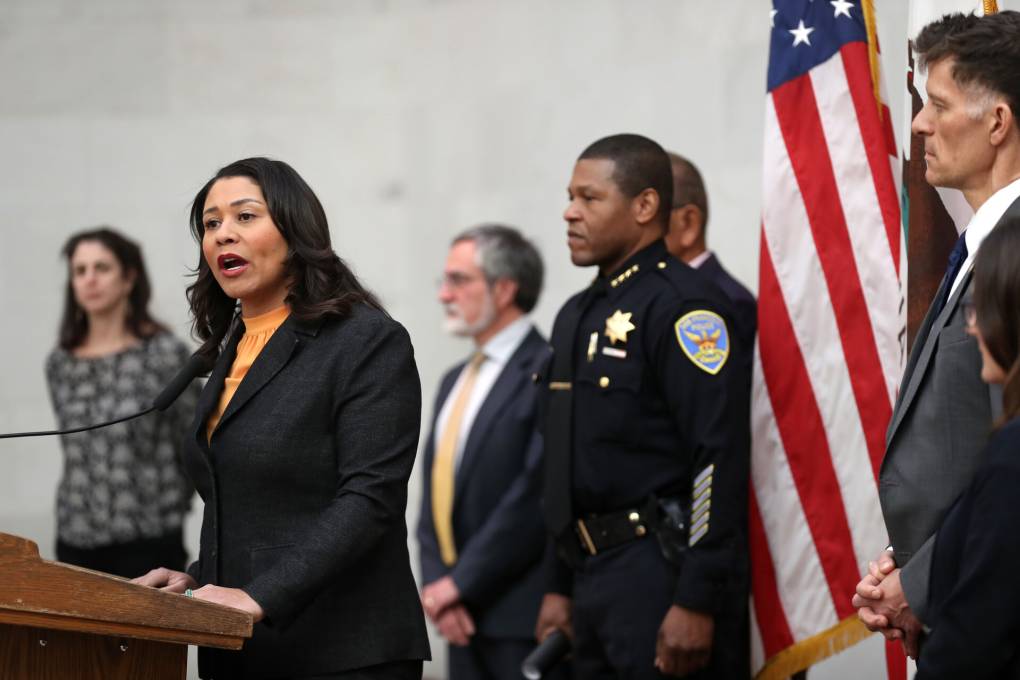
"caption": "San Francisco Mayor London Breed speaks as San Francisco Police Chief William Scott looks on during a press conference in San Francisco City Hall on March 16, 2020.",
"credit": "Justin Sullivan/Getty Images",
"altTag": null,
"description": null,
"imgSizes": {
"medium": {
"file": "https://cdn.kqed.org/wp-content/uploads/sites/10/2024/06/GettyImages-1212814457_qut-800x533.jpg",
"width": 800,
"height": 533,
"mimeType": "image/jpeg"
},
"large": {
"file": "https://cdn.kqed.org/wp-content/uploads/sites/10/2024/06/GettyImages-1212814457_qut-1020x680.jpg",
"width": 1020,
"height": 680,
"mimeType": "image/jpeg"
},
"thumbnail": {
"file": "https://cdn.kqed.org/wp-content/uploads/sites/10/2024/06/GettyImages-1212814457_qut-160x107.jpg",
"width": 160,
"height": 107,
"mimeType": "image/jpeg"
},
"1536x1536": {
"file": "https://cdn.kqed.org/wp-content/uploads/sites/10/2024/06/GettyImages-1212814457_qut-1536x1024.jpg",
"width": 1536,
"height": 1024,
"mimeType": "image/jpeg"
},
"post-thumbnail": {
"file": "https://cdn.kqed.org/wp-content/uploads/sites/10/2024/06/GettyImages-1212814457_qut-672x372.jpg",
"width": 672,
"height": 372,
"mimeType": "image/jpeg"
},
"twentyfourteen-full-width": {
"file": "https://cdn.kqed.org/wp-content/uploads/sites/10/2024/06/GettyImages-1212814457_qut-1038x576.jpg",
"width": 1038,
"height": 576,
"mimeType": "image/jpeg"
},
"kqedFullSize": {
"file": "https://cdn.kqed.org/wp-content/uploads/sites/10/2024/06/GettyImages-1212814457_qut.jpg",
"width": 1920,
"height": 1280
}
},
"isLoading": false,
"fetchFailed": false
},
"news_11989657": {
"type": "attachments",
"id": "news_11989657",
"meta": {
"index": "attachments_1716263798",
"site": "news",
"id": "11989657",
"found": true
},
"title": "240610-TKParentsDilemma-24-BL_qut",
"publishDate": 1718051259,
"status": "inherit",
"parent": 0,
"modified": 1718142095,
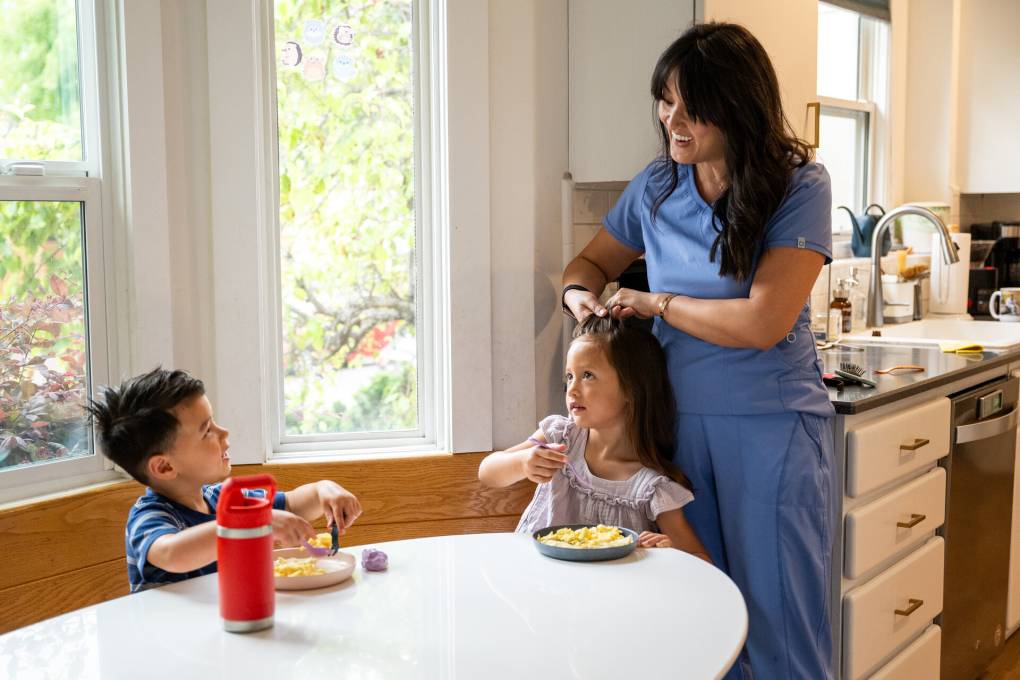
"caption": "Jennifer Currier prepares her two children, Kaia, 5, and Kane, 2, for summer camp at their home in Alameda on June 10 before her husband, Steve, takes the kids to camp and she leaves for work. On other days, a nanny takes the kids to school after both parents go to work.",
"credit": "Beth LaBerge/KQED",
"altTag": null,
"description": null,
"imgSizes": {
"medium": {
"file": "https://cdn.kqed.org/wp-content/uploads/sites/10/2024/06/240610-TKParentsDilemma-24-BL_qut-800x533.jpg",
"width": 800,
"height": 533,
"mimeType": "image/jpeg"
},
"large": {
"file": "https://cdn.kqed.org/wp-content/uploads/sites/10/2024/06/240610-TKParentsDilemma-24-BL_qut-1020x680.jpg",
"width": 1020,
"height": 680,
"mimeType": "image/jpeg"
},
"thumbnail": {
"file": "https://cdn.kqed.org/wp-content/uploads/sites/10/2024/06/240610-TKParentsDilemma-24-BL_qut-160x107.jpg",
"width": 160,
"height": 107,
"mimeType": "image/jpeg"
},
"1536x1536": {
"file": "https://cdn.kqed.org/wp-content/uploads/sites/10/2024/06/240610-TKParentsDilemma-24-BL_qut-1536x1024.jpg",
"width": 1536,
"height": 1024,
"mimeType": "image/jpeg"
},
"post-thumbnail": {
"file": "https://cdn.kqed.org/wp-content/uploads/sites/10/2024/06/240610-TKParentsDilemma-24-BL_qut-672x372.jpg",
"width": 672,
"height": 372,
"mimeType": "image/jpeg"
},
"twentyfourteen-full-width": {
"file": "https://cdn.kqed.org/wp-content/uploads/sites/10/2024/06/240610-TKParentsDilemma-24-BL_qut-1038x576.jpg",
"width": 1038,
"height": 576,
"mimeType": "image/jpeg"
},
"kqedFullSize": {
"file": "https://cdn.kqed.org/wp-content/uploads/sites/10/2024/06/240610-TKParentsDilemma-24-BL_qut.jpg",
"width": 1920,
"height": 1280
}
},
"isLoading": false,
"fetchFailed": false
},
"news_11989773": {
"type": "attachments",
"id": "news_11989773",
"meta": {
"index": "attachments_1716263798",
"site": "news",
"id": "11989773",
"found": true
},
"title": "A California Forever billboard stands along I-80 in Vacaville on April 2, 2024.",
"publishDate": 1718126485,
"status": "inherit",
"parent": 11989766,
"modified": 1718126541,
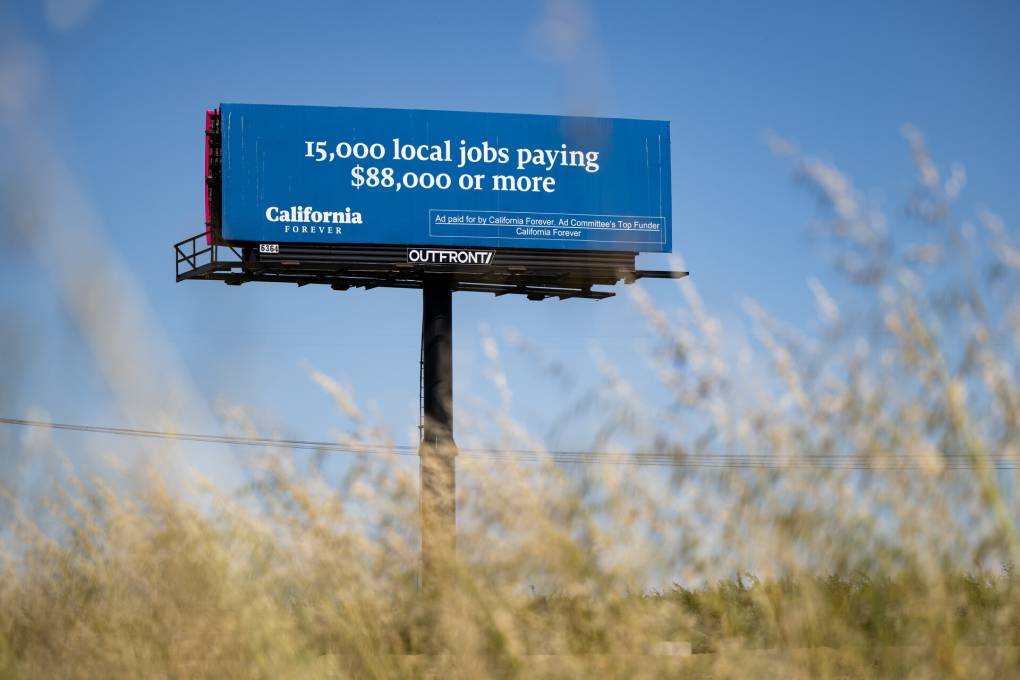
"caption": "A California Forever billboard stands along I-80 in Vacaville on April 2, 2024.",
"credit": "Beth LaBerge/KQED",
"altTag": "A billboard among tall weeds reads, \"15,000 local jobs paying $88,000 or more.\" Paid for by California Forever.",
"description": null,
"imgSizes": {
"medium": {
"file": "https://cdn.kqed.org/wp-content/uploads/sites/10/2024/06/240502-CaliforniaForever-13-BL_qut-800x533.jpg",
"width": 800,
"height": 533,
"mimeType": "image/jpeg"
},
"large": {
"file": "https://cdn.kqed.org/wp-content/uploads/sites/10/2024/06/240502-CaliforniaForever-13-BL_qut-1020x680.jpg",
"width": 1020,
"height": 680,
"mimeType": "image/jpeg"
},
"thumbnail": {
"file": "https://cdn.kqed.org/wp-content/uploads/sites/10/2024/06/240502-CaliforniaForever-13-BL_qut-160x107.jpg",
"width": 160,
"height": 107,
"mimeType": "image/jpeg"
},
"1536x1536": {
"file": "https://cdn.kqed.org/wp-content/uploads/sites/10/2024/06/240502-CaliforniaForever-13-BL_qut-1536x1024.jpg",
"width": 1536,
"height": 1024,
"mimeType": "image/jpeg"
},
"post-thumbnail": {
"file": "https://cdn.kqed.org/wp-content/uploads/sites/10/2024/06/240502-CaliforniaForever-13-BL_qut-672x372.jpg",
"width": 672,
"height": 372,
"mimeType": "image/jpeg"
},
"twentyfourteen-full-width": {
"file": "https://cdn.kqed.org/wp-content/uploads/sites/10/2024/06/240502-CaliforniaForever-13-BL_qut-1038x576.jpg",
"width": 1038,
"height": 576,
"mimeType": "image/jpeg"
},
"kqedFullSize": {
"file": "https://cdn.kqed.org/wp-content/uploads/sites/10/2024/06/240502-CaliforniaForever-13-BL_qut.jpg",
"width": 1920,
"height": 1280
}
},
"isLoading": false,
"fetchFailed": false
},
"news_11988055": {
"type": "attachments",
"id": "news_11988055",
"meta": {
"index": "attachments_1716263798",
"site": "news",
"id": "11988055",
"found": true
},
"title": "240517-TKBilingualLearners-27-BL_qut",
"publishDate": 1717006968,
"status": "inherit",
"parent": 0,
"modified": 1717794201,
"caption": "Teacher Cintya Valdivia sits with transitional kindergarten students during snack time at the International Community School in Oakland on May 17, 2024.",
"credit": "Beth LaBerge/KQED",
"altTag": "A teacher sits at a classroom table with young students as one student puts his arm tenderly around her neck",
"description": null,
"imgSizes": {
"medium": {
"file": "https://cdn.kqed.org/wp-content/uploads/sites/10/2024/05/240517-TKBilingualLearners-27-BL_qut-800x533.jpg",
"width": 800,
"height": 533,
"mimeType": "image/jpeg"
},
"large": {
"file": "https://cdn.kqed.org/wp-content/uploads/sites/10/2024/05/240517-TKBilingualLearners-27-BL_qut-1020x680.jpg",
"width": 1020,
"height": 680,
"mimeType": "image/jpeg"
},
"thumbnail": {
"file": "https://cdn.kqed.org/wp-content/uploads/sites/10/2024/05/240517-TKBilingualLearners-27-BL_qut-160x107.jpg",
"width": 160,
"height": 107,
"mimeType": "image/jpeg"
},
"1536x1536": {
"file": "https://cdn.kqed.org/wp-content/uploads/sites/10/2024/05/240517-TKBilingualLearners-27-BL_qut-1536x1024.jpg",
"width": 1536,
"height": 1024,
"mimeType": "image/jpeg"
},
"post-thumbnail": {
"file": "https://cdn.kqed.org/wp-content/uploads/sites/10/2024/05/240517-TKBilingualLearners-27-BL_qut-672x372.jpg",
"width": 672,
"height": 372,
"mimeType": "image/jpeg"
},
"twentyfourteen-full-width": {
"file": "https://cdn.kqed.org/wp-content/uploads/sites/10/2024/05/240517-TKBilingualLearners-27-BL_qut-1038x576.jpg",
"width": 1038,
"height": 576,
"mimeType": "image/jpeg"
},
"kqedFullSize": {
"file": "https://cdn.kqed.org/wp-content/uploads/sites/10/2024/05/240517-TKBilingualLearners-27-BL_qut.jpg",
"width": 1920,
"height": 1280
}
},
"isLoading": false,
"fetchFailed": false
},
"news_11989010": {
"type": "attachments",
"id": "news_11989010",
"meta": {
"index": "attachments_1716263798",
"site": "news",
"id": "11989010",
"found": true
},
"title": "Tio'sTacos01",
"publishDate": 1717544275,
"status": "inherit",
"parent": 11988955,
"modified": 1717610084,
"caption": "The outside of Tio's Tacos in downtown Riverside, California, on March 27, 2024.",
"credit": "Daniel Eduardo Hernandez/KQED",
"altTag": null,
"description": null,
"imgSizes": {
"medium": {
"file": "https://cdn.kqed.org/wp-content/uploads/sites/10/2024/06/TiosTacos01-800x533.jpg",
"width": 800,
"height": 533,
"mimeType": "image/jpeg"
},
"large": {
"file": "https://cdn.kqed.org/wp-content/uploads/sites/10/2024/06/TiosTacos01-1020x680.jpg",
"width": 1020,
"height": 680,
"mimeType": "image/jpeg"
},
"thumbnail": {
"file": "https://cdn.kqed.org/wp-content/uploads/sites/10/2024/06/TiosTacos01-160x107.jpg",
"width": 160,
"height": 107,
"mimeType": "image/jpeg"
},
"1536x1536": {
"file": "https://cdn.kqed.org/wp-content/uploads/sites/10/2024/06/TiosTacos01-1536x1024.jpg",
"width": 1536,
"height": 1024,
"mimeType": "image/jpeg"
},
"post-thumbnail": {
"file": "https://cdn.kqed.org/wp-content/uploads/sites/10/2024/06/TiosTacos01-672x372.jpg",
"width": 672,
"height": 372,
"mimeType": "image/jpeg"
},
"twentyfourteen-full-width": {
"file": "https://cdn.kqed.org/wp-content/uploads/sites/10/2024/06/TiosTacos01-1038x576.jpg",
"width": 1038,
"height": 576,
"mimeType": "image/jpeg"
},
"kqedFullSize": {
"file": "https://cdn.kqed.org/wp-content/uploads/sites/10/2024/06/TiosTacos01.jpg",
"width": 1920,
"height": 1280
}
},
"isLoading": false,
"fetchFailed": false
},
"news_11989244": {
"type": "attachments",
"id": "news_11989244",
"meta": {
"index": "attachments_1716263798",
"site": "news",
"id": "11989244",
"found": true
},
"title": "Virus Outbreak California",
"publishDate": 1717694868,
"status": "inherit",
"parent": 11989238,
"modified": 1717694891,
"caption": "Emergency medical technician Thomas Hoang, 29, of Emergency Ambulance Service, pushes a gurney into an emergency room to drop off a COVID-19 patient in Placentia on Friday, Jan. 8, 2021.",
"credit": "Jae C. Hong/AP Photo",
"altTag": null,
"description": null,
"imgSizes": {
"medium": {
"file": "https://cdn.kqed.org/wp-content/uploads/sites/10/2024/06/CMERWorkers01-800x533.jpg",
"width": 800,
"height": 533,
"mimeType": "image/jpeg"
},
"large": {
"file": "https://cdn.kqed.org/wp-content/uploads/sites/10/2024/06/CMERWorkers01-1020x680.jpg",
"width": 1020,
"height": 680,
"mimeType": "image/jpeg"
},
"thumbnail": {
"file": "https://cdn.kqed.org/wp-content/uploads/sites/10/2024/06/CMERWorkers01-160x107.jpg",
"width": 160,
"height": 107,
"mimeType": "image/jpeg"
},
"1536x1536": {
"file": "https://cdn.kqed.org/wp-content/uploads/sites/10/2024/06/CMERWorkers01-1536x1024.jpg",
"width": 1536,
"height": 1024,
"mimeType": "image/jpeg"
},
"post-thumbnail": {
"file": "https://cdn.kqed.org/wp-content/uploads/sites/10/2024/06/CMERWorkers01-672x372.jpg",
"width": 672,
"height": 372,
"mimeType": "image/jpeg"
},
"twentyfourteen-full-width": {
"file": "https://cdn.kqed.org/wp-content/uploads/sites/10/2024/06/CMERWorkers01-1038x576.jpg",
"width": 1038,
"height": 576,
"mimeType": "image/jpeg"
},
"full-width": {
"file": "https://cdn.kqed.org/wp-content/uploads/sites/10/2024/06/CMERWorkers01-1920x1280.jpg",
"width": 1920,
"height": 1280,
"mimeType": "image/jpeg"
},
"kqedFullSize": {
"file": "https://cdn.kqed.org/wp-content/uploads/sites/10/2024/06/CMERWorkers01.jpg",
"width": 2000,
"height": 1333
}
},
"isLoading": false,
"fetchFailed": false
},
"news_11988415": {
"type": "attachments",
"id": "news_11988415",
"meta": {
"index": "attachments_1716263798",
"site": "news",
"id": "11988415",
"found": true
},
"title": "Tent on field by sea during sunset",
"publishDate": 1717180104,
"status": "inherit",
"parent": 11988380,
"modified": 1717180310,
"caption": "Planning a quick Big Sur camping getaway? Stick to the northern options closer to the Bay Area. Choose from public and private campgrounds or dispersed wilderness camping.",
"credit": "Cavan Images/Getty Images",
"altTag": null,
"description": null,
"imgSizes": {
"medium": {
"file": "https://cdn.kqed.org/wp-content/uploads/sites/10/2024/05/BigSurCamping-800x534.jpg",
"width": 800,
"height": 534,
"mimeType": "image/jpeg"
},
"large": {
"file": "https://cdn.kqed.org/wp-content/uploads/sites/10/2024/05/BigSurCamping-1020x681.jpg",
"width": 1020,
"height": 681,
"mimeType": "image/jpeg"
},
"thumbnail": {
"file": "https://cdn.kqed.org/wp-content/uploads/sites/10/2024/05/BigSurCamping-160x107.jpg",
"width": 160,
"height": 107,
"mimeType": "image/jpeg"
},
"1536x1536": {
"file": "https://cdn.kqed.org/wp-content/uploads/sites/10/2024/05/BigSurCamping-1536x1026.jpg",
"width": 1536,
"height": 1026,
"mimeType": "image/jpeg"
},
"post-thumbnail": {
"file": "https://cdn.kqed.org/wp-content/uploads/sites/10/2024/05/BigSurCamping-672x372.jpg",
"width": 672,
"height": 372,
"mimeType": "image/jpeg"
},
"twentyfourteen-full-width": {
"file": "https://cdn.kqed.org/wp-content/uploads/sites/10/2024/05/BigSurCamping-1038x576.jpg",
"width": 1038,
"height": 576,
"mimeType": "image/jpeg"
},
"kqedFullSize": {
"file": "https://cdn.kqed.org/wp-content/uploads/sites/10/2024/05/BigSurCamping.jpg",
"width": 1920,
"height": 1282
}
},
"isLoading": false,
"fetchFailed": false
},
"news_11988838": {
"type": "attachments",
"id": "news_11988838",
"meta": {
"index": "attachments_1716263798",
"site": "news",
"id": "11988838",
"found": true
},
"title": "OOW Bonus Ep10_web img",
"publishDate": 1717455849,
"status": "inherit",
"parent": 11988710,
"modified": 1717482206,
"caption": "Journalists Jesse Vasquez (left), executive director of the Pollen Initiative, and Rahsaan Thomas (right), executive director of Empowerment Avenue.",
"credit": null,
"altTag": "A side-by-side image of Jesse Vasquez on the left and Rahsaan Thomas on the right. Jesse Vasquez, who has a shaved head and is wearing a light blue checkered shirt, is seated outdoors with greenery in the background. Rahsaan Thomas, who has a goatee and is wearing a red \"Ear Hustle\" T-shirt, is standing outside, smiling, with trees and a clear sky behind him. Both are formerly incarcerated journalists. The words \"On Our Watch\" are visible in the lower left corner of Jesse's photo.",
"description": null,
"imgSizes": {
"medium": {
"file": "https://cdn.kqed.org/wp-content/uploads/sites/10/2024/06/OOW-Bonus-Ep10_web-img-800x450.png",
"width": 800,
"height": 450,
"mimeType": "image/png"
},
"large": {
"file": "https://cdn.kqed.org/wp-content/uploads/sites/10/2024/06/OOW-Bonus-Ep10_web-img-1020x574.png",
"width": 1020,
"height": 574,
"mimeType": "image/png"
},
"thumbnail": {
"file": "https://cdn.kqed.org/wp-content/uploads/sites/10/2024/06/OOW-Bonus-Ep10_web-img-160x90.png",
"width": 160,
"height": 90,
"mimeType": "image/png"
},
"1536x1536": {
"file": "https://cdn.kqed.org/wp-content/uploads/sites/10/2024/06/OOW-Bonus-Ep10_web-img-1536x864.png",
"width": 1536,
"height": 864,
"mimeType": "image/png"
},
"post-thumbnail": {
"file": "https://cdn.kqed.org/wp-content/uploads/sites/10/2024/06/OOW-Bonus-Ep10_web-img-672x372.png",
"width": 672,
"height": 372,
"mimeType": "image/png"
},
"twentyfourteen-full-width": {
"file": "https://cdn.kqed.org/wp-content/uploads/sites/10/2024/06/OOW-Bonus-Ep10_web-img-1038x576.png",
"width": 1038,
"height": 576,
"mimeType": "image/png"
},
"kqedFullSize": {
"file": "https://cdn.kqed.org/wp-content/uploads/sites/10/2024/06/OOW-Bonus-Ep10_web-img.png",
"width": 1920,
"height": 1080
}
},
"isLoading": false,
"fetchFailed": false
},
"news_11988219": {
"type": "attachments",
"id": "news_11988219",
"meta": {
"index": "attachments_1716263798",
"site": "news",
"id": "11988219",
"found": true
},
"title": "240529-SunolSchoolBoard-05-BL_qut",
"publishDate": 1717094516,
"status": "inherit",
"parent": 0,
"modified": 1717196972,
"caption": "Matthew Sylvester assembles yard signs that say, 'Recall Jergensen and Hurley from the school board' at his home in Sunol on May 29, 2024. In September, Jergensen and Hurley voted to ban all flags at Sunol Glen School beside the state and federal flags. Some saw it as an attempt to prevent a pride flag from being flown on campus.",
"credit": "Beth LaBerge/KQED",
"altTag": "A bearded man sits outside while assembling blue and yellow yard signs.",
"description": null,
"imgSizes": {
"medium": {
"file": "https://cdn.kqed.org/wp-content/uploads/sites/10/2024/05/240529-SunolSchoolBoard-05-BL_qut-800x533.jpg",
"width": 800,
"height": 533,
"mimeType": "image/jpeg"
},
"large": {
"file": "https://cdn.kqed.org/wp-content/uploads/sites/10/2024/05/240529-SunolSchoolBoard-05-BL_qut-1020x680.jpg",
"width": 1020,
"height": 680,
"mimeType": "image/jpeg"
},
"thumbnail": {
"file": "https://cdn.kqed.org/wp-content/uploads/sites/10/2024/05/240529-SunolSchoolBoard-05-BL_qut-160x107.jpg",
"width": 160,
"height": 107,
"mimeType": "image/jpeg"
},
"1536x1536": {
"file": "https://cdn.kqed.org/wp-content/uploads/sites/10/2024/05/240529-SunolSchoolBoard-05-BL_qut-1536x1024.jpg",
"width": 1536,
"height": 1024,
"mimeType": "image/jpeg"
},
"post-thumbnail": {
"file": "https://cdn.kqed.org/wp-content/uploads/sites/10/2024/05/240529-SunolSchoolBoard-05-BL_qut-672x372.jpg",
"width": 672,
"height": 372,
"mimeType": "image/jpeg"
},
"twentyfourteen-full-width": {
"file": "https://cdn.kqed.org/wp-content/uploads/sites/10/2024/05/240529-SunolSchoolBoard-05-BL_qut-1038x576.jpg",
"width": 1038,
"height": 576,
"mimeType": "image/jpeg"
},
"kqedFullSize": {
"file": "https://cdn.kqed.org/wp-content/uploads/sites/10/2024/05/240529-SunolSchoolBoard-05-BL_qut.jpg",
"width": 1920,
"height": 1280
}
},
"isLoading": false,
"fetchFailed": false
},
"news_11988324": {
"type": "attachments",
"id": "news_11988324",
"meta": {
"index": "attachments_1716263798",
"site": "news",
"id": "11988324",
"found": true
},
"title": "240530-BrownPelicans-10-BL",
"publishDate": 1717108347,
"status": "inherit",
"parent": 0,
"modified": 1717115100,
"caption": "International Bird Rescue members released eight rehabilitated brown pelicans, the first group to be returned to the wild, at Fort Baker in Sausalito on May 30, 2024, after they had been treated for starvation.",
"credit": "Beth LaBerge/KQED",
"altTag": null,
"description": null,
"imgSizes": {
"medium": {
"file": "https://cdn.kqed.org/wp-content/uploads/sites/10/2024/05/240530-BrownPelicans-10-BL-800x533.jpg",
"width": 800,
"height": 533,
"mimeType": "image/jpeg"
},
"large": {
"file": "https://cdn.kqed.org/wp-content/uploads/sites/10/2024/05/240530-BrownPelicans-10-BL-1020x680.jpg",
"width": 1020,
"height": 680,
"mimeType": "image/jpeg"
},
"thumbnail": {
"file": "https://cdn.kqed.org/wp-content/uploads/sites/10/2024/05/240530-BrownPelicans-10-BL-160x107.jpg",
"width": 160,
"height": 107,
"mimeType": "image/jpeg"
},
"1536x1536": {
"file": "https://cdn.kqed.org/wp-content/uploads/sites/10/2024/05/240530-BrownPelicans-10-BL-1536x1024.jpg",
"width": 1536,
"height": 1024,
"mimeType": "image/jpeg"
},
"post-thumbnail": {
"file": "https://cdn.kqed.org/wp-content/uploads/sites/10/2024/05/240530-BrownPelicans-10-BL-672x372.jpg",
"width": 672,
"height": 372,
"mimeType": "image/jpeg"
},
"twentyfourteen-full-width": {
"file": "https://cdn.kqed.org/wp-content/uploads/sites/10/2024/05/240530-BrownPelicans-10-BL-1038x576.jpg",
"width": 1038,
"height": 576,
"mimeType": "image/jpeg"
},
"full-width": {
"file": "https://cdn.kqed.org/wp-content/uploads/sites/10/2024/05/240530-BrownPelicans-10-BL-1920x1280.jpg",
"width": 1920,
"height": 1280,
"mimeType": "image/jpeg"
},
"kqedFullSize": {
"file": "https://cdn.kqed.org/wp-content/uploads/sites/10/2024/05/240530-BrownPelicans-10-BL.jpg",
"width": 2000,
"height": 1333
}
},
"isLoading": false,
"fetchFailed": false
}
},
"audioPlayerReducer": {
"postId": "stream_live",
"isPaused": true,
"isPlaying": false,
"pfsActive": false,
"pledgeModalIsOpen": true,
"playerDrawerIsOpen": false,
"liveAudioPlayStartedAt": 0,
"liveAudioPlayContext": ""
},
"authorsReducer": {
"byline_news_11990230": {
"type": "authors",
"id": "byline_news_11990230",
"meta": {
"override": true
},
"slug": "byline_news_11990230",
"name": "Betty Márquez Rosales, EdSource",
"isLoading": false
},
"byline_news_11988955": {
"type": "authors",
"id": "byline_news_11988955",
"meta": {
"override": true
},
"slug": "byline_news_11988955",
"name": "Daniel Eduardo Hernandez",
"isLoading": false
},
"byline_news_11989238": {
"type": "authors",
"id": "byline_news_11989238",
"meta": {
"override": true
},
"slug": "byline_news_11989238",
"name": "Ryan Sabalow, CalMatters",
"isLoading": false
},
"gmarzorati": {
"type": "authors",
"id": "227",
"meta": {
"index": "authors_1716337520",
"id": "227",
"found": true
},
"name": "Guy Marzorati",
"firstName": "Guy",
"lastName": "Marzorati",
"slug": "gmarzorati",
"email": "gmarzorati@KQED.org",
"display_author_email": true,
"staff_mastheads": [
"news"
],
"title": "Correspondent",
"bio": "Guy Marzorati is a correspondent on KQED's California Politics and Government Desk, based in San Jose. A graduate of Santa Clara University, Guy joined KQED in 2013. He reports on state and local politics and produces KQED's digital voter guide.",
"avatar": "https://secure.gravatar.com/avatar/e7038b8dbfd55b104369b76b1cd0b9de?s=600&d=blank&r=g",
"twitter": "guymarzorati",
"facebook": null,
"instagram": null,
"linkedin": null,
"sites": [
{
"site": "",
"roles": [
"editor"
]
},
{
"site": "news",
"roles": [
"editor"
]
},
{
"site": "science",
"roles": [
"editor"
]
},
{
"site": "forum",
"roles": [
"editor"
]
},
{
"site": "elections",
"roles": [
"editor"
]
},
{
"site": "liveblog",
"roles": [
"editor"
]
}
],
"headData": {
"title": "Guy Marzorati | KQED",
"description": "Correspondent",
"ogImgSrc": "https://secure.gravatar.com/avatar/e7038b8dbfd55b104369b76b1cd0b9de?s=600&d=blank&r=g",
"twImgSrc": "https://secure.gravatar.com/avatar/e7038b8dbfd55b104369b76b1cd0b9de?s=600&d=blank&r=g"
},
"isLoading": false,
"link": "/author/gmarzorati"
},
"kdomara": {
"type": "authors",
"id": "1459",
"meta": {
"index": "authors_1716337520",
"id": "1459",
"found": true
},
"name": "Kelly O'Mara",
"firstName": "Kelly",
"lastName": "O'Mara",
"slug": "kdomara",
"email": "komara@kqed.org",
"display_author_email": false,
"staff_mastheads": [
"news"
],
"title": "KQED Contributor",
"bio": "Kelly O'Mara is a writer and reporter in the San Francisco Bay Area. She writes about food, health, sports, travel, business and California news. Her work has appeared on KQED, online for Outside Magazine, epsnW, VICE and in Competitor Magazine, among others. Follow Kelly on Twitter \u003ca href=\"https://twitter.com/kellydomara\">@kellydomara\u003c/a>.",
"avatar": "https://secure.gravatar.com/avatar/768fec7412028b72f13bdd0f5f9d8186?s=600&d=blank&r=g",
"twitter": null,
"facebook": null,
"instagram": null,
"linkedin": null,
"sites": [
{
"site": "arts",
"roles": []
},
{
"site": "news",
"roles": []
},
{
"site": "bayareabites",
"roles": []
},
{
"site": "stateofhealth",
"roles": []
},
{
"site": "science",
"roles": []
},
{
"site": "checkplease",
"roles": [
"editor"
]
},
{
"site": "food",
"roles": []
},
{
"site": "forum",
"roles": [
"editor"
]
},
{
"site": "liveblog",
"roles": [
"editor"
]
}
],
"headData": {
"title": "Kelly O'Mara | KQED",
"description": "KQED Contributor",
"ogImgSrc": "https://secure.gravatar.com/avatar/768fec7412028b72f13bdd0f5f9d8186?s=600&d=blank&r=g",
"twImgSrc": "https://secure.gravatar.com/avatar/768fec7412028b72f13bdd0f5f9d8186?s=600&d=blank&r=g"
},
"isLoading": false,
"link": "/author/kdomara"
},
"jsmall": {
"type": "authors",
"id": "6625",
"meta": {
"index": "authors_1716337520",
"id": "6625",
"found": true
},
"name": "Julie Small",
"firstName": "Julie",
"lastName": "Small",
"slug": "jsmall",
"email": "jsmall@kqed.org",
"display_author_email": true,
"staff_mastheads": [
"news"
],
"title": "KQED Contributor",
"bio": "Julie Small reports on criminal justice and immigration.\r\n\r\nShe was part of a team at KQED awarded a regional 2019 Edward R. Murrow award for continuing coverage of the Trump Administration's family separation policy.\r\n\r\nThe Society for Professional Journalists recognized Julie's 2018 \u003ca href=\"https://www.kqed.org/news/11636262/the-officer-tased-him-31-times-the-sheriff-called-his-death-an-accident\">reporting\u003c/a> on the San Joaquin County Sheriff's \u003ca href=\"https://www.kqed.org/news/11634689/autopsy-doctors-sheriff-overrode-death-findings-to-protect-law-enforcement\">interference\u003c/a> in death investigations with an Excellence in Journalism Award for Ongoing Coverage.\r\n\r\nJulie's\u003ca href=\"https://www.kqed.org/news/11039666/two-mentally-ill-inmates-died-one-month-in-santa-clara\"> reporting\u003c/a> with Lisa Pickoff-White on the treatment of mentally ill offenders in California jails earned a 2017 regional Edward R. Murrow Award for news reporting and an investigative reporting award from the SPJ of Northern California.\r\n\r\nBefore joining KQED, Julie covered government and politics in Sacramento for Southern California Public Radio (SCPR). Her 2010 \u003ca href=\"https://www.scpr.org/specials/prisonmedical/\">series\u003c/a> on lapses in California’s prison medical care also won a regional Edward R. Murrow Award for investigative reporting and a Golden Mic Award from the RTNDA of Southern California.\r\n\r\nJulie began her career in journalism in 2000 as the deputy foreign editor for public radio's \u003cem>Marketplace, \u003c/em>while earning her master's degree in journalism from USC’s Annenberg School of Communication.",
"avatar": "https://secure.gravatar.com/avatar/4baedf201468df97be97c2a9dd7585d0?s=600&d=blank&r=g",
"twitter": "@SmallRadio2",
"facebook": null,
"instagram": null,
"linkedin": null,
"sites": [
{
"site": "news",
"roles": [
"editor"
]
},
{
"site": "stateofhealth",
"roles": [
"author"
]
},
{
"site": "science",
"roles": [
"author"
]
}
],
"headData": {
"title": "Julie Small | KQED",
"description": "KQED Contributor",
"ogImgSrc": "https://secure.gravatar.com/avatar/4baedf201468df97be97c2a9dd7585d0?s=600&d=blank&r=g",
"twImgSrc": "https://secure.gravatar.com/avatar/4baedf201468df97be97c2a9dd7585d0?s=600&d=blank&r=g"
},
"isLoading": false,
"link": "/author/jsmall"
},
"slewis": {
"type": "authors",
"id": "8676",
"meta": {
"index": "authors_1716337520",
"id": "8676",
"found": true
},
"name": "Sukey Lewis",
"firstName": "Sukey",
"lastName": "Lewis",
"slug": "slewis",
"email": "slewis@kqed.org",
"display_author_email": true,
"staff_mastheads": [
"news"
],
"title": "KQED Contributor",
"bio": "Sukey Lewis is a criminal justice reporter and host of \u003cem>On Our Watch\u003c/em>, a new podcast from NPR and KQED about the shadow world of police discipline. In 2018, she co-founded the California Reporting Project, a coalition of newsrooms across the state focused on obtaining previously sealed internal affairs records from law enforcement. In addition to her reporting on police accountability, Sukey has investigated the bail bonds industry, California's wildfires and the high cost of prison phone calls. Sukey earned a master's degree in journalism from the University of California at Berkeley. Send news tips to slewis@kqed.org.",
"avatar": "https://secure.gravatar.com/avatar/03fd6b21024f99d8b0a1966654586de7?s=600&d=blank&r=g",
"twitter": "SukeyLewis",
"facebook": null,
"instagram": null,
"linkedin": null,
"sites": [
{
"site": "news",
"roles": [
"author",
"edit_others_posts"
]
}
],
"headData": {
"title": "Sukey Lewis | KQED",
"description": "KQED Contributor",
"ogImgSrc": "https://secure.gravatar.com/avatar/03fd6b21024f99d8b0a1966654586de7?s=600&d=blank&r=g",
"twImgSrc": "https://secure.gravatar.com/avatar/03fd6b21024f99d8b0a1966654586de7?s=600&d=blank&r=g"
},
"isLoading": false,
"link": "/author/slewis"
},
"btorres": {
"type": "authors",
"id": "11666",
"meta": {
"index": "authors_1716337520",
"id": "11666",
"found": true
},
"name": "Blanca Torres",
"firstName": "Blanca",
"lastName": "Torres",
"slug": "btorres",
"email": "btorres@kqed.org",
"display_author_email": true,
"staff_mastheads": [
"news"
],
"title": "Producer, Forum",
"bio": "Blanca Torres brings sharp news judgement and keen sense of lively conversation to her work as producer for Forum. She loves producing shows that leave listeners feeling like they heard distinctive voices, learned something new and gained a fresh perspective.\r\n\r\nShe joined KQED in January of 2020 after 16 years of working as a newspaper reporter most recently at the \u003cem>San Francisco Business Times,\u003c/em> where she wrote about real estate and economic development. Before that, she covered a variety of beats including crime, education, retail, workplace, the economy, consumer issues, and small business for the \u003cem>Contra Costa Times, Baltimore Sun\u003c/em> and\u003cem> The Seattle Times\u003c/em>. In addition to reporting, she worked as an editorial writer and columnist for the \u003cem>Seattle Times\u003c/em>. From 2017 to 2020, Blanca won a total of ten awards from the National Association of Real Estate Editors and won first place for land use reporting from the California News Publishers Association two years in a row. She is also a member and former board member for the National Association of Hispanic Journalists.\r\n\r\nA native of the Pacific Northwest, Blanca earned her bachelor's degree from Vanderbilt University in Nashville and a master's in fine arts in creative writing at Mills College. She lives in the East Bay with her family.",
"avatar": "https://secure.gravatar.com/avatar/f2322ff46076d337f7ba731ee6068cb1?s=600&d=blank&r=g",
"twitter": "@blancawrites",
"facebook": null,
"instagram": null,
"linkedin": null,
"sites": [
{
"site": "arts",
"roles": [
"editor"
]
},
{
"site": "news",
"roles": [
"editor"
]
},
{
"site": "forum",
"roles": [
"editor"
]
}
],
"headData": {
"title": "Blanca Torres | KQED",
"description": "Producer, Forum",
"ogImgSrc": "https://secure.gravatar.com/avatar/f2322ff46076d337f7ba731ee6068cb1?s=600&d=blank&r=g",
"twImgSrc": "https://secure.gravatar.com/avatar/f2322ff46076d337f7ba731ee6068cb1?s=600&d=blank&r=g"
},
"isLoading": false,
"link": "/author/btorres"
},
"abandlamudi": {
"type": "authors",
"id": "11672",
"meta": {
"index": "authors_1716337520",
"id": "11672",
"found": true
},
"name": "Adhiti Bandlamudi",
"firstName": "Adhiti",
"lastName": "Bandlamudi",
"slug": "abandlamudi",
"email": "abandlamudi@kqed.org",
"display_author_email": false,
"staff_mastheads": [
"news"
],
"title": "KQED Housing Reporter",
"bio": "Adhiti Bandlamudi reports for KQED's Housing desk. She focuses on how housing gets built across the Bay Area. Before joining KQED in 2020, she reported for WUNC in Durham, North Carolina, WABE in Atlanta, Georgia and Capital Public Radio in Sacramento. In 2017, she was awarded a Kroc Fellowship at NPR where she reported on everything from sprinkles to the Golden State Killer's arrest. When she's not reporting, she's baking new recipes in her kitchen or watching movies with friends and family. She's originally from Georgia and has strong opinions about Great British Bake Off.",
"avatar": "https://secure.gravatar.com/avatar/868129c8b257bb99a3500e2c86a65400?s=600&d=mm&r=g",
"twitter": "oddity_adhiti",
"facebook": null,
"instagram": null,
"linkedin": null,
"sites": [
{
"site": "arts",
"roles": [
"author"
]
},
{
"site": "news",
"roles": [
"editor"
]
},
{
"site": "liveblog",
"roles": [
"author"
]
}
],
"headData": {
"title": "Adhiti Bandlamudi | KQED",
"description": "KQED Housing Reporter",
"ogImgSrc": "https://secure.gravatar.com/avatar/868129c8b257bb99a3500e2c86a65400?s=600&d=mm&r=g",
"twImgSrc": "https://secure.gravatar.com/avatar/868129c8b257bb99a3500e2c86a65400?s=600&d=mm&r=g"
},
"isLoading": false,
"link": "/author/abandlamudi"
},
"daisynguyen": {
"type": "authors",
"id": "11829",
"meta": {
"index": "authors_1716337520",
"id": "11829",
"found": true
},
"name": "Daisy Nguyen",
"firstName": "Daisy",
"lastName": "Nguyen",
"slug": "daisynguyen",
"email": "daisynguyen@kqed.org",
"display_author_email": true,
"staff_mastheads": [
"news"
],
"title": "KQED Contributor",
"bio": "I have covered early childhood education and child care for KQED since 2022. I focus on policies aimed at increasing access to early care and education and how they shape individual lives. I've been a journalist for more than two decades, with most of that time devoted to covering breaking news throughout California for The Associated Press. I grew up in San Francisco and studied at UC Davis and Columbia University's Graduate School of Journalism. I live in Oakland with my husband and two kids.",
"avatar": "https://secure.gravatar.com/avatar/2da2127c27f7143b53ebd419800fd55f?s=600&d=blank&r=g",
"twitter": null,
"facebook": null,
"instagram": null,
"linkedin": "https://www.linkedin.com/in/daisynguyen/",
"sites": [
{
"site": "news",
"roles": [
"author"
]
},
{
"site": "liveblog",
"roles": [
"author"
]
}
],
"headData": {
"title": "Daisy Nguyen | KQED",
"description": "KQED Contributor",
"ogImgSrc": "https://secure.gravatar.com/avatar/2da2127c27f7143b53ebd419800fd55f?s=600&d=blank&r=g",
"twImgSrc": "https://secure.gravatar.com/avatar/2da2127c27f7143b53ebd419800fd55f?s=600&d=blank&r=g"
},
"isLoading": false,
"link": "/author/daisynguyen"
},
"sjohnson": {
"type": "authors",
"id": "11840",
"meta": {
"index": "authors_1716337520",
"id": "11840",
"found": true
},
"name": "Sydney Johnson",
"firstName": "Sydney",
"lastName": "Johnson",
"slug": "sjohnson",
"email": "sjohnson@kqed.org",
"display_author_email": false,
"staff_mastheads": [
"news"
],
"title": "KQED Reporter",
"bio": "Sydney Johnson is a general assignment reporter at KQED. She previously reported on public health and city government at the San Francisco Examiner, and before that, she covered statewide education policy for EdSource. Her reporting has won multiple local, state and national awards. Sydney is a graduate of the University of California, Berkeley and lives in San Francisco.",
"avatar": "https://secure.gravatar.com/avatar/97855f2719b72ad6190b7c535fe642c8?s=600&d=blank&r=g",
"twitter": "sydneyfjohnson",
"facebook": null,
"instagram": null,
"linkedin": null,
"sites": [
{
"site": "news",
"roles": [
"editor"
]
}
],
"headData": {
"title": "Sydney Johnson | KQED",
"description": "KQED Reporter",
"ogImgSrc": "https://secure.gravatar.com/avatar/97855f2719b72ad6190b7c535fe642c8?s=600&d=blank&r=g",
"twImgSrc": "https://secure.gravatar.com/avatar/97855f2719b72ad6190b7c535fe642c8?s=600&d=blank&r=g"
},
"isLoading": false,
"link": "/author/sjohnson"
},
"naltenberg": {
"type": "authors",
"id": "11896",
"meta": {
"index": "authors_1716337520",
"id": "11896",
"found": true
},
"name": "Nik Altenberg",
"firstName": "Nik",
"lastName": "Altenberg",
"slug": "naltenberg",
"email": "naltenberg@kqed.org",
"display_author_email": false,
"staff_mastheads": [],
"title": "KQED Contributor",
"bio": "Nik Altenberg is an on-call reporter for KQED and a copy editor and fact checker for Santa Cruz Local. Nik’s reporting interests include policing, public health, environment, immigration, housing and the places where these issues intersect.",
"avatar": "https://secure.gravatar.com/avatar/e391b3a18ce4a53a7ca3f3065c74418b?s=600&d=blank&r=g",
"twitter": null,
"facebook": null,
"instagram": "https://www.instagram.com/nikaltenberg/",
"linkedin": null,
"sites": [
{
"site": "news",
"roles": []
}
],
"headData": {
"title": "Nik Altenberg | KQED",
"description": "KQED Contributor",
"ogImgSrc": "https://secure.gravatar.com/avatar/e391b3a18ce4a53a7ca3f3065c74418b?s=600&d=blank&r=g",
"twImgSrc": "https://secure.gravatar.com/avatar/e391b3a18ce4a53a7ca3f3065c74418b?s=600&d=blank&r=g"
},
"isLoading": false,
"link": "/author/naltenberg"
}
},
"pagesReducer": {
"news_tag_california": {
"type": "terms",
"id": "news_18538",
"meta": {
"index": "terms_1716263798",
"site": "news",
"id": "18538",
"score": 6.8457103
},
"featImg": null,
"name": "California",
"description": null,
"taxonomy": "tag",
"headData": {
"twImgId": null,
"twTitle": null,
"ogTitle": null,
"ogImgId": null,
"twDescription": null,
"description": null,
"title": "California Archives | KQED News",
"ogDescription": null
},
"ttid": 31,
"slug": "california",
"isLoading": false,
"title": "California",
"pageMeta": {
"site": "news",
"WpPageTemplate": "page-topic-editorial",
"currentPage": 137
},
"blocks": [
{
"blockName": "kqed/post-list",
"attrs": {
"layout": "cardArticle2",
"query": "posts/news?tag=california",
"seeMore": false,
"paginated": true,
"page": 137
}
},
{
"blockName": "kqed/ad"
}
]
}
},
"pfsSessionReducer": {},
"postsReducer": {
"stream_live": {
"type": "live",
"id": "stream_live",
"audioUrl": "https://streams.kqed.org/kqedradio",
"title": "Live Stream",
"excerpt": "Live Stream information currently unavailable.",
"link": "/radio",
"featImg": "",
"label": {
"name": "KQED Live",
"link": "/"
}
},
"stream_kqedNewscast": {
"type": "posts",
"id": "stream_kqedNewscast",
"audioUrl": "https://www.kqed.org/.stream/anon/radio/RDnews/newscast.mp3?_=1",
"title": "KQED Newscast",
"featImg": "",
"label": {
"name": "88.5 FM",
"link": "/"
}
},
"news_11990312": {
"type": "posts",
"id": "news_11990312",
"meta": {
"index": "posts_1716263798",
"site": "news",
"id": "11990312",
"score": null,
"sort": [
1718325290000
]
},
"guestAuthors": [],
"slug": "how-much-will-it-cost-you-to-keep-californias-last-nuclear-plant-running",
"title": "How Much Will It Cost You to Keep California's Last Nuclear Plant Running?",
"publishDate": 1718325290,
"format": "standard",
"headTitle": "How Much Will It Cost You to Keep California’s Last Nuclear Plant Running? | KQED",
"labelTerm": {
"site": "news"
},
"content": "\u003cp>California regulators had slated Diablo Canyon Power Plant for closure in 2025, following decades of intense opposition to nuclear power and amid growing questions about its seismic safety.\u003c/p>\n\u003cp>But in 2022, worries about the stability of California’s electricity supply convinced state lawmakers to back peddle and pass legislation to keep the plant running until 2030.\u003c/p>\n\u003cp>Now, the estimated costs of doing so are in dispute.\u003c/p>\n\u003cp>Last year, PG&E, which runs the nuclear power plant, asked the California Public Utilities Commission in 2023 to approve a rate hike to cover $5.2 billion in operating costs. A few months later, the company revised that forecast to $8.1 billion, according to filings with the CPUC.\u003c/p>\n\u003cp>[ad fullwidth]\u003c/p>\n\u003cp>Now, environmental advocates allege PG&E is actually asking for $11.8 billion.\u003c/p>\n\u003cp>John Geesman, with the Alliance for Nuclear Responsibility, said Thursday he combed through PG&E’s request. The former California Energy commissioner found many hidden costs buried in the fine print.\u003c/p>\n\u003cp>“This is the salami approach to the utility business,” Geesman said. “Just show them a little piece at a time.”[aside postID=news_11897239 hero='https://ww2.kqed.org/app/uploads/sites/10/2021/11/GettyImages-110400756-1020x680.jpg']“The cost increases are divided into small amounts,” Peter Bradford, the former U.S. Nuclear regulator, said. “The argument is always, ‘Yes, it’s unfortunate. We wish we’d known this at the outset, but it won’t cost that much more to go forward.’”\u003c/p>\n\u003cp>In a statement, PG&E called the $11.8 billion cost estimate “false” and wrote that the advocacy group’s analysis “incorrectly includes billions of dollars” of unrelated costs.\u003c/p>\n\u003cp>“This is a really bad idea to throw all this money into an aged, dangerous nuclear power plant,” said Linda Seeley with San Luis Obispo’s Mothers for Peace.\u003c/p>\n\u003cp>Activists called on the CPUC to reject PG&E’s rate hike proposal.\u003c/p>\n\u003cp>The state regulator–did not immediately return calls for comment.\u003c/p>\n\u003cp>\u003c/p>\n",
"blocks": [],
"excerpt": "The Environmental Working Group's conference opposes PG&E's alleged $11.8 billion plan for Diablo Canyon, warning of rate hikes for customers.",
"status": "publish",
"parent": 0,
"modified": 1718325542,
"stats": {
"hasAudio": false,
"hasVideo": false,
"hasChartOrMap": false,
"iframeSrcs": [],
"hasGoogleForm": false,
"hasGallery": false,
"hasHearkenModule": false,
"hasPolis": false,
"paragraphCount": 13,
"wordCount": 356
},
"headData": {
"title": "How Much Will It Cost You to Keep California's Last Nuclear Plant Running? | KQED",
"description": "The Environmental Working Group's conference opposes PG&E's alleged $11.8 billion plan for Diablo Canyon, warning of rate hikes for customers.",
"ogTitle": "",
"ogDescription": "",
"ogImgId": "",
"twTitle": "",
"twDescription": "",
"twImgId": "",
"schema": {
"@context": "https://schema.org",
"@type": "NewsArticle",
"headline": "How Much Will It Cost You to Keep California's Last Nuclear Plant Running?",
"datePublished": "2024-06-13T17:34:50-07:00",
"dateModified": "2024-06-13T17:39:02-07:00",
"image": "https://cdn.kqed.org/wp-content/uploads/2020/02/KQED-OG-Image@1x.png",
"isAccessibleForFree": "True",
"publisher": {
"@type": "NewsMediaOrganization",
"@id": "https://www.kqed.org/#organization",
"name": "KQED",
"logo": "https://cdn.kqed.org/wp-content/uploads/2020/02/KQED-OG-Image@1x.png",
"url": "https://www.kqed.org",
"sameAs": [
"https://www.facebook.com/KQED",
"https://twitter.com/KQED",
"https://www.instagram.com/kqed/",
"https://www.tiktok.com/@kqedofficial",
"https://www.linkedin.com/company/kqed",
"https://www.youtube.com/channel/UCeC0IOo7i1P_61zVUWbJ4nw"
]
}
}
},
"sticky": false,
"nprStoryId": "kqed-11990312",
"excludeFromSiteSearch": "Include",
"articleAge": "0",
"path": "/news/11990312/how-much-will-it-cost-you-to-keep-californias-last-nuclear-plant-running",
"audioTrackLength": null,
"parsedContent": [
{
"type": "contentString",
"content": "\u003cdiv class=\"post-body\">\u003cp>\u003cp>California regulators had slated Diablo Canyon Power Plant for closure in 2025, following decades of intense opposition to nuclear power and amid growing questions about its seismic safety.\u003c/p>\n\u003cp>But in 2022, worries about the stability of California’s electricity supply convinced state lawmakers to back peddle and pass legislation to keep the plant running until 2030.\u003c/p>\n\u003cp>Now, the estimated costs of doing so are in dispute.\u003c/p>\n\u003cp>Last year, PG&E, which runs the nuclear power plant, asked the California Public Utilities Commission in 2023 to approve a rate hike to cover $5.2 billion in operating costs. A few months later, the company revised that forecast to $8.1 billion, according to filings with the CPUC.\u003c/p>\n\u003cp>\u003c/p>\u003c/div>",
"attributes": {
"named": {},
"numeric": []
}
},
{
"type": "component",
"content": "",
"name": "ad",
"attributes": {
"named": {
"label": "fullwidth"
},
"numeric": [
"fullwidth"
]
}
},
{
"type": "contentString",
"content": "\u003cdiv class=\"post-body\">\u003cp>\u003c/p>\n\u003cp>Now, environmental advocates allege PG&E is actually asking for $11.8 billion.\u003c/p>\n\u003cp>John Geesman, with the Alliance for Nuclear Responsibility, said Thursday he combed through PG&E’s request. The former California Energy commissioner found many hidden costs buried in the fine print.\u003c/p>\n\u003cp>“This is the salami approach to the utility business,” Geesman said. “Just show them a little piece at a time.”\u003c/p>\u003c/div>",
"attributes": {
"named": {},
"numeric": []
}
},
{
"type": "component",
"content": "",
"name": "aside",
"attributes": {
"named": {
"postid": "news_11897239",
"hero": "https://ww2.kqed.org/app/uploads/sites/10/2021/11/GettyImages-110400756-1020x680.jpg",
"label": ""
},
"numeric": []
}
},
{
"type": "contentString",
"content": "\u003cdiv class=\"post-body\">\u003cp>“The cost increases are divided into small amounts,” Peter Bradford, the former U.S. Nuclear regulator, said. “The argument is always, ‘Yes, it’s unfortunate. We wish we’d known this at the outset, but it won’t cost that much more to go forward.’”\u003c/p>\n\u003cp>In a statement, PG&E called the $11.8 billion cost estimate “false” and wrote that the advocacy group’s analysis “incorrectly includes billions of dollars” of unrelated costs.\u003c/p>\n\u003cp>“This is a really bad idea to throw all this money into an aged, dangerous nuclear power plant,” said Linda Seeley with San Luis Obispo’s Mothers for Peace.\u003c/p>\n\u003cp>Activists called on the CPUC to reject PG&E’s rate hike proposal.\u003c/p>\n\u003cp>The state regulator–did not immediately return calls for comment.\u003c/p>\n\u003cp>\u003c/p>\n\u003c/div>\u003c/p>",
"attributes": {
"named": {},
"numeric": []
}
}
],
"link": "/news/11990312/how-much-will-it-cost-you-to-keep-californias-last-nuclear-plant-running",
"authors": [
"6625"
],
"categories": [
"news_8"
],
"tags": [
"news_18538",
"news_1068",
"news_20023",
"news_4831",
"news_1069"
],
"featImg": "news_11990314",
"label": "news"
},
"news_11990230": {
"type": "posts",
"id": "news_11990230",
"meta": {
"index": "posts_1716263798",
"site": "news",
"id": "11990230",
"score": null,
"sort": [
1718312404000
]
},
"guestAuthors": [],
"slug": "new-report-reveals-alarming-child-well-being-stats-in-california",
"title": "New Report Reveals Alarming Child Well-Being Stats in California",
"publishDate": 1718312404,
"format": "standard",
"headTitle": "New Report Reveals Alarming Child Well-Being Stats in California | KQED",
"labelTerm": {},
"content": "\u003cp>California’s children rank in the bottom third of all states in overall well-being, according to a new report released this week.\u003c/p>\n\u003cp>The authors of the report, “\u003ca class=\"external\" href=\"https://www.aecf.org/resources/2024-kids-count-data-book\" target=\"_blank\" rel=\"noopener\">2024 KIDS COUNT Data Book: State Trends in Child Well-Being\u003c/a>,” found that over half of California’s 3- and 4-year-olds are not in school, less than one-fourth of its eighth graders are proficient in math, and a greater number children and teens per 100,000 died than in previous years.\u003c/p>\n\u003cp>“One way to think about it is where we see the most progress are the states who are investing in their children — heavily in their children,” said Leslie Boissiere, vice president of external affairs at the Annie E. Casey Foundation, who oversaw the compilation of the report.\u003c/p>\n\u003cp>Now in its 35th year and published by the foundation, a private philanthropy and research organization, the annual report measures children’s well-being across 16 indicators within the categories of education, economic well-being, health, and family and community.\u003c/p>\n\u003cp>Out of all states, California ranked 43rd in economic well-being, 35th in education, 10th in health, and 37th in family and community.\u003c/p>\n\u003cp>[ad fullwidth]\u003c/p>\n\u003cp>California’s children only fared better than most other states in the health indicator. Even so, the number of babies with low birth weight slightly increased from 7.1% in 2019 to 7.4% in 2022, as did the number of child and teen deaths, rising from 18 per 100,000 in 2019 to 22 per 100,000 in 2022.\u003c/p>\n\u003cp>“The movement in indicators generally follows investments, and it depends on the particular state of how they’re investing in their children,” Boissiere said.\u003c/p>\n\u003cp>This year’s report largely focused on comparisons between 2019 and 2022 data to provide a pre-pandemic and post-pandemic view of how children are faring, Boissiere said. Sources for the data included the U.S. Census Bureau, the U.S. Department of Education, the National Center for Education Statistics, the National Assessment of Educational Progress, and the Centers for Disease Control and Prevention.\u003c/p>\n\u003ch2>Impact of low well-being on chronic absenteeism\u003c/h2>\n\u003cp>The authors noted that the report’s findings provide context to the conversation on chronic absenteeism, which is defined as missing 10% or more of the school year.\u003c/p>\n\u003cp>The percentage of \u003ca href=\"https://edsource.org/2023/californias-dramatic-jump-in-chronically-absent-students-part-of-a-nationwide-surge/695439\">chronically absent students in California\u003c/a> skyrocketed from the pre-pandemic rate of 12.1% in the 2018–19 school year to 30% in 2021–22. The reasons for such high absenteeism vary from district to district and even from student to student, but experts agree that the issue is exacerbated when children’s basic needs are not being met.\u003c/p>\n\u003cp>“What we know is that it’s critically important that all children arrive in the classroom ready to learn and, in order for them to be ready to learn, their basic needs have to be met,” Boissiere said.\u003c/p>\n\u003cp>National data included in the report highlighted the relationship between absences and academic performance. The more students miss school, the lower their reading proficiency.\u003c/p>\n\u003cp>[aside postID=\"mindshift_63984,news_11989955,mindshift_63241\" label=\"Related Stories\"]In 2022, the percentage of fourth-grade students nationwide scoring proficient in reading was 40% for students with zero absences the month before they took the National Assessment of Educational Progress or NAEP. Reading proficiency lowered to 34% with one to two absent days in that month; to 28% with three to four absences; 25% with five to 10 absences, and down to 14% for students who had more than 10 absences in the same one-month time frame prior to taking the NAEP.\u003c/p>\n\u003cp>The authors also found that racial inequities play a critical role in nearly all the index measures in the report.\u003c/p>\n\u003cp>“As a result of generationslong inequities and discriminatory policies and practices that persist, children of color face high hurdles to success on many indicators,” the authors wrote.\u003c/p>\n\u003cp>For example, the authors found “alarming increases” in the rate of child and teen death rates among Black children nationally and that American Indian or Alaska Native children “were more than twice as likely to lack health insurance.”\u003c/p>\n\u003cp>Disaggregating racial demographic data also pointed to notable inequities.\u003c/p>\n\u003cp>For example, authors found that Asian and Pacific Islander children experienced one of the lowest rates of poverty nationally at 11%; the rate of poverty among Burmese children was 29%, 24% for Mongolian children, and 23% for Thai children. The national average for child poverty is 16%, per the report, highlighting the stark poverty rates for many Asian children nationwide.\u003c/p>\n\u003cp>Looking at distinct racial inequities, the authors found exceptions where children of color fared better than the national average. For example, Black children were more likely to be in school at ages 3 and 4, to be insured, and to have a head of household with at least a high school diploma. Latino children and teens had lower death rates, and they were also less likely to have low birth weight.\u003c/p>\n\u003cp>\u003c/p>\n\u003cp>“Today, kids of color represent a majority of the children in the country, as well as in 14 states, the District of Columbia, Puerto Rico and the U.S. Virgin Islands,” the authors wrote. “The future success of our nation depends on our ability to ensure all children have the chance to be successful.”\u003c/p>\n\n",
"blocks": [],
"excerpt": "A report found that over half of the state’s 3- and 4-year-olds aren't in school, less than one-fourth of its eighth graders are proficient in math and a greater number of children and teens died than in previous years.",
"status": "publish",
"parent": 0,
"modified": 1718315779,
"stats": {
"hasAudio": false,
"hasVideo": false,
"hasChartOrMap": false,
"iframeSrcs": [],
"hasGoogleForm": false,
"hasGallery": false,
"hasHearkenModule": false,
"hasPolis": false,
"paragraphCount": 22,
"wordCount": 904
},
"headData": {
"title": "New Report Reveals Alarming Child Well-Being Stats in California | KQED",
"description": "A report found that over half of the state’s 3- and 4-year-olds aren't in school, less than one-fourth of its eighth graders are proficient in math and a greater number of children and teens died than in previous years.",
"ogTitle": "",
"ogDescription": "",
"ogImgId": "",
"twTitle": "",
"twDescription": "",
"twImgId": "",
"schema": {
"@context": "https://schema.org",
"@type": "NewsArticle",
"headline": "New Report Reveals Alarming Child Well-Being Stats in California",
"datePublished": "2024-06-13T14:00:04-07:00",
"dateModified": "2024-06-13T14:56:19-07:00",
"image": "https://cdn.kqed.org/wp-content/uploads/2020/02/KQED-OG-Image@1x.png",
"isAccessibleForFree": "True",
"publisher": {
"@type": "NewsMediaOrganization",
"@id": "https://www.kqed.org/#organization",
"name": "KQED",
"logo": "https://cdn.kqed.org/wp-content/uploads/2020/02/KQED-OG-Image@1x.png",
"url": "https://www.kqed.org",
"sameAs": [
"https://www.facebook.com/KQED",
"https://twitter.com/KQED",
"https://www.instagram.com/kqed/",
"https://www.tiktok.com/@kqedofficial",
"https://www.linkedin.com/company/kqed",
"https://www.youtube.com/channel/UCeC0IOo7i1P_61zVUWbJ4nw"
]
}
}
},
"source": "EdSource",
"sourceUrl": "https://edsource.org",
"sticky": false,
"WpOldSlug": "california-ranks-bottom-third-in-overall-child-well-being-per-new-report",
"nprByline": "Betty Márquez Rosales, EdSource",
"nprStoryId": "kqed-11990230",
"excludeFromSiteSearch": "Include",
"showOnAuthorArchivePages": "No",
"articleAge": "0",
"path": "/news/11990230/new-report-reveals-alarming-child-well-being-stats-in-california",
"audioTrackLength": null,
"parsedContent": [
{
"type": "contentString",
"content": "\u003cdiv class=\"post-body\">\u003cp>\u003cp>California’s children rank in the bottom third of all states in overall well-being, according to a new report released this week.\u003c/p>\n\u003cp>The authors of the report, “\u003ca class=\"external\" href=\"https://www.aecf.org/resources/2024-kids-count-data-book\" target=\"_blank\" rel=\"noopener\">2024 KIDS COUNT Data Book: State Trends in Child Well-Being\u003c/a>,” found that over half of California’s 3- and 4-year-olds are not in school, less than one-fourth of its eighth graders are proficient in math, and a greater number children and teens per 100,000 died than in previous years.\u003c/p>\n\u003cp>“One way to think about it is where we see the most progress are the states who are investing in their children — heavily in their children,” said Leslie Boissiere, vice president of external affairs at the Annie E. Casey Foundation, who oversaw the compilation of the report.\u003c/p>\n\u003cp>Now in its 35th year and published by the foundation, a private philanthropy and research organization, the annual report measures children’s well-being across 16 indicators within the categories of education, economic well-being, health, and family and community.\u003c/p>\n\u003cp>Out of all states, California ranked 43rd in economic well-being, 35th in education, 10th in health, and 37th in family and community.\u003c/p>\n\u003cp>\u003c/p>\u003c/div>",
"attributes": {
"named": {},
"numeric": []
}
},
{
"type": "component",
"content": "",
"name": "ad",
"attributes": {
"named": {
"label": "fullwidth"
},
"numeric": [
"fullwidth"
]
}
},
{
"type": "contentString",
"content": "\u003cdiv class=\"post-body\">\u003cp>\u003c/p>\n\u003cp>California’s children only fared better than most other states in the health indicator. Even so, the number of babies with low birth weight slightly increased from 7.1% in 2019 to 7.4% in 2022, as did the number of child and teen deaths, rising from 18 per 100,000 in 2019 to 22 per 100,000 in 2022.\u003c/p>\n\u003cp>“The movement in indicators generally follows investments, and it depends on the particular state of how they’re investing in their children,” Boissiere said.\u003c/p>\n\u003cp>This year’s report largely focused on comparisons between 2019 and 2022 data to provide a pre-pandemic and post-pandemic view of how children are faring, Boissiere said. Sources for the data included the U.S. Census Bureau, the U.S. Department of Education, the National Center for Education Statistics, the National Assessment of Educational Progress, and the Centers for Disease Control and Prevention.\u003c/p>\n\u003ch2>Impact of low well-being on chronic absenteeism\u003c/h2>\n\u003cp>The authors noted that the report’s findings provide context to the conversation on chronic absenteeism, which is defined as missing 10% or more of the school year.\u003c/p>\n\u003cp>The percentage of \u003ca href=\"https://edsource.org/2023/californias-dramatic-jump-in-chronically-absent-students-part-of-a-nationwide-surge/695439\">chronically absent students in California\u003c/a> skyrocketed from the pre-pandemic rate of 12.1% in the 2018–19 school year to 30% in 2021–22. The reasons for such high absenteeism vary from district to district and even from student to student, but experts agree that the issue is exacerbated when children’s basic needs are not being met.\u003c/p>\n\u003cp>“What we know is that it’s critically important that all children arrive in the classroom ready to learn and, in order for them to be ready to learn, their basic needs have to be met,” Boissiere said.\u003c/p>\n\u003cp>National data included in the report highlighted the relationship between absences and academic performance. The more students miss school, the lower their reading proficiency.\u003c/p>\n\u003cp>\u003c/p>\u003c/div>",
"attributes": {
"named": {},
"numeric": []
}
},
{
"type": "component",
"content": "",
"name": "aside",
"attributes": {
"named": {
"postid": "mindshift_63984,news_11989955,mindshift_63241",
"label": "Related Stories "
},
"numeric": []
}
},
{
"type": "contentString",
"content": "\u003cdiv class=\"post-body\">\u003cp>In 2022, the percentage of fourth-grade students nationwide scoring proficient in reading was 40% for students with zero absences the month before they took the National Assessment of Educational Progress or NAEP. Reading proficiency lowered to 34% with one to two absent days in that month; to 28% with three to four absences; 25% with five to 10 absences, and down to 14% for students who had more than 10 absences in the same one-month time frame prior to taking the NAEP.\u003c/p>\n\u003cp>The authors also found that racial inequities play a critical role in nearly all the index measures in the report.\u003c/p>\n\u003cp>“As a result of generationslong inequities and discriminatory policies and practices that persist, children of color face high hurdles to success on many indicators,” the authors wrote.\u003c/p>\n\u003cp>For example, the authors found “alarming increases” in the rate of child and teen death rates among Black children nationally and that American Indian or Alaska Native children “were more than twice as likely to lack health insurance.”\u003c/p>\n\u003cp>Disaggregating racial demographic data also pointed to notable inequities.\u003c/p>\n\u003cp>For example, authors found that Asian and Pacific Islander children experienced one of the lowest rates of poverty nationally at 11%; the rate of poverty among Burmese children was 29%, 24% for Mongolian children, and 23% for Thai children. The national average for child poverty is 16%, per the report, highlighting the stark poverty rates for many Asian children nationwide.\u003c/p>\n\u003cp>Looking at distinct racial inequities, the authors found exceptions where children of color fared better than the national average. For example, Black children were more likely to be in school at ages 3 and 4, to be insured, and to have a head of household with at least a high school diploma. Latino children and teens had lower death rates, and they were also less likely to have low birth weight.\u003c/p>\n\u003cp>\u003c/p>\n\u003cp>“Today, kids of color represent a majority of the children in the country, as well as in 14 states, the District of Columbia, Puerto Rico and the U.S. Virgin Islands,” the authors wrote. “The future success of our nation depends on our ability to ensure all children have the chance to be successful.”\u003c/p>\n\n\u003c/div>\u003c/p>",
"attributes": {
"named": {},
"numeric": []
}
}
],
"link": "/news/11990230/new-report-reveals-alarming-child-well-being-stats-in-california",
"authors": [
"byline_news_11990230"
],
"categories": [
"news_18540",
"news_8"
],
"tags": [
"news_18538",
"news_20013"
],
"featImg": "news_11990232",
"label": "source_news_11990230"
},
"news_11989977": {
"type": "posts",
"id": "news_11989977",
"meta": {
"index": "posts_1716263798",
"site": "news",
"id": "11989977",
"score": null,
"sort": [
1718235161000
]
},
"guestAuthors": [],
"slug": "san-franciscos-new-license-plate-readers-are-leading-to-arrests-and-concerns-about-privacy",
"title": "San Francisco's New License Plate Readers Are Leading to Arrests — and Concerns About Privacy",
"publishDate": 1718235161,
"format": "standard",
"headTitle": "San Francisco’s New License Plate Readers Are Leading to Arrests — and Concerns About Privacy | KQED",
"labelTerm": {
"site": "news"
},
"content": "\u003cp>San Francisco police announced Monday that they’ve installed 100 automated license plate readers and have made several arrests since beginning to install them in March. The cameras sit near intersections and photograph every car, checking license plate numbers against a database of vehicles reported stolen or linked to a suspected crime.\u003c/p>\n\u003cp>Mayor London Breed touted the early results as a success, but advocates warn the technology, and others that San Francisco police are planning to implement, are a concerning shift toward mass surveillance without sufficient transparency.\u003c/p>\n\u003cp>“The early results we’re seeing are extraordinary because we are using 21st-century technology to help us combat some of our challenges related to crime, and it’s making a big difference,” Breed said in an interview with KQED on Wednesday.\u003c/p>\n\u003cp>[ad fullwidth]\u003c/p>\n\u003cp>Police have used the cameras to make several arrests, including a sexual assault suspect by San José police whose car was identified by ALPR cameras in San Francisco last week. They also arrested a woman who had a warrant after a camera identified her car.\u003c/p>\n\u003cp>“These 100 cameras have been a massive help to our police department,” Police Chief William Scott said \u003ca href=\"https://twitter.com/SFPD/status/1800936845825671280\">in a statement on Monday\u003c/a>. “In just a few weeks, we’ve received thousands of hits on stolen or wanted vehicles.”\u003c/p>\n\u003cp>Crime is down in San Francisco this year. There were 13% fewer violent crimes and 33% fewer property crimes from January through May compared with the same period last year, according to a Wednesday \u003ca href=\"https://www.sf.gov/news/san-franciscos-new-public-safety-camera-technology-delivering-early-results\">statement\u003c/a> from the mayor’s office. Violent and property crimes are also down in all regions of the U.S. in the first three months of the year, \u003ca href=\"https://www.fbi.gov/news/press-releases/fbi-releases-2024-quarterly-crime-report-and-use-of-force-data-update\">according to data released\u003c/a> by the FBI on Monday.\u003c/p>\n\u003cp>When asked about this, Breed maintained that the increased police response in the city is having an effect.\u003c/p>\n\u003cp>“The numbers — in terms of an over 85% arrest rate for homicides — that’s not happening in other cities around the country,” Breed said. “That is directly attributed to a lot of the work that we’re doing to increase our capacity to make arrests.”\u003c/p>\n\u003ch2>Privacy concerns about mass surveillance\u003c/h2>\n\u003cp>The technology is “eroding our civil liberties and our privacy,” Saira Hussain, senior staff attorney for the San Francisco-based Electronic Frontier Foundation, told KQED.\u003c/p>\n\u003cp>“When you have a network of hundreds of cameras around a densely populated city, you’re going to inevitably start to understand patterns of how somebody’s moving about and being able to track their movements at a very granular level,” Hussain said. “It starts to look like a mass surveillance technology that is basically a dragnet, and it is identifying everybody who is driving around — not the very, very small percentage of people who may be engaged in criminal activity.”\u003c/p>\n\u003cp>In response to a question about privacy, Breed said, “We are using what we have at our disposal to help us combat issues around crime. And sometimes there are trade-offs if we want to make sure that we are using this technology in a way that’s going to help make our streets safer.”\u003c/p>\n\u003cp>Hussain said she wants San Francisco police to share the data on how the technology has been used and what the outcomes have been.\u003c/p>\n\u003cp>“We should not just merely say, ‘Well, the technology exists, so we should just use it.’ I’d also again posit back on the police department. I want to see what the stats are,” Hussain said. “The studies that are out there have shown that actually automated license plate readers do not have a discernible effect on solving crime.”\u003c/p>\n\u003cp>A city ordinance requires San Francisco police to disclose an annual report on using ALPRs. Hussain and her colleagues submitted requests for public records for these reports, which the police could not produce. The city’s Sunshine Ordinance Task Force ruled last year that \u003ca href=\"https://www.sfgov.org/sunshine/sites/default/files/SOTF_ORDER_22080.pdf\">police were in violation of that ordinance (PDF)\u003c/a>.\u003c/p>\n\u003cp>The automated license plate readers, or ALPRs, are just one part of a broader shift toward using new surveillance technologies for policing in San Francisco.\u003c/p>\n\u003cp>[aside label=\"Related Stories\" postID=\"news_11977185,news_11983813,news_11956244\"]“Our goal is to maximize our use of technology to fight crime more effectively and with more precision,” Scott said in the Monday statement. “We will be integrating our ALPR network with our other technologies, including technologies voters approved in March under Proposition E, like drones and public safety cameras.”\u003c/p>\n\u003cp>\u003ca href=\"https://www.kqed.org/news/11977185/police-want-drones-in-car-chases-how-sfs-prop-e-could-affect-that\">Proposition E\u003c/a> loosened restrictions on police chases and authorized police to use drones and other technologies to combat crime. Breed said one target for the use of drones is sideshows.\u003c/p>\n\u003cp>“Drones are going to be really useful in terms of sideshows because not only will we be able to send drones into those locations, but they’ll be able to follow the various suspects once the sideshows have departed from the areas,” Breed said. “It’s so important that we continue to be as aggressive as we can, use all the tools that we have at our disposal in order to continue to reduce crime in San Francisco.”\u003c/p>\n\u003cp>Hussain said the increased use of these technologies serves to normalize mass surveillance.\u003c/p>\n\u003cp>“When you combine things like drones, and automated license plate readers, other types of technology, it really does begin to identify people as they’re moving about the city,” Hussain said. “And that really starts to look like, rather than an identifiable crime prevention tool, just trying to put everybody under a cloud of suspicion in order to pick out the very small number of incidents in which there is wrongdoing.”\u003c/p>\n\u003cp>Police plan to install 300 more readers throughout the city in the coming weeks.\u003c/p>\n\u003cp>\u003c/p>\n",
"blocks": [],
"excerpt": "Police have installed 100 automated license plate readers in the city, and plan to install 300 more. ",
"status": "publish",
"parent": 0,
"modified": 1722986740,
"stats": {
"hasAudio": false,
"hasVideo": false,
"hasChartOrMap": false,
"iframeSrcs": [],
"hasGoogleForm": false,
"hasGallery": false,
"hasHearkenModule": false,
"hasPolis": false,
"paragraphCount": 23,
"wordCount": 993
},
"headData": {
"title": "San Francisco's New License Plate Readers Are Leading to Arrests — and Concerns About Privacy | KQED",
"description": "Police have installed 100 automated license plate readers in the city, and plan to install 300 more. ",
"ogTitle": "",
"ogDescription": "",
"ogImgId": "",
"twTitle": "",
"twDescription": "",
"twImgId": "",
"schema": {
"@context": "https://schema.org",
"@type": "NewsArticle",
"headline": "San Francisco's New License Plate Readers Are Leading to Arrests — and Concerns About Privacy",
"datePublished": "2024-06-12T16:32:41-07:00",
"dateModified": "2024-08-06T16:25:40-07:00",
"image": "https://cdn.kqed.org/wp-content/uploads/2020/02/KQED-OG-Image@1x.png",
"isAccessibleForFree": "True",
"publisher": {
"@type": "NewsMediaOrganization",
"@id": "https://www.kqed.org/#organization",
"name": "KQED",
"logo": "https://cdn.kqed.org/wp-content/uploads/2020/02/KQED-OG-Image@1x.png",
"url": "https://www.kqed.org",
"sameAs": [
"https://www.facebook.com/KQED",
"https://twitter.com/KQED",
"https://www.instagram.com/kqed/",
"https://www.tiktok.com/@kqedofficial",
"https://www.linkedin.com/company/kqed",
"https://www.youtube.com/channel/UCeC0IOo7i1P_61zVUWbJ4nw"
]
}
}
},
"sticky": false,
"nprStoryId": "kqed-11989977",
"excludeFromSiteSearch": "Include",
"articleAge": "0",
"path": "/news/11989977/san-franciscos-new-license-plate-readers-are-leading-to-arrests-and-concerns-about-privacy",
"audioTrackLength": null,
"parsedContent": [
{
"type": "contentString",
"content": "\u003cdiv class=\"post-body\">\u003cp>\u003cp>San Francisco police announced Monday that they’ve installed 100 automated license plate readers and have made several arrests since beginning to install them in March. The cameras sit near intersections and photograph every car, checking license plate numbers against a database of vehicles reported stolen or linked to a suspected crime.\u003c/p>\n\u003cp>Mayor London Breed touted the early results as a success, but advocates warn the technology, and others that San Francisco police are planning to implement, are a concerning shift toward mass surveillance without sufficient transparency.\u003c/p>\n\u003cp>“The early results we’re seeing are extraordinary because we are using 21st-century technology to help us combat some of our challenges related to crime, and it’s making a big difference,” Breed said in an interview with KQED on Wednesday.\u003c/p>\n\u003cp>\u003c/p>\u003c/div>",
"attributes": {
"named": {},
"numeric": []
}
},
{
"type": "component",
"content": "",
"name": "ad",
"attributes": {
"named": {
"label": "fullwidth"
},
"numeric": [
"fullwidth"
]
}
},
{
"type": "contentString",
"content": "\u003cdiv class=\"post-body\">\u003cp>\u003c/p>\n\u003cp>Police have used the cameras to make several arrests, including a sexual assault suspect by San José police whose car was identified by ALPR cameras in San Francisco last week. They also arrested a woman who had a warrant after a camera identified her car.\u003c/p>\n\u003cp>“These 100 cameras have been a massive help to our police department,” Police Chief William Scott said \u003ca href=\"https://twitter.com/SFPD/status/1800936845825671280\">in a statement on Monday\u003c/a>. “In just a few weeks, we’ve received thousands of hits on stolen or wanted vehicles.”\u003c/p>\n\u003cp>Crime is down in San Francisco this year. There were 13% fewer violent crimes and 33% fewer property crimes from January through May compared with the same period last year, according to a Wednesday \u003ca href=\"https://www.sf.gov/news/san-franciscos-new-public-safety-camera-technology-delivering-early-results\">statement\u003c/a> from the mayor’s office. Violent and property crimes are also down in all regions of the U.S. in the first three months of the year, \u003ca href=\"https://www.fbi.gov/news/press-releases/fbi-releases-2024-quarterly-crime-report-and-use-of-force-data-update\">according to data released\u003c/a> by the FBI on Monday.\u003c/p>\n\u003cp>When asked about this, Breed maintained that the increased police response in the city is having an effect.\u003c/p>\n\u003cp>“The numbers — in terms of an over 85% arrest rate for homicides — that’s not happening in other cities around the country,” Breed said. “That is directly attributed to a lot of the work that we’re doing to increase our capacity to make arrests.”\u003c/p>\n\u003ch2>Privacy concerns about mass surveillance\u003c/h2>\n\u003cp>The technology is “eroding our civil liberties and our privacy,” Saira Hussain, senior staff attorney for the San Francisco-based Electronic Frontier Foundation, told KQED.\u003c/p>\n\u003cp>“When you have a network of hundreds of cameras around a densely populated city, you’re going to inevitably start to understand patterns of how somebody’s moving about and being able to track their movements at a very granular level,” Hussain said. “It starts to look like a mass surveillance technology that is basically a dragnet, and it is identifying everybody who is driving around — not the very, very small percentage of people who may be engaged in criminal activity.”\u003c/p>\n\u003cp>In response to a question about privacy, Breed said, “We are using what we have at our disposal to help us combat issues around crime. And sometimes there are trade-offs if we want to make sure that we are using this technology in a way that’s going to help make our streets safer.”\u003c/p>\n\u003cp>Hussain said she wants San Francisco police to share the data on how the technology has been used and what the outcomes have been.\u003c/p>\n\u003cp>“We should not just merely say, ‘Well, the technology exists, so we should just use it.’ I’d also again posit back on the police department. I want to see what the stats are,” Hussain said. “The studies that are out there have shown that actually automated license plate readers do not have a discernible effect on solving crime.”\u003c/p>\n\u003cp>A city ordinance requires San Francisco police to disclose an annual report on using ALPRs. Hussain and her colleagues submitted requests for public records for these reports, which the police could not produce. The city’s Sunshine Ordinance Task Force ruled last year that \u003ca href=\"https://www.sfgov.org/sunshine/sites/default/files/SOTF_ORDER_22080.pdf\">police were in violation of that ordinance (PDF)\u003c/a>.\u003c/p>\n\u003cp>The automated license plate readers, or ALPRs, are just one part of a broader shift toward using new surveillance technologies for policing in San Francisco.\u003c/p>\n\u003cp>\u003c/p>\u003c/div>",
"attributes": {
"named": {},
"numeric": []
}
},
{
"type": "component",
"content": "",
"name": "aside",
"attributes": {
"named": {
"label": "Related Stories ",
"postid": "news_11977185,news_11983813,news_11956244"
},
"numeric": []
}
},
{
"type": "contentString",
"content": "\u003cdiv class=\"post-body\">\u003cp>“Our goal is to maximize our use of technology to fight crime more effectively and with more precision,” Scott said in the Monday statement. “We will be integrating our ALPR network with our other technologies, including technologies voters approved in March under Proposition E, like drones and public safety cameras.”\u003c/p>\n\u003cp>\u003ca href=\"https://www.kqed.org/news/11977185/police-want-drones-in-car-chases-how-sfs-prop-e-could-affect-that\">Proposition E\u003c/a> loosened restrictions on police chases and authorized police to use drones and other technologies to combat crime. Breed said one target for the use of drones is sideshows.\u003c/p>\n\u003cp>“Drones are going to be really useful in terms of sideshows because not only will we be able to send drones into those locations, but they’ll be able to follow the various suspects once the sideshows have departed from the areas,” Breed said. “It’s so important that we continue to be as aggressive as we can, use all the tools that we have at our disposal in order to continue to reduce crime in San Francisco.”\u003c/p>\n\u003cp>Hussain said the increased use of these technologies serves to normalize mass surveillance.\u003c/p>\n\u003cp>“When you combine things like drones, and automated license plate readers, other types of technology, it really does begin to identify people as they’re moving about the city,” Hussain said. “And that really starts to look like, rather than an identifiable crime prevention tool, just trying to put everybody under a cloud of suspicion in order to pick out the very small number of incidents in which there is wrongdoing.”\u003c/p>\n\u003cp>Police plan to install 300 more readers throughout the city in the coming weeks.\u003c/p>\n\u003cp>\u003c/p>\n\u003c/div>\u003c/p>",
"attributes": {
"named": {},
"numeric": []
}
}
],
"link": "/news/11989977/san-franciscos-new-license-plate-readers-are-leading-to-arrests-and-concerns-about-privacy",
"authors": [
"11896"
],
"categories": [
"news_8"
],
"tags": [
"news_32939",
"news_18538",
"news_30069",
"news_6931",
"news_1859",
"news_38",
"news_545"
],
"featImg": "news_11990060",
"label": "news"
},
"news_11989789": {
"type": "posts",
"id": "news_11989789",
"meta": {
"index": "posts_1716263798",
"site": "news",
"id": "11989789",
"score": null,
"sort": [
1718202634000
]
},
"guestAuthors": [],
"slug": "as-californias-transitional-kindergarten-enrollment-grows-parents-must-make-big-choices",
"title": "As California's Transitional Kindergarten Enrollment Grows, Parents Must Make Big Choices",
"publishDate": 1718202634,
"format": "standard",
"headTitle": "As California’s Transitional Kindergarten Enrollment Grows, Parents Must Make Big Choices | KQED",
"labelTerm": {
"term": 72,
"site": "news"
},
"content": "\u003cp>\u003cem>California is in the middle of an ambitious plan to offer transitional kindergarten to all 4-year-olds by the 2025–26 school year. KQED and LAist are teaming up \u003ca href=\"https://www.kqed.org/news/11989615/california-struggles-with-classroom-space-for-transitional-kindergarten\">on a series\u003c/a> examining the challenges the state faces as it tries to add a new grade to its sprawling public school system.\u003c/em>\u003c/p>\n\u003cp>[dropcap]W[/dropcap]hen the end-of-day bell buzzes in Mrs. Nobriga’s transitional kindergarten class at Holbrook Language Academy in Concord, her students excitedly cluster on the carpet, waiting to be picked up.\u003c/p>\n\u003cp>One student, Galilea, runs to her family and hugs her dad, Victor Buendia, and younger brother, Fabian.\u003c/p>\n\u003cp>For Buendia, the simple act of picking up his daughter from school requires some maneuvering.\u003c/p>\n\u003cp>[ad fullwidth]\u003c/p>\n\u003cp>As an emergency medical technician, he used to work a day shift and wouldn’t get home until late in the evening. But he switched his schedule to start at 4 a.m., so now he’s off by noon — giving him enough to get home, change, load his 2-year-old son Fabian in the car and pick up Galilea when school ends at 1:35 p.m. His wife, Karina Buendia, handles the morning drop-off before heading to her 9-to-5 job as a nurse.\u003c/p>\n\u003cp>“We talked, and we were like, ‘You know what? It’s going to be an early shift,’ but I know I’m going to be out early. I’m going to be able to come and pick her up,” Victor Buendia said. “We want her to know that we’re there for her.”\u003c/p>\n\u003cfigure id=\"attachment_11989792\" class=\"wp-caption aligncenter\" style=\"max-width: 1920px\">\u003cimg loading=\"lazy\" decoding=\"async\" class=\"size-full wp-image-11989792\" src=\"https://cdn.kqed.org/wp-content/uploads/sites/10/2024/06/240520-TKParentsDilemma-53-BL_qut.jpg\" alt=\"\" width=\"1920\" height=\"1280\" srcset=\"https://cdn.kqed.org/wp-content/uploads/sites/10/2024/06/240520-TKParentsDilemma-53-BL_qut.jpg 1920w, https://cdn.kqed.org/wp-content/uploads/sites/10/2024/06/240520-TKParentsDilemma-53-BL_qut-800x533.jpg 800w, https://cdn.kqed.org/wp-content/uploads/sites/10/2024/06/240520-TKParentsDilemma-53-BL_qut-1020x680.jpg 1020w, https://cdn.kqed.org/wp-content/uploads/sites/10/2024/06/240520-TKParentsDilemma-53-BL_qut-160x107.jpg 160w, https://cdn.kqed.org/wp-content/uploads/sites/10/2024/06/240520-TKParentsDilemma-53-BL_qut-1536x1024.jpg 1536w\" sizes=\"(max-width: 1920px) 100vw, 1920px\">\u003cfigcaption class=\"wp-caption-text\">Victor and Karina Buendia pick up their daughter Galilea, 5, after a transitional kindergarten class at Holbrook Language Academy in Concord on May 20. \u003ccite>(Beth LaBerge/KQED)\u003c/cite>\u003c/figcaption>\u003c/figure>\n\u003cp>The Buendias are among the thousands of parents who have opted into California’s ambitious $2.7 billion expansion of transitional kindergarten. In 2021, lawmakers voted to gradually phase in the grade on public school campuses over a five-year period until it covers all 4-year-olds in the state. Gov. Gavin Newsom has made universal TK a hallmark of his administration.\u003c/p>\n\u003cp>Enrollment has significantly increased to 150,000 students this past school year, but the state still has a long way to go to reach its goal of serving more than 300,000 by the fall of 2025.\u003c/p>\n\u003cp>The program’s growth will largely depend on parents buying into the program, but the transition to this new grade creates logistical challenges that force working parents like the Buendias to make difficult choices.[aside postID=news_11989465 hero='https://cdn.kqed.org/wp-content/uploads/sites/10/2024/05/240517-TKBilingualLearners-27-BL_qut-1020x680.jpg']KQED interviewed several families about their experiences with TK and many said drop-off and pick-up arrangements are a major hurdle. Others said their neighborhood school didn’t offer TK, and programs at other schools were difficult to travel to. Some parents said they missed key deadlines because they didn’t know their child was eligible.\u003c/p>\n\u003cp>“This is a major expansion over the course of five years — it’s historic,” said Hanna Melnick, senior policy advisor at the Learning Policy Institute. To accommodate a new grade, schools need additional classroom space, supplies, teachers and outreach to families. The state has provided funding, but progress has varied by school district and individual school.\u003c/p>\n\u003cp>“It’s very exciting that California has prioritized early learning,” Melnick said. “It’s going to be messy no matter where you go to expand this quickly.”\u003c/p>\n\u003cp>The Learning Policy Institute surveyed parents who didn’t enroll their kids in TK and found that the most common reasons were that the school did not offer before- or after-school care or that the available school was not close to home.\u003c/p>\n\u003cp>Some families have opted out of public school altogether or are waiting longer to enroll their kids, like when they are 6 years old. But there is still a gap of missing students, Melnick said, who are not enrolled in public school, private school or homeschooling.\u003c/p>\n\u003cfigure id=\"attachment_11988709\" class=\"wp-caption aligncenter\" style=\"max-width: 2000px\">\u003cimg loading=\"lazy\" decoding=\"async\" class=\"size-full wp-image-11988709\" src=\"https://cdn.kqed.org/wp-content/uploads/sites/10/2024/06/240520-TKPARENTSDILEMMA-60-BL-KQED.jpg\" alt=\"\" width=\"2000\" height=\"1333\" srcset=\"https://cdn.kqed.org/wp-content/uploads/sites/10/2024/06/240520-TKPARENTSDILEMMA-60-BL-KQED.jpg 2000w, https://cdn.kqed.org/wp-content/uploads/sites/10/2024/06/240520-TKPARENTSDILEMMA-60-BL-KQED-800x533.jpg 800w, https://cdn.kqed.org/wp-content/uploads/sites/10/2024/06/240520-TKPARENTSDILEMMA-60-BL-KQED-1020x680.jpg 1020w, https://cdn.kqed.org/wp-content/uploads/sites/10/2024/06/240520-TKPARENTSDILEMMA-60-BL-KQED-160x107.jpg 160w, https://cdn.kqed.org/wp-content/uploads/sites/10/2024/06/240520-TKPARENTSDILEMMA-60-BL-KQED-1536x1024.jpg 1536w, https://cdn.kqed.org/wp-content/uploads/sites/10/2024/06/240520-TKPARENTSDILEMMA-60-BL-KQED-1920x1280.jpg 1920w\" sizes=\"(max-width: 2000px) 100vw, 2000px\">\u003cfigcaption class=\"wp-caption-text\">Victor and Karina Buendia, along with their son Fabian, 3, pick up their daughter Galilea, 5, after a transitional kindergarten class at Holbrook Language Academy in Concord on May 20. \u003ccite>(Beth LaBerge/KQED)\u003c/cite>\u003c/figcaption>\u003c/figure>\n\u003cp>“We knew coming from the pandemic that enrollment across the country has fallen in preschool everywhere,” she said. “We simply don’t really know what’s happening with a lot of families.”\u003c/p>\n\u003cp>Like many parents, the Buendias worried about sending their 4-year-old to an elementary school and wondered if she would adapt to a structured school environment.\u003c/p>\n\u003cp>“I was kind of skeptical,” Victor Buendia said. “At first, I was like, I don’t know how I feel about leaving my kid for long hours.”\u003c/p>\n\u003cp>Before starting TK, Galilea stayed home with her grandparents, which had its benefits, but she also spent a lot of time isolated from other kids during the pandemic. When she did see other kids, like at the park, she didn’t know how to interact with them.\u003c/p>\n\u003cp>Now that Galilea will be off to kindergarten next fall, her parents are thrilled with the progress she’s made socially and academically and said enrolling her in TK was the right choice.\u003c/p>\n\u003cp>“In our case, [TK] was a great help,” Karina Buendia said. “Galilea turned 1 during COVID-19. She was struggling with socialization, so for us, she is getting the skills she needs.”\u003c/p>\n\u003ch2>Getting into school and getting there\u003c/h2>\n\u003cp>Alameda mom, Jennifer Currier, said when she first heard about transitional kindergarten, signing up her daughter Kaia seemed like a no-brainer. She heard great things about Alameda’s public schools and enrolling could help them save the $2,000 monthly tuition they were paying for private preschool.\u003c/p>\n\u003cp>But, their neighborhood school did not offer TK, so they had to consider other schools in the district, some of which would require driving through “horrendous traffic.”\u003c/p>\n\u003cfigure id=\"attachment_11989660\" class=\"wp-caption aligncenter\" style=\"max-width: 1920px\">\u003cimg loading=\"lazy\" decoding=\"async\" class=\"size-full wp-image-11989660\" src=\"https://cdn.kqed.org/wp-content/uploads/sites/10/2024/06/240610-TKParentsDilemma-43-BL_qut.jpg\" alt=\"\" width=\"1920\" height=\"1280\" srcset=\"https://cdn.kqed.org/wp-content/uploads/sites/10/2024/06/240610-TKParentsDilemma-43-BL_qut.jpg 1920w, https://cdn.kqed.org/wp-content/uploads/sites/10/2024/06/240610-TKParentsDilemma-43-BL_qut-800x533.jpg 800w, https://cdn.kqed.org/wp-content/uploads/sites/10/2024/06/240610-TKParentsDilemma-43-BL_qut-1020x680.jpg 1020w, https://cdn.kqed.org/wp-content/uploads/sites/10/2024/06/240610-TKParentsDilemma-43-BL_qut-160x107.jpg 160w, https://cdn.kqed.org/wp-content/uploads/sites/10/2024/06/240610-TKParentsDilemma-43-BL_qut-1536x1024.jpg 1536w\" sizes=\"(max-width: 1920px) 100vw, 1920px\">\u003cfigcaption class=\"wp-caption-text\">Jennifer and Steve Currier leave the house with their two children, Kaia, 5, and Kane, 2, in Alameda on June 10, before Steve takes the kids to camp and Jennifer leaves for work. \u003ccite>(Beth LaBerge/KQED)\u003c/cite>\u003c/figcaption>\u003c/figure>\n\u003cp>Only one Alameda school offering TK was a feasible distance away for Currier’s daughter, so landing a spot was crucial. She compared registration to securing tickets to the Coachella music festival.\u003c/p>\n\u003cp>Last school year, 81% of school districts, county offices of education and charter schools reported offering TK at all of their elementary schools. In addition, 82% reported providing full-day classes, and sometimes alongside part-day classes, according to the state Department of Education.\u003c/p>\n\u003cp>The Alameda Unified School District has taken a deliberately slow approach to implementing universal TK, said Tanya Harris, director for elementary education.\u003c/p>\n\u003cp>The district has nine elementary schools but has added TK incrementally since the statewide expansion started. This fall, six of the district’s schools will offer TK before expanding to all or most of the schools by fall 2025.\u003c/p>\n\u003cp>Demand has been high, with classes filling up to capacity each year, Harris said, but the district has not wanted to rush to add more.\u003c/p>\n\u003cp>“It has been nice to have the slower rollout to be really thoughtful and really find the right folks to be in the classroom,” Harris said.\u003c/p>\n\u003cp>Once Currier managed to enroll her daughter, the next step was figuring out transportation. Currier, an eye doctor, and her husband, an air traffic controller, need to be out of the house well before the kids start school.\u003c/p>\n\u003cfigure id=\"attachment_11989655\" class=\"wp-caption aligncenter\" style=\"max-width: 1920px\">\u003cimg loading=\"lazy\" decoding=\"async\" class=\"size-full wp-image-11989655\" src=\"https://cdn.kqed.org/wp-content/uploads/sites/10/2024/06/240610-TKParentsDilemma-37-BL_qut.jpg\" alt=\"\" width=\"1920\" height=\"1280\" srcset=\"https://cdn.kqed.org/wp-content/uploads/sites/10/2024/06/240610-TKParentsDilemma-37-BL_qut.jpg 1920w, https://cdn.kqed.org/wp-content/uploads/sites/10/2024/06/240610-TKParentsDilemma-37-BL_qut-800x533.jpg 800w, https://cdn.kqed.org/wp-content/uploads/sites/10/2024/06/240610-TKParentsDilemma-37-BL_qut-1020x680.jpg 1020w, https://cdn.kqed.org/wp-content/uploads/sites/10/2024/06/240610-TKParentsDilemma-37-BL_qut-160x107.jpg 160w, https://cdn.kqed.org/wp-content/uploads/sites/10/2024/06/240610-TKParentsDilemma-37-BL_qut-1536x1024.jpg 1536w\" sizes=\"(max-width: 1920px) 100vw, 1920px\">\u003cfigcaption class=\"wp-caption-text\">Jennifer and Steve Currier prepare their two children, Kaia, 5, and Kane, 2, for summer camp at their home in Alameda on June 10. \u003ccite>(Beth LaBerge/KQED)\u003c/cite>\u003c/figcaption>\u003c/figure>\n\u003cp>So they hired a morning nanny who ferries their daughter to school and their 3-year-old son to preschool. In the afternoon, their daughter stays on for after-school care. Even with paying for the morning nanny at $35 per hour and after-school care at $525 per month, the Curriers are saving about $800 a month on childcare.\u003c/p>\n\u003cp>Despite the difficulties, Currier said she feels grateful.\u003c/p>\n\u003cp>“It was a really good fit for [Kaia] to be in TK because she was able to encounter lots of different people from different parts of Alameda,” she said. But she knows others may not be able to make the same choice.\u003c/p>\n\u003cp>“The hours [for TK] can be challenging for a lot of people,” she said. “My husband and I have talked about this a lot, how do people make it work?”\u003c/p>\n\u003cp>State education officials say they’re encouraged by increased enrollment to TK across all racial and ethnic groups because one of their goals is to provide equitable access to the state’s youngest learners.\u003c/p>\n\u003cp>“There’s that overall hope that more and more families find access to high-quality, universal pre-K and that TK is one of those really strong options that’s available to them in a really good way in their community,” said Sarah Neville-Morgan, deputy superintendent at the CDE. A mark of quality, she added, includes having children in the same neighborhood going to the same TK classroom, regardless of their family’s income level.\u003c/p>\n\u003ch2>‘It’s hard to compete with free’\u003c/h2>\n\u003cp>For some parents, the high cost of child care drove them to choose TK.\u003c/p>\n\u003cp>“It’s hard to compete with free,” said Alexis Ford, who lives in Concord and enrolled her son Mikey in TK last fall at the same school as Galilea.\u003c/p>\n\u003cp>Alexis Ford works at a Head Start child care center, which serves low-income families, but couldn’t enroll her son there because her family’s earnings were above the eligibility requirement for the federal preschool program. Before TK, Mikey was cared for by his grandparents and went to a private preschool part-time because full-time care was too expensive.\u003c/p>\n\u003cfigure id=\"attachment_11989820\" class=\"wp-caption aligncenter\" style=\"max-width: 2000px\">\u003cimg loading=\"lazy\" decoding=\"async\" class=\"size-full wp-image-11989820\" src=\"https://cdn.kqed.org/wp-content/uploads/sites/10/2024/06/240520-TKParentsDilemma-01-BL.jpg\" alt=\"\" width=\"2000\" height=\"1333\" srcset=\"https://cdn.kqed.org/wp-content/uploads/sites/10/2024/06/240520-TKParentsDilemma-01-BL.jpg 2000w, https://cdn.kqed.org/wp-content/uploads/sites/10/2024/06/240520-TKParentsDilemma-01-BL-800x533.jpg 800w, https://cdn.kqed.org/wp-content/uploads/sites/10/2024/06/240520-TKParentsDilemma-01-BL-1020x680.jpg 1020w, https://cdn.kqed.org/wp-content/uploads/sites/10/2024/06/240520-TKParentsDilemma-01-BL-160x107.jpg 160w, https://cdn.kqed.org/wp-content/uploads/sites/10/2024/06/240520-TKParentsDilemma-01-BL-1536x1024.jpg 1536w, https://cdn.kqed.org/wp-content/uploads/sites/10/2024/06/240520-TKParentsDilemma-01-BL-1920x1280.jpg 1920w\" sizes=\"(max-width: 2000px) 100vw, 2000px\">\u003cfigcaption class=\"wp-caption-text\">Mikey, 5, (right) works on an exercise with another student in a transitional kindergarten class at Holbrook Language Academy in Concord on May 20. \u003ccite>(Beth LaBerge/KQED)\u003c/cite>\u003c/figcaption>\u003c/figure>\n\u003cp>At first, Ford said she was hesitant about making the transition to TK.\u003c/p>\n\u003cp>“If we could have afforded to send Mikey for full-time at St. Michael’s, we probably would have kept them there until kindergarten,” she said. “Preschool centers and family child care homes can offer a smaller group, more individualized care, for longer.”\u003c/p>\n\u003cp>Mikey was diagnosed with autism when he was three and now receives specialized services at school to help him with speech and other skills. So far, he’s done well in a regular classroom.\u003c/p>\n\u003cp>“We are pretty satisfied,” Ford said. “The plan is he will be here through eighth grade.”\u003c/p>\n\u003cp>For some parents, the shifting eligibility deadlines for TK have created confusion. For this current school year, kids had to turn 4 by April 2. For the class entering this fall, the cut-off is June 2. And for the 2025-26 school year, the cut-off date will move for good to Sept. 1.\u003c/p>\n\u003cp>Christina Martinez of Concord said she feels like her daughter, Skye Ruiz, “fell through the TK cracks.”[aside postID=news_11989615 hero='https://cdn.kqed.org/wp-content/uploads/sites/10/2024/06/TKBackPack-1020x647.jpg']Skye was too young to enroll in TK last fall. This year, she’s eligible for kindergarten because she will be 5 by Sept. 1, but her mother is unsure if she’s ready. Skye has been attending a half-day program that is mostly play-based. It’s great, Martinez said but hasn’t provided her daughter much academic preparation for kindergarten.\u003c/p>\n\u003cp>Martinez decided to enroll Skye in a private TK program at St. Mary’s, a Catholic School in Walnut Creek.\u003c/p>\n\u003cp>Martinez said she hopes the extra year will help Skye ease into school.\u003c/p>\n\u003cp>“I have to pay whatever I have to pay to make sure my kids get an acceptable education at this point,” she said.\u003c/p>\n\u003cp>The whole process of deciding on which school and which grade to start with was “very stressful,” Martinez said.\u003c/p>\n\u003cp>“I did not anticipate that at all,” she said. “These are the things you do not think about when you’re going to have a baby. Like, wow, I’m going to have to think about your whole academic career when you’re 4.”\u003c/p>\n\u003cp>Now that her family has decided, she’s looking forward to her daughter starting school.\u003c/p>\n\u003cp>“I’m just hopefully optimistic,” Martinez said, “that it’s the right place for my daughter.”\u003c/p>\n\u003cp>\u003ca href=\"https://www.kqed.org/author/daisynguyen\">\u003cem>Daisy Nguyen\u003c/em>\u003c/a>\u003cem> contributed reporting for this story.\u003c/em>\u003c/p>\n\u003cp>[ad floatright]\u003c/p>\n",
"blocks": [],
"excerpt": "As California moves toward its goal of serving more than 300,000 students by the fall of 2025, the success of universal TK will largely depend on parents buying into the program.",
"status": "publish",
"parent": 0,
"modified": 1718233426,
"stats": {
"hasAudio": false,
"hasVideo": false,
"hasChartOrMap": false,
"iframeSrcs": [],
"hasGoogleForm": false,
"hasGallery": false,
"hasHearkenModule": false,
"hasPolis": false,
"paragraphCount": 53,
"wordCount": 2192
},
"headData": {
"title": "As California's Transitional Kindergarten Enrollment Grows, Parents Must Make Big Choices | KQED",
"description": "As California moves toward its goal of serving more than 300,000 students by the fall of 2025, the success of universal TK will largely depend on parents buying into the program.",
"ogTitle": "",
"ogDescription": "",
"ogImgId": "",
"twTitle": "",
"twDescription": "",
"twImgId": "",
"schema": {
"@context": "https://schema.org",
"@type": "NewsArticle",
"headline": "As California's Transitional Kindergarten Enrollment Grows, Parents Must Make Big Choices",
"datePublished": "2024-06-12T07:30:34-07:00",
"dateModified": "2024-06-12T16:03:46-07:00",
"image": "https://cdn.kqed.org/wp-content/uploads/2020/02/KQED-OG-Image@1x.png",
"isAccessibleForFree": "True",
"publisher": {
"@type": "NewsMediaOrganization",
"@id": "https://www.kqed.org/#organization",
"name": "KQED",
"logo": "https://cdn.kqed.org/wp-content/uploads/2020/02/KQED-OG-Image@1x.png",
"url": "https://www.kqed.org",
"sameAs": [
"https://www.facebook.com/KQED",
"https://twitter.com/KQED",
"https://www.instagram.com/kqed/",
"https://www.tiktok.com/@kqedofficial",
"https://www.linkedin.com/company/kqed",
"https://www.youtube.com/channel/UCeC0IOo7i1P_61zVUWbJ4nw"
]
}
}
},
"audioUrl": "https://traffic.omny.fm/d/clips/0af137ef-751e-4b19-a055-aaef00d2d578/ffca7e9f-6831-41c5-bcaf-aaef00f5a073/899697ce-1677-49b5-8e27-b18d00fb2aaa/audio.mp3",
"sticky": false,
"nprStoryId": "kqed-11989789",
"excludeFromSiteSearch": "Include",
"articleAge": "0",
"path": "/news/11989789/as-californias-transitional-kindergarten-enrollment-grows-parents-must-make-big-choices",
"audioTrackLength": null,
"parsedContent": [
{
"type": "contentString",
"content": "\u003cdiv class=\"post-body\">\u003cp>\u003cp>\u003cem>California is in the middle of an ambitious plan to offer transitional kindergarten to all 4-year-olds by the 2025–26 school year. KQED and LAist are teaming up \u003ca href=\"https://www.kqed.org/news/11989615/california-struggles-with-classroom-space-for-transitional-kindergarten\">on a series\u003c/a> examining the challenges the state faces as it tries to add a new grade to its sprawling public school system.\u003c/em>\u003c/p>\n\u003cp>\u003c/p>\u003cp>\u003cspan class=\"utils-parseShortcode-shortcodes-__dropcapShortcode__dropcap\">W\u003c/span>\u003c/p>\u003cp>hen the end-of-day bell buzzes in Mrs. Nobriga’s transitional kindergarten class at Holbrook Language Academy in Concord, her students excitedly cluster on the carpet, waiting to be picked up.\u003c/p>\n\u003cp>One student, Galilea, runs to her family and hugs her dad, Victor Buendia, and younger brother, Fabian.\u003c/p>\n\u003cp>For Buendia, the simple act of picking up his daughter from school requires some maneuvering.\u003c/p>\n\u003cp>\u003c/p>\u003c/div>",
"attributes": {
"named": {},
"numeric": []
}
},
{
"type": "component",
"content": "",
"name": "ad",
"attributes": {
"named": {
"label": "fullwidth"
},
"numeric": [
"fullwidth"
]
}
},
{
"type": "contentString",
"content": "\u003cdiv class=\"post-body\">\u003cp>\u003c/p>\n\u003cp>As an emergency medical technician, he used to work a day shift and wouldn’t get home until late in the evening. But he switched his schedule to start at 4 a.m., so now he’s off by noon — giving him enough to get home, change, load his 2-year-old son Fabian in the car and pick up Galilea when school ends at 1:35 p.m. His wife, Karina Buendia, handles the morning drop-off before heading to her 9-to-5 job as a nurse.\u003c/p>\n\u003cp>“We talked, and we were like, ‘You know what? It’s going to be an early shift,’ but I know I’m going to be out early. I’m going to be able to come and pick her up,” Victor Buendia said. “We want her to know that we’re there for her.”\u003c/p>\n\u003cfigure id=\"attachment_11989792\" class=\"wp-caption aligncenter\" style=\"max-width: 1920px\">\u003cimg loading=\"lazy\" decoding=\"async\" class=\"size-full wp-image-11989792\" src=\"https://cdn.kqed.org/wp-content/uploads/sites/10/2024/06/240520-TKParentsDilemma-53-BL_qut.jpg\" alt=\"\" width=\"1920\" height=\"1280\" srcset=\"https://cdn.kqed.org/wp-content/uploads/sites/10/2024/06/240520-TKParentsDilemma-53-BL_qut.jpg 1920w, https://cdn.kqed.org/wp-content/uploads/sites/10/2024/06/240520-TKParentsDilemma-53-BL_qut-800x533.jpg 800w, https://cdn.kqed.org/wp-content/uploads/sites/10/2024/06/240520-TKParentsDilemma-53-BL_qut-1020x680.jpg 1020w, https://cdn.kqed.org/wp-content/uploads/sites/10/2024/06/240520-TKParentsDilemma-53-BL_qut-160x107.jpg 160w, https://cdn.kqed.org/wp-content/uploads/sites/10/2024/06/240520-TKParentsDilemma-53-BL_qut-1536x1024.jpg 1536w\" sizes=\"(max-width: 1920px) 100vw, 1920px\">\u003cfigcaption class=\"wp-caption-text\">Victor and Karina Buendia pick up their daughter Galilea, 5, after a transitional kindergarten class at Holbrook Language Academy in Concord on May 20. \u003ccite>(Beth LaBerge/KQED)\u003c/cite>\u003c/figcaption>\u003c/figure>\n\u003cp>The Buendias are among the thousands of parents who have opted into California’s ambitious $2.7 billion expansion of transitional kindergarten. In 2021, lawmakers voted to gradually phase in the grade on public school campuses over a five-year period until it covers all 4-year-olds in the state. Gov. Gavin Newsom has made universal TK a hallmark of his administration.\u003c/p>\n\u003cp>Enrollment has significantly increased to 150,000 students this past school year, but the state still has a long way to go to reach its goal of serving more than 300,000 by the fall of 2025.\u003c/p>\n\u003cp>The program’s growth will largely depend on parents buying into the program, but the transition to this new grade creates logistical challenges that force working parents like the Buendias to make difficult choices.\u003c/p>\u003c/div>",
"attributes": {
"named": {},
"numeric": []
}
},
{
"type": "component",
"content": "",
"name": "aside",
"attributes": {
"named": {
"postid": "news_11989465",
"hero": "https://cdn.kqed.org/wp-content/uploads/sites/10/2024/05/240517-TKBilingualLearners-27-BL_qut-1020x680.jpg",
"label": ""
},
"numeric": []
}
},
{
"type": "contentString",
"content": "\u003cdiv class=\"post-body\">\u003cp>KQED interviewed several families about their experiences with TK and many said drop-off and pick-up arrangements are a major hurdle. Others said their neighborhood school didn’t offer TK, and programs at other schools were difficult to travel to. Some parents said they missed key deadlines because they didn’t know their child was eligible.\u003c/p>\n\u003cp>“This is a major expansion over the course of five years — it’s historic,” said Hanna Melnick, senior policy advisor at the Learning Policy Institute. To accommodate a new grade, schools need additional classroom space, supplies, teachers and outreach to families. The state has provided funding, but progress has varied by school district and individual school.\u003c/p>\n\u003cp>“It’s very exciting that California has prioritized early learning,” Melnick said. “It’s going to be messy no matter where you go to expand this quickly.”\u003c/p>\n\u003cp>The Learning Policy Institute surveyed parents who didn’t enroll their kids in TK and found that the most common reasons were that the school did not offer before- or after-school care or that the available school was not close to home.\u003c/p>\n\u003cp>Some families have opted out of public school altogether or are waiting longer to enroll their kids, like when they are 6 years old. But there is still a gap of missing students, Melnick said, who are not enrolled in public school, private school or homeschooling.\u003c/p>\n\u003cfigure id=\"attachment_11988709\" class=\"wp-caption aligncenter\" style=\"max-width: 2000px\">\u003cimg loading=\"lazy\" decoding=\"async\" class=\"size-full wp-image-11988709\" src=\"https://cdn.kqed.org/wp-content/uploads/sites/10/2024/06/240520-TKPARENTSDILEMMA-60-BL-KQED.jpg\" alt=\"\" width=\"2000\" height=\"1333\" srcset=\"https://cdn.kqed.org/wp-content/uploads/sites/10/2024/06/240520-TKPARENTSDILEMMA-60-BL-KQED.jpg 2000w, https://cdn.kqed.org/wp-content/uploads/sites/10/2024/06/240520-TKPARENTSDILEMMA-60-BL-KQED-800x533.jpg 800w, https://cdn.kqed.org/wp-content/uploads/sites/10/2024/06/240520-TKPARENTSDILEMMA-60-BL-KQED-1020x680.jpg 1020w, https://cdn.kqed.org/wp-content/uploads/sites/10/2024/06/240520-TKPARENTSDILEMMA-60-BL-KQED-160x107.jpg 160w, https://cdn.kqed.org/wp-content/uploads/sites/10/2024/06/240520-TKPARENTSDILEMMA-60-BL-KQED-1536x1024.jpg 1536w, https://cdn.kqed.org/wp-content/uploads/sites/10/2024/06/240520-TKPARENTSDILEMMA-60-BL-KQED-1920x1280.jpg 1920w\" sizes=\"(max-width: 2000px) 100vw, 2000px\">\u003cfigcaption class=\"wp-caption-text\">Victor and Karina Buendia, along with their son Fabian, 3, pick up their daughter Galilea, 5, after a transitional kindergarten class at Holbrook Language Academy in Concord on May 20. \u003ccite>(Beth LaBerge/KQED)\u003c/cite>\u003c/figcaption>\u003c/figure>\n\u003cp>“We knew coming from the pandemic that enrollment across the country has fallen in preschool everywhere,” she said. “We simply don’t really know what’s happening with a lot of families.”\u003c/p>\n\u003cp>Like many parents, the Buendias worried about sending their 4-year-old to an elementary school and wondered if she would adapt to a structured school environment.\u003c/p>\n\u003cp>“I was kind of skeptical,” Victor Buendia said. “At first, I was like, I don’t know how I feel about leaving my kid for long hours.”\u003c/p>\n\u003cp>Before starting TK, Galilea stayed home with her grandparents, which had its benefits, but she also spent a lot of time isolated from other kids during the pandemic. When she did see other kids, like at the park, she didn’t know how to interact with them.\u003c/p>\n\u003cp>Now that Galilea will be off to kindergarten next fall, her parents are thrilled with the progress she’s made socially and academically and said enrolling her in TK was the right choice.\u003c/p>\n\u003cp>“In our case, [TK] was a great help,” Karina Buendia said. “Galilea turned 1 during COVID-19. She was struggling with socialization, so for us, she is getting the skills she needs.”\u003c/p>\n\u003ch2>Getting into school and getting there\u003c/h2>\n\u003cp>Alameda mom, Jennifer Currier, said when she first heard about transitional kindergarten, signing up her daughter Kaia seemed like a no-brainer. She heard great things about Alameda’s public schools and enrolling could help them save the $2,000 monthly tuition they were paying for private preschool.\u003c/p>\n\u003cp>But, their neighborhood school did not offer TK, so they had to consider other schools in the district, some of which would require driving through “horrendous traffic.”\u003c/p>\n\u003cfigure id=\"attachment_11989660\" class=\"wp-caption aligncenter\" style=\"max-width: 1920px\">\u003cimg loading=\"lazy\" decoding=\"async\" class=\"size-full wp-image-11989660\" src=\"https://cdn.kqed.org/wp-content/uploads/sites/10/2024/06/240610-TKParentsDilemma-43-BL_qut.jpg\" alt=\"\" width=\"1920\" height=\"1280\" srcset=\"https://cdn.kqed.org/wp-content/uploads/sites/10/2024/06/240610-TKParentsDilemma-43-BL_qut.jpg 1920w, https://cdn.kqed.org/wp-content/uploads/sites/10/2024/06/240610-TKParentsDilemma-43-BL_qut-800x533.jpg 800w, https://cdn.kqed.org/wp-content/uploads/sites/10/2024/06/240610-TKParentsDilemma-43-BL_qut-1020x680.jpg 1020w, https://cdn.kqed.org/wp-content/uploads/sites/10/2024/06/240610-TKParentsDilemma-43-BL_qut-160x107.jpg 160w, https://cdn.kqed.org/wp-content/uploads/sites/10/2024/06/240610-TKParentsDilemma-43-BL_qut-1536x1024.jpg 1536w\" sizes=\"(max-width: 1920px) 100vw, 1920px\">\u003cfigcaption class=\"wp-caption-text\">Jennifer and Steve Currier leave the house with their two children, Kaia, 5, and Kane, 2, in Alameda on June 10, before Steve takes the kids to camp and Jennifer leaves for work. \u003ccite>(Beth LaBerge/KQED)\u003c/cite>\u003c/figcaption>\u003c/figure>\n\u003cp>Only one Alameda school offering TK was a feasible distance away for Currier’s daughter, so landing a spot was crucial. She compared registration to securing tickets to the Coachella music festival.\u003c/p>\n\u003cp>Last school year, 81% of school districts, county offices of education and charter schools reported offering TK at all of their elementary schools. In addition, 82% reported providing full-day classes, and sometimes alongside part-day classes, according to the state Department of Education.\u003c/p>\n\u003cp>The Alameda Unified School District has taken a deliberately slow approach to implementing universal TK, said Tanya Harris, director for elementary education.\u003c/p>\n\u003cp>The district has nine elementary schools but has added TK incrementally since the statewide expansion started. This fall, six of the district’s schools will offer TK before expanding to all or most of the schools by fall 2025.\u003c/p>\n\u003cp>Demand has been high, with classes filling up to capacity each year, Harris said, but the district has not wanted to rush to add more.\u003c/p>\n\u003cp>“It has been nice to have the slower rollout to be really thoughtful and really find the right folks to be in the classroom,” Harris said.\u003c/p>\n\u003cp>Once Currier managed to enroll her daughter, the next step was figuring out transportation. Currier, an eye doctor, and her husband, an air traffic controller, need to be out of the house well before the kids start school.\u003c/p>\n\u003cfigure id=\"attachment_11989655\" class=\"wp-caption aligncenter\" style=\"max-width: 1920px\">\u003cimg loading=\"lazy\" decoding=\"async\" class=\"size-full wp-image-11989655\" src=\"https://cdn.kqed.org/wp-content/uploads/sites/10/2024/06/240610-TKParentsDilemma-37-BL_qut.jpg\" alt=\"\" width=\"1920\" height=\"1280\" srcset=\"https://cdn.kqed.org/wp-content/uploads/sites/10/2024/06/240610-TKParentsDilemma-37-BL_qut.jpg 1920w, https://cdn.kqed.org/wp-content/uploads/sites/10/2024/06/240610-TKParentsDilemma-37-BL_qut-800x533.jpg 800w, https://cdn.kqed.org/wp-content/uploads/sites/10/2024/06/240610-TKParentsDilemma-37-BL_qut-1020x680.jpg 1020w, https://cdn.kqed.org/wp-content/uploads/sites/10/2024/06/240610-TKParentsDilemma-37-BL_qut-160x107.jpg 160w, https://cdn.kqed.org/wp-content/uploads/sites/10/2024/06/240610-TKParentsDilemma-37-BL_qut-1536x1024.jpg 1536w\" sizes=\"(max-width: 1920px) 100vw, 1920px\">\u003cfigcaption class=\"wp-caption-text\">Jennifer and Steve Currier prepare their two children, Kaia, 5, and Kane, 2, for summer camp at their home in Alameda on June 10. \u003ccite>(Beth LaBerge/KQED)\u003c/cite>\u003c/figcaption>\u003c/figure>\n\u003cp>So they hired a morning nanny who ferries their daughter to school and their 3-year-old son to preschool. In the afternoon, their daughter stays on for after-school care. Even with paying for the morning nanny at $35 per hour and after-school care at $525 per month, the Curriers are saving about $800 a month on childcare.\u003c/p>\n\u003cp>Despite the difficulties, Currier said she feels grateful.\u003c/p>\n\u003cp>“It was a really good fit for [Kaia] to be in TK because she was able to encounter lots of different people from different parts of Alameda,” she said. But she knows others may not be able to make the same choice.\u003c/p>\n\u003cp>“The hours [for TK] can be challenging for a lot of people,” she said. “My husband and I have talked about this a lot, how do people make it work?”\u003c/p>\n\u003cp>State education officials say they’re encouraged by increased enrollment to TK across all racial and ethnic groups because one of their goals is to provide equitable access to the state’s youngest learners.\u003c/p>\n\u003cp>“There’s that overall hope that more and more families find access to high-quality, universal pre-K and that TK is one of those really strong options that’s available to them in a really good way in their community,” said Sarah Neville-Morgan, deputy superintendent at the CDE. A mark of quality, she added, includes having children in the same neighborhood going to the same TK classroom, regardless of their family’s income level.\u003c/p>\n\u003ch2>‘It’s hard to compete with free’\u003c/h2>\n\u003cp>For some parents, the high cost of child care drove them to choose TK.\u003c/p>\n\u003cp>“It’s hard to compete with free,” said Alexis Ford, who lives in Concord and enrolled her son Mikey in TK last fall at the same school as Galilea.\u003c/p>\n\u003cp>Alexis Ford works at a Head Start child care center, which serves low-income families, but couldn’t enroll her son there because her family’s earnings were above the eligibility requirement for the federal preschool program. Before TK, Mikey was cared for by his grandparents and went to a private preschool part-time because full-time care was too expensive.\u003c/p>\n\u003cfigure id=\"attachment_11989820\" class=\"wp-caption aligncenter\" style=\"max-width: 2000px\">\u003cimg loading=\"lazy\" decoding=\"async\" class=\"size-full wp-image-11989820\" src=\"https://cdn.kqed.org/wp-content/uploads/sites/10/2024/06/240520-TKParentsDilemma-01-BL.jpg\" alt=\"\" width=\"2000\" height=\"1333\" srcset=\"https://cdn.kqed.org/wp-content/uploads/sites/10/2024/06/240520-TKParentsDilemma-01-BL.jpg 2000w, https://cdn.kqed.org/wp-content/uploads/sites/10/2024/06/240520-TKParentsDilemma-01-BL-800x533.jpg 800w, https://cdn.kqed.org/wp-content/uploads/sites/10/2024/06/240520-TKParentsDilemma-01-BL-1020x680.jpg 1020w, https://cdn.kqed.org/wp-content/uploads/sites/10/2024/06/240520-TKParentsDilemma-01-BL-160x107.jpg 160w, https://cdn.kqed.org/wp-content/uploads/sites/10/2024/06/240520-TKParentsDilemma-01-BL-1536x1024.jpg 1536w, https://cdn.kqed.org/wp-content/uploads/sites/10/2024/06/240520-TKParentsDilemma-01-BL-1920x1280.jpg 1920w\" sizes=\"(max-width: 2000px) 100vw, 2000px\">\u003cfigcaption class=\"wp-caption-text\">Mikey, 5, (right) works on an exercise with another student in a transitional kindergarten class at Holbrook Language Academy in Concord on May 20. \u003ccite>(Beth LaBerge/KQED)\u003c/cite>\u003c/figcaption>\u003c/figure>\n\u003cp>At first, Ford said she was hesitant about making the transition to TK.\u003c/p>\n\u003cp>“If we could have afforded to send Mikey for full-time at St. Michael’s, we probably would have kept them there until kindergarten,” she said. “Preschool centers and family child care homes can offer a smaller group, more individualized care, for longer.”\u003c/p>\n\u003cp>Mikey was diagnosed with autism when he was three and now receives specialized services at school to help him with speech and other skills. So far, he’s done well in a regular classroom.\u003c/p>\n\u003cp>“We are pretty satisfied,” Ford said. “The plan is he will be here through eighth grade.”\u003c/p>\n\u003cp>For some parents, the shifting eligibility deadlines for TK have created confusion. For this current school year, kids had to turn 4 by April 2. For the class entering this fall, the cut-off is June 2. And for the 2025-26 school year, the cut-off date will move for good to Sept. 1.\u003c/p>\n\u003cp>Christina Martinez of Concord said she feels like her daughter, Skye Ruiz, “fell through the TK cracks.”\u003c/p>\u003c/div>",
"attributes": {
"named": {},
"numeric": []
}
},
{
"type": "component",
"content": "",
"name": "aside",
"attributes": {
"named": {
"postid": "news_11989615",
"hero": "https://cdn.kqed.org/wp-content/uploads/sites/10/2024/06/TKBackPack-1020x647.jpg",
"label": ""
},
"numeric": []
}
},
{
"type": "contentString",
"content": "\u003cdiv class=\"post-body\">\u003cp>Skye was too young to enroll in TK last fall. This year, she’s eligible for kindergarten because she will be 5 by Sept. 1, but her mother is unsure if she’s ready. Skye has been attending a half-day program that is mostly play-based. It’s great, Martinez said but hasn’t provided her daughter much academic preparation for kindergarten.\u003c/p>\n\u003cp>Martinez decided to enroll Skye in a private TK program at St. Mary’s, a Catholic School in Walnut Creek.\u003c/p>\n\u003cp>Martinez said she hopes the extra year will help Skye ease into school.\u003c/p>\n\u003cp>“I have to pay whatever I have to pay to make sure my kids get an acceptable education at this point,” she said.\u003c/p>\n\u003cp>The whole process of deciding on which school and which grade to start with was “very stressful,” Martinez said.\u003c/p>\n\u003cp>“I did not anticipate that at all,” she said. “These are the things you do not think about when you’re going to have a baby. Like, wow, I’m going to have to think about your whole academic career when you’re 4.”\u003c/p>\n\u003cp>Now that her family has decided, she’s looking forward to her daughter starting school.\u003c/p>\n\u003cp>“I’m just hopefully optimistic,” Martinez said, “that it’s the right place for my daughter.”\u003c/p>\n\u003cp>\u003ca href=\"https://www.kqed.org/author/daisynguyen\">\u003cem>Daisy Nguyen\u003c/em>\u003c/a>\u003cem> contributed reporting for this story.\u003c/em>\u003c/p>\n\u003cp>\u003c/p>\u003c/div>",
"attributes": {
"named": {},
"numeric": []
}
},
{
"type": "component",
"content": "",
"name": "ad",
"attributes": {
"named": {
"label": "floatright"
},
"numeric": [
"floatright"
]
}
},
{
"type": "contentString",
"content": "\u003cdiv class=\"post-body\">\u003cp>\u003c/p>\n\u003c/div>\u003c/p>",
"attributes": {
"named": {},
"numeric": []
}
}
],
"link": "/news/11989789/as-californias-transitional-kindergarten-enrollment-grows-parents-must-make-big-choices",
"authors": [
"11666"
],
"programs": [
"news_72"
],
"categories": [
"news_18540",
"news_8"
],
"tags": [
"news_18538",
"news_32102",
"news_20013",
"news_27626",
"news_6904",
"news_27924",
"news_17708",
"news_25409"
],
"featImg": "news_11989657",
"label": "news_72"
},
"news_11989766": {
"type": "posts",
"id": "news_11989766",
"meta": {
"index": "posts_1716263798",
"site": "news",
"id": "11989766",
"score": null,
"sort": [
1718150098000
]
},
"guestAuthors": [],
"slug": "california-forevers-bid-to-build-a-new-city-qualifies-for-november-ballot",
"title": "California Forever's Bid to Build a New City Qualifies for November Ballot",
"publishDate": 1718150098,
"format": "standard",
"headTitle": "California Forever’s Bid to Build a New City Qualifies for November Ballot | KQED",
"labelTerm": {
"site": "news"
},
"content": "\u003cp>The campaign to build a city from scratch in Solano County submitted enough valid signatures to qualify for the November ballot, election officials said Tuesday.\u003c/p>\n\u003cp>The Solano County Registrar of Voters spent a month reviewing over 20,000 signatures turned in by \u003ca href=\"https://www.kqed.org/news/11984830/california-forever-shells-out-2m-in-campaign-to-build-city-from-scratch\">California Forever\u003c/a>, the billionaire-backed company behind the ballot initiative. The measure needed 14,369 signatures from registered Solano County voters to qualify. On Tuesday, the Registrar of Voters certified the signatures.\u003c/p>\n\u003cp>The measure now heads to the Solano County Board of Supervisors, which will vote at the end of June on whether to immediately adopt the initiative, place it on the November ballot or first request a report assessing the impacts the project would have on the county.\u003c/p>\n\u003cp>Supervisor Mitch Mashburn has already announced his intention to request the report and said the board “will do everything we can to provide the facts needed to make an informed decision.” That report will be published 30 days after it is requested — likely appearing before the board in late July.\u003c/p>\n\u003cp>[ad fullwidth]\u003c/p>\n\u003cp>“We’re feeling great. We’ve had an incredibly exciting six weeks now that we submitted the signatures; we’ve had the opportunity to start delivering on all of [our] initiatives,” California Forever CEO Jan Sramek told KQED. “This is just the beginning. There’s more coming this summer.”\u003c/p>\n\u003cp>California Forever has made myriad promises tied to its \u003ca href=\"https://www.kqed.org/news/11972769/not-just-a-crazy-idea-california-forever-releases-ballot-details-for-new-bay-area-city\" target=\"_blank\" rel=\"noopener\">ambitious plan\u003c/a> in eastern Solano County, including adding \u003ca href=\"https://www.kqed.org/news/11986569/california-forever-says-12-start-ups-will-open-workplaces-in-its-new-city\">15,000 new jobs\u003c/a> to the county, delivering community benefits packages and offering down payment assistance programs for first-time homebuyers. In recent months, the company has begun to announce how it plans to make good on those promises.\u003c/p>\n\u003cp>Most recently, the company said it would offer a \u003ca href=\"https://eastsolanoplan.com/news/partnering-with-merit-america-to-help-solano-residents-land-higher-paying\">$140,000 grant program \u003c/a>to fund technical courses in IT support and data analytics to prepare residents for the jobs it promises will come once the initiative is approved. It also announced it would build a “Solano Sports Complex” with spaces for baseball, softball, football, basketball, soccer, volleyball, tennis, gymnastics, swimming and other sports.[aside postID=news_11987138 hero='https://cdn.kqed.org/wp-content/uploads/sites/10/2024/05/240502-CaliforniaForever-10-BL_qut-1020x680.jpg']“The sports complex fills a need that we have in Solano County that every child deserves to play at a state-of-the-art facility,” Michael Fortney, California Forever’s director of partnerships, told KQED. “People will be traveling from all over the state and nationally to come to Solano County to compete here, they’ll be staying in our hotels, they’ll be shopping in our shops, they’ll be eating in our restaurants, and that will create a real economic boom for Solano County.”\u003c/p>\n\u003cp>The sports complex will be built only if the ballot initiative passes, but the money for the technical training grant program — along with $500,000 that the company has already doled out to local nonprofits — would be handed out before the initiative comes before voters.\u003c/p>\n\u003cp>Still, many are not convinced about the project and its lofty promises.\u003c/p>\n\u003cp>Last week, the Solano Land Trust, a conservation agency, officially came out against the project and urged voters to “vote no on a November ballot measure that would allow the development of the East Solano Plan.”\u003c/p>\n\u003cp>“After careful consideration, we reached the informed conclusion that a development of this magnitude will have a detrimental impact on Solano County’s water resources, air quality, traffic, farmland and natural environment,” Nicole Braddock, executive director of the organization, said in a \u003ca href=\"https://solanolandtrust.org/wp-content/uploads/2024/06/SLT-East-Solano-Announcement-Press-Release-FINAL-6.5.2024.pdf\">statement (PDF)\u003c/a>. “The plan runs counter to Solano Land Trust’s mission of preserving land and water for current and future generations in Solano County.”\u003c/p>\n\u003cp>Solano Together, a grassroots organization opposed to the East Solano Plan, has started printing and handing out yard signs saying “No to California Forever” to those opposed to the plan. Other organizations, including Sustainable Solano, have also publicly opposed the project, citing concerns about a strain on water resources and traffic the new development might bring.\u003c/p>\n\u003cp>“I think it’s really easy to say no,” Sramek said on Tuesday, blaming the opposition on “special interest groups.” “What we are hearing from voters is this is the most credible plan that they’ve ever seen to make life better for working families in Solano County.”\u003c/p>\n\u003cp>\u003c/p>\n",
"blocks": [],
"excerpt": "The billionaire-backed plan to start a city from scratch in Solano County submitted enough valid signatures to appear on the ballot. Next, the measure goes to county supervisors.",
"status": "publish",
"parent": 0,
"modified": 1729027175,
"stats": {
"hasAudio": false,
"hasVideo": false,
"hasChartOrMap": false,
"iframeSrcs": [],
"hasGoogleForm": false,
"hasGallery": false,
"hasHearkenModule": false,
"hasPolis": false,
"paragraphCount": 15,
"wordCount": 753
},
"headData": {
"title": "California Forever's Bid to Build a New City Qualifies for November Ballot | KQED",
"description": "The billionaire-backed plan to start a city from scratch in Solano County submitted enough valid signatures to appear on the ballot. Next, the measure goes to county supervisors.",
"ogTitle": "",
"ogDescription": "",
"ogImgId": "",
"twTitle": "",
"twDescription": "",
"twImgId": "",
"schema": {
"@context": "https://schema.org",
"@type": "NewsArticle",
"headline": "California Forever's Bid to Build a New City Qualifies for November Ballot",
"datePublished": "2024-06-11T16:54:58-07:00",
"dateModified": "2024-10-15T14:19:35-07:00",
"image": "https://cdn.kqed.org/wp-content/uploads/2020/02/KQED-OG-Image@1x.png",
"isAccessibleForFree": "True",
"publisher": {
"@type": "NewsMediaOrganization",
"@id": "https://www.kqed.org/#organization",
"name": "KQED",
"logo": "https://cdn.kqed.org/wp-content/uploads/2020/02/KQED-OG-Image@1x.png",
"url": "https://www.kqed.org",
"sameAs": [
"https://www.facebook.com/KQED",
"https://twitter.com/KQED",
"https://www.instagram.com/kqed/",
"https://www.tiktok.com/@kqedofficial",
"https://www.linkedin.com/company/kqed",
"https://www.youtube.com/channel/UCeC0IOo7i1P_61zVUWbJ4nw"
]
}
}
},
"sticky": false,
"nprStoryId": "kqed-11989766",
"excludeFromSiteSearch": "Include",
"articleAge": "0",
"path": "/news/11989766/california-forevers-bid-to-build-a-new-city-qualifies-for-november-ballot",
"audioTrackLength": null,
"parsedContent": [
{
"type": "contentString",
"content": "\u003cdiv class=\"post-body\">\u003cp>\u003cp>The campaign to build a city from scratch in Solano County submitted enough valid signatures to qualify for the November ballot, election officials said Tuesday.\u003c/p>\n\u003cp>The Solano County Registrar of Voters spent a month reviewing over 20,000 signatures turned in by \u003ca href=\"https://www.kqed.org/news/11984830/california-forever-shells-out-2m-in-campaign-to-build-city-from-scratch\">California Forever\u003c/a>, the billionaire-backed company behind the ballot initiative. The measure needed 14,369 signatures from registered Solano County voters to qualify. On Tuesday, the Registrar of Voters certified the signatures.\u003c/p>\n\u003cp>The measure now heads to the Solano County Board of Supervisors, which will vote at the end of June on whether to immediately adopt the initiative, place it on the November ballot or first request a report assessing the impacts the project would have on the county.\u003c/p>\n\u003cp>Supervisor Mitch Mashburn has already announced his intention to request the report and said the board “will do everything we can to provide the facts needed to make an informed decision.” That report will be published 30 days after it is requested — likely appearing before the board in late July.\u003c/p>\n\u003cp>\u003c/p>\u003c/div>",
"attributes": {
"named": {},
"numeric": []
}
},
{
"type": "component",
"content": "",
"name": "ad",
"attributes": {
"named": {
"label": "fullwidth"
},
"numeric": [
"fullwidth"
]
}
},
{
"type": "contentString",
"content": "\u003cdiv class=\"post-body\">\u003cp>\u003c/p>\n\u003cp>“We’re feeling great. We’ve had an incredibly exciting six weeks now that we submitted the signatures; we’ve had the opportunity to start delivering on all of [our] initiatives,” California Forever CEO Jan Sramek told KQED. “This is just the beginning. There’s more coming this summer.”\u003c/p>\n\u003cp>California Forever has made myriad promises tied to its \u003ca href=\"https://www.kqed.org/news/11972769/not-just-a-crazy-idea-california-forever-releases-ballot-details-for-new-bay-area-city\" target=\"_blank\" rel=\"noopener\">ambitious plan\u003c/a> in eastern Solano County, including adding \u003ca href=\"https://www.kqed.org/news/11986569/california-forever-says-12-start-ups-will-open-workplaces-in-its-new-city\">15,000 new jobs\u003c/a> to the county, delivering community benefits packages and offering down payment assistance programs for first-time homebuyers. In recent months, the company has begun to announce how it plans to make good on those promises.\u003c/p>\n\u003cp>Most recently, the company said it would offer a \u003ca href=\"https://eastsolanoplan.com/news/partnering-with-merit-america-to-help-solano-residents-land-higher-paying\">$140,000 grant program \u003c/a>to fund technical courses in IT support and data analytics to prepare residents for the jobs it promises will come once the initiative is approved. It also announced it would build a “Solano Sports Complex” with spaces for baseball, softball, football, basketball, soccer, volleyball, tennis, gymnastics, swimming and other sports.\u003c/p>\u003c/div>",
"attributes": {
"named": {},
"numeric": []
}
},
{
"type": "component",
"content": "",
"name": "aside",
"attributes": {
"named": {
"postid": "news_11987138",
"hero": "https://cdn.kqed.org/wp-content/uploads/sites/10/2024/05/240502-CaliforniaForever-10-BL_qut-1020x680.jpg",
"label": ""
},
"numeric": []
}
},
{
"type": "contentString",
"content": "\u003cdiv class=\"post-body\">\u003cp>“The sports complex fills a need that we have in Solano County that every child deserves to play at a state-of-the-art facility,” Michael Fortney, California Forever’s director of partnerships, told KQED. “People will be traveling from all over the state and nationally to come to Solano County to compete here, they’ll be staying in our hotels, they’ll be shopping in our shops, they’ll be eating in our restaurants, and that will create a real economic boom for Solano County.”\u003c/p>\n\u003cp>The sports complex will be built only if the ballot initiative passes, but the money for the technical training grant program — along with $500,000 that the company has already doled out to local nonprofits — would be handed out before the initiative comes before voters.\u003c/p>\n\u003cp>Still, many are not convinced about the project and its lofty promises.\u003c/p>\n\u003cp>Last week, the Solano Land Trust, a conservation agency, officially came out against the project and urged voters to “vote no on a November ballot measure that would allow the development of the East Solano Plan.”\u003c/p>\n\u003cp>“After careful consideration, we reached the informed conclusion that a development of this magnitude will have a detrimental impact on Solano County’s water resources, air quality, traffic, farmland and natural environment,” Nicole Braddock, executive director of the organization, said in a \u003ca href=\"https://solanolandtrust.org/wp-content/uploads/2024/06/SLT-East-Solano-Announcement-Press-Release-FINAL-6.5.2024.pdf\">statement (PDF)\u003c/a>. “The plan runs counter to Solano Land Trust’s mission of preserving land and water for current and future generations in Solano County.”\u003c/p>\n\u003cp>Solano Together, a grassroots organization opposed to the East Solano Plan, has started printing and handing out yard signs saying “No to California Forever” to those opposed to the plan. Other organizations, including Sustainable Solano, have also publicly opposed the project, citing concerns about a strain on water resources and traffic the new development might bring.\u003c/p>\n\u003cp>“I think it’s really easy to say no,” Sramek said on Tuesday, blaming the opposition on “special interest groups.” “What we are hearing from voters is this is the most credible plan that they’ve ever seen to make life better for working families in Solano County.”\u003c/p>\n\u003cp>\u003c/p>\n\u003c/div>\u003c/p>",
"attributes": {
"named": {},
"numeric": []
}
}
],
"link": "/news/11989766/california-forevers-bid-to-build-a-new-city-qualifies-for-november-ballot",
"authors": [
"11672"
],
"categories": [
"news_6266",
"news_8",
"news_248"
],
"tags": [
"news_3921",
"news_18862",
"news_34061",
"news_18538",
"news_33689",
"news_34062",
"news_32839",
"news_1775",
"news_23938",
"news_1631"
],
"featImg": "news_11989773",
"label": "news"
},
"news_11989465": {
"type": "posts",
"id": "news_11989465",
"meta": {
"index": "posts_1716263798",
"site": "news",
"id": "11989465",
"score": null,
"sort": [
1718017231000
]
},
"guestAuthors": [],
"slug": "california-teacher-shortage-hinders-transitional-kindergarten-and-bilingual-education-goals",
"title": "California Teacher Shortage Hinders Transitional Kindergarten and Bilingual Education Goals",
"publishDate": 1718017231,
"format": "standard",
"headTitle": "California Teacher Shortage Hinders Transitional Kindergarten and Bilingual Education Goals | KQED",
"labelTerm": {
"term": 72,
"site": "news"
},
"content": "\u003cp>\u003cem>California is in the middle of an ambitious plan to offer transitional kindergarten to all 4-year-olds by the 2025–26 school year in what’s poised to be the largest free preschool program in the country. KQED and LAist are teaming up on a series examining the challenges the state faces as it tries to add a new grade to its sprawling public school system.\u003c/em>\u003c/p>\n\u003cp>[dropcap]F[/dropcap]or students in the transitional kindergarten classroom at Oakland’s International Community Elementary School, the day is split in half. They spend their mornings speaking and learning Spanish from teacher Cintya Valdivia. After lunch, they learn everything in English from teacher Sophie Siebert.\u003c/p>\n\u003cp>When the school year began, the 4- and 5-year-olds dreaded switching to English, Seibert said. The school is in Fruitvale, home to the city’s largest Latin American immigrant community, and with many students speaking Spanish or a Mayan language called Mam at home, they were not yet comfortable with English.\u003c/p>\n\u003cp>But by the end of the year, assessments showed that the students were picking up a lot of English, Seibert said.\u003c/p>\n\u003cp>[ad fullwidth]\u003c/p>\n\u003cp>One student she called her “favorite, rebellious Venezuelan kid” often avoided talking to her by saying, “I can’t speak English, Miss.” He wound up passing his assessments with flying colors, she said.\u003c/p>\n\u003cp>“I just looked at him like, ‘OK, you can’t understand me? You did pretty well, bilingual genius,’” Seibert said. “And so, it’s really cool to see their confidence grow in another language.”\u003c/p>\n\u003cfigure id=\"attachment_11988058\" class=\"wp-caption aligncenter\" style=\"max-width: 1920px\">\u003cimg loading=\"lazy\" decoding=\"async\" class=\"size-full wp-image-11988058\" src=\"https://cdn.kqed.org/wp-content/uploads/sites/10/2024/05/240517-TKBilingualLearners-55-BL_qut.jpg\" alt=\"A teacher smiles as she plays with students at an outdoor play gym slide\" width=\"1920\" height=\"1280\" srcset=\"https://cdn.kqed.org/wp-content/uploads/sites/10/2024/05/240517-TKBilingualLearners-55-BL_qut.jpg 1920w, https://cdn.kqed.org/wp-content/uploads/sites/10/2024/05/240517-TKBilingualLearners-55-BL_qut-800x533.jpg 800w, https://cdn.kqed.org/wp-content/uploads/sites/10/2024/05/240517-TKBilingualLearners-55-BL_qut-1020x680.jpg 1020w, https://cdn.kqed.org/wp-content/uploads/sites/10/2024/05/240517-TKBilingualLearners-55-BL_qut-160x107.jpg 160w, https://cdn.kqed.org/wp-content/uploads/sites/10/2024/05/240517-TKBilingualLearners-55-BL_qut-1536x1024.jpg 1536w\" sizes=\"(max-width: 1920px) 100vw, 1920px\">\u003cfigcaption class=\"wp-caption-text\">Teacher Sophie Seiberth speaks with transitional kindergarten students during recess at the International Community School in Oakland. \u003ccite>(Beth LaBerge/KQED)\u003c/cite>\u003c/figcaption>\u003c/figure>\n\u003cp>Meanwhile, Valdivia said the Spanish-speaking students’ vocabulary grew in their native language, and their sentence structures became more complex.\u003c/p>\n\u003cp>Valdivia and Siebert’s classroom is a model of California’s effort to boost bilingual education while it also works to make transitional kindergarten available to all 4-year-olds by next fall. School districts are offering TK classes in Spanish, Vietnamese, Korean and other languages that reflect the linguistic diversity of their community and to seize upon the window when young learners are most open to language development.\u003c/p>\n\u003cp>They have a lot of catching up to do: California\u003ca href=\"https://tcf.org/content/report/moving-from-vision-to-reality-establishing-california-as-a-national-bilingual-education-and-dual-language-immersion-leader/\"> is behind other states\u003c/a> when it comes to investing in bilingual education and enrolling English learners in dual-language immersion programs, experts said, and the state may not have enough teachers to reach its big goals.\u003c/p>\n\u003cfigure id=\"attachment_11988062\" class=\"wp-caption aligncenter\" style=\"max-width: 1920px\">\u003cimg loading=\"lazy\" decoding=\"async\" class=\"size-full wp-image-11988062\" src=\"https://cdn.kqed.org/wp-content/uploads/sites/10/2024/05/240517-TKBilingualLearners-98-BL_qut.jpg\" alt=\"A young student stands and raises her hand in class as other students around her remain seated in a classroom\" width=\"1920\" height=\"1280\" srcset=\"https://cdn.kqed.org/wp-content/uploads/sites/10/2024/05/240517-TKBilingualLearners-98-BL_qut.jpg 1920w, https://cdn.kqed.org/wp-content/uploads/sites/10/2024/05/240517-TKBilingualLearners-98-BL_qut-800x533.jpg 800w, https://cdn.kqed.org/wp-content/uploads/sites/10/2024/05/240517-TKBilingualLearners-98-BL_qut-1020x680.jpg 1020w, https://cdn.kqed.org/wp-content/uploads/sites/10/2024/05/240517-TKBilingualLearners-98-BL_qut-160x107.jpg 160w, https://cdn.kqed.org/wp-content/uploads/sites/10/2024/05/240517-TKBilingualLearners-98-BL_qut-1536x1024.jpg 1536w\" sizes=\"(max-width: 1920px) 100vw, 1920px\">\u003cfigcaption class=\"wp-caption-text\">Students raise their hands in a bilingual transitional kindergarten class at Global Family Elementary School in Oakland. \u003ccite>(Beth LaBerge/KQED)\u003c/cite>\u003c/figcaption>\u003c/figure>\n\u003cp>“There are enormous numbers of dual language learners in California, and taking advantage of those children’s languages and helping them develop them fully is going to be a really big lift,” said Conor Williams, a researcher at The Century Foundation who examined the state’s bilingual education policies. “Could the state do more? Absolutely.”\u003c/p>\n\u003cp>In California, nearly 60% of children under the age of 6 live in homes where a language other than English is spoken, according to \u003ca href=\"https://www.migrationpolicy.org/sites/default/files/publications/mpi-nciip_dll-fact-sheet2022_ca-final.pdf\">an analysis of U.S Census data\u003c/a>. [aside postID=news_11979071 hero='https://cdn.kqed.org/wp-content/uploads/sites/10/2024/03/240309-EARLY-START-DEVELOPMENTAL-DELAYS-MD-02-KQED-1-1020x680.jpg']\u003ca href=\"https://www.air.org/resource/blog-post/how-expanding-transitional-kindergarten-california-can-benefit-dual-language\">A five-year study shows\u003c/a> these dual language learners, who are more likely to live in low-income households, benefit the most from a year of transitional kindergarten. When they get to kindergarten, they’re ahead of their peers in math and literacy skills.\u003c/p>\n\u003cp>“Sometimes, we hear, ‘Oh, if they want to learn English, we need to get them in English classrooms,’ but actually, the opposite is true,” said Carolyne Crolotte, who promotes dual language learner programs for Early Edge California. “If children have a very strong foundation in their home language, they actually learn English more easily.”\u003cstrong> \u003c/strong>\u003c/p>\n\u003cp>School districts across the state are promoting the value of bilingualism. In Oakland, parents can attend district-sponsored presentations on how to keep a child’s home language alive so they don’t lose it when they start going to school. In Los Angeles County, billboards and bus stop benches are plastered with the message “two languages, twice the opportunities.”\u003c/p>\n\u003cp>It’s a dramatic shift in public attitude and policy toward bilingual education.\u003c/p>\n\u003cp>In 1998, California voters passed Proposition 227, which limited bilingual education in public schools. Backers of the measure were worried bilingual instruction was delaying dual language learners’ ability to read, write and speak English because they were spending too much time learning in their home language.\u003c/p>\n\u003cfigure id=\"attachment_11988060\" class=\"wp-caption aligncenter\" style=\"max-width: 1920px\">\u003cimg loading=\"lazy\" decoding=\"async\" class=\"size-full wp-image-11988060\" src=\"https://cdn.kqed.org/wp-content/uploads/sites/10/2024/05/240517-TKBilingualLearners-80-BL_qut.jpg\" alt=\"Three young students hold hands outside as they walk away from the camera towards a play gym structure during recess\" width=\"1920\" height=\"1280\" srcset=\"https://cdn.kqed.org/wp-content/uploads/sites/10/2024/05/240517-TKBilingualLearners-80-BL_qut.jpg 1920w, https://cdn.kqed.org/wp-content/uploads/sites/10/2024/05/240517-TKBilingualLearners-80-BL_qut-800x533.jpg 800w, https://cdn.kqed.org/wp-content/uploads/sites/10/2024/05/240517-TKBilingualLearners-80-BL_qut-1020x680.jpg 1020w, https://cdn.kqed.org/wp-content/uploads/sites/10/2024/05/240517-TKBilingualLearners-80-BL_qut-160x107.jpg 160w, https://cdn.kqed.org/wp-content/uploads/sites/10/2024/05/240517-TKBilingualLearners-80-BL_qut-1536x1024.jpg 1536w\" sizes=\"(max-width: 1920px) 100vw, 1920px\">\u003cfigcaption class=\"wp-caption-text\">Transitional kindergarten students play outside during recess at the International Community School in Oakland on May 17, 2024. \u003ccite>(Beth LaBerge/KQED)\u003c/cite>\u003c/figcaption>\u003c/figure>\n\u003cp>Then, in 2016, \u003ca href=\"https://www.kqed.org/news/11146643/the-return-of-bilingual-education-in-california\">voters overturned that policy\u003c/a>, paving the way for language immersion programs.\u003c/p>\n\u003cp>But by that time, the damage was done. Proposition 227 dismantled bilingual teacher training programs, Crolotte said, and now school districts struggle to find qualified teachers as the demand for language immersion programs grows.\u003c/p>\n\u003cp>“It’s been a challenge trying to get teachers back into the classroom and then also to get new bilingual teachers to fill these classrooms,” she said.\u003c/p>\n\u003cp>The shortage affects all grades, but is particularly acute at the TK level because each classroom needs more teachers.\u003c/p>\n\u003cfigure id=\"attachment_11988071\" class=\"wp-caption aligncenter\" style=\"max-width: 1920px\">\u003cimg loading=\"lazy\" decoding=\"async\" class=\"size-full wp-image-11988071\" src=\"https://cdn.kqed.org/wp-content/uploads/sites/10/2024/05/240517-TKBilingualLearners-130-BL_qut.jpg\" alt=\"A young girl reads a bilingual exercise book at a classroom table\" width=\"1920\" height=\"1280\" srcset=\"https://cdn.kqed.org/wp-content/uploads/sites/10/2024/05/240517-TKBilingualLearners-130-BL_qut.jpg 1920w, https://cdn.kqed.org/wp-content/uploads/sites/10/2024/05/240517-TKBilingualLearners-130-BL_qut-800x533.jpg 800w, https://cdn.kqed.org/wp-content/uploads/sites/10/2024/05/240517-TKBilingualLearners-130-BL_qut-1020x680.jpg 1020w, https://cdn.kqed.org/wp-content/uploads/sites/10/2024/05/240517-TKBilingualLearners-130-BL_qut-160x107.jpg 160w, https://cdn.kqed.org/wp-content/uploads/sites/10/2024/05/240517-TKBilingualLearners-130-BL_qut-1536x1024.jpg 1536w\" sizes=\"(max-width: 1920px) 100vw, 1920px\">\u003cfigcaption class=\"wp-caption-text\">A student reads a book in English and Spanish in a bilingual transitional kindergarten class at Global Family Elementary School in Oakland on May 17, 2024. \u003ccite>(Beth LaBerge/KQED)\u003c/cite>\u003c/figcaption>\u003c/figure>\n\u003cp>Currently, the state sets the average class size for transitional kindergarten at 24, with one adult for every 12 students to ensure they receive enough attention and supervision — two marks of a high-quality early childhood education program. By the 2025–26 school year, the demand for teachers will be greater as the state lowers the average class size to 20, or one adult for every 10 students.\u003c/p>\n\u003cp>Already, school districts and charter schools surveyed by the California Department of Education said they’re having a hard time finding fully credentialed teachers to teach TK by the 2025–26 school year.\u003c/p>\n\u003cp>These agencies also had challenges hiring assistant teachers to maintain adult-child ratios, resulting in a 12% vacancy rate for the position at the beginning of the 2022–23 school year. That number slightly improved to 8% by the middle of that year.\u003c/p>\n\u003cp>“These positions are some of the most difficult to staff because pay is lower, and often those positions are part-day,” said Hanna Melnick, senior policy advisor at the Learning Policy Institute, who analyzed the survey results.\u003c/p>\n\u003cfigure id=\"attachment_11988057\" class=\"wp-caption aligncenter\" style=\"max-width: 1920px\">\u003cimg loading=\"lazy\" decoding=\"async\" class=\"size-full wp-image-11988057\" src=\"https://cdn.kqed.org/wp-content/uploads/sites/10/2024/05/240517-TKBilingualLearners-45-BL_qut.jpg\" alt=\"A teacher smiles in a classroom as a line of young children line up in front of her\" width=\"1920\" height=\"1280\" srcset=\"https://cdn.kqed.org/wp-content/uploads/sites/10/2024/05/240517-TKBilingualLearners-45-BL_qut.jpg 1920w, https://cdn.kqed.org/wp-content/uploads/sites/10/2024/05/240517-TKBilingualLearners-45-BL_qut-800x533.jpg 800w, https://cdn.kqed.org/wp-content/uploads/sites/10/2024/05/240517-TKBilingualLearners-45-BL_qut-1020x680.jpg 1020w, https://cdn.kqed.org/wp-content/uploads/sites/10/2024/05/240517-TKBilingualLearners-45-BL_qut-160x107.jpg 160w, https://cdn.kqed.org/wp-content/uploads/sites/10/2024/05/240517-TKBilingualLearners-45-BL_qut-1536x1024.jpg 1536w\" sizes=\"(max-width: 1920px) 100vw, 1920px\">\u003cfigcaption class=\"wp-caption-text\">Teacher Cintya Valdivia prepares to take transitional kindergarten students outside for recess at the International Community School in Oakland on May 17, 2024. \u003ccite>(Beth LaBerge/KQED)\u003c/cite>\u003c/figcaption>\u003c/figure>\n\u003cp>A sample audit of school districts found that at least 20 school districts and 50 charter schools failed to comply with the TK class size requirement and/or adult-to-child ratio in the 2022–23 year when the four-year expansion began. These districts and charter schools faced fines ranging from $1,706 to nearly $7 million, \u003ca href=\"https://edsource.org/2024/these-districts-charters-were-fined-for-violating-tk-requirements/712207\">according to a report by EdSource\u003c/a>.\u003c/p>\n\u003cp>The districts blamed the problem on a nationwide teacher shortage and difficulty hiring assistant teachers.\u003c/p>\n\u003cp>California invested $25 million to address the shortage to prepare teachers to work in dual-language classroom settings. As part of the TK expansion, the state also invested hundreds of millions of dollars to increase the number of early educators in TK and the California State Preschool Program, which serves income-eligible 3- to 4-year-olds.\u003c/p>\n\u003cp>Critics say the state is missing out on \u003ca href=\"https://cscce.berkeley.edu/publications/data-snapshot/early-educators-equipped-to-teach-tk/\">a valuable source of teachers\u003c/a>: those who already have experience working with 4-year-olds in private and nonprofit child care settings and may already have met some of the requirements for a teaching credential.\u003c/p>\n\u003cfigure id=\"attachment_11988064\" class=\"wp-caption aligncenter\" style=\"max-width: 1920px\">\u003cimg loading=\"lazy\" decoding=\"async\" class=\"size-full wp-image-11988064\" src=\"https://cdn.kqed.org/wp-content/uploads/sites/10/2024/05/240517-TKBilingualLearners-107-BL_qut.jpg\" alt=\"A young girl looks at a bilingual calendar on a classroom wall\" width=\"1920\" height=\"1280\" srcset=\"https://cdn.kqed.org/wp-content/uploads/sites/10/2024/05/240517-TKBilingualLearners-107-BL_qut.jpg 1920w, https://cdn.kqed.org/wp-content/uploads/sites/10/2024/05/240517-TKBilingualLearners-107-BL_qut-800x533.jpg 800w, https://cdn.kqed.org/wp-content/uploads/sites/10/2024/05/240517-TKBilingualLearners-107-BL_qut-1020x680.jpg 1020w, https://cdn.kqed.org/wp-content/uploads/sites/10/2024/05/240517-TKBilingualLearners-107-BL_qut-160x107.jpg 160w, https://cdn.kqed.org/wp-content/uploads/sites/10/2024/05/240517-TKBilingualLearners-107-BL_qut-1536x1024.jpg 1536w\" sizes=\"(max-width: 1920px) 100vw, 1920px\">\u003cfigcaption class=\"wp-caption-text\">A student works on a language exercise in a bilingual transitional kindergarten class at Global Family Elementary School in Oakland. \u003ccite>(Beth LaBerge/KQED)\u003c/cite>\u003c/figcaption>\u003c/figure>\n\u003cp>They also point out that women of color and immigrant women form the backbone of the early child care workforce, and by easing their way into the TK classrooms, they could better reflect the diversity of the student body and improve their wages.\u003c/p>\n\u003cp>“When it comes to young children, you come to work with your entire heart and your full emotional self. That requires training and experience, and just having more education [from a credentialing program] isn’t going to create that,” said Krystell Guzman, co-director of La Plazita Preschool, a private preschool chain in Oakland and San Leandro.\u003c/p>\n\u003cp>She said most 4-year-old students are leaving her program to attend the Spanish immersion TK classes at OUSD, leaving her to scramble to preserve jobs for the immigrant women on her staff.\u003c/p>\n\u003cp>Advocates for racial equity in public education support \u003ca href=\"https://legiscan.com/CA/text/AB1106/id/2829894\">a bill by Central Valley Assemblymember Esmeralda Soria\u003c/a> that would incentivize educators already in the early learning and care field to train to become TK teachers. Offering stipends, child care, transportation and academic support to those educators — many of whom already have bachelor’s degrees — would give them a boost as they pursue their credential, said Natalie Wheatfall-Lum, director of TK–12 policy at EdTrust-West.\u003c/p>\n\u003cfigure id=\"attachment_11988066\" class=\"wp-caption aligncenter\" style=\"max-width: 1920px\">\u003cimg loading=\"lazy\" decoding=\"async\" class=\"size-full wp-image-11988066\" src=\"https://cdn.kqed.org/wp-content/uploads/sites/10/2024/05/240517-TKBilingualLearners-113-BL_qut.jpg\" alt=\"Two young students, photographed from above, work on an exercise at a classroom table\" width=\"1920\" height=\"1280\" srcset=\"https://cdn.kqed.org/wp-content/uploads/sites/10/2024/05/240517-TKBilingualLearners-113-BL_qut.jpg 1920w, https://cdn.kqed.org/wp-content/uploads/sites/10/2024/05/240517-TKBilingualLearners-113-BL_qut-800x533.jpg 800w, https://cdn.kqed.org/wp-content/uploads/sites/10/2024/05/240517-TKBilingualLearners-113-BL_qut-1020x680.jpg 1020w, https://cdn.kqed.org/wp-content/uploads/sites/10/2024/05/240517-TKBilingualLearners-113-BL_qut-160x107.jpg 160w, https://cdn.kqed.org/wp-content/uploads/sites/10/2024/05/240517-TKBilingualLearners-113-BL_qut-1536x1024.jpg 1536w\" sizes=\"(max-width: 1920px) 100vw, 1920px\">\u003cfigcaption class=\"wp-caption-text\">Students work on language exercises in a bilingual transitional kindergarten class at Global Family Elementary School in Oakland. \u003ccite>(Beth LaBerge/KQED)\u003c/cite>\u003c/figcaption>\u003c/figure>\n\u003cp>“We know that being in a culturally and linguistically affirming environment and being taught by culturally and linguistically diverse educators is an effective equity strategy — that’s part of what ‘quality’ means,” she said. “So we want families to be able to choose TK without having to compromise on quality — including a space where they feel welcomed and can see themselves represented.”\u003c/p>\n\u003cp>The California Department of Education is responding to this concern by advising educators that even when they don’t speak their student’s home language, they can learn a few words or provide books that recognize the child’s home language. This recommendation will be included in a new edition of the Preschool/Transitional Kindergarten Learning Foundations, which the department will release this summer.\u003c/p>\n\u003cp>Meanwhile, school districts like Oakland Unified are partnering with a local college to recruit new teachers and offering financial aid to current staff who want to work in TK classrooms.\u003c/p>\n\u003cp>Seibert received an emergency permit through the district to co-teach the dual immersion TK classroom at International Community Elementary School while she earned her credential.\u003c/p>\n\u003cfigure id=\"attachment_11988068\" class=\"wp-caption aligncenter\" style=\"max-width: 1920px\">\u003cimg loading=\"lazy\" decoding=\"async\" class=\"size-full wp-image-11988068\" src=\"https://cdn.kqed.org/wp-content/uploads/sites/10/2024/05/240517-TKBilingualLearners-123-BL_qut.jpg\" alt=\"Three young children in the foreground work on an exercise as a bilingual alphabet hangs on the wall of a classroom behind them\" width=\"1920\" height=\"1280\" srcset=\"https://cdn.kqed.org/wp-content/uploads/sites/10/2024/05/240517-TKBilingualLearners-123-BL_qut.jpg 1920w, https://cdn.kqed.org/wp-content/uploads/sites/10/2024/05/240517-TKBilingualLearners-123-BL_qut-800x533.jpg 800w, https://cdn.kqed.org/wp-content/uploads/sites/10/2024/05/240517-TKBilingualLearners-123-BL_qut-1020x680.jpg 1020w, https://cdn.kqed.org/wp-content/uploads/sites/10/2024/05/240517-TKBilingualLearners-123-BL_qut-160x107.jpg 160w, https://cdn.kqed.org/wp-content/uploads/sites/10/2024/05/240517-TKBilingualLearners-123-BL_qut-1536x1024.jpg 1536w\" sizes=\"(max-width: 1920px) 100vw, 1920px\">\u003cfigcaption class=\"wp-caption-text\">Students work on language exercises in a bilingual transitional kindergarten class at Global Family Elementary School in Oakland. \u003ccite>(Beth LaBerge/KQED)\u003c/cite>\u003c/figcaption>\u003c/figure>\n\u003cp>The 29-year-old has experience working at a private preschool but said she was drawn to the statewide effort to provide free early education for all children. She said working side-by-side with Valdivia, and getting additional support from a classroom aide, gave her a chance to hone her teaching skills and provide one-on-one support to the students who needed it.\u003c/p>\n\u003cp>Her goal was to help students get used to the routines of the school day, learn to solve problems and collaborate with their peers — skills that she said would help them succeed in kindergarten and beyond.\u003c/p>\n\u003cp>“Those are key goals we’re trying to reach. All the letter recognition, rhyming skills and counting are just like the icing on top,” she said.\u003c/p>\n\u003cp>She knows she’s fortunate.\u003c/p>\n\u003cp>Next year, the district won’t have enough funding to put two teachers and an aide in one classroom.\u003c/p>\n\u003cp>[ad floatright]\u003c/p>\n",
"blocks": [],
"excerpt": "It’s uncertain whether California will have enough teachers to meet its ambitious goals of providing transitional kindergarten to all 4-year-olds and increasing bilingual education for dual language learners.",
"status": "publish",
"parent": 0,
"modified": 1727211879,
"stats": {
"hasAudio": false,
"hasVideo": false,
"hasChartOrMap": false,
"iframeSrcs": [],
"hasGoogleForm": false,
"hasGallery": false,
"hasHearkenModule": false,
"hasPolis": false,
"paragraphCount": 42,
"wordCount": 1975
},
"headData": {
"title": "California Teacher Shortage Hinders Transitional Kindergarten and Bilingual Education Goals | KQED",
"description": "It’s uncertain whether California will have enough teachers to meet its ambitious goals of providing transitional kindergarten to all 4-year-olds and increasing bilingual education for dual language learners.",
"ogTitle": "",
"ogDescription": "",
"ogImgId": "",
"twTitle": "",
"twDescription": "",
"twImgId": "",
"schema": {
"@context": "https://schema.org",
"@type": "NewsArticle",
"headline": "California Teacher Shortage Hinders Transitional Kindergarten and Bilingual Education Goals",
"datePublished": "2024-06-10T04:00:31-07:00",
"dateModified": "2024-09-24T14:04:39-07:00",
"image": "https://cdn.kqed.org/wp-content/uploads/2020/02/KQED-OG-Image@1x.png",
"isAccessibleForFree": "True",
"publisher": {
"@type": "NewsMediaOrganization",
"@id": "https://www.kqed.org/#organization",
"name": "KQED",
"logo": "https://cdn.kqed.org/wp-content/uploads/2020/02/KQED-OG-Image@1x.png",
"url": "https://www.kqed.org",
"sameAs": [
"https://www.facebook.com/KQED",
"https://twitter.com/KQED",
"https://www.instagram.com/kqed/",
"https://www.tiktok.com/@kqedofficial",
"https://www.linkedin.com/company/kqed",
"https://www.youtube.com/channel/UCeC0IOo7i1P_61zVUWbJ4nw"
]
}
}
},
"audioUrl": "https://traffic.omny.fm/d/clips/0af137ef-751e-4b19-a055-aaef00d2d578/ffca7e9f-6831-41c5-bcaf-aaef00f5a073/e2f48c4a-0aa2-408f-b750-b18b0103b91a/audio.mp3",
"sticky": false,
"nprStoryId": "kqed-11989465",
"excludeFromSiteSearch": "Include",
"articleAge": "0",
"path": "/news/11989465/california-teacher-shortage-hinders-transitional-kindergarten-and-bilingual-education-goals",
"audioTrackLength": null,
"parsedContent": [
{
"type": "contentString",
"content": "\u003cdiv class=\"post-body\">\u003cp>\u003cp>\u003cem>California is in the middle of an ambitious plan to offer transitional kindergarten to all 4-year-olds by the 2025–26 school year in what’s poised to be the largest free preschool program in the country. KQED and LAist are teaming up on a series examining the challenges the state faces as it tries to add a new grade to its sprawling public school system.\u003c/em>\u003c/p>\n\u003cp>\u003c/p>\u003cp>\u003cspan class=\"utils-parseShortcode-shortcodes-__dropcapShortcode__dropcap\">F\u003c/span>\u003c/p>\u003cp>or students in the transitional kindergarten classroom at Oakland’s International Community Elementary School, the day is split in half. They spend their mornings speaking and learning Spanish from teacher Cintya Valdivia. After lunch, they learn everything in English from teacher Sophie Siebert.\u003c/p>\n\u003cp>When the school year began, the 4- and 5-year-olds dreaded switching to English, Seibert said. The school is in Fruitvale, home to the city’s largest Latin American immigrant community, and with many students speaking Spanish or a Mayan language called Mam at home, they were not yet comfortable with English.\u003c/p>\n\u003cp>But by the end of the year, assessments showed that the students were picking up a lot of English, Seibert said.\u003c/p>\n\u003cp>\u003c/p>\u003c/div>",
"attributes": {
"named": {},
"numeric": []
}
},
{
"type": "component",
"content": "",
"name": "ad",
"attributes": {
"named": {
"label": "fullwidth"
},
"numeric": [
"fullwidth"
]
}
},
{
"type": "contentString",
"content": "\u003cdiv class=\"post-body\">\u003cp>\u003c/p>\n\u003cp>One student she called her “favorite, rebellious Venezuelan kid” often avoided talking to her by saying, “I can’t speak English, Miss.” He wound up passing his assessments with flying colors, she said.\u003c/p>\n\u003cp>“I just looked at him like, ‘OK, you can’t understand me? You did pretty well, bilingual genius,’” Seibert said. “And so, it’s really cool to see their confidence grow in another language.”\u003c/p>\n\u003cfigure id=\"attachment_11988058\" class=\"wp-caption aligncenter\" style=\"max-width: 1920px\">\u003cimg loading=\"lazy\" decoding=\"async\" class=\"size-full wp-image-11988058\" src=\"https://cdn.kqed.org/wp-content/uploads/sites/10/2024/05/240517-TKBilingualLearners-55-BL_qut.jpg\" alt=\"A teacher smiles as she plays with students at an outdoor play gym slide\" width=\"1920\" height=\"1280\" srcset=\"https://cdn.kqed.org/wp-content/uploads/sites/10/2024/05/240517-TKBilingualLearners-55-BL_qut.jpg 1920w, https://cdn.kqed.org/wp-content/uploads/sites/10/2024/05/240517-TKBilingualLearners-55-BL_qut-800x533.jpg 800w, https://cdn.kqed.org/wp-content/uploads/sites/10/2024/05/240517-TKBilingualLearners-55-BL_qut-1020x680.jpg 1020w, https://cdn.kqed.org/wp-content/uploads/sites/10/2024/05/240517-TKBilingualLearners-55-BL_qut-160x107.jpg 160w, https://cdn.kqed.org/wp-content/uploads/sites/10/2024/05/240517-TKBilingualLearners-55-BL_qut-1536x1024.jpg 1536w\" sizes=\"(max-width: 1920px) 100vw, 1920px\">\u003cfigcaption class=\"wp-caption-text\">Teacher Sophie Seiberth speaks with transitional kindergarten students during recess at the International Community School in Oakland. \u003ccite>(Beth LaBerge/KQED)\u003c/cite>\u003c/figcaption>\u003c/figure>\n\u003cp>Meanwhile, Valdivia said the Spanish-speaking students’ vocabulary grew in their native language, and their sentence structures became more complex.\u003c/p>\n\u003cp>Valdivia and Siebert’s classroom is a model of California’s effort to boost bilingual education while it also works to make transitional kindergarten available to all 4-year-olds by next fall. School districts are offering TK classes in Spanish, Vietnamese, Korean and other languages that reflect the linguistic diversity of their community and to seize upon the window when young learners are most open to language development.\u003c/p>\n\u003cp>They have a lot of catching up to do: California\u003ca href=\"https://tcf.org/content/report/moving-from-vision-to-reality-establishing-california-as-a-national-bilingual-education-and-dual-language-immersion-leader/\"> is behind other states\u003c/a> when it comes to investing in bilingual education and enrolling English learners in dual-language immersion programs, experts said, and the state may not have enough teachers to reach its big goals.\u003c/p>\n\u003cfigure id=\"attachment_11988062\" class=\"wp-caption aligncenter\" style=\"max-width: 1920px\">\u003cimg loading=\"lazy\" decoding=\"async\" class=\"size-full wp-image-11988062\" src=\"https://cdn.kqed.org/wp-content/uploads/sites/10/2024/05/240517-TKBilingualLearners-98-BL_qut.jpg\" alt=\"A young student stands and raises her hand in class as other students around her remain seated in a classroom\" width=\"1920\" height=\"1280\" srcset=\"https://cdn.kqed.org/wp-content/uploads/sites/10/2024/05/240517-TKBilingualLearners-98-BL_qut.jpg 1920w, https://cdn.kqed.org/wp-content/uploads/sites/10/2024/05/240517-TKBilingualLearners-98-BL_qut-800x533.jpg 800w, https://cdn.kqed.org/wp-content/uploads/sites/10/2024/05/240517-TKBilingualLearners-98-BL_qut-1020x680.jpg 1020w, https://cdn.kqed.org/wp-content/uploads/sites/10/2024/05/240517-TKBilingualLearners-98-BL_qut-160x107.jpg 160w, https://cdn.kqed.org/wp-content/uploads/sites/10/2024/05/240517-TKBilingualLearners-98-BL_qut-1536x1024.jpg 1536w\" sizes=\"(max-width: 1920px) 100vw, 1920px\">\u003cfigcaption class=\"wp-caption-text\">Students raise their hands in a bilingual transitional kindergarten class at Global Family Elementary School in Oakland. \u003ccite>(Beth LaBerge/KQED)\u003c/cite>\u003c/figcaption>\u003c/figure>\n\u003cp>“There are enormous numbers of dual language learners in California, and taking advantage of those children’s languages and helping them develop them fully is going to be a really big lift,” said Conor Williams, a researcher at The Century Foundation who examined the state’s bilingual education policies. “Could the state do more? Absolutely.”\u003c/p>\n\u003cp>In California, nearly 60% of children under the age of 6 live in homes where a language other than English is spoken, according to \u003ca href=\"https://www.migrationpolicy.org/sites/default/files/publications/mpi-nciip_dll-fact-sheet2022_ca-final.pdf\">an analysis of U.S Census data\u003c/a>. \u003c/p>\u003c/div>",
"attributes": {
"named": {},
"numeric": []
}
},
{
"type": "component",
"content": "",
"name": "aside",
"attributes": {
"named": {
"postid": "news_11979071",
"hero": "https://cdn.kqed.org/wp-content/uploads/sites/10/2024/03/240309-EARLY-START-DEVELOPMENTAL-DELAYS-MD-02-KQED-1-1020x680.jpg",
"label": ""
},
"numeric": []
}
},
{
"type": "contentString",
"content": "\u003cdiv class=\"post-body\">\u003cp>\u003ca href=\"https://www.air.org/resource/blog-post/how-expanding-transitional-kindergarten-california-can-benefit-dual-language\">A five-year study shows\u003c/a> these dual language learners, who are more likely to live in low-income households, benefit the most from a year of transitional kindergarten. When they get to kindergarten, they’re ahead of their peers in math and literacy skills.\u003c/p>\n\u003cp>“Sometimes, we hear, ‘Oh, if they want to learn English, we need to get them in English classrooms,’ but actually, the opposite is true,” said Carolyne Crolotte, who promotes dual language learner programs for Early Edge California. “If children have a very strong foundation in their home language, they actually learn English more easily.”\u003cstrong> \u003c/strong>\u003c/p>\n\u003cp>School districts across the state are promoting the value of bilingualism. In Oakland, parents can attend district-sponsored presentations on how to keep a child’s home language alive so they don’t lose it when they start going to school. In Los Angeles County, billboards and bus stop benches are plastered with the message “two languages, twice the opportunities.”\u003c/p>\n\u003cp>It’s a dramatic shift in public attitude and policy toward bilingual education.\u003c/p>\n\u003cp>In 1998, California voters passed Proposition 227, which limited bilingual education in public schools. Backers of the measure were worried bilingual instruction was delaying dual language learners’ ability to read, write and speak English because they were spending too much time learning in their home language.\u003c/p>\n\u003cfigure id=\"attachment_11988060\" class=\"wp-caption aligncenter\" style=\"max-width: 1920px\">\u003cimg loading=\"lazy\" decoding=\"async\" class=\"size-full wp-image-11988060\" src=\"https://cdn.kqed.org/wp-content/uploads/sites/10/2024/05/240517-TKBilingualLearners-80-BL_qut.jpg\" alt=\"Three young students hold hands outside as they walk away from the camera towards a play gym structure during recess\" width=\"1920\" height=\"1280\" srcset=\"https://cdn.kqed.org/wp-content/uploads/sites/10/2024/05/240517-TKBilingualLearners-80-BL_qut.jpg 1920w, https://cdn.kqed.org/wp-content/uploads/sites/10/2024/05/240517-TKBilingualLearners-80-BL_qut-800x533.jpg 800w, https://cdn.kqed.org/wp-content/uploads/sites/10/2024/05/240517-TKBilingualLearners-80-BL_qut-1020x680.jpg 1020w, https://cdn.kqed.org/wp-content/uploads/sites/10/2024/05/240517-TKBilingualLearners-80-BL_qut-160x107.jpg 160w, https://cdn.kqed.org/wp-content/uploads/sites/10/2024/05/240517-TKBilingualLearners-80-BL_qut-1536x1024.jpg 1536w\" sizes=\"(max-width: 1920px) 100vw, 1920px\">\u003cfigcaption class=\"wp-caption-text\">Transitional kindergarten students play outside during recess at the International Community School in Oakland on May 17, 2024. \u003ccite>(Beth LaBerge/KQED)\u003c/cite>\u003c/figcaption>\u003c/figure>\n\u003cp>Then, in 2016, \u003ca href=\"https://www.kqed.org/news/11146643/the-return-of-bilingual-education-in-california\">voters overturned that policy\u003c/a>, paving the way for language immersion programs.\u003c/p>\n\u003cp>But by that time, the damage was done. Proposition 227 dismantled bilingual teacher training programs, Crolotte said, and now school districts struggle to find qualified teachers as the demand for language immersion programs grows.\u003c/p>\n\u003cp>“It’s been a challenge trying to get teachers back into the classroom and then also to get new bilingual teachers to fill these classrooms,” she said.\u003c/p>\n\u003cp>The shortage affects all grades, but is particularly acute at the TK level because each classroom needs more teachers.\u003c/p>\n\u003cfigure id=\"attachment_11988071\" class=\"wp-caption aligncenter\" style=\"max-width: 1920px\">\u003cimg loading=\"lazy\" decoding=\"async\" class=\"size-full wp-image-11988071\" src=\"https://cdn.kqed.org/wp-content/uploads/sites/10/2024/05/240517-TKBilingualLearners-130-BL_qut.jpg\" alt=\"A young girl reads a bilingual exercise book at a classroom table\" width=\"1920\" height=\"1280\" srcset=\"https://cdn.kqed.org/wp-content/uploads/sites/10/2024/05/240517-TKBilingualLearners-130-BL_qut.jpg 1920w, https://cdn.kqed.org/wp-content/uploads/sites/10/2024/05/240517-TKBilingualLearners-130-BL_qut-800x533.jpg 800w, https://cdn.kqed.org/wp-content/uploads/sites/10/2024/05/240517-TKBilingualLearners-130-BL_qut-1020x680.jpg 1020w, https://cdn.kqed.org/wp-content/uploads/sites/10/2024/05/240517-TKBilingualLearners-130-BL_qut-160x107.jpg 160w, https://cdn.kqed.org/wp-content/uploads/sites/10/2024/05/240517-TKBilingualLearners-130-BL_qut-1536x1024.jpg 1536w\" sizes=\"(max-width: 1920px) 100vw, 1920px\">\u003cfigcaption class=\"wp-caption-text\">A student reads a book in English and Spanish in a bilingual transitional kindergarten class at Global Family Elementary School in Oakland on May 17, 2024. \u003ccite>(Beth LaBerge/KQED)\u003c/cite>\u003c/figcaption>\u003c/figure>\n\u003cp>Currently, the state sets the average class size for transitional kindergarten at 24, with one adult for every 12 students to ensure they receive enough attention and supervision — two marks of a high-quality early childhood education program. By the 2025–26 school year, the demand for teachers will be greater as the state lowers the average class size to 20, or one adult for every 10 students.\u003c/p>\n\u003cp>Already, school districts and charter schools surveyed by the California Department of Education said they’re having a hard time finding fully credentialed teachers to teach TK by the 2025–26 school year.\u003c/p>\n\u003cp>These agencies also had challenges hiring assistant teachers to maintain adult-child ratios, resulting in a 12% vacancy rate for the position at the beginning of the 2022–23 school year. That number slightly improved to 8% by the middle of that year.\u003c/p>\n\u003cp>“These positions are some of the most difficult to staff because pay is lower, and often those positions are part-day,” said Hanna Melnick, senior policy advisor at the Learning Policy Institute, who analyzed the survey results.\u003c/p>\n\u003cfigure id=\"attachment_11988057\" class=\"wp-caption aligncenter\" style=\"max-width: 1920px\">\u003cimg loading=\"lazy\" decoding=\"async\" class=\"size-full wp-image-11988057\" src=\"https://cdn.kqed.org/wp-content/uploads/sites/10/2024/05/240517-TKBilingualLearners-45-BL_qut.jpg\" alt=\"A teacher smiles in a classroom as a line of young children line up in front of her\" width=\"1920\" height=\"1280\" srcset=\"https://cdn.kqed.org/wp-content/uploads/sites/10/2024/05/240517-TKBilingualLearners-45-BL_qut.jpg 1920w, https://cdn.kqed.org/wp-content/uploads/sites/10/2024/05/240517-TKBilingualLearners-45-BL_qut-800x533.jpg 800w, https://cdn.kqed.org/wp-content/uploads/sites/10/2024/05/240517-TKBilingualLearners-45-BL_qut-1020x680.jpg 1020w, https://cdn.kqed.org/wp-content/uploads/sites/10/2024/05/240517-TKBilingualLearners-45-BL_qut-160x107.jpg 160w, https://cdn.kqed.org/wp-content/uploads/sites/10/2024/05/240517-TKBilingualLearners-45-BL_qut-1536x1024.jpg 1536w\" sizes=\"(max-width: 1920px) 100vw, 1920px\">\u003cfigcaption class=\"wp-caption-text\">Teacher Cintya Valdivia prepares to take transitional kindergarten students outside for recess at the International Community School in Oakland on May 17, 2024. \u003ccite>(Beth LaBerge/KQED)\u003c/cite>\u003c/figcaption>\u003c/figure>\n\u003cp>A sample audit of school districts found that at least 20 school districts and 50 charter schools failed to comply with the TK class size requirement and/or adult-to-child ratio in the 2022–23 year when the four-year expansion began. These districts and charter schools faced fines ranging from $1,706 to nearly $7 million, \u003ca href=\"https://edsource.org/2024/these-districts-charters-were-fined-for-violating-tk-requirements/712207\">according to a report by EdSource\u003c/a>.\u003c/p>\n\u003cp>The districts blamed the problem on a nationwide teacher shortage and difficulty hiring assistant teachers.\u003c/p>\n\u003cp>California invested $25 million to address the shortage to prepare teachers to work in dual-language classroom settings. As part of the TK expansion, the state also invested hundreds of millions of dollars to increase the number of early educators in TK and the California State Preschool Program, which serves income-eligible 3- to 4-year-olds.\u003c/p>\n\u003cp>Critics say the state is missing out on \u003ca href=\"https://cscce.berkeley.edu/publications/data-snapshot/early-educators-equipped-to-teach-tk/\">a valuable source of teachers\u003c/a>: those who already have experience working with 4-year-olds in private and nonprofit child care settings and may already have met some of the requirements for a teaching credential.\u003c/p>\n\u003cfigure id=\"attachment_11988064\" class=\"wp-caption aligncenter\" style=\"max-width: 1920px\">\u003cimg loading=\"lazy\" decoding=\"async\" class=\"size-full wp-image-11988064\" src=\"https://cdn.kqed.org/wp-content/uploads/sites/10/2024/05/240517-TKBilingualLearners-107-BL_qut.jpg\" alt=\"A young girl looks at a bilingual calendar on a classroom wall\" width=\"1920\" height=\"1280\" srcset=\"https://cdn.kqed.org/wp-content/uploads/sites/10/2024/05/240517-TKBilingualLearners-107-BL_qut.jpg 1920w, https://cdn.kqed.org/wp-content/uploads/sites/10/2024/05/240517-TKBilingualLearners-107-BL_qut-800x533.jpg 800w, https://cdn.kqed.org/wp-content/uploads/sites/10/2024/05/240517-TKBilingualLearners-107-BL_qut-1020x680.jpg 1020w, https://cdn.kqed.org/wp-content/uploads/sites/10/2024/05/240517-TKBilingualLearners-107-BL_qut-160x107.jpg 160w, https://cdn.kqed.org/wp-content/uploads/sites/10/2024/05/240517-TKBilingualLearners-107-BL_qut-1536x1024.jpg 1536w\" sizes=\"(max-width: 1920px) 100vw, 1920px\">\u003cfigcaption class=\"wp-caption-text\">A student works on a language exercise in a bilingual transitional kindergarten class at Global Family Elementary School in Oakland. \u003ccite>(Beth LaBerge/KQED)\u003c/cite>\u003c/figcaption>\u003c/figure>\n\u003cp>They also point out that women of color and immigrant women form the backbone of the early child care workforce, and by easing their way into the TK classrooms, they could better reflect the diversity of the student body and improve their wages.\u003c/p>\n\u003cp>“When it comes to young children, you come to work with your entire heart and your full emotional self. That requires training and experience, and just having more education [from a credentialing program] isn’t going to create that,” said Krystell Guzman, co-director of La Plazita Preschool, a private preschool chain in Oakland and San Leandro.\u003c/p>\n\u003cp>She said most 4-year-old students are leaving her program to attend the Spanish immersion TK classes at OUSD, leaving her to scramble to preserve jobs for the immigrant women on her staff.\u003c/p>\n\u003cp>Advocates for racial equity in public education support \u003ca href=\"https://legiscan.com/CA/text/AB1106/id/2829894\">a bill by Central Valley Assemblymember Esmeralda Soria\u003c/a> that would incentivize educators already in the early learning and care field to train to become TK teachers. Offering stipends, child care, transportation and academic support to those educators — many of whom already have bachelor’s degrees — would give them a boost as they pursue their credential, said Natalie Wheatfall-Lum, director of TK–12 policy at EdTrust-West.\u003c/p>\n\u003cfigure id=\"attachment_11988066\" class=\"wp-caption aligncenter\" style=\"max-width: 1920px\">\u003cimg loading=\"lazy\" decoding=\"async\" class=\"size-full wp-image-11988066\" src=\"https://cdn.kqed.org/wp-content/uploads/sites/10/2024/05/240517-TKBilingualLearners-113-BL_qut.jpg\" alt=\"Two young students, photographed from above, work on an exercise at a classroom table\" width=\"1920\" height=\"1280\" srcset=\"https://cdn.kqed.org/wp-content/uploads/sites/10/2024/05/240517-TKBilingualLearners-113-BL_qut.jpg 1920w, https://cdn.kqed.org/wp-content/uploads/sites/10/2024/05/240517-TKBilingualLearners-113-BL_qut-800x533.jpg 800w, https://cdn.kqed.org/wp-content/uploads/sites/10/2024/05/240517-TKBilingualLearners-113-BL_qut-1020x680.jpg 1020w, https://cdn.kqed.org/wp-content/uploads/sites/10/2024/05/240517-TKBilingualLearners-113-BL_qut-160x107.jpg 160w, https://cdn.kqed.org/wp-content/uploads/sites/10/2024/05/240517-TKBilingualLearners-113-BL_qut-1536x1024.jpg 1536w\" sizes=\"(max-width: 1920px) 100vw, 1920px\">\u003cfigcaption class=\"wp-caption-text\">Students work on language exercises in a bilingual transitional kindergarten class at Global Family Elementary School in Oakland. \u003ccite>(Beth LaBerge/KQED)\u003c/cite>\u003c/figcaption>\u003c/figure>\n\u003cp>“We know that being in a culturally and linguistically affirming environment and being taught by culturally and linguistically diverse educators is an effective equity strategy — that’s part of what ‘quality’ means,” she said. “So we want families to be able to choose TK without having to compromise on quality — including a space where they feel welcomed and can see themselves represented.”\u003c/p>\n\u003cp>The California Department of Education is responding to this concern by advising educators that even when they don’t speak their student’s home language, they can learn a few words or provide books that recognize the child’s home language. This recommendation will be included in a new edition of the Preschool/Transitional Kindergarten Learning Foundations, which the department will release this summer.\u003c/p>\n\u003cp>Meanwhile, school districts like Oakland Unified are partnering with a local college to recruit new teachers and offering financial aid to current staff who want to work in TK classrooms.\u003c/p>\n\u003cp>Seibert received an emergency permit through the district to co-teach the dual immersion TK classroom at International Community Elementary School while she earned her credential.\u003c/p>\n\u003cfigure id=\"attachment_11988068\" class=\"wp-caption aligncenter\" style=\"max-width: 1920px\">\u003cimg loading=\"lazy\" decoding=\"async\" class=\"size-full wp-image-11988068\" src=\"https://cdn.kqed.org/wp-content/uploads/sites/10/2024/05/240517-TKBilingualLearners-123-BL_qut.jpg\" alt=\"Three young children in the foreground work on an exercise as a bilingual alphabet hangs on the wall of a classroom behind them\" width=\"1920\" height=\"1280\" srcset=\"https://cdn.kqed.org/wp-content/uploads/sites/10/2024/05/240517-TKBilingualLearners-123-BL_qut.jpg 1920w, https://cdn.kqed.org/wp-content/uploads/sites/10/2024/05/240517-TKBilingualLearners-123-BL_qut-800x533.jpg 800w, https://cdn.kqed.org/wp-content/uploads/sites/10/2024/05/240517-TKBilingualLearners-123-BL_qut-1020x680.jpg 1020w, https://cdn.kqed.org/wp-content/uploads/sites/10/2024/05/240517-TKBilingualLearners-123-BL_qut-160x107.jpg 160w, https://cdn.kqed.org/wp-content/uploads/sites/10/2024/05/240517-TKBilingualLearners-123-BL_qut-1536x1024.jpg 1536w\" sizes=\"(max-width: 1920px) 100vw, 1920px\">\u003cfigcaption class=\"wp-caption-text\">Students work on language exercises in a bilingual transitional kindergarten class at Global Family Elementary School in Oakland. \u003ccite>(Beth LaBerge/KQED)\u003c/cite>\u003c/figcaption>\u003c/figure>\n\u003cp>The 29-year-old has experience working at a private preschool but said she was drawn to the statewide effort to provide free early education for all children. She said working side-by-side with Valdivia, and getting additional support from a classroom aide, gave her a chance to hone her teaching skills and provide one-on-one support to the students who needed it.\u003c/p>\n\u003cp>Her goal was to help students get used to the routines of the school day, learn to solve problems and collaborate with their peers — skills that she said would help them succeed in kindergarten and beyond.\u003c/p>\n\u003cp>“Those are key goals we’re trying to reach. All the letter recognition, rhyming skills and counting are just like the icing on top,” she said.\u003c/p>\n\u003cp>She knows she’s fortunate.\u003c/p>\n\u003cp>Next year, the district won’t have enough funding to put two teachers and an aide in one classroom.\u003c/p>\n\u003cp>\u003c/p>\u003c/div>",
"attributes": {
"named": {},
"numeric": []
}
},
{
"type": "component",
"content": "",
"name": "ad",
"attributes": {
"named": {
"label": "floatright"
},
"numeric": [
"floatright"
]
}
},
{
"type": "contentString",
"content": "\u003cdiv class=\"post-body\">\u003cp>\u003c/p>\n\u003c/div>\u003c/p>",
"attributes": {
"named": {},
"numeric": []
}
}
],
"link": "/news/11989465/california-teacher-shortage-hinders-transitional-kindergarten-and-bilingual-education-goals",
"authors": [
"11829"
],
"programs": [
"news_72"
],
"categories": [
"news_18540",
"news_1169",
"news_8",
"news_33520"
],
"tags": [
"news_18177",
"news_18538",
"news_32102",
"news_20013",
"news_27626",
"news_6904",
"news_20202",
"news_25409",
"news_2672",
"news_2044",
"news_2252"
],
"featImg": "news_11988055",
"label": "news_72"
},
"news_11988955": {
"type": "posts",
"id": "news_11988955",
"meta": {
"index": "posts_1716263798",
"site": "news",
"id": "11988955",
"score": null,
"sort": [
1717770645000
]
},
"guestAuthors": [],
"slug": "tios-tacos-a-30-year-journey-of-authentic-mexican-cuisine-and-recycled-art",
"title": "Tio's Tacos, a 30-Year Journey of Authentic Mexican Cuisine and Recycled Art",
"publishDate": 1717770645,
"format": "standard",
"headTitle": "Tio’s Tacos, a 30-Year Journey of Authentic Mexican Cuisine and Recycled Art | KQED",
"labelTerm": {},
"content": "\u003cp>If you drive through downtown Riverside, you might spot a huge orange butterfly hanging off the side of a building, an airplane parked on its roof and two giants made from recycled aluminum cans.\u003c/p>\n\u003cp>Inside, you’ll spot mariachi musicians forged in metal and decorated with bottle caps. This is Tio’s Tacos. It’s not just a Mexican restaurant; it’s a sculpture garden and one immigrant entrepreneur’s labor of love.\u003c/p>\n\u003cp>Owner Martín Sanchez has spent more than 30 years developing authentic Mexican food inspired by frequent visits to his home country. And along the way, he’s transformed his one-acre taquería into a showcase for hundreds of works of art — all recycled from what most people call “garbage.”\u003c/p>\n\u003cp>[ad fullwidth]\u003c/p>\n\u003cp>“I saw an opportunity in the garbage, in recycling,” Sanchez said. “I don’t have money to buy materials, but I have bottles. I have cans. I have what the restaurant throws away.”\u003c/p>\n\u003cfigure id=\"attachment_11989011\" class=\"wp-caption aligncenter\" style=\"max-width: 1920px\">\u003cimg loading=\"lazy\" decoding=\"async\" class=\"size-full wp-image-11989011\" src=\"https://cdn.kqed.org/wp-content/uploads/sites/10/2024/06/Tios-Tacos-05.jpg\" alt=\"\" width=\"1920\" height=\"1279\" srcset=\"https://cdn.kqed.org/wp-content/uploads/sites/10/2024/06/Tios-Tacos-05.jpg 1920w, https://cdn.kqed.org/wp-content/uploads/sites/10/2024/06/Tios-Tacos-05-800x533.jpg 800w, https://cdn.kqed.org/wp-content/uploads/sites/10/2024/06/Tios-Tacos-05-1020x679.jpg 1020w, https://cdn.kqed.org/wp-content/uploads/sites/10/2024/06/Tios-Tacos-05-160x107.jpg 160w, https://cdn.kqed.org/wp-content/uploads/sites/10/2024/06/Tios-Tacos-05-1536x1023.jpg 1536w\" sizes=\"(max-width: 1920px) 100vw, 1920px\">\u003cfigcaption class=\"wp-caption-text\">Four small statues representing ‘La Danza de los Viejitos’ stand next to a dining area that showcases different pieces of culture from the Mexican state of Michoacán on March 27, 2024. \u003ccite>(Daniel Eduardo Hernandez/KQED)\u003c/cite>\u003c/figcaption>\u003c/figure>\n\u003cp>Sanchez’s love for his hometown of Sahuayo, in the Mexican state of Michoacánis, is reflected in many of his pieces.\u003c/p>\n\u003cp>“Here we have ‘The Dance of the Old Men,’” Martín said as he pointed to a statue of traditional folk dancers in his back patio. “I always wanted to create different spaces. If you notice here, this dining area represents what my town is about.”\u003c/p>\n\u003cp>He said his art also represents a journey to heal a childlike wonder that was sacrificed a long time ago. Sanchez said it’s a sacrifice many immigrants face due to the pressure to provide for their families.\u003c/p>\n\u003cp>As a young boy, Sanchez loved to create toys made from scrap metal he found lying around. But after his father passed away, Sanchez had to work to contribute to the family’s finances.\u003c/p>\n\u003cfigure id=\"attachment_11989012\" class=\"wp-caption aligncenter\" style=\"max-width: 1920px\">\u003cimg loading=\"lazy\" decoding=\"async\" class=\"size-full wp-image-11989012\" src=\"https://cdn.kqed.org/wp-content/uploads/sites/10/2024/06/TiosTacos03.jpg\" alt=\"\" width=\"1920\" height=\"1280\" srcset=\"https://cdn.kqed.org/wp-content/uploads/sites/10/2024/06/TiosTacos03.jpg 1920w, https://cdn.kqed.org/wp-content/uploads/sites/10/2024/06/TiosTacos03-800x533.jpg 800w, https://cdn.kqed.org/wp-content/uploads/sites/10/2024/06/TiosTacos03-1020x680.jpg 1020w, https://cdn.kqed.org/wp-content/uploads/sites/10/2024/06/TiosTacos03-160x107.jpg 160w, https://cdn.kqed.org/wp-content/uploads/sites/10/2024/06/TiosTacos03-1536x1024.jpg 1536w\" sizes=\"(max-width: 1920px) 100vw, 1920px\">\u003cfigcaption class=\"wp-caption-text\">The hands of a mariachi musician, forged in metal and decorated with recycled materials at Tio’s Tacos on March 27, 2024. \u003ccite>(Daniel Eduardo Hernandez/KQED)\u003c/cite>\u003c/figcaption>\u003c/figure>\n\u003cp>Years later, in 1984, at 16 years old, he immigrated to the United States and sold oranges on the side of the road in East Los Angeles. After some time, he opened a hot dog and taco cart business.\u003c/p>\n\u003cp>“During the day, I’d sell hot dogs, and at night, I’d transform the cart to sell tacos,” Sanchez said. “And that’s how Tio’s Tacos was born.”\u003c/p>\n\u003cp>Sanchez saved money for six years to buy the land where Tio’s Tacos stands today. Yet, as he was growing his business, he felt a pressure inside him that needed to be released.\u003c/p>\n\u003cfigure id=\"attachment_11989013\" class=\"wp-caption aligncenter\" style=\"max-width: 1920px\">\u003cimg loading=\"lazy\" decoding=\"async\" class=\"size-full wp-image-11989013\" src=\"https://cdn.kqed.org/wp-content/uploads/sites/10/2024/06/TiosTacos02.jpg\" alt=\"\" width=\"1920\" height=\"1280\" srcset=\"https://cdn.kqed.org/wp-content/uploads/sites/10/2024/06/TiosTacos02.jpg 1920w, https://cdn.kqed.org/wp-content/uploads/sites/10/2024/06/TiosTacos02-800x533.jpg 800w, https://cdn.kqed.org/wp-content/uploads/sites/10/2024/06/TiosTacos02-1020x680.jpg 1020w, https://cdn.kqed.org/wp-content/uploads/sites/10/2024/06/TiosTacos02-160x107.jpg 160w, https://cdn.kqed.org/wp-content/uploads/sites/10/2024/06/TiosTacos02-1536x1024.jpg 1536w\" sizes=\"(max-width: 1920px) 100vw, 1920px\">\u003cfigcaption class=\"wp-caption-text\">A taco plate with rice and beans at Tio’s Tacos on March 27, 2024. \u003ccite>(Daniel Eduardo Hernandez/KQED)\u003c/cite>\u003c/figcaption>\u003c/figure>\n\u003cp>“I released the boy that I’d hindered, that I had to freeze in order to become a responsible adult as a kid,” Martín said. “Then, when I reached this point as an adult, I let that boy out, and that’s when the art began.”\u003c/p>\n\u003cp>He started collecting garbage from his restaurant and neatly separated the recyclable materials into different piles for upcoming projects he envisioned in his head. Over time, the plot of land behind his restaurant became filled with trash, and it became extremely noticeable. It reached the point where his family chastised him for the mounting garbage near his restaurant.\u003c/p>\n\u003cp>“I understood the sentiment from the people, from those around me,” Sanchez said. “But I saw the trash’s potential.”\u003c/p>\n\u003cfigure id=\"attachment_11989015\" class=\"wp-caption aligncenter\" style=\"max-width: 1920px\">\u003cimg loading=\"lazy\" decoding=\"async\" class=\"size-full wp-image-11989015\" src=\"https://cdn.kqed.org/wp-content/uploads/sites/10/2024/06/Tios-Tacos-06.jpg\" alt=\"\" width=\"1920\" height=\"1280\" srcset=\"https://cdn.kqed.org/wp-content/uploads/sites/10/2024/06/Tios-Tacos-06.jpg 1920w, https://cdn.kqed.org/wp-content/uploads/sites/10/2024/06/Tios-Tacos-06-800x533.jpg 800w, https://cdn.kqed.org/wp-content/uploads/sites/10/2024/06/Tios-Tacos-06-1020x680.jpg 1020w, https://cdn.kqed.org/wp-content/uploads/sites/10/2024/06/Tios-Tacos-06-160x107.jpg 160w, https://cdn.kqed.org/wp-content/uploads/sites/10/2024/06/Tios-Tacos-06-1536x1024.jpg 1536w\" sizes=\"(max-width: 1920px) 100vw, 1920px\">\u003cfigcaption class=\"wp-caption-text\">A sculpture made from recycled materials inside Tio’s Tacos on March 27, 2024. \u003ccite>(Daniel Eduardo Hernandez/KQED)\u003c/cite>\u003c/figcaption>\u003c/figure>\n\u003cp>Eventually, his trash piles would also catch the attention of the local government. He said he received complaints from the city. But as they saw this public eye-sore transform into a work of art, the complaints slowed.\u003c/p>\n\u003cp>“They must have said, ‘We have to leave this crazy guy alone and see how far he gets,’” Sanchez said. “Nowadays, thank God, I have the support of the city. They support me, they congratulate me. I am what they call a ‘landmark’ here.”\u003c/p>\n\u003cp>Sanchez also has the support of the local arts community in Riverside. His work has been featured at the \u003ca href=\"https://riversideartmuseum.org/visit/the-cheech-marin-center-for-chicano-art-culture/\">Cheech Marin Center for Chicano Art and Culture\u003c/a>, which is only a couple of blocks away from the restaurant.\u003c/p>\n\u003cfigure id=\"attachment_11989016\" class=\"wp-caption aligncenter\" style=\"max-width: 1920px\">\u003cimg loading=\"lazy\" decoding=\"async\" class=\"size-full wp-image-11989016\" src=\"https://cdn.kqed.org/wp-content/uploads/sites/10/2024/06/Tios-Tacos-04.jpg\" alt=\"\" width=\"1920\" height=\"1280\" srcset=\"https://cdn.kqed.org/wp-content/uploads/sites/10/2024/06/Tios-Tacos-04.jpg 1920w, https://cdn.kqed.org/wp-content/uploads/sites/10/2024/06/Tios-Tacos-04-800x533.jpg 800w, https://cdn.kqed.org/wp-content/uploads/sites/10/2024/06/Tios-Tacos-04-1020x680.jpg 1020w, https://cdn.kqed.org/wp-content/uploads/sites/10/2024/06/Tios-Tacos-04-160x107.jpg 160w, https://cdn.kqed.org/wp-content/uploads/sites/10/2024/06/Tios-Tacos-04-1536x1024.jpg 1536w\" sizes=\"(max-width: 1920px) 100vw, 1920px\">\u003cfigcaption class=\"wp-caption-text\">Martín Sanchez (right) holds his grandson while standing next to his daughters, Kimberly, Estephanie, Maiten, his granddaughter Galilea and his wife Concepción on March 27, 2024. They stand in the dining area behind the restaurant where a majority of Martín’s work is located. \u003ccite>(Daniel Eduardo Hernandez/KQED)\u003c/cite>\u003c/figcaption>\u003c/figure>\n\u003cp>Maria Esther Fernandez, the museum’s artistic director, said Tio’s Tacos makes her feel at home and said the art uniquely reflects the city’s culture.[aside label='Related Coverage' tag='hidden-gems']“He’s creating a place here in Riverside, and it’s a destination,” Fernandez said. “It’s a place where people go and see themselves, see their family, their history, their memories.”\u003c/p>\n\u003cp>Sanchez’s three daughters also consider Tio’s Tacos, a vital part of the Riverside community and are slowly inheriting the business. Estephanie, the oldest, said she plans to preserve the art and continue growing the restaurant.\u003c/p>\n\u003cp>“We’ve always said that the restaurant is something living and breathing. It moves and is constantly changing,” Estephanie said. “Equally important is that the community, the families, feel comfortable here and relax.”\u003c/p>\n\u003cp>Martín Sanchez said he’s happy to hand the business over to his daughters and is excited to see where they take it. He said it gives him more time to create art.\u003c/p>\n\u003cp>“I used to dream like a boy, and I continue to dream like a boy and play like a boy,” Sanchez said. “That’s why every time I do a project, I imagine that I’m playing, and that’s the key to success to achieve something.”\u003c/p>\n\u003cp>\u003c/p>\n",
"blocks": [],
"excerpt": "The Riverside taquería sits on 1 acre of land chock-full of hundreds of works of art, all made from recycled materials, that stand out alongside a menu of delicious Mexican dishes.",
"status": "publish",
"parent": 0,
"modified": 1729132424,
"stats": {
"hasAudio": false,
"hasVideo": false,
"hasChartOrMap": false,
"iframeSrcs": [],
"hasGoogleForm": false,
"hasGallery": false,
"hasHearkenModule": false,
"hasPolis": false,
"paragraphCount": 24,
"wordCount": 1107
},
"headData": {
"title": "Tio's Tacos, a 30-Year Journey of Authentic Mexican Cuisine and Recycled Art | KQED",
"description": "The Riverside taquería sits on 1 acre of land chock-full of hundreds of works of art, all made from recycled materials, that stand out alongside a menu of delicious Mexican dishes.",
"ogTitle": "",
"ogDescription": "",
"ogImgId": "",
"twTitle": "",
"twDescription": "",
"twImgId": "",
"schema": {
"@context": "https://schema.org",
"@type": "NewsArticle",
"headline": "Tio's Tacos, a 30-Year Journey of Authentic Mexican Cuisine and Recycled Art",
"datePublished": "2024-06-07T07:30:45-07:00",
"dateModified": "2024-10-16T19:33:44-07:00",
"image": "https://cdn.kqed.org/wp-content/uploads/2020/02/KQED-OG-Image@1x.png",
"isAccessibleForFree": "True",
"publisher": {
"@type": "NewsMediaOrganization",
"@id": "https://www.kqed.org/#organization",
"name": "KQED",
"logo": "https://cdn.kqed.org/wp-content/uploads/2020/02/KQED-OG-Image@1x.png",
"url": "https://www.kqed.org",
"sameAs": [
"https://www.facebook.com/KQED",
"https://twitter.com/KQED",
"https://www.instagram.com/kqed/",
"https://www.tiktok.com/@kqedofficial",
"https://www.linkedin.com/company/kqed",
"https://www.youtube.com/channel/UCeC0IOo7i1P_61zVUWbJ4nw"
]
}
}
},
"source": "The California Report Magazine",
"audioUrl": "https://traffic.omny.fm/d/clips/0af137ef-751e-4b19-a055-aaef00d2d578/ffca7e9f-6831-41c5-bcaf-aaef00f5a073/6ed20925-ee8f-42dd-80db-b1850176a9de/audio.mp3",
"sticky": false,
"nprByline": "Daniel Eduardo Hernandez",
"nprStoryId": "kqed-11988955",
"excludeFromSiteSearch": "Include",
"showOnAuthorArchivePages": "No",
"articleAge": "0",
"path": "/news/11988955/tios-tacos-a-30-year-journey-of-authentic-mexican-cuisine-and-recycled-art",
"audioTrackLength": null,
"parsedContent": [
{
"type": "contentString",
"content": "\u003cdiv class=\"post-body\">\u003cp>\u003cp>If you drive through downtown Riverside, you might spot a huge orange butterfly hanging off the side of a building, an airplane parked on its roof and two giants made from recycled aluminum cans.\u003c/p>\n\u003cp>Inside, you’ll spot mariachi musicians forged in metal and decorated with bottle caps. This is Tio’s Tacos. It’s not just a Mexican restaurant; it’s a sculpture garden and one immigrant entrepreneur’s labor of love.\u003c/p>\n\u003cp>Owner Martín Sanchez has spent more than 30 years developing authentic Mexican food inspired by frequent visits to his home country. And along the way, he’s transformed his one-acre taquería into a showcase for hundreds of works of art — all recycled from what most people call “garbage.”\u003c/p>\n\u003cp>\u003c/p>\u003c/div>",
"attributes": {
"named": {},
"numeric": []
}
},
{
"type": "component",
"content": "",
"name": "ad",
"attributes": {
"named": {
"label": "fullwidth"
},
"numeric": [
"fullwidth"
]
}
},
{
"type": "contentString",
"content": "\u003cdiv class=\"post-body\">\u003cp>\u003c/p>\n\u003cp>“I saw an opportunity in the garbage, in recycling,” Sanchez said. “I don’t have money to buy materials, but I have bottles. I have cans. I have what the restaurant throws away.”\u003c/p>\n\u003cfigure id=\"attachment_11989011\" class=\"wp-caption aligncenter\" style=\"max-width: 1920px\">\u003cimg loading=\"lazy\" decoding=\"async\" class=\"size-full wp-image-11989011\" src=\"https://cdn.kqed.org/wp-content/uploads/sites/10/2024/06/Tios-Tacos-05.jpg\" alt=\"\" width=\"1920\" height=\"1279\" srcset=\"https://cdn.kqed.org/wp-content/uploads/sites/10/2024/06/Tios-Tacos-05.jpg 1920w, https://cdn.kqed.org/wp-content/uploads/sites/10/2024/06/Tios-Tacos-05-800x533.jpg 800w, https://cdn.kqed.org/wp-content/uploads/sites/10/2024/06/Tios-Tacos-05-1020x679.jpg 1020w, https://cdn.kqed.org/wp-content/uploads/sites/10/2024/06/Tios-Tacos-05-160x107.jpg 160w, https://cdn.kqed.org/wp-content/uploads/sites/10/2024/06/Tios-Tacos-05-1536x1023.jpg 1536w\" sizes=\"(max-width: 1920px) 100vw, 1920px\">\u003cfigcaption class=\"wp-caption-text\">Four small statues representing ‘La Danza de los Viejitos’ stand next to a dining area that showcases different pieces of culture from the Mexican state of Michoacán on March 27, 2024. \u003ccite>(Daniel Eduardo Hernandez/KQED)\u003c/cite>\u003c/figcaption>\u003c/figure>\n\u003cp>Sanchez’s love for his hometown of Sahuayo, in the Mexican state of Michoacánis, is reflected in many of his pieces.\u003c/p>\n\u003cp>“Here we have ‘The Dance of the Old Men,’” Martín said as he pointed to a statue of traditional folk dancers in his back patio. “I always wanted to create different spaces. If you notice here, this dining area represents what my town is about.”\u003c/p>\n\u003cp>He said his art also represents a journey to heal a childlike wonder that was sacrificed a long time ago. Sanchez said it’s a sacrifice many immigrants face due to the pressure to provide for their families.\u003c/p>\n\u003cp>As a young boy, Sanchez loved to create toys made from scrap metal he found lying around. But after his father passed away, Sanchez had to work to contribute to the family’s finances.\u003c/p>\n\u003cfigure id=\"attachment_11989012\" class=\"wp-caption aligncenter\" style=\"max-width: 1920px\">\u003cimg loading=\"lazy\" decoding=\"async\" class=\"size-full wp-image-11989012\" src=\"https://cdn.kqed.org/wp-content/uploads/sites/10/2024/06/TiosTacos03.jpg\" alt=\"\" width=\"1920\" height=\"1280\" srcset=\"https://cdn.kqed.org/wp-content/uploads/sites/10/2024/06/TiosTacos03.jpg 1920w, https://cdn.kqed.org/wp-content/uploads/sites/10/2024/06/TiosTacos03-800x533.jpg 800w, https://cdn.kqed.org/wp-content/uploads/sites/10/2024/06/TiosTacos03-1020x680.jpg 1020w, https://cdn.kqed.org/wp-content/uploads/sites/10/2024/06/TiosTacos03-160x107.jpg 160w, https://cdn.kqed.org/wp-content/uploads/sites/10/2024/06/TiosTacos03-1536x1024.jpg 1536w\" sizes=\"(max-width: 1920px) 100vw, 1920px\">\u003cfigcaption class=\"wp-caption-text\">The hands of a mariachi musician, forged in metal and decorated with recycled materials at Tio’s Tacos on March 27, 2024. \u003ccite>(Daniel Eduardo Hernandez/KQED)\u003c/cite>\u003c/figcaption>\u003c/figure>\n\u003cp>Years later, in 1984, at 16 years old, he immigrated to the United States and sold oranges on the side of the road in East Los Angeles. After some time, he opened a hot dog and taco cart business.\u003c/p>\n\u003cp>“During the day, I’d sell hot dogs, and at night, I’d transform the cart to sell tacos,” Sanchez said. “And that’s how Tio’s Tacos was born.”\u003c/p>\n\u003cp>Sanchez saved money for six years to buy the land where Tio’s Tacos stands today. Yet, as he was growing his business, he felt a pressure inside him that needed to be released.\u003c/p>\n\u003cfigure id=\"attachment_11989013\" class=\"wp-caption aligncenter\" style=\"max-width: 1920px\">\u003cimg loading=\"lazy\" decoding=\"async\" class=\"size-full wp-image-11989013\" src=\"https://cdn.kqed.org/wp-content/uploads/sites/10/2024/06/TiosTacos02.jpg\" alt=\"\" width=\"1920\" height=\"1280\" srcset=\"https://cdn.kqed.org/wp-content/uploads/sites/10/2024/06/TiosTacos02.jpg 1920w, https://cdn.kqed.org/wp-content/uploads/sites/10/2024/06/TiosTacos02-800x533.jpg 800w, https://cdn.kqed.org/wp-content/uploads/sites/10/2024/06/TiosTacos02-1020x680.jpg 1020w, https://cdn.kqed.org/wp-content/uploads/sites/10/2024/06/TiosTacos02-160x107.jpg 160w, https://cdn.kqed.org/wp-content/uploads/sites/10/2024/06/TiosTacos02-1536x1024.jpg 1536w\" sizes=\"(max-width: 1920px) 100vw, 1920px\">\u003cfigcaption class=\"wp-caption-text\">A taco plate with rice and beans at Tio’s Tacos on March 27, 2024. \u003ccite>(Daniel Eduardo Hernandez/KQED)\u003c/cite>\u003c/figcaption>\u003c/figure>\n\u003cp>“I released the boy that I’d hindered, that I had to freeze in order to become a responsible adult as a kid,” Martín said. “Then, when I reached this point as an adult, I let that boy out, and that’s when the art began.”\u003c/p>\n\u003cp>He started collecting garbage from his restaurant and neatly separated the recyclable materials into different piles for upcoming projects he envisioned in his head. Over time, the plot of land behind his restaurant became filled with trash, and it became extremely noticeable. It reached the point where his family chastised him for the mounting garbage near his restaurant.\u003c/p>\n\u003cp>“I understood the sentiment from the people, from those around me,” Sanchez said. “But I saw the trash’s potential.”\u003c/p>\n\u003cfigure id=\"attachment_11989015\" class=\"wp-caption aligncenter\" style=\"max-width: 1920px\">\u003cimg loading=\"lazy\" decoding=\"async\" class=\"size-full wp-image-11989015\" src=\"https://cdn.kqed.org/wp-content/uploads/sites/10/2024/06/Tios-Tacos-06.jpg\" alt=\"\" width=\"1920\" height=\"1280\" srcset=\"https://cdn.kqed.org/wp-content/uploads/sites/10/2024/06/Tios-Tacos-06.jpg 1920w, https://cdn.kqed.org/wp-content/uploads/sites/10/2024/06/Tios-Tacos-06-800x533.jpg 800w, https://cdn.kqed.org/wp-content/uploads/sites/10/2024/06/Tios-Tacos-06-1020x680.jpg 1020w, https://cdn.kqed.org/wp-content/uploads/sites/10/2024/06/Tios-Tacos-06-160x107.jpg 160w, https://cdn.kqed.org/wp-content/uploads/sites/10/2024/06/Tios-Tacos-06-1536x1024.jpg 1536w\" sizes=\"(max-width: 1920px) 100vw, 1920px\">\u003cfigcaption class=\"wp-caption-text\">A sculpture made from recycled materials inside Tio’s Tacos on March 27, 2024. \u003ccite>(Daniel Eduardo Hernandez/KQED)\u003c/cite>\u003c/figcaption>\u003c/figure>\n\u003cp>Eventually, his trash piles would also catch the attention of the local government. He said he received complaints from the city. But as they saw this public eye-sore transform into a work of art, the complaints slowed.\u003c/p>\n\u003cp>“They must have said, ‘We have to leave this crazy guy alone and see how far he gets,’” Sanchez said. “Nowadays, thank God, I have the support of the city. They support me, they congratulate me. I am what they call a ‘landmark’ here.”\u003c/p>\n\u003cp>Sanchez also has the support of the local arts community in Riverside. His work has been featured at the \u003ca href=\"https://riversideartmuseum.org/visit/the-cheech-marin-center-for-chicano-art-culture/\">Cheech Marin Center for Chicano Art and Culture\u003c/a>, which is only a couple of blocks away from the restaurant.\u003c/p>\n\u003cfigure id=\"attachment_11989016\" class=\"wp-caption aligncenter\" style=\"max-width: 1920px\">\u003cimg loading=\"lazy\" decoding=\"async\" class=\"size-full wp-image-11989016\" src=\"https://cdn.kqed.org/wp-content/uploads/sites/10/2024/06/Tios-Tacos-04.jpg\" alt=\"\" width=\"1920\" height=\"1280\" srcset=\"https://cdn.kqed.org/wp-content/uploads/sites/10/2024/06/Tios-Tacos-04.jpg 1920w, https://cdn.kqed.org/wp-content/uploads/sites/10/2024/06/Tios-Tacos-04-800x533.jpg 800w, https://cdn.kqed.org/wp-content/uploads/sites/10/2024/06/Tios-Tacos-04-1020x680.jpg 1020w, https://cdn.kqed.org/wp-content/uploads/sites/10/2024/06/Tios-Tacos-04-160x107.jpg 160w, https://cdn.kqed.org/wp-content/uploads/sites/10/2024/06/Tios-Tacos-04-1536x1024.jpg 1536w\" sizes=\"(max-width: 1920px) 100vw, 1920px\">\u003cfigcaption class=\"wp-caption-text\">Martín Sanchez (right) holds his grandson while standing next to his daughters, Kimberly, Estephanie, Maiten, his granddaughter Galilea and his wife Concepción on March 27, 2024. They stand in the dining area behind the restaurant where a majority of Martín’s work is located. \u003ccite>(Daniel Eduardo Hernandez/KQED)\u003c/cite>\u003c/figcaption>\u003c/figure>\n\u003cp>Maria Esther Fernandez, the museum’s artistic director, said Tio’s Tacos makes her feel at home and said the art uniquely reflects the city’s culture.\u003c/p>\u003c/div>",
"attributes": {
"named": {},
"numeric": []
}
},
{
"type": "component",
"content": "",
"name": "aside",
"attributes": {
"named": {
"label": "Related Coverage ",
"tag": "hidden-gems"
},
"numeric": []
}
},
{
"type": "contentString",
"content": "\u003cdiv class=\"post-body\">\u003cp>“He’s creating a place here in Riverside, and it’s a destination,” Fernandez said. “It’s a place where people go and see themselves, see their family, their history, their memories.”\u003c/p>\n\u003cp>Sanchez’s three daughters also consider Tio’s Tacos, a vital part of the Riverside community and are slowly inheriting the business. Estephanie, the oldest, said she plans to preserve the art and continue growing the restaurant.\u003c/p>\n\u003cp>“We’ve always said that the restaurant is something living and breathing. It moves and is constantly changing,” Estephanie said. “Equally important is that the community, the families, feel comfortable here and relax.”\u003c/p>\n\u003cp>Martín Sanchez said he’s happy to hand the business over to his daughters and is excited to see where they take it. He said it gives him more time to create art.\u003c/p>\n\u003cp>“I used to dream like a boy, and I continue to dream like a boy and play like a boy,” Sanchez said. “That’s why every time I do a project, I imagine that I’m playing, and that’s the key to success to achieve something.”\u003c/p>\n\u003cp>\u003c/p>\n\u003c/div>\u003c/p>",
"attributes": {
"named": {},
"numeric": []
}
}
],
"link": "/news/11988955/tios-tacos-a-30-year-journey-of-authentic-mexican-cuisine-and-recycled-art",
"authors": [
"byline_news_11988955"
],
"programs": [
"news_26731"
],
"categories": [
"news_8",
"news_33520"
],
"tags": [
"news_18538",
"news_333",
"news_19623",
"news_22732",
"news_30233"
],
"featImg": "news_11989010",
"label": "source_news_11988955"
},
"news_11989238": {
"type": "posts",
"id": "news_11989238",
"meta": {
"index": "posts_1716263798",
"site": "news",
"id": "11989238",
"score": null,
"sort": [
1717700430000
]
},
"guestAuthors": [],
"slug": "california-democrats-divided-over-increasing-penalties-for-assaulting-er-workers",
"title": "California Democrats Divided Over Increasing Penalties for Assaulting ER Workers",
"publishDate": 1717700430,
"format": "standard",
"headTitle": "California Democrats Divided Over Increasing Penalties for Assaulting ER Workers | KQED",
"labelTerm": {},
"content": "\u003cp>Before becoming a member of the California Assembly, \u003ca href=\"https://digitaldemocracy.calmatters.org/legislators/freddie-rodriguez-69\">Freddie Rodriguez\u003c/a> spent 30 years as an emergency medical technician in the San Gabriel Valley. He’s wheeled untold numbers of patients on gurneys into hospital emergency departments.\u003c/p>\n\u003cp>And he’s seen all too often what happens when one of them tries to hurt caregivers. In fact, it recently happened to his daughter, Desirae, a respiratory technician. He told the Senate Public Safety Committee on Tuesday that she was recently assaulted on the job.\u003c/p>\n\u003cp>“This violence is unacceptable,” Rodriguez testified. “But for many of the health care heroes, they view workplace violence as just part of the job.”\u003c/p>\n\u003cp>The issue prompted Rodriguez to introduce \u003ca href=\"https://digitaldemocracy.calmatters.org/bills/ca_202320240ab977\">Assembly Bill 977\u003c/a>, which would increase penalties to a year in jail for those convicted of assaulting California’s hospital emergency room doctors, nurses and other workers.\u003c/p>\n\u003cp>[ad fullwidth]\u003c/p>\n\u003cp>But the bill has an uncertain future due to resistance from progressive Democrats who, for the past decade, have sought to shrink the number of inmates in the state’s crowded jails and prisons. Indeed, former Gov. Jerry Brown, who faced a U.S. Supreme Court order to shrink the state’s prison population, vetoed an identical bill from Rodriguez \u003ca href=\"http://www.leginfo.ca.gov/pub/15-16/bill/asm/ab_0151-0200/ab_172_vt_20151010.html\">in 2015\u003c/a>.\u003c/p>\n\u003cp>Those tensions were displayed when the bill narrowly passed the Senate Public Safety Committee earlier this week.[aside postID=news_11987204 hero='https://cdn.kqed.org/wp-content/uploads/sites/10/2024/05/240521-SFGeneral-01-BL-1020x680.jpg']The safety committee’s liberal Democratic senators from the San Francisco Bay Area, \u003ca href=\"https://digitaldemocracy.calmatters.org/legislators/scott-wiener-100936\">Scott Wiener\u003c/a> and \u003ca href=\"https://digitaldemocracy.calmatters.org/legislators/nancy-skinner-34364\">Nancy Skinner\u003c/a>, opposed the legislation. They sided with the \u003ca href=\"https://digitaldemocracy.calmatters.org/organizations/-2775\">California Public Defenders Association\u003c/a> and prison reform advocates who argue that increasing criminal penalties doesn’t deter crime and who say laws on the books already prohibit assault.\u003c/p>\n\u003cp>“If there were evidence that an additional six months in county jail … would enhance the safety of these workers or serve as a deterrent, I would sign this bill,” Brown wrote. “I doubt that it would do either.”\u003c/p>\n\u003cp>At this week’s hearing, the bill’s opponents also argued that many of the attacks in emergency departments are from patients having mental health crises.\u003c/p>\n\u003cp>“We realize now that because of the lack of mental-health resources …ERs are where people who are having a crisis of mental health are brought,” Skinner said. “And punishments like this are not deterrents for people who can use no judgment.”\u003c/p>\n\u003cp>Skinner, however, didn’t vote on the bill, which counts the same as voting “no.” When Rodriguez’s bill passed the Assembly earlier this year, 12 members — most of them progressive Democrats who’ve been leery of increasing criminal penalties — didn’t vote. \u003ca href=\"https://calmatters.org/politics/2024/05/california-shoplifting-bill-democrats-vote/\">As CalMatters has reported, \u003c/a>lawmakers regularly avoid voting on controversial bills to avoid angering colleagues or eliminating a record of their opposition on sensitive matters. There is no distinction for legislators who abstain or are absent.\u003c/p>\n\u003cfigure id=\"attachment_11989246\" class=\"wp-caption aligncenter\" style=\"max-width: 2000px\">\u003cimg loading=\"lazy\" decoding=\"async\" class=\"size-full wp-image-11989246\" src=\"https://cdn.kqed.org/wp-content/uploads/sites/10/2024/06/CMERWorkers02.jpg\" alt=\"\" width=\"2000\" height=\"1333\" srcset=\"https://cdn.kqed.org/wp-content/uploads/sites/10/2024/06/CMERWorkers02.jpg 2000w, https://cdn.kqed.org/wp-content/uploads/sites/10/2024/06/CMERWorkers02-800x533.jpg 800w, https://cdn.kqed.org/wp-content/uploads/sites/10/2024/06/CMERWorkers02-1020x680.jpg 1020w, https://cdn.kqed.org/wp-content/uploads/sites/10/2024/06/CMERWorkers02-160x107.jpg 160w, https://cdn.kqed.org/wp-content/uploads/sites/10/2024/06/CMERWorkers02-1536x1024.jpg 1536w, https://cdn.kqed.org/wp-content/uploads/sites/10/2024/06/CMERWorkers02-1920x1280.jpg 1920w\" sizes=\"(max-width: 2000px) 100vw, 2000px\">\u003cfigcaption class=\"wp-caption-text\">Assemblymember Freddie Rodriguez addresses other lawmakers during a floor session at the state Capitol in Sacramento on April 4, 2024. \u003ccite>(Fred Greaves/CalMatters)\u003c/cite>\u003c/figcaption>\u003c/figure>\n\u003cp>Wiener cast the lone “no” vote in the five-member committee. The influential \u003ca href=\"https://digitaldemocracy.calmatters.org/organizations/-19\">California Medical Association\u003c/a>, representing the state’s physicians, supported the bill. The opposition from Skinner and Wiener represented a significant break from the association’s positions on legislation. Skinner has historically sided with the doctors’ group 80% of the time; Wiener 86%, according to an analysis from \u003ca href=\"https://digitaldemocracy.calmatters.org/\">CalMatters Digital Democracy database\u003c/a>.\u003c/p>\n\u003cp>Murrieta Republican Sen. \u003ca href=\"https://digitaldemocracy.calmatters.org/legislators/kelly-seyarto-165446\">Kelly Seyarto\u003c/a>, who has historically aligned with the California Medical Association only 45% of the time, was firmly on the doctors’ side this time around.\u003cbr>\nHe’s a former battalion chief with the Los Angeles County Fire Department, who has seen his share of violent medical calls.\u003c/p>\n\u003cp>He told his committee colleagues that the legislation is “long overdue.”\u003c/p>\n\u003cp>“I know personally a nurse that was disabled [after] she was attacked and thrown to the ground,” Seyarto said. “She had a head injury, and she could never go back to work. She could never go back to work. And the person that did that, there was nothing mentally wrong with them. He was just mad.”\u003c/p>\n\u003cp>\u003c/p>\n",
"blocks": [],
"excerpt": "A bill that would increase penalties for those who assault hospital emergency department workers is facing the same pushback that other recent tough-on-crime legislation has from progressive Democrats leery of growing incarceration rates.",
"status": "publish",
"parent": 0,
"modified": 1717699337,
"stats": {
"hasAudio": false,
"hasVideo": false,
"hasChartOrMap": false,
"iframeSrcs": [],
"hasGoogleForm": false,
"hasGallery": false,
"hasHearkenModule": false,
"hasPolis": false,
"paragraphCount": 16,
"wordCount": 736
},
"headData": {
"title": "California Democrats Divided Over Increasing Penalties for Assaulting ER Workers | KQED",
"description": "A bill that would increase penalties for those who assault hospital emergency department workers is facing the same pushback that other recent tough-on-crime legislation has from progressive Democrats leery of growing incarceration rates.",
"ogTitle": "",
"ogDescription": "",
"ogImgId": "",
"twTitle": "",
"twDescription": "",
"twImgId": "",
"schema": {
"@context": "https://schema.org",
"@type": "NewsArticle",
"headline": "California Democrats Divided Over Increasing Penalties for Assaulting ER Workers",
"datePublished": "2024-06-06T12:00:30-07:00",
"dateModified": "2024-06-06T11:42:17-07:00",
"image": "https://cdn.kqed.org/wp-content/uploads/2020/02/KQED-OG-Image@1x.png",
"isAccessibleForFree": "True",
"publisher": {
"@type": "NewsMediaOrganization",
"@id": "https://www.kqed.org/#organization",
"name": "KQED",
"logo": "https://cdn.kqed.org/wp-content/uploads/2020/02/KQED-OG-Image@1x.png",
"url": "https://www.kqed.org",
"sameAs": [
"https://www.facebook.com/KQED",
"https://twitter.com/KQED",
"https://www.instagram.com/kqed/",
"https://www.tiktok.com/@kqedofficial",
"https://www.linkedin.com/company/kqed",
"https://www.youtube.com/channel/UCeC0IOo7i1P_61zVUWbJ4nw"
]
}
}
},
"source": "CalMatters",
"sourceUrl": "https://calmatters.org/",
"sticky": false,
"nprByline": "Ryan Sabalow, CalMatters",
"excludeFromSiteSearch": "Include",
"showOnAuthorArchivePages": "No",
"articleAge": "0",
"path": "/news/11989238/california-democrats-divided-over-increasing-penalties-for-assaulting-er-workers",
"audioTrackLength": null,
"parsedContent": [
{
"type": "contentString",
"content": "\u003cdiv class=\"post-body\">\u003cp>\u003cp>Before becoming a member of the California Assembly, \u003ca href=\"https://digitaldemocracy.calmatters.org/legislators/freddie-rodriguez-69\">Freddie Rodriguez\u003c/a> spent 30 years as an emergency medical technician in the San Gabriel Valley. He’s wheeled untold numbers of patients on gurneys into hospital emergency departments.\u003c/p>\n\u003cp>And he’s seen all too often what happens when one of them tries to hurt caregivers. In fact, it recently happened to his daughter, Desirae, a respiratory technician. He told the Senate Public Safety Committee on Tuesday that she was recently assaulted on the job.\u003c/p>\n\u003cp>“This violence is unacceptable,” Rodriguez testified. “But for many of the health care heroes, they view workplace violence as just part of the job.”\u003c/p>\n\u003cp>The issue prompted Rodriguez to introduce \u003ca href=\"https://digitaldemocracy.calmatters.org/bills/ca_202320240ab977\">Assembly Bill 977\u003c/a>, which would increase penalties to a year in jail for those convicted of assaulting California’s hospital emergency room doctors, nurses and other workers.\u003c/p>\n\u003cp>\u003c/p>\u003c/div>",
"attributes": {
"named": {},
"numeric": []
}
},
{
"type": "component",
"content": "",
"name": "ad",
"attributes": {
"named": {
"label": "fullwidth"
},
"numeric": [
"fullwidth"
]
}
},
{
"type": "contentString",
"content": "\u003cdiv class=\"post-body\">\u003cp>\u003c/p>\n\u003cp>But the bill has an uncertain future due to resistance from progressive Democrats who, for the past decade, have sought to shrink the number of inmates in the state’s crowded jails and prisons. Indeed, former Gov. Jerry Brown, who faced a U.S. Supreme Court order to shrink the state’s prison population, vetoed an identical bill from Rodriguez \u003ca href=\"http://www.leginfo.ca.gov/pub/15-16/bill/asm/ab_0151-0200/ab_172_vt_20151010.html\">in 2015\u003c/a>.\u003c/p>\n\u003cp>Those tensions were displayed when the bill narrowly passed the Senate Public Safety Committee earlier this week.\u003c/p>\u003c/div>",
"attributes": {
"named": {},
"numeric": []
}
},
{
"type": "component",
"content": "",
"name": "aside",
"attributes": {
"named": {
"postid": "news_11987204",
"hero": "https://cdn.kqed.org/wp-content/uploads/sites/10/2024/05/240521-SFGeneral-01-BL-1020x680.jpg",
"label": ""
},
"numeric": []
}
},
{
"type": "contentString",
"content": "\u003cdiv class=\"post-body\">\u003cp>The safety committee’s liberal Democratic senators from the San Francisco Bay Area, \u003ca href=\"https://digitaldemocracy.calmatters.org/legislators/scott-wiener-100936\">Scott Wiener\u003c/a> and \u003ca href=\"https://digitaldemocracy.calmatters.org/legislators/nancy-skinner-34364\">Nancy Skinner\u003c/a>, opposed the legislation. They sided with the \u003ca href=\"https://digitaldemocracy.calmatters.org/organizations/-2775\">California Public Defenders Association\u003c/a> and prison reform advocates who argue that increasing criminal penalties doesn’t deter crime and who say laws on the books already prohibit assault.\u003c/p>\n\u003cp>“If there were evidence that an additional six months in county jail … would enhance the safety of these workers or serve as a deterrent, I would sign this bill,” Brown wrote. “I doubt that it would do either.”\u003c/p>\n\u003cp>At this week’s hearing, the bill’s opponents also argued that many of the attacks in emergency departments are from patients having mental health crises.\u003c/p>\n\u003cp>“We realize now that because of the lack of mental-health resources …ERs are where people who are having a crisis of mental health are brought,” Skinner said. “And punishments like this are not deterrents for people who can use no judgment.”\u003c/p>\n\u003cp>Skinner, however, didn’t vote on the bill, which counts the same as voting “no.” When Rodriguez’s bill passed the Assembly earlier this year, 12 members — most of them progressive Democrats who’ve been leery of increasing criminal penalties — didn’t vote. \u003ca href=\"https://calmatters.org/politics/2024/05/california-shoplifting-bill-democrats-vote/\">As CalMatters has reported, \u003c/a>lawmakers regularly avoid voting on controversial bills to avoid angering colleagues or eliminating a record of their opposition on sensitive matters. There is no distinction for legislators who abstain or are absent.\u003c/p>\n\u003cfigure id=\"attachment_11989246\" class=\"wp-caption aligncenter\" style=\"max-width: 2000px\">\u003cimg loading=\"lazy\" decoding=\"async\" class=\"size-full wp-image-11989246\" src=\"https://cdn.kqed.org/wp-content/uploads/sites/10/2024/06/CMERWorkers02.jpg\" alt=\"\" width=\"2000\" height=\"1333\" srcset=\"https://cdn.kqed.org/wp-content/uploads/sites/10/2024/06/CMERWorkers02.jpg 2000w, https://cdn.kqed.org/wp-content/uploads/sites/10/2024/06/CMERWorkers02-800x533.jpg 800w, https://cdn.kqed.org/wp-content/uploads/sites/10/2024/06/CMERWorkers02-1020x680.jpg 1020w, https://cdn.kqed.org/wp-content/uploads/sites/10/2024/06/CMERWorkers02-160x107.jpg 160w, https://cdn.kqed.org/wp-content/uploads/sites/10/2024/06/CMERWorkers02-1536x1024.jpg 1536w, https://cdn.kqed.org/wp-content/uploads/sites/10/2024/06/CMERWorkers02-1920x1280.jpg 1920w\" sizes=\"(max-width: 2000px) 100vw, 2000px\">\u003cfigcaption class=\"wp-caption-text\">Assemblymember Freddie Rodriguez addresses other lawmakers during a floor session at the state Capitol in Sacramento on April 4, 2024. \u003ccite>(Fred Greaves/CalMatters)\u003c/cite>\u003c/figcaption>\u003c/figure>\n\u003cp>Wiener cast the lone “no” vote in the five-member committee. The influential \u003ca href=\"https://digitaldemocracy.calmatters.org/organizations/-19\">California Medical Association\u003c/a>, representing the state’s physicians, supported the bill. The opposition from Skinner and Wiener represented a significant break from the association’s positions on legislation. Skinner has historically sided with the doctors’ group 80% of the time; Wiener 86%, according to an analysis from \u003ca href=\"https://digitaldemocracy.calmatters.org/\">CalMatters Digital Democracy database\u003c/a>.\u003c/p>\n\u003cp>Murrieta Republican Sen. \u003ca href=\"https://digitaldemocracy.calmatters.org/legislators/kelly-seyarto-165446\">Kelly Seyarto\u003c/a>, who has historically aligned with the California Medical Association only 45% of the time, was firmly on the doctors’ side this time around.\u003cbr>\nHe’s a former battalion chief with the Los Angeles County Fire Department, who has seen his share of violent medical calls.\u003c/p>\n\u003cp>He told his committee colleagues that the legislation is “long overdue.”\u003c/p>\n\u003cp>“I know personally a nurse that was disabled [after] she was attacked and thrown to the ground,” Seyarto said. “She had a head injury, and she could never go back to work. She could never go back to work. And the person that did that, there was nothing mentally wrong with them. He was just mad.”\u003c/p>\n\u003cp>\u003c/p>\n\u003c/div>\u003c/p>",
"attributes": {
"named": {},
"numeric": []
}
}
],
"link": "/news/11989238/california-democrats-divided-over-increasing-penalties-for-assaulting-er-workers",
"authors": [
"byline_news_11989238"
],
"categories": [
"news_457",
"news_8"
],
"tags": [
"news_18538",
"news_20251",
"news_18543",
"news_24939"
],
"affiliates": [
"news_18481"
],
"featImg": "news_11989244",
"label": "source_news_11989238"
},
"news_11988380": {
"type": "posts",
"id": "news_11988380",
"meta": {
"index": "posts_1716263798",
"site": "news",
"id": "11988380",
"score": null,
"sort": [
1717671621000
]
},
"guestAuthors": [],
"slug": "want-to-go-camping-in-big-sur-this-summer-what-to-know",
"title": "Want to Go Camping in Big Sur This Summer? What to Know",
"publishDate": 1717671621,
"format": "standard",
"headTitle": "Want to Go Camping in Big Sur This Summer? What to Know | KQED",
"labelTerm": {
"site": "news"
},
"content": "\u003cp>You heard that \u003ca href=\"https://www.kqed.org/news/11986383/when-will-highway-1-big-sur-reopen\">Highway 1 into Big Sur from the Bay Area is finally open again\u003c/a>, and you’re excited about a summer trip.\u003c/p>\n\u003cp>You want to go camping on that stunning coastline or among the redwoods, but perhaps you still have questions. What Big Sur campsites are actually open right now? What state park camping is available, and \u003ca href=\"https://www.kqed.org/news/11953853/how-to-find-a-camping-spot-in-california-when-they-always-seem-to-be-fully-booked\">how hard \u003cem>is \u003c/em>it to find a camping reservation\u003c/a>?\u003c/p>\n\u003cp>Keep reading for everything you need to know about camping in Big Sur in 2024.\u003c/p>\n\u003cp>[ad fullwidth]\u003c/p>\n\u003cp>\u003cstrong>Which Big Sur camping areas can I access from the Bay Area, and where is Highway 1 still closed?\u003c/strong>\u003c/p>\n\u003cp>First, a reminder: \u003ca href=\"https://www.kqed.org/news/11986383/when-will-highway-1-big-sur-reopen\">Highway 1 — the only road in and out of the region — has finally reopened to allow access from the Bay Area into Big Sur\u003c/a> after a slide at Rocky Creek Bridge about 17 miles south of Monterey forced the road’s closure on March 30.\u003c/p>\n\u003cp>But you still can not drive down Highway 1 from San Francisco to Central Coast towns like Cambria, Santa Barbara or Los Angeles. That’s because while Highway 1 is open from Rocky Creek to just south of Julia Pfeiffer Burns State Park, a longer section to the south near the town of Lucia remains closed after a rock slide in January 2023 and is \u003ca href=\"https://www.bigsurcalifornia.org/highway_conditions.html\">not scheduled to reopen until at least late fall 2024.\u003c/a> If you’re driving south from the Bay Area along Highway 1, you’ll be able to get as far as Lime Creek, south of the Esalen Institute, but will then be turned back.\u003c/p>\n\u003cp>The good news: That means you can once again access all the parks and camping on the northern end of Big Sur until the Lime Creek turnaround.\u003c/p>\n\u003cp>The bad news: All of Limekiln State Park and its campground remain closed to all visitors because of the Highway 1 repair. If you want to access the camping south of Lucia, you’ll have to \u003ca href=\"https://maps.app.goo.gl/nhYMC9LDeNy2Sz4a8\">drive the (really) long way around from the Bay\u003c/a>: Down Highway 101 to Paso Robles, west on Highway 46 to the coast and then north on Highway 1.\u003c/p>\n\u003cul>\n\u003cli>\u003cstrong>Jump to: \u003ca href=\"#wherecanIcampinbigsur\">Where can I camp in Big Sur?\u003c/a>\u003c/strong>\u003c/li>\n\u003c/ul>\n\u003cp>If you’re planning a quick Big Sur camping getaway on the weekend, you probably want to stick to the northern options closer to the Bay Area. There are public and private campgrounds throughout Big Sur, as well as dispersed camping in the wilderness area.[aside postID=news_11986383 hero='https://cdn.kqed.org/wp-content/uploads/sites/10/2024/05/BigSur-1020x680.jpg']Because Big Sur is so large, you should decide whether you’re looking for waterfront camping with an ocean view (which is much harder to find), camping along the Big Sur River under the redwoods or the more rugged backpacking up along the wilderness backcountry ridges.\u003c/p>\n\u003cp>Before you head out, you should also be prepared for even slower driving along Highway 1 than usual. Just one lane is open on the highway at Rocky Creek, with a timed light alternating traffic in each direction. Check the latest road conditions and be sure any new closures or delays don’t impact your route. You can find the latest info on \u003ca href=\"https://quickmap.dot.ca.gov/\">Caltrans’ own QuickMap site\u003c/a> or \u003ca href=\"https://quickmap.dot.ca.gov/QM/app.htm\">the QuickMap app (available on the App Store and Google Play)\u003c/a>.\u003c/p>\n\u003cp>Plan on downloading any Google Maps or info before you go, too, because reception can be very spotty.\u003c/p>\n\u003ch2>\u003ca id=\"wherecanIcampinbigsur\">\u003c/a>Where can I camp in Big Sur?\u003c/h2>\n\u003cp>Remember, \u003ca href=\"https://www.parks.ca.gov/?page_id=577\">Limekiln State Park\u003c/a> is along the off-limited closed section of Highway 1, and all access and campgrounds remain closed. And \u003ca href=\"https://www.parks.ca.gov/?page_id=590\">Hearst San Simeon State Park\u003c/a> is south of that closure, so it requires a longer detour — though it is open.\u003c/p>\n\u003cp>The rest of these Big Sur state parks, just south of Monterey on Highway 1, are currently open. All state park campsites can be booked at \u003ca href=\"https://reservecalifornia.com/Web/\">ReserveCalifornia\u003c/a>, typically six months in advance.\u003c/p>\n\u003cp>The Big Sur state parks that offer camping are:\u003c/p>\n\u003cp>\u003ca href=\"https://www.parks.ca.gov/?page_id=29852\">\u003cstrong>Andrew Molera State Park\u003c/strong>\u003c/a>\u003c/p>\n\u003cp>Campsites here opened earlier in May. Both the standard tent campground and the hike-in/bike-in campsites require reservations.\u003c/p>\n\u003cp>\u003cem>How do I make a camping reservation here? \u003c/em>\u003ca href=\"https://www.reservecalifornia.com/Web/#!park/1077\">Andrew Molera State Park reservations open six months in advance at 8 a.m\u003c/a>. However, with cancellations and road closures, several reservations are currently still available, especially on weekdays.\u003c/p>\n\u003cp>\u003ca href=\"https://www.parks.ca.gov/?page_id=29886\">\u003cstrong>Julia Pfeiffer Burns State Park\u003c/strong>\u003c/a>\u003c/p>\n\u003cp>While this park is best known for its hikes and waterfall viewpoint, there are two walk-in campsites near the famous McWay Falls. (No, you can not access or walk down to the beach \u003cem>from \u003c/em>the campsites, so don’t try it — you will be heavily fined.) These sites are among the most popular in the state park system and book up almost instantly.\u003c/p>\n\u003cp>\u003cem>How do I make a camping reservation here? \u003c/em>\u003ca href=\"https://www.reservecalifornia.com/Web/#!park/661/518\">Julia Pfeiffer Burns State Park camping reservations open six months in advance at 8 a.m.\u003c/a>\u003c/p>\n\u003cp>\u003ca href=\"https://www.parks.ca.gov/?page_id=29832\">\u003cstrong>Pfeiffer Big Sur State Park\u003c/strong>\u003c/a>\u003c/p>\n\u003cp>This is a \u003cem>different\u003c/em> state park than Julia Pfeiffer Burns, to be clear. Pfeiffer Big Sur has a much larger campground, with a ranger station, that sits along the Big Sur River. There are 189 campsites and one cabin. The group campsite is currently closed.\u003c/p>\n\u003cp>\u003cem>How do I make a camping reservation here? \u003c/em>\u003ca href=\"https://www.reservecalifornia.com/Web/#!park/690\">Pfeiffer Big Sur State Park camping reservations open six months in advance at 8 a.m.\u003c/a> and typically fill up. However, the ranger \u003cem>does\u003c/em> hand out any open campsites because of last-minute cancellations at 3 p.m.; you must be physically present to get one of those walk-up camping spots. Be warned that the park does not recommend this because you could very easily strike out (and be left with a long drive out).\u003c/p>\n\u003ch2>Camping in Big Sur private campgrounds\u003c/h2>\n\u003cp>In addition to the state parks above, many Big Sur campgrounds are run privately. While some of these private campsites are high-end and book out far in advance, many of the private Big Sur campgrounds have more availability than the state parks and are almost indistinguishable from the public campgrounds. However, they are typically more expensive.\u003c/p>\n\u003cp>The main private Big Sur campgrounds that are north of the road closure:\u003c/p>\n\u003cp>\u003ca href=\"https://www.bigsurcamp.com/\">\u003cstrong>Big Sur Campgrounds & Cabins\u003c/strong>\u003c/a>\u003c/p>\n\u003cp>A campground with tent sites, RV sites and a variety of cabins (both larger and metal lean-to’s) along the Big Sur River near the post office.\u003c/p>\n\u003cp>\u003cem>How do I make a camping reservation here?\u003c/em> \u003ca href=\"https://secure.webrez.com/Bookings105/activity-edit.html?hotel_id=3590&table=hotels&listing_id=3590&mode=command&command=bookingrequestform_v2&_gl=1*1ypmdpq*_ga*OTYxNzMwNDU2LjE3MTcxMDc0OTM.*_ga_C4GSX0DJKW*MTcxNzEwNzQ5My4xLjEuMTcxNzEwNzUzNy4xNi4wLjA.\">Big Sur Campgrounds and Cabins reservations are available on their website.\u003c/a>\u003c/p>\n\u003cp>\u003ca href=\"https://www.riversidecampground.com/\">\u003cstrong>Riverside Campgrounds & Cabins\u003c/strong>\u003c/a>\u003c/p>\n\u003cp>This campground is next door to the Big Sur Campgrounds & Cabins and offers tent sites, RV sites and small cabins.\u003c/p>\n\u003cp>\u003cem>How do I make a camping reservation here?\u003c/em> \u003ca href=\"https://www.campspot.com/book/riversidecampground\">Riverside Campgrounds & Cabins reservations are available on their website.\u003c/a>\u003c/p>\n\u003cp>\u003ca href=\"https://www.fernwoodbigsur.com/\">\u003cstrong>Fernwood Resort & Campground\u003c/strong>\u003c/a>\u003c/p>\n\u003cp>With a motel, bar and grill plus tavern in front, the campground behind the motel has tent sites and pre-pitched tent camping (kind of like glamping) near the river, as well as cabins and RV sites.\u003c/p>\n\u003cp>\u003cem>How do I make a camping reservation here? \u003c/em>\u003ca href=\"https://www.camplife.com/837/reservation/step1\">Fernwood Resort & Campground reservations are available on their website.\u003c/a>\u003c/p>\n\u003cp>\u003ca href=\"https://ventanacamping.com/\">\u003cstrong>Ventana Campground\u003c/strong>\u003c/a>\u003c/p>\n\u003cp>Next to Pfeiffer Big Sur State Park, Ventana does not allow RVs or pop-up travel trailers but offers tent campsites and glamping sites.\u003c/p>\n\u003cp>\u003cem>How do I make a camping reservation here? \u003c/em>\u003ca href=\"https://www.hyatt.com/en-US/hotel/california/ventana-campground/sjcac\">Ventana Campground reservations are available on their website\u003c/a>, which is Hyatt runs.\u003c/p>\n\u003ch2>Dispersed camping options near Big Sur\u003c/h2>\n\u003cp>Dispersed camping — meaning \u003ca href=\"https://www.kqed.org/news/11920867/how-to-find-free-camping-in-californias-national-forests\">camping not at a developed campground, without the amenities those sites would offer\u003c/a> — is allowed for free across the country on Bureau of Land Management (BLM) land and, in most cases, on Forest Service land.[aside postID=news_11953853 hero='https://ww2.kqed.org/app/uploads/sites/10/2023/06/RS66535_GettyImages-523679818-1-qut-1020x686.jpg']Near Big Sur that means \u003ca href=\"https://www.fs.usda.gov/activity/lpnf/recreation/camping-cabins\">the Los Padres National Forest\u003c/a> (Monterey Ranger District) and the BLM’s \u003ca href=\"https://www.blm.gov/visit/ventana-wilderness\">Ventana Wilderness\u003c/a>.\u003c/p>\n\u003cp>You can also \u003ca href=\"https://www.fs.usda.gov/ivm/index.html?minx=-13627654&miny=4108556&maxx=-13158025&maxy=4329306&exploremenu=no&utm_medium=Email&utm_source=ExactTarget&utm_campaign=Bay%20Curious%20Newsletter&mc_key=90524295\">use the Forest Service map to find possible campsites.\u003c/a>\u003c/p>\n\u003cp>The Pine Ridge Trail is the most popular thru-hiking and camping route in Ventana — however, \u003ca href=\"https://www.ventanawild.org/plan-a-trip\">part of it remains closed\u003c/a> and \u003ca href=\"https://www.fs.usda.gov/recarea/lpnf/recreation/camping-cabins/recarea/?recid=10951&actid=51\">hikers are being rerouted\u003c/a>.\u003c/p>\n\u003cp>\u003cem>How do I make a camping reservation here? \u003c/em>Bookings are not required for dispersed camping. However, \u003ca href=\"https://readyforwildfire.org/permits/\">if you want to run a campfire or stove, you will need a permit\u003c/a>. Los Padres National Forest also runs \u003ca href=\"https://www.fs.usda.gov/activity/lpnf/recreation/camping-cabins/?recid=10902&actid=29\">a few campgrounds that do require reservations\u003c/a> on Recreation.gov.\u003c/p>\n\u003cp>For the most up-to-date info about all the public lands and road closures, as well as maps, you can stop at the Big Sur Visitor Center, which is at the trailhead for the Pine Ridge Trail, inside the entrance of \u003ca href=\"https://www.parks.ca.gov/?page_id=29832\">Pfeiffer Big Sur State Park\u003c/a>.\u003c/p>\n\u003cp>[ad floatright]\u003c/p>\n",
"blocks": [],
"excerpt": "Highway 1 has reopened after a monthslong closure, and camping in Big Sur is back on the table. Here’s what to know about snagging camping reservations in Big Sur.",
"status": "publish",
"parent": 0,
"modified": 1726011866,
"stats": {
"hasAudio": false,
"hasVideo": false,
"hasChartOrMap": false,
"iframeSrcs": [],
"hasGoogleForm": false,
"hasGallery": false,
"hasHearkenModule": false,
"hasPolis": false,
"paragraphCount": 44,
"wordCount": 1459
},
"headData": {
"title": "Want to Go Camping in Big Sur This Summer? What to Know | KQED",
"description": "Highway 1 has reopened after a monthslong closure, and camping in Big Sur is back on the table. Here’s what to know about snagging camping reservations in Big Sur.",
"ogTitle": "",
"ogDescription": "",
"ogImgId": "",
"twTitle": "",
"twDescription": "",
"twImgId": "",
"schema": {
"@context": "https://schema.org",
"@type": "NewsArticle",
"headline": "Want to Go Camping in Big Sur This Summer? What to Know",
"datePublished": "2024-06-06T04:00:21-07:00",
"dateModified": "2024-09-10T16:44:26-07:00",
"image": "https://cdn.kqed.org/wp-content/uploads/2020/02/KQED-OG-Image@1x.png",
"isAccessibleForFree": "True",
"publisher": {
"@type": "NewsMediaOrganization",
"@id": "https://www.kqed.org/#organization",
"name": "KQED",
"logo": "https://cdn.kqed.org/wp-content/uploads/2020/02/KQED-OG-Image@1x.png",
"url": "https://www.kqed.org",
"sameAs": [
"https://www.facebook.com/KQED",
"https://twitter.com/KQED",
"https://www.instagram.com/kqed/",
"https://www.tiktok.com/@kqedofficial",
"https://www.linkedin.com/company/kqed",
"https://www.youtube.com/channel/UCeC0IOo7i1P_61zVUWbJ4nw"
]
}
}
},
"sticky": false,
"excludeFromSiteSearch": "Include",
"articleAge": "0",
"path": "/news/11988380/want-to-go-camping-in-big-sur-this-summer-what-to-know",
"audioTrackLength": null,
"parsedContent": [
{
"type": "contentString",
"content": "\u003cdiv class=\"post-body\">\u003cp>\u003cp>You heard that \u003ca href=\"https://www.kqed.org/news/11986383/when-will-highway-1-big-sur-reopen\">Highway 1 into Big Sur from the Bay Area is finally open again\u003c/a>, and you’re excited about a summer trip.\u003c/p>\n\u003cp>You want to go camping on that stunning coastline or among the redwoods, but perhaps you still have questions. What Big Sur campsites are actually open right now? What state park camping is available, and \u003ca href=\"https://www.kqed.org/news/11953853/how-to-find-a-camping-spot-in-california-when-they-always-seem-to-be-fully-booked\">how hard \u003cem>is \u003c/em>it to find a camping reservation\u003c/a>?\u003c/p>\n\u003cp>Keep reading for everything you need to know about camping in Big Sur in 2024.\u003c/p>\n\u003cp>\u003c/p>\u003c/div>",
"attributes": {
"named": {},
"numeric": []
}
},
{
"type": "component",
"content": "",
"name": "ad",
"attributes": {
"named": {
"label": "fullwidth"
},
"numeric": [
"fullwidth"
]
}
},
{
"type": "contentString",
"content": "\u003cdiv class=\"post-body\">\u003cp>\u003c/p>\n\u003cp>\u003cstrong>Which Big Sur camping areas can I access from the Bay Area, and where is Highway 1 still closed?\u003c/strong>\u003c/p>\n\u003cp>First, a reminder: \u003ca href=\"https://www.kqed.org/news/11986383/when-will-highway-1-big-sur-reopen\">Highway 1 — the only road in and out of the region — has finally reopened to allow access from the Bay Area into Big Sur\u003c/a> after a slide at Rocky Creek Bridge about 17 miles south of Monterey forced the road’s closure on March 30.\u003c/p>\n\u003cp>But you still can not drive down Highway 1 from San Francisco to Central Coast towns like Cambria, Santa Barbara or Los Angeles. That’s because while Highway 1 is open from Rocky Creek to just south of Julia Pfeiffer Burns State Park, a longer section to the south near the town of Lucia remains closed after a rock slide in January 2023 and is \u003ca href=\"https://www.bigsurcalifornia.org/highway_conditions.html\">not scheduled to reopen until at least late fall 2024.\u003c/a> If you’re driving south from the Bay Area along Highway 1, you’ll be able to get as far as Lime Creek, south of the Esalen Institute, but will then be turned back.\u003c/p>\n\u003cp>The good news: That means you can once again access all the parks and camping on the northern end of Big Sur until the Lime Creek turnaround.\u003c/p>\n\u003cp>The bad news: All of Limekiln State Park and its campground remain closed to all visitors because of the Highway 1 repair. If you want to access the camping south of Lucia, you’ll have to \u003ca href=\"https://maps.app.goo.gl/nhYMC9LDeNy2Sz4a8\">drive the (really) long way around from the Bay\u003c/a>: Down Highway 101 to Paso Robles, west on Highway 46 to the coast and then north on Highway 1.\u003c/p>\n\u003cul>\n\u003cli>\u003cstrong>Jump to: \u003ca href=\"#wherecanIcampinbigsur\">Where can I camp in Big Sur?\u003c/a>\u003c/strong>\u003c/li>\n\u003c/ul>\n\u003cp>If you’re planning a quick Big Sur camping getaway on the weekend, you probably want to stick to the northern options closer to the Bay Area. There are public and private campgrounds throughout Big Sur, as well as dispersed camping in the wilderness area.\u003c/p>\u003c/div>",
"attributes": {
"named": {},
"numeric": []
}
},
{
"type": "component",
"content": "",
"name": "aside",
"attributes": {
"named": {
"postid": "news_11986383",
"hero": "https://cdn.kqed.org/wp-content/uploads/sites/10/2024/05/BigSur-1020x680.jpg",
"label": ""
},
"numeric": []
}
},
{
"type": "contentString",
"content": "\u003cdiv class=\"post-body\">\u003cp>Because Big Sur is so large, you should decide whether you’re looking for waterfront camping with an ocean view (which is much harder to find), camping along the Big Sur River under the redwoods or the more rugged backpacking up along the wilderness backcountry ridges.\u003c/p>\n\u003cp>Before you head out, you should also be prepared for even slower driving along Highway 1 than usual. Just one lane is open on the highway at Rocky Creek, with a timed light alternating traffic in each direction. Check the latest road conditions and be sure any new closures or delays don’t impact your route. You can find the latest info on \u003ca href=\"https://quickmap.dot.ca.gov/\">Caltrans’ own QuickMap site\u003c/a> or \u003ca href=\"https://quickmap.dot.ca.gov/QM/app.htm\">the QuickMap app (available on the App Store and Google Play)\u003c/a>.\u003c/p>\n\u003cp>Plan on downloading any Google Maps or info before you go, too, because reception can be very spotty.\u003c/p>\n\u003ch2>\u003ca id=\"wherecanIcampinbigsur\">\u003c/a>Where can I camp in Big Sur?\u003c/h2>\n\u003cp>Remember, \u003ca href=\"https://www.parks.ca.gov/?page_id=577\">Limekiln State Park\u003c/a> is along the off-limited closed section of Highway 1, and all access and campgrounds remain closed. And \u003ca href=\"https://www.parks.ca.gov/?page_id=590\">Hearst San Simeon State Park\u003c/a> is south of that closure, so it requires a longer detour — though it is open.\u003c/p>\n\u003cp>The rest of these Big Sur state parks, just south of Monterey on Highway 1, are currently open. All state park campsites can be booked at \u003ca href=\"https://reservecalifornia.com/Web/\">ReserveCalifornia\u003c/a>, typically six months in advance.\u003c/p>\n\u003cp>The Big Sur state parks that offer camping are:\u003c/p>\n\u003cp>\u003ca href=\"https://www.parks.ca.gov/?page_id=29852\">\u003cstrong>Andrew Molera State Park\u003c/strong>\u003c/a>\u003c/p>\n\u003cp>Campsites here opened earlier in May. Both the standard tent campground and the hike-in/bike-in campsites require reservations.\u003c/p>\n\u003cp>\u003cem>How do I make a camping reservation here? \u003c/em>\u003ca href=\"https://www.reservecalifornia.com/Web/#!park/1077\">Andrew Molera State Park reservations open six months in advance at 8 a.m\u003c/a>. However, with cancellations and road closures, several reservations are currently still available, especially on weekdays.\u003c/p>\n\u003cp>\u003ca href=\"https://www.parks.ca.gov/?page_id=29886\">\u003cstrong>Julia Pfeiffer Burns State Park\u003c/strong>\u003c/a>\u003c/p>\n\u003cp>While this park is best known for its hikes and waterfall viewpoint, there are two walk-in campsites near the famous McWay Falls. (No, you can not access or walk down to the beach \u003cem>from \u003c/em>the campsites, so don’t try it — you will be heavily fined.) These sites are among the most popular in the state park system and book up almost instantly.\u003c/p>\n\u003cp>\u003cem>How do I make a camping reservation here? \u003c/em>\u003ca href=\"https://www.reservecalifornia.com/Web/#!park/661/518\">Julia Pfeiffer Burns State Park camping reservations open six months in advance at 8 a.m.\u003c/a>\u003c/p>\n\u003cp>\u003ca href=\"https://www.parks.ca.gov/?page_id=29832\">\u003cstrong>Pfeiffer Big Sur State Park\u003c/strong>\u003c/a>\u003c/p>\n\u003cp>This is a \u003cem>different\u003c/em> state park than Julia Pfeiffer Burns, to be clear. Pfeiffer Big Sur has a much larger campground, with a ranger station, that sits along the Big Sur River. There are 189 campsites and one cabin. The group campsite is currently closed.\u003c/p>\n\u003cp>\u003cem>How do I make a camping reservation here? \u003c/em>\u003ca href=\"https://www.reservecalifornia.com/Web/#!park/690\">Pfeiffer Big Sur State Park camping reservations open six months in advance at 8 a.m.\u003c/a> and typically fill up. However, the ranger \u003cem>does\u003c/em> hand out any open campsites because of last-minute cancellations at 3 p.m.; you must be physically present to get one of those walk-up camping spots. Be warned that the park does not recommend this because you could very easily strike out (and be left with a long drive out).\u003c/p>\n\u003ch2>Camping in Big Sur private campgrounds\u003c/h2>\n\u003cp>In addition to the state parks above, many Big Sur campgrounds are run privately. While some of these private campsites are high-end and book out far in advance, many of the private Big Sur campgrounds have more availability than the state parks and are almost indistinguishable from the public campgrounds. However, they are typically more expensive.\u003c/p>\n\u003cp>The main private Big Sur campgrounds that are north of the road closure:\u003c/p>\n\u003cp>\u003ca href=\"https://www.bigsurcamp.com/\">\u003cstrong>Big Sur Campgrounds & Cabins\u003c/strong>\u003c/a>\u003c/p>\n\u003cp>A campground with tent sites, RV sites and a variety of cabins (both larger and metal lean-to’s) along the Big Sur River near the post office.\u003c/p>\n\u003cp>\u003cem>How do I make a camping reservation here?\u003c/em> \u003ca href=\"https://secure.webrez.com/Bookings105/activity-edit.html?hotel_id=3590&table=hotels&listing_id=3590&mode=command&command=bookingrequestform_v2&_gl=1*1ypmdpq*_ga*OTYxNzMwNDU2LjE3MTcxMDc0OTM.*_ga_C4GSX0DJKW*MTcxNzEwNzQ5My4xLjEuMTcxNzEwNzUzNy4xNi4wLjA.\">Big Sur Campgrounds and Cabins reservations are available on their website.\u003c/a>\u003c/p>\n\u003cp>\u003ca href=\"https://www.riversidecampground.com/\">\u003cstrong>Riverside Campgrounds & Cabins\u003c/strong>\u003c/a>\u003c/p>\n\u003cp>This campground is next door to the Big Sur Campgrounds & Cabins and offers tent sites, RV sites and small cabins.\u003c/p>\n\u003cp>\u003cem>How do I make a camping reservation here?\u003c/em> \u003ca href=\"https://www.campspot.com/book/riversidecampground\">Riverside Campgrounds & Cabins reservations are available on their website.\u003c/a>\u003c/p>\n\u003cp>\u003ca href=\"https://www.fernwoodbigsur.com/\">\u003cstrong>Fernwood Resort & Campground\u003c/strong>\u003c/a>\u003c/p>\n\u003cp>With a motel, bar and grill plus tavern in front, the campground behind the motel has tent sites and pre-pitched tent camping (kind of like glamping) near the river, as well as cabins and RV sites.\u003c/p>\n\u003cp>\u003cem>How do I make a camping reservation here? \u003c/em>\u003ca href=\"https://www.camplife.com/837/reservation/step1\">Fernwood Resort & Campground reservations are available on their website.\u003c/a>\u003c/p>\n\u003cp>\u003ca href=\"https://ventanacamping.com/\">\u003cstrong>Ventana Campground\u003c/strong>\u003c/a>\u003c/p>\n\u003cp>Next to Pfeiffer Big Sur State Park, Ventana does not allow RVs or pop-up travel trailers but offers tent campsites and glamping sites.\u003c/p>\n\u003cp>\u003cem>How do I make a camping reservation here? \u003c/em>\u003ca href=\"https://www.hyatt.com/en-US/hotel/california/ventana-campground/sjcac\">Ventana Campground reservations are available on their website\u003c/a>, which is Hyatt runs.\u003c/p>\n\u003ch2>Dispersed camping options near Big Sur\u003c/h2>\n\u003cp>Dispersed camping — meaning \u003ca href=\"https://www.kqed.org/news/11920867/how-to-find-free-camping-in-californias-national-forests\">camping not at a developed campground, without the amenities those sites would offer\u003c/a> — is allowed for free across the country on Bureau of Land Management (BLM) land and, in most cases, on Forest Service land.\u003c/p>\u003c/div>",
"attributes": {
"named": {},
"numeric": []
}
},
{
"type": "component",
"content": "",
"name": "aside",
"attributes": {
"named": {
"postid": "news_11953853",
"hero": "https://ww2.kqed.org/app/uploads/sites/10/2023/06/RS66535_GettyImages-523679818-1-qut-1020x686.jpg",
"label": ""
},
"numeric": []
}
},
{
"type": "contentString",
"content": "\u003cdiv class=\"post-body\">\u003cp>Near Big Sur that means \u003ca href=\"https://www.fs.usda.gov/activity/lpnf/recreation/camping-cabins\">the Los Padres National Forest\u003c/a> (Monterey Ranger District) and the BLM’s \u003ca href=\"https://www.blm.gov/visit/ventana-wilderness\">Ventana Wilderness\u003c/a>.\u003c/p>\n\u003cp>You can also \u003ca href=\"https://www.fs.usda.gov/ivm/index.html?minx=-13627654&miny=4108556&maxx=-13158025&maxy=4329306&exploremenu=no&utm_medium=Email&utm_source=ExactTarget&utm_campaign=Bay%20Curious%20Newsletter&mc_key=90524295\">use the Forest Service map to find possible campsites.\u003c/a>\u003c/p>\n\u003cp>The Pine Ridge Trail is the most popular thru-hiking and camping route in Ventana — however, \u003ca href=\"https://www.ventanawild.org/plan-a-trip\">part of it remains closed\u003c/a> and \u003ca href=\"https://www.fs.usda.gov/recarea/lpnf/recreation/camping-cabins/recarea/?recid=10951&actid=51\">hikers are being rerouted\u003c/a>.\u003c/p>\n\u003cp>\u003cem>How do I make a camping reservation here? \u003c/em>Bookings are not required for dispersed camping. However, \u003ca href=\"https://readyforwildfire.org/permits/\">if you want to run a campfire or stove, you will need a permit\u003c/a>. Los Padres National Forest also runs \u003ca href=\"https://www.fs.usda.gov/activity/lpnf/recreation/camping-cabins/?recid=10902&actid=29\">a few campgrounds that do require reservations\u003c/a> on Recreation.gov.\u003c/p>\n\u003cp>For the most up-to-date info about all the public lands and road closures, as well as maps, you can stop at the Big Sur Visitor Center, which is at the trailhead for the Pine Ridge Trail, inside the entrance of \u003ca href=\"https://www.parks.ca.gov/?page_id=29832\">Pfeiffer Big Sur State Park\u003c/a>.\u003c/p>\n\u003cp>\u003c/p>\u003c/div>",
"attributes": {
"named": {},
"numeric": []
}
},
{
"type": "component",
"content": "",
"name": "ad",
"attributes": {
"named": {
"label": "floatright"
},
"numeric": [
"floatright"
]
}
},
{
"type": "contentString",
"content": "\u003cdiv class=\"post-body\">\u003cp>\u003c/p>\n\u003c/div>\u003c/p>",
"attributes": {
"named": {},
"numeric": []
}
}
],
"link": "/news/11988380/want-to-go-camping-in-big-sur-this-summer-what-to-know",
"authors": [
"1459"
],
"categories": [
"news_31795",
"news_34168",
"news_8"
],
"tags": [
"news_32707",
"news_3242",
"news_5369",
"news_18538",
"news_24345",
"news_20116"
],
"featImg": "news_11988415",
"label": "news"
},
"news_11988710": {
"type": "posts",
"id": "news_11988710",
"meta": {
"index": "posts_1716263798",
"site": "news",
"id": "11988710",
"score": null,
"sort": [
1717495236000
]
},
"guestAuthors": [],
"slug": "bonus-the-prison-beat-s2-new-folsom",
"title": "BONUS: “The Prison Beat” | S2: New Folsom",
"publishDate": 1717495236,
"format": "audio",
"headTitle": "BONUS: “The Prison Beat” | S2: New Folsom | KQED",
"labelTerm": {
"term": 33521,
"site": "news"
},
"content": "\u003cp>\u003ca href=\"#episode-transcript\">\u003ci>\u003cspan style=\"font-weight: 400\">View the full episode transcript.\u003c/span>\u003c/i>\u003c/a>\u003c/p>\n\u003cp>Reporting on prisons from the outside is often difficult; it’s a closed and secretive world. But there is also important reporting being done by people who are inside prison, which comes with dangers of its own. Sukey and Julie sit down with two formerly incarcerated journalists, Rahsaan Thomas and Jesse Vasquez, to talk about the challenges and opportunities of prison reporting.\u003c/p>\n\u003cp>\u003c!-- iframe plugin v.4.3 wordpress.org/plugins/iframe/ -->\u003cbr>\n\u003ciframe loading=\"lazy\" frameborder=\"0\" height=\"200\" scrolling=\"no\" src=\"https://playlist.megaphone.fm/?e=KQINC6919454101\" width=\"100%\" class=\"iframe-class\">\u003c/iframe>\u003c/p>\n\u003cp> \u003c/p>\n\u003cp>Rahsaan Thomas is the Executive Director of \u003ca href=\"https://www.empowermentave.org/\" target=\"_blank\" rel=\"noopener noreferrer\">Empowerment Avenue\u003c/a> and a producer at \u003ca href=\"https://www.earhustlesq.com/\" target=\"_blank\" rel=\"noopener noreferrer\">Ear Hustle\u003c/a>.\u003c/p>\n\u003cp>Jesse Vasquez is the Executive Director of the \u003ca href=\"https://polleninitiative.org/\" target=\"_blank\" rel=\"noopener noreferrer\">Pollen Initiative\u003c/a> and former Editor-in-Chief of the \u003ca href=\"https://sanquentinnews.com/\" target=\"_blank\" rel=\"noopener noreferrer\">San Quentin News\u003c/a>.\u003c/p>\n\u003cp> \u003c/p>\n\u003cp>\u003cb>Mental health resources\u003c/b>\u003c/p>\n\u003cp>\u003cspan style=\"font-weight: 400\">If you are currently in crisis, you can dial 988 [U.S.] to reach the National Suicide and Crisis Lifeline.\u003c/span>\u003c/p>\n\u003cp>\u003ca href=\"https://www.samhsa.gov/find-help/national-helpline\">\u003cspan style=\"font-weight: 400\">SAMHSA National Help Line\u003c/span>\u003c/a>\u003cbr>\n\u003ca href=\"https://988lifeline.org/\">\u003cspan style=\"font-weight: 400\">988 Suicide and Crisis Lifeline\u003c/span>\u003c/a>\u003cbr>\n\u003ca href=\"https://www.nami.org/help\">\u003cspan style=\"font-weight: 400\">NAMI (National Alliance on Mental Illness) Helpline\u003c/span>\u003c/a>\u003cbr>\n\u003ca href=\"https://www.hhs.gov/programs/prevention-and-wellness/mental-health-substance-abuse/index.html\">\u003cspan style=\"font-weight: 400\">US Health and Human Services\u003c/span>\u003c/a>\u003cbr>\n\u003ca href=\"https://warmline.org/warmdir.html\">\u003cspan style=\"font-weight: 400\">Warmline Directory\u003c/span>\u003c/a>\u003c/p>\n\u003cp> \u003c/p>\n\u003cp>\u003ci>\u003cspan style=\"font-weight: 400\">The \u003c/span>\u003c/i>\u003ca href=\"https://journalism.berkeley.edu/programs/mj/investigative-reporting/\">\u003ci>\u003cspan style=\"font-weight: 400\">Investigative Reporting Program\u003c/span>\u003c/i>\u003c/a>\u003ci>\u003cspan style=\"font-weight: 400\"> at UC Berkeley’s Graduate School of Journalism was a key partner in making Season 2 of On Our Watch.\u003c/span>\u003c/i>\u003c/p>\n\u003cp>\u003ci>\u003cspan style=\"font-weight: 400\">The records obtained for this project are part of the\u003c/span>\u003c/i>\u003ca href=\"https://projects.scpr.org/california-reporting-project/\">\u003ci>\u003cspan style=\"font-weight: 400\"> California Reporting Project\u003c/span>\u003c/i>\u003c/a>\u003ci>\u003cspan style=\"font-weight: 400\">, a coalition of news organizations in California. If you have tips or feedback about this series please reach out to us at \u003c/span>\u003c/i>\u003ca href=\"mailto:onourwatch@kqed.org\">\u003ci>\u003cspan style=\"font-weight: 400\">onourwatch@kqed.org\u003c/span>\u003c/i>\u003c/a>\u003ci>\u003cspan style=\"font-weight: 400\">. \u003c/span>\u003c/i>\u003c/p>\n\u003cp>[ad fullwidth]\u003c/p>\n\u003ch2>\u003c/h2>\n\u003ch2 id=\"episode-transcript\">Episode Transcript\u003c/h2>\n\u003cp>\u003cem>This is a computer-generated transcript. While our team has reviewed it, there may be errors.\u003c/em>\u003c/p>\n\u003cp>\u003cb>Chris Egusa: \u003c/b>\u003cspan style=\"font-weight: 400\">Before we start. Just wanted to give you a heads up that this episode references acts of violence. If you or someone you know needs support. We’ve got links to resources in the episode description. \u003c/span>\u003c/p>\n\u003cp>\u003cb>Sukey Lewis:\u003c/b> \u003cspan style=\"font-weight: 400\">Hi and welcome back to another bonus episode of On Our Watch I’m \u003c/span>\u003cspan style=\"font-weight: 400\">Sukey Lewis\u003c/span>\u003cspan style=\"font-weight: 400\">. Throughout reporting this season, my co-reporter \u003c/span>\u003cspan style=\"font-weight: 400\">Julie Small\u003c/span>\u003cspan style=\"font-weight: 400\"> and I knocked on a lot of closed doors, pored over hundreds of pages of documents that were often redacted beyond recognition, and our best hope of contacting a source in prison was usually to send a letter via snail mail and hope they responded. In general, reporting on prisons can be really difficult, finding sources and navigating the politics of a closed world. But in recent years, there’s also been a revival of the prison journalism movement. Newspapers and podcasts created from inside that world by incarcerated reporters. \u003c/span>\u003c/p>\n\u003cp>\u003cspan style=\"font-weight: 400\">In this episode, Julie and I talk to two journalists who started their careers inside prison. Rahsaan “New York” Thomas, who consulted on this season of On Our Watch, is also a producer for the Ear Hustle podcast and started a nonprofit called Empowerment Avenue that supports incarcerated writers and artists. \u003c/span>\u003cspan style=\"font-weight: 400\">Jesse Vasquez:\u003c/span>\u003cspan style=\"font-weight: 400\"> was editor in chief of the San Quentin News newspaper and now directs a nonprofit called the Pollen Initiative, which provides multimedia training to other people in California prisons. Here’s our conversation. \u003c/span>\u003c/p>\n\u003cp>\u003cspan style=\"font-weight: 400\">Thank you, everybody, for coming here today to the various places that we are joining, joining each other from. Rahsaan, how did you become a journalist? \u003c/span>\u003c/p>\n\u003cp>\u003cb>Rahsaan Thomas:\u003c/b> \u003cspan style=\"font-weight: 400\">I became a journalist by accident and half way because of a scam. I arrived in the San Quentin prison yard after working on this book for like, maybe seven, eight, almost ten years. And, but the book was mostly handwritten and there was no way to really edit it. Like when you want to edit it, you have to rewrite it or retype it and it’s like… And so I wanted to work for San Quentin News because they had computers and I wanted to type my book and set a computer so I can get somebody to help me edit it and hopefully publish it and get it on the New York Times bestseller list and change the world. \u003c/span>\u003c/p>\n\u003cp>\u003cspan style=\"font-weight: 400\">And so I went in there with that mindset. But I started fell in love with journalism. They made me the, sports reporter. And at first I was like, I want to write about bigger and better issues. Sports just seems so limited. But then I realized that. There was some social justice things happening, some really beautiful human interest things happening on the basketball court because it was uniting worlds that never meet normally, like billionaires and millionaires were playing basketball with kids from the streets of Los Angeles. And so something beautiful happening. And I fell in love with writing. And I found out at the same time that my book was horrible. Nobody ever deserves to see it. I need to rewrite it anyway. And but I got so caught up with journalism I never got to finish the book. \u003c/span>\u003c/p>\n\u003cp>\u003cb>Sukey Lewis:\u003c/b> \u003cspan style=\"font-weight: 400\">I feel you, I’m a I’m a failed novelist and poet. So journalism. Same save the universe from my creative writing as well. Jesse, what was your journey to journalism? How did you become involved in this world? \u003c/span>\u003c/p>\n\u003cp>\u003cb>Jesse Vasquez:\u003c/b> \u003cspan style=\"font-weight: 400\">Yeah, I think my journey started with kind of like Rahsaan as an accident. I was more into daily journaling, and I was a pretty good writer in my academic, pursuits. Then I decided to transfer to San Quentin because I saw the San Quentin News join the Journalism Guild. And I fell in love with just telling people stories and meeting people in the yard and seeing what they were up to and making a difference in our community inside. I think journalism for me was what gave me purpose. In spite of the multiple life sentences that I was serving. It gave me an outlet to share people’s stories and make a difference while I was incarcerated. \u003c/span>\u003c/p>\n\u003cp>\u003cb>Sukey Lewis:\u003c/b> \u003cspan style=\"font-weight: 400\">And now you’re an editor. Like, how how was that transition and what’s the difference in in your mind if there is one between the work that you did as a journalist and as an editor? \u003c/span>\u003c/p>\n\u003cp>\u003cb>Jesse Vasquez:\u003c/b> \u003cspan style=\"font-weight: 400\">I think the huge difference is I have to think more in terms of management and structure, like it’s… Before it was just, you know, I want to tell impactful stories, powerful stories, you know, human interest stories. And then I realized that there’s, you know, a ripple effect to what we say, how we say it and to who we say it, depending on the platform that we’re using. And editing and overseeing the management of incarcerated produced content for, like an institutional publication like San Quentin News can be a bit tricky just because, you know, there’s certain things that we want to be mindful of when it comes to what we publish and produce. So it’s very it’s a very political position. I never understood that being an editor was very political, and you have to be very mindful of, you know, how you approach a subject, you know, not just because of the liabilities, you know, but also because we have a certain responsibility to the community that we represent. \u003c/span>\u003c/p>\n\u003cp>\u003cb>Sukey Lewis:\u003c/b> \u003cspan style=\"font-weight: 400\">Yeah. The San Quentin News is such a unique publication. I myself am an alum of that program. When I was in graduate school at UC Berkeley Graduate School of Journalism, I got to go in with my professor, Bill Drummond, and work with some of the incarcerated journalists. And for me, you know, as a baby reporter myself, just figuring out the world of journalism, it was so inspiring to work with incarcerated reporters and also just to learn more about the this world of prison, prison reporting and criminal justice and kind of got me started heading down deeper and deeper into gaining expertise in the field and becoming a criminal justice reporter myself. What about you, Julie? Like what- what drew you to prison reporting in the first place? And, you know, is there a kind of seminal story for you about it? \u003c/span>\u003c/p>\n\u003cp>\u003cb>Julie Small:\u003c/b> \u003cspan style=\"font-weight: 400\">Well, I, I like to say that it picked me. I didn’t pick prisons, picked prisons, picked me because my first day on the job in Sacramento was the day the then Governor Schwarzenegger declared a state of emergency in the prisons for overcrowding. The first major story I did was, you know, going into San Quentin, actually, with the federal receiver who’d been appointed by a federal judge to improve prison medical care because one person a day was dying inside our prisons because they couldn’t get access to care. There were like 200,000, almost 200,000 people incarcerated in California in 2006 for facilities designed for 80,000 people. And you can only imagine that’s going to compromise every aspect of life, especially medical care. So the Supreme Court ordered California to reduce the crowding. And that was sort of unprecedented, kind of order to get from the US Supreme Court. So it’s just been a part of my life following that, mostly, for over a decade. \u003c/span>\u003c/p>\n\u003cp>\u003cb>Sukey Lewis:\u003c/b> \u003cspan style=\"font-weight: 400\">Or San for you, is there a story that you feel kind of most proud of reporting, or a moment where you feel like your journalism was kind of able to, you know, affect the broadest number of people or anything like that? \u003c/span>\u003c/p>\n\u003cp>\u003cb>Rahsaan Thomas:\u003c/b> \u003cspan style=\"font-weight: 400\">There’s definitely a story I’m proud of, but I don’t feel it had the impact I wanted. I wrote a story for Wall City Magazine, which is a division of San Quentin News, about stopping gun violence, because I was watching TV one day and the senator was acting like he’s an expert on stopping gun violence because he talked to a gunshot victim. And based on talking to this gunshot victim, he came up with this or supported this idea of arming the teachers. And I’m sitting here thinking like, if you arm to teachers, that’s where the next guns are going to come from, you big dummy. And I just felt like, here I am in a prison with 2500 lifers running around with very little supervision at times, and it’s one of the safest places I had ever been up at that point in my life. And most of these guys that committed violence and we stopped it by therapy really, like putting restorative justice into place, not as a way to deal with harm, but as a as a way of life. So when harm is thinking about happening, this way of life is already in place to prevent it. Right. And just that therapy and being included in a community, being exclusioned, leaving people out of society, right, and rubbing in their face that you’re here but you’re not one of us. There’s all these different things that were happening in San Quentin, and I felt like were an answer to gun violence. And I wanted to get that out there. And so I did a lot of research and wrote this article I’m really proud of, and I think I’m the only that read it. Cuz we still get shot. Ah it’s sad. It’s sad.\u003c/span>\u003c/p>\n\u003cp>\u003cb>Sukey Lewis:\u003c/b> \u003cspan style=\"font-weight: 400\">Oh I’m sorry. That that’s one of the most frustrating things is finding an audience for for your reporting. What about you, Jesse? Is there a story that you’re the most, you know, proud of writing or, you know, being an editor for getting getting in the paper? You know, despite obstacles?\u003c/span>\u003c/p>\n\u003cp>\u003cb>Jesse Vasquez:\u003c/b> \u003cspan style=\"font-weight: 400\">I will clarify that. I did read Roseanne’s piece on gun violence. So it was two of us. \u003c/span>\u003c/p>\n\u003cp>\u003cb>Sukey Lewis:\u003c/b> \u003cspan style=\"font-weight: 400\">At least two people. \u003c/span>\u003c/p>\n\u003cp>\u003cb>Jesse Vasquez:\u003c/b> \u003cspan style=\"font-weight: 400\">At least two of us read it. Well, there was probably one adviser who read it to to proofread it. So we did the best we could. There is one story that I think, I, I mean, I wrote and it was based on the victim compensation fund and the Department of Corrections. And I think the reason why I remember that story very vividly, because I had a couple guys on the prison yard actually come to me, right? And tell me, like, dude, like I didn’t know where my restitution money was going. I didn’t understand that there’s this victim compensation fund that is there, but the victims had to actually request it. You know, it’s not an automatic thing where, you know, like you’re paying into the restitution and a check is sent to the victims every, you know, month or every six months or whatever. It’s they have to keep their address up to date. They have to check that the money is there. They have to make sure that they tell the, you know, victim compensation board to make sure that they, you know, get their money. So I had a couple guys come to me and say, like, ‘You know what, I contacted my family to contact so-and-so to let them know, like, hey, there’s some money waiting for you because I’m getting charged for it. And I want to make sure that the victims get it. Instead of it being rolled into the general fund or whatever, you know that the state does.’ And I think the reason why I’m most proud of that story in particular, is because I’ve always wanted to at least make a difference in the small community that we were serving. And for me, that immediate context is the people that I was locked up with. And that’s why, like, you know, still to this day, I remember that one story. \u003c/span>\u003c/p>\n\u003cp>\u003cb>Sukey Lewis:\u003c/b> \u003cspan style=\"font-weight: 400\">Rahsaan, I was also wanting to ask you about the stories that you didn’t get to tell. Like, are there any stories that you wished you could tell, you know, while you were incarcerated but could not, because of, you know, the pressures or the censorship from others or just the limitations of the environment?\u003c/span>\u003c/p>\n\u003cp>\u003cb>Rahsaan Thomas:\u003c/b> \u003cspan style=\"font-weight: 400\">Honestly, there’s stories that I wish were told, but I didn’t want to tell them. For instance, there were like prison officials and wardens that were like getting in legal troubles. And so it felt hypocritical that they weren’t being punished and they were responsible for holding us accountable. But at the same time, I’m not trying to do stories about, like, blood and crip stuff, right? Like I’m trying to do positive stories or story that’s going to make a difference in stories like, look what they’re doing, right? I wanted to do stories that like, ‘Look what we could be doing and be a better place.’ So I can’t say there’s any stories that I really held back on. There’s stories I haven’t finished yet. There’s stories I’m working on, but nothing’s stopping me with me. \u003c/span>\u003c/p>\n\u003cp>\u003cb>Sukey Lewis:\u003c/b> \u003cspan style=\"font-weight: 400\">And you know, Jesse, I have a slightly different question for you, which is just, you know, as an editor, has there ever been a time where, you know, CDCR leadership or, you know, the warden of San Quentin or now that you’ve spread to other, you know, places has, you know, shut down a story or killed a story. \u003c/span>\u003c/p>\n\u003cp>\u003cb>Jesse Vasquez:\u003c/b> \u003cspan style=\"font-weight: 400\">Yeah, there was a story, one in particular that was going to go into Wall City Magazine. And it was a great story about, you know, two people finding love inside of the carceral system. I don’t know if you remember this one Rahsaan, but it was going to go in Wall City Magazine, and it was a great story written by Joe Garcia. And the lead editor on that was Kate McQueen. And it was an awesome piece, maybe about 2500 words. \u003c/span>\u003c/p>\n\u003cp>\u003cspan style=\"font-weight: 400\">But the reason why it became an issue was for safety concerns. You know, inside of the California prison system, you can imagine the amount of, you know, machismo and, let’s say gender bias and stuff that exists, and a lot of the violence that is perpetuated against trans and, you know, other communities that people consider other. So it was like the administration was like, ‘We can’t let you run that story. It’s going to jeopardize these individuals, you know, if they get transferred somewhere else. San Quentin is a more, let’s say, tolerant environment, a more accepting environment. But if they ever get transferred somewhere else, you’re jeopardizing their safety. And, you know, we can’t allow that.’ \u003c/span>\u003c/p>\n\u003cp>\u003cspan style=\"font-weight: 400\">So that was one issue where I didn’t agree with the decision. But I also understood that it’s not my responsibility to worry about people’s safety. That’s the state responsibility. And they’re seeing it from a liability perspective that I wasn’t paying attention to. I was just looking at it as a good story. They were looking at it well, there’s liability, you know, and there’s implications. \u003c/span>\u003c/p>\n\u003cp>\u003cb>Sukey Lewis:\u003c/b> \u003cspan style=\"font-weight: 400\">Well, I wanted to shift us into talking a little bit about some of the things that we ran into reporting this podcast, you know, this season of On Our Watch. Rahsaan, you were an editorial consultant for On Our Watch, and you gave feedback along the way about the series. And, you know, I always just really appreciated your input. \u003c/span>\u003c/p>\n\u003cp>\u003cspan style=\"font-weight: 400\">One of the things that you just kind of, I think brought home for me, in the editorial room was the kind of wildness of the situation with the murder of Luis Giovanny Aguilar. The fact that deadly force was not used, you know, in this unit and, you know, when this was transpiring. And you really wanted to, you know, help us get that across to listeners because we, you know, in our earlier drafts, we’re not doing so. Can you talk a little bit about that, like why that particular environment, why it was so kind of startling to you — who has a familiarity with the world inside prison — why the deadly force was not used as an option? \u003c/span>\u003c/p>\n\u003cp>\u003cb>Rahsaan Thomas:\u003c/b> \u003cspan style=\"font-weight: 400\">Yeah. The first thing you see, or one of the first things you notice that sounds really cold is the sign on the wall that says no warning shots, and they mean it. They don’t yell, you know, ‘Stop, break up the fight.’ They break up fights with gunfire. And so I know them to be really harsh with that weapon that Mini 14. I’ve been on the yard with people who have bullets in them from that Mini 14, and for it not to be used in that incident where the that might have been a viable way to stop somebody from getting killed? And they didn’t? It just spoke to me it like that was a setup. Like that was a huge clue to me that that’s not how that world works. I’ve actually seen the gun fired at San Quentin before, and this is like one guy had another guy in a headlock. No weapons were involved, but he just wouldn’t let him out of a headlock. And then, thank God, the officer fired into the ground. But he fired into the ground three times, right next to where the guy had the other guy in a headlock for a wrestling match, right? So I just don’t know a world where somebody’s gets stabbed to death and they don’t use that gun. \u003c/span>\u003c/p>\n\u003cp>\u003cb>Sukey Lewis:\u003c/b> \u003cspan style=\"font-weight: 400\">Yeah. And you talked about the kind of psychological impact of, like, living under that gun, like that, you know, that gun is in the control booth kind of looking over you all the time. And that really made an impact on me because I was kind of thinking about it more from the perspective of just like, ‘Oh, this is this person’s job is supposed to keep people safe.’ But there is just always this gun looking over you no matter what you’re doing. \u003c/span>\u003c/p>\n\u003cp>\u003cb>Rahsaan Thomas:\u003c/b> \u003cspan style=\"font-weight: 400\">Yeah. And I always felt like it’s supposed to protect you, but I always felt like because they have a bad habit of hitting people of color, not using them when your lives on the line, just, like, really selective. And even in a perfect world where they’re trying to do the right thing, it’s still a matter of aim and movement and just all these different factors. I rather take my chances with the ice pick. Y’all mind y’all business. I rather take my chances with the ice pick than that gun being over my head. \u003c/span>\u003c/p>\n\u003cp>\u003cb>Sukey Lewis:\u003c/b> \u003cspan style=\"font-weight: 400\">Wow. Jesse, I also called you a number of times while working on this series because I just think of you as somebody who’s got really good advice about how to deal with tricky situations, ethical decisions, and, you know, just to make sure, like, do a gut check on myself about how I’m approaching certain things. And I know you have really strong feelings about this, but like, can you tell me, you know, what are your pet peeves? What are the pitfalls that you see reporters or news organizations falling prey to, you know, when they’re reporting on prisons and incarceration? \u003c/span>\u003c/p>\n\u003cp>\u003cb>Jesse Vasquez:\u003c/b> \u003cspan style=\"font-weight: 400\">Yeah. It’s, I think it’s it’s personal to me just because, like, I know the folks inside, you know, and having been there for, you know, two decades, you get to learn people’s mannerisms and stuff and you have a different appreciation for life. So some of the things that I know, you know, when people report on the incarcerated or just on things that pertain to our living environment, there’s certain things that need to be said and told. Right? But they have repercussions for us as a population. It’s just like one thing, right? Like, for instance, they told the story about us getting, you know, Snickers bars and peanuts back in the days for Christmas. We used to get free Christmas packages, you know, that were paid for by the state. And a reporter happened to run the story and stuff like that. And it was great that the state was doing something for the incarcerated during Christmas time, you know. \u003c/span>\u003c/p>\n\u003cp>\u003cspan style=\"font-weight: 400\">But unfortunately, when the story came out, there was so much backlash behind the state being “soft on crime” that they stopped that program. So it’s like, did you do this story as a human interest story or were you doing the story? Just because look at what taxpayer money is doing. Look at what they’re doing. They’re feeding these criminals and stuff. Right. So it’s the twist that they put on it. And sadly, you know, most of the stories that have come out of prison, you know, have been detrimental to the incarcerated, to our conditions. And everybody’s been speaking on our behalf, taking our quotes out of context. And it’s like, well, how come you just don’t let me tell the story, you know, how come you just don’t, like, report accurately what I’m trying to mention. \u003c/span>\u003c/p>\n\u003cp>\u003cspan style=\"font-weight: 400\">Most reporters, they parachute into the prisons, they parachute in, get a story, run that story, and they tell you like, you know, number one is like, we want to protect people’s, you know, safety and well-being and stuff like that. That’s an illusion. That’s to appease your conscience. You can’t. You can’t guarantee anything. You know, once you take that story and run with it. Right. You can’t guarantee nobody’s safety. That’s number one. Number two, the idea of, you know, journalism doing no harm. It’s like nobody tells a story not intending to do harm. Sometimes we tell the story one and people to go to jail wanting things to change. Like that’s a reality. That’s harm. That’s going to happen to somebody’s family somewhere, somehow. You know, so when you take a story that a reporter publishes and then they don’t come back to talk to the person that they interviewed, when they don’t try to create community or relationships or stay engaged to make sure that nothing does happen to this person, like, that’s a disservice to that individual and to themselves as journalists, because now you’ve lost your credibility with the incarcerated because you told them you wanted this story to make a difference, but then you, like, let them down by just walking away after you got a Pulitzer or something. \u003c/span>\u003c/p>\n\u003cp>\u003cb>Rahsaan Thomas:\u003c/b> \u003cspan style=\"font-weight: 400\">As part of Empowerment Avenue, we have help writers publish stories that are critical to CDCR and major platforms, and they have gotten flack for it. One writer in particular, he was put into a cell with a guy known for attacking people, and we feel it was on purpose. Like, you know, this guy’s attacking. You know, he keeps attacking people. He’s an old man with mental health issues. You know, this is going to happen. Sure enough, my boy got attacked. He didn’t fight back, though. He just did enough to, like, stop the attack. And they still put him in a hole even though he was the victim. Right. So we really feel like it was retaliatory. And in situations like that, your heart goes out and it’s a reminder that everybody’s not in San Quentin. Where the retaliat- I believe there’s retaliation as well, but it looks different. It doesn’t look like violence. \u003c/span>\u003c/p>\n\u003cp>\u003cb>Sukey Lewis:\u003c/b> \u003cspan style=\"font-weight: 400\">Was he was that person okay? Like what? What happened to them? Physically? \u003c/span>\u003c/p>\n\u003cp>\u003cb>Rahsaan Thomas:\u003c/b> \u003cspan style=\"font-weight: 400\">They’re fine. They survived it. Got hit in the head with a lock. So he survived it. And we’re trying to like right now sue to get the video footage to try to do something. \u003c/span>\u003c/p>\n\u003cp>\u003cb>Sukey Lewis:\u003c/b> \u003cspan style=\"font-weight: 400\">Julie, I was going to ask you, was is there anything, you know, that you’ve noticed in your years of reporting about prisons, you know, blind spots that you see regularly in the media or, you know, things that you’ve learned over the years that have kind of informed the way you approach prison reporting? \u003c/span>\u003c/p>\n\u003cp>\u003cb>Julie Small:\u003c/b> \u003cspan style=\"font-weight: 400\">Well, I like what was said about people parachuting in. That happens a lot. I like to think that I didn’t parachute in, but, because I kept covering the stories. But I can see now that I, I relied too heavily on advocates and people on the outside. It was harder before to actually speak to people who are incarcerated. And the first experience of having good access was during Covid. And I was able to talk to people in San Quentin as things were happening. But that was relatively new and recorded on a decent line. And, so it’s it’s changed and there’s better access now, but, a lot of times people will just focus in on one issue. There’s so many systemic issues. It needs to be covered over a period of time. So you can see if anything’s changing, if anything’s coming out of your reporting. It’s nearly impossible because it’s such a closed system. And I didn’t really appreciate that until we did this podcast. \u003c/span>\u003c/p>\n\u003cp>\u003cspan style=\"font-weight: 400\">And, and I was thinking about the things that are being measured throughout my career, you know, the medical care, mental health care, how many visits to the therapist, dental care. You know, those were tangible things that I could measure, and even use of force going up or use of force going down. But we actually aren’t told what’s going on inside the prisons, where if a crime occurs inside, it’s not a public record. There’s so much going on, and it’s really hard for us to gauge how how dangerous it is because it’s completely being withheld from us. And, this podcast was the first time I really got to talk to correctional officers who were open about it, and also realizing that there are- they’re also people on that side caught in this, you know, silence, this code of silence that you can’t break it. They don’t agree with it. They’re aware of the problems, but they go along. And so I guess. That’s a much harder story to get at. And it took two years for us to get it. That’s, you know, and that’s maybe why people don’t get at it. But, this is breaking through that silence. The only way is to find to talk to more people who are formerly incarcerated and more people who are currently incarcerated and former staff of any stripe, whether they’re officers or psych techs or whatever they are. It’s the only way we’re going to know, really, what’s going on. \u003c/span>\u003c/p>\n\u003cp>\u003cb>Sukey Lewis:\u003c/b> \u003cspan style=\"font-weight: 400\">Jesse, you know, two of the kind of main subjects of the series were these two correctional officers who became whistleblowers, who reported misconduct, you know, within the ISU, the investigative services unit that they worked. And I just wonder about your experience with that. Like, have you had experience with correctional officers who became whistleblowers, who are willing to talk to you for stories or willing to talk to reporters for the San Quentin News? \u003c/span>\u003c/p>\n\u003cp>\u003cb>Jesse Vasquez:\u003c/b> \u003cspan style=\"font-weight: 400\">So I’ve. I’ve gotten, I mean, I know some corrections officers, now. It’s interesting to say, you know, that we’re friends to some extent. You know, it’s it would be odd, you know, to say that they weren’t, though, just because the level of intimacy that we’ve developed over time, and I think that just came with, like, developing a relationship where there was like, care and concern for the individual as a person versus just as a source for a story. And even though some of the stories that they’ve shared. Right, they go back, you know, five years, ten years, 15 years. Right. We haven’t really pursued them in a formal way, in an official way. Like if I get a story, I’ll usually pawn it off on somebody else because it’s not what we actually do at San Quentin News, or it’s something that I know is going to jeopardize, you know, that individual’s job or his safety. And it’s a story that I believe that, it’s not going to necessarily influence policy. Right. Because one of the things, right, when I hear stories of corrections officers in the struggles that they go through, you know, they go through the same issues that we go through as a culture inside of the prison system. \u003c/span>\u003c/p>\n\u003cp>\u003cb>Sukey Lewis:\u003c/b> \u003cspan style=\"font-weight: 400\">And, Rahsaan, what was your experience, you know, as a journalist incarcerated, you know, trying to get people to talk, you know, trying to get people to break that code of silence or that taboo against, you know, quote unquote, snitching?\u003c/span>\u003c/p>\n\u003cp>\u003cb>Rahsaan Thomas:\u003c/b> \u003cspan style=\"font-weight: 400\">Yeah, I had different experiences. Some I never broke it, some I did, but for the most part, I wasn’t asking people to snitch on anything. Right. I allow people to be comfortable talking about the story without editing. And then I would edit in a way that would be to tell a story, but be respectful to the to their lives, to their trust in me, their faith in me. Because I always tell people, ‘I’m not TMZ, right? I’m trying to tell a story to make a difference. Right? I’m not. I’m a solution based reporter. I’m not. I’m just telling the story for entertainment. I don’t care about clicks. I don’t care about ratings. I don’t care about none of that stuff.’ I just want to put some intelligence on our world and show people like how we can deal with things in a way that’s gonna be effective. \u003c/span>\u003c/p>\n\u003cp>\u003cspan style=\"font-weight: 400\">And so people trusted me with their stories because I wouldn’t put stuff out there that didn’t belong out there. That wasn’t necessary for the story. And if there was something edgy where we walking the line, I would talk about it with them and ask them did they feel comfortable? And they would have to make a grown person decision. Then when we started doing that, there were like OGs that would vouch for us. There were like there were people in the community be like, ‘Nah.’ Then an OG be like, ‘Yo, they good, I good bro. Like, you can talk to them.’ And they would get the green light to do the interview. \u003c/span>\u003c/p>\n\u003cp>\u003cb>Sukey Lewis:\u003c/b> \u003cspan style=\"font-weight: 400\">That’s really amazing. Another like really big hurdle that we dealt with and also that incarcerated people face, not just in the world of journalism, but overall is this perceived lack of credibility. And we saw this over and over again, you know, incarcerated people who had reported officers for using excessive force. But if the use of force happened in a place where there were no cameras, if there was no other tangible evidence to back up their story, it was not their story did not prevail. Jesse, can you talk a little bit about how you deal with these issues of credibility as an editor and how you advise journalists that you work with to think about these issues and help them get, you know, accountability or get justice through reporting? \u003c/span>\u003c/p>\n\u003cp>\u003cb>Jesse Vasquez:\u003c/b> \u003cspan style=\"font-weight: 400\">Yeah. It’s, very tricky. Just because there’s, a couple of things, right, that I learned when I first went into the system before I became a journalist. Right. That have carried over into how we set editorial, reporting expectations. You know, it’s like you can go to an interview, hear a story from somebody, and then if it’s an allegation of misconduct or something like that, then we ask for like, documentation, paperwork, you know, appointment dockets. We ask for corroborating evidence, you know, like maybe a witness or two. Right. Somebody that was there and stuff like that. But the other thing that we also tell our reporters is the people that they’re interviewing, like if there isn’t documentation yet, had them document it now and start lodging those, you know, grievance forms like a 602, right. Start writing the ombudsman, start sending something to the attorney general and stuff like that. \u003c/span>\u003c/p>\n\u003cp>\u003cspan style=\"font-weight: 400\">And then that way our story isn’t just, you know, he said she said, because that also protects us. Like, I want to make sure that above all else, right, that we continue to have some institutional credibility as a publication that at least tries to fact check and, you know, try to advise the people that were interviewing to do what’s right. Because the main thing that I realize about, the outside world and how they look at prison journalism, the way that we do it, is they think that it’s always advocacy journalism. And it’s not always that, you know, but they think because it’s prison journalists producing journalism, that it has to be advocacy because we’re talking against a system. And sometimes I think what we’re actually doing is just, you know, as they say, historically, journalism happens to be the first rough draft of human history. And I think that’s what we’re doing, just chronicling, you know, what’s happening. \u003c/span>\u003c/p>\n\u003cp>\u003cb>Sukey Lewis:\u003c/b> \u003cspan style=\"font-weight: 400\">What about you, Rahsaan? Is there, like any difference in the way that you think about credibility in, in prison or in talking to incarcerated sources versus just, you know, any source that you might talk to for a story? \u003c/span>\u003c/p>\n\u003cp>\u003cb>Rahsaan Thomas:\u003c/b> \u003cspan style=\"font-weight: 400\">No, I start out with talking with anyone as if they’re telling the truth, unless my instincts or they give me a reason not to believe them, or they make a claim that the world might not believe. And like Jesse said, you need proof to back it up. Not for me, but because if we’re going to print, it could be a lawsuit. Whatever I need to be able to back this up, it needs to be a fact, right? I think one of my greatest problems or greatest issues I ran into was being a freelancer. When it came to quoting incarcerated people in the yard. There were organizations that wanted like, it was just hard for them to accept a quote from an incarcerated person. They wanted, like notes and verification and just all this extra layers. But yet they’ll take a CDCR quote and run with it. Just don’t even fact check nothing, just run with it, put out propaganda. \u003c/span>\u003c/p>\n\u003cp>\u003cspan style=\"font-weight: 400\">And I just felt like what makes their work better than ours? Or what as a journalist like, why would you devalue- is it me? Because like, you know, we have people on NBC that was known liars, like all kinds of journalists, on major platforms. So it’s not where you at, you know, that determines your level of integrity. And so I felt like I was almost being censored by my colleagues because you’re putting a higher standard on who’s quotable or who’s reliable. When I’m telling you I’m living right here. And I see this person’s daily walk every day. They’re reliable, right? They have a reliable track record. Right. And so who are you doubting, me? Them? Both? And what are you using to weigh credibility? \u003c/span>\u003c/p>\n\u003cp>\u003cb>Sukey Lewis:\u003c/b> \u003cspan style=\"font-weight: 400\">Julie, I know you have spent many years covering prisons, a lot of years talking to public information officers and public affairs officers for CDCR. A lot of years, you know, trying to break through the wall of bureaucracy and official speak to get real answers on things that are incredibly important, you know, both for people who are incarcerated and for people who are not incarcerated, who pay for this incredibly expensive system that we all own here in California. You know, what are your, you know, tips, and, and how to do that or if not tips, what are your frustrations with trying to do that? \u003c/span>\u003c/p>\n\u003cp>\u003cb>Julie Small:\u003c/b> \u003cspan style=\"font-weight: 400\">Yeah, I, I’m going to be a little negative here. I don’t think you’ll ever get a specific answer to a specific question unless it’s innocuous or makes them look good. I think the way to deal with it is to get your information and to dig deep and have your facts. And like we did in the podcast, like, say, ‘This, this and this happened, what’s your response?’ So that it’s like you’re giving them enough rope. They are saying something ludicrous in response to evidence that you’re presenting in your story. So I think it’s like going every other place to get the information, stacking it up and presenting it and then saying, ‘Okay, now try to deny all this.’ And then let them, let them deny it. And they it just exposes them as for what they are, just not telling the truth. Not not being forthright. \u003c/span>\u003c/p>\n\u003cp>\u003cb>Sukey Lewis:\u003c/b> \u003cspan style=\"font-weight: 400\">And what’s been your experience like, Jesse? I mean, I know, like when you were incarcerated, you would have to, you know, try and get response from CDCR and now, you know, as you know, kind of a publisher, like helping other journalists who are incarcerated, you know, how do you kind of bring accountability questions to, you know, CDC, our public affairs, and what are the kinds of answers you get? \u003c/span>\u003c/p>\n\u003cp>\u003cb>Jesse Vasquez:\u003c/b> \u003cspan style=\"font-weight: 400\">So it’s pretty interesting because the whole profession of being a public information officer, right? It’s a lot of damage control. You know, it’s a lot of damage control. It’s a lot of, you know, trying to salvage an image, you know, and I think, again, like I always preface what I say with, I try to give people a lot of grace because I understand as individuals you’re put in between a rock and a hard spot, right? When this is your job, this is what you get paid for. This is what you’re supposed to do, right? Ethically and morally, you may not agree with it, right? And you may have questions. But, you know, at the end of the day, you have to protect your institution from liability, you know? So I’m very mindful of that. \u003c/span>\u003c/p>\n\u003cp>\u003cspan style=\"font-weight: 400\">You know, when I talk to our reporters and everybody that we’re training to be reporters inside the carceral system, it’s like, don’t expect people to validate the truth that you know. You know, like, just know that there’s going to be some version that’s going to come out that may not be the actual truth, you know, but you have to find a way to tell that story anyway. And then we have to be able to, not just bring them accountability, but also bring enough awareness and notoriety to the issue that it’s going to make a difference. Right? Because it can’t just come from one person and one source. And I think that’s been the thing that has helped us. Right? It’s not just about like the incarcerated. So our editor in chief wants to know this, you know, do you have an answer for him? It’s like, well, our editor in chief, you know, these two other publications and these five organizations, you know, are interested in what’s happening here. And all of a sudden it’s like, oh, you got more people involved and stuff, right? So it’s like there’s more eyeballs. There’s more accountability, right? Having more like institutions that produce journalism be involved with prison journalists is essential if we’re going to hold the systems accountable. Right. Because I think at the end of the day, most people want accountability and transparency, right? But it’s scary to go through that change. \u003c/span>\u003c/p>\n\u003cp>\u003cb>Sukey Lewis:\u003c/b> \u003cspan style=\"font-weight: 400\">You know, Rahsaan, I know we’ve talked in the past before about like, the frustrations that you have about the kinds of stories you feel like you’re allowed to tell, or people want you to tell. Can you speak to that a little bit about just, you know, the limitations that people of the journalism people allow you? \u003c/span>\u003c/p>\n\u003cp>\u003cb>Rahsaan Thomas:\u003c/b> \u003cspan style=\"font-weight: 400\">It goes back to credibility again. Right? For whatever reason, they don’t respect incarcerated people as real journalists, even though we are behind enemy lines, so to speak, and speaking from the belly of the beast, which is a tough. But certain organizations limit you to opinion pieces. Right. And so I try to be positive about that. Like we do enough opinion pieces and they’ll respect, like, we’ll build a relationship and then they’ll respect us. And then a guy will end up, you know, doing a feature piece, doing an actual reported piece. And, you know, here and there that works out, but some of us are still stuck, and some of these organizations still got it stuck in opinion piece mode. And I just think we’re so much better than that. \u003c/span>\u003c/p>\n\u003cp>\u003cspan style=\"font-weight: 400\">And I know that sometimes somebody might take offense that they’ve been to journalism school and got this degree and spent all this money and here comes somebody who just bootleg trained off the yard in the Journalism Guild, and they’re able to earn a living from prison or take up space in that paper that maybe these journalists feel like that belongs to me and my degree. But I think that if you want a better society, you have to get the whole story. Then we’ll be doing what we supposed to do as journalists, which I believe is a- to foster democracy, a world that’s inclusive, a world that’s better, a world that works for all of us. But if we only featuring one side of the story and we limit ourselves to this crap. This clickbait. We get what we we going to keep getting what we’ve been getting. \u003c/span>\u003c/p>\n\u003cp>\u003cspan style=\"font-weight: 400\">And I do want to say that I think things are getting somewhat better. Empowerment Avenue launched during Covid when reporters couldn’t get the story except having direct access to us. And so we controlled the narrative and we were able to put stories out. But COVID’s gone and the demand for incarcerated voices has gone up. And now guys have actual journalism jobs as like editors and reporters from prison and making decent salaries. So I think the world is changing. But there’s still some organizations that don’t have incarcerated voices connected. They haven’t built that community. They don’t know where the experts are. So there’s still more work to be done. But because that the demand for our voices has grown, and formerly incarcerated people keep winning Pulitzer Prizes. So I’m super proud. Like the world wants to hear our side of the story, they tired of the same old law and order crap, right? And so I’m really going into the future hopeful, but yet still speaking loudly about all the flaws that we need to fix so we can hurry up and fix them. \u003c/span>\u003c/p>\n\u003cp>\u003cb>Jesse Vasquez:\u003c/b> \u003cspan style=\"font-weight: 400\">Yeah. And I think I’ll just add that what made prison journalism a force to be reckoned with in the 1800s early 1900s, up until 1991, when we had, you know 300 newspapers inside of prisons, it was community engagement, you know, like deep engagement, you know, with the prison system and, you know, just paying attention to those stories and holding the system accountable. \u003c/span>\u003c/p>\n\u003cp>\u003cspan style=\"font-weight: 400\">The other thing, too, like a lot of times we think that change in policy is going to change the world. And it doesn’t. You know, you can’t legislate how people feel about each other. You can’t tell me I gotta like somebody. You have to create a culture and an environment and a space where I want to help, where I want to care, where I want to be involved. Right. And I think creating spaces like this prison journalism movement that we have going on, like we’re actually trying to develop more civic engagement because people who are civically engaged care about their communities, and their communities start caring about them. So and I think that’s going to be at the core of how we create a cultural change that’s going to, you know, supersede policy, you know, by maybe five, ten years. So be mindful that, you know, like how you report on people, shows what you care for. \u003c/span>\u003c/p>\n\u003cp>\u003cb>Sukey Lewis:\u003c/b> \u003cspan style=\"font-weight: 400\">All right. Thank you so much for coming in. Thank you, Jessie and Roseanne and Julie for having this great conversation about journalism. \u003c/span>\u003c/p>\n\u003cp>\u003cb>Julie Small:\u003c/b> \u003cspan style=\"font-weight: 400\">Bye. \u003c/span>\u003c/p>\n\u003cp>\u003cb>Rahsaan Thomas:\u003c/b> \u003cspan style=\"font-weight: 400\">Thank you. I appreciate being here. \u003c/span>\u003c/p>\n\u003cp>\u003cb>Jesse Vasquez:\u003c/b> \u003cspan style=\"font-weight: 400\">Yeah. Thanks for having us as colleagues on here. It’s great. \u003c/span>\u003c/p>\n\u003cp>\u003cb>Sukey Lewis:\u003c/b> \u003cspan style=\"font-weight: 400\">We have links to Jesse and Rahsaan’s work in our episode description, as well as other resources to support prison journalism. Please continue to send tips or feedback about the series to onourwatch@KQED.org. This episode was hosted by me, \u003c/span>\u003cspan style=\"font-weight: 400\">Sukey Lewis\u003c/span>\u003cspan style=\"font-weight: 400\">. It was edited by Jen Chien, who is also KQED’s Director of Podcasts. It was produced by Chris Egusa. Final mixing by Brendan Willard. \u003c/span>\u003c/p>\n\u003cp>\u003cspan style=\"font-weight: 400\">Original music by Ramtin Arablouei, including our theme song. Additional music from APM Music and Audio Network. Funding for On Our Watch is provided in part by Arnold Ventures and the California Endowment. Thank you to Katie Sprenger, our podcast operations manager, our managing Editor of News and Enterprise, Otis R. Taylor Jr., Ethan Toven-Lindsay, our Vice President of News and KQED Chief Content Officer Holly Kernan. And thanks to all of you for listening. \u003c/span>\u003c/p>\n\u003cp>[ad floatright]\u003c/p>\n",
"blocks": [],
"excerpt": null,
"status": "publish",
"parent": 0,
"modified": 1726870702,
"stats": {
"hasAudio": true,
"hasVideo": false,
"hasChartOrMap": false,
"iframeSrcs": [],
"hasGoogleForm": false,
"hasGallery": false,
"hasHearkenModule": false,
"hasPolis": false,
"paragraphCount": 80,
"wordCount": 8427
},
"headData": {
"title": "BONUS: “The Prison Beat” | S2: New Folsom | KQED",
"description": "Reporting on prisons from the outside is often difficult; it’s a closed and secretive world. But there is also important reporting being done by people who are inside prison, which comes with dangers of its own. Sukey and Julie sit down with two formerly incarcerated journalists, Rahsaan Thomas and Jesse Vasquez, to talk about the challenges and opportunities of prison reporting.",
"ogTitle": "",
"ogDescription": "",
"ogImgId": "",
"twTitle": "",
"twDescription": "",
"twImgId": "",
"socialDescription": "Reporting on prisons from the outside is often difficult; it’s a closed and secretive world. But there is also important reporting being done by people who are inside prison, which comes with dangers of its own. Sukey and Julie sit down with two formerly incarcerated journalists, Rahsaan Thomas and Jesse Vasquez, to talk about the challenges and opportunities of prison reporting.",
"schema": {
"@context": "https://schema.org",
"@type": "NewsArticle",
"headline": "BONUS: “The Prison Beat” | S2: New Folsom",
"datePublished": "2024-06-04T03:00:36-07:00",
"dateModified": "2024-09-20T15:18:22-07:00",
"image": "https://cdn.kqed.org/wp-content/uploads/2020/02/KQED-OG-Image@1x.png",
"isAccessibleForFree": "True",
"publisher": {
"@type": "NewsMediaOrganization",
"@id": "https://www.kqed.org/#organization",
"name": "KQED",
"logo": "https://cdn.kqed.org/wp-content/uploads/2020/02/KQED-OG-Image@1x.png",
"url": "https://www.kqed.org",
"sameAs": [
"https://www.facebook.com/KQED",
"https://twitter.com/KQED",
"https://www.instagram.com/kqed/",
"https://www.tiktok.com/@kqedofficial",
"https://www.linkedin.com/company/kqed",
"https://www.youtube.com/channel/UCeC0IOo7i1P_61zVUWbJ4nw"
]
}
}
},
"audioUrl": "https://chrt.fm/track/G6C7C3/traffic.megaphone.fm/KQINC6919454101.mp3?updated=1717488082",
"sticky": false,
"excludeFromSiteSearch": "Include",
"articleAge": "0",
"path": "/news/11988710/bonus-the-prison-beat-s2-new-folsom",
"audioTrackLength": null,
"parsedContent": [
{
"type": "contentString",
"content": "\u003cdiv class=\"post-body\">\u003cp>\u003cp>\u003ca href=\"#episode-transcript\">\u003ci>\u003cspan style=\"font-weight: 400\">View the full episode transcript.\u003c/span>\u003c/i>\u003c/a>\u003c/p>\n\u003cp>Reporting on prisons from the outside is often difficult; it’s a closed and secretive world. But there is also important reporting being done by people who are inside prison, which comes with dangers of its own. Sukey and Julie sit down with two formerly incarcerated journalists, Rahsaan Thomas and Jesse Vasquez, to talk about the challenges and opportunities of prison reporting.\u003c/p>\n\u003cp>\u003c!-- iframe plugin v.4.3 wordpress.org/plugins/iframe/ -->\u003cbr>\n\u003ciframe loading=\"lazy\" frameborder=\"0\" height=\"200\" scrolling=\"no\" src=\"https://playlist.megaphone.fm/?e=KQINC6919454101\" width=\"100%\" class=\"iframe-class\">\u003c/iframe>\u003c/p>\n\u003cp> \u003c/p>\n\u003cp>Rahsaan Thomas is the Executive Director of \u003ca href=\"https://www.empowermentave.org/\" target=\"_blank\" rel=\"noopener noreferrer\">Empowerment Avenue\u003c/a> and a producer at \u003ca href=\"https://www.earhustlesq.com/\" target=\"_blank\" rel=\"noopener noreferrer\">Ear Hustle\u003c/a>.\u003c/p>\n\u003cp>Jesse Vasquez is the Executive Director of the \u003ca href=\"https://polleninitiative.org/\" target=\"_blank\" rel=\"noopener noreferrer\">Pollen Initiative\u003c/a> and former Editor-in-Chief of the \u003ca href=\"https://sanquentinnews.com/\" target=\"_blank\" rel=\"noopener noreferrer\">San Quentin News\u003c/a>.\u003c/p>\n\u003cp> \u003c/p>\n\u003cp>\u003cb>Mental health resources\u003c/b>\u003c/p>\n\u003cp>\u003cspan style=\"font-weight: 400\">If you are currently in crisis, you can dial 988 [U.S.] to reach the National Suicide and Crisis Lifeline.\u003c/span>\u003c/p>\n\u003cp>\u003ca href=\"https://www.samhsa.gov/find-help/national-helpline\">\u003cspan style=\"font-weight: 400\">SAMHSA National Help Line\u003c/span>\u003c/a>\u003cbr>\n\u003ca href=\"https://988lifeline.org/\">\u003cspan style=\"font-weight: 400\">988 Suicide and Crisis Lifeline\u003c/span>\u003c/a>\u003cbr>\n\u003ca href=\"https://www.nami.org/help\">\u003cspan style=\"font-weight: 400\">NAMI (National Alliance on Mental Illness) Helpline\u003c/span>\u003c/a>\u003cbr>\n\u003ca href=\"https://www.hhs.gov/programs/prevention-and-wellness/mental-health-substance-abuse/index.html\">\u003cspan style=\"font-weight: 400\">US Health and Human Services\u003c/span>\u003c/a>\u003cbr>\n\u003ca href=\"https://warmline.org/warmdir.html\">\u003cspan style=\"font-weight: 400\">Warmline Directory\u003c/span>\u003c/a>\u003c/p>\n\u003cp> \u003c/p>\n\u003cp>\u003ci>\u003cspan style=\"font-weight: 400\">The \u003c/span>\u003c/i>\u003ca href=\"https://journalism.berkeley.edu/programs/mj/investigative-reporting/\">\u003ci>\u003cspan style=\"font-weight: 400\">Investigative Reporting Program\u003c/span>\u003c/i>\u003c/a>\u003ci>\u003cspan style=\"font-weight: 400\"> at UC Berkeley’s Graduate School of Journalism was a key partner in making Season 2 of On Our Watch.\u003c/span>\u003c/i>\u003c/p>\n\u003cp>\u003ci>\u003cspan style=\"font-weight: 400\">The records obtained for this project are part of the\u003c/span>\u003c/i>\u003ca href=\"https://projects.scpr.org/california-reporting-project/\">\u003ci>\u003cspan style=\"font-weight: 400\"> California Reporting Project\u003c/span>\u003c/i>\u003c/a>\u003ci>\u003cspan style=\"font-weight: 400\">, a coalition of news organizations in California. If you have tips or feedback about this series please reach out to us at \u003c/span>\u003c/i>\u003ca href=\"mailto:onourwatch@kqed.org\">\u003ci>\u003cspan style=\"font-weight: 400\">onourwatch@kqed.org\u003c/span>\u003c/i>\u003c/a>\u003ci>\u003cspan style=\"font-weight: 400\">. \u003c/span>\u003c/i>\u003c/p>\n\u003cp>\u003c/p>\u003c/div>",
"attributes": {
"named": {},
"numeric": []
}
},
{
"type": "component",
"content": "",
"name": "ad",
"attributes": {
"named": {
"label": "fullwidth"
},
"numeric": [
"fullwidth"
]
}
},
{
"type": "contentString",
"content": "\u003cdiv class=\"post-body\">\u003cp>\u003c/p>\n\u003ch2>\u003c/h2>\u003c/div>",
"attributes": {
"named": {},
"numeric": []
}
},
{
"type": "contentString",
"content": "\u003cdiv class=\"post-content post-body\">\u003ch2 id=\"episode-transcript\">Episode Transcript\u003c/h2>\n\u003cp>\u003cem>This is a computer-generated transcript. While our team has reviewed it, there may be errors.\u003c/em>\u003c/p>\n\u003cp>\u003cb>Chris Egusa: \u003c/b>\u003cspan style=\"font-weight: 400\">Before we start. Just wanted to give you a heads up that this episode references acts of violence. If you or someone you know needs support. We’ve got links to resources in the episode description. \u003c/span>\u003c/p>\n\u003cp>\u003cb>Sukey Lewis:\u003c/b> \u003cspan style=\"font-weight: 400\">Hi and welcome back to another bonus episode of On Our Watch I’m \u003c/span>\u003cspan style=\"font-weight: 400\">Sukey Lewis\u003c/span>\u003cspan style=\"font-weight: 400\">. Throughout reporting this season, my co-reporter \u003c/span>\u003cspan style=\"font-weight: 400\">Julie Small\u003c/span>\u003cspan style=\"font-weight: 400\"> and I knocked on a lot of closed doors, pored over hundreds of pages of documents that were often redacted beyond recognition, and our best hope of contacting a source in prison was usually to send a letter via snail mail and hope they responded. In general, reporting on prisons can be really difficult, finding sources and navigating the politics of a closed world. But in recent years, there’s also been a revival of the prison journalism movement. Newspapers and podcasts created from inside that world by incarcerated reporters. \u003c/span>\u003c/p>\n\u003cp>\u003cspan style=\"font-weight: 400\">In this episode, Julie and I talk to two journalists who started their careers inside prison. Rahsaan “New York” Thomas, who consulted on this season of On Our Watch, is also a producer for the Ear Hustle podcast and started a nonprofit called Empowerment Avenue that supports incarcerated writers and artists. \u003c/span>\u003cspan style=\"font-weight: 400\">Jesse Vasquez:\u003c/span>\u003cspan style=\"font-weight: 400\"> was editor in chief of the San Quentin News newspaper and now directs a nonprofit called the Pollen Initiative, which provides multimedia training to other people in California prisons. Here’s our conversation. \u003c/span>\u003c/p>\n\u003cp>\u003cspan style=\"font-weight: 400\">Thank you, everybody, for coming here today to the various places that we are joining, joining each other from. Rahsaan, how did you become a journalist? \u003c/span>\u003c/p>\n\u003cp>\u003cb>Rahsaan Thomas:\u003c/b> \u003cspan style=\"font-weight: 400\">I became a journalist by accident and half way because of a scam. I arrived in the San Quentin prison yard after working on this book for like, maybe seven, eight, almost ten years. And, but the book was mostly handwritten and there was no way to really edit it. Like when you want to edit it, you have to rewrite it or retype it and it’s like… And so I wanted to work for San Quentin News because they had computers and I wanted to type my book and set a computer so I can get somebody to help me edit it and hopefully publish it and get it on the New York Times bestseller list and change the world. \u003c/span>\u003c/p>\n\u003cp>\u003cspan style=\"font-weight: 400\">And so I went in there with that mindset. But I started fell in love with journalism. They made me the, sports reporter. And at first I was like, I want to write about bigger and better issues. Sports just seems so limited. But then I realized that. There was some social justice things happening, some really beautiful human interest things happening on the basketball court because it was uniting worlds that never meet normally, like billionaires and millionaires were playing basketball with kids from the streets of Los Angeles. And so something beautiful happening. And I fell in love with writing. And I found out at the same time that my book was horrible. Nobody ever deserves to see it. I need to rewrite it anyway. And but I got so caught up with journalism I never got to finish the book. \u003c/span>\u003c/p>\n\u003cp>\u003cb>Sukey Lewis:\u003c/b> \u003cspan style=\"font-weight: 400\">I feel you, I’m a I’m a failed novelist and poet. So journalism. Same save the universe from my creative writing as well. Jesse, what was your journey to journalism? How did you become involved in this world? \u003c/span>\u003c/p>\n\u003cp>\u003cb>Jesse Vasquez:\u003c/b> \u003cspan style=\"font-weight: 400\">Yeah, I think my journey started with kind of like Rahsaan as an accident. I was more into daily journaling, and I was a pretty good writer in my academic, pursuits. Then I decided to transfer to San Quentin because I saw the San Quentin News join the Journalism Guild. And I fell in love with just telling people stories and meeting people in the yard and seeing what they were up to and making a difference in our community inside. I think journalism for me was what gave me purpose. In spite of the multiple life sentences that I was serving. It gave me an outlet to share people’s stories and make a difference while I was incarcerated. \u003c/span>\u003c/p>\n\u003cp>\u003cb>Sukey Lewis:\u003c/b> \u003cspan style=\"font-weight: 400\">And now you’re an editor. Like, how how was that transition and what’s the difference in in your mind if there is one between the work that you did as a journalist and as an editor? \u003c/span>\u003c/p>\n\u003cp>\u003cb>Jesse Vasquez:\u003c/b> \u003cspan style=\"font-weight: 400\">I think the huge difference is I have to think more in terms of management and structure, like it’s… Before it was just, you know, I want to tell impactful stories, powerful stories, you know, human interest stories. And then I realized that there’s, you know, a ripple effect to what we say, how we say it and to who we say it, depending on the platform that we’re using. And editing and overseeing the management of incarcerated produced content for, like an institutional publication like San Quentin News can be a bit tricky just because, you know, there’s certain things that we want to be mindful of when it comes to what we publish and produce. So it’s very it’s a very political position. I never understood that being an editor was very political, and you have to be very mindful of, you know, how you approach a subject, you know, not just because of the liabilities, you know, but also because we have a certain responsibility to the community that we represent. \u003c/span>\u003c/p>\n\u003cp>\u003cb>Sukey Lewis:\u003c/b> \u003cspan style=\"font-weight: 400\">Yeah. The San Quentin News is such a unique publication. I myself am an alum of that program. When I was in graduate school at UC Berkeley Graduate School of Journalism, I got to go in with my professor, Bill Drummond, and work with some of the incarcerated journalists. And for me, you know, as a baby reporter myself, just figuring out the world of journalism, it was so inspiring to work with incarcerated reporters and also just to learn more about the this world of prison, prison reporting and criminal justice and kind of got me started heading down deeper and deeper into gaining expertise in the field and becoming a criminal justice reporter myself. What about you, Julie? Like what- what drew you to prison reporting in the first place? And, you know, is there a kind of seminal story for you about it? \u003c/span>\u003c/p>\n\u003cp>\u003cb>Julie Small:\u003c/b> \u003cspan style=\"font-weight: 400\">Well, I, I like to say that it picked me. I didn’t pick prisons, picked prisons, picked me because my first day on the job in Sacramento was the day the then Governor Schwarzenegger declared a state of emergency in the prisons for overcrowding. The first major story I did was, you know, going into San Quentin, actually, with the federal receiver who’d been appointed by a federal judge to improve prison medical care because one person a day was dying inside our prisons because they couldn’t get access to care. There were like 200,000, almost 200,000 people incarcerated in California in 2006 for facilities designed for 80,000 people. And you can only imagine that’s going to compromise every aspect of life, especially medical care. So the Supreme Court ordered California to reduce the crowding. And that was sort of unprecedented, kind of order to get from the US Supreme Court. So it’s just been a part of my life following that, mostly, for over a decade. \u003c/span>\u003c/p>\n\u003cp>\u003cb>Sukey Lewis:\u003c/b> \u003cspan style=\"font-weight: 400\">Or San for you, is there a story that you feel kind of most proud of reporting, or a moment where you feel like your journalism was kind of able to, you know, affect the broadest number of people or anything like that? \u003c/span>\u003c/p>\n\u003cp>\u003cb>Rahsaan Thomas:\u003c/b> \u003cspan style=\"font-weight: 400\">There’s definitely a story I’m proud of, but I don’t feel it had the impact I wanted. I wrote a story for Wall City Magazine, which is a division of San Quentin News, about stopping gun violence, because I was watching TV one day and the senator was acting like he’s an expert on stopping gun violence because he talked to a gunshot victim. And based on talking to this gunshot victim, he came up with this or supported this idea of arming the teachers. And I’m sitting here thinking like, if you arm to teachers, that’s where the next guns are going to come from, you big dummy. And I just felt like, here I am in a prison with 2500 lifers running around with very little supervision at times, and it’s one of the safest places I had ever been up at that point in my life. And most of these guys that committed violence and we stopped it by therapy really, like putting restorative justice into place, not as a way to deal with harm, but as a as a way of life. So when harm is thinking about happening, this way of life is already in place to prevent it. Right. And just that therapy and being included in a community, being exclusioned, leaving people out of society, right, and rubbing in their face that you’re here but you’re not one of us. There’s all these different things that were happening in San Quentin, and I felt like were an answer to gun violence. And I wanted to get that out there. And so I did a lot of research and wrote this article I’m really proud of, and I think I’m the only that read it. Cuz we still get shot. Ah it’s sad. It’s sad.\u003c/span>\u003c/p>\n\u003cp>\u003cb>Sukey Lewis:\u003c/b> \u003cspan style=\"font-weight: 400\">Oh I’m sorry. That that’s one of the most frustrating things is finding an audience for for your reporting. What about you, Jesse? Is there a story that you’re the most, you know, proud of writing or, you know, being an editor for getting getting in the paper? You know, despite obstacles?\u003c/span>\u003c/p>\n\u003cp>\u003cb>Jesse Vasquez:\u003c/b> \u003cspan style=\"font-weight: 400\">I will clarify that. I did read Roseanne’s piece on gun violence. So it was two of us. \u003c/span>\u003c/p>\n\u003cp>\u003cb>Sukey Lewis:\u003c/b> \u003cspan style=\"font-weight: 400\">At least two people. \u003c/span>\u003c/p>\n\u003cp>\u003cb>Jesse Vasquez:\u003c/b> \u003cspan style=\"font-weight: 400\">At least two of us read it. Well, there was probably one adviser who read it to to proofread it. So we did the best we could. There is one story that I think, I, I mean, I wrote and it was based on the victim compensation fund and the Department of Corrections. And I think the reason why I remember that story very vividly, because I had a couple guys on the prison yard actually come to me, right? And tell me, like, dude, like I didn’t know where my restitution money was going. I didn’t understand that there’s this victim compensation fund that is there, but the victims had to actually request it. You know, it’s not an automatic thing where, you know, like you’re paying into the restitution and a check is sent to the victims every, you know, month or every six months or whatever. It’s they have to keep their address up to date. They have to check that the money is there. They have to make sure that they tell the, you know, victim compensation board to make sure that they, you know, get their money. So I had a couple guys come to me and say, like, ‘You know what, I contacted my family to contact so-and-so to let them know, like, hey, there’s some money waiting for you because I’m getting charged for it. And I want to make sure that the victims get it. Instead of it being rolled into the general fund or whatever, you know that the state does.’ And I think the reason why I’m most proud of that story in particular, is because I’ve always wanted to at least make a difference in the small community that we were serving. And for me, that immediate context is the people that I was locked up with. And that’s why, like, you know, still to this day, I remember that one story. \u003c/span>\u003c/p>\n\u003cp>\u003cb>Sukey Lewis:\u003c/b> \u003cspan style=\"font-weight: 400\">Rahsaan, I was also wanting to ask you about the stories that you didn’t get to tell. Like, are there any stories that you wished you could tell, you know, while you were incarcerated but could not, because of, you know, the pressures or the censorship from others or just the limitations of the environment?\u003c/span>\u003c/p>\n\u003cp>\u003cb>Rahsaan Thomas:\u003c/b> \u003cspan style=\"font-weight: 400\">Honestly, there’s stories that I wish were told, but I didn’t want to tell them. For instance, there were like prison officials and wardens that were like getting in legal troubles. And so it felt hypocritical that they weren’t being punished and they were responsible for holding us accountable. But at the same time, I’m not trying to do stories about, like, blood and crip stuff, right? Like I’m trying to do positive stories or story that’s going to make a difference in stories like, look what they’re doing, right? I wanted to do stories that like, ‘Look what we could be doing and be a better place.’ So I can’t say there’s any stories that I really held back on. There’s stories I haven’t finished yet. There’s stories I’m working on, but nothing’s stopping me with me. \u003c/span>\u003c/p>\n\u003cp>\u003cb>Sukey Lewis:\u003c/b> \u003cspan style=\"font-weight: 400\">And you know, Jesse, I have a slightly different question for you, which is just, you know, as an editor, has there ever been a time where, you know, CDCR leadership or, you know, the warden of San Quentin or now that you’ve spread to other, you know, places has, you know, shut down a story or killed a story. \u003c/span>\u003c/p>\n\u003cp>\u003cb>Jesse Vasquez:\u003c/b> \u003cspan style=\"font-weight: 400\">Yeah, there was a story, one in particular that was going to go into Wall City Magazine. And it was a great story about, you know, two people finding love inside of the carceral system. I don’t know if you remember this one Rahsaan, but it was going to go in Wall City Magazine, and it was a great story written by Joe Garcia. And the lead editor on that was Kate McQueen. And it was an awesome piece, maybe about 2500 words. \u003c/span>\u003c/p>\n\u003cp>\u003cspan style=\"font-weight: 400\">But the reason why it became an issue was for safety concerns. You know, inside of the California prison system, you can imagine the amount of, you know, machismo and, let’s say gender bias and stuff that exists, and a lot of the violence that is perpetuated against trans and, you know, other communities that people consider other. So it was like the administration was like, ‘We can’t let you run that story. It’s going to jeopardize these individuals, you know, if they get transferred somewhere else. San Quentin is a more, let’s say, tolerant environment, a more accepting environment. But if they ever get transferred somewhere else, you’re jeopardizing their safety. And, you know, we can’t allow that.’ \u003c/span>\u003c/p>\n\u003cp>\u003cspan style=\"font-weight: 400\">So that was one issue where I didn’t agree with the decision. But I also understood that it’s not my responsibility to worry about people’s safety. That’s the state responsibility. And they’re seeing it from a liability perspective that I wasn’t paying attention to. I was just looking at it as a good story. They were looking at it well, there’s liability, you know, and there’s implications. \u003c/span>\u003c/p>\n\u003cp>\u003cb>Sukey Lewis:\u003c/b> \u003cspan style=\"font-weight: 400\">Well, I wanted to shift us into talking a little bit about some of the things that we ran into reporting this podcast, you know, this season of On Our Watch. Rahsaan, you were an editorial consultant for On Our Watch, and you gave feedback along the way about the series. And, you know, I always just really appreciated your input. \u003c/span>\u003c/p>\n\u003cp>\u003cspan style=\"font-weight: 400\">One of the things that you just kind of, I think brought home for me, in the editorial room was the kind of wildness of the situation with the murder of Luis Giovanny Aguilar. The fact that deadly force was not used, you know, in this unit and, you know, when this was transpiring. And you really wanted to, you know, help us get that across to listeners because we, you know, in our earlier drafts, we’re not doing so. Can you talk a little bit about that, like why that particular environment, why it was so kind of startling to you — who has a familiarity with the world inside prison — why the deadly force was not used as an option? \u003c/span>\u003c/p>\n\u003cp>\u003cb>Rahsaan Thomas:\u003c/b> \u003cspan style=\"font-weight: 400\">Yeah. The first thing you see, or one of the first things you notice that sounds really cold is the sign on the wall that says no warning shots, and they mean it. They don’t yell, you know, ‘Stop, break up the fight.’ They break up fights with gunfire. And so I know them to be really harsh with that weapon that Mini 14. I’ve been on the yard with people who have bullets in them from that Mini 14, and for it not to be used in that incident where the that might have been a viable way to stop somebody from getting killed? And they didn’t? It just spoke to me it like that was a setup. Like that was a huge clue to me that that’s not how that world works. I’ve actually seen the gun fired at San Quentin before, and this is like one guy had another guy in a headlock. No weapons were involved, but he just wouldn’t let him out of a headlock. And then, thank God, the officer fired into the ground. But he fired into the ground three times, right next to where the guy had the other guy in a headlock for a wrestling match, right? So I just don’t know a world where somebody’s gets stabbed to death and they don’t use that gun. \u003c/span>\u003c/p>\n\u003cp>\u003cb>Sukey Lewis:\u003c/b> \u003cspan style=\"font-weight: 400\">Yeah. And you talked about the kind of psychological impact of, like, living under that gun, like that, you know, that gun is in the control booth kind of looking over you all the time. And that really made an impact on me because I was kind of thinking about it more from the perspective of just like, ‘Oh, this is this person’s job is supposed to keep people safe.’ But there is just always this gun looking over you no matter what you’re doing. \u003c/span>\u003c/p>\n\u003cp>\u003cb>Rahsaan Thomas:\u003c/b> \u003cspan style=\"font-weight: 400\">Yeah. And I always felt like it’s supposed to protect you, but I always felt like because they have a bad habit of hitting people of color, not using them when your lives on the line, just, like, really selective. And even in a perfect world where they’re trying to do the right thing, it’s still a matter of aim and movement and just all these different factors. I rather take my chances with the ice pick. Y’all mind y’all business. I rather take my chances with the ice pick than that gun being over my head. \u003c/span>\u003c/p>\n\u003cp>\u003cb>Sukey Lewis:\u003c/b> \u003cspan style=\"font-weight: 400\">Wow. Jesse, I also called you a number of times while working on this series because I just think of you as somebody who’s got really good advice about how to deal with tricky situations, ethical decisions, and, you know, just to make sure, like, do a gut check on myself about how I’m approaching certain things. And I know you have really strong feelings about this, but like, can you tell me, you know, what are your pet peeves? What are the pitfalls that you see reporters or news organizations falling prey to, you know, when they’re reporting on prisons and incarceration? \u003c/span>\u003c/p>\n\u003cp>\u003cb>Jesse Vasquez:\u003c/b> \u003cspan style=\"font-weight: 400\">Yeah. It’s, I think it’s it’s personal to me just because, like, I know the folks inside, you know, and having been there for, you know, two decades, you get to learn people’s mannerisms and stuff and you have a different appreciation for life. So some of the things that I know, you know, when people report on the incarcerated or just on things that pertain to our living environment, there’s certain things that need to be said and told. Right? But they have repercussions for us as a population. It’s just like one thing, right? Like, for instance, they told the story about us getting, you know, Snickers bars and peanuts back in the days for Christmas. We used to get free Christmas packages, you know, that were paid for by the state. And a reporter happened to run the story and stuff like that. And it was great that the state was doing something for the incarcerated during Christmas time, you know. \u003c/span>\u003c/p>\n\u003cp>\u003cspan style=\"font-weight: 400\">But unfortunately, when the story came out, there was so much backlash behind the state being “soft on crime” that they stopped that program. So it’s like, did you do this story as a human interest story or were you doing the story? Just because look at what taxpayer money is doing. Look at what they’re doing. They’re feeding these criminals and stuff. Right. So it’s the twist that they put on it. And sadly, you know, most of the stories that have come out of prison, you know, have been detrimental to the incarcerated, to our conditions. And everybody’s been speaking on our behalf, taking our quotes out of context. And it’s like, well, how come you just don’t let me tell the story, you know, how come you just don’t, like, report accurately what I’m trying to mention. \u003c/span>\u003c/p>\n\u003cp>\u003cspan style=\"font-weight: 400\">Most reporters, they parachute into the prisons, they parachute in, get a story, run that story, and they tell you like, you know, number one is like, we want to protect people’s, you know, safety and well-being and stuff like that. That’s an illusion. That’s to appease your conscience. You can’t. You can’t guarantee anything. You know, once you take that story and run with it. Right. You can’t guarantee nobody’s safety. That’s number one. Number two, the idea of, you know, journalism doing no harm. It’s like nobody tells a story not intending to do harm. Sometimes we tell the story one and people to go to jail wanting things to change. Like that’s a reality. That’s harm. That’s going to happen to somebody’s family somewhere, somehow. You know, so when you take a story that a reporter publishes and then they don’t come back to talk to the person that they interviewed, when they don’t try to create community or relationships or stay engaged to make sure that nothing does happen to this person, like, that’s a disservice to that individual and to themselves as journalists, because now you’ve lost your credibility with the incarcerated because you told them you wanted this story to make a difference, but then you, like, let them down by just walking away after you got a Pulitzer or something. \u003c/span>\u003c/p>\n\u003cp>\u003cb>Rahsaan Thomas:\u003c/b> \u003cspan style=\"font-weight: 400\">As part of Empowerment Avenue, we have help writers publish stories that are critical to CDCR and major platforms, and they have gotten flack for it. One writer in particular, he was put into a cell with a guy known for attacking people, and we feel it was on purpose. Like, you know, this guy’s attacking. You know, he keeps attacking people. He’s an old man with mental health issues. You know, this is going to happen. Sure enough, my boy got attacked. He didn’t fight back, though. He just did enough to, like, stop the attack. And they still put him in a hole even though he was the victim. Right. So we really feel like it was retaliatory. And in situations like that, your heart goes out and it’s a reminder that everybody’s not in San Quentin. Where the retaliat- I believe there’s retaliation as well, but it looks different. It doesn’t look like violence. \u003c/span>\u003c/p>\n\u003cp>\u003cb>Sukey Lewis:\u003c/b> \u003cspan style=\"font-weight: 400\">Was he was that person okay? Like what? What happened to them? Physically? \u003c/span>\u003c/p>\n\u003cp>\u003cb>Rahsaan Thomas:\u003c/b> \u003cspan style=\"font-weight: 400\">They’re fine. They survived it. Got hit in the head with a lock. So he survived it. And we’re trying to like right now sue to get the video footage to try to do something. \u003c/span>\u003c/p>\n\u003cp>\u003cb>Sukey Lewis:\u003c/b> \u003cspan style=\"font-weight: 400\">Julie, I was going to ask you, was is there anything, you know, that you’ve noticed in your years of reporting about prisons, you know, blind spots that you see regularly in the media or, you know, things that you’ve learned over the years that have kind of informed the way you approach prison reporting? \u003c/span>\u003c/p>\n\u003cp>\u003cb>Julie Small:\u003c/b> \u003cspan style=\"font-weight: 400\">Well, I like what was said about people parachuting in. That happens a lot. I like to think that I didn’t parachute in, but, because I kept covering the stories. But I can see now that I, I relied too heavily on advocates and people on the outside. It was harder before to actually speak to people who are incarcerated. And the first experience of having good access was during Covid. And I was able to talk to people in San Quentin as things were happening. But that was relatively new and recorded on a decent line. And, so it’s it’s changed and there’s better access now, but, a lot of times people will just focus in on one issue. There’s so many systemic issues. It needs to be covered over a period of time. So you can see if anything’s changing, if anything’s coming out of your reporting. It’s nearly impossible because it’s such a closed system. And I didn’t really appreciate that until we did this podcast. \u003c/span>\u003c/p>\n\u003cp>\u003cspan style=\"font-weight: 400\">And, and I was thinking about the things that are being measured throughout my career, you know, the medical care, mental health care, how many visits to the therapist, dental care. You know, those were tangible things that I could measure, and even use of force going up or use of force going down. But we actually aren’t told what’s going on inside the prisons, where if a crime occurs inside, it’s not a public record. There’s so much going on, and it’s really hard for us to gauge how how dangerous it is because it’s completely being withheld from us. And, this podcast was the first time I really got to talk to correctional officers who were open about it, and also realizing that there are- they’re also people on that side caught in this, you know, silence, this code of silence that you can’t break it. They don’t agree with it. They’re aware of the problems, but they go along. And so I guess. That’s a much harder story to get at. And it took two years for us to get it. That’s, you know, and that’s maybe why people don’t get at it. But, this is breaking through that silence. The only way is to find to talk to more people who are formerly incarcerated and more people who are currently incarcerated and former staff of any stripe, whether they’re officers or psych techs or whatever they are. It’s the only way we’re going to know, really, what’s going on. \u003c/span>\u003c/p>\n\u003cp>\u003cb>Sukey Lewis:\u003c/b> \u003cspan style=\"font-weight: 400\">Jesse, you know, two of the kind of main subjects of the series were these two correctional officers who became whistleblowers, who reported misconduct, you know, within the ISU, the investigative services unit that they worked. And I just wonder about your experience with that. Like, have you had experience with correctional officers who became whistleblowers, who are willing to talk to you for stories or willing to talk to reporters for the San Quentin News? \u003c/span>\u003c/p>\n\u003cp>\u003cb>Jesse Vasquez:\u003c/b> \u003cspan style=\"font-weight: 400\">So I’ve. I’ve gotten, I mean, I know some corrections officers, now. It’s interesting to say, you know, that we’re friends to some extent. You know, it’s it would be odd, you know, to say that they weren’t, though, just because the level of intimacy that we’ve developed over time, and I think that just came with, like, developing a relationship where there was like, care and concern for the individual as a person versus just as a source for a story. And even though some of the stories that they’ve shared. Right, they go back, you know, five years, ten years, 15 years. Right. We haven’t really pursued them in a formal way, in an official way. Like if I get a story, I’ll usually pawn it off on somebody else because it’s not what we actually do at San Quentin News, or it’s something that I know is going to jeopardize, you know, that individual’s job or his safety. And it’s a story that I believe that, it’s not going to necessarily influence policy. Right. Because one of the things, right, when I hear stories of corrections officers in the struggles that they go through, you know, they go through the same issues that we go through as a culture inside of the prison system. \u003c/span>\u003c/p>\n\u003cp>\u003cb>Sukey Lewis:\u003c/b> \u003cspan style=\"font-weight: 400\">And, Rahsaan, what was your experience, you know, as a journalist incarcerated, you know, trying to get people to talk, you know, trying to get people to break that code of silence or that taboo against, you know, quote unquote, snitching?\u003c/span>\u003c/p>\n\u003cp>\u003cb>Rahsaan Thomas:\u003c/b> \u003cspan style=\"font-weight: 400\">Yeah, I had different experiences. Some I never broke it, some I did, but for the most part, I wasn’t asking people to snitch on anything. Right. I allow people to be comfortable talking about the story without editing. And then I would edit in a way that would be to tell a story, but be respectful to the to their lives, to their trust in me, their faith in me. Because I always tell people, ‘I’m not TMZ, right? I’m trying to tell a story to make a difference. Right? I’m not. I’m a solution based reporter. I’m not. I’m just telling the story for entertainment. I don’t care about clicks. I don’t care about ratings. I don’t care about none of that stuff.’ I just want to put some intelligence on our world and show people like how we can deal with things in a way that’s gonna be effective. \u003c/span>\u003c/p>\n\u003cp>\u003cspan style=\"font-weight: 400\">And so people trusted me with their stories because I wouldn’t put stuff out there that didn’t belong out there. That wasn’t necessary for the story. And if there was something edgy where we walking the line, I would talk about it with them and ask them did they feel comfortable? And they would have to make a grown person decision. Then when we started doing that, there were like OGs that would vouch for us. There were like there were people in the community be like, ‘Nah.’ Then an OG be like, ‘Yo, they good, I good bro. Like, you can talk to them.’ And they would get the green light to do the interview. \u003c/span>\u003c/p>\n\u003cp>\u003cb>Sukey Lewis:\u003c/b> \u003cspan style=\"font-weight: 400\">That’s really amazing. Another like really big hurdle that we dealt with and also that incarcerated people face, not just in the world of journalism, but overall is this perceived lack of credibility. And we saw this over and over again, you know, incarcerated people who had reported officers for using excessive force. But if the use of force happened in a place where there were no cameras, if there was no other tangible evidence to back up their story, it was not their story did not prevail. Jesse, can you talk a little bit about how you deal with these issues of credibility as an editor and how you advise journalists that you work with to think about these issues and help them get, you know, accountability or get justice through reporting? \u003c/span>\u003c/p>\n\u003cp>\u003cb>Jesse Vasquez:\u003c/b> \u003cspan style=\"font-weight: 400\">Yeah. It’s, very tricky. Just because there’s, a couple of things, right, that I learned when I first went into the system before I became a journalist. Right. That have carried over into how we set editorial, reporting expectations. You know, it’s like you can go to an interview, hear a story from somebody, and then if it’s an allegation of misconduct or something like that, then we ask for like, documentation, paperwork, you know, appointment dockets. We ask for corroborating evidence, you know, like maybe a witness or two. Right. Somebody that was there and stuff like that. But the other thing that we also tell our reporters is the people that they’re interviewing, like if there isn’t documentation yet, had them document it now and start lodging those, you know, grievance forms like a 602, right. Start writing the ombudsman, start sending something to the attorney general and stuff like that. \u003c/span>\u003c/p>\n\u003cp>\u003cspan style=\"font-weight: 400\">And then that way our story isn’t just, you know, he said she said, because that also protects us. Like, I want to make sure that above all else, right, that we continue to have some institutional credibility as a publication that at least tries to fact check and, you know, try to advise the people that were interviewing to do what’s right. Because the main thing that I realize about, the outside world and how they look at prison journalism, the way that we do it, is they think that it’s always advocacy journalism. And it’s not always that, you know, but they think because it’s prison journalists producing journalism, that it has to be advocacy because we’re talking against a system. And sometimes I think what we’re actually doing is just, you know, as they say, historically, journalism happens to be the first rough draft of human history. And I think that’s what we’re doing, just chronicling, you know, what’s happening. \u003c/span>\u003c/p>\n\u003cp>\u003cb>Sukey Lewis:\u003c/b> \u003cspan style=\"font-weight: 400\">What about you, Rahsaan? Is there, like any difference in the way that you think about credibility in, in prison or in talking to incarcerated sources versus just, you know, any source that you might talk to for a story? \u003c/span>\u003c/p>\n\u003cp>\u003cb>Rahsaan Thomas:\u003c/b> \u003cspan style=\"font-weight: 400\">No, I start out with talking with anyone as if they’re telling the truth, unless my instincts or they give me a reason not to believe them, or they make a claim that the world might not believe. And like Jesse said, you need proof to back it up. Not for me, but because if we’re going to print, it could be a lawsuit. Whatever I need to be able to back this up, it needs to be a fact, right? I think one of my greatest problems or greatest issues I ran into was being a freelancer. When it came to quoting incarcerated people in the yard. There were organizations that wanted like, it was just hard for them to accept a quote from an incarcerated person. They wanted, like notes and verification and just all this extra layers. But yet they’ll take a CDCR quote and run with it. Just don’t even fact check nothing, just run with it, put out propaganda. \u003c/span>\u003c/p>\n\u003cp>\u003cspan style=\"font-weight: 400\">And I just felt like what makes their work better than ours? Or what as a journalist like, why would you devalue- is it me? Because like, you know, we have people on NBC that was known liars, like all kinds of journalists, on major platforms. So it’s not where you at, you know, that determines your level of integrity. And so I felt like I was almost being censored by my colleagues because you’re putting a higher standard on who’s quotable or who’s reliable. When I’m telling you I’m living right here. And I see this person’s daily walk every day. They’re reliable, right? They have a reliable track record. Right. And so who are you doubting, me? Them? Both? And what are you using to weigh credibility? \u003c/span>\u003c/p>\n\u003cp>\u003cb>Sukey Lewis:\u003c/b> \u003cspan style=\"font-weight: 400\">Julie, I know you have spent many years covering prisons, a lot of years talking to public information officers and public affairs officers for CDCR. A lot of years, you know, trying to break through the wall of bureaucracy and official speak to get real answers on things that are incredibly important, you know, both for people who are incarcerated and for people who are not incarcerated, who pay for this incredibly expensive system that we all own here in California. You know, what are your, you know, tips, and, and how to do that or if not tips, what are your frustrations with trying to do that? \u003c/span>\u003c/p>\n\u003cp>\u003cb>Julie Small:\u003c/b> \u003cspan style=\"font-weight: 400\">Yeah, I, I’m going to be a little negative here. I don’t think you’ll ever get a specific answer to a specific question unless it’s innocuous or makes them look good. I think the way to deal with it is to get your information and to dig deep and have your facts. And like we did in the podcast, like, say, ‘This, this and this happened, what’s your response?’ So that it’s like you’re giving them enough rope. They are saying something ludicrous in response to evidence that you’re presenting in your story. So I think it’s like going every other place to get the information, stacking it up and presenting it and then saying, ‘Okay, now try to deny all this.’ And then let them, let them deny it. And they it just exposes them as for what they are, just not telling the truth. Not not being forthright. \u003c/span>\u003c/p>\n\u003cp>\u003cb>Sukey Lewis:\u003c/b> \u003cspan style=\"font-weight: 400\">And what’s been your experience like, Jesse? I mean, I know, like when you were incarcerated, you would have to, you know, try and get response from CDCR and now, you know, as you know, kind of a publisher, like helping other journalists who are incarcerated, you know, how do you kind of bring accountability questions to, you know, CDC, our public affairs, and what are the kinds of answers you get? \u003c/span>\u003c/p>\n\u003cp>\u003cb>Jesse Vasquez:\u003c/b> \u003cspan style=\"font-weight: 400\">So it’s pretty interesting because the whole profession of being a public information officer, right? It’s a lot of damage control. You know, it’s a lot of damage control. It’s a lot of, you know, trying to salvage an image, you know, and I think, again, like I always preface what I say with, I try to give people a lot of grace because I understand as individuals you’re put in between a rock and a hard spot, right? When this is your job, this is what you get paid for. This is what you’re supposed to do, right? Ethically and morally, you may not agree with it, right? And you may have questions. But, you know, at the end of the day, you have to protect your institution from liability, you know? So I’m very mindful of that. \u003c/span>\u003c/p>\n\u003cp>\u003cspan style=\"font-weight: 400\">You know, when I talk to our reporters and everybody that we’re training to be reporters inside the carceral system, it’s like, don’t expect people to validate the truth that you know. You know, like, just know that there’s going to be some version that’s going to come out that may not be the actual truth, you know, but you have to find a way to tell that story anyway. And then we have to be able to, not just bring them accountability, but also bring enough awareness and notoriety to the issue that it’s going to make a difference. Right? Because it can’t just come from one person and one source. And I think that’s been the thing that has helped us. Right? It’s not just about like the incarcerated. So our editor in chief wants to know this, you know, do you have an answer for him? It’s like, well, our editor in chief, you know, these two other publications and these five organizations, you know, are interested in what’s happening here. And all of a sudden it’s like, oh, you got more people involved and stuff, right? So it’s like there’s more eyeballs. There’s more accountability, right? Having more like institutions that produce journalism be involved with prison journalists is essential if we’re going to hold the systems accountable. Right. Because I think at the end of the day, most people want accountability and transparency, right? But it’s scary to go through that change. \u003c/span>\u003c/p>\n\u003cp>\u003cb>Sukey Lewis:\u003c/b> \u003cspan style=\"font-weight: 400\">You know, Rahsaan, I know we’ve talked in the past before about like, the frustrations that you have about the kinds of stories you feel like you’re allowed to tell, or people want you to tell. Can you speak to that a little bit about just, you know, the limitations that people of the journalism people allow you? \u003c/span>\u003c/p>\n\u003cp>\u003cb>Rahsaan Thomas:\u003c/b> \u003cspan style=\"font-weight: 400\">It goes back to credibility again. Right? For whatever reason, they don’t respect incarcerated people as real journalists, even though we are behind enemy lines, so to speak, and speaking from the belly of the beast, which is a tough. But certain organizations limit you to opinion pieces. Right. And so I try to be positive about that. Like we do enough opinion pieces and they’ll respect, like, we’ll build a relationship and then they’ll respect us. And then a guy will end up, you know, doing a feature piece, doing an actual reported piece. And, you know, here and there that works out, but some of us are still stuck, and some of these organizations still got it stuck in opinion piece mode. And I just think we’re so much better than that. \u003c/span>\u003c/p>\n\u003cp>\u003cspan style=\"font-weight: 400\">And I know that sometimes somebody might take offense that they’ve been to journalism school and got this degree and spent all this money and here comes somebody who just bootleg trained off the yard in the Journalism Guild, and they’re able to earn a living from prison or take up space in that paper that maybe these journalists feel like that belongs to me and my degree. But I think that if you want a better society, you have to get the whole story. Then we’ll be doing what we supposed to do as journalists, which I believe is a- to foster democracy, a world that’s inclusive, a world that’s better, a world that works for all of us. But if we only featuring one side of the story and we limit ourselves to this crap. This clickbait. We get what we we going to keep getting what we’ve been getting. \u003c/span>\u003c/p>\n\u003cp>\u003cspan style=\"font-weight: 400\">And I do want to say that I think things are getting somewhat better. Empowerment Avenue launched during Covid when reporters couldn’t get the story except having direct access to us. And so we controlled the narrative and we were able to put stories out. But COVID’s gone and the demand for incarcerated voices has gone up. And now guys have actual journalism jobs as like editors and reporters from prison and making decent salaries. So I think the world is changing. But there’s still some organizations that don’t have incarcerated voices connected. They haven’t built that community. They don’t know where the experts are. So there’s still more work to be done. But because that the demand for our voices has grown, and formerly incarcerated people keep winning Pulitzer Prizes. So I’m super proud. Like the world wants to hear our side of the story, they tired of the same old law and order crap, right? And so I’m really going into the future hopeful, but yet still speaking loudly about all the flaws that we need to fix so we can hurry up and fix them. \u003c/span>\u003c/p>\n\u003cp>\u003cb>Jesse Vasquez:\u003c/b> \u003cspan style=\"font-weight: 400\">Yeah. And I think I’ll just add that what made prison journalism a force to be reckoned with in the 1800s early 1900s, up until 1991, when we had, you know 300 newspapers inside of prisons, it was community engagement, you know, like deep engagement, you know, with the prison system and, you know, just paying attention to those stories and holding the system accountable. \u003c/span>\u003c/p>\n\u003cp>\u003cspan style=\"font-weight: 400\">The other thing, too, like a lot of times we think that change in policy is going to change the world. And it doesn’t. You know, you can’t legislate how people feel about each other. You can’t tell me I gotta like somebody. You have to create a culture and an environment and a space where I want to help, where I want to care, where I want to be involved. Right. And I think creating spaces like this prison journalism movement that we have going on, like we’re actually trying to develop more civic engagement because people who are civically engaged care about their communities, and their communities start caring about them. So and I think that’s going to be at the core of how we create a cultural change that’s going to, you know, supersede policy, you know, by maybe five, ten years. So be mindful that, you know, like how you report on people, shows what you care for. \u003c/span>\u003c/p>\n\u003cp>\u003cb>Sukey Lewis:\u003c/b> \u003cspan style=\"font-weight: 400\">All right. Thank you so much for coming in. Thank you, Jessie and Roseanne and Julie for having this great conversation about journalism. \u003c/span>\u003c/p>\n\u003cp>\u003cb>Julie Small:\u003c/b> \u003cspan style=\"font-weight: 400\">Bye. \u003c/span>\u003c/p>\n\u003cp>\u003cb>Rahsaan Thomas:\u003c/b> \u003cspan style=\"font-weight: 400\">Thank you. I appreciate being here. \u003c/span>\u003c/p>\n\u003cp>\u003cb>Jesse Vasquez:\u003c/b> \u003cspan style=\"font-weight: 400\">Yeah. Thanks for having us as colleagues on here. It’s great. \u003c/span>\u003c/p>\n\u003cp>\u003cb>Sukey Lewis:\u003c/b> \u003cspan style=\"font-weight: 400\">We have links to Jesse and Rahsaan’s work in our episode description, as well as other resources to support prison journalism. Please continue to send tips or feedback about the series to onourwatch@KQED.org. This episode was hosted by me, \u003c/span>\u003cspan style=\"font-weight: 400\">Sukey Lewis\u003c/span>\u003cspan style=\"font-weight: 400\">. It was edited by Jen Chien, who is also KQED’s Director of Podcasts. It was produced by Chris Egusa. Final mixing by Brendan Willard. \u003c/span>\u003c/p>\n\u003cp>\u003cspan style=\"font-weight: 400\">Original music by Ramtin Arablouei, including our theme song. Additional music from APM Music and Audio Network. Funding for On Our Watch is provided in part by Arnold Ventures and the California Endowment. Thank you to Katie Sprenger, our podcast operations manager, our managing Editor of News and Enterprise, Otis R. Taylor Jr., Ethan Toven-Lindsay, our Vice President of News and KQED Chief Content Officer Holly Kernan. And thanks to all of you for listening. \u003c/span>\u003c/p>\n\u003cp>\u003c/p>\n\u003c/div>"
}
],
"link": "/news/11988710/bonus-the-prison-beat-s2-new-folsom",
"authors": [
"8676",
"6625"
],
"programs": [
"news_33521"
],
"categories": [
"news_31795",
"news_34167",
"news_6188",
"news_8",
"news_33520"
],
"tags": [
"news_18538",
"news_17725",
"news_29466",
"news_1471"
],
"featImg": "news_11988838",
"label": "news_33521"
},
"news_11988426": {
"type": "posts",
"id": "news_11988426",
"meta": {
"index": "posts_1716263798",
"site": "news",
"id": "11988426",
"score": null,
"sort": [
1717412443000
]
},
"guestAuthors": [],
"slug": "california-recall-elections-test-strength-of-conservative-school-board-movement",
"title": "California Recall Elections Test Strength of Conservative School Board Movement",
"publishDate": 1717412443,
"format": "standard",
"headTitle": "California Recall Elections Test Strength of Conservative School Board Movement | KQED",
"labelTerm": {
"site": "news"
},
"content": "\u003cp>A fight over control of the local school board has gripped the Bay Area community of Sunol, a small town of fewer than 1,000 people tucked in the hills between Fremont and Pleasanton.\u003c/p>\n\u003cp>A large banner \u003ca href=\"https://www.kqed.org/news/11979555/two-sunol-school-board-members-to-face-recall-in-july\">supporting the recall of two board members in a July 2 special election\u003c/a> hangs across the street from the district’s only school. Up Kilkare Road, opposing blue and yellow lawn signs for and against the recall face off on opposite sides of the street.\u003c/p>\n\u003cp>The push for a recall in this rural corner of Alameda County followed a September vote by board members Linda Hurley and Ryan Jergensen to enact a ban on flying flags other than the U.S. and California flags — after the district’s superintendent had flown the LGBTQ+ pride flag earlier in the year.\u003c/p>\n\u003cfigure id=\"attachment_11988222\" class=\"wp-caption aligncenter\" style=\"max-width: 1920px\">\u003cimg loading=\"lazy\" decoding=\"async\" class=\"size-full wp-image-11988222\" src=\"https://cdn.kqed.org/wp-content/uploads/sites/10/2024/05/240529-SunolSchoolBoard-29-BL_qut.jpg\" alt=\"\" width=\"1920\" height=\"1280\" srcset=\"https://cdn.kqed.org/wp-content/uploads/sites/10/2024/05/240529-SunolSchoolBoard-29-BL_qut.jpg 1920w, https://cdn.kqed.org/wp-content/uploads/sites/10/2024/05/240529-SunolSchoolBoard-29-BL_qut-800x533.jpg 800w, https://cdn.kqed.org/wp-content/uploads/sites/10/2024/05/240529-SunolSchoolBoard-29-BL_qut-1020x680.jpg 1020w, https://cdn.kqed.org/wp-content/uploads/sites/10/2024/05/240529-SunolSchoolBoard-29-BL_qut-160x107.jpg 160w, https://cdn.kqed.org/wp-content/uploads/sites/10/2024/05/240529-SunolSchoolBoard-29-BL_qut-1536x1024.jpg 1536w\" sizes=\"(max-width: 1920px) 100vw, 1920px\">\u003cfigcaption class=\"wp-caption-text\">Sunol Glen School in Sunol on May 29, 2024. \u003ccite>(Beth LaBerge/KQED)\u003c/cite>\u003c/figcaption>\u003c/figure>\n\u003cp>The flag dustup was just one skirmish in a year of fights over LGBTQ+ inclusion and identity, along with disputes over board management and decorum, that sparked raucous meetings and staff turnover.\u003c/p>\n\u003cp>Matthew Sylvester, a parent who is organizing to recall Hurley and Jergensen, likened the upcoming election to a “civil war” that has divided the community and reduced his relationships with his neighbors to a simple litmus test: whether they support or oppose the recall.\u003c/p>\n\u003cp>[ad fullwidth]\u003c/p>\n\u003cp>“All these things just keep adding up, and it just creates this turmoil,” Sylvester said. “This wonderful, peaceful school that was here once upon a time, not too long ago — we’re trying to get that back.”\u003c/p>\n\u003cp>Similar fights over conservative school board policies are heading to the ballot in communities across California. On Tuesday, the board president of the Temecula Valley Unified School District in Riverside County faces a recall election over policies akin to those passed in Sunol. In March, two conservative board members in Orange County were recalled — along with another trustee in Woodland, outside of Sacramento, who was criticized for anti-trans remarks.\u003c/p>\n\u003cp>The string of recalls testing the gains of \u003ca href=\"https://www.kqed.org/news/11965684/amidst-backlash-conservative-groups-target-south-bay-school-board-seats\">California conservatives on local school boards\u003c/a> represents a pivot from the recent spate of high-profile recall efforts across California — which have mostly targeted elected officials on the left: from Gov. Gavin Newsom to San Francisco District Attorney Chesa Boudin and three progressive school board members in the city.\u003c/p>\n\u003cp>These school board recalls are mostly powered by groups of parents, disgruntled by combative rhetoric and policies they view as too socially conservative, along with teachers and, in some cases, the powerful unions who represent them. Conservatives, meanwhile, see the recall elections as a series of power grabs meant to restore the supremacy of teacher unions in school politics.\u003c/p>\n\u003cp>The recalls are the latest act in a pandemic-era saga that has transformed previously sleepy school board seats \u003ca href=\"https://www.kqed.org/news/11861466/sfusd-isnt-alone-escalating-pressures-facing-lawmakers-in-school-reopening-debate-across-bay-area\">into some of the most bitterly-contested political ground\u003c/a> in California — home to fights over distanced learning, mask requirements and curriculum. Melissa Melendez, a former state senator and Assembly member representing the area in and around Temecula from 2012 to 2022, pointed to the San Francisco school board recall as an early flashpoint.\u003c/p>\n\u003cp>“I think a lot of people looked at that and said, ‘You know, I think I see an opportunity here,’” said Melendez, who is now the state director of the America First Policy Institute, a think tank aligned with former President Donald Trump.\u003c/p>\n\u003cp>“It’s not as easy to recall someone, perhaps, in state elected office,” Melendez said. “But we’ve seen some success with school boards, and I think that it has gotten people on both sides of the aisle to look at it a little differently, hence the number of recall elections we’ve seen just in the past couple of years.”\u003c/p>\n\u003ch2>Recalls in Yolo, Orange Counties in March\u003c/h2>\n\u003cp>One of the board members recalled in March, Woodland Joint Unified High School trustee Emily MacDonald, came under fire following comments she made during a June 2023 board discussion about a resolution recognizing Pride Month. MacDonald questioned why transgender Americans were grouped with gays and lesbians under the banner of LGBTQ, and she warned that “social contagion” is causing children to undergo gender-affirming surgeries.\u003c/p>\n\u003cp>MacDonald was recalled with 63.6% of the vote in a special election that was consolidated with the state’s presidential primary. That same day, recalls against two trustees in the Orange Unified School District, Rick Ledesma and Madison Miner, passed with over 53% of the vote.\u003c/p>\n\u003cfigure id=\"attachment_11988220\" class=\"wp-caption aligncenter\" style=\"max-width: 1920px\">\u003cimg loading=\"lazy\" decoding=\"async\" class=\"wp-image-11988220 size-full\" src=\"https://cdn.kqed.org/wp-content/uploads/sites/10/2024/05/240529-SunolSchoolBoard-18-BL_qut.jpg\" alt=\"\" width=\"1920\" height=\"1280\" srcset=\"https://cdn.kqed.org/wp-content/uploads/sites/10/2024/05/240529-SunolSchoolBoard-18-BL_qut.jpg 1920w, https://cdn.kqed.org/wp-content/uploads/sites/10/2024/05/240529-SunolSchoolBoard-18-BL_qut-800x533.jpg 800w, https://cdn.kqed.org/wp-content/uploads/sites/10/2024/05/240529-SunolSchoolBoard-18-BL_qut-1020x680.jpg 1020w, https://cdn.kqed.org/wp-content/uploads/sites/10/2024/05/240529-SunolSchoolBoard-18-BL_qut-160x107.jpg 160w, https://cdn.kqed.org/wp-content/uploads/sites/10/2024/05/240529-SunolSchoolBoard-18-BL_qut-1536x1024.jpg 1536w\" sizes=\"(max-width: 1920px) 100vw, 1920px\">\u003cfigcaption class=\"wp-caption-text\">A yard sign says, ‘Vote No’ in Sunol on May 29, 2024, referring to a July 2 school board recall vote for 2 Sunol Glen school board members. \u003ccite>(Beth LaBerge/KQED)\u003c/cite>\u003c/figcaption>\u003c/figure>\n\u003cp>Ledesma and Miner had \u003ca href=\"https://edsource.org/2023/orange-unified-becomes-sixth-california-district-to-adopt-transgender-parental-notification-policy/697122\">voted to ban flags other than the U.S. and California flags \u003c/a>from flying on district flag poles — a move seen by opponents as targeting the LBGTQ+ pride flag. They also approved a local transgender reporting law, requiring teachers and school staff to notify parents when their child asks to be identified as a gender other than the one listed on their birth certificate.[aside postID=news_11965684 hero='https://ww2.kqed.org/app/uploads/sites/10/2023/10/02172023_ksuzuki_tkprogress-010-qut-1020x678.jpg']Such policies have been actively shopped to districts by right-wing activists and Republican lawmakers. The state GOP, locked out of power at the state capitol, has turned its attention toward school boards, holding trainings for candidates and investing in their campaigns. Meanwhile, the state Democratic Party has historically had less interest in school board elections, in which candidates don’t run with a party affiliation.\u003c/p>\n\u003cp>As the conservative policies spread across school districts last year, \u003ca href=\"https://www.kqed.org/news/11865045/local-school-boards-have-a-lot-of-power-will-the-pandemic-change-that\">California’s decentralized system of school governance\u003c/a> created hurdles for opponents to respond.\u003c/p>\n\u003cp>A law signed by Gov. Gavin Newsom to create financial penalties against school districts for banning books was watered down amid objections from the statewide association representing school districts. And while Attorney General Rob Bonta has sued local districts to overturn transgender reporting policies, legislation to ban the policies was only introduced in the legislature a few weeks ago.\u003c/p>\n\u003cp>Statewide, these conservative policies face an uphill battle in a reliably Democratic bastion like California. A ballot measure campaign to enshrine transgender reporting along with bans on transgender sports participation and gender-affirming surgeries failed to gather enough signatures to qualify for the November ballot. Similar proposals authored by Republicans in the legislature have had no success.\u003c/p>\n\u003cp>But those same issues — inclusive curriculum, transgender protections and parental involvement — are at play locally in the recall elections.\u003c/p>\n\u003ch2>Conservative policies backlash meet in Temecula\u003c/h2>\n\u003cp>Joseph Komrosky is facing removal less than two years after he was elected to the five-member governing board of the Temecula Valley Unified School District — part of a wave of victorious school board members in Riverside County backed by a political committee organized by a local Christian pastor.\u003c/p>\n\u003cfigure id=\"attachment_11988446\" class=\"wp-caption aligncenter\" style=\"max-width: 2560px\">\u003cimg loading=\"lazy\" decoding=\"async\" class=\"size-full wp-image-11988446\" src=\"https://cdn.kqed.org/wp-content/uploads/sites/10/2024/05/IMG_4079-scaled.jpg\" alt=\"\" width=\"2560\" height=\"1920\" srcset=\"https://cdn.kqed.org/wp-content/uploads/sites/10/2024/05/IMG_4079-scaled.jpg 2560w, https://cdn.kqed.org/wp-content/uploads/sites/10/2024/05/IMG_4079-800x600.jpg 800w, https://cdn.kqed.org/wp-content/uploads/sites/10/2024/05/IMG_4079-1020x765.jpg 1020w, https://cdn.kqed.org/wp-content/uploads/sites/10/2024/05/IMG_4079-160x120.jpg 160w, https://cdn.kqed.org/wp-content/uploads/sites/10/2024/05/IMG_4079-1536x1152.jpg 1536w, https://cdn.kqed.org/wp-content/uploads/sites/10/2024/05/IMG_4079-2048x1536.jpg 2048w, https://cdn.kqed.org/wp-content/uploads/sites/10/2024/05/IMG_4079-1920x1440.jpg 1920w\" sizes=\"(max-width: 2560px) 100vw, 2560px\">\u003cfigcaption class=\"wp-caption-text\">Temecula school board president Joseph Komrosky (center), who is facing a recall election on June 4, is joined by supporters at a rally on a busy street corner in Temecula on Saturday, May 18. \u003ccite>(Madison Aument/KVCR)\u003c/cite>\u003c/figcaption>\u003c/figure>\n\u003cp>Komrosky led a board majority that enacted a transgender reporting policy, banned critical race theory (which was never taught in the district) and removed a supplemented curriculum that referenced gay rights icon Harvey Milk, who Komrosky referred to as a “pedophile.”[aside postID=news_11962571 hero='https://ww2.kqed.org/app/uploads/sites/10/2023/09/230927-CHINO-TRANSGENDER-SCHOOL-BOARD-Getty-DM-KQED-1020x680.jpg']Parents, teachers and community members with a political committee called One Temecula Valley have spent months knocking on doors to get people to mark “yes” on their recall ballots, arguing that Komrosky’s policies have had a chilling effect on classroom instruction and discussion.\u003c/p>\n\u003cp>“I worry for my teacher friends, my high school teacher friends that are looking over their shoulder or they’re afraid of what to say in their classroom,” said Susan Allen, an elementary school teacher in the district.\u003c/p>\n\u003cp>Komrosky and his supporters have argued that the board’s conservative members have simply followed through on the vision of public education they laid out in their campaigns. When Komrosky ran for office in 2022, he openly criticized critical race theory, transgender expression, and what he described as inappropriate discussion of sex in classrooms.\u003c/p>\n\u003cp>“I’ve just done what I said I was going to do,” Komrosky said. “I’m a man of my word.”\u003c/p>\n\u003ch2>Assessing the role of statewide teacher unions\u003c/h2>\n\u003cp>Fred Whitaker, chairman of the Republican Party of Orange County, said the recall elections in Orange and elsewhere are an attempt by teacher unions to orchestrate a do-over of recent school board votes.\u003c/p>\n\u003cp>“They lost regular elections and as soon as they got majorities that didn’t want what they wanted, they put a lot of money into special elections,” Whitaker said. “In a special election, you can actually motivate a targeted voter base better than you can in a general election.”\u003c/p>\n\u003cfigure id=\"attachment_11979212\" class=\"wp-caption aligncenter\" style=\"max-width: 2000px\">\u003cimg loading=\"lazy\" decoding=\"async\" class=\"size-full wp-image-11979212\" src=\"https://cdn.kqed.org/wp-content/uploads/sites/10/2024/03/240312-SUNOL-RECALL-KSM-18-KQED.jpg\" alt=\"\" width=\"2000\" height=\"1333\" srcset=\"https://cdn.kqed.org/wp-content/uploads/sites/10/2024/03/240312-SUNOL-RECALL-KSM-18-KQED.jpg 2000w, https://cdn.kqed.org/wp-content/uploads/sites/10/2024/03/240312-SUNOL-RECALL-KSM-18-KQED-800x533.jpg 800w, https://cdn.kqed.org/wp-content/uploads/sites/10/2024/03/240312-SUNOL-RECALL-KSM-18-KQED-1020x680.jpg 1020w, https://cdn.kqed.org/wp-content/uploads/sites/10/2024/03/240312-SUNOL-RECALL-KSM-18-KQED-160x107.jpg 160w, https://cdn.kqed.org/wp-content/uploads/sites/10/2024/03/240312-SUNOL-RECALL-KSM-18-KQED-1536x1024.jpg 1536w, https://cdn.kqed.org/wp-content/uploads/sites/10/2024/03/240312-SUNOL-RECALL-KSM-18-KQED-1920x1280.jpg 1920w\" sizes=\"(max-width: 2000px) 100vw, 2000px\">\u003cfigcaption class=\"wp-caption-text\">People listen at the Sunol Glen Unified School District governing board meeting in Sunol on March 12, 2024. The meeting went for at least 4 hours. \u003ccite>(Kathryn Styer Martínez/KQED)\u003c/cite>\u003c/figcaption>\u003c/figure>\n\u003cp>Unions representing educators have played a key role in financially backing the recall campaigns. The Orange Unified Education Association, a local affiliate of the California Teachers Association, was the top contributor to the recall in Orange, shelling out $58,636 in donations, supplies, office space and consultants. The CTA also contributed $38,400 to the Temecula Valley Educators political committee that is supporting the recall of Komrosky — and $1,500 toward the recall of MacDonald in Woodland.\u003c/p>\n\u003cp>In Sunol, the California Federation of Teachers has contributed the majority of the resources to remove Jergensen and Hurley, spending $22,915 on banners, signs and voter data.\u003c/p>\n\u003cp>CTA president David Goldberg called the campaign in Orange County a “great example” of educators and parents launching grassroots organizing against board members they felt had gone too far to the right.\u003c/p>\n\u003cp>“CTA’s role is there, I mean we have a statewide infrastructure,” Goldberg said. “But these local campaigns are run by the locals themselves.”\u003c/p>\n\u003cp>Goldberg said too much is at stake, both for the educators who make up the union membership and the students they teach, to wait until the next election to challenge policies they vehemently oppose.\u003c/p>\n\u003cp>“[Elections] happen every four years, right? If you’re a student in high school and you have policies actively targeting you and your humanity, that’s your entire high school career,” Goldberg said. “You don’t get to wait another four years.”\u003c/p>\n\u003ch2>‘I don’t know if our town will ever recover’\u003c/h2>\n\u003cp>Sunol school board president Ryan Jergensen said the outcry in the small Bay Area community had been misplaced. The restrictions he approved on flags were simply an attempt to avoid future fights, and even legal action, over giving preference to a specific flag, he said. Now, voting is underway in the election that could remove the father of six from office.\u003c/p>\n\u003cfigure id=\"attachment_11979211\" class=\"wp-caption aligncenter\" style=\"max-width: 2000px\">\u003cimg loading=\"lazy\" decoding=\"async\" class=\"size-full wp-image-11979211\" src=\"https://cdn.kqed.org/wp-content/uploads/sites/10/2024/03/240312-SUNOL-RECALL-KSM-15-KQED.jpg\" alt=\"School officials are sitting behind desks with a microphone in front of them.\" width=\"2000\" height=\"1333\" srcset=\"https://cdn.kqed.org/wp-content/uploads/sites/10/2024/03/240312-SUNOL-RECALL-KSM-15-KQED.jpg 2000w, https://cdn.kqed.org/wp-content/uploads/sites/10/2024/03/240312-SUNOL-RECALL-KSM-15-KQED-800x533.jpg 800w, https://cdn.kqed.org/wp-content/uploads/sites/10/2024/03/240312-SUNOL-RECALL-KSM-15-KQED-1020x680.jpg 1020w, https://cdn.kqed.org/wp-content/uploads/sites/10/2024/03/240312-SUNOL-RECALL-KSM-15-KQED-160x107.jpg 160w, https://cdn.kqed.org/wp-content/uploads/sites/10/2024/03/240312-SUNOL-RECALL-KSM-15-KQED-1536x1024.jpg 1536w, https://cdn.kqed.org/wp-content/uploads/sites/10/2024/03/240312-SUNOL-RECALL-KSM-15-KQED-1920x1280.jpg 1920w\" sizes=\"(max-width: 2000px) 100vw, 2000px\">\u003cfigcaption class=\"wp-caption-text\">Trustee Ryan Jergensen (center) listens to public comment during a Sunol Glen Unified School District governing board meeting in Sunol on March 12, 2024. Jergensen and Trustee Linda Hurley (right) will face a recall election in July. \u003ccite>(Kathryn Styer Martínez/KQED)\u003c/cite>\u003c/figcaption>\u003c/figure>\n\u003cp>“I don’t know if our town will ever recover from the all-out attacks and war that’s being thrown by the recall side, the tens of thousands of dollars thrown in by the teachers union to kind of squash two small-town community members, one who has kids in the school,” Jergensen said. “It’s going to be hard for people to want to support a school, to support the town, [to] come together.”\u003c/p>\n\u003cp>Regardless of the results in Temecula and Sunol, California’s school board fights appear unlikely to die down. Republican officials and conservative activists are determined to continue recruiting candidates and investing in school board races in hopes of regaining momentum in the fall. Many Democrats, union leaders and recall organizers said the four recall campaigns have been a wake-up call, a reminder to vigorously contest school board seats in November.\u003c/p>\n\u003cp>Ann Crosbie, a Democratic activist and former school board member in Fremont, spent the last year traveling to meetings of the state Democratic party and its local central committees, where she implored party stalwarts to pay attention to the races at the bottom of the ballot.\u003c/p>\n\u003cp>“Democrats need to be aware because recall campaigns are very expensive, and they take a lot of time and effort that could be spent on supporting students,” Crosbie said. “We all need to be paying attention the first time.”\u003c/p>\n\u003cp>\u003cem>This story included reporting from KVCR’s Madison Aument.\u003c/em>\u003c/p>\n\u003cp>[ad floatright]\u003c/p>\n",
"blocks": [],
"excerpt": "School board recall elections in Temecula and Sunol mark the culmination of fights over LGBTQ expression, parental rights and curriculum.",
"status": "publish",
"parent": 0,
"modified": 1717436216,
"stats": {
"hasAudio": false,
"hasVideo": false,
"hasChartOrMap": false,
"iframeSrcs": [],
"hasGoogleForm": false,
"hasGallery": false,
"hasHearkenModule": false,
"hasPolis": false,
"paragraphCount": 40,
"wordCount": 2203
},
"headData": {
"title": "California Recall Elections Test Strength of Conservative School Board Movement | KQED",
"description": "School board recall elections in Temecula and Sunol mark the culmination of fights over LGBTQ expression, parental rights and curriculum.",
"ogTitle": "",
"ogDescription": "",
"ogImgId": "",
"twTitle": "",
"twDescription": "",
"twImgId": "",
"schema": {
"@context": "https://schema.org",
"@type": "NewsArticle",
"headline": "California Recall Elections Test Strength of Conservative School Board Movement",
"datePublished": "2024-06-03T04:00:43-07:00",
"dateModified": "2024-06-03T10:36:56-07:00",
"image": "https://cdn.kqed.org/wp-content/uploads/2020/02/KQED-OG-Image@1x.png",
"isAccessibleForFree": "True",
"publisher": {
"@type": "NewsMediaOrganization",
"@id": "https://www.kqed.org/#organization",
"name": "KQED",
"logo": "https://cdn.kqed.org/wp-content/uploads/2020/02/KQED-OG-Image@1x.png",
"url": "https://www.kqed.org",
"sameAs": [
"https://www.facebook.com/KQED",
"https://twitter.com/KQED",
"https://www.instagram.com/kqed/",
"https://www.tiktok.com/@kqedofficial",
"https://www.linkedin.com/company/kqed",
"https://www.youtube.com/channel/UCeC0IOo7i1P_61zVUWbJ4nw"
]
}
}
},
"audioUrl": "https://traffic.omny.fm/d/clips/0af137ef-751e-4b19-a055-aaef00d2d578/ffca7e9f-6831-4[…]f-aaef00f5a073/19217a5c-5c78-489f-bbee-b18400fd513f/audio.mp3",
"sticky": false,
"nprStoryId": "kqed-11988426",
"excludeFromSiteSearch": "Include",
"articleAge": "0",
"path": "/news/11988426/california-recall-elections-test-strength-of-conservative-school-board-movement",
"audioTrackLength": null,
"parsedContent": [
{
"type": "contentString",
"content": "\u003cdiv class=\"post-body\">\u003cp>\u003cp>A fight over control of the local school board has gripped the Bay Area community of Sunol, a small town of fewer than 1,000 people tucked in the hills between Fremont and Pleasanton.\u003c/p>\n\u003cp>A large banner \u003ca href=\"https://www.kqed.org/news/11979555/two-sunol-school-board-members-to-face-recall-in-july\">supporting the recall of two board members in a July 2 special election\u003c/a> hangs across the street from the district’s only school. Up Kilkare Road, opposing blue and yellow lawn signs for and against the recall face off on opposite sides of the street.\u003c/p>\n\u003cp>The push for a recall in this rural corner of Alameda County followed a September vote by board members Linda Hurley and Ryan Jergensen to enact a ban on flying flags other than the U.S. and California flags — after the district’s superintendent had flown the LGBTQ+ pride flag earlier in the year.\u003c/p>\n\u003cfigure id=\"attachment_11988222\" class=\"wp-caption aligncenter\" style=\"max-width: 1920px\">\u003cimg loading=\"lazy\" decoding=\"async\" class=\"size-full wp-image-11988222\" src=\"https://cdn.kqed.org/wp-content/uploads/sites/10/2024/05/240529-SunolSchoolBoard-29-BL_qut.jpg\" alt=\"\" width=\"1920\" height=\"1280\" srcset=\"https://cdn.kqed.org/wp-content/uploads/sites/10/2024/05/240529-SunolSchoolBoard-29-BL_qut.jpg 1920w, https://cdn.kqed.org/wp-content/uploads/sites/10/2024/05/240529-SunolSchoolBoard-29-BL_qut-800x533.jpg 800w, https://cdn.kqed.org/wp-content/uploads/sites/10/2024/05/240529-SunolSchoolBoard-29-BL_qut-1020x680.jpg 1020w, https://cdn.kqed.org/wp-content/uploads/sites/10/2024/05/240529-SunolSchoolBoard-29-BL_qut-160x107.jpg 160w, https://cdn.kqed.org/wp-content/uploads/sites/10/2024/05/240529-SunolSchoolBoard-29-BL_qut-1536x1024.jpg 1536w\" sizes=\"(max-width: 1920px) 100vw, 1920px\">\u003cfigcaption class=\"wp-caption-text\">Sunol Glen School in Sunol on May 29, 2024. \u003ccite>(Beth LaBerge/KQED)\u003c/cite>\u003c/figcaption>\u003c/figure>\n\u003cp>The flag dustup was just one skirmish in a year of fights over LGBTQ+ inclusion and identity, along with disputes over board management and decorum, that sparked raucous meetings and staff turnover.\u003c/p>\n\u003cp>Matthew Sylvester, a parent who is organizing to recall Hurley and Jergensen, likened the upcoming election to a “civil war” that has divided the community and reduced his relationships with his neighbors to a simple litmus test: whether they support or oppose the recall.\u003c/p>\n\u003cp>\u003c/p>\u003c/div>",
"attributes": {
"named": {},
"numeric": []
}
},
{
"type": "component",
"content": "",
"name": "ad",
"attributes": {
"named": {
"label": "fullwidth"
},
"numeric": [
"fullwidth"
]
}
},
{
"type": "contentString",
"content": "\u003cdiv class=\"post-body\">\u003cp>\u003c/p>\n\u003cp>“All these things just keep adding up, and it just creates this turmoil,” Sylvester said. “This wonderful, peaceful school that was here once upon a time, not too long ago — we’re trying to get that back.”\u003c/p>\n\u003cp>Similar fights over conservative school board policies are heading to the ballot in communities across California. On Tuesday, the board president of the Temecula Valley Unified School District in Riverside County faces a recall election over policies akin to those passed in Sunol. In March, two conservative board members in Orange County were recalled — along with another trustee in Woodland, outside of Sacramento, who was criticized for anti-trans remarks.\u003c/p>\n\u003cp>The string of recalls testing the gains of \u003ca href=\"https://www.kqed.org/news/11965684/amidst-backlash-conservative-groups-target-south-bay-school-board-seats\">California conservatives on local school boards\u003c/a> represents a pivot from the recent spate of high-profile recall efforts across California — which have mostly targeted elected officials on the left: from Gov. Gavin Newsom to San Francisco District Attorney Chesa Boudin and three progressive school board members in the city.\u003c/p>\n\u003cp>These school board recalls are mostly powered by groups of parents, disgruntled by combative rhetoric and policies they view as too socially conservative, along with teachers and, in some cases, the powerful unions who represent them. Conservatives, meanwhile, see the recall elections as a series of power grabs meant to restore the supremacy of teacher unions in school politics.\u003c/p>\n\u003cp>The recalls are the latest act in a pandemic-era saga that has transformed previously sleepy school board seats \u003ca href=\"https://www.kqed.org/news/11861466/sfusd-isnt-alone-escalating-pressures-facing-lawmakers-in-school-reopening-debate-across-bay-area\">into some of the most bitterly-contested political ground\u003c/a> in California — home to fights over distanced learning, mask requirements and curriculum. Melissa Melendez, a former state senator and Assembly member representing the area in and around Temecula from 2012 to 2022, pointed to the San Francisco school board recall as an early flashpoint.\u003c/p>\n\u003cp>“I think a lot of people looked at that and said, ‘You know, I think I see an opportunity here,’” said Melendez, who is now the state director of the America First Policy Institute, a think tank aligned with former President Donald Trump.\u003c/p>\n\u003cp>“It’s not as easy to recall someone, perhaps, in state elected office,” Melendez said. “But we’ve seen some success with school boards, and I think that it has gotten people on both sides of the aisle to look at it a little differently, hence the number of recall elections we’ve seen just in the past couple of years.”\u003c/p>\n\u003ch2>Recalls in Yolo, Orange Counties in March\u003c/h2>\n\u003cp>One of the board members recalled in March, Woodland Joint Unified High School trustee Emily MacDonald, came under fire following comments she made during a June 2023 board discussion about a resolution recognizing Pride Month. MacDonald questioned why transgender Americans were grouped with gays and lesbians under the banner of LGBTQ, and she warned that “social contagion” is causing children to undergo gender-affirming surgeries.\u003c/p>\n\u003cp>MacDonald was recalled with 63.6% of the vote in a special election that was consolidated with the state’s presidential primary. That same day, recalls against two trustees in the Orange Unified School District, Rick Ledesma and Madison Miner, passed with over 53% of the vote.\u003c/p>\n\u003cfigure id=\"attachment_11988220\" class=\"wp-caption aligncenter\" style=\"max-width: 1920px\">\u003cimg loading=\"lazy\" decoding=\"async\" class=\"wp-image-11988220 size-full\" src=\"https://cdn.kqed.org/wp-content/uploads/sites/10/2024/05/240529-SunolSchoolBoard-18-BL_qut.jpg\" alt=\"\" width=\"1920\" height=\"1280\" srcset=\"https://cdn.kqed.org/wp-content/uploads/sites/10/2024/05/240529-SunolSchoolBoard-18-BL_qut.jpg 1920w, https://cdn.kqed.org/wp-content/uploads/sites/10/2024/05/240529-SunolSchoolBoard-18-BL_qut-800x533.jpg 800w, https://cdn.kqed.org/wp-content/uploads/sites/10/2024/05/240529-SunolSchoolBoard-18-BL_qut-1020x680.jpg 1020w, https://cdn.kqed.org/wp-content/uploads/sites/10/2024/05/240529-SunolSchoolBoard-18-BL_qut-160x107.jpg 160w, https://cdn.kqed.org/wp-content/uploads/sites/10/2024/05/240529-SunolSchoolBoard-18-BL_qut-1536x1024.jpg 1536w\" sizes=\"(max-width: 1920px) 100vw, 1920px\">\u003cfigcaption class=\"wp-caption-text\">A yard sign says, ‘Vote No’ in Sunol on May 29, 2024, referring to a July 2 school board recall vote for 2 Sunol Glen school board members. \u003ccite>(Beth LaBerge/KQED)\u003c/cite>\u003c/figcaption>\u003c/figure>\n\u003cp>Ledesma and Miner had \u003ca href=\"https://edsource.org/2023/orange-unified-becomes-sixth-california-district-to-adopt-transgender-parental-notification-policy/697122\">voted to ban flags other than the U.S. and California flags \u003c/a>from flying on district flag poles — a move seen by opponents as targeting the LBGTQ+ pride flag. They also approved a local transgender reporting law, requiring teachers and school staff to notify parents when their child asks to be identified as a gender other than the one listed on their birth certificate.\u003c/p>\u003c/div>",
"attributes": {
"named": {},
"numeric": []
}
},
{
"type": "component",
"content": "",
"name": "aside",
"attributes": {
"named": {
"postid": "news_11965684",
"hero": "https://ww2.kqed.org/app/uploads/sites/10/2023/10/02172023_ksuzuki_tkprogress-010-qut-1020x678.jpg",
"label": ""
},
"numeric": []
}
},
{
"type": "contentString",
"content": "\u003cdiv class=\"post-body\">\u003cp>Such policies have been actively shopped to districts by right-wing activists and Republican lawmakers. The state GOP, locked out of power at the state capitol, has turned its attention toward school boards, holding trainings for candidates and investing in their campaigns. Meanwhile, the state Democratic Party has historically had less interest in school board elections, in which candidates don’t run with a party affiliation.\u003c/p>\n\u003cp>As the conservative policies spread across school districts last year, \u003ca href=\"https://www.kqed.org/news/11865045/local-school-boards-have-a-lot-of-power-will-the-pandemic-change-that\">California’s decentralized system of school governance\u003c/a> created hurdles for opponents to respond.\u003c/p>\n\u003cp>A law signed by Gov. Gavin Newsom to create financial penalties against school districts for banning books was watered down amid objections from the statewide association representing school districts. And while Attorney General Rob Bonta has sued local districts to overturn transgender reporting policies, legislation to ban the policies was only introduced in the legislature a few weeks ago.\u003c/p>\n\u003cp>Statewide, these conservative policies face an uphill battle in a reliably Democratic bastion like California. A ballot measure campaign to enshrine transgender reporting along with bans on transgender sports participation and gender-affirming surgeries failed to gather enough signatures to qualify for the November ballot. Similar proposals authored by Republicans in the legislature have had no success.\u003c/p>\n\u003cp>But those same issues — inclusive curriculum, transgender protections and parental involvement — are at play locally in the recall elections.\u003c/p>\n\u003ch2>Conservative policies backlash meet in Temecula\u003c/h2>\n\u003cp>Joseph Komrosky is facing removal less than two years after he was elected to the five-member governing board of the Temecula Valley Unified School District — part of a wave of victorious school board members in Riverside County backed by a political committee organized by a local Christian pastor.\u003c/p>\n\u003cfigure id=\"attachment_11988446\" class=\"wp-caption aligncenter\" style=\"max-width: 2560px\">\u003cimg loading=\"lazy\" decoding=\"async\" class=\"size-full wp-image-11988446\" src=\"https://cdn.kqed.org/wp-content/uploads/sites/10/2024/05/IMG_4079-scaled.jpg\" alt=\"\" width=\"2560\" height=\"1920\" srcset=\"https://cdn.kqed.org/wp-content/uploads/sites/10/2024/05/IMG_4079-scaled.jpg 2560w, https://cdn.kqed.org/wp-content/uploads/sites/10/2024/05/IMG_4079-800x600.jpg 800w, https://cdn.kqed.org/wp-content/uploads/sites/10/2024/05/IMG_4079-1020x765.jpg 1020w, https://cdn.kqed.org/wp-content/uploads/sites/10/2024/05/IMG_4079-160x120.jpg 160w, https://cdn.kqed.org/wp-content/uploads/sites/10/2024/05/IMG_4079-1536x1152.jpg 1536w, https://cdn.kqed.org/wp-content/uploads/sites/10/2024/05/IMG_4079-2048x1536.jpg 2048w, https://cdn.kqed.org/wp-content/uploads/sites/10/2024/05/IMG_4079-1920x1440.jpg 1920w\" sizes=\"(max-width: 2560px) 100vw, 2560px\">\u003cfigcaption class=\"wp-caption-text\">Temecula school board president Joseph Komrosky (center), who is facing a recall election on June 4, is joined by supporters at a rally on a busy street corner in Temecula on Saturday, May 18. \u003ccite>(Madison Aument/KVCR)\u003c/cite>\u003c/figcaption>\u003c/figure>\n\u003cp>Komrosky led a board majority that enacted a transgender reporting policy, banned critical race theory (which was never taught in the district) and removed a supplemented curriculum that referenced gay rights icon Harvey Milk, who Komrosky referred to as a “pedophile.”\u003c/p>\u003c/div>",
"attributes": {
"named": {},
"numeric": []
}
},
{
"type": "component",
"content": "",
"name": "aside",
"attributes": {
"named": {
"postid": "news_11962571",
"hero": "https://ww2.kqed.org/app/uploads/sites/10/2023/09/230927-CHINO-TRANSGENDER-SCHOOL-BOARD-Getty-DM-KQED-1020x680.jpg",
"label": ""
},
"numeric": []
}
},
{
"type": "contentString",
"content": "\u003cdiv class=\"post-body\">\u003cp>Parents, teachers and community members with a political committee called One Temecula Valley have spent months knocking on doors to get people to mark “yes” on their recall ballots, arguing that Komrosky’s policies have had a chilling effect on classroom instruction and discussion.\u003c/p>\n\u003cp>“I worry for my teacher friends, my high school teacher friends that are looking over their shoulder or they’re afraid of what to say in their classroom,” said Susan Allen, an elementary school teacher in the district.\u003c/p>\n\u003cp>Komrosky and his supporters have argued that the board’s conservative members have simply followed through on the vision of public education they laid out in their campaigns. When Komrosky ran for office in 2022, he openly criticized critical race theory, transgender expression, and what he described as inappropriate discussion of sex in classrooms.\u003c/p>\n\u003cp>“I’ve just done what I said I was going to do,” Komrosky said. “I’m a man of my word.”\u003c/p>\n\u003ch2>Assessing the role of statewide teacher unions\u003c/h2>\n\u003cp>Fred Whitaker, chairman of the Republican Party of Orange County, said the recall elections in Orange and elsewhere are an attempt by teacher unions to orchestrate a do-over of recent school board votes.\u003c/p>\n\u003cp>“They lost regular elections and as soon as they got majorities that didn’t want what they wanted, they put a lot of money into special elections,” Whitaker said. “In a special election, you can actually motivate a targeted voter base better than you can in a general election.”\u003c/p>\n\u003cfigure id=\"attachment_11979212\" class=\"wp-caption aligncenter\" style=\"max-width: 2000px\">\u003cimg loading=\"lazy\" decoding=\"async\" class=\"size-full wp-image-11979212\" src=\"https://cdn.kqed.org/wp-content/uploads/sites/10/2024/03/240312-SUNOL-RECALL-KSM-18-KQED.jpg\" alt=\"\" width=\"2000\" height=\"1333\" srcset=\"https://cdn.kqed.org/wp-content/uploads/sites/10/2024/03/240312-SUNOL-RECALL-KSM-18-KQED.jpg 2000w, https://cdn.kqed.org/wp-content/uploads/sites/10/2024/03/240312-SUNOL-RECALL-KSM-18-KQED-800x533.jpg 800w, https://cdn.kqed.org/wp-content/uploads/sites/10/2024/03/240312-SUNOL-RECALL-KSM-18-KQED-1020x680.jpg 1020w, https://cdn.kqed.org/wp-content/uploads/sites/10/2024/03/240312-SUNOL-RECALL-KSM-18-KQED-160x107.jpg 160w, https://cdn.kqed.org/wp-content/uploads/sites/10/2024/03/240312-SUNOL-RECALL-KSM-18-KQED-1536x1024.jpg 1536w, https://cdn.kqed.org/wp-content/uploads/sites/10/2024/03/240312-SUNOL-RECALL-KSM-18-KQED-1920x1280.jpg 1920w\" sizes=\"(max-width: 2000px) 100vw, 2000px\">\u003cfigcaption class=\"wp-caption-text\">People listen at the Sunol Glen Unified School District governing board meeting in Sunol on March 12, 2024. The meeting went for at least 4 hours. \u003ccite>(Kathryn Styer Martínez/KQED)\u003c/cite>\u003c/figcaption>\u003c/figure>\n\u003cp>Unions representing educators have played a key role in financially backing the recall campaigns. The Orange Unified Education Association, a local affiliate of the California Teachers Association, was the top contributor to the recall in Orange, shelling out $58,636 in donations, supplies, office space and consultants. The CTA also contributed $38,400 to the Temecula Valley Educators political committee that is supporting the recall of Komrosky — and $1,500 toward the recall of MacDonald in Woodland.\u003c/p>\n\u003cp>In Sunol, the California Federation of Teachers has contributed the majority of the resources to remove Jergensen and Hurley, spending $22,915 on banners, signs and voter data.\u003c/p>\n\u003cp>CTA president David Goldberg called the campaign in Orange County a “great example” of educators and parents launching grassroots organizing against board members they felt had gone too far to the right.\u003c/p>\n\u003cp>“CTA’s role is there, I mean we have a statewide infrastructure,” Goldberg said. “But these local campaigns are run by the locals themselves.”\u003c/p>\n\u003cp>Goldberg said too much is at stake, both for the educators who make up the union membership and the students they teach, to wait until the next election to challenge policies they vehemently oppose.\u003c/p>\n\u003cp>“[Elections] happen every four years, right? If you’re a student in high school and you have policies actively targeting you and your humanity, that’s your entire high school career,” Goldberg said. “You don’t get to wait another four years.”\u003c/p>\n\u003ch2>‘I don’t know if our town will ever recover’\u003c/h2>\n\u003cp>Sunol school board president Ryan Jergensen said the outcry in the small Bay Area community had been misplaced. The restrictions he approved on flags were simply an attempt to avoid future fights, and even legal action, over giving preference to a specific flag, he said. Now, voting is underway in the election that could remove the father of six from office.\u003c/p>\n\u003cfigure id=\"attachment_11979211\" class=\"wp-caption aligncenter\" style=\"max-width: 2000px\">\u003cimg loading=\"lazy\" decoding=\"async\" class=\"size-full wp-image-11979211\" src=\"https://cdn.kqed.org/wp-content/uploads/sites/10/2024/03/240312-SUNOL-RECALL-KSM-15-KQED.jpg\" alt=\"School officials are sitting behind desks with a microphone in front of them.\" width=\"2000\" height=\"1333\" srcset=\"https://cdn.kqed.org/wp-content/uploads/sites/10/2024/03/240312-SUNOL-RECALL-KSM-15-KQED.jpg 2000w, https://cdn.kqed.org/wp-content/uploads/sites/10/2024/03/240312-SUNOL-RECALL-KSM-15-KQED-800x533.jpg 800w, https://cdn.kqed.org/wp-content/uploads/sites/10/2024/03/240312-SUNOL-RECALL-KSM-15-KQED-1020x680.jpg 1020w, https://cdn.kqed.org/wp-content/uploads/sites/10/2024/03/240312-SUNOL-RECALL-KSM-15-KQED-160x107.jpg 160w, https://cdn.kqed.org/wp-content/uploads/sites/10/2024/03/240312-SUNOL-RECALL-KSM-15-KQED-1536x1024.jpg 1536w, https://cdn.kqed.org/wp-content/uploads/sites/10/2024/03/240312-SUNOL-RECALL-KSM-15-KQED-1920x1280.jpg 1920w\" sizes=\"(max-width: 2000px) 100vw, 2000px\">\u003cfigcaption class=\"wp-caption-text\">Trustee Ryan Jergensen (center) listens to public comment during a Sunol Glen Unified School District governing board meeting in Sunol on March 12, 2024. Jergensen and Trustee Linda Hurley (right) will face a recall election in July. \u003ccite>(Kathryn Styer Martínez/KQED)\u003c/cite>\u003c/figcaption>\u003c/figure>\n\u003cp>“I don’t know if our town will ever recover from the all-out attacks and war that’s being thrown by the recall side, the tens of thousands of dollars thrown in by the teachers union to kind of squash two small-town community members, one who has kids in the school,” Jergensen said. “It’s going to be hard for people to want to support a school, to support the town, [to] come together.”\u003c/p>\n\u003cp>Regardless of the results in Temecula and Sunol, California’s school board fights appear unlikely to die down. Republican officials and conservative activists are determined to continue recruiting candidates and investing in school board races in hopes of regaining momentum in the fall. Many Democrats, union leaders and recall organizers said the four recall campaigns have been a wake-up call, a reminder to vigorously contest school board seats in November.\u003c/p>\n\u003cp>Ann Crosbie, a Democratic activist and former school board member in Fremont, spent the last year traveling to meetings of the state Democratic party and its local central committees, where she implored party stalwarts to pay attention to the races at the bottom of the ballot.\u003c/p>\n\u003cp>“Democrats need to be aware because recall campaigns are very expensive, and they take a lot of time and effort that could be spent on supporting students,” Crosbie said. “We all need to be paying attention the first time.”\u003c/p>\n\u003cp>\u003cem>This story included reporting from KVCR’s Madison Aument.\u003c/em>\u003c/p>\n\u003cp>\u003c/p>\u003c/div>",
"attributes": {
"named": {},
"numeric": []
}
},
{
"type": "component",
"content": "",
"name": "ad",
"attributes": {
"named": {
"label": "floatright"
},
"numeric": [
"floatright"
]
}
},
{
"type": "contentString",
"content": "\u003cdiv class=\"post-body\">\u003cp>\u003c/p>\n\u003c/div>\u003c/p>",
"attributes": {
"named": {},
"numeric": []
}
}
],
"link": "/news/11988426/california-recall-elections-test-strength-of-conservative-school-board-movement",
"authors": [
"227"
],
"categories": [
"news_18540",
"news_8"
],
"tags": [
"news_18538",
"news_20013",
"news_27626",
"news_20004",
"news_19345",
"news_32549",
"news_17968",
"news_18536"
],
"featImg": "news_11988219",
"label": "news"
},
"news_11988320": {
"type": "posts",
"id": "news_11988320",
"meta": {
"index": "posts_1716263798",
"site": "news",
"id": "11988320",
"score": null,
"sort": [
1717156805000
]
},
"guestAuthors": [],
"slug": "california-pelicans-released-back-into-the-wild-after-hundreds-found-starving",
"title": "California Pelicans Released Back Into the Wild After Hundreds Found Starving",
"publishDate": 1717156805,
"format": "standard",
"headTitle": "California Pelicans Released Back Into the Wild After Hundreds Found Starving | KQED",
"labelTerm": {
"site": "news"
},
"content": "\u003cp>A group of \u003ca href=\"https://www.kqed.org/science/1992713/sick-brown-pelicans-are-turning-up-along-the-coast-and-we-dont-know-why\">California brown pelicans found starving\u003c/a> off the Northern California coast are returning to the wild following weeks of rehabilitation.\u003c/p>\n\u003cp>Wildlife rescue crews have taken in hundreds of emaciated brown pelicans up and down the coast since April, including in Bay Area roosting grounds like Alameda Point. On Thursday, bird rescuers brought eight pelicans to the base of the Golden Gate Bridge at Fort Baker in Sausalito. There, the pelicans spread their 7-foot wingspans and took off to the skies.\u003c/p>\n\u003cp>“With these releases, we’re sending them home to the ocean healthy and in great condition to fly wherever they need to go,” said Dr. Rebecca Duerr, director of research and veterinary science at International Bird Rescue, in a press release.\u003c/p>\n\u003cp>[ad fullwidth]\u003c/p>\n\u003cp>Over the last two months, International Bird Rescue in Sausalito has been helping take nearly 340 brown pelicans — a fully protected species — discovered between Monterey and Santa Cruz to the organization’s wildlife rescue centers. Of the eight birds released Thursday, the longest stay in Bird Rescue’s care was 39 days, and the shortest was 15.\u003c/p>\n\u003cp>“The birds come in with a variety of challenges. The one thing they all have in common is starvation and anemia,” JD Bergeron, chief executive officer of International Bird Rescue, told KQED. “Some birds require medication; some require veterinary surgical interventions because of injuries they’ve endured from trying more desperate attempts to find food.”\u003c/p>\n\u003cfigure id=\"attachment_11988343\" class=\"wp-caption aligncenter\" style=\"max-width: 2560px\">\u003cimg loading=\"lazy\" decoding=\"async\" class=\"size-full wp-image-11988343\" src=\"https://cdn.kqed.org/wp-content/uploads/sites/10/2024/05/240530-BrownPelicans-31-BL-scaled.jpg\" alt=\"\" width=\"2560\" height=\"1707\" srcset=\"https://cdn.kqed.org/wp-content/uploads/sites/10/2024/05/240530-BrownPelicans-31-BL-scaled.jpg 2560w, https://cdn.kqed.org/wp-content/uploads/sites/10/2024/05/240530-BrownPelicans-31-BL-800x533.jpg 800w, https://cdn.kqed.org/wp-content/uploads/sites/10/2024/05/240530-BrownPelicans-31-BL-1020x680.jpg 1020w, https://cdn.kqed.org/wp-content/uploads/sites/10/2024/05/240530-BrownPelicans-31-BL-160x107.jpg 160w, https://cdn.kqed.org/wp-content/uploads/sites/10/2024/05/240530-BrownPelicans-31-BL-1536x1024.jpg 1536w, https://cdn.kqed.org/wp-content/uploads/sites/10/2024/05/240530-BrownPelicans-31-BL-2048x1365.jpg 2048w, https://cdn.kqed.org/wp-content/uploads/sites/10/2024/05/240530-BrownPelicans-31-BL-1920x1280.jpg 1920w\" sizes=\"(max-width: 2560px) 100vw, 2560px\">\u003cfigcaption class=\"wp-caption-text\">International Bird Rescue members release eight rehabilitated brown pelicans, the first group to be returned to the wild, at Fort Baker in Sausalito on May 30, 2024. \u003ccite>(Beth LaBerge/KQED)\u003c/cite>\u003c/figcaption>\u003c/figure>\n\u003cp>Bergeron was one of three to release the birds, alongside Bird Rescue’s Russ Curtis and Cheryl Reynolds.\u003c/p>\n\u003cp>Experts are still baffled by the die-off, but \u003ca href=\"https://www.kqed.org/science/1992933/california-has-a-theory-on-why-brown-pelicans-are-starving-and-dying\">theories behind the tragedy\u003c/a> include weather patterns affecting the food supply and making the water murkier, making it more difficult for the birds to see and catch fish.\u003c/p>\n\u003cp>The California Department of Fish and Wildlife is investigating the onslaught of hurt pelicans. The issue mirrored a similar case in 2022 when nearly 800 starving pelicans were rescued following severe storms in California that year. Of those rescued, about 394 pelicans returned to the wild.\u003c/p>\n\u003cfigure id=\"attachment_11988329\" class=\"wp-caption aligncenter\" style=\"max-width: 2000px\">\u003cimg loading=\"lazy\" decoding=\"async\" class=\"size-full wp-image-11988329\" src=\"https://cdn.kqed.org/wp-content/uploads/sites/10/2024/05/240530-BrownPelicans-13-BL.jpg\" alt=\"\" width=\"2000\" height=\"1333\" srcset=\"https://cdn.kqed.org/wp-content/uploads/sites/10/2024/05/240530-BrownPelicans-13-BL.jpg 2000w, https://cdn.kqed.org/wp-content/uploads/sites/10/2024/05/240530-BrownPelicans-13-BL-800x533.jpg 800w, https://cdn.kqed.org/wp-content/uploads/sites/10/2024/05/240530-BrownPelicans-13-BL-1020x680.jpg 1020w, https://cdn.kqed.org/wp-content/uploads/sites/10/2024/05/240530-BrownPelicans-13-BL-160x107.jpg 160w, https://cdn.kqed.org/wp-content/uploads/sites/10/2024/05/240530-BrownPelicans-13-BL-1536x1024.jpg 1536w, https://cdn.kqed.org/wp-content/uploads/sites/10/2024/05/240530-BrownPelicans-13-BL-1920x1280.jpg 1920w\" sizes=\"(max-width: 2000px) 100vw, 2000px\">\u003cfigcaption class=\"wp-caption-text\">International Bird Rescue members release eight rehabilitated brown pelicans at Fort Baker in Sausalito on May 30, 2024. Hundreds of these birds were found beginning in mid-April. \u003ccite>(Beth LaBerge/KQED)\u003c/cite>\u003c/figcaption>\u003c/figure>\n\u003cp>Bird Rescue has a banding program that will allow its researchers to monitor how the birds do in the wild after their release.\u003c/p>\n\u003cp>As food on beaches has become harder to come by, brown pelicans have shown up in some unusual places, like ponds, backyards and even Giants stadium.[aside postID=science_1993017 hero='https://cdn.kqed.org/wp-content/uploads/sites/35/2024/05/DSC_0557-1-scaled-e1716592525607-1020x737.jpg']“Fans were excited to see that bird, but we knew that the bird was experiencing challenges and disorientation, that’s not normal behavior,” Bergeron said. “People are seeing more pelicans in places they don’t normally hang out, and that is the number one sign” that there is a problem.\u003c/p>\n\u003cp>Even as some birds have recovered and are released, more pelicans are still showing up.\u003c/p>\n\u003cp>“We can’t keep them in care forever, and we can’t fix what’s ailing the ocean,” Duerr said.\u003c/p>\n\u003cp>The U.S. Fish and Wildlife Service urges people to keep a safe distance from pelicans and not touch the birds. Report an injured or sick pelican to the \u003ca href=\"https://wildlife.ca.gov/Conservation/Laboratories/Wildlife-Health/Rehab/Facilities?utm_medium=email&utm_source=govdelivery\">local wildlife rehabilitation facility\u003c/a>.\u003c/p>\n\u003cp>\u003cem>KQED’s \u003ca href=\"https://www.kqed.org/author/ninathorsen\">Nina Thorsen\u003c/a> contributed to this report. \u003c/em>\u003c/p>\n\u003cp>\u003c/p>\n",
"blocks": [],
"excerpt": "After weeks of rehabilitation, the first group of rescued California brown pelicans returned to the wild on Thursday.",
"status": "publish",
"parent": 0,
"modified": 1717116289,
"stats": {
"hasAudio": false,
"hasVideo": false,
"hasChartOrMap": false,
"iframeSrcs": [],
"hasGoogleForm": false,
"hasGallery": false,
"hasHearkenModule": false,
"hasPolis": false,
"paragraphCount": 16,
"wordCount": 621
},
"headData": {
"title": "California Pelicans Released Back Into the Wild After Hundreds Found Starving | KQED",
"description": "After weeks of rehabilitation, the first group of rescued California brown pelicans returned to the wild on Thursday.",
"ogTitle": "",
"ogDescription": "",
"ogImgId": "",
"twTitle": "",
"twDescription": "",
"twImgId": "",
"schema": {
"@context": "https://schema.org",
"@type": "NewsArticle",
"headline": "California Pelicans Released Back Into the Wild After Hundreds Found Starving",
"datePublished": "2024-05-31T05:00:05-07:00",
"dateModified": "2024-05-30T17:44:49-07:00",
"image": "https://cdn.kqed.org/wp-content/uploads/2020/02/KQED-OG-Image@1x.png",
"isAccessibleForFree": "True",
"publisher": {
"@type": "NewsMediaOrganization",
"@id": "https://www.kqed.org/#organization",
"name": "KQED",
"logo": "https://cdn.kqed.org/wp-content/uploads/2020/02/KQED-OG-Image@1x.png",
"url": "https://www.kqed.org",
"sameAs": [
"https://www.facebook.com/KQED",
"https://twitter.com/KQED",
"https://www.instagram.com/kqed/",
"https://www.tiktok.com/@kqedofficial",
"https://www.linkedin.com/company/kqed",
"https://www.youtube.com/channel/UCeC0IOo7i1P_61zVUWbJ4nw"
]
}
}
},
"sticky": false,
"excludeFromSiteSearch": "Include",
"articleAge": "0",
"path": "/news/11988320/california-pelicans-released-back-into-the-wild-after-hundreds-found-starving",
"audioTrackLength": null,
"parsedContent": [
{
"type": "contentString",
"content": "\u003cdiv class=\"post-body\">\u003cp>\u003cp>A group of \u003ca href=\"https://www.kqed.org/science/1992713/sick-brown-pelicans-are-turning-up-along-the-coast-and-we-dont-know-why\">California brown pelicans found starving\u003c/a> off the Northern California coast are returning to the wild following weeks of rehabilitation.\u003c/p>\n\u003cp>Wildlife rescue crews have taken in hundreds of emaciated brown pelicans up and down the coast since April, including in Bay Area roosting grounds like Alameda Point. On Thursday, bird rescuers brought eight pelicans to the base of the Golden Gate Bridge at Fort Baker in Sausalito. There, the pelicans spread their 7-foot wingspans and took off to the skies.\u003c/p>\n\u003cp>“With these releases, we’re sending them home to the ocean healthy and in great condition to fly wherever they need to go,” said Dr. Rebecca Duerr, director of research and veterinary science at International Bird Rescue, in a press release.\u003c/p>\n\u003cp>\u003c/p>\u003c/div>",
"attributes": {
"named": {},
"numeric": []
}
},
{
"type": "component",
"content": "",
"name": "ad",
"attributes": {
"named": {
"label": "fullwidth"
},
"numeric": [
"fullwidth"
]
}
},
{
"type": "contentString",
"content": "\u003cdiv class=\"post-body\">\u003cp>\u003c/p>\n\u003cp>Over the last two months, International Bird Rescue in Sausalito has been helping take nearly 340 brown pelicans — a fully protected species — discovered between Monterey and Santa Cruz to the organization’s wildlife rescue centers. Of the eight birds released Thursday, the longest stay in Bird Rescue’s care was 39 days, and the shortest was 15.\u003c/p>\n\u003cp>“The birds come in with a variety of challenges. The one thing they all have in common is starvation and anemia,” JD Bergeron, chief executive officer of International Bird Rescue, told KQED. “Some birds require medication; some require veterinary surgical interventions because of injuries they’ve endured from trying more desperate attempts to find food.”\u003c/p>\n\u003cfigure id=\"attachment_11988343\" class=\"wp-caption aligncenter\" style=\"max-width: 2560px\">\u003cimg loading=\"lazy\" decoding=\"async\" class=\"size-full wp-image-11988343\" src=\"https://cdn.kqed.org/wp-content/uploads/sites/10/2024/05/240530-BrownPelicans-31-BL-scaled.jpg\" alt=\"\" width=\"2560\" height=\"1707\" srcset=\"https://cdn.kqed.org/wp-content/uploads/sites/10/2024/05/240530-BrownPelicans-31-BL-scaled.jpg 2560w, https://cdn.kqed.org/wp-content/uploads/sites/10/2024/05/240530-BrownPelicans-31-BL-800x533.jpg 800w, https://cdn.kqed.org/wp-content/uploads/sites/10/2024/05/240530-BrownPelicans-31-BL-1020x680.jpg 1020w, https://cdn.kqed.org/wp-content/uploads/sites/10/2024/05/240530-BrownPelicans-31-BL-160x107.jpg 160w, https://cdn.kqed.org/wp-content/uploads/sites/10/2024/05/240530-BrownPelicans-31-BL-1536x1024.jpg 1536w, https://cdn.kqed.org/wp-content/uploads/sites/10/2024/05/240530-BrownPelicans-31-BL-2048x1365.jpg 2048w, https://cdn.kqed.org/wp-content/uploads/sites/10/2024/05/240530-BrownPelicans-31-BL-1920x1280.jpg 1920w\" sizes=\"(max-width: 2560px) 100vw, 2560px\">\u003cfigcaption class=\"wp-caption-text\">International Bird Rescue members release eight rehabilitated brown pelicans, the first group to be returned to the wild, at Fort Baker in Sausalito on May 30, 2024. \u003ccite>(Beth LaBerge/KQED)\u003c/cite>\u003c/figcaption>\u003c/figure>\n\u003cp>Bergeron was one of three to release the birds, alongside Bird Rescue’s Russ Curtis and Cheryl Reynolds.\u003c/p>\n\u003cp>Experts are still baffled by the die-off, but \u003ca href=\"https://www.kqed.org/science/1992933/california-has-a-theory-on-why-brown-pelicans-are-starving-and-dying\">theories behind the tragedy\u003c/a> include weather patterns affecting the food supply and making the water murkier, making it more difficult for the birds to see and catch fish.\u003c/p>\n\u003cp>The California Department of Fish and Wildlife is investigating the onslaught of hurt pelicans. The issue mirrored a similar case in 2022 when nearly 800 starving pelicans were rescued following severe storms in California that year. Of those rescued, about 394 pelicans returned to the wild.\u003c/p>\n\u003cfigure id=\"attachment_11988329\" class=\"wp-caption aligncenter\" style=\"max-width: 2000px\">\u003cimg loading=\"lazy\" decoding=\"async\" class=\"size-full wp-image-11988329\" src=\"https://cdn.kqed.org/wp-content/uploads/sites/10/2024/05/240530-BrownPelicans-13-BL.jpg\" alt=\"\" width=\"2000\" height=\"1333\" srcset=\"https://cdn.kqed.org/wp-content/uploads/sites/10/2024/05/240530-BrownPelicans-13-BL.jpg 2000w, https://cdn.kqed.org/wp-content/uploads/sites/10/2024/05/240530-BrownPelicans-13-BL-800x533.jpg 800w, https://cdn.kqed.org/wp-content/uploads/sites/10/2024/05/240530-BrownPelicans-13-BL-1020x680.jpg 1020w, https://cdn.kqed.org/wp-content/uploads/sites/10/2024/05/240530-BrownPelicans-13-BL-160x107.jpg 160w, https://cdn.kqed.org/wp-content/uploads/sites/10/2024/05/240530-BrownPelicans-13-BL-1536x1024.jpg 1536w, https://cdn.kqed.org/wp-content/uploads/sites/10/2024/05/240530-BrownPelicans-13-BL-1920x1280.jpg 1920w\" sizes=\"(max-width: 2000px) 100vw, 2000px\">\u003cfigcaption class=\"wp-caption-text\">International Bird Rescue members release eight rehabilitated brown pelicans at Fort Baker in Sausalito on May 30, 2024. Hundreds of these birds were found beginning in mid-April. \u003ccite>(Beth LaBerge/KQED)\u003c/cite>\u003c/figcaption>\u003c/figure>\n\u003cp>Bird Rescue has a banding program that will allow its researchers to monitor how the birds do in the wild after their release.\u003c/p>\n\u003cp>As food on beaches has become harder to come by, brown pelicans have shown up in some unusual places, like ponds, backyards and even Giants stadium.\u003c/p>\u003c/div>",
"attributes": {
"named": {},
"numeric": []
}
},
{
"type": "component",
"content": "",
"name": "aside",
"attributes": {
"named": {
"postid": "science_1993017",
"hero": "https://cdn.kqed.org/wp-content/uploads/sites/35/2024/05/DSC_0557-1-scaled-e1716592525607-1020x737.jpg",
"label": ""
},
"numeric": []
}
},
{
"type": "contentString",
"content": "\u003cdiv class=\"post-body\">\u003cp>“Fans were excited to see that bird, but we knew that the bird was experiencing challenges and disorientation, that’s not normal behavior,” Bergeron said. “People are seeing more pelicans in places they don’t normally hang out, and that is the number one sign” that there is a problem.\u003c/p>\n\u003cp>Even as some birds have recovered and are released, more pelicans are still showing up.\u003c/p>\n\u003cp>“We can’t keep them in care forever, and we can’t fix what’s ailing the ocean,” Duerr said.\u003c/p>\n\u003cp>The U.S. Fish and Wildlife Service urges people to keep a safe distance from pelicans and not touch the birds. Report an injured or sick pelican to the \u003ca href=\"https://wildlife.ca.gov/Conservation/Laboratories/Wildlife-Health/Rehab/Facilities?utm_medium=email&utm_source=govdelivery\">local wildlife rehabilitation facility\u003c/a>.\u003c/p>\n\u003cp>\u003cem>KQED’s \u003ca href=\"https://www.kqed.org/author/ninathorsen\">Nina Thorsen\u003c/a> contributed to this report. \u003c/em>\u003c/p>\n\u003cp>\u003c/p>\n\u003c/div>\u003c/p>",
"attributes": {
"named": {},
"numeric": []
}
}
],
"link": "/news/11988320/california-pelicans-released-back-into-the-wild-after-hundreds-found-starving",
"authors": [
"11840"
],
"categories": [
"news_8",
"news_356"
],
"tags": [
"news_18848",
"news_1386",
"news_18538",
"news_27626",
"news_28199",
"news_1276",
"news_3788",
"news_2705",
"news_38",
"news_721",
"news_655",
"news_3187"
],
"featImg": "news_11988324",
"label": "news"
}
},
"podcastsReducer": {
"isFetching": false,
"fetchFailed": false,
"hasFetched": false,
"podcasts": {}
},
"radioProgramsReducer": {
"isFetching": false,
"fetchFailed": false,
"hasFetched": false,
"radioPrograms": {}
},
"programsReducer": {
"all-things-considered": {
"id": "all-things-considered",
"title": "All Things Considered",
"info": "Every weekday, \u003cem>All Things Considered\u003c/em> hosts Robert Siegel, Audie Cornish, Ari Shapiro, and Kelly McEvers present the program's trademark mix of news, interviews, commentaries, reviews, and offbeat features. Michel Martin hosts on the weekends.",
"airtime": "MON-FRI 1pm-2pm, 4:30pm-6:30pm\u003cbr />SAT-SUN 5pm-6pm",
"imageSrc": "https://cdn.kqed.org/wp-content/uploads/2024/04/All-Things-Considered-Podcast-Tile-360x360-1.jpg",
"officialWebsiteLink": "https://www.npr.org/programs/all-things-considered/",
"meta": {
"site": "news",
"source": "npr"
},
"link": "/radio/program/all-things-considered"
},
"american-suburb-podcast": {
"id": "american-suburb-podcast",
"title": "American Suburb: The Podcast",
"tagline": "The flip side of gentrification, told through one town",
"info": "Gentrification is changing cities across America, forcing people from neighborhoods they have long called home. Call them the displaced. Now those priced out of the Bay Area are looking for a better life in an unlikely place. American Suburb follows this migration to one California town along the Delta, 45 miles from San Francisco. But is this once sleepy suburb ready for them?",
"imageSrc": "https://cdn.kqed.org/wp-content/uploads/2024/04/American-Suburb-Podcast-Tile-703x703-1.jpg",
"officialWebsiteLink": "/news/series/american-suburb-podcast",
"meta": {
"site": "news",
"source": "kqed",
"order": 19
},
"link": "/news/series/american-suburb-podcast/",
"subscribe": {
"npr": "https://rpb3r.app.goo.gl/RBrW",
"apple": "https://itunes.apple.com/WebObjects/MZStore.woa/wa/viewPodcast?mt=2&id=1287748328",
"tuneIn": "https://tunein.com/radio/American-Suburb-p1086805/",
"rss": "https://ww2.kqed.org/news/series/american-suburb-podcast/feed/podcast",
"google": "https://podcasts.google.com/feed/aHR0cHM6Ly9mZWVkcy5tZWdhcGhvbmUuZm0vS1FJTkMzMDExODgxNjA5"
}
},
"baycurious": {
"id": "baycurious",
"title": "Bay Curious",
"tagline": "Exploring the Bay Area, one question at a time",
"info": "KQED’s new podcast, Bay Curious, gets to the bottom of the mysteries — both profound and peculiar — that give the Bay Area its unique identity. And we’ll do it with your help! You ask the questions. You decide what Bay Curious investigates. And you join us on the journey to find the answers.",
"imageSrc": "https://cdn.kqed.org/wp-content/uploads/2024/04/Bay-Curious-Podcast-Tile-703x703-1.jpg",
"imageAlt": "KQED Bay Curious",
"officialWebsiteLink": "/news/series/baycurious",
"meta": {
"site": "news",
"source": "kqed",
"order": 3
},
"link": "/podcasts/baycurious",
"subscribe": {
"apple": "https://podcasts.apple.com/us/podcast/bay-curious/id1172473406",
"npr": "https://www.npr.org/podcasts/500557090/bay-curious",
"rss": "https://ww2.kqed.org/news/category/bay-curious-podcast/feed/podcast",
"amazon": "https://music.amazon.com/podcasts/9a90d476-aa04-455d-9a4c-0871ed6216d4/bay-curious",
"stitcher": "https://www.stitcher.com/podcast/kqed/bay-curious",
"spotify": "https://open.spotify.com/show/6O76IdmhixfijmhTZLIJ8k"
}
},
"bbc-world-service": {
"id": "bbc-world-service",
"title": "BBC World Service",
"info": "The day's top stories from BBC News compiled twice daily in the week, once at weekends.",
"airtime": "MON-FRI 9pm-10pm, TUE-FRI 1am-2am",
"imageSrc": "https://cdn.kqed.org/wp-content/uploads/2024/04/BBC-World-Service-Podcast-Tile-360x360-1.jpg",
"officialWebsiteLink": "https://www.bbc.co.uk/sounds/play/live:bbc_world_service",
"meta": {
"site": "news",
"source": "BBC World Service"
},
"link": "/radio/program/bbc-world-service",
"subscribe": {
"apple": "https://itunes.apple.com/us/podcast/global-news-podcast/id135067274?mt=2",
"tuneIn": "https://tunein.com/radio/BBC-World-Service-p455581/",
"rss": "https://podcasts.files.bbci.co.uk/p02nq0gn.rss"
}
},
"californiareport": {
"id": "californiareport",
"title": "The California Report",
"tagline": "California, day by day",
"info": "KQED’s statewide radio news program providing daily coverage of issues, trends and public policy decisions.",
"imageSrc": "https://cdn.kqed.org/wp-content/uploads/2024/04/The-California-Report-Podcast-Tile-703x703-1.jpg",
"imageAlt": "KQED The California Report",
"officialWebsiteLink": "/californiareport",
"meta": {
"site": "news",
"source": "kqed",
"order": 8
},
"link": "/californiareport",
"subscribe": {
"apple": "https://podcasts.apple.com/us/podcast/kqeds-the-california-report/id79681292",
"amazon": "https://music.amazon.com/podcasts/26099305-72af-4542-9dde-ac1807fe36d5/kqed-s-the-california-report",
"npr": "https://www.npr.org/podcasts/432285393/the-california-report",
"stitcher": "https://www.stitcher.com/podcast/kqedfm-kqeds-the-california-report-podcast-8838",
"rss": "https://ww2.kqed.org/news/tag/tcram/feed/podcast"
}
},
"californiareportmagazine": {
"id": "californiareportmagazine",
"title": "The California Report Magazine",
"tagline": "Your state, your stories",
"info": "Every week, The California Report Magazine takes you on a road trip for the ears: to visit the places and meet the people who make California unique. The in-depth storytelling podcast from the California Report.",
"airtime": "FRI 4:30pm-5pm, 6:30pm-7pm, 11pm-11:30pm",
"imageSrc": "https://cdn.kqed.org/wp-content/uploads/2024/04/The-California-Report-Magazine-Podcast-Tile-703x703-1.jpg",
"imageAlt": "KQED The California Report Magazine",
"officialWebsiteLink": "/californiareportmagazine",
"meta": {
"site": "news",
"source": "kqed",
"order": 10
},
"link": "/californiareportmagazine",
"subscribe": {
"apple": "https://podcasts.apple.com/us/podcast/the-california-report-magazine/id1314750545",
"google": "https://podcasts.google.com/feed/aHR0cHM6Ly9mZWVkcy5tZWdhcGhvbmUuZm0vS1FJTkM3NjkwNjk1OTAz",
"npr": "https://www.npr.org/podcasts/564733126/the-california-report-magazine",
"stitcher": "https://www.stitcher.com/podcast/kqed/the-california-report-magazine",
"rss": "https://ww2.kqed.org/news/tag/tcrmag/feed/podcast"
}
},
"city-arts": {
"id": "city-arts",
"title": "City Arts & Lectures",
"info": "A one-hour radio program to hear celebrated writers, artists and thinkers address contemporary ideas and values, often discussing the creative process. Please note: tapes or transcripts are not available",
"imageSrc": "https://ww2.kqed.org/radio/wp-content/uploads/sites/50/2018/05/cityartsandlecture-300x300.jpg",
"officialWebsiteLink": "https://www.cityarts.net/",
"airtime": "SUN 1pm-2pm, TUE 10pm, WED 1am",
"meta": {
"site": "news",
"source": "City Arts & Lectures"
},
"link": "https://www.cityarts.net",
"subscribe": {
"tuneIn": "https://tunein.com/radio/City-Arts-and-Lectures-p692/",
"rss": "https://www.cityarts.net/feed/"
}
},
"closealltabs": {
"id": "closealltabs",
"title": "Close All Tabs",
"tagline": "Your irreverent guide to the trends redefining our world",
"info": "Close All Tabs breaks down how digital culture shapes our world through thoughtful insights and irreverent humor.",
"imageSrc": "https://cdn.kqed.org/wp-content/uploads/2025/02/CAT_2_Tile-scaled.jpg",
"imageAlt": "KQED Close All Tabs",
"officialWebsiteLink": "/podcasts/closealltabs",
"meta": {
"site": "news",
"source": "kqed",
"order": 1
},
"link": "/podcasts/closealltabs",
"subscribe": {
"apple": "https://podcasts.apple.com/us/podcast/close-all-tabs/id214663465",
"rss": "https://feeds.megaphone.fm/KQINC6993880386",
"amazon": "https://music.amazon.com/podcasts/92d9d4ac-67a3-4eed-b10a-fb45d45b1ef2/close-all-tabs",
"spotify": "https://open.spotify.com/show/6LAJFHnGK1pYXYzv6SIol6?si=deb0cae19813417c"
}
},
"code-switch-life-kit": {
"id": "code-switch-life-kit",
"title": "Code Switch / Life Kit",
"info": "\u003cem>Code Switch\u003c/em>, which listeners will hear in the first part of the hour, has fearless and much-needed conversations about race. Hosted by journalists of color, the show tackles the subject of race head-on, exploring how it impacts every part of society — from politics and pop culture to history, sports and more.\u003cbr />\u003cbr />\u003cem>Life Kit\u003c/em>, which will be in the second part of the hour, guides you through spaces and feelings no one prepares you for — from finances to mental health, from workplace microaggressions to imposter syndrome, from relationships to parenting. The show features experts with real world experience and shares their knowledge. Because everyone needs a little help being human.\u003cbr />\u003cbr />\u003ca href=\"https://www.npr.org/podcasts/510312/codeswitch\">\u003cem>Code Switch\u003c/em> offical site and podcast\u003c/a>\u003cbr />\u003ca href=\"https://www.npr.org/lifekit\">\u003cem>Life Kit\u003c/em> offical site and podcast\u003c/a>\u003cbr />",
"airtime": "SUN 9pm-10pm",
"imageSrc": "https://cdn.kqed.org/wp-content/uploads/2024/04/Code-Switch-Life-Kit-Podcast-Tile-360x360-1.jpg",
"meta": {
"site": "radio",
"source": "npr"
},
"link": "/radio/program/code-switch-life-kit",
"subscribe": {
"apple": "https://podcasts.apple.com/podcast/1112190608?mt=2&at=11l79Y&ct=nprdirectory",
"google": "https://podcasts.google.com/feed/aHR0cHM6Ly93d3cubnByLm9yZy9yc3MvcG9kY2FzdC5waHA_aWQ9NTEwMzEy",
"spotify": "https://open.spotify.com/show/3bExJ9JQpkwNhoHvaIIuyV",
"rss": "https://feeds.npr.org/510312/podcast.xml"
}
},
"commonwealth-club": {
"id": "commonwealth-club",
"title": "Commonwealth Club of California Podcast",
"info": "The Commonwealth Club of California is the nation's oldest and largest public affairs forum. As a non-partisan forum, The Club brings to the public airwaves diverse viewpoints on important topics. The Club's weekly radio broadcast - the oldest in the U.S., dating back to 1924 - is carried across the nation on public radio stations and is now podcasting. Our website archive features audio of our recent programs, as well as selected speeches from our long and distinguished history. This podcast feed is usually updated twice a week and is always un-edited.",
"airtime": "THU 10pm, FRI 1am",
"imageSrc": "https://cdn.kqed.org/wp-content/uploads/2024/04/Commonwealth-Club-Podcast-Tile-360x360-1.jpg",
"officialWebsiteLink": "https://www.commonwealthclub.org/podcasts",
"meta": {
"site": "news",
"source": "Commonwealth Club of California"
},
"link": "/radio/program/commonwealth-club",
"subscribe": {
"apple": "https://itunes.apple.com/us/podcast/commonwealth-club-of-california-podcast/id976334034?mt=2",
"google": "https://podcasts.google.com/feed/aHR0cDovL3d3dy5jb21tb253ZWFsdGhjbHViLm9yZy9hdWRpby9wb2RjYXN0L3dlZWtseS54bWw",
"tuneIn": "https://tunein.com/radio/Commonwealth-Club-of-California-p1060/"
}
},
"forum": {
"id": "forum",
"title": "Forum",
"tagline": "The conversation starts here",
"info": "KQED’s live call-in program discussing local, state, national and international issues, as well as in-depth interviews.",
"airtime": "MON-FRI 9am-11am, 10pm-11pm",
"imageSrc": "https://cdn.kqed.org/wp-content/uploads/2024/04/Forum-Podcast-Tile-703x703-1.jpg",
"imageAlt": "KQED Forum with Mina Kim and Alexis Madrigal",
"officialWebsiteLink": "/forum",
"meta": {
"site": "news",
"source": "kqed",
"order": 9
},
"link": "/forum",
"subscribe": {
"apple": "https://podcasts.apple.com/us/podcast/kqeds-forum/id73329719",
"google": "https://podcasts.google.com/feed/aHR0cHM6Ly9mZWVkcy5tZWdhcGhvbmUuZm0vS1FJTkM5NTU3MzgxNjMz",
"npr": "https://www.npr.org/podcasts/432307980/forum",
"stitcher": "https://www.stitcher.com/podcast/kqedfm-kqeds-forum-podcast",
"rss": "https://feeds.megaphone.fm/KQINC9557381633"
}
},
"freakonomics-radio": {
"id": "freakonomics-radio",
"title": "Freakonomics Radio",
"info": "Freakonomics Radio is a one-hour award-winning podcast and public-radio project hosted by Stephen Dubner, with co-author Steve Levitt as a regular guest. It is produced in partnership with WNYC.",
"imageSrc": "https://ww2.kqed.org/news/wp-content/uploads/sites/10/2018/05/freakonomicsRadio.png",
"officialWebsiteLink": "http://freakonomics.com/",
"airtime": "SUN 1am-2am, SAT 3pm-4pm",
"meta": {
"site": "radio",
"source": "WNYC"
},
"link": "/radio/program/freakonomics-radio",
"subscribe": {
"npr": "https://rpb3r.app.goo.gl/4s8b",
"apple": "https://itunes.apple.com/us/podcast/freakonomics-radio/id354668519",
"tuneIn": "https://tunein.com/podcasts/WNYC-Podcasts/Freakonomics-Radio-p272293/",
"rss": "https://feeds.feedburner.com/freakonomicsradio"
}
},
"fresh-air": {
"id": "fresh-air",
"title": "Fresh Air",
"info": "Hosted by Terry Gross, \u003cem>Fresh Air from WHYY\u003c/em> is the Peabody Award-winning weekday magazine of contemporary arts and issues. One of public radio's most popular programs, Fresh Air features intimate conversations with today's biggest luminaries.",
"airtime": "MON-FRI 7pm-8pm",
"imageSrc": "https://cdn.kqed.org/wp-content/uploads/2024/04/Fresh-Air-Podcast-Tile-360x360-1.jpg",
"officialWebsiteLink": "https://www.npr.org/programs/fresh-air/",
"meta": {
"site": "radio",
"source": "npr"
},
"link": "/radio/program/fresh-air",
"subscribe": {
"npr": "https://rpb3r.app.goo.gl/4s8b",
"apple": "https://itunes.apple.com/WebObjects/MZStore.woa/wa/viewPodcast?s=143441&mt=2&id=214089682&at=11l79Y&ct=nprdirectory",
"tuneIn": "https://tunein.com/radio/Fresh-Air-p17/",
"rss": "https://feeds.npr.org/381444908/podcast.xml"
}
},
"here-and-now": {
"id": "here-and-now",
"title": "Here & Now",
"info": "A live production of NPR and WBUR Boston, in collaboration with stations across the country, Here & Now reflects the fluid world of news as it's happening in the middle of the day, with timely, in-depth news, interviews and conversation. Hosted by Robin Young, Jeremy Hobson and Tonya Mosley.",
"airtime": "MON-THU 11am-12pm",
"imageSrc": "https://cdn.kqed.org/wp-content/uploads/2024/04/Here-And-Now-Podcast-Tile-360x360-1.jpg",
"officialWebsiteLink": "http://www.wbur.org/hereandnow",
"meta": {
"site": "news",
"source": "npr"
},
"link": "/radio/program/here-and-now",
"subsdcribe": {
"apple": "https://itunes.apple.com/WebObjects/MZStore.woa/wa/viewPodcast?mt=2&id=426698661",
"tuneIn": "https://tunein.com/radio/Here--Now-p211/",
"rss": "https://feeds.npr.org/510051/podcast.xml"
}
},
"hidden-brain": {
"id": "hidden-brain",
"title": "Hidden Brain",
"info": "Shankar Vedantam uses science and storytelling to reveal the unconscious patterns that drive human behavior, shape our choices and direct our relationships.",
"imageSrc": "https://ww2.kqed.org/radio/wp-content/uploads/sites/50/2018/05/hiddenbrain.jpg",
"officialWebsiteLink": "https://www.npr.org/series/423302056/hidden-brain",
"airtime": "SUN 7pm-8pm",
"meta": {
"site": "news",
"source": "NPR"
},
"link": "/radio/program/hidden-brain",
"subscribe": {
"apple": "https://itunes.apple.com/us/podcast/hidden-brain/id1028908750?mt=2",
"tuneIn": "https://tunein.com/podcasts/Science-Podcasts/Hidden-Brain-p787503/",
"rss": "https://feeds.npr.org/510308/podcast.xml"
}
},
"how-i-built-this": {
"id": "how-i-built-this",
"title": "How I Built This with Guy Raz",
"info": "Guy Raz dives into the stories behind some of the world's best known companies. How I Built This weaves a narrative journey about innovators, entrepreneurs and idealists—and the movements they built.",
"imageSrc": "https://ww2.kqed.org/news/wp-content/uploads/sites/10/2018/05/howIBuiltThis.png",
"officialWebsiteLink": "https://www.npr.org/podcasts/510313/how-i-built-this",
"airtime": "SUN 7:30pm-8pm",
"meta": {
"site": "news",
"source": "npr"
},
"link": "/radio/program/how-i-built-this",
"subscribe": {
"npr": "https://rpb3r.app.goo.gl/3zxy",
"apple": "https://itunes.apple.com/us/podcast/how-i-built-this-with-guy-raz/id1150510297?mt=2",
"tuneIn": "https://tunein.com/podcasts/Arts--Culture-Podcasts/How-I-Built-This-p910896/",
"rss": "https://feeds.npr.org/510313/podcast.xml"
}
},
"hyphenacion": {
"id": "hyphenacion",
"title": "Hyphenación",
"tagline": "Where conversation and cultura meet",
"info": "What kind of no sabo word is Hyphenación? For us, it’s about living within a hyphenation. Like being a third-gen Mexican-American from the Texas border now living that Bay Area Chicano life. Like Xorje! Each week we bring together a couple of hyphenated Latinos to talk all about personal life choices: family, careers, relationships, belonging … everything is on the table. ",
"imageSrc": "https://cdn.kqed.org/wp-content/uploads/2025/03/Hyphenacion_FinalAssets_PodcastTile.png",
"imageAlt": "KQED Hyphenación",
"officialWebsiteLink": "/podcasts/hyphenacion",
"meta": {
"site": "news",
"source": "kqed",
"order": 15
},
"link": "/podcasts/hyphenacion",
"subscribe": {
"apple": "https://podcasts.apple.com/us/podcast/hyphenaci%C3%B3n/id1191591838",
"spotify": "https://open.spotify.com/show/2p3Fifq96nw9BPcmFdIq0o?si=39209f7b25774f38",
"youtube": "https://www.youtube.com/c/kqedarts",
"amazon": "https://music.amazon.com/podcasts/6c3dd23c-93fb-4aab-97ba-1725fa6315f1/hyphenaci%C3%B3n",
"rss": "https://feeds.megaphone.fm/KQINC2275451163"
}
},
"jerrybrown": {
"id": "jerrybrown",
"title": "The Political Mind of Jerry Brown",
"tagline": "Lessons from a lifetime in politics",
"info": "The Political Mind of Jerry Brown brings listeners the wisdom of the former Governor, Mayor, and presidential candidate. Scott Shafer interviewed Brown for more than 40 hours, covering the former governor's life and half-century in the political game – and Brown has some lessons he'd like to share. ",
"imageSrc": "https://cdn.kqed.org/wp-content/uploads/2024/04/The-Political-Mind-of-Jerry-Brown-Podcast-Tile-703x703-1.jpg",
"imageAlt": "KQED The Political Mind of Jerry Brown",
"officialWebsiteLink": "/podcasts/jerrybrown",
"meta": {
"site": "news",
"source": "kqed",
"order": 18
},
"link": "/podcasts/jerrybrown",
"subscribe": {
"npr": "https://www.npr.org/podcasts/790253322/the-political-mind-of-jerry-brown",
"apple": "https://itunes.apple.com/us/podcast/id1492194549",
"rss": "https://ww2.kqed.org/news/series/jerrybrown/feed/podcast/",
"tuneIn": "http://tun.in/pjGcK",
"stitcher": "https://www.stitcher.com/podcast/kqed/the-political-mind-of-jerry-brown",
"spotify": "https://open.spotify.com/show/54C1dmuyFyKMFttY6X2j6r?si=K8SgRCoISNK6ZbjpXrX5-w",
"amazon": "https://music.amazon.com/podcasts/44420f75-3b0e-4301-ab3b-16da6b09e543/the-political-mind-of-jerry-brown"
}
},
"latino-usa": {
"id": "latino-usa",
"title": "Latino USA",
"airtime": "MON 1am-2am, SUN 6pm-7pm",
"info": "Latino USA, the radio journal of news and culture, is the only national, English-language radio program produced from a Latino perspective.",
"imageSrc": "https://ww2.kqed.org/radio/wp-content/uploads/sites/50/2018/04/latinoUsa.jpg",
"officialWebsiteLink": "http://latinousa.org/",
"meta": {
"site": "news",
"source": "npr"
},
"link": "/radio/program/latino-usa",
"subscribe": {
"npr": "https://rpb3r.app.goo.gl/xtTd",
"apple": "https://itunes.apple.com/WebObjects/MZStore.woa/wa/viewPodcast?s=143441&mt=2&id=79681317&at=11l79Y&ct=nprdirectory",
"tuneIn": "https://tunein.com/radio/Latino-USA-p621/",
"rss": "https://feeds.npr.org/510016/podcast.xml"
}
},
"marketplace": {
"id": "marketplace",
"title": "Marketplace",
"info": "Our flagship program, helmed by Kai Ryssdal, examines what the day in money delivered, through stories, conversations, newsworthy numbers and more. Updated Monday through Friday at about 3:30 p.m. PT.",
"airtime": "MON-FRI 4pm-4:30pm, MON-WED 6:30pm-7pm",
"imageSrc": "https://cdn.kqed.org/wp-content/uploads/2024/04/Marketplace-Podcast-Tile-360x360-1.jpg",
"officialWebsiteLink": "https://www.marketplace.org/",
"meta": {
"site": "news",
"source": "American Public Media"
},
"link": "/radio/program/marketplace",
"subscribe": {
"apple": "https://itunes.apple.com/WebObjects/MZStore.woa/wa/viewPodcast?s=143441&mt=2&id=201853034&at=11l79Y&ct=nprdirectory",
"tuneIn": "https://tunein.com/radio/APM-Marketplace-p88/",
"rss": "https://feeds.publicradio.org/public_feeds/marketplace-pm/rss/rss"
}
},
"masters-of-scale": {
"id": "masters-of-scale",
"title": "Masters of Scale",
"info": "Masters of Scale is an original podcast in which LinkedIn co-founder and Greylock Partner Reid Hoffman sets out to describe and prove theories that explain how great entrepreneurs take their companies from zero to a gazillion in ingenious fashion.",
"airtime": "Every other Wednesday June 12 through October 16 at 8pm (repeats Thursdays at 2am)",
"imageSrc": "https://cdn.kqed.org/wp-content/uploads/2024/04/Masters-of-Scale-Podcast-Tile-360x360-1.jpg",
"officialWebsiteLink": "https://mastersofscale.com/",
"meta": {
"site": "radio",
"source": "WaitWhat"
},
"link": "/radio/program/masters-of-scale",
"subscribe": {
"apple": "http://mastersofscale.app.link/",
"rss": "https://rss.art19.com/masters-of-scale"
}
},
"mindshift": {
"id": "mindshift",
"title": "MindShift",
"tagline": "A podcast about the future of learning and how we raise our kids",
"info": "The MindShift podcast explores the innovations in education that are shaping how kids learn. Hosts Ki Sung and Katrina Schwartz introduce listeners to educators, researchers, parents and students who are developing effective ways to improve how kids learn. We cover topics like how fed-up administrators are developing surprising tactics to deal with classroom disruptions; how listening to podcasts are helping kids develop reading skills; the consequences of overparenting; and why interdisciplinary learning can engage students on all ends of the traditional achievement spectrum. This podcast is part of the MindShift education site, a division of KQED News. KQED is an NPR/PBS member station based in San Francisco. You can also visit the MindShift website for episodes and supplemental blog posts or tweet us \u003ca href=\"https://twitter.com/MindShiftKQED\">@MindShiftKQED\u003c/a> or visit us at \u003ca href=\"/mindshift\">MindShift.KQED.org\u003c/a>",
"imageSrc": "https://cdn.kqed.org/wp-content/uploads/2024/04/Mindshift-Podcast-Tile-703x703-1.jpg",
"imageAlt": "KQED MindShift: How We Will Learn",
"officialWebsiteLink": "/mindshift/",
"meta": {
"site": "news",
"source": "kqed",
"order": 12
},
"link": "/podcasts/mindshift",
"subscribe": {
"apple": "https://podcasts.apple.com/us/podcast/mindshift-podcast/id1078765985",
"google": "https://podcasts.google.com/feed/aHR0cHM6Ly9mZWVkcy5tZWdhcGhvbmUuZm0vS1FJTkM1NzY0NjAwNDI5",
"npr": "https://www.npr.org/podcasts/464615685/mind-shift-podcast",
"stitcher": "https://www.stitcher.com/podcast/kqed/stories-teachers-share",
"spotify": "https://open.spotify.com/show/0MxSpNYZKNprFLCl7eEtyx"
}
},
"morning-edition": {
"id": "morning-edition",
"title": "Morning Edition",
"info": "\u003cem>Morning Edition\u003c/em> takes listeners around the country and the world with multi-faceted stories and commentaries every weekday. Hosts Steve Inskeep, David Greene and Rachel Martin bring you the latest breaking news and features to prepare you for the day.",
"airtime": "MON-FRI 3am-9am",
"imageSrc": "https://cdn.kqed.org/wp-content/uploads/2024/04/Morning-Edition-Podcast-Tile-360x360-1.jpg",
"officialWebsiteLink": "https://www.npr.org/programs/morning-edition/",
"meta": {
"site": "news",
"source": "npr"
},
"link": "/radio/program/morning-edition"
},
"onourwatch": {
"id": "onourwatch",
"title": "On Our Watch",
"tagline": "Deeply-reported investigative journalism",
"info": "For decades, the process for how police police themselves has been inconsistent – if not opaque. In some states, like California, these proceedings were completely hidden. After a new police transparency law unsealed scores of internal affairs files, our reporters set out to examine these cases and the shadow world of police discipline. On Our Watch brings listeners into the rooms where officers are questioned and witnesses are interrogated to find out who this system is really protecting. Is it the officers, or the public they've sworn to serve?",
"imageSrc": "https://cdn.kqed.org/wp-content/uploads/2024/04/On-Our-Watch-Podcast-Tile-703x703-1.jpg",
"imageAlt": "On Our Watch from NPR and KQED",
"officialWebsiteLink": "/podcasts/onourwatch",
"meta": {
"site": "news",
"source": "kqed",
"order": 11
},
"link": "/podcasts/onourwatch",
"subscribe": {
"apple": "https://podcasts.apple.com/podcast/id1567098962",
"google": "https://podcasts.google.com/feed/aHR0cHM6Ly9mZWVkcy5ucHIub3JnLzUxMDM2MC9wb2RjYXN0LnhtbD9zYz1nb29nbGVwb2RjYXN0cw",
"npr": "https://rpb3r.app.goo.gl/onourwatch",
"spotify": "https://open.spotify.com/show/0OLWoyizopu6tY1XiuX70x",
"tuneIn": "https://tunein.com/radio/On-Our-Watch-p1436229/",
"stitcher": "https://www.stitcher.com/show/on-our-watch",
"rss": "https://feeds.npr.org/510360/podcast.xml"
}
},
"on-the-media": {
"id": "on-the-media",
"title": "On The Media",
"info": "Our weekly podcast explores how the media 'sausage' is made, casts an incisive eye on fluctuations in the marketplace of ideas, and examines threats to the freedom of information and expression in America and abroad. For one hour a week, the show tries to lift the veil from the process of \"making media,\" especially news media, because it's through that lens that we see the world and the world sees us",
"airtime": "SUN 2pm-3pm, MON 12am-1am",
"imageSrc": "https://ww2.kqed.org/radio/wp-content/uploads/sites/50/2018/04/onTheMedia.png",
"officialWebsiteLink": "https://www.wnycstudios.org/shows/otm",
"meta": {
"site": "news",
"source": "wnyc"
},
"link": "/radio/program/on-the-media",
"subscribe": {
"apple": "https://itunes.apple.com/us/podcast/on-the-media/id73330715?mt=2",
"tuneIn": "https://tunein.com/radio/On-the-Media-p69/",
"rss": "http://feeds.wnyc.org/onthemedia"
}
},
"pbs-newshour": {
"id": "pbs-newshour",
"title": "PBS NewsHour",
"info": "Analysis, background reports and updates from the PBS NewsHour putting today's news in context.",
"airtime": "MON-FRI 3pm-4pm",
"imageSrc": "https://cdn.kqed.org/wp-content/uploads/2024/04/PBS-News-Hour-Podcast-Tile-360x360-1.jpg",
"officialWebsiteLink": "https://www.pbs.org/newshour/",
"meta": {
"site": "news",
"source": "pbs"
},
"link": "/radio/program/pbs-newshour",
"subscribe": {
"apple": "https://itunes.apple.com/us/podcast/pbs-newshour-full-show/id394432287?mt=2",
"tuneIn": "https://tunein.com/radio/PBS-NewsHour---Full-Show-p425698/",
"rss": "https://www.pbs.org/newshour/feeds/rss/podcasts/show"
}
},
"perspectives": {
"id": "perspectives",
"title": "Perspectives",
"tagline": "KQED's series of daily listener commentaries since 1991",
"info": "KQED's series of daily listener commentaries since 1991.",
"imageSrc": "https://cdn.kqed.org/wp-content/uploads/2025/01/Perspectives_Tile_Final.jpg",
"imageAlt": "KQED Perspectives",
"officialWebsiteLink": "/perspectives/",
"meta": {
"site": "radio",
"source": "kqed",
"order": 14
},
"link": "/perspectives",
"subscribe": {
"apple": "https://podcasts.apple.com/us/podcast/id73801135",
"npr": "https://www.npr.org/podcasts/432309616/perspectives",
"rss": "https://ww2.kqed.org/perspectives/category/perspectives/feed/",
"google": "https://podcasts.google.com/feed/aHR0cHM6Ly93dzIua3FlZC5vcmcvcGVyc3BlY3RpdmVzL2NhdGVnb3J5L3BlcnNwZWN0aXZlcy9mZWVkLw"
}
},
"planet-money": {
"id": "planet-money",
"title": "Planet Money",
"info": "The economy explained. Imagine you could call up a friend and say, Meet me at the bar and tell me what's going on with the economy. Now imagine that's actually a fun evening.",
"airtime": "SUN 3pm-4pm",
"imageSrc": "https://ww2.kqed.org/radio/wp-content/uploads/sites/50/2018/04/planetmoney.jpg",
"officialWebsiteLink": "https://www.npr.org/sections/money/",
"meta": {
"site": "news",
"source": "npr"
},
"link": "/radio/program/planet-money",
"subscribe": {
"npr": "https://rpb3r.app.goo.gl/M4f5",
"apple": "https://itunes.apple.com/us/podcast/planet-money/id290783428?mt=2",
"tuneIn": "https://tunein.com/podcasts/Business--Economics-Podcasts/Planet-Money-p164680/",
"rss": "https://feeds.npr.org/510289/podcast.xml"
}
},
"politicalbreakdown": {
"id": "politicalbreakdown",
"title": "Political Breakdown",
"tagline": "Politics from a personal perspective",
"info": "Political Breakdown is a new series that explores the political intersection of California and the nation. Each week hosts Scott Shafer and Marisa Lagos are joined with a new special guest to unpack politics -- with personality — and offer an insider’s glimpse at how politics happens.",
"airtime": "THU 6:30pm-7pm",
"imageSrc": "https://cdn.kqed.org/wp-content/uploads/2024/04/Political-Breakdown-2024-Podcast-Tile-703x703-1.jpg",
"imageAlt": "KQED Political Breakdown",
"officialWebsiteLink": "/podcasts/politicalbreakdown",
"meta": {
"site": "radio",
"source": "kqed",
"order": 5
},
"link": "/podcasts/politicalbreakdown",
"subscribe": {
"apple": "https://podcasts.apple.com/us/podcast/political-breakdown/id1327641087",
"amazon": "https://music.amazon.com/podcasts/e0c2d153-ad36-4c8d-901d-f1da6a724824/political-breakdown",
"npr": "https://www.npr.org/podcasts/572155894/political-breakdown",
"stitcher": "https://www.stitcher.com/podcast/kqed/political-breakdown",
"spotify": "https://open.spotify.com/show/07RVyIjIdk2WDuVehvBMoN",
"rss": "https://ww2.kqed.org/news/tag/political-breakdown/feed/podcast"
}
},
"possible": {
"id": "possible",
"title": "Possible",
"info": "Possible is hosted by entrepreneur Reid Hoffman and writer Aria Finger. Together in Possible, Hoffman and Finger lead enlightening discussions about building a brighter collective future. The show features interviews with visionary guests like Trevor Noah, Sam Altman and Janette Sadik-Khan. Possible paints an optimistic portrait of the world we can create through science, policy, business, art and our shared humanity. It asks: What if everything goes right for once? How can we get there? Each episode also includes a short fiction story generated by advanced AI GPT-4, serving as a thought-provoking springboard to speculate how humanity could leverage technology for good.",
"airtime": "SUN 2pm",
"imageSrc": "https://cdn.kqed.org/wp-content/uploads/2024/04/Possible-Podcast-Tile-360x360-1.jpg",
"officialWebsiteLink": "https://www.possible.fm/",
"meta": {
"site": "news",
"source": "Possible"
},
"link": "/radio/program/possible",
"subscribe": {
"apple": "https://podcasts.apple.com/us/podcast/possible/id1677184070",
"spotify": "https://open.spotify.com/show/730YpdUSNlMyPQwNnyjp4k"
}
},
"pri-the-world": {
"id": "pri-the-world",
"title": "PRI's The World: Latest Edition",
"info": "Each weekday, host Marco Werman and his team of producers bring you the world's most interesting stories in an hour of radio that reminds us just how small our planet really is.",
"airtime": "MON-FRI 2pm-3pm",
"imageSrc": "https://cdn.kqed.org/wp-content/uploads/2024/04/The-World-Podcast-Tile-360x360-1.jpg",
"officialWebsiteLink": "https://www.pri.org/programs/the-world",
"meta": {
"site": "news",
"source": "PRI"
},
"link": "/radio/program/pri-the-world",
"subscribe": {
"apple": "https://itunes.apple.com/us/podcast/pris-the-world-latest-edition/id278196007?mt=2",
"tuneIn": "https://tunein.com/podcasts/News--Politics-Podcasts/PRIs-The-World-p24/",
"rss": "http://feeds.feedburner.com/pri/theworld"
}
},
"radiolab": {
"id": "radiolab",
"title": "Radiolab",
"info": "A two-time Peabody Award-winner, Radiolab is an investigation told through sounds and stories, and centered around one big idea. In the Radiolab world, information sounds like music and science and culture collide. Hosted by Jad Abumrad and Robert Krulwich, the show is designed for listeners who demand skepticism, but appreciate wonder. WNYC Studios is the producer of other leading podcasts including Freakonomics Radio, Death, Sex & Money, On the Media and many more.",
"airtime": "SUN 12am-1am, SAT 2pm-3pm",
"imageSrc": "https://ww2.kqed.org/radio/wp-content/uploads/sites/50/2018/04/radiolab1400.png",
"officialWebsiteLink": "https://www.wnycstudios.org/shows/radiolab/",
"meta": {
"site": "science",
"source": "WNYC"
},
"link": "/radio/program/radiolab",
"subscribe": {
"apple": "https://itunes.apple.com/us/podcast/radiolab/id152249110?mt=2",
"tuneIn": "https://tunein.com/radio/RadioLab-p68032/",
"rss": "https://feeds.wnyc.org/radiolab"
}
},
"reveal": {
"id": "reveal",
"title": "Reveal",
"info": "Created by The Center for Investigative Reporting and PRX, Reveal is public radios first one-hour weekly radio show and podcast dedicated to investigative reporting. Credible, fact based and without a partisan agenda, Reveal combines the power and artistry of driveway moment storytelling with data-rich reporting on critically important issues. The result is stories that inform and inspire, arming our listeners with information to right injustices, hold the powerful accountable and improve lives.Reveal is hosted by Al Letson and showcases the award-winning work of CIR and newsrooms large and small across the nation. In a radio and podcast market crowded with choices, Reveal focuses on important and often surprising stories that illuminate the world for our listeners.",
"airtime": "SAT 4pm-5pm",
"imageSrc": "https://ww2.kqed.org/radio/wp-content/uploads/sites/50/2018/04/reveal300px.png",
"officialWebsiteLink": "https://www.revealnews.org/episodes/",
"meta": {
"site": "news",
"source": "npr"
},
"link": "/radio/program/reveal",
"subscribe": {
"apple": "https://itunes.apple.com/us/podcast/reveal/id886009669",
"tuneIn": "https://tunein.com/radio/Reveal-p679597/",
"rss": "http://feeds.revealradio.org/revealpodcast"
}
},
"rightnowish": {
"id": "rightnowish",
"title": "Rightnowish",
"tagline": "Art is where you find it",
"info": "Rightnowish digs into life in the Bay Area right now… ish. Journalist Pendarvis Harshaw takes us to galleries painted on the sides of liquor stores in West Oakland. We'll dance in warehouses in the Bayview, make smoothies with kids in South Berkeley, and listen to classical music in a 1984 Cutlass Supreme in Richmond. Every week, Pen talks to movers and shakers about how the Bay Area shapes what they create, and how they shape the place we call home.",
"imageSrc": "https://cdn.kqed.org/wp-content/uploads/2024/04/Rightnowish-Podcast-Tile-500x500-1.jpg",
"imageAlt": "KQED Rightnowish with Pendarvis Harshaw",
"officialWebsiteLink": "/podcasts/rightnowish",
"meta": {
"site": "arts",
"source": "kqed",
"order": 16
},
"link": "/podcasts/rightnowish",
"subscribe": {
"npr": "https://www.npr.org/podcasts/721590300/rightnowish",
"rss": "https://ww2.kqed.org/arts/programs/rightnowish/feed/podcast",
"apple": "https://podcasts.apple.com/us/podcast/rightnowish/id1482187648",
"stitcher": "https://www.stitcher.com/podcast/kqed/rightnowish",
"google": "https://podcasts.google.com/feed/aHR0cHM6Ly9mZWVkcy5tZWdhcGhvbmUuZm0vS1FJTkMxMjU5MTY3NDc4",
"spotify": "https://open.spotify.com/show/7kEJuafTzTVan7B78ttz1I"
}
},
"science-friday": {
"id": "science-friday",
"title": "Science Friday",
"info": "Science Friday is a weekly science talk show, broadcast live over public radio stations nationwide. Each week, the show focuses on science topics that are in the news and tries to bring an educated, balanced discussion to bear on the scientific issues at hand. Panels of expert guests join host Ira Flatow, a veteran science journalist, to discuss science and to take questions from listeners during the call-in portion of the program.",
"airtime": "FRI 11am-1pm",
"imageSrc": "https://cdn.kqed.org/wp-content/uploads/2024/04/Science-Friday-Podcast-Tile-360x360-1.jpg",
"officialWebsiteLink": "https://www.wnycstudios.org/shows/science-friday",
"meta": {
"site": "news",
"source": "npr"
},
"link": "/radio/program/science-friday",
"subscribe": {
"apple": "https://itunes.apple.com/WebObjects/MZStore.woa/wa/viewPodcast?s=143441&mt=2&id=73329284&at=11l79Y&ct=nprdirectory",
"tuneIn": "https://tunein.com/radio/Science-Friday-p394/",
"rss": "http://feeds.wnyc.org/science-friday"
}
},
"snap-judgment": {
"id": "snap-judgment",
"title": "Snap Judgment",
"tagline": "Real stories with killer beats",
"info": "The Snap Judgment radio show and podcast mixes real stories with killer beats to produce cinematic, dramatic radio. Snap's musical brand of storytelling dares listeners to see the world through the eyes of another. This is storytelling... with a BEAT!! Snap first aired on public radio stations nationwide in July 2010. Today, Snap Judgment airs on over 450 public radio stations and is brought to the airwaves by KQED & PRX.",
"airtime": "SAT 1pm-2pm, 9pm-10pm",
"imageSrc": "https://cdn.kqed.org/wp-content/uploads/2024/05/Snap-Judgment-Podcast-Tile-703x703-1.jpg",
"imageAlt": "KQED Snap Judgment",
"officialWebsiteLink": "https://snapjudgment.org",
"meta": {
"site": "arts",
"source": "kqed",
"order": 4
},
"link": "https://snapjudgment.org",
"subscribe": {
"apple": "https://podcasts.apple.com/us/podcast/snap-judgment/id283657561",
"npr": "https://www.npr.org/podcasts/449018144/snap-judgment",
"stitcher": "https://www.pandora.com/podcast/snap-judgment/PC:241?source=stitcher-sunset",
"spotify": "https://open.spotify.com/show/3Cct7ZWmxHNAtLgBTqjC5v",
"rss": "https://snap.feed.snapjudgment.org/"
}
},
"soldout": {
"id": "soldout",
"title": "SOLD OUT: Rethinking Housing in America",
"tagline": "A new future for housing",
"info": "Sold Out: Rethinking Housing in America",
"imageSrc": "https://cdn.kqed.org/wp-content/uploads/2024/04/Sold-Out-Podcast-Tile-703x703-1.jpg",
"imageAlt": "KQED Sold Out: Rethinking Housing in America",
"officialWebsiteLink": "/podcasts/soldout",
"meta": {
"site": "news",
"source": "kqed",
"order": 13
},
"link": "/podcasts/soldout",
"subscribe": {
"npr": "https://www.npr.org/podcasts/911586047/s-o-l-d-o-u-t-a-new-future-for-housing",
"apple": "https://podcasts.apple.com/us/podcast/introducing-sold-out-rethinking-housing-in-america/id1531354937",
"rss": "https://feeds.megaphone.fm/soldout",
"spotify": "https://open.spotify.com/show/38dTBSk2ISFoPiyYNoKn1X",
"stitcher": "https://www.stitcher.com/podcast/kqed/sold-out-rethinking-housing-in-america",
"tunein": "https://tunein.com/radio/SOLD-OUT-Rethinking-Housing-in-America-p1365871/"
}
},
"spooked": {
"id": "spooked",
"title": "Spooked",
"tagline": "True-life supernatural stories",
"info": "",
"imageSrc": "https://cdn.kqed.org/wp-content/uploads/2024/10/Spooked-Podcast-Tile-703x703-1.jpg",
"imageAlt": "KQED Spooked",
"officialWebsiteLink": "https://spookedpodcast.org/",
"meta": {
"site": "news",
"source": "kqed",
"order": 7
},
"link": "https://spookedpodcast.org/",
"subscribe": {
"apple": "https://podcasts.apple.com/us/podcast/spooked/id1279361017",
"npr": "https://www.npr.org/podcasts/549547848/snap-judgment-presents-spooked",
"spotify": "https://open.spotify.com/show/76571Rfl3m7PLJQZKQIGCT",
"rss": "https://feeds.simplecast.com/TBotaapn"
}
},
"tech-nation": {
"id": "tech-nation",
"title": "Tech Nation Radio Podcast",
"info": "Tech Nation is a weekly public radio program, hosted by Dr. Moira Gunn. Founded in 1993, it has grown from a simple interview show to a multi-faceted production, featuring conversations with noted technology and science leaders, and a weekly science and technology-related commentary.",
"airtime": "FRI 10pm",
"imageSrc": "https://cdn.kqed.org/wp-content/uploads/2024/04/Tech-Nation-Radio-Podcast-Tile-360x360-1.jpg",
"officialWebsiteLink": "http://technation.podomatic.com/",
"meta": {
"site": "science",
"source": "Tech Nation Media"
},
"link": "/radio/program/tech-nation",
"subscribe": {
"rss": "https://technation.podomatic.com/rss2.xml"
}
},
"ted-radio-hour": {
"id": "ted-radio-hour",
"title": "TED Radio Hour",
"info": "The TED Radio Hour is a journey through fascinating ideas, astonishing inventions, fresh approaches to old problems, and new ways to think and create.",
"airtime": "SUN 3pm-4pm, SAT 10pm-11pm",
"imageSrc": "https://ww2.kqed.org/radio/wp-content/uploads/sites/50/2018/04/tedRadioHour.jpg",
"officialWebsiteLink": "https://www.npr.org/programs/ted-radio-hour/?showDate=2018-06-22",
"meta": {
"site": "news",
"source": "npr"
},
"link": "/radio/program/ted-radio-hour",
"subscribe": {
"npr": "https://rpb3r.app.goo.gl/8vsS",
"apple": "https://itunes.apple.com/WebObjects/MZStore.woa/wa/viewPodcast?s=143441&mt=2&id=523121474&at=11l79Y&ct=nprdirectory",
"tuneIn": "https://tunein.com/radio/TED-Radio-Hour-p418021/",
"rss": "https://feeds.npr.org/510298/podcast.xml"
}
},
"thebay": {
"id": "thebay",
"title": "The Bay",
"tagline": "Local news to keep you rooted",
"info": "Host Devin Katayama walks you through the biggest story of the day with reporters and newsmakers.",
"imageSrc": "https://cdn.kqed.org/wp-content/uploads/2024/04/The-Bay-Podcast-Tile-703x703-1.jpg",
"imageAlt": "KQED The Bay",
"officialWebsiteLink": "/podcasts/thebay",
"meta": {
"site": "radio",
"source": "kqed",
"order": 2
},
"link": "/podcasts/thebay",
"subscribe": {
"apple": "https://podcasts.apple.com/us/podcast/the-bay/id1350043452",
"amazon": "https://music.amazon.com/podcasts/d800ea4c-7a2c-42f2-b861-edaf78a5db0b/the-bay",
"npr": "https://www.npr.org/podcasts/586725995/the-bay",
"stitcher": "https://www.stitcher.com/podcast/kqed/the-bay",
"spotify": "https://open.spotify.com/show/4BIKBKIujizLHlIlBNaAqQ",
"rss": "https://feeds.megaphone.fm/KQINC8259786327"
}
},
"thelatest": {
"id": "thelatest",
"title": "The Latest",
"tagline": "Trusted local news in real time",
"info": "",
"imageSrc": "https://cdn.kqed.org/wp-content/uploads/2025/05/The-Latest-2025-Podcast-Tile-703x703-1.jpg",
"imageAlt": "KQED The Latest",
"officialWebsiteLink": "/thelatest",
"meta": {
"site": "news",
"source": "kqed",
"order": 6
},
"link": "/thelatest",
"subscribe": {
"apple": "https://podcasts.apple.com/us/podcast/the-latest-from-kqed/id1197721799",
"npr": "https://www.npr.org/podcasts/1257949365/the-latest-from-k-q-e-d",
"spotify": "https://open.spotify.com/show/5KIIXMgM9GTi5AepwOYvIZ?si=bd3053fec7244dba",
"rss": "https://feeds.megaphone.fm/KQINC9137121918"
}
},
"theleap": {
"id": "theleap",
"title": "The Leap",
"tagline": "What if you closed your eyes, and jumped?",
"info": "Stories about people making dramatic, risky changes, told by award-winning public radio reporter Judy Campbell.",
"imageSrc": "https://cdn.kqed.org/wp-content/uploads/2024/04/The-Leap-Podcast-Tile-703x703-1.jpg",
"imageAlt": "KQED The Leap",
"officialWebsiteLink": "/podcasts/theleap",
"meta": {
"site": "news",
"source": "kqed",
"order": 17
},
"link": "/podcasts/theleap",
"subscribe": {
"apple": "https://podcasts.apple.com/us/podcast/the-leap/id1046668171",
"npr": "https://www.npr.org/podcasts/447248267/the-leap",
"stitcher": "https://www.stitcher.com/podcast/kqed/the-leap",
"spotify": "https://open.spotify.com/show/3sSlVHHzU0ytLwuGs1SD1U",
"rss": "https://ww2.kqed.org/news/programs/the-leap/feed/podcast"
}
},
"the-moth-radio-hour": {
"id": "the-moth-radio-hour",
"title": "The Moth Radio Hour",
"info": "Since its launch in 1997, The Moth has presented thousands of true stories, told live and without notes, to standing-room-only crowds worldwide. Moth storytellers stand alone, under a spotlight, with only a microphone and a roomful of strangers. The storyteller and the audience embark on a high-wire act of shared experience which is both terrifying and exhilarating. Since 2008, The Moth podcast has featured many of our favorite stories told live on Moth stages around the country. For information on all of our programs and live events, visit themoth.org.",
"airtime": "SAT 8pm-9pm and SUN 11am-12pm",
"imageSrc": "https://ww2.kqed.org/radio/wp-content/uploads/sites/50/2018/04/theMoth.jpg",
"officialWebsiteLink": "https://themoth.org/",
"meta": {
"site": "arts",
"source": "prx"
},
"link": "/radio/program/the-moth-radio-hour",
"subscribe": {
"apple": "https://itunes.apple.com/us/podcast/the-moth-podcast/id275699983?mt=2",
"tuneIn": "https://tunein.com/radio/The-Moth-p273888/",
"rss": "http://feeds.themoth.org/themothpodcast"
}
},
"the-new-yorker-radio-hour": {
"id": "the-new-yorker-radio-hour",
"title": "The New Yorker Radio Hour",
"info": "The New Yorker Radio Hour is a weekly program presented by the magazine's editor, David Remnick, and produced by WNYC Studios and The New Yorker. Each episode features a diverse mix of interviews, profiles, storytelling, and an occasional burst of humor inspired by the magazine, and shaped by its writers, artists, and editors. This isn't a radio version of a magazine, but something all its own, reflecting the rich possibilities of audio storytelling and conversation. Theme music for the show was composed and performed by Merrill Garbus of tUnE-YArDs.",
"airtime": "SAT 10am-11am",
"imageSrc": "https://cdn.kqed.org/wp-content/uploads/2024/04/The-New-Yorker-Podcast-Tile-360x360-1.jpg",
"officialWebsiteLink": "https://www.wnycstudios.org/shows/tnyradiohour",
"meta": {
"site": "arts",
"source": "WNYC"
},
"link": "/radio/program/the-new-yorker-radio-hour",
"subscribe": {
"apple": "https://itunes.apple.com/us/podcast/id1050430296",
"tuneIn": "https://tunein.com/podcasts/WNYC-Podcasts/New-Yorker-Radio-Hour-p803804/",
"rss": "https://feeds.feedburner.com/newyorkerradiohour"
}
},
"the-sam-sanders-show": {
"id": "the-sam-sanders-show",
"title": "The Sam Sanders Show",
"info": "One of public radio's most dynamic voices, Sam Sanders helped launch The NPR Politics Podcast and hosted NPR's hit show It's Been A Minute. Now, the award-winning host returns with something brand new, The Sam Sanders Show. Every week, Sam Sanders and friends dig into the culture that shapes our lives: what's driving the biggest trends, how artists really think, and even the memes you can't stop scrolling past. Sam is beloved for his way of unpacking the world and bringing you up close to fresh currents and engaging conversations. The Sam Sanders Show is smart, funny and always a good time.",
"airtime": "FRI 12-1pm AND SAT 11am-12pm",
"imageSrc": "https://cdn.kqed.org/wp-content/uploads/2025/11/The-Sam-Sanders-Show-Podcast-Tile-400x400-1.jpg",
"officialWebsiteLink": "https://www.kcrw.com/shows/the-sam-sanders-show/latest",
"meta": {
"site": "arts",
"source": "KCRW"
},
"link": "https://www.kcrw.com/shows/the-sam-sanders-show/latest",
"subscribe": {
"rss": "https://feed.cdnstream1.com/zjb/feed/download/ac/28/59/ac28594c-e1d0-4231-8728-61865cdc80e8.xml"
}
},
"the-splendid-table": {
"id": "the-splendid-table",
"title": "The Splendid Table",
"info": "\u003cem>The Splendid Table\u003c/em> hosts our nation's conversations about cooking, sustainability and food culture.",
"imageSrc": "https://cdn.kqed.org/wp-content/uploads/2024/04/The-Splendid-Table-Podcast-Tile-360x360-1.jpg",
"officialWebsiteLink": "https://www.splendidtable.org/",
"airtime": "SUN 10-11 pm",
"meta": {
"site": "radio",
"source": "npr"
},
"link": "/radio/program/the-splendid-table"
},
"this-american-life": {
"id": "this-american-life",
"title": "This American Life",
"info": "This American Life is a weekly public radio show, heard by 2.2 million people on more than 500 stations. Another 2.5 million people download the weekly podcast. It is hosted by Ira Glass, produced in collaboration with Chicago Public Media, delivered to stations by PRX The Public Radio Exchange, and has won all of the major broadcasting awards.",
"airtime": "SAT 12pm-1pm, 7pm-8pm",
"imageSrc": "https://ww2.kqed.org/radio/wp-content/uploads/sites/50/2018/04/thisAmericanLife.png",
"officialWebsiteLink": "https://www.thisamericanlife.org/",
"meta": {
"site": "news",
"source": "wbez"
},
"link": "/radio/program/this-american-life",
"subscribe": {
"apple": "https://itunes.apple.com/WebObjects/MZStore.woa/wa/viewPodcast?s=143441&mt=2&id=201671138&at=11l79Y&ct=nprdirectory",
"rss": "https://www.thisamericanlife.org/podcast/rss.xml"
}
},
"tinydeskradio": {
"id": "tinydeskradio",
"title": "Tiny Desk Radio",
"info": "We're bringing the best of Tiny Desk to the airwaves, only on public radio.",
"airtime": "SUN 8pm and SAT 9pm",
"imageSrc": "https://cdn.kqed.org/wp-content/uploads/2025/04/300x300-For-Member-Station-Logo-Tiny-Desk-Radio-@2x.png",
"officialWebsiteLink": "https://www.npr.org/series/g-s1-52030/tiny-desk-radio",
"meta": {
"site": "news",
"source": "npr"
},
"link": "/radio/program/tinydeskradio",
"subscribe": {
"rss": "https://feeds.npr.org/g-s1-52030/rss.xml"
}
},
"wait-wait-dont-tell-me": {
"id": "wait-wait-dont-tell-me",
"title": "Wait Wait... Don't Tell Me!",
"info": "Peter Sagal and Bill Kurtis host the weekly NPR News quiz show alongside some of the best and brightest news and entertainment personalities.",
"airtime": "SUN 10am-11am, SAT 11am-12pm, SAT 6pm-7pm",
"imageSrc": "https://cdn.kqed.org/wp-content/uploads/2024/04/Wait-Wait-Podcast-Tile-300x300-1.jpg",
"officialWebsiteLink": "https://www.npr.org/programs/wait-wait-dont-tell-me/",
"meta": {
"site": "news",
"source": "npr"
},
"link": "/radio/program/wait-wait-dont-tell-me",
"subscribe": {
"npr": "https://rpb3r.app.goo.gl/Xogv",
"apple": "https://itunes.apple.com/WebObjects/MZStore.woa/wa/viewPodcast?s=143441&mt=2&id=121493804&at=11l79Y&ct=nprdirectory",
"tuneIn": "https://tunein.com/radio/Wait-Wait-Dont-Tell-Me-p46/",
"rss": "https://feeds.npr.org/344098539/podcast.xml"
}
},
"weekend-edition-saturday": {
"id": "weekend-edition-saturday",
"title": "Weekend Edition Saturday",
"info": "Weekend Edition Saturday wraps up the week's news and offers a mix of analysis and features on a wide range of topics, including arts, sports, entertainment, and human interest stories. The two-hour program is hosted by NPR's Peabody Award-winning Scott Simon.",
"airtime": "SAT 5am-10am",
"imageSrc": "https://cdn.kqed.org/wp-content/uploads/2024/04/Weekend-Edition-Podcast-Tile-360x360-1.jpg",
"officialWebsiteLink": "https://www.npr.org/programs/weekend-edition-saturday/",
"meta": {
"site": "news",
"source": "npr"
},
"link": "/radio/program/weekend-edition-saturday"
},
"weekend-edition-sunday": {
"id": "weekend-edition-sunday",
"title": "Weekend Edition Sunday",
"info": "Weekend Edition Sunday features interviews with newsmakers, artists, scientists, politicians, musicians, writers, theologians and historians. The program has covered news events from Nelson Mandela's 1990 release from a South African prison to the capture of Saddam Hussein.",
"airtime": "SUN 5am-10am",
"imageSrc": "https://cdn.kqed.org/wp-content/uploads/2024/04/Weekend-Edition-Podcast-Tile-360x360-1.jpg",
"officialWebsiteLink": "https://www.npr.org/programs/weekend-edition-sunday/",
"meta": {
"site": "news",
"source": "npr"
},
"link": "/radio/program/weekend-edition-sunday"
}
},
"racesReducer": {},
"racesGenElectionReducer": {},
"racesGenElection2026Reducer": {},
"radioSchedulesReducer": {},
"listsReducer": {
"posts/news?tag=california": {
"isFetching": false,
"latestQuery": {
"from": 1632,
"size": 12
},
"vitalsOnly": false,
"totalRequested": 12,
"isLoading": false,
"isLoadingMore": true,
"total": {
"value": 2773,
"relation": "eq"
},
"items": [
"news_11990312",
"news_11990230",
"news_11989977",
"news_11989789",
"news_11989766",
"news_11989465",
"news_11988955",
"news_11989238",
"news_11988380",
"news_11988710",
"news_11988426",
"news_11988320"
],
"complete": true
}
},
"recallGuideReducer": {
"intros": {},
"policy": {},
"candidates": {}
},
"savedArticleReducer": {
"articles": [],
"status": {}
},
"newslettersReducer": {
"isFetching": false,
"fetchFailed": false,
"hasFetched": false,
"newsletters": {},
"isSubscribing": false,
"isUnsubscribing": false,
"subscribedNewsletters": {}
},
"termsReducer": {
"about": {
"name": "About",
"type": "terms",
"id": "about",
"slug": "about",
"link": "/about",
"taxonomy": "site"
},
"arts": {
"name": "Arts & Culture",
"grouping": [
"arts",
"pop",
"trulyca"
],
"description": "KQED Arts provides daily in-depth coverage of the Bay Area's music, art, film, performing arts, literature and arts news, as well as cultural commentary and criticism.",
"type": "terms",
"id": "arts",
"slug": "arts",
"link": "/arts",
"taxonomy": "site"
},
"artschool": {
"name": "Art School",
"parent": "arts",
"type": "terms",
"id": "artschool",
"slug": "artschool",
"link": "/artschool",
"taxonomy": "site"
},
"bayareabites": {
"name": "KQED food",
"grouping": [
"food",
"bayareabites",
"checkplease"
],
"parent": "food",
"type": "terms",
"id": "bayareabites",
"slug": "bayareabites",
"link": "/food",
"taxonomy": "site"
},
"bayareahiphop": {
"name": "Bay Area Hiphop",
"type": "terms",
"id": "bayareahiphop",
"slug": "bayareahiphop",
"link": "/bayareahiphop",
"taxonomy": "site"
},
"campaign21": {
"name": "Campaign 21",
"type": "terms",
"id": "campaign21",
"slug": "campaign21",
"link": "/campaign21",
"taxonomy": "site"
},
"careers": {
"name": "Careers",
"type": "terms",
"id": "careers",
"slug": "careers",
"link": "/careers",
"taxonomy": "site"
},
"checkplease": {
"name": "KQED food",
"grouping": [
"food",
"bayareabites",
"checkplease"
],
"parent": "food",
"type": "terms",
"id": "checkplease",
"slug": "checkplease",
"link": "/food",
"taxonomy": "site"
},
"education": {
"name": "Education",
"grouping": [
"education"
],
"type": "terms",
"id": "education",
"slug": "education",
"link": "/education",
"taxonomy": "site"
},
"elections": {
"name": "Elections",
"type": "terms",
"id": "elections",
"slug": "elections",
"link": "/elections",
"taxonomy": "site"
},
"events": {
"name": "Events",
"type": "terms",
"id": "events",
"slug": "events",
"link": "/events",
"taxonomy": "site"
},
"event": {
"name": "Event",
"alias": "events",
"type": "terms",
"id": "event",
"slug": "event",
"link": "/event",
"taxonomy": "site"
},
"filmschoolshorts": {
"name": "Film School Shorts",
"type": "terms",
"id": "filmschoolshorts",
"slug": "filmschoolshorts",
"link": "/filmschoolshorts",
"taxonomy": "site"
},
"food": {
"name": "KQED food",
"grouping": [
"food",
"bayareabites",
"checkplease"
],
"type": "terms",
"id": "food",
"slug": "food",
"link": "/food",
"taxonomy": "site"
},
"forum": {
"name": "Forum",
"relatedContentQuery": "posts/forum?",
"parent": "news",
"type": "terms",
"id": "forum",
"slug": "forum",
"link": "/forum",
"taxonomy": "site"
},
"futureofyou": {
"name": "Future of You",
"grouping": [
"science",
"futureofyou"
],
"parent": "science",
"type": "terms",
"id": "futureofyou",
"slug": "futureofyou",
"link": "/futureofyou",
"taxonomy": "site"
},
"jpepinheart": {
"name": "KQED food",
"relatedContentQuery": "posts/food,bayareabites,checkplease",
"parent": "food",
"type": "terms",
"id": "jpepinheart",
"slug": "jpepinheart",
"link": "/food",
"taxonomy": "site"
},
"liveblog": {
"name": "Live Blog",
"type": "terms",
"id": "liveblog",
"slug": "liveblog",
"link": "/liveblog",
"taxonomy": "site"
},
"livetv": {
"name": "Live TV",
"parent": "tv",
"type": "terms",
"id": "livetv",
"slug": "livetv",
"link": "/livetv",
"taxonomy": "site"
},
"lowdown": {
"name": "The Lowdown",
"relatedContentQuery": "posts/lowdown?",
"parent": "news",
"type": "terms",
"id": "lowdown",
"slug": "lowdown",
"link": "/lowdown",
"taxonomy": "site"
},
"mindshift": {
"name": "Mindshift",
"parent": "news",
"description": "MindShift explores the future of education by highlighting the innovative – and sometimes counterintuitive – ways educators and parents are helping all children succeed.",
"type": "terms",
"id": "mindshift",
"slug": "mindshift",
"link": "/mindshift",
"taxonomy": "site"
},
"news": {
"name": "News",
"grouping": [
"news",
"forum"
],
"type": "terms",
"id": "news",
"slug": "news",
"link": "/news",
"taxonomy": "site"
},
"newsletters": {
"name": "newsletters",
"type": "terms",
"id": "newsletters",
"slug": "newsletters",
"link": "/newsletters",
"taxonomy": "site"
},
"perspectives": {
"name": "Perspectives",
"parent": "radio",
"type": "terms",
"id": "perspectives",
"slug": "perspectives",
"link": "/perspectives",
"taxonomy": "site"
},
"podcasts": {
"name": "Podcasts",
"type": "terms",
"id": "podcasts",
"slug": "podcasts",
"link": "/podcasts",
"taxonomy": "site"
},
"pop": {
"name": "Pop",
"parent": "arts",
"type": "terms",
"id": "pop",
"slug": "pop",
"link": "/pop",
"taxonomy": "site"
},
"pressroom": {
"name": "Pressroom",
"type": "terms",
"id": "pressroom",
"slug": "pressroom",
"link": "/pressroom",
"taxonomy": "site"
},
"quest": {
"name": "Quest",
"parent": "science",
"type": "terms",
"id": "quest",
"slug": "quest",
"link": "/quest",
"taxonomy": "site"
},
"radio": {
"name": "Radio",
"grouping": [
"forum",
"perspectives"
],
"description": "Listen to KQED Public Radio – home of Forum and The California Report – on 88.5 FM in San Francisco, 89.3 FM in Sacramento, 88.3 FM in Santa Rosa and 88.1 FM in Martinez.",
"type": "terms",
"id": "radio",
"slug": "radio",
"link": "/radio",
"taxonomy": "site"
},
"root": {
"name": "KQED",
"image": "https://ww2.kqed.org/app/uploads/2020/02/KQED-OG-Image@1x.png",
"imageWidth": 1200,
"imageHeight": 630,
"headData": {
"title": "KQED | News, Radio, Podcasts, TV | Public Media for Northern California",
"description": "KQED provides public radio, television, and independent reporting on issues that matter to the Bay Area. We’re the NPR and PBS member station for Northern California."
},
"type": "terms",
"id": "root",
"slug": "root",
"link": "/root",
"taxonomy": "site"
},
"science": {
"name": "Science",
"grouping": [
"science",
"futureofyou"
],
"description": "KQED Science brings you award-winning science and environment coverage from the Bay Area and beyond.",
"type": "terms",
"id": "science",
"slug": "science",
"link": "/science",
"taxonomy": "site"
},
"stateofhealth": {
"name": "State of Health",
"parent": "science",
"type": "terms",
"id": "stateofhealth",
"slug": "stateofhealth",
"link": "/stateofhealth",
"taxonomy": "site"
},
"support": {
"name": "Support",
"type": "terms",
"id": "support",
"slug": "support",
"link": "/support",
"taxonomy": "site"
},
"thedolist": {
"name": "The Do List",
"parent": "arts",
"type": "terms",
"id": "thedolist",
"slug": "thedolist",
"link": "/thedolist",
"taxonomy": "site"
},
"trulyca": {
"name": "Truly CA",
"grouping": [
"arts",
"pop",
"trulyca"
],
"parent": "arts",
"type": "terms",
"id": "trulyca",
"slug": "trulyca",
"link": "/trulyca",
"taxonomy": "site"
},
"tv": {
"name": "TV",
"type": "terms",
"id": "tv",
"slug": "tv",
"link": "/tv",
"taxonomy": "site"
},
"voterguide": {
"name": "Voter Guide",
"parent": "elections",
"alias": "elections",
"type": "terms",
"id": "voterguide",
"slug": "voterguide",
"link": "/voterguide",
"taxonomy": "site"
},
"guiaelectoral": {
"name": "Guia Electoral",
"parent": "elections",
"alias": "elections",
"type": "terms",
"id": "guiaelectoral",
"slug": "guiaelectoral",
"link": "/guiaelectoral",
"taxonomy": "site"
},
"news_tag_california": {
"isLoading": true
},
"news_18538": {
"type": "terms",
"id": "news_18538",
"meta": {
"index": "terms_1716263798",
"site": "news",
"id": "18538",
"found": true
},
"relationships": {},
"featImg": null,
"name": "California",
"description": null,
"taxonomy": "tag",
"headData": {
"twImgId": null,
"twTitle": null,
"ogTitle": null,
"ogImgId": null,
"twDescription": null,
"description": null,
"title": "California Archives | KQED News",
"ogDescription": null
},
"ttid": 31,
"slug": "california",
"isLoading": false,
"link": "/news/tag/california"
},
"source_news_11990230": {
"type": "terms",
"id": "source_news_11990230",
"meta": {
"override": true
},
"name": "EdSource",
"link": "https://edsource.org",
"isLoading": false
},
"source_news_11988955": {
"type": "terms",
"id": "source_news_11988955",
"meta": {
"override": true
},
"name": "The California Report Magazine",
"isLoading": false
},
"source_news_11989238": {
"type": "terms",
"id": "source_news_11989238",
"meta": {
"override": true
},
"name": "CalMatters",
"link": "https://calmatters.org/",
"isLoading": false
},
"news_8": {
"type": "terms",
"id": "news_8",
"meta": {
"index": "terms_1716263798",
"site": "news",
"id": "8",
"found": true
},
"relationships": {},
"featImg": null,
"name": "News",
"description": null,
"taxonomy": "category",
"headData": {
"twImgId": null,
"twTitle": null,
"ogTitle": null,
"ogImgId": null,
"twDescription": null,
"description": null,
"title": "News Archives | KQED News",
"ogDescription": null
},
"ttid": 8,
"slug": "news",
"isLoading": false,
"link": "/news/category/news"
},
"news_1068": {
"type": "terms",
"id": "news_1068",
"meta": {
"index": "terms_1716263798",
"site": "news",
"id": "1068",
"found": true
},
"relationships": {},
"featImg": null,
"name": "Diablo Canyon",
"description": null,
"taxonomy": "tag",
"headData": {
"twImgId": null,
"twTitle": null,
"ogTitle": null,
"ogImgId": null,
"twDescription": null,
"description": null,
"title": "Diablo Canyon Archives | KQED News",
"ogDescription": null
},
"ttid": 1079,
"slug": "diablo-canyon",
"isLoading": false,
"link": "/news/tag/diablo-canyon"
},
"news_20023": {
"type": "terms",
"id": "news_20023",
"meta": {
"index": "terms_1716263798",
"site": "news",
"id": "20023",
"found": true
},
"relationships": {},
"featImg": null,
"name": "environment",
"description": null,
"taxonomy": "tag",
"headData": {
"twImgId": null,
"twTitle": null,
"ogTitle": null,
"ogImgId": null,
"twDescription": null,
"description": null,
"title": "environment Archives | KQED News",
"ogDescription": null
},
"ttid": 20040,
"slug": "environment",
"isLoading": false,
"link": "/news/tag/environment"
},
"news_4831": {
"type": "terms",
"id": "news_4831",
"meta": {
"index": "terms_1716263798",
"site": "news",
"id": "4831",
"found": true
},
"relationships": {},
"name": "Mt. Diablo",
"slug": "mt-diablo",
"taxonomy": "tag",
"description": null,
"featImg": null,
"headData": {
"title": "Mt. Diablo | KQED News",
"description": null,
"ogTitle": null,
"ogDescription": null,
"ogImgId": null,
"twTitle": null,
"twDescription": null,
"twImgId": null,
"metaRobotsNoIndex": "noindex"
},
"ttid": 4850,
"isLoading": false,
"link": "/news/tag/mt-diablo"
},
"news_1069": {
"type": "terms",
"id": "news_1069",
"meta": {
"index": "terms_1716263798",
"site": "news",
"id": "1069",
"found": true
},
"relationships": {},
"featImg": null,
"name": "nuclear power",
"description": null,
"taxonomy": "tag",
"headData": {
"twImgId": null,
"twTitle": null,
"ogTitle": null,
"ogImgId": null,
"twDescription": null,
"description": null,
"title": "nuclear power Archives | KQED News",
"ogDescription": null
},
"ttid": 1080,
"slug": "nuclear-power",
"isLoading": false,
"link": "/news/tag/nuclear-power"
},
"news_33733": {
"type": "terms",
"id": "news_33733",
"meta": {
"index": "terms_1716263798",
"site": "news",
"id": "33733",
"found": true
},
"relationships": {},
"featImg": null,
"name": "News",
"description": null,
"taxonomy": "interest",
"headData": {
"twImgId": null,
"twTitle": null,
"ogTitle": null,
"ogImgId": null,
"twDescription": null,
"description": null,
"title": "News Archives | KQED News",
"ogDescription": null
},
"ttid": 33750,
"slug": "news",
"isLoading": false,
"link": "/news/interest/news"
},
"news_18540": {
"type": "terms",
"id": "news_18540",
"meta": {
"index": "terms_1716263798",
"site": "news",
"id": "18540",
"found": true
},
"relationships": {},
"featImg": null,
"name": "Education",
"description": null,
"taxonomy": "category",
"headData": {
"twImgId": null,
"twTitle": null,
"ogTitle": null,
"ogImgId": null,
"twDescription": null,
"description": null,
"title": "Education Archives | KQED News",
"ogDescription": null
},
"ttid": 2595,
"slug": "education",
"isLoading": false,
"link": "/news/category/education"
},
"news_20013": {
"type": "terms",
"id": "news_20013",
"meta": {
"index": "terms_1716263798",
"site": "news",
"id": "20013",
"found": true
},
"relationships": {},
"featImg": null,
"name": "education",
"description": null,
"taxonomy": "tag",
"headData": {
"twImgId": null,
"twTitle": null,
"ogTitle": null,
"ogImgId": null,
"twDescription": null,
"description": null,
"title": "education Archives | KQED News",
"ogDescription": null
},
"ttid": 20030,
"slug": "education",
"isLoading": false,
"link": "/news/tag/education"
},
"news_33738": {
"type": "terms",
"id": "news_33738",
"meta": {
"index": "terms_1716263798",
"site": "news",
"id": "33738",
"found": true
},
"relationships": {},
"featImg": null,
"name": "California",
"description": null,
"taxonomy": "interest",
"headData": {
"twImgId": null,
"twTitle": null,
"ogTitle": null,
"ogImgId": null,
"twDescription": null,
"description": null,
"title": "California Archives | KQED News",
"ogDescription": null
},
"ttid": 33755,
"slug": "california",
"isLoading": false,
"link": "/news/interest/california"
},
"news_33746": {
"type": "terms",
"id": "news_33746",
"meta": {
"index": "terms_1716263798",
"site": "news",
"id": "33746",
"found": true
},
"relationships": {},
"featImg": null,
"name": "Education",
"description": null,
"taxonomy": "interest",
"headData": {
"twImgId": null,
"twTitle": null,
"ogTitle": null,
"ogImgId": null,
"twDescription": null,
"description": null,
"title": "Education Archives | KQED News",
"ogDescription": null
},
"ttid": 33763,
"slug": "education",
"isLoading": false,
"link": "/news/interest/education"
},
"news_32939": {
"type": "terms",
"id": "news_32939",
"meta": {
"index": "terms_1716263798",
"site": "news",
"id": "32939",
"found": true
},
"relationships": {},
"featImg": null,
"name": "automated speeding tickets",
"description": null,
"taxonomy": "tag",
"headData": {
"twImgId": null,
"twTitle": null,
"ogTitle": null,
"ogImgId": null,
"twDescription": null,
"description": null,
"title": "automated speeding tickets Archives | KQED News",
"ogDescription": null
},
"ttid": 32956,
"slug": "automated-speeding-tickets",
"isLoading": false,
"link": "/news/tag/automated-speeding-tickets"
},
"news_30069": {
"type": "terms",
"id": "news_30069",
"meta": {
"index": "terms_1716263798",
"site": "news",
"id": "30069",
"found": true
},
"relationships": {},
"featImg": null,
"name": "california law",
"description": null,
"taxonomy": "tag",
"headData": {
"twImgId": null,
"twTitle": null,
"ogTitle": null,
"ogImgId": null,
"twDescription": null,
"description": null,
"title": "california law Archives | KQED News",
"ogDescription": null
},
"ttid": 30086,
"slug": "california-law",
"isLoading": false,
"link": "/news/tag/california-law"
},
"news_6931": {
"type": "terms",
"id": "news_6931",
"meta": {
"index": "terms_1716263798",
"site": "news",
"id": "6931",
"found": true
},
"relationships": {},
"featImg": null,
"name": "London Breed",
"description": null,
"taxonomy": "tag",
"headData": {
"twImgId": null,
"twTitle": null,
"ogTitle": null,
"ogImgId": null,
"twDescription": null,
"description": null,
"title": "London Breed Archives | KQED News",
"ogDescription": null
},
"ttid": 6955,
"slug": "london-breed",
"isLoading": false,
"link": "/news/tag/london-breed"
},
"news_1859": {
"type": "terms",
"id": "news_1859",
"meta": {
"index": "terms_1716263798",
"site": "news",
"id": "1859",
"found": true
},
"relationships": {},
"featImg": null,
"name": "privacy",
"description": null,
"taxonomy": "tag",
"headData": {
"twImgId": null,
"twTitle": null,
"ogTitle": null,
"ogImgId": null,
"twDescription": null,
"description": null,
"title": "privacy Archives | KQED News",
"ogDescription": null
},
"ttid": 1874,
"slug": "privacy",
"isLoading": false,
"link": "/news/tag/privacy"
},
"news_38": {
"type": "terms",
"id": "news_38",
"meta": {
"index": "terms_1716263798",
"site": "news",
"id": "38",
"found": true
},
"relationships": {},
"featImg": null,
"name": "San Francisco",
"description": null,
"taxonomy": "tag",
"headData": {
"twImgId": null,
"twTitle": null,
"ogTitle": null,
"ogImgId": null,
"twDescription": null,
"description": null,
"title": "San Francisco Archives | KQED News",
"ogDescription": null
},
"ttid": 58,
"slug": "san-francisco",
"isLoading": false,
"link": "/news/tag/san-francisco"
},
"news_545": {
"type": "terms",
"id": "news_545",
"meta": {
"index": "terms_1716263798",
"site": "news",
"id": "545",
"found": true
},
"relationships": {},
"featImg": null,
"name": "San Francisco Police Department",
"description": null,
"taxonomy": "tag",
"headData": {
"twImgId": null,
"twTitle": null,
"ogTitle": null,
"ogImgId": null,
"twDescription": null,
"description": null,
"title": "San Francisco Police Department Archives | KQED News",
"ogDescription": null
},
"ttid": 554,
"slug": "san-francisco-police-department",
"isLoading": false,
"link": "/news/tag/san-francisco-police-department"
},
"news_72": {
"type": "terms",
"id": "news_72",
"meta": {
"index": "terms_1716263798",
"site": "news",
"id": "72",
"found": true
},
"relationships": {},
"featImg": "https://ww2.kqed.org/app/uploads/sites/10/2014/10/TCR-2-Logo-Web-Banners-03.png",
"name": "The California Report",
"description": null,
"taxonomy": "program",
"headData": {
"twImgId": null,
"twTitle": null,
"ogTitle": null,
"ogImgId": null,
"twDescription": null,
"description": null,
"title": "The California Report Archives | KQED News",
"ogDescription": null
},
"ttid": 6969,
"slug": "the-california-report",
"isLoading": false,
"link": "/news/program/the-california-report"
},
"news_32102": {
"type": "terms",
"id": "news_32102",
"meta": {
"index": "terms_1716263798",
"site": "news",
"id": "32102",
"found": true
},
"relationships": {},
"featImg": null,
"name": "early childhood education and care",
"description": null,
"taxonomy": "tag",
"headData": {
"twImgId": null,
"twTitle": null,
"ogTitle": null,
"ogImgId": null,
"twDescription": null,
"description": null,
"title": "early childhood education and care Archives | KQED News",
"ogDescription": null
},
"ttid": 32119,
"slug": "early-childhood-education-and-care",
"isLoading": false,
"link": "/news/tag/early-childhood-education-and-care"
},
"news_27626": {
"type": "terms",
"id": "news_27626",
"meta": {
"index": "terms_1716263798",
"site": "news",
"id": "27626",
"found": true
},
"relationships": {},
"featImg": null,
"name": "featured-news",
"description": null,
"taxonomy": "tag",
"headData": {
"twImgId": null,
"twTitle": null,
"ogTitle": null,
"ogImgId": null,
"twDescription": null,
"description": null,
"title": "featured-news Archives | KQED News",
"ogDescription": null
},
"ttid": 27643,
"slug": "featured-news",
"isLoading": false,
"link": "/news/tag/featured-news"
},
"news_6904": {
"type": "terms",
"id": "news_6904",
"meta": {
"index": "terms_1716263798",
"site": "news",
"id": "6904",
"found": true
},
"relationships": {},
"featImg": null,
"name": "immigrant children",
"description": null,
"taxonomy": "tag",
"headData": {
"twImgId": null,
"twTitle": null,
"ogTitle": null,
"ogImgId": null,
"twDescription": null,
"description": null,
"title": "immigrant children Archives | KQED News",
"ogDescription": null
},
"ttid": 6928,
"slug": "immigrant-children",
"isLoading": false,
"link": "/news/tag/immigrant-children"
},
"news_27924": {
"type": "terms",
"id": "news_27924",
"meta": {
"index": "terms_1716263798",
"site": "news",
"id": "27924",
"found": true
},
"relationships": {},
"featImg": null,
"name": "immigrant students",
"description": null,
"taxonomy": "tag",
"headData": {
"twImgId": null,
"twTitle": null,
"ogTitle": null,
"ogImgId": null,
"twDescription": null,
"description": null,
"title": "immigrant students Archives | KQED News",
"ogDescription": null
},
"ttid": 27941,
"slug": "immigrant-students",
"isLoading": false,
"link": "/news/tag/immigrant-students"
},
"news_17708": {
"type": "terms",
"id": "news_17708",
"meta": {
"index": "terms_1716263798",
"site": "news",
"id": "17708",
"found": true
},
"relationships": {},
"featImg": null,
"name": "immigrants",
"description": null,
"taxonomy": "tag",
"headData": {
"twImgId": null,
"twTitle": null,
"ogTitle": null,
"ogImgId": null,
"twDescription": null,
"description": null,
"title": "immigrants Archives | KQED News",
"ogDescription": null
},
"ttid": 17742,
"slug": "immigrants",
"isLoading": false,
"link": "/news/tag/immigrants"
},
"news_25409": {
"type": "terms",
"id": "news_25409",
"meta": {
"index": "terms_1716263798",
"site": "news",
"id": "25409",
"found": true
},
"relationships": {},
"featImg": null,
"name": "Latinx",
"description": null,
"taxonomy": "tag",
"headData": {
"twImgId": null,
"twTitle": null,
"ogTitle": null,
"ogImgId": null,
"twDescription": null,
"description": null,
"title": "Latinx Archives | KQED News",
"ogDescription": null
},
"ttid": 25426,
"slug": "latinx",
"isLoading": false,
"link": "/news/tag/latinx"
},
"news_6266": {
"type": "terms",
"id": "news_6266",
"meta": {
"index": "terms_1716263798",
"site": "news",
"id": "6266",
"found": true
},
"relationships": {},
"featImg": null,
"name": "Housing",
"description": null,
"taxonomy": "category",
"headData": {
"twImgId": null,
"twTitle": null,
"ogTitle": null,
"ogImgId": null,
"twDescription": null,
"description": null,
"title": "Housing Archives | KQED News",
"ogDescription": null
},
"ttid": 6290,
"slug": "housing",
"isLoading": false,
"link": "/news/category/housing"
},
"news_248": {
"type": "terms",
"id": "news_248",
"meta": {
"index": "terms_1716263798",
"site": "news",
"id": "248",
"found": true
},
"relationships": {},
"featImg": null,
"name": "Technology",
"description": null,
"taxonomy": "category",
"headData": {
"twImgId": null,
"twTitle": null,
"ogTitle": null,
"ogImgId": null,
"twDescription": null,
"description": null,
"title": "Technology Archives | KQED News",
"ogDescription": null
},
"ttid": 256,
"slug": "technology",
"isLoading": false,
"link": "/news/category/technology"
},
"news_3921": {
"type": "terms",
"id": "news_3921",
"meta": {
"index": "terms_1716263798",
"site": "news",
"id": "3921",
"found": true
},
"relationships": {},
"featImg": null,
"name": "affordable housing",
"description": null,
"taxonomy": "tag",
"headData": {
"twImgId": null,
"twTitle": null,
"ogTitle": null,
"ogImgId": null,
"twDescription": null,
"description": null,
"title": "affordable housing Archives | KQED News",
"ogDescription": null
},
"ttid": 3940,
"slug": "affordable-housing",
"isLoading": false,
"link": "/news/tag/affordable-housing"
},
"news_18862": {
"type": "terms",
"id": "news_18862",
"meta": {
"index": "terms_1716263798",
"site": "news",
"id": "18862",
"found": true
},
"relationships": {},
"featImg": null,
"name": "ballot measures",
"description": null,
"taxonomy": "tag",
"headData": {
"twImgId": null,
"twTitle": null,
"ogTitle": null,
"ogImgId": null,
"twDescription": null,
"description": null,
"title": "ballot measures Archives | KQED News",
"ogDescription": null
},
"ttid": 18879,
"slug": "ballot-measures",
"isLoading": false,
"link": "/news/tag/ballot-measures"
},
"news_34061": {
"type": "terms",
"id": "news_34061",
"meta": {
"index": "terms_1716263798",
"site": "news",
"id": "34061",
"found": true
},
"relationships": {},
"featImg": null,
"name": "billionaires",
"description": null,
"taxonomy": "tag",
"headData": {
"twImgId": null,
"twTitle": null,
"ogTitle": null,
"ogImgId": null,
"twDescription": null,
"description": null,
"title": "billionaires Archives | KQED News",
"ogDescription": null
},
"ttid": 34078,
"slug": "billionaires",
"isLoading": false,
"link": "/news/tag/billionaires"
},
"news_33689": {
"type": "terms",
"id": "news_33689",
"meta": {
"index": "terms_1716263798",
"site": "news",
"id": "33689",
"found": true
},
"relationships": {},
"featImg": null,
"name": "california forever",
"description": null,
"taxonomy": "tag",
"headData": {
"twImgId": null,
"twTitle": null,
"ogTitle": null,
"ogImgId": null,
"twDescription": null,
"description": null,
"title": "california forever Archives | KQED News",
"ogDescription": null
},
"ttid": 33706,
"slug": "california-forever",
"isLoading": false,
"link": "/news/tag/california-forever"
},
"news_34062": {
"type": "terms",
"id": "news_34062",
"meta": {
"index": "terms_1716263798",
"site": "news",
"id": "34062",
"found": true
},
"relationships": {},
"name": "city planning",
"slug": "city-planning",
"taxonomy": "tag",
"description": null,
"featImg": null,
"headData": {
"title": "city planning | KQED News",
"description": null,
"ogTitle": null,
"ogDescription": null,
"ogImgId": null,
"twTitle": null,
"twDescription": null,
"twImgId": null,
"metaRobotsNoIndex": "noindex"
},
"ttid": 34079,
"isLoading": false,
"link": "/news/tag/city-planning"
},
"news_32839": {
"type": "terms",
"id": "news_32839",
"meta": {
"index": "terms_1716263798",
"site": "news",
"id": "32839",
"found": true
},
"relationships": {},
"featImg": null,
"name": "Election 2024",
"description": null,
"taxonomy": "tag",
"headData": {
"twImgId": null,
"twTitle": null,
"ogTitle": null,
"ogImgId": null,
"twDescription": null,
"description": null,
"title": "Election 2024 Archives | KQED News",
"ogDescription": null
},
"ttid": 32856,
"slug": "election-2024",
"isLoading": false,
"link": "/news/tag/election-2024"
},
"news_1775": {
"type": "terms",
"id": "news_1775",
"meta": {
"index": "terms_1716263798",
"site": "news",
"id": "1775",
"found": true
},
"relationships": {},
"featImg": null,
"name": "housing",
"description": null,
"taxonomy": "tag",
"headData": {
"twImgId": null,
"twTitle": null,
"ogTitle": null,
"ogImgId": null,
"twDescription": null,
"description": null,
"title": "housing Archives | KQED News",
"ogDescription": null
},
"ttid": 1790,
"slug": "housing",
"isLoading": false,
"link": "/news/tag/housing"
},
"news_23938": {
"type": "terms",
"id": "news_23938",
"meta": {
"index": "terms_1716263798",
"site": "news",
"id": "23938",
"found": true
},
"relationships": {},
"featImg": null,
"name": "Solano County",
"description": null,
"taxonomy": "tag",
"headData": {
"twImgId": null,
"twTitle": null,
"ogTitle": null,
"ogImgId": null,
"twDescription": null,
"description": null,
"title": "Solano County Archives | KQED News",
"ogDescription": null
},
"ttid": 23955,
"slug": "solano-county",
"isLoading": false,
"link": "/news/tag/solano-county"
},
"news_1631": {
"type": "terms",
"id": "news_1631",
"meta": {
"index": "terms_1716263798",
"site": "news",
"id": "1631",
"found": true
},
"relationships": {},
"name": "Technology",
"slug": "technology",
"taxonomy": "tag",
"description": null,
"featImg": null,
"headData": {
"title": "Technology | KQED News",
"description": null,
"ogTitle": null,
"ogDescription": null,
"ogImgId": null,
"twTitle": null,
"twDescription": null,
"twImgId": null
},
"ttid": 1643,
"isLoading": false,
"link": "/news/tag/technology"
},
"news_33739": {
"type": "terms",
"id": "news_33739",
"meta": {
"index": "terms_1716263798",
"site": "news",
"id": "33739",
"found": true
},
"relationships": {},
"featImg": null,
"name": "Housing",
"description": null,
"taxonomy": "interest",
"headData": {
"twImgId": null,
"twTitle": null,
"ogTitle": null,
"ogImgId": null,
"twDescription": null,
"description": null,
"title": "Housing Archives | KQED News",
"ogDescription": null
},
"ttid": 33756,
"slug": "housing",
"isLoading": false,
"link": "/news/interest/housing"
},
"news_1169": {
"type": "terms",
"id": "news_1169",
"meta": {
"index": "terms_1716263798",
"site": "news",
"id": "1169",
"found": true
},
"relationships": {},
"featImg": null,
"name": "Immigration",
"description": null,
"taxonomy": "category",
"headData": {
"twImgId": null,
"twTitle": null,
"ogTitle": null,
"ogImgId": null,
"twDescription": null,
"description": null,
"title": "Immigration Archives | KQED News",
"ogDescription": null
},
"ttid": 1180,
"slug": "immigration",
"isLoading": false,
"link": "/news/category/immigration"
},
"news_33520": {
"type": "terms",
"id": "news_33520",
"meta": {
"index": "terms_1716263798",
"site": "news",
"id": "33520",
"found": true
},
"relationships": {},
"featImg": null,
"name": "Podcast",
"description": null,
"taxonomy": "category",
"headData": {
"twImgId": null,
"twTitle": null,
"ogTitle": null,
"ogImgId": null,
"twDescription": null,
"description": null,
"title": "Podcast Archives | KQED News",
"ogDescription": null
},
"ttid": 33537,
"slug": "podcast",
"isLoading": false,
"link": "/news/category/podcast"
},
"news_18177": {
"type": "terms",
"id": "news_18177",
"meta": {
"index": "terms_1716263798",
"site": "news",
"id": "18177",
"found": true
},
"relationships": {},
"featImg": null,
"name": "bilingual",
"description": null,
"taxonomy": "tag",
"headData": {
"twImgId": null,
"twTitle": null,
"ogTitle": null,
"ogImgId": null,
"twDescription": null,
"description": null,
"title": "bilingual Archives | KQED News",
"ogDescription": null
},
"ttid": 18211,
"slug": "bilingual",
"isLoading": false,
"link": "/news/tag/bilingual"
},
"news_20202": {
"type": "terms",
"id": "news_20202",
"meta": {
"index": "terms_1716263798",
"site": "news",
"id": "20202",
"found": true
},
"relationships": {},
"featImg": null,
"name": "immigration",
"description": null,
"taxonomy": "tag",
"headData": {
"twImgId": null,
"twTitle": null,
"ogTitle": null,
"ogImgId": null,
"twDescription": null,
"description": null,
"title": "immigration Archives | KQED News",
"ogDescription": null
},
"ttid": 20219,
"slug": "immigration",
"isLoading": false,
"link": "/news/tag/immigration"
},
"news_2672": {
"type": "terms",
"id": "news_2672",
"meta": {
"index": "terms_1716263798",
"site": "news",
"id": "2672",
"found": true
},
"relationships": {},
"featImg": null,
"name": "Photography",
"description": "Witness the Bay Area through captivating images and compelling narratives. Explore the latest visually-driven storytelling by KQED and immerse yourself in the heart of our community.",
"taxonomy": "tag",
"headData": {
"twImgId": null,
"twTitle": null,
"ogTitle": null,
"ogImgId": null,
"twDescription": null,
"description": "Witness the Bay Area through captivating images and compelling narratives. Explore the latest visually-driven storytelling by KQED and immerse yourself in the heart of our community.",
"title": "Photography Archives | KQED News",
"ogDescription": null
},
"ttid": 2689,
"slug": "photography",
"isLoading": false,
"link": "/news/tag/photography"
},
"news_2044": {
"type": "terms",
"id": "news_2044",
"meta": {
"index": "terms_1716263798",
"site": "news",
"id": "2044",
"found": true
},
"relationships": {},
"featImg": null,
"name": "teachers",
"description": null,
"taxonomy": "tag",
"headData": {
"twImgId": null,
"twTitle": null,
"ogTitle": null,
"ogImgId": null,
"twDescription": null,
"description": null,
"title": "teachers Archives | KQED News",
"ogDescription": null
},
"ttid": 2059,
"slug": "teachers",
"isLoading": false,
"link": "/news/tag/teachers"
},
"news_2252": {
"type": "terms",
"id": "news_2252",
"meta": {
"index": "terms_1716263798",
"site": "news",
"id": "2252",
"found": true
},
"relationships": {},
"featImg": null,
"name": "transitional kindergarten",
"description": null,
"taxonomy": "tag",
"headData": {
"twImgId": null,
"twTitle": null,
"ogTitle": null,
"ogImgId": null,
"twDescription": null,
"description": null,
"title": "transitional kindergarten Archives | KQED News",
"ogDescription": null
},
"ttid": 2267,
"slug": "transitional-kindergarten",
"isLoading": false,
"link": "/news/tag/transitional-kindergarten"
},
"news_26731": {
"type": "terms",
"id": "news_26731",
"meta": {
"index": "terms_1716263798",
"site": "news",
"id": "26731",
"found": true
},
"relationships": {},
"featImg": null,
"name": "The California Report Magazine",
"description": null,
"taxonomy": "program",
"headData": {
"twImgId": null,
"twTitle": null,
"ogTitle": null,
"ogImgId": null,
"twDescription": null,
"description": null,
"title": "The California Report Magazine Archives | KQED News",
"ogDescription": null
},
"ttid": 26748,
"slug": "the-california-report-magazine",
"isLoading": false,
"link": "/news/program/the-california-report-magazine"
},
"news_333": {
"type": "terms",
"id": "news_333",
"meta": {
"index": "terms_1716263798",
"site": "news",
"id": "333",
"found": true
},
"relationships": {},
"featImg": null,
"name": "Food",
"description": null,
"taxonomy": "tag",
"headData": {
"twImgId": null,
"twTitle": null,
"ogTitle": null,
"ogImgId": null,
"twDescription": null,
"description": null,
"title": "Food Archives | KQED News",
"ogDescription": null
},
"ttid": 341,
"slug": "food",
"isLoading": false,
"link": "/news/tag/food"
},
"news_19623": {
"type": "terms",
"id": "news_19623",
"meta": {
"index": "terms_1716263798",
"site": "news",
"id": "19623",
"found": true
},
"relationships": {},
"featImg": "https://ww2.kqed.org/app/uploads/sites/10/2016/07/Ten-Commandments.jpg",
"name": "Hidden Gems",
"description": "A roller skating rink in a church, a Prohibition-era bowling alley, and a movie set tucked into dunes along the Central Coast. We’ve put together a list of hidden gems in California. ",
"taxonomy": "tag",
"headData": {
"twImgId": null,
"twTitle": null,
"ogTitle": null,
"ogImgId": null,
"twDescription": null,
"description": "A roller skating rink in a church, a Prohibition-era bowling alley, and a movie set tucked into dunes along the Central Coast. We’ve put together a list of hidden gems in California.",
"title": "Hidden Gems Archives | KQED News",
"ogDescription": null
},
"ttid": 19640,
"slug": "hidden-gems",
"isLoading": false,
"link": "/news/tag/hidden-gems"
},
"news_22732": {
"type": "terms",
"id": "news_22732",
"meta": {
"index": "terms_1716263798",
"site": "news",
"id": "22732",
"found": true
},
"relationships": {},
"featImg": null,
"name": "Riverside",
"description": null,
"taxonomy": "tag",
"headData": {
"twImgId": null,
"twTitle": null,
"ogTitle": null,
"ogImgId": null,
"twDescription": null,
"description": null,
"title": "Riverside Archives | KQED News",
"ogDescription": null
},
"ttid": 22749,
"slug": "riverside",
"isLoading": false,
"link": "/news/tag/riverside"
},
"news_30233": {
"type": "terms",
"id": "news_30233",
"meta": {
"index": "terms_1716263798",
"site": "news",
"id": "30233",
"found": true
},
"relationships": {},
"featImg": null,
"name": "TCR Mag",
"description": null,
"taxonomy": "tag",
"headData": {
"twImgId": null,
"twTitle": null,
"ogTitle": null,
"ogImgId": null,
"twDescription": null,
"description": null,
"title": "TCR Mag Archives | KQED News",
"ogDescription": null
},
"ttid": 30250,
"slug": "tcr-mag",
"isLoading": false,
"link": "/news/tag/tcr-mag"
},
"news_33735": {
"type": "terms",
"id": "news_33735",
"meta": {
"index": "terms_1716263798",
"site": "news",
"id": "33735",
"found": true
},
"relationships": {},
"featImg": null,
"name": "Food and Drink",
"description": null,
"taxonomy": "interest",
"headData": {
"twImgId": null,
"twTitle": null,
"ogTitle": null,
"ogImgId": null,
"twDescription": null,
"description": null,
"title": "Food and Drink Archives | KQED News",
"ogDescription": null
},
"ttid": 33752,
"slug": "food-and-drink",
"isLoading": false,
"link": "/news/interest/food-and-drink"
},
"news_457": {
"type": "terms",
"id": "news_457",
"meta": {
"index": "terms_1716263798",
"site": "news",
"id": "457",
"found": true
},
"relationships": {},
"featImg": null,
"name": "Health",
"description": null,
"taxonomy": "category",
"headData": {
"twImgId": null,
"twTitle": null,
"ogTitle": null,
"ogImgId": null,
"twDescription": null,
"description": null,
"title": "Health Archives | KQED News",
"ogDescription": null
},
"ttid": 16998,
"slug": "health",
"isLoading": false,
"link": "/news/category/health"
},
"news_20251": {
"type": "terms",
"id": "news_20251",
"meta": {
"index": "terms_1716263798",
"site": "news",
"id": "20251",
"found": true
},
"relationships": {},
"featImg": null,
"name": "California Democrats",
"description": null,
"taxonomy": "tag",
"headData": {
"twImgId": null,
"twTitle": null,
"ogTitle": null,
"ogImgId": null,
"twDescription": null,
"description": null,
"title": "California Democrats Archives | KQED News",
"ogDescription": null
},
"ttid": 20268,
"slug": "california-democrats",
"isLoading": false,
"link": "/news/tag/california-democrats"
},
"news_18543": {
"type": "terms",
"id": "news_18543",
"meta": {
"index": "terms_1716263798",
"site": "news",
"id": "18543",
"found": true
},
"relationships": {},
"featImg": null,
"name": "Health",
"description": null,
"taxonomy": "tag",
"headData": {
"twImgId": null,
"twTitle": null,
"ogTitle": null,
"ogImgId": null,
"twDescription": null,
"description": null,
"title": "Health Archives | KQED News",
"ogDescription": null
},
"ttid": 466,
"slug": "health",
"isLoading": false,
"link": "/news/tag/health"
},
"news_24939": {
"type": "terms",
"id": "news_24939",
"meta": {
"index": "terms_1716263798",
"site": "news",
"id": "24939",
"found": true
},
"relationships": {},
"featImg": null,
"name": "health care workers",
"description": null,
"taxonomy": "tag",
"headData": {
"twImgId": null,
"twTitle": null,
"ogTitle": null,
"ogImgId": null,
"twDescription": null,
"description": null,
"title": "health care workers Archives | KQED News",
"ogDescription": null
},
"ttid": 24956,
"slug": "health-care-workers",
"isLoading": false,
"link": "/news/tag/health-care-workers"
},
"news_18481": {
"type": "terms",
"id": "news_18481",
"meta": {
"index": "terms_1716263798",
"site": "news",
"id": "18481",
"found": true
},
"relationships": {},
"featImg": null,
"name": "CALmatters",
"description": null,
"taxonomy": "affiliate",
"headData": {
"twImgId": null,
"twTitle": null,
"ogTitle": null,
"ogImgId": null,
"twDescription": null,
"description": null,
"title": "CALmatters Archives | KQED Arts",
"ogDescription": null
},
"ttid": 18515,
"slug": "calmatters",
"isLoading": false,
"link": "/news/affiliate/calmatters"
},
"news_33747": {
"type": "terms",
"id": "news_33747",
"meta": {
"index": "terms_1716263798",
"site": "news",
"id": "33747",
"found": true
},
"relationships": {},
"featImg": null,
"name": "Health",
"description": null,
"taxonomy": "interest",
"headData": {
"twImgId": null,
"twTitle": null,
"ogTitle": null,
"ogImgId": null,
"twDescription": null,
"description": null,
"title": "Health Archives | KQED News",
"ogDescription": null
},
"ttid": 33764,
"slug": "health",
"isLoading": false,
"link": "/news/interest/health"
},
"news_31795": {
"type": "terms",
"id": "news_31795",
"meta": {
"index": "terms_1716263798",
"site": "news",
"id": "31795",
"found": true
},
"relationships": {},
"featImg": null,
"name": "California",
"description": null,
"taxonomy": "category",
"headData": {
"twImgId": null,
"twTitle": null,
"ogTitle": null,
"ogImgId": null,
"twDescription": null,
"description": null,
"title": "California Archives | KQED News",
"ogDescription": null
},
"ttid": 31812,
"slug": "california",
"isLoading": false,
"link": "/news/category/california"
},
"news_34168": {
"type": "terms",
"id": "news_34168",
"meta": {
"index": "terms_1716263798",
"site": "news",
"id": "34168",
"found": true
},
"relationships": {},
"name": "Guides and Explainers",
"slug": "guides-and-explainers",
"taxonomy": "category",
"description": null,
"featImg": null,
"headData": {
"title": "Guides and Explainers Archives | KQED News",
"description": null,
"ogTitle": null,
"ogDescription": null,
"ogImgId": null,
"twTitle": null,
"twDescription": null,
"twImgId": null
},
"ttid": 34185,
"isLoading": false,
"link": "/news/category/guides-and-explainers"
},
"news_32707": {
"type": "terms",
"id": "news_32707",
"meta": {
"index": "terms_1716263798",
"site": "news",
"id": "32707",
"found": true
},
"relationships": {},
"featImg": null,
"name": "audience-news",
"description": null,
"taxonomy": "tag",
"headData": {
"twImgId": null,
"twTitle": null,
"ogTitle": null,
"ogImgId": null,
"twDescription": null,
"description": null,
"title": "audience-news Archives | KQED News",
"ogDescription": null
},
"ttid": 32724,
"slug": "audience-news",
"isLoading": false,
"link": "/news/tag/audience-news"
},
"news_3242": {
"type": "terms",
"id": "news_3242",
"meta": {
"index": "terms_1716263798",
"site": "news",
"id": "3242",
"found": true
},
"relationships": {},
"featImg": null,
"name": "beaches",
"description": null,
"taxonomy": "tag",
"headData": {
"twImgId": null,
"twTitle": null,
"ogTitle": null,
"ogImgId": null,
"twDescription": null,
"description": null,
"title": "beaches Archives | KQED News",
"ogDescription": null
},
"ttid": 3260,
"slug": "beaches",
"isLoading": false,
"link": "/news/tag/beaches"
},
"news_5369": {
"type": "terms",
"id": "news_5369",
"meta": {
"index": "terms_1716263798",
"site": "news",
"id": "5369",
"found": true
},
"relationships": {},
"featImg": null,
"name": "Big Sur",
"description": null,
"taxonomy": "tag",
"headData": {
"twImgId": null,
"twTitle": null,
"ogTitle": null,
"ogImgId": null,
"twDescription": null,
"description": null,
"title": "Big Sur Archives | KQED News",
"ogDescription": null
},
"ttid": 5391,
"slug": "big-sur",
"isLoading": false,
"link": "/news/tag/big-sur"
},
"news_24345": {
"type": "terms",
"id": "news_24345",
"meta": {
"index": "terms_1716263798",
"site": "news",
"id": "24345",
"found": true
},
"relationships": {},
"featImg": null,
"name": "California State Parks",
"description": null,
"taxonomy": "tag",
"headData": {
"twImgId": null,
"twTitle": null,
"ogTitle": null,
"ogImgId": null,
"twDescription": null,
"description": null,
"title": "California State Parks Archives | KQED News",
"ogDescription": null
},
"ttid": 24362,
"slug": "california-state-parks",
"isLoading": false,
"link": "/news/tag/california-state-parks"
},
"news_20116": {
"type": "terms",
"id": "news_20116",
"meta": {
"index": "terms_1716263798",
"site": "news",
"id": "20116",
"found": true
},
"relationships": {},
"featImg": null,
"name": "Highway 1",
"description": null,
"taxonomy": "tag",
"headData": {
"twImgId": null,
"twTitle": null,
"ogTitle": null,
"ogImgId": null,
"twDescription": null,
"description": null,
"title": "Highway 1 Archives | KQED News",
"ogDescription": null
},
"ttid": 20133,
"slug": "highway-1",
"isLoading": false,
"link": "/news/tag/highway-1"
},
"news_33521": {
"type": "terms",
"id": "news_33521",
"meta": {
"index": "terms_1716263798",
"site": "news",
"id": "33521",
"found": true
},
"relationships": {},
"featImg": null,
"name": "On Our Watch",
"description": null,
"taxonomy": "program",
"headData": {
"twImgId": null,
"twTitle": null,
"ogTitle": null,
"ogImgId": null,
"twDescription": null,
"description": null,
"title": "On Our Watch Archives | KQED News",
"ogDescription": null
},
"ttid": 33538,
"slug": "on-our-watch",
"isLoading": false,
"link": "/news/program/on-our-watch"
},
"news_34167": {
"type": "terms",
"id": "news_34167",
"meta": {
"index": "terms_1716263798",
"site": "news",
"id": "34167",
"found": true
},
"relationships": {},
"name": "Criminal Justice",
"slug": "criminal-justice",
"taxonomy": "category",
"description": null,
"featImg": null,
"headData": {
"title": "Criminal Justice Archives | KQED News",
"description": null,
"ogTitle": null,
"ogDescription": null,
"ogImgId": null,
"twTitle": null,
"twDescription": null,
"twImgId": null
},
"ttid": 34184,
"isLoading": false,
"link": "/news/category/criminal-justice"
},
"news_6188": {
"type": "terms",
"id": "news_6188",
"meta": {
"index": "terms_1716263798",
"site": "news",
"id": "6188",
"found": true
},
"relationships": {},
"featImg": null,
"name": "Law and Justice",
"description": null,
"taxonomy": "category",
"headData": {
"twImgId": null,
"twTitle": null,
"ogTitle": null,
"ogImgId": null,
"twDescription": null,
"description": null,
"title": "Law and Justice Archives | KQED News",
"ogDescription": null
},
"ttid": 6212,
"slug": "law-and-justice",
"isLoading": false,
"link": "/news/category/law-and-justice"
},
"news_17725": {
"type": "terms",
"id": "news_17725",
"meta": {
"index": "terms_1716263798",
"site": "news",
"id": "17725",
"found": true
},
"relationships": {},
"featImg": null,
"name": "criminal justice",
"description": null,
"taxonomy": "tag",
"headData": {
"twImgId": null,
"twTitle": null,
"ogTitle": null,
"ogImgId": null,
"twDescription": null,
"description": null,
"title": "criminal justice Archives | KQED News",
"ogDescription": null
},
"ttid": 17759,
"slug": "criminal-justice",
"isLoading": false,
"link": "/news/tag/criminal-justice"
},
"news_29466": {
"type": "terms",
"id": "news_29466",
"meta": {
"index": "terms_1716263798",
"site": "news",
"id": "29466",
"found": true
},
"relationships": {},
"featImg": null,
"name": "onourwatch",
"description": null,
"taxonomy": "tag",
"headData": {
"twImgId": null,
"twTitle": null,
"ogTitle": null,
"ogImgId": null,
"twDescription": null,
"description": null,
"title": "onourwatch Archives | KQED News",
"ogDescription": null
},
"ttid": 29483,
"slug": "onourwatch",
"isLoading": false,
"link": "/news/tag/onourwatch"
},
"news_1471": {
"type": "terms",
"id": "news_1471",
"meta": {
"index": "terms_1716263798",
"site": "news",
"id": "1471",
"found": true
},
"relationships": {},
"featImg": null,
"name": "prisons",
"description": null,
"taxonomy": "tag",
"headData": {
"twImgId": null,
"twTitle": null,
"ogTitle": null,
"ogImgId": null,
"twDescription": null,
"description": null,
"title": "prisons Archives | KQED News",
"ogDescription": null
},
"ttid": 1483,
"slug": "prisons",
"isLoading": false,
"link": "/news/tag/prisons"
},
"news_33745": {
"type": "terms",
"id": "news_33745",
"meta": {
"index": "terms_1716263798",
"site": "news",
"id": "33745",
"found": true
},
"relationships": {},
"featImg": null,
"name": "Criminal Justice",
"description": null,
"taxonomy": "interest",
"headData": {
"twImgId": null,
"twTitle": null,
"ogTitle": null,
"ogImgId": null,
"twDescription": null,
"description": null,
"title": "Criminal Justice Archives | KQED News",
"ogDescription": null
},
"ttid": 33762,
"slug": "criminal-justice",
"isLoading": false,
"link": "/news/interest/criminal-justice"
},
"news_20004": {
"type": "terms",
"id": "news_20004",
"meta": {
"index": "terms_1716263798",
"site": "news",
"id": "20004",
"found": true
},
"relationships": {},
"featImg": null,
"name": "LGBTQ",
"description": null,
"taxonomy": "tag",
"headData": {
"twImgId": null,
"twTitle": null,
"ogTitle": null,
"ogImgId": null,
"twDescription": null,
"description": null,
"title": "LGBTQ Archives | KQED News",
"ogDescription": null
},
"ttid": 20021,
"slug": "lgbtq",
"isLoading": false,
"link": "/news/tag/lgbtq"
},
"news_19345": {
"type": "terms",
"id": "news_19345",
"meta": {
"index": "terms_1716263798",
"site": "news",
"id": "19345",
"found": true
},
"relationships": {},
"featImg": null,
"name": "LGBTQ rights",
"description": null,
"taxonomy": "tag",
"headData": {
"twImgId": null,
"twTitle": null,
"ogTitle": null,
"ogImgId": null,
"twDescription": null,
"description": null,
"title": "LGBTQ rights Archives | KQED News",
"ogDescription": null
},
"ttid": 19362,
"slug": "lgbtq-rights",
"isLoading": false,
"link": "/news/tag/lgbtq-rights"
},
"news_32549": {
"type": "terms",
"id": "news_32549",
"meta": {
"index": "terms_1716263798",
"site": "news",
"id": "32549",
"found": true
},
"relationships": {},
"featImg": null,
"name": "LGBTQ youth",
"description": null,
"taxonomy": "tag",
"headData": {
"twImgId": null,
"twTitle": null,
"ogTitle": null,
"ogImgId": null,
"twDescription": null,
"description": null,
"title": "LGBTQ youth Archives | KQED News",
"ogDescription": null
},
"ttid": 32566,
"slug": "lgbtq-youth",
"isLoading": false,
"link": "/news/tag/lgbtq-youth"
},
"news_17968": {
"type": "terms",
"id": "news_17968",
"meta": {
"index": "terms_1716263798",
"site": "news",
"id": "17968",
"found": true
},
"relationships": {},
"name": "Politics",
"slug": "politics",
"taxonomy": "tag",
"description": null,
"featImg": null,
"headData": {
"title": "Politics | KQED News",
"description": null,
"ogTitle": null,
"ogDescription": null,
"ogImgId": null,
"twTitle": null,
"twDescription": null,
"twImgId": null
},
"ttid": 18002,
"isLoading": false,
"link": "/news/tag/politics"
},
"news_356": {
"type": "terms",
"id": "news_356",
"meta": {
"index": "terms_1716263798",
"site": "news",
"id": "356",
"found": true
},
"relationships": {},
"featImg": null,
"name": "Science",
"description": null,
"taxonomy": "category",
"headData": {
"twImgId": null,
"twTitle": null,
"ogTitle": null,
"ogImgId": null,
"twDescription": null,
"description": null,
"title": "Science Archives | KQED News",
"ogDescription": null
},
"ttid": 364,
"slug": "science",
"isLoading": false,
"link": "/news/category/science"
},
"news_18848": {
"type": "terms",
"id": "news_18848",
"meta": {
"index": "terms_1716263798",
"site": "news",
"id": "18848",
"found": true
},
"relationships": {},
"featImg": null,
"name": "Alameda",
"description": null,
"taxonomy": "tag",
"headData": {
"twImgId": null,
"twTitle": null,
"ogTitle": null,
"ogImgId": null,
"twDescription": null,
"description": null,
"title": "Alameda Archives | KQED News",
"ogDescription": null
},
"ttid": 18865,
"slug": "alameda",
"isLoading": false,
"link": "/news/tag/alameda"
},
"news_1386": {
"type": "terms",
"id": "news_1386",
"meta": {
"index": "terms_1716263798",
"site": "news",
"id": "1386",
"found": true
},
"relationships": {},
"featImg": null,
"name": "Bay Area",
"description": null,
"taxonomy": "tag",
"headData": {
"twImgId": null,
"twTitle": null,
"ogTitle": null,
"ogImgId": null,
"twDescription": null,
"description": null,
"title": "Bay Area Archives | KQED News",
"ogDescription": null
},
"ttid": 1398,
"slug": "bay-area",
"isLoading": false,
"link": "/news/tag/bay-area"
},
"news_28199": {
"type": "terms",
"id": "news_28199",
"meta": {
"index": "terms_1716263798",
"site": "news",
"id": "28199",
"found": true
},
"relationships": {},
"featImg": null,
"name": "featured-science",
"description": null,
"taxonomy": "tag",
"headData": {
"twImgId": null,
"twTitle": null,
"ogTitle": null,
"ogImgId": null,
"twDescription": null,
"description": null,
"title": "featured-science Archives | KQED News",
"ogDescription": null
},
"ttid": 28216,
"slug": "featured-science",
"isLoading": false,
"link": "/news/tag/featured-science"
},
"news_1276": {
"type": "terms",
"id": "news_1276",
"meta": {
"index": "terms_1716263798",
"site": "news",
"id": "1276",
"found": true
},
"relationships": {},
"featImg": null,
"name": "Golden Gate Bridge",
"description": null,
"taxonomy": "tag",
"headData": {
"twImgId": null,
"twTitle": null,
"ogTitle": null,
"ogImgId": null,
"twDescription": null,
"description": null,
"title": "Golden Gate Bridge Archives | KQED News",
"ogDescription": null
},
"ttid": 1288,
"slug": "golden-gate-bridge",
"isLoading": false,
"link": "/news/tag/golden-gate-bridge"
},
"news_3788": {
"type": "terms",
"id": "news_3788",
"meta": {
"index": "terms_1716263798",
"site": "news",
"id": "3788",
"found": true
},
"relationships": {},
"featImg": null,
"name": "Monterey",
"description": null,
"taxonomy": "tag",
"headData": {
"twImgId": null,
"twTitle": null,
"ogTitle": null,
"ogImgId": null,
"twDescription": null,
"description": null,
"title": "Monterey Archives | KQED News",
"ogDescription": null
},
"ttid": 3806,
"slug": "monterey",
"isLoading": false,
"link": "/news/tag/monterey"
},
"news_2705": {
"type": "terms",
"id": "news_2705",
"meta": {
"index": "terms_1716263798",
"site": "news",
"id": "2705",
"found": true
},
"relationships": {},
"featImg": null,
"name": "pelicans",
"description": null,
"taxonomy": "tag",
"headData": {
"twImgId": null,
"twTitle": null,
"ogTitle": null,
"ogImgId": null,
"twDescription": null,
"description": null,
"title": "pelicans Archives | KQED News",
"ogDescription": null
},
"ttid": 2723,
"slug": "pelicans",
"isLoading": false,
"link": "/news/tag/pelicans"
},
"news_721": {
"type": "terms",
"id": "news_721",
"meta": {
"index": "terms_1716263798",
"site": "news",
"id": "721",
"found": true
},
"relationships": {},
"featImg": null,
"name": "Santa Cruz",
"description": null,
"taxonomy": "tag",
"headData": {
"twImgId": null,
"twTitle": null,
"ogTitle": null,
"ogImgId": null,
"twDescription": null,
"description": null,
"title": "Santa Cruz Archives | KQED News",
"ogDescription": null
},
"ttid": 730,
"slug": "santa-cruz",
"isLoading": false,
"link": "/news/tag/santa-cruz"
},
"news_655": {
"type": "terms",
"id": "news_655",
"meta": {
"index": "terms_1716263798",
"site": "news",
"id": "655",
"found": true
},
"relationships": {},
"featImg": null,
"name": "Sausalito",
"description": null,
"taxonomy": "tag",
"headData": {
"twImgId": null,
"twTitle": null,
"ogTitle": null,
"ogImgId": null,
"twDescription": null,
"description": null,
"title": "Sausalito Archives | KQED News",
"ogDescription": null
},
"ttid": 664,
"slug": "sausalito",
"isLoading": false,
"link": "/news/tag/sausalito"
},
"news_3187": {
"type": "terms",
"id": "news_3187",
"meta": {
"index": "terms_1716263798",
"site": "news",
"id": "3187",
"found": true
},
"relationships": {},
"featImg": null,
"name": "science",
"description": null,
"taxonomy": "tag",
"headData": {
"twImgId": null,
"twTitle": null,
"ogTitle": null,
"ogImgId": null,
"twDescription": null,
"description": null,
"title": "science Archives | KQED News",
"ogDescription": null
},
"ttid": 3205,
"slug": "science-2",
"isLoading": false,
"link": "/news/tag/science-2"
},
"news_33737": {
"type": "terms",
"id": "news_33737",
"meta": {
"index": "terms_1716263798",
"site": "news",
"id": "33737",
"found": true
},
"relationships": {},
"featImg": null,
"name": "Science",
"description": null,
"taxonomy": "interest",
"headData": {
"twImgId": null,
"twTitle": null,
"ogTitle": null,
"ogImgId": null,
"twDescription": null,
"description": null,
"title": "Science Archives | KQED News",
"ogDescription": null
},
"ttid": 33754,
"slug": "science",
"isLoading": false,
"link": "/news/interest/science"
}
},
"userPermissionsReducer": {
"wpLoggedIn": false
},
"eventsReducer": {},
"fssReducer": {},
"tvDailyScheduleReducer": {},
"tvWeeklyScheduleReducer": {},
"tvPrimetimeScheduleReducer": {},
"tvMonthlyScheduleReducer": {},
"userAccountReducer": {
"user": {
"email": null,
"emailStatus": "EMAIL_UNVALIDATED",
"loggedStatus": "LOGGED_OUT",
"loggingChecked": false,
"articles": [],
"firstName": null,
"lastName": null,
"phoneNumber": null,
"fetchingMembership": false,
"membershipError": false,
"memberships": [
{
"id": null,
"startDate": null,
"firstName": null,
"lastName": null,
"familyNumber": null,
"memberNumber": null,
"memberSince": null,
"expirationDate": null,
"pfsEligible": false,
"isSustaining": false,
"membershipLevel": "Prospect",
"membershipStatus": "Non Member",
"lastGiftDate": null,
"renewalDate": null,
"lastDonationAmount": null
}
]
},
"authModal": {
"isOpen": false,
"view": "LANDING_VIEW"
},
"error": null
},
"youthMediaReducer": {},
"checkPleaseReducer": {
"filterData": {
"region": {
"key": "Restaurant Region",
"filters": [
"Any Region"
]
},
"cuisine": {
"key": "Restaurant Cuisine",
"filters": [
"Any Cuisine"
]
}
},
"restaurantDataById": {},
"restaurantIdsSorted": [],
"error": null
},
"userAgentReducer": {
"userAgent": "Mozilla/5.0 AppleWebKit/537.36 (KHTML, like Gecko; compatible; ClaudeBot/1.0; +claudebot@anthropic.com)",
"isBot": true
}
}